Given what’s recently happened in North Carolina, Oklahoma, Indiana, Florida, Arkansas, Utah, and Iowa, I’ve been waiting with considerable anticipation for an update to the Heritage Foundation’s Education Freedom Report Card.
It will be interesting to see how the rankings changegiven all the new states that have adopted and/or expanded school choice.
In the meantime, the American Legislative Exchange Council has just released its Index of State Education Freedom, which now gives us another way of measuring the degree to which states are putting students first.
Here’s a map showing grades for all the states. The very best states – Florida, Arkansas, and Indiana – are dark blue.
The worst states are grey. No big surprises, other than North Dakota, Mississippi, and Nebraska.
Here’s a table showing the best to the worst.
Shame on Massachusetts, Rhode Island, and New York for being the worst of the worst.
The ALEC Index looks at five factors – school choice, charter schools, home schooling, virtual schooling, and open enrollment.
All the factors get equal weighting, but I think school choice is easily the most important one.
Here’s a map showing how states rank on that basis.
Kudos to Arizona, Arkansas, Florida, and Iowa for getting perfect scores in this all-important category (I assume the publication was finalized before North Carolina enacted its choice program, so the Tarheel State obviously no longer deserves an “F.”
And, with any luck, Texas will approve choice later this year and also get rid of its failing grade in this category.
P.S. For those who prefer an international perspective, there are very successful school choice systems in Canada, Sweden, Chile, and the Netherlands.
—
Milton Friedman – Public Schools / Voucher System – Failures in Educatio…
Man protesting in front of the Minnesota Department of Education to stop the masking and vaccines for the children going to school, St. Paul, Minnesota. November 3, 2021. (Photo: Michael Siluk/Universal Images Group/Getty Images)
Jason Bedrick is a research fellow with The Heritage Foundation’s Center for Education Policy.
Education choice is on the march.
So far this year, four states have enacted education choice policies that will be available to all K-12 students. Arkansas, Florida, Iowa, and Utah have now joined Arizona and West Virginia in making every child eligible for education savings accounts (ESAs) or ESA-like policies that allow families to choose the learning environments that align with their values and work best for their children.
The education choice movement has already made more progress this year than ever before—and the year is far from over. Late last week, three state legislatures gave final approval to bills that would create new education choice policies or significantly expand existing ones.
States With Newly Passed Bills
Indiana
The final budget deal struck by the Republican majorities in both chambers of the Indiana state legislature will expand eligibility for the state’s school voucher program to nearly every K-12 student.
The bill increases the income eligibility threshold from 300% of the free-and-reduced-price lunch program’s income limit to 400%, which means that more than 95% of K-12 students in Indiana will now be eligible.
The budget will also expand eligibility for Indiana’s two other education choice programs, a tax-credit scholarship and an education savings account policy. Gov. Eric Holcomb, a Republican, said that he would “gladly sign” the budget, which passed along party lines.
Montana
The Montana legislature sent the Students with Special Needs Equal Opportunity Act to Republican Gov. Greg Gianforte’s desk. The bill would create an ESA for students with special needs worth between $5,000 and $8,000.
“Every parent knows each child is unique,” said Gianforte during his State of the State address in February, “Let’s ensure each child’s education best meets his or her individual needs.”
Gianforte is expected to sign the bill.
South Carolina
The South Carolina legislature sent Republican Gov. Henry McMaster a bill to create the Education Scholarship Trust Fund, which will make ESAs available to low- and middle-income families.
By year three, families earning up to 400% of the federal poverty line (currently $120,000 for a family of four) will be eligible for ESAs worth up to $6,000 that they can use for a wide variety of education expenses, including private school tuition, tutoring, textbooks, homeschool curriculum, online learning, and more. McMaster is expected to sign the legislation.
“It gives the parent an option,” said the bill’s sponsor, Republican Sen. Larry Grooms, “It lets the parent decide what is best for their child instead of the government deciding what is best for a child based on the zip code in which you happen to live.”
States Where Progress Is Being Made
Several other states are also making progress toward enacting new education choice policies or significantly expanding existing ones, including:
The bill will need to clear one additional legislative hurdle before heading to the desk of Gov. Jim Pillen, a Republican, who said that the Opportunity Scholarships Act would “give parents, who have kids with the greatest needs, the means to choose a school that serves them best and allows them to thrive.”
New Hampshire
The New Hampshire House of Representatives passed a bill raising the income eligibility threshold for the state’s Education Freedom Accounts from 300% of the federal poverty line to 350%.
The bill is expected to pass the state senate and has the support of Republican Gov. Chris Sununu, who declared in his state of the state address in February that the accounts are “finally ensuring that the system works for families and that the system meets the needs of the child — not the other way around.”
North Carolina
On Wednesday, the North Carolina Senate Education Committee passed a bill that would expand the state’s ESA policy to all K-12 students.
“This legislation is about kids first, about families being able to make the best decisions for their child,” declared the bill’s primary sponsor, Rep. Tricia Cotham, who recently switched her party registration from Democrat to Republican.
Democratic Gov. Roy Cooper has threated to veto the ESA bill, but all of the North Carolina General Assembly’s Republicans have signed onto the bill—enough to override a veto.
If enacted, North Carolina would become the seventh state to make education choice available to the families of all K-12 students.
Oklahoma
After months of negotiations, amendments, and not infrequent recriminations, on Wednesday the Oklahoma House of Representatives passedRepublican Gov. Kevin Stitt’s compromise education plan.
The plan includes a refundable personal-use tax credit worth $5,000 per student in the first year, with priority going to families earning less than $250,000 per year.
A total of up to $200 million in tax credits would be available. By year thee, the tax credits would be worth $6,500 per pupil and the caps on income and total tax credits available would be eliminated. As a part of the deal, the state would spend about $600 million more on public schools, including funds earmarked for teacher pay raises.
Once again, the Oklahoma Senate responded with their own plan. On Thursday, the senate passed a similar proposal that would give larger tax credits (up to $7,500) to lower-income families, which are reduced as income rises to $5,000 per pupil, with a household income cap of $250,000.
In an effort to pressure the legislature to reach a compromise, Stitt has vetoed 20 unrelated bills. In a veto message, Stitt explained his reasoning:
[U]ntil the people of Oklahoma have a tax cut, until every teacher in the state gets the pay raise they deserve, until parents get a tax credit to send their child to the school of their choice, I am vetoing this unrelated policy and will continue to veto any and all legislation authored by Senators who have not stood with the people of Oklahoma and supported this plan.
Previously, the school choice movement almost exclusively made its case in terms that appealed to libertarians (freedom, markets, competition, etc.) or liberals (equity, expanding opportunity for the most disadvantaged, etc.), but avoided making values-based arguments that appealed to conservatives out of a fear of alienating potential allies on the left.
However, the teachers’ unions’ lock on the Democratic party prevented the school choice movement from garnering meaningful support from Democratic legislators. In years past, Democratic support for choice legislation has rarely been decisive. Moreover, attempting to appeal to the Democrats came at a significant policy cost as it often entailed proposing relatively small school choice programs targeted toward low-income families or other disadvantaged groups.
Meanwhile, the school choice movement was not doing enough to appeal to conservative rural Republicans who were skeptical of school choice. As my colleague Jay P. Greene and I observed recently in National Review, “the best prospects for additional universal programs this year are all in states with Republican governors and legislatures.”
As we explained, the school choice movement could not afford to continue ignoring conservatives:
The main opposition to these programs in Republican-dominated states has come from rural superintendents, who remind their representatives that the local public school is often the largest employer in small towns. They threaten that anything that undermines the biggest industry in their district is politically dangerous for rural legislators.
The solution to this political challenge is to help inform and organize families in suburban and rural areas who are concerned about the kinds of values their children are being taught in public schools. Radical academic content and school practices are not confined to large urban school districts on the coasts. Even in small towns across America’s heartland, public-school staffs have become emboldened to impose values on students that are strongly at odds with those preferred by parents.
Highlighting the ways in which public schools are pushing values and ideas that are anathema to the median red-state parent has increased public support for policies that allow all families to choose the learning environments that align with their values and have public education funding follow their child.
The greater GOP voter intensity in support of education choice has translated into the most massive wave of choice victories ever.
As in years past, nearly all the bills passed in any legislative chamber this year have been with strong Republican support and few if any Democrats. The difference is that there is now sufficient Republican support to pass robust education choice legislation.
Have an opinion about this article? To sound off, please email letters@DailySignal.com and we’ll consider publishing your edited remarks in our regular “We Hear You” feature. Remember to include the url or headline of the article plus your name and town and/or state.
Back in 2013, I shared some research showing how school choice produced good results. Not just in terms of student achievement, but also benefits for taxpayers as well.
It seems that some lawmakers have learned the right lessons from these studies. Over the past three years, statewide school choice has been enacted in West Virginia, Arizona, Iowa, Utah, Arkansas, and Florida.
In his Wall Street Journal column, Bill McGurn celebrates this wave of victories.
It’s been a good year for Milton Friedman. The Nobel Prize-winning economist has been dead for nearly two decades. But the moment has come for the idea that may prove his greatest legacy: Parents should decide where the public funds for educating their children go. Already this year, four states have adopted school choice for everyone—and it’s only April.…Florida is the most populous state to embrace full school choice. It follows Iowa, Utah and Arkansas, which passed their own legislation this year. These were preceded by West Virginia in 2021 and Arizona in 2022. More may be coming. Four other states—Oklahoma, Ohio, Wyoming and Texas—have legislation pending. …Corey DeAngelis, a senior fellow with the American Federation for Children, says the mood has shifted. …“I wish Milton Friedman were alive today to see his ideas finally come to fruition,” Mr. DeAngelis says. “The dominos are falling and there’s nothing Randi Weingarten and the teachers unions can do about it.”
My fingers are crossed that Texas approves school choice in the few days, but rest assured I’ll celebrate if Oklahoma, Ohio, or Wyoming is the next domino.
P.S. I’m writing today about school choice in part because I’m in Europe as part of the Free Market Road Show and one of the other speakers is Admir Čavalić, who is both an academic and a member of parliament from Bosnia and Herzegovina. Along with two other scholars, Damir Bećirović, and Amela Bešlagić, he did research on support for school choice in the Balkans. Here are some of the responses from parents.
It’s very encouraging to find Serbs, Croats, and Bosnians agreeing on an issue. Maybe their governments eventually will adopt school choice, thus joining Sweden, Chile, Canada, and the Netherlands.
A massive expansion of Florida’s school-choice programs that would make all students eligible for taxpayer-backed vouchers is headed to Gov. Ron DeSantis… DeSantis already has pledged to sign the proposal, which includes removing income-eligibility requirements that are part of current voucher programs. …Under the bill, students would be eligible to receive vouchers if they are “a resident of this state” and “eligible to enroll in kindergarten through grade 12” in a public school.
The Florida Senate gave final approval Thursday to a bill creating universal school vouchers… Republican state lawmakers, who hold a supermajority in the Legislature, want to open state voucher programsthat currently provide scholarships to more than 252,000 children with disabilities or from low-income families to all of the 2.9 million school-age children in Florida… The bill would give any parent the choice to receive a voucher for their child to be used for private school tuition or homeschooling services and supplies — as long as that student was not enrolled in public school. DeSantis has been a supporter of the programs.
Let’s conclude with some excerpts from a Wall Street Journaleditorial.
Florida has long been a leader on K-12 choice, vying with Arizona to offer the most expansive options in the nation. On Thursday Florida caught up with Arizona’s universal education savings account program by making its existing school choice offerings available to any student in the state.…The legislation…would remove income eligibility limits on the state’s current school voucher programs. It would also expand the eligible uses for the roughly $7,500 accounts to include tutoring, instructional materials and other education expenses, making these true ESAs rather than simply tuition vouchers. The bill prioritizes lower-income families and provides for home-schooled students to receive funds. Gov. Ron DeSantis, who has greatly advanced school choice in his state, is expected to sign.
By the way, the WSJ notes that Georgia may fall short in the battle to give families better educational options. As a rabid Georgia Bulldog who likes nothing better than stomping on the Florida Gators, it galls me that a handful of bad Republican legislators in the Peach State are standing in the proverbial schoolhouse door.
I’ll close by noting that there already are many reasons for Americans to migrate to Florida, such as no state income tax.
Assuming courts are doing their job, it doesn’t matterif 90 percent of voters support restrictions on free speech.
Assuming courts are doing their job, it doesn’t matter if 90 percent of voters support gun confiscation.
Assuming courts are doing their job, it doesn’t matter if 90 percent of voters support warrantless searches.
That being said, a constitutional republic is a democratic form of government. And if government is staying within proper boundaries, political decisions should be based on majority rule, as expressed through elections.
In some cases, that will lead to decisions I don’t like. For instance, the (tragic) 16th Amendment gives the federal government the authority to impose an income tax and voters repeatedly have elected politicians who have opted to exercise that authority.
Needless to say, I will continue my efforts to educate voters and lawmakers in hopes that eventually there will be majorities that choose a different approach. That’s how things should work in a properly functioning democracy.
But not everyone agrees.
A report in the New York Times, authored by Elizabeth Harris and Alexandra Alter, discusses the controversy over which books should be in the libraries of government schools.
The Keller Independent School District, just outside of Dallas, passed a new rule in November: It banned books from its libraries that include the concept of gender fluidity. …recently, the issue has been supercharged by a rapidly growing and increasingly influential constellation of conservative groups.The organizations frequently describe themselves as defending parental rights. …“This is not about banning books, it’s about protecting the innocence of our children,” said Keith Flaugh, one of the founders of Florida Citizens Alliance, a conservative group focused on education… The restrictions, said Emerson Sykes, a First Amendment litigator for the American Civil Liberties Union, infringe on students’ “right to access a broad range of material without political censorship.” …In Florida, parents who oppose book banning formed the Freedom to Read Project.
As indicated by the excerpt, some people are very sloppy with language.
If a school decides not to buy a certain book for its library, that is not a “book ban.” Censorship only exists when the government uses coercion to prevent people from buying books with their own money.
As I wrote earlier this year, “The fight is not over which books to ban. It’s about which books to buy.”
And this brings us back to the issue of democracy.
School libraries obviously don’t have the space or funds to stock every book ever published, so somebody has to make choices. And voters have the ultimate power to make those choices since they elect school boards.
I’ll close by noting that democracy does not please everyone. Left-leaning parents in Alabama probably don’t always like the decisions of their school boards,just like right-leaning parents in Vermont presumably don’t always like the decisions of their school boards.
And the same thing happens with other contentious issues, such as teaching critical race theory.
Which is why school choice is the best outcome. Then, regardless of ideology, parents can choose schools that have the curriculum (and books) that they think will be best for their children.
P.S. If you want to peruse a genuine example of censorship, click here.
In a study published by the National Bureau of Economic Research, Professors David N. Figlio, Cassandra M.D. Hart & Krzysztof Karbownikfound that school choice led to benefits even for kids who remained stuck in government schools.
They enjoyed better academic outcomes, which is somewhat surprising, but even I was pleasantly shocked to see improved behavioral outcomes as well.
School choice programs have been growing in the United States and worldwide over the past two decades, and thus there is considerable interest in how these policies affect students remaining in public schools. …the evidence on the effects of these programs as they scale up is virtually non-existent. Here, we investigate this question using data from the state of Florida where, over the course of our sample period, the voucher program participation increased nearly seven-fold.We find consistent evidence that as the program grows in size, students in public schools that faced higher competitive pressure levels see greater gains from the program expansion than do those in locations with less competitive pressure. Importantly, we find that these positive externalities extend to behavioral outcomes— absenteeism and suspensions—that have not been well-explored in prior literature on school choice from either voucher or charter programs. Our preferred competition measure, the Competitive Pressure Index, produces estimates implying that a 10 percent increase in the number of students participating in the voucher program increases test scores by 0.3 to 0.7 percent of a standard deviation and reduces behavioral problems by 0.6 to 0.9 percent. …Finally, we find that public school students who are most positively affected come from comparatively lower socioeconomic background, which is the set of students that schools should be most concerned about losing under the Florida Tax Credit Scholarship program.
It’s good news that competition from the private sector produces better results in government schools.
But it’s great news that those from disadvantaged backgrounds disproportionately benefit when there is more school choice.
Wonkier readers will enjoy Figure A2, which shows the benefits to regular kids on the right and disadvantaged kids on the left.
Since the study looked at results in Florida, I’ll close by observing that Florida is ranked #1 for education freedom and ranked #3 for school choice.
P.S. Here’s a video explaining the benefits of school choice.
P.P.S. There’s international evidence from Sweden, Chile, Canada, and the Netherlands, all of which shows superior results when competition replaces government education monopolies.
———-
Milton Friedman chose the emphasis on school choice and school vouchers as his greatest legacy and hopefully the Supreme Court will help that dream see a chance!
Monopoly government school systems cost a lot of moneyand do a bad job.The interests of the education bureaucracy rank higherthan the educational needs of kids. Poor families are especially disadvantaged.
But 2022 may be a good year as well. That’s because the Supreme Court is considering whether to strike down state laws that restrict choice by discriminating against religious schools.
Michael Bindas of the Institute for Justice and Walter Womack of the Southern Christian Leadership Conference make the case for a level playing field in a column for the New York Times.
In 2002, the Supreme Court held that the Constitution allows school choice programs to include schools that provide religious instruction, so long as the voucher program also offers secular options. The question now before the court is whether a state may nevertheless exclude schools that provide religious instruction. The case, Carson v. Makin, …concerns Maine’s tuition assistance program. In that large and sparsely populated state, over half of the school districts have no public high schools. If a student lives in such a district, and it does not contract with another high school to educate its students, then the district must pay tuition for the student to attend the school of her or his parents’ choice. …But one type of school is off limits: a school that provides religious instruction. That may seem unconstitutional, and we argue that it is. Only last year, the Supreme Court, citing the free exercise clause of the Constitution, held that states cannot bar students in a school choice program from selecting religious schools when it allows them to choose other private schools. …The outcome will be enormously consequential for families in public schools that are failing them and will go a long way toward determining whether the most disadvantaged families can exercise the same control over the education of their children as wealthier citizens.
The Wall Street Journaleditorialized on this issue earlier this week.
Maine has one of the country’s oldest educational choice systems, a tuition program for students who live in areas that don’t run schools of their own. Instead these families get to pick a school, and public funds go toward enrollment. Religious schools are excluded, however, and on Wednesday the Supreme Court will hear from parents who have closely read the First Amendment.…Maine argues it isn’t denying funds based on the religious “status” of any school… The state claims, rather, that it is merely refusing to allocate money for a “religious use,” specifically, “an education designed to proselytize and inculcate children with a particular faith.” In practice, this distinction between “status” and “use” falls apart. Think about it: Maine is happy to fund tuition at an evangelical school, as long as nothing evangelical is taught. Hmmm. …A state can’t subsidize tuition only for private schools with government-approved values, and trying to define the product as “secular education” gives away the game. …America’s Founders knew what they were doing when they wrote the First Amendment to protect religious “free exercise.”
What does the other side say?
Rachel Laser, head of Americans United for Separation of Church and State, doesn’t want religious schools to be treated equally under school choice programs.
…two sets of parents in Maine claim that the Constitution’s promise of religious freedom actually requires the state to fund religious education at private schools with taxpayer dollars — as a substitute for public education. This interpretation flips the meaning of religious freedom on its head and threatens both true religious freedom and public education.…The problem here is even bigger than public funds paying for praying, as wrong as that is. Unlike public schools, private religious schools often do not honor civil rights protections, especially for LGBTQ people, women, students with disabilities, religious minorities and the nonreligious. …If the court were to agree with the parents, it would also be rejecting the will of three-quarters of the states, which long ago enacted clauses in their state constitutions and passed statutes specifically prohibiting public funding of religious education. …It is up to parents and religious communities to educate their children in their faith. Publicly funded schools should never serve that purpose.
These arguments are not persuasive.
The fact that many state constitutions include so-called Blaine amendments actually undermines her argument since those provisions were motivated by a desire to discriminate against parochial schools that provided education to Catholic immigrants.
And it’s definitely not clear why school choice shouldn’t include religious schools that follow religious teachings, unless she also wants to argue that student grants and loans shouldn’t go to students at Notre Dame, Brigham Young, Liberty, and other religiously affiliated colleges.
The good news is that Ms. Laser’s arguments don’t seem to be winning. Based on this report from yesterday’s Washington Post, authored by Robert Barnes, there are reasons to believe the Justices will make the right decision.
Conservatives on the Supreme Court seemed…critical of a Maine tuition program that does not allow public funds to go to schools that promote religious instruction. The case involves an unusual program in a small state that affects only a few thousand students. But it could have greater implications… The oral argument went on for nearly two hours and featured an array of hypotheticals. …But the session ended as most suspected it would, with the three liberal justices expressing support for Maine and the six conservatives skeptical that it protected religious parents from unconstitutional discrimination.
I can’t resist sharing this additional excerpt about President Biden deciding to side with teacher unions instead of students.
The Justice Department switched its position in the case after President Biden was inaugurated and now supports Maine.
Instead, let’s close with some uplifting thoughts about what might happen if we get a good decision from the Supreme Court when decisions are announced next year.
Maybe I’m overly optimistic, but I think we’re getting close to a tipping point. As more and more states and communities shift to choice, we will have more and more evidence that it’s a win-win for both families and taxpayers.
Which will lead to more choice programs, which will produce more helpful data.
Libertarians and others are often torn about school choice. They may wish to see the government schooling monopoly weakened, but they may resist supporting choice mechanisms, like vouchers and education savings accounts, because they don’t go far enough. Indeed, most current choice programs continue to rely on taxpayer funding of education and don’t address the underlying compulsory nature of elementary and secondary schooling.
Skeptics may also have legitimate fears that taxpayer-funded education choice programs will lead to over-regulation of previously independent and parochial schooling options, making all schooling mirror compulsory mass schooling, with no substantive variation.
Friedman Challenged Compulsory Schooling Laws
Milton Friedman had these same concerns. The Nobel prize-winning economist is widely considered to be the one to popularize the idea of vouchers and school choice beginning with his 1955 paper, “The Role of Government in Education.” His vision continues to be realized through the important work of EdChoice, formerly the Friedman Foundation for Education Choice, that Friedman and his economist wife, Rose, founded in 1996.
July 31 is Milton Friedman’s birthday. He died in 2006 at the age of 94, but his ideas continue to have an impact, particularly in education policy.
Friedman saw vouchers and other choice programs as half-measures. He recognized the larger problems of taxpayer funding and compulsion, but saw vouchers as an important starting point in allowing parents to regain control of their children’s education. In their popular book, Free To Choose, first published in 1980, the Friedmans wrote:
We regard the voucher plan as a partial solution because it affects neither the financing of schooling nor the compulsory attendance laws. We favor going much farther. (p.161)
They continued:
The compulsory attendance laws are the justification for government control over the standards of private schools. But it is far from clear that there is any justification for the compulsory attendance laws themselves. (p. 162)
The Friedmans admitted that their “own views on this have changed over time,” as they realized that “compulsory attendance at schools is not necessary to achieve that minimum standard of literacy and knowledge,” and that “schooling was well-nigh universal in the United States before either compulsory attendance or government financing of schooling existed. Like most laws, compulsory attendance laws have costs as well as benefits. We no longer believe the benefits justify the costs.” (pp. 162-3)
Still, they felt that vouchers would be the essential starting point toward chipping away at monopoly mass schooling by putting parents back in charge. School choice, in other words, would be a necessary but not sufficient policy approach toward addressing the underlying issue of government control of education.
Vouchers as a First Step
In their book, the Friedmans presented the potential outcomes of their proposed voucher plan, which would give parents access to some or all of the average per-pupil expenditures of a child enrolled in public school. They believed that vouchers would help create a more competitive education market, encouraging education entrepreneurship. They felt that parents would be more empowered with greater control over their children’s education and have a stronger desire to contribute some of their own money toward education. They asserted that in many places “the public school has fostered residential stratification, by tying the kind and cost of schooling to residential location” and suggested that voucher programs would lead to increased integration and heterogeneity. (pp. 166-7)
To the critics who said, and still say, that school choice programs would destroy the public schools, the Friedmans replied that these critics fail to
explain why, if the public school system is doing such a splendid job, it needs to fear competition from nongovernmental, competitive schools or, if it isn’t, why anyone should object to its “destruction.” (p. 170)
What I appreciate most about the Friedmans discussion of vouchers and the promise of school choice is their unrelenting support of parents. They believed that parents, not government bureaucrats and intellectuals, know what is best for their children’s education and well-being and are fully capable of choosing wisely for their children—when they have the opportunity to do so.
They wrote:
Parents generally have both greater interest in their children’s schooling and more intimate knowledge of their capacities and needs than anyone else. Social reformers, and educational reformers in particular, often self-righteously take for granted that parents, especially those who are poor and have little education themselves, have little interest in their children’s education and no competence to choose for them. That is a gratuitous insult. Such parents have frequently had limited opportunity to choose. However, U.S. history has demonstrated that, given the opportunity, they have often been willing to sacrifice a great deal, and have done so wisely, for their children’s welfare. (p. 160).
Today, school voucher programs exist in 15 states plus the District of Columbia. These programs have consistently shown that when parents are given the choice to opt-out of an assigned district school, many will take advantage of the opportunity. In Washington, D.C., low-income parents who win a voucher lottery send their children to private schools.
The most recent three-year federal evaluationof voucher program participants found that while student academic achievement was comparable to achievement for non-voucher students remaining in public schools, there were statistically significant improvements in other important areas. For instance, voucher participants had lower rates of chronic absenteeism than the control groups, as well as higher student satisfaction scores. There were also tremendous cost-savings.
In Wisconsin, the Milwaukee Parental Choice Program has served over 28,000 low-income students attending 129 participating private schools.
According to Corey DeAngelis, Director of School Choice at the Reason Foundation and a prolific researcher on the topic, the recent analysis of the D.C. voucher program “reveals that private schools produce the same academic outcomes for only a third of the cost of the public schools. In other words, school choice is a great investment.”
In Wisconsin, the Milwaukee Parental Choice Program was created in 1990 and is the nation’s oldest voucher program. It currently serves over 28,000 low-income students attending 129 participating private schools. Like the D.C. voucher program, data on test scores of Milwaukee voucher students show similar results to public school students, but non-academic results are promising.
Increased Access and Decreased Crime
Recent research found voucher recipients had lower crime rates and lower incidences of unplanned pregnancies in young adulthood. On his birthday, let’s celebrate Milton Friedman’s vision of enabling parents, not government, to be in control of a child’s education.
According to Howard Fuller, an education professor at Marquette University, founder of the Black Alliance for Educational Options, and one of the developers of the Milwaukee voucher program, the key is parent empowerment—particularly for low-income minority families.
In an interview with NPR, Fuller said: “What I’m saying to you is that there are thousands of black children whose lives are much better today because of the Milwaukee parental choice program,” he says. “They were able to access better schools than they would have without a voucher.”
Putting parents back in charge of their child’s education through school choice measures was Milton Friedman’s goal. It was not his ultimate goal, as it would not fully address the funding and compulsion components of government schooling; but it was, and remains, an important first step. As the Friedmans wrote in Free To Choose:
The strong American tradition of voluntary action has provided many excellent examples that demonstrate what can be done when parents have greater choice. (p. 159).
On his birthday, let’s celebrate Milton Friedman’s vision of enabling parents, not government, to be in control of a child’s education.
Michael Harrington: If you don’t have the expertise, the knowledge technology today, you’re out of the debate. And I think that we have to democratize information and government as well as the economy and society. FRIEDMAN: I am sorry to say Michael Harrington’s solution is not a solution to it. He wants minority rule, I […]
By Everette Hatcher III | Posted in Current Events, Milton Friedman | Edit | Comments (0)
PETERSON: Well, let me ask you how you would cope with this problem, Dr. Friedman. The people decided that they wanted cool air, and there was tremendous need, and so we built a huge industry, the air conditioning industry, hundreds of thousands of jobs, tremendous earnings opportunities and nearly all of us now have air […]
By Everette Hatcher III | Posted in Current Events, Milton Friedman | Edit | Comments (0)
Part 5 Milton Friedman: I do not believe it’s proper to put the situation in terms of industrialist versus government. On the contrary, one of the reasons why I am in favor of less government is because when you have more government industrialists take it over, and the two together form a coalition against the ordinary […]
By Everette Hatcher III | Posted in Current Events, Milton Friedman | Edit | Comments (0)
The fundamental principal of the free society is voluntary cooperation. The economic market, buying and selling, is one example. But it’s only one example. Voluntary cooperation is far broader than that. To take an example that at first sight seems about as far away as you can get __ the language we speak; the words […]
By Everette Hatcher III | Posted in Current Events, Milton Friedman | Edit | Comments (0)
_________________________ Pt3 Nowadays there’s a considerable amount of traffic at this border. People cross a little more freely than they use to. Many people from Hong Kong trade in China and the market has helped bring the two countries closer together, but the barriers between them are still very real. On this side […]
By Everette Hatcher III | Posted in Current Events, Milton Friedman | Edit | Comments (0)
Aside from its harbor, the only other important resource of Hong Kong is people __ over 4_ million of them. Like America a century ago, Hong Kong in the past few decades has been a haven for people who sought the freedom to make the most of their own abilities. Many of them are […]
By Everette Hatcher III | Posted in Current Events, Milton Friedman | Edit | Comments (0)
“FREE TO CHOOSE” 1: The Power of the Market (Milton Friedman) Free to Choose ^ | 1980 | Milton Friedman Posted on Monday, July 17, 2006 4:20:46 PM by Choose Ye This Day FREE TO CHOOSE: The Power of the Market Friedman: Once all of this was a swamp, covered with forest. The Canarce Indians […]
If you would like to see the first three episodes on inflation in Milton Friedman’s film series “Free to Choose” then go to a previous post I did. Ep. 9 – How to Cure Inflation [4/7]. Milton Friedman’s Free to Choose (1980) Uploaded by investbligurucom on Jun 16, 2010 While many people have a fairly […]
Charlie Rose interview of Milton Friedman My favorite economist: Milton Friedman : A Great Champion of Liberty by V. Sundaram Milton Friedman, the Nobel Prize-winning economist who advocated an unfettered free market and had the ear of three US Presidents – Nixon, Ford and Reagan – died last Thursday (16 November, 2006 ) in San Francisco […]
By Everette Hatcher III | Posted in Milton Friedman | Edit | Comments (0)
Stearns Speaks on House Floor in Support of Balanced Budget Amendment Uploaded by RepCliffStearns on Nov 18, 2011 Speaking on House floor in support of Balanced Budget Resolution, 11/18/2011 ___________ Below are some of the main proposals of Milton Friedman. I highly respected his work. David J. Theroux said this about Milton Friedman’s view concerning […]
By Everette Hatcher III | Posted in Milton Friedman | Edit | Comments (0)
Milton Friedman: Free To Choose – The Failure Of Socialism With Ronald Reagan (Full) Published on Mar 19, 2012 by NoNationalityNeeded Milton Friedman’s writings affected me greatly when I first discovered them and I wanted to share with you. We must not head down the path of socialism like Greece has done. Abstract: Ronald Reagan […]
By Everette Hatcher III | Posted in Milton Friedman, President Obama | Edit | Comments (1)
What a great defense of Milton Friedman!!!! Defaming Milton Friedman by Johan Norberg This article appeared in Reason Online on September 26, 2008 PRINT PAGE CITE THIS Sans Serif Serif Share with your friends: ShareThis In the future, if you tell a student or a journalist that you favor free markets and limited government, there is […]
Recently I have been revisiting my correspondence in 1995 with the famous astronomer Carl Sagan who I was introduced to when reading a book by Francis Schaeffer called HE IS THERE AND HE IS NOT SILENT written in 1968.
Francis Schaeffer
I was blessed with the opportunity to correspond with Dr. Sagan, and in his December 5, 1995 letter Dr. Sagan went on to tell me that he was enclosing his article “The Question of Abortion: A Search for Answers”by Carl Sagan and Ann Druyan. I am going to respond to several points made in that article. Here is a portion of Sagan’s article (here is a link to the whole article):
618 × 348Images may be subject to copyright. Learn More
For the complete text, including illustrations, introductory quote, footnotes, and commentary on the reaction to the originally published article see Billions and Billions.
The issue had been decided years ago. The court had chosen the middle ground. You’d think the fight was over. Instead, there are mass rallies, bombings and intimidation, murders of workers at abortion clinics, arrests, intense lobbying, legislative drama, Congressional hearings, Supreme Court decisions, major political parties almost defining themselves on the issue, and clerics threatening politicians with perdition. Partisans fling accusations of hypocrisy and murder. The intent of the Constitution and the will of God are equally invoked. Doubtful arguments are trotted out as certitudes. The contending factions call on science to bolster their positions. Families are divided, husbands and wives agree not to discuss it, old friends are no longer speaking. Politicians check the latest polls to discover the dictates of their consciences. Amid all the shouting, it is hard for the adversaries to hear one another. Opinions are polarized. Minds are closed.
Is it wrong to abort a pregnancy? Always? Sometimes? Never? How do we decide? We wrote this article to understand better what the contending views are and to see if we ourselves could find a position that would satisfy us both. Is there no middle ground? We had to weigh the arguments of both sides for consistency and to pose test cases, some of which are purely hypothetical. If in some of these tests we seem to go too far, we ask the reader to be patient with us–we’re trying to stress the various positions to the breaking point to see their weaknesses and where they fail.
In contemplative moments, nearly everyone recognizes that the issue is not wholly one-sided. Many partisans of differing views, we find, feel some disquiet, some unease when confronting what’s behind the opposing arguments. (This is partly why such confrontations are avoided.) And the issue surely touches on deep questions: What are our responses to one another? Should we permit the state to intrude into the most intimate and personal aspects of our lives? Where are the boundaries of freedom? What does it mean to be human?
Of the many actual points of view, it is widely held–especially in the media, which rarely have the time or the inclination to make fine distinctions–that there are only two: “pro-choice” and “pro-life.” This is what the two principal warring camps like to call themselves, and that’s what we’ll call them here. In the simplest characterization, a pro-choicer would hold that the decision to abort a pregnancy is to be made only by the woman; the state has no right to interfere. And a pro-lifer would hold that, from the moment of conception, the embryo or fetus is alive; that this life imposes on us a moral obligation to preserve it; and that abortion is tantamount to murder. Both names–pro-choice and pro-life–were picked with an eye toward influencing those whose minds are not yet made up: Few people wish to be counted either as being against freedom of choice or as opposed to life. Indeed, freedom and life are two of our most cherished values, and here they seem to be in fundamental conflict.
Let’s consider these two absolutist positions in turn. A newborn baby is surely the same being it was just before birth. There ‘s good evidence that a late-term fetus responds to sound–including music, but especially its mother’s voice. It can suck its thumb or do a somersault. Occasionally, it generates adult brain-wave patterns. Some people claim to remember being born, or even the uterine environment. Perhaps there is thought in the womb. It’s hard to maintain that a transformation to full personhood happens abruptly at the moment of birth. Why, then, should it be murder to kill an infant the day after it was born but not the day before?
As a practical matter, this isn’t very important: Less than 1 percent of all tabulated abortions in the United States are listed in the last three months of pregnancy (and, on closer investigation, most such reports turn out to be due to miscarriage or miscalculation). But third-trimester abortions provide a test of the limits of the pro-choice point of view. Does a woman’s “innate right to control her own body” encompass the right to kill a near-term fetus who is, for all intents and purposes, identical to a newborn child?
Carl Sagan recognizes that an unborn baby logically does belong to human race it seems. It comes down to if we respect human life or not.
220 × 278Images may be subject to copyright. Learn More
In 1972 there were 60,000 reported child-abuse incidents in the U.S. In
1976, the number had soared to over 500,000! Child Abuse is now the fifth most frequent cause of death among children. (Francis Shaeffer and Dr. C. Everett Koop, “Whatever Happened to the Human Race?”, Crossway Books, Westchester, IL.)
In the film and book Whatever Happened to the Human Race? you will see Dr. C. Everett Koop make this comment (in 1979):
There are those who try and justify abortions by saying that abortions get rid of unwanted children and therefore will cut down on child abuse, but consider this, since 1973 there have been 6 million abortions in the USA and there are therefore 6 million fewer children than there would have been without the liberal abortion ruling and yet child abuse has increased in incidents year by year from that date.
and you will hear what far smarter people than I have to say on this matter. I agree with them.
Harry Kroto
I have attempted to respond to all of Dr. Kroto’s friends arguments and I have posted my responses one per week for over a year now. Here are some of my earlier posts:
nitially an associate professor at Harvard, Sagan later moved to Cornell where he would spend the majority of his career as the David Duncan Professor of Astronomy and Space Sciences. Sagan published more than 600 scientific papers and articles and was author, co-author or editor of more than 20 books.[5] He wrote many popular science books, such as The Dragons of Eden, Broca’s Brain, Pale Blue Dot and narrated and co-wrote the award-winning 1980 television series Cosmos: A Personal Voyage. The most widely watched series in the history of American public television, Cosmos, has been seen by at least 500 million people in 60 countries.[6] The book Cosmos was published to accompany the series. He also wrote the 1985 science fiction novel Contact, the basis for a 1997 film of the same name. His papers, containing 595,000 items,[7] are archived at The Library of Congress.[8]
In the 1st video below in the 45th clip in this series are his words and my response is below them.
50 Renowned Academics Speaking About God (Part 1)
Another 50 Renowned Academics Speaking About God (Part 2
A Further 50 Renowned Academics Speaking About God (Part 3)
–
CARL SAGAN interview with Charlie Rose:
“…faith is belief in the absence of evidence. To believe in the absence of evidence, in my opinion, is a mistake. The idea is to hold belief until there is compelling evidence. If the Universe does not comply with our previous propositions, then we have to change…Religion deals with history poetry, great literature, ethics, morals, compassion…where religion gets into trouble is when it pretends to know something about science,”
I would respond that there is evidence that Christianity is true. The accuracy of the Bible has been confirmed by archaeology over and over in the past and one of the amazing finds was in 1948 when the Dead Sea Scrolls had copies from every Old Testament Book except Esther! One of the most powerful recent discoveries involved the bones of the high priest Caiaphas who questioned Christ in 30 AD.
______________ George Harrison Swears & Insults Paul and Yoko Lucy in the Sky with Diamonds- The Beatles The Beatles: I have dedicated several posts to this series on the Beatles and I don’t know when this series will end because Francis Schaeffer spent a lot of time listening to the Beatles and talking […]
The Beatles in a press conference after their Return from the USA Uploaded on Nov 29, 2010 The Beatles in a press conference after their Return from the USA. The Beatles: I have dedicated several posts to this series on the Beatles and I don’t know when this series will end because Francis […]
__________________ Beatles 1966 Last interview I have dedicated several posts to this series on the Beatles and I don’t know when this series will end because Francis Schaeffer spent a lot of time listening to the Beatles and talking and writing about them and their impact on the culture of the 1960’s. In this […]
_______________ The Beatles documentary || A Long and Winding Road || Episode 5 (This video discusses Stg. Pepper’s creation I have dedicated several posts to this series on the Beatles and I don’t know when this series will end because Francis Schaeffer spent a lot of time listening to the Beatles and talking and writing about […]
_______________ Francis Schaeffer pictured below: _____________________ I have included the 27 minute episode THE AGE OF NONREASON by Francis Schaeffer. In that video Schaeffer noted, ” Sergeant Pepper’s Lonely Hearts Club Band…for a time it became the rallying cry for young people throughout the world. It expressed the essence of their lives, thoughts and their feelings.” How Should […]
Crimes and Misdemeanors: A Discussion: Part 1 ___________________________________ Today I will answer the simple question: IS IT POSSIBLE TO BE AN OPTIMISTIC SECULAR HUMANIST THAT DOES NOT BELIEVE IN GOD OR AN AFTERLIFE? This question has been around for a long time and you can go back to the 19th century and read this same […]
____________________________________ Francis Schaeffer pictured below: __________ Francis Schaeffer has written extensively on art and culture spanning the last 2000years and here are some posts I have done on this subject before : Francis Schaeffer’s “How should we then live?” Video and outline of episode 10 “Final Choices” , episode 9 “The Age of Personal Peace and Affluence”, episode 8 […]
Love and Death [Woody Allen] – What if there is no God? [PL] ___________ _______________ How Should We then Live Episode 7 small (Age of Nonreason) #02 How Should We Then Live? (Promo Clip) Dr. Francis Schaeffer 10 Worldview and Truth Two Minute Warning: How Then Should We Live?: Francis Schaeffer at 100 Francis Schaeffer […]
___________________________________ Francis Schaeffer pictured below: ____________________________ Francis Schaeffer “BASIS FOR HUMAN DIGNITY” Whatever…HTTHR Dr. Francis schaeffer – The flow of Materialism(from Part 4 of Whatever happened to human race?) Dr. Francis Schaeffer – The Biblical flow of Truth & History (intro) Francis Schaeffer – The Biblical Flow of History & Truth (1) Dr. Francis Schaeffer […]
Because of our family’s missionary work in Haiti, I know a number of children who, due to conditions of extreme poverty, are very far behind academically, if they have access to education at all.
One day I gave a little boy a pen and some paper. I told him to write me something. I had a Bible and a little notepad sitting between us with a bunch of notes and numbers visible on an open page. He proceeded to just write a collection of random letters and numbers as he copied them from my notes and from the cover of the Bible.
I realized the little boy had no knowledge of numbers or letters and didn’t even know the difference between them. They were all just indiscernible symbols and characters. He had no knowledge of their meaning.
He had created a bunch of content that pointed nowhere. He was proud of what he thought he had accomplished, but he hadn’t accomplished anything.
I think that’s what a lot of spiritually minded people are doing today. They use words like “God” without any distinct comprehension or concrete idea of who God is or how He may have expressed himself in ways knowable.
A lot of us today have spiritual content that lacks any meaning. We worship a god we don’t know in ways God has not commanded us to worship.
In his 1976 book, “How Should We Then Live,” Francis Schaeffer uses the 1970 Beatles song “My Sweet Lord” to illustrate this point. When the song was released a number of people believed that George Harrison may have accepted Jesus. But in the background when the song plays you can hear the words “Krishna, Krishna, Krishna.” Krishna is just one Hindu name for god.
Is our concept of God any clearer? Are we speaking God’s language or just smushing a bunch of spiritual and religious ideas together?
Harrison was not revering a personal God that can be known in Jesus Christ or in the Bible or in any other tangible way for that matter. He was using the vaguest sentiment of religion, which is sentimentality only.
A lot of us have spiritual feelings in our hearts, but those spiritual feelings are little more than jumbled letters and numbers and symbols on a page if they are not tied directly to some knowable expression of an existent God.
You and I are not children of God because we “feel” that we are. We are children of God to the extent that we come to Him speaking His language.
Jesus said, “I tell you the truth, unless you are born again, you cannot see the Kingdom of God.” (John 3:3 NLT)
He either is or He is not, and if He is we must approach Him on His terms. Spiritual sentiment isn’t enough. We must be born again. We must learn to speak His language to understand His ways. We can’t just smash symbols together on a page.
Chris Surber is the pastor at Liberty Spring Christian Church in Suffolk. Email him at chris@chrissurber.com.
“Sergeant Pepper’s Lonely Hearts Club Band, became the rallying cry for young people throughout the world. It expressed the essence of their lives, thoughts and their feelings…” Francis Schaeffer (1912-1984). We take a look today at how the Beatles were featured in Schaeffer’s film. How Should We then Live Episode 7 small On You Tube […]By Everette Hatcher III | Posted in Francis Schaeffer | Tagged peter max | Edit|Comments (0)
Woody Allen believes that we live in a cold, violent and meaningless universe and it seems that his main character (Gil Pender, played by Owen Wilson) in the movie MIDNIGHT IN PARIS shares that view. Pender’s meeting with the Surrealists is by far the best scene in the movie because they are ones who can […]By Everette Hatcher III | Posted in Francis Schaeffer, Woody Allen | Edit|Comments (0)
In the last post I pointed out how King Solomon in Ecclesiastes painted a dismal situation for modern man in life UNDER THE SUN and that Bertrand Russell, and T.S. Eliot and other modern writers had agreed with Solomon’s view. However, T.S. Eliot had found a solution to this problem and put his faith in […]By Everette Hatcher III | Posted in Francis Schaeffer, Woody Allen | Edit|Comments (0)
In MIDNIGHT IN PARIS Gil Pender ponders the advice he gets from his literary heroes from the 1920’s. King Solomon in Ecclesiastes painted a dismal situation for modern man in life UNDER THE SUN and many modern artists, poets, and philosophers have agreed. In the 1920’s T.S.Eliot and his house guest Bertrand Russell were two of […]By Everette Hatcher III | Posted in Woody Allen | Edit|Comments (0)
Ernest Hemingway and Scott Fitzgerald left the prohibitionist America for wet Paris in the 1920’s and they both drank a lot. WINE, WOMEN AND SONG was their motto and I am afraid ultimately wine got the best of Fitzgerald and shortened his career. Woody Allen pictures this culture in the first few clips in the […]By Everette Hatcher III | Posted in Woody Allen | Edit|Comments (0)
In the film MIDNIGHT IN PARIS Woody Allen the best scene of the movie is when Gil Pender encounters the SURREALISTS!!! This series deals with the Book of Ecclesiastes and Woody Allen films. The first post dealt with MAGIC IN THE MOONLIGHT and it dealt with the fact that in the Book of Ecclesiastes Solomon does contend […]By Everette Hatcher III | Posted in Woody Allen | Edit|Comments (0)
In the film MIDNIGHT IN PARIS Woody Allen is really looking at one main question through the pursuits of his main character GIL PENDER. That question is WAS THERE EVER A GOLDEN AGE AND DID THE MOST TALENTED UNIVERSAL MEN OF THAT TIME FIND TRUE SATISFACTION DURING IT? This is the second post I have […]By Everette Hatcher III | Posted in Woody Allen | Edit|Comments (0)
I am starting a series of posts called ECCLESIASTES AND WOODY ALLEN’S FILMS: SOLOMON “WOULD GOT ALONG WELL WITH WOODY!” The quote from the title is actually taken from the film MAGIC IN THE MOONLIGHT where Stanley derides the belief that life has meaning, saying it’s instead “nasty, brutish, and short. Is that Hobbes? I would have […]By Everette Hatcher III | Posted in Atheists Confronted, Woody Allen | Edit|Comments (0)
Francis Schaeffer mentioned Edward O. Wilson in his book WHATEVER HAPPENED TO THE HUMAN RACE? co-authored by C.Everett Koop on pages 289-291 (ft note 6 0n page 504). That was when I was first introduced to Dr. Wilson’s work. Wikipedia notes, Edward Osborne Wilson (June 10, 1929 – December 26, 2021) was an American biologist, naturalist, and writer. His specialty was myrmecology, the study of ants, on which he was called the world’s leading expert,[3][4] and he was nicknamed Ant Man.[5][6][7][8]
I was honored to correspond with Dr. Wilson from 1994 to 2021!!
Review of 6 L words
In Ecclesiastes 2:2 he starts this quest but he concludes it is not productive to be laughing the whole time and not considering the serious issues of life. “I said of laughter, “It is foolishness;” and of mirth, “What does it accomplish?” (2:2). Then Solomon asserted the nihilistic statement in Ecclesiastes 2:17: “So I hated life, because the work that is done under the sun was grievous to me. All of it is meaningless, a chasing after the wind.”
Woody Allen the comedian said, “Life is divided into the horrible and the miserable.”
Eccl 12 Conclusion,
Telephone call to Madrid and Old Testament prophecies Jesus fulfilled
SONG: Yours will be
__
__________
The sermon WHO IS JESUS? was preached by Adrian Rogers (pictured below) and my good friend Larry Speaks (pictured above) gave out hundreds of CD copies of it before he died on April 7, 2017 at the age of 69.
Dr Keith Krell and his family pictured below:
Woody Allen and Mariel Hemingway pictured below:
__
__
__
The Visit of the Queen of Sheba to King Solomon’, oil on canvas painting by Edward Poynter, 1890
____
On the left are David and Kelly Rogers and their sons Jonathan and Stephen Rogers. During the sermon illustration in WHO IS JESUS? Adrian Rogers told of calling little Jonathan when his family was missionaries in Madrid, Spain.
The band Big Daddy Weave pictured below:
__
Your friend Richard Dawkins with comedian Ricky Gervais
_
May 28, 2017
Dr. Edward O. Wilson, Museum of Comparative Zoology Faculty Emeritus Pellegrino University Professor, Emeritus c/o Museum of Comparative Zoology Harvard University 26 Oxford Street Cambridge, MA 02138
Dear Dr. Wilson,
I have had some time to reflect on Larry Speaks’ funeral service and I wanted to share a few thoughts with you.
When I think of the 34 years I knew Larry it reminds me of all the laughs we had together. Larry’s funeral was a happy occasion as we laughed at the many stories about Larry’s life.
There was the occasion that Larry gave a neighbor of his a chance to work at Larry’s SOUTHERN FRUIT AND GROCERY STORE because his neighbor had nothing to do and that would keep him busy. We will call him Barry. Barry was a little strange but tried to be very helpful. There was the time Barry was trying to kill a fly with a fly swatter and accidentally busted the electric OPEN sign near the front window. Also Barry would ignore Larry’s instructions not to talk politics with the customers and get into arguments with the customers. Eventually Larry had to tell Barry that his help was no longer needed after a while. Larry said probably the first hint he got that Barry couldn’t handle the job was when Barry filled up his car tank with gas and he shook his car because Barry said that allowed more gas to get into the tank!!!
As you know I am writing you a series of letters on Solomon’s efforts to find a meaning and purpose to life. In the Book of Ecclesiastes what are all of the 6 “L” words that Solomon looked into? He looked into learning (1:16-18), laughter,ladies, luxuries, and liquor (2:1-3, 8, 10, 11), and labor (2:4-6, 18-20).
Probing the area of LAUGHTER was one of Solomon’s first places to start. In Ecclesiastes 2:2 he starts this quest but he concludes it is not productive to be laughing the whole time and not considering the serious issues of life. “I said of laughter, “It is foolishness;” and of mirth, “What does it accomplish?” (2:2). Then Solomon asserted the nihilistic statement in Ecclesiastes 2:17: “So I hated life, because the work that is done under the sun was grievous to me. All of it is meaningless, a chasing after the wind.”
What would it take to make you happy? What if you had the wealth of Bill Gates or Donald Trump? Would this make you happy? What if you had the success of Oprah or Martha Stewart? Do you think you could be happy? What if you had the brains of Carl Sagan or Stephen Hawking? Do you think you could be happy? Let me guess. Your answer is, “I don’t know, but I’d sure like to give it a try.”
A few people have been able to possess wealth, success, and intelligence just as I described. Solomon, the third king of Israel, was one of them. In some ways he had everything. He had a thousand wives and concubines, enormous wealth, international respect, and unparalleled wisdom. What he didn’t always have, however, was a reason for living. He didn’t always have happiness. He fits the pattern of the highly gifted, extremely ambitious person who climbs the ladder of success—only to contemplate jumping off once he’s reached the top.39
In the first eleven verses of Ecclesiastes chapter one, Solomon examined three broad categories in his search for the key to life: human history, physical nature, and human nature. Now in 1:12-2:26, he narrows his search to his own personal experience.40 In a sense he takes us on his own spiritual sojourn as he searches for satisfaction in life. In the memoirs that follow Solomon informs us that he sought satisfaction in four broad categories, but wound up empty-handed.
Humor (2:2). Solomon writes, “I said to myself, ‘Come now, I will test you with pleasure. So enjoy yourself.’ And behold, it too was futility. I said of laughter, ‘It is madness,’ and of pleasure, ‘What does it accomplish?’”57 Solomon mocks “laughter” as “madness.” I’m not surprised he labeled it “madness.” Do you really think the leading comedians of our day are sincerely satisfied with life? Has humor given them an inside track on human happiness? Hardly.58It is easy to seek to lose ourselves in comedy and entertainment whether it is in a theater, in front of our TV, or on-line. Although it can seem like a great escape, it leaves us empty in the end.
_____
Francis Schaeffer quoted Woody Allen in his book WHATEVER HAPPENED TO THE HUMAN RACE? (co-authored by Dr. C. Everett Koop):
…One of the most striking developments in the last half-century is the growth of a profound pessimism among both the well-educated and less-educated people. The thinkers in our society have been admitting for a long time that they have no final answers at all. Take Woody Allen, for example. Most people know his as a comedian, but he has thought through where mankind stands after the “religious answers” have been abandoned. In an article in Esquire (May 1977), he says that man is left with: … alienation, loneliness [and] emptiness verging on madness…. The fundamental thing behind all motivation and all activity is the constant struggle against annihilation and against death. It’s absolutely stupefying in its terror, and it renders anyone’s accomplishments meaningless. Allen sums up his view in his film Annie Hall with these words: “Life is divided into the horrible and the miserable.” Many would like to dismiss this sort of statement as coming from one who is merely a pessimist by temperament, one who sees life without the benefit of a sense of humor. Woody Allen does not allow us that luxury. He speaks as a human being who has simply looked life in the face and has the courage to say what he sees. If there is no personal God, nothing beyond what our eyes can see and our hands can touch, then Woody Allen is right: life is both meaningless and terrifying.
__
Solomon’s experiment was a search for meaning to life “under the sun.” Then in last few words in the Book of Ecclesiastes he looks above the sun and brings God back into the picture: “The conclusion, when all has been heard, is: Fear God and keep His commandments, because this applies to every person. For God will bring every act to judgment, everything which is hidden, whether it is good or evil.”
_____
In your book you noted:
The ENLIGHTENMENT quest was driven by the belief that entirely on their own, human beings can know all that needs to be known, and in knowing understand and in understanding gain the power to choose more wisely than ever before. By the early 1800s, however, the dream faltered… (THE MEANING OF HUMAN EXISTENCE, p. 38.
Francis Schaeffer in his film series HOW SHOULD WE THEN LIVE? (Episode 7) seems to agree with this assessment of yours:
Here is a circle which stands for what the unified and true knowledge of the universe is. The next man would say “No,” and cross out the circle. He then would say “Here is the circle.” Then the next man would say “No,”and cross out that circle. Then he would make his circle and the next man would cross it out and make his circle. This continued through the centuries. They never found the circle, but they optimistically thought someone would beginning with man himself and on the basis of man’s reasoning alone.
Then the endless rows of circles through the and the crossing out were broken and a drastic shift came because the humanist ideal had failed. Humanist man gave up his optimism for pessimism. He gave up the hope of an unified answer and this makes modern man who he is….Humanist man beginning only from himself has concluded that he is only a machine. Humanist man has no place for a personal God, but there is also no place for man’s significance as man and no place for love, no place for freedom.
Man is only a machine, but the men who hold this position could not and can not live like machines. If they could then modern man would not have his tensions either in his intellectual position or in his life, but he can’t. So they must leap away from reason to try to find something that gives meaning to their lives, to life itself, even though to do so they deny their reason.
Once this is done any type of thing could be put there. Because in the area of nonreason, reason gives no basis for a choice. This is the hallmark of modern man. How did it happen? It happened because proud humanist man, though he was finite, insisted in beginning only from himself and only from what he could learn and not from other knowledge, he did not succeed. Perhaps the best known of existentialist philosophers was Jean Paul Sartre. He used to spend much of his time here in Paris at the Les Deux Magots.
Sartre’s position is in the area of reason everything is absurd, but one can authenticate himself, that is give validity to his existence by an act of the will. WithSartre’s position one could equally help an old woman across the street or run her down.
Reason was not involved, and there was nothing to show the direction this authentication by an act of the will should take. But Sartre himself could live consistently with his own position. At a certain point he signed the Algerian Manifestowhich declared that the Algerian war was a dirty war. This action meant that man could use his reason to decide that some things were right and some things were wrong and so he destroyed his own system.
Karl Jaspers, German existentialist, tended to have the greatest impact on the thought and life form which followed existential thought. According to him we may have some huge experience which gives us the hope that perhaps there is a meaning to life even though our reason tells us that life is absurd. He calls this a final experience. Martin Heidegger, was another existential philosopher who said the answer was in the area of nonreason. The German philosopher said there is something he called“Angst,” a general feeling of anxiety one feels in the universe, this feeling, this mood of anxiety revealed existence and this imposes on us a call for decision out of this mood comes meaning to life and to choice even against one’s reason, meaning which rests on nothing more than this vague feeling of anxiety so nebulous it doesn’t have a specific object. As Martin Heidegger grew older this view became too weak for him so he changed his position.
Martin Heidegger (1889-1976)
Existentialism as a form of philosophy has all but disappeared but more and more people are thinking this way even if they don’t know the name Existentialism. To them reason leads to pessimism so they try to find an answer in something totally separated from reason.
Aldous Huxley the English philosopher and writer proposed drugs as a solution. We should, he said, give healthy people drugs and they can then find truth inside their own heads. All that was left for Aldous Huxley and those who followed him was truth inside a person’s own head. With Huxley’s idea, what began with the existential philosophers – man’s individual subjectivity attempting to give order as well as meaning, in contrast to order being shaped by what is objective or external to oneself – came to its logical conclusion. Truth is in one’s own head. The ideal of objective truth was gone.
Aldous Huxley featured on cover of Beatles’ album SGT PEPPER’S LONELY HEARTS CLUB BAND
The drug culture and the mentality that went with it had it’s own vehicle that crossed the frontiers of the world which were otherwise almost impassible by other means of communication. This record, Sergeant Pepper’s Lonely Hearts Club Band,became the rallying cry for young people throughout the world. It expressed the essence of their lives, thoughts and their feelings. Later came psychedelic rock an attempt to find this experience without drugs. The younger people and the older ones tried drug taking but then turned to the eastern religions. Both drugs and the eastern religions seek truth inside one’s own head, a negation of reason. The central reason of the popularity of eastern religions in the west is a hope for a non-rational meaning to life and values. The reason the young people turn to eastern religions is simply the fact as we have said and that is that man having moved into the area of non-reason could put anything up there and the heart of the eastern religions is a denial of reason just exactly as the idealistic drug taking was. So the turning to the eastern religions today fits exactly into the modern existential methodology, the existential thinking of modern man, of trying to find some optimistic hope in the area of nonreason when he has given up hope on a humanistic basis of finding any kind of unifying answer to life, any meaning to life in the answer of reason.
Beatles in India
__
The answer to find meaning in life is found in putting your faith and trust in Jesus Christ. Just two days ago I attended a U2 concert in Dallas and I heard them sing the song I STILL HAVEN’T FOUND WHAT I’M LOOKING FOR. That song was perplexing to me because in the song they claim to be believers in Christ, but they are still looking for satisfaction and meaning to their lives outside of Christ. This morning in his sermon, Brandon Barnard, one of our teaching pastors at FELLOWSHIP BIBLE CHURCH noted concerning Hebrews 12:1-3:
We have to look to Jesus , the Founder and Perfecter of our faith. Jesus is the one who completes us. The problem is that many of us are looking to other things to give us joy, peace, hope, meaning and purpose in life. We are looking to relationships, leisure, hobbies and all these other places to fulfill us, but we should look to Jesus.
The Bible and Archaeology – Is the Bible from God? (Kyle Butt)
–
FEATURED ARTIST IS ERNST
MAX ERNST (1891-1976)
Halfway between Surrealism and Dadaism appears Max Ernst, important in both movements. Ernst was a brave artistic explorer thanks in part to the support of his wife and patron, Peggy Guggenheim.
Edward O Wilson has passed away 💔|| his last moment before death so touc…
Remembering the life of renowned biologist and Alabama native E.O. Wilson
I have gone back and forth and back and forth with many liberals on the Arkansas Times Blog on many issues such as abortion, human rights, welfare, poverty, gun control and issues dealing with popular culture. Here is another exchange I had with them a while back. My username at the Ark Times Blog is Saline […]
On March 17, 2013 at our worship service at Fellowship Bible Church, Ben Parkinson who is one of our teaching pastors spoke on Genesis 1. He spoke about an issue that I was very interested in. Ben started the sermon by reading the following scripture: Genesis 1-2:3 English Standard Version (ESV) The Creation of the […]
At the end of this post is a message by RC Sproul in which he discusses Sagan. Over the years I have confronted many atheists. Here is one story below: I really believe Hebrews 4:12 when it asserts: For the word of God is living and active and sharper than any two-edged sword, and piercing as far as the […]
In today’s news you will read about Kirk Cameron taking on the atheist Stephen Hawking over some recent assertions he made concerning the existence of heaven. Back in December of 1995 I had the opportunity to correspond with Carl Sagan about a year before his untimely death. Sarah Anne Hughes in her article,”Kirk Cameron criticizes […]
Hugh Hefner Playboy Mansion 10236 Charing Cross Road Los Angeles, CA 90024-1815
Dear Mr. Hefner,
I watched with great interest your interview with PIERS MORGAN TONIGHT which aired on February 27, 2011 and in that interview the love and respect that you and your son Cooper share was very evident. Here is a just a portion of that transcript:
MORGAN: I’m back now with Hugh Hefner and his fiancee, Crystal Harris. We’ve been joined now by Hef’s son, Cooper Hefner.
MORGAN: What’s it like being Hugh Hefner’s son?
C. HEFNER: It’s — again, I don’t have anything else to base it off of. So it’s — I guess it’s a little surreal when you compare it to other people’s lives. But, I mean, he’s just dad to me.
MORGAN: What kind of dad is he?
C. HEFNER: He’s a good dad. He’s very good. He’s supportive. I look up to him. He’s incredible.
MORGAN: Hef, what kind of son has Cooper been? It can’t be easy being your son? So how’s he dealt with the pressures of — so many kids of famous people deal with it badly. How’s he done?
HEFNER: He’s a fantastic son.
HARRIS: He’s great. He’s going to college. He’s a filmmaker. He’s awesome. I love —
HEFNER: Got his own band.
MORGAN: You must be very popular with your band mates?
C. HEFNER: Yeah.
MORGAN: When the Midsummer Night’s Dream party comes around, it’s like, lads, good news, I’ve got some tickets.
C. HEFNER: That’s right. That’s right.
HARRIS: They’re kind of used to it too.
HEFNER: It doesn’t get better than this.
MORGAN: Could you imagine going into the business?
C. HEFNER: Absolutely.
MORGAN: Do you think you will?
C. HEFNER: We’ve talked about it. And I definitely would love to be involved when I’m older.
MORGAN: What is life like in the mansion for you?
C. HEFNER: Well, I have a girlfriend. So I’m very happy. Life at the mansion, I don’t know. It’s good.
MORGAN: Cooper, what do you think of the old man? When push comes to shove and you have to assess him as a cultural figure in America, how do you think he’ll rate?
C. HEFNER: I think that he’s done incredible things. And I mean, things that people dream of doing. And he’s accomplished so much that I was not aware of when I was younger.
______________
Hef, I have 3 sons and 1 daughter just like you do. I know how much you love your son Cooper, and I have a son in his mid-twenties too. It seemed in my family that Dad got a lot smarter when they hit that age (LOL). Isn’t it great to have a son that respects you enough to take your advice! That puts the burden of you to give him wise advice. Maybe you should consult the wisest person ever mentioned in the Old Testament and that is Solomon. The funny thing is that Solomon knew more about your path of sexual revolution that anyone else in the Bible. He wrote THE SONG OF SOLOMON which was about love and young lovers and ECCLESIASTES which was about looking back at life and examining what brings satisfaction under the sun (which means without God in the picture),and PROVERBS which was about passing wisdom down from a father to a son.
In the first letter I sent you I referenced the sermon “THE PLAYBOY’S PAYDAY,” by Adrian Rogers which was delivered in 1984 and based on Proverbs 5. I wanted to quote from that sermon the following words:
Proverbs Chapter 5
My son, give attention to my wisdom, Incline your ear to my understanding; 2 That you may observe discretion And your lips may reserve knowledge. 3 For the lips of an adulteress drip honey And smoother than oil is her speech; 4 But in the end she is bitter as wormwood, Sharp as a two-edged sword. 5 Her feet go down to death, Her steps take hold of Sheol. 6 She does not ponder the path of life; Her ways are unstable, she does not know it.
Now, the third thing I want you to notice is what I’m going to callthe distance that we should keep. Go back to chapter 5 and look if you will in verse 7 and 8: “Hear me now therefore, 0 ye children, and depart not from the words of my mouth. Remove thy way far from her, and come not nigh to the door of her house.” Are you listening to me?
This sin of immorality is not a sin we’re told to fight in the Bible. It is a sin that we’re told to flee. The Bible says, “Flee fornication.” The Bible says, “Flee youthful lusts.” You just get out of that compromising situation. If there is a person that works in the office where you work, and that person is flirting with you, and you feel that lust and that attraction, if you find something happening that’s ugly and impure in your heart, it would be better for you to quit than to stay in that office. Just resign. You say, But my job! Your purity! If you’re walking down the street, just go all the way around the block just to miss it. That’s exactly what he’s saying here.
Listen. Listen. “Remove thy way from her and come not nigh the door of her house.” Just get away! Don’t see how close you can come to the edge without falling over. See how far that you can stay away. Flee fornication! Flee fornication! I know what you young men feel. I felt it. When I was in college, well, know they say that what a man thinks about, he becomes. I almost turned into a girl. Man! It’s real! But I’ll tell you what, I had a motto on my desk. And this is what it said. I put it right on my desk where I studied. “He who would not fall down, ought not to walk in slippery places.” Amen. He who would not fall down, ought not to walk in slippery places. The distance that we should keep!
You don’t put all this garbage and this filth and this immorality and this nudity in your mind! Don’t go to those movies! Don’t read those magazines! Don’t watch that program! Don’t do it! Don’t do it. “Can a man take a fire in his bosom and be not burned? You’re not smarter than God! You’re not going to outsmart God. And you put it in your mind, it’s going to come out in your life, “for out of the heart are the issues of life,” and we’re going to talk about that, and I’m going to be bringing a message on the poison of pornography before we get out of this series in the Book of Proverbs because the Proverbs have a lot to say about that. God willing, I will do that. But notice here the distance that we should keep!
Now, the message is over, but let me just tell you one or two or three things. Number one, if you’re not saved, you get saved. Listen to me now. Don’t put things off. Just listen. If you’re not saved, you get saved. You’re not going to make it without Jesus in this sex-saturated society. If you’re not saved, you get saved!
THE FIRST STEP TO FINDING OUT IF THE BIBLE IS TRUE TO INVESTIGATE ITS HISTORICAL CLAIMS. God created the universe and reached out to humankind with the Bible. Below is a piece of that evidence given by Francis Schaeffer and Dr. C. Everett Koop in their book WHATEVER HAPPENED TO THE HUMAN RACE? Chapter 5 concerning the accuracy of the Bible:
A much more dramatic story surrounds the discovery of the Dead Sea Scrolls in the present century. The Dead Sea Scrolls, some of which relate to the text of the Bible, were found at Qumran, about fifteen miles from Jerusalem.
Most of the Old Testament was originally written in Hebrew, and the New Testament in Greek. Many people have been troubled by the length of time that has elapsed between the original writing of the documents and the present translations. How could the originals be copied from generation to generation and not be grossly distorted in the process? There is, however, much to reassure confidence in the text we have.
In the case of the New Testament, there are codes of the whole New Testament (that is, manuscripts in book form, like the Codes Sinaiticus and Codex Alexandrinus, dated around the fourth and fifth centuries respectively) and also thousands of fragments, some of them dating back to the second century. The earliest known so far is kept in the John Rylands Library in Manchester, England. It is only a small fragment, containing on one side John 18:31-33 and on the reverse, verses 37 and 38. It is important, however, both for its early date (about A.D.125) and for the place where it was discovered, namely Egypt. This shows that John’s Gospel was known and read in Egypt at that early time. There are thousands of such New Testament texts in Greek from the early centuries after Christ’s death and resurrection.
In the case of the Old Testament, however, there was once a problem. There were no copies of the Hebrew Old Testament in existence which dated from before the ninth century after Christ. This did not mean that there was no way to check the Old Testament, for there were other translations in existence, such as the Syriac and the Septuagint (a translation into Greek from several centuries before Christ). However, there was no Hebrew version of the Old Testament from earlier than the ninth century after Christ–because to the Jews the Scripture was so holy it was the common practice to destroy the copies of the Old Testament when they wore out, so that they would not fall into disrespectful use.
Then in 1947, a Bedouin Arab made a discovery not far from Qumran, which changed everything. While looking for sheep, he came across a cave in which he discovered some earthenware jars containing a number of scrolls. (There jars are now in the Israeli Shrine of the Book in Jerusalem.) Since that time at least ten other caves in the same vicinity have yielded up other scrolls and fragments. Copies of all the Old Testament books except Esther have been discovered (in part or complete) among these remains. One of the most dramatic single pieces was a copy of the Book of Isaiah dated approximately a hundred years before Christ. What was particularly striking about this is the great closeness of the discovered text tothe Hebrew text, whicch we previously had, a text written about a thousand years later!
On the issue of text, the Bible is unique as ancient documents go. No other book from that long ago exists in even a small percentage of the copies we have of the Greek and Hebrew texts which make up the Bible. We can be satisfied that we have a copy in our hands which closely approximates the original. Of course, there have been some mistakes in copying, and all translation lose something of the original language. That is inevitable. But the fact that most of us use translations into French, German, Chinise, English, and so on does not mean that we have an inadequate idea of what was written originally. We lose some of the nuances of the language, even when the translation is good, but we do not lose the essential content and communication.
________________________
Thank you again for your time and I know how busy you are.
PS: I plan to write you again and will be responding to your past statements like I did today. It is obvious that you care deeply about your son Cooper and you want the best for his future. Proverbs say to stay away from the path leading close to the loose woman and I just think it would be wise to listen to the wisest king in the history of the world. I bet your mother Grace Hefner would agree with that!!!
Ruby Sky Stiler was born in 1979 in Portland, Maine, and lives and works in New York City. Her monochromatic sculptures and reliefs draw upon a wide range of cultural references, evoking the forms of classical antiquities and the fractured aesthetic of Cubist painting and collage. Rather than using marble, stone, or ceramic, Stiler works with foam core, acrylic resin, plaster, and discarded elements from her studio, incorporating both the monumental and the cast-off and exploring questions of authenticity, authority, value, and taste.
Ecclesiastes 2-3 Published on Sep 19, 2012 Calvary Chapel Spring Valley | Sunday Evening | September 16, 2012 | Derek Neider _____________________________ I have written on the Book of Ecclesiastes and the subject of the meaning of our lives on several occasions on this blog. In this series on Ecclesiastes I hope to show how secular […] By Everette Hatcher III | Posted in Current Events | Edit | Comments (0)
Is Love All You Need? Jesus v. Lennon Posted on January 19, 2011 by Jovan Payes 0 On June 25, 1967, the Beatles participated in the first worldwide TV special called “Our World”. During this special, the Beatles introduced “All You Need is Love”; one of their most famous and recognizable songs. In it, John Lennon […] By Everette Hatcher III | Posted in Francis Schaeffer | Edit | Comments (0)
___________________ Something happened to the Beatles in their journey through the 1960’s and although they started off wanting only to hold their girlfriend’s hand it later evolved into wanting to smash all previous sexual standards. The Beatles: Why Don’t We Do It in the Road? _______ Beatle Ringo Starr, and his girlfriend, later his wife, […] By Everette Hatcher III | Posted in Current Events | Edit | Comments (0)
__________ Marvin Minsky __ I was sorry recently to learn of the passing of one of the great scholars of our generation. I have written about Marvin Minsky several times before in this series and today I again look at a letter I wrote to him in the last couple of years. It is my […] By Everette Hatcher III | Posted in Adrian Rogers, Francis Schaeffer | Edit | Comments (0)
Why was Tony Curtis on the cover of SGT PEPPERS? I have no idea but if I had to hazard a guess I would say that probably it was because he was in the smash hit SOME LIKE IT HOT. Above from the movie SOME LIKE IT HOT __ __ Jojo was a man who […] By Everette Hatcher III | Posted in Current Events | Edit | Comments (0)
Francis Schaeffer in his book HE IS THERE AND HE IS NOT SILENT (Chapter 4) asserts:
Because men have lost the objective basis for certainty of knowledge in the areas in which they are working, more and more we are going to find them manipulating science according to their own sociological or political desires rather than standing upon concrete objectivity. We are going to find increasingly what I would call sociological science, where men manipulate the scientific facts. Carl Sagan (1934-1996), professor of astronomy and space science at Cornell University, demonstrates that the concept of a manipulated science is not far-fetched. He mixes science and science fiction constantly. He is a true follower of Edgar Rice Burroughs (1875-1950). The media gives him much TV prime time and much space in the press and magazine coverage, and the United State Government spent millions of dollars in the special equipment which was included in the equipment of the Mars probe–at his instigation, to give support to his obsessive certainty that life would be found on Mars, or that even large-sized life would be found there. With Carl Saganthe line concerning objective science is blurred, and the media spreads his mixture of science and science fiction out to the public as exciting fact.
Schaeffer with his wife Edith in Switzerland.
This mixing of science and science fiction had a purpose behind it. James Hubner enlightens us. James Hubner in his bookLIGHT UP THE DARKNESS (pages 18-19) wrote:
Carl Sagan said this about extraterrestrial creatures, “When we know who they are, we will know who we are.” That is a remarkable statement, a remarkable religious statement. Why is it significant to know our identity? Why do humans desire to know who they are? …By asking these questions, Sagan exposed his own image-bearing soul while being completely unaware of it.
German Street United Baptist Church
Saint John, New Brunswick
Canada E2L 3W2
From PSCF 45 (March 1993): 18-25
The writings and television appearances of Carl Sagan have done much to popularize the scientific enterprise and to fire the popular imagination. A careful examination, however, shows that Sagan is highly critical of religious frames of reference, especially the Christian one. This article sets forth Sagan’s major criticisms and maintains that he is operating from a clear world view, which itself verges on being a religion. A critique of the major points of that world view and a response to the criticisms which Sagan levels towards Christianity are also provided.
Carl Sagan’s widespread popularity, which began with the television series Cosmos and the book by the same title, should of itself provide sufficient justification for a serious consideration of the personable Cornell professor’s views, which have captured the imaginations of millions. But if additional reasons for such a consideration are needed, one can cite such factors as the continuing popularity of Dr. Sagan’s writings and his very considerable influence in shaping the views of many in the English-speaking Western world, not only through the medium of the printed word, but also by means of his frequent television appearances, in productions ranging from newsprograms to late-night American talk shows. In addition, one would hope that the benefit of historical perspective should attend any consideration of Sagan’s views today, seeing that Cosmos (both text and television series) and the acclaim and controversy they created are almost a decade old.
It is widely conceded that Sagan’s magnum opus, Cosmos, is critical toward religious frames of reference, especially the Christian one, and this perception is easily confirmed by a cursory reading of the Cosmos text.
In this paper a wide-ranging review and critique of Sagan’s writings will be undertaken. I intend to elucidate Sagan’s major criticisms of religion in general and Christianity in particular; to determine the major components of the Weltanschauung which stands behind Sagan’s criticisms; and to provide a brief running commentary on, or critique of, each of the components of that world view.
This paper will limit itself to four volumes published by Dr. Sagan: Cosmos,1 undoubtedly Sagan’s best known work; his popular novel Contact;2 his Pulitzer Prize-winning work The Dragons of Eden: Speculations on the Evolution of Human Intelligence3Broca’s Brain: Reflections on The Romance of Science.4 In addition, we will consider two particularly enlightening interviews with Sagan. The first interview was published in U.S. News & World Report5 in December 1980, the second in the U.S. Catholic6 a few months later.
Let us begin with a systematic examination of Sagan’s major criticisms of religious frames of reference. These criticisms seem to divide into four parts.
“Religion is Anti-Intellectual”
The first of these criticisms is that Dr. Sagan believes that religion (at least in its institutional Christian form) is anti-intellectual. It does not make use of the cerebral matter, believing things instead on the basis of tradition, authority and the like. Sagan writes: “The suppression of uncomfortable ideas may be common in religion…but it is not the path to knowledge; it has no place in the endeavor of science.”7
This viewpoint becomes, if anything, much more pronounced in Sagan’s novel Contact. The protagonist, Ellie, clearly mouths Sagan’s own notions about religion. She says:
Around Santa Fe, the faintest glimmerings of dawn might be seen above the Sangre de Cristo Mountains. (Why should a religion, she asked herself, name its places after the blood and body, heart and pancreas of its most revered figure? And why not the brain among other prominent but uncommemorated organs?)8
Later, Ellie says:
Anything you don’t understand, Mr. Rankin, you attribute to God. God for you is where you sweep away all the mysteries of the world, all the challenges to your intelligence. You simply turn your mind off and say God did it.9
In his comments in the U.S. News & World Report interview, Sagan posited that in – the traditional approach of religion…many assertions are never challenged.”10
Richard A. Baer, Jr., adequately summarizes Sagan’s position in this way. “Science gives us reliable knowledge, [Sagan] suggests, whereas religion is connected with…narrowness of mind, and bigotry.”11
In response to Professor Sagan, one must admit that some Christians have sometimes adopted anti-intellectualist, obscurantist stances. This attitude is still dominant within some forms of Protestant fundamentalism.
But Sagan overplays his hand. Historically, there have been many instances of Christians who were not by any stretch of the imagination anti-intellectualist! Was it not the Christian church which preserved and protected the remains of the ancient world’s best writings, established and nurtured some of the greatest universities in Europe and North America, and had among its adherents a number of the giants in the development of modern science?
Additionally, Sagan fails to take any notice whatsoever of the fact that the New Testament records give scant support to obscurantism. The apostle Paul held public debates about his new faith.12Jesus demanded the active employment of the mind!13 Surely it would have been reasonable for Sagan to note that obscurantism is a deviation from the intentions of primitive Christianity and its founder.
“Religion Opposes Scientific Advancement”
Sagan’s second major point of conflict with religion is the accusation that religion, especially in its institutional Christian expression, has tended to oppose the advance of scientific knowledge even to the point of persecuting scientists. Cosmosis replete with numerous examples and comments intended to prove this. With reference to Copernicus, Sagan writes:
Nicolaus Copernicus’ proposition that the sun, not the earth, was at the center of the universe upset many people including the Catholic Church, which put his work on the index, and Martin Luther, who called Copernicus “an upstart astrologer…this fool14
Of Giordano Bruno, Sagan notes:
Giordano Bruno, a sixteenth century Roman Catholic scholar who held that there are an infinity of worlds and that many are inhabited, was burned at the stake in 1600 for his views.15
Sagan again simplifies history to the point of distortion and omits key points.
And, with an almost malicious glee, Sagan comments on Kepler:
He (Kepler) lived in a time when the human spirit was fettered and the mind chained; when the ecclesiastical pronouncements of a millennium or two earlier on scientific matters were considered more reliable than contemporary findings made with techniques unavailable to the ancients.16
Once again, Sagan is partly correct, but only partially. There is no question that Christians and the institutional church have sometimes acted in irrational ways toward scientists and their studies. Sagan’s examples are certainly not the only ones which could be brought forward as instances of opposition to scientific progress, persecution of scientists, or legal pressures to insure conformity. Some great scientists only avoided becoming additional examples for Sagan’s list by hiding their views from public scrutiny. Isaac Newton, for instance, had to conceal his rejection of Trinitarian teaching to keep his university post.
As Bernard Ramm notes,
Some theologians are unsympathetic with, or suspicious of, science, and fail to understand it and while being censorious of the scientist who makes amateurish remarks about theology, they themselves fail to learn a little science before they speak of the scientific issues. They view science as the work of scheming atheists, iconoclasts, or plotting infidels.17
In his discussion of this subject Sagan again simplifies history to the point of distortion and omits key points. As Dr. Clark Pinnock of McMaster University remarks:
Without wishing to deny that institutional religion has often times opposed new ideas in science in the fear that they might upset theological convictions, I think it only fair to state somewhere in the course of a long book that modern science was born on Christian soil and in connection with a Christian understanding of the world. 18
William J. O’Malley notes: “…he (Sagan) makes the scientific community sound universally and immediately tolerant…19Furthermore, O’Malley notes that Sagan fails to mention that some prominent scientists like Gregor Mendel and Copernicus were clerics!20 Sagan’s treatment of the matter gives the historically inadequate impression that there has been a virtually unanimous opposition by Christians to scientists and their researches, the former being the clear villains, the latter the clear heros in the piece.
“Religion is Provincial”
Sagan’s third criticism is summarized by his comment:
Fanatical…religious…chauvinisms are a little difficult to maintain when we see our planet as a fragile blue crescent fading to become an inconspicuous point of light against the bastion and citadel of the stars.21
In Contact, a similar strain of thought is found.
It is hard to imagine…extraterrestrials taking seriously a plea for preferential parley from representatives of one or another ideological faction.22
What does the size of the universe and earth’s physical smallness in that universe have to do with the importance, significance, truth or falseness of views held by humans? Would a universe half or a quarter the size it is make the views held by humans more or less significant? If a view held by any given group is shown to be correct, then the size of the universe has nothing to do with the matter.
“Religion Has Suspect Origins”
Sagan’s fourth criticism may be termed his “theory of the origin of religion.” The theory bears remarkable likeness to the views expressed by Freud in his The Future of An Illusion.
In Cosmos Sagan writes:
The idea that every organism was meticulously constructed by a Great Designer provided a significance and order to nature, and an importance to human beings that we crave still. A Designer is a natural, appealing…explanation of the biological world. [Italics added.]23
In Contact, this line of thought continues, as illustrated by this conversation between Ellie and the clergyman, Palmer:
Don’t you ever feel…lost in your universe….?
You’re not worried about being lost, Palmer. You’re worried about not being central, not the reason the universe was created…
Your religion assumes that people are children and need a bogeyman so they’ll behave. You want people to believe in God so they’ll obey the law.24
Religion originates, in Sagan’s view, from a combination of wish fulfillment and attempted societal control.
“Your religion assumes that people are children
and need a bogeyman so they’ll behave. You want people to believe
in God so they’ll obey the law.”
There is no doubt that for some persons the notion of a god is wish fulfillment. One does sometimes hear Christians comment that God must exist, for if he did not, how could sense be made of life? And by such a comment is intended as nothing more or less than a wish. It is not hard to see how such a wish could be in some cases transformed into a virtual proof of God’s existence. And there can also be little doubt that there are historical examples of institutional religion being used as an oppressive means of societal control. For examples, consider 17th century Anglicanism, the Roman Catholic Church in Quebec from 1760 until the “Quiet Revolution” of the 1960s, the early Puritan churches of Massachusetts, or the Roman Catholic Church in Spain under Franco.
But such examples do not of themselves actually demonstrate the origin of the idea of God. As Richard Baer notes:
Throughout Cosmos Sagan presents his speculations about the origin of religion and belief in the gods (or God) as facts, with no discussion of alternative possibilities. He simply assumes that the gods (or God) is a human creation, a primitive attempt to explain natural phenomena that science later helped us to understand correctly.25
Sagan’s notions about the origin of the idea of God are not encompassed by detailed historical analysis and reference to ancient texts to demonstrate the point. One is simply presented with Sagan’s view, apparently to be taken on faith. This is a most unusual proceeding for one who says:
You must be skeptical; you must ask for verification. If someone claims a thing happens in a certain way, you do the experiment to check it out, to see if, in fact, it works as claimed. You examine the internal coherence of the idea. You test its logical structure. You see how well it agrees with other things which are reliably known, and only then do you start accepting new ideas. This is standard practice in science. I wish it were more widely applied.26>
Furthermore, although in Contact religion is said to – sell human beings short,”27 intellectually and in terms of their abilities, one must consider whether in fact Sagan himself gives insufficient credit to humans. His theory of the origin of religion assumes that human beings want consoling notions about God even if such notions are untrue, and seems to further posit that humans can in large degree find even notions which are known or suspected to be untrue to be consoling!
Sagan’s Religion
If one were to end the consideration of Sagan’s views at this point, the impression would be that, while more than a little irritated by conventional expressions of religious belief (notably Christian), Dr. Sagan is, however, only taking random “potshots.” Actually, while the four major criticisms outlined above do indeed have the character of isolated volleys, Sagan is operating with a discernable world view which in fact has features remarkably similar to a religion. It is important, then, to set forth the major components of this “religion.”
In considering the existence of a virtual religion (or at the very least the existence of a clear world view), it seems appropriate to be guided by the use of the traditional theological terminology and categories, chiefly because they seem to apply so well!
Sagan’s Ultimate Concern
Every world view has some concept of what Paul Tillich called “ultimate concern.” Sagan rejects the usual religious “ultimate concern” (God), saying:
To be certain of the existence of God and to be certain of the nonexistence of God seem to me to be the confident extremes in a subject so riddled with doubt and uncertainty as to inspire very little confidence indeed.28
Sagan’s belief is that the evidence for the existence of God, particularly the Christian God, is insufficient, as evidenced from Contact:
…if God wanted to send us a message, and ancient writings were the only way he could think of doing it, he could have done a better job. And he hardly had to confine himself to writings. Why isn’t there a monster crucifix orbiting the Earth? Why isn’t the surface of the Moon covered with the Ten Commandments? Why should God be so clear in the Bible and so obscure in the world?29
In Cosmos, Sagan goes even further and turns the universe into his “ultimate concern.”
In many cultures it is customary to answer that God created the universe out of nothing. But this is mere temporizing. If we wish courageously to pursue the question, we must of course ask next where God comes from. And if we decided this to be unanswerable, why not save a step and decide that the origin of the universe is an unanswerable question? Or, if we say that God has always existed, why not save a step and conclude that the universe has always existed.30
And, in a statement which echoes the prologue to John’s gospel, Dr. Sagan claims, “The Cosmos is all that is, or ever was, or ever will be.”31
Richard A. Baer, Jr., summarizes like this: “Sagan presents much more than science…He also shares his religious testimony, his witness to a strange and beautiful cosmos that for him is the ultimate reality.”32
In a statement which echoes the prologue to John’s gospel,
Dr. Sagan claims, “The Cosmos is all that is, or ever was,
or ever will be.”
A Christian response to Dr. Sagan, of course, must reject his “ultimate concern” as not being identifiable with God. But additionally, one can wonder about Sagan’s apparent failure to deal with certain historical issues. While Sagan paints his reasons for rejecting a traditional “ultimate concern” (i.e. God) on an immense canvas- the whole universe- he apparently does not deal with the more mundane history of humankind, which might furnish the evidence he says is lacking. Indeed, Dr. Sagan is convinced that the universe is a closed system, so to speak, that in point of fact “…we live in [a]…universe, where things change…according to patterns, rules, or as we call them, laws of nature”33 This being the case, it is not surprising to be informed that:
The gods don’t drop in on us to fix things up when we’ve botched it. You look at human history and it’s clear we’ve been on our own.34
Sagan fails to address the fact that the Christian assertion is precisely that God did intervene dramatically, clearly, and bodily, in human history, and that its primary contention is that we have not – been on our own.”35
Sagan’s Anthropology
Sagan’s world view is also replete with an anthropology which defines the human in these terms:
I am a collection of water, calcium and organic molecules called Carl Sagan. You are a collection of almost identical molecules with a different collective label. But is that all? Is there nothing in here but molecules? Some people find this idea…demeaning to human dignity. For myself, I find it elevating that our universe permits the evolution of molecular machines as intricate and subtle as we are.36
Sagan provides this definition of “human” in an utterly materialist and reductionist fashion, and puts it forward for acceptance without any serious consideration of other definitions, and without suggesting any reasons for accepting the posited definition.
But there is considerably more to Sagan’s anthropology than this definition of a human. The question of what constitutes the essence of a human being has a long history of discussion among theologians, philosophers, ethicists, and, more recently, with the advances in medical technology, among politicians and even average citizens.
Sagan in one deft stroke defines from his perspective what constitutes our humanity. He writes: “The cortex regulates our conscious lives. It is the distinction of our species, the seat of our humanity.”37 In The Dragons of Eden, Sagan says something quite similar: “This essential human quality, I believe, can only be our intelligence. If so, the particular sanctity of human life can be identified with the development and functioning of the neo-cortex.” 38 In The Dragons of Eden, Sagan takes this view, found in brief form also in Cosmos, to its logical extreme. Regarding the abortion issue, he writes:
The key practical question is to determine when a fetus becomes human. This in turn rests on what we mean by human…The reason we prohibit the killing of human beings must be because of some quality human beings possess, a quality we especially prize, that few or no other organisms on earth enjoy…This essential human quality, I believe, can only be our intelligence. If so, the particular sanctity of human life can be identified with the development and functioning of the neo-cortex…We might set the transition to humanity at the time when neo-cortical activity begins . . .39
The reader is faced with a view which is reductionist in the extreme:
humanity is reduced to a biological/chemical level.
At first glance, Sagan’s opinion is exceedingly attractive. It apparently would put a swift and decisive end to agonizing over when life exists- and when it does not.
Several points, however, should be made. To begin with, the reader is once again faced with a view which is reductionist in the extreme. Humanity is reduced to a biological/chemical level. In addition, Sagan does not offer further support for his position. Finally, it should be made clear at this point that a theology developed with a traditional respect for the Scriptures must reject Sagan’s view outright.
It is true that traditional Roman Catholic theology has often posited that the essence of the human being (i.e., that which makes a being human) is the reasoning capacity. It is also true that such a view is not unknown in Protestant circles. It is to be noted, however, that Roman Catholic thought seems to be moving away from such a position,40 and that a strong case can be made that the true essence of humanity is not a matter of intellect.
The whole thrust of the biblical witness seems instead to be that the Imago Dei consists to a large degree in the human potential to have a unique relationship with the Creator, a relationship which is personal, constituted by an offering by God of love, and human acceptance and reciprocation of that love, and a relationship in which the human finds true humanity and ultimate freedom in complete dependence upon God. This view is very well articulated by Emil Brunner, who wrote:
True humanity does not spring from the full development of human potentialities, but it arises through the reception, the perception, and the acceptance of the love of God, and it develops and is preserved by “abiding” in communion with the God who reveals himself in Love.41
While it is true that the image was marred at the Fall, it cannot be said to have been lost, or else Scripture would be in error in continuing to refer to humans as human. Thus, the biblical thrust is that the image of God consists of the potential to have a unique relationship with God and the realization of that relationship. But though humanity lost the relationship, and in a sense “full” or “true” humanity at the Fall, the potential for the relationship, and the claim to still be human, remains. This potential must be said to exist in all the offspring resulting from human mating, no matter how limited intellectually, physically, or otherwise such offspring may be.
Sagan’s Ethic and Soteriology
As world views normally contain some notions about right and wrong behavior, variously termed “ethics,” “morality,” and so forth, it is not surprising to find such an element in Sagan’s world view. Sagan’s ethic centers on one “commandment” which appears several times in Cosmos. Sagan writes, “Our obligation to survive is owed not just to ourselves but also to the Cosmos, ancient and vast, from which we spring.” [Emphasis added.]42 As Norman L. Geisler summarizes:
So the Cosmos has created man in its own image, endowed him with life, and sustains his very existence. For all of this man has a moral obligation to perpetuate life in the Cosmos.43
This ethical imperative to survive is so closely tied to Sagan’s soteriology that the two should be placed together for purposes of commentary.
Throughout Cosmos, but particularly in its last chapter, Sagan argues that the great threat facing humankind is its own self-destruction, most likely through nuclear warfare, and that it is from such a threat that mankind needs “salvation.”44
And how is such “salvation” to be accomplished? Dr. Sagan describes the human dilemma and his rather unique solution:
There are some who look on our global problems here on earth- at our vast national antagonisms, our nuclear arsenals, our growing populations, the disparity between the poor and the affluent, shortages of food and resources, and our inadvertent alterations of the natural environment- and conclude that we live in a system that has suddenly become unstable, a system that is destined soon to collapse. There are others who believe that our problems are soluble, that humanity is still in its childhood, that one day soon we will grow up. The receipt of a single message from space would show that it is possible to live through a technological adolescence; the transmitting civilization, after all, has survived. Such knowledge, it seems to me, might be worth a great price….45
But, in case there is no response from space, Sagan notes:
And what if we make a long-term dedicated search for extraterrestrial intelligence and fail? Even then we surely will not have wasted our time…For if intelligent life is scarce or absent elsewhere, we will have learned something significant about the rarity and value of our culture and our biological patrimony . . .46
Given Sagan’s “ultimate concern” and anthropology, his soteriology and ethic do make some sense. But what if humans are more than Sagan defines them as, and what if his “ultimate concern” is incorrect? Neither assumption was adequately defended by Sagan, leaving the ethic and soteriology presented by him resting on shaky ground.
Sagan’s Worship
The last major element in Sagan’s world view can be termed the component of worship, the experience of the numinous. Sagan speaks of this when he says:
It is very hard to look at the beauty, intricacy, and subtlety of nature without feeling awe. I don’t think even the word reverence is too strong.47
But experiences of the numinous are limited indeed.
She asked Eda if he had ever had a transforming religious experience. “Yes,” he said.
“When?” Sometimes you had to encourage him to talk.
“When I first picked up Euclid. Also when I first understood Newtonian gravitation. And Maxwell’s equations, and general relativity. And during my work on superunification. I have been fortunate enough to have had many religious experiences.”
“No,” she returned. “You know what I mean. Apart from science.”
If we must worship a power greater than ourselves, does it not make sense to revere the Sun and stars? Hidden within every astronomical investigation, sometimes so deeply buried that the researcher himself is unaware of its presence, lies a kernel of awe.49
A comment by Dr. Clark Pinnock provides a pointed rejoinder:
…[W]hy would anyone celebrate nature if in fact it is the product of blind chance and part of a pointless process? Sagan appears to think that people ought to imitate his own loyalty to evolution and reverence for life. But why should they do such an irrational thing? Surely a more sensible response to the cosmos as Sagan presents it would be to adopt a nihilistic outlook and try to derive as much pleasure from life as possible before it is snuffed out.50
An Appropriate Response to Sagan: A Mission of the Church
Sagan’s works are replete with criticisms of Christians and institutional Christianity. These criticisms are not entirely invalid, but they frequently paint only a partial and therefore distorted picture, and rarely, if ever, distinguish between the intentions of Christianity’s founder and the way things have sometimes been worked out in a manner not in accord with those intentions. This is akin to arguing that the scientific method is invalidated, because some scientists have used its premises to develop terrifying weapons of mass destruction! But in addition, Sagan is operating with, and promoting the acceptance of, a discernable world view, which is in large part opposed to the Christian world view. In fact, as Baer says:
Throughout Cosmos Sagan goes far beyond the traditional descriptive and interpretive role of science. His presentation involves a host of metaphysical and value statements that are not a part of science as ordinarily understood and practiced…He transforms a very fruitful method for understanding the world into an all embracing metaphysic or world view.51
Much of Sagan’s writing propagates his particular world view and attacks other views as much as it popularizes science. Because of this fact, the church needs to make a clear and adequate answer to Sagan. This reply should consist of a careful analysis and a response which meets Sagan’s position on the grounds of scientific history, and provides clear, adequately supported philosophic positions. Since Sagan’s views are so well known, and since they are not ill-representative of a philosophy which pervades much of contemporary Western society, a response to Sagan constitutes an important part of the mission of the church.
1 Carl Sagan, Cosmos, (New York: Ballantine Books, 1985).
2 Carl Sagan, Contact, (New York: Simon and Schuster, 1985).
3 Carl Sagan, The Dragons of Eden: Speculations on the Evolution of Human Intelligence, (New York: Random House, 1977).
4 Carl Sagan, Broca’s Brain: Reflections On The Romance Of Science, (New York: Random House, 1979).
5 Carl Sagan, “A Conversation with Carl Sagan – Science and Religion ‘Similar Objective, Different Methods,’” interview by Alvin P. Sanopp, U.S. News & World Report (December 1, 1980), 62, 63.
6 Carl Sagan, “God and Carl Sagan: Is The Cosmos Big Enough for Both of Them? Edward Wakin interviews Carl Sagan,” interview by Edward Wakin, U.S. Catholic, No. 5 (May 1981), 19-24.
7Cosmos, 74.
8Contact, 61.
9Ibid., 172
10U.S. News & World Report, 62.
11 Richard A. Baer, Jr., “Cosmos, Cosmologies and the Public Schools,” This World, No. 5 (Spring/Summer 1983), 7.
12 For examples, see Acts 17: 16-34, 19: 8-10.
13 For examples, see Matthew 22:37 and parallel passages Mark 12:30 and Luke 10:27.
14Cosmos, 39-41.
15Ibid., 70.
16Ibid., 41.
17 Bernard Ramm, The Christian View of Science and Scripture, rpt., (Grand Rapids: William B. Eerdmans Publishing Company, 1978), 36.
18 Clark Pinnock, “Sagan’s Humanist Metaphysic: Fantasy, Not Fact,” Christianity Today, (November 6, 1981), 98.
19 William J. O’Malley, “Carl Sagan’s Gospel of Scientism,” America, (February 7, 1981), 96.
20 Ibid.
21 Cosmos, 264.
22Contact, 265.
23Cosmos, 18.
24Contact, 254.
25 Baer,” Cosmos, “Cosmologies and the Public Schools,” 8.
26U.S. Catholic, 24.
27Contact, 254.
28U.S. Catholic, 20.
29Contact, 170.
30Cosmos, 212.
31Ibid., 1.
32 Baer, “Cosmos, “Cosmologies and the Public Schools,” 6.
33Cosmos, 32. Sagan here seems to be using the model of the Newtonian universe, which is somewhat too rigid, and should be modified according to the theories of Einstein. Nevertheless, since Sagan apparently is dealing with this model, this is the model to which we will respond. For a more popular exposition of the notion of randomness in the universe, particularly on the micro level, consult A.R. Peacocke’s Creation and The World of Science.
34Contact, 287.
35Ibid.
36Cosmos, 105.
37Cosmos, 229.
38The Dragons of Eden, 197.
39The Dragons of Eden, 196, 197.
40 The reader is referred to the document Gaudim et Spes(Pastoral Constitution on the Church In The Modern World) promulgated on December 7, 1965, by the Second Vatican Council, especially Chapter I, sections 12 – 17.
41 Emil Brunner, The Christian Doctrine of Creation and Redemption, Vol. II of Dogmatics, trans, Olive Wyon (Philadelphia: Westminster Press, n.d.), 59.
42Cosmos, 286.
43 Norman L. Geisler, Cosmos: Carl Sagan’s Religion for the Scientific Mind (Dallas: Quest Publication, 1983), 31.
44Cosmos, especially the last chapter, “Who Speaks for Earth?”
45Broca’s Brain: Reflections On The Romance Of Science, 275.
46 Ibid., 277.
47 U.S. Catholic, 19.
48Contact, 315.
49Cosmos, 199.
50 Pinnock, 99.
51 Baer, Cosmos, Cosmologies, and the Public Schools,” 6.
I have written a lot in the past about Carl Sagan on my blog and over and over again these posts have been some of my most popular because I believe Carl Sagan did a great job of articulating the naturalistic view that the world is a result of nothing more than impersonal matter, time and chance. Christians like me have to challenge those who hold this view and that is why I took it upon myself to read many of Sagan’s books and to watch his film series Cosmos.
On December 5, 1995, I got a letter back from Carl Sagan and I was very impressed that he took time to answer several of my questions and to respond to some of the points that I had made in my previous letters. I had been reading lots of his books and watching him on TV since 1980 and my writing today is a result of that correspondence. It is my conclusion that Carl Sagan died an unfulfilled man on December 20, 1996 with many of the big questions he had going unanswered.
Much of Carl Sagan’s aspirations and thoughts were revealed to a mass audience of movie goers just a few months after his death. The movie “CONTACT” with Jodie Foster and Matthew McConaughey is a fictional story written by Sagan about the SEARCH FOR EXTRATERRESTRIAL INTELLIGENCE (SETI).Sagan visited the set while it was filming and it was released on July 11, 1997 after his unfortunate death.
The movie CONTACT got me thinking about Sagan’s life long hope to find a higher life form out in the universe and I was reminded of Dr. Donald E. Tarter of NASA who wrote me in a letter a year or so earlier and stated, “I am not a theist. I simply and honestly do not know the answer to the great questions…This brings me to why I am interested in the SEARCH FOR EXTRATERRESTRIAL INTELLIGENCE (SETI)…Let me assure you, one of the first questions I would want to ask another intelligence if one were discovered is, DO YOU BELIEVE IN OR HAVE EVIDENCE OF A SUPREME INTELLIGENCE?”
Rice Broocks in his book GOD’S NOT DEAD noted:
Astronomer Carl Sagan was a prolific writer and trustee of the SETI Institute (Search for Extraterrestrial Intelligence) founded in 1984 to scan the universe for any signs of life beyond earth. Sagan’s best-selling work COSMOS also became an award-winning television series explaining the wonders of the universe and exporting the belief not in an intelligent Creator but in potential intelligent aliens. He believed somehow that by knowing who they are, we would discover who we as humans really are. “The very thought of there being other beings different from all of us can have a very useful cohering role for the human species” (quoted from you tube clip “Carl Sagan appears on CBC to discuss the importance of SETI [Carl Sagan Archives]” at the 7 minute mark, Oct 1988 ). Sagan reasoning? If aliens could have contacted us, knowing how impossible it is for us to reach them, they would have the answers we seek to our ultimate questions. This thought process shows the desperate need we have as humans for answers to the great questions of our existence. Does life have any ultimate meaning and purpose? Do we as humans have any more value than the other animals? Is there a purpose to the universe, or more specifically, to our individual lives?
____________
Carl Sagan had to live in the world that God made with the conscience that God gave him. This created a tension. As you know the movie CONTACT was written by Carl Sagan and it was about Dr. Arroway’s SEARCH FOR EXTRATERRESTRIAL INTELLIGENCE (SETI) program and her desire to make contact with aliens and ask them questions. It is my view that Sagan should have examined more closely the accuracy of the Bible and it’s fulfilled prophecies from the Old Testament in particular before chasing after aliens from other planets for answers. Sagan himself had written,”Plainly, there’s something within me that’s ready to believe in life after death…If some good evidence for life after death was announced, I’d be eager to examine it; but it would have to be real scientific data, not mere antedote”(pp 203-204, The DemonHaunted World, 1995).
Sagan said he had taken a look at Old Testament prophecy and it did not impress him because it was too vague. He had taken a look at Christ’s life in the gospels, but said it was unrealistic for God to send a man to communicate for God. Instead, Sagan suggested that God could have written a mathematical formula in the Bible or put a cross in the sky. However, what happens at the conclusion of the movie CONTACT? This is Sagan’s last message to the world in the form of the movie that appeared shortly after his death. Dr Arroway (Jodie Foster) who is a young atheistic scientist who meets with an alien and this alien takes the form of Dr. Arroway’s father. The alien tells her that they thought this would make it easier for her. In fact, he meets her on a beach that resembles a beach that she grew up near so she would also be comfortable with the surroundings. Carl Sagan when writing this script chose to put the alien in human form so Dr. Arroway could relate to the alien.Christ chose to take our form and come into our world too and still many make up excuses for not believing.
Lastly, Carl Sagan could not rid himself of the “mannishness of man.” Those who have read Francis Schaeffer’s many books know exactly what I am talking about. We are made in God’s image and we are living in God’s world. Therefore, we can not totally suppress the objective truths of our unique humanity. In my letter of Jan 10, 1996 to Dr. Sagan, I really camped out on this point a long time because I had read Sagan’s book SHADOWS OF FORGOTTON ANCESTORS and in it Sagan attempts to totally debunk the idea that we are any way special. However, what does Dr. Sagan have Dr. Arroway say at the end of the movie CONTACT when she is testifying before Congress about the alien that communicated with her? See if you can pick out the one illogical word in her statement: “I was given a vision how tiny, insignificant, rare and precious we all are. We belong to something that is greater than ourselves and none of us are alone.”
Dr Sagan deep down knows that we are special so he could not avoid putting the word “precious” in there. Francis Schaeffersaid unbelievers are put in a place of tension when they have to live in the world that God has made because deep down they know they are special because God has put that knowledge in their hearts.We are not the result of survival of the fittest and headed back to the dirt forevermore. This is what Schaeffer calls “taking the roof off” of the unbeliever’s worldview and showing the inconsistency that exists.
In several of my letters to Sagan I quoted this passage below:
Romans 1:17-22 (Amplified Bible)
17For in the Gospel a righteousness which God ascribes is revealed, both springing from faith and leading to faith [disclosed through the way of faith that arouses to more faith]. As it is written, The man who through faith is just and upright shall live and shall live by faith.(A)
18For God’s [holy] wrath and indignation are revealed from heaven against all ungodliness and unrighteousness of men, who in their wickedness repress and hinder the truth and make it inoperative.
19For that which is known about God is evident to them and made plain in their inner consciousness, because God [Himself] has shown it to them.
20For ever since the creation of the world His invisible nature and attributes, that is, His eternal power and divinity, have been made intelligible and clearly discernible in and through the things that have been made (His handiworks). So [men] are without excuse [altogether without any defense or justification],(B)
21Because when they knew and recognized Him as God, they did not honor and glorify Him as God or give Him thanks. But instead they became futile and [a]godless in their thinking [with vain imaginings, foolish reasoning, and stupid speculations] and their senseless minds were darkened.
22Claiming to be wise, they became fools [professing to be smart, they made simpletons of themselves].
__________________________________________
Can a man or a woman find lasting meaning without God? Three thousand years ago, Solomon took a look at life “under the sun” in his book of Ecclesiastes. Christian scholar Ravi Zacharias has noted, “The key to understanding the Book of Ecclesiastes is the term ‘under the sun.’ What that literally means is you lock God out of a closed system, and you are left with only this world of time plus chance plus matter.”
Let me show you some inescapable conclusions if you choose to live without God in the picture. Solomon came to these same conclusions when he looked at life “under the sun.”
Death is the great equalizer (Eccl 3:20, “All go to the same place; all come from dust, and to dust all return.”)
Chance and time have determined the past, and they will determine the future. (Ecclesiastes 9:11-13 “I have seen something else under the sun: The race is not to the swift
or the battle to the strong, nor does food come to the wise or wealth to the brilliant or favor to the learned; but time and chance happen to them all. Moreover, no one knows when their hour will come: As fish are caught in a cruel net, or birds are taken in a snare, so people are trapped by evil times that fall unexpectedly upon them.”)
Power reigns in this life, and the scales are not balanced(Eccl 4:1; “Again I looked and saw all the oppression that was taking place under the sun: I saw the tears of the oppressed—
and they have no comforter; power was on the side of their oppressors— and they have no comforter.” 7:15 “In this meaningless life of mine I have seen both of these: the righteous perishing in their righteousness, and the wicked living long in their wickedness. ).
Nothing in life gives true satisfaction without God including knowledge (1:16-18), ladies and liquor (2:1-3, 8, 10, 11), and great building projects (2:4-6, 18-20).
There is no ultimate lasting meaning in life. (1:2)
By the way, the final chapter of Ecclesiastes finishes with Solomon emphasizing that serving God is the only proper response of man. Solomon looks above the sun and brings God back into the picture in the final chapter of the book in Ecclesiastes 12:13-14:
13 Now all has been heard;
here is the conclusion of the matter:
Fear God and keep his commandments,
for this is the whole duty of man.
14 For God will bring every deed into judgment,
including every hidden thing,
whether it is good or evil
In 1978 I heard the song “Dust in the Wind” by Kansas when it rose to #6 on the charts. That song told me that Kerry Livgren the writer of that song and a member of Kansas had come to the same conclusion that Solomon had and that “all was meaningless.” I remember mentioning to my friends at church that we may soon see some members of Kansas become Christians because their search for the meaning of life had obviously come up empty even though they had risen from being an unknown band to the top of the music business and had all the wealth and fame that came with that.
Livgren wrote:
“All we do, crumbles to the ground though we refuse to see, Dust in the Wind, All we are is dust in the wind, Don’t hang on, Nothing lasts forever but the Earth and Sky, It slips away, And all your money won’t another minute buy.”
Both Kerry Livgren and Dave Hope of Kansas became Christians eventually. Kerry Livgren first tried Eastern Religions and Dave Hope had to come out of a heavy drug addiction. I was shocked and elated to see their personal testimony on The 700 Club in 1981 and that same interview can be seen on youtube today. Livgren lives in Topeka, Kansas today where he teaches “Diggers,” a Sunday school class at Topeka Bible Church. Hope is the head of Worship, Evangelism and Outreach at Immanuel Anglican Church in Destin, Florida.
and you will hear what far smarter people than I have to say on this matter. I agree with them.
Harry Kroto
I have attempted to respond to all of Dr. Kroto’s friends arguments and I have posted my responses one per week for over a year now. Here are some of my earlier posts:
Another 50 Renowned Academics Speaking About God (Part 2
A Further 50 Renowned Academics Speaking About God (Part 3)
–
CARL SAGAN interview with Charlie Rose:
“…faith is belief in the absence of evidence. To believe in the absence of evidence, in my opinion, is a mistake. The idea is to hold belief until there is compelling evidence. If the Universe does not comply with our previous propositions, then we have to change…Religion deals with history poetry, great literature, ethics, morals, compassion…where religion gets into trouble is when it pretends to know something about science,”
______________ George Harrison Swears & Insults Paul and Yoko Lucy in the Sky with Diamonds- The Beatles The Beatles: I have dedicated several posts to this series on the Beatles and I don’t know when this series will end because Francis Schaeffer spent a lot of time listening to the Beatles and talking […]
The Beatles in a press conference after their Return from the USA Uploaded on Nov 29, 2010 The Beatles in a press conference after their Return from the USA. The Beatles: I have dedicated several posts to this series on the Beatles and I don’t know when this series will end because Francis […]
__________________ Beatles 1966 Last interview I have dedicated several posts to this series on the Beatles and I don’t know when this series will end because Francis Schaeffer spent a lot of time listening to the Beatles and talking and writing about them and their impact on the culture of the 1960’s. In this […]
_______________ The Beatles documentary || A Long and Winding Road || Episode 5 (This video discusses Stg. Pepper’s creation I have dedicated several posts to this series on the Beatles and I don’t know when this series will end because Francis Schaeffer spent a lot of time listening to the Beatles and talking and writing about […]
_______________ Francis Schaeffer pictured below: _____________________ I have included the 27 minute episode THE AGE OF NONREASON by Francis Schaeffer. In that video Schaeffer noted, ” Sergeant Pepper’s Lonely Hearts Club Band…for a time it became the rallying cry for young people throughout the world. It expressed the essence of their lives, thoughts and their feelings.” How Should […]
Crimes and Misdemeanors: A Discussion: Part 1 ___________________________________ Today I will answer the simple question: IS IT POSSIBLE TO BE AN OPTIMISTIC SECULAR HUMANIST THAT DOES NOT BELIEVE IN GOD OR AN AFTERLIFE? This question has been around for a long time and you can go back to the 19th century and read this same […]
____________________________________ Francis Schaeffer pictured below: __________ Francis Schaeffer has written extensively on art and culture spanning the last 2000years and here are some posts I have done on this subject before : Francis Schaeffer’s “How should we then live?” Video and outline of episode 10 “Final Choices” , episode 9 “The Age of Personal Peace and Affluence”, episode 8 […]
Love and Death [Woody Allen] – What if there is no God? [PL] ___________ _______________ How Should We then Live Episode 7 small (Age of Nonreason) #02 How Should We Then Live? (Promo Clip) Dr. Francis Schaeffer 10 Worldview and Truth Two Minute Warning: How Then Should We Live?: Francis Schaeffer at 100 Francis Schaeffer […]
___________________________________ Francis Schaeffer pictured below: ____________________________ Francis Schaeffer “BASIS FOR HUMAN DIGNITY” Whatever…HTTHR Dr. Francis schaeffer – The flow of Materialism(from Part 4 of Whatever happened to human race?) Dr. Francis Schaeffer – The Biblical flow of Truth & History (intro) Francis Schaeffer – The Biblical Flow of History & Truth (1) Dr. Francis Schaeffer […]
In the 1980’s my pastor Adrian Rogers of Bellevue Baptist, Memphis, TN was president of the Southern Baptist Convention 3 times and he got to meet with President Reagan. Rogers also can be seen in this picture above to the left when Ronald Reagan is about to speak to the Religious Roundtable’s National Affairs Briefing on August 21, 1980 in Dallas, Texas. The Religious Roundtable was founded by Ed McAteer, a member of Adrian Rogers church. Rogers was the first President elected in the fundamentalist takeover of the Southern Baptist Convention.
___
__
Engagement photograph of Ronald Reagan and Nancy Davis. January 1952.
It is interesting to me that your magazine started out in the 1950’s initially taking a Republican point of view but later drifted quite leftward. Steven Watts in his book MR PLAYBOY notes, “The magazine even glamorized Marxist intellectuals such as Herber Marcuse described in a profile as a Septuagenarian superstar.” This interested me so I read the article, PORTRAIT OF THE MARXIST AS AN OLD TROUPERby Michael G. Horowitz which evidently was published in your magazine in September of 1970. It reminded me that I had written to you on this subject of communism before.Back on March 7, 2016 I wrote you the following words:
Yesterday I learned of the passing of Nancy Reagan. Back in 1984 my wife and I went to hear RonaldReagan speak in Little Rock. Afterwards the presidential limousine drove slowly by us and President Reagan waved to us and we waved back. Then chills went up my spinewhen I realized that Jill and I were the only ones standing on the corner!
I understand that Ronald Reagan wrote you a letter on July 4, 1960 “I once thought exactly as you think,” Reagan wrote, as he describes his shift across the political spectrum from left to right. “No one could have changed my thinking…” Reagan went on to protest you giving those who were blacklisted a place to publish their views in your magazine.
I can see both sides of the argument back then on the blacklist. Woody Allen’s move THE FRONT is about this very issue. HUGH, now looking back at President Reagan’s time in office are you glad that he referred to Russia as the EVIL EMPIRE and he did what it took to bring down their Communist empire. I found a good paper entitled, “Ronald Reagan and the Fall of Communism,” By Lee Edwards, Ph.D. and it made some very good points.
KEY POINTS
One Western leader above all others forced the Soviets to give up the Brezhnev Doctrine and abandon the arms race, brought down the Berlin Wall, and ended the Cold War at the bargaining table and not on the battlefield: President Ronald Reagan.
From his first week in office, President Reagan went on the offensive against the Soviet Union.
Based on intelligence reports and his own analysis, the President concluded that Communism was cracking and ready to crumble. He took personal control of the new victory strategy.
President Reagan forced the Soviet Union to abandon its goal of world socialization by challenging the Soviet regime’s legitimacy, by regaining superiority in the arms race, and by using human rights as a weapon as powerful as any in the U.S. or Soviet arsenal.
Communism catches the attention of the young at heart but it has always brought repression wherever it is tried. “True Communism has never been tried” is something I was told just a few months ago by a well meaning young person who was impressed with the ideas of Karl Marx. I responded that there are only 5 communist countries in the world today and they all lack political, economic and religious freedom.Tony Bartolucci noted that Francis Schaeffer has correctly pointed out:Hope in Marxism-Leninism is a leap in the area of nonreason. From the Russian Revolution until 1959 a total of 66 million prisoners died. This was deemed acceptable to the leaders because internal security was to be gained at any cost. The ends justified the means. The materialism of Marxism gives no basis for human dignity or rights. These hold to their philosophy against all reason and close their eyes to the oppression of the system.WHY DOES COMMUNISM FAIL?Communism has always failed because of its materialist base. Francis Schaeffer in his film series does a great job of showing that in the 22:30 video on You Tube “How Should we Then Live Episode 6,” which was put up on the internet by Theodore Osborne. I WOULD BE GREATLY INTERESTED IN YOUR REACTION TO THAT PROGRAM.Also Schaeffer shows that there were lots of similar things about the basis for both the French and Russia revolutions and he exposes the materialist and humanist basis of both revolutions.
Schaeffer compares communism with French Revolution and Napoleon.
1. Lenin took charge in Russia much as Napoleon took charge in France – when people get desperate enough, they’ll take a dictator.
Other examples: Hitler, Julius Caesar. It could happen again.
2. Communism is very repressive, stifling political and artistic freedom. Even allies have to be coerced. (Poland).
Communists say repression is temporary until utopia can be reached – yet there is no evidence of progress in that direction. Dictatorship appears to be permanent.
3. No ultimate basis for morality (right and wrong) – materialist base of communism is just as humanistic as French. Only have “arbitrary absolutes” no final basis for right and wrong.
How is Christianity different from both French Revolution and Communism?
Contrast N.T. Christianity – very positive government reform and great strides against injustice. (especially under Wesleyan revival).
Bible gives absolutes – standards of right and wrong. It shows the problems and why they exist (man’s fall and rebellion against God).
WHY DOES THE IDEA OF COMMUNISM CATCH THE ATTENTION OF SO MANY IDEALISTIC YOUNG PEOPLE? The reason is very simple.
In HOW SHOULD WE THEN LIVE? The Rise and Decline of Western Thought and Culture, the late Francis A. Schaeffer wrote:
Materialism, the philosophic base for Marxist-Leninism, gives no basis for the dignity or rights of man. Where Marxist-Leninism is not in power it attracts and converts by talking much of dignity and rights, but its materialistic base gives no basis for the dignity or rights of man. Yet is attracts by its constant talk of idealism.
To understand this phenomenon we must understand that Marx reached over to that for which Christianity does give a base–the dignity of man–and took the words as words of his own. The only understanding of idealistic sounding Marxist-Leninism is that it is (in this sense) a Christian heresy. Not having the Christian base, until it comes to power it uses the words for which Christianity does give a base. But wherever Marxist-Leninism has had power, it has at no place in history shown where it has not brought forth oppression. As soon as they have had the power, the desire of the majority has become a concept without meaning.
Is Christianity at all like Communism?
Sometimes Communism sounds very “Christian” – desirable goals of equality, justice, etc but these terms are just borrowed from the New Testament. Schaeffer elsewhere explains by saying Marxism is a Christian heresy.
Below is a portion from a great article. Free-lance columnist Bradley R. Gitz, who lives and teaches in Batesville, received his Ph.D. in political science from the University of Illinois.This article was published January 30, 2011 at 2:28 am in the Arkansas Democrat-Gazette:In the end, the one argument that will never wash is that communism can’t be said to have failed because it was never actually tried. This is a transparent intellectual dodge that ignores the fact that “people’s democracies” were established all over the place in the first three decades after World War II.Such sophistry is resorted to only because communism in all of those places produced hell on earth rather than heaven….But the fact remains that no society in history has been able to achieve sustained prosperity without respect for private property and market forces of supply and demand. Nations, therefore, retain their economic dynamism only to the extent that they resist the temptation to travel too far down the socialist road.
Francis Schaeffer notes:
At Berkeley the Free Speech Movement arose simultaneously with the hippie world of drugs. At first it was politically neither left nor right, but rather a call for the freedom to express any political views on Sproul Plaza. Then soon the Free Speech Movement became the Dirty Speech Movement, in which freedom was seen as shouting four-letter words into a mike. Soon after, it became the platform for the political New Left which followed the teaching of Herbert Marcuse. Marcuse was a German professor of philosophy related to the neo-Marxist teaching of the “Frankfurt School,” along with...Jurgen Habermas (1929-).
AGAIN ON YOU TUBE YOU CAN WATCH THIS DISCUSSION. You can search “How Should We Then Live – Episode 9 – The Age of Personal Peace & Affluence,” for a 27:44 length video put on the internet by Eduardo Miller and at the 5:43 mark you see Bettina Aptheker saying, “And by God people we have to push Reagan right back to the wall and if we have to, we have to push him right through the wall. We have to tell him, “No baby, this is our University!!!”
During the 1960’s many young people were turning to the New Left fueled by Marcuse and Habermas but something happened to slow many young people’s enthusiasm for that movement.
1970 bombing took away righteous standing of Anti-War movement
Francis Schaeffer mentioned the 1970 bombing in his film series “How should we then live?” and I wanted to give some more history on it. Schaeffer asserted:
In the United States the New Left also slowly ground down,losing favor because of the excesses of the bombings, especially in the bombing of theUniversity of Wisconsin lab in 1970, where a graduate student was killed.This was not the last bomb that was or will be planted in the United States. Hard-core groups of radicals still remain and are active, and could become more active, but the violence which the New Left produced as its natural heritage (as it also had in Europe) caused the majority of young people in the United States no longer to see it as a hope. So some young people began in 1964 to challenge the false values of personal peace and affluence, and we must admire them for this. Humanism, man beginning only from himself, had destroyed the old basis of values, and could find no way to generate with certainty any new values. In the resulting vacuum the impoverished values of personal peace and affluence had comes to stand supreme. And now, for the majority of the young people, after the passing of the false hopes of drugs as an ideology and the fading of the New Left, what remained? Only apathy was left. In the United States by the beginning of the seventies, apathy was almost complete. In contrast to the political activists of the sixties, not many of the young even went to the polls to vote, even though the national voting age was lowered to eighteen. Hope was gone.
After the turmoil of the sixties, many people thought that it was so much the better when the universities quieted down in the early seventies. I could have wept. The young people had been right in their analysis, though wrong in their solutions. How much worse when many gave up hope and simply accepted the same values as their parents–personal peace and affluence. (How Should We Then Live, pp. 209-210
Francis Schaeffer has rightly noted concerning Hugh Hefner that Hefner’s goal with the “playboy mentality is just to smash the puritanical ethnic.” I have made the comparison throughout this series of blog posts between Hefner and King Solomon (the author of the BOOK of ECCLESIASTES). I have noticed that many preachers who have delivered sermons on Ecclesiastes have also mentioned Hefner as a modern day example of King Solomon especially because they both tried to find sexual satisfaction through the volume of women you could slept with in a lifetime.
Ecclesiastes 2:8-10 The Message (MSG)
I piled up silver and gold, loot from kings and kingdoms. I gathered a chorus of singers to entertain me with song, and—most exquisite of all pleasures— voluptuous maidens for my bed.
9-10 Oh, how I prospered! I left all my predecessors in Jerusalem far behind, left them behind in the dust. What’s more, I kept a clear head through it all. Everything I wanted I took—I never said no to myself. I gave in to every impulse, held back nothing. I sucked the marrow of pleasure out of every task—my reward to myself for a hard day’s work!
1 Kings 11:1-3 English Standard Version (ESV)
11 Now King Solomon loved many foreign women, along with the daughter of Pharaoh: Moabite, Ammonite, Edomite, Sidonian, and Hittite women, 2 from the nations concerning which the Lord had said to the people of Israel, “You shall not enter into marriage with them, neither shall they with you, for surely they will turn away your heart after their gods.” Solomon clung to these in love.3 He had 700 wives, who were princesses, and 300 concubines. And his wives turned away his heart.
Francis Schaeffer observed concerning Solomon, “You can not know woman by knowing 1000 women.”
Jacolby Satterwhite was born in 1986 in Columbia, South Carolina; he lives and works in New York. Bringing together such practices as vogueing, 3D animation, and drawing, Satterwhite’s dreamlike videos explore his own body and queerness while also incorporating his mother’s identity, her schizophrenia, and the thousands of illustrations she made throughout his childhood.
Satterwhite started out as a painter but shifted his practice when he discovered new media. He often works in front of a green screen and is drawn to the virtual space because of its potential as a queer arena, but his performances also take place in public outdoor spaces.
Ecclesiastes 2-3 Published on Sep 19, 2012 Calvary Chapel Spring Valley | Sunday Evening | September 16, 2012 | Derek Neider _____________________________ I have written on the Book of Ecclesiastes and the subject of the meaning of our lives on several occasions on this blog. In this series on Ecclesiastes I hope to show how secular […] By Everette Hatcher III | Posted in Current Events | Edit | Comments (0)
Is Love All You Need? Jesus v. Lennon Posted on January 19, 2011 by Jovan Payes 0 On June 25, 1967, the Beatles participated in the first worldwide TV special called “Our World”. During this special, the Beatles introduced “All You Need is Love”; one of their most famous and recognizable songs. In it, John Lennon […] By Everette Hatcher III | Posted in Francis Schaeffer | Edit | Comments (0)
___________________ Something happened to the Beatles in their journey through the 1960’s and although they started off wanting only to hold their girlfriend’s hand it later evolved into wanting to smash all previous sexual standards. The Beatles: Why Don’t We Do It in the Road? _______ Beatle Ringo Starr, and his girlfriend, later his wife, […] By Everette Hatcher III | Posted in Current Events | Edit | Comments (0)
__________ Marvin Minsky __ I was sorry recently to learn of the passing of one of the great scholars of our generation. I have written about Marvin Minsky several times before in this series and today I again look at a letter I wrote to him in the last couple of years. It is my […] By Everette Hatcher III | Posted in Adrian Rogers, Francis Schaeffer | Edit | Comments (0)
Why was Tony Curtis on the cover of SGT PEPPERS? I have no idea but if I had to hazard a guess I would say that probably it was because he was in the smash hit SOME LIKE IT HOT. Above from the movie SOME LIKE IT HOT __ __ Jojo was a man who […] By Everette Hatcher III | Posted in Current Events | Edit | Comments (0)
and you will hear what far smarter people than I have to say on this matter. I agree with them.
Harry Kroto
I have attempted to respond to all of Dr. Kroto’s friends arguments and I have posted my responses one per week for over a year now. Here are some of my earlier posts:
In the 1st video below in the 45th clip in this series are his words and my response is below them.
50 Renowned Academics Speaking About God (Part 1)
Another 50 Renowned Academics Speaking About God (Part 2
A Further 50 Renowned Academics Speaking About God (Part 3)
–
CARL SAGAN interview with Charlie Rose:
“…faith is belief in the absence of evidence. To believe in the absence of evidence, in my opinion, is a mistake. The idea is to hold belief until there is compelling evidence. If the Universe does not comply with our previous propositions, then we have to change…Religion deals with history poetry, great literature, ethics, morals, compassion…where religion gets into trouble is when it pretends to know something about science,”
______________ George Harrison Swears & Insults Paul and Yoko Lucy in the Sky with Diamonds- The Beatles The Beatles: I have dedicated several posts to this series on the Beatles and I don’t know when this series will end because Francis Schaeffer spent a lot of time listening to the Beatles and talking […]
The Beatles in a press conference after their Return from the USA Uploaded on Nov 29, 2010 The Beatles in a press conference after their Return from the USA. The Beatles: I have dedicated several posts to this series on the Beatles and I don’t know when this series will end because Francis […]
__________________ Beatles 1966 Last interview I have dedicated several posts to this series on the Beatles and I don’t know when this series will end because Francis Schaeffer spent a lot of time listening to the Beatles and talking and writing about them and their impact on the culture of the 1960’s. In this […]
_______________ The Beatles documentary || A Long and Winding Road || Episode 5 (This video discusses Stg. Pepper’s creation I have dedicated several posts to this series on the Beatles and I don’t know when this series will end because Francis Schaeffer spent a lot of time listening to the Beatles and talking and writing about […]
_______________ Francis Schaeffer pictured below: _____________________ I have included the 27 minute episode THE AGE OF NONREASON by Francis Schaeffer. In that video Schaeffer noted, ” Sergeant Pepper’s Lonely Hearts Club Band…for a time it became the rallying cry for young people throughout the world. It expressed the essence of their lives, thoughts and their feelings.” How Should […]
Crimes and Misdemeanors: A Discussion: Part 1 ___________________________________ Today I will answer the simple question: IS IT POSSIBLE TO BE AN OPTIMISTIC SECULAR HUMANIST THAT DOES NOT BELIEVE IN GOD OR AN AFTERLIFE? This question has been around for a long time and you can go back to the 19th century and read this same […]
____________________________________ Francis Schaeffer pictured below: __________ Francis Schaeffer has written extensively on art and culture spanning the last 2000years and here are some posts I have done on this subject before : Francis Schaeffer’s “How should we then live?” Video and outline of episode 10 “Final Choices” , episode 9 “The Age of Personal Peace and Affluence”, episode 8 […]
Love and Death [Woody Allen] – What if there is no God? [PL] ___________ _______________ How Should We then Live Episode 7 small (Age of Nonreason) #02 How Should We Then Live? (Promo Clip) Dr. Francis Schaeffer 10 Worldview and Truth Two Minute Warning: How Then Should We Live?: Francis Schaeffer at 100 Francis Schaeffer […]
___________________________________ Francis Schaeffer pictured below: ____________________________ Francis Schaeffer “BASIS FOR HUMAN DIGNITY” Whatever…HTTHR Dr. Francis schaeffer – The flow of Materialism(from Part 4 of Whatever happened to human race?) Dr. Francis Schaeffer – The Biblical flow of Truth & History (intro) Francis Schaeffer – The Biblical Flow of History & Truth (1) Dr. Francis Schaeffer […]
Hugh Hefner Playboy Mansion 10236 Charing Cross Road Los Angeles, CA 90024-1815
Dear Mr. Hefner,
I read about your mother Grace being a Bible-believing Christian. Al Mohler of Southern Baptist Seminary noted, “Hefner’s Methodist mother wanted him to be a missionary. In a very real sense, she got her wish in reverse. Hefner became a missionary all right, but a missionary that preached a rejection of the Christian sexual ethic.”
Your mother had such a beautiful name. God’s Grace is offered to you today as you approach your last days. I got a short dose of that reality in 1976 when I was put in the hospital on the amputee floor because I had a fast growing cancer in my leg and I was going to lose my leg and probably my life. During those 5 days I got right with God on my knees and the Lord actually healed my body when I was 15 so I could live till today with both of my legs. I have never forgotten what it was like to know that I was meeting my maker soon.
I have several heroes in my life and three of them have talked about you a great deal. My political hero William F. Buckley (1925-2008) interviewed on FIRING LINE in 1966 and I am going to quote from that interview just below this paragraph. My spiritual heroes were Adrian Rogers (1931-2005) and Francis Schaeffer (1911-1984). Adrian Rogers served 3 times as Southern Baptist Convention President and was my pastor when I grew up in Memphis at Bellevue Baptist Church. Francis Schaeffer coauthored a book called WHATEVER HAPPENED TO THE HUMAN RACE? with Dr. C. Everett Koop.
This is your quote from FIRING LINE:
Hugh Hefner: It is an attempt to reevaluate some of the socialand sexual ills of our time. I think what is going on in society at this particular time is a quest for a new morality, is something in which we are one small voice is really an attempt to supply a 20th century code…I think that hopefully we are going to evolve a more what has been called SITUATION ETHICS, an approach to ethical problems where sex is concerned, not unlike the approaches we use for other problems are concerned. In other areas of morality I don’t think it is as cut and dry. You follow a certain law just to follow that law even if sometimes it takes you out the window. In the case of premarital sex, I think this a prime example of this.
William F. Buckley: How so?
Hugh Hefner: Well we have taken the attitude traditionally…it is not Christian in the sense it came from Christ per se but is something that grew through the organization, the historical anti-sexual aspect of the Christian ethic…and it is a rejection of the notion that sex can be, can have any real place, any moral place prior to marriage…I think we are more apt to have a truly monogamous society if we do realistically come to grips with some of these problems….I think that premarital sex can be moral or immoral just as marital sex can.
In 1984 Adrian Rogers said in sermon, “Playboy’s Payday,” these words:
(The text for this sermon was the whole chapter of Proverbs 5)
I’m telling you the Word of God here today. You’re going to blow it, and when you come to the end of it, you’re going to miss the best of life. Do you know what Hugh Hefner said on another occasion? He was reminiscing. Here is this guy who has all of these girls around him, all of this booze, all of these casinos and presumably can have any sensual pleasure he wants. He said, You know, in the next ten years I would rather meet a girl and fall in love and have her fall in love with me than to make another one hundred million dollars. But I fear the man doesn’t know what love is. I feel that he’s missed it. What he’s saying is, I’ve got it all, but I don’t have satisfaction! There’s something that’s worth more than a hundred million dollars to me, and I don’t have it!
Marilyn Monroe, the sex goddess who took her own life, said, “I hate sex.” Everybody says, “Oh, look at the pleasure that she’s having.” In Sweden, Sweden’s a liberated country, they have open pornography, open prostitution, free love in Sweden. It’s all accepted. That’s supposed to be the liberated country in the Western world. The Swedes! Do you know what nation has the highest divorce rate of any nation? Sweden. . “God is not mocked.” I’m telling you there is a disappointment in sin. The cup of sin is sweet, but the dregs are bitter indeed.
They did an in-depth study at Stanford University. These are not a bunch of preachers, and their conclusion of the in-depth study was this: that the more promiscuous people were before marriage, the less chance for happiness after marriage. The try-it-before-you-marry-it idea may sound cute, but it’s not in the Word of God, dear friend. This idea of living together to see if you’re compatible, the more promiscuous people were before marriage, the less chance of opportunity for satisfaction after marriage. Young people, many of them right now are on the beaches of Fort Lauderdale, many of them have gone down there attempting to make it with some girl, to make it with some boy, to jump in bed with somebody. They think that’s the way. And our young people are being told that so much that they think there’s absolutely nothing wrong with it!
I have read up on you and watched a lot of your interviews on YOU TUBE and I am very impressed that you have been open about talking about the big questions of life and also your willingness to be interviewed by people such as William F. Buckley and Lee Strobel. It is my view that is because of your attempt to reconcile the Biblical teaching you got from Grace Hefner when you grew up to your beliefs now.
______________________
Hugh Hefner in High School
__________
Hefner family below:
Here is an excerpt of your interview that I found very interesting:
LEE STROBEL: If you could ask God any one question, and you knew He’d give you an answer, what would you ask?
HUGH HEFNER: Oh I think the one question I’d really like to know is uh the question related to an after life. And the other question is the meaning of it all.
THE FIRST STEP TO FINDING OUT IF THE BIBLE IS TRUE TO INVESTIGATE ITS HISTORICAL CLAIMS. God created the universe and reached out to humankind with the Bible. Below is a piece of that evidence given by Francis Schaeffer and Dr. C. Everett Koop in their book WHATEVER HAPPENED TO THE HUMAN RACE? Chapter 5 concerning the accuracy of the Bible:
In the previous chapter we saw that the Bible gives us the explanation for the existence of the universe and its form and for the mannishness of man. Or, to reverse this, we came to see that the universe and its form and the mannishness of man are a testimony to the truth of the Bible. In this chapter we will consider a third testimony: the Bible’s openness to verification by historical study.
Christianity involves history. To say only that is already to have said something remarkable, because it separates the Judeo-Christian world-view from almost all other religious thought. It is rooted in history.
The Bible tells us how God communicated with man in history. For example, God revealed Himself to Abraham at a point in time and at a particular geographical place. He did likewise with Moses, David, Isaiah, Daniel and so on. The implications of this are extremely important to us. Because the truth God communicated in the Bible is so tied up with the flow of human events, it is possible by historical study to confirm some of the historical details.
It is remarkable that this possibility exists. Compare the information we have from other continents of that period. We know comparatively little about what happened in Africa or South America or China or Russia or even Europe. We see beautiful remains of temples and burial places, cult figures, utensils, and so forth, but there is not much actual “history” that can be reconstructed, at least not much when compared to that which is possible in the Middle East.
When we look at the material which has been discovered from the Nile to the Euphrates that derives from the 2500-year span before Christ, we are in a completely different situation from that in regard to South America or Asia. The kings of Egypt and Assyria built thousands of monuments commemorating their victories and recounting their different exploits. Whole libraries have been discovered from places like Nuzu and Mari and most recently at Elba, which give hundreds of thousands of texts relating to the historical details of their time. It is within this geographical area that the Bible is set. So it is possible to find material which bears upon what the Bible tells us.
The Bible purports to give us information on history. Is the history accurate? The more we understand about the Middle East between 2500 B.C. and A.D. 100, the more confident we can be that the information in the Bible is reliable, even when it speaks about the simple things of time and place.
The site of the biblical city called Lachish is about thirty miles southwest of Jerusalem. This city is referred to on a number of occasions in the Old Testament. Imagine a busy city with high walls surrounding it, and a gate in front that is the only entrance to the city. We know so much about Lachish from archaeological studies that a reconstruction of the whole city has been made in detail. This can be seen at the British Museum in the Lachish Room in the Assyrian section.
There is also a picture made by artists in the eighth century before Christ, the Lachish Relief, which was discovered in the city of Nineveh in the ancient Assyria. In this picture we can see the Jewish inhabitants of Lachish surrendering to Sennacherib, the king of Assyria. The details in the picture and the Assyrian writing on it give the Assyrian side of what the Bible tells us in Second Kings:
2 Kings 18:13-16
New American Standard Bible (NASB)
13 Now in the fourteenth year of King Hezekiah, Sennacherib king of Assyria came up against all the fortified cities of Judah and seized them. 14 Then Hezekiah king of Judah sent to the king of Assyria at Lachish, saying, “I have done wrong. Withdraw from me; whatever you impose on me I will bear.” So the king of Assyria required of Hezekiah king of Judah three hundred talents of silver and thirty talents of gold. 15 Hezekiah gave him all the silver which was found in the house of the Lord, and in the treasuries of the king’s house. 16 At that time Hezekiah cut off the gold from the doors of the temple of the Lord, and from the doorposts which Hezekiah king of Judah had overlaid, and gave it to the king of Assyria.
________
We should notice two things about this. First, this is a real-life situation–a real siege of a real city with real people on both sides of the war–and it happened at a particular date in history, near the turn of the eighth century B.C. Second, the two accounts of this incident in 701 B.C. (the account from the Bible and the Assyrian account from Nineveh) do not contradict, but rather confirm each other. The history of Lachish itself is not so important for us, but some of its smaller historical details.
Now it came to pass in the fourteenth year of King Hezekiah that Sennacherib king of Assyria came up against all the fortified cities of Judah and took them.
This sculptured wall excavated at ancient Nineveh illustrates the fall of Lachish by the army of king Sennacherib and the inhabitants being driven into captivity. Before Sennacherib was routed at Jerusalem by the Angel of the Lord, he had captured 36 cities. British Museum
Sennacherib Exiles Lachish of Judah
Sennacherib’s Clay Prism
This beautifully preserved six-sided hexagonal prism of baked clay, commonly known as the Taylor Prism, was discovered among the ruins of Nineveh, the ancient capital of the Assyrian Empire. It contains the victories of Sennacherib himself, the Assyrian king who had besieged Jerusalem in 701 BC during the reign of king Hezekiah, it never mentions any defeats. On the prism Sennacherib boasts that he shut up “Hezekiah the Judahite” within Jerusalem his own royal city “like a caged bird.” This prism is among the three accounts discovered so far which have been left by the Assyrian king Sennacherib of his campaign against Israel and Judah. Oriental Institute Chicago, Illinois
Interesting note: Egyptian sources make mention of Sennacherib’s defeat in the conflict with Judah, but gives the credit for the victory to an Egyptian god who sent field mice into the camp of the Assyrians to eat their bowstrings and thus they fled from battle.
(See 2 Kings 19; 2 Chronicles 32 and Isaiah 37)
____________
Thank you again for your time and I know how busy you are.
PS: I plan to write you again and will be responding to your past statements like I did today. Thanks again for being so transparent. It is obvious that you care deeply about the important issues in life.
Hito Steyerl was born in 1966 in Munich and now lives and works in Berlin. A filmmaker, philosopher, and cultural critic, Steyerl roots her investigative practice in the proliferation of digital images and the large-scale implications of such circumstances. Steyerl’s work takes the form of essays, lectures, installations, video, and photography.
Considering such topics as the ways in which money enters and influences the art world, post-structural philosophy, free ports, and military propaganda, Steyerl’s practice is both acutely political and timely. In addition to teaching, she cofounded the Research Center for Proxy Politics; operating from 2014 through 2017, the organization hosted lectures and discussions on various topics, including the potential for resistance within a networked society and the role of art in emergency situations.
Ecclesiastes 2-3 Published on Sep 19, 2012 Calvary Chapel Spring Valley | Sunday Evening | September 16, 2012 | Derek Neider _____________________________ I have written on the Book of Ecclesiastes and the subject of the meaning of our lives on several occasions on this blog. In this series on Ecclesiastes I hope to show how secular […] By Everette Hatcher III | Posted in Current Events | Edit | Comments (0)
Is Love All You Need? Jesus v. Lennon Posted on January 19, 2011 by Jovan Payes 0 On June 25, 1967, the Beatles participated in the first worldwide TV special called “Our World”. During this special, the Beatles introduced “All You Need is Love”; one of their most famous and recognizable songs. In it, John Lennon […] By Everette Hatcher III | Posted in Francis Schaeffer | Edit | Comments (0)
___________________ Something happened to the Beatles in their journey through the 1960’s and although they started off wanting only to hold their girlfriend’s hand it later evolved into wanting to smash all previous sexual standards. The Beatles: Why Don’t We Do It in the Road? _______ Beatle Ringo Starr, and his girlfriend, later his wife, […] By Everette Hatcher III | Posted in Current Events | Edit | Comments (0)
__________ Marvin Minsky __ I was sorry recently to learn of the passing of one of the great scholars of our generation. I have written about Marvin Minsky several times before in this series and today I again look at a letter I wrote to him in the last couple of years. It is my […] By Everette Hatcher III | Posted in Adrian Rogers, Francis Schaeffer | Edit | Comments (0)
Why was Tony Curtis on the cover of SGT PEPPERS? I have no idea but if I had to hazard a guess I would say that probably it was because he was in the smash hit SOME LIKE IT HOT. Above from the movie SOME LIKE IT HOT __ __ Jojo was a man who […] By Everette Hatcher III | Posted in Current Events | Edit | Comments (0)
I have read articles for years from Dan Barker, but recently I just finished the book Barker wrote entitled LIFE DRIVEN PURPOSE which was prompted by Rick Warren’s book PURPOSE DRIVEN LIFE which I also read several years ago.
Astrophysicist Neil deGrasse Tyson was confronted on his support for gender ideology concepts, including that biological males who identify as transgender should be able to compete in women’s sports in some circumstances.
Tyson discussed transgenderism on “TRIGGERnometry”, a free speech YouTube show run by British satirist Konstantin Kisin. Kisin pressed Tyson on criticism posed by the idea of biological males competing on women’s teams. At one point, Tyson spoke in an elevated tone, appearing to state that the entire sports infrastructure should be reconsidered to ensure inclusion and fairness for all.
“One of your functions over time has been to communicate scientific knowledge to the public,” Kisin said. Kisin then asked Tyson about his belief that gender exists “on a spectrum.”
Kisin was referring to Tyson stating on TikTok, “The XX, XY chromosomes are insufficient because when we wake up in the morning, we exaggerate whatever feature we want to portray the gender of our choice. Suppose no matter my chromosomes today I feel 80% female, 20% male. Now I’m going to I’m going to put on makeup. Tomorrow. I might feel 80% male; I’ll remove the makeup, and I’ll wear a muscle shirt… What business is it of yours to require that I fulfill your inability to think of gender on a spectrum?”
Neil deGrasse Tyson explains his gender ideology position on “TRIGGERnometry.” (YouTube/screenshot-TRIGGERnometry)
During the show, Tyson said the biological differences between males and females in sports are a “solvable problem” for transgender inclusion. He said excluding biological males from women’s teams carte blanche was an “older view of the world.”
“What the trans conversation is foisting upon us is the need to find ways to slice the athletic universe such that we still have interesting, fair matches,” he said. “And is it a combination of did you go through puberty as a male and then transition? Did you have puberty blockers? What is your hormone level now… if you want to compete?”
“So it requires more creative thought rather than saying no to at all,” he continued. “It’s an unsolved problem. Yes, but it’s not unsolvable given what we know about human physiology. So why not rise to that occasion and solve it rather than take your older view of the world and force modern emergent conduct of people to fit that?”
Tyson then drew a parallel between the trans-inclusion movement with the historical marginalization of women with separate entrances and the Jim Crow racist policies for separate water fountains.
“So it is possible to look back on whatever you were doing and say, my gosh, that was really shortsighted and look at the solution that was proposed and implemented. That was a good idea. We moved on from that,” he said.
University of Pennsylvania swimmer Lia Thomas, left, and Kentucky swimmer Riley Gaines tied for 5th in the 200 Freestyle finals at the NCAA Swimming and Diving Championships on March 18, 2022 at the McAuley Aquatic Center in Atlanta. (Rich von Biberstein/Icon Sportswire via Getty Images)
When asked specifically what some argue is the unfair advantage biological males will have over women, Tyson raised hormonal levels as a potential method to decide who gets included.
“Well, hold on a second. The difference is the difference is physiologically between men and women is not just hormonal. Women have a different hip angle. They have different heart capacities. They have different lung capacity. I mean, there are profound physiological differences, different bone density,” Kisin countered.
Tyson responded that there are already sports that separate based on weight, and that a similar metric can be considered in the discussion on including trans women in female sports.
“Then you find ways to slice the population so that whatever the event is interestingly contested,” he said. “So, for example, I wrestled in my life. I was captain of my high school wrestling team. It would be unfair for me at 190 pounds, which is what I was back then, to wrestle someone 120 pounds.”
Neil DeGrasse Tyson discussed trans inclusion in bathrooms on “TRIGGERnometry.” (Fox News Digital)
“Hold on. It would actually be unfair for you to wrestle a woman who is also 190 pounds,” Kisin said. “But there are women whose opportunities are being curtailed today because they are being forced to compete, whether in sports or elsewhere, against people who have some kind of advantage.”
“We’re in a transitional period. So we have to figure that out. But the way to figure out things that require solutions to progressive change is not to regress it to how things once were. If that were the case, I would still be drinking from a segregated water fountain,” Tyson responded.
Kisin’s co-host said, “I think a lot of people would have an issue with what you’re saying now because they see women being denied opportunities, they see an unfair playing field, metaphorically and literally speaking.”
Tyson, responded in an elevated tone,
“So fix the playing field, damn it!” he shot back. “Well, don’t say it’s an unfair playing field so all of a sudden, the big issue is trans women taking the slot of a woman in an unfair playing field. Fix the playing field! And you know something? The day you fix that playing field, this conversation will look completely ridiculous. That’s what I’m trying to tell you.”
Dan Barker is the Co-President of the Freedom From Religion Foundation, And co-host of Freethought Radio and co-founder of The Clergy Project.
On March 19, 2022, I got an email back from Dan Barker that said:
Thanks for the insights.
Have you read my book Life Driven Purpose? To say there is no purpose OF life is not to say there is no purpose IN life. Life is immensely meaningful when you stop looking for external purpose.
Ukraine … we’ll, we can no longer blame Russian aggression on “godless communism.” The Russian church, as far as I know, has not denounced the war.
db
—
In the next few weeks I will be discussing the book LIFE DRIVEN PURPOSE which I did enjoy reading. Here is an assertion that Barker makes that I want to discuss:
Think about sexuality. The bible says that “God created mankind in his own image, in the image of God he created them; male and female he created them” (Genesis 1:27). It is assumed that Adam and Eve were heterosexual, because they were commanded to “replenish the earth.” Jesus made the same assumption: “Have you not read that He who created them from the beginning made them male and female, and said ‘for this reason a man shall leave his father and mother and be joined to his wife, and the two shall become one flesh’?” (This is also sexist, from the male point of view.)
Sexiest? Sounds like you are modern day woke and you will end up turning on your buddy Richard Dawkins?
TRANSGENDERISM SEEN BELOW
——
After Life 2 – Man identifies as an 8 year old girl
During a recent interview with British journalist Piers Morgan, famed atheist and biologist Richard Dawkinsdeclared, “there are two sexes, and that’s all there is to it.”
He added that LGBTQ activists looking to discredit the reality of two biological sexes are pushing “utter nonsense.”
Dawkins further noted that those going after Harry Potter author J.K. Rowling for her commitment to the reality of two sexes are “bullies.”
Famed atheist and biologist Richard Dawkins strongly defends the reality of biological sex during an interview with Piers Morgan.(Screenshot/Piers Morgan Uncensored)
The famous critic of religion spoke with Morgan during a recent episode of “Piers Morgan Uncensored.” The host prompted Hawkins by mentioning how “extraordinary” it is that LGBTQ activists and woke ideologues “want to what they call, de-gender and neutralize language.”
Piers was referring to a recent list of problematic words put out by the “EBB Language Project,” a collection of academics looking to police words that could potentially be found to be politically incorrect. The proposed list contained gendered words, such as “male, female, man, woman, mother, father,” U.K. outlet The Telegraph reported.
Dawkins had commented on the project last month, telling the paper, “The only possible response is contemptuous ridicule. I shall continue to use every one of the prohibited words. I am a professional user of the English language. It is my native language.”
During their interview, Morgan trashed such language policing and the idea there aren’t two sexes, He declared, “I mean, it’s incontrovertible. There’s no scientific doubt about this.” He also noted that a “small group of people have been quite successful actually in reshaping vast swathes of the way society talks and is allowed to talk.”
Dawkins immediately discredited the entire movement, saying, “It’s bullying.” Mentioning famous people who have been demonized for going against these activists, the renowned researcher added, “And we’ve seen the way J.K. Rowling has been bullied, Kathleen Stock has been bullied. They’ve stood up to it. But it’s very upsetting the way this tiny minority of people has managed to capture the discourse and really talk errant nonsense.”
Richard Dawkins rose to fame for his books on religion and biology, but he has locked horns with woke orthodoxy over issues such as gender ideology. (Mark Renders/Getty Images)
Upon Morgan asking Dawkins how to combat the “nonsense,” Dawkins simply replied, “Science.”
He then said, “There are two sexes. You can talk about gender if you wish, and that’s subjective.” Morgan asked him about people who claim there are “a hundred genders,” though Dawkins claimed, “I’m not interested in that.”
He said bluntly, “As a biologist, there are two sexes, and that’s all there is to it.”
Subsequently, the host mentioned how Dawkins has had his career and reputation dinged for simply asking questions about inconsistencies in the left’s dogmas on gender and identity.
Morgan said, “You had a humanist award stripped in 2021 because of your comments about of this kind of thing.” He cited the tweet that cost him, which stated, “In 2015, Rachel Dolezal, a white chapter president of the NAACP, was vilified for identifying as Black. Some men choose to identify as women, and some women choose to identify as men. You will be vilified if you deny that they literally are what they identify as. Discuss.”
Morgan mentioned, “You had your award stripped because you were effectively doing what J.K. Rowling and others have said – you were just espousing a biological fact.”
Dawkins shot back, “I wasn’t even doing that. I was asking people to discuss. Discuss! That’s what I’ve done all my life in universities.”
Demonstrators protest in support of rights for transgender youth. (Fox News )
Morgan asked Dawkins why society has “lost that ability to actually have an open and frank debate.”
The scientist replied, “There are people for whom the word discuss doesn’t mean discuss, it means you’ve taken a position, which I hadn’t… I thought it was a reasonable thing to discuss.”
Gabriel Hays is an associate editor for Fox News Digital.
——-
I was referred this fine article by Robyn E. Blumner in defense of her boss at the RICHARD DAWKINS FOUNDATION by a tweet by Daniel Dennett.
As an evangelical I have had the opportunity to correspond with more more secular humanists that have signed the Humanist Manifestos than any other evangelical alive (at least that has been one of my goals since reading Francis Schaeffer’s books and watching his films since 1979). Actually I just attended the retirement party held for my high school Bible teacher Mark Brink of EVANGELICAL CHRISTIAN SCHOOL of Cordova, Tennessee on May 19th and he introduced me to the works of Francis Schaeffer and it was Schaeffer’s works that eventually help topple ROE v WADE!!! Ironically Mr Brink had a 49 year career that spanned 1973 to 2022 which was the same period that ROE v WADE survived!!!
Let me make a few points about this fine article below by the humanist Robyn E. Blumner.
Robyn is trying to use common sense on people that “GOD GAVE THEM OVER to a depraved mind.” Romans 1 states:
28 And just as they did not see fit to acknowledge God any longer, GOD GAVE THEM OVER to a depraved mind, to do those things which are not proper, 29 being filled with all unrighteousness, wickedness, greed, evil; full of envy, murder, strife, deceit, malice; they are…inventors of evil,
Identitarian:A person or ideology that espouses that group identity is the most important thing about a person, and that justice and power must be viewed primarily on the basis of group identity rather than individual merit.(Source: Urban Dictionary)
“The Affirmations of Humanism”:We attempt to transcend divisive parochial loyalties based on race, religion, gender, nationality, creed, class, sexual orientation, or ethnicity and strive to work together for the common good of humanity.(Paul Kurtz,Free Inquiry, Spring 1987)
The humanist project is at a dangerous crossroads. I fear that our cohesion as fellow humanists is being torn apart by a strain of identitarianism that is making enemies of long-standing friends and opponents of natural allies.
Just at a time when it is essential for all of us to come together to work arm-in-arm against Christian Nationalism and the rise of religious privilege in law, humanism is facing a schism within its own movement. It is heartbreaking to watch and even more disheartening to know that the continued breach seems destined to grow.
The division has to do with a fundamental precept of humanism, that enriching human individuality and celebrating the individual is the basis upon which humanism is built. Humanism valorizes the individual—and with good reason; we are each the hero of our own story. Not only is one’s individual sovereignty more essential to the humanist project than one’s group affiliation, but fighting for individual freedom—which includes freedom of conscience, speech, and inquiry—is part of the writ-large agenda of humanism. It unleashes creativity and grants us the breathing space to be agents in our own lives.
Or at least that idea used to be at the core of humanism.
Today, there is a subpart of humanists, identitarians, who are suspicious of individuals and their freedoms. They do not want a free society if it means some people will use their freedom to express ideas with which they disagree. They see everything through a narrow affiliative lens of race, gender, ethnicity, or other demographic category and seek to shield groups that they see as marginalized by ostensible psychic harms inflicted by the speech of others.
This has given rise to a corrosive cultural environment awash in controversial speakers being shouted down on college campuses; even liberal professors and newspaper editors losing their jobs for tiny, one-off slights; the cancellation of great historical figures for being men of their time; and a range of outlandish claims of microaggressions, cultural appropriation, and other crimes against current orthodoxy.
It has pitted humanists who stand for foundational civil liberties principles such as free speech and equal protection under the law against others on the political Left who think individual freedoms should give way when they fail to serve the interests of select identity groups. The most important feature of the symbol of justice is not her sword or scales; it is her blindfold. Identitarians would pull it off so she could benefit certain groups over others.
Good people with humanist hearts have been pilloried if they don’t subscribe to every jot and tittle of the identitarian gospel. A prime example is the decision last year by the American Humanist Association (AHA) to retract its 1996 award to Richard Dawkins as Humanist of the Year. The man who has done more than anyone alive to advance evolutionary biology and the public’s understanding of that science, who has brought the light of atheism to millions of people, and whose vociferous opposition to Donald Trump and Brexit certainly must have burnished his liberal cred became radioactive because of one tweet on transgender issues that the AHA didn’t like.
Apparently decades of past good works are erased by 280 characters. Just poof. No wonder a New York Times poll1 recently found that 84 percent of adults say it is a “very serious” or “somewhat serious” problem that some Americans do not speak freely because of fear of retaliation or harsh criticism.
This is what identitarians have wrought. Rather than lifting up individuals and imbuing them with autonomy and all the extraordinary uniqueness that flows from it, identitarians would divide us all into racial, ethnic, and gender-based groups and make that group affiliation our defining characteristic. This has the distorting effect of obliterating personal agency, rewarding group victimhood, and incentivizing competition to be seen as the most oppressed.
In addition to being inherently divisive, this is self-reinforcing defeatism. It results in extreme examples, such as a draft plan in California to deemphasize calculus as a response to persistent racial gaps in math achievement.2 Suddenly a subject as racially neutral as math has become a flashpoint for identitarians set on ensuring equality of outcomes for certain groups rather than the far-more just standard of equality of opportunity. In this freighted environment, reducing the need for rigor and eliminating challenging standards becomes a feasible solution. The notion of individual merit or recognition that some students are better at math than others becomes racially tinged and suspect.
Not only does the truth suffer under this assault on common sense, but we start to live in a Harrison Bergeron world where one’s natural skills are necessarily sacrificed on the altar of equality or, in today’s parlance, equity.
Of course, the identitarians’ focus is not just on racial issues. Gender divisions also play out on center stage. I was at a secular conference recently when a humanist leader expressed the view that if you don’t have a uterus, you have no business speaking about abortion.
Really? Only people with female reproductive organs should be heard on one of the most consequential issues of the day? Such a call, itself, is a form of lamentable sexism. And it seems purposely to ignore the fact that plenty of people with a uterus are actively opposed to the right to choose, while plenty of people without a uterus are among our greatest allies for abortion rights. Why should those of us who care about reproductive freedom cut fully half of all humanity from our roster of potential vocal supporters and activists?
As has been said by others perplexed and disturbed by such a narrow-minded view, you don’t have to be poor to have a valid opinion on ways to alleviate poverty. You don’t have to be a police officer to have a valid opinion on policing. And, similarly, you don’t have to be a woman to have a valid opinion on abortion rights.
If the Affirmation quoted at the beginning of this article that rejects “divisive parochial loyalties” based on facile group affiliations isn’t a rejection of identitarianism, I don’t know what is. In his 1968 essay “Humanism and the Freedom of the Individual,” Kurtz stated bluntly:
Any humanism that does not cherish the individual, I am prepared to argue, is neither humanistic nor humanitarian. … Any humanism worthy of the name should be concerned with the preservation of the individual personality with all of its unique idiosyncrasies and peculiarities. We need a society in which the full and free development of every individual is the ruling principle. The existence of individual freedom thus is an essential condition for the social good and a necessary end of humanitarianism.
The individual is the most important unit in humanism. When our individuality is stripped away so we can be fitted into prescribed identity groups instead, something essential to the humanist project is lost. Those pushing for this conception of society are misconstruing humanism, diminishing human potential and self-actualization, and driving a wedge between good people everywhere.
Robyn E. Blumner is the CEO of the Center for Inquiry and the executive director of the Richard Dawkins Foundation for Reason &, Science. She was a nationally syndicated columnist and editorial writer for the Tampa Bay Times (formerly the St. Petersburg Times) for sixteen years.
FRANCIS SCHAEFFER LGBTQ+ SCHISM
—-
Francis Schaeffer later in this blog post discusses what the unbelievers in Romans 1 were rejecting, but first John MacArthur discusses what the unbelievers in the Democratic Party today are affirming and how these same activities were condemned 2000 years ago in Romans 1.
Christians Cannot And MUST Not Vote Democrat – John MacArthur
–
A Democrat witness testifying before the HouseJudiciary Committee on abortion rights Thursday declared that men can get pregnant and have abortions. This reminds of Romans chapter 1 and also John MacArthur’s commentary on the 2022 Agenda of the Democratic Party:
25 For they exchanged the truth of God for a lie and worshiped and served the creature rather than the Creator…26 For this reason (M)GOD GAVE THEM OVER to degrading passions; for their women exchanged the natural function for that which is unnatural, 27 and in the same way also the men abandoned the natural function of the woman and burned in their desire toward one another, men with men committing indecent acts and receiving in their own persons the due penalty of their error.28 And just as they did not see fit to acknowledge God any longer, GOD GAVE THEM OVER to a depraved mind, to do those things which are not proper, 29 being filled with all unrighteousness, wickedness, greed, evil; full of envy, murder, strife, deceit, malice; they are…inventors of evil, disobedient to parents, 31 without understanding, untrustworthy, unloving, unmerciful; 32 but also give hearty approval to those who practice them.
Now, all of a sudden, not only is this characteristic of our nation, but we now promote it. One of the parties, the Democratic Party, has now made Romans 1, the sins of Romans 1, their agenda. What God condemns, they affirm.
I know from last week’s message that there was some response from people who said, “Why are you getting political?”
Romans 1 is not politics. This has to do with speaking the Word of God through the culture in which we live….it’s about iniquity and judgment. And why do we say this? Because this must be recognized for what it is–sin, serious sin, damning sin, destructive sin.
Dem witness tells House committee men can get pregnant, have abortions
‘I believe that everyone can identify for themselves,’ Aimee Arrambide tells House Judiciary Committee
A Democrat witness testifying before the HouseJudiciary Committee on abortion rights Thursday declared that men can get pregnant and have abortions.
Aimee Arrambide, the executive director of the abortion rights nonprofit Avow Texas, was asked by Rep. Dan Bishop, R-N.C., to define what “a woman is,” to which she responded, “I believe that everyone can identify for themselves.”
“Do you believe that men can become pregnant and have abortions?” Bishop asked.
“Yes,” Arrambide replied.
The remarks from Arrambide followed a tense exchange between Bishop and Dr. Yashica Robinson, another Democrat witness, after he similarly asked her to define “woman.”
Aimee Arrambide testifies before the House Judiciary Committee on May 11, 2020. (YouTube screenshot) (Screenshot/ House Committee on the Judiciary)
“Dr. Robinson, I noticed in your written testimony you said that you use she/her pronouns. You’re a medical doctor – what is a woman?” Bishop asked Robinson, an OBGYN and board member with Physicians for Reproductive Health.
“I think it’s important that we educate people like you about why we’re doing the things that we do,” Robinson responded. “And so the reason that I use she and her pronouns is because I understand that there are people who become pregnant that may not identify that way. And I think it is discriminatory to speak to people or to call them in such a way as they desire not to be called.”
“Are you going to answer my question? Can you answer the question, what’s a woman?” Bishop asked.
Donna Howard and Aimee Arrambide speaks at Making Virtual Storytelling and Activism Personal during the 2022 SXSW Conference and Festivals at Austin Convention Center on March 14, 2022 in Austin, Texas. (Photo by Hubert Vestil/Getty Images for SXSW)
“I’m a woman, and I will ask you which pronouns do you use?” Robinson replied. “If you tell me that you use she and her pronouns … I’m going to respect you for how you want me to address you.”
“So you gave me an example of a woman, you say that you are a woman, can you tell me otherwise what a woman is?” Bishop asked.
“Yes, I’m telling you, I’m a woman,” Robinson responded.
“Is that as comprehensive a definition as you can give me?” Bishop asked.
“That’s as comprehensive a definition as I will give you today,” Robinson said. “Because I think that it’s important that we focus on what we’re here for, and it’s to talk about access to abortion.”
“So you’re not interested in answering the question that I asked unless it’s part of a message you want to deliver…” Bishop fired back.
Wednesday’s hearing, titled, “Revoking your Rights,” addressed the threat to abortion rights after the leaked Supreme Court draft opinion signaled the high court is poised to soon strike down Roe v. Wade. John MacArthur explains God’s Wrath on unrighteousness from Romans Chapt…
18 For (A)the wrath of God is revealed from heaven against all ungodliness and unrighteousness of men who (B)suppress the truth [a]in unrighteousness, 19 because (C)that which is known about God is evident [b]within them; for God made it evident to them. 20 For (D)since the creation of the world His invisible attributes, His eternal power and divine nature, have been clearly seen, (E)being understood through what has been made, so that they are without excuse. 21 For even though they knew God, they did not [c]honor Him as God or give thanks, but they became (F)futile in their speculations, and their foolish heart was darkened. 22 (G)Professing to be wise, they became fools, 23 and (H)exchanged the glory of the incorruptible God for an image in the form of corruptible man and of birds and four-footed animals and [d]crawling creatures.
24 Therefore (I)God gave them over in the lusts of their hearts to impurity, so that their bodies would be (J)dishonored among them. 25 For they exchanged the truth of God for [e]a (K)lie, and worshiped and served the creature rather than the Creator, (L)who is blessed [f]forever. Amen.
26 For this reason (M)God gave them over to (N)degrading passions; for their women exchanged the natural function for that which is [g]unnatural, 27 and in the same way also the men abandoned the natural function of the woman and burned in their desire toward one another, (O)men with men committing [h]indecent acts and receiving in [i]their own persons the due penalty of their error.
28 And just as they did not see fit [j]to acknowledge God any longer, (P)God gave them over to a depraved mind, to do those things which are not proper, 29 being filled with all unrighteousness, wickedness, greed, evil; full of envy, murder, strife, deceit, malice; they are(Q)gossips, 30 slanderers, [k](R)haters of God, insolent, arrogant, boastful, inventors of evil, (S)disobedient to parents, 31 without understanding, untrustworthy, (T)unloving, unmerciful; 32 and although they know the ordinance of God, that those who practice such things are worthy of (U)death, they not only do the same, but also (V)give hearty approval to those who practice them.
Now, all of a sudden, not only is this characteristic of our nation, but we now promote it. One of the parties, the Democratic Party, has now made Romans 1, the sins of Romans 1, their agenda. What God condemns, they affirm. What God punishes, they exalt. Shocking, really. The Democratic Party has become the anti-God party, the sin-promoting party. By the way, there are seventy-two million registered Democrats in this country who have identified themselves with that party and maybe they need to rethink that identification.
I know from last week’s message that there was some response from people who said, “Why are you getting political?”
Romans 1 is not politics. The Bible is not politics. This has nothing to do with politics. This has to do with speaking the Word of God through the culture in which we live. It has nothing to do with politics. It’s not about personalities; it’s about iniquity and judgment. And why do we say this? Because this must be recognized for what it is–sin, serious sin, damning sin, destructive sin.
WHAT HAS THE DEMOCRATIC PARTY REJECTED? THE ANSWER IS THE GOD WHO HAS REVEALED HIM SELF THROUGH THE BOOK OF NATURE AND THE BOOK OF SCRIPTURE!
God Is There And He Is Not Silent Psalm 19 Intro. 1) Francis Schaeffer lived from 1912-1984. He was one of the Christian intellectual giants of the 20th century. He taught us that you could be a Christian and not abandon the mind. One of the books he wrote was entitled He Is There And He Is Not Silent. In that work he makes a crucial and thought provoking statement, “The infinite- personal God is there, but also he is not silent; that changes the whole world…He is there and is not a silent, nor far-off God.” (Works of F.S., Vol 1, 276). 2) God is there and He is not silent. In fact He has revealed Himself to us in 2 books: the book of nature and the book of Scripture. Francis Bacon, a 15th century scientist who is credited by many with developing the scientific method said it this way: “There are 2 books laid before us to study, to prevent us from falling into error: first the volume to the Scriptures, which reveal the will of God; then the volume of the creation, which expresses His power.” 3) Psalm 19 addresses both of God’s books, the book of nature in vs 1-6 and the book of Scripture in vs. 7-14. Described as a wisdom Psalm, its beauty, poetry and splendor led C.S. Lewis to say, “I take this to be the greatest poem in the Psalter and one of the greatest lyrics in the world” (Reflections on the Psalms, 63). Trans. God is there and He is not silent. How should we hear and listen to the God who talks? I. Listen To God Speak Through Nature 19:1-6 God has revealed himself to ever rational human on the earth in two ways: 1) nature and 2) conscience. We call this natural or general revelation. In vs. 1-6 David addresses the wonder of nature and creation
Helen Pashgian on Georges de La Tour | Artists on Art
FEATURED ARTIST IS DE LA TOUR
GEORGES DE LA TOUR (1593-1652)
The influence of Caravaggio is evident in De la Tour, whose use of light and shadows is unique among the painters of the Baroque era.
—
Francis Schaeffer
How Should We Then Live | Season 1 | Episode 7 | The Age of Non-Reason
How Should We Then Live | Season 1 | Episode 8 | The Age of Fragmentation
Whatever Happened To The Human Race? | Episode 1 | Abortion of the Human…
Whatever Happened To The Human Race? | Episode 4 | The Basis for Human D…
1984 SOUNDWORD LABRI CONFERENCE VIDEO – Q&A With Francis & Edith Schaefer
I have gone back and forth and back and forth with many liberals on the Arkansas Times Blog on many issues such as abortion, human rights, welfare, poverty, gun control and issues dealing with popular culture. Here is another exchange I had with them a while back. My username at the Ark Times Blog is Saline […]
On March 17, 2013 at our worship service at Fellowship Bible Church, Ben Parkinson who is one of our teaching pastors spoke on Genesis 1. He spoke about an issue that I was very interested in. Ben started the sermon by reading the following scripture: Genesis 1-2:3 English Standard Version (ESV) The Creation of the […]
At the end of this post is a message by RC Sproul in which he discusses Sagan. Over the years I have confronted many atheists. Here is one story below: I really believe Hebrews 4:12 when it asserts: For the word of God is living and active and sharper than any two-edged sword, and piercing as far as the […]
In today’s news you will read about Kirk Cameron taking on the atheist Stephen Hawking over some recent assertions he made concerning the existence of heaven. Back in December of 1995 I had the opportunity to correspond with Carl Sagan about a year before his untimely death. Sarah Anne Hughes in her article,”Kirk Cameron criticizes […]
In this post we are going to see that through the years humanist thought has encouraged artists like Michelangelo to think that the future was extremely bright versus the place today where many artist who hold the humanist and secular worldview are very pessimistic. In contrast to Michelangelo’s DAVID when humanist man thought he […]
_________ Antony Flew on God and Atheism Published on Feb 11, 2013 Lee Strobel interviews philosopher and scholar Antony Flew on his conversion from atheism to deism. Much of it has to do with intelligent design. Flew was considered one of the most influential and important thinker for atheism during his time before his death […]























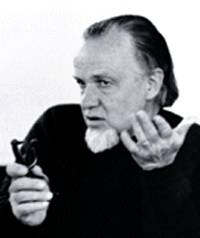



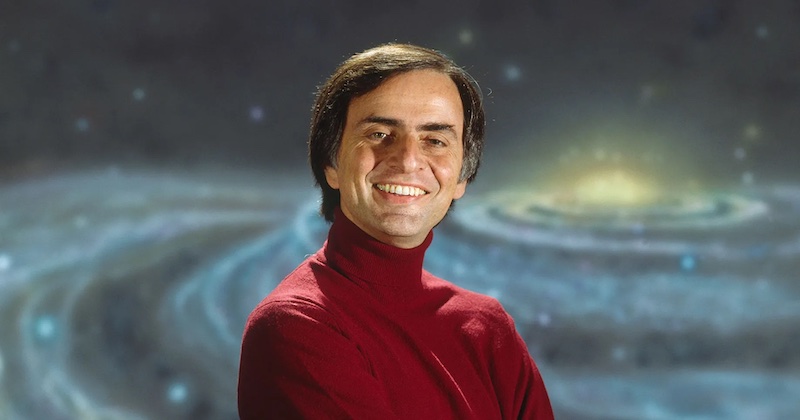



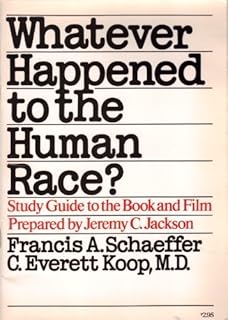














 Carl Sagan. Credit: NASA
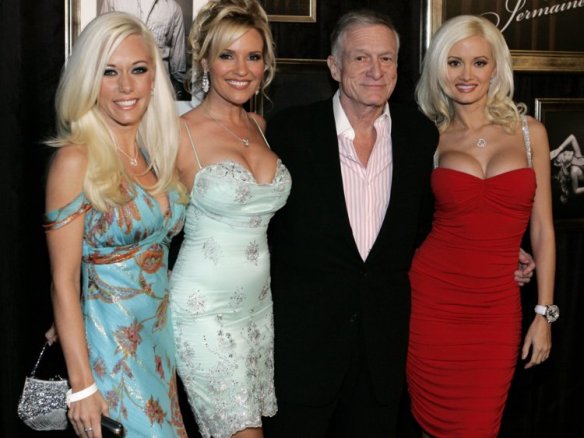







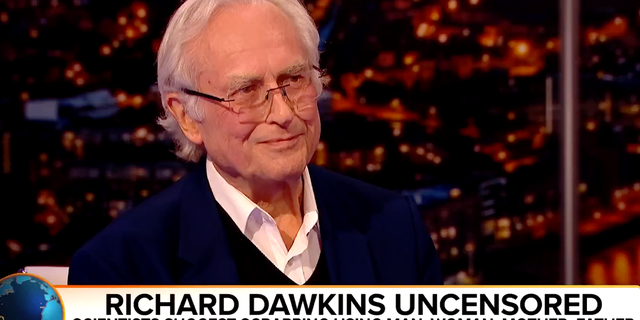
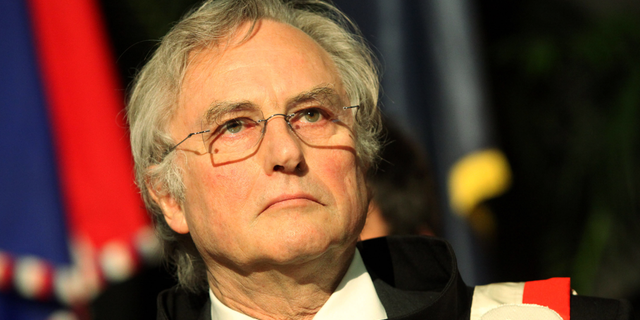
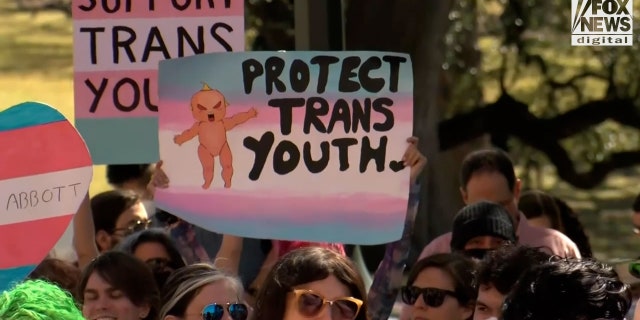





 The Daily Hatch

