Monthly Archives: June 2020

Open Letter #60 to Ricky Gervais on comparison of the Tony of AFTER LIFE to the Solomon of ECCLESIASTES, The Absurdity of Life without God Part 7 William Lane Craig “Though all these men profess not to believe in God, they smuggle in a God-substitute through the back door because they cannot bear to live in a universe in which everything is the chance result of impersonal forces”

—-

After Life #1 Trailer

—-

After Life 2 Trailer

—-

On Saturday April 18, 2020 at 6pm in London and noon in Arkansas, I had a chance to ask Ricky Gervais a question on his Twitter Live broadcast which was  “Is Tony a Nihilist?” At the 20:51 mark Ricky answers my question. Below is the video:

—-

—-

If Death is the end then what is the point Kath asks below:

——

Kath: You are an atheist?

—-

Adrian Rogers on Evolution

—-

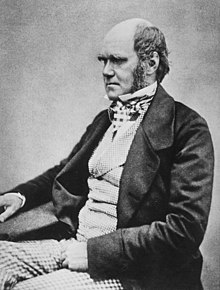
Charles Darwin Autobiography

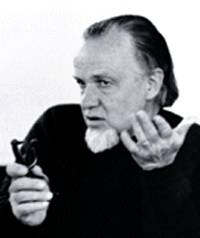
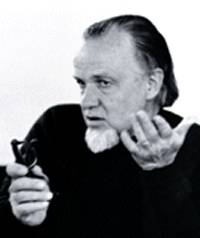
Francis Schaeffer “The Age of NONREASON”

——

(Above) Tony and Anne on the bench at the graveyard where their spouses are buried.

June 16, 2020 
Ricky Gervais 


Dear Ricky,  

Why do so many people throughout the world believe in God and an afterlife? Ecclesiastes 3:11 “God has planted eternity in the heart of men…” (Living Bible). 

Even Tony seems to feel this in episode 4 of the first season of AFTER LIFE when Tony talks about being with his wife in the future.

Matt: Tony that doesn’t even make sense. You are a rational man. You don’t even believe in an afterlife. 

Tony: I know she is nowhere. Alright. But get this through your head. I would rather be no where with her then somewhere without her. 

So many times unbelievers still can’t live out the reality that their atheistic views dictate they should and Tony’s comments remind me of Francis Crick’s comments later in this post when he spells Nature with a capital N because he can’t stand the idea that this whole universe had an impersonal chance origin!!!

This is the 60th day in a row that I have written another open letter to you to comment on some of your episodes of AFTER LIFE, and then I wanted to pass along some evidence that indicates the Bible is historically accurate from Francis Schaeffer and Dr. C. Everett Koop Book WHATEVER HAPPENED TO THE HUMAN RACE?

In AFTERLIFE Ricky said he mourns over the death of his first wife who was perfect for him who he met by CHANCE in this world of 7 or 8 billion people!!!

Let me make a couple points about the word CHANCE. The first point was made by Francis Schaeffer in HOW SHOULD WE LIVE? And the second is made by R.C. Sproul in his book NOT A CHANCE. 

Francis Schaeffer noted:

In The Origin of the Genetic Code (1968) Crick begins to spell nature with a capital N about halfway through the book and in Of Molecules and Men (1967) he refers to nature as “she.” In other words, he personalizes what by definition is impersonal according to his own system. Why? Because he can’t stand the implications of impersonality, and because this kind of semantic mysticism gives relief to people caught in the web of the impersonal. 

Now let’s look a little more at this idea of CHANCE from a review of the book NOT A CHANCE by R.C. Sproul:

Self Creation and Chance

Sproul and the Harvard Professor

The basic thesis in his book, in the final analysis according to Sproul, that there is no such thing as chance. The greatest myth in modern mythology is the myth of chance. That is what we are going to address here. What provoked this work of the book in the first place was a discussion Sproul had with a professor at the graduate school of Harvard in the Philosophy of Science. They were discussing the origin of the universe. This professor denies a creation moment. So Sproul asks where did it come from then — this first Singularity event. The Harvard guy said it came to BE as result of chance. He said the universe was created by chance. So Sproul asks him again, so, the universe was created by chance? He said yes. So Sproul took out of his pocket a quarter and flipped it up in the air – caught it and turned it over and it turned up ‘heads.’ He asked the Harvard professor, what happened? He said it is going to come up either heads or tails 100% of the time. This procedure is going to be either 50% heads or 50% tails. Sproul says if he[the Harvard professor] put it to the test and designed a system that would spin and toss the coin the same way each time, within a vacuum and all other parameters and forces on that coin were constant and repeated in such the same manner, what would happen? Sproul asked him if the professor could bring up his variable percentage of it coming up ‘heads’? And the professor said, of course! This would increase the likelihood. Which is true for what Sproul said initially, they both understood this, that the causal agencies that are involved in coming out with this effect of whether this coin comes up either heads or tails has nothing to do with some mythological power called chance. It has to do with, in this causal experiment, of how we tossed the coin. All the factors that one would establish so it was identical each time you tossed the coin. All variables of physical space and motion are consistent and the outcome is always the same. And with all that for the certainty of one result; we can nevertheless say that it is always 50-50. 

Serindipity as chance

There is nothing at all wrong with the word chance in a particular setting. It is a perfectly meaningful word when we use it to describe mathematical possibilities.The word becomes a synonym for the odds of such and such. We also use it in a meaningful way when we speak of ‘chance encounters.’
Sproul describes a train trip where he got on a train and went to various cities on his trip. He had a lay over and there was traffic going the opposite direction and he encountered a friend he hadn’t seen in ten years. They conversed and went their ways. Ten hours later when the train came for Sproul the same teeming masses of people were in this Chicago train station and he sees the same friend he saw ten hours ago. What are the odds of that? It is called a serendipitous encounterA chance happeningBut chance doesn’t explain why it happened. Because chance didn’t cause it. The reason that we happened to meet each other was because we happened to be at the same place at the same time; for a host of different reasons. All these things converging in time and space.

Let me share a portion of an article by William Lane Craig with you.

The Absurdity of Life without God

William Lane Craig

SUMMARY

Why on atheism life has no ultimate meaning, value, or purpose, and why this view is unlivable.

Purpose of Life

Finally, let’s look at the problem of purpose in life. The only way most people who deny purpose in life live happily is either by making up some purpose, which amounts to self-delusion as we saw with Sartre, or by not carrying their view to its logical conclusions. Take the problem of death, for example. According to Ernst Bloch, the only way modern man lives in the face of death is by subconsciously borrowing the belief in immortality that his forefathers held to, even though he himself has no basis for this belief, since he does not believe in God. By borrowing the remnants of a belief in immortality, writes Bloch, “modern man does not feel the chasm that unceasingly surrounds him and that will certainly engulf him at last. Through these remnants, he saves his sense of self-identity. Through them the impression arises that man is not perishing, but only that one day the world has the whim no longer to appear to him.” Bloch concludes, “This quite shallow courage feasts on a borrowed credit card. It lives from earlier hopes and the support that they once had provided.” [10] Modern man no longer has any right to that support, since he rejects God. But in order to live purposefully, he makes a leap of faith to affirm a reason for living.

We often find the same inconsistency among those who say that man and the universe came to exist for no reason or purpose, but just by chance. Unable to live in an impersonal universe in which everything is the product of blind chance, these persons begin to ascribe personality and motives to the physical processes themselves. It is a bizarre way of speaking and represents a leap from the lower to the upper story. For example, Francis Crick halfway through his book The Origin of the Genetic Code begins to spell nature with a capital “N” and elsewhere speaks of natural selection as being “clever” and as “thinking” of what it will do. Fred Hoyle, the English astronomer, attributes to the universe itself the qualities of God. For Carl Sagan the “Cosmos,” which he always spells with a capital letter, obviously fills the role of a God-substitute. Though all these men profess not to believe in God, they smuggle in a God-substitute through the back door because they cannot bear to live in a universe in which everything is the chance result of impersonal forces.

And it’s interesting to see many thinkers betray their views when they’re pushed to their logical conclusions. For example, certain feminists have raised a storm of protest over Freudian sexual psychology because it is chauvinistic and degrading to women. And some psychologists have knuckled under and revised their theories. Now this is totally inconsistent. If Freudian psychology is really true, then it doesn’t matter if it’s degrading to women. You can’t change the truth because you don’t like what it leads to. But people cannot live consistently and happily in a world where other persons are devalued. Yet if God does not exist, then nobody has any value. Only if God exists can a person consistently support women’s rights. For if God does not exist, then natural selection dictates that the male of the species is the dominant and aggressive one. Women would no more have rights than a female goat or chicken have rights. In nature whatever is, is right. But who can live with such a view? Apparently not even Freudian psychologists, who betray their theories when pushed to their logical conclusions.

Or take the sociological behaviorism of a man like B. F. Skinner. This view leads to the sort of society envisioned in George Orwell’s 1984, where the government controls and programs the thoughts of everybody. If Skinner’s theories are right, then there can be no objection to treating people like the rats in Skinner’s rat-box as they run through their mazes, coaxed on by food and electric shocks. According to Skinner, all our actions are determined anyway. And if God does not exist, then no moral objection can be raised against this kind of programming, for man is not qualitatively different from a rat, since both are just matter plus time plus chance. But again, who can live with such a dehumanizing view?

Or finally, take the biological determinism of a man like Francis Crick. The logical conclusion is that man is like any other laboratory specimen. The world was horrified when it learned that at camps like Dachau the Nazis had used prisoners for medical experiments on living humans. But why not? If God does not exist, there can be no objection to using people as human guinea pigs. The end of this view is population control in which the weak and unwanted are killed off to make room for the strong. But the only way we can consistently protest this view is if God exists. Only if God exists can there be purpose in life.

The dilemma of modern man is thus truly terrible. And insofar as he denies the existence of God and the objectivity of value and purpose, this dilemma remains unrelieved for “post-modern” man as well. Indeed, it is precisely the awareness that modernism issues inevitably in absurdity and despair that constitutes the anguish of post-modernism. In some respects, post-modernism just is the awareness of the bankruptcy of modernity. The atheistic world view is insufficient to maintain a happy and consistent life. Man cannot live consistently and happily as though life were ultimately without meaning, value, or purpose. If we try to live consistently within the atheistic world view, we shall find ourselves profoundly unhappy. If instead we manage to live happily, it is only by giving the lie to our world view.

Confronted with this dilemma, man flounders pathetically for some means of escape. In a remarkable address to the American Academy for the Advancement of Science in 1991, Dr. L. D. Rue, confronted with the predicament of modern man, boldly advocated that we deceive ourselves by means of some “Noble Lie” into thinking that we and the universe still have value. [11] Claiming that “The lesson of the past two centuries is that intellectual and moral relativism is profoundly the case,” Dr. Rue muses that the consequence of such a realization is that one’s quest for personal wholeness (or self-fulillment) and the quest for social coherence become independent from one another. This is because on the view of relativism the search for self-fulfillment becomes radically privatized: each person chooses his own set of values and meaning. If we are to avoid “the madhouse option,” where self-fulfillment is pursued regardless of social coherence, and “the totalitarian option,” where social coherence is imposed at the expense of personal wholeness, then we have no choice but to embrace some Noble Lie that will inspire us to live beyond selfish interests and so achieve social coherence. A Noble Lie “is one that deceives us, tricks us, compels us beyond self-interest, beyond ego, beyond family, nation, [and] race.” It is a lie, because it tells us that the universe is infused with value (which is a great fiction), because it makes a claim to universal truth (when there is none), and because it tells me not to live for self-interest (which is evidently false). “But without such lies, we cannot live.”

This is the dreadful verdict pronounced over modern man. In order to survive, he must live in self-deception. But even the Noble Lie option is in the end unworkable. In order to be happy, one must believe in objective meaning, value, and purpose. But how can one believe in those Noble Lies while at the same time believing in atheism and relativism? The more convinced you are of the necessity of a Noble Lie, the less you are able to believe in it. Like a placebo, a Noble Lie works only on those who believe it is the truth. Once we have seen through the fiction, then the Lie has lost its power over us. Thus, ironically, the Noble Lie cannot solve the human predicament for anyone who has come to see that predicament.

The Noble Lie option therefore leads at best to a society in which an elitist group of illuminati deceive the masses for their own good by perpetuating the Noble Lie. But then why should those of us who are enlightened follow the masses in their deception? Why should we sacrifice self-interest for a fiction? If the great lesson of the past two centuries is moral and intellectual relativism, then why (if we could) pretend that we do not know this truth and live a lie instead? If one answers, “for the sake of social coherence,” one may legitimately ask why I should sacrifice my self-interest for the sake of social coherence? The only answer the relativist can give is that social coherence is in my self-interest—but the problem with this answer is that self-interest and the interest of the herd do not always coincide. Besides, if (out of self-interest) I do care about social coherence, the totalitarian option is always open to me: forget the Noble Lie and maintain social coherence (as well as my self-fulfillment) at the expense of the personal wholeness of the masses. Rue would undoubtedly regard such an option as repugnant. But therein lies the rub. Rue’s dilemma is that he obviously values deeply both social coherence and personal wholeness for their own sakes; in other words, they are objective values, which according to his philosophy do not exist. He has already leapt to the upper story. The Noble Lie option thus affirms what it denies and so refutes itself.

The Success of Biblical Christianity

But if atheism fails in this regard, what about biblical Christianity? According to the Christian world view, God does exist, and man’s life does not end at the grave. In the resurrection body man may enjoy eternal life and fellowship with God. Biblical Christianity therefore provides the two conditions necessary for a meaningful, valuable, and purposeful life for man: God and immortality. Because of this, we can live consistently and happily. Thus, biblical Christianity succeeds precisely where atheism breaks down.

Conclusion

Now I want to make it clear that I have not yet shown biblical Christianity to be true. But what I have done is clearly spell out the alternatives. If God does not exist, then life is futile. If the God of the Bible does exist, then life is meaningful. Only the second of these two alternatives enables us to live happily and consistently. Therefore, it seems to me that even if the evidence for these two options were absolutely equal, a rational person ought to choose biblical Christianity. It seems to me positively irrational to prefer death, futility, and destruction to life, meaningfulness, and happiness. As Pascal said, we have nothing to lose and infinity to gain.

  • [1]Kai Nielsen, “Why Should I Be Moral?” American Philosophical Quarterly 21 (1984): 90.
  • [2]Richard Taylor, Ethics, Faith, and Reason (Englewood Cliffs, NJ: Prentice Hall, 1985), 90, 84.
  • [3]H.G. Wells, The Time Machine (New York: Berkeley, 1957), chap. 11.
  • [4]W.E. Hocking, Types of Philosophy (New York: Scribner’s, 1959), 27.
  • [5]Friedrich Nietzsche, “The Gay Science,” in The Portable Nietzsche, ed. and trans. W. Kaufmann (New York: Viking, 1954), 95.
  • [6]Bertrand Russell, “A Free Man’s Worship,” in Why I Am Not a Christian, ed. P. Edwards (New York: Simon & Schuster, 1957), 107.
  • [7]Bertrand Russell, Letter to the Observer, 6 October, 1957.
  • [8]Jean Paul Sartre, “Portrait of the Antisemite,” in Existentialism from Dostoyevsky to Satre, rev. ed., ed. Walter Kaufmann (New York: New Meridian Library, 1975), p. 330.
  • [9]Richard Wurmbrand, Tortured for Christ (London: Hodder & Stoughton, 1967), 34.
  • [10]Ernst Bloch, Das Prinzip Hoffnung, 2d ed., 2 vols. (Frankfurt am Main: Suhrkamp Verlag, 1959), 2:360-1.
  • [11]Loyal D. Rue, “The Saving Grace of Noble Lies,” address to the American Academy for the Advancement of Science, February, 1991.

—-

Why do so many people throughout the world believe in God and an afterlife? Ecclesiastes 3:11 “God has planted eternity in the heart of men…” (Living Bible). 

Even Tony seems to feel this in episode 4 of the first season of AFTER LIFE when Tony talks about being with his wife in the future.

Matt: Tony that doesn’t even make sense. You are a rational man. You don’t even believe in an afterlife. 

Tony: I know she is nowhere. Alright. But get this through your head. I would rather be no where with her then somewhere without her. 

Why does Tony say these things? First, he knows deep down that he was made for more than just this life. Secondly, he can’t live as though he is a machine even though his secular viewpoint tells him that he is only a machine. 

Let’s look again at Francis Schaeffer’s Comments on Francis Crick:

In The Origin of the Genetic Code (1968) Crick begins to spell nature with a capital N about halfway through the book and in Of Molecules and Men (1967) he refers to nature as “she.” In other words, he personalizes what by definition is impersonal according to his own system. Why? Because he can’t stand the implications of impersonality, and because this kind of semantic mysticism gives relief to people caught in the web of the impersonal.

Francis Schaeffer has correctly argued:

The universe was created by an infinite personal God and He brought it into existence by spoken word and made man in His own image. When man tries to reduce [philosophically in a materialistic point of view] himself to less than this [less than being made in the image of God] he will always fail and he will always be willing to make these impossible leaps into the area of nonreason even though they don’t give an answer simply because that isn’t what he is. He himself testifies that this infinite personal God, the God of the Old and New Testament is there. 

Instead of making a leap into the area of nonreason the better choice would be to investigate the claims that the Bible is a historically accurate book and that God created the universe and reached out to humankind with the Bible. Below is a piece of that evidence given by Francis Schaeffer concerning the accuracy of the Bible.

TRUTH AND HISTORY (chapter 5 of WHATEVER HAPPENED TO THE HUMAN RACE?)

There is also a confirmation of what the Bible says concerning the Egyptian King Tirhakahwho came up to oppose the Assyrians. Confirmation of his reality is typified by a sphinx-ram in the British Museum (British Museum Ref. B.B.1779). The small figure between the legs of the ram is a representation of King Tirhakah. The Bible says that when Sennacherib heard that  Tirhakah, king of Eqypt, was coming to fight against him, he sent messengers to tell Hezekiah that help from Egypt would be of no use to him.

2 Kings 19:9, 10 Now the king heard concerning Tirhakah king of Cush, “Behold, he has set out to fight against you.” So he sent messengers again to Hezekiah, saying,10 “Thus shall you speak to Hezekiah king of Judah: ‘Do not let your God in whom you trust deceive you by promising that Jerusalem will not be given into the hand of the king of Assyria. (Isaiah 37:9-10 also says about the same thing.)

The date of Sennacherib’s campaign in Palestine is 701 B.C., and something which has often puzzled historians is the role of Tirhakah, who was not king of Egypt and Ethiopia until 690 B.C. But the solution to this problem is simple. In 701 B.C. Tirhakah was only a prince at the side of his military brother, the new Pharaoh Shebitku, who sent Tirhakah with an army to help Hezekiah fend off the Assyrian advance. But the story in Kings and Isaiah does not end in 701 B.C. It carries right through to the death of Sennacherib in 681 B.C., which is nine years after Tirhakah had become king of Egypt and Ethiopia. In other words, the biblical narrative, from the standpoint of 681 B.C., mentions Tirhakah by the title he bore at that time (that is, 681 B.C.), not as he was in 701 B.C. This is still done today, using a man’s title as he is known at the time of writing even it one is speaking of a previous time in his personal history.

Unaware of the the importance of these facts, and falling into wrong interpretations of some of Tirhakah’s inscriptions, some Old Testament scholars have stumbled over each in their eagerness to diagnose historical errors in the Books of the Kings and Isaiah. But as the archaeological confirmation shows, they were quite mistaken. What is striking about these archaeological finds is the way they often converge; there is often not just one line of evidence but several in which the biblical account is confirmed. We do not have confirmation of every single detail in the biblical account, by any means. Nor do we need such total confirmation in view of the amount of evidence there is. To insist on confirmation at every point would be to treat the Bible in a prejudiced way, simply because it is the Bible. The fact that is a religious book does not mean that it cannot also be true when it deals with history.

Not all archaeological finds have a convergence of many different interrelated lines like these around the life of Hezekiah, but they are no less striking. For example, take the “ration tablets” discovered in the ruins of Bablyon. The Bible tells us that after the Assyrians had destroyed the nothern kingdom of Samaria (around 721 B.C.), the southern kingdom, Judah, survived for almost another 150 years until approximately 586 B.C. By this time Assyria, one of the greatest military powers of the ancient world, had been defeated by Bablyon, a neighboring state to the east. That was in 609 B.C. Four years later the Babylonian general, Nebuchadnezzar–then the crown prince–came west and completely defeated Necho II, king of Egypt, at the battle of Carchemish. As a result of this victory he laid claim to Judah, which had previously been in the sphere of influence of Egypt. King Jehoiakim of Judah thus now paid tribute to the Babylonians. The Bible tells us that Jehoiakim rebelled three years later: “During Jehoiakim’s reign Nebuchadnezzar king of Bablyon invaded the land, and Jehoiakim became his vassal for three years. But then he changed his mind and rebelled against Nebuchnezzar” (II Kings 24:1).

The political background for this step can be understood from the Babylonian Chronicles (British Museum, Ref. 21946, records events from 597 B.C. down to 594). These were a compressed chronological summary of the principal events from the Babylonian court. There had been a crucial battle in 601 B.C. between the Egyptians and the Babylonians. This had left both sides weakened, and Jehoiakim took this opportunity to declare his independence of the Babylonian king. His independence, or rather Judah’s independence, did not last long, for Jehoiakim himself died in 598 B.C., leaving his throne and the crisis to his son, Jehoiachin. Second Kings (II Kings 24:10-12, 17) tells us what happened:

10 At that time the servants of Nebuchadnezzar king of Babylon came up to Jerusalem, and the city was besieged. 11 And Nebuchadnezzar king of Babylon came to the city while his servants were besieging it, 12 and Jehoiachin the king of Judah gave himself up to the king of Babylon, himself and his mother and his servants and his officials and his palace officials. The king of Babylon took him prisoner in the eighth year of his reign. 17 And the king of Babylon made Mattaniah, Jehoiachin’s uncle, king in his place, and changed his name to Zedekiah.

The story of Jehoiachin does not end there, however. The royal family were kept at the court of Nebuchadnezzar, and the Bible says that they , like other royal captives, were provided for by the king with rations of grain and oil (II Kings 25:27-30):

27 And in the thirty-seventh year of the exile of Jehoiachin king of Judah, in the twelfth month, on the twenty-seventh day of the month, Evil-merodach king of Babylon, in the year that he began to reign, graciously freed[a]Jehoiachin king of Judah from prison. 28 And he spoke kindly to him and gave him a seat above the seats of the kings who were with him in Babylon. 29 So Jehoiachin put off his prison garments. And every day of his life he dined regularly at the king’s table, 30 and for his allowance, a regular allowance was given him by the king, according to his daily needs, as long as he lived.

The records of these allowances referred to in the Bible were unearthed in excavations in Babylon in basement storerooms of the royal palace (in Staat-Liches Museum, East Berlin, Vorderas Abteilung; Babylon 28122 and 28126). These are known as the “ration tablets” and they record who received such “rations.” In these, Jehoiachin is mentioned by name.

We also have confirmation of the Babylonian advance towards Judah in Nebuchadezzar’s first campaign. Among the ruins of Lachish were discovered a number of ostraca. Ostraca are broken pieces of earthenware called postherds, which were used for writing on in ink. (The Lachish ostraca are in the Palestinian Archaeological Museum, Jerusalem.) These brief letters reveal the increasing tensions within the growing state of Judah and tie in well with the picture given in the Bible by the Book of Jeremiah the Prophet. In Ostracon VI, the princes are accused of “weakening our hands” (that is, discouraging the writers), which is the very phraseology used in the Bible by the Judean princes against Jeremiah. Also, the use of fire beacons for signaling is found in both Ostracon IV and Jeremiah 6:1, each using the same terminology.

These events took place around the year 600 B.C. Events we considered earlier in relation to the capture of Lachish by Sennacherib during the reign of Hezekiah were around the year 700 B.C.


—-

Below are the comments of Francis Schaeffer on ECCLESIASTES:

Ecclesiastes 9:2:

It is the same for all, since the same event happens to the righteous and the wicked, to the good and the evil, to the clean and the unclean, to him who sacrifices and him who does not sacrifice. As the good one is, so is the sinner, and he who swears is as he who shuns an oath.

Unhappily Solomon was an expert in this field because he built endless [pagan] temples around Israel before he was finished.He was a taster of general religious thought. He was an experimenter with liturgical considerations.  He did what God told men not to do which is bring in other wives and follow their [pagan] religions. Solomon was an expert on his wives and their religions. In this verse he was saying that this effort on his part didn’t change anything either.

Conclusions of Solomon, EAT, DRINK AND BE MERRY FOR TOMORROW WE DIE/ We must be sorrowful and repent

Now we are to his conclusions UNDER THE SUN.

Ecclesiastes 9:10

10 Whatsoever thy hand findeth to do, do it with thy might; for there is no work, nor device, nor knowledge, nor wisdom, in the grave, whither thou goest. (King James Version)

What is this? It is as modern today as the left bank of Paris and the Soho of London. It is as modern as the businessman who tries to lose himself in executive detail. It is as modern as the thinking can be. It is as eternal thinking can be if it is framed as only UNDER THE SUN. It is a life, a philosophy of desperation. This is not something grand and glorious. It is accepted as desperation because other things have failed. 

Ecclesiastes 7:16-17

16 Be not overly righteous, and do not make yourself too wise. Why should you destroy yourself? 17 Be not overly wicked, neither be a fool.Why should you die before your time?

This is a philosophy of desperation. Leonardo never arrived here because he never really accepted the dilemma because he hadn’t been forced to it yet because time hadn’t brought him there, but modern man has came here, the extension of Leonardo. This is existentialism in a very real sense. A philosophy or theology of desperation because nothing else stands. 

It is the commitment to absurdity. It is living at this split moment in a vacuum PERIOD FULL STOP!! But it is not new!!! It is the conclusion to which Solomon  came: IF THIS IS ALL THERE IS THEN THIS MUST BE ALL THERE IS!

Ecclesiastes 2:24-25

24 There is nothing better for a person than that he should eat and drink and find enjoyment in his toil. This also, I saw, is from the hand of God, 25 for apart from him who can eat or who can have enjoyment?

The best translation is “should eat and drink and delight his senses.” Also with the phrase “from the hand of God” Solomon doesn’t really mean this is from God but this is just an expression. This is statement of desperation when he says that one “should eat and drink and delight his senses.”

Ecclesiastes 8:15

15 And I commend joy, for man has nothing better UNDER THE SUN but to eat and drink and be joyful, for this will go with him in his toil through the days of his life that God has given himunder the sun.

Ecclesiastes 9:7-12

Go, eat your bread with joy, and drink your wine with a merry heart, for God has already approved what you do.

Let your garments be always white. Let not oil be lacking on your head.

Enjoy life with the wife whom you love, (DOES IT SOUND OPTIMISTIC? NOW COMES THE BACKLASH) all the days of your vain life that he has given you under the sun, because that is your portion in life and in your toil at which you toil under the sun. 10 Whatever your hand finds to do, do it with your might, for there is no work or thought or knowledge or wisdom in Sheol, to which you are going.

11 Again I saw that under the sun the race is not to the swift, nor the battle to the strong, nor bread to the wise, nor riches to the intelligent, nor favor to those with knowledge, but time and chance happen to them all. 12 For man does not know his time. Like fish that are taken in an evil net, and like birds that are caught in a snare, so the children of man are snared at an evil time, when it suddenly falls upon them.

Solomon when at work takes off his hat and he stands by the grave of man and he says, “ALAS. ALAS. ALAS.”

But interestingly enough the story of Ecclesiastes does not end its message here because in two places in the New Testament it is picked up and carried along and put in its proper perspective.

Luke 12:16-21

16 And he told them a parable, saying, “The land of a rich man produced plentifully, 17 and he thought to himself, ‘What shall I do, for I have nowhere to store my crops?’ 18 And he said, ‘I will do this: I will tear down my barns and build larger ones, and there I will store all my grain and my goods. 19 And I will say to my soul, “Soul, you have ample goods laid up for many years; relax,eat, drink, be merry.”’ [ALMOST EVERYONE WHO HAS PROCEEDED HERE HAS FELT CERTAINLY THAT JESUS IS DELIBERATELY REFERRING TO SOLOMON’S SOLUTION.]20 But God said to him, ‘Fool! This night your soul is required of you, and the things you have prepared, whose will they be?’ 21 So is the one who lays up treasure for himself and is not rich toward God.”

Christ here points out the reason for the failure of the logic that is involved. He points out why it fails in logic and then why it fails in reality. This view of Solomon must end in failure philosophically and also in emotional desperation.

We are not made to live in the shortened environment of UNDER THE SUN in this life only!!! Neither are we made to live only in the environment of a bare concept of afterlife [ignoring trying to make this life better]. We are made to live in the environment of a God who exists and who is the judge. This is the difference and that is what Jesus is setting forth here.

I Corinthians 15:32

32 What do I gain if, humanly speaking, I fought with beasts at Ephesus? If the dead are not raised, “Let us eat and drink, for tomorrow we die.

There is no doubt here he is reaching back to Solomon again and he is just saying if there isn’t a resurrection of the dead then let’s just follow Solomon and let’s just eat and drink for tomorrow we die!!!! If there isn’t this full structure [including the resurrection of the dead] then just have the courage to follow Solomon and we can eat and drink because tomorrow we die and that is all we have. If the full structure isn’t there then pick up the cup and drink it dry! You can say it a different way in the 20th century: If the full structure is not there then go ahead and be an EXISTENTIALIST, but don’t cheat. Drink the cup to the end. Drink it dry! That is what Paul says. Paul  the educated man. Paul the man who knew his Greek philosophy. Paul the man who understood Solomon and the dilemma. Paul said it one way or the other. There is no room for a middle ground. IF CHRISTIANS AREN’T RAISED FROM THE DEAD THEN SOLOMON IS RIGHT IN ECCLESIASTES, BUT ONLY THEN. But if he is right then you should accept all of Solomon’s despair and his conclusions. Isaiah picks up this theme.

Isaiah 22:10-14

10 and you counted the houses of Jerusalem, and you broke down the houses to fortify the wall. 11 You made a reservoir between the two walls for the water of the old pool. But you did not look to him who did it, or see him who planned it long ago.

12 In that day the Lord God of hosts
    called for weeping and mourning,
    for baldness and wearing sackcloth; [ INSTEAD OF WEEPING THIS NEXT VERSE TELLS WHAT THEY DID.]
13 and behold, joy and gladness,
    killing oxen and slaughtering sheep,
    eating flesh and drinking wine.
“Let us eat and drink,
    for tomorrow we die.”
14 The Lord of hosts has revealed himself in my ears:
“Surely this iniquity will not be atoned for you until you die,”
    says the Lord God of hosts.

God brings it together here. Solomon’s words, Isaiah’s words and Paul’s words are one message. What is occurring in Isaiah? They are under siege and they have strengthened the wall but they have turned away both from the creator of the world and the one who laid the foundation of the walls in Jerusalem, David himself, and his teaching. They have said since it is hopeless let’s just eat and drink and be merry for tomorrow we die. In a little while the walls will be overthrown and the enemy will sweep across us and we will be slain. Let’s fill our stomachs today. Let’s eat and drink and be merry.

God is saying through Isaiah, don’t you understand that isn’t the call now. The call is not to eat and drink and be merry and try to blot yourself out. It is day for being sad. Not because you are going to be destroyed but because you must understand that the reason you are in this circumstance is because you have revolted against the GOD WHO IS THERE. The reason for the dilemma is a moral question. They have revolted against the God who exists. The solution is being sorrowful and saying to God I AM SORRY. But instead of that because they turned their back from the real problem and only look to the forces without, so they make their wall strong and they eat and drink and be merry for tomorrow they die. The only time it would make sense for them to live this way would be if they were living under Solomon’s framework UNDER THE SUN which looking at human life alone seen only between birth and death and if that is all there is.

Solomon would say it really doesn’t make any difference if the enemy is at the gate today  versus the day after in the form of death. Nevil Shute in ON THE BEACH says the human will eventually go this way too!!!

The difficulty is they refuse to come as sinners and because they haven’t there is one thing left and that is despair if they are consistent.

Now turning back to I Corinthians 15:32 we can understand more the force of what Paul is talking about here and more of the depth of what he is saying.

I Corinthians 15:32

32 What do I gain if, humanly speaking, I fought with beasts at Ephesus? If the dead are not raised, “Let us eat and drink, for tomorrow we die.

Paul sweeps this all together, Solomon’s conclusions and the case in Isaiah, and Paul says that would be consistent if this [If the dead are not raised] is not so. This same message is found in I Corinthians 15:19,  “If in Christ we have hope in this life only, we are of all people most to be pitied.” How would you word that for the 20th century? IF CHRIST IS A BARE WORD TO WAVE AS A FLAG, IF CHRISTIANITY IS ONLY THAT TO INTEGRATE INTO INDIVIDUAL PSYCHOLOGICALLY AND SOCIETY AS SUCH, IF THAT IS ALL CHRIST IS, PAUL SAYS LET’S PLEASE BE CONSISTENT ABOUT IT, THROW DOWN THE WORD “CHRIST” AND WALK UPON IT. Don’t play with this and have the courage of a Solomon.

I Corinthians 15:19-20

19 If in Christ we have hope  in this life only, we are of all people most to be pitied.

20 But in fact Christ has been raised from the dead, the first fruits of those who have fallen asleep.

Christ is raised. We will be raised. Therefore, a consistent despair that rests in the other line of thinking is not really consistent in the light of what is. The people in Isaiah’s day were eating and drinking and waiting for death and it was folly because the real solution was turning back to God. There is a total framework here that Paul is presenting and it tells us why it is folly to accept Solomon’s solution (eating and drinking and being merry because tomorrow we die).

I Corinthians 15:21-22

21 For as by a man came death, by a man has come also the resurrection of the dead. 22 For as in Adam all die, so also in Christ shall all be made alive.

There is only one reason that viewing life UNDER THE SUN from birth to death causes despair and that is because we live in an abnormal world [since the fall in Genesis 3 when sin entered the world because of rebellion]. It is a legitimate despair if viewed only in the context of UNDER THE SUN,but it is an abnormal despair if it is seen in its proper setting. The problem in Isaiah’s day was not that the enemy was coming to kill them, but it was the revolt of man against the creator.

—-

In 1978 I heard the song “Dust in the Wind” by Kansas when it rose to #6 on the charts. That song told me thatKerry Livgren the writer of that song and a member of Kansas had come to the same conclusion that Solomon had. I remember mentioning to my friends at church that we may soon see some members of Kansas become Christians because their search for the meaning of life had obviously come up empty even though they had risen from being an unknown band to the top of the music business and had all the wealth and fame that came with that. Furthermore, like Solomon and Coldplay, they realized death comes to everyone and “there must be something more.”

Livgren wrote:

“All we do, crumbles to the ground though we refuse to see, Dust in the Wind, All we are is dust in the wind, Don’t hang on, Nothing lasts forever but the Earth and Sky, It slips away, And all your money won’t another minute buy.”

Both Kerry Livgren and Dave Hope of Kansas became Christians eventually. Kerry Livgren first tried Eastern Religions and Dave Hope had to come out of a heavy drug addiction. I was shocked and elated to see their personal testimony on The 700 Club in 1981 and that same  interview can be seen on youtube today. Livgren lives in Topeka, Kansas today where he teaches “Diggers,” a Sunday school class at Topeka Bible Church. Hope is the head of Worship, Evangelism and Outreach at Immanuel Anglican Church in Destin, Florida.

The movie maker Woody Allen has embraced the nihilistic message of the song “Dust in the Wind” by Kansas. David Segal in his article, “Things are Looking Up for the Director Woody Allen. No?” (Washington Post, July 26, 2006), wrote, “Allen is evangelically passionate about a few subjects. None more so than the chilling emptiness of life…The 70-year-old writer and director has been musing about life, sex, work, death and his generally futile search for hope…the world according to Woody is so bereft of meaning, so godless and absurd, that the only proper response is to curl up on a sofa and howl for your mommy.”

The song “Dust in the Wind” recommends, “Don’t hang on.” Allen himself says, “It’s just an awful thing and in that context you’ve got to find an answer to the question: ‘Why go on?’ ”  It is ironic that Chris Martin the leader of Coldplay regards Woody Allen as his favorite director.

Lets sum up the final conclusions of these gentlemen:  Coldplay is still searching for that “something more.” Woody Allen has concluded the search is futile. Livgren and Hope of Kansas have become Christians and are involved in fulltime ministry. Solomon’s experiment was a search for meaning to life “under the sun.” Then in last few words in the Book of Ecclesiastes he looks above the sun and brings God back into the picture: “The conclusion, when all has been heard, is: Fear God and keep His commandments, because this applies to every person. For God will bring every act to judgment, everything which is hidden, whether it is good or evil.”

You can hear Kerry Livgren’s story from this youtube link:

The answer to find meaning in life is found in putting your faith and trust in Jesus Christ. The Bible is true from cover to cover and can be trusted.

Thank you again for your time and I know how busy you are.

Sincerely,

Everette Hatcher, everettehatcher@gmail.comhttp://www.thedailyhatch.org, cell ph 501-920-5733, 13900 Cottontail Lane, Alexander, AR 72002

PS: What is the meaning of life? Find it in the end of the open letter I wrote to you on April 23, 2020. 

Below is the workforce of THE TAMBURY GAZETTE 

Seen below is the third episode of AFTERLIFE (season 1) when Matt takes Tony to a comedy club with front row seats to cheer him up but it turns into disaster!!!

——

—-

Part 1 “Why have integrity in Godless Darwinian Universe where Might makes Right?”

Part 2 “My April 14, 2016 Letter to Ricky mentioned Book of Ecclesiastes and the Meaninglessness of Life”

Part 3 Letter about Brandon Burlsworth concerning suffering and pain and evil in the world.  “Why didn’t Jesus save her [from cancer]?” (Tony’s 10 year old nephew George in episode 2)

Part 4 Letter on Solomon on Death Tony in episode one, “It should be everyone’s moral duty to kill themselves.”

Part 5 Letter on subject of Learning in Ecclesiastes “I don’t read books of fiction but mainly science and philosophy”

Part 6 Letter on Luxuries in Ecclesiastes Part 6, The Music of AFTERLIFE (Part A)

Part 7 Letter on Labor in Ecclesiastes My Letter to Ricky on Easter in 2017 concerning Book of Ecclesiastes and the legacy of a person’s life work

Part 8 Letter on Liquor in Ecclesiastes Tony’s late wife Lisa told him, “Don’t get drunk all the time alright? It will only make you feel worse in the log run!”

Part 9 Letter on Laughter in Ecclesiastes , I said of laughter, “It is foolishness;” and of mirth, “What does it accomplish?” Ecclesiastes 2:2

Part 10 Final letter to Ricky on Ladies in Ecclesiastes “I gathered a chorus of singers to entertain me with song, and—most exquisite of all pleasures— voluptuous maidens for my bed…behold, all was vanity and a striving after wind, and there was nothing to be gained under the sun” Ecclesiastes 2:8-11.

Part 11 Letter about Daniel Stanhope and optimistic humanism  “If man has been kicked up out of that which is only impersonal by chance , then those things that make him man-hope of purpose and significance, love, motions of morality and rationality, beauty and verbal communication-are ultimately unfulfillable and thus meaningless.” (Francis Schaeffer)

Part 12 Letter on how pursuit of God is only way to get Satisfaction Dan Jarrell “[In Ecclesiastes] if one seeks satisfaction they will never find it. In fact, every pleasure will be fleeting and can not be sustained, BUT IF ONE SEEKS GOD THEN ONE FINDS SATISFACTION”

Part 13 Letter to Stephen Hawking on Solomon realizing he will die just as a dog will die “For men and animals both breathe the same air, and both die. So mankind has no real advantage over the beasts; what an absurdity!” Ecclesiastes

Part 14 Letter to Stephen Hawking on 3 conclusions of humanism and Bertrand Russell destruction of optimistic humanism. “That Man is the product of causes which had no prevision of the end they were achieving; that his origin, his growth, his hopes and fears, his loves and his beliefs, are but the outcome of accidental collocations of atoms—no philosophy which rejects them can hope to stand. Only within the scaffolding of these truths, only on the firm foundation of unyielding despair, can the soul’s habitation henceforth be safely built.”(Bertrand Russell, Free Man’s Worship)

Part 15 Letter to Stephen Hawking on Leonardo da Vinci and Solomon and Meaningless of life “I hate life. As far as I can see, what happens on earth is a bad business. It’s smoke—and spitting into the wind” Ecclesiastes Book of Ecclesiastes Part 15 “I hate life. As far as I can see, what happens on earth is a bad business. It’s smoke—and spitting into the wind” Ecclesiastes 2:17

Part 16 Letter to Stephen Hawking on Solomon’s longing for death but still fear of death and 5 conclusions of humanism on life UNDER THE SUN. Francis Schaeffer “Life is just a series of continual and unending cycles and man is stuck in the middle of the cycle. Youth, old age, Death. Does Solomon at this point embrace nihilism? Yes!!! He exclaims that the hates life (Ecclesiastes 2:17), he longs for death (4:2-3) Yet he stills has a fear of death (2:14-16)”

Mandeep Dhillon as Sandy on her first assignment in ‘After Life’. (Twitter)

A still from ‘After Life’ that captures the vibe of the Tambury Gazette. (Twitter)

Michael Scott of THE OFFICE (USA) with Ricky Gervais 

After Life on Netflix

After Life on Netflix stars Ricky Gervais as a bereaved husband (Image: Netflix)

—-

Psychiatrist played by Paul Kaye seen below.

The sandy beach walk

Tony Johnson with his dog Brandi seen below:

—-

Related posts:

Taking on Ark Times Bloggers on various issues Part I “Old Testament Bible Prophecy” includes the film TRUTH AND HISTORY and article ” Jane Roe became pro-life”

April 12, 2013 – 5:45 am

I have gone back and forth and back and forth with many liberals on the Arkansas Times Blog on many issues such as abortion, human rights, welfare, poverty, gun control  and issues dealing with popular culture. Here is another exchange I had with them a while back. My username at the Ark Times Blog is Saline […]By Everette Hatcher III | Posted in Biblical ArchaeologyFrancis SchaefferProlife | Edit|Comments (0)

John MacArthur on fulfilled prophecy from the Bible Part 2

August 8, 2013 – 1:28 am

I have posted many of the sermons by John MacArthur. He is a great bible teacher and this sermon below is another great message. His series on the Book of Proverbs was outstanding too.  I also have posted several of the visits MacArthur made to Larry King’s Show. One of two most popular posts I […]By Everette Hatcher III | Posted in Adrian RogersCurrent Events | Edit|Comments (0)

John MacArthur on fulfilled prophecy from the Bible Part 1

August 6, 2013 – 1:24 am

I have posted many of the sermons by John MacArthur. He is a great bible teacher and this sermon below is another great message. His series on the Book of Proverbs was outstanding too.  I also have posted several of the visits MacArthur made to Larry King’s Show. One of two most popular posts I […]By Everette Hatcher III | Posted in Adrian RogersCurrent Events |Tagged Bible Prophecyjohn macarthur | Edit|Comments (0)

John MacArthur: Fulfilled prophecy in the Bible? (Ezekiel 26-28 and the story of Tyre, video clips)

April 5, 2012 – 10:39 am

Prophecy–The Biblical Prophesy About Tyre.mp4 Uploaded by TruthIsLife7 on Dec 5, 2010 A short summary of the prophecy about Tyre and it’s precise fulfillment. Go to this link and watch the whole series for the amazing fulfillment from secular sources. http://www.youtube.com/watch?v=qvt4mDZUefo________________ John MacArthur on the amazing fulfilled prophecy on Tyre and how it was fulfilled […]By Everette Hatcher III | Posted in Biblical Archaeology | Edit|Comments (1)

John MacArthur on the Bible and Science (Part 2)

August 1, 2013 – 12:10 am

John MacArthur on the Bible and Science (Part 2) I have posted many of the sermons by John MacArthur. He is a great bible teacher and this sermon below is another great message. His series on the Book of Proverbs was outstanding too.  I also have posted several of the visits MacArthur made to Larry […]By Everette Hatcher III | Posted in Current Events | Edit|Comments (0)

John MacArthur on the Bible and Science (Part 1)

July 30, 2013 – 1:32 am

John MacArthur on the Bible and Science (Part 1) I have posted many of the sermons by John MacArthur. He is a great bible teacher and this sermon below is another great message. His series on the Book of Proverbs was outstanding too.  I also have posted several of the visits MacArthur made to Larry […]By Everette Hatcher III | Posted in Current Events | Edit|Comments (0)

Adrian Rogers: “Why I believe the Bible is true”

July 9, 2013 – 8:38 am

Adrian Rogers – How you can be certain the Bible is the word of God Great article by Adrian Rogers. What evidence is there that the Bible is in fact God’s Word? I want to give you five reasons to affirm the Bible is the Word of God. First, I believe the Bible is the […]By Everette Hatcher III | Posted in Adrian RogersBiblical Archaeology | Edit|Comments (0)

The Old Testament is Filled with Fulfilled Prophecy by Jim Wallace

June 24, 2013 – 9:47 am

Is there any evidence the Bible is true? Articles By PleaseConvinceMe Apologetics Radio The Old Testament is Filled with Fulfilled Prophecy Jim Wallace A Simple Litmus Test There are many ways to verify the reliability of scripture from both internal evidences of transmission and agreement, to external confirmation through archeology and science. But perhaps the […]By Everette Hatcher III | Posted in Biblical ArchaeologyCurrent Events | Edit|Comments (0)

Taking on Ark Times Bloggers on various issues Part M “Old Testament prophecy fulfilled?”Part 3(includes film DEATH BY SOMEONE’S CHOICE)

April 19, 2013 – 1:52 am

  I have gone back and forth and back and forth with many liberals on the Arkansas Times Blog on many issues such as abortion, human rights, welfare, poverty, gun control  and issues dealing with popular culture. Here is another exchange I had with them a while back. My username at the Ark Times Blog is […]By Everette Hatcher III | Posted in Francis SchaefferProlife | Edit|Comments (0)

Evidence for the Bible

March 27, 2013 – 9:43 pm

Here is some very convincing evidence that points to the view that the Bible is historically accurate. Archaeological and External Evidence for the Bible Archeology consistently confirms the Bible! Archaeology and the Old Testament Ebla tablets—discovered in 1970s in Northern Syria. Documents written on clay tablets from around 2300 B.C. demonstrate that personal and place […]By Everette Hatcher III | Posted in Biblical Archaeology | E

——

——-

—-

—-

—-

RESPONDING TO HARRY KROTO’S BRILLIANT RENOWNED ACADEMICS!! Part 159 Z Daniel Dennett, Philosophy, Tufts University, "God is designed to be beyond the verification process of science"

On November 21, 2014 I received a letter from Nobel Laureate Harry Kroto and it said:

…Please click on this URL http://vimeo.com/26991975

and you will hear what far smarter people than I have to say on this matter. I agree with them.

Harry Kroto

I have attempted to respond to all of Dr. Kroto’s friends arguments and I have posted my responses one per week for over a year now. Here are some of my earlier posts:

Arif AhmedHaroon Ahmed,  Jim Al-Khalili, Louise Antony, Sir David AttenboroughMark BalaguerMahzarin Banaji Horace Barlow, Michael BateSir Patrick BatesonSimon Blackburn, Colin Blakemore, Ned BlockPascal BoyerSean Carroll, Patricia ChurchlandPaul Churchland, Aaron CiechanoverNoam Chomsky, Brian CoxPartha Dasgupta,  Alan Dershowitz, Jared DiamondFrank DrakeHubert Dreyfus, John DunnAlan Dundes, Christian de Duve, Ken EdwardsBart Ehrman, Mark ElvinRichard Ernst, Stephan Feuchtwang, Sir Raymond FirthRobert FoleyDavid Friend,  Riccardo GiacconiIvar Giaever , Roy GlauberRebecca Goldstein, A.C.GraylingDavid J. Gross,  Brian Greene, Susan Greenfield, Stephen Jay GouldStephen F Gudeman,  Alan Guth, Jonathan Haidt, Chris Hann,  Theodor W. Hänsch, Brian Harrison,  Stephen HawkingHermann Hauser, Peter HiggsRobert HindeRoald Hoffmann,  Bruce HoodGerard ‘t HooftCaroline HumphreyNicholas Humphrey,  Herbert Huppert,  Sir Andrew Fielding HuxleyLisa Jardine, Gareth Stedman Jones, Steve JonesShelly KaganMichio Kaku,  Stuart KauffmanChristof Koch, Masatoshi Koshiba,  Lawrence KraussHarry Kroto, George Lakoff,  Rodolfo Llinas, Seth Lloyd,  Elizabeth Loftus,  Alan Macfarlane,  Rudolph A. Marcus, Colin McGinnDan McKenzie,  Michael MannPeter MillicanMarvin MinskyLeonard Mlodinow,  P.Z.Myers,   Yujin NagasawaAlva NoeDouglas Osheroff, David Parkin,  Jonathan Parry, Roger Penrose,  Saul Perlmutter, Max PerutzHerman Philipse,  Carolyn PorcoRobert M. PriceVS RamachandranLisa RandallLord Martin ReesColin RenfrewAlison Richard,  C.J. van Rijsbergen,  Oliver Sacks, John SearleMarcus du SautoySimon SchafferJ. L. Schellenberg,   Lee Silver Peter Singer,  Walter Sinnott-ArmstrongQuentin SkinnerRonald de Sousa, Victor StengerJohn SulstonBarry Supple,   Leonard Susskind, Raymond TallisMax Tegmark, Michael Tooley,  Neil deGrasse Tyson,  Martinus J. G. Veltman, Craig Venter.Alexander Vilenkin, Sir John Walker, James D. WatsonFrank WilczekSteven Weinberg, and  Lewis Wolpert,

Daniel Dennett

From Wikipedia, the free encyclopedia
Daniel Dennett
Daniel Dennett 2.jpg
Born Daniel Clement Dennett III
March 28, 1942 (age 74)
Boston, Massachusetts, U.S.
Alma mater Harvard University (A.B.)
Hertford College, Oxford (D.Phil.)
Awards Jean Nicod Prize (2001)
Era 20th/21st-century philosophy
Region Western philosophy
School Analytic philosophy
Main interests
Philosophy of mind
Philosophy of biology
Philosophy of science
Cognitive science
Free will
Notable ideas
Heterophenomenology
Intentional stance
Intuition pump
Multiple Drafts Model
Greedy reductionism
Cartesian theater
Signature
Daniel Dennett signature.svg

Daniel Clement Dennett III (born March 28, 1942)[1][2] is an American philosopher, writer, and cognitive scientist whose research centers on the philosophy of mind, philosophy of science, and philosophy of biology, particularly as those fields relate to evolutionary biology and cognitive science.[3]

He is currently[when?] the co-director of the Center for Cognitive Studies and the Austin B. Fletcher Professor of Philosophy at Tufts University. Dennett is an atheist and secularist, a member of the Secular Coalition for America advisory board,[4] and a member of the Committee for Skeptical Inquiry, as well as an outspoken supporter of the Brights movement. Dennett is referred to as one of the “Four Horsemen of New Atheism“, along with Richard Dawkins, Sam Harris, and the late Christopher Hitchens.[5]

Dennett is a member of the editorial board for The Rutherford Journal.[6]

Early life[edit]

Dennett was born on March 28, 1942 in Boston, Massachusetts, the son of Ruth Marjorie (née Leck) and Daniel Clement Dennett, Jr.[7][8] Dennett spent part of his childhood in Lebanon, where, during World War II, his father was a covert counter-intelligence agent with the Office of Strategic Services posing as a cultural attaché to the American Embassy in Beirut.[9] When he was five, his mother took him back to Massachusetts after his father died in an unexplained plane crash.[10] Dennett’s sister is the investigative journalist Charlotte Dennett.[9] Dennett says that he was first introduced to the notion of philosophy while attending summer camp at age 11, when a camp counselor said to him, “You know what you are, Daniel? You’re a philosopher.”[11]

Dennett graduated from Phillips Exeter Academy in 1959, and spent one year at Wesleyan University before receiving his Bachelor of Arts in philosophy at Harvard University in 1963. At Harvard University he was a student of W. V. Quine. In 1965, he received his Doctor of Philosophy in philosophy at the University of Oxford, where he studied under Gilbert Ryle and was a member of Christ Church college.

Dennett in 2008

Dennett describes himself as “an autodidact—or, more properly, the beneficiary of hundreds of hours of informal tutorials on all the fields that interest me, from some of the world’s leading scientists”.[12]

He is the recipient of a Fulbright Fellowship, two Guggenheim Fellowships, and a Fellowship at the Center for Advanced Study in the Behavioral Sciences.[13] He is a Fellow of the Committee for Skeptical Inquiry and a Humanist Laureate of the International Academy of Humanism.[14] He was named 2004 Humanist of the Year by the American Humanist Association.[15]

In February 2010, he was named to the Freedom From Religion Foundation‘s Honorary Board of distinguished achievers.[16]

In 2012, he was awarded the Erasmus Prize, an annual award for a person who has made an exceptional contribution to European culture, society or social science, “for his ability to translate the cultural significance of science and technology to a broad audience.”[17]

Free will[edit]

While he is a confirmed compatibilist on free will, in “On Giving Libertarians What They Say They Want”—Chapter 15 of his 1978 book Brainstorms,[18] Dennett articulated the case for a two-stage model of decision making in contrast to libertarian views.

The model of decision making I am proposing has the following feature: when we are faced with an important decision, a consideration-generator whose output is to some degree undetermined, produces a series of considerations, some of which may of course be immediately rejected as irrelevant by the agent (consciously or unconsciously). Those considerations that are selected by the agent as having a more than negligible bearing on the decision then figure in a reasoning process, and if the agent is in the main reasonable, those considerations ultimately serve as predictors and explicators of the agent’s final decision.[19]

While other philosophers have developed two-stage models, including William James, Henri Poincaré, Arthur Holly Compton, and Henry Margenau, Dennett defends this model for the following reasons:

  1. First … The intelligent selection, rejection, and weighing of the considerations that do occur to the subject is a matter of intelligence making the difference.
  2. Second, I think it installs indeterminism in the right place for the libertarian, if there is a right place at all.
  3. Third … from the point of view of biological engineering, it is just more efficient and in the end more rational that decision making should occur in this way.
  4. A fourth observation in favor of the model is that it permits moral education to make a difference, without making all of the difference.
  5. Fifth—and I think this is perhaps the most important thing to be said in favor of this model—it provides some account of our important intuition that we are the authors of our moral decisions.
  6. Finally, the model I propose points to the multiplicity of decisions that encircle our moral decisions and suggests that in many cases our ultimate decision as to which way to act is less important phenomenologically as a contributor to our sense of free will than the prior decisions affecting our deliberation process itself: the decision, for instance, not to consider any further, to terminate deliberation; or the decision to ignore certain lines of inquiry.

These prior and subsidiary decisions contribute, I think, to our sense of ourselves as responsible free agents, roughly in the following way: I am faced with an important decision to make, and after a certain amount of deliberation, I say to myself: “That’s enough. I’ve considered this matter enough and now I’m going to act,” in the full knowledge that I could have considered further, in the full knowledge that the eventualities may prove that I decided in error, but with the acceptance of responsibility in any case.[20]

Leading libertarian philosophers such as Robert Kane have rejected Dennett’s model, specifically that random chance is directly involved in a decision, on the basis that they believe this eliminates the agent’s motives and reasons, character and values, and feelings and desires. They claim that, if chance is the primary cause of decisions, then agents cannot be liable for resultant actions. Kane says:

[As Dennett admits,] a causal indeterminist view of this deliberative kind does not give us everything libertarians have wanted from free will. For [the agent] does not have complete control over what chance images and other thoughts enter his mind or influence his deliberation. They simply come as they please. [The agent] does have some control after the chance considerations have occurred.

But then there is no more chance involved. What happens from then on, how he reacts, is determined by desires and beliefs he already has. So it appears that he does not have control in the libertarian sense of what happens after the chance considerations occur as well. Libertarians require more than this for full responsibility and free will.[21]

Evolutionary debate[edit]

Much of Dennett’s work since the 1990s has been concerned with fleshing out his previous ideas by addressing the same topics from an evolutionary standpoint, from what distinguishes human minds from animal minds (Kinds of Minds), to how free will is compatible with a naturalist view of the world (Freedom Evolves).

Dennett sees evolution by natural selection as an algorithmic process (though he spells out that algorithms as simple as long division often incorporate a significant degree of randomness).[24] This idea is in conflict with the evolutionary philosophy of paleontologistStephen Jay Gould, who preferred to stress the “pluralism” of evolution (i.e., its dependence on many crucial factors, of which natural selection is only one).

Dennett’s views on evolution are identified as being strongly adaptationist, in line with his theory of the intentional stance, and the evolutionary views of biologist Richard Dawkins. In Darwin’s Dangerous Idea, Dennett showed himself even more willing than Dawkins to defend adaptationism in print, devoting an entire chapter to a criticism of the ideas of Gould. This stems from Gould’s long-running public debate with E. O. Wilson and other evolutionary biologists over human sociobiology and its descendant evolutionary psychology, which Gould and Richard Lewontin opposed, but which Dennett advocated, together with Dawkins and Steven Pinker.[25] Strong disagreements have been launched against Dennett from Gould and his supporters, who allege that Dennett overstated his claims and misrepresented Gould’s to reinforce what Gould describes as Dennett’s “Darwinian fundamentalism”.[26]

Dennett’s theories have had a significant influence on the work of evolutionary psychologist Geoffrey Miller.

An account of religion and morality[edit]

In Darwin’s Dangerous Idea, Dennett writes that evolution can account for the origin of morality. He rejects the idea of the naturalistic fallacy as the idea that ethics is in some free-floating realm, writing that the fallacy is to rush from facts to values.

In his 2006 book, Breaking the Spell: Religion as a Natural Phenomenon, Dennett attempts to account for religious belief naturalistically, explaining possible evolutionary reasons for the phenomenon of religious adherence. In this book he declares himself to be “a bright“, and defends the term.

He has been doing research into clerics who are secretly atheists and how they rationalize their works. He found what he called a “Don’t ask, don’t tell” conspiracy because believers did not want to hear of loss of faith. That made unbelieving preachers feel isolated but they did not want to lose their jobs and sometimes their church-supplied lodgings and generally consoled themselves that they were doing good in their pastoral roles by providing comfort and required ritual.[27] The research, with Linda LaScola, was further extended to include other denominations and non-Christian clerics.[28]

Other philosophical views[edit]

He has also written about and advocated the notion of memetics as a philosophically useful tool, most recently in his “Brains, Computers, and Minds”, a three-part presentation through Harvard’s MBB 2009 Distinguished Lecture Series.

Dennett has been critical of postmodernism, having said:

Postmodernism, the school of “thought” that proclaimed “There are no truths, only interpretations” has largely played itself out in absurdity, but it has left behind a generation of academics in the humanities disabled by their distrust of the very idea of truth and their disrespect for evidence, settling for “conversations” in which nobody is wrong and nothing can be confirmed, only asserted with whatever style you can muster.[29]

Dennett adopted and somewhat redefined the term “deepity”, originally coined by Miriam Weizenbaum[30] (daughter of computer scientist Joseph Weizenbaum). Dennett used “deepity” for a statement that is apparently profound, but is actually trivial on one level and meaningless on another. Generally, a deepity has two (or more) meanings: one that is true but trivial, and another that sounds profound and would be important if true, but is actually false or meaningless. Examples are “Que sera sera!”, “Beauty is only skin deep!”, “The power of intention can transform your life.”[31] The term has been cited many times.

Personal life[edit]

Dennett married Susan Bell in 1962.[32] They live in North Andover, Massachusetts, and have a daughter, a son, and four grandchildren.[33] He is an avid sailor.[34]

Selected works[edit]

See also[edit]

In  the first video below in the 49th clip in this series are his words and  my response is below them. 

50 Renowned Academics Speaking About God (Part 1)

Another 50 Renowned Academics Speaking About God (Part 2)

A Further 50 Renowned Academics Speaking About God (Part 3)

__

January 12, 2017

Dear Dr. Dennett,

I know how busy you are so I am going to make this as short as possible.

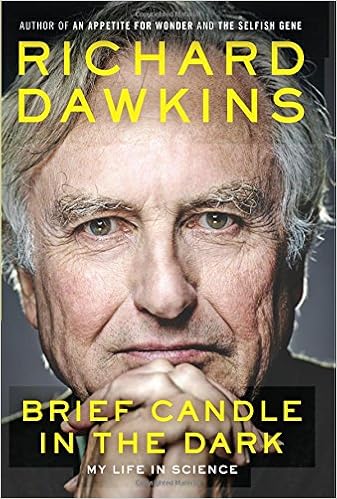
I know that you are good friends with Richard Dawkins and I have noticed how many times he quotes you in his books.  It just so happens that I have just got finishing reading back to back his books, The God DelusionAn Appetite for Wonder: The Making of a Scientist, and Brief Candle in the Dark: My Life in Science. I also recently enjoyed watching you on Jonathan Miller’s BBC program Atheism: A Rough History of Disbelief.  Francis Schaeffer used to quote Jonathan Miller back in the 1960’s during his teachings at L ‘Abri.

Today I wanted respond to an assertion you made in the very popular You Tube series, 50 Renowned Academics Speaking About God (Part 1):

God is definitely beyond the verification process of science. God is designed to be beyond the verification process of science.  The classic adaptation of religion is to create this gulf so that science can’t get anywhere near God. That is true, but science can understand that very fact.

Let me give 4 short responses.

FIRST, Romans 1 points that every person has a God-given conscience instead of them that tells them that God exists. Back on July 8, 2014 I mailed you a letter that went into this further and the interesting factor is that this can be tested by a lie-detector and there was a proposition I made to the FELLOWS of CSICOP concerning that in the 1990’s and I assume you were one of the individuals I contacted back then. I was very honored that many of the them replied (including Antony Flew and Carl Sagan).

SECOND, let me recommend a book  by Sean McDowell and Jonathan Marrow, called Is God Just a Human Invention? And Seventeen Other Questions Raised by the New Atheists.

THIRD, John Piippo responds to your assertion by quoting Alvin Plantinga. As you know  Plantinga wants to show that there is no good reason to think Christian belief is unjustified, irrational, or unwarranted unless it can be shown that Christian beliefs are false.

John Piippo in his article 50 Renowned Academics (Atheists) Speaking About God – A Review, (August 05, 2011) noted:

  1. Daniel Dennett (philosophy)

God cannot be scientifically verified. The God of theism is “protected from disproof” because it is defined as “beyond science.” This is an interesting point, and one that can be responded to. See, e.g., Plantinga, who takes the discussion into the arena of “properly basic beliefs.

FOURTH,  there is plenty of evidence from archaeology showing the Bible is true from cover to cover and can be trusted. You stated, “God is definitely beyond the verification process of science.” However, what about the events in the Bible which claim to be the works of God? Can they be tested by a examination of the historical and archaeological records?  Here are some of the posts I have done in the past on the subject: 1. The Babylonian Chronicleof Nebuchadnezzars Siege of Jerusalem2. Hezekiah’s Siloam Tunnel Inscription. 3. Taylor Prism (Sennacherib Hexagonal Prism)4. Biblical Cities Attested Archaeologically. 5. The Discovery of the Hittites6.Shishak Smiting His Captives7. Moabite Stone8Black Obelisk of Shalmaneser III9A Verification of places in Gospel of John and Book of Acts., 9B Discovery of Ebla Tablets10. Cyrus Cylinder11. Puru “The lot of Yahali” 9th Century B.C.E.12. The Uzziah Tablet Inscription13. The Pilate Inscription14. Caiaphas Ossuary14 B Pontius Pilate Part 214c. Three greatest American Archaeologists moved to accept Bible’s accuracy through archaeology.,

I have also responded to your statement today in a more lengthy way on my blog http://www.thedailyhatch.org in the post RESPONDING TO HARRY KROTO’S BRILLIANT RENOWNED ACADEMICS!! Daniel Dennett, Philosophy, Tufts University, “God is designed to be beyond the verification process of science.” I hope you take time to take a look. By the way this series was started because your friend HARRY KROTO is the one who referred me to the You Tube video series that featured your quote!!!

Thank you again  for your time.

Everette Hatcher,  P.O. Box 23416, Little Rock, AR 72221, cell ph 501-920-5733, everettehatcher@gmail.com

PS: Today I checked out of the library your book Darwin’s Dangerous Idea: Evolution and the Meanings of Life, and two years ago I read  Charles Darwin, Autobiography (1876), in The Life and Letters of Charles Darwin, ed. Francis Darwin, vol. 1 (London: John Murray, 1888), and just year I listened to the audio book  On The Origin Of The Species (Charles/Francis Darwin) Narrated by Professor. Richard Dawkins, Ph.D., So I trying to try and understand your point of view too.

Darwin age 30
Image result for charles darwin
Darwin in midlife
Image result for charles darwin
Darwin close to the end of his life

Daniel C. Dennett,
Tufts University
Medford, MA

July 8, 2014

Dear Dr. Dennett,

Recently I read these words that were attributed to you, “There are two ways of looking at the source of meaning there’s the old-fashioned way, which is the trickle-down theory of meaning. Our lives can’t have meaning unless we’re the lesser products of something even more meaningful than we are…The other way of looking at it is the bubble-up theory of meaning, which is that the universe starts off without meaning and there really is no point to it, but it’s possible for life to evolve and it does. We eventually show up–and we are meaning-makers and we care…”

Solomon took a long look at finding meaning in life “under the sun” in the Book of Ecclesiastes without God and he found that it was impossible to be a “meaning-maker” without God in the picture. More on that later.

I noticed that you are on the Committee for the Scientific Investigation of Claims of the Paranormal (CSICOP) and that prompted me to send this material to you today.

A couple of months ago I mailed you a letter that contained correspondence I had with Antony Flew and Carl Sagan and I also included some of the material I had sent them from Adrian Rogers and Francis Schaeffer. Did you have a chance to listen to the IS THE BIBLE TRUE? CD yet? I also wanted to let know some more about about Francis Schaeffer. Ronald Reagan said of Francis Schaeffer, “He will long be remembered as one of the great Christian thinkers of our century, with a childlike faith and a profound compassion toward others. It can rarely be said of an individual that his life touched many others and affected them for the better; it will be said of Francis Schaeffer that his life touched millions of souls and brought them to the truth of their creator.”

Thirty years ago the christian philosopher and author Francis Schaeffer (1912-1984) died and on the 10th anniversary of his passing in 1994 I wrote a number of the top evolutionists, humanists and atheistic scholars in the world and sent them a story about Francis Schaeffer in 1930 when he left agnosticism and embraced Christianity. I also sent them  a cassette tape with the title “Four intellectual bridges evolutionists can’t cross” by Adrian Rogers (1931-2005) and some of the top  scholars who corresponded with me since that time include Ernest Mayr (1904-2005), George Wald (1906-1997), Carl Sagan (1934-1996),  Robert Shapiro (1935-2011), Nicolaas Bloembergen (1920-),  Brian Charlesworth (1945-),  Francisco J. Ayala (1934-) Elliott Sober (1948-), Kevin Padian (1951-), Matt Cartmill (1943-) , Milton Fingerman (1928-), John J. Shea (1969-), , Michael A. Crawford (1938-), (Paul Kurtz (1925-2012), Sol Gordon (1923-2008), Albert Ellis (1913-2007), Barbara Marie Tabler (1915-1996), Renate Vambery (1916-2005), Archie J. Bahm (1907-1996), Aron S “Gil” Martin ( 1910-1997), Matthew I. Spetter (1921-2012), H. J. Eysenck (1916-1997), Robert L. Erdmann (1929-2006), Mary Morain (1911-1999), Lloyd Morain (1917-2010),  Warren Allen Smith (1921-), Bette Chambers (1930-),  Gordon Stein (1941-1996) , Milton Friedman (1912-2006), John Hospers (1918-2011), and Michael Martin (1932-).

The truth is that I am an evangelical Christian and I have enjoyed developing relationships with skeptics and humanists over the years. Back in 1996 I took my two sons who were 8  and 10 yrs old back then to New York, Washington, Philadelphia, Delaware, and New Jersey and we had dinner one night with Herbert A. Tonne, who was one of the signers of the Humanist Manifesto II. The Late Professor John George who has written books for Prometheus Press was my good friend during the last 10 years of his life. (I still miss him today.) We often ate together and were constantly talking on the phone and writing letters to one another.

It is a funny story how I met Dr. George. As an evangelical Christian and a member of the Christian Coalition, I felt obliged to expose a misquote of John Adams’ I found in an article entitled “America’s Unchristian Beginnings” by the self-avowed atheist Dr. Steven Morris. However, what happened next changed my focus to the use of misquotes, unconfirmed quotes, and misleading attributions by the religious right.

In the process of attempting to correct Morris, I was guilty of using several misquotes myself. Professor John George of the University of Central Oklahoma political science department and coauthor (with Paul Boller Jr.) of the book THEY NEVER SAID IT! set me straight. George pointed out that George Washington never said, “It is impossible to rightly govern the world without God and the Bible. I had cited page 18 of the 1927 edition of HALLEY’S BIBLE HANDBOOK. This quote was probably generated by a similar statement that appears in A LIFE OF WASHINGTON by James Paulding. Sadly, no one has been able to verify any of the quotes in Paulding’s book since no footnotes were offered.

After reading THEY NEVER SAID IT! I had a better understanding of how widespread the problem of misquotes is. Furthermore, I discovered that many of these had been used by the leaders of the religious right. I decided to confront some individuals concerning their misquotes. WallBuilders, the publisher of David Barton’s THE MYTH OF SEPARATION, responded by providing me with their “unconfirmed  quote” list which contained a dozen quotes widely used by the religious right.

Sadly some of the top leaders of my own religious right have failed to take my encouragement to stop using these quotes and they have either claimed that their critics were biased skeptics who find the truth offensive or they defended their own method of research and claimed the secondary sources were adequate.

I have enclosed that same CD by Adrian Rogers that I sent 20 years ago although the second half does include a story about  Charles Darwin‘s journey from  the position of theistic evolution to agnosticism. Here are the four bridges that Adrian Rogers says evolutionists can’t cross in the CD  “Four Bridges that the Evolutionist Cannot Cross.” 1. The Origin of Life and the law of biogenesis. 2. The Fixity of the Species. 3.The Second Law of Thermodynamics. 4. The Non-Physical Properties Found in Creation.  

In the first 3 minutes of the CD is the hit song “Dust in the Wind.” In the letter 20 years ago I gave some of the key points Francis Schaeffer makes about the experiment that Solomon undertakes in the book of Ecclesiastes to find satisfaction by  looking into  learning (1:16-18), laughter, ladies, luxuries,  and liquor (2:1-3, 8, 10, 11), and labor (2:4-6, 18-20).

I later learned this book of Ecclesiastes was Richard Dawkins’ favorite book in the Bible. Schaeffer noted that Solomon took a look at the meaning of life on the basis of human life standing alone between birth and death “under the sun.” This phrase UNDER THE SUN appears over and over in Ecclesiastes. The Christian Scholar Ravi Zacharias noted, “The key to understanding the Book of Ecclesiastes is the term UNDER THE SUN — What that literally means is you lock God out of a closed system and you are left with only this world of Time plus Chance plus matter.” No wonder Ecclesiastes is Richard Dawkins’ favorite book of the Bible! 

Here the first 7 verses of Ecclesiastes followed by Schaeffer’s commentary on it:

The words of the Preacher, the son of David, king in Jerusalem. Vanity of vanities, says the Preacher, vanity of vanities! All is vanity. What does man gain by all the toil at which he toils under the sun? A generation goes, and a generation comes, but the earth remains forever. The sun rises, and the sun goes down, and hastens to the place where it rises. The wind blows to the south and goes around to the north; around and around goes the wind, and on its circuits the wind returns. All streams run to the sea, but the sea is not full; to the place where the streams flow, there they flow again.  

Solomon is showing a high degree of comprehension of evaporation and the results of it. (E.O.Wilson has marveled at Solomon’s scientific knowledge of ants that was only discovered in the 1800’s.) Seeing also in reality nothing changes. There is change but always in a set framework and that is cycle. You can relate this to the concepts of modern man. Ecclesiastes is the only pessimistic book in the Bible and that is because of the place where Solomon limits himself. He limits himself to the question of human life, life under the sun between birth and death and the answers this would give.

Solomon doesn’t place man outside of the cycle. Man doesn’t escape the cycle. Man is in the cycle. Birth and death and youth and old age.

There is no doubt in my mind that Solomon had the same experience in his life that I had as a younger man (at the age of 18 in 1930). I remember standing by the sea and the moon arose and it was copper and beauty. Then the moon did not look like a flat dish but a globe or a sphere since it was close to the horizon. One could feel the global shape of the earth too. Then it occurred to me that I could contemplate the interplay of the spheres and I was exalted because I thought I can look upon them with all their power, might, and size, but they could contempt nothing. Then came upon me a horror of great darkness because it suddenly occurred to me that although I could contemplate them and they could contemplate nothing yet they would continue to turn in ongoing cycles when I saw no more forever and I was crushed.

_______________

You are an atheist and you have a naturalistic materialistic worldview, and this short book of Ecclesiastes should interest you because the wisest man who ever lived in the position of King of Israel came to THREE CONCLUSIONS that will affect you.

FIRST, chance and time have determined the past, and they will determine the future.  (Ecclesiastes 9:11-13)

These two verses below  take the 3 elements mentioned in a naturalistic materialistic worldview (time, chance and matter) and so that is all the unbeliever can find “under the sun” without God in the picture. You will notice that these are the three elements that evolutionists point to also.

Ecclesiastes 9:11-12 is following: I have seen something else under the sun: The race is not to the swift or the battle to the strong, nor does food come to the wise or wealth to the brilliant or favor to the learned; but time and chance happen to them all. Moreover, no one knows when their hour will come: As fish are caught in a cruel net, or birds are taken in a snare, so people are trapped by evil times that fall unexpectedly upon them.

SECOND, Death is the great equalizer (Eccl 3:20, “All go to the same place; all come from dust, and to dust all return.”)

THIRD, Power reigns in this life, and the scales are not balanced(Eccl 4:1, 8:15)

Ecclesiastes 4:1-2: “Next I turned my attention to all the outrageous violence that takes place on this planet—the tears of the victims, no one to comfort them; the iron grip of oppressors, no one to rescue the victims from them.” Ecclesiastes 8:14; “ Here’s something that happens all the time and makes no sense at all: Good people get what’s coming to the wicked, and bad people get what’s coming to the good. I tell you, this makes no sense. It’s smoke.”

Solomon had all the resources in the world and he found himself searching for meaning in life and trying to come up with answers concerning the afterlife. However, it seems every door he tries to open is locked. Today men try to find satisfaction in learning, liquor, ladies, luxuries, laughter, and labor and that is exactly what Solomon tried to do too.  None of those were able to “fill the God-sized vacuum in his heart” (quote from famous mathematician and philosopher Blaise Pascal). You have to wait to the last chapter in Ecclesiastes to find what Solomon’s final conclusion is.

In 1978 I heard the song “Dust in the Wind” by Kansas when it rose to #6 on the charts. That song told me that Kerry Livgren the writer of that song and a member of Kansas had come to the same conclusion that Solomon had. I remember mentioning to my friends at church that we may soon see some members of Kansas become Christians because their search for the meaning of life had obviously come up empty even though they had risen from being an unknown band to the top of the music business and had all the wealth and fame that came with that. Furthermore, Solomon realized death comes to everyone and there must be something more.

Livgren wrote:

All we do, crumbles to the ground though we refuse to see, Dust in the Wind, All we are is dust in the wind, Don’t hang on, Nothing lasts forever but the Earth and Sky, It slips away, And all your money won’t another minute buy.”

Take a minute and compare Kerry Livgren‘s words to that of the late British humanist H.J. Blackham:

On humanist assumptions, life leads to nothing, and every pretense that it does not is a deceit. If there is a bridge over a gorge which spans only half the distance and ends in mid-air, and if the bridge is crowded with human beings pressing on, one after the other they fall into the abyss. The bridge leads nowhere, and those who are pressing forward to cross it are going nowhere….It does not matter where they think they are going, what preparations for the journey they may have made, how much they may be enjoying it all. The objection merely points out objectively that such a situation is a model of futility“( H. J. Blackham, et al., Objections to Humanism (Riverside, Connecticut: Greenwood Press, 1967).

_____________________________________

Both Kerry Livgren and the bass player DAVE HOPE of Kansas became Christians eventually. Kerry Livgren first tried Eastern Religions and DAVE HOPE had to come out of a heavy drug addiction. I was shocked and elated to see their personal testimony on The 700 Club in 1981 and that same  interview can be seen on youtube today. Livgren lives in Topeka, Kansas today where he teaches “Diggers,” a Sunday school class at Topeka Bible ChurchDAVE HOPE is the head of Worship, Evangelism and Outreach at Immanuel Anglican Church in Destin, Florida.

Solomon’s experiment was a search for meaning to life “under the sun.” Then in last few words in the Book of Ecclesiastes he looks above the sun and brings God back into the picture: “The conclusion, when all has been heard, is: Fear God and keep His commandments, because this applies to every person. For God will bring every act to judgment, everything which is hidden, whether it is good or evil.”

The answer to find meaning in life is found in putting your faith and trust in Jesus Christ. The Bible is true from cover to cover and can be trusted.

Now on to the other topic I wanted to discuss with you today. I wanted to write you today for one reason. IS THERE A GOOD CHANCE THAT DEEP DOWN IN YOUR CONSCIENCE  you have repressed the belief in your heart that God does exist and IS THERE A POSSIBILITY THIS DEEP BELIEF OF YOURS CAN BE SHOWN THROUGH A LIE-DETECTOR? (Back in the late 1990’s I had the opportunity to correspond with over a dozen members of CSICOP on just this very issue.)

I have a good friend who is a street preacher who preaches on the Santa Monica Promenade in California and during the Q/A sessions he does have lots of atheists that enjoy their time at the mic. When this happens he  always quotes Romans 1:18-19 (Amplified Bible) ” For God’s wrath and indignation are revealed from heaven against all ungodliness and unrighteousness of men, who in their wickedness REPRESS and HINDER the truth and make it inoperative. For that which is KNOWN about God is EVIDENT to them and MADE PLAIN IN THEIR INNER CONSCIOUSNESS, because God  has SHOWN IT TO THEM,”(emphasis mine). Then he  tells the atheist that the atheist already knows that God exists but he has been suppressing that knowledge in unrighteousness. This usually infuriates the atheist.

My friend draws some large crowds at times and was thinking about setting up a lie detector test and see if atheists actually secretly believe in God. He discussed this project with me since he knew that I had done a lot of research on the idea about 20 years ago.

Nelson Price in THE EMMANUEL FACTOR (1987) tells the story about Brown Trucking Company in Georgia who used to give polygraph tests to their job applicants. However, in part of the test the operator asked, “Do you believe in God?” In every instance when a professing atheist answered “No,” the test showed the person to be lying. My pastor Adrian Rogers used to tell this same story to illustrate Romans 1:19 and it was his conclusion that “there is no such thing anywhere on earth as a true atheist. If a man says he doesn’t believe in God, then he is lying. God has put his moral consciousness into every man’s heart, and a man has to try to kick his conscience to death to say he doesn’t believe in God.”

It is true that polygraph tests for use in hiring were banned by Congress in 1988.  Mr and Mrs Claude Brown on Aug 25, 1994  wrote me a letter confirming that over 15,000 applicants previous to 1988 had taken the polygraph test and EVERYTIME SOMEONE SAID THEY DID NOT BELIEVE IN GOD, THE MACHINE SAID THEY WERE LYING.

It had been difficult to catch up to the Browns. I had heard about them from Dr. Rogers’ sermon but I did not have enough information to locate them. Dr. Rogers referred me to Dr. Nelson Price and Dr. Price’s office told me that Claude Brown lived in Atlanta. After writing letters to all 9 of the entries for Claude Brown in the Atlanta telephone book, I finally got in touch with the Browns.

Adrian Rogers also pointed out that the Bible does not recognize the theoretical atheist.  Psalms 14:1: The fool has said in his heart, “There is no God.”  Dr Rogers notes, “The fool is treating God like he would treat food he did not desire in a cafeteria line. ‘No broccoli for me!’ ” In other words, the fool just doesn’t want God in his life and is a practical atheist, but not a theoretical atheist. Charles Ryrie in the The Ryrie Study Bible came to the same conclusion on this verse.

Here are the conclusions of the experts I wrote in the secular world concerning the lie detector test and it’s ability to get at the truth:

Professor Frank Horvath of the School of Criminal Justice at Michigan State University has testified before Congress concerning the validity of the polygraph machine. He has stated on numerous occasions that “the evidence from those who have actually been affected by polygraph testing in the workplace is quite contrary to what has been expressed by critics. I give this evidence greater weight than I give to the most of the comments of critics” (letter to me dated October 6, 1994).

There was no better organization suited to investigate this claim concerning the lie detector test than the Committee for the Scientific Investigation of Claims of the Paranormal (CSICOP). This organization changed their name to the Committe for Skeptical Inquiry in 2006. This organization includes anyone who wants to help debunk the whole ever-expanding gamut of misleading, outlandish, and fraudulent claims made in the name of science. I AM WRITING YOU TODAY BECAUSE YOU ARE ASSOCIATED WITH CSICOP.

I read The Skeptical Review(publication of CSICOP) for several years during the 90’s and I would write letters to these scientists about taking this project on and putting it to the test.  Below are some of  their responses (15 to 20 years old now):

1st Observation: Religious culture of USA could have influenced polygraph test results.
ANTONY FLEW  (formerly of Reading University in England, now deceased, in a letter to me dated 8-11-96) noted, “For all the evidence so far available seems to be of people from a culture in which people are either directly brought up to believe in the existence of God or at least are strongly even if only unconsciously influenced by those who do. Even if everyone from such a culture revealed unconscious belief, it would not really begin to show that — as Descartes maintained— the idea of God is so to speak the Creator’s trademark, stamped on human souls by their Creator at their creation.”

2nd Observation: Polygraph Machines do not work. JOHN R. COLE, anthropologist, editor, National Center for Science Education, Dr. WOLF RODER, professor of Geography, University of Cincinnati, Dr. SUSAN BLACKMORE,Dept of Psychology, University of the West of England, Dr. CHRISTOPHER C. FRENCH, Psychology Dept, Goldsmith’s College, University of London, Dr.WALTER F. ROWE, The George Washington University, Dept of Forensic Sciences, Graduate School of Arts and Sciences.

3rd Observation: The sample size probably was not large enough to apply statistical inference. (These gentlemen made the following assertion before I received the letter back from Claude Brown that revealed that the sample size was over 15,000.) JOHN GEOHEGAN, Chairman of New Mexicans for Science and Reason, Dr. WOLF RODER, and Dr WALTER F. ROWE (in a letter dated July 12, 1994) stated, “The polygraph operator for Brown Trucking Company has probably examined only a few hundred or a few thousand job applicants. I would surmise that only a very small number of these were actually atheists. It seems a statistically insignificant (and distinctly nonrandom) sampling of the 5 billion human beings currently inhabiting the earth. Dr. Nelson Price also seems to be impugning the integrity of anyone who claims to be an atheist in a rather underhanded fashion.”

4th Observation: The question (Do you believe in God?)  was out of place and it surprised the applicants. THOMAS GILOVICH, psychologist, Cornell Univ., Dr. ZEN FAULKES, professor of Biology, University of Victoria (Canada), ROBERT CRAIG, Head of Indiana Skeptics Organization, Dr. WALTER ROWE, 
 
5th Observation: Proof that everyone believes in God’s existence does not prove that God does in fact exist. PAUL QUINCEY, Nathional Physical Laboratory,(England), Dr. CLAUDIO BENSKI, Schneider Electric, CFEPP, (France),
6th Observation: Both the courts and Congress recognize that lie-detectors don’t work and that is why they were banned in 1988.  (Governments and the military still use them.)
Dr WALTER ROWE, KATHLEEN M. DILLION, professor of Psychology, Western New England College.
7th Observation:This information concerning Claude Brown’s claim has been passed on to us via a tv preacher and eveybody knows that they are untrustworthy– look at their history. WOLF RODER.
______________
Solomon wisely noted in Ecclesiastes 3:11 “God has planted eternity in the heart of men…” (Living Bible). No wonder Bertrand Russell wrote in his autobiography, “It is odd, isn’t it? I feel passionately for this world and many things and people in it, and yet…what is it all? There must be something more important, one feels, though I don’t believe there is. I am haunted. Some ghosts, for some extra mundane regions, seem always trying to tell me something that I am to repeat to the world, but I cannot understand that message.”
Gene Emery, science writer for Providence Journal-Bulletin is a past winner of the CSICOP “Responsibility in Journalism Award” and he had the best suggestion of all when he suggested, “Actually, if you want to make a good case about whether Romans 1:19 is true, arrange to have a polygraph operator (preferably an atheist or agnostic) brought to the next CSICOP meeting. (I’m not a member of CSICOP, by the way, so I can’t give you an official invitation or anything.) If none of the folks at that meeting can convince the machine that they truly believe in God, maybe there is, in fact, an innate willingness to believe in God.”

DO YOU HAVE ANY REACTIONS TO ADD TO THESE 7 OBSERVATIONS THAT I GOT 15 YEARS AGO? Thank you again for your time and I know how busy you are.

Everette Hatcher, everettehatcher@gmail.com, http://www.thedailyhatch.org, cell ph 501-920-5733, Box 23416, LittleRock, AR 72221

.

.

BBC The Atheism Tapes – Daniel Dennett


Summary of Alvin Plantinga’s Reformed Epistemology

W.K. Clifford once said that “it is wrong always and everywhere to believe something on insufficient evidence.” This is the heart of evidentialsim or theological rationalism. And it is precisely this view that Alvin Plantinga (AP) challenges with his reformed epistemology which develops a model of “warranted Christian belief”. He has two projects: one public and one Christian.

Public Project – Plantinga first distinguishes between de facto objections (aimed at showing the Christian faith to be false) and de jure objections (those aimed at undermining Christian belief even if true). Even though these can be distinguished, AP thinks argues that in the cases of Christian theistic belief there is no de jure objection independent of a de facto objection.

de jure to Theistic belief – According to the evidentialist, even if it is true that God exists, one is unjustified and irrational for believing this apart from evidence. Only beliefs that are properly basic (those that are self-evident or incorrigible) or inferred from properly basic beliefs do not require evidence. But AP wants to ask why belief in God can’t be a properly basic belief? For he sees no good reason to exclude this possibility. First, there are other things we believe without evidence that we seem entirely justified in doing so without appealing to evidence (i.e., the world is older than five minutes). Second, what evidence is there that only propositions that are self evident and incorrigible are properly basic? The theory fails its own test. So there is no reason to exclude the possibility of belief in God being Properly Basic.

AP argues that Christians are not only within their epistemic rights (Justification) in believing God exists, but also that they can know (Warranted) apart from evidence. The key to Plantinga’s Reformed Epistemology is warrant, “the property which turns mere true belief into knowledge when possessed in sufficient degree.” Justification, on AP’s view, is fairly easy to come by—it’s warrant that is important for knowledge. AP appropriates Calvin’s Sensus Divinitatis (or sense of the divine) in order describe the appropriate circumstances / faculty that form the belief that God exists in people. It is within this context that he offers his four criteria for warrant: 1) the cognitive faculties of the person are functioning properly 2) the cognitive environment is appropriate 3) the purpose of the epistemic faculty is aimed at producing true beliefs. 4) the objective probability of a beliefs being true is high. According to AP then, belief in God is properly basic with respect to warrant if God exists. But then the issue of God’s existence is no longer epistemic, but metaphysical or theological (enter arguments from Natural Theology). There is then no de jure objection to theistic belief.

de jure to Christianity – What about to specifically Christian Theism? AP expands his model to include the inner witness of the Holy Spirit. Due to humanity’s fall into sin, there have been disastrous cognitive and affective consequences. So if Christianity is true then belief in it is warranted in the same way mentioned above because belief is produced by the H.S.

Great Pumpkin Objectionsthe strongest objection to the public project is that it leads to radical relativism. For example, why could Linus’s belief in the Great Pumpkin not be properly basic for him? AP grants that Linus could be justified in his belief, but so what? He is still being lied to—so he possesses no warrant. Moreover, if Christian epistemologists can have belief in God be properly basic for them, then why not voodoo epistemologists? Again, AP will concede that they can within their epistemic rights (justified), but not warranted. So the Son of the Great Pumpkin Objection Fails. At most, all these objections show is that there is no de jure objection to theistic belief in general (e.g., Muslims). That will have to be settled dependent on how successful de facto arguments are against specific religious beliefs.

The Christian Projectwhile AP’s public project has been successful, his Christian project might need some modification. AP only offers thin evidence here, and his suggestion that if the Christian God exists, then he would want us to know him and would have provided a way for that to occur isn’t a statement that a Christian evidentialist would disagree with. So more insight from Scripture and experience is needed in order to explicate a Christian model of warranted Christian belief. Since the Sensus Divinitatis and the testimony of the H.S. are experientially indistinguishable, we ought to use the testimony of the H.S. (Rom. 8:16) because of Scripture. Also, the H.S. being described as a cognitive faculty outside of people that forms belief in them is off base. Rather, the H.S. is better seen as a form of testimony that provides the appropriate circumstances for a properly basic belief to be formed.

Overall, Alvin Plantinga’s Reformed Epistemology is a helpful (and many think successful) theory of explaining warranted Christian belief.

For more, see Warranted Christian Belief by Alvin Plantinga (Oxford University Press).

Related posts:

FRANCIS SCHAEFFER ANALYZES ART AND CULTURE Part 53 THE BEATLES (Part E, Stg. Pepper’s and John Lennon’s search in 1967 for truth was through drugs, money, laughter, etc & similar to King Solomon’s, LOTS OF PICTURES OF JOHN AND CYNTHIA) (Feature on artist Yoko Ono)

The John Lennon and the Beatles really were on a long search for meaning and fulfillment in their lives  just like King Solomon did in the Book of Ecclesiastes. Solomon looked into learning (1:12-18, 2:12-17), laughter, ladies, luxuries, and liquor (2:1-2, 8, 10, 11), and labor (2:4-6, 18-20). He fount that without God in the picture all […]

FRANCIS SCHAEFFER ANALYZES ART AND CULTURE Part 52 THE BEATLES (Part D, There is evidence that the Beatles may have been exposed to Francis Schaeffer!!!) (Feature on artist Anna Margaret Rose Freeman )

______________   George Harrison Swears & Insults Paul and Yoko Lucy in the Sky with Diamonds- The Beatles The Beatles:   I have dedicated several posts to this series on the Beatles and I don’t know when this series will end because Francis Schaeffer spent a lot of time listening to the Beatles and talking […]

FRANCIS SCHAEFFER ANALYZES ART AND CULTURE Part 51 THE BEATLES (Part C, List of those on cover of Stg.Pepper’s ) (Feature on artist Raqib Shaw )

  The Beatles in a press conference after their Return from the USA Uploaded on Nov 29, 2010 The Beatles in a press conference after their Return from the USA. The Beatles:   I have dedicated several posts to this series on the Beatles and I don’t know when this series will end because Francis […]

FRANCIS SCHAEFFER ANALYZES ART AND CULTURE Part 50 THE BEATLES (Part B, The Psychedelic Music of the Beatles) (Feature on artist Peter Blake )

__________________   Beatles 1966 Last interview I have dedicated several posts to this series on the Beatles and I don’t know when this series will end because Francis Schaeffer spent a lot of time listening to the Beatles and talking and writing about them and their impact on the culture of the 1960’s. In this […]

FRANCIS SCHAEFFER ANALYZES ART AND CULTURE Part 49 THE BEATLES (Part A, The Meaning of Stg. Pepper’s Cover) (Feature on artist Mika Tajima)

_______________ The Beatles documentary || A Long and Winding Road || Episode 5 (This video discusses Stg. Pepper’s creation I have dedicated several posts to this series on the Beatles and I don’t know when this series will end because Francis Schaeffer spent a lot of time listening to the Beatles and talking and writing about […]

FRANCIS SCHAEFFER ANALYZES ART AND CULTURE PART 48 “BLOW UP” by Michelangelo Antonioni makes Philosophic Statement (Feature on artist Nancy Holt)

_______________ Francis Schaeffer pictured below: _____________________ I have included the 27 minute  episode THE AGE OF NONREASON by Francis Schaeffer. In that video Schaeffer noted,  ” Sergeant Pepper’s Lonely Hearts Club Band…for a time it became the rallying cry for young people throughout the world. It expressed the essence of their lives, thoughts and their feelings.” How Should […]

FRANCIS SCHAEFFER ANALYZES ART AND CULTURE Part 47 Woody Allen and Professor Levy and the death of “Optimistic Humanism” from the movie CRIMES AND MISDEMEANORS Plus Charles Darwin’s comments too!!! (Feature on artist Rodney Graham)

Crimes and Misdemeanors: A Discussion: Part 1 ___________________________________ Today I will answer the simple question: IS IT POSSIBLE TO BE AN OPTIMISTIC SECULAR HUMANIST THAT DOES NOT BELIEVE IN GOD OR AN AFTERLIFE? This question has been around for a long time and you can go back to the 19th century and read this same […]

FRANCIS SCHAEFFER ANALYZES ART AND CULTURE PART 46 Friedrich Nietzsche (Featured artist is Thomas Schütte)

____________________________________ Francis Schaeffer pictured below: __________ Francis Schaeffer has written extensively on art and culture spanning the last 2000years and here are some posts I have done on this subject before : Francis Schaeffer’s “How should we then live?” Video and outline of episode 10 “Final Choices” , episode 9 “The Age of Personal Peace and Affluence”, episode 8 […]

FRANCIS SCHAEFFER ANALYZES ART AND CULTURE Part 45 Woody Allen “Reason is Dead” (Feature on artists Allora & Calzadilla )

Love and Death [Woody Allen] – What if there is no God? [PL] ___________ _______________ How Should We then Live Episode 7 small (Age of Nonreason) #02 How Should We Then Live? (Promo Clip) Dr. Francis Schaeffer 10 Worldview and Truth Two Minute Warning: How Then Should We Live?: Francis Schaeffer at 100 Francis Schaeffer […]

FRANCIS SCHAEFFER ANALYZES ART AND CULTURE Part 44 The Book of Genesis (Featured artist is Trey McCarley )

___________________________________ Francis Schaeffer pictured below: ____________________________ Francis Schaeffer “BASIS FOR HUMAN DIGNITY” Whatever…HTTHR Dr. Francis schaeffer – The flow of Materialism(from Part 4 of Whatever happened to human race?) Dr. Francis Schaeffer – The Biblical flow of Truth & History (intro) Francis Schaeffer – The Biblical Flow of History & Truth (1) Dr. Francis Schaeffer […]

_

Open Letter #59 to Ricky Gervais on comparison of the Tony of AFTER LIFE to the Solomon of ECCLESIASTES, Robert Lewis said in 1996, “I befriended a man several years ago who was a kind of real Little Rock PLAYBOY. In fact, his lifestyle and sexual escapades were legendary around the city. He was rich, single, hansom and very sophisticated. Ultimately it led him to a hotel in Little Rock where he put a gun in his mouth because to have it all is to find out it is empty”

—-

—-


After Life #1 Trailer

—-

I listened to this question and answer session at Harvard in 1992 on cassette tapes and was captivated with Ravi Zacharias. His responses were so much better than Kath’s responses to Tony in AFTER LIFE. I have referenced work by Ravi many times in the past and Especially moving was Ravi’s own spiritual search which started in a hospital bed after a failed suicide attempt. I also want you to check out his talk at Princeton and the question and answer time afterwards which are both on YOU TUBEat these two links: Link for talk, Link for Q/A.

After Life 2 Trailer

—-

On Saturday April 18, 2020 at 6pm in London and noon in Arkansas, I had a chance to ask Ricky Gervais a question on his Twitter Live broadcast which was  “Is Tony a Nihilist?” At the 20:51 mark Ricky answers my question. Below is the video:

—-

—-

If Death is the end then what is the point Kath asks below:

——

Francis Schaeffer passed away on May 15, 1984 and on the 10th anniversary of that date I wrote many skeptics such as Carl Sagan and corresponded with them on the big questions covered by the Book of Ecclesiastes.

Kath: You are an atheist?

—-

Tony and his wife Lisa who died 6 months ago of cancer

(Above) Tony and Anne on the bench at the graveyard where their spouses are buried.

June 15, 2020 
Ricky Gervais 


Dear Ricky,  

This is the 59th day in a row that I have written another open letter to you to comment on some of your episodes of AFTER LIFE, and then I wanted to pass along some Old Testament prophecies that have already been fulfilled in history!! 

Tony has come to the brink of suicide several times in AFTER LIFE, and there are times in ECCLESIASTES that Solomon sounds nihilistic and suicidal. In fact, Solomon says in chapter 2: 17 hate life. As far as I can see, what happens on earth is a bad business. It’s smoke—and spitting into the wind. Today later in this letter we will discuss someone who had all the women he wanted but he pulled the trigger and killed himself in 1996 because his life was empty!! The answer is not having as many sexual conquests as possible!


In season 1 of AFTERLIFE in episode 3 Tony talks to Daphne the prostitute:

Tony: Why do you do what you do?

Daphne: Money.

Tony: I know but why that?

Daphne: Do you remember that woman Pretty Woman?

Tony: Yeah.

Daphne: I just thought it looked really glamorous. 
Tony: Really?

Daphne: Of course not!! (Laughing)

Tony and his wife Lisa who died 6 months ago of cancer

Here is a portion of a letter that I wrote to Hugh Hefner on April 9, 2016:

(Robert Lewis pictured below)

You see HUGH your life is really the exception and not the rule as Bill Parkinson pointed out above. Now I wanted to ask you a simple question: HAVE YOU KNOWN PEOPLE WHO HAD THEIR LIVES DESTROYED BECAUSE THEY LEFT THEIR FAMILY LIFE TO EMBRACE HEDONISM?

Robert Lewis on 4-14-96 as a teaching pastor at FELLOWSHIP BIBLE CHURCH in Little Rock delivered a sermon entitled LIFE UNDER THE SUN which was based on Ecclesiastes chapters 1 and 2. Here is a portion of that sermon below:

Solomon wanted to know the meaning of life beyond God in this world. So he tried to live life at the edge or the extreme so to report not like a philosopher in a ivory tower, but he wanted to do that by putting himself personally into these pursuits to see IS THERE ANY OTHER MEANING IN LIFE BESIDES GOD. This is really what he tries to do. Ecclesiastes 1:13, “And I set my mind to seek and exploreby wisdom concerning all that has been done under heaven.” The word SEEK means to do rigorous research and that is what he has done. 

The word EXPLORE means to examine all sides of things and he didn’t do that just as Lab Technician, but Solomon did it the old fashion way. He got personally involved. He researched every category as far as it could go in order to know everything about life. So he didn’t talk about materialism but he became the ultimate materialist...He became the ultimate hedonist. You want to know about sex? Solomon can tell you everything about it….UNDER THE SUN there is no real meaning in any of it. The best life can do is keep delivering to you the empty promise that if you have something else then you will be happy, but the curse is when you get it. Ecclesiastes 2:17, “So I hated life, for the work which had been done under the sun was grievous to me; because everything is futility and striving after wind.”

I befriended a man several years ago who was a kind of real Little Rock PLAYBOY. In fact, his lifestyle and sexual escapades were legendary around the city. He was rich, single, hansom and very sophisticated. He told me, “A woman any night and anything your mind can imagine.” Where did it lead him? Ultimately it led him to a hotel in Little Rock where he put a gun in his mouth because to have it all is to find out it is empty.  

Ecclesiastes was written to those who wanted to examine life UNDER THE SUN without God in the picture and that is what Robert Lewis said in his sermon LIFE UNDER THE SUN. But the story doesn’t end there. Solomon’s conclusion in the final chapter was found in Ecclesiastes 12 when he looked at life ABOVE THE SUN and tells us to bring God back into the picture and make our relationship with God the main purpose of our life:

13 The end of the matter; all has been heard. Fear God and keep his commandments, for this is the whole duty of man. 14 For God will bring every deed into judgment, with every secret thing, whether good or evil.

Let’s go back to Romans 6:23, “For the wages of sin is death; but the GIFT OF GOD IS ETERNAL LIFE THROUGH JESUS CHRIST OUR LORD.” The meaning of this verse was distorted in the film about your life. Did you know that Romans 6:23 is part of what we call the Roman Road to Christ. Here is how it goes:

  • Because of our sin, we are separated from God.
    For all have sinned and fall short of the glory of God.  (Romans 3:23)
  • The Penalty for our sin is death.
    For the wages of sin is death, but the gift of God is eternal life in Jesus Christ our Lord. (Romans 6:23)
  • The penalty for our sin was paid by Jesus Christ!
    But God demonstrates His own love toward us, in that while we were yet sinners, Christ died for us. (Romans 5:8)
  • If we repent of our sin, then confess and trust Jesus Christ as our Lord and Savior, we will be saved from our sins!
    For whoever calls on the name of the Lord shall be saved.  (Romans 10:13)
    …if you confess with your mouth the Lord Jesus and believe in your heart that God has raised Him from the dead, you will be saved. For with the heart one believes unto righteousness, and with the mouth confession is made unto salvation. (Romans 10:9,10)

The answer to find meaning in life is found in putting your faith and trust in Jesus Christ. The Bible is true from cover to cover and can be trusted.

Proverbs 5 The Message (MSG)

Nothing but Sin and Bones

1-2 Dear friend, pay close attention to this, my wisdom;

3-6 The lips of a seductive woman are oh so sweet,
    her soft words are oh so smooth.
But it won’t be long before she’s gravel in your mouth,
    a pain in your gut, a wound in your heart.
She’s dancing down the primrose path to Death;
    she’s headed straight for Hell and taking you with her.

7-14 
Keep your distance from such a woman;
 
    Why be exploited by those who care nothing for you?
You don’t want to end your life full of regrets,
    nothing but sin and bones,

Never Take Love for Granted

15-16 Do you know the saying, “Drink from your own rain barrel,
Bless your fresh-flowing fountain!
    Enjoy the wife you married as a young man!
Lovely as an angel, beautiful as a rose—
    don’t ever quit taking delight in her body.
    Never take her love for granted!
Why would you trade enduring intimacies for cheap thrills with a whore?

21-23 Mark well that God doesn’t miss a move you make;
    he’s aware of every step you take.

The shadow of your sin will overtake you;
    you’ll find yourself stumbling all over yourself in the dark.
Death is the reward of an undisciplined life;
    your foolish decisions trap you in a dead end
.

Francis Schaeffer discusses ECCLESIASTES below:

Pursuing Ladies

If one would flee to alcohol, then surely one may choose sexual pursuits to flee to. Solomon looks in this area too.

Ecclesiastes 2:4-11

I enlarged my works: I built houses for myself, I planted vineyards for myself; I made gardens and parks for myself and I planted in them all kinds of fruit trees; I made ponds of water for myself from which to irrigate a forest of growing treesI bought male and female slaves and I had homeborn slaves. Also I possessed flocks and herds larger than all who preceded me in Jerusalem.Also, I collected for myself silver and gold and the treasure of kings and provinces. I provided for myself MALE AND  FEMALE SINGERS AND THE PLEASURES OF MEN–MANY CONCUBINES.

Then I became great and increased more than all who preceded me in Jerusalem. My wisdom also stood by me. 10 All that my eyes desired I did not refuse them. I did not withhold my heart from any pleasure, for my heart was pleased because of all my labor and this was my reward for all my labor.11 Thus I considered all my activities which my hands had done and the labor which I had exerted, and behold all was vanity and striving after wind and there was no profit under the sun.

Ecclesiastes 7:25-28

25 I directed my mind to know, to investigate and to seek wisdom and an explanation, and to know the evil of folly and the foolishness of madness. 26 And I discovered more bitter than death the woman whose heart is snares and nets, whose hands are chains. One who is pleasing to God will escape from her, but the sinner will be captured by her.

27 “Behold, I have discovered this,” says the Preacher, “adding one thing to another to find an explanation, 28 I have looked for other answers but have found none. I found one man in a thousand that I could respect, but not one woman. (Good News Translation on verse 28)

One can understand both Solomon’s expertness in this field and his bitterness.

I Kings 11:1-3 (New American Standard Bible) 

11 Now King Solomon loved many foreign women along with the daughter of Pharaoh: Moabite, Ammonite, Edomite, Sidonian, and Hittite women, from the nations concerning which the Lord had said to the sons of Israel, “You shall not associate with them, nor shall they associate with you, for they will surely turn your heart away after their gods.” Solomon held fast to these in love. He had seven hundred wives, princesses, and three hundred concubines, and his wives turned his heart away.

An expert but also the reason for his bitterness. Certainly there have been many men over the centuries who have daydreamed of Solomon’s wealth in this area [of women], but at the end it was sorry, not only sorry but nothing and less than nothing. The simple fact is that one can not know woman in the real sense by pursuing 1000 women. It is not possible. Woman is not found this way. All that is left in this setting if one were to pursue the meaning of life in this direction is this most bitter word found in Ecclesiastes 7:28, “I have looked for other answers but have found none. I found one man in a thousand that I could respect, but not one woman.” (Good News Translation on verse 28) He was searching in the wrong way. He was searching for the answer to life in the limited circle of that which is beautiful in itself but not an answer finally in sexual life. More than that he finally tried to find it in variety and he didn’t even touch one woman at the end

—-


WALTER SINNOTT-ARMSTRONG comments:

So you got omnipotence and you realize to have omnipotence you got to have God is unchanging, but you forget by adding unchanging in order to keep omnipotence that is going to conflict with active in the world. Now you are losing omnipotence because now He can’t act in the world. The problem is to keep the whole thing in a coherent bundle and even if there is not a logical contradiction in there, I don’t see how that is going to happen.

WALTER SINNOTT-ARMSTRONG doesn’t think God has been active in the world but I want you to see some Old Testament prophecies that have been fulfilled:

Fulfilled Prophecy as Evidence for the Bible’s Divine Origin

  • 2,000 prophecies including some 300 prophecies and implications about the life, death, and resurrection of Jesus.
  • There are no prophetic failures.
  • While there are both obvious and subtle prophecies, most are very detailed and specific.
  • No other religion has specific, repeated, and unfailing fulfillment of predictions many years in advance of contingent events over which the predictor had no control.
  • Studies of psychics show only around 8% of their predictions come true and virtually all of these can be attributed to chance and a general knowledge of circumstances.
  • Mathematicians have calculated the odds of Jesus fulfilling only 8 of the Messianic prophecies as 1 out of 1017 (a 1 followed by 17 zeros). This is equivalent to covering the entire state of Texas with silver dollars 2 feet deep, marking one of them, mixing them all up and having a blind-folded person select the marked one at random the first time. For more on this, see What Are The Odds?
  • Fulfilled prophecy is powerful evidence that the Bible is divine rather than human in origin.
  • Objection: Jesus manipulated events to fulfill prophecy. Answer: (a) Many prophecies were out of his control (ancestry, place of birth, time of death). (b) His miracles confirmed Jesus to be the Messiah. (c) There is no evidence that Jesus was a deceiver. (d) In order to manipulate all the people (including his enemies) and even his disciples to make it appear that he was the Messiah, Jesus would have needed supernatural powers. If he had such powers, he must have been the Messiah he claimed to be.

Examples of Non-Messianic Prophecies

  • The Succession of Great World Kingdoms (Daniel 2:37-42). Even negative critics agree that Daniel foretold the governments in order of Babylon, Medo-Persia, Greece, and Rome.
  • Cyrus King of Persia (Isaiah 44:28-45:1). Since Isaiah lived between about 740 and 690 BC and Cyrus did not make his proclamation for Israel to return from exile until about 536 (Ezra 1), there would have been no human way for him to know what Cyrus would be named or what Cyrus would do.
  • Israel to Be Returned to Its Land A Second Time (Isaiah 11:11-12). The first time God reclaimed a people was from Egypt through the Exodus; the second time is from the Babylonian Exile (Isaiah 51:9-11).
  • The Closing of the Golden Gate (Ezekiel 44:2-3). The Golden Gate is the eastern gate of Jerusalem, through which Christ made his triumphal entry on Palm Sunday before the crucifixion (Matthew 21). Ezekiel predicted its closing and in 1543 Sultan Suleiman the Magnificent closed the gate and walled it up, not knowing he was fulfilling prophecy. It remains sealed to this day exactly as the Bible predicted.
  • The Destruction of Tyre (Ezekiel 26:3-14). The prophecy was partly fulfilled when Nebuchadnezzar destroyed the city and left it in ruins. Alexander the Great later attacked the seemingly impregnable Island of Tyre by taking the stones, dust, and timber from the ruined mainland city to build a causeway to the Island. This prophecy is comparable to saying that Chicago will be destroyed and never rebuilt.
  • The Doom of Edom (Petra) (Jeremiah 49:15-17). Given the virtually impregnable nature of the ancient city carved out of rock and protected by a narrow passageway, this was an incredible prediction. Yet, in 636 AD it was conquered by Muslims and today stands deserted but for tourists.
  • Flourishing of the Desert in Palestine (Ezekiel 36:33-35). Since before the turn of the twentieth century, Israel has been renovated and Israel’s agriculture is flourishing.
  • Destruction of Jerusalem (Mark 13:1-2). Fulfilled literally when the Romans completely destroyed Jerusalem and the temple buildings. According to historian and eyewitness Josephus, some of the stones were 37 feet long, 12 feet high and 18 feet wide. Stones were even pried apart to collect the gold leaf that melted from the roof when the temple was set on fire.

Examples of Messianic Prophecies

TOPICOLD TESTAMENTNEW TESTAMENT
Messiah to be the seed of the WomanGenesis 3:15Luke 2:5-7
Galatians 4:4
Messiah to be the seed of AbrahamGenesis 12:2-3, 18:18Matthew 1:1-2
Luke 3:34
Acts 3:25
Galatians 3:16
Messiah to be of the tribe of JudahGenesis 49:10Matthew 1:1-2
Messiah to be of the seed of David2 Samuel 7:16
Psalm 132:11
Jeremiah 23:5, 33:15
Matthew 1:6, 22:42-45
Luke 1:31-33
Acts 2:29-30
Romans 1:3
Messiah to be born of a virginIsaiah 7:14Matthew 1:18-25
Luke 1:26-38
Messiah to be born in BethlehemMicah 5:2Matthew 2:1-6
Luke 2:4-6
Tribute paid to Messiah by great kingsPsalm 72:10-11Matthew 2:1-11
Messiah to be heralded by a messengerIsaiah 40:3
Malachi 3:1
Matthew 3:1-3
Messiah to be the Son of GodPsalm 2:2,7Matthew 3:17
Luke 1:32-33
Messiah to be anointed by the Holy SpiritIsaiah 11:2Matthew 3:16-17
Galilee to be the first area of Messiah’s ministryIsaiah 9:1-7Matthew 4:12-16
Messiah to be meek and mildIsaiah 40:11, 42:2-3, 53:7Matthew 12:18-20, 26:62-68
Messiah to minister to the GentilesIsaiah 42:1, 49:6-8Matthew 12:21
Luke 2:28-32
Messiah will perform miraclesIsaiah 35:5-6Matthew 9:35, 11:3-6
John 9:6-7
Messiah to be a prophet like MosesDeuteronomy 18:15-19Matthew 21:11, 24:1-35
John 1:45, 6:14
Acts 3:20-23
Messiah to enter the temple with authorityMalachi 3:1-2Matthew 21:12
Messiah will enter Jerusalem on a donkeyZechariah 9:9-10Matthew 21:1-11
Messiah to be betrayed by a friendPsalm 41:9John 13:18-21
Messiah to be forsaken by his disciplesZechariah 13:7Matthew 26:31, 56
Messiah will be smittenIsaiah 50:6Matthew 26:67, 27:26,30
Messiah to experience crucifixion (long before crucifixion was invented)Psalm 22:15-17Matthew 27:34-50
John 19:28-30
Messiah will be piercedZechariah 12:10John 19:34-37
Details of Messiah’s suffering and death and resulting salvation (hundreds of years before Christ!)Psalm 69:21
Isaiah 53:2-12,
Matthew 26-27
Mark 15-16
Luke 22-23
John 18-19
Messiah to die in 33 ADDaniel 9:24-2633 AD is the widely accepted historical date of the crucifixion
Casting of lots for His garmentsPsalm 22:18John 19:23-24
Messiah to be raised from the deadPsalm 16:10Acts 2:25-31, 13:32-37, 17:2-3
Messiah’s resurrectionJob 19:25
Psalm 16:10
Acts 2:30-31, 13:32-35, 17:2-3
1 Corinthians 15:20-22
Messiah to ascend to heavenPsalm 68:18Luke 24:51
Acts 1:9
Ephesians 4:8-13
Messiah to be at the right hand of GodPsalm 110:1Matthew 26:64
Mark 14:62
Romans 8:34
Hebrews 1:3
Messiah, the stone which the builders rejected, to become the head cornerstonePsalm 118:22-23
Isaiah 8:14-15, 28:16
Matthew 21:42-43
Acts 4:11
Romans 9:32-33
Ephesians 2:20
1 Peter 2:6-8


The answer to find meaning in life is found in putting your faith and trust in Jesus Christ. The Bible is true from cover to cover and can be trusted.

Thank you again for your time and I know how busy you are.

Sincerely,

Everette Hatcher, everettehatcher@gmail.comhttp://www.thedailyhatch.org, cell ph 501-920-5733, 13900 Cottontail Lane, Alexander, AR 72002

PS: What is the meaning of life? Find it in the end of the open letter I wrote to you on April 23, 2020. 

Below is the workforce of THE TAMBURY GAZETTE 

Seen below is the third episode of AFTERLIFE (season 1) when Matt takes Tony to a comedy club with front row seats to cheer him up but it turns into disaster!!!

——

—-

Adrian Rogers on Evolution

—-
Ravi Zacharias  (March 26, 1946 – May 19, 2020) 

Francis Schaeffer (January 30, 1912 – May 15, 1984[1]

Francis Schaeffer.jpg


I grew up at Bellevue Baptist Church under the leadership of our pastor Adrian Rogers and I read many books by the Evangelical Philosopher Francis Schaeffer and in 1992 I heard cassette tapes of Ravi Zacharias in all his brilliance in his sessions at Harvard and have had the opportunity to contact many of the evolutionists or humanistic academics that they have mentioned in their works. Many of these scholars have taken the time to respond back to me in the last 20 years and some of the names  included are  Ernest Mayr (1904-2005), George Wald (1906-1997), Carl Sagan (1934-1996),  Robert Shapiro (1935-2011), Nicolaas Bloembergen (1920-),  Brian Charlesworth (1945-),  Francisco J. Ayala (1934-) Elliott Sober (1948-), Kevin Padian (1951-), Matt Cartmill (1943-) , Milton Fingerman (1928-), John J. Shea (1969-), , Michael A. Crawford (1938-), Paul Kurtz (1925-2012), Sol Gordon (1923-2008), Albert Ellis (1913-2007), Barbara Marie Tabler (1915-1996), Renate Vambery (1916-2005), Archie J. Bahm (1907-1996), Aron S “Gil” Martin ( 1910-1997), Matthew I. Spetter (1921-2012), H. J. Eysenck (1916-1997), Robert L. Erdmann (1929-2006), Mary Morain (1911-1999), Lloyd Morain (1917-2010),  Warren Allen Smith (1921-), Bette Chambers (1930-),  Gordon Stein (1941-1996) , Milton Friedman (1912-2006), John Hospers (1918-2011), Michael Martin (1932-).Harry Kroto (1939-), Marty E. Martin (1928-), Richard Rubenstein (1924-), James Terry McCollum (1936-), Edward O. WIlson (1929-), Lewis Wolpert (1929), Gerald Holton(1922-), Martin Rees (1942-), Alan Macfarlane (1941-),  Roald Hoffmann (1937-), Herbert Kroemer (1928-), Thomas H. Jukes(1906-1999) and  Ray T. Cragun (1976-).

 Adrian Rogers (September 12, 1931 – November 15, 2005) 

Adrian Rogers.jpg

Charles Darwin Autobiography


Francis Schaeffer “The Age of NONREASON”

——-

—-


—-

—-

—-


—-

—-

—-


—-

“Music Monday” THE BEATLES (Breaking down the song “Eleanor Rigby” Part B and the issue of LONELINESS) Featured artist is Robert Morris

https://www.youtube.com/watch?v=WPEr_FYh7ZA


_

The song ELEANOR RIGBY was a huge hit because it connected so well with “all the lonely people.” The line that probably best summed up how many people felt was: “All the lonely people, Where do they all come from? All the lonely people, Where do they all belong?”

Francis Schaeffer believed in engaging the secular society and attempting to answer the big questions of life from a Biblical perspective. However, some Christians opposed this approach. In Robert M. Price’s book BEYOND BORN AGAIN we read the reason that many Christians had avoided Beatles’ music:

Bob Larson warns, ” Lyrical content which is directly opposed to Biblical standards and accepted Christian behavior should definitely be avoided. For teenagers listening to the Beatles sing NOWHERE MAN or ELEANOR RIGBY would stop to realize the philosophical implications of the lyrics of these sayings. Nevertheless, the philosophical outlook conveyed will influence their thoughts.”

Eleanor Rigby-The Beatles

| On Apr 05, 2013

Jake Meador writes on Edith (and Francis) Schaeffer over at Mere Orthodoxy.

Without the Schaeffers, I sincerely wonder if we’d have magazines like Relevant and Cardus or journals like Books & Culture or the Mars Hill Audio Journal. I know that the nonprofit Ransom Fellowship, run by two very dear friends of mine, would not exist as it does. And even as some of the work they inspired has fallen out of favor in recent years (most notably the Christian worldview movement spearheaded by Charles Colson and Nancy Pearcey), I suspect its critics would not be nearly so well equipped to address the movement’s shortcomings were it not for the trailblazing work of the Schaeffers. After all, the worldview movement’s most astute critic, Jamie Smith, is drawing from the same (reformed) theological well as the Schaeffers.

The Schaeffers made it possible in a way it had not been before to be thoughtfully engaged with (and even delighted by) much of popular culture while still holding to Christian orthodoxy. That is a tremendous accomplishment when one considers that today’s evangelicals are, by and large, the theological descendants of fundamentalists who emphasized separation from the world. When Francis Schaeffer first came to Wheaton in 1968, he spoke on the music of The Rolling Stones and THE BEATLES and Pink Floyd. He talked about the films of Bergman and Antonioni–and at a time when Wheaton’s honor code forbade students from seeing any movies at all! That the Schaeffers accomplished such an enormous cultural work while also modeling a tremendously generous, sacrificial hospitality at L’Abri that imaged the Gospel to thousands of guests over nearly 30 years is nothing short of remarkable.

(Francis Schaeffer pictured below)

______________

“Eleanor Rigby” is a song about loneliness and depression representing a departure from the Beatles’ early pop love songs.

This is an early example of the Beatles taking risks and dabbling in other genres; in this particular its baroque pop, as made evident by the string arrangements. During the Beatles’ experimental phase, their producer George Martin experimented with studio techniques to satiate the Beatles’ artistic desires. To achieve the aggressive punchy sound of the strings, Martin had the microphones set up really close to the instruments, much to the chagrin of the session players, who were not used to such a unique set-up.

Eleanor Rigby – PAUL McCARTNEY

The Beatles Cartoon – Eleanor Rigby.

Uploaded on Feb 21, 2012

Ah, look at all the lonely people

Eleanor Rigby picks up the rice in the church where a
wedding has been
Lives in a dream
Waits at the window, wearing the face that she keeps
in a jar by the door
Who is it for?

All the lonely people
Where do they all come from?
All the lonely people
Where do they all belong?

Father McKenzie writing the words of a sermon that
no one will hear
No one comes near
Look at him working, darning his socks in the night
when there’s nobody there
What does he care?

All the lonely people
Where do they all come from?
All the lonely people
Where do they all belong?

Ah, look at all the lonely people

Eleanor Rigby died in the church and was buried along with her name
Nobody came
Father McKenzie wiping the dirt from his hands as he walks from the grave
No one was saved

All the lonely people (Ah, look at all the lonely people)
Where do they all come from?
All the lonely people (Ah, look at all the lonely people)
Where do they all belong?

___

Eleanor Rigby’s despair reminds me of another song called  DUST IN THE WIND by Kerry Livgren of the group KANSAS which was a hit song in 1978 when it rose to #6 on the charts because so many people connected with the message of the song.

I close my eyes
Only for a moment and the moment’s gone
All my dreams
Pass before my eyes with curiosity

Dust in the wind
All they are is dust in the wind

Same old song
Just a drop of water in an endless sea
All we do
Crumbles to the ground, though we refuse to see

Now don’t hang on
Nothin’ last forever but the earth and sky
It slips away
And all your money won’t another minute buy

Dust in the wind
All we are is dust in the wind
(All we are is dust in the wind)

Kerry Livgren himself said that he wrote the song because he saw where man was without a personal God in the picture. Solomon pointed out in the Book of Ecclesiastes that those who believe that God doesn’t exist must accept three things. FIRST, death is the end and SECOND, chance and time are the only guiding forces in this life.  FINALLY, power reigns in this life and the scales are never balanced. The Christian can  face death and also confront the world knowing that it is not determined by chance and time alone and finally there is a judge who will balance the scales.

(Kerry Livgren)

Both Kerry Livgren and the bass player Dave Hope of Kansas became Christians eventually. Kerry Livgren first tried Eastern Religions and Dave Hope had to come out of a heavy drug addiction. I was shocked and elated to see their personal testimony on The 700 Club in 1981 and that same  interview can be seen on You Tube today. Livgren lives in Topeka, Kansas today where he teaches “Diggers,” a Sunday school class at Topeka Bible ChurchDAVE HOPE is the head of Worship, Evangelism and Outreach at Immanuel Anglican Church in Destin, Florida.

(Dave Hope)

The answer to find meaning in life is found in putting your faith and trust in Jesus Christ. The Bible is true from cover to cover and can be trusted.

Thank you again for your time and I know how busy you are.

Everette Hatcher, everettehatcher@gmail.com, http://www.thedailyhatch.org, cell ph 501-920-5733, Box 23416, LittleRock, AR 72221, United States


You can hear DAVE HOPE and Kerry Livgren’s stories from this youtube link:

(part 1 ten minutes)

(part 2 ten minutes)

Kansas – Dust in the Wind (Official Video)

Help for the Suicidal

God offers you true, living hope–not a false hope based on your death.
By David Powlison

WHAT YOU NEED TO DO

It’s easy to see the risk factors for suicide—depression, suffering, disillusioning experiences, failure—but there are also ways to get your life back on track by building protective factors into your life.

Ask for help

How do you get the living hope that God offers you in Jesus? By asking. Jesus said, “Ask and it will be given to you; seek and you will find; knock and the door will be opened to you. For everyone who asks receives; he who seeks finds; and to him who knocks, the door will be opened” (Matthew 7:7-8).

Suicide operates in a world of death, despair, and aloneness. Jesus Christ creates a world of life, hope, and community. Ask God for help, and keep on asking. Don’t stop asking. You need Him to fill you every day with the hope of the resurrection.

At the same time you are asking God for help, tell other people about your struggle with hopelessness. God uses His people to bring life, light, and hope. Suicide, by definition, happens when someone is all alone. Getting in relationship with wise, caring people will protect you from despair and acting out of despair.

But what if you are bereaved and alone? If you know Jesus, you still have a family—His family is your family. Become part of a community of other Christians. Look for a church where Jesus is at the center of teaching and worship. Get in relationship with people who can help you, but don’t stop with getting help. Find people to love, serve, and give to. Even if your life has been stripped barren by lost relationships, God can and will fill your life with helpful and healing relationships.

Grow in godly life skills

Another protective factor is to grow in godly living. Many of the reasons for despair come from not living a godly, fruitful life. You need to learn the skills that make godly living possible. What are some of those skills?

    • Conflict resolution. Learn to problem-solve by entering into human difficulties and growing through them. (See Ask the Christian Counselor article, “Fighting the Right Way.”)
    • Seek and grant forgiveness. Hopeless thinking is often the result of guilt and bitterness.
    • Learn to give to others. Suicide is a selfish act. It’s a lie that others will be better off without you. Work to replace your faulty thinking with reaching out to others who are also struggling. Take what you have learned in this article and pass it on to at least one other person. Whatever hope God gives you, give to someone who is struggling with despair.

Live for God

When you live for God, you have genuine meaning in your life. This purpose is far bigger than your suffering, your failures, the death of your dreams, and the disillusionment of your hopes. Living by faith in God for His purposes will protect you from suicidal and despairing thoughts. God wants to use your personality, your skills, your life situation, and even your struggle with despair to bring hope to others.

He has already prepared good works for you to do. Paul says, “For we are his workmanship, created in Christ Jesus for good works, which God prepared beforehand, that we should walk in them” (Ephesians 2:10). As you step into the good works God has prepared for you—you will find that meaning, purpose, and joy.


Eleanor Rigby

From Wikipedia, the free encyclopedia
For other uses, see Eleanor Rigby (disambiguation).
“Eleanor Rigby”

US picture sleeve
Single by The Beatles
from the album Revolver
A-side Yellow Submarine
Released 5 August 1966
Format 7″
Recorded 28–29 April and 6 June 1966,
EMI Studios, London
Genre Baroque pop[1]
Length 2:08
Label
Writer(s) Lennon–McCartney
Producer(s) George Martin
The Beatles singles chronology
Paperback Writer
(1966)
Eleanor Rigby” / “Yellow Submarine
(1966)
Strawberry Fields Forever” / “Penny Lane
(1967)
Revolver track listing
Music sample
MENU
0:00

Eleanor Rigby is a song by the Beatles, released on the 1966 albumRevolver and as a 45 rpm single. It was written by Paul McCartney, and credited to Lennon–McCartney.[2]

The song continued the transformation of the Beatles from a mainly rock and roll / pop-oriented act to a more experimental, studio-based band. With a double string quartet arrangement by George Martin and striking lyrics about loneliness, “Eleanor Rigby” broke sharply with popular music conventions, both musically and lyrically.[3]Richie Unterberger of Allmusic cites the band’s “singing about the neglected concerns and fates of the elderly” on the song as “just one example of why the Beatles’ appeal reached so far beyond the traditional rock audience”.[4] In 1987, American poet Allen Ginsberg stated that when they sang “look at all the lonely people,” the Beatles were referring to their fans, specifically the screaming members of their live audiences.

Composition[edit]

A promotional poster for the single from the UK.

Paul McCartney came up with the melody of “Eleanor Rigby” as he experimented with his piano. However, the original name of the protagonist that he chose was not Eleanor Rigby but Miss Daisy Hawkins.[5] The singer-composer Donovan reported that he heard McCartney play it to him before it was finished, with completely different lyrics.[6] In 1966, McCartney recalled how he got the idea for his song:

I was sitting at the piano when I thought of it. The first few bars just came to me, and I got this name in my head … “Daisy Hawkins picks up the rice in the church”. I don’t know why. I couldn’t think of much more so I put it away for a day. Then the name Father McCartney came to me, and all the lonely people. But I thought that people would think it was supposed to be about my Dad sitting knitting his socks. Dad’s a happy lad. So I went through the telephone book and I got the name “McKenzie”.[7]

Others believe that “Father McKenzie” refers to “Father” Tommy McKenzie, who was the compere at Northwich Memorial Hall.[8][9]

McCartney said he came up with the name “Eleanor” from actress Eleanor Bron, who had starred with the Beatles in the film Help!. “Rigby” came from the name of a store in Bristol, “Rigby & Evens Ltd, Wine & Spirit Shippers”, which he noticed while seeing his girlfriend of the time, Jane Asher, act in The Happiest Days of Your Life. He recalled in 1984, “I just liked the name. I was looking for a name that sounded natural. ‘Eleanor Rigby’ sounded natural.” However, it has been pointed out that the graveyard of St Peter’s Church in Liverpool, where John Lennon and Paul McCartney first met at the Woolton Village garden fete in the afternoon of 6 July 1957, contains the gravestone of an individual called Eleanor Rigby. Paul McCartney has conceded he may have been subconsciously influenced by the name on the gravestone.[10] The real Eleanor Rigby lived a lonely life similar to that of the woman in the song.[11]

McCartney wrote the first verse by himself, and the Beatles finished the song in the music room of John Lennon’s home at Kenwood. John Lennon, George Harrison, Ringo Starr, and their friend Pete Shotton all listened to McCartney play his song through and contributed ideas. Harrison came up with the “Ah, look at all the lonely people” hook. Starr contributed the line “writing the words of a sermon that no one will hear ” and suggested making “Father McCartney” darn his socks, which McCartney liked. It was then that Shotton suggested that McCartney change the name of the priest, in case listeners mistook the fictional character in the song for McCartney’s own father.[12]

The song is often described as a lament for lonely people[13] or a commentary on post-war life in Britain.[14][15]

McCartney could not decide how to end the song, and Shotton finally suggested that the two lonely people come together too late as Father McKenzie conducts Eleanor Rigby’s funeral. At the time, Lennon rejected the idea out of hand, but McCartney said nothing and used the idea to finish off the song, later acknowledging Shotton’s help.[12] The Rolling Stones’ song “Paint It Black” with its oblique reference to a funeral “a line of cars … all painted black” was in the charts when the recording of “Eleanor Rigby” was being completed.[16]

Lennon was quoted in 1971 as having said that he “wrote a good half of the lyrics or more”[17] and in 1980 claimed that he wrote all but the first verse,[18] but Shotton (who was Lennon’s childhood friend) remembered Lennon’s contribution as being “absolutely nil”.[19] McCartney said that “John helped me on a few words but I’d put it down 80–20 to me, something like that.”[20]

Harmony[edit]

The song is a prominent example of mode mixture, specifically between the Aeolian mode, also known as natural minor, and the Dorian mode. Set in E minor, the song is based on the chord progression Em-C, typical of the Aeolian mode and utilising notes ♭3, ♭6, and 7 in this scale. The lead melody, however, is taken primarily from the somewhat lighter Dorian mode, a minor scale with sharpened sixth degree.[21] “Eleanor Rigby” opens with a C-major vocal harmony (“Aah, look at all …”), before shifting to E-minor (on “lonely people”). The Aeolian C-natural note returns later in the verse on the word “dre-eam” (C-B) as the C chord resolves to the tonic Em, giving an urgency to the melody’s mood.

The Dorian mode appears with the C# note (6 in the Em scale) at the beginning of the phrase “in the church”. The chorus beginning “All the lonely people” involves the viola in a chromatic descent to the 5th; from 7 (D natural on “All the lonely peo-“) to 6 (C on “-ple”) to 6 (C on “they) to 5 (B on “from”). This is said to “add an air of inevitability to the flow of the music (and perhaps to the plight of the characters in the song)”.[22]

Historical artefacts[edit]

The gravestone of the “real” Rigby, St. Peter’s Parish Church, Woolton, August 2008

In the 1980s, a grave of an Eleanor Rigby was “discovered” in the graveyard of St. Peter’s Parish Church in Woolton, Liverpool, and a few yards away from that, another tombstone with the last name “McKenzie” scrawled across it.[23][24] During their teenage years, McCartney and Lennon spent time sunbathing there, within earshot of where the two had met for the first time during a fete in 1957. Many years later, McCartney stated that the strange coincidence between reality and the lyrics could be a product of his subconscious (cryptomnesia), rather than being a meaningless fluke.[23]

An actual Eleanor Rigby was born in 1895 and lived in Liverpool, possibly in the suburb of Woolton, where she married a man named Thomas Woods. She died on 10 October 1939 at age 44. Regardless of whether this Eleanor was the inspiration for the song or not, her tombstone has become a landmark to Beatles fans visiting Liverpool. A digitised version was added to the 1995 music video for the Beatles’ reunion song “Free as a Bird“.

In June 1990, McCartney donated to Sunbeams Music Trust[25] a document dating from 1911 which had been signed by the 16-year-old Eleanor Rigby; this instantly attracted significant international interest from collectors because of the coincidental significance and provenance of the document.[26] The nearly 100-year-old document was sold at auction in November 2008 for £115,000 ($250,000).[27] The Daily Telegraph reported that the uncovered document “is a 97-year-old salary register from Liverpool City Hospital”. The name “E. Rigby” is printed on the register, and she is identified as a scullery maid.

Recording[edit]

Statue of Eleanor Rigby in Stanley Street, Liverpool. A plaque to the right describes it as “Dedicated to All the Lonely People

“Eleanor Rigby” does not have a standard pop backing. None of the Beatles played instruments on it, though John Lennon and George Harrison did contribute harmony vocals.[28] Like the earlier song “Yesterday“, “Eleanor Rigby” employs a classical string ensemble—in this case an octet of studio musicians, comprising four violins, two cellos, and two violas, all performing a score composed by producer George Martin.[28] Where “Yesterday” is played legato, “Eleanor Rigby” is played mainly in staccato chords with melodic embellishments. For the most part, the instruments “double up”—that is, they serve as a single string quartet but with two instruments playing each of the four parts. Microphones were placed close to the instruments to produce a more vivid and raw sound; George Martin recorded two versions, one with and one without vibrato, the latter of which was used. McCartney’s choice of a string backing may have been influenced by his interest in the composer Antonio Vivaldi, who wrote extensively for string instruments (notably “the Four Seasons“). Lennon recalled in 1980 that “Eleanor Rigby” was “Paul’s baby, and I helped with the education of the child … The violin backing was Paul’s idea. Jane Asher had turned him on to Vivaldi, and it was very good.”[29] The octet was recorded on 28 April 1966, in Studio 2 at Abbey Road Studios; it was completed in Studio 3 on 29 April and on 6 June. Take 15 was selected as the master.[30]

George Martin, in his autobiography All You Need Is Ears, takes credit for combining two of the vocal parts—”Ah! look at all the lonely people” and “All the lonely people”—having noticed that they would work together contrapuntally. He cited the influence of Bernard Herrmann‘s work on his string scoring. (Originally he cited the score for the film Fahrenheit 451,[31] but this was a mistake as the film was not released until several months after the recording; Martin later stated he was thinking of Herrmann’s score for Psycho.)[32]

The original stereo mix had Paul’s voice only in the right channel during the verses, with the string octet mixed to one channel, while the mono single and mono LP featured a more balanced mix. On the Yellow Submarine Songtrack and Love versions, McCartney’s voice is centred and the string octet appears in stereo, creating a modern-sounding mix.

Releases[edit]

The “Eleanor Rigby”/”Yellow Submarine” single issued byParlophone in the UK. “Eleanor Rigby” stayed at #1 for four weeks on the British pop charts.

Simultaneously released on 5 August 1966 on both the album Revolver and on a double A-side single with “Yellow Submarine” on Parlophone in the United Kingdom and Capitol in the United States,[33] “Eleanor Rigby” spent four weeks at number one on the British charts,[28] but in America it only reached the eleventh spot.[34]

The song was nominated for three Grammys and won the 1966 Grammy for Best Contemporary (R&R) Vocal Performance, Male or Female for McCartney. Thirty years later, a stereo remix of George Martin’s isolated string arrangement (without the vocal) was released on the Beatles’ Anthology 2. A decade after that, a remixed version of the track was included in the 2006 album Love.

It is the second song to appear in the Beatles’ 1968 animated film Yellow Submarine. The first is “Yellow Submarine”; it and “Eleanor Rigby” are the only songs in the film which the animated Beatles are not seen to be singing. “Eleanor Rigby” is introduced just before the Liverpool sequence of the film; its poignancy ties in quite well with Ringo Starr (the first member of the group to encounter the submarine), who is represented as quietly bored and depressed. “Compared with my life, Eleanor Rigby’s was a gay, mad world.”

In 1984, a re-interpretation of the song was included in the film and album Give My Regards to Broad Street, written by and starring McCartney. It segues into a symphonic extension, “Eleanor’s Dream.”

A fully remixed stereo version of the original “Eleanor Rigby” song was issued in 1999 on the Yellow Submarine Songtrack, with some minor fixes to the vocals.

Significance[edit]

The “Eleanor Rigby”/”Yellow Submarine” single from Japan. The photo shows The Beatles on stage in Tokyo in 1966.

“Eleanor Rigby” was important in the Beatles’ evolution from a pop, live-performance band to a more experimental, studio-orientated band, though the track contains little studio trickery. In a 1967 interview, Pete Townshend of The Who commented, “I think ‘Eleanor Rigby’ was a very important musical move forward. It certainly inspired me to write and listen to things in that vein.”[35]

Though “Eleanor Rigby” was far from the first pop song to deal with death and loneliness, according to Ian MacDonald it “came as quite a shock to pop listeners in 1966”.[28] It took a bleak message of depression and desolation, written by a famous pop band, with a sombre, almost funeral-like backing, to the number one spot of the pop charts.[28] The bleak lyrics were not the Beatles’ first deviation from love songs, but were some of the most explicit.

In some reference books on classical music, “Eleanor Rigby” is included and considered comparable to art songs (lieder). Classical and theatrical composer Howard Goodall said that the Beatles’ works are “a stunning roll-call of sublime melodies that perhaps only Mozart can match in European musical history” and that they “almost single-handedly rescued the Western musical system” from the “plague years of the avant-garde“. About “Eleanor Rigby”, he said it is “an urban version of a tragic ballad in the Dorian mode“.[36]

Celebrated songwriter Jerry Leiber said: “The Beatles are second to none in all departments. I don’t think there has ever been a better song written than ‘Eleanor Rigby’.”[37]

Barry Gibb of the Bee Gees once said that their 1969 song “Melody Fair” was influenced by “Eleanor Rigby”[38]

In 2004, this song was ranked number 138 on Rolling Stone‍ ’​s list of “The 500 Greatest Songs of All Time“.[39]

Personnel[edit]

Personnel per Ian MacDonald[28]

Cover versions[edit]

Studio versions[edit]

The following artists have recorded “Eleanor Rigby” in a variety of styles, at least 62 released on albums by one count:[40]

Live performances[edit]

Samples[edit]

  • In 1993, Marky Mark together with Prince Ital Joe sampled “Eleanor Rigby” for his single “Happy People” which became a Top 10 hit in Germany and Finland, reaching Top 40 in Austria, Sweden and Switzerland.
  • In 1994, Irish singer Sinéad O’Connor used the lyrics of the song’s chorus for her song “Famine“, which appears on Universal Mother. The song was later remixed and released as a single in 1995, and was a Top 40 UK hit.
  • In 2000, Dru Hill frontman Sisqo sampled the “Eleanor Rigby” song on the hit single “Thong Song“.
  • In 2004, Brooklyn rapper Talib Kweli released “Lonely People”, using “Eleanor Rigby” as the main sample.
  • In 2006, mashup artist team9 created a remix of “Eleanor Rigby” using Queens of the Stone Age‘s “In My Head”.
  • In 2009, a beat produced by J-Dilla that sampled the live “Eleanor Rigby” cover by The Four Tops was used for Raekwon‘s “House of the Flying Daggers”, three years after J-Dilla’s death in 2006.
  • In 2009, rapper Game (rapper) sampled this song for his single “Dope Boys”.
  • In 2010, the Trans-Siberian Orchestra used the opening harmony as a guitar riff in their live performances of the “Gutter Ballet Medley,” which also features a cover version of The Beatles’ “Help!“.
  • Immortal Technique “The Martyr” (from the compilation album, The Martyr) uses an interpolation of the string backing from “Eleanor Rigby”.
  • In 2013, No’Side mixed “Eleanor Rigby” with the instrumental and hook of Bob Marley‘s Sun is Shining, dubbing it Eleanor Rigby is Shining.

Charts[edit]

Chart (1966) Peak
position
UK Singles Chart 1
Canadian CHUM Chart 1
US Billboard Hot 100 11
Chart (1986) Peak
position
UK Singles Chart 63
  • UK, starting 11 August 1966: 8-1-1-1-1-3-5-9-18-26-30-33-42
  • UK, starting 30 August 1986: 63-81

References[edit]

Categories:

__________________

Robert Morris is featured artist today!!

_____

Great article 

Robert Morris Life and Art Periods

“Simplicity of shape does not necessarily equate with simplicity of experience.”

Robert Morris

ROBERT MORRIS SYNOPSIS

Robert Morris was one of the central figures of Minimalism. Through both his own sculptures of the 1960s and theoretical writings, Morris set forth a vision of art pared down to simple geometric shapes stripped of metaphorical associations, and focused on the artwork’s interaction with the viewer. However, in contrast to fellow MinimalistsDonald Judd and Carl Andre, Morris had a strikingly diverse range that extended well beyond the Minimalist ethos and was at the forefront of other contemporary American art movements as well, most notably, Process art and Land art. Through both his artwork and his critical writings, Morris explored new notions of chance, temporality, and ephemerality.

ROBERT MORRIS KEY IDEAS

In the mid-1960s, Morris created some of the key exemplars of Minimalist sculpture: enormous, repeated geometric forms, such as cubes and rectangular beams devoid of figuration, surface texture, or expressive content. These works forced the viewer to consider the arrangement and scale of the forms themselves, and how perception shifted as one moved around them, which was a central preoccupation of Minimalism.
Morris’s 1966 essay “Notes on Sculpture” was among the first to articulate the experiential basis of Minimalist artwork. It called for the use of simple forms, such as polyhedrons, which could be grasped intuitively by the viewer. and also described Minimalist sculptures as dependent on the context and conditions in which they were perceived, essentially upending the notion of the artwork as independent in and of itself.
In the late 1960s, Morris began introducing indeterminacy and temporality into the artistic process, referred to as Process art or Anti-Form. By cutting, dropping, or stacking everyday materials such as felt or rags, Morris emphasized the ephemeral nature of the artwork, which would ultimately change every time it was installed in a new space. This replaced what Morris posited as the fixed, static nature of Minimalist, or “object-type,” art.

Absolutely no spam, we promise!

Like The Art Story Foundation on Facebook

MOST IMPORTANT ART

Box with the Sound of Its Own Making (1961)
As its title indicates, Morris’s Box with the Sound of Its Own Making consists of an unadorned wooden cube, accompanied by a recording of the sounds produced during its construction. Lasting for three-and-a-half hours, the audio component of the piece denies the air of romantic mystery surrounding the creation of the art object, presenting it as a time-consuming and perhaps even tedious endeavor. In so doing, the piece also combines the resulting artwork with the process of artmaking, transferring the focus from one to the other. Fittingly, the first person in New York Morris invited to see the piece was John Cage-whose silent 1952 composition 4’33” is famously composed of the sounds heard in the background while it is being performed. Cage was reportedly transfixed by Box with the Sound of Its Own Making, as Morris later recalled: “When Cage came, I turned it on… and he wouldn’t listen to me. He sat and listened to it for three hours and that was really impressive to me. He just sat there.”
Walnut and recorded audio tapes (original) and compact disc (reformatted by artist) – Seattle Art Museum, gift of Mr. and Mrs. Bagley Wright
Like TheArtStory

ROBERT MORRIS BIOGRAPHY

Childhood

Robert Morris grew up in a suburban area of Kansas City. Early in life, he began reproducing comic strip images, a habit that helped him discover a talent for drawing. A flexible outlook at his elementary school allowed him to spend additional time honing his artistic skills. He also participated in a weekend enrichment program that encouraged the students to sketch artwork in the local Nelson Gallery (now the Nelson Atkins Museum of Art) and draw at the art studios of the Kansas City Art Institute.

MORE

ROBERT MORRIS LEGACY

Morris’s pioneering role in Minimalism and Post-Minimalist movements such asProcess art and Land art made him one of the most significant figures in American art of the 1960s and 1970s. His use of repeated geometric forms, industrial materials and focus on the viewer’s pure engagement with the object influenced the work of contemporaries such as Donald Judd, as well as later adherents of Minimalism such asFred Sandback and Jo Baer. Morris’s embrace of simple actions such as cutting and dropping and his use of unconventional materials resonated in the works of artists likeEva Hesse and Felix Gonzalez-Torres, as seen, for example, in the former’s coiled rope pieces and the latter’s works composed of spilled black licorice.

Morris also has an important critical legacy. His pivotal essay “Notes on Sculpture” directly prompted a negative response from critic Michael Fried who composed his famous 1967 essay “Art and Objecthood” as a response to Morris. In “Art and Objecthood,” Fried expressed his objection to Minimalist sculpture for abandoning the concern with the nuances of composition and form in favor of engagement with the viewer, or “theatricality,” which, in Fried’s eyes, removed the work from the realm of art and transformed the act of viewing into a spectacle.

Original content written by Tracee Ng
Robert Morris. [Internet]. 2015. TheArtStory.org website. Available from:
http://www.theartstory.org/artist-morris-robert.htm [Accesed 03 May 2015]

ROBERT MORRIS QUOTES

“Have I reasons? The answer is my reasons will soon give out. And then I shall act, without reasons.”

“There’s information and there’s the object; there’s the sensing of it; there’s the thinking that connects to process. It’s on different levels. And I like using those different levels.”

“I’ve been interested in memory and forgetting, fragments and wholes, theories and biographies, disasters and absurdities, and drawing but not dancing in the dark.”

“So long as the form (in the broadest possible sense: situation) is not reduced beyond perception, so long as it perpetuates and upholds itself as being in the subject’s field of vision, the subject reacts to it in many particular ways when I call it art. He reacts in other ways when I do not call it art. Art is primarily a situation in which one assumes an attitude of reacting to some of one’s awareness as art…”

INFLUENCES

ARTISTS

Marcel Duchamp

Jackson Pollock
FRIENDS

Simone Forti

Donald Judd

Yvonne Rainer
MOVEMENTS

Abstract Expressionism

Dada
Robert Morris Bio Photo
Robert Morris
Years Worked: 1960 – Present
ARTISTS

Felix Gonzalez-Torres Overview

Felix Gonzalez-Torres

Barry Le Va Overview

Barry Le Va

Bruce Nauman Overview

Bruce Nauman
FRIENDS

Richard Bellamy Overview

Richard Bellamy

Leo Castelli Overview

Leo Castelli

Rosalind Krauss Overview

Rosalind Krauss
MOVEMENTS

Minimalism Overview

Minimalism

Post-Minimalism Overview

Post-Minimalism

Process Art Overview

Process Art

Robert Morris at Sprüth Magers

March 21st, 2012

Artist: Robert Morris

Venue: Sprüth Magers, Berlin

Date: February 10 – April 05, 2012

Click here to view slideshow

Full gallery of images, press release and link available after the jump.

Images:

Images courtesy of Sprüth Magers, Berlin. Photos by Jens Ziehe.

Press Release: 

Monika Sprüth and Philomene Magers are pleased to present the second solo exhibition by Robert Morris in Berlin. The American artist is displaying a selection of space-related works which offer an historical overview of his involvement with sculpture.

The interdisciplinary work of Robert Morris, which extends from objects, sculptures, and drawings through performances all the way to films and texts, has exercised a strong influence on developments in art ever since the 1960s. As an important thinker at the end of the avant-gardes of modernism, proceeding from Minimal Art, he detached himself early on from a rigid concept of the work of art and from the autonomous aura of the object, addressing above all the process of artistic production, which he displayed as an essential component of his works. During the 1960s, he was involved with the Judson Dance Theater in New York, where he participated in performances by Yvonne Rainer and Simone Forti and conceived his own choreographies. The engagement with postmodern dance gave rise to a significant constant within his sculptural works: The investigation of an inclusion of the viewer which focuses on the temporal perception of sculpture by means of bodily movement through space, and which furthermore directs the view from the institutional space out onto social aspects in the real world. Thus in the current exhibition as well, Robert Morris activates, through a specific spatial arrangement of his works, performative and self-reflective modes of perception in the viewers.

Prominently placed in the Garden Room at the beginning of the exhibition is Scatter Piece (1968), whose setting gives the viewer control over how he experiences the objects by moving through the space. The elements made of felt, copper, steel, lead zinc, and brass aluminum unfold a confrontation between industrial and biomorphic materials, and they lay out a sculptural production site whose arrangement reacts directly to the site which it occupies at the moment. In this way, the installation manifests a temporary and changeable state of completion. The bringing to light of a processual artistic activity, such as Morris called for in his theoretical texts Notes on Sculpture, Part 1-4 (1966-69) and Anti-Form (1968), likewise addresses the social context of production and labor, a perspective which is also to be seen against the background of the institutional criticism of Concept Art as well as the social expectations during the 1970s with regard to art production.

Situated in the Main Room are Untitled (Corner Beam) and Untitled (Floor Beam), which are made out of plywood and painted gray. Along with the works Untitled (Corner Piece) and Untitled (Wall/Floor Slab), presented on the Upper Floor, they were first shown by Morris in 1964 at the Green Gallery in New York as components of a seven-part group. The objects trace out simple actions in space: They connect architectural structures with each other, emphasize corner situations, or lean against walls. They are reminiscent of stage props such as Column, which Morris used in 1960 as a substitute for the human body in one of his first performances at the Living Theater in New York.

Morris’ early Minimal Art works, to which Untitled (Ring with Light) (1965-66) also belongs, are closely linked to his dance compositions such as Site (1964) or Waterman Switch (1965) in which the dancers partly executed onstage task-oriented movements with geometrical objects.

Also in another work on display, Steel Mesh Ls (1988), the different positioning of the three identical L-shapes can be read as anthropomorphic movements such as sitting, lying, or standing. Whereas Morris conceived of the plywood sculptures from 1964 as temporary objects which can be taken apart and reproduced on site at any time, the Steel Mesh Ls are made out of metal mesh. Thus they conform on the one hand to industrial production and to the solid, cool surfaces of Minimal Art, but they contradict this correspondence through the semi-transparent grid which renders unstable and disconcerting perspectives onto the objects. Morris often works with interchangeable structures, inasmuch as he reconstructs and repeats forms such as the L-Beams in materials as wood, aluminum, or steel mesh and thereby dissolves the notion of original or seriality within his own work.

In addition, part of the exhibition consists of selected works made of felt: Lead and Felt from 1969 spreads out in the Main Room as a sculptural mass made from pieces of lead and felt and creates a structure which oscillates between positive and negative forms, between light-reflecting and light-absorbing textures. In this work, Morris directs attention to the relationship between material and gravity as well as between spatial arrangement and random indeterminacies. This turning away from permanent sculptures by means of temporary formations is achieved through fleeting and mutable materials such as felt, steam, or soil. Morris thereby aims at functional and economic considerations, in order to introduce social connotations of everyday life into the exhibition space, which has also been pursued by artists such as Eva Hesse, Robert Rauschenberg, and Claes Oldenburg. The works Untitled (1976) and Untitled (2010) belong to a series of wall works in felt which the artist developed from 1974 onward. As an important aspect of the works, the metal grommets imply the possibility of mounting the felt pieces onto the wall which Morris realized in pocket- or diamond-shaped folds. Here, too, the artist follows the force of gravitation: In his arrangements, he integrates the flowing physical movement of the material as a factor determining how it hangs from the wall and into which forms it is directed. By further endeavoring to compel the flexible texture of felt into rigid, geometrical forms, Morris reflects ironically upon the formal severity of the visual icons of abstract art or Cubism.

Furthermore, there are two installations which use sound to create an altered spatial situation. Both works take up the aspect of an assembly or an inner dialogue whose speakers, however, remain absent. Chairs (2001), one of Morris’ more recent works, consists of a circle of small-sized chairs which are covered by lead elements that are shaped by hand into the form of textile sheets. In contrast to the older works, there ensues here a narrative scene which indicates a possible meeting of children who, accompanied by a sonnet, exchange their thoughts. The 8-track sound installation Voices from 1974, which can be heard for the first time as a digitally synchronized version, consists of a complex choreography of several voices and soundtracks emanating into the empty space from eight loudspeakers. The abstract audio-play lasts three-and-a-half hours and brings together spoken texts, some of which were written by Robert Morris while others comprise excerpts from Emil Kraepelin’s Dementia Praecox (1919) and Manic Depressive Insanity and Paranoia (1921) which he edited. Voices consists of four sequences, whereby each differs from the next with respect to the subject matter and the editing technique. The mental, introspective narrative space built up by the speakers is connected with a discontinuous experience of the real space, inasmuch as the voices from the various sources of sound can only be followed through a physical movement.

In his exhibition, Robert Morris combines various spatial conceptions which emphasize the experience of art as a process and employ sculptural works to create situations of change, displacement, and disorientation so as to initiate for the viewer constantly unexpected and evolving possibilities of perception.

Robert Morris (born 1931 in Kansas City, Missouri, USA) lives and works in New York State. His works have been presented throughout the world in solo exhibitions at such institutions as the Green Gallery, New York (1964), the Whitney Museum, New York (1970), the Tate Gallery, London (1971), the Art Institute of Chicago (1980), and the Museum of Contemporary Art Chicago (1986). Morris was represented with his works at the documenta 6 (1977) and the documenta 8 (1987), as well as at the Venice Biennials in 1978 and 1980. In 1994, the Guggenheim Museum in New York organized the extensive retrospective The Mind/Body Problem, which was displayed further at the Deichtorhallen in Hamburg and at the Musée National d’Art Moderne in Paris. Recently, the artist has shown his work in solo exhibitions at the Tate Modern, London (Bodyspacemotionthings, 2009); at the Museum Abteiberg, Mönchengladbach (Notes on Sculpture – Objects, Installations, Film, 2009/2010) as well as in a group exhibition at the Hayward Gallery, London (Move: Choreographing You – Art & Dance, 2010/2011).

_____________

Image result for sergent peppers album cover

Francis Schaeffer’s favorite album was SGT. PEPPER”S and he said of the album “Sergeant Pepper’s Lonely Hearts Club Band…for a time it became the rallying cry for young people throughout the world. It expressed the essence of their lives, thoughts and their feelings.”  (at the 14 minute point in episode 7 of HOW SHOULD WE THEN LIVE? ) 

Image result for francis schaeffer how should we then live

How Should We Then Live – Episode Seven – 07 – Portuguese Subtitles

Francis Schaeffer

Image result for francis schaeffer

______

FRANCIS SCHAEFFER ANALYZES ART AND CULTURE PART 202 the BEATLES’ last song FREE AS A BIRD (Featured artist is Susan Weil )

February 15, 2018 – 1:45 am

FRANCIS SCHAEFFER ANALYZES ART AND CULTURE Part 200 George Harrison song HERE ME LORD (Featured artist is Karl Schmidt-Rottluff )

FRANCIS SCHAEFFER ANALYZES ART AND CULTURE PART 184 the BEATLES’ song REAL LOVE (Featured artist is David Hammonds )

FRANCIS SCHAEFFER ANALYZES ART AND CULTURE Part 170 George Harrison and his song MY SWEET LORD (Featured artist is Bruce Herman )

FRANCIS SCHAEFFER ANALYZES ART AND CULTURE Part 168 George Harrison’s song AWAITING ON YOU ALL Part B (Featured artist is Michelle Mackey )

FRANCIS SCHAEFFER ANALYZES ART AND CULTURE Part 167 George Harrison’s song AWAITING ON YOU Part A (Artist featured is Paul Martin)

RESPONDING TO HARRY KROTO’S BRILLIANT RENOWNED ACADEMICS!! Part 133 Louise Antony is UMass, Phil Dept, “Atheists if they commit themselves to justice, peace and the relief of suffering can only be doing so out of love for the good. Atheist have the opportunity to practice perfect piety”

FRANCIS SCHAEFFER ANALYZES ART AND CULTURE Part 166 George Harrison’s song ART OF DYING (Featured artist is Joel Sheesley )

FRANCIS SCHAEFFER ANALYZES ART AND CULTURE Part 165 George Harrison’s view that many roads lead to Heaven (Featured artist is Tim Lowly)

FRANCIS SCHAEFFER ANALYZES ART AND CULTURE Part 164 THE BEATLES Edgar Allan Poe (Featured artist is Christopher Wool)

PART 163 BEATLES Breaking down the song LONG AND WINDING ROAD (Featured artist is Charles Lutyens )

FRANCIS SCHAEFFER ANALYZES ART AND CULTURE PART 162 A look at the BEATLES Breaking down the song ALL WE NEED IS LOVE Part C (Featured artist is Grace Slick)

PART 161 A look at the BEATLES Breaking down the song ALL WE NEED IS LOVE Part B (Featured artist is Francis Hoyland )


FRANCIS SCHAEFFER ANALYZES ART AND CULTURE PART 160 A look at the BEATLES Breaking down the song ALL WE NEED IS LOVE Part A (Featured artist is Shirazeh Houshiary)

FRANCIS SCHAEFFER ANALYZES ART AND CULTURE Part 159 BEATLES, Soccer player Albert Stubbins made it on SGT. PEP’S because he was sport hero (Artist featured is Richard Land)

FRANCIS SCHAEFFER ANALYZES ART AND CULTURE Part 158 THE BEATLES (breaking down the song WHY DON’T WE DO IT IN THE ROAD?) Photographer Bob Gomel featured today!

FRANCIS SCHAEFFER ANALYZES ART AND CULTURE Part 118 THE BEATLES (Why was Tony Curtis on cover of SGT PEP?) (Feature on artist Jeffrey Gibson )

FRANCIS SCHAEFFER ANALYZES ART AND CULTURE Part 117 THE BEATLES, Breaking down the song WITHIN YOU WITHOUT YOU Part B (Featured artist is Emma Amos )

____________

Related posts:

“Woody Wednesday” ECCLESIASTES AND WOODY ALLEN’S FILMS: SOLOMON “WOULD GOT ALONG WELL WITH WOODY!” (Part 7 MIDNIGHT IN PARIS Part F, SURREALISTS AND THE IDEA OF ABSURDITY AND CHANCE)

Woody Allen believes that we live in a cold, violent and meaningless universe and it seems that his main character (Gil Pender, played by Owen Wilson) in the movie MIDNIGHT IN PARIS shares that view. Pender’s meeting with the Surrealists is by far the best scene in the movie because they are ones who can […]

“Woody Wednesday” ECCLESIASTES AND WOODY ALLEN’S FILMS: SOLOMON “WOULD GOT ALONG WELL WITH WOODY!” (Part 6 MIDNIGHT IN PARIS Part E, A FURTHER LOOK AT T.S. Eliot’s DESPAIR AND THEN HIS SOLUTION)

In the last post I pointed out how King Solomon in Ecclesiastes painted a dismal situation for modern man in life UNDER THE SUN  and that Bertrand Russell, and T.S. Eliot and  other modern writers had agreed with Solomon’s view. However, T.S. Eliot had found a solution to this problem and put his faith in […]

“Woody Wednesday” ECCLESIASTES AND WOODY ALLEN’S FILMS: SOLOMON “WOULD GOT ALONG WELL WITH WOODY!” (Part 5 MIDNIGHT IN PARIS Part D, A LOOK AT T.S. Eliot’s DESPAIR AND THEN HIS SOLUTION)

In MIDNIGHT IN PARIS Gil Pender ponders the advice he gets from his literary heroes from the 1920’s. King Solomon in Ecclesiastes painted a dismal situation for modern man in life UNDER THE SUN  and many modern artists, poets, and philosophers have agreed. In the 1920’s T.S.Eliot and his  house guest Bertrand Russell were two of […]

“Woody Wednesday” ECCLESIASTES AND WOODY ALLEN’S FILMS: SOLOMON “WOULD GOT ALONG WELL WITH WOODY!” (Part 4 MIDNIGHT IN PARIS Part C, IS THE ANSWER TO FINDING SATISFACTION FOUND IN WINE, WOMEN AND SONG?)

Ernest Hemingway and Scott Fitzgerald left the prohibitionist America for wet Paris in the 1920’s and they both drank a lot. WINE, WOMEN AND SONG  was their motto and I am afraid ultimately wine got the best of Fitzgerald and shortened his career. Woody Allen pictures this culture in the first few clips in the […]

“Woody Wednesday” ECCLESIASTES AND WOODY ALLEN’S FILMS: SOLOMON “WOULD GOT ALONG WELL WITH WOODY!” (Part 3 MIDNIGHT IN PARIS Part B, THE SURREALISTS Salvador Dali, Man Ray, and Luis Bunuel try to break out of cycle!!!)

In the film MIDNIGHT IN PARIS Woody Allen the best scene of the movie is when Gil Pender encounters the SURREALISTS!!!  This series deals with the Book of Ecclesiastes and Woody Allen films.  The first post  dealt with MAGIC IN THE MOONLIGHT and it dealt with the fact that in the Book of Ecclesiastes Solomon does contend […]

“Woody Wednesday” ECCLESIASTES AND WOODY ALLEN’S FILMS: SOLOMON “WOULD GOT ALONG WELL WITH WOODY!” (Part 2 MIDNIGHT IN PARIS Part A, When was the greatest time to live in Paris? 1920’s or La Belle Époque [1873-1914] )

In the film MIDNIGHT IN PARIS Woody Allen is really looking at one main question through the pursuits of his main character GIL PENDER. That question is WAS THERE EVER A GOLDEN AGE AND DID THE MOST TALENTED UNIVERSAL MEN OF THAT TIME FIND TRUE SATISFACTION DURING IT? This is the second post I have […]

“Woody Wednesday” ECCLESIASTES AND WOODY ALLEN’S FILMS: SOLOMON “WOULD GOT ALONG WELL WITH WOODY!” (Part 1 MAGIC IN THE MOONLIGHT)

I am starting a series of posts called ECCLESIASTES AND WOODY ALLEN’S FILMS: SOLOMON “WOULD GOT ALONG WELL WITH WOODY!” The quote from the title is actually taken from the film MAGIC IN THE MOONLIGHT where Stanley derides the belief that life has meaning, saying it’s instead “nasty, brutish, and short. Is that Hobbes? I would have […]

_____________

_________

Open Letter #58 to Ricky Gervais on comparison of the Tony of AFTER LIFE to the Solomon of ECCLESIASTES, Tony “There is no bright future in journalism. By the time you’re a features writer, there won’t be newspapers as we know them…It’s an awful future”

—-

—-

—-

(Above) Tony and Anne on the bench at the graveyard where their spouses are buried.

June 14, 2020 
Ricky Gervais 


Dear Ricky,  

This is the 58th day in a row that I have written another open letter to you to comment on some of your episodes of AFTER LIFE.

As you know I am writing you a series of letters on Solomon’s efforts to find a meaning and purpose to life. Solomon tried to find a meaning and purpose to life UNDER THE SUN in the Book of Ecclesiastes in all of the 6 “L” words and looked into  learning(1:16-18),laughter, ladies, luxuries,  and liquor (2:1-3, 8, 10, 11), and labor (2:4-6, 18-20). 

Here is the way Tony sums up the journalism industry that he has put his life’s work into: 

There is no bright future in journalism. By the time you’re a features writer, there won’t be newspapers as we know them because it’ll just be a [crap] storm on the Internet. People posting nasty, hateful opinions that aren’t even theirs because their editor told them to, to get clickbait for advertisers because the world is full of morons. It’s awful. It’s an awful future.

After Life on Netflix

In episode in season 1 Brian Gittins brings Tony to his home and after showing Tony his pitiful stinking home Tony asks, “Why have you never considered suicide?” Brian responds, “I have.” Tony replies, “Then why haven’t you gone through with it?” Brian answers, “I thought it was too good for me? That is what you are dealing with here!”

This whole series of posts have shown the similar struggles that both Tony in AFTERLIFE and Solomon in ECCLESIASTES has trying to find a meaningful life that had satisfaction to their soul felt needs and both men were depressed. Now let’s add Leonardo da Vinci to that list who ended his life unfulfilled.


Francis Schaeffer comments on the Book of ECCLESIASTES and also on two universal men (Leonardo da Vinci, and King Solomon of Israel):

Solomon is the author of Ecclesiastes and he is truly an universal man like Leonardo da Vinci.

Two men of the Renaissance stand above all others – Michelangeloand Leonardo da Vinci and it is in them that one can perhaps grasp a view of the ultimate conclusion of humanism for man. Michelangelo was unequaled as a sculptor in the Renaissance and arguably no one has ever matched his talents.

The other giant of the Renaissance period was Leonardo da Vinci – the perfect Renaissance Man, the man who could do almost anything and does it better than most anyone else. As an inventor, an engineer, an anatomist, an architect, an artist, a chemist, a mathematician, he was almost without equal. It was perhaps his mathematics that lead da Vinci to come to his understanding of the ultimate meaning of Humanism. Leonardo is generally accepted as the first modern mathematician. He not only knew mathematics abstractly but applied it in his Notebooks to all manner of engineering problems. He was one of the unique geniuses of history, and in his brilliance he perceived that beginning humanistically with mathematics one only had particulars. He understood that man beginning from himself would never be able to come to meaning on the basis of mathematics. And he knew that having only individual things, particulars, one never could come to universals or meaningand thus one only ends with mechanics. In this he saw ahead to where our generation has come: everything, including man, is the machine.

Leonardo da Vinci compares well to Solomon and they  both were universal men searching for the meaning in life. Solomon was searching for a meaning in the midst of the details of life. His struggle was to find the meaning of life. Not just plans in life.Anybody can find plans in life. A child can fill up his time with plans of building tomorrow’s sand castle when today’s has been washed away. There is  a difference between finding plans in life and purpose in life. Humanism since the Renaissance and onward has never found it and it has never found it since. Modern man has not found it and it has always got worse and darker in a very real way

The classic work Leonardo da Vinci, published in Italy and translated in English in 1963, contained a section by Giovanni Gentile (1875-1944) on Leonardo’s thought-forms. He spells out the fact that Leonardo really grasped the problem of modern man. Leonardo anticipated where humanism would end: 

From Galileo’s day on rigorous scientific method has limited itself consciously to what are called appearances or phenomenon as they later were to be termed of nature that is to the surface but Leonardo while looking to such an ideal of scientific knowledge can not be satisfied with the surface his keen unsleeping eye penetrates deeper and on observation the experience that is so greatly praised and exalted no longer serves him he intuits or invokes the inner life the secret soul setting in motion the great machine that he has taken apart and studied piece by piece, watching, and spying and scrutinizing by means of mathematics, mechanics, anatomy and every instrument that might enable him to follow the operations of nature step by step. 

Hence the anguish and the innermost tragedy of this universal man divided between two irreconcilable worlds, hence the desperate life long labor of this implacable self torture whose marvelous work of gleaming of art spread from full hands day by day on paper, on canvas and on storied walls and of precise concepts and inspired researches which in many fields of scientific knowledge are pretentious anticipations of the future leaves in mind an infinite longing made up as it were of regret and sadness. It is the longing for a different Leonardo from the Leonardo that he was, one that could gathered himself up at each phase and remained closed himself off either altogether in his fantasy or altogether in his intelligence in order to taste the pure joy of divine creation (that’s not God’s creation but his own). It is anguished longing such as always welled up in Leonardo’s heart each time he put down his brush, his charcoal or his rod where he had to break off setting down his secret thoughts.

What Gentille is putting forth here is that Leonardo was not satisfied with living in two worlds at once. He was not satisfied with being the modern man who would put his aspirations and his longing for unity and meaning in one compartment to be taken out and looked at when he can’t stand the pressure of the details. And Leonardo realized that these two things based on the beginning of man from himself would absolutely lead in this direction…Leonardo was looking for a meaning amidst the details of life.

We have here the declaration of Solomon’s universality:

1 Kings 4:30-34

English Standard Version (ESV)

30 so that Solomon’s wisdom surpassed the wisdom of all the people of the east and all the wisdom of Egypt. 31 For he was wiser than all other men, wiser than Ethan the Ezrahite, and Heman, Calcol, and Darda, the sons of Mahol, and his fame was in all the surrounding nations. 32 He also spoke 3,000 proverbs, and his songs were 1,005. 33 He spoke of trees, from the cedar that is in Lebanon to the hyssop that grows out of the wall. He spoke also of beasts, and of birds, and of reptiles, and of fish.34 And people of all nations came to hear the wisdom of Solomon, and from all the kings of the earth, who had heard of his wisdom.

_________________________

Here is the universal man and his genius. Solomon is the universal man with a empire at his disposal. Solomon had it all.

Ecclesiastes 1:3

English Standard Version (ESV)

What does man gain by all the toil
    at which he toils under the sun?

Schaeffer noted that Solomon took a look at the meaning of life on the basis of human life standing alone between birth and death “under the sun.” This phrase UNDER THE SUN appears over and over in Ecclesiastes.

(Added by me:The Christian Scholar Ravi Zacharias noted, “The key to understanding the Book of Ecclesiastes is the term UNDER THE SUN — What that literally means is you lock God out of a closed system and you are left with only this world of Time plus Chance plus matter.” )

Man is caught in the cycle

Ecclesiastes 1:1-7

English Standard Version (ESV)

All Is Vanity

1 The words of the Preacher, the son of David, king in Jerusalem.

Vanity of vanities, says the Preacher,
    vanity of vanities! All is vanity.
What does man gain by all the toil
    at which he toils under the sun?
A generation goes, and a generation comes,
    but the earth remains forever.
The sun rises, and the sun goes down,
    and hastens to the place where it rises.
The wind blows to the south
    and goes around to the north;
around and around goes the wind,
    and on its circuits the wind returns.
All streams run to the sea,
    but the sea is not full;
to the place where the streams flow,
    there they flow again.

All things are full of weariness;
    a man cannot utter it;
the eye is not satisfied with seeing,
    nor the ear filled with hearing.
What has been is what will be,
    and what has been done is what will be done,
    and there is nothing new under the sun.
10 Is there a thing of which it is said,
    “See, this is new”?
It has been already
    in the ages before us.

_____________

Solomon is showing a high degree of comprehension of evaporation and the results of it. Seeing also in reality nothing changes. There is change but always in a set framework and that is cycle. You can relate this to the concepts of modern man. Ecclesiastes is the only pessimistic book in the Bible and that is because of the place where Solomon limits himself.He limits himself to the question of human life, life under the sunbetween birth and death and the answers this would give.

Ecclesiastes 1:4

English Standard Version (ESV)

A generation goes, and a generation comes,
    but the earth remains forever.

___________________

Ecclesiastes 4:16

English Standard Version (ESV)

16 There was no end of all the people, all of whom he led. Yet those who come later will not rejoice in him. Surely this also is vanity and a striving after wind.

__________________________

In verses 1:4 and 4:16 Solomon places man in the cycle. He doesn’t place man outside of the cycle. Man doesn’t escape the cycle. Man is only cycle. Birth and death and youth and old age. With this in mind Solomon makes this statement.

Ecclesiastes 6:12

12 For who knows what is good for a man during his lifetime, during the few years of his futile life? He will spend them like a shadow. For who can tell a man what will be after him under the sun?

____________________

There is no doubt in my mind that Solomon had the same experience in his life that I had as a younger man. I remember standing by the sea and the moon arose and it was copper and beauty. Then the moon did not look like a flat dish but a globe or a sphere since it was close to the horizon. One could feel the global shape of the earth too. Then it occurred to me that I could contemplate the interplay of the spheres and I was exalted because I thought I can look upon them with all their power, might, and size, but they could contempt nothing and I felt as man as God. Then came upon me a horror of great darkness because it suddenly occurred to me that although I could contemplate them and they could contemplate nothing yet they would continue to turn in ongoing cycles when I saw no more forever and I was crushed.

THIS IS SOLOMON’S FEELING TOO. The universal man, Solomon, beyond our intelligence with an empire at his disposal with the opportunity of observation so he could recite these words here in Ecclesiastes 6:12, “For who knows what is good for a man during his lifetime, during the few years of his futile life? He will spend them like a shadow. For who can tell a man what will be after him under the sun?”

Lack of Satisfaction in life

In Ecclesiastes 1:8 he drives this home when he states, “All things are wearisome; Man is not able to tell itThe eye is not satisfied with seeing, Nor is the ear filled with hearing.”Solomon is stating here the fact that there is no final satisfaction because you don’t get to the end of the thing. THERE IS NO FINAL SATISFACTION. This is related to Leonardo da Vinci’s similar search for universals and then meaning in life. 

In Ecclesiastes 5:11 Solomon again pursues this theme, When good things increase, those who consume them increase. So what is the advantage to their owners except to look on?” Doesn’t that sound modern? It is as modern as this evening. Solomon here is stating the fact there is no reaching completion in anything and this is the reason there is no final satisfaction. There is simply no place to stop. It is impossible when laying up wealth for oneself when to stop. It is impossible to have the satisfaction of completion. 

Pursuing Learning

Now let us look down the details of his searching.

In Ecclesiastes 1: 13a we have the details of the universal man’s procedure. “And I set my mind to seek and explore by wisdomconcerning all that has been done under heaven.”

So like any sensible man the instrument that is used is INTELLECT, and RAITIONALITY, and LOGIC. It is to be noted that even men who despise these in their theories begin and use them or they could not speak. There is no other way to begin except in the way they which man is and that is rational and intellectual with movements of that is logical within him. As a Christian I must say gently in passing that is the way God made him.

So we find first of all Solomon turned to WISDOM and logic. Wisdom is not to be confused with knowledge. A man may have great knowledge and no wisdom. Wisdom is the use of rationality and logic. A man can be very wise and have limited knowledge. Here he turns to wisdom in all that implies and the total rationality of man.

Works of Men done Under the Sun

After wisdom Solomon comes to the great WORKS of men. Ecclesiastes 1:14,  “I have seen all the works which have been done under the sun, and behold, all is [p]vanity and striving after wind.” Solomon is the man with an empire at this disposal that speaks. This is the man who has the copper refineries in Ezion-geber. This is the man who made the stables across his empire. This is the man who built the temple in Jerusalem. This is the man who stands on the world trade routes. He is not a provincial. He knew what was happening on the Phonetician coast and he knew what was happening in Egypt. There is no doubt he already knew something of building. This is Solomon and he pursues the greatness of his own construction and his conclusion is VANITY AND VEXATION OF SPIRIT.

Ecclesiastes 2:18-20

18 Thus I hated all the fruit of my labor for which I had labored under the sun, for I must leave it to the man who will come after me. 19 And who knows whether he will be a wise man or a fool? Yet he will have control over all the fruit of my labor for which I have labored by acting wisely under the sun. This too is vanity.20 Therefore I completely despaired of all the fruit of my labor for which I had labored under the sun.

But interestingly enough the story of Ecclesiastes does not end its message here because in two places in the New Testament it is picked up and carried along and put in its proper perspective.

Luke 12:16-21

16 And he told them a parable, saying, “The land of a rich man produced plentifully, 17 and he thought to himself, ‘What shall I do, for I have nowhere to store my crops?’ 18 And he said, ‘I will do this: I will tear down my barns and build larger ones, and there I will store all my grain and my goods. 19 And I will say to my soul, “Soul, you have ample goods laid up for many years; relax,eat, drink, be merry.”’ [ALMOST EVERYONE WHO HAS PROCEEDED HERE HAS FELT CERTAINLY THAT JESUS IS DELIBERATELY REFERRING TO SOLOMON’S SOLUTION.]20 But God said to him, ‘Fool! This night your soul is required of you, and the things you have prepared, whose will they be?’ 21 So is the one who lays up treasure for himself and is not rich toward God.”

Christ here points out the reason for the failure of the logic that is involved. He points out why it fails in logic and then why it fails in reality. This view of Solomon must end in failure philosophically and also in emotional desperation.

We are not made to live in the shortened environment of UNDER THE SUN in this life only!!! Neither are we made to live only in the environment of a bare concept of afterlife [ignoring trying to make this life better]. We are made to live in the environment of a God who exists and who is the judge. This is the difference and that is what Jesus is setting forth here.

I Corinthians 15:32

32 What do I gain if, humanly speaking, I fought with beasts at Ephesus? If the dead are not raised, “Let us eat and drink, for tomorrow we die.

There is no doubt here he is reaching back to Solomon again and he is just saying if there isn’t a resurrection of the dead then let’s just follow Solomon and let’s just eat and drink for tomorrow we die!!!! If there isn’t this full structure [including the resurrection of the dead] then just have the courage to follow Solomon and we can eat and drink because tomorrow we die and that is all we have. If the full structure isn’t there then pick up the cup and drink it dry! You can say it a different way in the 20th century: If the full structure is not there then go ahead and be an EXISTENTIALIST, but don’t cheat. Drink the cup to the end. Drink it dry! That is what Paul says. Paul  the educated man. Paul the man who knew his Greek philosophy. Paul the man who understood Solomon and the dilemma. Paul said it one way or the other. There is no room for a middle ground. IF CHRISTIANS AREN’T RAISED FROM THE DEAD THEN SOLOMON IS RIGHT IN ECCLESIASTES, BUT ONLY THEN. But if he is right then you should accept all of Solomon’s despair and his conclusions. 
—-
Ricky you need to put your faith in Christ for your hope of heaven! 

The first of the Four Spiritual Laws is, “God loves you and has a wonderful plan for your life.” John 3:16 tells us, “For God so loved the world that He gave His one and only Son, that whoever believes in Him shall not perish but have eternal life.” John 10:10 gives us the reason that Jesus came, “I have come that they may have life, and have it to the full.” What is blocking us from God’s love? What is preventing us from having an abundant life?

The second of the Four Spiritual Laws is, “Humanity is tainted by sin and is therefore separated from God. As a result, we cannot know God’s wonderful plan for our lives.” Romans 3:23 affirms this information, “for all have sinned and fall short of the glory of God.” Romans 6:23 gives us the consequences of sin, “the wages of sin is death.” God created us to have fellowship with Him. However, humanity brought sin into the world, and is therefore separated from God. We have ruined the relationship with Him that God intended us to have. What is the solution?

The third of the Four Spiritual Laws is, “Jesus Christ is God’s only provision for our sin. Through Jesus Christ, we can have our sins forgiven and restore a right relationship with God.” Romans 5:8 tells us, “But God demonstrates His own love for us in this: While we were still sinners, Christ died for us.” 1 Corinthians 15:3-4 informs us of what we need to know and believe in order to be saved, “…that Christ died for our sins according to the Scriptures, that He was buried, that He was raised on the third day according to the Scriptures…” Jesus Himself declares that He is the only way of salvation in John 14:6, “I am the way and the truth and the life. No one comes to the Father except through me.” How can I receive this wonderful gift of salvation?

The Fourth of the Four Spiritual Laws is, “We must place our faith in Jesus Christ as Savior in order to receive the gift of salvation and know God’s wonderful plan for our lives.” John 1:12 describes this for us, “Yet to all who received Him, to those who believed in His name, He gave the right to become children of God.” Acts 16:31 says it very clearly, “Believe in the Lord Jesus, and you will be saved!” We can be saved by grace alone, through faith alone, in Jesus Christ alone (Ephesians 2:8-9).

If you want to trust in Jesus Christ as your Savior, say the following words to God. Saying these words will not save you, but trusting in Christ will! This prayer is simply a way to express to God your faith in Him and thank Him for providing for your salvation. “God, I know that I have sinned against you and deserve punishment. But Jesus Christ took the punishment that I deserve so that through faith in Him I could be forgiven. I place my trust in You for salvation. Thank You for Your wonderful grace and forgiveness – the gift of eternal life! Amen!”


The answer to find meaning in life is found in putting your faith and trust in Jesus Christ. The Bible is true from cover to cover and can be trusted.

Thank you again for your time and I know how busy you are.

Sincerely,

Everette Hatcher, everettehatcher@gmail.comhttp://www.thedailyhatch.org, cell ph 501-920-5733, 13900 Cottontail Lane, Alexander, AR 72002

PS: What is the meaning of life? Find it in the end of the open letter I wrote to you on April 23, 2020. 

Below is the workforce of THE TAMBURY GAZETTE 

Seen below is the third episode of AFTERLIFE (season 1) when Matt takes Tony to a comedy club with front row seats to cheer him up but it turns into disaster!!!

——

—-

Part 1 “Why have integrity in Godless Darwinian Universe where Might makes Right?”

Part 2 “My April 14, 2016 Letter to Ricky mentioned Book of Ecclesiastes and the Meaninglessness of Life”

Part 3 Letter about Brandon Burlsworth concerning suffering and pain and evil in the world.  “Why didn’t Jesus save her [from cancer]?” (Tony’s 10 year old nephew George in episode 2)

Part 4 Letter on Solomon on Death Tony in episode one, “It should be everyone’s moral duty to kill themselves.”

Part 5 Letter on subject of Learning in Ecclesiastes “I don’t read books of fiction but mainly science and philosophy”

Part 6 Letter on Luxuries in Ecclesiastes Part 6, The Music of AFTERLIFE (Part A)

Part 7 Letter on Labor in Ecclesiastes My Letter to Ricky on Easter in 2017 concerning Book of Ecclesiastes and the legacy of a person’s life work

Part 8 Letter on Liquor in Ecclesiastes Tony’s late wife Lisa told him, “Don’t get drunk all the time alright? It will only make you feel worse in the log run!”

Part 9 Letter on Laughter in Ecclesiastes , I said of laughter, “It is foolishness;” and of mirth, “What does it accomplish?” Ecclesiastes 2:2

Part 10 Final letter to Ricky on Ladies in Ecclesiastes “I gathered a chorus of singers to entertain me with song, and—most exquisite of all pleasures— voluptuous maidens for my bed…behold, all was vanity and a striving after wind, and there was nothing to be gained under the sun” Ecclesiastes 2:8-11.

Part 11 Letter about Daniel Stanhope and optimistic humanism  “If man has been kicked up out of that which is only impersonal by chance , then those things that make him man-hope of purpose and significance, love, motions of morality and rationality, beauty and verbal communication-are ultimately unfulfillable and thus meaningless.” (Francis Schaeffer)

Part 12 Letter on how pursuit of God is only way to get Satisfaction Dan Jarrell “[In Ecclesiastes] if one seeks satisfaction they will never find it. In fact, every pleasure will be fleeting and can not be sustained, BUT IF ONE SEEKS GOD THEN ONE FINDS SATISFACTION”

Part 13 Letter to Stephen Hawking on Solomon realizing he will die just as a dog will die “For men and animals both breathe the same air, and both die. So mankind has no real advantage over the beasts; what an absurdity!” Ecclesiastes

Part 14 Letter to Stephen Hawking on 3 conclusions of humanism and Bertrand Russell destruction of optimistic humanism. “That Man is the product of causes which had no prevision of the end they were achieving; that his origin, his growth, his hopes and fears, his loves and his beliefs, are but the outcome of accidental collocations of atoms—no philosophy which rejects them can hope to stand. Only within the scaffolding of these truths, only on the firm foundation of unyielding despair, can the soul’s habitation henceforth be safely built.”(Bertrand Russell, Free Man’s Worship)

Part 15 Letter to Stephen Hawking on Leonardo da Vinci and Solomon and Meaningless of life “I hate life. As far as I can see, what happens on earth is a bad business. It’s smoke—and spitting into the wind” Ecclesiastes Book of Ecclesiastes Part 15 “I hate life. As far as I can see, what happens on earth is a bad business. It’s smoke—and spitting into the wind” Ecclesiastes 2:17

Part 16 Letter to Stephen Hawking on Solomon’s longing for death but still fear of death and 5 conclusions of humanism on life UNDER THE SUN. Francis Schaeffer “Life is just a series of continual and unending cycles and man is stuck in the middle of the cycle. Youth, old age, Death. Does Solomon at this point embrace nihilism? Yes!!! He exclaims that the hates life (Ecclesiastes 2:17), he longs for death (4:2-3) Yet he stills has a fear of death (2:14-16)”

Mandeep Dhillon as Sandy on her first assignment in ‘After Life’. (Twitter)

A still from ‘After Life’ that captures the vibe of the Tambury Gazette. (Twitter)

Michael Scott of THE OFFICE (USA) with Ricky Gervais 

After Life on Netflix

After Life on Netflix stars Ricky Gervais as a bereaved husband (Image: Netflix)

—-

Psychiatrist played by Paul Kaye seen below.

The sandy beach walk

Tony Johnson with his dog Brandi seen below:

—-

Related posts:

Taking on Ark Times Bloggers on various issues Part I “Old Testament Bible Prophecy” includes the film TRUTH AND HISTORY and article ” Jane Roe became pro-life”

April 12, 2013 – 5:45 am

I have gone back and forth and back and forth with many liberals on the Arkansas Times Blog on many issues such as abortion, human rights, welfare, poverty, gun control  and issues dealing with popular culture. Here is another exchange I had with them a while back. My username at the Ark Times Blog is Saline […]By Everette Hatcher III | Posted in Biblical ArchaeologyFrancis SchaefferProlife | Edit|Comments (0)

John MacArthur on fulfilled prophecy from the Bible Part 2

August 8, 2013 – 1:28 am

I have posted many of the sermons by John MacArthur. He is a great bible teacher and this sermon below is another great message. His series on the Book of Proverbs was outstanding too.  I also have posted several of the visits MacArthur made to Larry King’s Show. One of two most popular posts I […]By Everette Hatcher III | Posted in Adrian RogersCurrent Events | Edit|Comments (0)

John MacArthur on fulfilled prophecy from the Bible Part 1

August 6, 2013 – 1:24 am

I have posted many of the sermons by John MacArthur. He is a great bible teacher and this sermon below is another great message. His series on the Book of Proverbs was outstanding too.  I also have posted several of the visits MacArthur made to Larry King’s Show. One of two most popular posts I […]By Everette Hatcher III | Posted in Adrian RogersCurrent Events |Tagged Bible Prophecyjohn macarthur | Edit|Comments (0)

John MacArthur: Fulfilled prophecy in the Bible? (Ezekiel 26-28 and the story of Tyre, video clips)

April 5, 2012 – 10:39 am

Prophecy–The Biblical Prophesy About Tyre.mp4 Uploaded by TruthIsLife7 on Dec 5, 2010 A short summary of the prophecy about Tyre and it’s precise fulfillment. Go to this link and watch the whole series for the amazing fulfillment from secular sources. http://www.youtube.com/watch?v=qvt4mDZUefo________________ John MacArthur on the amazing fulfilled prophecy on Tyre and how it was fulfilled […]By Everette Hatcher III | Posted in Biblical Archaeology | Edit|Comments (1)

John MacArthur on the Bible and Science (Part 2)

August 1, 2013 – 12:10 am

John MacArthur on the Bible and Science (Part 2) I have posted many of the sermons by John MacArthur. He is a great bible teacher and this sermon below is another great message. His series on the Book of Proverbs was outstanding too.  I also have posted several of the visits MacArthur made to Larry […]By Everette Hatcher III | Posted in Current Events | Edit|Comments (0)

John MacArthur on the Bible and Science (Part 1)

July 30, 2013 – 1:32 am

John MacArthur on the Bible and Science (Part 1) I have posted many of the sermons by John MacArthur. He is a great bible teacher and this sermon below is another great message. His series on the Book of Proverbs was outstanding too.  I also have posted several of the visits MacArthur made to Larry […]By Everette Hatcher III | Posted in Current Events | Edit|Comments (0)

Adrian Rogers: “Why I believe the Bible is true”

July 9, 2013 – 8:38 am

Adrian Rogers – How you can be certain the Bible is the word of God Great article by Adrian Rogers. What evidence is there that the Bible is in fact God’s Word? I want to give you five reasons to affirm the Bible is the Word of God. First, I believe the Bible is the […]By Everette Hatcher III | Posted in Adrian RogersBiblical Archaeology | Edit|Comments (0)

The Old Testament is Filled with Fulfilled Prophecy by Jim Wallace

June 24, 2013 – 9:47 am

Is there any evidence the Bible is true? Articles By PleaseConvinceMe Apologetics Radio The Old Testament is Filled with Fulfilled Prophecy Jim Wallace A Simple Litmus Test There are many ways to verify the reliability of scripture from both internal evidences of transmission and agreement, to external confirmation through archeology and science. But perhaps the […]By Everette Hatcher III | Posted in Biblical ArchaeologyCurrent Events | Edit|Comments (0)

Taking on Ark Times Bloggers on various issues Part M “Old Testament prophecy fulfilled?”Part 3(includes film DEATH BY SOMEONE’S CHOICE)

April 19, 2013 – 1:52 am

  I have gone back and forth and back and forth with many liberals on the Arkansas Times Blog on many issues such as abortion, human rights, welfare, poverty, gun control  and issues dealing with popular culture. Here is another exchange I had with them a while back. My username at the Ark Times Blog is […]By Everette Hatcher III | Posted in Francis SchaefferProlife | Edit|Comments (0)

Evidence for the Bible

March 27, 2013 – 9:43 pm

Here is some very convincing evidence that points to the view that the Bible is historically accurate. Archaeological and External Evidence for the Bible Archeology consistently confirms the Bible! Archaeology and the Old Testament Ebla tablets—discovered in 1970s in Northern Syria. Documents written on clay tablets from around 2300 B.C. demonstrate that personal and place […]By Everette Hatcher III | Posted in Biblical Archaeology | E

——


After Life #1 Trailer

—-

I listened to this question and answer session at Harvard in 1992 on cassette tapes and was captivated with Ravi Zacharias. His responses were so much better than Kath’s responses to Tony in AFTER LIFE. I have referenced work by Ravi many times in the past and Especially moving was Ravi’s own spiritual search which started in a hospital bed after a failed suicide attempt. I also want you to check out his talk at Princeton and the question and answer time afterwards which are both on YOU TUBEat these two links: Link for talk, Link for Q/A.

After Life 2 Trailer

—-

On Saturday April 18, 2020 at 6pm in London and noon in Arkansas, I had a chance to ask Ricky Gervais a question on his Twitter Live broadcast which was  “Is Tony a Nihilist?” At the 20:51 mark Ricky answers my question. Below is the video:

—-

—-

If Death is the end then what is the point Kath asks below:

——

Francis Schaeffer passed away on May 15, 1984 and on the 10th anniversary of that date I wrote many skeptics such as Carl Sagan and corresponded with them on the big questions covered by the Book of Ecclesiastes.

Kath: You are an atheist?

—-

Adrian Rogers on Evolution

—-
Ravi Zacharias  (March 26, 1946 – May 19, 2020) 

Francis Schaeffer (January 30, 1912 – May 15, 1984[1]

Francis Schaeffer.jpg


I grew up at Bellevue Baptist Church under the leadership of our pastor Adrian Rogers and I read many books by the Evangelical Philosopher Francis Schaeffer and in 1992 I heard cassette tapes of Ravi Zacharias in all his brilliance in his sessions at Harvard and have had the opportunity to contact many of the evolutionists or humanistic academics that they have mentioned in their works. Many of these scholars have taken the time to respond back to me in the last 20 years and some of the names  included are  Ernest Mayr (1904-2005), George Wald (1906-1997), Carl Sagan (1934-1996),  Robert Shapiro (1935-2011), Nicolaas Bloembergen (1920-),  Brian Charlesworth (1945-),  Francisco J. Ayala (1934-) Elliott Sober (1948-), Kevin Padian (1951-), Matt Cartmill (1943-) , Milton Fingerman (1928-), John J. Shea (1969-), , Michael A. Crawford (1938-), Paul Kurtz (1925-2012), Sol Gordon (1923-2008), Albert Ellis (1913-2007), Barbara Marie Tabler (1915-1996), Renate Vambery (1916-2005), Archie J. Bahm (1907-1996), Aron S “Gil” Martin ( 1910-1997), Matthew I. Spetter (1921-2012), H. J. Eysenck (1916-1997), Robert L. Erdmann (1929-2006), Mary Morain (1911-1999), Lloyd Morain (1917-2010),  Warren Allen Smith (1921-), Bette Chambers (1930-),  Gordon Stein (1941-1996) , Milton Friedman (1912-2006), John Hospers (1918-2011), Michael Martin (1932-).Harry Kroto (1939-), Marty E. Martin (1928-), Richard Rubenstein (1924-), James Terry McCollum (1936-), Edward O. WIlson (1929-), Lewis Wolpert (1929), Gerald Holton(1922-), Martin Rees (1942-), Alan Macfarlane (1941-),  Roald Hoffmann (1937-), Herbert Kroemer (1928-), Thomas H. Jukes(1906-1999) and  Ray T. Cragun (1976-).

 Adrian Rogers (September 12, 1931 – November 15, 2005) 

Adrian Rogers.jpg

Charles Darwin Autobiography


Francis Schaeffer “The Age of NONREASON”

——-

—-


—-

—-

—-


—-

—-

—-


—-

Open Letter #57 to Ricky Gervais on comparison of the Tony of AFTER LIFE to the Solomon of ECCLESIASTES, Anne – “We’re not just here for us, we’re here for others” Why does Tony first suspect Anne of being a Christian after hearing her say this? (The tweet announcing this post was liked by Ricky Gervais and 18,694 people saw it!)

—-

After Life #1 Trailer

—-

After Life 2 Trailer

—-

On Saturday April 18, 2020 at 6pm in London and noon in Arkansas, I had a chance to ask Ricky Gervais a question on his Twitter Live broadcast which was  “Is Tony a Nihilist?” At the 20:51 mark Ricky answers my question. Below is the video:

—-

—-

If Death is the end then what is the point Kath asks below:

——

Kath: You are an atheist?

—-

(Above) Tony and Anne on the bench at the graveyard where their spouses are buried.

June 13, 2020 
Ricky Gervais 


Dear Ricky,  

This is the 57th day in a row that I have written another open letter to you to comment on some of your episodes of AFTER LIFE.

As you know I am writing you a series of letters on Solomon’s efforts to find a meaning and purpose to life. Solomon tried to find a meaning and purpose to life UNDER THE SUN in the Book of Ecclesiastes in all of the 6 “L” words (Adrian Rogers labeled) and looked into  learning(1:16-18),laughter, ladies, luxuries,  and liquor (2:1-3, 8, 10, 11), and labor (2:4-6, 18-20). 


Adrian Rogers pictured below

________________


—-

On the bench in the graveyard Anne sits everyday with Tony and she often pronounces moral statements such as:  “We’re not just here for us, we’re here for others.”…“Happiness is amazing. It’s so amazing it doesn’t matter if it’s yours or not… A society grows great when old men plant trees the shade of which they know they will never sit in….Good people do things for other people. That’s it. The end.” Anne identifies herself as an atheist, but when Tony first meets her after hearing her philosophy he suspects she is a Christian!!!! This is because she talks like a Christian!!! 

Tony and his wife Lisa who died 6 months ago of cancer

My question is “HOW is there a moral basis for these assertions from an atheist?” Russian philosopher Vladimir Solovyovsarcastically summarized the ethical reasoning of the secular humanist like this: „Man descended from apes, therefore we must love one another.‟” 

Ricky Gervais plays bereaved husband Tony Johnson in AFTER LIFE

 Tim Keller, in his book Making Sense of God noted: 

“I read a commentator on a New York Times article about the meaning of life that said:

When the Hubble space telescope pointed to a black spot in the sky about the size of an eraser head for a week, it found 30,000 galaxies over 13 billion years old with many trillions of stars and many, many more trillions of inferred planets. So, how significant are you? You are not a unique snowflake, you are not special; you are just another piece of decaying matter on the compost pile of the world. Nothing of who you are and what you will do in the short time you are here will matter. Everything short of that realization is vanity. So celebrate life in every moment, admire its wonder and love without reservation. (Steven Pinker)


The first part of the statement provides a bracing no-holds-barred materialistic view of the world. You are made strictly of matter without any soul. You were not created for any special purpose. There is no after-life. Nothing you do here: be it kind or cruel, will make any difference in the end. But then, with the word „so‟ indicating a logical sequence, we are told that we should therefore live a life of celebration and love.
However, if we are just a decaying piece of matter in a decaying universe and nothing more significant than that, how does it follow we should live a life of love toward others? It doesn‟t. Why shouldn‟t we live as selfishly as we can get away with? How do beliefs in individual freedom, human rights, and equality arise from or align with the idea that human beings came to be what they are through the survival of the fittest? They don‟t! Russian philosopher Vladimir Solovyovsarcastically summarized the ethical reasoning of the secular humanist like this: „Man descended from apes, therefore we must love one another.‟”

—-


Francis Schaeffer comments on ECCLESIASTES below: 

Ecclesiastes 9:7-12

Go, eat your bread with joy, and drink your wine with a merry heart, for God has already approved what you do.

Let your garments be always white. Let not oil be lacking on your head.

Enjoy life with the wife whom you love, (DOES IT SOUND OPTIMISTIC? NOW COMES THE BACKLASH) all the days of your vain life that he has given you under the sun, because that is your portion in life and in your toil at which you toil under the sun. 10 Whatever your hand finds to do, do it with your might, for there is no work or thought or knowledge or wisdom in Sheol, to which you are going.

11 Again I saw that under the sun the race is not to the swift, nor the battle to the strong, nor bread to the wise, nor riches to the intelligent, nor favor to those with knowledge, but time and chance happen to them all. 12 For man does not know his time. Like fish that are taken in an evil net, and like birds that are caught in a snare, so the children of man are snared at an evil time, when it suddenly falls upon them.

Solomon when at work takes off his hat and he stands by the grave of man and he says, “ALAS. ALAS. ALAS.”

But interestingly enough the story of Ecclesiastes does not end its message here because in two places in the New Testament it is picked up and carried along and put in its proper perspective.

Luke 12:16-21

16 And he told them a parable, saying, “The land of a rich man produced plentifully, 17 and he thought to himself, ‘What shall I do, for I have nowhere to store my crops?’ 18 And he said, ‘I will do this: I will tear down my barns and build larger ones, and there I will store all my grain and my goods. 19 And I will say to my soul, “Soul, you have ample goods laid up for many years; relax,eat, drink, be merry.”’ [ALMOST EVERYONE WHO HAS PROCEEDED HERE HAS FELT CERTAINLY THAT JESUS IS DELIBERATELY REFERRING TO SOLOMON’S SOLUTION.]20 But God said to him, ‘Fool! This night your soul is required of you, and the things you have prepared, whose will they be?’ 21 So is the one who lays up treasure for himself and is not rich toward God.”

Christ here points out the reason for the failure of the logic that is involved. He points out why it fails in logic and then why it fails in reality. This view of Solomon must end in failure philosophically and also in emotional desperation.

We are not made to live in the shortened environment of UNDER THE SUN in this life only!!! Neither are we made to live only in the environment of a bare concept of afterlife [ignoring trying to make this life better]. We are made to live in the environment of a God who exists and who is the judge. This is the difference and that is what Jesus is setting forth here.

I Corinthians 15:32

32 What do I gain if, humanly speaking, I fought with beasts at Ephesus? If the dead are not raised, “Let us eat and drink, for tomorrow we die.

There is no doubt here he is reaching back to Solomon again and he is just saying if there isn’t a resurrection of the dead then let’s just follow Solomon and let’s just eat and drink for tomorrow we die!!!! If there isn’t this full structure [including the resurrection of the dead] then just have the courage to follow Solomon and we can eat and drink because tomorrow we die and that is all we have. If the full structure isn’t there then pick up the cup and drink it dry! You can say it a different way in the 20th century: If the full structure is not there then go ahead and be an EXISTENTIALIST, but don’t cheat. Drink the cup to the end. Drink it dry! That is what Paul says. Paul  the educated man. Paul the man who knew his Greek philosophy. Paul the man who understood Solomon and the dilemma. Paul said it one way or the other. There is no room for a middle ground. IF CHRISTIANS AREN’T RAISED FROM THE DEAD THEN SOLOMON IS RIGHT IN ECCLESIASTES, BUT ONLY THEN. But if he is right then you should accept all of Solomon’s despair and his conclusions. 

You want some evidence that indicates that the Bible is true? Here is a good place to start and that is taking a closer look at the archaeology of the Old Testament times. Is the Bible historically accurate? Here are some of the posts I have done in the past on the subject: 1. The Babylonian Chronicleof Nebuchadnezzars Siege of Jerusalem2. Hezekiah’s Siloam Tunnel Inscription. 3. Taylor Prism (Sennacherib Hexagonal Prism), 4. Biblical Cities Attested Archaeologically. 5. The Discovery of the Hittites, 6.Shishak Smiting His Captives, 7. Moabite Stone, 8. Black Obelisk of Shalmaneser III9A Verification of places in Gospel of John and Book of Acts., 9B Discovery of Ebla Tablets10. Cyrus Cylinder11. Puru “The lot of Yahali” 9th Century B.C.E.12. The Uzziah Tablet Inscription13. The Pilate Inscription14. Caiaphas Ossuary14 B Pontius Pilate Part 214c. Three greatest American Archaeologists moved to accept Bible’s accuracy through archaeology.Take time to google these articles and look over the evidence for yourself!


The answer to find meaning in life is found in putting your faith and trust in Jesus Christ. The Bible is true from cover to cover and can be trusted.

Thank you again for your time and I know how busy you are.

Sincerely,

Everette Hatcher, everettehatcher@gmail.comhttp://www.thedailyhatch.org, cell ph 501-920-5733, 13900 Cottontail Lane, Alexander, AR 72002

PS: What is the meaning of life? Find it in the end of the open letter I wrote to you on April 23, 2020. 

Below is the workforce of THE TAMBURY GAZETTE 

Seen below is the third episode of AFTERLIFE (season 1) when Matt takes Tony to a comedy club with front row seats to cheer him up but it turns into disaster!!!

——

—-

Part 1 “Why have integrity in Godless Darwinian Universe where Might makes Right?”

Part 2 “My April 14, 2016 Letter to Ricky mentioned Book of Ecclesiastes and the Meaninglessness of Life”

Part 3 Letter about Brandon Burlsworth concerning suffering and pain and evil in the world.  “Why didn’t Jesus save her [from cancer]?” (Tony’s 10 year old nephew George in episode 2)

Part 4 Letter on Solomon on Death Tony in episode one, “It should be everyone’s moral duty to kill themselves.”

Part 5 Letter on subject of Learning in Ecclesiastes “I don’t read books of fiction but mainly science and philosophy”

Part 6 Letter on Luxuries in Ecclesiastes Part 6, The Music of AFTERLIFE (Part A)

Part 7 Letter on Labor in Ecclesiastes My Letter to Ricky on Easter in 2017 concerning Book of Ecclesiastes and the legacy of a person’s life work

Part 8 Letter on Liquor in Ecclesiastes Tony’s late wife Lisa told him, “Don’t get drunk all the time alright? It will only make you feel worse in the log run!”

Part 9 Letter on Laughter in Ecclesiastes , I said of laughter, “It is foolishness;” and of mirth, “What does it accomplish?” Ecclesiastes 2:2

Part 10 Final letter to Ricky on Ladies in Ecclesiastes “I gathered a chorus of singers to entertain me with song, and—most exquisite of all pleasures— voluptuous maidens for my bed…behold, all was vanity and a striving after wind, and there was nothing to be gained under the sun” Ecclesiastes 2:8-11.

Part 11 Letter about Daniel Stanhope and optimistic humanism  “If man has been kicked up out of that which is only impersonal by chance , then those things that make him man-hope of purpose and significance, love, motions of morality and rationality, beauty and verbal communication-are ultimately unfulfillable and thus meaningless.” (Francis Schaeffer)

Part 12 Letter on how pursuit of God is only way to get Satisfaction Dan Jarrell “[In Ecclesiastes] if one seeks satisfaction they will never find it. In fact, every pleasure will be fleeting and can not be sustained, BUT IF ONE SEEKS GOD THEN ONE FINDS SATISFACTION”

Part 13 Letter to Stephen Hawking on Solomon realizing he will die just as a dog will die “For men and animals both breathe the same air, and both die. So mankind has no real advantage over the beasts; what an absurdity!” Ecclesiastes

Part 14 Letter to Stephen Hawking on 3 conclusions of humanism and Bertrand Russell destruction of optimistic humanism. “That Man is the product of causes which had no prevision of the end they were achieving; that his origin, his growth, his hopes and fears, his loves and his beliefs, are but the outcome of accidental collocations of atoms—no philosophy which rejects them can hope to stand. Only within the scaffolding of these truths, only on the firm foundation of unyielding despair, can the soul’s habitation henceforth be safely built.”(Bertrand Russell, Free Man’s Worship)

Part 15 Letter to Stephen Hawking on Leonardo da Vinci and Solomon and Meaningless of life “I hate life. As far as I can see, what happens on earth is a bad business. It’s smoke—and spitting into the wind” Ecclesiastes Book of Ecclesiastes Part 15 “I hate life. As far as I can see, what happens on earth is a bad business. It’s smoke—and spitting into the wind” Ecclesiastes 2:17

Part 16 Letter to Stephen Hawking on Solomon’s longing for death but still fear of death and 5 conclusions of humanism on life UNDER THE SUN. Francis Schaeffer “Life is just a series of continual and unending cycles and man is stuck in the middle of the cycle. Youth, old age, Death. Does Solomon at this point embrace nihilism? Yes!!! He exclaims that the hates life (Ecclesiastes 2:17), he longs for death (4:2-3) Yet he stills has a fear of death (2:14-16)”

Mandeep Dhillon as Sandy on her first assignment in ‘After Life’. (Twitter)

A still from ‘After Life’ that captures the vibe of the Tambury Gazette. (Twitter)

Michael Scott of THE OFFICE (USA) with Ricky Gervais 

After Life on Netflix

After Life on Netflix stars Ricky Gervais as a bereaved husband (Image: Netflix)

—-

Psychiatrist played by Paul Kaye seen below.

The sandy beach walk

Tony Johnson with his dog Brandi seen below:

—-

Related posts:

Taking on Ark Times Bloggers on various issues Part I “Old Testament Bible Prophecy” includes the film TRUTH AND HISTORY and article ” Jane Roe became pro-life”

April 12, 2013 – 5:45 am

I have gone back and forth and back and forth with many liberals on the Arkansas Times Blog on many issues such as abortion, human rights, welfare, poverty, gun control  and issues dealing with popular culture. Here is another exchange I had with them a while back. My username at the Ark Times Blog is Saline […]By Everette Hatcher III | Posted in Biblical ArchaeologyFrancis SchaefferProlife | Edit|Comments (0)

John MacArthur on fulfilled prophecy from the Bible Part 2

August 8, 2013 – 1:28 am

I have posted many of the sermons by John MacArthur. He is a great bible teacher and this sermon below is another great message. His series on the Book of Proverbs was outstanding too.  I also have posted several of the visits MacArthur made to Larry King’s Show. One of two most popular posts I […]By Everette Hatcher III | Posted in Adrian RogersCurrent Events | Edit|Comments (0)

John MacArthur on fulfilled prophecy from the Bible Part 1

August 6, 2013 – 1:24 am

I have posted many of the sermons by John MacArthur. He is a great bible teacher and this sermon below is another great message. His series on the Book of Proverbs was outstanding too.  I also have posted several of the visits MacArthur made to Larry King’s Show. One of two most popular posts I […]By Everette Hatcher III | Posted in Adrian RogersCurrent Events |Tagged Bible Prophecyjohn macarthur | Edit|Comments (0)

John MacArthur: Fulfilled prophecy in the Bible? (Ezekiel 26-28 and the story of Tyre, video clips)

April 5, 2012 – 10:39 am

Prophecy–The Biblical Prophesy About Tyre.mp4 Uploaded by TruthIsLife7 on Dec 5, 2010 A short summary of the prophecy about Tyre and it’s precise fulfillment. Go to this link and watch the whole series for the amazing fulfillment from secular sources. http://www.youtube.com/watch?v=qvt4mDZUefo________________ John MacArthur on the amazing fulfilled prophecy on Tyre and how it was fulfilled […]By Everette Hatcher III | Posted in Biblical Archaeology | Edit|Comments (1)

John MacArthur on the Bible and Science (Part 2)

August 1, 2013 – 12:10 am

John MacArthur on the Bible and Science (Part 2) I have posted many of the sermons by John MacArthur. He is a great bible teacher and this sermon below is another great message. His series on the Book of Proverbs was outstanding too.  I also have posted several of the visits MacArthur made to Larry […]By Everette Hatcher III | Posted in Current Events | Edit|Comments (0)

John MacArthur on the Bible and Science (Part 1)

July 30, 2013 – 1:32 am

John MacArthur on the Bible and Science (Part 1) I have posted many of the sermons by John MacArthur. He is a great bible teacher and this sermon below is another great message. His series on the Book of Proverbs was outstanding too.  I also have posted several of the visits MacArthur made to Larry […]By Everette Hatcher III | Posted in Current Events | Edit|Comments (0)

Adrian Rogers: “Why I believe the Bible is true”

July 9, 2013 – 8:38 am

Adrian Rogers – How you can be certain the Bible is the word of God Great article by Adrian Rogers. What evidence is there that the Bible is in fact God’s Word? I want to give you five reasons to affirm the Bible is the Word of God. First, I believe the Bible is the […]By Everette Hatcher III | Posted in Adrian RogersBiblical Archaeology | Edit|Comments (0)

The Old Testament is Filled with Fulfilled Prophecy by Jim Wallace

June 24, 2013 – 9:47 am

Is there any evidence the Bible is true? Articles By PleaseConvinceMe Apologetics Radio The Old Testament is Filled with Fulfilled Prophecy Jim Wallace A Simple Litmus Test There are many ways to verify the reliability of scripture from both internal evidences of transmission and agreement, to external confirmation through archeology and science. But perhaps the […]By Everette Hatcher III | Posted in Biblical ArchaeologyCurrent Events | Edit|Comments (0)

Taking on Ark Times Bloggers on various issues Part M “Old Testament prophecy fulfilled?”Part 3(includes film DEATH BY SOMEONE’S CHOICE)

April 19, 2013 – 1:52 am

  I have gone back and forth and back and forth with many liberals on the Arkansas Times Blog on many issues such as abortion, human rights, welfare, poverty, gun control  and issues dealing with popular culture. Here is another exchange I had with them a while back. My username at the Ark Times Blog is […]By Everette Hatcher III | Posted in Francis SchaefferProlife | Edit|Comments (0)

Evidence for the Bible

March 27, 2013 – 9:43 pm

Here is some very convincing evidence that points to the view that the Bible is historically accurate. Archaeological and External Evidence for the Bible Archeology consistently confirms the Bible! Archaeology and the Old Testament Ebla tablets—discovered in 1970s in Northern Syria. Documents written on clay tablets from around 2300 B.C. demonstrate that personal and place […]By Everette Hatcher III | Posted in Biblical Archaeology | E

—-

Francis Schaeffer THE AGE of FRAGMENTATION

——-

—-

—-

—-

Open Letter #56 to Ricky Gervais on comparison of the Tony of AFTER LIFE to the Solomon of ECCLESIASTES, Tony: “If he (his father who suffers from Alzheimer’s) was a dog we would put him down!”

—-

After Life #1 Trailer

—-

After Life 2 Trailer

—-

On Saturday April 18, 2020 at 6pm in London and noon in Arkansas, I had a chance to ask Ricky Gervais a question on his Twitter Live broadcast which was  “Is Tony a Nihilist?” At the 20:51 mark Ricky answers my question. Below is the video:

—-

—-

If Death is the end then what is the point Kath asks below:

——

Kath: You are an atheist?

—-

Adrian Rogers on Evolution

—-

Charles Darwin Autobiography

Francis Schaeffer “The Age of NONREASON”

(Above) Tony and Anne on the bench at the graveyard where their spouses are buried.

June 12, 2020 
Ricky Gervais 


Dear Ricky,  

This is the 56th day in a row that I have written another open letter to you to comment on some of your episodes of AFTER LIFE, and then I wanted to pass along some evidence that indicates the Bible is historically accurate from Francis Schaeffer and Dr. C. Everett Koop Book WHATEVER HAPPENED TO THE HUMAN RACE?

As you know I am writing you a series of letters on Solomon’s efforts to find a meaning and purpose to life. Solomon tried to find a meaning and purpose to life UNDER THE SUN in the Book of Ecclesiastes in all of the 6 “L” words and looked into  learning(1:16-18),laughter, ladies, luxuries,  and liquor (2:1-3, 8, 10, 11), and labor (2:4-6, 18-20). 

In AFTERLIFE Tony visits his father everyday but one day he told the nurse Emma, “If he (his father who suffers from Alzheimer’s) was a dog we would put him down!”

Tony struggles to see the worth of his time with his father evidently. Many secular scientists have even proposed that these individuals are not even worthy of life. Among them are Peter Singer and James D. Watson who I have both corresponded with before concerning their views.

William Lane Craig has asserted: 

Take the biological determinism of a man like Francis Crick. The logical conclusion is that man is like any other laboratory specimen. The world was horrified when it learned that at camps like Dachau the Nazis had used prisoners for medical experiments on living humans. But why not? If God does not exist, there can be no objection to using people as human guinea pigs. The end of this view is population control in which the weak and unwanted are killed off to make room for the strong. But the only way we can consistently protest this view is if God exists. Only if God exists can there be purpose in life.

The dilemma of modern man is thus truly terrible. And insofar as he denies the existence of God and the objectivity of value and purpose, this dilemma remains unrelieved for “post-modern” man as well. Indeed, it is precisely the awareness that modernism issues inevitably in absurdity and despair that constitutes the anguish of post-modernism. In some respects, post-modernism just is the awareness of the bankruptcy of modernity. 

Francis Schaeffer has correctly argued:

The universe was created by an infinite personal God and He brought it into existence by spoken word and made man in His own image. When man tries to reduce [philosophically in a materialistic point of view] himself to less than this [less than being made in the image of God] he will always fail and he will always be willing to make these impossible leaps into the area of nonreason even though they don’t give an answer simply because that isn’t what he is. He himself testifies that this infinite personal God, the God of the Old and New Testament is there. 

Instead of making a leap into the area of nonreason the better choice would be to investigate the claims that the Bible is a historically accurate book and that God created the universe and reached out to humankind with the Bible. Below is a piece of that evidence given by Francis Schaeffer concerning the accuracy of the Bible.

TRUTH AND HISTORY (chapter 5 of WHATEVER HAPPENED TO THE HUMAN RACE?

under footnote #95)

Two things should be mentioned about the time of Moses in Old Testament history.

First, consider the archaeological evidence that relates to the period. True, it is not of the same explicitness that we have found, say, in relation to the existence of Ahab or Jehu or Jehoiakim. We have no inscription from Egypt which refers to Moses being taken out of the bulrushes and removed from the waterproof basket his mother had made him. But this does not mean that the Book of Exodus is a fictitious account, as some critics has suggested. Some say it is simply an idealized reading-back into history by the Jews under the later monarchy. There is not a reason why these “books of Moses,” as they are called, should not be treated as history, just as we have been forced to treat the Books of Kings and Chronicles dating 500 years later.

There is ample evidence about the building projects of the Egyptian kings, and the evidence we have fits well with Exodus. There are scenes of brick-making (for example, Theban Tomb 100 of Rekhmire). Contemporary parchments and papyri tell of production targets which had to be met. One speaks of a satisfied official report of his men as “making their quota of bricks daily” (Papyrus Anastasi III vso, p.3, in the British Museum. Also Louvre Leather Roll in the Louvre, Paris, col ii, mentions quotes of bricks and “taskmasters”). Actual bricks found show signs of straw which had to be mixed in with the clay, just as Exodus says. This matter of bricks and straw is further affirmed by the record that one despairing official complained, “There are no men to make bricks nor straw in my area.”

We know from contemporary discoveries that Semites were found at all levels of Egypt’s cosmopolitan society. (Brooklyn Museum, New York, no. 35, 1446. Papyrus Brooklyn). There is nothing strange therefore about Joseph’s becoming so important in the pharaoh’s court.

The store cities of Pithom and Raamses (Rameses) mentioned in Exodus 1:11 are well known in Egyptian inscriptions. Raamses was actually in the east-Delta capital, Pi-Ramses (near Goshen), where the Israelites would have had ample experience of agriculture. Thus, the references to agriculture found in the law of Moses would not have been strange to the Israelites even though they were in the desert at the time the law was given. Certainly there is no reason to say, as some critics do, that these sections on agriculture were an indication of a reading-back from a latter period when the Jews were settled in Canaan.

The form of the covenant made at Sinai has remarkable parallels with the covenant forms of other people at that time. (On covenants and parties to a treaty, the Louvre; and Treaty Tablet from Boghaz Koi (i.e., Hittite) in Turkey, Museum of Archaeology in Istanbul.) The covenant form at Sinai resembles just as the forms of letter writings of the first century after Christ (the types of introductions and greetings) are reflected in the letters of the apostles in the New Testament, it is not surprising to find the covenant form of the second millennium before Christ reflected in what occurred at Mount Sinai. God has always spoken to people within the culture of their time, which does not mean that God’s communication is limited by that culture. It is God’s communication but within the forms appropriate to the time.

The Pentateuch tells us that Moses led the Israelites up the east side of the Dead Sea after their long stay in the desert. There they encountered the hostile kingdom of Moab. We have firsthand evidence for the existence of this kingdom of Moab–contrary to what has been said by critical scholars who have denied the existence of Moab at this time. It can be found in a war scene from a temple at Luxor (Al Uqsor). This commemorates a victory by Ramses II over the Moabite nation at Batora (Luxor Temple, Egypt).

Also the definite presence of the Israelites in west Palestine (Canaan) no later than the end of the thirteenth century B.C. is attested by a victory stela of Pharaoh Merenptah (son and successor of Ramses II) to commemorate his victory over Libya (Israel Stela, Cairo Museum, no. 34025). In it he mentions his previous success in Canaan against Aschalon, Gize, Yenom, and Israel; hence there can be no doubt the nation of Israel was in existence at the latest by this time of approximately 1220 B.C. This is not to say it could not have been earlier, but it cannot be later than this date.

—-


The answer to find meaning in life is found in putting your faith and trust in Jesus Christ. The Bible is true from cover to cover and can be trusted.

Thank you again for your time and I know how busy you are.

Sincerely,

Everette Hatcher, everettehatcher@gmail.comhttp://www.thedailyhatch.org, cell ph 501-920-5733, 13900 Cottontail Lane, Alexander, AR 72002

PS: What is the meaning of life? Find it in the end of the open letter I wrote to you on April 23, 2020. 

Below is the workforce of THE TAMBURY GAZETTE 

Seen below is the third episode of AFTERLIFE (season 1) when Matt takes Tony to a comedy club with front row seats to cheer him up but it turns into disaster!!!

——

—-

Part 1 “Why have integrity in Godless Darwinian Universe where Might makes Right?”

Part 2 “My April 14, 2016 Letter to Ricky mentioned Book of Ecclesiastes and the Meaninglessness of Life”

Part 3 Letter about Brandon Burlsworth concerning suffering and pain and evil in the world.  “Why didn’t Jesus save her [from cancer]?” (Tony’s 10 year old nephew George in episode 2)

Part 4 Letter on Solomon on Death Tony in episode one, “It should be everyone’s moral duty to kill themselves.”

Part 5 Letter on subject of Learning in Ecclesiastes “I don’t read books of fiction but mainly science and philosophy”

Part 6 Letter on Luxuries in Ecclesiastes Part 6, The Music of AFTERLIFE (Part A)

Part 7 Letter on Labor in Ecclesiastes My Letter to Ricky on Easter in 2017 concerning Book of Ecclesiastes and the legacy of a person’s life work

Part 8 Letter on Liquor in Ecclesiastes Tony’s late wife Lisa told him, “Don’t get drunk all the time alright? It will only make you feel worse in the log run!”

Part 9 Letter on Laughter in Ecclesiastes , I said of laughter, “It is foolishness;” and of mirth, “What does it accomplish?” Ecclesiastes 2:2

Part 10 Final letter to Ricky on Ladies in Ecclesiastes “I gathered a chorus of singers to entertain me with song, and—most exquisite of all pleasures— voluptuous maidens for my bed…behold, all was vanity and a striving after wind, and there was nothing to be gained under the sun” Ecclesiastes 2:8-11.

Part 11 Letter about Daniel Stanhope and optimistic humanism  “If man has been kicked up out of that which is only impersonal by chance , then those things that make him man-hope of purpose and significance, love, motions of morality and rationality, beauty and verbal communication-are ultimately unfulfillable and thus meaningless.” (Francis Schaeffer)

Part 12 Letter on how pursuit of God is only way to get Satisfaction Dan Jarrell “[In Ecclesiastes] if one seeks satisfaction they will never find it. In fact, every pleasure will be fleeting and can not be sustained, BUT IF ONE SEEKS GOD THEN ONE FINDS SATISFACTION”

Part 13 Letter to Stephen Hawking on Solomon realizing he will die just as a dog will die “For men and animals both breathe the same air, and both die. So mankind has no real advantage over the beasts; what an absurdity!” Ecclesiastes

Part 14 Letter to Stephen Hawking on 3 conclusions of humanism and Bertrand Russell destruction of optimistic humanism. “That Man is the product of causes which had no prevision of the end they were achieving; that his origin, his growth, his hopes and fears, his loves and his beliefs, are but the outcome of accidental collocations of atoms—no philosophy which rejects them can hope to stand. Only within the scaffolding of these truths, only on the firm foundation of unyielding despair, can the soul’s habitation henceforth be safely built.”(Bertrand Russell, Free Man’s Worship)

Part 15 Letter to Stephen Hawking on Leonardo da Vinci and Solomon and Meaningless of life “I hate life. As far as I can see, what happens on earth is a bad business. It’s smoke—and spitting into the wind” Ecclesiastes Book of Ecclesiastes Part 15 “I hate life. As far as I can see, what happens on earth is a bad business. It’s smoke—and spitting into the wind” Ecclesiastes 2:17

Part 16 Letter to Stephen Hawking on Solomon’s longing for death but still fear of death and 5 conclusions of humanism on life UNDER THE SUN. Francis Schaeffer “Life is just a series of continual and unending cycles and man is stuck in the middle of the cycle. Youth, old age, Death. Does Solomon at this point embrace nihilism? Yes!!! He exclaims that the hates life (Ecclesiastes 2:17), he longs for death (4:2-3) Yet he stills has a fear of death (2:14-16)”

Mandeep Dhillon as Sandy on her first assignment in ‘After Life’. (Twitter)

A still from ‘After Life’ that captures the vibe of the Tambury Gazette. (Twitter)

Michael Scott of THE OFFICE (USA) with Ricky Gervais 

After Life on Netflix

After Life on Netflix stars Ricky Gervais as a bereaved husband (Image: Netflix)

—-

Psychiatrist played by Paul Kaye seen below.

The sandy beach walk

Tony Johnson with his dog Brandi seen below:

—-

Related posts:

Taking on Ark Times Bloggers on various issues Part I “Old Testament Bible Prophecy” includes the film TRUTH AND HISTORY and article ” Jane Roe became pro-life”

April 12, 2013 – 5:45 am

I have gone back and forth and back and forth with many liberals on the Arkansas Times Blog on many issues such as abortion, human rights, welfare, poverty, gun control  and issues dealing with popular culture. Here is another exchange I had with them a while back. My username at the Ark Times Blog is Saline […]By Everette Hatcher III | Posted in Biblical ArchaeologyFrancis SchaefferProlife | Edit|Comments (0)

John MacArthur on fulfilled prophecy from the Bible Part 2

August 8, 2013 – 1:28 am

I have posted many of the sermons by John MacArthur. He is a great bible teacher and this sermon below is another great message. His series on the Book of Proverbs was outstanding too.  I also have posted several of the visits MacArthur made to Larry King’s Show. One of two most popular posts I […]By Everette Hatcher III | Posted in Adrian RogersCurrent Events | Edit|Comments (0)

John MacArthur on fulfilled prophecy from the Bible Part 1

August 6, 2013 – 1:24 am

I have posted many of the sermons by John MacArthur. He is a great bible teacher and this sermon below is another great message. His series on the Book of Proverbs was outstanding too.  I also have posted several of the visits MacArthur made to Larry King’s Show. One of two most popular posts I […]By Everette Hatcher III | Posted in Adrian RogersCurrent Events |Tagged Bible Prophecyjohn macarthur | Edit|Comments (0)

John MacArthur: Fulfilled prophecy in the Bible? (Ezekiel 26-28 and the story of Tyre, video clips)

April 5, 2012 – 10:39 am

Prophecy–The Biblical Prophesy About Tyre.mp4 Uploaded by TruthIsLife7 on Dec 5, 2010 A short summary of the prophecy about Tyre and it’s precise fulfillment. Go to this link and watch the whole series for the amazing fulfillment from secular sources. http://www.youtube.com/watch?v=qvt4mDZUefo________________ John MacArthur on the amazing fulfilled prophecy on Tyre and how it was fulfilled […]By Everette Hatcher III | Posted in Biblical Archaeology | Edit|Comments (1)

John MacArthur on the Bible and Science (Part 2)

August 1, 2013 – 12:10 am

John MacArthur on the Bible and Science (Part 2) I have posted many of the sermons by John MacArthur. He is a great bible teacher and this sermon below is another great message. His series on the Book of Proverbs was outstanding too.  I also have posted several of the visits MacArthur made to Larry […]By Everette Hatcher III | Posted in Current Events | Edit|Comments (0)

John MacArthur on the Bible and Science (Part 1)

July 30, 2013 – 1:32 am

John MacArthur on the Bible and Science (Part 1) I have posted many of the sermons by John MacArthur. He is a great bible teacher and this sermon below is another great message. His series on the Book of Proverbs was outstanding too.  I also have posted several of the visits MacArthur made to Larry […]By Everette Hatcher III | Posted in Current Events | Edit|Comments (0)

Adrian Rogers: “Why I believe the Bible is true”

July 9, 2013 – 8:38 am

Adrian Rogers – How you can be certain the Bible is the word of God Great article by Adrian Rogers. What evidence is there that the Bible is in fact God’s Word? I want to give you five reasons to affirm the Bible is the Word of God. First, I believe the Bible is the […]By Everette Hatcher III | Posted in Adrian RogersBiblical Archaeology | Edit|Comments (0)

The Old Testament is Filled with Fulfilled Prophecy by Jim Wallace

June 24, 2013 – 9:47 am

Is there any evidence the Bible is true? Articles By PleaseConvinceMe Apologetics Radio The Old Testament is Filled with Fulfilled Prophecy Jim Wallace A Simple Litmus Test There are many ways to verify the reliability of scripture from both internal evidences of transmission and agreement, to external confirmation through archeology and science. But perhaps the […]By Everette Hatcher III | Posted in Biblical ArchaeologyCurrent Events | Edit|Comments (0)

Taking on Ark Times Bloggers on various issues Part M “Old Testament prophecy fulfilled?”Part 3(includes film DEATH BY SOMEONE’S CHOICE)

April 19, 2013 – 1:52 am

  I have gone back and forth and back and forth with many liberals on the Arkansas Times Blog on many issues such as abortion, human rights, welfare, poverty, gun control  and issues dealing with popular culture. Here is another exchange I had with them a while back. My username at the Ark Times Blog is […]By Everette Hatcher III | Posted in Francis SchaefferProlife | Edit|Comments (0)

Evidence for the Bible

March 27, 2013 – 9:43 pm

Here is some very convincing evidence that points to the view that the Bible is historically accurate. Archaeological and External Evidence for the Bible Archeology consistently confirms the Bible! Archaeology and the Old Testament Ebla tablets—discovered in 1970s in Northern Syria. Documents written on clay tablets from around 2300 B.C. demonstrate that personal and place […]By Everette Hatcher III | Posted in Biblical Archaeology | E

——

——-

—-

—-

—-

Open Letter #55 to Ricky Gervais on comparison of the Tony of AFTER LIFE to the Solomon of ECCLESIASTES, The playboy Billy Joel (author of song SO IT GOES in AFTER LIFE), just like King Solomon in ECCLESIASTES beds many women but never finds a lasting love!!!

—-

—-


After Life #1 Trailer

—-

I listened to this question and answer session at Harvard in 1992 on cassette tapes and was captivated with Ravi Zacharias. His responses were so much better than Kath’s responses to Tony in AFTER LIFE. I have referenced work by Ravi many times in the past and Especially moving was Ravi’s own spiritual search which started in a hospital bed after a failed suicide attempt. I also want you to check out his talk at Princeton and the question and answer time afterwards which are both on YOU TUBEat these two links: Link for talk, Link for Q/A.

After Life 2 Trailer

—-

—-

On Saturday April 18, 2020 at 6pm in London and noon in Arkansas, I had a chance to ask Ricky Gervais a question on his Twitter Live broadcast which was  “Is Tony a Nihilist?” At the 20:51 mark Ricky answers my question. Below is the video:

—-

—-

If Death is the end then what is the point Kath asks below:

——

Francis Schaeffer passed away on May 15, 1984 and on the 10th anniversary of that date I wrote many skeptics such as Carl Sagan and corresponded with them on the big questions covered by the Book of Ecclesiastes.

(Above) Tony and Anne on the bench at the graveyard where their spouses are buried.

June 11, 2020
Ricky Gervais 


Dear Ricky,  

This is the 55th day in a row that I have written another open letter to you to comment on some of your episodes of AFTER LIFE.

In episode 5 of season 2 of AFTERLIFE the song SO IT GOES by Billy Joel plays as the end credits run by and it is ironic that the playboy Billy Joel wrote so many songs about love but never touched one woman with a true love that lasts similar to the playboy Solomon of ECCLESIASTES 3,000 years ago!

I have picked out the words from SO IT GOES that really describe the heartache that has accompanied the playboy Billy Joel’s life: 

To heal the wounds from lovers past
Until a new one comes along
And every time I’ve held a rose
It seems I only felt the thorns
And you can have this heart to break

The lyrics from SO IT GOES demonstrates that going from one sexual conquest to another will only bring destruction to lives. Read Proverbs chapter 5 for further instruction on that matter!

So it goes” by Billy Joel 

In every heart there is a room 
A sanctuary safe and strong
To heal the wounds from lovers past
Until a new one comes along

I spoke to you in cautious tones
You answered me with no pretense 
And still I feel I said too much 
My silence is my self defense

And every time I’ve held a rose
It seems I only felt the thorns

And so it goes, and so it goes
And so will you soon I suppose

But if my silence made you leave
Then that would be my worst mistake
So I will share this room with you
And you can have this heart to break

And this is why my eyes are closed
It’s just as well for all I’ve seen
And so it goes, and so it goes
And you’re the only one who knows

So I would choose to be with you
That’s if the choice were mine to make
But you can make decisions too
And you can have this heart to break

And so it goes, and so it goes
And you’re the only one who knows

Billy Joel: The Ex-Wives and Former Fling Who Inspired His Hit Songs

The Piano Man has found a way to turn his heartbreak into chart-topping hits like “Uptown Girl” and “Just the Way You Are.”BY EUDIE PAK , FEB 10, 2020

Photo: David Mcgough/DMI/The LIFE Picture Collection via Getty Images

“You can have all the money in the world, you can have mansions, you can have properties, you can have yachts, you can have limousines, you can have motorcycles,” Billy Joel told his official biographer Fred SchruersBut without love “it doesn’t mean a damn thing.”

Even though Joel has reached the upper echelons of status, wealth and celebrity, the singer admits that the one thing he struggles with is love. However, he was very good at spinning his heartache into chart-topping hits, and despite his romantic failures, Joel remains hopeful. 

“You just need one — one person out of millions — to know and accept and love you for being, well, just the way you are,” he told Schruers. “I see old folks walking down the street who look like they’ve been together 50 years, and there’s something very touching about it — that they’ve lasted so long. I used to wonder: How come I don’t have that? I can dream about it, think about it, write music and lyrics and sing about it. I can even try to achieve it again, and often have.”

Three divorces later, Joel decided to walk down the aisle once again in 2015 to his fourth wife, former hedge fund manager, Alexis Roderick. 

Yet despite having his heart broken, Joel has managed to be on good terms with each of his ex-wives: Elizabeth Weber (married from 1973-1982), Christie Brinkley (married from 1985-1994) and Katie Lee (2004-2010).

Here are the love stories behind some of Joel’s famous tunes:

Shark

“Just the Way You Are,” “She’s Got a Way” and “She’s Always a Woman” were inspired by Elizabeth Weber

Falling in love with and marrying his first wife, Weber, was arguably the costliest relationship Joel ever had. Joel met Weber when she was married to his bandmate Jon Small in 1970. Her independence and straight-talking style made Joel smitten from the start. The two began having an affair, but Weber ended up leaving both men, causing Joel, then aged 21, to become suicidal; he even wound up in a mental institution for a few weeks, according to the New York Times.

Eventually, Joel got back with Weber. She convinced him to let her manage him, and the couple married in 1973. While Joel was madly in love with Weber and wrote the songs  “She’s Got a Way” and “She’s Always a Woman” for her, Weber had no shame in directly asking him if she’d receive earnings on the backend for being his muse. One year, for Weber’s birthday, Joel wrote her the song “Just the Way You Are,” and after he played it for her she said, “Do I get the publishing, too?”

Before the couple divorced in 1982, Joel made the grave mistake of allowing Weber’s brother, Frank, also work for him. Later, the singer discovered Frank that had secretly stolen tens of millions from him, causing Joel to sue Weber for $30 million in compensatory damages and $60 million in punitive damages, according to the Los Angeles Times.

“I hooked up with the Borgias!” Joel said in his official biography. “What a family to pick.”

Billy Joel and Christie BrinkleyGetty

Supermodel Christie Brinkley inspired “This Is the Time” and the album ‘An Innocent Man’

After his divorce from Weber, Joel went to St. Bart’s for a holiday getaway. He began playing at a piano bar, and it was there he met supermodels Elle MacPherson, Christie Brinkley and an up-and-coming singer, Whitney Houston.

When 33-year-old Joel returned to his Central Park penthouse in New York, he was shocked to see that MacPherson, who was just 19, and Brinkley, 28, were competing for his affections. Joel couldn’t believe his luck, and although he briefly dated MacPherson, it was Brinkley who ultimately won his heart. 

The couple married in 1985 and Joel’s album An Innocent Man was inspired by his relationship with Brinkley. He also wrote “This Is the Time” for her — a song that imagines a couple reminiscing about their best days together.

However, Joel and Brinkley’s marriage had major challenges. Because the Piano Man had suffered a huge financial setback from his legal battle with Frank, he was forced to go on tour nonstop, which created distance between him and his supermodel wife. After rumors spread that Joel was cheating, which Joel denied, the marriage fell apart, and the couple called it quits in 1994.

“Uptown Girl” and “And So It Goes” were inspired by Elle MacPherson

Brinkley famously appeared as the love interest in Joel’s “Uptown Girl” music video, so everyone naturally assumed the song was inspired by her. But in fact, the song was about Joel’s love affair with MacPherson — and then some. 

Originally, the song was called “Uptown Girls,” which encompassed his experience dating not only MacPherson and Brinkley but also another woman who preceded them. In the end, he made the song singular, and by the time the music video rolled around, he was dating Brinkley. The rest is history. 

Expressing his insecurities about dating a much younger (and taller) woman who was on the brink of superstardom and whom he believed would ultimately leave him, Joel wrote “And So It Goes” for MacPherson.

Elle Macpherson, Billy Joel, Christie Brinkley

The LIFE Picture Collection 

Billy Joel was the object of several supermodels’ affections back in the ‘80s. 

“I remember somebody got a shot of us walking down a beach at Coney Island,” Joel said. “… Elle was so tall that I looked like Bubbles the Chimp next to her, and I realized this was just not going to work.”

Joel’s relationships might have been costly on several levels, but the iconic singer was able to turn his heartache into some of his biggest hits. 

Francis Schaeffer points out below that just like the playboy Billy Joel (author of SO IT GOES), King Solomon in ECCLESIASTES beds many women but never finds a lasting love!!!

Ecclesiastes 2:4-11

I enlarged my works: I built houses for myself, I planted vineyards for myself; I made gardens and parks for myself and I planted in them all kinds of fruit trees; I made ponds of water for myself from which to irrigate a forest of growing treesI bought male and female slaves and I had homeborn slaves. Also I possessed flocks and herds larger than all who preceded me in Jerusalem. Also, I collected for myself silver and gold and the treasure of kings and provinces. I provided for myself MALE AND  FEMALE SINGERS AND THE PLEASURES OF MEN–MANY CONCUBINES.

Then I became great and increased more than all who preceded me in Jerusalem. My wisdom also stood by me. 10 All that my eyes desired I did not refuse them. I did not withhold my heart from any pleasure, for my heart was pleased because of all my labor and this was my reward for all my labor.11 Thus I considered all my activities which my hands had done and the labor which I had exerted, and behold all was vanity and striving after wind and there was no profit under the sun.

He doesn’t mean there is no temporary profit but there is no real profit. Nothing that lasts. The walls crumble if they are as old as the Pyramids. You only see a shell of the Pyramids and not the glory that they were. This is what Solomon is saying. Look upon Solomon’s wonder and consider the Cedars of Lebanon which were not in his domain but at his disposal.

Pursuing Ladies

If one would flee to alcohol, then surely one may choose sexual pursuits to flee to. Solomon looks in this area too.

Ecclesiastes 7:25-28

25 I directed my mind to know, to investigate and to seek wisdom and an explanation, and to know the evil of folly and the foolishness of madness. 26 And I discovered more bitter than death the woman whose heart is snares and nets, whose hands are chains. One who is pleasing to God will escape from her, but the sinner will be captured by her.

27 “Behold, I have discovered this,” says the Preacher, “addingone thing to another to find an explanation, 28 I have looked for other answers but have found none. I found one man in a thousand that I could respect, but not one woman. (Good News Translation on verse 28)

One can understand both Solomon’s expertness in this field and his bitterness.

I Kings 11:1-3 (New American Standard Bible) 

11 Now King Solomon loved many foreign women along with the daughter of Pharaoh: Moabite, Ammonite, Edomite, Sidonian, and Hittite women, from the nations concerning which the Lordhad said to the sons of Israel, “You shall not associate with them, nor shall they associate with you, for they will surely turn your heart away after their gods.” Solomon held fast to these in love. He had seven hundred wives, princesses, and three hundred concubines, and his wives turned his heart away.

An expert but also the reason for his bitterness. Certainly there have been many men over the centuries who have daydreamed of Solomon’s wealth in this area [of women], but at the end it was sorry, not only sorry but nothing and less than nothing. The simple fact is that one can not know woman in the real sense by pursuing 1000 women. It is not possible. Woman is not found this way. All that is left in this setting if one were to pursue the meaning of life in this direction is this most bitter word found in Ecclesiastes 7:28, “I have looked for other answers but have found none. I found one man in a thousand that I could respect, but not one woman.” (Good News Translation on verse 28) He was searching in the wrong way. He was searching for the answer to life in the limited circle of that which is beautiful in itself but not an answer finally in sexual life. More than that he finally tried to find it in variety and he didn’t even touch one woman at the end.

—-


The answer to find meaning in life is found in putting your faith and trust in Jesus Christ. The Bible is true from cover to cover and can be trusted.

Thank you again for your time and I know how busy you are.

Sincerely,

Everette Hatcher, everettehatcher@gmail.comhttp://www.thedailyhatch.org, cell ph 501-920-5733, 13900 Cottontail Lane, Alexander, AR 72002

PS: What is the meaning of life? Find it in the end of the open letter I wrote to you on April 23, 2020. 

Below is the workforce of THE TAMBURY GAZETTE 

Seen below is the third episode of AFTERLIFE (season 1) when Matt takes Tony to a comedy club with front row seats to cheer him up but it turns into disaster!!!

——


Kath: You are an atheist?

—-

Adrian Rogers on Evolution

—-
Ravi Zacharias  (March 26, 1946 – May 19, 2020) 

Francis Schaeffer (January 30, 1912 – May 15, 1984[1]

Francis Schaeffer.jpg


I grew up at Bellevue Baptist Church under the leadership of our pastor Adrian Rogers and I read many books by the Evangelical Philosopher Francis Schaeffer and in 1992 I heard cassette tapes of Ravi Zacharias in all his brilliance in his sessions at Harvard and have had the opportunity to contact many of the evolutionists or humanistic academics that they have mentioned in their works. Many of these scholars have taken the time to respond back to me in the last 20 years and some of the names  included are  Ernest Mayr (1904-2005), George Wald (1906-1997), Carl Sagan (1934-1996),  Robert Shapiro (1935-2011), Nicolaas Bloembergen (1920-),  Brian Charlesworth (1945-),  Francisco J. Ayala (1934-) Elliott Sober (1948-), Kevin Padian (1951-), Matt Cartmill (1943-) , Milton Fingerman (1928-), John J. Shea (1969-), , Michael A. Crawford (1938-), Paul Kurtz (1925-2012), Sol Gordon (1923-2008), Albert Ellis (1913-2007), Barbara Marie Tabler (1915-1996), Renate Vambery (1916-2005), Archie J. Bahm (1907-1996), Aron S “Gil” Martin ( 1910-1997), Matthew I. Spetter (1921-2012), H. J. Eysenck (1916-1997), Robert L. Erdmann (1929-2006), Mary Morain (1911-1999), Lloyd Morain (1917-2010),  Warren Allen Smith (1921-), Bette Chambers (1930-),  Gordon Stein (1941-1996) , Milton Friedman (1912-2006), John Hospers (1918-2011), Michael Martin (1932-).Harry Kroto (1939-), Marty E. Martin (1928-), Richard Rubenstein (1924-), James Terry McCollum (1936-), Edward O. WIlson (1929-), Lewis Wolpert (1929), Gerald Holton(1922-), Martin Rees (1942-), Alan Macfarlane (1941-),  Roald Hoffmann (1937-), Herbert Kroemer (1928-), Thomas H. Jukes(1906-1999) and  Ray T. Cragun (1976-).

 Adrian Rogers (September 12, 1931 – November 15, 2005) 

Adrian Rogers.jpg

Charles Darwin Autobiography


Francis Schaeffer “The Age of NONREASON”

——-

—-


—-

—-

—-


—-

—-

—-


—-

FRANCIS SCHAEFFER ANALYZES ART AND CULTURE Part 323 Letter to Richard Dawkins about William Provine’s quote that Darwin left us with “There are no gods, no purposes, and no goal-directed forces of any kind. There is no life after death, no ultimate foundation for ethics, no ultimate meaning in life, and no free will for humans” Featured Artist is Dali

_

Image result for richard dawkins outgrowing god

_

Image result for richard dawkins outgrowing god

Richard Dawkins and Ricky Gervais

Image result for richard dawkins ricky gervais london

_

Francis Schaeffer below:

Image result for richard dawkins francis schaeffer

Richard Dawkins vs John Lennox | The God Delusion Debate

Ben Stein vs. Richard Dawkins Interview


XXXX Peter Singer – The Genius of Darwin: The Uncut Interviews – Richard Dawkins

XXXXXXX

__

Image result for richard dawkins peter singer

__

Science Confirms the Bible with Ken Ham

__

Image result for richard dawkins young

Schaeffer with his wife Edith in Switzerland.


Image result for john lennox and richard dawkins

Richard Dawkins and John Lennox

_

DawkinsWard

_

September 17, 2019

Richard Dawkins c/o Richard Dawkins Foundation, 
Washington, DC 20005

Dear Mr. Dawkins,

i have enjoyed reading about a dozen of your books and some of the most intriguing were The God DelusionAn Appetite for Wonder: The Making of a Scientist, and Brief Candle in the Dark: My Life in Science.

I am looking forward to reading Outgrowing God which is your latest book, and I have been reading several reviews of it. The best interviewer is Krishnan Guru-Murthy in my opinion. He did a great job of asking you some very insightful questions, and I thought your answers gave the audience a good feel for what is in the book.

On September 14, 2019 you tweeted out:

The Clergy Project provides support, community, and hope to clergy who have lost their faith and no longer believe in God. I’m proud of my role in its history: bit.ly/2lVgPRa

Numbers have now reached 999. I’ll let you know when we hit 1000!

@ProjectClergy

In response I tweeted out:

William Provine:these are Darwin’s views. There are no gods, no purposes, and no goal-directed forces of any kind. There is no life after death, no ultimate foundation for ethics, no ultimate meaning in life, and no free will for humans, either. thedailyhatch.org/2016/08/17/fra…

Darwin lost his faith over a long period of time because of Evolution and William Provine said he lost his faith for the same reason. After reading your two autobiographies, it is apparent that you went through the same process. However, when a person chooses the atheist point of view then where does he turn to find a lasting to his life? Francis Schaeffer discusses that below:

On You Tube you can plug in HOW SHOULD WE THEN LIVE EPISODE 7 and watch the film that runs 28:35: The history of the nonchristian Philosophers up until the 18th century went like this:Here is a circle which stands for what the unified and true knowledge of the universe is. The next man would say “No,” and cross out the circle. He then would say “Here is the circle.” Then the next man would say “No,”and cross out that circle. Then he would make his circle and the next man would cross it out and make his circle. This continued through the centuries. They never found the circle, but they optimistically thought someone would beginning with man himself and on the basis of man’s reasoning alone.Then the endless rows of circles through the and the crossing out were broken and a drastic shift came because the humanist ideal had failed. Humanist man gave up his optimism for pessimism. He gave up the hope of an unified answer and this makes modern man who he is….Humanist man beginning only from himself has concluded that he is only a machine. Humanist man has no place for a personal God, but there is also no place for man’s significance as man and no place for love, no place for freedom.

Man is only a machine, but the men who hold this position could not and can not live like machines. If they could then modern man would not have his tensions either in his intellectual position or in his life, but he can’t. So they must leap away from reason to try to find something that gives meaning to their lives, to life itself, even though to do so they deny their reason.

Once this is done any type of thing could be put there. Because in the area of nonreason, reason gives no basis for a choice. This is the hallmark of modern man. How did it happen? It happened because proud humanist man, though he was finite, insisted in beginning only from himself and only from what he could learn and not from other knowledge, he did not succeed. Perhaps the best known of existentialist philosophers was Jean Paul Sartre. He used to spend much of his time here in Paris at the Les Deux Magots.

Sartre’s position is in the area of reason everything is absurd, but one can authenticate himself, that is give validity to his existence by an act of the willWithSartre’s position one could equally help an old woman across the street or run her down.

Reason was not involved, and there was nothing to show the direction this authentication by an act of the will should take. But Sartre himself could live consistently with his own position. At a certain point he signed the Algerian Manifesto which declared that the Algerian war was a dirty war. This action meant that man could use his reason to decide that some things were right and some things were wrong and so he destroyed his own system.

Karl Jaspers, German  existentialist, tended to have the greatest impact on the thought and life form which followed existential thought.  According to him we may have some huge experience which gives us the hope that perhaps there is a meaning to life even though our reason tells us that life is absurd. He calls this a final experience. Martin Heidegger, was another  existential philosopher who said the answer was in the area of nonreason. The German philosopher said there is something he called “Angst,” a general feeling of anxiety one feels in the universe, this feeling, this mood of anxiety revealed existence and this imposes on us a call for decision out of  this mood comes meaning to life and to choice even against one’s reason, meaning which rests on nothing more than this vague feeling of anxiety so nebulous it doesn’t have a specific object. As Martin Heidegger grew older this view became too weak for him so he changed his position.

Martin Heidegger (1889-1976)

Existentialism as a form of philosophy has all but disappeared but more and more people are thinking this way even if they don’t know the name Existentialism. To them reason leads to pessimism so they try to find an answer in something totally separated from reason.

Aldous Huxley the English philosopher and writer proposed drugs as a solution. We should, he said, give healthy people drugs and they can then find truth inside their own heads. All that was left for Aldous Huxley and those who followed him was truth inside a person’s own head. With Huxley’s idea, what began with the existential philosophers – man’s individual subjectivity attempting to give order as well as meaning, in contrast to order being shaped by what is objective or external to oneself – came to its logical conclusion. Truth is in one’s own head. The ideal of objective truth was gone.

Aldous Huxley featured on cover of Beatles’ album SGT PEPPER’S LONELY HEARTS CLUB BAND

The drug culture and the mentality that went with it had it’s own vehicle that crossed the frontiers of the world which were otherwise almost impassible by other means of communication. This record,  Sergeant Pepper’s Lonely Hearts Club Band, became the rallying cryfor young people throughout the world. It expressed the essence of their lives, thoughts and their feelings. Later came psychedelic rockan attempt to find this experience without drugs. The younger people and the older ones tried drug taking but then turned to the eastern religions. Both drugs and the eastern religions seek truth inside one’s own head, a negation of reason.The central reason of the popularity of eastern religions in the west is a hope for a non-rational meaning to life and values. The reason the young people turn to eastern religions is simply the fact as we have said and that is that man having moved into the area of non-reason could put anything up there and the heart of the eastern religions  is a denial of reason just exactly as the idealistic drug taking was. So the turning to the eastern religions today fits exactly into the modern existential  methodology, the existential thinking of modern man, of trying to find some optimistic hope in the area of nonreason when he has given up hope on a humanistic basis of finding any kind of unifying answer to life, any meaning to life in the answer of reason.

The answer to find meaning in life is found in putting your faith and trust in Jesus Christ. The Bible is true from cover to cover and can be trusted.

Thank you again for your time and I know how busy you are.

Everette Hatcher, everettehatcher@gmail.comhttp://www.thedailyhatch.org, cell ph 501-920-5733, Box 23416, LittleRock, AR 72221, United States

Francis and Edith Schaeffer seen below:

Image result for francis schaeffer

__

Image result for francis schaeffer c. everett koop whatever happened to human race?

_

Dawkins, Hitchens, Dennett, Harris 

Image result for four horsemen richard dawkins

Canary Islands 2014: Harold Kroto and Richard Dawkins

Image result for harry kroto richard dawkins

__

Francis Schaeffer pictured below:

Image result for francis schaeffer

The Basis of Human Dignity by Francis Schaeffer

Richard Dawkins, founder of the Richard Dawkins Foundation for Reason and Science. Credit: Don Arnold Getty Images

Francis Schaeffer in 1984

Christian Manifesto by Francis Schaeffer

Francis Schaeffer in 1982

—-

Whatever Happened to the Human Race? Episode 1

Image result for richard dawkins brief candle in the dark

Garik Israelian, Stephen Hawking, Alexey Leonov, Brian May, Richard Dawkins and Harry Kroto

—-

—-

—-

Dark History of Evolution-Henry Morris, Ph.D.

—-

Featured artist is Dali

‘Surrealism & the Object’ opens at Pompidou Centre in Paris

Published on Nov 13, 2013

The Pompidou Centre in Paris is showing off the treasures from one of its richest collections with…

euronews, the most watched news channel in Europe Subscribe for your daily dose of international news, curated and explained:http://eurone.ws/10ZCK4a Euronews is available in 13 other languages: http://eurone.ws/17moBCU

http://www.euronews.com/1970/01/01/
The Pompidou Centre in Paris is showing off the treasures from one of its richest collections with ‘Surrealism and the Object’.

They include Dali’s ‘The Lobster Telephone’ and ‘Aphrodisiac Jacket’ (1936), Man Ray’s ‘Indestructible Object (1923), Victor Brauner’s ‘Wolf Table’, (1947), and Giacometti’s ‘Surrealist Table’ (1933).

There also works from, among others, Ernst, Miro, and Duchamp,

Surrealism was at first a literary movement, experimenting with language free from conscious control. This soon extended to the plastic arts, photography and cinema, and exploded outwards from the-then world capital of the arts, Paris.

“Andre Breton once said that the surrealist objects are expressions of materialised dreams. They are a sort of parasite, objects that will disturb our relation with the reality. They are here to introduce a discordant element into reality. A disruptive element that will rip the curtain off reality and unveil what interests the Surrealists, which is – desire, the unconscious, and fantasy,” said curator Didier Ottinger.

Crown Prince of them all was Marcel Duchamp.

“It was Marcel Duchamp himself who organised and directed the surrealist exhibitions after 1938. He created sets that we used to call ‘ghost trains’ at the time. And the critics called these surrealist exhibitions ‘amusement parks’. So it was revolutionary at that time and it fascinated the audience. In the 1930s the Surrealist exhibitions could have 50,000 visitors, it was incredible. So Surrealism was the first movement that was able to establish a link between artists and what we could call the wider public,” explained Ottinger.

Surrealism introduced concepts of liberation and psychological techniques to art, and paid homage to Giorgio De Chirico as the founder of the surrealist aesthetic. Automatism would replace the will and the conscious mind.

Find us on: Youtube http://bit.ly/zr3upY Facebook http://www.facebook.com/euronews.fans Twitter http://twitter.com/euronews

________________

___________

Dali, Salvador – by Philip Ryken

Dali’s Surreal Christ

by Philip Graham Ryken

Currently the Philadelphia Museum of Art is presenting “Dali”—a major retrospective of the work of the twentieth-century artist Salvador Dali (1904–1989). I usually try to visit the major exhibitions that come to Philadelphia, but I must say that I wasn’t in any hurry to go to this one. I have never been very enthusiastic about Surrealism in general, or about Dali in particular. But for reasons I will explain shortly, I decided to go ahead and go.

Even if you haven’t been to the show, which has been extended through Memorial Day, I’m sure you’ve seen some of Dali’s work. The eccentric artist is particularly famous for his bizarre landscapes and strange objects, like melting watches or lobster telephones. He is also known for his disturbing and sometimes disgusting portrayal of the human body, including in ways that are sexually perverse. And Dali is known for combining his weird, hallucinatory images with a high-definition, photo-realistic style of painting—a seemingly contradictory method he called “paranoiac-critical.”

Dali pushed Surrealism to the limit. Surrealism was an avant-garde art movement that sought the overthrow of rationalism by the unconscious mind. It did not aim to portray things as they really are, but as they appear to be in the irrational world of dreams and fantasies. Surrealist art is often characterized by the distortion of line, form, color, and even reality itself. Inspired by the famous psychiatrist Sigmund Freud, Dali used Surrealism to explore the dream world of subconscious desire. In the artist’s own words, his goal was to “systematize confusion and thereby contribute to a total discrediting of reality.”

This artistic statement makes Dali’s worldview clearly at odds with the Christian faith. At some level I am able to appreciate Dali’s meticulous technical skill with a paintbrush and his brilliant use of color. In his work I can also recognize universal human experiences, such as the hideous suffering of war, especially as portrayed in Dali’s premonition of the Spanish Civil War (Soft Construction with Boiled Beans). But in many ways Dali’s attempt to discredit reality rebels against the world as God made it. Therefore, I often find myself rebelling against Dali.

Nevertheless, I wanted to see his paintings of Christ, and for this reason I decided to see the show. For a brief period when Dali was at the height of his powers, his artwork took a decidedly religious turn. The artist seemed to be searching for his God. Beginning in 1949, Dali reconnected with the Roman Catholic piety of his childhood and painted various images of the birth and death of Jesus Christ. He even went to Rome to seek the Pope’s blessing on his work, which he did in fact receive.

Dali’s paintings of Christ are among his most interesting paintings. In a moment I will explain why I believe they do not portray Christ as he in the Scriptures, but first I want to acknowledge that by God’s common grace, there are some things we can learn from his spiritual quest. Dali was deeply affected by the nuclear horror of the atomic explosions at Hiroshima and Nagasaki, and he wanted to understand why God seemed to be absent from the modern world. Therefore, his art honestly tells us the truth about alienation, destruction, and the longing for God in the twentieth century. “Heaven is what I have been seeking all along,” Dali said. But “at this moment, I do not yet have faith, and I fear I shall die without heaven.”

Dali recognized that somehow Jesus had to be the answer to his spiritual quest. He believed that Christ himself established the unity of the universe. But what never becomes clear in his work is the gospel of salvation through the death and resurrection of Jesus Christ. In nearly all of his religious paintings, Jesus is disconnected from space and time. In The Madonna of Port Lligat (1949), for example, the Christ child hovers somewhere between earth and heaven. Similarly, Dali’s Nuclear Cross (1952) almost seems to be disintegrating. Or consider The Christ of Gala (1978), a late work that Dali painted for his wife. In this three-dimensional painting, the crucifixion is viewed from above, or one would almost say, sideways. But Christ is not nailed to his cross, and his cross is not touching the earth. Whatever this Christ may have done on the cross, he certainly did not die there. And wherever Christ may have done whatever he did on the cross, he certainly did not do it in this physical universe of space and time.

Dali’s presentation of Christ in these and other paintings is consistent with his artistic vision. The artist simply extended his dematerialization of reality into his religion. The result, not surprisingly, is that Dali’s Christ is not real; he is surreal.

Whatever else may be said about Dali’s surreal Christ, he does not have the power to save. Only a real Christ is able to do that—a Christ who was born in a smelly stable, wrapped in warm fabric, and laid in scratchy straw (see Luke 2:6–7). Only a real Christ could take on the flesh and blood of our humanity, becoming one of us to save us (seeHeb. 2:17). And only a real Christ could atone for our sins—a bleeding, gasping, dying Christ (see Luke 23:46; John 19:33–34).

I do not know whether Salvador Dali ever knew this Christ. I can only say that he did not paint him. Nowhere is this more evident than in a crucifixion called Corpus Hypercubicus (1953–1954). The muscular Christ in this painting is not dying. He is not suffering. He is not even nailed to the cross, properly speaking. Strong and serene, his physical body is luminous, joyous, and seemingly immortal. It is as if Christ is already being glorified without actually being crucified.

That is not what the crucifixion was like—not at all, thank God! It was a messy, bloody business that ended with the real death of a real Savior. We must never forget that.

Published on the website www.tenth.org, section Window on the World.

Windows on the World have been published in My Father’s World: Meditations on Christianity and Culture (P&R Publishing, 2002) and in He Speaks to Me Everywhere: Meditations on Christianity and Culture (P&R Publishing, 2004) by Philip Graham Ryken.

Philip Graham Ryken is the current president of Wheaton College in Wheaton, Illinois.

—-

Related posts:

RESPONDING TO HARRY KROTO’S BRILLIANT RENOWNED ACADEMICS!! Part 48 Nobel Prize Winner and Global Warming Denier Ivar Giaever “I think religion is to blame for a lot of the ills in this world!”

October 20, 2015 – 5:20 am

  On November 21, 2014 I received a letter from Nobel Laureate Harry Kroto and it said: …Please click on this URL http://vimeo.com/26991975 and you will hear what far smarter people than I have to say on this matter. I agree with them. Harry Kroto _________________ Below you have picture of 1996 Chemistry Nobel Prize Winner […]

FRANCIS SCHAEFFER ANALYZES ART AND CULTURE PART 78 THE BEATLES (Breaking down the song TOMORROW NEVER KNOWS) Featured musical artist is Stuart Gerber

September 24, 2015 – 5:42 am

The Beatles were “inspired by the musique concrète of German composer and early electronic music pioneer Karlheinz Stockhausen…”  as SCOTT THILL has asserted. Francis Schaeffer noted that ideas of  “Non-resolution” and “Fragmentation” came down German and French streams with the influence of Beethoven’s last Quartets and then the influence of Debussy and later Schoenberg’s non-resolution which is in total contrast […]

RESPONDING TO HARRY KROTO’S BRILLIANT RENOWNED ACADEMICS!! Part 42 Peter Singer, Professor of Bioethics at Princeton University, THE PROBLEM OF EVIL

September 8, 2015 – 5:10 am

  _______ On November 21, 2014 I received a letter from Nobel Laureate Harry Kroto and it said: …Please click on this URL http://vimeo.com/26991975 and you will hear what far smarter people than I have to say on this matter. I agree with them. Harry Kroto _________________ Below you have picture of 1996 Chemistry Nobel Prize […]

RESPONDING TO HARRY KROTO’S BRILLIANT RENOWNED ACADEMICS!! Bart Ehrman “Why should one think that God performed the miracle of inspiring the words in the first place if He didn’t perform the miracle of preserving the words?”

September 2, 2015 – 8:42 am

On November 21, 2014 I received a letter from Nobel Laureate Harry Kroto and it said: …Please click on this URL http://vimeo.com/26991975 and you will hear what far smarter people than I have to say on this matter. I agree with them. Harry Kroto ____________________ Below you have picture of 1996 Chemistry Nobel Prize Winner Dr. […]

Open Letter #54 to Ricky Gervais on comparison of the Tony of AFTER LIFE to the Solomon of ECCLESIASTES, Carl Sagan like Tony in AFTERLIFE tried to answer the big questions in life with only atheistic answers and he died without adequate answers!

—-

—-


After Life #1 Trailer

—-

I listened to this question and answer session at Harvard in 1992 on cassette tapes and was captivated with Ravi Zacharias. His responses were so much better than Kath’s responses to Tony in AFTER LIFE. I have referenced work by Ravi many times in the past and Especially moving was Ravi’s own spiritual search which started in a hospital bed after a failed suicide attempt. I also want you to check out his talk at Princeton and the question and answer time afterwards which are both on YOU TUBEat these two links: Link for talk, Link for Q/A.

After Life 2 Trailer

—-

(Above) Tony and Anne on the bench at the graveyard where their spouses are buried.

June 10, 2020 
Ricky Gervais 


Dear Ricky,  

This is the 54th day in a row that I have written another open letter to you to comment on some of your episodes of AFTER LIFE.

This song THE ONLY THING by Sufjan Stevens is played as the 6th episode of the 2nd season is concluding and Tony has by chance avoided his own suicide attempt when Emma comes to his door and announces she will accept Ground Hog Day. Ground Hog Day is the film with Bill Murray where he repeats the same day over and over and seems to not make in progress. The song is placed perfectly because describes a person that struggles with thoughts of suicide like Tony does. On my blog I have written about several songs that deal with suicide such as Adam’s song by Blink 182, and I have also discussed the unfortunate high profile cases of suicides such as Bob Welch


LYRICS:
The only thing that keeps me from driving this car
Half-light, jack knife into the canyon at night
Signs and wonders, Perseus aligned with the skull
Slain Medusa, Pegasus alight from us all

Do I care if I survive this, bury the dead where they’re found
In a veil of great surprises I wonder did you love me at all?

The only thing that keeps me from cutting my arm
Cross hatch, warm bath, Holiday Inn after dark
Signs and wonders, water stain writing the wall
Daniel’s message, blood of the moon on us all

Do I care if I despise this, nothing else matters, I know
In a veil of great disguises, how do I live with your ghost?

Should I tear my eyes out now?
Everything I see returns to you somehow
Should I tear my heart out now?
Everything I feel returns to you somehow
I want to save you from your sorrow

The only reason why I continue at all
Faith in reason, I wasted my life playing dumb
Signs and wonders, 
sea lion caves in the dark
Blind faith, God’s grace, nothing else left to IMPART

Do I care if I survive this, bury the dead where they’re found
In a veil of great surprises, hold to my head till I drown
Should I tear my eyes out now, before I see too much?
Should I tear my arms out now, I wanna feel your touch

Should I tear my eyes out now?
Everything I see returns to you somehow
Should I tear my heart out now?
Everything I feel returns to you somehow

—-

Let me make a few comments on these words from the song: 

The only reason why I continue at all
Faith in reason, I wasted my life playing dumb
Signs and wonders, 
sea lion caves in the dark
Blind faith, God’s grace, nothing else left to IMPART

What is there left to IMPART by atheists like Tony Johnson who believes that we are just machines?

We all know deep down that God exists and even atheists have to grapple with that knowledge.

Solomon wisely noted in Ecclesiastes 3:11 “God has planted eternity in the heart of men…” (Living Bible). No wonder Bertrand Russell wrote in his autobiography, “It is odd, isn’t it? I feel passionately for this world and many things and people in it, and yet…what is it all? There must be something more important, one feels, though I don’t believe there is. I am haunted. Some ghosts, for some extra mundane regions, seem always trying to tell me something that I am to repeat to the world, but I cannot understand that message.”

Tony like you I took lots of time and watched Carl Sagan’s series COSMOS over and over. I noticed on your Twitter Live broadcast that you even revisited it during the pandemic. Let me tell you about the honor I had to correspond with Carl Sagan. Sagan like Tony in AFTERLIFE tried to answer the big questions in life with only atheistic answers and he died without adequate answers.

On December 5, 1995, I got a letter back from Carl Sagan and I was very impressed that he took time to answer several of my questions and to respond to some of the points that I had made in my previous letters. I had been reading lots of his books and watching him on TV since 1980 and my writing today is a result of that correspondence. It is my conclusion that Carl Sagan died an unfulfilled man on December 20, 1996 with many of the big questions he had going unanswered.

Much of Carl Sagan’s aspirations and thoughts were revealed to a mass audience of movie goers just a few months after his death. The movie “CONTACT” with Jodie Foster and Matthew McConaughey  is a fictional story written by Sagan  about the SEARCH FOR EXTRATERRESTRIAL INTELLIGENCE (SETI). Sagan visited the set while it was filming and it was released on July 11, 1997 after his unfortunate death.

The movie CONTACT got me thinking about Sagan’s life long hope to find a higher life form out in the universe and I was reminded of Dr. Donald E. Tarter of NASA who wrote me  in a letter a year or so earlier and stated, “I am not a theist. I simply and honestly do not know the answer to the great questions…This brings me to why I am interested in the SEARCH FOR EXTRATERRESTRIAL INTELLIGENCE (SETI)…Let me assure you, one of the first questions I would want to ask another intelligence if one were discovered is, DO YOU BELIEVE IN OR HAVE EVIDENCE OF A SUPREME INTELLIGENCE?”

Was Sagan ever satisfied with the answers he came up with in his life? It is my view that  true peace and satisfaction can come from a personal relationship with Christ and only in the Bible can we find absolute answers that touch this world we live in. The Apostle Paul was totally content when he wrote the book of Philippians from a jail in Rome right before he was beheaded (according to tradition). Paul observed, “Not that I am speaking of being in need, for I have learned in whatever situation I am to be content. I know how to be brought low, and I know how to abound. In any and every circumstance, I have learned the secret of facing plenty and hunger, abundance and need. I can do all things through him (Christ) who strengthens me” (Philippians 4:11-13). On March 11, 2012 my pastor Brandon Bernard at Fellowship Church Little Rock read that scripture and then commented:

Paul is reminding us that in every circumstance and in everything he has gone through that his satisfaction is found deeply in Christ. You think about this guy who is writing from prison. He is in this prison cell and it is a hardship in his life, but him of all people is saying that “I am writing to you but I am content and I am satisfied.” That is a statement you don’t hear from a lot of people these days… A lot of people are discontent and dissatisfied… Think about the poets from your generation or the generation before us. How about the deep theologians called “The Rolling Stones.” Remember them. They wrote this song “I can’t get no satisfaction.” And you know what they say after that phrase? “And I try and I try and I try.” I am not sure how deep most of their lyrics are, but they voice the cry of many people. “I can’t get no satisfaction and I try and I am trying and I am trying.”

What about one of those other poets by the name of Bono who wrote a song called, “I still haven’t found what I am looking for.” It is interesting. “I still haven’t found what I am looking for.” It has a nice melody to it but there is probably a reason why it is so popular because there is a lot of people deep down in their soul feel like they haven’t found what they are looking for.

It is true. What is so funny to me is that what is so desired is so elusive. 

Rice Broocks in his book GOD’S NOT DEAD noted:

Astronomer Carl Sagan was a prolific writer and trustee of the SETI Institute (Search for Extraterrestrial Intelligence) founded in 1984 to scan the universe for any signs of life beyond earth. Sagan’s best-selling work COSMOS also became an award-winning television series explaining the wonders of the universe and exporting the belief not in an intelligent Creator but in potential intelligent aliens. He believed somehow that by knowing who they are, we would discover who we as humans really are. “The very thought of there being other beings different from all of us can have a very useful cohering role for the human species” (quoted from you tube clip “Carl Sagan appears on CBC to discuss the importance of SETI [Carl Sagan Archives]” at the 7 minute mark, Oct 1988 ). Sagan reasoning? If aliens could have contacted us, knowing how impossible it is for us to reach them, they would have the answers we seek to our ultimate questions. This thought process shows the desperate need we have as humans for answers to the great questions of our existence. Does life have any ultimate meaning and purpose? Do we as humans have any more value than the other animals? Is there a purpose to the universe, or more specifically, to our individual lives?

____________

Carl Sagan had to live  in the world that God made with the conscience that God gave him. This created a tension. As you know the movie CONTACT was written by Carl Sagan and it was about Dr. Arroway’s SEARCH FOR EXTRATERRESTRIAL INTELLIGENCE (SETI) program and her desire to make contact with aliens and ask them questions. It is my view that Sagan should have examined more closely  the accuracy of the Bible and it’s fulfilled prophecies from the Old Testament in particular before chasing after aliens from other planets for answers. Sagan himself had written,”Plainly, there’s something within me that’s ready to believe in life after death…If some good evidence for life after death was announced, I’d be eager to examine it; but it would have to be real scientific data, not mere antedote”(pp 203-204, The DemonHaunted World, 1995).

Sagan said he had taken a look at Old Testament prophecy and it did not impress him because it was too vague. He had taken a look at Christ’s life in the gospels, but said it was unrealistic for God to send a man to communicate for God. Instead, Sagan suggested that God could have written a mathematical formula in the Bible or put a cross in the sky. However, what happens at the conclusion of the movie CONTACT?  This is Sagan’s last message to the world in the form of the movie that appeared shortly after his death. Dr Arroway (Jodie Foster) who is a young atheistic scientist who meets with an alien and this alien takes the form of Dr. Arroway’s father. The alien tells her that they thought this would make it easier for her. In fact, he meets her on a beach that resembles a beach that she grew up near so she would also be comfortable with the surroundings. Carl Sagan when writing this script chose to put the alien in human form so Dr. Arroway could relate to the alien.Christ chose to take our form and come into our world too and still many make up excuses for not believing.

Lastly, Carl Sagan could not rid himself of the “mannishness of man.” Those who have read Francis Schaeffer’s many books know exactly what I am talking about. We are made in God’s image and we are living in God’s world. Therefore, we can not totally suppress the objective truths of our unique humanity. In my letter of Jan 10, 1996 to Dr. Sagan, I really camped out on this point a long time because I had read Sagan’s  book SHADOWS OF FORGOTTON ANCESTORS  and in it  Sagan attempts to  totally debunk the idea that we are any way special. However, what does Dr. Sagan have Dr. Arroway say at the end of the movie CONTACT when she is testifying before Congress about the alien that  communicated with her? See if you can pick out the one illogical word in her statement: “I was given a vision how tiny, insignificant, rare and precious we all are. We belong to something that is greater than ourselves and none of us are alone.”

Dr Sagan deep down knows that we are special so he could not avoid putting the word “precious” in there. Francis Schaeffersaid unbelievers are put in a place of tension when they have to live in the world that God has made because deep down they know they are special because God has put that knowledge in their hearts.We are not the result of survival of the fittest and headed back to the dirt forevermore. This is what Schaeffer calls “taking the roof off” of the unbeliever’s worldview and showing the inconsistency that exists.

In several of my letters to Sagan I quoted this passage below:

Romans 1:17-22 (Amplified Bible)

17For in the Gospel a righteousness which God ascribes is revealed, both springing from faith and leading to faith [disclosed through the way of faith that arouses to more faith]. As it is written, The man who through faith is just and upright shall live and shall live by faith.(A)

18For God’s [holy] wrath and indignation are revealed from heaven against all ungodliness and unrighteousness of men, who in their wickedness repress and hinder the truth and make it inoperative.

19For that which is known about God is evident to them and made plain in their inner consciousness, because God [Himself] has shown it to them.

20For ever since the creation of the world His invisible nature and attributes, that is, His eternal power and divinity, have been made intelligible and clearly discernible in and through the things that have been made (His handiworks). So [men] are without excuse [altogether without any defense or justification],(B)

21Because when they knew and recognized Him as God, they did not honor and glorify Him as God or give Him thanks. But instead they became futile and [a]godless in their thinking [with vain imaginings, foolish reasoning, and stupid speculations] and their senseless minds were darkened.

22Claiming to be wise, they became fools [professing to be smart, they made simpletons of themselves].

__________________________________________

Can a man  or a woman find lasting meaning without God? Three thousand years ago, Solomon took a look at life “under the sun” in his book of Ecclesiastes. Christian scholar Ravi Zacharias has noted, “The key to understanding the Book of Ecclesiastes is the term ‘under the sun.’ What that literally means is you lock God out of a closed system, and you are left with only this world of time plus chance plus matter.”

Let me show you some inescapable conclusions if you choose to live without God in the picture. Solomon came to these same conclusions when he looked at life “under the sun.”

  1. Death is the great equalizer (Eccl 3:20, “All go to the same place; all come from dust, and to dust all return.”)
  2. Chance and time have determined the past, and they will determine the future.  (Ecclesiastes 9:11-13 “I have seen something else under the sun:  The race is not to the swiftor the battle to the strong, nor does food come to the wise or wealth to the brilliant  or favor to the learned; but time and chance happen to them all.  Moreover, no one knows when their hour will come: As fish are caught in a cruel net, or birds are taken in a snare, so people are trapped by evil times  that fall unexpectedly upon them.”)
  3. Power reigns in this life, and the scales are not balanced(Eccl 4:1; “Again I looked and saw all the oppression that was taking place under the sun: I saw the tears of the oppressed—and they have no comforter; power was on the side of their oppressors—  and they have no comforter.” 7:15 “In this meaningless life of mine I have seen both of these: the righteous perishing in their righteousness,  and the wicked living long in their wickedness. ).
  4. Nothing in life gives true satisfaction without God including knowledge (1:16-18), ladies and liquor (2:1-3, 8, 10, 11), and great building projects (2:4-6, 18-20).
  5. There is no ultimate lasting meaning in life. (1:2)

By the way, the final chapter of Ecclesiastes finishes with Solomon emphasizing that serving God is the only proper response of man. Solomon looks above the sun and brings God back into the picture in the final chapter of the book in Ecclesiastes 12:13-14:

13 Now all has been heard;

here is the conclusion of the matter:

Fear God and keep his commandments,

for this is the whole duty of man.

 14 For God will bring every deed into judgment,

including every hidden thing,

whether it is good or evil

_______________

The answer to find meaning in life is found in putting your faith and trust in Jesus Christ. The Bible is true from cover to cover and can be trusted.

In 1978 I heard the song “Dust in the Wind” by Kansas when it rose to #6 on the charts. That song told me that Kerry Livgren the writer of that song and a member of Kansas had come to the same conclusion that Solomon had and that “all was meaningless.” I remember mentioning to my friends at church that we may soon see some members of Kansas become Christians because their search for the meaning of life had obviously come up empty even though they had risen from being an unknown band to the top of the music business and had all the wealth and fame that came with that.

Livgren wrote:

“All we do, crumbles to the ground though we refuse to see, Dust in the Wind, All we are is dust in the wind, Don’t hang on, Nothing lasts forever but the Earth and Sky, It slips away, And all your money won’t another minute buy.”

Both Kerry Livgren and Dave Hope of Kansas became Christians eventually. Kerry Livgren first tried Eastern Religions and Dave Hope had to come out of a heavy drug addiction. I was shocked and elated to see their personal testimony on The 700 Club in 1981 and that same  interview can be seen on youtube today. Livgren lives in Topeka, Kansas today where he teaches “Diggers,” a Sunday school class at Topeka Bible Church. Hope is the head of Worship, Evangelism and Outreach at Immanuel Anglican Church in Destin, Florida.

—-


The answer to find meaning in life is found in putting your faith and trust in Jesus Christ. The Bible is true from cover to cover and can be trusted.

Thank you again for your time and I know how busy you are.

Sincerely,

Everette Hatcher, everettehatcher@gmail.comhttp://www.thedailyhatch.org, cell ph 501-920-5733, 13900 Cottontail Lane, Alexander, AR 72002

PS: What is the meaning of life? Find it in the end of the open letter I wrote to you on April 23, 2020. 

Below is the workforce of THE TAMBURY GAZETTE 

Seen below is the third episode of AFTERLIFE (season 1) when Matt takes Tony to a comedy club with front row seats to cheer him up but it turns into disaster!!!

——

—-

On Saturday April 18, 2020 at 6pm in London and noon in Arkansas, I had a chance to ask Ricky Gervais a question on his Twitter Live broadcast which was  “Is Tony a Nihilist?” At the 20:51 mark Ricky answers my question. Below is the video:

—-

—-

If Death is the end then what is the point Kath asks below:

——

Francis Schaeffer passed away on May 15, 1984 and on the 10th anniversary of that date I wrote many skeptics such as Carl Sagan and corresponded with them on the big questions covered by the Book of Ecclesiastes.

Kath: You are an atheist?

—-

Adrian Rogers on Evolution

—-
Ravi Zacharias  (March 26, 1946 – May 19, 2020) 

Francis Schaeffer (January 30, 1912 – May 15, 1984[1]

Francis Schaeffer.jpg


I grew up at Bellevue Baptist Church under the leadership of our pastor Adrian Rogers and I read many books by the Evangelical Philosopher Francis Schaeffer and in 1992 I heard cassette tapes of Ravi Zacharias in all his brilliance in his sessions at Harvard and have had the opportunity to contact many of the evolutionists or humanistic academics that they have mentioned in their works. Many of these scholars have taken the time to respond back to me in the last 20 years and some of the names  included are  Ernest Mayr (1904-2005), George Wald (1906-1997), Carl Sagan (1934-1996),  Robert Shapiro (1935-2011), Nicolaas Bloembergen (1920-),  Brian Charlesworth (1945-),  Francisco J. Ayala (1934-) Elliott Sober (1948-), Kevin Padian (1951-), Matt Cartmill (1943-) , Milton Fingerman (1928-), John J. Shea (1969-), , Michael A. Crawford (1938-), Paul Kurtz (1925-2012), Sol Gordon (1923-2008), Albert Ellis (1913-2007), Barbara Marie Tabler (1915-1996), Renate Vambery (1916-2005), Archie J. Bahm (1907-1996), Aron S “Gil” Martin ( 1910-1997), Matthew I. Spetter (1921-2012), H. J. Eysenck (1916-1997), Robert L. Erdmann (1929-2006), Mary Morain (1911-1999), Lloyd Morain (1917-2010),  Warren Allen Smith (1921-), Bette Chambers (1930-),  Gordon Stein (1941-1996) , Milton Friedman (1912-2006), John Hospers (1918-2011), Michael Martin (1932-).Harry Kroto (1939-), Marty E. Martin (1928-), Richard Rubenstein (1924-), James Terry McCollum (1936-), Edward O. WIlson (1929-), Lewis Wolpert (1929), Gerald Holton(1922-), Martin Rees (1942-), Alan Macfarlane (1941-),  Roald Hoffmann (1937-), Herbert Kroemer (1928-), Thomas H. Jukes(1906-1999) and  Ray T. Cragun (1976-).

 Adrian Rogers (September 12, 1931 – November 15, 2005) 

Adrian Rogers.jpg

Charles Darwin Autobiography


Francis Schaeffer “The Age of NONREASON”

——-

—-


—-

—-

—-


—-

—-

—-


—-