Ringo Starr AI Beatles Ringo Starr AI Beatles.jpg – Credit: VALERIE MACON/AFP/Getty Images
When Paul McCartney announced the Beatles were releasing one final song later this year, with vocals extracted from a John Lennon demo via a machine-learning tool, the press jumped on a narrative of an “AI Beatles song.” Confused fans feared they were about to hear an AI-generated Lennon. But the Beatles would “never” fake Lennon’s vocals, Ringo Starr says in a new interview for an upcoming episode of our Rolling Stone Music Now podcast.
Starr also confirms that George Harrison recorded parts for the song before his death in 2001. “This was beautiful,” says Starr, “and it’s the final track you’ll ever hear with the four lads. And that’s a fact.” Starr wouldn’t confirm the name of the song, but the fact of Harrison’s participation almost certainly means the track is “Now and Then,” a Lennon demo that McCartney, Harrison, and Starr did some work on during the same sessions that produced “Free As A Bird” and “Real Love,” which also used vocals harvested from Lennon demos. Those tracks were included on the Beatles Anthology albums and documentary in the mid-Nineties — so it would be logical that the new song might come out in conjunction with a long-overdue re-release of the doc, though the Beatles camp hasn’t announced anything of the sort yet.
Meanwhile, Starr will celebrate his 83rd birthday on July 7, and is continuing his tradition of asking fans to “say, post, or think ‘peace and love,’” at precisely noon in their time zones. Starr will be on hand for a celebration in Beverly Hills on that day, alongside musicians including Joe Walsh and Mike Campbell. “In 2008, I was being interviewed,” Starr recalls, “and the interviewer said, ‘Well, Ringo, what would you like your fans to give you for your birthday? And I don’t know where it came from but I thought, it would be great, if at noon they could go ‘peace and love’ and that’s how it started. We started with 80 people… and now it’s 28 countries.”
Starr, who just finished a spring tour with the latest incarnation of his All-Starr band, says he’s feeling great. “You never know when you’re gonna drop, that’s the thing,” he says. “And I’m not dropping yet.”
Starr’s full interview — with new thoughts on Peter Jackson’s Get Back documentary and more — will appear on next weekend’s episode of Rolling Stone Music Now. Video from the interview will also be shown at a special live taping of the rest of the episode at the Rock and Roll of Fame in Cleveland at 2 p.m. on July 7; the episode will also include a new interview with producer Glyn Johns, who worked on the Let It Be sessions. The museum will also celebrate Starr’s birthday that day with a “peace and love” gathering at noon, and an all-Beatles performance by the Hall’s house band.
(Francis Schaeffer pictured below spent a lot of time in the 1960’s analyzing the Beatles’ words and music and below he sums up the Beatles search for meaning and values in a letter that I mailed to Paul McCartney on March 20, 2016.)
March 20, 2016
Paul McCartney
Dear Paul,
I love the song THE LONG AND WINDING ROAD for several reasons. I hope you put it in your set list for Little Rock on April 30, 2016. Wikipedia noted:
“The Long and Winding Road” is a ballad written by Paul McCartney (credited to Lennon–McCartney) from the Beatles‘ album Let It Be. It became the group’s 20th and last number-one song in the United States in June 1970,[1] and was the last single released by the quartet.
While the released version of the song was very successful, the post-production modifications by producer Phil Spector angered McCartney to the point that when he made his case in court for breaking up the Beatles as a legal entity, he cited the treatment of “The Long and Winding Road” as one of six reasons for doing so. New versions of the song with simpler instrumentation were subsequently released by both the Beatles and McCartney.
In 2011, Rolling Stone ranked “The Long and Winding Road” number 90 on their list of 100 greatest Beatles songs of all time.[2]
During your time in the Beatles you obviously were searching for satisfaction in several different places and it seemed you returned to the romantic vision of love providing the big answers to life.
The long and winding road that leads to your door
Will never disappear
I’ve seen that road before it always leads me here Leads me to your door
The wild and windy night that the rain washed away
Has left a pool of tears crying for the day
Why leave me standing here, let me know the way
Many times I’ve been alone and many times I’ve cried Anyway you’ll never know the many ways I’ve tried
And still they lead me back to the long and winding road
Francis Schaeffer (1912-1984) was a Christian and a philosopher who also took a deep interest in the trends in culture in the 1960’s and he spent a lot of time analyzing the Beatles search for meaning and values in life. Here is a summary statement he had on the Beatles:
The Beatles have showed us what has occurred [in the last years of the 1960’s in the culture.] The Beatles with Sergeant Pepper’s Lonely Hearts Club Band which incidentally was a very good piece of total art in the sense that it was an unit, they had many songs on this album but the songs all made one message and the whole album was an unit, and the way the songs were arranged. It all formed an unit of infiltration of the message of modern man and of the drug culture. In fact, it could be said the drug culture and the mentality that went with it had it’s own vehicle that crossed the frontiers of the world which were otherwise almost impassible by other means of communication. This record, Sergeant Pepper’s Lonely Hearts Club Band, became the rallying cry for young people throughout the world. It expressed the essence of their lives, thoughts and their feelings.
(Below Francis Schaeffer holding up Sergeant Pepper’s Lonely Hearts Club Band Album in his film HOW SHOULD WE THEN LIVE? Episode 7 which can be seen on Vimeo:
Francis Schaeffer – How Should We then Live – 07.The Age of Non Reason
Later came psychedelic rock, an attempt to find this experience without drugs.The younger people and the older ones tried drug taking but then turned to the eastern religions.Both drugs and the eastern religions seek truth inside one’s own head, a negation of reason. The central reason of the popularity of eastern religions in the west is a hope for a nonrational meaning to life and values….
Beatles in India
Then the Beatles gradually came home. The last thing we find them doing is the YELLOW SUBMARINE. I am sure a lot of parents thought this is much better than the old hard rock, but I thought it was a very sad thing because it really wasn’t a children’s story at all, but what it was in fact was a romantic statement and the fact is that is all there is. Just the same as [Ingmar] Bergman after he makes the movie SILENCE [1963] then he makes a comedy [ALL THESE WOMEN in 1964]. It is the same as Picasso when he pictures his child as a clown [Paul in a Clown Suit, 1924]. So we find the Beatles making the YELLOW SUBMARINE, but there is something more to it than this because Erich Segal made his reputation by writing the script for the movie version of YELLOW SUBMARINE and then he went on and wrote LOVE STORY. So what we have done is we have come around in a big circle. There was the destruction of the romantic. Students in the 1960’s said we are tired of the romantic of giving us optimistic statements with no sufficient base.
So the Beatles destroyed that and then they went through these various trips into non-reason but when they came out they had nothing left but the romantic. This is the tragedy of the young people starting with Berkeley in 1964. How right they were in saying we have largely a plastic culture. This is something the church should have been saying. These students said give us reality. Then the students tried those trips and they weren’t trips based on reality but they were separated from reason. It was trying to find answers in one’s own head whether it was the drug trip or the Eastern Religion trip. Then they came around in a big circle and what do we find–we end up with Segal’s LOVE STORY, just the romantic thing as one can imagine but with no adequate base at all, yet giving us a lovely romantic answer, which just like the YELLOW SUBMARINE is very, very sad because the Beatles and young people were giving up the search and just accepting something like this.
(Joan Baez sings at Free Speech Movement rally in Berkeley. November 20, 1964)
YELLOW SUBMARINE
If we are going to understand the line of despair we must understand that it is an unit saying that reason is not going to take us anywhere. After Jean-Jacques Rousseau, Søren Kierkegaard and the German philosophers Georg Wilhelm Friedrich Hegel, and Immanuel Kant there was an unity that bound all these fields of expressions together. First, it was the philosopher expressing this. Second, it was the artist.Third, it was the musician and lastly it was expressed in general culture. The giving up of hope that on the basis of reason one is going to have optimistic answers is the mark of our age. Any kind of answers to the purpose in life, love morals have nothing to do with reason for modern man. It can be expressed in John Cage’s music or in certain forms of rock music.
Chance is the king of our age and John Cage’s music best demonstrates where chance has brought us
You scientists out there who say man is only the atom but a big more complex then you come home to your wife and you say, “I love you.” You want something more than merely sex. Those of you who look to your children with some tenderness and those of you who believe in some morals but you have never settled your score with Marquis de Sade who said it so well WHAT IS IS RIGHT.
Modern man lives in a dichotomy. Downstairs there is reason which leads to man only being a machine and upstairs there is a some kind of hope against all reason. That great high boast coming out of the Enlightenment that man beginning from himself would gather enough particulars to make his own universal to give adequate answers for life, but it has failed.
de Sade portrayed in recent movie
Karl Popper seen below
Alfred Kinsey seen below
Rationalism fails because man is finite and limited.Karl Popper in England can falsify a few things but he can’t verify anything. Alfred Kinsey tells us that all sexual behavior just comes down to sociological statistics. There is not going to be an answer for modern man unless there is something more than modern man beginning from himself, namely that there is a God there and He is not silent.
In another place Francis Schaeffer has correctly argued:
The universe was created by an infinite personal God and He brought it into existence by spoken word and made man in His own image. When man tries to reduce [philosophically in a materialistic point of view] himself to less than this [less than being made in the image of God] he will always fail and he will always be willing to make these impossible leaps into the area of nonreason even though they don’t give an answer simply because that isn’t what he is. He himself testifies that this infinite personal God, the God of the Old and New Testament is there.
Instead of making a leap into the area of nonreason the better choice would be to investigate the claims that the Bible is a historically accurate book and that God created the universe and reached out to humankind with the Bible. Below is a piece of that evidence given by Francis Schaeffer concerning the accuracy of the Bible.
TRUTH AND HISTORY (chapter 5 of WHATEVER HAPPENED TO THE HUMAN RACE?, under footnote #94)
Consider, too, the threat in the entire Middle East from the power of Assyria. In 853 B.C. King Shalmaneser III of Assyria came west from the region of the Euphrates River, only to be successfully repulsed by a determined alliance of all the states in that area of the Battle of Qarqar. Shalmaneser’s record gives details of the alliance. In these he includes Ahab, who he tells us put 2000 chariots and 10,000 infantry into the battle. However, after Ahab’s death, Samaria was no longer strong enough to retain control, and Moab under King Mesha declared its independence, as II Kings 3:4,5 makes clear:
4 Now Mesha king of Moab was a sheep breeder, and he had to deliver to the king of Israel 100,000 lambs and the wool of 100,000 rams.5 But when Ahab died, the king of Moab rebelled against the king of Israel.
The famous Moabite (Mesha) Stone, now in the Louvre, bears an inscription which testifies to Mesha’s reality and of his success in throwing off the yoke of Israel. This is an inscribed black basalt stela, about four feet high, two feet wide, and several inches thick.
Contemporary Christian Art – The Rt Revd Lord Harries of Pentregarth
__
Published on Apr 10, 2012
Contrary to much opinion, the current scene of faith-related art is very much alive. There are new commissions for churches and cathedrals, a number of artists pursue their work on the basis of a deeply convinced faith, and other artists often resonate with traditional Christian themes, albeit in a highly untraditional way. The challenge for the artist, stated in the introduction to the course of lectures above, is still very much there: how to retain artistic integrity whilst doing justice to received themes.
This lecture is part of Lord Harries’ series on ‘Christian Faith and Modern Art’. The last century has seen changes in artistic style that have been both rapid and radical. This has presented a particular problem to artists who have wished to express Christian themes.
Gresham College has been giving free public lectures since 1597. This tradition continues today with all of our five or so public lectures a week being made available for free download from our website. http://www.gresham.ac.uk
_________________________
Charles Lutyens, 1933
Fire Angel Mosaic, 1968
Charles Lutyens studied at the Chelsea, Slade, St Martin’s and CentralSchools of Art in London and later in Paris. Though mainly a painter he has worked in a range of media and has exhibited widely. From 1963 to 1968 he worked on a commission to produce a mosaic mural of “Angels of the Heavenly Host” on the four long panels high above and surrounding the congregation and altar of St Paul’s Bow, with light flooding down from the large lantern on top. At 800 square feet it is almost certainly the largest contemporary mural in the British Isles. Lutyens was commissioned by the architects of the church because they thought his work consistently revealed “a feeling for states of mind or spirit.” They thought that as we do not know what angels look like it was important that the work be not to too representational and as they put it, they thought the work had achieved just the right balance “between the figurative and the abstract, between severity and empathy, between assertiveness and recession.”[1] Mainly a portrait and landscape painter, Lutyens has turned to Christian themes from time to time as in this recently exhibited The Mocking, 1968. What is interesting about this is the way the tormentors hide behind a great sheet as though they do not want to see what they are doing.
Outraged Christ
The highlight of a recent exhibition, however, was a work which has also just been completed and was on view for the first time. This is the much larger than life, in fact 15’ Outraged Christ, made of carved and recycled timber shaped in the form of slats. The first Christians liked to show Christ victorious on the cross. The Mediaeval period focussed on his suffering for the sins of the world. The 20th century too focussed almost exclusively on the suffering of Christ but more often than not as a paradigm of the suffering of a terrible century with its innumerable victims.
The Outraged Christ.
The depiction of an outraged Christ is, so far as I know, a fresh addition to Christian iconography. It is a moving, impressive work. Instead of Christ being shown battered or anguished, it depicts him with mouth open, slightly to one side, with his knees pushing forward from the cross, in rage. But here is rage, indeed fury, not just at what is being inflicted on him but at what we humans do to one another.
[1] Charles Lutyens: Being in the World, paintings, drawings, sculptures, mosaic info@charleslutyens.co.uk, 2011,p.64
Born in 1933, Charles Lutyens has been an artist all his life. He grew up during the war living in Berkshire and discovered his enjoyment to paint when he was seven years old whilst at school in Shropshire. During his time at Bryanston School in Dorset he realised his commitment to being an artist and would use his academic assignment periods to work in the art room. Through later training at the Slade, St. Martin’s and Central Schools of Art, he developed his skills in oil painting and sculpture.
Lutyens’ work is diverse and has always taken an individual direction using a variety of materials including clay, wood, stone, mosaic, as well as drawn and painted images on paper, board and canvas. His images emerge out of his own experience of life, looking inwardly, with a focus on the condition of “Man’s being in the World”.
Between 1958 and 1964, Lutyens lived in London working in his Fulham studio developing his own personal approach to painting. A body of images then painted were exhibited at the Wildenstein Gallery in New York, where critics compared his work to expressionists, Munch and Ensor.
From 1963 to 1968, Lutyens worked on a commission to produce a tesserae mosaic mural of “Angels of the Heavenly Host” at the newly consecrated church of St. Paul’s, Bow Common, E3.
Charles moved to Oxford with his family in 1978, where together with other commitments, teaching and running related workshops he continued to explore his studio painting and sculpting as well as his landscape work.
Throughout his artistic life he has exhibited in his studio, partaken in mixed exhibitions and has held one-man shows at St. Martin’s Gallery in London and Hollerhaus Gallery, near Munich.
His work is in private collections in England, Germany, Austria, France, Ireland, Spain and USA.
He has recently moved with his wife to Hampshire and is currently working on a 15ft wooden sculpture, a Crucifixion of an “Outraged Christ”.
Related posts:
–
Francis Schaeffer’s favorite album was SGT. PEPPER”S and he said of the album “Sergeant Pepper’s Lonely Hearts Club Band…for a time it became the rallying cry for young people throughout the world. It expressed the essence of their lives, thoughts and their feelings.” (at the 14 minute point in episode 7 of HOW SHOULD WE THEN LIVE? )
How Should We Then Live – Episode Seven – 07 – Portuguese Subtitles
“Sergeant Pepper’s Lonely Hearts Club Band, became the rallying cry for young people throughout the world. It expressed the essence of their lives, thoughts and their feelings…” Francis Schaeffer (1912-1984). We take a look today at how the Beatles were featured in Schaeffer’s film. How Should We then Live Episode 7 small On You Tube […]
Today I am going to look at Paramhansa Yogananda who appeared on the cover of SGT. PEPPERS because the Beatles were at the time interested in what Eastern Religions had to offer. One of the problems with Hinduism is that has no way to explain the existence of evil in the world today. However, Christianity explains […]
_ The song ELEANOR RIGBY was a huge hit because it connected so well with “all the lonely people.” The line that probably best summed up how many people felt was: “All the lonely people, Where do they all come from? All the lonely people, Where do they all belong?” Francis Schaeffer believed in engaging the secular […]
No one remembered Eleanor Rigby enough to come to her funeral. It is sad but Francis Schaeffer points out King Solomon’s words on death from 3000 years ago and they seem similar to the song’s conclusion. Eleanor Rigby – PAUL McCARTNEY The Beatles Cartoon – Eleanor Rigby. Uploaded on Feb 21, 2012 Ah, look at […]
The Beatles went through their Eastern Religion phase and it happened to be when the album SERGEANT PEPPER’S LONELY HEARTS CLUB BAND album came out. Today we will take a look at the article “The Gurus of Sergeant Pepper,” by Richard Salva and then look at some of the thoughts of Francis Schaeffer on this topic. I […]
In 1967 the Beatles had honored Stockhausen by putting his photo on the cover of their Sergeant Pepper [sic] album. When John Lennon was murdered in December 1980, Stockhausen said in a telephone interview: “Lennon often used to phone me. He was particularly fond of my Hymnen and Gesang der Jünglinge, and got many things […]
Have you ever had the chance to contrast the music of Bach with that of the song Revolution 9 by the Beatles? Francis Schaeffer pointed out, “Bach as a Christian believed that there was resolution for the individual and for history. As the music that came out of the Biblical teaching of the Reformation was […]
Last time we looked at the hedonistic lifestyle of H.G.Wells who appeared on the cover of SGT PEPPERS but today we will look at some of his philosophic views that shaped the atmosphere of the 1960’s. Wells had been born 100 years before the release of SGT PEPPERS but many of his ideas influenced […]
Why was H.G.Wells chosen to be on the cover of SGT PEPPERS? Like many of the Beatles he had been raised in Christianity but had later rejected it in favor of an atheistic, hedonistic lifestyle that many people in the 1960’s moved towards. Wells had been born 100 years before the release of SGT PEPPERS […]
Since racial tensions were extremely high in the 1960’s I am adding a part two to my last post. I grew up in Memphis and was a resident when MLK Jr. was unfortunately assassinated. Just two months later Paul McCartney wrote the song BLACKBIRD because of this assassination. Francis Schaeffer also spoke out strongly against […]
I learned that Horace (Barlow) passed away. He was a visionary, a neurotheory pioneer. I feel terrible since I had promised him a draft based on our discussion and only managed to rewrite and put it in the bin 5 times. Here is the last pic I have of him w his (then) new puppy
There is a fantastic interview with Horace in “mechanical minds in history”, as well as a chapter on “Ratio club” where pioneers met and discussed ideas around cybernetics, brain and information processing (you can find it online). ppl like Turing, McCulloch, MacKay, Ashby etc One of the cool things from the interview is that Horace wanted to get into physics, but his classmate was Freeman Dyson. Seeing Dyson’s prowess with math pushed Horace to go to biology since. (I think most ppl if had a classmate like Dyson would feel the same) Another cool thing is that when he discussed his plan to test the retina inhibiton story (his visionary 1953 paper) with his PhD advisor Lord Adrian (yeah “the” Adrian), since he was questioning Hartline’s idea, Adrian told him not to bother. But,Barlow didn’t give up even though both Adrian and Hartline were Nobel laurates…and out came his ground breaking paper. That is good lesson for everyone, specially younger scientists, to know that even the most accomplished can be wrong. Don’t give up and follow your curiosity
If you have not, check the @SfNtweets interview with him as part of their history of neuro collection. There is much to learn from history of science as told by the greats.. RIP Horace, you have been a role model for many and have pushed us to think deeply. A generous deep thinker, driven by curiosity, a visionary skeptic, a great physiologist and a pioneer theorist…there are not more like him. Sad loss for the field.
—-
Francis Schaeffer
Debating from 2015-2020 Darwin’s great grandson (Horace Barlow) about Francis Schaeffer’s 1968 critique of Darwinism!
The autobiography of Charles Darwin read by Francis Schaeffer in 1968 was not the same one originally released in 1892 because that one omitted the religious statements of Charles Darwin.
pictured below with his eldest child William:
Notice this statement below from the Freedom from Religion Foundation:
(Nora Barlow pictured below)
Charles Darwin wrote the Rev. J. Fordyce on July 7, 1879, that “an agnostic would be the most correct description of my state of mind.” Darwin penned his memoirs between the ages of 67 and 73, finishing the main text in 1876. These memoirs were published posthumously in 1887 by his family under the title Life and Letters of Charles Darwin, with his hardest-hitting views on religion excised. Only in 1958 did Darwin’s granddaughter Nora Barlow publish his Autobiography with original omissions restored D. 1882. ——-
Charles Robert Darwin (1809 – 1882) had 10 children and 7 of them survived to adulthood.
Sir Horace Darwin, KBE, FRS (13 May 1851 – 22 September 1928), the fifth son and ninth child of the British naturalist Charles Darwin and his wife Emma, the youngest of their seven children who survived to adulthood.
(Horace Darwin pictured below)
Emma Nora Barlow, Lady Barlow (née Darwin; 22 December 1885 – 29 May 1989) Nora, as she was known, was the daughter of the civil engineer Sir Horace Darwin and his wife The Hon. Lady Ida Darwin (née Farrer),
Horace Darwin married Emma Cecilia “Ida” Farrer (1854–1946) pictured below.
—-
Francis Schaeffer
Horace Barlow was the son of Nora Barlow. From February 11, 2015 to July 1, 2017, I wrote 7 letters to Dr. Horace Barlow because I wanted to discuss primarily the views of his grandfather CharlesDarwin and Francis Schaeffer’s 1968 critique of Darwinism!
In December of 2017, I received a two page typed letter from Dr. Barlow reacting to several of the points made in the previous letters and emails. Over the next few weeks I will be posting the 32 letters I wrote to Dr. Barlow from February 11, 2015 to April 18, 2020 one per week every Tuesday and below is a list of those letters. Sadly Dr. Barlow passed away on July 5, 2020 at age 98. However, I want to summarize some the issues we discussed in the next few days.
Franicis Schaeffer
If you wish to hear Francis Schaeffer’s 1968 talk on Darwin’s autobiography then you can access part 1 at this link and part 2 at this link.
Let me share with you a portion of my fifth letter mailed on March 1, 2017 and Dr. Barlow responded to several points made in the letter:
But now the grandest scenes would not cause any such convictions and feelings to rise in my mind. It may be truly said that I am like a man who has become colour-blindand the universal belief by men of the existence of redness makes my present loss of perception of not the least value as evidence. This argument would be a valid one if all men of all races had the same inward conviction of the existence of one God; but we know that this is very far from being the case. Therefore I cannot see that such inward convictions and feelings are of any weight as evidence of what really exists. The state of mind which grand scenes formerly excited in me, and which was intimately connected with a belief in God, did not essentially differ from that which is often called the sense of sublimity; and however difficult it may be to explain the genesis of this sense, it can hardly be advanced as an argument for the existence of God, any more than the powerful though vague and similar feelings excited by music.
Francis Schaeffer observed:
You notice that Darwin had already said he had lost his sense of music [appreciation]. However, he brings forth what I think is a false argument. I usually use it in the area of morality. I mention that materialistic anthropologists point out that different people have different moral [systems] and this is perfectly true, but what the materialist anthropologist can never point out is why man has a sense of moral motion and that is the problem here. Therefore, it is perfectly true that men have different concepts of God and different concepts of moral motion, but Darwin himself is not satisfied in his own position and WHERE DO THEY [MORAL MOTIONS] COME FROM AT ALL? So you are wrestling with the same dilemma here in this reference as you do in the area of all things human. For these men it is not the distinction that raises the problem, but it is the overwhelming factor of the existence of the humanness of man, the mannishness of man. The simple fact is he saw that you are shut up to either God or chance, and he said basically “I don’t see how it could be chance” and at the same time he looks at a mountain or listens to a piece of music it is a testimony that really chance isn’t sufficient enough. So gradually with the sensitivity of his own inborn self conscience he kills it. He deliberately kills the beauty so it doesn’t argue with his theory. Maybe I am being false to Darwin here. Who can say about Darwin’s subconscious thoughts? It seems to me though this is exactly the case. What you find is a man who can’t stand the argument of the external beauty and the mannishness of man so he just gives it up in this particular place.
_________________
Let make 2 points here. First, the Bible teaches that everyone knows in their heart that God exists because of the beauty of God’s creation and the conscience that God has planted in everyone’s heart (Romans 1).
“[in Christianity] there is a sufficient basis for morals. Nobody has ever discovered a way of having real “morals” without a moral absolute. If there is no moral absolute, we are left with hedonism (doing what I like) or some form of the social contract theory (what is best for society as a a hole is right). However, neither of these alternative corresponds to the moral motions that men have. Talk to people long enough and deeply enough, and you will find that they consider some things are really right and something are really wrong. Without absolutes, morals as morals cease to exist, and humanistic mean starting from himself is unable to find the absolute he needs. But because the God of the Bible is there, real morals exist. Within this framework I can say one action is right and another wrong, without talking nonsense.” 117
Romans 1:18-19 (Amplified Bible) ” For God’s wrath and indignation are revealed from heaven against all ungodliness and unrighteousness of men, who in their wickedness REPRESS and HINDER the truth and make it inoperative. For that which is KNOWN about God is EVIDENT to them and MADE PLAIN IN THEIR INNER CONSCIOUSNESS, because God has SHOWN IT TO THEM,”(emphasis mine). At the 37 minute mark on the CD that I sent you today Adrian Rogers noted, “”There is no such thing anywhere on earth as a true atheist. If a man says he doesn’t believe in God, then he is lying. God has put his moral consciousness into every man’s heart, and a man has to try to kick his conscience to death to say he doesn’t believe in God.”
ROMANS CHAPTER ONE IS RIGHT WHEN IT SAYS THAT GOD PUT THAT CONSCIENCE IN EVERYONE’S HEART THAT BEARS WITNESS THAT HE CREATED THEM FOR A PURPOSE AND THAT IS WHY THE VAST MAJORITY OF PEOPLE IN THE WORLD ARE ATTEMPTING TO SEEK OUT GOD!!!!
XXXXXXX
Dr. Barlow responded to this letter on moral motions with these comments in the letter I received from him in December of 2017:
It is also sometimes asked whether chance, even together with selection, can define a “MORAL CODE,” which the religiously inclined say is defined by their God. I think the answer is “Yes, it certainly can…” Chance mutations increase the diversity present in the population under consideration, and evolutionists naturally think of this as a “good thing,” for without diversity there can be no evolution. This is not often true for religiously determined moral codes, for most Gods are jealous and demand conformity among their followers, often enforced by persecution and extreme cruelty. As an evolutionist, I regard diversity itself as a desirable asset, and I think this improves my judgment when I hear a proposal that I do not initially agree with
XXXX
On March 2, 2018 In my letter to Dr. Barlow I included this article below that pointed out the bankruptcy of his secular moral basis and Woody Allen demonstrates that in a grand way in his film CRIMES AND MISDEMEANORS.
“Existential subjects to me are still the only subjects worth dealing with. I don’t think that one can aim more deeply than at the so-called existential themes, the spiritual themes.” WOODY ALLEN
Evangelical Chuck Colson has observed that it used to be true that most Americans knew the Bible. Evangelists could simply call on them to repent and return. But today, most people lack understanding of biblical terms or concepts. Colson recommends that we first attempt to find common ground to engage people’s attention. That then may open a door to discuss spiritual matters.
(Judah pictured below)
Woody Allen’s 1989 movie, CRIMES AND MISDEMEANORS , is an excellent icebreaker concerning the need of God while making decisions in the area of personal morality. In this film, Allen attacks his own atheistic view of morality. Martin Landau plays a Jewish eye doctor named Judah Rosenthal raised by a religious father who always told him, “The eyes of God are always upon you.” However, Judah later concludes that God doesn’t exist. He has his mistress (played in the film by Anjelica Huston) murdered because she continually threatened to blow the whistle on his past questionable, probably illegal, business activities. She also attempted to break up Judah ‘s respectable marriage by going public with their two-year affair. Judah struggles with his conscience throughout the remainder of the movie. He continues to be haunted by his father’s words: “The eyes of God are always upon you.” This is a very scary phrase to a young boy, Judah observes. He often wondered how penetrating God’s eyes are.
(Judah with his hitman brother)
Later in the film, Judah reflects on the conversation his religious father had with Judah ‘s unbelieving Aunt May at the dinner table many years ago:
(Aunt May pictured below)
“Come on Sol, open your eyes. Six million Jews burned to death by the Nazis, and they got away with it because might makes right,” says aunt May
Sol replies, “May, how did they get away with it?”
Judah asks, “If a man kills, then what?”
Sol responds to his son, “Then in one way or another he will be punished.”
Aunt May comments, “I say if he can do it and get away with it and he chooses not to be bothered by the ethics, then he is home free.”
Judah ‘s final conclusion was that might did make right. He observed that one day, because of this conclusion, he woke up and the cloud of guilt was gone. He was, as his aunt said, “home free.”
Woody Allen has exposed a weakness in his own humanistic view that God is not necessary as a basis for good ethics. There must be an enforcement factor in order to convince Judah not to resort to murder. Otherwise, it is fully to Judah ‘s advantage to remove this troublesome woman from his life.
The Bible tells us, “{God} has also set eternity in the hearts of men…” (Ecclesiastes 3:11 NIV). The secularist calls this an illusion, but the Bible tells us that the idea that we will survive the grave was planted in everyone’s heart by God Himself. Romans 1:19-21 tells us that God has instilled a conscience in everyone that points each of them to Him and tells them what is right and wrong (also Romans 2:14 -15).
It’s no wonder, then, that one of Allen’s fellow humanists would comment, “Certain moral truths — such as do not kill, do not steal, and do not lie — do have a special status of being not just ‘mere opinion’ but bulwarks of humanitarian action. I have no intention of saying, ‘I think Hitler was wrong.’ Hitler WAS wrong.” (Gloria Leitner, “A Perspective on Belief,” THE HUMANIST, May/June 1997, pp. 38-39)
Here Leitner is reasoning from her God-given conscience and not from humanist philosophy. It wasn’t long before she received criticism. Humanist Abigail Ann Martin responded, “Neither am I an advocate of Hitler; however, by whose criteria is he evil?” (THE HUMANIST, September/October 1997, p. 2)
The secularist can only give incomplete answers to these questions: How could you have convinced Judah not to kill? On what basis could you convince Judah it was wrong for him to murder?
As Christians, we would agree with Judah ‘s father that “The eyes of God are always upon us.” Proverbs 5:21 asserts, “For the ways of man are before the eyes of the Lord, and He ponders all his paths.” Revelation 20:12 states, “…And the dead were judged (sentenced) by what they had done (their whole way of feeling and acting, their aims and endeavors) in accordance with what was recorded in the books” (Amplified Version). The Bible is revealed truth from God. It is the basis for our morality. Judah inherited the Jewish ethical values of the Ten Commandments from his father, but, through years of life as a skeptic, his standards had been lowered. Finally, we discover that Judah ‘s secular version of morality does not resemble his father’s biblically-based morality.
Woody Allen’s CRIMES AND MISDEMEANORS forces unbelievers to grapple with the logical conclusions of a purely secular morality. It opens a door for Christians to find common ground with those whom they attempt to share Christ; we all have to deal with personal morality issues. However, the secularist has no basis for asserting that Judah is wrong.
Larry King actually mentioned on his show, LARRY KING LIVE, that Chuck Colson had discussed the movie CRIMES AND MISDEMEANORS with him. Colson asked King if life was just a Darwinian struggle where the ruthless come out on top. Colson continued, “When we do wrong, is that our only choice? Either live tormented by guilt, or else kill our conscience and live like beasts?” (BREAKPOINT COMMENTARY, “Finding Common Ground,” September 14, 1993)
Later, Colson noted that discussing the movie CRIMES AND MISDEMEANORS with King presented the perfect opportunity to tell him about Christ’s atoning work on the cross. Colson believes the Lord is working on Larry King. How about your neighbors? Is there a way you can use a movie to find common ground with your lost friends and then talk to them about spiritual matters?(Caution: CRIMES AND MISDEMEANORS is rated PG-13. It does include some adult themes.)
I found Dr. Barlow to be a true gentleman and he was very kind to take the time to answer the questions that I submitted to him. In the upcoming months I will take time once a week to pay tribute to his life and reveal our correspondence. In the first week I noted:
Today I am posting my first letter to him in February of 2015 which discussed Charles Darwin lamenting his loss of aesthetic tastes which he blamed on Darwin’s own dedication to the study of evolution. In a later return letter, Dr. Barlow agreed that Darwin did in fact lose his aesthetic tastes at the end of his life.
In the second week I look at the views of Michael Polanyi and share the comments of Francis Schaeffer concerning Polanyi’s views.
In the third week, I look at the life of Brandon Burlsworth in the November 28, 2016 letter and the movie GREATER and the problem of evil which Charles Darwin definitely had a problem with once his daughter died.
On the 4th letter to Dr. Barlow looks at Darwin’s admission that he at times thinks that creation appears to look like the expression of a mind. Francis Schaeffer discusses Darwin’s own words in 1968 sermon at this link.
My Fifth Letter concerning Charles Darwin’s views on MORAL MOTIONS Which was mailed on March 1, 2017. Francis Schaeffer discusses Darwin’s own words concerning moral motions in Schaeffer’s 1968 sermon at this link.
6th letter on May 1, 2017 in which Charles Darwin’s hopes are that someone would find in Pompeii an old manuscript by a distinguished Roman that would show that Christ existed! Francis Schaeffer discusses Darwin’s own words concerning the possible manuscript finds in Schaeffer’s 1968 sermon at this link.
7th letter on Darwin discussing DETERMINISM dated 7-1-17 . Francis Schaeffer discusses Darwin’s own words concerning determinism in Schaeffer’s 1968 sermon at this link.
Thanks 8th letter responds to Dr. Barlow’s letter to me concerning the Francis Schaeffer discusses Darwin’s own words concerning chance in Schaeffer’s 1968 sermon at this link.
Thanks 9th letter in response to 11-22-17 letter I received from Professor Horace Barlow was mailed on 1-2-18 and included Charles Darwin’s comments on William Paley. Francis Schaeffer discusses Darwin’s own words concerning William Paley in Schaeffer’s 1968 sermon at this link.
10th letter in response to 11-22-17 letter I received from Professor Horace Barlow was mailed on 2-2-18 and includes Darwin’s comments asking for archaeological evidence for the Bible! Francis Schaeffer discusses Darwin’s own words concerning His desire to see archaeological evidence supporting the Bible’s accuracy in Schaeffer’s 1968 sermon at this link.
11th letter I mailed on 3-2-18 in response to 11-22-17 letter from Barlow that asserted: It is also sometimes asked whether chance, even together with selection, can define a “MORAL CODE,” which the religiously inclined say is defined by their God. I think the answer is “Yes, it certainly can…” Francis Schaeffer discusses Darwin’s own words concerning A MORAL CODE in Schaeffer’s 1968 sermon at this link.
12th letter on March 26, 2018 breaks down song DUST IN THE WIND “All we do, crumbles to the ground though we refuse to see, Dust in the Wind, All we are is dust in the wind, Don’t hang on, Nothing lasts forever but the Earth and Sky, It slips away, And all your money won’t another minute buy.”
In 13th letter I respond to Barlow’s November 22, 2017 letter and assertion “He {Darwin} clearly did not lose his sense of the VALUE of TRUTH, and of the importance of FOREVER SEARCHING it out.”
In 14th letter to Dr. Barlow on 10-2-18, I assert: “Let me demonstrate how the Bible’s view of the origin of life fits better with the evidence we have from archaeology than that of gradual evolution.”In 15th letter in November 2, 2018 to Dr. Barlow I quote his relative Randal Keynes Who in the Richard Dawkins special “The Genius of Darwin” makes this point concerning Darwin, “he was, at different times, enormously confident in it,and at other times, he was utterly uncertain.”In 16th Letter on 12-2-18 to Dr. Barlow I respond to his letter that stated, If I am pressed to say whether I think belief in God helps people to make wise and beneficial decisions I am bound to say (and I fear this will cause you pain) “No, it is often very disastrous, leading to violence, death and vile behaviour…Muslim terrorists…violence within the Christian church itself”17th letter sent on January 2, 2019 shows the great advantage we have over Charles Darwin when examining the archaeological record concerning the accuracy of the Bible!In the 18th letter I respond to the comment by Charles Darwin: “My mind seems to have become a kind of machine for grinding general laws out of large collections of facts, but why this should have caused the atrophy of that part of the brain alone, on which the higher tastes depend, I cannot conceive….The loss of these tastes is a loss of happiness.” Francis Schaeffer discusses Darwin’s own words on his loss of aesthetic tastes in Schaeffer’s 1968 sermon at this link.In 19th letter on 2-2-19 I discuss Steven Weinberg’s words, But if language is to be of any use to us, we ought to try to preserve the meanings of words, and “God” historically has not meant the laws of nature. It has meant an interested personality.
In the 20th letter on 3-2-19 I respond to Charles Darwin’s comment, “At the present day the most usual argument for the existence of an intelligent God is drawn from the deep [#1] inward conviction and feelings which are experienced by most persons...Formerly I was led by feelings such as those…to the firm conviction of the existence of God, and of the immortality of the soul. In my Journal I wrote that [#2] whilst standing in the midst of the grandeur of a Brazilian forest, ‘it is not possible to give an adequate idea of the higher feelings of wonder, admiration, and devotion which fill and elevate the mind.’ I well remember my conviction that there is more in man than the mere breath of his body. [#3] But now the grandest scenes would not cause any such convictions and feelings to rise in my mind. It may be truly said that I am like a man who has become colour-blind.” Francis Schaeffer discusses Darwin’s own words concerning his former belief in God in Schaeffer’s 1968 sermon at this link.
In the 21st letter on May 15, 2019 to Dr Barlow I discuss the writings of Francis Schaeffer who passed away the 35 years earlier on May 15, 1985. Francis Schaeffer discusses Darwin’s own words at length in Schaeffer’s 1968 sermon at this link.
In the 22nd letter I respond to Charles Darwin’s words, “I can indeed hardly see how anyone ought to wish Christianity to be true; for if so the plain language of the text seems to show that the men who do not believe…will be everlastingly punished. And this is a damnable doctrine.” Francis Schaeffer discusses Darwin’s own words about hell in Schaeffer’s 1968 sermon at this link
In 23rd postcard sent on 7-2-19 I asked Dr Barlow if he was a humanist. Sir Julian Huxley, founder of the American Humanist Association noted, “I use the word ‘humanist’ to mean someone who believes that man is just as much a natural phenomenon as an animal or plant; that his body, mind and soul were not supernaturally created but are products of evolution, and that he is not under the control or guidance of any supernatural being.”
In my 24th letter on 8-2-19 I quote Jerry Bergman who noted Jean Louis Agassiz (1807-1873) is regarded as one of the greatest scientists of the 19th century. A founding father of the modern American scientific establishment, Agassiz was also a lifelong opponent of Charles Darwin’s theory of evolution. Agassiz “ruled in professorial majesty at Harvard’s Museum of Comparative Zoology.”
In my 25th letter on 9-2-19 I respond to Charles Darwin’s assertion, “This argument would be a valid one if all men of ALL RACES had the SAME INWARD CONVICTION of the existence of one God; but we know that this is very far from being the case.” Francis Schaeffer discusses Darwin’s own words concerning MORAL MOTIONS in Schaeffer’s 1968 sermon at this link.
In my 26th letter on 10-2-19 I quoted Bertrand Russell’s daughter’s statement, “I believe myself that his whole life was a search for God…. Indeed, he had first taken up philosophy in hope of finding proof of the evidence of the existence of God … Somewhere at the back of my father’s mind, at the bottom of his heart, in the depths of his soul there was an empty space that had once been filled by God, and he never found anything else to put in it”
In my 27th letter on 11-2-19 I disproved Richard Dawkins’ assertion, “Genesis says Abraham owned camels, but archaeological evidence shows that the camel was not domesticated until many centuries after Abraham.” Furthermore, I gave more evidence indicating the Bible is historically accurate.
In my 28th letter on 12-2-19 I respond to Charles Darwin’s statement, “I am glad you were at the Messiah, it is the one thing that I should like to hear again, but I dare say I should find my soul too dried up to appreciate it as in old days; and then I should feel very flat, for it is a horrid bore to feel as I constantly do, that I am a withered leaf for every subject except Science. It sometimes makes me hate Science.” Francis Schaeffer discusses Darwin’s own words concerning MORAL MOTIONS in Schaeffer’s 1968 sermon at this link.
In my 29th letter on 12-25-19 I responded to Charles Darwin’s statement, “I have said that in one respect my mind has changed during the last twenty or thirty years. Up to the age of thirty, or beyond it, poetry of many kinds…gave me great pleasure, and even as a schoolboy I took intense delight in Shakespeare, especially in the historical plays. I have also said that formerly pictures gave me considerable, and music very great delight. But now for many years I cannot endure to read a line of poetry: I have tried lately to read Shakespeare, and found it so intolerably dullthat it nauseated me…. My mind seems to have become a kind of machine for grinding general laws out of large collections of facts, but why this should have caused the atrophy of that part of the brain alone, on which the higher tastes depend, I cannot conceive… The loss of these tastes is a loss of happiness…” Francis Schaeffer discusses Darwin’s own words concerning his loss of aesthetic tastes in Schaeffer’s 1968 sermon at this link.
In my 30th letter on 2-2-20 I quote Dustin Shramek who asserted, “Without God the universe is the result of a cosmic accident, a chance explosion. There is no reason for which it exist. As for man, he is a freak of nature–a blind product of matter plus time plus chance. Man is just a lump of slime that evolved into rationality. There is no more purpose in life for the human race than for a species of insect; for both are the result of the blind interaction of chance and necessity.”
In my 31st letter on 3-18-20 I quote Francis Schaeffer who noted, “Darwin is saying that he gave up the New Testament because it was connected to the Old Testament. He gave up the Old Testament because it conflicted with his own theory. Did he have a real answer himself and the answer is no. At the end of his life we see that he is dehumanized by his position and on the other side we see that he never comes to the place of intellectual satisfaction for himself that his answers were sufficient.” Francis Schaeffer discusses Darwin’s own words concerning his loss of his Christian faith in Schaeffer’s 1968 sermon at this link.
In my 32nd letter on 4-18-20 quoted H.J. Blackham on where humanism leads “On humanist assumptions, life leads to nothing, and every pretense that it does not is a deceit. If there is a bridge over a gorge which spans only half the distance and ends in mid-air, and if the bridge is crowded with human beings pressing on, one after the other they fall into the abyss. The bridge leads nowhere, and those who are pressing forward to cross it are going nowhere….It does not matter where they think they are going, what preparations for the journey they may have made, how much they may be enjoying it all. The objection merely points out objectively that such a situation is a model of futility“
—
Tar Beach 2 (1990), by Faith Ringgold. This painted story quilt tells the story of Cassie Louise Lightfoot, an 8-year-old girl who dreams of flying over her family’s Harlem apartment building and throughout the rest of New York City. Photo taken at the Delaware Art Museum in 2017.
We spotlight a selection of our favourite artists’ autobiographies and biographies, from the empowering to the scandalous, for your summer reading inspiration
Summer is upon us and this year, more than ever, it feels pertinent to pick holiday reads that will uplift and inspire. Where better to turn to, then, than artists’ memoirs and biographies – filled as they are with tales of overcoming life’s hardships, fights for justice and recognition in and outside of the art world, the quest to forge a legacy through art, and, more often than not, a juicy scandal or two to keep the reader’s interest piqued. Here, we’ve selected 15 of our favourites for your perusal, spanning the empowering, the ephemeral, the political and the downright provocative (Diego Rivera, we’re looking at you).
you).
We Flew Over the Bridge: The Memoirs of Faith Ringgold
Faith Ringgold is one of America’s most renowned artists and activists, whose inherently political, exquisitely executed work – from “story quilts” to paintings – tackle civil rights and gender inequality head on. But Ringgold has had to fight hard for her successes, a story she shares in her stunning, illustrated memoir We Flew over the Bridge. In it, Ringgold details the many prejudices she’s battled and the challenges she’s faced in balancing her thriving artistic career with motherhood, sharing words of advice and empowerment along the way. It makes for magical reading; in the words of Maya Angelou: “Faith Ringgold has already won my heart as an artist, as a woman, as an African American, and now with her entry into the world of autobiography (where I dwell), she has taken my heart again. She writes so beautifully.”
I have gone back and forth and back and forth with many liberals on the Arkansas Times Blog on many issues such as abortion, human rights, welfare, poverty, gun control and issues dealing with popular culture. Here is another exchange I had with them a while back. My username at the Ark Times Blog is Saline […]By Everette Hatcher III | Posted in Francis Schaeffer, Prolife | Edit | Comments (0)
On March 17, 2013 at our worship service at Fellowship Bible Church, Ben Parkinson who is one of our teaching pastors spoke on Genesis 1. He spoke about an issue that I was very interested in. Ben started the sermon by reading the following scripture: Genesis 1-2:3 English Standard Version (ESV) The Creation of the […]By Everette Hatcher III | Posted in Adrian Rogers, Atheists Confronted, Current Events | TaggedBen Parkinson, Carl Sagan | Edit | Comments (0)
In today’s news you will read about Kirk Cameron taking on the atheist Stephen Hawking over some recent assertions he made concerning the existence of heaven. Back in December of 1995 I had the opportunity to correspond with Carl Sagan about a year before his untimely death. Sarah Anne Hughes in her article,”Kirk Cameron criticizes […]By Everette Hatcher III | Posted in Atheists Confronted | Edit | Comments (2)
Francis Schaeffer wrote in 1981 in CHRISTIAN MANIFESTO chapter 3 The Destruction of Faith and Freedom:
Then there was a shift into materialistic science based on a philosophic change to the materialistic concept of final reality. This shift was based on no addition to the facts known. It was a choice, in faith, to see things that way. No clearer expression of this could be given than Carl Sagan’s arrogant statement on public television–made without any scientific proof for the statement–to 140 million viewers: “The cosmos is all that is or ever was or ever was or ever will be.” He opened the series, COSMOS, with this essentially creedal declaration and went on to build every subsequent conclusion upon it.
Carl Sagan was an American Cosmologist, Astronomer, Planetary Scientist, author, and science communicator. He wrote books on the planetary system and produced a TV series called “Cosmos – A Personal Voyage” in which he presented a series. Later Neil deGrasse Tyson continued the series and called it Cosmos: A Spacetime Odyssey (2014).
“The cosmos is within us. We are made of star-stuff. We are a way for the universe to know itself.”
CARL SAGAN
Carl Sagan believes the meaning of lifeis up to us. We live in a vast and awesome universe in which, daily, suns are made and worlds destroyed, where humanity clings to an obscure clod of rock. The significance of our lives and our fragile realm derives from our wisdom and courage. He further says some 5 billion years from now, after it’s burned to a crisp, or even swallowed by the sun. There will be other worlds and stars and galaxies coming into being and they will know nothing of a place once called EARTH.
“Science is not only compatible with spirituality; it is a profound source of spirituality.”
CARL SAGAN
The idea of the sense of self-worth comes not from anything we have done, not from anything worthy, but by an accident of birth of humiliation. The purpose is on us and we have to define it by staying humble to everyone, making equal rights for everyone, no discrimination, gender equality.
“Imagination will often carry us to worlds that never were, but without it we go nowhere.”
CARL SAGAN
Carl Sagan pointing the dot in photo capture by Voyager 1 in space from billions of kilometers away – Look again at that dot. That’s here. That’s home. That’s us. On it everyone you love, everyone you know, everyone you ever heard of, every human being who ever was, lived out their lives. The aggregate of our joy and suffering, thousands of confident religions, ideologies, and economic doctrines, every hunter and forager, every hero and coward, every creator and destroyer of civilization, every king and peasant, every young couple in love, every mother and father, hopeful child, inventor, and explorer, every teacher of morals, every corrupt politician, every “superstar,” every “supreme leader,” every saint and sinner in the history of our species lived there-on a mote of dust suspended in a sunbeam.
“Somewhere, something incredible is waiting to be known.”
CARL SAGAN
Having said that, If we keep our purpose small such as to be kind and humble to everyone, helping each other would make a significant difference. Don’t pursue big goals just keep it simple and be conscious of yourself.
“If we crave some cosmic purpose, then let us find ourselves a worthy goal.”
Are you a materialist? Materialism (the philosophy) suggests that “physical matter is the only reality, and that everything-including thought, feeling, mind, and will, can all be explained in terms of matter and physical phenomena.”
Or perhaps you prefer the term naturalist. You believe that all can be explained in terms of natural causes and laws. Nothing has moral, spiritual, or supernatural significance.
Carl Sagan once said: “The cosmos is all there is, or was, or ever will be.”
Douglas Futuyma in Science on Trial: The Case for Evolution, says:
“Some shrink from the conclusion that the human species was not designed, has no purpose, and is the product of mere mechanical mechanisms—but this seems to be the message of evolution.”
Richard Dawkins in The Blind Watchmaker:
“Natural selection is the blind watchmaker, blind because it does not see ahead, does not plan consequences, has no purpose in view. Yet the living results of natural selection overwhelmingly impress us with the appearance of design as if by a mater watchmaker, impress us with the illusion of design and planning.”`
Francis Crick in The Astonishing Hypothesis:
“The Astonishing Hypothesis is that you—your joys and your sorrows, your memories and your ambitions, your sense of personal identity and free will, are in fact no more than the behavior of a vast assembly of nerve cells and their associated molecules”
What if all this is true? What if the cosmos and the chemicals and the particles really are all that there is, and all that we are?
“If man has been kicked up out of that which is only impersonal by chance , then those things that make him man-hope of purpose and significance, love, motions of morality and rationality, beauty and verbal communication-are ultimately unfulfillable and thus meaningless.”
—Francis Schaeffer in The God Who Is There
“Eventually materialist philosophy undermines the reliability of the mind itself-and hence even the basis for science. The true foundation of rationality is not found in particles and impersonal laws, but in the mind of the Creator who formed us in His image.”
—Phillip E. Johnson, Defeating Darwinism by Opening Minds
If you are an atheist, a materialist, a pantheist, or a naturalist, try to answer the following 11 questions:
“If all of life is meaningless, and ultimately absurd , why bother to march straight forward, why stand in the queue as though life as a whole makes sense?” —Francis Schaeffer, The God Who Is There
If everyone completely passes out of existence when they die, what ultimate meaning has life? Even if a man’s life is important because of his influence on others or by his effect on the course of history, of what ultimate significance is that if there is no immortality and all other lives, events, and even history itself is ultimately meaningless?
Suppose the universe had never existed. Apart form God, what ultimate difference would that make?
In a universe without God or immortality, how is mankind ultimately different from a swarm of mosquitoes or a barnyard of pigs?
What viable basis exists for justice or law if man is nothing but a sophisticated, programmed machine?
Why does research, discovery, diplomacy, art, music, sacrifice, compassion, feelings of love, or affectionate and caring relationships mean anything if it all ultimately comes to naught anyway?
Without absolute morals, what ultimate difference is there between Saddam Hussein and Billy Graham?
If there is no immortality, why shouldn’t all things be permitted?(Dostoyevsky)
If morality is only a relative social construct, on what basis could or should anyone ever move to interfere with cultures that practice apartheid, female circumcision, cannibalism, or ethnic cleansing?
If there is no God, on what basis is there any meaning or hope for fairness, comfort, or better times?
Without a personal Creator-God, how are you anything other than the coincidental, purposeless miscarriage of nature, spinning round and round on a lonely planet in the blackness of space for just a little while before you and all memory of your futile, pointless, meaningless life finally blinks out forever in the endless darkness?
Sources
Many, but not all, of the preceding questions are paraphrased versions of those posed by William Lane Craig in his book Reasonable Faith, chapter 2, “The Absurdity of Life Without God.”
Carl Sagan, in full Carl Edward Sagan, (born November 9, 1934, Brooklyn, New York, U.S.—died December 20, 1996, Seattle, Washington), American astronomer and science writer. A popular and influential figure in the United States, he was controversial in scientific, political, and religious circles for his views on extraterrestrial intelligence, nuclear weapons, and religion. Sagan wrote the article “life” for the 1970 printing of the 14th edition of the Encyclopædia Britannica (1929–73).
Sagan attended the University of Chicago, where he earned a bachelor’s and a master’s degree in physics in 1955 and 1956, respectively, and a doctorate in astronomy and astrophysics in 1960. From 1960 to 1962 he was a fellow in astronomy at the University of California, Berkeley, and from 1962 to 1968 he worked at Harvard University and the Smithsonian Astrophysical Observatory. His early work focused on the physical conditions of the planets, especially the atmospheres of Venus and Jupiter. During that time he became interested in the possibility of lifebeyond Earth and the search for extraterrestrial intelligence (SETI), a controversial research field he did much to advance. For example, building on earlier work by American chemists Stanley Miller and Harold Urey, he demonstrated that amino acids and nucleic acids—the building blocks of life—could be produced by exposing a mixture of simple chemicals to ultraviolet radiation. Some scientists criticized Sagan’s work, arguing that it was unreasonable to use resources for SETI, a fantasy project that was almost certainly doomed to failure.
and you will hear what far smarter people than I have to say on this matter. I agree with them.
Harry Kroto
I have attempted to respond to all of Dr. Kroto’s friends arguments and I have posted my responses one per week for over a year now. Here are some of my earlier posts:
In the 1st video below in the 45th clip in this series are his words and my response is below them.
50 Renowned Academics Speaking About God (Part 1)
Another 50 Renowned Academics Speaking About God (Part 2
A Further 50 Renowned Academics Speaking About God (Part 3)
–
CARL SAGAN interview with Charlie Rose:
“…faith is belief in the absence of evidence. To believe in the absence of evidence, in my opinion, is a mistake. The idea is to hold belief until there is compelling evidence. If the Universe does not comply with our previous propositions, then we have to change…Religion deals with history poetry, great literature, ethics, morals, compassion…where religion gets into trouble is when it pretends to know something about science,”
______________ George Harrison Swears & Insults Paul and Yoko Lucy in the Sky with Diamonds- The Beatles The Beatles: I have dedicated several posts to this series on the Beatles and I don’t know when this series will end because Francis Schaeffer spent a lot of time listening to the Beatles and talking […]
The Beatles in a press conference after their Return from the USA Uploaded on Nov 29, 2010 The Beatles in a press conference after their Return from the USA. The Beatles: I have dedicated several posts to this series on the Beatles and I don’t know when this series will end because Francis […]
__________________ Beatles 1966 Last interview I have dedicated several posts to this series on the Beatles and I don’t know when this series will end because Francis Schaeffer spent a lot of time listening to the Beatles and talking and writing about them and their impact on the culture of the 1960’s. In this […]
_______________ The Beatles documentary || A Long and Winding Road || Episode 5 (This video discusses Stg. Pepper’s creation I have dedicated several posts to this series on the Beatles and I don’t know when this series will end because Francis Schaeffer spent a lot of time listening to the Beatles and talking and writing about […]
_______________ Francis Schaeffer pictured below: _____________________ I have included the 27 minute episode THE AGE OF NONREASON by Francis Schaeffer. In that video Schaeffer noted, ” Sergeant Pepper’s Lonely Hearts Club Band…for a time it became the rallying cry for young people throughout the world. It expressed the essence of their lives, thoughts and their feelings.” How Should […]
Crimes and Misdemeanors: A Discussion: Part 1 ___________________________________ Today I will answer the simple question: IS IT POSSIBLE TO BE AN OPTIMISTIC SECULAR HUMANIST THAT DOES NOT BELIEVE IN GOD OR AN AFTERLIFE? This question has been around for a long time and you can go back to the 19th century and read this same […]
____________________________________ Francis Schaeffer pictured below: __________ Francis Schaeffer has written extensively on art and culture spanning the last 2000years and here are some posts I have done on this subject before : Francis Schaeffer’s “How should we then live?” Video and outline of episode 10 “Final Choices” , episode 9 “The Age of Personal Peace and Affluence”, episode 8 […]
Love and Death [Woody Allen] – What if there is no God? [PL] ___________ _______________ How Should We then Live Episode 7 small (Age of Nonreason) #02 How Should We Then Live? (Promo Clip) Dr. Francis Schaeffer 10 Worldview and Truth Two Minute Warning: How Then Should We Live?: Francis Schaeffer at 100 Francis Schaeffer […]
___________________________________ Francis Schaeffer pictured below: ____________________________ Francis Schaeffer “BASIS FOR HUMAN DIGNITY” Whatever…HTTHR Dr. Francis schaeffer – The flow of Materialism(from Part 4 of Whatever happened to human race?) Dr. Francis Schaeffer – The Biblical flow of Truth & History (intro) Francis Schaeffer – The Biblical Flow of History & Truth (1) Dr. Francis Schaeffer […]
…the latest poverty figures…extremely grim. Inflation makes the purchase of necessities more costly, forcing those with less means to make difficult trade-offs. Poverty and deprivation can also create secondary effects driven by despair or necessity. …overall poverty increased in the short period between 2021 and 2022 from 7.8 percent of the U.S. population to 12.4 percent.While that top-line number is a stunning increase, the cross-sectional detail of the numbers highlights that specific groups have been hit harder than others. Female-headed households saw their poverty rate increase from 11.7 percent to 22.6 percent. Individuals without a high-school education saw their poverty increase from 19.7 to 29.7 percent. …Why the big jump? …When goods get more costly, the same amount of income gets spread thinner and thinner. While income could in principle rise to offset the higher cost of goods, that did not happen on average… The inflationary policies that contributed to the crisis were driven recently by President Biden and the Democrats… The latest numbers are only through 2022, and they likely worsened in 2023.
Kevin points out that some of the increase in poverty was caused by reduced redistribution (such as no more pandemic-era “stimulus” goodies and presumably no more per-child handouts).
So it would be interesting to find out if there was a breakdown of how much poverty rose for a bad reason (declining inflation-adjusted income) and how much it rose for a different reason (fewer goodies from Uncle Sam).
The goal, of course, is so have poverty decline because of economic growth and people becoming self-sufficient. It’s not progress, though, if poverty falls simply because people get a lot of handouts (something Biden used to understand).
Back when he was campaigning for the office he now occupies, Joe Biden asked in the rhetorical, no b.s., tough guy pose he likes to assume, “When did Milton Friedman die and become king?”
Later in the campaign, he got in another shot, telling his audience, “Milton Friedman isn’t running the show anymore.”
Well, Biden went on to win the election and, now that he is running the show, one looks around and thinks, “You know, wouldn’t it be better if Milton Friedman were still alive and running the show.”
Milton Friedman was an economist whose work ranged from the densely theoretical to the immensely popular and accessible. His book Capitalism and Freedom has sold more than a million copies since it was published in 1962. In 1980, Friedman and his wife, Rose, hosted the immensely popular PBS series Free to Choose and published a companion book with the same title. It was the best-selling non-fiction book of that year.
Lots of kings never enjoyed that kind of influence.
So, to use the kind of locutions Biden prefers, what is his beef with Milton Friedman?
One suspects that it can be summed up in one word … inflation.
Friedman told people in politics and government something they didn’t want to hear. Namely, that “there is no such thing as a free lunch.” (He used that phrase as the title for another of his books.)
Government spending comes at a price in the form of taxes, debt, and inflation. One suspects that Friedman’s thinking on the matter of inflation is what peeves Joe Biden.
There is no hiding the fact of inflation, which is to say, an increase in prices and a decrease in the value of money. Which amounts to the same thing.
There is a reason that people who are on Social Security can expect their benefits to increase by almost six percent next year. That’s because those benefits are, broadly speaking, indexed to the cost of living. So everything is now more expensive by six percent.
And why is that?
Well, Milton Friedman studied that problem a lot more seriously, one thinks, than Joe Biden ever has and his answer was, “too much money chasing too few goods.”
Or, as he memorably put it, “Inflation is always and everywhere a monetary phenomenon.”
President Biden is indifferent to the economics but no doubt intensely interested in the politics of inflation. He is old enough to remember Jimmy Carter and, in fact, was first elected to the Senate in 1972. So Biden witnessed – or should have – what rampant inflation did not only to Carter’s ambitions but to the nation’s morale.
Inflation was brought under control during the administration of Ronald Reagan who, like most of his economic team, was a follower of King Milton Friedman.
President Biden and his team seem to believe that inflation is either not a problem or something that affects only the wealthy. “High class problems,” in the words of his Chief-of-Staff, Ron Clain.
Well, to be fair, Clain lives and works in Washington, D.C. and can’t really be expected to understand what life is like for ordinary Americans in the lands out there “beyond the beltway.”
Many of those people drive to and from work every day and the price of gas is something to which they pay close attention. The phrase “pain at the pump” has real meaning for them.
And those cars that people drive to and from work are increasingly expensive.
And, then, there is food. The kind that people buy at the grocery store, the prices of which are higher than they have been in a decade.
Eating and getting to and from work are not what most people would call “high class problems.”
President Biden’s poll numbers seem to move inversely with the cost of living. The more expensive everything gets, the more his popularity decreases. And having, evidently, not learned the lessons of the Carter years, he seems determined to repeat them. (To include presiding over a military debacle in a far-off, Islamic country. But that is another matter.)
The Biden administration is committed to a domestic agenda that the President claims if “fully paid for.” By which he means that … taxes will be raised to cover the expense. Well, tax revenues are already at a historic high but that, evidently, is not enough.
It never is.
But there is always the ultimate stealth tax … inflation.
Joe Biden may be President and Milton Friedman may not be King. But Friedman’s ideas and insights are still true. And much as President Biden and his team may wish it were not so (and insist that it is not) there is still “no such thing as a free lunch.”
Geoffrey Norman is a former editor of Esquire magazine and is a regular contributor to the Wall Street Journal, Weekly Standard and National Review. He has authored more than 15 books and remains active shaping public policy discussions. He lives in Vermont.
Milton Friedman’s FREE TO CHOOSE “How to cure inflation” Transcript and Video (60 Minutes)
In 1980 I read the book FREE TO CHOOSE by Milton Friedman and it really enlightened me a tremendous amount. I suggest checking out these episodes and transcripts of Milton Friedman’s film series FREE TO CHOOSE: “The Failure of Socialism” and “What is wrong with our schools?” and “Created Equal” and From Cradle to Grave, and – Power of the Market.“If we could just stop the printing presses, we would stop inflation,” Milton Friedman says in “How to Cure Inflation” from the Free To Choose series. Now as then, there is only one cause of inflation, and that is when governments print too much money. Milton explains why it is that politicians like inflation, and why wage and price controls are not solutions to the problem.
http://www.freetochoosemedia.org/freetochoose/detail_ftc1980_transcript.php?page=9While many people have a fairly good grasp of what inflation is, few really understand its fundamental cause. There are many popular scapegoats: labor unions, big business, spendthrift consumers, greed, and international forces. Dr. Friedman explains that the actual cause is a government that has exclusive control of the money supply. Friedman says that the solution to inflation is well known among those who have the power to stop it: simply slow down the rate at which new money is printed. But government is one of the primary beneficiaries of inflation. By inflating the currency, tax revenues rise as families are pushed into higher income tax brackets. Thus, inflation transfers wealth and resources from the private to the public sector. In short, inflation is attractive to government because it is a way of increasing taxes without having to pass new legislation to raise tax rates. Inflation is in fact taxation without representation. Wage and price controls are not the cure for inflation because they treat only the symptom (rising prices) and not the disease (monetary expansion). History records that such controls do not work; instead, they have perverse effects on both prices and economic growth and undermine the fundamental productivity of the economy. There is only one cure for inflation: slow the printing presses. But the cure produces the painful side effects of a temporary increase in unemployment and reduced economic growth. It takes considerable political courage to undergo the cure. Friedman cites the example of Japan, which successfully underwent the cure in the mid-seventies but took five years to squeeze inflation out of the system. Inflation is a social disease that has the potential for destroying a free society if it is unchecked. Prolonged inflation undermines belief in the basic equity of the free market system because it tends to destroy the link between effort and reward. And it tears the social fabric because it divides society into winners and losers and sets group against group.(Taxation without representation: Getting knocked up to higher tax brackets because of inflation pt 1)http://www.youtube.com/watch?v=b1dTWDNKH3c
Volume 9 – How to Cure Inflation
Transcript:
Friedman: The Sierra Nevada’s in California 10,000 feet above sea level, in the winter temperatures drop to 40 below zero, in the summer the place bakes in the thin mountain air. In this unlikely spot the town of Body sprang up. In its day Body was filled with prostitutes, drunkards and gamblers part of a colorful history of the American West.
A century ago, this was a town of 10,000 people. What brought them here? Gold. If this were real gold, people would be scrambling for it. The series of gold strikes throughout the West brought people from all over the world, all kinds of people. They came here for one purpose and one purpose only, to strike it rich, quick. But in the process, they built towns, cities, in places where nobody would otherwise have dreamed of building a city. Gold built these cities and when the gold was exhausted, the cities collapsed and became ghost towns. Many of the people who came here ended up the way they began, broke and unhappy. But a few struck it rich. For them, gold was real wealth. But was it for the world as a whole. People couldn’t eat the gold, they couldn’t wear the gold, they couldn’t live in houses made of gold. Because there was more gold, they had to pay a little more gold to buy goods and services. The prices of things in terms of gold went up.
At tremendous cost, at sacrifice of lives, people dug gold out of the bowels of the earth. What happened to that gold? Eventually, at long last, it was transported to distant places only to be buried again under the ground. This time in the vaults of banks throughout the world. There is hardly anything that hasn’t been used for money; rock salt in Ethiopia, brass rings in West Africa, Calgary shells in Uganda, even a toy cannon. Anything can be used as money. Crocodile money in Malaysia, absurd isn’t it?
That beleaguered minority of the population that still smokes may recognize this stuff as the raw material from which their cigarettes are made. But in the early days of the colonies, long before the U.S. was established, this was money. It was the common money of Virginia, Maryland and the Carolinas. It was used for all sorts of things. The legislature voted that it could be used legally to pay taxes. It was used to buy food, clothing and housing. Indeed, one of the most interesting sites was to see the husky young fellows at that time, lug 100 pounds of it down to the docks to pay the costs of the passage of the beauteous young ladies who had come over from England to be their brides.
Now you know how money is. There’s a tendency for it to grow, for more and more of it to be produced and that’s what happened with this tobacco. As more tobacco was produced, there was more money. And as always when there’s more money, prices went up. Inflation. Indeed, at the very end of the process, prices were 40 times as high in terms of tobacco as they had been at the beginning of the process. And as always when inflation occurs, people complained. And as always, the legislature tried to do something. And as always, to very little avail. They prohibited certain classes of people from growing tobacco. They tried to reduce the total amount of tobacco grown, they required people to destroy part of their tobacco. But it did no good. Finally, many people took it into their own hands and they went around destroying other people’s tobacco fields. That was too much. Then they passed a law making it a capital offense, punishable by death, to destroy somebody else’s tobacco. Grecian’s Law, one of the oldest laws in economics, was well illustrated. That law says that cheap money drives out dear money and so it was with tobacco. Anybody who had a debt to pay, of course, tried to pay it in the worst quality of tobacco he had. He saved the good tobacco to sell overseas for hard money. The result was that bad money drove out good money.
Finally, almost a century after they had started using tobacco as money, they established warehouses in which tobacco was deposited in barrels, certified by an inspector according to his views as to it’s quality and quantity. And they issued warehouse certificates which people gave from one to another to pay for the bills that they accumulated.
These pieces of green printed paper are today’s counterparts of those tobacco certificates. Except that they bear no relation to any commodity. In this program I want to take you to Britain to see how inflation weakens the social fabric of society. Then to Tokyo, where the Japanese have the courage to cure inflation. To Berlin, where there is a lesson to be learned from the West Germans and how so called cures are often worse than the disease. And to Washington where our government keeps these machines working overtime. And I am going to show you how inflation can be cured.
The fact is that most people enjoy the early stages of the inflationary process. Britain, in the swinging 60’s, there was plenty of money around, business was brisk, jobs were plentiful and prices had not yet taken off. Everybody seemed happy at first. But by the early 70’s, as the good times rolled along, prices started to rise more and more rapidly. Soon, some of these people are going to lose their jobs. The party was coming to an end.
The story is much the same in the U.S. Only the process started a little later. We’ve had one inflationary party after another. Yet we still can’t seem to avoid them. How come?
Before every election our representatives would like to make us think we are getting a tax break. When they are able to do it, while at the same time actually raising our taxes because of a bit of magic they have in their kit bag. That magic is inflation. They reduced the tax rates but the taxes we have to pay go up because we are automatically shoved into higher brackets by the effective inflation. A neat trick. Taxation without representation.
_________________________________________
Pt 2 Many a political leader has been tempted to turn to wage and price controls despite their repeated failure in practice. On this subject they never seem to learn. But some lessons may be learned. That happened to British P
Bob Crawford: The more I work, it seems like the more they take off me. I know if I work an extra day or two extra days, what they take in federal income tax alone is almost doubled because apparently it puts you in a higher income tax bracket and it takes more off you.
Friedman: Bob Crawford lives with his wife and three children in a suburb of Pittsburgh. They’re a fairly average American family.
Mrs. Crawford: Don’t slam the door Daphne. Okay. Alright. What are you doing? Making your favorite dish.
Friedman: We went to the Crawford’s home after he had spent a couple of days working out his federal and state income taxes for the year. For our benefit, he tried to estimate all the other taxes he had paid as well. In the end, though, he didn’t discover much that would surprise anybody.
Bob Crawford: Inflation is going up, everything is getting more expensive. No matter what you do, as soon as you walk out of the house, everything went up. Your gas bills keep going up, electric bills, your gasoline, you can name a thousand things that are going up. Everything is going sky high. Your food. My wife goes to the grocery store. We used to live on say, $60 or $50 every two weeks just for our basic food. Now it’s $80 or $90 every two weeks. Things are just going out of sight as far as expense to live on. Like I say it’s getting tough. It seems like every month it gets worse and worse. And I don’t know where it’s going to end. At the end of the day that I spend nearly $6,000 of my earnings on taxes. That leaves me with a total of $12,000 to live on. It might seem like a lot of money, but five, six years ago I was earning $12,000.
Friedman: How does taxation without representation really effect how much the Crawford family has left to spend after it’s paid its income taxes. Well in 1972 Bob Crawford earned $12,000. Some of that income was not subject to income tax. After paying income tax on the rest he had this much left to spend. Six years later he was earning $18,000 a year. By 1978 the amount free from tax was larger. But he was now in a higher tax bracket so his taxes went up by a larger percentage than his income. However, those dollars weren’t worth anything like as much. Even his wages, let alone his income after taxes, hadn’t kept up with inflation. His buying power was lower than before. That is taxation without representation in practice.
Unnamed Individual: We have with us today you brothers that are sitting here today that were with us on that committee and I’d like to tell you….
Friedman: There are many traditional scapegoats blamed for inflation. How often have you heard inflation blamed on labor unions for pushing up wages. Workers, of course, don’t agree.
Unnamed Individual: But fellows this is not true. This is subterfuge. This is a myth. Your wage rates are not creating inflation.
Friedman: And he’s right. Higher wages are mostly a result of inflation rather than a cause of it. Indeed, the impression that unions cause inflation arises partly because union wages are slow to react to inflation and then there is pressure to catch up.
Worker: On a day to day basis, try to represent our own numbers. But that in fact is not the case. Not only can we not play catch up, we can’t even maintain a wage rate commensurate with the cost of living that’s gone up in this country.
Friedman: Another scapegoat for inflation is the cost of goods coming from abroad. Inflation, we’re told, is imported. Higher prices abroad driving up prices at home. It’s another way government can blame someone else for inflation. But this argument, too, is wrong. The prices of imports and the countries from which they come are not in terms of dollars, they are in terms of lira or yen or other foreign currencies. What happens to their prices in dollars depends on exchange rates which in turn reflect inflation in the United States.
Since 1973 some governments have had a field day blaming the Arabs for inflation. But if high oil prices were the cause of inflation, how is it that inflation has been less here in Germany, a country that must import every drop of oil and gas that it uses on the roads and in industry, then for example it is in the U.S. which produces half of its own oil. Japan has no oil of its own at all. Yet at the very time the Arabs were quadrupling oil prices, the Japanese people were bringing inflation down from 30 to less than 5% a year. The fallacy is to confuse particular prices like the price of oil, with prices in general. Back at home, President Nixon understood this.
Nixon: “Now here’s what I will not do. I will not take this nation down the road of wage and price controls however politically expedient that may seem. The pros of rationing may seem like an easy way out, but they are really an easy way in for more trouble. To the explosion that follows when you try to clamp a lid on a rising head of steam without turning down the fire under the pot, wage and price controls only postpone the day of reckoning. And in so doing, they rob every American of a very important part of his freedom.
Friedman: Now listen to this:
Nixon: “The time has come for decisive action. Action that will break the vicious circle of spiraling prices and costs. I am today ordering a freeze on all prices and wages throughout the United States for a period of 90 days. In addition, I call upon corporations to extend the wage price freeze to all dividends.”
Friedman: Many a political leader has been tempted to turn to wage and price controls despite their repeated failure in practice. On this subject they never seem to learn. But some lessons may be learned. That happened to British Prime Minister James Callahan who finally discovered that a very different economic myth was wrong. He told the Labor Party Conference about it in 1976.
James Callahan: “We used to think that you could use, spend your way out of a recession and increase employment by cutting taxes and boosting government spending. I tell you in all candor that option no longer exists. It only works on each occasion since the war by injecting a bigger dose of inflation into the economy followed by a higher level of unemployment as the next step. That’s the history of the last 20 years.”
Friedman: Well, it’s one thing to say it. One reason why inflation does so much harm is because it effects different groups differently. Some benefit and of course they attribute that to their own cleverness. Some are hurt, but of course they attribute that to the evil actions of other people. And the whole problem is made far worse by the false cures which government adopts, particularly wage and price control.
The garbage collectors in London felt justifiably aggrieved because their wages had not been permitted to keep pace with the cost of living. They struck, hurting not the people who impose the controls, but their friends and neighbors who had to live with mounting piles of rat infested garbage. Hospital attendants felt justifiably aggrieved because their wages had not been permitted to keep up with the cost of living. They struck, hurting not the people who impose the controls, but cancer patients who were turned out of hospital beds. The attendants behaved as a group in a way they never would have behaved as individuals. One group is set against another group. The social fabric of society is torn apart inflicting scars that it will take decades to heal and all to no avail because wage and price controls, far from being a cure for inflation, only make inflation worse.
Within the memory of most of our political leaders, there’s one vivid example of how economic ruin can be magnified by controls. And the classic demonstration of what to do when it happens.
_______________________________________________
(Wage and Price Controls don’t work)
Inflation is just like alcoholism. In both cases when you start drinking or when you start printing too much money, the good effects come first. The bad effects only come later.
That’s why in both cases there is a strong temptation to overdo it. To drink too much and to print too much money. When it comes to the cure, it’s the other way around. When you stop drinking or when you stop printing money, the bad effects come first and the good effects only come later.
Pt 3
Germany, 1945, a devastated country. A nation defeated in war. The new governing body was the Allied Control Commission, representing the United States, Britain, France and the Soviet Union. They imposed strict controls on practically every aspect of life including wages and prices. Along with the effects of war, the results were tragic. The basic economic order of the country began to collapse. Money lost its value. People reverted to primitive barter where they used cameras, fountain pens, cigarettes, whiskey as money. That was less than 40 years ago.
This is Germany as we know it today. Transformed into a place a lot of people would like to live in. How did they achieve their miraculous recovery? What did they know that we don’t know?
Early one Sunday morning, it was June 20, 1948, the German Minister of Economics, Ludwig Earhardt, a professional economist, simultaneously introduced a new currency, today’s Deutsche Mark, and in one fell swoop, abolished almost all controls on prices and wages. Why did he do it on a Sunday morning? It wasn’t as you might suppose because the Stock Markets were closed on that day, it was, as he loved to confess, because the offices of the American, the British, and the French occupation authorities were closed that day. He was sure that if he had done it when they open they would have countermanded the order. It worked like a charm. Within days, the shops were full of goods. Within months, the German economy was humming along at full steam. Economists weren’t surprised at the results, after all, that’s what a price system is for. But to the rest of the world it seemed an economic miracle that a defeated and devastated country could in little more than a decade become the strongest economy on the continent of Europe.
In a sense this city, West Berlin, is something of a unique economic test tube. Set as it is deep in Communist East Germany. Two fundamentally different economic systems collide here in Europe. Ours and theirs, separated by political philosophies, definitions of freedom and a steel and concrete wall.
To digress from inflation, economic freedom does not stand alone. It is part of a wider order. I wanted to show you how much difference it makes by letting you see how the people live on the other side of that Berlin Wall. But the East German authorities wouldn’t let us. The people over there speak the same language as the people over here. They have the same culture. They have the same for bearers. They are the same people. Yet you don’t need me to tell you how differently they live. There is one simple explanation. The political system over there cannot tolerate economic freedom. The political system over here could not exist without it.
But political freedom cannot be preserved unless inflation is kept in bounds. That’s the responsibility of government which has a monopoly over places like this. The reason we have inflation in the United States or for that matter anywhere in the world is because these pieces of paper and the accompanying book entry or their counterparts in other nations are growing more rapidly than the quantity of goods and services produced. The truth is inflation is made in one place and in one place only. Here in Washington. This is the only place were there are presses like this that turn out these pieces of paper we call money. This is the place where the power resides to determine how rapidly the amount of money shall increase.
What happened to all that noise? That’s what would happen to inflation if we stop letting the amount of money grow so rapidly. This is not a new idea. It’s not a new cure. It’s not a new problem. It’s happened over and over again in history. Sometimes inflation has been cured this way on purpose. Sometimes it’s happened by accident. During the Civil War the North, late in the Civil War, overran the place in the South where the printing presses were sitting up, where the pieces of paper were being turned out. Prior to that point, the South had a very rapid inflation. If my memory serves me right, something like 4% a month. It took the Confederacy something over two weeks to find a new place where they could set up their printing presses and start them going again. During that two week period, inflation came to a halt. After the two week period, when the presses started running again, inflation started up again. It’s that clear, that straightforward. More recently, there’s another dramatic example of the only effective way to deal with rampant inflation.
In 1973, Japanese housewives going to market were faced with an unpleasant fact. The cash in their purses seemed to be losing its value. Prices were starting to sore as the awful story of inflation began to unfold once again. The Japanese government knew what to do. What’s more, they were prepared to do it. When it was all over, economists were able to record precisely what had happened. In 1971 the quantity of money started to grow more rapidly. As always happens, inflation wasn’t affected for a time. But by late 1972 it started to respond. In early 73 the government reacted. It started to cut monetary growth. But inflation continued to soar for a time. The delayed reaction made 1973 a very tough year of recession. Inflation tumbled only when the government demonstrated its determination to keep monetary growth in check. It took five years to squeeze inflation out of the system. Japan attained relative stability. Unfortunately, there’s no way to avoid the difficult road the Japanese had to follow before they could have both low inflation and a healthy economy. First they had to live through a recession until slow monetary growth had its delayed effect on inflation.
Inflation is just like alcoholism. In both cases when you start drinking or when you start printing too much money, the good effects come first. The bad effects only come later.
That’s why in both cases there is a strong temptation to overdo it. To drink too much and to print too much money. When it comes to the cure, it’s the other way around. When you stop drinking or when you stop printing money, the bad effects come first and the good effects only come later. That’s why it’s so hard to persist with the cure. In the United States, four times in the 20 years after 1957, we undertook the cure. But each time we lacked the will to continue. As a result, we had all the bad effects and none of the good effects. Japan on the other hand, by sticking to a policy of slowing down the printing presses for five years, was by 1978 able to reap all the benefits, low inflation and a recovering economy. But there is nothing special about Japan. Every country that has had the courage to persist in a policy of slow monetary growth has been able to cure inflation and at the same time achieve a healthy economy.
___________________________________
Pt 4
The job of the Federal Reserve is not to run government spending; it’s not to run government taxation. The job of the Federal Reserve is to control the money supply and I believe, frankly, I have always believed as you know, that these are excuses and not reasons for the performance.
DISCUSSION
Participants: Robert McKenzie, Moderator; Milton Friedman; Congressman Clarence J. Brown; William M. Martin, Chairman of Federal Reserve 1951_1970; Beryl W. Sprinkel, Executive Vice President, Harris Bank, Chicago; Otmar Emminger, President, Ieutsche Bundesbank, Frankfurt West Germany
MCKENZIE: And here at the Harper Library of the University of Chicago, our distinguished guests have their own ideas, too. So, lets join them now.
BROWN: If you could control the money supply, you can certainly cut back or control the rate of inflation. I’d have to say that that prescription is a little bit easier to write than it is to fill. I think there are some other ways to do it and I would relate the money supply __ I think inflation is a measure of the relationship between money and the goods and services that money is meant to cover. And so if you can stimulate the goods, the production of goods and services, it’s helpful. It’s a little tougher to control the money supply, although I think it can be done, than just saying that you should control it, because we’ve got the growth of credit cards, which is a form of money; created, in effect, by the free enterprise system. It isn’t all just printed in Washington, but that may sound too defensive. I think he was right in saying that the inflation is Washington based.
MCKENZIE: Mr. Martin, nobody has been in the firing line longer than you, 17 years head of the Fed. Could you briefly comment on that and we’ll go around the group.
MARTIN: I want to say 19 years.
(Laughter)
MARTIN: I wouldn’t be out here if it weren’t for Milton Friedman, today. He came down and gave us advice from time to time.
FRIEDMAN: You’ve never taken it.
(Laughter)
MCKENZIE: He’s going to do some interviewing later, I warn you.
MARTIN: And I’m rather glad we didn’t take it __
(Laughter)
MARTIN: __ all the time.
SPRINKEL: In your 19 years as Chairman of the Federal Reserve, Bill, the average growth in the money supply was 3.1 percent per year. The inflation rate was 2.2 percent. Since you left, the money supply has exactly doubled. The inflation rate is average over 7 percent, and, of course, in recent times the money supply has been growing in double-digit territory as has our inflation rate.
EMMINGER: May I, first of all, confirm two facts which have been so vividly brought out in the film of Professor Friedman; namely, that at the basis of the relatively good performance of Western Germany were really two events. One, the establishment of a new sound money which we try to preserve sound afterwards. And, secondly, the jump overnight into a free market economy without any controls over prices and wages. These are the two fundamental facts. We have tried to preserve monetary stability by just trying to follow this prescription of Professor Friedman; namely, monetary discipline. Keeping monetary growth relatively moderate. I must, however, warn you it’s not so easy as it looks. If you just say, governments have to have the courage to persist in that course.
FRIEDMAN: Nobody does disagree with the proposition that excessive growth in money supply is an essential element in the inflationary process and that the real problem is not what to do, but how to have the courage and the will to do it. And I want to go and start, if I may, on that subject; because I think that’s what we ought to explore. Why is it we haven’t had the courage and don’t, and under what circumstances will we? And I want to start with Bill Martin because his experience is a very interesting experience. His 19 years was divided into different periods. In the first period, that average that Beryl Sprinkel spoke about, averaged two very different periods. An early period of very slow growth and slow inflation; a later period of what at the time was regarded as creeping inflation __ now we’d be delighted to get back to it. People don’t remember that at the time that Mr. Nixon introduced price and wage controls in 1971 to control an outrageous inflation, the rate of inflation was four-and-a-half percent per year. Today we’d regard that as a major achievement; but the part of the period when you were Chairman, was a period when the inflation rate was starting to creep up and money growth rate was also creeping up. Now if I go from your period, you were eloquent in your statements to the public, to the press, to everyone, about the evils of inflation, and about the determination on the Federal Reserve not to be the architect of inflation. Your successor, Arthur Burns, was just as eloquent. Made exactly the same kinds of statements as effectively, and again over and over again said the Federal Reserve will not be the architect of inflation. His successor, Mr. G. William Miller, made the same speeches, and the same statements, and the same protestations. His successor, Paul Volcker, he is making the same statements. Now my question to you is: Why is it that there has been such a striking difference between the excellent pronouncements of all Chairmen of the Fed, therefore it’s not personal on you. You have a lot of company, unfortunately for the country. Why is it that there has been such a wide diversion between the excellent pronouncements on the one hand and what I regard as a very poor performance on the other?
MARTIN: Because monetary policy is not the only element. Fiscal policy is equally important.
FRIEDMAN: You’re shifting the buck to the Treasury.
MARTIN: Yes.
FRIEDMAN: To the Congress. We’ll get to Mr. Brown, don’t worry.
MARTIN: Yeah, that’s right.
(Laughter)
MARTIN: The relationship of fiscal policy to monetary policy is one of the important things.
MCKENZIE: Would you remind us, the general audience, when you say “fiscal policy”, what you mean in distinction to “monetary policy”?
MARTIN: Well, taxation.
MCKENZIE: Yeah.
MARTIN: The raising revenue.
FRIEDMAN: And spending.
MARTIN: And spending.
FRIEDMAN: And deficits.
MARTIN: And deficits, yes, exactly. And I think that you have to realize that when I’ve talked for a long time about the independence of the Federal Reserve. That’s independence within the government, not independence of the government. And I’ve worked consistently with the Treasury to try to see that the government is financed. Now this gets back to spending. The government says they’re gonna spend a certain amount, and then it turns out they don’t spend that amount. It doubles.
FRIEDMAN: The job of the Federal Reserve is not to run government spending; it’s not to run government taxation. The job of the Federal Reserve is to control the money supply and I believe, frankly, I have always believed as you know, that these are excuses and not reasons for the performance.
MARTIN: Well that’s where you and I differ, because I think we would be irresponsible if we didn’t take into account the needs and what the government is saying and doing. I think if we just went on our own, irresponsibly, I say it on this, because I was in the Treasury before I came to this __
FRIEDMAN: I know. I know.
MARTIN: __ go to the Fed; and I know the other side of the picture. I think we’d be rightly condemned by the American people and by the electorate.
FRIEDMAN: Every central bank in this world, including the German Central Bank, including the Federal Reserve System, has the technical capacity to make the money supply do over a period of two or three or four months, not daily, but over a period, has the technical capacity to control it.
(Several people talking at once.)
FRIEDMAN: I cannot explain the kind of excessive money creation that has occurred, in terms of the technical incapacity of the Federal Reserve System or of the German Central Bank, or of the Bank of England, or any other central bank in the world.
EMMINGER: I wouldn’t say technically we are incapable of doing that, although we have never succeeded in controlling the money supply month that way. But I would say we can, technically, control it half yearly, from one half-year period to the next and that would be sufficient __
FRIEDMAN: That would be sufficient.
EMMINGER: __ for controlling inflation. But however I __
VOICE OFF SCREEN: It doesn’t move.
FRIEDMAN: I’m an economic scientist, and I’m trying to observe phenomena, and I observe that every Federal Reserve Chairman says one thing and does another. I don’t mean he does, the system does.
MCKENZIE: Yeah. How different is your setup in Germany? You’ve heard this problem of governments getting committed to spending and the Fed having, one way or the other, to accommodate itself to it. Now what’s your position on this very interesting problem?
EMMINGER: We are very independent of the government, from the government, but, on the other hand, we are an advisor of the government. Also on the budget deficits and they would not easily go before Parliament with a deficit which much of it is openly criticized and disapproved by the same bank. Why because we have a tradition in our country that we can also publicly criticize the government on his account. And second, as if happened in our case too, the government goes beyond what is tolerable for the sake of moral equilibrium. We have let it come through in the capital markets. That is to say they have enough interest rates that has drawn public criticism and that has had some effect on their attitude.
_________________________________________
Pt 5
I think that is a very important point that Dr. Emminger just made because there is not a one-to-one relationship between government deficits and what happens to the money supply at all. The pressure on the Federal Reserve comes indirectly. It comes because large government deficits, if they are financed in the general capital market, will drive up interest rates and then we have the right patents in Congress and their successors pressuring the Federal Reserve to enter in and finance the deficit by printing money as a way of supposedly holding down interest rates. Now before I turn to Mr. Brown and ask him that, I just want to make one point which is very important. The Federal Reserve’s activities in trying to hold down interest rates have put us in a position where we have the highest interest rates in history. It’s another example of how, of the difference between the announced intentions of a policy, and the actual results. But now I want to come to Clarence Brown and ask him, shift the buck to him, and put him on the hot seat for a bit. The government spending has been going up rapidly, Republican administration or Democratic administration. This is a nonpartisan issue, it doesn’t matter. Government deficits have been going up rapidly. Republican administration or Democratic administration. Why is it that here again you have the difference between pronouncements and performance? There is no Congressman, no Senator, who will come out and say, “I am in favor of inflation.” There is not a single one who will say, “I am in favor of big deficits.” They’ll all say we want to balance the budget, we want to hold down spending, we want an economical government. How do you explain the difference between performance and talk on the side of Congress?
BROWN:
FRIEDMAN: I think that is a very important point that Dr. Emminger just made because there is not a one-to-one relationship between government deficits and what happens to the money supply at all. The pressure on the Federal Reserve comes indirectly. It comes because large government deficits, if they are financed in the general capital market, will drive up interest rates and then we have the right patents in Congress and their successors pressuring the Federal Reserve to enter in and finance the deficit by printing money as a way of supposedly holding down interest rates. Now before I turn to Mr. Brown and ask him that, I just want to make one point which is very important. The Federal Reserve’s activities in trying to hold down interest rates have put us in a position where we have the highest interest rates in history. It’s another example of how, of the difference between the announced intentions of a policy, and the actual results. But now I want to come to Clarence Brown and ask him, shift the buck to him, and put him on the hot seat for a bit. The government spending has been going up rapidly, Republican administration or Democratic administration. This is a nonpartisan issue, it doesn’t matter. Government deficits have been going up rapidly. Republican administration or Democratic administration. Why is it that here again you have the difference between pronouncements and performance? There is no Congressman, no Senator, who will come out and say, “I am in favor of inflation.” There is not a single one who will say, “I am in favor of big deficits.” They’ll all say we want to balance the budget, we want to hold down spending, we want an economical government. How do you explain the difference between performance and talk on the side of Congress?
BROWN: Well, first I think we have to make one point. I’m not so much with the government as I am against it.
FRIEDMAN: I understand.
BROWN: As you know, I’m a minority member of Congress.
FRIEDMAN: Again, I’m not __ I’m not directing this at you personally.
BROWN: I understand, of course; and while the administrations, as you’ve mentioned, Republican and Democratic administrations, have both been responsible for increases in spending, at least in terms of their recommendations. It is the Congress and only the Congress that appropriates the funds and determines what the taxes are. The President has no authority to do that and so one must lay it at the feet of the U.S. Congress. Now, I guess we’d have to concede that it’s a little bit more fun to give away things than it is to withhold them. And this is the reason that the Congress responds to a general public that says, “I want you to cut everybody else’s program but the one in which I am most particularly interested. Save money, but incidentally, my wife is taking care of the orphanages and so lets try to help the orphanages,” or whatever it is. Let me try to make a point, if I can, however, on what I think is a new spirit moving within the Congress and that is that inflation, as a national affliction, is beginning to have an impact on the political psychology of many Americans. Now the Germans, the Japanese and others have had this terrific postwar inflation. The Germans have been through it twice, after World War I and World War II, and it’s a part of their national psyche. But we are affected in this country by the depression. Our whole tax structure is built on the depression. The idea of the tax structure in the past has been to get the money out of the mattress where it went after the banks failed in this country and jobs were lost, and out of the woodshed or the tin box in the back yard, get it out of there and put it into circulation. Get it moving, get things going. And one of the ways to do that was to encourage inflation. Because if you held on to it, the money would depreciate; and the other way was to tax it away from people and let the government spend it. Now there’s a reaction to that and people are beginning to say, “Wait just a minute. We’re not afflicted as much as we were by depression. We’re now afflicted by inflation, and we’d like for you to get it under control.” Now you can do that in another way and that without reducing the money supply radically. I think the Joint Economic Committee has recommended that we do it gradually. But the way that you can do it is to reduce taxes and the impact of government, that is the weight of government and increase private savings so that the private savings can finance some of the debt that you have.
FRIEDMAN: There is no way you can do it without reducing, in my opinion, the rate of monetary growth. And I, recognizing the facts, even though they ought not to be that way, I wonder whether you can reduce the rate of monetary growth unless Congress actually does reduce government spending as well as government taxes.
BROWN: The problem is that every time we use demand management, we get into a kind of an iron maiden kind of situation. We twist this way and one of the spikes grabs us here, so we twist that way and a spike over here gets us. And every recession has had higher basic unemployment rates than the previous recession in the last several years and every inflation has had higher inflation. We’ve got to get that tilt out of the society.
MCKENZIE: Wouldn’t it be fair to say, though, that a fundamental difference is the Germans are more deeply fearful of a return to inflation, having had the horrifying experience between the wars, especially. We tend to be more afraid of recession turning into depression.
EMMINGER: I think there is something in it and in particular in Germany the government would have to fear very much in their electoral prospects if they went into such an election period with a high inflation rate. But there is another important difference.
MARTIN: We fear unemployment more than inflation it seems.
EMMINGER: You fear unemployment, but unemployment is feared with us, too, but inflation is just as much feared. But there is another difference; namely, once you have got into that escalating inflation, every time the base, the plateau is higher, it’s extremely difficult to get out of it. You must avoid getting into that, now that’s very cheap advice from me because you are now.
(Laughing)
EMMINGER: But we had, for the last fifteen, twenty years, always studied foreign experiences, and told ourselves we never must get into this vicious circle. Once you are in, it takes a long time to get out of it. That is what I am preaching now, that we should avoid at all costs to get again into this vicious circle as we had it already in ’73_’74. It took us, also, four years to get out of it, although we were only at eight percent inflation. Four years to get down to three percent. So you __
MCKENZIE: Those were __ yes.
EMMINGER: You have, I think, the question of whether you can do if in a gradualist way over many, many years, or whether you don’t need a sort of shock treatment.
____________________________________
her we go into a period of still higher unemployment later on and have it to do all over again. That’s the only choice we face. And when the public at large recognizes that, they will then elect people to Congress, and a President to office who is committed to less government spending and to less government printing of money and until that happens we will not cure inflation
Pt 6
SPRINKEL: The film said it took the Japanese _ what _ four years?
FRIEDMAN: Five years.
SPRINKEL: Five years. But one of my greatest concerns is that we haven’t suffered enough yet. Most of the nations that have finally got their inflations __
BROWN: Bad election speech.
SPRINKEL: __ well, I’m not running for office, Clarence.
(Laughter)
SPRINKEL: Most countries that finally got their inflation under control had 20, 30 percent or worse inflation. Germany had much worse and the public supports them. We live in a Democracy, and we’re getting constituencies that gain from inflation. You look at people that own real estate, they’ve done very well.
MCKENZIE: Yes.
SPRINKEL: And how can we get there without going through even more pain, and I doubt that we will.
FRIEDMAN: If you ask who are the constituencies that have benefited most from inflation there are no doubt, it is the homeowners.
SPRINKEL: Yes.
FRIEDMAN: But it’s also the __ it’s also the Congressmen who have been able to vote higher spending without having to vote higher taxes. They have in fact __
BROWN: That’s right.
FRIEDMAN: __ Congress has in fact voted for inflation. But you have never had a Congressman on record to that effect. It’s the government civil servants who have their own salaries are indexed and tied to inflation. They have a retirement benefit, a retirement pension that’s tied to inflation. They qualify, a large fraction of them, for Social Security as well, which is tied to inflation. So that the beneficial __
BROWN: Labor contracts that are indexed and many pricing things that are tied to it.
FRIEDMAN: But the one thing that isn’t tied to inflation and here I want to come back and ask why Congress has been so __ so bad in this area, is our taxes. It has been impossible to get Congress to index the tax system so that you don’t have the present effect where every one percent increase in inflation pushes people up into higher brackets and forces them to pay higher taxes.
BROWN: Well, as you know, I’m an advocate of that.
FRIEDMAN: I know you are.
MCKENZIE: Some countries do that, of course.
FRIEDMAN: Oh, of course.
MCKENZIE: Canada does that. Indexes the __
BROWN: And I went up to Canada on a little weekend seminar program on indexing and came back an advocate of indexing because I found out that the people who are delighted with indexing are the taxpayers.
FRIEDMAN: Absolutely.
BROWN: Because as the inflation rate goes up their tax level either maintains at the same level or goes down. The people who are least __ well, the people who are very unhappy with it are the people who have to plan government spending because it is reducing the amount of money that the government has rather than watching it go up by ten or twelve billion. You get a little dividend to spend in this country, the bureaucrats do every year, but the politicians are unhappy with it too, as Dr. Friedman points out because, you see, politicians don’t get to vote a tax reduction, it happens automatically.
MCKENZIE: Yeah.
BROWN: And so you can’t go back and in a praiseworthy way tell your constituents that I am for you, I voted a tax reduction. And I think we ought to be able to index the tax system so that tax reduction is automatic, rather than have what we’ve had in the past, and that is an automatic increase in the taxes. And the politicians say, “Well, we’re sorry about inflation, but __”.
FRIEDMAN: You’re right and I want to __ I want to go and make a very different point. I sit here and berate you and you as government officials, and so on, but I understand very well that the real culprits are not the politicians, are not the central bankers, but it’s I and my fellow citizens. I always say to people when I talk about this, “If you want to know who’s responsible for inflation, look in the mirror.” It’s not because of the way you spend you money. Inflation doesn’t arise because you got consumers who are spendthrifts; they’ve always been spendthrifts. It doesn’t arise because you’ve got businessmen who are greedy. They’ve always been greedy. Inflation arises because we as citizens have been asking you as politicians to perform an impossible task. We’ve been asking you to spend somebody else’s money on us, but not to spend our money on anybody else.
BROWN: You don’t want us to cut back those dollars for education, right?
FRIEDMAN: Right. And, therefore, __ well, no, I do.
MCKENZIE: We’ve already had a program on that.
FRIEDMAN: We’ve already had a program on that and there’s no viewer of these programs who will be in any doubt about my position on that. But the public at large has not and this is where we come to the political will that Dr. Emminger quite properly talked about. It is __ everybody talks against inflation, but what he means is that he wants the prices of the things he sells to go up and the prices of the things he buys to go down. But, sooner or later, we come to the point where it will be politically profitable to end inflation. This is the point that __
SPRINKEL: Yes.
FRIEDMAN: __ I think you were making.
SPRINKEL: The suffering idea.
FRIEDMAN: Where do you think the __ you know, what do you think the rate of inflation has to be and judged by the experience of other countries before we will be in that position and when do you think that will happen?
SPRINKEL: Well, the evidence says it’s got to be over 20 percent. Now you would think we could learn from others rather than have to repeat mistakes.
FRIEDMAN: Apparently nobody can learn from history.
SPRINKEL: But at the present time we’re going toward higher and not lower inflation.
MCKENZIE: You said earlier, if you want to see who causes inflation look in the mirror.
FRIEDMAN: Right.
MCKENZIE: Now, for everybody watching and taking part in this, there must be some moral to that. What does need __ what has to be the change of attitude of the man in the mirror you’re looking at before we can effectively implement what you call a tough policy that takes courage?
FRIEDMAN: I think that the man in the mirror has to come to recognize that inflation is the most destructive disease known to modern society. There is nothing which will destroy a society so thoroughly and so fully as letting inflation run riot. He must come to recognize that he doesn’t have any good choices. That there are no easy answers. That once you get in this situation where the economy is sick of this insidious disease, there’s gonna be no miracle drug which will enable them to be well tomorrow. That the only choices he has, do I go through a tough period for four or five years of relatively high unemployment, relatively low growth or do I try to push it off by taking some more of the hair of the dog that bit me and get around it now at the cost of still higher unemployment, as Clarence Brown said, later on. The only choice this country faces, is whether we have temporary unemployment for a short period, as a side effect of curling inflation or whether we go into a period of still higher unemployment later on and have it to do all over again. That’s the only choice we face. And when the public at large recognizes that, they will then elect people to Congress, and a President to office who is committed to less government spending and to less government printing of money and until that happens we will not cure inflation.
____________________________________
FRIEDMAN: And therefore the crucial thing is to cut down total government spending from the point of view of inflation. From the point of view of productivity, some of the other measures you were talking about are far more important.
BROWN
Pt 7
BROWN: But, Dr. Friedman, let me __
(Applause)
BROWN: Let me differ with you to this extent. I think it is important that at the time you are trying to get inflation out of the economy that you also give the man in the street, the common man, the opportunity to have a little bit more of his own resources to spend. And if you can reduce his taxes at that time and then reduce government in that process, you give him his money to spend rather than having to yield up all that money to government. If you cut his taxes in a way to encourage it, to putting that money into savings, you can encourage the additional savings in a private sense to finance the debt that you have to carry, and you can also encourage the stimulation of growth in the society, that is the investment into the capital improvements of modernization of plant, make the U.S. more competitive with other countries. And we can try to do it without as much painful unemployment as we can get by with. Don’t you think that has some merit?
FRIEDMAN: The only way __ I am all in favor, as you know, of cutting government spending. I am all in favor of getting rid of the counterproductive government regulation that reduces productivity and disrupts investment. But __
BROWN: And we do that, we can cut taxes some, can we not?
FRIEDMAN: We should __ taxes __ but you are introducing a confusion that has confused the American people. And that is the confusion between spending and taxes. The real tax on the American people is not what you label taxes. It’s total spending. If Congress spends fifty billion dollars more than it takes in, if government spends fifty billion dollars, who do you suppose pays that fifty billion dollars?
BROWN: Of course, of course.
FRIEDMAN: The Arab Sheiks aren’t paying it. Santa Claus isn’t paying it. The Tooth Fairy isn’t paying it. You and I as taxpayers are paying it indirectly through hidden taxation.
MCKENZIE: Your view __
FRIEDMAN: And therefore the crucial thing is to cut down total government spending from the point of view of inflation. From the point of view of productivity, some of the other measures you were talking about are far more important.
BROWN: But if you concede that inflation and taxes are both part and parcel of the same thing, and if you cut spending __
FRIEDMAN: They’re not part and parcel of the same thing.
BROWN: If you cut spending you __ well, but, you take the money from them in one way or another. The average citizen.
FRIEDMAN: Absolutely.
BROWN: To finance the growth of government.
FRIEDMAN: That’s right.
BROWN: So if you cut back the size of government, you can cut both their inflation and their taxes.
FRIEDMAN: That’s right.
BROWN: If you __
FRIEDMAN: I am all in favor of that.
BROWN: All right.
FRIEDMAN: All I am saying is don’t kid yourself into thinking that there is some painless way to do it. There just is not.
BROWN: One other way is productivity. If you can __ if you can increase production, then the impact of inflation is less because you have more goods chasing __
FRIEDMAN: Absolutely, but you have to have a sense of proportion. From the point of view of the real income of the American people, nothing is more important than increasing productivity. But from the point of view of inflation, it’s a bit actor. It would be a miracle if we could raise our productivity from three to five percent a year, that would reduce inflation by two percent.
BROWN: No question, it won’t happen overnight, but it’s part of the __ it’s part of a long range squeezing out of inflation.
FRIEDMAN: There is only one way to ease the __ in my opinion there is only one way to ease the pains of curing inflation and that way is not available. That way is to make it credible to the American people that you are really going to follow the policy you say you’re going to follow. Unfortunately I don’t see any way we can do that.
(Several people talking at once.)
EMMINGER: Professor Friedman, that’s exactly the point which I wanted to illustrate by our own experience. We also had to squeeze out inflation and there was a painful time of one-and-a-half years, but after that we had a continuous lowering of the inflation rate with a slow upward movement in the economy since 1975. Year by year inflation went down and we had a moderate growth rate which has led us now to full employment.
FRIEDMAN: That’s what __
EMMINGER: So you can shorten this period by just this credibility and by a consensus you must have, also with the trade unions, with the whole population that they acknowledge that policy and also play their part in it. Then the pains will be much less.
SPRINKEL: You see in our case, expectations are that inflation’s going to get worse because it always has. This means we must disappoint in a very painful way those expectations and it’s likely to take longer, at least the first time around. Now our real problem has not been that we haven’t tried. We have tried and brought inflation down. Our real problem was, we didn’t stick to it. And then you have it all to do over.
BROWN: Well I would __ I would concede that psychology plays a great, perhaps even the major part, but I do believe that if you have private savings stimulated by your tax system, rather than discouraged by your tax system, you can finance some of that public debt by private savings rather than by inflation and the result will be to ease to some degree the paint of that heavy unemployment that you seem to suggest is the only way to deal with the problem.
FRIEDMAN: The talk is fine, but the problem is that it’s used to evade the key issue: How do you make it credible to the public that you are really going to stick to a policy? Four times we’ve tried it and four times we’ve stopped before we’ve run the course.
(Several people talking at once.)
MCKENZIE: There we leave the matter for tonight, and next week’s concluding program in this series is not to be missed.
Milton Friedman The Power of the Market 1-5 How can we have personal freedom without economic freedom? That is why I don’t understand why socialists who value individual freedoms want to take away our economic freedoms. I wanted to share this info below with you from Milton Friedman who has influenced me greatly over the […]
Milton Friedman: Free To Choose – The Failure Of Socialism With Ronald Reagan (Full) Published on Mar 19, 2012 by NoNationalityNeeded Milton Friedman’s writings affected me greatly when I first discovered them and I wanted to share with you. We must not head down the path of socialism like Greece has done. Abstract: Ronald Reagan […]
Worse still, America’s depression was to become worldwide because of what lies behind these doors. This is the vault of the Federal Reserve Bank of New York. Inside is the largest horde of gold in the world. Because the world was on a gold standard in 1929, these vaults, where the U.S. gold was stored, […]
George Eccles: Well, then we called all our employees together. And we told them to be at the bank at their place at 8:00 a.m. and just act as if nothing was happening, just have a smile on their face, if they could, and me too. And we have four savings windows and we […]
Milton Friedman’s Free to Choose (1980), episode 3 – Anatomy of a Crisis. part 1 FREE TO CHOOSE: Anatomy of Crisis Friedman Delancy Street in New York’s lower east side, hardly one of the city’s best known sites, yet what happened in this street nearly 50 years ago continues to effect all of us today. […]
Friedman Friday” Free to Choose by Milton Friedman: Episode “What is wrong with our schools?” (Part 3 of transcript and video) Here is the video clip and transcript of the film series FREE TO CHOOSE episode “What is wrong with our schools?” Part 3 of 6. Volume 6 – What’s Wrong with our Schools Transcript: If it […]
Here is the video clip and transcript of the film series FREE TO CHOOSE episode “What is wrong with our schools?” Part 2 of 6. Volume 6 – What’s Wrong with our Schools Transcript: Groups of concerned parents and teachers decided to do something about it. They used private funds to take over empty stores and they […]
Here is the video clip and transcript of the film series FREE TO CHOOSE episode “What is wrong with our schools?” Part 1 of 6. Volume 6 – What’s Wrong with our Schools Transcript: Friedman: These youngsters are beginning another day at one of America’s public schools, Hyde Park High School in Boston. What happens when […]
Friedman Friday” Free to Choose by Milton Friedman: Episode “Created Equal” (Part 3 of transcript and video) Liberals like President Obama want to shoot for an equality of outcome. That system does not work. In fact, our free society allows for the closest gap between the wealthy and the poor. Unlike other countries where free enterprise and other […]
Free to Choose by Milton Friedman: Episode “Created Equal” (Part 2 of transcript and video) Liberals like President Obama want to shoot for an equality of outcome. That system does not work. In fact, our free society allows for the closest gap between the wealthy and the poor. Unlike other countries where free enterprise and other freedoms are […]
Milton Friedman and Ronald Reagan Liberals like President Obama (and John Brummett) want to shoot for an equality of outcome. That system does not work. In fact, our free society allows for the closest gap between the wealthy and the poor. Unlike other countries where free enterprise and other freedoms are not present. This is a seven part series. […]
I am currently going through his film series “Free to Choose” which is one the most powerful film series I have ever seen. PART 3 OF 7 Worse still, America’s depression was to become worldwide because of what lies behind these doors. This is the vault of the Federal Reserve Bank of New York. Inside […]
I am currently going through his film series “Free to Choose” which is one the most powerful film series I have ever seen. For the past 7 years Maureen Ramsey has had to buy food and clothes for her family out of a government handout. For the whole of that time, her husband, Steve, hasn’t […]
Friedman Friday:(“Free to Choose” episode 4 – From Cradle to Grave, Part 1 of 7) Volume 4 – From Cradle to Grave Abstract: Since the Depression years of the 1930s, there has been almost continuous expansion of governmental efforts to provide for people’s welfare. First, there was a tremendous expansion of public works. The Social Security Act […]
_________________________ Pt3 Nowadays there’s a considerable amount of traffic at this border. People cross a little more freely than they use to. Many people from Hong Kong trade in China and the market has helped bring the two countries closer together, but the barriers between them are still very real. On this side […]
Aside from its harbor, the only other important resource of Hong Kong is people __ over 4_ million of them. Like America a century ago, Hong Kong in the past few decades has been a haven for people who sought the freedom to make the most of their own abilities. Many of them are […]
“FREE TO CHOOSE” 1: The Power of the Market (Milton Friedman) Free to Choose ^ | 1980 | Milton Friedman Posted on Monday, July 17, 2006 4:20:46 PM by Choose Ye This Day FREE TO CHOOSE: The Power of the Market Friedman: Once all of this was a swamp, covered with forest. The Canarce Indians […]
Milton Friedman: Free To Choose – The Failure Of Socialism With Ronald Reagan (Full) Published on Mar 19, 2012 by NoNationalityNeeded Milton Friedman’s writings affected me greatly when I first discovered them and I wanted to share with you. We must not head down the path of socialism like Greece has done. Abstract: Ronald Reagan […]
US President Donald Trump meets with Prime Minister Benjamin Netanyahu alongside US Vice President Mike Pence (C), US Secretary of State Mike Pompeo (2nd R) and White House adviser Jared Kushner (R) in the Oval Office of the White House in Washington, January 27, 2020. (Saul Loeb/AFP)
From left to right: Blue and White Party MK Yair Lapid, party leader Benny Gantz, Special Adviser to the US President Jared Kushner, and US Ambassador to Israel David Friedman, during a meeting at the US Embassy in Jerusalem, October 28, 2019. (Jeries Mansour, US Embassy Jerusalem)
Israeli Prime Minister Benjamin Netanyahu on Thursday met with Jared Kushner, U.S. President Donald Trump’s senior adviser (and son-in-law), and Jason Greenblatt, Trump’s Mideast envoy.
__
SUCCESS OF ISRAEL PREDICTED IN GENESIS 12
GENESIS 12 The Lord had said to Abram, “Go from your country, your people and your father’s household to the land I will show you.
2 “I will make you into a great nation, and I will bless you; I will make your name great, and you will be a blessing.[a] 3 I will bless those who bless you, and whoever curses you I will curse; and all peoples on earth will be blessed through you.”[b]
“How do we replicate the Israeli miracle?” many foreign leaders kept asking me. “Oh, that’s easy,” I would answer. “Take a hefty dose of free market reforms, mix in heavy investments in military technology, shrink your country to a tiny area in which everyone meets everyone, and add a questioning ancient culture that is never satisfied with the status quo.” This was usually met with laughter.
A Biden administration official has resigned from the State Department, citing President Biden’s announcement of material support for Israel. The official said he “cannot work” as the U.S. helps Israel in its war against the Hamas terrorist group.
Josh Paul, who worked for the State Department’s Bureau of Political-Military Affairs, where he was responsible for transferring arms to key American allies, posted his resignation letter on social media. In it, he said “continued lethal assistance to Israel” prompted his decision to leave.
“Today I informed my colleagues that I have resigned from the State Department, due to a policy disagreement concerning our continued lethal assistance to Israel,” Paul wrote on LinkedIn.
He added: “I cannot work in support of a set of major policy decisions, including rushing more arms to one side of the conflict, that I believe to be shortsighted, destructive, unjust, and contradictory to the very values that we publicly espouse.”
Smoke rises from Israeli airstrikes in Gaza on Thursday. Inset, former State Department official Josh Paul. (Saeed Qaq/Anadolu via Getty Images | LinkedIn)
In the lengthy statement, Paul condemned Hamas’ brutal attack on Israeli civilians, but said Israel’s “response” in seeking to eliminate Hamas was too far.
“Let me be clear: Hamas’ attack on Israel was not just a monstrosity; it was a monstrosity of monstrosities,” he wrote. “I also believe that potential escalations by Iran-linked groups such as Hezbollah, or by Iran itself, would be a further cynical exploitation of the existing tragedy. But I believe to the core of my soul that the response Israel is taking, and with it the American support both for that response and for the status quo of the occupation, will only lead to more and deeper suffering for both the Israeli and the Palestinian people — and is not in the long term American interest.”
A vehicle near the Gaza border was burned and destroyed as the clash between Israeli army and Palestinian factions continues in Nir Oz, Israel, on Thursday. (Mostafa Alkharouf/Anadolu via Getty Images)
His decision came as Biden announced the U.S. would be supplying weapons and munitions to Israel, its closest ally in the Middle East. Biden also said the U.S. stands unequivocally with Israel and its right to defend itself following Hamas’ ruthless assault on Oct. 7 that left more than 1,400 Israelis dead. It was the worst terror attack in the country’s history.
“When I came to the Bureau, the U.S. Government entity most responsible for the transfer and provision of arms to partners and allies, I knew it was not without its moral complexity and moral compromises, and I made myself a promise that I would stay for as long as I felt the harm I might do would be outweighed by the good I could do,” Paul wrote. “In my 11 years I have made more moral compromises than I can recall, each heavily, but each with my promise to myself in mind, and intact. I am leaving today because I believe that in our current course with regards to the continued — indeed, expanded and expedited — provision of lethal arms to Israel — I have reached the end of that bargain.”
An interior view of a burned house near the Gaza border as the clash between Israeli army and Palestinian factions continues in Nir Oz, Israel, on Thursday. (Mostafa Alkharouf/Anadolu via Getty Images)
A destroyed house near the Gaza border in Nir Oz, Israel, on Thursday.(Mostafa Alkharouf/Anadolu via Getty Images)
He added: “We cannot be both against occupation and for it. We cannot be both for freedom and against it. And we cannot be for a better world while contributing to one that is materially worse.”
“This Administration’s response — and much of Congress’ as well — is an impulsive reaction built on confirmation bias, political convenience, intellectual bankruptcy, and bureaucratic inertia,” Paul continued in the statement. “That is to say, it is immensely disappointing, and entirely unsurprising. Decades of the same approach have shown that security for peace leads to neither security nor peace.”
President Biden, left, and Israeli Prime Minister Benjamin Netanyahu participate in a meeting with Israeli and U.S. government officials in Tel Aviv, Israel, on Wednesday. (AP Photo/Evan Vucci)
Later in the statement, Paul said the U.S., as a “third party,” should not take a side in the conflict and suggested that Israel had committed “gross violations of human rights.”
Biden’s stance on the conflict includes wholly supporting Israel while ensuring aid is given to civilians caught in the crossfire. On Wednesday, he announced $100 million in humanitarian assistance to Palestinians in Gaza and the West Bank. The president said the aid would be cut off if it fell into the hands of Hamas.
According to his LinkedIn, Paul has worked at the State Department since April 2012.
This post is a continuation of our Top Ten Biblical Discoveries in Archaeology series. To see the complete series please click here.
The Great Kings of Israel
Without question the two greatest kings of Israel were David and Solomon. The Bible is full of rich stories recounting these two remarkable lives.
David burst onto the scene as a small boy who could play a musical instrument beautifully enough to calm the nerves of his king. The larger than life prophet Samuel secretly anoints David as the new king to replace the unfaithful King Saul. As a young man David shows fierce courage. He steps up, while all the men of the nation cower, and cuts the head off the giant Goliath. David then goes on to eventually become the greatest King of Israel. He is a poet, a warrior, a musician, a leader, a lover and so much more. David had substantial flaws but through it all God deemed him a man after His own heart. His influence is still felt today with the modern nation of Israel using the “Star of David” as their national emblem.
Solomon, additionally, is cloaked in his own greatness. Rarely can a son follow in the footsteps of a famous father. Solomon reaches iconic status through God offering him a unique opportunity, one wish. What is Solomon’s wish? Solomon famously asks not for riches but for wisdom. God, surprised by Solomon’s wish, makes him the wisest man who has ever lived. As an added bonus God goes ahead and makes him rich as well. Solomon’s wealth, influence and wisdom are without rival. These men are famous and contribute a considerable portion of Scripture (traditionally Psalms, Proverbs, Ecclesiastes, Song of Solomon).
The Great Silence
We have two great kings; we also have a great silence. Outside of the Bible there has been absolutely no evidence David or Solomon ever existed. David and Solomon are portrayed in the Bible as international players. Solomon is married to an Egyptian princess, the Queen of Sheba comes to visit and learn from Solomon, David conquers kingdoms, yet nothing has been discovered from any country with any hint to their existence.
You can imagine the doubts this has developed in the scholarly world. Many scholars postulate the nation of Israel was nothing more than the equivalent of a backwoods hick town at the supposed time of David and Solomon. The Bible, it is thought, grossly exaggerates the influence of these kings (who may or may not have lived) in order to create some sort of false national pride to a much later generation. Are these fabricated stories? The archaeological record appears to support this view due to the shocking lack of any mention of their names.
For years millions of people trusted the biblical account of David and Solomon without any archaeological support, then came 1994.
1994
In 1994 archaeologists were digging in northern Israel at the ancient city of Dan. The area surrounding Dan is one of the most beautiful parts of Israel. The excavation had come across some interesting elements but nothing which would rock the archaeological world until a member of the team made an unlikely discovery.
The city gate was being excavated. Most of the gate was constructed with typical building materials of the time, but three of the stones holding the gate together held a history much more interesting than their neighboring stones. These three stone fragments were found covered with ancient writing. The largest stone fragment measured 32x22cm. Of the original writing 13 lines of text are partially preserved. The writing was found to be ancient Aramaic, dating to the mid-800’s BC.
What did the writing say? Interestingly, the stone slab is a form of ancient propaganda. An Aramaean king, most likely Hazael of Damascus, conquered the Israelite city of Dan sometime in the 840s BC. After he defeated the city he evidently erected this inscription in a public place to let everyone know he was now in control of the city. We know from the Bible Jehoram, king of Israel, and Ahaziah, king of Judah, were both defeated by Hazael (2 Kings 8:7-15, 28; 9:24-29; 2 Chronicles 22:5).
In the inscription the Aramaean king claims to have killed the kings of both Israel (Joram) and Judah (Ahaziah) in the course of his southern conquests. Interestingly, this parallels an account of the murders of Joram and Ahaziah in 2 Kings 9, but in the Hebrew Bible’s account it is Jehu who kills the two kings in a bloody coup and seizes the throne of Israel for himself! So we have a strange historical challenge in which each names a different murderer.
Discovery
This inscription is fascinating on many levels, but what makes it the #2 biblical discovery in archaeology is the way one of the kings is described. The Aramaean king refers to the kingdom of Judah by its dynastic name, a name frequently used in the Hebrew Bible as well: the House of David. This not only indicates that the family of David still sat on the throne of Jerusalem, but this inscription represents the oldest textual reference to the historical King David ever discovered!
Significance
The House of David inscription is significant on many levels. First, contrary to all of the ink spilled touting the silence of David and Solomon from the extra-biblical record there is now proof of a historical king of Israel named David. Second, an Aramaean king would not brag about killing a king who was the relative of a guy who led a backwoods hick town. In order for Hazael to brag about killing a king descending from the House of David, David must have been a well-known and influential king even 150 years after his death. Third, after Hazael was eventually defeated it looks like the inhabitants of Dan tore down the inscription, broke it up into pieces and reused the stone fragments to construct their new outer gate showing their disdain for the inscription and love for their historically rich country.
The Tel Dan inscription is amazing. It is made more amazing by the decades of ridicule which surrounded the silence of David and Solomon from the historical record. That silence was broken in such a recent and surprising way through this small 13-line Aramaic inscription. What do you think?
Please join the discussion by posting your thoughts in the comments section below.
The Bible and Archaeology – Is the Bible from God? (Kyle Butt 42 min)
I have gone back and forth and back and forth with many liberals on the Arkansas Times Blog on many issues such as abortion, human rights, welfare, poverty, gun control and issues dealing with popular culture. Here is another exchange I had with them a while back. My username at the Ark Times Blog is Saline […]
I have posted many of the sermons by John MacArthur. He is a great bible teacher and this sermon below is another great message. His series on the Book of Proverbs was outstanding too. I also have posted several of the visits MacArthur made to Larry King’s Show. One of two most popular posts I […]
I have posted many of the sermons by John MacArthur. He is a great bible teacher and this sermon below is another great message. His series on the Book of Proverbs was outstanding too. I also have posted several of the visits MacArthur made to Larry King’s Show. One of two most popular posts I […]
Prophecy–The Biblical Prophesy About Tyre.mp4 Uploaded by TruthIsLife7 on Dec 5, 2010 A short summary of the prophecy about Tyre and it’s precise fulfillment. Go to this link and watch the whole series for the amazing fulfillment from secular sources. http://www.youtube.com/watch?v=qvt4mDZUefo ________________ John MacArthur on the amazing fulfilled prophecy on Tyre and how it was fulfilled […]
John MacArthur on the Bible and Science (Part 2) I have posted many of the sermons by John MacArthur. He is a great bible teacher and this sermon below is another great message. His series on the Book of Proverbs was outstanding too. I also have posted several of the visits MacArthur made to Larry […]
John MacArthur on the Bible and Science (Part 1) I have posted many of the sermons by John MacArthur. He is a great bible teacher and this sermon below is another great message. His series on the Book of Proverbs was outstanding too. I also have posted several of the visits MacArthur made to Larry […]
Adrian Rogers – How you can be certain the Bible is the word of God Great article by Adrian Rogers. What evidence is there that the Bible is in fact God’s Word? I want to give you five reasons to affirm the Bible is the Word of God. First, I believe the Bible is the […]
Is there any evidence the Bible is true? Articles By PleaseConvinceMe Apologetics Radio The Old Testament is Filled with Fulfilled Prophecy Jim Wallace A Simple Litmus Test There are many ways to verify the reliability of scripture from both internal evidences of transmission and agreement, to external confirmation through archeology and science. But perhaps the […]
I have gone back and forth and back and forth with many liberals on the Arkansas Times Blog on many issues such as abortion, human rights, welfare, poverty, gun control and issues dealing with popular culture. Here is another exchange I had with them a while back. My username at the Ark Times Blog is […]
Here is some very convincing evidence that points to the view that the Bible is historically accurate. Archaeological and External Evidence for the Bible Archeology consistently confirms the Bible! Archaeology and the Old Testament Ebla tablets—discovered in 1970s in Northern Syria. Documents written on clay tablets from around 2300 B.C. demonstrate that personal and place […]
The Prime Minister’s Office, Public Enquiries Department, Kiryat Ben Gurion, Building C, Jerusalem 91950, Israel
BIBI said it was about time to get a royal visit to Israel!!!
As Israel was becoming a rising power in the world, heads of state from nearly all major countries visited it. One notable exception was the British royal family. It took seventy years after Israel’s independence for a member of the British royal family to make an official visit to Israel. This glaring omission was probably advised by the hopelessly Arabist British Foreign Office, which had no problem sending royals to other countries in the Middle East. (State funerals provided the sad exception—Prince Charles had attended the funerals of Rabin in 1995 and Peres in 2016.) I thought it offensive that the one true democracy in the Middle East was not a suitable destination for a royal visit from the mother of modern democracies. I communicated this to the British government in meetings with their officials and diplomats in 2017 and 2018. “You’re among the last to know that in today’s technological world visiting Israel is an asset, not a liability,” I said to a senior British official. This was corrected in 2018 when Prince William visited Israel, making a great splash. The public loved him. Sara, the boys and I greeted him in Balfour. William was surprised by Avner’s mastery of detail about William’s favorite soccer team, Aston Villa. Avner’s favorite team was Manchester United. I recounted my positive impression of its legendary coach, Sir Alex Ferguson, whom I had once met at a New York restaurant. William and I discussed the role of helicopters in military search and rescue operations, a topic he as a pilot was familiar with and I had experience in as a special forces officer in need of heliborne extraction. We then discussed three extraordinary women who had great influence on William’s life and heritage. Sara told him how much her mother admired his grandmother, Queen Elizabeth. “My mother always told me that the Queen was very intelligent because she knows how to listen,” Sara said. Williams eyes lit up. “She is very much that, and an excellent listener,” he responded. In a private moment in my study, Sara also told William how much she identified with his mother, Princess Diana. “I think about her every day,” said William softly. Perhaps the most moving part of the visit for me involved William’s great-grandmother, Princess Alice. While a nun in Athens during the Nazi occupation of Greece in World War II, she sheltered Jewish refugees and was later honored by Yad Vashem, Israel’s Holocaust memorial, with the title of Righteous Among the Nations—a designation for non-Jewish individuals who risked their lives to aid Jews. We brought some of the descendants of the families saved by Alice to meet her great-grandson. They expressed their deep appreciation for the woman who made their lives possible. William was visibly moved. Princess Alice died in 1969, but per her request, her remains were later moved from England to Jerusalem. Two years after William’s visit, in January 2020, Prince Charles attended a ceremony in Jerusalem marking the 75th anniversary of the liberation of Auschwitz. The prince, whom I had first met at King Hussein’s funeral in 1999, approached me. “Don’t you ever age?” he joked. These visits were a symbolic expression of the close relations between Britain and Israel—countries which exchanged billions of dollars in trade and over time increasingly cooperated in fighting terror—and did a great deal to correct a historical omission.
President Joe Biden’s administration arguably is responsible for at least $42 billion in funding for Iran, according to the Foundation for the Defense of Democracies. Pictured: Iranian Supreme Leader Ali Khamenei attends a graduation ceremony Oct. 10 for Iranian armed forces cadets at Imam Ali Officers’ Academy in Tehran. (Photo: Iranian Supreme Leader Press Office/Anadolu/Getty Images)
Republicans have castigated President Joe Biden’s administration for freeing up $6 billion in funds for Iran’s Islamist regime, money that likely contributed to Tehran’s funding of Hamas, the genocidal terrorist group that slaughtered more than 1,400 Israelis and took about 200 hostage Oct. 7.
Yet the Biden administration’s policies freed up far more than $6 billion for Iran.
“It’s a drop in the bucket,” Robert Greenway, director of The Heritage Foundation’s Center for National Defense, told The Daily Signal in an interview Wednesday. (The Daily Signal is Heritage’s news outlet.)
Greenway led a team to plan and execute the most significant U.S. economic sanctions against Iran. He served as a principal architect of the Abraham Accords, working as deputy assistant to President Donald Trump and senior director of the National Security Council’s Middle East and North African Affairs Directorate.
Referring to Iran, Greenway described the released $6 billion as “a fraction of the overall revenue that the Biden administration consciously has allowed them to have.”
He said Biden’s policies, by relaxing Trump’s “maximum pressure” campaign and signaling his willingness to strike a new nuclear deal with Iran, has emboldened Tehran and signaled other countries in the region that they should work with Iran.
“We’re encouraging everyone else to do this. Everybody in the region is paying Iran not to attack them,” Greenway warned.
He urged that the U.S. stop paying Hamas through funds ostensibly for Palestinian aid.
“This is extortion. I pay so Gaza won’t attack again,” Greenway said. “We should stop writing checks.”
While Greenway acknowledged Biden’s strong rhetoric in support of Israel, he said Americans and Israelis should see through that facade.
“I literally paid the people who attacked you,” Greenway said, speaking as though he were Biden. “No one should be defending this. No one in Israel can think that Biden is their friend.”
According to The Daily Signal’s calculations, Iran has received approximately $70 billion more under Biden than it would have under Trump.
Biden repeatedly has said that there is no “specific evidence” showing that Tehran had any involvement in the Hamas terrorist attack, but Iran has funded Hamas for years.
Hamas spokesman Ghazi Hamad told the BBC that Iran gave the green light for the attack. The Wall Street Journal reported that “senior members of Hamas and Hezbollah” confirmed that “Iran’s Islamic Revolutionary Guard Corps had worked with Hamas since August to devise the air, land, and sea incursions.”
Furthermore, Greenway and another Heritage Foundation national security expert, Victoria Coates, wrote: “Absent significant training, equipment, and intelligence capabilities supplied by Iran, Hamas would never have been able to have carried out such an operation.”
The $6 billion figure traces back to 2018, when the Trump administration granted a waiver to South Korea, among other nations, to continue buying Iranian oil after the U.S. left the 2015 nuclear deal.
The Trump administration canceled these exemptions in 2019, diverting payments for already-delivered oil into escrow accounts. Biden agreed to release the $6 billion South Korea owes Iran as part of a prisoner exchange in August.
The Biden administration has insisted that the $6 billion would fund only humanitarian projects, but money is fungible. Even if that money would support only infrastructure, health care, or education, it would free up funds for Tehran to send money to Hamas. Even if none of that money had been spent before Oct. 7, as the Biden administration has insisted, Tehran may have spent money elsewhere, expecting those funds to materialize.
Perhaps in response to criticism regarding the unfrozen funds, Deputy Treasury Secretary Wally Adeyemo told House Democrats that the U.S. and Qatar agreed to prevent Iran from accessing the $6 billion. It remains unclear whether any of that money had made it back to Tehran, but Secretary of State Antony Blinken said none had.
Even if Tehran doesn’t receive a penny from South Korea, the Biden administration has allowed more funds to flow to Iran from other sources.
$10 Billion From Iraq
In July, Blinken signed a 120-day national security waiver allowing Iraq, which is heavily dependent on Iranian electricity, to deposit payments into non-Iraqi banks in third countries instead of into restricted accounts in Iraq, Reuters reported.
Blinken did so as Tehran ratcheted up the pressure to release Iraq’s debt to Iran, totaling at least $10 billion, according to The Wall Street Journal. Some of that money may be denominated in dollars because the Federal Reserve provides dollars to Iraqin order to maintain a favorable trade balance.
Iraq relies upon Iranian natural gas, and sometimes repays Tehran in oil.
The U.S. reportedly granted the waiver in order to prevent Tehran from cutting power to Iraq during the heat of the summer. U.S. officials said the funds deposited into non-Iraqi accounts still would be restricted, requiring U.S. permission for Iran to access them and only for spending on humanitarian goods.
$52.2 Billion in Extra Oil Revenues
As president, Trump imposed “maximum pressure” sanctions on Iran, especially following his withdrawal from the Obama-era Iran nuclear deal in May 2018. Yet Biden campaigned on restoring the nuclear deal with Iran and loosening the sanctions, which sent a strong signal to global markets, according to Benham Ben Taleblu, a senior fellow at the Foundation for the Defense of Democracies.
“Markets are real, markets work, and when you send the wrong incentives, you get a whole bunch of risk-tolerant buyers becoming more active,” Ben Taleblu told The Daily Signal in a phone interview Tuesday.
Even before Biden took office, China and other buyers began to import more oil from Iran, anticipating the loosening of U.S. restrictions. Biden didn’t repeal the laws that impose sanctions on Iran’s oil industry, but his rhetoric still brought a windfall for Iran as buyers started to “capitalize on that sentiment in the market,” Ben Taleblu said.
Meanwhile, the Biden administration has undertaken fewer enforcement actions, and sanctions can atrophy when not enforced.
Ben Taleblu and his colleague Saeed Ghasseminejad (a senior Iran and financial economics adviser) estimated that Iran has sold $95 billion worth of oil since Biden entered office.
They estimated that about $32 million of that represents an excess. That number represents “the excess funds that Iran was able to generate because of relaxed or unenforced maximum pressure sanctions that legally remain on the books but de facto are not enforced,” Ben Taleblu said.
Yet that number relies on the assumption that the price of oil would have increased under Trump as it has under Biden, and that Iran would have been able to sell its oil at the market price. While it is unclear exactly how low Iran has to drop the price to convince buyers like China to purchase the oil, it stands to reason that the price of oil would have remained approximately $55 per barrel had Trump remained in office in 2021.
Had Iranian exports remained at the baseline “maximum pressure” level of 0.775 million barrels of oil per day (282.9 million per year) at $55, that translates to $15.6 billion per year, or $42.8 billion from January 2021 to October 2023.
This translates to a $52.2 billion windfall.
$3.8 Billion in Petrochemicals
As the Trump administration imposed sanctions on oil, Iran turned to the sale of petrochemicals, products derived from petroleum, to retain revenues.
Iran exported 25 million metric tons of petrochemicals and received approximately $20 billion in 2020, Reuters reported. This represented a jump over the 20 million tons Iran sold in 2019.
According to Oil & Gas Middle East, Iran sold 27.6 million tons between March 21, 2022, and March 20, 2023, which translates to approximately $22 billion during that time. That represented a 6% increase from the previous year, which means Iran sold approximately 26 million tons that year, which translates to approximately $20.8 billion.
Assuming Iran has netted another $11 billion from petrochemical sales in the past six months, the Islamist regime has received approximately $53.8 billion since March 2021. This represents a $3.8 billion increase over the $50 billion Iran would have received from petrochemical exports had the rate stayed the same since 2020.
$1.6 Billion in Steel
Iran exported 5.88 million metric tons of steel between March 21, 2019, and Jan. 20, 2020, Iran reported in 2020. This translates to an annual rate of 7 million tons. In calendar year 2018, Iran exported 9.2 million tons at a value of $4.2 billion, according to the U.S. Department of Commerce.
The Trump administration imposed sanctions on Iran’s steel industry, which the Biden administration hasn’t enforced.
According to a May report from the Iranian Steel & Iron Ore Market Conference & Expo, Tehran expects to export 14 million tons of steel between March 21, 2023, and March 21, 2024, about 4 million tons more than the approximately 10 million exported between March 2022 and March 2023.
If Iran remained on track to export 14 million tons by March 2024, it would have exported 7 million tons through the end of September, totaling 21 million tons since March 2021. That translates to $9.597 billion since the beginning of the Biden administration. If Iran exported steel between March 2021 and September 2023 at the same rate as it did between March 2019 and March 2020, it would have exported 17.5 million tons. That translates to approximately $8 billion, meaning that Iran received approximately $1.6 billion more under Biden than it might have under Trump.
$3.42 Billion in Special Drawing Rights
The International Monetary Fund created special drawing rights to supplement the official reserves of member countries. Countries may use these rights to infuse cash into their economies.
In August 2021, the IMF sent $3.42 billion to Iran in special drawing rights. According to the Foundation for the Defense of Democracies, the Biden administration had the authority oppose this allocation and did not do so. U.S. law mandates that the IMF’s American executive director oppose allocating any funds to a state sponsor of terror.
Mohammed Reza Farzin, the governor of the Central Bank of Iran, and his deputy for international affairs, Mohsen Karimi, said during a May 30 meeting with IMF officials that Tehran had access to $6.7 billion worth of special drawing rights, which Iran could use promptly to help meet the country’s “economic needs.”
Although it remains unclear how much money in special drawing rights Tehran has accessed, the Biden administration has the power to block such moves.
“While there are unconventional ways for Iran to use its [special drawing right]s, for example as collateral to get a line of credit from an IMF member country, I do not assess that this has happened at this point but there is little doubt Iran is seeking ways to do that,” the Foundation for the Defense of Democracies’ Ghasseminejad told The Daily Signal in a statement Wednesday.
Toby Dershowitz, senior vice president of government relations at the foundation, noted that the Financial Action Task Force “sets standards for anti-money laundering and combatting the financing of terrorism.” Iran remains on the task force’s blacklist, he noted.
“It would be deeply concerning should the IMF to permit a global terror financier known also for its financial corruption, to access SDRs until it ceases its malign conduct,” Dershowitz added.
Other Funds Iran May Try to Access
Other countries still owe Iran for oil purchased in 2018. Iranian Foreign Minister Hossein Amir-Abdollahian visited Japan in August and urged Tokyo to release the $3 billion owed to Tehran. It remains unclear how much other countries still owe Iran.
Last week, Biden warned Iran to “be careful” amid Israel’s war with Hamas. The Biden administration has a plethora of options to crack down on Tehran after Iran’s proxy attacked Israel.
The administration’s previous record already has translated to an extra $42 billion flowing to Iran’s ruling mullahs.
Neither the Biden White House nor the State Department nor the Treasury Department responded to The Daily Signal’s request for comment by publication time.
Have an opinion about this article? To sound off, please email letters@DailySignal.com, and we’ll consider publishing your edited remarks in our regular “We Hear You” feature. Remember to include the URL or headline of the article plus your name and town and/or state.
This article first appeared in the Christian Research Journal, volume 27, number 2 (2004). For further information or to subscribe to the Christian Research Journal go to: http://www.equip.org
Archaeological finds that contradict the contentions of biblical minimalists and other revisionists have been listed above. There are many more, however, that corroborate biblical evidence, and the following list provides only the most significant discoveries:
The Existence of Hittites. Genesis 23 reports that Abraham buried Sarah in the Cave of Machpelah, which he purchased from Ephron the Hittite. Second Samuel 11 tells of David’s adultery with Bathsheba, the wife of Uriah the Hittite. A century ago the Hittites were unknown outside of the Old Testament, and critics claimed that they were a figment of biblical imagination. In 1906, however, archaeologists digging east of Ankara, Turkey, discovered the ruins of Hattusas, the ancient Hittite capital at what is today called Boghazkoy, as well as its vast collection of Hittite historical records, which showed an empire flourishing in the mid-second millennium BC. This critical challenge, among many others, was immediately proved worthless — a pattern that would often be repeated in the decades to come.
The Merneptah Stele. A seven-foot slab engraved with hieroglyphics, also called the Israel Stele, boasts of the Egyptian pharaoh’s conquest of Libyans and peoples in Palestine, including the Israelites: “Israel — his seed is not.” This is the earliest reference to Israel in nonbiblical sources and demonstrates that, as of c. 1230 BC, the Hebrews were already living in the Promised Land.
Biblical Cities Attested Archaeologically. In addition to Jericho, places such as Haran, Hazor, Dan, Megiddo, Shechem, Samaria, Shiloh, Gezer, Gibeah, Beth Shemesh, Beth Shean, Beersheba, Lachish, and many other urban sites have been excavated, quite apart from such larger and obvious locations as Jerusalem or Babylon. Such geographical markers are extremely significant in demonstrating that fact, not fantasy,is intended in the Old Testament historical narratives; otherwise, the specificity regarding these urban sites would have been replaced by “Once upon a time” narratives with only hazy geographical parameters, if any.
Israel’s enemies in the Hebrew Bible likewise are not contrived but solidly historical. Among the most dangerous of these were the Philistines, the people after whom Palestine itself would be named. Their earliest depiction is on the Temple of Rameses III at Thebes, c. 1150 BC, as “peoples of the sea” who invaded the Delta area and later the coastal plain of Canaan. The Pentapolis (five cities) they established — namely Ashkelon, Ashdod, Gaza, Gath, and Ekron — have all been excavated, at least in part, and some remain cities to this day. Such precise urban evidence measures favorably when compared with the geographical sites claimed in the holy books of other religious systems, which often have no basis whatever in reality.10
Shishak’s Invasion of Judah. First Kings 14 and 2 Chronicles 12 tell of Pharaoh Shishak’s conquest of Judah in the fifth year of the reign of King Rehoboam, the brainless son of Solomon, and how Solomon’s temple in Jerusalem was robbed of its treasures on that occasion. This victory is also commemorated in hieroglyphic wall carvings on the Temple of Amon at Thebes.
The Moabite Stone. Second Kings 3 reports that Mesha, the king of Moab, rebelled against the king of Israel following the death of Ahab. A three-foot stone slab, also called the Mesha Stele, confirms the revolt by claiming triumph over Ahab’s family, c. 850 BC, and that Israel had “perished forever.”
Obelisk of Shalmaneser III. In 2 Kings 9–10, Jehu is mentioned as King of Israel (841–814 BC). That the growing power of Assyria was already encroaching on the northern kings prior to their ultimate conquest in 722 BC is demonstrated by a six-and-a-half-foot black obelisk discovered in the ruins of the palace at Nimrud in 1846. On it, Jehu is shown kneeling before Shalmaneser III and offering tribute to the Assyrian king, the only relief we have to date of a Hebrew monarch.
Burial Plaque of King Uzziah. Down in Judah, King Uzziah ruled from 792 to 740 BC, a contemporary of Amos, Hosea, and Isaiah. Like Solomon, he began well and ended badly. In 2 Chronicles 26 his sin is recorded, which resulted in his being struck with leprosy later in life. When Uzziah died, he was interred in a “field of burial that belonged to the kings.” His stone burial plaque has been discovered on the Mount of Olives, and it reads: “Here, the bones of Uzziah, King of Judah, were brought. Do not open.”
Hezekiah’s Siloam Tunnel Inscription. King Hezekiah of Judah ruled from 721 to 686 BC. Fearing a siege by the Assyrian king, Sennacherib, Hezekiah preserved Jerusalem’s water supply by cutting a tunnel through 1,750 feet of solid rock from the Gihon Spring to the Pool of Siloam inside the city walls (2 Kings 20; 2 Chron. 32). At the Siloam end of the tunnel, an inscription, presently in the archaeological museum at Istanbul, Turkey, celebrates this remarkable accomplishment. The tunnel is probably the only biblical site that has not changed its appearance in 2,700 years.
The Sennacherib Prism. After having conquered the 10 northern tribes of Israel, the Assyrians moved southward to do the same to Judah (2 Kings 18–19). The prophet Isaiah, however, told Hezekiah that God would protect Judah and Jerusalem against Sennacherib (2 Chron. 32; Isa. 36–37). Assyrian records virtually confirm this. The cuneiform on a hexagonal, 15-inch baked clay prism found at the Assyrian capital of Nineveh describes Sennacherib’s invasion of Judah in 701 BC in which it claims that the Assyrian king shut Hezekiah inside Jerusalem “like a caged bird.” Like the biblical record, however, it does not state that he conquered Jerusalem, which the prism certainly would have done had this been the case. The Assyrians, in fact, bypassed Jerusalem on their way to Egypt, and the city would not fall until the time of Nebuchadnezzar and the Neo-Babylonians in 586 BC. Sennacherib himself returned to Nineveh where his own sons murdered him.
The Cylinder of Cyrus the Great. Second Chronicles 36:23 and Ezra 1 report that Cyrus the Great of Persia, after conquering Babylon, permitted Jews in the Babylonian Captivity to return to their homeland. Isaiah had even prophesied this (Isa. 44:28). This tolerant policy of the founder of the Persian Empire is borne out by the discovery of a nine-inch clay cylinder found at Babylon from the time of its conquest, 539 BC, which reports Cyrus’s victory and his subsequent policy of permitting Babylonian captives to return to their homes and even rebuild their temples.
So it goes. This list of correlations between Old Testament texts and the hard evidence of Near Eastern archaeology could easily be tripled in length. When it comes to the intertestamental and New Testament eras, as we might expect, the needle on the gauge of positive correlations simply goes off the scale.
To use terms such as “false testament” for the Hebrew Bible and to vaporize its earlier personalities into nonexistence accordingly has no justification whatever in terms of the mass of geographical, archaeological, and historical evidence that correlates so admirably with Scripture.
notes
1. Israel Finkelstein and Neil Asher Silberman, The Bible Unearthed: Archaeology’s New Vision of Ancient Israel and the Origin of Its Sacred Texts (New York: The Free Press, 2001).
2. Daniel Lazare, “False Testament: Archaeology Refutes the Bible’s Claim to History,” Harper’s, March 2002, 39–47.
3. Ibid., 40.
4. See Kenneth Kitchen, “The Patriarchal Age: Myth or History?” Biblical Archaeology Review(hereafter BAR), March/April 1995, 48ff.
5. A considerable, and growing, body of literature exists on the Hebrews in Egypt, the role of Joseph, the pharaoh who befriended him, the Hyksos, the pharaoh of the Oppression, the pharaoh of the Exodus, and the Exodus itself. See recent issues of Bible and Spade, especially no. 16 (Winter 2003). Joseph P. Free and Howard F. Vos, Archaeology and Bible History (Grand Rapids: Zondervan Publishing House, 1992), 69–105 is also helpful, as is Alfred J. Hoerth,Archaeology and the Old Testament (Grand Rapids: Baker Book House, 1999).
6. Kathleen M. Kenyon, Digging up Jericho (London: Ernest Benn, 1957); Excavations at Jericho, vol. 3 (London: British School of Archaeology in Jerusalem, 1981).
7. Bryant G. Wood, “Did the Israelites Conquer Jericho?” BAR, March/April 1990, 44–58.
8. Lazare, 45–46.
9. Hershel Shanks, “Biran at Ninety,” BAR, September/October 1999, 44.
10. For example, in The Book of Mormon, proper names of places and people have no substantiation from outside sources.
11. William A. Dever, “Save Us from Postmodern Malarkey,” BAR, March/April 2000, 28.
12. William A. Dever, cited in Gordon Govier, “Biblical Archaeology’s Dusty Little Secret,”Christianity Today, October 2003, 38.
13. Steven Feldman, “Is the Bible a Bunch of Historical Hooey?” BAR, May/June 2002, 6.
I have gone back and forth and back and forth with many liberals on the Arkansas Times Blog on many issues such as abortion, human rights, welfare, poverty, gun control and issues dealing with popular culture. Here is another exchange I had with them a while back. My username at the Ark Times Blog is Saline […]
I have posted many of the sermons by John MacArthur. He is a great bible teacher and this sermon below is another great message. His series on the Book of Proverbs was outstanding too. I also have posted several of the visits MacArthur made to Larry King’s Show. One of two most popular posts I […]
I have posted many of the sermons by John MacArthur. He is a great bible teacher and this sermon below is another great message. His series on the Book of Proverbs was outstanding too. I also have posted several of the visits MacArthur made to Larry King’s Show. One of two most popular posts I […]
Prophecy–The Biblical Prophesy About Tyre.mp4 Uploaded by TruthIsLife7 on Dec 5, 2010 A short summary of the prophecy about Tyre and it’s precise fulfillment. Go to this link and watch the whole series for the amazing fulfillment from secular sources. http://www.youtube.com/watch?v=qvt4mDZUefo ________________ John MacArthur on the amazing fulfilled prophecy on Tyre and how it was fulfilled […]
John MacArthur on the Bible and Science (Part 2) I have posted many of the sermons by John MacArthur. He is a great bible teacher and this sermon below is another great message. His series on the Book of Proverbs was outstanding too. I also have posted several of the visits MacArthur made to Larry […]
John MacArthur on the Bible and Science (Part 1) I have posted many of the sermons by John MacArthur. He is a great bible teacher and this sermon below is another great message. His series on the Book of Proverbs was outstanding too. I also have posted several of the visits MacArthur made to Larry […]
Adrian Rogers – How you can be certain the Bible is the word of God Great article by Adrian Rogers. What evidence is there that the Bible is in fact God’s Word? I want to give you five reasons to affirm the Bible is the Word of God. First, I believe the Bible is the […]
Is there any evidence the Bible is true? Articles By PleaseConvinceMe Apologetics Radio The Old Testament is Filled with Fulfilled Prophecy Jim Wallace A Simple Litmus Test There are many ways to verify the reliability of scripture from both internal evidences of transmission and agreement, to external confirmation through archeology and science. But perhaps the […]
I have gone back and forth and back and forth with many liberals on the Arkansas Times Blog on many issues such as abortion, human rights, welfare, poverty, gun control and issues dealing with popular culture. Here is another exchange I had with them a while back. My username at the Ark Times Blog is […]
Here is some very convincing evidence that points to the view that the Bible is historically accurate. Archaeological and External Evidence for the Bible Archeology consistently confirms the Bible! Archaeology and the Old Testament Ebla tablets—discovered in 1970s in Northern Syria. Documents written on clay tablets from around 2300 B.C. demonstrate that personal and place […]
The John Lennon and the Beatles really were on a long search for meaning and fulfillment in their lives just like King Solomon did in the Book of Ecclesiastes. Solomon looked into learning (1:12-18, 2:12-17), laughter, ladies, luxuries, and liquor (2:1-2, 8, 10, 11), and labor (2:4-6, 18-20). He fount that without God in the picture all […]
______________ George Harrison Swears & Insults Paul and Yoko Lucy in the Sky with Diamonds- The Beatles The Beatles: I have dedicated several posts to this series on the Beatles and I don’t know when this series will end because Francis Schaeffer spent a lot of time listening to the Beatles and talking […]
The Beatles in a press conference after their Return from the USA Uploaded on Nov 29, 2010 The Beatles in a press conference after their Return from the USA. The Beatles: I have dedicated several posts to this series on the Beatles and I don’t know when this series will end because Francis […]
__________________ Beatles 1966 Last interview I have dedicated several posts to this series on the Beatles and I don’t know when this series will end because Francis Schaeffer spent a lot of time listening to the Beatles and talking and writing about them and their impact on the culture of the 1960’s. In this […]
_______________ The Beatles documentary || A Long and Winding Road || Episode 5 (This video discusses Stg. Pepper’s creation I have dedicated several posts to this series on the Beatles and I don’t know when this series will end because Francis Schaeffer spent a lot of time listening to the Beatles and talking and writing about […]
_______________ Francis Schaeffer pictured below: _____________________ I have included the 27 minute episode THE AGE OF NONREASON by Francis Schaeffer. In that video Schaeffer noted, ” Sergeant Pepper’s Lonely Hearts Club Band…for a time it became the rallying cry for young people throughout the world. It expressed the essence of their lives, thoughts and their feelings.” How Should […]
Crimes and Misdemeanors: A Discussion: Part 1 ___________________________________ Today I will answer the simple question: IS IT POSSIBLE TO BE AN OPTIMISTIC SECULAR HUMANIST THAT DOES NOT BELIEVE IN GOD OR AN AFTERLIFE? This question has been around for a long time and you can go back to the 19th century and read this same […]
____________________________________ Francis Schaeffer pictured below: __________ Francis Schaeffer has written extensively on art and culture spanning the last 2000years and here are some posts I have done on this subject before : Francis Schaeffer’s “How should we then live?” Video and outline of episode 10 “Final Choices” , episode 9 “The Age of Personal Peace and Affluence”, episode 8 […]
Bill Clinton with former Israeli Prime Minister Ariel Sharon in 2000; Donald Trump with Israeli Prime Minister Benjamin Netanyahu on March 25. Photo illustration by Slate. Photos by Thomas Coex/AFP/Getty Images; Drew Angerer/Getty Images.
Awwwwwwk.
Zack Beauchamp is a senior correspondent at Vox, where he covers ideology and challenges to democracy, both at home and abroad. Before coming to Vox in 2014, he edited TP Ideas, a section of Think Progress devoted to the ideas shaping our political world.
Then opposition leader Benjamin Netanyahu greets US President George W. Bush in the Knesset.
Vice President Joe Biden meets with Israeli Prime Minister Benjamin Netanyahu at the annual General Assembly of the Jewish Federations of North America in New Orleans on Nov. 7, 2010. | Gerald Herbert/AP Photo
BIBI noted The Bible can do wonders for diplomacy.
When Temer was succeeded by President Jair Bolsonaro in 2018, the latter reissued Temer’s invitation to visit Brazil and also attend his inauguration on January 1, 2019. I accepted. The controversial and conservative Bolsonaro, who had visited Israel twice, was a strong supporter of fostering ties with Israel. Coming to Rio de Janeiro, I took a break to stroll along Copacabana Beach and joined an impromptu soccer game in the sand. The people on the beach greeted me with supportive chants, and probably not because of my rusty soccer skills. This expression of support was loudly repeated by thousands of Brazilian evangelicals who saw me outside the palace in Brasilia during the inauguration ceremony. The Bible can do wonders for diplomacy. So can technology. When Narendra Modi, India’s prime minister, visited Israel in July 2017, I accompanied him for four days. Having seen Israel’s agricultural expertise when he was the governor of Gujarat, Modi was already favorably disposed to Israeli agricultural technology such as drip irrigation, but now he would see with his own eyes how far it had advanced.
“I don’t think this is the moment for us to be negotiating with Iran. I believe deeply that an agreement to not have nuclear weapons would be a good thing, but this is not the moment,” Jacob “Jack” Lew, President Biden’s nominee for ambassador to Israel, testifies Wednesday before the Senate Foreign Relations Committee. (Photo: Roberto Schmidt/AFP/Getty Images)
Former Treasury Secretary Jacob “Jack” Lew’s role in sanctions relief for Iran proved to be a key aspect Wednesday in his Senate confirmation hearing as the next U.S. ambassador to Israel.
Several Republicans on the Senate Foreign Relations Committee pressed Lew, 68, on whether he misled Congress about allowing Iran to access the U.S. financial system as part of the Obama administration’s Iran nuclear deal, known as the Joint Comprehensive Plan of Action.
Intelligence officials suspect Iran of helping to finance and plan the Hamas terrorist attacks Oct. 7 that left 1,400 dead and as many as 250 held hostage. At least 31 Americans were killed and another 13 taken hostage, authorities said.
Here are four key takeaways from Lew’s appearance before the committee on the 11th day of the latest Israel-Hamas war.
1. Pro-Palestinian Protesters Disrupt Hearing
Senate Foreign Relations Chairman Ben Cardin, D-Md., stressed that Lew’s confirmation as U.S. ambassador to Israel is urgent because of Hamas’ Oct. 7 terrorist attack on Israel and the Jewish state’s counteroffensive.
Cardin said the United States needs a confirmed ambassador to Israel in place.
“Now is not the time to play political games. We need to make sure that other nations and terrorist groups … ,” Cardin said, before being interrupted by the shouting of a man who apparently supports Palestinians who live in the Gaza Strip.
“Now is not the time to play political games,” the protester said. “How many bombs must be dropped? Our families are dying. We need a cease-fire now. We need a cease-fire now. Cease-fire now. Cease-fire now. ”
Cardin finished his thought after security escorted the protester from the hearing room.
“As I said, now is not the time to play political games,” the Maryland Democrat said. “We need to make sure that other nations and terrorist groups do not exploit the crisis and open new fronts in the conflict. We need to be clear with everyone. From Hezbollah in Lebanon to the regime in Iran, to Assad in Syria and even Putin in Russia. Don’t even think about joining or expanding the war.”
Next, Sen. Jim Risch, R-Idaho, ranking member of the committee, opened his remarks.
“Eighteen years ago, Israel took the brave step of dismantling Israeli settlements in Gaza and … ,” Risch said, before being interrupted by a female protester.
“Israel is committing genocide in Gaza,” she shouted. “And we’re funding it.”
She went on to shout: “Eight hundred international human rights lawyers called on the United States to intervene to help stop the genocide in Gaza. Help!”
After security removed the woman, Risch finished his thought.
“Eighteen years ago, Israel took the brave step of dismantling Israeli settlements in Gaza, handing the territory over to the Palestinian Authority,” the Idaho Republican said. “This good faith effort has been a disaster for the people of Gaza, and for Israel as well.”
2. Bill Hagerty: ‘Do You Know Rob Malley?’
Sen. Pete Ricketts, R-Neb., asked Lew whether he expected Biden to rejoin the Obama-era Iran nuclear deal, which his predecessor, Donald Trump, exited.
“I don’t think this is the moment for us to be negotiating with Iran,” Lew, an Orthodox Jew, told Ricketts. “I believe deeply that an agreement to not have nuclear weapons would be a good thing, but this is not the moment.”
Sen. Bill Hagerty, R-Tenn., noted that when Trump’s “maximum pressure” sanctions against Iran were in place, “It was widely reported that Hamas and Hezbollah were going broke.”
Hagerty asked about Biden’s special envoy for Iran, Rob Malley, who advised the Obama administration on the nuclear deal and now is under FBI investigation for alleged ties to Iran.
“Do you know, Rob Malley?” Hagerty asked.
Lew replied haltingly: “I haven’t known. I have, yes, I’ve known him.”
Hagerty then asked: “Did he undertake efforts to quash sanctions enforcement on Iran?”
Lew replied: “I do not recall Rob Malley having a role in the enforcement of sanctions.”
Hagerty then made his point.
“It’s clear to me that the Biden administration’s enforcement of sanctions against Iran is every bit as ineffective as the Biden administration’s enforcement of our border security,” the Tennessee Republican said. “Everything and everyone gets through, and the results have been deadly. I just want to say this.”
3. Ted Cruz Asks: ‘Safer or Less Safe?’
Sen. Ted Cruz, R-Texas, noted that Lew had told him in a meeting before the hearing that “nobody could have imagined” the severity of Hamas’ surprise attack on Israel.
“Many of us not only imagined, we predicted it,” Cruz said, referring to his opposition to the 2015 Iran nuclear deal.
“You were a critical player in the Obama administration’s campaign of appeasement with Iran, you played a pivotal role in flooding over $100 billion to the Iranian regime,” Cruz told Lew. “The Biden administration has continued that policy.”
Under the Iran nuclear deal, Resolution 2231 before the United Nations, the arms embargo on Iran ended Wednesday. That means economic sanctions were dropped against persons and entities connected with Iran’s nuclear and military infrastructure, according to the Foundation for Defense of Democracies.
“As you know, today the U.N. arms embargo on Iran expires; today, ironically, the day of your hearing,” Cruz said to Lew. “Hamas used swarms of sophisticated drones in their Oct. 7 attack. Do you believe the world is safer today because of [Resolution] 2231 and the expiration of the arms embargo, allowing Iran now to sell ballistic missiles and long-range drones?”
Lew didn’t give a clear answer.
“Senator, I think you’d have to agree that the history of the U.S. engagement on JCPOA [the Iran nuclear deal] has changed substantially,” Lew said.
Cruz then asked: “Are we safer today with no arms embargo?”
Lew responded that it’s complicated.
“I think it’s much more complicated than that, because we’re not part of JCPOA,” Lew said. “Therefore, there was no extension of the arms embargo. I would have advocated for an extension of the arms embargo, and we might well have that in another way.”
Cruz noted that the Biden administration also sent “hundreds of millions of dollars” in aid to Palestinians in the Gaza Strip, but the money ended up in the hands of Hamas, which governs the area.
“Was it a mistake to send hundreds of millions of dollars to Gaza that in a very real and practical way, funded the death squads and funded the rockets that are being used to murder Israelis?” the Texas Republican asked.
Lew replied only that he wasn’t in the Biden administration, but that those funds were intended for humanitarian relief.
“Senator, I was not in government at the time these decisions were made, but my understanding is the funding that went to Gaza was for things like hospitals and humanitarian funding,” the nominee said.
Cruz pressed, asking: “Is the world safer or less safe because hundreds of millions of dollars were spent on Gaza when it’s controlled by Hamas?”
Lew responded: “Hamas’ activities have proven how evil they are.”
4. Marco Rubio: ‘Misled Congress on What Was Happening’
Sen. Marco Rubio, R-Fla., talked about contradictions in what Lew told the Senate in 2015 about whether Iran would have access to the U.S. financial system under the nuclear deal, comparing what Lew said then to the findings of a Senate investigation in 2017.
In July 2015, as treasury secretary, Lew told the Senate Foreign Relations Committee, referring to the deal: “Iranian banks will not be able to clear U.S. dollars through New York, hold correspondent account relationships with U.S. financial institutions, or enter into financing arrangements with U.S. banks.”
However, by February 2016, the Treasury Department had “granted a specific license that authorized a conversion of Iranian assets worth billions of U.S. dollars using the U.S. financial system,” according to a 2018 report by the investigative subcommittee of the Senate Homeland Security and Governmental Affairs Committee.
This Senate report said the Obama administration tried to help Iran use U.S. banks to convert $5.7 billion in Iranian assets. It also said the Office of Foreign Assets Control, an appendage of the Treasury Department that regulates U.S. law on economic sanctions, “encouraged two U.S. correspondent banks to convert the funds.”
The report also pointed to State Department documents that said the Obama administration conducted “roadshows” across the world to encourage financial institutions to work with Iran.
“The Treasury instituted about 200 roadshows that actually encouraged banks to convert these funds,” Rubio said, adding:
The report found that at least one European regulator who attended one of these roadshows commented that foreign financial institutions felt political pressure to conduct business with Iran and Iranian companies and, in fact, the report also found that Treasury Department officials, while you were secretary of treasury, proactively contacted foreign financial institutions.
Rubio and then-Sen. Mark Kirk, R-Ill., wrote in 2016 to Lew as treasury secretary, asking for details about Iran and financial interactions. Rubio said the Treasury Department provided misleading responses.
“So how are we supposed to see all of that and then somehow confirm you to this very important post when you deliberately, in my view, misled me, misled Sen. Kirk, misled Congress on what was happening behind the scenes with regards to all of this?” Rubio asked.
Lew responded that he was sanctioned by Iran’s Islamist regime because it didn’t get what it wanted in access to the U.S. financial system.
“It’s important to distinguish between the technical details to facilitate implementation of JCPOA and, more broadly, welcoming Iran into the U.S. financial community,” Lew asserted.
The nominee said banks and governments sought advice from the United States on working with Iran.
“We told them what sanctions were lifted, what sanctions remained in place, and we told them to be careful,” Lew said.
“The message that we were telling people [was] not to do business with them,” he said, referring to Iran. “That’s why they sanctioned me. That’s why I’ve been sanctioned for human rights violations in Iran, and I’m proud of it.”
Have an opinion about this article? To sound off, please emailletters@DailySignal.com and we’ll consider publishing your edited remarks in our regular “We Hear You” feature. Remember to include the url or headline of the article plus your name and town and/or state.
Archaeology demonstrates solid connections between the biblical record and ancient history, in contrast to Christopher Hitchens’ assertion that it is an implausible record. Consider the following:
The Life of Joseph
In the very section of the Bible that Hitchens questions is found some of the most compelling evidence for the historicity of Scripture. As Egyptologist James K. Hoffmeier demonstrates, the story for Joseph rings true with numerous details (Hoffmeier, 1996, pp. 77-98). The 20-shekel price paid for Joseph (Genesis 37:28) is consistent with the price of a slave c. 1700 B.C. Egyptian mummification took about 70 days once the period for mourning was included, which matches the time given for the mummification of Jacob (Genesis 50:3). Examples of non-Egyptians becoming viziers is known from Egyptian sources. Further, it appears that the story of Joseph was put down in writing during the 18th-19th Dynasties in Egypt, the very period during which Moses lived. This idea is borne out by the fact that the Pentateuch uses the name “Pharaoh” (Hebrew phar’oh, Egyptian per-`3) when referring to the king of Egypt. During this time, the term was a generic one referring to the king, similar to referring to the U.S. President as “the White House,” or to the British monarch as “the Crown.” Prior to this time, the name of the king was used, and afterward sources mention the monarch as “Pharaoh X” or “X, king of Egypt”—as in the case of pharaohs Shishak (1 Kings 11:40; 2 Chronicles 12:2) and Neco (2 Kings 23:29).
The United Monarchy
David’s existence has been questioned frequently. Examples of petty monarchs ruling miniscule kingdoms in the Near East find rare mention in ancient sources, yet generally their historicity is taken at face value with minimal skepticism. Even Gilgamesh, the hero of the Epic of Gilgamesh, is thought to have been a historical figure ruling in Mesopotamia between 2600-2700 B.C. based on a reference in the famous Sumerian king list. Yet, David’s historicity is viewed with extreme suspicion, even though there are references to David found in the Tel Dan Inscription and the Moabite Stone, as well as numerous references in the Hebrew Bible. Indeed, Gilgamesh is thought to have been a real person despite being the semi-divine hero in a mythical composition, which also includes such fantastic details as a beast-man named Enkidu, a divinely sent creature of destruction called the Bull of Heaven, and a plant that can grant the person who eats it eternal life. David is frequently labeled a myth despite the solid evidence in favor of his existence.
The Divided Monarchy
Archaeology has vindicated the Bible’s mention of several figures that were once thought to have been fictional. The existence of Sargon (Isaiah 20:1) was questioned until a relief bearing his image was found in the throne room of his capital city of Dur-Sharrukin (“Fort Sargon”). Belshazzar (Daniel 5:1) was likewise questioned because Babylonian documents listed Nabonidus as the last king of the Babylonian empire. Scholars uncovered ancient evidence showing that Belshazzar co-ruled with his father Nabonidus, ruling from the city while Nabonidus sat for 10 years in self-imposed exile. Additional figures such as Sanballat (the governor of Samaria), Tobiah, Geshem (Nehemiah 2:10), and perhaps even Balaam (Numbers 22-24) have all been located in an extrabiblical source called the Deir ‘Alla Inscription written during this period (Mazar, 1990, p. 330).
The Life of Christ
Archaeology does not always mention any one individual, and in the case of Christ, more substantial evidence comes from history rather than archaeology. One significant find is the 1990 discovery of the ossuary (bone box) of Joseph Caiaphas, high priest at the time of Jesus’ trial and crucifixion (John 11:49-53). Jesus is mentioned by the Roman writers Suetonius and Tacitus, the Roman governor Pliny the Younger, and is indirectly referenced by the Greek satirist Lucian of Samosata. He is also noted in a Jewish composition from the fifth century called the Toledoth Jesu, which gives an alternate explanation for the empty tomb from a hostile source. Jesus is far from the “myth” critics claim Him to be.
The Early Church
Inscriptions have revealed the names of numerous individuals mentioned in the New Testament. Gallio, proconsul of Achaia (Acts 18:12-17), is mentioned in an inscription found at the city of Delphi. Paul’s friend Erastus (Acts 19:22) is likely mentioned in an inscription found at Corinth. Sergius Paulus, mentioned as the first convert on the island of Cyprus, was proconsul (a Roman governor) when the apostle Paul visited the island (Acts 13:7). He is mentioned in an inscription found near Paphos (Reed, 2007, p. 13).
After the evidence is surveyed, it is apparent that much of the criticism of the Bible arises—not from intense scrutiny of the evidence—but from ignorance of it. The overwhelming weight of the archaeological and historical evidence firmly places the Bible in the sphere of reality rather than myth.
REFERENCES
Butt, Kyle and Eric Lyons (2006), Behold! The Lamb of God (Montgomery, AL: Apologetics Press).
Dawkins, Richard (2006), The God Delusion (Boston, MA: Houghton Mifflin).
Dever, William (2001), “Excavating the Hebrew Bible or Burying It Again?” Bulletin of the American Schools of Oriental Research, 322: 67-77, May.
Dever, William (2005), Did God Have a Wife? (Grand Rapids, MI: Eerdmans).
Ehrman, Bart (2005), Misquoting Jesus: The Story Behind Who Changed the Bible and Why (New York: HarperSanFrancisco).
Ehrman, Bart (2008), God’s Problem: How the Bible Fails to Answer Our Most Important Question—Why We Suffer (New York: HarperOne).
Ehrman, Bart (2009), Jesus Interrupted: Revealing the Hidden Contradictions in the Bible (and Why We Don’t Know About Them) (New York: HarperOne).
Finkelstein, Israel and Neil Asher Silberman (2001), The Bible Unearthed: Archaeology’s New Vision of Ancient Israel and the Origin of Its Sacred Texts (New York: Free Press).
Garrett, Duane (2000), Rethinking Genesis: The Sources and Authorship of the First Book of the Pentateuch (Geanies House, Fern: Christian Focus Publications).
Haught, John F. (2008), God and the New Atheism: A Critical Response to Dawkins, Harris, and Hitchens (Louisville, KY: Westminster John Knox).
Hitchens, Christopher (2007), God is Not Great: How Religion Poisons Everything(New York: Hachette).
Hoffmeier, James K. (1996), Israel in Egypt: The Evidence for the Authenticity of the Exodus Tradition (Oxford: Oxford University Press).
Kaiser, Walt C. Jr. (2001), The Old Testament Documents: Are They Reliable and Relevant? (Downers Grove, IL: IVP).
Kitchen, Kenneth A., trans. (2000) “The Battle of Kadesh—The Poem, or Literary Record,” The Context of Scripture, Volume Two: Monumental Inscriptions Form the Biblical World (Leiden: Brill).
Kitchen, Kenneth A. (2003), On the Reliability of the Old Testament (Grand Rapids: Eerdmans).
Lazare, Daniel (2002), “False Testament: Archaeology Refutes the Bible’s Claim to History,” Harper’s Magazine, 304/1822:39-47, March.
Levin, Yigal (2002), “Let There Be Light,” Harper’s Magazine, 304[1825]:4, June.
Lucian of Samosata (no date), “The Death of Peregrine,” in H.W. Fowler and F.G. Fowler (1905), The Works of Lucian of Samosata (Oxford: Clarendon Press).
Mazar, Amihai (1990), Archaeology of the Land of the Bible, 10,000-586 B.C.E.(New York: Doubleday).
As of April 8, 2011, Dewayne Bryant holds two Masters degrees, and is completing Masters study in Ancient Near Eastern Archaeology and Languages at Trinity Evangelical Divinity School, while pursuing doctoral studies at Amridge University. He has participated in an archaeological dig at Tell El-Borg in Egypt and holds professional membership in the American Schools of Oriental Research, the Society of Biblical Literature, and the Archaeological Institute of America.
I will be sharing portions of the article “How Do We Know that the Bible Is True?,” by Dr. Jason Lisle, Answers in Genesis, March 22, 2011. Here is the first part:
The Bible is an extraordinary work of literature, and it makes some astonishing claims. It records the details of the creation of the universe, the origin of life, the moral law of God, the history of man’s rebellion against God, and the historical details of God’s work of redemption for all who trust in His Son. Moreover, the Bible claims to be God’s revelation to mankind. If true, this has implications for all aspects of life: how we should live, why we exist, what happens when we die, and what our meaning and purpose is. But how do we know if the claims of the Bible are true?
Some Typical Answers
A number of Christians have tried to answer this question. Unfortunately, not all of those answers have been as cogent as we might hope. Some answers make very little sense at all. Others have some merit but fall short of proving the truth of the Bible with certainty. Let’s consider some of the arguments that have been put forth by Christians.
A Subjective Standard
Some Christians have argued for the truth of the Scriptures by pointing to the changes in their own lives that belief in the God who inspired the Bible has induced. Receiving Jesus as Lord is a life-changing experience that brings great joy. A believer is a “new creation” (2 Corinthians 5:17). However, this change does not in and of itself prove the Bible is true. People might experience positive feelings and changes by believing in a position that happens to be false.
At best, a changed life shows consistency with the Scriptures. We would expect a difference in attitudes and actions given that the Bible is true. Although giving a testimony is certainly acceptable, a changed life does not (by itself) demonstrate the truth of the Scriptures. Even an atheist might argue that his belief in atheism produces feelings of inner peace or satisfaction. This does not mean that his position is true.
By Faith
When asked how they know that the Bible is true, some Christians have answered, “We know the Bible is true by faith.” While that answer may sound pious, it is not very logical, nor is it a correct application of Scripture. Faith is the confident belief in something that you cannot perceive with your senses (Hebrews 11:1). So when I believe without observation that the earth’s core is molten, I am acting on a type of faith. Likewise, when I believe in God whom I cannot directly see, I am acting on faith. Don’t misunderstand. We should indeed have faith in God and His Word. But the “by faith” response does not actually answer the objection that has been posed—namely, how we know that the Bible is true.
Since faith is a belief in something unseen, the above response is not a good argument. “We know by faith” is the equivalent of saying, “We know by believing.” But clearly, the act of believing in something doesn’t necessarily make it true. A person doesn’t really know something just by believing it. He simply believes it. So the response is essentially, “We believe because we believe.” While it is true that we believe, this answer is totally irrelevant to the question being asked. It is a non-answer. Such a response is not acceptable for a person who is a follower of Christ. The Bible teaches that we are to be ready to give an answer to anyone who asks a reason of the hope that is within us (1 Peter 3:15). Saying that we have faith is not the same as giving a reason for that faith.
Begging the Question
Some have cited 2 Timothy 3:16 as proof that the Bible is the inerrant Word of God. This text indicates that all Scripture is inspired by God (or “God-breathed”) and useful for teaching. That is, every writing in the Bible is a revelation from God that can be trusted as factually true. Clearly, if the Bible is given by revelation of the God of truth, then it can be trusted at every point as an accurate depiction. The problem with answering the question this way is that it presupposes that the verse itself is truthful—which is the very claim at issue.
In other words, how do we know that 2 Timothy 3:16 is true? “Well it’s in the Bible,” some might say. But how do we know the Bible is true? “2 Timothy 3:16 assures us that it is.” This is a vicious circular argument. It must first arbitrarily assume the very thing it is trying to prove. Circular reasoning of this type (while technically valid) is not useful in a debate because it does not prove anything beyond what it merely assumes. After all, this type of argument would be equally valid for any other book that claims to be inspired by God. How do we know that book X is inspired by God? “Because it says it is.” But how do we know that what it’s saying is true? “Well, God wouldn’t lie!”
On the other hand, some Christians might go too far the other way—thinking that what the Bible says about itself is utterly irrelevant to the question of its truthfulness or its inspiration from God. This, too, is a mistake. After all, how would we know that a book is inspired by God unless it claimed to be? Think about it: how do you know who wrote a particular book? The book itself usually states who the author is. Most people are willing to accept what a book says about itself unless they have good evidence to the contrary.
So it is quite relevant that the Bible itself claims to be inspired by God. It does claim that all of its assertions are true and useful for teaching. Such statements do prove at least that the writers of the Bible considered it to be not merely their own opinion, but in fact the inerrant Word of God. However, arguing that the Bible must be true solely on the basis that it says so is not a powerful argument. Yes, it is a relevant claim. But we need some additional information if we are to escape a vicious circle.
Textual Consistency and Uniqueness
Another argument for the truthfulness of the Bible concerns its uniqueness and internal consistency. The Bible is remarkably self-consistent, despite having been written by more than 40 different writers over a timespan of about 2,000 years. God’s moral law, man’s rebellion against God’s law, and God’s plan of salvation are the continuing themes throughout the pages of Scripture. This internal consistency is what we would expect if the Bible really is what it claims to be—God’s revelation.
Moreover, the Bible is uniquely authentic among ancient literary works in terms of the number of ancient manuscripts found and the smallness of the timescale between when the work was first written and the oldest extant manuscript (thereby minimizing any possibility of alteration from the original).1 This indicates that the Bible has been accurately transmitted throughout the ages, far more so than other ancient documents. Few people would doubt that Plato really wrote the works ascribed to him, and yet the Bible is far more authenticated. Such textual criticism shows at least that the Bible (1) is unique in ancient literature and (2) has been accurately transmitted throughout the ages. What we have today is a good representation of the original. No one could consistently argue that the Bible’s authenticity is in doubt unless he is willing to doubt all other works of antiquity (because they are far less substantiated).2
To be sure, this is what we would expect given the premise that the Bible is true. And yet, uniqueness and authenticity to the original do not necessarily prove that the source is true. They simply mean that the Bible is unique and has been accurately transmitted. This is consistent with the claim that the Bible is the Word of God, but it does not decisively prove the claim.
External Evidence
Some Christians have argued for the truth of Scripture on the basis of various lines of external evidence. For example, archaeological discoveries have confirmed many events of the Bible. The excavation of Jericho reveals that the walls of this city did indeed fall as described in the book of Joshua.3 Indeed, some passages of the Bible, which critics once claimed were merely myth, have now been confirmed archeologically. For example, the five cities of the plain described in Genesis 14:2 were once thought by secular scholars to be mythical, but ancient documents have been found that list these cities as part of ancient trade routes.4
Archaeology certainly confirms Scripture. Yet it does not prove that the Bible is entirely true. After all, not every claim in Scripture has been confirmed archeologically. The Garden of Eden has never been found, nor has the Tower of Babel or Noah’s Ark (as of the writing of this article). So at best, archaeology demonstrates that some of the Bible is true.
Such consistency is to be expected. Yet, using archaeology in an attempt to prove the Bible seems inappropriate. After all, archaeology is an uncertain science; its findings are inevitably subject to the interpretation and bias of the observer and are sometimes overturned by newer evidence. Archaeology is useful, but fallible. Is it appropriate to use a fallible procedure to judge what claims to be the infallible Word of God? Using the less certain to judge the more certain seems logically flawed. Yes, archaeology can show consistency with Scripture but is not in a position to prove the Bible in any decisive way because archaeology itself is not decisive.
Predictive Prophecy and Divine Insight
A number of passages in the Bible predict future events in great detail—events that were future to the writers but are now in our past. For example, in Daniel 2 a prophecy predicted the next three world empires (up to and including the Roman Empire) and their falls. If the Bible were not inspired by God, how could its mere human writers possibly have known about events in the distant future?5
The Bible also touches on matters of science in ways that seem to go beyond what was known to humankind at the time. In Isaiah 40:22 we read about the spreading out (expansion) of the heavens (the universe). Yet secular scientists did not discover such expansion until the 1920s. The spherical nature of the earth and the fact that the earth hangs in space are suggested in Scriptures such as Job 26:10 and Job 26:7 respectively. The book of Job is thought to have been written around 2000 BC—long before the nature of our planet was generally known.
Such evidence is certainly consistent with the claim that the Bible is inspired by God. And some people find such evidence convincing. Yet, persons who tenaciously resist the idea that the Bible is the Word of God have offered their counterarguments to the above examples. They have suggested that the predictive prophetic passages were written after the fact, much later than the text itself would indicate. Examples of apparent scientific insight in the Bible are chalked up to coincidence.
Moreover, there is something inappropriate about using secular science to judge the claims of the Bible. As with archeological claims, what constitutes a scientific fact is often subject to the bias of the interpreter. Some people would claim that particles-to-people evolution is a scientific fact. Although creationists would disagree, we must concede that what some people think is good science does not always coincide with the Bible.
The Bible does show agreement with some of what is commonly accepted as scientific fact. But what is considered scientific fact today might not be tomorrow. We are once again in the embarrassing position of attempting to judge what claims to be infallible revelation from God by the questionable standards of men. Again, how can we judge what claims to be inerrant revelation by a standard that is itself uncertain and ever-changing? This would be like using something we merely suspect to be about three feet long to check whether a yardstick is accurate. Using the less-certain to judge the more-certain just doesn’t make sense. At best, such things merely show consistency.
The Standard of Standards
The above lines of evidence are certainly consistent with the premise that the Bible is true. Many people have no doubt found such evidence quite convincing. Yet, we must admit that none of the above lines of evidence quite proves that the Bible must be the inerrant Word of God. Critics have their counterarguments to all of the above. If we are to know for certain that the Bible is true, we will need a different kind of argument—one that is absolutely conclusive and irrefutable. In all the above cases, we took as an unstated premise that there are certain standards by which we judge how likely something is true. When we stop to consider what these standards are, we will see that the standards themselves are proof that the Bible is true.
Putting it another way, only the Bible can make sense of the standards by which we evaluate whether or not something is true. One such set of standards are the laws of logic. We all know that a true claim cannot contradict another true claim. That would violate a law of logic: the law of non-contradiction. The statements “The light is red” and “The light is not red” cannot both be true at the same time and in the same sense. Laws of logic thus represent a standard by which we can judge certain truth claims. Moreover, all people seem to “know” laws like the law of non-contradiction. We all assume that such laws are the same everywhere and apply at all times without exception. But why is this? How do we know such things?
If we consider the biblical worldview, we find that we can make sense of the laws of logic. The Bible tells us that God’s mind is the standard for all knowledge (Colossians 2:3). Since God upholds the entire universe and since He is beyond time, we would expect that laws of logic apply everywhere in the universe and at all times. There can never be an exception to a law of logic because God’s mind is sovereign over all truth. We can know laws of logic because we are made in God’s image and are thus able to think in a way that is consistent with His nature (Genesis 1:27). So, when we take the Bible as our worldview, we find that laws of logic make sense.
But if we don’t accept the Bible as true, we are left without a foundation for laws of logic. How could we know (apart from God) that laws of logic work everywhere? After all, none of us have universal knowledge. We have not experienced the future nor have we travelled to distant regions of the universe. Yet we assume that laws of logic will work in the future as they have in the past and that they work in the distant cosmos as they work here. But how could we possibly know that apart from revelation from God?
Arguing that laws of logic have worked in our past experiences is pointless—because that’s not the question. The question is: how can we know that they will work in the future or in regions of space that we have never visited? Only the Christian worldview can make sense of the universal, exception-less, unchanging nature of laws of logic. Apart from the truth revealed in the Bible, we would have no reason to assume that laws of logic apply everywhere at all times, yet we all do assume this. Only the Christian has a good reason to presume the continued reliability of logic. The non-Christian does not have such a reason in his own professed worldview, and so he is being irrational: believing something without a good reason. The unbeliever has only “blind faith” but the Christian’s faith in the Bible makes knowledge possible.
The Foundation of Science
Another standard we use when evaluating certain kinds of claims is the standard of science. The tools of science allow us to describe the predictable, consistent way in which the universe normally behaves. Science allows us to make successful predictions about certain future states. For example, if I mix chemical A with chemical B, I expect to get result C because it has always been that way in the past. This happens the same way every time: if the conditions are the same, I will get the same result. Science is based on an underlying uniformity in nature. But why should there be such uniformity in nature? And how do we know about it?
We all presume that the future will be like the past in terms of the basic operation of nature. This does not mean that Friday will be exactly like Monday—conditions change. But it does mean that things like gravity will work the same on Friday as they have on Monday. With great precision astronomers are able to calculate years in advance the positions of planets, the timing of eclipses, and so on—only because the universe operates in such a consistent way. We all know that (in basic ways) the universe will behave in the future as it has in the past. Science would be impossible without this critical principle. But what is the foundation for this principle?
The Bible provides that foundation. According to the biblical worldview, God has chosen to uphold the universe in a consistent way for our benefit. He has promised us in places such as Genesis 8:22 that the basic cycles of nature will continue to be in the future as they have been in the past. Although specific circumstances change, the basic laws of nature (such as gravity) will continue to work in the future as they have in the past. Interestingly, only God is in a position to tell us on His own authority that this will be true. According to the Bible, God is beyond time,6 and so only He knows what the future will be. But we are within time and have not experienced the future. The only way we could know the future will be (in certain ways) like the past is because God has told us in His Word that it will be.
Apart from the Bible, is there any way we could know that the future will be like the past? So far, no one has been able to show how such a belief would make sense apart from Scripture. The only nonbiblical explanations offered have turned out to be faulty. For example, consider the following.
Some people argue that they can know that the future will be like the past on the basis of past experience. That is, in the past, when they had assumed that the future would be like the past, they were right. They then argue that this past success is a good indicator of future success. However, in doing so, they arbitrarily assume the very thing they are supposed to be proving: that the future will be like the past. They commit the logical fallacy of begging the question. Any time we use past experience as an indicator of what will probably happen in the future, we are relying on the belief that the future will be (in basic ways) like the past. So we cannot merely use past experience as our reason for belief that in the future nature will be uniform, unless we already knew by some other way that nature is uniform. If nature were not uniform, then past success would be utterly irrelevant to the future! Only the biblical worldview can provide an escape from this vicious logical circle. And that is another very good reason to believe the Bible is true.
We Already Know the God of the Bible
Since only the Bible can make sense of the standards of knowledge, it may seem perplexing at first that people who deny the Bible are able to have knowledge. We must admit that non-Christians are able to use laws of logic and the methods of science with great success—despite the fact that such procedures only make sense in light of what the Bible teaches. How are we to explain this inconsistency? How is it that people deny the truth of the Bible and yet simultaneously rely upon the truth of the Bible?
The Bible itself gives us the resolution to this paradox. In Romans 1:18–21 the Scriptures teach that God has revealed Himself to everyone. God has “hardwired” knowledge of Himself into every human being, such that we all have inescapable knowledge of God. However, people have rebelled against God—they “suppress the truth in unrighteousness” (Romans 1:18). People go to great lengths to convince themselves and others that they do not know what, in fact, they must know. They are denying the existence of a God who is rightly angry at them for their rebellion against Him.
But, since all men are made in God’s image, we are able to use the knowledge of logic and uniformity that He has placed within us,7 even if we inconsistently deny the God that makes such knowledge possible. So the fact that even unbelievers are able to use logic and science is a proof that the Bible really is true. When we understand the Bible, we find that what it teaches can make sense of those things necessary for science and reasoning. God has designed us so that when believers read His Word, we recognize it as the voice of our Creator (John 10:27). The truth of the Bible is inescapably certain. For if the Bible were not true, we couldn’t know anything at all. It turns out that the worldview delineated by the Bible is the only worldview that can make sense of all those things necessary for knowledge.
Conclusion
The truth of the Bible is obvious to anyone willing to fairly investigate it. The Bible is uniquely self-consistent and extraordinarily authentic. It has changed the lives of millions of people who have placed their faith in Christ. It has been confirmed countless times by archaeology and other sciences. It possesses divine insight into the nature of the universe and has made correct predictions about distant future events with perfect accuracy. When Christians read the Bible, they cannot help but recognize the voice of their Creator. The Bible claims to be the Word of God, and it demonstrates this claim by making knowledge possible. It is the standard of standards. The proof of the Bible is that unless its truth is presupposed, we couldn’t prove anything at all.8
Help keep these daily articles coming. Support AiG.
Footnotes
See chapters 5 and 12 of Brian Edwards, Nothing but the Truth (Darlington, UK: Evangelical Press, 2006). Back
Josh McDowell and Bill Wilson, A Ready Defense (Nashville, TN: Thomas Nelson Publishers, 1993), pp. 42–55. Back
Even this begs the question to some degree. A critic could (hypothetically) argue that some people have the ability to perceive distant future events through some as-yet-undiscovered mechanism (be it psychic powers or whatever). The Christian knows better; he knows that God alone declares the end from the beginning (Isaiah 46:9–10). But the Christian knows this because it is what the Bible says. So, only by presupposing the truth of the Bible could we cogently argue that only God can know the future. Back
Babies do not “learn” uniformity in nature. They are born already knowing it. When a baby burns his hand on a candle, he does not quickly do it again because he rightly believes that if he does it again it will hurt again. The baby already knows that the future reflects the past. Back
This fact has been recognized and elaborated upon by Christian scholars such as Dr. Cornelius Van Til and Dr. Greg Bahnsen. Back
I have gone back and forth and back and forth with many liberals on the Arkansas Times Blog on many issues such as abortion, human rights, welfare, poverty, gun control and issues dealing with popular culture. Here is another exchange I had with them a while back. My username at the Ark Times Blog is Saline […]
I have posted many of the sermons by John MacArthur. He is a great bible teacher and this sermon below is another great message. His series on the Book of Proverbs was outstanding too. I also have posted several of the visits MacArthur made to Larry King’s Show. One of two most popular posts I […]
I have posted many of the sermons by John MacArthur. He is a great bible teacher and this sermon below is another great message. His series on the Book of Proverbs was outstanding too. I also have posted several of the visits MacArthur made to Larry King’s Show. One of two most popular posts I […]
Prophecy–The Biblical Prophesy About Tyre.mp4 Uploaded by TruthIsLife7 on Dec 5, 2010 A short summary of the prophecy about Tyre and it’s precise fulfillment. Go to this link and watch the whole series for the amazing fulfillment from secular sources. http://www.youtube.com/watch?v=qvt4mDZUefo ________________ John MacArthur on the amazing fulfilled prophecy on Tyre and how it was fulfilled […]
John MacArthur on the Bible and Science (Part 2) I have posted many of the sermons by John MacArthur. He is a great bible teacher and this sermon below is another great message. His series on the Book of Proverbs was outstanding too. I also have posted several of the visits MacArthur made to Larry […]
John MacArthur on the Bible and Science (Part 1) I have posted many of the sermons by John MacArthur. He is a great bible teacher and this sermon below is another great message. His series on the Book of Proverbs was outstanding too. I also have posted several of the visits MacArthur made to Larry […]
Adrian Rogers – How you can be certain the Bible is the word of God Great article by Adrian Rogers. What evidence is there that the Bible is in fact God’s Word? I want to give you five reasons to affirm the Bible is the Word of God. First, I believe the Bible is the […]
Is there any evidence the Bible is true? Articles By PleaseConvinceMe Apologetics Radio The Old Testament is Filled with Fulfilled Prophecy Jim Wallace A Simple Litmus Test There are many ways to verify the reliability of scripture from both internal evidences of transmission and agreement, to external confirmation through archeology and science. But perhaps the […]
I have gone back and forth and back and forth with many liberals on the Arkansas Times Blog on many issues such as abortion, human rights, welfare, poverty, gun control and issues dealing with popular culture. Here is another exchange I had with them a while back. My username at the Ark Times Blog is […]
Here is some very convincing evidence that points to the view that the Bible is historically accurate. Archaeological and External Evidence for the Bible Archeology consistently confirms the Bible! Archaeology and the Old Testament Ebla tablets—discovered in 1970s in Northern Syria. Documents written on clay tablets from around 2300 B.C. demonstrate that personal and place […]
The John Lennon and the Beatles really were on a long search for meaning and fulfillment in their lives just like King Solomon did in the Book of Ecclesiastes. Solomon looked into learning (1:12-18, 2:12-17), laughter, ladies, luxuries, and liquor (2:1-2, 8, 10, 11), and labor (2:4-6, 18-20). He fount that without God in the picture all […]
______________ George Harrison Swears & Insults Paul and Yoko Lucy in the Sky with Diamonds- The Beatles The Beatles: I have dedicated several posts to this series on the Beatles and I don’t know when this series will end because Francis Schaeffer spent a lot of time listening to the Beatles and talking […]
The Beatles in a press conference after their Return from the USA Uploaded on Nov 29, 2010 The Beatles in a press conference after their Return from the USA. The Beatles: I have dedicated several posts to this series on the Beatles and I don’t know when this series will end because Francis […]
__________________ Beatles 1966 Last interview I have dedicated several posts to this series on the Beatles and I don’t know when this series will end because Francis Schaeffer spent a lot of time listening to the Beatles and talking and writing about them and their impact on the culture of the 1960’s. In this […]
_______________ The Beatles documentary || A Long and Winding Road || Episode 5 (This video discusses Stg. Pepper’s creation I have dedicated several posts to this series on the Beatles and I don’t know when this series will end because Francis Schaeffer spent a lot of time listening to the Beatles and talking and writing about […]
_______________ Francis Schaeffer pictured below: _____________________ I have included the 27 minute episode THE AGE OF NONREASON by Francis Schaeffer. In that video Schaeffer noted, ” Sergeant Pepper’s Lonely Hearts Club Band…for a time it became the rallying cry for young people throughout the world. It expressed the essence of their lives, thoughts and their feelings.” How Should […]
Crimes and Misdemeanors: A Discussion: Part 1 ___________________________________ Today I will answer the simple question: IS IT POSSIBLE TO BE AN OPTIMISTIC SECULAR HUMANIST THAT DOES NOT BELIEVE IN GOD OR AN AFTERLIFE? This question has been around for a long time and you can go back to the 19th century and read this same […]
____________________________________ Francis Schaeffer pictured below: __________ Francis Schaeffer has written extensively on art and culture spanning the last 2000years and here are some posts I have done on this subject before : Francis Schaeffer’s “How should we then live?” Video and outline of episode 10 “Final Choices” , episode 9 “The Age of Personal Peace and Affluence”, episode 8 […]
Prime Minister Benjamin Netanyahu meets with Democratic nominee Hillary Clinton in New York, September 25, 2016 (Kobi Gideon/GPO)
———
In this handout photo provided by the Israeli Government Press Office, Israeli prime minister Benjamin Netanyahu meets former U.S. President Bill Clinton, on November 8, 2010 in New York City. | Getty
BIBI AND OBAMA DISAGREED ON PALESTINIAN QUESTION!!!
We had a policy clash. Though our personalities were decidedly different in many respects, it was noted by some commentators that in one sense they were oddly similar. We both tended to the cerebral, and we came to politics to realize ideological convictions, viewing political power as a means to achieving our ends. But given our ideological divide, we differed sharply on what those ends should be. We clearly differed on the Palestinian issue, which Obama viewed through the distorted prism of the Palestinian narrative. He truly believed the Jews of Israel were neocolonials usurping the land from native Arab inhabitants, when the facts not only of ancient history but of modern times showed that things were the other way around. The Palestinian Arabs joined five Arab armies in their attempt in 1948 to uproot the Jews from their ancestral homeland and since then opposed any arrangement that would leave the Jewish state in place. In the extreme, Obama’s espousal of the Palestinian narrative manifested itself not only in flawed policy but also in personal attacks. He disregarded our history and disrespected Israel’s elected leader, who dared to disagree with him. I doubt that he applied the language and tactics he used against me to many, if any, other world leaders. In this I differed from him. No matter how deep the disagreement, I tried as best I could to avoid showing personal disrespect to democratically elected leaders.
Nine Senate Republicans, led by Sen. Marsha Blackburn, R-Tenn., demand that the Biden administration refreeze $6 billion intended for Iran, following Hamas’ terrorist attack on Israel. Pictured: Blackburn listens at a July 19 press conference at the Capitol. (Photo: Anna Moneymaker/Getty Images)
Senate Republicans called Tuesday for the Biden administration to refreeze $6 billion in Iranian funds amid the Israel-Hamas war, citing indications that Iran helped Hamas plan its Oct. 7 terrorist attack on the Jewish state.
“You can’t be pro-Israel and pro-Iran,” Sen. Roger Marshall, R-Kan., said.
“Joe Biden is the most pro-Iranian president we’ve ever had,” Marshall said. “Think about it. It goes way beyond the $6 billion we are talking about. Under this administration, the Iranian oil reserves went from $6 billion to $60 billion. How come? Since the moment [President] Joe Biden got into office, he turned his head to the [economic] sanctions we’ve had.”
Marshall was among nine GOP senators, led by Sen. Marsha Blackburn of Tennessee, who gathered Tuesday on Capitol Hill to demand that the Biden administration refreeze the $6 billion used as ransom for five American hostages held by Iran. That amount was to be released after being frozen under U.S. sanctions; the deal also included U.S. release of Iranian prisoners.
Blackburn and the other Senate Republicans spoke at a press conference called one day before Biden is set to arrive in Israel to meet with Israeli Prime Minister Benjamin Netanyahu.
Also Wednesday, the Senate Foreign Relations Committee is set to hold a confirmation hearing for Jacob Lew, a former treasury secretary in the Obama administration who Biden nominated to be ambassador to Israel.
For his part, Biden denounced Hamas’ surprise attack on Israel and compared the terrorist group to the Islamic State, a terrorist army also known as ISIS. Biden administration officials have insisted that Iranians have yet to get any of the $6 billion.
However, Marshall said the anticipated access to the $6 billion was likely enough for the world’s leading sponsor of terrorism.
“I have a hunch the moment the Biden administration unfroze the $6 billion was the signal moment when the Iranian Islamic Revolutionary Guard told Hamas, ‘Let’s go forward with this plan we’ve had going,’” Marshall said.
Blackburn said senators learned Biden’s trip to Israel was intentionally not announced until Secretary of State Antony Blinken received assurances from Netanyahu on a humanitarian aid package for Palestinians displaced by the war as the Israel Defense Force prepares to move into the Gaza Strip.
“The U.S. should not be placing conditions on our support for Israel because of demands made by the Squad,” Blackburn said, referring to a far-left group of pro-Palestinian House members that includes Reps. Illhan Omar, D-Minn., and Rashida Tlaib, D-Mich.
The Tennessee Republican said the United States also learned that Hamas accessed United Nations funding for Palestinian humanitarian relief, aid backed by U.S. tax dollars.
Blackburn warned about the dangers to the United States.
“As long as Biden allows our border to be open, an attack on our own soil isn’t a matter of if. It’s a matter of when,” Blackburn said. “Protecting our homeland and preventing Hamas sympathizers from entering our country is paramount, and the egregious actions of Hamas must not go unpunished.”
Sen. Lindsey Graham, R-S.C., suggested U.S. intervention in the Hamas-Israel conflict.
“Not only should we cut off the money, we should put on the table that if there is a second front opened against Israel by Hezbollah, [which] has 100,000 precision-guided rockets pointed at Israel, if that happens, there will not be a two-front war, there will be a three-front war,” Graham said.
“There is either going to be one front or three fronts. I’m begging the Biden administration to be clear. Just don’t say ‘Don’t,’” the South Carolina Reopublican said, referring to President Joe Biden’s recent warning to Hezbollah and other potential combatants not to join the conflict.
“Spell out what happens if Hezbollah is used to try to expand this war and destroy Israel,” Graham told reporters. “I believe the people behind me would rise to the occasion and I hope the people on the other side would rise to the occasion if this war escalates.”
Have an opinion about this article? To sound off, please email letters@DailySignal.com, and we’ll consider publishing your edited remarks in our regular “We Hear You” feature. Remember to include the URL or headline of the article plus your name and town and/or state.
The Bible and Archaeology – Is the Bible from God? (Kyle Butt 42 min)
We live in a world that, for the most part, has no absolute standard for life and behavior. We are under a system of morality by majority vote—in other words, whatever feels right sets the standard for behavior.
That philosophy, however, runs contrary to everything we know about our world. For example, in science there are absolutes. Our entire universe is built on fixed laws. We can send satellites and other spacecraft into space and accurately predict their behavior. Science—whether biology, botany, physiology, astronomy, mathematics, or engineering—is controlled by unalterable and inviolable laws.
Yet in the moral world many people want to live without laws or absolutes. They try to determine their points of reference from their own minds. However, that is impossible. When we move from the physical to the spiritual realm, fixed laws still exist. We cannot exist without laws in the moral and spiritual dimensions of life any more than we can do so in the physical dimension. Our Creator built morality into life. Just as there are physical laws, so there are spiritual laws. Let me give you an example.
People have asked me whether I believe that AIDS is the judgment of God. My response is that AIDS is the judgment of God in the same sense that cirrhosis of the liver is the judgment of God or that emphysema is the judgment of God. If you drink alcohol, you’re liable to get cirrhosis of the liver. If you smoke, you’re liable to get emphysema or heart disease. And if you choose to violate God’s standards for morality, you’re likely to contract venereal disease—even AIDS. It is a law that the Bible describes in terms of sowing and reaping.
We can explain this principle in another illustration. Gravity is a fixed law. You may choose not to believe in gravity, but regardless of what you choose to believe, if you jump off a building you’ll fall to the ground. You don’t have an option. It’s not a question of what you believe; it’s a question of law. The law will go into effect when you put it to the test. That is true in any other area of physical law.
The same thing is true in the moral and spiritual dimension. To segment life into a physical dimension in which fixed laws cannot be violated and a moral or spiritual dimension in which laws can be violated is an impossible dichotomization. The same God who controls the physical world by fixed laws controls the moral and spiritual world.
Where, then, do you find the laws of morality? How do you determine what is right and what is wrong? Has our Creator revealed such standards to mankind in a way we can understand?
The Bible claims to be the revelation of God to man. Although I have spent many years of my life studying the Bible, I wasn’t always committed to it. That commitment developed after my freshman year in col lege, when I came to grips with my life and future and wanted to know the source of truth. I discovered several compelling reasons for believing that the Bible is God’s Word. Five basic areas, which go from the lesser to the greater, help prove its authenticity.
The Authenticity of the Bible
Experience
First, the Bible is true because it gives us the experience it claims it will. For example, the Bible says God will forgive our sin (1 John 1:9). I believe that, and I can truly say that I have a sense of freedom from guilt. The Bible also says that “if any man is in Christ, he is a new creature; the old things passed away; behold, new things have come” (2 Corinthians 5:17 ). That’s what happened to me when I came to Jesus Christ. The Bible changes lives. Someone has said that a Bible that’s falling apart usually belongs to someone who isn’t. That’s true because the Bible can put lives together. Millions of people all over the world are living proof that that is true. Maybe you know one or two of them. They’ve experienced the Bible’s power.
That’s an acceptable argument in one sense, but it’s weak in another. If you base everything you believe on experience, you’re going to run into trouble. Followers of Muhammad, Buddha, and Hare Krishna can point to various experiences as the basis for their beliefs, but that doesn’t necessarily mean that their beliefs are correct. So although experience can help validate the power and authority of the Bible, we will need more evidence.
Science
The Bible also presents a most plausible, objective understanding of the universe and the existence of life. It presents a God who creates. That makes more sense than believing that everything came out of nothing, which is essentially what the theory of evolution says. I have an easier time assuming that someone produced everything. And the Bible tells me who that someone is: God.
The study of creation helps explain how the earth’s geology became the way it is. The Bible tells of a supernatural creation that took place in six days and of a catastrophic worldwide flood. These two events help explain many geological and other scientific questions, some of which we will soon explore.
You will find that the Bible is accurate when it intersects with modern scientific concepts. For example, Isaiah 40:26 says it is God who creates the universe. He holds the stars together by His power and not one of them is ever missing. In this way the Bible suggests the first law of thermodynamics—that ultimately nothing is ever destroyed.
We read in Ecclesiastes 1:10: “Is there anything of which one might say, ‘See this, it is new’?” The answer immediately follows: “Already it has existed for ages which were before us.” Ancient writers of the Bible, thousands of years before the laws of thermodynamics had been categorically stated, were affirming the conservation of mass and energy.
The second law of thermodynamics states that although mass and energy are always conserved, they nevertheless are breaking down and going from order to disorder, from cosmos to chaos, from system to non-system. The Bible, contrary to the theory of evolution, affirms that. As matter breaks down and energy dissipates, ultimately the world and universe as we know it will become dead. It will be unable to reproduce itself. Romans 8 says that all creation groans because of its curse, which is described at the beginning of the Bible (Genesis 3). That curse—and God’s plan to reverse the curse—is reflected throughout biblical teaching.
The science of hydrology studies the cycle of water, which consists of three major phases: evaporation, condensation, and precipitation. Clouds move over the land and drop water through precipitation. The rain runs into creeks, the creeks run into streams, the streams run into the sea, and the evaporation process takes place all the way along the path. That same process is described in Scripture. Ecclesiastes 1 and Isaiah 55 present the entire water cycle: “All the rivers flow into the sea, yet the sea is not full. To the place where the rivers flow, there they flow again” (Ecclesiastes 1:7). “For . . . the rain and the snow come down from heaven, and do not return there without watering the earth” (Isaiah 55:10). Also, Job 36:27-28 speaks of evaporation and condensation—centuries prior to any scientific discovery of the process: “He [God] draws up the drops of water, they distill rain from the mist, which the clouds pour down, they drip upon man abundantly.”
In the 1500s, when Copernicus first presented the idea that the earth was in motion, people were astounded. They previously believed that the earth was a flat disc and that if you went through the Pillars of Hercules at the Rock of Gibraltar you’d fall off the edge. In the seventeenth century, men like Kepler and Galileo gave birth to modern astronomy. Prior to that, the universe was generally thought to contain only about one thousand stars, which was the number that had been counted.
However, in Genesis, the first book of the Bible, the number of the stars of heaven is equated with the number of grains of sand on the seashore. God told Abraham, “I will greatly multiply your seed as the stars of the heavens, and as the sand which is on the seashore” ( 22:17 ). Jeremiah 33:22says that the stars can’t be counted. Again God is speaking: “As the host of heaven cannot be counted, and the sand of the sea cannot be measured, so I will multiply the descendants of David.” Today several million stars have been cataloged, though hundreds of millions remain unlisted.
The oldest book in the Bible, the Book of Job, pre-dates Christ by about two thousand years. YetJob 26:7 says, “He hangs the earth on nothing.” In the sacred books of other religions you may read that the earth is on the backs of elephants that produce earthquakes when they shake. The cosmogony of Greek mythology is at about the same level of sophistication. But the Bible is in a completely different class. It says, “He . . . hangs the earth on nothing” (emphasis added).
Job also says that the earth is “turned like the clay to the seal” (38:14, KJV*). In those days, soft clay was used for writing and a seal was used for applying one’s signature. One kind of seal was a hollow cylinder of hardened clay with a signature raised on it. A stick went through it so that it could be rolled like a rolling pin. The writer could, therefore, roll his signature across the soft clay and in that way sign his name. In saying the earth is turned like the clay to the seal, Job may have implied that it rotates on its axis. The Hebrew word translated “earth” (hug) refers to a sphere.
It’s also interesting to note that the earth maintains a perfect balance. If you’ve ever seen a basketball that’s out of balance, you know that it rotates unevenly. You can imagine what would happen if the earth were like that. The earth is a perfect sphere, and it is perfectly balanced. The depths of the sea have to be balanced with the height of the mountains. The branch of science that studies that balance is called isostasy. In Isaiah 40:12, centuries before science even conceived of this phenomenon, Isaiah said that God “has measured the waters in the hollow of His hand, and marked off the heavens by the span, and calculated the dust of the earth by the measure, and weighed the mountains in a balance, and the hills in a pair of scales.”
English philosopher Herbert Spencer, who died in 1903, was famous for applying scientific discoveries to philosophy. He listed five knowable categories in the natural sciences: time, force, motion, space, and matter. However, Genesis 1:1, the first verse in the Bible, says, “In the beginning [time] God [force] created [motion] the heavens [space] and the earth [matter].” God laid it all out in the very first verse of Scripture.
The Bible truly is the revelation of God to mankind. He wants us to know about Him and the world He created. Although the Bible does not contain scientific terminology, it is amazingly accurate whenever it happens to refer to scientific truth. But someone might say, “Wait a minute. The Old Testament says that the sun once stood still, and if that happened, the sun didn’t really stand still; the earth stopped revolving.” Yes, but that statement is based on the perception of someone on earth. When you got up this morning, you didn’t look east and say, “What a lovely earth rotation!” From your perspective, you saw a sunrise. And because you permit yourself to do that, you must permit Scripture to do that as well.
Miracles
A third evidence for the authenticity of the Bible is its miracles. We would expect to read of those in a revelation from God Himself, who by definition is supernatural. Miracles are a supernatural alteration of the natural world—a great way to get man’s attention.
The Bible includes supportive information to establish the credibility of the miracles it records. For example, Scripture says that after Jesus had risen from the dead more than five hundred people saw Him alive (1 Corinthians 15:6). That would be enough witnesses to convince any jury. The miraculous nature of the Bible demonstrates the involvement of God. But to believe the miracles, we must take the Bible at its word. So to further validate its authenticity we must take another step and consider its incredible ability to predict the future.
Prophecy
There is no way to explain the Bible’s ability to predict the future unless we see God as its Author. For example, the Old Testament contains more than three hundred references to the Messiah of Israel that were preciselyfulfilled by JesusChrist (Christ isthe Greek translation of the Hebrew word Messiah).
Peter Stoner, a scientist in the area of mathematical probabilities, said in his book Science Speaks that if we take just eight of the Old Testament prophecies Christ fulfilled, we find that the probability of their coming to pass is one in 1017. He illustrates that staggering amount this way:
We take 1017 silver dollars and lay them on the face of Texas . They will cover all of the state two feet deep. Now mark one of these silver dollars and stir the whole mass thoroughly. . . . Blindfold a man and tell him he must pick up one silver dollar. . . . What chance would he have of getting the right one? Just the same chance that the prophets would have had of writing these eight prophecies and having them come true in any one man. ([ Chicago : Moody, 1963], 100-107)
And Jesus fulfilled hundreds more than just eight prophecies!
The Bible includes many other prophecies as well. For example, the Bible predicted that a man named Cyrus would be born, would rise to power in the Middle East, and would release the Jewish people from captivity (Isaiah 44:28—45:7). Approximately 150 years later, Cyrus the Great became king of Persia and released the Jews. No man could have known that would happen; only God could.
In Ezekiel 26 God says through the prophet that the Phoenician city of Tyre would be destroyed, specifying that a conqueror would come in and wipe out the city. He said that the city would be scraped clean and that the rubble left on the city’s surface would be thrown into the ocean. The prophecy ended by saying that men would dry their fishnets there and that the city would never be rebuilt.
Nebuchadnezzar of Babylon laid siege to Tyre three years after the prophecy was given. When he broke down the gates, he found the city almost empty. The Phoenicians were navigators and colonizers of the ancient world; they had taken their boats and sailed to an island a half mile offshore. They had reestablished their city on the island during the years of siege. Nebuchadnezzar destroyed the city on the mainland, but since he didn’t have a navy, he was unable to do anything about the island city of Tyre . This left the prophecy partially unfulfilled.
About 250 years later Alexander the Great came into the area of Tyre needing supplies for his eastern campaign. He sent word to the residents of the island city, but they refused his request. They believed they were safe from attack on the island. Alexander was so infuriated at their response that he and his army picked up the rubble that was left from Nebuchadnezzar’s devastation of the mainland city and threw it into the sea. They used it to build a causeway, which allowed them to march to the island and destroy the city. That exactly fulfilled what Ezekiel had predicted hundreds of years previously.
If you travel to the site of Tyre today, you’ll see fishermen there drying their nets. The city was never rebuilt. Peter Stoner said that the probability of all the details of that prophecy happening by chance is one in 75million.
The Assyrian city of Nineveh is another example. It was one of the most formidable ancient cities, which reached its apex during the seventh century b.c. Yet the prophet Nahum predicted that it would soon be wiped out. He said an overflowing river would crush the gates and that the city would be destroyed (Nahum 1:8; 2:6).
In those days when people walled in their cities, they tended to build gates down into the rivers nearby. The water could flow through the bars of the gates and keep out intruders. In the case of Nineveh , a great storm came and flooded the river, carrying away a vital part of the city walls. That permitted besieging Medes and Babylonians to enter the city and destroy it, just as the prophet predicted.
The Life of Christ
Additional evidence for the authenticity of the Bible is Christ Himself. As we have already seen, He fulfilled many detailed prophecies and did many miracles. It is important to note that He also believed in the authority of the Bible. In Matthew 5:18 He says, “Until heaven and earth pass away, not the smallest letter or stroke shall pass away from the Law, until all is accomplished.”
If you would like to read more about the life of Christ and other evidences for the Bible’s reliability, try Evidence That Demands a Verdict, by Josh McDowell (Here’s Life Publishers).
The Power of the Bible
The Bible is an amazing book. It’s amazing in that it stands up to many tests of authenticity. But beyond that, it’s particularly amazing when looked at from a spiritual and moral perspective.
The Bible claims to be alive and powerful. That’s a tremendous statement. I have never read any other living book. There are some books that change your thinking, but this is the only book that can change your nature. This is the only book that can totally transform you from the inside out.
There’s a section in Psalm 19 that is Scripture’s own testimony to itself. This is what it says:
The law of the Lord is perfect, restoring the soul;
The testimony of the Lord is sure, making wise the simple.
The precepts of the Lord are right, rejoicing the heart;
The commandment of the Lord is pure, enlightening the eyes.
The fear of the Lord is clean, enduring forever;
The judgments of the Lord are true; they are righteous altogether. (vv. 7-9)
Let’s look at each aspect separately.
The Bible Is “Perfect”
First, “the law of the Lord” is a Hebrew term used to define Scripture. Psalm 19 specifies that it is “perfect”—a comprehensive treatment of truth that is able to transform the soul. The Hebrew word translated “soul”(nepesh) refers to the total person. It meansthe real you—not your body but what is inside. So the truths in Scripture can totally transform a person.
You may say, “I’m not interested in being transformed.” Then you probably aren’t interested in the Bible. The Bible is for people who have some sense of desperation about where they are. It is for people who don’t have the purpose in their lives they wish they had. They’re not sure where they are, where they came from, or where they’re going. There are things in their lives they wish they could change. They wish they weren’t driven by passions they can’t control; that they weren’t victims of circumstance; that they didn’t have so much pain in life; that their relationships were all they ought to be; that they could think more clearly about things that matter in their lives. That’s who this book is for: people who don’t have all the answers and who want something better.
The Bible says that the key to this transformation is the Lord Jesus Christ. God came into the world in the form of Christ. He died on a cross to pay the penalty for your sins and mine, and rose again to conquer death. He now lives and comes into the lives of those who acknowledge Him as their Lord and Savior, transforming them into the people God means for them to be. If you’re content with the way you are, you’re not going to look to the Word of God for a way to change. But if you’re aware of your guilt, if you want to get rid of your anxiety and the patterns of life that desperately need to be changed, if you have some emptiness in your heart, if there’s some longing that has never been satisfied, and if there are some answers you just can’t seem to find, then you’re just the person who needs to look into the Word of God to determine if it can do what it says it can. It can transform you completely through the power of Christ, the One who died and rose again for you.
The Bible Is “Sure”
Second, Psalm 19 says that the Scripture is “sure”—absolute, trustworthy, reliable—”making wise the simple.” The Hebrew word translated “simple” comes from a root that speaks of an open door. Ancient Jewish people described a person with a simple mind as someone with a head like an open door: everything comes in; everything goes out. He doesn’t know what to keep out and what to keep in. He’s indiscriminate, totally naive, and unable to evaluate truth. He doesn’t have any standards by which to make a judgment.
The Bible says it is able to make such a person wise. Wisdom to the Jew was the skill of daily living. To the Greek it was sheer sophistry—an abstraction. So when the Hebrew text says it can make a simple person wise, it means it can take the uninitiated, naive, uninstructed, undiscerning person and make him skilled in every aspect of daily living.
The Bible touches every area of life, including relationships, marriage, the work ethic, and factors of the human mind and motivation. It tells you about attitudes, reactions, responses, how to treat people, how you’re to be treated by people, how to cultivate virtue in your life—every aspect of living is covered in the pages of the Bible.
How does the Bible transform one’s life? It does so when you read it and Commit your life to Jesus Christ, the Teacher and the Author of Scripture. He comes to live in you and applies the truth of the Word to your life.
The Bible Is “Right”
Third, the Word of God—called “the precepts of the Lord—is right. In Hebrew, that means it sets out a right path or lays out a right track. And the result is joy to the heart.
I look back at times in my own life when I didn’t know what direction to go, what my future was, or what my career ought to be. Then I began to study God’s Word and submit myself to His Spirit. Then God laid out the path for me. As I’ve walked in that path, I’ve experienced joy, happiness, and blessing. In fact, I find so much satisfaction in life that people sometimes believe something’s wrong with me. Even difficulty brings satisfaction, because it creates a way in which God can show Himself faithful. Even unhappiness is a source of happiness. In John 16, Jesus compares the disciples’ sorrow at His leaving to the pain of a woman having a baby. There’s joy through any circumstance. I know you want a happy life. I know you want peace, joy, meaning, and purpose. I know you want the fullness of life that everybody seeks. The Bible says, “[Happy] are those who hear the word of God and observe it” (Luke 11:28). Why? Because God blesses their faithfulness and obedience. You can have a happy life without sin, without sex outside of marriage, without drugs, and without alcohol. God is not a cosmic killjoy. He made you. He knows how you operate best. And He knows what makes you happy. The happiness He gives doesn’t stop when the party’s over. It lasts because it comes from deep within.
The Bible Is “Pure”
Fourth, the psalmist says the Word of God is pure, enlightening the eyes. The simplest Christian knows a lot of things that many scholarly people don’t know. Because I know the Bible, some things are clear to me that aren’t clear to others.
The autobiography of English philosopher Bertrand Russell, written near the end of his life, implies that philosophy was something of a washout to him. That’s shocking. He spent his life musing on reality, but was not able to define it. I don’t believe I’m Russell’s equal intellectually, but I do know the Word of God. Scripture enlightens the eyes, particularly concerning the dark things of life, such as death, disease, tragic events, and the devastation of the world. Scripture deals with the tough issues of life.
I can go to a Christian who is facing death and see joy in his heart. My grandmother died when she was ninety-three years old. She was lying in bed, and the nurse told her it was time to get up. My grandmother said, “No, I’m not getting up today.” When the nurse asked why, my grandmother said, “I love Jesus, and I’m going to heaven today, so don’t bother me.” Then she smiled and went to heaven.
Do you have that kind of hope?
When I was a boy I used to go to Christ Church in Philadelphia and read epitaphs written about Americans who have had a great impact on our country. Benjamin Franklin wrote his own epitaph:
The body of
Benjamin Franklin, printer,
(Like the cover of an old book,
Its contents worn out
And stript of its lettering and gilding)
Lies here, food for worms!
Yet the work itself shall not be lost,
For it will, as he believed, appear once more
In a new
And more beautiful edition,
Corrected and amended
By its Author!
Can you look death in the eye and say, “This is not the end; it is but the beginning for me”? What can you say to someone who loses a child? What can you say to someone who loses a spouse to cancer or heart disease? Are you roaming around in the confusion in which many people find themselves? Where do you go for the dark things to be made clear? I go to the Word of God, and I find clarity there.
The Bible Is “Clean”
Further, Psalm 19:1 says that the Word of God is “clean, enduring forever.” The only things that last forever are things untouched by the devastation of evil—another word for sin. The word of God is clean. It describes and uncovers sin, but it is untouched by evil. And even though it is an ancient document, every person in every situation in every society can find timeless truth in this book. Here’s a book that never needs another edition because it’s never out of date or obsolete. It speaks to us as pointedly and directly as it ever has to anyone in history. It’s so pure that it lasts forever.
When I was in college I studied philosophy. Almost every philosophy I studied was long dead. I also studied psychology. Almost every form of psychotherapy I read about is now obsolete or has been replaced by more progressive thinking.
But there’s one thing that never changes, and that is the eternal Word of God. It is always relevant.
The Bible Is “True”
Finally, and most pointedly, Psalm 19:9 says that the Word of God is true. Today it seems there’s no longer a premium on truth. But that was true even in Jesus’ day. Pilate, when he sent Jesus to the cross, said, “What is truth?” (John 18:38). The context makes clear that he was being cynical.
I remember meeting a young man on drugs who was living in an overturned refrigerator box by a stream in the mountains of northern California . I was hiking through the area and asked if I could introduce myself. We talked a little while. It turned out he was a graduate of Boston University . He said, “I’ve escaped.” I asked, “Have you found the answers?” “No,” he said, “but at least I’ve gotten myself into a situation where I don’t ask the questions.” That’s the despair of not knowing the truth.
Scripture describes some people as “always learning and never able to come to the knowledge of the truth” (2 Timothy 3:7). That’s not referring to intellectual truth; it’s referring to the truth of life, death, God, man, sin, right, wrong, heaven, hell, hope, joy, and peace. People can’t find it on their own.
What Is Truth?
To look at things philosophically, we live in a time-space box we can’t get out of. We cannot go into a phone booth and come out Superman—we cannot transcend the natural world. We are locked into a time-space continuum.
And we bounce around in our little box trying to figure out God. We invent religions, but they’re self-contained. The only way we’ll ever know what is beyond us is if what is on the outside comes in. And that’s exactly what the Bible claims. It’s a supernatural revelation from God, who has invaded our box. And He invaded it not only through the written word, but also in the Person of Jesus Christ.
Jean-Paul Sartre’s novel Nausea lays out an existential view of life. Its main character, Antoine Roquentin, is horrified by his own existence. He tries to find meaning in life through sex, humanitarianism, and other avenues but is left with a nauseating feeling of meaninglessness, never really finding genuine answers.
Where do you find truth that eluded Roquentin? I believe it is in the Word of God, the Bible. Consider its attributes.
The Attributes of the Bible
The Bible Is Infallible and Inerrant
The Bible, in its entirety, has no mistakes. It is flawless because God wrote it—and He is flawless. It is not only infallible in total, but also inerrant in its parts. Proverbs 30:5-6 says, “Every word of God is tested. . . . Do not add to His words or He will reprove you, and you will be proved a liar.” Every word of God is pure and true. The Bible is the only book that never makes a mistake—everything it says is the truth.
The Bible Is Complete
Nothing needs to be added to the Bible. It is complete. Some today say the Bible is incomplete and simply a product of its time—a comment on man’s spiritual experience in history—and that we now need something else. Some believe that preachers who say, “The Lord told me this or that,” are equally inspired, like Isaiah, Jeremiah, or any of the other prophets. That is essentially to say that the Bible is not complete. However, the last book of the Bible, Revelation, warns, “If anyone adds to [the words of this book], God shall add to him the plagues which are written in this book; and if anyone takes away from the words of the book of this prophecy, God will take away his part from the tree of life and from the holy city, which are written in this book” (22: 18-19).
The Bible Is Authoritative
Since the Bible is perfect and complete, it is the last Word—the final authority. Isaiah 1:2 says, “Listen, Oh heavens, and hear, Oh earth; for the Lord speaks.” When God speaks, we should listen, because He is the final authority. The Bible demands obedience.
John 8:30-31 reports that many of the people Jesus preached to came to believe in Him. Jesus said to them, “If you continue in My word, then are you are truly disciples of Mine.” In other words, He demanded a response to His word. It is authoritative. Galatians 3:10 says, “Cursed is everyone who does not abide by all things written in the book of the law, to perform them.” That’s a tremendous claim to absolute authority. In James 2:10 we read, “Whoever keeps the whole law and yet stumbles in one point, he has become guilty of all.” To violate the Bible at one point is to break God’s entire law. That’s because the Bible is authoritative in every part.
The Bible Is Sufficient
The Bible is sufficient for a number of essentials:
Salvation . Jesus said, “What will it profit a man if he gains the whole world, and forfeits his soul?” (Matthew 16:26). Salvation is the greatest reality in the universe—and the Bible reveals the source of that salvation. Acts 4:12 says regarding Jesus, “There is salvation in no one else; for there is no other name under heaven that has been given among men by which we must be saved.”
Instruction . Second Timothy 3:16 says, “All Scripture is inspired by God and profitable for teaching, for reproof, for correction, for training in righteousness.” The Bible can take those who don’t know God and introduce them to Him. Then it will teach them, reprove them when they do wrong, point them to what is right, and show them how to walk in that right path.
Hope . Romans 15:4 says “Whatever was written in earlier times [a reference to the Old Testament] was written for our instruction, so that through perseverance and the encouragement of the Scriptures we might have hope.” The Bible is a source of encouragement, giving us hope now and forever.
Happiness . James 1:25 reveals the key to happiness: “One who looks intently at [Scripture], and abides by it . . . this man will be [happy] in what he does.” Psalm 119, the longest psalm in the Bible, devotes all 176 verses to describing the Word of God. It begins, “How [happy] are those who walk in the law of the Lord.”
How Will You Respond?
Your response to the Bible determines the course of your life and your eternal destiny. First Corinthians 2:9 says, “No eye has seen, no ear has heard, no mind has conceived what God has prepared for those who love him” (NIV). Man could never conceive of all that God has to offer on his own!
Every time we pick up the Bible, we pick up the truth. Jesus said, “If you continue in My word . . . you will know the truth, and the truth will make you free” (John 8:31-32). What did He mean by that? Think of the person who is working diligently on a math problem. As soon as he finds the answer—he’s free. Or consider the scientist in the lab pouring different solutions into test tubes. He stays with it until he says, “Eureka, I found it!”—then he’s free. Man will search and struggle and grapple and grope for the truth until he finds it. Only then is he free. The Bible is our source of truth—about God, man, life, death, men, women, children, husbands, wives, fathers, mothers, friends, and enemies. It shows us how to live. The Bible is the source of everything you need to know about life on earth and the life to come. You can trust the Bible. It is God’s living Word.
I have gone back and forth and back and forth with many liberals on the Arkansas Times Blog on many issues such as abortion, human rights, welfare, poverty, gun control and issues dealing with popular culture. Here is another exchange I had with them a while back. My username at the Ark Times Blog is Saline […]
I have posted many of the sermons by John MacArthur. He is a great bible teacher and this sermon below is another great message. His series on the Book of Proverbs was outstanding too. I also have posted several of the visits MacArthur made to Larry King’s Show. One of two most popular posts I […]
I have posted many of the sermons by John MacArthur. He is a great bible teacher and this sermon below is another great message. His series on the Book of Proverbs was outstanding too. I also have posted several of the visits MacArthur made to Larry King’s Show. One of two most popular posts I […]
Prophecy–The Biblical Prophesy About Tyre.mp4 Uploaded by TruthIsLife7 on Dec 5, 2010 A short summary of the prophecy about Tyre and it’s precise fulfillment. Go to this link and watch the whole series for the amazing fulfillment from secular sources. http://www.youtube.com/watch?v=qvt4mDZUefo ________________ John MacArthur on the amazing fulfilled prophecy on Tyre and how it was fulfilled […]
John MacArthur on the Bible and Science (Part 2) I have posted many of the sermons by John MacArthur. He is a great bible teacher and this sermon below is another great message. His series on the Book of Proverbs was outstanding too. I also have posted several of the visits MacArthur made to Larry […]
John MacArthur on the Bible and Science (Part 1) I have posted many of the sermons by John MacArthur. He is a great bible teacher and this sermon below is another great message. His series on the Book of Proverbs was outstanding too. I also have posted several of the visits MacArthur made to Larry […]
Adrian Rogers – How you can be certain the Bible is the word of God Great article by Adrian Rogers. What evidence is there that the Bible is in fact God’s Word? I want to give you five reasons to affirm the Bible is the Word of God. First, I believe the Bible is the […]
Is there any evidence the Bible is true? Articles By PleaseConvinceMe Apologetics Radio The Old Testament is Filled with Fulfilled Prophecy Jim Wallace A Simple Litmus Test There are many ways to verify the reliability of scripture from both internal evidences of transmission and agreement, to external confirmation through archeology and science. But perhaps the […]
I have gone back and forth and back and forth with many liberals on the Arkansas Times Blog on many issues such as abortion, human rights, welfare, poverty, gun control and issues dealing with popular culture. Here is another exchange I had with them a while back. My username at the Ark Times Blog is […]
Here is some very convincing evidence that points to the view that the Bible is historically accurate. Archaeological and External Evidence for the Bible Archeology consistently confirms the Bible! Archaeology and the Old Testament Ebla tablets—discovered in 1970s in Northern Syria. Documents written on clay tablets from around 2300 B.C. demonstrate that personal and place […]
The John Lennon and the Beatles really were on a long search for meaning and fulfillment in their lives just like King Solomon did in the Book of Ecclesiastes. Solomon looked into learning (1:12-18, 2:12-17), laughter, ladies, luxuries, and liquor (2:1-2, 8, 10, 11), and labor (2:4-6, 18-20). He fount that without God in the picture all […]
______________ George Harrison Swears & Insults Paul and Yoko Lucy in the Sky with Diamonds- The Beatles The Beatles: I have dedicated several posts to this series on the Beatles and I don’t know when this series will end because Francis Schaeffer spent a lot of time listening to the Beatles and talking […]
The Beatles in a press conference after their Return from the USA Uploaded on Nov 29, 2010 The Beatles in a press conference after their Return from the USA. The Beatles: I have dedicated several posts to this series on the Beatles and I don’t know when this series will end because Francis […]
__________________ Beatles 1966 Last interview I have dedicated several posts to this series on the Beatles and I don’t know when this series will end because Francis Schaeffer spent a lot of time listening to the Beatles and talking and writing about them and their impact on the culture of the 1960’s. In this […]
_______________ The Beatles documentary || A Long and Winding Road || Episode 5 (This video discusses Stg. Pepper’s creation I have dedicated several posts to this series on the Beatles and I don’t know when this series will end because Francis Schaeffer spent a lot of time listening to the Beatles and talking and writing about […]
_______________ Francis Schaeffer pictured below: _____________________ I have included the 27 minute episode THE AGE OF NONREASON by Francis Schaeffer. In that video Schaeffer noted, ” Sergeant Pepper’s Lonely Hearts Club Band…for a time it became the rallying cry for young people throughout the world. It expressed the essence of their lives, thoughts and their feelings.” How Should […]
Crimes and Misdemeanors: A Discussion: Part 1 ___________________________________ Today I will answer the simple question: IS IT POSSIBLE TO BE AN OPTIMISTIC SECULAR HUMANIST THAT DOES NOT BELIEVE IN GOD OR AN AFTERLIFE? This question has been around for a long time and you can go back to the 19th century and read this same […]
____________________________________ Francis Schaeffer pictured below: __________ Francis Schaeffer has written extensively on art and culture spanning the last 2000years and here are some posts I have done on this subject before : Francis Schaeffer’s “How should we then live?” Video and outline of episode 10 “Final Choices” , episode 9 “The Age of Personal Peace and Affluence”, episode 8 […]
Prime Minister Benjamin Netanyahu meets with Democratic nominee Hillary Clinton in New York, September 25, 2016 (Kobi Gideon/GPO)
UNLIKE BIBI, “Obama believed that much of history’s ills were caused by the unjust exercise of too much power…”
The biggest difference between us was our approach to the role of power in international affairs. Obama believed that much of history’s ills were caused by the unjust exercise of too much power, specifically by the European colonial powers and their successor, America. Believing, as Martin Luther King Jr. said, that “the arc of history bends towards justice,” he held that the continued betterment of the world would be achieved by appealing to humanity’s “better angels,” as Lincoln put it. Hence the stress he put on the need for international consensus and his desire to “lead from behind,” with the US taking a less prominent and less assertive role on the world stage. I have a profoundly different view. Appealing to “better angels” can only work in a world governed by well-meaning liberal democracies. Assuming that world exists, when in fact it doesn’t, is folly. I believe that the rise of totalitarian regimes and murderous dictatorships necessitates resolute American global leadership of the democracies to roll back this aggression in order to protect our cherished freedoms, and sometimes our very existence. Even Lincoln’s appeal to our “better angels” had to wait a few years for the crushing defeat of the Confederacy in America’s bloodiest war.
Pro-Israel demonstrators in Denver express concern for the more than 100 people thought to have been kidnapped by Hamas in an attack on Israel. (Photo: Jason Connolly/Getty Images)
Moral equivalence has two purposes. One is to enable the morally confused to hide their confusion. The other is to enable the immoral to hide their immorality.
Here are two examples as applied to the Israeli-Arab conflict:
One is the assertion we hear regarding the latest Israel-Hamas war by members of the Western Left, by Muslim supporters of the Palestinians and even by a few individuals on the Right: “Palestinian babies are as precious as Israeli babies.”
Professor Cornel West, a lifelong progressive running for president as a Democrat: “As I have said for the past 50 years, a precious Palestinian child has the same value as a precious Israeli child.”
David Cronin, an editor at Electronic Intifada, a large pro-Palestinian, anti-Israel website: “Palestinian babies are just as precious as my new daughter.”
A second example is to avoid condemning Hamas for the wars they start by instead condemning the “cycle of violence.”
Let’s analyze the two statements.
That the lives of Palestinian children are as precious as those of Israeli children is a given. But it is meaningless given that virtually no Israeli or Israel-supporter has ever claimed otherwise. Indeed, it is usually worse than meaningless. It is usually a nice-sounding way to attack Israel and its supporters.
Would those who make this assertion have made it during World War II?
After all, it is certainly true that Japanese and German children are as precious as American children. But what purpose would such an assertion have served? Would it have meant that Americans should drop no bombs on Japan or Germany? Presumably not.
And if it would have, the statement would have been nothing more than a pro-German or pro-Japanese sentiment.
Or would it have meant that America should avoid gratuitously killing Japanese and German civilians? If so, it would have served little purpose, since even if American pilots bombed only military and industrial targets inside Japan and Germany, many Japanese and German civilians, including children, would still have been killed.
And, to cite the best-known example, the killing of Japanese civilians in Hiroshima and Nagasaki ended the war in the Pacific, thereby saving an exponentially greater number of Japanese and American lives.
The reason America, Britain, and Canada dropped bombs on Germany, and the reason America dropped bombs on Japan, was solely because Germany and Japan started World War II and because they committed horrific evils.
Defeating those two countries was as clear a moral imperative as there could ever be. The Germans unleashed the unique slaughter known as the Holocaust and committed a massive number of atrocities against civilians in every country they conquered. The Japanese committed mass murder and Nazi-like atrocities on Chinese, Korean and Filipino civilians (such as grotesque medical experiments on non-anesthetized Chinese and the use of conquered women to be gang-raped on a daily basis by Japanese soldiers).
Therefore, why would someone have noted during World War II that Japanese and German babies are as precious as American or British babies? If it were to encourage the Allies to avoid gratuitous civilian deaths, and the maker of the statement were clear about the necessity and morality of bombing those terrible countries, no one would have disputed the statement. But if it were to draw some moral equivalence between the Allies and Japan and Germany, between their bombings and the Allied bombings, the person would be abettor of evil.
The same holds true for all those who now assert that Israeli and Palestinian children are equally precious. Given that the Palestinian regime in Gaza (i.e., Hamas) is dedicated to murdering every Jew in Israel—great-grandmothers down to infants; given that Hamas and all their Muslim and non-Muslim left-wing supporters around the world seek to annihilate the nation of Israel; given that Israel has, almost uniquely among the nations of the world, regularly warned Gaza civilians to evacuate buildings that Israel planned to bomb (thereby losing the advantage of a surprise attack on Hamas operatives); and given that Hamas places its leaders and weapons in schools, hospitals and apartment buildings for the express purpose of bringing death down on women and children, what exactly do those who assert that Israeli and Palestinian babies are equally precious seek to accomplish?
Unless accompanied by a completely unambiguous condemnation of the Hamas attacks on Israel via thousands of rockets and directly on Jewish parents and children, including babies, as war crimes and utter evil; and unless accompanied by a clear moral distinction between Israel and Hamas, the only reason for announcing that Israeli and Palestinian babies are equally precious is to engage in anti-Israel moral relativism.
Indeed, the only context in which this assertion would be useful is if it were directed at Hamas and its Muslim and left-wing supporters. It is they who do not believe that Israeli and Palestinian children are equally precious. As Al-Monitor, a nonpartisan Mideast news website founded by an Arab-American, reported:
“The Israeli medical staff of Tel Hashomer Hospital is fighting for the life of a 6-month-old Palestinian infant abandoned by her parents. … Cancer-stricken children from the West Bank and Gaza have always been treated there alongside children from Israel.”
As regards the “cycle of violence,” it is hard to imagine a more anodyne description of the Israel-Hamas war.
Again, did anyone ever use this as a description of World War II? Why not? There certainly was a cycle of violence. But no one ever used the term, because it would have been an immoral description of what was happening. The “cycle of violence” was not the problem; Japanese and German violence was the problem.
And that is the case now. The moral problem is not the cycle of violence; it is Palestinian violence.
Without violence from Palestinians in Gaza and the West Bank, there would be no “cycle of violence.”
COPYRIGHT 2023 CREATORS.COM
The Daily Signal publishes a variety of perspectives. Nothing written here is to be construed as representing the views of The Heritage Foundation.
Have an opinion about this article? To sound off, please email letters@DailySignal.com, and we’ll consider publishing your edited remarks in our regular “We Hear You” feature. Remember to include the URL or headline of the article plus your name and town and/or state.
Skeptics seem to think that the Bible is full of scientific errors. However, before an individual can make that assertion, they had better make sure they know both science and Scripture. You see, I have heard unbelievers state that the Bible is not a book of science, but a book of religion, which is basically true. It is not written to teach us about science, but to teach us about God. But the God of salvation and the God of creation are the same. Science doesn’t take God by surprise. A close look at Scripture reveals that it is scientifically accurate.
Every now and then science may disagree with the Bible, but usually science just needs time to catch up. For example, in 1861 a French scientific academy printed a brochure offering 51 incontrovertible facts that proved the Bible in error. Today there is not a single reputable scientist who would support those supposed “facts,” because modern science has disproved them all!
The ancients believed the earth was held up by Atlas, or resting on pillars, or even seated on the backs of elephants. But today we know the earth is suspended in space, a fact the Word of God records in Job 26:7: “He . . . hangeth the earth upon nothing.” God revealed the facts of cosmology long before man had any idea of the truth.
For centuries man believed the earth was flat, but now we know the earth is a globe. The prophet Isaiah, writing 750 years before the birth of Christ, revealed that “God sitteth upon the circle of the earth” (Isaiah 40:22). The word translated here as “circle” was more commonly translated “sphere.” In other words, Isaiah explained that the earth was a globe centuries before science discovered it.
When Ptolemy charted the heavens, he counted 1026 stars in the sky. But with the invention of the telescope man discovered millions and millions of stars, something that Jeremiah 33:22 revealed nearly three thousand years ago: “The host of heaven cannot be numbered.” How did these men of God know the truth of science long before the rest of the world discovered it? They were moved by the Holy Spirit to write the truth. God’s Word is not filled with errors. It is filled with facts, even scientific facts.
When the black plague was killing one quarter of Europe’s population in the fourteenth century, it was the church, not science, that helped overcome the dread disease. The leaders in the church noticed the instructions given by the Lord to Moses in Leviticus 13:46: “All the days wherein the plague shall be in him he shall be defiled; he is unclean: he shall dwell alone; without the camp shall his habitation be.” These early believers did not know microbiology or understand what germs were, but they could understand a clear teaching to quarantine someone who was sick. So they followed the Biblical dictum, quarantined those sick with the plague, and stopped it from spreading. The Bible had its science correct even before man discovered the truth! Don’t accept the charge that the Bible is filled with scientific errors. Modern science seems determined to explain God away, and refuses to acknowledge any evidence of the supernatural. But the science of Scripture is one reason to accept the Bible as God’s word.
Biblical Inspiration Validated By Science, Part 2 (Selected Scriptures) John MacArthur
We are examining the great doctrine of biblical inspiration. We are looking at the reality that God wrote the Bible and the question always comes up…How do we know God wrote the Bible? There are a number of ways to answer that question. One way to answer it is to look at what the Bible says about the scientific world. To put it simply, whoever designed the universe understands it. Whoever created everything understands His creation, from the microcosm of the minute world of atomic energy, to the macrocosm of limitless space. Whoever created it all understands it because He conceived it and he made it and He sustains it. And whoever is intelligent enough to create this universe with its astonishing and immeasurable complexity is certainly capable of writing a book explaining the way things really are in a simple enough fashion so as to leave His stamp on that book as the divine author. And the fact of the matter is, communication is not something difficult for the creator, He is a communication genius beyond all comprehension. God is the source of all the information that exists and He has appropriately spread it throughout His universe as He deemed necessary to accomplish His purpose.
Post-modernists philosopher Richard Rorty admits that the idea of truth is coherent only in the context of a Christian world view. He said this, “The suggestion that truth is out there, objective and universal, is a legacy of an age in which the world was seen as the creation of a being who had a language of his own, a non-human language which he wrote into the cosmos.” Now he depreciates that view but that is precisely the biblical view and that is precisely what Christians believe, that God is there…as Francis Schaeffer says…and He is not silent. He has spoken, He has spoken throughout His creation sometimes in the written Word of God and sometimes with a language of His own that is non-human. But the Creator speaks and science is more and more month by month year by year discovering what He has said.
For example, the discovery of DNA, the coded instruction that is in every cell of every living thing means that at the heart of all life is language, a message, information. In other words, the organic world is really a book, it is a repository of complex biological information. And not only the organic world, information has become the key for interpreting the physical universe as well. Everything in creation operates on information that has been transmitted to it in a language from the creator. Scientific American journal said recently, “Ask anybody what the physical world is made of and you are likely to be told matter and energy. Yet if we have learned anything from engineering, biology and physics, information is just as crucial an ingredient. Indeed, some physicists now regard the physical world as made of information with energy and matter as incidentals.” And where does information come from? “In all human experience.” I’ll say that again, “In all human experience, information comes from an intelligent source.” Never is it generated by blind material forces, chance or coincidence. In all human experience information comes only by an intelligent agent, an intelligent agent who can assemble that information and communicate effectively that information to another intelligent agent or to an another receptor of that information that then can function on the basis of that information.
If you look at the microcosm of the world, it is loaded with information. Think of the genetic code. Scientists have now discovered that the genetic code is digital, it’s not analogous to a digital code, it is digital. It is exactly as a digitized computer code. It is not like it, it is in reality a digital code of information. More than a hundred years ago when Darwin came up with his theory, his idea was that a cell was extremely simple, just a bubble of protoplasm, a bubble of jelly. Over the past few decades, however, new technology like electron microscopes have produced a revolution in molecular biology, we now know that the cell is not just simple jelly, simple protoplasm, it is a high-tech molecular machine far more complex than any machine ever built by a human being, and I’m talking about every single cell. Scientists tell us now that every cell is like a miniature factory town. Every single cell hums with power plants, automated factories and recycling centers. In the nucleus is a cellular library of every cell, housing blueprints and plans that are copied and transported to the factories in the cell, each of which is filled with molecular machines that function like computerized motors. These manufacture the immense array of products needed within the cell with the processes all regulated by enzymes that function as stop watches to ensure that everything is perfectly timed. And all things are assembled, gathered, transported and delivered in exactly the required moment. It was Francis Crick of DNA fame who said, “The cell is thus a minute factory bristling with rapid organized chemical activity.” Even the outside of the cell, the surface, the membrane is studded with censors, gates, pumps and identification markers to regulate traffic coming in and out of that cell. Today biologists can not even describe the cell without using the language of machines and engineering.
It was Michael Behe who wrote the blockbuster Darwin’s Black Box in which he posited the obvious truth of intelligent design behind creation, rather than random chance. And Behee describes a cell like this. “Each cell has an automated rapid transit system in which certain molecules function as tiny monorail trains running along tracks to whisk cargo around from one part of the cell to the other. Other molecules act as loading machines, filling up the train cars and attaching address labels. When the train reaches the right address in another part of the cell, it is met by other molecules that act as docking machines, opening them up and removing the supplies. To frame a mental image of the cell, picture it as a large and complex model train layout with tracks crisscrossing everywhere. Its switches and signals perfectly timed so that no trains collide and the cargo reaches its destination precisely when needed.” And Behee goes on to say, and here’s his main point, “This is a level of complexity that Darwin never dreamed of and his theory utterly fails to account for. Why? Because a system of coordinated interlocking parts like this can only operate after all the pieces are in place, which means they must all appear simultaneously, not by any gradual piece by piece process.” Therefore, Behee coined the term “Irreducible complexity.” “To refer to the minimum level of complexity, it must be present before such a highly integrated system can function at all. It cannot evolve piece by piece, it must appear simultaneously in the very same moment. Irreducibly complex systems don’t have any function without this minimum number of parts in place, which means they can’t occur by natural selection.”
As another illustration of this, consider the tiny string-like flagellum attached like a tail to some bacteria. Have you ever seen in a microscope a bacteria with a little tail? As the bacterium swims around in its environment, the flagellum whips around like a propellor and from a diagram if you were to see it, you would consider it to be a kind of motorized machine like you would have in an outboard motor. It is a microscopic rotary motor that comes equipped, scientists tell us, with a hook joint, a drive shaft, o rings, a starter and a bidirectional acid power motor that can hum along at up to…are you ready for this?…one hundred thousand revolutions per minute. Structures like these require dozens of precisely tailored, intricately interacting parts which could not emerge by any gradual process. Instead the coordinated parts must somehow appear on the scene all at the same time, combined and perfectly coordinated in the right patterns for the molecular machine to function at all. And all of this is dependent upon information, operational manuals in every part of the organic world.
This has to come from intelligence. It has to come from the Creator who is communicating this information to His creation. If you go from the micro world to the macro world, it’s the same thing. In fact, I am fascinated, and always have been, by the macro world…stars, space. And science is continuing to discover the complexity of our cosmology. This universe, as we know it, is intricately balanced as if on an edge of a knife. Take, for example, just the force of gravity. If it were only slightly weaker, all stars would be red dwarfs, too cold to support life in the universe. If it were only slightly stronger, all stars would be blue giants burning too briefly for life to develop. The margin of error in the universe expansion rate is only one part in ten to the sixtieth power. Cosmologists speaks of cosmic coincidences, meaning that the fundamental forces of the universe just happen to have the exact numerical value required to make life possible. The slightest change would yield a universe inhospitable to life.
What makes the question so puzzling is that there is no physical cause explaining this fine tuned complexity. George Greenstein(?), writes, “Nothing in all of physics explains why its fundamental principles should conform themselves so precisely to life’s requirement.” In other words, there is no physical explanation for why the universe is the way it is. To make it even more clear, perhaps, imagine that you found a huge universe-creating machine, okay? And it had thousands of dials on this machine representing the gravitational constant and the strong nuclear force and the weak nuclear force and the electromagnetic force and the ratio of the mass of the protein and the electron and all the rest of the complexity of matter, and imagine that each dial has hundreds of possible settings and you can spin them and twirl them around at your will. Nothing is preset to any particular value. What you discover is, however, that the infinite number of dials just happen to be set exactly at the right value everywhere in the entire complexity of the universe so that it all operates perfectly when even the slightest tweak of one of the cosmic knobs would produce a universe where life was impossible. As a science reporter puts it, “They are like the knobs on God’s console counsel and they seem almost miraculously tuned to allow life.” And so they are. They are not constrained by any natural law, that’s what Einstein couldn’t find, that’s what scientists can’t find today. And yet scientists are reluctant to acknowledge a creator. Astronomer Heinz Oberhummer says, “I am not a religious person, but I could say this universe is designed very well.” Well you ought to be a religious person if you can say that. How about astronomer Fred Hoyle, he said this, it’s a famous quote, “A common sense interpretation of the facts suggests that a super-intellect has monkeyed with the physics.” Who is that super-intellect? Hoyle says, “An alien mind from another universe,” which just moves his problem somewhere else.
All of that to say that the Creator is the master of information, the master of information in the microcosm, the master of information in the macrocosm. So the Creator knows His creation and the Creator knows the complexity of His creation and He knows the simplicity of His creation and He knows what scientists are going to find out. And He has to write a book that when time goes on and centuries go on and millennia goes on and science digs deeper and deeper and deeper into the matter and the organic life of the universe, nothing that He has said is going to be wrong. And so He speaks in His Word and since He is the Creator, what He says in His Word is absolutely accurate, absolutely right. His Word does not speak about the complexity of the atomic world or the world of cellular structure in the organic realm and the world of complex atomic structure in the inorganic world. It doesn’t speak about that which is only observable to a high-tech far-advanced society. It speaks to those things which are observable by everyone and have always been observable to one degree or another, but it speaks also of things that were not discovered at the time that they were basically written in the Word of God. In fact, they were contrary to common belief at that time. And yet as time has gone on, they have proven to be exactly accurate.
Let’s take some simple categories and look at them. First of all, hydrology…hydrology. This deals with the subject of water…of water, the waters of the earth. You can get all the way in to the seventeenth century, the sixteen hundreds, and you will find scientists puzzled about the source of water, talking about subterranean reservoirs where water is held down in the belly of the earth and comes up from there. But in the seventeenth century, scientists such as Edmé Mariotte, Pierre Perrault, and Edmond Halley, all three in the seventeenth century, opened up the modern understanding of hydrological motion, or the hydrological cycle, how there is only an original mass of water. It is always the same, it always has been the same, it always will be the same. This is the first law of thermodynamics. This same mass of water, this same cycle of the combination of H2O moves continually through a process of evaporation, transportation, precipitation and irrigation, and then run off back to start the process all over again. The Bible is absolutely accurate in the way it presents the hydrological cycle.
Listen to the language of Isaiah 55 and verse 10. “For as the rain and snow come down from heaven and do not return there without watering the earth and making it bear and sprout and furnish seed to the sower and bread to the eater, so shall My Word be which goes forth from My mouth. It shall not return to Me empty without accomplishing what I desire and without succeeding in the matter for which I said it.” Now the point of that statement by the prophet is to show that the Word of God always accomplishes its purposes as God sends it forth. But the analogy, and the Bible isn’t a book trying to teach you science, but when it uses a scientific analogy it is an accurate one. It’s as the rain comes down from heaven and returns there but only after its watered the earth that you see the hydrological cycle.
If you turn with me for a moment to Ecclesiastes chapter 1, you find again a reference to this. In verse 6 it talks about how the sun rises, the sun sets, hastening to its place. It rises there again, blowing toward the south and turning toward the north. The wind continues swirling along. Talks about wind currents as well. And on its circular courses the wind returns, the wind runs in circles. This is before they knew the earth was a circle. But the wind is running the circle of the earth. You have in verse 7 hydrology, all the rivers flow into the sea yet the sea is not full, or the sea does not overflow. Why? Because when all the water flows into the sea, it evaporates back out of the sea up to the heavens where it is retained in the clouds and then deposited again on the earth and runs the same cycle again and again.
In Job, perhaps the first book ever written, talking about the same time as the Pentateuch would be written, you have this in Job 36 verses 27 and 28, “For He draws up the drops of water, He draws them up, they distill rain from the midst which the clouds pour down. They drip upon man abundantly.” Now it’s starting to put together the rain and the snow come out of the sky, they come down, they irrigate the earth, they go into the rivers and the streams, they flow into the sea, the sea never overflows because the water is drawn up and distilled in the clouds. The clouds move over the land and they drip upon man abundantly and the cycle goes on. Psalm 135:7, “He causes the vapors to ascend to the ends of the earth. He makes lightnings for the rain.” There you have all of those elements of evaporation, transportation, precipitation, irrigation and run off and the cycle goes on again.
And Scripture speaks about this not infrequently, but quite frequently. Just a couple of other passages that show this. The twenty-sixth chapter of Job verse 8, “He wraps up the waters in His clouds and the cloud does not burst under them.” God collects the evaporated water in the clouds and the clouds as…as thin as they are, as seemingly weak as they are…hold the water. They hold massive, massive amounts of water as we well know who have lived through severe storms when those clouds bring that water, collecting it off the sea as they go and bursting upon the land even to the degree of hurricanes and their horrific deluges.
There is in Psalm 33:7, and I don’t want to go to every passage, I’ll skip a few. Psalm 33:7, “He gathers the waters of the sea together as a heap.” This pictures the great ocean reservoir. “He lays up the deeps in storehouses.” God’s storehouse for the water is the deep, is the ocean.
In Job 38:22 it says, “Have you entered the storehouses of the snow? Or have you seen the storehouses of the hail?” That is to say, have you ever ascended into heaven and gone into a cloud?
Water is an amazing thing. I was reading this week about a mole…m-o-l-e…. It is a collection of molecules and in one mole of water which is 18 grams of water, you have six-hundred-billion-trillion molecules. It is a staggering amount of material in one mole of water. And this massive amount of water moves in this continual cycle that God has designed and simply explained in Scripture not as a scientific explanation but almost in each case either to show the ignorance of man and the inability of man to ascend into the place where God dwells, or to use as an illustration of some spiritual truth.
Going beyond that, let’s talk about astronomy. The most amazing fact of modern astronomy is the essentially infinite size of the universe and the infinite variety of the physical components of that universe, including the stars. And after years and years, there’s universal agreement on the nature of space and all that occupies it.
To show you something of the Scripture’s understanding of this, go to Psalm 103…Psalm 103. Remember now, whoever wrote this book understood this perfectly at a time when no one else did because He is the Creator. In Psalm 103 and verse 11 we read this, “For as high as the heavens are above the earth, so great is His loving kindness toward those who fear Him.” Now again we find God making statements that are a true indication of cosmology, a true indication true science and a true understanding of the universe, but not for the sake of the science but for the sake of the illustration. And he is trying to express the infinite nature of His loving kindness and he parallels it to the height of the heavens, as high as the heavens are above the earth, that is how great is the loving kindness of God toward those who fear Him. And just how great is it? It is equal to the distance between the east and the west. Now try to figure that out. How far is east from west? It’s impossible because it’s an infinite line…it’s an infinite line. And there is that point being made. That’s how far He’s removed our transgressions from us. He has removed them infinitely from us as far as east is from west because His loving kindness is infinite, it is as far up as this universe will go. And so we find that God speaks of His infinite loving kindness and His infinite forgiveness by describing the infinity of what we now know is an infinite universe.
In Job 22:12 we read, “Is not God in the height of heaven? Look also at the distant stars, how high they are.”
And Jeremiah 31 verses 35 to 37 is another very straightforward and accurate statement with regard to astronomy. Jeremiah 31:35, “Thus says the Lord who gives the sun for light by day and the fixed order of the moon and the stars for light by night.” We now know that they all move in a fixed order in orbits, in motions that are fixed and permanently controlled and varying. This is our God and this is His creation and He knows how it operates.
Go down to verse 37, “Thus says the Lord, if the heavens above can be measured and the foundations of the earth searched out below, then I will also cast off all the offspring of Israel.” Meaning, you cannot measure the height of the heavens and you cannot discern what holds the earth in its place, anymore than I will cast off the offspring of Israel. Pretty important statement eschatologically, too, isn’t it?
In the third chapter of Jeremiah and verse 22, a very interesting statement. “As the host of heaven cannot be counted and the sand of the sea cannot be measured, so I will multiply the descendants of David.” Here the Bible says you can’t count the stars and you can’t count the sand on the seashores of the world. That we would agree would be utterly impossible.
However, before the seventeenth century, Hipparchus said there one-thousand and twenty-two stars. Ptolemy said there are one-thousand-fifty-six. Kepler said there are one-thousand and fifty-five. And today scientists tell us there are over one-hundred-billion in our galaxy and billions and billions of uncounted galaxies. Scientists have also discovered in recent centuries that stars are different sizes, different temperatures, various kinds of stars, different varieties. And they are busy cataloging the numerous types of stars.
Listen to 1 Corinthians 15:41, “There is one glory of the sun and another glory of the moon.” The moon is not like the sun. “Another glory of the stars, for star differs from star in glory.” This is to illustrate that in the resurrection we will have a different kind of body. And the Bible is right. There are all kinds of stars and they differ one from another. Science has also charted the absolute patterns of orbits which do not vary. The consistency of these bodies in motion, the great astronomer Kepler had predicted mathematically that on December 6, 1631 the planet Venus would pass in front of the sun. He predicted that based upon the fixed orbit of the planet Venus. He didn’t live to see it but a Frenchman, Pierre Gassendi, prepared to see it occur and it did so as predicted. According to Kepler, a transit again would occur over a hundred years later. But there was an English school boy who calculated orbits and found it should occur frankly in two years…to years after the original one calculated by Kepler, it should happen on December 4 in 1639 and it did.
How can you predict that? Because the orbits are fixed and unwavering. And that’s exactly what we’ve just read. The Lord sets things in their place in fixed orbits. Listen to Jeremiah 31:35 and 36, “Thus says the Lord who gives the sun for light by day and the fixed order of the moon and the stars for light by night. If this fixed order departs from before Me, then the offspring of Israel shall also cease from being a nation before Me forever.”
Look at Psalm 19 for just a moment, in the sixth verse of Psalm 19 a statement is made that science used to laugh at and use it to debunk the accuracy of the Bible. It says in verse 6, speaking of the sun, that the sun is like a bridegroom coming out of his chamber, rejoices as a strong man to run his course, its rising is from one end of the heavens and its circuit to the other end of them and there is nothing hidden from its heat.” And here the psalmist says that the sun moves from one end of heaven to the other. There were people up until the seventeenth century who thought the sun didn’t move at all. But the psalmist tells us it does move, we now know that the sun is in constant motion, it is in orbit dragging our entire solar system with it and the sun is moving through space at 72 thousand miles per hour in a gigantic orbit that takes two million centuries to complete, based upon that speed. Not many years ago scientists taught that the moon was a great luminous globe like the sun even though 25 centuries ago Job said, “Look to the moon, it does not shine,” Job 25:5. It has no light of its own, it is merely a reflector of the sun.
When you look at the Bible and you look for hydrology and you look for astronomy, the scientific facts are correct. How about geology, the science of the earth? There are a lot of geological things that we could talk about, and I confess that I am not a scientist, but I can read like anybody else and find the things that science is interested in and compare them with the Word of God which is basically what I’ve endeavored to do. But in the realm of geology there is a science called isostasy…isostasy. It is the study of the balance of the earth. It really didn’t come into prominence until around 1959 and it deals with the landmass the mountains, the seas, and how those things all effect the weight of the earth. That is the foundation of what are called geo…what is called geophysics. And the Bible acknowledges this whole matter of isostasy..weight. Isaiah 40 and verse 12, “Behold the Lord God who has measured the waters in the hallow of His hand and marked off the heavens by a span and calculated the dust of the earth by the measure and weighed the mountains in a balance and the hills in a pair of scales.”
God knows who much everything weight…weighs. It is in perfect harmony. You have all taken a basketball that was not round and have rolled it, right? And seen it go like that….and that’s what we would be doing every so often, bouncing a little if the earth did not move in a balanced fashion. Psalm 104 verses 5 through 8, “He established the earth upon its foundations so that it will not totter. The mountains rose, the valleys sank down to the place which Thou didst establish for them.” The right height of the mountains, the right depth of the valleys, the right weight of the water, the right weight of the dirt and the dust and it all is in perfect balance.
Geology has another sub-science called geodesy, dealing with the shape of the earth. The shape of the earth, we know what it is, it is round. It is spherical. The ancients taught that it was flat, as you well know, and they thought even up to Columbus’ time that if you just kept sailing, you’d fall off the edge. In fact, they used to think that if you sailed through the gates of Pericles, that was the ancient name of Gibralter, if you passed the land mass North Africa and Spain, that was the end and you would fall into nothingness. But the Bible was crystal-clear about that. Long before that, Isaiah 40 verse 22. “It is He who sits on the circle of the earth.” Circle is a Hebrew word meaning sphere, meaning sphere. The earth is a circle. The Bible says that. And it even goes further than that. In Job 22 verse 14 it talks about the circle of heaven. And in Proverbs 8 and verse 27, that might be a verse just to point to you, Proverbs 8:27, “When He established the heavens, I was there when He inscribed a circle on the face of the deep.” What’s that? That’s the one place where you and I can see the circular character of the earth standing on the beach looking at the circle on the horizon across the edge of the deep. The Bible is crystal clear that this is a sphere, that it is a circle and that it is visible on the horizon.
Even more. Job 38, two verses in Job 38, verses 13 and 14. And again remember, these are usually in the context of making a spiritual point or indicating what it is that God knows that we don’t know unless He reveals it to us. But in Job 38 verse 13 it talks about taking hold of the ends of the earth. What in the world does that mean, taking hold of the ends of the earth? If you go to verse 14 you find out. It is turned…the Hebrew says it is turned like clay under the seal, or clay to the seal. You will notice that under is added. It is rotated like clay to the seal. You take a hold of the ends of the earth and you rotate it like clay to the seal.
Here’s what happened. When in ancient times you wanted to write something, you wrote it in clay before paper. In Job’s time you would have written it in soft clay, like God wrote His Law. And then you would have sealed it so everyone had a seal with his name on it. And you took the soft clay and you rolled the seal of your name across the clay which imprinted your signature. That’s how printing is done even today on a cylinder, it’s rolled across. And Job…God is telling Job that the earth, you take the ends of it and you turn it like you turn that clay signature across soft clay to make an imprint. It is rotated on an axis, you take two ends and the earth rotates on the axis around those two ends, one at the north and one at the south. And we saw even in Job, the oldest book, the understanding that the earth is a sphere, that it is a circle and that it rotates on an axis.
It was the seventeenth century when Newton discovered gravity. That was big. Gravity had always been around, he just identified it for what it was. But it was Job chapter 26 verse 7, “He hangs the earth on nothing. He hangs the earth on nothing.” And gravity is even indicated, go to Job 38 for a minute, verses 31 and 32…Job 38:31 and 32. The Lord’s talking again and He’s giving Job a very important lesson about Job’s ignorance. And He says, “You must think you’re something, Job, so let me give you a few things to think about,” verse 31, “Can you bind the chains of the Pleiades, or loose the cords of Orion?” What’s He talking about there? He’s talking about gravity. All those stars that move in space in those constellations are held together by divine chains, by divine cords. Who do you think you are? “Do you think you can hold the constellations together? Can you lead forth a constellation in its season? Can you move it through space? Can you guide the bear with her satellites? Do you know the ordinances of the heavens and…or fix their rule over the earth?” Who do you think you are?
There is knowledge…if you go back to the fourteenth chapter of Job of another element of geology…in Job 14 and verse 18, “But the falling mountain crumbles away and the rock moves from its place, water wears away stones. Its torrents wash away the dust of the earth.” This is erosion. This is rock erosion. People didn’t live their life long enough to see it. Post-flood, they…they…they would never have known this. No one is around long enough to see that really take place.
In the thirty-eighth chapter, go back again to Job 38 verses 29 and 30, “From whose womb has come the ice and the frost of heaven? Who has given it birth?” Where does the frost come from? The dew. Where does the ice come from? Water becomes hard like stone and the surface of the deep is imprisoned. What’s that? That’s a glacier. You even have here an understanding of the hardness, the dense hardness of glaciers.
So whether you’re talking about hydrology, whether you’re talking about astronomy, whether you’re talking about geology, the Bible shows the designer and the creator’s understanding of all these things in simple enough expressions for everyone to understand. Let’s talk about meteorology for a minute. This is the circulation of the atmosphere, and I already read you how the wind moves in cycles and in circles because it circles the circle of the earth. It wasn’t until the seventeenth century that Galileo discovered that wind had circuits. We read that in Ecclesiastes 1:6. And no scientist before Galileo knew or believed that the air had weight…that it had weight. But Job 28:25 says God imparted weight to the wind…weight to the air.
Let’s talk about physiology briefly…physiology. It wasn’t until 1628 and this was a huge change in the world, that William Harvey discovered the circulation of blood was the key to life. Prior to that, if you got sick, what did they do? Took your blood away. They bled you, stuck leeches on you, cut you open and let you bleed. Not until 1628 did they know what is in Leviticus 17:11, “For the life of the flesh is in the blood.” That is scientifically correct. It was about the 1950’s when medicine began to look in psychosomatic illnesses. And there was a book that came out called Personality Manifestations in Psycho…Psychosomatic Illnessand it began for the first time to understand how emotions cause changes in the body, they cause physiology to change. The Bible completely understood this. Psalm 32, David understood it so well, “How blessed,” he starts in Psalm 32, “is he whose transgression is forgiven, whose sin is covered. How blessed is the man whom the Lord does not impute iniquity and in whose spirit there is no deceit.” It’s wonderful…he says…to be forgiven, what a blessing it is to be delivered from guilt.
On the other hand, “When I kept silent about my sin, my body wasted away.” It had physiological effects. “Through my groaning all day long.” What he means is, I was weakened by my guilt, it affected my strength, it sapped me of my energy. He said, “For day and night thy hand was heavy upon me, my life juices…literally…my life juices…in the Hebrew…drained away as in the fever heat of summer.” It was like…it was like having…being dehydrated, all my life’s juices disappeared. What are life juices? Well the fluids in your body…blood, secretions of the glands, saliva. The emotional experience of this kind of guilt produced changing amount of blood flow. That’s why when people get angry their face gets red…or when people get frightened their face gets white…or when people lie their mouth gets dry. Excess thyroxin produced by emotion and poured into the blood stream can produce all kinds of things, even fatal heart disease. Also changes muscle tension. In Proverbs 16:24 we read this, “Pleasant words are a honeycomb, sweet to the soul and healing to the bones.” Pleasant words make you feel better, right? It’s like Proverbs 17:22, “A merry heart does good like a medicine.” Happiness produces a self of well-being, you feel better. The Bible is accurate about everything, even down to these physiological realities.
Well, that’s only an introduction to the vastness of this wonderful subject. But let’s close by looking at Proverbs 30…Proverbs 30. And this is a good place to bring our thoughts to a conclusion. “The words of Agur, the son of Jakeh, the oracle. The man declares to Ithiel, to Ithiel and Ucal.” Listen to what he says. “Surely I am more stupid than any man and I do not have the understanding of a man, neither have I learned wisdom, nor do I have the knowledge of the Holy One.” On my own I am stupid, I don’t know anything. Verse 4, “Who has ascended into heaven and descended? Who has gathered the wind in His fists? Who has wrapped the waters in His garment? Who has established all the ends of the earth? What is His name, or His Son’s name? Surely you know.” We do? How do we know? Verse 5, “Because every word of God is…what?…is pure, proven, tested.” You know the Holy One, you know that He came from heaven. You know He created the wind and the waters and the ends of the earth and you know His name, and by the way, you know His Son’s name, through His revelation. “And you know that He’s a shield to those who take refuge in Him and do not add to His words, lest He reprove you and you be proved a liar.” What that is saying is simply this, God has spoken and what He said is here. Don’t add to it. And whether it talks about spiritual things, or whether it talks about material things, it is the truth because it is written by the creator who knows. Pray with me.
Father, we are so stunned in one sense to look into the passages of Scripture from ancient books, way back at the beginning, millennia ago, long before man was ever able to develop the skill and the equipment to understand these things, but was all laid out accurately. And herein is the evidence that this book comes from the creator who knows. There is no way that the writers could have known. Moses who wrote the Pentateuch couldn’t have known, apart from revelation all these things, nor could Isaiah the prophet, nor could the writer of Job, or the psalmist or even the Apostles of the New Testament who talked about the differing character of the sun, the moon and the variety of stars. It’s all reflective of one single author who is himself the creator. And how wonderful it is that the one who made all this is none other than the one who came incarnate, for in the beginning was the Word and the Word was with God and the Word was God and all things were made by Him and without Him was not anything made that was made. But the Word also became flesh and dwelt among us and we beheld His glory, the glory as of the only begotten of the Father, full of grace and truth. And as many as received Him, to them He gave the right, the authority and the power to be called the sons of God. We thank You that we can know You, the true and living God. You are the One who made this universe, You are the One who came down to provide spiritual life, eternal life to all who would put their trust in You. And all that You desire to say to us spiritually and to confirm that You indeed are the Creator, you have placed in Your Word. Increase our confidence in it, our love for it, our devotion to it, to know it and thereby to know You, to proclaim it, to defend it to the glory that You deserve as its author and the final object of its purpose which is to redeem sinners for Your eternal glory. We thank You again for the power of the Word in Christ’s name. Amen.
I have gone back and forth and back and forth with many liberals on the Arkansas Times Blog on many issues such as abortion, human rights, welfare, poverty, gun control and issues dealing with popular culture. Here is another exchange I had with them a while back. My username at the Ark Times Blog is Saline […]
I have posted many of the sermons by John MacArthur. He is a great bible teacher and this sermon below is another great message. His series on the Book of Proverbs was outstanding too. I also have posted several of the visits MacArthur made to Larry King’s Show. One of two most popular posts I […]
I have posted many of the sermons by John MacArthur. He is a great bible teacher and this sermon below is another great message. His series on the Book of Proverbs was outstanding too. I also have posted several of the visits MacArthur made to Larry King’s Show. One of two most popular posts I […]
Prophecy–The Biblical Prophesy About Tyre.mp4 Uploaded by TruthIsLife7 on Dec 5, 2010 A short summary of the prophecy about Tyre and it’s precise fulfillment. Go to this link and watch the whole series for the amazing fulfillment from secular sources. http://www.youtube.com/watch?v=qvt4mDZUefo ________________ John MacArthur on the amazing fulfilled prophecy on Tyre and how it was fulfilled […]
John MacArthur on the Bible and Science (Part 2) I have posted many of the sermons by John MacArthur. He is a great bible teacher and this sermon below is another great message. His series on the Book of Proverbs was outstanding too. I also have posted several of the visits MacArthur made to Larry […]
John MacArthur on the Bible and Science (Part 1) I have posted many of the sermons by John MacArthur. He is a great bible teacher and this sermon below is another great message. His series on the Book of Proverbs was outstanding too. I also have posted several of the visits MacArthur made to Larry […]
Adrian Rogers – How you can be certain the Bible is the word of God Great article by Adrian Rogers. What evidence is there that the Bible is in fact God’s Word? I want to give you five reasons to affirm the Bible is the Word of God. First, I believe the Bible is the […]
Is there any evidence the Bible is true? Articles By PleaseConvinceMe Apologetics Radio The Old Testament is Filled with Fulfilled Prophecy Jim Wallace A Simple Litmus Test There are many ways to verify the reliability of scripture from both internal evidences of transmission and agreement, to external confirmation through archeology and science. But perhaps the […]
I have gone back and forth and back and forth with many liberals on the Arkansas Times Blog on many issues such as abortion, human rights, welfare, poverty, gun control and issues dealing with popular culture. Here is another exchange I had with them a while back. My username at the Ark Times Blog is […]
Here is some very convincing evidence that points to the view that the Bible is historically accurate. Archaeological and External Evidence for the Bible Archeology consistently confirms the Bible! Archaeology and the Old Testament Ebla tablets—discovered in 1970s in Northern Syria. Documents written on clay tablets from around 2300 B.C. demonstrate that personal and place […]
The John Lennon and the Beatles really were on a long search for meaning and fulfillment in their lives just like King Solomon did in the Book of Ecclesiastes. Solomon looked into learning (1:12-18, 2:12-17), laughter, ladies, luxuries, and liquor (2:1-2, 8, 10, 11), and labor (2:4-6, 18-20). He fount that without God in the picture all […]
______________ George Harrison Swears & Insults Paul and Yoko Lucy in the Sky with Diamonds- The Beatles The Beatles: I have dedicated several posts to this series on the Beatles and I don’t know when this series will end because Francis Schaeffer spent a lot of time listening to the Beatles and talking […]
The Beatles in a press conference after their Return from the USA Uploaded on Nov 29, 2010 The Beatles in a press conference after their Return from the USA. The Beatles: I have dedicated several posts to this series on the Beatles and I don’t know when this series will end because Francis […]
__________________ Beatles 1966 Last interview I have dedicated several posts to this series on the Beatles and I don’t know when this series will end because Francis Schaeffer spent a lot of time listening to the Beatles and talking and writing about them and their impact on the culture of the 1960’s. In this […]
_______________ The Beatles documentary || A Long and Winding Road || Episode 5 (This video discusses Stg. Pepper’s creation I have dedicated several posts to this series on the Beatles and I don’t know when this series will end because Francis Schaeffer spent a lot of time listening to the Beatles and talking and writing about […]
_______________ Francis Schaeffer pictured below: _____________________ I have included the 27 minute episode THE AGE OF NONREASON by Francis Schaeffer. In that video Schaeffer noted, ” Sergeant Pepper’s Lonely Hearts Club Band…for a time it became the rallying cry for young people throughout the world. It expressed the essence of their lives, thoughts and their feelings.” How Should […]
Crimes and Misdemeanors: A Discussion: Part 1 ___________________________________ Today I will answer the simple question: IS IT POSSIBLE TO BE AN OPTIMISTIC SECULAR HUMANIST THAT DOES NOT BELIEVE IN GOD OR AN AFTERLIFE? This question has been around for a long time and you can go back to the 19th century and read this same […]
____________________________________ Francis Schaeffer pictured below: __________ Francis Schaeffer has written extensively on art and culture spanning the last 2000years and here are some posts I have done on this subject before : Francis Schaeffer’s “How should we then live?” Video and outline of episode 10 “Final Choices” , episode 9 “The Age of Personal Peace and Affluence”, episode 8 […]
US President Donald Trump meets with Prime Minister Benjamin Netanyahu alongside US Vice President Mike Pence (C), US Secretary of State Mike Pompeo (2nd R) and White House adviser Jared Kushner (R) in the Oval Office of the White House in Washington, January 27, 2020. (Saul Loeb/AFP)
From left to right: Blue and White Party MK Yair Lapid, party leader Benny Gantz, Special Adviser to the US President Jared Kushner, and US Ambassador to Israel David Friedman, during a meeting at the US Embassy in Jerusalem, October 28, 2019. (Jeries Mansour, US Embassy Jerusalem)
Bibi rightly wants countries to recognize Jerusalem as capitol of Israel
Trump deserved all the credit for making that historic decision. Seventy years had passed before an American president had the gumption to do the right thing.
THE PRESIDENT: Thank you. When I came into office, I promised to look at the world’s challenges with open eyes and very fresh thinking. We cannot solve our problems by making the same failed assumptions and repeating the same failed strategies of the past. Old challenges demand new approaches.
My announcement today marks the beginning of a new approach to conflict between Israel and the Palestinians.
In 1995, Congress adopted the Jerusalem Embassy Act, urging the federal government to relocate the American embassy to Jerusalem and to recognize that that city — and so importantly — is Israel’s capital. This act passed Congress by an overwhelming bipartisan majority and was reaffirmed by a unanimous vote of the Senate only six months ago.
Yet, for over 20 years, every previous American president has exercised the law’s waiver, refusing to move the U.S. embassy to Jerusalem or to recognize Jerusalem as Israel’s capital city.
Presidents issued these waivers under the belief that delaying the recognition of Jerusalem would advance the cause of peace. Some say they lacked courage, but they made their best judgments based on facts as they understood them at the time. Nevertheless, the record is in. After more than two decades of waivers, we are no closer to a lasting peace agreement between Israel and the Palestinians. It would be folly to assume that repeating the exact same formula would now produce a different or better result.
Therefore, I have determined that it is time to officially recognize Jerusalem as the capital of Israel.
While previous presidents have made this a major campaign promise, they failed to deliver. Today, I am delivering.
I’ve judged this course of action to be in the best interests of the United States of America and the pursuit of peace between Israel and the Palestinians. This is a long-overdue step to advance the peace process and to work towards a lasting agreement.
Israel is a sovereign nation with the right like every other sovereign nation to determine its own capital. Acknowledging this as a fact is a necessary condition for achieving peace.
It was 70 years ago that the United States, under President Truman, recognized the State of Israel. Ever since then, Israel has made its capital in the city of Jerusalem — the capital the Jewish people established in ancient times. Today, Jerusalem is the seat of the modern Israeli government. It is the home of the Israeli parliament, the Knesset, as well as the Israeli Supreme Court. It is the location of the official residence of the Prime Minister and the President. It is the headquarters of many government ministries.
For decades, visiting American presidents, secretaries of state, and military leaders have met their Israeli counterparts in Jerusalem, as I did on my trip to Israel earlier this year.
Jerusalem is not just the heart of three great religions, but it is now also the heart of one of the most successful democracies in the world. Over the past seven decades, the Israeli people have built a country where Jews, Muslims, and Christians, and people of all faiths are free to live and worship according to their conscience and according to their beliefs.
Jerusalem is today, and must remain, a place where Jews pray at the Western Wall, where Christians walk the Stations of the Cross, and where Muslims worship at Al-Aqsa Mosque.
However, through all of these years, presidents representing the United States have declined to officially recognize Jerusalem as Israel’s capital. In fact, we have declined to acknowledge any Israeli capital at all.
But today, we finally acknowledge the obvious: that Jerusalem is Israel’s capital. This is nothing more, or less, than a recognition of reality. It is also the right thing to do. It’s something that has to be done.
That is why, consistent with the Jerusalem Embassy Act, I am also directing the State Department to begin preparation to move the American embassy from Tel Aviv to Jerusalem. This will immediately begin the process of hiring architects, engineers, and planners, so that a new embassy, when completed, will be a magnificent tribute to peace.
In making these announcements, I also want to make one point very clear: This decision is not intended, in any way, to reflect a departure from our strong commitment to facilitate a lasting peace agreement. We want an agreement that is a great deal for the Israelis and a great deal for the Palestinians. We are not taking a position of any final status issues, including the specific boundaries of the Israeli sovereignty in Jerusalem, or the resolution of contested borders. Those questions are up to the parties involved.
The United States remains deeply committed to helping facilitate a peace agreement that is acceptable to both sides. I intend to do everything in my power to help forge such an agreement. Without question, Jerusalem is one of the most sensitive issues in those talks. The United States would support a two-state solution if agreed to by both sides.
In the meantime, I call on all parties to maintain the status quo at Jerusalem’s holy sites, including the Temple Mount, also known as Haram al-Sharif.
Above all, our greatest hope is for peace, the universal yearning in every human soul. With today’s action, I reaffirm my administration’s longstanding commitment to a future of peace and security for the region.
There will, of course, be disagreement and dissent regarding this announcement. But we are confident that ultimately, as we work through these disagreements, we will arrive at a peace and a place far greater in understanding and cooperation.
This sacred city should call forth the best in humanity, lifting our sights to what it is possible; not pulling us back and down to the old fights that have become so totally predictable. Peace is never beyond the grasp of those willing to reach.
So today, we call for calm, for moderation, and for the voices of tolerance to prevail over the purveyors of hate. Our children should inherit our love, not our conflicts.
I repeat the message I delivered at the historic and extraordinary summit in Saudi Arabia earlier this year: The Middle East is a region rich with culture, spirit, and history. Its people are brilliant, proud, and diverse, vibrant and strong. But the incredible future awaiting this region is held at bay by bloodshed, ignorance, and terror.
Vice President Pence will travel to the region in the coming days to reaffirm our commitment to work with partners throughout the Middle East to defeat radicalism that threatens the hopes and dreams of future generations.
It is time for the many who desire peace to expel the extremists from their midst. It is time for all civilized nations, and people, to respond to disagreement with reasoned debate –- not violence.
And it is time for young and moderate voices all across the Middle East to claim for themselves a bright and beautiful future.
So today, let us rededicate ourselves to a path of mutual understanding and respect. Let us rethink old assumptions and open our hearts and minds to possible and possibilities. And finally, I ask the leaders of the region — political and religious; Israeli and Palestinian; Jewish and Christian and Muslim — to join us in the noble quest for lasting peace.
Thank you. God bless you. God bless Israel. God bless the Palestinians. And God bless the United States. Thank you very much. Thank you.
Tlaib’s top campaign fundraiser accuses Israel of wanting to ethnically ‘cleanse’ Palestinians
Jabin Botsford/The Washington Post via Getty Images
A progressive consultant who acts as the top fundraiser for Rep. Rashida Tlaib has consistently projected anti-Israel viewpoints on social media platforms and recently said she believes they intend to ethnically cleanse Palestinians, Fox News Digital has found.
The Michigan Democrat’s committee has paid $42,000 to Unbought Power for “fundraising consulting” this year, with the most recent payment of $7,000 coming in August, her new filings show. Unbought Power is a Florida-based consulting and advocacy firm owned and managed by Rasha Mubarak, a Palestinian-American Muslim activist. Mubarak also acts as treasurer of Tlaib’s leadership PAC, Rooted in Community Leadership, which has also paid her company over the past two years.
Like Tlaib, Mubarak has regularly made comments critical of Israel. Weeks before Hamas’ terrorist attack on innocent civilians, Mubarak accused Israel of “ongoing ethnic cleansing.”
“The layers of grief that Palestinians experience can be difficult to contextualize – especially – when a large part is how normalizing the ongoing ethnic cleansing has grossly transcended,” Mubarak wrote on X in September. “Forfeiting red lines generates the false idea that this is the fate of the Palestinian [people].”
Following Hamas’ attack this month, Mubarak amplified several pro-Palestinian messages on her social media account, particularly of rallies across the United States.
One of the messages Mubarak reposted after the Oct. 7 attack called for halting money to Israel and ending the “siege in Gaza.”
Fox News’ Joe Schoffstall contributed to this report.
Bill Maher and Richard Dawkins
__
—
January 8, 2019
Richard Dawkins c/o Richard Dawkins Foundation, Washington, DC 20005
The true poetry of science, especially 20th century science, led the late Carl Sagan to ask the following acute question. “How is it that hardly any major religion has looked at science and concluded, ‘This is better than we thought! The Universe is much bigger than our prophets said, grander, more subtle, more elegant’? Instead they say, ‘No, no, no! My god is a little god, and I want him to stay that way.’ A religion, old or new, that stressed the magnificence of the Universe as revealed by modern science might be able to draw forth reserves of reverence and awe hardly tapped by the conventional faiths.”
—
Dr. Dawkins you quoted Carl Sagan as stating:
“A religion, old or new, that stressed the magnificence of the Universe as revealed by modern science might be able to draw forth reserves of reverence and awe hardly tapped by the conventional faiths.”
I am sure that you and Sagan think that Christianity is scientifically backward but Adrian Rogers has noted:
When Ptolemy charted the heavens, he counted 1026 stars in the sky. But with the invention of the telescope man discovered millions and millions of stars, something that Jeremiah 33:22 revealed nearly three thousand years ago: “The host of heaven cannot be numbered.” How did these men of God know the truth of science long before the rest of the world discovered it? They were moved by the Holy Spirit to write the truth. God’s Word is not filled with errors. It is filled with facts, even scientific facts.
Adrian Rogers noted concerning the Bible’s scientific accuracy:
Skeptics seem to think that the Bible is full of scientific errors. However, before an individual can make that assertion, they had better make sure they know both science and Scripture. You see, I have heard unbelievers state that the Bible is not a book of science, but a book of religion, which is basically true. It is not written to teach us about science, but to teach us about God. But the God of salvation and the God of creation are the same. Science doesn’t take God by surprise. A close look at Scripture reveals that it is scientifically accurate.
Every now and then science may disagree with the Bible, but usually science just needs time to catch up. For example, in 1861 a French scientific academy printed a brochure offering 51 incontrovertible facts that proved the Bible in error. Today there is not a single reputable scientist who would support those supposed “facts,” because modern science has disproved them all!
The ancients believed the earth was held up by Atlas, or resting on pillars, or even seated on the backs of elephants. But today we know the earth is suspended in space, a fact the Word of God records in Job 26:7: “He . . . hangeth the earth upon nothing.” God revealed the facts of cosmology long before man had any idea of the truth.
For centuries man believed the earth was flat, but now we know the earth is a globe. The prophet Isaiah, writing 750 years before the birth of Christ, revealed that “God sitteth upon the circle of the earth” (Isaiah 40:22). The word translated here as “circle” was more commonly translated “sphere.” In other words, Isaiah explained that the earth was a globe centuries before science discovered it.
When Ptolemy charted the heavens, he counted 1026 stars in the sky. But with the invention of the telescope man discovered millions and millions of stars, something that Jeremiah 33:22 revealed nearly three thousand years ago: “The host of heaven cannot be numbered.” How did these men of God know the truth of science long before the rest of the world discovered it? They were moved by the Holy Spirit to write the truth. God’s Word is not filled with errors. It is filled with facts, even scientific facts.
When the black plague was killing one quarter of Europe’s population in the fourteenth century, it was the church, not science, that helped overcome the dread disease. The leaders in the church noticed the instructions given by the Lord to Moses in Leviticus 13:46: “All the days wherein the plague shall be in him he shall be defiled; he is unclean: he shall dwell alone; without the camp shall his habitation be.” These early believers did not know microbiology or understand what germs were, but they could understand a clear teaching to quarantine someone who was sick. So they followed the Biblical dictum, quarantined those sick with the plague, and stopped it from spreading. The Bible had its science correct even before man discovered the truth! Don’t accept the charge that the Bible is filled with scientific errors. Modern science seems determined to explain God away, and refuses to acknowledge any evidence of the supernatural. But the science of Scripture is one reason to accept the Bible as God’s Word.
—
Below is a piece of that evidence given by Francis Schaeffer concerning the accuracy of the Bible.
TRUTH AND HISTORY (chapter 5 of WHATEVER HAPPENED TO THE HUMAN RACE?, under footnote #94)
If we take another hundred-year step backwards in time, we come to King Solomon, son of David. On his death the Jewish Kingdom was divided into two sections as a result of a civil revolt. Israel to the north with Jeroboam as king and Judah (as it was called subsequently) to the south under Rehoboam, Solomon’s son. In both the Book of Kings and Chronicles in the Bible we read how during Rehoboam’s reign: 25 In the fifth year of King Rehoboam, Shishak king of Egypt came up against Jerusalem. (I Kings 14:25; II Chronicles 12:2), and how Shishak stripped Rehoboam of the wealth accumulated by his able father, Solomon. The reality of this event is confirmed by archaeology to a remarkable degree.
Shishak subdued not only Rehoboam but Jeroboam as well. The proof of this comes first from a fragment in a victory monument erected by Shishak and discovered at Megiddo, a city in the land of Israel. So the Egyptian king’s force swept northwards, subdued the two Jewish kings, and then erected a victory monument to that effect. Traces of the destruction have also been discovered in such cities as Hazor, Gezer, and Megiddo. These confirm what was written in Second Chronicles:
4 And he took the fortified cities of Judah and came as far as Jerusalem. 5 Then Shemaiah the prophet came to Rehoboam and to the princes of Judah, who had gathered at Jerusalem because of Shishak, and said to them, “Thus says theLord, ‘You abandoned me, so I have abandoned you to the hand of Shishak.’”6 Then the princes of Israel and the king humbled themselves and said, “TheLord is righteous.” 7 When the Lordsaw that they humbled themselves, the word of the Lord came to Shemaiah: “They have humbled themselves. I will not destroy them, but I will grant them some deliverance, and my wrath shall not be poured out on Jerusalem by the hand of Shishak.8 Nevertheless, they shall be servants to him, that they may know my service and the service of the kingdoms of the countries.”
9 So Shishak king of Egypt came up against Jerusalem. He took away the treasures of the house of the Lord and the treasures of the king’s house. He took away everything. He also took away the shields of gold that Solomon had made…( II Chronicles 12:4-9)
Further confirmation comes from the huge victory scene engraved on Shishak’s order at the Temple of Karnak in Egypt. The figure of the king is somewhat obscured, but he is clearly named and he is seen smiting Hebrew captives before the god Amon, and there are symbolic rows of names of conquered towns of Israel and Judah.
Solomon’s is remembered also for his great wealth. The Bible tells us:
14 Now the weight of gold that came to Solomon in one year was 666 talents of gold, 15 besides that which came from the explorers and from the business of the merchants, and from all the kings of the west and from the governors of the land. 16 King Solomon made 200 large shields of beaten gold; 600 shekels[a]of gold went into each shield. 17 And he made 300 shields of beaten gold; three minas[b] of gold went into each shield. And the king put them in the House of the Forest of Lebanon. (I Kings 10:14-17)
This wealth that the Bible speaks of has been challenged. Surely, some have said, these figures are an exaggeration. Excavations, however, have confirmed enormous quantities of precious metals, owned and distributed by kings during this period. For example, Shishak’s son Osorkon I (statuette of Osorkon I, Brooklyn Museum, New York), the one who stood to gain from the booty carried off from Rehoboam’s capital, is reported to have made donations to his god Amon totaling 470 tons of precious metal, gold, and silver, during only the first four years of his reign. This, of course, is much more than Solomon’s 66 talents which equals approximately twenty tons of gold per annum. We also have confirmation of the Bible’s reference to Solomon’s gold as coming from Ophir. The location of Ophir is still unknown, but an ostracon dated a little later than Solomon’s time actually mentions that thirty shekels of gold had come from Ophir for Beth-horon.
Katy Grannan was born in Arlington, Massachusetts, in 1969. A photographer and filmmaker, Grannan is fascinated by the lives of what she describes as “anonymous people” on the margins of society in the American West. Grannan develops long-term relationships with transient residents, which lead to stunningly beautiful and unsettling portraits.
Grannan’s first feature film, The Nine, is a poetic and emotional study of heartbreak, loss, and euphoria—characteristics of the makeshift community of forgotten and displaced individuals living along the South Nine Street corridor in Modesto, California, where, as Grannan has said, “the American Dream comes to a dead halt.” Working in the lineage of social documentary and pushing at the bounds of cinéma-vérité, Grannan explores the complicated dynamics between an artist and her muses.
Grannan received her MFA at Yale University (1999). Her awards and residencies include an Aperture emerging-artist award (2005); The Baum Award, for emerging American photographers (2004); and a Rema Hort Mann Foundation Grant (1999). She has had major exhibitions at FOAM, Amsterdam (2015); Los Angeles County Museum of Art (2012); CCA Wattis Institute for Contemporary Arts (2011); Museum of Modern Art (2008); International Center for Photography (2005); Whitney Biennial (2004), and Guggenheim Museum Bilbao (2003). Grannan lives and works in Berkeley, California.
On November 21, 2014 I received a letter from Nobel Laureate Harry Kroto and it said: …Please click on this URL http://vimeo.com/26991975 and you will hear what far smarter people than I have to say on this matter. I agree with them. Harry Kroto _________________ Below you have picture of 1996 Chemistry Nobel Prize Winner […]
The Beatles were “inspired by the musique concrète of German composer and early electronic music pioneer Karlheinz Stockhausen…” as SCOTT THILL has asserted. Francis Schaeffer noted that ideas of “Non-resolution” and “Fragmentation” came down German and French streams with the influence of Beethoven’s last Quartets and then the influence of Debussy and later Schoenberg’s non-resolution which is in total contrast […]
_______ On November 21, 2014 I received a letter from Nobel Laureate Harry Kroto and it said: …Please click on this URL http://vimeo.com/26991975 and you will hear what far smarter people than I have to say on this matter. I agree with them. Harry Kroto _________________ Below you have picture of 1996 Chemistry Nobel Prize […]
On November 21, 2014 I received a letter from Nobel Laureate Harry Kroto and it said: …Please click on this URL http://vimeo.com/26991975 and you will hear what far smarter people than I have to say on this matter. I agree with them. Harry Kroto ____________________ Below you have picture of 1996 Chemistry Nobel Prize Winner Dr. […]




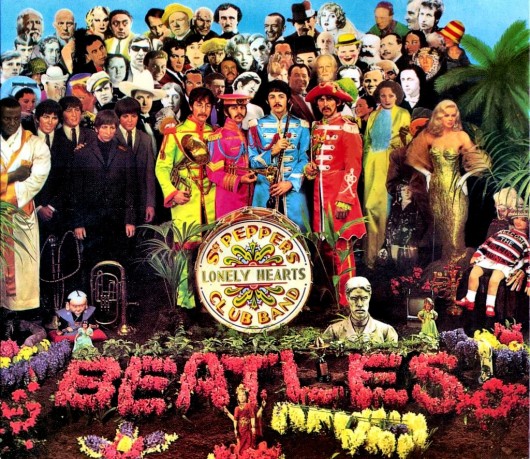













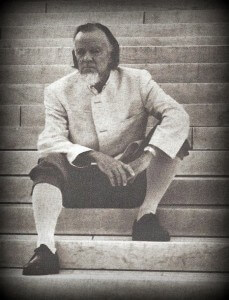
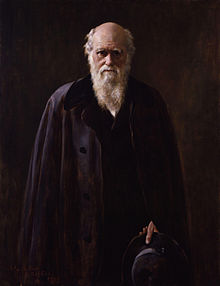

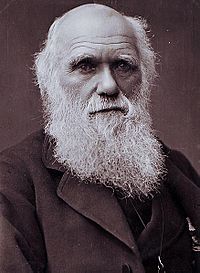

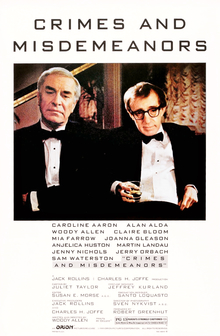








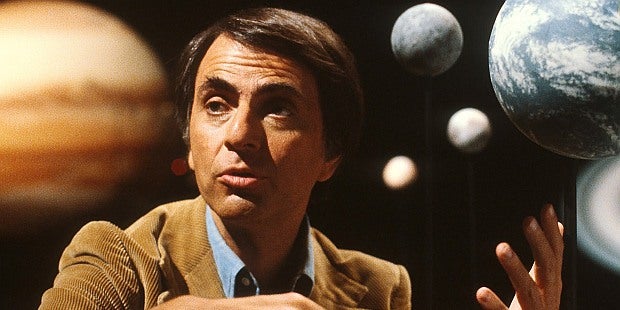


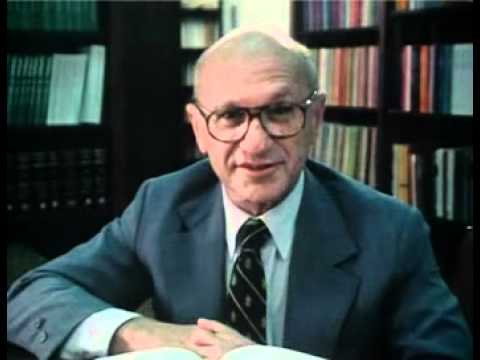












 Without question the two greatest kings of Israel were David and Solomon. The Bible is full of rich stories recounting these two remarkable lives.
 In 1994 archaeologists were digging in northern Israel at the ancient city of Dan. The area surrounding Dan is one of the most beautiful parts of Israel. The excavation had come across some interesting elements but nothing which would rock the archaeological world until a member of the team made an unlikely discovery.
 This inscription is fascinating on many levels, but what makes it the #2 biblical discovery in archaeology is the way one of the kings is described. The Aramaean king refers to the kingdom of Judah by its dynastic name, a name frequently used in the Hebrew Bible as well: the House of David. This not only indicates that the family of David still sat on the throne of Jerusalem, but this inscription represents the oldest textual reference to the historical King David ever discovered!




/cdn.vox-cdn.com/uploads/chorus_image/image/45777608/GettyImages_460494092.0.jpg)


 Comment RSS
 Subscribe to comments



 We live in a world that, for the most part, has no absolute standard for life and behavior. We are under a system of morality by majority vote—in other words, whatever feels right sets the standard for behavior.


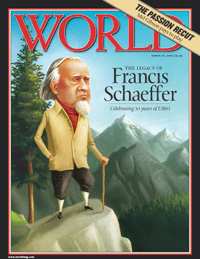








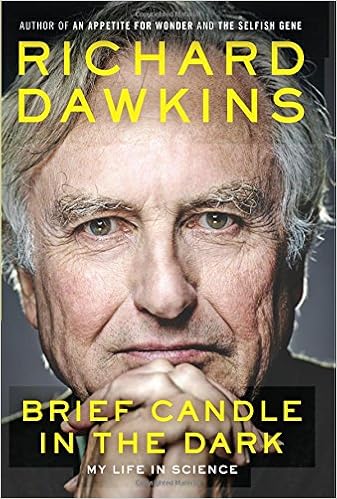


 The Daily Hatch