Today I want to talk to you about the first chapter of Romans. I read a very interesting article about you by JOSÉ DE SEGOVIA and it was called: Playboy: Just a magazine? Hefner built an empire on the basis of an alternative version of reality, creating what you might call a religion. Written by José de Segovia on NOVEMBER 20, 2015. Let me quote the closing part of the article:The director of Playboy remarried at the end of the eighties, after having been rushed to hospital following a stroke. That spelled the end of the continuous partying in his mansion. He tried to lead a family life with his two sons, but his philosophy of eternal adolescence had by then become established in our culture. No one under the age of fifty will be surprised by this. He presents us with an alternative version of reality, creating a kind of religion. As he says at the beginning of the series of his essays: “Playboy is a religious magazine, though I will admit I have a peculiar understanding of the meaning of the word”.It is religious because it “tells its readers how to get into heaven. It tells them what is important in life, delineates an ethics for them, tells them how to relate to others, tells them what to lavish their attention and energy upon, gives them a model of a kind of person to be. It expresses a consistent world view, a system of values, philosophical outlook”. That image of an “ideal man” creates a universe of its own for the eternal adolescent, without making demands or imposing responsibilities. It is a masculine fantasy, where women become mere objects, because when we distance ourselves from God, man does not become more but less human – as seen in the story of Nebuchadnezzar in the fourth chapter of the book of Daniel in the Bible–.
“Religion was a very important part of my upbringing – Hefner has said – in terms of ideals and morality”. He does not think that he has rejected it, only that when it comes to sex, he thinks that it is hypocritical and harmful. The director of Playboy considers himself to be a spiritual person, but he does not believe in the supernatural. “I believe in the creation,” he says.” And therefore I believe there has to be a creator of some kind, and that is my God. I do not believe in the biblical God, not in the sense that he doesn’t exist, just in the sense that I know rationally that man created the Bible and that we invented our perception of what we do not know”.In the first chapter of the book of Romans, the apostle Paul shows us what has happened. By leaving God, we have turned to idols. We have replaced the Creator with his creation. This has tragic consequences. It sets in motion a vicious circle which makes us spurn the only unconditional love that exists, given that God is the only one who loves us without expecting anything in return or expecting us to appear to be anything other than what we are.
His sacrificial love (Ephesians 5:23-32) surprises us, because we do not understand how low we have fallen or the wonder of his love. As C.S. Lewis says in his book “The four loves”, we have locked our hearts up in the casket of our selfishness, to avoid being hurt, when we need to be vulnerable in order to experience love, given that “the only place outside Heaven where you can be perfectly safe from all the dangers and perturbations of love is Hell”.
“We shall draw nearer to God, not by trying to avoid the sufferings inherent in all loves, but by accepting them and offering them to Him; throwing away all defensive armour.” That is when we can get to know God. We can have a personal trusting relationship with Him, based on his faithfulness, which leads us to experience a deep, spiritual and eternal communion. The Playboy culture sees our body and material reality, as the only thing that exists. Life passes – like Hefner’s years – but God’s love remains.“Now this is eternal life: that they know you, the only true God, and Jesus Christ, whom you have sent”, Jesus says in the Gospel of John (17:3). The director of Playboy says sarcastically that he was saved a long time ago, but true salvation is to know God and to receive eternal life from him, whose glory exceeds our present reality. He elevates and transforms us, giving us hope. Because Christ is the hope of glory (Colossians 1:27), the best is yet to come. ___Francis Schaeffer noted:
In about A.D. 60, a Jew who was a Christian and who also knew the Greek and Roman thinking of his day wrote a letter to those who lived in Rome. Previously, he had said the same things to Greek thinkers while speaking on Mars Hill in Athens. He had spoken with the Acropolis above him and the ancient marketplace below him, in the place where the thinkers of Athens met for discussion. A plaque marks that spot today and gives his talk in the common Greek spoken in his day. He was interrupted in his talk in Athens, but his Letter to the Romans gives us without interruption what he had to say to the thinking people of that period.
He said that the integration points of the Greek and Roman world view were not enough to answer the questions posed either by the existence of the universe and its form, or by the uniqueness of man. He said that they deserved judgment because they knew that they did not have an adequate answer to the questions raised by the universe or by the existence of man, and yet they refused, they suppressed, that which is the answer. To quote his letter:
The retribution of God is revealed from heaven against all ungodliness and unrighteousness of men, who suppress the truth in unrighteousness. Because that which is known of God is evident within them [that is, the uniqueness of man in contrast to non-man], for God made it evident to them. For the invisible things of him since the creation of the world are clearly seen, being perceived by the things that are made [that is, the existence of the universe and its form], even his eternal power and divinity; so that they are without excuse. [Roman 1:18ff.]
Here he is saying that the universe and its form and the mannishness of man speak the same truth that the Bible gives in greater detail. That this God exists and that he has not been silent but has spoken to people in the Bible and through Christ was the basis for the return to a more fully biblical Christianity in the days of the Reformers. It was a message of the possibility that people could return to God on the basis of the death of Christ alone. But with it came many other realities, including form and freedom in the culture and society built on that more biblical Christianity. The freedom brought forth was titanic, and yet, with the forms given in the Scripture, the freedoms did not lead to chaos. And it is this which can give us hope for the future. It is either this or an imposed order.
Romans 1:18-32 English Standard Version (ESV)
God’s Wrath on Unrighteousness
18 For the wrath of God is revealed from heaven against all ungodliness and unrighteousness of men, who by their unrighteousness suppress the truth. 19 For what can be known about God is plain to them, because God has shown it to them. 20 For his invisible attributes, namely, his eternal power and divine nature, have been clearly perceived, ever since the creation of the world,[a] in the things that have been made. So they are without excuse.21 For although they knew God, they did not honor him as God or give thanks to him, but they became futile in their thinking, and their foolish hearts were darkened.22 Claiming to be wise, they became fools, 23 and exchanged the glory of the immortal God for images resembling mortal man and birds and animals and creeping things.
24 Therefore God gave them up in the lusts of their hearts to impurity, to the dishonoring of their bodies among themselves, 25 because they exchanged the truth about God for a lie and worshiped and served the creature rather than the Creator, who is blessed forever! Amen.
26 For this reason God gave them up to dishonorable passions. For their women exchanged natural relations for those that are contrary to nature; 27 and the men likewise gave up natural relations with women and were consumed with passion for one another, men committing shameless acts with men and receiving in themselves the due penalty for their error.
28 And since they did not see fit to acknowledge God, God gave them up to a debased mind to do what ought not to be done. 29 They were filled with all manner of unrighteousness, evil, covetousness, malice. They are full of envy, murder, strife, deceit, maliciousness. They are gossips,30 slanderers, haters of God, insolent, haughty, boastful, inventors of evil, disobedient to parents,31 foolish, faithless, heartless, ruthless.32 Though they know God’s righteous decree that those who practice such things deserve to die, they not only do them but give approval to those who practice them.
Francis Schaeffer has rightly noted concerning Hugh Hefner that Hefner’s goal with the “playboy mentality is just to smash the puritanical ethnic.” I have made the comparison throughout this series of blog posts between Hefner and King Solomon (the author of the BOOK of ECCLESIASTES). I have noticed that many preachers who have delivered sermons on Ecclesiastes have also mentioned Hefner as a modern day example of King Solomon especially because they both tried to find sexual satisfaction through the volume of women you could slept with in a lifetime.
Ecclesiastes 2:8-10 The Message (MSG)
I piled up silver and gold, loot from kings and kingdoms. I gathered a chorus of singers to entertain me with song, and—most exquisite of all pleasures— voluptuous maidens for my bed.
9-10 Oh, how I prospered! I left all my predecessors in Jerusalem far behind, left them behind in the dust. What’s more, I kept a clear head through it all. Everything I wanted I took—I never said no to myself. I gave in to every impulse, held back nothing. I sucked the marrow of pleasure out of every task—my reward to myself for a hard day’s work!
1 Kings 11:1-3 English Standard Version (ESV)
11 Now King Solomon loved many foreign women, along with the daughter of Pharaoh: Moabite, Ammonite, Edomite, Sidonian, and Hittite women, 2 from the nations concerning which the Lord had said to the people of Israel, “You shall not enter into marriage with them, neither shall they with you, for surely they will turn away your heart after their gods.” Solomon clung to these in love.3 He had 700 wives, who were princesses, and 300 concubines. And his wives turned away his heart.
Francis Schaeffer observed concerning Solomon, “You can not know woman by knowing 1000 women.”
Featured artist is Doris Salcedo
Doris Salcedo was born in 1958 in Bogotá, Colombia. Salcedo earned a BFA at Universidad de Bogotá Jorge Tadeo Lozano (1980) and an MA from New York University (1984). Salcedo’s understated sculptures and installations embody the silenced lives of the marginalized, from individual victims of violence to the disempowered of the Third World. Although elegiac in tone, her works are not memorials: Salcedo concretizes absence, oppression, and the gap between the disempowered and powerful.
While abstract in form and open to interpretation, her works serve as testimonies on behalf of both victims and perpetrators. Even when monumental in scale, her installations achieve a degree of imperceptibility—receding into a wall, burrowed into the ground, or lasting for only a short time. Salcedo’s work reflects a collective effort and close collaboration with a team of architects, engineers, and assistants—and, as Salcedo says, “with the victims of the senseless and brutal acts” to which her work refers.
Her awards include a commission from Tate Modern, London (2007); the Ordway Prize, from the Penny McCall Foundation (2005); and a Solomon R. Guggenheim Foundation Grant (1995). Her work has appeared in major exhibitions at Tate Modern, London (2007); Castello de Rivoli, Turin (2005); and Museum Boijmans Van Beuningen, Rotterdam (2002); among others. She has participated in the T1 Triennial of Contemporary Art, Turin (2005); Documenta (2002); and the Liverpool Biennial of Contemporary Art (1999). Her work is included in many museum collections, including the Museum of Modern Art, New York; the Art Institute of Chicago; Los Angeles County Museum of Art; and Museum of Fine Arts, Boston. Doris Salcedo lives and works in Bogotá, Colombia.
Ecclesiastes 2-3 Published on Sep 19, 2012 Calvary Chapel Spring Valley | Sunday Evening | September 16, 2012 | Derek Neider _____________________________ I have written on the Book of Ecclesiastes and the subject of the meaning of our lives on several occasions on this blog. In this series on Ecclesiastes I hope to show how secular […] By Everette Hatcher III | Posted in Current Events | Edit | Comments (0)
Is Love All You Need? Jesus v. Lennon Posted on January 19, 2011 by Jovan Payes 0 On June 25, 1967, the Beatles participated in the first worldwide TV special called “Our World”. During this special, the Beatles introduced “All You Need is Love”; one of their most famous and recognizable songs. In it, John Lennon […] By Everette Hatcher III | Posted in Francis Schaeffer | Edit | Comments (0)
___________________ Something happened to the Beatles in their journey through the 1960’s and although they started off wanting only to hold their girlfriend’s hand it later evolved into wanting to smash all previous sexual standards. The Beatles: Why Don’t We Do It in the Road? _______ Beatle Ringo Starr, and his girlfriend, later his wife, […] By Everette Hatcher III | Posted in Current Events | Edit | Comments (0)
__________ Marvin Minsky __ I was sorry recently to learn of the passing of one of the great scholars of our generation. I have written about Marvin Minsky several times before in this series and today I again look at a letter I wrote to him in the last couple of years. It is my […] By Everette Hatcher III | Posted in Adrian Rogers, Francis Schaeffer | Edit | Comments (0)
Why was Tony Curtis on the cover of SGT PEPPERS? I have no idea but if I had to hazard a guess I would say that probably it was because he was in the smash hit SOME LIKE IT HOT. Above from the movie SOME LIKE IT HOT __ __ Jojo was a man who […] By Everette Hatcher III | Posted in Current Events | Edit | Comments (0)
I was influenced by Francis Schaeffer’s books and films and Adrian Rogers’ sermons when I grew up. I want to make the point that no one influenced the pro-life movement more than Francis Schaeffer!!! Schaeffer energized the movement and that is why it is appropriate that on May 15, 1994, ten years the anniversary of Francis Schaeffer’s passing I would mail a letter to Carl Sagan that get him to ultimately respond to Schaeffer’s views on abortion which I included 3 letters that followed.
Francis Schaeffer and Adrian Rogers
On August 30, 1995, in my letter to Carl Sagan I included my published letter to the editor in that very day’s Arkansas Democrat-Gazette and it appeared under the title THE HUMANIST WORLD VIEW. This got Sagan’s notice and in his letter of December 5, 1995, Sagan disagreed with me concerning the close relationship between atheistic evolutionists and the abortion movement. Actually I wrote: Adrian Rogers, a former president of the Southern Baptist Convention, has rightly said, “Secular Humanism and so-called abortion rights are inseparably linked together.”
In another letter I noted that Nelson Price in THE EMMANUEL FACTOR (1987) tells the story about Brown Trucking Company in Georgia who used to give polygraph tests to their job applicants. However, in part of the test the operator asked, “Do you believe in God?” In every instance when a professing atheist answered “No,” the test showed the person to be lying. My pastor Adrian Rogers used to tell this same story to illustrate Romans 1:19 and it was his conclusion that “there is no such thing anywhere on earth as a true atheist. If a man says he doesn’t believe in God, then he is lying. God has put his moral consciousness into every man’s heart, and a man has to try to kick his conscience to death to say he doesn’t believe in God.” Sagan’s December 5, 1995 letter to me included the sentence “You argue that God exists because otherwise we could not understand the world in our consciousness,” and this may have been his short to this story above possibly.
I disagree with his assertion that there is a widespread ”Problem of Radicals Killing Abortion Doctors.” I know that Sagan included a radical evangelical killer in his book CONTACT, but in reality those are hard to find and I have provided a more detailed response in a past post. Let me briefly respond today with a picture:
—-
Sagan rightly noted, “New knowledge of embryology, the physicians said, had shown the fetus to be human even before quickening.” This brings me to Bernard Nathanson’s powerful testimony on why he gave up his abortion activities and spent the rest of his life in the pro-life promoting his film THE SILENT SCREAM because of the technology of ultrasound and how, for the first time ever, we could actually see inside the womb.
On January 10, 1996, I wrote my response letter to Carl Sagan and I included an additional insert from Francis Schaeffer that showed The humanist base leads to meaningless and The Bible is God’s revealed truth and it tells us about our origin.
Sagan in 1987
Later in this post is the fourth part of the letter to Carl Sagan, but the third part was posted last week on my blog.
and you will hear what far smarter people than I have to say on this matter. I agree with them.
Harry Kroto
I have attempted to respond to all of Dr. Kroto’s friends arguments and I have posted my responses one per week for over a year now. Here are some of my earlier posts:
Another 50 Renowned Academics Speaking About God (Part 2
A Further 50 Renowned Academics Speaking About God (Part 3)
–
CARL SAGAN interview with Charlie Rose:
“…faith is belief in the absence of evidence. To believe in the absence of evidence, in my opinion, is a mistake. The idea is to hold belief until there is compelling evidence. If the Universe does not comply with our previous propositions, then we have to change…Religion deals with history poetry, great literature, ethics, morals, compassion…where religion gets into trouble is when it pretends to know something about science,”
Francis Schaeffer the Founder of the L’Abri community
This is the fourth part of the letter to Carl Sagan, but the third part was posted last week on my blog.
The 5 Conclusions of Humanism according to King Solomon of Israel in the Book of Ecclesiastes!!!!!
The Humanistic world view tells us there is no afterlife and all we have is this life “under the sun.”
SECTION 3 A Study in the Book of Ecclesiastes done by Francis Schaeffer (Christian Philosopher). Solomon limits himself to “under the sun” – In other words the meaning of life on the basis of human life standing alone between birth and death. It is indeed the book of modern man. Solomon is the universal man with unlimited resources who says let us see where I go. Ravi Zacharias –
“The key to understanding the Book of Ecclesiastes is the term ‘under the sun.’ What that literally means is you lock God out of a closed system and you are left with only this world of time plus chance plus us (Matter)”
1st Conclusion: Nothing in life truly satisfies and that includes wisdom, great works and pleasure. A) Will wisdom satisfy someone under the sun? We know it is good in its proper place. Take a look at this quote by Mike Malone: “Knowing God is the deepest longing of the human heart. It is knowledge so high and lofty that it transcends language, which can never exhaust the glorious reality of God. The wise man would take you by the hand and lead you to the fountain, where you may drink to your heart’s content, never tasting enough, yet never failing to be satisfied.” But what did Solomon find out about wisdom “under the sun”? Ecclesiastes 1:16-18 (Living Bible): I said to myself, ‘Look, I am better educated than any of the kings before me in Jerusalem. I have greater wisdom and knowledge.’So I worked hard to be wise instead of foolish[c]—but now I realize that even this was like chasing the wind. For the more my wisdom, the more my grief; to increase knowledge only increases distress.”
B) Do great works of men bring satisfaction?Ecclesiastes 2:4-6, 18-20: Then I tried to find fulfillment by inaugurating a great public works program: homes, vineyards, gardens, parks, and orchards for myself, and reservoirs to hold the water to irrigate my plantations.And I am disgusted about this—that I must leave the fruits of all my hard work to others. 19 And who can tell whether my son will be a wise man or a fool? And yet all I have will be given to him—how discouraging!So I turned in despair from hard work as the answer to my search for satisfaction.C) Does pleasure give lasting satisfaction?
KJV and Living Bible Ecclesiastes 2:1-3, 8, 10, 11: I said in mine heart, Go to now, I will prove thee with mirth, therefore enjoy pleasure: and, behold, this also is vanity.2 I said of laughter, It is mad: and of mirth, What doeth it? 3 I sought in mine heart to give myself unto wine, yet acquainting mine heart with wisdom; and to lay hold on folly,And then there were my many beautiful concubines.10 Anything I wanted I took and did not restrain myself from any joy…11 But as I looked at everything I had tried, it was all so useless, a chasing of the wind, and there was nothing really worthwhile anywhere… 2nd Conclusion: Power reigns in this life and the scales are not balanced!!!!!Ecclesiastes 4:1 (King James Version): So I returned, and considered all the oppressions that are done under the sun: and behold the tears of such as were oppressed, and they had no comforter; and on the side of their oppressors there was power; but they had no comforter. Ecclesiastes 7:15 (King James Version) All things have I seen in the days of my vanity: there is a just man that perisheth in his righteousness, and there is a wicked man that prolongeth his life in his wickedness.If you are a humanist you must admit that men like Hitler will not be punished in the afterlife because you deny there is an afterlife? Right?
3rd Conclusion – Death is the great equalizer. Just as the beasts will not be remembered so ultimately brilliant men will not be remembered. Ecclesiastes 3:20 “All go unto one place; All are of the dust, and all turn to dust again.” Here Solomon comes to the same point that Kerry Livgren came to in January of 1978 when he wrote the hit song DUST IN THE WIND. Can you refute the nihilistic claims of this song within the humanistic world view? Solomon couldn’t but maybe you can.
4th Conclusion – Chance and time plus matter (us) has determined the past and it will determine the future.By the way, what are the ingredients that make evolution work? George Wald – “Time is the Hero.”
Jacques Monod – “Pure chance, absolutely free but blind, is at the root of the stupendous edifice of evolution.”
496 × 744Images may be subject to copyright. Learn More
182 × 268Images may be subject to copyright. Learn More
I can not think of a better illustration of this in action than the movie ON THE BEACH by Nevil Shute. On May 4, 1994 I watched the movie for the first time and again I thought of the humanist who believes that history is not heading somewhere with a purpose but is guided by pure chance, absolutely free but blind. I thought of the passage Ecclesiastes 9:10-12 Whatsoever thy hand findeth to do, do it with thy might; for there is no work, nor device, nor knowledge, nor wisdom, in the grave, whither thou goest.11 I returned, and saw under the sun, that the race is not to the swift, nor the battle to the strong, neither yet bread to the wise, nor yet riches to men of understanding, nor yet favour to men of skill; but time and chance happeneth to them all.12 For man also knoweth not his time: as the fishes that are taken in an evil net, and as the birds that are caught in the snare; so are the sons of men snared in an evil time, when it falleth suddenly upon them.
5th Conclusion – Life is just a series ofcontinual and unending cycles and man is stuck in the middle of the cycle. Youth, old age, Death.
Does Solomon at this point embrace nihilism? Yes!!! He exclaims that the hates life (Ecclesiastes 2:17), he longs for death (4:2-3) Yet he stills has a fear of death (2:14-16). How do you want your life to go the next million years? The humanist world view has no answer (see H. J. Blackham earlier quote). Ecclesiastes2:15-16: 15 Then said I in my heart, As it happeneth to the fool, so it happeneth even to me; and why was I then more wise? Then I said in my heart, that this also is vanity.16 For there is no remembrance of the wise more than of the fool for ever; seeing that which now is in the days to come shall all be forgotten. And how dieth the wise man? as the fool.(Also refer to the lyrics of the song DUST IN THE WIND by the group KANSAS).Can you refute any of the conclusions of Solomon? Will you ridicule this material. In 1988 in the September-October of the HUMANIST MAGAZINE a 3 page article was devoted to cutting Schaeffer down to size, but even in that article which was called FRANCIS SCHAEFFER: A LOOK AT ONE OF THE FOREMOST FIGURES IN THE CRUSADE AGAINST HUMANISM the writer gave Schaeffer his due by saying “Schaeffer’s books are not the typical hodge-podge of newspaper headlines and obscure Biblical prophecies, as in Hal Lindsey’s books. Schaeffer demonstrates a familiarity with the major theologians and some understanding of philosophy, art and literature. His books are clearly in a different league from the typical evangelical Christian reading matter…:” Why did I write about the meaning of life in this letter addressed to you?????? The answer is very simple: You have a spiritual need that must be met, and only Christ can meet it!!!! In the introduction of the book A SHATTERED VISAGE, Ravi Zacharias said this “The most telling aspect of the afternoon I spoke to a group of scientists at the Bell Lab in Holmdel, NJ was the nature of the questions that were raised following the address. None had to do with the technical or scientific expertise that the audience represented. They all had to do with the heart searching questions of men and women in pursuit of meaning of life. I have found these same questions asked time and time again in a variety of settings. After the intellectual that comes to the fore.” Ecclesiastes 3:11b “God has planted eternity in the hearts of men.”
Charles Spurgeon “The soul is insatiable till it finds the savoir.”I want to finish with a prediction: There is coming a time in your life that the most important thing to you will be to get your prayer answered by God. When I was ridden in a hospital many years ago I was told that I may not live. My thoughts turned to spiritual things. Does it take a tragic situation for you to wake up? I will pray that you see the humanistic worldview for what it is, and that you would honestly pursue the Bible. Thank you for your time
Finally I have enclosed a copy of my letter published in the Arkansas Democrat-Gazette Newspaper on April 22, 1994:
A BANKRUPT WORLDVIEW
Brian Bolton, the ordained humanist minister, asserted that humanism deserves out respect in his March 27 article. Does it really?
Humanism is the belief that we are limited to human life standing alone between birth and death. There is no belief in God and the afterlife. Three thousand years ago, Solomon took a look at this humanistic world view in the Book of Ecclesiastes when he limited himself to examining life “under the sun.”
Humanists will tell you that the world evolved, and just as time and chance have determined the human race’s past, it will also determine the human race’s future. Ecclesiastes says, “I returned and saw under the sun that the race is not to the swift, nor the battle to the strong, neither yet bread to the wise, nor yet riches to men of understanding, nor yet favor to men of skill; but time and chance happeneth to them all.”
Solomon saw that the humanistic world view was bankrupt because without God in the picture man’s future was left up to time and chance.
When I play with my two children, they constantly are saying, “Daddy, watch me!” Their hearts long for my personal attention just as my heart longs for a daily personal relationship with a God who cares about me.
Why respect a religion like humanism that hands your future over to time and chance instead of a God who created you for a purpose? Humanism tells you that you are just a face in the crowd, and 1 million years from now it will be as though you never existed. Is Bolton a naive humanist who has avoided this conclusion?
______________ George Harrison Swears & Insults Paul and Yoko Lucy in the Sky with Diamonds- The Beatles The Beatles: I have dedicated several posts to this series on the Beatles and I don’t know when this series will end because Francis Schaeffer spent a lot of time listening to the Beatles and talking […]
The Beatles in a press conference after their Return from the USA Uploaded on Nov 29, 2010 The Beatles in a press conference after their Return from the USA. The Beatles: I have dedicated several posts to this series on the Beatles and I don’t know when this series will end because Francis […]
__________________ Beatles 1966 Last interview I have dedicated several posts to this series on the Beatles and I don’t know when this series will end because Francis Schaeffer spent a lot of time listening to the Beatles and talking and writing about them and their impact on the culture of the 1960’s. In this […]
_______________ The Beatles documentary || A Long and Winding Road || Episode 5 (This video discusses Stg. Pepper’s creation I have dedicated several posts to this series on the Beatles and I don’t know when this series will end because Francis Schaeffer spent a lot of time listening to the Beatles and talking and writing about […]
_______________ Francis Schaeffer pictured below: _____________________ I have included the 27 minute episode THE AGE OF NONREASON by Francis Schaeffer. In that video Schaeffer noted, ” Sergeant Pepper’s Lonely Hearts Club Band…for a time it became the rallying cry for young people throughout the world. It expressed the essence of their lives, thoughts and their feelings.” How Should […]
Crimes and Misdemeanors: A Discussion: Part 1 ___________________________________ Today I will answer the simple question: IS IT POSSIBLE TO BE AN OPTIMISTIC SECULAR HUMANIST THAT DOES NOT BELIEVE IN GOD OR AN AFTERLIFE? This question has been around for a long time and you can go back to the 19th century and read this same […]
____________________________________ Francis Schaeffer pictured below: __________ Francis Schaeffer has written extensively on art and culture spanning the last 2000years and here are some posts I have done on this subject before : Francis Schaeffer’s “How should we then live?” Video and outline of episode 10 “Final Choices” , episode 9 “The Age of Personal Peace and Affluence”, episode 8 […]
Love and Death [Woody Allen] – What if there is no God? [PL] ___________ _______________ How Should We then Live Episode 7 small (Age of Nonreason) #02 How Should We Then Live? (Promo Clip) Dr. Francis Schaeffer 10 Worldview and Truth Two Minute Warning: How Then Should We Live?: Francis Schaeffer at 100 Francis Schaeffer […]
___________________________________ Francis Schaeffer pictured below: ____________________________ Francis Schaeffer “BASIS FOR HUMAN DIGNITY” Whatever…HTTHR Dr. Francis schaeffer – The flow of Materialism(from Part 4 of Whatever happened to human race?) Dr. Francis Schaeffer – The Biblical flow of Truth & History (intro) Francis Schaeffer – The Biblical Flow of History & Truth (1) Dr. Francis Schaeffer […]
It’s difficult to have the albums created by the most important band in the history of music ranked from worst to best. After all, it’s unlikely that you’ll find any band or musical artist unwilling to share their admiration for the Fab Four. Their fingerprints are over everything created in popular music.
The Liverpool quartet recorded albums at a significant pace between 1963 and 1970. Many of these are classics that redefined what pop-rock could be. Most of these are tremendously experimental, adventurous affairs.
Still, which one’s the best? Is there any one album worth avoiding?
I’ve looked at the evidence and listened to the whole discography once more, and I think that I have an answer or two.
For simplicity’s sake, I have only included official UK releases. That means that the early US-released records aren’t on here. Neither are compilations such as “Anthology,” “Rarities,” or “Hey Jude.” “Yellow Submarine” is included as it included mostly unreleased material and was crafted as a studio album.
With this in mind, here’s a quick initiation into the musical world created by John, Paul, George, and Ringo, The Beatles albums ranked.
5. “Revolver” (1966)
The seventh album from The Beatles, “Revolver,” is the moment that pop music began being reckoned as art by the status quo. Similarly to “Rubber Soul,” it’s a record that proves that the Beatles could write in any style that they chose. Arguably, it’s also a more grown-up record.
Songs such as “Eleanor Rigby” and “Tomorrow Never Knows” must be judged as some of the most inventive pop tunes of all time. The band was at a creative peak at this point. It is reflected in their insistence to experiment outside of the pop-rock format.
The band was willing to take risks and push boundaries with their music, and it paid off with a release that is both thought-provoking and timeless. There’s an everything-goes air about this. Considering The Beatles’ status, this is tremendously courageous and exciting.
John Lennon’s desire to push boundaries can be observed on “Tomorrow Never Knows.” Paul McCartney’s pop instincts are razor sharp on “Got to Get You into My Life” and “Good Day Sunshine.”
George Harrison offers one of the best songs on the record, the cheeky “Taxman.” “I Want to Tell You” is also a good indication of Harrison’s vision as a writer.
There’s even room for Ringo Starr, possibly the most beloved Beatle, to sing the colorful “Yellow Submarine.”
In terms of balancing pop hooks and a sophisticated worldview, few other bands, perhaps The Beach Boys or Queen, ever came close to a record that is as fulfilling as “Revolver.”
Is that enough to make us forgive the awful title? Just about.
Come Together – John Lennon (Live In New York City)
George Harrison – Here comes the sun Subtitulada en Español
Because of our family’s missionary work in Haiti, I know a number of children who, due to conditions of extreme poverty, are very far behind academically, if they have access to education at all.
One day I gave a little boy a pen and some paper. I told him to write me something. I had a Bible and a little notepad sitting between us with a bunch of notes and numbers visible on an open page. He proceeded to just write a collection of random letters and numbers as he copied them from my notes and from the cover of the Bible.
I realized the little boy had no knowledge of numbers or letters and didn’t even know the difference between them. They were all just indiscernible symbols and characters. He had no knowledge of their meaning.
He had created a bunch of content that pointed nowhere. He was proud of what he thought he had accomplished, but he hadn’t accomplished anything.
I think that’s what a lot of spiritually minded people are doing today. They use words like “God” without any distinct comprehension or concrete idea of who God is or how He may have expressed himself in ways knowable.
A lot of us today have spiritual content that lacks any meaning. We worship a god we don’t know in ways God has not commanded us to worship.
In his 1976 book, “How Should We Then Live,” Francis Schaeffer uses the 1970 Beatles song “My Sweet Lord” to illustrate this point. When the song was released a number of people believed that George Harrison may have accepted Jesus. But in the background when the song plays you can hear the words “Krishna, Krishna, Krishna.” Krishna is just one Hindu name for god.
Is our concept of God any clearer? Are we speaking God’s language or just smushing a bunch of spiritual and religious ideas together?
Harrison was not revering a personal God that can be known in Jesus Christ or in the Bible or in any other tangible way for that matter. He was using the vaguest sentiment of religion, which is sentimentality only.
A lot of us have spiritual feelings in our hearts, but those spiritual feelings are little more than jumbled letters and numbers and symbols on a page if they are not tied directly to some knowable expression of an existent God.
You and I are not children of God because we “feel” that we are. We are children of God to the extent that we come to Him speaking His language.
Jesus said, “I tell you the truth, unless you are born again, you cannot see the Kingdom of God.” (John 3:3 NLT)
He either is or He is not, and if He is we must approach Him on His terms. Spiritual sentiment isn’t enough. We must be born again. We must learn to speak His language to understand His ways. We can’t just smash symbols together on a page.
Chris Surber is the pastor at Liberty Spring Christian Church in Suffolk. Email him at chris@chrissurber.com.
“Sergeant Pepper’s Lonely Hearts Club Band, became the rallying cry for young people throughout the world. It expressed the essence of their lives, thoughts and their feelings…” Francis Schaeffer (1912-1984). We take a look today at how the Beatles were featured in Schaeffer’s film. How Should We then Live Episode 7 small On You Tube […]By Everette Hatcher III | Posted in Francis Schaeffer | Tagged peter max | Edit|Comments (0)
Woody Allen believes that we live in a cold, violent and meaningless universe and it seems that his main character (Gil Pender, played by Owen Wilson) in the movie MIDNIGHT IN PARIS shares that view. Pender’s meeting with the Surrealists is by far the best scene in the movie because they are ones who can […]By Everette Hatcher III | Posted in Francis Schaeffer, Woody Allen | Edit|Comments (0)
In the last post I pointed out how King Solomon in Ecclesiastes painted a dismal situation for modern man in life UNDER THE SUN and that Bertrand Russell, and T.S. Eliot and other modern writers had agreed with Solomon’s view. However, T.S. Eliot had found a solution to this problem and put his faith in […]By Everette Hatcher III | Posted in Francis Schaeffer, Woody Allen | Edit|Comments (0)
In MIDNIGHT IN PARIS Gil Pender ponders the advice he gets from his literary heroes from the 1920’s. King Solomon in Ecclesiastes painted a dismal situation for modern man in life UNDER THE SUN and many modern artists, poets, and philosophers have agreed. In the 1920’s T.S.Eliot and his house guest Bertrand Russell were two of […]By Everette Hatcher III | Posted in Woody Allen | Edit|Comments (0)
Ernest Hemingway and Scott Fitzgerald left the prohibitionist America for wet Paris in the 1920’s and they both drank a lot. WINE, WOMEN AND SONG was their motto and I am afraid ultimately wine got the best of Fitzgerald and shortened his career. Woody Allen pictures this culture in the first few clips in the […]By Everette Hatcher III | Posted in Woody Allen | Edit|Comments (0)
In the film MIDNIGHT IN PARIS Woody Allen the best scene of the movie is when Gil Pender encounters the SURREALISTS!!! This series deals with the Book of Ecclesiastes and Woody Allen films. The first post dealt with MAGIC IN THE MOONLIGHT and it dealt with the fact that in the Book of Ecclesiastes Solomon does contend […]By Everette Hatcher III | Posted in Woody Allen | Edit|Comments (0)
In the film MIDNIGHT IN PARIS Woody Allen is really looking at one main question through the pursuits of his main character GIL PENDER. That question is WAS THERE EVER A GOLDEN AGE AND DID THE MOST TALENTED UNIVERSAL MEN OF THAT TIME FIND TRUE SATISFACTION DURING IT? This is the second post I have […]By Everette Hatcher III | Posted in Woody Allen | Edit|Comments (0)
I am starting a series of posts called ECCLESIASTES AND WOODY ALLEN’S FILMS: SOLOMON “WOULD GOT ALONG WELL WITH WOODY!” The quote from the title is actually taken from the film MAGIC IN THE MOONLIGHT where Stanley derides the belief that life has meaning, saying it’s instead “nasty, brutish, and short. Is that Hobbes? I would have […]By Everette Hatcher III | Posted in Atheists Confronted, Woody Allen | Edit|Comments (0)
This biography of a living personneeds additional citations for verification. (June 2021)Petula Sally Olwen Clark, CBE (born 15 November 1932) is a British singer, actress, and songwriter. She has had one of the longest careers of any British singer, spanning more than seven decades.
Clark was born to Doris (née Phillips) and Leslie Noah Clark in Ewell, Surrey, England on 15 November 1932. Both of Clark’s parents were nurses at Long Grove Hospital in Epsom. Clark’s mother had Welsh ancestry and her father was English. Sally’s stage name “Petula” was invented by her father, who joked that it was a combination of the names of his two former girlfriends, Pet and Ulla.[2]
Clark grew up in Abercanaid, near Merthyr Tydfil in Wales,[3] in a small stone house with no electricity or running water, and a toilet at the bottom of the garden. Her grandfather was a coal miner.[4] Her first ever live audience was at the Colliers’ Arms in Abercanaid.[5] She also recalls living just outside London during the Blitz and watching the dogfights in the air and running to air-raid shelters with her sister. Later, when she was eight, she joined other children to record messages with the BBC to be broadcast to members of their families in the forces. The recording event was in the Criterion Theatre, an underground theatre that was safe. When the air-raid siren went off other children were upset and a call went out for someone to step forward and sing to calm them. Petula volunteered, and they liked her voice so much, in the control room they recorded her. Her song was “Mighty Rose”.[6]
As a child, Clark sang in the chapel choir and showed a talent for mimicry, impersonating Vera Lynn, Carmen Miranda and Sophie Tucker for her family and friends.[7] Her father introduced her to theatre in 1944 when he took her to see Flora Robson in a production of Mary Stuart; she later recalled that after the performance, “I made up my mind then and there I was going to be an actress. … I wanted to be Ingrid Bergman more than anything else in the world.”[8] Her first public performances were as a singer, however: in 1945 she performed with an orchestra in the entrance hall of Bentall’s Department Store in Kingston upon Thames for a tin of toffee and a gold wristwatch.[9]
From a chance beginning at the age of seven Clark appeared on radio, in film, in print, on television and on recordings. In October 1942 the nine-year-old Clark made her radio debut while attending a BBC broadcast with her father. She was trying to send a message to an uncle who was stationed overseas, but the broadcast was delayed by an air raid. During the bombing the producer requested that someone perform to settle the jittery theatre audience and she volunteered a rendering of “Mighty Lak’ a Rose” to an enthusiastic response. She then repeated her performance for the broadcast audience, launching a series of some 500 appearances in programmes designed to entertain the troops.[10][11] In addition to radio work, Clark frequently toured the United Kingdom with fellow child performer Julie Andrews. Nicknamed the “Singing Sweetheart”, she performed for George VI, Winston Churchill and Bernard Montgomery. She also became known as “Britain’s Shirley Temple“,[12] and was considered a mascot by the British Army, some of whose troops plastered her photos on their tanks for good luck as they advanced into battle.[13]
In 1945 Clark was featured in the comic Radio Fun, in which she was billed as “Radio’s Merry Mimic”.[21]By then Clark felt that she had played child parts for too long.[12]
In 1946 Clark began her television career with an appearance on a BBC variety show, Cabaret Cartoons, which led to her being signed to host her own afternoon series, Petula Clark. Pet’s Parlourfollowed in 1950.[22]
In 1947 Clark met Joe “Mr Piano” Henderson at the Peter Maurice Publishing Company. The two collaborated musically and were linked romantically over the following ten years. In 1949 Henderson introduced Clark to the record producer Alan A. Freeman, who, together with her father Leslie, formed Polygon Records, for which she recorded her earliest hits. Clark had recorded her first release that year, “Put Your Shoes On, Lucy”, for EMI, and further recordings with vocalist Benny Lee on Decca. The Polygon label was financed with part of Clark’s earnings. She scored a number of major hits in the UK during the 1950s, including “The Little Shoemaker” (1954), “Majorca” (1955), “Suddenly There’s a Valley” (1955) and “With All My Heart” (1956).[23] “The Little Shoemaker” was an international hit, reaching number one in Australia, the first of many number-one records in her career.
Near the end of 1955 Polygon Records was sold to Nixa Records, then part of Pye Records, leading to the establishment of Pye Nixa Records(subsequently simply Pye). This effectively signed Clark to the Pye label in the UK, for which she recorded until the early 1970s.[24]
During this period Clark showed a keen interest in encouraging new talent. She suggested that Henderson be allowed to record his own music, and he had five chart hits on Polygon/Pye between 1955 and 1960.
In 1957 Clark was invited to appear at the Paris Olympia, where, despite her misgivings and a bad cold, she was received with acclaim. The following day she was invited to the office of Vogue Records to discuss a contract. There she met her future longtime publicist, collaborator and husband Claude Wolff. Clark was attracted immediately, and when she was told that she would be working with him if she signed with the Vogue label she agreed.[25]
In 1960 Clark embarked on a concert tour of France and Belgium with Sacha Distel, who remained a close friend until his death in 2004.[26] Gradually she moved further into the continent, recording in German, French, Italian and Spanish.
While Clark focused on her new career in France she continued to achieve hit records in the UK into the early 1960s. Her 1961 recording of “Sailor” became her first number-one hit in the UK, while such follow-up recordings as “Romeo” and “My Friend the Sea” landed her in the British Top-10 later that year. “Romeo” sold more than one million copies around the world and won her her first gold disc, which was awarded by the Recording Industry Association of America.[27] In France “Ya Ya Twist” (a French-language cover of the Lee Dorsey rhythm and blues song “Ya Ya” and the only successful recording of a twist song by a woman) and “Chariot” (the original version of “I Will Follow Him“) became smash hits in 1962, while German and Italian versions of her English and French recordings charted, as well. Her recordings of several Serge Gainsbourg songs were also big sellers. In addition, she was given at this time a present of the song “Un Enfant” by Jacques Brel, with whom she toured. Clark is one of only a handful of performers to be given a song by Brel. A live recording of this song charted in Canada.
In 1963 Clark wrote the soundtrack for the French crime film A Couteaux Tirés (Daggers Drawn) – released in 1964 – and made a cameo appearance as herself in the film. Although it was only a mild success,[citation needed] it added a new dimension—that of film composer—to her career. Additional film scores she composed include Entre ciel et mer(1963), Rêves d’enfant (1964), La bande à Bebel(1966),[28] and Pétain (1989). Six themes from the last were released on the CD In Her Own Write in 2007.[citation needed]
Clark was the subject of This Is Your Life in February 1964,[29] April 1975[30] and March 1996, becoming the only person to receive the television tribute three times.[citation needed]
By 1964 Clark’s British recording career was foundering. Composer/arranger Tony Hatch, who had been assisting her with her work for Vogue Records in France and Pye Records in the UK, flew to her home in Paris with new song material he hoped would interest her, but she found none of it appealing.[31] Desperate, he played for her a few chords of an incomplete song that had been inspired by his recent first trip to New York City. Upon hearing the melody, Clark told him that if he could write lyrics as good as the melody, she wanted to record the tune as her next single—”Downtown“.[32]Hatch has subsequently denied originally offering “Downtown” to the Drifters.[31]
Neither Clark, who was performing in Canada when the song first received major air play,[33] nor Hatch realised the impact the song would have on their respective careers. Released in four separate languages in late 1964, “Downtown” was a success in the UK, France (in both the English and the French versions), the Netherlands, Germany, Australia, and Italy, and Rhodesia, Japan, and India, as well. During a visit to London, Warner Bros. executive Joe Smith heard it and acquired the rights for the United States.[34][35] “Downtown” went to number one on the American charts in January 1965, and 3 million copies were sold in the United States.
In 1968 NBC-TV invited Clark to host her own special in the US, and in doing so, she inadvertently made television history. While singing a duet of “On the Path of Glory”, an antiwar song that she had composed, with guest Harry Belafonte, she took hold of his arm, to the dismay of a representative from the Chrysler Corporation (the show’s sponsor), who feared that the moment would incur racial backlash from Southern viewers.[36] When he insisted that they substitute a different take, with Clark and Belafonte standing well away from each other, Clark and the executive producer of the show—her husband, Wolff—refused, destroyed all other takes of the song, and delivered the finished programme to NBC with the touch intact.[37][38] The Chrysler representative was terminated, and the programme aired on 8 April 1968, four days after the assassination of Martin Luther King Jr., with high ratings, critical acclaim,[39] and a Primetime Emmynomination. It has erroneously been described as the first instance on American television of physical contact between a black man and a white woman,[40] forgetting many previous instances, including Frankie Lymon dancing with a white girl on Alan Freed’s live ABC T.V. show “The Big Beat” on July 19, 1957,[41][42]Nancy Sinatra kissing Sammy Davis, Jr., on her 1967 Movin’ with Nancy TV special,[43] and Louis Armstrong shaking hands with “What’s My Line?” panelists Dorothy Kilgallen and Arlene Francisin 1953.[44] To commemorate the 40th anniversary of the 1968 Belafonte telecast, Clark and Wolff appeared at the Paley Center for Media in Manhattanon 22 September 2008, to discuss the broadcast and its impact, following a showing of the programme.[45]
Clark was later the host of two more specials; The Petula Clark Show shown on both the NBC and CBCnetworks in early 1970,[46] and one for ABC which served as a pilot for a projected weekly series. She starred in the BBC television series This Is Petula Clark, which aired from mid-1966 to early 1968.
During this period Clark continued her interest in encouraging new talent. These efforts also supported the launch of Herb Alpert and his A&Mrecord label. In 1968 she brought the French composer/arranger Michel Colombier to the U.S. to work as her musical director, and introduced him to Alpert.[47] Colombier went on to co-write the film score for Purple Rain with Prince, composed the acclaimed pop symphony Wings, and a number of soundtracks for American films. Richard Carpentercredited her with bringing his sister Karen and him to Alpert’s attention when they performed at a premiere party for the 1969 Goodbye, Mr. Chips.[48]
Clark has recalled that she and Karen Carpenterwent to see Elvis Presley perform in Las Vegas and that afterwards “He was flirting with both of us, (saying) ‘Wow, the two biggest girl pop stars in my dressing room. That’s pretty good’… He didn’t have us, exactly, but he had a darned good try. Not going to talk about that any more.”[49]
Clark was one of the backing vocalists on John Lennon‘s Plastic Ono BandGive Peace a Chance. Clark was performing in Montreal in June 1969, and was being heckled by the audience due to her bilingual performance. Clark went to see Lennon for advice on dealing with this, as his wife Yoko Ono and he were staying at the city’s Queen Elizabeth Hotelduring their Bed-ins for Peace protest. Clark subsequently ended up on the recording of Give Peace a Chance.[50] On 15 November 1969, her concert, An Evening with Petula, from the Royal Albert Hall in London, was the first BBC One colour transmission.[51]
During the early 1970s Clark had chart singles on both sides of the Atlantic with “Melody Man” (1970), “The Song of My Life” (1971), “I Don’t Know How To Love Him” (1972), “The Wedding Song (There Is Love)” (1972), and “Loving Arms” (1974). In Canada, “Je Voudrais Qu’il Soit Malheureux” was a major hit. Clark continued touring during the 1970s, performing in clubs in the US and Europe. During this period, Clark also appeared in print and radio ads for the Coca-Cola Corporation, television commercials for Plymouth automobiles, print and TV spots for Burlington Industries and Chrysler Sunbeam,[52] as well as print ads for Sanderson wallpaper in the UK.[53]
In the mid-1970s Clark scaled back her career to devote more time to her family. On 31 December 1976, she performed her hit song “Downtown” on BBC1‘s A Jubilee of Music, celebrating British popular music for Queen Elizabeth II‘s impending Silver Jubilee. She also hosted the television series The Sound of Petula (1972–74), and through the 1970s, made numerous guest appearances on variety, comedy, and game-show television programmes. She appeared as a special guest star in an episode of The Muppet Show in 1977. In 1980 she made her last film appearance, in the British production Never Never Land. Her last television appearance was acting in the 1981 French miniseries Sans Famille (An Orphan’s Tale). A 1981 single, “Natural Love”, reached number 66 on Billboard‘s Hot 100 chart and number 20 on the US country singles chart in early 1982.
As Clark moved away from film and television, she returned to the stage. In 1954, she had starred in a stage production of The Constant Nymph, but at the urging of her children, did not return to legitimate theatre until 1981, starring as Maria von Trapp in The Sound of Music in the West End of London. Opening to positive reviews and what was then the largest advance sale in British theatre history, Clark—proclaimed by Maria Von Trapp herself as “the best Maria ever”—extended her initial six-month run to 13 to accommodate the huge demand for tickets[23][54]and receiving a Laurence Olivier Award nomination for Best Actress in a Musical. On 6 February 1983, during a concert at the Albert Hall she gave a heart-rending performance of For All We Know in tribute to her friend Karen Carpenter who had died two days previously.[55] Also in 1983, she took on the title role in George Bernard Shaw‘s Candida.
Her later stage work includes Someone Like You in 1989 and 1990, for which she composed the score, Blood Brothers, in which she made her Broadwaydebut in 1993 at the Music Box Theatre, followed by the American tour; and Andrew Lloyd Webber‘s Sunset Boulevard, appearing in both the West End and American touring productions from 1995 to 2000.[56] In 2004, she repeated her performance of Norma Desmond in a production at the Opera Housein Cork, Ireland, which was later broadcast by the BBC.[57] With more than 2,500 performances, she has played the role more often than any other actress.[citation needed]
A new disco remix of “Downtown”, called “Downtown ’88”, was released in 1988, registering Clark’s first UK singles chart success since 1972, making the Top 10 in the UK in December 1988.[58]A live vocal performance of this version was performed on the BBC show Top of the Pops.[citation needed] Clark recorded new material regularly throughout the 1970s, 1980s, and 1990s, and in 1992 released “Oxygen”, a single produced by Andy Richards and written by Nik Kershaw.
In both 1998 and 2002 Clark toured extensively throughout the UK. In 2000, she presented a self-written, one-woman show, highlighting her life and career, to large critical and audience acclaim at the St. Denis Theatre in Montreal. A 2003 concert appearance at the Olympia in Paris has been issued in both DVD and compact disc formats. In 2004, she toured Australia and New Zealand, appeared at the Hilton in Atlantic City, New Jersey; the Hummingbird Centre in Toronto; Humphrey’s in San Diego; and the Mohegan Sun Casino in Uncasville, Connecticut; and participated in a multiperformer tribute to the late Peggy Lee at the Hollywood Bowl.[60] Following another British concert tour in early spring 2005, after which, in May she contributed to the V45televised BBC concert in Trafalgar Square at which she sang “A Nightingale sang in Berkeley Square”, she appeared with Andy Williams in his Moon River Theatre in Branson, Missouri, for several months, and she returned for another engagement in autumn of 2006, following scattered concert dates throughout North America.[citation needed]
Clark performing in the Mohegan Sun Casino in Connecticut, US, on 11 October 2008
In November 2006 Clark was the subject of a BBC Four documentary titled Petula Clark: Blue Lady, and appeared with Michael Ball and Tony Hatch in a concert at the Theatre Royal, Drury Lane broadcast by BBC Radio the following month.[citation needed] In December that year, she made her first appearance in Iceland.[citation needed]Duets, a compilation including Dusty Springfield, Peggy Lee, Dean Martin, Bobby Darin and the Everly Brothers, among others, was released in February 2007; and Solitude and Sunshine, a studio recording of all new material by composer Rod McKuen, was released in July of that year.[citation needed] She was the host of the March 2007 PBS fundraising special My Music: The British Beat, an overview of the musical British invasion of the United States during the 1960s, followed by a number of concert dates throughout the US, UK, Canada, Australia and New Zealand.[citation needed]She can be heard on the soundtrack of the 2007 independent filmDowntown: A Street Tale. Une Baladine (in English, a wandering minstrel), an authorised pictorial biography by Françoise Piazza, was published in France and Switzerland in October 2007, and the following month Clark promoted it in bookshops and at book fairs.[citation needed]
Clark was presented with the 2007 Film and TV Music Award for Best Use of a Song in a Television Programme for “Downtown” in the ABC series Lost.[citation needed] She completed a concert tour of England and Wales in summer 2008, followed by concerts in Switzerland and the Philippines.[citation needed]Then & Now, a compilation of greatest hits and several new Clark compositions, entered the UK Albums Chart in June 2008 and won Clark her first silver disc for an album.[citation needed]Open Your Heart: A Love Song Collection, a compilation of previously unreleased material and new and remixed recordings, was released in January 2009.[citation needed] Additionally, her 1969 NBC special Portrait of Petula, already released on DVD for Region 2 viewers, is also being produced for Region 1.[citation needed] A collection of holiday songs titled This Is Christmas, which includes some new Clark compositions in addition to previously released material, was released in November 2009.[citation needed]
In 2010 Clark became president of the Hastings Musical Festival;[61] she toured Australia, New Zealand and Quebec to sell-out crowds,[citation needed] and appeared on the Vivement Dimanche show on French television, where she promised a return to Paris in the new year. Her triple album Une Baladine included 10 new tracks and one new studio recording: “SOS Mozart”, a writing collaboration of Gilbert Bécaud and Pierre Delanoë.[citation needed] Both her album set and the new recording of “SOS Mozart” were produced by David Hadzis at the Arthanor Productions studio in Genevaand appeared on the French charts. She was patron of 2011 Dinard British Film Festival.[62]
Early in 2011 the Lark Street Business Improvement District in a section of the downtown area of Albany, New York, needed a name for its logo/mascot, a graphic image of a blue lark. An internet poll was held, and the winner was Petula Lark, clearly a reference to the singer of the adopted anthem of New York City’s urban area, “Downtown”.[63] In November 2011, at age 78, Clark performed at the Casino de Paris, a Parisian music hall. Clark entertained for more than 90 minutes and introduced five new songs, one of which she had recently written with friend Charles Aznavour. A French album of all new material was to be released on 7 February 2012 on the Sony label, Clark’s first in that language since the late 1970s.[64]
On 11 December 2011 the Saw Doctors released their version of “Downtown”, featuring Clark. She appeared in the video for the song, which they recorded in Galway, and she in Paris.[65] On 22 December 2011, the record reached number two on the Irish chart.[66] In February 2012 Clark completed her first New York City show since 1975.[67] Her show featured a parody of “Downtown”, an idea that came from her musical director Grant Sturiale.[67]After the end of her season, which was extended due to the demand for tickets, she returned to Paris to promote her new album, before flying to Australia for a tour.[68]
She appeared as a guest on Radio 4’s The Reunionin August 2012. In January 2013, she released a new album titled Lost in You. The album contains new music and some covers. She remade her famous “Downtown”, and performed a cover of Gnarls Barkley‘s “Crazy“. She also performed a new song called “Cut Copy Me”,[69] which had a 14-week run in the Belgium chart. The album entered the UK national album chart at number 24 on Sunday, 3 March 2013. Two of the songs, “Crazy” and “Downtown”, were performed in Jools Holland‘s New Year “Hootenanny” on 1 January 2013, along with her 1966 number-six hit, “I Couldn’t Live Without Your Love”. On 20 June 2015 she appeared with the Midtown Men at the Beacon Theatre in New York City, performing “Downtown”. Clark released a new English-language album, From Now On, in October 2016, and completed a tour of the UK to promote it.[70][71] Clark made a cameo appearance in the 2017 London Heathrow Airport Christmas television commercial, accompanied by her song, “I Couldn’t Live without Your Love”.[72]
On 10 November 2017 an English-language album was released, Living for Today. Clark embarked on a tour of the United States in November 2017. It was her first US tour in five decades.[73] On 20 April 2018 a French-Canadian album was released, Vu d’ici.[74] In March 2019 she was announced as returning to the West End stage in London for the first time in 20 years, performing in the upcoming revival of Mary Poppins as The Bird Woman.[75] In March 2020 the United Music Foundation released A Valentine’s Day at the Royal Albert Hall, a collector’s edition including the complete recording of her legendary concert at the Royal Albert Hall on 14 February 1974.[76]
In 1955 Clark became linked romantically with Joe “Mr Piano” Henderson. Speculation that the couple planned to marry became rife. However, with the increasing glare of the public spotlight and Clark’s growing fame – her career in France was just beginning – Henderson, reportedly not wanting to end up as “Mr. Petula Clark”, decided to end the relationship.[77] Their professional relationship continued for a few years, culminating in the BBC Radio series Pet and Mr. Piano, the last time they worked together,[78] although they remained on friendly terms. In 1962, he penned a ballad about their break-up, called “There’s Nothing More To Say”, for Clark’s LP In Other Words. In 1967 in Las Vegas, she was witness to the wedding of her friend, French singer Charles Aznavour, alongside Sammy Davis, Jr.
In October 1957, Clark was invited to appear at the Paris Olympia for Europe premier live radio show, Musicorama. The next day, she was invited to the office of Vogue Records’ chairman Léon Cabat to discuss recording in French and working in France. There, she met her future husband, publicist Claude Wolff, to whom she was attracted immediately, and when she was told that he would work with her if she recorded in French, she agreed.[25][11] They have two daughters and a son.[49]
Keith Green passed away on July 28th, 1982 almost 39 years ago to the day!!! I want to remember him with a series of posts!!!
I am moving the MUSIC MONDAY to a monthly feature on http://www.thedailyhatch.org. My passion has been in the recent years to emphasize the works of Francis Schaeffer in my apologetic efforts and most of those posts are either on Tuesdays or Thursdays.
Mark JosephProducer, author and publisher of Bullypulpit.com
I know. I know. Baby-boomers are still in power so the rest of us have to endure an entire week of blathering about how great John Lennon was. Fortunately there’s TiVo. Certainly he deserves credit for, if nothing else, writing an amazing song likeWoman, but every time I hear an aging Boomer reminisce about world peace and anti-materialism I remember Paul’s words: “Somebody said to me, ‘But the Beatles were anti-materialistic.’ That’s a huge myth. John and I literally used to sit down and say, ‘Now, let’s write a swimming pool.’”
When I think of the life and premature death of a musician who really rejected materialism and was for all practical purposes the Godfather of the Napster Generation I fast-forward a year and a half to July 28, 1982 to the also untimely death of another musical genius named Keith Green.
At around the time Lennon was trading religious correspondence with Televangelist Oral Roberts and calling into Pat Robertson’s 700 Club hotline to talk to a prayer counselor, Green, a child prodigy who was the youngest ASCAP writer in history and who signed to Decca Records at the age of 11, was also finding God, but Green’s spiritual odyssey produced a far more interesting brand of counter-culturalism: Green and his wife and friends so embraced their newfound faith that they left L.A. for Texas, set up a commune-type lifestyle, begged out of his record deal and did the unthinkable: began giving away his records to his fans in exchange for whatever they could afford to pay. Green’s album “So You Wanna Go Back To Egypt,” which featured a harmonica solo by his pal Bob Dylan shipped 200,000 units, 61,000 of them for free.
My favorite Christian music artist of all time is Keith Green. Sunday, May 5, 2013 You Are Celled To Go – Keith Green Keith Green – (talks about) Jesus Commands Us To Go! (live) Uploaded on May 26, 2008 Keith Green talks about “Jesus Commands Us To Go!” live at Jesus West Coast ’82 You can find […]
Keith Green – So You Wanna Go Back To Egypt (live) Uploaded by monum on May 25, 2008 Keith Green performing “So You Wanna Go Back To Egypt” live at West Coast 1980 ____________ This song really shows Keith’s humor, but it really has great message. Keith also had a great newsletter that went out […]
Keith Green – So You Wanna Go Back To Egypt (live) Uploaded by monum on May 25, 2008 Keith Green performing “So You Wanna Go Back To Egypt” live at West Coast 1980 ____________ This song really shows Keith’s humor, but it really has great message. Keith also had a great newsletter that went out […]
Keith Green – So You Wanna Go Back To Egypt (live) Uploaded by monum on May 25, 2008 Keith Green performing “So You Wanna Go Back To Egypt” live at West Coast 1980 ____________ This song really shows Keith’s humor, but it really has great message. Keith also had a great newsletter that went out […]
Keith Green – So You Wanna Go Back To Egypt (live) Uploaded by monum on May 25, 2008 Keith Green performing “So You Wanna Go Back To Egypt” live at West Coast 1980 ____________ This song really shows Keith’s humor, but it really has great message. Keith also had a great newsletter that went out […]
Keith Green – Easter Song (live) Uploaded by monum on May 25, 2008 Keith Green performing “Easter Song” live from The Daisy Club — LA (1982) ____________________________ Keith Green was a great song writer and performer. Here is his story below: The Lord had taken Keith from concerts of 20 or less — to stadiums […]
Keith Green – Asleep In The Light Uploaded by keithyhuntington on Jul 23, 2006 keith green performing Asleep In The Light at Jesus West Coast 1982 __________________________ Keith Green was a great song writer and performer and the video clip above includes my favorite Keith Green song. Here is his story below: “I repent of […]
Keith Green – Your Love Broke Through Here is something I got off the internet and this website has lots of Keith’s great songs: Keith Green: His Music, Ministry, and Legacy My mom hung up the phone and broke into tears. She had just heard the news of Keith Green’s death. I was only ten […]
The Keith Green Story pt 7/7 I remember when I first Keith Green. He had a great impact on me. Below are some quotes on Keith: Quotes “It’s time to quit playing church and start being the Church (Matt. 18:20)” — Keith Green, as quoted by Melody Green in the introduction to A Cry […]
The Keith Green Story pt 6/7 When I first heard Keith Green in 1978 it had a major impact on my life. Below is his story: LEGEND Keith Green CBN.com – When musician Keith Green died in a plane crash on July 28, 1982, the world lost a special man whose heart was aflame […]
_ Washed Out – Within and Without (Full Album) Published on Aug 16, 2013 Within and Without is the 2011 debut album by the artist Washed Out. Track List: 1. “Eyes Be Closed” 00:00 2. “Echoes” 4:48 3. “Amor Fati” 8:56 4. “Soft” 13:23 5. “Far Away” 18:54 6. “Before” 22:55 7. “You and I (Ft. Caroline Polachek)” 27:41 8. “Within and […]
Washed Out – It All Feels Right (Live on KEXP) Washed Out – Eyes Be Closed (Live on KEXP) Published on Feb 8, 2012 Washed Out performs “Eyes Be Closed” live in the KEXP studio. Recorded on 10/11/2011. Host: DJ El Toro Engineer: Kevin Suggs Cameras: Jim Beckmann, Shelly Corbett & Scott Holpainen Editing: Christopher […]
_ Feel It All Around by Washed Out – Portlandia Theme Published on Dec 24, 2011 This is the song Feel It All Around used in the opening for the TV Series on IFC called Portlandia. I claim no rights to the song or any rights to the show. All rights go to IFC, the […]
____________________ Sixteen Candles Final Scene Movie Ending Video if you were here i could deceive you and if you were here you would believe but would you suspect my emotion wandering, yeah do not want a part of this anymore The rain water drips through a crack in the ceiling and i’ll have to spend […]
________ Elvis Presley – Scene from “Viva Las Vegas” (MGM 1964) Elvis & Ann Margret Elvis Presley, Ann Margret – The Lady Loves Me – Viva Las Vegas Come On Everybody – Elvis and Ann-Margret HD. Hollywood Legend Ann-Margret on Faith, Love and Recovery Julie Blim – 700 Club Producer Scott Ross Ann-Margret interview on […]
__ Barry McGuire – Eve Of Destruction Barry McGuire Eve of Destruction [1965] Eve of Destruction (song) From Wikipedia, the free encyclopedia This article needs additional citations for verification. Please help improve this article by adding citations to reliable sources. Unsourced material may be challenged and removed. (April 2010)(Learn how and when to remove this […]
Barry McGuire – Eve Of Destruction Machine Gun by Jimi Hendrix Marvin Gaye ” What’s Going On ” Live 1972 Bob Dylan – Knockin’ On Heaven’s Door “Blowin’ in the Wind” – Bob Dylan | Vietnam War Montage Edwin Starr – War (Original Video – 1969) Uploaded on Dec 6, 2007 Original […]
__ Faces “Stay With Me” The Faces – Had Me A Real Good Time Stay with Me (Faces song) From Wikipedia, the free encyclopedia “Stay with Me” Single by Faces from the album A Nod Is As Good As a Wink… to a Blind Horse B-side “You’re So Rude” (US) “Debris” (Intl.) Released December 1971 […]
__ It is Enough – The Waiting Published on Feb 26, 2014 John 3:16-17 King James Version (KJV) 16,For God so loved the world, that he gave his only begotten Son, that whosoever believeth in him should not perish, but have everlasting life. 17,For God sent not his Son into the world to condemn […]
__ Religious Songs That Secular People Can Love: Bob Dylan, The Byrds, Sam Cooke, Johnny Cash & Your Favorites in Music, Religion| December 15th, 2015 7 Comments There are good reasons to find the onslaught of religious music this time of year objectionable. And yet—though I want to do my part in the War on […]
Joe Biden will appoint a “banned book” czar to compel libraries to stock books featuring LGBTQ minors engaging in sex acts. He might think twice if he actually had to read them aloud to children. Pictured: Demonstrators protest outside of the Henry Ford Centennial Library in Dearborn, Michigan, on September 25, 2022, after Dearborn Public Schools temporarily restricted access to seven books following a parent’s complaint about their content. (Photo: Jeff Kowalsky, AFP/Getty Images)
Editor’s note: The following material contains explicit references and may be offensive to some.
Joe Biden recently hosted a Pride Month event for families with LGBTQ kids on the White House South Lawn. Ahead of the event, he announced that he’ll appoint a “banned book” czar whose job it will be to try to compel local communities to stock their libraries with race-obsessed pseudohistories and books depicting oral sex, rape, violence, and gender dysphoria.
Now, if that sounds like an unfair description, there’s an easy way for the president to debunk his critics: He can read selected outtakes from some of these “innocuous” books to prepubescent kids like those who showed up to the event.
Even better, he can do it on TV. After all, “book banning erodes our democracy,” says White House Domestic Policy Adviser Neera Tanden, and “removes vital resources for student learning, and can contribute to the stigma and isolation that many communities face.”
Perhaps the White House could set up a themed reading circle on the South Lawn where the president can recite selections from “Lawn Boy,” which describes 10-year-old boys performing oral sex on each other. It is, after all, on PEN America’s Index of School Book Bans. (PEN America is an advocacy group that promotes freedom of speech for writers.)
The School Library Journal praises “Lawn Boy” as an exploration of “race, sexual identity, and the crushing weight of American capitalism.”
(Incidentally, do you know how many books celebrating traditional families or the Second Amendment or Western civilization or the wonders of capitalism are stocked in school libraries? Speaking from experience, I’d say maybe a handful—and that’s probably an exaggeration. They aren’t “banned;” schools just refuse to carry them.)
Or, better yet, First Lady Jill Biden—who, you may not have heard, earned a doctorate in education—should recite these words for the kids: “‘What if I told you I touched another guy’s d–k?’ I said. … ‘I was ten years old, but it’s true. I put Doug Goble’s d–k in my mouth,” and so on. This is a vital resource for kids, says the administration.
Though, it doesn’t have to be “Lawn Boy.” It could be the graphic novel “Gender Queer,” banned by the Cherry Creek School District in Colorado, according to PEN. Dr. Jill—mom, educator—owes it to democracy to read the words: “I got off once while driving just by rubbing the front of my jeans and imagining getting a b— j-b.”
Some “banned books,” like “It Feels Good To Be Yourself,” are meant to normalize trendy pseudoscientific jargon and ideas among kindergarteners and first graders, filling their heads with words like “nonbinary,” “gender fluid,” and “gender expansive.” Others contain vulgar, graphic sexual scenes of incest and child rape, such as those featured in Sapphire’s “banned” novel “Push.”
I’m certainly not arguing that every book removed from libraries is porn or badly written or useless. Perhaps “Push” tells the story of an abused girl using appropriately realistic and horrifying words. Even so, the topic of brutal sexual violence isn’t morally or educationally tantamount to a math lesson. It’s up to parents, not teachers nor Joe Biden, to decide when, how, or if their kids read about it.
PEN America’s Index of School Book Bans claims there are nearly 1,500 “instances of book banningin schools, affecting 874 different titles in the first half of this school year.” The preponderance of the books on the list feature sexually explicit scenes—and many have minority and gay characters, because, regrettably, so-called progressives have decided to teach kids that their immutable physical characteristics or sexuality or “gender expression” define them, rather than their achievements and deeds.
One of the ideas behind public schools was that they would break down ethnic and class barriers and build shared patriotic virtues and civic understanding. Instead, they are often used to trap kids and then indoctrinate them with leftist culture attitudes. That’s what Biden means when he says your kids are also his kids.
And if parents get involved, they’re accused of standing against “democracy.” Because in contemporary left-wing vernacular, democracy has been stripped of any useful meaning. Sometimes democracy means majoritarianism denying individuals their rights for the common good, sometimes it means courts unilaterally dictating policy, and sometimes it means parents having zero say in what their children read or learn.
Of course, we shouldn’t forget that banned books are a partisan myth. These days, a “book ban” is a euphemism for curating a library in a way that upsets left-wing activists. Not one book on PEN’s list is even difficult to obtain, much less banned. Parents don’t even need to leave their homes to buy any of these books. They can order any of the titles in mere minutes and have them delivered to their front door in days.
There are no banned books. There are just cultural imperialists, ideologues, and cowardly politicians trying to force their ideas on all children.
The Daily Signal publishes a variety of perspectives. Nothing written here is to be construed as representing the views of The Heritage Foundation.
Have an opinion about this article? To sound off, please email letters@DailySignal.com, and we’ll consider publishing your edited remarks in our regular “We Hear You” feature. Remember to include the URL or headline of the article plus your name and town and/or state.
—
Since April 17, 2023 when this resolution was passed you would think that something horrible had happened if you read the local press reports!!! Read it for yourself:
SALINE COUNTY RESOLUTION NO. 2023-_______
A RESOLUTION REQUESTING THE SALINE COUNTY LIBRARY ENSURE THAT MATERIALS CONTAINED WITHIN THE CHILDREN’S SECTION OF THE LIBRARY ARE SUBJECT MATTER AND AGE APPROPRIATE.
WHEREAS, the Saline County Library (“Library”) has been an integral part of the Saline County community for decades; and
WHEREAS, the Library is visited by individuals of all ages, backgrounds, and beliefs; and
WHEREAS, the Library currently has many children visit who may be exposed to materials that are not subject matter or age appropriate for children, such as sexual content or imagery, that their parents or the public do not deem to be appropriate; and
WHEREAS, the Library Board of Directors and Library employees have a responsibility to ensure that materials contained at the Library, particularly within the children’s section, regardless of the legal definition of obscenity, are age appropriate for children; and
WHEREAS, while the Arkansas Legislature passed Senate Bill 81, now Act 372 of 2023, which may have an impact on the Library, and the Library should proactively take steps to ensure that materials that are not subject matter or age appropriate, such as those that contain sexual content or imagery, are not located in areas where children’s materials are located; and
NOW, THEREFORE BE IT RESOLVED BY THE SALINE COUNTY QUORUM COURT THAT:
SECTION I: The Library should enact policies to relocate materials that are not subject matter or age appropriate for children, due to their sexual content or imagery, to an area that is not accessible to children.
SECTION II: That this Resolution shall be in full force and effect from and after its passage and approval.
THIS RESOLUTION adopted this 17 th day of April 2023 APPROVED: ______________________ SPONSORS: JIM WHITLEY, CLINT CHISM, EVERETTE HATCHER
Saline County justices of the peace approved a resolution “requesting” the Saline County Library to relocate certain material “due to their sexual content or imagery” on Monday evening.
The resolution, titled “A resolution requesting the Saline County Library ensure that materials contained within the children’s section of the library are subject matter and age appropriate,” is listed as “Exhibit ‘E’” at the 6:30 p.m. quorum court meeting. Its sponsors are Jim Whitley, a justice of the peace representing District 10, and Clint Chism, a justice of the peace who represents District 11.
The resolution states, “The library should enact policies to relocate materials that are not subject matter or age appropriate for children, due to their sexual content or imagery, to an area that is not accessible to children.”
During discussion by the justices of the peace, Whitley said he wanted to dispel “rumors and innuendo” surrounding the resolution. He said that people have accused the resolution of being related to defunding the library system.
“Nothing could be further from the truth,” Whitley said, emphasizing that there was no intent to defund the library in the resolution.
He also rejected claims that the library wanted to remove sexual material from the library at large. Instead, the resolution is “very specific to the children’s section of the library.”
Whitley said children are “inundated daily with sexual language, imagery content that is really inappropriate for them.”
Literature is at the core of America’s democracy, the justice of the peace said, adding that he supports the library system.
However, he said he doesn’t want children to come to the library and “read things they’re too immature to process.”
Chism said that, in the past three days, “I’ve come under a lot of anger.” He read a prepared statement, in which he expressed surprise at their response.
Laws already “do that sort of thing,” he said, adding that movies are rated, and that games and music have warning labels.
“I don’t understand why it’s even being a debate,” Chism said. “Why would you want your children to look at something like that?”
Keith Keck, a justice of the peace representing District 13, proposed an amendment that states “parents or legal guardians are ultimately responsible for the children’s use of the library and for determining the appropriate library materials for their children to have access to.”
After discussion, the amendment was voted down 9-4.
Keck also recommended an amendment that would add an additional reference to Act 372, but withdrew the motion after discussion.
The effort from Whitley and Chism references Act 372, a state law signed March 30 that exposes library personnel to criminal charges for “knowingly” distributing material found to be obscene. Such efforts add to the wave of recent pressure placed on Arkansas libraries to remove children’s books that address sexual subjects.
Act 372 removes existing language from state law that shields library personnel as well as school employees from prosecution for disseminating obscene material.
A person who loans out from a public library material found to be obscene could be charged with a Class D felony under the law. The legislation also creates a new Class A misdemeanor offense for knowingly furnishing a “harmful item” to a minor.
LIBRARY DIRECTOR RESPONDS
In an interview before the quorum court meeting, Saline County Library Director Patty Hector, Saline County Library said she didn’t believe the county resolution was necessary.
The library board has already voted to update standards for Act 372, and their books are in “the appropriate age section,” according to Hector.
Act 372 establishes parameters for citizens to challenge the appropriateness of material available to the public that is held in school or public libraries. Successful challenges could result in material being relocated to an area not accessible to minors.
Decisions not to relocate the challenged material could be appealed to a school district’s board, in the case of a school library, or the governing body of a city or county, in the case of municipal or county libraries.
Anyone wanting to make an official challenge over a book should fill out a form and speak with Hector, the director said. If the complainant wants to continue with their challenge, their complaint will go to a committee of library staff, who will discuss the book. After the committee reports back to the complainant, that person can choose to take the challenge to the quorum court.
However, Hector said that, in the seven years she has been director of the system, “I haven’t had a book challenge in all that time.”
According to the director, library staff read professional reviews of books to determine whether the works are “right” for the library. Staff in the children’s section get together if they feel “the least bit concerned” about a book for kids, she said.
Hector said the library system also doesn’t buy books from groups pushing self-published works, or works that aren’t from a well-known publisher.
“We want things that are vetted by a publisher.”
Hector said she doesn’t think anything will need to be moved or relocated, because she believes her staff bought appropriate books.
OTHER EFFORTS
In addition to Act 372, Hector pointed to other similar efforts to regulate the availability of certain books in Crawford County, Siloam Springs, Craighead County.
A late September post on the website of the conservative education and research group Family Council lists libraries with children’s and young adult books containing what it calls “graphic sexual content.” Crawford County is listed among them, though neither the Saline County Library nor the Craighead County Jonesboro Library systems are mentioned.
The post states that people can take steps to remove material they find objectionable by using a form that asks libraries to remove offensive materials and call on their elected officials to pass laws that regulate “objectionable material” in libraries.
In February, Crawford County Library System Director Deidre Grzymala announced her resignation following criticisms of the inclusion and public display of children’s books with lesbian, gay, bisexual, transgender, queer or questioning themes at the library.
The Craighead County Jonesboro Library lost half its revenue in November, after residents voted to decrease the library’s 2.0 mill tax to 1.0 mill.
The Siloam Springs Library has had at least 10 of its books challenged.
Similar efforts have also been taking place in other states.
Attempts to ban books “nearly doubled” in 2022, compared against the previous year, a March 22 news release from the American Library Association states. Nationwide, there were 1,269 “demands to censor library books and resources in 2022,” according to the association.
In Saline County, other new business on the quorum court’s Monday agenda included a “resolution recognizing public safety communicators as first responders,” a “resolution authorizing continuation of ICJR grant,” an “emergency ordinance designating planning services as professional services,” an “emergency ordinance establishing Saline County Litter Control Fund” and an “ordinance amending the 2023 Saline County budget ordinance 2022-36.”
Information for this article was contributed by Will Langhorne of the Arkansas Democrat-Gazette and Doug Thompson of the Northwest Arkansas Democrat-Gazette.
I have read articles for years from Dan Barker, but recently I just finished the book Barker wrote entitled LIFE DRIVEN PURPOSE which was prompted by Rick Warren’s book PURPOSE DRIVEN LIFE which I also read several years ago.
Dan Barker is the Co-President of the Freedom From Religion Foundation, And co-host of Freethought Radio and co-founder of The Clergy Project.
On March 19, 2022, I got an email back from Dan Barker that said:
Thanks for the insights.
Have you read my book Life Driven Purpose? To say there is no purpose OF life is not to say there is no purpose IN life. Life is immensely meaningful when you stop looking for external purpose.
Ukraine … we’ll, we can no longer blame Russian aggression on “godless communism.” The Russian church, as far as I know, has not denounced the war.
db
—
In the next few weeks I will be discussing the book LIFE DRIVEN PURPOSE which I did enjoy reading. Here is an assertion that Barker makes that I want to discuss:
Think about sexuality. The bible says that “God created mankind in his own image, in the image of God he created them; male and female he created them” (Genesis 1:27). It is assumed that Adam and Eve were heterosexual, because they were commanded to “replenish the earth.” Jesus made the same assumption: “Have you not read that He who created them from the beginning made them male and female, and said ‘for this reason a man shall leave his father and mother and be joined to his wife, and the two shall become one flesh’?” (This is also sexist, from the male point of view.)
Sexiest? Sounds like you are modern day woke and you will end up turning on your buddy Richard Dawkins?
TRANSGENDERISM SEEN BELOW
——
After Life 2 – Man identifies as an 8 year old girl
During a recent interview with British journalist Piers Morgan, famed atheist and biologist Richard Dawkinsdeclared, “there are two sexes, and that’s all there is to it.”
He added that LGBTQ activists looking to discredit the reality of two biological sexes are pushing “utter nonsense.”
Dawkins further noted that those going after Harry Potter author J.K. Rowling for her commitment to the reality of two sexes are “bullies.”
Famed atheist and biologist Richard Dawkins strongly defends the reality of biological sex during an interview with Piers Morgan.(Screenshot/Piers Morgan Uncensored)
The famous critic of religion spoke with Morgan during a recent episode of “Piers Morgan Uncensored.” The host prompted Hawkins by mentioning how “extraordinary” it is that LGBTQ activists and woke ideologues “want to what they call, de-gender and neutralize language.”
Piers was referring to a recent list of problematic words put out by the “EBB Language Project,” a collection of academics looking to police words that could potentially be found to be politically incorrect. The proposed list contained gendered words, such as “male, female, man, woman, mother, father,” U.K. outlet The Telegraph reported.
Dawkins had commented on the project last month, telling the paper, “The only possible response is contemptuous ridicule. I shall continue to use every one of the prohibited words. I am a professional user of the English language. It is my native language.”
During their interview, Morgan trashed such language policing and the idea there aren’t two sexes, He declared, “I mean, it’s incontrovertible. There’s no scientific doubt about this.” He also noted that a “small group of people have been quite successful actually in reshaping vast swathes of the way society talks and is allowed to talk.”
Dawkins immediately discredited the entire movement, saying, “It’s bullying.” Mentioning famous people who have been demonized for going against these activists, the renowned researcher added, “And we’ve seen the way J.K. Rowling has been bullied, Kathleen Stock has been bullied. They’ve stood up to it. But it’s very upsetting the way this tiny minority of people has managed to capture the discourse and really talk errant nonsense.”
Richard Dawkins rose to fame for his books on religion and biology, but he has locked horns with woke orthodoxy over issues such as gender ideology. (Mark Renders/Getty Images)
Upon Morgan asking Dawkins how to combat the “nonsense,” Dawkins simply replied, “Science.”
He then said, “There are two sexes. You can talk about gender if you wish, and that’s subjective.” Morgan asked him about people who claim there are “a hundred genders,” though Dawkins claimed, “I’m not interested in that.”
He said bluntly, “As a biologist, there are two sexes, and that’s all there is to it.”
Subsequently, the host mentioned how Dawkins has had his career and reputation dinged for simply asking questions about inconsistencies in the left’s dogmas on gender and identity.
Morgan said, “You had a humanist award stripped in 2021 because of your comments about of this kind of thing.” He cited the tweet that cost him, which stated, “In 2015, Rachel Dolezal, a white chapter president of the NAACP, was vilified for identifying as Black. Some men choose to identify as women, and some women choose to identify as men. You will be vilified if you deny that they literally are what they identify as. Discuss.”
Morgan mentioned, “You had your award stripped because you were effectively doing what J.K. Rowling and others have said – you were just espousing a biological fact.”
Dawkins shot back, “I wasn’t even doing that. I was asking people to discuss. Discuss! That’s what I’ve done all my life in universities.”
Demonstrators protest in support of rights for transgender youth. (Fox News )
Morgan asked Dawkins why society has “lost that ability to actually have an open and frank debate.”
The scientist replied, “There are people for whom the word discuss doesn’t mean discuss, it means you’ve taken a position, which I hadn’t… I thought it was a reasonable thing to discuss.”
Gabriel Hays is an associate editor for Fox News Digital.
——-
I was referred this fine article by Robyn E. Blumner in defense of her boss at the RICHARD DAWKINS FOUNDATION by a tweet by Daniel Dennett.
As an evangelical I have had the opportunity to correspond with more more secular humanists that have signed the Humanist Manifestos than any other evangelical alive (at least that has been one of my goals since reading Francis Schaeffer’s books and watching his films since 1979). Actually I just attended the retirement party held for my high school Bible teacher Mark Brink of EVANGELICAL CHRISTIAN SCHOOL of Cordova, Tennessee on May 19th and he introduced me to the works of Francis Schaeffer and it was Schaeffer’s works that eventually help topple ROE v WADE!!! Ironically Mr Brink had a 49 year career that spanned 1973 to 2022 which was the same period that ROE v WADE survived!!!
Let me make a few points about this fine article below by the humanist Robyn E. Blumner.
Robyn is trying to use common sense on people that “GOD GAVE THEM OVER to a depraved mind.” Romans 1 states:
28 And just as they did not see fit to acknowledge God any longer, GOD GAVE THEM OVER to a depraved mind, to do those things which are not proper, 29 being filled with all unrighteousness, wickedness, greed, evil; full of envy, murder, strife, deceit, malice; they are…inventors of evil,
Identitarian:A person or ideology that espouses that group identity is the most important thing about a person, and that justice and power must be viewed primarily on the basis of group identity rather than individual merit.(Source: Urban Dictionary)
“The Affirmations of Humanism”:We attempt to transcend divisive parochial loyalties based on race, religion, gender, nationality, creed, class, sexual orientation, or ethnicity and strive to work together for the common good of humanity.(Paul Kurtz,Free Inquiry, Spring 1987)
The humanist project is at a dangerous crossroads. I fear that our cohesion as fellow humanists is being torn apart by a strain of identitarianism that is making enemies of long-standing friends and opponents of natural allies.
Just at a time when it is essential for all of us to come together to work arm-in-arm against Christian Nationalism and the rise of religious privilege in law, humanism is facing a schism within its own movement. It is heartbreaking to watch and even more disheartening to know that the continued breach seems destined to grow.
The division has to do with a fundamental precept of humanism, that enriching human individuality and celebrating the individual is the basis upon which humanism is built. Humanism valorizes the individual—and with good reason; we are each the hero of our own story. Not only is one’s individual sovereignty more essential to the humanist project than one’s group affiliation, but fighting for individual freedom—which includes freedom of conscience, speech, and inquiry—is part of the writ-large agenda of humanism. It unleashes creativity and grants us the breathing space to be agents in our own lives.
Or at least that idea used to be at the core of humanism.
Today, there is a subpart of humanists, identitarians, who are suspicious of individuals and their freedoms. They do not want a free society if it means some people will use their freedom to express ideas with which they disagree. They see everything through a narrow affiliative lens of race, gender, ethnicity, or other demographic category and seek to shield groups that they see as marginalized by ostensible psychic harms inflicted by the speech of others.
This has given rise to a corrosive cultural environment awash in controversial speakers being shouted down on college campuses; even liberal professors and newspaper editors losing their jobs for tiny, one-off slights; the cancellation of great historical figures for being men of their time; and a range of outlandish claims of microaggressions, cultural appropriation, and other crimes against current orthodoxy.
It has pitted humanists who stand for foundational civil liberties principles such as free speech and equal protection under the law against others on the political Left who think individual freedoms should give way when they fail to serve the interests of select identity groups. The most important feature of the symbol of justice is not her sword or scales; it is her blindfold. Identitarians would pull it off so she could benefit certain groups over others.
Good people with humanist hearts have been pilloried if they don’t subscribe to every jot and tittle of the identitarian gospel. A prime example is the decision last year by the American Humanist Association (AHA) to retract its 1996 award to Richard Dawkins as Humanist of the Year. The man who has done more than anyone alive to advance evolutionary biology and the public’s understanding of that science, who has brought the light of atheism to millions of people, and whose vociferous opposition to Donald Trump and Brexit certainly must have burnished his liberal cred became radioactive because of one tweet on transgender issues that the AHA didn’t like.
Apparently decades of past good works are erased by 280 characters. Just poof. No wonder a New York Times poll1 recently found that 84 percent of adults say it is a “very serious” or “somewhat serious” problem that some Americans do not speak freely because of fear of retaliation or harsh criticism.
This is what identitarians have wrought. Rather than lifting up individuals and imbuing them with autonomy and all the extraordinary uniqueness that flows from it, identitarians would divide us all into racial, ethnic, and gender-based groups and make that group affiliation our defining characteristic. This has the distorting effect of obliterating personal agency, rewarding group victimhood, and incentivizing competition to be seen as the most oppressed.
In addition to being inherently divisive, this is self-reinforcing defeatism. It results in extreme examples, such as a draft plan in California to deemphasize calculus as a response to persistent racial gaps in math achievement.2 Suddenly a subject as racially neutral as math has become a flashpoint for identitarians set on ensuring equality of outcomes for certain groups rather than the far-more just standard of equality of opportunity. In this freighted environment, reducing the need for rigor and eliminating challenging standards becomes a feasible solution. The notion of individual merit or recognition that some students are better at math than others becomes racially tinged and suspect.
Not only does the truth suffer under this assault on common sense, but we start to live in a Harrison Bergeron world where one’s natural skills are necessarily sacrificed on the altar of equality or, in today’s parlance, equity.
Of course, the identitarians’ focus is not just on racial issues. Gender divisions also play out on center stage. I was at a secular conference recently when a humanist leader expressed the view that if you don’t have a uterus, you have no business speaking about abortion.
Really? Only people with female reproductive organs should be heard on one of the most consequential issues of the day? Such a call, itself, is a form of lamentable sexism. And it seems purposely to ignore the fact that plenty of people with a uterus are actively opposed to the right to choose, while plenty of people without a uterus are among our greatest allies for abortion rights. Why should those of us who care about reproductive freedom cut fully half of all humanity from our roster of potential vocal supporters and activists?
As has been said by others perplexed and disturbed by such a narrow-minded view, you don’t have to be poor to have a valid opinion on ways to alleviate poverty. You don’t have to be a police officer to have a valid opinion on policing. And, similarly, you don’t have to be a woman to have a valid opinion on abortion rights.
If the Affirmation quoted at the beginning of this article that rejects “divisive parochial loyalties” based on facile group affiliations isn’t a rejection of identitarianism, I don’t know what is. In his 1968 essay “Humanism and the Freedom of the Individual,” Kurtz stated bluntly:
Any humanism that does not cherish the individual, I am prepared to argue, is neither humanistic nor humanitarian. … Any humanism worthy of the name should be concerned with the preservation of the individual personality with all of its unique idiosyncrasies and peculiarities. We need a society in which the full and free development of every individual is the ruling principle. The existence of individual freedom thus is an essential condition for the social good and a necessary end of humanitarianism.
The individual is the most important unit in humanism. When our individuality is stripped away so we can be fitted into prescribed identity groups instead, something essential to the humanist project is lost. Those pushing for this conception of society are misconstruing humanism, diminishing human potential and self-actualization, and driving a wedge between good people everywhere.
Robyn E. Blumner is the CEO of the Center for Inquiry and the executive director of the Richard Dawkins Foundation for Reason &, Science. She was a nationally syndicated columnist and editorial writer for the Tampa Bay Times (formerly the St. Petersburg Times) for sixteen years.
FRANCIS SCHAEFFER LGBTQ+ SCHISM
—-
Francis Schaeffer later in this blog post discusses what the unbelievers in Romans 1 were rejecting, but first John MacArthur discusses what the unbelievers in the Democratic Party today are affirming and how these same activities were condemned 2000 years ago in Romans 1.
Christians Cannot And MUST Not Vote Democrat – John MacArthur
–
A Democrat witness testifying before the HouseJudiciary Committee on abortion rights Thursday declared that men can get pregnant and have abortions. This reminds of Romans chapter 1 and also John MacArthur’s commentary on the 2022 Agenda of the Democratic Party:
25 For they exchanged the truth of God for a lie and worshiped and served the creature rather than the Creator…26 For this reason (M)GOD GAVE THEM OVER to degrading passions; for their women exchanged the natural function for that which is unnatural, 27 and in the same way also the men abandoned the natural function of the woman and burned in their desire toward one another, men with men committing indecent acts and receiving in their own persons the due penalty of their error.28 And just as they did not see fit to acknowledge God any longer, GOD GAVE THEM OVER to a depraved mind, to do those things which are not proper, 29 being filled with all unrighteousness, wickedness, greed, evil; full of envy, murder, strife, deceit, malice; they are…inventors of evil, disobedient to parents, 31 without understanding, untrustworthy, unloving, unmerciful; 32 but also give hearty approval to those who practice them.
Now, all of a sudden, not only is this characteristic of our nation, but we now promote it. One of the parties, the Democratic Party, has now made Romans 1, the sins of Romans 1, their agenda. What God condemns, they affirm.
I know from last week’s message that there was some response from people who said, “Why are you getting political?”
Romans 1 is not politics. This has to do with speaking the Word of God through the culture in which we live….it’s about iniquity and judgment. And why do we say this? Because this must be recognized for what it is–sin, serious sin, damning sin, destructive sin.
Dem witness tells House committee men can get pregnant, have abortions
‘I believe that everyone can identify for themselves,’ Aimee Arrambide tells House Judiciary Committee
A Democrat witness testifying before the HouseJudiciary Committee on abortion rights Thursday declared that men can get pregnant and have abortions.
Aimee Arrambide, the executive director of the abortion rights nonprofit Avow Texas, was asked by Rep. Dan Bishop, R-N.C., to define what “a woman is,” to which she responded, “I believe that everyone can identify for themselves.”
“Do you believe that men can become pregnant and have abortions?” Bishop asked.
“Yes,” Arrambide replied.
The remarks from Arrambide followed a tense exchange between Bishop and Dr. Yashica Robinson, another Democrat witness, after he similarly asked her to define “woman.”
Aimee Arrambide testifies before the House Judiciary Committee on May 11, 2020. (YouTube screenshot) (Screenshot/ House Committee on the Judiciary)
“Dr. Robinson, I noticed in your written testimony you said that you use she/her pronouns. You’re a medical doctor – what is a woman?” Bishop asked Robinson, an OBGYN and board member with Physicians for Reproductive Health.
“I think it’s important that we educate people like you about why we’re doing the things that we do,” Robinson responded. “And so the reason that I use she and her pronouns is because I understand that there are people who become pregnant that may not identify that way. And I think it is discriminatory to speak to people or to call them in such a way as they desire not to be called.”
“Are you going to answer my question? Can you answer the question, what’s a woman?” Bishop asked.
Donna Howard and Aimee Arrambide speaks at Making Virtual Storytelling and Activism Personal during the 2022 SXSW Conference and Festivals at Austin Convention Center on March 14, 2022 in Austin, Texas. (Photo by Hubert Vestil/Getty Images for SXSW)
“I’m a woman, and I will ask you which pronouns do you use?” Robinson replied. “If you tell me that you use she and her pronouns … I’m going to respect you for how you want me to address you.”
“So you gave me an example of a woman, you say that you are a woman, can you tell me otherwise what a woman is?” Bishop asked.
“Yes, I’m telling you, I’m a woman,” Robinson responded.
“Is that as comprehensive a definition as you can give me?” Bishop asked.
“That’s as comprehensive a definition as I will give you today,” Robinson said. “Because I think that it’s important that we focus on what we’re here for, and it’s to talk about access to abortion.”
“So you’re not interested in answering the question that I asked unless it’s part of a message you want to deliver…” Bishop fired back.
Wednesday’s hearing, titled, “Revoking your Rights,” addressed the threat to abortion rights after the leaked Supreme Court draft opinion signaled the high court is poised to soon strike down Roe v. Wade. John MacArthur explains God’s Wrath on unrighteousness from Romans Chapt…
18 For (A)the wrath of God is revealed from heaven against all ungodliness and unrighteousness of men who (B)suppress the truth [a]in unrighteousness, 19 because (C)that which is known about God is evident [b]within them; for God made it evident to them. 20 For (D)since the creation of the world His invisible attributes, His eternal power and divine nature, have been clearly seen, (E)being understood through what has been made, so that they are without excuse. 21 For even though they knew God, they did not [c]honor Him as God or give thanks, but they became (F)futile in their speculations, and their foolish heart was darkened. 22 (G)Professing to be wise, they became fools, 23 and (H)exchanged the glory of the incorruptible God for an image in the form of corruptible man and of birds and four-footed animals and [d]crawling creatures.
24 Therefore (I)God gave them over in the lusts of their hearts to impurity, so that their bodies would be (J)dishonored among them. 25 For they exchanged the truth of God for [e]a (K)lie, and worshiped and served the creature rather than the Creator, (L)who is blessed [f]forever. Amen.
26 For this reason (M)God gave them over to (N)degrading passions; for their women exchanged the natural function for that which is [g]unnatural, 27 and in the same way also the men abandoned the natural function of the woman and burned in their desire toward one another, (O)men with men committing [h]indecent acts and receiving in [i]their own persons the due penalty of their error.
28 And just as they did not see fit [j]to acknowledge God any longer, (P)God gave them over to a depraved mind, to do those things which are not proper, 29 being filled with all unrighteousness, wickedness, greed, evil; full of envy, murder, strife, deceit, malice; they are(Q)gossips, 30 slanderers, [k](R)haters of God, insolent, arrogant, boastful, inventors of evil, (S)disobedient to parents, 31 without understanding, untrustworthy, (T)unloving, unmerciful; 32 and although they know the ordinance of God, that those who practice such things are worthy of (U)death, they not only do the same, but also (V)give hearty approval to those who practice them.
Now, all of a sudden, not only is this characteristic of our nation, but we now promote it. One of the parties, the Democratic Party, has now made Romans 1, the sins of Romans 1, their agenda. What God condemns, they affirm. What God punishes, they exalt. Shocking, really. The Democratic Party has become the anti-God party, the sin-promoting party. By the way, there are seventy-two million registered Democrats in this country who have identified themselves with that party and maybe they need to rethink that identification.
I know from last week’s message that there was some response from people who said, “Why are you getting political?”
Romans 1 is not politics. The Bible is not politics. This has nothing to do with politics. This has to do with speaking the Word of God through the culture in which we live. It has nothing to do with politics. It’s not about personalities; it’s about iniquity and judgment. And why do we say this? Because this must be recognized for what it is–sin, serious sin, damning sin, destructive sin.
WHAT HAS THE DEMOCRATIC PARTY REJECTED? THE ANSWER IS THE GOD WHO HAS REVEALED HIM SELF THROUGH THE BOOK OF NATURE AND THE BOOK OF SCRIPTURE!
God Is There And He Is Not Silent Psalm 19 Intro. 1) Francis Schaeffer lived from 1912-1984. He was one of the Christian intellectual giants of the 20th century. He taught us that you could be a Christian and not abandon the mind. One of the books he wrote was entitled He Is There And He Is Not Silent. In that work he makes a crucial and thought provoking statement, “The infinite- personal God is there, but also he is not silent; that changes the whole world…He is there and is not a silent, nor far-off God.” (Works of F.S., Vol 1, 276). 2) God is there and He is not silent. In fact He has revealed Himself to us in 2 books: the book of nature and the book of Scripture. Francis Bacon, a 15th century scientist who is credited by many with developing the scientific method said it this way: “There are 2 books laid before us to study, to prevent us from falling into error: first the volume to the Scriptures, which reveal the will of God; then the volume of the creation, which expresses His power.” 3) Psalm 19 addresses both of God’s books, the book of nature in vs 1-6 and the book of Scripture in vs. 7-14. Described as a wisdom Psalm, its beauty, poetry and splendor led C.S. Lewis to say, “I take this to be the greatest poem in the Psalter and one of the greatest lyrics in the world” (Reflections on the Psalms, 63). Trans. God is there and He is not silent. How should we hear and listen to the God who talks? I. Listen To God Speak Through Nature 19:1-6 God has revealed himself to ever rational human on the earth in two ways: 1) nature and 2) conscience. We call this natural or general revelation. In vs. 1-6 David addresses the wonder of nature and creation
Helen Pashgian on Georges de La Tour | Artists on Art
FEATURED ARTIST IS DE LA TOUR
GEORGES DE LA TOUR (1593-1652)
The influence of Caravaggio is evident in De la Tour, whose use of light and shadows is unique among the painters of the Baroque era.
—
Francis Schaeffer
How Should We Then Live | Season 1 | Episode 7 | The Age of Non-Reason
How Should We Then Live | Season 1 | Episode 8 | The Age of Fragmentation
Whatever Happened To The Human Race? | Episode 1 | Abortion of the Human…
Whatever Happened To The Human Race? | Episode 4 | The Basis for Human D…
1984 SOUNDWORD LABRI CONFERENCE VIDEO – Q&A With Francis & Edith Schaefer
I have gone back and forth and back and forth with many liberals on the Arkansas Times Blog on many issues such as abortion, human rights, welfare, poverty, gun control and issues dealing with popular culture. Here is another exchange I had with them a while back. My username at the Ark Times Blog is Saline […]
On March 17, 2013 at our worship service at Fellowship Bible Church, Ben Parkinson who is one of our teaching pastors spoke on Genesis 1. He spoke about an issue that I was very interested in. Ben started the sermon by reading the following scripture: Genesis 1-2:3 English Standard Version (ESV) The Creation of the […]
At the end of this post is a message by RC Sproul in which he discusses Sagan. Over the years I have confronted many atheists. Here is one story below: I really believe Hebrews 4:12 when it asserts: For the word of God is living and active and sharper than any two-edged sword, and piercing as far as the […]
In today’s news you will read about Kirk Cameron taking on the atheist Stephen Hawking over some recent assertions he made concerning the existence of heaven. Back in December of 1995 I had the opportunity to correspond with Carl Sagan about a year before his untimely death. Sarah Anne Hughes in her article,”Kirk Cameron criticizes […]
In this post we are going to see that through the years humanist thought has encouraged artists like Michelangelo to think that the future was extremely bright versus the place today where many artist who hold the humanist and secular worldview are very pessimistic. In contrast to Michelangelo’s DAVID when humanist man thought he […]
_________ Antony Flew on God and Atheism Published on Feb 11, 2013 Lee Strobel interviews philosopher and scholar Antony Flew on his conversion from atheism to deism. Much of it has to do with intelligent design. Flew was considered one of the most influential and important thinker for atheism during his time before his death […]
Florida Gov. Ron DeSantis blasted the Biden White House on Thursday for displaying the pride flag more prominently than the American flag at a weekend event, and said “inappropriate” behavior at that event validates his state’s parental rights bill.
“When they had at the White House, you know, this transgender flag as the precedence over the American flag, that’s wrong, that is not how you display the American flag,” the Florida Republicansaid during a press conference on Thursday, prompting applause from the crowd.
“I think when you have the inappropriate conduct at the White House with like these transgenders flashing people nude and all this stuff, it’s just totally inappropriate,” DeSantis continued. “And I think even the White House had to acknowledge it was inappropriate.
“But I would ask them: If it’s inappropriate to do that at the White House — which I certainly think it is — why do you want to have that curriculum jammed into a second-grader’s classroom?”
“When they had at the White House, you know, this transgender flag as the precedence over the American flag, that’s wrong, that is not how you display the American flag,” Florida Gov. Ron DeSantis said during a press conference on Thursday. (Getty Images)
DeSantis has been widely criticized by Democrats for signing a parental rights law last year that states “classroom instruction by school personnel or third parties on sexual orientation or gender identity may not occur in kindergarten through grade 3 or in a manner that is not age-appropriate or developmentally appropriate for students in accordance with state standards.”
That legislation has been labeled the “Don’t Say Gay” bill by Democrats, even though those words do not appear anywhere in its text.
The Florida governor and presidential candidate was responding to controversy over the weekend stemming from an event where the pride flag was flown in the middle of two American flags, sparking a firestorm on social media.
DeSantis speaks at a press conference at the American Police Hall of Fame & Museum in Titusville, Florida, on May 1, 2023. (Paul Hennessy/SOPA Images/LightRocket via Getty Images)
The incident also inspired Sen. Roger Marshall, R-Kan., to introduce a bill that would prevent federal buildings from flying any flag besides the United States flag, with a few exceptions.
Rachel Levine Targets Transgender Heresy for Big Tech Suppression
Dr. Rachel Levine urged state medical boards to pressure Big Tech to silence “misinformation” opposing “gender-affirming care” in May. Pictured: Levine testifies at his confirmation hearing before the Senate Health, Education, Labor, and Pensions Committee on Feb. 25, 2021. (Photo: Caroline Brehman/Getty Images)
Tyler O’Neil is managing editor of The Daily Signal and the author of “Making Hate Pay: The Corruption of the Southern Poverty Law Center.”
Dr. Rachel Levine, a man who identifies as a woman, urged doctors at state medical boards to pressure Big Tech to stifle “medical misinformation” right after he declared that there is no “scientific or medical dispute” about the benefits of using experimental drugs and surgeries to force male bodies to resemble female bodies or vice versa.
Levine, the assistant secretary of health at the federal Department of Health and Human Services, presented an extremely dubious worldview as the established position of science, and acted as though no rational person would dare dissent.
His worldview posits that many biological males are actually female and vice versa, and that these people are likely to commit suicide unless doctors pump them with drugs to delay puberty, introduce a hormone disease into their bodies, and perhaps even remove healthy body parts and reshape them into facsimiles of the opposite sex’s organs.
Levine, who graduated from Tulane University School of Medicine, said that any dispute about the value of such “treatments” constitutes dangerous “misinformation” that must be purged from social media.
His support for such digital censorship arguably amounts to a modern inquisition into suppressing heresy against the transgender worldview, dressed up in scientific language to appear professional.
Levine supported online censorship in a virtual address to the Federation of State Medical Boards in May in a speech about the COVID-19 pandemic. (The speech has attracted renewed attention online in the past few days.) After addressing medical misinformation related to the pandemic, Levine turned to “another area of substantial misinformation that is directly impacting health equity in our nation, and that is the health equity of sexual and gender minorities.”
“There is substantial misinformation about gender-affirming care for transgender and gender-diverse individuals,” he said. “We are in this nation facing an onslaught of anti-LGBTQI+ actions at the state levels across the United States, and they are dangerous to the public health. They target and politicize evidence-based treatments that should be considered the standard of care and actually aim to criminalize, criminalize medical providers, including physicians providing care to their patients.”
“The positive value of gender-affirming care for youth and adults is not in scientific or medical dispute,” Levine claimed. “So, we all need to work together to get our voices out in the front line, we need to get our voices in the public eye, and we know how effective our medical community can be talking to communities, whether it’s at town halls, schools, conversations with others, and we need to use our clinicians’ voice to collectively advocate for our tech companies to create a healthier, cleaner information environment.”
The Department of Health and Human Services did not respond to The Daily Signal‘s request for comment on how Levine responds to criticism and whether he stands by his call for censorship.
Rather than explaining the kind of medical interventions Levine supports, he used the euphemism “gender-affirming care.” This term refers to various attempts to make a biologically male body resemble the body of a female or vice versa, in the pursuit of a nebulous “gender identity” that often—although not always—corresponds to the gender opposite that of a person’s biological sex.
For young children, it encompasses so-called puberty blockers such as Leuprorelin, which suppresses precocious puberty, but which is also used to perform “chemical castration” on violent sex offenders. For those entering puberty, it encompasses cross-sex hormones—estrogen for males and testosterone for females—in an attempt to change secondary sex characteristics. For some later teens and adults, it encompasses the removal or alteration of body parts—gonads, breast tissue, facial structure, and the Adam’s apple—in order to make males appear female or vice versa.
In an attempt to back up his claim, Levine cited a Feb. 25 study published in the Journal of the American Medical Association finding 60% lower odds of moderate or severe depression and 73% lower odds of suicidality among 104 youths between 13 and 20 who had received so-called puberty blockers and cross-sex hormones over a 12-month period.
Yet this study does not come close to proving Levine’s claim that experimental medical interventions are “not in scientific or medical dispute.” Although many national health organizations support “gender-affirming care,” the Florida Board of Medicine and the Florida Board of Osteopathic Medicine last month approved a new rule banning puberty blockers, cross-sex hormones, and transgender surgeries for minors.
Florida Surgeon General Joseph Ladapo had warned that the state “must do more to protect children from politics-based medicine. Otherwise, children and adolescents in our state will continue to face a substantial risk of long-term harm.”
“While some professional organizations, such as the American Academy of Pediatrics and the Endocrine Society, recommend these treatments for ‘gender-affirming’ care, the scientific evidence supporting these complex medical interventions is extraordinarily weak,” Ladapo wrote to the Florida Board of Medicine.
The Florida Department of Public Health determined in April that “systematic reviews on hormonal treatment for young people show a trend of low-quality evidence, small sample sizes, and medium to high risk of bias.” It cited an International Review of Psychiatry study stating that 80% of those seeking clinical care will lose their desire to identify with the opposite sex.
This trend extends far beyond Florida. Karolinska Hospital in Sweden announced in May 2021 that it would not prescribe hormonal treatments to minors under 16.
In June 2021, Finland released medical guidelines opposing such drugs for minors, noting: “Cross-sex identification in childhood, even in extreme cases, generally disappears during puberty.” The Finnish guidelines add, “The first-line treatment for gender dysphoria is psychosocial support and, as necessary, psychotherapy and treatment of possible comorbid psychiatric disorders.”
In April 2021, Britain’s National Institute of Health and Care Excellence concluded that the evidence for using puberty-blocking drugs to treat young people is “very low” and that existing studies of the drugs were small and “subject to bias and confounding.”
Many people who mutilated their bodies in the pursuit of a transgender identity have spoken out against the “cult” that ensnared them.
“I’m a real, live 22-year-old woman, with a scarred chest and a broken voice, and five o’clock shadow because I couldn’t face the idea of growing up to be a woman. That’s my reality,” Cari Stella said in a disturbing YouTube video.
Other detransitioners have supported the states that have banned drugs that would stunt and potentially sterilize minors. “I believe every state needs to pass a law that protects our youth in this way,” Chloe Cole, a woman who desisted from a male gender identity, said about the Arkansas law.
Is it indeed “compassionate” to encourage an identity that is false to a person’s physical body? Would it be compassionate to tell an anorexic girl who wrongly thinks she is fat that she is right to starve herself? Would such a “treatment” for anorexia be right if major medical institutions endorsed it?
Surely, medical associations cannot be wrong, correct? History suggests they can be very wrong. “Progressive” scientists once endorsed eugenics and lobotomies as the height of medicine. The inventor of the lobotomy received a Nobel Prize, and many Nobel laureates supported eugenics.
It is not “misinformation” to question the value of “treatments” that will leave children stunted, scarred, and infertile, especially when such “care” aims to reverse the biological sex written in the DNA of every cell in a person’s body.
Yet Levine’s transgender worldview will not brook heresy, and he aims to enlist doctors to pressure Big Tech to silence anyone who would dare criticize his experimental “treatments.” Perhaps he’s terrified to hear that he himself might be misinformed.
November 17, 2022
Cynthia Lummis of Wyoming, United States Senate Washington, D.C. 20510
This is an OPEN LETTER TO SENATOR Cynthia Lummis of Wyoming, on the NOVEMBER 16, 2022 CONCERNING THE SENATOR’S “YES” VOTE IN SENATE TO PASS BILL THAT “provides statutory authority for same-sex…marriages,” repealing provisions that define marriage as between a man and a woman!
I am familiar with your church and their traditional view on marriage. Here is a summary of it:
QUESTION: In light of all the recent publicity about same-sex marriage, where does The Lutheran Church—Missouri Synod stand on the issue?
ANSWER: God gave marriage as a picture of the relationship between Christ and His bride the Church (Eph. 5:32). Homosexual behavior is prohibited in the Old and New Testaments (Lev. 18:22, 24, 20:13; 1 Cor. 6:9–20; 1 Tim. 1:10) as contrary to the Creator’s design (Rom. 1:26–27).
The LCMS affirms that such behavior is “intrinsically sinful” and that, “on the basis of Scripture, marriage [is] the lifelong union of one man and one woman (Gen. 2:2-24; Matt. 19:5-6)” (2004 Res. 3-05A).
It has also urged its members “to give a public witness from Scripture against the social acceptance and legal recognition of homosexual ‘marriage’ ” (2004 Res. 3-05A).
At the same time, the Synod firmly believes “the redeeming love of Christ, which rescues humanity from sin, death, and the power of Satan, is offered to all through repentance and faith in Christ, regardless of the nature of their sinfulness” (1992 Res. 3-12A).
—-
Your church’s view is the view the Bible takes and I want to say that I am glad you belong to a Bible affirming church that respects the truth about what the Bible says about homosexuality. Maybe you don’t fully understand fully what the Bible says about homosexuality and that is why you voted the way you did on November 16th?
I heard Greg Koukl talk on this subject and he did a great job. Especially notice the section entitled, “Natural Desire or Natural Function?”
The first chapter of Paul’s letter to the Romans contains what most readers consider the Bible’s clearest condemnation of same-sex relations. Recent scholarship reads the same text and finds just the opposite. Who is right?
To most readers, the first chapter of Paul’s letter to the Romans contains the Bible’s clearest condemnation of same-sex relations–both male and female. Recent scholarship, though, reads the same text and finds just the opposite–that homosexuality is innate and therefore normal, moral, and biblical.
Reconstructing Romans
In Romans, Paul seems to use homosexuality as indicative of man’s deep seated rebellion against God and God’s proper condemnation of man. New interpretations cast a different light on the passage.
Paul, the religious Jew, is looking across the Mediterranean at life in the capital of Graeco-Roman culture. Homosexuality in itself is not the focus of condemnation. Rather, Paul’s opprobrium falls upon paganism’s refusal to acknowledge the true God.
It’s also possible Paul did not understand the physiological basis of genuine homosexuality. John Boswell, professor of history at Yale, is among those who differ with the classical interpretation. In Christianity, Social Tolerance, and Homosexualityhe writes:
The persons Paul condemns are manifestly not homosexual: what he derogates are homosexual acts committed by apparently heterosexual persons….It is not clear that Paul distinguished in his thoughts or writings between gay persons (in the sense of permanent sexual preference) and heterosexuals who simply engaged in periodic homosexual behavior. It is in fact unlikely that many Jews of his day recognized such a distinction, but it is quite apparent that–whether or not he was aware of their existence–Paul did not discuss gay persons but only homosexual acts committed by heterosexual persons.[1] [emphasis in the original]
Paul is speaking to those who violate their natural sexual orientation, Boswell contends, those who go against their own natural desire: “‘Nature’ in Romans 1:26, then, should be understood as the personal nature of the pagans in question.”[2] [emphasis in the original]
Since a homosexual’s natural desire is for the same sex, this verse doesn’t apply to him. He has not chosen to set aside heterosexuality for homosexuality; the orientation he was born with is homosexual. Demanding that he forsake his “sin” and become heterosexual is actually the kind of violation of one’s nature Paul condemns here.
Romans 1:18-27
Both views can’t be correct. Only a close look at the text itself will give us the answer. The details of this passage show why these new interpretations are impossible:[3]
For the wrath of God is revealed from heaven against all ungodliness and unrighteousness of men, who suppress the truth in unrighteousness, because that which is known about God is evident within them; for God made it evident to them.
For since the creation of the world His invisible attributes, His eternal power and divine nature, have been clearly seen, being understood through what has been made, so that they are without excuse. For even though they knew God, they did not honor Him as God, or give thanks; but they became futile in their speculations, and their foolish heart was darkened. Professing to be wise, they became fools, and exchanged the glory of the incorruptible God for an image in the form of corruptible man and of birds and four-footed animals and crawling creatures.
Therefore, God gave them over in the lusts of their hearts to impurity, that their bodies might be dishonored among them. For they exchanged the truth of God for a lie, and worshipped and served the creature rather than the Creator, who is blessed forever. Amen.
For this reason God gave them over to degrading passions; for their women exchanged the natural function for that which is unnatural, and in the same way also the men abandoned the natural function of the woman and burned in their desire toward one another, men with men committing indecent acts and receiving in their own persons the due penalty of their error.
Let me start by making two observations. First, this is about God being mad: “For the wrath of God [orge] is revealed from heaven against all ungodliness and unrighteousness of men….”
Second, there is a specific progression that leads to this “orgy” of anger. Men “suppress the truth in unrighteousness” (v. 18). They exchanged “the truth of God for a lie, and worshipped and served the creature rather than the Creator” (v. 25). Next, “God gave them over in the lusts of their hearts to impurity…” (v. 24). They “exchanged the natural [sexual] function for that which is unnatural (v. 26). Therefore, the wrath of God rightly falls on them (v. 18); they are without excuse (v. 20).
This text is a crystal clear condemnation of homosexuality by the Apostle Paul in the middle of his most brilliant discourse on general revelation. Paul is not speaking to a localized aberration of pedophilia or temple prostitution that’s part of life in the capital of Graeco-Roman culture. He is talking about a universal condition of man.
Regarding the same-sex behavior itself, here are the specific words Paul uses: a lust of the heart, an impurity and dishonoring to the body (v. 24); a degrading passion that’s unnatural (v. 29); an indecent act and an error (v. 27); not proper and the product of a depraved mind (v. 28).
There’s only one way the clear sense of this passage can be missed: if someone is in total revolt against God. According to Paul, homosexual behavior is evidence of active, persistent rebellion against one’s Creator. Verse 32 shows it’s rooted in direct, willful, aggressive sedition against God–true of all so-called Christians who are defending their own homosexuality. God’s response is explicit: “They are without excuse” (v. 20).
Born Gay?
What if one’s “natural” desire is for the same sex, though. What if his homosexuality is part of his physical constitution? There are four different reasons this is a bad argument. The first three are compelling; the fourth is unassailable.
First, this rejoinder assumes there is such a thing as innate homosexuality. The scientific data is far from conclusive, though. Contrary to the hasty claims of the press, there is no definitive evidence that homosexuality is determined by physiological factors (see “Just Doing What Comes Naturally,” Clear Thinking, Spring, 1997).
There’s a second problem. If all who have a desire for the same sex do so “naturally,” then to whom does this verse apply? If everybody is only following their natural sexual desires, then which particular individuals fall under this ban, those who are not aroused by their own gender, but have sex anyway? Generally, for men at least, if there is no arousal, there is no sex. And if there is arousal, according to Boswell et al, then the passion must be natural.
Third, this interpretation introduces a whole new concept–constitutional homosexuality–that is entirely foreign to the text. Boswell himself admits that it was “in fact unlikely that many Jews of [Paul’s] day recognized such a distinction,” and that possibly even Paul himself was in the dark.
If Paul did not understand genuine homosexuality, though, then how can one say he excepted constitutional homosexuals when he wrote that they “exchanged the natural function for that which is unnatural”? This argument self-destructs.
Further, if Paul spoke only to those violating their personal sexual orientation, then wouldn’t he also warn that some men burned unnaturally towards women, and some women towards men? Wouldn’t Paul warn against both types of violation–heterosexuals committing indecent acts with members of the same sex, and homosexuals committing indecent acts with members of the opposite sex?
What in the text allows us to distinguish between constitutional homosexuals and others? Only one word: “natural.” A close look at this word and what it modifies, though, leads to the most devastating critique of all.
Natural Desire or Natural Function?
Paul was not unclear about what he meant by “natural.” Homosexuals do not abandon natural desires; they abandon natural functions: “For this reason God gave them over to degrading passions; for their women exchanged the natural function for that which is unnatural, and in the same way also the men abandoned the natural function of the woman and burned in their desire toward one another…” (1:26-27)
The Greek word kreesis, translated “function” in this text, is used only these two times in the New Testament, but is found frequently in other literature of the time. According to the standard Greek language reference A Greek/English Lexicon of the New Testament and Other Early Christian Literature,[4] the word means “use, relations, function, especially of sexual intercourse.”
Paul is not talking about natural desires here, but natural functions. He is not talking about what one wants sexually, but how one is built to operatesexually. The body is built to function in a specific way. Men were not built to function sexually with men, but with women.
This conclusion becomes unmistakable when one notes what men abandon in verse 27, according to Paul. The modern argument depends on the text teaching that men abandoned their own natural desire for woman and burned toward one another. Men whose natural desire was for other men would then be exempted from Paul’s condemnation. Paul says nothing of the kind, though.
Paul says men forsake not their own natural desire (their constitutional make-up), but rather the “natural function of the woman..” They abandoned the female, who was built by God to be man’s sexual compliment.
The error has nothing to do with anything in the male’s own constitution that he’s denying. It is in the rejection of the proper sexual companion God has made for him–a woman: “The men abandoned the natural function of the woman and burned in their desire toward one another, men with men committing indecent acts….” (v. 27)
Natural desires go with natural functions. The passion that exchanges the natural function of sex between a man and a woman for the unnatural function of sex between a man and a man is what Paul calls a degrading passion.
Jesus clarified the natural, normal relationship: “Have you not read that He who created them from the beginning made them male and female and said ‘For this cause a man shall leave his father and mother and shall cleave to his wife and the two shall become one flesh [sexual intercourse].’?” (Matthew 19:4-5)
Homosexual desire is unnatural because it causes a man to abandon the natural sexual compliment God has ordained for him: a woman. That was Paul’s view. If it was Paul’s view recorded in the inspired text, then it is God’s view. And if it is God’s view, it should be ours if we call ourselves Christian.
[1]John Boswell, Christianity, Social Tolerance, and Homosexuality(Chicago: University of Chicago Press, 1980), p. 109.
[3]Citations are from the New American Standard Bible, copyright 1977, The Lockman Foundation.
[4]Bauer, Arndt and Gingrich (University of Chicago Press).
I want to object to your recent vote on November to do away with traditional marriage special position in our laws!!! Take a look at this letter I wrote to President Obama that applies to you!!!
Francis Schaeffer
December 28, 2020
Office of Barack and Michelle Obama P.O. Box 91000 Washington, DC 20066
Dear President Obama,
I wrote you over 700 letters while you were President and I mailed them to the White House and also published them on my blog http://www.thedailyhatch.org .I received several letters back from your staff and I wanted to thank you for those letters.
There are several issues raised in your book that I would like to discuss with you such as the minimum wage law, the liberal press, the cause of 2007 financial meltdown, and especially your pro-choice (what I call pro-abortion) view which I strongly object to on both religious and scientific grounds, Two of the most impressive things in your book were your dedication to both the National Prayer Breakfast (which spoke at 8 times and your many visits to the sides of wounded warriors!!
I have been reading your autobiography A PROMISED LAND and I have been enjoying it.
Let me make a few comments on it, and here is the first quote of yours I want to comment on:
On page 286 you talk about speaking at the 2009 National Prayer Breakfast and in fact you spoke at 2 of those in 2009 and one each February you were President!! Let me quote from one of those speeches of yours below!
June 19, 2009 REMARKS BY THE PRESIDENT AT THE ESPERANZA NATIONAL HISPANIC PRAYER BREAKFASTJ.W. Marriott Washington, D.C: “At a time when there’s no shortage of challenges to occupy our time, it’s even more important to step back, and to give thanks, and to seek guidance from each other — but most importantly, from God. That’s what we’ve come here to do.”
ARE YOU LOOKING FOR GUIDANCE FROM GOD’S WORD OR FROM OTHER SOURCES LIKE LIBERAL THEOLOGIANS DO?
As a Christian I accept that the Bible is the word of God and inerrant. I understand that you take a much more liberal view of the Bible. Your church denomination includes very liberal theologians and Paul Tillich is probably the most prominent in the past.
Schaeffer went on to analyze how neo-orthodoxy ultimately gives way to radical mysticism:
Karl Barth opened the door to the existentialistic leap in theology… He has been followed by many more, men like Reinhold Niebuhr, Paul Tillich, Bishop John Robinson, Alan Richardson and all the new theologians. They may differ in details, but their struggle is still the same—it is the struggle of modern man who has given up [rationality]. As far as the theologians are concerned … their new system is not open to verification, it must simply be believed.10
As Francis Schaeffer warned nearly thirty years ago in The God Who Is There, the church is following the irrationality of secular philosophy. Consequently, reckless faith has overrun the evangelical community. Many are discarding doctrine in favor of personal experience.
The United States Senate voted November 16, 2022 to advance the so-called Respect for Marriage Act.
HR 8404, which passed the House of Representatives in July, “provides statutory authority for same-sex…marriages,” repealing provisions that define marriage as between a man and a woman. YOU VOTED YES!!!!
Senator I bet don’t like to be compared to President Obama but why did you vote like he would have done on this vote!!!!
President Obama c/o The White House 1600 Pennsylvania Avenue NW Washington, DC 20500 Dear Mr. President, I know that you receive 20,000 letters a day and that you actually read 10 of them every day. I really do respect you for trying to get a pulse on what is going on out here. There have […]By Everette Hatcher III | Posted in David Barton, Founding Fathers, President Obama | Edit |Comments (0)
There have been many articles written by evangelicals like me who fear that our founding fathers would not recognize our country today because secular humanism has rid our nation of spiritual roots. I am deeply troubled by the secular agenda of those who are at war with religion in our public life. Lillian Kwon quoted somebody […]By Everette Hatcher III | Posted in David Barton, Founding Fathers | Edit | Comments (0)
There have been many articles written by evangelicals like me who fear that our founding fathers would not recognize our country today because secular humanism has rid our nation of spiritual roots. I am deeply troubled by the secular agenda of those who are at war with religion in our public life. Lillian Kwon quoted somebody […]By Everette Hatcher III | Posted in David Barton, Founding Fathers | Edit | Comments (0)
There have been many articles written by evangelicals like me who fear that our founding fathers would not recognize our country today because secular humanism has rid our nation of spiritual roots. I am deeply troubled by the secular agenda of those who are at war with religion in our public life. Lillian Kwon quoted somebody […]By Everette Hatcher III | Posted in David Barton, Founding Fathers | Edit | Comments (0)
There have been many articles written by evangelicals like me who fear that our founding fathers would not recognize our country today because secular humanism has rid our nation of spiritual roots. I am deeply troubled by the secular agenda of those who are at war with religion in our public life. Lillian Kwon quoted somebody […]By Everette Hatcher III | Posted in David Barton, Founding Fathers | Edit | Comments (0)
There have been many articles written by evangelicals like me who fear that our founding fathers would not recognize our country today because secular humanism has rid our nation of spiritual roots. I am deeply troubled by the secular agenda of those who are at war with religion in our public life. Lillian Kwon quoted somebody […]By Everette Hatcher III | Posted in Founding Fathers | Edit | Comments (0)
President Obama Speaks at The Ohio State University Commencement Ceremony Published on May 5, 2013 President Obama delivers the commencement address at The Ohio State University. May 5, 2013. You can learn a lot about what President Obama thinks the founding fathers were all about from his recent speech at Ohio State. May 7, 2013, […]By Everette Hatcher III | Posted in Founding Fathers, President Obama | Edit | Comments (0)
Dr. C. Everett Koop with Bill Graham. Francis Schaeffer: “Whatever Happened to the Human Race” (Episode 4) THE BASIS FOR HUMAN DIGNITY Published on Oct 7, 2012 by AdamMetropolis The 45 minute video above is from the film series created from Francis Schaeffer’s book “Whatever Happened to the Human Race?” with Dr. C. Everett Koop. This […]By Everette Hatcher III | Posted in Founding Fathers, Francis Schaeffer, Prolife | Edit |Comments (1)
America’s Founding Fathers Deist or Christian? – David Barton 4/6 There have been many articles written by evangelicals like me who fear that our founding fathers would not recognize our country today because secular humanism has rid our nation of spiritual roots. I am deeply troubled by the secular agenda of those who are at […]By Everette Hatcher III | Posted in David Barton, Founding Fathers | Tagged governor of connecticut, john witherspoon, jonathan trumbull | Edit | Comments (1)
3 Of 5 / The Bible’s Influence In America / American Heritage Series / David Barton There were 55 gentlemen who put together the constitution and their church affliation is of public record. Greg Koukl notes: Members of the Constitutional Convention, the most influential group of men shaping the political foundations of our nation, were […]By Everette Hatcher III | Posted in Founding Fathers | Edit | Comments (0)
I do not think that John Quincy Adams was a founding father in the same sense that his father was. However, I do think he was involved in the early days of our government working with many of the founding fathers. Michele Bachmann got into another history-related tussle on ABC’s “Good Morning America” today, standing […]By Everette Hatcher III | Posted in David Barton, Founding Fathers | Edit | Comments (0)
I have gone back and forth and back and forth with many liberals on the Arkansas Times Blog on many issues such as abortion, human rights, welfare, poverty, gun control and issues dealing with popular culture. Here is another exchange I had with them a while back. My username at the Ark Times Blog is Saline […]By Everette Hatcher III | Posted in Arkansas Times, Francis Schaeffer, Prolife | Edit |Comments (0)
I truly believe that many of the problems we have today in the USA are due to the advancement of humanism in the last few decades in our society. Ronald Reagan appointed the evangelical Dr. C. Everett Koop to the position of Surgeon General in his administration. He partnered with Dr. Francis Schaeffer in making the […]By Everette Hatcher III | Posted in Adrian Rogers, Francis Schaeffer | Edit | Comments (0)
Francis Schaeffer: “Whatever Happened to the Human Race” (Episode 4) THE BASIS FOR HUMAN DIGNITY Published on Oct 7, 2012 by AdamMetropolis ____________ The 45 minute video above is from the film series created from Francis Schaeffer’s book “Whatever Happened to the Human Race?” with Dr. C. Everett Koop. This book really helped develop my political […]By Everette Hatcher III | Posted in Francis Schaeffer | Edit | Comments (0)
Francis Schaeffer mentioned Edward O. Wilson in his book WHATEVER HAPPENED TO THE HUMAN RACE? co-authored by C.Everett Koop on pages 289-291 (ft note 6 0n page 504). That was when I was first introduced to Dr. Wilson’s work. Wikipedia notes, Edward Osborne Wilson (June 10, 1929 – December 26, 2021) was an American biologist, naturalist, and writer. His specialty was myrmecology, the study of ants, on which he was called the world’s leading expert,[3][4] and he was nicknamed Ant Man.[5][6][7][8]
I was honored to correspond with Dr. Wilson from 1994 to 2021!!
To Professor E. O. Wilson, From Everette Hatcher on March 17, 2018, I enjoyed this book on the life of Craig Venter & thought it would interest you too since it is filled with the names of scientists who you probably know
CRAIG VENTER, JOHN SULSTON, FRANCIS COLLINS, HAMILTON SMITH AND JEAN WEISSENBACH
I really enjoyed reading your books in the past which I have written you about before and now I wanted to share with you that I recently enjoyed reading about several of your friends in the book A LIFE DECODED BY J. Craig Venter. (HE QUOTES you in the book too!!!) Thanks for writing me back too in the past. Venter talks about those who were involved with the Wellcome Trust, the Sanger Centre, Celera Genomics and the National Institutes of Health because they all were involved in the Human Genome Project. Venter started off the book with a quote from someone you hold in high esteem.
We must, however, acknowledge, as it seems to me, that man with all his noble qualities . . . still bears in his bodily frame the indelible stamp of his lowly origin. —Charles Darwin
Did you know that Charles Darwin struggled his whole life attempting to get to a place where he was at peace with the idea that all this was a result of just time and chance, but he never was satisfied on that point.
Another person mentioned in that book is Ham Smith and I actually had the opportunity to correspond with him back in 1994 when I sent him a recorded message, and I have enclosed the letter Smith wrote back to me in 1994. Did you know that Ham Smith’s son is an evangelical? On the tenth anniversary of Francis Schaeffer’s passing, May 15, 1994, I sent out to several hundred prominent skeptics an evangelistic letter that told about Schaeffer’s life. This same letter included the audio recording entitled “Dust, Darwin, and Disbelief,” by Adrian Rogers and Bill Elliff. That recording started off with the song DUST IN THE WIND by the group KANSAS for the simple reason that if we accept that we are the result of chance then all we are is DUST IN THE WIND.
Let start off by quoting Francis Schaeffer from his talk In the spring of 1968 which centered on the Autobiography of Charles Darwin:
Nevertheless you have EXPRESSED MY INWARD CONVICTION, though far more vividly and clearly than I could have done, that the Universe is NOT THE RESULT OF CHANCE.* But THEN with me the HORRID DOUBT ALWAYS ARISES whether the convictions of man’s mind, which has been developed from the mind of the lower animals, are of any value or at all trustworthy. Would any one trust in the convictions of a monkey’s mind, if there are any convictions in such a mind?
Can you feel this man? He is in real agony. You can feel the whole of modern man in this tension with Darwin. My mind can’t accept that ultimate of chance, that the universe is a result of chance. He has said 3 or 4 times now that he can’t accept that it all happened by chance and then he will write someone else and say something different. How does he say this (about the mind of a monkey) and then put forth this grand theory?… But how can he say you can’t think, you come from a monkey’s mind, and you can’t trust a monkey’s mind, and you can’t trust a monkey’s conviction, so how can you trust me? Trust me here, but not there is what Darwin is saying. In other words it is very selective.
Evidently Darwin was telling his friends that he was an agnostic and that he did not think that God had anything to do with it but it was all left to the hands of chance. Is that the way you are reading this?
The answer to find meaning in life is found in putting your faith and trust in Jesus Christ. The Bible is true from cover to cover and can be trusted. The world is not a result of blind chance, but we all were put here for a purpose by God. If you want to investigate the evidence concerning the accuracy of the Bible then I suggest you read Psalms 22which was written about a thousand years before the crucifixion events it described. Furthermore, when King Davidwrote those words the practice of stoning was the primary way of executing someone in Israel.
Like so many other painters who died at young age, Giorgione (1477-1510) makes us wonder what place would his exquisite painting occupy in the history of Art if he had enjoyed a long life, just like his direct artistic heir -Titian- did.
Francis Schaeffer above
Charles Darwin
Adrian Rogers
Hamilton Smith above, and Craig Venter with Smith below
__
XXXXX
—
My Homage to the Late Harvard Biologist EO Wilson (THE SAAD TRUTH_1351)
How Should We Then Live | Season 1 | Episode 6 | The Scientific Age
How Did Writer & Biologist EO Wilson Die | The Life and Sad Ending Edwar…
Edward O Wilson has passed away 💔|| his last moment before death so touc…
Remembering the life of renowned biologist and Alabama native E.O. Wilson
—
How Should We Then Live (1977) | Full Movie | Francis Schaeffer | Edith …
–
A Tribute to E. O. Wilson: A Life in Nature
–
How Should We Then Live | Season 1 | Episode 9 | The Age of Personal Pea…
—
Whatever Happened To The Human Race? (2010) | Full Movie | Michael Hordern
How Should We Then Live | Season 1 | Episode 7 | The Age of Non-Reason
I have gone back and forth and back and forth with many liberals on the Arkansas Times Blog on many issues such as abortion, human rights, welfare, poverty, gun control and issues dealing with popular culture. Here is another exchange I had with them a while back. My username at the Ark Times Blog is Saline […]
On March 17, 2013 at our worship service at Fellowship Bible Church, Ben Parkinson who is one of our teaching pastors spoke on Genesis 1. He spoke about an issue that I was very interested in. Ben started the sermon by reading the following scripture: Genesis 1-2:3 English Standard Version (ESV) The Creation of the […]
At the end of this post is a message by RC Sproul in which he discusses Sagan. Over the years I have confronted many atheists. Here is one story below: I really believe Hebrews 4:12 when it asserts: For the word of God is living and active and sharper than any two-edged sword, and piercing as far as the […]
In today’s news you will read about Kirk Cameron taking on the atheist Stephen Hawking over some recent assertions he made concerning the existence of heaven. Back in December of 1995 I had the opportunity to correspond with Carl Sagan about a year before his untimely death. Sarah Anne Hughes in her article,”Kirk Cameron criticizes […]
Trans activists filmed themselves flaunting their breasts in front of the White House during President Biden’s Pride Month celebration this weekend, causing an uproar on social media.
A TikTok influencer who goes by the name Rose Montoya, a biological male who is transgender, originally posted the video from Saturday’s event. It shows Montoya and another unnamed transgender activist, a biological female, baring their breasts on the South Lawn with the White House in view behind them.
Montoya also captured a meeting with President Biden himself.
“It’s an honor, Mr. President,” the activist told him. “Trans rights are human rights.”
Biden is then seen holding the camera in an attempt to take a selfie with Montoya and other attendees, but the camera was set to video mode.
A White House spokesperson condemned the behavior in a statement on Tuesday.
“This behavior is inappropriate and disrespectful for any event at the White House. It is not reflective of the event we hosted to celebrate LGBTQI+ families or the other hundreds of guests who were in attendance. Individuals in the video will not be invited to future events,” the spokesperson said.
Biden hosted the “Pride Month 2023” event at his presidential residence, decorating the area with rainbow banners and the “Progress Pride flag.”
Transgender activist Rose Montoya, right, attended President Biden’s Pride Month event at the White House. (Getty Images)
The event, hosting performers and speakers representing LGBTQ causes, lauded the Pride community as “the bravest and most inspiring people” and an “example” for the US and the entire world.
President Joe Biden speaks during a Pride celebration on the South Lawn of the White House. Activists at the event flashed their breasts in front of the presidential residence. (Getty Images)
“Outside the gates of this house are those who want to drag our country backwards, and so many battles yet to be braved. But today, we’re not here to be strong. We’re not here to be courageous. Even though for so many of you, just coming to this event is an act of bravery,” said first lady Jill Biden.
Biden also praised the LGBTQ community as “some of the bravest and most inspiring” people he has ever known.
“You know, we all move forward when we move together with your joy, with your pride lighting the way,” the president continued. “So today, let us proudly remember who we are – the United States of America.”
The Daily Wire is alleging that after just a 22-minute phone call, an undercover reporter posing as a trans-identifying patient allegedly received a letter of support for the removal of his testicles. (Photo: Getty Images)
After just a 22-minute phone call, an undercover reporter posing as a transgender-identifyingpatient allegedly received a letter of support for the removal of his testicles.
Gregg Re, formerly a producer for “Tucker Carlson Tonight” who now works for Matt Walsh and The Daily Wire, allegedly used the fake legal name “Chelsea Bussey” on his intake form with Plume Clinic. The clinic boasts about providing “gender-affirming health care for trans and nonbinary people,” over its patients’ phones.
Without even attempting to pass as a woman, Re obtained a letter of approval from Plume, according to Walsh—a letter necessary for insurance companies to cover the medical expenses for this procedure (Plume did not respond to requests for comment from The Daily Signal).
Photo of Gregg Re, courtesy of The Daily Wire.
The Daily Wire is highlighting that Walsh’s and Re’s joint exposé raises questions about the standards of care employed by “gender-affirming care” practitioners as well as the insurance approval process, warning that there’s “big money” behind the processes for obtaining trans surgeries.
Walsh posted video footage showing Re in an apparent FaceTime video interview with an alleged nurse practitioner, whose name and photograph are blurred out for privacy reasons. Though Re stated he had never experienced gender dysphoria for six months or more (meaning, under the current version of the Diagnostic and Statistical Manual of Mental Disorders, that he doesn’t have gender dysphoria), Plume allegedly scheduled him for a video interview, anyway.
“He didn’t even attempt to pass,” Walsh said. “He badly mispronounced the name of the surgery he wanted. He made it clear he didn’t know what effect the surgery would have. Nevertheless, Plume’s nurse practitioner said she wanted to write the most ‘solid’ letter possible to justify surgery. Gregg tells her that he once wrote an essay in school about being a woman, which everyone thought was ridiculous.”
“Gregg also tells Plume’s nurse practitioner that his father has been prescribing him hormones for years,” Walsh continued. “The nurse doesn’t question this in any way. Instead, she says that arrangement is ‘perfect.’”
After three days, according to Walsh, Re’s alias Chelsea Bussey received a letter stating that he was experiencing “significant, ongoing gender dysphoria” and recommending him for testicle removal. The letter notes that since Plume operates on a virtual basis, for a “pre-operative risk assessment or for post-operative care, patients will need to see their primary care provider or surgeon.”
When Re followed up to ask why he had been diagnosed with gender dysphoria, according to Walsh, Plume allegedly admitted that they used letter templates that had been provided to them by the World Professional Association for Transgender Health.
WPATH did not immediately respond to a request for comment.
“I know we write letters based on WPATH templates, but I can ask your provider if it is necessary to have it, and if not perhaps it can be removed,” a Plume care coordinator allegedly said.
But Walsh said that Re would later be told by the Plume nurse practitioner that “in order for the surgery to be paid for,” the dysphoria diagnosis would need to remain in place.
“At the same time, the nurse appeared confused as to why ‘Chelsea Bussey’ had requested testicle removal in the first place,” Walsh added.
Walsh also highlighted that the transgender telehealth service Folx Health said the group “instructs patients that even if they don’t ‘fit’ the definition of gender dysphoria, the diagnosis is ‘needed’ so that insurers pay out.” Folx advertises that “it’s quite possible patients will receive a letter indicating that they have a gender dysphoria diagnosis even if they don’t actually have gender dysphoria, Walsh said.
“This scam is the cutting-edge of ‘trans healthcare,’” The Daily Wire host said. “After launching just a couple of years ago, Plume now operates in 41 states. Folx is in 47 states. How is it possible they’ve expanded so quickly?”
Rachel Levine Targets Transgender Heresy for Big Tech Suppression
Dr. Rachel Levine urged state medical boards to pressure Big Tech to silence “misinformation” opposing “gender-affirming care” in May. Pictured: Levine testifies at his confirmation hearing before the Senate Health, Education, Labor, and Pensions Committee on Feb. 25, 2021. (Photo: Caroline Brehman/Getty Images)
Tyler O’Neil is managing editor of The Daily Signal and the author of “Making Hate Pay: The Corruption of the Southern Poverty Law Center.”
Dr. Rachel Levine, a man who identifies as a woman, urged doctors at state medical boards to pressure Big Tech to stifle “medical misinformation” right after he declared that there is no “scientific or medical dispute” about the benefits of using experimental drugs and surgeries to force male bodies to resemble female bodies or vice versa.
Levine, the assistant secretary of health at the federal Department of Health and Human Services, presented an extremely dubious worldview as the established position of science, and acted as though no rational person would dare dissent.
His worldview posits that many biological males are actually female and vice versa, and that these people are likely to commit suicide unless doctors pump them with drugs to delay puberty, introduce a hormone disease into their bodies, and perhaps even remove healthy body parts and reshape them into facsimiles of the opposite sex’s organs.
Levine, who graduated from Tulane University School of Medicine, said that any dispute about the value of such “treatments” constitutes dangerous “misinformation” that must be purged from social media.
His support for such digital censorship arguably amounts to a modern inquisition into suppressing heresy against the transgender worldview, dressed up in scientific language to appear professional.
Levine supported online censorship in a virtual address to the Federation of State Medical Boards in May in a speech about the COVID-19 pandemic. (The speech has attracted renewed attention online in the past few days.) After addressing medical misinformation related to the pandemic, Levine turned to “another area of substantial misinformation that is directly impacting health equity in our nation, and that is the health equity of sexual and gender minorities.”
“There is substantial misinformation about gender-affirming care for transgender and gender-diverse individuals,” he said. “We are in this nation facing an onslaught of anti-LGBTQI+ actions at the state levels across the United States, and they are dangerous to the public health. They target and politicize evidence-based treatments that should be considered the standard of care and actually aim to criminalize, criminalize medical providers, including physicians providing care to their patients.”
“The positive value of gender-affirming care for youth and adults is not in scientific or medical dispute,” Levine claimed. “So, we all need to work together to get our voices out in the front line, we need to get our voices in the public eye, and we know how effective our medical community can be talking to communities, whether it’s at town halls, schools, conversations with others, and we need to use our clinicians’ voice to collectively advocate for our tech companies to create a healthier, cleaner information environment.”
The Department of Health and Human Services did not respond to The Daily Signal‘s request for comment on how Levine responds to criticism and whether he stands by his call for censorship.
Rather than explaining the kind of medical interventions Levine supports, he used the euphemism “gender-affirming care.” This term refers to various attempts to make a biologically male body resemble the body of a female or vice versa, in the pursuit of a nebulous “gender identity” that often—although not always—corresponds to the gender opposite that of a person’s biological sex.
For young children, it encompasses so-called puberty blockers such as Leuprorelin, which suppresses precocious puberty, but which is also used to perform “chemical castration” on violent sex offenders. For those entering puberty, it encompasses cross-sex hormones—estrogen for males and testosterone for females—in an attempt to change secondary sex characteristics. For some later teens and adults, it encompasses the removal or alteration of body parts—gonads, breast tissue, facial structure, and the Adam’s apple—in order to make males appear female or vice versa.
In an attempt to back up his claim, Levine cited a Feb. 25 study published in the Journal of the American Medical Association finding 60% lower odds of moderate or severe depression and 73% lower odds of suicidality among 104 youths between 13 and 20 who had received so-called puberty blockers and cross-sex hormones over a 12-month period.
Yet this study does not come close to proving Levine’s claim that experimental medical interventions are “not in scientific or medical dispute.” Although many national health organizations support “gender-affirming care,” the Florida Board of Medicine and the Florida Board of Osteopathic Medicine last month approved a new rule banning puberty blockers, cross-sex hormones, and transgender surgeries for minors.
Florida Surgeon General Joseph Ladapo had warned that the state “must do more to protect children from politics-based medicine. Otherwise, children and adolescents in our state will continue to face a substantial risk of long-term harm.”
“While some professional organizations, such as the American Academy of Pediatrics and the Endocrine Society, recommend these treatments for ‘gender-affirming’ care, the scientific evidence supporting these complex medical interventions is extraordinarily weak,” Ladapo wrote to the Florida Board of Medicine.
The Florida Department of Public Health determined in April that “systematic reviews on hormonal treatment for young people show a trend of low-quality evidence, small sample sizes, and medium to high risk of bias.” It cited an International Review of Psychiatry study stating that 80% of those seeking clinical care will lose their desire to identify with the opposite sex.
This trend extends far beyond Florida. Karolinska Hospital in Sweden announced in May 2021 that it would not prescribe hormonal treatments to minors under 16.
In June 2021, Finland released medical guidelines opposing such drugs for minors, noting: “Cross-sex identification in childhood, even in extreme cases, generally disappears during puberty.” The Finnish guidelines add, “The first-line treatment for gender dysphoria is psychosocial support and, as necessary, psychotherapy and treatment of possible comorbid psychiatric disorders.”
In April 2021, Britain’s National Institute of Health and Care Excellence concluded that the evidence for using puberty-blocking drugs to treat young people is “very low” and that existing studies of the drugs were small and “subject to bias and confounding.”
Many people who mutilated their bodies in the pursuit of a transgender identity have spoken out against the “cult” that ensnared them.
“I’m a real, live 22-year-old woman, with a scarred chest and a broken voice, and five o’clock shadow because I couldn’t face the idea of growing up to be a woman. That’s my reality,” Cari Stella said in a disturbing YouTube video.
Other detransitioners have supported the states that have banned drugs that would stunt and potentially sterilize minors. “I believe every state needs to pass a law that protects our youth in this way,” Chloe Cole, a woman who desisted from a male gender identity, said about the Arkansas law.
Is it indeed “compassionate” to encourage an identity that is false to a person’s physical body? Would it be compassionate to tell an anorexic girl who wrongly thinks she is fat that she is right to starve herself? Would such a “treatment” for anorexia be right if major medical institutions endorsed it?
Surely, medical associations cannot be wrong, correct? History suggests they can be very wrong. “Progressive” scientists once endorsed eugenics and lobotomies as the height of medicine. The inventor of the lobotomy received a Nobel Prize, and many Nobel laureates supported eugenics.
It is not “misinformation” to question the value of “treatments” that will leave children stunted, scarred, and infertile, especially when such “care” aims to reverse the biological sex written in the DNA of every cell in a person’s body.
Yet Levine’s transgender worldview will not brook heresy, and he aims to enlist doctors to pressure Big Tech to silence anyone who would dare criticize his experimental “treatments.” Perhaps he’s terrified to hear that he himself might be misinformed.
November 17, 2022
Cynthia Lummis of Wyoming, United States Senate Washington, D.C. 20510
This is an OPEN LETTER TO SENATOR Cynthia Lummis of Wyoming, on the NOVEMBER 16, 2022 CONCERNING THE SENATOR’S “YES” VOTE IN SENATE TO PASS BILL THAT “provides statutory authority for same-sex…marriages,” repealing provisions that define marriage as between a man and a woman!
I am familiar with your church and their traditional view on marriage. Here is a summary of it:
QUESTION: In light of all the recent publicity about same-sex marriage, where does The Lutheran Church—Missouri Synod stand on the issue?
ANSWER: God gave marriage as a picture of the relationship between Christ and His bride the Church (Eph. 5:32). Homosexual behavior is prohibited in the Old and New Testaments (Lev. 18:22, 24, 20:13; 1 Cor. 6:9–20; 1 Tim. 1:10) as contrary to the Creator’s design (Rom. 1:26–27).
The LCMS affirms that such behavior is “intrinsically sinful” and that, “on the basis of Scripture, marriage [is] the lifelong union of one man and one woman (Gen. 2:2-24; Matt. 19:5-6)” (2004 Res. 3-05A).
It has also urged its members “to give a public witness from Scripture against the social acceptance and legal recognition of homosexual ‘marriage’ ” (2004 Res. 3-05A).
At the same time, the Synod firmly believes “the redeeming love of Christ, which rescues humanity from sin, death, and the power of Satan, is offered to all through repentance and faith in Christ, regardless of the nature of their sinfulness” (1992 Res. 3-12A).
—-
Your church’s view is the view the Bible takes and I want to say that I am glad you belong to a Bible affirming church that respects the truth about what the Bible says about homosexuality. Maybe you don’t fully understand fully what the Bible says about homosexuality and that is why you voted the way you did on November 16th?
I heard Greg Koukl talk on this subject and he did a great job. Especially notice the section entitled, “Natural Desire or Natural Function?”
The first chapter of Paul’s letter to the Romans contains what most readers consider the Bible’s clearest condemnation of same-sex relations. Recent scholarship reads the same text and finds just the opposite. Who is right?
To most readers, the first chapter of Paul’s letter to the Romans contains the Bible’s clearest condemnation of same-sex relations–both male and female. Recent scholarship, though, reads the same text and finds just the opposite–that homosexuality is innate and therefore normal, moral, and biblical.
Reconstructing Romans
In Romans, Paul seems to use homosexuality as indicative of man’s deep seated rebellion against God and God’s proper condemnation of man. New interpretations cast a different light on the passage.
Paul, the religious Jew, is looking across the Mediterranean at life in the capital of Graeco-Roman culture. Homosexuality in itself is not the focus of condemnation. Rather, Paul’s opprobrium falls upon paganism’s refusal to acknowledge the true God.
It’s also possible Paul did not understand the physiological basis of genuine homosexuality. John Boswell, professor of history at Yale, is among those who differ with the classical interpretation. In Christianity, Social Tolerance, and Homosexualityhe writes:
The persons Paul condemns are manifestly not homosexual: what he derogates are homosexual acts committed by apparently heterosexual persons….It is not clear that Paul distinguished in his thoughts or writings between gay persons (in the sense of permanent sexual preference) and heterosexuals who simply engaged in periodic homosexual behavior. It is in fact unlikely that many Jews of his day recognized such a distinction, but it is quite apparent that–whether or not he was aware of their existence–Paul did not discuss gay persons but only homosexual acts committed by heterosexual persons.[1] [emphasis in the original]
Paul is speaking to those who violate their natural sexual orientation, Boswell contends, those who go against their own natural desire: “‘Nature’ in Romans 1:26, then, should be understood as the personal nature of the pagans in question.”[2] [emphasis in the original]
Since a homosexual’s natural desire is for the same sex, this verse doesn’t apply to him. He has not chosen to set aside heterosexuality for homosexuality; the orientation he was born with is homosexual. Demanding that he forsake his “sin” and become heterosexual is actually the kind of violation of one’s nature Paul condemns here.
Romans 1:18-27
Both views can’t be correct. Only a close look at the text itself will give us the answer. The details of this passage show why these new interpretations are impossible:[3]
For the wrath of God is revealed from heaven against all ungodliness and unrighteousness of men, who suppress the truth in unrighteousness, because that which is known about God is evident within them; for God made it evident to them.
For since the creation of the world His invisible attributes, His eternal power and divine nature, have been clearly seen, being understood through what has been made, so that they are without excuse. For even though they knew God, they did not honor Him as God, or give thanks; but they became futile in their speculations, and their foolish heart was darkened. Professing to be wise, they became fools, and exchanged the glory of the incorruptible God for an image in the form of corruptible man and of birds and four-footed animals and crawling creatures.
Therefore, God gave them over in the lusts of their hearts to impurity, that their bodies might be dishonored among them. For they exchanged the truth of God for a lie, and worshipped and served the creature rather than the Creator, who is blessed forever. Amen.
For this reason God gave them over to degrading passions; for their women exchanged the natural function for that which is unnatural, and in the same way also the men abandoned the natural function of the woman and burned in their desire toward one another, men with men committing indecent acts and receiving in their own persons the due penalty of their error.
Let me start by making two observations. First, this is about God being mad: “For the wrath of God [orge] is revealed from heaven against all ungodliness and unrighteousness of men….”
Second, there is a specific progression that leads to this “orgy” of anger. Men “suppress the truth in unrighteousness” (v. 18). They exchanged “the truth of God for a lie, and worshipped and served the creature rather than the Creator” (v. 25). Next, “God gave them over in the lusts of their hearts to impurity…” (v. 24). They “exchanged the natural [sexual] function for that which is unnatural (v. 26). Therefore, the wrath of God rightly falls on them (v. 18); they are without excuse (v. 20).
This text is a crystal clear condemnation of homosexuality by the Apostle Paul in the middle of his most brilliant discourse on general revelation. Paul is not speaking to a localized aberration of pedophilia or temple prostitution that’s part of life in the capital of Graeco-Roman culture. He is talking about a universal condition of man.
Regarding the same-sex behavior itself, here are the specific words Paul uses: a lust of the heart, an impurity and dishonoring to the body (v. 24); a degrading passion that’s unnatural (v. 29); an indecent act and an error (v. 27); not proper and the product of a depraved mind (v. 28).
There’s only one way the clear sense of this passage can be missed: if someone is in total revolt against God. According to Paul, homosexual behavior is evidence of active, persistent rebellion against one’s Creator. Verse 32 shows it’s rooted in direct, willful, aggressive sedition against God–true of all so-called Christians who are defending their own homosexuality. God’s response is explicit: “They are without excuse” (v. 20).
Born Gay?
What if one’s “natural” desire is for the same sex, though. What if his homosexuality is part of his physical constitution? There are four different reasons this is a bad argument. The first three are compelling; the fourth is unassailable.
First, this rejoinder assumes there is such a thing as innate homosexuality. The scientific data is far from conclusive, though. Contrary to the hasty claims of the press, there is no definitive evidence that homosexuality is determined by physiological factors (see “Just Doing What Comes Naturally,” Clear Thinking, Spring, 1997).
There’s a second problem. If all who have a desire for the same sex do so “naturally,” then to whom does this verse apply? If everybody is only following their natural sexual desires, then which particular individuals fall under this ban, those who are not aroused by their own gender, but have sex anyway? Generally, for men at least, if there is no arousal, there is no sex. And if there is arousal, according to Boswell et al, then the passion must be natural.
Third, this interpretation introduces a whole new concept–constitutional homosexuality–that is entirely foreign to the text. Boswell himself admits that it was “in fact unlikely that many Jews of [Paul’s] day recognized such a distinction,” and that possibly even Paul himself was in the dark.
If Paul did not understand genuine homosexuality, though, then how can one say he excepted constitutional homosexuals when he wrote that they “exchanged the natural function for that which is unnatural”? This argument self-destructs.
Further, if Paul spoke only to those violating their personal sexual orientation, then wouldn’t he also warn that some men burned unnaturally towards women, and some women towards men? Wouldn’t Paul warn against both types of violation–heterosexuals committing indecent acts with members of the same sex, and homosexuals committing indecent acts with members of the opposite sex?
What in the text allows us to distinguish between constitutional homosexuals and others? Only one word: “natural.” A close look at this word and what it modifies, though, leads to the most devastating critique of all.
Natural Desire or Natural Function?
Paul was not unclear about what he meant by “natural.” Homosexuals do not abandon natural desires; they abandon natural functions: “For this reason God gave them over to degrading passions; for their women exchanged the natural function for that which is unnatural, and in the same way also the men abandoned the natural function of the woman and burned in their desire toward one another…” (1:26-27)
The Greek word kreesis, translated “function” in this text, is used only these two times in the New Testament, but is found frequently in other literature of the time. According to the standard Greek language reference A Greek/English Lexicon of the New Testament and Other Early Christian Literature,[4] the word means “use, relations, function, especially of sexual intercourse.”
Paul is not talking about natural desires here, but natural functions. He is not talking about what one wants sexually, but how one is built to operatesexually. The body is built to function in a specific way. Men were not built to function sexually with men, but with women.
This conclusion becomes unmistakable when one notes what men abandon in verse 27, according to Paul. The modern argument depends on the text teaching that men abandoned their own natural desire for woman and burned toward one another. Men whose natural desire was for other men would then be exempted from Paul’s condemnation. Paul says nothing of the kind, though.
Paul says men forsake not their own natural desire (their constitutional make-up), but rather the “natural function of the woman..” They abandoned the female, who was built by God to be man’s sexual compliment.
The error has nothing to do with anything in the male’s own constitution that he’s denying. It is in the rejection of the proper sexual companion God has made for him–a woman: “The men abandoned the natural function of the woman and burned in their desire toward one another, men with men committing indecent acts….” (v. 27)
Natural desires go with natural functions. The passion that exchanges the natural function of sex between a man and a woman for the unnatural function of sex between a man and a man is what Paul calls a degrading passion.
Jesus clarified the natural, normal relationship: “Have you not read that He who created them from the beginning made them male and female and said ‘For this cause a man shall leave his father and mother and shall cleave to his wife and the two shall become one flesh [sexual intercourse].’?” (Matthew 19:4-5)
Homosexual desire is unnatural because it causes a man to abandon the natural sexual compliment God has ordained for him: a woman. That was Paul’s view. If it was Paul’s view recorded in the inspired text, then it is God’s view. And if it is God’s view, it should be ours if we call ourselves Christian.
[1]John Boswell, Christianity, Social Tolerance, and Homosexuality(Chicago: University of Chicago Press, 1980), p. 109.
[3]Citations are from the New American Standard Bible, copyright 1977, The Lockman Foundation.
[4]Bauer, Arndt and Gingrich (University of Chicago Press).
I want to object to your recent vote on November to do away with traditional marriage special position in our laws!!! Take a look at this letter I wrote to President Obama that applies to you!!!
Francis Schaeffer
December 28, 2020
Office of Barack and Michelle Obama P.O. Box 91000 Washington, DC 20066
Dear President Obama,
I wrote you over 700 letters while you were President and I mailed them to the White House and also published them on my blog http://www.thedailyhatch.org .I received several letters back from your staff and I wanted to thank you for those letters.
There are several issues raised in your book that I would like to discuss with you such as the minimum wage law, the liberal press, the cause of 2007 financial meltdown, and especially your pro-choice (what I call pro-abortion) view which I strongly object to on both religious and scientific grounds, Two of the most impressive things in your book were your dedication to both the National Prayer Breakfast (which spoke at 8 times and your many visits to the sides of wounded warriors!!
I have been reading your autobiography A PROMISED LAND and I have been enjoying it.
Let me make a few comments on it, and here is the first quote of yours I want to comment on:
On page 286 you talk about speaking at the 2009 National Prayer Breakfast and in fact you spoke at 2 of those in 2009 and one each February you were President!! Let me quote from one of those speeches of yours below!
June 19, 2009 REMARKS BY THE PRESIDENT AT THE ESPERANZA NATIONAL HISPANIC PRAYER BREAKFASTJ.W. Marriott Washington, D.C: “At a time when there’s no shortage of challenges to occupy our time, it’s even more important to step back, and to give thanks, and to seek guidance from each other — but most importantly, from God. That’s what we’ve come here to do.”
ARE YOU LOOKING FOR GUIDANCE FROM GOD’S WORD OR FROM OTHER SOURCES LIKE LIBERAL THEOLOGIANS DO?
As a Christian I accept that the Bible is the word of God and inerrant. I understand that you take a much more liberal view of the Bible. Your church denomination includes very liberal theologians and Paul Tillich is probably the most prominent in the past.
Schaeffer went on to analyze how neo-orthodoxy ultimately gives way to radical mysticism:
Karl Barth opened the door to the existentialistic leap in theology… He has been followed by many more, men like Reinhold Niebuhr, Paul Tillich, Bishop John Robinson, Alan Richardson and all the new theologians. They may differ in details, but their struggle is still the same—it is the struggle of modern man who has given up [rationality]. As far as the theologians are concerned … their new system is not open to verification, it must simply be believed.10
As Francis Schaeffer warned nearly thirty years ago in The God Who Is There, the church is following the irrationality of secular philosophy. Consequently, reckless faith has overrun the evangelical community. Many are discarding doctrine in favor of personal experience.
The United States Senate voted November 16, 2022 to advance the so-called Respect for Marriage Act.
HR 8404, which passed the House of Representatives in July, “provides statutory authority for same-sex…marriages,” repealing provisions that define marriage as between a man and a woman. YOU VOTED YES!!!!
Senator I bet don’t like to be compared to President Obama but why did you vote like he would have done on this vote!!!!
President Obama c/o The White House 1600 Pennsylvania Avenue NW Washington, DC 20500 Dear Mr. President, I know that you receive 20,000 letters a day and that you actually read 10 of them every day. I really do respect you for trying to get a pulse on what is going on out here. There have […]By Everette Hatcher III | Posted in David Barton, Founding Fathers, President Obama | Edit |Comments (0)
There have been many articles written by evangelicals like me who fear that our founding fathers would not recognize our country today because secular humanism has rid our nation of spiritual roots. I am deeply troubled by the secular agenda of those who are at war with religion in our public life. Lillian Kwon quoted somebody […]By Everette Hatcher III | Posted in David Barton, Founding Fathers | Edit | Comments (0)
There have been many articles written by evangelicals like me who fear that our founding fathers would not recognize our country today because secular humanism has rid our nation of spiritual roots. I am deeply troubled by the secular agenda of those who are at war with religion in our public life. Lillian Kwon quoted somebody […]By Everette Hatcher III | Posted in David Barton, Founding Fathers | Edit | Comments (0)
There have been many articles written by evangelicals like me who fear that our founding fathers would not recognize our country today because secular humanism has rid our nation of spiritual roots. I am deeply troubled by the secular agenda of those who are at war with religion in our public life. Lillian Kwon quoted somebody […]By Everette Hatcher III | Posted in David Barton, Founding Fathers | Edit | Comments (0)
There have been many articles written by evangelicals like me who fear that our founding fathers would not recognize our country today because secular humanism has rid our nation of spiritual roots. I am deeply troubled by the secular agenda of those who are at war with religion in our public life. Lillian Kwon quoted somebody […]By Everette Hatcher III | Posted in David Barton, Founding Fathers | Edit | Comments (0)
There have been many articles written by evangelicals like me who fear that our founding fathers would not recognize our country today because secular humanism has rid our nation of spiritual roots. I am deeply troubled by the secular agenda of those who are at war with religion in our public life. Lillian Kwon quoted somebody […]By Everette Hatcher III | Posted in Founding Fathers | Edit | Comments (0)
President Obama Speaks at The Ohio State University Commencement Ceremony Published on May 5, 2013 President Obama delivers the commencement address at The Ohio State University. May 5, 2013. You can learn a lot about what President Obama thinks the founding fathers were all about from his recent speech at Ohio State. May 7, 2013, […]By Everette Hatcher III | Posted in Founding Fathers, President Obama | Edit | Comments (0)
Dr. C. Everett Koop with Bill Graham. Francis Schaeffer: “Whatever Happened to the Human Race” (Episode 4) THE BASIS FOR HUMAN DIGNITY Published on Oct 7, 2012 by AdamMetropolis The 45 minute video above is from the film series created from Francis Schaeffer’s book “Whatever Happened to the Human Race?” with Dr. C. Everett Koop. This […]By Everette Hatcher III | Posted in Founding Fathers, Francis Schaeffer, Prolife | Edit |Comments (1)
America’s Founding Fathers Deist or Christian? – David Barton 4/6 There have been many articles written by evangelicals like me who fear that our founding fathers would not recognize our country today because secular humanism has rid our nation of spiritual roots. I am deeply troubled by the secular agenda of those who are at […]By Everette Hatcher III | Posted in David Barton, Founding Fathers | Tagged governor of connecticut, john witherspoon, jonathan trumbull | Edit | Comments (1)
3 Of 5 / The Bible’s Influence In America / American Heritage Series / David Barton There were 55 gentlemen who put together the constitution and their church affliation is of public record. Greg Koukl notes: Members of the Constitutional Convention, the most influential group of men shaping the political foundations of our nation, were […]By Everette Hatcher III | Posted in Founding Fathers | Edit | Comments (0)
I do not think that John Quincy Adams was a founding father in the same sense that his father was. However, I do think he was involved in the early days of our government working with many of the founding fathers. Michele Bachmann got into another history-related tussle on ABC’s “Good Morning America” today, standing […]By Everette Hatcher III | Posted in David Barton, Founding Fathers | Edit | Comments (0)
I have gone back and forth and back and forth with many liberals on the Arkansas Times Blog on many issues such as abortion, human rights, welfare, poverty, gun control and issues dealing with popular culture. Here is another exchange I had with them a while back. My username at the Ark Times Blog is Saline […]By Everette Hatcher III | Posted in Arkansas Times, Francis Schaeffer, Prolife | Edit |Comments (0)
I truly believe that many of the problems we have today in the USA are due to the advancement of humanism in the last few decades in our society. Ronald Reagan appointed the evangelical Dr. C. Everett Koop to the position of Surgeon General in his administration. He partnered with Dr. Francis Schaeffer in making the […]By Everette Hatcher III | Posted in Adrian Rogers, Francis Schaeffer | Edit | Comments (0)
Francis Schaeffer: “Whatever Happened to the Human Race” (Episode 4) THE BASIS FOR HUMAN DIGNITY Published on Oct 7, 2012 by AdamMetropolis ____________ The 45 minute video above is from the film series created from Francis Schaeffer’s book “Whatever Happened to the Human Race?” with Dr. C. Everett Koop. This book really helped develop my political […]By Everette Hatcher III | Posted in Francis Schaeffer | Edit | Comments (0)
I was influenced by Francis Schaeffer’s books and films and Adrian Rogers’ sermons when I grew up. I want to make the point that no one influenced the pro-life movement more than Francis Schaeffer!!! Schaeffer energized the movement and that is why it is appropriate that on May 15, 1994, ten years the anniversary of Francis Schaeffer’s passing I would mail a letter to Carl Sagan that get him to ultimately respond to Schaeffer’s views on abortion which I included 3 letters that followed.
Francis Schaeffer and Adrian Rogers
On August 30, 1995, in my letter to Carl Sagan I included my published letter to the editor in that very day’s Arkansas Democrat-Gazette and it appeared under the title THE HUMANIST WORLD VIEW. This got Sagan’s notice and in his letter of December 5, 1995, Sagan disagreed with me concerning the close relationship between atheistic evolutionists and the abortion movement. Actually I wrote: Adrian Rogers, a former president of the Southern Baptist Convention, has rightly said, “Secular Humanism and so-called abortion rights are inseparably linked together.”
In another letter I noted that Nelson Price in THE EMMANUEL FACTOR (1987) tells the story about Brown Trucking Company in Georgia who used to give polygraph tests to their job applicants. However, in part of the test the operator asked, “Do you believe in God?” In every instance when a professing atheist answered “No,” the test showed the person to be lying. My pastor Adrian Rogers used to tell this same story to illustrate Romans 1:19 and it was his conclusion that “there is no such thing anywhere on earth as a true atheist. If a man says he doesn’t believe in God, then he is lying. God has put his moral consciousness into every man’s heart, and a man has to try to kick his conscience to death to say he doesn’t believe in God.” Sagan’s December 5, 1995 letter to me included the sentence “You argue that God exists because otherwise we could not understand the world in our consciousness,” and this may have been his short to this story above possibly.
I disagree with his assertion that there is a widespread ”Problem of Radicals Killing Abortion Doctors.” I know that Sagan included a radical evangelical killer in his book CONTACT, but in reality those are hard to find and I have provided a more detailed response in a past post. Let me briefly respond today with a picture:
—-
Sagan rightly noted, “New knowledge of embryology, the physicians said, had shown the fetus to be human even before quickening.” This brings me to Bernard Nathanson’s powerful testimony on why he gave up his abortion activities and spent the rest of his life in the pro-life promoting his film THE SILENT SCREAM because of the technology of ultrasound and how, for the first time ever, we could actually see inside the womb.
On January 10, 1996, I wrote my response letter to Carl Sagan and I included an additional insert from Francis Schaeffer that showed The humanist base leads to meaningless and The Bible is God’s revealed truth and it tells us about our origin.
Sagan in 1980
This is the third portion of my 5-15-94 letter to Stephen Jay Gould and last week I posted the second portion and next week I will post the fourth portion.
SECTION #2 If there is no Afterlife, how can there be any lasting meaning to our lives?Should people be asking themselves these types of Questions???
Albert Camus:The fundamental question about life is meaning, anything else is secondary and until that question of meaning is dealt with I really cannot for what the answers are for the other queries.George H. Smith – Religions are successful, not because they provide the correct answers, but because they ask important questions—Questions that concern every human being. What is the nature of the universe? Is there a purpose, or plan, to human existence? …PESSIMISM FROM AGNOSTICS?Nathaniel Brandon: But twentieth-century philosophy has almost totally backed off from the responsibility of offering such a vision or addressing itself to the kind of questions human beings struggle with in the course of their existence. Twentieth-century philosophy typically scorns system building. The problems to which it addresses itself grow smaller and smaller and more and more remote from human experience. At their philosophical conferences and conventions, philosophers explicitly acknowledge that they have nothing of practical value to offer anyone. This is not my accusation; they announce it themselves.During the same period of history, the twentieth century, orthodox religion has lost more and more of its hold over people’s minds and lives. It is perceived as more and more irrelevant. Its demise as a cultural force really began with the Renaissance and has been declining ever since.But the need for answers persists. The need for values by which to guide our lives remains unabated. The hunger for intelligibility is as strong as it ever was. The world around us is more and more confusing, more and more frightening; the need to understand it cries out in anguish.The ENCYCLPEDIA OF PHILOSOPHY on page 471 “When Fred Hoyle in his book THE NATURE OF THE UNIVERSE turns to what he calls ‘the deeper issues’ and remarks that we find ourselves in a ‘dreadful situation’ in which there is ‘scarcely a clue as to whether our existence has ourselves in a ‘dreadful situation’ in which there is ‘scarcely a clue as to whether our existence has any real significance.’ He is using the word ‘significance’ in this comic sense.”
On Sunday April 11, 1920 in Chicago there was a debate on this question: Has life any meaning? The following 3 quotes were taken from that meeting:Percy Ward -How can life have any meaning at all, when all living things, along with the world on which they live, are doomed to destruction? What meaning can there be to life, when its dominant law is age-long and world-wide struggle for existence? What possible meaning can there be to life, when the chief experience of living things is suffering and pain? Percy Ward – “To what end is comic evolution moving? All this life which rises, step by step, from moneron to main is impotent effort; the road to nowhere. Imagine an artist devoting his entire life to the painting of a wonderful picture; and then, when his picture is completed, tearing it to ribbons, what could be the meaning of such a painter’s behavior? Arthur J. Balfour – “Man, so far as natural science by itself is able to teach us, is no longer the final cause of the universe, the heaven-descended heir of all the ages. His very existence is an accident, history a brief and transitory episode in the life of one of the meanest of the planets…Man will go down into the pit, and all his thoughts will perish, the uneasy consciousness, which in this obscure corner has for a long space broken the contented silence of the universe, will be at rest. Matter will know itself no longer. Imperishable monuments and immortal deeds, death itself, will be as though they had never been.”SHOULD TRUE HUMANISTS BE OPTIMISTS OR NIHILISTS?????????Paul Kurtz –
220 × 323Images may be subject to copyright. Learn More
“The universe is neutral, indifferent to man’s existential yearnings. But we instinctively discover life, experience its throb, its excitement, its attraction. Life is here to be lived, enjoyed, suffered, and endured…Again–one cannot ‘prove’ this normative principle to everyone’s satisfaction. Living beings tend instinctively to maintain themselves and to reproduce beyond ultimate justification. It is a brute fact of our contingent natures; It is an instinctive desire to live.”
220 × 330Images may be subject to copyright. Learn More
J.P. Moreland – “2 Objections to optimistic humanism: #1 There is no rational justification for choosing it over nihilism. As far as rationality is concerned, it has nothing to offer over nihilism. Therefore, optimistic humanism suffers from some of the same objections we raised against nihilism. Kurtz himself admits that the ultimate values of humanism are incapable of rational justification!!!!!! #2 Optimistic Humanism really answers the question of the meaning of life in the negative, just as nihilism does. For the optimistic humanist life has no objective value or purpose; It offers only subjective satisfaction, one should think long and hard before embracing such a horrible view. If there is a decent case that life has objective value and purpose, then such a case should be given as good a hearing as possible.
R.C. Sproul:Nihilism has two traditional enemies–Theism and Naive Humanism. The theist contradicts the nihilist because the existence of God guarantees that ultimate meaning and significance of personal life and history. Naive Humanism is considered naive by the nihilist because it rhapsodizes–with no rational foundation–the dignity and significance of human life. The humanist declares that man is a cosmic accident whose origin was fortuitous and entrenched in meaningless insignificance. Yet in between the humanist mindlessly crusades for, defends, and celebrates the chimera of human dignity…Herein is the dilemma: Nihilism declares that nothing really matters ultimately…In my judgment, no philosophical treatise has ever surpassed or equaled the penetrating analysis of the ultimate question of meaning versus vanity that is found in the Book of Ecclesiastes
PAGE 4
J. Kerby Anderson– “The cynicism and skepticism in the arts, politics, commerce, and the media all testify to the futility of trying to find wisdom and meaning in a world without wisdom based on ‘the Fear of the Lord’ is folly.
1200 × 628Images may be subject to copyright. Learn More
Ravi Zacharias – “Having killed God, the atheist is left with no reason for being, no morality to espouse, no meaning to life and no hope beyond the grave.”Arthur Ashe – (born in 1943, won U.S.Open in 1968, and Wimbledon in 1975) “If I am just remembered as an exceptional tennis player then my life really was not much.”The next two quotes by Kai Nielson and the next quote by J.P. Moreland were taken from a debate held at Ole Miss on March 24, 1988. This debate was later published by Prometheus Books by the title DOES GOD EXIST? Does death ultimately take away the love we feel for others?Kai Nielson – “If you love someone, whether there is a God or not, that love can go on. It remains intact. It might even be more intact, because if death ends it all, the love relationships between people in life are all the more precious because that is all there is in that respect. So that’s perfectly intact, God or no God. Indeed, as I have just argued, it may even become more important.”
220 × 305Images may be subject to copyright. Learn More
Clarence Darrow – “I love my friends, but they all must come to a tragic end. Death is more terrible the more one is attached to things in the world.” Do we need a lasting purpose to our lives?Kai Nielson – “There are all those intentions, purposes, goals, and the like that you can figure out and can have. They are what John Rawls called life plans. You can have all these purposes in life even though there is no purpose to life. So life doesn’t become meaningless and pointless if you were not made for a purpose.”
200 × 238Images may be subject to copyright. Learn More
Francis Schaeffer – “The struggle for modern man is to begin with himself and find a meaning in life. Not just plans in life. It is nothing to have plans in life. Anybody can find plans in life. A child can fill up his time with plans of building tomorrow’s sand castle when today’s have been washed away. There is a difference between finding plans in life and purpose.”J.P.Moreland – “James Rachels says that we don’t need purpose in the sense of an over arching objective purpose to life, but we can have purpose in life, as Nielson says. And he means by that ‘subjective satisfaction,’ things that we find worthwhile to us. Now if this is true, what’s the difference, let’s say between becoming a doctor and feeding the poor and sitting around pinching heads off rats or being a Sisyphus and pushing a rock up and down a hill, or giving your time to flipping tiddlywinks? There is no difference since each of these options could be satisfying and worthwhile to someone.”Marvin Kohl – (Taken from an article in FREE INQUIRY, Spring 81 issue, article entitled, “The Meaning of Life and belief in God” ) “….Belief in beneficent providence is untrue. It is untrue because there is no evidence to warrant the claim that there is a benevolent force behind nature. Not only does the secular humanist deny that we have knowledge about a friend behind the universe; He also denies that we have knowledge about divine or cosmic purpose. The argument in its essential form is simple and, I believe, decisive. Purposes can only be correctly assigned to sentient beings; And since man does not have knowledge that God or other sentient beings govern the universe, He cannot on a cognitive level maintain that the universe has any purpose…The facts also indicate that many, like lady Katharine (Bertrand Russell’s Christian daughter who was quoted earlier in the article), are given insight about the meaning of life, about the chief end of human living, when they believe God makes a disclosure about his own nature and purpose and gently embraces them in his absolute love. In short, it appears to be true that belief in God has had and still has the power to give comfort and consolation to millions of devout believers. Largely because of this, two important claims cannot be easily, if at all, dismissed. They are: (1) that in addition to other basic human needs, there is a need for psychological security, which includes the need to believe in God, or at least believe that the cosmos is guided by a loving purpose; and (2) that this need is often successfully met if a man genuinely recognizes that his goal for living is in, and given to him by, God.”Aldous Huxley – “Science does not retain the sovereignty over metaphysical pronouncements…Science does not have the right to give to me my reason for being and my definition for existence, but I am going to take science’s view because I want this world not to have meaning because it frees me to my own erotic and political desires.”
and you will hear what far smarter people than I have to say on this matter. I agree with them.
Harry Kroto
I have attempted to respond to all of Dr. Kroto’s friends arguments and I have posted my responses one per week for over a year now. Here are some of my earlier posts:
In the 1st video below in the 45th clip in this series are his words and my response is below them.
50 Renowned Academics Speaking About God (Part 1)
Another 50 Renowned Academics Speaking About God (Part 2
A Further 50 Renowned Academics Speaking About God (Part 3)
–
CARL SAGAN interview with Charlie Rose:
“…faith is belief in the absence of evidence. To believe in the absence of evidence, in my opinion, is a mistake. The idea is to hold belief until there is compelling evidence. If the Universe does not comply with our previous propositions, then we have to change…Religion deals with history poetry, great literature, ethics, morals, compassion…where religion gets into trouble is when it pretends to know something about science,”
______________ George Harrison Swears & Insults Paul and Yoko Lucy in the Sky with Diamonds- The Beatles The Beatles: I have dedicated several posts to this series on the Beatles and I don’t know when this series will end because Francis Schaeffer spent a lot of time listening to the Beatles and talking […]
The Beatles in a press conference after their Return from the USA Uploaded on Nov 29, 2010 The Beatles in a press conference after their Return from the USA. The Beatles: I have dedicated several posts to this series on the Beatles and I don’t know when this series will end because Francis […]
__________________ Beatles 1966 Last interview I have dedicated several posts to this series on the Beatles and I don’t know when this series will end because Francis Schaeffer spent a lot of time listening to the Beatles and talking and writing about them and their impact on the culture of the 1960’s. In this […]
_______________ The Beatles documentary || A Long and Winding Road || Episode 5 (This video discusses Stg. Pepper’s creation I have dedicated several posts to this series on the Beatles and I don’t know when this series will end because Francis Schaeffer spent a lot of time listening to the Beatles and talking and writing about […]
_______________ Francis Schaeffer pictured below: _____________________ I have included the 27 minute episode THE AGE OF NONREASON by Francis Schaeffer. In that video Schaeffer noted, ” Sergeant Pepper’s Lonely Hearts Club Band…for a time it became the rallying cry for young people throughout the world. It expressed the essence of their lives, thoughts and their feelings.” How Should […]
Crimes and Misdemeanors: A Discussion: Part 1 ___________________________________ Today I will answer the simple question: IS IT POSSIBLE TO BE AN OPTIMISTIC SECULAR HUMANIST THAT DOES NOT BELIEVE IN GOD OR AN AFTERLIFE? This question has been around for a long time and you can go back to the 19th century and read this same […]
____________________________________ Francis Schaeffer pictured below: __________ Francis Schaeffer has written extensively on art and culture spanning the last 2000years and here are some posts I have done on this subject before : Francis Schaeffer’s “How should we then live?” Video and outline of episode 10 “Final Choices” , episode 9 “The Age of Personal Peace and Affluence”, episode 8 […]
Love and Death [Woody Allen] – What if there is no God? [PL] ___________ _______________ How Should We then Live Episode 7 small (Age of Nonreason) #02 How Should We Then Live? (Promo Clip) Dr. Francis Schaeffer 10 Worldview and Truth Two Minute Warning: How Then Should We Live?: Francis Schaeffer at 100 Francis Schaeffer […]
___________________________________ Francis Schaeffer pictured below: ____________________________ Francis Schaeffer “BASIS FOR HUMAN DIGNITY” Whatever…HTTHR Dr. Francis schaeffer – The flow of Materialism(from Part 4 of Whatever happened to human race?) Dr. Francis Schaeffer – The Biblical flow of Truth & History (intro) Francis Schaeffer – The Biblical Flow of History & Truth (1) Dr. Francis Schaeffer […]
Defenders of the status quo, such as teacher unionsand their allies, are claiming otherwise. This has become a big talking point for the left in Arizona, which is hoping to undermine the the statewide school choice plan enacted in 2022.
So, in a column for the Wall Street Journal, Jason Bedrick and Corey DeAngelis debunk the silly claim that the state’s school choice system will increase the burden of government spending.
Is school choice bankrupting Arizona? …With an ESA, parents can use a portion of their child’s state education funds—typically about $8,000 a year—to pay for private-school tuition …the Arizona Department of Education’s latest projection that the program, which has about 58,000 participants, will serve 100,000 students by the end of fiscal 2024 at a cost of roughly $900 million. …Arizona public schools spend about $14,000 per pupil, or $1.4 billion for 100,000 students. If the department’s enrollment projection is reached, school choice would serve roughly 8% of Arizona’s students for 6% of the $15 billion that Arizona will spend on public schools.
Needless to say, you don’t need to be a math genius to recognize that taxpayers save money by spending $8,000 per pupil rather than $14,000 per pupil.
By the way, this issue is not limited to Arizona. Here’s a tweet exchange showing that reformers are having to debunk the same arguments in Georgia and Texas.
Man protesting in front of the Minnesota Department of Education to stop the masking and vaccines for the children going to school, St. Paul, Minnesota. November 3, 2021. (Photo: Michael Siluk/Universal Images Group/Getty Images)
Jason Bedrick is a research fellow with The Heritage Foundation’s Center for Education Policy.
Education choice is on the march.
So far this year, four states have enacted education choice policies that will be available to all K-12 students. Arkansas, Florida, Iowa, and Utah have now joined Arizona and West Virginia in making every child eligible for education savings accounts (ESAs) or ESA-like policies that allow families to choose the learning environments that align with their values and work best for their children.
The education choice movement has already made more progress this year than ever before—and the year is far from over. Late last week, three state legislatures gave final approval to bills that would create new education choice policies or significantly expand existing ones.
States With Newly Passed Bills
Indiana
The final budget deal struck by the Republican majorities in both chambers of the Indiana state legislature will expand eligibility for the state’s school voucher program to nearly every K-12 student.
The bill increases the income eligibility threshold from 300% of the free-and-reduced-price lunch program’s income limit to 400%, which means that more than 95% of K-12 students in Indiana will now be eligible.
The budget will also expand eligibility for Indiana’s two other education choice programs, a tax-credit scholarship and an education savings account policy. Gov. Eric Holcomb, a Republican, said that he would “gladly sign” the budget, which passed along party lines.
Montana
The Montana legislature sent the Students with Special Needs Equal Opportunity Act to Republican Gov. Greg Gianforte’s desk. The bill would create an ESA for students with special needs worth between $5,000 and $8,000.
“Every parent knows each child is unique,” said Gianforte during his State of the State address in February, “Let’s ensure each child’s education best meets his or her individual needs.”
Gianforte is expected to sign the bill.
South Carolina
The South Carolina legislature sent Republican Gov. Henry McMaster a bill to create the Education Scholarship Trust Fund, which will make ESAs available to low- and middle-income families.
By year three, families earning up to 400% of the federal poverty line (currently $120,000 for a family of four) will be eligible for ESAs worth up to $6,000 that they can use for a wide variety of education expenses, including private school tuition, tutoring, textbooks, homeschool curriculum, online learning, and more. McMaster is expected to sign the legislation.
“It gives the parent an option,” said the bill’s sponsor, Republican Sen. Larry Grooms, “It lets the parent decide what is best for their child instead of the government deciding what is best for a child based on the zip code in which you happen to live.”
States Where Progress Is Being Made
Several other states are also making progress toward enacting new education choice policies or significantly expanding existing ones, including:
The bill will need to clear one additional legislative hurdle before heading to the desk of Gov. Jim Pillen, a Republican, who said that the Opportunity Scholarships Act would “give parents, who have kids with the greatest needs, the means to choose a school that serves them best and allows them to thrive.”
New Hampshire
The New Hampshire House of Representatives passed a bill raising the income eligibility threshold for the state’s Education Freedom Accounts from 300% of the federal poverty line to 350%.
The bill is expected to pass the state senate and has the support of Republican Gov. Chris Sununu, who declared in his state of the state address in February that the accounts are “finally ensuring that the system works for families and that the system meets the needs of the child — not the other way around.”
North Carolina
On Wednesday, the North Carolina Senate Education Committee passed a bill that would expand the state’s ESA policy to all K-12 students.
“This legislation is about kids first, about families being able to make the best decisions for their child,” declared the bill’s primary sponsor, Rep. Tricia Cotham, who recently switched her party registration from Democrat to Republican.
Democratic Gov. Roy Cooper has threated to veto the ESA bill, but all of the North Carolina General Assembly’s Republicans have signed onto the bill—enough to override a veto.
If enacted, North Carolina would become the seventh state to make education choice available to the families of all K-12 students.
Oklahoma
After months of negotiations, amendments, and not infrequent recriminations, on Wednesday the Oklahoma House of Representatives passedRepublican Gov. Kevin Stitt’s compromise education plan.
The plan includes a refundable personal-use tax credit worth $5,000 per student in the first year, with priority going to families earning less than $250,000 per year.
A total of up to $200 million in tax credits would be available. By year thee, the tax credits would be worth $6,500 per pupil and the caps on income and total tax credits available would be eliminated. As a part of the deal, the state would spend about $600 million more on public schools, including funds earmarked for teacher pay raises.
Once again, the Oklahoma Senate responded with their own plan. On Thursday, the senate passed a similar proposal that would give larger tax credits (up to $7,500) to lower-income families, which are reduced as income rises to $5,000 per pupil, with a household income cap of $250,000.
In an effort to pressure the legislature to reach a compromise, Stitt has vetoed 20 unrelated bills. In a veto message, Stitt explained his reasoning:
[U]ntil the people of Oklahoma have a tax cut, until every teacher in the state gets the pay raise they deserve, until parents get a tax credit to send their child to the school of their choice, I am vetoing this unrelated policy and will continue to veto any and all legislation authored by Senators who have not stood with the people of Oklahoma and supported this plan.
Previously, the school choice movement almost exclusively made its case in terms that appealed to libertarians (freedom, markets, competition, etc.) or liberals (equity, expanding opportunity for the most disadvantaged, etc.), but avoided making values-based arguments that appealed to conservatives out of a fear of alienating potential allies on the left.
However, the teachers’ unions’ lock on the Democratic party prevented the school choice movement from garnering meaningful support from Democratic legislators. In years past, Democratic support for choice legislation has rarely been decisive. Moreover, attempting to appeal to the Democrats came at a significant policy cost as it often entailed proposing relatively small school choice programs targeted toward low-income families or other disadvantaged groups.
Meanwhile, the school choice movement was not doing enough to appeal to conservative rural Republicans who were skeptical of school choice. As my colleague Jay P. Greene and I observed recently in National Review, “the best prospects for additional universal programs this year are all in states with Republican governors and legislatures.”
As we explained, the school choice movement could not afford to continue ignoring conservatives:
The main opposition to these programs in Republican-dominated states has come from rural superintendents, who remind their representatives that the local public school is often the largest employer in small towns. They threaten that anything that undermines the biggest industry in their district is politically dangerous for rural legislators.
The solution to this political challenge is to help inform and organize families in suburban and rural areas who are concerned about the kinds of values their children are being taught in public schools. Radical academic content and school practices are not confined to large urban school districts on the coasts. Even in small towns across America’s heartland, public-school staffs have become emboldened to impose values on students that are strongly at odds with those preferred by parents.
Highlighting the ways in which public schools are pushing values and ideas that are anathema to the median red-state parent has increased public support for policies that allow all families to choose the learning environments that align with their values and have public education funding follow their child.
The greater GOP voter intensity in support of education choice has translated into the most massive wave of choice victories ever.
As in years past, nearly all the bills passed in any legislative chamber this year have been with strong Republican support and few if any Democrats. The difference is that there is now sufficient Republican support to pass robust education choice legislation.
Have an opinion about this article? To sound off, please email letters@DailySignal.com and we’ll consider publishing your edited remarks in our regular “We Hear You” feature. Remember to include the url or headline of the article plus your name and town and/or state.
Back in 2013, I shared some research showing how school choice produced good results. Not just in terms of student achievement, but also benefits for taxpayers as well.
It seems that some lawmakers have learned the right lessons from these studies. Over the past three years, statewide school choice has been enacted in West Virginia, Arizona, Iowa, Utah, Arkansas, and Florida.
In his Wall Street Journal column, Bill McGurn celebrates this wave of victories.
It’s been a good year for Milton Friedman. The Nobel Prize-winning economist has been dead for nearly two decades. But the moment has come for the idea that may prove his greatest legacy: Parents should decide where the public funds for educating their children go. Already this year, four states have adopted school choice for everyone—and it’s only April.…Florida is the most populous state to embrace full school choice. It follows Iowa, Utah and Arkansas, which passed their own legislation this year. These were preceded by West Virginia in 2021 and Arizona in 2022. More may be coming. Four other states—Oklahoma, Ohio, Wyoming and Texas—have legislation pending. …Corey DeAngelis, a senior fellow with the American Federation for Children, says the mood has shifted. …“I wish Milton Friedman were alive today to see his ideas finally come to fruition,” Mr. DeAngelis says. “The dominos are falling and there’s nothing Randi Weingarten and the teachers unions can do about it.”
My fingers are crossed that Texas approves school choice in the few days, but rest assured I’ll celebrate if Oklahoma, Ohio, or Wyoming is the next domino.
P.S. I’m writing today about school choice in part because I’m in Europe as part of the Free Market Road Show and one of the other speakers is Admir Čavalić, who is both an academic and a member of parliament from Bosnia and Herzegovina. Along with two other scholars, Damir Bećirović, and Amela Bešlagić, he did research on support for school choice in the Balkans. Here are some of the responses from parents.
It’s very encouraging to find Serbs, Croats, and Bosnians agreeing on an issue. Maybe their governments eventually will adopt school choice, thus joining Sweden, Chile, Canada, and the Netherlands.
A massive expansion of Florida’s school-choice programs that would make all students eligible for taxpayer-backed vouchers is headed to Gov. Ron DeSantis… DeSantis already has pledged to sign the proposal, which includes removing income-eligibility requirements that are part of current voucher programs. …Under the bill, students would be eligible to receive vouchers if they are “a resident of this state” and “eligible to enroll in kindergarten through grade 12” in a public school.
The Florida Senate gave final approval Thursday to a bill creating universal school vouchers… Republican state lawmakers, who hold a supermajority in the Legislature, want to open state voucher programsthat currently provide scholarships to more than 252,000 children with disabilities or from low-income families to all of the 2.9 million school-age children in Florida… The bill would give any parent the choice to receive a voucher for their child to be used for private school tuition or homeschooling services and supplies — as long as that student was not enrolled in public school. DeSantis has been a supporter of the programs.
Let’s conclude with some excerpts from a Wall Street Journaleditorial.
Florida has long been a leader on K-12 choice, vying with Arizona to offer the most expansive options in the nation. On Thursday Florida caught up with Arizona’s universal education savings account program by making its existing school choice offerings available to any student in the state.…The legislation…would remove income eligibility limits on the state’s current school voucher programs. It would also expand the eligible uses for the roughly $7,500 accounts to include tutoring, instructional materials and other education expenses, making these true ESAs rather than simply tuition vouchers. The bill prioritizes lower-income families and provides for home-schooled students to receive funds. Gov. Ron DeSantis, who has greatly advanced school choice in his state, is expected to sign.
By the way, the WSJ notes that Georgia may fall short in the battle to give families better educational options. As a rabid Georgia Bulldog who likes nothing better than stomping on the Florida Gators, it galls me that a handful of bad Republican legislators in the Peach State are standing in the proverbial schoolhouse door.
I’ll close by noting that there already are many reasons for Americans to migrate to Florida, such as no state income tax.
Assuming courts are doing their job, it doesn’t matterif 90 percent of voters support restrictions on free speech.
Assuming courts are doing their job, it doesn’t matter if 90 percent of voters support gun confiscation.
Assuming courts are doing their job, it doesn’t matter if 90 percent of voters support warrantless searches.
That being said, a constitutional republic is a democratic form of government. And if government is staying within proper boundaries, political decisions should be based on majority rule, as expressed through elections.
In some cases, that will lead to decisions I don’t like. For instance, the (tragic) 16th Amendment gives the federal government the authority to impose an income tax and voters repeatedly have elected politicians who have opted to exercise that authority.
Needless to say, I will continue my efforts to educate voters and lawmakers in hopes that eventually there will be majorities that choose a different approach. That’s how things should work in a properly functioning democracy.
But not everyone agrees.
A report in the New York Times, authored by Elizabeth Harris and Alexandra Alter, discusses the controversy over which books should be in the libraries of government schools.
The Keller Independent School District, just outside of Dallas, passed a new rule in November: It banned books from its libraries that include the concept of gender fluidity. …recently, the issue has been supercharged by a rapidly growing and increasingly influential constellation of conservative groups.The organizations frequently describe themselves as defending parental rights. …“This is not about banning books, it’s about protecting the innocence of our children,” said Keith Flaugh, one of the founders of Florida Citizens Alliance, a conservative group focused on education… The restrictions, said Emerson Sykes, a First Amendment litigator for the American Civil Liberties Union, infringe on students’ “right to access a broad range of material without political censorship.” …In Florida, parents who oppose book banning formed the Freedom to Read Project.
As indicated by the excerpt, some people are very sloppy with language.
If a school decides not to buy a certain book for its library, that is not a “book ban.” Censorship only exists when the government uses coercion to prevent people from buying books with their own money.
As I wrote earlier this year, “The fight is not over which books to ban. It’s about which books to buy.”
And this brings us back to the issue of democracy.
School libraries obviously don’t have the space or funds to stock every book ever published, so somebody has to make choices. And voters have the ultimate power to make those choices since they elect school boards.
I’ll close by noting that democracy does not please everyone. Left-leaning parents in Alabama probably don’t always like the decisions of their school boards,just like right-leaning parents in Vermont presumably don’t always like the decisions of their school boards.
And the same thing happens with other contentious issues, such as teaching critical race theory.
Which is why school choice is the best outcome. Then, regardless of ideology, parents can choose schools that have the curriculum (and books) that they think will be best for their children.
P.S. If you want to peruse a genuine example of censorship, click here.
In a study published by the National Bureau of Economic Research, Professors David N. Figlio, Cassandra M.D. Hart & Krzysztof Karbownikfound that school choice led to benefits even for kids who remained stuck in government schools.
They enjoyed better academic outcomes, which is somewhat surprising, but even I was pleasantly shocked to see improved behavioral outcomes as well.
School choice programs have been growing in the United States and worldwide over the past two decades, and thus there is considerable interest in how these policies affect students remaining in public schools. …the evidence on the effects of these programs as they scale up is virtually non-existent. Here, we investigate this question using data from the state of Florida where, over the course of our sample period, the voucher program participation increased nearly seven-fold.We find consistent evidence that as the program grows in size, students in public schools that faced higher competitive pressure levels see greater gains from the program expansion than do those in locations with less competitive pressure. Importantly, we find that these positive externalities extend to behavioral outcomes— absenteeism and suspensions—that have not been well-explored in prior literature on school choice from either voucher or charter programs. Our preferred competition measure, the Competitive Pressure Index, produces estimates implying that a 10 percent increase in the number of students participating in the voucher program increases test scores by 0.3 to 0.7 percent of a standard deviation and reduces behavioral problems by 0.6 to 0.9 percent. …Finally, we find that public school students who are most positively affected come from comparatively lower socioeconomic background, which is the set of students that schools should be most concerned about losing under the Florida Tax Credit Scholarship program.
It’s good news that competition from the private sector produces better results in government schools.
But it’s great news that those from disadvantaged backgrounds disproportionately benefit when there is more school choice.
Wonkier readers will enjoy Figure A2, which shows the benefits to regular kids on the right and disadvantaged kids on the left.
Since the study looked at results in Florida, I’ll close by observing that Florida is ranked #1 for education freedom and ranked #3 for school choice.
P.S. Here’s a video explaining the benefits of school choice.
P.P.S. There’s international evidence from Sweden, Chile, Canada, and the Netherlands, all of which shows superior results when competition replaces government education monopolies.
———-
Milton Friedman chose the emphasis on school choice and school vouchers as his greatest legacy and hopefully the Supreme Court will help that dream see a chance!
Monopoly government school systems cost a lot of moneyand do a bad job.The interests of the education bureaucracy rank higherthan the educational needs of kids. Poor families are especially disadvantaged.
But 2022 may be a good year as well. That’s because the Supreme Court is considering whether to strike down state laws that restrict choice by discriminating against religious schools.
Michael Bindas of the Institute for Justice and Walter Womack of the Southern Christian Leadership Conference make the case for a level playing field in a column for the New York Times.
In 2002, the Supreme Court held that the Constitution allows school choice programs to include schools that provide religious instruction, so long as the voucher program also offers secular options. The question now before the court is whether a state may nevertheless exclude schools that provide religious instruction. The case, Carson v. Makin, …concerns Maine’s tuition assistance program. In that large and sparsely populated state, over half of the school districts have no public high schools. If a student lives in such a district, and it does not contract with another high school to educate its students, then the district must pay tuition for the student to attend the school of her or his parents’ choice. …But one type of school is off limits: a school that provides religious instruction. That may seem unconstitutional, and we argue that it is. Only last year, the Supreme Court, citing the free exercise clause of the Constitution, held that states cannot bar students in a school choice program from selecting religious schools when it allows them to choose other private schools. …The outcome will be enormously consequential for families in public schools that are failing them and will go a long way toward determining whether the most disadvantaged families can exercise the same control over the education of their children as wealthier citizens.
The Wall Street Journaleditorialized on this issue earlier this week.
Maine has one of the country’s oldest educational choice systems, a tuition program for students who live in areas that don’t run schools of their own. Instead these families get to pick a school, and public funds go toward enrollment. Religious schools are excluded, however, and on Wednesday the Supreme Court will hear from parents who have closely read the First Amendment.…Maine argues it isn’t denying funds based on the religious “status” of any school… The state claims, rather, that it is merely refusing to allocate money for a “religious use,” specifically, “an education designed to proselytize and inculcate children with a particular faith.” In practice, this distinction between “status” and “use” falls apart. Think about it: Maine is happy to fund tuition at an evangelical school, as long as nothing evangelical is taught. Hmmm. …A state can’t subsidize tuition only for private schools with government-approved values, and trying to define the product as “secular education” gives away the game. …America’s Founders knew what they were doing when they wrote the First Amendment to protect religious “free exercise.”
What does the other side say?
Rachel Laser, head of Americans United for Separation of Church and State, doesn’t want religious schools to be treated equally under school choice programs.
…two sets of parents in Maine claim that the Constitution’s promise of religious freedom actually requires the state to fund religious education at private schools with taxpayer dollars — as a substitute for public education. This interpretation flips the meaning of religious freedom on its head and threatens both true religious freedom and public education.…The problem here is even bigger than public funds paying for praying, as wrong as that is. Unlike public schools, private religious schools often do not honor civil rights protections, especially for LGBTQ people, women, students with disabilities, religious minorities and the nonreligious. …If the court were to agree with the parents, it would also be rejecting the will of three-quarters of the states, which long ago enacted clauses in their state constitutions and passed statutes specifically prohibiting public funding of religious education. …It is up to parents and religious communities to educate their children in their faith. Publicly funded schools should never serve that purpose.
These arguments are not persuasive.
The fact that many state constitutions include so-called Blaine amendments actually undermines her argument since those provisions were motivated by a desire to discriminate against parochial schools that provided education to Catholic immigrants.
And it’s definitely not clear why school choice shouldn’t include religious schools that follow religious teachings, unless she also wants to argue that student grants and loans shouldn’t go to students at Notre Dame, Brigham Young, Liberty, and other religiously affiliated colleges.
The good news is that Ms. Laser’s arguments don’t seem to be winning. Based on this report from yesterday’s Washington Post, authored by Robert Barnes, there are reasons to believe the Justices will make the right decision.
Conservatives on the Supreme Court seemed…critical of a Maine tuition program that does not allow public funds to go to schools that promote religious instruction. The case involves an unusual program in a small state that affects only a few thousand students. But it could have greater implications… The oral argument went on for nearly two hours and featured an array of hypotheticals. …But the session ended as most suspected it would, with the three liberal justices expressing support for Maine and the six conservatives skeptical that it protected religious parents from unconstitutional discrimination.
I can’t resist sharing this additional excerpt about President Biden deciding to side with teacher unions instead of students.
The Justice Department switched its position in the case after President Biden was inaugurated and now supports Maine.
Instead, let’s close with some uplifting thoughts about what might happen if we get a good decision from the Supreme Court when decisions are announced next year.
Maybe I’m overly optimistic, but I think we’re getting close to a tipping point. As more and more states and communities shift to choice, we will have more and more evidence that it’s a win-win for both families and taxpayers.
Which will lead to more choice programs, which will produce more helpful data.
Libertarians and others are often torn about school choice. They may wish to see the government schooling monopoly weakened, but they may resist supporting choice mechanisms, like vouchers and education savings accounts, because they don’t go far enough. Indeed, most current choice programs continue to rely on taxpayer funding of education and don’t address the underlying compulsory nature of elementary and secondary schooling.
Skeptics may also have legitimate fears that taxpayer-funded education choice programs will lead to over-regulation of previously independent and parochial schooling options, making all schooling mirror compulsory mass schooling, with no substantive variation.
Friedman Challenged Compulsory Schooling Laws
Milton Friedman had these same concerns. The Nobel prize-winning economist is widely considered to be the one to popularize the idea of vouchers and school choice beginning with his 1955 paper, “The Role of Government in Education.” His vision continues to be realized through the important work of EdChoice, formerly the Friedman Foundation for Education Choice, that Friedman and his economist wife, Rose, founded in 1996.
July 31 is Milton Friedman’s birthday. He died in 2006 at the age of 94, but his ideas continue to have an impact, particularly in education policy.
Friedman saw vouchers and other choice programs as half-measures. He recognized the larger problems of taxpayer funding and compulsion, but saw vouchers as an important starting point in allowing parents to regain control of their children’s education. In their popular book, Free To Choose, first published in 1980, the Friedmans wrote:
We regard the voucher plan as a partial solution because it affects neither the financing of schooling nor the compulsory attendance laws. We favor going much farther. (p.161)
They continued:
The compulsory attendance laws are the justification for government control over the standards of private schools. But it is far from clear that there is any justification for the compulsory attendance laws themselves. (p. 162)
The Friedmans admitted that their “own views on this have changed over time,” as they realized that “compulsory attendance at schools is not necessary to achieve that minimum standard of literacy and knowledge,” and that “schooling was well-nigh universal in the United States before either compulsory attendance or government financing of schooling existed. Like most laws, compulsory attendance laws have costs as well as benefits. We no longer believe the benefits justify the costs.” (pp. 162-3)
Still, they felt that vouchers would be the essential starting point toward chipping away at monopoly mass schooling by putting parents back in charge. School choice, in other words, would be a necessary but not sufficient policy approach toward addressing the underlying issue of government control of education.
Vouchers as a First Step
In their book, the Friedmans presented the potential outcomes of their proposed voucher plan, which would give parents access to some or all of the average per-pupil expenditures of a child enrolled in public school. They believed that vouchers would help create a more competitive education market, encouraging education entrepreneurship. They felt that parents would be more empowered with greater control over their children’s education and have a stronger desire to contribute some of their own money toward education. They asserted that in many places “the public school has fostered residential stratification, by tying the kind and cost of schooling to residential location” and suggested that voucher programs would lead to increased integration and heterogeneity. (pp. 166-7)
To the critics who said, and still say, that school choice programs would destroy the public schools, the Friedmans replied that these critics fail to
explain why, if the public school system is doing such a splendid job, it needs to fear competition from nongovernmental, competitive schools or, if it isn’t, why anyone should object to its “destruction.” (p. 170)
What I appreciate most about the Friedmans discussion of vouchers and the promise of school choice is their unrelenting support of parents. They believed that parents, not government bureaucrats and intellectuals, know what is best for their children’s education and well-being and are fully capable of choosing wisely for their children—when they have the opportunity to do so.
They wrote:
Parents generally have both greater interest in their children’s schooling and more intimate knowledge of their capacities and needs than anyone else. Social reformers, and educational reformers in particular, often self-righteously take for granted that parents, especially those who are poor and have little education themselves, have little interest in their children’s education and no competence to choose for them. That is a gratuitous insult. Such parents have frequently had limited opportunity to choose. However, U.S. history has demonstrated that, given the opportunity, they have often been willing to sacrifice a great deal, and have done so wisely, for their children’s welfare. (p. 160).
Today, school voucher programs exist in 15 states plus the District of Columbia. These programs have consistently shown that when parents are given the choice to opt-out of an assigned district school, many will take advantage of the opportunity. In Washington, D.C., low-income parents who win a voucher lottery send their children to private schools.
The most recent three-year federal evaluationof voucher program participants found that while student academic achievement was comparable to achievement for non-voucher students remaining in public schools, there were statistically significant improvements in other important areas. For instance, voucher participants had lower rates of chronic absenteeism than the control groups, as well as higher student satisfaction scores. There were also tremendous cost-savings.
In Wisconsin, the Milwaukee Parental Choice Program has served over 28,000 low-income students attending 129 participating private schools.
According to Corey DeAngelis, Director of School Choice at the Reason Foundation and a prolific researcher on the topic, the recent analysis of the D.C. voucher program “reveals that private schools produce the same academic outcomes for only a third of the cost of the public schools. In other words, school choice is a great investment.”
In Wisconsin, the Milwaukee Parental Choice Program was created in 1990 and is the nation’s oldest voucher program. It currently serves over 28,000 low-income students attending 129 participating private schools. Like the D.C. voucher program, data on test scores of Milwaukee voucher students show similar results to public school students, but non-academic results are promising.
Increased Access and Decreased Crime
Recent research found voucher recipients had lower crime rates and lower incidences of unplanned pregnancies in young adulthood. On his birthday, let’s celebrate Milton Friedman’s vision of enabling parents, not government, to be in control of a child’s education.
According to Howard Fuller, an education professor at Marquette University, founder of the Black Alliance for Educational Options, and one of the developers of the Milwaukee voucher program, the key is parent empowerment—particularly for low-income minority families.
In an interview with NPR, Fuller said: “What I’m saying to you is that there are thousands of black children whose lives are much better today because of the Milwaukee parental choice program,” he says. “They were able to access better schools than they would have without a voucher.”
Putting parents back in charge of their child’s education through school choice measures was Milton Friedman’s goal. It was not his ultimate goal, as it would not fully address the funding and compulsion components of government schooling; but it was, and remains, an important first step. As the Friedmans wrote in Free To Choose:
The strong American tradition of voluntary action has provided many excellent examples that demonstrate what can be done when parents have greater choice. (p. 159).
On his birthday, let’s celebrate Milton Friedman’s vision of enabling parents, not government, to be in control of a child’s education.
Michael Harrington: If you don’t have the expertise, the knowledge technology today, you’re out of the debate. And I think that we have to democratize information and government as well as the economy and society. FRIEDMAN: I am sorry to say Michael Harrington’s solution is not a solution to it. He wants minority rule, I […]
By Everette Hatcher III | Posted in Current Events, Milton Friedman | Edit | Comments (0)
PETERSON: Well, let me ask you how you would cope with this problem, Dr. Friedman. The people decided that they wanted cool air, and there was tremendous need, and so we built a huge industry, the air conditioning industry, hundreds of thousands of jobs, tremendous earnings opportunities and nearly all of us now have air […]
By Everette Hatcher III | Posted in Current Events, Milton Friedman | Edit | Comments (0)
Part 5 Milton Friedman: I do not believe it’s proper to put the situation in terms of industrialist versus government. On the contrary, one of the reasons why I am in favor of less government is because when you have more government industrialists take it over, and the two together form a coalition against the ordinary […]
By Everette Hatcher III | Posted in Current Events, Milton Friedman | Edit | Comments (0)
The fundamental principal of the free society is voluntary cooperation. The economic market, buying and selling, is one example. But it’s only one example. Voluntary cooperation is far broader than that. To take an example that at first sight seems about as far away as you can get __ the language we speak; the words […]
By Everette Hatcher III | Posted in Current Events, Milton Friedman | Edit | Comments (0)
_________________________ Pt3 Nowadays there’s a considerable amount of traffic at this border. People cross a little more freely than they use to. Many people from Hong Kong trade in China and the market has helped bring the two countries closer together, but the barriers between them are still very real. On this side […]
By Everette Hatcher III | Posted in Current Events, Milton Friedman | Edit | Comments (0)
Aside from its harbor, the only other important resource of Hong Kong is people __ over 4_ million of them. Like America a century ago, Hong Kong in the past few decades has been a haven for people who sought the freedom to make the most of their own abilities. Many of them are […]
By Everette Hatcher III | Posted in Current Events, Milton Friedman | Edit | Comments (0)
“FREE TO CHOOSE” 1: The Power of the Market (Milton Friedman) Free to Choose ^ | 1980 | Milton Friedman Posted on Monday, July 17, 2006 4:20:46 PM by Choose Ye This Day FREE TO CHOOSE: The Power of the Market Friedman: Once all of this was a swamp, covered with forest. The Canarce Indians […]
If you would like to see the first three episodes on inflation in Milton Friedman’s film series “Free to Choose” then go to a previous post I did. Ep. 9 – How to Cure Inflation [4/7]. Milton Friedman’s Free to Choose (1980) Uploaded by investbligurucom on Jun 16, 2010 While many people have a fairly […]
Charlie Rose interview of Milton Friedman My favorite economist: Milton Friedman : A Great Champion of Liberty by V. Sundaram Milton Friedman, the Nobel Prize-winning economist who advocated an unfettered free market and had the ear of three US Presidents – Nixon, Ford and Reagan – died last Thursday (16 November, 2006 ) in San Francisco […]
By Everette Hatcher III | Posted in Milton Friedman | Edit | Comments (0)
Stearns Speaks on House Floor in Support of Balanced Budget Amendment Uploaded by RepCliffStearns on Nov 18, 2011 Speaking on House floor in support of Balanced Budget Resolution, 11/18/2011 ___________ Below are some of the main proposals of Milton Friedman. I highly respected his work. David J. Theroux said this about Milton Friedman’s view concerning […]
By Everette Hatcher III | Posted in Milton Friedman | Edit | Comments (0)
Milton Friedman: Free To Choose – The Failure Of Socialism With Ronald Reagan (Full) Published on Mar 19, 2012 by NoNationalityNeeded Milton Friedman’s writings affected me greatly when I first discovered them and I wanted to share with you. We must not head down the path of socialism like Greece has done. Abstract: Ronald Reagan […]
By Everette Hatcher III | Posted in Milton Friedman, President Obama | Edit | Comments (1)
What a great defense of Milton Friedman!!!! Defaming Milton Friedman by Johan Norberg This article appeared in Reason Online on September 26, 2008 PRINT PAGE CITE THIS Sans Serif Serif Share with your friends: ShareThis In the future, if you tell a student or a journalist that you favor free markets and limited government, there is […]



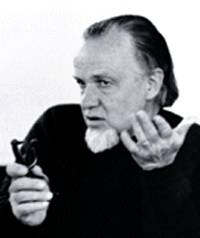





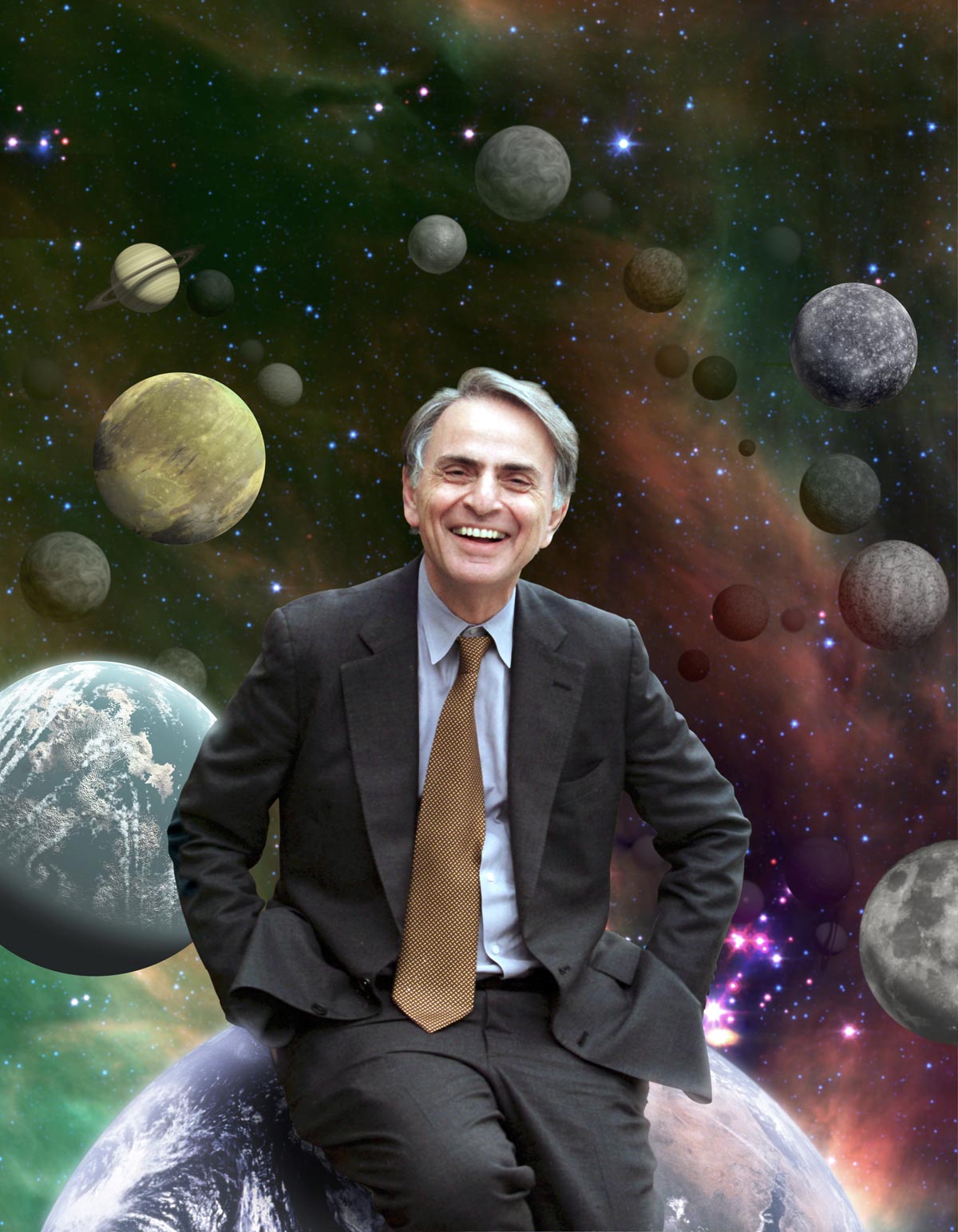 Carl Sagan. Credit: NASA
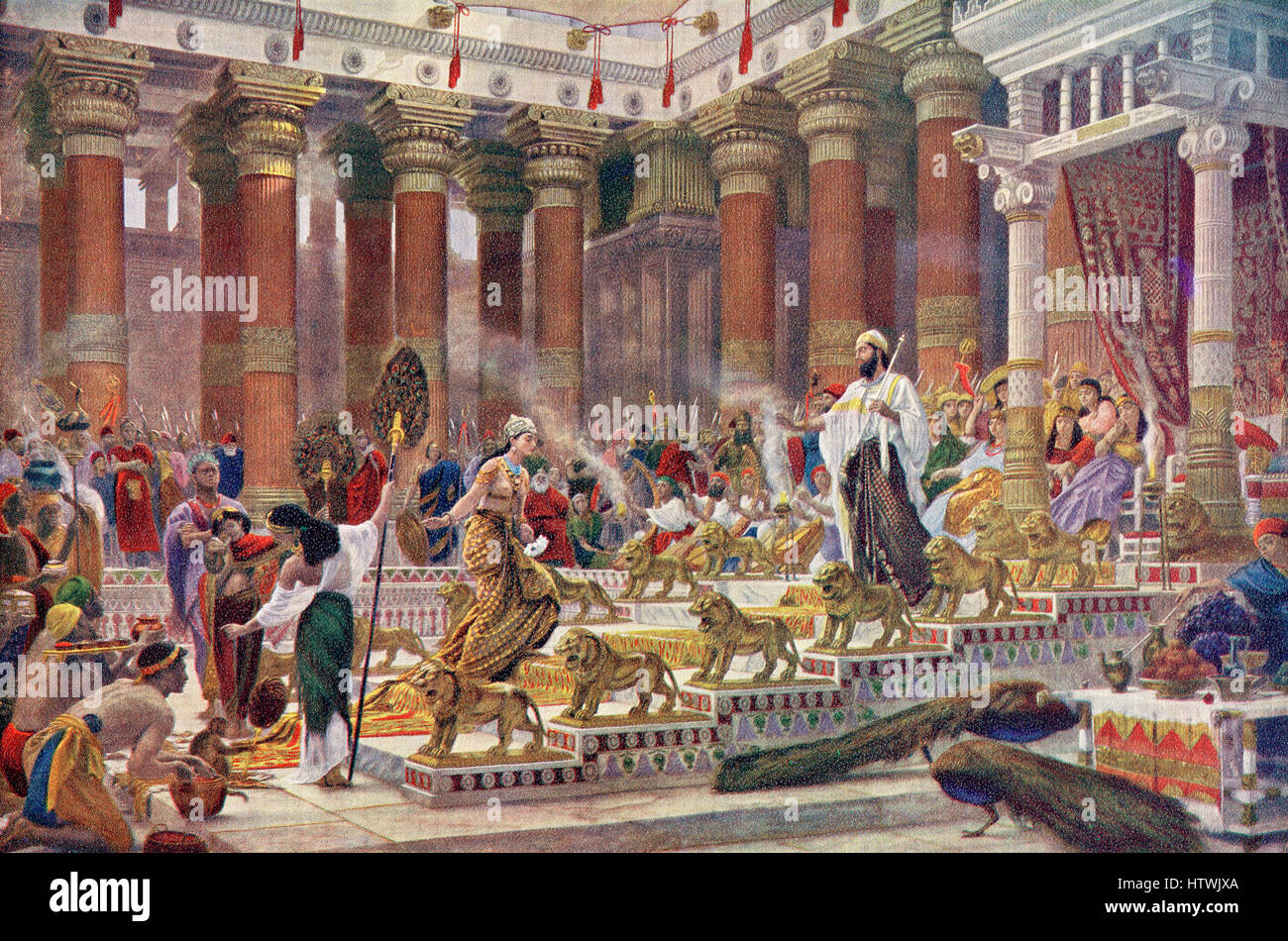




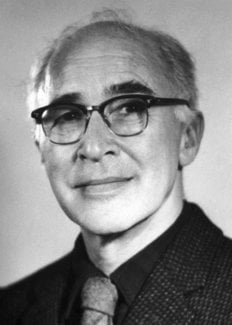


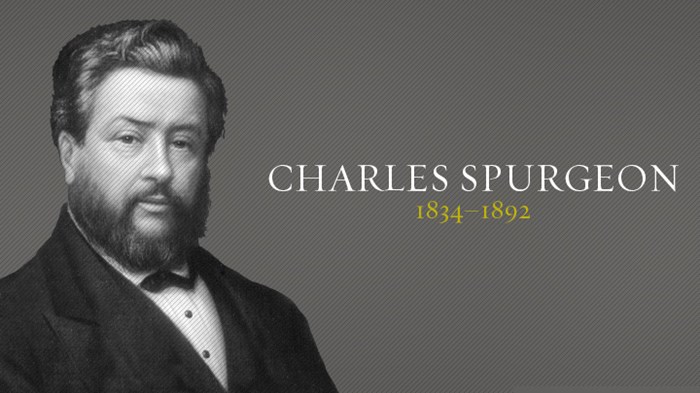


_(cropped).jpg)


.jpg)






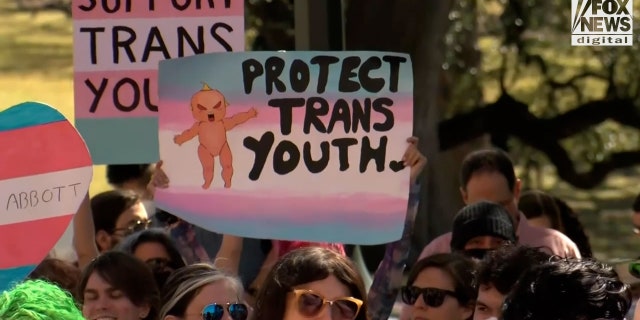


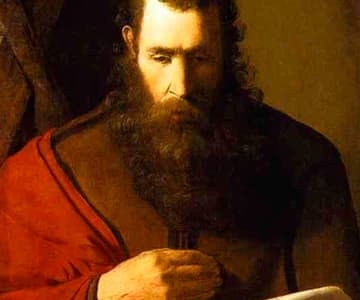

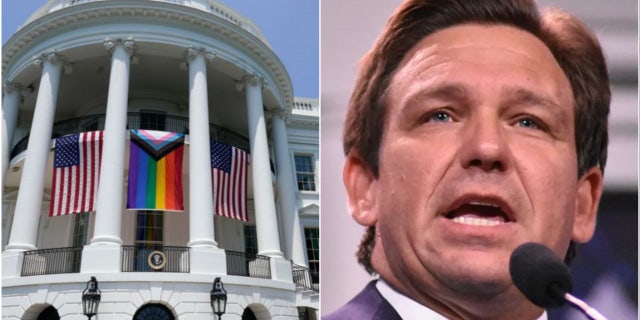



 True discernment has suffered a horrible setback in the past few decades because reason itself has been under attack within the church. As Francis Schaeffer warned nearly thirty years ago in The God Who Is There, the church is following the irrationality of secular philosophy. Consequently, reckless faith has overrun the evangelical community. Many are discarding doctrine in favor of personal experience. Others say they are willing to disregard crucial biblical distinctives in order to achieve external unity among all professing Christians. True Christianity marked by intelligent, biblical faith seems to be declining even among the most conservative evangelicals.THE ABANDONMENT OF OBJECTIVE TRUTHThe visible church in our generation has become astonishingly tolerant of aberrant teaching and outlandish ideas—and frighteningly intolerant of sound teaching. The popular evangelical conception of “truth” has become almost completely subjective. Truth is viewed as fluid, always relative, never absolute. To suggest that any objective criterion might be used to distinguish truth from error is to be egregiously out of step with the spirit of the age. In some circles, Scripture itself has been ruled out as a reliable test of truth. After all, the Bible can be interpreted in so many different ways—who can say which interpretation is right? And many believe there is truth beyond the Bible.All this relativity has had disastrous effects on the typical Christian’s ability to discern truth from error, right from wrong, good from evil. The plainest teachings of the Bible are being questioned among people who declare themselves believers in the Bible. For example, some Christians are no longer certain whether homosexuality should be classed as a sin. Others argue that the feminist agenda is compatible with biblical Christianity. “Christian” television, radio, books, and magazines serve up a preposterous smorgasbord of ideas from the merely capricious to the downright dangerous—and the average Christian is woefully ill-equipped to sort out the lies from the truth.Even to suggest that a sorting between lies and truth is necessary is viewed by many as perilously intolerant. There is a notion abroad that any dispute over doctrine is inherently evil. Concern for orthodoxy is regarded as incompatible with Christian unity. Doctrine itself is labeled divisive and those who make doctrine an issue are branded uncharitable. No one is permitted to criticize anyone else’s beliefs, no matter how unbiblical those beliefs seem to be. A recent article in Christianity Today exemplifies the trend. The article, titled “Hunting for Heresy,” profiled two well-known Christian leaders who had “come under withering attack for controversial writings.”1One is a popular speaker on the college lecture circuit and a bestselling author. He wrote a book in which he encouraged homosexuals to establish permanent live-together relationships (albeit celibate ones). He suggests the evangelical community suffers from “homophobia.” He is convinced that permanent living arrangements between homosexuals are the only alternative to loneliness for people he believes are “born with a homosexual orientation.” This man’s wife has published an article in a homosexual magazine in which she enthusiastically affirms” monogamous sexual relationships between homosexuals. The speaker-author says he has a “very, very strong” disagreement with his wife’s approval of homosexual sex, but his own view seems to allow homosexuals to engage in other kinds of physical intimacy short of actual intercourse.The other Christian leader profiled in the Christianity Today article is a woman who, with her husband, is a featured speaker for a popular, nationally-syndicated radio and television ministry. Their ministry is not a weird offshoot from some fringe cult, but an established, well-respected mainstay from the evangelical heartland. She also serves as chairperson of one of the largest evangelical student organizations in the world. This woman has written a book in which she chronicles some rather peculiar spiritual experiences. She dedicates the book to her male alter ego, an imaginary person named “Eddie Bishop” who romances her in her dreams. This woman says she also has visions of “the Christ child that is within” her. He appears to her as a drooling, emaciated, barefoot “idiot child” in a torn undershirt—”its head totally bald and lolled to one side.” The woman has engaged the services of a Catholic nun who serves as her “spiritual director,” helping to interpret her dreams and fantasies. The book mingles mysticism, Jungian psychology, out-of-body experiences, feminist ideas, subjective religious experience, and this woman’s romantic fantasies into an extraordinary amalgam. The book is frankly so bizarre that it is disturbing to read.The remarkable thing about the Christianity Today article is that the story was not written to expose the aberrant ideas being taught by these two leading evangelicals. Instead, what the magazine’s editors deemed newsworthy was the fact that these people were under attack for their views.In the world of modern evangelicalism, it is allowable to advocate the most unconventional, unbiblical doctrines—as long as you afford everyone else the same privilege. About the only thing that is taboo nowadays is the intolerance of those who dare to point out others’ errors. Anyone today who is bold enough to suggest that someone else’s ideas or doctrines are unsound or unbiblical is dismissed at once as contentious, divisive, unloving, or unchristian. It is all right toespouse any view you wish, but it is not all right to criticize another person’s views—no matter how patently unbiblical those views may be.When tolerance is valued over truth, the cause of truth always suffers. Church history shows this to be so. Only when the people of God have mounted a hardy defense of truth and sound doctrine has the church flourished and grown strong. The Reformation, the Puritan era, and the Great Awakenings are all examples of this. The times of decline in the history of the church have always been marked by an undue emphasis on tolerance—which leads inevitably to carelessness, worldliness, doctrinal compromise, and great confusion in the church.ADRIFT ON A SEA OF SUBJECTIVITYThat the church would lose her moorings in this particular age, however, poses greater dangers than ever. For in the past hundred years or so, the world has changed in a dramatic and very frightening way. People no longer look at truth the way they used to. In fact, we live under a prevailing philosophy that has become hostile to the very idea of absolute truth.From the beginning of recorded history until late last century, virtually all human philosophy assumed the necessity of absolute truth. Truth was universally understood as that which is true, not false; factual, not erroneous; correct, not incorrect; moral, not immoral; just, not unjust; right, not wrong. Practically all philosophers since the time of Plato assumed the objectivity of truth. Philosophy itself was a quest for the highest understanding of truth. Such a pursuit was presumed to be possible, even necessary, because truth was understood to be the same for every person. This did not mean that everyone agreed what truth was, of course. But virtually all agreed that whatever was true was true for everyone.That all changed in the nineteenth century with the birth of existentialism. Existentialism defies precise definition, but it includes the concept that the highest truth is subjective (having its source in the individual’s mind) rather than objective (something that actually exists outside the individual). Existentialism elevates individual experience and personal choice, minimizing or ruling out absolute standards of truth, goodness, morality, and such things. We might accurately characterize existentialism as the abandonment of objectivity. Existentialism is inherently anti-intellectual, against reason, irrational.Danish philosopher Søren Kierkegaard first used the term “existential.” Kierkegaard’s life and philosophy revolved around his experiences with Christianity. Christian ideas and biblical terminology reverberate in many of his writings. He wrote much about faith and certainly regarded himself as a Christian. Many of his ideas began as a legitimate reaction against the stale formalism of the Danish Lutheran state church. He was rightly offended at the barren ritualism of the church, properly outraged that people who had no love for God called themselves Christians just because they happened to be born in a “Christian” nation.But in his reaction against the lifeless state church, Kierkegaard set up a false antithesis. He decided that objectivity and truth were incompatible. To counter the passionless ritualism and lifeless doctrinal formulas he saw in Danish Lutheranism, Kierkegaard devised an approach to religion that was pure passion, altogether subjective. Faith, he suggested, means the rejection of reason and the exaltation of feeling and personal experience. It was Kierkegaard who coined the expression “leap of faith.” Faith to him was an irrational experience, above all a personal choice. He recorded these words in his journal on August 1, 1835: “The thing is to find a truth which is true for me, to find the idea for which I can live and die.”2Clearly, Kierkegaard had already rejected as inherently worthless the belief that truth is objective. His journal continues with these words:What would be the use of discovering so-called objective truth …. What good would it do me if truth stood before me, cold and naked, not caring whether I recognized her or not, and producing in me a shudder of fear rather than a trusting devotion? … I am left standing like a man who has rented a house and gathered all the furniture and household things together, but has not yet found the beloved with whom to share the joys and sorrows of his life…. It is this divine side of man, his inward action, which means everything—not a mass of [objective] information.3Having repudiated the objectivity of truth, Kierkegaard was left longing for an existential experience, which he believed would bring him a sense of personal fulfillment. He stood on the precipice, preparing to make his leap of faith. Ultimately, the idea he chose to live and die for was Christianity, but it was a characteristically subjective brand of Christianity that he embraced.Though Kierkegaard was virtually unknown during his lifetime, his writings have endured and have deeply influenced all subsequent philosophy. His idea of “truth that is true for me” infiltrated popular thought and set the tone for our generations radical rejection of all objective standards.Kierkegaard knew how to make irrationalism sound profound. “God does not exist; He is eternal,” he wrote. He believed Christianity was full of “existential paradoxes,” which he regarded as actual contradictions, proof that truth is irrational.Using the example of Abraham’s willingness to sacrifice Isaac (Gen. 22:1-19), Kierkegaard suggested that God called Abraham to violate moral law in slaying his son. For Kierkegaard, Abraham’s willingness to “suspend” his ethical convictions epitomized the leap of faith that is demanded of everyone. Kierkegaard believed the incident proved that “the single individual [Abraham] is higher than the universal [moral law].”4 Building on that conclusion, the Danish philosopher offered this observation: “Abraham represents faith…. He acts by virtue of the absurd, for it is precisely [by virtue of] the absurd that he as the single individual is higher than the universal.”5 “[I] cannot understand Abraham,” Kierkegaard declared, “even though in a certain demented sense I admire him more than all others.”6It is not difficult to see how such thinking thrusts all truth into the realm of pure subjectivity—even to the point of absurdity or dementia. Everything becomes relative. Absolutes dematerialize. The difference between truth and nonsense becomes meaningless. All that matters is personal experience.And one person’s experience is as valid as another’s—even if everyone’s experiences lead to contradictory conceptions of truth. “Truth that is true for me” might be different from someone else’s truth. In fact, our beliefs might be obviously contradictory, yet another person’s “truth” in no way invalidates mine. Because “truth”is authenticated by personal experience, its only relevance is for the individual who makes the leap of faith. That is existentialism.Existentialism caught on in a big way in secular philosophy. Friedrich Nietzsche, for example, also rejected reason and emphasized the will of the individual. Nietzsche probably knew nothing of Kierkegaard’s works, but their ideas paralleled at the key points. Unlike Kierkegaard, however, Nietzsche never made the leap of faith to Christianity. Instead, he leapt to the conclusion that God is dead. The truth that was “true for him,” it seems, turned out to be the opposite of the truth Kierkegaard chose. But their epistemology (the way they arrived at their ideas) was exactly the same.Later existentialists, such as Martin Heidegger and Jean-Paul Sartre, refined Kierkegaard’s ideas while following the atheism of Nietzsche. Heidegger and Sartre both believed that reason is futile and life basically meaningless. Those ideas have been a powerful force in twentieth-century thought. As the world continues to grow more atheistic, more secular, and more irrational, it helps to understand that it is being propelled in that direction by strong existentialist influences.EXISTENTIALISM INVADES THE CHURCH But don’t get the idea that existentialism’s influence is limited to the secular world. From the moment Kierkegaard wedded existentialist ideas with Christianity, neo-orthodox theology was the inevitable outcome.Neo-orthodoxy is the term used to identify an existentialist variety of Christianity. Because it denies the essential objective basis of truth—the absolute truth and authority of Scripture—neo-orthodoxy must be understood as pseudo-Christianity. Its heyday came in the middle of the twentieth century with the writings of Karl Barth, Emil Brunner, Paul Tillich, and Reinhold Niebuhr. Those men echoed the language and the thinking of Kierkegaard, speaking of the primacy of “personal authenticity,” while downplaying or denying the significance of objective truth. Barth, the father of neo-orthodoxy, explicitly acknowledged his debt to Kierkegaard.7Neo-orthodoxy’s attitude toward Scripture is a microcosm of the entire existentialist philosophy: the Bible itself is not objectively the Word of God, but it becomes the Word of God when it speaks to me individually. In neo-orthodoxy, that same subjectivism is imposed on all the doctrines of historic Christianity. Familiar terms are used, but are redefined or employed in a way that is purposely vague—not to convey objective meaning, but to communicate a subjective symbolism. After all, any “truth” theological terms convey is unique to the person who exercises faith. What the Bible means becomes unimportant. What it means to me is the relevant issue. All of this resoundingly echoes Kierkegaard’s concept of “truth that is true for me.”Thus while neo-orthodox theologians often sound as if they are affirming traditional beliefs, their actual system differs radically from the historic understanding of the Christian faith. By denying the objectivity of truth, they relegate all theology to the realm of subjective relativism. It is a theology perfectly suited for the age in which we live.And that is precisely why it is so deadly.Francis Schaeffer’s 1968 work The God Who Is There included a perceptive analysis of Kierkegaard’s influence on modern thought and modern theology.8 Schaeffer named the boundary between rationality and irrationality “the line of despair.” He noted that existentialism pushed secular thought below the line of despair sometime in the nineteenth century. Religious neo-orthodoxy was simply a johnny-come-lately response of theologians who were jumping on the existentialist bandwagon, following secular art, music, and general culture: “Neo-orthodoxy gave no new answer. What existential philosophy had already said in secular language, it now said in theological language…. [With the advent of neo-orthodoxy,] theology too has gone below the line of despair.”9Schaeffer went on to analyze how neo-orthodoxy ultimately gives way to radical mysticism:Karl Barth opened the door to the existentialistic leap in theology… He has been followed by many more, men like Reinhold Niebuhr, Paul Tillich, Bishop John Robinson, Alan Richardson and all the new theologians. They may differ in details, but their struggle is still the same—it is the struggle of modern man who has given up [rationality]. As far as the theologians are concerned … their new system is not open to verification, it must simply be believed.10Such a system, Schaeffer points out, has no integrity. Those who espouse it cannot live with the repercussions of their own illogic. “In practice a man cannot totally reject [rationality], however much his system leads him to it, unless he experiences … some form of mental breakdown.” Thus people have been forced to an even deeper level of despair: “a level of mysticism with nothing there.”11MYSTICISM: IRRATIONALITY GONE TO SEEDMysticism is the idea that spiritual reality is found by looking inward. Mysticism is perfectly suited for religious existentialism; indeed, it is its inevitable consequence. The mystic disdains rational understanding and seeks truth instead through the feelings, the imagination, personal visions, inner voices, private illumination, or other purely subjective means. Objective truth becomes practically superfluous. Mystical experiences are therefore self-authenticating; that is, they are not subject to any form of objective verification. They are unique to the person who experiences them. Since they do not arise from or depend upon any rational process, they are invulnerable to any refutation by rational means.Arthur L. Johnson writes,The experience convinces the mystic in such a way, and to such a degree, that lie simply cannot doubt its value and the correctness of what he believes it “says.”…In its crudest form this position says that believing something to be so makes it so. The idea is that ultimate reality is purely mental; therefore one is able to create whatever reality one wishes. Thus the mystic “creates” truth through his experience. In a less extreme form, the view seems to be that there are “alternate realities,” one as real as another, and that these “break in upon” the mystic in his experiences. Whatever form is taken, the criterion of truth is again a purely private and subjective experience that provides no means of verification and no safeguard against error. Nevertheless, it is seen by the mystic as being above question by others.The practical result of all this is that it is nearly impossible to reason with any convinced mystic. Such people are generally beyond the reach of reason.12Mysticism is therefore antithetical to discernment. It is an extreme form of reckless faith.Mysticism is the great melting pot into which neo-orthodoxy, the charismatic movement, anti-intellectual evangelicals, and even some segments of Roman Catholicism have been synthesized. It has produced movements like the Third Wave (a neo-charismatic movement with excessive emphasis on signs, wonders, and personal prophecies); Renovaré (an organization that blends teachings from monasticism, ancient Catholic mysticism, Eastern religion, and other mystical traditions); the spiritual warfare movement (which seeks to engage demonic powers in direct confrontation); and the modern prophecy movement (which encourages believers to seek private, extrabiblical revelation directly ftom God). The influx of mysticism has also opened evangelicalism to New-Age concepts like subliminal thought- control, inner healing, communication with angels, channeling, dream analysis, positive confession, and a host of other therapies andpractices coming directly from occult and Eastern religions. The face of evangelicalism has changed so dramatically in the past twenty years that what is called evangelicalism today is beginning to resemble what used to be called neo-orthodoxy. If anything, some segments of contemporary evangelicalism are even more subjective in their approach to truth than neo-orthodoxy ever was.It could be argued that evangelicalism never successfully resisted neo-orthodoxy. Twenty years ago evangelicals took a heroic stand against neo-orthodox influences on the issue of biblical inerrancy. But whatever victory was gained in that battle is now being sacrificed on the altar of mysticism. Mysticism renders biblical inerrancy irrelevant. After all, if the highest truth is subjective and comes from within us, then it doesn’t ultimately matter if the specifics of Scripture are true or not. If the content of faith is not the real issue, what does it really matter if the Bible has errors or not?In other words, neo-orthodoxy attacked the objective inspiration of Scripture. Evangelical mysticism attacks the objective interpretation of Scripture. The practical effect is the same. By embracing existential relativism, evangelicals are forfeiting the very riches they fought so hard to protect. If we can gain meaningful guidance from characters who appear in our fantasies, why should we bother ourselves with what the Bible says? If we are going to disregard or even reject the biblical verdict against homosexuality, what difference does it make if the historical and factual matter revealed in Scripture is accurate or inaccurate? If personal prophecies, visions, dreams, and angelic beings are available to give us up-to-the-minute spiritual direction—”fresh revelation” as it is often called—who cares if Scripture is without error in the whole or in the parts?Mysticism further nullifies Scripture by pointing people away from the sure Word of God as the only reliable object of faith. Warning of the dangers of mysticism, Schaeffer wrote,Probably the best way to describe this concept of modern theology is to say that it is faith in faith, rather than faith directed to an object which is actually there…. A modern man cannot talk about the object of his faith, only about the faith itself. So he can discuss the existence of his faith and its “size” as it exists against all reason, but that is all. Modern man’s faith turns inward…. Faith is introverted, because it has no certain object … it is rationally not open to discussion. This position, I would suggest, is actually a greater despair and darkness than the position of those modern men who commit suicide.“13The faith of mysticism is an illusion. “Truth that is true for me” is irrelevant to anyone else, because it lacks any objective basis. Ultimately, therefore, existential faith is impotent to lift anyone above the level of despair. All it can do is seek more experiences and more feelings. Multitudes are trapped in the desperate cycle of feeding off one experience while zealously seeking the next. Such people have no real concept of truth; they just believe. Theirs is a reckless faith.MEANWHILE, AT THE OTHER END OF THE SPECTRUM…Mysticism, however, is not the only form of reckless faith that threatens the contemporary church. A new movement has been gaining strength lately. Evangelicals are leaving the fold and moving into Eastern Orthodoxy, Roman Catholicism, and liturgical high-church Protestantism. Rejecting the ever-changing subjectivism of a free- wheeling existential Protestantism, they seek a religion with historical roots. Turned off by the shallow silliness that has overrun the evangelical movement, they desire a more magisterial approach. Perhaps sensing the dangers of a religion that points people inward, they choose instead a religion that emphasizes external ceremonies and dogmatic hierarchical authority.I listened to the taped testimony of one of these converts to Roman Catholicism, a former Protestant minister. He said he had graduated with highest honors from a leading Protestant seminary. He told his audience that as a student he was rabidly anti-Catholic and fully committed to Protestant Reformed doctrine (although he refuted this himself by admitting he had already rejected the crucial doctrine of justification by faith). After college he began to read Roman Catholic writings and found himself drawn to Catholic theology and liturgy. He described his initial resistance to the doctrines of purgatory, the perpetual virginity of Mary, transubstantiation, and prayers to Mary and the saints. All of those doctrines are easily disproved by the Bible.14 But this man—acknowledging that he could find no warrant anywhere in Scripture for praying to Mary—nevertheless completely changed his outlook on such matters after he tried praying the rosary and received an answer to a very specific prayer. He concluded that it must have been Mary who answered his prayer and immediately began praying regularly to her. Ultimately, he decided the Bible alone was not a sufficient rule of faith for believers, and he put his faith in papal authority and church tradition.That man’s leap of faith may not have been of the existential variety, but it was a blind leap nonetheless. He chose the other extreme of reckless faith, the kind that makes extrabiblical religious tradition the object of one’s faith.This kind of faith is reckless because it subjugates the written Word of God to oral tradition, church authority, or some other human criterion. It is an uncritical trust in an earthly religious authority—the pope, tradition, a self-styled prophet like David Koresh, or whatever. Such faith rarely jettisons Scripture altogether—but by forcing God’s Word into the mold of religious tradition, it invalidates the Word of God and renders it of no effect (cf. Matt. 15:6).The man whose taped testimony I heard is now an apologist for the Roman Catholic Church. He speaks to Catholic congregations and tells them how to counter biblical arguments against Catholicism. At the end of his testimony tape, he deals briefly with the official Catholic attitude toward Scripture. He is eager to assure his listeners that the modern Roman Catholic Church has no objection if Catholic people want to read Scripture for themselves. Even personal Bible study is all right, he says—but then hastens to add that it is not necessary to go overboard. “A verse or two a day is enough.” This man, a seminary graduate, surely should be aware that a comment like that seriously understates the importance of the written Word of God. We are commanded to meditate on Scripture day and night (Josh. 1:8; Ps. 1:2). We are to let it fill our hearts at all times (Deut. 6:6-9). We must study it diligently and handle it rightly (2 Tim. 2:15). The Bible alone is able to give us the wisdom that leads to salvation, then adequately equip us for every good work (2 Tim. 3:15-17).Discernment depends on a knowledge of Scripture. Those who are content to listen gullibly to some voice of human authority rather than hearing God’s Word and letting it speak for itself cannot be discerning. Theirs is a reckless, irrational faith.We identified the inward-looking extreme of reckless faith as mysticism. We could call this other variety rote tradition. In Isaiah 29:13, that is precisely how God Himself characterized it: “This people their lip service, but draw near with their words and honor Me with their lip service, but they remove their hearts far from Me, and their reverence for Me consists of tradition learned by rote” (emphasis added).Scripture has nothing but condemnation for rote tradition. Barren religious ritual, sacerdotal formalism, or liturgy out of a book are not the same as worship. Real worship, like faith, must engage the mind. Jesus said, “The true worshipers … worship the Father in spirit and truth; for such people the Father seeks to be His worshipers” (John 4:23).Did you realize that rote tradition was the very error for which Jesus condemned the Pharisees? He told them,“Rightly did Isaiah prophesy of you hypocrites, as it is written, ‘This people honors Me with their lips, but their heart is far away from Me. But in vain do they worship Me. teaching as doctrines the precepts of men.’ Neglecting the commandment of God, you hold to the tradition of men.”He was also saying to them, “You nicely set aside the commandment of God in order to keep your tradition” (Mark 7:6-9).Rote tradition is not unlike mysticism in that it also bypasses the mind. Paul said this of the Jews who were so absorbed in their empty religious traditions:I bear them witness that they have a zeal for God, but not in accordance with knowledge. For not knowing about God’s righteousness, and seeking to establish their own, they did not subject themselves to the righteousness of God. For Christ is the end of the law for righteousness to everyone who believes (Rom. 10:2-4).Their problem was not a lack of zeal. It was not that they were short on enthusiasm, emotionally flat, or slothful about religious observances. The issue was that the zeal they displayed was rote tradition, “not in accordance with knowledge.” They were not sufficiently discerning, and therefore their faith itself was deficient.Paul is specific in stating that their ignorance lay in trying to establish their own righteousness rather than submitting to the righteousness of God. This passage comes at the culmination of Paul’s doctrinal discussion in Romans. In context it is very clear that he was talking about the doctrine ofjustification by faith. He had thoroughly expounded this subject beginning in chapter 3. He said we are “justified as a gift by His grace through the redemption which is in Christ Jesus” (3:24). Justification is “by faith apart from works of the Law” (v.28). “God reckons righteousness apart from works” (Rom. 4:6).But instead of seeking the perfect righteousness of Christ, which God reckons to those who believe, the unbelieving Jews had set out to try to establish a righteousness of their own through works. That is where rote tradition always leads. It is a religion of works. Thus the ritualistic, unbelieving Pharisees are an exact parallel to Roman Catholicism, Eastern Orthodoxy, and most forms of ritual-laden Protestantism. All of them deny justification by faith.If the Pharisees or their followers had used the Scriptures as their standard of truth rather than rabbinical tradition, they would have known that God justifies sinners by faith. Repeatedly, Jesus said things to them like “Did you never read in the Scriptures . . . ?” (Matt. 21:42); “You are mistaken, not understanding the Scriptures, or the power of God” (22:29); and, “Are you the teacher of Israel, and do not understand these things?” (John 3:10). What He continually chided them for was their ignorance of the Scriptures. They had set rote tradition in place of the written Word of God (Matt. 15:6), and they were condemned for it.Contrast the way Luke commended the Bereans for their noblemindedness: “For they received the word [the New Testament gospel from the apostles] with great eagerness, examining the Scriptures [the Old Testament books] daily, to see whether these things were so” (Acts 17:1 1). What made the Bereans worthy of commendation? Their eagerness to be discerning. They rightly refused to blindly accept anyone’s teaching (even that of the apostles) without clear warrant from God’s Word.Spiritual discernment is, I believe, the only antidote to the existentialism of our age. Until’Christians regain the will to test everything by the rule of Scripture, reject what is false, and hold fast to what is true, the church will struggle and falter, and our testimony to a world in sin will be impaired.But if the church will rise up and stand for the truth of God’s Word against all the lies of this evil world, then we will begin to see the power of truth that sets people free (John 8:32).Endnotes1. John W. Kennedy, “Hunting for Heresy,” Christianity Today (16 May 1994).2. Robert Bretall, cd., A Kierkegaard Anthology (Princeton, N. J.: Princeton University Press, 1946), 5 (emphasis in original).3. Ibid.4. Søren Kierkegaard, Fear and Trembling, Howard V. Hong and Edna H. Hong, trans. (Princeton, N. J.: Princeton University Press, 1983), 55.5. Ibid.6. Ibid., 57.7. Karl Barth, The Epistle to the Romans, Edwyn C. Hoskyns, trans. (London: Oxford University Press, 1933). Barth cites Kierkegaard repeatedly in this, one of his earliest works.8. Francis Schaeffer, The God Who Is There, in The Complete Works of Francis A. Schaeffer, Volume I (Wheaton, Ill.: Crossway Books, 1982).9. Ibid., 53.10. Ibid., 55.11. Ibid., 58.12. Arthur L. Johnson, Faith Misguided: Exposing the Dangers of Mysticism (Chicago: Moody Press, 1988), 31-32.13. Schaeffer, 64-65, emphasis added.14. Purgatory: Luke 23:42-43 and 2 Cor. 5:8 indicate that believers go immediately to be with Christ at death. Perpetual Virginity of Mary: Matt. 1:25 states that Joseph kept Mary a virgin only until Jesus’ birth, and John 2:12 and Acts 1:14 reveal that Jesus had brothers. Transubstantiation: Heb. 7:27 and 10:12 teach that Christ made one sacrifice for sins forever; there is no need for the daily sacrifice of the Mass. Prayers to Mary and the saints: prayers, adoration, and spiritual veneration offered to anyone but God is expressly forbidden by the first commandment and elsewhere throughout Scripture (Ex. 20:3; Matt. 4:10; Acts 10:25-26; Rev. 19:10; Rev. 22:8-9).Excerpt from Reckless Faith: When the Church Loses Its Will to Discern, © 1994 by John MacArthur.We do pray this article has blessed you in some way. Our prayer is that you will use this message to better understand what is happening in our churches today.Blessings,




































 The Daily Hatch

