My name is Everette Hatcher III. I am a businessman in Little Rock and have been living in Bryant since 1993. My wife Jill and I have four kids (Rett 24, Hunter 22, Murphey 16, and Wilson 14).
Theoretical physicist J. Robert Oppenheimer (1904-1967)—seen here in an undated file photo—is remembered as “the father of the atomic bomb.” He is the subject of a new biopic. (Photo: Ullstein Bild/Getty Images)
Every once in a while, there’s a big-budget movie worth seeing in a theater.
Although the new “Oppenheimer” biopic has a liberal slant, it eschews petty, simplistic narratives aimed at deconstructing our past in favor of creating a fascinating character study of a flawed but incredibly important scientist who led the United States into the atomic age.
“Oppenheimer” is liberal, but it isn’t woke. That’s an important distinction in the case of art and a rarity in modern Hollywood. It means that the online Left is more than a bit outraged by the movie. More on that later.
Christopher Nolan’s three-hour historical drama is based on the life of theoretical physicist J. Robert Oppenheimer, the “father of the atomic bomb.” It notably uses no computer-generated imagery. Yet the movie is visually spectacular.
Nolan sometimes gets obsessed with his visual effects and innovative camera techniques to the point of absurdity. But not this time.
The great Japanese filmmaker Akira Kurosawaonce said that with a bad script even a good director can’t make a good movie. “For truly cinematic expression, the camera and the microphone must be able to cross both fire and water. That is what makes a real movie. The script must be something that has the power to do this,”he said.
“Oppenheimer” is more than just a visual feast. It’s an engaging historical thriller that takes audiences into the mind and world of an at-times uncertain man thrust into the tides of history.
Oppenheimer is a staunch liberal, but ultimately rejects communist dogmas. His relationship with women is full of romance, but he never fully commits and remains a serial philanderer. He fears what an atomic bomb would unleash, but agrees to head the Manhattan Project when he thinks Nazi Germany might get ahold of the weapon first.
In the end, Oppenheimer can’t quite solve his internal dilemma about whether his creation of the atomic bomb is a great achievement, or whether he’s brought about a chain reaction that will lead to the end of the world.
Questions about his connections to the Communist Party dogged his career.
Oppenheimer likely remained a loyal American despite his ideology, though there are still legitimate questions about whether he had been a Soviet spy. There’s less mystery about some of his acquaintances and connections.
The Los Alamos lab, where much of Oppenheimer’s research for the Manhattan Project took place, was infested with Soviet spieswho aided the USSR in getting the bomb many years before it would have otherwise.
That Oppenheimer saw Nazi Germany as a great evil, but wanted full cooperation with the Soviet Union was likely more than just a byproduct of the temporary alliance of convenience in World War II. Many on the Left in those days saw the Soviet Union as a grand experiment where their ideas might bear fruit.
Soviet infiltration into American society and government ran deep. The Left has never fully come to terms with this, so they take up the useful narrative of McCarthyite persecution.
As much as I believe the record deserves to be corrected in a larger sense, I don’t think the liberal bias is fatal to the larger message of the film.
Oppenheimer, the man, was a liberal, and this movie is largely sympathetic. And that’s OK in this circumstance. He was, like many liberals of his era, a man with strong convictions who was naïve about the nature of the far Left.
What the Oppenheimer movie avoids is the tedious and stilted woke ethos that now infests the minds of our cultural elite. Angry, woke critics online complain that the movie didn’t have enough female representation, that it lionized a white man, that it didn’t portray any Japanese people or get their perspective about the use of atomic weapons.
Some have used critiques of the movie to question whether the United States was the“good guy” in World War II.
I wrote quite a bit about that last part in my book “The War on History: The Conspiracy to Rewrite America’s Past.” Let me summarize by saying that while all war is terrible, and that America—like all countries—has done terrible things in war, we were most certainly the “good guys” in that conflict.
We should all be thankful that Imperial Japan didn’t come to dominate the Pacific, that Nazi Germany never became the preeminent global power, and that the Soviet Union wasn’t alone in standing above the rubble at the war’s end.
When the war concluded, the U.S. rebuilt and eventually became allies with the defeated. By contrast, the Soviet Union plundered and enslaved those it came to “liberate.” It seems more than a few of Oppenheimer’s friends and relations got that wildly wrong. That doesn’t necessarily mean they were traitors, however. Most were merely fools and pawns in Soviet dictator Josef Stalin’s great game.
That all being said, there’s no denying Oppenheimer’s role in bringing the Manhattan Project to a successful conclusion. It took a monumental effort of scientific knowledge, industrial might, and logistical brilliance. Even more, this wasn’t just the achievement of one man; it was the triumph of millions.
In a sense, the Manhattan Project and the first detonation of an atomic bomb is symbolic of the United States in World War II.
The splitting of the atom released almost limitless energy to create a weapon of immense power. At the same time, an incredible amount of American economic and industrial potential was unleashed by the war. That allowed this country to produce near miraculous feats of production and scientific advancement. Our country, and the world, would never be the same.
There’s a notable moment after the first test of Oppenheimer’s atomic weapon in which he waves to a crowd of Americans gathered to celebrate the achievement. In the scene, we see men and women, GIs and civilians. Behind Oppenheimer flies an American flag raised on high as he raises his hat and smiles.
The flag was historically inaccurate—it’s a 50-star flag, instead of a 48-star flag (pre-Hawaii and Alaska) that would have been the banner at the time—but the moment was appropriate and stirring, nonetheless.
Whatever can be said of Oppenheimer the man, the Manhattan Project remains an immense accomplishment at a time in which our world was so deeply threatened with being plunged into a dark age.
This success would set the stage for many fantastical American achievements over the following 75 years. For a moment at least, our dark age didn’t come.
These triumphs overshadow the chirps of the bitter, small-minded critics who today wish to see the past torn down for their own narcissistic gratification.
Nolan’s movie bucks that trend, and even within the confines of a more nuanced character study, it captures some of the greatness that Americans still long for.
Have an opinion about this article? To sound off, please email letters@DailySignal.com and we’ll consider publishing your edited remarks in our regular “We Hear You” feature. Remember to include the url or headline of the article plus your name and town and/or state.
At the 42:11 mark of the following 1963 talk by Francis Schaeffer on the 1962 paper by J. Robert Oppenheimer are these words:
EINSTEIN ONCE SAID that a physical theory was not determined by the facts of nature, but was a free invention of the human mind. This raises the question of how necessary is the content of science–how much is it something that we are free not to find–how much is it something that could be otherwise? This is, of course, relevant to the question of how we may use the words “objectivity” and “truth.” Do we, when we find something, “invent” it or “discover” it?…We are free in the start of things. We are free as to how to go about it; but then the rock of what the world is, shapes this freedom with a necessary answer.
Matt Damon as Gen. Leslie Groves, left, and Cillian Murphy as J. Robert Oppenheimer in a scene from “Oppenheimer.”
UNIVERSAL PICTURES VIA AP
Cillian Murphy, center, in a scene from “Oppenheimer.”
UNIVERSAL PICTURES VIA AP
Benny Safdie as Edward Teller, left, and Cillian Murphy as J. Robert Oppenheimer in a scene from “Oppenheimer.”
NEW YORK — Christopher Nolan has never been one to take the easy or straightforward route while making a movie.
He shoots on large-format film with large, cumbersome cameras to get the best possible cinematic image. He prefers practical effects over computer-generated ones and real locations over soundstages — even when that means recreating an atomic explosion in the harsh winds of the New Mexico desert in the middle of the night for “Oppenheimer,” out July 21.
Though, despite internet rumors, they did not detonate an actual nuclear weapon.
And as for the biography that inspired his newest film, Kai Bird and Martin J. Sherwin’s riveting, linear narrative “American Prometheus” was simply the starting point from which Nolan crafted a beguiling labyrinth of suspense and drama.
It’s why, in his two decades working in Hollywood, Nolan has become a franchise unto himself — the rare auteur writer-director who makes films that are both intellectually stimulating and commercial, accounting for more than $5 billion in box office receipts. That combination is part of the reason why he’s able to attract Oscar winners and movie stars not just to headline his films, but also to turn out for just a scene or two.
“We’ve all been so intoxicated by his films,” said Emily Blunt, who plays J. Robert Oppenheimer’s wife, Kitty. “That exploration of huge themes in an entertaining way doesn’t happen. It just doesn’t happen. That depth, the depth of the material, and yet on this massive epic scale.”
In the vast and complex story of the brilliant theoretical physicist who oversaw the Manhattan Project and the development of the atomic bomb during World War II, Nolan saw exciting possibilities to play with genre and form. There was the race to develop it before the Germans did, espionage, romance, domestic turmoil, a courtroom drama, bruised egos, political machinations, communist panic, and the burden of having created something that could destroy the world.
And then there was the man himself, beloved by most but hated by enough, who, after achieving icon status in American society, saw his reputation and sense of self annihilated by the very institutions that built him.
“It’s such an ambitious story to tell,” said Matt Damon, who plays Gen. Leslie Groves Jr. “Reading the script, I had the same feeling I had when I read ‘Interstellar,’ which was: ‘This is great. How the hell is he going to do this?’”
It’s not so disconnected from Nolan’s other films, either. As critic Tom Shone noted in his book about the director, “Looked at one way, Nolan’s films are all allegories of men who first find their salvation in structure only to find themselves betrayed or engulfed by it.”
Nolan turned to Cillian Murphy to take on the gargantuan task of portraying Oppenheimer. Murphy had already acted in five Nolan films, including the Batman trilogy, “Dunkirk” and “Inception,” but this would be his first time as a lead — something he had secretly pined for.
“You feel a responsibility, but then a great hunger and excitement to try and do it, to see where you can get,” said Murphy, who prepped extensively for six months before filming, working closely with Nolan throughout. “It was an awful lot of work, but I loved it. There is this kind of frisson, this energy when you’re on a Chris Nolan set about the potential for what you’re going to achieve.”
It would be an all-consuming role that would require some physical transformation to approximate that famously thin silhouette. A complex, contradictory figure, Oppenheimer emerged from a somewhat awkward youth to become a renaissance man who seemed to carry equal passion for the Bhagavad Gita, Proust, physics, languages, New Mexico, philosophical questions about disarmament and the perfectly mixed martini. But Murphy knew he was in safe hands with Nolan.
“He’s the most natural director I’ve ever worked with. And the notes that he gives to an actor, are quite remarkable. How he can gently bring you to a different place with your performance is quite stunning in such a subtle, low-key, understated way,” Murphy said. “It can have a profound effect on the way you look at a scene from one take to another take.”
Nolan wrote the main timeline of the film in the first person, to represent Oppenheimer’s subjective experience.
“We want to see everything through Oppenheimer’s point of view,” Nolan said. “That’s a huge challenge for an actor to take on because they’re having to worry about the performance, the truth of the performance, but also make sure that that’s always open to the audience.”
The other timeline, filmed in black and white, is more objective and focused on Lewis Strauss (Robert Downey Jr.), a founding member of the Atomic Energy Commission and a supporter of the development of the more destructive hydrogen bomb.
“Oppenheimer” is Nolan’s first R-rated film since 2002’s “Insomnia,” which after years of working exclusively in PG-13, he’s comfortable with. It fits the gravity of the material.
“We’re dealing with the most serious and adult story you could imagine — very important, dramatic events that changed the world and defined the world we live in today,” Nolan said. “You don’t want to compromise in any way.”
Much of the filming took place in New Mexico, including at the real Los Alamos laboratory where thousands of scientists, technicians and their families lived and worked for two years in the effort to develop the bomb. Nolan enlisted many of his frequent behind-the-scenes collaborators, including his wife and producer Emma Thomas, cinematographer Hoyte Van Hoytema, composer Ludwig Göransson and special effects supervisors Scott Fisher and Andrew Jackson, as well as some newcomers like production designer Ruth de Jong and costume designer Ellen Mirojnick to help bring this world to life.
“It was a very focused set — fun set as well, not too serious. But the work was serious, the sweating of the details was serious,” Blunt said. “Everyone needs to kind of match Chris’ excellence, or want to.”
When it came to recreating the Trinity test, Oppenheimer’s chosen name for the first nuclear detonation, art and life blended in a visceral way.
“We wanted to put the audience there in that bunker,” Nolan said. “That meant really trying to make these things as beautiful and frightening and awe inspiring as they would have been to the people at the time.”
Though no real nukes were used, they did stage a lot of real explosions to approximate the blindingly bright atomic fire and mushroom cloud.
“To do those safely in a real environment out in the nighttime desert, there’s a degree of discipline and focus and adrenaline and just executing that for the film that echoes and mirrors what these guys went through on the grandest scale in a really interesting way,” Nolan said. “I felt everybody had that very, very tight sense of tension and focus around all those shooting nights.”
The weather also “did what it needed to do, as per history,” Murphy said, as the wind picked up and whipped around the set.
“I’m rumored to be very lucky with the weather and it’s not the case. It’s just that we decide to shoot whatever the weather,” Nolan said. “In the case of the Trinity test, it was essential, central to the story that this big storm rolls in with tremendous drama. And it did. That really made the sequence come to life.”
He added: “The extremity of it put me very much in the mindset of what it must have been like for these guys. It really felt like we were out in it.”
Then, of course, there is the experience of watching “Oppenheimer.”
“When you’re making a movie, I feel like you’re on the inside looking out,” Blunt said. “It’s really overwhelming to see it reflected back at you, especially one of this magnitude. … I just felt like my breastplate was going to shatter, it was so intense.”
The hope is that when “Oppenheimer” is unleashed on the world, audiences will be as invested and will seek it out on the biggest screen they can find. The film has a run in IMAX theaters around the country, not something often afforded serious-minded, R-rated movies in the middle of the busy summer season. But this is also the essential Nolan impossibility. As more and more auteurs have had to compromise — to either go smaller or team with streamers to get the kind of budget they might once have had at studios, like even Ridley Scott and Martin Scorsese have had to do this year — Nolan continues to make his movies on the grandest scale.
“Each of his films has been revolutionary in their own way,” Murphy said. “It’s an event every time he releases a film, and rightly so.”
On Science and Culture by J. Robert Oppenheimer, Encounter (Magazine) October 1962 issue, was the best article that he ever wrote and it touched on a lot of critical issues including the one that Francis Schaeffer discusses in this blog post!
EINSTEIN ONCE SAID that a physical theory was not determined by the facts of nature, but was a free invention of the human mind. This raises the question of how necessary is the content of science–how much is it something that we are free not to find–how much is it something that could be otherwise? This is, of course, relevant to the question of how we may use the words “objectivity” and “truth.” Do we, when we find something, “invent” it or “discover” it?
The fact is, of course, just what one would guess. We are, of course, free in our tradition. and in our practice, and to a much more limited extent individually to decide where to look at nature, and how to look at nature, what questions to put, with what instruments and with what purpose. But we are not the least bit free to
settle what we find. Man must certainly be free to invent the idea of mass, as Newton did and as it has been refined and re-defined; but having done so, we have not been free to find that the mass of the light quantum or the neutrino is anything but zero. We are free in the start of things. We are free as to how to go about it; but then the rock of what the world is, shapes this freedom with a necessary answer.
(43:45)
FRANCIS SCHAEFFER: I want to point out something. We are totally free in the beginning of things, the only time we are not free according to Oppenheimer, is when we come up to the rock of reality and we therefore can measure our previous statement by that which we know enough about to make an exact element of measure. In other words, you put forth a theory and you are free as the wind, as free as the Greek philosophers. Many of the Greek philosophers were not really interested in truth. They were interested in making a nice system in which the balance of the system was more important than what it touched in a certain sense and we haven’t got past this in men’s thinking today. Now the scientist is in the same lovely position. He can step into nature and choose what he wants to study and what he is going to let go unstudied. He can choose what instruments he is going to use. He has tremendous freedom. However, as soon as he proceeds he hits the rock of reality and as he finally comes into the area of reality gradually there shapes up an element of measure whereby he can measure his theories. But he says we are free in the start of things, but if you have a theory hasn’t come down to the hard rock stuff that is sharp enough and clearly enough seen and observed to make an accurate element of measurement then you are still free.
What am I talking about? I am talking about the stuff that is thrown against Christianity is largely still in this area. The Darwinian theory is not yet in the area where it lacks freedom. Simply because it hasn’t come up against enough hard stuff to be measured nor then to act as an element of measurement. Therefore, it is perfectly true that you are only free in the beginnings, but it also true that something like Darwinianism , and especially when one projects the question of evolution beyond organic evolution into the general philosophy of evolution, say social evolution, their men today are as free as the wind because they are in the beginning of things. They are only prolegomenon . We would say the things that are supposedly science that are being thrown at scripture and the Christian view are all in the beginning of things or the start of things. Consequently there all in the area of the philosophy that have shaped them. The presuppositions in these things are still the basic things.
Men for generations held to spontaneous generation and they held to it because they didn’t want the face the question of God. In this they were as free as the wind. A haystack produces mice, slime produces bacteria but then when you came to the time Louis Pasteur, they are no longer are free because they have found enough stuff by this time so their freedom is past and they have to give up the theory spontaneous generation which they held against the concept of a personal God such as the biblical God. They were free for many centuries, but they are no longer free so what do they do? They just push the whole thing into the more sophisticated theory of evolution which is philosophically the same as spontaneous generation which the theory had to give up previously. But now they have pushed evolution back into the start of things. Oppenheimer sets forth that the philosophic presuppositions are the things that shape it but that there is a limitation on this that it is only in the start of things but we would answer yes but modern man, especially at those places where he claims that science is making it untenable to believe the scriptures, this is always in the start of things.
Now we say that is true in archaeology and true in other areas of absolute science and true in something like the critical theories. So when people bring you something called scientific which seems to be against Christianity, then ask a very simple question: IS IT IN THE START OF THINGS OR IS THERE HARD STUFF HERE WHICH IS LIKE A ROCK WHICH THEY HAVE HAD TO CAREFULLY DETERMINE THE REALITY OF THEIR THEORIES IN THE LIGHT OF THE REALITY THAT THEY ARE NOW WORKING IN? If it is just the prolegomenon or in the start of things then it doesn’t cut any ice. Oppenheimer is absolutely right. Back in this area man is free. Back in this area you can’t tell if he is inventing something or discovering it. Back in this area it is the FREE INVENTION OF THE HUMAN MIND and not the facts of nature (quoting Albert Einstein). Now this isn’t running down science and its method. It is all very worthwhile We are for it. You have to put forth theories before you can operate. Keep Oppenheimer thing in mind. When it is in the start of things it is free as the wind to take any direction without limitation based on a man’s presuppositions. It is only when it is in the hard stuff of truth on the basis of experimentation that he is no longer free to use the thing for his own ends philosophically. I am not saying anything against the scientific method. I am all for it. I beleve the edifice that science is building is valid. I would quote Dr. Barnes again that there is a lot of junk in it, but the edifice it is building in valid. I am for it. I am for it. But let’s notice that a man like Oppenheimer puts forth this proposition and it enters into our debate with modern man.
It isn’t a question that the method is wrong. The method is alright. It is that the philosophy of those who hold to the philosophy of the Newtonians against Newton himself, it is the use they make of it. And the use they make of it is without limitation in the start of things.
In today’s news you will read about Kirk Cameron taking on the atheist Stephen Hawking over some recent assertions he made concerning the existence of heaven. Back in December of 1995 I had the opportunity to correspond with Carl Sagan about a year before his untimely death. Sarah Anne Hughes in her article,”Kirk Cameron criticizes […]
My correspondence to Carl Sagan started on May 15, 1994 (the 10th anniversary of Francis Schaeffer’s passing). I sent two letters to Sagan in 1994 and two in 1995 and one response letter on January 10, 1996 and never heard back from Sagan again.
On Dec 5, 1995 Carl Sagan while suffering from cancer, he took time to finally answer the 4 letters I had written to him up to that point.(I don’t know if he ever listened to the tapes I had sent him.) Here is his response:
Thanks for your recent letter about evolution and abortion. The correlation is hardly one to one; there are evolutionists who are anti-abortion and anti-evolutionists who are pro-abortion.You argue that God exists because otherwise we could not understand the world in our consciousness. But if you think God is necessary to understand the world, then why do you not ask the next question of where God came from? And if you say “God was always here,” why not say that the universe was always here? On abortion, my views are contained in the enclosed article (Sagan, Carl and Ann Druyan {1990}, “The Question of Abortion,” Parade Magazine, April 22.)
I responded with a two page letter on Jan 10, 1996 and I never heard back again from Dr. Sagan and he died on Dec 20, 1996. His wife Ann Druyan reported that many people of faith reached out to Sagan in last few months of his life, but he never left his agnosticism.
Sagan’s sentence “You argue that God exists because otherwise we could not understand the world in our consciousness,” causes to think of two different letters that I sent him. One dealt with Romans chapter 1 and it challenged him to basically take Pascal’s Wagner. The other one challenged Sagan to use his influence on The Committee for the Scientific Investigation of Claims of the Paranormal to get them to set up a lie-detector at one of their conventions. In this letter I mentioned that even an atheist knows God exists in his conscience. Sagan probably had all four of my letters in front of him when he wrote the short reply, but who knows for sure.
Carl Sagan was a very committed member of the
Committee for the Scientific Investigation of Claims of the Paranormal (CSICOP) and I also was an avid reader of their publication THE SKEPTICAL INQUIRER. Here below is a short excerpt from my review of Sagan’s book THE DEMON-HAUNTED WORLD:
Sagan is the David Duncan Professor of Astronomy and Space Sciences at Cornell University. He is author of many best sellers, including Cosmos, which became the most widely read science book ever published in the English language.
In this book Sagan discusses the claims of the paranormal and fringe-science. For instance, he examines closely such issues as astrology (p. 303), crop circles (p. 75), channelers (pp. 203-206), UFO abductees (pp. 185-186), faith-healing fakes (p. 229), and witch-hunting (p. 119). Readers of The Skeptical Inquirer will notice that Sagan’s approach is very similar.
1280 × 720Images may be subject to copyright. Learn More
Paul Kurtz founder of CSICOP
Sagan writes:
The Committee for the Scientific Investigation of Claims of the Paranormal is an organization of scientists, academics, magicians, and others dedicated to skeptical scrutiny of emerging or full-blown pseudo-sciences. It was founded by the University of Buffalo philosopher Paul Kurtz in 1976. I’ve been affiliated with it since its beginning. Its acronym, CSICOP, is pronounced sci-cop C as if it’s an organization of scientists performing a police function CSICOP publishes a bimonthly periodical called The Skeptical Inquirer. On the day it arrives, I take it home from the office and pore through its pages, wondering what new misunderstandings will be revealed (p. 299).
______
During the three year period of 1994 to 1996, I contacted every member of
The Committee for the Scientific Investigation of Claims of the Paranormal, and I got responses back from over 30 of their leaders. Basically I presented them with this information below and I challenged them to set up a polygraph machine and ask a group of atheists at one of their conventions if they believe in God or not and see if the machine says they are lying.
My challenge to the atheist is simple. IS THERE A GOOD CHANCE THAT DEEP DOWN IN YOUR CONSCIENCE you have repressed the belief in your heart that God does exist and IS THERE A POSSIBILITY THIS DEEP BELIEF OF YOURS CAN BE SHOWN THROUGH A LIE-DETECTOR?
I have a good friend who is a street preacher who preaches on the Santa Monica Promenade in California and during the Q/A sessions he does have lots of atheists that enjoy their time at the mic. When this happens he always quotes Romans 1:18-19 (Amplified Bible) ” For God’s wrath and indignation are revealed from heaven against all ungodliness and unrighteousness of men, who in their wickedness REPRESSandHINDER the truth and make it inoperative. For that which is KNOWN about God is EVIDENT to them andMADE PLAIN IN THEIR INNER CONSCIOUSNESS, because God has SHOWN IT TO THEM,”(emphasis mine). Then he tells the atheist that the atheist already knows that God exists but he has been suppressing that knowledge in unrighteousness. This usually infuriates the atheist.
My friend draws some large crowds at times and was thinking about setting up a lie detector test and see if atheists actually secretly believe in God. He discussed this project with me since he knew that I had done a lot of research on the idea about 20 years ago.
Nelson Price in THE EMMANUEL FACTOR (1987) tells the story about Brown Trucking Company in Georgia who used to give polygraph tests to their job applicants. However, in part of the test the operator asked, “Do you believe in God?” In every instance when a professing atheist answered “No,” the test showed the person to be lying. My pastor Adrian Rogers used to tell this same story to illustrate Romans 1:19 and it was his conclusion that “there is no such thing anywhere on earth as a true atheist. If a man says he doesn’t believe in God, then he is lying. God has put his moral consciousness into every man’s heart, and a man has to try to kick his conscience to death to say he doesn’t believe in God.”
Nelson Price
(Adrian Rogers at White House)
It is true that polygraph tests for use in hiring were banned by Congress in 1988. Mr and Mrs Claude Brown on Aug 25, 1994 wrote me a letter confirming that over 15,000 applicants previous to 1988 had taken the polygraph test and EVERY-TIME SOMEONE SAID THEY DID NOT BELIEVE IN GOD, THE MACHINE SAID THEY WERE LYING.
It had been difficult to catch up to the Browns. I had heard about them from Dr. Rogers’ sermon but I did not have enough information to locate them. Dr. Rogers referred me to Dr. Nelson Price and Dr. Price’s office told me that Claude Brown lived in Atlanta. After writing letters to all 9 of the entries for Claude Brown in the Atlanta telephone book, I finally got in touch with the Browns.
Adrian Rogers also pointed out that the Bible does not recognize the theoretical atheist. Psalms 14:1: The fool has said in his heart, “There is no God.” Dr Rogers notes, “The fool is treating God like he would treat food he did not desire in a cafeteria line. ‘No broccoli for me!’ ” In other words, the fool just doesn’t want God in his life and is a practical atheist, but not a theoretical atheist. Charles Ryrie in the The Ryrie Study Bible came to the same conclusion on this verse.
Here are the conclusions of the experts I wrote in the secular world concerning the lie detector test and it’s ability to get at the truth:
Professor Frank Horvath of the School of Criminal Justice at Michigan State University has testified before Congress concerning the validity of the polygraph machine. He has stated on numerous occasions that “the evidence from those who have actually been affected by polygraph testing in the workplace is quite contrary to what has been expressed by critics. I give this evidence greater weight than I give to the most of the comments of critics” (letter to me dated October 6, 1994).
There was no better organization suited to investigate this claim concerning the lie detector test than the Committee for the Scientific Investigation of Claims of the Paranormal (CSICOP). This organization changed their name to the Committe for Skeptical Inquiry in 2006. This organization includes anyone who wants to help debunk the whole ever-expanding gamut of misleading, outlandish, and fraudulent claims made in the name of science.
I read The Skeptical Review(publication of CSICOP) for several years during the 90’s and I would write letters to these scientists about taking this project on and putting it to the test. Below are some of their responses:
1st Observation: Religious culture of USA could have influenced polygraph test results. ANTONY FLEW (formerly of Reading University in England, now deceased, in a letter to me dated 8-11-96) noted, “For all the evidence so far available seems to be of people from a culture in which people are either directly brought up to believe in the existence of God or at least are strongly even if only unconsciously influenced by those who do. Even if everyone from such a culture revealed unconscious belief, it would not really begin to show that — as Descartes maintained— the idea of God is so to speak the Creator’s trademark, stamped on human souls by their Creator at their creation.”
2nd Observation: Polygraph Machines do not work. JOHN R. COLE, anthropologist, editor, National Center for Science Education, Dr. WOLF RODER, professor of Geography, University of Cincinnati, Dr. SUSAN BLACKMORE,Dept of Psychology, University of the West of England, Dr. CHRISTOPHER C. FRENCH, Psychology Dept, Goldsmith’s College, University of London, Dr.WALTER F. ROWE, The George Washington University, Dept of Forensic Sciences, Graduate School of Arts and Sciences.
3rd Observation: The sample size probably was not large enough to apply statistical inference. (These gentlemen made the following assertion before I received the letter back from Claude Brown that revealed that the sample size was over 15,000.) JOHN GEOHEGAN, Chairman of New Mexicans for Science and Reason, Dr. WOLF RODER, and Dr WALTER F. ROWE (in a letter dated July 12, 1994) stated, “The polygraph operator for Brown Trucking Company has probably examined only a few hundred or a few thousand job applicants. I would surmise that only a very small number of these were actually atheists. It seems a statistically insignificant (and distinctly nonrandom) sampling of the 5 billion human beings currently inhabiting the earth. Dr. Nelson Price also seems to be impugning the integrity of anyone who claims to be an atheist in a rather underhanded fashion.”
4th Observation: The question (Do you believe in God?) was out of place and it surprised the applicants. THOMAS GILOVICH, psychologist, Cornell Univ., Dr. ZEN FAULKES, professor of Biology, University of Victoria (Canada), ROBERT CRAIG, Head of Indiana Skeptics Organization, Dr. WALTER ROWE,
5th Observation: Proof that everyone believes in God’s existence does not prove that God does in fact exist. PAUL QUINCEY, Nathional Physical Laboratory,(England), Dr. CLAUDIO BENSKI, Schneider Electric, CFEPP, (France),
6th Observation: Both the courts and Congress recognize that lie-detectors don’t work and that is why they were banned in 1988. (Governments and the military still use them.)Dr WALTER ROWE, KATHLEEN M. DILLION, professor of Psychology, Western New England College.
7th Observation:This information concerning Claude Brown’s claim has been passed on to us via a tv preacher and eveybody knows that they are untrustworthy– look at their history. WOLF RODER.______________Solomon wisely noted in Ecclesiastes 3:11 “God has planted eternity in the heart of men…” (Living Bible). No wonder Bertrand Russell wrote in his autobiography, “It is odd, isn’t it? I feel passionately for this world and many things and people in it, and yet…what is it all? There must be something more important, one feels, though I don’t believe there is. I am haunted. Some ghosts, for some extra mundane regions, seem always trying to tell me something that I am to repeat to the world, but I cannot understand that message.”
Gene Emery
400 × 400Images may be subject to copyright. Learn More
Gene Emery, science writer for Providence Journal-Bulletin is a past winner of the CSICOP “Responsibility in Journalism Award” and he had the best suggestion of all when he suggested, “Actually, if you want to make a good case about whether Romans 1:19 is true, arrange to have a polygraph operator (preferably an atheist or agnostic) brought to the next CSICOP meeting. (I’m not a member of CSICOP, by the way, so I can’t give you an official invitation or anything.) If none of the folks at that meeting can convince the machine that they truly believe in God, maybe there is, in fact, an innate willingness to believe in God.”
Carl Sagan, in full Carl Edward Sagan, (born November 9, 1934, Brooklyn, New York, U.S.—died December 20, 1996, Seattle, Washington), American astronomer and science writer. A popular and influential figure in the United States, he was controversial in scientific, political, and religious circles for his views on extraterrestrial intelligence, nuclear weapons, and religion. Sagan wrote the article “life” for the 1970 printing of the 14th edition of the Encyclopædia Britannica (1929–73).
Sagan attended the University of Chicago, where he earned a bachelor’s and a master’s degree in physics in 1955 and 1956, respectively, and a doctorate in astronomy and astrophysics in 1960. From 1960 to 1962 he was a fellow in astronomy at the University of California, Berkeley, and from 1962 to 1968 he worked at Harvard University and the Smithsonian Astrophysical Observatory. His early work focused on the physical conditions of the planets, especially the atmospheres of Venus and Jupiter. During that time he became interested in the possibility of lifebeyond Earth and the search for extraterrestrial intelligence (SETI), a controversial research field he did much to advance. For example, building on earlier work by American chemists Stanley Miller and Harold Urey, he demonstrated that amino acids and nucleic acids—the building blocks of life—could be produced by exposing a mixture of simple chemicals to ultraviolet radiation. Some scientists criticized Sagan’s work, arguing that it was unreasonable to use resources for SETI, a fantasy project that was almost certainly doomed to failure.
and you will hear what far smarter people than I have to say on this matter. I agree with them.
Harry Kroto
I have attempted to respond to all of Dr. Kroto’s friends arguments and I have posted my responses one per week for over a year now. Here are some of my earlier posts:
In the 1st video below in the 45th clip in this series are his words and my response is below them.
50 Renowned Academics Speaking About God (Part 1)
Another 50 Renowned Academics Speaking About God (Part 2
A Further 50 Renowned Academics Speaking About God (Part 3)
–
CARL SAGAN interview with Charlie Rose:
“…faith is belief in the absence of evidence. To believe in the absence of evidence, in my opinion, is a mistake. The idea is to hold belief until there is compelling evidence. If the Universe does not comply with our previous propositions, then we have to change…Religion deals with history poetry, great literature, ethics, morals, compassion…where religion gets into trouble is when it pretends to know something about science,”
______________ George Harrison Swears & Insults Paul and Yoko Lucy in the Sky with Diamonds- The Beatles The Beatles: I have dedicated several posts to this series on the Beatles and I don’t know when this series will end because Francis Schaeffer spent a lot of time listening to the Beatles and talking […]
The Beatles in a press conference after their Return from the USA Uploaded on Nov 29, 2010 The Beatles in a press conference after their Return from the USA. The Beatles: I have dedicated several posts to this series on the Beatles and I don’t know when this series will end because Francis […]
__________________ Beatles 1966 Last interview I have dedicated several posts to this series on the Beatles and I don’t know when this series will end because Francis Schaeffer spent a lot of time listening to the Beatles and talking and writing about them and their impact on the culture of the 1960’s. In this […]
_______________ The Beatles documentary || A Long and Winding Road || Episode 5 (This video discusses Stg. Pepper’s creation I have dedicated several posts to this series on the Beatles and I don’t know when this series will end because Francis Schaeffer spent a lot of time listening to the Beatles and talking and writing about […]
_______________ Francis Schaeffer pictured below: _____________________ I have included the 27 minute episode THE AGE OF NONREASON by Francis Schaeffer. In that video Schaeffer noted, ” Sergeant Pepper’s Lonely Hearts Club Band…for a time it became the rallying cry for young people throughout the world. It expressed the essence of their lives, thoughts and their feelings.” How Should […]
Crimes and Misdemeanors: A Discussion: Part 1 ___________________________________ Today I will answer the simple question: IS IT POSSIBLE TO BE AN OPTIMISTIC SECULAR HUMANIST THAT DOES NOT BELIEVE IN GOD OR AN AFTERLIFE? This question has been around for a long time and you can go back to the 19th century and read this same […]
____________________________________ Francis Schaeffer pictured below: __________ Francis Schaeffer has written extensively on art and culture spanning the last 2000years and here are some posts I have done on this subject before : Francis Schaeffer’s “How should we then live?” Video and outline of episode 10 “Final Choices” , episode 9 “The Age of Personal Peace and Affluence”, episode 8 […]
Love and Death [Woody Allen] – What if there is no God? [PL] ___________ _______________ How Should We then Live Episode 7 small (Age of Nonreason) #02 How Should We Then Live? (Promo Clip) Dr. Francis Schaeffer 10 Worldview and Truth Two Minute Warning: How Then Should We Live?: Francis Schaeffer at 100 Francis Schaeffer […]
___________________________________ Francis Schaeffer pictured below: ____________________________ Francis Schaeffer “BASIS FOR HUMAN DIGNITY” Whatever…HTTHR Dr. Francis schaeffer – The flow of Materialism(from Part 4 of Whatever happened to human race?) Dr. Francis Schaeffer – The Biblical flow of Truth & History (intro) Francis Schaeffer – The Biblical Flow of History & Truth (1) Dr. Francis Schaeffer […]
It’s difficult to have the albums created by the most important band in the history of music ranked from worst to best. After all, it’s unlikely that you’ll find any band or musical artist unwilling to share their admiration for the Fab Four. Their fingerprints are over everything created in popular music.
The Liverpool quartet recorded albums at a significant pace between 1963 and 1970. Many of these are classics that redefined what pop-rock could be. Most of these are tremendously experimental, adventurous affairs.
Still, which one’s the best? Is there any one album worth avoiding?
I’ve looked at the evidence and listened to the whole discography once more, and I think that I have an answer or two.
For simplicity’s sake, I have only included official UK releases. That means that the early US-released records aren’t on here. Neither are compilations such as “Anthology,” “Rarities,” or “Hey Jude.” “Yellow Submarine” is included as it included mostly unreleased material and was crafted as a studio album.
With this in mind, here’s a quick initiation into the musical world created by John, Paul, George, and Ringo, The Beatles albums ranked.
10. “Let It Be” (1970)
The final release from The Beatles, “Let It Be,” serves as a fitting swan song for the band. Of course, while “Abbey Road”was recorded weeks after this project, it was released to the public before it.
It features some of their most introspective and personal tracks. These include “Let It Be” and “Across the Universe.”
“Let It Be” does a wonderful balancing act. It showcases the band’s growth and evolution as songwriters. It also lets the band members shuffle through influences and even attempt to record some of their earliest songs.
Paul McCartney is, perhaps, the Beatle most present on the record. He provides the uplifting title track and the ballad “The Long and Winding Road.” Furthermore, “Get Back,” another McCartney-driven composition, became the record’s lead single.
In 2021, it would provide the title for Peter Jackson’s sprawling documentary about the making of the album.
John Lennon is not highly present on “Let It Be,” one aspect on which Jackson’s documentary focuses. He does deliver on yet another mantra song, the terrific “Across the Universe.”
George Harrison contributes the 12-bar blues of “For You Blue” and the anti-materialistic, anti-Macca, “I Me Mine.” Jackson’s doc, however, also reveals Harrison’s frustration. Much of this is due to the other group member’s relative disinterest in his own compositions.
“Let It Be” is a good record. However, its greatest importance is as a historical document. It showcases the direction in which The Beatles would go on as solo artists. Still, it lacks the power of some of the other albums that they released around this time.
Come Together – John Lennon (Live In New York City)
Come Together – John Lennon (Live In New York City)
George Harrison – Here comes the sun Subtitulada en Español
Because of our family’s missionary work in Haiti, I know a number of children who, due to conditions of extreme poverty, are very far behind academically, if they have access to education at all.
One day I gave a little boy a pen and some paper. I told him to write me something. I had a Bible and a little notepad sitting between us with a bunch of notes and numbers visible on an open page. He proceeded to just write a collection of random letters and numbers as he copied them from my notes and from the cover of the Bible.
I realized the little boy had no knowledge of numbers or letters and didn’t even know the difference between them. They were all just indiscernible symbols and characters. He had no knowledge of their meaning.
He had created a bunch of content that pointed nowhere. He was proud of what he thought he had accomplished, but he hadn’t accomplished anything.
I think that’s what a lot of spiritually minded people are doing today. They use words like “God” without any distinct comprehension or concrete idea of who God is or how He may have expressed himself in ways knowable.
A lot of us today have spiritual content that lacks any meaning. We worship a god we don’t know in ways God has not commanded us to worship.
In his 1976 book, “How Should We Then Live,” Francis Schaeffer uses the 1970 Beatles song “My Sweet Lord” to illustrate this point. When the song was released a number of people believed that George Harrison may have accepted Jesus. But in the background when the song plays you can hear the words “Krishna, Krishna, Krishna.” Krishna is just one Hindu name for god.
Is our concept of God any clearer? Are we speaking God’s language or just smushing a bunch of spiritual and religious ideas together?
Harrison was not revering a personal God that can be known in Jesus Christ or in the Bible or in any other tangible way for that matter. He was using the vaguest sentiment of religion, which is sentimentality only.
A lot of us have spiritual feelings in our hearts, but those spiritual feelings are little more than jumbled letters and numbers and symbols on a page if they are not tied directly to some knowable expression of an existent God.
You and I are not children of God because we “feel” that we are. We are children of God to the extent that we come to Him speaking His language.
Jesus said, “I tell you the truth, unless you are born again, you cannot see the Kingdom of God.” (John 3:3 NLT)
He either is or He is not, and if He is we must approach Him on His terms. Spiritual sentiment isn’t enough. We must be born again. We must learn to speak His language to understand His ways. We can’t just smash symbols together on a page.
Chris Surber is the pastor at Liberty Spring Christian Church in Suffolk. Email him at chris@chrissurber.com.
“Sergeant Pepper’s Lonely Hearts Club Band, became the rallying cry for young people throughout the world. It expressed the essence of their lives, thoughts and their feelings…” Francis Schaeffer (1912-1984). We take a look today at how the Beatles were featured in Schaeffer’s film. How Should We then Live Episode 7 small On You Tube […]By Everette Hatcher III | Posted in Francis Schaeffer | Tagged peter max | Edit|Comments (0)
Woody Allen believes that we live in a cold, violent and meaningless universe and it seems that his main character (Gil Pender, played by Owen Wilson) in the movie MIDNIGHT IN PARIS shares that view. Pender’s meeting with the Surrealists is by far the best scene in the movie because they are ones who can […]By Everette Hatcher III | Posted in Francis Schaeffer, Woody Allen | Edit|Comments (0)
In the last post I pointed out how King Solomon in Ecclesiastes painted a dismal situation for modern man in life UNDER THE SUN and that Bertrand Russell, and T.S. Eliot and other modern writers had agreed with Solomon’s view. However, T.S. Eliot had found a solution to this problem and put his faith in […]By Everette Hatcher III | Posted in Francis Schaeffer, Woody Allen | Edit|Comments (0)
In MIDNIGHT IN PARIS Gil Pender ponders the advice he gets from his literary heroes from the 1920’s. King Solomon in Ecclesiastes painted a dismal situation for modern man in life UNDER THE SUN and many modern artists, poets, and philosophers have agreed. In the 1920’s T.S.Eliot and his house guest Bertrand Russell were two of […]By Everette Hatcher III | Posted in Woody Allen | Edit|Comments (0)
Ernest Hemingway and Scott Fitzgerald left the prohibitionist America for wet Paris in the 1920’s and they both drank a lot. WINE, WOMEN AND SONG was their motto and I am afraid ultimately wine got the best of Fitzgerald and shortened his career. Woody Allen pictures this culture in the first few clips in the […]By Everette Hatcher III | Posted in Woody Allen | Edit|Comments (0)
In the film MIDNIGHT IN PARIS Woody Allen the best scene of the movie is when Gil Pender encounters the SURREALISTS!!! This series deals with the Book of Ecclesiastes and Woody Allen films. The first post dealt with MAGIC IN THE MOONLIGHT and it dealt with the fact that in the Book of Ecclesiastes Solomon does contend […]By Everette Hatcher III | Posted in Woody Allen | Edit|Comments (0)
In the film MIDNIGHT IN PARIS Woody Allen is really looking at one main question through the pursuits of his main character GIL PENDER. That question is WAS THERE EVER A GOLDEN AGE AND DID THE MOST TALENTED UNIVERSAL MEN OF THAT TIME FIND TRUE SATISFACTION DURING IT? This is the second post I have […]By Everette Hatcher III | Posted in Woody Allen | Edit|Comments (0)
I am starting a series of posts called ECCLESIASTES AND WOODY ALLEN’S FILMS: SOLOMON “WOULD GOT ALONG WELL WITH WOODY!” The quote from the title is actually taken from the film MAGIC IN THE MOONLIGHT where Stanley derides the belief that life has meaning, saying it’s instead “nasty, brutish, and short. Is that Hobbes? I would have […]By Everette Hatcher III | Posted in Atheists Confronted, Woody Allen | Edit|Comments (0)
At the 53:00 mark of the following 1963 talk by Francis Schaeffer on the 1962 paper by J. Robert Oppenheimer are these words:
Meaning is always attained at the cost of leaving things out. …We have freedom of choice, but we have no escape from the fact that doing some things must leave out others. In practical terms, this means, of course, that our knowledge is finite and never all-encompassing.
For all the pre-release speculation about how analog epic-maker Christopher Nolan’s “Oppenheimer” would re-create the explosion of the first atomic bomb, the film’s most spectacular attraction turns out to be something else: the human face.
This three-plus hour biography of J. Robert Oppenheimer (Cillian Murphy) is a film about faces. They talk, a lot. They listen. They react to good and bad news. And sometimes they get lost in their own heads—none more so than the title character, the supervisor of the nuclear weapons team at Los Alamos whose apocalyptic contribution to science earned him the nickname The American Prometheus (as per the title of Nolan’s primary source, the biography by Kai Bird and Martin J. Sherman). Nolan and cinematographer Hoyte van Hoytema use the large-format IMAX film system not merely to capture the splendor of New Mexico’s desert panoramas but contrast the external coolness and internal turmoil of Oppenheimer, a brilliant mathematician and low-key showman and leader whose impulsive nature and insatiable sexual appetites made his private life a disaster, and whose greatest contribution to civilization was a weapon that could destroy it. Close-up after close-up shows star Cillian Murphy’s face staring into the middle distance, off-screen, and sometimes directly into the lens, while Oppenheimer dissociates from unpleasant interactions, or gets lost inside memories, fantasies, and waking nightmares. “Oppenheimer” rediscovers the power of huge closeups of people’s faces as they grapple with who they are, and who other people have decided that they are, and what they’ve done to themselves and others.
Sometimes the close-ups of people’s faces are interrupted by flash-cuts of events that haven’t happened, or already happened. There are recurring images of flame, debris, and smaller chain-reaction explosions that resemble strings of firecrackers, as well as non-incendiary images that evoke other awful, personal disasters. (There are a lot of gradually expanding flashbacks in this film, where you see a glimpse of something first, then a bit more of it, and then finally the entire thing.) But these don’t just relate to the big bomb that Oppenheimer’s team hopes to detonate in the desert, or the little ones that are constantly detonating in Oppenheimer’s life, sometimes because he personally pushed the big red button in a moment of anger, pride or lust, and other times because he made a naive or thoughtless mistake that pissed somebody off long ago, and the wronged person retaliated with the equivalent of a time-delayed bomb. The “fissile” cutting, to borrow a physics word, is also a metaphor for the domino effect caused by individual decisions, and the chain reaction that makes other things happen as a result. This principle is also visualized by repeated images of ripples in water, starting with the opening closeup of raindrops setting off expanding circles on the surface that foreshadow both the ending of Oppenheimer’s career as a government advisor and public figure and the explosion of the first nuke at Los Alamos (which observers see, then hear, then finally feel, in all its awful impact).
The weight of the film’s interests and meanings are carried by faces—not just Oppenheimer’s, but those of other significant characters, including General Leslie Groves (Matt Damon), Los Alamos’ military supervisor; Robert’s suffering wife Kitty Oppenheimer (Emily Blunt), whose tactical mind could have averted a lot of disasters if her husband would have only listened; and Lewis Strauss (Robert Downey, Jr.), the Atomic Energy Commission chair who despised Oppenheimer for a lot of reasons, including his decision to distance himself from his Jewish roots, and who spent several years trying to derail Oppenheimer’s post-Los Alamos career. The latter constitutes its own adjacent full-length story about pettiness, mediocrity, and jealousy. Strauss is Salieri to Oppenheimer’s Mozart, regularly and often pathetically reminding others that he studied physics, too, back in the day, and that he’s a good person, unlike Oppenheimer the adulterer and communist sympathizer. (This film asserts that Strauss leaked the FBI file on his progressive and communist associations to a third party who then wrote to the bureau’s director, J. Edgar Hoover.)
The film speaks quite often of one of the principles of quantum physics, which holds that observing quantum phenomena by a detector or an instrument can change the results of this experiment. The editing illustrates it by constantly re-framing our perception of an event to change its meaning, and the script does it by adding new information that undermines, contradicts, or expands our sense of why a character did something, or whether they even knew why they did it.
That, I believe, is really what “Oppenheimer” is about, much more so than the atom bomb itself, or even its impact on the war and the Japanese civilian population, which is talked about but never shown. The film does show what the atom bomb does to human flesh, but it’s not recreations of the actual attacks on Japan: the agonized Oppenheimer imagines Americans going through it. This filmmaking decision is likely to antagonize both viewers who wanted a more direct reckoning with the destruction of Hiroshima and Nagasaki, and those who have bought into the arguments advanced by Strauss and others that the bombs had to be dropped because Japan never would have surrendered otherwise. The movie doesn’t indicate whether it thinks that interpretation is true or if it sides more with Oppenheimer and others who insisted that Japan was on its knees by that point in World War II and would have eventually given up without atomic attacks that killed hundreds of thousands of civilians. No, this is a film that permits itself the freedoms and indulgences of novelists, poets, and opera composers. It does what we expect it to do: Dramatize the life of Oppenheimer and other historically significant people in his orbit in an aesthetically daring way while also letting all of the characters and all of the events be used metaphorically and symbolically as well, so that they become pointillistic elements in a much larger canvas that’s about the mysteries of the human personality and the unforeseen impact of decisions made by individuals and societies.
This is another striking thing about “Oppenheimer.” It’s not entirely about Oppenheimer even though Murphy’s baleful face and haunting yet opaque eyes dominate the movie. It’s also about the effect of Oppenheimer’s personality and decisions on other people, from the other strong-willed members of his atom bomb development team (including Benny Safdie’s Edwin Teller, who wanted to skip ahead to create the much more powerful hydrogen bomb, and eventually did) to the beleaguered Kitty; Oppenheimer’s mistress Jean Tatlock (Florence Pugh, who has some of Gloria Grahame’s self-immolating smolder); General Groves, who likes Oppenheimer in spite of his arrogance but isn’t going to side with him over the United States government; and even Harry Truman, the US president who ordered the atom bomb dropped on Hiroshima and Nagasaki (played in a marvelous cameo by Gary Oldman) and who derides Oppenheimer as a naive and narcissistic “crybaby” who sees history mainly in terms of his own feelings.
Jennifer Lame’s editing is prismatic and relentless, often in a faintly Terrence Malick-y way, skipping between three or more time periods within seconds. It’s wedded to virtually nonstop music by Ludwig Göransson that fuses with the equally relentless dialogue and monologues to create an odd but distinctive sort of scientifically expository aria that’s probably what it would feel like to read American Prometheus while listening to a playlist of Philip Glass film scores. Non-linear movies like this one do a better job of capturing the pinball-machine motions of human consciousness than linear movies do, and they also capture what it’s like to read a third-person omniscient book (or a biography that permits itself to imagine what its subjects might have been thinking or feeling). It also paradoxically captures the mental process of reading a text and responding to it emotionally and viscerally as well as intellectually. The mind stays anchored to the text. But it also jumps outside of it, connecting the text to other texts, to external knowledge, and to one’s own experience and imaginings.
This review hasn’t delved into the plot of the film or the real-world history that inspired it, not because it isn’t important (of course it is) but because—as is always the case with Nolan—the main attraction is not the story, itself but how the filmmaker tells it. Nolan has been derided as less a dramatist than half showman, half mathematician, making bombastic, overcomplicated, but ultimately muddled and simplistic blockbusters that are as much puzzles as stories. But whether that characterization was ever entirely true (and I’m increasingly convinced that it never was) it seems beside the point when you see how thoughtfully and rewardingly it’s been applied to a biography of a real person. It seems possible that “Oppenheimer” could retrospectively seem like a turning point in the director’s filmography, when he takes all of the stylistic and technical practices that he’d been honing for the previous twenty years in intellectualized pulp blockbusters and turns them inward, using them to explore the innermost recesses of the mind and heart, not just to move human pieces around on a series of interlinked, multi-dimensional storytelling boards.
The movie is an academic-psychedelic biography in the vein of those 1990s Oliver Stone films that were edited within an inch of their lives (at times it’s as if the park bench scene in “JFK” had been expanded to three hours). There’s also a strain of pitch-black humor, in a Stanley Kubrick mode, as when top government officials meet to go over a list of possible Japanese cities to bomb, and the man reading the list says that he just made an executive decision to delete Kyoto from it because he and his wife honeymooned there. (The Kubrick connection is cemented further by the presence of “Full Metal Jacket” star Matthew Modine, who co-stars as American engineer and inventor Vannevar Bush.) As an example of top-of-the-line, studio-produced popular art with a dash of swagger, “Oppenheimer” draws on Michael Mann’s “The Insider,” late-period Terrence Malick, nonlinearly-edited art cinema touchstones like “Hiroshima Mon Amour,” “The Pawnbroker,” “All That Jazz” and “Picnic at Hanging Rock“; and, inevitably, “Citizen Kane” (there’s even a Rosebud-like mystery surrounding what Oppenheimer and his hero Albert Einstein, played by Tom Conti, talked about on the banks of a Princeton pond). Most of the performances have a bit of an “old movie” feeling, with the actors snapping off their lines and not moving their faces as much as they would in a more modern story. A lot of the dialogue is delivered quickly, producing a screwball comedy energy. This comes through most strongly in the arguments between Robert and Kitty about his sexual indiscretions and refusal to listen to her mostly superb advice; the more abstract debates about power and responsibility between Robert and General Groves, and the scenes between Strauss and a Senate aide (Alden Ehrenreich) who is advising him as he testifies before a committee that he hopes will approve him to serve in President Dwight Eisenhower’s cabinet. But as a physical experience, “Oppenheimer” is something else entirely—it’s hard to say exactly what, and that’s what’s so fascinating about it. I’ve already heard complaints that the movie is “too long,” that it could’ve ended with the first bomb detonating, and could’ve done without the bits about Oppenheimer’s sex life and the enmity of Strauss, and that it’s perversely self-defeating to devote so much of the running time, including the most of the third hour, to a pair of governmental hearings: the one where Oppenheimer tries to get his security clearance renewed, and Strauss trying to get approved for Eisenhower’s cabinet. But the film’s furiously entropic tendencies complement the theoretical discussions of the how’s and why’s of the individual and collective personality. To greater and lesser degrees, all of the characters are appearing before a tribunal and bring called to account for their contradictions, hypocrisies, and sins. The tribunal is out there in the dark. We’ve been given the information but not told what to decide, which is as it should be.
Matt Damon as Gen. Leslie Groves, left, and Cillian Murphy as J. Robert Oppenheimer in a scene from “Oppenheimer.”
UNIVERSAL PICTURES VIA AP
Cillian Murphy, center, in a scene from “Oppenheimer.”
UNIVERSAL PICTURES VIA AP
On Science and Culture by J. Robert Oppenheimer, Encounter (Magazine) October 1962 issue, was the best article that he ever wrote and it touched on a lot of critical issues including the one that Francis Schaeffer discusses in this blog post!
(53:00)
OPPENHEIMER:
Meaning is always attained at the cost of leaving things out. …We have freedom of choice, but we have no escape from the fact that doing some things must leave out others. In practical terms, this means, of course, that our knowledge is finite and never all-encompassing.
(53:12)
FRANCIS SCHAEFFER: What he is saying here that we stand and confront the total thing that confronts us, objective reality and including man himself and because we are finite we always have to leave out something in our studies, we can’t study the whole, and this of course becomes more and more specialized. Can’t you see that now you can read it the other way: Only somebody who is infinite can start from his own starting point point and come to absolute knowledge. Oppenheimer is perfectly right. It is a tremendous article. Everything I study I got to exclude something else and this is because we are finite as he points out, consequently beginning with one’s self, one would have to be infinite to come to any absolute meanings. So it is no wonder that he says that science isn’t going to give us a conclusion. Science can’t give us a conclusion. In a sense since we are confronting by such a tremendous thing, the more you study the less of a conclusion you can have, because the more you study the more you have to exclude. Now this isn’t just foolishness this is one of the great scientists of our day, and he is absolutely right.
You know more and more, but every time you choose a field, for instance, if you go from one area of physics to a narrower area of physics, and then a narrower area of physics, and then a narrower area of physics, and then a narrower area of physics, and in each case you exclude something and you exclude and exclude and consequently beginning with a point of finiteness you can never expect to come to the end of the search.
(56:00)
I am not saying anything against the scientific method. I am all for it. I believe the edifice that science is building is valid.
Now then is there a possibility of knowing something really though? We as Christians think there is. We think there is an infinite God that does know things really and who has ultimate meaning really and because of our relationship with God, He can tell us that which will have real meaning. But now what have I have I have said?
Mr. Oppenheimer there is a solution to the dilemma, but in order to come to it you have to shift gears, and not shift gears from 320 to 321, but from one side of antithesis to the opposite of an antithesis. You are absolutely right Mr. Oppenheimer you are not going to arrive at real solutions concerning man. You are not come to this from a humanist starting point, because beginning from a finite viewpoint, never mind infinity, just face to face with the massive stuff you face, every time you make a choice to really study something in detail you have to reject the study of something’s else, so you never get off the ground in a sense. I am not saying anything against the scientific method. I am all for it. I believe the edifice that science is building is valid. As a Bible believing Christian who believes that God has made all things and all truth is one I am a friend of real science.
Oppenheimer is pointing that you are not going to arrive to a final solution concerning man beginning with your own finite starting point. We as Christians agree, but we do believe though that there is one that does things absolutely because He is not limited and He is not finite and He didn’t begin facing a mass of stuff that He couldn’t comprehend and had to reject certain studies in order to grasp others. It is God. And because man is made in the image of God, this God if He wants to can tell us some things in communication that tells us the thing absolutely. Now there have been scientists that believe that. Who is one of them? Hooray it is Isaac Newton. And Newton didn’t fit in to the Newtonian concept. Remember (the liberal theologian) Richardson? Richardson said he was very appreciative of Newton but he rejected Newton’s cosmology and his view of history. This is exactly what Oppenheimer is touching on here when he said Newton was not Newtonian. So therefore Oppenheimer has a deep grasp of the dilemma, and now he is to the end. ON SCIENCE AND CULTURE is the article, but so far all he has told us is the dilemma from a purely scientific viewpoint. We can read on here:
(59:46)
OPPENHEIMER:
There is always much that we miss, much that we cannot be aware of because the very act of learning, of ordering, of finding unity and meaning, the very power to talk about things means that we leave out a great deal.
Ask the question: Would another civilisation based on life on another planet very similar to ours in its ability to sustain life have the same physics? One has no idea whether they would have the same physics or not. We might be talking about quite different questions. This makes ours an open world without end.
(1:00:21)
FRANCIS SCHAEFFER: Why? Because their physics might be on different choice they studied and what they left unstudied. In other words they might make an entirely different start and because our physics is not based on the totally reality but it is based on what we decided to study rather than what we have left unstudied. Of course in the terms of old classic physics this wouldn’t make sense, but Oppenheimer is taking about the physics we now understand. So he says you just can’t talk like this.
So Oppenheimer only has a page left and he hasn’t given us the solution of culture yet.
(1:01:24)
OPPENHEIMER: THE THINGS THAT MAKE US choose one set of questions, one branch of enquiry rather than another are embodied in scientific traditions. In developed sciences each man has only a limited sense of freedom to shape or alter them; but they are not themselves wholly determined by the findings of science. They are largely of an ~esthetic character. The words that we use: simplicity, elegance, beauty: indicate that what we grope for is not only more knowledge, but knowledge that has order and harmony in it, and continuity with the past.
(1:02:09)
FRANCIS SCHAEFFER: Now what is he talking about in line with our lectures on the intellectual climate? He is saying that if you live downstairs you don’t find meaning because this isn’t just in the area just of knowledge. This is in the area of the esthetic. Now these words listen: esthetic character, elegance, beauty, order, harmony, on the basis of everything in the area of science that he has set forth or modern man has set forth in his downstairs so called scientific are, WHAT DO THESE WORDS MEAN? And the answer is absolutely nothing. Don’t you see what he has done. Here is J. Robert Oppenheimer with all his brilliance. He must be a fine man. I have known some men who have known him and they say he is a fine man. With all his brilliance and being a fine man he is really despite of all this really playing a trick under the table on us. He has talked about science, and now he hasn’t built any bridge between science and what he is talking about, he just jumps. That is all. I don’t mean he is dishonest at all. I imagine he is a very honest man, but there is no other way to think in his framework. There is no where else to go. The very words he uses are meaningless based on everything that has proceeded in this article. He says they are of an ecstatic character. In other words they are like a song. For instance, elegance and beauty, what do these words mean in the area he has been talking? Nothing absolutely nothing. Order and Harmony in these areas as he moves over into culture, the words are meaningless. Down a little further.
(1:04:11)
OPPENHEIMER: I am not here thinking of the popular subject of “mass culture.” In broaching that, it seems to me one must be critical but one must, above all, be human; one must not be a snob; one must be rather tolerant and almost loving.
(1:04:23)
FRANCIS SCHAEFFER: What do these words mean? Nothing in the area he has given us. He hasn’t given us any framework for these words to have any meaning. Human, tolerant, almost loving, he has moved entirely into a new area. He has gone upstairs. Now we aren’t calling names. I have said I am sure he is a fine man, but on the basis of his own presuppositions he has nowhere else to go. This is the amazing factor. I am sure he is a man of goodwill, but with all his goodwill he has no where else to go. Down at the bottom of page 9 and running page 10.
(1:05:09)
OPPENHEIMER:
Rather, I think loosely of what we may call the intellectual community: artists, philosophers, statesmen, teachers, men of most professions, prophets, scientists.
FRANCIS SCHAEFFER: It is interesting. It is prophets now not ministers you see. Prophets, prophets, it is a scary word. Here are the mediators coming. The mediators of the symbols, he doesn’t say this of course, but that is what scares me to death.
(1:05:33)
OPPENHEIMER:
This is an open group, with no sharp lines separating those that think themselves of it. It is a growing faction of all peoples. In it is vested the great duty for enlarging, preserving, and transmitting our knowledge and skills, and indeed our understanding of the interrelations, priorities, commitments, injunctions, that help men deal with their joys, temptations and sorrows, their finiteness, their beauty. Some of this has to do, as the sciences so largely do, with propositional truth, with propositions which say “If you do thus and so you will see this and that”; these are objective and can be checked and cross-checked; though it is always wise from time to time to doubt, there are ways to put an end to the doubt. This is how it is with the sciences.
In this community there are other statements which “emphasise a theme” rather than declare a fact. They may be statements of connectedness or relatedness or importance, or they may be in one way or another statements of commitment. For them the word “certitude,” which is a natural norm to apply in the sciences, is not very sensible–depth, firmness, universality, perhaps more–but certitude, which applies really to verification, is not the great criterion in most of the work of a philosopher, a painter, a poet, or a playwright. For these are not, in the sense I have outlined, objective. Yet for any true community, for any society worthy of the name, they must have an element of community of being common, of being public, of being relevant and meaningful to man, not necessarily to everybody, but surely not just to specialists.
(1:07:29)
FRANCIS SCHAEFFER: Now here you see is the total dilemma. Emphasizing a theme
In today’s news you will read about Kirk Cameron taking on the atheist Stephen Hawking over some recent assertions he made concerning the existence of heaven. Back in December of 1995 I had the opportunity to correspond with Carl Sagan about a year before his untimely death. Sarah Anne Hughes in her article,”Kirk Cameron criticizes […]
I have an old-fashioned belief that it’s important to be truthful when analyzing public policy. I criticize Republicans when they’re wrong and I criticize Democrats when they’re wrong. And I also praise politicians from bothparties in those rare moments when they do good things.
I explained that the Federal Reserve was the culprit. America’s central bank panicked during the pandemic and dramatically increased its balance sheet. In simpler terms, they created a huge amount of new money in the economy.
And they continued with that flawed policy even after it became apparent the world wasn’t coming to an end.
The good news is that inflation is now coming down. Catherine Rampell of the Washington Post wants Joe Biden to get the credit. But she explains that he deserves credit for something he didn’t do rather than any of his policies. Here are some excerpts from her column.
…what do Democrats say is moderating price growth…? The White House credits “Bidenomics.” What that means is unclear; administration officials tout vague platitudes about “building the economy from the middle out and bottom up,” as well asbig, recently passed industrial policies… But if you instead define Bidenomics as “respecting Federal Reserve independence and not interfering with Fed decisions even when they’re unpopular,” then sure: Great job, Bidenomics! …The president has been terrific at staying out of the Fed’s way, something presidents don’t always do.
I don’t always agree with Ms. Rampell, but I think this analysis is correct.
The Fed made a mess with bad monetary policy and only the Fed can fix that mistake. Biden, as Rampell noted, “has been terrific at staying out of the Fed’s way.”
If you want to understand the economics of why inflation is beginning to abate, this chart from the St. Louis Federal Reserve provides the answer. Simply stated, the Fed finally has started to withdraw some of the excess money it dumped into the economy.
By the way, while the Fed is finally doing the right thing, the central bank does not deserve praise. The nation could have avoided the pain of inflation if the Fed hadn’t started the boom-bust cycle in the first place.
This past article below from Dan Mitchell tells the story of Ronald Reagan’s successful strategy against inflation. I had a front row seat since I got to read the book and see the film FREE TO CHOOSE by Milton Friedman in 1980 who Reagan agreed with on this issue and I have included below the episode on inflation!
He also restored America’s national defenses and reoriented foreign policy, both of which led to the collapse of the Soviet Empire, a stupendous achievement that makes Reagan worthy of Mount Rushmore.
But he also has another great achievement, one that doesn’t receive nearly the level of appreciation that it deserves. President Reagan demolished the economic cancer of inflation.
Even Paul Krugman has acknowledged that reining in double-digit inflation was a major positive achievement. Because of his anti-Reagan bias, though, he wants to deny the Gipper any credit.
Robert Samuelson, in a column for the Washington Post, corrects the historical record.
Krugman recently wrote acolumnarguing that the decline of double-digit inflation in the 1980s was the decade’s big economic event, not the cuts in tax rates usually touted by conservatives. Actually, I agree with Krugman on this. But then he asserted that Ronald Reagan had almost nothing to do with it. That’s historically incorrect. Reagan was crucial. …Krugman’s error is so glaring.
Samuelson first provides the historical context.
For those too young to remember, here’s background. From 1960 to 1980, inflation — the general rise of retail prices —marched relentlessly upward. It went from 1.4 percent in 1960 to 5.9 percent in 1969 to 13.3 percent in 1979. The higher it rose, the more unpopular it became. …Worse, government seemed powerless to defeat it. Presidents deployed complex wage and price controls and guidelines. They didn’t work. The Federal Reserve — custodian of credit policies — veered between easy money and tight money, striving both to subdue inflation and to maintain “full employment” (taken as a 4 percent to 5 percent unemployment rate). It achieved neither. From the late 1960s to the early 1980s, there werefour recessions. Inflation became a monster, destabilizing the economy.
The column then explains that there was a dramatic turnaround in the early 1980s, as Fed Chairman Paul Volcker adopted a tight-money policy and inflation was squeezed out of the system much faster than almost anybody thought was possible.
But Krugman wants his readers to think that Reagan played no role in this dramatic and positive development.
Samuelson says this is nonsense. Vanquishing inflation would have been impossible without Reagan’s involvement.
What Reagan provided was political protection. The Fed’s previous failures to stifle inflation reflected its unwillingness to maintain tight-money policies long enough… Successive presidents preferred a different approach: the wage-price policies built on the pleasing (but unrealistic) premise that these could quell inflation without jeopardizing full employment. Reagan rejected this futile path. As the gruesome social costs of Volcker’s policies mounted — the monthly unemployment rate would ultimately rise to a post-World War II high of10.8 percent— Reagan’s approval ratings plunged. In May 1981, they were at 68 percent; by January 1983, 35 percent. Still, he supported the Fed. …It’s doubtful that any other plausible presidential candidate, Republican or Democrat, would have been so forbearing.
What’s the bottom line?
What Volcker and Reagan accomplished was an economic and political triumph. Economically, ending double-digit inflation set the stage for a quarter-century of near-automatic expansion… Politically, Reagan and Volcker showed that leaders can take actions that, though initially painful and unpopular, served the country’s long-term interests. …There was no explicit bargain between them. They had what I’ve called a “compact of conviction.”
By the way, Krugman then put forth a rather lame response to Samuelson, including the rather amazing claim that “[t]he 1980s were a triumph of Keynesian economics.”
As preached and practiced since the 1960s, Keynesian economics promised to stabilize the economy at levels of low inflation and high employment. By the early 1980s, this vision was in tatters, and many economists were fatalistic about controlling high inflation. Maybe it could be contained. It couldn’t be eliminated, because the social costs (high unemployment, lost output) would be too great. …This was a clever rationale for tolerating high inflation, and the Volcker-Reagan monetary onslaught demolished it. High inflation was not an intrinsic condition of wealthy democracies. It was the product of bad economic policies. This was the 1980s’ true lesson, not the contrived triumph of Keynesianism.
If anything, Samuelson is being too kind.
One of the key tenets of Keynesian economics is that there’s a tradeoff between inflation and unemployment (the so-called Phillips Curve).
Yet in the 1970s we had rising inflation and rising unemployment.
While in the 1980s, we had falling inflation and falling unemployment.
But if you’re Paul Krugman and you already have a very long list of mistakes (see here, here, here, here,here,here,here, here, andherefor a few examples), then why not go for the gold and try to give Keynes credit for the supply-side boom of the 1980s
P.S. Since today’s topic is Reagan, it’s a good opportunity to share my favorite poll of the past five years.
P.P.S. Here are some great videos of Reagan in action. And here’s one more if you need another Reagan fix.
Milton Friedman’s FREE TO CHOOSE “How to cure inflation” Transcript and Video (60 Minutes)
In 1980 I read the book FREE TO CHOOSE by Milton Friedman and it really enlightened me a tremendous amount. I suggest checking out these episodes and transcripts of Milton Friedman’s film series FREE TO CHOOSE: “The Failure of Socialism” and “What is wrong with our schools?” and “Created Equal” and From Cradle to Grave, and – Power of the Market.“If we could just stop the printing presses, we would stop inflation,” Milton Friedman says in “How to Cure Inflation” from the Free To Choose series. Now as then, there is only one cause of inflation, and that is when governments print too much money. Milton explains why it is that politicians like inflation, and why wage and price controls are not solutions to the problem.
http://www.freetochoosemedia.org/freetochoose/detail_ftc1980_transcript.php?page=9While many people have a fairly good grasp of what inflation is, few really understand its fundamental cause. There are many popular scapegoats: labor unions, big business, spendthrift consumers, greed, and international forces. Dr. Friedman explains that the actual cause is a government that has exclusive control of the money supply. Friedman says that the solution to inflation is well known among those who have the power to stop it: simply slow down the rate at which new money is printed. But government is one of the primary beneficiaries of inflation. By inflating the currency, tax revenues rise as families are pushed into higher income tax brackets. Thus, inflation transfers wealth and resources from the private to the public sector. In short, inflation is attractive to government because it is a way of increasing taxes without having to pass new legislation to raise tax rates. Inflation is in fact taxation without representation. Wage and price controls are not the cure for inflation because they treat only the symptom (rising prices) and not the disease (monetary expansion). History records that such controls do not work; instead, they have perverse effects on both prices and economic growth and undermine the fundamental productivity of the economy. There is only one cure for inflation: slow the printing presses. But the cure produces the painful side effects of a temporary increase in unemployment and reduced economic growth. It takes considerable political courage to undergo the cure. Friedman cites the example of Japan, which successfully underwent the cure in the mid-seventies but took five years to squeeze inflation out of the system. Inflation is a social disease that has the potential for destroying a free society if it is unchecked. Prolonged inflation undermines belief in the basic equity of the free market system because it tends to destroy the link between effort and reward. And it tears the social fabric because it divides society into winners and losers and sets group against group.(Taxation without representation: Getting knocked up to higher tax brackets because of inflation pt 1)http://www.youtube.com/watch?v=b1dTWDNKH3c
Volume 9 – How to Cure Inflation
Transcript:
Friedman: The Sierra Nevada’s in California 10,000 feet above sea level, in the winter temperatures drop to 40 below zero, in the summer the place bakes in the thin mountain air. In this unlikely spot the town of Body sprang up. In its day Body was filled with prostitutes, drunkards and gamblers part of a colorful history of the American West.
A century ago, this was a town of 10,000 people. What brought them here? Gold. If this were real gold, people would be scrambling for it. The series of gold strikes throughout the West brought people from all over the world, all kinds of people. They came here for one purpose and one purpose only, to strike it rich, quick. But in the process, they built towns, cities, in places where nobody would otherwise have dreamed of building a city. Gold built these cities and when the gold was exhausted, the cities collapsed and became ghost towns. Many of the people who came here ended up the way they began, broke and unhappy. But a few struck it rich. For them, gold was real wealth. But was it for the world as a whole. People couldn’t eat the gold, they couldn’t wear the gold, they couldn’t live in houses made of gold. Because there was more gold, they had to pay a little more gold to buy goods and services. The prices of things in terms of gold went up.
At tremendous cost, at sacrifice of lives, people dug gold out of the bowels of the earth. What happened to that gold? Eventually, at long last, it was transported to distant places only to be buried again under the ground. This time in the vaults of banks throughout the world. There is hardly anything that hasn’t been used for money; rock salt in Ethiopia, brass rings in West Africa, Calgary shells in Uganda, even a toy cannon. Anything can be used as money. Crocodile money in Malaysia, absurd isn’t it?
That beleaguered minority of the population that still smokes may recognize this stuff as the raw material from which their cigarettes are made. But in the early days of the colonies, long before the U.S. was established, this was money. It was the common money of Virginia, Maryland and the Carolinas. It was used for all sorts of things. The legislature voted that it could be used legally to pay taxes. It was used to buy food, clothing and housing. Indeed, one of the most interesting sites was to see the husky young fellows at that time, lug 100 pounds of it down to the docks to pay the costs of the passage of the beauteous young ladies who had come over from England to be their brides.
Now you know how money is. There’s a tendency for it to grow, for more and more of it to be produced and that’s what happened with this tobacco. As more tobacco was produced, there was more money. And as always when there’s more money, prices went up. Inflation. Indeed, at the very end of the process, prices were 40 times as high in terms of tobacco as they had been at the beginning of the process. And as always when inflation occurs, people complained. And as always, the legislature tried to do something. And as always, to very little avail. They prohibited certain classes of people from growing tobacco. They tried to reduce the total amount of tobacco grown, they required people to destroy part of their tobacco. But it did no good. Finally, many people took it into their own hands and they went around destroying other people’s tobacco fields. That was too much. Then they passed a law making it a capital offense, punishable by death, to destroy somebody else’s tobacco. Grecian’s Law, one of the oldest laws in economics, was well illustrated. That law says that cheap money drives out dear money and so it was with tobacco. Anybody who had a debt to pay, of course, tried to pay it in the worst quality of tobacco he had. He saved the good tobacco to sell overseas for hard money. The result was that bad money drove out good money.
Finally, almost a century after they had started using tobacco as money, they established warehouses in which tobacco was deposited in barrels, certified by an inspector according to his views as to it’s quality and quantity. And they issued warehouse certificates which people gave from one to another to pay for the bills that they accumulated.
These pieces of green printed paper are today’s counterparts of those tobacco certificates. Except that they bear no relation to any commodity. In this program I want to take you to Britain to see how inflation weakens the social fabric of society. Then to Tokyo, where the Japanese have the courage to cure inflation. To Berlin, where there is a lesson to be learned from the West Germans and how so called cures are often worse than the disease. And to Washington where our government keeps these machines working overtime. And I am going to show you how inflation can be cured.
The fact is that most people enjoy the early stages of the inflationary process. Britain, in the swinging 60’s, there was plenty of money around, business was brisk, jobs were plentiful and prices had not yet taken off. Everybody seemed happy at first. But by the early 70’s, as the good times rolled along, prices started to rise more and more rapidly. Soon, some of these people are going to lose their jobs. The party was coming to an end.
The story is much the same in the U.S. Only the process started a little later. We’ve had one inflationary party after another. Yet we still can’t seem to avoid them. How come?
Before every election our representatives would like to make us think we are getting a tax break. When they are able to do it, while at the same time actually raising our taxes because of a bit of magic they have in their kit bag. That magic is inflation. They reduced the tax rates but the taxes we have to pay go up because we are automatically shoved into higher brackets by the effective inflation. A neat trick. Taxation without representation.
_________________________________________
Pt 2 Many a political leader has been tempted to turn to wage and price controls despite their repeated failure in practice. On this subject they never seem to learn. But some lessons may be learned. That happened to British P
Bob Crawford: The more I work, it seems like the more they take off me. I know if I work an extra day or two extra days, what they take in federal income tax alone is almost doubled because apparently it puts you in a higher income tax bracket and it takes more off you.
Friedman: Bob Crawford lives with his wife and three children in a suburb of Pittsburgh. They’re a fairly average American family.
Mrs. Crawford: Don’t slam the door Daphne. Okay. Alright. What are you doing? Making your favorite dish.
Friedman: We went to the Crawford’s home after he had spent a couple of days working out his federal and state income taxes for the year. For our benefit, he tried to estimate all the other taxes he had paid as well. In the end, though, he didn’t discover much that would surprise anybody.
Bob Crawford: Inflation is going up, everything is getting more expensive. No matter what you do, as soon as you walk out of the house, everything went up. Your gas bills keep going up, electric bills, your gasoline, you can name a thousand things that are going up. Everything is going sky high. Your food. My wife goes to the grocery store. We used to live on say, $60 or $50 every two weeks just for our basic food. Now it’s $80 or $90 every two weeks. Things are just going out of sight as far as expense to live on. Like I say it’s getting tough. It seems like every month it gets worse and worse. And I don’t know where it’s going to end. At the end of the day that I spend nearly $6,000 of my earnings on taxes. That leaves me with a total of $12,000 to live on. It might seem like a lot of money, but five, six years ago I was earning $12,000.
Friedman: How does taxation without representation really effect how much the Crawford family has left to spend after it’s paid its income taxes. Well in 1972 Bob Crawford earned $12,000. Some of that income was not subject to income tax. After paying income tax on the rest he had this much left to spend. Six years later he was earning $18,000 a year. By 1978 the amount free from tax was larger. But he was now in a higher tax bracket so his taxes went up by a larger percentage than his income. However, those dollars weren’t worth anything like as much. Even his wages, let alone his income after taxes, hadn’t kept up with inflation. His buying power was lower than before. That is taxation without representation in practice.
Unnamed Individual: We have with us today you brothers that are sitting here today that were with us on that committee and I’d like to tell you….
Friedman: There are many traditional scapegoats blamed for inflation. How often have you heard inflation blamed on labor unions for pushing up wages. Workers, of course, don’t agree.
Unnamed Individual: But fellows this is not true. This is subterfuge. This is a myth. Your wage rates are not creating inflation.
Friedman: And he’s right. Higher wages are mostly a result of inflation rather than a cause of it. Indeed, the impression that unions cause inflation arises partly because union wages are slow to react to inflation and then there is pressure to catch up.
Worker: On a day to day basis, try to represent our own numbers. But that in fact is not the case. Not only can we not play catch up, we can’t even maintain a wage rate commensurate with the cost of living that’s gone up in this country.
Friedman: Another scapegoat for inflation is the cost of goods coming from abroad. Inflation, we’re told, is imported. Higher prices abroad driving up prices at home. It’s another way government can blame someone else for inflation. But this argument, too, is wrong. The prices of imports and the countries from which they come are not in terms of dollars, they are in terms of lira or yen or other foreign currencies. What happens to their prices in dollars depends on exchange rates which in turn reflect inflation in the United States.
Since 1973 some governments have had a field day blaming the Arabs for inflation. But if high oil prices were the cause of inflation, how is it that inflation has been less here in Germany, a country that must import every drop of oil and gas that it uses on the roads and in industry, then for example it is in the U.S. which produces half of its own oil. Japan has no oil of its own at all. Yet at the very time the Arabs were quadrupling oil prices, the Japanese people were bringing inflation down from 30 to less than 5% a year. The fallacy is to confuse particular prices like the price of oil, with prices in general. Back at home, President Nixon understood this.
Nixon: “Now here’s what I will not do. I will not take this nation down the road of wage and price controls however politically expedient that may seem. The pros of rationing may seem like an easy way out, but they are really an easy way in for more trouble. To the explosion that follows when you try to clamp a lid on a rising head of steam without turning down the fire under the pot, wage and price controls only postpone the day of reckoning. And in so doing, they rob every American of a very important part of his freedom.
Friedman: Now listen to this:
Nixon: “The time has come for decisive action. Action that will break the vicious circle of spiraling prices and costs. I am today ordering a freeze on all prices and wages throughout the United States for a period of 90 days. In addition, I call upon corporations to extend the wage price freeze to all dividends.”
Friedman: Many a political leader has been tempted to turn to wage and price controls despite their repeated failure in practice. On this subject they never seem to learn. But some lessons may be learned. That happened to British Prime Minister James Callahan who finally discovered that a very different economic myth was wrong. He told the Labor Party Conference about it in 1976.
James Callahan: “We used to think that you could use, spend your way out of a recession and increase employment by cutting taxes and boosting government spending. I tell you in all candor that option no longer exists. It only works on each occasion since the war by injecting a bigger dose of inflation into the economy followed by a higher level of unemployment as the next step. That’s the history of the last 20 years.”
Friedman: Well, it’s one thing to say it. One reason why inflation does so much harm is because it effects different groups differently. Some benefit and of course they attribute that to their own cleverness. Some are hurt, but of course they attribute that to the evil actions of other people. And the whole problem is made far worse by the false cures which government adopts, particularly wage and price control.
The garbage collectors in London felt justifiably aggrieved because their wages had not been permitted to keep pace with the cost of living. They struck, hurting not the people who impose the controls, but their friends and neighbors who had to live with mounting piles of rat infested garbage. Hospital attendants felt justifiably aggrieved because their wages had not been permitted to keep up with the cost of living. They struck, hurting not the people who impose the controls, but cancer patients who were turned out of hospital beds. The attendants behaved as a group in a way they never would have behaved as individuals. One group is set against another group. The social fabric of society is torn apart inflicting scars that it will take decades to heal and all to no avail because wage and price controls, far from being a cure for inflation, only make inflation worse.
Within the memory of most of our political leaders, there’s one vivid example of how economic ruin can be magnified by controls. And the classic demonstration of what to do when it happens.
_______________________________________________
(Wage and Price Controls don’t work)
Inflation is just like alcoholism. In both cases when you start drinking or when you start printing too much money, the good effects come first. The bad effects only come later.
That’s why in both cases there is a strong temptation to overdo it. To drink too much and to print too much money. When it comes to the cure, it’s the other way around. When you stop drinking or when you stop printing money, the bad effects come first and the good effects only come later.
Pt 3
Germany, 1945, a devastated country. A nation defeated in war. The new governing body was the Allied Control Commission, representing the United States, Britain, France and the Soviet Union. They imposed strict controls on practically every aspect of life including wages and prices. Along with the effects of war, the results were tragic. The basic economic order of the country began to collapse. Money lost its value. People reverted to primitive barter where they used cameras, fountain pens, cigarettes, whiskey as money. That was less than 40 years ago.
This is Germany as we know it today. Transformed into a place a lot of people would like to live in. How did they achieve their miraculous recovery? What did they know that we don’t know?
Early one Sunday morning, it was June 20, 1948, the German Minister of Economics, Ludwig Earhardt, a professional economist, simultaneously introduced a new currency, today’s Deutsche Mark, and in one fell swoop, abolished almost all controls on prices and wages. Why did he do it on a Sunday morning? It wasn’t as you might suppose because the Stock Markets were closed on that day, it was, as he loved to confess, because the offices of the American, the British, and the French occupation authorities were closed that day. He was sure that if he had done it when they open they would have countermanded the order. It worked like a charm. Within days, the shops were full of goods. Within months, the German economy was humming along at full steam. Economists weren’t surprised at the results, after all, that’s what a price system is for. But to the rest of the world it seemed an economic miracle that a defeated and devastated country could in little more than a decade become the strongest economy on the continent of Europe.
In a sense this city, West Berlin, is something of a unique economic test tube. Set as it is deep in Communist East Germany. Two fundamentally different economic systems collide here in Europe. Ours and theirs, separated by political philosophies, definitions of freedom and a steel and concrete wall.
To digress from inflation, economic freedom does not stand alone. It is part of a wider order. I wanted to show you how much difference it makes by letting you see how the people live on the other side of that Berlin Wall. But the East German authorities wouldn’t let us. The people over there speak the same language as the people over here. They have the same culture. They have the same for bearers. They are the same people. Yet you don’t need me to tell you how differently they live. There is one simple explanation. The political system over there cannot tolerate economic freedom. The political system over here could not exist without it.
But political freedom cannot be preserved unless inflation is kept in bounds. That’s the responsibility of government which has a monopoly over places like this. The reason we have inflation in the United States or for that matter anywhere in the world is because these pieces of paper and the accompanying book entry or their counterparts in other nations are growing more rapidly than the quantity of goods and services produced. The truth is inflation is made in one place and in one place only. Here in Washington. This is the only place were there are presses like this that turn out these pieces of paper we call money. This is the place where the power resides to determine how rapidly the amount of money shall increase.
What happened to all that noise? That’s what would happen to inflation if we stop letting the amount of money grow so rapidly. This is not a new idea. It’s not a new cure. It’s not a new problem. It’s happened over and over again in history. Sometimes inflation has been cured this way on purpose. Sometimes it’s happened by accident. During the Civil War the North, late in the Civil War, overran the place in the South where the printing presses were sitting up, where the pieces of paper were being turned out. Prior to that point, the South had a very rapid inflation. If my memory serves me right, something like 4% a month. It took the Confederacy something over two weeks to find a new place where they could set up their printing presses and start them going again. During that two week period, inflation came to a halt. After the two week period, when the presses started running again, inflation started up again. It’s that clear, that straightforward. More recently, there’s another dramatic example of the only effective way to deal with rampant inflation.
In 1973, Japanese housewives going to market were faced with an unpleasant fact. The cash in their purses seemed to be losing its value. Prices were starting to sore as the awful story of inflation began to unfold once again. The Japanese government knew what to do. What’s more, they were prepared to do it. When it was all over, economists were able to record precisely what had happened. In 1971 the quantity of money started to grow more rapidly. As always happens, inflation wasn’t affected for a time. But by late 1972 it started to respond. In early 73 the government reacted. It started to cut monetary growth. But inflation continued to soar for a time. The delayed reaction made 1973 a very tough year of recession. Inflation tumbled only when the government demonstrated its determination to keep monetary growth in check. It took five years to squeeze inflation out of the system. Japan attained relative stability. Unfortunately, there’s no way to avoid the difficult road the Japanese had to follow before they could have both low inflation and a healthy economy. First they had to live through a recession until slow monetary growth had its delayed effect on inflation.
Inflation is just like alcoholism. In both cases when you start drinking or when you start printing too much money, the good effects come first. The bad effects only come later.
That’s why in both cases there is a strong temptation to overdo it. To drink too much and to print too much money. When it comes to the cure, it’s the other way around. When you stop drinking or when you stop printing money, the bad effects come first and the good effects only come later. That’s why it’s so hard to persist with the cure. In the United States, four times in the 20 years after 1957, we undertook the cure. But each time we lacked the will to continue. As a result, we had all the bad effects and none of the good effects. Japan on the other hand, by sticking to a policy of slowing down the printing presses for five years, was by 1978 able to reap all the benefits, low inflation and a recovering economy. But there is nothing special about Japan. Every country that has had the courage to persist in a policy of slow monetary growth has been able to cure inflation and at the same time achieve a healthy economy.
___________________________________
Pt 4
The job of the Federal Reserve is not to run government spending; it’s not to run government taxation. The job of the Federal Reserve is to control the money supply and I believe, frankly, I have always believed as you know, that these are excuses and not reasons for the performance.
DISCUSSION
Participants: Robert McKenzie, Moderator; Milton Friedman; Congressman Clarence J. Brown; William M. Martin, Chairman of Federal Reserve 1951_1970; Beryl W. Sprinkel, Executive Vice President, Harris Bank, Chicago; Otmar Emminger, President, Ieutsche Bundesbank, Frankfurt West Germany
MCKENZIE: And here at the Harper Library of the University of Chicago, our distinguished guests have their own ideas, too. So, lets join them now.
BROWN: If you could control the money supply, you can certainly cut back or control the rate of inflation. I’d have to say that that prescription is a little bit easier to write than it is to fill. I think there are some other ways to do it and I would relate the money supply __ I think inflation is a measure of the relationship between money and the goods and services that money is meant to cover. And so if you can stimulate the goods, the production of goods and services, it’s helpful. It’s a little tougher to control the money supply, although I think it can be done, than just saying that you should control it, because we’ve got the growth of credit cards, which is a form of money; created, in effect, by the free enterprise system. It isn’t all just printed in Washington, but that may sound too defensive. I think he was right in saying that the inflation is Washington based.
MCKENZIE: Mr. Martin, nobody has been in the firing line longer than you, 17 years head of the Fed. Could you briefly comment on that and we’ll go around the group.
MARTIN: I want to say 19 years.
(Laughter)
MARTIN: I wouldn’t be out here if it weren’t for Milton Friedman, today. He came down and gave us advice from time to time.
FRIEDMAN: You’ve never taken it.
(Laughter)
MCKENZIE: He’s going to do some interviewing later, I warn you.
MARTIN: And I’m rather glad we didn’t take it __
(Laughter)
MARTIN: __ all the time.
SPRINKEL: In your 19 years as Chairman of the Federal Reserve, Bill, the average growth in the money supply was 3.1 percent per year. The inflation rate was 2.2 percent. Since you left, the money supply has exactly doubled. The inflation rate is average over 7 percent, and, of course, in recent times the money supply has been growing in double-digit territory as has our inflation rate.
EMMINGER: May I, first of all, confirm two facts which have been so vividly brought out in the film of Professor Friedman; namely, that at the basis of the relatively good performance of Western Germany were really two events. One, the establishment of a new sound money which we try to preserve sound afterwards. And, secondly, the jump overnight into a free market economy without any controls over prices and wages. These are the two fundamental facts. We have tried to preserve monetary stability by just trying to follow this prescription of Professor Friedman; namely, monetary discipline. Keeping monetary growth relatively moderate. I must, however, warn you it’s not so easy as it looks. If you just say, governments have to have the courage to persist in that course.
FRIEDMAN: Nobody does disagree with the proposition that excessive growth in money supply is an essential element in the inflationary process and that the real problem is not what to do, but how to have the courage and the will to do it. And I want to go and start, if I may, on that subject; because I think that’s what we ought to explore. Why is it we haven’t had the courage and don’t, and under what circumstances will we? And I want to start with Bill Martin because his experience is a very interesting experience. His 19 years was divided into different periods. In the first period, that average that Beryl Sprinkel spoke about, averaged two very different periods. An early period of very slow growth and slow inflation; a later period of what at the time was regarded as creeping inflation __ now we’d be delighted to get back to it. People don’t remember that at the time that Mr. Nixon introduced price and wage controls in 1971 to control an outrageous inflation, the rate of inflation was four-and-a-half percent per year. Today we’d regard that as a major achievement; but the part of the period when you were Chairman, was a period when the inflation rate was starting to creep up and money growth rate was also creeping up. Now if I go from your period, you were eloquent in your statements to the public, to the press, to everyone, about the evils of inflation, and about the determination on the Federal Reserve not to be the architect of inflation. Your successor, Arthur Burns, was just as eloquent. Made exactly the same kinds of statements as effectively, and again over and over again said the Federal Reserve will not be the architect of inflation. His successor, Mr. G. William Miller, made the same speeches, and the same statements, and the same protestations. His successor, Paul Volcker, he is making the same statements. Now my question to you is: Why is it that there has been such a striking difference between the excellent pronouncements of all Chairmen of the Fed, therefore it’s not personal on you. You have a lot of company, unfortunately for the country. Why is it that there has been such a wide diversion between the excellent pronouncements on the one hand and what I regard as a very poor performance on the other?
MARTIN: Because monetary policy is not the only element. Fiscal policy is equally important.
FRIEDMAN: You’re shifting the buck to the Treasury.
MARTIN: Yes.
FRIEDMAN: To the Congress. We’ll get to Mr. Brown, don’t worry.
MARTIN: Yeah, that’s right.
(Laughter)
MARTIN: The relationship of fiscal policy to monetary policy is one of the important things.
MCKENZIE: Would you remind us, the general audience, when you say “fiscal policy”, what you mean in distinction to “monetary policy”?
MARTIN: Well, taxation.
MCKENZIE: Yeah.
MARTIN: The raising revenue.
FRIEDMAN: And spending.
MARTIN: And spending.
FRIEDMAN: And deficits.
MARTIN: And deficits, yes, exactly. And I think that you have to realize that when I’ve talked for a long time about the independence of the Federal Reserve. That’s independence within the government, not independence of the government. And I’ve worked consistently with the Treasury to try to see that the government is financed. Now this gets back to spending. The government says they’re gonna spend a certain amount, and then it turns out they don’t spend that amount. It doubles.
FRIEDMAN: The job of the Federal Reserve is not to run government spending; it’s not to run government taxation. The job of the Federal Reserve is to control the money supply and I believe, frankly, I have always believed as you know, that these are excuses and not reasons for the performance.
MARTIN: Well that’s where you and I differ, because I think we would be irresponsible if we didn’t take into account the needs and what the government is saying and doing. I think if we just went on our own, irresponsibly, I say it on this, because I was in the Treasury before I came to this __
FRIEDMAN: I know. I know.
MARTIN: __ go to the Fed; and I know the other side of the picture. I think we’d be rightly condemned by the American people and by the electorate.
FRIEDMAN: Every central bank in this world, including the German Central Bank, including the Federal Reserve System, has the technical capacity to make the money supply do over a period of two or three or four months, not daily, but over a period, has the technical capacity to control it.
(Several people talking at once.)
FRIEDMAN: I cannot explain the kind of excessive money creation that has occurred, in terms of the technical incapacity of the Federal Reserve System or of the German Central Bank, or of the Bank of England, or any other central bank in the world.
EMMINGER: I wouldn’t say technically we are incapable of doing that, although we have never succeeded in controlling the money supply month that way. But I would say we can, technically, control it half yearly, from one half-year period to the next and that would be sufficient __
FRIEDMAN: That would be sufficient.
EMMINGER: __ for controlling inflation. But however I __
VOICE OFF SCREEN: It doesn’t move.
FRIEDMAN: I’m an economic scientist, and I’m trying to observe phenomena, and I observe that every Federal Reserve Chairman says one thing and does another. I don’t mean he does, the system does.
MCKENZIE: Yeah. How different is your setup in Germany? You’ve heard this problem of governments getting committed to spending and the Fed having, one way or the other, to accommodate itself to it. Now what’s your position on this very interesting problem?
EMMINGER: We are very independent of the government, from the government, but, on the other hand, we are an advisor of the government. Also on the budget deficits and they would not easily go before Parliament with a deficit which much of it is openly criticized and disapproved by the same bank. Why because we have a tradition in our country that we can also publicly criticize the government on his account. And second, as if happened in our case too, the government goes beyond what is tolerable for the sake of moral equilibrium. We have let it come through in the capital markets. That is to say they have enough interest rates that has drawn public criticism and that has had some effect on their attitude.
_________________________________________
Pt 5
I think that is a very important point that Dr. Emminger just made because there is not a one-to-one relationship between government deficits and what happens to the money supply at all. The pressure on the Federal Reserve comes indirectly. It comes because large government deficits, if they are financed in the general capital market, will drive up interest rates and then we have the right patents in Congress and their successors pressuring the Federal Reserve to enter in and finance the deficit by printing money as a way of supposedly holding down interest rates. Now before I turn to Mr. Brown and ask him that, I just want to make one point which is very important. The Federal Reserve’s activities in trying to hold down interest rates have put us in a position where we have the highest interest rates in history. It’s another example of how, of the difference between the announced intentions of a policy, and the actual results. But now I want to come to Clarence Brown and ask him, shift the buck to him, and put him on the hot seat for a bit. The government spending has been going up rapidly, Republican administration or Democratic administration. This is a nonpartisan issue, it doesn’t matter. Government deficits have been going up rapidly. Republican administration or Democratic administration. Why is it that here again you have the difference between pronouncements and performance? There is no Congressman, no Senator, who will come out and say, “I am in favor of inflation.” There is not a single one who will say, “I am in favor of big deficits.” They’ll all say we want to balance the budget, we want to hold down spending, we want an economical government. How do you explain the difference between performance and talk on the side of Congress?
BROWN:
FRIEDMAN: I think that is a very important point that Dr. Emminger just made because there is not a one-to-one relationship between government deficits and what happens to the money supply at all. The pressure on the Federal Reserve comes indirectly. It comes because large government deficits, if they are financed in the general capital market, will drive up interest rates and then we have the right patents in Congress and their successors pressuring the Federal Reserve to enter in and finance the deficit by printing money as a way of supposedly holding down interest rates. Now before I turn to Mr. Brown and ask him that, I just want to make one point which is very important. The Federal Reserve’s activities in trying to hold down interest rates have put us in a position where we have the highest interest rates in history. It’s another example of how, of the difference between the announced intentions of a policy, and the actual results. But now I want to come to Clarence Brown and ask him, shift the buck to him, and put him on the hot seat for a bit. The government spending has been going up rapidly, Republican administration or Democratic administration. This is a nonpartisan issue, it doesn’t matter. Government deficits have been going up rapidly. Republican administration or Democratic administration. Why is it that here again you have the difference between pronouncements and performance? There is no Congressman, no Senator, who will come out and say, “I am in favor of inflation.” There is not a single one who will say, “I am in favor of big deficits.” They’ll all say we want to balance the budget, we want to hold down spending, we want an economical government. How do you explain the difference between performance and talk on the side of Congress?
BROWN: Well, first I think we have to make one point. I’m not so much with the government as I am against it.
FRIEDMAN: I understand.
BROWN: As you know, I’m a minority member of Congress.
FRIEDMAN: Again, I’m not __ I’m not directing this at you personally.
BROWN: I understand, of course; and while the administrations, as you’ve mentioned, Republican and Democratic administrations, have both been responsible for increases in spending, at least in terms of their recommendations. It is the Congress and only the Congress that appropriates the funds and determines what the taxes are. The President has no authority to do that and so one must lay it at the feet of the U.S. Congress. Now, I guess we’d have to concede that it’s a little bit more fun to give away things than it is to withhold them. And this is the reason that the Congress responds to a general public that says, “I want you to cut everybody else’s program but the one in which I am most particularly interested. Save money, but incidentally, my wife is taking care of the orphanages and so lets try to help the orphanages,” or whatever it is. Let me try to make a point, if I can, however, on what I think is a new spirit moving within the Congress and that is that inflation, as a national affliction, is beginning to have an impact on the political psychology of many Americans. Now the Germans, the Japanese and others have had this terrific postwar inflation. The Germans have been through it twice, after World War I and World War II, and it’s a part of their national psyche. But we are affected in this country by the depression. Our whole tax structure is built on the depression. The idea of the tax structure in the past has been to get the money out of the mattress where it went after the banks failed in this country and jobs were lost, and out of the woodshed or the tin box in the back yard, get it out of there and put it into circulation. Get it moving, get things going. And one of the ways to do that was to encourage inflation. Because if you held on to it, the money would depreciate; and the other way was to tax it away from people and let the government spend it. Now there’s a reaction to that and people are beginning to say, “Wait just a minute. We’re not afflicted as much as we were by depression. We’re now afflicted by inflation, and we’d like for you to get it under control.” Now you can do that in another way and that without reducing the money supply radically. I think the Joint Economic Committee has recommended that we do it gradually. But the way that you can do it is to reduce taxes and the impact of government, that is the weight of government and increase private savings so that the private savings can finance some of the debt that you have.
FRIEDMAN: There is no way you can do it without reducing, in my opinion, the rate of monetary growth. And I, recognizing the facts, even though they ought not to be that way, I wonder whether you can reduce the rate of monetary growth unless Congress actually does reduce government spending as well as government taxes.
BROWN: The problem is that every time we use demand management, we get into a kind of an iron maiden kind of situation. We twist this way and one of the spikes grabs us here, so we twist that way and a spike over here gets us. And every recession has had higher basic unemployment rates than the previous recession in the last several years and every inflation has had higher inflation. We’ve got to get that tilt out of the society.
MCKENZIE: Wouldn’t it be fair to say, though, that a fundamental difference is the Germans are more deeply fearful of a return to inflation, having had the horrifying experience between the wars, especially. We tend to be more afraid of recession turning into depression.
EMMINGER: I think there is something in it and in particular in Germany the government would have to fear very much in their electoral prospects if they went into such an election period with a high inflation rate. But there is another important difference.
MARTIN: We fear unemployment more than inflation it seems.
EMMINGER: You fear unemployment, but unemployment is feared with us, too, but inflation is just as much feared. But there is another difference; namely, once you have got into that escalating inflation, every time the base, the plateau is higher, it’s extremely difficult to get out of it. You must avoid getting into that, now that’s very cheap advice from me because you are now.
(Laughing)
EMMINGER: But we had, for the last fifteen, twenty years, always studied foreign experiences, and told ourselves we never must get into this vicious circle. Once you are in, it takes a long time to get out of it. That is what I am preaching now, that we should avoid at all costs to get again into this vicious circle as we had it already in ’73_’74. It took us, also, four years to get out of it, although we were only at eight percent inflation. Four years to get down to three percent. So you __
MCKENZIE: Those were __ yes.
EMMINGER: You have, I think, the question of whether you can do if in a gradualist way over many, many years, or whether you don’t need a sort of shock treatment.
____________________________________
her we go into a period of still higher unemployment later on and have it to do all over again. That’s the only choice we face. And when the public at large recognizes that, they will then elect people to Congress, and a President to office who is committed to less government spending and to less government printing of money and until that happens we will not cure inflation
Pt 6
SPRINKEL: The film said it took the Japanese _ what _ four years?
FRIEDMAN: Five years.
SPRINKEL: Five years. But one of my greatest concerns is that we haven’t suffered enough yet. Most of the nations that have finally got their inflations __
BROWN: Bad election speech.
SPRINKEL: __ well, I’m not running for office, Clarence.
(Laughter)
SPRINKEL: Most countries that finally got their inflation under control had 20, 30 percent or worse inflation. Germany had much worse and the public supports them. We live in a Democracy, and we’re getting constituencies that gain from inflation. You look at people that own real estate, they’ve done very well.
MCKENZIE: Yes.
SPRINKEL: And how can we get there without going through even more pain, and I doubt that we will.
FRIEDMAN: If you ask who are the constituencies that have benefited most from inflation there are no doubt, it is the homeowners.
SPRINKEL: Yes.
FRIEDMAN: But it’s also the __ it’s also the Congressmen who have been able to vote higher spending without having to vote higher taxes. They have in fact __
BROWN: That’s right.
FRIEDMAN: __ Congress has in fact voted for inflation. But you have never had a Congressman on record to that effect. It’s the government civil servants who have their own salaries are indexed and tied to inflation. They have a retirement benefit, a retirement pension that’s tied to inflation. They qualify, a large fraction of them, for Social Security as well, which is tied to inflation. So that the beneficial __
BROWN: Labor contracts that are indexed and many pricing things that are tied to it.
FRIEDMAN: But the one thing that isn’t tied to inflation and here I want to come back and ask why Congress has been so __ so bad in this area, is our taxes. It has been impossible to get Congress to index the tax system so that you don’t have the present effect where every one percent increase in inflation pushes people up into higher brackets and forces them to pay higher taxes.
BROWN: Well, as you know, I’m an advocate of that.
FRIEDMAN: I know you are.
MCKENZIE: Some countries do that, of course.
FRIEDMAN: Oh, of course.
MCKENZIE: Canada does that. Indexes the __
BROWN: And I went up to Canada on a little weekend seminar program on indexing and came back an advocate of indexing because I found out that the people who are delighted with indexing are the taxpayers.
FRIEDMAN: Absolutely.
BROWN: Because as the inflation rate goes up their tax level either maintains at the same level or goes down. The people who are least __ well, the people who are very unhappy with it are the people who have to plan government spending because it is reducing the amount of money that the government has rather than watching it go up by ten or twelve billion. You get a little dividend to spend in this country, the bureaucrats do every year, but the politicians are unhappy with it too, as Dr. Friedman points out because, you see, politicians don’t get to vote a tax reduction, it happens automatically.
MCKENZIE: Yeah.
BROWN: And so you can’t go back and in a praiseworthy way tell your constituents that I am for you, I voted a tax reduction. And I think we ought to be able to index the tax system so that tax reduction is automatic, rather than have what we’ve had in the past, and that is an automatic increase in the taxes. And the politicians say, “Well, we’re sorry about inflation, but __”.
FRIEDMAN: You’re right and I want to __ I want to go and make a very different point. I sit here and berate you and you as government officials, and so on, but I understand very well that the real culprits are not the politicians, are not the central bankers, but it’s I and my fellow citizens. I always say to people when I talk about this, “If you want to know who’s responsible for inflation, look in the mirror.” It’s not because of the way you spend you money. Inflation doesn’t arise because you got consumers who are spendthrifts; they’ve always been spendthrifts. It doesn’t arise because you’ve got businessmen who are greedy. They’ve always been greedy. Inflation arises because we as citizens have been asking you as politicians to perform an impossible task. We’ve been asking you to spend somebody else’s money on us, but not to spend our money on anybody else.
BROWN: You don’t want us to cut back those dollars for education, right?
FRIEDMAN: Right. And, therefore, __ well, no, I do.
MCKENZIE: We’ve already had a program on that.
FRIEDMAN: We’ve already had a program on that and there’s no viewer of these programs who will be in any doubt about my position on that. But the public at large has not and this is where we come to the political will that Dr. Emminger quite properly talked about. It is __ everybody talks against inflation, but what he means is that he wants the prices of the things he sells to go up and the prices of the things he buys to go down. But, sooner or later, we come to the point where it will be politically profitable to end inflation. This is the point that __
SPRINKEL: Yes.
FRIEDMAN: __ I think you were making.
SPRINKEL: The suffering idea.
FRIEDMAN: Where do you think the __ you know, what do you think the rate of inflation has to be and judged by the experience of other countries before we will be in that position and when do you think that will happen?
SPRINKEL: Well, the evidence says it’s got to be over 20 percent. Now you would think we could learn from others rather than have to repeat mistakes.
FRIEDMAN: Apparently nobody can learn from history.
SPRINKEL: But at the present time we’re going toward higher and not lower inflation.
MCKENZIE: You said earlier, if you want to see who causes inflation look in the mirror.
FRIEDMAN: Right.
MCKENZIE: Now, for everybody watching and taking part in this, there must be some moral to that. What does need __ what has to be the change of attitude of the man in the mirror you’re looking at before we can effectively implement what you call a tough policy that takes courage?
FRIEDMAN: I think that the man in the mirror has to come to recognize that inflation is the most destructive disease known to modern society. There is nothing which will destroy a society so thoroughly and so fully as letting inflation run riot. He must come to recognize that he doesn’t have any good choices. That there are no easy answers. That once you get in this situation where the economy is sick of this insidious disease, there’s gonna be no miracle drug which will enable them to be well tomorrow. That the only choices he has, do I go through a tough period for four or five years of relatively high unemployment, relatively low growth or do I try to push it off by taking some more of the hair of the dog that bit me and get around it now at the cost of still higher unemployment, as Clarence Brown said, later on. The only choice this country faces, is whether we have temporary unemployment for a short period, as a side effect of curling inflation or whether we go into a period of still higher unemployment later on and have it to do all over again. That’s the only choice we face. And when the public at large recognizes that, they will then elect people to Congress, and a President to office who is committed to less government spending and to less government printing of money and until that happens we will not cure inflation.
____________________________________
FRIEDMAN: And therefore the crucial thing is to cut down total government spending from the point of view of inflation. From the point of view of productivity, some of the other measures you were talking about are far more important.
BROWN
Pt 7
BROWN: But, Dr. Friedman, let me __
(Applause)
BROWN: Let me differ with you to this extent. I think it is important that at the time you are trying to get inflation out of the economy that you also give the man in the street, the common man, the opportunity to have a little bit more of his own resources to spend. And if you can reduce his taxes at that time and then reduce government in that process, you give him his money to spend rather than having to yield up all that money to government. If you cut his taxes in a way to encourage it, to putting that money into savings, you can encourage the additional savings in a private sense to finance the debt that you have to carry, and you can also encourage the stimulation of growth in the society, that is the investment into the capital improvements of modernization of plant, make the U.S. more competitive with other countries. And we can try to do it without as much painful unemployment as we can get by with. Don’t you think that has some merit?
FRIEDMAN: The only way __ I am all in favor, as you know, of cutting government spending. I am all in favor of getting rid of the counterproductive government regulation that reduces productivity and disrupts investment. But __
BROWN: And we do that, we can cut taxes some, can we not?
FRIEDMAN: We should __ taxes __ but you are introducing a confusion that has confused the American people. And that is the confusion between spending and taxes. The real tax on the American people is not what you label taxes. It’s total spending. If Congress spends fifty billion dollars more than it takes in, if government spends fifty billion dollars, who do you suppose pays that fifty billion dollars?
BROWN: Of course, of course.
FRIEDMAN: The Arab Sheiks aren’t paying it. Santa Claus isn’t paying it. The Tooth Fairy isn’t paying it. You and I as taxpayers are paying it indirectly through hidden taxation.
MCKENZIE: Your view __
FRIEDMAN: And therefore the crucial thing is to cut down total government spending from the point of view of inflation. From the point of view of productivity, some of the other measures you were talking about are far more important.
BROWN: But if you concede that inflation and taxes are both part and parcel of the same thing, and if you cut spending __
FRIEDMAN: They’re not part and parcel of the same thing.
BROWN: If you cut spending you __ well, but, you take the money from them in one way or another. The average citizen.
FRIEDMAN: Absolutely.
BROWN: To finance the growth of government.
FRIEDMAN: That’s right.
BROWN: So if you cut back the size of government, you can cut both their inflation and their taxes.
FRIEDMAN: That’s right.
BROWN: If you __
FRIEDMAN: I am all in favor of that.
BROWN: All right.
FRIEDMAN: All I am saying is don’t kid yourself into thinking that there is some painless way to do it. There just is not.
BROWN: One other way is productivity. If you can __ if you can increase production, then the impact of inflation is less because you have more goods chasing __
FRIEDMAN: Absolutely, but you have to have a sense of proportion. From the point of view of the real income of the American people, nothing is more important than increasing productivity. But from the point of view of inflation, it’s a bit actor. It would be a miracle if we could raise our productivity from three to five percent a year, that would reduce inflation by two percent.
BROWN: No question, it won’t happen overnight, but it’s part of the __ it’s part of a long range squeezing out of inflation.
FRIEDMAN: There is only one way to ease the __ in my opinion there is only one way to ease the pains of curing inflation and that way is not available. That way is to make it credible to the American people that you are really going to follow the policy you say you’re going to follow. Unfortunately I don’t see any way we can do that.
(Several people talking at once.)
EMMINGER: Professor Friedman, that’s exactly the point which I wanted to illustrate by our own experience. We also had to squeeze out inflation and there was a painful time of one-and-a-half years, but after that we had a continuous lowering of the inflation rate with a slow upward movement in the economy since 1975. Year by year inflation went down and we had a moderate growth rate which has led us now to full employment.
FRIEDMAN: That’s what __
EMMINGER: So you can shorten this period by just this credibility and by a consensus you must have, also with the trade unions, with the whole population that they acknowledge that policy and also play their part in it. Then the pains will be much less.
SPRINKEL: You see in our case, expectations are that inflation’s going to get worse because it always has. This means we must disappoint in a very painful way those expectations and it’s likely to take longer, at least the first time around. Now our real problem has not been that we haven’t tried. We have tried and brought inflation down. Our real problem was, we didn’t stick to it. And then you have it all to do over.
BROWN: Well I would __ I would concede that psychology plays a great, perhaps even the major part, but I do believe that if you have private savings stimulated by your tax system, rather than discouraged by your tax system, you can finance some of that public debt by private savings rather than by inflation and the result will be to ease to some degree the paint of that heavy unemployment that you seem to suggest is the only way to deal with the problem.
FRIEDMAN: The talk is fine, but the problem is that it’s used to evade the key issue: How do you make it credible to the public that you are really going to stick to a policy? Four times we’ve tried it and four times we’ve stopped before we’ve run the course.
(Several people talking at once.)
MCKENZIE: There we leave the matter for tonight, and next week’s concluding program in this series is not to be missed.
Milton Friedman The Power of the Market 1-5 How can we have personal freedom without economic freedom? That is why I don’t understand why socialists who value individual freedoms want to take away our economic freedoms. I wanted to share this info below with you from Milton Friedman who has influenced me greatly over the […]
Milton Friedman: Free To Choose – The Failure Of Socialism With Ronald Reagan (Full) Published on Mar 19, 2012 by NoNationalityNeeded Milton Friedman’s writings affected me greatly when I first discovered them and I wanted to share with you. We must not head down the path of socialism like Greece has done. Abstract: Ronald Reagan […]
Worse still, America’s depression was to become worldwide because of what lies behind these doors. This is the vault of the Federal Reserve Bank of New York. Inside is the largest horde of gold in the world. Because the world was on a gold standard in 1929, these vaults, where the U.S. gold was stored, […]
George Eccles: Well, then we called all our employees together. And we told them to be at the bank at their place at 8:00 a.m. and just act as if nothing was happening, just have a smile on their face, if they could, and me too. And we have four savings windows and we […]
Milton Friedman’s Free to Choose (1980), episode 3 – Anatomy of a Crisis. part 1 FREE TO CHOOSE: Anatomy of Crisis Friedman Delancy Street in New York’s lower east side, hardly one of the city’s best known sites, yet what happened in this street nearly 50 years ago continues to effect all of us today. […]
Friedman Friday” Free to Choose by Milton Friedman: Episode “What is wrong with our schools?” (Part 3 of transcript and video) Here is the video clip and transcript of the film series FREE TO CHOOSE episode “What is wrong with our schools?” Part 3 of 6. Volume 6 – What’s Wrong with our Schools Transcript: If it […]
Here is the video clip and transcript of the film series FREE TO CHOOSE episode “What is wrong with our schools?” Part 2 of 6. Volume 6 – What’s Wrong with our Schools Transcript: Groups of concerned parents and teachers decided to do something about it. They used private funds to take over empty stores and they […]
Here is the video clip and transcript of the film series FREE TO CHOOSE episode “What is wrong with our schools?” Part 1 of 6. Volume 6 – What’s Wrong with our Schools Transcript: Friedman: These youngsters are beginning another day at one of America’s public schools, Hyde Park High School in Boston. What happens when […]
Friedman Friday” Free to Choose by Milton Friedman: Episode “Created Equal” (Part 3 of transcript and video) Liberals like President Obama want to shoot for an equality of outcome. That system does not work. In fact, our free society allows for the closest gap between the wealthy and the poor. Unlike other countries where free enterprise and other […]
Free to Choose by Milton Friedman: Episode “Created Equal” (Part 2 of transcript and video) Liberals like President Obama want to shoot for an equality of outcome. That system does not work. In fact, our free society allows for the closest gap between the wealthy and the poor. Unlike other countries where free enterprise and other freedoms are […]
Milton Friedman and Ronald Reagan Liberals like President Obama (and John Brummett) want to shoot for an equality of outcome. That system does not work. In fact, our free society allows for the closest gap between the wealthy and the poor. Unlike other countries where free enterprise and other freedoms are not present. This is a seven part series. […]
I am currently going through his film series “Free to Choose” which is one the most powerful film series I have ever seen. PART 3 OF 7 Worse still, America’s depression was to become worldwide because of what lies behind these doors. This is the vault of the Federal Reserve Bank of New York. Inside […]
I am currently going through his film series “Free to Choose” which is one the most powerful film series I have ever seen. For the past 7 years Maureen Ramsey has had to buy food and clothes for her family out of a government handout. For the whole of that time, her husband, Steve, hasn’t […]
Friedman Friday:(“Free to Choose” episode 4 – From Cradle to Grave, Part 1 of 7) Volume 4 – From Cradle to Grave Abstract: Since the Depression years of the 1930s, there has been almost continuous expansion of governmental efforts to provide for people’s welfare. First, there was a tremendous expansion of public works. The Social Security Act […]
_________________________ Pt3 Nowadays there’s a considerable amount of traffic at this border. People cross a little more freely than they use to. Many people from Hong Kong trade in China and the market has helped bring the two countries closer together, but the barriers between them are still very real. On this side […]
Aside from its harbor, the only other important resource of Hong Kong is people __ over 4_ million of them. Like America a century ago, Hong Kong in the past few decades has been a haven for people who sought the freedom to make the most of their own abilities. Many of them are […]
“FREE TO CHOOSE” 1: The Power of the Market (Milton Friedman) Free to Choose ^ | 1980 | Milton Friedman Posted on Monday, July 17, 2006 4:20:46 PM by Choose Ye This Day FREE TO CHOOSE: The Power of the Market Friedman: Once all of this was a swamp, covered with forest. The Canarce Indians […]
Milton Friedman: Free To Choose – The Failure Of Socialism With Ronald Reagan (Full) Published on Mar 19, 2012 by NoNationalityNeeded Milton Friedman’s writings affected me greatly when I first discovered them and I wanted to share with you. We must not head down the path of socialism like Greece has done. Abstract: Ronald Reagan […]
At the 42:11 mark of the following 1963 talk by Francis Schaeffer on the 1962 paper by J. Robert Oppenheimer are these words:
EINSTEIN ONCE SAID that a physical theory was not determined by the facts of nature, but was a free invention of the human mind. This raises the question of how necessary is the content of science–how much is it something that we are free not to find–how much is it something that could be otherwise? This is, of course, relevant to the question of how we may use the words “objectivity” and “truth.” Do we, when we find something, “invent” it or “discover” it?…We are free in the start of things. We are free as to how to go about it; but then the rock of what the world is, shapes this freedom with a necessary answer.
Matt Damon as Gen. Leslie Groves, left, and Cillian Murphy as J. Robert Oppenheimer in a scene from “Oppenheimer.”
UNIVERSAL PICTURES VIA AP
Cillian Murphy, center, in a scene from “Oppenheimer.”
UNIVERSAL PICTURES VIA AP
Benny Safdie as Edward Teller, left, and Cillian Murphy as J. Robert Oppenheimer in a scene from “Oppenheimer.”
NEW YORK — Christopher Nolan has never been one to take the easy or straightforward route while making a movie.
He shoots on large-format film with large, cumbersome cameras to get the best possible cinematic image. He prefers practical effects over computer-generated ones and real locations over soundstages — even when that means recreating an atomic explosion in the harsh winds of the New Mexico desert in the middle of the night for “Oppenheimer,” out July 21.
Though, despite internet rumors, they did not detonate an actual nuclear weapon.
And as for the biography that inspired his newest film, Kai Bird and Martin J. Sherwin’s riveting, linear narrative “American Prometheus” was simply the starting point from which Nolan crafted a beguiling labyrinth of suspense and drama.
It’s why, in his two decades working in Hollywood, Nolan has become a franchise unto himself — the rare auteur writer-director who makes films that are both intellectually stimulating and commercial, accounting for more than $5 billion in box office receipts. That combination is part of the reason why he’s able to attract Oscar winners and movie stars not just to headline his films, but also to turn out for just a scene or two.
“We’ve all been so intoxicated by his films,” said Emily Blunt, who plays J. Robert Oppenheimer’s wife, Kitty. “That exploration of huge themes in an entertaining way doesn’t happen. It just doesn’t happen. That depth, the depth of the material, and yet on this massive epic scale.”
In the vast and complex story of the brilliant theoretical physicist who oversaw the Manhattan Project and the development of the atomic bomb during World War II, Nolan saw exciting possibilities to play with genre and form. There was the race to develop it before the Germans did, espionage, romance, domestic turmoil, a courtroom drama, bruised egos, political machinations, communist panic, and the burden of having created something that could destroy the world.
And then there was the man himself, beloved by most but hated by enough, who, after achieving icon status in American society, saw his reputation and sense of self annihilated by the very institutions that built him.
“It’s such an ambitious story to tell,” said Matt Damon, who plays Gen. Leslie Groves Jr. “Reading the script, I had the same feeling I had when I read ‘Interstellar,’ which was: ‘This is great. How the hell is he going to do this?’”
It’s not so disconnected from Nolan’s other films, either. As critic Tom Shone noted in his book about the director, “Looked at one way, Nolan’s films are all allegories of men who first find their salvation in structure only to find themselves betrayed or engulfed by it.”
Nolan turned to Cillian Murphy to take on the gargantuan task of portraying Oppenheimer. Murphy had already acted in five Nolan films, including the Batman trilogy, “Dunkirk” and “Inception,” but this would be his first time as a lead — something he had secretly pined for.
“You feel a responsibility, but then a great hunger and excitement to try and do it, to see where you can get,” said Murphy, who prepped extensively for six months before filming, working closely with Nolan throughout. “It was an awful lot of work, but I loved it. There is this kind of frisson, this energy when you’re on a Chris Nolan set about the potential for what you’re going to achieve.”
It would be an all-consuming role that would require some physical transformation to approximate that famously thin silhouette. A complex, contradictory figure, Oppenheimer emerged from a somewhat awkward youth to become a renaissance man who seemed to carry equal passion for the Bhagavad Gita, Proust, physics, languages, New Mexico, philosophical questions about disarmament and the perfectly mixed martini. But Murphy knew he was in safe hands with Nolan.
“He’s the most natural director I’ve ever worked with. And the notes that he gives to an actor, are quite remarkable. How he can gently bring you to a different place with your performance is quite stunning in such a subtle, low-key, understated way,” Murphy said. “It can have a profound effect on the way you look at a scene from one take to another take.”
Nolan wrote the main timeline of the film in the first person, to represent Oppenheimer’s subjective experience.
“We want to see everything through Oppenheimer’s point of view,” Nolan said. “That’s a huge challenge for an actor to take on because they’re having to worry about the performance, the truth of the performance, but also make sure that that’s always open to the audience.”
The other timeline, filmed in black and white, is more objective and focused on Lewis Strauss (Robert Downey Jr.), a founding member of the Atomic Energy Commission and a supporter of the development of the more destructive hydrogen bomb.
“Oppenheimer” is Nolan’s first R-rated film since 2002’s “Insomnia,” which after years of working exclusively in PG-13, he’s comfortable with. It fits the gravity of the material.
“We’re dealing with the most serious and adult story you could imagine — very important, dramatic events that changed the world and defined the world we live in today,” Nolan said. “You don’t want to compromise in any way.”
Much of the filming took place in New Mexico, including at the real Los Alamos laboratory where thousands of scientists, technicians and their families lived and worked for two years in the effort to develop the bomb. Nolan enlisted many of his frequent behind-the-scenes collaborators, including his wife and producer Emma Thomas, cinematographer Hoyte Van Hoytema, composer Ludwig Göransson and special effects supervisors Scott Fisher and Andrew Jackson, as well as some newcomers like production designer Ruth de Jong and costume designer Ellen Mirojnick to help bring this world to life.
“It was a very focused set — fun set as well, not too serious. But the work was serious, the sweating of the details was serious,” Blunt said. “Everyone needs to kind of match Chris’ excellence, or want to.”
When it came to recreating the Trinity test, Oppenheimer’s chosen name for the first nuclear detonation, art and life blended in a visceral way.
“We wanted to put the audience there in that bunker,” Nolan said. “That meant really trying to make these things as beautiful and frightening and awe inspiring as they would have been to the people at the time.”
Though no real nukes were used, they did stage a lot of real explosions to approximate the blindingly bright atomic fire and mushroom cloud.
“To do those safely in a real environment out in the nighttime desert, there’s a degree of discipline and focus and adrenaline and just executing that for the film that echoes and mirrors what these guys went through on the grandest scale in a really interesting way,” Nolan said. “I felt everybody had that very, very tight sense of tension and focus around all those shooting nights.”
The weather also “did what it needed to do, as per history,” Murphy said, as the wind picked up and whipped around the set.
“I’m rumored to be very lucky with the weather and it’s not the case. It’s just that we decide to shoot whatever the weather,” Nolan said. “In the case of the Trinity test, it was essential, central to the story that this big storm rolls in with tremendous drama. And it did. That really made the sequence come to life.”
He added: “The extremity of it put me very much in the mindset of what it must have been like for these guys. It really felt like we were out in it.”
Then, of course, there is the experience of watching “Oppenheimer.”
“When you’re making a movie, I feel like you’re on the inside looking out,” Blunt said. “It’s really overwhelming to see it reflected back at you, especially one of this magnitude. … I just felt like my breastplate was going to shatter, it was so intense.”
The hope is that when “Oppenheimer” is unleashed on the world, audiences will be as invested and will seek it out on the biggest screen they can find. The film has a run in IMAX theaters around the country, not something often afforded serious-minded, R-rated movies in the middle of the busy summer season. But this is also the essential Nolan impossibility. As more and more auteurs have had to compromise — to either go smaller or team with streamers to get the kind of budget they might once have had at studios, like even Ridley Scott and Martin Scorsese have had to do this year — Nolan continues to make his movies on the grandest scale.
“Each of his films has been revolutionary in their own way,” Murphy said. “It’s an event every time he releases a film, and rightly so.”
On Science and Culture by J. Robert Oppenheimer, Encounter (Magazine) October 1962 issue, was the best article that he ever wrote and it touched on a lot of critical issues including the one that Francis Schaeffer discusses in this blog post!
EINSTEIN ONCE SAID that a physical theory was not determined by the facts of nature, but was a free invention of the human mind. This raises the question of how necessary is the content of science–how much is it something that we are free not to find–how much is it something that could be otherwise? This is, of course, relevant to the question of how we may use the words “objectivity” and “truth.” Do we, when we find something, “invent” it or “discover” it?
The fact is, of course, just what one would guess. We are, of course, free in our tradition. and in our practice, and to a much more limited extent individually to decide where to look at nature, and how to look at nature, what questions to put, with what instruments and with what purpose. But we are not the least bit free to
settle what we find. Man must certainly be free to invent the idea of mass, as Newton did and as it has been refined and re-defined; but having done so, we have not been free to find that the mass of the light quantum or the neutrino is anything but zero. We are free in the start of things. We are free as to how to go about it; but then the rock of what the world is, shapes this freedom with a necessary answer.
(43:45)
FRANCIS SCHAEFFER: I want to point out something. We are totally free in the beginning of things, the only time we are not free according to Oppenheimer, is when we come up to the rock of reality and we therefore can measure our previous statement by that which we know enough about to make an exact element of measure. In other words, you put forth a theory and you are free as the wind, as free as the Greek philosophers. Many of the Greek philosophers were not really interested in truth. They were interested in making a nice system in which the balance of the system was more important than what it touched in a certain sense and we haven’t got past this in men’s thinking today. Now the scientist is in the same lovely position. He can step into nature and choose what he wants to study and what he is going to let go unstudied. He can choose what instruments he is going to use. He has tremendous freedom. However, as soon as he proceeds he hits the rock of reality and as he finally comes into the area of reality gradually there shapes up an element of measure whereby he can measure his theories. But he says we are free in the start of things, but if you have a theory hasn’t come down to the hard rock stuff that is sharp enough and clearly enough seen and observed to make an accurate element of measurement then you are still free.
What am I talking about? I am talking about the stuff that is thrown against Christianity is largely still in this area. The Darwinian theory is not yet in the area where it lacks freedom. Simply because it hasn’t come up against enough hard stuff to be measured nor then to act as an element of measurement. Therefore, it is perfectly true that you are only free in the beginnings, but it also true that something like Darwinianism , and especially when one projects the question of evolution beyond organic evolution into the general philosophy of evolution, say social evolution, their men today are as free as the wind because they are in the beginning of things. They are only prolegomenon . We would say the things that are supposedly science that are being thrown at scripture and the Christian view are all in the beginning of things or the start of things. Consequently there all in the area of the philosophy that have shaped them. The presuppositions in these things are still the basic things.
Men for generations held to spontaneous generation and they held to it because they didn’t want the face the question of God. In this they were as free as the wind. A haystack produces mice, slime produces bacteria but then when you came to the time Louis Pasteur, they are no longer are free because they have found enough stuff by this time so their freedom is past and they have to give up the theory spontaneous generation which they held against the concept of a personal God such as the biblical God. They were free for many centuries, but they are no longer free so what do they do? They just push the whole thing into the more sophisticated theory of evolution which is philosophically the same as spontaneous generation which the theory had to give up previously. But now they have pushed evolution back into the start of things. Oppenheimer sets forth that the philosophic presuppositions are the things that shape it but that there is a limitation on this that it is only in the start of things but we would answer yes but modern man, especially at those places where he claims that science is making it untenable to believe the scriptures, this is always in the start of things.
Now we say that is true in archaeology and true in other areas of absolute science and true in something like the critical theories. So when people bring you something called scientific which seems to be against Christianity, then ask a very simple question: IS IT IN THE START OF THINGS OR IS THERE HARD STUFF HERE WHICH IS LIKE A ROCK WHICH THEY HAVE HAD TO CAREFULLY DETERMINE THE REALITY OF THEIR THEORIES IN THE LIGHT OF THE REALITY THAT THEY ARE NOW WORKING IN? If it is just the prolegomenon or in the start of things then it doesn’t cut any ice. Oppenheimer is absolutely right. Back in this area man is free. Back in this area you can’t tell if he is inventing something or discovering it. Back in this area it is the FREE INVENTION OF THE HUMAN MIND and not the facts of nature (quoting Albert Einstein). Now this isn’t running down science and its method. It is all very worthwhile We are for it. You have to put forth theories before you can operate. Keep Oppenheimer thing in mind. When it is in the start of things it is free as the wind to take any direction without limitation based on a man’s presuppositions. It is only when it is in the hard stuff of truth on the basis of experimentation that he is no longer free to use the thing for his own ends philosophically. I am not saying anything against the scientific method. I am all for it. I beleve the edifice that science is building is valid. I would quote Dr. Barnes again that there is a lot of junk in it, but the edifice it is building in valid. I am for it. I am for it. But let’s notice that a man like Oppenheimer puts forth this proposition and it enters into our debate with modern man.
It isn’t a question that the method is wrong. The method is alright. It is that the philosophy of those who hold to the philosophy of the Newtonians against Newton himself, it is the use they make of it. And the use they make of it is without limitation in the start of things.
In today’s news you will read about Kirk Cameron taking on the atheist Stephen Hawking over some recent assertions he made concerning the existence of heaven. Back in December of 1995 I had the opportunity to correspond with Carl Sagan about a year before his untimely death. Sarah Anne Hughes in her article,”Kirk Cameron criticizes […]
“Iowa builds on the wave of lifesaving laws that have been enacted since Roe was overturned, and the pro-life movement isn’t done yet,” said Melanie Israel, policy analyst in The Heritage Foundation’s DeVos Center for Life, Religion, and Family. Pictured: Iowa Gov. Kim Reynolds signs into law a bill that will ban most abortions after around six weeks of pregnancy during a visit to the Family Leadership Summit on July 14, 2023, in Des Moines, Iowa. (Photo: Scott Olson/Getty Images)
Iowa Gov. Kim Reynolds signed a “heartbeat bill” into law on Friday, banning abortions after six weeks, when a fetal heartbeat can be detected. This makes Iowa the 13th state to have a heartbeat bill protecting the unborn.
“Not only will I continue to fight against the inhumanity of abortion, but I will also remain committed to supporting women in planning for motherhood, promoting fatherhood and parenting, and continuing policies that encourage strong families,” Reynolds said in a statement earlier this month.
Iowa is one of many states that have passed legislation to protect unborn lives since the Supreme Court overturned Roe v. Wade in June 2022 with the Dobbs v. Jackson Women’s Health Organization decision.
The heartbeat bill passed 56-34 in the Iowa House in a special session that Reynolds called on Tuesday. Every Democrat and two Republicans voted against it, and 10 representatives were absent. The state Senate voted 32-17 shortly after, with only one Republican voting no.
The fetal heartbeat law prohibits abortions once fetal cardiac activity is detected, with few exceptions. Those exceptions include pregnancies resulting from rape and incest. The law also exempts women who suffer a miscarriage, fetuses who have conditions physicians conclude are incompatible with life, and medical emergencies.
Reynolds called the special session for the sole purpose of passing the legislation after the state’s Supreme Court made no progress on determining whether or not a lower court’s injunction of a six-week abortion ban was legal.
Those in opposition to the bill claimed it was effectively an outright abortion ban because most women do not realize they are pregnant at six weeks.
Iowa abortionists filed a lawsuit on Wednesday to block the law’s enforcement.
“We’re seeking to block this ban because we know that every day that the law is in effect, Iowans will face life-threatening barriers to getting desperately needed medical care, just as we’ve seen in other states with similar bans,” said ACLU of Iowa Legal Director Rita Bettis Austen.
In Texas, a state with a similar ban, an estimated 9,799 babies’ lives have been saved between April and December 2022 as a result of Texas’ Heartbeat Act.
Florida Gov. Ron DeSantis also signed a similar heartbeat bill into law this past April. He had previously signed a 15-week abortion ban following the Dobbs decision.
Many states with similar abortion bans also have programs that encourage adoption, parenthood, and a better foster care system. Florida has legislation promoting fatherhood with mentorship programs. Texas and Tennessee have multimillion-dollar budgets for abortion alternatives. Many pro-life states have adoption tax credits.
“Iowa builds on the wave of lifesaving laws that have been enacted since Roe was overturned, and the pro-life movement isn’t done yet,” said Melanie Israel, policy analyst in The Heritage Foundation’s DeVos Center for Life, Religion, and Family. (The Daily Signal is Heritage’s news and commentary outlet.)
“More states—and Congress—should continue this momentum that reflects the will of the people and protect women and unborn babies from the violence of abortion,” she said.
This morning while I was attending the Association of Christian Lawmakers at the COLLEGE OF THE OZARKS, our group had a big impromptu praise and prayer service when the Supreme Court Decision overturning Roe v Wade was announced this morning!
National Association of Christian Lawmakers
Reaction to Roe Being Overturned ‘This is a great day for our nation”
POINT LOOKOUT, Mo. – National Association of Christian Lawmakers (NACL) founder and president State Sen. Jason Rapert (R-AR) issued the following statement on behalf of the organization and state chairs in 26 states in reaction to the Supreme Court’s Dobbs ruling which overturned Roe v. Wade and returned the regulation of abortion to the states:
“This is a great day for our nation as future generations of Americans will be given a greater chance at realizing their own lives, liberties, and pursuits of happiness by being born in the greatest country the world has known.
We salute all those who stood for life spanning six different decades and are grateful that our Creator has answered the prayers of millions. It is now incumbent on us as Christian lawmakers to continue and expand our efforts to protect Americans yet to come who are known to God before they were formed.
The NACL is dedicated to working tirelessly to see that abortion is abolished entirely in the United States of America.”
The NACL Leadership is comprised of the following active and former state legislators:
Officers
Rep. Tom Oliverson (TX), National Legislative Council Chair
Rep. Mary Bentley (AR), NLC 1st Vice Chair
Rep. John McCravy (SC), NLC 2nd Vice Chair
Sen. Dennis Baxley (FL), NLC 3rd Vice Chair
State Chairs
Rep. David Standridge (AL)
Rep. Sarah Vance (AK)
Sen. David Livingstone (FL)
Sen. Bob Ballinger (AR)
Sen. Dennis Baxley (FL)
Sen. Travis Holdman (IN)
Rep. Anne Osmundson (IA)
Rep. Bill Rhiley (KS)
Rep. Randy Bridges (KY)
Sen. Mark Abraham (LA)
Sen. Stacey Guerin (ME)
Rep. John Reilly (MI)
Sen. Kathy Chism (MS)
Rep. Dan Stacy (MO)
Rep. Mark Pearson (NH)
Sen. David Gallegos (NM)
Sen. Ted Alexander (NC)
Rep. Reggie Stoltzfus (OH)
Sen. Marty Quinn (OK)
Rep. Stephanie Borowicz (PA)
Rep. John McCravy (SC)
Former Rep. John DeBerry (TN)
Rep. Tom Oliverson (TX)
Rep. Victoria Strong (VT)
Rep. Mary Dye (WA)
Sen. Mike Zinger (WV)
About the National Association of Christian Lawmakers
The mission of the National Association of Christian Lawmakers (NACL) is to bring federal, state, and local lawmakers together in support of clear biblical principles by meeting regularly to discuss major issues, propose model statutes, ordinances, and resolutions to address major policy concerns from a biblical world view. Since its initial meeting in 2020, the NACL has established 26 state chapters and counts members and supporters in 49 states and Puerto Rico.
Dr. Francis schaeffer – The flow of Materialism(from Part 4 of Whatever happened to human race? Co-authored by Francis Schaeffer and Dr. C. Everett Koop)
Edith Schaeffer with her husband, Francis Schaeffer, in 1970 in Switzerland, where they founded L’Abri, a Christian commune.
________________
______________________
September 24, 2021
President Biden c/o The White House 1600 Pennsylvania Avenue NW Washington, DC 20500
Dear Mr. President,
I really do respect you for trying to get a pulse on what is going on out here. I know that you don’t agree with my pro-life views but I wanted to challenge you as a fellow Christian to re-examine your pro-choice view.
I truly believe that many of the problems we have today in the USA are due to the advancement of humanism in the last few decades in our society. Ronald Reagan appointed the evangelical Dr. C. Everett Koop to the position of Surgeon General in his administration. He partnered with Dr. Francis Schaeffer in making the video WHATEVER HAPPENED TO THE HUMAN RACE? which can be found on You Tube. It is very valuable information for Christians to have.
Today I want to respond to your letter to me on July 9, 2021. Here it is below:
THE WHITE HOUSE
WASHINGTON
July 9, 2021
Mr. Everette Hatcher III
Alexander, AR
Dear Mr. Hatcher,
Thank you for taking your time to share your thoughts on abortion. Hearing from passionate individuals like me inspires me every day, and I welcome the opportunity to respond to your letter
Our country faces many challenges, and the road we will travel together will be one of the most difficult in our history. Despite these tough times, I have never been more optimistic for the future of America. I believe we are better positioned than any country in the world to lead in the 21st century not just by the example of our power but by the power of our example.
As we move forward to address the complex issues of our time, I encourage you to remain an active participant in helping write the next great chapter of the American story. We need your courage and dedication at this critical time, and we must meet this moment together as the United States of America. If we do that, I believe that our best days still lie ahead.
Sincerely
Joe Biden
Mr. President, you are a Catholic who claims to be a Christian but you have chosen to abandon Christianity by going against the Christian view that the unborn baby should be protected! The legislation [ The Women’s Health Protection Act] is backed strongly by President Joe Biden’s administration. “In the wake of Texas’ unprecedented attack, it has never been more important to codify this constitutional right and to strengthen health care access for all women, regardless of where they live,” White House officials said in a public statement.
“This is about freedom. About freedom of women to have choice about the size and timing of their families, [which is] not the business of people on the court or members of Congress,” House Speaker Nancy Pelosi, pictured on Sept. 24, said about the abortion bill. (Photo: Alex Wong/Getty Images)
House Democrats passed a bill Friday that would codify Roe v. Wade and massively expand abortions in the United States.
The Women’s Health Protection Act of 2021, first introduced in 2013, passed the House by a vote of 218 to 211. The 2021 House version was sponsored by Rep. Judy Chu, D-Calif., while the 2021 Senate version was sponsored by Sen. Richard Blumenthal, D-Conn.
The legislation is backed strongly by President Joe Biden’s administration. “In the wake of Texas’ unprecedented attack, it has never been more important to codify this constitutional right and to strengthen health care access for all women, regardless of where they live,” White House officials said in a public statement. “Our daughters and granddaughters deserve the same rights that their mothers and grandmothers fought for and won—and that a clear majority of the American people support.”
The legislation, which calls for on-demand abortions “without limitations or requirements” and for the promotion of “access to abortion services,” has been severely condemned by pro-life activists and Republicans.
“With this bill, the Democrat Party has rejected every restraint on abortion,” said Penny Nance, CEO and president of Concerned Women for America’s Legislative Action Committee. “For them, aborting unborn children is nothing more than just another medical procedure. It’s a sick perspective that reflects the moral bankruptcy of their party, and it is infecting our country. Democrats exalt aborting babies as the ultimate empowerment of a self-made life.”
“God weeps,” Nance said.
National Right to Life President Carol Tobias warned that the legislation is designed to remove “all legal protections” for unborn babies at both the state and federal levels, calling the bill “the Abortion Without Limits Until Birth Act.”
Heritage Action for America Executive Director Jessica Anderson said the bill would be “the greatest assault on human dignity in America since Roe.”
“Left-wing politicians are cynically using the cover of ‘women’s health’ to disguise their plan to destroy every life-affirming law in the country,” Anderson said. “This bill would go far beyond Roe v. Wade to gut broadly supported federal and state laws protecting religious freedom, force taxpayers to pay for abortions, and, ironically, destroy rules that actually protect women’s health from dangerous procedures.”
Should it pass the Senate and be signed into law by Biden, the legislation would also nullify laws requiring that doctors provide mothers with information on their unborn baby or alternatives to abortion; requirements for waiting periods before abortions; laws that allow medical professionals to opt out of providing abortions; bans on abortions after 20 weeks, when unborn babies can feel pain; and bans on sex-selective abortions.
Sen. Susan Collins, R-Maine, said Wednesday that she did not support the legislation, calling parts of the bill “extreme” and warning that it would weaken the Religious Freedom Restoration Act.
“I support codifying Roe. Unfortunately, the bill … goes way beyond that,” Collins said.
“It would severely weaken the conscious exceptions that are in the current law,” she told the Los Angeles Times.
Andrew Trunsky contributed to this report.
Content created by The Daily Caller News Foundation is available without charge to any eligible news publisher that can providea large audience. For licensing opportunities for this original content, email licensing@dailycallernewsfoundation.org.
Have an opinion about this article? To sound off, please email letters@DailySignal.com and we’ll consider publishing your edited remarks in our regular “We Hear You” feature. Remember to include the URL or headline of the article plus your name and town and/or state.
I am a proud member of the National Association of Christian Lawmakers and I attended the convention in Dallas in July and we have officially launched a nationwide push against abortion rights.
The article below notes:
At its first annual policy conference last weekend, group members voted to make a controversial new Texas law, the “Texas Heartbeat Bill,” the organization’s first piece of model legislation, meaning that similar bills may soon pop up in state capitols across the country.
Announcing he planned to introduce a copycat bill, Arkansas state Sen. Jason Rapert (R), the founder and president of the National Association of Christian Lawmakers, shared a template of legislation lawmakers in other states could fill in the blanks on and reproduce.
At the July 17th session of THE CHRISTIAN LAWMAKERS meeting in Dallas, I really got a lot out of the expert panel moderated by Texas State Senator Bryan Hughes entitled ABOLISHING ABORTION IN AMERICA. Here below is what Wikipedia says about Senator Hughes:
On March 11, 2021, Hughes introduced a fetal heartbeat bill entitled the Texas Heartbeat Bill (SB8) into the Texas Senate and state representative Shelby Slawson of Stephenville, Texas introduced a companion bill (HB1515) into the state house.[22]The bill allows private citizens to sue abortion providers after a fetal heartbeat has been detected.[22] The SB8 version of the bill passed both chambers and was signed into law by Texas Governor Greg Abbott on May 19, 2021.[22] It took effect on September 1, 2021.[22]
______________________________________
Thank you so much for your time. I know how valuable it is. I also appreciate the fine family that you have and your commitment as a father and a husband. Now I wanted to make some comments concerning our shared Christian faith. I respect you for putting your faith in Christ for your eternal life. I am pleading to you on the basis of the Bible to please review your religious views concerning abortion. It was the Bible that caused the abolition movement of the 1800’s and it also was the basis for Martin Luther King’s movement for civil rights and it also is the basis for recognizing the unborn children.
Sincerely,
Everette Hatcher III, 13900 Cottontail Lane, Alexander, AR 72002, ph 501-920-5733,
Francis Schaeffer: “Whatever Happened to the Human Race” (Episode 1) ABORTION OF THE HUMAN RACE Published on Oct 6, 2012 by AdamMetropolis ________________ Picture of Francis Schaeffer and his wife Edith from the 1930′s above. I was sad to read about Edith passing away on Easter weekend in 2013. I wanted to pass along this fine […]
ABORTION – THE SILENT SCREAM 1 / Extended, High-Resolution Version (with permission from APF). Republished with Permission from Roy Tidwell of American Portrait Films as long as the following credits are shown: VHS/DVDs Available American Portrait Films Call 1-800-736-4567 http://www.amport.com The Hand of God-Selected Quotes from Bernard N. Nathanson, M.D., Unjust laws exist. Shall we […]
I have been writing President Obama letters and have not received a personal response yet. (He reads 10 letters a day personally and responds to each of them.) However, I did receive a form letter in the form of an email on April 16, 2011. First you will see my letter to him which was mailed around April 9th(although […]
ABORTION – THE SILENT SCREAM 1 / Extended, High-Resolution Version (with permission from APF). Republished with Permission from Roy Tidwell of American Portrait Films as long as the following credits are shown: VHS/DVDs Available American Portrait Films Call 1-800-736-4567 http://www.amport.com The Hand of God-Selected Quotes from Bernard N. Nathanson, M.D., Unjust laws exist. Shall we […]
When I think of the things that make me sad concerning this country, the first thing that pops into my mind is our treatment of unborn children. Donald Trump is probably going to run for president of the United States. Tony Perkins of the Family Research Council recently had a conversation with him concerning the […]
I have gone back and forth and back and forth with many liberals on the Arkansas Times Blog on many issues such as abortion, human rights, welfare, poverty, gun control and issues dealing with popular culture. Here is another exchange I had with them a while back. My username at the Ark Times Blog is Saline […]
I have gone back and forth and back and forth with many liberals on the Arkansas Times Blog on many issues such as abortion, human rights, welfare, poverty, gun control and issues dealing with popular culture. Here is another exchange I had with them a while back. My username at the Ark Times Blog is Saline […]
It is truly sad to me that liberals will lie in order to attack good Christian people like state senator Jason Rapert of Conway, Arkansas because he headed a group of pro-life senators that got a pro-life bill through the Arkansas State Senate the last week of January in 2013. I have gone back and […]
I have gone back and forth and back and forth with many liberals on the Arkansas Times Blog on many issues such as abortion, human rights, welfare, poverty, gun control and issues dealing with popular culture. Here is another exchange I had with them a while back. My username at the Ark Times Blog is Saline […]
I have gone back and forth and back and forth with many liberals on the Arkansas Times Blog on many issues such as abortion, human rights, welfare, poverty, gun control and issues dealing with popular culture. Here is another exchange I had with them a while back. My username at the Ark Times Blog is Saline […]
I have gone back and forth and back and forth with many liberals on the Arkansas Times Blog on many issues such as abortion, human rights, welfare, poverty, gun control and issues dealing with popular culture. Here is another exchange I had with them a while back. My username at the Ark Times Blog is Saline […]
Sometimes you can see evidences in someone’s life of how content they really are. I saw something like that on 2-8-13 when I confronted a blogger that goes by the name “AngryOldWoman” on the Arkansas Times Blog. See below. Leadership Crisis in America Published on Jul 11, 2012 Picture of Adrian Rogers above from 1970′s […]
In the film series “WHATEVER HAPPENED TO THE HUMAN RACE?” the arguments are presented against abortion (Episode 1), infanticide (Episode 2), euthenasia (Episode 3), and then there is a discussion of the Christian versus Humanist worldview concerning the issue of “the basis for human dignity” in Episode 4 and then in the last episode a close […]
I have gone back and forth and back and forth with many liberals on the Arkansas Times Blog on many issues such as abortion, human rights, welfare, poverty, gun control and issues dealing with popular culture. Here is another exchange I had with them a while back. My username at the Ark Times Blog is Saline […]
I have gone back and forth and back and forth with many liberals on the Arkansas Times Blog on many issues such as abortion, human rights, welfare, poverty, gun control and issues dealing with popular culture. Here is another exchange I had with them a while back. My username at the Ark Times Blog is Saline […]
I have gone back and forth and back and forth with many liberals on the Arkansas Times Blog on many issues such as abortion, human rights, welfare, poverty, gun control and issues dealing with popular culture. Here is another exchange I had with them a while back. My username at the Ark Times Blog is Saline […]
E P I S O D E 1 0 Dr. Francis Schaeffer – Episode X – Final Choices 27 min FINAL CHOICES I. Authoritarianism the Only Humanistic Social Option One man or an elite giving authoritative arbitrary absolutes. A. Society is sole absolute in absence of other absolutes. B. But society has to be […]
E P I S O D E 9 Dr. Francis Schaeffer – Episode IX – The Age of Personal Peace and Affluence 27 min T h e Age of Personal Peace and Afflunce I. By the Early 1960s People Were Bombarded From Every Side by Modern Man’s Humanistic Thought II. Modern Form of Humanistic Thought Leads […]
E P I S O D E 8 Dr. Francis Schaeffer – Episode VIII – The Age of Fragmentation 27 min I saw this film series in 1979 and it had a major impact on me. T h e Age of FRAGMENTATION I. Art As a Vehicle Of Modern Thought A. Impressionism (Monet, Renoir, Pissarro, Sisley, […]
E P I S O D E 7 Dr. Francis Schaeffer – Episode VII – The Age of Non Reason I am thrilled to get this film series with you. I saw it first in 1979 and it had such a big impact on me. Today’s episode is where we see modern humanist man act […]
E P I S O D E 6 How Should We Then Live 6#1 Uploaded by NoMirrorHDDHrorriMoN on Oct 3, 2011 How Should We Then Live? Episode 6 of 12 ________ I am sharing with you a film series that I saw in 1979. In this film Francis Schaeffer asserted that was a shift in […]
E P I S O D E 5 How Should We Then Live? Episode 5: The Revolutionary Age I was impacted by this film series by Francis Schaeffer back in the 1970′s and I wanted to share it with you. Francis Schaeffer noted, “Reformation Did Not Bring Perfection. But gradually on basis of biblical teaching there […]
Dr. Francis Schaeffer – Episode IV – The Reformation 27 min I was impacted by this film series by Francis Schaeffer back in the 1970′s and I wanted to share it with you. Schaeffer makes three key points concerning the Reformation: “1. Erasmian Christian humanism rejected by Farel. 2. Bible gives needed answers not only as to […]
Francis Schaeffer’s “How should we then live?” Video and outline of episode 3 “The Renaissance” Francis Schaeffer: “How Should We Then Live?” (Episode 3) THE RENAISSANCE I was impacted by this film series by Francis Schaeffer back in the 1970′s and I wanted to share it with you. Schaeffer really shows why we have so […]
Francis Schaeffer: “How Should We Then Live?” (Episode 2) THE MIDDLE AGES I was impacted by this film series by Francis Schaeffer back in the 1970′s and I wanted to share it with you. Schaeffer points out that during this time period unfortunately we have the “Church’s deviation from early church’s teaching in regard […]
Francis Schaeffer: “How Should We Then Live?” (Episode 1) THE ROMAN AGE Today I am starting a series that really had a big impact on my life back in the 1970′s when I first saw it. There are ten parts and today is the first. Francis Schaeffer takes a look at Rome and why […]
At the 22:36 mark of the following 1963 talk by Francis Schaeffer on the 1962 paper by J. Robert Oppenheimer are these words:
The next step in the article and from a man like Oppenheimer it is of great significance, he is going to say that we can’t look to science for the solution of our problems.
———-
—
On Science and Culture by J. Robert Oppenheimer, Encounter (Magazine) October 1962 issue, was the best article that he ever wrote and it touched on a lot of critical issues including the one that Francis Schaeffer discusses in this blog post!
The first teaser for Christopher Nolan’s wildly anticipated Oppenheimer is here, promising one of Nolan’s sweeping epics about the life of the man whose most remembered contribution to the world is providing it with the means of its own destruction. The movie, starring Cillian Murphy, Florence Pugh and most every other actor who’s not starring in Greta Gerwig’s Barbie (opening on the same day!) has a lot of thematic meat on the bone. J. Robert Oppenheimer was a fascinating person with a terrific mind and a complex sense of morality.
Memorably, he is said to have quoted the Bhagavad Gita upon the first detonation of atomic bomb: “Now I am become Death, the destroyer of worlds.” So clearly he had spirituality on his brain. But was he religious?
Oppenheimer was raised in a secular Jewish family in New York City, and showed a keen, early interest in not only science, but also art, philosophy and literature. A group called the Ethical Culture Society provided Oppenheimer with much of his earlier moral framework, a nuanced and complex moral code that would remain with him through much of his life and study. Though he believed the use of the atomic bomb was justified in World War II, he regretted his involvement and spoke of the blood on his hands, blaming himself and his colleagues for the arms race that followed and growing skeptical that humankind would ever use nuclear power for good instead of evil.
He grew deeply interested in religion as he grew older, reading a wide variety of spiritual texts from many different faith traditions. He admired the ethical teachings and poetry of Hinduism but did not ever subscribe to it as a spiritual belief system. The Bible and other religious texts also became part of his diet. He was not conventionally religious, but religion shaped his view of the world and deeply informed his thoughts on his extraordinarily consequential role in it.
—
OPPENHEIMER and EINSTEIN
(22:36)
OPPENHEIMER:
The knowledge that is being increased in this extraordinary way is inherently and inevitably very specialised.
FRANCIS SCHAEFFER: Now then the outline of this article is as follows. Without telling you he is going to present you with a dilemma he starts with a dilemma. Secondly he tells you what great strides science has made. He mentions in passing the unity Now he comes to the fact however, and this is the next step in the article and from a man like Oppenheimer it is of great significance, he is going to say that we can’t look to science for the solution of our problems. This is what he is about to deal with. And he takes off on this by emphasizing that the knowledge is specialized and increasingly specialized.
(23:34)
OPPENHEIMER:
The traditions of science are specialised traditions; this is their strength. Their strength is that they use the words, the machinery, the concepts, the theories, that fit their subjects; they are not encumbered by having to try to fit other sorts of things. (page 7)
…in its terminology it is most highly specialised, almost unintelligible except to the men who have worked in the field. …It cannot be formulated in terms that can reasonably be defined without a long period of careful schooling.
(24:37)
FRANCIS SCHAEFFER: In other words, not only are the disciplines in a smaller and smaller area, but less and less people know what you are talking about, but you have to have a long schooling not only to understand the subject but to understand what the man is talking about. Still on page 7
(24:49)
OPPENHEIMER:
This is comparably true in other subjects.
ONE HAS THEN in these specialisations the professional communities in the various sciences.
…The specialising habits of the sciences have, to some extent, because of the tricks of universities, been carried over to other work, to philosophy and to the arts. There is technical philosophy which is philosophy as a craft, philosophy for other philosophers, and there is art for the artists and the critics. To my mind, whatever virtues the works have for sharpening professional tools, they are profound misreadings, even profound subversions of the true functions of philosophy and art, which are to address themselves to the general common human problem. Not to everybody, but to anybody: not to specialists.
(25:39)
FRANCIS SCHAEFFER: Now we are coming into the dilemma. He says the scientists that are making these tremendous progresses, are scientists in an ever greater specialization and even in communication concerning the truths given by these scientists, less and less people understand what you are talking about because the language is more and more technical and needs more and more education to even know the terminology. Now he says because these things are thrown together in the tricks of the universities this same mentality sometimes is brought over and often is brought over in the areas. For example a philosophy in the arts, and he says there may be a place for this, for philosophers to talk to philosophers and artists to talk to artists but he feels this is a mistake in general. These subjects shouldn’t be more and more specialized but they should be for everyone who is educated. Why is he saying this? Well because science isn’t going to come up with the answers that man needs as man. That is where he is taking us.
He is saying stop art and stop philosophy from going the same way as science. Hooray for science going in this direction but don’t let philosophy be dragged in this direction. H Oppenheimer continues on page 8.
(27:19) OPPENHEIMER:
IT HAS OFTEN BEEN held that the great discoveries in science, coming into the lives of men, affect their attitudes toward their place in life, their views, their philosophy. There is surely some truth in this.*
FRANCIS SCHAEFFER: Now he is saying there is some truth that great discoveries affect men’s philosophy. Then he has a very remarkable note at the bottom of the page.
(27:55)
OPPENHEIMER: (FOOTNOTE: Examples that are usually given include Newton and Darwin. Newton is not a very good example, for ~vhen we look at it closely ~ve are struck by the fact that in the sense of the Enlightenment, the sense of a coupling of faith in scientific progress and man’s reason with a belief in political progress and the secularisation of human life, Newton himself was in no way a Newtonian. His successors were.)
(28:41)
FRANCIS SCHAEFFER: A most remarkable note. Isaac Newton is a case apart. Newton does not fit into this category. A little further down Oppenheimer says:
Some of the great discoveries of this century go under the name of Relativity and Uncertainty, and when we hear these words we may think, “This is the way I felt this morning: I was relatively confused and quite uncertain”: this is not at all a notion of what technical points are involved in these great discoveries, or what lessons.
(29:34)
FRANCIS SCHAEFFER: Now he started by saying IT HAS OFTEN BEEN held that the great discoveries in science, coming into the lives of men, affect their attitudes toward their place in life, their views, their philosophy. There is surely some truth in this.* Then he has a footnote that says Examples that are usually given include Newton and Darwin. Newton is not a very good example, Now he comes in the next paragraph and says don’t be overwhelmed by this because really you have to be careful when you say this.
For instance, if you carry relatively and uncertainty and this is Heisenberg’s uncertainty principle and Einstein’s relativity theories, if you carry this over to what men think of relativity and uncertainty in other areas of life then you miss the whole point. There absolutely is no relation between these things. He said at the beginning IT HAS OFTEN BEEN held that the great discoveries in science, coming into the lives of men, affect their attitudes toward their place in life, their views, their philosophy. But now he is disengaging himself. Oppenheimer says it isn’t so with Isaac Newton, and he says it isn’t so you people in our generation often think it is so when they think the words Relativity and Uncertainty in the scientific fields carry over into a sense of personal Relativity and Uncertainty. He says there is a chasm between these two points. One would quickly say that no one notice better than Oppenheimer and he is certainly right.
Einstein’s relativity theory doesn’t mean it is really relative. It’s of only one area. It does all the area of physics. It doesn’t even begin with absolute relativity, you still have the speed of light in a vacuum to begin. Heisenberg’s uncertainty Principle has nothing to do with absolute uncertainty. It only has to do with appearance of a particle in a limited field. It has nothing to do with absolute uncertainty.
He said first of all IT HAS OFTEN BEEN held that the great discoveries in science affect …philosophy but really now what he is doing by first disengaging Newton and now by disengaging this you feel he is moving the other direction.
(32:20)
OPPENHEIMER:
Thus I think that the great effects of the sciences in stimulating and in enriching philosophical life and cultural interests have been necessarily confined to the rather early times in the development of a science.
(32:30)
FRANCIS SCHAEFFER: This is extremely important. In other words what he is saying is if there is any impact on men’s worldviews in a philosophy sense or a common view by the sciences it necessarily comes in the first blow of a discovery because it is only at that point that the common people can understand what it is all about. After that it becomes so detailed, so specialized and so technical , that it really doesn’t have an impact except on a small segment of society. The only way the Darwinian theory has an impact, and Oppenheimer brings this in, is as a simple statement, and then it has an impact but when it gets down to the hard stuff of technical research and findings it passes out of the place of general affect on people’s thinking simply because you move into highly technical areas that really don’t touch on the normal things of life at all. Really what Oppenheimer is saying here is tremendous. Just what you would think from a man like this. It is tremendously perceptive. He goes on in a rather long section on page 8. In my marking on this article, I have put A. The fact that he says there is some truth in the fact great discoveries of science affect their philosophies, but by the time you come to the next paragraph he has disengaged himself and he is saying the absolute other, that it is men’s philosophies that are basic to their scientific discoveries. Let me read this to you.
(34:32)
OPPENHEIMER:
The hunger of the Eighteenth Century to believe in the power of reason, to wish to throw off authority, to wish to secularise, to take an optimistic view of man’s condition, seized on Newton and his discoveries as an illustration of something which was already deeply believed in quite apart from the law of gravity and the laws of motion. The hunger with which the Nineteenth Century seized on Darwin had very much to do with the increasing awareness of history and change, with the great desire to naturalise man, to put him into the world of nature, which pre-existed long before Darwin and which made him welcome. I have seen an example in this century where the great Danish physicist Niels Bohr found in the quantum theory when it was developed thirty years ago this remarkable trait: it is consistent with describing an atomic system, only much less completely than we can describe large-scale objects. We have a certain choice as to which traits of the atomic system we wish to study and measure and which to let go; but we have not the option of doing them all. This situation, which we all recognise, sustained in Bohr his long-held view of the human condition: that there are mutually exclusive ways of using our words, our minds, our souls, any one of which is open to us, but which cannot be combined:
No higher resolution available
(36:37)
FRANCIS SCHAEFFER: If only our Christian brethren could understand what is being put forth here then what a different position we would be in. Oppenheimer first of all states that there is some truth in the fact that great discoveries affect men’s philosophies but by and large it is the other way. The reason that men grasped on Newton’s discoveries and made out of them what they did had nothing to do with the law of gravity and the law of motion, but what it had to do with basically was the 18th century was hungry to believe in the power of reason and wish to throw off authority, wish to promote secularism, to take an optimistic view of man’s condition.
Newton’s discoveries as to gravity and the laws of motion didn’t necessarily produce what they made out of it. It produced what they made out of it because their mind was already set in this direction because of their already held philosophy. This is tremendous. Newton didn’t make out of these discoveries what they made out of them because Newton had a different philosophy and that is why that footnote is so important. Newton as a Christian didn’t take a Newtonian position because he held a Christian philosophy, a Christian worldview. The reason his discoveries led to the later Newtonian viewpoint had nothing to do with the discoveries, it was because of the previous philosophy.
The same things is true about Darwin. What has brought forth the acceptance of Darwin? It is the great desire to naturalize man. There it is. To man merely a part of uniformity (Darwin doesn’t use the word but that’s what it is), to put man right in the middle of uniformity of natural causes and that is the end of it. Therefore, when Darwin came along and of course, Darwin held the opposite view that Newton held in his personal view of life, yet nevertheless, what Oppenheimer is pointing out here is that though Darwin may have been in the direction of what men made of his position, which wasn’t true of Newton, yet nevertheless the reason Darwinism was so readily accepted was because the philosophy was already there which was the proper seedbed for what Darwin is planting.
Now then this thing of Niels Bohr is a highly sophisticated statement of the same thing. As Niels Bohr laid hold of the quantum theory, why did he lay hold to it? He laid hold to it according to Oppenheimer, because it sustained his view of the human condition, that is with man being confronted with the whole of reality, man must make arbitrary choices of what he will touch and what he won’t touch and he must let the rest go. That is exciting!
That is exacting where we are left with quantum position. Now then let us quickly notice, just because Niels Bohr laid hold of it with such graft because of his previous view doesn’t prove the quantum theory is basically wrong. It doesn’t say that. Of course the quantum theory really doesn’t answer anything but just jumps over the problem. But it doesn’t say it is necessarily wrong, but it doesn’t say it is right!
What Oppenheimer is laying down here is the acceptance of the quantum solution rather the acceptance of something else was because of the previous philosophy of Niels Bohr. The reason according to Oppenheimer that Niels Bohr laid hold to this solution rather than let’s say a more classical one was because Niels Bohr had decided that is all there is to life anyway. This is the way that must act in all the areas of life. Now then regardless what we think of his illustration of Niels Bohr, but I find it maybe the must intriguing part of this, but this whole paragraph is overwhelmingly intriguing. In other words instead of the great discoveries of science particularly being the things that affect philosophy, it is the other way around. Men make out of the discoveries what they want to make out of them, men choose what they want to deal with and what they don’t want to deal with on the basis of their previous philosophical presuppositions. (43:00)
In today’s news you will read about Kirk Cameron taking on the atheist Stephen Hawking over some recent assertions he made concerning the existence of heaven. Back in December of 1995 I had the opportunity to correspond with Carl Sagan about a year before his untimely death. Sarah Anne Hughes in her article,”Kirk Cameron criticizes […]
President Joe Biden delivers remarks on protecting abortion rights at a Democratic National Committee event at the Howard Theatre in Washington, D.C., on Oct. 18, 2022. Biden’s pro-abortion stance is contrary to that of the Catholic Church, of which he claims to be a devout member. (Photo: Anadolu Agency/Getty Images)
When President Joe Biden issued a proclamation on the last day of February in honor of Women’s History Month, which was then about to commence on March 1, he made abortion one of its central themes.
In doing so, he employed a misleading euphemism that has become a common cliche used by pro-abortion politicians: “their own bodies.”
“Last year,” said Biden, “the Supreme Court overturned Roe v. Wade, stripping away a constitutional right from the American people and the ability of millions of women to make decisions about their own bodies, putting their health and lives at risk.”
This was not the first time Biden used the term “their own bodies” while advocating for abortion.
Last August, for example, Biden issued a proclamation on Women’s Equality Day, expressing a “commitment” to “protecting women’s rights.”
“This commitment is more important than ever in the wake of the Supreme Court decision to overturn Roe v. Wade and eliminate a woman’s constitutional right to choose,” Biden said.
“As states across the country strip women of their ability to make decisions about their own bodies, families, and futures, my administration remains dedicated to protecting access to critical reproductive health care, regardless of gender, race, ZIP code, or income,” he said.
In May 2022, the Senate took up the Women’s Health Protection Act. “This bill,” said its summary, “prohibits governmental restrictions on the provision of, and access to, abortion services.”
All 50 Senate Republicans and Democratic Sen. Joe Manchin voted against ending debate on this bill and thus killed it.
“Republicans in Congress—not one of whom voted for this bill—have chosen to stand in the way of Americans’ rights to make the most personal decisions about their own bodies, families, and lives,” Biden said in his response to the vote.
When the Senate was debating the bill, Majority Leader Chuck Schumer, D-N.Y., echoed Biden’s rhetoric.
“Senate Republicans will face a choice: Either vote to protect the rights of women to exercise freedom over their own bodies or stand with the Supreme Court as 50 years of women’s rights are reduced to rubble before our very eyes,” he said.
Vice President Kamala Harris has also frequently used this same euphemism when discussing the killing of an unborn child.
In May, Harris spoke at a gala for EMILY’s List. On its website, this group says: “We elect Democratic pro-choice women to office.”
“You know, it seems like yesterday, but it was actually a year ago this month when we were all together at this dinner and the Dobbs decision had just been leaked,” Harris said that night. “And there were three words on my mind that night: ‘How dare they.’”
“How dare they attack our health care system,” said Harris. “How dare they attack our fundamental rights. How dare they attack the freedom of the women of America to make decisions about their own bodies.”
Last October, Harris spoke at a Democratic Party event in Texas, where she attacked pro-lifepolitical leaders.
“And now, many of these extremist so-called leaders are calling for an abortion ban nationwide. Nationwide,” she said. “They believe government, not women, should make decisions about their own bodies. Well, we do not.”
In September 2021, Harris spoke at a White House “reproductive rights roundtable.”
“The president and I are unequivocal in our support of Roe v. Wade and the constitutionality of Roe v. Wade, and the right of women to make decisions for themselves with whomever they choose—about their own bodies,” said Harris. “And, needless to say, the right of women to make decisions about their own bodies is not negotiable. The right of women to make decisions about their own bodies is their decision. It is their body.”
But is it only “their body” that is affected by an abortion?
No. An abortion aborts a human life.
Yes, this human life is carried within the body of the mother, but it is not her own body. It is a separate and unique human being.
The U.S. Conference of Catholic Bishops has collected a set of statements made in scientific publications indicating that human life begins at the moment of fertilization. One of these comes from Van Nostrand’s Scientific Encyclopedia, published in 1976.
“At the moment the sperm cell of the human male meets the ovum of the female and the union results in a fertilized ovum (zygote), a new life has begun,” says this scientific encyclopedia.
“Zygote. This cell results from the union of an oocyte and a sperm during fertilization,” says the 2003 edition of “The Developing Human: Clinically Oriented Embryology.”
“A zygote is the beginning of a new human being (i.e., embryo).”
Do Biden, Harris, Schumer and other pro-abortion politicians not understand this basic biological fact? Or do they seek to hide it because recognizing it would destroy any argument they could make for legalized abortion—which kills an innocent human life?
Biden himself has made contradictory claims on when human life begins, while maintaining his pro-abortion position. In a 2012 debate with Republican vice presidential candidate Paul Ryan (as this column has noted before), Biden attributed his then-belief that life begins at conception to the Catholic Church—not biological science.
“With regard to abortion,” he said, “I accept my church’s position on abortion as what we call a de fide doctrine. Life begins at conception. That’s the church’s judgment. I accept it in my personal life.”
He then said: “I just refuse to impose it on others, unlike my friend here.”
In September 2021, as president, Biden (as Newsweek has reported) expressed the opposite view.
“I respect them—they—those who believe life begins at the moment of conception and all,” Biden said. “I respect that. Don’t agree, but I respect that. I’m not going to impose that on people.”
By constantly shining a light on the irrefutable fact that human life does begin at conception, pro-life political leaders can fully restore this nation’s legal respect for the right to life.
This morning while I was attending the Association of Christian Lawmakers at the COLLEGE OF THE OZARKS, our group had a big impromptu praise and prayer service when the Supreme Court Decision overturning Roe v Wade was announced this morning!
The Supreme Court on Friday overturned Roe v. Wade, effectively ending recognition of a constitutional right to abortion and giving individual states the power to allow, limit, or ban the practice altogether.
The ruling came in the court’s opinion in Dobbs v. Jackson Women’s Health Organization, which centered on a Mississippi law that banned abortionafter 15 weeks of pregnancy. The Republican-led state of Mississippi asked the Supreme Court to strike down a lower court ruling that stopped the 15-week abortion ban from taking place.
“We end this opinion where we began. Abortion presents a profound moral question. The Constitution does not prohibit the citizens of each State from regulating or prohibiting abortion. Roe and Casey arrogated that authority. We now overrule those decisions and return that authority to the people and their elected representatives,” Justice Samuel Alito wrote in the court’s opinion.
Alito’s opinion began with an exploration and criticism of Roe v. Wade and its holding that while states have “a legitimate interest in protecting ‘potential life,” this interest was not strong enough to prohibit abortions before the time of fetal viability, understood to be at about 23 weeks into pregnancy.
A celebration outside the Supreme Court, Friday, June 24, 2022, in Washington. (AP Photo/Steve Helber)
“The Court did not explain the basis for this line, and even abortion supporters have found it hard to defend Roe’s reasoning,” Alito wrote.
Chief Justice John Roberts agreed that the viability line “never made any sense,” but said he would have taken “a more measured course” with this case. Rather than overturn Roe v. Wade altogether, Roberts said he would have continued to recognize a right to get an abortion, and that the right should “extend far enough to ensure a reasonable opportunity to choose, but need not extend any further.”
The Court’s opinion recognized that the Fourteenth Amendment’s Due Process Clause has been found to guarantee certain rights that are not spelled out in the Constitution, but that those rights are “deeply rooted in this Nation’s history and tradition.” Abortion, the Court said, “does not fall within this category,” as “such a right was entirely unknown in American law” until the late 20th century.
The opinion continued to shred the Roe decision, saying it “was egregiously wrong from the start,” and that “[i]ts reasoning was exceptionally weak[.]”
Rather than continue the tradition established by Roe and Case, the Court wrote that it “is time to heed the Constitution and return the issue of abortion to the people’s elected representatives.”
The opinion comes after a leak of a draft opinion from February striking down Roe caused nationwide debate and promoted pro-choice activist protests at the homes of the six conservative justices. In addition, dozens of pro-life pregnancy centers were vandalized since the opinion leak, Catholic churches were targeted for protests and unrest, and a suspect was charged with attempted murder for allegedly trying to assassinate Justice Brett Kavanaugh.
People protest about abortion, Friday, June 24, 2022, outside the Supreme Court in Washington. (AP Photo/Steve Helber)
At least 13 Republican-led states have already passed “trigger laws,” in the event Roe was overturned, that would immediately restrict access to abortion.
Georgia, Iowa, Ohio and South Carolina all have laws banning abortions after the six-week mark, which have been ruled unconstitutional but would likely be revisited if Roe is overturned, the Guttmacher Institute, a pro-abortion research group, has reported.
On the other hand, pro-choice advocates will have to work to codify Roe or enact looser abortion restrictions by passing state-level legislation.
New York passed a bill in 2018 designed to codify Roe, and other blue states are expected to follow suit after the Supreme Court’s ruling.
Demonstrators protest about abortion outside the Supreme Court in Washington, Friday, June 24, 2022. (AP Photo/Jacquelyn Martin)
When Americans were asked in a recent Fox News poll about how they would feel if a law banning abortions after 15 weeks were passed in their state, just over half of voters favor it (54%) while 41% are opposed.
At the federal level, the Senate failed to advance a bill to codify federal abortion protections in Roe v. Wade in the week following the leaked draft.
Vice President Kamala Harris presided over the vote on the Women’s Health Protection Act. It needed 60 votes to advance but died in a 51 to 49 tally, with West Virginia Democratic Sen. Joe Manchin joining with all 50 Republicans in voting no.
WASHINGTON D.C. – JUNE 23: Outside the Supreme Court Thursday morning ahead of possible announcement on Dobbs v. Jackson (Photo by Joshua Comins/Fox News)
Democratic campaign arms have already signaled that abortion will be a key issue heading into the midterms and will galvanize their base. Republicans are largely convinced that “sanctity of life” issues will spark renewed enthusiasm for conservative candidates in state-level elections.
Dr. Francis schaeffer – The flow of Materialism(from Part 4 of Whatever happened to human race? Co-authored by Francis Schaeffer and Dr. C. Everett Koop)
Edith Schaeffer with her husband, Francis Schaeffer, in 1970 in Switzerland, where they founded L’Abri, a Christian commune.
________________
______________________
September 15, 2021
President Biden c/o The White House 1600 Pennsylvania Avenue NW Washington, DC 20500
Dear Mr. President,
I really do respect you for trying to get a pulse on what is going on out here. I know that you don’t agree with my pro-life views but I wanted to challenge you as a fellow Christian to re-examine your pro-choice view.
I truly believe that many of the problems we have today in the USA are due to the advancement of humanism in the last few decades in our society. Ronald Reagan appointed the evangelical Dr. C. Everett Koop to the position of Surgeon General in his administration. He partnered with Dr. Francis Schaeffer in making the video WHATEVER HAPPENED TO THE HUMAN RACE? which can be found on You Tube. It is very valuable information for Christians to have.
Today I want to respond to your letter to me on July 9, 2021. Here it is below:
THE WHITE HOUSE
WASHINGTON
July 9, 2021
Mr. Everette Hatcher III
Alexander, AR
Dear Mr. Hatcher,
Thank you for taking your time to share your thoughts on abortion. Hearing from passionate individuals like me inspires me every day, and I welcome the opportunity to respond to your letter
Our country faces many challenges, and the road we will travel together will be one of the most difficult in our history. Despite these tough times, I have never been more optimistic for the future of America. I believe we are better positioned than any country in the world to lead in the 21st century not just by the example of our power but by the power of our example.
As we move forward to address the complex issues of our time, I encourage you to remain an active participant in helping write the next great chapter of the American story. We need your courage and dedication at this critical time, and we must meet this moment together as the United States of America. If we do that, I believe that our best days still lie ahead.
Sincerely
Joe Biden
I am glad you wrote: “Thank you for taking your time to share your thoughts on abortion. Hearing from passionate individuals like me inspires me every day, and I welcome the opportunity to respond to your letter.” Because I am a proud member of the National Association of Christian Lawmakers and I attended the convention in Dallas in July and we have officially launched a nationwide push against abortion rights.
The first paragraph of a New York Times story refers to life beginning at conception, noting that Democrats’ legislation would “touch virtually every American’s life, from conception to aged infirmity.” (Photo Illustration: Gandee Vasan/Getty Images)
A New York Times news story on President Joe Biden’s $3.5 trillion budget repeatedly refers to life beginning at conception.
“From Cradle to Grave, Democrats Move to Expand Social Safety Net,” a Times headline published Monday reads, accompanied by this subhead: “The $3.5 trillion social policy bill that lawmakers begin drafting this week would touch virtually every American, at every point in life, from conception to old age.”
The first paragraph of the Times story also refers to life beginning at conception, noting that Democrats’ legislation would “touch virtually every American’s life, from conception to aged infirmity.”
Further down in the story, veteran journalist and Times writer Jonathan Weisman again refers to life as beginning at conception, writing: “To grasp the intended measure’s scope, consider a life, from conception to death.”
The Times did not immediately respond to a request for comment from The Daily Caller News Foundation.
Arguments over when life begins are fundamental to the modern debate on abortion. Only last week, Biden said that though he respects Americans who believe life begins at conception, he does not agree with them. It was a strong departure from his prior statements on the matter.
“I am a strong supporter of Roe v. Wade, No. 1,” Biden said. “The most pernicious thing about the Texas law, it sort of creates a vigilante system … I know this sounds ridiculous, almost un-American, what we are talking about.”
“I respect people … who don’t support Roe v. Wade. I respect their views,” the president said. “I respect those who believe life begins at the moment of conception and all, I respect that. Don’t agree, but I respect that. Not going to impose that on people.”
Content created by The Daily Caller News Foundation is available without charge to any eligible news publisher that can provide a large audience. For licensing opportunities for this original content, email licensing@dailycallernewsfoundation.org.
Have an opinion about this article? To sound off, please email letters@DailySignal.com and we’ll consider publishing your edited remarks in our regular “We Hear You” feature. Remember to include the URL or headline of the article plus your name and town and/or state.
I am a proud member of the National Association of Christian Lawmakers and I attended the convention in Dallas in July and we have officially launched a nationwide push against abortion rights.
The article below notes:
At its first annual policy conference last weekend, group members voted to make a controversial new Texas law, the “Texas Heartbeat Bill,” the organization’s first piece of model legislation, meaning that similar bills may soon pop up in state capitols across the country.
Announcing he planned to introduce a copycat bill, Arkansas state Sen. Jason Rapert (R), the founder and president of the National Association of Christian Lawmakers, shared a template of legislation lawmakers in other states could fill in the blanks on and reproduce.
At the July 17th session of THE CHRISTIAN LAWMAKERS meeting in Dallas, I really got a lot out of the expert panel moderated by Texas State Senator Bryan Hughes entitled ABOLISHING ABORTION IN AMERICA. Here below is what Wikipedia says about Senator Hughes:
On March 11, 2021, Hughes introduced a fetal heartbeat bill entitled the Texas Heartbeat Bill (SB8) into the Texas Senate and state representative Shelby Slawson of Stephenville, Texas introduced a companion bill (HB1515) into the state house.[22]The bill allows private citizens to sue abortion providers after a fetal heartbeat has been detected.[22] The SB8 version of the bill passed both chambers and was signed into law by Texas Governor Greg Abbott on May 19, 2021.[22] It took effect on September 1, 2021.[22]
Arkansas state Sen. Jason Rapert presides over a Senate committee at the state Capitol in Little Rock, Ark. in this March 14, 2018, file photo. Rapert’s National Association of Christian Lawmakers met recently to talk model legislation and pass resolutions. Kelly P. Kissel, Associated Press
The National Association of Christian Lawmakers has officially launched a nationwide push against abortion rights.
At its first annual policy conference last weekend, group members voted to make a controversial new Texas law, the “Texas Heartbeat Bill,” the organization’s first piece of model legislation, meaning that similar bills may soon pop up in state capitols across the country.
The model legislation, called the Heartbeat Model Act, was accepted unanimously by the executive committee during a Saturday meeting.
The Texas bill it is based upon, Senate Bill 8, bans abortions once a fetal heartbeat can be detected, which can occur as early as six weeks into a pregnancy. The legislation also allows for any state resident to bring a civil suit against a doctor who performs an abortion after a heartbeat is detectable. Under the law, a woman who has an abortion would be liable to civil suits, as would anyone who supported her in the act — from family members to the receptionist who checks her in at a clinic.
Not only is the doctor liable, but anyone found aiding and abetting,” said Texas legislator Bryan Hughes, the bill’s author, during the Saturday meeting, which was led by the organization’s founder and president, Arkansas state Sen. Jason Rapert.Texas state Rep. Bryan Hughes speaks during the opening session of the 2015 legislative session on Tuesday, Jan. 13, 2015, in Austin, Texas. Eric Gay, Associated Press
Speaking to the Deseret News on Monday, Rapert said the provision allowing residents to bring civil suits against anyone involved in an abortion is like “putting a SCUD missile on that heartbeat bill — they can’t stop it.”
Rapert was the author of a similar 2013 bill in Arkansas, portions of which were later struck down by a federal judge. At least a dozen states have implemented a variety of abortion restrictions in recent years, leading numerous observers to say that the landmark 1973 Supreme Court abortion ruling, Roe v. Wade, is under threat.
Speaking Saturday to the Christian legislators gathered in Dallas, Hughes reminded the legislators that the Heartbeat Model Act is just a starting point and that the legislation will have to be tailored to work within each state’s laws.A anti-abortion supporter argues with those who attended a press conference and rally held by the Planned Parenthood Action Council of Utah outside of the Capitol in Salt Lake City on Aug. 25, 2015. Stacie Scott, Deseret News
The National Association of Christian Lawmakers formed last year with three key goals: to offer conservative, Christian legislators networking opportunities,; to help lawmakers share bills that have been successful in their states so that legislators elsewhere might push through similar legislation; and to support Christians running for local, state or national office.
At the policy conference last week, the organization worked toward meeting these goals in various ways, including by approving the Heartbeat Model Act. The executive committee also passed a resolution supporting Israel’s “right to defend itself from terror attacks” and creating a standing American-Israeli Committee.
Speaking to the executive committee, Rabbi Leonid Feldman, who was born in the Soviet Union and was imprisoned there for his pro-Israel activities, remarked that the Jewish people “remember our friends.”
This conference and this organization will be remembered by the Jewish people,” he said.
The organization also approved a resolution in support of “election integrity.”
The executive committee also approved a second piece of model legislation: the National Motto Display Model Act. Based on bills passed in Arkansas in 2017 and this year in Texas, the legislation requires public schools to display the national motto “In God We Trust” when printed versions of the motto are donated to schools or copies of the national motto are bought with funds from private donors.
“As the Texas House sponsor of the Motto Act, I am proud to see a model put out by the NACL so that legislators from every other state can have a mechanism to ensure our citizens — especially our school-age children — are reminded of our nation’s motto,” said Tom Oliverson, a state representative from Texas and chairman of the National Association of Christian Lawmakers’ national legislative council.
During the executive committee’s meeting on Saturday, Rapert said Hobby Lobby would make frames available for a reduced price if they’ll be used for national motto displays.
Asked Monday what other pieces of legislation the organization might adopt as model legislation in the future, Rapert told the Deseret News that the National Association of Christian Lawmakers is already weighing some options.
Since religious freedom is central to the organization, it could end up adopting model legislation similar to bills promoted in Texas this year by Oliverson. He supported three measures designed to make it harder for the government to force church closures during public emergencies, like the COVID-19 pandemic, and a bill that would ensure homeowners’ associations can’t infringe on homeowners’ rights to display religious symbols.
______________________________________
Thank you so much for your time. I know how valuable it is. I also appreciate the fine family that you have and your commitment as a father and a husband. Now I wanted to make some comments concerning our shared Christian faith. I respect you for putting your faith in Christ for your eternal life. I am pleading to you on the basis of the Bible to please review your religious views concerning abortion. It was the Bible that caused the abolition movement of the 1800’s and it also was the basis for Martin Luther King’s movement for civil rights and it also is the basis for recognizing the unborn children.
Sincerely,
Everette Hatcher III, 13900 Cottontail Lane, Alexander, AR 72002, ph 501-920-5733,
Francis Schaeffer: “Whatever Happened to the Human Race” (Episode 1) ABORTION OF THE HUMAN RACE Published on Oct 6, 2012 by AdamMetropolis ________________ Picture of Francis Schaeffer and his wife Edith from the 1930′s above. I was sad to read about Edith passing away on Easter weekend in 2013. I wanted to pass along this fine […]
ABORTION – THE SILENT SCREAM 1 / Extended, High-Resolution Version (with permission from APF). Republished with Permission from Roy Tidwell of American Portrait Films as long as the following credits are shown: VHS/DVDs Available American Portrait Films Call 1-800-736-4567 http://www.amport.com The Hand of God-Selected Quotes from Bernard N. Nathanson, M.D., Unjust laws exist. Shall we […]
I have been writing President Obama letters and have not received a personal response yet. (He reads 10 letters a day personally and responds to each of them.) However, I did receive a form letter in the form of an email on April 16, 2011. First you will see my letter to him which was mailed around April 9th(although […]
ABORTION – THE SILENT SCREAM 1 / Extended, High-Resolution Version (with permission from APF). Republished with Permission from Roy Tidwell of American Portrait Films as long as the following credits are shown: VHS/DVDs Available American Portrait Films Call 1-800-736-4567 http://www.amport.com The Hand of God-Selected Quotes from Bernard N. Nathanson, M.D., Unjust laws exist. Shall we […]
When I think of the things that make me sad concerning this country, the first thing that pops into my mind is our treatment of unborn children. Donald Trump is probably going to run for president of the United States. Tony Perkins of the Family Research Council recently had a conversation with him concerning the […]
I have gone back and forth and back and forth with many liberals on the Arkansas Times Blog on many issues such as abortion, human rights, welfare, poverty, gun control and issues dealing with popular culture. Here is another exchange I had with them a while back. My username at the Ark Times Blog is Saline […]
I have gone back and forth and back and forth with many liberals on the Arkansas Times Blog on many issues such as abortion, human rights, welfare, poverty, gun control and issues dealing with popular culture. Here is another exchange I had with them a while back. My username at the Ark Times Blog is Saline […]
It is truly sad to me that liberals will lie in order to attack good Christian people like state senator Jason Rapert of Conway, Arkansas because he headed a group of pro-life senators that got a pro-life bill through the Arkansas State Senate the last week of January in 2013. I have gone back and […]
I have gone back and forth and back and forth with many liberals on the Arkansas Times Blog on many issues such as abortion, human rights, welfare, poverty, gun control and issues dealing with popular culture. Here is another exchange I had with them a while back. My username at the Ark Times Blog is Saline […]
I have gone back and forth and back and forth with many liberals on the Arkansas Times Blog on many issues such as abortion, human rights, welfare, poverty, gun control and issues dealing with popular culture. Here is another exchange I had with them a while back. My username at the Ark Times Blog is Saline […]
I have gone back and forth and back and forth with many liberals on the Arkansas Times Blog on many issues such as abortion, human rights, welfare, poverty, gun control and issues dealing with popular culture. Here is another exchange I had with them a while back. My username at the Ark Times Blog is Saline […]
Sometimes you can see evidences in someone’s life of how content they really are. I saw something like that on 2-8-13 when I confronted a blogger that goes by the name “AngryOldWoman” on the Arkansas Times Blog. See below. Leadership Crisis in America Published on Jul 11, 2012 Picture of Adrian Rogers above from 1970′s […]
In the film series “WHATEVER HAPPENED TO THE HUMAN RACE?” the arguments are presented against abortion (Episode 1), infanticide (Episode 2), euthenasia (Episode 3), and then there is a discussion of the Christian versus Humanist worldview concerning the issue of “the basis for human dignity” in Episode 4 and then in the last episode a close […]
I have gone back and forth and back and forth with many liberals on the Arkansas Times Blog on many issues such as abortion, human rights, welfare, poverty, gun control and issues dealing with popular culture. Here is another exchange I had with them a while back. My username at the Ark Times Blog is Saline […]
I have gone back and forth and back and forth with many liberals on the Arkansas Times Blog on many issues such as abortion, human rights, welfare, poverty, gun control and issues dealing with popular culture. Here is another exchange I had with them a while back. My username at the Ark Times Blog is Saline […]
I have gone back and forth and back and forth with many liberals on the Arkansas Times Blog on many issues such as abortion, human rights, welfare, poverty, gun control and issues dealing with popular culture. Here is another exchange I had with them a while back. My username at the Ark Times Blog is Saline […]
E P I S O D E 1 0 Dr. Francis Schaeffer – Episode X – Final Choices 27 min FINAL CHOICES I. Authoritarianism the Only Humanistic Social Option One man or an elite giving authoritative arbitrary absolutes. A. Society is sole absolute in absence of other absolutes. B. But society has to be […]
E P I S O D E 9 Dr. Francis Schaeffer – Episode IX – The Age of Personal Peace and Affluence 27 min T h e Age of Personal Peace and Afflunce I. By the Early 1960s People Were Bombarded From Every Side by Modern Man’s Humanistic Thought II. Modern Form of Humanistic Thought Leads […]
E P I S O D E 8 Dr. Francis Schaeffer – Episode VIII – The Age of Fragmentation 27 min I saw this film series in 1979 and it had a major impact on me. T h e Age of FRAGMENTATION I. Art As a Vehicle Of Modern Thought A. Impressionism (Monet, Renoir, Pissarro, Sisley, […]
E P I S O D E 7 Dr. Francis Schaeffer – Episode VII – The Age of Non Reason I am thrilled to get this film series with you. I saw it first in 1979 and it had such a big impact on me. Today’s episode is where we see modern humanist man act […]
E P I S O D E 6 How Should We Then Live 6#1 Uploaded by NoMirrorHDDHrorriMoN on Oct 3, 2011 How Should We Then Live? Episode 6 of 12 ________ I am sharing with you a film series that I saw in 1979. In this film Francis Schaeffer asserted that was a shift in […]
E P I S O D E 5 How Should We Then Live? Episode 5: The Revolutionary Age I was impacted by this film series by Francis Schaeffer back in the 1970′s and I wanted to share it with you. Francis Schaeffer noted, “Reformation Did Not Bring Perfection. But gradually on basis of biblical teaching there […]
Dr. Francis Schaeffer – Episode IV – The Reformation 27 min I was impacted by this film series by Francis Schaeffer back in the 1970′s and I wanted to share it with you. Schaeffer makes three key points concerning the Reformation: “1. Erasmian Christian humanism rejected by Farel. 2. Bible gives needed answers not only as to […]
Francis Schaeffer’s “How should we then live?” Video and outline of episode 3 “The Renaissance” Francis Schaeffer: “How Should We Then Live?” (Episode 3) THE RENAISSANCE I was impacted by this film series by Francis Schaeffer back in the 1970′s and I wanted to share it with you. Schaeffer really shows why we have so […]
Francis Schaeffer: “How Should We Then Live?” (Episode 2) THE MIDDLE AGES I was impacted by this film series by Francis Schaeffer back in the 1970′s and I wanted to share it with you. Schaeffer points out that during this time period unfortunately we have the “Church’s deviation from early church’s teaching in regard […]
Francis Schaeffer: “How Should We Then Live?” (Episode 1) THE ROMAN AGE Today I am starting a series that really had a big impact on my life back in the 1970′s when I first saw it. There are ten parts and today is the first. Francis Schaeffer takes a look at Rome and why […]
On Science and Culture by J. Robert Oppenheimer, Encounter (Magazine) October 1962 issue, was the best article that he ever wrote and it touched on a lot of critical issues including the one that Francis Schaeffer discusses in this blog post!
At the 7:00 mark of the following 1963 talk by Francis Schaeffer on the 1962 paper by J. Robert Oppenheimer are these words:
The world will not be the same, no matter what we do with atomic bombs, because the knowledge of how to make them cannot be exorcised.
Christopher Nolan is a visionary filmmaker renowned for his mind-bending narratives and masterful storytelling. He has captivated audiences worldwide with a unique blend of intellect and spectacle. From Memento to Inception andInterstellar, Nolan’s films challenge conventional boundaries and explore the complexities of time, memory, and identity.
His attention to detail, innovative cinematography, and immersive sound design create a cinematic experience like no other. Nolan’s ability to craft intricate plots and his love for practical effects have earned him critical acclaim and a dedicated fanbase. Now, an actor has claimed that Christian Bale’s The Dark Knight trilogy movies aren’t Nolan’s best anymore.
Cast Member Calls OppenheimerChristopher Nolan’s Best Work
Christopher Nolan, renowned for his ventures into superheroes and mind-bending science fiction, will soon unveil his interpretation of the historical genesis of nuclear power. The highly anticipated film boasts an ensemble of remarkable talent, delving into the life of J. Robert Oppenheimer, revered as the father of the atomic bomb.
Oppenheimer
Benny Safdie, a notable member of the film’s ensemble cast, took to his personal Instagram to offer an exclusive sneak peek of his initial thoughts. Safdie raved about the highly anticipated project, declaring it as Nolan’s most exceptional work to date.
“I got to see the movie recently, and I can tell you with certainty: This is Chris’ best movie by far. It’s got everything firing on all cylinders.”
Benny Safdie, portraying the Hungarian-American theoretical physicist Edward Teller in Christopher Nolan’s Oppenheimer,astounded fans by sharing his early impressions of the film on social media. Accompanied by a captivating image of his character, Safdie’s first reaction arrived well ahead of the official review embargo for Oppenheimer.
—
OPPENHEIMER and EINSTEIN
On Science and Culture by J. Robert Oppenheimer, Encounter (Magazine) October 1962 issue
Francis Schaeffer comments in 1963 on 1962 article “On Science and Culture” by J. Robert Oppenheimer, Encounter (Magazine) October 1962 issue
No higher resolution available
FRANCIS SCHAEFFER: (Henderik Roelof) “Hans” Rookmaaker sent me this article “On Science and Culture” by J. Robert Oppenheimer, which it appeared in Encounter (Magazine) October 1962 issue, which is very, very recent. I would say it is an important article and it shows a great deal of perception, and for that reason I think it worth a lecture. Here is a little more than the first page:
We live in an unusual world, marked by very great and irreversible changes
that occur within the span of a man’s life. We live in a time where our knowledge and understanding of the world of nature grows wider and deeper at an unparalleled rate; and where the problems of applying this knowledge to man’s needs and hopes are new, and only a little illuminated by our past history.
Indeed it has always, in traditional societies, been the great function of culture to keep things rather stable, quiet, and unchanging. It has been the function of tradition to assimilate one epoch to another, one episode to another, even one year to another. It has been the function of culture to bring out meaning, by pointing to the constant or recurrent traits of human life, which in easier days one talked about as the eternal verities.
In the most primitive societies, if one believes the anthropologists, the principal function of ritual, religion, of culture is, in fact, almost to stop change. It is to provide for the social organism what life provides in such a magic way for living organisms, a kind of homeostasis, an ability to remain intact, to respond only very little to the obvious convulsions and alterations in the world around.
To-day, culture and tradition have assumed a very different intellectual and social purpose. The principal function of the most vital and living traditions to-day is precisely to provide the instruments of rapid change. There are many things which go together to bring about this alteration in man’s life; but probably the decisive one is science itself. I will use that word as broadly as I know, meaning the natural sciences, meaning the historical sciences, meaning all those matters on which men can converse objectively with each other. I shall not continually repeat the distinction between science as an effort to find out about the world and understand it, on the one hand, and science, in its applications in technology, as an effort to do something useful with the knowledge so acquired. But certain care is called for, because, if we call this the scientific age, we make more than one kind of oversimplification. When we talk about science to-day, we are likely to think of the biologist with his microscope or the physicist with his cyclotron; but almost certainly a great deal that is not now the subject of successful study will later come to be. I think we probably to-day have under cultivation only a small part of the terrain which will be natural for the sciences a century from now. I think of the enormously rapid growth in many parts of biology, and of the fact, ominous but not without hope, that man is a part of nature and very open to study.
The reason for this great change from a slowly moving, almost static world, to the world we live in, is the cumulative character, the firmness, the givenness of what has been learned about nature. It is true that it is transcended when one goes into other parts of experience. What is true on the scale of the inch and the centimeter may not be true on the scale of a billion light-years; it may not be true either of the scale of a one hundred billionth of a centimetre; but it stays true where it was proven. It is fixed. Thus everything that is found out is added to what was known before, enriches it, and does not have to be done over again. This essentially cumulative irreversible character of learning things is the hallmark of science. (Page 3)
T H I S M E A N S that in man’s history the sciences make changes which cannot be wished away and cannot be undone. Let me give two quite different examples. There is
much talk about getting rid of atomic bombs. I like that talk; but we must not fool ourselves. The world will not be the same, no matter what we do with atomic bombs, because the knoxvledge of how to make them cannot be exorcised. It is there; and all our arrangements for living in a new age must bear in mind its omnipresent virtual presence, and the fact that one cannot change that. A different example: we can never have again the delusions about the centrality and importance of our physical habitat, now that we know something of where the earth is in the solar system, and know that there are hundreds of billions of suns in our galaxy, and hundreds of billions of galaxies within reach of the great telescopes of the world. We can never again base the dignity of man’s life on the special character in space and time of the place where he happens to live.
(7:16)
FRANCIS SCHAEFFER: Beginning at this particular place you notice that he makes the point there is something irreversible in what has been learned by science, and even if you want to get rid of it, you can’t. Then you notice that he also says that we can no longer base the dignity of man’s life on the special character in space and time in place where he happens to live. Now in reality the rest of the article centers in this. You won’t know it at this particular point, but it is the case. The question “If we can not base the dignity of man’s life upon the special character in space and time where he happens to live,” then what can you base it on? Now this is what this article deals with.
I would say that Oppenheimer’s observation has to be limited in one sense, and that is men can forget knowledge. For instance, one can find things in the old Egyptian culture that men can not do today. Just as a passing thing there is evidence that the Egyptians could temper bronze where you could shave with it. No living person today that I know can temper bronze so you shave with it. Consequently, his statement is a good statement, but with this limitation, and that is men can forget the knowledge that they have.
If something happened and everyone living forgot that the atom had been split then you would return to a time when the atom bomb could be forgotten. This is just an illustration. I am not saying that it will take place.
(10:00)
At the end of the next paragraph he makes a contrast between the scientific knowledge of which he has been speaking and moral progress. Oppenheimer says,
“Moral regress, as we have seen in our day, is just as possible. Scientific regress is not compatible with the continued practice of science.“
Now actually I suppose he means the continued practice of the science at hand, and not forgotten, but he would point out that in our day we have learned that moral regression is possible. Now he has drawn a comparison. Scientific progress or knowledge is not possible and on the other hand moral regression is.
But I would point out that the distinction is not final. #1 that scientific knowledge can be forgotten and has been. #2 Moral knowledge can be forgotten. Now where is the conflict here? I think the whole article points out the conflict here. He has said that scientific knowledge stands. Never again can you act as though you don’t have it. I have pointed out that men can lose knowledge. However, he seems to be talking about science moving in a straight line (knowledge of a certain area) so we can accept this. But I have added something else. Just as scientific knowledge has been and can be forgotten, moral knowledge has been and can be forgotten. But immediately we have a clash with the sharp distinction he has made. Now I will leave that fro the moment and we will come back to it closer to the conclusion. Next we go on PAGE 4:
(12:08)
OPPENHEIMER:
]t is not a simple question to answer why the scientific revolution occurred when it did. It started, as all serious historians would agree, in the late Middle Ages and early Renaissance, and was very slow at first.
FRANCIS SCHAEFFER: Oppenheimer now talks about the origin of the scientific Revolution.
(12:50)
OPPENHEIMER:
No great culture has been free of curiosity and reflection, of contemplation and thought. “To know the causes of things” is something that serious mtn have always wanted, a quest that serious societies have sustained. No great culture has been free of inventive genius. If we think of the culture of Greece, and the following Hellenistic and Roman period, it is particularly puzzling that the scientific revolution did not occur then. The Greeks discovered something without which our contemporary world would not be what it is: standards of rigour, the idea of proof, the idea of logical necessity, the idea that one thing implies another. Without that, science is very nearly impossible, for unless there is a quasirigid structure of implication and necessity, then if something turns out not to be what one expected, one will have no way of finding out where the wrong point is: one has no way of correcting himself, of finding the error. But this is something that the Greeks had very early in their history. They were curious and inventive; they did not experiment in the scale of modern
days, but they did many experiments; they had as we have only recendy learned to appreciate a very high degree of technical and technological sophistication. They could make very subtle and complicated instruments; and they did, though they did not write much about it. Possibly the Greeks did not make the scientific revolution because of some flaw in communication. They were a small society, and it may be that there were not quite enough people involved.
In a matter of history, we cannot assign a unique cause, precisely because the event itself is unique; you cannot test, to see if you have it right. I think that the best guess is that it took something that was not present in Chinese civilisation, that was wholly absent in Indian clvilisation, and absent also from Greco-Roman civilisation. It needed an idea of progress, not limited to better understanding for this idea the Greeks had. It took an idea of progress which has more to do with the human condition, which is well expressed by the second half of the famous Christian dichotomy–faith and works; the notion that the betterment of man’s condition, his civility, had meaning; that we all had a responsibility to it, a duty to it, and to man. I think that it was when this basic idea of man’s condition, which supplements the other worldly aspects of religion, was fortified and fructified between the 13th and i5th centuries by the re-discovery of the ancient world’s scientists, philosophers, and mathematicians, that there was the beginning of the scientific age.
(16:00)
FRANCIS SCHAEFFER: A very remarkable statement. He is saying that the scientific Revolution began when it did by the bring together of two factors: Christianity and he would say the works part of the Christian dichotomy, the dichotomy being faith and works as he expresses it, with the knowledge that had been previously at hand. In other words, the secret of the thing is not knowledge but a certain viewpoint that brought it forth and we would agree with this. We won’t say faith and works, we would put it in a different framework. Nevertheless, it is intriguing to me that he senses this, feels this and says it strongly. It reminds us of the historian Arnold Joseph ToynbeeCHFBA (/ˈtɔɪnbi/; 14 April 1889 – 22 October 1975), who would see the same kind of thing without himself being a Christian. On the same page 5 we go on.
(Page 5)
(17:20)
OPPENHEIMER: ONE CAN MEASURE scientific growth in a numberof ways, but it is important not to mistake things. The excellence of the individual scientist does not change much with time. His knowledge and his power does, but not the high quality that makes him great. We do not look to anyone to be better than Kepler or Newton, any more than we look to anyone to be better than Sophocles, or to any doctrine to be better than the gospel according to St. Matthew. Yet one can measure things, and it has been done. One can measure how many people work on scientific questions: one can count them. One can notice how much is published.
These two criteria show a doubling of scientific knowledge in every ten years. Casimir calculated that if the Physical Review continued to grow as rapidly as it has between i945 and 1960 it would weigh more than the earth during the next century. In fifteen years, the volume of chemical abstracts has quadrupled; in biology the changes are faster still. To-day, if you talk about scientists and mean by that people who have devoted their lives to the acquisition and application of new knowledge, then 93 percent of us are still alive.
(19:07)
FRANCIS SCHAEFFER: Just think of the impact of this. Of all the scientists under this definition as far as Oppenheimer would know 93% are still alive. Of course this begins to bring something into focus here. The tremendous understanding and uniqueness of our own generation and the impact that science has on our own generation.
I skip page 6.
(19:41)
FRANCIS SCHAEFFER: On page 7 he begins to talk about the unity of science, and he has this paragraph.
OPPENHEIMER:
The unity consists of two things: first and ever more strikingly, an absence of inconsistency. Thus we may talk of life in terms of purpose and adaptation and function, but we have found in living things no tricks played upon the laws of physics and chemistry. We have found and I expect will find a total consistency, and between the different subjects, even as remote as genetics and topology, an occasional sharp mutual relevance. They throw light on each other; they have something to do with each other; often the greatest things in the sciences occur when two different discoveries made in different worlds turn out to have so much in common that they are examples of a still greater discovery.
(20:33)
FRANCIS SCHAEFFER: This is a tremendous paragraph because it not only brings together the unity of science but it also brings together the unity of the thing being studied. Also you have a tool put forward and it is a tool. It is a tool for testing what is true. The tool for testing what is true is that which in the total circle is not playing any tricks on any parts. Now do you all follow this because it is of great importance. In the world of science there is a tremendous unity he is pointing out, but it is not the unity of the disciplines, but it is the unity of the thing being studied and the final test then as one moves across the field of science is that no tricks are being played in the whole by any of the parts that are established. Do you remember About a year ago we pointed out Yang Chen-Ning statement. Yang’s statement that they were observing an unity of the universe not because they came to it from a philosophic background but by observation they were forced to see this here and this is what Oppenheimer is referring to. Incidentally, Oppenheimer at Princeton works with Yang. I don’t if this has any connection or not, but anyway they are talking about the same thing.
An unity of the thing being studied and an instrument to test what you are doing. In other words, no tricks played by the things you are working with or the unity of the thing you are working with, no tricks played with the laws of any of the disciplines that are established such as physics and chemistry. Yang in 1957 below:
In today’s news you will read about Kirk Cameron taking on the atheist Stephen Hawking over some recent assertions he made concerning the existence of heaven. Back in December of 1995 I had the opportunity to correspond with Carl Sagan about a year before his untimely death. Sarah Anne Hughes in her article,”Kirk Cameron criticizes […]





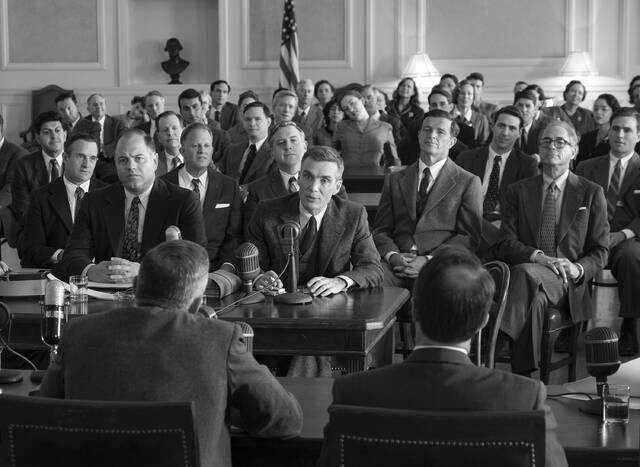
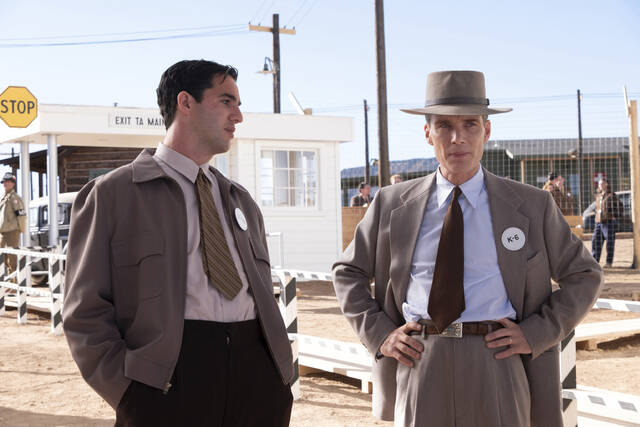


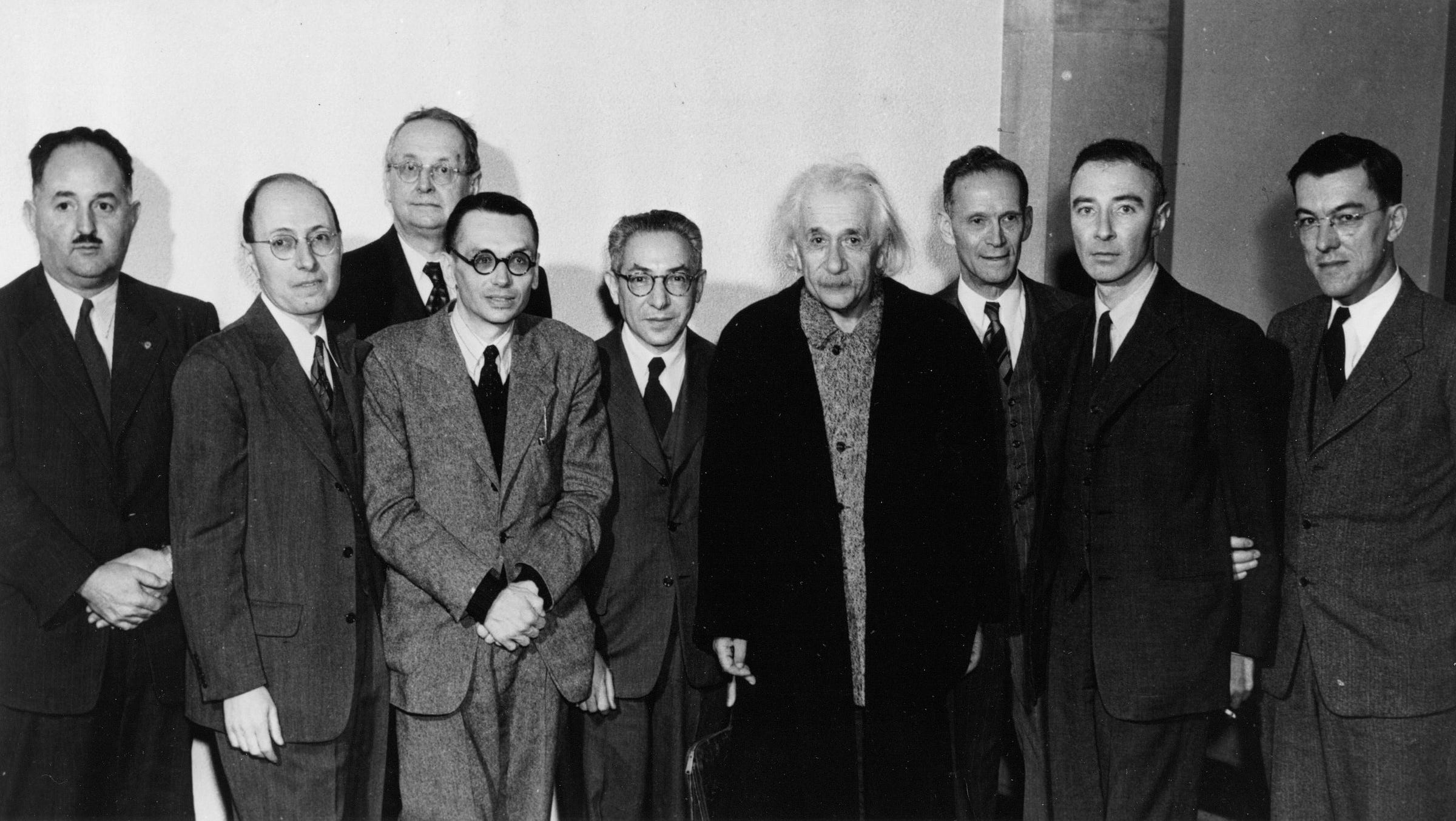


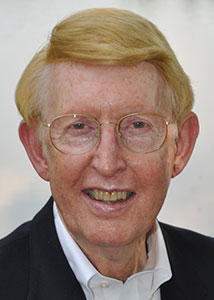

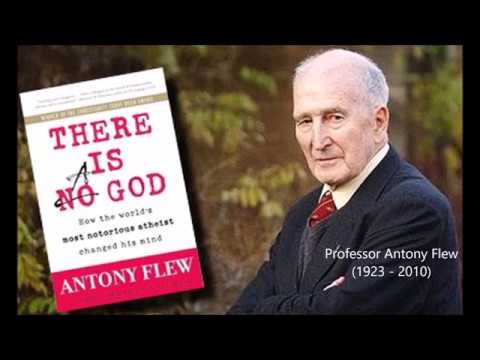

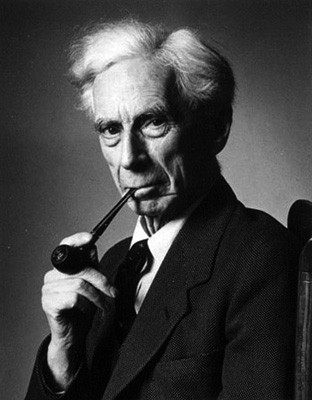
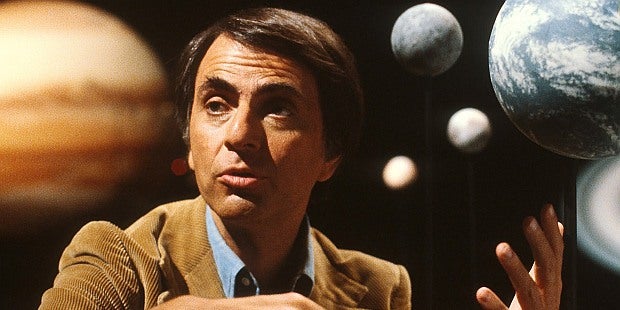


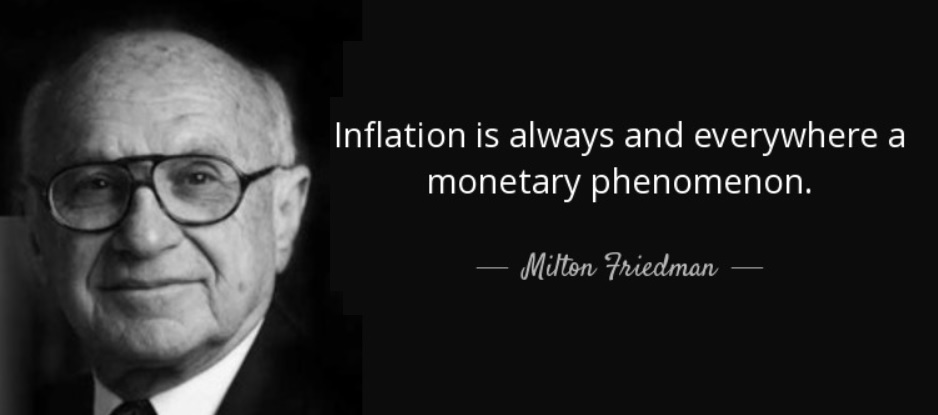

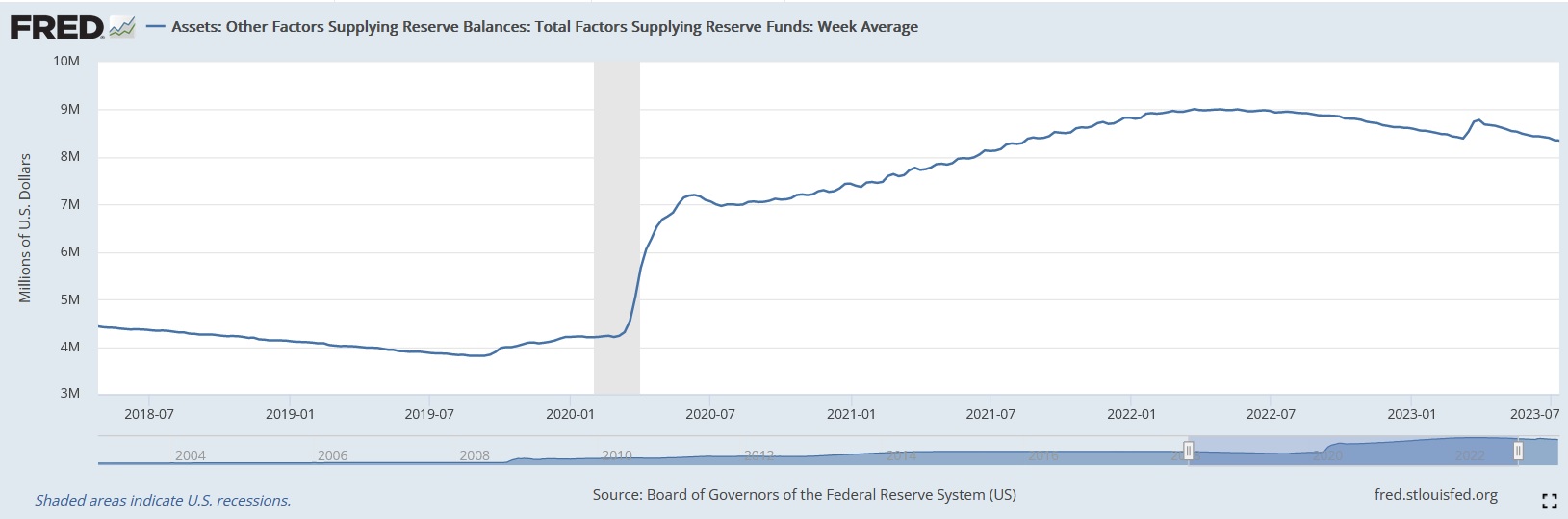









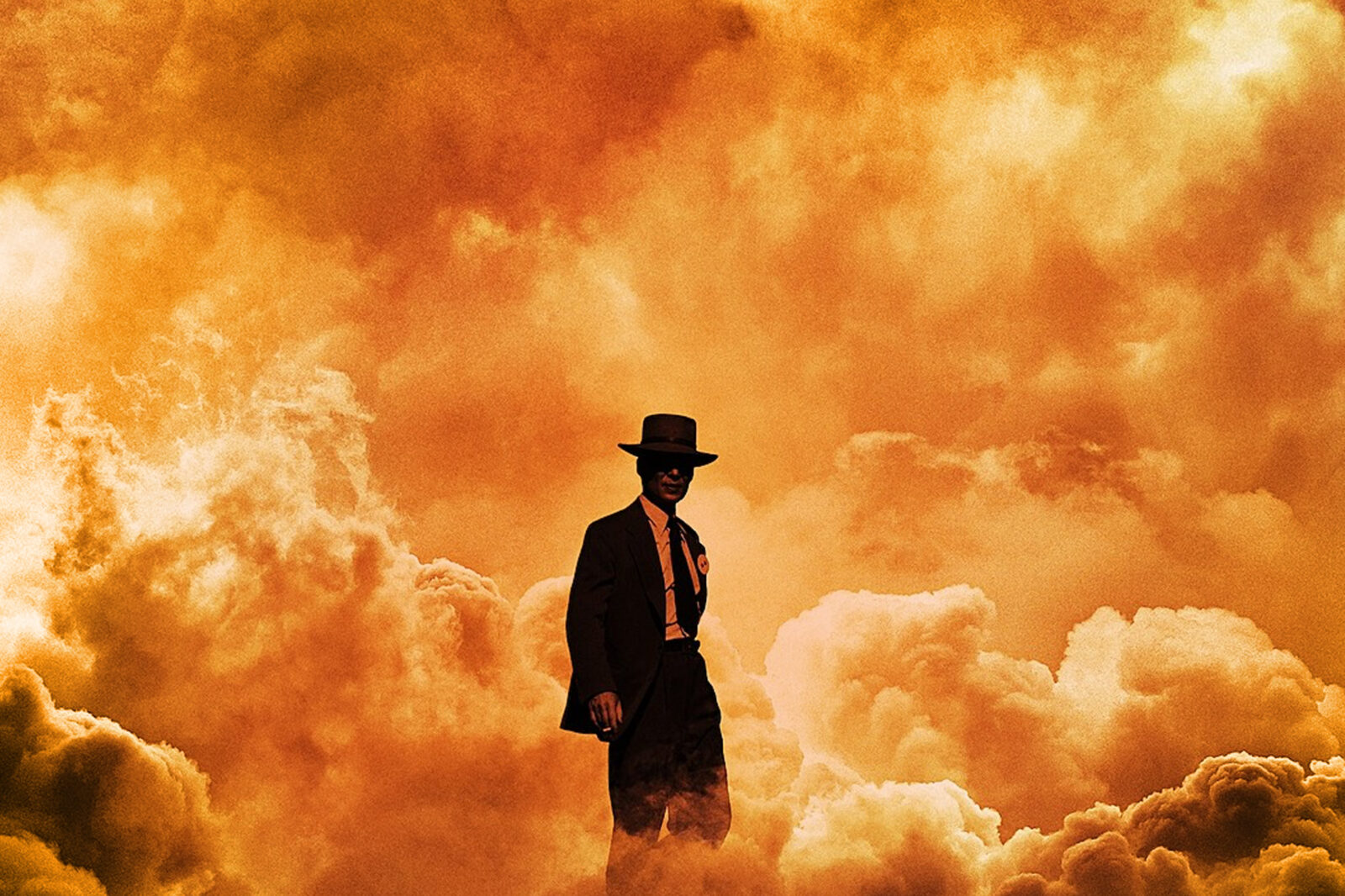




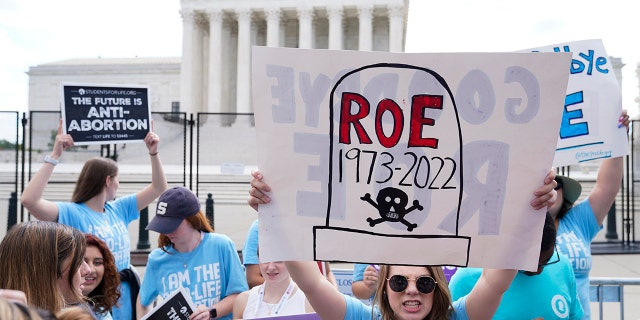


:no_upscale()/cdn.vox-cdn.com/uploads/chorus_image/image/69607892/AP20205603273979.0.jpg) Arkansas state Sen. Jason Rapert presides over a Senate committee at the state Capitol in Little Rock, Ark. in this March 14, 2018, file photo. Rapert’s National Association of Christian Lawmakers met recently to talk model legislation and pass resolutions. Kelly P. Kissel, Associated Press
Arkansas state Sen. Jason Rapert presides over a Senate committee at the state Capitol in Little Rock, Ark. in this March 14, 2018, file photo. Rapert’s National Association of Christian Lawmakers met recently to talk model legislation and pass resolutions. Kelly P. Kissel, Associated Press/cdn.vox-cdn.com/uploads/chorus_asset/file/22726922/AP898166992908.jpg) Texas state Rep. Bryan Hughes speaks during the opening session of the 2015 legislative session on Tuesday, Jan. 13, 2015, in Austin, Texas. Eric Gay, Associated Press
Texas state Rep. Bryan Hughes speaks during the opening session of the 2015 legislative session on Tuesday, Jan. 13, 2015, in Austin, Texas. Eric Gay, Associated Press/cdn.vox-cdn.com/uploads/chorus_asset/file/22726936/merlin_1112102.jpg) A anti-abortion supporter argues with those who attended a press conference and rally held by the Planned Parenthood Action Council of Utah outside of the Capitol in Salt Lake City on Aug. 25, 2015. Stacie Scott, Deseret News
A anti-abortion supporter argues with those who attended a press conference and rally held by the Planned Parenthood Action Council of Utah outside of the Capitol in Salt Lake City on Aug. 25, 2015. Stacie Scott, Deseret News


 The Daily Hatch