What a science lesson God had for Job! God was teaching Job the philosophy of science, a lesson everyone needs to learn.
I like to paraphrase the verse this way: “Were you there, Job, when I made the earth? Did you see Me do it, Job? Did you observe how it happened, Job? Were you there to see Me create the world, Job?”
Millions of people in today’s world are taught that the earth and the entire universe resulted from the Big Bang, a cosmic explosion which occurred up to twenty billion years ago involving all the matter and energy in the universe. In most instances in public education, this is taught as if it were fact, and the gullible public, by and large, just accepts it as so. Yet there is no scientific proof for the Big Bang theory. It is just a story, based on the speculations of scientists–fallible human beings who do not know everything and who were not there to see it happen.
Carl Sagan presents the Big Bang theory as if it were fact. We need to ask him the same sort of questions God was putting to Job: “Were you there, Carl, when the earth came into existence? Do you know anyone who was there, Carl? Do you know anyone who has all the information?”
The other important fact God was teaching Job was that only God knows everything (has all information–all evidence). No human being has all the information. In fact, compared to what God knows, we fallible human beings know next to nothing. Follow through the words to Job in Chapter 38: “Who shut up the sea? . . .Hast thou commanded the morning? Hast thou perceived the breadth of the earth? Where is the way where light dwelleth? Knowest thou it?…. Hast thou entered into the treasures of the snow?….. Knowest thou the ordinances of heaven?….
Can’st thou send lightings”?. . . .
We need to take the points God was teaching Job and apply them to the way theories of origins are taught to our children. When they are told that the universe and life evolved over billions of years, they need to ask two basic questions: “What observer saw all this happen? What scientist has all the information (all the evidence) who can therefore scientifically prove that evolution happened?” The answer? According to evolutionary theories, there were no observers to these long ago events, and there is no human being who knows everything! Evolution is not a scientific theory; it is a belief based on the words of sinful, fallible humans who have a small, finite amount of information. Thus when it comes to connecting the past to the present to try and explain how the world came into existence, scientists could be totally wrong. In fact, evolutionary theories themselves “evolve,” as these scientists keep finding information that causes them to change their ideas. The most that can be said is that some of the evidence can be interpreted along the lines of the Big Bang scenario, but that is certainly not the only interpretation possible, nor is it the best interpretation possible.
The Bible teaches plainly concerning Jesus Christ, the One “who created all things” (Colossians 1 :16), “in Him… are hid all the treasures of wisdom and knowledge” (Colossians 2:3). The Creator God, who has always been there, “”changeth not,” and knows all things (has infinite knowledge). The only way we could ever come to the right conclusions about anything is by starting with the word (knowledge) of the One who knows everything, and build all our thinking, in every area, upon that basis.
It is interesting to note that God’s Word, in II Peter 3, gives us the prophecy that in the last days people will deliberately choose not to believe that God created the world (described in Genesis 1:1-8) or believe that He sent a worldwide Flood as a judgment against sinful men (Genesis, Chapters 6-9) and that He will come back to judge the world a final time, with fire.
Sadly, the prophecy of people deliberately choosing not to believe God’s Word is being fulfilled before our very eyes. The majority of people today believe the universe started with a big bang. Next the galaxies and later the sun formed, and the earth finally came into existence covered with “fire” (a hot molten blob)—exactly opposite of what the Bible says. They are taught there never was a worldwide Flood—exactly the opposite of what the Bible teaches. They are often taught that the earth will die of the cold because of the earth’s freezing over when the sun runs out of energy—exactly the opposite of what God’s Word teaches us.
We need to ask ourselves this question: “Where do we put our faith and trust? In the words of scientists who don’t know everything, who were not there? Or in the Word of God—the God who does know everything—and who was there?
At the Institute for Creation Research, our highly qualified and experienced scientists study the scientific data regarding origins, and claim their research shows that the evidence from the universe fits perfectly with what the Word of God says, and not well at all with the evolutionary theories of men!
Carl Sagan’s Big Bang theory is WRONG! How do we know that for sure? Because God was there—Carl Sagan wasn’t! God knows everything—Carl Sagan doesn’t! This world did NOThave a fiery start from a big bang, but it surely will have a fiery end with a big bang, for “the heavens shall pass away with a great noise, and the elements shall melt with fervent heat, the earth also and the works that are therein shall be burned up” (II Peter 3:10).
What hope is there then? “Nevertheless we, according to His promise, look for new heavens and a new earth wherein dwelleth righteousness” (II Peter 3:13).
What should we do about it? “Wherefore, beloved, seeing that ye look for such things, be diligent that ye may be found of Him in peace, without spot, and blameless” (II Peter 3:14).
We can also be diligent in telling others about the truth of creation, man’s rebellion, the need of salvation, and warning them of the coming Big Bang!
DID YOU KNOW. . .
that the evidence for the Big Bang theory is missing?
MISSING ORIGIN–Where did matter come from?
MISSING FUSE–What ignited it?
MISSING STAR FORMATION–An explosion won’t produce planets, stars, or galaxies.
MISSING ANTIMATTER–There’s not much found.
MISSING TIME–Evidence indicates the earth is young.
MISSING MASS–There’s not enough.
MISSING LIFE–Life has never been found outside the earth.
MISSING NEUTRINOS–Where are they?
THE BIG BANG THEORY IS WRONG!
For further information, see Astronomy and the Bible by Dr. Donald B. DeYoung, available from ICR.
A Christian Manifesto
by Dr. Francis A. Schaeffer
The following address was delivered by the late Dr. Schaeffer in 1982 at the Coral Ridge Presbyterian Church, Fort Lauderdale, Florida. It is based on one of his books, which bears the same title.
What we have, and take so poorly for granted, is unique. It was brought forth by a specific world view and that specific world view was the Judeo-Christian world view especially as it was refined in the Reformation, putting the authority indeed at a central point — not in the Church and the state and the Word of God, but rather the Word of God alone. All the benefits which we know — I would repeat — which we have taken so easily and so much for granted, are unique. They have been grounded on the certain world view that there was a Creator there to give inalienable rights. And this other view over here, which has become increasingly dominant, of the material-energy final world view (shaped by pure chance) never would have, could not, has, no basis of values, in order to give such a balance of freedom…It is the same with the television programs. Public television gives us many things that many of us like culturally, but is also completely committed to a propaganda position that the last reality is only material / energy shaped by pure chance. Clark’s Civilization, Brunowski, The Ascent of Man, Carl Sagan’s Cosmos — they all say it. There is only one final view of reality that’s possible and that is that the final reality is material or energy shaped by pure chance.
and you will hear what far smarter people than I have to say on this matter. I agree with them.
Harry Kroto
I have attempted to respond to all of Dr. Kroto’s friends arguments and I have posted my responses one per week for over a year now. Here are some of my earlier posts:
nitially an associate professor at Harvard, Sagan later moved to Cornell where he would spend the majority of his career as the David Duncan Professor of Astronomy and Space Sciences. Sagan published more than 600 scientific papers and articles and was author, co-author or editor of more than 20 books.[5] He wrote many popular science books, such as The Dragons of Eden, Broca’s Brain, Pale Blue Dot and narrated and co-wrote the award-winning 1980 television series Cosmos: A Personal Voyage. The most widely watched series in the history of American public television, Cosmos, has been seen by at least 500 million people in 60 countries.[6] The book Cosmos was published to accompany the series. He also wrote the 1985 science fiction novel Contact, the basis for a 1997 film of the same name. His papers, containing 595,000 items,[7] are archived at The Library of Congress.[8]
In the 1st video below in the 45th clip in this series are his words and my response is below them.
50 Renowned Academics Speaking About God (Part 1)
Another 50 Renowned Academics Speaking About God (Part 2
A Further 50 Renowned Academics Speaking About God (Part 3)
–
CARL SAGAN interview with Charlie Rose:
“…faith is belief in the absence of evidence. To believe in the absence of evidence, in my opinion, is a mistake. The idea is to hold belief until there is compelling evidence. If the Universe does not comply with our previous propositions, then we have to change…Religion deals with history poetry, great literature, ethics, morals, compassion…where religion gets into trouble is when it pretends to know something about science,”
I would respond that there is evidence that Christianity is true. The accuracy of the Bible has been confirmed by archaeology over and over in the past and one of the amazing finds was in 1948 when the Dead Sea Scrolls had copies from every Old Testament Book except Esther! One of the most powerful recent discoveries involved the bones of the high priest Caiaphas who questioned Christ in 30 AD.
______________ George Harrison Swears & Insults Paul and Yoko Lucy in the Sky with Diamonds- The Beatles The Beatles: I have dedicated several posts to this series on the Beatles and I don’t know when this series will end because Francis Schaeffer spent a lot of time listening to the Beatles and talking […]
The Beatles in a press conference after their Return from the USA Uploaded on Nov 29, 2010 The Beatles in a press conference after their Return from the USA. The Beatles: I have dedicated several posts to this series on the Beatles and I don’t know when this series will end because Francis […]
__________________ Beatles 1966 Last interview I have dedicated several posts to this series on the Beatles and I don’t know when this series will end because Francis Schaeffer spent a lot of time listening to the Beatles and talking and writing about them and their impact on the culture of the 1960’s. In this […]
_______________ The Beatles documentary || A Long and Winding Road || Episode 5 (This video discusses Stg. Pepper’s creation I have dedicated several posts to this series on the Beatles and I don’t know when this series will end because Francis Schaeffer spent a lot of time listening to the Beatles and talking and writing about […]
_______________ Francis Schaeffer pictured below: _____________________ I have included the 27 minute episode THE AGE OF NONREASON by Francis Schaeffer. In that video Schaeffer noted, ” Sergeant Pepper’s Lonely Hearts Club Band…for a time it became the rallying cry for young people throughout the world. It expressed the essence of their lives, thoughts and their feelings.” How Should […]
Crimes and Misdemeanors: A Discussion: Part 1 ___________________________________ Today I will answer the simple question: IS IT POSSIBLE TO BE AN OPTIMISTIC SECULAR HUMANIST THAT DOES NOT BELIEVE IN GOD OR AN AFTERLIFE? This question has been around for a long time and you can go back to the 19th century and read this same […]
____________________________________ Francis Schaeffer pictured below: __________ Francis Schaeffer has written extensively on art and culture spanning the last 2000years and here are some posts I have done on this subject before : Francis Schaeffer’s “How should we then live?” Video and outline of episode 10 “Final Choices” , episode 9 “The Age of Personal Peace and Affluence”, episode 8 […]
Love and Death [Woody Allen] – What if there is no God? [PL] ___________ _______________ How Should We then Live Episode 7 small (Age of Nonreason) #02 How Should We Then Live? (Promo Clip) Dr. Francis Schaeffer 10 Worldview and Truth Two Minute Warning: How Then Should We Live?: Francis Schaeffer at 100 Francis Schaeffer […]
___________________________________ Francis Schaeffer pictured below: ____________________________ Francis Schaeffer “BASIS FOR HUMAN DIGNITY” Whatever…HTTHR Dr. Francis schaeffer – The flow of Materialism(from Part 4 of Whatever happened to human race?) Dr. Francis Schaeffer – The Biblical flow of Truth & History (intro) Francis Schaeffer – The Biblical Flow of History & Truth (1) Dr. Francis Schaeffer […]
John Lennon shot 12-8-80 Howard Cosell tells the world twice John Lennon…
On this day, December 8, 1980, John Lennon of the Beatles, was shot and fatally wounded outside of his home in the Dakota, in New York City. Lennon was shot and killed by Mark David Chapman, a Beatles fan who was enraged by Lennon’s lifestyle and his comments back in 1966 where John Lennon had stated that the Beatles were “more popular than Jesus”.
Chapman had waited for Lennon at the Dakota on the 8th of December. Earlier that evening, Chapman had actually met Lennon, who signed his copy of the album Double Fantasy. Afterward, John left for a recording session. Later that night, Lennon and his wife, Yoko Ono, returned to the Dakota. As Lennon and Ono approached the entrance of the building, Chapman fired five rounds from a .38 special revolver, four of which hit Lennon in the back. Chapman remained at the scene reading The Catcher in the Ryeuntil he was arrested by the police. Later Chapman said he was inspired by the fictional character Holden Caulfield from the novel The Catcher in the Rye, a “phony-killer” who despises hypocrisy. Lennon was rushed to Roosevelt Hospital in a police car, where he was pronounced dead on arrival at 11:15 p.m.
After the news broke a world of fans came out to share their grief, crowds gathered at Roosevelt Hospital and in front of the Dakota. There were even reports of fans committing suicide over the tragedy. The next day, Lennon was cremated at Ferncliff Cemetery in Hartsdale, New York. Chapman later pleaded guilty to murdering Lennon and was given a sentence of 20 years to life imprisonment. He has been denied parole 12 times since he became eligible in 2000.
Today marks the 42nd anniversary of John Lennon’s tragic death. Even decades later, few deaths in the history of music have had the same kind of worldwide response, John Lennon was truly a revolutionary in the world of rock music. No band can compare to what The Beatles had done for music in the 1960s especially in the west creating a sound that pushed rock music and “youth culture” to new horizons never seen or heard before.
While there is no bringing John Lennon back, we can be grateful that what he left behind from the Beatles to his solo work will continue to live on forever.
John Lennon’s song, “Imagine,” is one of the enduring classics from the 1970s. Lennon was a member of the Beatles and an avid political activist. “Imagine” is an anthem of Secularism and remains extremely popular to this day. In fact, it practically sums up the secular worldview in three minutes. You can listen to a modern version here.
Living for Today
Imagine there’s no heaven It’s easy if you try No hell below us Above us only sky Imagine all the people living for today
According to Jacques Berlinerblau, professor and director of the program for Jewish civilization at Georgetown University, “The secularish are here-and-now people. They live for this world, not the next.”1 Secularism is all about this world. In fact, this world is all there is—no heaven, no hell. Lennon asks us to imagine what the world would be like if we didn’t have ideas like heaven and hell. According to Secularists, there would be a lot fewer wars and less hatred. If we all just lived for today, there could finally be peace.
While Christians disagree with this view, we can admit that some Christians have been “so heavenly minded that they were no earthly good.” As Christians, we cannot deny the doctrines of heaven and hell, but we often get confused in how we think about those concepts.2 We imagine heaven as the final destination where we will escape from the evil world. But Genesis 1-2 tells us that God created a good world of order and beauty. He created humans to live in relationship with him and set them about the task of bringing more of his goodness and beauty into the world. God’s world is not an evil place, it is a broken place that God is going to restore.
Revelation 21-22 is a vision of heaven and earth finally uniting. God isn’t going to discard the world; he’s going to redeem and remake it. Our final hope is not in the clouds, but here in God’s restored world, when heaven and earth are unified as the Kingdom of God.
Living Life in Peace
Imaginethere’s no countries It isn’t hard to do Nothing to kill or die for And no religion too Imagine all the people living life in peace
Secularism ultimately envisions a kind of utopia where humans, working together without the interference of God or religion, can create a world of peace and harmony. Lennon’s vision sounds wonderful, but it is a denial of the sin nature in human beings. Since the Fall in Genesis 3, all people have inherited a sin nature (Rom 5:12), which means that left to our own devices we will look to our own interests.
According to Francis Schaeffer, when Adam and Eve sinned, four separations occurred. Man was separated from God, from himself, from his neighbor, and from creation.3 The Bible and the history of the world affirm that we cannot repair these rifts on our own. The doctrine of sin isn’t just about humans being imperfect beings who make mistakes; rather, it is about rebels going against their Creator, incapable of doing what is good on their own.
Part of Jesus’ mission on earth was to initiate the Kingdom of God, bringing peace and healing those separations caused by the fall. Though the Kingdom of God will not be fully established until Christ returns, we can anticipate his arrival by working through the power of the Holy Spirit as Christ’s ambassadors (2 Cor 5:20) to a lost and dying world.
Sharing All the World
Imagine no possessions I wonder if you can No need for greed or hunger A brotherhood of man Imagine all the people sharing all the world
For Lennon and Secularists, utopia will be people doing what feels good in a world with no religious rules or regulations, everyone living in peace and sharing everything. And we will get there only when we shed religion, personal possessions, and outdated morality. If we are going to get to utopia, we all have to do it together. According to secularist Sam Harris, part of the problem with religion is that religious people identify “with a subset of humanity rather than with humanity as a whole.”4
In reality however, Lennon, Harris, and other secularists have identified themselves with their own subset. Secularism is as much a religion as Christianity is. But Christianity (contra Harris and Lennon) is for the world. The heaven we imagine (and the one that Scripture speaks of) will be one in which God’s Kingdom is finally established and all the world is living together in harmony under his just rule.
However, we won’t get there on our own merits. To be part of that kingdom we must be reconciled to God through his son, Jesus. When that relationship is restored, we are loosed upon the world to anticipate God’s Kingdom by bringing his justice and peace into our homes, communities, and indeed, the whole world.
Sign up here to receive weekly Reflect emails in your inbox!
Come Together – John Lennon (Live In New York City)
George Harrison – Here comes the sun Subtitulada en Español
“Sergeant Pepper’s Lonely Hearts Club Band, became the rallying cry for young people throughout the world. It expressed the essence of their lives, thoughts and their feelings…” Francis Schaeffer (1912-1984). We take a look today at how the Beatles were featured in Schaeffer’s film. How Should We then Live Episode 7 small On You Tube […]By Everette Hatcher III | Posted in Francis Schaeffer | Tagged peter max | Edit|Comments (0)
Woody Allen believes that we live in a cold, violent and meaningless universe and it seems that his main character (Gil Pender, played by Owen Wilson) in the movie MIDNIGHT IN PARIS shares that view. Pender’s meeting with the Surrealists is by far the best scene in the movie because they are ones who can […]By Everette Hatcher III | Posted in Francis Schaeffer, Woody Allen | Edit|Comments (0)
In the last post I pointed out how King Solomon in Ecclesiastes painted a dismal situation for modern man in life UNDER THE SUN and that Bertrand Russell, and T.S. Eliot and other modern writers had agreed with Solomon’s view. However, T.S. Eliot had found a solution to this problem and put his faith in […]By Everette Hatcher III | Posted in Francis Schaeffer, Woody Allen | Edit|Comments (0)
In MIDNIGHT IN PARIS Gil Pender ponders the advice he gets from his literary heroes from the 1920’s. King Solomon in Ecclesiastes painted a dismal situation for modern man in life UNDER THE SUN and many modern artists, poets, and philosophers have agreed. In the 1920’s T.S.Eliot and his house guest Bertrand Russell were two of […]By Everette Hatcher III | Posted in Woody Allen | Edit|Comments (0)
Ernest Hemingway and Scott Fitzgerald left the prohibitionist America for wet Paris in the 1920’s and they both drank a lot. WINE, WOMEN AND SONG was their motto and I am afraid ultimately wine got the best of Fitzgerald and shortened his career. Woody Allen pictures this culture in the first few clips in the […]By Everette Hatcher III | Posted in Woody Allen | Edit|Comments (0)
In the film MIDNIGHT IN PARIS Woody Allen the best scene of the movie is when Gil Pender encounters the SURREALISTS!!! This series deals with the Book of Ecclesiastes and Woody Allen films. The first post dealt with MAGIC IN THE MOONLIGHT and it dealt with the fact that in the Book of Ecclesiastes Solomon does contend […]By Everette Hatcher III | Posted in Woody Allen | Edit|Comments (0)
In the film MIDNIGHT IN PARIS Woody Allen is really looking at one main question through the pursuits of his main character GIL PENDER. That question is WAS THERE EVER A GOLDEN AGE AND DID THE MOST TALENTED UNIVERSAL MEN OF THAT TIME FIND TRUE SATISFACTION DURING IT? This is the second post I have […]By Everette Hatcher III | Posted in Woody Allen | Edit|Comments (0)
I am starting a series of posts called ECCLESIASTES AND WOODY ALLEN’S FILMS: SOLOMON “WOULD GOT ALONG WELL WITH WOODY!” The quote from the title is actually taken from the film MAGIC IN THE MOONLIGHT where Stanley derides the belief that life has meaning, saying it’s instead “nasty, brutish, and short. Is that Hobbes? I would have […]By Everette Hatcher III | Posted in Atheists Confronted, Woody Allen | Edit|Comments (0)
Following a massive bipartisan increase in emergency spending during the COVID-19 pandemic that contributed to inflation reaching a 40‐year high, the 118th Congress should shift fiscal gears. It’s time to cut deficit spending to spur economic growth and complement the deflationary actions of the Federal Reserve.
Federal debt is at economically damaging levels and growing at an unsustainable rate. Additional deficit spending threatens to make inflation worse and burden the economy by misallocating resources from higher‐growth projects toward politically‐directed spending. The 118th Congress has a key opportunity to adopt responsible, pro‐growth fiscal policy that controls spending and stabilizes the debt.
Fiscal year (FY) 2022 ended with a $1.4 trillion deficit (how much Congress spent by borrowing) that consumed 5.5 percent of U.S. GDP. To put that in perspective: The first time ever the deficit exceeded $1 trillion was in 2009, when the U.S. was in the deepest economic crisis since the Great Depression. Not that Congress can cure a global financial crisis by throwing money at it, but they did try. The next time deficitsexceeded $1 trillion we were in a 100‐year pandemic and Congress tried to spend its way out of that, too. Now that the pandemic is over, why is it that trillion‐dollar deficits go on for as far as the eye can see?
Members of Congress worked so well across the aisle together to increase spending, certainly they should have no problems working together again. Only this time, their charge should be to stabilize debt with a credible fiscal plan and legislation that enacts it. Such a plan should achieve a firm target, such as freezing debt as a percentage of gross domestic product (GDP) or achieving primary balance (balancing non‐interest spending with revenues) before the end of the decade. Congress’s plan should be backed up with concrete policy proposals that score sufficient savings to achieve the fiscal target.
How hard could this be? It’s not like bipartisanship only works in the context of increasing spending. Or does it? Recent spending increases benefited from horse trading of “your pet project for mine,” as evident by the return of earmarks—parochial spending that was banned for a decade due to frequent instances of waste and corruption. A recent Peterson Foundation poll identified that 9 out of 10 voters expect members of Congress to work together to reduce the federal debt. Constituents are about to find out if bipartisanship will also work when it comes to making tough choices.
The gross federal debt (including government trust fund debt for programs like Social Security) approached $31 trillion (120 percent of GDP), of which debt borrowed in credit markets reached $24.3 trillion (95 percent of GDP). Debt that’s this high, compared to the size of the economy, and growing from there, is bad. It hurts growth and makes a fiscal crisis more likely.
The fiscal outlook is yet worse. After adjusting the most recent Congressional Budget Office (CBO) projections, federal debt held by the public is projected to grow to 138 percent of GDP by 2032. Adjustments include higher‐than‐expected inflation and interest rates, new deficit spending in late 2022, slower‐than‐expected economic growth, and the likelihood that middle class tax cuts will be extended past 2025. See figure 1 for alternative projections, compared to a scenario assuming tax cuts will expire (don’t hold your breath), and CBO’s original projections. And even these debt growth scenarios could be too optimistic if there’s a major crisis or prolonged recession. So, let’s not make things even worse.
The federal debt limit specifies the maximum amount of government bonds that Treasury may issue. Treasury is projected to run up against this limit sometime in the summer or fall of 2023. When Congress confronts the federal debt limit this year, members should pair the inevitable increase in the debt limit with reforms that reduce spending and debt growth.
Yes, I said it: Congress will eventually increase the debt limit. But before doing so, they should change the course of future spending. Whether to increase the debt limit or not is the wrong question. Lawmakers should instead grapple with “How will we slow the growth in the debt and avoid a fiscal crisis?”. Effective policies will reform health care and old‐age entitlements, the main drivers of rising debt.
Congress should also cut and cap discretionary spending for most government programs, including seizing such low‐hanging fruit as eliminating parochial spending by restoring the earmark ban. With deficits in the trillions, just say no to that overpriced trolley extension in your downtown restoration plans that few people will ever ride. Hundreds of millions of taxpayer dollars would be wasted, except for the giggles and maybe the cute Instagram reel.
What about tax increases? They’re mostly window dressing and could be more harmful than helpful. Spending reforms will be most effective in stabilizing the debt without undermining economic growth. That’s not just convenient theorizing on the part of this limited‐government libertarian, but evident when reviewing relevant data from previous deficit consolidation efforts.
A Heritage Foundation report distilling lessons from European austerity efforts, which I co‐authored, illustrates that increasing taxes was less effective in reducing deficits than spending cuts, with tax increases further damaging the economy. The most successful fiscal adjustments, judged by their impact on deficits and economic growth, reformed social programs and reduced the size and compensation of the government workforce.
Another study by Andrew Biggs, a senior fellow at the American Enterprise Institute (AEI); and Kevin Hassett, a former scholar at AEI; and Matthew Jensen, then the founding director of the Open Source Policy Center, drew similar conclusions:
“Spending‐based fiscal adjustment accompanied by supply‐side reforms‐such as liberalization of the markets for labor, goods, and services; readjustments of public‐sector size and pay; public pension reform; and other structural changes‐tend to be less recessionary or even lead to positive economic growth.”
Here are some commonsense benchmarks Congress should adopt before increasing the debt limit in 2023:
Adopt a credible fiscal plan that will control spending and debt growth, freezing debt as a percentage of GDP at a minimum, or better yet, aiming for primary budget balance (excluding interest costs) before the end of the decade.
Establish a bipartisan commission to reform major entitlement programs, especially Social Security and Medicare, including fast‐tracking the commissions’ recommendations in Congress.
Reduce and cap discretionary spending, returning discretionary spending to pre‐pandemic (FY 2019) levels and limiting the growth of new budget caps to no more than 2 percent annually.
Restore the earmark ban.
One more thing: in the event of a recession, Congress should avoid new stimulus spending. Fiscal stimulus in the form of new cash payments or enhanced unemployment benefits would represent the same demand‐boosting subsidies the federal government pursued during the COVID-19 pandemic that contributed to record‐high inflation. So, that would not be helpful.
Also, government spending today entails future costs from the likely displacement of higher‐value private economic activity toward government‐directed projects, a misallocation of capital, greater debt, reduced incentives to work and invest, and the prospect of higher future taxes that tamper investment. Any relief should thus focus on eliminating regulatory barriers to investing and hiring and relying on existing automatic stabilizers which will kick in without lawmakers pushing new emergency spending. This will enable the private sector to emerge from recession without additional deficit spending that would likely do more harm than it would help.
Now, let’s get to work!
This commentary presents a brief summary of my recent Cato policy brief “A Fiscal Agenda for the 118th Congress.” You can find the full piece here.
President Clinton Signing the Balanced Budget Bill (1997)
Newt Gingich Explains How He Balanced the Budget as Speaker of the House
Ronald Reagan Talks About Balancing the Budget on Johnny Carson’s Tonigh…
President Reagan’s Remarks on Balanced Budget Amendment on July 12, 1982
—-
—
February 11, 2021
Office of Barack and Michelle Obama P.O. Box 91000 Washington, DC 20066
Dear President Obama,
I wrote you over 700 letters while you were President and I mailed them to the White House and also published them on my blog http://www.thedailyhatch.org .I received several letters back from your staff and I wanted to thank you for those letters.
I have been reading your autobiography A PROMISED LAND and I have been enjoying it.
Let me make a few comments on it, and here is the first quote of yours I want to comment on:
The realignment Johnson foresaw ended up taking longer than he had expected. But steadily, year by year—through Vietnam, riots… and Nixon’s southern strategy; through busing, Roe v. Wade, urban crime, and white flight; through affirmative action, the Moral Majority, union busting, and Robert Bork; through assault weapons bans and the rise of NEWT GINGRICH …and the Clinton impeachment—America’s voters and their representatives became more and more polarized.
Page 607
As it so happened, the same mid-December week we announced the deal with McConnell, Bill Clinton joined me in the Oval Office dining room for a visit. Whatever tensions had existed between us during the campaign had largely dissipated by then, and I found it useful to hear the lessons he’d learned after suffering a similar midterm shellacking at the hands of Newt Gingrich in 1994. At some point, we got into the nitty-gritty of the tax agreement I’d just made, and Clinton couldn’t have been more enthusiastic. “You need to tell that to some of our friends,” I said, noting the blowback we were getting from certain Democratic circles. “If I have the chance, I will,” Clinton said. That gave me an idea. “How about you get the chance right now?” Before he could answer, I walked over to Katie’s desk and asked her to have the press team rustle up any correspondents who were in the building. Fifteen minutes later, Bill Clinton and I stepped into the White House briefing room. Explaining to the startled reporters that they might like to get some perspective on our tax deal from the person who’d overseen just about the best U.S. economy we’d experienced in recent history, I turned the podium over to Clinton. It didn’t take long for the former president to own the room, mustering all of his raspy-voiced, lip-biting Arkansas charm to make the case for our deal with McConnell. In fact, shortly after the impromptu press conference began, I realized I had another commitment to get to, but Clinton was clearly enjoying himself so much that I didn’t want to cut him off. Instead, I leaned into the microphone to say that I had to leave but that President Clinton could stick around. Later, I asked Gibbs how the whole thing had played. “The coverage was great,” Gibbs said. “Though a few of the talking heads said that you diminished yourself by giving Clinton the platform.” I wasn’t too worried about that. I knew that Clinton’s poll numbers were a whole lot higher than mine at the time, partly because the conservative press that had once vilified him now found it useful to offer him up as a contrast to me, the kind of reasonable, centrist Democrat, they said, that Republicans could work with. His endorsement would help us sell the deal to the broader public and tamp down any potential rebellion among congressional Democrats. It was an irony that I—like many modern leaders—eventually learned to live with: You never looked as smart as the ex-president did on the sidelines.
There are two main things that Newt Gingrich and Bill Clinton teamed up on and accomplished and they were a balanced budget and welfare reform!
Kevin Williamson rightly noted:
“Reagan deficits” and “Clinton surpluses.” Presidents do not write the national budget, balanced or otherwise, nor do they create deficits or surpluses. Congress does that, by passing tax bills and appropriations bills. There were no Reagan deficits, nor were there Clinton surpluses: There were Tip O’Neill deficits and Newt Gingrich surpluses.
In the United States, our political discourse is extraordinarily democratic, and therefore extraordinarily stupid, and the immortality of certain myths — the Social Security “trust fund,” the impact of foreign-aid spending on the federal budget — makes it nearly impossible to discuss the fundamental facts of American government. Here are two phrases that should be struck from our political lexicon, their use designated an occasion for corporal punishment: “Reagan deficits” and “Clinton surpluses.” Presidents do not write the national budget, balanced or otherwise, nor do they create deficits or surpluses. Congress does that, by passing tax bills and appropriations bills. There were no Reagan deficits, nor were there Clinton surpluses: There were Tip O’Neill deficits and Newt Gingrich surpluses.
The governors in the Republican presidential field all can boast of having worked with legislatures to achieve balanced budgets. Rick Perry and Jon Huntsman can boast of having done so in situations that replicate in miniature the national fiscal picture — locked-in spending outpacing tax revenues reduced by recession and subsequent slow growth — but with an important difference: Unlike the federal government, states and cities do not really have much choice but to balance their budgets. It is a lucky thing that this is so, and one that bears further consideration: Most of our states and cities operate under legal prohibitions against operating deficits, but the federal example suggests that restraints on borrowing are easily set aside, and many of our states and cities have excellent credit ratings that would enable them to borrow at attractive rates. The real constraint here seems to be an informal norm against states’ and cities’ borrowing to finance regular operating deficits, even though they do borrow large sums for capital projects.
No such norm prevails at the federal level, where balanced budgets or surpluses require a combination of sober fiscal realism and delicate bipartisan diplomacy. Newt Gingrich has many fine qualities, but he is not the most obvious man for the job when the job calls for realism and delicate bipartisan diplomacy, virtues with which the former Speaker is associated by no sentient political being. But the facts are not to be denied: Under a fiscal course set by Newt Gingrich and his Republican congressional allies, the United States reported a budget surplus of $69.3 billion in 1998 and of $125.6 billion in 1999. Gingrich resigned from the House that year, but it was the continuation of Gingrich’s policies that produced the subsequent surpluses of $236.2 billion in 2000 and $128.2 billion in 2001. But this is not a conservative success story, conventionally understood: Gingrich balanced the budget in no small part by knuckling under to Democratic demands, including relatively high taxes, and by helping to entrench the myth that our entitlement liabilities are only a kind of fiscal hypothesis, something that can be made to vanish into the fiduciary ether with a flourish of the magical wand of government accounting practices. While Speaker Gingrich does deserve some credit for the millennial budget surpluses, President Gingrich would be crucified for attempting to revisit the policies that produced them — and conservatives would drive in the nails.
The foremost contributor to the Gingrich surpluses was taxes, and the main contributor on that front was the payroll tax, receipts from which far exceeded payouts to Social Security and Medicare. Because such excess payroll-tax receipts are by law automatically spent on federal securities, they camouflage the true extent of federal indebtedness. Thus the fiscal paradox of the Gingrich surpluses: Even though the federal government reported hundreds of billions of dollars in budget surpluses, the total national debt continued to climb, by $113 billion in the surplus year of 1998, by $130 billion in 1999, by $18 billion in 2000, and by $133 billion in 2001. What happened was in fact a redistribution of federal liabilities from publicly held debt to intragovernmental debt in the form of securities held by the so-called trust funds that support the major entitlements according to the epic fiction that is the federal ledger. The debt held by the public in the form of Treasury bonds and notes went down, but intragovernmental debt went up by an amount that exceeded that reduction. This of course makes those Gingrich surpluses look less attractive in retrospect. More important, it points to the major fiscal challenge in the coming years, when the entitlement programs will be the major driver of federal deficits. Social Security already is in a permanent deficit, and, with some $100 trillion in unfunded liabilities, Social Security and Medicare will prove impossible to sustain, especially with an aging population. If deficit hawks can take heart from anything, it is that the major Republican presidential contenders have credible plans for reforming Social Security and that most of them — the notable exception is Gingrich — have credible plans for reforming Medicare.
But the Gingrich surpluses were not accounting gimmickry only. There were real reforms, too — reforms that were enacted by and large over Republican objections, Gingrich’s in particular. Again, a very large role was played by taxes, specifically by the tax increases in the 1990 budget deal between Pres. George H. W. Bush and congressional Democrats, and the tax increase in the 1993 budget. The former so enraged Gingrich, who was at the time the minority whip, that he hung up on chief of staff John Sununu when Sununu called with the news. The latter helped to bring Republicans to the majority — every Republican had voted against it — and Gingrich to the speakership.
It also increased federal revenue substantially by steeply increasing the top tax rate (from 31 percent to 39.6 percent), inflicting new taxes on the middle class (raising the gasoline tax, for instance), raising the corporate-income tax, lifting the income cap on Medicare taxes, and increasing taxes on Social Security benefits, among other things. Conservatives, in thrall to something called Hauser’s Law — which is a law of economics in the same sense that Lady Gaga is a lady — argue that federal revenues always stay roughly the same regardless of tax rates, but this is demonstrably untrue. Federal tax receipts neared 21 percent of GDP in 2000, about one-sixth higher than their post-war average of 17.7 percent. The difference between 18 percent and 20 percent may not seem like very much, but when you are talking about a share of an economy equal to a quarter of the world’s economic output, the numbers are very large indeed. In fact, with the exception of World War II, there was not a year in American history in which federal spending broke 21 percent until 1975, when there began a long run of very high spending that ended with the Gingrich ascendancy in 1994. When Republicans won their landslide in 1994, federal spending was 21 percent of GDP; by 2000, it was down to 18.2 percent — a real reduction in federal spending relative to the size of the economy, if not in absolute terms. You may not remember 1994–2000 as a time of savage austerity measures: We had welfare reform, a reduction in military spending, and generally sensible restraint that endured until the peculiar economic ideas of Pres. George W. Bush and Rep. Tom DeLay went into effect, with the goal of reducing the putative budget surplus — to “return the surplus to the American people,” as DeLay put it — as though such surpluses were a permanent victory, and as though the real debt were not mounting in spite of them. If tax receipts today were comparable to the millennial levels, then the 2013 deficit would run about $418 billion; if we are collecting taxes at the current level, that deficit will be $1.4 trillion.
Conservatives are justified in balking at the idea that one in five dollars should be consumed by the parasitic class in Washington. But the lowest level of federal spending that Republicans have brought us in recent decades was 18.2 percent in 2001. Until such a time as there is evidence to the contrary, it probably is safe to think of 18.2 percent as a practical floor on federal spending, regardless of which party is in power. Perhaps some future Republican majority will do a better job of containing costs, but there is scant reason to think that likely: The most effective statutory constraint on federal spending, the so-called Pay-As-You-Go (PAYGO) rules, were undermined by Republicans, who chafed under the rules’ constraints when they desired to cut taxes without cutting spending.
This is a case, then, of picking our poison. Tax increases are undesirable for any number of reasons, some of them moral — if you go to bed with the devil, expect to wake up with a burning sensation — and some economic: Higher taxes may retard growth and certainly will cause massive amounts of capital to be reallocated from productive purposes to unproductive ones. Tax increases are a drag on growth, but so are endless substantial deficits. The best method of balancing the budget would be spending cuts, but there is no constituency in Congress, or in the country, for cuts of the requisite depth — and, in any case, those cuts would have real economic effects, too, though effects that probably would be less undesirable in the long run than entrenching the federal state at its current bloated level. The 2013 deficit will probably run right around $1 trillion; if Republicans are not prepared to cut $1 trillion in spending, then they should make their peace with tax increases — or make their peace with endless deficits, until such a time as the weight of them produces an avalanche that will destroy the economy of this country and seriously disrupt that of the rest of the world. Those are the choices.
Incidentally, except where noted, none of the deficit numbers above includes the mounting liabilities for Social Security and Medicare, which are the most significant fiscal threats as we move forward. Put simply, no balanced-budget program that fails to incorporate robust entitlement reform will prevent the eventual insolvency of the United States. But no entitlement-reform deal that neglects the rest of the deficit will prevent that outcome, either. The trick is to do both, and Newt Gingrich’s experience suggests that higher taxes — and let’s not use the euphemism “revenues” — probably will need to be a part of that picture.
Like higher taxes, bipartisanship is not a good on its own; given the perverse character of the contemporary Democratic party, it would be better to describe bipartisanship as a necessary evil. Faced with the master politician Bill Clinton, Gingrich had little choice but to cut relatively liberal deals, and contemporary Republicans will have little choice about doing so, either, regardless of what happens in 2012: A long-term solution, one that will stick, will require buy-in from both parties, and to proceed as though this were not the case is deeply unconservative, to the extent that wishful thinking is unconservative. The essential thing for Republicans to do is to identify and encourage the best deficit-reduction impulses that the Democrats harbor. (This may require the use of an advanced microscope.) The PAYGO rules, for example, were hated by congressional Republicans, because Democrats used them against unfunded, irresponsible tax cuts of the sort in which congressional Republicans specialize, and PAYGO finally was abandoned in 2002. Subsequently, the deficit more than doubled, from 1.5 percent of GDP in 2002 to 3.2 percent in 2008, then leaping to 10 percent of GDP in 2009. PAYGO was not perfect, but it is preferable to trillion-dollar deficits. Bipartisan compromise is not perfect, either, but it beats default and national impoverishment.
We are well past the point at which it is sufficient to achieve moral victories, ideological victories, or mere political victories. Political victories are a necessary but not a sufficient condition for achieving the business at hand, which is, to put it baldly, a matter of national survival. That fact already is beginning to sink in among Republican budget hawks: “Broad-based tax reform” is a Republican euphemism for tax increases, though it is not only a euphemism: It is important that our tax code be reformed along the most growth-oriented lines, those that minimize the distortion of economic decision-making, rather than along the class-warfare lines preferred by Pres. Barack Obama and his congressional allies. Phasing out the deductions for mortgage interest, state and local taxes, charitable giving, and the like would go a long way toward closing future deficits while removing destructive distortions from the tax code. It is even more critical that we enact similar reforms in the handout-ridden corporate tax code. A general policy of flattening and simplifying the tax regime — a model that has partisans in both parties — is greatly preferable to further politicizing the code with more brackets and more exemptions that encourage rent-seeking on a massive scale.
If Republicans find themselves in control of both chambers of Congress and the White House after 2012 — which seems to me the most likely outcome at this point — they will need to act quickly and decisively to pass a legislative program that reforms the major entitlements and brings spending and taxing into some kind of sensible alignment. But in order to balance the budget, a President Gingrich would almost certainly be obliged to accept policies that Speaker Gingrich opposed, and that most Republicans will continue to oppose — until, once again, they have no choice.
I have posted articles on my blog (www.thedailyhatch.org) about the balanced budget efforts of very prudent people like Milton Friedman and Ronald Reagan.
Sincerely,
Everette Hatcher III, 13900 Cottontail Lane, Alexander, AR 72002, ph 501-920-5733 everettehatcher@gmail.com
—
President Reagan’s Remarks on a Constitutional Amendment for a Balanced …
—
PAY IT BACKWARDS: The Federal Budget Surplus with Milton Friedman
How to Reduce Debt and Grow the Economy: Milton Friedman on Budget Recon… ——
Sixty Six who resisted “Sugar-coated Satan Sandwich” Debt Deal (Part 48) This post today is a part of a series I am doing on the 66 Republican Tea Party favorites that resisted eating the “Sugar-coated Satan Sandwich” Debt Deal. Actually that name did not originate from a representative who agrees with the Tea Party, but […]By Everette Hatcher III | Posted in spending out of control | Edit | Comments (0)
Sixty Six who resisted “Sugar-coated Satan Sandwich” Debt Deal (Part 47) This post today is a part of a series I am doing on the 66 Republican Tea Party favorites that resisted eating the “Sugar-coated Satan Sandwich” Debt Deal. Actually that name did not originate from a representative who agrees with the Tea Party, but […]By Everette Hatcher III | Posted in spending out of control | Edit | Comments (0)
Sixty Six who resisted “Sugar-coated Satan Sandwich” Debt Deal (Part 46) This post today is a part of a series I am doing on the 66 Republican Tea Party favorites that resisted eating the “Sugar-coated Satan Sandwich” Debt Deal. Actually that name did not originate from a representative who agrees with the Tea Party, […]By Everette Hatcher III | Posted in spending out of control | Edit | Comments (0)
Ronald Reagan with Milton Friedman Milton Friedman The Power of the Market 2-5
I am currently going through his film series “Free to Choose” which is one the most powerful film series I have ever seen. TEMIN: We don’t think the big capital arose before the government did? VON HOFFMAN: Listen, what are we doing here? I mean __ defending big government is like defending death and taxes. […]By Everette Hatcher III | Edit | Comments (0)
I am currently going through his film series “Free to Choose” which is one the most powerful film series I have ever seen worked pretty well for a whole generation. Now anything that works well for a whole generation isn’t entirely bad. From the fact __ from that fact, and the undeniable fact that things […]By Everette Hatcher III | Edit | Comments (0)
I am currently going through his film series “Free to Choose” which is one the most powerful film series I have ever seen. PART 5 of 7 MCKENZIE: Ah, well, that’s not on our agenda actually. (Laughter) VOICE OFF SCREEN: Why not? MCKENZIE: I boldly repeat the question, though, the expectation having been __ having […]By Everette Hatcher III | Edit | Comments (0)
I am currently going through his film series “Free to Choose” which is one the most powerful film series I have ever seen. PART 4 of 7 The massive growth of central government that started after the depression has continued ever since. If anything, it has even speeded up in recent years. Each year there […]
I am currently going through his film series “Free to Choose” which is one the most powerful film series I have ever seen. PART 3 OF 7 Worse still, America’s depression was to become worldwide because of what lies behind these doors. This is the vault of the Federal Reserve Bank of New York. Inside […]
I am currently going through his film series “Free to Choose” which is one the most powerful film series I have ever seen. For the past 7 years Maureen Ramsey has had to buy food and clothes for her family out of a government handout. For the whole of that time, her husband, Steve, hasn’t […]By Everette Hatcher III | Edit | Comments (0)
Friedman Friday:(“Free to Choose” episode 4 – From Cradle to Grave, Part 1 of 7) Volume 4 – From Cradle to Grave Abstract: Since the Depression years of the 1930s, there has been almost continuous expansion of governmental efforts to provide for people’s welfare. First, there was a tremendous expansion of public works. The Social Security Act […]
Michael Harrington: If you don’t have the expertise, the knowledge technology today, you’re out of the debate. And I think that we have to democratize information and government as well as the economy and society. FRIEDMAN: I am sorry to say Michael Harrington’s solution is not a solution to it. He wants minority rule, I […]By Everette Hatcher III | Posted in Current Events, Milton Friedman | Edit | Comments (0)
PETERSON: Well, let me ask you how you would cope with this problem, Dr. Friedman. The people decided that they wanted cool air, and there was tremendous need, and so we built a huge industry, the air conditioning industry, hundreds of thousands of jobs, tremendous earnings opportunities and nearly all of us now have air […]By Everette Hatcher III | Posted in Current Events, Milton Friedman | Edit | Comments (0)
Part 5 Milton Friedman: I do not believe it’s proper to put the situation in terms of industrialist versus government. On the contrary, one of the reasons why I am in favor of less government is because when you have more government industrialists take it over, and the two together form a coalition against the ordinary […]By Everette Hatcher III | Posted in Current Events, Milton Friedman | Edit | Comments (0)
The fundamental principal of the free society is voluntary cooperation. The economic market, buying and selling, is one example. But it’s only one example. Voluntary cooperation is far broader than that. To take an example that at first sight seems about as far away as you can get __ the language we speak; the words […]By Everette Hatcher III | Posted in Current Events, Milton Friedman | Edit | Comments (0)
_________________________ Pt3 Nowadays there’s a considerable amount of traffic at this border. People cross a little more freely than they use to. Many people from Hong Kong trade in China and the market has helped bring the two countries closer together, but the barriers between them are still very real. On this side […]By Everette Hatcher III | Posted in Current Events, Milton Friedman | Edit | Comments (0)
Aside from its harbor, the only other important resource of Hong Kong is people __ over 4_ million of them. Like America a century ago, Hong Kong in the past few decades has been a haven for people who sought the freedom to make the most of their own abilities. Many of them are […]By Everette Hatcher III | Posted in Current Events, Milton Friedman | Edit | Comments (0)
“FREE TO CHOOSE” 1: The Power of the Market (Milton Friedman) Free to Choose ^ | 1980 | Milton Friedman Posted on Monday, July 17, 2006 4:20:46 PM by Choose Ye This Day FREE TO CHOOSE: The Power of the Market Friedman: Once all of this was a swamp, covered with forest. The Canarce Indians […]
If you would like to see the first three episodes on inflation in Milton Friedman’s film series “Free to Choose” then go to a previous post I did. Ep. 9 – How to Cure Inflation [4/7]. Milton Friedman’s Free to Choose (1980) Uploaded by investbligurucom on Jun 16, 2010 While many people have a fairly […]
Charlie Rose interview of Milton Friedman My favorite economist: Milton Friedman : A Great Champion of Liberty by V. Sundaram Milton Friedman, the Nobel Prize-winning economist who advocated an unfettered free market and had the ear of three US Presidents – Nixon, Ford and Reagan – died last Thursday (16 November, 2006 ) in San Francisco […]By Everette Hatcher III | Posted in Milton Friedman | Edit | Comments (0)
Stearns Speaks on House Floor in Support of Balanced Budget Amendment Uploaded by RepCliffStearns on Nov 18, 2011 Speaking on House floor in support of Balanced Budget Resolution, 11/18/2011 ___________ Below are some of the main proposals of Milton Friedman. I highly respected his work. David J. Theroux said this about Milton Friedman’s view concerning […]By Everette Hatcher III | Posted in Milton Friedman | Edit | Comments (0)
Milton Friedman: Free To Choose – The Failure Of Socialism With Ronald Reagan (Full) Published on Mar 19, 2012 by NoNationalityNeeded Milton Friedman’s writings affected me greatly when I first discovered them and I wanted to share with you. We must not head down the path of socialism like Greece has done. Abstract: Ronald Reagan […]By Everette Hatcher III | Posted in Milton Friedman, President Obama | Edit | Comments (1)
What a great defense of Milton Friedman!!!! Defaming Milton Friedman by Johan Norberg This article appeared in Reason Online on September 26, 2008 PRINT PAGE CITE THIS Sans Serif Serif Share with your friends: ShareThis In the future, if you tell a student or a journalist that you favor free markets and limited government, there is […]
President Obama c/o The White House 1600 Pennsylvania Avenue NW Washington, DC 20500 Dear Mr. President, I know that you receive 20,000 letters a day and that you actually read 10 of them every day. I really do respect you for trying to get a pulse on what is going on out here. There have […]By Everette Hatcher III | Posted in David Barton, Founding Fathers, President Obama | Edit |Comments (0)
There have been many articles written by evangelicals like me who fear that our founding fathers would not recognize our country today because secular humanism has rid our nation of spiritual roots. I am deeply troubled by the secular agenda of those who are at war with religion in our public life. Lillian Kwon quoted somebody […]By Everette Hatcher III | Posted in David Barton, Founding Fathers | Edit | Comments (0)
There have been many articles written by evangelicals like me who fear that our founding fathers would not recognize our country today because secular humanism has rid our nation of spiritual roots. I am deeply troubled by the secular agenda of those who are at war with religion in our public life. Lillian Kwon quoted somebody […]By Everette Hatcher III | Posted in David Barton, Founding Fathers | Edit | Comments (0)
There have been many articles written by evangelicals like me who fear that our founding fathers would not recognize our country today because secular humanism has rid our nation of spiritual roots. I am deeply troubled by the secular agenda of those who are at war with religion in our public life. Lillian Kwon quoted somebody […]By Everette Hatcher III | Posted in David Barton, Founding Fathers | Edit | Comments (0)
There have been many articles written by evangelicals like me who fear that our founding fathers would not recognize our country today because secular humanism has rid our nation of spiritual roots. I am deeply troubled by the secular agenda of those who are at war with religion in our public life. Lillian Kwon quoted somebody […]By Everette Hatcher III | Posted in David Barton, Founding Fathers | Edit | Comments (0)
There have been many articles written by evangelicals like me who fear that our founding fathers would not recognize our country today because secular humanism has rid our nation of spiritual roots. I am deeply troubled by the secular agenda of those who are at war with religion in our public life. Lillian Kwon quoted somebody […]By Everette Hatcher III | Posted in Founding Fathers | Edit | Comments (0)
President Obama Speaks at The Ohio State University Commencement Ceremony Published on May 5, 2013 President Obama delivers the commencement address at The Ohio State University. May 5, 2013. You can learn a lot about what President Obama thinks the founding fathers were all about from his recent speech at Ohio State. May 7, 2013, […]By Everette Hatcher III | Posted in Founding Fathers, President Obama | Edit | Comments (0)
Dr. C. Everett Koop with Bill Graham. Francis Schaeffer: “Whatever Happened to the Human Race” (Episode 4) THE BASIS FOR HUMAN DIGNITY Published on Oct 7, 2012 by AdamMetropolis The 45 minute video above is from the film series created from Francis Schaeffer’s book “Whatever Happened to the Human Race?” with Dr. C. Everett Koop. This […]By Everette Hatcher III | Posted in Founding Fathers, Francis Schaeffer, Prolife | Edit |Comments (1)
America’s Founding Fathers Deist or Christian? – David Barton 4/6 There have been many articles written by evangelicals like me who fear that our founding fathers would not recognize our country today because secular humanism has rid our nation of spiritual roots. I am deeply troubled by the secular agenda of those who are at […]By Everette Hatcher III | Posted in David Barton, Founding Fathers | Tagged governor of connecticut, john witherspoon, jonathan trumbull | Edit | Comments (1)
3 Of 5 / The Bible’s Influence In America / American Heritage Series / David Barton There were 55 gentlemen who put together the constitution and their church affliation is of public record. Greg Koukl notes: Members of the Constitutional Convention, the most influential group of men shaping the political foundations of our nation, were […]By Everette Hatcher III | Posted in Founding Fathers | Edit | Comments (0)
I do not think that John Quincy Adams was a founding father in the same sense that his father was. However, I do think he was involved in the early days of our government working with many of the founding fathers. Michele Bachmann got into another history-related tussle on ABC’s “Good Morning America” today, standing […]By Everette Hatcher III | Posted in David Barton, Founding Fathers | Edit | Comments (0)
I have gone back and forth and back and forth with many liberals on the Arkansas Times Blog on many issues such as abortion, human rights, welfare, poverty, gun control and issues dealing with popular culture. Here is another exchange I had with them a while back. My username at the Ark Times Blog is Saline […]By Everette Hatcher III | Posted in Arkansas Times, Francis Schaeffer, Prolife | Edit |Comments (0)
I truly believe that many of the problems we have today in the USA are due to the advancement of humanism in the last few decades in our society. Ronald Reagan appointed the evangelical Dr. C. Everett Koop to the position of Surgeon General in his administration. He partnered with Dr. Francis Schaeffer in making the […]By Everette Hatcher III | Posted in Adrian Rogers, Francis Schaeffer | Edit | Comments (0)
Francis Schaeffer: “Whatever Happened to the Human Race” (Episode 4) THE BASIS FOR HUMAN DIGNITY Published on Oct 7, 2012 by AdamMetropolis ____________ The 45 minute video above is from the film series created from Francis Schaeffer’s book “Whatever Happened to the Human Race?” with Dr. C. Everett Koop. This book really helped develop my political […]By Everette Hatcher III | Posted in Francis Schaeffer | Edit | Comments (0)
After supporting school choice advocates who successfully primaried incumbents from her own party opposed to reform, Iowa Gov. Kimberly Reynolds is determined to see school choice cross the finish line. (Photo: SDI Productions/Getty Images)
Jason Bedrick is a research fellow with The Heritage Foundation’s Center for Education Policy.
Iowa came very close to enacting an expansive education choice policy last year. This year, after supporting school choice advocates who successfully primaried incumbents from her own party opposed to reform, Gov. Kimberly Reynolds is determined to see her ambitious education agenda over the finish line.
Her proposal is a package of reforms that includes giving families access to the state’s portion of per-pupil spending to use at the schools of their choice and creating work-based learning opportunities, teacher apprenticeships, and tutoring programs for struggling students.
In her annual Condition of the State address Tuesday night, Reynolds declared that her first priority is “making sure that every child is provided with a quality education that fits their needs.”
At the center of the governor’s education agenda is enacting an education savings account policy similar to those in nine other states. ESAs give families the freedom and flexibility to customize their children’s education.
Under the governor’s plan, all Iowa families who opt their child out of the public school system would be able to access the state’s portion of per-pupil spending—about $7,600—through an ESA to use for private school tuition, tutoring, textbooks, curricular materials, special-needs therapy, and more.
ESA opponents often argue that we just need to spend more on the public school system. But more funding alone won’t improve outcomes. If that were true, then at more than $30,000 per pupil annually, Washington, D.C., should rank among the top school systems in the nation instead of among the worst.
And as the governor noted, public school spending in Iowa is up $1 billion over the last decade—a 37% increase—but there are numerous states, like Florida, that spend less per pupil for the same or better results.
Reynolds called out critics of her proposal who want to make the issue about public schools versus private schools. In reality, it’s about finding the right fit for every child.
Families have a legitimate diversity of priorities when it comes to their children’s education. “Some families may want an education that conforms to their faith and moral convictions,” Reynolds observed. “Some kids may have ambitions and abilities that require a unique educational setting; others may experience bullying or have special needs.”
Most families are satisfied with their local schools, but no one school can best meet the needs of every child who just happens to live nearby. As the governor noted, “Every child is an individual who deserves an education tailored to their unique needs, and parents are in the best position to identify the right environment” for that education.
Reynolds gave her education agenda prominent placement in her speech and spoke about it at length—both are signals to legislators that she means business.
But they should have gotten that message already. Last year, Reynolds’ ESA proposal easily passed the state Senate but ran into trouble in the state House. After weeks of wrangling, it was clear that the school choice proposal simply didn’t have the votes.
But Reynolds didn’t give up. During the Republican primary, she endorsed pro-school choice challengers to incumbents who had opposed her ESA proposal—a rare move for a sitting governor. Four anti-school choice incumbents were ousted, including the sitting chair of the House Education Committee, and several pro-school choice candidates for open seats also won with Reynolds’ support.
Legislators appear to have gotten the message. Last month, Iowa House Speaker Pat Grassley said he is “pretty confident” House Republicans will support the governor’s ESA proposal this time.
The proposal is a part of a package of reforms intended to ensure that all Iowa children have access to a quality education. Reynolds also touted proposals to create or expand programs such as work-based learning opportunities, teacher apprenticeships, tutoring for struggling students, and training for teachers on the science of reading to improve early childhood literacy.
It’s an ambitious agenda and one that’s certain to attract national attention. But though the policies are varied, they share a common underlying purpose: At the center of all these ideas is a focus on the individual needs of individual children so that they can achieve their God-given potential.
Have an opinion about this article? To sound off, please email letters@DailySignal.com, and we’ll consider publishing your edited remarks in our regular “We Hear You” feature. Remember to include the URL or headline of the article plus your name and town and/or state.
Milton Friedman chose the emphasis on school choice and school vouchers as his greatest legacy!
In this new video, Corey DeAngelis debunks their arguments.
The “3 big lies” mentioned in Corey’s video are 1) school choice defunds governments schools, 2) school choice is unaccountable, and 3) school choice violates separation of church and state.
When I discuss this issue with my left-leaning friends, they usually trot out the third argument. They say it is wrong, or perhaps even unconstitutional. to give families tax-funded vouchers that can be used at religious schools.
I then ask them whether they want to get rid of grants and loans for college students who attend religious schools such as BYU, Baylor, and Boston College?
To be fair, that’s not their only argument. They also claim that the solution to bad government schools is more money from taxpayers.
Corey didn’t address that myth in his video, but I’ve explained – over and over again – that we’ve tried that approach. At the risk of understatement, it doesn’t work.
School choice, by contrast, produces good results.
Even in some unexpected places. In a column for the Foundation for Economic Education, Laura Williams describes how school choice has successfully operated in Vermont’s “tuition towns” for a long time.
Too small and sparsely populated to support a traditional public school, these towns distribute government education funds to parents, who choose the educational experience that is best suited to their family’s needs. …Ninety-three Vermont towns (36 percent of its 255 municipalities) have no government-run school at all. …In these towns, the funds local governments expect to spend per pupil are instead given directly to the parents of school-age children. This method gives lower- and middle-income parents the same superpower wealthy families have always had: school choice. …A variety of schools has arisen to compete for these tuition dollars. A spectrum from centuries-old academies to innovative, adaptive, and experimental programs… Eligibility for tuition vouchers actually increased home values in towns that closed their public schools. Outsiders were eager to move to these areas… Because parents, not bureaucrats or federal formulas, determine how funds are allocated, schools are under high economic pressure to impress parents—that is, to serve students best… Having watched these models develop nearby, two more Vermont towns voted in 2013 to close their government-run schools and become “tuition towns” instead. …Wealthy parents will always have school choice. They have the power to choose the best opportunity and the best fit for their individual child. Tuition towns—where all parents direct their child’s share of public education spending—give that power to every family.
Amen.
The concluding sentences are very important. School choice is a way of giving families with modest incomes the same opportunities that have always existed for rich families (including the families of hypocritical politicians).
If Winston Churchill was commenting on America’s governmentschools instead of the Royal Air Force, he would have said, “never have so many paid so much to achieve so little.”
Which is one of the messages in this new video from Reason.
In a study published by the National Bureau of Economic Research, Dennis Epple, Richard E. Romano, and Miguel Urquiola were largely agnostic on the desirability of choice.
But their research included some very favorable analysis.
We review the theoretical, computational, and empirical research on school vouchers, with a focus on the latter. …multiple positive findings support continued exploration. …for some subgroups or outcomes, vouchers can have a substantial positive effect on those who use them. …Evidence on both small scale and large scale programs suggests that competition induced by vouchers leads public schools to improve.… The most robust finding is that voucher threats induce public schools to improve. …In addition, recent evidence from small-scale experiments in the United States finds substantial gains in years of school for recipients… More encouraging results on the effect of small-scale programs come from developing countries. …interesting evidence comes from India. While vouchers there delivered modest test-score gains, they did so at one-third the cost per student of public schools. …In the case of Sweden’s large-scale voucher program, …recent work features evidence of significant gains… Recent research also tends to support the finding that voucher competition has improved the performance of public schools.
Since I’ve written about choice programs in nations such as Canada, Sweden, Chile, and the Netherlands, I’m glad the study mentioned some of the international evidence.
Francis Suarez, the Mayor Miami, wants more progress. A National Reviewarticle he co-authored with Corey DeAngelis makes the case for expanded options.
School choice is the civil-rights issue of the 21st century. Choosing the right school opens opportunity, it shapes success, it prevents failure, and it unleashes economic opportunity. …We believe the best way to improve our schools and invest in our future is to expand parent-driven school choice. …Miami has always led on school choice. In 1996, T. Willard Fair, the president of the Urban League of Greater Miami, partnered with Governor Jeb Bush to start Florida’s first charter school in Miami’s Liberty City neighborhood.…Since then, Miami-Dade County has launched 140 charter schools, serving more than 70,000 students, and more than 440 private schools that serve tens of thousands of students with school-choice scholarships. Miami has done well, but now we need to do better. …Moreover, the students who benefit from increased school-choice options are overwhelmingly from historically discriminated-against communities. In a 2019 study, the Urban Institute found students using the Florida Tax Credit Scholarship for lower-income families — 24,502 students in Miami-Dade used them last year — are far more likely than their public-school peers to enroll in colleges and earn bachelor’s degrees. And a 2020 study published by the National Bureau for Economic Research found that, as that same program grew, students in the district schools most affected by competition saw higher test scores.
The moral of the story is that school choice is a win-win for taxpayers and students.
But there’s also the red-vs.-blue dynamic. In a report for the American Enterprise Institute, Jay Greene and Lindsey Burke analyze some of the challenges of trying to enact bipartisan choice legislation.
…in their quest for broader support, choice proponents have conceded to Democrats’ policy demands that ultimately weaken the options available to families: limited student eligibility, heavy-handed standardized tests and regulations, caps on scholarship amounts and student participation, and admissions regulations. Not only has that approach weakened many school choice programs, but it doesn’t appear to have actually won Democratic policymakers’ support. It may have even alienated Republican policymakers who were on the fence about supporting school choice.…Any Democratic support has been for modest or heavily regulated programs, such as the voucher program in Louisiana. The Louisiana voucher program suffers under a mountain of regulations that has discouraged private schools from participating, so much so that only one-third of the state’s private schools will accept the vouchers. …What does this all mean for private school choice proponents? It means supporters should not be afraid to make what is likely our most compelling case: that education freedom is fundamentally about enabling parents to choose learning environments that align with their values. …choice proponents should embrace and be vocal about school choice allowing families an escape hatch from government schools pushing an agenda that runs counter to their values. In other words, choice proponents should be unafraid to appeal to Republicans. …proponents have not made the cultural case for choice to the Republican base, for fear of losing Democratic legislative allies, who, it turns out, weren’t really there to begin with.
I’m a policy wonk rather than political pundit, so my only comment is that proponents shouldn’t give up on bipartisanship.
Speaking of politics, another complication is that charter schools (a type of choice in the government system) may undermine private schools.
Christopher Bedford explains this problem in an article for the Federalist.
Search the Lehigh Valley papers and you’ll find Catholic school after Catholic school closing down. In March 2018, Our Lady Help of Christians in Allentown closed its doors. In June 2020, Sacred Heart School in Bath and St. Francis Academy in Bally shut down. And last May, Trinity Academy in Shenandoah became the latest victim. …Charter schools are booming in Pennsylvania. …enrollment at charters rose by 25,000 last year; about 10 percent of all children in the state are enrolled in them. There are at least 14 charter schools in the Lehigh Valley region so far. …Often, in fact, the arrival of a charter is the death knell for a parochial school. In New York state, a 2012 study found that for every charter school that opened, a parochial school closed. …This is the kind of mutilated, self-defeating “victory” we see on the right far too often. Democratic teachers unions were weakened, and public school bureaucrats faced some small level of competition. …But in the big picture, parents and their children are still at the mercy of a government bureaucracy… Still, for a lot of parents, the choice is simple: They know public schools are poisonous, and now they have an alternative that doesn’t cost them a dime in tuition. And so, charter schools are booming, while parochial schools are slowly withering and dying.
This creates a quandary.
Charter schools are better than regular government schools.
But it would be a Pyrrhic Victory if the expansion of such schools undermines the vitality of private schools.
P.P.S. There’s also evidence that school choice is better for children’s mental health since it’s associated with lower suicide rates. That’s a nice fringe benefit, much like the data on school choice and jobs.
P.P.P.S. Getting rid of the Department of Education would be a good idea, but the battle for school choice is largely won and lost on the state and local level.
Monopoly government school systems cost a lot of moneyand do a bad job.The interests of the education bureaucracy rank higherthan the educational needs of kids. Poor families are especially disadvantaged.
But 2022 may be a good year as well. That’s because the Supreme Court is considering whether to strike down state laws that restrict choice by discriminating against religious schools.
Michael Bindas of the Institute for Justice and Walter Womack of the Southern Christian Leadership Conference make the case for a level playing field in a column for the New York Times.
In 2002, the Supreme Court held that the Constitution allows school choice programs to include schools that provide religious instruction, so long as the voucher program also offers secular options. The question now before the court is whether a state may nevertheless exclude schools that provide religious instruction. The case, Carson v. Makin, …concerns Maine’s tuition assistance program. In that large and sparsely populated state, over half of the school districts have no public high schools. If a student lives in such a district, and it does not contract with another high school to educate its students, then the district must pay tuition for the student to attend the school of her or his parents’ choice. …But one type of school is off limits: a school that provides religious instruction. That may seem unconstitutional, and we argue that it is. Only last year, the Supreme Court, citing the free exercise clause of the Constitution, held that states cannot bar students in a school choice program from selecting religious schools when it allows them to choose other private schools. …The outcome will be enormously consequential for families in public schools that are failing them and will go a long way toward determining whether the most disadvantaged families can exercise the same control over the education of their children as wealthier citizens.
The Wall Street Journaleditorialized on this issue earlier this week.
Maine has one of the country’s oldest educational choice systems, a tuition program for students who live in areas that don’t run schools of their own. Instead these families get to pick a school, and public funds go toward enrollment. Religious schools are excluded, however, and on Wednesday the Supreme Court will hear from parents who have closely read the First Amendment.…Maine argues it isn’t denying funds based on the religious “status” of any school… The state claims, rather, that it is merely refusing to allocate money for a “religious use,” specifically, “an education designed to proselytize and inculcate children with a particular faith.” In practice, this distinction between “status” and “use” falls apart. Think about it: Maine is happy to fund tuition at an evangelical school, as long as nothing evangelical is taught. Hmmm. …A state can’t subsidize tuition only for private schools with government-approved values, and trying to define the product as “secular education” gives away the game. …America’s Founders knew what they were doing when they wrote the First Amendment to protect religious “free exercise.”
What does the other side say?
Rachel Laser, head of Americans United for Separation of Church and State, doesn’t want religious schools to be treated equally under school choice programs.
…two sets of parents in Maine claim that the Constitution’s promise of religious freedom actually requires the state to fund religious education at private schools with taxpayer dollars — as a substitute for public education. This interpretation flips the meaning of religious freedom on its head and threatens both true religious freedom and public education.…The problem here is even bigger than public funds paying for praying, as wrong as that is. Unlike public schools, private religious schools often do not honor civil rights protections, especially for LGBTQ people, women, students with disabilities, religious minorities and the nonreligious. …If the court were to agree with the parents, it would also be rejecting the will of three-quarters of the states, which long ago enacted clauses in their state constitutions and passed statutes specifically prohibiting public funding of religious education. …It is up to parents and religious communities to educate their children in their faith. Publicly funded schools should never serve that purpose.
These arguments are not persuasive.
The fact that many state constitutions include so-called Blaine amendments actually undermines her argument since those provisions were motivated by a desire to discriminate against parochial schools that provided education to Catholic immigrants.
And it’s definitely not clear why school choice shouldn’t include religious schools that follow religious teachings, unless she also wants to argue that student grants and loans shouldn’t go to students at Notre Dame, Brigham Young, Liberty, and other religiously affiliated colleges.
The good news is that Ms. Laser’s arguments don’t seem to be winning. Based on this report from yesterday’s Washington Post, authored by Robert Barnes, there are reasons to believe the Justices will make the right decision.
Conservatives on the Supreme Court seemed…critical of a Maine tuition program that does not allow public funds to go to schools that promote religious instruction. The case involves an unusual program in a small state that affects only a few thousand students. But it could have greater implications… The oral argument went on for nearly two hours and featured an array of hypotheticals. …But the session ended as most suspected it would, with the three liberal justices expressing support for Maine and the six conservatives skeptical that it protected religious parents from unconstitutional discrimination.
I can’t resist sharing this additional excerpt about President Biden deciding to side with teacher unions instead of students.
The Justice Department switched its position in the case after President Biden was inaugurated and now supports Maine.
Instead, let’s close with some uplifting thoughts about what might happen if we get a good decision from the Supreme Court when decisions are announced next year.
Maybe I’m overly optimistic, but I think we’re getting close to a tipping point. As more and more states and communities shift to choice, we will have more and more evidence that it’s a win-win for both families and taxpayers.
Which will lead to more choice programs, which will produce more helpful data.
Libertarians and others are often torn about school choice. They may wish to see the government schooling monopoly weakened, but they may resist supporting choice mechanisms, like vouchers and education savings accounts, because they don’t go far enough. Indeed, most current choice programs continue to rely on taxpayer funding of education and don’t address the underlying compulsory nature of elementary and secondary schooling.
Skeptics may also have legitimate fears that taxpayer-funded education choice programs will lead to over-regulation of previously independent and parochial schooling options, making all schooling mirror compulsory mass schooling, with no substantive variation.
Friedman Challenged Compulsory Schooling Laws
Milton Friedman had these same concerns. The Nobel prize-winning economist is widely considered to be the one to popularize the idea of vouchers and school choice beginning with his 1955 paper, “The Role of Government in Education.” His vision continues to be realized through the important work of EdChoice, formerly the Friedman Foundation for Education Choice, that Friedman and his economist wife, Rose, founded in 1996.
July 31 is Milton Friedman’s birthday. He died in 2006 at the age of 94, but his ideas continue to have an impact, particularly in education policy.
Friedman saw vouchers and other choice programs as half-measures. He recognized the larger problems of taxpayer funding and compulsion, but saw vouchers as an important starting point in allowing parents to regain control of their children’s education. In their popular book, Free To Choose, first published in 1980, the Friedmans wrote:
We regard the voucher plan as a partial solution because it affects neither the financing of schooling nor the compulsory attendance laws. We favor going much farther. (p.161)
They continued:
The compulsory attendance laws are the justification for government control over the standards of private schools. But it is far from clear that there is any justification for the compulsory attendance laws themselves. (p. 162)
The Friedmans admitted that their “own views on this have changed over time,” as they realized that “compulsory attendance at schools is not necessary to achieve that minimum standard of literacy and knowledge,” and that “schooling was well-nigh universal in the United States before either compulsory attendance or government financing of schooling existed. Like most laws, compulsory attendance laws have costs as well as benefits. We no longer believe the benefits justify the costs.” (pp. 162-3)
Still, they felt that vouchers would be the essential starting point toward chipping away at monopoly mass schooling by putting parents back in charge. School choice, in other words, would be a necessary but not sufficient policy approach toward addressing the underlying issue of government control of education.
Vouchers as a First Step
In their book, the Friedmans presented the potential outcomes of their proposed voucher plan, which would give parents access to some or all of the average per-pupil expenditures of a child enrolled in public school. They believed that vouchers would help create a more competitive education market, encouraging education entrepreneurship. They felt that parents would be more empowered with greater control over their children’s education and have a stronger desire to contribute some of their own money toward education. They asserted that in many places “the public school has fostered residential stratification, by tying the kind and cost of schooling to residential location” and suggested that voucher programs would lead to increased integration and heterogeneity. (pp. 166-7)
To the critics who said, and still say, that school choice programs would destroy the public schools, the Friedmans replied that these critics fail to
explain why, if the public school system is doing such a splendid job, it needs to fear competition from nongovernmental, competitive schools or, if it isn’t, why anyone should object to its “destruction.” (p. 170)
What I appreciate most about the Friedmans discussion of vouchers and the promise of school choice is their unrelenting support of parents. They believed that parents, not government bureaucrats and intellectuals, know what is best for their children’s education and well-being and are fully capable of choosing wisely for their children—when they have the opportunity to do so.
They wrote:
Parents generally have both greater interest in their children’s schooling and more intimate knowledge of their capacities and needs than anyone else. Social reformers, and educational reformers in particular, often self-righteously take for granted that parents, especially those who are poor and have little education themselves, have little interest in their children’s education and no competence to choose for them. That is a gratuitous insult. Such parents have frequently had limited opportunity to choose. However, U.S. history has demonstrated that, given the opportunity, they have often been willing to sacrifice a great deal, and have done so wisely, for their children’s welfare. (p. 160).
Today, school voucher programs exist in 15 states plus the District of Columbia. These programs have consistently shown that when parents are given the choice to opt-out of an assigned district school, many will take advantage of the opportunity. In Washington, D.C., low-income parents who win a voucher lottery send their children to private schools.
The most recent three-year federal evaluationof voucher program participants found that while student academic achievement was comparable to achievement for non-voucher students remaining in public schools, there were statistically significant improvements in other important areas. For instance, voucher participants had lower rates of chronic absenteeism than the control groups, as well as higher student satisfaction scores. There were also tremendous cost-savings.
In Wisconsin, the Milwaukee Parental Choice Program has served over 28,000 low-income students attending 129 participating private schools.
According to Corey DeAngelis, Director of School Choice at the Reason Foundation and a prolific researcher on the topic, the recent analysis of the D.C. voucher program “reveals that private schools produce the same academic outcomes for only a third of the cost of the public schools. In other words, school choice is a great investment.”
In Wisconsin, the Milwaukee Parental Choice Program was created in 1990 and is the nation’s oldest voucher program. It currently serves over 28,000 low-income students attending 129 participating private schools. Like the D.C. voucher program, data on test scores of Milwaukee voucher students show similar results to public school students, but non-academic results are promising.
Increased Access and Decreased Crime
Recent research found voucher recipients had lower crime rates and lower incidences of unplanned pregnancies in young adulthood. On his birthday, let’s celebrate Milton Friedman’s vision of enabling parents, not government, to be in control of a child’s education.
According to Howard Fuller, an education professor at Marquette University, founder of the Black Alliance for Educational Options, and one of the developers of the Milwaukee voucher program, the key is parent empowerment—particularly for low-income minority families.
In an interview with NPR, Fuller said: “What I’m saying to you is that there are thousands of black children whose lives are much better today because of the Milwaukee parental choice program,” he says. “They were able to access better schools than they would have without a voucher.”
Putting parents back in charge of their child’s education through school choice measures was Milton Friedman’s goal. It was not his ultimate goal, as it would not fully address the funding and compulsion components of government schooling; but it was, and remains, an important first step. As the Friedmans wrote in Free To Choose:
The strong American tradition of voluntary action has provided many excellent examples that demonstrate what can be done when parents have greater choice. (p. 159).
On his birthday, let’s celebrate Milton Friedman’s vision of enabling parents, not government, to be in control of a child’s education.
Michael Harrington: If you don’t have the expertise, the knowledge technology today, you’re out of the debate. And I think that we have to democratize information and government as well as the economy and society. FRIEDMAN: I am sorry to say Michael Harrington’s solution is not a solution to it. He wants minority rule, I […]
By Everette Hatcher III | Posted in Current Events, Milton Friedman | Edit | Comments (0)
PETERSON: Well, let me ask you how you would cope with this problem, Dr. Friedman. The people decided that they wanted cool air, and there was tremendous need, and so we built a huge industry, the air conditioning industry, hundreds of thousands of jobs, tremendous earnings opportunities and nearly all of us now have air […]
By Everette Hatcher III | Posted in Current Events, Milton Friedman | Edit | Comments (0)
Part 5 Milton Friedman: I do not believe it’s proper to put the situation in terms of industrialist versus government. On the contrary, one of the reasons why I am in favor of less government is because when you have more government industrialists take it over, and the two together form a coalition against the ordinary […]
By Everette Hatcher III | Posted in Current Events, Milton Friedman | Edit | Comments (0)
The fundamental principal of the free society is voluntary cooperation. The economic market, buying and selling, is one example. But it’s only one example. Voluntary cooperation is far broader than that. To take an example that at first sight seems about as far away as you can get __ the language we speak; the words […]
By Everette Hatcher III | Posted in Current Events, Milton Friedman | Edit | Comments (0)
_________________________ Pt3 Nowadays there’s a considerable amount of traffic at this border. People cross a little more freely than they use to. Many people from Hong Kong trade in China and the market has helped bring the two countries closer together, but the barriers between them are still very real. On this side […]
By Everette Hatcher III | Posted in Current Events, Milton Friedman | Edit | Comments (0)
Aside from its harbor, the only other important resource of Hong Kong is people __ over 4_ million of them. Like America a century ago, Hong Kong in the past few decades has been a haven for people who sought the freedom to make the most of their own abilities. Many of them are […]
By Everette Hatcher III | Posted in Current Events, Milton Friedman | Edit | Comments (0)
“FREE TO CHOOSE” 1: The Power of the Market (Milton Friedman) Free to Choose ^ | 1980 | Milton Friedman Posted on Monday, July 17, 2006 4:20:46 PM by Choose Ye This Day FREE TO CHOOSE: The Power of the Market Friedman: Once all of this was a swamp, covered with forest. The Canarce Indians […]
If you would like to see the first three episodes on inflation in Milton Friedman’s film series “Free to Choose” then go to a previous post I did. Ep. 9 – How to Cure Inflation [4/7]. Milton Friedman’s Free to Choose (1980) Uploaded by investbligurucom on Jun 16, 2010 While many people have a fairly […]
Charlie Rose interview of Milton Friedman My favorite economist: Milton Friedman : A Great Champion of Liberty by V. Sundaram Milton Friedman, the Nobel Prize-winning economist who advocated an unfettered free market and had the ear of three US Presidents – Nixon, Ford and Reagan – died last Thursday (16 November, 2006 ) in San Francisco […]
By Everette Hatcher III | Posted in Milton Friedman | Edit | Comments (0)
Stearns Speaks on House Floor in Support of Balanced Budget Amendment Uploaded by RepCliffStearns on Nov 18, 2011 Speaking on House floor in support of Balanced Budget Resolution, 11/18/2011 ___________ Below are some of the main proposals of Milton Friedman. I highly respected his work. David J. Theroux said this about Milton Friedman’s view concerning […]
By Everette Hatcher III | Posted in Milton Friedman | Edit | Comments (0)
Milton Friedman: Free To Choose – The Failure Of Socialism With Ronald Reagan (Full) Published on Mar 19, 2012 by NoNationalityNeeded Milton Friedman’s writings affected me greatly when I first discovered them and I wanted to share with you. We must not head down the path of socialism like Greece has done. Abstract: Ronald Reagan […]
By Everette Hatcher III | Posted in Milton Friedman, President Obama | Edit | Comments (1)
What a great defense of Milton Friedman!!!! Defaming Milton Friedman by Johan Norberg This article appeared in Reason Online on September 26, 2008 PRINT PAGE CITE THIS Sans Serif Serif Share with your friends: ShareThis In the future, if you tell a student or a journalist that you favor free markets and limited government, there is […]
____ I have read over 40 autobiographies by ROCKERS and it seems to me that almost every one of those books can be reduced to 4 points. Once fame hit me then I became hooked on drugs. Next I became an alcoholic (or may have been hooked on both at same time). Thirdly, I chased the skirts and thought happiness would be found through more sex with more women. Finally, in my old age I have found being faithful to my wife and getting over addictions has led to happiness like I never knew before. (Almost every autobiography I have read from rockers has these points in it although Steven Tyler is still chasing the skirts!!). Paul was a playboy early on when with the Beatles but he settled down when he met Linda. Paul has not written an autobiography but I highly recommend the book PAUL MCCARTNEY: THE LIFE by Philip Norman.
_
August 13, 2022
Paul McCartney
Dear Paul,
I was so pumped up to attend your fine concert in Little Rock in 2016. I got a big kick out of taking my family to see Ringo at Orange Beach, Alabama on July 4th, 2012. It was a great show. In fact, I have been so focused on the Beatles in recent years that I have done over a year worth of weekly posts on my blog http://www.thedailyhatch.org ever Thursday entitled FRANCIS SCHAEFFER ANALYZES ART AND CULTURE and posts 49 to 101 have been about the Beatles with more to come. In fact, if you google the words FRANCIS SCHAEFFER BEATLES you the first 10 items that pop up will be links to my blog posts on Thursdays about the Beatles and what Francis Schaeffer had to say about them.
Melanie Coe ran away from home in 1967 when she was 15. Paul McCartney read about her in the papers and wrote ‘She’s Leaving Home’ for Sgt.Pepper’s. Melanie didn’t know Paul’s song was about her, but actually, the two did meet earlier, when Paul was the judge and Melanie a contestant in Ready Steady Go!
The subtitles are produced live for The One Show, so some seconds late and with a few mistakes.
Melanie’s first moment of fame, receiving a prize from Paul McCartney for miming to Brenda Lee on Ready Steady Go! in 1963
Melanie in 2008
She’s Leaving Home The Beatles Sgt. Pepper’s
Wednesday morning at five o’clock as the day begins Silently closing her bedroom door Leaving the note that she hoped would say more She goes downstairs to the kitchen clutching her hankerchief Quietly turing the backdoor key Stepping outside she is free. She (We gave her most of our lives) is leaving (Sacraficed most of our lives) home (We gave her everything money could buy) She’s leaving home after living alone For so many years. Bye, bye Father snores as his wife gets into her dressing gown Picks up the letter that’s lying there Standing alone at the top of the stairs She breaks down and cries to her husband Daddy our baby’s gone. Why would she treat us so thoughtlessly How could she do this to me. She (We never though of ourselves) Is leaving (Never a thought for ourselves) home (We struggled hard all our lives to get by) She’s leaving home after living alone For so many years. Bye, bye Friday morning at nine o’clock she is far away Waiting to keep the appointment she made Meeting a man from the motor trade. She What did we do that was wrong Is having We didn’t know it was wrong Fun Fun is the one thing that money can’t buy Something inside that was always denied For so many years. Bye, Bye She’s leaving home bye bye
Why is she leaving home? Francis Schaeffer noted on pages 15-17 in volume 4 of THE COMPLETE WORKS OF FRANCIS SCHAEFFER from the original book “The Church at the end of the 20th Century” the reason she left and it was because of the bankruptcy of the materialistic views of her parents. Schaeffer points that for many years there was one message that the media was promoting and that was since we now believe in the “UNIFORMITY OF NATURAL CAUSES IN A CLOSED SYSTEM we are left with only the impersonal plus time plus chance.” Schaeffer continued:What is taught is that there is no final truth, no meaning, no absolutes, that it is only that we have not found truth and meaning, but that they do not exist. The student and the common man may not be able to analyze it, but day after day, day after day, they are being battered by this concept. We have now had several generations exposed to this and we must not be blind to the fact that it is being excepted increasingly.In contrast, this way of thinking has not had as much influence on the middle class. Many of these keep thinking in the old way as a memory of the time before the Christian base was lost in this post-Christian world. However, the majority in the middle-class have no real basis for their values since so many have given up the Christian viewpoint. They just function on the “memory.” This is why so many young people have felt that the middle class is ugly.They feel middle-class people are plastic, ugly and plastic because they try to tell others what to do on the basis of their own values but with no ground for those values.They have no base and they have no clear categories for their choices of right and wrong. Their choices tend to turn on what is for their material benefit. Take for example the fact faculty members who cheered when the student revolt struck against the administration and who immediately began to howl when the students started to burn up faculty manuscripts. They have no categories to say this is right and that is wrong. Many such people still hang on to their old values by memory but they have no base for them at all. A few years ago John Gardner head of the urban coalition spoke in Washington to a group of student leaders. His topic was on restoring values in our culture. When he finished there was a dead silence then finally one man from Harvard stood up and in a moment of brilliance asked, “Sir upon what base do you build your values?” I have never felt more sorry for anybody in my life. He simply looked down and said, “I do not know.” I had spoken that same day about what I was writing in the first part of this book. It was almost too good an illustration of my lecture. Here was a man appealing to the young people for a return to values but he is offering nothing to build on. man who was trying to tell his hearers not to drop out and yet giving no reason why they should not. Functioning only on a dim memory, these are the parents who have turned off their children when their children ask why and how. When their children crying out, “Yours is a plastic culture.” They are silent. We had the response so beautifully stated in the 1960s in the Beatles’ Sergeant Pepper’s song “She is leaving home.” “We gave her everything money could buy.” This is the only answer many parents can give.They are bothered about what they read in the newspapers concerning the way the country and the culture are going. When they read of the pornographic plays, see pornographic films on TV, they are distressed. They have a vague unhappiness about it, feel threatened by all of it and yet have no base upon which to found their judgments. And tragically such people are everywhere. They constitute the largest body in our culture-northern Europe, Britain, and also in America and other countries as well. They are a majority-what is called for a time the “silent majority”–but they are weak as water. They are people who like the old ways because they are pleasant memories, because they give what to them is a comfortable way to live but they have no basis for their values. Education for example is excepted and pressed upon their children as the only thinkable thing to pursue. Success is starting the child at the earliest possible age and then within the least possible years he is obtaining a Masters or PhD degree. Yet if the child asks why?, the only answers are first because it gives social status and then because statistics show that if you have a university or college education you will make more money. There is no base for real values are even the why of a real education. ________ When you think about the song SHE’S LEAVING HOME, you must come to the conclusion that the Beatles knew exactly what was going through the young person’s mind in the 1960’s. No wonder in the video THE AGE OF NON-REASON (which is on You Tube under the title HOW SHOULD WE THEN LIVE? EPISODE 7) Schaeffer noted, ” Sergeant Pepper’s Lonely Hearts Club Band…for a time it became the rallying cry for young people throughout the world. It expressed the essence of their lives, thoughts and their feelings.”
Billy Graham had a similar message to the young people in 1969 that they like the girl in SHE’S LEAVING HOME was right to Re just her parents materialism!!!
The 1969 Miami Rock Music Festival featured the Grateful Dead, Santana, Canned Heat, Johnny Winter, Vanilla Fudge and, interestingly enough, Billy Graham.
What follows is Billy Graham’s description of his countercultural gospel message at the Miami Rock Music Festival found in his autobiography Just As I Am.
It was eleven o’clock on a Sunday morning, but I was most definitely not in church. Instead, to the horror of some, I was attending the 1969 Miami Rock Music Festival.
America in 1969 was in the midst of cataclysmic social upheaval. Stories of violent student protests against the Vietnam War filled the media. Images from the huge Woodstock music festival that took place just six months before the Miami event near Bethel, New York – for many a striking symbol of the anti-establishment feelings of a whole generation of rebellious youth – were still firmly etched in the public’s memory.
Concert promoter Norman Johnson perhaps hoped my presence would neutralize at least some of the fierce opposition he had encountered from Miami officials. Whatever his reasons, I was delighted for the opportunity to speak from the concert stage to young people who probably would have felt uncomfortable in the average church, and yet whose searching questions about life and sharp protests against society’s values echoed from almost every song.
“I gladly accept your kind invitation to speak to those attending the Miami Rock Festival on Sunday morning, December 28,” I wired him the day before Christmas. “They are the most exciting and challenging generation in American history.”
As I stepped onto the platform that Sunday morning, several thousand young people were lolling on the straw-covered ground or wandering around the concert site in the warm December sun, waiting for such groups as the Grateful Dead and Santana to make their appearance. A few were sleeping; the nonstop music had quit around four that morning.
In order to get a feel for the event, for a few hours the night before I put on a simple disguise and slipped into the crowd. My heart went out to them. Though I was thankful for their youthful exuberance, I was burdened by their spiritual searching and emptiness.
A bearded youth who had come all the way from California for the event recognized me. “Do me a favor,” he said to me with a smile, “and say a prayer to thank God for good friends and good weed.” Every evening at sunset, he confided to me, he got high on marijuana and other drugs.
“You can also get high on Jesus,” I replied.
That Sunday morning, I came prepared to be shouted down, but instead I was greeted with scattered applause. Most listened politely as I spoke. I told the young people that I had been listening carefully to the message of their music. We reject your materialism, it seemed to proclaim, and we want something of the soul. Jesus was a nonconformist, I reminded them, and He could fill their souls and give them meaning and purpose in life. “Tune in to God today, and let Him give you faith. Turn on to His power.”
Afterward two dozen responded by visiting a tent on the grounds set up by a local church as a means of outreach. During the whole weekend, the pastor wrote me later, 350 young people made commitments to Christ, and two thousand New Testaments were distributed.
As I have reflected on my own calling as an evangelist, I frequently recall the words of Christianity’s greatest evangelist, the Apostle Paul: “It has always been my ambition to preach the gospel where Christ was not known … ” (Romans 15:20). … I once told an interviewer that I would be glad to preach in Hell itself-if the Devil would let me out again!
Excerpted from Just As I Am: The Autobiography of Billy Graham (Harper Collins 1997).
Little One – From the Film, “Sarah’s Choice” Rebecca St James on faith and values – theDove.us Sarah’s Choice Trailer Sarah’s Choice – Behind the Scenes Rebecca St. James on Sarah’s Choice – CBN.com Rebecca St James Interview on Real Videos Sarah’s Choice – The Proposal Sarahs Choice Pregnancy Test Sarahs Choice Crossroad Sarah’s Choice […]By Everette Hatcher III | Posted in Current Events | Edit | Comments (0)
Lion – Rebecca St. James I will praise You – Rebecca St James Rebecca St James 1995 TBN – Everything I Do Rebecca St. James & Rachel Scott “Blessed Be Your Name” Rebecca St. James From Wikipedia, the free encyclopedia Rebecca St. James St. James in 2007 Background information Birth name Rebecca Jean Smallbone Also […]By Everette Hatcher III | Posted in Current Events | Edit | Comments (0)
Foster The People – Pumped up Kicks Foster the People From Wikipedia, the free encyclopedia Foster the People Foster the People at the 2011 MuchMusic Video Awards, from left to right: Pontius, Foster, and Fink Background information Origin Los Angeles, California, U.S. Genres Indie pop alternative rock indietronica alternative dance neo-psychedelia[1] Years active 2009–present Labels […]By Everette Hatcher III | Posted in Current Events | Edit | Comments (0)
‘Apple gave me advice’: Coldplay’s Chris Martin turned to 11-year-old daughter for words of wisdom ahead of Superbowl 50 By DAILYMAIL.COM REPORTER PUBLISHED: 00:58 EST, 2 February 2016 | UPDATED: 17:20 EST, 2 February 2016 n Facebook They’ve sold 80 million records and been around for 20 years. But Coldplay’s lead singer Chris Martin, 38, […]By Everette Hatcher III | Posted in Current Events | Edit | Comments (0)
__________ Chris Martin, Lead Singer of Coldplay: 5 Fast Facts You Need to Know Published 3:44 pm EDT, February 7, 2016 Updated 3:44 pm EDT, February 7, 2016 Comment By Lauren Weigle 17.6k (Getty) Chris Martin has been the front-man of the band Coldplay for about 20 years, though the band changed its name a […]By Everette Hatcher III | Posted in Current Events | Edit | Comments (0)
Christian Rock Pioneer Larry Norman’s Songs Part 14 I posted a lot in the past about my favorite Christian musicians such as Keith Green (I enjoyed reading Green’s monthly publications too), and 2nd Chapter of Acts and others. Today I wanted to talk about one of Larry Norman’s songs. David Rogers introduced me to Larry […]By Everette Hatcher III | Posted in Current Events | Edit | Comments (0)
Christian Rock Pioneer Larry Norman’s Songs Part 13 I posted a lot in the past about my favorite Christian musicians such as Keith Green (I enjoyed reading Green’s monthly publications too), and 2nd Chapter of Acts and others. Today I wanted to talk about one of Larry Norman’s songs. David Rogers introduced me to Larry […]By Everette Hatcher III | Posted in Current Events | Edit | Comments (0)
Christian Rock Pioneer Larry Norman’s Songs Part 12 I posted a lot in the past about my favorite Christian musicians such as Keith Green (I enjoyed reading Green’s monthly publications too), and 2nd Chapter of Acts and others. Today I wanted to talk about one of Larry Norman’s songs. David Rogers introduced me to Larry […]By Everette Hatcher III | Posted in Current Events | Edit | Comments (0)
Christian Rock Pioneer Larry Norman’s Songs Part 11 I posted a lot in the past about my favorite Christian musicians such as Keith Green (I enjoyed reading Green’s monthly publications too), and 2nd Chapter of Acts and others. Today I wanted to talk about one of Larry Norman’s songs. David Rogers introduced me to Larry […]By Everette Hatcher III | Posted in Current Events | Edit | Comments (0)
Christian Rock Pioneer Larry Norman’s Songs Part 10 more on Album “Only Visiting This Planet” I posted a lot in the past about my favorite Christian musicians such as Keith Green (I enjoyed reading Green’s monthly publications too), and 2nd Chapter of Acts and others. Today I wanted to talk about one of Larry Norman’s […]By Everette Hatcher III | Posted in Current Events | Edit | Comments (0)
President Joe Biden speaks during a Cabinet meeting in the Cabinet Room of the White House Jan. 5, 2023, in Washington, D.C. (Photo: Drew Angerer/Getty Images)
Erin Dwinell is a senior research associate with The Heritage Foundation’s Border Security and Immigration Center.
For about 20 minutes on Thursday, President Joe Biden suddenly pretended to care about the crisis at our southern border that his administration caused.
The Biden administration rolled out a new plan to expand the parole process for Venezuelans to Nicaraguans, Haitians, and Cubans; fast-track (many illegitimate) asylum cases at the border even more; and expand coordination with nongovernmental organizations for alien care; among other things. We’ll know even more details in the coming days as the Department of Homeland Security and Secretary Alejandro Mayorkas are expected to outline the specifics operationalizing Biden’s announcement.
During the course of his speech, the president unsurprisingly downplayed the danger of his disastrous policies thus far, shifted the blame for the border crisis to Republicans in Congress, and played the victim by claiming that he has not received enough of the outrageous and misplaced funding he repeatedly demands.
Five specific fibs Biden told:
1.Claiming that he tried to pass a comprehensive plan to secure the border and fix the immigration system during his first days in office.
This did the opposite of securing the border and freeing up resources for the legal immigration system. Biden’s Department of Homeland Security’s own encounter numbers prove the effect of his detrimental policies month after month. We have never seen these record-high numbers under any president in U.S. history.
2. Claiming that Congress rejected his recent requests for funding to “secure” the border.
Biden claims that he has “added hundreds of additional Border Patrol agents and installed new, cutting-edge technology.” In reality, his funding requests would continue to increase the surge of illegal aliens at the border. The increases and reallocations of funding simply add processing capacity. Meaning, get more illegal aliens into the country faster.
In fact, in the recent omnibus bill, funding for Customs and Border Protection specifically may not be used “to acquire, maintain, or extend border security technology and capabilities, except for technology and capabilities to improve Border Patrol processing.”
As the president claims that “Republicans haven’t been serious about this at all,” conservatives have been the only ones proposing real, actionable policy solutions to end this border crisis. Republicans have rejected the president’s plans and requests because they incentivize more illegal arrivals and further the border crisis he created.
3. Claiming that illegal border crossers come to “flee oppression” as asylum-seekers and that “for many people, that’s what’s happening at our southwest border now.”
Illegal aliens crossing our border do not largely qualify for asylum under the law. True asylum-seekers look for relief from very specific groundsof persecution (namely “race, religion, nationality, membership in a particular social group, or political opinion”).
Fraudulent asylum claims have been rampant for some time (with up to 80% being denied under previous administrations). Many illegal aliens understandably want a better life or to find workin the Unites States, but that is not fleeing persecution and oppression. By filing bogus claims, they are jumping the line ahead of millions of legal immigrants patiently waiting for their turn.
4. Claiming that his “administration will continue to use that [Title 42] authority as the Supreme Court has required.”
The Biden administration has been actively fighting Title 42 since the beginning. Just as it did with the “Remain in Mexico” program, it has slow-walked its use even as the courts debated it with expulsion numbers dropping. The administration has not continued to use the authority as the court required, even as it has implemented mask mandates and vaccine requirements for the American people for the sake of “public health.”
5. Claiming that “the idea this is beyond our capacity, I just don’t buy.”
We continually see the disaster and ruin in border towns and cries to the president for help, even from mayors of blue cities complaining that they can’t support such a rapid influx of illegal immigrants. Mayors Muriel Bowser (Washington, D.C.), Eric Adams (New York City), Lori Lightfoot (Chicago), and others have realized their taxpayers cannot support all the health care, education, housing, transportation, and public benefits costs, and all have asked for federal bailouts. As always, America comes last for Biden.
Biden’s immigration policies have already proved to be disastrous and unsustainable, and now he wants to double down on them. As the old saying goes, “Insanity is doing the same thing over and over and expecting different results.”
The only change in Biden’s policy is this, after refusing to visit the border for years and sayingthere are “more important things going on,” Biden plans to finally do so this Sunday. It will be interesting to see what welcome he gets from hard-pressed border towns and demoralized federal agents.
“The border is secure,” Vice President Kamala Harris told NBC’s Chuck Todd last weekend. Pictured: Harris speaks Aug. 12 during a visit to a science center in Oakland, California. (Photo: Justin Sullivan/Getty Images)
Terence P. Jeffrey is the editor in chief of CNSNews.com.
When Donald Trump was president, the Border Patrol in fiscal year 2019 did not encounter a single individual on the terrorist watchlist trying to illegally cross the U.S.-Mexico border between legal ports of entry.
In the first 10 months of this fiscal year, according to U.S. Customs and Border Protection, the Border Patrol encountered 66 of them.
These include individuals, as Customs and Border Protection explains on its website, who are “known or suspected terrorists” or “individuals who represent a potential threat to the United States, including known affiliates of watchlisted individuals.”
Did CBP fail to encounter any individuals on the watchlist in 2019 because the Trump administration was less aggressive about securing that border?
Or have 66 been caught this year because the Biden administration has sent a signal to the world that the border is not as secure now as it was three years ago and, thus, has inspired watchlisted individuals to try to sneak in?
Appearing on NBC’s “Meet the Press” on Sunday, Vice President Kamala Harris claimed that the U.S.-Mexico border has indeed been secured and argued that illegal aliens already inside the United States should be rewarded with U.S. citizenship.
“Would you call the border secure?” host Chuck Todd asked Harris.
“I think that there is no question that we have to do what the president and I asked Congress to do—the first request we made, pass a bill to create a pathway to citizenship,” Harris responded.
“The border is secure,” she continued.
“But we also have a broken immigration system, in particular over the last four years before we came in, and it needs to be fixed,” Harris added.
“We’re going to have 2 million people cross this border for the first time ever,” Todd said. “You’re confident this border is secure?”
“We have a secure border,” Harris repeated, “in that that is a priority for any nation, including ours and our administration. But there are still a lot of problems that we are trying to fix, given the deterioration that happened over the last four years.”
“We also have to put in place a law and a plan for a pathway to citizenship for the millions of people who are here and are prepared to do what is legally required to gain citizenship,” she said.
This is nonsense.
People who were “prepared to do what is legally required to gain citizenship” legally applied for immigrant visas before they came to the United States, came here legally, and now are living here legally on a legal path to citizenship.
Harris is talking about people who have violated the law, either by overstaying a visa or by illegally sneaking across our southern border.
America has the most generous legal immigration policies of any nation on Earth.
In 2019, the same year that the Border Patrol did not encounter a single person on the terrorist watchlist at the U.S.-Mexico border, the United States naturalized 843,593 foreign-born citizens.
These new Americans came from all across the globe, according to data published by the Department of Homeland Security.
The total included 5% from Central America, 8.1% from South America, 9.6% from Europe, 10.1% from Africa, 12% from the Caribbean, 15.8% from other regions in North America, and 38.8% from Asia.
In 2020, when the COVID-19 pandemic started, the number of naturalized U.S. citizens dropped to 628,254. In 2021, however, it climbed back up to 813,861.
The 813,861 people who became naturalized U.S. citizens in 2021 almost equaled the entire population of San Francisco, which the Census Bureau says was 815,201 that year.
Indeed, the number of people who became naturalized U.S. citizens in 2021 exceeded the populations of many major U.S. cities, including Seattle (733,919), Denver (711,463), Washington, D.C. (670,050), Boston (654,776), Detroit (632,464), and Baltimore (576,498).
Clearly, the United States has not closed its doors to law-abiding people who immigrate here in keeping with our laws.
What has happened along our border in the past three years? In fiscal 2020, Trump’s last full year in office, Customs and Border Protection reported that it encountered 458,088 people trying to illegally cross the U.S.-Mexico border into the United States.
In fiscal 2021, the year Joe Biden succeeded Trump, the number of people CBP encountered trying to illegally cross the U.S.-Mexico border jumped to 1,734,686.
“Migrants were encountered 1.7 million times in the last 12 months, the highest number of illegal crossings recorded since at least 1960,” The New York Times said Oct. 22, 2021.
“It was the highest number of illegal crossings recorded since at least 1960, when the government first began tracking such entries,” the Times said.
The Washington Post reported on April 2, 2021—more than two months after Biden took office—that the number of illegal border crossers who successfully evaded the Border Patrol was surging. The Post reported:
Nearly 1,000 people per day are sneaking into the United States without being identified or taken into custody because U.S. border agents are busy attending to migrant families and unaccompanied children while also trying to stop soaring numbers of male adults, according to three U.S. Customs and Border Protection officials familiar with the data.
While CBP has never claimed to interdict every border-crosser, the number of ‘gotaways’ recorded in recent weeks is the highest in recent memory, said two of the officials, who spoke on the condition of anonymity because they were not authorized to publicly discuss the data.
In just the first 10 months of this fiscal year (October 2021 through July 2022), CBP has encountered 1,946,780 illegal border crossers.
The Biden administration is setting another record for the number of illegal border crossers encountered by Customs and Border Protection.
In Part I of this series, I explained why it’s absurd to think illegal immigration can be stopped by sending foreign aid to less-developed countries, such as many of those in Central America.
Like most libertarians, I want to solve the problem by getting rid of the welfare state.
Immigrants are a big net plus so long as they are coming to work and be productive.
Indeed, because of their entrepreneurial skills and work ethic, immigrants from many nations wind up earning more than native-born Americans.
That’s something to celebrate. The American Dream in action!
But will that story of success continue if the welfare state is expanded?
Two advocates of increased immigration are worried. First, Jason Riley of the Wall Street Journalrecently explained that Biden’s agenda is a recipe for immigrant dependency.
…it is a growing belief on the political left that people should be allowed to enter the U.S. on their terms rather than ours, and that it is our collective responsibility to take care of them if they can’t take care of themselves. Milton Friedman said that open immigration and large welfare states are incompatible, and today’s progressives in Congress and the White House are eager to test that proposition.…Another concern is the left’s determination to sever any connection between work and benefits, something all the more worrisome since it is occurring while destitute foreign nationals with little education are being lured here en masse. …Earlier this month, the Biden administration quietly announced that it would no longer enforce a policy that limited the admission of immigrants who were deemed likely to become overly dependent on government benefits. What could go wrong? …In countries like Italy and France, generous aid programs have attracted poor migrants who are more likely than natives to be heavy users of welfare and less likely to be working. It’s a mistake to think it can’t happen here.
In a column last year for Reason, Shikha Dalmia warned that welfare programs undermine support for immigration.
…economists Alberto Alesina, Armando Miano, and Stefanie Stantcheva…administered online questionnaires to 24,000 respondents in six countries: U.S., U.K., France, Germany, Italy, and Sweden. The explicit aim was to study attitudes toward legal, not illegal, immigration. …restrictionists have succeeded most spectacularly is in depicting immigrants as welfare queens. …In America, over 25 percent of respondents said the person with the ..immigrant-sounding name would pay less in taxes than he collected in welfare… The study’s findings pose a particular dilemma for Democrats like Sen. Elizabeth Warren (D–Mass.), who wants to combine grandiose welfare schemes like free health care, pre-K, and college for everyone with generous immigration policies, because the mere mention of immigration reduces support for such schemes. Respondents who were asked about immigration became less concerned about inequality and less supportive of soak-the-rich schemes. …as long as immigrants are seen as succeeding through their own grit, natives may have no real objection to them. What is most likely to sour the public on immigration are the grandiose universal freebies… Immigrants should be wary of Democrats bearing gifts.
Both Riley and Dalmia raise good points.
My modest contribution to this discussion is to provide a practical example.
In his so-called American Rescue Plan, Joe Biden included a huge giveaway program that will shower $3,000-$3,600 to non-rich households for every kid they have.
This is a one-year, one-time handout, but many Democrats (and some Republicans!) want to make these enormous per-child payments a permanent part of America’s welfare state.
If that happens, the incentive to move to the United States almost surely will skyrocket.
Here’s a map I made, showing the annual handout for two children in the United States and the average per-capita incomein some nearby nations.
At the risk of stating the obvious, there will be a huge incentive to migrate to America – but not for the right reasons. And my little example doesn’t include the value of any of the dozens of other redistribution programs in Washington.
The bottom line is that we shouldn’t have a welfare system that rewards dependency, whether for people in the country legally or illegally.
And if you like immigration in theory, you should be especially opposed to handouts that will undermine public support for newcomers in practice.
Office of Barack and Michelle Obama P.O. Box 91000 Washington, DC 20066
Dear President Obama,
I wrote you over 700 letters while you were President and I mailed them to the White House and also published them on my blog http://www.thedailyhatch.org .I received several letters back from your staff and I wanted to thank you for those letters.
There are several issues raised in your book that I would like to discuss with you such as the minimum wage law, the liberal press, the cause of 2007 financial meltdown, and especially your pro-choice (what I call pro-abortion) view which I strongly object to on both religious and scientific grounds, Two of the most impressive things in your book were your dedication to both the National Prayer Breakfast (which spoke at 8 times and your many visits to the sides of wounded warriors!!
I have been reading your autobiography A PROMISED LAND and I have been enjoying it.
Let me make a few comments on it, and here is the first quote of yours I want to comment on:
WHEN IT CAME to immigration, everyone agreed that the system was broken. The process of immigrating legally to the United States could take a decade or longer, often depending on what country you were coming from and how much money you had.Meanwhile, the economic gulf between us and our southern neighbors drove hundreds of thousands of people to illegally cross the 1,933-mile U.S.-Mexico border each year, searching for work and a better life. Congress had spent billions to harden the border, with fencing, cameras, drones, and an expanded and increasingly militarized border patrol. But rather than stop the flow of immigrants, these steps had spurred an industry of smugglers—coyotes—who made big money transporting human cargo in barbaric and sometimes deadly fashion. And although border crossings by poor Mexican and Central American migrants received most of the attention from politicians and the press, about 40 percent of America’s unauthorized immigrants arrived through airports or other legal ports of entry and then overstayed their visas. By 2010, an estimated eleven million undocumented persons were living in the United States, in large part thoroughly woven into the fabric of American life.Many were longtime residents, with children who either were U.S. citizens by virtue of having been born on American soil or had been brought to the United States at such an early age that they were American in every respect except for a piece of paper. Entire sectors of the U.S. economy relied on their labor, as undocumented immigrants were often willing to do the toughest, dirtiest work for meager pay—picking the fruits and vegetables that stocked our grocery stores, mopping the floors of offices, washing dishes at restaurants, and providing care to the elderly. But although American consumers benefited from this invisible workforce, many feared that immigrants were taking jobs from citizens, burdening social services programs, and changing the nation’s racial and cultural makeup, which led to demands for the government to crack down on illegal immigration. This sentiment was strongest among Republican constituencies, egged on by an increasingly nativist right-wing press. However, the politics didn’t fall neatly along partisan lines: The traditionally Democratic trade union rank and file, for example, saw the growing presence of undocumented workers on co nstruction sites as threatening their livelihoods, while Republican-leaning business groups interested in maintaining a steady supply of cheap labor (or, in the case of Silicon Valley, foreign-born computer programmers and engineers) often took pro-immigration positions. Back in 2007, the maverick version of John McCain, along with his sidekick Lindsey Graham, had actually joined Ted Kennedy to put together a comprehensive reform bill that offered citizenship to millions of undocumented immigrants while more tightly securing our borders. Despite strong support from President Bush, it had failed to clear the Senate. The bill did, however, receive twelve Republican votes, indicating the real possibility of a future bipartisan accord. I’d pledged during the campaign to resurrect similar legislation once elected, and I’d appointed former Arizona governor Janet Napolitano as head of the Department of Homeland Security—the agency that oversaw U.S. Immigration and Customs Enforcement (ICE) and U.S. Customs and Border Protection—partly because of her knowledge of border issues and her reputation for having previously managed immigration in a way that was both compassionate and tough. My hopes for a bill had thus far been dashed. With the economy in crisis and Americans losing jobs,few in Congress had any appetite to take on a hot-button issue like immigration. Kennedy was gone. McCain, having been criticized by the right flank for his relatively moderate immigration stance, showed little interest in taking up the banner again. Worse yet, my administration was deporting undocumented workers at an accelerating rate. This wasn’t a result of any directive from me, but rather it stemmed from a 2008 congressional mandate that both expanded ICE’s budget and increased collaboration between ICE and local law enforcement departments in an effort to deport more undocumented immigrants with criminal records. My team and I had made a strategic choice not to immediately try to reverse the policies we’d inherited in large part because we didn’t want to provide ammunition to critics who claimed that Democrats weren’t willing to enforce existing immigration laws—a perception that we thought could torpedo our chances of passing a future reform bill. But by 2010, immigrant-rights and Latino advocacy groups were criticizing our lack of progress..And although I continued to urge Congress to pass immigration reform, I had no realistic path for delivering a new comprehensive law before the midterms.
Milton Friedmanwisely noted, “It’s just obvious you can’t have free immigration and a welfare state,” Is it prudent to allow illegal immigrants (60 percent of whom are high-school dropouts) access to Social Security, Medicare, and, over time, to 60 federal means-tested welfare programs? I don’t think so either!
FREE TO CHOOSE “Who protects the worker?” Video and Transcript Part
The essence of what Milton Friedman is saying in this episode is found in this statement:
“The situation of immigration restrictions really has to do with the question of a welfare state. As I say in the film, I would favor completely free immigration in a society which does not have a welfare system. With a welfare system of the kind we have, you have the problem that people immigrate in order to get welfare, not in order to get employment. You know, it’s a very interesting thing, if you would ask anybody before 1914 the U.S. had no immigration restrictions whatsoever, I’m exaggerating a little bit, there were some immigration restrictions on orientals, but it was essentially, mainly free. If you ask anybody, any American economic historian was that a good thing for America, everybody will say yes it was a wonderful thing for America that we had free immigration. If you ask anybody today, should we have free immigration today, everybody will __ almost everybody will say no. What’s the difference? I think there’s only one difference and that is that when we had free immigration it was immigration of jobs in which everybody benefited. The people who were already here benefited because they got complementary workers, workers who could work with them, make their productivity better, enable them to develop and use the resources of the country better, but today, if you have a system under which you have essentially a governmental guarantee of relief in case of distress, you have a very, very real problem.”
L. WILLIAMS: Dr. Friedman and Walter Williams go back in history and they take a look at a situation where America was empty, where we didn’t have anything like the sophisticated industrial economy we have today, but had a much more agricultural and rural kind of economy and of course when the __ when the impoverished peasants of Europe, my ancestors and most of our ancestors, except for the slaves, which is another situation, but when these people came from Europe and came to a wide open continent with the most fertile soil then available to anyone in the world, naturally there was progress; and I or any of us would be mad to deny progress. But as that developed and as population increased and as we moved into a much more sophisticated industrial economy, we moved then into the situation in the 1930s, or earlier than that , at the end of the century. As some of the more skilled jobs came along, the labor movement didn’t happen by accident. Didn’t happen because there wasn’t a need there. The results of this development, even with all the wealth available in America, the results of this development was that many working people were not having anything like, by standards of civilization or whatever, anything like their fair share in this progress.
MCKENZIE: Now you’re arguing that in a free market, for labor, everyone benefits. Does that mean that you would favor abolition of all immigration restrictions?
FRIEDMAN: The situation of immigration restrictions really has to do with the question of a welfare state. As I say in the film, I would favor completely free immigration in a society which does not have a welfare system. With a welfare system of the kind we have, you have the problem that people immigrate in order to get welfare, not in order to get employment. You know, it’s a very interesting thing, if you would ask anybody before 1914 the U.S. had no immigration restrictions whatsoever, I’m exaggerating a little bit, there were some immigration restrictions on orientals, but it was essentially, mainly free. If you ask anybody, any American economic historian was that a good thing for America, everybody will say yes it was a wonderful thing for America that we had free immigration. If you ask anybody today, should we have free immigration today, everybody will __ almost everybody will say no. What’s the difference? I think there’s only one difference and that is that when we had free immigration it was immigration of jobs in which everybody benefited. The people who were already here benefited because they got complementary workers, workers who could work with them, make their productivity better, enable them to develop and use the resources of the country better, but today, if you have a system under which you have essentially a governmental guarantee of relief in case of distress, you have a very, very real problem.
MCKENZIE: But this is true of every western industrialized country.
FRIEDMAN: That’s right and that’s why today __
MCKENZIE: Yeah.
FRIEDMAN: __ under current circumstances you cannot, unfortunately have free immigration. Not because there’s anything wrong with free immigration, but because we have other policies which make it impossible to adopt free immigration.
MCKENZIE: Well I’d like other reactions. Is it at all feasible to open the door of the labor market internationally now? Bill Brady?
BRADY: I would __ I would say yes providing they open the door to us. I think that the door to not only the labor market, the door to all markets should be __ should be open. That is the product markets.
W. WILLIAMS: My feelings about the undocumented workers of Mexican-Americans are inscribed at the foot of the Statue of Liberty. I think that the people should have the right to come to this country. Now, those who would say, you know, I hear a number of people saying that, well the immigrants are contributing to our unemployment problem. And I point this out to some people, I said, “look, you know, this is the same rhetoric that the Irish used when the blacks were coming up from the north, ” you know, they’re using blacks as scapegoats. They’re saying, “get those people back where they came from so that our members can get jobs, ” you know. Unions were as well doing this, you know, they called them scabs, strikebreakers, etcetera, etcetera. So I do not wish for Mexican-Americans to become the new scapegoats of our particular national problems. They are not the problem, and our nation benefits to the extent that these people come here and work. And to that extent __ to that extent__ so it’s kind of good for them to remain illegal aliens as opposed to being legal aliens where they’re subject to our welfare programs, so that we don’t want them to come here to __
(Several people talking at once.)
GREEN: I think that this country cannot have a group of workers to remain outside the framework of our laws and our protection. And as long as we have workers who are attracted to the United States because of the standards of living; and I think minimum wages play a part in that as part of that attraction. But it seems to me to have undocumented workers without providing either a means of protection for them and it seems to me that we’ve got to go to the question of providing the amnesty for those generations of workers who have come here over a period of time, now two, three, maybe four generations. We have to see that they have the same rights and protection of all other workers. And as it stands now, large numbers of them live outside the framework of the laws and statutes that we have on the __ on our books.
MCKENZIE: Comment Milton.
FRIEDMAN: They do and the tragedy of the situation, as what Walter Williams point out, that as long as they are undocumented and illegal they are a clear net gain, the nation benefits and they benefit. They wouldn’t be here if they didn’t. The tragedy is that we’ve adopted all these other policies so that if we convert them into legal residents it’s no longer clear that we benefit. They may benefit, but it’s no longer clear that we do. What Lynn Williams said before is again a travesty on what was actually going on. The real boost to the trade union movement came after the Great Depression of the 1930s; that Great Depression was not a failure of capitalism; it was not a failure of the private market system as we pointed out in another one of the programs in this series; it was a failure of government. It was not the case that somehow or other there was a decline in the conditions of the working class that produced a great surge of unionism. On the contrary __ unions have never accounted for more than one out of four or one out of five of American workers. The American worker benefited not out of unions, he benefited in spite of unions. He benefited because there was greater opportunity because there were people who were willing to invest their money because there was an opportunity for people to work, to save, to invest. That’s still the case today. You say, we have to provide them with something or other Ernest. Who are the “we”?
Sincerely,
Everette Hatcher III, 13900 Cottontail Lane, Alexander, AR 72002, ph 501-920-5733 everettehatcher@gmail.com
President Obama c/o The White House 1600 Pennsylvania Avenue NW Washington, DC 20500 Dear Mr. President, I know that you receive 20,000 letters a day and that you actually read 10 of them every day. I really do respect you for trying to get a pulse on what is going on out here. There have […]By Everette Hatcher III | Posted in David Barton, Founding Fathers, President Obama | Edit |Comments (0)
There have been many articles written by evangelicals like me who fear that our founding fathers would not recognize our country today because secular humanism has rid our nation of spiritual roots. I am deeply troubled by the secular agenda of those who are at war with religion in our public life. Lillian Kwon quoted somebody […]By Everette Hatcher III | Posted in David Barton, Founding Fathers | Edit | Comments (0)
There have been many articles written by evangelicals like me who fear that our founding fathers would not recognize our country today because secular humanism has rid our nation of spiritual roots. I am deeply troubled by the secular agenda of those who are at war with religion in our public life. Lillian Kwon quoted somebody […]By Everette Hatcher III | Posted in David Barton, Founding Fathers | Edit | Comments (0)
There have been many articles written by evangelicals like me who fear that our founding fathers would not recognize our country today because secular humanism has rid our nation of spiritual roots. I am deeply troubled by the secular agenda of those who are at war with religion in our public life. Lillian Kwon quoted somebody […]By Everette Hatcher III | Posted in David Barton, Founding Fathers | Edit | Comments (0)
There have been many articles written by evangelicals like me who fear that our founding fathers would not recognize our country today because secular humanism has rid our nation of spiritual roots. I am deeply troubled by the secular agenda of those who are at war with religion in our public life. Lillian Kwon quoted somebody […]By Everette Hatcher III | Posted in David Barton, Founding Fathers | Edit | Comments (0)
There have been many articles written by evangelicals like me who fear that our founding fathers would not recognize our country today because secular humanism has rid our nation of spiritual roots. I am deeply troubled by the secular agenda of those who are at war with religion in our public life. Lillian Kwon quoted somebody […]By Everette Hatcher III | Posted in Founding Fathers | Edit | Comments (0)
President Obama Speaks at The Ohio State University Commencement Ceremony Published on May 5, 2013 President Obama delivers the commencement address at The Ohio State University. May 5, 2013. You can learn a lot about what President Obama thinks the founding fathers were all about from his recent speech at Ohio State. May 7, 2013, […]By Everette Hatcher III | Posted in Founding Fathers, President Obama | Edit | Comments (0)
Dr. C. Everett Koop with Bill Graham. Francis Schaeffer: “Whatever Happened to the Human Race” (Episode 4) THE BASIS FOR HUMAN DIGNITY Published on Oct 7, 2012 by AdamMetropolis The 45 minute video above is from the film series created from Francis Schaeffer’s book “Whatever Happened to the Human Race?” with Dr. C. Everett Koop. This […]By Everette Hatcher III | Posted in Founding Fathers, Francis Schaeffer, Prolife | Edit |Comments (1)
America’s Founding Fathers Deist or Christian? – David Barton 4/6 There have been many articles written by evangelicals like me who fear that our founding fathers would not recognize our country today because secular humanism has rid our nation of spiritual roots. I am deeply troubled by the secular agenda of those who are at […]By Everette Hatcher III | Posted in David Barton, Founding Fathers | Tagged governor of connecticut, john witherspoon, jonathan trumbull | Edit | Comments (1)
3 Of 5 / The Bible’s Influence In America / American Heritage Series / David Barton There were 55 gentlemen who put together the constitution and their church affliation is of public record. Greg Koukl notes: Members of the Constitutional Convention, the most influential group of men shaping the political foundations of our nation, were […]By Everette Hatcher III | Posted in Founding Fathers | Edit | Comments (0)
I do not think that John Quincy Adams was a founding father in the same sense that his father was. However, I do think he was involved in the early days of our government working with many of the founding fathers. Michele Bachmann got into another history-related tussle on ABC’s “Good Morning America” today, standing […]By Everette Hatcher III | Posted in David Barton, Founding Fathers | Edit | Comments (0)
I have gone back and forth and back and forth with many liberals on the Arkansas Times Blog on many issues such as abortion, human rights, welfare, poverty, gun control and issues dealing with popular culture. Here is another exchange I had with them a while back. My username at the Ark Times Blog is Saline […]By Everette Hatcher III | Posted in Arkansas Times, Francis Schaeffer, Prolife | Edit |Comments (0)
I truly believe that many of the problems we have today in the USA are due to the advancement of humanism in the last few decades in our society. Ronald Reagan appointed the evangelical Dr. C. Everett Koop to the position of Surgeon General in his administration. He partnered with Dr. Francis Schaeffer in making the […]By Everette Hatcher III | Posted in Adrian Rogers, Francis Schaeffer | Edit | Comments (0)
Francis Schaeffer: “Whatever Happened to the Human Race” (Episode 4) THE BASIS FOR HUMAN DIGNITY Published on Oct 7, 2012 by AdamMetropolis ____________ The 45 minute video above is from the film series created from Francis Schaeffer’s book “Whatever Happened to the Human Race?” with Dr. C. Everett Koop. This book really helped develop my political […]By Everette Hatcher III | Posted in Francis Schaeffer | Edit | Comments (0)
Federal debt is too high and growing at an accelerating pace. Approaching the debt limit leads to contentious debates about a lack of fiscal responsibility in Congress. It is thus no surprise that legislators seek to avoid voting for the inevitable debt limit increases that are a symptom of chronic deficit spending.
Commentators have called on lawmakers to eliminate or circumvent the debt limit. They’ve found eager supporters in the Democratic House Budget Committee of this departed Congress. Several Republicans have also voiced support for making debt limit votes less politically painful, including Senator Mitch McConnell, whose proposal to allow the President to unilaterally raise the debt limit became known as the McConnell Rule. But automatic debt limit increases threaten to put the U.S. government on the fast track to fiscal ruin.
Several attempts at avoiding legislative debt limit increases have been proposed. Three of the most prominent approaches include:
Eliminating the debt limit. David Dayen suggested in The American Prospect that Congress could raise the debt limit to “$5 quadrillion or $100 quintillion or Graham’s number….neutralizing the debt limit.” Others have argued that the Treasury could mint its own platinum coins at any denomination it chooses as a workaround to the debt limit. This idea became popularized as the trillion‐dollar‐coin proposal.
Automatically raising the debt limit. At the beginning of the 116th Congress, the majority democratic House adopted a standing rule akin to the “Gephardt rule”that would provide for a spin‐off joint resolution to suspend the debt limit whenever the House succeeded in adopting a budget resolution. The House budget resolution would thus double as a debt limit vote, automatically sending legislation to the Senate that allowed for increases to the debt limit through the end of the budget resolution’s fiscal year.
Automatically raising the debt limit afterproposed deficit reductions. A bipartisan group of 60 representatives sent a letter to House leaders in June of 2020 seeking “a process for establishing overall budgetary goals—such as debt‐to‐GDP targets—that would reduce debt‐limit brinkmanship as long as the budget remains on a responsible path.” Since then, Reps. Scott Peters (D‑CA) and Jodey Arrington (R‑TX) introduced H.R. 6139, the Responsible Budgeting Act, which would generate spin‐off legislation to increase the debt limit if Congress adopted a budget resolution that reduced debt to GDP by 5 percentage points at the end of the 10‐year budget window. This is similar to the Gephardt rule, except it requires a certain fiscal goal be met by the congressional budget resolution and for it to be adopted by both chambers. There’s one more loophole: if Congress failed to adopt such a budget resolution, the President could unilaterally increase the debt limit (à la the McConnell Rule) after introducing a fiscal plan to meet the debt reduction targets. Congress would then have 30 days to vote against the debt limit increase. It’s also important to note that neither a congressional budget resolution nor a presidential deficit reduction proposal are self‐executing. Congress would still need to pass separate deficit reduction legislation to enact any changes into law. A budget plan without execution won’t stop the growth in the debt.
Before heeding the siren song of debt limit deniers, we should first consider instances when debt limit debates have spurred meaningful fiscal debates. The debt limit presents Congress with a focused legislative opportunity to re‐evaluate unsustainable deficit spending. Unlike budget debates which more often center around whether to spend more on defense or domestic priorities, the debt limit discussion shifts the focus toward the total size of current debt and its drivers. Debt is a means of shifting fiscal burdens into the future, harming the economic prospects of younger and future generations that don’t yet vote. As such, debt policy has been a divisive issue since the beginning of American government and debt limit measures are often informally or formally linked to reconciling fiscal issues. For example, the debt limit was recently linked to:
The No Budget, No Pay Act of 2013, which required that both chambers of Congress pass their budget resolutions by mid‐April, or members would have their pay withheld. The act resulted in the Senate passing its first budget in four years well before the deadline, demonstrating that incentives matter.
The Budget Control Act of 2011, which forced a vote on a Balanced Budget Amendment (which failed), imposed discretionary spending limits through fiscal year 2021, and set up a bipartisan commission for deficit reduction (the so‐called supercommittee also failed).
The Statutory PAYGO Act of 2010, which included a budget process reform that reinstituted pay‐as‐you‐go rules, requiring tax cuts and mandatory spending increases to be fully offset. According to the Committee for a Responsible Federal Budget: “Informally, the agreement to raise the debt ceiling also led to the creation of a National Commission on Fiscal Responsibility and Reform (also known as the Simpson‐Bowles commission).” The commission proposal failed.
Is it plausible that Congress could be incentivized to pursue fiscal responsibility without a blunt tool such as the debt limit? And what should such an alternative pathway look like? Kurt Couchman arguesthat adopting budget targets that resemble the Swiss Debt Brake might work. He recommends an approach laid out in the Responsible Budget Targets Act (RBTA) proposed by Sen. Mike Braun (R‑IN) and Rep. Tom Emmer (R‑MN):
The Emmer‐Braun bill would set annual spending targets based on prior spending and adjusted for GDP growth, recent deficits or surpluses, and changes to revenue. It would allow immediate emergency spending while requiring offsets in subsequent fiscal years. It’s a neutral rule that would phase out primary deficits (excluding interest) while letting the normal political process determine the precise mix of spending restraint and revenue. …The desire to avoid a debt limit fight and possibly accidental default would encourage Congress to stay on target. Even if the budget gets off track, what’s needed to get back on would be clear.
I’ve long been a fan of the Swiss Debt Brake. The budget targets approach in the RBTA is promising, assuming it reflected a bipartisan commitment to fiscal responsibility and was paired with effective enforcement mechanisms. In the meantime, the debt limit, while far from perfect, is nevertheless a powerful tool to force Congress to confront rising federal debt and debate measures to reduce deficit spending. In the absence of a more effective tool, we’d be wise not to let Congress squander it.
March 20, 2021
Office of Senator Sheldon Whitehouse United States Senate Washington, D.C. 20510
Dear Senator Whitehouse,
I noticed you that signed a 2017 letter strongly supporting the filibuster. Why are you thinking about abandoning that view now?
Does your change of view have anything to do with Biden now being in office?
As progressives push hard for Democrats to eliminate the legislative filibuster after gaining control of the Senate, House and the presidency, many Democratic senators are distancing themselves from a letter they signed in 2017 backing the procedure.
Sens. Susan Collins, R-Maine, and Chris Coons, D-Del., led a letter in 2017 that asked Republican Leader Mitch McConnell, R-Ky., and Democratic Leader Chuck Schumer, D-N.Y., to preserve the legislative filibuster. As it’s existed for decades, the filibuster requires 60 votes in order to end debate on a bill and proceed to a final vote.
“We are writing to urge you to support our efforts to preserve existing rules, practices, and traditions” on the filibuster, the letter said.
Besides Collins and Coons, 59 other senators joined on the letter. Of that group, 27 Democratic signatories still hold federal elected office. Twenty-six still hold their Senate seats, and Vice President Harris assumed her new job on Jan. 20, vacating her former California Senate seat.
Sen. Chris Coons, D-Del., speaks as the Senate Judiciary Committee hears from legal experts on the final day of the confirmation hearing for Supreme Court nominee Amy Coney Barrett, on Capitol Hill in Washington, Thursday, Oct. 15, 2020. Coons has softened his support for the legislative filibuster in recent years after leading an effort to protect it in 2017. (AP Photo/J. Scott Applewhite)
But now, the momentum among Senate Democrats is for either full abolition of the filibuster or significantly weakening it. President Biden endorsed the latter idea Tuesday, announcing his support for a “talking filibuster.”
“I don’t think that you have to eliminate the filibuster, you have to do it what it used to be when I first got to the Senate back in the old days,” Biden told ABC. “You had to stand up and command the floor, you had to keep talking.”
The legislative filibuster has been a 60-vote threshold for what is called a “cloture vote” — or a vote to end debate on a bill — meaning that any 41 senators could prevent a bill from getting to a final vote. If there are not 60 votes, the bill cannot proceed.
The “talking filibuster” — as it was most recently seriously articulated by Sen. Jeff Merkley, D-Ore., in 2012 — would allow 41 senators to prevent a final vote by talking incessantly, around-the-clock, on the Senate floor. But once those senators stop talking, the threshold for a cloture vote is lowered to 51.
Harris’ office confirmed to Fox News Wednesday that she is now aligned with Biden on the filibuster issue. She’d previously taken an even more hostile position to the filibuster, saying she would fully “get rid” of it “to pass a Green New Deal” at a CNN town hall in 2019.
The legislative filibuster has been a 60-vote threshold for what is called a “cloture vote” — or a vote to end debate on a bill — meaning that any 41 senators could prevent a bill from getting to a final vote. If there are not 60 votes, the bill cannot proceed.
The “talking filibuster” — as it was most recently seriously articulated by Sen. Jeff Merkley, D-Ore., in 2012 — would allow 41 senators to prevent a final vote by talking incessantly, around-the-clock, on the Senate floor. But once those senators stop talking, the threshold for a cloture vote is lowered to 51.
Harris’ office confirmed to Fox News Wednesday that she is now aligned with Biden on the filibuster issue. She’d previously taken an even more hostile position to the filibuster, saying she would fully “get rid” of it “to pass a Green New Deal” at a CNN town hall in 2019.
Coons, who led the 2017 letter along with Collins, has also distanced himself from his previous stance.
Vice President Kamala Harris attends a ceremonial swearing-in for Sen. Patrick Leahy, D-Vt., as President Pro Tempore of the Senate on Capitol Hill in Washington, Thursday, Feb. 4, 2021. Harris has changed her stance on the legislative filibuster since signing a letter in 2017 backing it. (Michael Reynolds/Pool via AP) (AP)
“I’m going to try my hardest, first, to work across the aisle,” he said in September when asked about ending the filibuster. “Then, if, tragically, Republicans don’t change the tune or their behavior at all, I would.”
Fox News reached out to all of the other 26 Democratic signatories of the 2017 letter, and they all either distanced themselves from that position or did not respond to Fox News’ inquiry.
“Less than four years ago, when Donald Trump was President and Mitch McConnell was the Majority Leader, 61 Senators, including more than 25 Democrats, signed their names in opposition to any efforts that would curtail the filibuster,” a GOP aide told Fox News. “Other than the occupant of the White House, and the balance of power in the Senate, what’s changed?”
“I’m interested in getting results for the American people, and I hope we will find common ground to advance key priorities,” Sen. Tim Kaine. D-Va., said in a statement. “If Republicans try to use arcane rules to block us from getting results for the American people, then we’ll have a conversation at that time.”
Added Sen. Mark Warner, D-Va: “I am still hopeful that the Senate can work together in a bipartisan way to address the enormous challenges facing the country. But when it comes to fundamental issues like protecting Americans from draconian efforts attacking their constitutional right to vote, it would be a mistake to take any option off the table.”
“Senator Stabenow understands the urgency of passing important legislation, including voting rights, and thinks it warrants a discussion about the filibuster if Republicans refuse to work across the aisle,” Robyn Bryan, a spokesperson for Sen. Debbie Stabenow, D-Mich., said.
FILE – In this Oct. 26, 2018, file photo, Sen.Bob Casey, D-Pa., speaks to reporters in the studio of KDKA-TV in Pittsburgh. Casey has reversed his stance on the legislative filibuster since signing a 2017 letter in support of it. (AP Photo/Gene J. Puskar, File)
Representatives for Sen. Bob Casey, D-Pa., pointed to recent comments he made on MSNBC.
“Yes, absolutely,” Casey said when asked if he would support a “talking filibuster” or something similar. “Major changes to the filibuster for someone like me would not have been on the agenda even a few years ago. But the Senate does not work like it used to.”
“I hope any Democratic senator who’s not currently in support of changing the rules or altering them substantially, I hope they would change their minds,” Casey added.
Representatives for Sen. Angus King, I-Vt., who caucuses with Democrats, meanwhile, references a Bangor Daily News editorial that said King was completely against the filibuster in 2012 but now believes it’s helpful in stopping bad legislation. It said, however, that King is open to “modifications” similar to a talking filibuster.
The senators who did not respond to questions on their 2017 support of the filibuster were Sens. Joe Manchin. D-W.Va.; Patrick Leahy, D-Vt.; Amy Klobuchar, D-Minn.; Jeanne Shaheen, D-N.H.; Michael Bennet, D-Colo.; Martin Heinrich, D-N.M.; Sherrod Brown, D-Ohio; Dianne Feinstein, D-Calif.; Kirsten Gillibrand, D-N.Y.; Brian Schatz, D-Hawaii; Cory Booker, D-N.J.; Maria Cantwell, D-Wash.; Maize Hirono, D-Hawaii; John Tester, D-Mont.; Tom Carper, D-Del.; Maggie Hassan, D-N.H.; Tammy Duckworth, D-Ill.; Jack Reed, D-R-I.; Ed Markey, D-Mass.; Sheldon Whitehouse, D-R.I.; and Bob Menendez, D-N.J.
Some of these senators, however, have addressed the filibuster in other recent comments.
Sen. Dianne Feinstein, D-Calif., on Wednesday was asked if she supported changing the filibuster threshold by CNN and said she is still opposed to the idea. “Not at this time,” Feinstein said.
Sen. Mazie Hirono, D-Hawaii, speaks to reporters on Capitol Hill in Washington, Thursday, Jan. 30, 2020, during the impeachment trial of President Donald Trump on charges of abuse of power and obstruction of Congress. Hirono has changed her opinion on the legislative filibuster since signing a 2017 letter supporting it. (AP Photo/Julio Cortez)
Sen. Maize Hirono, D-Hawaii, meanwhile said last week she is already for getting rid of the current 60-vote threshold and thinks other Democrats will sign on soon.
“If Mitch McConnell continues to be totally an obstructionist, and he wants to use the 60 votes to stymie everything that President Biden wants to do and that we Democrats want to do that will actually help people,” Hirono said, “then I think the recognition will be among the Democrats that we’re gonna need to.”
The most recent talk about either removing or significantly weakening the filibuster was spurred by comments from Manchin that appeared to indicate he would be open to a talking filibuster. He said filibustering a bill should be more “painful” for a minority.
Manchin appeared to walk back any talk of a talking filibuster on Wednesday, however.
“You know where my position is,” he said. “There’s no little bit of this and a little bit — there’s no little bit here. You either protect the Senate, you protect the institution and you protect democracy or you don’t.”
Manchin and Sen. Kyrsten Sinema, D-Ariz., both committed to supporting the current form of the filibuster earlier this year. Sinema was not in the Senate in 2017.
Senate Minority Mitch McConnell, R-Ky., said their comments gave him the reassurance he needed to drop a demand that Senate Majority Leader Chuck Schumer, D-N.Y., put filibuster protections into the Senate’s organizing resolution.
But with Manchin seeming to flake at least in the eyes of some, other Democrats are beginning to push harder for filibuster changes.
—
I read this about you and your Democratic friends several years ago in the Senate:
The Democratic-controlled Senate voted Friday to block a Republican measure that would force Congress to pass a stringent balanced budget amendment and cap spending before increasing the debt ceiling.
The legislation, a conservative priority, never had a chance of passing, but the strictly party-line 51-46 vote to table the “Cut, Cap and Balance” bill highlighted the partisan divide in Washington over how to tackle spending and raise the nation’s $14.3 trillion debt limit.
REPUBLICANS WANT TO SLOW SPENDING NOW AND I ADMIT THAT WASN’T ALWAYS THE CASE!!!
(Emailed to White House on 12-21-12.) President Obama c/o The White House 1600 Pennsylvania Avenue NW Washington, DC 20500 Dear Mr. President, I know that you receive 20,000 letters a day and that you actually read 10 of them every day. I really do respect you for trying to get a pulse on […]By Everette Hatcher III | Posted in Milton Friedman, President Obama, spending out of control, Taxes | Edit | Comments (0)
(Emailed to White House on 12-21-12.) President Obama c/o The White House 1600 Pennsylvania Avenue NW Washington, DC 20500 Dear Mr. President, I know that you receive 20,000 letters a day and that you actually read 10 of them every day. I really do respect you for trying to get a pulse on what is […]By Everette Hatcher III | Posted in Milton Friedman, President Obama, Ronald Reagan, spending out of control, Taxes | Edit | Comments (0)
(Emailed to White House on 12-21-12) President Obama c/o The White House 1600 Pennsylvania Avenue NW Washington, DC 20500 Dear Mr. President, I know that you receive 20,000 letters a day and that you actually read 10 of them every day. I really do respect you for trying to get a pulse on what is […]By Everette Hatcher III | Posted in President Obama, Ronald Reagan, spending out of control, Taxes | Edit | Comments (0)
The federal government has a spending problem and Milton Friedman came up with the negative income tax to help poor people get out of the welfare trap. It seems that the government screws up about everything. Then why is President Obama wanting more taxes? _______________ Milton Friedman – The Negative Income Tax Published on […]By Everette Hatcher III | Posted in President Obama, spending out of control, Taxes | Edit | Comments (0)
I was sad to read that the Speaker John Boehner has been involved in punishing tea party republicans. Actually I have written letters to several of these same tea party heroes telling them that I have emailed Boehner encouraging him to listen to them. Rep. David Schweikert (R-AZ),Justin Amash (R-MI), and Tim Huelskamp (R-KS). have been contacted […]By Everette Hatcher III | Posted in Current Events, Speaker of the House John Boehner, spending out of control | Edit | Comments (0)
Michael Tanner of the Cato Institute in his article, “Hitting the Ceiling,” National Review Online, March 7, 2012 noted: After all, despite all the sturm und drang about spending cuts as part of last year’s debt-ceiling deal, federal spending not only increased from 2011 to 2012, it rose faster than inflation and population growth combined. […]By Everette Hatcher III | Posted in spending out of control, Taxes| Edit | Comments (0)
Michael Tanner of the Cato Institute in his article, “Hitting the Ceiling,” National Review Online, March 7, 2012 noted: After all, despite all the sturm und drang about spending cuts as part of last year’s debt-ceiling deal, federal spending not only increased from 2011 to 2012, it rose faster than inflation and population growth combined. […]By Everette Hatcher III | Posted in spending out of control, Taxes| Edit | Comments (0)
Some of the heroes are Mo Brooks, Martha Roby, Jeff Flake, Trent Franks, Duncan Hunter, Tom Mcclintock, Devin Nunes, Scott Tipton, Bill Posey, Steve Southerland and those others below in the following posts. THEY VOTED AGAINST THE DEBT CEILING INCREASE IN 2011 AND WE NEED THAT TYPE OF LEADERSHIP NOW SINCE PRESIDENT OBAMA HAS BEEN […]By Everette Hatcher III | Posted in spending out of control, Taxes| Edit | Comments (0)
I hated to see that Allen West may be on the way out. ABC News reported: Nov 7, 2012 7:20am What Happened to the Tea Party (and the Blue Dogs?) Some of the Republican Party‘s most controversial House members are clinging to narrow leads in races where only a few votes are left to count. […]By Everette Hatcher III | Posted in Current Events | Edit | Comments (0)
Rep Himes and Rep Schweikert Discuss the Debt and Budget Deal Michael Tanner of the Cato Institute in his article, “Hitting the Ceiling,” National Review Online, March 7, 2012 noted: After all, despite all the sturm und drang about spending cuts as part of last year’s debt-ceiling deal, federal spending not only increased from 2011 […]By Everette Hatcher III | Posted in spending out of control, Taxes| Edit | Comments (0)
Page 230 of THE GOD DELUSION: [Mocking Christians] Faith (belief without evidence) is a virtue. The more your beliefs defy the evidence, the more virtuous you are.
Dr. Dawkins take a look at this evidence!!!
Francis Schaeffer in another place worded it like this:
The universe was created by an infinite personal God and He brought it into existence by spoken word and made man in His own image. When man tries to reduce [philosophically in a materialistic point of view] himself to less than this [less than being made in the image of God] he will always fail and he will always be willing to make these impossible leaps into the area of nonreason even though they don’t give an answer simply because that isn’t what he is. He himself testifies that this infinite personal God, the God of the Old and New Testament is there.
Instead of making a leap into the area of nonreason the better choice would be to investigate the claims that the Bible is a historically accurate book and that God created the universe and reached out to humankind with the Bible. Below is a piece of that evidence given by Francis Schaeffer concerning the accuracy of the Bible.
TRUTH AND HISTORY (chapter 5 of WHATEVER HAPPENED TO THE HUMAN RACE?)
If we take another hundred-year step backwards in time, we come to King Solomon, son of David. On his death the Jewish Kingdom was divided into two sections as a result of a civil revolt. Israel to the north with Jeroboam as king and Judah (as it was called subsequently) to the south under Rehoboam, Solomon’s son. In both the Book of Kings and Chronicles in the Bible we read how during Rehoboam’s reign: 25 In the fifth year of King Rehoboam, Shishak king of Egypt came up against Jerusalem. (I Kings 14:25; II Chronicles 12:2), and how Shishak stripped Rehoboam of the wealth accumulated by his able father, Solomon. The reality of this event is confirmed by archaeology to a remarkable degree.
Shishak subdued not only Rehoboam but Jeroboam as well. The proof of this comes first from a fragment in a victory monument erected by Shishak and discovered at Megiddo, a city in the land of Israel. So the Egyptian king’s force swept northwards, subdued the two Jewish kings, and then erected a victory monument to that effect. Traces of the destruction have also been discovered in such cities as Hazor, Gezer, and Megiddo. These confirm what was written in Second Chronicles:
4 And he took the fortified cities of Judah and came as far as Jerusalem. 5 Then Shemaiah the prophet came to Rehoboam and to the princes of Judah, who had gathered at Jerusalem because of Shishak, and said to them, “Thus says theLord, ‘You abandoned me, so I have abandoned you to the hand of Shishak.’”6 Then the princes of Israel and the king humbled themselves and said, “TheLord is righteous.” 7 When the Lordsaw that they humbled themselves, the word of the Lord came to Shemaiah: “They have humbled themselves. I will not destroy them, but I will grant them some deliverance, and my wrath shall not be poured out on Jerusalem by the hand of Shishak.8 Nevertheless, they shall be servants to him, that they may know my service and the service of the kingdoms of the countries.”
9 So Shishak king of Egypt came up against Jerusalem. He took away the treasures of the house of the Lord and the treasures of the king’s house. He took away everything. He also took away the shields of gold that Solomon had made…( II Chronicles 12:4-9)
Further confirmation comes from the huge victory scene engraved on Shishak’s order at the Temple of Karnak in Egypt. The figure of the king is somewhat obscured, but he is clearly named and he is seen smiting Hebrew captives before the god Amon, and there are symbolic rows of names of conquered towns of Israel and Judah.
Solomon’s is remembered also for his great wealth. The Bible tells us:
14 Now the weight of gold that came to Solomon in one year was 666 talents of gold, 15 besides that which came from the explorers and from the business of the merchants, and from all the kings of the west and from the governors of the land.16 King Solomon made 200 large shields of beaten gold; 600 shekels[a]of gold went into each shield.17 And he made 300 shields of beaten gold; three minas[b] of gold went into each shield. And the king put them in the House of the Forest of Lebanon. (I Kings 10:14-17)
This wealth that the Bible speaks of has been challenged. Surely, some have said, these figures are an exaggeration. Excavations, however, have confirmed enormous quantities of precious metals, owned and distributed by kings during this period. For example, Shishak’s son Osorkon I (statuette of Osorkon I, Brooklyn Museum, New York), the one who stood to gain from the booty carried off from Rehoboam’s capital, is reported to have made donations to his god Amon totaling 470 tons of precious metal, gold, and silver, during only the first four years of his reign. This, of course, is much more than Solomon’s 66 talents which equals approximately twenty tons of gold per annum. We also have confirmation of the Bible’s reference to Solomon’s gold as coming from Ophir. The location of Ophir is still unknown, but an ostracon dated a little later than Solomon’s time actually mentions that thirty shekels of gold had come from Ophir for Beth-horon.
and you will hear what far smarter people than I have to say on this matter. I agree with them.
Harry Kroto
Nick Gathergood, David-Birkett, Harry-Kroto
I have attempted to respond to all of Dr. Kroto’s friends arguments and I have posted my responses one per week for over a year now. Here are some of my earlier posts:
In the second video below in the 67th clip in this series are Richard Dawkins’ words that Harry Kroto wanted me to see. Since then I have read several of Richard Dawkins books and have attempted to respond to the contents of these books directly to Richard Dawkins by mail. In fact, I have been writing Richard Dawkins letters since May 15, 1994 which was the 10th anniversary of the passing of one of my heroes, Francis Schaeffer. Francis Schaeffer spent a lot of time responding to many of Richard Dawkins’ heroes such as Carl Sagan, Jacques Monod, H.J. Blackham, Isaac Newton, Ludwig Wittgenstein, Max Planck, Johann Sebastian Bach, Francis Bacon, Samuel Beckett, Leonardo Da Vinci, Albert Einstein, Michael Faraday, Gerald Horton, Edmund Leach, Louis Pasteur, George Wald, Jacob Bronowski, Steven Weinberg, Charles Darwin, Paul Kurtz, Peter Singer, Jonathan Miller, William B. Provine, Woody Allen, Noam Chomsky, James D. Watson, Francis Crick, Michael Polanyi, The Huxley family, Antony Flew, and Edward O. Wilson (Dawkins has since revised his opinion of Flew and Wilson, but he earlier regarded them very highly).
Francis Schaeffer 1911-1984
_
_
Both Francis Schaeffer and Richard Dawkins have talked extensively about the life of Charles Darwin.
_
Sir Harry Kroto with his high school friend Sir Ian McKellan at the FSU National High Field Magnetic Lab on Tuesday, October 27, 2009.
50 Renowned Academics Speaking About God (Part 1)
_
Another 50 Renowned Academics Speaking About God (Part 2)
_
_
Edit Post ‹ The Daily Hatch — WordPress
A Further 50 Renowned Academics Speaking About God (Part 3)
_
Richard Dawkins Photos Photos – Professor Stephen Hawking Unveils Medal For Science Communication – Zimbio
On November 21, 2014 I received a letter from Nobel Laureate Harry Kroto and it said: …Please click on this URL http://vimeo.com/26991975 and you will hear what far smarter people than I have to say on this matter. I agree with them. Harry Kroto _________________ Below you have picture of 1996 Chemistry Nobel Prize Winner […]
The Beatles were “inspired by the musique concrète of German composer and early electronic music pioneer Karlheinz Stockhausen…” as SCOTT THILL has asserted. Francis Schaeffer noted that ideas of “Non-resolution” and “Fragmentation” came down German and French streams with the influence of Beethoven’s last Quartets and then the influence of Debussy and later Schoenberg’s non-resolution which is in total contrast […]
_______ On November 21, 2014 I received a letter from Nobel Laureate Harry Kroto and it said: …Please click on this URL http://vimeo.com/26991975 and you will hear what far smarter people than I have to say on this matter. I agree with them. Harry Kroto _________________ Below you have picture of 1996 Chemistry Nobel Prize […]
On November 21, 2014 I received a letter from Nobel Laureate Harry Kroto and it said: …Please click on this URL http://vimeo.com/26991975 and you will hear what far smarter people than I have to say on this matter. I agree with them. Harry Kroto ____________________ Below you have picture of 1996 Chemistry Nobel Prize Winner Dr. […]
The since-retired Sen. Richard Shelby, R-Ala. (left) and Sen. Mitch McConnell, R-Ky.—seen here talking to reporters Feb. 12, 2019—got rolled in negotiations with Democrats on the omnibus spending bill. But 18 Republican senators inexplicably voted for it anyway. (Photo: Tom Williams/CQ Roll Call/Getty Images)
Peter Parisi is an editor and writer for The Daily Signal.
“With friends like these, who needs enemies?” is an observation attributed to the late comedian and New York Post “Strictly for Laughs” columnist Joey Adams.
After the Dec. 22 betrayal by 18 Senate Republicans of their House GOP colleagues—to say nothing of Republican voters—in inexplicably helping Democrats ram through a disgracefully pork-laden $1.85 trillion omnibus spending bill, Adams’ quote should be “revised and extended”—to borrow some Congress-speak—to “With Republicans like these, who needs Democrats?”
As the curtain rises Tuesday on the GOP-controlled House in the 118th Congress, there still hasn’t been a plausible—much less defensible—explanation for why those 18 Senate Republicans would willingly kneecap their House counterparts, siding instead with all 47 Senate Democrats (and their three nominally “independent” allies) voting in lockstep to pass the beyond-bloated budget bill.
While many of the 18 were the usual RINO suspects, there were others whose votes for the blunderbuss omnibus were both shocking and disheartening:
Roy Blunt, Missouri (lame duck, replaced by Eric Schmitt)
John Boozman, Arkansas
Shelley Moore Capito, West Virginia
Susan Collins, Maine
John Cornyn, Texas
Tom Cotton, Arkansas
Lindsey Graham, South Carolina
James Inhofe, Oklahoma
Mitch McConnell, Kentucky
Jerry Moran, Kansas
Lisa Murkowski, Alaska
Rob Portman, Ohio (lame duck, replaced by J.D. Vance)
Mitt Romney, Utah
Mike Rounds, South Dakota
Richard Shelby, Alabama (lame duck, replaced by Katie Britt)
John Thune, South Dakota
Roger Wicker, Mississippi
Todd Young, Indiana
In so doing, these 18 GOP senators effectively surrendered House Republicans’ “power of the purse” ability to rein in the excesses of the Biden administration for the remainder of the fiscal year.
The 4,155-page omnibus was chockablock with all manner of Democratic spending excesses and leftist legislative initiatives, but precious few Republican priorities. Just a day and a half after the bill’s introduction at 1:30 in the morning, the nation’s supposedly “greatest deliberative body” approved, 68 to 29, a monstrosity that was read by no one on either side of the aisle. (Not even the late speed-reading guru Evelyn Wood could have read a 4,155-page bill in just 36 hours, much less the additional 2,670 pages of explanatory material that directs federal agencies on how to carry out the bill’s provisions.)
Nine House Republicans also betrayed their GOP colleagues in the lower chamber in the follow-on Dec. 23 vote. Seven of them are lame ducks who won’t be around next year to help attempt to clean up the mess.
The 27 Republicans who voted for the omnibus can’t defend their votes, because there was zero sudden urgency or immediate necessity to pass the budget bill funding the federal government for the rest of the fiscal year through Sept. 30, insofar as the budget was already overdue since Oct. 1. Another short-term continuing resolution, funding the government sometime into January or February, would have given the incoming House Republican majority leverage to revise the budget bill that they didn’t have in the outgoing Democrat-controlled 117th Congress.
As always in these legislative stare-downs with Democrats, Senate Republicans blinked first. It’s not for nothing that the Republican Party—or more specifically, the faction that regularly surrenders its leverage and goes along to get along—has been dubbed the Stupid Party.
Senate Minority Leader Mitch McConnell is reputed to be a master political strategist and tactician, but that reputation—which was always highly overrated and overstated—is now in total tatters.
The blame for what my Heritage Foundation colleague, budget policy analyst Richard Stern, rightly blasted as “a stunning act of betrayal of their constituents and the American people” lies squarely at McConnell’s feet.
For the past six years, the Kentuckian has been coasting on a reputation gleaned from his “strategery” in keeping Merrick Garland off the Supreme Court in 2016. (Even that’s unwarranted, however. Any other Republican majority leader worth his or her salt could have—and presumably would have—done the same thing.)
McConnell and hapless 88-year-old lame-duck Sen. Richard Shelby, Alabama Republican—who the Kentuckian appointed to negotiate the omnibus package with another octogenarian lame duck, far left Sen. Patrick Leahy, Vermont Democrat—got rolled.
The 18 Senate Republicans gave away the storeand got almost nothing in return—not even a codification of Title 42 to help curb illegal immigration or an extension of the Hyde Amendment barring federal funding of elective abortion.
But, hey, at least they got their beloved earmarksback, and with a vengeance: At least 4,000 of the wasteful pet projects for senators’ states and representatives’ districts are in there, proving that pork is not only kosher in Congress, but bipartisan.
Originally published by The Washington Times.
——
–
—
December 22, 2022
The Honorable Richard Shelby of Alabama United States Senate Washington, D.C. 20510
We got to stop spending so much money and start paying off our national debt or the future of our children and grandchildren will be very sad indeed. Everyone knows that entitlement spending must be cut but it seems we are not brave enough to do it.
TRUE CONSERVATIVES are not the problem because they voted AGAINST THE OMNIBUS SPENDING BILL THAT DEMOCRATS AND RINO REPUBLICANS LIKE YOU IN THE SENATE HAVE VOTED FOR!!! Why did you betray your conservative supporters back home?
Rep. Dan Bishop co-signs letter suggesting omnibus spending bill is ‘indefensible assault’
Steve Doyle
Bishop wrote that:
“The American people did not elect us to continue the status quo in Washington. This omnibus spending bill is the worst of business as usual in Washington and is an indefensible assault on the American people. We will not abide it.
“The omnibus package, released this morning, includes another $47 billion for the war in Ukraine. It would bring our total Ukraine spending to more than $100 BILLION. One of many reasons to vote NO on this monstrosity of a bill.
“4,155 pages. $1.7 trillion. All produced in swampy backroom deals. For those happy with the status quo but wondering why Congress has a 75% disapproval rating – you should take a look in the mirror.
Although the other GOP representatives elected to serve the Triad next year – Virginia Foxx (R-Banner Elk) and Richard Hudson (R-Southern Pines) – did not immediately post positions about the omnibus bill, they joined Bishop (and outgoing Triad reps Ted Budd and Patrick McHenry) in opposing the Presidential Reform Act when it passed the House in September.
That bill was approved, 229-203, with only nine Republicans joining Democrats in supporting legislation to ensure that the process last overseen by Vice President Mike Pence on Jan. 6, 2021, when Congress confirmed the vote of the Electoral College, would go unimpeded.
Pence had declined requests by Trump and some of his allies that he reject the electors and delay the transfer of power to President Joe Biden, who decisively won in November 2020. Trump has claimed without evidence that the election results weren’t valid, a claim he still makes to this day despite no supporting evidence. That led to the insurrection at the Capitol.
Affirm the vice president’s role is ceremonial in the electoral certification and affirm the Jan. 6 date and procedure in Congress.
Specify the formal certification of electors and public inspection.
Formalizing the process for appealing any elector, including establishing the judicial panel to do so.
Provide for an extension of the election process based on a catastrophic event (which is specified as “a major natural disaster, a terrorist attack or a widespread power outage.”
Smooth existing deadlines, dates and processes for delivery of certified electors.
President Ronald Reagan once said, “I have only one thing to say to the tax increasers: Go ahead, make my day.” ____________ Here below is a list of those 66 brave Republicans that voted against the debt ceiling increase listed below in August of 2011. The ones in blue are the ones that I have […]
_________________ President Ronald Reagan wisely said: “The federal government has taken too much tax money from the people, too much authority from the states, and too much liberty with the Constitution.” You would think that the Republicans who talk so much of cutting spending would try to get a plan that cuts spending 3 […]
(Emailed to White House on 12-21-12.) President Obama c/o The White House 1600 Pennsylvania Avenue NW Washington, DC 20500 Dear Mr. President, I know that you receive 20,000 letters a day and that you actually read 10 of them every day. I really do respect you for trying to get a pulse on […]
(Emailed to White House on 12-21-12.) President Obama c/o The White House 1600 Pennsylvania Avenue NW Washington, DC 20500 Dear Mr. President, I know that you receive 20,000 letters a day and that you actually read 10 of them every day. I really do respect you for trying to get a pulse on what is […]
(Emailed to White House on 12-21-12) President Obama c/o The White House 1600 Pennsylvania Avenue NW Washington, DC 20500 Dear Mr. President, I know that you receive 20,000 letters a day and that you actually read 10 of them every day. I really do respect you for trying to get a pulse on what is […]
The federal government has a spending problem and Milton Friedman came up with the negative income tax to help poor people get out of the welfare trap. It seems that the government screws up about everything. Then why is President Obama wanting more taxes? _______________ Milton Friedman – The Negative Income Tax Published on […]
I was sad to read that the Speaker John Boehner has been involved in punishing tea party republicans. Actually I have written letters to several of these same tea party heroes telling them that I have emailed Boehner encouraging him to listen to them. Rep. David Schweikert (R-AZ),Justin Amash (R-MI), and Tim Huelskamp (R-KS). have been contacted […]
Michael Tanner of the Cato Institute in his article, “Hitting the Ceiling,” National Review Online, March 7, 2012 noted: After all, despite all the sturm und drang about spending cuts as part of last year’s debt-ceiling deal, federal spending not only increased from 2011 to 2012, it rose faster than inflation and population growth combined. […]
Michael Tanner of the Cato Institute in his article, “Hitting the Ceiling,” National Review Online, March 7, 2012 noted: After all, despite all the sturm und drang about spending cuts as part of last year’s debt-ceiling deal, federal spending not only increased from 2011 to 2012, it rose faster than inflation and population growth combined. […]
Some of the heroes are Mo Brooks, Martha Roby, Jeff Flake, Trent Franks, Duncan Hunter, Tom Mcclintock, Devin Nunes, Scott Tipton, Bill Posey, Steve Southerland and those others below in the following posts. THEY VOTED AGAINST THE DEBT CEILING INCREASE IN 2011 AND WE NEED THAT TYPE OF LEADERSHIP NOW SINCE PRESIDENT OBAMA HAS BEEN […]
I hated to see that Allen West may be on the way out. ABC News reported: Nov 7, 2012 7:20am What Happened to the Tea Party (and the Blue Dogs?) Some of the Republican Party‘s most controversial House members are clinging to narrow leads in races where only a few votes are left to count. […]
Rep Himes and Rep Schweikert Discuss the Debt and Budget Deal Michael Tanner of the Cato Institute in his article, “Hitting the Ceiling,” National Review Online, March 7, 2012 noted: After all, despite all the sturm und drang about spending cuts as part of last year’s debt-ceiling deal, federal spending not only increased from 2011 […]
Michael Tanner of the Cato Institute in his article, “Hitting the Ceiling,” National Review Online, March 7, 2012 noted: After all, despite all the sturm und drang about spending cuts as part of last year’s debt-ceiling deal, federal spending not only increased from 2011 to 2012, it rose faster than inflation and population growth combined. […]
Here is a study done on the votes of the 87 incoming freshman republicans frm the Club for Growth. Freshman Vote Study In the 2010 election, 87 freshmen House Republicans came to Washington pledging fealty to the Tea Party movement and the ideals of limited government and economic freedom. The mainstream media likes to say […]
Stimulating the economy comes from giving the private sector incentive to grow or in other words cutting taxes for job creators and not class warfare. Sadly we have had too many RINOS out there. The Tea Party is the answer for that. The liberal Arkansas Times blog runned by Max Brantley is upset that the Tea […]
Tea Party Conservative Senator Mike Lee interview Here is an excellent interview above with Senator Lee with a fine article below from the Heritage Foundation. Sen. Mike Lee (R-UT) came to Washington as the a tea-party conservative with the goal of fixing the economy, addressing the debt crisis and curbing the growth of the federal […]
I feel so strongly about the evil practice of running up our national debt. I was so proud of Rep. Todd Rokita who voted against the Budget Control Act of 2011 on August 11, 2011. He made this comment: For decades now, we have spent too much money on ourselves and have intentionally allowed our […]
Rep. Quayle on Fox News with Neil Cavuto __________________ We have to get people realize that the most important issue is the debt!!! Recently I read a comment by Congressman Ben Quayle (R-AZ) made after voting against the amended Budget Control Act on August 1, 2011. He said it was important to compel “Congressional Democrats and […]
What future does our country have if we never even attempt to balance our budget. I read some wise words by Congressman Jeff Landry (R, LA-03) regarding the debt ceiling deal that was passed on August 1, 2011:”Throughout this debate, the American people have demanded a real cure to America’s spending addiction – a Balanced Budget […]
I read some wise comments by Idaho First District Congressman Raúl R. Labrador concerning the passage of the Budget Control Act on August 1, 2011 and I wanted to point them out: “The legislation lacks a rock solid commitment to passage of a balanced budget amendment, which I believe is necessary to saving our nation.” I just […]
Gun control arguments just don’t make any sense, but President Obama still supports gun control. Laughing at Obama’s Belly Flop on Gun Control April 23, 2013 by Dan Mitchell I’ve shared serious articles on gun control, featuring scholars such as John Lott and David Kopel. I also posted testimonials from gun experts and an honest liberal. […]
Gun Control explained Merry Christmas from the 2nd Amendment Buy a Shotgun Joe Biden Lying AR-15 Make your own Gun Free Zone PRK Arms on CBS 47 news, Fresno Suzanna Gratia Hupp explains meaning of 2nd Amendment! Penn and Teller – Gun Control and Columbine Somebody Picked the Wrong Girl 5 Facts About Guns, Schools, […]
Francis Schaeffer taught young people at L Abri in Switzerland in the 1950’s till the 1980’s (pictured below)
Francis Schaeffer noted:
I have lots of young people and older ones come to us from the ends of the earth. And as they come to us, they have gone to the end of this logically and they are not living in a romantic setting. They realize what the situation is. They can’t find any meaning to life. It’s the meaning to the black poetry. It’s the meaning of the black plays. It’s the meaning of all this. It’s the meaning of the words “punk rock.”
Francis Schaeffer pictured
—-
—
“They are the natural outcome of a change from a Christian World View to a Humanistic one… The result is a relativistic value system. A lack of a final meaning to life — that’s first. Why does human life have any value at all, if that is all that reality is? Not only are you going to die individually, but the whole human race is going to die, someday. It may not take the falling of the atom bombs, but someday the world will grow too hot, too cold. That’s what we are told on this other final reality, and someday all you people not only will be individually dead, but the whole conscious life on this world will be dead, and nobody will see the birds fly. And there’s no meaning to life.
As you know, I don’t speak academically, shut off in some scholastic cubicle, as it were. I have lots of young people and older ones come to us from the ends of the earth. And as they come to us, they have gone to the end of this logically and they are not living in a romantic setting. They realize what the situation is. They can’t find any meaning to life. It’s the meaning to the black poetry. It’s the meaning of the black plays. It’s the meaning of all this. It’s the meaning of the words “punk rock.” And I must say, that on the basis of what they are being taught in school, that the final reality is only this material thing, they are not wrong. They’re right! On this other basis there is no meaning to life and not only is there no meaning to life, but there is no value system that is fixed, and we find that the law is based then only on a relativistic basis and that law becomes purely arbitrary.
Elvis Costello was on top of the world in the 1970s. Some may even argue that he still is. At 66 years old, Costello still has what it takes to be one of the world’s greatest punk rockers. But as you all know, Costello doesn’t exactly have the best track record when it comes to, well, really anything.
Photo by Estate of Keith Morris / Redferns / Getty Images
After skyrocketing to fame with his hit single, Less Than Zero, Costello has been the center of some of the biggest controversies in music. From creating his original punk rock sound and getting banned from SNL, to THAT horrendous Ray Charles incident, and partnering with Paul McCartney, Elvis Costello sure has had one wild ride.
What’s in a Name?
Costello, whose birth name is Declan McManus, was born in London in 1955. He grew up going to Catholic school in the city, but after his parents’ divorce, the musician moved with his mother to Liverpool. His father, Ross McManus, a big-band singer and solo cabaret performer, decided to stay behind in London.
Source: Pinterest
By the time Costello graduated high school, it was 1973, and England was in the middle of a job crisis. With over one million people unemployed, Costello says that he was lucky to get a job. “I had no ambition to go into further education,” the musician told Rolling Stone magazine in 1982. “I just went out and got the first job I could get.”
Following in Dad’s Footsteps
Without any qualifications, Costello’s options were pretty thin. Luckily, he found a job as a computer operator, which just so happened to be relatively well paid. By now, Costello already had dreams of being a professional musician like his father. A few years before, McManus hit it big in Australia with his cover of the Beatles’ track, The Long and Winding Road.
Photo by Ian Dickson / Redferns / Getty Images
It was also around that time that Costello began playing in folk clubs around Liverpool. “I was writing my own songs— dreadful songs— performing them more or less religiously,” the musician continued. “I didn’t think the songs were worth recording, but the only way you get better is to play what you write.”
Meeting Nick Lowe
After work, Costello beelined to the pub, where he played with his band. They did a few rock n’ roll covers, as well as some of their own material, but Costello knew they weren’t really going anywhere. It was during that time that the musician met Nick Lowe, who was still with Brinsley Schwarz.
Elvis Costello and Nick Lowe. Photo by Estate of Keith Morris / Redferns / Getty Images
“He was in a real proper group that recorded records! That was the first time I’d ever spoken to anybody that was in a group,” Costello laughed. After chatting one night at a pub, the two became good friends. In fact, Lowe wrote Costello’s 1979 hit, (What’s So Funny ‘Bout) Peace, Love, and Understanding.
Francis Schaeffer also observed:
The peak of the drug culture of the hippie movement was well symbolized by the movie Woodstock.Woodstock was a rock festival held in northeastern United States in the summer of 1969. The movie about that rock festival was released in the spring of 1970. Many young people thought that Woodstock was the beginning of a newand wonderful age.
Jimi Hendrix (1942–1970) himself was soon to become a symbol of the end. Black, extremely talented, inhumanly exploited, he overdosed in September 1970 and drowned in his own vomit, soon after the claim that the culture of which he was a symbol was a new beginning. In the late sixties the ideological hopes based on drug-taking died.
After Woodstock two events “ended the age of innocence,” to use the expression of Rolling Stone magazine. The first occurred at Altamont, California, where the Rolling Stones put on a festival and hired the Hell’s Angels (for several barrels of beer) to police the grounds. Instead, the Hell’s Angels killed people without any cause, and it was a bad scene indeed. But people thought maybe this was a fluke, maybe it was just California! It took a second event to be convincing. On the Isle of Wight, 450,000 people assembled, and it was totally ugly. A number of people from L’Abri were there, and I know a man closely associated with the rock world who knows the organizer of this festival. Everyone agrees that the situation was just plain hideous.
In his book HOW SHOULD WE THEN LIVE? Francis Schaeffer noted:
This emphasis on hallucinogenic drugs brought with it many rock groups–for example, Cream, Jefferson Airplane, Grateful Dead, Incredible String Band, Pink Floyd, and Jimi Hendrix. Most of their work was from 1965-1958. The Beatles’Sergeant Pepper’s Lonely Hearts Club Band (1967) also fits here. This disc is a total unity, not just an isolated series of individual songs, and for a time it became the rallying cry for young people throughout the world. As a whole, this music was the vehicle to carry the drug culture and the mentality which went with it across frontiers which were almost impassible by other means of communication.
Together with the advent of the “drug Age” was the increased interest in the West in the religious experience of Hinduism and Buddhism. Schaeffer tells us that: “This grasping for a nonrational meaning to life and values is the central reason that these Eastern religions are so popular in the West today.” Drugs and Eastern religions came like a flood into the Western world. They became the way that people chose to find meaning and values in life. By themselves or together, drugs and Eastern religion became the way that people searched inside themselves for ultimate truth.
Along with drugs and Eastern religions there has been a remarkable increase “of the occult appearing as an upper-story hope.” As modern man searches for answers it “many moderns would rather have demons than be left with the idea that everything in the universe is only one big machine.” For many people having the “occult in the upper story of nonreason in the hope of having meaning” is better than leaving the upper story of nonreason empty. For them horror or the macabre are more acceptable than the idea that they are just a machine.
Francis Schaeffer has correctly argued:
The universe was created by an infinite personal God and He brought it into existence by spoken word and made man in His own image. When man tries to reduce [philosophically in a materialistic point of view] himself to less than this [less than being made in the image of God] he will always fail and he will always be willing to make these impossible leaps into the area of nonreason even though they don’t give an answer simply because that isn’t what he is. He himself testifies that this infinite personal God, the God of the Old and New Testament is there.
Instead of making a leap into the area of nonreason the better choice would be to investigate the claims that the Bible is a historically accurate book and that God created the universe and reached out to humankind with the Bible. Below is a piece of that evidence given by Francis Schaeffer concerning the accuracy of the Bible.
TRUTH AND HISTORY (chapter 5 of WHATEVER HAPPENED TO THE HUMAN RACE?, under footnote #94)
There is also a confirmation of what the Bible says concerning the Egyptian King Tirhakah who came up to oppose the Assyrians. Confirmation of his reality is typified by a sphinx-ram in the British Museum (British Museum Ref. B.B.1779). The small figure between the legs of the ram is a representation of King Tirhakah. The Bible says that when Sennacherib heard that Tirhakah, king of Eqypt, was coming to fight against him, he sent messengers to tell Hezekiah that help from Egypt would be of no use to him.
2 Kings 19:9, 109 Now the king heard concerning Tirhakah king of Cush, “Behold, he has set out to fight against you.” So he sent messengers again to Hezekiah, saying,10 “Thus shall you speak to Hezekiah king of Judah: ‘Do not let your God in whom you trust deceive you by promising that Jerusalem will not be given into the hand of the king of Assyria. (Isaiah 37:9-10 also says about the same thing.)
The date of Sennacherib’s campaign in Palestine is 701 B.C., and something which has often puzzled historians is the role of Tirhakah, who was not king of Egypt and Ethiopia until 690 B.C. But the solution to this problem is simple. In 701 B.C. Tirhakah was only a prince at the side of his military brother, the new Pharaoh Shebitku, who sent Tirhakah with an army to help Hezekiah fend off the Assyrian advance. But the story in Kings and Isaiah does not end in 701 B.C. It carries right through to the death of Sennacherib in 681 B.C., which is nine years after Tirhakah had become king of Egypt and Ethiopia. In other words, the biblical narrative, from the standpoint of 681 B.C., mentions Tirhakah by the title he bore at that time (that is, 681 B.C.), not as he was in 701 B.C. This is still done today, using a man’s title as he is known at the time of writing even it one is speaking of a previous time in his personal history.
Unaware of the the importance of these facts, and falling into wrong interpretations of some of Tirhakah’s inscriptions, some Old Testament scholars have stumbled over each in their eagerness to diagnose historical errors in the Books of the Kings and Isaiah. But as the archaeological confirmation shows, they were quite mistaken. What is striking about these archaeological finds is the way they often converge; there is often not just one line of evidence but several in which the biblical account is confirmed. We do not have confirmation of every single detail in the biblical account, by any means. Nor do we need such total confirmation in view of the amount of evidence there is. To insist on confirmation at every point would be to treat the Bible in a prejudiced way, simply because it is the Bible. The fact that is a religious book does not mean that it cannot also be true when it deals with history.
Not all archaeological finds have a convergence of many different interrelated lines like these around the life of Hezekiah, but they are no less striking. For example, take the “ration tablets” discovered in the ruins of Bablyon. The Bible tells us that after the Assyrians had destroyed the nothern kingdom of Samaria (around 721 B.C.), the southern kingdom, Judah, survived for almost another 150 years until approximately 586 B.C. By this time Assyria, one of the greatest military powers of the ancient world, had been defeated by Bablyon, a neighboring state to the east. That was in 609 B.C. Four years later the Babylonian general, Nebuchadnezzar–then the crown prince–came west and completely defeated Necho II, king of Egypt, at the battle of Carchemish. As a result of this victory he laid claim to Judah, which had previously been in the sphere of influence of Egypt. King Jehoiakim of Judah thus now paid tribute to the Babylonians. The Bible tells us that Jehoiakim rebelled three years later: “During Jehoiakim’s reign Nebuchadnezzar king of Bablyon invaded the land, and Jehoiakim became his vassal for three years. But then he changed his mind and rebelled against Nebuchnezzar” (II Kings 24:1).
The political background for this step can be understood from the Babylonian Chronicles (British Museum, Ref. 21946, records events from 597 B.C. down to 594). These were a compressed chronological summary of the principal events from the Babylonian court. There had been a crucial battle in 601 B.C. between the Egyptians and the Babylonians. This had left both sides weakened, and Jehoiakim took this opportunity to declare his independence of the Babylonian king. His independence, or rather Judah’s independence, did not last long, for Jehoiakim himself died in 598 B.C., leaving his throne and the crisis to his son, Jehoiachin. Second Kings (II Kings 24:10-12, 17) tells us what happened:
10 At that time the servants of Nebuchadnezzar king of Babylon came up to Jerusalem, and the city was besieged. 11 And Nebuchadnezzar king of Babylon came to the city while his servants were besieging it, 12 and Jehoiachin the king of Judah gave himself up to the king of Babylon, himself and his mother and his servants and his officials and his palace officials. The king of Babylon took him prisoner in the eighth year of his reign. 17 And the king of Babylon made Mattaniah, Jehoiachin’s uncle, king in his place, and changed his name to Zedekiah.
The story of Jehoiachin does not end there, however. The royal family were kept at the court of Nebuchadnezzar, and the Bible says that they , like other royal captives, were provided for by the king with rations of grain and oil (II Kings 25:27-30):
27 And in the thirty-seventh year of the exile of Jehoiachin king of Judah, in the twelfth month, on the twenty-seventh day of the month, Evil-merodach king of Babylon, in the year that he began to reign, graciously freed[a] Jehoiachin king of Judah from prison.28 And he spoke kindly to him and gave him a seat above the seats of the kings who were with him in Babylon. 29 So Jehoiachin put off his prison garments. And every day of his life he dined regularly at the king’s table, 30 and for his allowance, a regular allowance was given him by the king, according to his daily needs, as long as he lived.
The records of these allowances referred to in the Bible were unearthed in excavations in Babylon in basement storerooms of the royal palace (in Staat-Liches Museum, East Berlin, Vorderas Abteilung; Babylon 28122 and 28126). These are known as the “ration tablets” and they record who received such “rations.” In these, Jehoiachin is mentioned by name.
We also have confirmation of the Babylonian advance towards Judah in Nebuchadezzar’s first campaign. Among the ruins of Lachish were discovered a number of ostraca. Ostraca are broken pieces of earthenware called postherds, which were used for writing on in ink. (The Lachish ostraca are in the Palestinian Archaeological Museum, Jerusalem.) These brief letters reveal the increasing tensions within the growing state of Judah and tie in well with the picture given in the Bible by the Book of Jeremiah the Prophet. In Ostracon VI, the princes are accused of “weakening our hands” (that is, discouraging the writers), which is the very phraseology used in the Bible by the Judean princes against Jeremiah. Also, the use of fire beacons for signaling is found in both Ostracon IV and Jeremiah 6:1, each using the same terminology.

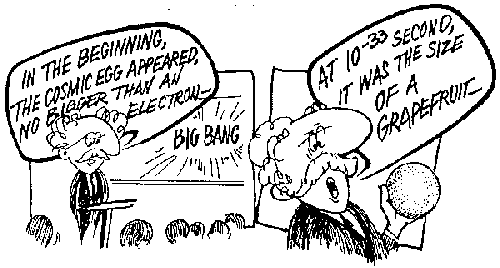
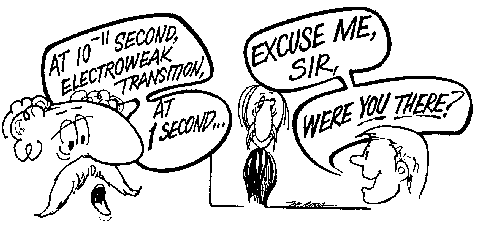


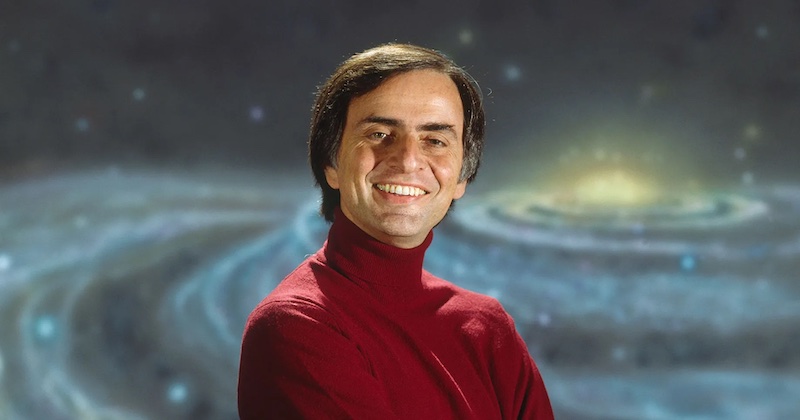














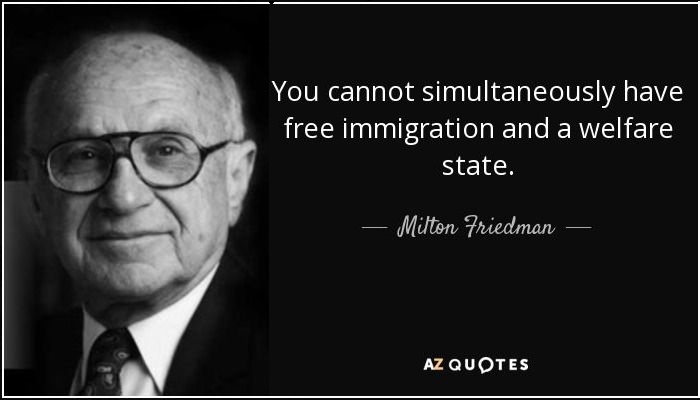


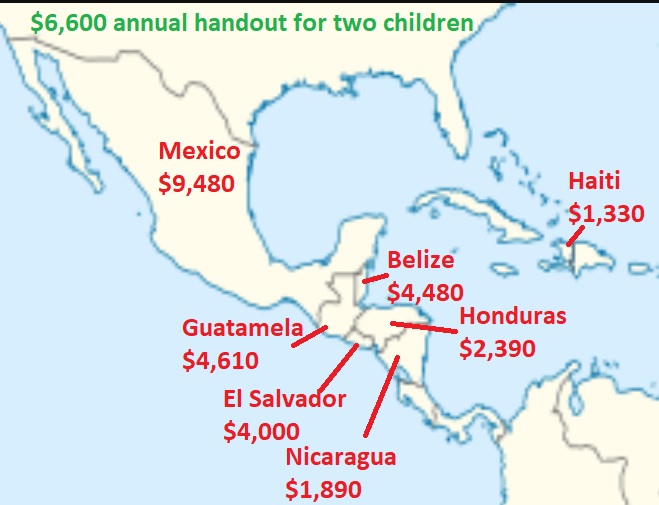




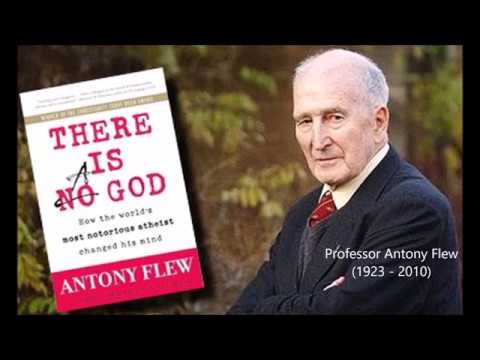












 The Daily Hatch