My name is Everette Hatcher III. I am a businessman in Little Rock and have been living in Bryant since 1993. My wife Jill and I have four kids (Rett 24, Hunter 22, Murphey 16, and Wilson 14).
On his widely popular Cosmos science program in 1980, Carl Sagan described our paltry existence in pathetic terms: “We live on an insignificant planet of a humdrum star, lost in a galaxy, tucked away in some forgotten corner of universe in which there are far more galaxies than people.” Several developments since then have altered this perception dramatically.
First of all, earth’s sun is not so humdrum. It belongs to a spectral class representing only 5% of all stars: a G2V yellow dwarf mainsequence variable. Many in this class pulsate much more radically than the sun, giving off deadly flares.
How does our sun compare with its classmates? In one of the longest-running observational programs of the 20th century, astronomers at the McMath Solar Observatory at Kitt Peak measured solar output with high precision. Researchers White, Wallace, and Livingstone recently published the results of their “Sun-as-a-Star” program in the Astrophysical Journal. This data set spanning 32 years–a rarity in science–concluded that our sun is uncommonly stable.
Scientists know the sun goes through an 11-year activity cycle. Flares and magnetic storms appear menacing through modern orbital observatories like SOHO, Hinode, and STEREO. Some flares and coronal mass ejections have topped the charts in recent years. Yet even these violent eruptions produce “little in the way of magnetic-field-related nonradiative heating.”1 The energy of these magnetic storms escapes between the granules instead of heating the photosphere. As a result, the sun’s heat output, or solar constant, has only varied by 6 one-hundredths of a percent during the entire observational period of 1974-2006.
M. S. Giampapa compared this behavior with other stars. The amount of variation in solar output is “about 10% less than the seasonal mean values, as measured over several seasons of observation, for even the most quiet solar-type stars.”2 The sun is among the few solar-class stars with “immaculate photospheres,”3 which places our sun in the upper echelon of all the stars.
Astrobiologists might counter that there could still be a quadrillion rivals to the sun, but many other qualities make our sun even more special. We are located in a relatively safe position within the Milky Way. The sun’s energy is tuned to the chemical reactions of vision and photosynthesis. And there is the amazing coincidence between the apparent diameters of the sun and moon that allow total solar eclipses to be visible on earth–dazzling displays of the wisdom and power of God.
In a debate at the American Museum of Natural History in 2005, five out of five secular planetary scientists voted that our solar system appears special. One commented, “The older I get, the less likely it seems to me there’d be a bunch of places like our solar system.”4
The sun is a star among countless others, but in many respects it stands alone. It is the perfect lighthouse for the one planet that we know harbors life. Rejoicing like “a strong man to run a race,” it journeys across our sky each day, radiating its life-sustaining energy and declaring the glory of God (Psalm 19:1-6).
References
White, O. R., L. Wallace, W. Livingston, and M. S. Giampapa. 2007. Sun-as-a-star spectrum variations 1974-2006. Astrophysical Journal. 657:1137-1149.
and you will hear what far smarter people than I have to say on this matter. I agree with them.
Harry Kroto
I have attempted to respond to all of Dr. Kroto’s friends arguments and I have posted my responses one per week for over a year now. Here are some of my earlier posts:
nitially an associate professor at Harvard, Sagan later moved to Cornell where he would spend the majority of his career as the David Duncan Professor of Astronomy and Space Sciences. Sagan published more than 600 scientific papers and articles and was author, co-author or editor of more than 20 books.[5] He wrote many popular science books, such as The Dragons of Eden, Broca’s Brain, Pale Blue Dot and narrated and co-wrote the award-winning 1980 television series Cosmos: A Personal Voyage. The most widely watched series in the history of American public television, Cosmos, has been seen by at least 500 million people in 60 countries.[6] The book Cosmos was published to accompany the series. He also wrote the 1985 science fiction novel Contact, the basis for a 1997 film of the same name. His papers, containing 595,000 items,[7] are archived at The Library of Congress.[8]
In the 1st video below in the 45th clip in this series are his words and my response is below them.
50 Renowned Academics Speaking About God (Part 1)
Another 50 Renowned Academics Speaking About God (Part 2
A Further 50 Renowned Academics Speaking About God (Part 3)
–
CARL SAGAN interview with Charlie Rose:
“…faith is belief in the absence of evidence. To believe in the absence of evidence, in my opinion, is a mistake. The idea is to hold belief until there is compelling evidence. If the Universe does not comply with our previous propositions, then we have to change…Religion deals with history poetry, great literature, ethics, morals, compassion…where religion gets into trouble is when it pretends to know something about science,”
I would respond that there is evidence that Christianity is true. The accuracy of the Bible has been confirmed by archaeology over and over in the past and one of the amazing finds was in 1948 when the Dead Sea Scrolls had copies from every Old Testament Book except Esther! One of the most powerful recent discoveries involved the bones of the high priest Caiaphas who questioned Christ in 30 AD.
______________ George Harrison Swears & Insults Paul and Yoko Lucy in the Sky with Diamonds- The Beatles The Beatles: I have dedicated several posts to this series on the Beatles and I don’t know when this series will end because Francis Schaeffer spent a lot of time listening to the Beatles and talking […]
The Beatles in a press conference after their Return from the USA Uploaded on Nov 29, 2010 The Beatles in a press conference after their Return from the USA. The Beatles: I have dedicated several posts to this series on the Beatles and I don’t know when this series will end because Francis […]
__________________ Beatles 1966 Last interview I have dedicated several posts to this series on the Beatles and I don’t know when this series will end because Francis Schaeffer spent a lot of time listening to the Beatles and talking and writing about them and their impact on the culture of the 1960’s. In this […]
_______________ The Beatles documentary || A Long and Winding Road || Episode 5 (This video discusses Stg. Pepper’s creation I have dedicated several posts to this series on the Beatles and I don’t know when this series will end because Francis Schaeffer spent a lot of time listening to the Beatles and talking and writing about […]
_______________ Francis Schaeffer pictured below: _____________________ I have included the 27 minute episode THE AGE OF NONREASON by Francis Schaeffer. In that video Schaeffer noted, ” Sergeant Pepper’s Lonely Hearts Club Band…for a time it became the rallying cry for young people throughout the world. It expressed the essence of their lives, thoughts and their feelings.” How Should […]
Crimes and Misdemeanors: A Discussion: Part 1 ___________________________________ Today I will answer the simple question: IS IT POSSIBLE TO BE AN OPTIMISTIC SECULAR HUMANIST THAT DOES NOT BELIEVE IN GOD OR AN AFTERLIFE? This question has been around for a long time and you can go back to the 19th century and read this same […]
____________________________________ Francis Schaeffer pictured below: __________ Francis Schaeffer has written extensively on art and culture spanning the last 2000years and here are some posts I have done on this subject before : Francis Schaeffer’s “How should we then live?” Video and outline of episode 10 “Final Choices” , episode 9 “The Age of Personal Peace and Affluence”, episode 8 […]
Love and Death [Woody Allen] – What if there is no God? [PL] ___________ _______________ How Should We then Live Episode 7 small (Age of Nonreason) #02 How Should We Then Live? (Promo Clip) Dr. Francis Schaeffer 10 Worldview and Truth Two Minute Warning: How Then Should We Live?: Francis Schaeffer at 100 Francis Schaeffer […]
___________________________________ Francis Schaeffer pictured below: ____________________________ Francis Schaeffer “BASIS FOR HUMAN DIGNITY” Whatever…HTTHR Dr. Francis schaeffer – The flow of Materialism(from Part 4 of Whatever happened to human race?) Dr. Francis Schaeffer – The Biblical flow of Truth & History (intro) Francis Schaeffer – The Biblical Flow of History & Truth (1) Dr. Francis Schaeffer […]
She deserves the lion’s share of the credit for the U.K.’s economic rebirth and renaissance, but she also had the wisdom to appoint some very principled and very capable people to her cabinet.
Such as Nigel Lawson, who served as her Chancellor of the Exchequer (akin to a combined Treasury Secretary/OMB Director in the U.S.).
Lawson died last week, leading to many tributes to his role is resuscitating the U.K. economy.
The Wall Street Journal‘s editorial summarized his achievements.
…our problems are solvable, as they were a half century ago. One of those crucial problem solvers was British politician Nigel Lawson, who died this week at age 91. …the 1970s…was even more miserable in the United Kingdom than it was in the U.S. By the time Margaret Thatcher led the Tories into office in May 1979, inflation was raging and the country had been wracked by strikes in its “winter of discontent”… Lawson entered Thatcher’s administration… He made his historic mark as Chancellor of the Exchequer starting in 1983. He’s best known for his tax reforms, which reduced the top personal income-tax rate to 40% from 60% and brought the top corporate rate to 35% from a 1970s high of 52%. He also was a steward of the Thatcher administration’s privatizations of large state-owned firms and the “Big Bang” financial reforms that would transform London into a global financial center.
In a column for CapX, Madsen Pirie examines Lawson’s work.
Nigel Lawson left a huge legacy. Under his stewardship Britain went from being the sick man of Europe into becoming an economic powerhouse and one of the world’s leading economies. He is regarded by many as the finest Chancellor of the 20th century… Lord Lawson held the firm conviction that lower taxes created space for enterprise and opportunity, and made it his policy that in every Budget he would lower the burden of taxation and abolish at least one tax.…During his tenure, Britain was transformed from being an economy in which most major businesses and services were owned and run by the state, into one in which they became private businesses, paying taxes instead of receiving taxpayer subsidies. Failing and outdated state enterprises became modern, successful private ones. …His 1988 Budget…announced that all taxes above 40% would be abolished, and that the basic rate would be cut to 25%, its lowest for 50 years… Within a very short time, more money was coming into the Treasury from the lower rates than it had been taking in from the higher ones. It was a vindication of the Laffer Curve. …The top 10% of earners had been paying 35% of the total income tax take. Under Lawson’s lower rate that went up to 48%. In rough terms this meant that the top 10% went from paying just over a third to just under a half of total income taxes.
In other words, the lower tax rates in the U.K. had the same positive impact as the lower tax rates in the U.S., both in terms of encouraging growth and confirming the Laffer Curve.
Indeed, it’s more accurate to say that I’m despondent since the Prime Minister is abandoning (or is being pressured to abandon) key parts of her pro-growth agenda.
For details, check out this Bloombergreport, written by Julian Harris, about the (rapidly disappearing) tax-cutting agenda of the new British Prime Minister.
Westminster’s most hard-line advocates of free markets and lower taxes are looking on in despair as their agenda crumbles… When Liz Truss became prime minister just over five weeks ago, she promised to deliver a radical set of policies rooted in laissez-faire economics — an attempt to boost the UK‘s sluggish rate of growth. Yet her chancellor of the exchequer, Kwasi Kwarteng, faced a quick reality check when his mini-budget, packed with unfunded tax cuts and unaccompanied by independent forecasts, …triggered mayhem… Truss fired Kwarteng and replaced him with Jeremy Hunt as she was forced into a dramatic u-turn over her tax plans. …Truss conceded…and dropped her plan to freeze corporation tax. …Still, some believers are sticking by “Trussonomics”…Patrick Minford,..a professor at Cardiff University, said..“Liz Truss’s policies for growth are absolutely right, and to be thrown off them by a bit of market turbulence is insane.” …Eamonn Butler, co-founder of the Adam Smith Institute, similarly insisted that Truss “is not the source of the problem — she’s trying to cure the problem.”
Eamonn is right.
The United Kingdom faces serious economic challenges. But the problems are the result of bad government policies that already exist rather than the possibility of some future tax cuts.
In a column for the Telegraph, Allister Heath says the U.K.’s central bank deserves a big chunk of the blame.
Liz Truss and Kwasi Kwarteng have been doubly unlucky. While almost everybody else in Britain remained in denial, they correctly identified this absurd game for the con-trick that it truly was, warned that it was about to implode and pledged to replace it with a more honest system. Instead of a zombie economy based on rising asset prices and fake, debt-fuelled growth, their mission was to encourage Britain to produce more real goods and services, to work harder and invest more by reforming taxes and regulation.What happened next is dispiriting in the extreme. …Truss and her Chancellor moved too quickly and, paradoxically, given their warnings about the rottenness of the system, ended up pulling out the last block from the Jenga tower, sending all of the pieces tumbling down. …they didn’t crash the economy – it was about to come tumbling down anyway – but they had the misfortune of precipitating and accelerating the day of reckoning. …Andrew Bailey, the Governor of the Bank of England…, has been deeply unimpressive in all of this, helping to keep interest rates too low… The idea, now accepted so widely, that the price of money must be kept extremely low and quantitative easing deployed at every opportunity has undermined every aspect of the economy and society. …Too few people realise how terribly the easy money, high tax, high regulation orthodoxy has failed.
Allister closes with some speculation about possible alternatives. If the Tories in the U.K. decide to reject so-called “free-market fundamentalism,” what’s their alternative?
He thinks the Labour Party will take control, and with very bad results. Jeremy Corbyn will not be in charge, but his economic policies will get enacted.
If Truss is destroyed, the alternative won’t even be social democracy: it will be Labour, the hard Left, the full gamut of punitive taxation, including of wealth and housing, and even more spending, culminating rapidly in economic oblivion.
That is an awful scenario. Basically turning the United Kingdom into Greece.
I want to take a different approach, though, and contemplate what will happen if the Conservative Party rejects the Truss approach and embraces big-government conservatism.
To be fair, they usually don’t try to claim their dirigiste policies will produce higher living standards. Instead, they blindly assert that it will be easier to win elections if Republicans abandon Reaganism.
Switching back to the United Kingdom, Margaret Thatcher repeatedly won election and her legacy was strong enough that voters then elected another Conservative.
The bottom line is that good policy can lead to good political outcomes, whereas bad policy generally leads to bad political outcomes.
P.S. To be sure, there were times when Reagan’s poll numbers were very bad. And the same is true for Thatcher. But because they pursued good policies, economic growth returned and they reaped political benefits. Sadly, it appears that Truss won’t have a chance to adopt good policy, so we will never know if she also would have benefited from a similar economic renaissance.
Ross Kaminsky of KHOW and I discussed how this is already happening.
I hate being right, but it’s always safe to predict that politicians and bureaucrats will embrace policies that give more power to government.
Especially when they are very anxious to stifle tax competition.
For decades, people in government have been upset that the tax cuts implemented by Ronald Reagan and Margaret Thatchertriggered a four-decade trend of lower tax rates and pro-growth tax reform.
That’s the reason Biden and his Treasury Secretary proposed a 15 percent minimum tax rate for businesses.
And it’s the reason they now want the rate to be even higher.
Though even I’m surprised that they’re already pushing for that outcome when the original pact hasn’t even been approved or implemented.
Treasury Secretary Janet Yellen will press G20 counterparts this week for a global minimum corporate tax rate above the 15% floor agreed by 130 countries last week…the global minimum tax rate…is tied to the outcome of legislation to raise the U.S. minimum tax rate, a Treasury official said.The Biden administration has proposed doubling the U.S. minimum tax on corporations overseas intangible income to 21% along with a new companion “enforcement” tax that would deny deductions to companies for tax payments to countries that fail to adopt the new global minimum rate. The officials said several countries were pushing for a rate above 15%, along with the United States.
Other kleptocratic governments naturally want the same thing.
A G7 proposal for a global minimum tax rate of 15% is too low and a rate of at least 21% is needed, Argentina’s finance minister said on Monday, leading a push by some developing countries… “The 15% rate is way too low,” Argentine Finance Minister Martin Guzman told an online panel hosted by the Independent Commission for the Reform of International Corporate Taxation. …”The minimum rate being proposed would not do much to countries in Africa…,” Mathew Gbonjubola, Nigeria’s tax policy director, told the same conference.
Needless to say, I’m not surprised that Argentina is on the wrong side.
And supporters of class warfare also are agitating for a higher minimum rate. Here are some excerpts from a column in the New York Times by Gabriel Zucman and Gus Wezerek.
In the decades after World War II, close to 50 percent of American companies’ earnings went to state and federal taxes. …it was a golden period. …President Biden should be applauded for trying to end the race to the bottom on corporate tax rates. But even if Congress approves the 15 percent global minimum corporate tax, it won’t be enough. …the Biden administration to give working families a real leg up, it should push Congress to enact a 25 percent minimum tax, which would bring in about $200 billion in additional revenue each year. …With a 25 percent minimum corporate tax, the Biden administration would begin to reverse decades of growing inequality. And it would encourage other countries to do the same, replacing a race to the bottom with a sprint to the top.
I can’t resist making two observations about this ideological screed.
Even the IMF and OECD agree that the so-called race to the bottom has not led to a decline in corporate tax revenues, even when measured as a share of economic output.
Since companies legally avoid rather than illegally evade taxes, the headline of the column is utterly dishonest – but it’s what we’ve learned to expect from the New York Times.
The only good thing about the Zucman-Wezerek column is that it includes this chart showing how corporate tax rates have dramatically declined since 1980.
P.S. For those interested, the horizontal line at the bottom is for Bermuda, though other jurisdictions (such as Monaco and the Cayman Islands) also deserve credit for having no corporate income taxes.
P.P.S. If you want to know why high corporate tax rates are misguided, click here. And if you want to know why Biden’s plan to raise the U.S. corporate tax rate is misguided, click here. Or here. Or here.
P.P.P.S. And if you want more information about why Biden’s global tax cartel is bad, click here, here, and here.
I enjoyed this article below because it demonstrates that the Laffer Curve has been working for almost 100 years now when it is put to the test in the USA. I actually got to hear Arthur Laffer speak in person in 1981 and he told us in advance what was going to happen the 1980’s and it all came about as he said it would when Ronald Reagan’s tax cuts took place. I wish we would lower taxes now instead of looking for more revenue through raised taxes. We have to grow the economy:
Mitt Romney repeatedly said last night that he would not allow tax cuts to add to the deficit. He repeatedly said it because over and over again Obama blathered the liberal talking point that cutting taxes necessarily increased deficits.
Romney’s exact words: “I want to underline that — no tax cut that adds to the deficit.”
The fact of the matter is that we can go back to Calvin Coolidge who said very nearly THE EXACT SAME THING to his treasury secretary: he too would not allow any tax cuts that added to the debt. Andrew Mellon – quite possibly the most brilliant economic mind of his day – did a great deal of research and determined what he believed was the best tax rate. And the Coolidge administration DID cut income taxes and MASSIVELY increased revenues. Coolidge and Mellon cut the income tax rate 67.12 percent (from 73 to 24 percent); and revenues not only did not go down, but they went UP by at least 42.86 percent (from $700 billion to over $1 billion).
That’s something called a documented fact. But that wasn’t all that happened: another incredible thing was that the taxes and percentage of taxes paid actually went UP for the rich. Because as they were allowed to keep more of the profits that they earned by investing in successful business, they significantly increased their investments and therefore paid more in taxes than they otherwise would have had they continued sheltering their money to protect themselves from the higher tax rates. Liberals ignore reality, but it is simply true. It is a fact. It happened.
Then FDR came along and raised the tax rates again and the opposite happened: we collected less and less revenue while the burden of taxation fell increasingly on the poor and middle class again. Which is exactly what Obama wants to do.
People don’t realize that John F. Kennedy, one of the greatest Democrat presidents, was a TAX CUTTERwho believed the conservative economic philosophy that cutting tax rates would in fact increase tax revenues. He too cut taxes, and he too increased tax revenues.
So we get to Ronald Reagan, who famously cut taxes. And again, we find that Reagan cut that godawful liberal tax rate during an incredibly godawful liberal-caused economic recession, and he increased tax revenue by 20.71 percent (with revenues increasing from $956 billion to $1.154 trillion). And again, the taxes were paid primarily by the rich:
“The share of the income tax burden borne by the top 10 percent of taxpayers increased from 48.0 percent in 1981 to 57.2 percent in 1988. Meanwhile, the share of income taxes paid by the bottom 50 percent of taxpayers dropped from 7.5 percent in 1981 to 5.7 percent in 1988.”
So we get to George Bush and the Bush tax cuts that liberals and in particular Obama have just demonized up one side and demagogued down the other. And I can simply quote the New York Times AT the time:
WASHINGTON, July 12 – For the first time since President Bush took office, an unexpected leap in tax revenue is about to shrink the federal budget deficit this year, by nearly $100 billion.
A Jump in Corporate Payments On Wednesday, White House officials plan to announce that the deficit for the 2005 fiscal year, which ends in September, will be far smaller than the $427 billion they estimated in February.
Mr. Bush plans to hail the improvement at a cabinet meeting and to cite it as validation of his argument that tax cuts would stimulate the economy and ultimately help pay for themselves.
Based on revenue and spending data through June, the budget deficit for the first nine months of the fiscal year was $251 billion, $76 billion lower than the $327 billion gap recorded at the corresponding point a year earlier.
The Congressional Budget Office estimated last week that the deficit for the full fiscal year, which reached $412 billion in 2004, could be “significantly less than $350 billion, perhaps below $325 billion.”
The big surprise has been in tax revenue, which is running nearly 15 percent higher than in 2004. Corporate tax revenue has soared about 40 percent, after languishing for four years, and individual tax revenue is up as well.
And of course the New York Times, as reliable liberals, use the adjective whenever something good happens under conservative policies and whenever something bad happens under liberal policies: ”unexpected.” But it WASN’T ”unexpected.” It was EXACTLY what Republicans had said would happen and in fact it was exactly what HAD IN FACT HAPPENED every single time we’ve EVER cut income tax rates.
The truth is that conservative tax policy has a perfect track record: every single time it has ever been tried, we have INCREASED tax revenues while not only exploding economic activity and creating more jobs, but encouraging the wealthy to pay more in taxes as well. And liberals simply dishonestly refuse to acknowledge documented history.
Now let’s take a look at the utterly fallacious view that tax cuts in general create higher deficits.
Let’s take a trip back in time, starting with the 1920s. From Burton Folsom’s book, New Deal or Raw Deal?:
In 1921, President Harding asked the sixty-five-year-old [Andrew] Mellon to be secretary of the treasury; the national debt [resulting from WWI] had surpassed $20 billion and unemployment had reached 11.7 percent, one of the highest rates in U.S. history. Harding invited Mellon to tinker with tax rates to encourage investment without incurring more debt. Mellon studied the problem carefully; his solution was what is today called “supply side economics,” the idea of cutting taxes to stimulate investment. High income tax rates, Mellon argued, “inevitably put pressure upon the taxpayer to withdraw this capital from productive business and invest it in tax-exempt securities. . . . The result is that the sources of taxation are drying up, wealth is failing to carry its share of the tax burden; and capital is being diverted into channels which yield neither revenue to the Government nor profit to the people” (page 128).
Mellon wrote, “It seems difficult for some to understand that high rates of taxation do not necessarily mean large revenue to the Government, and that more revenue may often be obtained by lower taxes.” And he compared the government setting tax rates on incomes to a businessman setting prices on products: “If a price is fixed too high, sales drop off and with them profits.”
And what happened?
“As secretary of the treasury, Mellon promoted, and Harding and Coolidge backed, a plan that eventually cut taxes on large incomes from 73 to 24 percent and on smaller incomes from 4 to 1/2 of 1 percent. These tax cuts helped produce an outpouring of economic development – from air conditioning to refrigerators to zippers, Scotch tape to radios and talking movies. Investors took more risks when they were allowed to keep more of their gains. President Coolidge, during his six years in office, averaged only 3.3 percent unemployment and 1 percent inflation – the lowest misery index of any president in the twentieth century.
Furthermore, Mellon was also vindicated in his astonishing predictions that cutting taxes across the board would generate more revenue. In the early 1920s, when the highest tax rate was 73 percent, the total income tax revenue to the U.S. government was a little over $700 million. In 1928 and 1929, when the top tax rate was slashed to 25 and 24 percent, the total revenue topped the $1 billion mark. Also remarkable, as Table 3 indicates, is that the burden of paying these taxes fell increasingly upon the wealthy” (page 129-130).
Now, that is incredible upon its face, but it becomes even more incredible when contrasted with FDR’s antibusiness and confiscatory tax policies, which both dramatically shrunk in terms of actual income tax revenues (from $1.096 billion in 1929 to $527 million in 1935), and dramatically shifted the tax burden to the backs of the poor by imposing huge new excise taxes (from $540 million in 1929 to $1.364 billion in 1935). See Table 1 on page 125 of New Deal or Raw Deal for that information.
FDR both collected far less taxes from the rich, while imposing a far more onerous tax burden upon the poor.
It is simply a matter of empirical fact that tax cuts create increased revenue, and that those [Democrats] who have refused to pay attention to that fact have ended up reducing government revenues even as they increased the burdens on the poorest whom they falsely claim to help.
Let’s move on to John F. Kennedy, one of the most popular Democrat presidents ever. Few realize that he was also a supply-side tax cutter.
“It is a paradoxical truth that tax rates are too high and tax revenues are too low and the soundest way to raise the revenues in the long run is to cut the rates now … Cutting taxes now is not to incur a budget deficit, but to achieve the more prosperous, expanding economy which can bring a budget surplus.”
– John F. Kennedy, Nov. 20, 1962, president’s news conference
“Lower rates of taxation will stimulate economic activity and so raise the levels of personal and corporate income as to yield within a few years an increased – not a reduced – flow of revenues to the federal government.”
– John F. Kennedy, Jan. 17, 1963, annual budget message to the Congress, fiscal year 1964
“In today’s economy, fiscal prudence and responsibility call for tax reduction even if it temporarily enlarges the federal deficit – why reducing taxes is the best way open to us to increase revenues.”
– John F. Kennedy, Jan. 21, 1963, annual message to the Congress: “The Economic Report Of The President”
“It is no contradiction – the most important single thing we can do to stimulate investment in today’s economy is to raise consumption by major reduction of individual income tax rates.”
– John F. Kennedy, Jan. 21, 1963, annual message to the Congress: “The Economic Report Of The President”
“Our tax system still siphons out of the private economy too large a share of personal and business purchasing power and reduces the incentive for risk, investment and effort – thereby aborting our recoveries and stifling our national growth rate.”
– John F. Kennedy, Jan. 24, 1963, message to Congress on tax reduction and reform, House Doc. 43, 88th Congress, 1st Session.
“A tax cut means higher family income and higher business profits and a balanced federal budget. Every taxpayer and his family will have more money left over after taxes for a new car, a new home, new conveniences, education and investment. Every businessman can keep a higher percentage of his profits in his cash register or put it to work expanding or improving his business, and as the national income grows, the federal government will ultimately end up with more revenues.”
– John F. Kennedy, Sept. 18, 1963, radio and television address to the nation on tax-reduction bill
Which is to say that modern Democrats are essentially calling one of their greatest presidents a liar when they demonize tax cuts as a means of increasing government revenues.
So let’s move on to Ronald Reagan. Reagan had two major tax cutting policies implemented: the Economic Recovery Tax Act (ERTA) of 1981, which was retroactive to 1981, and the Tax Reform Act of 1986.
Did Reagan’s tax cuts decrease federal revenues? Hardly:
We find that 8 of the following 10 years there was a surplus of revenue from 1980, prior to the Reagan tax cuts. And, following the Tax Reform Act of 1986, there was a MASSIVE INCREASEof revenue.
So Reagan’s tax cuts increased revenue. But who paid the increased tax revenue? The poor? Opponents of the Reagan tax cuts argued that his policy was a giveaway to the rich (ever heard that one before?) because their tax payments would fall. But that was exactly wrong. In reality:
“The share of the income tax burden borne by the top 10 percent of taxpayers increased from 48.0 percent in 1981 to 57.2 percent in 1988. Meanwhile, the share of income taxes paid by the bottom 50 percent of taxpayers dropped from 7.5 percent in 1981 to 5.7 percent in 1988.”
So Ronald Reagan a) collected more total revenue, b) collected more revenue from the rich, while c) reducing revenue collected by the bottom half of taxpayers, and d) generated an economic powerhouse that lasted – with only minor hiccups – for nearly three decades. Pretty good achievement considering that his predecessor was forced to describe his own economy as a “malaise,” suffering due to a “crisis of confidence.” Pretty good considering that President Jimmy Carter responded to a reporter’s question as to what he would do about the problem of inflation by answering,“It would be misleading for me to tell any of you that there is a solution to it.”
Reagan whipped inflation. Just as he whipped that malaise and that crisis of confidence.
Join us with the Fool on the Hill as we wade through Strawberry Fields (forever), looking through a Glass Onion, in search of the Fabs’ best-ever tune By Mark Beaumont– 21st December 2021
If you ever doubt that The Beatles were the greatest band that ever existed, try ranking their songs. Out of 185 self-penned tunes they released commercially during their initial seven-year run – so not including covers, fan club releases, alternative versions or their 1995 reunion songs – you’ll list well over a hundred tracks before you get to anything you wouldn’t call sublime, and hit 150 or so before anything verging on average appears. Of their entire catalogue, only six or seven songs could be classed as ‘shonky’, and most of those have still got something historic going for them.
Among them you’ll find songs which caused seismic shifts in pop, psychedelia and rock and the formative roots of punk, metal and electronica, amongst a panoply of other styles they pioneered and popularised in such a short time. It’s a feat unmatched by any act before or since, and with Peter Jackson’sGet Backreviving interest in their achievements, let’s pile back in to the most magical mystery tour pop music has ever known, with each track ranked in order of greatness.
‘Wild Honey Pie’ (‘The Beatles’, 1968)
An experimental ‘White Album’ interlude recorded entirely by Paul, ‘Wild Honey Pie’ had a mild element of redneck Grieg menace, but little else to it.
‘Dig It’ (‘Let It Be’, 1970)
50 seconds of a far longer studio jam, during which Lennon makes random references to the FBI, the CIA, the BBC, BB King, Doris Day and Matt Busby over a pretty dreary rock’n’roll dirge, ‘Dig It’ only really existed to exemplify the fact that The Beatles cut loose a lot during the ‘Let It Be’ sessions. Now we’ve got seven-plus hours of Get Back, it’s rendered superfluous.
‘You Know My Name (Look Up The Number)’ (B-side of ‘Let It Be’, 1970)
“Good evening and welcome to Slaggers…”The Beatles spend an inordinate amount of studio time trying to perfect this frankly silly combo of blues rock, lounge samba, music hall clowning and a bit sung by Crazy Frog’s jazz Granddad. Don’t do drugs, kids.
‘Why Don’t We Do It In The Road?’ (‘The Beatles’, 1968)
Even before Google Street View, Paul’s uber-horny blues squeal about dogging like a champion was at best inadvisable and at worst just plain creepy. Everyone will definitely be watching you, so stop. Think. Don’t do it in the road.
‘Revolution 9’ (‘The Beatles’, 1968)
Of interest as an avant-garde curio exemplifying the fact that The Beatles had entirely dismissed all sonic boundaries by the ‘White Album’, John and Yoko’s epic sound collage of radio interference, studio chatter and orchestral samples is more notable and influential than it’s often given credit for. But you wouldn’t bung it on repeat.
‘Flying’ (‘Magical Mystery Tour’, 1967)
An incidental instrumental to accompany a psychedelic segment of Magical Mystery Tour, ‘Flying’ was little more than 12-bar rock’n’roll played, very stoned, on an organ for two minutes. Some distance from a Welsh male voice choir.
‘Only A Northern Song’ (‘Yellow Submarine’, 1969)
Designed as a piss-taking dig at Northern Songs, the Beatles’ publishing company, which George felt rewarded him pitifully for his songwriting efforts, ‘Only A Northern Song’ is intended to sound weird, wonky and half-baked, even as Harrison came into his own as a songsmith.
‘Ask Me Why’ (‘Please Please Me’, 1963)
A formulaic shake shack ballad of little note other than the sneaking suspicion that Morrissey took his entire vocal style from Lennon’s end-of-chorus flicks.
‘Little Child’ (‘With The Beatles’, 1963)
By-numbers Merseybeat that was one of the few unmemorable originals Lennon and McCartney ever penned.
‘Blue Jay Way’ (‘Magical Mystery Tour’, 1967)
Written by George while waiting for houseguests to arrive at the place he was staying on the titular Hollywood Hills street in 1967. They presumably arrived just after he’d perfected the ominous psychedelic organ mood but before he’d really gotten his teeth into the chorus.
‘Not A Second Time’ (‘With The Beatles’, 1963)
A song desperately in search of a hookline, ‘Not A Second Time’ finds John’s voice flapping wildly around the verses as if desperate to find somewhere solid to land.
‘Her Majesty’ (‘Abbey Road’, 1969)
A lightweight folk frippery that sounds particularly throwaway when tacked on the end of ‘Abbey Road’’s monumental side two medley as a secret final track.
‘Run For Your Life’ (‘Rubber Soul’, 1965)
As The Beatles shifted away from love songs, John contributed this out-and-out hate song to ‘Rubber Soul’ – a nifty country rocker and arguably the proto-‘Last Train To Clarkesville’, but notorious as The Beatles’ most problematic track. John would claim to regret having written it, calling it his least favourite Beatles song.
‘Don’t Bother Me’ (‘With The Beatles’, 1963)
“I don’t think it’s a particularly good song,” George said of his debut Beatles writing credit, “it mightn’t even be a song at all.” Actually, it’s a pretty nifty homage to the surf rock craze of the time. And definitely a song.
‘For You Blue’ (‘Let It Be’, 1970)
Standard, formulaic slide guitar blues given a sweetness and light by George’s weightless vocals and exclamation, “Elmore James got nothing on this!”
‘What Goes On’ (‘Rubber Soul’, 1965)
Honky-tonk pastiche written by John in 1959 and passed over for several albums before landing half-heartedly on ‘Rubber Soul’. You can actually hear the band lose interest midway through.
‘Thank You Girl’ (B-side to ‘From Me To You’, 1964)
Recorded by John with a heavy cold, it’s perhaps understandable that this thank you letter to their fans – a “hack song”, according to McCartney – sounds muddy and under-developed. On this evidence you’d assume EMI Studios doubled as a bomb shelter.
‘One After 909’ (‘Let It Be’, 1970)
Plucked from the catalogue of early Lennon/McCartney compositions when the band were short on material for ‘Let It Be’, Paul’s locomotive skiffle knockabout had a retro charm but never really escaped the formula.
‘I Me Mine’ (‘Let It Be’, 1970)
A lovely choral waltz ballad from George, totally ruined by nobody bothering to write a proper chorus and just bawling the title over some 12-bar sleaze rock riffing instead.
‘I’ll Cry Instead’ (‘A Hard Day’s Night’, 1964)
Bitterness, heartbreak and romantic revenge; Lennon’s dark side was on show even on the skiffly, tucked-away tracks of the Beatlemania era.
‘Yer Blues’ (‘The Beatles’, 1968)
Passionate, characterful and a raw exorcism of John’s harrowed late-‘60s mindset, certainly. But The Beatles were way past by-numbers blues rock by ‘68 and ‘Yer Blues’ stood out as an unimaginative throwback on the ‘White Album’.
‘When I Get Home’ (‘A Hard Day’s Night’, 1964)
Formulaic Beatlemania fare in which John gets excited at the prospect of telling his wife about all the screaming girls, drugs and parties on tour. Bet she was thrilled.
‘Being For The Benefit Of Mr Kite!’ (‘Sgt. Pepper’s Lonely Hearts Club Band’, 1967)
For some, John’s cabaret pastiche is the very essence of ‘Sgt. Pepper…’, capturing the sepia carnival vibe in its circus poster lyrics and carousel interlude. To these ears, though, it’s club-footed, corny and unnecessary.
‘I’ll Get You’ (B-side to ‘She Loves You’, 1963)
John’s songwriting sparkles on the B-side of their first single, yet lacks the confidence of more head-waggling numbers of the era.
‘This Boy’ (B-side to ‘All My Loving’)
Faithful homage to the harmony groups of the ‘50s and early ‘60s, and a rare example of a Beatles song that could be mistaken for that of any other band.
‘I’m Down’ (B-side to ‘Help!’)
Nifty Little Richard-style rock’n’roller that doesn’t sound all that “down” at all.
‘Love Me Do’ (single, 1962)
Legendary and all that, being the debut single, but let’s face it: a bit of a plodder.
‘Hold Me Tight’ (‘With The Beatles’, 1963)
Even when rehashing some pretty standard rock’n’roll chord progressions and melodic structures on a song that McCartney himself would call “filler”, The Beatles exuded a fundamental magic that set them apart from the Merseybeat horde.
‘There’s a Place’ (‘Please Please Me’, 1963)
Early signs of spiritual and philosophical musings from John as he tries his hand at Motown.
‘She’s A Woman’ (B-side to ‘I Feel Fine’)
Basic, bluesy rock’n’roller notable for some pretty savage guitar work and McCartney clearly working his way up to the sort of full-throated blues bawls he’d let loose once the ‘60s were ready for them.
‘Misery’ (‘Please Please Me’, 1963)
The exuberance of being in a studio recording ‘Please Please Me’ made this shameless homage to the ‘50s crooners sound like the cheeriest song about existential despair ever recorded. No bad thing.
‘I Call Your Name’ (‘Long Tall Sally EP’, 1964)
A pre-Beatles Lennon tune originally given to British popper Billy J. Kramer. The Beatles’ version swung harder.
‘What You’re Doing’ (‘Beatles For Sale’, 1964)
George’s proto-indie-pop guitar line lifted one of Paul’s less eventful tunes, but not an un-influential one – somewhere in here is the root of The La’s’ ‘There She Goes’.
‘Octopus’s Garden’ (‘Abbey Road’, 1969)
Seemingly envisioning a future in children’s entertainment as The Beatles fell apart, Ringo’s second-ever writing credit involved oompah larks and underwater adventure (sound familiar?), adorned with George making bubble noises by blowing into a glass of milk through a straw.
‘Polythene Pam’ (‘Abbey Road’, 1969)
‘Pinball Wizard’ power chords, nifty solo, broad Scouse accent, low-rent S&M; there was so much going on in John’s throwaway 70-second rocker about a bizarre sexual encounter in Jersey in 1960 (involving beat poet Royston Ellis) that you wish he’d written a chorus for it.
‘You Like Me Too Much’ (‘Help!’, 1965)
It’s baffling that The Beatles only really began recognising and appreciating George’s songwriting come ‘The White Album’, since he was displaying solid melodic chops way back on ‘Help!’.
‘Maxwell’s Silver Hammer’ (‘Abbey Road’, 1969)
You’ve written some of the finest children’s songs of the century, why the hell shouldn’t you try to make a vaudevillian family singalong from the story of an insane, hammer wielding psychopath? Basically Wes Craven’s ‘When I’m Sixty-Four’.
‘Tell Me What You See’ (‘Help!’, 1965)
Sometimes The Beatles’ harmonising could carry an entire song alone, as on this shift towards a more contemplative folk maturity. Includes an entire verse nicked from a religious passage that hung in John’s childhood home.
‘The Ballad Of John And Yoko’ (single, 1969)
The sorry tale of John and Yoko’s troubled and press-hounded attempts to wed at short notice in various European locales, delivered as impassioned country lament.
‘Sun King’ (‘Abbey Road’, 1969)
The Beatles’ impression of The Beach Boysdoing Fleetwood Mac’s ‘Albatross’ (in cod-Spanish) fell between two stools on ‘Abbey Road’; not as plush as ‘Because’ nor as melodically bright as ‘Here Comes The Sun’. Lovely, then, but slight.
‘I Need You’ (‘Help!’, 1965)
Gorgeous flamenco strumble from George, finding his songwriting feet on ‘Help!’.
‘Ob-La-Di, Ob-La-Da’ (‘The Beatles’, 1968)
Macca Marmite: one either adores the cheery Jamaican lilt of Desmond and Molly’s story and considers it pivotal in attuning British pop culture to ska music or, like Lennon, deems it “more of Paul’s granny music shit”.
‘I’m Happy Just To Dance With You’ (‘A Hard Day’s Night’, 1964)
A Lennon/McCartney composition given to George to sing. You likely owe your very existence to this dance hall romance, since it probably gave your Granddad the nerve to chat up your Nanna down the Mecca.
‘I’ll Be Back’ (‘A Hard Day’s Night’, 1964)
Flamenco-flecked and downbeat, the closer of ‘A Hard Day’s Night’ – rewritten from Del Shannon’s ‘Runaway’ – was an early sign of The Beatles’ sophisticated tonal ambitions within what were, at the time, strictly regimented ‘60s pop structures.
‘The Continuing Story Of Bungalow Bill’ (‘The Beatles’, 1968)
The crackle of boy scout campfire virtually enshrouds this charming tale of bravery and derring-do out on the hunt in the days of empire. Twitter would rip it a new arsehole, mind.
‘Lovely Rita’ (‘Sgt. Pepper’s Lonely Hearts Club Band’, 1967)
Of all of Paul’s outlandish character songs, ‘Lovely Rita’, in which our narrator develops affection for a traffic warden, is by far the least believable, but remains charming thanks to some gorgeous band harmonies and nifty work on the paper and comb.
‘I Wanna Be Your Man’ (‘With The Beatles’, 1963)
An energised if one-trick jitterbugger written by Paul on a night out with The Rolling Stones in Richmond. It became The Stones’ second single before The Beatles gave it to Ringo to holler on ‘With The Beatles’.
‘The Word’ (‘Rubber Soul’, 1965)
The link between ‘Drive My Car’ and ‘Taxman’, ‘The Word’ added a touch of harmonic funk to ‘Rubber Soul’ as Lennon took a stab at a one-note song in homage to ‘Long Tall Sally’.
‘Old Brown Shoe’ (B-side of ‘The Ballad Of John And Yoko’, 1969)
George in righteous, piano-thumping boogie-woogie mode. Upstaged its own A-side.
‘Piggies’ (‘The Beatles’, 1968)
Tainted in retrospect by Charles Manson’s murderous interpretations, George’s harpsichord satire of the selfish and gluttonous rich, smothered in porcine snorts and grunts, is a stirring but unsettling listen.
‘Fixing A Hole’ (‘Sgt. Pepper’s Lonely Hearts Club Band’, 1967)
The pot-fixated ‘Fixing A Hole’ makes great use of harpsichord (played by both Paul and George Martin) to give a psychedelic lilt to a music hall pastiche on which Paul makes the utmost of a one-note chorus.
‘If I Needed Someone’ (‘Rubber Soul’, 1965)
This fine Merseybeat evolution offers early indications of George’s Indian influence and of the psychedelic storm the band would later kick up on ‘Tomorrow Never Knows’.
‘I’ve Got A Feeling’ (‘Let It Be’, 1970)
Suitably blustery for a song recorded on a rooftop in January, Paul’s dive into The Band-style bluesy Americana rock is long on feel and passion, short on melodic impact.
‘Think For Yourself’ (‘Rubber Soul’, 1965)
Incorporating Motown beats and an open-mindedness gleaned from encounters with Dylan, George’s first major foray out of romantic odes was targeting at society’s regressive and narrow-minded elements, quite possibly in government.
‘You Can’t Do That’ (‘A Hard Day’s Night’, 1964)
A tuneful precursor to ‘Run For Your Life’, which also finds John’s jealousy getting the better of him.
‘Sgt. Pepper’s Lonely Hearts Club Band (Reprise)’ (‘Sgt. Pepper’s Lonely Hearts Club Band’, 1967)
Rocking up the title track, the reprise rips off the neon military blazers to expose the Hamburg leathers beneath.
‘Every Little Thing’ (‘Beatles For Sale’, 1964)
A marriage of the melancholy and upbeat, this was a rare example of John singing a Paul song.
‘Wait’ (‘Rubber Soul’, 1965)
The Beatles as pop toreadors. A certain Mediterranean fire creeps into Macca’s plea to Jane Asher to give him at least until the end of tour.
‘I Don’t Want To Spoil The Party’ (‘Beatles For Sale’, 1964)
John plays the party-pooping wallflower on this beautifully forlorn skiffle lament and a thematic precursor to ‘How Soon Is Now?’.
‘Tell Me Why’ (‘A Hard Day’s Night’, 1964)
An all-barrels harmonic doo-wop assault which Paul, in retrospect, thought might have been a window onto John’s troubled marriage to Cynthia.
‘Doctor Robert’ (‘Revolver’, 1966)
Perhaps spurred on by The Rolling Stones’ ‘Mother’s Little Helper’ and Donovan’s ‘Candy Man’, Lennon penned his own tribute to a drug-supplying medic, rumoured to be Dr Robert Freymann, known for supplying B-12 injections liberally laced with amphetamine. They kick in on the blissed-out middle-eight, clearly.
‘It’s Only Love’ (‘Help!’, 1965)
One of Lennon’s prettiest early-period tunes (he hated it, natch), built around sumptuous 12-string rhythms and a twee but fan-friendly lyric. Working title: ‘That’s A Nice Hat’.
‘The Inner Light’ (B-side of ‘Lady Madonna’, 1968)
Based on a Taoist poem and recorded with Indian musicians in Bombay, The ‘Lady Madonna’ flipside was one of only four Beatles songs with no Beatles playing on it (quiz compilers: the others are ‘Good Night’, ‘She’s Leaving Home’ and ‘Eleanor Rigby’), but magnificently emulated the serenity of the Transcendental Meditation techniques the band were learning from the Maharishi.
‘Rocky Raccoon’ (‘The Beatles’, 1968)
Cartoonish Wild West soap opera larks and one of Paul’s better novelty tunes, thanks to a popcorn guzzling plot and George Martin’s honky tonk piano solo tumbling past like a saloon fight.
‘Good Night’ (‘The Beatles’, 1968)
As reward for getting all the way through ‘Revolution 9’, Ringo turned up with a full Busby Berkeley orchestra to tuck you in with this sleepyhead lullaby. Night night, Ringo.
Central, stylistically, to the pre-war cabaret conceit of ‘Sgt. Pepper’s…’, Paul’s cheery/corny bandstand ode to somehow reaching your 60s without murdering your spouse was among the first he ever wrote, aged 16. Now go on, give Nanna a kiss.
‘Oh! Darling’ (‘Abbey Road’, 1969)
Updating 1950s US swing for the psychedelic era, McCartney put his all into ‘Oh! Darling’, even coming into the studio early to have one crack at it every day before his voice lost its edge. The song’s part in getting glam underway has gone woefully unrecognised.
‘Yellow Submarine’ (‘Revolver’, 1966)
Ringo’s most legendary moment, the quintessential psychedelia ditty and arguably the most overplayed Beatles song of all. You came for the chant-along chorus aged four and stayed until adulthood for the ‘shroom-friendliness and Lennon shouting, “Full speed ahead, Mr Boatswain / Full speed ahead, bop-dibbetty-bip-bop!” Features The Stones’ Brian Jones on ocarina. No shit.
‘Don’t Let Me Down’ (‘Let It Be’, 1970)
Louche and languid (read: almost certainly on heroin by now), Lennon’s plea to Yoko flits between the vulnerable, optimistic, lovestruck and desperate. Find yourself someone who “does” you like Yoko “done” John.
‘Girl’ (‘Rubber Soul’, 1965)
Melding Greek and German music into a mournful mood piece, Lennon pointed the way to The Beatles’ more sophisticated latter period with ‘Girl’, probably the best song ever to have a chorus that’s mostly just inhaling.
‘Dig A Pony’ (‘Let It Be’, 1970)
One of the more inventive and engaging blues numbers the band worked up for ‘Let It Be’, not least because of Lennon’s acid-fried lyrics. Just exactly how one does “a roadhog” or “syndicate[s] any boat you row” remains unspecified.
‘Things We Said Today’ (‘A Hard Day’s Night’, 1964)
Idyllic strumbler penned by Paul on a yacht called Happy Days in the Virgin Islands with glamorous new girlfriend Jane Asher. And sounds like it.
‘Do You Want To Know A Secret’ (‘Please Please Me’, 1963)
Inspired by a song from Snow White And The Seven Dwarves, which John’s mother used to sing to him as a child, the strength of ‘Do You Want To Know A Secret’ was in its childlike simplicity and coy teen naivety.
‘Baby’s In Black’ (‘Beatles For Sale’, 1964)
Hoedown homage so gorgeous it’ll give you an ounce of sympathy for a man trying to pull a hot widow while her husband isn’t yet cold in the ground.
‘The Fool On The Hill’ (‘Magical Mystery Tour’, 1967)
Flutes! Recorder solos! Meditation! The budget for the Magical Mystery Tour TV special was severely stretched when Paul allegedly decided the sequence for his wistful portrait of the Maharishi should be filmed in a beach near Nice.
‘And I Love Her’ (‘A Hard Day’s Night’, 1964)
Doe-eyed flamenco vibes abound on one of Paul’s early run-ups to ‘Yesterday’.
‘Mean Mr. Mustard’ (‘Abbey Road’, 1969)
Blur basically got their entire ‘90s out of John’s engrossing one-minute oompah tune inspired by a newspaper story of a “dirty old” miser – in real life, one John Mustard of Enfield, Middlesex – who hid his money so he wouldn’t be forced to spend it. His level of personal hygiene was unrecorded.
‘Altogether Now’ (‘Yellow Submarine’, 1969)
While ‘Yellow Submarine’ and ‘Octopus’s Garden’ were story time classics, ‘Altogether Now’’s nursery-level track easily stands up as The Beatles’ best children’s song.
‘Hello, Goodbye’ (single, 1967)
Brisk, bright-eyed and boasting one of the best pre-choruses in pop, ‘Hello, Goodbye’ would be the best single in most bands’ careers. It’s the 107th best song The Beatles wrote. That’s how great they were. Strap in: everything from here gets fucking brilliant.
‘Good Morning Good Morning’ (‘Sgt. Pepper’s Lonely Hearts Club Band’, 1967)
The Beatles did a fine line in rise-and-shine tunes, although John’s compulsive dawn chorus on ‘Sgt. Pepper…’ came with a hearty dollop of cynicism, everyday mundanity and casual adultery.
‘Another Girl’ (‘Help!’, 1965)
The Help! scene set the blueprint for The Monkees‘ entire career, as the band played this Beatlemania cracker on a beach in the Bahamas, with Paul using a bikini-clad girl as a guitar.
‘I Want You (She’s So Heavy)’ (‘Abbey Road’, 1969)
The last song all four Beatles recorded together; you can hear the sheer weight of the occasion. At almost eight minutes and smothered in doomy textures and white noise, it would have seen John invent heavy metal if Paul hadn’t beaten him to it with ‘Helter Skelter’. Instead it invents Pink Floyd’s ‘Meddle’ and provides proof, if any were needed, that stoner rock is basically the blues on military grade tranquilisers.
‘Within You Without You’ (‘Sgt. Pepper’s Lonely Hearts Club Band’, 1967)
Probably the ultimate expression of George’s Indian immersion, ‘Within You Without You’ opened many a Western third eye to the wonders of ‘world music’ and Eastern philosophies.
‘I’m So Tired’ (‘The Beatles’, 1968)
When you shout for ‘Help!’ and nobody listens, this is where you end up. Tortured, wasted, exhausted and desperate. Even three weeks of solid insomnia at the Maharishi’s retreat can’t dampen Lennon’s melodic prowess, as he knocks out the perfect song for day three of the prom night that forgot to finish.
‘The End’ (‘Abbey Road’, 1969)
Masterful and historic as the climax of the ‘Abbey Road’ medley, even taken in isolation ‘The End’ is exultant mood-making, from Ringo’s drum solo to the gathering gospel storm and Paul’s thought-provoking orchestral coda.
‘Birthday’ (‘The Beatles’, 1968)
Along with Stevie Wonder’s ‘Happy Birthday’, The Beatles’ impassioned 12-bar well-wishing – written and recorded in one night – is usually the best thing about scratching off another year on this godforsaken hellhole of a planet.
‘All I’ve Got To Do’ (‘A Hard Day’s Night’, 1964)
A Smokey Robinson homage aimed at the US market – British teens of the ‘60s would never dream of calling a girl up “on the phone”, Lennon later claimed.
‘It’s All Too Much’ (‘Yellow Submarine’, 1969)
The sheer euphoria of George’s peak acid song, floating through a blissed-out clamour of noise rock, trumpet and disintegrating beats, makes us all yearn for the days before you’d pay 50 quid for a bag of blotting paper soaked in balsamic vinegar off the dark web.
‘Baby, You’re A Rich Man’ (B-side of ‘All You Need Is Love’, 1967; ‘Magical Mystery Tour’, 1967)
Because we’re all as loaded as Bezos inside, you dig? Sublimely funky ode to our spiritual wealth that’s still begging the decades-old question: just where in a zoo, exactly, might you stash a bag full of cash?
‘Don’t Pass Me By’ (‘The Beatles’, 1968)
Ringo’s long underrated songwriting debut doesn’t get the credit it deserves for holding its own on ‘The White Album’. The sheer clod-hopping junk shop exuberance (unsurprising, since Ringo had been trying to get it recorded since 1962) makes it an album highlight, along with the fiddle player so drunk he doesn’t realise the song’s finished. A Number One single in Denmark – and don’t think we didn’t consider making it number one in this list too, just for the traffic.
‘She Came In Through The Bathroom Window’ (‘Abbey Road’, 1969)
Plush, proto-Wings country rocker inspired by a fan breaking into Paul’s house to steal photographs. Key to the ‘Abbey Road’ medley’s impression that the band had melodic wonders aplenty to toss into the pile.
‘Glass Onion’ (‘The Beatles’, 1968)
Woooah! Meta… A Beatles song about The Beatles. Walruses, Strawberry Fields, Lady Madonna and the Fool on the Hill all reprise their roles in Beatles history as Lennon mocks people reading too much into the band’s lyrics to a chamber rock backing that ELO got at least three early albums out of.
‘Carry That Weight’ (‘Abbey Road’, 1969)
It takes a certain classical majesty to slip a grand orchestral reprise of ‘You Never Give Me Your Money’ into a stonking great lad rock anthem chorus in search of a song.
‘Yes It Is’ (B-side of ‘Ticket To Ride’)
Effortlessly reinvented the blue-eyed crooner genre on a frickin’ B-side. Just try not playing it twice.
‘P.S. I Love You’ (B-side of ‘Love Me Do’, 1962; ‘Please Please Me’, 1963)
The song The Shadows would have written, had they been the world’s greatest band in the making.
‘Get Back’ (‘Let It Be’, 1970)
We’ve all seen it chug into life in the documentary of the same name, its simple blues strut brought to life by Billy Preston’s wild-at-heart organ. Still slaps.
‘Sgt. Pepper’s Lonely Hearts Club Band’ (‘Sgt. Pepper’s Lonely Hearts Club Band’, 1967)
Pre-war nostalgia meets counterculture psychedelia explosion to landscape obliterating effect. And all, the story goes, because Paul didn’t know that the ‘S’ and ‘P’ on his in-flight meal pots stood for ‘Salt’ and ‘Pepper’.
‘Michelle’ (‘Rubber Soul’, 1965)
In Parisian mood, Paul tries out some schoolboy French to woo a continental bohemian lass. Originally written as a pastiche of a bloke singing a song in French at an art party.
‘Hey Bulldog’ (‘Yellow Submarine’, 1969)
A masterclass in rock dynamism and melodic tension, and testament to the fact that The Beatles buried genius in all corners of their catalogue, smothered in barking noises, ripe for re-evaluation.
‘Any Time At All’ (‘A Hard Day’s Night’, 1964)
Trying to write another ‘It Won’t Be Long’, Lennon came up with something a touch more mature – an early sign that The Beatles were on a fast-track out of Merseybeat, bound for somewhere rather more Dylanish.
‘Lady Madonna’ (single, 1968)
Marrying his revived interest in 1920s radio jazz (see also: ‘Martha My Dear’, ‘Honey Pie’) to a dirty ‘50s swamp blues rock’n’roll riot, McCartney imagined a gender-swapped version of Fats Domino’s working man blues rocker ‘Blue Monday’ and came up with a song that rocks until the wheels damn near come off.
‘I’m Looking Through You’ (‘Rubber Soul’, 1965)
A fine, fond farewell to the ‘old Beatles’ as they approached their giant leap. And yes, that is the riff from The Travelling Wilburys’ ‘End Of The Line’ at the start – nice recycle, George.
‘I’m A Loser’ (‘Beatles For Sale’, 1964)
Considered the first sign of Dylan’s influence on The Beatles, and one of John’s early cries for help hidden beneath a storming country-pop melody.
‘I Feel Fine’ (single, 1964)
“I’ve written this song, but it’s lousy,” Lennon said to Ringo one day in the studio. We call bullshit. One of the first deliberate uses of feedback on record.
‘The Night Before’ (‘Help!’, 1965)
“Love was in your eyes, ah, the night before / Now today I find you have changed your mind.”She was pissed Paul, but at least you got a definitive slice of ‘60s pop out of it. Perfect for playing at, um, Stonehenge (if Help! is anything to go by).
‘Eight Days A Week’ (‘Beatles For Sale’, 1964)
A flippant remark Paul’s chauffeur made en route to John’s house in Weybridge inspired, that very afternoon, a timeless pop demand for more weekly loving than is reasonable or realistic. But then, ‘Twice A Week Unless It’s My Birthday’ wouldn’t have been so catchy.
‘No Reply’ (‘Beatles For Sale’, 1964)
While Paul was in the Virgin Islands with Ringo writing ‘Things We Said Today’, John was in Tahiti with George, knocking together this tropical tale of an unfaithful and unresponsive partner. “You’re getting better now – that was a complete story,” publisher and Beatles pantomime villain Dick James (sssss!) told John on hearing it.
‘I Should Have Known Better’ (‘A Hard Day’s Night’, 1965)
Much harmonica jollity as, with Beatlemania in full swing, John bags himself a good ‘un. Nanna probably thought it was written specifically for her.
‘With A Little Help From My Friends’ (‘Sgt. Pepper’s Lonely Hearts Club Band’, 1967)
Ringo’s finest hour. For once nobody stood up and walked out on him when he sang out this aural hug of a tune, acknowledging his eternal debt to the bandmates without whom he might be slogging the clubs with Merseybeat nostalgia acts to this day.
‘Getting Better’ (‘Sgt. Pepper’s Lonely Hearts Club Band’, 1967)
With George adding Indian tambura drones and John lumping on world-weary falsetto cynicism (“it can’t get no worse”), another of Paul’s optimistic pop bangers gained deliciously dark edges. Much of the magical frisson of The Beatles can be heard in how clearly John doesn’t want to be singing this one.
‘Honey Pie’ (‘The Beatles’, 1968)
We can blame the widespread malaise of ‘White Album’ fatigue for the back end of the album being under-appreciated for decades. Case in point: Macca’s utterly charming tribute to the jazz age, complete with authentically crackled gramophone clarinets.
‘I Want To Tell You’ (‘Revolver’, 1966)
LSD musings and dissonant rock as George comes into his own as a rounded songwriter circa ’66.
‘It Won’t Be Long’ (‘With The Beatles’, 1963)
Effervescent call-and-response “yeah”s. Chord sequences Dylan would call “outrageous”. The promises of imminent romantic reunion. The opener of ‘With The Beatles’ is almost Fabs-by-numbers – but boy, what numbers.
‘You Never Give Me Your Money’ (‘Abbey Road’, 1969)
If only all fractious business disputes could be argued out like this. With Paul and John looking to lose control of their stakes in their own songs, Paul penned this sublime multi-style paean to manager Allen Klein that basically boiled down to “show me the mon-aaay!”
‘For No One’ (‘Revolver’, 1966)
Cracks appear in Paul’s relationship with Jane Asher; hiding in a toilet in a Swiss Alps chalet he writes a lament for “a love that should have lasted years”, his second chamber ballad for ‘Revolver’.
Roll up (hur-hur!) for the trip of a lifetime (pfffft!). This spaced-out rock freewheeler introduced the weirdest Christmas TV special outside of the Grumpy Cat movie. It’s essentially The Who’s ‘Tommy’ inside of three minutes.
‘You’re Going To Lose That Girl’ (‘Help!’, 1965)
Worst. Wingman. Ever. Lennon lurks at the edges of a shaky relationship waiting to pounce, with an irresistible two-minute doo-wopper between his teeth.
‘Your Mother Should Know’ (‘Magical Mystery Tour’, 1967)
Corny, sure, but McCartney’s vaudevillian Broadway high-kicker was so perfectly crafted it could make the harshest critic want to swing on a sparkly trapeze dressed as a Rockette.
‘Long, Long, Long’ (‘The Beatles’, 1968)
Another undervalued back-end-of-‘The Beatles’ classic, in which George explores the space between drowsy serenity and stark passion and Ringo delivers a dynamic tour de force.
‘Back In The USSR’ (‘The Beatles’, 1968)
No political comedy Beach Boys pastiche has ever rocked so hard before or since.
‘Savoy Truffle’ (‘The Beatles’, 1968)
In honour of Eric Clapton’s sweet tooth, George – quite spectacularly – goes full Stax. Mmmm, crème tangerine…
‘Drive My Car’ (‘Rubber Soul’, 1965)
Named after an old blues euphemism for shagging – beep beep, and indeed, yeah – ‘Drive My Car’ finds Paul blues-rocking his way to a pretty sweet deal – lifelong partner anddesignated driver.
‘Good Day Sunshine’ (‘Revolver’, 1966)
A wonderfully lightweight greet-the-dawn ditty inspired by The Kinks‘ ‘Sunny Afternoon’ and, in turn, inventing ELO‘s ‘Mr Blue Sky’.
‘Love You To’ (‘Revolver’, 1966)
George’s first and finest Indian-influenced song, galloping along on compulsive tabla rhythms. Alongside ‘Strawberry Fields…’ and ‘Lucy In The Sky…’, this was the absolute epitome of the psychedelic era. Don’t, however, try to making love while singing songs. Doesn’t go down well.
‘Julia’ (‘The Beatles’, 1968)
The separations of the ‘White Album’ sessions allowed John to finally broach the subject of his mother in song, utilising the finger-picking style Donovan had taught him in India. “Half of what I say is meaningless, but I say it just to reach you, Julia,” he sings in stunningly intimate manner, imagining her as a siren lost to the sea.
‘Ticket To Ride’ (‘Help!’, 1965)
Said to be about the clean-health certificates received by Hamburg sex workers, ‘Ticket To Ride’ is acclaimed more for its significance than anything – here was where The Beatles left plain old Merseybeat behind to embrace Indian textures, proto-Byrdsian plushness and future-facing drumwork.
‘Day Tripper’ (single, 1965)
Increasingly dabbling with ‘secret’ drug and sex references, ‘Day Tripper’ had a pop at weekend hippies in the shape of a squeaky-clean slice of go-go ‘60s pop. I mean, look how high Ringo is in the video.
‘I’ll Follow The Sun’ (‘Beatles For Sale’, 1964)
Written by Paul at the age of 16. The 1950s clearly missed a trick in not realising there was a school kid in Liverpool surpassing all of its wistful guitar balladry.
‘Revolution’ (B-side of ‘Hey Jude’, 1968)
Delivered as an opiated, horn-blasted shoo-wop shuffle called ‘Revolution 1’ on ‘The Beatles’, the definitive version of Lennon’s most politically direct Beatles number was the ballsy strut on the flip of ‘Hey Jude’. Not saying this is whereMarc Bolan got the idea for glam rock, but, y’know…
‘Because’ (‘Abbey Road’, 1969)
Originating from John asking Yoko to play Beethoven’s ‘Moonlight Sonata’ backwards, The Beatles’ merging of Moog synthesiser, harpsichord and triple-tracked harmonies makes for one of the most magical moments of the ‘60s.
‘Please Please Me’ (‘Please Please Me’, 1963)
Second single and the first real sign of The Beatles’ devastating pop brilliance. Lennon originally conceived it as a slow-tempo ballad a laRoy Orbison’s ‘Only The Lonely’, but a more dynamic version made them superstars.
‘If I Fell’ (‘A Hard Day’s Night’, 1964)
Lennon’s first ballad attempt turned out to be a crooner masterclass.
‘Everybody’s Got Something To Hide Except Me And My Monkey’ (‘The Beatles’, 1968)
Lennon sheds his psychedelic satins and rocks out – fire bells and all – around phrases learned during the Transcendental Meditation retreat – only the monkey bit wasn’t taken verbatim from the lips of the Maharishi. The monkey in question, John would later claim, was Yoko.
‘Cry Baby Cry’ (‘The Beatles’, 1968)
Another under-appreciated side-four-of-‘The White Album’ treasure, wherein John twists the nursery rhyme ‘Sing A Song Of Sixpence’ into an eerie vaudevillian rock piece akin to Lewis Carroll going goth.
‘You’ve Got To Hide Your Love Away’ (‘Help!’, 1965)
Arguably the Beatles song showing the greatest Dylan influence – Lennon even lands one of Bob’s trademark backflipping “hey”s in the chorus – ‘You’ve Got To Hide Your Love Away’ has been read as either a song about Brian Epstein’s homosexuality or Lennon’s frustration at having to keep his marriage secret.
‘You Won’t See Me’ (‘Rubber Soul’, 1965)
More Jane Asher woes from Paul, delivered like a honeymoon serenade.
‘Mother Nature’s Son’ (‘The Beatles’, 1968)
Paul’s balladry could verge on the schmaltzy and sentimental, but the gentle, pastoral tone of this ‘White Album’ favourite about the Maharishi struck a more idyllic note.
‘Sexy Sadie’ (‘The Beatles’, 1968)
John’s Maharishi tribute, however, wasn’t quite so rosy. The last song he wrote at the retreat in Rishikesh, in the wake of hearing about the spiritual leader’s alleged advances on Mia Farrow, ‘Sexy Sadie’ became a sultry piano-led groover once Lennon had rewritten some of the more expletive-laden original lyrics.
‘I’ve Just Seen A Face’ (‘Help!’, 1965)
Capturing the breathlessness of love at first sight, Paul presumably sang this fantastic bluegrass frenzy while breathing through his ears.
‘I Will’ (‘The Beatles’, 1968)
“A complete tune,” McCartney said of one of his favourite acoustic ballads, written with Donovan’s help in Rishikesh, throwing back to the rhumba numbers they played in Hamburg and featuring John on maracas.
‘I’m Only Sleeping’ (‘Revolver’, 1966)
John Lennon – “the laziest person in England”, according to friend Maureen Cleave – could even turn his lie-ins into melodic gold. Features the first backwards guitar solo in popular song.
‘Happiness Is A Warm Gun’ (‘The Beatles’, 1968)
Instigating a new form of mainstream songwriting in the shape of the multi-sectional song (see also: ‘Bohemian Rhapsody’, ‘Paranoid Android’, all prog music ever, etc.), Lennon himself separated the three parts of ‘Happiness…’ into ‘The Dirty Old Man’, ‘The Junkie’ and ‘The Gun Slinger’. All about shagging Yoko, apparently.
‘Norwegian Wood (This Bird Has Flown)’ (‘Rubber Soul’, 1965)
John relates a luxuriantly appointed – if rather short on furniture – one-night stand gone awry to the point of casual arson, while George introduces the sitar to Western audiences.
‘She Loves You’ (single, 1963)
Cue Beatlemania! The band’s best-selling UK single and the song that launched a billion wobble-headed “woooo!”s (though Little Richard got there first).
‘Dear Prudence’ (‘The Beatles’, 1968)
The Beatles’ time on the ashram was one of their most productive songwriting periods, producing plenty of ‘White Album’ greats, not least John’s superlative pastoral rock plea to Mia Farrow’s sister Prudence to stop meditating for days on end.
‘From Me To You’ (‘With The Beatles’, 1963)
The sheer simplicity and familiarity of The Beatles’ early hits often makes us forget how impactful they were – ‘From Me To You’ is so embedded in the bedrock of popular culture precisely because it hit like a pop revolution, set apart from the skiffle, blues, country and croon, and behind formative rock’n’roll. Almost 60 years on, it’s still breath-taking.
‘Lucy In The Sky With Diamonds’ (‘Sgt. Pepper’s Lonely Hearts Club Band’, 1967)
Not a drug song – I mean, what could possibly give you that idea? – Lennon’s psychedelic calling card was apparently actually inspired by a crazy painting his son Julian brought home from school. Still great on drugs, though.
‘She Said She Said’ (‘Revolver’, 1966)
Definitely a drug song, John’s garbled LSD conversation with Peter Fonda, set to three different tunes and two time signatures, lay the blueprint for acid rock which the noble heads of Haight Ashbury would soon follow.
‘Taxman’ (‘Revolver’, 1966)
With George, in surprise breadhead mode, slashing out acerbic chords and biting political lyrics, his song-bomb dropped on HMRC has been considered the first punk track. Certainly inspired The Jam’s ‘Start’.
‘Nowhere Man’ (‘Rubber Soul’, 1965)
Here’s another truth for you all: the Nowhere Man was John. ‘Rubber Soul’’s harmonic wonder came to him wholesale during a particularly lost and directionless morning. “I was starting to worry about him,” said Paul.
‘She’s Leaving Home’ (‘Sgt. Pepper’s Lonely Hearts Club Band’, 1967)
The true story of Melanie Coe running away from home, as read by McCartney in the Daily Mirror, and among the most touching and sophisticated ballads of all time.
‘Here, There And Everywhere’ (‘Revolver’, 1966)
‘Soppy Paul’ was never more adorable than on this feather bath of a love song. If Radox made records…
‘A Hard Day’s Night’ (‘A Hard Day’s Night’, 1964)
Its opening chord stopped the world and the rest of the title track from their debut film sent it into a breakneck spin. Not bad for a song written and recorded inside a day.
‘Can’t Buy Me Love’ (single, 1964)
Getting his priorities straight early on, Paul defined The Beatles as categorically not in it for the money on their jubilant sixth single, a fact that publisher Dick James had already taken advantage of by screwing them on their contract.
‘Rain’ (B-side of ‘Paperback Writer’, 1966)
“Ja, the god of marijuana,” reportedly gifted John this immaculate piece of drone pop that came to him in a spliff stupor – the-first ever reversed section on a pop record was the result of Lennon accidentally playing his tape backwards. You pull a whitey; Lennon invents psych rock.
‘The Long And Winding Road’ (‘Let It Be’, 1970)
Even with Phil Spector’s syrupy Golden Age orchestra drowning the track, Paul’s grand rambling anthem remains spectacularly powerful.
‘Come Together’ (‘Abbey Road’, 1969)
Even slowing his (ahem) homage to Chuck Berry’s ‘You Can’t Catch Me’ down to a sleazy crawl couldn’t stop ‘Come Together’ garnering Lennon a lawsuit. As part of an agreement with the plaintiff, Morris Levy, he’d have to record an entire album of covers (‘Rock ‘N’ Roll’) in 1975 to shake it off. In the realm of dank blues, though, The Beatles were never better. I’d get that joo-joo eyeball looked at though, mate.
‘I Saw Her Standing There’ (‘Please Please Me’, 1963)
At the very start of their very first album, The Beatles essentially summed up all of rock’n’roll to that point, perfected it – and then swiftly moved on.
‘I Want To Hold Your Hand’ (single, 1963)
Their best-selling single worldwide and the tune that made them the One Direction of their day. Still sounds like a pop revolution in the making.
‘Helter Skelter’ (‘The Beatles’, 1968)
Macca’s depiction of a simple fairground frolic summoned forth heavy metal; the slide must have been built over an ancient burial ground. Written to be as feral as possible in riposte to critics describing him as “the soppy one”.
‘I Am The Walrus’ (‘Magical Mystery Tour’, 1967)
Written to confuse those studying Beatles lyrics, ‘I Am The Walrus’ incorporated three Lennon songs stuck together, lines that came to him during acid trips, an old school song, George’s personal mantra from the Maharishi, references to Lewis Carroll, Hare Krishnas, Allen Ginsberg, Sergeant Pilcher of the British Police’s Drug Squad and a 16-person choir babbling nonsense. Eric Burdon of The Animals has claimed to be the Eggman.
‘Help!’ (‘Help!’, 1965)
John sang it through a smile that was more like a wince – he really was crying for help from the eye of the Beatlemania tornado – but the title track from The Fabs’ second film rattled by with such jubilance that nobody noticed. Also helped instil the belief that John and Paul were so close they could finish each other’s sentences.
‘Two Of Us’ (‘Let It Be’, 1970)
As The Beatles fractured and frayed during the ‘Let It Be’ sessions, it was heartening to hear Paul and John clearly at the same microphone again, homeward bound, harmonising what sounded like a Simon & Garfunkel style ode to their own friendship: “You and I have memories longer than the road that stretches out ahead…” (Spoiler: actually about Linda).
‘Let It Be’ (‘Let It Be’, 1970)
If ‘Julia’, Lennon’s tribute to his mother, was subdued, McCartney spared no bombast in honouring his own. He wrote her one of the greatest gospel ballads ever put to tape, following a dream in which she told him: “It will be alright. Just let it be.”
‘Penny Lane’ (single, 1967)
Describing the scenes that the young John, Paul and George would witness while waiting for buses en route to each other’s houses ‘Penny Lane’, married to its double A-side ‘Strawberry Fields Forever’, injected a childlike magic into the psychedelic era.
‘All You Need Is Love’ (single, 1967)
Simplistic by design, in order to speak most directly to the global audience of the first international TV satellite broadcast Our World, John’s definitive flower power anthem proved a striking political statement in the age of Vietnam and Cold War hostility.
‘Got To Get You Into My Life’ (‘Revolver’, 1966)
An “ode to pot”, as Macca once put it, Motown rocker ‘Get To Get You Into My Life’ was another late-‘Revolver’ statement that, as a studio band, The Beatles of 1966 had discarded any concept of boundary or limitation on their music. Still two-and-a-half of their most thrilling minutes.
‘Across The Universe’ (‘Let It Be’, 1970)
John on a transcendental cosmic trip to the heart of the ‘60s. In 2008 it became the first song ever beamed into deep space when NASA played it at Polaris. Imagine the disappointment of the aliens showing up at the source only to find that LadBaby is Number One.
‘Martha My Dear’ (‘The Beatles’, 1968)
The best of McCartney’s tributes to the ‘20s on ‘The White Album’, thanks to a string section, marching band and a bit where it forgets itself and almost turns into a sequel to ‘Taxman’. The Martha in question, trivia fans, was Paul’s sheepdog.
‘In My Life’ (‘Rubber Soul’, 1965)
John would call ‘In My Life’ his first major work (although Paul would claim to have written the music) thanks to its reflective and philosophical tone. Inspired a spate of albums featuring harpsichords, despite the solo actually being played on piano, then sped up.
‘Golden Slumbers’ (‘Abbey Road’, 1969)
Thomas Dekker’s Elizabethan poem ‘Cradle Song’ had been set to music by four previous composers before McCartney spotted it on some of his father’s sheet music and made up his own epic lullaby to it. Not that it’s too easy to drop off to a 30-piece orchestra going full balls, mind.
‘Yesterday’ (‘Help!’, 1965)
Famously working-titled ‘Scrambled Eggs’, Paul’s most successful Beatles song ($60 million in royalties and counting) came to him in a dream; he spent two weeks playing it to music industry people to try to work out who he’d stolen it from.
‘And Your Bird Can Sing’ (‘Revolver’, 1966)
Lennon dismissed the song as “throwaway”, but it’s George’s molten mercury riffs that elevate ‘And Your Bird Can Sing’ into the upper echelon of the Beatles canon. Marianne Faithfullclaimed the song was directed at Mick Jagger,whom she dated in 1966; sadly, the dates don’t match up.
‘Eleanor Rigby’ (‘Revolver’, 1966)
Taking loneliness, solemnity and death to the top of the charts, ‘Eleanor Rigby’’s tender, intimate chamber balladry shifted the goalposts in terms of what a pop band could do in 1966.
‘Here Comes The Sun’ (‘Abbey Road’, 1969)
Spotify’s most-streamed Beatles song, written by George in Eric Clapton’s garden during what was, at the time, the sunniest April on record.
‘We Can Work It Out’ (single, 1966)
Paul in optimistic mood amid his increasingly turbulent relationship with Asher, playing off against John’s more pessimistic “life is very short” middle-eight waltz. Damn near to pop perfection.
‘All My Loving’ (‘With The Beatles’, 1964)
Pop perfection, eh? The harmonies coming in on the third verse of ’All My Loving’ did for ‘60s pop what The Wizard Of Oz did for colour cinema.
‘Paperback Writer’ (single, 1966)
Feeling the pain of the world’s wannabe Barbara Cartlands, McCartney penned this fictitious open letter to a publisher, spun into harmonic gold by the staggered – and staggering – vocal intro.
‘Blackbird’ (‘The Beatles’, 1968)
Paul’s civil rights plea is a ‘White Album’ high-point that remains The Beatles’ most poignant and accomplished folk moment.
‘While My Guitar Gently Weeps’ (‘The Beatles’, 1968)
The ascendance of George. Every bit the songwriting equal of his bandmates by ‘The White Album’, his tour-de-force was a captivating treatise on humanity’s unrealised capacity for love, topped off with Eric Clapton’s sensational, uncredited solo.
‘Something’ (‘Abbey Road’, 1969)
The Beatles’ greatest love song and second-most covered track (after ‘Yesterday’), written for Pattie Boyd and very nearly given to Joe Cocker. Elton John would call it “the song I’ve been chasing for 35 years.”
‘Strawberry Fields Forever’ (single, 1967)
Even at a time when The Beatles were crushing musical barriers at every session, ‘Strawberry Fields Forever’ was among their most ground-breaking moments. Strapping two different versions of the song together, smothered in Mellotron, tape loops, Indian swarmandal and backwards tomfoolery, they forged a psychedelic masterwork that set the tone and raised the bar for the era.
‘Hey Jude’ (single, 1968)
Won’t somebody think of the children? Well, Paul did, composing The Beatles’ most rousing sing-along to comfort Julian Lennon over the break-up of his parents. Rumour has it that if you put your ear to the ground at Glastonbury’s stone circle, you can hear the “na-na-na” bit from Macca’s set in 2004 still reverberating through the leyline.
‘A Day In The Life’ (‘Sgt. Pepper’s Lonely Hearts Club Band’, 1967)
The internal universe exploded; the everyday made epic. Lennon’s ‘Sgt. Pepper…’ closer viewed a series of newspaper articles – about the death of Guinness heir Tara Browne and road repairs in Lancashire – through LSD specs and came out with a world-beating vision. Includes arguably the most famous crescendo in rock
Tomorrow Never Knows’ (‘Revolver’, 1966)
It’s possible to trace the origins of most modern music, bar rap, back to The Beatles catalogue. But ‘Tomorrow Never Knows’ was perhaps their most influential track of all. In trying to recreate the sound in Lennon’s head of monks chanting in some cosmic mountain retreat, to accompany lines cribbed from the Tibetan Book Of The Dead intended to emulate a transcendental acid high, the band experimented with loops, sampling, drone and tape manipulation, creating not just the epitome of psychedelia and exposing pop audiences to anti-materialist Eastern ideas, but effectively inventing dance music.
Turn off your mind, relax, and you can hear The Chemical Brothers before The Chemical Brothers were even born…
I got to see Jack play at DANNY THOMAS MEMPHIS CLASSIC in 1975. Followed him every day and he just looked at the pretty girls and was totally relaxed and came in 3rd with not much effort and he had a different intense look at the majors!!!
Al Geiberger’s 59 At The Memphis Classic
I got an autographed picture of him too!!!
I got a lot of stories to tell about my many trips to the tournament from 1975 to 1987 and here is another one.
I also saw Al Geiberger shoot a 59 in 1977 on the 2nd of the tournament. Also I heard a roar from the crowd 2 days earlier when President Gerald Ford got a hole in one at the pro-am and later that round Danny Thomas came up to me when I was sitting next to the Green and he almost fell on me while holding up a golf ball and saying in slurred speech “This is the ball!! This is the ball!!!”
Jack Nicklaus, just two years removed from dominating amateur golf as a student at The Ohio State University, bested a star-studded field of the game’s greatest professionals to capture his first Masters Tournament title on this day in history, April 7, 1963.
The victory sparked an enduring love affair between the gallery at Augusta National in Georgia, America’s most celebrated golf course, and the sport’s most celebrated player.
The 23-year-old phenom was handed the green jacket for the first time at the 1963 Masters by defending champion Arnold Palmer after Nicklaus’ two-under performance and one-stroke win over Tony Lema.
The field that day also included all-time sport luminaries Sam Snead and Gary Player.
The exchange of the trophy blazer between golf legends was part of a five-year streak in which only Nicklaus or Palmer donned the green jacket (1962-1966) at Augusta.
Arnold Palmer, left, helping victorious Jack Nicklaus with green blazer at Augusta National Golf Course, Augusta, Georgia, April 7, 1963. (James Drake /Sports Illustrated via Getty Images)
“In his prime, the Golden Bear was the one everyone chased,” Golf Digest declared in 2020, in a celebration of Nicklaus’s 80th birthday.
Drop that golfer into today’s game, and it would be the case still.”
“The Golden Bear was the one everyone chased. Drop that golfer into today’s game, and it would be the case still.”
Nicklaus is widely regarded today as the greatest golfer of all time, routinely topping lists of the best players in history.
He dominated amateur golf by winning the U.S. Amateur Championship twice (1959, 1961) and the NCAA title once (1961) before turning pro in 1962.
Jack Nicklaus, left, of Columbus, Ohio, won the U.S. National Amateur Championship at Pebble Beach, California, in 1961; he’s congratulated by rurnner-up H. Dudley Wysong, McKinney, Texas. Nicklaus defeated Wysong, 8 up and 6 to go. Nicklaus also won the amateur title in 1959. (Getty Images)
He immediately proved himself among the sport’s elite, overcoming a two-shot deficit when entering the final round before edging Palmer by one shot in a playoff to capture the 1962 U.S. Open.
It was the first of his record 18 major titles. Nicklaus also holds records with 73 PGA Tour wins and an incredible 56 top-five finishes in majors, among many other best-ever achievements.
The Masters at Augusta National proved the tournament at which the Golden Bear’s fearsome brilliance shined brightest.
Nicklaus became the first players to win consecutive Masters titles in 1965 and 1966. He also won at Augusta in 1972 and 1975, before donning a final green jacket at the grand old age of 46.
“Never in the history of the Masters did the ground shake, cheers reverberate and emotions explode as they did for Jack Nicklaus in 1986.”
Several sources cite that Nicklaus victory at Augusta in 1986, his record sixth Masters title, as the greatest moment in the history of the storied tournament.
Nicklaus sunk a spectacular 18-foot putt on the 17th hole of the final round, amid a delirious reaction from the gallery, then held on at 18 to win by one stroke.
Jack Nicklaus watches his putt during the 1986 Masters Tournament at Augusta National Golf Club in April 1986 in Augusta, Georgia. (Augusta National/Getty Images)
The sight of Nicklaus leaning forward intently, following his putt across the green with focused eyes, then raising his club triumphantly over his head as the ball dropped in the hole is one of the most famous images in the annals of golf.
“Never in the history of the Masters did the ground shake, cheers reverberate and emotions explode as they did for Jack Nicklaus in 1986,” enthused U.K. golf outlet Links Magazine.
In addition to his dominance atop the leader board in golf’s biggest events, the Golden Bear finished second in major tournaments an incredible 19 times.
“It has been and will continue to be the utmost honor to have won your great tournament and to be forever called a Masters champion.” — Jack Nicklaus
Nicklaus, now 83, is still revered at Augusta National
He’s been an honorary starter at The Masters each year since 2010, teeing off yesterday with fellow golf legends Gary Player and Tom Watson.
He returned the affection with a so-called “love letter to the Masters” in 2019 — 60 years after he first competed at Augusta as an amateur in 1959.
Honorary starter and six-time Masters champion Jack Nicklaus plays his opening tee shot from the first tee during the opening ceremony prior to the start of the first round of the Masters at Augusta National Golf Club on April 7, 2022 in Augusta, Georgia. Nicklaus has been a ceremonial starter at The Masters each year since 2010. (Andrew Redington/Getty Images)
“Thank you for a lifetime of memories. Thank you providing the perfect background for 60 years and six opportunities to feel the overwhelming satisfaction of slipping on the green jacket,” Nicklaus wrote.
“The Masters at Augusta National proved the tournament at which the Golden Bear’s fearsome brilliance shined brightest.”
“It has been and will continue to be the utmost honor to have won your great tournament and to be forever called a Masters champion.”
Don January hitting a tee shot at the par-3 16th hole at the Houston Greats of Golf Challenge.
___________
I have written about golf several times before in the past and I do have some very interesting stories to tell. When I was growing up I used to attend the Danny Thomas St. Jude Memphis Golf Classic every year at Colonial Country Club and I got a kick out of seeing some of the top pros such as Jack Nicklaus, Dave Hill, Lee Trevino, Gary Player, Johnny Miller, Don January, Gene Littler and Tom Watson play.
My good friend Robert Fargarson told me that his father, Robert Sr, actually went to high school with Don January, and before Mr. Fargarson became a Christian in 1970, January would come in town every year and booze it up with Mr. Fargarson. However, after that Mr. Fargarson would reach out to Don with the gospel.
I told Mr.Fargarson that Don January was one of my favorite golfers to follow and he told me what to say to him the next time I had a chance to speak to him. So in 1977 I stood at the 2nd Tee and waited for Mr. January to walk up and I said, “Fargy wants to know when you are gonna get saved.” January laughed and said, “Same ole Fargy!!!!”
Today I am mailing this post to Mr. January who lives in Texas. It will be the simple gospel message that Mr. Fargarson had presented to Mr. January in the past. Earlier this morning Mr. Fargarson went to be with the Lord in Heaven.
the physical universe, so are there spiritual laws
that govern your relationship with God.
God loves you and offers a wonderful plan for your life.
God’s Love
“God so loved the world that He gave His one and only Son, that whoever
believes in Him shall not perish but have eternal life” (John 3:16, NIV).
God’s Plan [Christ speaking] “I came that they might have life, and might have it abundantly”
[that it might be full and meaningful] (John 10:10).
Why is it that most people are not experiencing that abundant life?
Because…
Man is sinful and separated from God.
Therefore, he cannot know and experience
God’s love and plan for his life.
Man is Sinful “All have sinned and fall short of the glory of God” (Romans 3:23).
Man was created to have fellowship with God; but, because of his own stubborn
self-will, he chose to go his own independent way and fellowship with God was broken.
This self-will, characterized by an attitude of active rebellion or passive indifference,
is an evidence of what the Bible calls sin.
Man Is Separated “The wages of sin is death” [spiritual separation from God] (Romans 6:23).
This diagram illustrates that God isholy and man is sinful. A great gulf separates the two. The arrows illustrate that man is continually trying to reach God and the abundant life through his own efforts, such as a good life, philosophy, or religion
-but he inevitably fails.The third law explains the only way to bridge this gulf…
Jesus Christ is God’s only provision for man’s sin.
Through Him you can know and experience
God’s love and plan for your life.
He Died In Our Place
“God demonstrates His own love toward us, in that while we were yet sinners,
Christ died for us” (Romans 5:8).
He Rose from the Dead
“Christ died for our sins… He was buried… He was raised on the third day,
according to the Scriptures… He appeared to Peter, then to the twelve.
After that He appeared to more than five hundred…” (1 Corinthians 15:3-6).
He Is the Only Way to God
“Jesus said to him, ‘I am the way, and the truth, and the life, no one comes to
the Father but through Me’” (John 14:6).
This diagram illustrates that God has bridged the gulf that separates us from Him by sending His Son, Jesus Christ, to die on the cross in our place to pay the penalty for our sins.It is not enough just to know these three laws…
We must individually receive Jesus Christ as Savior and Lord;
then we can know and experience God’s love and plan for our lives.
We Must Receive Christ “As many as received Him, to them He gave the right to become children
of God, even to those who believe in His name” (John 1:12).
We Receive Christ Through Faith “By grace you have been saved through faith; and that not of yourselves,
it is the gift of God; not as result of works that no one should boast” (Ephesians 2:8,9).
When We Receive Christ, We Experience a New Birth (Read John 3:1-8.)
We Receive Christ Through Personal Invitation [Christ speaking] “Behold, I stand at the door and knock;
if any one hears My voice and opens the door, I will come in to him” (Revelation 3:20).
Receiving Christ involves turning to God from self (repentance) and trusting
Christ to come into our lives to forgive our sins and to make us what He wants us to be.
Just to agree intellectually that Jesus Christ is the Son of God and that He died on the cross
for our sins is not enough. Nor is it enough to have an emotional experience.
We receive Jesus Christ by faith, as an act of the will.
These two circles represent two kinds of lives:
Self-Directed Life S-Self is on the throne -Christ is outside the life -Interests are directed by self, often
resulting in discord and frustration
Christ-Directed Life -Christ is in the life and on the throne S-Self is yielding to Christ,
resulting in harmony with God’s plan -Interests are directed by Christ,
resulting in harmony with God’s plan
Which circle best represents your life?
Which circle would you like to have represent your life?
The following explains how you can receive Christ:
You Can Receive Christ Right Now by Faith Through Prayer
(Prayer is talking with God)
God knows your heart and is not so concerned with your words as He is with the attitude
of your heart. The following is a suggested prayer:
Lord Jesus, I need You. Thank You for dying on the cross for my sins. I open the door of my life and receive You as my Savior and Lord. Thank You for forgiving my sins and giving me eternal life.
Take control of the throne of my life. Make me the kind of person You want me to be.
Does this prayer express the desire of your heart? If it does, I invite you to pray this
prayer right now, and Christ will come into your life, as He promised.
Here are some more memories of past golf tournaments I have attended:
Memories of the 59
Uploaded onAug 1, 2008
Al Geiberger (“Mr. 59”) talks about what helped him shoot his record breaking 59 in 1977.
__________________
mr 59
Uploaded onJul 27, 2011
go to view the website http://www.kxxu.com
signed autograph golf balls for sale
by Al Geiberger Mr. 59
______________________
In 1977, two huge events made national news at the now titled “Danny Thomas Memphis Classic.” First, President Gerald Ford made a hole-in-one during Wednesday’s Celebrity Pro-Am. That event is now referred to as the “Shot Heard ‘Round the World.” Two days later, Al Geiberger shocked the golf world with his record low round of 59 on Friday of the tournament. The 13-under-par round still stands as a PGA TOUR record. (Chip Beck and David Duval have since tied the mark.)
I had the chance to hear the roar that came from the crowd that day that President Ford hit the hole in one (on hole #5 at Colonial Country Club in Cordova, TN). Just a few holes later I saw Danny Thomas walking around saying with slurred speech, :”This is the ball, this is the ball” while he held up a golf ball. I thought he was going to fall on me as he passed by.
Then just two days later I saw the last 5 holes of Al Geiberger’s 59. He was walking around with this silly grin on his face because almost every putt was going in.
___________________
This picture above is right after the round of 59 and the picture below after he hit the last putt. I was in the crowd watching him and I was standing right behind the green towards the clubhouse.
_________________
____________
_____________
Fast forward to Sept 13, 2013 where another 59 happened:
Jim Furyk almost made Al Geiberger’s prophecy come true.
Geiberger, the Palm Desert resident and the first player to shoot a 59 on the PGA Tour, has always said some player will be coming down to the last hole needing to birdie the hole to shoot 59, and instead will hole out for an eagle and a 58.
“And he almost did it,” Geiberger said moments after watching Furyk hit an approach shot to just two feet on the last hole, then make the birdie putt to shoot 59 in the second round of the BMW Championship near Chicago on Friday.
Geiberger said he had been getting text messages throughout the afternoon as Furyk made his run at the fabled 59. And the messages were coming in after the round ended, too.
“Here’s one I just got. ‘You’re still the president of the club,’ ” Geiberger laughed.
Furyk birdied two of his last three holes Friday in the BMW Championship to become the sixth player in PGA Tour history to shoot a 59. Needing a birdie on the par-4 ninth hole at Conway Farms, he stuffed a gap wedge into just over 3 feet and calmly knocked it in.
“A very cool card,” Furyk said as he gazed at the scores, which included an eagle when he holed out with a 9-iron.
It was a day he won’t forget, in the same town — the Chicago suburbs, anyway — where he won his lone major at the U.S. Open in 2003.
Standing in the ninth fairway at Conway Farms, 103 yards from a front pin, Furyk didn’t want to let his chance get away from him.
“I said, ‘How many opportunities are you going to have in life to do this again?’ ” he said. “Got to take advantage of it. Tried to knock it in there tight and make it as easy on yourself as you can.”
He made the putt and repeatedly pumped his fist, turning for the gallery in the grandstands to see, and then he hugged caddie Mike “Fluff” Cowan and tapped him on the head.
“I guess the moment kind of struck me the most at No. 9 when I hit it the wedge shot in there close, and the crowd erupted and I started looking around and it just hit me how many people had come over to that side to see the finish,” Furyk said.
There’s work left for the trophy. Furyk was tied on top with Brandt Snedeker, who was nine shots clear of Furyk at the start of the second round.
The six 59s started with Geiberger’s round in the second round of the tour’s Memphis tournament at Colonial Country Club in 1977. Six 59s have also been shot on the Web.com Tour, and Annika Sorenstam is the only golfer to have shot a 59 on the LPGA.
“I always told people there was no room for a bogey in the 59,” Geiberger said of Furyk’s round of 11 birdies, one eagle and one bogey. “This shows that was wrong.”
Throughout the year, Geiberger has watched as a variety of players have made runs at 59, and he admits that the other 59s have brought more attention to his round.
“It’s good. It gives it credibility,” Geiberger said. “I was pulling for Phil (Mickelson) to shoot 59, not necessarily 58, at Phoenix. And Furyk is a good player, so there is credibility.”
Geiberger says he never roots against anyone on the verge of a 59.
“You don’t have any control to start with,” he said. “I didn’t realize it, but once it got past a couple of people, it’s almost been a little better. More and more people have one now. Now they are comparing the rounds, and I know I will win the comparison. Not to be talking, but I know my round stands up.”
Geiberger’s round came on a demanding par-72 course, while other rounds have come on par-72 layouts considered not as tough as Colonial or on par-71 or par-70 courses.
“The first thing my wife said after Furyk’s round was it’s not 13-under and it’s not par-72,” Geiberger joked.
Getty Images Seve Ballesteros wasn’t in trouble even when he was in trouble, said Ben Crenshaw, because trouble was normal for him. Seve Ballesteros Dies At 54 On 6 May 2011, his family released a press release announcing that Ballesteros’s neurological condition had “suffered a severe deterioration”.He died within hours of the announcement in the […]
Memories of the 59 Uploaded on Aug 1, 2008 Al Geiberger (“Mr. 59″) talks about what helped him shoot his record breaking 59 in 1977. __________________ mr 59 Uploaded on Jul 27, 2011 go to view the website http://www.kxxu.com signed autograph golf balls for sale by Al Geiberger Mr. 59 ______________________ In 1977, two huge events made […]
Former President Donald Trump exits Trump Tower to attend court for his arraignment on April 4, 2023 in New York City. (Photo: Noam Galai/GC Images/Getty Images)
It’s not just Donald Trump who is experiencing two standards of justice in America these days.
In a monologue last week, Tucker Carlsonhighlighted other examples of a judicial double standard.
He referred to the case of Douglass Mackey, who posted a satirical meme about voting by text message and is now facing up to 10 years in prison after being convicted by a New York state jury. Then he noted Kristina Wong, who similarly posted a meme about texting your vote, and yet has faced no legal consequences.
Wong was a Hillary Clinton voter. Mackey was a Trump supporter.
Another double standard? It’s hard to imagine that if protesters were regularly showing up at the homes of Supreme Court Justices Sonia Sotomayor, Elena Kagan, and Ketanji Jackson Brown, there would be no prosecution. (Especially if, as happened with Justice Brett Kavanaugh, one of those justices had someone come to their street planning to assassinate them.)
“Not a single person has been prosecuted for illegally harassing Supreme Court justices outside of their homes,” Sen. Katie Britt, R-Ala., said last month. “The reason is crystal clear: The Department of Justice has willfully chosen not to enforce federal law.”
At a hearing, “Britt said the DOJ explicitly discouraged U.S. Marshals from enforcing the law against the protesters without coordination with the relevant U.S. attorney’s office, warning that it would be ‘counterproductive’ for the marshals to make arrests on cases that the DOJ ‘will not charge and prosecute,’” reported my colleague Mary Margaret Olohan.
The U.S. Marshals have been stationed outside Supreme Court justices’ homes in the wake of the ongoing protests.
Another key example of this judicial double standard is the enforcement of the Freedom of Access to Clinic Entrances (FACE) Act, a 1994 law intended to protect both abortion clinics and pregnancy resource centers.
As the Justice Department website states, “The FACE Act is not about abortions. The statute protects all patients, providers, and facilities that provide reproductive health services, including pro-life pregnancy counseling services and any other pregnancy support facility providing reproductive health care.”
But based on the numbers, the FACE Act as currently enforced is “about abortions.”
Rep. Chip Roy, R-Texas, who is leading a group of lawmakers calling for defunding the Justice Department’s enforcement of the FACE act, noted there’s a significant disparity in the current enforcement.
“In 2022, the FACE Act was used more than two dozen times against pro-life activists, including Mark Houck, Father Fidelis Moscinski, Lauren Handy, Herb Geraghty, and a Holocaust survivor,” wrote Roy in a letter first reported on by The Daily Signal and signed by 11 other House Republicans. “Prior to this year, the FACE Act had never been used to indict individuals related to an attack on a pro-life pregnancy center or house of worship.”
And that’s not because pregnancy resource centers aren’t facing violence. Since the Dobbs v. Jackson Women’s Health Organization decision, which overturned Roe v. Wade, was leaked last year, there have been 83 attacks on pregnancy centers and pro-life groups, according to a Catholic Vote tracker.
One center attacked was the Blue Ridge Pregnancy Center in Lynchburg, Virginia.
“They had taken crowbars to almost all of our windows, two of our doors, and just shattered all of the glass,” Susan Campbell, the center’s executive director, told The Daily Signal in an interview last year. “They had spray-painted [the shapes of] coat hangers on the sidewalks, on the brick facing of the buildings, and [wrote] political things like ‘Vote blue.’ In red on the stamped concrete, it read ‘If abortion ain’t safe, you ain’t safe.’”
Yet there have only been four arrests made for the attacks on all pregnancy resource centers, suggesting either that those attacking the pregnancy centers are criminal masterminds, or, more plausibly, it’s a low priority for the Justice Department to track down and charges these individuals.
That’s not OK.
Our justice system is supposed to enforce the law without fear or favor, not promote a particular agenda.
What’s happened to Trump is just the most prominent example of the justice system’scorruption. It’s not an exception to the rule, but an arrest that highlights a very concerning pattern.
Parents Lose Appeal for Custody of Teen Identifying as Transgender, Told They Can’t Discuss Gender Identity With Child Outside of Therapy
The Court of Appeals of Indiana affirmed a trial court decision removing a 17-year-old minor from the custody of his parents for their refusal to affirm him in a female gender identity. Pictured: the Indiana Capitol building. (Photo: Rudy Balasko/ Getty Images)
Joshua Arnold is a staff writer at The Washington Stand, contributing both news and commentary from a biblical worldview.
The Court of Appeals of Indiana on Friday affirmed a trial court decision removing a 17-year-old minor from the custody of his parents for their refusal to affirm him in a female gender identity. The case displays the messy, personal qualities in a gender identity crisis, as well as the disastrous implications of permitting the transgender ideology to gain a foothold in law.
In May 2021, the Indiana Department of Child Services “received a report alleging that Mother was verbally and emotionally abusing then-sixteen-year-old Child by using rude and demeaning language toward Child regarding Child’s transgender identity” (the court used “Mother” and “Child” in place of proper names to protect the minor’s anonymity).
These are serious accusations. But, in an age where some people believe that “misgendering” is a fireable offense, it’s prudent to examine whether the substance of any such charge matches its interpretation.
The Court of Appeals reproduced only one of the mother’s remarks, which we may take as the most extreme. The mother said, “[Child’s preferred name] is the b—- that killed my son.” Wow. That’s a severe sentiment. At the very least, we could say it’s not a model for how parents should strive to respond when their child “comes out” to them.
But is it abusive? An increasing proportion of Americans, including those in positions of power, would say yes.
The trial court agreed that the child was a “child in need of services” (CHINS) due to the parent’s actions and removed him from their custody. The Indiana Department of Child Services had argued in court that “Child’s physical or mental condition was seriously impaired or seriously endangered due to the Parents’ neglect” (CHINS-1) and “due to injury by the Parents’ acts or omissions” (CHINS-2).
Here’s a different interpretation of what happened. The parents were (probably still are) overwrought, paralyzed with grief. They had tried their best in the 18 short years their son lived under their roof to train him to be a man. Now, he had thrown away 16 of those years, telling his parents, “Actually, I’m a girl now. Those 16 years of memories you made with your precious boy were all a lie.”
No one ever talks about the emotional trauma parents endure when their kids stab them in the back like this; our culture cares way more about the “emotional abuse” the child might endure from parents who continue to lovingly train them despite their rebellion.
It’s not difficult to understand how these parents said things they shouldn’t have. Upset, grief-stricken people are liable to utter rash words they later regret. In fact, “If anyone does not stumble in what he says, he is a perfect man, able also to bridle his whole body” (James 3:2).
Unfortunately, families often bear the brunt of unkind words, since they are the ones around when people are off their guard. Without endorsing rash words, we should recognize that they are all too common—even expected in a world peopled with fallen sinners.
It seems, at some point, the Indiana Department of Child Services realized it had a weak case. It added another petition arguing that the child was in need of services because “the Child substantially endangers the Child’s own health” (CHINS-6).
The court explained, “Child had lost ‘a significant amount of weight,’ Child was throwing away and hiding food and neglecting to eat full meals.” A clinical neuropsychologist “diagnosed Child with major depressive disorder, generalized anxiety disorder, parent-child relationship problem, and gender dysphoria.”
Before a November 2021 hearing, “the parties informed the court that they had reached an agreement that DCS would dismiss the CHINS-1 and CHINS-2 allegations, unsubstantiate and expunge the record of any reports related to the Parents, and proceed under the CHINS-6 statute.”
Essentially, the Department of Child Services abandoned its original line of attack and created a whole new strategy.
Based upon what has happened since, it appears that the department’s pivot duped the parents and their legal team. The government agreed to drop the CHINS-1 and CHINS-2 allegations, that parental misconduct put the child at risk, in favor of a CHINS-6 allegation, that the child was a risk to himself.
That seems like great news for the parents, so they didn’t object. However, they did not regain custody of their child. When they appealed, the court dismissed the question as moot because the parents did not object to the CHINS-6 declaration. It’s not obvious why their failure to object rendered the question moot, and they clearly didn’t believe it was so, or they wouldn’t have appealed.
It seems the trial court was attempting to weave together taking the child out of the parents’ custody but not blaming them for it—two incompatible fabrics. It identified “a [nexus] between this discord about the lifestyle and the medical issues” (brackets in original). Nexus is an obscure synonym for “connection,” used here to obscure the issue.
The court implies that the parents’ religious beliefs caused the child’s other medical issues, while abstaining from saying so outright, which would be an accusation. While claiming neutrality, “not taking any issue with the child’s views or the parent[s’] views,” the court subtly imputes blame to the parents’ religious beliefs by alleging an undefined “nexus” between them and their child’s medical issues.
But Jennifer Bauwens, director of the Family Research Council’s Center for Family Studies, refuted that alleged connection.
“People who identify as transgender have many more issues than just gender dysphoria,” whether they are affirmed or not, she said. “People who are ideologically driven on this matter want us to think that one of the reasons why people have all these other mental health issues is what’s called the Minority Stress Framework, which means society doesn’t accept you.” But she said that argument is undercut by the fact that many minority groups are far less likely to harm themselves than people who identity as transgender.
Instead, clinicians “should be looking for what is contributing to the gender dysphoria,” Bauwens proposed. Those other mental health issues “merit a clinical exploration. But if someone comes and says, ‘Gender dysphoria is my issue,’ then everything else gets set aside, and there’s no room to get at the root issues.”
The real problem, Bauwens added, is that “counseling has become so politicized. Gender dysphoria has become the root issue for some psychologists, and those other issues are going to be secondary to anything that presents in the realm of gender dysphoria.”
It’s possible these Indiana parents had encountered a counselor with just such a bias. Per the court, “Child had been in therapy, but the Parents had discontinued it.” If it were my child, I would discontinue it, too, if it were a type of therapy likely to do more harm than good.
After poorly concealing its illogical decision, the court went on to reject all the parents’ claims regarding fundamental rights. First was parental rights, which the court acknowledged and then overruled. “A parent has a fundamental right to raise his or her child without undue influence by the state,” it justly acknowledged. However, it added, “the State has a compelling interest in protecting Child’s welfare.” That statement itself is less problematic than the reason it gave for it, “the unchallenged CHINS-6 adjudication.”
Did the parents know they were effectively signing away their parental rights by refusing to challenge it? Are fundamental rights so flimsy that they can be sacrificed to a legal loophole? This case raises concerning questions.
Next, the court steamrolled the constitutional right to free exercise of religion. The parents refused to use their child’s preferred pronouns “based on their sincerely held religious beliefs,” and the court never objects to those on the surface. Rather, the child was taken from the home “based on Child’s medical and psychological needs and not on the Parents’ disagreement with Child’s transgender identity.” Yet the court found a “nexus between this discord about the lifestyle and the medical issues,” so the parents’ religious beliefs were ultimately the reason.
The court takes away their child because of their religious beliefs, just like it would if it were because they were guilty of gross negligence or abuse; the court then denies this action is a punishment, or that it is based on their religious beliefs. The court demonstrates so much talent for verbal gymnastics it could create oceanfront plats in Arizona.
To add insult to injury, the court even squelched the parents’ freedom of speech, forbidding the parents “from discussing Child’s transgender identity during visitation,” but they could discuss it in family therapy. Once again, it grounded its reasoning in the claim that “Child’s eating disorder and self-isolation were connected to the discord at home regarding Child’s transgender identity” (at least it forsook “nexus”)—which, again, is code for, “We think it’s the parents’ fault.”
The court of appeals further explained that private speech deserves less protection from the First Amendment than public speech and, under Indiana case law, that permits courts to restrict parents from discussing topics of disagreement with their children.
At least four implications follow from this shallow dismissal of the right to free speech.
First, this seems patently unhealthy. Parents and teens don’t have space to construct a healthy relationship with an elephant in the room.
Second, this appears to be a further encroachment on parental authority. If courts can dictate off-limit topics to parents, how can parents maintain the authority to direct the upbringing of the children?
Third, surely children can game the system. If they can figure out how to exploit differences between mother and father, two people who have learned to live together for years on end, surely children are clever enough to exploit differences between parents and state in the adversarial environment of a courtroom.
Fourth and most important, matters of identity are too important to be restricted. Unlike disputes over bedtime, music volume, carpooling, and homework (purely private matters), discussions of identity are fundamental to who we are as human beings and how we relate to one another. This is why they so frequently become public matters (as the culture war skirmishes in states nationwide illustrate).
Never is this more important to discuss than in the teenage years, shortly before an adolescent leaves home. They desperately need a solid grounding in their own identity, and no one is better suited than parents to help them attain this. In fact, this is one of the chief responsibilities of parents in those final years before their children fly the coop. For the state to positively ban parents from carrying out this vital function does a disservice not only to the parents, but to the child as well.
Why has The Washington Stand chosen to highlight this sad situation and messy legal setback? Conservative media has often highlighted religious freedom victories, featuring the most accomplished legal teams representing clients of impeccable integrity. But by definition, not everyone can expect above-average outcomes. Everyone has flaws and a legal spotlight often exposes them.
This situation, featuring imperfect parents trying to care for their struggling teen and imperfect lawyers trying to represent them, paints a far more realistic portrait for the legal struggles ordinary families will face as the transgender tidal wave sweeps away everything in its path.
Just this month, a Virginia state delegate planned to reintroduce legislation that would take children who identify as transgender away from non-affirming parents by criminalizing the parents’ refusal to affirm their child’s preferred gender (she later backtracked after criticism). Meanwhile, in Indiana, courts and social workers are obtaining the same outcome under existing law.
Progressives are clear about their legislative objectives, but by twisting a few definitions, the present legal structure can suit them just fine. “This is not even a slippery slope; it’s a cliff—that we would have ideological removals of children from their parents,” Bauwens warned.
And remember, we aren’t talking about a progressive stronghold here; this is Indiana. If this could happen in the Hoosier State without any changes to the law, then parents in any red pocket of the country could find themselves at risk.
There is no “live and let live” with the transgender ideology. Inflamed with its conquests, it rushes imperiously on to more. It’s targeting children, and it won’t allow parents to stand in its way. The only sound strategy of resistance is to cut off the head of the snake.
We must argue—patiently, persistently, persuasively, and powerfully—that any gender identity contradicting the biological reality of a person’s genetically determined sex is fiction, a mental delusion that must be treated, not coddled.
The Daily Signal publishes a variety of perspectives. Nothing written here is to be construed as representing the views of The Heritage Foundation.
Have an opinion about this article? To sound off, please emailletters@DailySignal.com and we’ll consider publishing your edited remarks in our regular “We Hear You” feature. Remember to include the url or headline of the article plus your name and town and/or state.
i have read articles for years from Dan Barker, but recently I just finished the book Barker wrote entitled LIFE DRIVEN PURPOSE which was prompted by Rick Warren’s book PURPOSE DRIVEN LIFE which I also read several years ago.
Dan Barker is the Co-President of the Freedom From Religion Foundation, And co-host of Freethought Radio and co-founder of The Clergy Project.
On March 19, 2022, I got an email back from Dan Barker that said:
Thanks for the insights.
Have you read my book Life Driven Purpose? To say there is no purpose OF life is not to say there is no purpose IN life. Life is immensely meaningful when you stop looking for external purpose.
Ukraine … we’ll, we can no longer blame Russian aggression on “godless communism.” The Russian church, as far as I know, has not denounced the war.
db
—
In the next few weeks I will be discussing the book LIFE DRIVEN PURPOSE which I did enjoy reading. Here is an assertion that Barker makes that I want to discuss:
Think about sexuality. The bible says that “God created mankind in his own image, in the image of God he created them; male and female he created them” (Genesis 1:27). It is assumed that Adam and Eve were heterosexual, because they were commanded to “replenish the earth.” Jesus made the same assumption: “Have you not read that He who created them from the beginning made them male and female, and said ‘for this reason a man shall leave his father and mother and be joined to his wife, and the two shall become one flesh’?” (This is also sexist, from the male point of view.)
Sexiest? Sounds like you are modern day woke and you will end up turning on your buddy Richard Dawkins?
TRANSGENDERISM SEEN BELOW
——
After Life 2 – Man identifies as an 8 year old girl
——
——
I was referred this fine article by Robyn E. Blumner in defense of her boss at the RICHARD DAWKINS FOUNDATION by a tweet by Daniel Dennett.
As an evangelical I have had the opportunity to correspond with more more secular humanists that have signed the Humanist Manifestos than any other evangelical alive (at least that has been one of my goals since reading Francis Schaeffer’s books and watching his films since 1979). Actually I just attended the retirement party held for my high school Bible teacher Mark Brink of EVANGELICAL CHRISTIAN SCHOOL of Cordova, Tennessee on May 19th and he introduced me to the works of Francis Schaeffer and it was Schaeffer’s works that eventually help topple ROE v WADE!!! Ironically Mr Brink had a 49 year career that spanned 1973 to 2022 which was the same period that ROE v WADE survived!!!
Let me make a few points about this fine article below by the humanist Robyn E. Blumner.
Robyn is trying to use common sense on people that “GOD GAVE THEM OVER to a depraved mind.” Romans 1 states:
28 And just as they did not see fit to acknowledge God any longer, GOD GAVE THEM OVER to a depraved mind, to do those things which are not proper, 29 being filled with all unrighteousness, wickedness, greed, evil; full of envy, murder, strife, deceit, malice; they are…inventors of evil,
Identitarian:A person or ideology that espouses that group identity is the most important thing about a person, and that justice and power must be viewed primarily on the basis of group identity rather than individual merit.(Source: Urban Dictionary)
“The Affirmations of Humanism”:We attempt to transcend divisive parochial loyalties based on race, religion, gender, nationality, creed, class, sexual orientation, or ethnicity and strive to work together for the common good of humanity.(Paul Kurtz,Free Inquiry, Spring 1987)
The humanist project is at a dangerous crossroads. I fear that our cohesion as fellow humanists is being torn apart by a strain of identitarianism that is making enemies of long-standing friends and opponents of natural allies.
Just at a time when it is essential for all of us to come together to work arm-in-arm against Christian Nationalism and the rise of religious privilege in law, humanism is facing a schism within its own movement. It is heartbreaking to watch and even more disheartening to know that the continued breach seems destined to grow.
The division has to do with a fundamental precept of humanism, that enriching human individuality and celebrating the individual is the basis upon which humanism is built. Humanism valorizes the individual—and with good reason; we are each the hero of our own story. Not only is one’s individual sovereignty more essential to the humanist project than one’s group affiliation, but fighting for individual freedom—which includes freedom of conscience, speech, and inquiry—is part of the writ-large agenda of humanism. It unleashes creativity and grants us the breathing space to be agents in our own lives.
Or at least that idea used to be at the core of humanism.
Today, there is a subpart of humanists, identitarians, who are suspicious of individuals and their freedoms. They do not want a free society if it means some people will use their freedom to express ideas with which they disagree. They see everything through a narrow affiliative lens of race, gender, ethnicity, or other demographic category and seek to shield groups that they see as marginalized by ostensible psychic harms inflicted by the speech of others.
This has given rise to a corrosive cultural environment awash in controversial speakers being shouted down on college campuses; even liberal professors and newspaper editors losing their jobs for tiny, one-off slights; the cancellation of great historical figures for being men of their time; and a range of outlandish claims of microaggressions, cultural appropriation, and other crimes against current orthodoxy.
It has pitted humanists who stand for foundational civil liberties principles such as free speech and equal protection under the law against others on the political Left who think individual freedoms should give way when they fail to serve the interests of select identity groups. The most important feature of the symbol of justice is not her sword or scales; it is her blindfold. Identitarians would pull it off so she could benefit certain groups over others.
Good people with humanist hearts have been pilloried if they don’t subscribe to every jot and tittle of the identitarian gospel. A prime example is the decision last year by the American Humanist Association (AHA) to retract its 1996 award to Richard Dawkins as Humanist of the Year. The man who has done more than anyone alive to advance evolutionary biology and the public’s understanding of that science, who has brought the light of atheism to millions of people, and whose vociferous opposition to Donald Trump and Brexit certainly must have burnished his liberal cred became radioactive because of one tweet on transgender issues that the AHA didn’t like.
Apparently decades of past good works are erased by 280 characters. Just poof. No wonder a New York Times poll1 recently found that 84 percent of adults say it is a “very serious” or “somewhat serious” problem that some Americans do not speak freely because of fear of retaliation or harsh criticism.
This is what identitarians have wrought. Rather than lifting up individuals and imbuing them with autonomy and all the extraordinary uniqueness that flows from it, identitarians would divide us all into racial, ethnic, and gender-based groups and make that group affiliation our defining characteristic. This has the distorting effect of obliterating personal agency, rewarding group victimhood, and incentivizing competition to be seen as the most oppressed.
In addition to being inherently divisive, this is self-reinforcing defeatism. It results in extreme examples, such as a draft plan in California to deemphasize calculus as a response to persistent racial gaps in math achievement.2 Suddenly a subject as racially neutral as math has become a flashpoint for identitarians set on ensuring equality of outcomes for certain groups rather than the far-more just standard of equality of opportunity. In this freighted environment, reducing the need for rigor and eliminating challenging standards becomes a feasible solution. The notion of individual merit or recognition that some students are better at math than others becomes racially tinged and suspect.
Not only does the truth suffer under this assault on common sense, but we start to live in a Harrison Bergeron world where one’s natural skills are necessarily sacrificed on the altar of equality or, in today’s parlance, equity.
Of course, the identitarians’ focus is not just on racial issues. Gender divisions also play out on center stage. I was at a secular conference recently when a humanist leader expressed the view that if you don’t have a uterus, you have no business speaking about abortion.
Really? Only people with female reproductive organs should be heard on one of the most consequential issues of the day? Such a call, itself, is a form of lamentable sexism. And it seems purposely to ignore the fact that plenty of people with a uterus are actively opposed to the right to choose, while plenty of people without a uterus are among our greatest allies for abortion rights. Why should those of us who care about reproductive freedom cut fully half of all humanity from our roster of potential vocal supporters and activists?
As has been said by others perplexed and disturbed by such a narrow-minded view, you don’t have to be poor to have a valid opinion on ways to alleviate poverty. You don’t have to be a police officer to have a valid opinion on policing. And, similarly, you don’t have to be a woman to have a valid opinion on abortion rights.
If the Affirmation quoted at the beginning of this article that rejects “divisive parochial loyalties” based on facile group affiliations isn’t a rejection of identitarianism, I don’t know what is. In his 1968 essay “Humanism and the Freedom of the Individual,” Kurtz stated bluntly:
Any humanism that does not cherish the individual, I am prepared to argue, is neither humanistic nor humanitarian. … Any humanism worthy of the name should be concerned with the preservation of the individual personality with all of its unique idiosyncrasies and peculiarities. We need a society in which the full and free development of every individual is the ruling principle. The existence of individual freedom thus is an essential condition for the social good and a necessary end of humanitarianism.
The individual is the most important unit in humanism. When our individuality is stripped away so we can be fitted into prescribed identity groups instead, something essential to the humanist project is lost. Those pushing for this conception of society are misconstruing humanism, diminishing human potential and self-actualization, and driving a wedge between good people everywhere.
Robyn E. Blumner is the CEO of the Center for Inquiry and the executive director of the Richard Dawkins Foundation for Reason &, Science. She was a nationally syndicated columnist and editorial writer for the Tampa Bay Times (formerly the St. Petersburg Times) for sixteen years.
FRANCIS SCHAEFFER LGBTQ+ SCHISM
—-
Francis Schaeffer later in this blog post discusses what the unbelievers in Romans 1 were rejecting, but first John MacArthur discusses what the unbelievers in the Democratic Party today are affirming and how these same activities were condemned 2000 years ago in Romans 1.
Christians Cannot And MUST Not Vote Democrat – John MacArthur
–
A Democrat witness testifying before the HouseJudiciary Committee on abortion rights Thursday declared that men can get pregnant and have abortions. This reminds of Romans chapter 1 and also John MacArthur’s commentary on the 2022 Agenda of the Democratic Party:
25 For they exchanged the truth of God for a lie and worshiped and served the creature rather than the Creator…26 For this reason (M)GOD GAVE THEM OVER to degrading passions; for their women exchanged the natural function for that which is unnatural, 27 and in the same way also the men abandoned the natural function of the woman and burned in their desire toward one another, men with men committing indecent acts and receiving in their own persons the due penalty of their error.28 And just as they did not see fit to acknowledge God any longer, GOD GAVE THEM OVER to a depraved mind, to do those things which are not proper, 29 being filled with all unrighteousness, wickedness, greed, evil; full of envy, murder, strife, deceit, malice; they are…inventors of evil, disobedient to parents, 31 without understanding, untrustworthy, unloving, unmerciful; 32 but also give hearty approval to those who practice them.
Now, all of a sudden, not only is this characteristic of our nation, but we now promote it. One of the parties, the Democratic Party, has now made Romans 1, the sins of Romans 1, their agenda. What God condemns, they affirm.
I know from last week’s message that there was some response from people who said, “Why are you getting political?”
Romans 1 is not politics. This has to do with speaking the Word of God through the culture in which we live….it’s about iniquity and judgment. And why do we say this? Because this must be recognized for what it is–sin, serious sin, damning sin, destructive sin.
Dem witness tells House committee men can get pregnant, have abortions
‘I believe that everyone can identify for themselves,’ Aimee Arrambide tells House Judiciary Committee
A Democrat witness testifying before the HouseJudiciary Committee on abortion rights Thursday declared that men can get pregnant and have abortions.
Aimee Arrambide, the executive director of the abortion rights nonprofit Avow Texas, was asked by Rep. Dan Bishop, R-N.C., to define what “a woman is,” to which she responded, “I believe that everyone can identify for themselves.”
“Do you believe that men can become pregnant and have abortions?” Bishop asked.
“Yes,” Arrambide replied.
The remarks from Arrambide followed a tense exchange between Bishop and Dr. Yashica Robinson, another Democrat witness, after he similarly asked her to define “woman.”
Aimee Arrambide testifies before the House Judiciary Committee on May 11, 2020. (YouTube screenshot) (Screenshot/ House Committee on the Judiciary)
“Dr. Robinson, I noticed in your written testimony you said that you use she/her pronouns. You’re a medical doctor – what is a woman?” Bishop asked Robinson, an OBGYN and board member with Physicians for Reproductive Health.
“I think it’s important that we educate people like you about why we’re doing the things that we do,” Robinson responded. “And so the reason that I use she and her pronouns is because I understand that there are people who become pregnant that may not identify that way. And I think it is discriminatory to speak to people or to call them in such a way as they desire not to be called.”
“Are you going to answer my question? Can you answer the question, what’s a woman?” Bishop asked.
Donna Howard and Aimee Arrambide speaks at Making Virtual Storytelling and Activism Personal during the 2022 SXSW Conference and Festivals at Austin Convention Center on March 14, 2022 in Austin, Texas. (Photo by Hubert Vestil/Getty Images for SXSW)
“I’m a woman, and I will ask you which pronouns do you use?” Robinson replied. “If you tell me that you use she and her pronouns … I’m going to respect you for how you want me to address you.”
“So you gave me an example of a woman, you say that you are a woman, can you tell me otherwise what a woman is?” Bishop asked.
“Yes, I’m telling you, I’m a woman,” Robinson responded.
“Is that as comprehensive a definition as you can give me?” Bishop asked.
“That’s as comprehensive a definition as I will give you today,” Robinson said. “Because I think that it’s important that we focus on what we’re here for, and it’s to talk about access to abortion.”
“So you’re not interested in answering the question that I asked unless it’s part of a message you want to deliver…” Bishop fired back.
Wednesday’s hearing, titled, “Revoking your Rights,” addressed the threat to abortion rights after the leaked Supreme Court draft opinion signaled the high court is poised to soon strike down Roe v. Wade. John MacArthur explains God’s Wrath on unrighteousness from Romans Chapt…
18 For (A)the wrath of God is revealed from heaven against all ungodliness and unrighteousness of men who (B)suppress the truth [a]in unrighteousness, 19 because (C)that which is known about God is evident [b]within them; for God made it evident to them. 20 For (D)since the creation of the world His invisible attributes, His eternal power and divine nature, have been clearly seen, (E)being understood through what has been made, so that they are without excuse. 21 For even though they knew God, they did not [c]honor Him as God or give thanks, but they became (F)futile in their speculations, and their foolish heart was darkened. 22 (G)Professing to be wise, they became fools, 23 and (H)exchanged the glory of the incorruptible God for an image in the form of corruptible man and of birds and four-footed animals and [d]crawling creatures.
24 Therefore (I)God gave them over in the lusts of their hearts to impurity, so that their bodies would be (J)dishonored among them. 25 For they exchanged the truth of God for [e]a (K)lie, and worshiped and served the creature rather than the Creator, (L)who is blessed [f]forever. Amen.
26 For this reason (M)God gave them over to (N)degrading passions; for their women exchanged the natural function for that which is [g]unnatural, 27 and in the same way also the men abandoned the natural function of the woman and burned in their desire toward one another, (O)men with men committing [h]indecent acts and receiving in [i]their own persons the due penalty of their error.
28 And just as they did not see fit [j]to acknowledge God any longer, (P)God gave them over to a depraved mind, to do those things which are not proper, 29 being filled with all unrighteousness, wickedness, greed, evil; full of envy, murder, strife, deceit, malice; they are(Q)gossips, 30 slanderers, [k](R)haters of God, insolent, arrogant, boastful, inventors of evil, (S)disobedient to parents, 31 without understanding, untrustworthy, (T)unloving, unmerciful; 32 and although they know the ordinance of God, that those who practice such things are worthy of (U)death, they not only do the same, but also (V)give hearty approval to those who practice them.
Now, all of a sudden, not only is this characteristic of our nation, but we now promote it. One of the parties, the Democratic Party, has now made Romans 1, the sins of Romans 1, their agenda. What God condemns, they affirm. What God punishes, they exalt. Shocking, really. The Democratic Party has become the anti-God party, the sin-promoting party. By the way, there are seventy-two million registered Democrats in this country who have identified themselves with that party and maybe they need to rethink that identification.
I know from last week’s message that there was some response from people who said, “Why are you getting political?”
Romans 1 is not politics. The Bible is not politics. This has nothing to do with politics. This has to do with speaking the Word of God through the culture in which we live. It has nothing to do with politics. It’s not about personalities; it’s about iniquity and judgment. And why do we say this? Because this must be recognized for what it is–sin, serious sin, damning sin, destructive sin.
WHAT HAS THE DEMOCRATIC PARTY REJECTED? THE ANSWER IS THE GOD WHO HAS REVEALED HIM SELF THROUGH THE BOOK OF NATURE AND THE BOOK OF SCRIPTURE!
God Is There And He Is Not Silent Psalm 19 Intro. 1) Francis Schaeffer lived from 1912-1984. He was one of the Christian intellectual giants of the 20th century. He taught us that you could be a Christian and not abandon the mind. One of the books he wrote was entitled He Is There And He Is Not Silent. In that work he makes a crucial and thought provoking statement, “The infinite- personal God is there, but also he is not silent; that changes the whole world…He is there and is not a silent, nor far-off God.” (Works of F.S., Vol 1, 276). 2) God is there and He is not silent. In fact He has revealed Himself to us in 2 books: the book of nature and the book of Scripture. Francis Bacon, a 15th century scientist who is credited by many with developing the scientific method said it this way: “There are 2 books laid before us to study, to prevent us from falling into error: first the volume to the Scriptures, which reveal the will of God; then the volume of the creation, which expresses His power.” 3) Psalm 19 addresses both of God’s books, the book of nature in vs 1-6 and the book of Scripture in vs. 7-14. Described as a wisdom Psalm, its beauty, poetry and splendor led C.S. Lewis to say, “I take this to be the greatest poem in the Psalter and one of the greatest lyrics in the world” (Reflections on the Psalms, 63). Trans. God is there and He is not silent. How should we hear and listen to the God who talks? I. Listen To God Speak Through Nature 19:1-6 God has revealed himself to ever rational human on the earth in two ways: 1) nature and 2) conscience. We call this natural or general revelation. In vs. 1-6 David addresses the wonder of nature and creation
Helen Pashgian on Georges de La Tour | Artists on Art
FEATURED ARTIST IS DE LA TOUR
GEORGES DE LA TOUR (1593-1652)
The influence of Caravaggio is evident in De la Tour, whose use of light and shadows is unique among the painters of the Baroque era.
—
Francis Schaeffer
How Should We Then Live | Season 1 | Episode 7 | The Age of Non-Reason
How Should We Then Live | Season 1 | Episode 8 | The Age of Fragmentation
Whatever Happened To The Human Race? | Episode 1 | Abortion of the Human…
Whatever Happened To The Human Race? | Episode 4 | The Basis for Human D…
1984 SOUNDWORD LABRI CONFERENCE VIDEO – Q&A With Francis & Edith Schaefer
I have gone back and forth and back and forth with many liberals on the Arkansas Times Blog on many issues such as abortion, human rights, welfare, poverty, gun control and issues dealing with popular culture. Here is another exchange I had with them a while back. My username at the Ark Times Blog is Saline […]
On March 17, 2013 at our worship service at Fellowship Bible Church, Ben Parkinson who is one of our teaching pastors spoke on Genesis 1. He spoke about an issue that I was very interested in. Ben started the sermon by reading the following scripture: Genesis 1-2:3 English Standard Version (ESV) The Creation of the […]
At the end of this post is a message by RC Sproul in which he discusses Sagan. Over the years I have confronted many atheists. Here is one story below: I really believe Hebrews 4:12 when it asserts: For the word of God is living and active and sharper than any two-edged sword, and piercing as far as the […]
In today’s news you will read about Kirk Cameron taking on the atheist Stephen Hawking over some recent assertions he made concerning the existence of heaven. Back in December of 1995 I had the opportunity to correspond with Carl Sagan about a year before his untimely death. Sarah Anne Hughes in her article,”Kirk Cameron criticizes […]
In this post we are going to see that through the years humanist thought has encouraged artists like Michelangelo to think that the future was extremely bright versus the place today where many artist who hold the humanist and secular worldview are very pessimistic. In contrast to Michelangelo’s DAVID when humanist man thought he […]
_________ Antony Flew on God and Atheism Published on Feb 11, 2013 Lee Strobel interviews philosopher and scholar Antony Flew on his conversion from atheism to deism. Much of it has to do with intelligent design. Flew was considered one of the most influential and important thinker for atheism during his time before his death […]
“This bill gives a stranger, a school psychologist, power to decide whether a sixth or seventh grader comes home from school that day, and that’s terrifying,” says Erin Friday, a California mom of two teens. (Photo: Getty Images)
In California, “stranger danger” may be about to acquire a whole new meaning.
Forget warning kids. It’s the parents in California who will need to be terrified of strangers if a new bill passes.
Snuck into AB 665, legislation ostensibly about extending mental health care to lower-income California youths, is a provision that effectively would terminate parents’ rights over their kids as soon as they turn 12.
The California Family Council warns that this bill “would allow children as young as 12 years old to consent to being placed into state funded group homes without parental permission or knowledge.”
As long as a mental health professional signs off on it, the kids can go to such a group home—and it doesn’t matter what their parents think.
“This bill gives a stranger, a school psychologist, power to decide whether a sixth or seventh grader comes home from school that day, and that’s terrifying,” Erin Friday, a California mom of two teens, tells The Daily Signal.
“This bill is essentially stating that parents are criminals that have to prove their innocence to get their child back,” adds Friday, who is a leader of the parent advocacy group Our Duty.
Seriously?
AB 665, which passed out of the Assembly Judiciary Committee last week, builds on a 2010 measure signed into law by then-Gov. Arnold Schwarzenegger, a Republican. That law, the Mental Health Services for At-Risk Youth Act, allowed California children 12 and older to receive mental health care without their parents’ knowledge if a mental health provider determined it was best not to involve the parents.
That provision was no accident. The Center for American Progress, a liberal think tank, celebrated the California law in a 2010 report as a “useful model for state or federal legislation to address mental illness among LGBT youth.”
“LGBT youth are likely to avoid using public mental health services if they believe that doing so will cause them to have to reveal their LGBT status to their parents or peers,” the Center for American Progress report said.
That same report also made the case that mental health services were vital for suicide prevention for LGBT youth: “Providing LGBT adolescents with access to mental health services is essential to helping them cope with the extreme pressures that have led many of them to consider suicide.”
But the data suggests that California’s Mental Health Services for At-Risk Youth Act hasn’t had the effect its boosters hoped for. In 2010, the year the legislation passed, 92 minors in California committed suicide, according to data from the Centers for Disease Control and Prevention.
Nor was 2010 an outlier: Looking at the years 2000-2010, an average of 82 minors a year committed suicide. From 2011-2020, the last year for which data is available, 106 minors a year on average committed suicide in California.
So much for the success of the 2010 law.
Yet instead of reexamining and reforming the old law—which did allow 12-year-olds to access psychological care without parental permission or knowledge, but not residential services—California legislators are now seriously considering expanding the 2010 law and allowing 12-year-olds to go to residential treatment without parental permission.
Of course, that’s an outrageous slap in the face to parental rights.
But it’s also unlikely to help the kids who are troubled and seeking treatment. Pamela Garfield-Jaeger, a licensed clinical social worker since 1999, wrote on her Substack: “In my experience, working with youth in a school setting without parental involvement was ineffective. It was when the parents gave input, shared their point of view and communicated with their teen, [that] the real healing began.”
Garfield-Jaeger, who testified against the new California bill, also warned about the dangers of placing minors in new residences.
“I worked in group homes I know what they are really like, and they are far from ideal,” the social worker said in her testimony. “Residential facilities lead kids to adopt new harmful habits, such as drug use, self-harm, and violent behavior.”
“Youth residential facilities are usually unlocked, and many kids run away into the hands of sex traffickers,” she added.
Why are California lawmakers trying to make it easier for kids to face such horrible fates?
The unspoken reason seems likely here: California lawmakers know that plenty of parents have concerns about minors who pursue gender transition. These are valid concerns: gender transition medical procedures, even for minors, can be extensive—and some of it is irreversible.
“I shouldn’t have been allowed to go through this,” Chloe Cole, a detransitioner who regretted her gender transition after having breast removal surgery at 16, told “The Daily Signal Podcast” in January.
But California lawmakers don’t want parents to be able to stand in the way of their minor children making these life-changing decisions.
“It is apparent that one result of this bill will be the removal of trans-identified children from the family home,” Garfield-Jaeger said in her testimony. “In the dystopian nightmare we are in, if a parent doesn’t use the child’s chosen pronoun or name, they are labeled dangerous.”
In an interview with Fox News, Friday referred to this legislation as “state-sanctioned kidnapping.”
She’s right—and it’s terrifying that California lawmakers are considering legalizing, not penalizing, kidnapping.
Have an opinion about this article? To sound off, please email letters@DailySignal.com and we’ll consider publishing your edited remarks in our regular “We Hear You” feature. Remember to include the url or headline of the article plus your name and town and/or state.
Rachel Levine Targets Transgender Heresy for Big Tech Suppression
Dr. Rachel Levine urged state medical boards to pressure Big Tech to silence “misinformation” opposing “gender-affirming care” in May. Pictured: Levine testifies at his confirmation hearing before the Senate Health, Education, Labor, and Pensions Committee on Feb. 25, 2021. (Photo: Caroline Brehman/Getty Images)
Tyler O’Neil is managing editor of The Daily Signal and the author of “Making Hate Pay: The Corruption of the Southern Poverty Law Center.”
Dr. Rachel Levine, a man who identifies as a woman, urged doctors at state medical boards to pressure Big Tech to stifle “medical misinformation” right after he declared that there is no “scientific or medical dispute” about the benefits of using experimental drugs and surgeries to force male bodies to resemble female bodies or vice versa.
Levine, the assistant secretary of health at the federal Department of Health and Human Services, presented an extremely dubious worldview as the established position of science, and acted as though no rational person would dare dissent.
His worldview posits that many biological males are actually female and vice versa, and that these people are likely to commit suicide unless doctors pump them with drugs to delay puberty, introduce a hormone disease into their bodies, and perhaps even remove healthy body parts and reshape them into facsimiles of the opposite sex’s organs.
Levine, who graduated from Tulane University School of Medicine, said that any dispute about the value of such “treatments” constitutes dangerous “misinformation” that must be purged from social media.
His support for such digital censorship arguably amounts to a modern inquisition into suppressing heresy against the transgender worldview, dressed up in scientific language to appear professional.
Levine supported online censorship in a virtual address to the Federation of State Medical Boards in May in a speech about the COVID-19 pandemic. (The speech has attracted renewed attention online in the past few days.) After addressing medical misinformation related to the pandemic, Levine turned to “another area of substantial misinformation that is directly impacting health equity in our nation, and that is the health equity of sexual and gender minorities.”
“There is substantial misinformation about gender-affirming care for transgender and gender-diverse individuals,” he said. “We are in this nation facing an onslaught of anti-LGBTQI+ actions at the state levels across the United States, and they are dangerous to the public health. They target and politicize evidence-based treatments that should be considered the standard of care and actually aim to criminalize, criminalize medical providers, including physicians providing care to their patients.”
“The positive value of gender-affirming care for youth and adults is not in scientific or medical dispute,” Levine claimed. “So, we all need to work together to get our voices out in the front line, we need to get our voices in the public eye, and we know how effective our medical community can be talking to communities, whether it’s at town halls, schools, conversations with others, and we need to use our clinicians’ voice to collectively advocate for our tech companies to create a healthier, cleaner information environment.”
The Department of Health and Human Services did not respond to The Daily Signal‘s request for comment on how Levine responds to criticism and whether he stands by his call for censorship.
Rather than explaining the kind of medical interventions Levine supports, he used the euphemism “gender-affirming care.” This term refers to various attempts to make a biologically male body resemble the body of a female or vice versa, in the pursuit of a nebulous “gender identity” that often—although not always—corresponds to the gender opposite that of a person’s biological sex.
For young children, it encompasses so-called puberty blockers such as Leuprorelin, which suppresses precocious puberty, but which is also used to perform “chemical castration” on violent sex offenders. For those entering puberty, it encompasses cross-sex hormones—estrogen for males and testosterone for females—in an attempt to change secondary sex characteristics. For some later teens and adults, it encompasses the removal or alteration of body parts—gonads, breast tissue, facial structure, and the Adam’s apple—in order to make males appear female or vice versa.
In an attempt to back up his claim, Levine cited a Feb. 25 study published in the Journal of the American Medical Association finding 60% lower odds of moderate or severe depression and 73% lower odds of suicidality among 104 youths between 13 and 20 who had received so-called puberty blockers and cross-sex hormones over a 12-month period.
Yet this study does not come close to proving Levine’s claim that experimental medical interventions are “not in scientific or medical dispute.” Although many national health organizations support “gender-affirming care,” the Florida Board of Medicine and the Florida Board of Osteopathic Medicine last month approved a new rule banning puberty blockers, cross-sex hormones, and transgender surgeries for minors.
Florida Surgeon General Joseph Ladapo had warned that the state “must do more to protect children from politics-based medicine. Otherwise, children and adolescents in our state will continue to face a substantial risk of long-term harm.”
“While some professional organizations, such as the American Academy of Pediatrics and the Endocrine Society, recommend these treatments for ‘gender-affirming’ care, the scientific evidence supporting these complex medical interventions is extraordinarily weak,” Ladapo wrote to the Florida Board of Medicine.
The Florida Department of Public Health determined in April that “systematic reviews on hormonal treatment for young people show a trend of low-quality evidence, small sample sizes, and medium to high risk of bias.” It cited an International Review of Psychiatry study stating that 80% of those seeking clinical care will lose their desire to identify with the opposite sex.
This trend extends far beyond Florida. Karolinska Hospital in Sweden announced in May 2021 that it would not prescribe hormonal treatments to minors under 16.
In June 2021, Finland released medical guidelines opposing such drugs for minors, noting: “Cross-sex identification in childhood, even in extreme cases, generally disappears during puberty.” The Finnish guidelines add, “The first-line treatment for gender dysphoria is psychosocial support and, as necessary, psychotherapy and treatment of possible comorbid psychiatric disorders.”
In April 2021, Britain’s National Institute of Health and Care Excellence concluded that the evidence for using puberty-blocking drugs to treat young people is “very low” and that existing studies of the drugs were small and “subject to bias and confounding.”
Many people who mutilated their bodies in the pursuit of a transgender identity have spoken out against the “cult” that ensnared them.
“I’m a real, live 22-year-old woman, with a scarred chest and a broken voice, and five o’clock shadow because I couldn’t face the idea of growing up to be a woman. That’s my reality,” Cari Stella said in a disturbing YouTube video.
Other detransitioners have supported the states that have banned drugs that would stunt and potentially sterilize minors. “I believe every state needs to pass a law that protects our youth in this way,” Chloe Cole, a woman who desisted from a male gender identity, said about the Arkansas law.
Is it indeed “compassionate” to encourage an identity that is false to a person’s physical body? Would it be compassionate to tell an anorexic girl who wrongly thinks she is fat that she is right to starve herself? Would such a “treatment” for anorexia be right if major medical institutions endorsed it?
Surely, medical associations cannot be wrong, correct? History suggests they can be very wrong. “Progressive” scientists once endorsed eugenics and lobotomies as the height of medicine. The inventor of the lobotomy received a Nobel Prize, and many Nobel laureates supported eugenics.
It is not “misinformation” to question the value of “treatments” that will leave children stunted, scarred, and infertile, especially when such “care” aims to reverse the biological sex written in the DNA of every cell in a person’s body.
Yet Levine’s transgender worldview will not brook heresy, and he aims to enlist doctors to pressure Big Tech to silence anyone who would dare criticize his experimental “treatments.” Perhaps he’s terrified to hear that he himself might be misinformed.
November 17, 2022
Cynthia Lummis of Wyoming, United States Senate Washington, D.C. 20510
This is an OPEN LETTER TO SENATOR Cynthia Lummis of Wyoming, on the NOVEMBER 16, 2022 CONCERNING THE SENATOR’S “YES” VOTE IN SENATE TO PASS BILL THAT “provides statutory authority for same-sex…marriages,” repealing provisions that define marriage as between a man and a woman!
I am familiar with your church and their traditional view on marriage. Here is a summary of it:
QUESTION: In light of all the recent publicity about same-sex marriage, where does The Lutheran Church—Missouri Synod stand on the issue?
ANSWER: God gave marriage as a picture of the relationship between Christ and His bride the Church (Eph. 5:32). Homosexual behavior is prohibited in the Old and New Testaments (Lev. 18:22, 24, 20:13; 1 Cor. 6:9–20; 1 Tim. 1:10) as contrary to the Creator’s design (Rom. 1:26–27).
The LCMS affirms that such behavior is “intrinsically sinful” and that, “on the basis of Scripture, marriage [is] the lifelong union of one man and one woman (Gen. 2:2-24; Matt. 19:5-6)” (2004 Res. 3-05A).
It has also urged its members “to give a public witness from Scripture against the social acceptance and legal recognition of homosexual ‘marriage’ ” (2004 Res. 3-05A).
At the same time, the Synod firmly believes “the redeeming love of Christ, which rescues humanity from sin, death, and the power of Satan, is offered to all through repentance and faith in Christ, regardless of the nature of their sinfulness” (1992 Res. 3-12A).
—-
Your church’s view is the view the Bible takes and I want to say that I am glad you belong to a Bible affirming church that respects the truth about what the Bible says about homosexuality. Maybe you don’t fully understand fully what the Bible says about homosexuality and that is why you voted the way you did on November 16th?
I heard Greg Koukl talk on this subject and he did a great job. Especially notice the section entitled, “Natural Desire or Natural Function?”
The first chapter of Paul’s letter to the Romans contains what most readers consider the Bible’s clearest condemnation of same-sex relations. Recent scholarship reads the same text and finds just the opposite. Who is right?
To most readers, the first chapter of Paul’s letter to the Romans contains the Bible’s clearest condemnation of same-sex relations–both male and female. Recent scholarship, though, reads the same text and finds just the opposite–that homosexuality is innate and therefore normal, moral, and biblical.
Reconstructing Romans
In Romans, Paul seems to use homosexuality as indicative of man’s deep seated rebellion against God and God’s proper condemnation of man. New interpretations cast a different light on the passage.
Paul, the religious Jew, is looking across the Mediterranean at life in the capital of Graeco-Roman culture. Homosexuality in itself is not the focus of condemnation. Rather, Paul’s opprobrium falls upon paganism’s refusal to acknowledge the true God.
It’s also possible Paul did not understand the physiological basis of genuine homosexuality. John Boswell, professor of history at Yale, is among those who differ with the classical interpretation. In Christianity, Social Tolerance, and Homosexualityhe writes:
The persons Paul condemns are manifestly not homosexual: what he derogates are homosexual acts committed by apparently heterosexual persons….It is not clear that Paul distinguished in his thoughts or writings between gay persons (in the sense of permanent sexual preference) and heterosexuals who simply engaged in periodic homosexual behavior. It is in fact unlikely that many Jews of his day recognized such a distinction, but it is quite apparent that–whether or not he was aware of their existence–Paul did not discuss gay persons but only homosexual acts committed by heterosexual persons.[1] [emphasis in the original]
Paul is speaking to those who violate their natural sexual orientation, Boswell contends, those who go against their own natural desire: “‘Nature’ in Romans 1:26, then, should be understood as the personal nature of the pagans in question.”[2] [emphasis in the original]
Since a homosexual’s natural desire is for the same sex, this verse doesn’t apply to him. He has not chosen to set aside heterosexuality for homosexuality; the orientation he was born with is homosexual. Demanding that he forsake his “sin” and become heterosexual is actually the kind of violation of one’s nature Paul condemns here.
Romans 1:18-27
Both views can’t be correct. Only a close look at the text itself will give us the answer. The details of this passage show why these new interpretations are impossible:[3]
For the wrath of God is revealed from heaven against all ungodliness and unrighteousness of men, who suppress the truth in unrighteousness, because that which is known about God is evident within them; for God made it evident to them.
For since the creation of the world His invisible attributes, His eternal power and divine nature, have been clearly seen, being understood through what has been made, so that they are without excuse. For even though they knew God, they did not honor Him as God, or give thanks; but they became futile in their speculations, and their foolish heart was darkened. Professing to be wise, they became fools, and exchanged the glory of the incorruptible God for an image in the form of corruptible man and of birds and four-footed animals and crawling creatures.
Therefore, God gave them over in the lusts of their hearts to impurity, that their bodies might be dishonored among them. For they exchanged the truth of God for a lie, and worshipped and served the creature rather than the Creator, who is blessed forever. Amen.
For this reason God gave them over to degrading passions; for their women exchanged the natural function for that which is unnatural, and in the same way also the men abandoned the natural function of the woman and burned in their desire toward one another, men with men committing indecent acts and receiving in their own persons the due penalty of their error.
Let me start by making two observations. First, this is about God being mad: “For the wrath of God [orge] is revealed from heaven against all ungodliness and unrighteousness of men….”
Second, there is a specific progression that leads to this “orgy” of anger. Men “suppress the truth in unrighteousness” (v. 18). They exchanged “the truth of God for a lie, and worshipped and served the creature rather than the Creator” (v. 25). Next, “God gave them over in the lusts of their hearts to impurity…” (v. 24). They “exchanged the natural [sexual] function for that which is unnatural (v. 26). Therefore, the wrath of God rightly falls on them (v. 18); they are without excuse (v. 20).
This text is a crystal clear condemnation of homosexuality by the Apostle Paul in the middle of his most brilliant discourse on general revelation. Paul is not speaking to a localized aberration of pedophilia or temple prostitution that’s part of life in the capital of Graeco-Roman culture. He is talking about a universal condition of man.
Regarding the same-sex behavior itself, here are the specific words Paul uses: a lust of the heart, an impurity and dishonoring to the body (v. 24); a degrading passion that’s unnatural (v. 29); an indecent act and an error (v. 27); not proper and the product of a depraved mind (v. 28).
There’s only one way the clear sense of this passage can be missed: if someone is in total revolt against God. According to Paul, homosexual behavior is evidence of active, persistent rebellion against one’s Creator. Verse 32 shows it’s rooted in direct, willful, aggressive sedition against God–true of all so-called Christians who are defending their own homosexuality. God’s response is explicit: “They are without excuse” (v. 20).
Born Gay?
What if one’s “natural” desire is for the same sex, though. What if his homosexuality is part of his physical constitution? There are four different reasons this is a bad argument. The first three are compelling; the fourth is unassailable.
First, this rejoinder assumes there is such a thing as innate homosexuality. The scientific data is far from conclusive, though. Contrary to the hasty claims of the press, there is no definitive evidence that homosexuality is determined by physiological factors (see “Just Doing What Comes Naturally,” Clear Thinking, Spring, 1997).
There’s a second problem. If all who have a desire for the same sex do so “naturally,” then to whom does this verse apply? If everybody is only following their natural sexual desires, then which particular individuals fall under this ban, those who are not aroused by their own gender, but have sex anyway? Generally, for men at least, if there is no arousal, there is no sex. And if there is arousal, according to Boswell et al, then the passion must be natural.
Third, this interpretation introduces a whole new concept–constitutional homosexuality–that is entirely foreign to the text. Boswell himself admits that it was “in fact unlikely that many Jews of [Paul’s] day recognized such a distinction,” and that possibly even Paul himself was in the dark.
If Paul did not understand genuine homosexuality, though, then how can one say he excepted constitutional homosexuals when he wrote that they “exchanged the natural function for that which is unnatural”? This argument self-destructs.
Further, if Paul spoke only to those violating their personal sexual orientation, then wouldn’t he also warn that some men burned unnaturally towards women, and some women towards men? Wouldn’t Paul warn against both types of violation–heterosexuals committing indecent acts with members of the same sex, and homosexuals committing indecent acts with members of the opposite sex?
What in the text allows us to distinguish between constitutional homosexuals and others? Only one word: “natural.” A close look at this word and what it modifies, though, leads to the most devastating critique of all.
Natural Desire or Natural Function?
Paul was not unclear about what he meant by “natural.” Homosexuals do not abandon natural desires; they abandon natural functions: “For this reason God gave them over to degrading passions; for their women exchanged the natural function for that which is unnatural, and in the same way also the men abandoned the natural function of the woman and burned in their desire toward one another…” (1:26-27)
The Greek word kreesis, translated “function” in this text, is used only these two times in the New Testament, but is found frequently in other literature of the time. According to the standard Greek language reference A Greek/English Lexicon of the New Testament and Other Early Christian Literature,[4] the word means “use, relations, function, especially of sexual intercourse.”
Paul is not talking about natural desires here, but natural functions. He is not talking about what one wants sexually, but how one is built to operatesexually. The body is built to function in a specific way. Men were not built to function sexually with men, but with women.
This conclusion becomes unmistakable when one notes what men abandon in verse 27, according to Paul. The modern argument depends on the text teaching that men abandoned their own natural desire for woman and burned toward one another. Men whose natural desire was for other men would then be exempted from Paul’s condemnation. Paul says nothing of the kind, though.
Paul says men forsake not their own natural desire (their constitutional make-up), but rather the “natural function of the woman..” They abandoned the female, who was built by God to be man’s sexual compliment.
The error has nothing to do with anything in the male’s own constitution that he’s denying. It is in the rejection of the proper sexual companion God has made for him–a woman: “The men abandoned the natural function of the woman and burned in their desire toward one another, men with men committing indecent acts….” (v. 27)
Natural desires go with natural functions. The passion that exchanges the natural function of sex between a man and a woman for the unnatural function of sex between a man and a man is what Paul calls a degrading passion.
Jesus clarified the natural, normal relationship: “Have you not read that He who created them from the beginning made them male and female and said ‘For this cause a man shall leave his father and mother and shall cleave to his wife and the two shall become one flesh [sexual intercourse].’?” (Matthew 19:4-5)
Homosexual desire is unnatural because it causes a man to abandon the natural sexual compliment God has ordained for him: a woman. That was Paul’s view. If it was Paul’s view recorded in the inspired text, then it is God’s view. And if it is God’s view, it should be ours if we call ourselves Christian.
[1]John Boswell, Christianity, Social Tolerance, and Homosexuality(Chicago: University of Chicago Press, 1980), p. 109.
[3]Citations are from the New American Standard Bible, copyright 1977, The Lockman Foundation.
[4]Bauer, Arndt and Gingrich (University of Chicago Press).
I want to object to your recent vote on November to do away with traditional marriage special position in our laws!!! Take a look at this letter I wrote to President Obama that applies to you!!!
Francis Schaeffer
December 28, 2020
Office of Barack and Michelle Obama P.O. Box 91000 Washington, DC 20066
Dear President Obama,
I wrote you over 700 letters while you were President and I mailed them to the White House and also published them on my blog http://www.thedailyhatch.org .I received several letters back from your staff and I wanted to thank you for those letters.
There are several issues raised in your book that I would like to discuss with you such as the minimum wage law, the liberal press, the cause of 2007 financial meltdown, and especially your pro-choice (what I call pro-abortion) view which I strongly object to on both religious and scientific grounds, Two of the most impressive things in your book were your dedication to both the National Prayer Breakfast (which spoke at 8 times and your many visits to the sides of wounded warriors!!
I have been reading your autobiography A PROMISED LAND and I have been enjoying it.
Let me make a few comments on it, and here is the first quote of yours I want to comment on:
On page 286 you talk about speaking at the 2009 National Prayer Breakfast and in fact you spoke at 2 of those in 2009 and one each February you were President!! Let me quote from one of those speeches of yours below!
June 19, 2009 REMARKS BY THE PRESIDENT AT THE ESPERANZA NATIONAL HISPANIC PRAYER BREAKFASTJ.W. Marriott Washington, D.C: “At a time when there’s no shortage of challenges to occupy our time, it’s even more important to step back, and to give thanks, and to seek guidance from each other — but most importantly, from God. That’s what we’ve come here to do.”
ARE YOU LOOKING FOR GUIDANCE FROM GOD’S WORD OR FROM OTHER SOURCES LIKE LIBERAL THEOLOGIANS DO?
As a Christian I accept that the Bible is the word of God and inerrant. I understand that you take a much more liberal view of the Bible. Your church denomination includes very liberal theologians and Paul Tillich is probably the most prominent in the past.
Schaeffer went on to analyze how neo-orthodoxy ultimately gives way to radical mysticism:
Karl Barth opened the door to the existentialistic leap in theology… He has been followed by many more, men like Reinhold Niebuhr, Paul Tillich, Bishop John Robinson, Alan Richardson and all the new theologians. They may differ in details, but their struggle is still the same—it is the struggle of modern man who has given up [rationality]. As far as the theologians are concerned … their new system is not open to verification, it must simply be believed.10
As Francis Schaeffer warned nearly thirty years ago in The God Who Is There, the church is following the irrationality of secular philosophy. Consequently, reckless faith has overrun the evangelical community. Many are discarding doctrine in favor of personal experience.
The United States Senate voted November 16, 2022 to advance the so-called Respect for Marriage Act.
HR 8404, which passed the House of Representatives in July, “provides statutory authority for same-sex…marriages,” repealing provisions that define marriage as between a man and a woman. YOU VOTED YES!!!!
Senator I bet don’t like to be compared to President Obama but why did you vote like he would have done on this vote!!!!
President Obama c/o The White House 1600 Pennsylvania Avenue NW Washington, DC 20500 Dear Mr. President, I know that you receive 20,000 letters a day and that you actually read 10 of them every day. I really do respect you for trying to get a pulse on what is going on out here. There have […]By Everette Hatcher III | Posted in David Barton, Founding Fathers, President Obama | Edit |Comments (0)
There have been many articles written by evangelicals like me who fear that our founding fathers would not recognize our country today because secular humanism has rid our nation of spiritual roots. I am deeply troubled by the secular agenda of those who are at war with religion in our public life. Lillian Kwon quoted somebody […]By Everette Hatcher III | Posted in David Barton, Founding Fathers | Edit | Comments (0)
There have been many articles written by evangelicals like me who fear that our founding fathers would not recognize our country today because secular humanism has rid our nation of spiritual roots. I am deeply troubled by the secular agenda of those who are at war with religion in our public life. Lillian Kwon quoted somebody […]By Everette Hatcher III | Posted in David Barton, Founding Fathers | Edit | Comments (0)
There have been many articles written by evangelicals like me who fear that our founding fathers would not recognize our country today because secular humanism has rid our nation of spiritual roots. I am deeply troubled by the secular agenda of those who are at war with religion in our public life. Lillian Kwon quoted somebody […]By Everette Hatcher III | Posted in David Barton, Founding Fathers | Edit | Comments (0)
There have been many articles written by evangelicals like me who fear that our founding fathers would not recognize our country today because secular humanism has rid our nation of spiritual roots. I am deeply troubled by the secular agenda of those who are at war with religion in our public life. Lillian Kwon quoted somebody […]By Everette Hatcher III | Posted in David Barton, Founding Fathers | Edit | Comments (0)
There have been many articles written by evangelicals like me who fear that our founding fathers would not recognize our country today because secular humanism has rid our nation of spiritual roots. I am deeply troubled by the secular agenda of those who are at war with religion in our public life. Lillian Kwon quoted somebody […]By Everette Hatcher III | Posted in Founding Fathers | Edit | Comments (0)
President Obama Speaks at The Ohio State University Commencement Ceremony Published on May 5, 2013 President Obama delivers the commencement address at The Ohio State University. May 5, 2013. You can learn a lot about what President Obama thinks the founding fathers were all about from his recent speech at Ohio State. May 7, 2013, […]By Everette Hatcher III | Posted in Founding Fathers, President Obama | Edit | Comments (0)
Dr. C. Everett Koop with Bill Graham. Francis Schaeffer: “Whatever Happened to the Human Race” (Episode 4) THE BASIS FOR HUMAN DIGNITY Published on Oct 7, 2012 by AdamMetropolis The 45 minute video above is from the film series created from Francis Schaeffer’s book “Whatever Happened to the Human Race?” with Dr. C. Everett Koop. This […]By Everette Hatcher III | Posted in Founding Fathers, Francis Schaeffer, Prolife | Edit |Comments (1)
America’s Founding Fathers Deist or Christian? – David Barton 4/6 There have been many articles written by evangelicals like me who fear that our founding fathers would not recognize our country today because secular humanism has rid our nation of spiritual roots. I am deeply troubled by the secular agenda of those who are at […]By Everette Hatcher III | Posted in David Barton, Founding Fathers | Tagged governor of connecticut, john witherspoon, jonathan trumbull | Edit | Comments (1)
3 Of 5 / The Bible’s Influence In America / American Heritage Series / David Barton There were 55 gentlemen who put together the constitution and their church affliation is of public record. Greg Koukl notes: Members of the Constitutional Convention, the most influential group of men shaping the political foundations of our nation, were […]By Everette Hatcher III | Posted in Founding Fathers | Edit | Comments (0)
I do not think that John Quincy Adams was a founding father in the same sense that his father was. However, I do think he was involved in the early days of our government working with many of the founding fathers. Michele Bachmann got into another history-related tussle on ABC’s “Good Morning America” today, standing […]By Everette Hatcher III | Posted in David Barton, Founding Fathers | Edit | Comments (0)
I have gone back and forth and back and forth with many liberals on the Arkansas Times Blog on many issues such as abortion, human rights, welfare, poverty, gun control and issues dealing with popular culture. Here is another exchange I had with them a while back. My username at the Ark Times Blog is Saline […]By Everette Hatcher III | Posted in Arkansas Times, Francis Schaeffer, Prolife | Edit |Comments (0)
I truly believe that many of the problems we have today in the USA are due to the advancement of humanism in the last few decades in our society. Ronald Reagan appointed the evangelical Dr. C. Everett Koop to the position of Surgeon General in his administration. He partnered with Dr. Francis Schaeffer in making the […]By Everette Hatcher III | Posted in Adrian Rogers, Francis Schaeffer | Edit | Comments (0)
Francis Schaeffer: “Whatever Happened to the Human Race” (Episode 4) THE BASIS FOR HUMAN DIGNITY Published on Oct 7, 2012 by AdamMetropolis ____________ The 45 minute video above is from the film series created from Francis Schaeffer’s book “Whatever Happened to the Human Race?” with Dr. C. Everett Koop. This book really helped develop my political […]By Everette Hatcher III | Posted in Francis Schaeffer | Edit | Comments (0)
A massive expansion of Florida’s school-choice programs that would make all students eligible for taxpayer-backed vouchers is headed to Gov. Ron DeSantis… DeSantis already has pledged to sign the proposal, which includes removing income-eligibility requirements that are part of current voucher programs. …Under the bill, students would be eligible to receive vouchers if they are “a resident of this state” and “eligible to enroll in kindergarten through grade 12” in a public school.
The Florida Senate gave final approval Thursday to a bill creating universal school vouchers… Republican state lawmakers, who hold a supermajority in the Legislature, want to open state voucher programsthat currently provide scholarships to more than 252,000 children with disabilities or from low-income families to all of the 2.9 million school-age children in Florida… The bill would give any parent the choice to receive a voucher for their child to be used for private school tuition or homeschooling services and supplies — as long as that student was not enrolled in public school. DeSantis has been a supporter of the programs.
Let’s conclude with some excerpts from a Wall Street Journaleditorial.
Florida has long been a leader on K-12 choice, vying with Arizona to offer the most expansive options in the nation. On Thursday Florida caught up with Arizona’s universal education savings account program by making its existing school choice offerings available to any student in the state.…The legislation…would remove income eligibility limits on the state’s current school voucher programs. It would also expand the eligible uses for the roughly $7,500 accounts to include tutoring, instructional materials and other education expenses, making these true ESAs rather than simply tuition vouchers. The bill prioritizes lower-income families and provides for home-schooled students to receive funds. Gov. Ron DeSantis, who has greatly advanced school choice in his state, is expected to sign.
By the way, the WSJ notes that Georgia may fall short in the battle to give families better educational options. As a rabid Georgia Bulldog who likes nothing better than stomping on the Florida Gators, it galls me that a handful of bad Republican legislators in the Peach State are standing in the proverbial schoolhouse door.
I’ll close by noting that there already are many reasons for Americans to migrate to Florida, such as no state income tax.
Assuming courts are doing their job, it doesn’t matterif 90 percent of voters support restrictions on free speech.
Assuming courts are doing their job, it doesn’t matter if 90 percent of voters support gun confiscation.
Assuming courts are doing their job, it doesn’t matter if 90 percent of voters support warrantless searches.
That being said, a constitutional republic is a democratic form of government. And if government is staying within proper boundaries, political decisions should be based on majority rule, as expressed through elections.
In some cases, that will lead to decisions I don’t like. For instance, the (tragic) 16th Amendment gives the federal government the authority to impose an income tax and voters repeatedly have elected politicians who have opted to exercise that authority.
Needless to say, I will continue my efforts to educate voters and lawmakers in hopes that eventually there will be majorities that choose a different approach. That’s how things should work in a properly functioning democracy.
But not everyone agrees.
A report in the New York Times, authored by Elizabeth Harris and Alexandra Alter, discusses the controversy over which books should be in the libraries of government schools.
The Keller Independent School District, just outside of Dallas, passed a new rule in November: It banned books from its libraries that include the concept of gender fluidity. …recently, the issue has been supercharged by a rapidly growing and increasingly influential constellation of conservative groups.The organizations frequently describe themselves as defending parental rights. …“This is not about banning books, it’s about protecting the innocence of our children,” said Keith Flaugh, one of the founders of Florida Citizens Alliance, a conservative group focused on education… The restrictions, said Emerson Sykes, a First Amendment litigator for the American Civil Liberties Union, infringe on students’ “right to access a broad range of material without political censorship.” …In Florida, parents who oppose book banning formed the Freedom to Read Project.
As indicated by the excerpt, some people are very sloppy with language.
If a school decides not to buy a certain book for its library, that is not a “book ban.” Censorship only exists when the government uses coercion to prevent people from buying books with their own money.
As I wrote earlier this year, “The fight is not over which books to ban. It’s about which books to buy.”
And this brings us back to the issue of democracy.
School libraries obviously don’t have the space or funds to stock every book ever published, so somebody has to make choices. And voters have the ultimate power to make those choices since they elect school boards.
I’ll close by noting that democracy does not please everyone. Left-leaning parents in Alabama probably don’t always like the decisions of their school boards,just like right-leaning parents in Vermont presumably don’t always like the decisions of their school boards.
And the same thing happens with other contentious issues, such as teaching critical race theory.
Which is why school choice is the best outcome. Then, regardless of ideology, parents can choose schools that have the curriculum (and books) that they think will be best for their children.
P.S. If you want to peruse a genuine example of censorship, click here.
In a study published by the National Bureau of Economic Research, Professors David N. Figlio, Cassandra M.D. Hart & Krzysztof Karbownikfound that school choice led to benefits even for kids who remained stuck in government schools.
They enjoyed better academic outcomes, which is somewhat surprising, but even I was pleasantly shocked to see improved behavioral outcomes as well.
School choice programs have been growing in the United States and worldwide over the past two decades, and thus there is considerable interest in how these policies affect students remaining in public schools. …the evidence on the effects of these programs as they scale up is virtually non-existent. Here, we investigate this question using data from the state of Florida where, over the course of our sample period, the voucher program participation increased nearly seven-fold.We find consistent evidence that as the program grows in size, students in public schools that faced higher competitive pressure levels see greater gains from the program expansion than do those in locations with less competitive pressure. Importantly, we find that these positive externalities extend to behavioral outcomes— absenteeism and suspensions—that have not been well-explored in prior literature on school choice from either voucher or charter programs. Our preferred competition measure, the Competitive Pressure Index, produces estimates implying that a 10 percent increase in the number of students participating in the voucher program increases test scores by 0.3 to 0.7 percent of a standard deviation and reduces behavioral problems by 0.6 to 0.9 percent. …Finally, we find that public school students who are most positively affected come from comparatively lower socioeconomic background, which is the set of students that schools should be most concerned about losing under the Florida Tax Credit Scholarship program.
It’s good news that competition from the private sector produces better results in government schools.
But it’s great news that those from disadvantaged backgrounds disproportionately benefit when there is more school choice.
Wonkier readers will enjoy Figure A2, which shows the benefits to regular kids on the right and disadvantaged kids on the left.
Since the study looked at results in Florida, I’ll close by observing that Florida is ranked #1 for education freedom and ranked #3 for school choice.
P.S. Here’s a video explaining the benefits of school choice.
P.P.S. There’s international evidence from Sweden, Chile, Canada, and the Netherlands, all of which shows superior results when competition replaces government education monopolies.
———-
Milton Friedman chose the emphasis on school choice and school vouchers as his greatest legacy and hopefully the Supreme Court will help that dream see a chance!
Monopoly government school systems cost a lot of moneyand do a bad job.The interests of the education bureaucracy rank higherthan the educational needs of kids. Poor families are especially disadvantaged.
But 2022 may be a good year as well. That’s because the Supreme Court is considering whether to strike down state laws that restrict choice by discriminating against religious schools.
Michael Bindas of the Institute for Justice and Walter Womack of the Southern Christian Leadership Conference make the case for a level playing field in a column for the New York Times.
In 2002, the Supreme Court held that the Constitution allows school choice programs to include schools that provide religious instruction, so long as the voucher program also offers secular options. The question now before the court is whether a state may nevertheless exclude schools that provide religious instruction. The case, Carson v. Makin, …concerns Maine’s tuition assistance program. In that large and sparsely populated state, over half of the school districts have no public high schools. If a student lives in such a district, and it does not contract with another high school to educate its students, then the district must pay tuition for the student to attend the school of her or his parents’ choice. …But one type of school is off limits: a school that provides religious instruction. That may seem unconstitutional, and we argue that it is. Only last year, the Supreme Court, citing the free exercise clause of the Constitution, held that states cannot bar students in a school choice program from selecting religious schools when it allows them to choose other private schools. …The outcome will be enormously consequential for families in public schools that are failing them and will go a long way toward determining whether the most disadvantaged families can exercise the same control over the education of their children as wealthier citizens.
The Wall Street Journaleditorialized on this issue earlier this week.
Maine has one of the country’s oldest educational choice systems, a tuition program for students who live in areas that don’t run schools of their own. Instead these families get to pick a school, and public funds go toward enrollment. Religious schools are excluded, however, and on Wednesday the Supreme Court will hear from parents who have closely read the First Amendment.…Maine argues it isn’t denying funds based on the religious “status” of any school… The state claims, rather, that it is merely refusing to allocate money for a “religious use,” specifically, “an education designed to proselytize and inculcate children with a particular faith.” In practice, this distinction between “status” and “use” falls apart. Think about it: Maine is happy to fund tuition at an evangelical school, as long as nothing evangelical is taught. Hmmm. …A state can’t subsidize tuition only for private schools with government-approved values, and trying to define the product as “secular education” gives away the game. …America’s Founders knew what they were doing when they wrote the First Amendment to protect religious “free exercise.”
What does the other side say?
Rachel Laser, head of Americans United for Separation of Church and State, doesn’t want religious schools to be treated equally under school choice programs.
…two sets of parents in Maine claim that the Constitution’s promise of religious freedom actually requires the state to fund religious education at private schools with taxpayer dollars — as a substitute for public education. This interpretation flips the meaning of religious freedom on its head and threatens both true religious freedom and public education.…The problem here is even bigger than public funds paying for praying, as wrong as that is. Unlike public schools, private religious schools often do not honor civil rights protections, especially for LGBTQ people, women, students with disabilities, religious minorities and the nonreligious. …If the court were to agree with the parents, it would also be rejecting the will of three-quarters of the states, which long ago enacted clauses in their state constitutions and passed statutes specifically prohibiting public funding of religious education. …It is up to parents and religious communities to educate their children in their faith. Publicly funded schools should never serve that purpose.
These arguments are not persuasive.
The fact that many state constitutions include so-called Blaine amendments actually undermines her argument since those provisions were motivated by a desire to discriminate against parochial schools that provided education to Catholic immigrants.
And it’s definitely not clear why school choice shouldn’t include religious schools that follow religious teachings, unless she also wants to argue that student grants and loans shouldn’t go to students at Notre Dame, Brigham Young, Liberty, and other religiously affiliated colleges.
The good news is that Ms. Laser’s arguments don’t seem to be winning. Based on this report from yesterday’s Washington Post, authored by Robert Barnes, there are reasons to believe the Justices will make the right decision.
Conservatives on the Supreme Court seemed…critical of a Maine tuition program that does not allow public funds to go to schools that promote religious instruction. The case involves an unusual program in a small state that affects only a few thousand students. But it could have greater implications… The oral argument went on for nearly two hours and featured an array of hypotheticals. …But the session ended as most suspected it would, with the three liberal justices expressing support for Maine and the six conservatives skeptical that it protected religious parents from unconstitutional discrimination.
I can’t resist sharing this additional excerpt about President Biden deciding to side with teacher unions instead of students.
The Justice Department switched its position in the case after President Biden was inaugurated and now supports Maine.
Instead, let’s close with some uplifting thoughts about what might happen if we get a good decision from the Supreme Court when decisions are announced next year.
Maybe I’m overly optimistic, but I think we’re getting close to a tipping point. As more and more states and communities shift to choice, we will have more and more evidence that it’s a win-win for both families and taxpayers.
Which will lead to more choice programs, which will produce more helpful data.
Libertarians and others are often torn about school choice. They may wish to see the government schooling monopoly weakened, but they may resist supporting choice mechanisms, like vouchers and education savings accounts, because they don’t go far enough. Indeed, most current choice programs continue to rely on taxpayer funding of education and don’t address the underlying compulsory nature of elementary and secondary schooling.
Skeptics may also have legitimate fears that taxpayer-funded education choice programs will lead to over-regulation of previously independent and parochial schooling options, making all schooling mirror compulsory mass schooling, with no substantive variation.
Friedman Challenged Compulsory Schooling Laws
Milton Friedman had these same concerns. The Nobel prize-winning economist is widely considered to be the one to popularize the idea of vouchers and school choice beginning with his 1955 paper, “The Role of Government in Education.” His vision continues to be realized through the important work of EdChoice, formerly the Friedman Foundation for Education Choice, that Friedman and his economist wife, Rose, founded in 1996.
July 31 is Milton Friedman’s birthday. He died in 2006 at the age of 94, but his ideas continue to have an impact, particularly in education policy.
Friedman saw vouchers and other choice programs as half-measures. He recognized the larger problems of taxpayer funding and compulsion, but saw vouchers as an important starting point in allowing parents to regain control of their children’s education. In their popular book, Free To Choose, first published in 1980, the Friedmans wrote:
We regard the voucher plan as a partial solution because it affects neither the financing of schooling nor the compulsory attendance laws. We favor going much farther. (p.161)
They continued:
The compulsory attendance laws are the justification for government control over the standards of private schools. But it is far from clear that there is any justification for the compulsory attendance laws themselves. (p. 162)
The Friedmans admitted that their “own views on this have changed over time,” as they realized that “compulsory attendance at schools is not necessary to achieve that minimum standard of literacy and knowledge,” and that “schooling was well-nigh universal in the United States before either compulsory attendance or government financing of schooling existed. Like most laws, compulsory attendance laws have costs as well as benefits. We no longer believe the benefits justify the costs.” (pp. 162-3)
Still, they felt that vouchers would be the essential starting point toward chipping away at monopoly mass schooling by putting parents back in charge. School choice, in other words, would be a necessary but not sufficient policy approach toward addressing the underlying issue of government control of education.
Vouchers as a First Step
In their book, the Friedmans presented the potential outcomes of their proposed voucher plan, which would give parents access to some or all of the average per-pupil expenditures of a child enrolled in public school. They believed that vouchers would help create a more competitive education market, encouraging education entrepreneurship. They felt that parents would be more empowered with greater control over their children’s education and have a stronger desire to contribute some of their own money toward education. They asserted that in many places “the public school has fostered residential stratification, by tying the kind and cost of schooling to residential location” and suggested that voucher programs would lead to increased integration and heterogeneity. (pp. 166-7)
To the critics who said, and still say, that school choice programs would destroy the public schools, the Friedmans replied that these critics fail to
explain why, if the public school system is doing such a splendid job, it needs to fear competition from nongovernmental, competitive schools or, if it isn’t, why anyone should object to its “destruction.” (p. 170)
What I appreciate most about the Friedmans discussion of vouchers and the promise of school choice is their unrelenting support of parents. They believed that parents, not government bureaucrats and intellectuals, know what is best for their children’s education and well-being and are fully capable of choosing wisely for their children—when they have the opportunity to do so.
They wrote:
Parents generally have both greater interest in their children’s schooling and more intimate knowledge of their capacities and needs than anyone else. Social reformers, and educational reformers in particular, often self-righteously take for granted that parents, especially those who are poor and have little education themselves, have little interest in their children’s education and no competence to choose for them. That is a gratuitous insult. Such parents have frequently had limited opportunity to choose. However, U.S. history has demonstrated that, given the opportunity, they have often been willing to sacrifice a great deal, and have done so wisely, for their children’s welfare. (p. 160).
Today, school voucher programs exist in 15 states plus the District of Columbia. These programs have consistently shown that when parents are given the choice to opt-out of an assigned district school, many will take advantage of the opportunity. In Washington, D.C., low-income parents who win a voucher lottery send their children to private schools.
The most recent three-year federal evaluationof voucher program participants found that while student academic achievement was comparable to achievement for non-voucher students remaining in public schools, there were statistically significant improvements in other important areas. For instance, voucher participants had lower rates of chronic absenteeism than the control groups, as well as higher student satisfaction scores. There were also tremendous cost-savings.
In Wisconsin, the Milwaukee Parental Choice Program has served over 28,000 low-income students attending 129 participating private schools.
According to Corey DeAngelis, Director of School Choice at the Reason Foundation and a prolific researcher on the topic, the recent analysis of the D.C. voucher program “reveals that private schools produce the same academic outcomes for only a third of the cost of the public schools. In other words, school choice is a great investment.”
In Wisconsin, the Milwaukee Parental Choice Program was created in 1990 and is the nation’s oldest voucher program. It currently serves over 28,000 low-income students attending 129 participating private schools. Like the D.C. voucher program, data on test scores of Milwaukee voucher students show similar results to public school students, but non-academic results are promising.
Increased Access and Decreased Crime
Recent research found voucher recipients had lower crime rates and lower incidences of unplanned pregnancies in young adulthood. On his birthday, let’s celebrate Milton Friedman’s vision of enabling parents, not government, to be in control of a child’s education.
According to Howard Fuller, an education professor at Marquette University, founder of the Black Alliance for Educational Options, and one of the developers of the Milwaukee voucher program, the key is parent empowerment—particularly for low-income minority families.
In an interview with NPR, Fuller said: “What I’m saying to you is that there are thousands of black children whose lives are much better today because of the Milwaukee parental choice program,” he says. “They were able to access better schools than they would have without a voucher.”
Putting parents back in charge of their child’s education through school choice measures was Milton Friedman’s goal. It was not his ultimate goal, as it would not fully address the funding and compulsion components of government schooling; but it was, and remains, an important first step. As the Friedmans wrote in Free To Choose:
The strong American tradition of voluntary action has provided many excellent examples that demonstrate what can be done when parents have greater choice. (p. 159).
On his birthday, let’s celebrate Milton Friedman’s vision of enabling parents, not government, to be in control of a child’s education.
Michael Harrington: If you don’t have the expertise, the knowledge technology today, you’re out of the debate. And I think that we have to democratize information and government as well as the economy and society. FRIEDMAN: I am sorry to say Michael Harrington’s solution is not a solution to it. He wants minority rule, I […]
By Everette Hatcher III | Posted in Current Events, Milton Friedman | Edit | Comments (0)
PETERSON: Well, let me ask you how you would cope with this problem, Dr. Friedman. The people decided that they wanted cool air, and there was tremendous need, and so we built a huge industry, the air conditioning industry, hundreds of thousands of jobs, tremendous earnings opportunities and nearly all of us now have air […]
By Everette Hatcher III | Posted in Current Events, Milton Friedman | Edit | Comments (0)
Part 5 Milton Friedman: I do not believe it’s proper to put the situation in terms of industrialist versus government. On the contrary, one of the reasons why I am in favor of less government is because when you have more government industrialists take it over, and the two together form a coalition against the ordinary […]
By Everette Hatcher III | Posted in Current Events, Milton Friedman | Edit | Comments (0)
The fundamental principal of the free society is voluntary cooperation. The economic market, buying and selling, is one example. But it’s only one example. Voluntary cooperation is far broader than that. To take an example that at first sight seems about as far away as you can get __ the language we speak; the words […]
By Everette Hatcher III | Posted in Current Events, Milton Friedman | Edit | Comments (0)
_________________________ Pt3 Nowadays there’s a considerable amount of traffic at this border. People cross a little more freely than they use to. Many people from Hong Kong trade in China and the market has helped bring the two countries closer together, but the barriers between them are still very real. On this side […]
By Everette Hatcher III | Posted in Current Events, Milton Friedman | Edit | Comments (0)
Aside from its harbor, the only other important resource of Hong Kong is people __ over 4_ million of them. Like America a century ago, Hong Kong in the past few decades has been a haven for people who sought the freedom to make the most of their own abilities. Many of them are […]
By Everette Hatcher III | Posted in Current Events, Milton Friedman | Edit | Comments (0)
“FREE TO CHOOSE” 1: The Power of the Market (Milton Friedman) Free to Choose ^ | 1980 | Milton Friedman Posted on Monday, July 17, 2006 4:20:46 PM by Choose Ye This Day FREE TO CHOOSE: The Power of the Market Friedman: Once all of this was a swamp, covered with forest. The Canarce Indians […]
If you would like to see the first three episodes on inflation in Milton Friedman’s film series “Free to Choose” then go to a previous post I did. Ep. 9 – How to Cure Inflation [4/7]. Milton Friedman’s Free to Choose (1980) Uploaded by investbligurucom on Jun 16, 2010 While many people have a fairly […]
Charlie Rose interview of Milton Friedman My favorite economist: Milton Friedman : A Great Champion of Liberty by V. Sundaram Milton Friedman, the Nobel Prize-winning economist who advocated an unfettered free market and had the ear of three US Presidents – Nixon, Ford and Reagan – died last Thursday (16 November, 2006 ) in San Francisco […]
By Everette Hatcher III | Posted in Milton Friedman | Edit | Comments (0)
Stearns Speaks on House Floor in Support of Balanced Budget Amendment Uploaded by RepCliffStearns on Nov 18, 2011 Speaking on House floor in support of Balanced Budget Resolution, 11/18/2011 ___________ Below are some of the main proposals of Milton Friedman. I highly respected his work. David J. Theroux said this about Milton Friedman’s view concerning […]
By Everette Hatcher III | Posted in Milton Friedman | Edit | Comments (0)
Milton Friedman: Free To Choose – The Failure Of Socialism With Ronald Reagan (Full) Published on Mar 19, 2012 by NoNationalityNeeded Milton Friedman’s writings affected me greatly when I first discovered them and I wanted to share with you. We must not head down the path of socialism like Greece has done. Abstract: Ronald Reagan […]
By Everette Hatcher III | Posted in Milton Friedman, President Obama | Edit | Comments (1)
What a great defense of Milton Friedman!!!! Defaming Milton Friedman by Johan Norberg This article appeared in Reason Online on September 26, 2008 PRINT PAGE CITE THIS Sans Serif Serif Share with your friends: ShareThis In the future, if you tell a student or a journalist that you favor free markets and limited government, there is […]
The continuing ambiguity reflects the legal challenges that Manhattan District Attorney Alvin Bragg faces in transforming one hush payment into 34 felonies.
To treat Donald Trump’s alleged falsification of business records as a felony, Manhattan prosecutors must identify “another crime” that he was trying to conceal or commit. But the indictment that was unsealed yesterday, which charges the former president with 34 felonies, is vague on that point. So is Manhattan District Attorney Alvin Bragg, who alluded to several possibilities in public statements on Tuesday.
That continuing ambiguity is striking, because the district attorney’s office has been mulling charges like these against Trump for years. The idea was internally dubbed the “zombie case,” because it kept coming back to life no matter how many times prosecutors working for Bragg’s predecessor expressed skepticism about its viability. Yet here we are, nearly seven years after the hush payment at the center of the case, and Bragg still won’t say precisely why he is charging falsification of business records, ordinarily a misdemeanor, as a felony.
Less than two weeks before the 2016 presidential election, Trump lawyer Michael Cohen paid porn star Stormy Daniels $130,000 to keep her story about a 2006 affair with Trump out of the press. Federal prosecutors viewed that payment as an excessive campaign contribution, and Cohen accepted that characterization in a 2018 guilty plea. Trump reimbursed Cohen with a series of checks in 2017. According to the federal sentencing memorandum in Cohen’s case, the Trump Organization misrepresented those checks as payment for legal services under a nonexistent retainer agreement.
The New York indictment counts each of those checks, along with each invoice and ledger entry related to them, as a distinct felony. According to the indictment, that’s because each record was created “with intent to defraud and intent to commit another crime and aid and conceal the commission thereof.” But the indictment does not say what the other crime was.
The “statement of facts” accompanying the indictment notes Cohen’s guilty plea, which suggests that “another crime” refers to his violation of federal election law. But it’s not clear that a federal offense counts as “another crime” under the New York lawdealing with falsification of business records, which is one reason that Manhattan prosecutors previously were leery of pursuing charges against Trump.
The statement of facts also says the hush money scheme “violated election laws.” It does not say whichelection laws. But in a press release on Tuesday, Bragg said the “criminal activity” that Trump sought to “conceal” included “attempts to violate state and federal election laws” (emphasis added). In comments to reporters, Bragg mentioned one possibly relevant New York statute: Section 17-152 of the state’s election law.
That provision says “any two or more persons who conspire to promote or
prevent the election of any person to a public office by unlawful means and which conspiracy is acted upon by one or more of the parties thereto, shall be guilty of a misdemeanor.” Assuming that “unlawful means” includes a violation of federal limits on campaign contributions, the money that Cohen says he gave Daniels at Trump’s behest might qualify as a violation of Section 17-152.
Still, it’s not clear why Bragg describes that offense and the federal crime underlying it as “attempts to violate state and federal election laws.” If Cohen made an illegal campaign contribution, he did not merely attempt to violate federal law; he succeeded in doing so. Likewise, if he and Trump conspired to promote Trump’s election “by unlawful means” and “acted upon” that plan, the crime was completed and not merely attempted.
The statement of facts hints at yet another possible candidate for “another crime.” It says Trump and Cohen “took steps that mischaracterized, for tax purposes, the true nature of the payments made in furtherance of the scheme” (emphasis added). That requires some explaining.
According to the statement of facts, Trump paid Cohen a total of $420,000, which included the $130,000 hush money reimbursement and “a $50,000 payment for another expense.” Trump Organization CFO Allen Weisselberg “then doubled that amount to $360,000 so that [Cohen] could characterize the payment as income on his tax returns, instead of a reimbursement, and [Cohen] would be left with $180,000 after paying approximately 50% in income taxes.”
Under New York law, filing a false statement “with intent to defraud the state or any political subdivision” is a Class E felony. But if Cohen mischaracterized a reimbursement as income on state or city tax forms, that would be a peculiar sort of fraud, since the effect would be to increase his tax liability.
At his press conference yesterday, Bragg again mentioned the tax angle, but he did not explicitly say he was relying on it to turn Trump’s falsification of business records into a felony. “His wording was ambiguous in places,” The New York Timesnotes. “At one point, he seemed to suggest that a planned false statement to New York tax authorities was just an example of the ways by which Mr. Trump and Mr. Cohen purportedly violated the state law against conspiring to promote a candidate through unlawful means.”
The indictment says Trump falsified records not only to “conceal” another crime, which could refer to an election law violation that had already occurred, but also with “intent to commit another crime,” which could refer to future tax returns filed by Cohen. Does Bragg have in mind two or more underlying crimes? If so, what are they? “The indictment doesn’t specify them because the law does not so require,” Bragg toldreporters.
Karen Friedman Agnifilo, a former Manhattan chief assistant district attorney, and Norman Eisen, a senior fellow at the Brookings Institution, are not troubled by Bragg’s reticence. “In an abundance of caution,” they write in a New York Times essay, Bragg “not only alleges violations of state campaign finance law but also alleges federal violations. We believe that is permitted, given that the fraudulent books and records and other relevant statutes refer simply to covering up ‘another crime’ or using ‘unlawful means’ and do not specify whether they need be federal or state.”
Agnifilo and Eisen argue that Bragg has a “strong” case against Trump, even if the details remain hazy. They note that “the creation of phony documentation to cover up campaign finance violations has been repeatedly prosecuted in New York,” although none of those cases involved federal candidates.
Other legal observers have a different take. “Based on what I have seen so far,” writes Richard L. Hasen, a UCLA election law expert, “the decision to charge Donald Trump with felonies in New York state is a mistake both legally and politically.”
Cohen said he paid Daniels at Trump’s behest, which implied that Trump had solicited and accepted an illegal campaign contribution. Although Hasen thought that charge was supported by the evidence, he notes that the Justice Department never pursued it, “perhaps because of political interference from Trump’s then-attorney general, Bill Barr.” But even after Trump left office and Merrick Garland replaced Barr as attorney general, federal prosecutors conspicuously declined to charge Trump in connection with the hush payment.
“The federal case would not have been a slam dunk, because there were big legal and factual issues,” Hasen says. “Legally, some have argued that these payments were personal expenses, not campaign expenses, even if shutting Daniels up would have helped Trump politically, too. Factually, to turn a campaign finance violation into a criminal one, prosecutors would have to prove that Trump knew he was violating campaign finance laws and did so willfully. Proving intent can always be tricky. Just ask those who (unsuccessfully) prosecuted former Senator John Edwards.”
Edwards was accused of accepting several hundred thousand dollars in illegal campaign contributions from a wealthy supporter. Edwards used the money to hide an extramarital affair and the baby that resulted from it. Federal prosecutors argued that his intent was to avoid a scandal that would have compromised his campaign for his party’s 2008 presidential nomination. Edwards argued that covering his mistress’s living expenses was a personal expenditure aimed at deceiving his wife, who was dying from cancer at the time. Jurors evidently saw that explanation as plausible, because they acquitted Edwards of one charge while deadlocking on five others.
In addition to the obstacles that federal prosecutors would have faced if they had pursued a case against Trump, Hasen says, Bragg’s case “has new, more serious ones.” In particular, “it is far from clear that Trump could be liable for state campaign finance crimes as a federal candidate.” Hasen adds that “state prosecutors may be precluded from prosecuting federal candidates for federal crimes under a rule called ‘preemption,’ meaning [charges] have to be brought by federal authorities rather than state authorities.” Those “thorny issues,” he says, “likely will have to be resolved by appeals courts over years.”
Robert Kelner, an election law specialist at Covington & Burling, is similarly skeptical. “The local prosecutors seem to be relying in part on a bank shot exploiting Michael Cohen’s guilty plea in a federal campaign finance case,” he told the Times. “But there were serious questions about the legal basis for the case against Cohen, making that a dubious foundation for a case against a former president. Prosecutors also allude vaguely to ‘steps’ taken to violate tax laws, but they say little to establish what that might mean.”
Legal questions aside, the moral basis for this prosecution is weak. The transaction with Daniels, while tawdry, was consensual. Likewise Cohen’s fronting of the money and Trump’s reimbursement. There was nothing inherently criminal about any of this. The payment was illegal only if it is construed as a campaign contribution, a questionable propositionthat Cohen himself accepted only when confronted by a litany of related and unrelated charges that could have sent him to prison for decades instead of the three-year sentence he ultimately received. But even if you accept that contentious interpretation of federal election law, the question remains: Who was victimized by the hush payment?
Bragg thinks voters suffered, because they were deprived of information that might have influenced their choice between Trump and Hillary Clinton. Yet Trump had a long, widely familiar record of extramarital affairs, and it seems unlikely that yet another one would have swayed voters who were otherwise inclined to support him. And if Trump had used campaign money to directly pay off Daniels rather than using personal funds to reimburse Cohen, as the government’s theory in the case against Cohen suggests he should have, the result would have been the same: Daniels would have kept quiet for the time being, and any scandal would have been postponed until after the election.
It is likewise hard to figure out whose rights were violated by Trump’s misrepresentation of the money he paid to Cohen. New York’s business records law requires an “intent to defraud,” which in common parlance would mean that Trump used deceit to rip someone off.
Some of Bragg’s critics say that element “requires proving that the scheme resulted in cheating or depriving another person of property or a thing of value or a right and that there is no such evidence here,” Agnifilo and Eisen write. “That may be the case in other jurisdictions, but in New York, there is no such requirement. New York appellate courts have held in a long series of cases that intent to defraud includes circumstances in which a defendant acts ‘for the purpose of frustrating the state’s power’ to ‘faithfully carry out its own law.'”
The victim, in other words, was the government, which had an interest in prosecuting debatable violations of state election law that hinge on debatable interpretations of federal law. It is hard to muster much indignation at that injury, let alone enough to support 34 felony charges. The elevation and multiplication of charges, combined with Bragg’s belated reassessment of the case’s legal merits, reinforce the suspicion that the prosecution is politically motivated.
As Reason‘s J.D. Tuccille notes, other potential cases against Trump involve much more serious charges, including solicitation of election fraud in Georgia and his broader scheme to stop Joe Biden from taking office. By bringing a case involving relatively minor misconduct and “tendentious interpretations of law,” Tuccille warns, “Bragg and company could delegitimize the legal process and invite retaliation from Republicans when they have the opportunity to return the favor.”
Hasen has similar concerns. “This kind of case can give credence to Trump claims of a witch hunt,” he writes. “It is very easy to see this case tossed for legal insufficiency or tied up in the courts well past the 2024 election before it might ever go to trial. It will be a circus that will embolden Trump, especially if he walks.”
A commission formed by President Donald Trump to promote “patriotic education” issued its final report, criticizing how American students are taught about the country’s formation, as well as the history of slavery and racial discrimination.
The 1776 Commission released a 45-page report Monday that offered “a definitive chronicle of the American founding,” according to the White House.
“States and school districts should reject any curriculum that promotes one-sided partisan opinions, activist propaganda, or factional ideologies that demean America’s heritage, dishonor our heroes, or deny our principles,” the report said per the New York Post.
Trump established the commission last year partly in response to a national movement in which statues of slaveholders or colonial figures were removed or defaced. The statues involved Founding Fathers and people long admired for their accomplishments.
In its report, the commission said students should not be taught that slavery is a haunting sin of the founders.
“The most common charge leveled against the founders, and hence against our country itself, is that they were hypocrites who didn’t believe in their stated principles, and therefore the country they built rests on a lie,” the report said. “This charge is untrue, and has done enormous damage, especially in recent years, with a devastating effect on our civic unity and social fabric.”
In fact, the “foundation of our Republic planted the seeds of the death of slavery in America,” the report said.
The commission said the creation of the U.S. could not have happened without compromise on the issue of slavery.
“Is it reasonable to believe that slavery could have been abolished sooner had the slave states not been in a union with the free? Perhaps,” the report said. “But what is momentous is that a people that included slaveholders founded their nation on the proposition that ‘all men are created equal.'”
The report further explained the Founding Fathers did not abolish slavery at the birth of the nation so that the principle of consent would become a basis of “all political legitimacy.”
“Patriotic education must have at its center a respect for the rule of law, including the Declaration and the Constitution, so that we have what John Adams called ‘a government of laws, and not of men,'” the report said.
The report blamed the education system for adversely affecting society.
“Deliberately destructive scholarship shatters the civic bonds that unite all Americans,” the report said. “It silences the discourse essential to a free society by breeding division, distrust, and hatred among citizens.
“And it is the intellectual force behind so much of the violence in our cities, suppression of free speech in our universities, and defamation of our treasured national statues and symbols.”
Wallbuilders’ Founder and President David Barton joins Glenn Beck on the Fox News Channel for the full hour to discuss our Godly heritage and how faith was the foundational principle upon which America was built.
Wallbuilders’ Founder and President David Barton joins Glenn Beck on the Fox News Channel for the full hour to discuss our Godly heritage and how faith was the foundational principle upon which America was built.
Wallbuilders’ Founder and President David Barton joins Glenn Beck on the Fox News Channel for the full hour to discuss our Godly heritage and how faith was the foundational principle upon which America was built.
Wallbuilders’ Founder and President David Barton joins Glenn Beck on the Fox News Channel for the full hour to discuss our Godly heritage and how faith was the foundational principle upon which America was built.
Wallbuilders’ Founder and President David Barton joins Glenn Beck on the Fox News Channel for the full hour to discuss our Godly heritage and how faith was the foundational principle upon which America was built.
In his 1989 book Myth of Separation, WallBuilders’ founder David Barton argued that the Founding Fathers would be appalled by the government-enforced secularization of the public square that became widespread in the latter half of the twentieth-century. In the course of making his argument, he utilized a number of quotations from America’s Founders that he found in secondary sources on the subject. He carefully cited each quotation. However, he subsequently realized that some of the quotations he used for Myth of Separation came from sources other than original ones.
Scholars and popular historians routinely utilize secondary sources or take quotations from these sources, 1 but when David returned to this subject for his 1996 book Original Intent, he decided to only rely on quotations that could be found in original primary source material. In an effort to be thoroughly transparent, he placed the handful of secondary quotations from Myth of Separation on an “Unconfirmed Quotations” list which he posted on WallBuilders’ website. At that time, he challenged writers on all sides of the debate over religion in the Founding Era to stop relying on secondary sources and quotations from later eras and instead to utilize original sources.
Although many people, including several respected academics, have told David that they admire his honesty and transparency, others have attempted to use this practice against him. For instance, in a recent critique of David’s work, Professor Gregg Frazer of The Master’s College writes:
Having been confronted over the use of false quotes, Barton was forced to acknowledge their illegitimacy in some way on his website. There, he describes them as “unconfirmed” – as if there is some doubt about their legitimacy. In a computer age with search capabilities, we know that these quotes are false – the fact that they are listed as “unconfirmed” reflects a stubborn attempt to hold onto them and to suggest to followers that they might be true. That is made worse by the fact that under these “unconfirmed” quotes are paragraphs maintaining that the bogus quote is something that the person might have said. 2
What an interesting reward for trying to be honest and transparent.
As stated in the piece “Taking on the Critics,” David was not confronted by any individual or group about these quotes. To the contrary, he was the first to step forward and challenge all sides in the historical debate over religion in the Founding to “raise the bar” and use only quotations that could be verified by primary sources.
Calling these unconfirmed quotes “bogus” implies that they were simply made up by David. Yet each and every one of them can be found in secondary sources, which David cited in his earlier works; and many academics, especially on the secularist side, continue to rely on secondary sources for their authorities. But Frazer and others suggest that David and WallBuilders live in a fantasy world where they stubbornly engage in wishful thinking that these unconfirmed quotations are accurate. However, Frazer ignores the fact that WallBuilders has been able to confirm some quotations on our original list. The now Confirmed Quotations are listed below, followed by those that remain unconfirmed in original documents. Original sources for these latter quotes may yet be found. After all, James Madison’s detached memoranda, much beloved by secularists, did not surface until 1946. And original letters and documents from Founders are still being discovered today in dusty archives, private estates, and other uncatalogued sources. Additionally, existing collections are still being digitized and regularly added to the web, thus steadily increasing the field of searchable materials for these unconfirmed quotes. While WallBuilders has now located original sources for several of the quotes (see below), we continue to recommend that individuals refrain from using those that still remain on the Unconfirmed list until such time that an original primary source may be found; or if using these quotes, clearly identify that they come from a secondary and not a primary source.
ConfirmedQuotations
#1: Benjamin Franklin
“Whosoever shall introduce into public affairs the principles of primitive Christianity will change the face of the world.”
– Benjamin Franklin
This particular quote has been used in many works since the 1970s that seek to remind Americans of our religious heritage. 3 It originally appeared on WallBuilders’ “Unconfirmed” list, but we are now able to report that we have found an early primary source that attributes this message to Franklin.
In initial attempts to document this quote, David found it in George Bancroft’s 1866 History of the United States, which stated:
He [Franklin] remarked to those in Paris who learned of him the secret of statesmanship: “He who shall introduce into public affairs the principles of primitive Christianity will change the face of the world.” 4
This is no insignificant source, for Bancroft is considered “The Father of American History.” He is most famous for his thorough, systematic history of the nation published in ten volumes from 1854-1878. Contrary to the claims of Gregg Frazer and other critics, David did not simply invent this quote. It appeared in one of the greatest histories of the United States ever written! But adhering to his own standards, David stopped using this quote until it could be confirmed in an original source. However, such a source was recently discovered.
Before turning to the quotation, it may be useful to provide some context. In 1776 Franklin was sent by America as an ambassador to France, a position he held until 1785. He was beloved by the French, and he offered them many useful and friendly recommendations, including political advice for those who would listen. 5 Shortly after Franklin’s death in 1790, Jacques Mallet Du Pan, a French journalist and political leader, published his historical memoirs, in which he reported:
Franklin often told his disciples in Paris that whoever should introduce the principles of primitive Christianity into the political state would change the whole order of society. 6
While this 1793 work does not contain the word-for-word quotation regularly cited today, its similarity is obvious and it clearly communicates the main idea in the quotation. One reason for the difference may be that because the work was written in French, there are variations in how a particular translator renders that statement into English. 7
It may be objected that a second-hand account of what someone said is not as reliable as, say, a letter clearly penned by Franklin in which he writes the same quotation. We agree. And yet students of the American founding repeatedly utilize such sources. For instance, speeches made in the Federal Convention of 1787 are regularly quoted as if they were directly spoken by particular delegates, although in most (but not all) cases what is being quoted is James Madison’s notes of those speeches.
Those who wish to deny America’s Christian heritage will undoubtedly brush off Du Pan’s account of Franklin’s views. Yet those interested in an accurate account of religion in the American Founding cannot afford to be so dismissive of this important find.
ConfirmedQuotations
#2: Thomas Jefferson
“I have always said and always will say that the studious perusal of the Sacred Volume will make us better citizens.”
– Thomas Jefferson
This quote, also used in numerous modern works, 8 appears in an 1869 book edited by Samuel W. Bailey; 9 but because it did not appear in Jefferson’s works or writings, and because the occasion in which it might have been spoken by him could not be identified, it was left as unconfirmed. Its source, however, has now been found: the writings of the great Daniel Webster (1782-1852).
Webster was part of the second generation of American statesmen. Born at the end of the American Revolution, he grew up with the speeches of Presidents George Washington, John Adams, Thomas Jefferson, and James Madison. Following his own entry into politics, he became a leading national figure, serving almost a decade in the U. S. House, nearly two decades in the U. S. Senate, and being Secretary of State for three different Presidents.
Webster gained a reputation as an exceptional orator. He was considered the greatest attorney in his generation and personally argued and won numerous cases before the U. S. Supreme Court. 10 His strong commitment to the principles of law and the Constitution earned him the title “The Defender of the Constitution.”
In 1852, Webster described a conversation he had with Thomas Jefferson, reporting:
Many years ago I spent a Sabbath with Thomas Jefferson at his residence in Virginia. It was in the month of June, and the weather was delightful. While engaged in discussing the beauties of the Bible, the sound of the bell broke upon our ears, when, turning to the sage of Monticello, I remarked, “How sweetly – how very sweetly sounds that Sabbath bell!” The distinguished statesman for a moment seemed lost in thought, and then replied: “Yes, my dear Webster; yes, it melts the heart, it calms the passions, and makes us boys again.” . . . “[British statesman Edmund] Burke,” said he, “never uttered a more important truth than when he exclaimed that a ‘religious education was the cheap defense of nations’.” “Raikes [the founder of the Sunday School movement in England],” said Mr. Jefferson, “has done more for our country than the present generation will acknowledge. Perhaps when I am cold, he will obtain his reward. I hope so – earnestly hope so. I am considered by many, Mr. Webster, to have little religion; but now is not the time to correct errors of this sort. I have always said, and always will say, that the studious perusal of the Sacred Volume will make better citizens, better fathers, and better husbands.” 11
So, while the quote is not found in Thomas Jefferson’s personal writings, it was recorded by a respected eye-witness. Because this quote fits well with Jefferson’s numerous attempts to promote the study of the Bible (thoroughly documented in The Jefferson Lies), it seems reasonable to attribute it to him.
ConfirmedQuotations
#3: John Quincy Adams
“The highest glory of the American Revolution was this: it connected, in one indissoluble bond, the principles of civil government with the principles of Christianity.”
– John Quincy Adams
This quote has also had wide circulation in recent decades. 12 It appeared as early as 1860 in John Wingate Thornton’s The Pulpit of the American Revolution, which reprinted a number of sermons preached during the Revolution. In that work, Thornton stated:
Thus the church polity [form of government] of New England begat like principles in the state. The pew and the pulpit had been educated to self-government. They were accustomed “TO CONSIDER.” The highest glory of the American Revolution, said John Quincy Adams, was this: it connected, in one indissoluble bond, the principles of civil government with the principles of Christianity. 13
Initially, this quote was not found in any of Adams’ own writings; and it seemed unlikely that Thornton was reporting what Adams had personally told him, so we therefore placed it on the Unconfirmed list. We have now found the origin of this quote. It turns out that Thornton had simply, but accurately, summarized an opening section from one of Adams’ famous published orations: his 1837 Fourth of July address at Newburyport, Massachusetts.
Adams began that discourse by observing that Christmas and the Fourth of July were America’s two most-celebrated holidays, and that the two were connected. He queried of his audience that day:
Why is it that next to the birthday of the Savior of the World, your most joyous and most venerated festival returns on this day [July 4th]? . . . Is it not that in the chain of human events, the birthday of the nation is indissolubly linked with the birthday of the Savior? That it forms a leading event in the progress of the Gospel dispensation? Is it not that the Declaration of Independence first organized the social compact on the foundation of the Redeemer’s mission upon earth? That it laid the corner stone of human government upon the first precepts of Christianity, and gave to the world the first irrevocable pledge of the fulfillment of the prophecies, announced directly from Heaven at the birth of the Savior and predicted by the greatest of the Hebrew prophets six hundred years before? 14
Comparing Adams’ original 1837 quotation with Thornton’s 1860 summation of it, one immediately sees the origin of Thornton’s statement. He had accurately related the essence of Adams’ message; and while he never presented his statement as being an exact quotation from Adams, those who used Thornton’s work in subsequent generations assumed that it was. Consequently, this Unconfirmed Quotation originally attributed to Adams can now be replaced with his exact statement as delivered in his 1837 speech.
ConfirmedQuotations
#4: Supreme Court
“Our laws and our institutions must necessarily be based upon and embody the teachings of the Redeemer of mankind. It is impossible that it should be otherwise. In this sense and to this extent, our civilizations and our institutions are emphatically Christian.”
– Supreme Court
This quotation, too, appeared in numerous modern works 15 and was identified as being a quote from the “Supreme Court.” Those who used the quote assumed that it was from the U. S. Supreme Court, but when searching the Court’s opinions, it was not found, even though it was consistent with the tone and rhetoric of the U. S. Supreme Court’s “Christian nation” decision in Church of the Holy Trinity v. United States (1892). 16 Not finding the quote in that case, the next thought was that it perhaps appeared in Supreme Court Justice David Brewer’s book subsequently written on the same subject after he had penned the language in the Court’s unanimous decision in the Holy Trinity case. While he definitely used phrases similar to this quotation, 17 it did not appear in his work. But after more than a decade of searching, this quote was finally found; and it definitely was from a ruling by a “Supreme Court” – the 1883 Illinois Supreme Court! 18 This quote is now authenticated and can be cited, providing that it is attributed to the proper court.
ConfirmedQuotations
#5: Samuel Adams
“A general dissolution of principles and manners will more surely overthrow the liberties of America than the whole force of the common enemy. While the people are virtuous they cannot be subdued; but when once they lose their virtue they will be ready to surrender their liberties to the first external or internal invader.”
– Samuel Adams
This quote was found in multiple modern works about the Founding Fathers and the Founding Era. 19 But because it lacked primary source documentation, this statement was held as suspect. But eventually this exact quote was found in a letter from Samuel Adams to fellow patriot James Warren on February 12, 1779, 20 and thus it has been removed from the Unconfirmed list and placed it on the Confirmed list.
Unconfirmed Quotations
#1: George Washington
“It is impossible to rightly govern the world without God and the Bible.”
– George Washington
This quotation, used in numerous modern works, 21 also appeared in a number of books in the 1800s and early 1900s. 22 It is not found in any modern, critical edition of Washington’s writings, but it appears as early as 1835, when James K. Paulding (a Secretary of the Navy) reports Washington as saying:
It is impossible to account for the creation of the universe without the agency of a Supreme Being. It is impossible to govern the universe without the aid of a Supreme Being. 23
The similarity between this and the unconfirmed quotation is obvious, and a subsequent paraphrase of these words could have generated the quote in question. It is unlikely that Paulding actually heard Washington say these words, but this early record should not be lightly dismissed. And the tone and rhetoric of this currently unconfirmed quotation is consistent with Washington’s numerous statements on religion. For an extensive selection of his religious sayings, see:
Maxims of Washington: Political, Social, Moral, and Religious, John F. Schroeder, editor (New York: D. Appleton and Company, 1855). This work has been reprinted multiple times since 1855, including by The Mount Vernon Ladies Association in 1942. However, due to unwise editorial changes made by the modern editor, John Riley, in the most recent edition, the current version is considered unreliable. We therefore highly recommend older versions.
William J. Johnson, George Washington The Christian (New York: The Abingdon Press, 1919; reprinted in 1976 by Mott Media, and in 1992 by Christian Liberty Press).
George Washington, The Writings of George Washington, Jared Sparks, editor (Boston: Hilliard, Gray and Co., 1837), Vol. 12, pp. 399-411, “The Religious Opinions and Habits of Washington.”
There are numerous indications of Washington’s lifelong conviction concerning the inseparability of God, and specifically Christianity, from both private and public life. Notice some of the many examples in which he expressed this belief:
I was favored with your epistle [letter] wrote on a certain 25th of July when you ought to have been at church, praying as becomes every good Christian man who has as much to answer for as you have. Strange it is that you will be so blind to truth that the enlightening sounds of the Gospel cannot reach your ear, nor no examples awaken you to a sense of goodness. Could you but behold with what religious zeal I hye [i.e., hie – that is, hasten] me to church on every Lord’s Day, it would do your heart good, and fill it, I hope, with equal fervency. 24
While we are zealously performing the duties of good citizens and soldiers, we certainly ought not to be inattentive to the higher duties of religion. To the distinguished character of Patriot, it should be our highest glory to add the more distinguished character of Christian. 25
I readily join with you, that “while just government protects all in their religious rights, true religion affords to government its surest support.” 26
Of all the dispositions and habits which lead to political prosperity, religion and morality are indispensable supports. In vain would that man claim the tribute of patriotism who should labor to subvert these great pillars of human happiness – these firmest props of the duties of man and citizens. The mere politician, equally with the pious man, ought to respect and to cherish them. A volume could not trace all their connections with private and public felicity. 27
There is certainly abundant evidence to support thesis of the quotation in question as generally consistent with Washington’s beliefs, although the exact wording of this quotation currently remains unconfirmed.
Unconfirmed Quotations
#2: Patrick Henry
“It cannot be emphasized too strongly or too often that this great nation was founded, not by religionists, but by Christians; not on religions, but on the gospel of Jesus Christ!”
– Patrick Henry
This quote, which has been utilized in numerous works over recent decades; 28 seems to have first appeared in The Virginia magazine in 1956. 29 Few could dispute that this quotation is consistent with Henry’s life and character.
Henry’s dedication to the Christian faith, and even his use of what today would be considered evangelical rhetoric, is seen repeatedly throughout his life. For example, on one occasion when attacked by critics who attempted to weaken his standing by publicly diminishing his religiosity, he told his daughter:
Amongt other strange things said of me, I hear it is said by the deists that I am one of their number; and, indeed, that some good people think I am no Christian. This thought gives me much more pain than the appellation of Tory [i.e., being called a traitor]; because I think religion of infinitely higher importance than politics; and I find much cause to reproach myself that I have lived so long and have given no decided and public proofs of my being a Christian. But, indeed, my dear child, this is a character which I prize far above all this world has, or can boast. 30
Henry repeatedly demonstrated his firm commitment to Christianity. For example, not only did he distribute Soame Jennings’ 1776 book, View of the Internal Evidence of Christianity31 but he also made clear that he “looked to the restraining and elevating principles of Christianity as the hope of his country’s institutions.” 32 And when Thomas Paine penned his Age of Reason attacking religion in general and Christianity and the Bible in particular, Henry wrote a refutation of what he described as “the puny efforts of Paine.” 33 But after reading Bishop Richard Watson’s Apology for the Bible written against Paine, Henry deemed that work sufficient and decided not to publish his own. 34
When Henry passed away in 1799, his personal legal documents and his will were opened and publicly read by his executors. Included with his will was an original copy of the 1765 Stamp Act Resolutions (early precursors to the American Revolution) passed by the Virginia Legislature, of which Henry had been a member. On the back of those resolutions Henry penned a handwritten message, knowing it would be read at his death. He recounted the early colonial resistance to British policy that eventually resulted in the American Revolution, and then concluded with this warning:
Whether this [the American War for Independence] will prove a blessing or a curse will depend upon the use our people make of the blessings which a gracious God hath bestowed on us. If they are wise, they will be great and happy. If they are of a contrary character, they will be miserable. Righteousness alone can exalt them as a nation [Proverbs 14:34]. Reader! – whoever thou art, remember this! – and in thy sphere practice virtue thyself and encourage it in others. P. Henry 35
And in his will, after having dispersed his earthy possessions to his family, he told them:
This is all the inheritance I can give my dear family. The religion of Christ can give them one which will make them rich indeed. 36
There are many similar quotes; so while the specific statement above is currently unconfirmed, it is certainly consistent with the tone and rhetoric of other of Henry’s declarations about Christianity.
Unconfirmed Quotations
#3: James Madison
“We have staked the whole future of American civilization, not upon the power of government, far from it. We have staked the future of all of our political institutions upon the capacity of each and all of us to govern ourselves . . . according to the Ten Commandments of God.”
– James Madison
This quotation, like the others in this list, has been used in numerous modern works as well as works dating back to 1939. 37 These words have not been found in any of Madison’s writings. However, the key thought of the necessity of individual self-government according to a Biblical standard is reflective of Madison’s expressed beliefs.
For example, in Federalist #39, Madison speaks of “that honorable determination which animates every votary of freedom to rest all our political experiments on the capacity of mankind for self-government.” 38 He also spoke of Christianity as “the religion which we believe to be of Divine origin” 39 and as “the best and purest religion.” 40 It is consistent that he would favorably view God’s standards as the measure for the governance and guidance of society. In fact, he declared:
[T]he belief in a God All-Powerful, wise, and good is so essential to the moral order of the world and to the happiness of man that arguments which enforce it cannot be drawn from too many sources nor adapted with too much solicitude to the different characters and capacities to be impressed with it. 41
Despite other quotations consistent with the emphasis of the one in question above, this specific quotation remains unconfirmed, and it should not be used unless it can be verified in an original primary source document.
Summary
Christians, of all people, should be known for their honesty. In David’s early works on religion and the Founders, he used quotations that he had every reason to believe were accurate. When he began to have questions about the validity of a few of these quotations, he publically acknowledged that they may not be accurate. Since 1996 he has been able to confirm some of these quotations, and has ceased to use those that he has not been able to confirm.
As the historical debates continue over the relation of church and state and the faith of the Founding Fathers, all involved should pursue the highest standard of scholarship. Anyone writing on this subject is encouraged to document their sources, and to always take quotations from primary rather than secondary sources.
Endnotes
1. See, for instance, Mark A. Noll, Nathan O. Hatch, and George M. Marsden, The Search for Christian America (Westchester: Crossway Books, 1983), passim and especially p. 73 (citing various secondary source to support the profoundly erroneous assertion that “The God of the founding fathers was a benevolent deity, not far removed from the God of eighteenth-century Deists or nineteenth century Unitarians.”); John Fea, Was America Founded as a Christian Nation: A Historical Introduction (Louisville: Westminster John Knox Press, 2011),118-19, 258 (quoting John Calvin from Gregg Frazer’s 2004 doctoral dissertation rather than the readily available Institutes of the Christian Religion); and, worst of all, Isaac Kramnick and R. Laurence Moore, The Godless Constitution: The Case Against Religious Correctness (New York: W.W. Norton, 1996) (within which the authors do not feel compelled to cite any sources whatsoever!). (Return)
2. From a hostile written review of David Barton and WallBuilders written by Gregg Frazer at the request of Jay Richards. That written critique was subsequently passed on to David Barton on August 13, 2012, by the Rev. James Robison, to whom Jay Richards had distributed it. (Return)
3. See, for example, Peter Marshall and David Manuel, The Light and the Glory (NJ: Fleming H. Revell Co., 1977), p. 370; Stephen McDowell, America’s Providential History (Charlottesville, VA: Providence Foundation, 1989), p. 1;William Federer, America’s God and Country: Encyclopedia of Quotations (Coppell, TX: Fame Publishing, Inc., 1994), p. 246; Martin H. Manser, Westminster Collection of Christian Quotations (Westminster: John Knox Press, 2001), p. 151; Classics of American Political and Constitutional Thought, Scott J. Hammond, Kevin R. Hardwick, Howard L. Lubert, editors (Indianapolis: Hackett Publishing Company, 2007), Vol. II, p. 228. (Return)
4. George Bancroft, History of the United States, From the Discovery of the American Continent (Boston: Little, Brown and Company, 1866), Vol. IX, p. 492. (Return)
5. See, for example, Benjamin Franklin, Two Tracts: Information to Those Who Would Remove to America. And, Remarks Concerning the Savages of North America (London: 1784), pp. 3-24, “Information to Those Who Would Remove to America.” (Return)
6. M. Mallet Du Pan, Considerations on the Nature of the French Revolution, and on the Causes which Prolong its Duration Translated from the French (London: J. Owen, 1793), p. 31. (Return)
7. The original reads: “Francklin répéta plus d’une fois à ses éleves de Paris, que celui qui transporteroit dans l’état politique les principes du christianisme primitif, changeroit la face de la société.” Jacques Mallet du Pan, Considerations Sur La Nature De La Révolution De France (Londres: Chez Emm. Flon, 1793), 28. (Return)
8. See, for example, Stephen McDowell, America’s Providential History (Charlottesville, VA: Providence Foundation, 1989), p. 178; John Vernon McGee, Thru the Bible (Nashville, TN: Thomas Nelson, 1991; originally printed in 1975), no page number; Dag Heward-Mills, BASIC Theology (Florida: Xulon Press, 2011), p. 29. (Return)
9. Homage of Eminent Persons to The Book, Samuel W. Bailey, editor (New York: Rand, Avery, & Frye, 1869), p. 67. (Return)
10. See, for example, Joseph Banvard, Daniel Webster: His Life and Public Services (Chicago: The Werner Co, 1895), pp. 131-132. (Return)
11. Daniel Webster, The Writings and Speeches of Daniel Webster Hitherto Uncollected (Boston: Little, Brown, & Company, 1903), Vol. IV, pp. 656-657, to Professor Pease on June 15, 1852; originally appearing in The National Magazine: Devoted to Literature, Art, and Religion. July to December, 1858, James Floy, editor (New York: Carolton & Porter, 1858), Vol. XIII, August, 1858, pp. 178-179. (Return)
12. See, for example, Stephen McDowell, America’s Providential History (Charlottesville, VA: Providence Foundation, 1989), p. 146; William Federer, America’s God and Country: Encyclopedia of Quotations (Coppell, TX: Fame Publishing, Inc., 1994), p. 18; William Federer, Treasury of Presidential Quotes (St. Louis, MO: Amerisearch, 2004), p. 459; D. James Kennedy and Jerry Newcombe, How Would Jesus Vote? A Christian Perspective on the Issues (New York: Random House, 2010), p. 28. (Return)
13. John Wingate Thornton, The Pulpit of the American Revolution (Boston: Gould And Lincoln, 1860), p. xxix. (Return)
14. John Quincy Adams, An Oration Delivered Before the Inhabitants of the Town of Newburyport, at Their Request, on the Sixty-first Anniversary of the Declaration of Independence, July 4th, 1837 (Newburyport: Charles Whipple, 1837), pp. 5-6. (Return)
15. See, for example, Stephen McDowell, America’s Providential History (Charlottesville, VA: Providence Foundation, 1989), p. 178; William Federer, America’s God and Country: Encyclopedia of Quotations (Coppell, TX: Fame Publishing, Inc., 1994), p. 72; Joseph P. Hester, Ten Commandments: A Handbook of Religious, Legal and Social Issues (Jefferson, NC: McFarland & Company, 2002), p. 138l. (Return)
16. For example, “These, and many other matters which might be noticed, add a volume of unofficial declarations to the mass of organic utterances that this is a Christian nation.” Church of the Holy Trinity v. United States, 143 U. S. 457, 471 (1892). (Return)
17. Justice David J. Brewer, author of the 1892 Holy Trinity opinion, wrote a 1905 book, The United States: A Christian Nation. Brewer opened his work with these words: “This republic [the United States] is classified among the Christian nations of the world. It was so formally declared by the Supreme Court of the United States. . . . Nevertheless, we constantly speak of this republic as a Christian nation – in fact, as the leading Christian nation of the world.” David J. Brewer, The United States A Christian Nation (Philadelphia: John C. Winston Company, 1905), pp. 11-12. (Return)
18. Richmond v. Moore, 107 Ill. 429, 1883 WL 10319 (Ill.), 47 Am.Rep. 445 (Ill. 1883). (Return)
19. See, for example, Stephen McDowell, America’s Providential History (Charlottesville, VA: Providence Foundation, 1989), p. 179; Stephen McDowell and Mark Beliles, Liberating the Nations: Biblical Principles of Government, Education, Economics, & Politics (Charlottesville, VA: Providence Foundation, 1995), p. 14; William Federer, America’s God and Country: Encyclopedia of Quotations (Coppell, TX: Fame Publishing, Inc., 1994), p. 23; Peter Marshall and David B. Manuel, Jr., The Light and the Glory: 1492-1793 (Grand Rapids, MI: Fleming H. Revell, 1977; revised 2009), p. 11; Ira Stoll, Samuel Adams: A Life (New York: Simon and Schuster, 2008), p. 203. (Return)
20. Samuel Adams, The Writings of Samuel Adams, Harry Alonzo Cushing, editor (New York: G. P. Putnam’s Sons, 1905), Vol. IV, p. 124, to James Warren on February 12, 1779. (Return)
21. See, for example, William J. Federer, America’s God and Country: Encyclopedia of Quotations (Coppell, TX: Fame Publishing Inc., 1994), p. 660; Henry H. Halley, Halley’s Bible Handbook (Grand Rapids: Zondervan, 2008; originally printed 1927), p. 18, “Notable Sayings About the Bible”; Martin H. Manser, Westminster Collection of Christian Quotations (Westminster: John Knox Press, 2001) p. 152. (Return)
22. See, for example, Howard H. Russell, A Lawyer’s Examination of the Bible (New York: Fleming H. Revell, 1893), p. 40, The Bible in New York. A Quarterly Review of the New York Bible Society (New York: November 1910), Vol. III, No. 9, p. 8, “What Some Men Have Said About the Bible,” Samuel Strahl Lappin, The Training of the Church: A Series of Thirty-Five Lessons Designed to Aid Those Who Would Know More, Do More and Be More in the Services of Jesus Christ (Cincinnati: Standard Publishing Company, 1911), p. 26, The Bible Champion, Jay Benson Hamilton, editor (New York: Bible League of North America, 1914), Vol. XVII, No. 2, February 1914, p. 85, Thomas M. Iden, The Upper Room Bulleton: 1920-1921 (Ann Arbor, MI: Ann Arbor Press, 1921), Vol. VII, No. 3, October 23, 1920, p. 35,”United States Presidents and the Bible,” John Calvin Leonard, Herald and Presbyter (Cincinnati: 1921), Vol. XCII, No. 38, September 21, 1921, p. 3. (Return)
23. James K. Paulding, A Life of Washington (New York: Harper & Brothers, 1835), Vol. II, p. 209. (Return)
24. George Washington, The Writings of George Washington, John C. Fitzpatrick, editor (Washington, D. C.: U. S. Government Printing Office, 1940), Vol. 37, p. 484, to Burwell Bassett, August 28, 1762. (Return)
25. George Washington, The Writings of George Washington, John C. Fitzpatrick, editor (Washington, D. C.: U. S. Government Printing Office, 1934), Vol. 11, pp. 342-343, General Orders of May 2, 1778. (Return)
26. George Washington, The Writings of George Washington, John C. Fitzpatrick, editor (Washington, D. C.: U. S. Government Printing Office, 1939), Vol. 30, p. 432 n., from his address to the Synod of the Dutch Reformed Church in North America in October, 1789. (Return)
27. George Washington, Address of George Washington, President of the United States . . . Preparatory to His Declination (Baltimore: George and Henry S. Keatinge, 1796), pp. 22-23. (Return)
28. See, for example, Stephen McDowell, America’s Providential History (Charlottesville, VA: Providence Foundation, 1989), p. 184; William Federer, America’s God and Country: Encyclopedia of Quotations (Coppell, TX: Fame Publishing, Inc., 1994), p. 289; Joseph P. Hester, The Ten Commandments: A Handbook of Religious, Legal and Social Issues (NC: McFarland & Company, Inc., 2003), p. 137; Newt Gingrich, Vince Haley, A Nation Like No Other: Why American Exceptionalism Matters (Houston: Regency Publishing, 2011), p. 76. (Return)
30. S. G. Arnold, The Life of Patrick Henry (Auburn: Miller, Orton & Mulligan, 1854), p. 250, to his daughter Betsy on August 20, 1796. (Return)
31. Patrick Henry, Life, Correspondence and Speeches, William Wirt Henry, editor (New York: Charles Scribner’s Sons, 1891), Vol. II, p. 490. (Return)
32. Patrick Henry, Life, Correspondence and Speeches, William Wirt Henry, editor (New York: Charles Scribner’s Sons, 1891), Vol. II, p. 621. (Return)
33. S. G. Arnold, The Life of Patrick Henry of Virginia (Auburn and Buffalo: Miller, Orton and Mulligan, 1854), p. 250, to his daughter Betsy on August 20, 1796. (Return)
34. George Morgan, The True Patrick Henry (Philadelphia: J. B. Lippincott Company, 1907), p. 366 n. See also, Bishop William Meade, Old Churches, Ministers, and Families of Virginia (Philadelphia: J. B. Lippincott Company, 1857), Vol. II, p. 12. (Return)
35. Patrick Henry, Patrick Henry: Life, Correspondence and Speeches, William Wirt Henry, editor (New York: Charles Scribner’s Sons, 1891), Vol. I, pp. 81-82, from a handwritten endorsement on the back of the paper containing the resolutions of the Virginia Assembly in 1765 concerning the Stamp Act. (Return)
36. From a copy of Henry’s Last Will and Testament, dated November 20, 1798, obtained from Patrick Henry Memorial Foundation, Red Hill, Brookneal, VA. (Return)
37. See, for example, Harold K. Lane, Liberty! Cry Liberty! (Boston: Lamb and Lamb Tractarian Society, 1939), pp. 32-33; Frederick Nyneyer, First Principles in Morality and Economics: Neighborly Love and Ricardo’s Law of Association (South Holland; Libertarian Press, 1958), p. 31; Rus Walton, Biblical Principles of Importance to Godly Christians (New Hampshire: Plymouth Rock Foundation, 1984), p. 361; Stephen McDowell and Mark Beliles, Principles for the Reformation of the Nations (Charlottesville: Providence Press, 1988), p. 102; Stephen McDowell and Mark Beliles, The Spirit of the Constitution (Charlottesville: Providence Press, n.d.); Stephen McDowell and Mark Beliles, America’s Providential History (Charlottesville: Providence Press, 1989), pp. 263-264; William Federer, America’s God and Country: Encyclopedia of Quotations (Coppell, TX: Fame Publishing, Inc., 1994), p. 411; Gary DeMar, God and Government: A Biblical and Historical Study (Atlanta: American Vision Press, 1982), Vol. 1, pp. 137-138. (Return)
38. Alexander Hamilton, John Jay, and James Madison, The Federalist, on the New Constitution Written in 1788 (Philadelphia: Benjamin Warner, 1818), pp. 203-204, James Madison, Number 39. (Return)
39. James Madison, A Memorial and Remonstrance, on the Religious Rights of Man; Written in 1784-5, At the Request of the Religious Society of Baptists in Virginia (Washington City: S. C Ustick, 1828), pp. 5-6. (Return)
40. Religion and Politics in the Early Republic: Jasper Adams and the Church-State Debate, Daniel L. Dreisbach, editor (Kentucky: University Press of Kentucky, 1996), p. 117, letter from James Madison, September, 1833. (Return)
HALT:HaltingArkansasLiberalswithTruth.com Part 5 David Barton: Were the Founding Fathers Deists? First Bible printed in USA was printed by our founding fathers for use in the public schools. 20,000 Bibles. 10 commandments hanging in our courthouses. The last few days I have been looking at this issue of unconfirmed quotes that people think that the Founding […]
Many inauthentic quotes attributed to the Founding Fathers have been in circulation for much of the 20th century. These are still being used frequently, especially by those in the religious right. Fortunately we have many of the letters, diaries, and notes written by the Founding Fathers. Thomas Jefferson wrote many letters daily. John Quincy […]
On the Arkansas Times Blog on June 17, 2012 I noted: Google the phrase ” David Barton fabricated quotes” and you will get many websites that claim this is true and Rob Boston’s 1996 article “consumer alert” in the Church and State Magazine is what prompted this reaction throughout the country. As a journalist you […]
HALT:HaltingArkansasLiberalswithTruth.com Part 6 David Barton:Were the Founding Fathers Deists? In 1988 only 25% of Christians voted but that doubled in 1994. Christians are the salt of the world. The last few days I have been looking at this issue of unconfirmed quotes that people think that the Founding Fathers actually said and the historical evidence […]
HALT:HaltingArkansasLiberalswithTruth.com Part 4 David Barton: Were Founding Fathers Deists? Only 5% of the original 250 founding fathers were not Christians (Ben Franklin, Thomas Jefferson, Aaron Burr, Thomas Paine, Ethan Allen, Joe Barlow, Charles Lee, Henry Dearborn, ect) In the next few weeks I will be looking at this issue of unconfirmed quotes that people think […]
HALT:HaltingArkansasLiberalswithTruth.com Part 3 David Barton: Were Founding Fathers Deists? American Bible Society filled with Founding Fathers Here is another in the series of unconfirmed quotes that people think that the Founding Fathers actually said and the historical evidence concerning them. David Barton has collected these quotes and tried to confirm them over the last 20 […]
HALT:HaltingArkansasLiberalswithTruth.com Part 2 David Barton on Founding Fathers were they deists? Not James Wilson and William Samuel Johnson In the next few weeks I will be looking at this issue of unconfirmed quotes that people think that the Founding Fathers actually said and the historical evidence concerning them. David Barton has collected these quotes and […]
HALT: HaltingArkansasLiberalswithTruth.com Part 1 David Barton: Were the Founding Fathers Deists? Religious holidays, Court cases, punishing kids in school for praying in Jesus name In the next few weeks I will be looking at this issue of unconfirmed quotes that people think that the Founding Fathers actually said and the historical evidence concerning them. David […]
HALT: HaltingArkansasLiberalswith Truth ___ I wanted to thank Gene Lyons for bringing this issue of fake quotes of the Founding Fathers to our attention because it should be addressed. In April 8, 2010 article “Facts Drowning in Disinformation,” he rightly notes that Thomas Jefferson never said, “The democracy will cease to exist when you […]
Many inauthentic quotes attributed to the Founding Fathers have been in circulation for much of the 20th century. These are still being used frequently, especially by those in the religious right. Fortunately we have many of the letters, diaries, and notes written by the Founding Fathers. Thomas Jefferson wrote many letters daily. John Quincy […]
On the Arkansas Times Blog on June 17, 2012 I noted: Google the phrase ” David Barton fabricated quotes” and you will get many websites that claim this is true and Rob Boston’s 1996 article “consumer alert” in the Church and State Magazine is what prompted this reaction throughout the country. As a journalist you […]
___________ Gregg Frazier in his recent message at the Shepherds Conference attacks David Barton’s view that the 8 major founding fathers were traditional evangelical Christians (message can be heard at this link, Barton attacked at 26 min mark, http://www.shepherdsconference.org/media/details/?mediaID=8462 ). That message made me back off some of my earlier views, but there is still some […]
_________ Coldplay – Midnight At the bottom of this post are links to other articles about the spiritual implications of some Coldplay songs. Midnight (Coldplay song) From Wikipedia, the free encyclopedia “Midnight” Song by Coldplay Recorded 2013 at The Bakery and The Beehive (London, England) Genre Ambient, experimental rock,electronic[1] Label Parlophone, Atlantic Writer Guy Berryman, Jonny Buckland, Will Champion, Jon Hopkins, Chris Martin Producer […]
______ 115. Filosofia: Richard Dawkins Vs Alister McGrath Published on Dec 21, 2012 Neste vídeo: Richard Dawkins Vs Alister McGrath Curta nossa página no facebook: https://www.facebook.com/multiversosp… ____________________ At the 40 minute mark Richard Dawkins and Alister McGrath discuss Deena Burnett’s assertion that her husband Tom was an instrument carrying out God’s will in stopping the plane […]
America’s Founding Fathers Deist or Christian? – David Barton 4/6 David Barton provided an excellent response to President Obama’s assertion: “We do not consider ourselves a Christian nation.” Here it is: Is President Obama Correct: Is America No Longer a Christian Nation? Over the past several years, President Barack Obama has repeatedly claimed that America […]
America’s Founding Fathers Deist or Christian? – David Barton 2/6 Is President Obama Correct: Is America No Longer a Christian Nation? Over the past several years, President Barack Obama has repeatedly claimed that America is not a Christian nation. He asserted that while a U. S. Senator, 1 repeated it as a presidential candidate, 2 and on a recent […]
Uploaded by audotorg on May 13, 2009 Rob Boston of AU debates and defeats Bill Donahue on Obama’s invitation to speak at Notre Dame University. _________________ Rude Rob Boston favored President Obama speaking at Notre Dame but it turned out that after President Obama got the honorary degree he went out and now is going […]
On the Arkansas Times Blog on June 17, 2012 I noted: Google the phrase ” David Barton fabricated quotes” and you will get many websites that claim this is true and Rob Boston’s 1996 article “consumer alert” in the Church and State Magazine is what prompted this reaction throughout the country. As a journalist you […]
Uploaded by audotorg on Aug 16, 2007 Rob Boston of Americans United debates the Family Research Council’s Sharmane Yost over teaching creationism in public school science courses on CNN’s “Anderson Cooper 360.” _______________ I saw this interview a few years ago and it reminded me of my run in with Rob Boston and how rude […]
America’s Founding Fathers Deist or Christian? – DavidBarton 3/6 There have been many articles written by evangelicals like me who fear that our founding fathers would not recognize our country today because secular humanism has rid our nation of spiritual roots. I am deeply troubled by the secular agenda of those who are at war […]
3 Of 5 / The Bible’s Influence In America / American Heritage Series / David Barton Evangelical leader Ken Ham rightly has noted, “Most of the founding fathers of this nation … built the worldview of this nation on the authority of the Word of God.” I strongly agree with this statement by Ham. Dr. […]
1 Of 5 / The Bible’s Influence In America / American Heritage Series / David Barton Evangelical leader Ken Ham rightly has noted, “Most of the founding fathers of this nation … built the worldview of this nation on the authority of the Word of God.” I strongly agree with this statement by Ham. Dr. […]
4 Of 5 / The Bible’s Influence In America / American Heritage Series / David Barton Evangelical leader Ken Ham rightly has noted, “Most of the founding fathers of this nation … built the worldview of this nation on the authority of the Word of God.” I strongly agree with this statement by Ham. Dr. […]
In one week, thousands of left-wing protesters entered Capitol buildings in four states, disrupting legislative sessions, mostly over bills to protect women and children from the effects of transgender ideology. Pictured: Demonstrators protest the passing of SB 150 on March 29 at the Kentucky State Capitol in Frankfort, Kentucky. SB 150 guarantees student privacy in bathrooms and locker rooms and protects minors from gender transition procedures. (Photo: Jon Cherry/Getty Images)
Joshua Arnold is a staff writer at The Washington Stand, contributing both news and commentary from a biblical worldview.
Last week, hundreds or thousands of left-wing protesters entered Capitol buildings in four separate states, disrupting legislative chambers holding session in at least two of them.
In three out of four incidents, the protesters explicitly opposed legislation to defend children, families, and women from the harmful effects of transgender ideology; in the other incident, a protest for gun control lapsed into pro-transgender overtones. The strange, unprecedented nature of these Capitol occupations renders the media’s near-silence on them only more astounding.
Let’s begin by reviewing the facts, as you likely haven’t seen or heard about these incidents anywhere else.
March 27: Austin, Texas
On Monday afternoon, the open-air rotunda of the Texas Capitol extension was “completely full” with pro-transgender protesters who gathered “to oppose HB 1686,” which would prohibit gender transition procedures on minors “for the purpose of transitioning a child’s biological sex.”
A photo shows what appears to be at least hundreds of protesters filling three levels of the rotunda while one account estimated the number at “over a thousand activists.” The extension of the open-air rotunda is available for public events, but the public calendar shows no scheduled events on March 27.
A committee of the Texas legislature heard testimony Monday on numerous bills to protect minors from gender transition procedures and drag shows, among other topics that angered transgender ideologues. Protesters held up paper signs representing 140 bills they opposed.
The activists remained at the open-air rotunda—which appears to be accessed via underground entrances through the Capitol complex—from mid-afternoon until sometime after nightfall, at which point hundreds of activists then entered the Capitol. The activists can be heard chanting, “Shut it down,” as they exited the rotunda, and then echoing through the hallways, “Protect trans kids.”
Apparently more than 2,500 people signed up to testify on HB 1686, but Chairwoman Stephanie Klick, a Republican, ended the testimony at midnight.
In response, the transgender protesters staged a “die-in” in which protesters lie on the ground and pretend to be dead—except for that one girl on her phone. The chant “Protect trans kids” could still be heard as protesters began to lie down on the ground, completely blocking the hallways in violation of the Texas Capitol’s demonstration policy. Legislators and others who testified at the hearing—including detransitioners—were forced to step over the people lying on the ground as they chanted. After the “die-in,” protesters went back to the open-air rotunda and continued their chant for over half an hour.
March 29: Frankfort, Kentucky
Before the Kentucky House and Senate convened at noon to consider a veto override attempt on SB 150, opponents and supporters of the legislation held dueling rallies at the Capitol. SB 150 promotes parental rights in education, guarantees student privacy in bathrooms and locker rooms, and protects minors from gender transition procedures.
Hundreds of pro-transgender activists had gathered early in the morning for a rally on the Capitol steps, including students from more than half a dozen schools.
After the pro-SB 150 rally in the Capitol rotunda concluded, pro-transgender protesters gathered in that space, although some had occupied a second-floor balcony during that rally. A bearded man, grotesquely dressed as either a “clown nun” or a demon, led the mostly teenaged crowd in an ironic chant of “Shame, shame, shame.” They continued to chant for hours outside the Senate chamber as the Senate discussed the veto override.
Around 2 p.m., the Senate voted 29-8 to override the veto. The Senate then sent the bill over to the House chambers, and the House began debate. But before the House could hold an override vote, protesters filled the overhead gallery, carrying signs and chanting loudly. Shortly before 3 p.m., the chanting grew so loud that it drowned out the debate taking place in the chamber below, disrupting the legislature’s proceedings.
Police removed the protesters from the gallery while they chanted, “Trans kids are under attack.” The protesters linked arms in their seats, forcing police to exert considerable force to separate them one by one. The police arrested 19 people in total, charging them with criminal trespassing in the third degree.
All protesters were released from jail by 1 a.m. Thursday.
The House voted 76-23 to override the veto at around 3:30 p.m., after order was restored.
Protesters remained in the Capitol rotunda, chanting, even after both chambers had voted to override the bill—although their chant changed to “Vote them out.”
March 30: Nashville, Tennessee
“Thousands, not hundreds” of protesters, according to one left-wing Twitter account, gathered early Thursday morning at the Tennessee state Capitol “demanding stronger gun laws.” One reporter said the pro-gun control crowd was “flooding into the Tennessee Capitol.”
“Demonstrators entered the Capitol peacefully—but loudly—and climbed to the second floor, where they deafeningly chanted ‘do something’ as lawmakers arrived at both chambers for the day’s legislative business,” said The Tennessean’s Vivian Jones. “State troopers removed a handful of protesters who disrupted House and Senate proceedings.”
Sometime that afternoon, reporters captured footage of half a dozen police officers holding a doorway against a large, screaming crowd pressing against them. In the video, the officers take hold of one protester, discuss among themselves—presumably whether to arrest him—and then return him to the crowd as they chant, “Give him back.”
The reporter who took the video deleted her original tweet and then reposted it to Twitter, explaining: “I deleted the last tweet because I wasn’t as clear. This was a peaceful protest. Students, parents and their supporters went through Capitol security to lobby for gun control in the Capitol. No one was arrested. This shoving started when THP [Tennessee Highway Patrol] needed to make way for lawmakers.”
Breitbart reporter Spencer Lindquist provided additional context to the controversial footage. “Protesters in the Tennessee Capitol blocked a bathroom doorway, preventing a legislator from exiting,” he explained. “That’s the lead up to this widely circulated video.”
The only quiet moment came when protesters held a moment of silence for the six victims of the Nashville shooting. They held up fingers to indicate the number of victims—but with a twist. “There was a disagreement over how many victims the Nashville shooting had,” Lindquist reported. “Some held up six fingers—others held up seven to commemorate the trans shooter as well.”
In the video, an overwhelming majority of protesters appear to be holding up seven fingers, while others can be seen switching their raised fingers from six to seven.
At around 11:50 a.m., three elected representatives joined in the protest. Democrat Reps. Justin Jones, Gloria Johnson, and Justin Pearson commandeered the House lectern with a sign reading, “Protect kids, not guns.”
Jones began leading the protesters in a chant of “No action, no peace” and “Shame, shame, shame” with a bullhorn. “If we don’t quit, we can’t lose. We will not be quiet. We will not be silent. You are being heard. Thank you for being here,” Pearson told the protesters in the gallery.
“House immediately recessed,” said Vivian Jones (no relation to Justin). “Party leaders look like they’re conferring to figure out what to do.”
The House remained in recess until 11:42 a.m., a 52-minute disruption. During the recess, members retired to meet separately as party caucuses.
Further footage shows Minority Leader Karen Camper, a Democrat, apparently scolding the three lawmakers for disregarding the House rules.
This was not the first irregular outburst by the activist members. On Monday of last week, Pearson continued speaking after his mic was cut off when he criticized as “out of order” a House resolution offered earlier this session to defend the Second Amendment.
“These actions are a blatant disregard for house rules & toward the Sgt. At Arms,” vented Tennessee House Speaker Cameron Sexton, a Republican, adding, “Their actions are and will always be unacceptable, and they break several rules of decorum and procedure on the House floor. Their actions and beliefs that they could be arrested on the House floor were an effort, unfortunately, to make themselves the victims.”
The controversy may not be over for the three activist legislators. On April 3, Jones said that he and his comrades had been stripped of committee assignments and that their member ID badges had been shut off. “This is not what democracy looks like,” Jones complained.
Later that day, a resolution was filed to unseat Jones from the Tennessee House, which is scheduled for consideration on April 6. The resolution contends that Jones, Johnson, and Pearson “did knowingly and intentionally bring disorder and dishonor to the House of Representatives through their individual and collective actions.”
It adds that “such disorderly behavior on the part of Representative Jones reflects adversely upon the integrity and dignity of the House of Representatives of the State of Tennessee, places a cloud upon the action of this Honorable Body, and is inconsistent with the duty of a member of this Body.”
It seems that Jones has found it difficult to leave behind his radical activist past. Before his election to the Tennessee House of Representatives, Jones was repeatedly arrested for his left-wing street activism.
In 2017, he (Justin Bautista-Jones) was arrested for disorderly conduct during a vigil for the Charlottesville victims. Police told him “not to jump in front of moving marked police cars,” said the arrest report, and then he “jumped in front of a moving patrol car.”
In 2018, he was arrested for disrupting a rally for then-Rep. Marsha Blackburn’s, R-Tenn., Senate campaign.
In 2019, he allegedly threw a beverage on Tennessee House Speaker Glen Casada and another House member. He had to post a $4,150 bond and was temporarily banned from the Tennessee Capitol as a condition of his release.
In 2020, it seems Jones was actively leading Black Lives Matter protests in Nashville. He was charged with “felony aggravated rioting” for walking on a police car during a Black Lives Matter protest, although charges were soon dropped.
Again in 2020, Jones was arrested with 55 other protesters on suspicion of criminal trespassing after “the group physically removed barriers and charged the steps” of the Tennessee Capitol.
The Tennessean reported in 2021 that Jones “faced more than 15 charges ranging from trespassing to assault between June and August 2020,” which were later dropped.
March 31: Tallahassee, Florida
Led by the Student Unity Coalition of South Florida, approximately 200 people (mostly college students) marched from Florida State University over to the state Capitol’s rotunda (within easy walking distance) on Friday. The protesters wore rainbow flags, LGBT pins, and face paint and chanted, “This is what democracy looks like,” and, “Erasers are for blackboards, not for people.”
The Florida House considered a number of bills on Friday, including H.B. 1069, which would expand the Parental Rights in Education Act passed last year, which nationwide left-wingers baselessly dubbed the “Don’t Say Gay” bill.
Passed by a vote of 77-35, the bill would clarify provisions on school libraries, adjudication processes, and the biological basis for its definition of sex. When the bill passed the House, the protesters let out a long, collective scream, “No!” and then broke out into a chant, “Whose schools? Our schools!”
Insurrections? Maybe Not.
Predictably, some voices on the Right invoked comparisons to the events of Jan. 6, 2021.
“Leftists storm Tennessee capitol,” tweeted Human Events senior editor Jack Posobiec.
“A group of insurrectionists occupied the Kentucky State Capitol,” said Libs of TikTok.
“This was the second so-called ‘transsurrection’ since the Monday shooting,” wrote World Net Daily.
Just as predictably, these comparisons provided an easy opening to left-wing refutations.
“Right-wing media attacked the legal and pre-planned protest as ‘another insurrection,’ apparently referring to the Jan 6th GOP Insurrection at the nation’s Capitol building that resulted in five deaths and hundreds jailed,” ran a Newsbreak blurb.
A Newsweek fact-check rated the claim as “False,” arguing that the protesters were peaceful and eventually left the Capitol.
As usual, the truth is more complex and nuanced. The protests were, in fact, mostly peaceful; although the shoving of law enforcement officers in Nashville entered a gray area. No injuries, fires, or even vandalism occurred at any of the demonstrations, to my knowledge. Additionally, the vast majority of protesters seem to have entered state Capitol buildings legally.
At the same time, the protesters did seek to disrupt, obstruct, or intimidate lawmakers by their presence. In Kentucky and Tennessee, protesters drowned out legislative debate, and in Tennessee and Texas, they obstructed the thruways of the state Capitol. State law enforcement did remove protesters in Nashville and arrested them in Frankfort.
In all four instances, protesters were extremely loud and disrespectful in the People’s House and sought to unduly influence the people’s elected representatives by their presence. Even media accounts that insist the protests were peaceful also admit that the disruptions to legislative business were “unprecedented.”
Those on the Right cannot correct the media’s hyperbolic narrative about Jan. 6 by committing the same mistake of irresponsibly slapping the label of “insurrection” on incidents that don’t qualify. That doesn’t mean we can’t point out unacceptable behavior and demand accountability. It does mean that we should be accurate in how we describe and characterize it.
An Emerging Pattern
What happened last week at these four Capitols is part of an emerging pattern in left-wing direct action. Activists strategically plan rallies at state Capitols on days when legislation they oppose is scheduled to receive a hearing or a vote. They then organize, show up in force, stay all day, and make as much noise as possible.
Recently, these protests almost always target legislation that aims to protect minors from the ever-expanding agenda of the transgender ideology. And occasionally, the protesters attempt to disrupt the legislature from conducting business as scheduled—and sometimes, they even succeed.
Unfortunately, this pattern is not new, but it is now occurring more frequently. Last year, pro-abortion activists tried to force their way into legislative chambers in Arizona and Indiana. Left-wing protesters also disrupted legislative proceedings in Texas in 2013 and Wisconsin in 2011. Those are two incidents of actual or attempted disruption during the 2010s decade, two incidents in 2022, and three incidents last week alone.
These aren’t the only “trans-centric” Capitol protests that have occurred this year.
On Feb. 6, 150 “trans lives matter” protesters occupied the Capitol rotunda in Oklahoma City to protest legislation to protect young people from gender transition procedures, forcing legislators to pass through the sea of protesters in order to reach the chamber where Republican Gov. Kevin Stitt was scheduled to give his “State of the State” address.
On March 9, more than 100 activists assembled in the rotunda of the Capitol in Charleston, West Virginia, to protest legislation with the same intent (later severely watered down).
When they can’t assemble inside a state Capitol, these LGBT activists will assemble outside. On March 5 (the day of the domestic terrorism arrests in Atlanta), over 2,000 people assembled outside the Iowa Capitol in Des Moines to protest bills protecting children from gender transition procedures, opposite-sex bathroom intrusions, age-inappropriate sexual instruction, and a school’s hiding gender identity from their parents.
On March 29, hundreds of pro-transgender protesters rallied outside the Missouri Capitol in Jefferson City, where lawmakers are also considering a range of bills to protect minors.
Activists for the transgender agenda have the same rights as every other American “peaceably to assemble, and to petition the Government for a redress of grievances.” As long as their demonstrations remain (truly) peaceful, then transgender activists are within their rights and within the law.
But, likely driven by a perverse media narrative, pro-transgender demonstrations seem to turn violent abnormally often. When hundreds or thousands of angry protesters, who constantly hear that powerful interests want to erase them from existence, assemble at the site of that power, there’s always a possibility that violence might erupt. So, when a demonstration day concludes peaceably, it’s worth breathing a sigh of relief.
What isn’t clear is how increasing numbers of activists can assemble for extended periods at state Capitols increasingly often. When social conservatives hold a rally, like the supporters of Kentucky’s SB 150, they might assemble for an hour or two and then disperse because they have jobs, kids, and other responsibilities. But the pro-transgender protesters—hundreds or thousands of them—seem determined to camp out all day.
Is someone paying them to protest? Is someone at least providing a stipend to subsidize their travel, lodging, and food? They are predominantly young people who, presumably, aren’t independently wealthy, so it’s highly likely that someone else’s deep pockets are behind the increasing organization of these protests.
What is clear, to use their phrase, is that this isn’t what democracy looks like. Laws that represent the will of the people should be made by the elected representatives of the people, duly seated in the legislature. They should not be dictated by any gathering of several hundred or thousand people who show up. Such direct action to pressure or intimidate legislatures has far more in common with European revolutionary movements (fascism, communism) than with traditional American democracy.
The First Amendment rights to speech, press, assembly, and petition are a part of America’s constitutional system, but they are designed to protect minority groups from the abuses of the majority—in other words, a check on democratic rule. The contradiction in the claims of these pro-transgender protesters is that they are simultaneously claiming to represent an oppressed minority and to represent the will of the people.
In reality, the pro-transgender protesters represent neither the will of the people—hence the overwhelmingly passed state laws—nor an oppressed minority. While they are a minority, they are widely celebrated, from the White House to Hollywood to the Country Music Awards.
The very same day that a transgender-identifying murderer entered a Christian school and killed three children and three adults, pro-transgender activists pretended they were the victims by staging a die-in in the Texas Capitol. This shameful charade then continued all week, as this group with outsized cultural influence shamelessly chanted “shame” because state legislatures sought to protect children from their predation.
“Whose [elementary] schools?” asked Florida college students. “Our schools.”
Nope, they belong to the people of Florida, as represented by the duly elected members of their legislature.
The Daily Signal publishes a variety of perspectives. Nothing written here is to be construed as representing the views of The Heritage Foundation.
Have an opinion about this article? To sound off, please email letters@DailySignal.com, and we’ll consider publishing your edited remarks in our regular “We Hear You” feature. Remember to include the URL or headline of the article plus your name and town and/or state.
Roger Kimball Editor and Publisher, The New Criterion
Roger Kimball is editor and publisher of The New Criterionand publisher of Encounter Books. He earned his B.A. from Bennington College and his M.A. and M.Phil. in philosophy from Yale University. He has written for numerous publications, including The Wall Street Journal and The New York Times Book Review, and is a columnist for The Spectator World, American Greatness, and The Epoch Times. He is editor or author of several books, including The Long March: How the Cultural Revolution of the 1960s Changed America, The Rape of the Masters: How Political Correctness Sabotages Art, Tenured Radicals: How Politics Has Corrupted Our Higher Education, and Vox Populi: The Perils and Promises of Populism.
The following is adapted from a lecture delivered at Hillsdale College on September 20, 2021, during a Center for Constructive Alternatives conference on “Critical American Elections.”
Notwithstanding all the hysterical rhetoric surrounding the events of January 6, 2021, two critical things stand out. The first is that what happened was much more hoax than insurrection. In fact, in my judgment, it wasn’t an insurrection at all.
An “insurrection,” as the dictionary will tell you, is a violent uprising against a government or other established authority. Unlike the violent riots that swept the country in the summer of 2020—riots that caused some $2 billion in property damage and claimed more than 20 lives—the January 6 protest at the Capitol building in Washington, D.C. lasted a few hours, caused minimal damage, and the only person directly killed was an unarmed female Trump supporter who was shot by a Capitol Police officer. It was, as Tucker Carlson said shortly after the event, a political protest that “got out of hand.”
At the rally preceding the events in question, Donald Trump had suggested that people march to the Capitol “peacefully and patriotically”—these were his exact words—in order to make their voices heard. He did not incite a riot; he stirred up a crowd. Was that, given the circumstances, imprudent? Probably. Was it an effort to overthrow the government? Hardly.
I know this is not the narrative that we have all been instructed to parrot. Indeed, to listen to the establishment media and our political masters, the January 6 protest was a dire threat to the very fabric of our nation: the worst assault on “our democracy” since 9/11, since Pearl Harbor, and even—according to Joe Biden last April—since the Civil War!
Note that phrase “our democracy”: Nancy Pelosi, Joe Biden, and various talking heads have repeated it ad nauseam. But you do not need an advanced degree in hermeneutics to understand that what they mean by “our democracy” is their oligarchy. Similarly, when Pelosi talks about “the people’s house,” she doesn’t mean a house that welcomes riff-raff like you and me.
I just alluded to Ashli Babbitt, the unarmed supporter of Donald Trump who was shot and killed on January 6. Her fate brings me to the second critical thing to understand about the January 6 insurrection hoax. Namely, that it was not a stand-alone event.
On the contrary, what happened that afternoon, and what happened afterwards, is only intelligible when seen as a chapter in the long-running effort to discredit and, ultimately, to dispose of Donald Trump—as well as what Hillary Clinton might call the “deplorable” populist sentiment that brought Trump to power.
In other words, to understand the January 6 insurrection hoax, you also have to understand that other long-running hoax, the Russia collusion hoax. The story of that hoax begins back in 2015, when the resources of the federal government were first mobilized to spy on the Trump campaign, to frame various people close to Trump, and eventually to launch a full-throated criminal investigation of the Trump administration.
From before Trump took office, the Russia collusion hoax was used as a pretext to create a parallel administration shadowing the elected administration. Remember the Steele dossier, the fantastical document confected by the “well-regarded” former British spy Christopher Steele? We know now that it was the only relevant predicate for ordering FISA warrants to spy on Carter Page and other American citizens.
But in truth, the Steele dossier was just opposition dirt covertly paid for by the Democratic National Committee and the Hillary Clinton campaign. From beginning to end, it was a tissue of lies and fabrications. Everyone involved knew all along it was garbage—rumors and fantasies fed to a gullible Steele by shady Russian sources. But it was nonetheless used to deploy, illegally, the awesome coercive power of the state against a presidential candidate of whom the ruling bureaucracy and its favored candidate disapproved.
The public learned that the Democratic National Committee paid for the manufactured evidence only because of a court order. James Comey, the disgraced former director of the FBI, publicly denied knowing who paid for it, but emails from a year earlier prove that he knew all along. And what was the penalty for lying in Comey’s case? He got a huge book deal and toured the country denouncing Trump to the gleeful satisfaction of his anti-Trump audiences.
What was true of Comey was also true of the entire intelligence apparat, from former CIA Director John Brennan to Congressman Adam Schiff and other Democratic members of the House Intelligence Committee to senior members of the FBI. All these people said publicly that they had seen clear evidence of collusion with Russia. But they admitted under oath behind closed doors that they hadn’t.
General Michael Flynn, Trump’s original National Security Advisor, had his career ruined and was bankrupted as part of this political vendetta. Meanwhile James Comey, Andrew McCabe, Lisa Page, John Brennan, Peter Strzok, and all the rest of the crew at the FBI, the CIA, and other intelligence agencies suffered nothing. When it came to light that an FBI lawyer altered an email in order to help get a FISA warrant—in other words, that he doctored evidence to spy on a political opponent, which is a felony—he got probation.
The recent news that Special Counsel John Durham is indicting Michael Sussman, a lawyer who covertly worked for the Clinton campaign and lied to the FBI, is welcome news. But it seems like small beer given the rampant higher-level corruption that saturated the Russia collusion hoax.
At least 74 million citizens voted for Donald Trump in 2020, which is at least 11 million more than voted for him in 2016. Many of those voters are profoundly disillusioned and increasingly angry about this entire story—the years-long Robert Mueller “investigation,” the two impeachments of President Trump, the cloud of unknowing that surrounds the 2020 election, and the many questions that have emerged not only from the January 6 protest at the Capitol, but even more from the government’s response to that protest.
Which brings me back to Ashli Babbitt, the long-serving Air Force veteran who was shot and killed by a nervous Capitol Police officer. Babbitt was a useful prop when the media was in overdrive describing the January 6 events as an “armed insurrection” in which wild Trump supporters, supposedly at Trump’s instigation, attacked the Capitol with the intention of overturning the 2020 election.
According to that narrative, five people, including Babbitt, died in the skirmish. Moreover, it was said, Capitol Police Officer Brian Sicknick was bludgeoned to death by a raging Trump supporter wielding a fire extinguisher. That gem of a story about the fire extinguisher, reported in our former paper of record, The New York Times, was instantly picked up by other media outlets and spread like a Chinese virus.
Of course, it is absolutely critical to the Democratic Party narrative that the January 6 incident be made to seem as violent and crazed as possible. Hence the comparisons to 9/11, Pearl Harbor, and the Civil War. Only thus can pro-Trump Americans be excluded from “our democracy” by being branded as “domestic extremists” if not, indeed, “domestic terrorists.”
The Sixth Amendment to the Constitution accords American citizens the right to a speedy trial. But most of the political prisoners of January 6—many of whom have been kept in solitary confinement—are still waiting to be brought to trial. And although the media was full of predictions that they would be found guilty of criminal sedition, none has.
Indeed, the prosecution’s cases seem to be falling apart. Most of the hundreds who have been arrested are being charged with trespassing. Another charge being leveled against them is “disrupting an official proceeding.” This is a felony charge designed not for ceremonial procedures like the January 6 certification of the vote, but rather for disrupting Congressional inquiries—for example, by shredding documents relevant to a Congressional investigation. It originated during the George W. Bush administration to deal with the Enron case.
The indisputable fact about January 6 is that although five people died at or near the Capitol on that day or soon thereafter, none of these deaths was brought about by the protesters. The shot fired by Capitol Police Officer Michael Byrd that hit Ashli Babbitt in the neck and killed her was the only shot fired at the Capitol that day. No guns were recovered from the Capitol on January 6. Zero.
The liberal commentator Glenn Greenwald further diminished the “armed insurrection” narrative in an important column last February titled “The False and Exaggerated Claims Still Being Spread About the Capitol Riot.” The title says it all. Kevin Greeson, Greenwald notes, was killed not by the protesters but died of a heart attack outside the Capitol. Benjamin Philips, the founder of a pro-Trump website called Trumparoo, died of a stroke that day. Rosanne Boyland, another Trump supporter, was reported by The New York Times to have been inadvertently “killed in a crush of fellow rioters during their attempt to fight through a police line.” But later video shows that, far from that, the police pushed protesters on top of Boyland and would not allow other protesters to pull her out.
Four of the five who died, then, were pro-Trump protesters. And the fifth? Well, that was Officer Sicknick—also a Trump supporter, as it turned out—who, contrary to the false report gone viral of The New York Times, went home, told his family he felt fine, but died a day later from, as The Washington Post eventually and grudgingly reported, “natural causes.” No fire extinguishers were involved in his demise.
***
The January 6 insurrection hoax prompts lots of questions.
Why, for example, did the government mobilize 26,000 federal troops from all across the country to surround “the people’s house” following January 6? Why were those troops subjected to FBI vetting, with some of them sent packing?
Why is there some 14,000 hours of video footage of the event on January 6 that the government refuses to release? What are they afraid of letting the public see? More scenes of security guards actually opening doors and politely ushering in protesters? More pictures of FBI informants covertly salted among the crowd?
My own view is that turning Washington into an armed camp was mostly theater. There was no threat that the Washington police could not have handled. But it was also a show of force and an act of intimidation. The message was: “We’re in charge now, rubes, and don’t you forget it.”
In truth, there is little threat of domestic terror in this country. But there is plenty of domestic conservatism. And that conservatism is the real focus of the establishment’s ire.
It is important to note that while the government provides the muscle for this war on dissent, the elite culture at large is a willing accomplice. Consider, for example, the open letter, signed by more than 500 “publishing professionals” (authors, editors, designers, and so on), calling on the industry to reject books written by anyone who had anything to do with the Trump administration.
These paragons pledged to do whatever they could to stop “enriching the monsters among us.” But here’s their problem: over 74 million people voted for Trump. That’s a lot of monsters.
Many people have been quoting Benjamin Franklin’s famous response when asked what sort of government they had come up with at the Constitutional Convention of 1787. “A republic,” Franklin said, “if you can keep it.” Right now, it looks like we can’t. It looks as if the American constitutional republic has given way, as least temporarily, to an American oligarchy.
As the years go by, historians, if the censors allow them access to the documents and give them leave to publish their findings, may well count the 2016 presidential election as the last fair and open democratic election in U.S. history. I know we are not supposed to say that. I know that the heads of Twitter and Facebook and other woke guardians of the status quo call this view “The Big Lie” and do all they can to suppress it. But every honest person knows that the 2020 election was tainted.
The forces responsible for the taint had tried before. Hitherto, their efforts had met with only limited success. But a perfect storm of forces conspired to make 2020 the first oligarchic installation of a president. It would not have happened, I think, absent the panic over the Chinese virus. But that panic, folded in a lover’s embrace by the Democratic establishment, was not only a splendid pretext to clamp down on civil liberties; it also provided an inarguable excuse to alter the rules for elections in several key states.
“Inarguable” is not quite the right word. There could have been plenty of arguments, and many lawsuits, against the way the executive branches in these states usurped the constitutionally guaranteed prerogative of state legislatures to set the election rules when they intervened to allow massive mail-in voting. But the Trump administration, though foreseeing and complaining about the executive interventions, did too little too late to make a difference.
Among the many sobering realities that the 2020 election brought home is that in our current and particular form of oligarchy, the people do have a voice, but it is a voice that is everywhere pressured, cajoled, shaped, and bullied. The people also have a choice, but only among a roster of candidates approved by the elite consensus.
The central fact to appreciate about Donald Trump is that he was elected president without the permission, and over the incredulous objections, of the bipartisan oligarchy that governs us. That was his unforgivable offense. Trump was the greatest threat in history to the credentialed class and the globalist administrative state upon which they feed. Representatives of that oligarchy tried for four years to destroy Trump. Remember that the first mention of impeachment came 19 minutes after his inauguration, an event that was met not only by a widespread Democratic boycott and hysterical claims by Nancy Pelosi and others that the election had been hijacked, but also by riots in Washington, D.C. that saw at least six policemen injured, numerous cars torched, and other property destroyed.
You will search in vain for media or other ruling class denunciations of that violence, or for bulletins from corporate America advising their customers of their solidarity with the newly-installed Trump administration. As the commentator Howie Carr noted, some riots are more equal than others. Some get you the approval of people like Nancy Pelosi and at least the grudging acceptance of oligarchs of the other party. Others get the FBI sweeping the country for “domestic terrorists” and the lords of Big Tech canceling people who defend the protesters’ cause.
Someday—maybe someday soon—this witches’ sabbath, this festival of scapegoating, and what George Orwell called the “hideous ecstasy” of hate will be at an end. Perhaps someday people will be aghast, and some will be ashamed, of what they did to the President of the United States and people who supported him: the chairman of the House Homeland Security Committee, for instance, proposing to put Senator Ted Cruz on a “no fly” list, and Simon & Schuster canceling Senator Josh Hawley’s book contract.
Donald Trump is the Emmanuel Goldstein (the designated principal enemy of the totalitarian state Oceania in Orwell’s 1984) of the movement. But minor public enemies are legion. Anyone harboring “Trumpist” inclinations is suspect, hence the widespread calls for “deprogramming” Trump’s supporters, who are routinely said to be “marching toward sedition.”
Michael Barone, one of our most perceptive political commentators, got it right when he wrote of the rapid movement “from impeaching incitement to canceling conservatism.” That is the path our oligarchs are inviting us to travel now, criminalizing political dissent and transforming policy differences into a species of heresy. You don’t debate heretics, after all. You seek to destroy them.
Donald Trump’s accomplishments as president were nothing less than stunning. Trump was, and is, a rude force of nature. He accomplished an immense amount. But he lacked one thing. Some say it was self-discipline or finesse. I agree with a friend of mine who suggested that Trump’s critical flaw was a deficit in guile. That sounds odd, no doubt, since Trump is supposed to be the tough guy who mastered “the art of the deal.” But I think my friend is probably right. Trump seems never to have discerned what a viper’s nest our politics has become for anyone who is not a paid-up member of The Club.
Maybe Trump understands this now. I have no insight into that question. I am pretty confident, though, that the 74 plus million people who voted for him understand it deeply. It’s another reason that The Club should be wary of celebrating its victory too expansively.
Friedrich Hayek took one of the two epigraphs for his book, The Road to Serfdom, from the philosopher David Hume. “It is seldom,” Hume wrote, “that liberty of any kind is lost all at once.” Much as I admire Hume, I wonder whether he got this quite right. Sometimes, I would argue, liberty is erased almost instantaneously.
I’d be willing to wager that Joseph Hackett, confronted with Hume’s observation, would express similar doubts. I would be happy to ask Mr. Hackett myself, but he is inaccessible. If the ironically titled “Department of Justice” has its way, he will be inaccessible for a long, long time—perhaps as long as 20 years.
Joseph Hackett, you see, is a 51-year-old Trump supporter and member of an organization called the Oath Keepers, a group whose members have pledged to “defend the Constitution against all enemies foreign and domestic.” The FBI does not like the Oath Keepers—agents arrested its leader in January and have picked up many other members in the months since. Hackett traveled to Washington from his home in Florida to join the January 6 rally. According to court documents, he entered the Capitol at 2:45 that afternoon and left some nine minutes later, at 2:54. The next day, he went home. On May 28, he was apprehended by the FBI and indicted on a long list of charges, including conspiracy, obstruction of an official proceeding, destruction of government property, and illegally entering a restricted building.
As far as I have been able to determine, no evidence of Hackett destroying property has come to light. According to his wife, it is not even clear that he entered the Capitol. But he certainly was in the environs. He was a member of the Oath Keepers. He was a supporter of Donald Trump. Therefore, he must be neutralized.
Joseph Hackett is only one of hundreds of citizens who have been branded as “domestic terrorists” trying to “overthrow the government” and who are now languishing, in appalling conditions, jailed as political prisoners of an angry state apparat.
Hayek’s overriding concern in The Road to Serfdomwas to combat the forces that were pushing people further along that road to servitude. His chief concern was unchecked state power. In a new preface to the book’s 1956 edition, Hayek noted that one of its “main points” was to document how “extensive government control produces a psychological change, an alteration in the character of the people.”
“This means,” Hayek wrote, “that even a strong tradition of political liberty is no safeguard if the danger is precisely that new institutions and policies will gradually undermine and destroy that spirit.”
This dismal situation, Hayek continues, can be averted, but only if the spirit of liberty “reasserts itself in time and the people not only throw out the party which has been leading them further and further in the dangerous direction but also recognize the nature of the danger and resolutely change their course.”
Note the power of that little word “if.” It was not so long ago that an American could contemplate totalitarian regimes and say, “Thank God we’ve escaped that.” It’s not at all clear that we can entertain that happy conviction any longer.
That’s one melancholy lesson of the January 6 insurrection hoax: that America is fast mutating from a republic, in which individual liberty is paramount, into an oligarchy, in which conformity is increasingly demanded and enforced.
Another lesson was perfectly expressed by Donald Trump when he reflected on the unremitting tsunami of hostility that he faced as President. “They’re after you,” he more than once told his supporters. “I’m just in the way.”
Attorney Alan Dershowitz, in 2020 when he was a member of President Donald Trump’s legal team. (Sarah Silbiger/Getty Images)By Newsmax Wires Sunday, 14 Feb 2021 1:56 PM
Former Harvard law professor Alan Dershowitz on Sunday blasted the “new McCarthyism” of the Democrats’ “hard left.”
In an interview on Fox News’ “Sunday Morning Futures,” Dershowitz, a constitutional law expert, said some liberals have become radical censors of free speech.
“Common Cause, which purports to be a liberal, not a radical organization, has now demanded that Facebook keep Donald Trump off its platform,” he said. “We are getting liberals… [calling for] Fox News [to be] taken off the networks. I hated communism but I defended the rights of lawyers to defend accused communists.”
“If any lawyer is the subject of this kind of McCarthyism, I will represent you pro bono, in front of universities and bar associations,” he added. “I will dedicate myself that the new McCarthyism of the hard left doesn’t become American culture.”
Dershowitz called the Senate trial acquittal of former President Donald Trump a “great day” for the Constitution and Senate Minority Leader Mitch McConnell, R-Ky., — but “not such a good day” for Trump himself.
“McConnell “taught us a civic’s lesson: You don’t have to support President Trump or Donald Trump, you don’t have to agree with the speech, but support the First Amendment and the Constitution’s limitations on the power of the Senate to put a former president on trial,” he said.
“McConnell accepted the constitutional argument I’ve been making from the very beginning — that Congress has no power to put on trial Citizen Trump.”
On the flip side, Dershowitz said, Saturday was “not such a good day for Donald Trump because McConnell and others criticized him.”
In laying out a long-running objection to election fraud by former President Donald Trump, House impeachment managers are effectively making the case for the defense because the speech under the microscope is protected, even if they disagree with it, according to constitutional law expert Alan Dershowitz on Newsmax TV.
“Very good theater, terrible constitutional law,” Dershowitz told “The Chris Salcedo Show” of the House Democrats’ opening statements Wednesday.
“The videos make good theater; they’re very riveting,” the noted legal scholar said. “”But they prove President Trump’s constitutional defense.”
House Democrats are emphasizing that Trump had long argued the election was stolen, but then they show how the president challenged it “by all lawful means and all political means,” Dershowitz told host Chris Salcedo.
“The Constitution protects a person that says the Earth is flat as much as a person who says it’s round,” Dershowitz said. “The Constitution protects a Holocaust denier as much as it does a historian who can prove that 6 million Jews were killed.
“And the Constitution, the First Amendment, protects a president who’s wrong about the election as much as a president who’s right.”
Instead of tying the lone article of impeachment — incitement of insurrection — solely on Trump’s Jan. 6 “Stop the Steal” rally speech, which was delivered at a rally just before the Capitol siege, House Democrat impeachment managers are making a case that he’d long objected to a stolen election as a predicate to inciting the storming of the U.S. Capitol Building.
“Matters of opinion cannot be disputed or taken outside of constitutional protections,” Dershowitz said. “So I think the House managers were actually helping the Trump defense by trying to prove that what he said was false.”
Dershowitz did suggest that Democrats’ gaffe might be part of a plan to “lay a trap” for Trump defense lawyers — getting them to argue the validity of a stolen-election claim, which could derail the president’s case.
“That would be a serious mistake, because it would lose a number of senators who are now on their side,” Dershowitz concluded.
Important: See Newsmax TV now carried in 70 million cable homes, on DirecTV Ch. 349, Dish Network Ch. 216, Xfinity Ch. 1115, Spectrum, U-verse Ch. 1220, FiOS Ch. 615, Optimum Ch. 102, Cox cable, Suddenlink Ch. 102, CenturyLink 1209, Mediacom Ch. 277, Frontier 615 orFind More Cable Systems – Click Here.
I have read several books by Alan Dershowitz and he is a liberal but he does look at the constitution honestly and here he has made some very insightful observations that I am sure will upset Democrats but nonetheless will not slow them down from impeaching the President a second time because of their hate of all things Trump!
Dershowitz: Senate Rules Would Prevent Impeachment Trial Of Trump
An image from video of Alan Dershowitz, an attorney for President Donald Trump, walking from the podium after speaking on behalf of the president during the impeachment trial in the Senate on Jan. 27, 2020. (Senate Television via AP)By Newsmax Wires Sunday, 10 Jan 2021 2:42 PM
Harvard law professor and constitutional law expert Alan Dershowitz on Sunday warned an impeachment of President Donald Trump won’t go to trial — but could “lie around like a loaded weapon” for both parties in the future.
In an interview on Fox News’ “Sunday Morning Futures,” Dershowitz said a Senate trial of citizen Trump would be unconstitutional.
“It will not go to trial,” he said. “All Democrats can do is impeach the president in House of Representatives, for that you only need a majority vote.
“The case cannot come to trial in the Senate” because of rules that do no allow it until, “according to the Majority Leader [Mitch McConnell, R-Ky.), until 1 p.m. on Jan. 20” — an hour after Trump leaves office.
“Congress has no power to impeach or try a private citizen, whether it’d be a private citizen in Donald Trump or …. Barack Obama or anyone else,” he said. “The jurisdiction is limited to a sitting president and so there won’t be a trial.”
But Dershowitz said he worried more about is“the impact of impeachment on the First Amendment.”
“For 100 years the Supreme Court and other courts have struggled to develop a juris prudence which distinguishes between advocacy and incitement.”
“To impeach a president for having exercised his First Amendment rights would be so dangerous to the Constitution, it would lie around like a loaded weapon ready to be used by either party against the other party and that’s not what impeachment nor the 25th amendment were intended to be,” Dershowitz said.
The host emphasizes that “we should be furious about what happened on Capitol Hill,” but adds that “the media have played a huge, huge role in what’s going on in this country.”
“We need to reject all this violence, but what about the media?” asks Levin before displaying front pages of various newspapers from around the country.
“The New York Times: ‘Trump Incites Mob’. This is projection,” Levin contends. “This is projection. He never did that. Or The Washington Post: ‘Trump mob storms Capitol’. There were hundreds and hundreds of thousands of people there … That’s an awfully broad brush. Or the [New York] Daily News: ‘President Incites Insurrection’ … or USA Today: ‘Pro-Trump Mobs Storm US [sic] Capitol’. How about ‘Thugs Storm U.S. Capitol’? How about ‘Lawbreakers Storm U.S. Capitol’?”
Levin then calls out politicians like Rep. Adam Kinzinger, R-Ill., and Senate Minority Leader Chuck Schumer, D-N.Y., who he says are also “exploiting the situation.”
“They’re talking about impeaching the president of the United States or [invoking] the 25th Amendment nine days before he leaves office,” the host says. “Do they even know what’s involved in the 25th Amendment?
“So they double down, they triple down, they quadruple down. They’re not going to change at all. On one side of their mouth, they talk about unity. Out of the other side of their mouth, they spit on people,” he goes on. “Seventy-four million [Trump-voting] people and more, they’re not going away. Their concerns still exist.”
Meanwhile, Levin says, House Democrats are working toward their goal to “choke the system even further” by passing a rules package for the 117th Congressthat makes it “virtually impossible for Republicans to even propose legislation or amend legislation, even though [they] only has a 10- or 11-person majority in the House.”
“Nancy Pelosi … eliminated 100 years of tradition …”, the host argues, “and the media are trying to intimidate conservatives and constitutionalists by projecting onto them the violence that occurred by reprobates and others who need to be tracked down and punished.
“So it seems that the lessons have not been learned,” Levin concludes. “They certainly haven’t been learned by the left, they certainly haven’t been learned by the media, and they certainly haven’t been learned by the Never Trumpers.”
—-
December 13, 2020
Office of Barack and Michelle Obama P.O. Box 91000 Washington, DC 20066
Dear President Obama,
I wrote you over 700 letters while you were President and I mailed them to the White House and also published them on my blog http://www.thedailyhatch.org .I received several letters back from your staff and I wanted to thank you for those letters.
I have been reading your autobiography A PROMISED LAND and I have been enjoying it.
Let me make a few comments on it, and here is the first quote of yours I want to comment on:
The story of how this postwar consensus broke down—starting with LBJ’s signing of the Civil Rights Act of 1964 and his prediction that it would lead to the South’s wholesale abandonment of the Democratic Party—has been told many times before. The realignment Johnson foresaw ended up taking longer than he had expected. But steadily, year by year—through Vietnam, RIOTS…and Nixon’s southern strategy; through busing, Roe v. Wade, urban crime, and white flight; through affirmative action, the Moral Majority, union busting, and Robert Bork; through assault weapons bans and the rise of Newt Gingrich…and the Clinton impeachment—America’s voters and their representatives became more and more polarized.
During 2020 I have noticed lots of riots and looting across the USA and I wanted to ask you why it is always the liberals doing that? AND WHY DIDN’T ANYONE CONDEMN THESE ACTIONS AT THE 2020 CONVENTION AND DIDN’T YOU SPEAK AT THE CONVENTION TOO?
In Kenosha, Portland, Seattle, and Chicago, city officials have tolerated criminal activity performed by mobs for politically motivated reasons. Philadelphia appears to be the next hotspot for mob violence to go unchecked. Pictured: A barricade is set on fire during a night of looting and violence in Philadelphia on Oct. 27. (Photo: Gabriella Audi/AFP/Getty Images)
James Jay Carafano, a leading expert in national security and foreign policy challenges, is The Heritage Foundation’s vice president for foreign and defense policy studies, E. W. Richardson fellow, and director of the Kathryn and Shelby Cullom Davis Institute for International Studies. Read his research.
Like the replay of a bad movie, a law enforcement incident in Philadelphia triggered an excuse for violence and looting. It remains to be seen whether the City of Brotherly Love will become the next “Kenosha,” where city officials moved quickly to restore order and seek state and federal support—though sadly after 48 hours of opportunistic looting, violence, and destruction devastated the city.
Or perhaps Philadelphia will be the next Portland, Seattle, or Chicago, where systemic attacks seem to be a daily occurrence.
Police in Philadelphia are fully capable of restoring peace. The open question is whether the mayor and Larry Krasner, the former defense attorney-turned elected rogue prosecutor, will do their job and hold people accountable for their crimes.
When local, state, and federal governments work together, act quickly, and demonstrate no tolerance for organized violence to advance radical agendas, communities are kept safe and equal protection under the law is afforded for all citizens.
The left is actively working to undermine the integrity of our elections. Read the plan to stop them now. Learn more now >>
On the other hand, when local officials, the media, and politicians ignore, excuse, normalize, and enable violence, everyday Americans pay the price.
There is a plague sweeping this country that many don’t want to talk about: The deliberate use of street violence to advance radical political agendas, often under a smoke screen of campaigning for civil liberties. The evidence of organized criminal activity at the root of the outbreaks in American cities is mounting.
The list of people enabling this violence sadly includes some public officials, who are principally responsible for ensuring public safety. For example, a growing threat to peaceful communities is “rogue prosecutors,” former criminal defense attorneys recruited and funded by liberal billionaire backers, who—once elected—abuse their office by refusing to prosecute entire categories of crimes.
These rogue prosecutors are usurping the power of the legislature in the process, and ignoring victim’s rights—all to advance their politics.
Baltimore is a perfect example. Since being sworn into office, under the watch of Baltimore City State’s Attorney Marilyn J. Mosby.
Rogue prosecutors fuel street violence by refusing to prosecute rioters and looters. When confronted with the rising crimes rates, Mosby called the statistics “rhetoric.”
The only way to break the cycle of violence is for local and state officials to work with each other, and if necessary, the federal government. They need to stop enabling the destruction of property and lives on their streets, and start investigating and prosecuting the individuals (and organizations) behind the riots.
It’s time to start shaming and calling out the media, politicians, and advocates who excuse and normalize the violence.
There is a proven action plan for making our streets safe. It is past time for officials to start following this blueprint.
There is no time—zero time to waste. There are already fears of more violence in our streets, regardless of the outcome of the national elections.
In my hometown of Washington, D.C., downtown buildings are already boarding up in anticipation of violence on our streets after the election. If Trump wins, violence. If Biden wins, violence. This makes no sense, and it’s time for it to stop.
It is time for every official and public figure, every political party, in every part of the country to publically reject violence on American streets as a legitimate form of protected speech. Violence is not protected speech, period.
The notion of deliberately destroying the lives and property of our neighbors to advance a radical political agenda is abhorrent. American leaders—of all stripes—should stand up now as one and reject these violent acts. It has gone on for too long, well before the death of George Floyd.
Leaders in Philadelphia and across America must take a principled stand to demand the end to this violence, and they need to do it before the election. In one voice, they should demand: “Leave our streets alone.”
Sincerely,
Everette Hatcher III, 13900 Cottontail Lane, Alexander, AR 72002, ph 501-920-5733 everettehatcher@gmail.com
President Obama c/o The White House 1600 Pennsylvania Avenue NW Washington, DC 20500 Dear Mr. President, I know that you receive 20,000 letters a day and that you actually read 10 of them every day. I really do respect you for trying to get a pulse on what is going on out here. There have […]By Everette Hatcher III | Posted in David Barton, Founding Fathers, President Obama | Edit |Comments (0)
There have been many articles written by evangelicals like me who fear that our founding fathers would not recognize our country today because secular humanism has rid our nation of spiritual roots. I am deeply troubled by the secular agenda of those who are at war with religion in our public life. Lillian Kwon quoted somebody […]By Everette Hatcher III | Posted in David Barton, Founding Fathers | Edit | Comments (0)
There have been many articles written by evangelicals like me who fear that our founding fathers would not recognize our country today because secular humanism has rid our nation of spiritual roots. I am deeply troubled by the secular agenda of those who are at war with religion in our public life. Lillian Kwon quoted somebody […]By Everette Hatcher III | Posted in David Barton, Founding Fathers | Edit | Comments (0)
There have been many articles written by evangelicals like me who fear that our founding fathers would not recognize our country today because secular humanism has rid our nation of spiritual roots. I am deeply troubled by the secular agenda of those who are at war with religion in our public life. Lillian Kwon quoted somebody […]By Everette Hatcher III | Posted in David Barton, Founding Fathers | Edit | Comments (0)
There have been many articles written by evangelicals like me who fear that our founding fathers would not recognize our country today because secular humanism has rid our nation of spiritual roots. I am deeply troubled by the secular agenda of those who are at war with religion in our public life. Lillian Kwon quoted somebody […]By Everette Hatcher III | Posted in David Barton, Founding Fathers | Edit | Comments (0)
There have been many articles written by evangelicals like me who fear that our founding fathers would not recognize our country today because secular humanism has rid our nation of spiritual roots. I am deeply troubled by the secular agenda of those who are at war with religion in our public life. Lillian Kwon quoted somebody […]By Everette Hatcher III | Posted in Founding Fathers | Edit | Comments (0)
President Obama Speaks at The Ohio State University Commencement Ceremony Published on May 5, 2013 President Obama delivers the commencement address at The Ohio State University. May 5, 2013. You can learn a lot about what President Obama thinks the founding fathers were all about from his recent speech at Ohio State. May 7, 2013, […]By Everette Hatcher III | Posted in Founding Fathers, President Obama | Edit | Comments (0)
Dr. C. Everett Koop with Bill Graham. Francis Schaeffer: “Whatever Happened to the Human Race” (Episode 4) THE BASIS FOR HUMAN DIGNITY Published on Oct 7, 2012 by AdamMetropolis The 45 minute video above is from the film series created from Francis Schaeffer’s book “Whatever Happened to the Human Race?” with Dr. C. Everett Koop. This […]By Everette Hatcher III | Posted in Founding Fathers, Francis Schaeffer, Prolife | Edit |Comments (1)
America’s Founding Fathers Deist or Christian? – David Barton 4/6 There have been many articles written by evangelicals like me who fear that our founding fathers would not recognize our country today because secular humanism has rid our nation of spiritual roots. I am deeply troubled by the secular agenda of those who are at […]By Everette Hatcher III | Posted in David Barton, Founding Fathers | Tagged governor of connecticut, john witherspoon, jonathan trumbull | Edit | Comments (1)
3 Of 5 / The Bible’s Influence In America / American Heritage Series / David Barton There were 55 gentlemen who put together the constitution and their church affliation is of public record. Greg Koukl notes: Members of the Constitutional Convention, the most influential group of men shaping the political foundations of our nation, were […]By Everette Hatcher III | Posted in Founding Fathers | Edit | Comments (0)
I do not think that John Quincy Adams was a founding father in the same sense that his father was. However, I do think he was involved in the early days of our government working with many of the founding fathers. Michele Bachmann got into another history-related tussle on ABC’s “Good Morning America” today, standing […]By Everette Hatcher III | Posted in David Barton, Founding Fathers | Edit | Comments (0)
I have gone back and forth and back and forth with many liberals on the Arkansas Times Blog on many issues such as abortion, human rights, welfare, poverty, gun control and issues dealing with popular culture. Here is another exchange I had with them a while back. My username at the Ark Times Blog is Saline […]By Everette Hatcher III | Posted in Arkansas Times, Francis Schaeffer, Prolife | Edit |Comments (0)
I truly believe that many of the problems we have today in the USA are due to the advancement of humanism in the last few decades in our society. Ronald Reagan appointed the evangelical Dr. C. Everett Koop to the position of Surgeon General in his administration. He partnered with Dr. Francis Schaeffer in making the […]By Everette Hatcher III | Posted in Adrian Rogers, Francis Schaeffer | Edit | Comments (0)
Francis Schaeffer: “Whatever Happened to the Human Race” (Episode 4) THE BASIS FOR HUMAN DIGNITY Published on Oct 7, 2012 by AdamMetropolis ____________ The 45 minute video above is from the film series created from Francis Schaeffer’s book “Whatever Happened to the Human Race?” with Dr. C. Everett Koop. This book really helped develop my political […]By Everette Hatcher III | Posted in Francis Schaeffer | Edit | Comments (0)
Protesters demanding gun controls storm the state Capitol building in Nashville, Tennessee, on Thursday. (Photo: Johnnie Izquierdo/The Washington Post/ Getty Images)
Democrats are just appalled that Republicans would dare call a “mostly peaceful” storming of a Capitol building an “insurrection.” Any comparison to what happened on Jan. 6, 2021, is just outrageous, they say.
Following a mass shooting by a transgender person at a Christian school in Nashville, Tennessee, several protests erupted in Tennessee and other state Capitols.
When the protests in Nashville and elsewhere became not quite so peaceful, legacy media “fact-checkers” leaped into action. They twisted and turned to assure everyone that when left-wing activists take over a capitol, it’s totally different than if Donald Trump’s supporters do it.
Videos of protesters scuffling with police were quickly “contextualized” by our “objective” press to make sure your lying eyes didn’t deceive you.
It wasn’t just gun control activists in the fray. Pro-transgender demonstrators protested at, and in some cases stormed, many other state Capitol buildings. It has been truly amazing to witness, given the shooting just a few days earlier.
At this point, Democrats and their media allies really do just tell people the equivalent of “2+2=5” and fully expect Americans to buy it without question.
This isn’t necessarily new. What’s different, though, is that they now seem to think their institutional dominance is so complete that they don’t even have to pause for a moment before leaning into their message of choice. There isn’t a single story they can’t spin to fit their cause du jour.
And they don’t care one bit if you point out their hypocrisy, their double standards, their outright absurdities.
That the left-wing narrative-peddling machinewould use the Nashville shooting to immediately promote gun control was a given.
What’s notable and different about that shooting and its aftermath is the speed at which the shooter’s identity became the “mainstream” liberal cause to rally around.
In almost every instance, and no matter how tenuous, the identity of a victim is essential to left-wing messaging about how America is racist, sexist, or bigoted, and in need of transformational change to sweep away the stains of our national failings.
In this case, the victims’ identities were almost entirely erased. The shooter has been transformed into a casualty of the system.
“Every death is a tragedy, y’all. Seven lives,” one protester yelled in the Tennessee protest. There were seven people killed in the Nashville shooting—but only if you include the shooter.
The killing of six Christians—less than two weeks before Easter—was shoved out of the news in favor of the real story they wanted us to hear.
“As Tennessee was mourning those killed in a mass shooting at a Christian school this week, speculation about the killer’s gender identity was quickly weaponized in an ongoing battle against transgender and LGBTQ rights,” CBC News reported.
Some right-wing groups, media outlets, politicians and commentators quickly seized on the shooter’s gender identity, inflaming already contentious debates. …
There are fears the situation may get worse if the shooting is used as a catalyst to advance legislation seen as taking away the rights of transgender and other LGBTQ people.
Just like with the Black Lives Matter protests that in many cases turned violent, the media quickly concocted a justification for why invading our state Capitols is actually fine—this time.
Days after the shooting, this was what the Biden White House was talking about:
The White House also put out a “Proclamation on Transgender Day of Visibility,” saying that an “epidemic of violence against transgender women and girls, in particular women and girls of color, has taken lives far too soon.”
Much like the recent indictment of former President Trump, the way the two “insurrections” have been treated by the powers that be demonstrates that there is increasingly a two-tiered system developing in this country.
On one side, the institutions will aid you and come to your defense; on the other, they will be weaponized to punish you.
Have an opinion about this article? To sound off, please email letters@DailySignal.com and we’ll consider publishing your edited remarks in our regular “We Hear You” feature. Remember to include the url or headline of the article plus your name and town and/or state.
The left praises democracy when elected but claims the right will destroy democracy when it loses. Pictured: Former presidential candidate Hillary Clinton discusses the 2016 election during her 2017 book tour. (Photo: Bastiaan Slabbers, NurPhoto/Getty Images)
Recently, Democrats have been despondent over President Joe Biden’s sinking poll numbers. His policies on the economy, energy, foreign policy, the border, and COVID-19 all have lost majority support.
As a result, the left now variously alleges that either in 2022, when it expects to lose the Congress, or in 2024, when it fears losing the presidency, Republicans will “destroy democracy” or stage a coup.
A cynic might suggest that those on the left praise democracy when they get elected, only to claim it is broken when they lose. Or they hope to avoid their defeat by trying to terrify the electorate. Or they mask their own revolutionary propensities by projecting them onto their opponents.
After all, who is trying to federalize election laws in national elections contrary to the spirit of the Constitution? Who wishes to repeal or circumvent the Electoral College? Who wishes to destroy the more than 180-year-old Senate filibuster, the over 150-year-old nine-justice Supreme Court, and the more than 60-year-old 50-state union?
Who is attacking the founding constitutional idea of two senators per state?
The Constitution also clearly states that “When the President of the United States is tried, the Chief Justice shall preside.” Who slammed through the impeachment of former President Donald Trump without a presiding chief justice?
Never had a president been either impeached twice or tried in the Senate as a private citizen. Who did both?
The left further broke prior precedent by impeaching Trump without a special counsel’s report, formal hearings, witnesses, and cross-examinations.
Who exactly is violating federal civil rights legislation?
New York City’s Department of Health and Mental Hygiene in December decided to ration new potentially lifesaving COVID-19 medicines, partially on the basis of race, in the name of “equity.”
The agency also allegedly used racial preferences to determine who would be first tested for COVID-19. Yet such racial discrimination seems in direct violation of various title clauses of the 1964 Civil Rights Act.
That law makes it clear that no public agency can use race to deny “equal utilization of any public facility which is owned, operated, or managed by or on behalf of any State or subdivision thereof.” Who is behind the new racial discrimination?
In summer 2020, many local- and state-mandated quarantines and bans on public assemblies were simply ignored with impunity—if demonstrators were associated with Black Lives Matter or protesting the police.
Currently, the Biden administration is also flagrantly embracing the neo-Confederate idea of nullifying federal law.
The Biden administration has allowed nearly 2 million foreign nationals to enter the United States illegally across the southern border—in hopes they will soon be loyal constituents.
The administration has not asked illegal entrants either to be tested for or vaccinated against COVID-19. Yet all U.S. citizens in the military and employed by the federal government are threatened with dismissal if they fail to become vaccinated.
Such selective exemption of lawbreaking non-U.S. citizens, but not millions of U.S. citizens, seems in conflict with the equal protection clause of the 14th Amendment.
After entering the United States illegally, millions of immigrants are protected by some 550 “sanctuary city” jurisdictions. These revolutionary areas all brazenly nullify immigration law by refusing to allow federal immigration authorities to deport illegal immigrant lawbreakers.
At various times in our nation’s history—1832, 1861-65, and 1961-63—America was either racked by internal violence or fought a civil war over similar state nullification of federal laws.
In the last five years, we have indeed seen many internal threats to democracy.
Hillary Clinton hired a foreign national to concoct a dossier of dirt against her presidential opponent. She disguised her own role by projecting her efforts to use Russian sources onto Trump. She used her contacts in government and media to seed the dossier to create a national hysteria about “Russian collusion.” Clinton urged Biden not to accept the 2020 result if he lost, and herself claimed Trump was not a legitimately elected president.
The chairman of the Joint Chiefs of Staff has violated laws governing the chain of command. Some retired officers violated Article 88 of the Uniform Code of Military Justice by slandering their commander in chief. Others publicly were on record calling for the military to intervene to remove an elected president.
Some of the nation’s top officials in the FBI and intelligence committee have misled or lied under oath either to federal investigators or the U.S. Congress, again, mostly with impunity.
All these sustained revolutionary activities were justified as necessary to achieve the supposedly noble ends of removing Trump.
The result is Third World-like jurisprudence in America aimed at rewarding friends and punishing enemies, masked by service to social justice.
We are in a dangerous revolutionary cycle. But the threat is not so much from loud, buffoonish, one-day rioters on Jan. 6. Such clownish characters did not for 120 days loot, burn, attack courthouses and police precincts, cause over 30 deaths, injure 2,000 policemen, and destroy at least $2 billion in property—all under the banner of revolutionary justice.
Even more ominously, stone-cold sober elites are systematically waging an insidious revolution in the shadows that seeks to dismantle America’s institutions and the rule of law as we have known them.
(C)2022 Tribune Content Agency, LLC.
The Daily Signal publishes a variety of perspectives. Nothing written here is to be construed as representing the views of The Heritage Foundation.
Have an opinion about this article? To sound off, please email letters@DailySignal.com and we’ll consider publishing your edited remarks in our regular “We Hear You” feature. Remember to include the URL or headline of the article plus your name and town and/or state.
The Honorable Representative Adam Kinzinger of Illinois, Washington D.C.
Dear Representative Adam Kinzinger,
I noticed that you are a pro-life representative that has a long record of standing up for unborn babies! It was in the 1970’s when I was first introduced to the works of Francis Schaeffer and Dr. C. Everett Koop and I wanted to commend their writings and films to you.
Washington, DC – Today, Congressman Adam Kinzinger (IL-16) joined his House Republican colleagues in a press conference urging Democratic leadership to allow a vote on the Born Alive protections. The proposal would protect babies who survive abortion and provide them with the same medical care that any other premature baby would receive. Yesterday, the Democrats blocked the proposed legislation—for the 17th time—from coming before the House for a vote.
Joining the Congressman and House Republican leaders at the press conference this morning was Jill Stanek, an Illinois nurse and pro-life advocate who has witnessed the devastating realities of these pro-abortion laws. The Illinois legislature is currently debating two abortion bills, similar to the extreme pro-abortion agendas in New York and Virginia.
It seems you have a grudge against President Trump while our freedoms under President Biden are being taken away. I recommend to you the article below:
Roger Kimball Editor and Publisher, The New Criterion
Mr. Kimball concludes his article with these words:
That’s one melancholy lesson of the January 6 insurrection hoax: that America is fast mutating from a republic, in which individual liberty is paramount, into an oligarchy, in which conformity is increasingly demanded and enforced.
Another lesson was perfectly expressed by Donald Trump when he reflected on the unremitting tsunami of hostility that he faced as President. “They’re after you,” he more than once told his supporters. “I’m just in the way.”
There were a few Republicans Thursday who surprised observers when they voted in support of holding former Trump adviser Steve Bannon in contempt of Congress and referring him to the Justice Department for criminal prosecution.
Prior to the vote, four Republicans were considered a lock to approve the criminal referral, according to Capitol Hill sources: Reps. Liz Cheney of Wyoming, Adam Kinzinger of Illinois, Fred Upton of Michigan and Anthony Gonzalez of Ohio.
Cheney and Kinzinger are on the House select committee investigating the Jan. 6 insurrection at the U.S. Capitol, and have for months stood alone as the only two House Republicans willing to speak out against former President Donald Trump’s continued lies about the 2020 election. They were the only two House Republicans to vote for the formation of the select committee on June 30.
House Speaker Nancy Pelosi formed the select committee after Republicans rejected a bipartisan commission that would have been evenly split between five Democrats and five Republicans. Only 35 Republicans voted for that measure when itpassed the House of Representatives, and it was defeated by a GOP filibuster in the Senate.
From left: Reps. Jamie Raskin of Maryland, a Democrat, and Liz Cheney of Wyoming and Adam Kinzinger of Illinois arrive for the House Select Committee hearing investigating the Jan. 6 attack on the U.S. Capitol. (Drew Angerer/Getty Images)
More
Upton has served in the House for more than three decades, since 1987, and will face a primary challenge next year because of his willingness to stand up to Trump.
Gonzalez is retiring from Congress next year, after only four years in the House. “While my desire to build a fuller family life is at the heart of my decision, it is also true that the current state of our politics, especially many of the toxic dynamics inside our own party, is a significant factor in my decision,” Gonzalez said in September when heannounced he would not seek another term.
The remaining five Republicans included three who voted for impeachment — Peter Meijer of Michigan, John Katko of New York and Jaime Herrera Beutler of Washington — and two House Republicans who did not vote to impeach Trump: Nancy Mace of South Carolina and Brian Fitzpatrick of Pennsylvania.
Trump seems never to have discerned what a viper’s nest our politics has become for anyone who is not a paid-up member of The Club.
Maybe Trump understands this now. I have no insight into that question. I am pretty confident, though, that the 74 plus million people who voted for him understand it deeply. It’s another reason that The Club should be wary of celebrating its victory too expansively.
Friedrich Hayek took one of the two epigraphs for his book, The Road to Serfdom, from the philosopher David Hume. “It is seldom,” Hume wrote, “that liberty of any kind is lost all at once.” Much as I admire Hume, I wonder whether he got this quite right. Sometimes, I would argue, liberty is erased almost instantaneously.
I’d be willing to wager that Joseph Hackett, confronted with Hume’s observation, would express similar doubts. I would be happy to ask Mr. Hackett myself, but he is inaccessible. If the ironically titled “Department of Justice” has its way, he will be inaccessible for a long, long time—perhaps as long as 20 years.
Joseph Hackett, you see, is a 51-year-old Trump supporter and member of an organization called the Oath Keepers, a group whose members have pledged to “defend the Constitution against all enemies foreign and domestic.” The FBI does not like the Oath Keepers—agents arrested its leader in January and have picked up many other members in the months since. Hackett traveled to Washington from his home in Florida to join the January 6 rally. According to court documents, he entered the Capitol at 2:45 that afternoon and left some nine minutes later, at 2:54. The next day, he went home. On May 28, he was apprehended by the FBI and indicted on a long list of charges, including conspiracy, obstruction of an official proceeding, destruction of government property, and illegally entering a restricted building.
As far as I have been able to determine, no evidence of Hackett destroying property has come to light. According to his wife, it is not even clear that he entered the Capitol. But he certainly was in the environs. He was a member of the Oath Keepers. He was a supporter of Donald Trump. Therefore, he must be neutralized.
Joseph Hackett is only one of hundreds of citizens who have beenbranded as “domestic terrorists” trying to “overthrow the government” and who are now languishing, in appalling conditions, jailed as political prisoners of an angry state apparat.
Let me recommend that you read this letter below from Senator Ron Johnson and his colleagues:
WASHINGTON — U.S. Sen. Ron Johnson (R-Wis.), along with senators Tommy Tuberville (R-Ala.), Mike Lee (R-Utah), Rick Scott (R-Fla.), and Ted Cruz (R-Texas), sent a letter on Monday to Attorney General Merrick Garland requesting information on the unequal application of justice between the individuals who breached the Capitol on Jan. 6, and those involved in the unrest during the spring and summer of 2020. The senators sent 18 questions to the attorney general on what steps the DOJ has taken to prosecute individuals who committed crimes during both events, and requested a response by June 21.
“Americans have the constitutional right to peaceably assemble and petition the government for a redress of grievances,” the senators wrote. “This constitutional right should be cherished and protected. Violence, property damage, and vandalism of any kind should not be tolerated and individuals that break the law should be prosecuted. However, the potential unequal administration of justice with respect to certain protestors is particularly concerning.”
The full text of the letter can be found here and below.
June 7, 2021
The Honorable Merrick B. Garland
Attorney General
U.S. Department of Justice
950 Pennsylvania Avenue, NW
Washington, DC 20530
Dear Attorney General Garland:
The U.S. Department of Justice (DOJ) is currently dedicating enormous resources and manpower to investigating and prosecuting the criminals who breached the U.S. Capitol on January 6, 2021. We fully support and appreciate the efforts by the DOJ and its federal, state and local law enforcement partners to hold those responsible fully accountable.
We join all Americans in the expectation that the DOJ’s response to the events of January 6 will result in rightful criminal prosecutions and accountability. As you are aware, the mission of the DOJ is, among other things, to ensure fair and impartial administration of justice for all Americans. Today, we write to request information about our concerns regarding potential unequal justice administered in response to other recent instances of mass unrest, destruction, and loss of life throughout the United States.
During the spring and summer of 2020, individuals used peaceful protests across the country to engage in rioting and other crimes that resulted in loss of life, injuries to law enforcement officers, and significant property damage.[1] A federal court house in Portland, Oregon, has been effectively under siege for months.[2] Property destruction stemming from the 2020 social justice protests throughout the country will reportedly result in at least $1 billion to $2 billion in paid insurance claims.[3]
In June 2020, the DOJ reportedly compiled the following information regarding last year’s unrest:
“One federal officer [was] killed, 147 federal officers [were] injured and 600 local officers [were] injured around the country during the protests, frequently from projectiles.”[4]
According to the Bureau of Alcohol, Tobacco, Firearms and Explosives (ATF), “since the start of the unrest there has been 81 Federal Firearms License burglaries of an estimated loss of 1,116 firearms; 876 reported arsons; 76 explosive incidents; and 46 ATF arrests[.]”[5]
Despite these numerous examples of violence occurring during these protests, it appears that individuals charged with committing crimes at these events may benefit from infrequent prosecutions and minimal, if any, penalties. According to a recent article, “prosecutors have approved deals in at least half a dozen federal felony cases arising from clashes between protesters and law enforcement in Oregon last summer. The arrangements — known as deferred resolution agreements — will leave the defendants with a clean criminal record if they stay out of trouble for a period of time and complete a modest amount of community service, according to defense attorneys and court records.”[6]
DOJ’s apparent unwillingness to punish these individuals who allegedly committed crimes during the spring and summer 2020 protests stands in stark contrast to the harsher treatment of the individuals charged in connection with the January 6, 2021 breach of the U.S. Capitol Building in Washington, D.C. To date, DOJ has charged 510 individuals stemming from Capitol breach.[7] DOJ maintains and updates a webpage that lists the defendants charged with crimes committed at the Capitol. This database includes information such as the defendant’s name, charge(s), case number, case documents, location of arrest, case status, and informs readers when the entry was last updated.[8] No such database exists for alleged perpetrators of crimes associated with the spring and summer 2020 protests. It is unclear whether any defendants charged with crimes in connection with the Capitol breach have received deferred resolution agreements.
Americans have the constitutional right to peaceably assemble and petition the government for a redress of grievances. This constitutional right should be cherished and protected. Violence, property damage, and vandalism of any kind should not be tolerated and individuals that break the law should be prosecuted. However, the potential unequal administration of justice with respect to certain protestors is particularly concerning. In order to assist Congress in conducting its oversight work, we respectfully request answers to the following questions by June 21, 2021:
Spring and Summer 2020 Unrest:
Did federal law enforcement utilize geolocation data from defendants’ cell phones to track protestors associated with the unrest in the spring and summer of 2020? If so, how many times and for which locations/riots?
How many individuals who may have committed crimes associated with protests in the spring and summer of 2020 were arrested by law enforcement using pre-dawn raids and SWAT teams?
How many individuals were incarcerated for allegedly committing crimes associated with protests in the spring and summer of 2020?
How many of these individuals are or were placed in solitary confinement? What was the average amount of consecutive days such individuals were in solitary confinement?
How many of these individuals have been released on bail?
How many of these individuals were released on their own recognizance or without being required to post bond?
How many of these individuals were offered deferred resolution agreements?[9]
How many DOJ prosecutors were assigned to work on cases involving defendants who allegedly committed crimes associated with protests in the spring and summer of 2020?
How many FBI personnel were assigned to work on cases involving defendants who allegedly committed crimes associated with protests in the spring and summer of 2020?
January 6, 2021 U.S. Capitol Breach:
Did federal law enforcement utilize geolocation data from defendants’ cell phones to track protestors associated with the January 6, 2021 protests and Capitol breach? If so, how many times and how many additional arrests resulted from law enforcement utilizing geolocation information?
How many individuals who may have committed crimes associated with the Capitol breach were arrested by law enforcement using pre-dawn raids and SWAT teams?
How many individuals are incarcerated for allegedly committing crimes associated with the Capitol breach?
How many of these individuals are or were placed in solitary confinement? What was the average amount of consecutive days such individuals were in solitary confinement?
How many of these individuals have been released on bail?
How many of these individuals have been released on their own recognizance or without being required to post bond?
How many of these individuals were offered deferred resolution agreements?
How many DOJ prosecutors have been assigned to work on cases involving defendants who allegedly committed crimes associated with the Capitol breach?
How many FBI personnel were assigned to work on cases involving defendants who allegedly committed crimes associated with the Capitol breach?
I want to recommend to you a video on YOU TUBE that runs 28 minutes and 39 seconds by Francis Schaeffer entitled because it discusses the founding of our nation and what the FOUNDERS believed:
Edith Schaeffer with her husband, Francis Schaeffer, in 1970 in Switzerland, where they founded L’Abri, a Christian commune.
________________
______________________
March 23, 2021
President Biden c/o The White House 1600 Pennsylvania Avenue NW Washington, DC 20500
Dear Mr. President,
I really do respect you for trying to get a pulse on what is going on out here. I know that you don’t agree with my pro-life views but I wanted to challenge you as a fellow Christian to re-examine your pro-choice view. Although we are both Christians and have the Bible as the basis for our moral views, I did want you to take a close look at the views of the pro-life atheist Nat Hentoff too. Hentoff became convinced of the pro-life view because of secular evidence that shows that the unborn child is human. I would ask you to consider his evidence and then of course reverse your views on abortion.
___________________
The pro-life atheist Nat Hentoff wrote a fine article below I wanted to share with you.
Nat Hentoff is an atheist, but he became a pro-life activist because of the scientific evidence that shows that the unborn child is a distinct and separate human being and even has a separate DNA. His perspective is a very intriguing one that I thought you would be interested in. I have shared before many cases (Bernard Nathanson, Donald Trump, Paul Greenberg, Kathy Ireland) when other high profile pro-choice leaders have changed their views and this is just another case like those. I have contacted the White House over and over concerning this issue and have even received responses. I am hopeful that people will stop and look even in a secular way (if they are not believers) at this abortion debate and see that the unborn child is deserving of our protection.That is why the writings of Nat Hentoff of the Cato Institute are so crucial.
I truly believe that many of the problems we have today in the USA are due to the advancement of humanism in the last few decades in our society. Ronald Reagan appointed the evangelical Dr. C. Everett Koop to the position of Surgeon General in his administration. He partnered with Dr. Francis Schaeffer in making the video below. It is very valuable information for Christians to have. Actually I have included a video below that includes comments from him on this subject.
Francis Schaeffer Whatever Happened to the Human Race (Episode 1) ABORTION
_____________________________________
Dr. Francis schaeffer – from Part 5 of Whatever happened to human race?) Whatever Happened To The Human Race? | Episode 5 | Truth and History
Dr. Francis Schaeffer – A Christian Manifesto – Dr. Francis Schaeffer Lecture
Francis Schaeffer – A 700 Club Special! ~ Francis Schaeffer 1982
Dr. Francis Schaeffer – 1984 SOUNDWORD LABRI CONFERENCE VIDEO – Q&A With Francis & Edith Schaeffer
http://www.NewsandOpinion.com | A longtime friend of mine is married to a doctor who also performs abortions. At the dinner table one recent evening, their 9-year-old son — having heard a word whose meaning he didn’t know — asked, “What is an abortion?” His mother, choosing her words carefully, described the procedure in simple terms.
“But,” said her son, “that means killing the baby.” The mother then explained that there are certain months during which an abortion cannot be performed, with very few exceptions. The 9-year-old shook his head. “But,” he said, “it doesn’t matter what month. It still means killing the babies.”
Hearing the story, I wished it could be repeated to the justices of the Supreme Court, in the hope that at least five of them might act on this 9-year-old’s clarity of thought and vision.
The boy’s spontaneous insistence on the primacy of life also reminded me of a powerful pro-life speaker and writer who, many years ago, helped me become a pro-lifer. He was a preacher, a black preacher. He said: “There are those who argue that the right to privacy is of a higher order than the right to life.
“That,” he continued, “was the premise of slavery. You could not protest the existence or treatment of slaves on the plantation because that was private and therefore out of your right to be concerned.”
This passionate reverend used to warn: “Don’t let the pro-choicers convince you that a fetus isn’t a human being. That’s how the whites dehumanized us … The first step was to distort the image of us as human beings in order to justify what they wanted to do — and not even feel they’d done anything wrong.”
That preacher was Jesse Jackson. Later, he decided to run for the presidency — and it was a credible campaign that many found inspiring in its focus on what still had to be done on civil rights. But Jackson had by now become “pro-choice” — much to the appreciation of most of those in the liberal base.
The last time I saw Jackson was years later, on a train from Washington to New York. I told him of a man nominated, but not yet confirmed, to a seat on a federal circuit court of appeals. This candidate was a strong supporter of capital punishment — which both the Rev. Jackson and I oppose, since it involves the irreversible taking of a human life by the state.
I asked Jackson if he would hold a press conference in Washington, criticizing the nomination, and he said he would. The reverend was true to his word; the press conference took place; but that nominee was confirmed to the federal circuit court. However, I appreciated Jackson’s effort.
On that train, I also told Jackson that I’d been quoting — in articles, and in talks with various groups — from his compelling pro-life statements. I asked him if he’d had any second thoughts on his reversal of those views.
Usually quick to respond to any challenge that he is not consistent in his positions, Jackson paused, and seemed somewhat disquieted at my question. Then he said to me, “I’ll get back to you on that.” I still patiently await what he has to say.
As time goes on, my deepening concern with the consequences of abortion is that its validation by the Supreme Court, as a constitutional practice, helps support the convictions of those who, in other controversies — euthanasia, assisted suicide and the “futility doctrine” by certain hospital ethics committees — believe that there are lives not worth continuing.
Around the time of my conversation with Jackson on the train, I attended a conference on euthanasia at Clark College in Worcester, Mass. There, I met Derek Humphry, the founder of the Hemlock Society, and already known internationally as a key proponent of the “death with dignity” movement.
He told me that for some years in this country, he had considerable difficulty getting his views about assisted suicide and, as he sees it, compassionate euthanasia into the American press.
“But then,” Humphry told me, “a wonderful thing happened. It opened all the doors for me.”
“What was that wonderful thing?” I asked.
“Roe v. Wade,” he answered.
The devaluing of human life — as the 9-year-old at the dinner table put it more vividly — did not end with making abortion legal, and therefore, to some people, moral. The word “baby” does not appear in Roe v. Wade — let alone the word “killing.”
And so, the termination of “lives not worth living” goes on.
______________________
Thank you so much for your time. I know how valuable it is. I also appreciate the fine family that you have and your commitment as a father and a husband. Now after presenting the secular approach of Nat Hentoff I wanted to make some comments concerning our shared Christian faith. I respect you for putting your faith in Christ for your eternal life. I am pleading to you on the basis of the Bible to please review your religious views concerning abortion. It was the Bible that caused the abolition movement of the 1800’s and it also was the basis for Martin Luther King’s movement for civil rights and it also is the basis for recognizing the unborn children.
Sincerely,
Everette Hatcher III, 13900 Cottontail Lane, Alexander, AR 72002, ph 501-920-5733,
Francis Schaeffer: “Whatever Happened to the Human Race” (Episode 1) ABORTION OF THE HUMAN RACE Published on Oct 6, 2012 by AdamMetropolis ________________ Picture of Francis Schaeffer and his wife Edith from the 1930′s above. I was sad to read about Edith passing away on Easter weekend in 2013. I wanted to pass along this fine […]
I have gone back and forth and back and forth with many liberals on the Arkansas Times Blog on many issues such as abortion, human rights, welfare, poverty, gun control and issues dealing with popular culture. Here is another exchange I had with them a while back. My username at the Ark Times Blog is Saline […]
I have gone back and forth and back and forth with many liberals on the Arkansas Times Blog on many issues such as abortion, human rights, welfare, poverty, gun control and issues dealing with popular culture. Here is another exchange I had with them a while back. My username at the Ark Times Blog is Saline […]
It is truly sad to me that liberals will lie in order to attack good Christian people like state senator Jason Rapert of Conway, Arkansas because he headed a group of pro-life senators that got a pro-life bill through the Arkansas State Senate the last week of January in 2013. I have gone back and […]
I have gone back and forth and back and forth with many liberals on the Arkansas Times Blog on many issues such as abortion, human rights, welfare, poverty, gun control and issues dealing with popular culture. Here is another exchange I had with them a while back. My username at the Ark Times Blog is Saline […]
I have gone back and forth and back and forth with many liberals on the Arkansas Times Blog on many issues such as abortion, human rights, welfare, poverty, gun control and issues dealing with popular culture. Here is another exchange I had with them a while back. My username at the Ark Times Blog is Saline […]
I have gone back and forth and back and forth with many liberals on the Arkansas Times Blog on many issues such as abortion, human rights, welfare, poverty, gun control and issues dealing with popular culture. Here is another exchange I had with them a while back. My username at the Ark Times Blog is Saline […]
Sometimes you can see evidences in someone’s life of how content they really are. I saw something like that on 2-8-13 when I confronted a blogger that goes by the name “AngryOldWoman” on the Arkansas Times Blog. See below. Leadership Crisis in America Published on Jul 11, 2012 Picture of Adrian Rogers above from 1970′s […]
In the film series “WHATEVER HAPPENED TO THE HUMAN RACE?” the arguments are presented against abortion (Episode 1), infanticide (Episode 2), euthenasia (Episode 3), and then there is a discussion of the Christian versus Humanist worldview concerning the issue of “the basis for human dignity” in Episode 4 and then in the last episode a close […]
I have gone back and forth and back and forth with many liberals on the Arkansas Times Blog on many issues such as abortion, human rights, welfare, poverty, gun control and issues dealing with popular culture. Here is another exchange I had with them a while back. My username at the Ark Times Blog is Saline […]
I have gone back and forth and back and forth with many liberals on the Arkansas Times Blog on many issues such as abortion, human rights, welfare, poverty, gun control and issues dealing with popular culture. Here is another exchange I had with them a while back. My username at the Ark Times Blog is Saline […]
I have gone back and forth and back and forth with many liberals on the Arkansas Times Blog on many issues such as abortion, human rights, welfare, poverty, gun control and issues dealing with popular culture. Here is another exchange I had with them a while back. My username at the Ark Times Blog is Saline […]
E P I S O D E 1 0 Dr. Francis Schaeffer – Episode X – Final Choices 27 min FINAL CHOICES I. Authoritarianism the Only Humanistic Social Option One man or an elite giving authoritative arbitrary absolutes. A. Society is sole absolute in absence of other absolutes. B. But society has to be […]
E P I S O D E 9 Dr. Francis Schaeffer – Episode IX – The Age of Personal Peace and Affluence 27 min T h e Age of Personal Peace and Afflunce I. By the Early 1960s People Were Bombarded From Every Side by Modern Man’s Humanistic Thought II. Modern Form of Humanistic Thought Leads […]
E P I S O D E 8 Dr. Francis Schaeffer – Episode VIII – The Age of Fragmentation 27 min I saw this film series in 1979 and it had a major impact on me. T h e Age of FRAGMENTATION I. Art As a Vehicle Of Modern Thought A. Impressionism (Monet, Renoir, Pissarro, Sisley, […]
E P I S O D E 7 Dr. Francis Schaeffer – Episode VII – The Age of Non Reason I am thrilled to get this film series with you. I saw it first in 1979 and it had such a big impact on me. Today’s episode is where we see modern humanist man act […]
E P I S O D E 6 How Should We Then Live 6#1 Uploaded by NoMirrorHDDHrorriMoN on Oct 3, 2011 How Should We Then Live? Episode 6 of 12 ________ I am sharing with you a film series that I saw in 1979. In this film Francis Schaeffer asserted that was a shift in […]
E P I S O D E 5 How Should We Then Live? Episode 5: The Revolutionary Age I was impacted by this film series by Francis Schaeffer back in the 1970′s and I wanted to share it with you. Francis Schaeffer noted, “Reformation Did Not Bring Perfection. But gradually on basis of biblical teaching there […]
Dr. Francis Schaeffer – Episode IV – The Reformation 27 min I was impacted by this film series by Francis Schaeffer back in the 1970′s and I wanted to share it with you. Schaeffer makes three key points concerning the Reformation: “1. Erasmian Christian humanism rejected by Farel. 2. Bible gives needed answers not only as to […]
Francis Schaeffer’s “How should we then live?” Video and outline of episode 3 “The Renaissance” Francis Schaeffer: “How Should We Then Live?” (Episode 3) THE RENAISSANCE I was impacted by this film series by Francis Schaeffer back in the 1970′s and I wanted to share it with you. Schaeffer really shows why we have so […]
Francis Schaeffer: “How Should We Then Live?” (Episode 2) THE MIDDLE AGES I was impacted by this film series by Francis Schaeffer back in the 1970′s and I wanted to share it with you. Schaeffer points out that during this time period unfortunately we have the “Church’s deviation from early church’s teaching in regard […]
Francis Schaeffer: “How Should We Then Live?” (Episode 1) THE ROMAN AGE Today I am starting a series that really had a big impact on my life back in the 1970′s when I first saw it. There are ten parts and today is the first. Francis Schaeffer takes a look at Rome and why […]


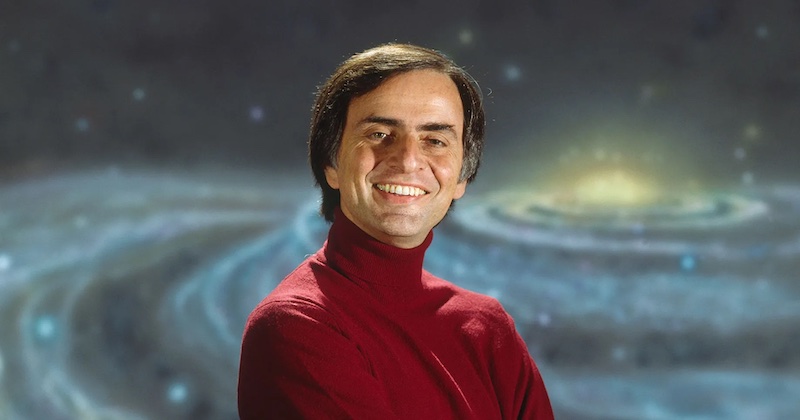


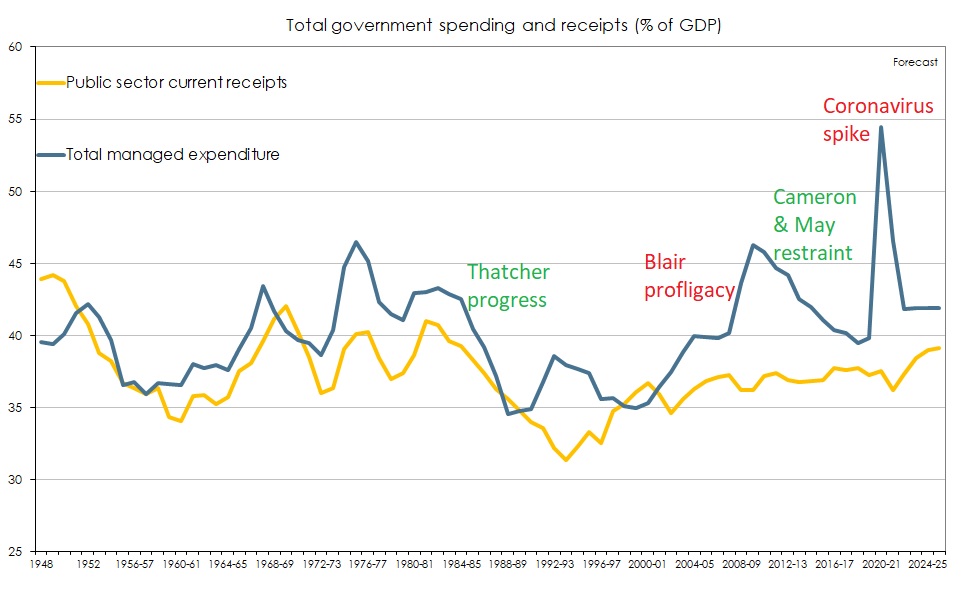
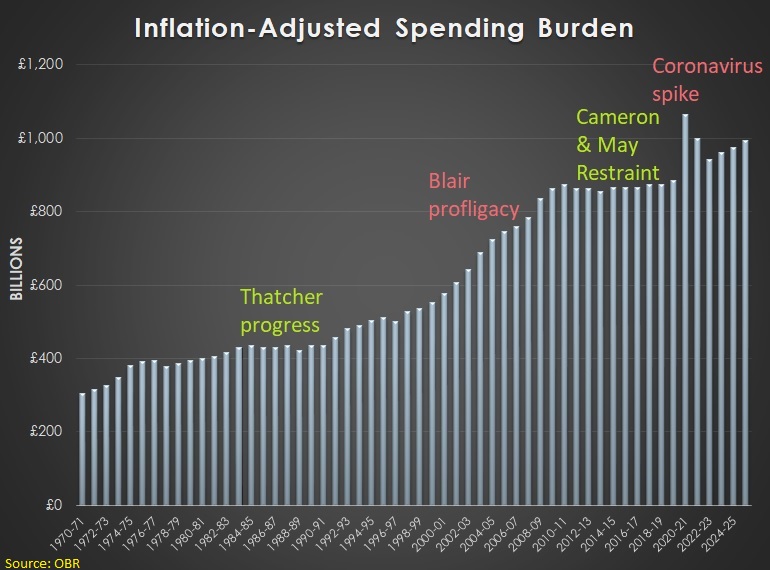

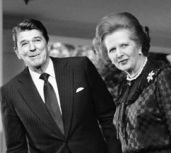



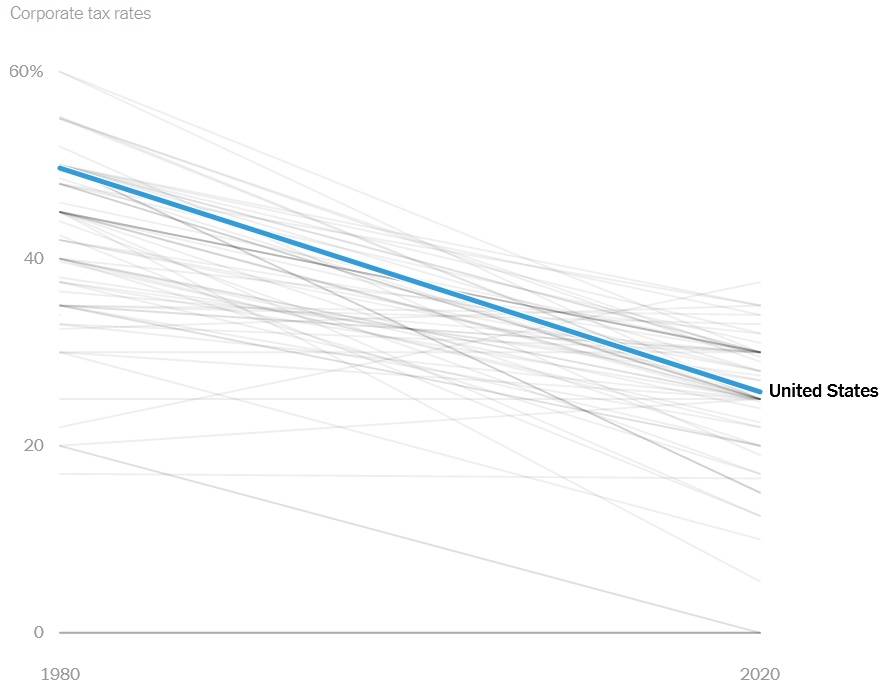

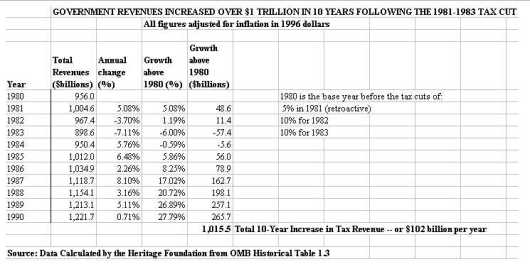

 Al Geiberger’s 59 At The Memphis Classic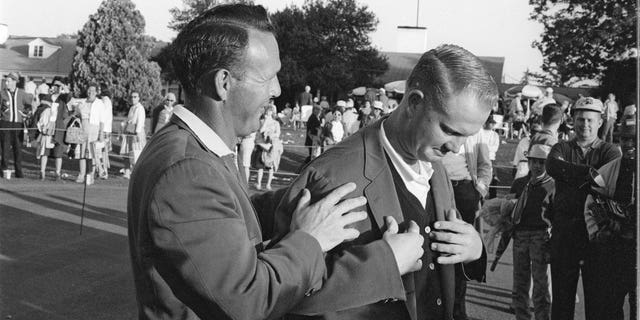
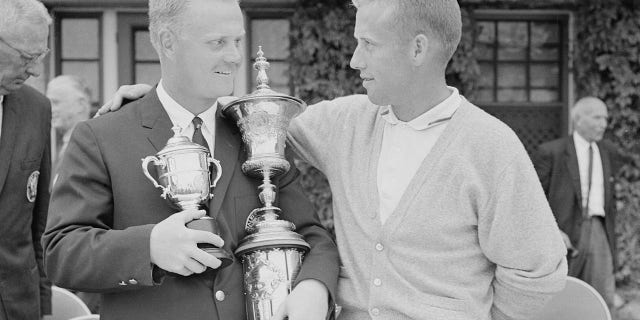
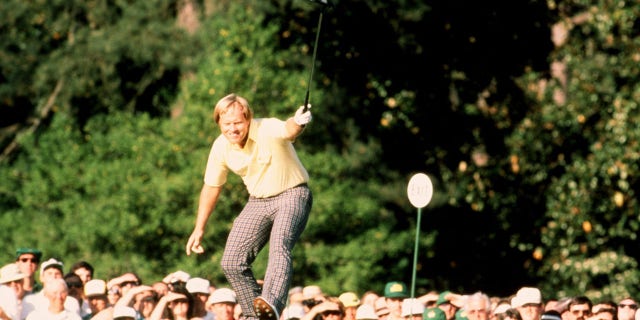



 -Christ is outside the life
 -Interests are directed by self, often









 True discernment has suffered a horrible setback in the past few decades because reason itself has been under attack within the church. As Francis Schaeffer warned nearly thirty years ago in The God Who Is There, the church is following the irrationality of secular philosophy. Consequently, reckless faith has overrun the evangelical community. Many are discarding doctrine in favor of personal experience. Others say they are willing to disregard crucial biblical distinctives in order to achieve external unity among all professing Christians. True Christianity marked by intelligent, biblical faith seems to be declining even among the most conservative evangelicals.THE ABANDONMENT OF OBJECTIVE TRUTHThe visible church in our generation has become astonishingly tolerant of aberrant teaching and outlandish ideas—and frighteningly intolerant of sound teaching. The popular evangelical conception of “truth” has become almost completely subjective. Truth is viewed as fluid, always relative, never absolute. To suggest that any objective criterion might be used to distinguish truth from error is to be egregiously out of step with the spirit of the age. In some circles, Scripture itself has been ruled out as a reliable test of truth. After all, the Bible can be interpreted in so many different ways—who can say which interpretation is right? And many believe there is truth beyond the Bible.All this relativity has had disastrous effects on the typical Christian’s ability to discern truth from error, right from wrong, good from evil. The plainest teachings of the Bible are being questioned among people who declare themselves believers in the Bible. For example, some Christians are no longer certain whether homosexuality should be classed as a sin. Others argue that the feminist agenda is compatible with biblical Christianity. “Christian” television, radio, books, and magazines serve up a preposterous smorgasbord of ideas from the merely capricious to the downright dangerous—and the average Christian is woefully ill-equipped to sort out the lies from the truth.Even to suggest that a sorting between lies and truth is necessary is viewed by many as perilously intolerant. There is a notion abroad that any dispute over doctrine is inherently evil. Concern for orthodoxy is regarded as incompatible with Christian unity. Doctrine itself is labeled divisive and those who make doctrine an issue are branded uncharitable. No one is permitted to criticize anyone else’s beliefs, no matter how unbiblical those beliefs seem to be. A recent article in Christianity Today exemplifies the trend. The article, titled “Hunting for Heresy,” profiled two well-known Christian leaders who had “come under withering attack for controversial writings.”1One is a popular speaker on the college lecture circuit and a bestselling author. He wrote a book in which he encouraged homosexuals to establish permanent live-together relationships (albeit celibate ones). He suggests the evangelical community suffers from “homophobia.” He is convinced that permanent living arrangements between homosexuals are the only alternative to loneliness for people he believes are “born with a homosexual orientation.” This man’s wife has published an article in a homosexual magazine in which she enthusiastically affirms” monogamous sexual relationships between homosexuals. The speaker-author says he has a “very, very strong” disagreement with his wife’s approval of homosexual sex, but his own view seems to allow homosexuals to engage in other kinds of physical intimacy short of actual intercourse.The other Christian leader profiled in the Christianity Today article is a woman who, with her husband, is a featured speaker for a popular, nationally-syndicated radio and television ministry. Their ministry is not a weird offshoot from some fringe cult, but an established, well-respected mainstay from the evangelical heartland. She also serves as chairperson of one of the largest evangelical student organizations in the world. This woman has written a book in which she chronicles some rather peculiar spiritual experiences. She dedicates the book to her male alter ego, an imaginary person named “Eddie Bishop” who romances her in her dreams. This woman says she also has visions of “the Christ child that is within” her. He appears to her as a drooling, emaciated, barefoot “idiot child” in a torn undershirt—”its head totally bald and lolled to one side.” The woman has engaged the services of a Catholic nun who serves as her “spiritual director,” helping to interpret her dreams and fantasies. The book mingles mysticism, Jungian psychology, out-of-body experiences, feminist ideas, subjective religious experience, and this woman’s romantic fantasies into an extraordinary amalgam. The book is frankly so bizarre that it is disturbing to read.The remarkable thing about the Christianity Today article is that the story was not written to expose the aberrant ideas being taught by these two leading evangelicals. Instead, what the magazine’s editors deemed newsworthy was the fact that these people were under attack for their views.In the world of modern evangelicalism, it is allowable to advocate the most unconventional, unbiblical doctrines—as long as you afford everyone else the same privilege. About the only thing that is taboo nowadays is the intolerance of those who dare to point out others’ errors. Anyone today who is bold enough to suggest that someone else’s ideas or doctrines are unsound or unbiblical is dismissed at once as contentious, divisive, unloving, or unchristian. It is all right toespouse any view you wish, but it is not all right to criticize another person’s views—no matter how patently unbiblical those views may be.When tolerance is valued over truth, the cause of truth always suffers. Church history shows this to be so. Only when the people of God have mounted a hardy defense of truth and sound doctrine has the church flourished and grown strong. The Reformation, the Puritan era, and the Great Awakenings are all examples of this. The times of decline in the history of the church have always been marked by an undue emphasis on tolerance—which leads inevitably to carelessness, worldliness, doctrinal compromise, and great confusion in the church.ADRIFT ON A SEA OF SUBJECTIVITYThat the church would lose her moorings in this particular age, however, poses greater dangers than ever. For in the past hundred years or so, the world has changed in a dramatic and very frightening way. People no longer look at truth the way they used to. In fact, we live under a prevailing philosophy that has become hostile to the very idea of absolute truth.From the beginning of recorded history until late last century, virtually all human philosophy assumed the necessity of absolute truth. Truth was universally understood as that which is true, not false; factual, not erroneous; correct, not incorrect; moral, not immoral; just, not unjust; right, not wrong. Practically all philosophers since the time of Plato assumed the objectivity of truth. Philosophy itself was a quest for the highest understanding of truth. Such a pursuit was presumed to be possible, even necessary, because truth was understood to be the same for every person. This did not mean that everyone agreed what truth was, of course. But virtually all agreed that whatever was true was true for everyone.That all changed in the nineteenth century with the birth of existentialism. Existentialism defies precise definition, but it includes the concept that the highest truth is subjective (having its source in the individual’s mind) rather than objective (something that actually exists outside the individual). Existentialism elevates individual experience and personal choice, minimizing or ruling out absolute standards of truth, goodness, morality, and such things. We might accurately characterize existentialism as the abandonment of objectivity. Existentialism is inherently anti-intellectual, against reason, irrational.Danish philosopher Søren Kierkegaard first used the term “existential.” Kierkegaard’s life and philosophy revolved around his experiences with Christianity. Christian ideas and biblical terminology reverberate in many of his writings. He wrote much about faith and certainly regarded himself as a Christian. Many of his ideas began as a legitimate reaction against the stale formalism of the Danish Lutheran state church. He was rightly offended at the barren ritualism of the church, properly outraged that people who had no love for God called themselves Christians just because they happened to be born in a “Christian” nation.But in his reaction against the lifeless state church, Kierkegaard set up a false antithesis. He decided that objectivity and truth were incompatible. To counter the passionless ritualism and lifeless doctrinal formulas he saw in Danish Lutheranism, Kierkegaard devised an approach to religion that was pure passion, altogether subjective. Faith, he suggested, means the rejection of reason and the exaltation of feeling and personal experience. It was Kierkegaard who coined the expression “leap of faith.” Faith to him was an irrational experience, above all a personal choice. He recorded these words in his journal on August 1, 1835: “The thing is to find a truth which is true for me, to find the idea for which I can live and die.”2Clearly, Kierkegaard had already rejected as inherently worthless the belief that truth is objective. His journal continues with these words:What would be the use of discovering so-called objective truth …. What good would it do me if truth stood before me, cold and naked, not caring whether I recognized her or not, and producing in me a shudder of fear rather than a trusting devotion? … I am left standing like a man who has rented a house and gathered all the furniture and household things together, but has not yet found the beloved with whom to share the joys and sorrows of his life…. It is this divine side of man, his inward action, which means everything—not a mass of [objective] information.3Having repudiated the objectivity of truth, Kierkegaard was left longing for an existential experience, which he believed would bring him a sense of personal fulfillment. He stood on the precipice, preparing to make his leap of faith. Ultimately, the idea he chose to live and die for was Christianity, but it was a characteristically subjective brand of Christianity that he embraced.Though Kierkegaard was virtually unknown during his lifetime, his writings have endured and have deeply influenced all subsequent philosophy. His idea of “truth that is true for me” infiltrated popular thought and set the tone for our generations radical rejection of all objective standards.Kierkegaard knew how to make irrationalism sound profound. “God does not exist; He is eternal,” he wrote. He believed Christianity was full of “existential paradoxes,” which he regarded as actual contradictions, proof that truth is irrational.Using the example of Abraham’s willingness to sacrifice Isaac (Gen. 22:1-19), Kierkegaard suggested that God called Abraham to violate moral law in slaying his son. For Kierkegaard, Abraham’s willingness to “suspend” his ethical convictions epitomized the leap of faith that is demanded of everyone. Kierkegaard believed the incident proved that “the single individual [Abraham] is higher than the universal [moral law].”4 Building on that conclusion, the Danish philosopher offered this observation: “Abraham represents faith…. He acts by virtue of the absurd, for it is precisely [by virtue of] the absurd that he as the single individual is higher than the universal.”5 “[I] cannot understand Abraham,” Kierkegaard declared, “even though in a certain demented sense I admire him more than all others.”6It is not difficult to see how such thinking thrusts all truth into the realm of pure subjectivity—even to the point of absurdity or dementia. Everything becomes relative. Absolutes dematerialize. The difference between truth and nonsense becomes meaningless. All that matters is personal experience.And one person’s experience is as valid as another’s—even if everyone’s experiences lead to contradictory conceptions of truth. “Truth that is true for me” might be different from someone else’s truth. In fact, our beliefs might be obviously contradictory, yet another person’s “truth” in no way invalidates mine. Because “truth”is authenticated by personal experience, its only relevance is for the individual who makes the leap of faith. That is existentialism.Existentialism caught on in a big way in secular philosophy. Friedrich Nietzsche, for example, also rejected reason and emphasized the will of the individual. Nietzsche probably knew nothing of Kierkegaard’s works, but their ideas paralleled at the key points. Unlike Kierkegaard, however, Nietzsche never made the leap of faith to Christianity. Instead, he leapt to the conclusion that God is dead. The truth that was “true for him,” it seems, turned out to be the opposite of the truth Kierkegaard chose. But their epistemology (the way they arrived at their ideas) was exactly the same.Later existentialists, such as Martin Heidegger and Jean-Paul Sartre, refined Kierkegaard’s ideas while following the atheism of Nietzsche. Heidegger and Sartre both believed that reason is futile and life basically meaningless. Those ideas have been a powerful force in twentieth-century thought. As the world continues to grow more atheistic, more secular, and more irrational, it helps to understand that it is being propelled in that direction by strong existentialist influences.EXISTENTIALISM INVADES THE CHURCH But don’t get the idea that existentialism’s influence is limited to the secular world. From the moment Kierkegaard wedded existentialist ideas with Christianity, neo-orthodox theology was the inevitable outcome.Neo-orthodoxy is the term used to identify an existentialist variety of Christianity. Because it denies the essential objective basis of truth—the absolute truth and authority of Scripture—neo-orthodoxy must be understood as pseudo-Christianity. Its heyday came in the middle of the twentieth century with the writings of Karl Barth, Emil Brunner, Paul Tillich, and Reinhold Niebuhr. Those men echoed the language and the thinking of Kierkegaard, speaking of the primacy of “personal authenticity,” while downplaying or denying the significance of objective truth. Barth, the father of neo-orthodoxy, explicitly acknowledged his debt to Kierkegaard.7Neo-orthodoxy’s attitude toward Scripture is a microcosm of the entire existentialist philosophy: the Bible itself is not objectively the Word of God, but it becomes the Word of God when it speaks to me individually. In neo-orthodoxy, that same subjectivism is imposed on all the doctrines of historic Christianity. Familiar terms are used, but are redefined or employed in a way that is purposely vague—not to convey objective meaning, but to communicate a subjective symbolism. After all, any “truth” theological terms convey is unique to the person who exercises faith. What the Bible means becomes unimportant. What it means to me is the relevant issue. All of this resoundingly echoes Kierkegaard’s concept of “truth that is true for me.”Thus while neo-orthodox theologians often sound as if they are affirming traditional beliefs, their actual system differs radically from the historic understanding of the Christian faith. By denying the objectivity of truth, they relegate all theology to the realm of subjective relativism. It is a theology perfectly suited for the age in which we live.And that is precisely why it is so deadly.Francis Schaeffer’s 1968 work The God Who Is There included a perceptive analysis of Kierkegaard’s influence on modern thought and modern theology.8 Schaeffer named the boundary between rationality and irrationality “the line of despair.” He noted that existentialism pushed secular thought below the line of despair sometime in the nineteenth century. Religious neo-orthodoxy was simply a johnny-come-lately response of theologians who were jumping on the existentialist bandwagon, following secular art, music, and general culture: “Neo-orthodoxy gave no new answer. What existential philosophy had already said in secular language, it now said in theological language…. [With the advent of neo-orthodoxy,] theology too has gone below the line of despair.”9Schaeffer went on to analyze how neo-orthodoxy ultimately gives way to radical mysticism:Karl Barth opened the door to the existentialistic leap in theology… He has been followed by many more, men like Reinhold Niebuhr, Paul Tillich, Bishop John Robinson, Alan Richardson and all the new theologians. They may differ in details, but their struggle is still the same—it is the struggle of modern man who has given up [rationality]. As far as the theologians are concerned … their new system is not open to verification, it must simply be believed.10Such a system, Schaeffer points out, has no integrity. Those who espouse it cannot live with the repercussions of their own illogic. “In practice a man cannot totally reject [rationality], however much his system leads him to it, unless he experiences … some form of mental breakdown.” Thus people have been forced to an even deeper level of despair: “a level of mysticism with nothing there.”11MYSTICISM: IRRATIONALITY GONE TO SEEDMysticism is the idea that spiritual reality is found by looking inward. Mysticism is perfectly suited for religious existentialism; indeed, it is its inevitable consequence. The mystic disdains rational understanding and seeks truth instead through the feelings, the imagination, personal visions, inner voices, private illumination, or other purely subjective means. Objective truth becomes practically superfluous. Mystical experiences are therefore self-authenticating; that is, they are not subject to any form of objective verification. They are unique to the person who experiences them. Since they do not arise from or depend upon any rational process, they are invulnerable to any refutation by rational means.Arthur L. Johnson writes,The experience convinces the mystic in such a way, and to such a degree, that lie simply cannot doubt its value and the correctness of what he believes it “says.”…In its crudest form this position says that believing something to be so makes it so. The idea is that ultimate reality is purely mental; therefore one is able to create whatever reality one wishes. Thus the mystic “creates” truth through his experience. In a less extreme form, the view seems to be that there are “alternate realities,” one as real as another, and that these “break in upon” the mystic in his experiences. Whatever form is taken, the criterion of truth is again a purely private and subjective experience that provides no means of verification and no safeguard against error. Nevertheless, it is seen by the mystic as being above question by others.The practical result of all this is that it is nearly impossible to reason with any convinced mystic. Such people are generally beyond the reach of reason.12Mysticism is therefore antithetical to discernment. It is an extreme form of reckless faith.Mysticism is the great melting pot into which neo-orthodoxy, the charismatic movement, anti-intellectual evangelicals, and even some segments of Roman Catholicism have been synthesized. It has produced movements like the Third Wave (a neo-charismatic movement with excessive emphasis on signs, wonders, and personal prophecies); Renovaré (an organization that blends teachings from monasticism, ancient Catholic mysticism, Eastern religion, and other mystical traditions); the spiritual warfare movement (which seeks to engage demonic powers in direct confrontation); and the modern prophecy movement (which encourages believers to seek private, extrabiblical revelation directly ftom God). The influx of mysticism has also opened evangelicalism to New-Age concepts like subliminal thought- control, inner healing, communication with angels, channeling, dream analysis, positive confession, and a host of other therapies andpractices coming directly from occult and Eastern religions. The face of evangelicalism has changed so dramatically in the past twenty years that what is called evangelicalism today is beginning to resemble what used to be called neo-orthodoxy. If anything, some segments of contemporary evangelicalism are even more subjective in their approach to truth than neo-orthodoxy ever was.It could be argued that evangelicalism never successfully resisted neo-orthodoxy. Twenty years ago evangelicals took a heroic stand against neo-orthodox influences on the issue of biblical inerrancy. But whatever victory was gained in that battle is now being sacrificed on the altar of mysticism. Mysticism renders biblical inerrancy irrelevant. After all, if the highest truth is subjective and comes from within us, then it doesn’t ultimately matter if the specifics of Scripture are true or not. If the content of faith is not the real issue, what does it really matter if the Bible has errors or not?In other words, neo-orthodoxy attacked the objective inspiration of Scripture. Evangelical mysticism attacks the objective interpretation of Scripture. The practical effect is the same. By embracing existential relativism, evangelicals are forfeiting the very riches they fought so hard to protect. If we can gain meaningful guidance from characters who appear in our fantasies, why should we bother ourselves with what the Bible says? If we are going to disregard or even reject the biblical verdict against homosexuality, what difference does it make if the historical and factual matter revealed in Scripture is accurate or inaccurate? If personal prophecies, visions, dreams, and angelic beings are available to give us up-to-the-minute spiritual direction—”fresh revelation” as it is often called—who cares if Scripture is without error in the whole or in the parts?Mysticism further nullifies Scripture by pointing people away from the sure Word of God as the only reliable object of faith. Warning of the dangers of mysticism, Schaeffer wrote,Probably the best way to describe this concept of modern theology is to say that it is faith in faith, rather than faith directed to an object which is actually there…. A modern man cannot talk about the object of his faith, only about the faith itself. So he can discuss the existence of his faith and its “size” as it exists against all reason, but that is all. Modern man’s faith turns inward…. Faith is introverted, because it has no certain object … it is rationally not open to discussion. This position, I would suggest, is actually a greater despair and darkness than the position of those modern men who commit suicide.“13The faith of mysticism is an illusion. “Truth that is true for me” is irrelevant to anyone else, because it lacks any objective basis. Ultimately, therefore, existential faith is impotent to lift anyone above the level of despair. All it can do is seek more experiences and more feelings. Multitudes are trapped in the desperate cycle of feeding off one experience while zealously seeking the next. Such people have no real concept of truth; they just believe. Theirs is a reckless faith.MEANWHILE, AT THE OTHER END OF THE SPECTRUM…Mysticism, however, is not the only form of reckless faith that threatens the contemporary church. A new movement has been gaining strength lately. Evangelicals are leaving the fold and moving into Eastern Orthodoxy, Roman Catholicism, and liturgical high-church Protestantism. Rejecting the ever-changing subjectivism of a free- wheeling existential Protestantism, they seek a religion with historical roots. Turned off by the shallow silliness that has overrun the evangelical movement, they desire a more magisterial approach. Perhaps sensing the dangers of a religion that points people inward, they choose instead a religion that emphasizes external ceremonies and dogmatic hierarchical authority.I listened to the taped testimony of one of these converts to Roman Catholicism, a former Protestant minister. He said he had graduated with highest honors from a leading Protestant seminary. He told his audience that as a student he was rabidly anti-Catholic and fully committed to Protestant Reformed doctrine (although he refuted this himself by admitting he had already rejected the crucial doctrine of justification by faith). After college he began to read Roman Catholic writings and found himself drawn to Catholic theology and liturgy. He described his initial resistance to the doctrines of purgatory, the perpetual virginity of Mary, transubstantiation, and prayers to Mary and the saints. All of those doctrines are easily disproved by the Bible.14 But this man—acknowledging that he could find no warrant anywhere in Scripture for praying to Mary—nevertheless completely changed his outlook on such matters after he tried praying the rosary and received an answer to a very specific prayer. He concluded that it must have been Mary who answered his prayer and immediately began praying regularly to her. Ultimately, he decided the Bible alone was not a sufficient rule of faith for believers, and he put his faith in papal authority and church tradition.That man’s leap of faith may not have been of the existential variety, but it was a blind leap nonetheless. He chose the other extreme of reckless faith, the kind that makes extrabiblical religious tradition the object of one’s faith.This kind of faith is reckless because it subjugates the written Word of God to oral tradition, church authority, or some other human criterion. It is an uncritical trust in an earthly religious authority—the pope, tradition, a self-styled prophet like David Koresh, or whatever. Such faith rarely jettisons Scripture altogether—but by forcing God’s Word into the mold of religious tradition, it invalidates the Word of God and renders it of no effect (cf. Matt. 15:6).The man whose taped testimony I heard is now an apologist for the Roman Catholic Church. He speaks to Catholic congregations and tells them how to counter biblical arguments against Catholicism. At the end of his testimony tape, he deals briefly with the official Catholic attitude toward Scripture. He is eager to assure his listeners that the modern Roman Catholic Church has no objection if Catholic people want to read Scripture for themselves. Even personal Bible study is all right, he says—but then hastens to add that it is not necessary to go overboard. “A verse or two a day is enough.” This man, a seminary graduate, surely should be aware that a comment like that seriously understates the importance of the written Word of God. We are commanded to meditate on Scripture day and night (Josh. 1:8; Ps. 1:2). We are to let it fill our hearts at all times (Deut. 6:6-9). We must study it diligently and handle it rightly (2 Tim. 2:15). The Bible alone is able to give us the wisdom that leads to salvation, then adequately equip us for every good work (2 Tim. 3:15-17).Discernment depends on a knowledge of Scripture. Those who are content to listen gullibly to some voice of human authority rather than hearing God’s Word and letting it speak for itself cannot be discerning. Theirs is a reckless, irrational faith.We identified the inward-looking extreme of reckless faith as mysticism. We could call this other variety rote tradition. In Isaiah 29:13, that is precisely how God Himself characterized it: “This people their lip service, but draw near with their words and honor Me with their lip service, but they remove their hearts far from Me, and their reverence for Me consists of tradition learned by rote” (emphasis added).Scripture has nothing but condemnation for rote tradition. Barren religious ritual, sacerdotal formalism, or liturgy out of a book are not the same as worship. Real worship, like faith, must engage the mind. Jesus said, “The true worshipers … worship the Father in spirit and truth; for such people the Father seeks to be His worshipers” (John 4:23).Did you realize that rote tradition was the very error for which Jesus condemned the Pharisees? He told them,“Rightly did Isaiah prophesy of you hypocrites, as it is written, ‘This people honors Me with their lips, but their heart is far away from Me. But in vain do they worship Me. teaching as doctrines the precepts of men.’ Neglecting the commandment of God, you hold to the tradition of men.”He was also saying to them, “You nicely set aside the commandment of God in order to keep your tradition” (Mark 7:6-9).Rote tradition is not unlike mysticism in that it also bypasses the mind. Paul said this of the Jews who were so absorbed in their empty religious traditions:I bear them witness that they have a zeal for God, but not in accordance with knowledge. For not knowing about God’s righteousness, and seeking to establish their own, they did not subject themselves to the righteousness of God. For Christ is the end of the law for righteousness to everyone who believes (Rom. 10:2-4).Their problem was not a lack of zeal. It was not that they were short on enthusiasm, emotionally flat, or slothful about religious observances. The issue was that the zeal they displayed was rote tradition, “not in accordance with knowledge.” They were not sufficiently discerning, and therefore their faith itself was deficient.Paul is specific in stating that their ignorance lay in trying to establish their own righteousness rather than submitting to the righteousness of God. This passage comes at the culmination of Paul’s doctrinal discussion in Romans. In context it is very clear that he was talking about the doctrine ofjustification by faith. He had thoroughly expounded this subject beginning in chapter 3. He said we are “justified as a gift by His grace through the redemption which is in Christ Jesus” (3:24). Justification is “by faith apart from works of the Law” (v.28). “God reckons righteousness apart from works” (Rom. 4:6).But instead of seeking the perfect righteousness of Christ, which God reckons to those who believe, the unbelieving Jews had set out to try to establish a righteousness of their own through works. That is where rote tradition always leads. It is a religion of works. Thus the ritualistic, unbelieving Pharisees are an exact parallel to Roman Catholicism, Eastern Orthodoxy, and most forms of ritual-laden Protestantism. All of them deny justification by faith.If the Pharisees or their followers had used the Scriptures as their standard of truth rather than rabbinical tradition, they would have known that God justifies sinners by faith. Repeatedly, Jesus said things to them like “Did you never read in the Scriptures . . . ?” (Matt. 21:42); “You are mistaken, not understanding the Scriptures, or the power of God” (22:29); and, “Are you the teacher of Israel, and do not understand these things?” (John 3:10). What He continually chided them for was their ignorance of the Scriptures. They had set rote tradition in place of the written Word of God (Matt. 15:6), and they were condemned for it.Contrast the way Luke commended the Bereans for their noblemindedness: “For they received the word [the New Testament gospel from the apostles] with great eagerness, examining the Scriptures [the Old Testament books] daily, to see whether these things were so” (Acts 17:1 1). What made the Bereans worthy of commendation? Their eagerness to be discerning. They rightly refused to blindly accept anyone’s teaching (even that of the apostles) without clear warrant from God’s Word.Spiritual discernment is, I believe, the only antidote to the existentialism of our age. Until’Christians regain the will to test everything by the rule of Scripture, reject what is false, and hold fast to what is true, the church will struggle and falter, and our testimony to a world in sin will be impaired.But if the church will rise up and stand for the truth of God’s Word against all the lies of this evil world, then we will begin to see the power of truth that sets people free (John 8:32).Endnotes1. John W. Kennedy, “Hunting for Heresy,” Christianity Today (16 May 1994).2. Robert Bretall, cd., A Kierkegaard Anthology (Princeton, N. J.: Princeton University Press, 1946), 5 (emphasis in original).3. Ibid.4. Søren Kierkegaard, Fear and Trembling, Howard V. Hong and Edna H. Hong, trans. (Princeton, N. J.: Princeton University Press, 1983), 55.5. Ibid.6. Ibid., 57.7. Karl Barth, The Epistle to the Romans, Edwyn C. Hoskyns, trans. (London: Oxford University Press, 1933). Barth cites Kierkegaard repeatedly in this, one of his earliest works.8. Francis Schaeffer, The God Who Is There, in The Complete Works of Francis A. Schaeffer, Volume I (Wheaton, Ill.: Crossway Books, 1982).9. Ibid., 53.10. Ibid., 55.11. Ibid., 58.12. Arthur L. Johnson, Faith Misguided: Exposing the Dangers of Mysticism (Chicago: Moody Press, 1988), 31-32.13. Schaeffer, 64-65, emphasis added.14. Purgatory: Luke 23:42-43 and 2 Cor. 5:8 indicate that believers go immediately to be with Christ at death. Perpetual Virginity of Mary: Matt. 1:25 states that Joseph kept Mary a virgin only until Jesus’ birth, and John 2:12 and Acts 1:14 reveal that Jesus had brothers. Transubstantiation: Heb. 7:27 and 10:12 teach that Christ made one sacrifice for sins forever; there is no need for the daily sacrifice of the Mass. Prayers to Mary and the saints: prayers, adoration, and spiritual veneration offered to anyone but God is expressly forbidden by the first commandment and elsewhere throughout Scripture (Ex. 20:3; Matt. 4:10; Acts 10:25-26; Rev. 19:10; Rev. 22:8-9).Excerpt from Reckless Faith: When the Church Loses Its Will to Discern, © 1994 by John MacArthur.We do pray this article has blessed you in some way. Our prayer is that you will use this message to better understand what is happening in our churches today.Blessings,



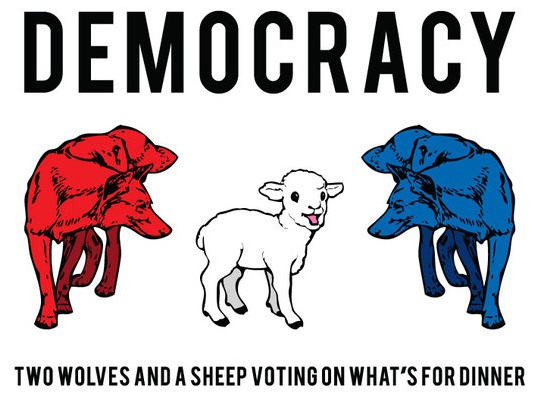


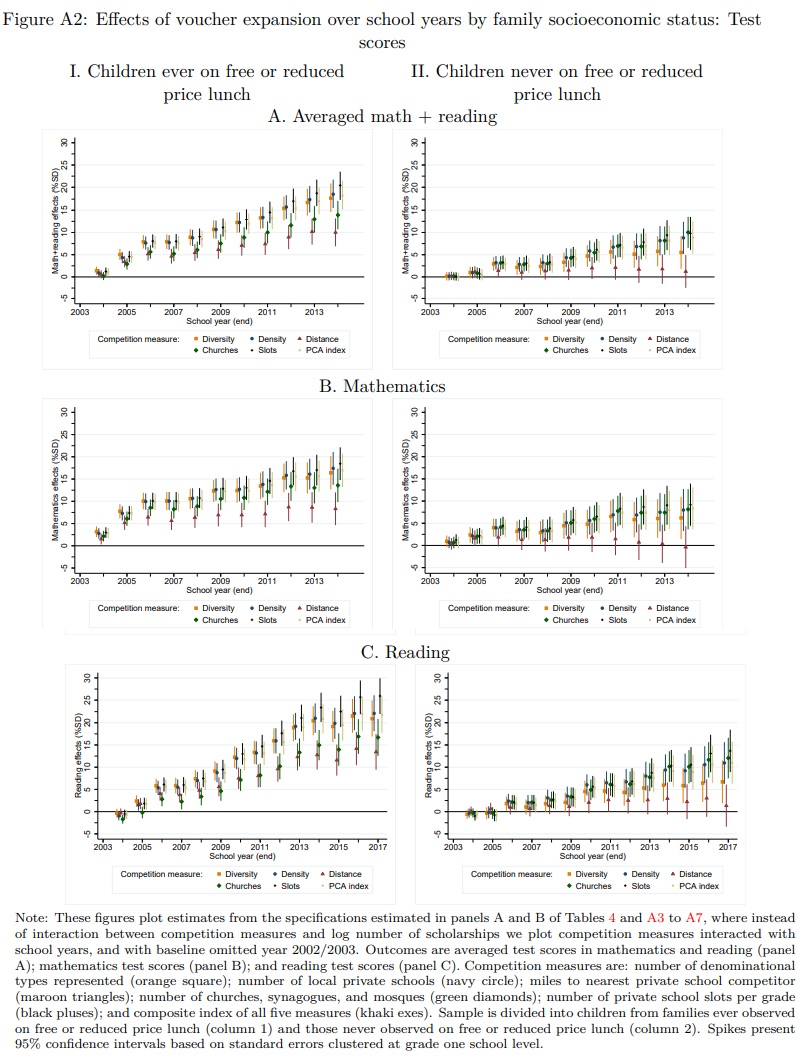





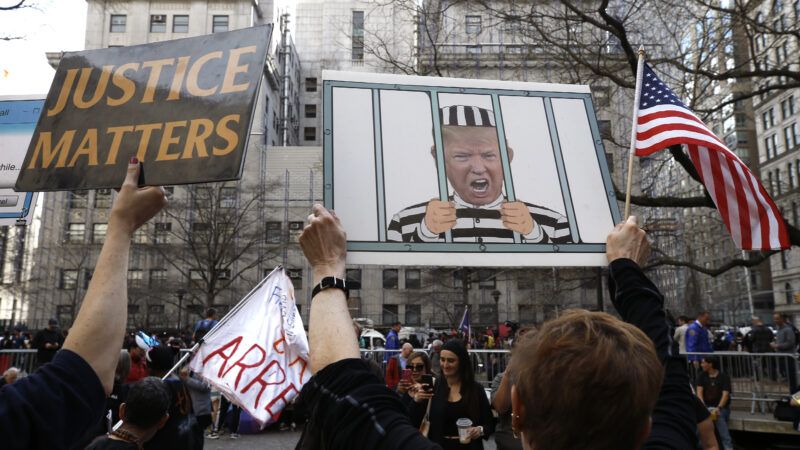


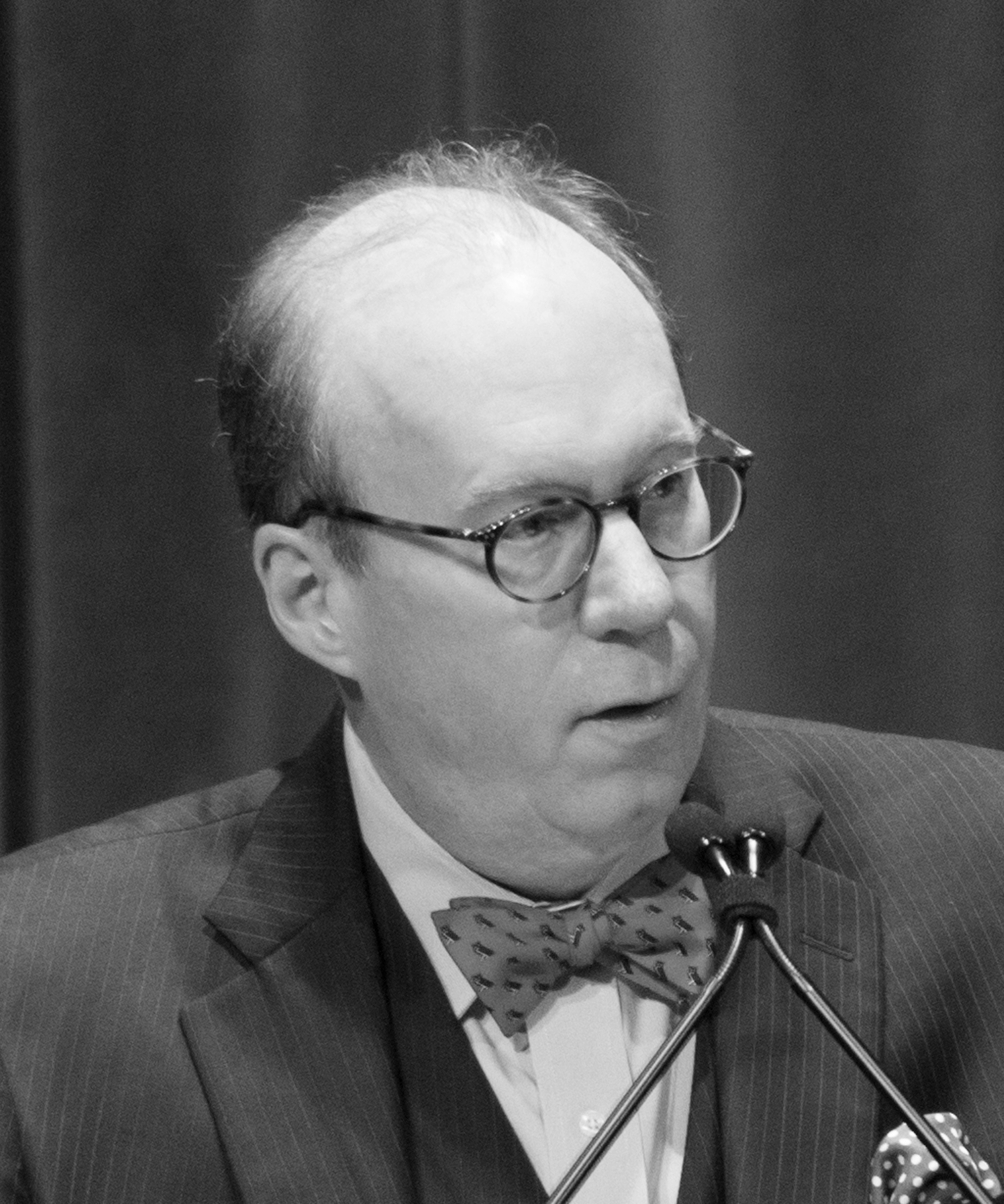 Roger Kimball is editor and publisher of The New Criterionand publisher of Encounter Books. He earned his B.A. from Bennington College and his M.A. and M.Phil. in philosophy from Yale University. He has written for numerous publications, including The Wall Street Journal and The New York Times Book Review, and is a columnist for The Spectator World, American Greatness, and The Epoch Times. He is editor or author of several books, including The Long March: How the Cultural Revolution of the 1960s Changed America, The Rape of the Masters: How Political Correctness Sabotages Art, Tenured Radicals: How Politics Has Corrupted Our Higher Education, and Vox Populi: The Perils and Promises of Populism.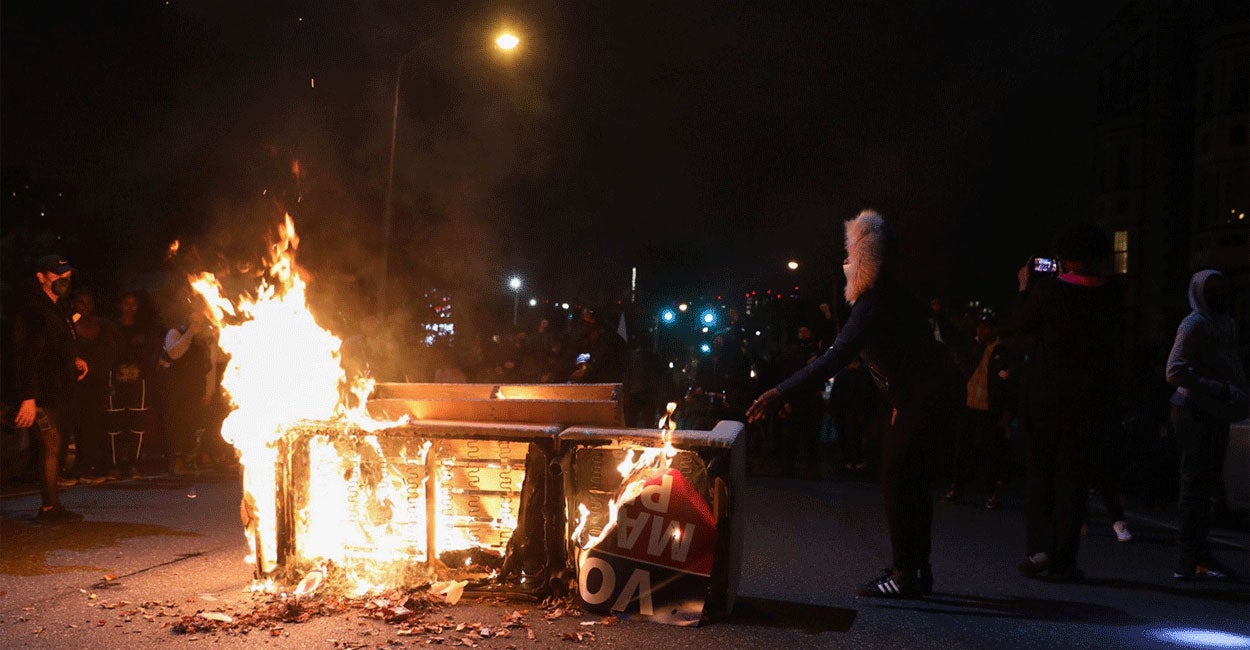





 The Daily Hatch

