Monthly Archives: April 2017

RESPONDING TO HARRY KROTO’S BRILLIANT RENOWNED ACADEMICS!! Part 126 Christian de Duve, Nobel Prize-winning Belgian cytologist and biochemist, “There is a complete disassociation between the dogma and belief and the way we scientists approach the search for truth.” (Post includes portion of my 5-15-94 letter to him)

_______

On November 21, 2014 I received a letter from Nobel Laureate Harry Kroto and it said:

…Please click on this URL http://vimeo.com/26991975

and you will hear what far smarter people than I have to say on this matter. I agree with them.

Harry Kroto

I have attempted to respond to all of Dr. Kroto’s friends arguments and I have posted my responses one per week for over a year now. Here are some of my earlier posts:

Arif AhmedHaroon Ahmed,  Jim Al-Khalili, Sir David AttenboroughMark Balaguer, Horace Barlow, Michael BateSir Patrick BatesonSimon Blackburn, Colin Blakemore, Ned BlockPascal BoyerPatricia ChurchlandAaron CiechanoverNoam Chomsky, Brian CoxPartha Dasgupta,  Alan Dershowitz, Frank DrakeHubert Dreyfus, John DunnBart Ehrman, Mark ElvinRichard Ernst, Stephan Feuchtwang, Robert FoleyDavid Friend,  Riccardo GiacconiIvar Giaever , Roy GlauberRebecca GoldsteinDavid J. Gross,  Brian Greene, Susan GreenfieldStephen F Gudeman,  Alan Guth, Jonathan HaidtTheodor W. Hänsch, Brian Harrison,  Stephen HawkingHermann Hauser, Robert HindeRoald Hoffmann,  Bruce HoodGerard ‘t HooftCaroline HumphreyNicholas Humphrey,  Herbert Huppert,  Gareth Stedman Jones, Steve JonesShelly KaganMichio Kaku,  Stuart KauffmanMasatoshi Koshiba,  Lawrence KraussHarry Kroto, George Lakoff,  Rodolfo LlinasElizabeth Loftus,  Alan MacfarlaneDan McKenzie,  Mahzarin BanajiPeter MillicanMarvin MinskyLeonard Mlodinow,  P.Z.Myers,   Yujin NagasawaAlva NoeDouglas Osheroff, David Parkin,  Jonathan Parry, Roger Penrose,  Saul PerlmutterHerman Philipse,  Carolyn PorcoRobert M. PriceVS RamachandranLisa RandallLord Martin ReesColin RenfrewAlison Richard,  C.J. van Rijsbergen,  Oliver Sacks, John SearleMarcus du SautoySimon SchafferJ. L. Schellenberg,   Lee Silver Peter Singer,  Walter Sinnott-ArmstrongRonald de Sousa, Victor StengerJohn SulstonBarry Supple,   Leonard Susskind, Raymond TallisMax TegmarkNeil deGrasse Tyson,  Martinus J. G. Veltman, Craig Venter.Alexander Vilenkin, Sir John Walker, James D. WatsonFrank WilczekSteven Weinberg, and  Lewis Wolpert,

Origin, Evolution, and the Future of Life on Earth

___

Ultimate Reality of Christian de Duve

______

The Origin, Evolution & Future of Life (H1150) – Full Video

____

Christian de Duve

From Wikipedia, the free encyclopedia
Christian de Duve
Christian de Duve.tif

de Duve lecturing on the origin of the eukaryotic cell in October 2012
Born Christian René Marie Joseph de Duve
2 October 1917
Thames Ditton, Surrey, Great Britain
Died 4 May 2013 (aged 95)
Grez-Doiceau, Belgium
Residence Belgium
Citizenship Belgian
Nationality Belgium
Fields
Institutions
Alma mater
  • Onze-Lieve-Vrouwecollege
  • Catholic University of Leuven
Known for Cell organelles
Notable awards
Spouse Janine Herman (m. 1943; d. 2008)
Children
  • Two sons, two daughters:
  • Thierry de Duve
  • Alain de Duve
  • Anne de Duve
  • Françoise de Duve

Dutch Queen Beatrix meets 5 Nobel Prize winners: Paul Berg, Christian de Duve, Steven Weinberg, Manfred Eigen, Nicolaas Bloembergen (1983)

Christian René Marie Joseph, Viscount de Duve (2 October 1917 – 4 May 2013) was a Nobel Prize-winning Belgian cytologist and biochemist.[2][3] He made serendipitous discoveries of two cell organelles, peroxisome and lysosome, for which he shared the Nobel Prize in Physiology or Medicine in 1974 with Albert Claude and George E. Palade (“for their discoveries concerning the structural and functional organization of the cell”).[4] In addition to peroxisome and lysosome, he invented the scientific names such as autophagy, endocytosis, and exocytosis in a single occasion.[5][6][7][8][9]

A son of Belgian refugees during the First World War, de Duve was born in Thames Ditton, Surrey, Great Britain.[10] His family returned to Belgium in 1920. He was educated by the Jesuits at Onze-Lieve-Vrouwinstituut in Antwerp, and studied medicine at the Catholic University of Leuven. Upon earning his MD in 1941, he joined research in chemistry, working on insulin and its role in diabetes mellitus. His thesis earned him the highest university degree agrégation de l’enseignement supérieur (equivalent to PhD) in 1945. With his work on the purification of penicillin, he obtained an MSc degree in 1946. He went for further training under (later Nobel Prize winners) Hugo Theorell at the Karolinska Institutet in Stockholm, and Carl and Gerti Cori at the Washington University in St. Louis. He joined the faculty of medicine at Leuven in 1947. In 1960 he was invited to the Rockfeller Institute (now Rockefeller University). With mutual arrangement with Leuven, he became professor in both universities from 1962, dividing his time between Leuven and New York. He became emeritus professor of Leuven university in 1985, and of Rockefeller in 1988.

De Duve was decorated with Viscount in 1989 by King Baudouin of Belgium. He was also a recipient of Francqui Prize, Gairdner Foundation International Award, Heineken Prize, and E. B. Wilson Medal. In 1974 he founded the International Institute of Cellular and Molecular Pathology in Brussels, eventually renamed the de Duve Institute in 2005. He was the founding President of the L’Oréal-UNESCO Awards for Women in Science.[11]

He died on 4 May (Saturday) 2013 by self-induced euthanasia in the presence of all of his children.[12]

Early life and education[edit]

De Duve was born of a shopkeeper Alphonse de Duve and wife Madeleine Pungs in the village of Thames Ditton, near London. His parents fled Belgium at the outbreak of the First World War. After the war in 1920, at age three, he and his family returned to Belgium. He was a precocious boy, always the best student (primus perpetuus as he recalled) in school, except for one year when he was pronounced “out of competition” to give chance to other students.[2] He was educated by the Jesuits at Onze-Lieve-Vrouwinstituut in Antwerp, before studying at the Catholic University of Leuven in 1934.[13] He wanted to specialize in endocrinology and joined the laboratory of the Belgian physiologist Joseph P. Bouckaert. During his last year at medical school in 1940, the Germans invaded Belgium. He was drafted to the Belgian army, and posted in southern France as medical officer. There, he was almost immediately taken as prisoner of war by Germans. But fortunate of his ability to speak fluent German and Flemish, he outwitted his captors and escaped back to Belgium. (The adventure he later described as “more comical than heroic”.)[14] He immediately continued his medical course, and obtained his MD in 1941 from Leuven. His primary research was on insulin and its role in glucose metabolism. He made an initial discovery that a commercial preparation of insulin was contaminated with another pancreatic hormone, the insulin antagonist glucagon. However, laboratory supplies at Leuven were in shortage, he therefore enrolled in a programme to earn a degree in chemistry at the Cancer Institute. His research on insulin was summed up in a 400-page book titled Glucose, Insuline et Diabète (Glucose, Insulin and Diabetes) published in 1945, simultaneously in Brussels and Paris. The book was condensed into a technical dissertation which earned him the most advanced degree at the university level agrégation de l’enseignement supérieur (an equivalent of a doctorate – he called it “a sort of glorified Ph.D.”) in 1945.[14] His thesis was followed by a number of scientific publications.[15] He subsequently obtained MSc in chemistry in 1946, for which he worked on the purification of penicillin.[16][17] To enhance his skill in biochemistry, he trained in the laboratory of Hugo Theorell (who later won The Nobel Prize in Physiology or Medicine in 1955) at the Nobel Medical Institute in Stockholm for 18 months during 1946-1947. In 1947 he received a financial assistance as Rockefeller Foundation fellow and worked for six months with Carl and Gerti Cori‘s at Washington University in St. Louis (the husband and wife were joint winners of The Nobel Prize in Physiology or Medicine in 1947).[18]

Career and research[edit]

In March 1947 de Duve joined the faculty of the medical school of the Catholic University of Leuven teaching physiological chemistry. In 1951 he became full professor. In 1960 Detlev Bronk, the then president of the Rockfeller Institute (what is now Rockefeller University) of New York City, met him at Brussels and offered him professorship and a laboratory. The rector of Leuven, afraid of entirely losing de Duve, made a compromise over dinner that de Duve would still be under part-time appointment with a relief from teaching and conducting examinations. The rector and Bronk made an agreement which would intilally last for five years. The official implementation was in 1962, and de Duve simultaneously headed the research laboratories at Leuven and at Rockefeller University, dividing his time between New York and Leuven.[19] In 1969 the Leuven university was split into two separate universities. He joined the French-speaking side of Université catholique de Louvain. He took emeritus status at Université catholique de Louvain in 1985 and at Rockefeller in 1988, though he continued to conduct research. Among other subjects, he studied the distribution of enzymes in rat liver cells using rate-zonal centrifugation. His work on cell fractionation provided an insight into the function of cell structures. He specialized in subcellular biochemistry and cell biology and discovered new cell organelles.[20][21][22][23][24][25][26][27][28][29][30][31][32][33]

Personal life[edit]

De Duve was brought up as a Roman Catholic. In his later years he tended towards agnosticism, if not strict atheism.[67][68] However, de Duve also thought that “Most biologists, today, tend to see life and mind as cosmic imperatives, written into the very fabric of the universe, rather than as extraordinarily improbable products of chance.[69] “It would be an exaggeration to say I’m not afraid of death,” he explicitly said to a Belgian newspaper Le Soir just a month before his death, “but I’m not afraid of what comes after, because I’m not a believer.”[70][71] He strongly supported biological evolution as a fact, and dismissive of creation science and intelligent design, as explicitly stated in his last book, Genetics of Original Sin: The Impact of Natural Selection on the Future of Humanity. He was among the seventy-eight Nobel laureates in science to endorse the effort to repeal Louisiana Science Education Act of 2008.[72]

De Duve married Janine Herman on 30 September 1943. Together they had had two sons, Thierry and Alain, and two daughters, Anne and Françoise. Janine died in 2008, aged 86.[16]

Death[edit]

De Duve died on 4 May 2013, at his home in Nethen, Belgium, at the age of 95. He decided to end his life by legal euthanasia, performed by two doctors before his four children. He had been long suffering from cancer and atrial fibrillation, and his health problems were exacerbated by a recent fall in his home. He is survived by two sons and two daughters; two brothers, Pierre and Daniel; seven grandchildren; and two great-grandchildren.[73][74][75]

De Duve was cremated as he had willed, and his ashes were distributed among family members and friends.[3]

Awards and honours[edit]

De Duve won the Francqui Prize for Biological and Medical Sciences in 1960, and the Nobel Prize for Physiology or Medicine in 1974. King Baudouin of Belgium honoured him to Viscount in 1989.[16] He was the recipient of the Canada Gairdner International Award in 1967, and the Dr H.P. Heineken Prize for Biochemistry and Biophysics in 1973 from the Royal Netherlands Academy of Arts and Sciences. He was elected a foreign associate of the US National Academy of Sciences in 1975. He won the Harden Medal of the Biochemical Society of Great Britain in 1978; the Theobald Smith Award from the Albany Medical College in 1981; the Jimenez Diaz Award in 1985; the Innovators of Biochemistry Award from Medical College of Virginia in 1986; and the E. B. Wilson Medal from the American Society for Cell Biology in 1989.[76] He was also a member of the Royal Academies of Medicine and the Royal Academy of Sciences, Arts, and of Literature of Belgium; the Pontifical Academy of Sciences of the Vatican; the American Academy of Arts and Sciences; the French National Academy of Medicine; the Academy of Sciences of Paris; the Deutsche Akademie der Naturforscher Leopoldina; the American Philosophical Society. He was elected a Foreign Member of the Royal Society (ForMemRS) in 1988.[1] In addition, he received honorary doctorates from eighteen universities around the world.[18]

Legacy[edit]

De Duve founded a multidisciplinary biomedical research institute at Université catholique de Louvain in 1974, called the International Institute of Cellular and Molecular Pathology (ICP), and later renamed “de Duve Institute.”[77] He remained its president until 1991. On his 80th birthday in 1997 it was renamed the Christian de Duve Institute of Cellular Pathology. In 2005 it was further contracted to simply the de Duve Institute.[78]

De Duve was one of the founding members of the Belgian Society of Biochemistry and Molecular Biology, established on 15 September 1951.[79]

De Duve is remembered as an inventor of important scientific terminology. He coined the word lysosome in 1955, peroxisome in 1966, and autophagy, endocytosis, and exocytosis in one instance at the Ciba Foundation Symposium on Lysosomes held in London during 12–14 February 1963, while he, “was in a word-coining mood.”[21][80]

De Duve’s life, including his work resulting in a Nobel Prize, and his passion for biology is the subject of a documentary film Portrait of a Nobel Prize: Christian de Duve (Portrait de Nobel : Christian de Duve), directed by Aurélie Wijnants. It was first aired on Eurochannel in 2012.[81]

__

In  the third video below in the 144th clip in this series are his words and  my response is below them. 

50 Renowned Academics Speaking About God (Part 1)

Another 50 Renowned Academics Speaking About God (Part 2

A Further 50 Renowned Academics Speaking About God (Part 3)

____

Quote from Christian de Duve in the film series “A Further 50 Renowned Academics Speaking About God (Part 3)” and my response below ( Original interview was in 2005 and was conducted by Harry Kroto at the annual Lindau meeting):

Of course, I fully agree with you and I think with most of my fellow scientists. There is a complete disassociation between the dogma and belief and the way we scientists approach the search for truth.   And so obviously as a scientist and being brought up as a Catholic I could not safely continue accepting the teaching of the church. 

Let me make two observations here.

FIRST, I think a person needs to take time examine the historical accuracy of the Bible. If the Bible is true then history and historical records should have something to say about that.

Here are some of the posts I have done in the past on the subject and if you like you could just google these subjects: 1. The Babylonian Chronicleof Nebuchadnezzars Siege of Jerusalem2. Hezekiah’s Siloam Tunnel Inscription. 3. Taylor Prism (Sennacherib Hexagonal Prism)4. Biblical Cities Attested Archaeologically. 5. The Discovery of the Hittites6.Shishak Smiting His Captives7. Moabite Stone8Black Obelisk of Shalmaneser III9A Verification of places in Gospel of John and Book of Acts., 9B Discovery of Ebla Tablets10. Cyrus Cylinder11. Puru “The lot of Yahali” 9th Century B.C.E.12. The Uzziah Tablet Inscription13. The Pilate Inscription14. Caiaphas Ossuary14 B Pontius Pilate Part 214c. Three greatest American Archaeologists moved to accept Bible’s accuracy through archaeology.,

SECOND, if there is no lasting meaning to life then CHANCE RULES. Let me discuss that a little more below.

Christian de Duve was very critical of Creationism!!!

Chrisian de Duve was a very sharp critic of creationism even though he grew up in a family that who were committed Catholics. In the Wikipedia article cited above we read these words:

“Most biologists, today, tend to see life and mind as cosmic imperatives, written into the very fabric of the universe, rather than as extraordinarily improbable products of chance.[69] “It would be an exaggeration to say I’m not afraid of death,” he explicitly said to a Belgian newspaper Le Soir just a month before his death, “but I’m not afraid of what comes after, because I’m not a believer.”[70][71] He strongly supported biological evolution as a fact, and dismissive of creation science and intelligent design, as explicitly stated in his last book, Genetics of Original Sin: The Impact of Natural Selection on the Future of Humanity. He was among the seventy-eight Nobel laureates in science to endorse the effort to repeal Louisiana Science Education Act of 2008.[72]

I do want to salute him for at least taking a careful look and seeing that there were clearly two different paths we can take philosophically. We can either realize that the answer to find meaning in life is found in putting your faith and trust in Jesus Christ and the Bible is true from cover to cover and can be trusted. Or we have to say that it is all by CHANCE. Below are the words of Christian de Duve: 

“The answer of modern molecular biology to this much-debated question is categorical: chance, and chance alone, did it all, from primeval soup to man, with only natural selection to sift its effects. This affirmation now rests on overwhelming factual evidence.”

A Guided Tour Of The Living Cell, Volume Two, Page 357
Scientific American Library, 1984

Portion of my 5-15-94 letter to Christian de Duve

On May 15, 1994 on the 10th anniversary of the passing of Francis Schaeffer I attempted to send a letter to almost every living Nobel Prize winner and I believe  Dr.Christian de Duve  was probably among that group and here is a portion of that letter below:

I have enclosed a cassette tape by Adrian Rogers and it includes  a story about  Charles Darwin‘s journey from  the position of theistic evolution to agnosticism. Here are the four bridges that Adrian Rogers says evolutionists can’t cross in the CD  “Four Bridges that the Evolutionist Cannot Cross.” 1. The Origin of Life and the law of biogenesis. 2. The Fixity of the Species. 3.The Second Law of Thermodynamics. 4. The Non-Physical Properties Found in Creation.  

Evolution Fact of Fiction Adrian Rogers (same message I put on cassette tape back in 1994)

Uploaded on Nov 13, 2011

The Theory of Evolution Destroyed!!


Adrian Rogers is pictured below and Francis Schaeffer above.
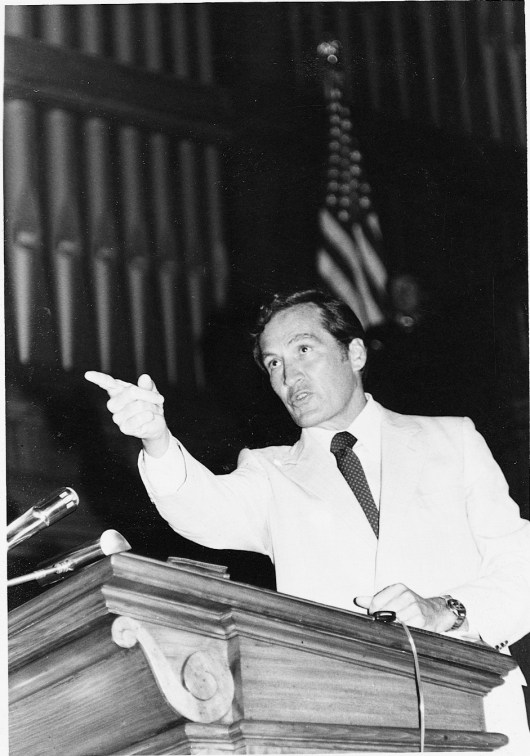
 

In the first 3 minutes of the cassette tape is the hit song “Dust in the Wind.” Below I have given you some key points  Francis Schaeffer makes about the experiment that Solomon undertakes in the book of Ecclesiastes to find satisfaction by  looking into  learning (1:16-18), laughter, ladies, luxuries,  and liquor (2:1-3, 8, 10, 11), and labor (2:4-6, 18-20).

Schaeffer noted that Solomon took a look at the meaning of life on the basis of human life standing alone between birth and death “under the sun.” This phrase UNDER THE SUN appears over and over in Ecclesiastes. The Christian Scholar Ravi Zacharias noted, “The key to understanding the Book of Ecclesiastes is the term UNDER THE SUN — What that literally means is you lock God out of a closed system and you are left with only this world of Time plus Chance plus matter.”

Here the first 7 verses of Ecclesiastes followed by Schaeffer’s commentary on it:

The words of the Preacher, the son of David, king in Jerusalem. Vanity of vanities, says the Preacher, vanity of vanities! All is vanity. What does man gain by all the toil at which he toils under the sun? A generation goes, and a generation comes, but the earth remains forever. The sun rises, and the sun goes down, and hastens to the place where it rises. The wind blows to the south and goes around to the north; around and around goes the wind, and on its circuits the wind returns. All streams run to the sea, but the sea is not full; to the place where the streams flow, there they flow again.  

Solomon is showing a high degree of comprehension of evaporation and the results of it.  Seeing also in reality nothing changes. There is change but always in a set framework and that is cycle. You can relate this to the concepts of modern man. Ecclesiastes is the only pessimistic book in the Bible and that is because of the place where Solomon limits himself. He limits himself to the question of human life, life under the sun between birth and death and the answers this would give.

Solomon doesn’t place man outside of the cycle. Man doesn’t escape the cycle. Man is in the cycle. Birth and death and youth and old age.

There is no doubt in my mind that Solomon had the same experience in his life that I had as a younger man (at the age of 18 in 1930). I remember standing by the sea and the moon arose and it was copper and beauty. Then the moon did not look like a flat dish but a globe or a sphere since it was close to the horizon. One could feel the global shape of the earth too. Then it occurred to me that I could contemplate the interplay of the spheres and I was exalted because I thought I can look upon them with all their power, might, and size, but they could contempt nothing. Then came upon me a horror of great darkness because it suddenly occurred to me that although I could contemplate them and they could contemplate nothing yet they would continue to turn in ongoing cycles when I saw no more forever and I was crushed.

Watching the film HOW SHOULD WE THEN LIVE? in 1979 impacted my life greatly

Francis Schaeffer in the film WHATEVER HAPPENED TO THE HUMAN RACE?
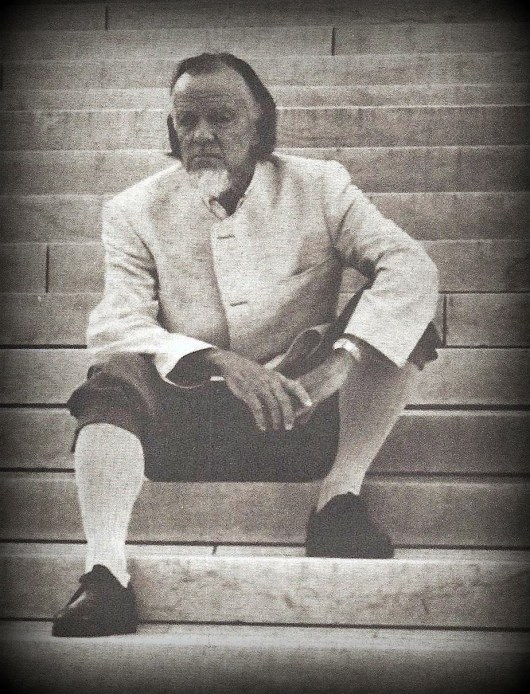
Francis and Edith Schaeffer


_______

Let me show you some inescapable conclusions if you choose to live without God in the picture. Schaeffer noted that Solomon came to these same conclusions when he looked at life “under the sun.”

  1. Death is the great equalizer (Eccl 3:20, “All go to the same place; all come from dust, and to dust all return.”)
  2. Chance and time have determined the past, and they will determine the future.  (Ecclesiastes 9:11-13 “I have seen something else under the sun:  The race is not to the swift
    or the battle to the strong, nor does food come to the wise or wealth to the brilliant  or favor to the learned; but time and chance happen to them all.  Moreover, no one knows when their hour will come: As fish are caught in a cruel net, or birds are taken in a snare, so people are trapped by evil times  that fall unexpectedly upon them.”)
  3. Power reigns in this life, and the scales are not balanced(Eccl 4:1; “Again I looked and saw all the oppression that was taking place under the sun: I saw the tears of the oppressed—
    and they have no comforter; power was on the side of their oppressors—  and they have no comforter.” 7:15 “In this meaningless life of mine I have seen both of these: the righteous perishing in their righteousness,  and the wicked living long in their wickedness. ).
  4. Nothing in life gives true satisfaction without God including knowledge (1:16-18), ladies and liquor (2:1-3, 8, 10, 11), and great building projects (2:4-6, 18-20).
  5. There is no ultimate lasting meaning in life. (1:2)

By the way, the final chapter of Ecclesiastes finishes with Solomon emphasizing that serving God is the only proper response of man. Solomon looks above the sun and brings God back into the picture in the final chapter of the book in Ecclesiastes 12:13-14, “ Now all has been heard; here is the conclusion of the matter: Fear God and keep his commandments, for this is the whole duty of man.  For God will bring every deed into judgment, including every hidden thing, whether it is good or evil.”

The answer to find meaning in life is found in putting your faith and trust in Jesus Christ. The Bible is true from cover to cover and can be trusted. In 1978 I heard the song “Dust in the Wind” by Kansas when it rose to #6 on the charts. That song told me that Kerry Livgren the writer of that song and a member of Kansas had come to the same conclusion that Solomon had and that “all was meaningless UNDER THE SUN,” and looking ABOVE THE SUN was the only option.  I remember mentioning to my friends at church that we may soon see some members of Kansas become Christians because their search for the meaning of life had obviously come up empty even though they had risen from being an unknown band to the top of the music business and had all the wealth and fame that came with that.

Livgren wrote, “All we do, crumbles to the ground though we refuse to see, Dust in the Wind, All we are is dust in the wind, Don’t hang on, Nothing lasts forever but the Earth and Sky, It slips away, And all your money won’t another minute buy.”

Both Kerry Livgren and Dave Hope of Kansas became Christians eventually. Kerry Livgren first tried Eastern Religions and Dave Hope had to come out of a heavy drug addiction. I was shocked and elated to see their personal testimony on The 700 Club in 1981.  Livgren lives in Topeka, Kansas today where he teaches “Diggers,” a Sunday school class at Topeka Bible Church. Hope is the head of Worship, Evangelism and Outreach at Immanuel Anglican Church in Destin, Florida.

Related posts:

FRANCIS SCHAEFFER ANALYZES ART AND CULTURE Part 52 THE BEATLES (Part D, There is evidence that the Beatles may have been exposed to Francis Schaeffer!!!) (Feature on artist Anna Margaret Rose Freeman )

______________   George Harrison Swears & Insults Paul and Yoko Lucy in the Sky with Diamonds- The Beatles The Beatles:   I have dedicated several posts to this series on the Beatles and I don’t know when this series will end because Francis Schaeffer spent a lot of time listening to the Beatles and talking […]

FRANCIS SCHAEFFER ANALYZES ART AND CULTURE Part 51 THE BEATLES (Part C, List of those on cover of Stg.Pepper’s ) (Feature on artist Raqib Shaw )

  The Beatles in a press conference after their Return from the USA Uploaded on Nov 29, 2010 The Beatles in a press conference after their Return from the USA. The Beatles:   I have dedicated several posts to this series on the Beatles and I don’t know when this series will end because Francis […]

FRANCIS SCHAEFFER ANALYZES ART AND CULTURE Part 50 THE BEATLES (Part B, The Psychedelic Music of the Beatles) (Feature on artist Peter Blake )

__________________   Beatles 1966 Last interview I have dedicated several posts to this series on the Beatles and I don’t know when this series will end because Francis Schaeffer spent a lot of time listening to the Beatles and talking and writing about them and their impact on the culture of the 1960’s. In this […]

FRANCIS SCHAEFFER ANALYZES ART AND CULTURE Part 49 THE BEATLES (Part A, The Meaning of Stg. Pepper’s Cover) (Feature on artist Mika Tajima)

_______________ The Beatles documentary || A Long and Winding Road || Episode 5 (This video discusses Stg. Pepper’s creation I have dedicated several posts to this series on the Beatles and I don’t know when this series will end because Francis Schaeffer spent a lot of time listening to the Beatles and talking and writing about […]

FRANCIS SCHAEFFER ANALYZES ART AND CULTURE PART 48 “BLOW UP” by Michelangelo Antonioni makes Philosophic Statement (Feature on artist Nancy Holt)

_______________ Francis Schaeffer pictured below: _____________________ I have included the 27 minute  episode THE AGE OF NONREASON by Francis Schaeffer. In that video Schaeffer noted,  ” Sergeant Pepper’s Lonely Hearts Club Band…for a time it became the rallying cry for young people throughout the world. It expressed the essence of their lives, thoughts and their feelings.” How Should […]

FRANCIS SCHAEFFER ANALYZES ART AND CULTURE Part 47 Woody Allen and Professor Levy and the death of “Optimistic Humanism” from the movie CRIMES AND MISDEMEANORS Plus Charles Darwin’s comments too!!! (Feature on artist Rodney Graham)

Crimes and Misdemeanors: A Discussion: Part 1 ___________________________________ Today I will answer the simple question: IS IT POSSIBLE TO BE AN OPTIMISTIC SECULAR HUMANIST THAT DOES NOT BELIEVE IN GOD OR AN AFTERLIFE? This question has been around for a long time and you can go back to the 19th century and read this same […]

FRANCIS SCHAEFFER ANALYZES ART AND CULTURE PART 46 Friedrich Nietzsche (Featured artist is Thomas Schütte)

____________________________________ Francis Schaeffer pictured below: __________ Francis Schaeffer has written extensively on art and culture spanning the last 2000years and here are some posts I have done on this subject before : Francis Schaeffer’s “How should we then live?” Video and outline of episode 10 “Final Choices” , episode 9 “The Age of Personal Peace and Affluence”, episode 8 […]

FRANCIS SCHAEFFER ANALYZES ART AND CULTURE Part 45 Woody Allen “Reason is Dead” (Feature on artists Allora & Calzadilla )

Love and Death [Woody Allen] – What if there is no God? [PL] ___________ _______________ How Should We then Live Episode 7 small (Age of Nonreason) #02 How Should We Then Live? (Promo Clip) Dr. Francis Schaeffer 10 Worldview and Truth Two Minute Warning: How Then Should We Live?: Francis Schaeffer at 100 Francis Schaeffer […]

FRANCIS SCHAEFFER ANALYZES ART AND CULTURE Part 44 The Book of Genesis (Featured artist is Trey McCarley )

___________________________________ Francis Schaeffer pictured below: ____________________________ Francis Schaeffer “BASIS FOR HUMAN DIGNITY” Whatever…HTTHR Dr. Francis schaeffer – The flow of Materialism(from Part 4 of Whatever happened to human race?) Dr. Francis Schaeffer – The Biblical flow of Truth & History (intro) Francis Schaeffer – The Biblical Flow of History & Truth (1) Dr. Francis Schaeffer […]

__


_____

MUSIC MONDAY Rolling Stones 1972 Exile On Main Street full album

_

Rolling Stones 1972 Exile On Main Street full album

Exile on Main St

From Wikipedia, the free encyclopedia
Exile on Main St
ExileMainSt.jpg
Studio album by The Rolling Stones
Released 12 May 1972
Recorded October 1970, June 1971 – March 1972
Studio Olympic Studios, London; Nellcôte, France; Sunset Sound Recorders, Los Angeles
Genre Rock and roll, hard rock[1]
Length 67:07
Language English
Label Rolling Stones
Producer Jimmy Miller
The Rolling Stones chronology
Sticky Fingers
(1971)
Exile on Main St
(1972)
Goats Head Soup
(1973)
Singles from Exile on Main St
  1. Tumbling Dice” / “Sweet Black Angel
    Released: 14 April 1972
  2. Happy” / “All Down the Line
    Released: 15 July 1972

Exile on Main St is a double album by English rock band the Rolling Stones, released on 12 May 1972 by Rolling Stones Records. It was their tenth studio album released in the United Kingdom.[2] The album’s music incorporates rock and roll, blues, soul, country, and gospel genres.[3] Although it originally received mixed reviews, Exile on Main St has since been considered to be the Rolling Stones’ best work while being ranked on various lists as one of the greatest albums of all time.

A remastered and expanded version of the album was released in Europe on 17 May 2010 and in the United States on 18 May 2010, featuring a bonus disc with 10 new tracks.[4]

Recording[edit]

Exile on Main St was written and recorded between 1969 and 1972. Mick Jagger said “After we got out of our contract with Allen Klein, we didn’t want to give him [those earlier tracks],” as they were forced to do with “Brown Sugar” and “Wild Horses” from Sticky Fingers (1971). Many tracks were recorded between 1969 and 1971 at Olympic Studios and Jagger’s Stargroves country house in England during sessions for Sticky Fingers.[5]

By the spring of 1971 the Rolling Stones had spent the money they owed in taxes and left Britain before the government could seize their assets. Mick Jagger settled in Paris with his new bride Bianca, and guitarist Keith Richards rented a villa, Nellcôte, in Villefranche-sur-Mer, near Nice. The other members settled in the south of France. As a suitable recording studio could not be found where they could continue work on the album, Richards’ basement at Nellcôte became a makeshift studio using the band’s mobile recording truck.

Nellcôte[edit]

Recording began in earnest sometime near the middle of June. Bassist Bill Wyman recalls the band working all night, every night, from eight in the evening until three the following morning for the rest of the month. Wyman said of that period, “Not everyone turned up every night. This was, for me, one of the major frustrations of this whole period. For our previous two albums we had worked well and listened to producer Jimmy Miller. At Nellcôte things were very different and it took me a while to understand why.” By this time Richards had begun a daily habit of using heroin. Thousands of pounds worth of heroin flowed through the mansion each week, along with visitors such as William S. Burroughs, Terry Southern, Gram Parsons and Marshall Chess (who was running the Rolling Stones’ new label).[6] Parsons was asked to leave Nellcôte in early July 1971, the result of his obnoxious behaviour and an attempt by Richards to clean the house of drug users as the result of pressure from the French police.[7]

Richards’ substance abuse prevented him from attending the sessions that continued in his basement, while Mick Jagger and Bill Wyman were often unable to attend sessions for other reasons. This often left the band in the position of having to record in altered forms. A notable instance was the recording of one of Richards’ most famous songs, “Happy”. Recorded in the basement, Richards said in 1982, “‘Happy’ was something I did because I was for one time early for a session. There was Bobby Keys and Jimmy Miller. We had nothing to do and had suddenly picked up the guitar and played this riff. So we cut it and it’s the record, it’s the same. We cut the original track with a baritone sax, a guitar and Jimmy Miller on drums. And the rest of it is built up over that track. It was just an afternoon jam that everybody said, ‘Wow, yeah, work on it'”.

The basic band for the Nellcôte sessions consisted of Richards, Bobby Keys, Mick Taylor, Charlie Watts, Miller (a skilled drummer in his own right who covered for the absent Watts on the aforementioned “Happy” and “Shine a Light”),[5] and Jagger when he was available. Wyman did not like the ambience of Richards’ villa and sat out many of the French sessions. Although Wyman is credited on only eight songs of the released album, he told Bass Player Magazine that the credits are incorrect and that he actually played on more tracks than that. The other bass parts were credited to Taylor, Richards and session bassist Bill Plummer. Wyman noted in his memoir Stone Alone that there was a division between the band members who freely indulged in drugs (Richards, Miller, Keys, Taylor, engineer Andy Johns) and those who abstained to varying degrees (Wyman, Watts and Jagger).[6]

Los Angeles[edit]

Work on other basic tracks (probably only “Rip this Joint”, “Shake Your Hips”, “Casino Boogie”, “Happy”, “Rocks Off”, “Turd on the Run” and “Ventilator Blues”)[5] began in the basement of Nellcôte and taken to Sunset Sound Recorders in Los Angeles, where overdubs (all piano and keyboard parts, all lead and backing vocals, all guitar and bass overdubs) were added during sessions that meandered from December 1971 until March 1972. Some tracks (such as “Torn and Frayed” and “Loving Cup”) were freshly recorded in Los Angeles.[5] Although Jagger was frequently missing from Nellcôte,[6] he took charge during the second stage of recording in Los Angeles, arranging for the keyboardists Billy Preston and Dr John and the cream of the city’s session backup vocalists to record layers of overdubs.[5] The final gospel-inflected arrangements of “Tumbling Dice”, “Loving Cup”, “Let It Loose” and “Shine a Light” were inspired by Jagger and Preston’s visit to a local evangelical church.[5]

The extended recording sessions and differing methods on the part of Jagger and Richards reflected the growing disparity in their personal lives.[6] During the making of the album, Jagger had married Bianca, followed closely by the birth of their only child, Jade, in October 1971. Richards was firmly attached to his girlfriend Anita Pallenberg, yet both were in the throes of heroin addiction,[6] which Richards would not overcome until the turn of the decade.

Music and lyrics[edit]

Even though the album is often described as being Richards’ finest moment, as Exile is often thought to reflect his vision for a raw, rootsy rock sound, Jagger was already expressing his boredom with rock and roll in several interviews at the time of the album’s release.[6] With Richards’ effectiveness seriously undermined by his dependence on heroin, the group’s subsequent 1970s releases—directed largely by Jagger—would experiment to varying degrees with other musical genres, moving away from the roots-based sound of Exile on Main St.[6] Music biographer John Perry wrote that the Rolling Stones had developed a style of hard rock for the album that was “entirely modern yet rooted in 1950s rock & roll and 1930s-1940s swing“.[8]

According to Robert Christgau, Exile on Main St expanded on the hedonistic themes the band had explored on previous albums such as Sticky Fingers: “It piled all the old themes—sex as power, sex as love, sex as pleasure, distance, craziness, release—on top of an obsession with time that was more than appropriate in men pushing 30 who were still committed to what was once considered youth music.”[9]

Packaging[edit]

For Exile on Main St, Mick Jagger wanted an album cover that reflected the band as “runaway outlaws using the blues as its weapon against the world”, showcasing “feeling of joyful isolation, grinning in the face of a scary and unknown future”.[10] As the band finished the album in Los Angeles, they approached designer John Van Hamersveld and his photographer partner Norman Seeff, and also invited documentary photographer Robert Frank. The same day Seeff photographed the Stones at their Bel Air mansion, Frank took Jagger for night photographs at Los Angeles’ Main Street. Still, Van Hamersveld and Jagger chose the cover image from an already existing Frank photograph, an outtake from his seminal 1958 book The Americans.[10][11] Named “Tattoo Parlor” but possibly taken from Hubert’s Dime museum in New York City, the image is a collage of circus performers and freaks,[12] such as “Three Ball Charlie”, a 1930s sideshow performer from Humboldt, Nebraska who holds three balls (a tennis ball, a golf ball, and a “5” billiard ball) in his mouth;[13] Joe “The Human Corkscrew” Allen, pictured in a postcard-style advertisement, a contortionist with the ability to wiggle and twist through a 13 1/2 inch hoop; [14] and Hezekiah Trambles, “The Congo Jungle Freak”, a man who dressed as an African savage, in a picture taken by the recently deceased Diane Arbus.[15] The Seeff pictures were repurposed as 12 perforated postcards inside the sleeve, while Frank’s Main Street photographs were used in the gatefold and back cover collage made by Van Hamersveld, which features other pictures Frank took of the band and their crew – including their assistant Chris O’Dell, a former acquaintance of Van Hamersveld who brought him to the Stones – and other The American outtakes.[11]

Release and reception[edit]

Professional ratings
Retrospective reviews
Review scores
Source Rating
AllMusic 5/5 stars[3]
The A.V. Club A[16]
Christgau’s Record Guide A+[17]
Encyclopedia of Popular Music 5/5 stars[18]
Entertainment Weekly A+[19]
MusicHound 5/5[20]
NME 10/10[21]
Q 5/5 stars[22]
The Rolling Stone Album Guide 5/5 stars[23]
Uncut 5/5 stars[24]

Preceded by the UK and US Top 10 hit “Tumbling Dice“, Exile on Main St was released in May 1972. It was an immediate commercial success, reaching No. 1 worldwide just as the band embarked on their celebrated 1972 American Tour. Their first American tour in three years, it featured many songs from the new album. “Happy”, sung by Richards, would be a Top 30 US hit later that summer.[citation needed]

Exile on Main St was not well received by most contemporary critics, who found the quality of the songs inconsistent.[18] In a review for Rolling Stone, Lenny Kaye said the record had “a tight focus on basic components of the Stones’ sound as we’ve always known it,” including blues-based rock music with a “pervading feeling of blackness” but, because of the uneven quality of songs, he felt that “the great Stones album of their mature period is yet to come”.[25] Richard Williams from Melody Maker was more enthusiastic and deemed it the band’s best album, writing that it would “take its place in history” as it “utterly repulses the sneers and arrows of outraged put down artists. Once and for all, it answers any questions about their ability as rock ‘n’ rollers.”[26] In a year-end list for Newsday, Christgau named it the year’s best album and wrote that “this fagged-out masterpiece” was the peak of rock music in 1972 as it “explored new depths of record-studio murk, burying Mick’s voice under layers of cynicism, angst and ennui”.[27]

Critics later reassessed Exile on Main St favourably,[18] and by the late 1970s they had come to view Exile on Main St as the Rolling Stones’ greatest record.[28] Bill Janovitz later called it “the greatest, most soulful, rock & roll record ever made” because it seamlessly distills “perhaps all the essential elements of rock & roll up to 1971, if not beyond”.[29] On the response to the album, Richards said, “When [Exile] came out it didn’t sell particularly well at the beginning, and it was also pretty much universally panned. But within a few years the people who had written the reviews saying it was a piece of crap were extolling it as the best frigging album in the world.”[30]

Legal issues with ABKCO[edit]

After the release of Exile on Main St, Allen Klein sued the Rolling Stones for breach of settlement because five songs on the album were composed while Jagger and Richards were under contract with his company, ABKCO: “Sweet Virginia“, “Loving Cup“, “All Down the Line“, “Shine a Light“, and “Stop Breaking Down” (written by Robert Johnson but re-interpreted by Jagger and Richards). ABKCO acquired publishing rights to the songs, giving it a share of the royalties from Exile on Main St, and was able to publish another album of Rolling Stones songs, More Hot Rocks (Big Hits & Fazed Cookies).[31]

Legacy[edit]

Band appraisal[edit]

At the time of Exile’s release, Jagger said, “This new album is fucking mad. There’s so many different tracks. It’s very rock & roll, you know. I didn’t want it to be like that. I’m the more experimental person in the group, you see I like to experiment. Not go over the same thing over and over. Since I’ve left England, I’ve had this thing I’ve wanted to do. I’m not against rock & roll, but I really want to experiment. The new album’s very rock & roll and it’s good. I mean, I’m very bored with rock & roll. The revival. Everyone knows what their roots are, but you’ve got to explore everywhere. You’ve got to explore the sky too.”[5]

In 2003, Jagger said, “Exile is not one of my favourite albums, although I think the record does have a particular feeling. I’m not too sure how great the songs are, but put together it’s a nice piece. However, when I listen to Exile it has some of the worst mixes I’ve ever heard. I’d love to remix the record, not just because of the vocals, but because generally I think it sounds lousy. At the time Jimmy Miller was not functioning properly. I had to finish the whole record myself, because otherwise there were just these drunks and junkies. Of course I’m ultimately responsible for it, but it’s really not good and there’s no concerted effort or intention.” Jagger also stated he did not understand the praise among Rolling Stones fans because the album did not yield many hits.[30] Of the 18 tracks on the album, only “Tumbling Dice”, “Happy” and “All Down The Line” got heavy rotation at concerts. “Sweet Black Angel”, “Ventilator Blues” and “Stop Breaking Down” were each performed live only once, while “Shake Your Hips”, “Casino Boogie”, “Turd on the Run”, “I Just Wanna See His Face”, “Let It Loose” and “Soul Survivor” have never been played live.[32]

Richards said, “Exile was a double album. And because it’s a double album you’re going to be hitting different areas, including ‘D for Down’, and the Stones really felt like exiles. We didn’t start off intending to make a double album; we just went down to the south of France to make an album and by the time we’d finished we said, ‘We want to put it all out.’ The point is that the Stones had reached a point where we no longer had to do what we were told to do. Around the time Andrew Oldham left us, we’d done our time, things were changing and I was no longer interested in hitting Number One in the charts every time. What I want to do is good shit—if it’s good they’ll get it some time down the road.”[30]

Accolades[edit]

Exile on Main St has been ranked on various lists as one of the greatest albums of all time.[33] According to Acclaimed Music, it is the eighth most ranked record on critics’ all-time lists.[34] In 1998, Q magazine readers voted Exile on Main St the 42nd greatest album of all time,[35] while in 2000 the same magazine placed it at number 3 in its list of the 100 Greatest British Albums Ever.[36] In 1987 it was ranked third on Rolling Stone magazine’s list of the best 100 albums of the period 1967–1987.[37] In 1993, Entertainment Weeklynamed it No. 1 on their list of “100 Greatest CDs”.[38] In 2003, Pitchfork Media ranked it number 11 on their Top 100 Albums of the 1970s.[39] In 2001, the TV network VH1 placed it at number 22 on their best albums survey.[40] In 2003, the album was ranked 7th on Rolling Stone magazine’s list of the 500 greatest albums of all time, the highest Rolling Stones album ranked on the list.[41] In 2005, Exile on Main St was ranked number 286 in Rock Hard magazine’s book of The 500 Greatest Rock & Metal Albums of All Time.[42]The album was ranked number 19 on the October 2006 issue of Guitar World magazine’s list of the greatest 100 guitar albums of all time[citation needed]. In 2007, the National Association of Recording Merchandisers (NARM) and the Rock and Roll Hall of Fame placed the album No. 6 on the “Definitive 200” list of albums that “every music lover should own.”[43] Its re-release has a highest normalised rating of 100 on Metacritic based on seven professional reviews, a distinction it shares with other re-releases such as London Callingby The Clash.[44] The album was also included in the book 1001 Albums You Must Hear Before You Die.[45] In 2012, the album was inducted into the Grammy Hall of Fame.[46]

In popular culture[edit]

The album and its title have been referenced several times by other bands. For example, the British acid house group Alabama 3 titled its debut album Exile on Coldharbour Lane. Perhaps the most notable reference comes from indie singer/songwriter Liz Phair‘s debut album Exile in Guyville. Phair herself claims the album to be a direct song-by-song “response” of sorts to Exile on Main St. Confrontational garage-trash noise-rock band Pussy Galore released a complete cover of the album, titled Exile on Main St, that reflected their own personal and musical interpretations of the songs, as opposed to paying tribute to the original sound. Post-grunge band Matchbox Twenty paid homage to this album by titling their 2007 retrospective Exile on Mainstream. Industrial Rock band Chemlab named the leading track from their album East Side Militia, “Exile on Mainline”, in reference to the Rolling Stones album.

The Departed, a 2006 film by Martin Scorsese, features a scene in which Bill Costigan mails Madolyn Madden an Exile on Main St jewel case containing an incriminating recording of Colin Sullivan conspiring with crime boss Frank Costello. The same film also uses the song “Let It Loose” from the album.

On 31 October 2009, American rock band Phish covered Exile on Main St in its entirety as the “musical costume” for their Halloween show in Indio, California.

The first episode of the fourth season of the Showtime program Californication is called “Exile on Main St”. A later episode in the sixth season featured a guest character waking up next to her musician boyfriend who had died from an overdose in the night in room “1009,” a reference to the lyrics of “Shine a Light“. The same song was also played by Tim Minchin‘s character in the following episode.

The first episode of the sixth season of the hit CW show Supernatural is titled “Exile on Main Street”.

Re-release[edit]

In 1994, Exile on Main St was remastered and reissued by Virgin Records, along with the rest of the post-Get Yer Ya-Ya’s Out catalogue, after the company acquired the masters to the band’s output on its own label. This remaster was initially released in a Collector’s Edition CD, which replicated in miniature many elements of the original vinyl album packaging, including the postcards insert.

Universal Music, which remastered and re-released the rest of the post-1970 Rolling Stones catalogue in 2009,[47] issued a new remastering of Exile on Main St in a deluxe package in May 2010.[48] Of the ten bonus tracks, only two are undoctored outtakes from the original sessions: an early version of “Tumbling Dice” entitled “Good Time Women”, and “Soul Survivor”, the last featuring a Richards lead vocal (with dummy/placeholder lyrics).[49] The other tracks received overdubs just prior to release on this package, with new lead vocals by Jagger on all except “I’m Not Signifying”, backing vocals in places by past and current Stones tour singers Cindy Mizelle and Lisa Fischer, and a new guitar part by Mick Taylor on “Plundered My Soul.”[49] On the selection of tracks, Richards said, “Well, basically it’s the record and a few tracks we found when we were plundering the vaults. Listening back to everything we said, ‘Well, this would be an interesting addition.'”.[50] All harmonica heard was added during 2010 sessions by Jagger, and Richards added a new guitar lead on ‘So Divine’. “Title 5” is not an actual outtake from the sessions for Exile, it is an outtake from early 1967 sessions. It features the MRB effect from a Vox Conqueror or Supreme amp, as used by Richards in 1967 and 1968. “Loving Cup” is an outtake from early June 1969, but is actually an edit from two outtakes. The first 2:12 minutes is the well known ‘drunk’ version, as has been available on bootlegs since the early 1990s, but the second part is spliced from a second, previously unknown take. “Following the River” features Jagger overdubs on a previously uncirculated track featuring Nicky Hopkins on piano.

Jimmy Fallon announced on his show, Late Night with Jimmy Fallon, that he would mark the re-release of the album with a week’s worth of musicians performing songs from the album.[51] Phish, who had played the album in its entirety live in concert before, were the first confirmed act to join the salute.

The re-released album entered at number one in the UK charts, almost 38 years to the week after it first occupied that position.[52] The album also re-entered at number two in the US charts selling 76,000 during the first week.[53] The bonus disc, available separately as Exile on Main St Rarities Edition exclusively in the US at Target also charted, debuting at number 27 with 15,000 copies sold.

It was released once again in 2011 by Universal Music Enterprises in a Japanese-only SHM-SACD version.

Track listing[edit]

All songs written by Mick Jagger and Keith Richards, except where noted.

Side one
No. Title Length
1. Rocks Off 4:31
2. Rip This Joint 2:22
3. Shake Your Hips” (Slim Harpo) 2:59
4. Casino Boogie 3:33
5. Tumbling Dice 3:45
Side two
No. Title Length
6. Sweet Virginia 4:27
7. Torn and Frayed 4:17
8. Sweet Black Angel 2:54
9. Loving Cup 4:25
Side three
No. Title Length
10. Happy 3:04
11. “Turd on the Run” 2:36
12. Ventilator Blues” (Jagger/Richards/Mick Taylor) 3:24
13. I Just Want to See His Face 2:52
14. Let It Loose 5:16
Side four
No. Title Length
15. All Down the Line 3:49
16. Stop Breaking Down” (Robert Johnson) 4:34
17. Shine a Light 4:14
18. “Soul Survivor” 3:49

Personnel[edit]

The Rolling Stones

Additional musicians

  • Nicky Hopkins – piano
  • Bobby Keyssaxophone; percussion on “Happy”
  • Jim Pricetrumpet, trombone, organ on “Torn and Frayed”
  • Ian Stewart – piano on “Shake Your Hips”, “Sweet Virginia” and “Stop Breaking Down”
  • Jimmy Miller – drums on “Tumbling Dice” (the outro), “Happy” and “Shine a Light”, percussion on “Sweet Black Angel”, “Loving Cup”, “I Just Want to See His Face” and “All Down the Line”
  • Bill Plummer – upright bass on “Rip This Joint”, “Turd on the Run”, “I Just Want to See His Face” and “All Down the Line”
  • Billy Preston – piano and organ on “Shine a Light”
  • Al Perkinspedal steel guitar on “Torn and Frayed”
  • Richard Washington – marimba on “Sweet Black Angel”
  • Clydie King, Venetta Fields – backing vocals on “Tumbling Dice”, “I Just Want to See His Face”, “Let It Loose” and “Shine a Light”
  • Joe Green – backing vocals on “Let It Loose” and “Shine a Light”
  • Gram Parsons – backing vocals on “Sweet Virginia”
  • Chris Shepard – tambourine on “Turd on the Run”
  • Jerry Kirkland – backing vocals on “I Just Want to See His Face” and “Shine a Light”
  • Mac Rebennack, Shirley Goodman, Tami Lynn – backing vocals on “Let It Loose”
  • Kathi McDonald – backing vocals on “All Down the Line”
  • Glyn – engineer
  • Andy Johns – engineer
  • Joe Zaganno – engineer
  • Jeremy Gee – engineer
  • Doug Sax – mastering
  • Robert Frank – cover photography and concept
  • John Van Hamersveld – layout design
  • Norman Seeff – layout design

Additional personnel on 2010 bonus disc

Charts[edit]

Weekly charts[edit]

Original release
Chart Position
Australian Kent Music Report[54] 2
Canadian RPM Albums Chart[55] 1
Dutch Albums Chart[56] 1
Italian Albums Chart[57] 4
Japanese Albums Chart[58] 7
Norwegian Albums Chart[59] 1
Spanish Albums Chart[60] 1
Swedish Kvällstoppen Chart[61] 2
UK Albums Chart[62] 1
US Billboard 200[63] 1
West German Media Control Albums Chart[64] 2
2010 reissue
Chart Position
Argentine Album Chart[56] 5
Australian ARIA Album Chart[65] 6
Austrian Albums Chart[66] 7
Belgian Albums Chart (Flanders)[67] 8
Belgian Albums Chart (Wallonia)[68] 9
Canadian RPM Albums Chart[55] 3
Czech Albums[63] 42
Finnish Albums[63] 25
French SNEP Albums Chart[69] 2
Danish Albums Chart[70] 5
Dutch Albums Chart[56] 2
Greek Albums Chart[71] 2
Irish Albums Chart[72] 11
Italian Albums Chart[72] 4
Japanese Albums Chart[73] 12
New Zealand Albums Chart[74] 4
Norwegian Albums Chart[59] 1
Scottish Singles and Albums Charts[75] 1
Korean Albums Gaon[63] 8
Spanish Albums Chart[76] 2
Swedish Albums Chart[77] 1
Swiss Albums Chart[78] 8
UK Albums Chart[62] 1
US Billboard 200[63] 2
German Media Control Albums Chart[64] 3

Year-end charts[edit]

Chart (1972) Position
Australian Albums Chart[54] 19
Dutch Albums Chart[79] 11
Italian Albums Chart[57] 36
U.S. Billboard Top Pop Albums[citation needed] 31
Chart (2010) Position
Dutch Albums Chart[80] 66
German Albums Chart[81] 84
Swedish Albums Chart[82] 72
US Billboard 200[83] 176

Certifications[edit]

Region Certification Certified units/Sales
Australia (ARIA)[84]
2010 release
Platinum 70,000^
Italy (FIMI)[85] Gold 50,000*
New Zealand (RMNZ)[86]
2010 release
Gold 7,500^
United Kingdom (BPI)[87]
2010 release
Platinum 300,000^
United States (RIAA)[88] Platinum 1,000,000^
^shipments figures based on certification alone

References[edit]

Footnotes
  1. Jump up^ Janovitz 2005, pp. 1, 61.
  2. Jump up^ “Rolling Stones: defining moments”. The Daily Telegraph. Retrieved 18 June 2015.
  3. ^ Jump up to:a b Erlewine, Stephen Thomas. Exile on Main St at AllMusic. Retrieved 27 June 2004.
  4. Jump up^ Itzkoff, Dave (26 February 2010). “Seen Much Better Days: Rolling Stones Return to ‘Main Street'”. The New York Times. Retrieved 2 May 2010.
  5. ^ Jump up to:a b c d e f g “Exile on Main St”. timeisonourside.com. Retrieved 6 July 2006.
  6. ^ Jump up to:a b c d e f g Greenfield, Robert (21 September 2006). “Making Exile on Main St“. Rolling Stone (1009). p. 72. Posted on 8 September 2006 at “Making ‘Exile on Main St'”. rollingstone.com. Archived from the original on 1 October 2007. Retrieved 7 July 2007.
  7. Jump up^ Richards, Keith; Fox, James (2010). Life. London: Weidenfeld & Nicolson. ISBN 978-0-297-85439-5.
  8. Jump up^ Perry, John (2000). Exile on Main Street: The Rolling Stones. Schirmer Books. p. 27. ISBN 0825671809.
  9. Jump up^ Christgau, Robert (1998). Grown Up All Wrong: 75 Great Rock and Pop Artists from Vaudeville to Techno. Harvard University Press. p. 81. ISBN 0674443187. Retrieved 5 October 2014.
  10. ^ Jump up to:a b Robert Frank: The Photographer Behind ‘Exile On Main St.’
  11. ^ Jump up to:a b Cover Story – The Rolling Stones’ “Exile on Main Street”, with artwork by John Van Hamersveld
  12. Jump up^ Tattoo Parlor
  13. Jump up^ Sideshow World, Sideshow Performers from around the world
  14. Jump up^ Pittsburgh Post-Gazette – Google News Archive Search
  15. Jump up^ I Put a Spell on You
  16. Jump up^ Hyden, Steven (25 May 2010). “The Rolling Stones: Exile On Main Street”. The A.V. Club. Chicago. Retrieved 9 July 2013.
  17. Jump up^ Christgau, Robert (1981). Christgau’s Record Guide: Rock Albums of the ’70s. Da Capo Press. p. 327. ISBN 0-306-80409-3.
  18. ^ Jump up to:a b c Larkin, Colin (2011). “Rolling Stones”. The Encyclopedia of Popular Music (5th ed.). Omnibus Press. pp. 2515, 2525. ISBN 0857125958.
  19. Jump up^ Collis, Clark (21 May 2010). “Exile on Main Street Review”. Entertainment Weekly (1103). Retrieved 9 July 2013.
  20. Jump up^ Rucker, Leland (1996). “The Rolling Stones”. In Graff, Gary. MusicHound Rock: The Essential Album Guide. Detroit: Visible Ink Press. ISBN 0787610372.
  21. Jump up^ NME. London: 43. 9 July 1994.
  22. Jump up^ Q. London: 137. June 2010.
  23. Jump up^ “The Rolling Stones > Album Guide”. rollingstone.com. Archived from the original on 12 April 2011. Retrieved 2 December 2011.
  24. Jump up^ Uncut. London: 104. June 2010.
  25. Jump up^ Kaye, Lenny (6 July 1972). “The Rolling Stones Exile on Main St > Album Review”. Rolling Stone (112). Archived from the original on 21 October 2006. Retrieved 15 June 2006. Posted on 21 January 1997.
  26. Jump up^ The Rolling Stones – Off The Record by Mark Paytress, Omnibus Press, 2005, page 211. ISBN 1-84449-641-4
  27. Jump up^ Christgau, Robert (31 December 1972). “Choice Bits From a “Sorry” Year”. Newsday. Retrieved 9 July 2013.
  28. Jump up^ Christgau, Robert (25 April 1977). “Too Strait Are the Gates of Eden: Morris Dickstein’s ‘Gates of Eden'”. The Village Voice. New York. Retrieved 21 June 2013.
  29. Jump up^ Janovitz 2005, p. 1.
  30. ^ Jump up to:a b c Loewenstein, Dora; Philip Dodd (2003). According to the Rolling Stones. San Francisco: Chronicle Books. ISBN 0-8118-4060-3.
  31. Jump up^ Goodman, Fred (2015). Allen Klein: The Man Who Bailed Out the Beatles, Made the Stones, and Transformed Rock & Roll. Boston, New York: Houghton Mifflin Harcourt. pp. 235–236. ISBN 978-0-547-89686-1.
  32. Jump up^ Live debuts of each Rolling Stones song
  33. Jump up^ “‘Exile On Main St’ Concert Information”. CBS Pittsburgh. 20 April 2012. Retrieved 12 January 2014.
  34. Jump up^ http://www.acclaimedmusic.net/Current/genre420.htm
  35. Jump up^ ‘Q Readers All Time Top 100 Albums’. Q. February 1998. Retrieved 8 July 2007.
  36. Jump up^ Greatest British Albums “100 Greatest British Albums”. Q. June 2000. Retrieved 8 July 2007.
  37. Jump up^ DeCurtis, Anthony; M. Coleman (27 August 1987). “The Best 100 Albums of the Last Twenty Years”. Rolling Stone (507). p. 45. List posted at “Rolling Stone Top 100 Albums of the Last 20 Years”. rocklistmusic.co.uk. Retrieved 8 July 2007.
  38. Jump up^ “ENTERTAINMENT WEEKLY’S 100 Greatest CDs”. Entertainment Weekly. 1993 (Retrieved 16 May 2010).
  39. Jump up^ “Top 100 Albums of the 1970s”. Pitchfork. 23 June 2004. Retrieved 8 July 2007.
  40. Jump up^ “Greatest Albums of Rock and Roll”. VH1. 23 June 2001. Retrieved 8 July 2007.
  41. Jump up^ Rolling Stone’s 500 Greatest Albums of All Time. Rolling Stone. Retrieved on 4 September 2012.
  42. Jump up^ […], Rock Hard (Hrsg.). [Red.: Michael Rensen. Mitarb.: Götz Kühnemund] (2005). Best of Rock & Metal die 500 stärksten Scheiben aller Zeiten. Königswinter: Heel. p. 98. ISBN 3-89880-517-4.
  43. Jump up^ “The ‘Definitive 200′”. MacVolPlace. March 2007. Retrieved 25 November 2010.
  44. Jump up^ Exile on Main St [Reissue] – The Rolling Stones”. metacritic. Retrieved 3 December 2011. The Rolling Stonereview is actually of the 1994 Deluxe Edition not the Reissue.
  45. Jump up^ Robert Dimery; Michael Lydon (23 March 2010). 1001 Albums You Must Hear Before You Die: Revised and Updated Edition. Universe. ISBN 978-0-7893-2074-2.
  46. Jump up^ “Grammy Hall of Fame Award”. Grammy.org. Retrieved 21 December 2012
  47. Jump up^ Cavanagh, David. “Album reviews: the rolling stones reissues”. Uncut. IPC Media. Retrieved 17 May 2010.
  48. Jump up^ “Rolling stones reissue ‘exile on main street'”. Uncut. IPC Media. Retrieved 30 March 2010.
  49. ^ Jump up to:a b Sexton, Paul (9 May 2010). “Behind the bonus tracks on ‘exile on main street'”. The Sunday Times. London: Times Newspapers Ltd. Posted at “Behind the bonus tracks on Exile on Main St”. entertainment.timesonline.co.uk. Archived from the original on 15 June 2011. Retrieved 8 June 2010.
  50. Jump up^ Greene, Andy (9 March 2010). “The Secrets Behind the Rolling Stones’ “Exile on Main Street” Reissue”. rollingstone.com. Retrieved 30 March 2010.
  51. Jump up^ Collis, Chris (30 March 2010). “Phish to appear on Jimmy Fallon’s Exile on Main St tribute week”. music-mix.EW.com. Entertainment Weekly Inc. Music Mix. Retrieved 30 March 2010.
  52. Jump up^ “Archive Chart”. Theofficialcharts.com. 29 May 2010. Retrieved 13 March 2011.
  53. Jump up^ “‘Glee’ Stops the Show at No. 1, Stones Come in Second On Billboard 200”. Billboard.com. 14 September 2009. Retrieved 13 March 2011.
  54. ^ Jump up to:a b Kent, David (1993). Australian Chart Book 1970–1992. St Ives, NSW: Australian Chart Book. ISBN 0-646-11917-6.
  55. ^ Jump up to:a b “Top Albums/CDs – Volume 17, No. 20”. RPM. 1 July 1972. Retrieved 5 May 2013.
  56. ^ Jump up to:a b c “dutchcharts.nl The Rolling Stones – Exile on Main St(ASP). Hung Medien (in Dutch). MegaCharts. Retrieved 1 May2012.
  57. ^ Jump up to:a b “Hit Parade Italia – Gli album più venduti del 1972” (in Italian). hitparadeitalia.it. Retrieved 1 May 2012.
  58. Jump up^ Oricon Album Chart Book: Complete Edition 1970–2005. Roppongi, Tokyo: Oricon Entertainment. 2006. ISBN 4-87131-077-9.
  59. ^ Jump up to:a b “norwegiancharts.com The Rolling Stones – Exile on Main St” (ASP). Retrieved 1 May 2012.
  60. Jump up^ Salaverri, Fernando (September 2005). Sólo éxitos: año a año, 1959–2002 (1st ed.). Spain: Fundación Autor-SGAE. ISBN 84-8048-639-2.
  61. Jump up^ “Swedish Charts 1969–1972 / Kvällstoppen – Listresultaten vecka för vecka > Juni 1972 > 13 Juni” (PDF). hitsallertijden.nl(in Swedish). Retrieved 13 February 2014.Note: Kvällstoppencombined sales for albums and singles in the one chart; Exile on Main St peaked at the number-three on the list, behind Sven-Bertil Taube’s “frihetEn sång om frihet” and Gilbert O’Sullivan’s Himself.
  62. ^ Jump up to:a b “The Rolling Stones > Artists > Official Charts”. UK Albums Chart. Retrieved 1 May 2013.
  63. ^ Jump up to:a b c d e “Allmusic: Exile on Main St : Charts & Awards : Billboard Albums”. allmusic.com. Retrieved 1 May 2013.
  64. ^ Jump up to:a b “Album Search: The Rolling Stones – Exile on Main St(ASP) (in German). Media Control. Retrieved 1 May 2013.
  65. Jump up^ “australian-charts.com The Rolling Stones – Exile on Main St” (ASP). Australian Recording Industry Association. Retrieved 8 May 2013.
  66. Jump up^ “austriancharts.at The Rolling Stones – Exile on Main St(ASP). Hung Medien (in German). Retrieved 8 May 2013.
  67. Jump up^ “ultratop.be The Rolling Stones – Exile on Main St (ASP). Hung Medien (in Dutch). Ultratop. Retrieved 8 May 2013.
  68. Jump up^ “ultratop.be The Rolling Stones – Exile on Main St (ASP). Hung Medien (in French). Ultratop. Retrieved 8 May 2013.
  69. Jump up^ “InfoDisc : Tous les Albums classés par Artiste > Choisir Un Artiste Dans la Liste” (in French). infodisc.fr. Retrieved 1 June2013.Note: user must select ‘The Rolling Stones’ from drop-down.
  70. Jump up^ “danishcharts.com The Rolling Stones – Exile on Main St. danishcharts.com. Retrieved 8 May 2013.
  71. Jump up^ “greekcharts.com The Rolling Stones – Exile on Main St(ASP). Hung Medien. Retrieved 13 May 2011.
  72. ^ Jump up to:a b “irma.com The Rolling Stones – Exile on Main St. irma.com. Retrieved 14 January 2014.
  73. Jump up^ “ザ・ローリング・ストーンズ-リリース-ORICON STYLE-ミュージック” [Highest position and charting weeks of Exile on Main St by The Rolling Stones]. oricon.co.jp (in Japanese). Oricon Style. Retrieved 8 May 2013.
  74. Jump up^ “charts.org.nz The Rolling Stones – Exile on Main St (ASP). Hung Medien. Recording Industry Association of New Zealand. Retrieved 11 January 2014.
  75. Jump up^ “scotishcharts.com The Rolling Stones – Exile on Main St(ASP). Hung Medien. Retrieved 8 May 2013.
  76. Jump up^ “spanishcharts.com The Rolling Stones – Exile on Main St(ASP). Hung Medien. Retrieved 8 May 2013.
  77. Jump up^ “swedishcharts.com JThe Rolling Stones – Exile on Main St(ASP) (in Swedish). Retrieved 8 May 2013.
  78. Jump up^ “The Rolling Stones – Exile on Main St – hitparade.ch” (ASP). Hung Medien (in German). Swiss Music Charts. Retrieved 8 May2013.
  79. Jump up^ “Dutch charts jaaroverzichten 1972” (ASP) (in Dutch). Retrieved 2 April 2014.
  80. Jump up^ “Jaaroverzichten – Album 2010” (in Dutch). Retrieved 2 May2013.
  81. Jump up^ [1] Archived 8 January 2011 at the Wayback Machine.
  82. Jump up^ “Årslista Album – År 2010” (in Swedish). Hitlistan.se. Sverigetopplistan. Retrieved 17 January 2013.
  83. Jump up^ “Best of 2010 – Billboard Top 200”. Billboard. Nielsen Business Media, Inc. Retrieved 31 December 2010.
  84. Jump up^ “ARIA Charts – Accreditations – 2010 Albums”. Australian Recording Industry Association. Retrieved 1 May 2012.
  85. Jump up^ “Italian album certifications – The Rolling Stones – Exile on Main St” (in Italian). Federazione Industria Musicale Italiana. Retrieved 27 June 2014. Select Album e Compilation in the fieldSezione. Enter The Rolling Stones in the field Filtra. Select 2014 in the field Anno. The certification will load automatically
  86. Jump up^ “New Zealand album certifications – The Rolling Stones – Exile on Main St”. Recorded Music NZ. Retrieved 1 May 2012.
  87. Jump up^ “British album certifications – The Rolling Stones – Exile on Main St”. British Phonographic Industry. Retrieved 1 May2012. Enter Exile on Main St in the field Keywords. Select Title in the field Search by. Select album in the field By Format. Select Platinum in the field By Award. Click Search
  88. Jump up^ “American album certifications – The Rolling Stones – Exile on Main St”. Recording Industry Association of America. Retrieved 1 May 2012. If necessary, click Advanced, then click Format, then select Album, then click SEARCH

Bibliography

External links[edit]

Preceded by
Bolan Boogie by T.Rex
UK Albums Chart number-one album
10–17 June 1972
Succeeded by
20 Dynamic Hits
by Various artists
Preceded by
Night Train by Keane
UK Albums Chart number-one album
23–30 May 2010
Succeeded by
Immersion by Pendulum
Preceded by
Thick as a Brick by Jethro Tull
Billboard 200 number-one album
17 June – 14 July 1972
Succeeded by
Honky Château by Elton John

Related posts:

Rolling Stones Jumping Jack Flash

__________ __ The Rolling Stones ~ Jumpin’ Jack Flash. (1968) The Dirty Mac Band (John Lennon, Eric Clapton, Keith Richards & Mitch Mitchell) | FeelNumb.com John Lennon, Eric Clapton, Keith Richards, Mitch Mitchell, Jimi Hendrix     ____

“Music Monday” Katy Perry and the Rolling Stones

News/ Katy Perry Sings With Mick Jagger at Rolling Stones Concert—Watch Now by Rebecca Macatee Today 5:45 AM PDT The Rolling Stones & Katy Perry – Beast Of Burden – Live – By Request Published on May 12, 2013 The Rolling Stones and special guest Katy Perry perform ‘Beast Of Burden’ at the Las Vegas […]

Katy Perry performs song “Beast of Burden” with Rolling Stones

News/ Katy Perry Sings With Mick Jagger at Rolling Stones Concert—Watch Now by Rebecca Macatee Today 5:45 AM PDT The Rolling Stones & Katy Perry – Beast Of Burden – Live – By Request Published on May 12, 2013 The Rolling Stones and special guest Katy Perry perform ‘Beast Of Burden’ at the Las Vegas […]

RESPONDING TO HARRY KROTO’S BRILLIANT RENOWNED ACADEMICS!! Part 98 Michael Mann, UCLA Anthropologist, “My mother was a very loving, warm person who I remember her getting extremely unhappy when I told her at the age of 13 I was an atheist but she was the core of the family”

MUSIC MONDAY Eric Clapton and Jimi Hendrix were good friends!!

Jimi Hendrix & Cream – Sunshine Of Your Love Jimi Hendrix & Eric Clapton Jimi Hendrix & Mick Jagger Jimi Hendrix & Keith Richards Jimi Hendrix & Brian Jones Jimi Hendrix & Janis Joplin Jimi Hendrix with Cream & Pink Floyd Even “Legends” want to meet a “Legend” Jimi Hendrix: ‘You never told me he […]

Eric Clapton and Jimi Hendrix were good friends!!

Eric Clapton and Jimi Hendrix were good friends!! Jimi Hendrix & Cream – Sunshine Of Your Love Uploaded on Feb 5, 2012 Hey Joe JIMI HENDRIX live images in 1969, in London! BBC! dedicated to cream”Sunshine of Your Love”. High quality and superior sound. ¡¡¡¡¡full screen!!!!! Everyone wanted to meet or take a picture with […]

RESPONDING TO HARRY KROTO’S BRILLIANT RENOWNED ACADEMICS!! Michael Mann, UCLA Anthropologist, “My mother was a very loving, warm person who I remember her getting extremely unhappy when I told her at the age of 13 I was an atheist but she was the core of the family”

RESPONDING TO HARRY KROTO’S BRILLIANT RENOWNED ACADEMICS!! Michael Mann, UCLA Anthropologist, “My mother was a very loving, warm person who I remember her getting extremely unhappy when I told her at the age of 13 I was an atheist but she was the core of the family”

Open letter to George F. Will concerning Donald Trump!!!

The following was emailed to George F. Will on 6-27-16: Scott Ableman / Wikimedia Dear Mr. Will, I really enjoyed your You Tube cllip “George Will Keynotes 2010 Milton Friedman Prize Dinner:” If you google ARKANSAS MILTON FRIEDMAN you will be brought to my website http://www.thedailyhatch.org since I have written so many posts on my economic hero […]

MUSIC MONDAY Christian Rock Pioneer Larry Norman’s Songs Part 14

Christian Rock Pioneer Larry Norman’s Songs Part 14 I posted a lot in the past about my favorite Christian musicians such as Keith Green (I enjoyed reading Green’s monthly publications too), and 2nd Chapter of Acts and others. Today I wanted to talk about one of Larry Norman’s songs. David Rogers introduced me to Larry […]

FRANCIS SCHAEFFER ANALYZES ART AND CULTURE PART 107 A look at the BEATLES as featured in 7th episode of Francis Schaeffer film HOW SHOULD WE THEN LIVE? Was popularity of OCCULTISM in UK the reason Aleister Crowley appeared on SGT PEP cover? Schaeffer notes, “People put the Occult in the area of non-reason in the hope of some kind of meaning even if it is a horrendous kind of meaning” Part E (Artist featured today is Gerald Laing )

On the cover of Sergeant Pepper’s Lonely Hearts Club Band Album there were many individuals that were historical figures that changed history. Many of these individuals had died before the release June 1, 1967 of the album. Aldous Huxley was a major figure in the drug culture and he had died on November 22, 1963. Aleister […]

FRIEDMAN FRIDAY Tuesday, September 20, 2016 Milton Friedman’s Morals As Trump and Clinton bang the drums for tariffs and renegotiated deals, where’s the popular voice for trade?

_

Tuesday, September 20, 2016

Milton Friedman’s Morals

As Trump and Clinton bang the drums for tariffs and renegotiated deals, where’s the popular voice for trade?

By William McGurn

The Wall Street Journal

September 20, 2016

Whether it’s Donald Trump complaining “we don’t win on trade” or Hillary Clinton vowing to appoint a “chief trade prosecutor,” our two main candidates for president are both campaigning on the idea that government needs to protect us from any foreigner who would sell us something at a better price than we could get at home.

Where’s Milton Friedman when you need him?

In 1980, the Nobel Prize-winning economist brought the message of free markets and free trade into the homes of ordinary Americans via an extraordinary public television series called “Free to Choose.” He did so without apology, without a prepared script and in plain language—moral as well as practical—that you didn’t have to be an economist to understand.

He also did it against the prevailing mood that while free markets might be nice in theory, in reality what America needed was a healthy shot of protectionism: e.g., “voluntary” restrictions on Japanese cars, stronger anti-dumping statutes and greater enforcement of state “buy American” laws.

Is it so much different today? In an age when the global economy has helped lift billions out of abject poverty and put in the pockets of our children iPhones with more processing power than the computers NASA used to put a man on the moon, trade has become a dirty word.

The negatives of trade seemed to be confirmed by a now-famous 2012 graphic by economist Branko Milanovic, which plots how much real income has grown between 1988 and 2008 by income percentiles of the global population. Called the “elephant chart” because of its shape, it appears to prove the Trump-Clinton critique: that the winners from trade are foreigners and our top 1%, while the losers are the working and middle class in the developed West, including the U.S.

But the London-based Resolution Foundation has now re-crunched the numbers to adjust for factors including population growth and the collapse of the U.S.S.R. When it did, it found that though income growth for the U.S. working and middle classes was smaller than for their peers in other Western economies, it was not stagnant.

In a recent Financial Times story, Resolution Foundation director Torsten Bell sounded a distinctly Friedmanite note: “Although globalisation brings a range of challenges for lower income families, we need to be clear that weak income growth generally is rooted in domestic policy, and blaming globalisation takes the pressure off governments.”

What might such pressure look like? Well, Harvard economist Edward Glaeser suggests we might, for example, consider the way well-intentioned government programs can boomerang by discouraging work—everything from minimum-wage hikes that make low-skilled young men more expensive to hire to the huge marginal tax rates that kick in when, say, a single mom using some government benefit gets a job.

No one denies that Americans can lose jobs when an industry abroad is selling a good or service at a better price. But the high-employment, mass-manufacturing economy of the postwar years is not coming back no matter how high tariffs are or what we do to countries who manipulate their currencies. Even more interesting, the Resolution Foundation study reports average real income growth for lower- and middle-class workers in the U.K. was much higher than for their American counterparts, even though the U.K. has an economy that is more, not less, dependent on trade.

For his part, Friedman would ask by what right should an American be prevented from buying a lawful good or service if he found a better price from someone overseas? Where’s the morality of keeping a worker from selling the product of his labor to someone who happens to live in another country? And the following was Friedman’s response on “Free to Choose” when a union official challenged him on his bid to eliminate all tariffs over five years:

“The social and moral issues are all on the side of free trade. And it is you, and people like you, who introduce protection who are the ones who are violating fundamental moral and social issues.

“Tell me, what trade union represents the workers who are displaced because high tariffs reduce exports from this country, because high tariffs make steel and other goods more expensive, and as a result, those industries that use steel have to charge higher prices, they have fewer employees, the export industries that would grow up to balance the imports, tell me what union represents them? What moral and ethical view do you have about their interests?”

It’s still a good question. Because here we are, seven weeks out from an election in which the Republican and the Democratic nominee are trying to outdo each other in their opposition to trade. And neither appreciates the irony that the very definition of a bad trade deal is one that inserts the heavy hand of government between a voluntary exchange that leaves both Citizen of Country A and Citizen of Country B better off.


Related posts:

“Friedman Friday” (“Free to Choose” episode 1 – Power of the Market. part 7 of 7)

  Michael Harrington:  If you don’t have the expertise, the knowledge technology today, you’re out of the debate. And I think that we have to democratize information and government as well as the economy and society. FRIEDMAN: I am sorry to say Michael Harrington’s solution is not a solution to it. He wants minority rule, I […]

“Friedman Friday” (“Free to Choose” episode 1 – Power of the Market. part 6 of 7)

PETERSON: Well, let me ask you how you would cope with this problem, Dr. Friedman. The people decided that they wanted cool air, and there was tremendous need, and so we built a huge industry, the air conditioning industry, hundreds of thousands of jobs, tremendous earnings opportunities and nearly all of us now have air […]

“Friedman Friday” (“Free to Choose” episode 1 – Power of the Market. part 5 of 7)

Part 5 Milton Friedman: I do not believe it’s proper to put the situation in terms of industrialist versus government. On the contrary, one of the reasons why I am in favor of less government is because when you have more government industrialists take it over, and the two together form a coalition against the ordinary […]

“Friedman Friday” (“Free to Choose” episode 1 – Power of the Market. part 4 of 7)

The fundamental principal of the free society is voluntary cooperation. The economic market, buying and selling, is one example. But it’s only one example. Voluntary cooperation is far broader than that. To take an example that at first sight seems about as far away as you can get __ the language we speak; the words […]

“Friedman Friday” (“Free to Choose” episode 1 – Power of the Market. part 3 of 7)

  _________________________   Pt3  Nowadays there’s a considerable amount of traffic at this border. People cross a little more freely than they use to. Many people from Hong Kong trade in China and the market has helped bring the two countries closer together, but the barriers between them are still very real. On this side […]

“Friedman Friday” (“Free to Choose” episode 1 – Power of the Market. part 2 of 7)

  Aside from its harbor, the only other important resource of Hong Kong is people __ over 4_ million of them. Like America a century ago, Hong Kong in the past few decades has been a haven for people who sought the freedom to make the most of their own abilities. Many of them are […]

“Friedman Friday” (“Free to Choose” episode 1 – Power of the Market. part 1of 7)

“FREE TO CHOOSE” 1: The Power of the Market (Milton Friedman) Free to Choose ^ | 1980 | Milton Friedman Posted on Monday, July 17, 2006 4:20:46 PM by Choose Ye This Day FREE TO CHOOSE: The Power of the Market Friedman: Once all of this was a swamp, covered with forest. The Canarce Indians […]

Milton Friedman The Power of the Market 1-5

Debate on Milton Friedman’s cure for inflation

If you would like to see the first three episodes on inflation in Milton Friedman’s film series “Free to Choose” then go to a previous post I did. Ep. 9 – How to Cure Inflation [4/7]. Milton Friedman’s Free to Choose (1980) Uploaded by investbligurucom on Jun 16, 2010 While many people have a fairly […]

By Everette Hatcher III | Also posted in Current Events | Tagged , , , , | Edit | Comments (0)

FRANCIS SCHAEFFER ANALYZES ART AND CULTURE Part 159 BEATLES, Soccer player Albert Stubbins made it on SGT. PEP’S because he was sport hero (Artist featured is Richard Land)

SGT. PEP’S was put together to look at what the lonely people hung their hopes on and athletes were one of those hopes. As little kids in Liverpool the Beatles all were  soccer fans and the League Championship returned to Liverpool after a 24 year absence in 1947 with the leadership of the player Albert Stubbins.  Some say that John Lennon picked him because of his unusual name.

In that video Schaeffer noted,  ” Sergeant Pepper’s Lonely Hearts Club Band…for a time it became the rallying cry for young people throughout the world.”

Francis Schaeffer – How Should We then Live – 07.The Age of Non Reason


__

Now You Can Name the Athletes On the Cover Of Sgt. Pepper’s Lonely Hearts Club Band

oxforddnb.comoxforddnb.com

BY BRYAN ARMEN GRAHAM  Posted: Fri May. 31, 2013

You can try to deny it in some sort of misguided pursuit of individuality. You can point to a lot of other groups that are just as important. But I defy you to press play on Sgt. Pepper’s Lonely Hearts Club Band, which hit shelves 46 years ago this weekend, and then argue that anyone has ever done it better.

Perhaps even more famous than the music itself is the record’s iconic, Grammy Award-winning cover. The legend is that each band member chose roughly 10 people they wanted (or would have wanted) to perform for. The roster includes writers, artists, film stars, musicians, Indian gurus — and these three athletes. (Save it in your back pocket for the next time you want to win a bar bet.)


Sonny Liston

Where he appears: Front row all the way to the left next to the wax model of George Harrison.

Sporting résumé: Knocked out Floyd Patterson in one round for the heavyweight title in 1962 (at a time when it really meant something); twice stopped by Muhammad Ali; only undisputed heavyweight champion to quit on his stool.

Cultural cache: Enigmatic, tortured figure; died under mysterious circumstances less than five years after Sgt. Pepper’s was released.

Beatles connection: Ali’s 1964 meeting with the Fab Four while training for the first Liston fight is considerably more famous, but the Big Bear actually went to a Beatles concert that same year, though he was kind of a hater. “Is them bums what all this fuss is about?” he was quoted as saying. “Sheet, man, mah dawg play better drums than that kid with the big nose.”

Cover story: Word is that John Lennon was a big fan.


Albert Stubbins

Where he appears: Second row northeast of Harrison and to the left of Marlene Dietrich.

Sporting résumé: Powerfully built English footballer who signed with Liverpool in 1946 for £12,500, then a club record; scored 28 goals in first season with Reds to lead team to first league title in 24 years; retired in 1953 with 83 goals in 178 appearances.

Cultural cache: Moved into sportswriting after retirement from playing career; appeared as a minor character in Stephen Baxter’s 1995 novel The Time Ships.

Beatles connection: While it’s true Stubbins was banging them in for the Fab Four’s hometown side during their formative years, the truth — according to Hunter Davies’ authorized biography — is none of the Beatles were massive soccer fans. (Though, McCartney was born into an Everton family.)

Cover story: The striker was one of Lennon’s choices, as his name had apparently amused him as a child. Stubbins had no idea he was on the cover until the record arrived on his doorstep shortly after its release, signed by all four with McCartney’s handwritten note: Well done, Albert, for all those glorious years of football. Long may you bob and weave.


Johnny Weissmuller

Where he appears: Second row center behind Ringo.

Sporting résumé: Won five Olympic gold medals for swimming and one bronze for water polo during the 1920s; set 67 world records; reportedly undefeated in official competition for the entirety of his competitive career.

Cultural cache: Played Tarzan in 12 motion pictures from 1932 through ’48.

Beatles connection: None, apparently.

Cover story: McCartney said he was chosen because they liked the sound of his name, replacing an image of Adolf Hitler (Lennon’s pick) present in early photographs of the montage.

_______________

Liverpool Legend – Albert Stubbins

Uploaded on May 13, 2011

Liverpool Legend – Albert Stubbins

Willie Fagan, Albert Stubbins and Billy with their medals presented to them prior to a game against Stoke at Anfield on 3 January 1948 by William C. Cuff,

Albert Stubbins

From Wikipedia, the free encyclopedia
Albert Stubbins
Personal information
Date of birth 17 July 1919
Place of birth Wallsend, England
Date of death 28 December 2002 (aged 83)
Playing position Centre forward
Youth career
Whitley & Monkseaton
Sunderland
Senior career*
Years Team Apps (Gls)
1937–1946 Newcastle United 27 (5)
1946–1953 Liverpool 159 (75)
1953–1954 Ashington
* Senior club appearances and goals counted for the domestic league only.

† Appearances (goals)

Albert Stubbins (13 July 1919 – 28 December 2002) was an English footballer. He played in the position of centre forward, although his career was limited by the onset of World War II. He gained most of his fame and success playing for Liverpool where he won the League Championship in 1947. His later claim to fame was an appearance on the front cover of The BeatlesSgt. Pepper’s Lonely Hearts Club Band album.

Dr Toon Albert Stubbins

Life and playing career[edit]

Born in Wallsend, Tyne and Wear, England, he spent his early years in the United States, returning to Wallsend, where he attended Carville School, in 1929. Stubbins first played for Newcastle United in 1937, appearing in official games 30 times and scoring six goals for the team. In wartime games (classified as friendlies) he scored 188 goals in just 231 appearances.

In 1946 he was signed by Liverpool for a then club record of £12,500. Stubbins had also been approached by Liverpool’s closest rivals, Everton, and he settled the decision with a toss of the coin. The coin should have been framed by manager George Kay as he made an immediate impact at the club, making his debut on 14 September 1946 in a league match at Burnden Park he scored an 82nd-minute goal as the Reds left it late to claim all the spoils in a 3–1 victory over Bolton Wanderers.

His move to Liverpool gained him most of his fame and success; Stubbins scored 28 goals (24 league goals) in the 1946–7 season (making him joint top scorer with Jack Balmer) helping Liverpool to win the League Championship, the first time in 24 years.

Stubbins also scored 24 goals the following season. Although a contractual dispute in the 1948–9 season limited his appearances for the Merseyside club, he then helped Liverpool reach the 1950 FA Cup Final, the first time Liverpool had ever appeared at Wembley. However, they lost to Arsenal by two goals to nil.

On 18 October 1950, at Blackpool‘s Bloomfield Road, Stubbins netted five goals in the Football League‘s 6–3 victory over the Irish League in an exhibition match.[1]

Injuries forced him to retire in 1953, having scored 83 goals in 178 appearances, or 1 every 2.1 games. For a player with such an impressive goal ratio, it is astonishing that he was constantly overlooked by Walter Winterbottom, the England manager at the time. He played for the England once in an unofficial ‘victory’ international against Wales in 1945, a game England lost 1–0.

Following his retirement, Stubbins entered a full-time career in sports journalism, although he briefly coached an American semi-professional side, the New York Americans in 1960.

Stubbins’ later claim to fame was an appearance on the front cover of The BeatlesSgt. Pepper’s Lonely Hearts Club Band album, the only footballer to be given that honour. He also has a Liverpool FC fan club named in his honour. He also featured as a minor character in Stephen Baxter’s time-travelling novel The Time Ships. He died in 2002, aged 82, after a short illness.

Career details[edit]

  • Wartime guest games (1939–1946) – 231 appearances, 188 goals
  • Liverpool FC (1946–1953) – 178 appearances, 83 goals, Football League First Division (Level 1) championship winners medal (1947), F.A Cup runners-up medal (1950)

Statistics[edit]

Club performance
Club Season League FA Cup League Cup Europe Others Total
App Goals App Goals App Goals App Goals App Goals App Goals
Liverpool 1952–53 5 0 0 0 0 0 5 0
1951–52 12 5 0 0 0 0 12 5
1950–51 23 6 1 0 0 0 24 6
1949–50 28 10 7 1 0 0 35 11
1948–49 15 6 3 1 0 0 18 7
1947–48 40 24 2 2 0 0 42 26
1946–47 36 24 6 4 0 0 42 28
Total 159 75 19 8 0 0 178 83

References[edit]

  1. Jump up^ Gillatt, Peter (30 November 2009). Blackpool FC On This Day: History, Facts and Figures from Every Day of the Year. Pitch Publishing Ltd. ISBN 1-905411-50-2.

External links[edit]

Tribute to Liverpool FC (1892-1959)

Did the Beatles like football?

Also in this week’s Knowledge: Steve Archibald on Top of the Pops and football references in Spinal Tap (reprise). Send your questions and answers toknowledge@guardianunlimited.co.uk
The Beatles

The Beatles: big football fans?

Did any of the Beatles ever express an interest in football, in particular whether they favoured Liverpool or Everton,” asks Steven Draper, “or did they steer clear of the subject for fear of alienating potential fans?”

The answer, James, is ambiguous at best. The Beatles were never regulars at either Anfield or Goodison Park – so it really depends on which titbit of folklore you choose to swallow.

Donald Philips is among many who think that the Sergeant Pepper cover is the killer giveaway. Standing just on Marlene Dietrich’s shoulder grinning madly is Albert Stubbins, the red-haired Liverpool centre forward – and the only player to make the many-faced cover.

While there are those who claim, rather mean-spiritedly, that Stubbins only made the cover because John Lennon liked his name, many more are determined to prove that the Beatles worshiped at the Kop when not hopping across the continents for a visit to the Maharishi.

Karl Coppack comes up with Paul McCartney trying to get the 1977 Liverpool v Man United FA Cup final on the radio while on his boat in the Caribbean, while the words clutching at straws come to mind for both Stephen Pepper – who recalls the Beatles wearing a huge red-and-white scarf in a skiing scene of Help! – and Ian Gresham, who remembers snaps from 1968’s Mad Day Out photo session of McCartney wearing a red-and-white rosette.

A number of you with a worrying knowledge of Beatles lyrics also point out that Matt Busby – an ex-Liverpool player – gets a namecheck on Dig It.

But there are equally tenuous claims for a link between McCartney and Everton. Paul has been known to mention that his uncles used to support the Toffees – and that every now and then he would tarry along with them.

Advertisement

And then there was the rumour that warmed Everton hearts a couple of years back that McCartney was about to invest a lot of money with the club. They’re still waiting for that investment.

The real answer seems to be that the Beatles did not have any great love of football – unusual in four lads from a footballing city, as Karl Naden points out, but not impossible. Indeed, the only positive sighting of a Beatle at a sporting event comes from Iain Saunders, who sat behind McCartney at a New York Yankees baseball game.

Finally George Harrision’s reply to those impertinent enough to ask which club he supported was the obtuse: “There are three teams in Liverpool and I prefer the other one.” Which leaves us very much where we started.

STEVE ARCHIBALD: THE FIRST MAN TO APPEAR TWICE ON TOP OF THE POPS?

“Was Steve Archibald the first man to appear on Top Of The Pops twice in the same night with two different groups (Spurs and Scotland) in 1982?” asks someone whose name we have misplaced.

No he wasn’t, Mr/Ms Anonymous. With eagle-eyed chart knowledge, Knowledge reader Brian Spurrell flamboyantly trumps Steve Archibald with, wait for it, session singer Tony Burrows.

Burrows, Spurrell remembers, once appeared on TOTP three times with three separate bands. “That was in early 1970 when his session career was at its peak and records by the Brotherhood of Man – United We Stand, White Plains – My Baby Loves Loving, Edison Lighthouse – Love Grows Where My Rosemary Goes, and The Pipkins – Gimme Dat Ding, were all in the charts together. All of them feature him on vocals.”

But it was downhill all the way after that. After the triple-starring show, Burrows was collared by a member of the production staff and told he’d been unofficially blacklisted from the show – apparently it was starting to look like a bit of a fix – and Burrows did not appear on TV for another four years despite singing on countless hits.

Nor were his own records played on the radio until First Class recorded Beach Baby in 1974 – a record which reached No4 in the UK charts.

Steve Archibald went on to play for Barcelona.

FOOTBALL IN SPINAL TAP: REPRISE

“In the legendary rockumentary, This Is Spinal Tap, bass player Derek Smalls wears an early 80s Umbro football shirt in several scenes, including the famous airport security scene. Who did he support? It looks a bit like Bradford City to me, but I thought he was from the West Midlands,” expounds Mark Meadowcroft while adjusting his spandex strides, strapping on his axe and turning his amp up to 11.

We’ve dealt with this enquiry before Mark, back in the day when money didn’t matter and it was just about the music. The garment you speak of was in fact a Shrewsbury Town replica shirt.

“Speaking of Derek Smalls in his Shrewsbury shirt, only a true Tap obsessive will have spotted David St Hubbins’s favourite team: Wolverhampton Wanderers,” says Stephen Buckland, going one louder. “As the band arrive in New York for their very first gig, the guitarist and vocalist can be seen sporting the familiar gold and black scarf behind manager Ian Faith. It’s only a few frames, but it’s there. Buy the video, folks.”

Meanwhile Andy Barnes says that “while watching Spinal Tap again, I noticed Derek Smalls sporting a claret and blue baseball cap a lot through the first half of the film. The writing is difficult to make out, but as they go barbers shop at the grave of The King, you can just make out the words West Ham across the front. A pretty good reference to their supposed east-end roots, but a bit odd considering he’s got his Shrewsbury Town shirt on at the same time.”

For even more football-related Tap references and a whole host of other useless but compelling information, why not visit The Knowledge ArchiveThe Knowledge archive.

CAN YOU HELP?

“In the recent Madrid derby Athletico were captained by 19-year-old Fernando Torres. It lead to a discussion about other players who’d taken the armband so young with Tony Adams being widely suggest as the youngest top flight captain in recent history,” says Crispin O’Brien. “Is this true? Also who’s the youngest player to have been given the honour of leading out his country and who’s the youngest skipper to have got his mitts on any silverware?”

“Before Michael Owen and Wayne Rooney started a game up front for England, had a Liverpool-Everton strike pair ever started for England, or any other country?” asks Henry Killworth.

“A friend and I have been arguing about whether his southern English Premiership team or my northern Premiership team has to travel the most during an average football season,” says Anna B. “Has anyone ever calculated whether, say, Southampton travel more miles than, say, Newcastle? Which Premiership club clocks up the most air miles? And does travelling the furthest have an adverse effect on a team’s overall performance?”

“I support Swindon Town, my wife supports Liverpool,” says Tim Beaumont. “Very occasionally both win but more usually one or other loses. This set me wondering: have there ever been any matchdays of maximum happiness for our household? This would involve Swindon and Liverpool winning AND Everton, Manchester United, Oxford United and Bristol City ALL losing, preferably heavily. Is there any way of finding this out?”

“Have two players from the same team ever been sent off for simultaneous challenges on a rival player?” asks Caleb Marwick. “For example, a player chasing back and a closing-down player ever both tackling high on the same man?”

____

_

Image result for beatles

The Beatles – In my Life

Published on Feb 25, 2011

Image result for beatles

Here Comes The Sun – The Beatles Tribute

Not sung by George but good nonetheless!!

Image result for beatles

The Beatles – Revolution

Published on Oct 20, 2015

Image result for beatles
_

___

Understanding contemporary art

_____________

Richard Long’s work is highlighted at the 12:00 minute mark in the above film.

Richard Long (artist)

From Wikipedia, the free encyclopedia
Jump to: navigation, search

Detail of Riverlines installed in the lobby of the Hearst Tower (2006)

Richard Long CBE (born 2 June 1945) is an English sculptor, photographer and painter, one of the best known British land artists. Lin 1972 there was ong is the only artist to be shortlisted for the Turner Prize four times, and he is reputed to have refused the prize in 1984. He was nominated in 1984, 1987, 1988 and he then won the award in 1989 for White Water Line.[1] He currently lives and works in Bristol.[2]

Early life and education

Born in Bristol, England; Long studied at the University of the West of England‘s College of Art during the years of 1962–5, then to Saint Martin’s School of Art, London during 1966–68.[3] At Saint Martin’s, he studied under Anthony Caro and Phillip King, and he became closely associated with fellow student Hamish Fulton.[2] Within a year after he graduated from St Martin’s, the artist became closely associated with the emergence of Land Art; he also participated in the first international manifestations of both Arte Povera, in Amalfi, Italy in 1968, and Earth Art, at Cornell University, New York in 1969.[4]

Work

South Bank Circle by Richard Long, Tate Liverpool, England. (1991)

Long made his international reputation during the 1970s, but already with sculptures made as the result of epic walks, these take him through rural and remote areas in Britain, or as far afield as the plains of Canada, Mongolia and Bolivia.[5] He walks at different times for different reasons. At times, these are predetermined courses and concepts; yet equally, the idea of the walk may assert itself in an arbitrary circumstance.[4] Guided by a great respect for nature and by the formal structure of basic shapes, Long never makes significant alterations to the landscapes he passes through. Instead he marks the ground or adjusts the natural features of a place by up-ending stones for example, or making simple traces. He usually works in the landscape but sometimes uses natural materials in the gallery. Different modes of presentation, sometimes combined, were used to bring his experience of nature back into the museum or gallery. From 1981, Long also alluded to the terms of painting by applying mud in a very liquid state by hand to a wall in similar configurations, establishing a dialogue between the primal gesture of the hand-print and the formal elegance of its display. He stressed that the meaning of his work lay in the visibility of his actions rather than in the representation of a particular landscape.[5] Nearly forty years on, his work continues the dialectic between working freely and ephemerally wherever in the wide world, and bringing it back into the public domain of art spaces and books in the form of sculptures of raw materials such as stones, mud and water and photographic and text works.[4] In 2012 the artist was on view at the exhibition “Ends of the Earth: Land Art bis 1974” with the conceptual and rarely shown work entitled A Walking Line in the Berner Oberland.[6]

A Line Made by Walking (1967)

Small White Pebble Circles Date, Tate Modern, London (1987)

Richard Long, then 22 years old and a student at Saint Martin’s School of Art in London, walked back and forth along a straight line in the grass in the English countryside, leaving a track that he then photographed in black and white.[7] The work, taken as the milestone in contemporary art, balances on the fine line between the performance (action) and the sculpture (object).[8]

Nature has always been a subject of art, from the first cave paintings to twentieth-century landscape photography. I wanted to use the landscape as an artist in new ways. First I started making work outside using natural materials like grass and water, and this led to the idea of making a sculpture by walking. This was a straight line in a grass field, which was also my own path, going ‘nowhere’. In the subsequent early map works, recording very simple but precise walks on Exmoor and Dartmoor, my intention was to make a new art which was also a new way of walking: walking as art. Each walk followed my own unique, formal route, for an original reason, which was different from other categories of walking, like travelling. Each walk, though not by definition conceptual, realised a particular idea. Thus walking – as art – provided a simple way for me to explore relationships between time, distance, geography and measurement. These walks are recorded in my work in the most appropriate way for each different idea: a photograph, a map, or a text work. All these forms feed the imagination.

—Richard Long[9]

Forms

The consistent employment of archetypal shapes, mostly circle, line, cross and spiral, is immediately noticeable in the artist’s body of work. Much as the appearance could evoke ancient monumental connotation, the force of Long’s oeuvre lies in its conceptual simplicity. The work is just as it is staged. Nonetheless, Long does not withdraw himself from believing his actions of connecting simple geometric structures such as circles with organic elements, may reach across cultural and generational boundaries:

“I think circles have belonged in some way or other to all people at all times. They are universal and timeless, like the image of a human hand. For me, that is part of their emotional power, although there is nothing symbolic or mystical in my work.” —Richard Long[10]

Stone, driftwood and mud

Long works with indigenous materials, such as stone, wood and mud, collected from his numerous walks around the world. Stone is one of the earliest material used by man to fashion tools; and one of his preferred materials. Delabole Slate Circle, a solid circle made on the floor with slate from the Delabole quarry in Cornwall, was constructed by slate roughly cut to retain as much of its natural character as possible. The circular arrangement is an imposed order, but the flatness of each piece is characteristic of slate, representing a natural order.[11] River Avon Driftwood (1976) seemed to hold chance and order in equal sway, as in much of Long’s work. It is made up of bits of driftwood which he gathered from the banks of the River Avon below Leigh Woods, near the Clifton Suspension Bridge, Bristol. These are used randomly, and spaced approximately but within the precise form of an anti-clockwise spiral. Objects which arrived at a given point by chance, through the flow of the river, are organised into a logical, and ancient, pattern.[12]

From 1981, he also alluded to the terms of painting by applying mud in a very liquid state by hand to a wall in similar configurations. Long applies the mud with his hands — throwing it, drawing with his fingers or using the imprint of his palms. While he may allow people to watch him place stones, he paints in private. The mud circles, the most impermanent parts of his shows -when the exhibitions are over, the circles are painted over — hold everything together.[13] Mud has represented the ground he stepped through his walks and the realisation of these “murals” establishes a dialogue between the primal gesture of the hand-print and the formal elegance of its display. He stressed that the meaning of his work lay in the visibility of his actions rather than in the representation of a particular landscape.[14]

Bringing together the unevenly shaped raw materials in the geometric structure, Long’s works illustrate a recurrent theme, the relationship between man and nature, as he has explained, “You could say that my work is a balance between the patterns of nature and the formalism of human, abstract ideas like lines and circles. It is where my human characteristics meet the natural forces and patterns of the world, and that is really the kind of subject of my work.”

Nature vs. gallery

Long usually works in the landscape but sometimes uses natural materials in the gallery. The scale of his sculptures is determined by his response to each particular place or landscape locality. In 2000, for the first time, he also presented discrete, modest-sized works that hang on the wall like paintings. They are portable and permanent, a deviation from his typical practice of enacting temporary installations on site.[15]

The outdoor and indoor works are complementary, although I would have to say that nature, the landscape, the walking, is at the heart of my work and informs the indoor works. But the art world is usually received ‘indoors’ and I do have a desire to present real work in public time and space, as opposed to photos, maps and texts, which are by definition ‘second hand’ works. A sculpture feeds the senses at a place, whereas a photograph or text work (from another place) feeds the imagination. For me, these different forms of my work represent freedom and richness – it’s not possible to say ‘everything’ in one way.

I like the fact that every stone is different, one from another, in the same way all fingerprints, or snowflakes (or places) are unique, so no two circles can be alike. In the landscape works, the stones are of the place and remain there. With an indoor sculpture there is a different working rationale. The work is usually first made to fit its first venue in terms of scale, but it is not site-specific; the work is autonomous in that it can be re-made in another space and place. When this happens, there is a specific written procedure to follow. The selection of the stones is usually random; also individual stones will be in different places within the work each time. Nevertheless, it is the ‘same’ work whenever it is re-made.

—Richard Long[5]

At Houghton Hall in Norfolk, the Marquess of Cholmondeley commissioned a folly to the east of the house. Long’s land art consists of a circle of Cornish slate at the end of a path mown through the grass.[16]

A permanent installation is on view in the main lobby of Hearst Tower entitled Riverlines. Completed during the summer of 2006 and the biggest wall work he had ever made – about 35 x 50 feet (11 x 15 meters).[17]

Another permanent installation, Planet Circle (1991), can be seen in Museum De Pont in Tilburg, The Netherlands, or in the Hallen für Neue Kunst Schaffhausen, Switzerland.

Solo exhibitions

Books

  • 2012 South America. Zédélé éditions, Brest, France. First edition: 1972, Konrad Fischer, Düsseldorf.

Group exhibitions

Selected honours and awards

  • 1976 Represented Britain in the British Pavilion at the Venice Biennale, Venice, Italy
  • 1989 Turner Prize, Tate Gallery, London, UK
  • 1990 Chevalier de l’Ordre des Arts et des Lettres, French Ministry of Culture, Paris, France
  • 2001 Elected to the Royal Academy of Arts
  • 2005 California Residency Award, For-Site Foundation, USA

Long was appointed Commander of the Order of the British Empire (CBE) in the 2013 New Year Honours for services to art.[21][22]

Art market

Long’s Whitechapel Slate Circle (1981) brought a record price price for the artist in 1989 when it sold for $209,000 at Sotheby’s in New York. At another auction in 1992, the piece was estimated far more modestly at $120,000 to $160,000, but bidding never exceeded $110,000;[23] instead, the National Gallery of Art, Washington, D.C. purchased it in 1994 through dealer Anthony d’Offay.

Long is represented by the James Cohan Gallery, located in New York City. He has in the past also shown with Sperone Westwater Gallery, New York, and Haunch of Venison, London.

See also

External links

________________

___

Related posts:

FRANCIS SCHAEFFER ANALYZES ART AND CULTURE Part 67 THE BEATLES (Part Q, RICHES AND LUXURIES NEVER SATISFIED THE BEATLES! ) (Feature on artist Derek Boshier )

_____________ The Beatles were looking for lasting satisfaction in their lives and their journey took them down many of the same paths that other young people of the 1960’s were taking. No wonder in the video THE AGE OF NON-REASON Schaeffer noted,  ” Sergeant Pepper’s Lonely Hearts Club Band…for a time it became the rallying cry for young people throughout […]

FRANCIS SCHAEFFER ANALYZES ART AND CULTURE Part 66 THE BEATLES (Part P, The Beatles’ best song ever is A DAY IN THE LIFE which in on Sgt Pepper’s!) (Feature on artist and clothes designer Manuel Cuevas )

  SGT. PEPPER’S LONELY HEARTS CLUB BAND ALBUM was the Beatles’ finest work and in my view it had their best song of all-time in it. The revolutionary song was A DAY IN THE LIFE which both showed the common place part of everyday life and also the sudden unexpected side of life.  The shocking […]

FRANCIS SCHAEFFER ANALYZES ART AND CULTURE Part 65 THE BEATLES (Part O, The 1960’s SEXUAL REVOLUTION was on the cover of Sgt. Pepper’s!) (Featured artist is Pauline Boty)

_ The Beatles wrote a lot about girls!!!!!! The Beatles – I Want To Hold your Hand [HD] The Beatles – ‘You got to hide your love away’ music video Uploaded on Nov 6, 2007 The Beatles – ‘You got to hide your love away’ music video. The Beatles – Twist and Shout [live] THE […]

FRANCIS SCHAEFFER ANALYZES ART AND CULTURE Part 64 THE BEATLES (Part P The Meaning of Stg. Pepper’s song SHE’S LEAVING HOME according to Schaeffer!!!!) (Featured artist Stuart Sutcliffe)

__________ Melanie Coe – She’s Leaving Home – The Beatles Uploaded on Nov 25, 2010 Melanie Coe ran away from home in 1967 when she was 15. Paul McCartney read about her in the papers and wrote ‘She’s Leaving Home’ for Sgt.Pepper’s. Melanie didn’t know Paul’s song was about her, but actually, the two did […]

FRANCIS SCHAEFFER ANALYZES ART AND CULTURE Part 63 THE BEATLES (Part O , BECAUSE THE BEATLES LOVED HUMOR IT IS FITTING THAT 6 COMEDIANS MADE IT ON THE COVER OF “SGT. PEPPER’S”!) (Feature on artist H.C. Westermann )

__________________ A Funny Press Interview of The Beatles in The US (1964) Funny Pictures of The Beatles Published on Oct 23, 2012 funny moments i took from the beatles movie; A Hard Days Night ___________________ Scene from Help! The Beatles Funny Clips and Outtakes (Part 1) The Beatles * Wildcat* (funny) Uploaded on Mar 20, […]

FRANCIS SCHAEFFER ANALYZES ART AND CULTURE Part 62 THE BEATLES (Part N The last 4 people alive from cover of Stg. Pepper’s and the reason Bob Dylan was put on the cover!) (Feature on artist Larry Bell)

_____________________ Great article on Dylan and Sergeant Pepper’s Lonely Hearts Club Band Cover: A famous album by the fab four – The Beatles – is “Sergeant peppers lonely hearts club band“. The album itself is one of the must influential albums of all time. New recording techniques and experiments with different styles of music made this […]

FRANCIS SCHAEFFER ANALYZES ART AND CULTURE Part 61 THE BEATLES (Part M, Why was Karl Marx on the cover of Stg. Pepper’s?) (Feature on artist George Petty)

__________________________ Beatles 1966 Last interview 69 THE BEATLES TWO OF US As a university student, Karl Marx (1818-1883) joined a movement known as the Young Hegelians, who strongly criticized the political and cultural establishments of the day. He became a journalist, and the radical nature of his writings would eventually get him expelled by the […]

FRANCIS SCHAEFFER ANALYZES ART AND CULTURE Part 60 THE BEATLES (Part L, Why was Aleister Crowley on the cover of Stg. Pepper’s?) (Feature on artist Jann Haworth )

____________ Aleister Crowley on cover of Stg. Pepper’s: _______________ I have dedicated several posts to this series on the Beatles and I don’t know when this series will end because Francis Schaeffer spent a lot of time listening to the Beatles and talking and writing about them and their impact on the culture of the 1960’s. […]

FRANCIS SCHAEFFER ANALYZES ART AND CULTURE Part 59 THE BEATLES (Part K, Advocating drugs was reason Aldous Huxley was on cover of Stg. Pepper’s) (Feature on artist Aubrey Beardsley)

(HD) Paul McCartney & Ringo Starr – With a Little Help From My Friends (Live) John Lennon The Final Interview BBC Radio 1 December 6th 1980 A young Aldous Huxley pictured below: _______   Much attention in this post is given to the songs LUCY IN THE SKY WITH DIAMONDS and TOMORROW NEVER KNOWS which […]

FRANCIS SCHAEFFER ANALYZES ART AND CULTURE Part 58 THE BEATLES (Part J, Why was Carl Gustav Jung on the cover of Stg. Pepper’s?) (Feature on artist Richard Merkin)

___________

WOODY WEDNESDAY Woody Allen Movies on You Tube

WHATEVER WORKS

_______________

The Purple Rose of Cairo (Woody Allen) 1985 English

___________

Crimes and Misdemeanors 1989 Woody Allen

What’s Up Tiger Lily? (1966)

__________

Related posts:

WOODY WEDNESDAY Settling into a hotel bar in Soho after a long day shooting a film for Woody Allen in the Bronx, Justin Timberlake wastes no time ordering the first of several Vesper martinis. “I was terrified all day today, dude,”

___________ Justin Timberlake Talks ‘Trolls,’ Family Life and His New Album With Pharrell Williams Andrew Barker Senior Features Writer@barkerrant TOM MUNRO FOR VARIETY NOVEMBER 1, 2016 | 10:00AM PT Settling into a hotel bar in Soho after a long day shooting a film for Woody Allen in the Bronx, Justin Timberlake wastes no time ordering […]

WOODY WEDNESDAY Woody Allen’s 81st Birthday

_ Woody Allen – standup – ’65 – RARE! Happy 81st Birthday, Woody Allen December 2, 2016 1 Comment Woody Allen turns 81 today. And he shows no signs of slowing down. Allen spent his 80th year being remarkably prolific, even by his own standards. The end of 2015 saw that year’s film, Irrational Man, […]

WOODY WEDNESDAY Everything We Know About Woody Allen’s 2017 Film With Kate Winslet And Justin Timberlake October 16, 2016

  _ Everything We Know About Woody Allen’s 2017 Film With Kate Winslet And Justin Timberlake October 16, 2016 3 Comments Woody Allen has, it seems, wrapped production on his 2017 Film. The new film stars Kate Winlset and Justin Timberlake. And despite some very public days of shooting, We still don’t know that much […]

WOODY WEDNESDAY At 79, Woody Allen Says There’s Still Time To Do His Best Work JULY 29, 2015 5:03 PM ET

_____________ Woody Allen – The Atheist At 79, Woody Allen Says There’s Still Time To Do His Best Work JULY 29, 2015 5:03 PM ET When asked about his major shortcomings, filmmaker Woody Allen says, “I’m lazy and an imperfectionist.” Thibault Camus/AP Woody Allen is a prolific filmmaker — he’s been releasing films pretty much […]

WOODY WEDNESDAY Midnight in Paris: TAP’s Movie of the Month for June 2015 JUNE 1, 2015 by TAP Adventures

Midnight in Paris: TAP’s Movie of the Month for June 2015 JUNE 1, 2015 by TAP Adventures Each month in TAP, we select a Movie of the Month to help prepare our students for their overseas trip. This month we’re starting to prepare for our 2016 adventure in France and the Benelux countries, so we’ve selected […]

“Woody Wednesday” An Interview with Woody Allen Woody Allen’s World: Whatever Works Robert E. Lauder April 15, 2010 – 2:31pm

This interview   below reveals Woody Allen’s nihilistic views and reminds me of his best movie which is  CRIMES AND MISDEMEANORS!!!! Crimes and Misdemeanors 1989 Woody Allen Woody Allen Crimes and Misdemeanors Nihilism Nietzsche’s Death of God An Interview with Woody Allen Woody Allen’s World: Whatever Works Robert E. Lauder April 15, 2010 – 2:31pm Woody […]

WOODY WEDNESDAY Woody’s Cold Comforts Robert E. Lauder April 19, 2010

Top 10 Woody Allen Movies   Woody’s Cold Comforts Robert E. LauderApril 19, 2010 – 1:36pm Friends have often asked me about my interest in the films of Woody Allen: Why is a Catholic priest such an ardent admirer of the work of an avowed atheist, an artist who time and again has insisted on […]

WOODY WEDNESDAY New bio reassesses Woody Allen at 80 James Endrst , Special for USA TODAY2:03 p.m. EST November 7, 2015

Woody Allen & Parker Posey Red-Carpet Interviews for ‘Irrational Man’ New bio reassesses Woody Allen at 80 James Endrst , Special for USA TODAY2:03 p.m. EST November 7, 2015 Woody: The Biography by  David Evanier  (St. Martin’s Press) in Biography Buy Now USA TODAY Rating Woody Allen turns 80 on Dec. 1 and David Evanier has […]

WOODY WEDNESDAY A Handy Guide to All the Philosophers Referenced in Irrational Man by Eliza Berman July 17, 2015

___ Existentialism and the Meaningful Life [The Common Room] Francis Schaeffer “BASIS FOR HUMAN DIGNITY” Whatever…HTTHR A Handy Guide to All the Philosophers Referenced in Irrational Man Eliza Berman @lizabeaner July 17, 2015 David Livingston–Getty ImagesJoaquin Phoenix and Emma Stone attend the premiere of “Irrational Man” in Los Angeles on July 9, 2015. Leave it […]

Woody Wednesday All 47 Woody Allen movies – ranked from worst to best Part H

Woody Wednesday All 47 Woody Allen movies – ranked from worst to best (L-R): Annie Hall, Sleeper and To Rome With Love Robbie Collin, Film Critic Tim Robey, Film Critic 12 October 2016 • 2:55pm Annie Hall or Bananas? Blue Jasmine or Sleeper? Our critics Robbie Collin and Tim Robey rank all 47 Woody Allen movies […]

___________

Woody Allen on The Jack Paar Show (re-sync)

RESPONDING TO HARRY KROTO’S BRILLIANT RENOWNED ACADEMICS!! Part 125 Ken Edwards, Leicester, Genetics Dept, “As a biologist, having lived through Darwinism and the DNA revolution, it is now so clear to me that EVOLUTION and natural selection is a perfectly adequate explanation for the diversity of living form that we have; they clearly all share the same kind of information system and metabolic system; I don’t see any need to invoke a GOD who is active…but I may be wrong”


On November 21, 2014 I received a letter from Nobel Laureate Harry Kroto and it said:

…Please click on this URL http://vimeo.com/26991975

and you will hear what far smarter people than I have to say on this matter. I agree with them.

Harry Kroto

I have attempted to respond to all of Dr. Kroto’s friends arguments and I have posted my responses one per week for over a year now. Here are some of my earlier posts:

Arif AhmedHaroon Ahmed,  Jim Al-Khalili, Sir David AttenboroughMark Balaguer, Horace Barlow, Michael BateSir Patrick BatesonSimon Blackburn, Colin Blakemore, Ned BlockPascal BoyerPatricia ChurchlandAaron CiechanoverNoam Chomsky, Brian CoxPartha Dasgupta,  Alan Dershowitz, Frank DrakeHubert Dreyfus, John DunnBart Ehrman, Mark ElvinRichard Ernst, Stephan Feuchtwang, Robert FoleyDavid Friend,  Riccardo GiacconiIvar Giaever , Roy GlauberRebecca GoldsteinDavid J. Gross,  Brian Greene, Susan GreenfieldStephen F Gudeman,  Alan Guth, Jonathan HaidtTheodor W. Hänsch, Brian Harrison,  Stephen HawkingHermann Hauser, Robert HindeRoald Hoffmann,  Bruce HoodGerard ‘t HooftCaroline HumphreyNicholas Humphrey,  Herbert Huppert,  Gareth Stedman Jones, Steve JonesShelly KaganMichio Kaku,  Stuart KauffmanMasatoshi Koshiba,  Lawrence KraussHarry Kroto, George Lakoff,  Rodolfo LlinasElizabeth Loftus,  Alan MacfarlaneDan McKenzie,  Mahzarin BanajiPeter MillicanMarvin MinskyLeonard Mlodinow,  P.Z.Myers,   Yujin NagasawaAlva NoeDouglas Osheroff, David Parkin,  Jonathan Parry, Roger Penrose,  Saul PerlmutterHerman Philipse,  Carolyn PorcoRobert M. PriceVS RamachandranLisa RandallLord Martin ReesColin RenfrewAlison Richard,  C.J. van Rijsbergen,  Oliver Sacks, John SearleMarcus du SautoySimon SchafferJ. L. Schellenberg,   Lee Silver Peter Singer,  Walter Sinnott-ArmstrongRonald de Sousa, Victor StengerJohn SulstonBarry Supple,   Leonard Susskind, Raymond TallisMax TegmarkNeil deGrasse Tyson,  Martinus J. G. Veltman, Craig Venter.Alexander Vilenkin, Sir John Walker, James D. WatsonFrank WilczekSteven Weinberg, and  Lewis Wolpert,

Ken Edwards is a former genetics lecturer at Cambridge, where he was Head of the Genetics Department and Secretary General to the Faculties, Dr Kenneth Edwards was Vice-Chancellor of the University from 1987 to 1999 and was also President of the Association of European Universities. The building that houses our School of Management bears his name.

In  the third video below in the 136th clip in this series are his words and  my response is below them. 

50 Renowned Academics Speaking About God (Part 1)

Another 50 Renowned Academics Speaking About God (Part 2

A Further 50 Renowned Academics Speaking About God (Part 3)

____

Below is my July 9, 2016 letter to Dr. Edwards and I address his quote in the letter.

Francis Schaeffer (30 January 1912 – 15 May 1984[1])  and his wife Edith  (November 3, 1914 – March 30, 2013)

James Watson (1928-) and Francis Crick  (8 June 1916 – 28 July 2004)

Michael Polanyi, FRS[1] (11 March 1891 – 22 February 1976)

John Charles Polanyi,  (born 23 January 1929)

___

John Scott Haldane (2 May 1860 – 14/15 March 1936)

J. B. S. Haldane
J. B. S. Haldane.jpg

Haldane in 1914

(5 November 1892 – 1 December 1964)

Maurice Wilkins (15 December 1916 – 5 October 2004)

Erwin Schrödinger (12 August 1887 – 4 January 1961)

Sir Peter Medawar ( 28 February 1915 – 2 October 1987)

Barry Commoner (May 28, 1917 – September 30, 2012)

Enjoy the pictures of an amazing life

dadnmeinboat jpg

Harry Kroto with his father above

Marg and Steve and David

Margaret with David and Stephen

Image21 (2)
leaving Liverpool for Canada 1964

Kroto and his wife, Margaret.

Kroto and his wife, Margaret.

______________

July 9, 2016

Professor Ken Edwards, Head of Genetics Department, The University of Leicester,

Dear Dr. Edwards,

I was very sad to learn of the passing of the great scientist Harry Kroto. Judging from comments of his close friends, Kroto was not only a great scientist but an even better man personally.

Tim Logan, chair of Chemistry and Biochemistry at Florida State“What always brought out the best in Harry was his wife, Margaret. Margaret and Harry were always together, until the end of Harry’s life. She served as his business manager, scheduling his many speaking engagements around the world, organizing the travel, and supporting him in many, many ways. What I found so remarkable is that even after 57 years together, they were so obviously in love. Harry would include photos and sketches he made of her in his lectures, and he always acknowledged her as his moral compass.” 

HAVE YOU EVER WONDERED WHY I WAS PROMPTED ORIGINALLY TO WRITE YOU? It was because Harry Kroto took the time in 2014 to correspond with me. After I wrote him in  the spring and summer of 2014 he emailed me twice and then sent me a letter in November of 2014. In that letter he referred me to a film series  Renowned Academics talk about God that featured your comments. 

I have always been fascinated by brilliant individuals and recently I had the opportunity to come across a very interesting article by Michael Polanyi, LIFE TRANSCENDING PHYSICS AND CHEMISTRY, in the magazine CHEMICAL AND ENGINEERING NEWS, August 21, 1967, and I also got hold of a 1968 talk by Francis Schaeffer based on this article. ISN’T IT AMAZING THAT JUST LIKE KROTO’S FAMILY POLANYI HAD TO FLEE EUROPE BECAUSE OF HITLER’S INSANE GRUDGE AGAINST THE JEWS!!!!I know you don’t believe in God or the Devil but if anyone was demon-possessed it had to be Hitler.

Polanyi’s son John actually won the 1986 Nobel Prize for Chemistry. This article by Michael Polanyi concerns Francis Crick and James Watson and their discovery of DNA in 1953. Polanyi noted:

Mechanisms, whether man-made or morphological, are boundary conditions harnessing the laws of in
animate nature, being themselves irreducible to those laws. The pattern of organic bases in DNA which functions as a genetic code is a boundary condition irreducible to physics and chemistry. Further controlling principles of life may be represented as a hierarchy of boundary conditions extending, in the case of man, to consciousness and responsibility.

I am sending you this two CD’s of this talk because I thought you may find it very interesting. It includes references to not only James D. Watson, and Francis Crick but also  Maurice Wilkins, Erwin Schrodinger, J.S. Haldane (his son was the famous J.B.S. Haldane), Peter Medawar, and Barry Commoner.

Adrian Rogers noted that Evolution has no answer for these three points:

1. The fossil record. Not only is the so-called missing link still missing, all of the transitional life forms so crucial to evolutionary theory are missing from the fossil record. There are thousands of missing links, not one!

2. The second law of thermodynamics. This law states that energy is winding down and that matter left to itself tends toward chaos and randomness, not greater organization and complexity. Evolution demands exactly the opposite process, which is observed nowhere in nature.

3. The origin of life. Evolution offers no answers to the origin of life. It simply pushes the question farther back in time, back to some primordial event in space or an act of spontaneous generation in which life simply sprang from nothing. 

Let me start off by saying that this is not the first time that I have written you. Earlier I shared several letters of correspondence I had with Carl Sagan, and Antony Flew. Both men were strong believers in evolution as you are today. Instead of talking to you about their views today I wanted to discuss the views of you and Charles Darwin. 

On April 5, 2015 at the Fellowship Bible Church Easter morning service in Little Rock, Arkansas our pastor Mark Henry described DOUBTING THOMAS and that description made me think of you.  Moreover, your skeptical view towards  Christianity reminds me of CHARLES DARWIN’S growing doubts throughout his life on these same theological issues such as skepticism in reaction to the claims of the Bible!!!

I’m an evangelical Christian and you are a secularist but I am sure we can both agree with the apostle Paul when he said in First Corinthians 15 that if Christ did not rise from the dead then Christians are to be most pited!!!! I attended Easter services this week and this issue came up and Mark Henry asserted that there is plenty of evidence that indicates that the Bible is historically accurate. Did you know that CHARLES DARWIN thought about this very subject quite a lot?

I just finished reading the online addition of the book Darwin, Francis ed. 1892. Charles Darwin: his life told in an autobiographical chapter, and in a selected series of his published letters [abridged edition]. London: John Murray. There are several points that Charles Darwin makes in this book that were very wise, honest, logical, shocking and some that were not so wise. The Christian Philosopher Francis Schaeffer once said of Darwin’s writings, “Darwin in his autobiography and in his letters showed that all through his life he never really came to a quietness concerning the possibility that chance really explained the situation of the biological world. You will find there is much material on this [from Darwin] extended over many manufacturers years that constantly he was wrestling with this problem.”

Your QUOTE from your interview with Alan Macfarlane: 

ON RELIGION,  I don’t have a belief; I hesitate to say I am an atheist as it sounds too positive and puts me in the Dawkins camp; my reasoning is that I don’t see anything in what we know about the universe and the way it operates any need to invoke anybody who changes things from time to time; once a rule had been set up it continued to operate for the last 13.7 billion years; as a biologist, having lived through Darwinism and the DNA revolution, it is now so clear to me that EVOLUTION and natural selection is a perfectly adequate explanation for the diversity of living form that we have; they clearly all share the same kind of information system and metabolic system; I don’t see any need to invoke a GOD who is active, nor have I had any direct personal experience which I could say was religious; how it was all set up, what created it in the first place, whether there are parallel universes, I don’t know, but I am not a believer; in my childhood I used to go to CHURCH; my parents came from different denominations, my mother was a Methodist and my father Church of England; they couldn’t agree on where to go to church so didn’t go very often, but insisted that I did; I was CONFIRMED and was a believer for a time; gradually came to my present views in my mid-twenties, but I may be wrong;

Quotes like this indicate to me that you are a DOUBTING THOMAS type. YOU MAY FIND IT INTERESTING THAT CHARLES DARWIN WAS ALSO INTERESTED IN THE HISTORICAL ASPECT OF THE BIBLE. When I read the book  Charles Darwin: his life told in an autobiographical chapter, and in a selected series of his published letters, I also read  a commentary on it by Francis Schaeffer and I wanted to both  quote some of Charles Darwin’s own words to you and then include the comments of Francis Schaeffer on those words. I have also enclosed a CD with two messages from Adrian Rogers and Bill Elliff concerning Darwinism.

Darwin, C. R. to Doedes, N. D.2 Apr 1873

“It is impossible to answer your question briefly; and I am not sure that I could do so, even if I wrote at some length. But I may say that the impossibility of conceiving that this grand and wondrous universe, with our conscious selves, arose through chance, seems to me the chief argument for the existence of God; but whether this is an argument of real value, I have never been able to decide…Nor can I overlook the difficulty from the immense amount of suffering through the world. I am aware that if we admit a First Cause, the mind still craves to know whence it came, and how it arose.”

Francis Schaeffer noted:

What he is saying is if you say there is a first cause, then the mind says, “Where did this come from?” I think this is a bit old fashioned, with some of the modern thinkers, this would not have carry as much weight today as it did when Darwin expressed it. Jean Paul Sartre said it as well as anyone could possibly say it. The philosophic problem is that something is there and not nothing being there. No one has the luxury of beginning with nothing. Nobody I have ever read has put forth that everything came from nothing. I have never met such a person in all my reading,or all my discussion. If you are going to begin with nothing being there, it has to be nothing nothing, and it can’t be something nothing. When someone says they believe nothing is there, in reality they have already built in something there. The only question is do you begin with an impersonal something or a personal something. All human thought is shut up to these two possibilities. Either you begin with an impersonal and then have Darwin’s own dilemma which impersonal plus chance, now he didn’t bring in the amount of time that modern man would though. Modern man has brought in huge amounts of time into the equation as though that would make a difference because I have said many times that time can’t make a qualitative difference but only a quantitative difference. The dilemma is it is either God or chance. Now you find this intriguing thing in Darwin’s own situation, he can’t understand how chance could have produced these two great factors of the universe and its form and the mannishness of man.

From Charles Darwin, Autobiography (1876), in The Life and Letters of Charles Darwin, ed. Francis Darwin, vol. 1 (London: John Murray, 1888), pp. 307 to 313.

“Another source of conviction in the existence of God, connected with the reason and not with the feelings, impresses me as having much more weight. This follows from the extreme difficulty or rather impossibility of conceiving this immense and wonderful universe, including man with his capacity of looking far backwards and far into futurity, as the result of blind chance or necessity. When thus reflecting, I feel compelled to look to a First Cause having an intelligent mind in some degree analogous to that of man; and I deserve to be called a Theist. This conclusion was strong in my mind about the time, as far as I can remember, when I wrote the Origin of Species, and it is since that time that it has very gradually, with many fluctuations, become weaker. But then arises the doubt…”

Francis Schaeffer commented:

On the basis of his reason he has to say there must be an intelligent mind, someone analogous to man. You couldn’t describe the God of the Bible better. That is man is made in God’s image  and therefore, you know a great deal about God when you know something about man. What he is really saying here is that everything in my experience tells me it must be so, and my mind demands it is so. Not just these feelings he talked about earlier but his MIND demands it is so, but now how does he counter this? How does he escape this? Here is how he does it!!!

Charles Darwin went on to observe:  —can the mind of man, which has, as I fully believe, been developed from a mind as low as that possessed by the lowest animals, be trusted when it draws such grand conclusions?”

Francis Schaeffer asserted:

So he says my mind can only come to one conclusion, and that is there is a mind behind it all. However, the doubt comes because his mind has come from the lowest form of earthworm, so how can I trust my mind. But this is a joker isn’t it?  Then how can you trust his mind to support such a theory as this? He proved too much. The fact that Darwin found it necessary to take such an escape shows the tremendous weight of Romans 1, that the only escape he can make is to say how can I trust my mind when I come from the lowest animal the earthworm? Obviously think of the grandeur of his concept, I don’t think it is true, but the grandeur of his concept, so what you find is that Darwin is presenting something here that is wrong I feel, but it is not nothing. It is a tremendously grand concept that he has put forward. So he is accepting the dictates of his mind to put forth a grand concept which he later can’t accept in this basic area with his reason, but he rejects what he could accept with his reason on this escape. It really doesn’t make sense. This is a tremendous demonstration of the weakness of his own position.

Darwin also noted, “I cannot pretend to throw the least light on such abstruse problems. The mystery of the beginning of all things is insoluble by us, and I for one must be content to remain an Agnostic.”

Francis Schaeffer remarked:

What a stupid reply and I didn’t say wicked. It just seems to me that here is 2 plus 2 equals 36 at this particular place.

Darwin, C. R. to Graham, William 3 July 1881

Nevertheless you have expressed my inward conviction, though far more vividly and clearly than I could have done, that the Universe is not the result of chance.* But then with me the horrid doubt always arises whether the convictions of man’s mind, which has been developed from the mind of the lower animals, are of any value or at all trustworthy. Would any one trust in the convictions of a monkey’s mind, if there are any convictions in such a mind?

Francis Schaeffer observed:

Can you feel this man? He is in real agony. You can feel the whole of modern man in this tension with Darwin. My mind can’t accept that ultimate of chance, that the universe is a result of chance. He has said 3 or 4 times now that he can’t accept that it all happened by chance and then he will write someone else and say something different. How does he say this (about the mind of a monkey) and then put forth this grand theory? Wrong theory I feel but great just the same. Grand in the same way as when I look at many of the paintings today and I differ with their message but you must say the mark of the mannishness of man are one those paintings titanic-ally even though the message is wrong and this is the same with Darwin.  But how can he say you can’t think, you come from a monkey’s mind, and you can’t trust a monkey’s mind, and you can’t trust a monkey’s conviction, so how can you trust me? Trust me here, but not there is what Darwin is saying. In other words it is very selective. 

Now we are down to the last year of Darwin’s life.

* The Duke of Argyll (Good Words, April 1885, p. 244) has recorded a few words on this subject, spoken by my father in the last year of his life. “. . . in the course of that conversation I said to Mr. Darwin, with reference to some of his own remarkable works on the Fertilisation of Orchids, and upon The Earthworms,and various other observations he made of the wonderful contrivances for certain purposes in nature—I said it was impossible to look at these without seeing that they were the effect and the expression of mind. I shall never forget Mr. Darwin’s answer. He looked at me very hard and said, ‘Well, that often comes over me with overwhelming force; but at other times,’ and he shook his head vaguely, adding, ‘it seems to go away.'”

Francis Schaeffer summarized :

And this is the great Darwin, and it makes you cry inside. This is the great Darwin and he ends as a man in total tension.

Francis Schaeffer noted that in Darwin’s 1876 Autobiography that Darwin he is going to set forth two arguments for God in this and again you will find when he comes to the end of this that he is in tremendous tension. Darwin wrote, 

At the present day the most usual argument for the existence of an intelligent God is drawn from the deep inward conviction and feelings which are experienced by most persons.Formerly I was led by feelings such as those just referred to (although I do not think that the religious sentiment was ever strongly developed in me), to the firm conviction of the existence of God and of the immortality of the soul. In my Journal I wrote that whilst standing in the midst of the grandeur of a Brazilian forest, ‘it is not possible to give an adequate idea of the higher feelings of wonder, admiration, and devotion which fill and elevate the mind.’ I well remember my conviction that there is more in man than the mere breath of his body; but now the grandest scenes would not cause any such convictions and feelings to rise in my mind. It may be truly said that I am like a man who has become colour-blind.

Francis Schaeffer remarked:

Now Darwin says when I look back and when I look at nature I came to the conclusion that man can not be just a fly! But now Darwin has moved from being a younger man to an older man and he has allowed his presuppositions to enter in to block his logic. These things at the end of his life he had no intellectual answer for. To block them out in favor of his theory. Remember the letter of his that said he had lost all aesthetic senses when he had got older and he had become a clod himself. Now interesting he says just the same thing, but not in relation to the arts, namely music, pictures, etc, but to nature itself. Darwin said, “But now the grandest scenes would not cause any such convictions  and feelings to rise in my mind. It may be truly said that I am like a man who has become colour-blind…” So now you see that Darwin’s presuppositions have not only robbed him of the beauty of man’s creation in art, but now the universe. He can’t look at it now and see the beauty. The reason he can’t see the beauty is for a very, very , very simple reason: THE BEAUTY DRIVES HIM TO DISTRACTION. THIS IS WHERE MODERN MAN IS AND IT IS HELL. The art is hell because it reminds him of man and how great man is, and where does it fit in his system? It doesn’t. When he looks at nature and it’s beauty he is driven to the same distraction and so consequently you find what has built up inside him is a real death, not  only the beauty of the artistic but the beauty of nature. He has no answer in his logic and he is left in tension.  He dies and has become less than human because these two great things (such as any kind of art and the beauty of  nature) that would make him human  stand against his theory.

________________________

DO THESE WORDS OF DARWIN APPLY TO YOU TODAY? “I am like a man who has become colour-blind.”  As a secularist you believe that it is sad indeed that millions of Christians are hoping for heaven but no heaven is waiting for them. Paul took a close look at this issue too. I Corinthians 15 asserts:

12 But if it is preached that Christ has been raised from the dead, how can some of you say that there is no resurrection of the dead?13 If there is no resurrection of the dead, then not even Christ has been raised. 14 And if Christ has not been raised, our preaching is useless and so is your faith. 15 More than that, we are then found to be false witnesses about God, for we have testified about God that he raised Christ from the dead. But he did not raise him if in fact the dead are not raised. 16 For if the dead are not raised, then Christ has not been raised either.17 And if Christ has not been raised, your faith is futile; you are still in your sins. 18 Then those also who have fallen asleep in Christ are lost. 19 If only for this life we have hope in Christ, we are of all people most to be pitied.

I sent you a CD that starts off with the song DUST IN THE WIND by Kerry Livgren of the group KANSAS which was a hit song in 1978 when it rose to #6 on the charts because so many people connected with the message of the song. It included these words, “All we do, crumbles to the ground though we refuse to see, Dust in the Wind, All we are is dust in the wind, Don’t hang on, Nothing lasts forever but the Earth and Sky, It slips away, And all your money won’t another minute buy.”

Kerry Livgren himself said that he wrote the song because he saw where man was without a personal God in the picture. Solomon pointed out in the Book of Ecclesiastes that those who believe that God doesn’t exist must accept three things. FIRST, death is the end and SECOND, chance and time are the only guiding forces in this life.  FINALLY, power reigns in this life and the scales are never balanced. The Christian can  face death and also confront the world knowing that it is not determined by chance and time alone and finally there is a judge who will balance the scales.

Both Kerry Livgren and the bass player Dave Hope of Kansas became Christians eventually. Kerry Livgren first tried Eastern Religions and Dave Hope had to come out of a heavy drug addiction. I was shocked and elated to see their personal testimony on The 700 Club in 1981 and that same  interview can be seen on You Tube today. Livgren lives in Topeka, Kansas today where he teaches “Diggers,” a Sunday school class at Topeka Bible ChurchDAVE HOPE is the head of Worship, Evangelism and Outreach at Immanuel Anglican Church in Destin, Florida.

The answer to find meaning in life is found in putting your faith and trust in Jesus Christ. The Bible is true from cover to cover and can be trusted.

Thank you again for your time and I know how busy you are.

Everette Hatcher, everettehatcher@gmail.com, http://www.thedailyhatch.org, cell ph 501-920-5733, Box 23416, LittleRock, AR 72221, United States

_______________________________________

Is the Bible historically accurate? Here are some of the posts I have done in the past on the subject: 1. The Babylonian Chronicleof Nebuchadnezzars Siege of Jerusalem2. Hezekiah’s Siloam Tunnel Inscription. 3. Taylor Prism (Sennacherib Hexagonal Prism)4. Biblical Cities Attested Archaeologically. 5. The Discovery of the Hittites6.Shishak Smiting His Captives7. Moabite Stone8Black Obelisk of Shalmaneser III9A Verification of places in Gospel of John and Book of Acts., 9B Discovery of Ebla Tablets10. Cyrus Cylinder11. Puru “The lot of Yahali” 9th Century B.C.E.12. The Uzziah Tablet Inscription13. The Pilate Inscription14. Caiaphas Ossuary14 B Pontius Pilate Part 214c. Three greatest American Archaeologists moved to accept Bible’s accuracy through archaeology.

Related posts:

FRANCIS SCHAEFFER ANALYZES ART AND CULTURE Part 52 THE BEATLES (Part D, There is evidence that the Beatles may have been exposed to Francis Schaeffer!!!) (Feature on artist Anna Margaret Rose Freeman )

______________   George Harrison Swears & Insults Paul and Yoko Lucy in the Sky with Diamonds- The Beatles The Beatles:   I have dedicated several posts to this series on the Beatles and I don’t know when this series will end because Francis Schaeffer spent a lot of time listening to the Beatles and talking […]

FRANCIS SCHAEFFER ANALYZES ART AND CULTURE Part 51 THE BEATLES (Part C, List of those on cover of Stg.Pepper’s ) (Feature on artist Raqib Shaw )

  The Beatles in a press conference after their Return from the USA Uploaded on Nov 29, 2010 The Beatles in a press conference after their Return from the USA. The Beatles:   I have dedicated several posts to this series on the Beatles and I don’t know when this series will end because Francis […]

FRANCIS SCHAEFFER ANALYZES ART AND CULTURE Part 50 THE BEATLES (Part B, The Psychedelic Music of the Beatles) (Feature on artist Peter Blake )

__________________   Beatles 1966 Last interview I have dedicated several posts to this series on the Beatles and I don’t know when this series will end because Francis Schaeffer spent a lot of time listening to the Beatles and talking and writing about them and their impact on the culture of the 1960’s. In this […]

FRANCIS SCHAEFFER ANALYZES ART AND CULTURE Part 49 THE BEATLES (Part A, The Meaning of Stg. Pepper’s Cover) (Feature on artist Mika Tajima)

_______________ The Beatles documentary || A Long and Winding Road || Episode 5 (This video discusses Stg. Pepper’s creation I have dedicated several posts to this series on the Beatles and I don’t know when this series will end because Francis Schaeffer spent a lot of time listening to the Beatles and talking and writing about […]

FRANCIS SCHAEFFER ANALYZES ART AND CULTURE PART 48 “BLOW UP” by Michelangelo Antonioni makes Philosophic Statement (Feature on artist Nancy Holt)

_______________ Francis Schaeffer pictured below: _____________________ I have included the 27 minute  episode THE AGE OF NONREASON by Francis Schaeffer. In that video Schaeffer noted,  ” Sergeant Pepper’s Lonely Hearts Club Band…for a time it became the rallying cry for young people throughout the world. It expressed the essence of their lives, thoughts and their feelings.” How Should […]

FRANCIS SCHAEFFER ANALYZES ART AND CULTURE Part 47 Woody Allen and Professor Levy and the death of “Optimistic Humanism” from the movie CRIMES AND MISDEMEANORS Plus Charles Darwin’s comments too!!! (Feature on artist Rodney Graham)

Crimes and Misdemeanors: A Discussion: Part 1 ___________________________________ Today I will answer the simple question: IS IT POSSIBLE TO BE AN OPTIMISTIC SECULAR HUMANIST THAT DOES NOT BELIEVE IN GOD OR AN AFTERLIFE? This question has been around for a long time and you can go back to the 19th century and read this same […]

FRANCIS SCHAEFFER ANALYZES ART AND CULTURE PART 46 Friedrich Nietzsche (Featured artist is Thomas Schütte)

____________________________________ Francis Schaeffer pictured below: __________ Francis Schaeffer has written extensively on art and culture spanning the last 2000years and here are some posts I have done on this subject before : Francis Schaeffer’s “How should we then live?” Video and outline of episode 10 “Final Choices” , episode 9 “The Age of Personal Peace and Affluence”, episode 8 […]

FRANCIS SCHAEFFER ANALYZES ART AND CULTURE Part 45 Woody Allen “Reason is Dead” (Feature on artists Allora & Calzadilla )

Love and Death [Woody Allen] – What if there is no God? [PL] ___________ _______________ How Should We then Live Episode 7 small (Age of Nonreason) #02 How Should We Then Live? (Promo Clip) Dr. Francis Schaeffer 10 Worldview and Truth Two Minute Warning: How Then Should We Live?: Francis Schaeffer at 100 Francis Schaeffer […]

FRANCIS SCHAEFFER ANALYZES ART AND CULTURE Part 44 The Book of Genesis (Featured artist is Trey McCarley )

___________________________________ Francis Schaeffer pictured below: ____________________________ Francis Schaeffer “BASIS FOR HUMAN DIGNITY” Whatever…HTTHR Dr. Francis schaeffer – The flow of Materialism(from Part 4 of Whatever happened to human race?) Dr. Francis Schaeffer – The Biblical flow of Truth & History (intro) Francis Schaeffer – The Biblical Flow of History & Truth (1) Dr. Francis Schaeffer […]

__

MUSIC MONDAY Rolling Stones 1971 Sticky Fingers full album

_

Rolling Stones 1971 Sticky Fingers full album

Sticky Fingers

From Wikipedia, the free encyclopedia
This article is about The Rolling Stones album. For other uses, see Sticky Fingers (disambiguation).
Sticky Fingers
RSSF71.jpg
Studio album by The Rolling Stones
Released 23 April 1971
Recorded 2–4 December 1969, Muscle Shoals Sound Studio, Sheffield, Alabama; 17 February, March – May, 17–31 October 1970, Olympic Studios, Trident Studios, London, UK; except “Sister Morphine“, 22–31 March 1969
Genre Hard rock[1]
Length 46:25
Label Rolling Stones
Producer Jimmy Miller
The Rolling Stones chronology
Let It Bleed
(1969)
Sticky Fingers
(1971)
Exile on Main St
(1972)
Spanish issue
Singles from Sticky Fingers
  1. Brown Sugar” / “Bitch
    Released: 16 April 1971
  2. Wild Horses” / “Sway
    Released: 12 June 1971

Sticky Fingers is the ninth British and 11th American studio album by the English rock band The Rolling Stones, released in April 1971. It is the band’s first album of the 1970s and its first release on the band’s newly formed label, Rolling Stones Records, after having been contracted since 1963 with Decca Records in the UK and London Records in the US. It is also Mick Taylor‘s first full-length appearance on a Rolling Stones album, the first Rolling Stones album not to feature any contributions from guitarist and founder Brian Jones and the first one on which singer Mick Jagger is credited with playing guitar.

Sticky Fingers is widely regarded as one of the Rolling Stones’ best albums. It achieved triple platinum certification in the US and contains songs such as the chart-topping “Brown Sugar“, the country ballad “Dead Flowers“,[2][3]Wild Horses“, “Can’t You Hear Me Knocking“, and the sweeping ballad “Moonlight Mile”.

History[edit]

With the end of their Decca/London association at hand, The Rolling Stones were finally free to release their albums (cover art and all) as they pleased. However, their departing manager Allen Klein dealt the group a major blow when they discovered that they had inadvertently signed over their entire 1960s copyrights to Klein and his company ABKCO, which is how all of their material from 1963’s “Come On” to Get Yer Ya-Ya’s Out! The Rolling Stones in Concert has since been released solely by ABKCO Records. The band would remain incensed with Klein for decades for that act.

When Decca informed The Rolling Stones that they were owed one more single, they cheekily submitted a track called “Cocksucker Blues”,[4] which was guaranteed to be refused. Instead, Decca released the two-year-old Beggars Banquet track “Street Fighting Man” while Klein retained dual copyright ownership in conjunction with The Rolling Stones of “Brown Sugar” and “Wild Horses“.

Recording[edit]

Although sessions for Sticky Fingers began in earnest in March 1970, The Rolling Stones had been recording at Muscle Shoals Sound Studio in Alabama in December 1969. “Sister Morphine“, cut during Let It Bleeds sessions earlier in March of that year, had been held over from this release. Much of the recording for Sticky Fingers was made with The Rolling Stones’ mobile studio unit in Stargroves during the summer and autumn of 1970. Early versions of songs that would eventually appear on Exile on Main St. were also rehearsed during these sessions.[5]

Artwork[edit]

Standard version[edit]

The Rolling Stones posing in an ad with covers of Sticky Fingers, with the original artwork, in 1971, from left to right: Charlie Watts, Mick Taylor, Bill Wyman, Keith Richards, and Mick Jagger

The album’s artwork emphasises the suggestive innuendo of the Sticky Fingers title, showing a close-up of a jeans-clad male crotch with the visible outline of a large penis; the cover of the original (vinyl LP) release featured a working zipper and perforations around the belt buckle that opened to reveal a sub-cover image of cotton briefs. The vinyl release displayed the band’s name and album title along the image of the belt; behind the zipper the white briefs were seemingly rubber stamped in gold with the stylized name of American pop artist Andy Warhol, below which read “THIS PHOTOGRAPH MAY NOT BE—ETC.”[6] While the artwork was conceived by Warhol, photography was by Billy Name and design was by Craig Braun. Braun and his team had other ideas, such as wrapping the album in rolling paper – a concept later used by Cheech & Chong in Big Bambu – but Jagger was enthused by Warhol’s cover with a zipper. Execution was then handled as Warhol sent Braun Polaroid pictures of a model in tight jeans.[7]

The cover photo of a male model’s crotch clad in tight blue jeans was assumed by many fans to be an image of Mick Jagger, but the people actually involved at the time of the photo shoot claim that Warhol had several different men photographed (Jagger was not among them) and never revealed which shots he used. Among the candidates, Jed Johnson, Warhol’s lover at the time, denied it was his likeness, although his twin brother Jay is a possibility. Those closest to the shoot, and subsequent design, name Factory artist and designer Corey Tippin as the likeliest candidate. Warhol “superstar” Joe Dallesandro claims to have been the model.[8]

After retailers complained that the zipper was causing damage to the vinyl (from stacked shipments of the record), the zipper was “unzipped” slightly to the middle of the record, where damage would be minimised.[7]

The Rolling Stones’ logo, designed by John Pasche and modified by Craig Braun,[7] was introduced in 1971.

The album features the first usage of the “tongue & lips” logo of Rolling Stones Records, originally designed by John Pasche in 1970. Jagger suggested to Pasche that he copy the outstuck tongue of the Hindu goddess Kali, and while Pasche first felt it would date the image back to the Indian culture craze of the 1960s, seeing Kali made him change his mind. Before the end of that year his basic version was faxed to Craig Braun by Marshall Chess. The black & white copy was then modified by Braun and his team, resulting in today’s most popular red version, the slim one with the two white stripes on the tongue.[7] Critic Sean Egan has said of the logo, “Without using the Stones’ name, it instantly conjures them, or at least Jagger, as well as a certain lasciviousness that is the Stones’ own … It quickly and deservedly became the most famous logo in the history of popular music.”[9] The tongue and lips design was part of a package that, in 2003, VH1 named the “No. 1 Greatest Album Cover” of all time.[10]

Alternative version and covers[edit]

In Spain, the original cover was censored by the Franco regime and replaced with a “Can of fingers” cover, designed by John Pasche and Phil Jude,[11] and “Sister Morphine” was replaced by a live version of Chuck Berry’s “Let It Rock“. This version was released on the compilation album Rarities 1971–2003 in 2005.

In 1992, the LP release of the album in Russia featured a similar treatment as the original cover; but with Cyrillic lettering for the band name and album name, a colourised photograph of blue jeans with a zipper, and a Soviet Army uniform belt buckle that shows a hammer and sickle inscribed in a star. The model appears to be female.[12]

Release and reception[edit]

Professional ratings
Retrospective reviews
Review scores
Source Rating
AllMusic 5/5 stars[13]
Christgau’s Record Guide A[14]
Encyclopedia of Popular Music 4/5 stars[15]
MusicHound 4.5/5[15]
NME 9/10[16]
Pitchfork Media 10/10[17]
Q 5/5 stars[18]
Record Collector 5/5 stars[18]
The Rolling Stone Album Guide 5/5 stars[19]
Uncut 5/5 stars[20]

Sticky Fingers hit the number one spot on the British charts in May 1971, remaining there for four weeks before returning at number one for a further week in mid June. In the US, the album hit number one within days of release, and stayed there for four weeks. In Germany it was one of only two non-German albums to reach number one in 1971.[citation needed]

In a contemporary review for the Los Angeles Times, music critic Robert Hilburn said that although Sticky Fingers is one of the best rock albums of the year, it is only “modest” by the Rolling Stones’ standards and succeeds on the strength of songs such as “Bitch” and “Dead Flowers”, which recall the band’s previously uninhibited, furious style.[21] Jon Landau, writing in Rolling Stone, felt that it lacks the spirit and spontaneity of the Rolling Stones’ previous two albums and, apart from “Moonlight Mile”, is full of “forced attempts at style and control” in which the band sounds disinterested, particularly on formally correct songs such as “Brown Sugar”.[22] In a positive review, Lynn Van Matre of the Chicago Tribune viewed the album as the band “at their raunchy best” and wrote that, although it is “hardly innovative”, it is consistent enough to be one of the year’s best albums.[23]

Sticky Fingers was voted the second best album of the year in The Village Voices annual Pazz & Jop critics poll for 1971.[24] Lester Bangs voted it number one in the poll and said that it was his most played album of the year.[25] Robert Christgau, the poll’s creator, ranked the album 17th on his own year-end list.[26] In a 1975 article for The Village Voice, Christgau suggested that the release was “triffling with decadence”, but might be the Rolling Stones’ best album, approached only by Exile on Main St. (1972).[27] In his 1980 review of the album, he wrote that it reflected how unapologetic the band was after the Altamont Free Concert and that, despite the concession to sincerity with “Wild Horses”, songs such as “Can’t You Hear Me Knocking” and “I Got the Blues” are as “soulful” as “Good Times“, and their cover of “You Gotta Move” is on-par with their previous covers of “Prodigal Son” and “Love in Vain“.[14]

In 1994, Sticky Fingers was ranked number ten in Colin Larkin‘s All Time Top 1000 Albums. He stated, “Dirty rock like this has still to be bettered, and there is still no rival in sight.”[28] In a retrospective review, Q magazine said that the album was “the Stones at their assured, showboating peak … A magic formula of heavy soul, junkie blues and macho rock”.[18] NME wrote that it “captures the Stones bluesy swagger” in a “dark-land where few dare to tread”.[16] Record Collector magazine said that it showcases Jagger and Richards as they “delve even further back to the primitive blues that first inspired them and step up their investigations into another great American form, country.”[18] In his review for Goldmine magazine, Dave Thompson wrote that the album still is superior to “most of The Rolling Stones’ catalog”.[29] In 2003, Sticky Fingers was listed as No. 63 on Rolling Stone magazine’s list of The 500 Greatest Albums of All Time.[30]

In 1994, Sticky Fingers was remastered and reissued by Virgin Records. This remaster was initially released in a Collector’s Edition CD, which replicated in miniature many elements of the original vinyl album packaging, including the zipper. Sticky Fingers was remastered again in 2009 by Universal Music Enterprises and in 2011 by Universal Music Enterprises in a Japanese-only SHM-SACD version.

In June 2015, the Rolling Stones reissued Sticky Fingers (in its 2009 remastering) in a variety of formats to coincide with a new concert tour, the Zip Code Tour. The Deluxe and Super Deluxe versions of the reissue featured previously unreleased bonus material (depending on the format): alternative takes of some songs, live tracks recorded on 14 March 1971 at the Roundhouse, London, and the complete 13 March 1971 show at Leeds University. It re-entered the UK Albums chart at #7, extending their UK Top 10 album chart span beyond 51 years and 2 months since their self-titled debuted at #7 on April 23, 1964.[31][32][33][34] It also re-entered the US Albums chart at #5, extending their US Top 10 album chart span beyond 50 years and 6 months since 12 x 5 on December 14, 1964.[31][32][33][34]

Track listing[edit]

All songs written by Mick Jagger and Keith Richards, except where noted.

Side one
No. Title Length
1. Brown Sugar 3:48
2. Sway 3:50
3. Wild Horses 5:42
4. Can’t You Hear Me Knocking 7:14
5. You Gotta Move” (Fred McDowell/Gary Davis) 2:32
Side two
No. Title Length
6. Bitch 3:38
7. I Got the Blues 3:54
8. Sister Morphine” (Jagger/Richards/Marianne Faithfull) 5:31
9. Dead Flowers 4:03
10. Moonlight Mile 5:56

2015 Deluxe edition bonus disc:

No. Title Length
1. Brown Sugar” (Alternate Version with Eric Clapton) 4:07
2. Wild Horses” (Acoustic version) 5:47
3. Can’t You Hear Me Knocking” (Alternate version) 3:24
4. Bitch” (Extended version) 5:53
5. Dead Flowers” (Alternate version) 4:18
6. “Live with Me” (Live at the Roundhouse, 1971) 4:22
7. Stray Cat Blues” (Live at the Roundhouse, 1971) 3:38
8. Love in Vain” (Live at the Roundhouse, 1971) 6:42
9. Midnight Rambler” (Live at the Roundhouse, 1971) 11:27
10. Honky Tonk Women” (Live at the Roundhouse, 1971) 4:14

2015 Super Deluxe edition bonus disc (Live at Leeds University, 1971):

No. Title Length
1. Jumpin’ Jack Flash” (Live at Leeds University, 1971) 3:42
2. “Live with Me” (Live at Leeds University, 1971) 3:33
3. “Dead Flowers” (Live at Leeds University, 1971) 4:03
4. “Stray Cat Blues” (Live at Leeds University, 1971) 4:37
5. “Love in Vain” (Live at Leeds University, 1971) 4:19
6. “Midnight Rambler” (Live at Leeds University, 1971) 9:15
7. “Bitch” (Live at Leeds University, 1971) 5:53
8. “Honky Tonk Women” (Live at Leeds University, 1971) 3:02
9. (I Can’t Get No) Satisfaction” (Live at Leeds University, 1971) 3:44
10. “Little Queenie” (Live at Leeds University, 1971) 4:26
11. “Brown Sugar” (Live at Leeds University, 1971) 3:48
12. Street Fighting Man” (Live at Leeds University, 1971) 3:15
13. “Let It Rock” (Live at Leeds University, 1971) 3:14

ROLLING STONES Sticky Fingers 2015 Superdeluxe Edition Disc 4

Published on Jul 15, 2015

1. 0:15 Dead Flowers; 2. 4:40 Stray Cat Blues; 3. 8:35 Love In Vain; 4. 14:50 Midnight Rambler; 5. 27:50 Bitch; 6. 32:00 Introduction; 7. 33:00 Honky Tonk Women; 8. 36:15 (I Can’t Get No) Satisfaction; 9. 41:25 Little Queenie; 10. 46:05 Brown Sugar; 11. 50:20 Street Fighting Man; 12 54:40 Let It Rock (encore in stereo)

The Rolling Stones: all songs from the American 1972 Tour

Published on Jan 27, 2014

All songs that have been played during the American 1972 Tour (Stones Touring Party):
1. 0:00 Intro Keith Richards; 2. 0:18 Brown Sugar; 3. 3:42 Bitch; 4. 8:10 Rocks Off; 5. 11:55 Gimme Shelter; 6. 16:58 Dead Flowers; 7. 20:50 Sweet Black Angel; 8. 23:55 Happy; 9. 26:46 Honky Tonk Women; 10. 29:43 Tumbling Dice; 11. 34:15 Loving Cup; 12. 38:42 Torn and Frayed; 13. 43:34 Ventilator Blues; 14. 46:54 Love In Vain; 15. 52:50 Sweet Virginia; 16. 57:30 You Can’t Always Get What You Want; 17. 1:05:00 All Down The Line; 18. 1:08:58 Midnight Rambler; 19. 1:21:10 Band Introduction; 20. 1:21:59 Bye Bye Johnny; 21. 1:25:06 Don’t Lie To Me; 22. 1:27:25 Rip This Joint; 23. 1:29:38 Jumpin’ Jack Flash; 24. 1:33:11 Street Fighting Man; 25. 1:37:38 Uptight Satisfaction

THE ROLLING STONE : Greatest hits – Collection HD/HQ

Published on Feb 27, 2016

01. Paint It Black
02. Sympathy For The Devil
03. Gimme Shelter
04. (I Can’t Get No) Satisfaction
05. You Can’t Always Get What You Want
06. Jumpin’ Jack Flash
07. Angie
08. Start Me Up
09. Brown Sugar
10. Wild Horses
11. Under My Thumb
12. It’s Only Rock ‘n’ Roll
13. Ruby Tuesday
14. Can’t You Hear Me Knocking
15. Honky Tonk Women
16. Beast Of Burden
17. Shattered
18. Get Off My Cloud
19. Miss You
20. Tumbling Dice
21. Street Fighting Man
22. Rocks Off
23. As Tears Go By
24. Let It Loose
25. She’s A Rainbow
26. Doo Doo Doo Doo Doo (Heartbreaker)
27. Sweet Virginia

Personnel[edit]

The Rolling Stones
  • Mick Jagger – lead vocals; percussion on “Brown Sugar”; rhythm guitar on “Sway”; acoustic guitar on “Dead Flowers” and “Moonlight Mile”
  • Keith Richards – rhythm guitar, backing vocals; acoustic guitar on “Brown Sugar”, “You Gotta Move”, “I Got the Blues” and “Sister Morphine”; twelve string acoustic guitar on “Wild Horses”; lead guitar on “Brown Sugar”, “Wild Horses”, the first part of “Can’t You Hear Me Knocking” and “Bitch”; co-lead guitar on “Dead Flowers”
  • Mick Taylor – lead guitar; acoustic guitar on “Wild Horses”; rhythm guitar on the first part and lead guitar on “Can’t You Hear Me Knocking” and rhythm guitar on “Bitch”; slide guitar on “Sway” and “You Gotta Move”
  • Bill Wyman – bass guitar; electric piano on “You Gotta Move”
  • Charlie Watts – drums
Additional personnel

Charts[edit]

Weekly charts[edit]

Original release
Chart (1971) Peak
position
Australian Kent Music Report[35] 1
Canadian RPM Albums Chart[36] 1
Dutch Albums Chart[37] 1
French SNEP Albums Chart[38] 3
Italian Albums Chart[39] 5
Japanese Oricon LPs Chart[40] 9
Norwegian Albums Chart[41] 1
Spanish Albums Chart[42] 1
Swedish Kvällstoppen Chart[43] 1
UK Albums Chart[44] 1
US Billboard 200[45] 1
West German Media Control Albums Chart[46] 1
2015 Reissue
Chart Peak
Position
Argentine Albums (CAPIF)[47] 8
Australian Albums (ARIA)[48] 24
Austrian Albums (Ö3 Austria)[49] 9
Belgian Albums (Ultratop Flanders)[50] 7
Czech Albums (ČNS IFPI)[51] 17
French Albums (French SNEP Albums Chart) Chart[52] 11
German Albums (Offizielle Top 100)[53] 5
Greek Albums (IFPI)[54] 9
Irish Albums (IRMA)[55] 6
Italian Albums (FIMI)[56] 15
Dutch Albums (MegaCharts)[57] 2
New Zealand Albums (RMNZ)[58] 8
Norwegian Albums (VG-lista)[59] 16
Japanese Albums (Oricon)[60] 10
Portuguese Albums (AFP)[61] 25
Korean Albums (Gaon)[62] 64
Spanish Albums (PROMUSICAE)[63] 8
Swedish Albums (Sverigetopplistan)[64] 31
Swiss Albums (Schweizer Hitparade)[65] 16
UK Albums (OCC)[66] 7
US Billboard 200[45] 5
US Billboard 200 (Super Deluxe Edition)[45] 65

Year-end charts[edit]

Chart (1971) Position
Australian Albums Chart[35] 18
Dutch Albums Chart[67] 1
French Albums Chart[68] 24
Italian Albums Chart[39] 21
UK Albums Chart[69] 3
US Billboard 200[70] 21

Certifications[edit]

Region Certification Certified units/Sales
Australia (ARIA)[71] Gold 35,000^
France (SNEP)[72] Gold 109,400[73]
United Kingdom (BPI)[74] Gold 100,000dagger^
United States (RIAA)[75] 3× Platinum 3,000,000^
^shipments figures based on certification alone

dagger BPI certification awarded only for sales since 1994.

See also[edit]

References[edit]

  1. Jump up^ Gilman, William (July 1971). “The Pick”. Gramophone. London. 49: 245. The music is hard rock and a reversion to this group’s earlier days prior to their “Beggars’ Banquet” album, which is about the most imaginative LP they have achieved.
  2. Jump up^ Elliot, Martin (2002). The Rolling Stones: Complete Recording Sessions 1962 – 2002. Cherry Red Books LTD. pp. 163–164. ISBN 1 901447 04 9.
  3. Jump up^ Wyman, Bill (2002). Rolling with the Stones. Dorling Kindersley Limited. p. 349. ISBN 0 7513 4646 2.
  4. Jump up^ Sanchez, Tony (1996). Up and Down with the Rolling Stones, p. 195. Da Capo Press. ISBN 0-306-80711-4.
  5. Jump up^ Greenfield, Robert (2006). Exile on Main Street: A Season in Hell with the Rolling Stones, pp. 95–96. Da Capo Press. ISBN 0-306-81433-1.
  6. Jump up^ “Images for Rolling Stones, The – Sticky Fingers”. Discogs.com. Retrieved 2015-06-10.
  7. ^ Jump up to:a b c d “Art of The Rolling Stones: Behind that zipper and that tongue”. New York Times. Retrieved 2015-06-11.
  8. Jump up^ “Album Cover Joe”. Joedallesandro.com. Archived from the original on 13 July 2011. Retrieved 12 May 2013.
  9. Jump up^ Egan 2013.
  10. Jump up^ Goldstein, Mike. “UnCovered Interview – The Rolling Stones Lips & Tongue logo, with designs by Ernie Cefalu”. RockPoP Gallery. RockPoP Gallery. Retrieved 22 November 2014.
  11. Jump up^ “Rare Spanish version of Sticky Fingers to be reissued on vinyl”. Rollingstones.com. Retrieved 2015-06-19.
  12. Jump up^ “Dust & Grooves – Adventures in Record Collecting. A book about vinyl records collectors » DB Burkeman – Brooklyn, NY”. Dustandgrooves.com. Retrieved 2015-06-10.
  13. Jump up^ Stephen Thomas Erlewine (1971-04-23). “Sticky Fingers – The Rolling Stones | Songs, Reviews, Credits, Awards”. AllMusic. Retrieved 2015-06-10.
  14. ^ Jump up to:a b Christgau, Robert (1981). Christgau’s Record Guide: Rock Albums of the Seventies. Ticknor & Fields. p. 329. ISBN 0899190251.
  15. ^ Jump up to:a b “Sticky Fingers”. Acclaimed Music. Retrieved 10 October2015.
  16. ^ Jump up to:a b “Review: Sticky Fingers”. NME. London: 43. 9 July 1994.
  17. Jump up^ “The Rolling Stones: Sticky Fingers”. Pitchfork Media. 19 June 2015. Retrieved 2 July 2015.
  18. ^ Jump up to:a b c d “Rolling Stones – Sticky Fingers CD Album”. Rakuten.com. Muze. Archived from the original on 11 July 2013. Retrieved 21 June 2013.
  19. Jump up^ Moon, Tom (2004). “The Rolling Stones”. In Brackett, Nathan; Hoard, Christian. The New Rolling Stone Album Guide. London: Fireside. pp. 695–699. ISBN 0-7432-0169-8. Portions posted at “The Rolling Stones > Album Guide”. rollingstone.com. Retrieved 2 December 2011.
  20. Jump up^ Cavanagh, David. “Album Reviews: The Rolling Stones Reissues”. Uncut. London. Retrieved 11 July 2013.
  21. Jump up^ Hilburn, Robert (9 May 1971). “The Survival of ‘Sticky Fingers'”. Los Angeles Times. p. Q37. Retrieved 11 July 2013.(subscription required)
  22. Jump up^ Landau, Jon (23 April 1971). “Sticky Fingers”. Rolling Stone. New York. Retrieved 11 July 2013.
  23. Jump up^ Van Matre, Lynn (30 April 1971). “‘Stones’ at their raunchy best”. Chicago Tribune. section 2, p. B12. Retrieved 11 July2013. (subscription required)
  24. Jump up^ “The 1971 Pazz & Jop Critics Poll”. The Village Voice. New York. 10 February 1972. Retrieved 11 July 2013.
  25. Jump up^ Christgau, Robert (17 February 1972). “Pazz & Jop Critics Poll: What Does It All Mean?”. The Village Voice. New York. Retrieved 11 July 2013.
  26. Jump up^ Christgau, Robert (10 February 1972). “Pazz & Jop 1971: Dean’s List”. The Village Voice. New York. Retrieved 11 July2013.
  27. Jump up^ “It Isn’t Only Rock and Roll”. The Village Voice. New York. 30 June 1975. Retrieved 11 July 2013.
  28. Jump up^ Larkin, Colin (1994). Guinness Book of Top 1000 Albums (1 ed.). Gullane Children’s Books. p. 10. ISBN 978-0-85112-786-6.
  29. Jump up^ Thompson, Dave (9 May 2011). “True 5-Star Albums: Rolling Stones’ ‘Sticky Fingers'”. Goldmine. Retrieved 11 July 2013.
  30. Jump up^ “500 Greatest Albums of All Time”. Rolling Stone. New York: 113. 11 December 2003.
  31. ^ Jump up to:a b “The Rolling Stones’ Sticky Fingers lives again!”. http://www.rollingstones.com. 31 March 2015. Retrieved 9 April 2015.
  32. ^ Jump up to:a b “Sticky Fingers Rerelease: Out 8/9 June”. http://www.rollingstones.com. 9 April 2015. Retrieved 9 April 2015.
  33. ^ Jump up to:a b “The Rolling Stones are rereleasing their classic 1971 album Sticky Fingers, along with previously unreleased material and alternative re-workings of beloved album tracks.”. http://www.rollingstones.com. April 2015. Retrieved 9 April 2015.
  34. ^ Jump up to:a b “The Rolling Stones – Sticky Fingers”. http://www.rollingstones.com. April 2015. Retrieved 9 April 2015.
  35. ^ Jump up to:a b Kent, David (1993). Australian Chart Book 1970–1992. St Ives, NSW: Australian Chart Book. ISBN 0-646-11917-6.
  36. Jump up^ “Top Albums/CDs – Volume 15, No. 17”. RPM. 12 June 1971. Retrieved 5 May 2013.
  37. Jump up^ “dutchcharts.nl The Rolling Stones – Sticky Fingers (ASP). Hung Medien (in Dutch). MegaCharts. Retrieved 1 May 2012.
  38. Jump up^ “InfoDisc : Tous les Albums classés par Artiste > Choisir Un Artiste Dans la Liste” (in French). infodisc.fr. Archived from the original on 26 January 2016. Retrieved 1 June 2013.Note: user must select ‘The Rolling Stones’ from drop-down.
  39. ^ Jump up to:a b “Hit Parade Italia – Gli album più venduti del 1971” (in Italian). hitparadeitalia.it. Retrieved 1 May 2012.
  40. Jump up^ Oricon Album Chart Book: Complete Edition 1970-2005. Roppongi, Tokyo: Oricon Entertainment. 2006. ISBN 4-87131-077-9.
  41. Jump up^ “norwegiancharts.com The Rolling Stones – Sticky Fingers(ASP). Retrieved 1 May 2012.
  42. Jump up^ Salaverri, Fernando (September 2005). Sólo éxitos: año a año, 1959–2002 (1st ed.). Spain: Fundación Autor-SGAE. ISBN 84-8048-639-2.
  43. Jump up^ “Swedish Charts 1969–1972 / Kvällstoppen – Listresultaten vecka för vecka > Maj 1971 > 18 Maj” (PDF). hitsallertijden.nl(in Swedish). Retrieved 13 February 2014.Note: Kvällstoppencombined sales for albums and singles in the one chart; Sticky Fingers peaked at the number-two on the list, behind “Chirpy Chirpy Cheep Cheep” by Middle of the Road.
  44. Jump up^ “The Rolling Stones > Artists > Official Charts”. UK Albums Chart. Retrieved 1 May 2013.
  45. ^ Jump up to:a b c “Allmusic: Sticky Fingers : Charts & Awards : Billboard Albums”. allmusic.com. Retrieved 1 May 2013.
  46. Jump up^ “Album Search: The Rolling Stones – Sticky Fingers (ASP)(in German). Media Control. Retrieved 1 May 2013.
  47. Jump up^ The Rolling Stones – Sticky Fingers”. Argentine Albums. CAPIF. On Fecha, select {{{date}}} to see the correspondent chart. Retrieved 12 June 2015.
  48. Jump up^ Australiancharts.com – The Rolling Stones – Sticky Fingers”. Hung Medien. Retrieved 12 June 2015.
  49. Jump up^ Austriancharts.at – The Rolling Stones – Sticky Fingers” (in German). Hung Medien. Retrieved 17 June 2015.
  50. Jump up^ Ultratop.be – The Rolling Stones – Sticky Fingers” (in Dutch). Hung Medien. Retrieved 17 June 2015.
  51. Jump up^ Czech Albums – Top 100″. ČNS IFPI. Note: On the chart page, select {{{date}}} on the field besides the word “Zobrazit”, and then click over the word to retrieve the correct chart data. Retrieved 12 June 2015.
  52. Jump up^ “InfoDisc : Classement officiel des ventes d’albums en France” (in French). chartsinfrance.net. Retrieved 15 June2015.
  53. Jump up^ Longplay-Chartverfolgung at Musicline” (in German). Musicline.de. Phononet GmbH. Retrieved 12 June 2015.
  54. Jump up^ Greekcharts.com – The Rolling Stones – Sticky Fingers”. Hung Medien. Retrieved 12 June 2015.
  55. Jump up^ GFK Chart-Track Albums: Week {{{week}}}, {{{year}}}”. Chart-Track. IRMA. Retrieved 12 June 2015.
  56. Jump up^ Italiancharts.com – The Rolling Stones – Sticky Fingers”. Hung Medien. Retrieved 18 June 2015.
  57. Jump up^ Dutchcharts.nl – The Rolling Stones – Sticky Fingers” (in Dutch). Hung Medien. Retrieved 12 June 2015.
  58. Jump up^ Charts.org.nz – The Rolling Stones – Sticky Fingers”. Hung Medien. Retrieved 12 June 2015.
  59. Jump up^ Norwegiancharts.com – The Rolling Stones – Sticky Fingers”. Hung Medien. Retrieved 12 June 2015.
  60. Jump up^ “Oricon Top 50 Albums: {{{date}}}” (in Japanese). Oricon. Retrieved 12 June 2015.
  61. Jump up^ Portuguesecharts.com – The Rolling Stones – Sticky Fingers”. Hung Medien. Retrieved 12 June 2015.
  62. Jump up^ “South Korea Gaon Album Chart”. On the page, select “{{{date}}}” to obtain the corresponding chart. Gaon ChartRetrieved 12 June 2015.
  63. Jump up^ Spanishcharts.com – The Rolling Stones – Sticky Fingers”. Hung Medien. Retrieved 12 June 2015.
  64. Jump up^ Swedishcharts.com – The Rolling Stones – Sticky Fingers”. Hung Medien. Retrieved 12 June 2015.
  65. Jump up^ Swisscharts.com – The Rolling Stones – Sticky Fingers”. Hung Medien. Retrieved 17 June 2015.
  66. Jump up^ “The Rolling Stones | Artist | Official Charts”. UK Albums Chart Retrieved 12 June 2015.
  67. Jump up^ “Dutch charts jaaroverzichten 1971” (ASP) (in Dutch). Retrieved 2 April 2014.
  68. Jump up^ “Les Albums (CD) de 1971 par InfoDisc” (PHP) (in French). infodisc.fr. Retrieved 1 February 2014.
  69. Jump up^ “The Official UK Charts Company : ALBUM CHART HISTORY”. Archived from the original on 17 December 2007. Retrieved 17 December 2007.
  70. Jump up^ 1971 Year-end Albums – The Billboard Pop Albums. Retrieved 3 October 2011.
  71. Jump up^ “ARIA Charts – Accreditations – 2015 Albums”. Australian Recording Industry Association. Retrieved 17 June 2016.
  72. Jump up^ “French album certifications – The Rolling Stones – Sticky Fingers” (in French). InfoDisc. Retrieved 1 June 2012. SelectTHE ROLLING STONES and click OK
  73. Jump up^ “Les Albums Or”. infodisc.fr. SNEP. Retrieved 3 July 2011.
  74. Jump up^ “British album certifications – The Rolling Stones – Sticky Fingers”. British Phonographic Industry. Retrieved 1 May 2012.Enter Sticky Fingers in the field Keywords. Select Title in the field Search by. Select album in the field By Format. Select Gold in the field By Award. Click Search
  75. Jump up^ “American album certifications – The Rolling Stones – Sticky Fingers”. Recording Industry Association of America. Retrieved 1 May 2012. If necessary, click Advanced, then click Format, then select Album, then click SEARCH

Further reading[edit]

External links[edit]

Related posts:

Rolling Stones Jumping Jack Flash

__________ __ The Rolling Stones ~ Jumpin’ Jack Flash. (1968) The Dirty Mac Band (John Lennon, Eric Clapton, Keith Richards & Mitch Mitchell) | FeelNumb.com John Lennon, Eric Clapton, Keith Richards, Mitch Mitchell, Jimi Hendrix     ____

“Music Monday” Katy Perry and the Rolling Stones

News/ Katy Perry Sings With Mick Jagger at Rolling Stones Concert—Watch Now by Rebecca Macatee Today 5:45 AM PDT The Rolling Stones & Katy Perry – Beast Of Burden – Live – By Request Published on May 12, 2013 The Rolling Stones and special guest Katy Perry perform ‘Beast Of Burden’ at the Las Vegas […]

Katy Perry performs song “Beast of Burden” with Rolling Stones

News/ Katy Perry Sings With Mick Jagger at Rolling Stones Concert—Watch Now by Rebecca Macatee Today 5:45 AM PDT The Rolling Stones & Katy Perry – Beast Of Burden – Live – By Request Published on May 12, 2013 The Rolling Stones and special guest Katy Perry perform ‘Beast Of Burden’ at the Las Vegas […]

RESPONDING TO HARRY KROTO’S BRILLIANT RENOWNED ACADEMICS!! Part 98 Michael Mann, UCLA Anthropologist, “My mother was a very loving, warm person who I remember her getting extremely unhappy when I told her at the age of 13 I was an atheist but she was the core of the family”

MUSIC MONDAY Eric Clapton and Jimi Hendrix were good friends!!

Jimi Hendrix & Cream – Sunshine Of Your Love Jimi Hendrix & Eric Clapton Jimi Hendrix & Mick Jagger Jimi Hendrix & Keith Richards Jimi Hendrix & Brian Jones Jimi Hendrix & Janis Joplin Jimi Hendrix with Cream & Pink Floyd Even “Legends” want to meet a “Legend” Jimi Hendrix: ‘You never told me he […]

Eric Clapton and Jimi Hendrix were good friends!!

Eric Clapton and Jimi Hendrix were good friends!! Jimi Hendrix & Cream – Sunshine Of Your Love Uploaded on Feb 5, 2012 Hey Joe JIMI HENDRIX live images in 1969, in London! BBC! dedicated to cream”Sunshine of Your Love”. High quality and superior sound. ¡¡¡¡¡full screen!!!!! Everyone wanted to meet or take a picture with […]

RESPONDING TO HARRY KROTO’S BRILLIANT RENOWNED ACADEMICS!! Michael Mann, UCLA Anthropologist, “My mother was a very loving, warm person who I remember her getting extremely unhappy when I told her at the age of 13 I was an atheist but she was the core of the family”

RESPONDING TO HARRY KROTO’S BRILLIANT RENOWNED ACADEMICS!! Michael Mann, UCLA Anthropologist, “My mother was a very loving, warm person who I remember her getting extremely unhappy when I told her at the age of 13 I was an atheist but she was the core of the family”

Open letter to George F. Will concerning Donald Trump!!!

The following was emailed to George F. Will on 6-27-16: Scott Ableman / Wikimedia Dear Mr. Will, I really enjoyed your You Tube cllip “George Will Keynotes 2010 Milton Friedman Prize Dinner:” If you google ARKANSAS MILTON FRIEDMAN you will be brought to my website http://www.thedailyhatch.org since I have written so many posts on my economic hero […]

MUSIC MONDAY Christian Rock Pioneer Larry Norman’s Songs Part 14

Christian Rock Pioneer Larry Norman’s Songs Part 14 I posted a lot in the past about my favorite Christian musicians such as Keith Green (I enjoyed reading Green’s monthly publications too), and 2nd Chapter of Acts and others. Today I wanted to talk about one of Larry Norman’s songs. David Rogers introduced me to Larry […]

FRANCIS SCHAEFFER ANALYZES ART AND CULTURE PART 107 A look at the BEATLES as featured in 7th episode of Francis Schaeffer film HOW SHOULD WE THEN LIVE? Was popularity of OCCULTISM in UK the reason Aleister Crowley appeared on SGT PEP cover? Schaeffer notes, “People put the Occult in the area of non-reason in the hope of some kind of meaning even if it is a horrendous kind of meaning” Part E (Artist featured today is Gerald Laing )

On the cover of Sergeant Pepper’s Lonely Hearts Club Band Album there were many individuals that were historical figures that changed history. Many of these individuals had died before the release June 1, 1967 of the album. Aldous Huxley was a major figure in the drug culture and he had died on November 22, 1963. Aleister […]

FRIEDMAN FRIDAY Donald Trump and Milton Friedman Debate Free Trade by JOE CARTER • March 7, 2016

_

ACTON INSTITUTE POWERBLOG

Donald Trump and Milton Friedman Debate Free Trade

If it wasn’t for Bernie Sanders, Donald Trump would win the title of most economically illiterate presidential candidate in the short history of the twenty-first century.

A prime example of why he’d earn this ignoble title is Trump’s opposition to free trade — a position which, not surprisingly, he shares with Sanders. The only real difference between Sanders and Trump on this issue is that no one trust that Trump would actually carry out his proposed destructive policies (he’d flip-flop on the issue like he does on everything else), while Sanders would be devastatingly consistent.

The video below compares and contrasts Trump’s ignorance about free trade with the wisdom of Milton Friedman, one of the greatest economists in American history.

Trump vs Friedman – Trade Policy Debate

Published on Nov 9, 2015

Import tariffs v. free trade, argued by Donald Trump and Milton Friedman. http://www.LibertyPen.com

If judged on substance, it’s obvious Friedman wins this debate. But in the long run Trump and other anti-free market politicians are likely to continue to convince the public to support their terrible, anti-trade policies. When it comes to economics, Americans have a tendency to reject policies that make our country more prosperous in favor of ignorant demagoguery that gives the appearance of punishing foreign nations.

(Via: AEI Ideas)

JOE CARTER Joe Carter is a Senior Editor at the Acton Institute. Joe also serves as an editor at the The Gospel Coalition, a communications specialist for the Ethics and Religious Liberty Commission of the Southern Baptist Convention, and as an adjunct professor of journalism at Patrick Henry College. He is the editor of the NIV Lifehacks Bible and co-author of How to Argue like Jesus: Learning Persuasion from History’s Greatest Communicator (Crossway).

Related posts:

“Friedman Friday” (“Free to Choose” episode 1 – Power of the Market. part 7 of 7)

  Michael Harrington:  If you don’t have the expertise, the knowledge technology today, you’re out of the debate. And I think that we have to democratize information and government as well as the economy and society. FRIEDMAN: I am sorry to say Michael Harrington’s solution is not a solution to it. He wants minority rule, I […]

“Friedman Friday” (“Free to Choose” episode 1 – Power of the Market. part 6 of 7)

PETERSON: Well, let me ask you how you would cope with this problem, Dr. Friedman. The people decided that they wanted cool air, and there was tremendous need, and so we built a huge industry, the air conditioning industry, hundreds of thousands of jobs, tremendous earnings opportunities and nearly all of us now have air […]

“Friedman Friday” (“Free to Choose” episode 1 – Power of the Market. part 5 of 7)

Part 5 Milton Friedman: I do not believe it’s proper to put the situation in terms of industrialist versus government. On the contrary, one of the reasons why I am in favor of less government is because when you have more government industrialists take it over, and the two together form a coalition against the ordinary […]

“Friedman Friday” (“Free to Choose” episode 1 – Power of the Market. part 4 of 7)

The fundamental principal of the free society is voluntary cooperation. The economic market, buying and selling, is one example. But it’s only one example. Voluntary cooperation is far broader than that. To take an example that at first sight seems about as far away as you can get __ the language we speak; the words […]

“Friedman Friday” (“Free to Choose” episode 1 – Power of the Market. part 3 of 7)

  _________________________   Pt3  Nowadays there’s a considerable amount of traffic at this border. People cross a little more freely than they use to. Many people from Hong Kong trade in China and the market has helped bring the two countries closer together, but the barriers between them are still very real. On this side […]

“Friedman Friday” (“Free to Choose” episode 1 – Power of the Market. part 2 of 7)

  Aside from its harbor, the only other important resource of Hong Kong is people __ over 4_ million of them. Like America a century ago, Hong Kong in the past few decades has been a haven for people who sought the freedom to make the most of their own abilities. Many of them are […]

“Friedman Friday” (“Free to Choose” episode 1 – Power of the Market. part 1of 7)

“FREE TO CHOOSE” 1: The Power of the Market (Milton Friedman) Free to Choose ^ | 1980 | Milton Friedman Posted on Monday, July 17, 2006 4:20:46 PM by Choose Ye This Day FREE TO CHOOSE: The Power of the Market Friedman: Once all of this was a swamp, covered with forest. The Canarce Indians […]

Milton Friedman The Power of the Market 1-5

Debate on Milton Friedman’s cure for inflation

If you would like to see the first three episodes on inflation in Milton Friedman’s film series “Free to Choose” then go to a previous post I did. Ep. 9 – How to Cure Inflation [4/7]. Milton Friedman’s Free to Choose (1980) Uploaded by investbligurucom on Jun 16, 2010 While many people have a fairly […]

By Everette Hatcher III | Also posted in Current Events | Tagged , , , , | Edit | Comments (0)

FRANCIS SCHAEFFER ANALYZES ART AND CULTURE Part 158 THE BEATLES (breaking down the song WHY DON’T WE DO IT IN THE ROAD?) Photographer Bob Gomel featured today!

___________________

Something happened to the Beatles in their journey through the 1960’s and although they started off wanting only to hold their girlfriend’s hand it later evolved into wanting to smash all previous sexual standards.

The Beatles: Why Don’t We Do It in the Road?

_______

Beatle Ringo Starr, and his girlfriend, later his wife, Maureen Cox, 1964

____________

Pattie Boyd with George Harrison

______________

Summer 1973 Ono saw Lennon dating other women, she suggested to Pang to be the other woman. Hesitating, Pang eventually went with Lennon to L.A.

_________________

_____________

_______________

Paul McCartney and Jane Asher – Paul McCartney presents his new girlfriend on mike’s mccartney’s wedding.

___________

The Beatles- Why Don’t We Do It In The Road

“Why Don’t We Do It In The Road?”

Why don’t we do it in the road? Mm
Why don’t we do it in the road? Ah
Why don’t we do it in the road? Mm
No one will be watching us
Why don’t we do it in the road?Why don’t we do it in the road?
Why don’t we do it in the road?
No one will be watching us
Why don’t we do it in the road? OohWhy don’t we do it in the road?
Why don’t we do it in the road?
Why don’t we do it, do it in the road?
Why don’t we do it in the road?
No one will be watching us
Why don’t we do it in the road?

________________

At 5:18 mark Paul says At a  a certain age you start to think “Wow, I have to get serious. I can’t just be a playboy all of my life.” HERE PAUL IS SHOWING HOW EMPTY HE FOUND THE PLAYBOY EXPERIENCE AND HOW HE WANTED SOMETHING MORE MEANINGFUL!!!!!!!!

Below you will find 6 sex symbols included in the cover of SGT. PEPPER’S cover and previously I looked at each lady pictured on the cover. 

The Beatles were searching for a lasting meaning for their lives and they wanted to see if the Sexual Revolution of the 1960’s was a piece of the puzzle that was missing for them.  No wonder in the video THE AGE OF NON-REASON Schaeffer noted,  ” Sergeant Pepper’s Lonely Hearts Club Band…for a time it became the rallying cry for young people throughout the world. It expressed the essence of their lives, thoughts and their feelings.” 

How Should We then Live Episode 7 small (Age of Nonreason)

It reminds me of Solomon’s search in this area in the Book of Ecclesiastes.

‘King Solomon and the Iron Worker’ by Christian Schussele, 1863

File:'King Solomon and the Iron Worker' by Christian Schussele, 1863.JPG

I have written on the Book of Ecclesiastes and the subject of the meaning of our lives on several occasions on this blog. In this series on Ecclesiastes I hope to show how secular humanist man can not hope to find a lasting meaning to his life in a closed system without bringing God back into the picture. This is the same exact case with Solomon in the Book of Ecclesiastes. Three thousand years ago, Solomon took a look at life “under the sun” in his book of Ecclesiastes. Christian scholar Ravi Zacharias has noted, “The key to understanding the Book of Ecclesiastes is the term ‘under the sun.’ What that literally means is you lock God out of a closed system, and you are left with only this world of time plus chance plus matter.” 

HERE BELOW IS SOLOMON’S SEARCH IN THE AREA OF THE 6 “L” WORDS. He looked into  learning (1:16-18), laughter, ladies, luxuries,  and liquor (2:1-3, 8, 10, 11), and labor (2:4-6, 18-20). TODAY WE WANT TO LOOK AT SOLOMON’S SEARCH INTO THE WORD “LADIES.” 

Ecclesiastes 2:8-10The Message (MSG)

I piled up silver and gold,
        loot from kings and kingdoms.
I gathered a chorus of singers to entertain me with song,
    and—most exquisite of all pleasures—
    voluptuous maidens for my bed.

9-10 Oh, how I prospered! I left all my predecessors in Jerusalem far behind, left them behind in the dust. What’s more, I kept a clear head through it all. Everything I wanted I took—I never said no to myself. I gave in to every impulse, held back nothing. I sucked the marrow of pleasure out of every task—my reward to myself for a hard day’s work!

1 Kings 11:1-3 English Standard Version (ESV)

11 Now King Solomon loved many foreign women, along with the daughter of Pharaoh: Moabite, Ammonite, Edomite, Sidonian, and Hittite women, from the nations concerning which the Lord had said to the people of Israel, “You shall not enter into marriage with them, neither shall they with you, for surely they will turn away your heart after their gods.” Solomon clung to these in love. He had 700 wives, who were princesses, and 300 concubines. And his wives turned away his heart.

Francis Schaeffer observed concerning Solomon, “You can not know woman but knowing 1000 women.”

William Buckley Interviews Hugh Hefner on Firing Line (1966) Part 1

______________

King Solomon in Ecclesiastes 2:11 sums up his search for meaning in the area of the Sexual Revolution with these words, “…behold, all was vanity and a striving after wind, and there was nothing to be gained under the sun.”

(Hugh Hefner pictured above with William Buckley in 1966)

William Buckley Interviews Hugh Hefner on Firing Line (1966) Part 2

How about today’s most well known playboy Hugh Hefner? Schaeffer said that Hefner’s goal with the “playboy mentality is just to smash the puritanical ethnic.” About 30 years ago my pastor, Adrian Rogers of Bellevue Baptist Church in Memphis, Tennessee noticed an article where Hugh Hefner said he would be willing to trade all of his riches for the experience of just falling in love with one girl of his dreams and getting married. Rogers went on to say that the playboy lifestyle was bankrupt of lasting satisfaction and that God’s plan of marriage was best. In fact, the Book of Ecclesiastes shows that Solomon came to the conclusion that nothing in life gives true satisfaction without God including knowledge (1:16-18), ladies and liquor (2:1-3, 8, 10, 11), and great building projects (2:4-6, 18-20). You can only find a lasting meaning to your life by looking above the sun and bring God back into the picture.

Solomon’s experiment was a search for meaning to life “under the sun.” Then in last few words in the Book of Ecclesiastes he looks above the sun and brings God back into the picture: “The conclusion, when all has been heard, is: Fear God and keep His commandments, because this applies to every person. For God will bring every act to judgment, everything which is hidden, whether it is good or evil.”

TRUTH AND HISTORY (chapter 5 of WHATEVER HAPPENED TO THE HUMAN RACE?, under footnote #94)

So the story goes on. We have stopped at only a few incidents in the sweep back to the year 1000 B.C. What we hope has emerged from this is a sense of the historical reliability of the Bible’s text. When the Bible refers to historical incidents, it is speaking about the same sort of “history” that historians examine elsewhere in other cultures and periods. This borne out by the fact that some of the incidents, some of the individuals, and some of the places have been confirmed by archaeological discoveries in the past hundred years has swept away the possibility of a naive skepticism about the Bible’s history. And what is particularly striking is that the tide has built up concerning the time before the year 1000 B.C. Our knowledge about the years 2500 B.C. to 1000 B.C. has vastly increased through discoveries sometimes of whole libraries and even of hitherto unknown people and languages.

There was a time, for example, when the Hittite people, referred to in the early parts of the Bible, were treated as fictitious by critical scholars. Then came the discoveries after 1906 at Boghaz Koi (Boghaz-koy) which not only gave us the certainty of their existence but stacks of details from their own archives!

Archaeology and the Old Testament

Article contributed by Probe Ministries
Visit Probe’s website

Understanding Archaeology

Christianity is a historical faith based on actual events recorded in the Bible. Archaeology has therefore played a key role in biblical studies and Christian apologetics in several ways.

First, archaeology has confirmed the historical accuracy of the Bible. It has verified many ancient sites, civilizations, and biblical characters whose existence was questioned by the academic world and often dismissed as myths. Biblical archaeology has silenced many critics as new discoveries supported the facts of the Bible.

Second, archaeology helps us improve our understanding of the Bible. Although we do not have the original writings of the authors, thousands of ancient manuscripts affirm that we have an accurate transmission of the original texts.1 Archaeology can also help us to understand more accurately the nuances and uses of biblical words as they were used in their day.

Third, archaeology helps illustrate and explain Bible passages. The events of the Bible occurred at a certain time, in a particular culture, influenced by a particular social and political structure. Archaeology gives us insights into these areas. Archaeology also helps to supplement topics not covered in the Bible. Much of what we know of the pagan religions and the intertestamental period comes from archaeological research.

As we approach this study we must keep in mind the limits of archaeology. First, it does not prove the divine inspiration of the Bible. It can only confirm the accuracy of the events. Second, unlike other fields of science, archaeology cannot re-create the process under study. Archaeologists must study and interpret the evidence left behind. All conclusions must allow for revision and reinterpretation based on new discoveries. Third, how archaeological evidence is understood depends on the interpreter’s presuppositions and worldview. It is important to understand that many researchers are skeptics of the Bible and hostile to its world view.

Fourth, thousands of archives have been discovered, but an enormous amount of material has been lost. For example, the library in Alexandria held over one million volumes, but all were lost in a seventh century fire.

Fifth, only a fraction of available archaeological sites have been surveyed, and only a fraction of surveyed sites have been excavated. In fact, it is estimated that less than two percent of surveyed sites have been worked on. Once work begins, only a fraction of an excavation site is actually examined, and only a small part of what is examined is published. For example, the photographs of the Dead Sea Scrolls were withheld from the public for forty years after they were uncovered.

It is important to understand that the Scriptures remain the primary source of authority. We must not elevate archaeology to the point that it becomes the judge for the validity of Scripture. Randall Price states, “There are indeed instances where the information needed to resolve a historical or chronological question is lacking from both archaeology and the Bible, but it is unwarranted to assume the material evidence taken from the more limited content of archaeological excavations can be used to dispute the literary evidence from the more complete content of the canonical scriptures.”2 The Bible has proven to be an accurate and trustworthy source of history.

Noted archaeologist Nelson Glueck writes, “As a matter of fact, however, it may be clearly stated categorically that no archeological discovery has ever controverted a single biblical reference. Scores of archeological findings have been made which confirm in clear outline or exact detail historical statements in the Bible.”3

The Discovery of the Hittites

The Hittites played a prominent role in Old Testament history. They interacted with biblical figures as early as Abraham and as late as Solomon. They are mentioned in Genesis 15:20 as people who inhabited the land of Canaan. 1 Kings 10:29 records that they purchased chariots and horses from King Solomon. The most prominent Hittite is Uriah the husband of Bathsheba. The Hittites were a powerful force in the Middle East from 1750 B.C. until 1200 B.C. Prior to the late 19th century, nothing was known of the Hittites outside the Bible, and many critics alleged that they were an invention of the biblical authors.

In 1876 a dramatic discovery changed this perception. A British scholar named A. H. Sayce found inscriptions carved on rocks in Turkey. He suspected that they might be evidence of the Hittite nation. Ten years later, more clay tablets were found in Turkey at a place called Boghaz-koy. German cuneiform expert Hugo Winckler investigated the tablets and began his own expedition at the site in 1906.

Winckler’s excavations uncovered five temples, a fortified citadel and several massive sculptures. In one storeroom he found over ten thousand clay tablets. One of the documents proved to be a record of a treaty between Ramesses II and the Hittite king. Other tablets showed that Boghaz-koy was the capital of the Hittite kingdom. Its original name was Hattusha and the city covered an area of 300 acres. The Hittite nation had been discovered!

Less than a decade after Winckler’s find, Czech scholar Bedrich Hronzny proved the Hittite language is an early relative of the Indo-European languages of Greek, Latin, French, German, and English. The Hittite language now has a central place in the study of the history of the Indo-European languages.

The discovery also confirmed other biblical facts. Five temples were found containing many tablets with details of the rites and ceremonies that priests performed. These ceremonies described rites for purification from sin and purification of a new temple. The instructions proved to be very elaborate and lengthy. Critics once criticized the laws and instructions found in the books of Leviticus and Deuteronomy as too complicated for the time it was written (1400 B.C.). The Boghaz-koy texts along with others from Egyptian sites and a site along the Euphrates called Emar have proven that the ceremonies described in the Jewish Pentateuch are consistent with the ceremonies of the cultures of this time period.

The Hittite Empire made treaties with civilizations they conquered. Two dozen of these have been translated and provide a better understanding of treaties in the Old Testament. The discovery of the Hittite Empire at Boghaz-koy has significantly advanced our understanding of the patriarchal period. Dr. Fred Wright summarizes the importance of this find in regard to biblical historicity:

Now the Bible picture of this people fits in perfectly with what we know of the Hittite nation from the monuments. As an empire they never conquered the land of Canaan itself, although the Hittite local tribes did settle there at an early date. Nothing discovered by the excavators has in any way discredited the Biblical account. Scripture accuracy has once more been proved by the archaeologist.4

The discovery of the Hittites has proven to be one of the great archaeological finds of all time. It has helped to confirm the biblical narrative and had a great impact on Middle East archaeological study. Because of it, we have come to a greater understanding of the history of our language, as well as the religious, social, and political practices of the ancient Middle East.

Sodom and Gomorrah

The story of Sodom and Gomorrah has long been viewed as a legend. Critics assume that it was created to communicate moral principles. However, throughout the Bible this story is treated as a historical event. The Old Testament prophets refer to the destruction of Sodom on several occasions (Deut. 29:23, Isa. 13:19, Jer. 49:18), and these cities play a key role in the teachings of Jesus and the Apostles (Matt. 10:15, 2 Pet. 2:6 and Jude 1:7). What has archaeology found to establish the existence of these cities?

Archaeologists have searched the Dead Sea region for many years in search of Sodom and Gomorrah. Genesis 14:3 gives their location as the Valley of Siddim known as the Salt Sea, another name for the Dead Sea. On the east side six wadies, or river valleys, flow into the Dead Sea. Along five of these wadies, ancient cities were discovered. The northern most is named Bab edh-Drha. In 1924, renowned archaeologist Dr. William Albright excavated at this site, searching for Sodom and Gomorrah. He discovered it to be a heavily fortified city. Although he connected this city with one of the biblical “Cities of the Plains,” he could not find conclusive evidence to justify this assumption.

More digging was done in 1965, 1967, and 1973. The archaeologists discovered a 23-inch thick wall around the city, along with numerous houses and a large temple. Outside the city were huge grave sites where thousands of skeletons were unearthed. This revealed that the city had been well populated during the early Bronze Age, about the time Abraham would have lived.

Most intriguing was evidence that a massive fire had destroyed the city. It lay buried under a coating of ash several feet thick. A cemetery one kilometer outside the city contained charred remains of roofs, posts, and bricks turned red from heat.

Dr. Bryant Wood, in describing these charnel houses, stated that a fire began on the roofs of these buildings. Eventually the burning roof collapsed into the interior and spread inside the building. This was the case in every house they excavated. Such a massive fiery destruction would match the biblical account that the city was destroyed by fire that rained down from heaven. Wood states, “The evidence would suggest that this site of Bab edh-Drha is the biblical city of Sodom.”5

Five cities of the plain are mentioned in Genesis 14: Sodom, Gomorrah, Admah, Zoar, and Zeboiim. Remnants of these other four cities are also found along the Dead Sea. Following a southward path from Bab edh-Drha there is the city called Numeria. Continuing south is the city called es-Safi. Further south are the ancient cities of Feifa and Khanazir. Studies at these cities revealed that they had been abandoned at the same time about 24502350 B.C. Many archaeologists believe if Bab ed-Drha is Sodom, Numeria is Gomorrah, and es-Safi is Zoar.

What fascinated the archaeologists is that these cities were covered in the same ash as Bab ed-Drha. Numeria, believed to be Gomorrah, had seven feet of ash in some places. In every one of the destroyed cities ash deposits made the soil a spongy charcoal, making it impossible to rebuild. According to the Bible, four of the five cities were destroyed, leaving Lot to flee to Zoar. Zoar was not destroyed by fire, but was abandoned during this period.

Although archaeologists are still disputing these findings, this is one discovery we will be hearing more about in years to come.

The Walls of Jericho

According to the Bible, the conquest of Jericho occurred in approximately 1440 B.C. The miraculous nature of the conquest has caused some scholars to dismiss the story as folklore. Does archaeology support the biblical account? Over the past century four prominent archaeologists have excavated the site: Carl Watzinger from 1907-1909, John Garstang in the 1930’s, Kathleen Kenyon from 1952-1958, and currently Bryant Wood. The result of their work has been remarkable.

First, they discovered that Jericho had an impressive system of fortifications. Surrounding the city was a retaining wall fifteen feet high. At its top was an eight-foot brick wall strengthened from behind by an earthen rampart. Domestic structures were found behind this first wall. Another brick wall enclosed the rest of the city. The domestic structures found between the two walls is consistent with Joshua’s description of Rahab’s quarters (Josh. 2:15). Archeologists also found that in one part of the city, large piles of bricks were found at the base of both the inner and outer walls, indicating a sudden collapse of the fortifications. Scholars feel that an earthquake, which may also explain the damming of the Jordan in the biblical account, caused this collapse. The collapsed bricks formed a ramp by which an invader might easily enter the city (Josh. 6:20).

Of this amazing discovery Garstang states, “As to the main fact, then, there remains no doubt: the walls fell outwards so completely, the attackers would be able to clamber up and over the ruins of the city.”6 This is remarkable because when attacked city walls fall inward, not outward.

A thick layer of soot indicates that the city was destroyed by fire as described in Joshua 6:24. Kenyon describes it this way. “The destruction was complete. Walls and floors were blackened or reddened by fire and every room was filled with fallen bricks.”7 Archaeologists also discovered large amounts of grain at the site. This is again consistent with the biblical account that the city was captured quickly. If it had fallen as a result of a siege, the grain would have been used up. According to Joshua 6:17, the Israelites were forbidden to plunder the city, but had to destroy it totally.

Although the archaeologists agreed Jericho was violently destroyed, they disagreed on the date of the conquest. Garstang held to the biblical date of 1400 B.C. while Watzinger and Kenyon believed the destruction occurred in 1550 B.C. In other words, if the later date is accurate, Joshua arrived at a previously destroyed Jericho. This earlier date would pose a serious challenge to the historicity of the Old Testament.

Dr. Bryant Wood, who is currently excavating the site, found that Kenyon’s early date was based on faulty assumptions about pottery found at the site. His later date is also based on the discovery of Egyptian amulets in the tombs northwest of Jericho. Inscribed under these amulets were the names of Egyptian Pharaohs dating from 1500-1386 B.C., showing that the cemetery was in use up to the end of the late Bronze Age (1550-1400 B.C.). Finally, a piece of charcoal found in the debris was carbon-14 dated to be 1410 B.C. The evidence leads Wood to this conclusion. “The pottery, stratigraphic considerations, scarab data and a carbon-14 date all point to a destruction of the city around the end of the Late Bronze Age, about 1400 BCE.”8

Thus, current archeological evidence supports the Bible’s account of when and how Jericho fell.

House of David

One of the most beloved characters in the Bible is King David. Scripture says that he was a man after God’s own heart. He is revered as the greatest of all Israelite kings and the messianic covenant is established through his lineage. Despite his key role in Israel’s history, until recently no evidence outside the Bible attested to his existence. For this reason critics questioned the existence of a King David.

In the summer of 1993, an archaeologist made what has been labeled as a phenomenal and stunning discovery. Dr. Avraham Biran and his team were excavating a site labeled Tell Dan, located in northern Galilee at the foot of Mt. Hermon. Evidence indicates that this is the site of the Old Testament land of Dan.

The team had discovered an impressive royal plaza. As they were clearing the debris, they discovered in the ruins the remains of a black basalt stele, or stone slab, containing Aramaic inscriptions. The stele contained thirteen lines of writing but none of the sentences were complete. Some of the lines contained only three letters while the widest contained fourteen. The letters that remained were clearly engraved and easy to read. Two of the lines included the phrases “The King of Israel” and “House of David.”

This is the first reference to King David found outside of the Bible. This discovery has caused many critics to reconsider their view of the historicity of the Davidic kingdom. Pottery found in the vicinity, along with the construction and style of writing, lead Dr. Biran to argue that the stele was erected in the first quarter of the ninth century B.C., about a century after the death of King David.

The translation team discovered that the inscription told of warfare between the Israelites and the Arameans, which the Bible refers to during this period. In this find, a ruler of the Arameans probably Hazael is victorious over Israel and Judah. The stele was erected to celebrate the defeat of the two kings. In 1994 two more pieces were found with inscriptions which refer to Jehoram, the son of Ahab, ruler over Israel, and Ahaziah, who was the ruler over the “House of David” or Judah. These names and facts correspond to the account given in chapters 8 and 9 of 2 Kings. Dr. Hershel Shanks of Biblical Archaeological Review states, “The stele brings to life the biblical text in a very dramatic way. It also gives us more confidence in the historical reality of the biblical text.”9

The find has confirmed a number of facts. First, the use of the term “House of David” implies that there was a Davidic dynasty that ruled Israel. We can conclude, then, that a historic King David existed. Second, the kingdoms of Judah and Israel were prominent political entities as the Bible describes. Critics long viewed the two nations as simply insignificant states.

Dr. Bryant Wood summarizes the importance of this find this way. “In our day, most scholars, archaeologist and biblical scholars would take a very critical view of the historical accuracy of many of the accounts in the Bible. . . . Many scholars have said there never was a David or a Solomon, and now we have a stele that actually mentions David.”10

Although many archeologists remain skeptical of the biblical record, the evidence for the historical accuracy of the Bible continues to build.

Notes

1. See Are the Biblical Documents Reliable?.

2. Randall Price, The Stones Cry Out (Eugene, OR.: Harvest House Publishers, 1997), 46.

3. Nelson Glueck, Rivers in the Desert, (New York: Farrar, Strous and Cudahy, 1959), 136.

4. Fred Wright, Highlights of Archaeology in the Bible Lands, (Chicago: Moody Press, 1955), 94-95.

5. Price, 118.

6. John Garstang, The Foundations of Bible History; Joshua, Judges (London: Constable, 1931), 146.

7. Kathleen Kenyon and Thomas Holland, Excavations at Jericho Vol. 3: The Architecture and Stratigraphy of the Tell, (London: BSA), 370.

8. Bryant Wood, “Did the Israelites Conquer Jericho?” Biblical Archaeological Review,March/April, 1990, 57.

9. John Wilford, “Archaeologists say Evidence of House of David Found.” Dallas Morning News, 6 August 1993, 1A

10. Price, 173.

Bibliography

1. Biblical Archaeological Review, March/April 1994, “David Found at Dan,” 26-39.

2. Bryce, Trevor. The Kingdom of the Hittites. Oxford: Clarendon Press, 1998.

3. Freedman, Noel and Geoghegan, Jeffrey. “House of David Is There!” Biblical Archaeological Review. March/April,1995, 78-79.

4. Garstang, John. The Foundations of Bible History; Joshua, Judges. London: Constable, 1931.

5. _______. The Land of the Hittites. London: Constable and Company, 1910.

6. Geisler, Norman. When Skeptics Ask. Wheaton, IL: Victor Books, 1989.

7. Glueck, Nelson. Rivers in the Desert. New York: Farrar, Strous and Cudahy, 1959.

8. Hoerth, Alfred. Archaeology and the Old Testament. Grand Rapids, MI: Baker Book House, 1998.

9. Kenyon, Kathleen and Holland, Thomas. Excavations at Jericho Vol. 3: The Architecture and Stratigraphy of the Tell. London: BSA 370.

10. _______. Digging Up Jericho. New York: Fredrick Praeger Publisher, 1957.

11. Lemonick, Michael. “Score One for the Bible.” Time Magazine, 5 March 1990, 59.

12. _______. “Are the Bible Stories True?” Time Magazine, December 18, 1995, 62-70.

13. McDowell, Josh. Evidence That Demands a Verdict. San Bernadino: Here’s Life Publishers, 1979.

14. _______. More Evidence That Demands a Verdict. San Bernadino: Here’s Life Publishers, 1975.

15. Merrill, Eugene. “The Very Stones Cry Out: A New Witness to an Ancient Record.” Gospel Herald at the Sunday School Times. Fall 1995, 54-55, 59.

16. Millard, Alan. Nelson’s Illustrated Wonders and Discoveries of the Bible. Nashville: Thomas Nelson Publishers, 1997.

17. Price, Randall. The Stones Cry Out. Eugene, OR.: Harvest House Publishers, 1997.

18. Wilford, John. “Archaeologists say Evidence of House of David Found.” Dallas Morning News, 6 August 1993, 1A and 11A.

19. Wood, Bryant. “Did the Israelites Conquer Jericho?” Biblical Archaeological Review, Vol. 16:2, 1990.

20. Wright, Fred. Highlights of Archaeology in the Bible Lands. Chicago: Moody Press, 1955.

21. Yamauchi, Edwin, The Stones and the Scriptures. Philadelphia: J.B. Lippincott Company, 1972.

© 2000 Probe Ministries.

The original version of this article is found at https://www.probe.org/archaeology-and-the-old-testament/. Articles and answers on lots of topics at Probe.org.

Related Topics: Apologetics, Archaeology

3 That Changed The World – Boghazkoi Clay Tablets

Posted in Current Affairs, History, India, Media, politics, Religion by Anuraag Sanghi on December 25, 2007

Egyptian temple complex of Abu Simbel, Southern Egypt. (Photograph by David S. Boyer, Courtesy – National Geographic). Click for larger photograph.

Ramesses-II goes to war

1301 BC. An Egyptian land army, numbering more than 20,000, (divided in 4 divisions), set out on a campaign, lead by Pharoah Ramesses-II of the XIX Dynasty.

Ramesses-II, lived for more than 90 years, was probably the Pharaoh at the time of Exodus of Hebrews under Moses.

Ramesses-II is known in history for the construction during his reign. Most notably, the Temple Of Abu Simbel, Temple Of Nefertari. How would Abu Simbel read in Sanskrit – ‘abu’ is elephant, ‘simba’ is sinh i.e. lion and ‘bal’ is strength.

Cause of War Of Kadesh

Of the two warring sides, one was the Egyptian Pharoah RamessesII (1279-1212 BCE). With a land army of 20,000, and a naval Egyptian force set sail, in ships, to reach Byblos and squeeze the Hittites in the world’s first pincer movement. Ramesses-II set out to punish a small kingdom. Of Hittites, for trying to lure the Amurrus, Egyptian vassals, to the Hittite side.

Bedouin Slaves Being Beaten – Battle Of Kadesh

A lesser known (to modern history) element, were the Hittites led by Muwutalli-II, who had cobbled an alliance of small kingdoms.

Both these kingdoms were interested in the Syria and Palestine areas through which trade was carried out with India. Syriac and Palestinian lands were controlled by theAmurru – who were Egyptian vassals. The Hittites were a liberalising element in the Middle East /West Asia and possibly the Amurrus had defected to protect their political identity.

The campaign

During the march, leading to the Kadesh battle, the Egyptian army captured two Bedouin “spies”. These “spies”, after being sufficiently beaten, “revealed” to the Pharoah important information – giving confidence to the Pharoah that the Hittites feared the approaching Egyptian army. The truth was the opposite.

Battle Of Kadesh

The Greatest Chariot Battle In History

What followed was a historic chariot battle.

The awaiting Hittites ambushed the Egyptian army. These spies, in fact, were Hittites – sent to misinform the Egyptians!! An estimated 2500 Hittite (Ramesses’ estimate) chariots saw action. For two days the battle of Kadesh raged. Fought on the banks of the Orontes River in Syria.

The Egyptian king was saved at the last minute by the appearance of his reserve troops.

The Historic Treaty

After this battle, the Egyptians and the Hittites sat down and wrote their versions of this battle – which makes it rather unique. One of the few times in ancient history, where we get both versions of the battle. Two copies of the treaty were made. One, in Egyptian hieroglyphics and the other, in Hittite-Akaddian, and both survived. Only one difference in both the copies – the Egyptian version (recorded on a silver plaque) states that the Hittite king who wanted peace. In the Hittite copy, it was Ramesses-II who sent emissaries.

Queen Nefertari (Photograph by Kenneth Garrett 1997, NGM, From Treasures of Egypt, 2003.).

The two queens – critical factor

Peace broke when the queens of Hatti and Egypt, Puduhepa and Nefertari, sent one another congratulatory gifts and letters. Over the next 15 years, they arrived at modus vivendi and drafted a peace treaty. Puduhepa continued to be an active diplomat, co-signatory to the treaty of  Ulmi-Teshub treaty.

This peace treaty is the first in recorded history. A replica of this peace pact, in cuneiform tablet, found at Hattusas, Boghazkoi, hangs above the Security Council Chamber, United Nations, in New York, – a demonstration to modern nations the power of peace through international treaties. At Boghazkoi otherHiitite treaties have been found.

Another Treaty

The second discovery in the West Asian history, is the Treaty between the Mitannis and Hittites. In 1450 BC, Suppiluliuma I of the Hittites entered into a treaty with the Mitannis. The Mittanis of the Amarna Tablets fame were linked to the significant power in the region – Egypt. As already outlined, the Mittanis were the closely associated with the Egyptian Pharaohs by marriage. And the Mittanis were also Indo-Aryans.

What Is Special About This Treaty

In this treaty, Vedic Gods like Indra, Varuna, The Ashwini twins were invoked to bless and witness the treaty. The Hittites who had become past masters at treaties did not invoke these Gods with any other kingdom – except the Mitannis. Hittites and Mitannis were Indo- Aryan kingdoms – in full presence, with their Vedic Gods and culture.

The Zannanzas Puzzle

The 3rd interesting link between the Mitannis and the Hittites was the Zannanzas affair. After the death of Tutankhamen, (The Boy King) the XVIIIth Dynasty of Egypt was without a ruler. Tutankhamen’s queen,Ankhesenamun, a princess of Mitanni descent, needed a husband to continue the dynasty and protect the throne. She sent some urgent missives to the Hittite King, Suppiluliuma – asking him to send his son, to her as a husband, and become the King Of Egypt. The suspicious Hittite king ignored the missive. A second missive followed – and then a young prince was sent to Thebes (the capital was moved from Amarna back to Thebes).

The young prince never reached Egypt. He was possibly killed en route. And Tutankhamen’s Queen? Never been heard of since then.

How Do We Know All This

In 1906-07, an Turkish archeologist , Theodore Makridi-Bey, started excavations at Boghazkoi, (now identified as the ancient city of Hattusas) in Cappadocia, 150-200 kms from Ankara, Turkey. The name of the Hittite city, Hattusas, is possibly derived from the Sanskrit word, hutashan, हुताशन meaning ‘”sacred sacrificial fire.”

He was joined by Hugo Winckler, a German archaeologist, specialising in Assyria. They unearthed more than 10,000 clay tablets which proved to be of tremendous interest. A Czech cryptographer, born in Poland, working in Germany,Friedrich (or Bedrich) Hrozny, working in Germany cracked this code over the next 15 years – and that set off a furore amongst archaeologists.

What do the Boghaz koi tablets show

Deciphered cuneiform tablets show Hittite worship of Varuna, Mitra and Indra – Gods worshipped by Indo-Aryans. Rulers and Kings had names likes Shutruk (Shatrughna), Tushrutta meaning “of splendid chariots” (similar to Dashratha; Master of Ten Chariots) Rama-Sin (Assyrian Moon Good was Sin; in Hindi Ramachandra), Warad (Bharat). One of the Hittite allies against Ramesses II was Rimisharrinaa, रामशरण the King of Aleppo. (One of my grand uncles is also named as रामशरण – a common Indian name 4000 years later, 4000 kilometers apart).

These Hittites ruled immediately before and after Hammurabi – the much proclaimed western world’s first law giver. Hammurabi’s legal concepts of vengeful laws and retributive justice are the basis of laws in the 3 ‘desert religions.’

The Elam culture had a language which is similar to Dravidian languages. The Mitannite, Kikkuli, wrote on how to manage chariot horses. Egyptian king, Amenhotep I, married a Mittanite princesses. Elamites were founders of the first kingdom in the Iranian geography.

Some archaeologists await the discovery of tombs to establish the identity of kings. They may never find them. In Vedic cultures, there are no tombs – like the Pyramids, or the Catacombs, or Mausoluems. Vedic Indo Aryans cremate their dead. They do not build memorials or mausoluems.

Religious freedom

The Hittite kingdom came to be known as the “kingdom of thousands of gods.” Like the Mittani, the Hittites too, added the gods of the conquered people to their own list of gods – instead of imposing the Hittite religion on the conquered peoples.

Why does this sound familiar?

This is significant as the Western concept of slavery was to deprive the captured of their religions (for instance, The Wends and their religion). This is another display of slave reform by Indics 3000 years ago.

Valued 3000 years later

These inscriptions were held sacred by the locals, 3000 years later and William Wright, an European investigator, had difficulty in noting these inscriptions. In 1870 The Hittites were named, by William Wright and Oxford University linguist A. H. Saycebased on Biblical short references, as one of the tribes of Palestine in the first millennium BC. It was a “son of Heth—a Hittite—who sold the Prophet Abraham the land to bury his much-loved wife, Sarah”. Modern view is Hattusas-Hittites (Yazilikaya/Boghazkoi/Carchemish) have nothing to do with the Biblical Hittites.

The Boghazkoi tablets changed modern history. From a completely Greco-Roman (read Euro-centric) history, the pendulum had swung to the other end. Boghazkoi showed Indian presence in the thick of West Asia in the year 2000BC with their culture and technology. This has pushed Indian history back by at least by 2000 years – to 4000 BC.

The Amarna letters and the Boghazkoi tablets have given archaeological proof of the Indo Aryan spread. Earlier, theories were retro-fitted, based on Biblical dates (Max Mueller’s, (specialist in “Compartive Theology”); main aim – “save” Indian pagans; make them see “the light” of Christian belief), colonial propaganda (Max Mueller, though a German, was a British employee) and racism. Hazy systems like philology, linguistics, comparative linguistics were used to define history. Now hard archaeological proof shows something else. Written texts, deciphered and decrpyted give us a new theory.

These discoveries and their implications have been buried under a mound of silence. Although well known in academic circles, these discoveries have not been used to update popular history. In the next (and last instalment of this series) I will trace how DNA testing is the third major tool used to reveal history!

PS – One of the big hits in Japan is the manga comic series “Red River” by Chie Shinohara. The entire series is based on this interaction between the Hittites and The Egyptians. The Red River is a work of fiction – so it cannot be taken as history – but the intrigue, silence, drama obviously inspired the author.

The Bible and Archaeology – Is the Bible from God? (Kyle Butt 42 min)

You want some evidence that indicates that the Bible is true? Here is a good place to start and that is taking a closer look at the archaeology of the Old Testament times. Is the Bible historically accurate? Here are some of the posts I have done in the past on the subject: 1. The Babylonian Chronicleof Nebuchadnezzars Siege of Jerusalem2. Hezekiah’s Siloam Tunnel Inscription. 3. Taylor Prism (Sennacherib Hexagonal Prism)4. Biblical Cities Attested Archaeologically. 5. The Discovery of the Hittites6.Shishak Smiting His Captives7. Moabite Stone8Black Obelisk of Shalmaneser III9A Verification of places in Gospel of John and Book of Acts., 9B Discovery of Ebla Tablets10. Cyrus Cylinder11. Puru “The lot of Yahali” 9th Century B.C.E.12. The Uzziah Tablet Inscription13. The Pilate Inscription14. Caiaphas Ossuary14 B Pontius Pilate Part 214c. Three greatest American Archaeologists moved to accept Bible’s accuracy through archaeology.

September 19, 2011

By Elvis Costello

I first heard of the Beatles when I was nine years old. I spent most of my holidays on Merseyside then, and a local girl gave me a bad publicity shot of them with their names scrawled on the back.

This was 1962 or ’63, before they came to America. The photo was badly lit, and they didn’t quite have their look down; Ringo had his hair slightly swept back, as if he wasn’t quite sold on the Beatles haircut yet.

I didn’t care about that; they were the band for me. The funny thing is that parents and all their friends from Liverpool were also curious and proud about this local group. Prior to that, the people in show business from the north of England had all been comedians. The Beatles even recorded for Parlophone, which was a comedy label, as if they believed they might be a passing novelty act.

I was exactly the right age to be hit by them full-on. My experience — seizing on every picture, saving money for singles and EPs, catching them on a local news show — was repeated over and over again around the world. It wasn’t the first time anything like this had happened, but the Beatles achieved a level of fame and recognition known previously only to Charlie Chaplin, Brigitte Bardot and Elvis Presley, along with a little of the airless exclusivity of astronauts, former presidents and other heavyweight champions.

Every record was a shock. Compared to rabid R&B evangelists like the Rolling Stones, the Beatles arrived sounding like nothing else. They had already absorbed Buddy Holly, the Everly Brothers and Chuck Berry, but they were also writing their own songs. They made writing your own material expected, rather than exceptional.

And John Lennon and Paul McCartney were exceptional songwriters; McCartney was, and is, a truly virtuoso musician; George Harrison wasn’t the kind of guitar player who tore off wild, unpredictable solos, but you can sing the melodies of nearly all of his breaks. Most important, they always fit right into the arrangement. Ringo Starr played the drums with an incredibly unique feel that nobody can really copy, although many fine drummers have tried and failed. Most of all, John and Paul were fantastic singers.

Lennon, McCartney and Harrison had stunningly high standards as writers. Imagine releasing a song like “Ask Me Why” or “Things We Said Today” as a B side. They made such fantastic records as “Paperback Writer” b/w “Rain” or “Penny Lane” b/w “Strawberry Fields Forever” and only put them out as singles. These records were events, and not just advance notice of an album. Then they started to really grow up: simple love lyrics to adult stories like “Norwegian Wood,” which spoke of the sour side of love, and on to bigger ideas than you would expect to find in catchy pop lyrics.

They were the first group to mess with the aural perspective of their recordings and have it be more than just a gimmick. Engineers like Geoff Emerick invented techniques that we now take for granted, in response to the group’s imagination. Before the Beatles, you had guys in lab coats doing recording experiments, but you didn’t have rockers deliberately putting things out of balance, like a quiet vocal in front of a loud track on “Strawberry Fields Forever.” You can’t exaggerate the license that this gave to everyone from Motown to Jimi Hendrix.

My absolute favorite albums are Rubber Soul and Revolver. On both records you can hear references to other music — R&B, Dylan, psychedelia — but it’s not done in a way that is obvious or dates the records. When you picked up Revolver, you knew it was something different. Heck, they are wearing sunglasses indoors in the picture on the back of the cover and not even looking at the camera . . . and the music was so strange and yet so vivid. If I had to pick a favorite song from those albums, it would be “And Your Bird Can Sing” . . . no, “Girl” . . . no, “For No One” . . . and so on, and so on. . . .

Their breakup album, Let It Be, contains songs both gorgeous and jagged. I suppose ambition and human frailty creeps into every group, but they delivered some incredible performances. I remember going to Leicester Square and seeing the film of Let It Be in 1970. I left with a melancholy feeling.

Someone recently gave me an assembly of newsreel footage, which illustrates how swiftly the band was drained of the bright and joyful wit presented as a public face.

In one early sequence, McCartney tells reporters that they will soon appear on The Ed Sullivan Show and then points into the camera: “There he is, hi, Ed, and Mrs. Ed” — “and Mr. Ed,” chimes Ringo. It might have been practiced, but it plays entirely off-the-cuff.

Just a year later, they are seen at a press conference in Los Angeles for their final tour. Suits and ties are a thing of the past. Staring down a series of dismal attempts at provocation from the press corps, they look exhausted and disenchanted.

When probed by one blowhard to respond to a Time magazine critique that “Day Tripper” was about a prostitute and “Norwegian Wood” about a lesbian, McCartney responds, “We were just trying to write songs about prostitutes and lesbians.” In the laughter that follows, he mutters, “Cut.” They were giving the impression that the game was up, but in truth, they were just getting started.

The word “Beatlesque” has been in the dictionary for quite a while now. You hear them in Harry Nilsson’s melodies; in Prince’s Around the World in a Day; in the hits of ELO and Crowded House and in Ron Sexsmith’s ballads. You can hear that Kurt Cobain listened to the Beatles and mixed their ideas with punk and metal. They can be heard in all sorts of one-off wonders from the Knickerbockers’ “Lies” and the Flamin’ Groovies’ “Shake Some Action.” The scope and license of the White Album has permitted everyone from OutKast to Radiohead to Green Day to Joanna Newsom to roll their picture out on a broader, bolder canvas.

Now, I’ll admit that I’ve stolen my share of Beatles licks, but around the turn of the Nineties, I got to co-write 12 songs with Paul McCartney and even dared to propose that he too reference some of the Beatles’ harmonic signatures — as, astonishingly, he had made up another musical vocabulary for Wings and during his solo career.

In 1999, a little time after Linda McCartney’s passing, Paul performed at the Concert for Linda, organized by Chrissie Hynde. During the rehearsal, I was singing harmony on a Ricky Nelson song with him, and Paul called out the next tune: “All My Loving.”

I said, “Do you want me to take the harmony line the second time round?” And he said, “Yeah, give it a try.” I’d only had 35 years to learn the part. There was inevitably a poignant feeling to this song, written long before he had even met Linda:

Close your eyes and I’ll kiss you
Tomorrow I’ll miss you
Remember I’ll always be true.

At the show, it was very different. The second Paul sang the opening lines, the crowd’s reaction was so intense that it all but drowned the song out. It was very thrilling, but also disconcerting.

Perhaps I understood in that moment one of the reasons why the Beatles had to stop performing. The songs weren’t theirs anymore. They belonged to everybody.

This is an updated version of an essay that appeared in RS 946.

The Beatles – The Long and Winding Road (LIVE – 90´s)

Uploaded on Mar 27, 2007

The Beatles together again playing one of their most beaultiful songs.
Can you imagine they together again in a concert?

The Beatles – “The Long And Winding Road”

Uploaded on Jun 1, 2011

The Beatles “The Long And Winding Road” album “The Beatles Anthology 3”

90

‘The Long and Winding Road’

the beatles 100 greatest songs
Evening Standard/Getty Images

Main Writer: McCartney
Recorded: January 26 and 31, 1969; April 1, 1970
Released: May 11, 1970
10 weeks; No. 1

McCartney wrote “The Long and Winding Road” as he watched the Beatles begin to spin out of control. In early 1969, creative and financial issues were fracturing the band. Lennon had already told the others that he was quitting, Starr had gone on a hiatus, and Harrison and McCartney disappeared for weeks. “It’s a sad song, because it’s all about the unattainable,” McCartney said. “I was a bit flipped out and tripped out at the time.”

Months after recording the poignant piano ballad, McCartney got a rude surprise: Producer Phil Spector, who had been given the tapes by Lennon, had reworked his take, adding a layer of strings and a choir. “It was an insult to Paul,” engineer Geoff Emerick recalled. “It was his record. And someone takes it out of the can and starts to overdub things without his permission.” Soon after, the acrimony became too much: In April 1970, McCartney released his first solo album and issued a statement announcing the end of the Beatles.

Appears On: Let It Be

89

‘Good Day Sunshine’

the beatles 100 greatest songs
Evening Standard/Hulton Archive/Getty Images

Main Writer: McCartney
Recorded: June 8 and 9, 1966
Released: August 8, 1966
Not released as a single

“Good Day Sunshine” was McCartney’s attempt, one hot summer afternoon, to write a song in the vein of the Lovin’ Spoonful’s idyllic, old-fashioned “Daydream.” “That was our favorite record of theirs,” McCartney said.

The song benefits from one of George Martin’s ingenious studio devices: recording specific parts at different tape speeds. Though McCartney handles the piano chords on “Good Day Sunshine,” Martin — an accomplished keyboardist who contributed to a number of Beatle recordings — is responsible for the slowed-down honky-tonk piano solo that follows the abbreviated second verse.

The result is a peppy break that sounds organic even though it’s the product of tape-manipulation trickery. Martin’s nuanced approach to recording technology — using it to serve the music, not as a gimmick — is arguably his biggest contribution to Revolver and everything that followed. “George Martin [was] quite experimental for who he was, a grown-up,” said McCartney.

Appears On: Revolver

Photographer Bob Gomel featured today:

_________________________________


Houston photographer shares never-before-seen pictures of The Beatles

Doug Miller, KHOU 11 News11:10 p.m. CDT July 7, 2015

Never-before-seen pictures of The Beatles revealed

HOUSTON – Have you ever met somebody who tells such fascinating stories, you feel like you could spend hours just listening? Bob Gomel is one of those people. What’s especially interesting is that his stories come with pictures.

As a photographer for Life magazine, he befriended legendary figures like Muhammed Ali.

Hanging in his hallway is a picture he took at a dinner with Marilyn Monroe, around the time she supposedly was having an affair with another one of his acquaintances, President Kennedy.

“Charisma is a word that possibly was invented for John Kennedy,” he’ll tell you, right before he launches into a story about watching a ballgame with JFK inside his Georgetown home.

Then there was the time he hung out with The Beatles.

Fifty years ago this summer, The Beatles played to screaming crowds in a coliseum in downtown Houston. A little more than a year earlier, during this week in 1964, “A Hard Day’s Night” premiered in London.

Now, more than a half-century after Beatlemania exploded across the Atlantic, the Houston photographer is sharing a private treasure: His stash of photographs of The Beatles, many of them never before seen by the public.

“Their stardom, although it had already begun, had not affected their personalities,” Gomel said. “They were quite humble.”

As always with Gomel, there’s an interesting story behind the pictures.

Life magazine’s editors, he recalled, didn’t quite grasp the phenomenal popularity of The Beatles when they first appeared on “The Ed Sullivan Show” in February 1964.

Nonetheless, they deployed a team of photographers to shoot pictures of the lads from Liverpool as they traveled to their second Sullivan show, which was broadcast from Miami Beach.

Gomel flew to Florida on the same plane, taking photographs from the door of the aircraft as the band beheld a crowd of thousands gathered to greet them.

“It was pandemonium, because some local radio disc jockey had informed that The Beatles were coming in at such and such a time,” Gomel said.

Looking back at his pictures, Gomel is struck by how well-dressed the teenagers were back then. Boys wore coats and ties, girls wore dresses and pearls.

They had hoped to shoot a layout showing John, Paul, George and Ringo clowning around in a swimming pool, but their hotel was mobbed by teenaged fans.

Gomel remembers complaining about his problem to Myron Cohen, a comedian scheduled to appear on the same Sullivan show.

Somehow, Gomel said, Cohen hooked him up with somebody who was willing to lend his private pool for a photo shoot.

That’s how Life magazine ended up with a series of what became famous photographs of The Beatles singing in a swimming pool.

One of those photos, taken not by Gomel but by one of his colleagues, eventually wound up on the magazine’s cover.

But Gomel has kept a cache of unpublished photographs from the same session: John Lennon wraps a towel around his head, Paul McCartney splashes in the water, George Harrison apparently shivers and Ringo Starr wears his rings in the pool.

“They were the whitest white people I had ever met,” Gomel said. “When they took their shirts off, living a life in nightclubs in Hamburg and London, it was blinding.”

The visitors from Britain wanted to visit a Florida beach, so they headed out and hoped for the best. But crowds quickly gathered around them, chasing them into the water.

Gomel caught a shot of a young woman stealing a kiss from McCartney.

“They enjoyed their stay,” Gomel said. “And of course, the show was a big hit. And off they went.”

_____________

Image result for sergent peppers album cover

Francis Schaeffer’s favorite album was SGT. PEPPER”S and he said of the album “Sergeant Pepper’s Lonely Hearts Club Band…for a time it became the rallying cry for young people throughout the world. It expressed the essence of their lives, thoughts and their feelings.”  (at the 14 minute point in episode 7 of HOW SHOULD WE THEN LIVE? ) 

Image result for francis schaeffer how should we then live

How Should We Then Live – Episode Seven – 07 – Portuguese Subtitles

Francis Schaeffer

Image result for francis schaeffer

______

FRANCIS SCHAEFFER ANALYZES ART AND CULTURE PART 202 the BEATLES’ last song FREE AS A BIRD (Featured artist is Susan Weil )

February 15, 2018 – 1:45 am

FRANCIS SCHAEFFER ANALYZES ART AND CULTURE Part 200 George Harrison song HERE ME LORD (Featured artist is Karl Schmidt-Rottluff )

FRANCIS SCHAEFFER ANALYZES ART AND CULTURE PART 184 the BEATLES’ song REAL LOVE (Featured artist is David Hammonds )

FRANCIS SCHAEFFER ANALYZES ART AND CULTURE Part 170 George Harrison and his song MY SWEET LORD (Featured artist is Bruce Herman )

FRANCIS SCHAEFFER ANALYZES ART AND CULTURE Part 168 George Harrison’s song AWAITING ON YOU ALL Part B (Featured artist is Michelle Mackey )

FRANCIS SCHAEFFER ANALYZES ART AND CULTURE Part 167 George Harrison’s song AWAITING ON YOU Part A (Artist featured is Paul Martin)

RESPONDING TO HARRY KROTO’S BRILLIANT RENOWNED ACADEMICS!! Part 133 Louise Antony is UMass, Phil Dept, “Atheists if they commit themselves to justice, peace and the relief of suffering can only be doing so out of love for the good. Atheist have the opportunity to practice perfect piety”

FRANCIS SCHAEFFER ANALYZES ART AND CULTURE Part 166 George Harrison’s song ART OF DYING (Featured artist is Joel Sheesley )

FRANCIS SCHAEFFER ANALYZES ART AND CULTURE Part 165 George Harrison’s view that many roads lead to Heaven (Featured artist is Tim Lowly)

FRANCIS SCHAEFFER ANALYZES ART AND CULTURE Part 164 THE BEATLES Edgar Allan Poe (Featured artist is Christopher Wool)

PART 163 BEATLES Breaking down the song LONG AND WINDING ROAD (Featured artist is Charles Lutyens )

FRANCIS SCHAEFFER ANALYZES ART AND CULTURE PART 162 A look at the BEATLES Breaking down the song ALL WE NEED IS LOVE Part C (Featured artist is Grace Slick)

PART 161 A look at the BEATLES Breaking down the song ALL WE NEED IS LOVE Part B (Featured artist is Francis Hoyland )

FRANCIS SCHAEFFER ANALYZES ART AND CULTURE PART 160 A look at the BEATLES Breaking down the song ALL WE NEED IS LOVE Part A (Featured artist is Shirazeh Houshiary)

FRANCIS SCHAEFFER ANALYZES ART AND CULTURE Part 159 BEATLES, Soccer player Albert Stubbins made it on SGT. PEP’S because he was sport hero (Artist featured is Richard Land)

FRANCIS SCHAEFFER ANALYZES ART AND CULTURE Part 158 THE BEATLES (breaking down the song WHY DON’T WE DO IT IN THE ROAD?) Photographer Bob Gomel featured today!

FRANCIS SCHAEFFER ANALYZES ART AND CULTURE Part 118 THE BEATLES (Why was Tony Curtis on cover of SGT PEP?) (Feature on artist Jeffrey Gibson )

FRANCIS SCHAEFFER ANALYZES ART AND CULTURE Part 117 THE BEATLES, Breaking down the song WITHIN YOU WITHOUT YOU Part B (Featured artist is Emma Amos )

______________

WOODY WEDNESDAY Top 10 Woody Allen Movies

____

Top 10 Woody Allen Movies

____________

In my opinion Woody Allen’s best movie is CRIMES AND MISDEMEANORS!!!!

Crimes and Misdemeanors 1989 Woody Allen

Woody Allen Crimes and Misdemeanors Nihilism Nietzsche’s Death of God

Related posts:

Review of Woody Allen’s latest movie IRRATIONAL MAN Part 7

Irrational Man Official Trailer #1 (2015) – Emma Stone, Joaquin Phoenix Movie HD Woody Allen, Emma Stone and the cast of Irrational Man in Cannes Cannes Update: The Lobster, Irrational Man ‘Irrational Man’ Review ‘Irrational Man’ Review: Woody Allen & Joaquin Phoenix Make Perfect Pair by Pete Hammond May 19, 2015 6:29pm I am here at […]

Review of Woody Allen’s latest movie IRRATIONAL MAN Part 6

 Review of Woody Allen’s latest movie IRRATIONAL MAN Part 6 Irrational Man Official Trailer #1 (2015) – Emma Stone, Joaquin Phoenix Movie HD Woody Allen, Emma Stone and the cast of Irrational Man in Cannes Cannes Update: The Lobster, Irrational Man Cannes review: Woody Allen’s ‘Irrational Man’ taps into a main vein BY JORDAN HOFFMANMay […]

WOODY WEDNESDAY Review of Woody Allen’s latest movie IRRATIONAL MAN Part 1

Irrational Man Official Trailer #1 (2015) – Emma Stone, Joaquin Phoenix Movie HD Cannes 2015 – IRRATIONAL MAN by Woody ALLEN (Press conference) Irrational Man: Woody Allen’s Tale of Existentialism and Perfect Murder June 29, 2015 by EmanuelLevy Leave a Comment In his 45th feature, Woody Allen joins a long list of distinguished filmmakers, headed […]

Review of Woody Allen’s latest movie IRRATIONAL MAN Part 5

Irrational Man Official Trailer #1 (2015) – Emma Stone, Joaquin Phoenix Movie HD Woody Allen, Emma Stone and the cast of Irrational Man in Cannes ‘Irrational Man’ Review Cannes Review: Woody Allen’s ‘Irrational Man’ Will Keep Fans Happy By Eric Kohn | IndiewireMay 15, 2015 at 7:15AM Joaquin Phoenix and Emma Stone star in Allen’s […]

Review of Woody Allen’s latest movie IRRATIONAL MAN Part 4

Irrational Man Official Trailer #1 (2015) – Emma Stone, Joaquin Phoenix Movie HD Woody Allen, Emma Stone and the cast of Irrational Man in Cannes CANNES FILM FESTIVAL MAY 15, 2015 1:13 PM Emma Stone Shines in Woody Allen’s Surprising Irrational Man Courtesy of the Cannes Film Festival It’s not the icky professor-student romantic comedy […]

Review of Woody Allen’s latest movie IRRATIONAL MAN Part 3

Irrational Man Official Trailer #1 (2015) – Emma Stone, Joaquin Phoenix Movie HD Irrational Man: Is It Any Good? (Cannes 2015) The Existential Classic Behind Woody Allen’s “Irrational Man” by Matthew Becklo Filed under Movies 42 Comments Irrational Man, the 45th film from the prolific Woody Allen, starts Joaquin Phoenix as Abe Lucas, a philosophy […]

Review of Woody Allen’s latest movie IRRATIONAL MAN Part 2

Irrational Man Official Trailer #1 (2015) – Emma Stone, Joaquin Phoenix Movie HD Cannes 2015 – IRRATIONAL MAN by Woody ALLEN (Press conference) Cannes presents: Woody Allen’s ‘Irrational Man’ (Red Carpet) Cannes Review: An Irrational Man MAY 15TH, 2015 SASHA STONE BEST DIRECTOR, BEST PICTURE, CANNES FILM FESTIVAL, FEATURED, REVIEWS Woody Allen in Familiar Territory […]

Review of Woody Allen’s latest movie IRRATIONAL MAN Part 1

Irrational Man Official Trailer #1 (2015) – Emma Stone, Joaquin Phoenix Movie HD Cannes 2015 – IRRATIONAL MAN by Woody ALLEN (Press conference) Irrational Man: Woody Allen’s Tale of Existentialism and Perfect Murder June 29, 2015 by EmanuelLevy Leave a Comment In his 45th feature, Woody Allen joins a long list of distinguished filmmakers, headed […]

WOODY WEDNESDAY Woody Allen: The Stand-Up Years 1964-1968 (Part 10)

  Woody Allen Stand Up Comic 1964 1968 12 European Trip A Conversation with Woody Allen Expert Robert Weide Mike Ragogna: So what is this fascination you’ve got with comedians? Robert Weide: I remember being a kid and seeing the last couple of years of The Ed Sullivan Show, the Johnny Carson era of The […]

WOODY WEDNESDAY Woody Allen: The Stand-Up Years 1964-1968 (Part 9)

  Woody Allen Stand Up Comic 1964 1968 24 Down South Woody Allen’s Stand-Up Memories New album is most complete anthology yet of the comedian’s nightclub performances ENLARGE Woody Allen in the 1965 Variety show ‘The Woody Allen Show,’ above. The new album, right. REX FEATURES/ASSOCIATED PRESS By DON STEINBERG Jan. 8, 2015 3:10 p.m. […]