RESPONDING TO HARRY KROTO’S BRILLIANT RENOWNED ACADEMICS!! Part 39 (Dr. Marvin Minsky, co-founder of MIT,”…if there are questions science can’t yet answer, why knock yourself out? I regard religion as a wonderful way to save people’s time”)

_____

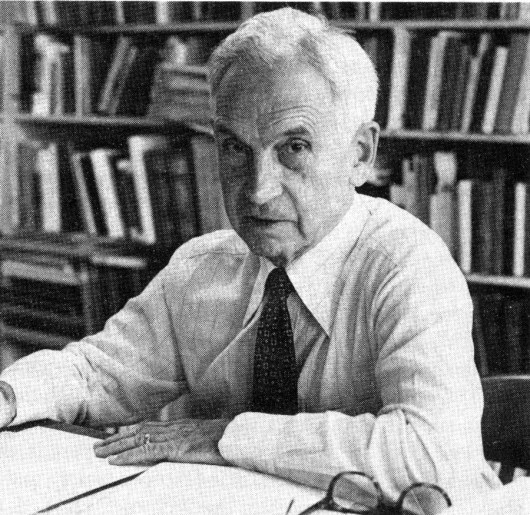
Dr. Marvin Minsky pictured below:

Marvin Minsky at OLPCb.jpg

On November 21, 2014 I received a letter from Nobel Laureate Harry Kroto and it said:

…Please click on this URL http://vimeo.com/26991975

and you will hear what far smarter people than I have to say on this matter. I agree with them.

Harry Kroto

Harry Kroto pictured below:

__________________________

There are 3 videos in this series and they have statements by 150 scientists and I hope to respond to all of them. Wikipedia notes Marvin Lee Minsky (born August 9, 1927) is an American cognitive scientist in the field of artificial intelligence (AI), co-founder of the Massachusetts Institute of Technology‘s AI laboratory, and author of several texts on AI and philosophy.[10][11][12]

Marvin Lee Minsky was born in New York City to an eye surgeon and a Jewish activist,[13] where he attended The Fieldston School and the Bronx High School of Science. He later attended Phillips Academy inAndover, Massachusetts. He served in the US Navy from 1944 to 1945. He holds a BA in Mathematics from Harvard (1950) and a PhD in mathematics from Princeton (1954).[14][15] He has been on the MITfaculty since 1958. In 1959[16] he and John McCarthy founded what is now known as the MIT Computer Science and Artificial Intelligence Laboratory. He is currently the Toshiba Professor of Media Arts and Sciences, and Professor of electrical engineering and computer science.

Isaac Asimov described Minsky as one of only two people he would admit were more intelligent than he was, the other being Carl Sagan.[17]

Dr. Minsky is found in the 69th clip in the second video below and his quote is found below in this post and my response is after that.

50 Renowned Academics Speaking About God (Part 1)

Another 50 Renowned Academics Speaking About God (Part 2)

A Further 50 Renowned Academics Speaking About God (Part 3)

_______________

I grew up at Bellevue Baptist Church under the leadership of our pastor Adrian Rogers and I read many books by the Evangelical Philosopher Francis Schaeffer and have had the opportunity to contact many of the evolutionists or humanistic academics that they have mentioned in their works. Many of these scholars have taken the time to respond back to me in the last 20 years and some of the names  included are  Ernest Mayr (1904-2005), George Wald (1906-1997), Carl Sagan (1934-1996),  Robert Shapiro (1935-2011), Nicolaas Bloembergen (1920-),  Brian Charlesworth (1945-),  Francisco J. Ayala (1934-) Elliott Sober (1948-), Kevin Padian (1951-), Matt Cartmill (1943-) , Milton Fingerman (1928-), John J. Shea (1969-), , Michael A. Crawford (1938-), Paul Kurtz (1925-2012), Sol Gordon (1923-2008), Albert Ellis (1913-2007), Barbara Marie Tabler (1915-1996), Renate Vambery (1916-2005), Archie J. Bahm (1907-1996), Aron S “Gil” Martin ( 1910-1997), Matthew I. Spetter (1921-2012), H. J. Eysenck (1916-1997), Robert L. Erdmann (1929-2006), Mary Morain (1911-1999), Lloyd Morain (1917-2010),  Warren Allen Smith (1921-), Bette Chambers (1930-),  Gordon Stein (1941-1996) , Milton Friedman (1912-2006), John Hospers (1918-2011), Michael Martin (1932-).Harry Kroto (1939-), Marty E. Martin (1928-),Richard Rubenstein (1924-), James Terry McCollum (1936-), Edward O. WIlson(1929-), Lewis Wolpert (1929), Gerald Holton (1922-),  and  Ray T. Cragun (1976-).

QUOTE FROM DR. Marvin Minsky taken from atheistic blogger:

My head says the former; my heart, the latter. Maybe my head needs some help—and I know where to find my potential helper: at the Massachusetts Institute of Technology, my alma mater. Marvin Minsky, the legendary pioneer of artificial intelligence, is not known to be shy about entering the science-religion debate.
To get Minsky started (it doesn’t take much), I ask him whether it is efficacious for scientists to seek harmony between science and theology.
Minsky gives me a look and calls religion “an amazing phenomenon for thousands of years” that is a “psychologically wonderful device.” But he’s just warming up.
“Take all the questions you can’t answer and give them a name,” says Minsky. “So somebody says, ‘Well, God did that.’ And the right question to then ask is, ‘Well, how does God work?’ And [believers] regard that as rude. So there’s something strange about theology. It’s a system of thinking which teaches you not to ask questions. And so it’s incompatible with science.
“The trouble with religion,” Minsky continues, “is it picks particular things and says, ‘Don’t think about this.’ ‘Don’t change that.’ ‘Abide by this Book.’ And that’s very convenient. It saves a lot of time. At any period, if there are questions science can’t yet answer, why knock yourself out? I regard religion as a wonderful way to save people’s time.”
Minsky believes that if religion would not have impeded science for hundreds, if not thousands, of years, humanity would be far advanced, even in dramatically extending human life. “I think death will go away,” Minsky opines. “But we don’t need to pray for it. We need to work for it.” Not yet finished, Minsky adds, “If we look at religion as fossilized old beliefs, some of which may have been useful, that’s fine. But I can’t see serious discussions of theological ideas because they’re all nutty. Unless you say how God works, saying that God exists doesn’t explain anything.”
Minsky is fierce. Good for him. Religion as an excuse to avoid hard questions? Based on the history of religion, he makes a good argument.
But from the foibles or fallacies of human religion, does anything really follow about a Creator God?

_____

Let’s break this down a little bit. Religion does not encourage science but discourages it by suggesting that we omit the hard work and just say God did it. Minsky is also asserting in this same discussion, “Unless you say how God works, saying that God exists doesn’t explain anything,” and he is implying that brilliant scientists are the ones who give us the answers that we can depend on.

My first response is to recount my correspondence with the famous evolutionist Ernst Mayr (1904-2005) of Harvard. In his letter to me he basically said that there are many chemists and molecular biologists who find the story of gradual evolution of life totally convincing and that he is sticking with them. This is very similar to the approach by Dr. Minsky and it is an appeal to authority in that they are suggesting that we just accept the brilliant scientists’ point of view because they are brilliant scientists and they are smarter than the rest of us.THERE IS A SIMPLE ANSWER THAT I COULD GIVE to both Dr. Mayr and Dr. Minsky which is  a quote from Adrian Rogers:

Did you know that all atheists are not atheists because of intellectual problems? They’re atheists because of moral problems. You say, “But I know some brilliant people who are atheists.” Well, that may be so, but I know some brilliant people who are not. You say, “I know some foolish people who believe in God.” Well, I know everyone who doesn’t believe in God is foolish.

In other words there are brilliant and stupid people on both sides of the fence and it is not an intellectual issue but a moral one. Let’s take a look at the history of science that was handled down to us from Western Europe and take a closer examination of those great men’s religious views and if their religious views were corrosive to their scientific pursuits? This is the accusation of many modern day evolutionists.

Ernst Mayr (pictured below with the beard)

Bill Gates, John Grisham, James Michener, E. O. Wilson, Ernst Mayr, George Lucas…

Published on May 19, 2012

Bill Gates, John Grisham, James Michener, E. O. Wilson, Ernst Mayr, George Lucas, James Cameron, Larry King, Ian Wilmut, Jane Goodall, Stephen Jay Gould, Tim D. White, Leon Lederman, Timothy Berners-Lee and Bill Gates. Complete and more interview go to websites “www.achievement.org”.

Mais entrevistas e completas no site “www.achievement.org”.

_____________________________________________________________________

____________________________
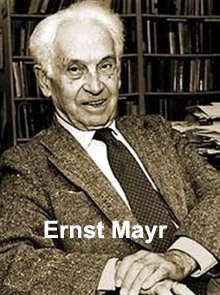
In 1994 and 1995 I had the opportunity to correspond with the famous evolutionist Dr. Ernst Mayr of Harvard. He stated in his letter of 10-3-94, “Owing to your ideological commitments, it is only natural that you cannot accept the cogency of the scientific evidence. However, to a person such as myself without such commitments, the story of the gradual evolution of life as reconstructed by chemists and molecular biologists is totally convincing.”

I responded by pointing out three points. First, Scientific Naturalism is atheistic by definition. Second, many great scientists of the past were Christians, and that did not disqualify their observations and discoveries. Third, the fact that evolution is true does not rule out God’s existence (Harvard’s own Owen Gingerich and many others such as Francis Collins hold to a Creator and evolution).

Let me just spend some time on my second point. Francis Schaeffer in his book “HOW SHOULD WE THEN LIVE?” stated that according to Alfred North Whitehead and J. Robert Oppenheimer, both renowned philosophers and scientists of our era (but not Christians themselves), modern science was born out of the Christian world view. Whitehead said that Christianity is the “mother of science” because of the insistence on the rationality of God. In the article, “Christianity and Technological Advance – The Astonishing Connection,” by T. V. Varughese, Ph.D, he observed:

Without question, “technology” has now become the new magic word in place of the word “science.” Since technology represents the practical applications of science, it is clearly consumer-oriented. Herein is bright economic promise to all who can provide technology.

In terms of technology, our present world can be divided into at least three groups: countries that are strong providers of technology, both original and improved; countries that are mass producers because of cheaper labor; and countries that are mostly consumers. Without a doubt, being in the position of “originating” superior technology should be a goal for any major country. The difficult question, however, is “how.”

An obvious place to start suggests itself. Why not begin with the countries that have established themselves as strong originators of technology and see if there is a common thread between them? The western nations, after the Renaissance and the Reformation of the 16th century, offer a ready example. Any book on the history of inventions, such as the Guinness Book of Answers, will reveal that the vast majority of scientific inventions have originated in Europe (including Britain) and the USA since the dawn of the 17th century. What led to the fast technological advances in the European countries and North America around that time?

The answer is that something happened which set the stage for science and technology to emerge with full force. Strange as it may seem, that event was the return to Biblical Christianity in these countries.

The Epistemological Foundation of Technology

According to Alfred North Whitehead and J. Robert Oppenheimer, both renowned philosophers and scientists of our era (but not Christians themselves), modern science was born out of the Christian world view. Whitehead said that Christianity is the “mother of science” because of the insistence on the rationality of God.[1] Entomologist Stanley Beck,though not a Christian himself, acknowledged the corner-stone premises of science which the Judeo-Christian world view offers: “The first of the unprovable premises on which science has been based is the belief that the world is real and the human mind is capable of knowing its real nature. The second and best-known postulate underlying the structure of scientific knowledge is that of cause and effect. The third basic scientific premise is that nature is unified.”[2] In other words, the epistemological foundation of technology has been the Judeo-Christian world view presented in the Bible…

Perhaps the most obvious affirmation that Biblical Christianity and science are friends and not foes comes from the fact that most of the early scientists after the Renaissance were also strong believers in the Bible as the authoritative source of knowledge concerning the origin of the universe and man’s place in it.[4] The book of Genesis, the opening book of the Bible, presents the distinctly Judeo-Christian world view of a personal Creator God behind the origin and sustenance of the universe (Genesis 1:1; Colossians 1:17; etc.).

Among the early scientists of note who held the Biblical creationist world view are Blaise Pascal (1623-1662), Sir Isaac Newton (1642-1727), and Samuel Morse (1791-1872) – what motivated them was a confidence in the “rationality” behind the universe and the “goodness” of the material world. The creation account in Genesis presents an intelligent, purposeful Creator, who, after completing the creation work, declared it to be very good (Genesis 1:31). That assures us that the physical universe operates under reliable laws which may be discovered by the intelligent mind and used in practical applications. The confidence in the divinely pronounced goodness of the material world removed any reluctance concerning the development of material things for the betterment of life in this world. The spiritual world and the material world can work together in harmony.

 References –

  1. Francis A. Schaeffer: How Should We Then Live (Revell, 1976), p. 132.
  2. Henry M. Morris, Biblical Basis for Modern Science (Baker, 1991), p. 30.
  3. Schaeffer, p. 131.
  4. Henry M. Morris, Men of Science, Men of God (Master Books, CA, 1988), 107 pp.

_____________

Henry Morris pointed out:

Many of these great scientists of the past were before Darwin, but not all of them. However, all of them were acquainted with secular philosophies and some were in fact opponents of Darwinism (Agassiz, Pasteur, Lord Kelvin, Maxwell, Dawson, Virchow, Fabre, Fleming, etc). Many of them believed in the inspiration and authority of the Bible, as well as in the deity and saving work of Jesus Christ. They believed that God had supernaturally created all things, each with its own complex structure for its own unique purpose. They believed that, as scientists, they were “thinking God’s thoughts after Him,” learning to understand and control the laws and processes of nature for God’s glory and man’s good. They believed and practiced science in exactly the same way that modern creationist scientists do.

And somehow this attitude did not hinder them in their commitment to the “scientific method.” In fact one of them, Sir Francis Bacon, is credited with formulating and establishing the scientific method! They seem also to have been able to maintain a proper “scientific attitude,” for it was these men (Newton, Pasteur, Linnaeus, Faraday, Pascal, Lord Kelvin, Maxwell, Kepler, etc.) whose researches and analyses led to the very laws and concepts of science which brought about our modern scientific age…. 

To illustrate the caliber and significance of these great scientists of the past, Tables I and II have been prepared. These tabulations are not complete lists, of course, but at least are representative and they do point up the absurdity of modern assertions that no true scientist can be a creationist and Bible-believing Christian.

Table I lists the creationist “fathers” of many significant branches of modern science. Table II lists the creationist scientists responsible for various vital inventions, discoveries, and other contributions to mankind. These identifications are to some degree oversimplified, of course, for even in the early days of science every new development involved a number of other scientists, before and after. Nevertheless, in each instance, a strong case can be made for attributing the chief responsibility to the creationist scientist indicated. At the very least, his contribution was critically important and thus supports our contention that belief in creation and the Bible helps, rather than hinders, scientific discovery.

_______________

My relatives live 3 miles from Spring Hill, Tennessee. When the new General Motors plant opened there I got to go see it. What if I had said, “The assembly line created a beautiful Saturn automobile!” Hopefully, some would have corected me by responding, “The assembly line did not create the automobile. It was first designed by the General Motors engineers in Detroit.” ASSUMING EVOLUTION IS TRUE, IT WOULD STILL ONLY BE THE MECHANISM. DOES EVOLUTION ACCOUNT FOR THE DESIGNER?

________________

TABLE I

SCIENTIFIC DISCIPLINES ESTABLISHED
BY CREATIONIST SCIENTISTS

DISCIPLINE SCIENTIST
ANTISEPTIC SURGERY JOSEPH LISTER (1827-1912)
BACTERIOLOGY LOUIS PASTEUR (1822-1895)
CALCULUS ISAAC NEWTON (1642-1727)
CELESTIAL MECHANICS JOHANN KEPLER (1571-1630)
CHEMISTRY ROBERT BOYLE (1627-1691)
COMPARATIVE ANATOMY GEORGES CUVIER (1769-1832)
COMPUTER SCIENCE CHARLES BABBAGE (1792-1871)
DIMENSIONAL ANALYSIS LORD RAYLEIGH (1842-1919)
DYNAMICS ISAAC NEWTON (1642-1727)
ELECTRONICS JOHN AMBROSE FLEMING (1849-1945)
ELECTRODYNAMICS JAMES CLERK MAXWELL (1831-1879)
ELECTRO-MAGNETICS MICHAEL FARADAY (1791-1867)
ENERGETICS LORD KELVIN (1824-1907)
ENTOMOLOGY OF LIVING INSECTS HENRI FABRE (1823-1915)
FIELD THEORY MICHAEL FARADAY (1791-1867)
FLUID MECHANICS GEORGE STOKES (1819-1903)
GALACTIC ASTRONOMY WILLIAM HERSCHEL (1738-1822)
GAS DYNAMICS ROBERT BOYLE (1627-1691)
GENETICS GREGOR MENDEL (1822-1884)
GLACIAL GEOLOGY LOUIS AGASSIZ (1807-1873)
GYNECOLOGY JAMES SIMPSON (1811-1870)
HYDRAULICS LEONARDO DA VINCI (1452-1519)
HYDROGRAPHY MATTHEW MAURY (1806-1873)
HYDROSTATICS BLAISE PASCAL (1623-1662)
ICHTHYOLOGY LOUIS AGASSIZ (1807-1873)
ISOTOPIC CHEMISTRY WILLIAM RAMSAY (1852-1916)
MODEL ANALYSIS LORD RAYLEIGH (1842-1919)
NATURAL HISTORY JOHN RAY (1627-1705)
NON-EUCLIDEAN GEOMETRY BERNHARD RIEMANN (1826- 1866)
OCEANOGRAPHY MATTHEW MAURY (1806-1873)
OPTICAL MINERALOGY DAVID BREWSTER (1781-1868)
PALEONTOLOGY JOHN WOODWARD (1665-1728)
PATHOLOGY RUDOLPH VIRCHOW (1821-1902)
PHYSICAL ASTRONOMY JOHANN KEPLER (1571-1630)
REVERSIBLE THERMODYNAMICS JAMES JOULE (1818-1889)
STATISTICAL THERMODYNAMICS JAMES CLERK MAXWELL (1831-1879)
STRATIGRAPHY NICHOLAS STENO (1631-1686)
SYSTEMATIC BIOLOGY CAROLUS LINNAEUS (1707-1778)
THERMODYNAMICS LORD KELVIN (1824-1907)
THERMOKINETICS HUMPHREY DAVY (1778-1829)
VERTEBRATE PALEONTOLOGY GEORGES CUVIER (1769-1832)

______________

TABLE II

NOTABLE INVENTIONS, DISCOVERIES
OR DEVELOPMENTS BY CREATIONIST SCIENTISTS

CONTRIBUTION SCIENTIST
ABSOLUTE TEMPERATURE SCALE LORD KELVIN (1824-1907)
ACTUARIAL TABLES CHARLES BABBAGE (1792-1871)
BAROMETER BLAISE PASCAL (1623-1662)
BIOGENESIS LAW LOUIS PASTEUR (1822-1895)
CALCULATING MACHINE CHARLES BABBAGE (1792-1871)
CHLOROFORM JAMES SIMPSON (1811-1870)
CLASSIFICATION SYSTEM CAROLUS LINNAEUS (1707-1778)
DOUBLE STARS WILLIAM HERSCHEL (1738-1822)
ELECTRIC GENERATOR MICHAEL FARADAY (1791-1867)
ELECTRIC MOTOR JOSEPH HENRY (1797-1878)
EPHEMERIS TABLES JOHANN KEPLER (1571-1630)
FERMENTATION CONTROL LOUIS PASTEUR (1822-1895)
GALVANOMETER JOSEPH HENRY (1797-1878)
GLOBAL STAR CATALOG JOHN HERSCHEL (1792-1871)
INERT GASES WILLIAM RAMSAY (1852-1916)
KALEIDOSCOPE DAVID BREWSTER (1781-1868)
LAW OF GRAVITY ISAAC NEWTON (1642-1727)
MINE SAFETY LAMP HUMPHREY DAVY (1778-1829)
PASTEURIZATION LOUIS PASTEUR (1822-1895)
REFLECTING TELESCOPE ISAAC NEWTON (1642-1727)
SCIENTIFIC METHOD FRANCIS BACON (1561-1626)
SELF-INDUCTION JOSEPH HENRY (1797-1878)
TELEGRAPH SAMUEL F.B. MORSE (1791-1872)
THERMIONIC VALVE AMBROSE FLEMING (1849-1945)
TRANS-ATLANTIC CABLE LORD KELVIN (1824-1907)
VACCINATION & IMMUNIZATION LOUIS PASTEUR (1822-1895)

_______________

2000 Interview with Ernst Mayr, Harvard University

Uploaded on Jul 13, 2008

Interviews conducted in March 2000 at the annual meeting of the American Institute of Biological Sciences on the topic of Challenges for the New Millennium. Museum of Natural History, Smithsonian Institution, Washington DC. See http://www.aibs.org/media-library/ for additional AIBS conference recordings.

________________

Henry Morris

_________________

The Dean of Evolution – A Review of Ernst Mayr’s Latest Book

Download PDFDownload The Dean of Evolution – A Review of Ernst Mayr’s Latest Book PDF

With the passing in recent years of the three most revered scientific spokesmen for evolution—Isaac Asimov, Carl Sagan, and now Stephen Jay Gould—Professor Ernst Mayr is left as the unquestioned dean of the modern evolutionary establishment.

Gould, Asimov, and Sagan were all three extremely prolific and brilliant writers. All three were atheistic professors at prestigious eastern universities (Gould at Harvard, Asimov at Boston University, Sagan at Cornell), and all three were effusive and vigorous anti-creationists. They were formidable opponents (but eminently quotable), and we miss them. All three died at relatively young ages.

But that leaves Ernst Mayr, long-time professor of biology at Harvard. Dr. Mayr was born in 1904 and is (at this writing) still very much alive, and nearing the century mark. Dr. Gould recently called him “the greatest living evolutionary biologist and a writer of extraordinary insight and clarity” (in a jacket blurb on Mayr’s latest book).

Mayr’s New Book

And that book is the subject of this article. Its title is intriguing—What Evolution Is (Basic Books, 2001, 318 pages),—for if anyone could speak authoritatively on such a subject, it should be Professor Mayr. In his adulatory foreword, Jared Diamond, another leading modern evolutionist, concludes: “There is no better book on evolution. There will never be another book like it” (p. xii).

That evaluation should give any reader very high expectations. Unfortunately, however, Dr. Mayr first shows his disdain for creationism, not even considering its arguments. He simply says:

It is now actually misleading to refer to evolution as a theory, considering the massive evidence that has been discovered over the last 140 years documenting its existence. Evolution is no longer a theory, it is simply a fact (p. 275).

He dismissed the evidence for creation as unworthy of further discussion. “The claims of the creationists” he says, “have been refuted so frequently and so thoroughly that there is no need to cover this subject once more” (p. 269).

Ignoring Creation Evidence

He himself, however, has apparently not bothered to read any creationist or secular anti-evolutionist scientific books or articles. Or at least that is what one would infer from the fact that none of them or their arguments and evidence are even mentioned in his book.

No mention is made by Mayr, for example, of creationist expositions of the amazing created designs in living systems, nor of the effects of God’s curse on the creation, or of the significance of the great flood in understanding the geologic record. He does not even acknowledge the significance of naturalistic catastrophism or of such scientific concepts as complexity or probability. Current ideas about “intelligent design” are never mentioned. The origins of all things are due to time, chance, and natural selection, no matter how complex and interdependent they may be, according to Professor Mayr, who had been (along with Julian Huxley, George Simpson, and a few others) primarily responsible for the so-called modern evolutionary synthesis (or neo-Darwinism) back in the 1930s and 1940s.

Neither does Mayr seem aware that there are now thousands of credentialed and knowledgeable scientists (including a great many biologists) who reject evolution, giving not even a nod to the Creation Research Society, or to ICR, or any other creationist organization. He does occasionally refer to God or to Christianity, but only in passing, and always in a context that indicates that he does not believe in either one. He, like his three younger colleagues, is an atheist, and this naturally constrains him to ignore any possible theological implications of the origins issues.

The Alleged Evidence for Evolution

Mayr’s new book is beautifully written and does contain much good material, but it will not convert many to evolutionism, even though he does devote a chapter to what he thinks are the evidences for evolution. These evidences are essentially the same as those used 140 years ago by Darwin in the Origin (fossils, comparative morphology, embryological similarities and recapitulation, vestigial structures, and geographical distribution). Mayr adds nothing new to these arguments, ignoring the fact that creationists (and even a number of evolutionists) have long since refuted all of them. He does devote a brief section to the more recent “evidence” from molecular biology. But that also has been vigorously disputed by a number of specialists in this field, especially the supposed evolutionary relationships implied by the molecules. Even Mayr admits that “molecular clocks are not nearly as constant as often believed” (p. 37), but he does not mention any of the numerous contradictory relationships implied by these biochemical studies (e.g., the well-known genomic similarities of humans and bananas).

As do most evolutionists, Mayr spends much time in discussing micro-evolution, whereas modern creationists only reject macroevolution. He devotes five chapters to microevolution and only one to macroevolution. This particular chapter is quite long, discussing many speculative theories about how macroevolutionary changes might be produced, but there is one vital deficiency. He gives no example of any macroevolutionary change known to have happened. In other words, macroevolution seems never to have occurred within the several thousand years of recorded history. Thus, real evolution (as distinct from variation, recombination, hybridization, and other such “horizontal” changes) does not happen at present. Where, we would ask Professor Mayr, are there any living forms in the process of evolutionary change? He gives no examples, of course, because there are none.

As far as pre-human history is concerned, Dr. Mayr does insist that the fossil record documents past evolution. He cites the usual claims—horses, Archaeopteryx, mammal-like reptiles, walking whales, etc.—which are very equivocal, at best, and have all been shown by creationists to be invalid as transitional forms. Instead of a handful of highly doubtful examples, there ought to be thousands of obvious transitional forms in the fossils if evolution had really been occurring. Yet Mayr admits,

Wherever we look at the living biota, . . . discontinuities are overwhelmingly frequent. . . . The discontinuities are even more striking in the fossil record. New species usually appear in the fossil record suddenly, not connected with their ancestors by a series of intermediates (p. 189).

Professor Mayr still says that the fossils are “the most convincing evidence for the occurrence of evolution” (p. 13). Yet he also says that “the fossil record remains woefully inadequate” (p. 69). Thus, as creationists have often pointed out, there is no real evidence of either present or past evolution.

We have repeatedly noted also that the scientific reason why this is so is because real evolution to any higher level of complexity is impossible by the law of entropy, which states the proven fact that every system of any kind “tends” to go toward lower complexity, unless constrained otherwise by some pre-designed external program and mechanism.

Yet Ernst Mayr seems either to ignore or misunderstand this key argument of the creationists. Here is what he says:

Actually there is no conflict, because the law of entropy is valid only for closed systems, whereas the evolution of a species of organisms takes place in an open system in which organisms can reduce entropy at the expense of the environment and the sun supplies a continuing input of energy (p. 8).

And that’s all he says about one of the key arguments against evolution. This ubiquitous dodge of the evolutionists has been discredited again and again by creationists, and one would think that this “greatest living evolutionary biologist” in this “best book on evolution” would at least take notice of our arguments! At least half of America’s population, according to many polls, are creationists, apparently agreeing more with us than with Mayr.

An open system and external energy are, indeed, necessary conditions for a system to grow in complexity, but most definitely are not sufficient conditions. The question is just how does the sun’s energy produce complexity in an open system? The fact is that the application of external heat energy to an open system (such as from the sun to the earth) will increase the entropy (that is, decrease the organized complexity) in any open system, if that’s all there is. This is a basic principle of thermodynamics, and neither Mayr nor any other evolutionist has answered this problem. Evolution seems to be impossible by the known laws of science.

Professor Mayr does not deal with the theological or Biblical evidences, of course. For those who believe in God and the Bible, on the other hand, creation—not evolution—is, to appropriate Mayr’s words, “simply a fact.” Evolution is merely a belief held by many who “willingly are ignorant” (II Peter 3:5) of the strong evidences and arguments for creation, and who don’t even bother to consider them. In the words of the apostle Paul: “Where is the disputer of this world? hath not God made foolish the wisdom of this world?” (I Corinthians 1:20).

Cite this article: Henry Morris, Ph.D. 2002. The Dean of Evolution – A Review of Ernst Mayr’s Latest Book. Acts & Facts. 31 (8).

___________________

Francis Schaeffer “BASIS FOR HUMAN DIGNITY” Whatever…HTTHR

Dr. Minsky says he is open to evidence. There is lots of evidence points to the Bible being historically accurate, for instance, King David existed!!

House of David Inscription

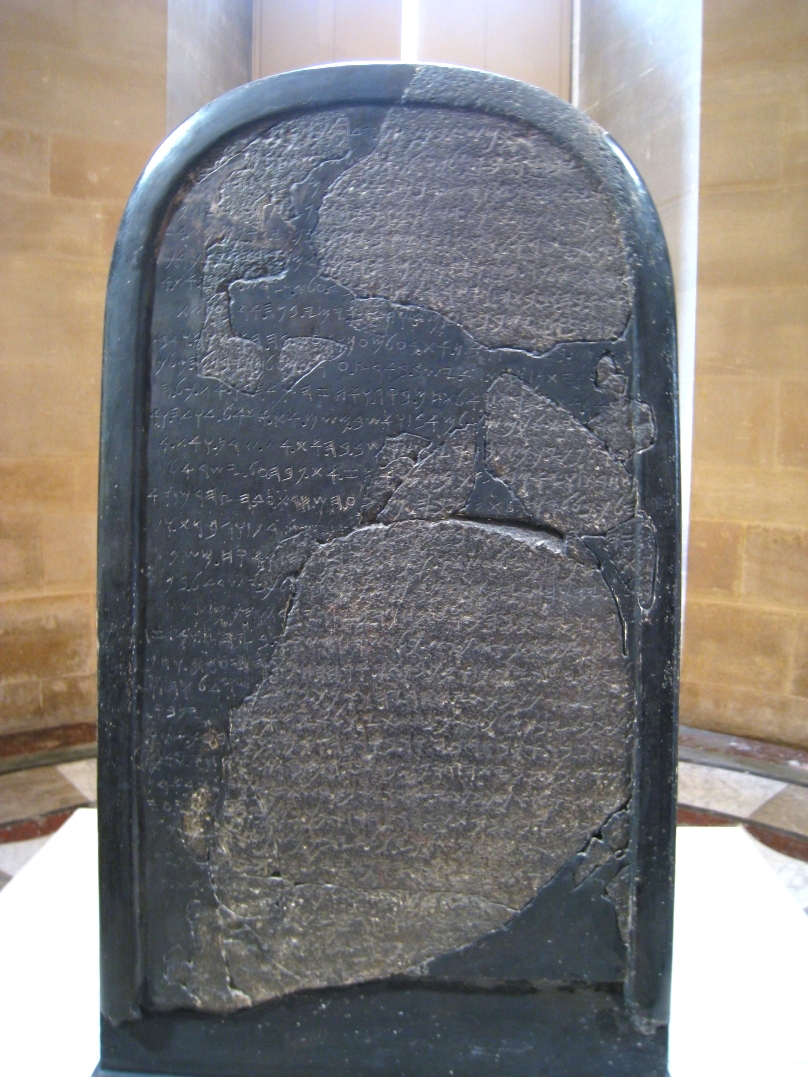
The current issue of Biblical Archaeology Review has an article entitled, “Archaeology Confirms 50 Real People in the Bible,” by Lawrence Mykytiuk. The first in his list is King David, whose name was found in the Tel Dan Stela, found in Tel Dan in July, 1993. Mykytiuk writes:

According to the Bible, David ruled in the tenth century B.C.E., using the traditional chronology. Until 1993, however, the personal name David had never appeared in the archaeological record, let alone a reference to King David. That led some scholars to doubt his very existence. According to this speculation David was either a shadowy, perhaps mythical, ancestor or a literary creation of later Biblical authors and editors. In 1993, however, the now-famous Tel Dan inscription was found in an excavation led by Avraham Biran. Actually, it was the team’s surveyor, Gila Cook, who noticed the inscription on a basalt stone in secondary use in the lower part of a wall. Written in ninth-century B.C.E. Aramaic, it was part of a victory stele commissioned by a non-Israelite king mentioning his victory over “the king of Israel” and the “House of David.” [See BAR 20:02, Mar-Apr 1994] Whether or not the foreign king’s claim to victory was true, it is clear that a century after he had died, David was still remembered as the founder of a dynasty.

This past October I had the occasion to photograph this important stela, which is housed in the Israel Museum in Jerusalem."House of David" Inscription. Discovered 1993. Photo by Leon Mauldin

Gary Byers suggests that the stela “most likely memorializes the victory of Hazael, king of Aram, over Joram, king of Israel, and Ahaziah, king of Judah, at Ramoth Gilead recorded in 2 Kings 8:28–29″ (Bible and Spade 16:4, p. 121).

For more information on the House of David see Ferrell Jenkins’ post illustrating Isaiah 7 here.

____________

The Bible and Archaeology (1/5)

The Bible maintains several characteristics that prove it is from God. One of those is the fact that the Bible is accurate in every one of its details. The field of archaeology brings to light this amazing accuracy and Kyle Butt does a great job of showing that in this film series he did on “The Bible and Archaeology.”

_________________________-

Is the Bible historically accurate? Here are some of the posts I have done in the past on the subject:


1. 
The Babylonian Chronicle
of Nebuchadnezzars Siege of Jerusalem

This clay tablet is a Babylonian chronicle recording events from 605-594BC. It was first translated in 1956 and is now in the British Museum. The cuneiform text on this clay tablet tells, among other things, 3 main events: 1. The Battle of Carchemish (famous battle for world supremacy where Nebuchadnezzar of Babylon defeated Pharoah Necho of Egypt, 605 BC.), 2. The accession to the throne of Nebuchadnezzar II, the Chaldean, and 3. The capture of Jerusalem on the 16th of March, 598 BC.

2. Hezekiah’s Siloam Tunnel Inscription.

King Hezekiah of Judah ruled from 721 to 686 BC. Fearing a siege by the Assyrian king, Sennacherib, Hezekiah preserved Jerusalem’s water supply by cutting a tunnel through 1,750 feet of solid rock from the Gihon Spring to the Pool of Siloam inside the city walls (2 Kings 20; 2 Chron. 32). At the Siloam end of the tunnel, an inscription, presently in the archaeological museum at Istanbul, Turkey, celebrates this remarkable accomplishment.

3. Taylor Prism (Sennacherib Hexagonal Prism)

It contains the victories of Sennacherib himself, the Assyrian king who had besieged Jerusalem in 701 BC during the reign of king Hezekiah, it never mentions any defeats. On the prism Sennacherib boasts that he shut up “Hezekiah the Judahite” within Jerusalem his own royal city “like a caged bird.” This prism is among the three accounts discovered so far which have been left by the Assyrian king Sennacherib of his campaign against Israel and Judah.

4. Biblical Cities Attested Archaeologically.

In addition to Jericho, places such as Haran, Hazor, Dan, Megiddo, Shechem, Samaria, Shiloh, Gezer, Gibeah, Beth Shemesh, Beth Shean, Beersheba, Lachish, and many other urban sites have been excavated, quite apart from such larger and obvious locations as Jerusalem or Babylon. Such geographical markers are extremely significant in demonstrating that fact, not fantasy, is intended in the Old Testament historical narratives;

5. The Discovery of the Hittites

Most doubting scholars back then said that the Hittites were just a “mythical people that are only mentioned in the Bible.” Some skeptics pointed to the fact that the Bible pictures the Hittites as a very big nation that was worthy of being coalition partners with Egypt (II Kings 7:6), and these bible critics would assert that surely we would have found records of this great nation of Hittites.  The ironic thing is that when the Hittite nation was discovered, a vast amount of Hittite documents were found. Among those documents was the treaty between Ramesses II and the Hittite King.

6.Shishak Smiting His Captives

The Bible mentions that Shishak marched his troops into the land of Judah and plundered a host of cities including Jerusalem,  this has been confirmed by archaeologists. Shishak’s own record of his campaign is inscribed on the south wall of the Great Temple of Amon at Karnak in Egypt. In his campaign he presents 156 cities of Judea to his god Amon.

7. Moabite Stone

The Moabite Stone also known as the Mesha Stele is an interesting story. The Bible says in 2 Kings 3:5 that Mesha the king of Moab stopped paying tribute to Israel and rebelled and fought against Israel and later he recorded this event. This record from Mesha has been discovered.

8. Black Obelisk of Shalmaneser III

The tribute of Jehu, son of Omri, silver, gold, bowls of gold, chalices of gold, cups of gold, vases of gold, lead, a sceptre for the king, and spear-shafts, I have received.”

________________

The Bible and Archaeology (2/5)

9A Verification of places in Gospel of John and Book of Acts.

Sir William Ramsay, famed archaeologist, began a study of Asia Minor with little regard for the book of Acts. He later wrote:

I found myself brought into contact with the Book of Acts as an authority for the topography, antiquities and society of Asia Minor. It was gradually borne upon me that in various details the narrative showed marvelous truth.

9B Discovery of Ebla Tablets. When I think of discoveries like the Ebla Tablets that verify  names like Adam, Eve, Ishmael, David and Saul were in common usage when the Bible said they were, it makes me think of what amazing confirmation that is of the historical accuracy of the Bible.

10. Cyrus Cylinder

There is a well preserved cylinder seal in the Yale University Library from Cyrus which contains his commands to resettle the captive nations.

11. Puru “The lot of Yahali” 9th Century B.C.E.

This cube is inscribed with the name and titles of Yahali and a prayer: “In his year assigned to him by lot (puru) may the harvest of the land of Assyria prosper and thrive, in front of the gods Assur and Adad may his lot (puru) fall.”  It provides a prototype (the only one ever recovered) for the lots (purim) cast by Haman to fix a date for the destruction of the Jews of the Persian Empire, ostensibly in the fifth century B.C.E. (Esther 3:7; cf. 9:26).

12. The Uzziah Tablet Inscription

The Bible mentions Uzziah or Azariah as the king of the southern kingdom of Judah in 2 Kings 15. The Uzziah Tablet Inscription is a stone tablet (35 cm high x 34 cm wide x 6 cm deep) with letters inscribed in ancient Hebrew text with an Aramaic style of writing, which dates to around 30-70 AD. The text reveals the burial site of Uzziah of Judah, who died in 747 BC.

13. The Pilate Inscription

The Pilate Inscription is the only known occurrence of the name Pontius Pilate in any ancient inscription. Visitors to the Caesarea theater today see a replica, the original is in the Israel Museum in Jerusalem. There have been a few bronze coins found that were struck form 29-32 AD by Pontius Pilate

14. Caiaphas Ossuary

This beautifully decorated ossuary found in the ruins of Jerusalem, contained the bones of Caiaphas, the first century AD. high priest during the time of Jesus.

14 B Pontius Pilate Part 2      

In June 1961 Italian archaeologists led by Dr. Frova were excavating an ancient Roman amphitheatre near Caesarea-on-the-Sea (Maritima) and uncovered this interesting limestone block. On the face is a monumental inscription which is part of a larger dedication to Tiberius Caesar which clearly says that it was from “Pontius Pilate, Prefect of Judea.”

14c. Three greatest American Archaeologists moved to accept Bible’s accuracy through archaeology.

Despite their liberal training, it was archaeological research that bolstered their confidence in the biblical text:Albright said of himself, “I must admit that I tried to be rational and empirical in my approach [but] we all have presuppositions of a philosophical order.” The same statement could be applied as easily to Gleuck and Wright, for all three were deeply imbued with the theological perceptions which infused their work.

The Bible and Archaeology (3/5)

Related posts:

Despite what Lidar Sapir-Hen and Erez Ben-Yosef of Tel Aviv University say CAMELS DID EXIST DURING THE TIME OF THE OLD TESTAMENT!!!!

The Bible and Archaeology (1/5) The Bible maintains several characteristics that prove it is from God. One of those is the fact that the Bible is accurate in every one of its details. The field of archaeology brings to light this amazing accuracy and Kyle Butt does a great job of showing that in this […]

John MacArthur on fulfilled prophecy from the Bible Part 2

I have posted many of the sermons by John MacArthur. He is a great bible teacher and this sermon below is another great message. His series on the Book of Proverbs was outstanding too.  I also have posted several of the visits MacArthur made to Larry King’s Show. One of two most popular posts I […]

John MacArthur on fulfilled prophecy from the Bible Part 1

I have posted many of the sermons by John MacArthur. He is a great bible teacher and this sermon below is another great message. His series on the Book of Proverbs was outstanding too.  I also have posted several of the visits MacArthur made to Larry King’s Show. One of two most popular posts I […]

Adrian Rogers: “Why I believe the Bible is true”

Adrian Rogers – How you can be certain the Bible is the word of God Great article by Adrian Rogers. What evidence is there that the Bible is in fact God’s Word? I want to give you five reasons to affirm the Bible is the Word of God. First, I believe the Bible is the […]

Easter weekend 2013, List of posts on series: Is the Bible historically accurate? (Updated 1 through 14C)

“In Christ Alone” music video featuring scenes from “The Passion of the Christ”. It is sung by Lou Fellingham of Phatfish and the writer of the hymn is Stuart Townend. On this Easter weekend 2013 there is no other better time to take a look at the truth and accuracy of the Bible.    Is the […]

Evidence for the Bible (Updated)

The Bible and Archaeology (1/5) The Bible maintains several characteristics that prove it is from God. One of those is the fact that the Bible is accurate in every one of its details. The field of archaeology brings to light this amazing accuracy. _________________________- Many people have questioned the accuracy of the Bible, but I […]

John MacArthur on Larry King Live Part 4 The Bible on War

Larry King – Dr. John MacArthur vs. “father” Manning Uploaded on Sep 26, 2011 GotoThisSite.org ___________ I have seen John MacArthur on Larry King Show many times and I thought you would like to see some of these episodes. I have posted several of John MacArthur’s sermons in the past and my favorite is his […]

Open letter to President Obama (Part 519) (The Way of Discovery: A Personal Journey of Faith Henry F. Schaefer III)

Open letter to President Obama (Part 519) (Emailed to White House on 5-3-13.) President Obama c/o The White House 1600 Pennsylvania Avenue NW Washington, DC 20500 Dear Mr. President, I know that you receive 20,000 letters a day and that you actually read 10 of them every day. I really do respect you for trying to get […]

Evolutionary dogma with the biblical message are doomed to undermine faith

The Scientific Age Published on Jul 24, 2012 Dr. Schaeffer’s sweeping epic on the rise and decline of Western thought and Culture Francis Schaeffer rightly noted, “These two world views stand as totals in complete antithesis in content and also in their natural results….It is not just that they happen to bring forth different results, […]

Truth Tuesday:The Way of Discovery: A Personal Journey of Faith Henry F. Schaefer III

The Way of Discovery: A Personal Journey of Faith  Henry F. Schaefer III The Scientific Age Uploaded by NoMirrorHDDHrorriMoN on Oct 3, 2011 _______________ Episode VII – The Age of Non Reason ____________________ Episode 8: The Age Of Fragmentation Published on Jul 24, 2012 Dr. Schaeffer’s sweeping epic on the rise and decline of Western thought and […]

Evolution debating with Ark Times Bloggers Part 6 “Dr. George Wald on the origin of life”

The Long War against God-Henry Morris, part 6 of 6 _______________ I have debated with Ark Times Bloggers many times in the past on many different subjects. Here are some of the subjects: communism, morality, origin of evil, and the Tea Party. I have always loved to post about evolution and I have had a chance […]

Evolution debating with Ark Times Bloggers Part 5 “SCIENTIFIC DISCIPLINES ESTABLISHED BY CREATIONIST SCIENTISTS”

The Long War against God-Henry Morris, part 5 of 6 _______________ I have debated with Ark Times Bloggers many times in the past on many different subjects. Here are some of the subjects: communism, morality, origin of evil, and the Tea Party. I have always loved to post about evolution and I have had a chance […]

Evolution debating with Ark Times Bloggers Part 4 “Neaderthal, Australopithicus and Piltdown man”

The Long War against God-Henry Morris, part 4 of 6 _______________ I have debated with Ark Times Bloggers many times in the past on many different subjects. Here are some of the subjects: communism, morality, origin of evil, and the Tea Party. I have always loved to post about evolution and I have had a chance […]

Evolution debating with Ark Times Bloggers Part 3 “Evolution and spontaneous generation”

The Long War against God-Henry Morris, part 3 of 6 Uploaded by FLIPWORLDUPSIDEDOWN3 on Aug 30, 2010 http://www.icr.org/http://store.icr.org/prodinfo.asp?number=BLOWA2 http://store.icr.org/prodinfo.asp?number=BLOWASG http://www.fliptheworldupsidedown.com/blog _______________ I have debated with Ark Times Bloggers many times in the past on many different subjects. Here are some of the subjects: communism, morality, origin of evil, and the Tea Party. I have […]

Evolution debating with Ark Times Bloggers Part 2 “Gouldians versus Dawkinsians”

The Long War against God-Henry Morris, part 2 of 6 Uploaded by FLIPWORLDUPSIDEDOWN3 on Aug 30, 2010 http://www.icr.org/http://store.icr.org/prodinfo.asp?number=BLOWA2 http://store.icr.org/prodinfo.asp?number=BLOWASG http://www.fliptheworldupsidedown.com/blog _________ I have debated with Ark Times Bloggers many times in the past on many different subjects. Here are some of the subjects: communism, morality, origin of evil, and the Tea Party. I have […]

Evolution debating with Ark Times Bloggers Part 1 “Steven Jay Gould and the fossil record”

The Long War against God-Henry Morris, part 1 of 6 Uploaded by FLIPWORLDUPSIDEDOWN3 on Aug 30, 2010 _________ I have debated with Ark Times Bloggers many times in the past on many different subjects. Here are some of the subjects: communism, morality, origin of evil, and the Tea Party. I have always loved to post about evolution […]

______

Francis Schaeffer predicted August 4, 2015 would come when the video “ Intact Fetuses “Just a Matter of Line Items” for Planned Parenthood TX Mega-Center” would be released!!!!

Dr. Francis Schaeffer: Whatever Happened to the Human Race Episode 1 ABORTION

Scarborough rips Elizabeth Warren on Planned Parenthood: Don’t insult our intelligence

Francis Schaeffer predicted August 4, 2015 would come when the video “ Intact Fetuses “Just a Matter of Line Items” for Planned Parenthood TX Mega-Center” would be released!!!!
In Francis Schaeffer’s book HOW SHOULD WE THEN LIVE? in 1976 he wrote:
The door is opened for keeping bodies alive indefinitely (where there is a flat brain wave  but where the organs all continue to function) to harvest their blood  and organs for transplants and experimentation. The problem is clear: Without the absolute line which Christianity gives for the distinctiveness of people, even things which can be good in themselves lead to humanness being increasingly lost.

5th video August 4, 2015

Intact Fetuses “Just a Matter of Line Items” for Planned Parenthood TX Mega-Center

Published on Aug 4, 2015

FOR IMMEDIATE RELEASE

#PPSellsBabyParts “INTACT FETAL CADAVERS” AT 20-WEEKS “JUST A MATTER OF LINE ITEMS” AT PLANNED PARENTHOOD TX MEGA-CENTER: ABORTION DOCS CAN “MAKE IT HAPPEN”
Planned Parenthood Gulf Coast Director of Research Says Department Contributes Significantly to Bottom Line, Has History of Selling Aborted Fetal Tissue, Suggests “Splitting the Specimens into Different Shipments” to Hide Profit in 5th Undercover Video

Contact: David Daleiden, media@centerformedicalprogress.org, 949.734.0859

HOUSTON, Aug. 4–The fifth undercover video in the controversy over Planned Parenthood’s sale of aborted baby parts shows the Director of Research for Planned Parenthood Gulf Coast, Melissa Farrell, advertising the Texas Planned Parenthood branch’s track record of fetal tissue sales, including its ability to deliver fully intact fetuses.

In the video, actors posing as representatives from a human biologics company meet with Farrell at the abortion-clinic headquarters of Planned Parenthood Gulf Coast in Houston to discuss a potential partnership to harvest fetal organs.

“Where we probably have an edge over other organizations, our organization has been doing research for many many years,” explains Farrell. When researchers need a specific part from the aborted fetus, Farrell says, “We bake that into our contract, and our protocol, that we follow this, so we deviate from our standard in order to do that.”

Asked specifically if this means Planned Parenthood Gulf Coast can change abortion procedures to supply intact fetal specimens, Farrell affirms, “Some of our doctors in the past have projects and they’re collecting the specimens, so they do it in a way that they get the best specimens, so I know it can happen.”

The investigators ask Farrell how she will frame a contract in which they pay a higher price for higher quality fetal body parts, and she replies, “We can work it out in the context of–obviously, the procedure itself is more complicated,” suggesting that “without having you cover the procedural cost” and paying for the abortion, the higher specimen price could be framed as “additional time, cost, administrative burden.”

Farrell finally summarizes her affiliate’s approach to fetal tissue payments: “If we alter our process, and we are able to obtain intact fetal cadavers, we can make it part of the budget that any dissections are this, and splitting the specimens into different shipments is this. It’s all just a matter of line items.”

The sale or purchase of human fetal tissue is a federal felony punishable by up to 10 years in prison or a fine of up to $500,000 (42 U.S.C. 289g-2). Federal law also requires that no alteration in the timing or method of abortion be done for the purposes of fetal tissue collection (42 U.S.C. 289g-1).

Farrell also indicates to the investigators over lunch that the specimen sales from her department contribute significantly to Planned Parenthood Gulf Coast’s overall finances: “I think everyone realizes, especially because my department contributes so much to the bottom line of our organization here, you know we’re one of the largest affiliates, our Research Department is the largest in the United States. Larger than any the other affiliates’ combined.” In a Texas Senate hearing on July 29, former Planned Parenthood Gulf Coast clinic director Abby Johnson estimated that the affiliate had previously made up to $120,000 per month off of aborted fetal tissue.

The video is the fifth by The Center for Medical Progress documenting Planned Parenthood’s sale of aborted fetal parts. Project Lead David Daleiden notes: “This is now the fifth member of Planned Parenthood leadership discussing payments for aborted baby parts without any connection to actual costs of so-called tissue ‘donation.’ Planned Parenthood’s system-wide conspiracy to evade the law and make money off of aborted fetal tissue is now undeniable.” Daleiden continues, “Anyone who watches these videos knows that Planned Parenthood is engaged in barbaric practices and human rights abuses that must end. There is no reason for an organization that uses illegal abortion methods to sell baby parts and commit such atrocities against humanity to still receive over $500 million each year from taxpayers.”

###

See the video at: https://www.youtube.com/watch?v=egGUE…

Tweet: #PPSellsBabyParts

For more information on the Human Capital project, visit centerformedicalprogress.org.
The Center for Medical Progress is a 501(c)3 non-profit dedicated to monitoring and reporting on medical ethics and advances.

I love the works of Francis Schaeffer and I have been on the internet reading several blogs that talk about Schaeffer’s work and the work below was really helpful. Schaeffer’s film series “How should we then live?  Wikipedia notes, “According to Schaeffer, How Should We Then Live traces Western history from Ancient Rome until the time of writing (1976) along three lines: the philosophic, scientific, and religious.[3] He also makes extensive references to art and architecture as a means of showing how these movements reflected changing patterns of thought through time. Schaeffer’s central premise is: when we base society on the Bible, on the infinite-personal God who is there and has spoken,[4] this provides an absolute by which we can conduct our lives and by which we can judge society.  Here are some posts I have done on this series: Francis Schaeffer’s “How should we then live?” Video and outline of episode 10 “Final Choices” , episode 9 “The Age of Personal Peace and Affluence”, episode 8 “The Age of Fragmentation”, episode 7 “The Age of Non-Reason” , episode 6 “The Scientific Age” ,  episode 5 “The Revolutionary Age” , episode 4 “The Reformation”,  episode 3 “The Renaissance”, episode 2 “The Middle Ages,”, and  episode 1 “The Roman Age,” .

In the film series “WHATEVER HAPPENED TO THE HUMAN RACE?” the arguments are presented  against abortion (Episode 1), infanticide (Episode 2),euthanasia (Episode 3), and then there is a discussion of the Christian versus Humanist worldview concerning the issue of “the basis for human dignity” in Episode 4 and then in the last episode a close look at the truth claims of the Bible.

_________________
Francis Schaeffer

__________________________

I truly believe that many of the problems we have today in the USA are due to the advancement of humanism in the last few decades in our society. Ronald Reagan appointed the evangelical Dr. C. Everett Koop to the position of Surgeon General in his administration. He partnered with Dr. Francis Schaeffer in making the video below. It is very valuable information for Christians to have.  Actually I have included a video below that includes comments from him on this subject.

Francis Schaeffer “BASIS FOR HUMAN DIGNITY” Whatever…HTTHR

Dr. Francis schaeffer – The flow of Materialism(from Part 4 of Whatever happened to human race?)

Dr. Francis Schaeffer – The Biblical flow of Truth & History (intro)

Francis Schaeffer – The Biblical Flow of History & Truth (1)

Dr. Francis Schaeffer – The Biblical Flow of Truth & History (part 2)

__________

Dr. Francis Schaeffer: Whatever Happened to the Human Race Episode 1 ABORTION

Is the Bible historically accurate? Here are some of the posts I have done in the past on the subject: 1. The Babylonian Chronicle, of Nebuchadnezzars Siege of Jerusalem, 2. Hezekiah’s Siloam Tunnel Inscription. 3. Taylor Prism (Sennacherib Hexagonal Prism), 4. Biblical Cities Attested Archaeologically. 5. The Discovery of the Hittites, 6.Shishak Smiting His Captives, 7. Moabite Stone, 8. Black Obelisk of Shalmaneser III, 9A Verification of places in Gospel of John and Book of Acts., 9B Discovery of Ebla Tablets. 10. Cyrus Cylinder, 11. Puru “The lot of Yahali” 9th Century B.C.E., 12. The Uzziah Tablet Inscription, 13. The Pilate Inscription, 14. Caiaphas Ossuary, 14 B Pontius Pilate Part 2, 14c. Three greatest American Archaeologists moved to accept Bible’s accuracy through archaeology., 

The Bible and Archaeology – Is the Bible from God? (Kyle Butt 42 min)

Related posts:

Taking on Ark Times bloggers about abortion on the 40th anniversary date of Roe v. Wade (Part 7) “Poverty not good reason for abortion, why not give up for adoption?”

Dr Richard Land discusses abortion and slavery – 10/14/2004 – part 3 The best pro-life film I have ever seen below by Francis Schaeffer and Dr. C. Everett Koop “Whatever happened to the human race?” Over the years I have taken on the Ark Times liberal bloggers over and over and over concerning the issue […]

Taking on Ark Times bloggers about abortion on the 40th anniversary date of Roe v. Wade (Part 6) For many pro-abortionists ” …the problem is not determining when actual human life begins, but when the value of that life begins to out weigh other considerations”

The best pro-life film I have ever seen below by Francis Schaeffer and Dr. C. Everett Koop “Whatever happened to the human race?” Francis Schaeffer pictured above._________ The 45 minute video above is from the film series created from Francis Schaeffer’s book “Whatever Happened to the Human Race?” with Dr. C. Everett Koop. This book  really […]

Taking on Ark Times bloggers about abortion on the 40th anniversary date of Roe v. Wade (Part 5) “Slavery issue compared to rights of unborn child”

The best pro-life film I have ever seen below by Francis Schaeffer and Dr. C. Everett Koop “Whatever happened to the human race?” Over the years I have taken on the Ark Times liberal bloggers over and over and over concerning the issue of abortion. I asked over and over again for one liberal blogger […]

Taking on Ark Times bloggers about abortion on the 40th anniversary date of Roe v. Wade (Part 4) “How do pro-lifers react to the movie THE CIDER HOUSE RULES?”

Francis Schaeffer pictured above._________ The best pro-life film I have ever seen below by Francis Schaeffer and Dr. C. Everett Koop “Whatever happened to the human race?” Over the years I have taken on the Ark Times liberal bloggers over and over and over concerning the issue of abortion. I asked over and over again […]

Taking on Ark Times bloggers about abortion on the 40th anniversary date of Roe v. Wade (Part 3) “What should be the punishment for abortion doctors?”

The best pro-life film I have ever seen below by Francis Schaeffer and Dr. C. Everett Koop “Whatever happened to the human race?” On 1-24-13 I took on the child abuse argument put forth by Ark Times Blogger “Deathbyinches,” and the day before I pointed out that because the unborn baby has all the genetic code […]

Taking on Ark Times bloggers about abortion on the 40th anniversary date of Roe v. Wade (Part 2) “The pro-abortion child abuse argument destroyed here”

PHOTO BY STATON BREIDENTHAL from Pro-life march in Little Rock on 1-20-13. Tim Tebow on pro-life super bowl commercial. Over the years I have taken on the Ark Times liberal bloggers over and over and over concerning the issue of abortion. Here is another encounter below. On January 22, 2013 (on the 40th anniversary of the […]

Taking on Ark Times bloggers about abortion on the 40th anniversary date of Roe v. Wade (Part 1)

Dr Richard Land discusses abortion and slavery – 10/14/2004 – part 3 The best pro-life film I have ever seen below by Francis Schaeffer and Dr. C. Everett Koop “Whatever happened to the human race?” Over the years I have taken on the Ark Times liberal bloggers over and over and over concerning the issue […]

“Truth Tuesday” Taking on Ark Times Bloggers on the “Absurdity of Life without God!!” Part 7 (Four inescapable conclusions if you choose to live without God in the picture)

Is the Bible historically accurate? Here are some of the posts I have done in the past on the subject: 1. The Babylonian Chronicle, of Nebuchadnezzars Siege of Jerusalem, 2. Hezekiah’s Siloam Tunnel Inscription. 3. Taylor Prism (Sennacherib Hexagonal Prism), 4. Biblical Cities Attested Archaeologically. 5. The Discovery of the Hittites, 6.Shishak Smiting His Captives, 7. Moabite Stone, 8. Black Obelisk of Shalmaneser III, 9A Verification of places in Gospel of John and Book of Acts., 9B Discovery of Ebla Tablets. 10. Cyrus Cylinder, 11. Puru “The lot of Yahali” 9th Century B.C.E., 12. The Uzziah Tablet Inscription, 13. The Pilate Inscription, 14. Caiaphas Ossuary, 14 B Pontius Pilate Part 2, 14c. Three greatest American Archaeologists moved to accept Bible’s accuracy through archaeology., 

The Bible and Archaeology – Is the Bible from God? (Kyle Butt 42 min)

Moral Argument For God – Part 1 – William Lane Craig

Uploaded on Apr 3, 2011

http://drcraigvideos.blogspot.com – Dr. William Lane Craig teaches on the topic of morality and God. Is morality objective or subjective? Is it absolute or relative to the individual?

MORAL ARGUMENT

1. IF GOD DOES NOT EXIST, OBJECTIVE MORAL VALUES DO NOT EXIST.

1.1 “Objective” defined.
1.2 Objective human value on naturalism.
1.3 Atheistic Moral Realism.

1.31 Unintelligibility of Atheistic Moral Realism
1.32 Lack of Moral Obligation on Atheistic Moral Realism
1.33 Improbability of Atheistic Moral Realism

2. OBJECTIVE MORAL VALUES DO EXIST.

2.1 Moral values and physical objects.
2.2 Illustrations.

3. THEREFORE, GOD EXISTS.
3.1 Euthyphro Objection
3.2 Why God as the foundation?

Playlist: http://www.youtube.com/view_play_list…

We welcome your comments in the Reasonable Faith forums:
http://www.reasonablefaith.org/forums/

__________________

How Should We Then Live? Part 7

Episode VII – The Age of Non Reason

Francis Schaeffer shortly before he died in 1984 in Rochester, NY:

_________________

Life without God in the picture is absurdity!!!. That was the view of King Solomon when he wrote the Book of Ecclesiastes 3000 years ago and it is the view of many of the modern philosophers today. Modern man has tried to come up with a lasting meaning for life without God in the picture (life under the sun), but it is not possible. Without the infinite-personal God of the Bible to reveal moral absolutes then man is left to embrace moral relativism. In a time plus chance universe man is reduced to a machine and can not find a place for values such as love. Both of Francis Schaeffer’s film series have tackled these subjects and he shows how this is reflected in the arts.

Here are some posts I have done on the series “HOW SHOULD WE THEN LIVE? : Francis Schaeffer’s “How should we then live?” Video and outline of episode 10 “Final Choices” , episode 9 “The Age of Personal Peace and Affluence”, episode 8 “The Age of Fragmentation”, episode 7 “The Age of Non-Reason” , episode 6 “The Scientific Age” ,  episode 5 “The Revolutionary Age” , episode 4 “The Reformation”,  episode 3 “The Renaissance”, episode 2 “The Middle Ages,”, and  episode 1 “The Roman Age,” .

In the film series “WHATEVER HAPPENED TO THE HUMAN RACE?” the arguments are presented  against abortion (Episode 1),  infanticide (Episode 2),   euthenasia (Episode 3), and then there is a discussion of the Christian versus Humanist worldview concerning the issue of “the basis for human dignity” in Episode 4 and then in the last episode a close look at the truth claims of the Bible.

I have discussed many subjects with my liberal friends over at the Ark Times Blog in the past and I have taken them on now on the subject of the absurdity of life without God in the picture. Most of my responses included quotes from William Lane Craig’s book THE ABSURDITY OF LIFE WITHOUT GOD.  Here is the result of one of those encounters from June of 2013:

Hackett let me summarize your assertions. 1. You claim I am despairing about my future. 2. You claim my future is just returning to dirt. 3. I can’t have original thought and have to quote William Lane Craig all the time.

I do like to quote those who are wiser than I and I will now quote the wisest man who ever ruled Israel (King Solomon).

I am not despairing about my future like secular humanists like you have reason to. You believe that your life has no lasting meaning and there is no afterlife and there is rewarder of the good and no punisher of the Hitlers of the world.

I have written on the Book of Ecclesiastes and the subject of the meaning of our lives on several occasions on this Ark Times blog and I hope to show how secular humanist man can not hope to find a lasting meaning to his life in a closed system without bringing God back into the picture. This is the same exact case with Solomon in the Book of Ecclesiastes. Three thousand years ago, Solomon took a look at life “under the sun” in his book of Ecclesiastes. Christian scholar Ravi Zacharias has noted, “The key to understanding the Book of Ecclesiastes is the term ‘under the sun.’ What that literally means is you lock God out of a closed system, and you are left with only this world of time plus chance plus matter.”

Let me show you some inescapable conclusions if you choose to live without God in the picture. Solomon came to these same conclusions when he looked at life “under the sun.”

Death is the great equalizer (Eccl 3:20, “All go to the same place; all come from dust, and to dust all return.”)
Chance and time have determined the past, and they will determine the future.  (Ecclesiastes 9:11-13)
Power reigns in this life, and the scales are not balanced(Eccl 4:1)
Nothing in life gives true satisfaction without God including knowledge (1:16-18), ladies and liquor (2:1-3, 8, 10, 11), and great building projects (2:4-6, 18-20).
You can only find a lasting meaning to your life by looking above the sun and bring God back into the picture. Without doing that secularists like Hackett will reach the same conclusions that Solomon did while examining “life under the sun.”

Related posts:

Francis Schaeffer’s “How should we then live?” Video and outline of episode 10 “Final Choices” (Schaeffer Sundays)

E P I S O D E 1 0   Dr. Francis Schaeffer – Episode X – Final Choices 27 min FINAL CHOICES I. Authoritarianism the Only Humanistic Social Option One man or an elite giving authoritative arbitrary absolutes. A. Society is sole absolute in absence of other absolutes. B. But society has to be […]

Francis Schaeffer’s “How should we then live?” Video and outline of episode 9 “The Age of Personal Peace and Affluence” (Schaeffer Sundays)

E P I S O D E 9 Dr. Francis Schaeffer – Episode IX – The Age of Personal Peace and Affluence 27 min T h e Age of Personal Peace and Afflunce I. By the Early 1960s People Were Bombarded From Every Side by Modern Man’s Humanistic Thought II. Modern Form of Humanistic Thought Leads […]

Francis Schaeffer’s “How should we then live?” Video and outline of episode 8 “The Age of Fragmentation” (Schaeffer Sundays)

E P I S O D E 8 Dr. Francis Schaeffer – Episode VIII – The Age of Fragmentation 27 min I saw this film series in 1979 and it had a major impact on me. T h e Age of FRAGMENTATION I. Art As a Vehicle Of Modern Thought A. Impressionism (Monet, Renoir, Pissarro, Sisley, […]

Francis Schaeffer’s “How should we then live?” Video and outline of episode 7 “The Age of Non-Reason” (Schaeffer Sundays)

E P I S O D E 7 Dr. Francis Schaeffer – Episode VII – The Age of Non Reason I am thrilled to get this film series with you. I saw it first in 1979 and it had such a big impact on me. Today’s episode is where we see modern humanist man act […]

Francis Schaeffer’s “How should we then live?” Video and outline of episode 6 “The Scientific Age” (Schaeffer Sundays)

E P I S O D E 6 How Should We Then Live 6#1 Uploaded by NoMirrorHDDHrorriMoN on Oct 3, 2011 How Should We Then Live? Episode 6 of 12 ________ I am sharing with you a film series that I saw in 1979. In this film Francis Schaeffer asserted that was a shift in […]

Francis Schaeffer’s “How should we then live?” Video and outline of episode 5 “The Revolutionary Age” (Schaeffer Sundays)

E P I S O D E 5 How Should We Then Live? Episode 5: The Revolutionary Age I was impacted by this film series by Francis Schaeffer back in the 1970′s and I wanted to share it with you. Francis Schaeffer noted, “Reformation Did Not Bring Perfection. But gradually on basis of biblical teaching there […]

Francis Schaeffer’s “How should we then live?” Video and outline of episode 4 “The Reformation” (Schaeffer Sundays)

Dr. Francis Schaeffer – Episode IV – The Reformation 27 min I was impacted by this film series by Francis Schaeffer back in the 1970′s and I wanted to share it with you. Schaeffer makes three key points concerning the Reformation: “1. Erasmian Christian humanism rejected by Farel. 2. Bible gives needed answers not only as to […]

“Schaeffer Sundays” Francis Schaeffer’s “How should we then live?” Video and outline of episode 3 “The Renaissance”

Francis Schaeffer’s “How should we then live?” Video and outline of episode 3 “The Renaissance” Francis Schaeffer: “How Should We Then Live?” (Episode 3) THE RENAISSANCE I was impacted by this film series by Francis Schaeffer back in the 1970′s and I wanted to share it with you. Schaeffer really shows why we have so […]

Francis Schaeffer’s “How should we then live?” Video and outline of episode 2 “The Middle Ages” (Schaeffer Sundays)

  Francis Schaeffer: “How Should We Then Live?” (Episode 2) THE MIDDLE AGES I was impacted by this film series by Francis Schaeffer back in the 1970′s and I wanted to share it with you. Schaeffer points out that during this time period unfortunately we have the “Church’s deviation from early church’s teaching in regard […]

Francis Schaeffer’s “How should we then live?” Video and outline of episode 1 “The Roman Age” (Schaeffer Sundays)

Francis Schaeffer: “How Should We Then Live?” (Episode 1) THE ROMAN AGE   Today I am starting a series that really had a big impact on my life back in the 1970′s when I first saw it. There are ten parts and today is the first. Francis Schaeffer takes a look at Rome and why […]

Francis Schaeffer: “Whatever Happened to the Human Race” (Episode 5) TRUTH AND HISTORY

Francis Schaeffer: “Whatever Happened to the Human Race” (Episode 5) TRUTH AND HISTORY Published on Oct 7, 2012 by AdamMetropolis This crucial series is narrated by the late Dr. Francis Schaeffer and former Surgeon General Dr. C. Everett Koop. Today, choices are being made that undermine human rights at their most basic level. Practices once […]

Francis Schaeffer: “Whatever Happened to the Human Race” (Episode 4) THE BASIS FOR HUMAN DIGNITY

The opening song at the beginning of this episode is very insightful. Francis Schaeffer: “Whatever Happened to the Human Race” (Episode 4) THE BASIS FOR HUMAN DIGNITY Published on Oct 7, 2012 by AdamMetropolis This crucial series is narrated by the late Dr. Francis Schaeffer and former Surgeon General Dr. C. Everett Koop. Today, choices […]

Francis Schaeffer: “Whatever Happened to the Human Race” (Episode 3) DEATH BY SOMEONE’S CHOICE

Francis Schaeffer: “Whatever Happened to the Human Race” (Episode 3) DEATH BY SOMEONE’S CHOICE Published on Oct 6, 2012 by AdamMetropolis This crucial series is narrated by the late Dr. Francis Schaeffer and former Surgeon General Dr. C. Everett Koop. Today, choices are being made that undermine human rights at their most basic level. Practices […]

Francis Schaeffer: “Whatever Happened to the Human Race?” (Episode 2) SLAUGHTER OF THE INNOCENTS

Francis Schaeffer: “Whatever Happened to the Human Race?” (Episode 2) SLAUGHTER OF THE INNOCENTS Published on Oct 6, 2012 by AdamMetropolis This crucial series is narrated by the late Dr. Francis Schaeffer and former Surgeon General Dr. C. Everett Koop. Today, choices are being made that undermine human rights at their most basic level. Practices […]

Francis Schaeffer: “Whatever Happened to the Human Race” (Episode 1) ABORTION OF THE HUMAN RACE

It is not possible to know where the pro-life evangelicals are coming from unless you look at the work of the person who inspired them the most. That person was Francis Schaeffer.  I do care about economic issues but the pro-life issue is the most important to me. Several years ago Adrian Rogers (past president of […]

Ecclesiastes, Purpose, Meaning, and the Necessity of God by Suiwen Liang (Quotes Will Durant, Madalyn Murray O’Hair, Stephen Jay Gould,Richard Dawkins, Jean-Paul Sartre,Bertrand Russell, Leo Tolstoy, Loren Eiseley,Aldous Huxley, G.K. Chesterton, Ravi Zacharias, and C.S. Lewis.)

Ecclesiastes 2-3 Published on Sep 19, 2012 Calvary Chapel Spring Valley | Sunday Evening | September 16, 2012 | Derek Neider _____________________________ I have written on the Book of Ecclesiastes and the subject of the meaning of our lives on several occasions on this blog. In this series on Ecclesiastes I hope to show how secular […]

Robert Leroe on Ecclesiastes (Mentions Thomas Aquinas, Princess Diana, Mother Teresa, King Solomon, King Rehoboam, Eugene Peterson, Chuck Swindoll, and John Newton.)

Ecclesiastes 1 Published on Sep 4, 2012 Calvary Chapel Spring Valley | Sunday Evening | September 2, 2012 | Pastor Derek Neider _____________________ I have written on the Book of Ecclesiastes and the subject of the meaning of our lives on several occasions on this blog. In this series on Ecclesiastes I hope to show how […]

Super Bowl, Black Eyed Peas, and the Meaning of Life and Ecclesiastes

Ecclesiastes 8-10 | Still Searching After All These Years Published on Oct 9, 2012 Calvary Chapel Spring Valley | Sunday Evening | October 7, 2012 | Pastor Derek Neider _______________________ Ecclesiastes 11-12 | Solomon Finds His Way Published on Oct 30, 2012 Calvary Chapel Spring Valley | Sunday Evening | October 28, 2012 | Pastor Derek Neider […]

Brian LePort on Ecclesiastes

Ecclesiastes 6-8 | Solomon Turns Over a New Leaf Published on Oct 2, 2012 Calvary Chapel Spring Valley | Sunday Evening | September 30, 2012 | Pastor Derek Neider _____________________ I have written on the Book of Ecclesiastes and the subject of the meaning of our lives on several occasions on this blog. In this series […]

J.W. Wartick on Ecclesiastes

Ecclesiastes 4-6 | Solomon’s Dissatisfaction Published on Sep 24, 2012 Calvary Chapel Spring Valley | Sunday Evening | September 23, 2012 | Pastor Derek Neider ___________________ I have written on the Book of Ecclesiastes and the subject of the meaning of our lives on several occasions on this blog. In this series on Ecclesiastes I hope […]

Overview of the Book of Ecclesiastes

Overview of the Book of Ecclesiastes Overview of the Book of EcclesiastesAuthor: Solomon or an unknown sage in the royal courtPurpose: To demonstrate that life viewed merely from a realistic human perspective must result in pessimism, and to offer hope through humble obedience and faithfulness to God until the final judgment.Date: 930-586 B.C. Ecclesiastes 2-3 Published on Sep 19, […]

Doy Moyer on the Book of Ecclesiastes and Apologetics

Ecclesiastes 1 Published on Sep 4, 2012 Calvary Chapel Spring Valley | Sunday Evening | September 2, 2012 | Pastor Derek Neider _____________________ I have written on the Book of Ecclesiastes and the subject of the meaning of our lives on several occasions on this blog. In this series on Ecclesiastes I hope to show how […]

Solomon was the author of Ecclesiastes

Ecclesiastes 8-10 | Still Searching After All These Years Published on Oct 9, 2012 Calvary Chapel Spring Valley | Sunday Evening | October 7, 2012 | Pastor Derek Neider _______________________ Ecclesiastes 11-12 | Solomon Finds His Way Published on Oct 30, 2012 Calvary Chapel Spring Valley | Sunday Evening | October 28, 2012 | Pastor Derek Neider […]

By Everette Hatcher III | Posted in Current Events | Edit | Comments (0)

THE ARTISTS, POETS and PROFESSORS of BLACK MOUNTAIN COLLEGE (the college featured in the film THE LONGEST RIDE) Part 17 Ted Dreier, Black Mountain College Co-founder

____________

Nicholas Sparks Talks Adapting ‘The Longest Ride’ to the Screen

The Longest Ride Official Trailer #1 (2015) – Britt Robertson Movie HD

Fully Awake – PREVIEW

Tucked in the mountains of Western North Carolina, Black Mountain College (1933-1957) was an influential experiment in education that inspired and shaped 20th century modern art. Through narration, archive photography and interviews with students, teachers and historians, Fully Awake explores the development of this very special place – and how its collaborative curriculum inspired innovations that changed the very definition of “art”.

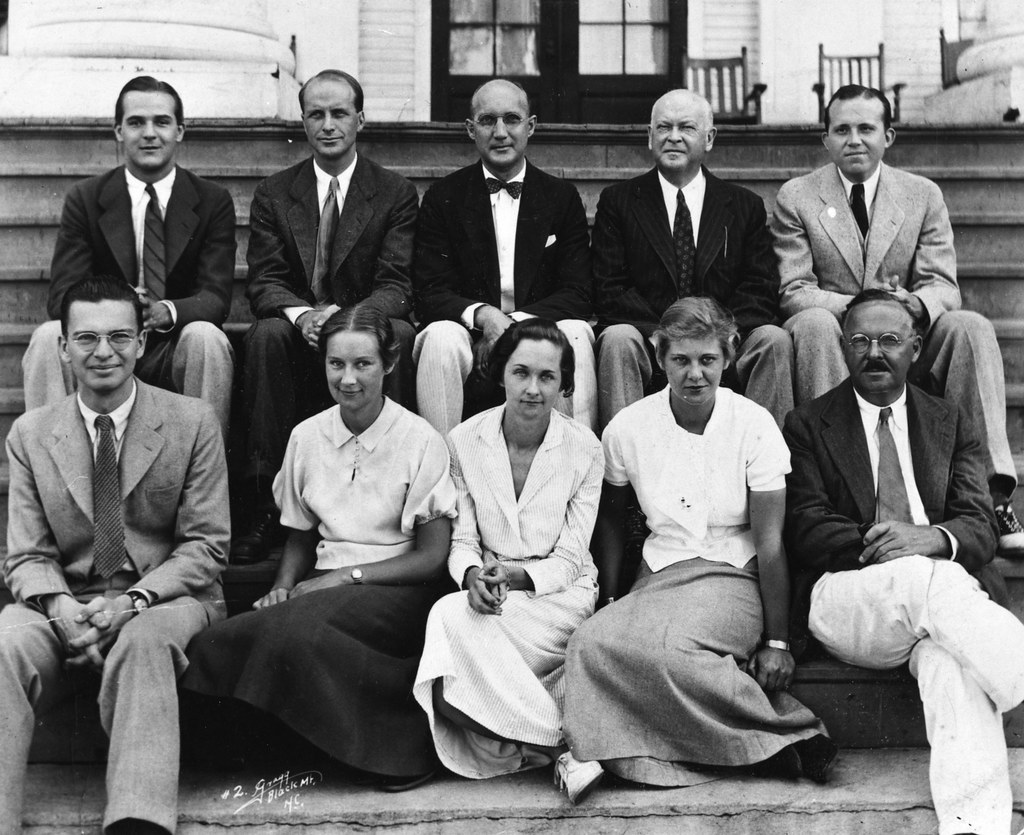
Original Black Mountain College faculty, September 1933

Front row: Joseph Martin, Helen Boyden Lamb Lamont, Margaret Loram Bailey, Elizabeth Vogler, and John Andrew Rice.


Back row: John Evarts, Ted Dreier, Frederick Georgia, Ralph Lounsbury, and William Hinckley.


Black Mountain College Collection, Western Regional Archives, Asheville, North Carolina

______________________

My first post in this series was on the composer John Cage and my second post was on Susan Weil and Robert Rauschenberg who were good friend of Cage. The third post in this series was on Jorge Fick. Earlier we noted that  Fick was a student at Black Mountain College and an artist that lived in New York and he lent a suit to the famous poet Dylan Thomas and Thomas died in that suit.

The fourth post in this series is on the artist  Xanti Schawinsky and he had a great influence on John Cage who  later taught at Black Mountain College. Schawinsky taught at Black Mountain College from 1936-1938 and Cage right after World War II. In the fifth post I discuss David Weinrib and his wife Karen Karnes who were good friends with John Cage and they all lived in the same community. In the 6th post I focus on Vera B. William and she attended Black Mountain College where she met her first husband Paul and they later  co-founded the Gate Hill Cooperative Community and Vera served as a teacher for the community from 1953-70. John Cage and several others from Black Mountain College also lived in the Community with them during the 1950’s. In the 7th post I look at the life and work of M.C.Richards who also was part of the Gate Hill Cooperative Community and Black Mountain College.

In the 8th post I look at book the life of   Anni Albers who is  perhaps the best known textile artist of the 20th century and at Paul Klee who was one  of her teachers at Bauhaus. In the 9th post the experience of Bill Treichler in the years of 1947-1949  is examined at Black Mountain College. In 1988, Martha and Bill started The Crooked Lake Review, a local history journal and Bill passed away in 2008 at age 84.

In the 10th post I look at the art of Irwin Kremen who studied at Black Mountain College in 1946-47 and there Kremen spent his time focused on writing and the literature classes given by the poet M. C. Richards. In the 11th post I discuss the fact that Josef Albers led the procession of dozens of Bauhaus faculty and students to Black Mountain.

In the 12th post I feature Wassily Kandinsky (1866-1944) who was featured in the film THE LONGEST RIDE and the film showed Kandinsky teaching at BLACK MOUNTAIN COLLEGE which was not true according to my research. Evidently he was invited but he had to decline because of his busy schedule but many of his associates at BRAUHAUS did teach there. In the 13th post I look at the writings of the communist Charles Perrow. 

Willem de Kooning was such a major figure in the art world and because of that I have dedicated the 14th, 15th and 16th posts in this series on him. Paul McCartney got interested in art through his friendship with Willem because Linda’s father had him as a client. Willem was a  part of New York School of Abstract expressionism or Action painting, others included Jackson Pollock, Elaine de Kooning, Lee Krasner, Franz Kline, Arshile Gorky, Mark Rothko, Hans Hofmann, Adolph Gottlieb, Anne Ryan, Robert Motherwell, Philip Guston, Clyfford Still, and Richard Pousette-Dart.

In the 17th post I look at the founder Ted Dreier and his strength as a fundraiser that make the dream of Black Mountain College possible.

Theodore Dreier. Photo courtesy North Carolina State Archives, Black Mountain College Papers.

Others

Gisela Kronenberg Herwitz:
: If challenging a student to explore and analyze concepts as well as the evidence on which they are based and make such an exercise stimulating and enjoyable, then Jack French was my best teacher. He encouraged his students to think for themselves, often playing the “devil’s advocate.” He encouraged me to pursue independent study of perception and let me teach what I had learned to one of his classes.Claude Stoller: Calculus with Ted Dreier. Mathematics had been my bugaboo, but Ted held a weekly seminar along with the regular classes in which we read excerpts from Russell, Hogben, White, Newton and others. I became aware of Calculus as a precise description of observed beauties such as the curve of a waterfall’s descent or that of a ball thrown in the air, etc. (It was an adjunct of Albers’s admonition about learning to see).Claude Stoller: Architectural Design with Larry Kocher…. Larry’s teaching was largely “hands on.” We generally built what we designed. Larry was a highly experienced and dedicated architect who nonetheless made us feel that he accepted us as colleagues. We worked hard and all played major roles in the construction portion of the Work Program.

Robert Sunley: I took a math course with Ted Dreier; quite a few considered him a poor teacher. Yet he earnestly sought to find the dynamics underlying math, and to help me and others work out the formulation of concepts into figures and graphs. But in my class of four I was the only one remaining at the end of the term.

Emil Willimetz: It was a course on Form in Literature and was given to me by two of the top professors, Fred Mangold and John Rice. During the year I studied the literary form of ten writers—how words were put together to reach an effect. Thomas Browne, Dickens, Hardy, Hemingway, Proust, Gertrude Stein and others. I then wrote a short story which I had to rewrite in the style of each of the ten authors. It was, without a doubt, the most exciting and fulfilling course I’ve ever taken.

Robert Sunley: John Evarts’s classes in music I found particularly valuable. Rather than the usual “music appreciation” course he combined intense attention to listening and understanding a few pieces; and going along with that (which he did with his playing at the piano as well as records) we learned the elements of harmony, counterpoint, beginning composition, training of the ear, and so on. By trying my hand at a simple canon or fugue, or later a simple atonal piano piece, I gained first hand a feel for and love of music….

Lucian Marquis: Heinrich Jalowetz, who taught us both to listen to the music but also understand the social context of that music, taught us through Brahms’s German Requiem to listen and to understand in a wider sense.

Theodore Dreier. Photo courtesy North Carolina State Archives, Black Mountain College Papers.

Allegra Fuller Snyder – Black Mountain: The Start of a Critical Path

Published on Oct 12, 2012

Reviewing 4 Black Mountain College Museum International Conference
Allegra Fuller Snyder (Conference Keynote Speaker)
Black Mountain: The Start of a Critical Path

Allegra Fuller Snyder is Buckmister Fuller’s only living child and is the Founder, first President, and now Board member emeritus of the Buckminster Fuller Institute. She is also Professor Emerita of Dance and Dance Ethnology, UCLA; 1992 American Dance Guild Honoree of the Year; former Chair of the Department of Dance; and founding Coordinator of the World Arts and Cultures Program. She has been on the Dance Faculty at Cal Arts as well as Professor of Performance Studies at New York University, and Honorary Visiting Professor at the University of Surrey, Guildford, England. She began her career as a performer and choreographer and has been concerned with the relation of dance to film since the late 1940s. She has made several prize winning documentary films on dance. She has done dance research around the world, was the recipient of several Fulbright Scholarships. Among many special projects Snyder was a Core Consultant on the PBS series DANCING for WNET/Channel 13. Recently returning to performance, Jennifer Fisher of the LA times said of her in “Spirit Dances 6: Inspired by Isadora,” “She was a haiku and an epic.”

Sponsored by the Green Restaurants of AIR (Asheville Independent Restaurants)

Videography and Post by Michael Folliett
at Image Preservations.com

GIVING UP THE HORSE – TED DREIER AND WALTER GROPIUS

Theodore (‘Ted’) Dreier was – in many ways – the unsung hero of Black Mountain College. John Andrew Rice receives much of the credit for the College’s founding, though Dreier was at his side following the famous ‘Rollins fracas’ (1) and remained a central member of the College community for the first sixteen years of its existence. Dreier was never the outspoken and confrontational pedagogue that Rice was, nor was he a ground breaking artist like Josef or Anni Albers, the other longest-serving members of the BMC faculty. However, Dreier’s contributions to the College were just as – if not more – crucial to its survival than anyone else’s. Through his dogged commitment, patient accounting, and relentless fundraising, Black Mountain College continued operation through immense difficulty. Dreier gave much of his life to the College, which could never have survived without him.

Summer Arts Institute Faculty, Black Mountain College, 1946. Left to right: Leo Amino, Jacob Lawrence, Leo Lionni, Ted Dreier, Nora Lionni, Beaumont Newhall, Gwendolyn Lawrence, Ise Gropius, Jean Varda (in tree), Nancy Newhall (sitting), Walter Gropius, Mary "Molly" Gregory, Josef Albers, Anni Albers. Courtesy of Western Regional Archives.

An engineer with a degree from Harvard, Dreier always wished he could spend more time teaching at Black Mountain. He was listed in various Black Mountain Bulletins as the instructor in mathematics and physics. Later, he spent a great deal of time preparing a course on the ‘Philosophy of Science.’ Yet most of the time, he found himself in charge (first as treasurer, later as rector) of the College’s finances and its physical plant. Many of his wealthy contacts were called upon time and time again to rescue Black Mountain from collapse. Dreier had an unshakable belief in the College’s mission, so eloquently put forward by Rice from the beginning, but he matched that ideological commitment with a practical ability to raise funds and win supporters – the much-needed ‘Friends of the College.’ His family lived at Black Mountain, and his son – Ted Jr. – grew up and studied there. The distressing chapter of Dreier’s Black Mountain story came years after Rice’s departure, when – after the Second World War – the College went through its most difficult and trying period.

An American of German descent, Dreier had very close relationships with Josef and Anni Albers, and also – on even more personal terms – with Walter and Ise Gropius, and their daughter Ati, who graduated from Black Mountain College in 1946 and who was the godmother of the Dreiers’ daughter. Founder of the legendary German design school, the Bauhaus, Gropius exercised enormous influence over Black Mountain. Though he never served there permanently, he was a member of the Board of Advisors, taught at the famous summer art institutes, and acted in generous friendship toward Black Mountain and the Dreier family.

In the Bauhaus Archive, Berlin, a large portion of Gropius’ collected correspondence illustrates the close relationship his family had with the Dreiers. It also – quite painfully for one invested in the history of the College – tells the story of Dreier’s disillusionment and, finally, his departure from the radical institution he played such a large part in creating. One letter to Dreier shows the sacrifices Gropius was willing to make in order to allow his daughter Ati’s continued education at Black Mountain:

I had meant to write to you regarding Ati when your letter arrived. Meanwhile I have carefully checked up on my financial status regarding a second college year for Ati. I have given up my horse, our second car and we put up a roomer in Ati’s room. After this the utmost my shrunken budget allows me to spend for Ati’s next College year is 1000$. I should like to leave it to you to decide which may be the better way for Ati to make good on the difference either in your summer camp or here in war work.(2)

In response, Dreier assured Gropius that Ati might find work as part of the summer music institute – work that would not be so demanding as in a war factory or on the College farm, and which would allow her time and energy to pursue her studies in art. On April 26, Dreier wrote, ‘Ati was quite jealous of my having heard from you before she did but she was really extremely happy to think that there was a good chance now of her coming back next year […] I have a feeling myself that it would be a good thing and I believe that the Albers agree with me.’

Many other letters between Dreier and Gropius sketch a close, familial relationship. They invite one another and their families for visits to Cambridge, Mass., Black Mountain, and New York; they recount holidays together and hopes for putting the College’s affairs in order. Dreier even wrote to Ise Gropius about the possibility of moving to post-war Germany:

The other day we had a faculty candidate for history who had been in Military Government in Germany for a year speak. He had been Educational and Fine Arts Officer […] Most people liked his talk which was certainly very interesting, but there is something that bothers me terribly about the kind of aloof objectivity with which such a man can talk about Germany and the people and the problems of education and denazification. Although I am naturally not considering any such thing seriously because I still hope things may work out here at Black Mountain (and please consider my mentioning it confidential), the idea had crossed my mind that if I left maybe a place that I could be of as much use as any would be in Germany […] But the very thought of living comfortably in a country while everyone else was half-starving and discouraged is something that would be almost impossible to do if one has any feelings for the people at all. (3)

With the closeness of their relationship, it is no wonder that Dreier included Gropius in the mailing of his resignation from Black Mountain. On August 31, 1948, Dreier wrote to Walter and Ise, ‘This is just a line to say that the die is finally cast. A few days ago I came to the conclusion that I simply could not undertake another reorganization of the college […] I said I wanted to leave.’ (4) In fact, Dreier stayed on just a bit longer in order to help transition to the leadership of Josef Albers as College rector.

Beside personal correspondence, one of the most fascinating pieces in the Gropius collection is Ted Dreier’s ‘Summary Report – Black Mountain College: the First 15 ½ Years,’ written as part of his resignation. The ten-page document was written at a point when Dreier was understandably frustrated and bitter, yet the clarity (and even charity) of his writing still comes through when addressing the core principles of the Black Mountain experiment. He writes, ‘For 15 ½ years Black Mountain has stood for a non-political radicalism in higher education which, like all true radicalism, sought to find modern means for getting back to fundamentals.’ (5) This, he concedes, was largely achieved in the early years, and the character of the College under Albers exemplified these ideals. Dreier saw the reconstitution of the College after the War as the period in which things changed. Infighting was rampant. Younger members of staff who – Dreier points out – had no connection to the foundation of the College advocated divergent pedagogies. ‘There has to be agreement,’ Dreier wrote, ‘about method as well as about aim, and readiness to follow the method.’ (6)

Yet Dreier had not entirely given up hope for Black Mountain, even as he knew his time there was finished: ‘If the effort is made to continue the College it will have to be made by others who may or may not stand for what Black Mountain has stood for in the past.’ Even in despair, Dreier anticipated a rebirth of the College. This is exactly what would happen, very much in the way Dreier describes. When Charles Olson became the dominant force at Black Mountain in the early 1950s, he looked back to the founding principles laid out by Rice and Dreier, while also looking toward a future that would be, in many ways, quite different. Olson’s Black Mountain – and especially his style of leadership – would probably not have been met with Dreier’s enthusiasm. (We must recognize, Olson’s leadership finally failed; he was not the organizer and fundraiser that Dreier had been.) In the end, it was Olson – not Dreier – who had to spend years liquidating the College’s assets and setting its affairs in order. But, after Dreier’s departure, the College did gain new life. Many people today know of Black Mountain through the Olson phase, which included writers Robert Creeley and Robert Duncan, and the creation of the “Black Mountain Review”. However, Dreier must be given his due. If it were not for his strenuous efforts on behalf of the institution, there would have been no place at Lake Eden for those who followed.

by Jonathan Creasy
Trinity College Dublin/ New Dublin Press

—
(1) Rice was terminated from his tenured position as professor at Rollins College in Florida when the College’s President, Hamilton Holt, objected to Rice’s teaching practices and general demeanor. A famous hearing occurred, held by the American Association of University Professors (AAUP), in which Rice was vindicated, but he left Rollins anyway. This is the fabled beginning of the move toward Black Mountain. Most of the initial faculty and students at BMC followed Rice from Rollins. Dreier was a key member of this group. (For more detail, see Martin Duberman’s Black Mountain: An Exploration in Community, Dutton: 1972.)
(2) Letter from Walter Gropius to Theodore Dreier, April 16, 1944. The Bauhaus Archive, Berlin.
(3) Letter from Theodore Dreier to Ise Gropius, August 22, 1947. The Bauhaus Archive, Berlin.
(4) Letter from Theodore Dreier to Walter and Ise Gropius, August 31, 1948. The Bauhaus Archive.
(5) Dreier, Theodore. ‘Summary Report – Black Mountain College: The First 15 ½ Years.’ Walter Gropius Collection, The Bauhaus Archive, Berlin.
(6) Ibid.

Book Review: “The Longest Ride” by Nicholas Sparks

Ok, so I may be a bit biased with my first official book review because #1: I’m a hopeless romantic and #2: I’m a die hard Nicholas Sparks fan.  But I’m still going to review the heck out of this book

“The Longest Ride” Book Review

“The Longest Ride” tells the story of two couples in North Carolina.  The first is about Ira Levinson, an old widow who became stranded after crashing his truck down an embankment.  While struggling to stay alive he relives the memories of his late wife Ruth and we get to experience the love they had and how they came to spend their lives together.

The second follows the story of a young couple Sophia Danko, a college senior at Wake Forest University,  and Luke Collins, a cowboy and Champion bull rider.  After meeting during a rodeo after-party, they begin to fall in love, but both have different paths and their love is tested.  They have life decisions to make and put them aside until they finally have to face them.

This book shows you the beginning and end of life with another person.  It’s like the “I Do” and “Till Death Do Us Part” combined into one book.  It’s about making memories and looking back on them for comfort and joy.  It’s about sacrifices a person makes in order to make a relationship work.

***

While the book seemed to be primarily about Sophia and Luke, I really enjoyed Ira’s story.  It’s sad how he’s remembering his wife while trying to stay alive long enough for someone to find him, but the stories told about their life together makes me feel that true love really does last forever.

At ninety-one, the crash left him with injuries that made him immobile and struggling to stay awake.  This is when his subconscious brings his beloved wife, Ruth, back to him.  Ruth asks him to tell her about significant moments in their lives like when they met, when Ira went to war, his proposal, and their honeymoon.  All in an effort for him to hold on just a bit longer because he still had unfinished business to do.

*Spoilers Ahead

The more I read about Ira, the more I realized that it’s the simple things in life that are important.  I think this is one reason Ira was one of my favorite characters.  The relationship he had with Ruth seemed real, not some fairytale romance.  There were ups and downs, but Ira and Ruth worked through even the toughest of times.  This is something that many marriages fail to do these days…fight to keep love alive.

There were two significant times during Ira and Ruth’s relationship that truly tested them.  The first is when Ira returned home from serving in WWII.  Before going off to war he had proposed to Ruth and it was completely lacking romance.  Not in the sense that Nicholas Sparks didn’t add enough romance to the proposal, but Sparks created Ira as a man who has a tough time being romantic, which is how many men are.  However, even seemingly unromantic men can surprise you.  Keep that in mind when you read this book.

Ira had returned home as a wounded solider.  He was in the hospital for a few weeks recovery from gun shot wounds during an air raid.  Doctors thought he wouldn’t survive especially since he developed peritonitis and had a severe fever for thirteen days.  When he returned, he broke off the engagement to Ruth.  Of course Ruth was heartbroken…what woman wouldn’t be?  She didn’t understand why he had made this decision, but months later he finally told her.

Due to the peritonitis it was likely he couldn’t have children.  Ira knew that having a child was something Ruth really wanted in the future and he didn’t want to deprive her of that.  He thought the right thing to do was to let her move on with someone that could give her exactly what she wanted.  This is when Ruth had to make the decision to stay or go…she stayed.

Ira should have told Ruth right from the beginning the reason they shouldn’t get married.  It’s worse to leave a woman in the dark because she wonders, what did I do wrong?  But I also see Ira’s side of the story.  It’s a painful feeling knowing you can’t give someone you love exactly what they want.  But I was glad that he finally had the courage to tell her, considering how much he loved her.

The second most trying moment for Ira and Ruth was many many years later.  They still had no children and Ruth was a school teacher where children came from very poor families.  That’s where she met Daniel who became the son she never had.  They were contemplating adopting Daniel, but after coming home from their yearly anniversary trip Daniel was gone and she never found out where he had been taken.  It’s not until much later in the book that you find out.  Ruth took this terribly and their marriage was in turmoil.  Ira thought that it was ending between them.

But they made it…

What you don’t know yet, about Ira and Ruth, is they had started collecting art pieces during their first honeymoon.  They would take a yearly trip to Black Mountain College or exhibits in various places, where they would buy artwork from young upcoming artists.  By the time Ira was stranded in his truck he was worth millions and millions of dollars based on their art collection.  This is an important part of the ending because Ira and Ruth never sold one painting….they kept them.  That meant Ira had to decide where they would go once he was gone.

Now, I want to turn the attention over to Sophia and Luke.  I believe they embody what being a young couple is about.  Everyone has been in the phase when you try to spend as much time as possible together because it’s so new and exciting.  That’s what was going on with Sophia and Luke.  But they both had things that troubled them.  Sophia was worried about school and what would happen after she graduated.

From personal experience, when you’re in college things are really put into perspective about where you want your life to be going.  Sophia was no different.  She was starting her senior year as an art history major and wanted to end up working in a museum.  Sophia’s struggles are like many college students preparing to graduate.  Studying for finals, applying for jobs or internships, and essentially dealing with the fear of the unknown because nobody ever really knows what will happen after graduation.

Luke is on the complete opposite spectrum of Sophia..but there’s a phrase “opposites attract”.  He never went to college and had no plans to go in the future.  All he knew was farming and bull riding because that’s how he grew up.  Tending to cattle, growing and harvesting pumpkins, and bailing hay were just some of the daily chores Luke grew up doing.  He was also a very good bull rider.  He was well known in the sport, but a little over a year before he met Sophia, Luke had a terrible accident.  When Luke finally told Sophia just how serious this accident was she gave him an ultimatum.  He had to choose between Sophia and riding.

I did understand the internal struggle Luke had with this because he wasn’t riding again for the glory.  He was riding so that his mother wouldn’t lose the farm.  The money he won helped pay bills that were overdue and mortgage payments that would eventually double.  It was like he had to choose between Sophia and his mother.  Sophia did have a good reason to give Luke an ultimatum.  Riding would most certainly kill him.  Bull riding is dangerous to begin with, but the injuries he sustained a year before increased his chances of death substantially.  This is why I believe Sophia made the right decision.

Thankfully, right before an important ride, Luke makes the decision…he chooses Sophia.

I know you’re probably wondering if Ira makes it, which was what I was thinking through most of the book.  A good thing because it kept me on my toes and wanting to read more.  I’m going to tell you that yes, Ira does make it and guess who found him….Sophia and Luke.

Ira didn’t last too much longer…but he asked Sophia to do one thing for him.  He asked her to read a letter that he had written to his wife.  This is when I was tearing up.

Now, I don’t want to give away the ending, but I will say that you may or may not know what’s coming.  I certainly figured out what was coming, but that didn’t take away from how sweet it was.  I will say that you shouldn’t forget about the large estate of paintings Ira had left.

In the end, everyone got what they needed and things turned out right.  While Ira did pass on, he was able to join Ruth again…something he truly wanted.  Luke got more than he ever dreamed of, which would change his life and that of Sophia’s forever.

All four main characters, Ira, Ruth, Luke, and Sophia were giving up something in order to have something worth so much more….the chance to have a life filled with love and happiness.  I believe this is what the book was striving for.

Favorite Quotes:

“If we’d never met, I think I would have known my life wasn’t complete. And I would have wandered the world in search of you, even if I didn’t know who I was looking for.”

“After all, if there is a heaven, we will find each other again, for there is no heaven without you.”

“His voice, even now, follows me everywhere on this longest of rides, this thing called life.”

“Remember me with joy, for this is how I always thought of you. That is what I want, more than anything. I want you to smile when you think of me. And in your smile, I will live forever.”

“Sophia, after all, was the real treasure he’d found this year, worth more to him than all the art in the world.”

Overall Rating

From a scale of 1-10 I give “The Longest Ride” a 9.  This book didn’t have as much of an emotional impact on me as others he has written, like “The Last Song”.  I literally was bawling reading that book, but this one is still very good.  I would recommend this book to those who enjoy love stories and are hopeless romantics like myself.

Let me know what you think or if you have any book recommendations by leaving a comment.

The Longest Ride Movie CLIP – Bull Riding Lesson (2015) – Britt Robertson, Scott Eastwood Movie HD

_________________


XXXXXXXXXXXXXXXXX

Related posts:

FRANCIS SCHAEFFER ANALYZES ART AND CULTURE Part 55 THE BEATLES (Part G, The Beatles and Rebellion) (Feature on artist Wallace Berman )

FRANCIS SCHAEFFER ANALYZES ART AND CULTURE Part 54 THE BEATLES (Part F, Sgt Pepper’s & Eastern Religion) (Feature on artist Richard Lindner )

FRANCIS SCHAEFFER ANALYZES ART AND CULTURE Part 53 THE BEATLES (Part E, Stg. Pepper’s and John Lennon’s search in 1967 for truth was through drugs, money, laughter, etc & similar to King Solomon’s, LOTS OF PICTURES OF JOHN AND CYNTHIA) (Feature on artist Yoko Ono)

FRANCIS SCHAEFFER ANALYZES ART AND CULTURE Part 52 THE BEATLES (Part D, There is evidence that the Beatles may have been exposed to Francis Schaeffer!!!) (Feature on artist Anna Margaret Rose Freeman )

FRANCIS SCHAEFFER ANALYZES ART AND CULTURE Part 51 THE BEATLES (Part C, List of those on cover of Stg.Pepper’s ) (Feature on artist Raqib Shaw )

FRANCIS SCHAEFFER ANALYZES ART AND CULTURE Part 50 THE BEATLES (Part B, The Psychedelic Music of the Beatles) (Feature on artist Peter Blake )

FRANCIS SCHAEFFER ANALYZES ART AND CULTURE Part 49 THE BEATLES (Part A, The Meaning of Stg. Pepper’s Cover) (Feature on artist Mika Tajima)

FRANCIS SCHAEFFER ANALYZES ART AND CULTURE PART 48 “BLOW UP” by Michelangelo Antonioni makes Philosophic Statement (Feature on artist Nancy Holt)

FRANCIS SCHAEFFER ANALYZES ART AND CULTURE Part 47 Woody Allen and Professor Levy and the death of “Optimistic Humanism” from the movie CRIMES AND MISDEMEANORS Plus Charles Darwin’s comments too!!! (Feature on artist Rodney Graham)

FRANCIS SCHAEFFER ANALYZES ART AND CULTURE PART 46 Friedrich Nietzsche (Featured artist is Thomas Schütte)

RESPONDING TO HARRY KROTO’S BRILLIANT RENOWNED ACADEMICS!! Part 21 (Dr. Lawrence Krauss, theoretical physicist and cosmologist at Arizona State, “…most scientists don’t think enough about God…There’s no evidence that we need any supernatural hand of God”)

_____________

MUSIC MONDAY Paul McCartney’s song COMING UP

Paul McCartney – Coming Up-HQ

Making of the Coming Up Music Video (Paul McCartney)

Coming Up (song)

From Wikipedia, the free encyclopedia
“Coming Up”
Single by Paul McCartney
from the album McCartney II
B-side “Coming Up” (Live at Glasgow)
“Lunch Box/Odd Sox”
Released 11 April 1980
Format 7″
Recorded July–August 1979
Genre Rock
Length 3:49
Label Parlophone (UK)
Columbia (US)
Writer(s) Paul McCartney
Producer(s) Paul McCartney
Certification RIAA (US) Gold 21 July 1980)[1]
Paul McCartney singles chronology
“Wonderful Christmastime”
(1979)
“Coming Up”
(1980)
“Waterfalls”
(1980)
Wings singles chronology
“Rockestra Theme”
(1979)
“Coming Up”
(1980)
“My Carnival”
(1985)
Back cover

Reverse side of the picture sleeve
McCartney II track listing

“Coming Up” is a song written and performed by Paul McCartney. It is the opening track on his second solo album McCartney II, which was released in 1980. Like the rest of the album, the song has a minimalist synthesised feel to it. It featured vocals sped up by using a vari-speed tape machine. McCartney played all the instruments and shared harmonies with wife Linda McCartney.

“Coming Up” was a major chart hit in Britain, peaking at number 2 on the charts. In America and Canada, the live version of the song performed by Paul McCartney and Wings (released as the B-side to the single) saw much greater success.

Background[edit]

In a Rolling Stone interview, McCartney explained how the song came about:[2]

I originally cut it on my farm in Scotland. I went into the studio each day and just started with a drum track. Then I built it up bit by bit without any idea of how the song was going to turn out. After laying down the drum track, I added guitars and bass, building up the backing track. I did a little version with just me as the nutty professor, doing everything and getting into my own world like a laboratory. The absent-minded professor is what I go like when I’m doing those; you get so into yourself it’s weird, crazy. But I liked it.

Then I thought, ‘Well, OK, what am I going to do for the voice?’ I was working with a vari-speed machine with which you can speed up your voice, or take it down a little bit. That’s how the voice sound came about. It’s been speeded up slightly and put through an echo machine I was playing around with. I got into all sorts of tricks, and I can’t remember how I did half of them, because I was just throwing them all in and anything that sounded good, I kept. And anything I didn’t like I just wiped.

—Paul McCartney[2]

Former band-mate John Lennon liked the song and credited it for driving him out of retirement to resume recording.

Somebody asked me what I thought of Paul’s last album and I made some remark like I thought he was depressed and sad. But then I realized I hadn’t listened to the whole damn thing. I heard one track – the hit, ‘Coming Up,’ which I thought was a good piece of work. Then I heard something else that sounded like he was depressed.

—John Lennon, All We Are Saying, 1980[3]

I heard a story from a guy who recorded with John in New York, and he said that John would sometimes get lazy. But then he’d hear a song of mine where he thought, ‘Oh, shit, Paul’s putting it in, Paul’s working!’ Apparently ‘Coming Up’ was the one song that got John recording again. I think John just thought, ‘Uh oh, I had better get working, too.’ I thought that was a nice story.

—Paul McCartney

Live version[edit]

A live version of the song was recorded in Glasgow, Scotland, on 17 December 1979 by Wings during their tour of the UK. This version had a much fuller sound and was included as one of the two songs on the B-side of the single; the other B-side was also a Wings song, “Lunchbox/Odd Sox”, that dated back to the Venus and Mars sessions. Both B-sides were credited to Paul McCartney & Wings.

Columbia Records wanted to put the live version on McCartney II but McCartney resisted the change, wanting to keep it a solo album. Instead, a one-sided 7″ white-label promotional copy of the Wings version was included with the album in North America.

“Coming Up (Live at Glasgow)” has since appeared on the US versions of All the Best! and Wingspan, while the solo studio version is included on the UK releases.

A different live Wings recording of “Coming Up” appears on the album Concerts for the People of Kampuchea, with an additional verse that was edited out of the Glasgow version.

Chart performance[edit]

In the UK, the single was an immediate hit, reaching number two in its third week on the chart.[4]

In the US, Columbia Records promoted the live version which subsequently received more airplay than the studio version. McCartney was unaware of Columbia’s move, otherwise he might have pushed for the A-side, which he thought was the stronger version. An executive from Columbia Records explained the switch by stating “Americans like the sound of Paul McCartney’s real voice.”[2] This single became Wings’ sixth and final number one single.

I always thought the single was going to be the solo version. We did the song on tour because we wanted to do something the audience hadn’t heard before. The live version on the B-side of the single was recorded on the last night of the tour in Glasgow. In America, a lot of the disc jockeys on the top 40 stations picked up on this side and so it became the A-side in the States. It’s the B-side in the rest of the world.

—Paul McCartney

In the US, “Coming Up” reached number one on the Billboard Hot 100 and was certified Gold by the Recording Industry Association of America for sales of over one million copies.[5] Although the live version received more airplay, Billboard listed the A-side on the Hot 100 for the first 12 weeks on the chart, including three weeks at number one, before switching to the more popular B-side for the remaining nine weeks on the chart.[6]

Music video[edit]

“Coming Up” is also well known for its music video, with Paul McCartney playing ten roles and Linda McCartney playing two. The “band” (identified as “The Plastic Macs” on the drum kit—an homage to Lennon’s conceptual Plastic Ono Band)[7]features Paul and Linda’s imitations of various rock musician stereotypes, as well as a few identifiable musicians. In his audio commentary on the 2007 video collection The McCartney Years, McCartney identified characters that were impersonations of specific artists: Hank Marvin (guitarist from the Shadows), Ron Mael of Sparks (keyboards), and a ‘Beatlemania-era’ version of himself. While others such as author Fred Bronson have suggested that there are other identifiable impersonations in the video, such as Andy MacKay, Frank Zappa, Mick Fleetwood and Neil Young,[8] McCartney said the other roles were simply comic relief.[9]

The video premiered in the US on Saturday Night Live on 17 May 1980,[10] although it had already been shown on British television, on the BBC music programme Top of the Pops on 24 April 1980.[11]

Chart performance[edit]

Weekly singles charts[edit]

Chart (1980) Peak
position
UK Singles Chart 2
US Billboard Hot 100 1
Canada RPM 100 Singles 1

Year-end charts[edit]

Chart (1980) Position
Canada RPM 100 Singles 11
UK Singles Chart [12] 48
US Billboard Hot 100 7

Track listing[edit]

7″ single (R 6035)
  1. “Coming Up” – 3:49
  2. “Coming Up” (Live at Glasgow) – 3:51
    • Performed by Paul McCartney & Wings
  3. “Lunch Box/Odd Sox” – 3:54
    • Performed by Paul McCartney & Wings

Personnel[edit]

References[edit]

  1. Jump up^ “RIAA Gold and Platinum”. RIAA. Retrieved 12 October 2012.
  2. ^ Jump up to:a b c Gambaccini, Paul (26 June 1980). “Paul McCartney’s one man band”. Rolling Stone. pp. 11, 20.
  3. Jump up^ Sheff, David. All We Are Saying.
  4. Jump up^ “Official Charts: Paul McCartney”. The Official UK Charts Company. Retrieved 13 October 2011.
  5. Jump up^ “Gold & Platinum Searchable Database”. Recording Industry Association of America. Retrieved 15 August 2011.
  6. Jump up^ Billboard Hot 100 Billboard 12 July 1980: 60
  7. Jump up^ The McCartney Years DVD, Warner Music, Rhino Entertainment, 2007, MPL
  8. Jump up^ Bronson, Fred. The Billboard Book of Number 1 Hits, Billboard Books, 2003, p. 526.
  9. Jump up^ Saturday Night Live transcript, 17 May 1980 interview by “Father Guido Sarducci” with Paul & Linda McCartney. Retrieved 9 April 2008.
  10. Jump up^ “Saturday Night Live: Steve Martin/Paul and Linda McCartney Episode Summary”. TV.com. Retrieved 13 August 2011.
  11. Jump up^ “Top of the Pops 24/04/1980”. BBC. Retrieved 2015-05-08.
  12. Jump up^ http://www.uk-charts.top-source.info/top-100-1980.shtml

External links[edit]

Preceded by
“Funkytown” by Lipps Inc
Billboard Hot 100 number one single
28 June 1980 – 12 July 1980
Succeeded by
“It’s Still Rock and Roll to Me” by Billy Joel
Preceded by
“Cars” by Gary Numan
Canadian RPM Singles Chart number-one single
5 July 1980
Succeeded by
“Funkytown” by Lipps Inc

Related posts:

MUSIC MONDAY I’m Waiting for the Man sung by Nico in 1982 (about waiting for drug fix)

I’m Waiting for the Man sung by Nico in 1982 (about waiting for drug fix) __________ Nico Icon documentary part 3 Nico Icon documentary part 4 NICO – I’m Waiting For The Man – (1982, Warehouse, Preston, UK) One of the top 10 songs from The Velvet Underground and Nico is the song “I’m Waiting […]

MUSIC MONDAY Nico’s sad story of drugs and her interaction with Jim Morrison

Nico’s sad story of drugs and her interaction with Jim Morrison Nico – These Days The Doors (1991) – Movie Trailer / Best Parts The Doors Movie – Back Door Man/When The Music’s Over/Arrest of Jim Morrison Uploaded on Jul 30, 2009 A clip from “The Doors” movie with “Back Door Man”, “When The Music’s […]

MUSIC MONDAY Christian Singer’s Controversial Journey Revealed in New Documentary: ‘I Placed Homosexuality on Jesus’ Shoulders’ Oct. 2, 2014 2:23pm Billy Hallowell

Dennis Jernigan – You Are My All In All Uploaded on Oct 18, 2009 Dennis Jernigan – You Are My All In All __________________________________________ Christian Singer’s Controversial Journey Revealed in New Documentary: ‘I Placed Homosexuality on Jesus’ Shoulders’ Oct. 2, 2014 2:23pm Billy Hallowell Singer-songwriter Dennis Jernigan has been making Christian music for decades, recording […]

MUSIC MONDAY Cole Porter’s songs “De-Lovely” and “Let’s misbehave”

Cole Porter’s songs “De-Lovely” and “Let’s misbehave”   ‘At Long Last Love’: Let’s Misbehave/De-Lovely Uploaded on Apr 1, 2009 Burt Reynolds and Cybil Shepherd give an extraordinarily charming performance of Cole Porter’s songs in Peter Bogdanovich’s absolutely wonderful tribute to the golden age of film musicals, ‘At Long Last Love’. _____________________ De-Lovely   From Wikipedia, […]

MUSIC MONDAY Cole Porter’s song’s “My Heart Belongs to Daddy”

________ _______ Cole Porter’s song’s “My Heart Belongs to Daddy” My Heart Belongs To Daddy Uploaded on Jun 20, 2010 Mary Martin became popular on Broadway and received attention in the national media singing “My Heart Belongs to Daddy”. “Mary stopped the show with “My Heart Belongs to Daddy”. With that one song in the […]

MUSIC MONDAY Cole Porter’s song “Love for Sale”

______________ Love For Sale (De-Lovely) Love for Sale (song) From Wikipedia, the free encyclopedia Jump to: navigation, search This article needs additional citations for verification. Please help improve this article by adding citations to reliable sources. Unsourced material may be challenged and removed. (September 2008) “Love for Sale“ Written by Cole Porter Published 1930 Form […]

MUSIC MONDAY Cole Porter’s song “Ev’ry Time We Say Goodbye”

Cole Porter’s song “Ev’ry Time We Say Goodbye” _________________ Natalie Cole – Ev’ry Time We Say Goodbye Ev’ry Time We Say Goodbye   From Wikipedia, the free encyclopedia   Jump to: navigation, search   This article needs additional citations for verification. Please help improve this article by adding citations to reliable sources. Unsourced material may be […]

MUSIC MONDAY Cole Porter’s song “So in Love”

Cole Porter’s song “So in Love” __________________ So in love – De-lovely So in Love From Wikipedia, the free encyclopedia Jump to: navigation, search For the song by Orchestral Manoeuvres in the Dark, see So in Love (OMD song). For the song by Jill Scott, see So in Love (Jill Scott song). Not to be […]

MUSIC MONDAY Cole Porter’s song “Night and Day”

____________________ Cole Porter’s song “Night and Day” Cole Porter´s Day and Night by Fred Astaire & Ginger Rogers Night and Day (song) From Wikipedia, the free encyclopedia Jump to: navigation, search This article includes a list of references, but its sources remain unclear because it has insufficient inline citations. Please help to improve this article […]

MUSIC MONDAY John Lennon and Bob Dylan Conversation mention Johnny Cash and his song “Big River”

Johnny Cash – Big River Uploaded on Jan 16, 2008 Grand Ole Opry, 1962 _______________________________ John Lennon and Bob Dylan Conversation mention Johnny Cash and his song “Big River” _______________________ Big River (Johnny Cash song) From Wikipedia, the free encyclopedia Jump to: navigation, search This article may require cleanup to meet Wikipedia’s quality standards. No […]

“Schaeffer Sunday” Liberals at Ark Times can not stand up to Scott Klusendorf’s pro-life arguments (Part 5) Blogger asserts, “You have the Saline idiocy which is life begins at conception. Well, on one level, that is true, but it is not a life, it is not a human so there is a point where, morally, abortion is not a problem.”

Scott Klusendorf Speaks at the 40 Days for Life in Dayton, OH

Francis Schaeffer: “Whatever Happened to the Human Race” (Episode 1) ABORTION OF THE HUMAN RACE

Published on Oct 6, 2012 by 

This crucial series is narrated by the late Dr. Francis Schaeffer and former Surgeon General Dr. C. Everett Koop. Today, choices are being made that undermine human rights at their most basic level. Practices once considered unthinkable are now acceptable – abortion, infanticide and euthanasia. The destruction of human life, young and old, is being sanctioned on an ever-increasing scale by the medical profession, by the courts, by parents and by silent Christians. The five episodes in this series examine the sanctity of life as a social, moral and spiritual issue which the Christian must not ignore. The conclusion presents the Christian alternative as the only real solution to man’s problems.

_____________________________

I have gone back and forth with Ark Times liberal bloggers on the issue of abortion, but I am going to try something new. I am going to respond with logical and rational reasons the pro-life view is true. All of this material is from a paper by Scott Klusendorf called FIVE BAD WAYS TO ARGUE ABOUT ABORTION .

The person using the username “Steven E ” wrote this on 5-10-13 on the Ark Times Blog:

You have the Saline idiocy which is life begins at conception. Well, on one level, that is true, but it is not a life, it is not a human so there is a point where, morally, abortion is not a problem. 

Then there are the idiots and murderers who claim that a fetus is not a baby. If it is not a baby, it is not a Life worthy of consideration. To some of them, an elective abortion at the 8th month is no moral problem, which is a giant and repugnant LIE. 

To say life begins at conception is a lie.

To say a fetus, even though eight months old, is not a life is another lie, too.

____________________

I responded:

Steven E, you have written some very wise things on this blog many times before but I have differ with you on one short point from what you just said. These are your exact words:

“You have the Saline idiocy which is life begins at conception. Well, on one level, that is true, but it is not a life, it is not a human so there is a point where, morally, abortion is not a problem.”

Scott Klusendorf responded to this kind of thinking by stating:


SLED: Defend the Unborn with Scott Klusendorf


Pro-life advocates contend that elective abortion unjustly takes the life of a defenseless human being.  This simplifies the abortion controversy by focusing public attention on just one question: Is the unborn a member of the human family?  If so, killing him or her to benefit others is a serious moral wrong.  Conversely, if the unborn are not human, elective abortion requires no more justification than having a tooth pulled.

Scientifically, we know that from the earliest stages of development, the unborn are distinct, living, and whole human beings.  Leading embryology textbooks confirm this.1 Prior to advocating elective abortion, former Planned Parenthood President Dr. Alan Guttmacher was perplexed that anyone, much less a medical doctor, would question these basic scientific facts.  “This all seems so simple and evident that it is difficult to picture a time when it wasn’t part of the common knowledge,” he wrote in his book Life in the Making.2

Philosophically, there is no morally significant difference between the embryo you once were and the adult you are today.  Differences of size, level of development, environment, and degree of dependency are not relevant in the way that abortion advocates need them to be.  The simple acronym SLED can be used to illustrate these non-essential differences:3

Size: True, embryos are smaller than newborns and adults, but why is that relevant?  Do we really want to say that large people are more valuable than small ones?  Men are generally larger than women, but that doesn’t mean they deserve more rights.  Size doesn’t equal value.

Level of development: True, embryos and fetuses are less developed than you and I.  But again, why is this relevant?  Four year-old girls are less developed than 14 year-old ones. Should older children have more rights than their younger siblings?  Some people say that the immediate capacity for self-awareness and a desire to go on living makes one valuable. But if that is true, newborns do not qualify as valuable human beings.  Infants do not acquire distinct self-awareness and memory until several months after birth.4 (Best case scenario, infants acquire limited self-awareness three months after birth, when the synapse connections increase from 56 trillion to 1,000 trillion.)  As abortion advocate and philosopher Dean Stretton writes, “Any plausible pro-choice theory will have to deny newborns a full right to life.  That’s counterintuitive.”5

Environment: Where you are has no bearing on who you are.  Does your value change when you cross the street or roll over in bed?  If not, how can a journey of eight inches down the birth-canal suddenly change the essential nature of the unborn from non-human to human?  If the unborn are not already valuable human beings, merely changing their location can’t make them so.

Degree of Dependency: If viability bestows human value, then all those who depend on insulin or kidney medication are not valuable and we may kill them.  Conjoined twins who share blood type and bodily systems also have no right to life.

In short, although humans differ immensely with respect to talents, accomplishments, and degrees of development, they are nonetheless equal (and valuable) because they all have the same human nature.

FOOTNOTES:

1 See T.W. Sadler, Langman’s Embryology, 5th ed. (Philadelphia: W.B. Saunders, 1993) p. 3; Keith L. Moore, The Developing Human: Clinically Oriented Embryology (Toronto: B.C. Decker, 1988) p. 2; O’Rahilly, Ronand and Muller, Pabiola, Human Embryology and Teratology, 2nd ed. (New York: Wiley-Liss, 1996) pp. 8, 29. See also Maureen L. Condic, “Life: Defining the Beginning by the End,” First Things, May 2003.

2 A. Guttmacher, Life in the Making: the Story of Human Procreation (New York: Viking Press, 1933) p. 3

3 SLED test initially developed by Stephen Schwarz but modified significantly and explained here by Scott Klusendorf. Stephen Schwarz, The Moral Question of Abortion (Chicago: Loyola University Press, 1990) pp. 17-18.

4 Conor Liston & Jerome Kagan, “Brain Development: Memory Enhancement in Early Childhood,” Nature 419, 896 (2002). See also O’Rahilly, Ronand and Muller, Pabiola, Human Embryology and Teratology, 2nd ed. (New York: Wiley-Liss, 1996) p. 8.

Steven E did respond by writing:

Saline, I appreciate the very informative answer, but the beginning stages of the embryo, even these decorated folks have to admit, cannot live outside the uterine wall. You can have a 3 month premature birth survive because it is, undeniably, a living person.

That undeniable scientific line kind of defeats the extremes of both sides.

I make no mistake. There is a time when the choice belongs exclusively to the pregnant woman. There is also a time when a contentious woman knows that she is killing a living being and should give it proper thought, rather than dismissing this living human life as ‘just’ a fetus.

I did respond by writing:

Yes the unborn baby that is only 3 months along can not live outside the womb because this child must depend on the mother for food. Steven E you are correct about that but what about that logic being used on the 3 month old baby that is dependent on the mother and father to provide food? What if a child requires insulin to live? Should we say the child is not worthy of life because of the dependence on a drug to live?

Yes the younger unborn baby is smaller at 13 weeks than 39 weeks but is a 4 year old young girl not a child worthy of life because she is not mature in every way like a 18 year old girl is?

Related posts:

Taking on Ark Times Bloggers on various issues Part T “Abortion is a dirty business” (includes video “Truth and History” and editorial cartoon)

I have gone back and forth and back and forth with many liberals on the Arkansas Times Blog on many issues such as abortion, human rights, welfare, poverty, gun control  and issues dealing with popular culture. Here is another exchange I had with them a while back. My username at the Ark Times Blog is Saline […]

Taking on Ark Times Bloggers on various issues Part S “Who gave the unborn the inalienable right to life?” (includes video “Slaughter of the Innocents” and an editorial cartoon)

I have gone back and forth and back and forth with many liberals on the Arkansas Times Blog on many issues such as abortion, human rights, welfare, poverty, gun control  and issues dealing with popular culture. Here is another exchange I had with them a while back. My username at the Ark Times Blog is Saline […]

Taking on Ark Times Bloggers on various issues Part R “What’s wrong with Roe v. Wade decision?” (includes video “Truth and History” and editorial cartoon)

I have gone back and forth and back and forth with many liberals on the Arkansas Times Blog on many issues such as abortion, human rights, welfare, poverty, gun control  and issues dealing with popular culture. Here is another exchange I had with them a while back. My username at the Ark Times Blog is Saline […]

Taking on Ark Times Bloggers on various issues Part Q “Three Ark Times bloggers take pro-life postion” (includes film DEATH BY SOMEONE’S CHOICE) (editorial cartoon)

  I have gone back and forth and back and forth with many liberals on the Arkansas Times Blog on many issues such as abortion, human rights, welfare, poverty, gun control  and issues dealing with popular culture. Here is another exchange I had with them a while back. My username at the Ark Times Blog is […]

Taking on Ark Times Bloggers on various issues Part P “Freedom of speech lives on Ark Times Blog” (includes the video ABORTION OF THE HUMAN RACE) (editorial cartoon)

I have gone back and forth and back and forth with many liberals on the Arkansas Times Blog on many issues such as abortion, human rights, welfare, poverty, gun control  and issues dealing with popular culture. Here is another exchange I had with them a while back. My username at the Ark Times Blog is Saline […]

Taking on Ark Times Bloggers on various issues Part O “Without God in the picture there can not be lasting meaning to our lives” (includes film ABORTION OF THE HUMAN RACE)

I have gone back and forth and back and forth with many liberals on the Arkansas Times Blog on many issues such as abortion, human rights, welfare, poverty, gun control  and issues dealing with popular culture. Here is another exchange I had with them a while back. My username at the Ark Times Blog is Saline […]

Taking on Ark Times Bloggers on various issues Part N “A discussion of the Woody Allen Movie CRIMES AND MISDEMEANORS”(includes film DEATH BY SOMEONE’S CHOICE)

I have gone back and forth and back and forth with many liberals on the Arkansas Times Blog on many issues such as abortion, human rights, welfare, poverty, gun control  and issues dealing with popular culture. Here is another exchange I had with them a while back. My username at the Ark Times Blog is Saline […]

Taking on Ark Times Bloggers on various issues Part M “Old Testament prophecy fulfilled?”Part 3(includes film DEATH BY SOMEONE’S CHOICE)

  I have gone back and forth and back and forth with many liberals on the Arkansas Times Blog on many issues such as abortion, human rights, welfare, poverty, gun control  and issues dealing with popular culture. Here is another exchange I had with them a while back. My username at the Ark Times Blog is […]

Taking on Ark Times Bloggers on various issues Part L “On what basis do you say murder is wrong?”Part 2 (includes the film THE BASIS FOR HUMAN DIGNITY)

I have gone back and forth and back and forth with many liberals on the Arkansas Times Blog on many issues such as abortion, human rights, welfare, poverty, gun control  and issues dealing with popular culture. Here is another exchange I had with them a while back. My username at the Ark Times Blog is Saline […]

Taking on Ark Times Bloggers on various issues Part K “On what basis do you say murder is wrong?”Part 1 (includes film ABORTION OF THE HUMAN RACE)

I have gone back and forth and back and forth with many liberals on the Arkansas Times Blog on many issues such as abortion, human rights, welfare, poverty, gun control  and issues dealing with popular culture. Here is another exchange I had with them a while back. My username at the Ark Times Blog is Saline […]

Taking on Ark Times Bloggers on various issues Part J “Can atheists find lasting meaning to their lives?” (includes film ABORTION OF THE HUMAN RACE)

I have gone back and forth and back and forth with many liberals on the Arkansas Times Blog on many issues such as abortion, human rights, welfare, poverty, gun control  and issues dealing with popular culture. Here is another exchange I had with them a while back. My username at the Ark Times Blog is Saline […]

Taking on Ark Times Bloggers on various issues Part I “Old Testament Bible Prophecy” includes the film TRUTH AND HISTORY and article ” Jane Roe became pro-life”

I have gone back and forth and back and forth with many liberals on the Arkansas Times Blog on many issues such as abortion, human rights, welfare, poverty, gun control  and issues dealing with popular culture. Here is another exchange I had with them a while back. My username at the Ark Times Blog is Saline […]

Taking on Ark Times Bloggers on various issues Part H “Are humans special?” includes film ABORTION OF THE HUMAN RACE) Reagan: ” To diminish the value of one category of human life is to diminish us all”

I have gone back and forth and back and forth with many liberals on the Arkansas Times Blog on many issues such as abortion, human rights, welfare, poverty, gun control  and issues dealing with popular culture. Here is another exchange I had with them a while back. My username at the Ark Times Blog is Saline […]

Taking on Ark Times Bloggers on various issues Part G “How do moral nonabsolutists come up with what is right?” includes the film “ABORTION OF THE HUMAN RACE”)

I have gone back and forth and back and forth with many liberals on the Arkansas Times Blog on many issues such as abortion, human rights, welfare, poverty, gun control  and issues dealing with popular culture. Here is another exchange I had with them a while back. My username at the Ark Times Blog is Saline […]

Taking on Ark Times Bloggers on various issues Part F “Carl Sagan’s views on how God should try and contact us” includes film “The Basis for Human Dignity”

I have gone back and forth and back and forth with many liberals on the Arkansas Times Blog on many issues such as abortion, human rights, welfare, poverty, gun control  and issues dealing with popular culture. Here is another exchange I had with them a while back. My username at the Ark Times Blog is Saline […]

Taking on Ark Times Bloggers on various issues Part E “Moral absolutes and abortion” Francis Schaeffer Quotes part 5(includes the film SLAUGHTER OF THE INNOCENTS) (editorial cartoon)

I have gone back and forth and back and forth with many liberals on the Arkansas Times Blog on many issues such as abortion, human rights, welfare, poverty, gun control  and issues dealing with popular culture. Here is another exchange I had with them a while back. My username at the Ark Times Blog is Saline […]

Taking on Ark Times Bloggers on various issues Part D “If you can’t afford a child can you abort?”Francis Schaeffer Quotes part 4 includes the film ABORTION OF THE HUMAN RACE) (editorial cartoon)

I have gone back and forth and back and forth with many liberals on the Arkansas Times Blog on many issues such as abortion, human rights, welfare, poverty, gun control  and issues dealing with popular culture. Here is another exchange I had with them a while back. My username at the Ark Times Blog is Saline […]

Taking on Ark Times Bloggers on various issues Part C “Abortion” (Francis Schaeffer Quotes part 3 includes the film SLAUGHTER OF THE INNOCENTS) (editorial cartoon)

I have gone back and forth and back and forth with many liberals on the Arkansas Times Blog on many issues such as abortion, human rights, welfare, poverty, gun control  and issues dealing with popular culture. Here is another exchange I had with them a while back. My username at the Ark Times Blog is Saline […]

Taking on Ark Times Bloggers on various issues Part B “Gendercide” (Francis Schaeffer Quotes Part 2 includes the film ABORTION OF THE HUMAN RACE) (editorial cartoon)

I have gone back and forth and back and forth with many liberals on the Arkansas Times Blog on many issues such as abortion, human rights, welfare, poverty, gun control  and issues dealing with popular culture. Here is another exchange I had with them a while back. My username at the Ark Times Blog is Saline […]

Taking on Ark Times Bloggers on various issues Part A “The Pro-life Issue” (Francis Schaeffer Quotes Part 1 includes the film SLAUGHTER OF THE INNOCENTS) (editorial cartoon)

I have gone back and forth and back and forth with many liberals on the Arkansas Times Blog on many issues such as abortion, human rights, welfare, poverty, gun control  and issues dealing with popular culture. Here is another exchange I had with them a while back. My username at the Ark Times Blog is Saline […]

_____________________________

I have gone back and forth with Ark Times liberal bloggers on the issue of abortion, but I am going to try something new. I am going to respond with logical and rational reasons the pro-life view is true. All of this material is from a paper by Scott Klusendorf called FIVE BAD WAYS TO ARGUE ABOUT ABORTION .

On 2-8-13 on the Ark Times Blog the person using the username “Venessa,” wrote, ” Well, Saline, I am NOT A CHRISTIAN and you don’t get to force your beliefs on me.”

____________________

Here is my response:  

Scott Klusendorf responded to this kind of thinking by stating:

SANCTITY OF LIFE SATURDAY Francis Schaeffer predicted July 21, 2015 would come when the video “Second Planned Parenthood Senior Executive Haggles Over Baby Parts Prices, Changes Abortion Methods” would be released!!!!

Francis Schaeffer predicted July 21, 2015 would come when the video “Second Planned Parenthood Senior Executive Haggles Over Baby Parts Prices, Changes Abortion Methods” would be released!!!!

Al Mohler wrote the article ,”FIRST-PERSON: They indeed were prophetic,” Jan 29, 2004, and in this great article he noted:   .

“We stand today on the edge of a great abyss,” they wrote. “At this crucial moment choices are being made and thrust on us that will for many years to come affect the way people are treated. We want to try to help tip the scales on the side of those who believe that individuals are unique and special and have great dignity.”

This year marks the 25th anniversary of “Whatever Happened to the Human Race?” by Francis Schaeffer and C. Everett Koop. The anniversary serves to remind us just how unaware and unawake most evangelicals really were 25 years ago — and how prophetic the voices of Schaeffer and Koop were.

Whatever Happened to the Human Race? was both a book project and a film series, the fruit of an unusual collaboration between Francis Schaeffer, one of the truly significant figures of 20th-century evangelicalism, and C. Everett Koop, one of the nation’s most illustrious pediatric surgeons. They were an odd couple of sorts, but on the crucial issues of human dignity and the threat of what would later be called the “Culture of Death,” they were absolutely united.

Francis Schaeffer, who died in 1984, was nothing less than a 20th-century prophet. He was a genuine eccentric, given to wearing leather breeches and sporting a goatee — then quite unusual for anyone in the evangelical establishment. Then again, Schaeffer was never really a member of any establishment, and that is partly why a generation of questioning young people made their way to his Swiss study center known as L’Abri.

Big ideas were Schaeffer’s business — and the Christian worldview was his consistent framework. Long before most evangelicals even knew they had a worldview, Schaeffer was taking alternative worldviews apart and inculcating in his students a love for the architecture of Christian truth and the dignity of ideas.

Key figures on the evangelical left wrote Schaeffer off as a crank, and he returned the favor by denying that they were evangelicals at all. They complained that he did not follow their rules for scholarly publication. He pointed out that people actually read his books — and young people frustrated with cultural Christianity read his books by the thousands. They were looking for someone with ideas big enough for the age, relevant for the questions of the times, and based without compromise in Christian truth. Francis Schaeffer — knee pants and all — became a prophet for the age.

Dr. C. Everett Koop, on the other hand, is a paragon of the American establishment — a former surgeon-in-chief at the Children’s Hospital in Philadelphia and later surgeon general of the United States under President Reagan. In 1974 Koop catapulted to international attention by performing the first successful surgical separation of conjoined twins. A Presbyterian layman, Koop lives in quasi-retirement in Pennsylvania. His surgical procedures remain textbook cases for medical students today.

Whatever Happened to the Human Race? awakened American evangelicals to the anti-human technologies and ideologies that then threatened human dignity. Most urgently, the project put abortion unquestionably on the front burner of evangelical concern. The tenor of the times is seen in the fact that Schaeffer and Koop had to argue to evangelicals in the late 1970s that abortion was not just a “Catholic” issue.They taught many evangelicals a new and urgently needed vocabulary about embryo ethics, euthanasia and infanticide. They knew they were running out of time.

“Each era faces its own unique blend of problems,” they argued. “Our time is no exception. Those who regard individuals as expendable raw material — to be molded, exploited, and then discarded — do battle on many fronts with those who see each person as unique and special, worthwhile, and irreplaceable.”

Every age is marked by both the “thinkable” and the “unthinkable,” they asserted — and the “thinkable” of late-20th-century Western cultures was dangerously anti-human. The lessons of the century — with the Holocaust at its center — should be sufficient to drive the point home. The problem, as illustrated by those who worked in Hitler’s death camps, was the inevitable result of a loss of conscience and moral truth. They were “people just like all of us,” Koop and Schaeffer reminded. “We seem to be in danger of forgetting our seemingly unlimited capacities for evil, once boundaries to certain behavior are removed.”

By the last quarter of the century, life and death were treated as mere matters of choice. “The schizophrenic nature of our society became further evident as it became common practice for pediatricians to provide the maximum of resuscitative and supportive care in newborn intensive-care nurseries where premature infants were under their care — while obstetricians in the same medical centers were routinely destroying enormous numbers of unborn babies who were normal and frequently of larger size. Minors who could not legally purchase liquor and cigarettes could have an abortion-on-demand and without parental consent or knowledge.”

Schaeffer and Koop pointed to other examples of moral schizophrenia. Disabled persons were given new access to facilities and services in the name of human rights, while preborn infants diagnosed with the same disabilities were often aborted — with the advice that it would be “wrong” to bring such a baby into the world.

Long before the discovery of stem cells and calls for the use of human embryos for such experimentation, Schaeffer and Koop warned of attacks upon human life at its earliest stage. “Embryos ‘created’ in the biologist’s laboratory raise special questions because they have the potential for growth and development if planted in the womb. The disposal of these live embryos is a cause for ethical and moral concern.”

They also saw the specter of infanticide and euthanasia. Infanticide, including what is now called “partial-birth abortion,” is murder, they argued. “Infanticide is being practiced right now in this country, and the saddest thing about this is that it is being carried on by the very segment of the medical profession which has always stood in the role of advocate for the lives of children.” Long before the formal acceptance of euthanasia in countries like the Netherlands, Koop and Schaeffer saw the rise of a “duty to die” argument used against the old, the very sick and the unproductive. They rejected euthanasia in the case of a “so-called vegetative existence” and warned all humanity that disaster awaited a society that lusted for a “beautiful death.”

“Abortion, infanticide, and euthanasia are not only questions for women and other relatives directly involved — nor are they the prerogatives of a few people who have thought through the wider ramifications,” they declared. “They are life-and-death issues that concern the whole human race equally and should be addressed as such.”

How did this happen? This embrace of an anti-human “humanism” could only be explained by the rejection of the Christian worldview. “Judeo-Christian teaching was never perfectly applied,” they acknowledged, “but it did lay a foundation for a high view of human life in concept and practice.” Through the inculcation of biblical values, “people viewed human life as unique — to be protected and loved — because each individual is made in the image of God.”

Two great enemies of truth were blamed for this loss of biblical truth — modern secularism and theological liberalism. The secularists insist on the imposition of a “humanism” that defines humanity in terms of productivity, arbitrary standards of beauty and health, and an inverted system of value. Theological liberalism, denying the truthfulness of the Bible, robs the church and the society of any solid authority. The biblical concept of humanity made in the image of God is treated as poetry rather than as truth. But, “if people are not made in the image of God, the pessimistic, realistic humanist is right: The human race is indeed an abnormal wart on the smooth face of a silent and meaningless universe.”

Everything else simply follows. “In this setting, abortion, infanticide, and euthanasia … are completely logical. Any person can be obliterated for what society at one moment thinks of as its own social or economic good.” Once human life and human dignity are devalued to this degree, recovery is extremely difficult — if not impossible.

The past 25 years has been a period of even more rapid technological and moral change. We now face threats to human dignity unimaginable just a quarter-century ago. We must now deal with the ethical challenges of embryo research, human cloning, the Human Genome Project and the rise of transhuman technologies. Even with many Christians aware and active on these issues, we are losing ground.

Francis Schaeffer and Everett Koop ended their book with a call for action. “If, in this last part of the twentieth century, the Christian community does not take a prolonged and vocal stand for the dignity of the individual and each person’s right to life — for the right of each person to be treated as created in the image of God, rather than as a collection of molecules with no unique value — we feel that as Christians we have failed the greatest moral test to be put before us in this century.”

In this new century, that warning is even more threatening and more urgent. The challenges of the 21st century are even greater than those faced in the century before. This should make us even more thankful for the prophetic witness of Francis Schaeffer and C. Everett Koop — and even more determined to contend for life. Humanity still stands on the brink of that abyss.
–30–
Adapted from the Crosswalk.com weblog of R. Albert Mohler Jr., president of Southern Baptist Theological Seminary in Louisville, Ky.

2nd video July 21, 2015

Second Planned Parenthood Senior Executive Haggles Over Baby Parts Prices, Changes Abortion Methods

Published on Jul 21, 2015

Background track “Cylinder Four” by Chris Zabriskie (https://freemusicarchive.org/music/Ch…) used under Attribution License (http://creativecommons.org/licenses/b…). CMP claims no ownership of this track.
****************************************­*******************

EMBARGOED UNTIL 8:00 AM ET, 21 JULY 2015

#PPSellsBabyParts SECOND PLANNED PARENTHOOD SENIOR EXECUTIVE HAGGLES OVER BABY PARTS PRICES, CHANGES ABORTION METHODS
President of PPFA Medical Directors’ Council Mary Gatter Doesn’t Want to “Lowball” Price, Suggests “Less Crunchy” Technique, Says She Wants a Lamborghini

Contact: David Daleiden, david@centerformedicalprogress.org, 949.734.0859

LOS ANGELES, July 21—A second undercover video shows Planned Parenthood Federation of America’s Medical Directors’ Council President, Dr. Mary Gatter, haggling over payments for intact fetal specimens and offering to use a “less crunchy technique” to get more intact body parts.

It is similar to last week’s viral video showing PPFA Senior Director of Medical Services Dr. Deborah Nucatola admitting to using partial-birth abortions to get intact parts and suggesting a price range of $30 to $100 per specimen.

Gatter is a senior official within Planned Parenthood and is President of the Medical Directors’ Council, the central committee of all Planned Parenthood affiliate medical directors.

Actors posing as buyers ask Gatter, “What would you expect for intact [fetal] tissue?”

“Well, why don’t you start by telling me what you’re used to paying!” Gatter replies.

Gatter continues: “You know, in negotiations whoever throws out the figure first is at a loss, right?” She explains, “I just don’t want to lowball,” before suggesting, “$75 a specimen.”

Gatter twice recites Planned Parenthood messaging on fetal tissue collection, “We’re not in it for the money,” and “The money is not the important thing,” but she immediately qualifies each statement with, respectively, “But what were you thinking of?” and, “But it has to be big enough that it’s worthwhile for me.”

Gatter also admits that in prior fetal tissue deals, Planned Parenthood received payment in spite of incurring no cost: “It was logistically very easy for us, we didn’t have to do anything. So there was compensation for this.” She accepts a higher price of $100 per specimen understanding that it will be only for high-quality fetal organs: “Now, this is for tissue that you actually take, not just tissue that someone volunteers and you can’t find anything, right?”

By the lunch’s end, Gatter suggests $100 per specimen is not enough and concludes, “Let me just figure out what others are getting, and if this is in the ballpark, then it’s fine, if it’s still low, then we can bump it up. I want a Lamborghini.”

The sale or purchase of human fetal tissue is a federal felony punishable by up to 10 years in prison or a fine of up to $500,000 (42 U.S.C. 289g-2).

Gatter also suggests modifying the abortion procedure to get more intact fetuses: “I wouldn’t object to asking Ian, who’s our surgeon who does the cases, to use an IPAS [manual vacuum aspirator] at that gestational age in order to increase the odds that he’s going to get an intact specimen.”

Gatter seems aware this violates rules governing tissue collection, but disregards them: “To me, that’s kind of a specious little argument.” Federal law requires that no alteration in the timing or method of abortion be done for the purposes of fetal tissue collection (42 U.S.C. 289g-1).

The video, like last week’s featuring Dr. Nucatola, was produced by The Center for Medical Progress and is part of CMP’s nearly 3-year-long investigative journalism study, “Human Capital.”

CMP’s Project Lead David Daleiden notes, “Planned Parenthood’s top leadership admits they harvest aborted baby parts and receive payments for this. Planned Parenthood’s only denial is that they make money off of baby parts, but that is a desperate lie that becomes more and more untenable as CMP reveals Planned Parenthood’s business operations and statements that prove otherwise.”

Seven State Governments have opened investigations into Planned Parenthood’s sale of aborted fetal body parts, as have three Congressional Committees. The House Energy and Commerce Committee has called PPFA’s Senior Director of Medical Services to testify this month about the organization’s fetal tissue harvesting.

###

See the video at: https://www.youtube.com/watch?v=MjCs_…

Tweet: #PPSellsBabyParts

For more information on the Human Capital project, visit centerformedicalprogress.org.
The Center for Medical Progress is a 501(c)3 non-profit dedicated to monitoring and reporting on medical ethics and advances.

I love the works of Francis Schaeffer and I have been on the internet reading several blogs that talk about Schaeffer’s work and the work below was really helpful. Schaeffer’s film series “How should we then live?  Wikipedia notes, “According to Schaeffer, How Should We Then Live traces Western history from Ancient Rome until the time of writing (1976) along three lines: the philosophic, scientific, and religious.[3] He also makes extensive references to art and architecture as a means of showing how these movements reflected changing patterns of thought through time. Schaeffer’s central premise is: when we base society on the Bible, on the infinite-personal God who is there and has spoken,[4] this provides an absolute by which we can conduct our lives and by which we can judge society.  Here are some posts I have done on this series: Francis Schaeffer’s “How should we then live?” Video and outline of episode 10 “Final Choices” , episode 9 “The Age of Personal Peace and Affluence”, episode 8 “The Age of Fragmentation”, episode 7 “The Age of Non-Reason” , episode 6 “The Scientific Age” ,  episode 5 “The Revolutionary Age” , episode 4 “The Reformation”,  episode 3 “The Renaissance”, episode 2 “The Middle Ages,”, and  episode 1 “The Roman Age,” .

In the film series “WHATEVER HAPPENED TO THE HUMAN RACE?” the arguments are presented  against abortion (Episode 1), infanticide (Episode 2),euthanasia (Episode 3), and then there is a discussion of the Christian versus Humanist worldview concerning the issue of “the basis for human dignity” in Episode 4 and then in the last episode a close look at the truth claims of the Bible.

_________________
Francis Schaeffer

__________________________

I truly believe that many of the problems we have today in the USA are due to the advancement of humanism in the last few decades in our society. Ronald Reagan appointed the evangelical Dr. C. Everett Koop to the position of Surgeon General in his administration. He partnered with Dr. Francis Schaeffer in making the video below. It is very valuable information for Christians to have.  Actually I have included a video below that includes comments from him on this subject.

Francis Schaeffer “BASIS FOR HUMAN DIGNITY” Whatever…HTTHR

Dr. Francis Schaeffer: Whatever Happened to the Human Race Episode 1 ABORTION

Dr. Francis schaeffer – The flow of Materialism(from Part 4 of Whatever happened to human race?)

Dr. Francis Schaeffer – The Biblical flow of Truth & History (intro)

Francis Schaeffer – The Biblical Flow of History & Truth (1)

Dr. Francis Schaeffer – The Biblical Flow of Truth & History (part 2)

__________

Dr. Francis Schaeffer: Whatever Happened to the Human Race Episode 1 ABORTION

Is the Bible historically accurate? Here are some of the posts I have done in the past on the subject: 1. The Babylonian Chronicle, of Nebuchadnezzars Siege of Jerusalem, 2. Hezekiah’s Siloam Tunnel Inscription. 3. Taylor Prism (Sennacherib Hexagonal Prism), 4. Biblical Cities Attested Archaeologically. 5. The Discovery of the Hittites, 6.Shishak Smiting His Captives, 7. Moabite Stone, 8. Black Obelisk of Shalmaneser III, 9A Verification of places in Gospel of John and Book of Acts., 9B Discovery of Ebla Tablets. 10. Cyrus Cylinder, 11. Puru “The lot of Yahali” 9th Century B.C.E., 12. The Uzziah Tablet Inscription, 13. The Pilate Inscription, 14. Caiaphas Ossuary, 14 B Pontius Pilate Part 2, 14c. Three greatest American Archaeologists moved to accept Bible’s accuracy through archaeology., 

The Bible and Archaeology – Is the Bible from God? (Kyle Butt 42 min)

Related posts:

Taking on Ark Times bloggers about abortion on the 40th anniversary date of Roe v. Wade (Part 7) “Poverty not good reason for abortion, why not give up for adoption?”

Dr Richard Land discusses abortion and slavery – 10/14/2004 – part 3 The best pro-life film I have ever seen below by Francis Schaeffer and Dr. C. Everett Koop “Whatever happened to the human race?” Over the years I have taken on the Ark Times liberal bloggers over and over and over concerning the issue […]

Taking on Ark Times bloggers about abortion on the 40th anniversary date of Roe v. Wade (Part 6) For many pro-abortionists ” …the problem is not determining when actual human life begins, but when the value of that life begins to out weigh other considerations”

The best pro-life film I have ever seen below by Francis Schaeffer and Dr. C. Everett Koop “Whatever happened to the human race?” Francis Schaeffer pictured above._________ The 45 minute video above is from the film series created from Francis Schaeffer’s book “Whatever Happened to the Human Race?” with Dr. C. Everett Koop. This book  really […]

Taking on Ark Times bloggers about abortion on the 40th anniversary date of Roe v. Wade (Part 5) “Slavery issue compared to rights of unborn child”

The best pro-life film I have ever seen below by Francis Schaeffer and Dr. C. Everett Koop “Whatever happened to the human race?” Over the years I have taken on the Ark Times liberal bloggers over and over and over concerning the issue of abortion. I asked over and over again for one liberal blogger […]

Taking on Ark Times bloggers about abortion on the 40th anniversary date of Roe v. Wade (Part 4) “How do pro-lifers react to the movie THE CIDER HOUSE RULES?”

Francis Schaeffer pictured above._________ The best pro-life film I have ever seen below by Francis Schaeffer and Dr. C. Everett Koop “Whatever happened to the human race?” Over the years I have taken on the Ark Times liberal bloggers over and over and over concerning the issue of abortion. I asked over and over again […]

Taking on Ark Times bloggers about abortion on the 40th anniversary date of Roe v. Wade (Part 3) “What should be the punishment for abortion doctors?”

The best pro-life film I have ever seen below by Francis Schaeffer and Dr. C. Everett Koop “Whatever happened to the human race?” On 1-24-13 I took on the child abuse argument put forth by Ark Times Blogger “Deathbyinches,” and the day before I pointed out that because the unborn baby has all the genetic code […]

Taking on Ark Times bloggers about abortion on the 40th anniversary date of Roe v. Wade (Part 2) “The pro-abortion child abuse argument destroyed here”

PHOTO BY STATON BREIDENTHAL from Pro-life march in Little Rock on 1-20-13. Tim Tebow on pro-life super bowl commercial. Over the years I have taken on the Ark Times liberal bloggers over and over and over concerning the issue of abortion. Here is another encounter below. On January 22, 2013 (on the 40th anniversary of the […]

Taking on Ark Times bloggers about abortion on the 40th anniversary date of Roe v. Wade (Part 1)

Dr Richard Land discusses abortion and slavery – 10/14/2004 – part 3 The best pro-life film I have ever seen below by Francis Schaeffer and Dr. C. Everett Koop “Whatever happened to the human race?” Over the years I have taken on the Ark Times liberal bloggers over and over and over concerning the issue […]

FRIEDMAN FRIDAY Quote from Friedman from the book CAPITALISM AND FREEDOM

______________________


I Agree with Milton Friedman!

By James Kwak

In Capitalism and Freedom, Milton Friedman asks what types of inequality are ethically justifiable. In particular (pp. 164–66):

“Inequality resulting from differences in personal capacities, or from differences in wealth accumulated by the individual in question, are considered appropriate, or at least not so clearly inappropriate as differences resulting from inherited wealth.

“This distinction is untenable. Is there any greater ethical justification for the high returns to the individual who inherits from his parents a peculiar voice for which there is a great demand than for the high returns to the individual who inherits property? …

“Most differences of status or position or wealth can be regarded as the product of chance at a far enough remove. The man who is hard working and thrifty is to be regarded as ‘deserving’; yet these qualities owe much to the genes he was fortunate (or fortunate?) enough to inherit.”

I think Friedman is correct here. This is basically the same point that I made in my earlier post: the money that you make because you are smart and hard working is the product of good fortune just as much as the money that you inherit directly from your parents.

Read more at Medium.

“Friedman Friday” (“Free to Choose” episode 1 – Power of the Market. part 7 of 7)

  Michael Harrington:  If you don’t have the expertise, the knowledge technology today, you’re out of the debate. And I think that we have to democratize information and government as well as the economy and society. FRIEDMAN: I am sorry to say Michael Harrington’s solution is not a solution to it. He wants minority rule, I […]

“Friedman Friday” (“Free to Choose” episode 1 – Power of the Market. part 6 of 7)

PETERSON: Well, let me ask you how you would cope with this problem, Dr. Friedman. The people decided that they wanted cool air, and there was tremendous need, and so we built a huge industry, the air conditioning industry, hundreds of thousands of jobs, tremendous earnings opportunities and nearly all of us now have air […]

________________

A letter to an atheist from Sherwood Haisty Jr:

______________

A letter to an atheist from Sherwood Haisty Jr:

Dear S________,

Thank you for your reply again. You seem to be a nice and thoughtful, and intelligent, person. One who has thought out your own views. I can respect that and hope that you find my words demonstrating respect to you on all occasions even if something I might say may be direct or challenging.

Do you have too much to give up? What will it cost you to follow Jesus Christ? Are you willing to forsake all to follow Him? Is there anything you are unwilling to give up? If you have to much to give up, you have too much. Learn from the Bible about a man who was intrested in going to Heaven but had too much to give up. To listen to the message, look for this icon in the "Sermon Media Vault" at... http://www.TruthandLight.TV

Do you have too much to give up? What will it cost you to follow Jesus Christ? Are you willing to forsake all to follow Him? Is there anything you are unwilling to give up? If you have to much to give up, you have too much. Learn from the Bible about a man who was interested in going to Heaven but had too much to give up. To listen to the message, look for this icon in the “Sermon Media Vault” at… http://www.TruthandLight.TV

First it would seem that (from most exchanges between Christians and atheist) that I would now begin to try to prove to you that there is a God and that you would likely attempt to counter my attempts to prove that there is a God. We would go back and forth until one of us grew tired of the exchange and said, “Well I guess that is it and there is no point going back and forth anymore.”

That is not the approach I wish to take in our discussion. This may be surprising to you, but I have no desire to try to attempt to persuade you that there is a God. Are you surprised? Do you think I am being honest now? I am. Here is why I said that I don’t desire to attempt to persuade you that there is a God. It is because the Bible says that you deep down know already there is a God. I mean you no disrespect here for I know you honestly claim to be an atheist. Yet I do not honestly believe that I need to persuade you that there is a God. I don’t need to argue the point or debate you on the matter. Let me explain with the Bible itself and let you see for yourself what the Bible says about you.

First let me turn to a very important passage in the Bible on this subject. Afterward I will draw out some points from these verses.


Romans 1:18-32
(18) For God’s wrath is revealed from heaven against all godlessness and unrighteousness of people who by their unrighteousness suppress the truth,
(19) since what can be known about God is evident among them, because God has shown it to them.
(20) From the creation of the world His invisible attributes, that is, His eternal power and divine nature, have been clearly seen, being understood through what He has made. As a result, people are without excuse.
(21) For though they knew God, they did not glorify Him as God or show gratitude. Instead, their thinking became nonsense, and their senseless minds were darkened.
(22) Claiming to be wise, they became fools
(23) and exchanged the glory of the immortal God for images resembling mortal man, birds, four-footed animals, and reptiles.
(24) Therefore God delivered them over in the cravings of their hearts to sexual impurity, so that their bodies were degraded among themselves.
(25) They exchanged the truth of God for a lie, and worshiped and served something created instead of the Creator, who is blessed forever. Amen.
(26) This is why God delivered them over to degrading passions. For even their females exchanged natural sexual intercourse for what is unnatural.
(27) The males in the same way also left natural sexual intercourse with females and were inflamed in their lust for one another. Males committed shameless acts with males and received in their own persons the appropriate penalty for their perversion.
(28) And because they did not think it worthwhile to have God in their knowledge, God delivered them over to a worthless mind to do what is morally wrong.
(29) They are filled with all unrighteousness, evil, greed, and wickedness. They are full of envy, murder, disputes, deceit, and malice. They are gossips,
(30) slanderers, God-haters, arrogant, proud, boastful, inventors of evil, disobedient to parents,
(31) undiscerning, untrustworthy, unloving, and unmerciful.
(32) Although they know full well God’s just sentence–that those who practice such things deserve to die–they not only do them, but even applaud others who practice them.

I want to now point out a few things from these verses that are very important.

First notice that the Bible speaks of…
“The Reality of People Who Suppress the Truth.”

Romans 1:18-32
(18) For God’s wrath is revealed from heaven against all godlessness and unrighteousness of people who by their unrighteousness suppress the truth,

So people actually suppress the truth. The word here means to literally hold back or hold down the truth in one’s own hearts. The truth is actually already revealed to them, but they are said to push it down on purpose out of the way. Let me show you that the Bible says that people already have be shown a basic knowledge that there is a God. Look at the next verse.

(19) since what can be known about God is evident among them, because God has shown it to them.

The above passage says that there are things that are known about God that are already shown to all people. What has been shown to all people about God? How has it been shown to all people? The answer is in the next verse.

(20) From the creation of the world His [God’s] invisible attributes, that is, His [God’s] eternal power and divine nature, have been clearly seen, being understood through what He has made. As a result, people are without excuse.

Many today deny the truth about Hell. Some think Hell is "Here" on earth. Some say it is a "Hallucination" and just a in a person's mind or a dream. Others say that Hell is a "Hoax" that religious leaders perpetrate on others to control them for wealth and power. The question is this. Is it Horrible? Is Hell Hot? The answer is YES! It is what all sinners deserve from the wrath of our holy God. To listen to the message, look for this icon in the "Sermon Media Vault" at... http://www.TruthandLight.TV

Many today deny the truth about Hell. Some think Hell is “Here” on earth. Some say it is a “Hallucination” and just a in a person’s mind or a dream. Others say that Hell is a “Hoax” that religious leaders perpetrate on others to control them for wealth and power. The question is this. Is it Horrible? Is Hell Hot? The answer is YES! It is what all sinners deserve from the wrath of our holy God. To listen to the message, look for this icon in the “Sermon Media Vault” at… http://www.TruthandLight.TV

The above verse here says that from the creation onward mankind has been given a basic knowledge about God. It says that certain of God’s invisible attributes are revealed to man. The two that are revealed to mankind are (1) God’s eternal power, and (2) God’s divine nature. It says that these things about God are clearly seen. They are revealed to mankind already because they are seen by the very creation that God made. The passage is saying that all people everywhere have been initially given the basic knowledge that there is a God with eternal power and that He is a divine being. This basic knowledge is granted to all men based upon the very witness to God that is His created world. Finally the verse says that all men therefore are without excuse because they already have had at one time this basic knowledge.

But this knowledge is sometimes suppressed as verse 18 stated.

Romans 1:18 … of people who by their unrighteousness suppress the truth,

The Bible picks up this same point again in the verse 21 also. After it says that all people are “without excuse” in verse 20, it then states…

(21) For though they knew God, they did not glorify Him as God or show gratitude. Instead, their thinking became nonsense, and their senseless minds were darkened.
(22) Claiming to be wise, they became fools

The passage above in verse 21 says that already “they knew God”. This is known truth but it is suppressed in the heart. It says also that rather than glorify God as God or be thankful to Him, that rather instead their “thinking became nonsense, and their senseless minds were darkened. (22) Claiming to be wise, they became fools.” This is because of self deception from willful rejection or suppression of the truth about God.

The Bible says that…

(25) They exchanged the truth of God for a lie…

Later a similar point is made in verse 28.

(28) And because they did not think it worthwhile to have God in their knowledge, God delivered them over to a worthless mind to do what is morally wrong.

Again, here is a willful suppression of the truth about the knowledge about God. The Bible teaches that those who deny God once had a very small basic knowledge about Him but have intentionally rejected that knowledge by suppressing it.

Second notice that the Bible speaks of…
“The Reason for People Who Suppress the Truth.”

Why would anyone suppress the truth about the knowledge of God? The Bible says that this suppression of the truth is because of a person’s love for his or her sin.

Romans 1:18 For God’s wrath is revealed from heaven against all godlessness and unrighteousness of people who by their unrighteousness suppress the truth,

Note that is “by their unrighteousness,” that the truth is suppressed. Unrighteousness is sin. Notice also these verses bellow again.

(22) Claiming to be wise, they became fools
(23) and exchanged the glory of the immortal God for images resembling mortal man, birds, four-footed animals, and reptiles.
(24) Therefore God delivered them over in the cravings of their hearts to sexual impurity, so that their bodies were degraded among themselves.

God gives these over to their own “cravings of their hearts.” The reason for the unbelief in God is because of sin. That is always what the Bible teaches. Please consider the words of the following verses.

Hebrews 3:12 Take heed, brethren, lest there be in any of you an evil heart of unbelief, in departing from the living God.

John 3:19-20
(19) “This, then, is the judgment: the light has come into the world, and people loved darkness rather than the light because their deeds were evil.
(20) For everyone who practices wicked things hates the light and avoids it, so that his deeds may not be exposed.

2 Thessalonians 2:10-12
(10) and with every unrighteous deception among those who are perishing. They perish because they did not accept the love of the truth in order to be saved.
(11) For this reason God sends them a strong delusion so that they will believe what is false,
(12) so that all will be condemned–those who did not believe the truth but enjoyed unrighteousness.

The opposite of belief is not merely unbelief, it is sin. The Bible says that unbelief is a result of a love for sin. The above verses teach that they depart from the living God because of a evil heart. People love darkness rather than light because of their sin. People do not believe the truth but rather enjoyed their sin.

Now not all who love their sin are atheist, but all atheists love their sin and suppress the truth about God. That is a strong statement but it is what the Bible teaches.

Third notice that the Bible speaks of…
“The Results for People Who Suppress the Truth.”


.

The Bible warns…

Isaiah 5:20 Woe to those who call evil good and good evil, who substitute darkness for light and light for darkness, who substitute bitter for sweet and sweet for bitter.

S________, this is one of the results of rejecting the knowledge of God. The other main result is also here and can be dealt with shorter treatment. Back to the first verse that we even looked at…

Romans 1:18 For God’s wrath is revealed from heaven against all godlessness and unrighteousness of people who by their unrighteousness suppress the truth,

It is the wrath of God. This is part of what we saw already that God actually gives people over to their sin. That is a part of His wrath even now. The other part of His wrath is that God sends the wicked to Hell. This is the eternal torment promised in the Bible. It was Jesus Himself who said…

Matthew 25:41 Then shall he say also unto them on the left hand, Depart from me, ye cursed, into everlasting fire, prepared for the devil and his angels:

S________, I hope you read with care all of the words above. I don’t actually believe you to be an atheist. I believe you think you are an atheist and you honestly claim to be. However, I do not believe that I need to persuade to you that there is a God. Such an attempt is a vain exercise for me.

For one, you already know deep down that there is a God though you have now suppressed that.

A famous preacher once said something like this, "No man can come to Christ except God draws him." That is a shocking statement. Do you believe it? Be careful. That preacher was Jesus. He actually said, "No man can come to me except the Father which sent me draw him, and I will raise him up in the last day. (John 6:44) There is a lot of confusion about "free will". The truth is a lost sinner is free to do as he chooses, but he will never choose to come to Christ apart from sovereign grace. His will is free to do as he chooses, but his will is bound to his nature and his nature is corrupt to the core. He will choose sin over Jesus every time because that is his nature. He cannot come to Christ because he will not come. Lost sinners will not come because they are at enmity against God and love their sin. They do not receive the things of the Spirit of God nor can they. Lost sinners are spiritually dead, not just sick. Those who have come to Christ were drawn by the Father. That is what Scripture teaches. That is the only way. All other presentations of the Gospel make lost sinners out to be in better shape than they really are. They are guilty of robbing Christ of all the glory he rightly deserves. Learn why in this series.</p><br /><br /> <p>To listen to the sermons, go to...<br /><br /><br /> http://www.TruthandLight.TV<br /><br /><br /> from the home page select the "Sermon Media Vault" and then click the icon with this picture

A famous preacher once said something like this, “No man can come to Christ except God draws him.” That is a shocking statement. Do you believe it? Be careful. That preacher was Jesus. He actually said, “No man can come to me except the Father which sent me draw him, and I will raise him up in the last day. (John 6:44) There is a lot of confusion about “free will”. The truth is a lost sinner is free to do as he chooses, but he will never choose to come to Christ apart from sovereign grace. His will is free to do as he chooses, but his will is bound to his nature and his nature is corrupt to the core. He will choose sin over Jesus every time because that is his nature. He cannot come to Christ because he will not come. Lost sinners will not come because they are at enmity against God and love their sin. They do not receive the things of the Spirit of God nor can they. Lost sinners are spiritually dead, not just sick. Those who have come to Christ were drawn by the Father. That is what Scripture teaches. That is the only way. All other presentations of the Gospel make lost sinners out to be in better shape than they really are. They are guilty of robbing Christ of all the glory he rightly deserves. Learn why in this series. To listen to the sermons, go to… http://www.TruthandLight.TV from the home page select the “Sermon Media Vault” and then click the icon with this picture

Secondly, it is impossible for you on your own to actually come to saving faith and believe (not merely in the fact of a god, you might could do that still I don’t know), but it is impossible for you to come to saving faith on your own, in the one true God and in His Son Jesus Christ. Again I say that it is impossible for you by your own mind and your own reason to come to real faith in Jesus Christ as the Son of God and as the Lord. I don’t tell you that because I am glad about that. Nor is this some funny reverse psychology, but it is also what the Bible says.

I am sorry but the Bible says that your heart has become darkened. In fact, this is the common condition of all people in general. However for some, they are given over to their sin and the heart is darkened at a deeper level. I don’t know where you are on this scale but I know that the Bible says that you are at least at a stage where you cannot believe without divine intervention by mercy from God.

In fact in your natural state, you are at least where I was and where the Bible says that all lost unsaved people are at one time. Let me give you just a few more verses.

1 Corinthians 2:14 But the natural man receiveth not the things of the Spirit of God: for they are foolishness unto him: neither can he know them, because they are spiritually discerned.

I know that all that I have said and these verses if you have even read them are complete foolishness unto you and that you cannot even receive this as truth unless God does a work in your heart. Look at the next verse and hear what Jesus said…

John 6:44 No man can come to me, except the Father which hath sent me draw him: and I will raise him up at the last day.

So no one can even come to Jesus Christ apart from a special work of God the Father. I think that you had said in a previous letter that you were not seeking to find the information that my ministry teaches. I believe you to be honest and truthful and that you are not. Nor does anyone have the desire to seek the Lord Himself either.

Romans 3:11 (11) There is none that understandeth, there is none that seeketh after God.

No one understands nor seeks after God. Many seek favors from God. They seek what God can give but the Bible says NO ONE seeks God Himself. This is because we are all sinners and we all love our sin. The next verse explains more.

Romans 8:7 For the mind-set of the flesh is hostile to God because it does not submit itself to God’s law, for it is unable to do so.

Any lost and unsaved person actually is said to have a mind-set (whether they seem to be religious or not) they have a mind-set that is actually hostile to the true God of the Bible and is unable to obey Him.

Finally everyone when in a lost condition was or is still blind. A person cannot truly believe unto salvation because his or her mind is blinded. However, there is good news, verse 6 gives some hope for those who God opens their mind.

2 Corinthians 4:3-6
(3) But if our gospel be hid, it is hid to them that are lost:
(4) In whom the god of this world hath blinded the minds of them which believe not, lest the light of the glorious gospel of Christ, who is the image of God, should shine unto them.
(5) For we preach not ourselves, but Christ Jesus the Lord; and ourselves your servants for Jesus’ sake.
(6) For God, who commanded the light to shine out of darkness, hath shined in our hearts, to give the light of the knowledge of the glory of God in the face of Jesus Christ.

Also these verses teach that a lost person who is now saved was spiritually dead and in slave to sin. But God has the power to awaken a dead heart to cause it to respond to Him.

Ephesians 2:1-5
(1) And you were dead in the trespasses and sins
(2) in which you once walked, following the course of this world, following the prince of the power of the air, the spirit that is now at work in the sons of disobedience–
(3) among whom we all once lived in the passions of our flesh, carrying out the desires of the body and the mind, and were by nature children of wrath, like the rest of mankind.
(4) But God, being rich in mercy, because of the great love with which he loved us,
(5) even when we were dead in our trespasses, made us alive together with Christ–by grace you have been saved–

I give you all of these verses to say that I know that you cannot believe on the Lord Jesus Christ. I know that you cannot. I cannot argue into it. I can’t argue into even believing in God. You may already be given over to such a hard blind heart that you are already judged by God and are given over to your own sinful desires. I have no idea about what God has done or is doing in your life.

John 3:16 For God so loved the world, that he gave his only begotten Son, that whosoever believeth in him should not perish, but have everlasting life.</p><br /><br /> <p>Discover salvation through the only begotten Son of God. To listen to the message, look for this icon in the "Sermon Media Vault" at... http://www.TruthandLight.TV

John 3:16 For God so loved the world, that he gave his only begotten Son, that whosoever believeth in him should not perish, but have everlasting life. Discover salvation through the only begotten Son of God. To listen to the message, look for this icon in the “Sermon Media Vault” at… http://www.TruthandLight.TV

However, I also know that God is a merciful God and also pardons and forgives and shows mercy to those who it seems He has given over to their unbelief and sin. S________, (know this much as a intellectual fact of what the Bible teaches even if you cannot accept it as truth anymore in your mind), know this… If you are ever to believe in God and actually believe and trust Jesus Christ as the Son of God as your Lord and Savior, it MUST take a special divine act from God Himself to open your eyes, reveal the truth to your mind, and open your heart to receive it and Him. If this ever happens, it will be all by God’s grace despite your own sinful hard heart.

I am praying that God will open your heart and be merciful to you. This is what God did for a woman named Lydia so that she would receive the truth taught by the Apostle Paul.

Acts 16:14 And a certain woman named Lydia, a seller of purple, of the city of Thyatira, which worshipped God, heard us: whose heart the Lord opened, that she attended [gave attention] unto the things which were spoken of Paul.

S________, I have no need to argue with you nor do I intend to. If you ever believe it will take God to do it and open your heart. If He does, you will not be able to stop Him either. You will believe and be glad you did and you will get no credit for believing and you will be so changed that you won’t be the same and you couldn’t imagine what will have happened to you. God is a big God who still chooses some for His purposes and His glory. The rest are left to their sin and they will not believe. Again, I do not know about your future only God does.

In the mean time, I imagine this all may be either (1) something that you cannot receive at all, or (2) it may be a seed that God uses to begin to open your heart to Him. I do not know what will be for you. I have done my part in sharing with you the truth. It has been my privilege. If God ever begins to open your heart, I will be glad to tell you what to do next should that time come. There are others who can do so also. Reading the Bible and the book of John in the Bible is a great first step. In the mean time I can pray on your behalf.

May God choose to be merciful to you and open your heart and turn you to Him,

http://www.TruthandLight.TV

With tender compassion and Christian love,
A slave of the Lord Jesus Christ,
Pastor Sherwood
http://www.TruthandLight.TV

Feel free to reply or send me a message if you like. I would love to hear back from you no matter what you have to say. 🙂

___________________________

George Bush with Adrian and Joyce Rogers at Union University

Related posts:

Evolution debating with Ark Times Bloggers Part 6 “Dr. George Wald on the origin of life”

The Long War against God-Henry Morris, part 6 of 6 _______________ I have debated with Ark Times Bloggers many times in the past on many different subjects. Here are some of the subjects: communism, morality, origin of evil, and the Tea Party. I have always loved to post about evolution and I have had a chance […]

Evolution debating with Ark Times Bloggers Part 5 “SCIENTIFIC DISCIPLINES ESTABLISHED BY CREATIONIST SCIENTISTS”

The Long War against God-Henry Morris, part 5 of 6 _______________ I have debated with Ark Times Bloggers many times in the past on many different subjects. Here are some of the subjects: communism, morality, origin of evil, and the Tea Party. I have always loved to post about evolution and I have had a chance […]

Evolution debating with Ark Times Bloggers Part 4 “Neaderthal, Australopithicus and Piltdown man”

The Long War against God-Henry Morris, part 4 of 6 _______________ I have debated with Ark Times Bloggers many times in the past on many different subjects. Here are some of the subjects: communism, morality, origin of evil, and the Tea Party. I have always loved to post about evolution and I have had a chance […]

Evolution debating with Ark Times Bloggers Part 3 “Evolution and spontaneous generation”

The Long War against God-Henry Morris, part 3 of 6 Uploaded by FLIPWORLDUPSIDEDOWN3 on Aug 30, 2010 http://www.icr.org/http://store.icr.org/prodinfo.asp?number=BLOWA2 http://store.icr.org/prodinfo.asp?number=BLOWASG http://www.fliptheworldupsidedown.com/blog_______________ I have debated with Ark Times Bloggers many times in the past on many different subjects. Here are some of the subjects: communism, morality, origin of evil, and the Tea Party. I have […]

Evolution debating with Ark Times Bloggers Part 2 “Gouldians versus Dawkinsians”

The Long War against God-Henry Morris, part 2 of 6 Uploaded by FLIPWORLDUPSIDEDOWN3 on Aug 30, 2010 http://www.icr.org/http://store.icr.org/prodinfo.asp?number=BLOWA2 http://store.icr.org/prodinfo.asp?number=BLOWASG http://www.fliptheworldupsidedown.com/blog _________ I have debated with Ark Times Bloggers many times in the past on many different subjects. Here are some of the subjects: communism, morality, origin of evil, and the Tea Party. I have […]

Evolution debating with Ark Times Bloggers Part 1 “Steven Jay Gould and the fossil record”

The Long War against God-Henry Morris, part 1 of 6 Uploaded by FLIPWORLDUPSIDEDOWN3 on Aug 30, 2010 _________ I have debated with Ark Times Bloggers many times in the past on many different subjects. Here are some of the subjects: communism, morality, origin of evil, and the Tea Party. I have always loved to post about evolution […]

The Humanist takes on Solomon and the Book of Ecclesiastes

FRANCIS SCHAEFFER ANALYZES ART AND CULTURE Part 72 THE BEATLES (Part V Breaking down the song ” The Walrus” ) (Featured artist is Brenda Bury)

Francis Schaeffer noted the Beatles were searching in many areas for meaning and eventually they turned to eastern mysticism. THE SONG “THE WALRUS” DOES A GREAT JOB OF PRESENTING HINDUISM TO THE WORLD IN THE OPENING LINE “I am he as you are he as you are me and we are all together.”

“I Am The Walrus”

I am he as you are he as you are me
And we are all together

See how they run like pigs from a gun see how they fly
I’m cryingSitting on a cornflake waiting for the van to come
Corporation tee shirt, stupid bloody Tuesday
Man you been a naughty boy. You let your face grow long
I am the eggman, they are the eggmen
I am the walrus, goo goo g’ joobMister City Policeman sitting, pretty little policemen in a row
See how they fly like Lucy in the sky, see how they run
I’m crying, I’m crying

Yellow matter custard dripping from a dead dog’s eye
Crabalocker fishwife pornographic priestess
Boy you been a naughty girl, you let your knickers down
I am the eggman, they are the eggmen
I am the walrus, goo goo g’ joob

Sitting in an English garden waiting for the sun
If the sun don’t come
You get a tan from standing in the English rain
I am the eggman, they are the eggmen
I am the walrus, goo goo g’ joob goo goo goo g’ joob

Expert texpert choking smokers
Don’t you think the joker laughs at you? (Ho ho ho! He he he! Ha ha ha!)
See how they smile like pigs in a sty, see how they snied
I’m crying

Semolina pilchard climbing up the Eiffel Tower
Elementary penguin singing Hare Krishna
Man you should have seen them kicking Edgar Allan Poe
I am the eggman, they are the eggmen
I am the walrus, goo goo g’ joob goo goo g’ joob
Goo goo g’ joob goo goo g’ joob
Goo gooooooooooo jooba jooba jooba jooba jooba jooba
Jooba jooba
Jooba jooba
Jooba jooba

(Edgar Allan Poe below)

The Beatles – I Am The Walrus

LYRIC BREAKDOWN – THE BEATLES – I AM THE WALRUS (REACT)

_____________

Jim Carrey and I Am The Walrus with George Martin – The Beatles

______________

Oasis – I am the Walrus (live, Berlin 2002)

___________

The Beatles were looking for lasting satisfaction in their lives and their journey took them down many of the same paths that other young people of the 1960’s were taking. No wonder in the video THE AGE OF NON-REASON Schaeffer noted,  ” Sergeant Pepper’s Lonely Hearts Club Band…for a time it became the rallying cry for young people throughout the world. It expressed the essence of their lives, thoughts and their feelings.” 

How Should We then Live Episode 7 small (Age of Nonreason)

(Francis Schaeffer pictured below)

Eastern Mysticism

By Gary DeMar
Published April 1, 1989

Man must take a leap of “nonreasonable faith” in the monistic worldview of Eastern mysticism. What makes Eastern mysticism the choice of a new generation of religious seekers, and how does it fulfill man’s spiritual hunger?

1. Eastern mysticism is nonrational and borders on the irrational. In Zen Buddhism, for example, one’s intuition is pitted against one’s reason. The Hindus consider the mind to have all the stability and perception of a “drunken monkey” while the Hare Krishnas refer to the mind as a “garbage pail.” All this might seem contradictory to the Western mind, and it is. But remember that the West has given up on rational explanations for the way the world works. Maybe East is best. If man is nothing more than a machine, why would we hold rationality in such high regard anyway? Western rationalism has failed.

Perhaps another reason behind the popular abandonment of rationalism in the West is its inability to provide spiritual satisfaction. As Zen master D.T. Suzuki explains, “Zen has come to the definite conclusion that the ordinary logical process of reasoning is powerless to give final satisfaction to our deepest spiritual needs.“1

We are often confused by the incessant chanting and the intellectual void associated with meditation on a mandala or some other fixed image. But these are simply the ways of the East. Much of Eastern thought is without intellectual content and meaning. The goal is to transcend the world of things and to reach a spiritual world beyond. The point is not to understand but only to do. This is the appeal of the East.

The Western reliance on rationalism has failed. In the West, the law of non-contradiction reigned (A is not non-A). The East knows nothing of such distinctions. In Western rationalist terms, “to know reality is to distinguish one thing from another, label it, catalog it, recognize its subtle relation to other objects in the cosmos. In the East to ‘know’ reality is to pass beyond distinction, to ‘realize’ the oneness of all being one with the all.“2

2. Eastern mysticism is monistic. The Christian believes in a personal God Who is separate from His creation. We have called this the Creator/creature distinction. God did not create the world out of Himself, using the “stuff” of His own being to bring the universe and man into existence.3 “By faith we understand that the worlds were prepared by the word of God, so that what is seen was not made out of the things which are visible” (Hebrews 11:3; cf. Genesis 1:1-2).

Eastern thought makes no distinction between man and cosmos. The name for this is monism. Monism “is the belief that all that is, is one. All is interrelated, interdependent and interpenetrating. Ultimately there is no difference between God, a person, a carrot or a rock.“4

Consider the ethical implications of such a view. The way you treat a person and the way you treat an animal are to be no different. This is why many advocates of monism are vegetarian. An animal is sacred; therefore, it cannot be killed for food. All is one. God and evil transcend the world of forms and plurality. God does not overcome evil. There is no value judgment in “good” and “evil.” Ultimate reality is beyond good and evil. These rational and Christian concepts must be jettisoned in favor of an undifferentiated oneness.

The entertainment business has been quick to pick up on monism. In the Star Wars series, monism is quite evident in “the Force,” a benign entity that neither condones the good nor suppresses the evil. The music industry was invaded in the early sixties by the Beatles, who held a monistic worldview.

In 1967, the Beatles made their now-famous link-up with a then-unknown guru, Maharishi Yogi and his occult-sounding product, Transcendental Meditation. In the same year Paul McCartney and John Lennon wrote “I am the Walrus” which opened with the pantheistic declaration:

I am he as you are he as you are me
And we are all together

“Instant Karma” followed in 1970, and the next year saw the release of George Harrison’s “My Sweet Lord” with its alternating chorus of “Hallelujah” and “Hare Krishna.“5

Charles Manson adopted the monistic worldview of the Beatles, and at the LaBianca murder scene in 1969, he scrawled in blood on the refrigerator door the misspelled “He[a]lter Skelter,” a song title from the Beatles’ “White Album.” The ambiguity of right and wrong became a reality for Manson. In Manson’s words, “If God is One, what is bad?”

3. All is god. It follows from monism that if there is god, then all is god. Pantheism (pan means all; theos means god) is the theology of the East. There is no personal God who stands above creation. In fact, there is no creation as such. To speak of a creation would mean to postulate a Creator, someone distinct from the cosmos. Thus, the pantheist agrees with the naturalist that there is just one level of reality, although the naturalist would not consider it to be “spiritual” or “divine.” In pantheism, there is no God who is “out there.” God and the material world are one and the same. The word god should be used to refer to the sum total of reality rather than to some being distinct from the rest of reality.

In Christianity, God is distinct from creation. God is certainly present with His creation, but He is in no way a part of creation. To destroy the created order would in no way affect God. “The Creator God is not an impersonal force, energy or consciousness, but a living, personal Being of infinite intelligence, power and purity. God is not an amoral entity, but a moral agent who says ‘Thou shalt not’ and calls people to repentance and faith.“6

4. We are god. The consistency of monism brings us to one of its most bizarre features. If all is god, then man is god in some form. “Swami Muktananda – a great influence on Werner Erhard, founder of est and Forum – pulls no pantheistic punches when he says: ‘Kneel to your own self. Honor and worship your own being. God dwells within you as You!’“7

Eastern mysticism teaches some form of “chain of being” or “continuity of being,“8 the idea that man and God are one essence, and that in time, through an evolutionary process or a series of reincarnations, man becomes divine. Ray Sutton writes: “Life according to this system is a continuum. At the top is the purest form of deity. At the very bottom is the least pure. They only differ in degree, not in kind. God is a part of creation. Man, who is somewhere in the middle of the continuum, is god in another ‘form.’ In other words, god is just a ‘super’ man, and man is not a god … yet!“9

Of course, Christianity teaches that there is only one God: “And you are My witnesses. Is there any God besides Me, or is there any other Rock? I know of none” (Isaiah 44:8). Man’s first sin was the attempt to “be like God,” determining good and evil for himself (Genesis 3:5).

5. There is no death. Eastern mysticism makes its “leap of being” from mere man to god through raising the state of consciousness, evolutionary development, reincarnation, or some combination of the three. Death is simply the final stage of growth; it is an illusion. Human beings, because they are of a “divine essence,” are immortal. Ultimately, death does not exist. For death to exist would mean the extinction of part of the One.

Reincarnation is a fundamental pillar of New Age thinking. It “solves” the puzzle of death. Reincarnation has been popularized over the years through the writings of Edgar Cayce10 and most recently, Shirley MacLaine. The Eastern variety of reincarnation would have never been accepted in the Christian West if it had not been stripped of the hideous concept of the “transmigration of the soul.”

Reincarnation, as it is usually understood in Hinduism, states that all life is essentially one (monism): plant, animal, and human life are so interrelated that souls are capable of “transmigrating” from one form of life to another. A person could have been an animal, plant, or mineral in some previous existence. However, this version is unpalatable to American tastes, so in the newer version the movement of human souls is limited to human bodies.11

Modern proponents of reincarnation have cleaned up the Eastern variety. You don’t hear Shirley MacLaine telling people that she was a rock or a slug in a former life. The typical reincarnationist usually believes that he was once some exotic personality. This is not true reincarnationism. This is “I’ve always been a star” reincarnationism.

6 Monism has spawned the New Age movement. John Naisbitt of Megatrends12 fame sees a new age dawning at the corporation level. Old industrial structures must be dismantled to compete in the information society of the future. “Look at how far we have already come. The industrial society transformed workers into consumers; the information society is transforming employees into capitalists. But remember this: Both capitalism and socialism were industrial structures. And the companies re-inventing themselves are already evolving toward that new reality.“13 But there’s more!

  • Mark Satin has described a New Age Politics14 that will “heal self and society.”
  • Fritjof Capra, author of The Turning Point,15 sees changes in science that will affect society and culture.
  • Marilyn Ferguson, whose The Aquarian Conspiracy16 is considered by many to be the manifesto of the New Age movement, describes “a new mind – a turnabout in consciousness, a network powerful enough to bring about radical change in our culture.”

Much of this literature is rooted in Eastern and occult philosophy, which emphasize oneness (monism): the unity and interdependence of all things. There is a clever mix between Eastern religious philosophy and Western religious forms. The sixties counterculture brought the esoteric music and religious ideology of the East into the West.

The Beatles made Eastern music popular on their “Rubber Soul” album when George Harrison introduced the Indian sitar music of Ravi Shankar.17 Transcendental Meditation was also popularized by the Beatles. Some of those in the ecology movement base their concern for the environment on the inherent “oneness” of the universe.18 Man and nature are one in essence. Man is not much different from the animals. He is only higher on the great scale of being. The environment should be protected, not as a stewardship under God, but because we are all god, nature included.

The advance of Eastern thought was gradual, but layer by layer it gained acceptance. As Christianity steadily lost its hold on the heart and mind of the nation, softer forms of religious beliefs were more easily embraced. Christianity’s drift into an emphasis on experience over objective, written revelation has made it easy prey for the pure subjectivism of Eastern thought.

Robert J.L. Burrows, publications editor of the evangelical Spiritual Counterfeits Project in Berkeley, California, writes: “Humans are essentially religious creatures, and they don’t rest until they have some sort of answer to the fundamental questions. Rationalism and secularism don’t answer those questions. But you can see the rise of the New Age as a barometer of the disintegration of American culture. Dostoevsky said anything is permissible if there is no God. But anything is also permissible if everything is God. There is no way of making any distinction between good and evil.“19

Os Guinness wrote about the meeting of East and West in 1973, in what has become a standard Christian critique of the decline of secular humanism, The Dust of Death. He tells us that the “swing to the East has come at a time when Christianity is weak at just those points where it would need to be strong to withstand the East.“20 He goes on to show the three basic weaknesses within the Church that open it up to Eastern influences.

“The first is its compromised, deficient understanding of revelation. Without biblical historicity and veracity behind the Word of God, theology can only grow closer to Hinduism. Second, the modern Christian is drastically weak in an unmediated, personal, experiential knowledge of God. Often what passes for religious experience is a communal emotion felt in church services, in meetings, in singing or contrived fellowship. Few Christians would know God on their own. Third, the modern church is often pathetically feeble in the expression of its focal principle of community. It has become the local social club, preaching shop or minister-dominated group. With these weaknesses, modern Christianity cannot hope to understand why people have turned to the East, let alone stand against the trend and offer an alternative.“21

Western Christians have a faith that is “extremely blurred at the edges.“22 This opens them up to any and all spiritual counterfeits.

New Age humanism is anti-Christian to the core. It is a utopian dream built on a flawed understanding of man’s nature and a devotion to a westernized Eastern philosophy in which God is nothing more than a cosmic idea. The copy on the dust jacket to Ferguson’s The Aquarian Conspiracy shows that the Christian’s fears are justified: “A leaderless but powerful network is working to bring about radical change in the United States. Its members have broken with certain key elements of Western thought, and they may even have broken with history.”

With all its seemingly “good” emphasis, the New Age movement is at heart humanistic (man is the center of the universe), materialistic (self-actualization is all-important), and anti-God (the God of the Bible is dismissed in favor of self-deification). The American public, with its inability to distinguish biblical truth from anti-Christian religious subtleties, is easily sucked in by the seemingly harmless religious and cultural goals of New Age humanism.

The college campus is a breeding ground for New Age concepts. New Age ideas are upbeat, optimistic, and seemingly life-transforming. At a time when you are most susceptible to change and influence, the New Age movement can be a dangerous “friend.” Keep far from it.23

1 Pat Means, The Mystical Maze (San Bernardino, CA: Campus Crusade for Christ, 1976), p. 39.
2 James W. Sire, The Universe Next Door: A Basic World View Catalog (Downers Grove, IL: InterVarsity Press, 1976), p. 133.
3 Pagan creation myths abound with this notion. According to one Babylonian account, Marduk, the great stone god, “killed the dragon Tiamat and split her body in half. The upper half was made into the sky, and the lower half the earth.” John J. Davis, Paradise to Prison: Studies in Genesis (Grand Rapids, MI: Baker Book House, 1975), p. 69.
4 Douglas R. Groothuis, Unmasking the New Age: Is There a New Religious Movement Trying to Transform Society? (Downers Grove, IL: InterVarsity Press, 1986), p. 18.
5 Means, The Mystical Maze, p. 21.
6 Groothuis, Unmasking the New Age, p. 21.
7 Idem.
8 Avrum Stroll and Richard H. Popkin, Introduction to Philosophy 2nd ed.; (New York: Holt, Rhinehart and Winston, 1972), pp. 100-101.
9 Ray Sutton, That You May Prosper: Dominion By Covenant (Tyler, TX: Dominion Press, 1987), p. 37.
10 For an insightful analysis and critique of Cayce’s views see: Gary North, Unholy Spirits: Occultism and New Age Humanism (Ft. Worth, TX: Dominion Press, 1986), pp. 193-225.
11 John Snyder, Reincarnation vs. Resurrection (Chicago, IL: Moody Press, 1984), p. 19.
12 John Naisbitt, Megatrends: Ten New Directions Transforming OurLives (New York: Warner Books, 1982).
13 John Naisbitt and Patricia Aburdene, Re-inventing the Corporation (New York: Warner Books, 1985), p. 252.
14 New York: Dell 1979.
15 New York: Simon and Schuster, 1982.
16 Los Angeles, CA: J.P. Tarcher, Inc., 1980.
17 North, Unholy Spirits, p. 6.
18 Schaeffer, The Complete Works of Francis A. Schaeffer, 5 vols.: Pollution and the Death of Man: The Christian View of Ecology, vol. 5, pp. 3-76.
19 “New Age Harmonies,” Time (December 7, 1987), p. 72.
20 Os Guinness, The Dust of Death: A Critique of the Establishment and the Counter Culture – and a Proposal for a Third Way (Downers Grove, IL: InterVarsity Press, 1973), p. 209.
21 Idem.
22 Idem.
23 For helpful and balanced treatments of the New Age movement see: Gary DeMar and Peter J. Leithart, The Reduction of Christianity: Dave Hunt’s Theology of Cultural Surrender (Ft. Worth, TX: Dominion Press, 1988); Karen Hoyt, ed., The New Age Rage: A Probing Analysis of The Newest Religious Craze (Old Tappan, NJ: Fleming II, Revell Company, 1987); Douglas R. Groothuis, Unmasking the New Age: Is There a New Religious Movement Trying to Transform Society? (Downers Grove, IL: InterVarsity Press, 1986).

If you enjoyed this article, you can write and receive a free, one-year subscription to Gary DeMar’s Biblical Worldview Newsletter. Write: American Vision, P.O. Box 720515, Atlanta, GA 30328.

I Am the Walrus

From Wikipedia, the free encyclopedia
“I Am the Walrus”

Cover artwork for the single, as used in America
Single by The Beatles
from the album Magical Mystery Tour
A-side “Hello, Goodbye“
Released 24 November 1967
Format 7″ single
Recorded 5 September 1967,
EMI Studios, London
Genre Psychedelic rock
Length 4:33
Label
Writer(s) Lennon–McCartney
Producer(s) George Martin
The Beatles singles chronology
“All You Need Is Love”
(1967)
“Hello, Goodbye” / “I Am the Walrus”
(1967)
“Lady Madonna”
(1968)
Magical Mystery Tour track listing

“I Am the Walrus” is a song by The Beatles that was released in November 1967. It was featured in the Beatles’ television film Magical Mystery Tour in December of that year, as a track on the associated British double EP of the same name and its American counterpart LP, and was the B-side to the number 1 hit single “Hello, Goodbye“. Since the single and the double EP held at one time in December 1967 the top two slots on the British singles chart, the song had the distinction of being at number 1 and number 2 simultaneously.

Composition[edit]

The lyrics came from three song ideas that Lennon had been working on, the first of which was inspired by hearing a police siren at his home in Weybridge; Lennon wrote the lines “Mis-ter cit-y police-man” to the rhythm and melody of the siren. The second idea was a short rhyme about Lennon sitting in his garden, while the third was a nonsense lyric about sitting on a corn flake. Unable to finish the three different songs, he combined them into one. The lyrics also included the phrase “Lucy in the sky,” a reference to the Beatles’ earlier song “Lucy in the Sky with Diamonds.”

The walrus refers to Lewis Carroll‘s poem “The Walrus and the Carpenter” (from the book Through the Looking-Glass). Lennon expressed dismay upon belatedly realising that the walrus was a villain in the poem.[1]

The final piece of the song came together when Lennon’s friend and former fellow member of the Quarrymen, Peter Shotton, visited and Lennon asked him about a playground nursery rhyme they sang as children. Shotton recalled the rhyme as follows:

“Yellow matter custard, green slop pie,
All mixed together with a dead dog’s eye,
Slap it on a butty, ten foot thick,
Then wash it all down with a cup of cold sick.”[2]

Lennon borrowed a couple of images from the first two lines. Shotton was also responsible for suggesting to Lennon to change the lyric “waiting for the man to come” to “waiting for the van to come.” The Beatles’ official biographer Hunter Davies was present while the song was being written and wrote an account in his 1968 biography of the Beatles. According to this biography, Lennon remarked to Shotton, “Let the fuckers work that one out.”

Lennon claimed he wrote the first two lines on separate acid trips; he explained much of the song to Playboy in 1980:[3]

  • “The first line was written on one acid trip one weekend. The second line was written on the next acid trip the next weekend, and it was filled in after I met Yoko… I’d seen Allen Ginsberg and some other people who liked Dylan and Jesus going on about Hare Krishna. It was Ginsberg, in particular, I was referring to. The words ‘Element’ry penguin’ meant that it’s naïve to just go around chanting Hare Krishna or putting all your faith in one idol. In those days I was writing obscurely, à la Dylan.”
  • “It never dawned on me that Lewis Carroll was commenting on the capitalist system. I never went into that bit about what he really meant, like people are doing with the Beatles’ work. Later, I went back and looked at it and realized that the walrus was the bad guy in the story and the carpenter was the good guy. I thought…I picked the wrong guy. I should have said, ‘I am the carpenter.’ But that wouldn’t have been the same, would it? [Sings, laughing] ‘I am the carpenter….'”

Interpretation[edit]

Although it has been reported that Lennon wrote “I Am the Walrus” to confuse those who tried to interpret his songs, there have been many attempts to analyse the meaning of the lyrics.[20][21]

Seen in the Magical Mystery Tour film singing the song, Lennon, apparently, is the walrus; on the track-list of the accompanying soundtrack EP/LP however, underneath “I Am the Walrus” are printed the words ‘ “No you’re not!” said Little Nicola’ (in the film, Nicola is a little girl who keeps contradicting everything the other characters say). Lennon returned to the subject in the lyrics of three of his subsequent songs: in the 1968 Beatles song “Glass Onion” he sings, “I told you ’bout the walrus and me, man/You know that we’re as close as can be, man/Well here’s another clue for you all/The walrus was Paul”;[22] in the third verse of “Come Together” he sings the line “he bag production, he got walrus gumboot”; and in his 1970 solo song “God“, admits “I was the walrus, but now I’m John.”

Eric Burdon, lead singer of the Animals, claims to be the ‘Eggman’ mentioned in the song’s lyric. Burdon was known as ‘Eggs’ to his friends, the nickname originating from his fondness for breaking eggs over naked women’s bodies. Burdon’s biography mentions such an affair taking place in the presence of John Lennon, who shouted “Go on, go get it, Eggman…”[23]

______________________

September 19, 2011

By Elvis Costello

My absolute favorite albums are Rubber Soul and Revolver. On both records you can hear references to other music — R&B, Dylan, psychedelia — but it’s not done in a way that is obvious or dates the records. When you picked up Revolver, you knew it was something different. Heck, they are wearing sunglasses indoors in the picture on the back of the cover and not even looking at the camera . . . and the music was so strange and yet so vivid. If I had to pick a favorite song from those albums, it would be “And Your Bird Can Sing” . . . no, “Girl” . . . no, “For No One” . . . and so on, and so on. . . .

Their breakup album, Let It Be, contains songs both gorgeous and jagged. I suppose ambition and human frailty creeps into every group, but they delivered some incredible performances. I remember going to Leicester Square and seeing the film of Let It Be in 1970. I left with a melancholy feeling.

34

‘Eight Days a Week’

the beatles 100 greatest songs
Keystone-France/Gamma-Keystone via Getty Images

Writers: McCartney-Lennon
Recorded: October 6 and 18, 1964
Released: February 15, 1965
10 weeks; no. 1

The title of “Eight Days a Week” came from a chance remark by a driver chauffeuring McCartney out to Lennon’s house. McCartney casually asked the driver if he’d been busy. “Busy?” he replied. “I’ve been working eight days a week.” “Neither of us had heard that expression before,” said McCartney. “It was like a little blessing from the gods. I didn’t have any idea for it other than the title, and we just knocked it off together, just filling in from the title.”

Although McCartney claimed the rest of the song “came quickly,” it lacked a beginning, a middle eight and an ending when he and Lennon brought it into the studio. The Beatles tried a variety of approaches, including a wordless harmony for the intro, but stumbled repeatedly getting the melody right. “We struggled to record it and struggled to make it into a song,” Lennon recalled. “But it was lousy anyway.”

The Beatles were working at least nine days a week in late 1964, which may account for Lennon’s sour take on the song. They’d been touring constantly, had just released A Hard Day’s Night in June and were rushed back into a recording studio the week after they returned from America to record a new album and single in time for Christmas. “They were rather war-weary,” George Martin said. “They’d been battered like mad throughout 1964, and much of 1963. Success is a wonderful thing, but it is very, very tiring.” With little time to write original songs, almost half of the Beatles for Sale LP consisted of covers the group had been playing onstage for years. The same day the Beatles finished “Eight Days a Week,” they knocked out seven complete tracks.

Twelve days later, they settled on the final arrangement, with its innovative instrumental fade-in that gives the song the warm, jubilant “feel[ing] like you’ve heard it before,” as Ray Davies of the Kinks told Rolling Stone in 2001.

Beatles for Sale was released in the U.K. in December 1964. Beatles ’65, its U.S. counterpart, did not include “Eight Days a Week.” The song was released as a single in the U.S. two months later, and it went to Number One. But the Beatles continued to disregard it. It was never a single in the U.K., and in their subsequent two years of radio performances and touring, they never played it live. Despite its popularity, Lennon believes it “was never a good song.”

Appears On: Beatles for Sale

33

‘I Am the Walrus’

the beatles 100 greatest songs
John Pratt/Keystone/Getty Images

Main Writer: Lennon
Recorded: September 5, 6, 27, 28 and 29, 1967
Released: November 27, 1967
4 weeks; no. 56 (B side)

After Brian Epstein died on August 27th, 1967, the Beatles were hardly in the mood to be creative. But when the shellshocked band gathered a few days later, McCartney convinced them there was one sure way to handle their grief: by getting back into the studio. When they did, on September 5th, Lennon brought along an eccentric new song inspired by a report that British school kids were studying Beatles lyrics to discern their hidden meanings. Lennon played a solo acoustic version of “I Am the Walrus,” and, as engineer Geoff Emerick recalled, “Everyone seemed bewildered. The melody consisted largely of just two notes, and the lyrics were pretty much just nonsense.” Taking off from the Lewis Carroll poem “The Walrus and the Carpenter,” the words were a series of non sequiturs about “pigs from a gun,” Hare Krishna and Edgar Allan Poe, winding up with a head-scratching “goo-goo-g’joob!” hook.

“What the hell do you expect me to do with that?” George Martin said. Nonetheless, everyone went to work on the track. Lennon vamped on a simple electric-piano figure, and McCartney switched to tambourine to make sure Starr kept on the beat. (McCartney’s diligence in keeping the band focused, Emerick later said, was “one of Paul’s finest moments.”)

The track sprung to vivid, woozy life in post-production. Despite his initial revulsion, Martin composed a masterful orchestral arrangement that felt like vertigo. Lennon asked for as much distortion on his voice as possible — he wanted it to sound as if it were coming from the moon.

“The words don’t mean a lot,” Lennon said. “People draw so many conclusions, and it’s ridiculous. What does it really mean, ‘I am the Eggman?’ It could have been the pudding basin for all I care.” The lyrics contained plenty of inside jokes: “Semolina pilchard” referred to Norman Pilcher, the London drug-squad cop who’d busted rock stars like Mick Jagger and Keith Richards, and “The Eggman” was a reference to both Carroll’s Humpty Dumpty and a story Lennon heard from Eric Burdon about the time a girl cracked an egg onto the Animals frontman during sex. On the following year’s White Album, Lennon alluded to the song in “Glass Onion” with the line “The walrus was Paul” — his way of thanking McCartney for helping to hold the group together after Epstein’s death.

Appears On: Magical Mystery Tour

______

(Francis Schaeffer below)

Here is a good review of the episode 016 HSWTL The Age of Non-Reason of HOW SHOULD WE THEN LIVE?, December 23, 2007:

Together with the advent of the “drug Age” was the increased interest in the West in  the religious experience of Hinduism and Buddhism. Schaeffer tells us that: “This grasping for a nonrational meaning to life and values is the central reason that these Eastern religions are so popular in the West today.”  Drugs and Eastern religions came like a flood into the Western world.  They became the way that people chose to find meaning and values in life.  By themselves or together, drugs and Eastern religion became the way that people searched inside themselves for ultimate truth.

Along with drugs and Eastern religions there has been a remarkable increase “of the occult appearing as an upper-story hope.”  As modern man searches for answers it “many moderns would rather have demons than be left with the idea that everything in the universe is only one big machine.”  For many people having the “occult in the upper story of nonreason in the hope of having meaning” is better than leaving the upper story of nonreason empty. For them horror or the macabre are more acceptable than the idea that they are just a machine.

Francis Schaeffer in his book HOW SHOULD WE THEN LIVE? gives us some insight into a possible answer to that question:

The younger people and the older ones tried drug taking but then turned to the eastern religions. Both drugs and the eastern religions seek truth inside one’s own head, a negation of reason. The central reason of the popularity of eastern religions in the west is a hope for a nonrational meaning to life and values. The reason the young people turn to eastern religion is simply the fact as we have said and that is that man having moved into the area of nonreason could put anything up there and the heart of the eastern religions  is a denial of reason just exactly as the idealistic drug taking was. So the turning to the eastern religions today fits exactly into the modern existential  methodology, the existential thinking of modern man, of trying to find some optimistic hope in the area of nonreason when he has given up hope on a humanistic basis of finding any kind of unifying answer to life, any meaning to life in the answer of reason. 

___________________________

William Lane Craig’s book THE ABSURDITY OF LIFE WITHOUT GOD.

——–
About the only solution the atheist can offer is that we face the absurdity of life and live bravely. Bertrand Russell, for example, wrote that we must build our lives upon “the firm foundation of unyielding despair.”16 Only by recognizing that the world really is a terrible place can we successfully come to terms with life. Camus said that we should honestly recognize life’s absurdity and then live in love for one another.

The fundamental problem with this solution, however, is that it is impossible to live consistently and happily within such a worldview. If one lives consistently, he will not be happy; if one lives happily, it is only because he is not consistent. Francis Schaeffer has explained this point well. Modern man, says Schaeffer, resides in a two-story universe. In the lower story is the finite world without God; here life is absurd, as we have seen. In the upper story are meaning, value, and purpose. Now modern man lives in the lower story because he believes there is no God. But he cannot live happily in such an absurd world; therefore, he continually makes leaps of faith into the upper story to affirm meaning, value, and purpose, even though he has no right to, since he does not believe in God. Modern man is totally inconsistent when he makes this leap, because these values cannot exist without God, and man in his lower story does not have God.

___________

Francis Schaeffer has correctly argued:

The universe was created by an infinite personal God and He brought it into existence by spoken word and made man in His own image. When man tries to reduce [philosophically in a materialistic point of view] himself to less than this [less than being made in the image of God] he will always fail and he will always be willing to make these impossible leaps into the area of nonreason even though they don’t give an answer simply because that isn’t what he is. He himself testifies that this infinite personal God, the God of the Old and New Testament is there. 

Instead of making a leap into the area of nonreason the better choice would be to investigate the claims that the Bible is a historically accurate book and that God created the universe and reached out to humankind with the Bible. Below is a piece of that evidence given by Francis Schaeffer concerning the accuracy of the Bible.

TRUTH AND HISTORY (chapter 5 of WHATEVER HAPPENED TO THE HUMAN RACE?, under footnote #94)

Consider, too, the threat in the entire Middle East from the power of Assyria. In 853 B.C. King Shalmaneser III of Assyria came west from the region of the Euphrates River, only to be successfully repulsed by a determined alliance of all the states in that area of the Battle of Qarqar. Shalmaneser’s record gives details of the alliance. In these he includes Ahab, who he tells us put 2000 chariots and 10,000 infantry into the battle. However, after Ahab’s death, Samaria was no longer strong enough to retain control, and Moab under King Mesha declared its independence, as II Kings 3:4,5 makes clear:

4 Now Mesha king of Moab was a sheep breeder, and he had to deliver to the king of Israel 100,000 lambs and the wool of 100,000 rams. 5 But when Ahab died, the king of Moab rebelled against the king of Israel.

The famous Moabite (Mesha) Stone, now in the Louvre, bears an inscription which testifies to Mesha’s reality and of his success in throwing off the yoke of Israel. This is an inscribed black basalt stela, about four feet high, two feet wide, and several inches thick.

Ahab’s line did not last long and was brutally overthrown by a man called Jehu. As one walks toward the Assyrian section in the British Museum, one of the first exhibits to be seen is the famous Black Obelisk. This stands about six feet high and was discovered at Nimrud (Calah) near the Assyrian capital at Nineveh. It describes how King Shalmeneser III compelled Jehu to submit to his authority and to pay him tribute. Here one can see a representation of the kneeling figure of either Jehu or his envoy before the Assyrian king. The inscription tells of Jehu’s submission: “The tribute of Jehu, son of Omri: I received from him silver, gold, a golden bowl, a golden vase with pointed bottom, golden tumblers, golden buckets, tin, a staff for a king and purukhti fruits.”

Jehu is referred to by the Assyrian records as a son of Omri, not because he was literally his son, but because he was on the throne which had been occupied previously by the house of Omri. This event took place about 841 B.C.

Putting them all together, these archaeological records show not only the existence historically of the people and events recorded in the Bible but the great accuracy of the details involved.

____________

Omri in archaeological sources[edit]. The Mesha Stele. Bryant G. Wood .

Bryant Wood is a topnotch archaeologist who I have had the privilege to correspond with and he is  pictured below:

In His Service:
     Nick Goggin 
Editor; www.biblestudysite.com
WATCHMEN BIBLE STUDY GROUP

We at Watchmen Bible Study Group hope that you found these articles informative. As a courtesy we supply the following information from the original author of these articles: Light on Archaeology is a special edition of the Light Magazine. To receive a FREE bi-monthly illustrated copy of the Light Magazine contact: E-mail: bibletruth@biblelight.org

MOAB: The Moabite stone was discovered in 1868. It was found in the land of Moab and was carved with an inscription which its finder, a man named Klein, recognized as being important. He had insufficient funds to purchase the stone and had to go to Europe to raise them. While he was away, the Arabs broke the stone into pieces, so they could make more money out of the deal. (They did the same thing with some of the Dead Sea Scrolls.) Fortunately, a Frenchman, M. Clermont-Ganneau had the good sense to take an impression, so that they were able to piece the stone together correctly and decipher its message.

The language in which the inscription is written is very similar to Biblical Hebrew, and the events it records supplement most remarkably the record from I Kings chapter 16 to 2 Kings chapter 3. Both tell how that during the reigns of Omri and Ahab, Moab was tributary to Israel, but that after the death of Ahab, Mesha King of Moab rebelled. Mesha records on this stone that after this time, he was unable to defeat Jehoram in several battles and rid the land of him. The actual words are:

‘Now the men of God had always dwelt in the land of Ataroth, and the King of Israel had built Ataroth for them: but I fought against the town and took it and slew all the people of the town as satiation for Chemosh and Moab’.

Moab’s fortresses and her cities were restored and made stronger. Her earlier defeats were explained as being due to the anger of her gods.

The stone records the name of Israel’s God, Yahweh. The inscription does contain one error. It boasts that as a result of Moab’s victories ‘Israel perished for ever’. Many a nation has wished for the destruction of Israel as a nation, but it is a wish that will never be fulfilled. The proof of this is a marvelous story indeed and a separate study.

If we compare the events related on the stone with the Bible record, we see again the truth of the Word of God. It is all the more important when we realise that our knowledge of Moab is so small and yet one of the few incidents recorded about her can be proved in this way.

______

There is evidence that points to the fact that the Bible is historically true as Schaeffer pointed out in episode 5 of WHATEVER HAPPENED TO THE HUMAN RACE? There is a basis then for faith in Christ alone for our eternal hope. This link shows how to do that.

The Bible and Archaeology – Is the Bible from God? (Kyle Butt 42 min)

You want some evidence that indicates that the Bible is true? Here is a good place to start and that is taking a closer look at the archaeology of the Old Testament times. Is the Bible historically accurate? Here are some of the posts I have done in the past on the subject: 1. The Babylonian Chronicle, of Nebuchadnezzars Siege of Jerusalem, 2. Hezekiah’s Siloam Tunnel Inscription. 3. Taylor Prism (Sennacherib Hexagonal Prism), 4. Biblical Cities Attested Archaeologically. 5. The Discovery of the Hittites, 6.Shishak Smiting His Captives, 7. Moabite Stone, 8. Black Obelisk of Shalmaneser III, 9A Verification of places in Gospel of John and Book of Acts., 9B Discovery of Ebla Tablets. 10. Cyrus Cylinder, 11. Puru “The lot of Yahali” 9th Century B.C.E., 12. The Uzziah Tablet Inscription, 13. The Pilate Inscription, 14. Caiaphas Ossuary, 14 B Pontius Pilate Part 2, 14c. Three greatest American Archaeologists moved to accept Bible’s accuracy through archaeology., 

Featured artist today is Brenda Bury

Photo of Brenda Bury


Brenda Bury with her portrait of Mrs. Rose Wolfe

Portrait of the Rt. Hon. Mrs. Thatcher
and her advisors in the Falklands conflict
by Brenda Bury

OLD NEWSPAPER CUTTINGS

From Brierley and the surrounding area

She paints her way to the Royal Academy

Local newspaper April 30 1956

Old newspaper cuttings index page

Also see Local news stories index

Brenda Bury, 23 – year – old painter who once protested to Sir Winston Churchill about pretty French girls taking part in an English university rag, has received the British painter’s top honour. One of her paintings – of Mrs Julian Amery, wife of the Tory MP for Preston North – is to be hung at this year’s Royal Academy summer exhibition in London. Said Brenda’s mother, Mrs Mabel Bury, of Barnsley Road Brierley, near Barnsley, last night: “Of course she was much younger when she went to Downing –  Street. She is more grown up now.” At the time Brenda was studying at Reading University. Rag organisers invited three French girls from Paris to join the procession because they said, “local girls lack glamour.” Brenda and her friends thought differently. To prove their point they made their protest march to Downing – street in bathing suits and fancy dress. Brenda may be this year’s youngest exhibiter. She had three pictures selected last year but none hung. When only seven she won a National Savings painting competition. Five years later she won a youth club painting competition. After an honour degree at Reading she thought of being a teacher but changed her mind. Then began her painting career. Now she intends specialising in the painting of children. Her latest work? She hopes Sir John Barbirolli, Halle Orchestra conductor, will sit for her.

FOOTNOTE May 2006: Brenda now lives in Toronto Canada and is married to scientist John Polanyi. She now works on both sides of the Atlantic from her base in Toronto. Read more about Brenda at www.brendabury.com

1. Brenda Bury.
Thomas H.B. Symons / 1989

Toronto-based artist Brenda Bury specializes in portraits of prominent Canadian and British government and non-government personalities. Regarding her work, Bury says that she needs to keep a keen eye on world affairs, and that political clashes and social upheavals are the products and destroyers of the subjects she paints. She explains that her interest in human rights, for example, has helped her to develop an understanding of how people relate to their society. Her goal, she says, is to express and record that relationship through the stroke of her paintbrush. Her portrait Thomas H.B. Symons was commissioned by Trent University in 1989.

Source: http://www.brendabury.com

Art Collection

Brenda Bury’s biography

Brenda Bury was born, educated, and trained in England. She took an Honours Degree in Fine Art at the University of Reading in order to study with Anthony Betts, himself a pupil and friend of Sargent, Whistler and Sickert. The influences of these painters are evident in her work. Brenda began her professional life by painting Lord and Lady St. Oswald at their estate, Nostell Priory in Yorkshire. Throughout their lives, these, her first sitters, were her friends and patrons. With their encouragement, she painted members of the Royal Family, the aristocracy and the British Government.

Brenda Bury took a studio in London’s Chelsea, but before doing this, she went to Canada for just over a year, where she painted portraits, beginning with the then Prime Minister Mr. Diefenbaker. She left reluctantly, but felt that she could better improve her skills as a painter in England, a country with a strong tradition for portraiture. In 1964, she painted Lord Mountbatten of Burma at his house, Broadlands. He became an enthusiastic supporter of her work, and it was he who was able to arrange for her to paint the Queen. The Queen was amiable and friendly, as were her courtiers. Most important, the artist’s mother lived long enough to tell absolutely everybody in their Yorkshire village that her daughter was at Buckingham Palace painting the Queen.

In the 1980s, Brenda Bury felt she was ready to return to Canada, and took a studio. She had hardly unpacked before she found herself back in England for a visit to number 10 Downing Street to paint a life-size group portrait of Prime Minister Thatcher and her advisors in the Falklands conflict. This led to other interesting commissions. She now works on both sides of the Atlantic from her base in Toronto where she lives with her husband, scientist John Polanyi.

Portrait of Nobel Laureate John C. Polanyi by Brenda Bury

_____________

Frank George Griffith Carr (1903-1991) Postcards, Greetings Cards, Art Prints, Canvas, Framed Pictures & Wall Art by Brenda Bury

FRANK GEORGE GRIFFITH CARR (1903-1991)

_______________

–

Image result for sergent peppers album cover

Francis Schaeffer’s favorite album was SGT. PEPPER”S and he said of the album “Sergeant Pepper’s Lonely Hearts Club Band…for a time it became the rallying cry for young people throughout the world. It expressed the essence of their lives, thoughts and their feelings.”  (at the 14 minute point in episode 7 of HOW SHOULD WE THEN LIVE? ) 

Image result for francis schaeffer how should we then live

How Should We Then Live – Episode Seven – 07 – Portuguese Subtitles

Francis Schaeffer

Image result for francis schaeffer

______

FRANCIS SCHAEFFER ANALYZES ART AND CULTURE PART 202 the BEATLES’ last song FREE AS A BIRD (Featured artist is Susan Weil )

February 15, 2018 – 1:45 am

FRANCIS SCHAEFFER ANALYZES ART AND CULTURE Part 200 George Harrison song HERE ME LORD (Featured artist is Karl Schmidt-Rottluff )

FRANCIS SCHAEFFER ANALYZES ART AND CULTURE PART 184 the BEATLES’ song REAL LOVE (Featured artist is David Hammonds )

FRANCIS SCHAEFFER ANALYZES ART AND CULTURE Part 170 George Harrison and his song MY SWEET LORD (Featured artist is Bruce Herman )

FRANCIS SCHAEFFER ANALYZES ART AND CULTURE Part 168 George Harrison’s song AWAITING ON YOU ALL Part B (Featured artist is Michelle Mackey )

FRANCIS SCHAEFFER ANALYZES ART AND CULTURE Part 167 George Harrison’s song AWAITING ON YOU Part A (Artist featured is Paul Martin)

RESPONDING TO HARRY KROTO’S BRILLIANT RENOWNED ACADEMICS!! Part 133 Louise Antony is UMass, Phil Dept, “Atheists if they commit themselves to justice, peace and the relief of suffering can only be doing so out of love for the good. Atheist have the opportunity to practice perfect piety”

FRANCIS SCHAEFFER ANALYZES ART AND CULTURE Part 166 George Harrison’s song ART OF DYING (Featured artist is Joel Sheesley )

FRANCIS SCHAEFFER ANALYZES ART AND CULTURE Part 165 George Harrison’s view that many roads lead to Heaven (Featured artist is Tim Lowly)

FRANCIS SCHAEFFER ANALYZES ART AND CULTURE Part 164 THE BEATLES Edgar Allan Poe (Featured artist is Christopher Wool)

PART 163 BEATLES Breaking down the song LONG AND WINDING ROAD (Featured artist is Charles Lutyens )

FRANCIS SCHAEFFER ANALYZES ART AND CULTURE PART 162 A look at the BEATLES Breaking down the song ALL WE NEED IS LOVE Part C (Featured artist is Grace Slick)

PART 161 A look at the BEATLES Breaking down the song ALL WE NEED IS LOVE Part B (Featured artist is Francis Hoyland )

FRANCIS SCHAEFFER ANALYZES ART AND CULTURE PART 160 A look at the BEATLES Breaking down the song ALL WE NEED IS LOVE Part A (Featured artist is Shirazeh Houshiary)

FRANCIS SCHAEFFER ANALYZES ART AND CULTURE Part 159 BEATLES, Soccer player Albert Stubbins made it on SGT. PEP’S because he was sport hero (Artist featured is Richard Land)

FRANCIS SCHAEFFER ANALYZES ART AND CULTURE Part 158 THE BEATLES (breaking down the song WHY DON’T WE DO IT IN THE ROAD?) Photographer Bob Gomel featured today!

FRANCIS SCHAEFFER ANALYZES ART AND CULTURE Part 118 THE BEATLES (Why was Tony Curtis on cover of SGT PEP?) (Feature on artist Jeffrey Gibson )

FRANCIS SCHAEFFER ANALYZES ART AND CULTURE Part 117 THE BEATLES, Breaking down the song WITHIN YOU WITHOUT YOU Part B (Featured artist is Emma Amos )

Related posts:

FRANCIS SCHAEFFER ANALYZES ART AND CULTURE Part 41 Sarvepalli Radhakrishnan (Featured artist is Marina Abramović)

FRANCIS SCHAEFFER ANALYZES ART AND CULTURE Part 40 Timothy Leary (Featured artist is Margaret Keane)

FRANCIS SCHAEFFER ANALYZES ART AND CULTURE Part 39 Tom Wolfe (Featured artist is Richard Serra)

FRANCIS SCHAEFFER ANALYZES ART AND CULTURE Part 38 Woody Allen and Albert Camus “There is but one truly serious philosophical problem, and that is suicide” (Feature on artist Hamish Fulton Photographer )

FRANCIS SCHAEFFER ANALYZES ART AND CULTURE Part 37 Mahatma Gandhi and “Relieving the Tension in the East” (Feature on artist Luc Tuymans)

FRANCIS SCHAEFFER ANALYZES ART AND CULTURE Part 36 Julian Huxley:”God does not in fact exist, but act as if He does!” (Feature on artist Barry McGee)

FRANCIS SCHAEFFER ANALYZES ART AND CULTURE Part 35 Robert M. Pirsig (Feature on artist Kerry James Marshall)

FRANCIS SCHAEFFER ANALYZES ART AND CULTURE Part 34 Aleksandr Solzhenitsyn (Feature on artist Shahzia Sikander)

FRANCIS SCHAEFFER ANALYZES ART AND CULTURE Part 33 Aldous Huxley (Feature on artist Matthew Barney )

FRANCIS SCHAEFFER ANALYZES ART AND CULTURE Part 32 Steven Weinberg and Woody Allen and “The Meaningless of All Things” (Feature on photographer Martin Karplus )

FRANCIS SCHAEFFER ANALYZES ART AND CULTURE Part 31 David Hume and “How do we know we know?” (Feature on artist William Pope L. )

FRANCIS SCHAEFFER ANALYZES ART AND CULTURE Part 30 Rene Descartes and “How do we know we know?” (Feature on artist Olafur Eliasson)

FRANCIS SCHAEFFER ANALYZES ART AND CULTURE Part 29 W.H. Thorpe and “The Search for an Adequate World-View: A Question of Method” (Feature on artist Jeff Koons)

FRANCIS SCHAEFFER ANALYZES ART AND CULTURE Part 28 Woody Allen and “The Mannishness of Man” (Feature on artist Ryan Gander)

FRANCIS SCHAEFFER ANALYZES ART AND CULTURE Part 27 Jurgen Habermas (Featured artist is Hiroshi Sugimoto)

FRANCIS SCHAEFFER ANALYZES ART AND CULTURE Part 26 Bettina Aptheker (Featured artist is Krzysztof Wodiczko)

FRANCIS SCHAEFFER ANALYZES ART AND CULTURE Part 25 BOB DYLAN (Part C) Francis Schaeffer comments on Bob Dylan’s song “Ballad of a Thin Man” and the disconnect between the young generation of the 60’s and their parents’ generation (Feature on artist Fred Wilson)

FRANCIS SCHAEFFER ANALYZES ART AND CULTURE Part 24 BOB DYLAN (Part B) Francis Schaeffer comments on Bob Dylan’s words from HIGHWAY 61 REVISITED!! (Feature on artist Susan Rothenberg)

FRANCIS SCHAEFFER ANALYZES ART AND CULTURE Part 23 BOB DYLAN (Part A) (Feature on artist Josiah McElheny)Francis Schaeffer on the proper place of rebellion with comments by Bob Dylan and Samuel Rutherford