Contracts may have been updated since these two articles below came out but it appears that $7 million is the going rate for many top 25 coaches such as Matt Campbell of Iowa St and more economical alternatives may be Lane Kiffin for $2 million and Justin Fuente for $3 million.
I will continue to discuss these two coaches because I believe Kiffin is a great recruiter and Fuente has shown he can resurrect a dead program like Memphis and put them in the top 25. Just today on 103.7 the buzz, Trey Biddy made the case for Fuente and said he kicked off troublemakers from VA Tech’s team when he first got there and replaced those players with the kind of quality players that would stabilize the program.
Lane Kiffin’s reputation rehabilitation tour will continue at Florida Atlantic University in 2018, and another Conference-USA championship could lead him back to a Power 5 head coaching job. The Owls aren’t exactly making it difficult for him to leave.
FAU locked its mercurial head coach in to a 10-year contract after his 11-3 debut in Boca Raton, but that pact won’t tie Kiffin down for long. If a needy team comes calling to hire him away after the 2018 season, the buyout owed to the university is just a paltry $2 million — and it gets even lower the longer he stays. From Underdog Dynasty:
The buyout clause is $2 million should Kiffin leave for a new school at the end of the season. The same buyout amount under Chun. The buyout drops to $1.5 million after the 2019 season and $1 million after the 2020 season.
That contract quirk highlights how meaningless the length of Kiffin’s contract is. The former USC and Tennessee coach, knowing he’s a top candidate to be poached once his value has been sufficiently restored with a Group of 5 program, created a navigable course back to a high-profile job and a raise from the $950,000 salary he’ll get at FAU this fall.
That $2 million is a pittance compared to other buyouts across the college football landscape. Kiffin’s buyout is tied for 65th-highest among Division I coaches, according to data collected by USA Today. That ties him with other rising sideline stars like… UConn’s Randy Edsall and Kansas State’s Bill Snyder. It will cost $38 million more to dislodge Dabo Swinney at Clemson than it would to pry Kiffin from Florida Atlantic. 26 coaches currently have a buyout at least five times larger than Kiffin’s.
Those massive buyouts are sigils of job security, but that doesn’t mean they don’t backfire. It cost Arkansas $11.9 million just to fire Bret Bielemaafter five seasons of mediocrity. Arizona’s state university system spent more than $18 million just to prevent Rich Rodriguez and Todd Graham from coaching at their institutions of higher learning.
Florida Atlantic won’t have to worry about that, but it seems they won’t be able to hold on to their high-profile head coach for long. 2018 is shaping up to be another strong year for FAU. Bill Connelly called the Owls “far and away your C-USA favorite” in his preseason preview, predicting a nine-win regular season in Boca. Another big performance would shoot Kiffin back to the top of 2019’s coaching candidate ranks at major programs across the country.
And it won’t be expensive for a struggling university to make him their culture-changing head coach for ‘19 and beyond.
Share on your favorite social network: Justin Fuente will certainly feel very happy after his latest contract extension with Virginia Tech. (Photo by Ivan Morozov)
My top two picks for the Arkansas Razorback Football Coach are Justin Fuente and Lane Kiffin (Fuente rebuilt Memphis from ground up and Kiffin can recruit!) I hope one of the them gets the job!
Since Lane Kiffin may be heading to Florida State then I will concentrate on Fuente!! Below is an excellent article by Brad Crawford on Fuente. The only negative would be that Fuente may want to stay in the easy side of the ACC instead of plunging into the hardest division of the SEC!!!!
Another name has risen to the front of the Arkansas coaching search, a once hot name who is a win away this season from a division championship in the ACC.
USA Today college football analyst Dan Wolken says Virginia Tech coach Justin Fuente checks the boxes for the Razorbacks and the SEC offers a more lucrative outlook than his current post with the Hokies.
“One name that has consistently come up as a potential target is Virginia Tech’s Justin Fuente,” Wolken wrote Tuesday. “Though Arkansas would be a tougher place to win, Fuente has deep family ties nearby in his native Oklahoma and could get away from a Virginia Tech fan base that hasn’t completely appreciated how difficult a job he faced after Frank Beamer let the program slip over his final few years.
“Arkansas could undoubtedly offer Fuente more than the $4 million a year he currently makes.”
In his fourth season with the Hokies, Fuente can capture his second ACC Coastal Division title with a win at Virginia on Saturday. He is 33-18 overall at Virginia Tech and this year’s team has won six of their last seven after a 35-point home loss to Duke in September.
That humiliating setback in Blacksburg kicked off hot-seat rumors a bit coupled with a previous loss this season at Boston College, but those murmurs have simmered during this current stretch of success.
“We certainly face a daunting challenge with Virginia,” Fuente said this week. “They are playing well in all three phases of the game. Joe Reed on kickoff return has been fantastic this year. (Quarterback) Bryce Perkins is running and throwing the ball with accuracy and confidence and defensively they continue to do a great job mixing up looks, causing problems for other offenses.
“Our guys certainly understand what’s at stake here. We certainly understand the rivalry and we’ll need a great week of preparation as we move forward.”
Last Thursday night, I met with you to share information that I had learned just hours earlier that Coach Petrino had not been forthcoming with me and with you about the circumstances of this motorcycle accident.
As you know, I placed Coach Petrino on administrative leave while I reviewed his contract related to the accident. I assured him and all of you that I would approach this task fairly and thoroughly. Since that time, I have spoken with key individuals that were involved in the accident and in what occurred afterwards, his passenger on the motorcycle, the individuals who transported him to Fayetteville and to the hospital, and several people who spoke with Coach Petrino before and after the accident.
I reviewed the manner, timing, and extend to which Coach Petrino shared information about the accident, both with men and with others, and to whom he was accountable. That includes among others, the members of the football program, our supporters, student-athletes, faculty, staff, and alumni of the university, and the public at large.
My review raised several concerns which led me to look beyond the accident itself. That included the professional and personal relationship he had with his passenger, Jessica Dorrell, the process and circumstances that influenced his decision to hire her as a direct report member of his staff and his candor and behavior of my staff.
Here are the key findings of my review:
Coach Petrino knowingly misled the athletics department and university about the circumstance related to this accident. He had multiple opportunities over a four day period to be forthcoming with me. He chose not to. He treated the news media and the general public in a similar manner. Coach Petrino’s relationship with Ms. Dorrell gave her an unfair and undisclosed advantage for a position on Coach Petrino’s football staff. She was one of 159 applicants for the job and Coach Petrino himself participated in the review and selection process without disclosing his relationship with her and that constitutes a conflict of interest under university policy.
During my review of this matter, Coach Petrino informed me that he give a large sum of cash, some $20,000 to Ms. Dorrell. Coach Petrino, however, failed to disclose this information to me prior to his recommendation to hire her into the football program.
Coach Petrino’s conduct regarding his account of the accident jeopardized the integrity of the football program. He made a choice to return to practice on Tuesday, to hold a press conference, and to demonstrate his physical resiliency and command of his program, all the time failing to correct his initial report that he was the only person involved in the accident. He made a conscious decision to speak and mislead the public on Tuesday. In doing so, he negatively and adversely affected the reputation of the University of Arkansas and our football program.
By itself, Coach Petrino’s consensual relationship with Ms. Dorrell prior to her joining the football staff was not against university policy. By itself, it is a matter between individuals and their families. However, in this case, Coach Petrino abused his authority when over the past few weeks, he made a staff decision and personal choices that benefited himself and jeopardized the integrity of the football program. In short, Coach Petrino engaged in a pattern of misleading and manipulative behavior designed to deceive me and members or the athletics’ staff both before and after the motorcycle accident.
He used athletic department funds to hire for his staff a person whom he had an inappropriate relationship. He engaged in reckless and unacceptable behavior and put his relationship in the national spotlight. Coach Petrino’s conduct was contrary to character and responsibilities we demand of our head football coach. In fact, that is the very language that is included in his contract that he signed as the University of Arkansas.
Consequently, this afternoon, I informed Coach Petrino that his employment with the university was being terminated immediately.
If Bobby thinks he is bruised now, then he needs to read about the guy in Proverbs 7:10-27 and what happened to him. I really am hoping that Bobby Petrino can put his marriage back together. He has a clear choice between two paths. In the sermon at Fellowship Bible Church at July 24, 2011, […]
It pays to remember history. Today I am going to go through some of it and give an outline and quotes from the great Southern Baptist leader Adrian Rogers (1931-2005). Max Brantley of the Arkansas Times started this morning off with some comedy: From pro golfer John Daly’s Twitter account following last night’s Republican debate, […]
My top two picks for the Arkansas Razorback Football Coach are Justin Fuente and Lane Kiffin (Fuente rebuilt Memphis from ground up and Kiffin can recruit!) I hope one of the them gets the job!
Since Lane Kiffin may be heading to Florida State then I will concentrate on Fuente!! Below is an excellent article by Brad Crawford on Fuente. The only negative would be that Fuente may want to stay in the easy side of the ACC instead of plunging into the hardest division of the SEC!!!!
Another name has risen to the front of the Arkansas coaching search, a once hot name who is a win away this season from a division championship in the ACC.
USA Today college football analyst Dan Wolken says Virginia Tech coach Justin Fuente checks the boxes for the Razorbacks and the SEC offers a more lucrative outlook than his current post with the Hokies.
“One name that has consistently come up as a potential target is Virginia Tech’s Justin Fuente,” Wolken wrote Tuesday. “Though Arkansas would be a tougher place to win, Fuente has deep family ties nearby in his native Oklahoma and could get away from a Virginia Tech fan base that hasn’t completely appreciated how difficult a job he faced after Frank Beamer let the program slip over his final few years.
“Arkansas could undoubtedly offer Fuente more than the $4 million a year he currently makes.”
In his fourth season with the Hokies, Fuente can capture his second ACC Coastal Division title with a win at Virginia on Saturday. He is 33-18 overall at Virginia Tech and this year’s team has won six of their last seven after a 35-point home loss to Duke in September.
That humiliating setback in Blacksburg kicked off hot-seat rumors a bit coupled with a previous loss this season at Boston College, but those murmurs have simmered during this current stretch of success.
“We certainly face a daunting challenge with Virginia,” Fuente said this week. “They are playing well in all three phases of the game. Joe Reed on kickoff return has been fantastic this year. (Quarterback) Bryce Perkins is running and throwing the ball with accuracy and confidence and defensively they continue to do a great job mixing up looks, causing problems for other offenses.
“Our guys certainly understand what’s at stake here. We certainly understand the rivalry and we’ll need a great week of preparation as we move forward.”
Last Thursday night, I met with you to share information that I had learned just hours earlier that Coach Petrino had not been forthcoming with me and with you about the circumstances of this motorcycle accident.
As you know, I placed Coach Petrino on administrative leave while I reviewed his contract related to the accident. I assured him and all of you that I would approach this task fairly and thoroughly. Since that time, I have spoken with key individuals that were involved in the accident and in what occurred afterwards, his passenger on the motorcycle, the individuals who transported him to Fayetteville and to the hospital, and several people who spoke with Coach Petrino before and after the accident.
I reviewed the manner, timing, and extend to which Coach Petrino shared information about the accident, both with men and with others, and to whom he was accountable. That includes among others, the members of the football program, our supporters, student-athletes, faculty, staff, and alumni of the university, and the public at large.
My review raised several concerns which led me to look beyond the accident itself. That included the professional and personal relationship he had with his passenger, Jessica Dorrell, the process and circumstances that influenced his decision to hire her as a direct report member of his staff and his candor and behavior of my staff.
Here are the key findings of my review:
Coach Petrino knowingly misled the athletics department and university about the circumstance related to this accident. He had multiple opportunities over a four day period to be forthcoming with me. He chose not to. He treated the news media and the general public in a similar manner. Coach Petrino’s relationship with Ms. Dorrell gave her an unfair and undisclosed advantage for a position on Coach Petrino’s football staff. She was one of 159 applicants for the job and Coach Petrino himself participated in the review and selection process without disclosing his relationship with her and that constitutes a conflict of interest under university policy.
During my review of this matter, Coach Petrino informed me that he give a large sum of cash, some $20,000 to Ms. Dorrell. Coach Petrino, however, failed to disclose this information to me prior to his recommendation to hire her into the football program.
Coach Petrino’s conduct regarding his account of the accident jeopardized the integrity of the football program. He made a choice to return to practice on Tuesday, to hold a press conference, and to demonstrate his physical resiliency and command of his program, all the time failing to correct his initial report that he was the only person involved in the accident. He made a conscious decision to speak and mislead the public on Tuesday. In doing so, he negatively and adversely affected the reputation of the University of Arkansas and our football program.
By itself, Coach Petrino’s consensual relationship with Ms. Dorrell prior to her joining the football staff was not against university policy. By itself, it is a matter between individuals and their families. However, in this case, Coach Petrino abused his authority when over the past few weeks, he made a staff decision and personal choices that benefited himself and jeopardized the integrity of the football program. In short, Coach Petrino engaged in a pattern of misleading and manipulative behavior designed to deceive me and members or the athletics’ staff both before and after the motorcycle accident.
He used athletic department funds to hire for his staff a person whom he had an inappropriate relationship. He engaged in reckless and unacceptable behavior and put his relationship in the national spotlight. Coach Petrino’s conduct was contrary to character and responsibilities we demand of our head football coach. In fact, that is the very language that is included in his contract that he signed as the University of Arkansas.
Consequently, this afternoon, I informed Coach Petrino that his employment with the university was being terminated immediately.
If Bobby thinks he is bruised now, then he needs to read about the guy in Proverbs 7:10-27 and what happened to him. I really am hoping that Bobby Petrino can put his marriage back together. He has a clear choice between two paths. In the sermon at Fellowship Bible Church at July 24, 2011, […]
It pays to remember history. Today I am going to go through some of it and give an outline and quotes from the great Southern Baptist leader Adrian Rogers (1931-2005). Max Brantley of the Arkansas Times started this morning off with some comedy: From pro golfer John Daly’s Twitter account following last night’s Republican debate, […]
I was saddened to learn of the passing of Dr. Riccardo Giacconi on 16 December 16, 2018, in La Jolla, CA, and I wanted to spend time on several posts concentrating on him.
and you will hear what far smarter people than I have to say on this matter. I agree with them.
Harry Kroto
Nick Gathergood, David-Birkett, Harry-Kroto
I have attempted to respond to all of Dr. Kroto’s friends arguments and I have posted my responses one per week for over a year now. Here are some of my earlier posts:
In the first video below in the 47th clip in this series are his words and will be responding to them in the next few weeks, but today I just wanted to pause and look at this life.
50 Renowned Academics Speaking About God (Part 1)
Another 50 Renowned Academics Speaking About God (Part 2)
A Further 50 Renowned Academics Speaking About God (Part 3)
__
_
‘Father of X-ray astronomy’ Riccardo Giacconi dies at 87
The Italian astrophysicist Riccardo Giacconi, who shared the 2002 Nobel Prize for Physics with Raymond Davis Jr and Masatoshi Koshiba, has died at the age of 87. He pioneered the field of X-ray astronomy working on a mission that lead to the first detection of a cosmic X-ray source outside our solar system.
Giacconi was born in Genoa, Italy, on 6 October 1931 and obtained a PhD in physics from the University of Milan. After working as an assistant professor at the University of Milan in 1956 he moved to the US first working at Indiana University and then Princeton University.
In 1959 Giacconi began work at the start-up firm American Science and Engineering (AS&E) in Cambridge, Massachusetts, which at the time was mostly involved with military research. At AS&E, Giacconi started work on an X-ray astronomy programme. Since X-rays from the Sun and other sources are absorbed by the atmosphere, X-ray astronomy can only be carried out from space. In the late 1940s Herbert Friedman from the Naval Research Laboratory in the US had observed X-rays from the Sun using a rocket. But given the strength of the solar X-rays, it was thought that X-rays could not be detected from more distant stars.
That was overturned in 1962 when Giacconi and his team began producing scientific payloads for rockets. One such rocket took off on 12 June 1962 and managed to detect the first cosmic X-ray source outside our solar system as well as proving that the universe contains an X-ray background. This discovery opened a new window on the universe and resulted in a burgeoning programme of X-ray astronomy. Indeed, in 1970, Giacconi’s group launched the first X-ray satellite – Uhuru – that led to the discovery of black holes.
Pioneering contributions
In 1973 Giacconi’s group moved to the Harvard-Smithsonian Center for Astrophysics (CfA) in Cambridge, Massachusetts. It was there that they worked on the Einstein X-ray Observatory — the first imaging X-ray telescope – that launched in 1978. The probe, which ended in 1982, discovered that all types of astronomical objects and systems emit X-rays. Giacconi was also instrumental in Einstein’s successor — NASA’s Chandra X-ray Observatory – that was launched in 1999 and is now in its 20th year or operation.
READ MORE
Nobel Prize rewards neutrino astrophysics and X-ray astronomy
Giacconi moved from the CfA to the Space Telescope Science Institute in Baltimore in 1981, becoming its first permanent director. In 1993 he then became director general of the European Southern Observatory, in Garching, Germany; a position he held until 1999. Giacconi then moved back to the US to become president of Associated Universities where he worked on the Atacama Large Millimeter Array before retiring in 2004.
Giacconi was awarded one half of the 2002 Nobel Prize for Physics for his “pioneering contributions to astrophysics, which have led to the discovery of cosmic X-ray sources”. The other half was divided between Davis and Koshiba for discovering cosmic neutrinos.
Dr. Riccardo Giacconi, c/o Johns Hopkins University, Zanvyl Krieger School of Arts & Sciences
Department of Physics & Astronomy, Bloomberg Center for Physics and Astronomy, Room 366
3400 N. Charles Street, Baltimore, MD 21218
Dear Dr. Giacconi,
I was very sad to learn of the passing of the great scientist Harry Kroto. Judging from comments of his close friends, Kroto was not only a great scientist but an even better man personally.
Tim Logan, chair of Chemistry and Biochemistry at Florida State: “What always brought out the best in Harry was his wife, Margaret. Margaret and Harry were always together, until the end of Harry’s life. She served as his business manager, scheduling his many speaking engagements around the world, organizing the travel, and supporting him in many, many ways. What I found so remarkable is that even after 57 years together, they were so obviously in love. Harry would include photos and sketches he made of her in his lectures, and he always acknowledged her as his moral compass.”
HAVE YOU EVER WONDERED WHY I WAS PROMPTED ORIGINALLY TO WRITE YOU? It was because Harry Kroto took the time in 2014 to correspond with me. After I wrote him in the spring and summer of 2014 he emailed me twice and then sent me a letter in November of 2014. In that letter he referred me to a film series Renowned Academics talk about God that featured your comments.
Furthermore, your full interview appears on the VEGA website which Kroto founded, and he was so proud of your interview that he featured a clip from it during his speech at a BEYOND BELIEF CONFERENCE (he actually spoke there in 2006, 2007 and 2008 and all those speeches are on You Tube). I have always been fascinated by brilliant individuals and recently I had the opportunity to come across a very interesting article by Michael Polanyi,LIFE TRANSCENDING PHYSICS AND CHEMISTRY, in the magazine CHEMICAL AND ENGINEERING NEWS, August 21, 1967, and I also got hold of a 1968 talk by Francis Schaeffer based on this article. ISN’T IT AMAZING THAT JUST LIKE KROTO’S FAMILY POLANYI HAD TO FLEE EUROPE BECAUSE OF HITLER’S INSANE GRUDGE AGAINST THE JEWS!!!!I know you don’t believe in God or the Devil but if anyone was demon-possessed it had to be Hitler.
Mechanisms, whether man-made or morphological, are boundary conditions harnessing the laws of in animate nature, being themselves irreducible to those laws. The pattern of organic bases in DNA which functions as a genetic code is a boundary condition irreducible to physics and chemistry. Further controlling principles of life may be represented as a hierarchy of boundary conditions extending, in the case of man, to consciousness and responsibility.
I am sending you this two CD’s of this talk because I thought you may find it very interesting. It includes references to not only James D. Watson, and Francis Crick but also Maurice Wilkins, Erwin Schrodinger, J.S. Haldane (his son was the famous J.B.S. Haldane), Peter Medawar, and Barry Commoner.
Thank you for your time. I know how busy you are and I want to thank you for taking the time to read this letter.
Sincerely,
Everette Hatcher,
P.O. Box 23416, Little Rock, AR 72221, United States, cell ph 501-920-5733, everettehatcher@gmail.comFrom
The John Lennon and the Beatles really were on a long search for meaning and fulfillment in their lives just like King Solomon did in the Book of Ecclesiastes. Solomon looked into learning (1:12-18, 2:12-17), laughter, ladies, luxuries, and liquor (2:1-2, 8, 10, 11), and labor (2:4-6, 18-20). He fount that without God in the picture all […]
______________ George Harrison Swears & Insults Paul and Yoko Lucy in the Sky with Diamonds- The Beatles The Beatles: I have dedicated several posts to this series on the Beatles and I don’t know when this series will end because Francis Schaeffer spent a lot of time listening to the Beatles and talking […]
The Beatles in a press conference after their Return from the USA Uploaded on Nov 29, 2010 The Beatles in a press conference after their Return from the USA. The Beatles: I have dedicated several posts to this series on the Beatles and I don’t know when this series will end because Francis […]
__________________ Beatles 1966 Last interview I have dedicated several posts to this series on the Beatles and I don’t know when this series will end because Francis Schaeffer spent a lot of time listening to the Beatles and talking and writing about them and their impact on the culture of the 1960’s. In this […]
_______________ The Beatles documentary || A Long and Winding Road || Episode 5 (This video discusses Stg. Pepper’s creation I have dedicated several posts to this series on the Beatles and I don’t know when this series will end because Francis Schaeffer spent a lot of time listening to the Beatles and talking and writing about […]
_______________ Francis Schaeffer pictured below: _____________________ I have included the 27 minute episode THE AGE OF NONREASON by Francis Schaeffer. In that video Schaeffer noted, ” Sergeant Pepper’s Lonely Hearts Club Band…for a time it became the rallying cry for young people throughout the world. It expressed the essence of their lives, thoughts and their feelings.” How Should […]
Crimes and Misdemeanors: A Discussion: Part 1 ___________________________________ Today I will answer the simple question: IS IT POSSIBLE TO BE AN OPTIMISTIC SECULAR HUMANIST THAT DOES NOT BELIEVE IN GOD OR AN AFTERLIFE? This question has been around for a long time and you can go back to the 19th century and read this same […]
____________________________________ Francis Schaeffer pictured below: __________ Francis Schaeffer has written extensively on art and culture spanning the last 2000years and here are some posts I have done on this subject before : Francis Schaeffer’s “How should we then live?” Video and outline of episode 10 “Final Choices” , episode 9 “The Age of Personal Peace and Affluence”, episode 8 […]
Love and Death [Woody Allen] – What if there is no God? [PL] ___________ _______________ How Should We then Live Episode 7 small (Age of Nonreason) #02 How Should We Then Live? (Promo Clip) Dr. Francis Schaeffer 10 Worldview and Truth Two Minute Warning: How Then Should We Live?: Francis Schaeffer at 100 Francis Schaeffer […]
___________________________________ Francis Schaeffer pictured below: ____________________________ Francis Schaeffer “BASIS FOR HUMAN DIGNITY” Whatever…HTTHR Dr. Francis schaeffer – The flow of Materialism(from Part 4 of Whatever happened to human race?) Dr. Francis Schaeffer – The Biblical flow of Truth & History (intro) Francis Schaeffer – The Biblical Flow of History & Truth (1) Dr. Francis Schaeffer […]
The Grateful Dead in 1970, from a promotional photo shoot. Left to right: Bill Kreutzmann, Ron “Pigpen” McKernan, Jerry Garcia, Bob Weir, Mickey Hart, Phil Lesh.
The Grateful Dead was founded in the San Francisco Bay Area amid the rise of the counterculture of the 1960s.[12][13][14] The founding members were Jerry Garcia (lead guitar, vocals), Bob Weir (rhythm guitar, vocals), Ron “Pigpen” McKernan (keyboards, harmonica, vocals), Phil Lesh (bass, vocals), and Bill Kreutzmann (drums).[15] Members of the Grateful Dead had played together in various San Francisco bands, including Mother McCree’s Uptown Jug Champions and the Warlocks. Lesh was the last member to join the Warlocks before they became the Grateful Dead; he replaced Dana Morgan Jr., who had played bass for a few gigs. Drummer Mickey Hart and non-performing lyricist Robert Hunterjoined in 1967. With the exception of McKernan, who died in 1973, and Hart, who took time off from 1971 to 1974, the core of the band stayed together for its entire 30-year history.[16] The other official members of the band are Tom Constanten (keyboards; 1968–1970), John Perry Barlow (nonperforming lyricist; 1971–1995)[17], Keith Godchaux(keyboards; 1971–1979), Donna Godchaux(vocals; 1972–1979), Brent Mydland(keyboards, vocals; 1979–1990), and Vince Welnick (keyboards, vocals; 1990–1995).[18]Bruce Hornsby (accordion, piano, vocals) was a touring member from 1990 to 1992, as well as a guest with the band on occasion before and after the tours.
After the death of Garcia in 1995, former members of the band, along with other musicians, toured as the Other Ones in 1998, 2000, and 2002, and the Dead in 2003, 2004, and 2009. In 2015, the four surviving core members marked the band’s 50th anniversary in a series of concerts that were billed as their last performances together.[19] There have also been several spin-offs featuring one or more core members, such as Dead & Company, Furthur, the Rhythm Devils, Phil Lesh and Friends, RatDog, and Billy & the Kids.
Formation (1965–1966)
i read the autobiography of Phil Leah and the autobiography of Bill Kreutzmann, two of the members of The Grateful Dead, and I highly recommend both of those books. Below are two letters that I wrote to both gentleman:
The record business is a lot different today than it was in the 1960’s when you got started. My wife came to me about about 15 years ago and told me that our friends had a son involved in a struggling rock band in Little Rock and Jill wanted to know if we could give him a TV that we had put in our garage. We gave it to him and then just a few weeks later she told me the whole band was moving to Los Angeles and they had hit it big with a record contract. I had my doubts but several months later we saw the movie DAREDEVIL came out featuring two of the songs by our friend and his group Evanescence. The rest is history and they sold over 18 million records and our David Hodges went on to write for many of the top performers in the record business!!!
David Hodges (@hodgesmusic) is a multiplatinum songwriter-producer, multi-instrumentalist, BMI award recipient, GRAMMY winner and Golden Globe nominee. Hodges cut his teeth as one of the founding members of 18 million-selling Little Rock, Ark.-based legendary rock act, Evanescence. At the height of the band’s success, he left for Los Angeles to focus on songwriting and production. In the past decade, Hodges has worked with some of the biggest artists in the world — from writing their hits to creating successful end titles for film. From the haunting piano melodies of Evanescence’s “My Immortal” to the 7 million-selling cinematic Twilight end title, Christina Perri’s “A Thousand Years,” Hodges’ signature sound starts on the piano and resonates in every song he’s written. Hodges also co-wrote several #1 smash singles: Kelly Clarkson’s “Because of You,” Daughtry’s “What About Now,” Carrie Underwood’s “See You Again” and many others. Hodges has sold more than 65 million records to date. He is currently working with Carrie Underwood, Christina Aguilera, Josh Groban, Nickelback, Avril Lavigne, Christina Perri, Tim McGraw, Lady Antebellum, Hunter Hayes and others. Learn more about Hodges and his history as a musical scribe at this year’s “How I Wrote That Song” panel and join the conversation on Twitter with #BMIHIWTS.
___
Last night I got to visit with David and his family at small gathering to recognize David at a Baptist Prep fundraiser. My grandchildren go to Baptist Prep now and David graduated from Baptist Prep in 1997. During the program that night David spoke and he also played some songs for us that he had written. He said the 15 years he lived in Los Angeles had taught him a lot of lessons and the most important is the lesson from the BOOK OF ECCLESIASTES that true joy and happiness does not come from money and possessions.
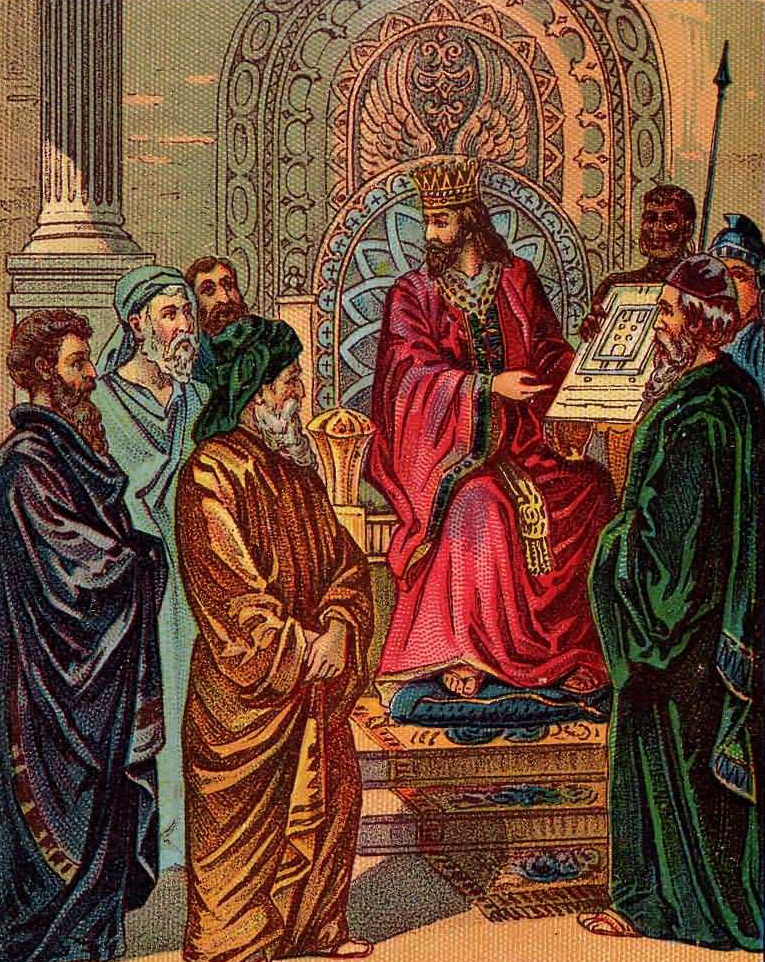
The last time I wrote you I mentioned the Book of Ecclesiastes and today I wanted to talk about that again. In the last years of his life King Solomon took time to look back and then he wrote the BOOK OF ECCLESIASTES. Solomon did believe in God but in this book he took a look at life “under the sun.” Christian scholar Ravi Zacharias has noted, “The key to understanding the Book of Ecclesiastes is the term ‘under the sun.’ What that literally means is you lock God out of a closed system, and you are left with only this world of time plus chance plus matter.”
Francis Schaeffer comments on the Book of Ecclesiastes:
The universal man, Solomon, beyond our intelligence with an empire at his disposal with the opportunity of observation so he could recite these words here in Ecclesiastes 6:12, “For who knows what is good for a man during his lifetime, during the few years of his futile life? He will spend them like a shadow. For who can tell a man what will be after him under the sun?”
In Ecclesiastes 1:8 he drives this home when he states, “All things are wearisome; Man is not able to tell it. The eye is not satisfied with seeing, Nor is the ear filled with hearing.” Solomon is stating here the fact that there is no final satisfaction because you don’t get to the end of the thing. THERE IS NO FINAL SATISFACTION. This is related to Leonardo da Vinci’s similar search for universals and then meaning in life.
In Ecclesiastes 5:11 Solomon again pursues this theme, “When good things increase, those who consume them increase. So what is the advantage to their owners except to look on?” Doesn’t that sound modern? It is as modern as this evening. Solomon here is stating the fact there is no reaching completion in anything and this is the reason there is no final satisfaction. There is simply no place to stop. It is impossible when laying up wealth for oneself when to stop. It is impossible to have the satisfaction of completion.
___________
As you know Solomon was searching for for meaning in life in what I call the 6 big L words in the Book of Ecclesiastes. He looked into learning (1:12-18, 2:12-17), laughter, ladies, luxuries, and liquor (2:1-2, 8, 10, 11), and labor (2:4-6, 18-20).
Here are Solomon’s own words from Ecclesiastes 2:1-11:
I said in my heart, “Come now, I will test you withpleasure; enjoy yourself.” But behold, this also was vanity.[i]2 I said of laughter, “It is mad,” and of pleasure, “What use is it?”3 I searched with my heart how to cheer my body with wine—my heart still guiding me with wisdom—and how to lay hold on folly, till I might see what was good for the children of man to do under heaven during the few days of their life.4 I made great works. I built housesand planted vineyards for myself.5 I made myself gardens and parks, and planted in them all kinds of fruit trees.6 I made myself pools from which to water the forest of growing trees.7 I bought male and female slaves, and had slaves who were born in my house. I had also great possessions of herds and flocks, more than any who had been before me in Jerusalem.8 I also gathered for myself silver and gold and the treasure of kings and provinces. I got singers, both men and women, and many concubines, the delight of the sons of man.
9 So I became great and surpassed all who were before me in Jerusalem. Also my wisdom remained with me.10 And whatever my eyes desired I did not keep from them. I kept my heart from no pleasure, for my heart found pleasure in all my toil, and this was my reward for all my toil.11 Then I considered all that my hands had done and the toil I had expended in doing it, and behold, ALL WAS VANITY AND A STRIVING AFTER WIND, and there was nothing to be gained UNDER THE SUN.
To Bill Kreutzmann from Everette Hatcher, Fan of your music
I remember like yesterday when Ron “Pigpen” McKernandied and unfortunately Amy Winehouse was one of the latest member of the 27 CLUB. The issue of death has surrounded many rock and rollers and it is the name of your group.
Back in 1980 I read a book that mentions your band THE GRATEFUL DEAD. In his book HOW SHOULD WE THEN LIVE? Francis Schaeffer noted:
This emphasis on hallucinogenic drugs brought with it many rock groups–for example, Cream, Jefferson Airplane, Grateful Dead, Incredible String Band, Pink Floyd, and Jimi Hendrix. Most of their work was from 1965-1958. The Beatles’Sergeant Pepper’s Lonely Hearts Club Band (1967) also fits here. This disc is a total unity, not just an isolated series of individual songs, and for a time it became the rallying cry for young people throughout the world. As a whole, this music was the vehicle to carry the drug culture and the mentality which went with it across frontiers which were almost impassible by other means of communication.
Since then I have become a fan of your music but I wanted to write you today about the name of your band THE GRATEFUL DEAD and the greatest book written about the subject of death and that is the BOOK OF ECCLIASTES!!!
Ecclesiastes 7:2 “Better to spend your time at funerals than at parties. After all, everyone dies–so the living should take this to heart.”
In the last years of his life King Solomon took time to look back and then he wrote the BOOK OF ECCLESIASTES. Solomon did believe in God but in this book he took a look at life “under the sun.” Christian scholar Ravi Zacharias has noted, “The key to understanding the Book of Ecclesiastes is the term ‘under the sun.’ What that literally means is you lock God out of a closed system, and you are left with only this world of time plus chance plus matter.”
Francis Schaeffer comments on the Book of Ecclesiastes and the subject of death:
Ecclesiastes 9:11
11 Again I saw that under the sun the race is not to the swift, nor the battle to the strong, nor bread to the wise, nor riches to the intelligent, nor favor to those with knowledge, but time and chance happen to them all.
Chance rules. If a man starts out only from himself and works outward it must eventually if he is consistent seem so that only chance rules and naturally in such a setting you can not expect him to have anything else but finally a hate of life.
Ecclesiastes 2:17-18a
17 So I hated life, because what is done under the sunwas grievous to me, for all is vanity and a striving after wind. 18 I hated all my toil in which I toil under the sun…
That first great cry “So I hated life.” Naturally if you hate life you long for death and you find him saying this in Ecclesiastes 4:2-3:
2 And I thought the dead who are already dead more fortunate than the living who are still alive.3 But better than both is he who has not yet been and has not seen the evil deeds that are done under the sun.
He lays down an order. It is best never have to been. It is better to be dead, and worse to be alive. But like all men and one could think of the face of Vincent Van Goghin his final paintings as he came to hate life and you watch something die in his self portraits, the dilemma is double because as one is consistent and one sees life as a game of chance, one must come in a way to hate life. Yet at the same time men never get beyond the fear to die. Solomon didn’t either. So you find him in saying this.
Ecclesiastes 2:14-15
14 The wise person has his eyes in his head, but the fool walks in darkness. And yet I perceived that the same event happens to all of them.15 Then I said in my heart, “What happens to the fool will happen to me also. Why then have I been so very wise?” And I said in my heart that this also is vanity.
The Hebrew is stronger than this and it says “it happens EVEN TO ME,” Solomon on the throne, Solomon the universal man. EVEN TO ME, even to Solomon.
Ecclesiastes 9:12
12 For man does not know his time. Like fish that are taken in an evil net, and like birds that are caught in a snare, so the children of man are snared at an evil time, when it suddenly falls upon them.
Death can come at anytime. Death seen merely by the eye of man between birth and death and UNDER THE SUN. Death too is a thing of chance. Albert Camus speeding in a car with a pretty girl at his side and then Camus dead. Lawrence of Arabia coming up over a crest of a hill 100 miles per hour on his motorcycle and some boys are standing in the road and Lawrence turns aside and dies.
Surely between birth and death these things are chance. Modern man adds something on top of this and that is the understanding that as the individual man will dies by chance so one day the human race will die by chance!!! It is the death of the human race that lands in the hand of chance and that is why men grew sad when they readNevil Shute’s book ON THE BEACH.
By the way, the final chapter of Ecclesiastes finishes with Solomon emphasizing that serving God is the only proper response of man. Solomon looks above the sun and brings God back into the picture. Here is his final conclusion concerning the meaning of life and man’s proper place in the universe in Ecclesiastes 12:13-14:
13 Now all has been heard;
here is the conclusion of the matter:
Fear God and keep his commandments,
for this is the whole duty of man.
14 For God will bring every deed into judgment,
including every hidden thing,
whether it is good or evil
229 × 300Images may be subject to copyright. Learn More
In his book HOW SHOULD WE THEN LIVE? Francis Schaeffer noted:
The man who followed on from that point was English–Aldous Huxley (1894-1963). He proposed drugs as a solution. We should, he said, give healthy people drugs and they can then find truth inside their own heads. All that was left for Aldous Huxley and those who followed him was truth inside a person’s own head. With Huxley’s idea, what began with the existential philosophers – man’s individual subjectivity attempting to give order as well as meaning, in contrast to order being shaped by what is objective or external to oneself – came to its logical conclusion. Truth is in one’s own head. The ideal of objective truth was gone.
460 × 276Images may be subject to copyright. Learn More
This emphasis on hallucinogenic drugs brought with it many rock groups–for example, Cream, Jefferson Airplane, Grateful Dead, Incredible String Band, Pink Floyd, and Jimi Hendrix. Most of their work was from 1965-1958. The Beatles’Sergeant Pepper’s Lonely Hearts Club Band (1967) also fits here. This disc is a total unity, not just an isolated series of individual songs, and for a time it became the rallying cry for young people throughout the world. As a whole, this music was the vehicle to carry the drug culture and the mentality which went with it across frontiers which were almost impassible by other means of communication.
Together with the advent of the “drug Age” was the increased interest in the West in the religious experience of Hinduism and Buddhism. Schaeffer tells us that: “This grasping for a nonrational meaning to life and values is the central reason that these Eastern religions are so popular in the West today.” Drugs and Eastern religions came like a flood into the Western world. They became the way that people chose to find meaning and values in life. By themselves or together, drugs and Eastern religion became the way that people searched inside themselves for ultimate truth.
Along with drugs and Eastern religions there has been a remarkable increase “of the occult appearing as an upper-story hope.” As modern man searches for answers it “many moderns would rather have demons than be left with the idea that everything in the universe is only one big machine.” For many people having the “occult in the upper story of nonreason in the hope of having meaning” is better than leaving the upper story of nonreason empty. For them horror or the macabre are more acceptable than the idea that they are just a machine.
Francis Schaeffer has correctly argued:
The universe was created by an infinite personal God and He brought it into existence by spoken word and made man in His own image. When man tries to reduce [philosophically in a materialistic point of view] himself to less than this [less than being made in the image of God] he will always fail and he will always be willing to make these impossible leaps into the area of nonreason even though they don’t give an answer simply because that isn’t what he is. He himself testifies that this infinite personal God, the God of the Old and New Testament is there.
Instead of making a leap into the area of nonreason the better choice would be to investigate the claims that the Bible is a historically accurate book and that God created the universe and reached out to humankind with the Bible. Below is a piece of that evidence given by Francis Schaeffer concerning the accuracy of the Bible.
TRUTH AND HISTORY (chapter 5 of WHATEVER HAPPENED TO THE HUMAN RACE?,
520 × 421Images may be subject to copyright. Learn More
We now take a jump back in time to the middle of the ninth century before Christ, that is, about 850 B.C. Most people have heard of Jezebel. She was the wife of Ahab, the king of the northern kingdom of Israel. Her wickedness has become so proverbial that we talk about someone as a “Jezebel.” She urged her husband to have Naboth killed, simply because Ahab had expressed his liking for a piece of land owned by Naboth, who would not sell it. The Bible tells us also that she introduced into Israel the worship of her homeland, the Baal worship of Tyre. This led to the opposition of Elijah the Prophet and to the famous conflict on Mount Carmel between Elijah and the priests of Baal.
Here again one finds archaeological confirmations of what the Bible says. Take for example: “As for the other events of Ahab’s reign, including all he did, the palace he built and inlaid with ivory, and the cities he fortified, are they not written in the book of the annals of the kings of Israel?” (I Kings 22:39).
This is a very brief reference in the Bible to events which must have taken a long time: building projects which probably spanned decades. Archaeological excavations at the site of Samaria, the capital, reveal something of the former splendor of the royal citadel. Remnants of the “ivory house” were found and attracted special attention (Palestinian Archaeological Museum, Jerusalem). This appears to have been a treasure pavilion in which the walls and furnishings had been adorned with colored ivory work set with inlays giving a brilliant too, with the denunciations revealed by the prophet Amos:
“I will tear down the winter house along with the summer house; the houses adorned with ivory will be destroyed and the mansions will be demolished,” declares the Lord. (Amos 3:15)
Other archaeological confirmation exists for the time of Ahab. Excavations at Hazor and Megiddo have given evidence of the the extent of fortifications carried out by Ahab. At Megiddo, in particular, Ahab’s works were very extensive including a large series of stables formerly assigned to Solomon’s time.
On the political front, Ahab had to contend with danger from the Aramacaus king of Syria who besieged Samaria, Ahab’s capital. Ben-hadad’s existence is attested by a stela (a column with writing on it) which has been discovered with his name written on it (Melquart Stela, Aleppo Museum, Syria). Again, a detail of history given in the Bible is shown to be correct.
(Melquart Stela below)
220 × 332Images may be subject to copyright. Learn More
The John Lennon and the Beatles really were on a long search for meaning and fulfillment in their lives just like King Solomon did in the Book of Ecclesiastes. Solomon looked into learning (1:12-18, 2:12-17), laughter, ladies, luxuries, and liquor (2:1-2, 8, 10, 11), and labor (2:4-6, 18-20). He fount that without God in the picture all […]
______________ George Harrison Swears & Insults Paul and Yoko Lucy in the Sky with Diamonds- The Beatles The Beatles: I have dedicated several posts to this series on the Beatles and I don’t know when this series will end because Francis Schaeffer spent a lot of time listening to the Beatles and talking […]
The Beatles in a press conference after their Return from the USA Uploaded on Nov 29, 2010 The Beatles in a press conference after their Return from the USA. The Beatles: I have dedicated several posts to this series on the Beatles and I don’t know when this series will end because Francis […]
__________________ Beatles 1966 Last interview I have dedicated several posts to this series on the Beatles and I don’t know when this series will end because Francis Schaeffer spent a lot of time listening to the Beatles and talking and writing about them and their impact on the culture of the 1960’s. In this […]
_______________ The Beatles documentary || A Long and Winding Road || Episode 5 (This video discusses Stg. Pepper’s creation I have dedicated several posts to this series on the Beatles and I don’t know when this series will end because Francis Schaeffer spent a lot of time listening to the Beatles and talking and writing about […]
_______________ Francis Schaeffer pictured below: _____________________ I have included the 27 minute episode THE AGE OF NONREASON by Francis Schaeffer. In that video Schaeffer noted, ” Sergeant Pepper’s Lonely Hearts Club Band…for a time it became the rallying cry for young people throughout the world. It expressed the essence of their lives, thoughts and their feelings.” How Should […]
Crimes and Misdemeanors: A Discussion: Part 1 ___________________________________ Today I will answer the simple question: IS IT POSSIBLE TO BE AN OPTIMISTIC SECULAR HUMANIST THAT DOES NOT BELIEVE IN GOD OR AN AFTERLIFE? This question has been around for a long time and you can go back to the 19th century and read this same […]
____________________________________ Francis Schaeffer pictured below: __________ Francis Schaeffer has written extensively on art and culture spanning the last 2000years and here are some posts I have done on this subject before : Francis Schaeffer’s “How should we then live?” Video and outline of episode 10 “Final Choices” , episode 9 “The Age of Personal Peace and Affluence”, episode 8 […]
Love and Death [Woody Allen] – What if there is no God? [PL] ___________ _______________ How Should We then Live Episode 7 small (Age of Nonreason) #02 How Should We Then Live? (Promo Clip) Dr. Francis Schaeffer 10 Worldview and Truth Two Minute Warning: How Then Should We Live?: Francis Schaeffer at 100 Francis Schaeffer […]
___________________________________ Francis Schaeffer pictured below: ____________________________ Francis Schaeffer “BASIS FOR HUMAN DIGNITY” Whatever…HTTHR Dr. Francis schaeffer – The flow of Materialism(from Part 4 of Whatever happened to human race?) Dr. Francis Schaeffer – The Biblical flow of Truth & History (intro) Francis Schaeffer – The Biblical Flow of History & Truth (1) Dr. Francis Schaeffer […]
I enjoyed your latest book Outgrowing God which is one of my favorite books that you have written.
However, there are some some weak parts of the book. For instance, on page 13 you write:
The philosopher Bertrand Russell made the point with a vivd word picture. If I were to tell you, he said, thst there is a china teapot in orbit around the sun, you could not disprove my claim.But failure to disprove something is not a good reason to believe it.
Let me respond with this fine article below by Wayne Jackson:
With the appearance of an irritating rash of new books promoting atheism, arguments fly back and forth for the anti-God and pro-God positions. Some cases for God’s existence are not argued legitimately. Christians cannot afford to make bogus arguments to the embarrassment of the cause of Christ. Atheists will pick up these “broken swords” and whack us over the head with them.
Occasionally a demand by sincere believers is this: “You cannot prove God does not exist.” This statement involves a logical fallacy — the challenge to prove a universal negative. Logically, one cannot prove a universal negative; in order to do so he would have to be everywhere, and know everything — which is an impossibility.
Bertrand Russell, the British atheist, once ridiculed this form of argumentation by calling it the “celestial teapot argument.” In response to the quip, “you can’t prove God doesn’t exist,” Russell in essence said, “neither can one disprove the idea that there is a teapot orbiting the sun.” He can’t. But the question is: is there any evidence for such?
Atheism, by definition, is itself negative — from the negative prefix, a (no) and theos (God). It is a baseless assertion without the support of logical argumentation.
But atheists themselves are not immune to making illogical arguments. They believe that life, at the beginning, spontaneously generated itself. When asked for evidence of this thesis, an atheist might say: “Prove to me it didn’t happen that way.” No one could; that’s the sort of negative that cannot be subjected to testing. The issue is: show me the evidence that life “jump-started” itself.
The Christian does not challenge: “Prove to me that God does not exist.” Rather, the legitimate approach is this. Here is the evidence for God’s existence. If my case is valid, one is logically driven (by default) to the conclusion that there is compelling evidence for God’s existence. In legal jargon, this is called a prima facie case; if there is nothing to refute it, it reasonably may be accepted as true, and atheism — its opposite — fails.
(1) All known evidence indicates that matter is incapable of creating itself. The first law of thermodynamics states that “matter” is neither being created nor destroyed; it only changes from one form to another. There is not a shred of evidence that any material object has ever created itself.
(2) All evidence suggests that matter is not eternal. The second law of thermodynamics states that as matter undergoes transformation, there is a negative effect, a running-down process. This implies a commencement point (just as a wound-up clock implies a starting time). Since matter is incapable of creating itself (and yet it exists), and since it had a commencement point, logic suggests it had a non-material cause.
(3) All evidence indicates that inorganic matter is incapable of generating life. But since life exists, a reasonable deduction is: there must be an explanation for life that is extraneous to, and independent of, the material.
(4) All evidence indicates that no strictly material object has moral sensitivity, i.e., a conviction of right versus wrong. In view of this, it is a reasonable conclusion that mankind’s moral sensitivity is to be found in a moral source beyond the material.
(5) All evidence indicates that objects characterized by design have been produced by an intelligent designer. The universe, earth’s environment, molecules, cells, biological organisms, etc., reflect design. They thus point to an intelligent Designer.
Atheism has nothing to compare with this line of positive argumentation. All it can say is, “I deny, I deny!” It is the “religion” of negativism. As a Texan might express it, “They are all hat and no cattle.”
—-
Dr. Dawkins, you have a 150 year advantage over your hero Charles Darwin and the archaeologist’s spade has continued to dig. Take a look at this piece of evidence from the book WHATEVER HAPPENED TO THE HUMAN RACE? by Francis Schaeffer and C. Everett Koop:
TRUTH AND HISTORY (chapter 5 of WHATEVER HAPPENED TO THE HUMAN RACE?)
In the previous chapter we saw that the Bible gives us the explanation for the existence of the universe and its form and for the mannishness of man. Or, to reverse this, we came to see that the universe and its form and the mannishness of man are a testimony to the truth of the Bible. In this chapter we will consider a third testimony: the Bible’s openness to verification by historical study.
Christianity involves history. To say only that is already to have said something remarkable, because it separates the Judeo-Christian world-view from almost all other religious thought. It is rooted in history.
The Bible tells us how God communicated with man in history. For example, God revealed Himself to Abraham at a point in time and at a particular geographical place. He did likewise with Moses, David, Isaiah, Daniel and so on. The implications of this are extremely important to us. Because the truth God communicated in the Bible is so tied up with the flow of human events, it is possible by historical study to confirm some of the historical details.
It is remarkable that this possibility exists. Compare the information we have from other continents of that period. We know comparatively little about what happened in Africa or South America or China or Russia or even Europe. We see beautiful remains of temples and burial places, cult figures, utensils, and so forth, but there is not much actual “history” that can be reconstructed, at least not much when compared to that which is possible in the Middle East.
When we look at the material which has been discovered from the Nile to the Euphrates that derives from the 2500-year span before Christ, we are in a completely different situation from that in regard to South America or Asia. The kings of Egypt and Assyria built thousands of monuments commemorating their victories and recounting their different exploits. Whole libraries have been discovered from places like Nuzu and Mari and most recently at Elba, which give hundreds of thousands of texts relating to the historical details of their time. It is within this geographical area that the Bible is set. So it is possible to find material which bears upon what the Bible tells us.
The Bible purports to give us information on history. Is the history accurate? The more we understand about the Middle East between 2500 B.C. and A.D. 100, the more confident we can be that the information in the Bible is reliable, even when it speaks about the simple things of time and place.
A common assumption among liberal scholars is that because the Gospels are theologically motivated writings–which they are–they cannot also be historically accurate. In other words, because Luke, say (when he wrote the Book of Luke and the Book of Acts), was convinced of the deity of Christ, this influenced his work to the point where it ceased to be reliable as a historical account. The assumption that a writing cannot be both historical and theological is false.
The experience of the famous classical archaeologist Sir William Ramsay illustrates this well. When he began his pioneer work of exploration in Asia Minor, he accepted the view then current among the Tubingen scholars of his day that the Book of Acts was written long after the events in Paul’s life and was therefore historically inaccurate. However, his travels and discoveries increasingly forced upon his mind a totally different picture, and he became convinced that Acts was minutely accurate in many details which could be checked.
What is even more interesting is the way “liberal” modern scholars today deal with Ramsay’s discoveries and others like them. In the NEW TESTAMENT : THE HISTORY OF THE INVESTIGATION OF ITS PROBLEMS, the German scholar Werner G. Kummel made no reference at all to Ramsay. This provoked a protest from British and American scholars, whereupon in a subsequent edition Kummel responded. His response was revealing. He made it clear that it was his deliberate intention to leave Ramsay out of his work, since “Ramsay’s apologetic analysis of archaeology [in other words, relating it to the New Testament in a positive way] signified no methodologically essential advance for New Testament research.” This is a quite amazing assertion. Statements like these reveal the philosophic assumptions involved in much liberal scholarship.
A modern classical scholar, A.N.Sherwin-White, says about the Book of Acts: “For Acts the confirmation of historicity is overwhelming…Any attempt to reject its basic historicity, even in matters of detail, must not appear absurd. Roman historians have long taken this for granted.”
When we consider the pages of the New Testament, therefore, we must remember what it is we are looking at. The New Testament writers themselves make abundantly clear that they are giving an account of objectively true events.
(Under footnote #98)
Acts is a fairly full account of Paul’s journeys, starting in Pisidian Antioch and ending in Rome itself. The record is quite evidently that of an eyewitness of the events, in part at least. Throughout, however, it is the report of a meticulous historian. The narrative in the Book of Acts takes us back behind the missionary journeys to Paul’s famous conversion on the Damascus Road, and back further through the Day of Pentecost to the time when Jesus finally left His disciples and ascended to be with the Father.
But we must understand that the story begins earlier still, for Acts is quite explicitly the second part of a continuous narrative by the same author, Luke, which reaches back to the birth of Jesus.
Luke 2:1-7 New American Standard Bible (NASB)
2 Now in those days a decree went out from Caesar Augustus, that a census be taken of all [a]the inhabited earth. 2 [b]This was the first census taken while[c]Quirinius was governor of Syria. 3 And everyone was on his way to register for the census, each to his own city. 4 Joseph also went up from Galilee, from the city of Nazareth, to Judea, to the city of David which is called Bethlehem, because he was of the house and family of David, 5 in order to register along with Mary, who was engaged to him, and was with child. 6 While they were there, the days were completed for her to give birth. 7 And she gave birth to her firstborn son; and she wrapped Him in cloths, and laid Him in a [d]manger, because there was no room for them in the inn.
In the opening sentences of his Gospel, Luke states his reason for writing:
Luke 1:1-4 New American Standard Bible (NASB)
1 Inasmuch as many have undertaken to compile an account of the things[a]accomplished among us, 2 just as they were handed down to us by those whofrom the beginning [b]were eyewitnesses and [c]servants of the [d]word, 3 it seemed fitting for me as well, having [e]investigated everything carefully from the beginning, to write it out for you in consecutive order, most excellentTheophilus; 4 so that you may know the exact truth about the things you have been[f]taught.
In Luke and Acts, therefore, we have something which purports to be an adequate history, something which Theophilus (or anyone) can rely on as its pages are read. This is not the language of “myths and fables,” and archaeological discoveries serve only to confirm this.
For example, it is now known that Luke’s references to the titles of officials encountered along the way are uniformly accurate. This was no mean achievement in those days, for they varied from place to place and from time to time in the same place. They were proconsuls in Corinth and Cyprus, asiarchs at Ephesus, politarchesat Thessalonica, and protosor “first man” in Malta. Back in Palestine, Luke was careful to give Herod Antipas the correct title of tetrarch of Galilee. And so one. The details are precise.
The mention of Pontius Pilate as Roman governor of Judea has been confirmed recently by an inscription discovered at Caesarea, which was the Roman capital of that part of the Roman Empire. Although Pilate’s existence has been well known for the past 2000 years by those who have read the Bible, now his governorship has been clearly attested outside the Bible.
Black Mountain College was a phenomenal circumstance. The fact that so many artists of that level in their respective fields could organize and develop such an institution is unparalleled. Who would’ve thought that a small mountain town of western North Carolina would be their home, albeit for a short while.
SUSAN WEIL and ROBERT RAUSCHENBERG at Black Mountain College
__________’
______________
_____________
Susan Weil and Rauschenberg on their wedding day with members of their wedding party, Outer Island, Connecticut, June 1950
Black Mountain College; Black Mountain College Museum + Arts Center ; colleges ; experimental community ; Progressive education ; Progressives ; Bauhaus ; German immigration ; immigrants ; Marcel Breuer ; Walter Gropius ; John Andrew Rice ; Josef Albers ; Anni Albers ; Hazel Larsen Archer ; Buckminster Fuller ; Ruth Asawa ; Charles Olson ; Robert Rauschenberg ; Merce Cunningham ; John Cage ; Robert Creeley ; Jonathan Williams ; Franz Kline ; photography ; Appalachia ; education ; National Historical Register ; architecture ; farms ; farming ; craft ; art ; textiles ; weaving ; ceramics ; music ; social services ; social work ; schools ; sociology ;
Considered by many to be one of the most influential American artists due to his radical blending of materials and methods, Robert Rauschenberg was a crucial figure in the transition from Abstract Expressionism to later modern movements. One of the key Neo-Dada movement artists, his experimental approach expanded the traditional boundaries of art, opening up avenues of exploration for future artists. Although Rauschenberg was the enfant terrible of the art world in the 1950s, he was deeply respected and admired by his predecessors. Despite this admiration, he disagreed with many of their convictions and literally erased their precedent to move forward into new aesthetic territory that reiterated the earlier Dada inquiry into the definition of art.
ROBERT RAUSCHENBERG KEY IDEAS
Engaged in questioning the definition of a work of art and the role of the artist, Rauschenberg shifted from a conceptual outlook where the authentic mark of the brushstroke described the artist’s inner world towards a reflection on the contemporary world, where an interaction with popular media and mass-produced goods reflected a unique artistic vision.
Rauschenberg merged the realms of kitsch and fine art, employing both traditional media and found objects within his “combines” by inserting appropriated photographs and urban detritus amidst standard wall paintings.
Rauschenberg believed that painting related to “both art and life. Neither can be made.” Following from this belief, he created artworks that move between these realms in constant dialogue with the viewers and the surrounding world, as well as with art history.
Preferring to leave the interpretation of the works to his viewers, Rauschenberg allowed chance to determine the placement and combination of the different found images and objects in his artwork such that there were no predetermined arrangements or meanings embedded within the works.
Today is the birthday of Robert Rauschenberg, an artist who played a pivotal role in the development of American art after WWII.
This blog post, written by Museum President Don Bacigalupi, is excerpted from Crystal Bridges’ permanent collection catalog, Celebrating the American Spirit: Masterworks from Crystal Bridges Museum of American Art.
The art world of the late 1940s and early 1950s had been dominated by the grand gestures and larger-than-life personas of the abstract expressionists. Artists such as Jackson Pollock and Willem de Kooning created images in which their bold, expressive marks were understood to be records of their inner lives—painting as revelation. Younger artists like Rauschenberg and Jasper Johns attacked the cult of personality promulgated by the New York School. Juxtaposing the highly lauded gestural brushstroke with modes of representation drawn from mass culture, they challenged viewers to assess which manner of image making more effectively conveyed meaning. Rauschenberg and Johns are credited with both reviving an interest in dada and surrealism and with paving the way for the development of pop art in the 1960s.
Rauschenberg spent the 1950s experimenting with novel ways to narrow the gap between art and life, bringing commonplace images and materials into his work through methods including collage, assemblage, and transfer drawing. In 1962, he began to silkscreen photographic images into his compositions. The following year he produced Untitled, a painting dominated by an anonymous photograph of a contemporary urban street scene. Unlike Rauschenberg’s earlier assemblages and “combines,” in which the artist assembled multiple small images and objects into larger, fragmentary wholes, here a single black-and-white candid shot occupies the entire canvas. In contrast to Rauschenberg’s earlier picture-making techniques, silkscreen allowed the artist to render any given image in any given scale.
In Untitled, the enlarged, silkscreened snapshot serves as the ground onto which Rauschenberg applied additional layers of signification, including discrete passages of dripping paint, scumbled washes, stenciled letters of various sizes, and some apparent rubbings or erasures. Photographic and hand-drawn images become nearly indistinguishable. A “one way” street sign that is part of the photograph points at and is balanced by an upside-down cruciform shape drawn in graphite across the painted surface. A rectangular Coca-Cola sign in the upper right of the photograph is mirrored at left by an array of applied uppercase letters that suggest words (“Strange” or “X-change” or even “Sex Change”).
Confronted with the large, sign-filled photograph and hints of readable language, the viewer cannot help but search for narrative meaning. Yet the sheer number and diversity of marks and signs in the picture frustrate this enterprise, leading the viewer down a series of interpretive dead ends. A restless and prolific image maker, Rauschenberg created pleasingly composed and visually enticing works that rarely cohere into a traditional meaning or story. Ultimately, Rauschenberg succeeded in focusing his viewers’ attention on the complex interplay between art and life, opening up myriad possibilities for future generations of artists.
Robert Rauschenberg & Jasper Johns – A relationship in three photographs
by ob
“Most critics agree that Johns and Rauschenberg’s finest work grew out of the period between 1954 and 1961, a time of intense emotional involvement during which they searched together for an alternative to Abstract Expressionist picturemaking. Rauschenberg once remarked of this moment “We gave each other permission…”
________________________
Flag, Encaustic, oil and collage on fabric mounted on plywood,1954-55 by Jasper Johns:
B
_________________
00
This is perhaps one of the most famous photographs taken at the Archie Bray Foundation. From left to right are Soetsu Yanagi, Bernard Leach, Rudy Autio, Peter Voulkos, and Shoji Hamada.
_____________
Shoji Hamada, Bernard Leach, Soetsu Yanagi, and Marguerite Wildenhain at Black Mountain College
On November 21, 2014 I received a letter from Nobel Laureate Harry Kroto and it said: …Please click on this URL http://vimeo.com/26991975 and you will hear what far smarter people than I have to say on this matter. I agree with them. Harry Kroto _________________ Below you have picture of 1996 Chemistry Nobel Prize Winner […]
The Beatles were “inspired by the musique concrète of German composer and early electronic music pioneer Karlheinz Stockhausen…” as SCOTT THILL has asserted. Francis Schaeffer noted that ideas of “Non-resolution” and “Fragmentation” came down German and French streams with the influence of Beethoven’s last Quartets and then the influence of Debussy and later Schoenberg’s non-resolution which is in total contrast […]
_______ On November 21, 2014 I received a letter from Nobel Laureate Harry Kroto and it said: …Please click on this URL http://vimeo.com/26991975 and you will hear what far smarter people than I have to say on this matter. I agree with them. Harry Kroto _________________ Below you have picture of 1996 Chemistry Nobel Prize […]
On November 21, 2014 I received a letter from Nobel Laureate Harry Kroto and it said: …Please click on this URL http://vimeo.com/26991975 and you will hear what far smarter people than I have to say on this matter. I agree with them. Harry Kroto ____________________ Below you have picture of 1996 Chemistry Nobel Prize Winner Dr. […]
I was saddened to learn of the passing of Dr. Riccardo Giacconi on 16 December 16, 2018, in La Jolla, CA, and I wanted to spend time on several posts concentrating on him.
The Smithsonian Archives is saddened to learn of the death of 2002 Nobel laureate in Physics, astrophysicist Riccardo Giacconi. Among Giacconi’s numerous accomplishments is his creation of X-ray astronomy.
Zoom
Riccardo Giacconi and the Uhuru satellite, undated. Courtesy of Harvard-Smithsonian Center for Astrophysics.
While at the Harvard-Smithsonian Center for Astrophysics, Giacconi served as Director of the High Energy Astrophysics Division from 1973 to 1981. He oversaw the conception, fabrication, and design of the Einstein Observatory, preparation of the software and hardware for data reduction for the Einstein, and the establishment and implementation of the Guest Observer Program.
The Smithsonian Institution Archives is the official repository for Riccardo Giacconi’s personal papers. These papers document Giacconi’s scientific career and illustrate his scientific work and administrative records relating to the institutions at which he worked. There is extensive documentation of Giacconi’s professional activities, including meetings attended, papers presented (and published), his services as officer or board member of professional societies; grants, proposals, and contracts, mainly with NASA; correspondence with colleagues; slides and photographs of many facilities with which Giacconi was associated; news clippings and press releases; and appointment books and journals.
The Archives also holds an oral history of Giacconi. David H. DeVorkin, a curator in the Department of Astronautics at National Air and Space Museum, conducted a videotaped interview of Dr. Giacconi after a symposium in Giacconi’s honor, held at the Smithsonian’s National Museum of American History and sponsored by its Lemelson Center, on January 22, 2004. In the interview, he discussed his education, research, and career in astrophysics, including his work at the Smithsonian, Project Starfish, and the Hubble Space Telescope.
and you will hear what far smarter people than I have to say on this matter. I agree with them.
Harry Kroto
Nick Gathergood, David-Birkett, Harry-Kroto
I have attempted to respond to all of Dr. Kroto’s friends arguments and I have posted my responses one per week for over a year now. Here are some of my earlier posts:
In the first video below in the 47th clip in this series are his words and will be responding to them in the next few weeks, but today I just wanted to pause and look at this life.
50 Renowned Academics Speaking About God (Part 1)
Another 50 Renowned Academics Speaking About God (Part 2)
A Further 50 Renowned Academics Speaking About God (Part 3)
__
_
_
September 28, 2015
Dr. Riccardo Giacconi, c/o Johns Hopkins University, Zanvyl Krieger School of Arts & Sciences
Department of Physics & Astronomy, Bloomberg Center for Physics and Astronomy, Room 366
3400 N. Charles Street, Baltimore, MD 21218
Dear Dr. Giacconi,
Recently I had the opportunity to come across a very interesting article by Michael Polanyi,LIFE TRANSCENDING PHYSICS AND CHEMISTRY, in the magazine CHEMICAL AND ENGINEERING NEWS, August 21, 1967, and I also got hold of a 1968 talk by Francis Schaeffer based on this article. Polanyi’s son John actually won the 1986 Nobel Prize for Chemistry.This article by Michael Polanyi concerns Francis Crick and James Watson and their discovery of DNA in 1953. Polanyi noted:
Mechanisms, whether man-made or morphological, are boundary conditions harnessing the laws of in animate nature, being themselves irreducible to those laws. The pattern of organic bases in DNA which functions as a genetic code is a boundary condition irreducible to physics and chemistry. Further controlling principles of life may be represented as a hierarchy of boundary conditions extending, in the case of man, to consciousness and responsibility.
I would like to send you a CD copy of this talk because I thought you may find it very interesting. It includes references to not only James D. Watson, and Francis Crick but also Maurice Wilkins, Erwin Schrodinger, J.S. Haldane (his son was the famous J.B.S. Haldane), Peter Medawar, and Barry Commoner. I WONDER IF YOU EVER HAD THE OPPORTUNITY TO RUN ACROSS THESE MEN OR ANY OF THEIR FORMER STUDENTS?
Below is a portion of the transcript from the CD and Michael Polanyi’s words are in italics while Francis Schaeffer’s words are not:
During the past 15 years, I have worked on these questions, achieving gradually stages of the argument presented in this paper. These are:
Machines are not formed by physical and chemical equilibration.
The functional terms needed for characterizing a machine cannot for defined in terms of physics and chemistry.
Polanyi is talking about specific machines but I would include the great cause and effect machine of the external universe that functions on a cause and effect basis. So if this is true of the watch, then you have to ask the same question about the total machine that Sartre points out that is there, and that is the cause and effect universe. Polanyi doesn’t touch on this and he doesn’t have an answer, and I know people who know him. Yet nevertheless he sees the situation exactly as it is. And I would point out what Alfred North Whitehead (1861–1947) and J. Robert Oppenheimer (1904–1967) said and that it needed a Christian consensus to produce modern science because it was the Christian consensus that gave the concept that the world being created by a reasonable God and that it could be found out and discovered by reason. So the modern science when it began with Copernicus and Galileo and all these men conceived that the cause and effect system of the universe would be there on the basis that it was created by a reasonable God, and that is Einstein’s big dilemma and that is why he became a mystic at the end of life…What Polanyi says here can be extended to the watch, and the bridge and the automobile but also to the big cause and effect universe.You have to give some kind of answer to this too and I would say this to Michael Polanyi if Iever have a chance to talk to him.You need another explanation too Polanyi.
3. No physical chemical topography will tell us that we have a machine before us and what its functions are.
In other words, if you only know the chemicals and the physics you don’t know if you have a machine. It may just be junk. So nobody in the world could tell if it was a machine from merely the “physical chemical-topography.” You have to look at the machineness of the machine to say it is a machine. You could take an automobile and smash it into a small piece of metal with a giant press and it would have the same properties of the automobile, but the automobile would have disappeared. The automobile-ness of the automobile is something else than the physical chemical-topography.
4. Such a topography can completely identify one particular specimen of a machine, but can tell us nothing about a class of machines.
5. And if we are asked how the same solid system can be subject to control by two independent principles, the answer is: The boundary conditions of the system are free of control by physics and can be controlled therefore by nonphysical, purely technical, principles.
In other words you have to explain the engineering by something other than merely physical principles and of course it is. You can’t explain the watchness of the watch merely by this. You can explain it on the basis of engineering principles in which the human mind conceives of a use for the machine and produces the machine. But notice where Polanyi is and that is in our argument of a need of personality in the universethough Polanyi doesn’t draw this final conclusion, though I thought that is the only explanation.
If you look at the watch a man has made it for the purpose of telling time. When you see the automobile a man has made it for the purpose of locomotion and the explanation of the difference is not in the chemical and physical properties but in the personality of a man to make these two different machines for two different purposes out of the same material. So what you are left here is the need of personality in the universe.
____
Thank you for your time. I know how busy you are and I want to thank you for taking the time to read this letter.
Sincerely,
Everette Hatcher,
P.O. Box 23416, Little Rock, AR 72221, United States, cell ph 501-920-5733, everettehatcher@gmail.com
The John Lennon and the Beatles really were on a long search for meaning and fulfillment in their lives just like King Solomon did in the Book of Ecclesiastes. Solomon looked into learning (1:12-18, 2:12-17), laughter, ladies, luxuries, and liquor (2:1-2, 8, 10, 11), and labor (2:4-6, 18-20). He fount that without God in the picture all […]
______________ George Harrison Swears & Insults Paul and Yoko Lucy in the Sky with Diamonds- The Beatles The Beatles: I have dedicated several posts to this series on the Beatles and I don’t know when this series will end because Francis Schaeffer spent a lot of time listening to the Beatles and talking […]
The Beatles in a press conference after their Return from the USA Uploaded on Nov 29, 2010 The Beatles in a press conference after their Return from the USA. The Beatles: I have dedicated several posts to this series on the Beatles and I don’t know when this series will end because Francis […]
__________________ Beatles 1966 Last interview I have dedicated several posts to this series on the Beatles and I don’t know when this series will end because Francis Schaeffer spent a lot of time listening to the Beatles and talking and writing about them and their impact on the culture of the 1960’s. In this […]
_______________ The Beatles documentary || A Long and Winding Road || Episode 5 (This video discusses Stg. Pepper’s creation I have dedicated several posts to this series on the Beatles and I don’t know when this series will end because Francis Schaeffer spent a lot of time listening to the Beatles and talking and writing about […]
_______________ Francis Schaeffer pictured below: _____________________ I have included the 27 minute episode THE AGE OF NONREASON by Francis Schaeffer. In that video Schaeffer noted, ” Sergeant Pepper’s Lonely Hearts Club Band…for a time it became the rallying cry for young people throughout the world. It expressed the essence of their lives, thoughts and their feelings.” How Should […]
Crimes and Misdemeanors: A Discussion: Part 1 ___________________________________ Today I will answer the simple question: IS IT POSSIBLE TO BE AN OPTIMISTIC SECULAR HUMANIST THAT DOES NOT BELIEVE IN GOD OR AN AFTERLIFE? This question has been around for a long time and you can go back to the 19th century and read this same […]
____________________________________ Francis Schaeffer pictured below: __________ Francis Schaeffer has written extensively on art and culture spanning the last 2000years and here are some posts I have done on this subject before : Francis Schaeffer’s “How should we then live?” Video and outline of episode 10 “Final Choices” , episode 9 “The Age of Personal Peace and Affluence”, episode 8 […]
Love and Death [Woody Allen] – What if there is no God? [PL] ___________ _______________ How Should We then Live Episode 7 small (Age of Nonreason) #02 How Should We Then Live? (Promo Clip) Dr. Francis Schaeffer 10 Worldview and Truth Two Minute Warning: How Then Should We Live?: Francis Schaeffer at 100 Francis Schaeffer […]
___________________________________ Francis Schaeffer pictured below: ____________________________ Francis Schaeffer “BASIS FOR HUMAN DIGNITY” Whatever…HTTHR Dr. Francis schaeffer – The flow of Materialism(from Part 4 of Whatever happened to human race?) Dr. Francis Schaeffer – The Biblical flow of Truth & History (intro) Francis Schaeffer – The Biblical Flow of History & Truth (1) Dr. Francis Schaeffer […]
John Lennon was writing about a drug trip when he wrote the song LUCY IN THE SKY WITH DIAMONDS and Paul later confirmed that many years later. Francis Schaeffer correctly noted that the Beatles’ album Sgt. Pepper’s brought the message of drugs and Eastern Religion to the masses like no other means of communication could. Today we will take a closer look at the song LUCY IN THE SKY WITH DIAMONDS.
John Lennon Explaining Lucy in the Sky with Diamonds
John Lennon said that LUCY IN THE SKY WITH DIAMONDS had nothing to do with drugs. Seriously? Notice below the final conclusion of this article released a few months ago is that the song was about LSD.
PUBLISHED: 19:28 EST, 13 May 2015 | UPDATED: 02:40 EST, 14 May 2015
Teenagers will examine the Beatles song Lucy In The Sky with Diamonds as part of a new ‘spiced up’ syllabus for GCSE music.
The track, which is said to be based on an LSD drug trip, will be examined by 14 to 16-year-olds to see how it helped shape contemporary music.
Exam board AQA said two other Beatles tracks will form part of the syllabus – both from the 1967 album Sergeant Pepper’s Lonely Hearts Club Band.
Lucy In The Sky with Diamonds, along with two other tracks from the 1967 album Sergeant Pepper’s Lonely Hearts Club Band, will appear on the new GCSE music syllabus
This is the first time an exam board has introduced study of the Fab Four, and the songs With a Little Help from My Friends and Within You, Without You will also feature.
The board said pupils will be asked to look at ‘various aspects which make up the songs’, including ‘melody, harmony, structure, rhythm and the meaning behind the music and lyrics’.
SHARE THIS ARTICLE
Share
The new course will also allow pupils to DJ or sing songs by pop singers including Beyoncé as part of the performance section of the qualification.
Seb Ross, who leads AQA’s music department, said: ‘Pop music began in this country with The Beatles in the swinging sixties, so what better band to look to for the study of contemporary music than the Fab Four.
‘We’ve chosen The Beatles because John, Paul, Ringo and George helped to define popular music and the iconic Sergeant Pepper album has taken on a life of its own, so it’s an exciting addition to AQA’s music GCSE.’
+2
This is the first time an exam board has introduced study of the Fab Four, and the songs With a Little Help from My Friends and Within You, Without You will also feature
Pupils will be given more freedom to perform pieces they are most interested in – from modern pop music to Puccini’s Nessun Dorma.
Those performing DJ sets will be asked to demonstrate technical skills including ‘scratching’, which produces different sounds by moving a vinyl record back and forth on a turntable.
They can use vinyl, CDs or a laptop for their performance.
The GCSE revamp comes after a major overhaul of exams by the previous government which was designed to toughen up qualifications.
AQA’s music GCSE is split into three sections – understanding music, performing and composing.
Guitarist Carlos Santana’s Supernatural is also included in the course as well as works by composers Haydn and Copland.
LUCY IN THE SKY WITH DIAMONDS… AND THE LINK WITH LSD
When the psychedelic song was released on 1967 album Sgt. Pepper’s Lonely Hearts Club Band, listeners and the media speculated it was a thinly disguised paean to the drug LSD, based on the first letters of Lucy, sky and diamonds.
But Lennon always disputed that notion, even though he was known to experiment with drugs. Lennon said he did not realize until later the title contained those letters in sequence.
+2
A British woman named Lucy Vodden, (pictured) revealed in 2007 that she had been the source of the song
As Lennon and others have explained it, the inspiration came from his son, Julian, who was then a child and drew a picture of his classmate Lucy. Julian Lennon is said to have showed the painting to his father and told him, ‘That’s Lucy in the sky with diamonds.’
A British woman named Lucy Vodden, whose maiden name was O’Donnell, revealed in 2007 that she had been the source of the song. She died in 2009.
Despite the explanation of the song’s origins, the debate about its ties to LSD has persisted, in part due to the song’s swooning melody and strange lyrics.
AQA said it has submitted the qualification to exams regulator Ofqual for accreditation.
Sergeant Pepper’s Lonely Hearts Club Band took 129 days to record and was an immediate commercial and critical success.
‘Lucy in the Sky with Diamonds’, which describes a magical land ‘with tangerine trees and marmalade skies’, was written by John Lennon.
Lennon said his son, Julian, inspired the song with a nursery school drawing he called ‘Lucy — in the sky with diamonds’.
However, shortly after the song’s release, speculation arose that the first letter of each of the title’s nouns intentionally spelled LSD.
Lennon denied this, but the BBC banned the song and Paul McCartney later admitted that the song was about the hallucinogenic drug.
On the 21st of March 1967, a short way into the session for “Getting Better” off Sgt Pepper’s Lonely Hearts Club Band, John Lennon announced he was feeling ill and was taken onto the roof of Abbey Road Studios for some fresh air by George Martin.George Martin recalls,
“I was aware of them smoking pot, but I wasn’t aware that they did anything serious. In fact, I was so innocent that I actually took John up to the roof when he was having an LSD trip, not knowing what it was. If I’d known it was LSD, the roof would have been the last place I would have taken him. He was in the studio and I was in the control room, and he said he wasn’t feeling too good. So I said, ‘Come up here,’ and asked George and Paul to go on overdubbing the voice. ‘I’ll take John out for a breath of fresh air,’ I said, but of course I couldn’t take him out the front because there were 500 screaming kids who’d have torn him apart,. So the only place I could take him to get fresh air was the roof. It was a wonderful starry night, and John went to the edge, which was a parapet about 18 inches high, and looked up at the stars and said, ‘Aren’t they fantastic?’ Of course, to him I suppose they would have been especially fantastic. At the time they just looked like stars to me.”
In 1970 John Lennon recounted the incident:
“I never took [LSD] in the studio. Once I did, actually. I thought I was taking some uppers and I was not in the state of handling it. I took it and I suddenly got so scared on the mike. I said, ‘What is it? I feel ill.’ I thought I felt ill and I thought I was going cracked. I said I must go and get some air. They all took me upstairs on the roof, andGeorge Martin was looking at me funny, and then it dawned on me that I must have taken some acid. I said, ‘Well, I can’t go on. You’ll have to do it and I’ll just stay and watch.’ I got very nervous just watching them all , and I kept saying, ‘Is this all right?’ They had all been very kind and they said, ‘Yes, it’s all right.’ I said, ‘Are you sure it’s all right?’ They carried on making the record.
John Lennon
Rolling Stone, 1970
Beatles – “Lucy In the Sky With Diamonds” Lost Jeremy Verse
The Beatles – Lucy in the Sky with Diamonds (Lyrics)
Published on May 29, 2012
Despite the “rumored” drug references to this song, it’s still a classic song. Off their legendary 1967 album Sgt Peppers Lonely Hearts Club Band.
John Lennon (RIP 1940 – 1980) – piano, lead guitar, double-tracked lead vocal
Paul McCartney – lowrey organ, bass, harmony vocal
George Harrison (RIP 1943 – 2001) – acoustic guitar, tambura, sitar
Ringo Starr – drums, maracas
Lyrics:
Picture yourself in a boat on a river
With tangerine trees and marmalade skies
Somebody calls you, you answer quite slowly
A girl with kaleidoscope eyes
Cellophane flowers of yellow and green
Towering over your head
Look for the girl with the sun in her eyes
And she’s gone
Lucy in the sky with diamonds
Lucy in the sky with diamonds
Lucy in the sky with diamonds, ah
Follow her down to a bridge by a fountain
Where rocking horse people eat marshmallow pies
Everyone smiles as you drift past the flowers
That grow so incredibly high
Newspaper taxies appear on the shore
Waiting to take you away
Climb in the back with your head in the clouds
And you’re gone
Lucy in the sky with diamonds
Lucy in the sky with diamonds
Lucy in the sky with diamonds, ah
Picture yourself on a train in a station
With plasticine porters with looking glass ties
Suddenly someone is there at the turnstile
The girl with kaleidoscope eyes
Lucy in the sky with diamonds
Lucy in the sky with diamonds
Lucy in the sky with diamonds, ah
Lucy in the sky with diamonds
Lucy in the sky with diamonds
Lucy in the sky with diamonds, ah
Lucy in the sky with diamonds
Lucy in the sky with diamonds
Lucy in the sky with diamonds
This article is about The Beatles’ song. For the comic book character “Lucy in the Sky”, see Karolina Dean. For the Glee television episode, see Tina in the Sky with Diamonds.
“Lucy in the Sky with Diamonds”
The 1996 US jukebox single release of the song, backed with “When I’m 64“
Lennon’s son Julian inspired the song with a nursery school drawing he called “Lucy—in the sky with diamonds”. Shortly after the song’s release, speculation arose that the first letter of each of the title nouns intentionally spelled LSD.[3] Lennon consistently denied this,[3][4] insisting the song was inspired by Lewis Carroll’s Alice In Wonderland books,[3] a claim repeatedly confirmed by Paul McCartney.[5][6][7]
Despite persistent rumors, the song was never officially banned by the BBC,[8][9][10][11] and aired contemporaneously on BBC Radio at least once, on 20 May 1967.[12]
The song has the distinction of being the first Beatles recording to be referenced by the group themselves: the second verse of Lennon’s “I Am the Walrus“, released on Magical Mystery Tour at the end of 1967, contains the lyric “see how they fly, like Lucy in the sky, see how they run…”
Porcupine Tree‘s debut album On the Sunday of Life released in 1991 features the song “Footprints” directly referring to the song. Its chorus contains the lyrics: “tangerine trees and marmalade skies! And plasticine porters with looking-glass ties!”[citation needed]
A 3.2-million-year-old, 40% complete fossil skeleton of an Australopithecus afarensis specimen discovered in 1974 was named “Lucy” because the Beatles song was being played loudly and repeatedly on a tape recorder in the camp. The phrase “Lucy in the skies” became “Lucy in disguise” to the anthropologists, because they initially did not understand the impact of their discovery.[43]
The White dwarf star BPM 37093, which contains a core of crystallised carbon roughly 4000 km in diameter, is informally named “Lucy” as a tribute to the Beatles song.[44]
Jim Carrey‘s character in the film Mr. Popper’s Penguins uses the first two lines of the song as a sales pitch to describe the establishment that his company plans on building to take the place of an old restaurant.
In the 2001 film I Am Sam, Sam (Sean Penn) names his daughter (Dakota Fanning) “Lucy Diamond Dawson” after the song. Beatles song covers and references are prominent throughout the film.
In Angela Robinson‘s short movie D.E.B.S., one of the main characters is named Lucy in the Sky. In the feature film, D.E.B.S., based on the short, the character is named Lucy Diamond.
The song “La Fee Verte” by British rock band Kasabian contains the lyric “I see Lucy in the sky, Telling me I’m high.”
The Swedish rock band Royal Republic mentioned “Lucy in the sky” in their song “Full Steam Spacemachine”: “I love to lie with Lucy in the sky, no one can ever know”.
In Veronica Maggio‘s song “Jag kommer“, the second line of the song says “I’m Lucy in the Sky, I’m high above the clouds.”
The lyrics of the song often become a mondegreen; for example, the line “The girl with kaleidoscope eyes” becomes “A girl with colitis goes by.”[46][47]
The “Lucy” who inspired this song was Lucy O’Donnell (later Lucy Vodden), who was a classmate of John’s son Julian Lennon when he was enrolled at the private Heath House School, in Weybridge, Surrey. It was in a 1975 interview that Lennon said “Julian came in one day with a picture about a school friend of his named Lucy. He had sketched in some stars in the sky and called it Lucy In The Sky With Diamonds.”
The identity of the real Lucy was confirmed by Julian in 2009 when she died of complications from Lupus. Lennon re-connected with her after she appeared on a BBC broadcast where she stated: “I remember Julian and I both doing pictures on a double-sided easel, throwing paint at each other, much to the horror of the classroom attendant… Julian had painted a picture and on that particular day his father turned up with the chauffeur to pick him up from school.”
Confusion over who was the real Lucy was fueled by a June 15, 2005 Daily Mailarticle that claimed the “Lucy” was Lucy Richardson, who grew up to become a successful movie art director on films such as 2000’s Chocolat and 2004’s The Life And Death Of Peter Sellers. Richardson died in June 2005 at the age of 47 of breast cancer.
Many people thought this was about drugs, since the letters “LSD” are prominent in the title, and John Lennon, who wrote it, was known to drop acid. In 1971 Lennon told Rolling Stone that he swore that he had no idea that the song’s initials spelt L.S.D. He added: “I didn’t even see it on the label. I didn’t look at the initials. I don’t look – I mean I never play things backwards. I listened to it as I made it. It’s like there will be things on this one, if you fiddle about with it. I don’t know what they are. Every time after that though I would look at the titles to see what it said, and usually they never said anything.”
Paul McCartney would later say it was “pretty obvious” that this song was inspired by LSD.
The images Lennon used in the song were inspired by the imagery in the book Alice In Wonderland.
George Harrison played a tambura on this. It’s an Indian instrument similar to a sitar that makes a droning noise. He had been studying with Indian musician Ravi Shankar, who is the father of Norah Jones.
This was banned by the BBC (British Broadcasting Company) for what they thought were drug references.
In 1974, this was a #1 hit for Elton John. Lennon sang and played guitar on his version, but reportedly forgot some of the chords and needed Davey Johnston, Elton John’s guitarist, to help him out. Lennon made a surprise appearance in Elton’s Thanksgiving concert in New York and performed 3 songs, which proved to be his last public performance. (thanks, Ivan – Dallas, TX)
Actor William Shatner, who played Captain Kirk on Star Trek, covered this in his dramatic, spoken-word style. In at least one poll, this version was voted the worst Beatles cover of all time.
In 1974, Johanson and Gray named the 3-million-year-old Australopithecus fossil skeleton they discovered (the oldest ever found) Lucy, after this song because it was playing on the radio when Johanson and his team were celebrating the discovery back at camp. (thanks, Martuuuu – Capital Federal, Argentina)
Lennon said “The girl with kaleidoscope eyes” turned out to be Yoko.
During the media controversy over this song in June of 1967, Paul McCartney admitted to a reporter that the band did experiment with LSD. (thanks, Adrian – Wilmington, DE)
In 2004, McCartney addressed the issue of drugs in an interview with the Daily Mirror newspaper: “‘Day Tripper,’ that’s one about acid. ‘Lucy In The Sky,’ that’s pretty obvious. There are others that make subtle hints about drugs, but it’s easy to overestimate the influence of drugs on The Beatles’ music. Just about everyone was doing drugs in one form or another, and we were no different, but the writing was too important for us to mess it up by getting off our heads all the time.”
A group called John Fred and his Playboy Band had a #1 hit in 1968 with “Judy In Disguise (with Glasses),” a song that was a parody of this.
In the Anthology one of the Beatles referred to being on LSD as like seeing through a kaleidoscope. Although Lennon denied this is about drugs, it does refer to “The girl with kaleidoscope eyes.” (thanks, delirium trigger – new brunswick, NY)
This song is very distinctive musically. It’s in 3 different keys and uses 2 different beats. (thanks, Bertrand – Paris, France)
Lennon admitted to British journalist Ray Connolly in an interview around the time of the break-up of the Beatles that he didn’t think he sang this song very well. “I was so nervous I couldn’t sing,” he said, “but I like the lyrics.”
In 2004 the Harvard-Smithsonian Center for Astrophysics announced the discovery of the universe’s largest known diamond, white dwarf star BPM 37093. Astronomers gave the star the catchier name of “Lucy” from this song.
The Flaming Lips covered this as part of their track-for-track tribute to the Sgt. Pepper album, With a Little Help from My Fwends. Their version of this song features Miley Cyrus. Frontman Wayne Coyne told NME: “On my birthday, Miley Cyrus tweeted me ‘Happy Birthday.’ I texted back ‘Let’s do something together.’ So we swapped numbers and soon found ourselves in the same studio. I’ve been around people in the same position to her and they are not fun. She’s badass, and she does things with enthusiasm and love.”
In his book HOW SHOULD WE THEN LIVE? Francis Schaeffer noted:
This emphasis on hallucinogenic drugs brought with it many rock groups–for example, Cream, Jefferson Airplane, Grateful Dead, Incredible String Band, Pink Floyd, and Jimi Hendrix. Most of their work was from 1965-1958. The Beatles’Sergeant Pepper’s Lonely Hearts Club Band (1967) also fits here. This disc is a total unity, not just an isolated series of individual songs, and for a time it became the rallying cry for young people throughout the world. As a whole, this music was the vehicle to carry the drug culture and the mentality which went with it across frontiers which were almost impassible by other means of communication.
Together with the advent of the “drug Age” was the increased interest in the West in the religious experience of Hinduism and Buddhism. Schaeffer tells us that: “This grasping for a nonrational meaning to life and values is the central reason that these Eastern religions are so popular in the West today.” Drugs and Eastern religions came like a flood into the Western world. They became the way that people chose to find meaning and values in life. By themselves or together, drugs and Eastern religion became the way that people searched inside themselves for ultimate truth.
Along with drugs and Eastern religions there has been a remarkable increase “of the occult appearing as an upper-story hope.” As modern man searches for answers it “many moderns would rather have demons than be left with the idea that everything in the universe is only one big machine.” For many people having the “occult in the upper story of nonreason in the hope of having meaning” is better than leaving the upper story of nonreason empty. For them horror or the macabre are more acceptable than the idea that they are just a machine.
Francis Schaeffer has correctly argued:
The universe was created by an infinite personal God and He brought it into existence by spoken word and made man in His own image. When man tries to reduce [philosophically in a materialistic point of view] himself to less than this [less than being made in the image of God] he will always fail and he will always be willing to make these impossible leaps into the area of nonreason even though they don’t give an answer simply because that isn’t what he is. He himself testifies that this infinite personal God, the God of the Old and New Testament is there.
Instead of making a leap into the area of nonreason the better choice would be to investigate the claims that the Bible is a historically accurate book and that God created the universe and reached out to humankind with the Bible. Below is a piece of that evidence given by Francis Schaeffer concerning the accuracy of the Bible.
TRUTH AND HISTORY (chapter 5 of WHATEVER HAPPENED TO THE HUMAN RACE?, under footnotes #97 and #98)
A common assumption among liberal scholars is that because the Gospels are theologically motivated writings–which they are–they cannot also be historically accurate. In other words, because Luke, say (when he wrote the Book of Luke and the Book of Acts), was convinced of the deity of Christ, this influenced his work to the point where it ceased to be reliable as a historical account. The assumption that a writing cannot be both historical and theological is false.
The experience of the famous classical archaeologist Sir William Ramsay illustrates this well. When he began his pioneer work of exploration in Asia Minor, he accepted the view then current among the Tubingen scholars of his day that the Book of Acts was written long after the events in Paul’s life and was therefore historically inaccurate. However, his travels and discoveries increasingly forced upon his mind a totally different picture, and he became convinced that Acts was minutely accurate in many details which could be checked.
What is even more interesting is the way “liberal” modern scholars today deal with Ramsay’s discoveries and others like them. In the NEW TESTAMENT : THE HISTORY OF THE INVESTIGATION OF ITS PROBLEMS, the German scholar Werner G. Kummel made no reference at all to Ramsay. This provoked a protest from British and American scholars, whereupon in a subsequent edition Kummel responded. His response was revealing. He made it clear that it was his deliberate intention to leave Ramsay out of his work, since “Ramsay’s apologetic analysis of archaeology [in other words, relating it to the New Testament in a positive way] signified no methodologically essential advance for New Testament research.” This is a quite amazing assertion. Statements like these reveal the philosophic assumptions involved in much liberal scholarship.
A modern classical scholar, A.N.Sherwin-White, says about the Book of Acts: “For Acts the confirmation of historicity is overwhelming…Any attempt to reject its basic historicity, even in matters of detail, must not appear absurd. Roman historians have long taken this for granted.”
When we consider the pages of the New Testament, therefore, we must remember what it is we are looking at. The New Testament writers themselves make abundantly clear that they are giving an account of objectively true events.
(Under footnote #98)
Acts is a fairly full account of Paul’s journeys, starting in Pisidian Antioch and ending in Rome itself. The record is quite evidently that of an eyewitness of the events, in part at least. Throughout, however, it is the report of a meticulous historian. The narrative in the Book of Acts takes us back behind the missionary journeys to Paul’s famous conversion on the Damascus Road, and back further through the Day of Pentecost to the time when Jesus finally left His disciples and ascended to be with the Father.
But we must understand that the story begins earlier still, for Acts is quite explicitly the second part of a continuous narrative by the same author, Luke, which reaches back to the birth of Jesus.
Luke 2:1-7 New American Standard Bible (NASB)
2 Now in those days a decree went out from Caesar Augustus, that a census be taken of all [a]the inhabited earth.2 [b]This was the first census taken while[c]Quirinius was governor of Syria.3 And everyone was on his way to register for the census, each to his own city.4 Joseph also went up from Galilee, from the city of Nazareth, to Judea, to the city of David which is called Bethlehem, because he was of the house and family of David,5 in order to register along with Mary, who was engaged to him, and was with child.6 While they were there, the days were completed for her to give birth.7 And she gave birth to her firstborn son; and she wrapped Him in cloths, and laid Him in a [d]manger, because there was no room for them in the inn.
In the opening sentences of his Gospel, Luke states his reason for writing:
Luke 1:1-4 New American Standard Bible (NASB)
1 Inasmuch as many have undertaken to compile an account of the things[a]accomplished among us,2 just as they were handed down to us by those whofrom the beginning [b]were eyewitnesses and [c]servants of the [d]word,3 it seemed fitting for me as well, having [e]investigated everything carefully from the beginning, to write it out for you in consecutive order, most excellentTheophilus;4 so that you may know the exact truth about the things you have been[f]taught.
In Luke and Acts, therefore, we have something which purports to be an adequate history, something which Theophilus (or anyone) can rely on as its pages are read. This is not the language of “myths and fables,” and archaeological discoveries serve only to confirm this.
For example, it is now known that Luke’s references to the titles of officials encountered along the way are uniformly accurate. This was no mean achievement in those days, for they varied from place to place and from time to time in the same place. They were proconsuls in Corinth and Cyprus, asiarchs at Ephesus, politarchesat Thessalonica, and protosor “first man” in Malta. Back in Palestine, Luke was careful to give Herod Antipas the correct title of tetrarch of Galilee. And so one. The details are precise.
The mention of Pontius Pilate as Roman governor of Judea has been confirmed recently by an inscription discovered at Caesarea, which was the Roman capital of that part of the Roman Empire. Although Pilate’s existence has been well known for the past 2000 years by those who have read the Bible, now his governorship has been clearly attested outside the Bible.
This post is a continuation of our Top Ten Biblical Discoveries in Archaeology series. To see the complete series please click here.
Pilate’s Role
Who is Jesus? You and I are sitting down in the Credo House, enjoying a delicious Luther Latte. We’re talking about the important questions of life and I lean forward asking you that simple question, “Who is Jesus?” What do you think about him? Is He everything the Bible communicates? Did He actually live, die for the sins of humanity, and rise from the dead? Do you consider Him your Lord? Is He the ultimate King of the Jews? Is He the King of Kings? These are important questions for all of mankind to consider.
One man, according to the Bible, was uniquely called upon to wrestle with the identity of Jesus. His name: Pontius Pilate. Pilate was the Prefect (governor) of the Roman province of Judea from 26-36 AD. The Jewish high priests at the time were unable to legally sentence a man to death. Most of the leading Jews wanted Jesus killed. In order for Jesus to be killed the death sentence had to be carried out under Roman law. The Jewish leaders needed Pontius Pilate to condemn Jesus to death. Early one morning a mob drives Jesus to Pilate. Pilate becomes responsible for deciding the fate of Jesus.
John 18 describes the scene:
So Pilate entered his headquarters again and called Jesus and said to him, “Are you the King of the Jews?” Jesus answered, “Do you say this of your own accord, or did others say it to you about me?” Pilate answered, “Am I a Jew? Your own nation and the chief priests have delivered you over to me. What have you done?” Jesus answered, “My kingdom is not of this world. If my kingdom were of this world, my servants would have been fighting, that I might not be delivered over to the Jews. But my kingdom is not from the world.” Then Pilate said to him, “So you are a king?” Jesus answered, “You say that I am a king. For this purpose I was born and for this purpose I have come into the world – to bear witness to the truth. Everyone who is of the truth listens to my voice.” Pilate said to him, “What is truth?” (John 18:33-38)
Wow, what an amazing dialogue. Jesus forces Pilate to wrestle with his identity. Where does the conversation go from here? Pilate tells the crowd he believes Jesus to be innocent. The crowd finds a loop-hole in the system asking for a criminal, Barabbas, to be released from prison and for Jesus to be found guilty. Pilate appeases the crowd by sending Jesus away to be flogged. After experiencing the horror of flogging, the Bible tells us Jesus is sent back to Pilate. Pilate and Jesus have another conversation described in John 19:
He entered his headquarters again and said to Jesus, “Where are you from?” But Jesus gave him no answer. So Pilate said to him, “You will not speak to me? Do you not know that I have authority to release you and authority to crucify you?” Jesus answered him, “You would have no authority over me at all unless it had been given you from above. Therefore he who delivered me over to you has the greater sin.” (John 19:9-11)
Jesus speaks with determined clarity. Pilate continues to move in the direction of releasing Jesus. Those seeking the death of Jesus cry out to Pilate, “If you release this man, you are not Caesar’s friend. Everyone who makes himself a king opposes Caesar. (John 19:12)” Pilate eventually gives in and agrees to have Jesus crucified. Interestingly, the Bible explains, Pilate places on sign of the cross of Jesus which read, “Jesus of Nazareth, the King of the Jews.”
Pilate Outside the Bible
What we know about Pontius Pilate comes primarily from the Bible. Three men named Tacitus, Josephus and Philo all lived around the time of Jesus and mention Pilate in their writings.
Tacitus writes:
To dispel the rumor, Nero substituted as culprits, and treated with the most extreme punishments, some people, popularly known as Christians, whose disgraceful activities were notorious. The originator of that name, Christus, had been executed when Tiberius was emperor, by order of the procurator Pontius Pilatus. But the deadly cult, though checked for a time, was now breaking out again not only in Judea, the birthplace of this evil, but even throughout Rome, where all the nasty and disgusting ideas from all over the world pour in and find a ready following.
Josephus writes:
About this time there lived Jesus, a wise man, for he was a performer of wonderful deeds, a teacher of such men as are happy to accept the truth. He won over many of the Jews and many of the Gentiles. When Pilate, at the suggestion of the leading men among us, had condemned him to the cross, those who had loved him at the first did not forsake him; and the tribe of Christians, so named from him, are not extinct to this day.
Philo, more than the other men, speaks to the character of Pilate. He explains Pilate as, “a man of inflexible, stubborn and cruel disposition.” Philo explains several situations where Pilate provokes and is cruel to the Jewish people. The Bible and these three men speak plainly about Pilate, the world of Pontius Pilate, and the man from Nazareth whom He sentenced to be crucified. Pontius Pilate is seen by Tacitus, Philo and Josephus as the real governor of Judea and the real man who sentenced Jesus to be crucified.
Discovery
In 1961 the archaeological world was taken back to the first century Roman province of Judea. A group of archaeologists, led by Dr. Antonio Frova were excavating an ancient Roman theater near Caesarea Maritima. Caesarea was a leading city in the first century located on the Mediterranean Sea. A limestone block was found there with a surprising inscription. The inscription, on three lines, reads:
The inscription is believed to be part of a larger inscription dedicating a temple in Caesarea to the emperor Tiberius. The inscription clearly states, “Pontius Pilate, Prefect of Judea.” The inscription is significant on several levels.
Significance
It makes sense for Pilate to be dedicating a temple in Caesarea Maritima. The prefect usually lived in Caesarea and only went to Jerusalem for special purposes. An inscription of Pilate found in Caesarea fits with the first century world described in the Bible.
The dating of the inscription, in connection with its mention of Tiberius (42 BC-37AD) places the governor Pontius Pilate at the same place and time as the Bible’s information about Jesus.
As with the Caiaphas Ossuary mentioned in a previous post, the vast significance of the Pilate Inscription is attached to the significance of the crucifixion of Jesus. The inscription does not prove the conversations between Pilate and Jesus. The inscription does not prove Pilate condemned Jesus to be crucified. The inscription does not prove the forgiveness of mankind’s sin through the death of Christ. The inscription does, however, support the historical reliability of the cross, as with the Caiaphas Ossuary, by supporting the existence of one of its central characters.
What do you think? Do you find the Pilate Inscription to be a significant discovery in archaeology? Join the conversation by commenting on the post. In the next post we look again at crucifixion from a completely different perspective.
Sir William Ramsay, an atheist and the son of atheists, tried to disprove the Bible. He was a wealthy person who had graduated from the prestigious University of Oxford. Like Albright, Ramsay studied under the famous liberal German historical school in the mid-nineteenth century. Esteemed for its scholarship, this school also taught that the New Testament was not a historical document. As an anti-Semitic move, this would totally eradicate the Nation of Israel from history.
With this premise, Ramsay devoted his whole life to archaeology and determined that he would disprove the Bible.
He set out for the Holy Land and decided to disprove the book of Acts. After 25 or more years (he had released book after book during this time), he was incredibly impressed by the accuracy of Luke in his writings finally declaring that ‘Luke is a historian of the first rank; not merely are his statements of fact trustworthy’ . . . ‘this author should be placed along with the very greatest of historians’ . . . ‘Luke’s history is unsurpassed in respect of its trustworthiness.’
Luke’s accuracy is demonstrated by the fact that he names key historical figures in the correct time sequence as well as correct titles to government officials in various areas: Thessalonica, politarchs; Ephesus, temple wardens; Cyprus, proconsul; and Malta, the first man of the island. The two books, the Gospel of Luke and book of Acts, that Luke has authored remain accurate documents of history. Ramsay stated, “This author [Luke] should be placed along with the very greatest of historians.”
Finally, in one of his books Ramsay shocked the entire intellectual world by declaring himself to be a Christian. Numerous other archaeologists have had similar experiences. Having set out to show the Bible false, they themselves have been proven false and, as a consequence, have accepted Christ as Lord.
In an outstanding academic career, Ramsay was honored with doctorates from nine universities and eventually knighted for his contributions to modern scholarship. Several of his works on New Testament history are considered classics. When confronted with the evidence of years of travel and study, Sir William Ramsay learned what many others before him and since have been forced to acknowledge: When we objectively examine the evidence for the Bible’s accuracy and veracity, the only conclusion we can reach is that the Bible is true.
Later Archaeologists Confirm Ramsay
New Testament
Higher Criticism
Archaeology Verifies the Bible
Luke 3:1
In Luke’s announcement of Jesus’ public ministry (Luke 3:1), he mentions,“Lysanius tetrarch of Abilene.”
Scholars questioned Luke’s credibility since the only Lysanius known for centuries was a ruler of Chalcis who ruled from 40-36 B.C.
However, an inscription dating to be in the time of Tiberius, who ruled from 14-37 A.D., was found recording a temple dedication which namesLysanius as the “tetrarch of Abila” near Damascus. This matches well with Luke’s account.
Acts 18:12-17
In Acts 18:12-17, Paul was brought before Gallio, the proconsul of Achaea.
At Delphi an inscription of a letter from Emperor Claudius was discovered. In it he states, “Lucius Junios Gallio, my friend, and the proconsul of Achaia . . .”
Historians date the inscription to 52 A.D., which corresponds to the time of the apostle’s stay in 51.
Acts 19:22 and
Romans 16:23In Acts 19:22 and Romans 16:23, Erastus, a coworker of Paul, is named the Corinthian city treasurer.
Archaeologists excavating a Corinthian theatre in 1928 discovered an inscription. It reads,“Erastus in return for his aedilship laid the pavement at his own expense.”
The pavement was laid in 50 A.D. The designation of treasurer describes the work of a Corinthian aedile.
Acts 28:7
In Acts 28:7, Luke gives Plubius, the chief man on the island of Malta, the title, “first man of the island.”
Scholars questioned this strange title and deemed it unhistorical.
Inscriptions have recently been discovered on the island that indeed givesPlubius the title of “first man.”
In all, Luke names thirty-two countries, fifty-four cities, and nine islands without error.
My absolute favorite albums are Rubber Soul and Revolver. On both records you can hear references to other music — R&B, Dylan, psychedelia — but it’s not done in a way that is obvious or dates the records. When you picked up Revolver, you knew it was something different. Heck, they are wearing sunglasses indoors in the picture on the back of the cover and not even looking at the camera . . . and the music was so strange and yet so vivid. If I had to pick a favorite song from those albums, it would be “And Your Bird Can Sing” . . . no, “Girl” . . . no, “For No One” . . . and so on, and so on. . . .
Their breakup album, Let It Be, contains songs both gorgeous and jagged. I suppose ambition and human frailty creeps into every group, but they delivered some incredible performances. I remember going to Leicester Square and seeing the film of Let It Be in 1970. I left with a melancholy feeling.
55
‘Taxman’
Michael Ochs Archives/Getty Images
Writer: Harrison Recorded: April 20-22, 1966 Released: August 8, 1966 Not released as a single
McCartney played the screeching-raga guitar solo, and Lennon contributed to the lyrics. But in its pithy cynicism, “Taxman” was strictly Harrison’s, a contagious blast of angry guitar rock. His slap at Her Majesty’s Government landed the prized position on Revolver: Side One, Track One.
“‘Taxman’ was when I first realized that even though we had started earning money, we were actually giving most of it away in taxes,” Harrison later wrote. “The government’s taking over 90 percent of all our money,” Starr once complained. “We’re left with one-ninth of a pound.”
“Taxman” represents a crucial link between the guitar-driven clang of the Beatles’ 1963-65 sound and the emerging splendor of the group’s experiments in psychedelia. The song is skeleton funk — Harrison’s choppy fuzz-toned guitar chords moving against an R&B dance beat, but the extra hours he and engineer Geoff Emerick spent on guitar tone onRevolver foreshadowed Harrison’s intense plunge into Indian music and the sitar on later songs such as “Within You Without You” and “The Inner Light.”
Appears On:Revolver
Saul Steinberg is the featured artist today and Lennon’s drawings were similar to his!!
_____
Untitled, 1948.
Ink on paper, 14 1/4 x 11 1/4″.
Beinecke Rare Book and Manuscript Library, Yale University.
LIFE AND WORK
Saul Steinberg (1914-1999) was one of America’s most beloved artists, renowned for the covers and drawings that appeared in The New Yorker for nearly six decades and for the drawings, paintings, prints, collages, and sculptures exhibited internationally in galleries and museums. Steinberg’s art, equally at home on magazine pages and gallery walls, cannot be confined to a single category or movement. He was a modernist without portfolio, constantly crossing boundaries into uncharted visual territory. In View of the World from 9th Avenue,his famous 1976 New Yorker cover, a map delineates not real space but the mental geography of Manhattanites. In other Steinbergian transitions, fingerprints become mug shots or landscapes; graph or ledger paper doubles as the facade of an office building; words,numbers, and punctuation marks come to life as messengers of doubt, fear, or exuberance; sheet music lines glide into violin strings, record grooves, the grain of a wood table, and the smile of a cat.
Through such shifts of meaning from one passage to the next, Steinberg’s line comments on its own transformative nature. In a deceptively simple 1948 drawing, an artist (Steinberg himself) traces a large spiral. But as the spiral moves downward, it metamorphoses into a left foot, then a right foot, then the profile of a body, until finally reaching the hand holding the pen that draws the line.
This emblem of a draftsman in the act of generating himself and his line epitomizes a fundamental principle of Saul Steinberg’s work: his art is about the ways artists make art. Steinberg did not represent what he saw; rather, he depicted people, places, and even numbers or words in styles borrowed from other art, high and low, past and present. In his pictorial imagination, the very artifice of style, of images already processed through art, became the means to explore social and political systems, human foibles, geography, architecture, language and, of course, art itself.
Saul Steinberg was born in Romania in 1914. In 1933, after a year studying philosophy at the University of Bucharest, he enrolled in the Politecnico in Milan as an architecture student, graduating in 1940. The precision of architectural drafting taught him the potential of a spare two-dimensional line to describe a complex three-dimensional form. During the 1930s, Steinberg applied this lesson to the cartoons he began publishing in Milan for the twice-weekly humor newspaper Bertoldo. The incisive wit of these images would distinguish much of his art, long after he abandoned the strict cartoon format. By 1940, Steinberg’s drawings were appearing in Lifemagazine and Harper’s Bazaar. The following year, anti-Jewish racial laws in Fascist Italy forced him to flee. While in Santo Domingo in 1941 awaiting a US visa, he started publishing regularly in The New Yorker.
Steinberg’s association with The New Yorker continued for almost sixty years, resulting in nearly 90 covers and more than 1,200 drawings that elevate the language of popular graphics to the realm of fine art (many of these images are now available on www.newyorkerstore.com). His career in the art world kept pace with his work for The New Yorker and other magazines. Steinberg’s first one-artist exhibition was held in 1943 at the Wakefield Gallery, New York. Three years later, he was among the “Fourteen Americans” in a landmark show at The Museum of Modern Art, his works exhibited alongside those of Arshile Gorky, Isamu Noguchi, and Robert Motherwell. Three major New York galleries have represented Steinberg, beginning with Betty Parsons and Sidney Janis and, since 1982, The Pace Gallery (www.thepacegallery.com). To date, more than eighty solo shows of his art have been mounted in galleries and museums throughout America and Europe, including a retrospective at the Whitney Museum of American Art (1978) and another at IVAM, the Institute for Modern Art in Valencia, Spain (2002). In 2006, “Steinberg: Illuminations,” the first comprehensive look at his career, set off on an eight-stop tour of the US and Europe. A traveling ambassador for American postwar art, Steinberg created one section of the Children’s Labyrinth mural at the 1954 Milan Triennial and a panoramic collage entitled The Americans for the US Pavilion at the 1958 Brussels World’s Fair. At the Galerie Maeght in Paris in 1966, he collaged the walls with Le Masque.
The works in Le Masque evolved from Steinberg’s famous “masks”: brown-paper cut-outs or paper bags on which he drew all manner of faces to disguise himself and his friends, and then had the motley characters photographed by Inge Morath, alone or in groups, in a variety of interior and outdoor settings (www.ingemorath.org). The idea of disguise is central to Steinberg’s art. In the world as he saw it, everyone wears a mask, whether real or metaphorical. People invent personas through clothing, hairstyles, furniture, and posture; cities define themselves by their architecture, nations by their icons.
Steinberg likened these masquerades to the stylistic mannerisms of art. A style, after all, whether Cubism or Madison Avenue advertising, Pop Art or primitivism, converts reality into pictorial artifice. The use of style to lay bare cultural fictions pervades Steinberg’s work. Majestic Art Deco mountains loom behind the plain rendering of a small Wyoming town, revealing the grandiloquent self-image of the American West. InGeorgetown Cuisine, style sends an enigmatic message about the circumscribed concerns of suburban wives: on a magazine reproduction of five women opening boxes (probably an advertisement for kitchenware), Steinberg drew over the faces in a cartoon style and turned the object of their attention into a primitivistic sculpture. The battle of the sexes becomes a graphic stand-off between male-speak geometry and feminine Art Nouveau flourishes. Steinberg appropriated the bold letters of billboards in an untitled work of 1971, but misnamed the colors in the words “BLUE” and “RED,” “YELLOW” and “GREEN” to signal the duplicitous address of advertising promotions. Paris is reduced to the flowery curves of an Art Nouveau Métro station and triangular-plan buildings that mark out wishfully broadened and empty vistas. With no cars in sight and pedestrians confined to the sidewalks, Steinberg’s Paris emerges as an idealized city seen through its urban architectural styles. Style and content are coincident in Las Vegas, crayoned in a casino’s garish hues and frenetic barrage of forms. The gambling woman, nearly all head and pocketbook, hits the jackpot at a slot machine. Her prize, however, is not money or chips but geometric shapes, while the symbols on the machine are as juvenile as the dream of instant riches. The multiplicity of graphic styles can also carry meaning, as in Canal Street, where the congestion of one of New York’s busiest thoroughfares becomes a congestion of linear modes–scribbled cars and stick-figure crowds flanked by spiky, pseudo-Cubist architectural implosions; in the background, a pair of ominous, heavily cross-hatched skyscrapers close off the street.
In another work, a 1964 drawing of a living room populated by different graphic motifs, Steinberg himself described the expressive potential of found styles. The drawing depicts “a conversation between people….A very hard outside with a soft inside sits on a straight-backed chair talking to a fuzzy spiral. On the sofa there is a boring labyrinth speaking to a hysterical line, a giggling, jittery bit of calligraphy. Then there is a dialogue between concentric circles and a spiral. The concentric circles represent the frozen, prudent people, the porcupine and turtle people. The spiral can look like a series of concentric circles….But actually the essence of spirals is different from the essence of concentric circles.”
Steinberg worked in a wide range of media, often packing several into a single image. Traditional media abound–ink, pencil, charcoal, crayon, watercolor, oil, and gouache–as do novel devices. He designed rubber stamps of people, birds, horsemen, and crocodiles, imprinting his compositions with their reiterative forms as well as with official-looking but purposely unreadable rubber-stamp seals. In Steinberg’s art, handwriting takes on the character of a drawing medium: he invented an elegant, but again unreadable, calligraphy with which he manufactured “documents”–fake certificates, diplomas,passports, and licenses whose illegibility deprives officialdom of its self-proclaimed authority. Although he primarily drew on paper, Steinberg also turned photographs into drawing surfaces, inking wheels below a shot of a bread loaf and, above it, a horizon dotted with houses and a gas station: a baked car speeding down an American highway. In the early 1950s, he drew on objects or entire rooms and had a photographer document the results, as in the empty bathroom whose tub he filled with a lounging woman.
It is not surprising that Steinberg’s first forays into sculpture were three-dimensional comments on the draftsman’s work. The wood Drawing Tables of the 1970s comprise arrangements of hand-carved, eye-fooling simulations of pens, pencils, brushes, rulers, sketchbooks, and seals. And if drawing tables and their implements can be carved, they can also be drawn. The pristine ink and pencil abstraction of 1969 with an artist (right) seated at a drawing table is not about the Cubism it emulates. Cubism, Steinberg tells us, is just one of many styles in which you can draw–and through which you can think.
Steinberg defined drawing as “a way of reasoning on paper,” and he remained committed to the act of drawing in an era dominated by large-scale painting and sculpture. Throughout his long career, he used drawing to think about the semantics of art, reconfiguring stylistic signs into a new language suited to the fabricated temper of modern life. He was, as the title of one of his books has it, the “inspector,” seeing through every false front, every pretense. Sometimes with affection, sometimes with irony, but always with virtuoso mastery, Saul Steinberg peeled back the carefully wrought masks of 20th-century civilization.
I Do, I Have, I Am, 1971.
Ink, marker pens, ballpoint pen, crayon, gouache, watercolor, and collage on paper, 22 3/4 x 14″.
Cover drawing for The New Yorker, July 31, 1971.
The Art Institute of Chicago; Gift of The Saul Steinberg Foundation.
Mask, 1959-65.
Mixed media on brown paper bag, 14 1/2 x 7 3/4″.
The Art Institute of Chicago; Gift of The Saul Steinberg Foundation.
_____________
–
Francis Schaeffer’s favorite album was SGT. PEPPER”S and he said of the album “Sergeant Pepper’s Lonely Hearts Club Band…for a time it became the rallying cry for young people throughout the world. It expressed the essence of their lives, thoughts and their feelings.” (at the 14 minute point in episode 7 of HOW SHOULD WE THEN LIVE? )
How Should We Then Live – Episode Seven – 07 – Portuguese Subtitles
“Sergeant Pepper’s Lonely Hearts Club Band, became the rallying cry for young people throughout the world. It expressed the essence of their lives, thoughts and their feelings…” Francis Schaeffer (1912-1984). We take a look today at how the Beatles were featured in Schaeffer’s film. How Should We then Live Episode 7 small On You Tube […]
I have gone back and forth and back and forth with many liberals on the Arkansas Times Blog on many issues such as abortion, human rights, welfare, poverty, gun control and issues dealing with popular culture. Here is another exchange I had with them a while back. My username at the Ark Times Blog is Saline […]
I have posted many of the sermons by John MacArthur. He is a great bible teacher and this sermon below is another great message. His series on the Book of Proverbs was outstanding too. I also have posted several of the visits MacArthur made to Larry King’s Show. One of two most popular posts I […]
I have posted many of the sermons by John MacArthur. He is a great bible teacher and this sermon below is another great message. His series on the Book of Proverbs was outstanding too. I also have posted several of the visits MacArthur made to Larry King’s Show. One of two most popular posts I […]
I enjoyed your latest book Outgrowing God which is one of my favorite books that you have written.
However, there are some some weak parts of the book. For instance, on page 21 you write:
The balance of probability, according to most but not all scholars, suggest that Jesus did exist. Of course we’d know for sure if we could be certain the four gospels of the New Testament were historically true. Until recently, nobody doubted them. There’s even a proverbial phrase in English, ‘gospel truth’, meaning as true as true can be. But the phrase rings rather hollow today after studies in the 19th and 20th century scholars.
Let me answer that with his sermon from Adrian Rogers:
Who is the Man Called Jesus Christ? – Acts 10:34 part 1LWF: Who is the Man Called Jesus Christ? – Acts 10:34 part 1 Jesus Christ is a historical fact, yet some people doubt that He ever even lived let alone that He is God.Now the truth is that only the ignorant think that way.Without even considering the Bible, Jesus Christ is a historical fact.From secular history, Flavius Josephus, one of the greatest historians of all time, and a great man of the first century: a student, a priest, a military commander, and a diplomat in addition to being a great historian.He’s been described as one of the most distinguished and learned Jews of his day. He wrote a great 21 volume history titled, The Antiquities of the Jews.This compendium tells the story of the Jews and the history of the world from Creation to the destruction of Masada.He’s the historians’ historian, so historians go to this historian when they want to understand what these times were like.And he commented on the times of the Lord Jesus Christ in one of these volumes and wrote about the social unrest in Judea when Pontius Pilate was the Roman procurator around AD 26-36.
So here’s a paragraph from the historian Flavius Josephus and not from the Word of God. He says, and I quote,“Now there was about this time Jesus, a wise man for he was a doer of wonderful works. A teacher of such men as have received the truth with pleasure. He drew over to him both many of the Jews and many of the Gentiles. And when Pilate at the suggestion of the principle men among us had condemned him to the cross, those that loved him at the first ceased not to do so, and the race of Christians so named from him are not extinct even now.”
So that was written by a Jewish historian. Not one of the writers of the Bible or a Christian.And notice what he said about Jesus.He said he was a wise men.He said he was a miracle worker.He said that he was a teacher.He said that he was crucified unto Pontus Pilate and that he was the founder of a race of people known as Christians.
Now there’s another historian, Citonious, who was the official historian of the imperial house of Rome.In AD 49, he wrote an account at the request of the emperor, Claudius, who had banished all of the Jews from the city.And this is what he said. “He expelled the Jews from Rome on account of the riots in which they were constantly indulging at the instigation of Christus (another name for Christ).”Now he’s not suggesting that Chritus was ever in Rome in person he was referring to the introduction of his spiritually radical teaching. So here’s a pagan historian who was writing about a man named Christ.Then another historian, named Tassatus, was the Roman governor of Asia.Now recall that Ceasar Nero, in about AD 64, when the city of Rome burned, was accused of burning the slums in Rome so he could rebuild the city of Rome.Then Nero, blamed it on the Christians to shift the blame.
And here’s what Cornelius Tassatus, this noted historian, wrote, and I quote:“To dispel the rumor, Nero substituted as culprits and treated with the most extreme punishments some people popularly known as “Christians,” whose disgraceful activities were notorious. The originator of that name—Christus—had been executed when Tiberius was emperor by order of the procurator, Pontius Pilate.”
So all of these secular historians had to deal with this man named Jesus.Plyniums the governor of Bethania also known as Pline the younger, was a contemporary of both Tassitus and Sitonius.And he was also a historian. He says, and I quote:”I have asked the accused themselves if they were Christians. (Now there are some people who, if they were named Christians would be put to death.) and they said “Yes.” I asked them a second and third time, warning them of the penalty if they persisted. I ordered them to be led off to the execution, and what was their crime? They were in the habit of meeting on a certain fixed day before sunrise and reciting an antiphenal hymn to Christ as God and binding themselves with an oath, not to commit any crime but to abstain from all acts of theft, robbery, and adultery. From breaches of faith, from repudiating of trust when called upon to honor it.”
Now we just read some snatches of history from secular historians, contemporaries of those who were living at the time of Christ, and contemporaries immediately after this time, and they all speak of Jesus Christ as an historical fact.Now remember that these were not Christians, in fact they were enemies of the faith, but they all had to reckon with Jesus Christ as both you and I must do.So let me just put it down big and plain and straight: Jesus Christ was and is an historical fact.Now, what are we going to do with Jesus Christ?Well we cannot deny the fact that a man known as Jesus Christ walked upon this earth.Someone once wrote the following and many think they are beautiful words.“If Jesus Christ is a man, and only a man, I say that of all mankind, I will cleave to him and cleave to him always. If Jesus Christ is a god and the only God, I swear, I will follow Him through heaven and hell, the earth, the sea, and the air.”Now that may sound wonderful, but let me tell you something.If Jesus Christ was a man and only a man, then he was either a liar or a lunatic and no one should follow Him because He called Himself LORD!Jesus Christ is an historical figure, so now you have to ask yourself:What kind of a man was He?Was He a liar who said He was the son of God and was not?Of was Jesus a lunatic who thought He was the son of God and wasn’t?Or was Jesus Christ truly the Lord as He said He was?We cannot escape Jesus Christ. He was an historical figure and was either liar, lunatic, or LORD.He was deceiver, deceived, or deity.
So let’s go back to our focus Scripture in Acts 10.What would you do if a group of people got together in a house, people who were not Christians, and had no reason to be Christians apart from your testimony.What would you do if they invited you to come and speak to them?What would you do if they invited you to tell them about why you believe in Jesus Christ?What would you say?Well, that’s exactly what happened to Simon Peter.
There was a man named Cornelius.He was a Gentile.He was an army officer.He had a vision from God.An angel came to him and told him to send for Simon Peter in Caesarea and Simon Peter will come and tell you and your house words where by you can be saved.So Cornelius, as Roman army officer, gathered his family together.He brought in his servants, his friends, and then in walks Simon Peter and he says now to Simon Peter, “Tell me why you believe in Jesus Christ and He is the Son of God.”Notice what Peter did in verse 34, “Then Peter opened his mouth, and said, Of a truth I perceive that God is no respecter of persons: But in every nation he that feareth Him, and worketh righteousness, is accepted with Him.”Now God is not a racist, but there is no respecter of persons with Almighty God.Now reporters often try to put well known Christians in a hot box especially well known pastors.They wants to embarrass them and most reporters have learned to ask this kind of a question as they did to Pastor Adrian Rogers many years age: “Mr. Rogers, do you believe that Jesus Christ is the Only Way to heaven?”Now of course the answer to that questions is “Yes.”But at that point they are painting you into a corner.Then this reporter asked Adrian: “Do you believe therefore that a Jew without Jesus Christ is lost?”So do you see what his intent was with these questions? It was to make Adrian sound like some sort of an anti-Semite and like he’s against the Jews.This reporter was trying to make Pastor Rogers sound like a narrow minded, bigot if I replied, “Yes, I believe that a Jew without Christ is lost.”But if were to say, “No, I don’t believe he’s lost.” He’d be denying the Gospel and denying what we all believe.So here’s how Pastor Rogers suggests that we answer this type of loaded question when asked “Do you believe that a Jew without Jesus Christ is lost,”Just reply, “I believe that one of my own children without Jesus Christ is lost. It doesn’t matter whether he’s a Jew. Race, nationality or creed has nothing to do with it. With God, there’s no respecter of persons. Nobody is saved because he’s a Gentile and nobody’s lost because he is a Jew.”So the point that Pastor Rogers was making is that people are saved or lost according to what they do with the Son of God, the Lord Jesus Christ and not by their race, or face, or place, but rather by grace.So don’t ever let anybody put you in that corner, because the Bible says “With God there is no respect of persons.”Red and yellow, black and white, they are precious in His sight.And so here’s Peter the Hebrew, with Cornelius the Gentile. And we’ll see that God will make them one in the LORD Jesus Christ.So Peter was asked to present Jesus Christ to the house of Cornelius.And Jesus Christ, Who is an historical personage, gives three lines of witness.So there are these three lines of evidence that we will look at in this study and I pray that you to get them into your heart and your mind, and understand why we know that we know that we know that Jesus Christ is not liar, or lunatic, but LORD!This historical person named Jesus Christ is LORD!And here’s how we know this to be true…First of all there is1. The personal witness of the saints.Look to what Peter says in Acts 10:39, “And we are witnesses of all things which He did.”Now Simon Peter includes the other apostles when says, “we are witnesses.”So there wasA. the personal witness of the apostles.Now remember, there were eleven of them without Judas, and all eleven of them had a united witness that is indisputable.They were with the Son of God for three and one half years; oh what a jury they must have made!Now that jury unanimously said that Jesus Christ is LORD and they testified to three things about the Lord Jesus Christ.
—-
Dr. Dawkins, you have a 150 year advantage over your hero Charles Darwin and the archaeologist’s spade has continued to dig. Take a look at this piece of evidence from the book WHATEVER HAPPENED TO THE HUMAN RACE? by Francis Schaeffer and C. Everett Koop:
TRUTH AND HISTORY (chapter 5 of WHATEVER HAPPENED TO THE HUMAN RACE?)
In the previous chapter we saw that the Bible gives us the explanation for the existence of the universe and its form and for the mannishness of man. Or, to reverse this, we came to see that the universe and its form and the mannishness of man are a testimony to the truth of the Bible. In this chapter we will consider a third testimony: the Bible’s openness to verification by historical study.
Christianity involves history. To say only that is already to have said something remarkable, because it separates the Judeo-Christian world-view from almost all other religious thought. It is rooted in history.
The Bible tells us how God communicated with man in history. For example, God revealed Himself to Abraham at a point in time and at a particular geographical place. He did likewise with Moses, David, Isaiah, Daniel and so on. The implications of this are extremely important to us. Because the truth God communicated in the Bible is so tied up with the flow of human events, it is possible by historical study to confirm some of the historical details.
It is remarkable that this possibility exists. Compare the information we have from other continents of that period. We know comparatively little about what happened in Africa or South America or China or Russia or even Europe. We see beautiful remains of temples and burial places, cult figures, utensils, and so forth, but there is not much actual “history” that can be reconstructed, at least not much when compared to that which is possible in the Middle East.
When we look at the material which has been discovered from the Nile to the Euphrates that derives from the 2500-year span before Christ, we are in a completely different situation from that in regard to South America or Asia. The kings of Egypt and Assyria built thousands of monuments commemorating their victories and recounting their different exploits. Whole libraries have been discovered from places like Nuzu and Mari and most recently at Elba, which give hundreds of thousands of texts relating to the historical details of their time. It is within this geographical area that the Bible is set. So it is possible to find material which bears upon what the Bible tells us.
The Bible purports to give us information on history. Is the history accurate? The more we understand about the Middle East between 2500 B.C. and A.D. 100, the more confident we can be that the information in the Bible is reliable, even when it speaks about the simple things of time and place.
We looked earlier at the city of Lachish. Let us return to the same period in Israel’s history when Lachich was besieged and captured by the Assyrian King Sennacherib. The king of Judah at the time was Hezekiah.
Perhaps you remember the story of how Jesus healed a blind man and told him to go and wash in the Pool of Siloam. It is the same place known by King Hezekiah, approximately 700 years earlier. One of the remarkable things about the flow of the Bible is that historical events separated by hundreds of years took place in the same geographic spots, and standing in these places today, we can feel that flow of history about us. The crucial archaeological discovery which relates the Pool of Siloam is the tunnel which lies behind it.
One day in 1880 a small Arab boy was playing with his friend and fell into the pool. When he clambered out, he found a small opening about two feet wide and five feet high. On examination, it turned out to be a tunnel reaching back into the rock. But that was not all. On the side of the tunnel an inscribed stone (now kept in the museum in Istanbul) was discovered, which told how the tunnel had been built originally. The inscription in classical Hebrew reads as follows:
The boring through is completed. And this is the story of the boring: while yet they plied the pick, each toward his fellow, and while there were yet three cubits [4 14 feet] to be bored through, there was heard the voice of one calling to the other that there was a hole in the rock on the right hand and on the left hand. And on the day of the boring through the workers on the tunnel struck each to meet his fellow, pick upon pick. Then the water poured from the source to the Pool 1,200 cubits [about 600 yards] and a 100 cubits was the height of the rock above the heads of the workers in the tunnel.
We know this as Hezekiah’s Tunnel. The Bible tells us how Hezekiah made provision for a better water supply to the city:Now the rest of the acts of Hezekiah and all his might, and how he made the pool and the conduit and brought water into the city, are they not written in the Book of the Chronicles of the Kings of Judah?(II Kings 20:20). We know here three things: the biblical account, the tunnel itself of which the Bible speaks, and the original stone with its inscription in classical Hebrew.
From the Assyrian side, there is additional confirmation of the incidents mentioned in the Bible. There is a clay prism in the British Museum called the Taylor Prism (British Museum, Ref. 91032). It is only fifteen inches high and was discovered in the Assyrian palace at Nineveh. This particular prism dates from about 691 B.C. and tells about Sennacherib’s exploits. A section from the prism reads, “As for Hezekiah, the Jew, who did not submit to my yoke, forty-six of his strong walled cities, as well as small cities in their neighborhood I have besieged and took…himself like a caged bird, I shut up in Jerusalem, his royal city. Earthworks I threw up against him,” Thus, there is a three-way confirmation concerning Hezekiah’s tunnel from the Hebrew side and this amazing confirmation from the Assyrian side.
Judy Pfaff was born in London, England, in 1946. She received a BFA from Washington University, Saint Louis (1971), and an MFA from Yale University (1973). Balancing intense planning with improvisational decision-making, Pfaff creates exuberant, sprawling sculptures and installations that weave landscape, architecture, and color into a tense yet organic whole.
A pioneer of installation art in the 1970s, Pfaff synthesizes sculpture, painting, and architecture into dynamic environments, in which space seems to expand and collapse, fluctuating between the two- and three-dimensional. Pfaff’s site-specific installations pierce through walls and careen through the air, achieving lightness and explosive energy. Pfaff’s work is a complex ordering of visual information, composed of steel, fiberglass, and plaster as well as salvaged signage and natural elements such as tree roots. She has extended her interest in natural motifs in a series of prints integrating vegetation, maps, and medical illustrations, and has developed her dramatic sculptural materials into set designs for several theatrical stage productions.
Pfaff has received many awards, including a John D. and Catherine T. MacArthur Foundation Award (2004); a Bessie (1984); and fellowships from the John Simon Guggenheim Memorial Foundation (1983) and the National Endowment for the Arts (1986). She has had major exhibitions at Elvehjem Museum of Art, University of Wisconsin, Madison (2002); Denver Art Museum (1994); St. Louis Art Museum (1989); and Albright-Knox Art Gallery, Buffalo (1982). Pfaff represented the United States in the 1998 Bienal de São Paulo. Pfaff lives and works in Kingston and Tivoli, New York.
On November 21, 2014 I received a letter from Nobel Laureate Harry Kroto and it said: …Please click on this URL http://vimeo.com/26991975 and you will hear what far smarter people than I have to say on this matter. I agree with them. Harry Kroto _________________ Below you have picture of 1996 Chemistry Nobel Prize Winner […]
The Beatles were “inspired by the musique concrète of German composer and early electronic music pioneer Karlheinz Stockhausen…” as SCOTT THILL has asserted. Francis Schaeffer noted that ideas of “Non-resolution” and “Fragmentation” came down German and French streams with the influence of Beethoven’s last Quartets and then the influence of Debussy and later Schoenberg’s non-resolution which is in total contrast […]
_______ On November 21, 2014 I received a letter from Nobel Laureate Harry Kroto and it said: …Please click on this URL http://vimeo.com/26991975 and you will hear what far smarter people than I have to say on this matter. I agree with them. Harry Kroto _________________ Below you have picture of 1996 Chemistry Nobel Prize […]
On November 21, 2014 I received a letter from Nobel Laureate Harry Kroto and it said: …Please click on this URL http://vimeo.com/26991975 and you will hear what far smarter people than I have to say on this matter. I agree with them. Harry Kroto ____________________ Below you have picture of 1996 Chemistry Nobel Prize Winner Dr. […]
I was saddened to learn of the passing of Dr. Riccardo Giacconi on 16 December 16, 2018, in La Jolla, CA, and I wanted to spend time on several posts concentrating on him.
Riccardo Giacconi receiving the 2003 National Medal of Science
On Sunday, December 9 Riccardo Giacconi passed away. He was the father of X-ray astronomy and Nobel Prize in physics in 2002 for his contributions in that field.
Riccardo Giacconi was born on October 6, 1931 in Genoa, Italy. He obtained a degree in physics at the University of Milan with a specialization in the research on cosmic rays. In 1956 he moved to the USA, where he carried out research first with the University of Princeton and then at AS&E (American Science and Engineering), where he started developing the first instruments to detect cosmic X-rays.
In 1962 Riccardo Giacconi discovered the first extraterrestrial X-ray source, named Scorpius X-1. In 1970 he oversaw the launch of NASA’s Uhuru satellite, the first specialized in X-ray astronomy, followed in the following decades by increasingly sophisticated stellites such as the Einstein Observatory (HEAO-2) in 1978, designed while Giacconi was director of the Harvard Smithsonian Center for Astrophysics, to NASA’s Chandra X-ray Observatory in 1999.
Although Riccardo Giacconi is remembered above all for the development of X-ray astronomy, he also worked in other specializations. In particular, in 1981 he became the first director of the Space Telescope Science Institute, the center of scientific operations for what was then another pioneering project, the Hubble Space Telescope. Giacconi kept that office until 1993 and directed the search for a solution to correct the primary mirror flaw discovered after Hubble’s activation in space.
After that experience, between 1993 and 1999 Riccardo Giacconi was general director of ESO, directing among other things the construction of the Very Large Telescope (VLT), an observatory on which various instruments were installed over the following years making it one of the best ground-based telescpes in the world.
In 2002 Riccardo Giacconi was awarded the Nobel prize for his pioneering contributions to astrophysics, which led to the discovery of cosmic X-ray sources. It’s the most famous among the awards he received but there were several others in Italy, in the USA and in other countries. In Italy he also received the honor of Order of Merit of the Italian Republic (Cavaliere di gran croce dell’Ordine al merito della Repubblica italiana) in 2002 and the Italian Medal of Merit for Culture and Art (Medaglia d’oro ai benemeriti della scuola, della cultura e dell’arte) in 2005.
Riccardo Giacconi returned to work with NASA as principal investigator in the Chandra Deep Field-South project of the Chandra X-ray observatory. He leaves a huge legacy as today X-ray astronomy means studying a part of the universe full of violent events that generate those strong electromagnetic emissions such as neutron stars and black holes
Emailed on 1-17-15
To Dr. Riccardo Giacconi, From Everette Hatcher, I thought you would like to see this movie Monday night in a theater near you!!
I thought of you when I heard about this film PATTERNS OF EVIDENCE: THE EXODUS, which is only showing one time this Monday night January 19, 2015 at 7 pm at a theater near you. You have contended you don’t believe in the Bible because you don’t have the scientific type evidence that you require.This film contains the findings of over a dozen academics who are experts in archaeology and here it is at a nearby theater to you.
You can get a ticket by going to this website at this link and putting in your zip code to find a theater near you. It stars Israel Finkelstein, Benjamin Netanyahu, Shimon Peres, and many more and they will be discussing if the Exodus took place or not with only scientific facts. I have posted several very good reviews of the major motion picture on my blog.
Here are some theaters near you that are showing the film:
and you will hear what far smarter people than I have to say on this matter. I agree with them.
Harry Kroto
Nick Gathergood, David-Birkett, Harry-Kroto
I have attempted to respond to all of Dr. Kroto’s friends arguments and I have posted my responses one per week for over a year now. Here are some of my earlier posts:
In the first video below in the 47th clip in this series are his words and will be responding to them in the next few weeks, but today I just wanted to pause and look at this life.
50 Renowned Academics Speaking About God (Part 1)
Another 50 Renowned Academics Speaking About God (Part 2)
A Further 50 Renowned Academics Speaking About God (Part 3)
The John Lennon and the Beatles really were on a long search for meaning and fulfillment in their lives just like King Solomon did in the Book of Ecclesiastes. Solomon looked into learning (1:12-18, 2:12-17), laughter, ladies, luxuries, and liquor (2:1-2, 8, 10, 11), and labor (2:4-6, 18-20). He fount that without God in the picture all […]
______________ George Harrison Swears & Insults Paul and Yoko Lucy in the Sky with Diamonds- The Beatles The Beatles: I have dedicated several posts to this series on the Beatles and I don’t know when this series will end because Francis Schaeffer spent a lot of time listening to the Beatles and talking […]
The Beatles in a press conference after their Return from the USA Uploaded on Nov 29, 2010 The Beatles in a press conference after their Return from the USA. The Beatles: I have dedicated several posts to this series on the Beatles and I don’t know when this series will end because Francis […]
__________________ Beatles 1966 Last interview I have dedicated several posts to this series on the Beatles and I don’t know when this series will end because Francis Schaeffer spent a lot of time listening to the Beatles and talking and writing about them and their impact on the culture of the 1960’s. In this […]
_______________ The Beatles documentary || A Long and Winding Road || Episode 5 (This video discusses Stg. Pepper’s creation I have dedicated several posts to this series on the Beatles and I don’t know when this series will end because Francis Schaeffer spent a lot of time listening to the Beatles and talking and writing about […]
_______________ Francis Schaeffer pictured below: _____________________ I have included the 27 minute episode THE AGE OF NONREASON by Francis Schaeffer. In that video Schaeffer noted, ” Sergeant Pepper’s Lonely Hearts Club Band…for a time it became the rallying cry for young people throughout the world. It expressed the essence of their lives, thoughts and their feelings.” How Should […]
Crimes and Misdemeanors: A Discussion: Part 1 ___________________________________ Today I will answer the simple question: IS IT POSSIBLE TO BE AN OPTIMISTIC SECULAR HUMANIST THAT DOES NOT BELIEVE IN GOD OR AN AFTERLIFE? This question has been around for a long time and you can go back to the 19th century and read this same […]
____________________________________ Francis Schaeffer pictured below: __________ Francis Schaeffer has written extensively on art and culture spanning the last 2000years and here are some posts I have done on this subject before : Francis Schaeffer’s “How should we then live?” Video and outline of episode 10 “Final Choices” , episode 9 “The Age of Personal Peace and Affluence”, episode 8 […]
Love and Death [Woody Allen] – What if there is no God? [PL] ___________ _______________ How Should We then Live Episode 7 small (Age of Nonreason) #02 How Should We Then Live? (Promo Clip) Dr. Francis Schaeffer 10 Worldview and Truth Two Minute Warning: How Then Should We Live?: Francis Schaeffer at 100 Francis Schaeffer […]
___________________________________ Francis Schaeffer pictured below: ____________________________ Francis Schaeffer “BASIS FOR HUMAN DIGNITY” Whatever…HTTHR Dr. Francis schaeffer – The flow of Materialism(from Part 4 of Whatever happened to human race?) Dr. Francis Schaeffer – The Biblical flow of Truth & History (intro) Francis Schaeffer – The Biblical Flow of History & Truth (1) Dr. Francis Schaeffer […]
This post includes a lot of material that is very depressing, but don’t stop reading until you get to the end of this long post. There is hope.
Francis Schaeffer noted:
I have lots of young people and older ones come to us from the ends of the earth. And as they come to us, they have gone to the end of this logically and they are not living in a romantic setting. They realize what the situation is. They can’t find any meaning to life. It’s the meaning to the black poetry. It’s the meaning of the black plays. It’s the meaning of all this. It’s the meaning of the words “punk rock.”
__
Francis Schaeffer pictured below in 1971 at L Abri
_
–
Lyrics to the song DEPRESSION by Blag Flag:
Right here, all by myself
I ain’t got no one else
The situation is bleeding me
There’s no relief for a person like me
Depression’s got a hold of me
Depression, gotta break free
Depression’s got a hold of me Depression’s gonna kill me
I ain’t got no friends to call my own
I just sit here all alone
There’s no girls that want to touch me
I don’t need any of your f?$&@ing sympathy
Depression’s got a hold of me
Depression, I gotta break free
Depression’s got a hold of me
Depression’s g-gonna kill me
Everybody just get away
I’m gonna boil over inside today
They say things are gonna get better
All I know is they f$&@?g better
Depression’s got a hold of me
Depression, gotta break free
Depression’s got a hold of me
Depression’s gonna kill me
Aah, aah, depression’s got a hold of me
Depression, gotta break free
Depression’s got a hold of me
Depression’s gonna kill me
Black Flag is an American punk rock band formed in 1976 in Hermosa Beach, California. Initially called Panic, the band was established by Greg Ginn, the guitarist, primary songwriter, and sole continuous member through multiple personnel changes in the band. They are widely considered to be one of the first hardcore punk bands as well as one of the pioneers of post-hardcore. After breaking up in 1986, Black Flag reunited in 2003 and again in 2013.[2] The second reunion lasted well over a year, during which they released their first studio album in over two decades, What The… (2013). The band announced their third reunion in January 2019.[3]Brandon Pertzborn was replaced by Isaias Gil on drums for the rest of the tour. [4][5]
—-
——
Francis Schaeffer noted:
I have lots of young people and older ones come to us from the ends of the earth. And as they come to us, they have gone to the end of this logically and they are not living in a romantic setting. They realize what the situation is. They can’t find any meaning to life. It’s the meaning to the black poetry. It’s the meaning of the black plays. It’s the meaning of all this. It’s the meaning of the words “punk rock.”
–
“They are the natural outcome of a change from a Christian World View to a Humanistic one…
The result is a relativistic value system. A lack of a final meaning to life — that’s first. Why does human life have any value at all, if that is all that reality is? Not only are you going to die individually, but the whole human race is going to die, someday. It may not take the falling of the atom bombs, but someday the world will grow too hot, too cold. That’s what we are told on this other final reality, and someday all you people not only will be individually dead, but the whole conscious life on this world will be dead, and nobody will see the birds fly. And there’s no meaning to life.
As you know, I don’t speak academically, shut off in some scholastic cubicle, as it were. I have lots of young people and older ones come to us from the ends of the earth. And as they come to us, they have gone to the end of this logically and they are not living in a romantic setting. They realize what the situation is. They can’t find any meaning to life. It’s the meaning to the black poetry. It’s the meaning of the black plays. It’s the meaning of all this. It’s the meaning of the words “punk rock.” And I must say, that on the basis of what they are being taught in school, that the final reality is only this material thing, they are not wrong. They’re right! On this other basis there is no meaning to life and not only is there no meaning to life, but there is no value system that is fixed, and we find that the law is based then only on a relativistic basis and that law becomes purely arbitrary.
—
OUTLINE OF ECCLESIATES BY SCHAEFFER
_______
William Lane Craig on Man’s predicament if God doesn’t exist
Read Waiting for Godot by Samuel Beckett. During this entire play two men carry on trivial conversation while waiting for a third man to arrive, who never does. Our lives are like that, Beckett is saying; we just kill time waiting—for what, we don’t know.
Thus, if there is no God, then life itself becomes meaningless. Man and the universe are without ultimate significance.
Francis Schaeffer looks at Nihilism of Solomon and the causes of it!!!
Notes on Ecclesiastes by Francis Schaeffer
Solomon is the author of Ecclesiastes and he is truly an universal man like Leonardo da Vinci.
Two men of the Renaissance stand above all others –Michelangelo and Leonardo da Vinci and it is in them that one can perhaps grasp a view of the ultimate conclusion of humanism for man. Michelangelo was unequaled as a sculptor in the Renaissance and arguably no one has ever matched his talents.
The other giant of the Renaissance period was Leonardo da Vinci – the perfect Renaissance Man, the man who could do almost anything and does it better than most anyone else. As an inventor, an engineer, an anatomist, an architect, an artist, a chemist, a mathematician, he was almost without equal. It was perhaps his mathematics that lead da Vinci to come to his understanding of the ultimate meaning of Humanism. Leonardo is generally accepted as the first modern mathematician. He not only knew mathematics abstractly but applied it in his Notebooks to all manner of engineering problems. He was one of the unique geniuses of history, and in his brilliance he perceived that beginning humanistically with mathematics one only had particulars. He understood that man beginning from himself would never be able to come to meaning on the basis of mathematics. And he knew that having only individual things, particulars, one never could come to universals or meaning and thus one only ends with mechanics. In this he saw ahead to where our generation has come: everything, including man, is the machine.
Leonardo da Vinci compares well to Solomon and they both were universal men searching for the meaning in life. Solomon was searching for a meaning in the midst of the details of life.His struggle was to find the meaning of life. Not just plans in life.Anybody can find plans in life. A child can fill up his time with plans of building tomorrow’s sand castle when today’s has been washed away. There is a difference between finding plans in life and purpose in life. Humanism since the Renaissance and onward has never found it and it has never found it since. Modern man has not found it and it has always got worse and darker in a very real way.
We have here the declaration of Solomon’s universality:
1 Kings 4:30-34
English Standard Version (ESV)
30 so that Solomon’s wisdom surpassed the wisdom of all the people of the east and all the wisdom of Egypt.31 For he was wiser than all other men, wiser than Ethan the Ezrahite, and Heman, Calcol, and Darda, the sons of Mahol, and his fame was in all the surrounding nations.32 He also spoke 3,000 proverbs, and his songs were 1,005.33 He spoke of trees, from the cedar that is in Lebanon to the hyssop that grows out of the wall. He spoke also of beasts, and of birds, and of reptiles, and of fish.34 And people of all nations came to hear the wisdom of Solomon, and from all the kings of the earth, who had heard of his wisdom.
_________________________
Here is the universal man and his genius. Solomon is the universal man with a empire at his disposal. Solomon had it all.
Ecclesiastes 1:3
English Standard Version (ESV)
3 What does man gain by all the toil at which he toils under the sun?
Schaeffer noted that Solomon took a look at the meaning of life on the basis of human life standing alone between birth and death “under the sun.” This phrase UNDER THE SUN appears over and over in Ecclesiastes.
(Added by me:The Christian Scholar Ravi Zacharias noted, “The key to understanding the Book of Ecclesiastes is the term UNDER THE SUN — What that literally means is you lock God out of a closed system and you are left with only this world of Time plus Chance plus matter.” )
Man is caught in the cycle
Ecclesiastes 1:1-7
English Standard Version (ESV)
All Is Vanity
1 The words of the Preacher, the son of David, king in Jerusalem.
2 Vanity of vanities, says the Preacher, vanity of vanities! All is vanity. 3 What does man gain by all the toil at which he toils under the sun? 4 A generation goes, and a generation comes, but the earth remains forever. 5 The sun rises, and the sun goes down, and hastens to the place where it rises. 6 The wind blows to the south and goes around to the north; around and around goes the wind, and on its circuits the wind returns. 7 All streams run to the sea, but the sea is not full; to the place where the streams flow, there they flow again.
8 All things are full of weariness; a man cannot utter it; the eye is not satisfied with seeing, nor the ear filled with hearing. 9 What has been is what will be, and what has been done is what will be done, and there is nothing new under the sun. 10 Is there a thing of which it is said, “See, this is new”? It has been already in the ages before us.
_____________
Solomon is showing a high degree of comprehension of evaporation and the results of it. Seeing also in reality nothing changes. There is change but always in a set framework and that is cycle. You can relate this to the concepts of modern man. Ecclesiastes is the only pessimistic book in the Bible and that is because of the place where Solomon limits himself. He limits himself to the question of human life, life under the sun between birth and death and the answers this would give.
Ecclesiastes 1:4
English Standard Version (ESV)
4 A generation goes, and a generation comes, but the earth remains forever.
___________________
Ecclesiastes 4:16
English Standard Version (ESV)
16 There was no end of all the people, all of whom he led. Yet those who come later will not rejoice in him. Surely this also is vanity and a striving after wind.
__________________________
In verses 1:4 and 4:16 Solomon places man in the cycle. He doesn’t place man outside of the cycle. Man doesn’t escape the cycle. Man is only cycle. Birth and death and youth and old age. With this in mind Solomon makes this statement.
Ecclesiastes 6:12
12 For who knows what is good for a man during his lifetime, during the few years of his futile life? He will spend them like a shadow. For who can tell a man what will be after him under the sun?
____________________
There is no doubt in my mind that Solomon had the same experience in his life that I had as a younger man. I remember standing by the sea and the moon arose and it was copper and beauty. Then the moon did not look like a flat dish but a globe or a sphere since it was close to the horizon. One could feel the global shape of the earth too. Then it occurred to me that I could contemplate the interplay of the spheres and I was exalted because I thought I can look upon them with all their power, might, and size, but they could contempt nothing and I felt as man as God. Then came upon me a horror of great darkness because it suddenly occurred to me that although I could contemplate them and they could contemplate nothing yet they would continue to turn in ongoing cycles when I saw no more forever and I was crushed.
THIS IS SOLOMON’S FEELING TOO. The universal man, Solomon, beyond our intelligence with an empire at his disposal with the opportunity of observation so he could recite these words here in Ecclesiastes 6:12, “For who knows what is good for a man during his lifetime, during the few years of his futile life? He will spend them like a shadow. For who can tell a man what will be after him under the sun?”
Lack of Satisfaction in life
In Ecclesiastes 1:8 he drives this home when he states, “All things are wearisome; Man is not able to tell it. The eye is not satisfied with seeing, Nor is the ear filled with hearing.” Solomon is stating here the fact that there is no final satisfaction because you don’t get to the end of the thing. THERE IS NO FINAL SATISFACTION. This is related to Leonardo da Vinci’s similar search for universals and then meaning in life.
In Ecclesiastes 5:11 Solomon again pursues this theme, “When good things increase, those who consume them increase. So what is the advantage to their owners except to look on?” Doesn’t that sound modern? It is as modern as this evening. Solomon here is stating the fact there is no reaching completion in anything and this is the reason there is no final satisfaction. There is simply no place to stop. It is impossible when laying up wealth for oneself when to stop. It is impossible to have the satisfaction of completion.
Pursuing Learning
Now let us look down the details of his searching.
In Ecclesiastes 1: 13a we have the details of the universal man’s procedure. “And I set my mind to seek and explore by wisdom concerning all that has been done under heaven.”
So like any sensible man the instrument that is used is INTELLECT, and RAITIONALITY, and LOGIC. It is to be noted that even men who despise these in their theories begin and use them or they could not speak. There is no other way to begin except in the way they which man is and that is rational and intellectual with movements of that is logical within him. As a Christian I must say gently in passing that is the way God made him.
So we find first of all Solomon turned to WISDOM and logic. Wisdom is not to be confused with knowledge. A man may have great knowledge and no wisdom. Wisdom is the use of rationality and logic. A man can be very wise and have limited knowledge. Here he turns to wisdom in all that implies and the total rationality of man.
Works of Men done Under the Sun
After wisdom Solomon comes to the great WORKS of men. Ecclesiastes 1:14, “I have seen all the works which have been done under the sun, and behold, all is [p]vanity and striving after wind.” Solomon is the man with an empire at this disposal that speaks. This is the man who has the copper refineries in Ezion-geber. This is the man who made the stables across his empire. This is the man who built the temple in Jerusalem. This is the man who stands on the world trade routes. He is not a provincial. He knew what was happening on the Phonetician coast and he knew what was happening in Egypt. There is no doubt he already knew something of building. This is Solomon and he pursues the greatness of his own construction and his conclusion is VANITY AND VEXATION OF SPIRIT.
Ecclesiastes 2:18-20
18 Thus I hated all the fruit of my labor for which I had labored under the sun, for I must leave it to the man who will come after me.19 And who knows whether he will be a wise man or a fool? Yet he will have control over all the fruit of my labor for which I have labored by acting wisely under the sun. This too is vanity.20 Therefore I completely despaired of all the fruit of my labor for which I had labored under the sun.
He looked at the works of his hands, great and multiplied by his wealth and his position and he shrugged his shoulders.
Ecclesiastes 2:22-23
22 For what does a man get in all his labor and in his striving with which he labors under the sun?23 Because all his days his task is painful and grievous; even at night his mind does not rest. This too is vanity.
Man can not rest and yet he is never done and yet the things which he builds will out live him. If one wants an ironical three phrases these are they. There is a Dutch saying, “The tailor makes many suits but one day he will make a suit that will outlast the tailor.”
God has put eternity in our hearts but we can not know the beginning or the end of the thing from a vantage point of UNDER THE SUN
Ecclesiastes 1:16-18
16 I said to myself, “Behold, I have magnified and increased wisdom more than all who were over Jerusalem before me; and my mind has observed a wealth of wisdom and knowledge.”17 And I set my mind to know wisdom and to know madness and folly; I realized that this also is striving after wind.18 Because in much wisdom there is much grief, and increasing knowledge results in increasing pain.
Solomon points out that you can not know the beginnings or what follows:
Ecclesiastes 3:11
11 He has made everything appropriate in its time. He has also set eternity in their heart, yet so that man will not find out the work which God has done from the beginning even to the end.
Ecclesiastes 1:11
11 There is no remembrance of earlier things; And also of the later things which will occur, There will be for them no remembrance among those who will come later still.
Ecclesiastes 2:16
16 For there is no lasting remembrance of the wise man as with the fool, inasmuch as in the coming days all will be forgotten. And how the wise man and the fool alike die!
You bring together here the factor of the beginning and you can’t know what immediately follows after your death and of course you can’t know the final ends. What do you do and the answer is to get drunk and this was not thought of in the RUBAIYAT OF OMAR KAHAYYAM:
Ecclesiastes 2:1-3
I said to myself, “Come now, I will test you with pleasure. So enjoy yourself.” And behold, it too was futility.2 I said of laughter, “It is madness,” and of pleasure, “What does it accomplish?”3 I explored with my mind how to stimulate my body with wine while my mind was guiding me wisely, and how to take hold of folly, until I could see what good there is for the sons of men to do under heaven the few years of their lives.
You know, my Friends, with what a brave Carouse
I made a Second Marriage in my house;
Divorced old barren Reason from my Bed,
And took the Daughter of the Vine to Spouse.
from the Rubaiyat of Omar Khayyam (Translation by Edward Fitzgerald)
A perfectly good philosophy coming out of Islam, but Solomon is not the first man that thought of it nor the last. In light of what has been presented by Solomon is the solution just to get intoxicated and black the think out? So many people have taken to alcohol and the dope which so often follows in our day. This approach is incomplete, temporary and immature. Papa Hemingway can find the champagne of Paris sufficient for a time, but one he left his youth he never found it sufficient again. He had a lifetime spent looking back to Paris and that champagne and never finding it enough. It is no solution and Solomon says so too.
Ecclesiastes 2:4-11
4 I enlarged my works: I built houses for myself, I planted vineyards for myself;5 I made gardens and parks for myself and I planted in them all kinds of fruit trees;6 I made ponds of water for myself from which to irrigate a forest of growing trees.7 I bought male and female slaves and I had homeborn slaves. Also I possessed flocks and herds larger than all who preceded me in Jerusalem.8 Also, I collected for myself silver and gold and the treasure of kings and provinces. I provided for myself MALE AND FEMALE SINGERS AND THE PLEASURES OF MEN–MANY CONCUBINES.
9 Then I became great and increased more than all who preceded me in Jerusalem. My wisdom also stood by me.10 All that my eyes desired I did not refuse them. I did not withhold my heart from any pleasure, for my heart was pleased because of all my labor and this was my reward for all my labor.11 Thus I considered all my activities which my hands had done and the labor which I had exerted, and behold all was vanity and striving after wind and there was no profit under the sun.
He doesn’t mean there is no temporary profit but there is no real profit. Nothing that lasts. The walls crumble if they are as old as the Pyramids. You only see a shell of the Pyramids and not the glory that they were. This is what Solomon is saying. Look upon Solomon’s wonder and consider the Cedars of Lebanon which were not in his domain but at his disposal.
Ecclesiastes 6:2
2 a man to whom God has given riches and wealth and honor so that his soul lacks nothing of all that he desires; yet God has not empowered him to eat from them, for a foreigner enjoys them. This is vanity and a severe affliction.
Can someone stuff himself with food he can’t digest? Solomon came to this place of strife and confusion when he went on in his search for meaning.
Oppressed have no comforter
Ecclesiastes 4:1
Then I looked again at all the acts of oppression which were being done under the sun. And behold I saw the tears of the oppressed and that they had no one to comfort them; and on the side of their oppressors was power, but they had no one to comfort them.
Between birth and death power rules. Solomon looked over his kingdom and also around the world and proclaimed that right does not rule but power rules.
Ecclesiastes 7:14-15
14 In the day of prosperity be happy, but in the day of adversity consider—God has made the one as well as the other so that man will not discover anything that will be after him.
15 I have seen everything during my lifetime of futility; there is a righteous man who perishes in his righteousness and there is a wicked man who prolongs his life in his wickedness.
Ecclesiastes 8:14
14 There is futility which is done on the earth, that is, there are righteous men to whom it happens according to the deeds of the wicked. On the other hand, there are evil men to whom it happens according to the deeds of the righteous. I say that this too is futility.
We could say it in 20th century language, “The books are not balanced in this life.”
Pursuing Ladies
If one would flee to alcohol, then surely one may choose sexual pursuits to flee to. Solomon looks in this area too.
Ecclesiastes 7:25-28
25 I directed my mind to know, to investigate and to seek wisdom and an explanation, and to know the evil of folly and the foolishness of madness.26 And I discovered more bitter than death the woman whose heart is snares and nets, whose hands are chains. One who is pleasing to God will escape from her, but the sinner will be captured by her.
27 “Behold, I have discovered this,” says the Preacher, “adding one thing to another to find an explanation,28 I have looked for other answers but have found none. I found one man in a thousand that I could respect, but not one woman. (Good News Translation on verse 28)
One can understand both Solomon’s expertness in this field and his bitterness.
I Kings 11:1-3 (New American Standard Bible)
11 Now King Solomon loved many foreign women along with the daughter of Pharaoh: Moabite, Ammonite, Edomite, Sidonian, and Hittite women,2 from the nations concerning which the Lord had said to the sons of Israel, “You shall not associate with them, nor shall they associate with you, for they will surely turn your heart away after their gods.” Solomon held fast to these in love.3 He had seven hundred wives, princesses, and three hundred concubines, and his wives turned his heart away.
An expert but also the reason for his bitterness. Certainly there have been many men over the centuries who have daydreamed of Solomon’s wealth in this area [of women], but at the end it was sorry, not only sorry but nothing and less than nothing. The simple fact is that one can not know woman in the real sense by pursuing 1000 women. It is not possible. Woman is not found this way. All that is left in this setting if one were to pursue the meaning of life in this direction is this most bitter word found in Ecclesiastes 7:28, “I have looked for other answers but have found none. I found one man in a thousand that I could respect, but not one woman.” (Good News Translation on verse 28) He was searching in the wrong way. He was searching for the answer to life in the limited circle of that which is beautiful in itself but not an answer finally in sexual life. More than that he finally tried to find it in variety and he didn’t even touch one woman at the end.
Relative truth/ Chance and time/ death comes to fool and wiseman/ tried pagan religions
He plunged in such a scientific procedure finally into the thought of final relative truth.
Ecclesiastes 8:6-7
6 For there is a time and a way for everything, although man’s trouble lies heavy on him.7 For he does not know what is to be, for who can tell him how it will be?
In such a setting he is led into misery. Relative truth is also expressed in Ecclesiastes 3:1, “For everything there is a season, and a time for every matter under heaven…” He is not saying this in a positive sense, but it is in a negative sense here. Relative truth in light of Ecclesiastes 8:6-7. When you come to the concept of relative truth only one more step remains and that is that chance rules. Chance is king.
__
Ecclesiastes 9:11
11 Again I saw that under the sun the race is not to the swift, nor the battle to the strong, nor bread to the wise, nor riches to the intelligent, nor favor to those with knowledge, but time and chance happen to them all.
Chance rules. If a man starts out only from himself and works outward it must eventually if he is consistent seem so that only chance rules and naturally in such a setting you can not expect him to have anything else but finally a hate of life.
Ecclesiastes 2:17-18a
17 So I hated life, because what is done under the sun was grievous to me, for all is vanity and a striving after wind. 18 I hated all my toil in which I toil under the sun…
That first great cry “So I hated life.” Naturally if you hate life you long for death and you find him saying this in Ecclesiastes 4:2-3:
2 And I thought the dead who are already dead more fortunate than the living who are still alive.3 But better than both is he who has not yet been and has not seen the evil deeds that are done under the sun.
He lays down an order. It is best never have to been. It is better to be dead, and worse to be alive. But like all men and one could think of the face of Vincent Van Gogh in his final paintings as he came to hate life and you watch something die in his self portraits, the dilemma is double because as one is consistent and one sees life as a game of chance, one must come in a way to hate life. Yet at the same time men never get beyond the fear to die. Solomon didn’t either. So you find him in saying this.
Ecclesiastes 2:14-15
14 The wise person has his eyes in his head, but the fool walks in darkness. And yet I perceived that the same event happens to all of them.15 Then I said in my heart, “What happens to the fool will happen to me also. Why then have I been so very wise?” And I said in my heart that this also is vanity.
The Hebrew is stronger than this and it says “it happens EVEN TO ME,” Solomon on the throne, Solomon the universal man. EVEN TO ME, even to Solomon.
Ecclesiastes 3:18-21
18 I said in my heart with regard to the children of man that God is testing them that they may see that they themselves are but beasts.19 For what happens to the children of man and what happens to the beasts is the same; as one dies, so dies the other. They all have the same breath, and man has no advantage over the beasts, for all is vanity.[n]20 All go to one place. All are from the dust, and to dust all return.21 Who knows whether the spirit of man goes upward and the spirit of the beast goes down into the earth?
What he is saying is as far as the eyes are concerned everything grinds to a stop at death.
Ecclesiastes 4:16
16 There was no end of all the people, all of whom he led. Yet those who come later will not rejoice in him. Surely this also is vanity and a striving after wind.
That is true. There is no place better to feel this than here in Switzerland. You can walk over these hills and men have walked over these hills for at least 4000 years and when do you know when you have passed their graves or who cares? It doesn’t have to be 4000 years ago. Visit a cemetery and look at the tombstones from 40 years ago. Just feel it. IS THIS ALL THERE IS? You can almost see Solomon shrugging his shoulders.
Ecclesiastes 8:8
8 There is no man that hath power over the spirit to retain the spirit; neither hath he power in the day of death: and there is no discharge in that war; neither shall wickedness deliver those that are given to it. (King James Version)
A remarkable two phrase. THERE IS NO DISCHARGE IN THAT WAR or you can translate it “no casting of weapons in that war.” Some wars they come to the end. Even the THIRTY YEARS WAR (1618-1648) finally finished, but this is a war where there is no casting of weapons and putting down the shield because all men fight this battle and one day lose. But more than this he adds, WICKEDNESS WON’T DELIVER YOU FROM THAT FIGHT. Wickedness delivers men from many things, from tedium in a strange city for example. But wickedness won’t deliver you from this war. It isn’t that kind of war. More than this he finally casts death in the world of chance.
Ecclesiastes 9:12
12 For man does not know his time. Like fish that are taken in an evil net, and like birds that are caught in a snare, so the children of man are snared at an evil time, when it suddenly falls upon them.
Death can come at anytime. Death seen merely by the eye of man between birth and death and UNDER THE SUN. Death too is a thing of chance. Albert Camus speeding in a car with a pretty girl at his side and then Camus dead. Lawrence of Arabia coming up over a crest of a hill 100 miles per hour on his motorcycle and some boys are standing in the road and Lawrence turns aside and dies..
————
–
Woody Allen has embraced NIHILISM but he continues marching on.
In the movie MIDNIGHT IN PARIS the idea of nihilism is clearly taught.
(Disclaimer: I am friends with atheists who live very good lives and have embraced life. I am not accusing all atheists of embracing nihilism, but just that some like Woody Allen have nihilistic tendencies. However, a few have taken the logic of NIHILISM a step further and that could possibly lead to SUICIDE.)
Adriana and Gil Pender in MIDNIGHT IN PARIS
In the movie Gertrude Stein says to Gil, “Now, about your book,it’s very unusual, indeed.I mean, in a way, it’s almost like science fiction….The artist’s job is not to succumb to DESPAIR,but to find an antidote for the emptiness of existence.You have a clear and lively voice. Don’t be such a defeatist.”
Also in the film we find this exchange:
ADRIANA: I can never decide whether Paris is more beautiful by day or by night.
GIL PENDER: No, you can’t. You couldn’t pick one. I mean,I can give you a checkmate argument for each side.You know, I sometimes think,”How’s anyone gonna come up with a book, or a painting, or a symphony or a sculpture that can compete with a great city?”You can’t, ’cause, like,you look around, every…every street, every boulevard is its own special art form.And when you think that in the cold,violent, meaningless universe,that Paris exists, these lights…I mean, come on, there’s nothing happening on Jupiter or Neptune,but from way out in space you can see these lights, the cafe’s, people drinking, and singing…I mean, for all we know, Paris is the hottest spot in the universe.
Annie Hall – The Opening Scene [HD]
Manhattan
Francis Schaeffer two months before he died said if he was talking to a gentleman he was sitting next to on an airplane about Christ he wouldn’t start off quoting Bible verses. Schaeffer asserted:
I would go back rather to their dilemma if they hold the modern worldview of the final reality only being energy, etc., I would start with that. I would begin as I stress in the book THE GOD WHO IS THERE about their own [humanist] prophets who really show where their view goes. For instance, Jacques Monod, Nobel Prize winner from France, in his book NECESSITY AND CHANCE said there is no way to tell the OUGHT from the IS. In other words, you live in a totally silent universe.
The men like Monod and Sartre or whoever the man might know that is his [humanist] prophet and they point out quite properly and conclusively what life is like, not just that there is no meaningfulness in life but everyone according to modern man is just living out some kind of game plan. It may be knocking 1/10th of a second off a downhill ski run or making one more million dollars. But all you are doing is making a game plan within the mix of a meaningless situation. WOODY ALLEN exploits this very strongly in his films. He really lives it. I feel for that man, and he has expressed it so thoroughly in ANNIE HALL and MANHATTAN and so on.
Francis Schaeffer is correct about Woody Allen and that Allen has embraced nihilism. I hope that many will read below at the bottom of this post about the men Dave Hope and Kerry Livgren of the rock group KANSAS who also came to the end of themselves but they turned away from nihilism and found meaning to their lives.
.
_
_
A suicide attempt appears in MIDNIGHT IN PARIS when Zelda Fitzgerald goes to the Seine River with the intention of jumping and Gil Pender stops her. It seems the nihilist worldview of Woody Allen keeps him putting suicides into his films.
Remember Professor Levy from the movie CRIMES AND MISDEMEANOR? After addressing the question IS IT POSSIBLE TO BE AN OPTIMISTIC SECULAR HUMANIST THAT DOES NOT BELIEVE IN GOD OR AN AFTERLIFE? Levy jumps out a window!!!
After Levy committed suicide, Cliff reviewed a clip from the documentary footage in which Levy states: “But we must always remember that when we are born we need a great deal of love to persuade us to stay in life. Once we get that love, it usually lasts us. But the universe is a pretty cold place. It’s we who invest it with our feelings. And under certain conditions, we feel that the thing isn’t worth it anymore.”
Hearing the news of Levy’s death, Halley says, “No matter how elaborate a philosophical system you work out, in the end it’s got to be incomplete.”
So some humanists act as if they have a great advantage over Christians. They act as if the advance of science and technology and a better understanding of history (through such concepts as the evolutionary theory) have all made the idea of God and Creation quite ridiculous.
This superior attitude, however, is strange because one of the most striking developments in the last half-century is the growth of a profound pessimism among both the well-educated and less-educated people. The thinkers in our society have been admitting for a long time that they have no final answers at all.
Take Woody Allen, for example. Most people know his as a comedian, but he has thought through where mankind stands after the “religious answers” have been abandoned. In an article in Esquire (May 1977), he says that man is left with:
… alienation, loneliness [and] emptiness verging on madness…. The fundamental thing behind all motivation and all activity is the constant struggle against annihilation and against death. It’s absolutely stupefying in its terror, and it renders anyone’s accomplishments meaningless. As Camus wrote, it’s not only that he (the individual) dies, or that man (as a whole) dies, but that you struggle to do a work of art that will last and then you realize that the universe itself is not going to exist after a period of time. Until those issues are resolved within each person – religiously or psychologically or existentially – the social and political issues will never be resolved, except in a slapdash way.
Allen sums up his view in his film Annie Hall with these words: “Life is divided into the horrible and the miserable.”
However, our intention here is neither to go into the history of irrationalism, nor to examine the proponents of existentialism in our own century, but rather to concentrate on its main thesis. It is this that confronts us on all sides today, and it is impossible to understand modern man without understanding this concept.
Because we shall be using several terms a great deal now, we would ask the reader to attend carefully. When we speak of irrationalism or existentialism or the existential methodology, we are pointing to a quite simple idea. It may have been expressed in a variety of complicated ways by philosophers, but it is not a difficult concept.
Imagine that you are at the movies watching a suspense film. As the story unfolds, the tension increases until finally the hero is trapped in some impossible situation and everyone is groaning inwardly, wondering how he is going to get out of the mess. The suspense is heightened by the knowledge (of the audience, not the hero) that help is on the way in the form of the good guys. The only question is: will the good guys arrive in time?
Now imagine for a moment that the audience is slipped the information that there are no good guys, that the situation of the hero is not just desperate, but completely hopeless. Obviously, the first thing that would happen is that the suspense would be gone. You and the entire audience would simply be waiting for the axe to fall.
If the hero faced the end with courage, this would be morally edifying, but the situation itself would be tragic. If, however, the hero acted as if help were around the corner and kept buoying himself up with this thought (“Someone is on the way!” – “Help is at hand!”), all you could feel for him would be pity. It would be a means to keep hope alive within a hopeless situation. The hero’s hope would change nothing on the outside; it would be unable to manufacture, out of nothing, good guys coming to the rescue. All it would achieve would the hero’s own mental state of hopefulness rather than hopelessness.
The hopefulness itself would rest on a lie or an illusion and thus, viewed objectively, would be finally absurd. And if the hero really knew what the situation was, but consciously used the falsehood to buoy up his feelings and go whistling along, we would either say, “Poor guy!” or “He’s a fool.” It is this kind of conscious deceit that someone like Woody Allen has looked full in the face and will have none of.
Now this is what the existential methodology is about. If the universe we are living in is what the materialistic humanists say it is, then with our reason (when we stop to think about it) we could find absolutely no way to have meaning or morality or hope or beauty. This would plunge us into despair. We would have to take seriously the challenge of Albert Camus (1913-1960) in the first sentence of The Myth of Sisyphus: “There is but one truly serious philosophical problem, and that is suicide.”92 Why stay alive in an absurd universe? Ah! But that is not where we stop. We say to ourselves – “There is hope!” (even though there is no help). “We shall overcome!” (even though nothing is more certain than that we shall be destroyed, both individually at death and cosmically with the end of all conscious life). This is what confronts us on all sides today: the modern irrational-ism.
(Scott and Zelda pictured below)
Dr. Francis Schaeffer – The Biblical flow of Truth & History (intro)
Francis Schaeffer – The Biblical Flow of History & Truth (1)
Dr. Francis Schaeffer – The Biblical Flow of Truth & History (part 2)
Ernest Hemingway and both his good friend Scott Fitzgerald and Scott’s wife Zelda tried to blot it all out with alcohol and later in the film MIDNIGHT IN PARIS we see Zelda trying to commit suicide. She actually was in different stages of mental distress the last 15 years of her life which ended at age 48 when a fire killed 9 people at Highland Hospital in Asheville, North Carolina (according to Wikipedia). Unfortunately her husband F. Scott Fitzgerald died 8 years earlier in 1940 from alcoholism. Ernest Hemingway ended his life on July 2, 1961 by shooting himself with his favorite shotgun.
(An older Zelda in 1942 seen below)
__
(Francis Scott Key Fitzgerald with friend Ernest Hemingway, left)
midnight in paris – Fitzgeralds and Hemingway
______________
ZELDA FITZGERALD: You look lost!-
GIL PENDER: Oh, yeah!- You’re an American?-
ZELDA FITZGERALD: If you count Alabama as America, which I do.I miss the bathtub gin. What do you do?-
GIL PENDER: Me? I’m a writer.-
ZELDA FITZGERALD: Who do you write?-
GIL PENDER: Oh, right now I’m working on a novel.- Oh, yes?
ZELDA FITZGERALD: I’m Zelda, by the way. Oh, Scott! Scott!- Yes, what it is, sweetheart?- Here’s a writer, from, um… where?-
GIL PENDER: California.–
SCOTT FITZGERALD: Scott Fitzgerald, and who are you, old sport?
GIL PENDER: Gil…the… You havethe same names as…As what? Scott Fitzgerald and…Scott and Zelda Fitzgerald.
SCOTT FITZGERALD:The Fitzgeralds. Isn’t she beautiful?
GIL PENDER: Yes. Yes! Yeah, that’s… that’sa coincidence…like….uh…
ZELDA FITZGERALD: You have a glazed look in your eye. Stunned.Stupefied. Anesthetized. Lobotomized
GIL PENDER: I…I…keep looking at the man playing piano, and I believe it or not, recognize hisface from some old sheet music.
ZELDA FITZGERALD: I know I can be one of the great writers of musical lyrics- not that I can write melodies, and I try,and then I hear the songs he writes, and then I realize: I’ll never write a great lyric,- and MY TALENT REALLY LIES IN DRINKING.-
SCOTT FITZGERALD: Sure does.
Later in MIDNIGHT IN PARIS we find Zelda attempting to jump in the Seine river and end her life.
GIL PENDER:God, is that who I think it is?
ADRIANA: What is she doing here,staring into the water?Oh my God! Zelda, what are you doing?!- Please?
ZELDA: I don’t want to live!-
ADRIANA: Stop!- What is it?-
ZELDA: Scott and that beautiful countess.They were– It was so obvious they were whispering about me,and the more they drank, the more he fell in love with her!
GIL PENDER: He…Scott loves only you.- I can tell you that with absolute certainty.-
ZELDA: No.- He’s tired of me!-
GIL PENDER: You’re wrong. You’re wrong. I know.-
ZELDA: How?-
GIL PENDER: Trust me. I know.- Sometimes you get a feel for people, and I get…-
ZELDA: My skin hurts!-
ADRIANA: What do you mean?-
ZELDA: I don’t wanna…I hate the way I look!
ADRIANA:Don’t do that!-
GIL PENDER: Here. Take this.-
ZELDA:What is this?
GIL PENDER: It’s a Valium. It’llmake you feel better.-
ADRIANA:You carry medicine?-
GIL PENDER: No, not normally.It’s just since I’vebeen engaged to Inez,I’ve been having panic attacks, but I’msure they’ll subside after the wedding.
ADRIANA: I’ve never heard of Valium. What is this?
GIL PENDER:It’s the…pill of the future.
__
I have posted this article below earlier but I wanted to include a portion of it today.
People interested in truth often look to philosophy for answers. However, atheist philosophies offer more questions than answers, and this has serious consequences. Statistics show that atheists end up more prone to suicide than people who have a spiritual foundation.[1] One woman, Sharon Rocha, ended up committing suicide after reading an article at the Raving Atheists blog. In her suicide note, Rocha stated “I have been stripped of my delusions… The universe is a cold, uncaring place in which life is short, meaningless and full of suffering.”[2] If you are an atheist thinking of suicide or just seriously interested in the meaning of life, I recommend reading Solomon’s book Ecclesiastes. The book outlines the deceptions of a false perception of reality and the delight of knowing the God who created the universe for a good purpose.
The name Ecclesiastes is translated from Latin into The Preacher. So what exactly is the connection between philosophy and a preacher preaching the gospel? Well, as I’ve written various articles on Christianity, I’ve found that few atheists are interested in reading them. However, when I’ve pointedly challenged the philosophical roots of atheism, I’ve found some atheists eager to step up and defend their beliefs through dialogue and debate. Philosophical questions and challenges are at the core of the book of Ecclesiastes and there is an undertone of evangelism. There’s a saying “You can attract more bees with honey than with vinegar.” But, as we’ll see in Ecclesiastes, you can attract even more bees by prodding the beehive. But you’d better be prepared for what you’re getting into.
Ecclesiastes 12.11 states: “The words of the wise are like goads, their collected sayings like firmly embedded nails–given by one Shepherd.” (NIV)
Goads are pointed prods that are used to help direct cattle and sheep. Words of truth prick the conscience and help to guide people towards moral and ethical reason. The firmly embedded nails signify the fixed principles of logic and the reality of absolute truth. Words of logic help to pin down people who have developed a false paradigm and a false view of reality. Logic helps people to see that their beliefs are not in harmony with reality.
Dr. Francis schaeffer – The flow of Materialism(from Part 4 of Whatever happened to human race?)
Meaninglessness and Materialism
There is a wealth of insight in the book of Ecclesiastes, but you can break down the main philosophical aspects into three main points:
1. The Emptiness of Worldly Pre-occupations – Eccl. 2:1-11
2. The Brevity of Life – Eccl. 12:1-8
3. The Only Logical Purpose in Life – Eccl. 12:13-14[9]
Solomon begins Ecclesiastes 1.2-3 announcing “‘Meaningless! Meaningless!’ says the Teacher. ‘Utterly meaningless! Everything is meaningless.’ What do people gain from all their labors at which they toil under the sun?” How discouraging can you get? The key to understanding the book of Ecclesiastes is to understand that he makes many false statements based upon a materialist perspective, in viewing everything “under the sun” as meaningless. Solomon addresses common materialist idols in society and shows why these are meaningless and empty pursuits. Solomon tries learning, laughter an liquor in an attempt to find satisfaction, but he’s left empty.
Solomon was the perfect candidate to dispel the illusion that wealth and physical pleasure can bring the kind of deep fulfillment we’re searching for in life. As the wealthiest man in history he had everything available at his fingertips. Whatever he desired, he could have. But time after time he was struck by the emptiness of all these material allurements.
Common folks don’t have the money to be able to fulfill whatever whim we may have. In society we are led to believe that if we just had a bigger house, a better job, a more pleasant husband or wife, or whatever it may be, then we would be happy. For us common folks, happiness may seem as though it’s always just around the corner. If only… then I’d be happy. But Solomon became the ultimate object lesson in this regard because he was able to try anything and everything he wanted and he finding out first-hand that materialism represents a sad and vacuous existence compared to theism.
King Solomon of Israel wrote the book of Ecclesiastes after he had backslidden to a certain degree. He had known what was right, but disobeyed God in his life and took on many wives, horse stables and wealth, though these things were forbidden for a king of Israel. Deuteronomy 17:16-17 outlines:
“Only he shall not multiply horses to himself, nor cause the people to return to Egypt, to the end that he may multiply horses; because Yahweh has said to you, You shall henceforth return no more that way. Neither shall he multiply wives to himself, that his heart not turn away: neither shall he greatly multiply to himself silver and gold.”
It seems Solomon allowed his great wisdom get to his head, so to speak, and to fill him with pride. His heart gradually became dulled to God’s presence and purpose. But, nevertheless, God disciplined him and allowed him to see his folly. Though he had made mistakes, Solomon offers that truth is still truth and a person should continue to teach the truth as God guides:
“And moreover, because the preacher was wise, he still taught the people knowledge; yea, he gave good heed, and sought out, and set in order many proverbs.”[10]
Though he learned lessons the hard way, Solomon gave “good heed” to present the truths that he learned and to help teach people his wisdom. It seems he may have been the first “life coach.” In the United States the “pursuit of happiness” is considered a fundamental right from the Declaration of Independence. But this pursuit, in and of itself, can become destructive when relativism rules. A 2011 study shows the 10 countries with the highest suicide rates tend to be countries where atheism has predominated. Most on the list are countries of the former Soviet Union where atheism was enforced by the state for over 70 years.[11] Other statistics bear out the fact that atheists are more prone to suicide than theists. The American Journal of Psychiatry published an article December 2004, Religious Affiliation and Suicide Attempt, with some basic conclusions:
“CONCLUSIONS: Religious affiliation is associated with less suicidal behavior in depressed inpatients. After other factors were controlled, it was found that greater moral objections to suicide and lower aggression level in religiously affiliated subjects may function as protective factors against suicide attempts. Further study about the influence of religious affiliation on aggressive behavior and how moral objections can reduce the probability of acting on suicidal thoughts may offer new therapeutic strategies in suicide prevention.”[12]
Two key aspects were cited in the AJP article: less aggressive behavior and a moral objection to suicide. The decrease of aggression in spiritual people may have to do with the knowledge that there is in-fact deep meaning in life. Sometimes intellectuals are prone to suicide. Solomon confirmed that materialist knowledge without spiritual truth brings grief: “For with much wisdom comes much sorrow; the more knowledge, the more grief.”[13]
(Alan Sandage below)
Like Solomon, people who have large IQs can tend to have inflated egos. In 2010, in an exclusive interview with the Guardian, Stephen Hawking declared that heaven is a “fairy tale” for fearful people.[14] He is correct in one sense that Christians are fearful in that we fear God with a sense of awe and wonder at his majestic wisdom and power. In contrast to Hawking, the Jewish physicist Alan Sandage was an atheist most of his life but simply could not dispel all the evidence he had seen in the cosmos pointing to God’s necessary existence. He became a Christian at age 60, explaining, “I could not live a life full of cynicism. I chose to believe, and a peace of mind came over me.”[15] One of the reasons Sandage believed was the complexity of the universe: “The world is too complicated in all its parts and interconnections to be due to chance alone.”[16]
(Stephen Hawking below in black and white and then a picture from recent movie about Hawking)
It doesn’t take a great mind to understand what Solomon and Sandage knew, it only takes an open mind. Three decades ago, Stephen Hawking declared humanity was on the verge of discovering the “theory of everything”with a 50 per cent chance of knowing it by 2000. But by 2010 Hawking had given up hope.[17] If only Hawking had read the book of Ecclesiastes, he could have saved a lot of wasted time: “He has also set eternity in the hearts of men; yet they cannot fathom what God has done from beginning to end.”[18] Hawking is a good example showing that intelligence and wisdom are two very distinct things.
(King Solomon author of Ecclesiastes below
The “one shepherd” mentioned in Ecclesiastes 12.9 seems to portray Jesus. In John 10.11, Jesus is quoted as saying “I am the good shepherd. The good shepherd lays down his life for the sheep.” NIV Jesus is also referred to as the “word made flesh.” In this sense Jesus is the source of all truth and spiritual satisfaction, as implied by Psalm 81:16. “I would satisfy you with wild honey from the rock”, Jesus being the rock of our salvation.The Logical Conclusions One of the conclusions of Ecclesiastes is that we can live a live of true joy when God is the foundation of our lives:“It is good and fitting for one to eat and drink, and to enjoy the good of all his labor in which he toils under the sun all the days of his life which God gives him; for it is his heritage. As for every man to whom God has given riches and wealth, and given him power to eat of it, to receive his heritage and rejoice in his labor—this is the gift of God. For he will not dwell unduly on the days of his life, because God keeps him busy with the joy of his heart.”[19]Another conclusion is that there is ultimate justice in the world and this knowledge has ramifications for a healthy personal life and for a healthy society:
“Now all has been heard; here is the conclusion of the matter: Fear God and keep his commandments, for this is the duty of all mankind. For God will bring every deed into judgment, including every hidden thing, whether it is good or evil.”[20]
We will be less prone to bitterness when we realize God will address all injustice in the future. And we understand why corruption is rampant today in society because many people do not believe there is any kind of accountability to our Creator. People assume that they can do anything they can get away with. Hopefully more people will recognize that atheism neither works as a personal philosophy nor as a good basis for society.
Even Communist China sees that theism is pragmatically more effective and beneficial than an atheistic model of society: “The officially atheist Chinese government is surprisingly open to Christianity, at least partially, because it sees a link between the faith and economic success, said a sought after scholar who has relations with governments in Asia.”[21] Dr. William Jeynes, senior fellow of The Witherspoon Institute in Princeton, N.J., outlined this fact. But the truth is a dangerous thing and has a way of shaking up deceptive paradigms: “Jeynes concluded by saying that the key message he wants to convey is that China is both open to Christianity and nervous about the religion because of the potential problems it could bring to the communist government.”[22]
If we are left with only time and chance and the view of the UNIFORMITY OF NATURAL CAUSES in a closed system then our only choice is NIHILISM. TWO OTHER ALSO HELD THIS SAME view of uniformity of natural causes in a closed system in 1978 when their hit song DUST IN THE WIND rose to the top 10 in the music charts.
_______________________________________
IF WE ARE LEFT WITH JUST THE MACHINE THEN WHAT IS THE FINAL CONCLUSION IF THERE WAS NO PERSONAL GOD THAT CREATED US? Examine the song DUST IN THE WIND by Kerry Livgren of the group KANSAS which was a hit song in 1978 when it rose to #6 on the charts because so many people connected with the message of the song. It included these words, “All we do, crumbles to the ground though we refuse to see, Dust in the Wind, All we are is dust in the wind, Don’t hang on, Nothing lasts forever but the Earth and Sky, It slips away, And all your money won’t another minute buy.”
Kerry Livgren himself said that he wrote the song because he saw where man was without a personal God in the picture. Solomon pointed out in the Book of Ecclesiastes that those who believe that God doesn’t exist must accept three things. FIRST, death is the end and SECOND, chance and time are the only guiding forces in this life. FINALLY, power reigns in this life and the scales are never balanced. The Christian can face death and also confront the world knowing that it is not determined by chance and time alone and finally there is a judge who will balance the scales.
Both Kerry Livgren and the bass player Dave Hope of Kansas became Christians eventually. Kerry Livgren first tried Eastern Religions and Dave Hope had to come out of a heavy drug addiction. I was shocked and elated to see their personal testimony on The 700 Club in 1981 and that same interview can be seen on You Tube today. Livgren lives in Topeka, Kansas today where he teaches “Diggers,” a Sunday school class at Topeka Bible Church. DAVE HOPE is the head of Worship, Evangelism and Outreach at Immanuel Anglican Church in Destin, Florida.
(Kerry Livgren in front and Dave Hope in background)
About the film:
In 1973, six guys in a local band from America’s heartland began a journey that surpassed even their own wildest expectations, by achieving worldwide superstardom… watch the story unfold as the incredible story of the band KANSAS is told for the first time in the DVD Miracles Out of Nowhere.
_____________________________
Let me close by talking to you about the ROMAN ROAD TO CHRIST.
Rom. 3:10, “As it is written, ‘There is none righteous, not even one . . . “
Rom. 3:23, “For all have sinned and fall short of the glory of God.”
Rom. 5:12, “Therefore, just as through one man sin entered into the world, and death through sin, and so death spread to all men, because all sinned.”
Rom. 6:23, “For the wages of sin is death, but the free gift of God is eternal life in Christ Jesus our Lord.”
Rom. 5:8, “But God demonstrates His own love toward us, in that while we were yet sinners, Christ died for us.”
Rom. 10:9-10, “if you confess with your mouth Jesus as Lord, and believe in your heart that God raised Him from the dead, you shall be saved; for with the heart man believes, resulting in righteousness, and with the mouth he confesses, resulting in salvation.”
Rom. 10:13, “For whoever will call upon the name of the Lord will be saved.”
Woody Allen believes that we live in a cold, violent and meaningless universe and it seems that his main character (Gil Pender, played by Owen Wilson) in the movie MIDNIGHT IN PARIS shares that view. Pender’s meeting with the Surrealists is by far the best scene in the movie because they are ones who can […]
In the last post I pointed out how King Solomon in Ecclesiastes painted a dismal situation for modern man in life UNDER THE SUN and that Bertrand Russell, and T.S. Eliot and other modern writers had agreed with Solomon’s view. However, T.S. Eliot had found a solution to this problem and put his faith in […]
In MIDNIGHT IN PARIS Gil Pender ponders the advice he gets from his literary heroes from the 1920’s. King Solomon in Ecclesiastes painted a dismal situation for modern man in life UNDER THE SUN and many modern artists, poets, and philosophers have agreed. In the 1920’s T.S.Eliot and his house guest Bertrand Russell were two of […]
Ernest Hemingway and Scott Fitzgerald left the prohibitionist America for wet Paris in the 1920’s and they both drank a lot. WINE, WOMEN AND SONG was their motto and I am afraid ultimately wine got the best of Fitzgerald and shortened his career. Woody Allen pictures this culture in the first few clips in the […]
In the film MIDNIGHT IN PARIS Woody Allen the best scene of the movie is when Gil Pender encounters the SURREALISTS!!! This series deals with the Book of Ecclesiastes and Woody Allen films. The first post dealt with MAGIC IN THE MOONLIGHT and it dealt with the fact that in the Book of Ecclesiastes Solomon does contend […]
In the film MIDNIGHT IN PARIS Woody Allen is really looking at one main question through the pursuits of his main character GIL PENDER. That question is WAS THERE EVER A GOLDEN AGE AND DID THE MOST TALENTED UNIVERSAL MEN OF THAT TIME FIND TRUE SATISFACTION DURING IT? This is the second post I have […]
I am starting a series of posts called ECCLESIASTES AND WOODY ALLEN’S FILMS: SOLOMON “WOULD GOT ALONG WELL WITH WOODY!” The quote from the title is actually taken from the film MAGIC IN THE MOONLIGHT where Stanley derides the belief that life has meaning, saying it’s instead “nasty, brutish, and short. Is that Hobbes? I would have […]
Bright Lights, Brilliant Minds A Tale of Three Cities Episode:2 Paris 1928 BBC Documentary 2014
Published on Aug 28, 2014
Bright Lights, Brilliant Minds A Tale of Three Cities Episode:2 Paris 1928 BBC Documentary 2014
Dr James Fox tells the story of Paris in 1928. It was a city that attracted people dreaming of a better world after World War I. This was the year when the surrealists Magritte, Dali and Bunuel brought their bizarre new vision to the people, and when emigre writers and musicians such as Ernest Hemingway and George Gershwin came looking for inspiration.
Paris in 1928 was where black musicians and dancers like Josephine Baker found adulation, where Cole Porter took time off from partying to write Let’s Do it, and where radical architect Le Corbusier planned a modernist utopia that involved pulling down much of Paris itself.
Gil, who once lived in Paris briefly, longs for the era of great writing that was the 1920s, when the city was populated by great artists intermingling and collaborating and drinking, like Hemingway, Picasso, Fitzgerald, Dali, and so on. One night after having suffered through another one of Inez’s pseudo-intellectual friend Paul’s (a squirmingly awkward and hilarious turn by Michael Sheen) speeches about art, instead of going dancing with the group, Gil decides to walk back to the hotel and wander the streets at night, gathering some fresh and air and inspiration. He gets lost during this sojourn, and picked up, half drunk, by a couple in an old Peugeot. The people are Zelda and F. Scott Fitzgerald, and soon Gil is hobnobbing with everyone from Ernest Hemingway and Pablo Picasso to Salvador Dali and Luis Bunuel, and having his novel read and critiqued by Gertrude Stein.
Gil Pender (Owen Wilson) is a successful screenwriter who wants more from life. While on holiday in Paris with his fiancée Inez (Rachel McAdams) and her stuffy, conservative parents, Gil’s finds himself at a creative impasse, working on his novel about nostalgia. Goaded by Inez to stick to money-making movies, Gil separates himself from the group one night – lost and drunk – and at the stroke of twelve, finds himself back in 1920′s Paris. There, he runs into all the greats including Cole Porter, F. Scott Fitzgerald, Ernest Hemingway, Gertrude Stein and Alice B. Toklas. When he meets Picasso’s girlfriend Adriana (Marion Cotillard), Gil’s got to choose between the past and present.
___
——
Kansas – Dust In The Wind
Ecclesiastes 1
Published on Sep 4, 2012
Calvary Chapel Spring Valley | Sunday Evening | September 2, 2012 | Pastor Derek Neider

:no_upscale()/cdn.vox-cdn.com/uploads/chorus_image/image/60152171/usa_today_10489778.0.jpg)



/cdn.vox-cdn.com/uploads/chorus_image/image/47492473/usa-today-8286718.0.jpg) 1200 × 800
1200 × 800 (Beth Hall/US Presswire)


.png)



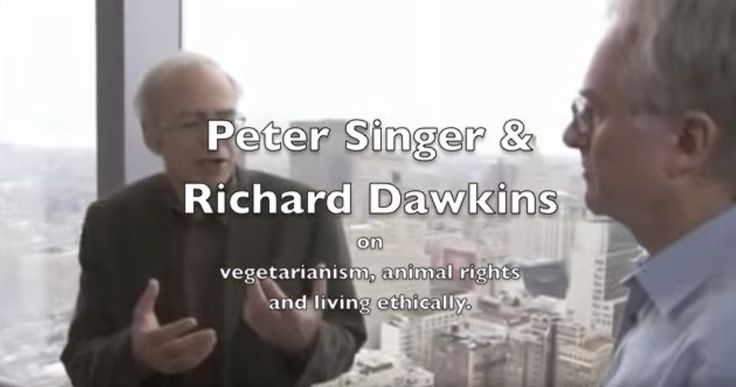



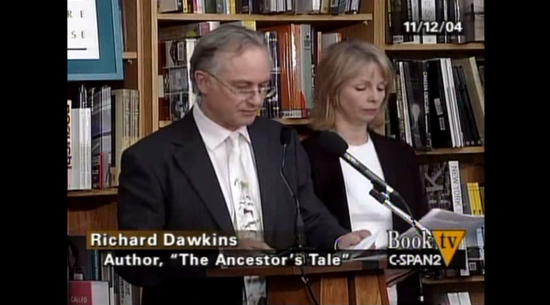


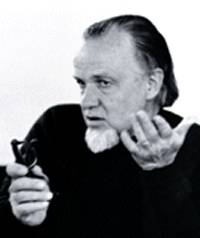

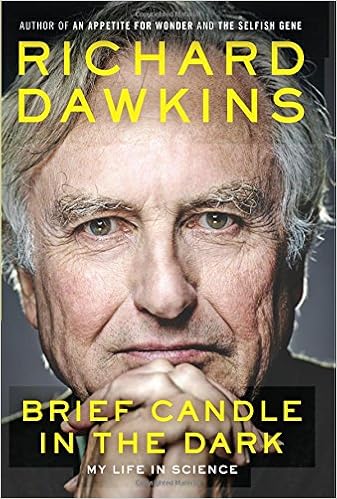
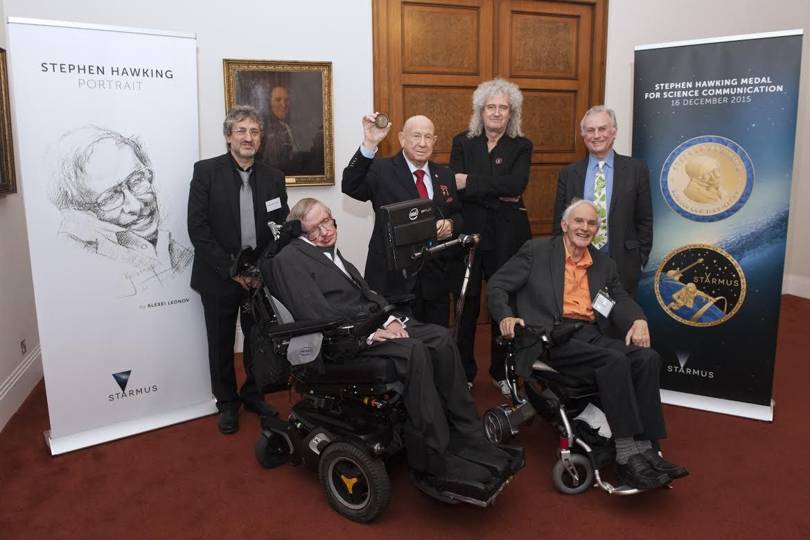








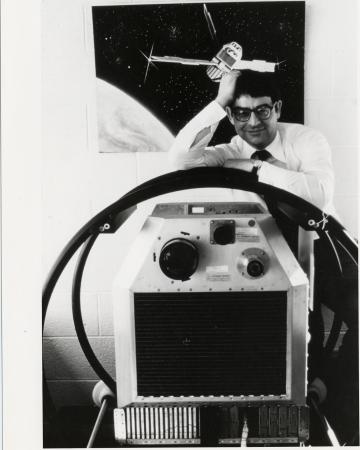


 Who is Jesus? You and I are sitting down in the Credo House, enjoying a delicious Luther Latte. We’re talking about the important questions of life and I lean forward asking you that simple question, “Who is Jesus?” What do you think about him? Is He everything the Bible communicates? Did He actually live, die for the sins of humanity, and rise from the dead? Do you consider Him your Lord? Is He the ultimate King of the Jews? Is He the King of Kings? These are important questions for all of mankind to consider.
 Wow, what an amazing dialogue. Jesus forces Pilate to wrestle with his identity. Where does the conversation go from here? Pilate tells the crowd he believes Jesus to be innocent. The crowd finds a loop-hole in the system asking for a criminal, Barabbas, to be released from prison and for Jesus to be found guilty. Pilate appeases the crowd by sending Jesus away to be flogged. After experiencing the horror of flogging, the Bible tells us Jesus is sent back to Pilate. Pilate and Jesus have another conversation described in John 19:
 In 1961 the archaeological world was taken back to the first century Roman province of Judea. A group of archaeologists, led by Dr. Antonio Frova were excavating an ancient Roman theater near Caesarea Maritima. Caesarea was a leading city in the first century located on the Mediterranean Sea. A limestone block was found there with a surprising inscription. The inscription, on three lines, reads: