Category Archives: Uncategorized

Music Monday My letter to Anthony Kiedis of THE RED HOT CHILI PEPPERS

________

December 23, 2019

I have written you before because I am fan of your music. Today I wanted to share with  you some information from a book by Francis Schaeffer that was read by Eric Clapton and Jimmy Page back in the 1970’s. Francis Schaeffer talked about the views of the Beatles  and many other Rock Groups in the 1960’s and 1970’s.  His son Frank wrote recently about the impact of SGT. PEPPER’S LONELY HEARTS CLUB BAND:

“Sgt. Pepper’s” became my personal sound track of liberation back then…Genie, my wife of 44 years… grew up in the Bay Area and as a teen had the distinction of seeing the Beatles three times (!) live and the Rolling Stones four times (!) live.

Meanwhile, I was growing up in Switzerland in a mission(L’Abri Fellowship), and my “almost famous” rock-n-roll high point came when I got a job helping with theLed Zeppelin’slight show at the Montreux Jazz/rock festival.I met Jimmy Page and noticed he was reading one of my dad’s first books, ESCAPE FROM REASON. (No kidding.)

This was back in the days when Dad was a sort of hippie guru for Jesus catering to Beats, hippies and dropouts hitching across Europe.Eric Claptonhad given Page the book as it turned out. I was trying to be “cool” that day on the light show crew… and I wasn’t too pleased to find my brief escape into the rock world from the world of my Dad’s evangelical mission was no escape from my God-world at all. He’d been giving lectures on Bob Dylan, and drug guru Timothy Leary had been a guest at L’Abri. And now I got to briefly “hang out with the band” and Dad got there first, or at least one of his books did! Sheesh! It’s hard to be cool!

…Anyway… Just before coming to my parent’s mission in 1969 – Genie was visiting a friend and knew nothing about the place — she was hanging out with the Santana drummer in California. My then teen bride-to-be Genie might as well have gone to another planet when she stumbled into Dad and Mom’s ministry. The only Billy Graham she’d ever heard of was the Fillmore West manager!

I wonder if my wife-to-be was in the Fillmore West rock palace when Dad and I were there one night in 1968 listening to the Jefferson Airplane together and some hippie handed Dad a joint? Dad passed it on down the row, not taking any himself but totally un-shocked and loving Grace Slick as much as I did… if only Jerry Falwell could have seen us then…

This was back in the days when Dad was a sort of hippie guru for Jesus catering to Beats, hippies and dropouts hitching across Europe. Eric Clapton had given Page the book as it turned out.

Let me share with you a few parts of the book ESCAPE FROM REASON:

WHY FRANCIS SCHAEFFER MATTERS: Consequences of Pitting Rationality Against Faith – PART 4

The decisive result of falling below the line of despair is a pitting of rationality against faith.  Schaeffer sees this as an enormous problem and details four consequences in his book, Escape From Reason.

First, when rationality contends against faith, one is not able to establish a system of morality.  It is simply impossible to have an “upstairs morality” that is unrelated to matters of everyday living.

Second, when rationality and faith are dichotomized, there is no adequate basis for law.  “The whole Reformation system of law was built on the fact that God had revealed something real down into the common things of life” (Escape From Reason, 261).  But when rationality and faith are pitted against one another, all hope for law is obliterated.

The third consequence is that this scheme throws away the answer to the problem of evil.  Christianity’s answer rests in the historic, space-time, real and complete Fall of man who rebelled and made a choice against God.  “Once the historic Christian answer is put away, all we can do is to leap upstairs and say that against all reason God is good” (Escape From Reason, 262).

Finally, when one accepts this unbiblical dichotomy he loses the opportunity to evangelize people at their real point of despair.  Schaeffer makes it clear that modern man longs for answers.  “He did not accept the line of despair and the dichotomy because he wanted to.  He accepted it because, on the basis of the natural development of his rationalistic presuppositions, he had to.  He may talk bravely at times, but in the end it is despair” (Escape From Reason, 262).  It is at this point that Schaeffer believes the Christian apologist has a golden opportunity to make an impact.  “Christianity has the opportunity, therefore, to say clearly that its answer has the very thing modern man has despaired of – the unity of thought.  It  provides a unified answer for the whole of life.  True, man has to renounce his rationalism; but then, on the basis of what can be discussed, he has the possibility of recovering his rationality” (Escape From Reason, 262).

Schaeffer challenges us, “Let us Christians remember, then, that if we fall into the trap  against which I have been warning, what we have done, among other things, is to put ourselves in the position where in reality we are only saying with evangelical words what the unbeliever is saying with his words.  In order to confront modern man effectively, we must not have this dichotomy.  You must have the Scriptures speaking truth both about God Himself and about the area where the Bible touches history and the cosmos” (Escape From Reason, 263).

The Tension of Being a Man

Before proceeding to Dr. Schaeffer’s basic approach to apologetics one must understand the concept he calls “mannishness” or the tension of being a man.  The idea is essentially that no man can live at ease in the area of despair.  His significance, ability to love and be loved, and his capacity for rationality distinguish him from machines and animals and give evidence to this fact: Man is made in the image of God.  Modern man has been forced to accept the false dichotomy between nature and grace and consequently takes a leap of faith to the upper story and embraces some form of mysticism, which gives an illusion of unity to the whole.  But as Schaeffer points out, “The very ‘mannishness’ of man refuses to live in the logic of the position  to which his humanism and rationalism have brought him.  To say that I am only a machine is one thing; to live consistently  as if this were true is quite another” (The God Who Is There, 68).  Schaeffer continues, “Every truly modern man is forced to accept some sort of leap in theory or practice, because the pressure of his own humanity demands it.  He can say what he will concerning what he himself is; but no matter what he says he is, he is still a man” (The God Who Is There, 69).

Thus, the foundation for Francis Schaeffer’s basic approach to apologetics is simply to recognize that man is an image-bearer.  Man even in his sin has personality, significance, and worth.  Therefore, the apologist should approach him in those terms.  The apologist must not only recognize that man is made in the image of God;  he must also love him in word and deed.  Finally, the apologist must speak to the man as a unit; he must reach the whole man (for faith truly does involve the whole man) and refuse to buy into the popularized Platonic idea that man’s soul is more important than the body.

Francis Schaeffer in describing the 1960’s noted:

The younger people and the older ones tried drug taking but then turned to the eastern religions. Both drugs and the eastern religions seek truth inside one’s own head, a negation of reason. The central reason of the popularity of eastern religions in the west is a hope for a nonrational meaning to life and values. The reason the young people turn to eastern religion is simply the fact as we have said and that is that man having moved into the area of nonreason could put anything up there and the heart of the eastern religions  is a denial of reason just exactly as the idealistic drug taking was….The universe was created by an infinite personal God and He brought it into existence by spoken word and made man in His own image. When man tries to reduce [philosophically in a materialistic point of view] himself to less than this [less than being made in the image of God] he will always fail and he will always be willing to make these impossible leaps into the area of nonreason even though they don’t give an answer simply because that isn’t what he is. He himself testifies that this infinite personal God, the God of the Old and New Testament is there. 

Here are some wise words of Francis Schaeffer from his book HE IS THERE AND HE IS NOT SILENT (the chapter is entitled, “Is Propositional Revelation Nonsense?”Of course, if the infinite uncreated Personal communicated to the finite created personal, he would not exhaust himself in his communication; but two things are clear here:1. Even communication between once created person and another is not exhaustive, but that does not mean that for that reason it is not true. 2. If the uncreated Personal really cared for the created personal, it could not be thought unexpected for him to tell the created personal things of a propositional nature; otherwise as a finite being the created personal would have numerous things he could not know if he just began with himself as a limited, finite reference point. In such a case, there is no intrinsic reason why the uncreated Personal could communicate some vaguely true things, but could not communicate propositional truth concerning the world surrounding the created personal – for fun, let’s call that science. Or why he could not communicate propositional truth to the created personal concerning the sequence that followed the uncreated Personal making everything he made – let’s call that history. There is no reason we could think of why he could not tell these two types of propositional things truly. They would not be exhaustive; but could we think of any reason why they would not be true? The above is, of course, what the Bible claims for itself in regard to PROPOSITIONAL revelation.

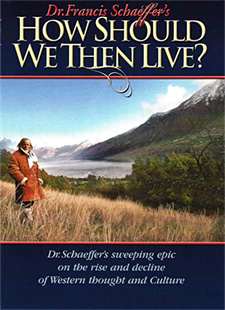
Francis Schaeffer tells his story in his film series HOW SHOULD WE THEN LIVE?:

Before you even come to the Bible and begin to read it one must realize there are 2 ways to read the Bible. One is just one more religious thing among thousands of other religious is nothing more than another form of a trip, not very, very different actually from a drug trip. The other way is to understand that the Bible is truth and as such what we are listening to is something that is completely contrary to what here about us on every side namely merely statistical averages, relativistic things. Now having said this then I would have to guard myself for the simple reason that it doesn’t mean a person has to believe all of this before he can begin to read the Bible and find truth in the Bible.

I would just say in just passing I was not raised in a Christian family and I was reading much philosophy when I was a young man and I didn’t read the Bible because I believed it was true. I read it simply out of an intellectual honesty, but I did do one thing. I read it exactly as it was written beginning with Genesis 1:1 and going right on, I read it just as I would read another book expecting what was being given was a straight forward statement of what was meant and it wasn’t supposed to be read on a different level than that I would read in another kind of book. As I read it, it answered the questions already at that time I realized that humanistic philosophy couldn’t answer and over a six month period I came to conclude it was truth. Nevertheless, we must keep in the back of our mind how are we reading the Bible, just as another religious trip or am I really wrestling with the question of what is given in all the areas in which it speaks. Is it truth in comparison to merely relativism?

IS THE BIBLE ACCURATE IN  THE AREAS OF SCIENCE AND HISTORY? The Bible is true from cover to cover and can be trusted. Here are some of the posts I have done in the past on the subject and if you like you could just google these subjects: 1. The Babylonian Chronicleof Nebuchadnezzars Siege of Jerusalem, 2. Hezekiah’s Siloam Tunnel Inscription.13. The Pilate Inscription14. Caiaphas Ossuary14 B Pontius Pilate Part 214c. Three greatest American Archaeologists moved to accept Bible’s accuracy through archaeology.

Instead of making a leap into the area of nonreason the better choice would be to investigate the claims that the Bible is a historically accurate book and that God created the universe and reached out to humankind with the Bible. Below is a piece of that evidence given by Francis Schaeffer concerning the accuracy of the Bible.

TRUTH AND HISTORY (chapter 5 of WHATEVER HAPPENED TO THE HUMAN RACE? written by Francis Schaeffer and C. Everett Koop, under footnote #94):

Consider, too, the threat in the entire Middle East from the power of Assyria. In 853 B.C. King Shalmaneser III of Assyria came west from the region of the Euphrates River, only to be successfully repulsed by a determined alliance of all the states in that area of the Battle of Qarqar. Shalmaneser’s record gives details of the alliance. In these he includes Ahab, who he tells us put 2000 chariots and 10,000 infantry into the battle. However, after Ahab’s death, Samaria was no longer strong enough to retain control, and Moab under King Mesha declared its independence, as II Kings 3:4,5 makes clear:

Now Mesha king of Moab was a sheep breeder, and he had to deliver to the king of Israel 100,000 lambs and the wool of 100,000 rams. But when Ahab died, the king of Moab rebelled against the king of Israel.

The famous Moabite (Mesha) Stone, now in the Louvre, bears an inscription which testifies to Mesha’s reality and of his success in throwing off the yoke of Israel. This is an inscribed black basalt stela, about four feet high, two feet wide, and several inches thick.

In an earlier letter to you I quoted Psalms chapter 22. Why not take a few minutes and just read the short chapter of Psalms 22 that was written hundreds of years before the Romans even invented the practice of Crucifixion. 1000 years BC the Jews had the practice of stoning people but we read in this chapter a graphic description of Christ dying on the cross. How do you explain that without looking ABOVE THE SUN to God.

Walking Down the “Romans Road” to Salvation . . . .

  • Because of our sin, we are separated from God.
    For all have sinned and fall short of the glory of God.  (Romans 3:23)
  • The Penalty for our sin is death.
    For the wages of sin is death, but the gift of God is eternal life in Jesus Christ our Lord. (Romans 6:23)
  • The penalty for our sin was paid by Jesus Christ!
    But God demonstrates His own love toward us, in that while we were yet sinners, Christ died for us. (Romans 5:8)
  • If we repent of our sin, then confess and trust Jesus Christ as our Lord and Savior, we will be saved from our sins!
    For whoever calls on the name of the Lord shall be saved.  (Romans 10:13)
    …if you confess with your mouth the Lord Jesus and believe in your heart that God has raised Him from the dead, you will be saved. For with the heart one believes unto righteousness, and with the mouth confession is made unto salvation. (Romans 10:9,10)

Thanks for your time.

Sincerely,

Everette Hatcher, everettehatcher@gmail.comhttp://www.thedailyhatch.org, cell ph 501-920-5733, Box 23416, LittleRock, AR 72221
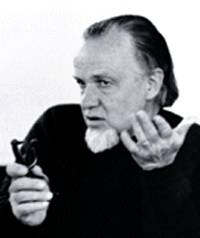
Image result for francis schaeffer

F Schaeffer  

____

x

___

_______________

January 31, 2019

Anthony Kiedis, c/o Hachette Book Group 1290 6th Ave, New York, NY 10104

Dear Anthony,

I read your autobiography SCAR TISSUE and I found it very interesting. You talked a lot about your father. I actually read something about your father and her is an excerpt from what I read:

April 1, 2013–Beverly Hills, California: You may wish you had some of that evil 1980s Sunset Strip cocaine too when you can’t put this book down til dawn–it’s immersive, exhilarating, exhausting, elegiac, ribald…and hilarious.

It’s simply the biggest, boldest epic of Hollywood and Rock & Roll ever written.

It’s the memoir of John Kiedis, father of legendary rockers Red Hot Chili Peppers front man Anthony Kiedis.

John Keidis–AKA Blackie Dammett–the Hollywood Babylon Renaissance man whose mind blowing exploits and relentlessly lurid lifestyle shaped his future Rock & Roll Hall of Famer son–between the torrent of drug and sex fueled parties, auditions and business deals in Hollywood, New York and London, Dammett towed the young Red Hot Chili Pepper with him on his drug deals with a show biz who’s who.

Along the way Dammett found time for acting in high profile movies and TV too–everything from “misunderstood junkie hypochondriac suspected child kidnapper with a soft side” to “a failed Hell’s Angel.”

Then there were the “girls.” OMG. Nobody could make this stuff up:

“New girls were always coming of age, replenishing the scene… Deirdre, Darcy, Jill Jacobson, Melissa, Skye Aubrey, Lisa Blount, Lehna from Sweden, Summer, Shannon, Veronica Blakely, Tallulah, Debbie Baker from Trashy Lingerie, Punky, Vickie, Raven Cruel… Annette Walter-Lax who later became Keith Moon’s significant other…”

Fasten your seatbelts–it’s going to be a humpy ride.

Dammett knew them all:

He played Pong (the first video game) with John Lennon, and then Lennon, temporarily exiled from NY by Yoko Ono and lubed with coke and whiskey, poured out his legendary heart to Dammett.

Dammett partied with the likes of Lou Reed, Axl Rose, Andy Warhol, Keith Moon, Alice Cooper, Liza Minnelli, Frank Sinatra, 14-year-old Drew Barrymore, George Carlin, David Lee Roth, Deborah Harry, the Ramones, Talking Heads, Richard Hell and Television, Patti Smith and Basquiat…the list goes on and on.

This is Blackie Dammett’s story–the man who has had a profound, ineffable influence on his son, Anthony Kiedis, front man of the seminal Rock & Roll Hall of Famers Red Hot Chili Peppers.

And the entire book is ghost-writer free–every single word is Blackie Dammett’s.

From his Lithuanian ancestors landing at Ellis Island (with some Algonquin and Mohican blood mixed along the way), to Blackie’s classic youth in 1940s and ‘50s hardscrabble Michigan (an almost Norman Rockwellian, American Graffiti idyll), to his hilariously depraved Hollywood of the 60s through the 90s, his story is the story of America in the second half of the twentieth century–an epic, authentic cultural document without equal in detail, profound candor and heart.

Hey Blackie–You’ll never heave lunch in this town again.

I understand that Andy Warhol actually did a picture of you!!!

I live in Arkansas and I just can’t get enough of the CRYSTAL BRIDGES MUSEUM in Bentonville.  In 1981 I visited 20 European countries on a college trip and I was hooked on art.

Francis Schaeffer is one of my favorite writers and he was constantly talking about modern culture and art in his books and that really got me interested in finding out what it was all about.  Actually on my blog http://www.thedailyhatch.org I devote my blog every Thursday to the series called FRANCIS SCHAEFFER ANALYZES ART AND CULTURE  and I examine the work of a modern day artist. Here is an alphabetical list of those I have featured so far:

Marina AbramovicIda Applebroog,Matthew Barney, Aubrey Beardsley, Larry BellWallace BermanPeter BlakeDerek BoshierPauline BotyBrenda Bury,  Allora & Calzadilla,   Christo and Jeanne-Claude, Heinz Edelmann Olafur EliassonTracey EminJan Fabre, Makoto Fujimura, Hamish Fulton, Ellen GallaugherRyan GanderFrancoise GilotJohn Giorno, Rodney Graham,  Cai Guo-QiangBrion GysinJann HaworthArturo HerreraOliver HerringDavid Hockney, David Hooker,  Nancy HoltRoni HornPeter HowsonRobert Indiana, Jasper Johns, Martin KarplusMargaret KeaneMike Kelley, Peter KienJeff Koons Annie Leibovitz, John LennonRichard LinderSally MannKerry James MarshallTrey McCarley, Linda McCartney, Paul McCartneyPaul McCarthyJosiah McElhenyBarry McGee, Richard MerkinNicholas MonroYoko OnoTony Oursler,John OutterbridgeNam June PaikEduardo PaolozziGeorge PettyWilliam Pope L.Gerhard Richter, Anna Margaret Rose,  James RosenquistSusan RothenbergGeorges Rouault, Richard SerraShahzia Sikander, Raqub ShawThomas ShutteSaul SteinbergHiroshi SugimotoStuart SutcliffeMika Tajima,Richard TuttleLuc Tuymans, Alberto Vargas,  Banks Violett, H.C. Westermann,  Fred WilsonKrzysztof Wodiczko,Andrew WyethJamie Wyeth, Bill WymanDavid WynneAndrea Zittel,

I noticed that you knew Andy Warhol. Let me share with you some of what Francis Schaeffer wrote about Andy Warhol’s art and interviews:

The Observer June 12, 1966 does a big spread on Warhol. Andy is a mass communicator. Someone has described pop art as Dada plus Madison Avenue or commercialism and I think that is a good definition. Dada was started in Zurich and came along in modern art. Dada means nothing. The word “Dada” means rocking horse, but it was chosen by chance. The whole concept Dada is everything means nothing. Pop Art has been said to be the Dada concept put forth in modern commercialization.

Everything in his work is being leveled down to an universal monotony which he can always sell for $8000.00.

Andy Warhol says, “It stops you thinking about things. I wish I were a machine. I don’t want to be heard. I don’t want human emotions. I have never been touched by a painting. I don’t want to think. The world would be easier to live  in if we all were machines. It is nothing in the end anyway.”

_______________________________

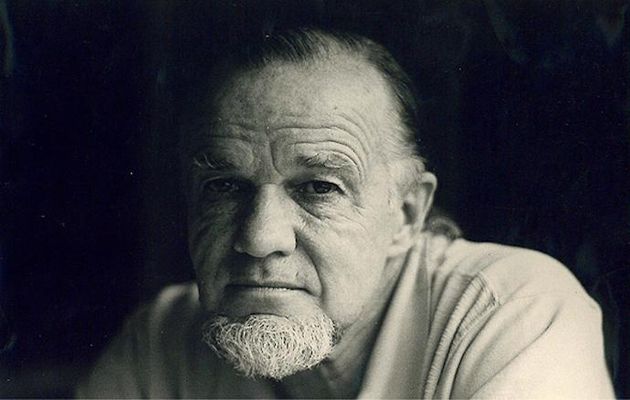
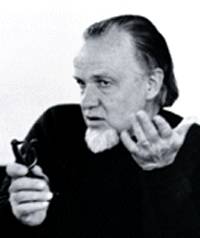
(Francis Schaeffer pictured below)

Francis Schaeffer

Notice Andy Warhol’s words very closely concerning the time he takes to make his movies:

“It stops you thinking about things. I wish I were a machine. I don’t want to be heard. I don’t want human emotions. I have never been touched by a painting. I don’t want to think. The world would be easier to live  in if we all were machines. It is nothing in the end anyway.”

Francis Schaeffer said that modern man may say that we all are the results of chance plus time and there is no life beyond the grave but then people can’t live that way because of the “mannishness of man.” We all have significance and the ability to love and be loved and we have the ability of rational thought that distinguishes us from machines and animals and that indicates that we were man in the image of God.

YOU HAVE LOVED AND DEEP DOWN YOU KNOW THAT GOD PUT YOU ON THIS EARTH FOR A PURPOSE AND THAT IS WHY WE HAVE ART TO BEGIN WITH BECAUSE OF MAN’S CREATIVITY!!

Your music reminds me a lot about the Memphis Blues. I thought of your music when I heard the news today, “In 2 days, Mississippi River has risen 10 feet north of St. Louis.”

Everybody is now educating themselves on the great flood of 1927. The 1927 Great Mississippi Flood was the most destructive river flood in the history of the United States, causing over $400million in damages and killing 246 people in seven states and displaced 700,000 people.

My grandfather moved to Memphis in 1927 and he told me about this flood. There was a lady named Memphis Minnie and she wrote about this flood. I always heard that there was lots of great blues music that had come out of Memphis, but I always thought that was overstated and that the Blues was not a significant form of music. (Live and learn, the Blues music out of Memphis had a GREAT AFFECT ON MUSIC WORLDWIDE!!!)

However, at the same time I was listening to groups like Led Zeppelin and the ROLLING STONES, I had no idea that many of their songs were based on old Blues songs out of Memphis.

One of my favorite Led Zeppelin songs was “When the Levee breaks.” It was based on a song by Memphis Minnie.

There are many paths that people can take to deal with the Blues but the one found by many people in this area is to repent of their sins and embrace the gospel. Actually the answer to find meaning in life is found in putting your faith and trust in Jesus Christ. The Bible is true from cover to cover and can be trusted.

When I examine the Blues they are really an expression of one’s desperation to deal with the hard realities we face in life. Some seek escapism through alcohol or drugs. In fact, many famous Blues musicians have died from from addictions to drugs or alcohol!!

In the paper, “THE DECLINE OF TWENTIETH-CENTURY MAN” Francis Schaeffer asserted:

For some time, young people were fighting against their parents’ impoverished values of personal peace and affluence-whether their way of fighting was through Marcuse’s New Left or through taking drugs as an ideology. The young people wanted more to life than personal peace and affluence. They were right in their analysis of the problem, but they were mistaken in their solutions.

As the sixties drew to a close and the seventies began, probably more people were taking some form of drug, and at an ever-younger age. But taking drugs was no longer an ideology. That was finished. Drugs simply became the escape which they had been traditionally in many places in the past.

Francis Schaeffer concluded though that something happened that involved the ROLLING STONES that changed everything concerning taking drugs as an ideology:


AFTER WOODSTOCK TWO EVENTS "ENDED THE AGE OF INNOCENCE," 
to use the expression of Rolling Stone magazine. The FIRST 
occurred at Altamont, California, where the ROLLING STONES put 
on a festival and hired the Hell's Angels (for several barrels of 
beer) to police the grounds. Instead, the Hell's Angels killed 
people without any cause, and it was a bad scene indeed. But 
people thought maybe this was a fluke, maybe it was just 
California! IT TOOK A SECOND EVENT TO BE CONVINCING. 

On the Isle of Wight, 450,000 people assembled, and it was 
totally ugly. A number of people from L'Abri were there, and I 
know a man closely associated with the rock world who knows 
the organizer of this festival. Everyone agrees that the situation 
was just plain hideous. 

THUS, AFTER THESE TWO ROCK FESTIVALS THE PICTURE CHANGED. IT IS  
NOT THAT KIDS HAVE STOPPED TAKING DRUGS, FOR MORE ARE TAKING  
DRUGS ALL THE TIME. And what the eventual outcome will be is 
certainly unpredictable. I know that in many places, California 
for example, drugs are down through the high schools and on 
into the heads of ten- and eleven-year-olds. But drugs are not 
considered a philosophic expression anymore; among the very 
young they are just a peer group thing. It's like permissive 
sexuality. You have to sleep with a certain number of boys or 
you're not in; you have to take a certain kind of drug or you're 
not in. THE OPTIMISTIC IDEOLOGY HAS DIED.

I was curious what you thought of these assertions. Thank you for your time and keep up the good work on your music. I have enjoyed it a great deal .

Everette Hatcher, cell phone 501-920-5733, everettehatcher@gmail.com

PS: I enclosed a short tract called HAPPY HOUR since it tells you can have a true HAPPY HOUR with your kids or grand kids  today. Take them to church!!!

___

Related posts:

MUSIC MONDAY The song LITTLE ONE sung by Rebecca St. James in the film SARAH’S CHOICE

May 30, 2016 – 12:39 am

Little One – From the Film, “Sarah’s Choice” Rebecca St James on faith and values – theDove.us Sarah’s Choice Trailer Sarah’s Choice – Behind the Scenes Rebecca St. James on Sarah’s Choice – CBN.com Rebecca St James Interview on Real Videos Sarah’s Choice – The Proposal Sarahs Choice Pregnancy Test Sarahs Choice Crossroad Sarah’s Choice […]By Everette Hatcher III | Posted in Current Events | Edit | Comments (0)

MUSIC MONDAY Rebecca St James

May 23, 2016 – 12:13 am

Lion – Rebecca St. James I will praise You – Rebecca St James Rebecca St James 1995 TBN – Everything I Do Rebecca St. James & Rachel Scott “Blessed Be Your Name” Rebecca St. James From Wikipedia, the free encyclopedia Rebecca St. James St. James in 2007 Background information Birth name Rebecca Jean Smallbone Also […]By Everette Hatcher III | Posted in Current Events | Edit | Comments (0)

MUSIC MONDAY “Foster the People” Cubbie Fink married to Rebecca St. James who is one of my favorite Christian singers!!!

May 16, 2016 – 7:13 am

Foster The People – Pumped up Kicks Foster the People From Wikipedia, the free encyclopedia Foster the People Foster the People at the 2011 MuchMusic Video Awards, from left to right: Pontius, Foster, and Fink Background information Origin Los Angeles, California, U.S. Genres Indie pop alternative rock indietronica alternative dance neo-psychedelia[1] Years active 2009–present Labels […]By Everette Hatcher III | Posted in Current Events | Edit | Comments (0)

MUSIC MONDAY ‘Apple gave me advice’: Coldplay’s Chris Martin turned to 11-year-old daughter for words of wisdom ahead of Superbowl 50 By DAILYMAIL.COM REPORTER PUBLISHED: 00:58 EST, 2 February 2016

May 9, 2016 – 1:12 am

‘Apple gave me advice’: Coldplay’s Chris Martin turned to 11-year-old daughter for words of wisdom ahead of Superbowl 50 By DAILYMAIL.COM REPORTER PUBLISHED: 00:58 EST, 2 February 2016 | UPDATED: 17:20 EST, 2 February 2016 n Facebook They’ve sold 80 million records and been around for 20 years. But Coldplay’s lead singer Chris Martin, 38, […]By Everette Hatcher III | Posted in Current Events | Edit | Comments (0)

MUSIC MONDAY Chris Martin, Lead Singer of Coldplay: 5 Fast Facts You Need to Know Published 3:44 pm EDT, February 7, 2016

May 2, 2016 – 1:05 am

__________ Chris Martin, Lead Singer of Coldplay: 5 Fast Facts You Need to Know Published 3:44 pm EDT, February 7, 2016 Updated 3:44 pm EDT, February 7, 2016 Comment By Lauren Weigle 17.6k (Getty) Chris Martin has been the front-man of the band Coldplay for about 20 years, though the band changed its name a […]By Everette Hatcher III | Posted in Current Events | Edit | Comments (0)

MUSIC MONDAY Christian Rock Pioneer Larry Norman’s Songs Part 14

April 25, 2016 – 12:57 am

Christian Rock Pioneer Larry Norman’s Songs Part 14 I posted a lot in the past about my favorite Christian musicians such as Keith Green (I enjoyed reading Green’s monthly publications too), and 2nd Chapter of Acts and others. Today I wanted to talk about one of Larry Norman’s songs. David Rogers introduced me to Larry […]By Everette Hatcher III | Posted in Current Events | Edit | Comments (0)

MUSIC MONDAY Christian Rock Pioneer Larry Norman’s Songs Part 13

April 18, 2016 – 12:56 am

Christian Rock Pioneer Larry Norman’s Songs Part 13 I posted a lot in the past about my favorite Christian musicians such as Keith Green (I enjoyed reading Green’s monthly publications too), and 2nd Chapter of Acts and others. Today I wanted to talk about one of Larry Norman’s songs. David Rogers introduced me to Larry […]By Everette Hatcher III | Posted in Current Events | Edit | Comments (0)

MUSIC MONDAY Christian Rock Pioneer Larry Norman’s Songs Part 12

April 11, 2016 – 1:30 am

Christian Rock Pioneer Larry Norman’s Songs Part 12 I posted a lot in the past about my favorite Christian musicians such as Keith Green (I enjoyed reading Green’s monthly publications too), and 2nd Chapter of Acts and others. Today I wanted to talk about one of Larry Norman’s songs. David Rogers introduced me to Larry […]By Everette Hatcher III | Posted in Current Events | Edit | Comments (0)

MUSIC MONDAY Christian Rock Pioneer Larry Norman’s Songs Part 11

April 4, 2016 – 1:23 am

Christian Rock Pioneer Larry Norman’s Songs Part 11 I posted a lot in the past about my favorite Christian musicians such as Keith Green (I enjoyed reading Green’s monthly publications too), and 2nd Chapter of Acts and others. Today I wanted to talk about one of Larry Norman’s songs. David Rogers introduced me to Larry […]By Everette Hatcher III | Posted in Current Events | Edit | Comments (0)

MUSIC MONDAY Christian Rock Pioneer Larry Norman’s Songs Part 10 more on Album “Only Visiting This Planet”

March 28, 2016 – 1:22 am

Christian Rock Pioneer Larry Norman’s Songs Part 10 more on Album “Only Visiting This Planet” I posted a lot in the past about my favorite Christian musicians such as Keith Green (I enjoyed reading Green’s monthly publications too), and 2nd Chapter of Acts and others. Today I wanted to talk about one of Larry Norman’s […]By Everette Hatcher III | Posted in Current Events | Edit | Comments (0)
FRANCIS SCHAEFFER ANALYZES ART AND CULTURE PART  507 Debating from 2015-2020 Darwin’s great grandson (Horace Barlow) about Francis Schaeffer’s 1968 critique of Darwinism! Part 9 Rock Band KANSAS: “All we do, crumbles to the ground though we refuse to see, All we are is dust in the wind, Don’t hang on, Nothing lasts forever but the Earth and Sky, It slips away” FEATURED ARTIST IS FRANCIS BACON

—-

Some have embraced a form of Evolutionary Optimistic Humanism. Even Charles Darwin held unto the ideal of Evolutionary Optimistic  Humanism.

In Darwin’s 1876 Autobiography he noted:

“With respect to immortality, nothing shows me [so clearly] how strong and almost instinctive a belief it is as the consideration of the view now held by most physicists, namely, that the sun with all the planets will in time grow too cold for life, unless indeed some great body dashes into the sun and thus gives it fresh life. Believing as I do that man in the distant future will be a far more perfect creature than he now is,”

Francis Schaeffer 

Francis Schaeffer commented in 1968:

Now you have now the birth of Julian Huxley’s evolutionary optimistic humanism already stated by Darwin. Darwin now has a theory that man is going to be better. If you had lived at 1860 or 1890 and you said to Darwin, “By 1970 will man be better?” He certainly would have the hope that man would be better as Julian Huxley does today. Of course, I wonder what he would say if he lived in our day and saw what has been made of his own views in the direction of (the mass murder) Richard Speck (and deterministic thinking of today’s philosophers). I wonder what he would say. So you have the factor, already the dilemma in Darwin that I pointed out in Julian Huxley and that is evolutionary optimistic humanism rests always on tomorrow. You never have an argument from the present or the past for evolutionary optimistic humanism. You can have evolutionary nihilism on the basis of the present and the past. Every time you have someone bringing in evolutionary optimistic humanism it is always based on what is going to be produced tomorrow. When is it coming? The years pass and is it coming? 

Below is a portion of my December 2, 2017 which was responding to his November 22, 2017 letter:

Image result for francis schaeffer

Francis Schaeffer (1912-1984) taught at the Swiss L’Abri Community.

Let me give you some background on why I have written you. Since 1974 I have been reading the books of Francis Schaeffer. Then later in the 1970’s Schaeffer released two film series. Here is what Wikipedia had to say about Schaeffer:

Francis August Schaeffer (January 30, 1912 – May 15, 1984[1]) was an American Evangelical Christian theologianphilosopher, and Presbyterian pastor. He is best known for establishing the L’Abri community in Switzerland. Opposed to theological modernism, Schaeffer promoted a more historic Protestant faith… which he believed would answer the questions of the age.

Also over the last 25 years I have had the opportunity to listen to hundreds of Schaeffer’s recorded messages from the L’Abri community in Switzerland.

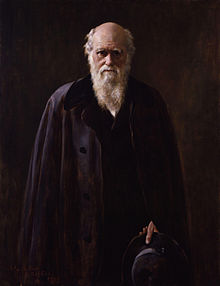
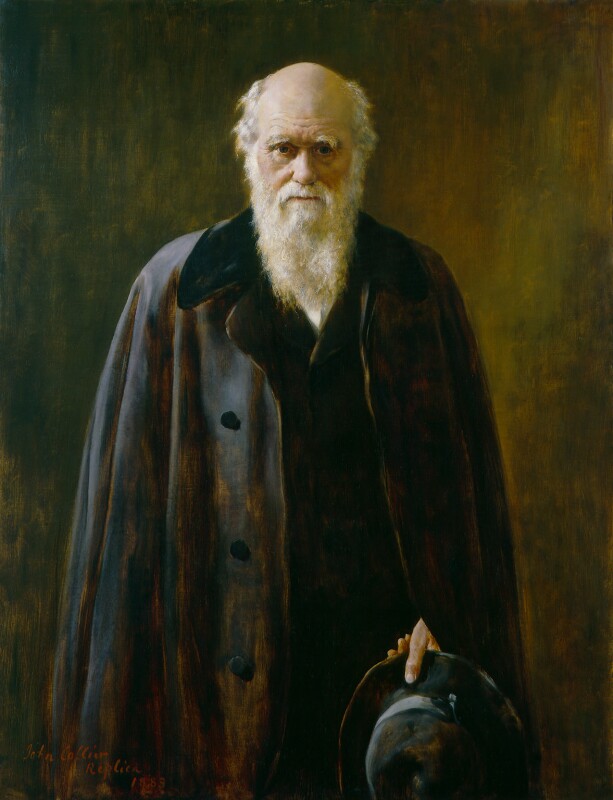
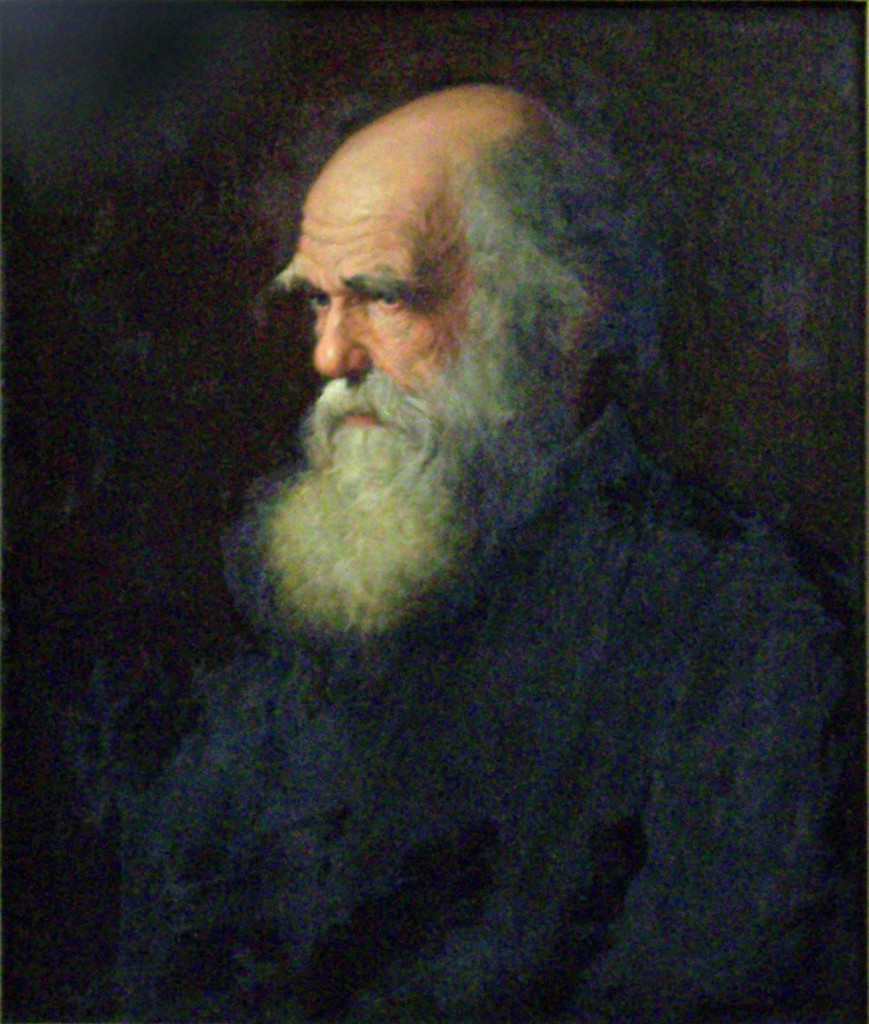
Charles Darwin (1809-1882)

Image result for charles darwin

—-

Image result for adrian rogers

Adrian Rogers pictured 


On the tenth anniversary of Francis Schaeffer’s passing, May 15, 1994, I sent out to several hundred prominent skeptics an evangelistic letter that told about Schaeffer’s life. This same letter included the CD entitled “Dust, Darwin, and Disbelief,” by Adrian Rogers and Bill Elliff which quoted your great grandfather, Charles Darwin. That CD started off with the song DUST IN THE WIND by the group KANSAS for the simple reason that if we  accept that we are the result of chance then all we are is DUST IN THE WIND.

Image result for kansas dust in the wind

I thought the inclusion of the song DUST IN THE WIND was logical, but that logic was challenged by the third paragraph in your November 22, 2017 letter which said:

Image result for horace barlow

Horace Barlow pictured above

You may ask, “What is to take the place of Religious Belief in helping to understand the world around us? It has order and purpose, which cannot be explained by Blind chance as evolution teaches.” I agree it cannot be explained by Blind chance alone, but Darwin did not claim that this happens, and modern evolutionists agree. We say that chance variations (mutations) occur in the substances (called genes nowadays) that control development and cause son and daughter to resemble father and mother. These genes control the development of the offspring, and and influence their success in life, and in particular they influence the types of mutated genes that are passed on to the next generation. Chance, together with “Survival of the fittest,” thus causes the appearance of apparently purposeful adaptations of the population of genes in a species.

If you are correct then I was wrong to include the song DUST IN THE WIND. Let me respond by quoting Francis Schaeffer from his talk In the spring of 1968 which centered on your great uncle Francis Darwin’s book:

Darwin in his autobiography  Darwin, Francis ed. 1892. Charles Darwin: his life told in an autobiographical chapter, and in a selected series of his published letters [abridged edition]. London: John Murray, and in his letters showed that all through his life he NEVER really came to a QUIETNESS concerning the possibility that chance really explained the situation of the biological world. You will find there is much material on this [from Darwin] extended over many many years that constantly he was wrestling with this problem. Darwin never came to a place of satisfaction. You have philosophically ONLY TWO possible beginnings. The first would be a PERSONAL beginning and the other would be an IMPERSONEL beginning plus time plus CHANCE. There is no other possible alternative except the alternative that everything comes out of nothing and that has to be a total nothing and that has to be a total nothing without mass, energy or motion existing. No one holds this last view because it is unthinkable. Darwin understood this and therefore until his death he was uncomfortable with the idea of CHANCE producing the biological variation. 

Below is a portion of my 25th letter September 2, 2019 to Dr. Barlow that demonstrates that humanist philosophers have given up their optimism and become pessimistic about the future:

I want to thank you again for this opportunity to write you every month about your great grandfather Charles Darwin. Today we are going to look at where our moral motions come from and this is a subject that Darwin talked about a great deal.

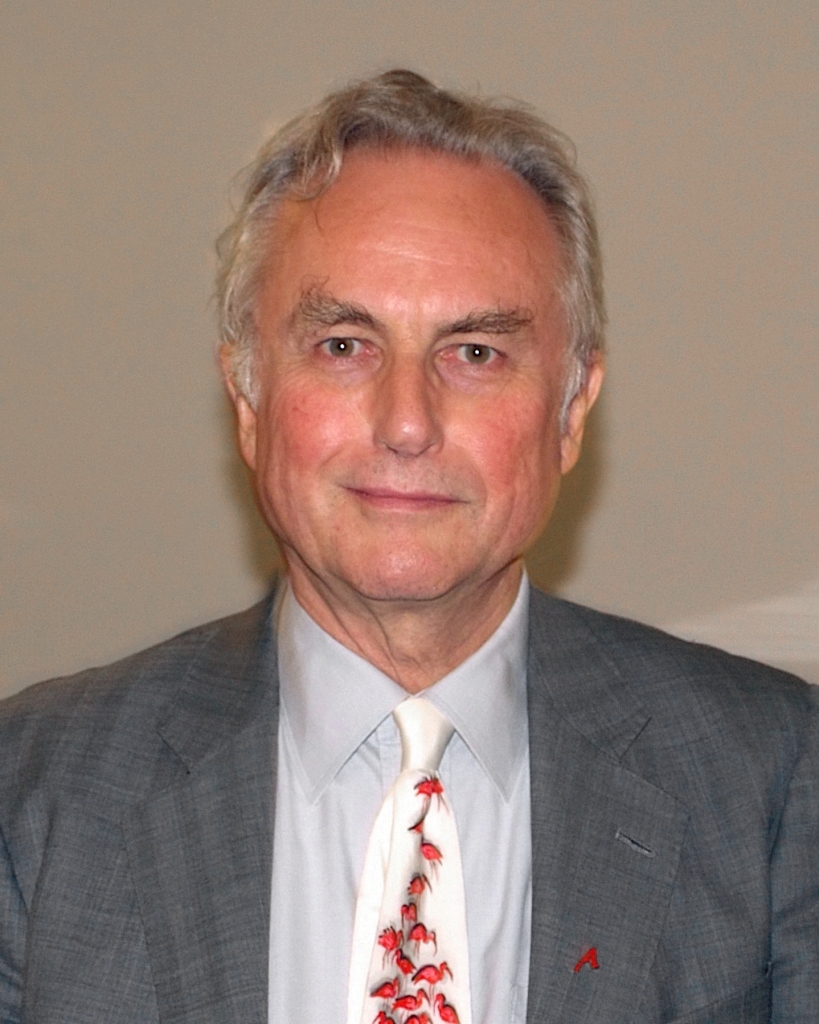
On August 28, 2019 on You Tube Richard Dawkins stated in an interview about his book OUTGROWING GOD:

Jesus was obviously a nice person if he lived. Either Jesus was a nice person or whoever wrote his lines was a nice person….The SERMON ON THE MOUNT is classically regarded as a very wonderful set of rules for living and indeed it is….Taken as a whole the Bible is a terrible set of rules for living….[Instead], live our lives by moral philosophers and by the general progress we see in morality as we look from decades to decades.

Let us pause for a moment and look at what Humanist autonomous philosophers have given us.


Francis Schaeffer noted:

The history of the nonchristian Philosophers up until the 18th century went like this:Here is a circle which stands for what the unified and true knowledge of the universe is. The next man would say “No,” and cross out the circle. He then would say “Here is the circle.” Then the next man would say “No,”and cross out that circle. Then he would make his circle and the next man would cross it out and make his circle. This continued through the centuries. They never found the circle, but they optimistically thought someone would beginning with man himself and on the basis of man’s reasoning alone.Then the endless rows of circles through the and the crossing out were broken and a drastic shift came because the humanist ideal had failed. Humanist man gave up his optimism for pessimism. He gave up the hope of an unified answer and this makes modern man who he is.

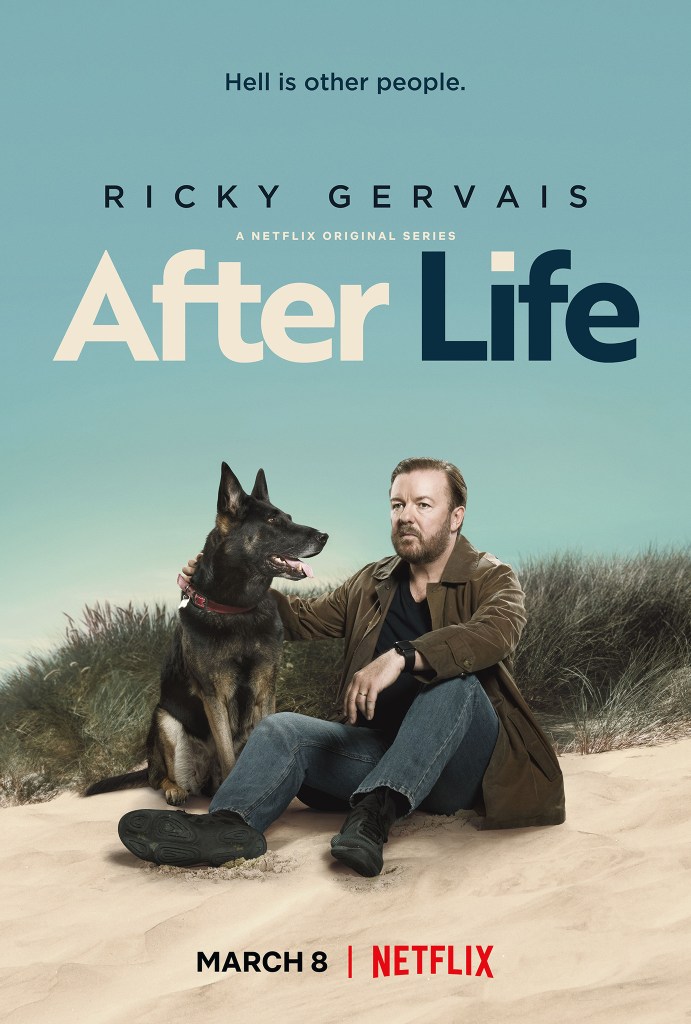
If Evolution by chance occurred then Ecclesiastes is correct about our lives seeking lasting lasting meaning “under the sun” is like chasing the wind and I pointed out that nihilism was the logical response of a person blocks out the possibility that God exists in my last letter to Dr. Barlow on April 18, 2020. I suggested that Dr. Barlow watch the NetFlix series AFTER LIFE which demonstrates this over and over and below is the complete letter:

April 18, 2020

Dr. Horace Barlow,  Cambridge CB3 9AX, England

Dear Dr. Barlow,

As you know I have writing you since 2015 and I was so thrilled to get a detailed letter back from you in November of 2017 that answered several of the questions that I have asked you about Charles Darwin’s views. In many of the letters I have written to you have referred also to Solomon and his words in the last book he wrote which was ECCLESIASTES. Well, Ricky Gervais has written and starred in a film series on Netflix called AFTER LIFE that reminds me of a modern day Solomon looking in vain for the meaning in life UNDER THE SUN in the fictional town Tambury which is really filmed in London.

Seen below is the third episode of AFTERLIFE (season 1) when Matt takes Tony to a comedy club with front row seats to cheer him up but it turns into disaster!!!

Today I got to ask a question to Ricky and he took time to answer me and I thought you would enjoy some of my open letter to Ricky which I published today:

(Above) Tony and Anne on the bench at the graveyard where their spouses are buried.

I have been a big fan of yours for 20 years now and I have taken an interest especially in your philosophical views concerning atheism and your attacks on Christianity, and since 2016 I have written you 9 letters basically concerning the Book of Ecclesiastes and the subject of nihilism. Then I ran across your series AFTER LIFE and Tony reminded me so much of Solomon in the Book of Ecclesiastes and the nihilism that Solomon embraced.

Today, Saturday April 18, 2020 at 6pm in London and noon in Arkansas, I had a chance to ask you on your Twitter Live broadcast “Is Tony a Nihilist?” At the 20:51 mark you answer my question with the following comments:


Not, I mean he [Tony] dabbles with it [nihilism] but a lot of this stuff is like he is being provocative and he is trying to sort of hurt people. No, It is difficult to say. I don’t. The one thing he wants he can’t have so he is angry. He has to compromise. He had the perfect marriage and he doesn’t know how to act or feel anymore. He is confused. He is in pain. He is ill. He is probably ill you know. If you are not right in your [mind] then you are ill, and you can’t just step out of it. You know. You even know you are not normal or well, but what can you do? You don’t feel good. That will do. Did we get serious then? That won’t happen again!

It seems to me that you would classify Tony as angry and confused but not a nihilist. You are the writer so you should know, but let me ask you if you can philosophically back up the view that Tony is not living the life of a nihilist (one who does think there are no rules for his life and no purpose for his life and no basis for morality).

As a member of the British Humanist Association you are familiar with the view of optimistic humanism. Let me share some views on that:

Tony and his wife Lisa who died 6 months ago of cancer


Paul Kurtz – (writer of Humanist Manifesto 2 in 1973 and Dr. Kurtz was a very kind gentleman who took time to correspond with me.)

Image result for paul kurtz

“The universe is neutral, indifferent to man’s existential yearnings. But we instinctively discover life, experience its throb, its excitement, its attraction. Life is here to be lived, enjoyed, suffered, and endured…Again–one cannot ‘prove’ this normative principle to everyone’s satisfaction. Living beings tend instinctively to maintain themselves and to reproduce beyond ultimate justification. It is a brute fact of our contingent natures; It is an instinctive desire to live.”

Image result for j p moreland

220 × 330Images may be subject to copyright. Learn More

J.P. Moreland – “2 Objections to optimistic humanism: #1 There is no rational justification for choosing it over nihilism. As far as rationality is concerned, it has nothing to offer over nihilism. Therefore, optimistic humanism suffers from some of the same objections we raised against nihilism. Kurtz himself admits that the ultimate values of humanism are incapable of rational justification!!!!!!  #2 Optimistic Humanism really answers the question of the meaning of life in the negative, just as nihilism does. For the optimistic humanist life has no objective value or purpose; It offers only subjective satisfaction, one should think long and hard before embracing such a horrible view. If there is a decent case that life has objective value and purpose, then such a case should be given as good a hearing as possible.

Image result for r c sproul

R.C. Sproul:Nihilism has two traditional enemies–Theism and Naive Humanism. The theist contradicts the nihilist because the existence of God guarantees that ultimate meaning and significance of personal life and history. Naive Humanism is considered naive by the nihilist because it rhapsodizes–with no rational foundation–the dignity and significance of human life. The humanist declares that man is a cosmic accident whose origin was fortuitous and entrenched in meaningless insignificance. Yet in between the humanist mindlessly crusades for, defends, and celebrates the chimera of human dignity…Herein is the dilemma: Nihilism declares that nothing really matters ultimately…In my judgment, no philosophical treatise has ever surpassed or equaled the penetrating analysis of the ultimate question of meaning versus vanity that is found in the Book of Ecclesiastes

Image result for h. j. blackham

The humanist H. J. Blackham was the founder of the British Humanist Association and he asserted: On humanist assumptions, life leads to nothing, and every pretense that it does not is a deceit. If there is a bridge over a gorge which spans only half the distance and ends in mid-air, and if the bridge is crowded with human beings pressing on, one after the other they fall into the abyss. The bridge leads nowhere, and those who are pressing forward to cross it are going nowhere….It does not matter where they think they are going, what preparations for the journey they may have made, how much they may be enjoying it all. The objection merely points out objectively that such a situation is a model of futility“( H. J. Blackham, et al., Objections to Humanism (Riverside, Connecticut: Greenwood Press, 1967). Francis Schaeffer comments concerning Blackham’s assertion, “One does not have to be highly educated to understand this. It follows directly from the starting point of the humanists’ position, namely, that everything is just matter. That is, that which has exited forever and in ever is only some form of matter or energy, and everything in our world now is this and only this in a more or less complex form.”

The 5 Conclusions of Humanism according to King Solomon of Israel in the Book of Ecclesiastes!!!!!

Image result for king solomon

The Humanistic world view tells us there is no afterlife and all we have is this life “under the sun.”

Image result for francis schaeffer

Francis Schaeffer (Christian Philosopher) notes Solomon limits himself to “under the sun” – In other words the meaning of life on the basis of human life standing alone between birth and death. It is indeed the book of modern man. Solomon is the universal man with unlimited resources who says let us see where I go. Ravi Zacharias 

Image result for ravi zacharias

“The key to understanding the Book of Ecclesiastes is the term ‘under the sun.’ What that literally means is you lock God out of a closed system and you are left with only this world of time plus chance plus us (Matter)”

1st Conclusion: Nothing in life truly satisfies and that includes wisdom, great works and pleasure. A) Will wisdom satisfy someone under the sun? We know it is good in its proper place. T

But what did Solomon find out about wisdom “under the sun”? Ecclesiastes 1:16-18 (Living Bible): I said to myself, ‘Look, I am better educated than any of the kings before me in Jerusalem. I have greater wisdom and knowledge.’So I worked hard to be wise instead of foolish[c]—but now I realize that even this was like chasing the wind. For the more my wisdom, the more my grief; to increase knowledge only increases distress.” (That is NIHILISM!!!!)

Image result for hugh hefner

KJV and Living Bible Ecclesiastes 2:1-3, 8, 10, 11: I said in mine heart, Go to now, I will prove thee with mirth, therefore enjoy pleasure: and, behold, this also is vanity.I said of laughter, It is mad: and of mirth, What doeth it? I sought in mine heart to give myself unto wine, yet acquainting mine heart with wisdom; and to lay hold on folly,And then there were my many beautiful concubines.10 Anything I wanted I took and did not restrain myself from any joy…11 But as I looked at everything I had tried, it was all so useless, a chasing of the wind, and there was nothing really worthwhile anywhere…

2nd Conclusion: Power reigns in this life and the scales are not balanced!!!!!Ecclesiastes 4:1 (King James Version): So I returned, and considered all the oppressions that are done under the sun: and behold the tears of such as were oppressed, and they had no comforter; and on the side of their oppressors there was power; but they had no comforter.
Ecclesiastes 7:15 (King James Version) All things have I seen in the days of my vanity: there is a just man that perisheth in his righteousness, and there is a wicked man that prolongeth his life in his wickedness.If you are a humanist you must admit that men like Hitler will not be punished in the afterlife because you deny there is an afterlife? Right?

Image result for hitler

3rd Conclusion – Death is the great equalizer. Just as the beasts will not be remembered so ultimately brilliant men will not be remembered. Ecclesiastes 3:20 “All go unto one place; All are of the dust, and all turn to dust again.” Here Solomon comes to the same point that Kerry Livgren came to in January of 1978 when he wrote the hit song DUST IN THE WIND. Can you refute the nihilistic claims of this song within the humanistic world view? Solomon couldn’t but maybe you can.

Image result for rock band kansas dust in the wind

4th Conclusion – Chance and time plus matter (us) has determined the past and it will determine the future.By the way, what are the ingredients that make evolution work? George Wald – “Time is the Hero.”

Image result for george wald

Jacques Monod – “Pure chance, absolutely free but blind, is at the root of the stupendous edifice of evolution.”

Image result for manod jac nobel prize

496 × 744Images may be subject to copyright. Learn More

Image result for movie on the beach 1959

I can not think of a better illustration of this in action than the movie ON THE BEACH by Nevil Shute. On May 4, 1994 I watched the movie for the first time and again I thought of the humanist who believes that history is not heading somewhere with a purpose but is guided by pure chance, absolutely free but blind. I thought of the passage Ecclesiastes 9:10-12 Whatsoever thy hand findeth to do, do it with thy might; for there is no work, nor device, nor knowledge, nor wisdom, in the grave, whither thou goest.11 I returned, and saw under the sun, that the race is not to the swift, nor the battle to the strong, neither yet bread to the wise, nor yet riches to men of understanding, nor yet favour to men of skill; but time and chance happeneth to them all.12 For man also knoweth not his time: as the fishes that are taken in an evil net, and as the birds that are caught in the snare; so are the sons of men snared in an evil time, when it falleth suddenly upon them.

5th Conclusion – Life is just a series ofcontinual and unending cycles and man is stuck in the middle of the cycle. Youth, old age, Death.
Does Solomon at this point embrace nihilism? Yes!!! He exclaims that the hates life (Ecclesiastes 2:17), he longs for death (4:2-3) Yet he stills has a fear of death (2:14-16).

 Adrian Rogers (September 12, 1931 – November 15, 2005) 

Adrian Rogers.jpg

I first starting studying Ecclesiastes in 1976 when I heard Adrian Rogers give a sermon on the nihilism of King Solomon. These facts in Ecclesiastes inspired the author of the song DUST IN THE WIND. Kerry Livgren of KANSAS, who wrote the song noted, “I happened to be reading a book of American Indian poetry and somewhere in it I came across the line, ‘We’re just dust in the wind.’ I remembered in the BOOK of ECCLESIASTES  where it said, ‘All is vanity,’ ” Livgren said of the passage that it reminds man he came from dust and will return to dust.

Image result for kansas rock band

I remember a visit in 1976 that Adrian Rogers made to our Junior High Chapel service at EVANGELICAL CHRISTIAN SCHOOL, and it was that day that I personally began a lifelong interest in King Solomon’s life, and his search for satisfaction as pictured in the Book of Ecclesiastes.

(Kerry Livgren, Dave Hope in back)

Image result for kerry livgren kansas

Solomon was searching for meaning and satisfaction in life in what Rogers called the 6 big L words in the Book of Ecclesiastes. He looked into Learning (1:16-18), Laughter, Ladies, Luxuries, and Liquor (2:1-3, 8, 10, 11), and Labor (2:4-6, 18-20).

Ecclesiastes 2:8-10The Message (MSG)

I piled up silver and gold,
loot from kings and kingdoms.
I gathered a chorus of singers to entertain me with song,
and—most exquisite of all pleasures—
voluptuous maidens for my bed.

9-10 Oh, how I prospered! I left all my predecessors in Jerusalem far behind, left them behind in the dust. What’s more, I kept a clear head through it all. Everything I wanted I took—I never said no to myself. I gave in to every impulse, held back nothing. I sucked the marrow of pleasure out of every task—my reward to myself for a hard day’s work!

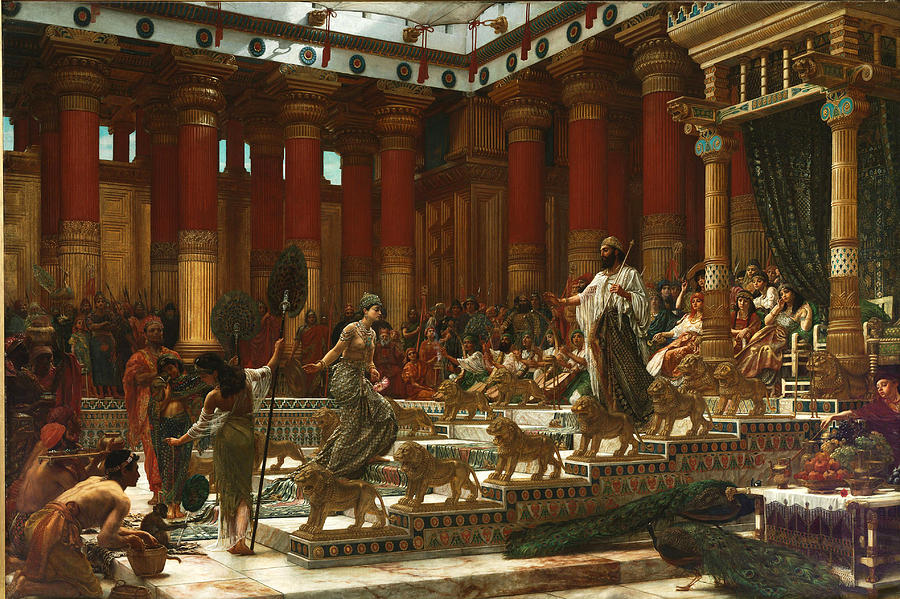
(Edward John Poynter Painting  below of Solomon)

Image result for solomon painting

Francis Schaeffer observed concerning Solomon, “You can not know woman by knowing 1000 women.”

Image result for francis schaeffer

King Solomon in Ecclesiastes 2:11 sums up his search for meaning with these words, “…behold, all was vanity and a striving after wind, and there was nothing to be gained under the sun.”

After hearing the sermon by Adrian Rogers in 1976, I took a special interest in the Book of Ecclesiastes and then the next year I bought the album POINT OF KNOW RETURN by the group rock group KANSAS. On that album was the song “Dust in the Wind”  and it rose to #6 on the charts in 1978. That song told me that Kerry Livgren the writer of that song had come to the same conclusion that Solomon had. I remember mentioning to my friends at church that we may soon see some members of KANSAS become Christians because their search for the meaning of life had obviously come up empty even though they had risen from being an unknown band to the top of the music business and had all the wealth and fame that came with that.

(That is the same reason I am excited about Ricky’s series AFTER LIFE!!!)

_____________________

Furthermore, Solomon realized death comes to everyone and there must be something more. I was hoping the members of KANSAS would keep looking for something more than just material pursuits UNDER THE SUN.

Livgren wrote:

“All we do, crumbles to the ground though we refuse to see, Dust in the Wind, All we are is dust in the wind, Don’t hang on, Nothing lasts forever but the Earth and Sky, It slips away, And all your money won’t another minute buy.”

—-

—-


Both Kerry Livgren and the bass player DAVE HOPE of KANSAS became Christians eventually. Kerry Livgren first tried Eastern Religions and DAVE HOPE had to come out of a heavy drug addiction. I was elated to see their personal testimony on The 700 Club in 1981 and that same interview can be seen on youtube today. Livgren lives in Topeka, Kansas today where he teaches “Diggers,” a Sunday school class at Topeka Bible Church. DAVE HOPE is the head of Worship, Evangelism and Outreach at Immanuel Anglican Church in Destin, Florida.

By the way, the final chapter of Ecclesiastes finishes with Solomon emphasizing that serving God is the only proper response of man. Solomon looks above the sun and brings God back into the picture.
13 Now all has been heard;
here is the conclusion of the matter:
Fear God and keep his commandments,
for this is the whole duty of man.

14 For God will bring every deed into judgment,
including every hidden thing,
whether it is good or evil

Sincerely,

Everette Hatcher, 13900 Cottontail Lane, Alexander, AR 72002, cell ph 501-920-5733, everettehatcher@gmail.com

—-

(END OF LETTER TO DR BARLOW)


Psychiatrist played by Paul Kaye seen below.

The sandy beach walk

Let me give a couple examples of nihilism and the first one is from the film series AFTER LIFE:

After Life on Netflix

After Life on Netflix stars Ricky Gervais as a bereaved husband (Image: Netflix)

—-

—-


In the 5th episode of the second season of AFTERLIFE we have the following conversation:

Tony: How long have you been posting your mail in a dog waste bin?

Older Gentleman: About a year I would say. 

Tony: It says “Dog waste” on it. 
Older Gentleman: yeah but my eyes are shot. 
Tony: What did you think the smell was? Wasn’t that a clue?

Older Gentleman: Yeah. I thought it was me. I have no one to be hygienic for. No point is there. No one to wash for. 
Tony: Yourself maybe?

Older Gentleman: No point is there. No point to anything is there really? Where do they take dog crap? They probably bury it don’t they? That’s where we all are going to end up. We are all just future [dog crap]. I have no self esteem. 

AFTER LIFE is filled with episodes with the lead character Tony Johnson (played by Ricky Gervais) considering suicide, and he is surrounded by other characters such as Julian who he helps commit suicide and Brian who considered suicide in the past.

Sadly since Ricky is an atheist he doesn’t have any spiritual answers to the big problems in life that require more than secular answers.

A still from ‘After Life’ that captures the vibe of the Tambury Gazette. (Twitter)

Below is the workforce of THE TAMBURY GAZETTE 

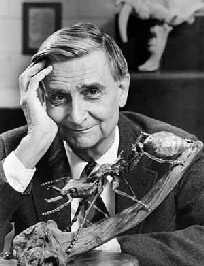
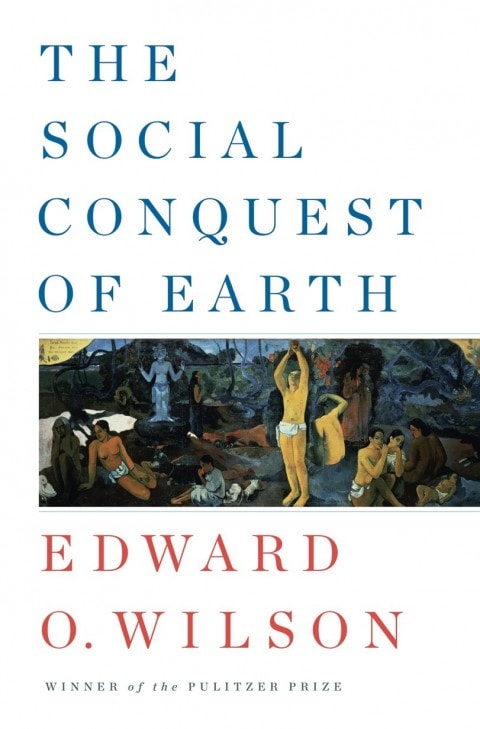
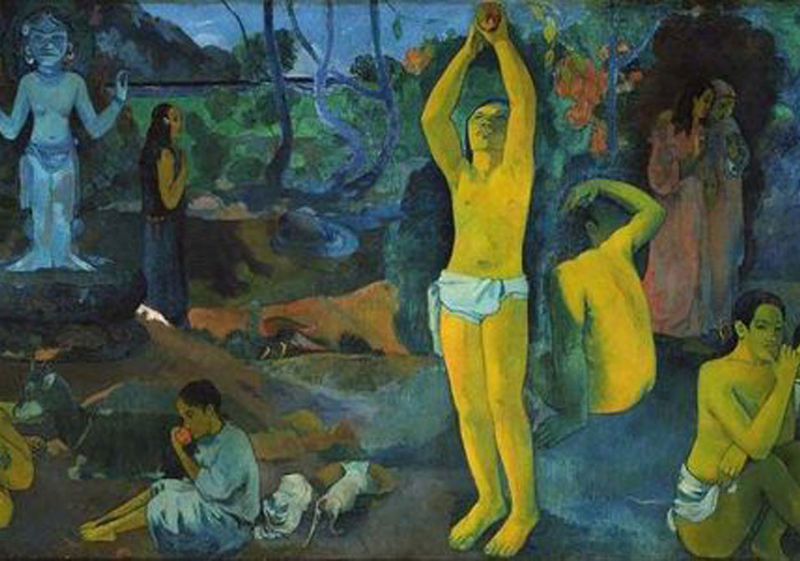
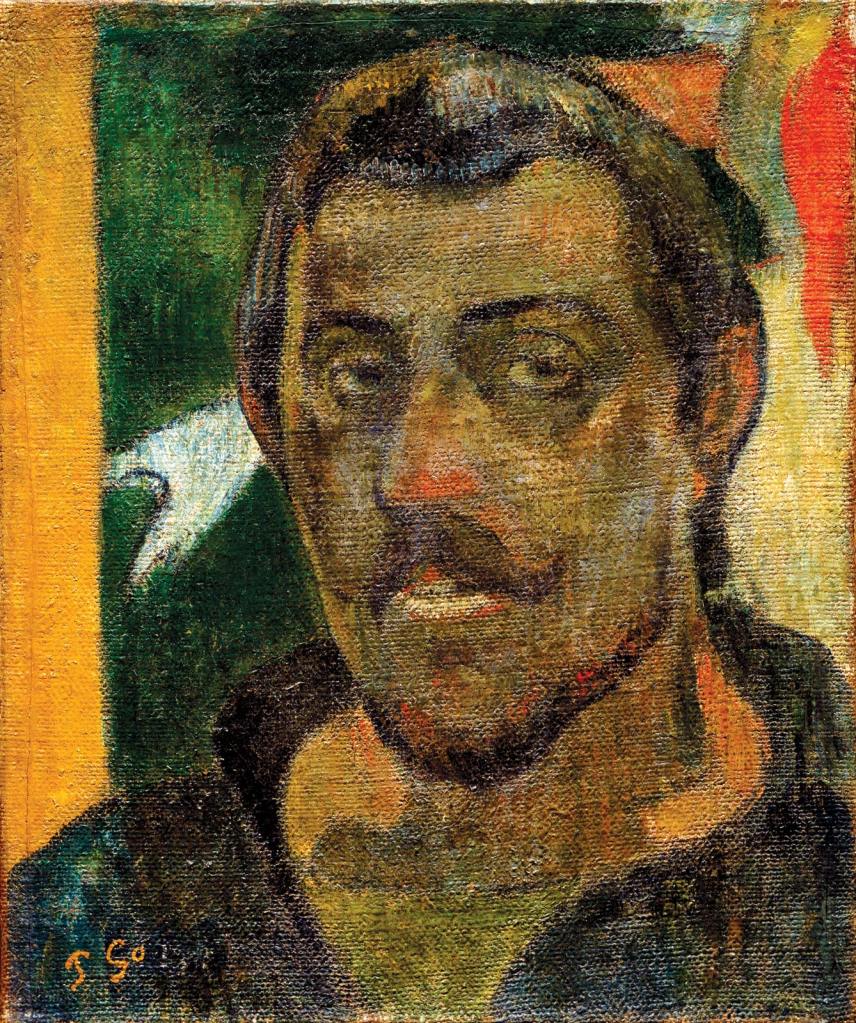
Edward O. Wilson tries to put a positive spin on humanism but it still ends up as nihilism when he discusses Gauguin’s 3 famous questions: Where do we come from?  What are we?  Where are we going?:

I am currently reading the book TALES FROM THE ANT WORLD by Edward O. Wilson. I have enjoyed reading several of his books. In Wilson’s book THE MEANING OF HUMAN EXISTENCE, and THE SOCIAL CONQUEST OF EARTH he discusses Paul Gauguin.

Here are Edward O. Wilson’s conclusions on Gauguin’s journey:

AND AS FOR YOU, PAUL GAUGUIN, why did you write those lines on your painting? Of course, the ready answer I suppose is that you wanted to be very clear about the symbolization of the great range of human activity depicted in your Tahitian panorama, just in case someone might miss the point. But I sense there was something more. Perhaps you asked the THREE QUESTIONS in such a way to imply that NO ANSWERS exist, either in the civilized world you rejected and left behind or in the primitive world you adopted in order to find peace. Or again, perhaps you meant that art can go no further than what you have done; and all that was left for you to do personally was express the troubling questions in script. Let me suggest yet another reason for the mystery you left us, one not necessarily in conflict with these other conjectures. I think what you wrote is an EXCLAMATION OF TRIUMPH.  You had lived out your passion to travel far, to discover and embrace novel styles of visual art, to ask the questions in a new way, and from all that createan authentically original work. In this sense your career is one for the ages; it was not paid out in vain. In our own time, by bringing rational analysis and art together and joining science and humanities in partnership, we have drawn closer to the answers you sought.

(In my 2-2-17 letter to Dr. Wilson I made the following observations below.)

I have to accept your first conclusion concerning Gauguin and that is the pessimistic  and nihilistic one. Your speculation that possibly Gauguin wrote an “exclamation of triumph” is not realistic at all because he was looking UNDER THE SUN for answers to these 3 big questions and they must be given spiritual answers. The ironic thing is that if the spiritual quest finds fulfilling answers then a more abundant life can be lived on this earth.

Author Francis Schaeffer


Here is an example of how insightful Schaeffer can be
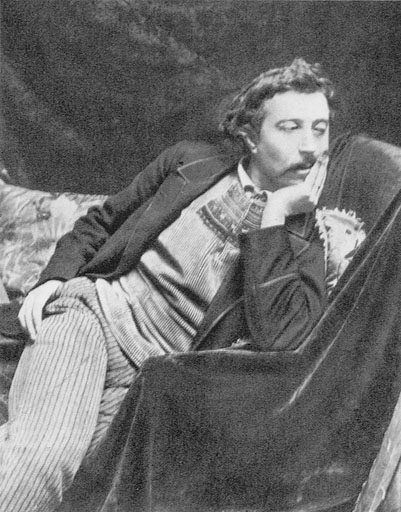
Below is from an article by Brian Thomas and is based on Francis Schaeffer’s film series “How should we then live?” In this article you will see some of the thoughts that the artist Paul Gauguin had before deciding to attempt to commit suicide.

________________________________

Gauguin as an artist strived to give his work a more human touch, expressing feelings and knowledge and human reactions to the realities of life, while at the same time freeing himself as an artist to express color and design boldly, overcoming the narrowness of merely copying what the eye can register as the Impressionists painted. In an attempt to obtain his goal of “regaining humanity,” as he called it, he moved to Tahiti in 1891. It was here that he painted his greatest work in 1897: Whence? What? Whither?

During the course of 1897 Gauguin referred increasingly to his own death, alluding to suicide in letters and his journal. In the autumn he noted that “The artist dies, his heirs make a grab for his works, sort out the copyright, his estate, and whatever else there might be to do. Now he has been stripped to the bone. I think about these things, and am going to strip myself first: it gives me a sense of relief.”

As Gauguin contemplated taking his own life he set out to create a painting that would leave a lasting legacy of his faith, worldview, artistic insight and intentions by asking three metaphysical questions: Where do we come from? What art we? Where are we going?


In a letter to friend Daniel de Monfreid, he describes the painting as a “philosophical work” which could be compared to the Gospels. We must read the work, he said, from right to left and interprets it as such:

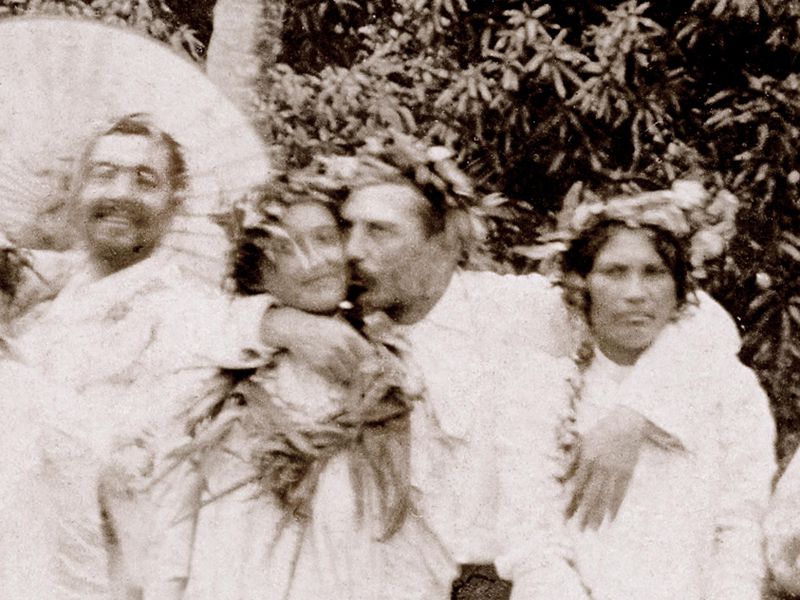
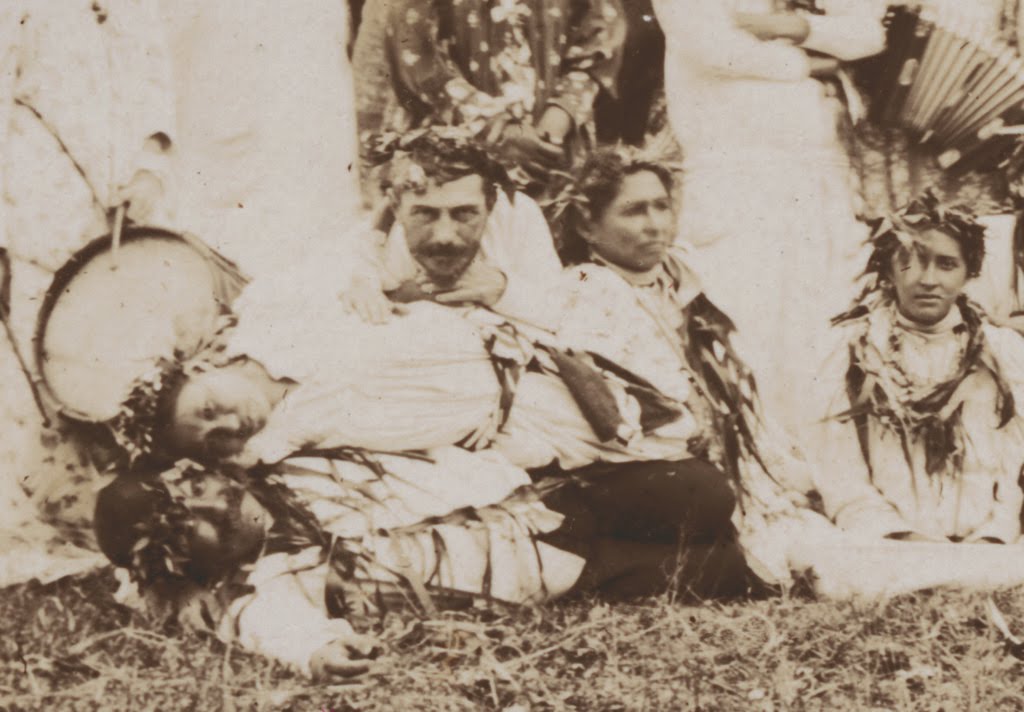
(What could be the only photos of Paul Gauguin and his Tahitian muse have surfaced. Gauguin is at the center of this photo, kissing a woman that could be his mistress Pahura. (Daniel Blau) in summer of 1896)

“In the bottom right-hand corner there is a sleeping child, then three covering women. Two figures dressed in purple are deep in conversation. A crouching figure, which defies perspective, and is meant to do so, looks very large. This figure is raising its arm and looking in astonishment at the two women who dare to think about their own fate. The central figure is picking fruit from a tree. Two cats by a child…a white goat. The idol is raising both its arms with rhythmic energy and seems to be pointing to somewhere beyond here. A covering girl appears to be listening to the idol. An old woman, close to the end of life, completes the circle.She is ready to accept her fate. At her feet a strange, white bird with a lizard in its talons symbolizes the futility of empty words…”

Where do we come from? A baby lies next to some young women as the source of life. What are we? A woman stands reaching for the apple, a probable reference to Eve in the garden and man’s fall into sin and ruin. Where are we going? From right to left we see the process of ageing taking place culminating in an old woman, “ready to accept her fate.” Art historian H.R. Rookmaaker suggests that in the background “mysterious figures, in sad colors, standing near the tree of knowledge, are sad as a result of that knowledge.”
(H.R. Rookmaaker seen below)

It is interesting to note that a few days after completing this work, Gauguin went off into the woods and swallowed a large amount of arsenic. But his body rejected it and he was unable to keep the poison down.

I give this example to show how form and content can beautifully integrate in such a way as to make the work a more powerful vehicle of expression. It should be obvious to the reader by now that I do not share Gauguin’s unfortunate outlook on life, but as an artist and a Christian, I appreciate the thought and purpose behind his masterpiece. Both the aesthetic quality and intellectual content marry to form an important and thought-provoking piece of art. The creators of the religious kitsch that line the shelves at your local happy Christian bookstore could learn much from the serious attention Gauguin put into his work.

—-


Gauguin’s conclusion is logical, and Francis Schaeffer says that Woody Allen has come to this same nihilistic conclusion.

Schaeffer noted: 
One of the most striking developments in the last half-century is the growth of a profound pessimism among both the well-educated and less-educated people. The thinkers in our society have been admitting for a long time that they have no final answers at all. Take Woody Allen, for example. Most people know his as a comedian, but he has thought through where mankind stands after the “religious answers” have been abandoned. In an article in Esquire (May 1977), he says that man is left with:


… alienation, loneliness [and] emptiness verging on madness…. The fundamental thing behind all motivation and all activity is the constant struggle against annihilation and against death. It’s absolutely stupefying in its terror, and it renders anyone’s accomplishments meaningless. As Camus wrote, it’s not only that he (the individual) dies, or that man (as a whole) dies, but that you struggle to do a work of art that will last and then you realize that the universe itself is not going to exist after a period of time. Until those issues are resolved within each person – religiously or psychologically or existentially – the social and political issues will never be resolved, except in a slapdash way.
Allen sums up his view in his film Annie Hall with these words: “Life is divided into the horrible and the miserable.”


Many would like to dismiss this sort of statement as coming from one who is merely a pessimist by temperament, one who sees life without the benefit of a sense of humor. Woody Allen does not allow us that luxury. He speaks as a human being who has simply looked life in the face and has the courage to say what he sees. If there is no personal God, nothing beyond what our eyes can see and our hands can touch, then Woody Allen is right: life is both meaningless and terrifying.

As the famous artist Paul Gauguin wrote on his last painting shortly before he tried to commit suicide: “Whence come we? What are we? Whither do we go?” The answers are nowhere, nothing, and nowhere.

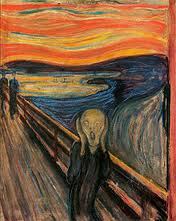
(John Fischer wrote) If Edvard Munch’s The Scream had a voice, it would sound like Francis Schaeffer. Schaeffer, who died in 1984, understood the existential cry of a humanity trapped in a prison of its own making.

Schaeffer was the closest thing to a “man of sorrows” I have seen. He could not allow himself to be happy when most of the world was desperately lost and he knew why. He was the first Christian I found who could embrace faith and the despair of a lost humanity all at the same time. Though he had been found, he still knew what it was to be lost.

_______________________________________

xxx

TRIBUTE TO HORACE BARLOW: 

Arpan @DrArpan100

Horace Barlow FRS was an extraordinary neuroscientist. His supervisions were always inspirational and he had a gift of being able to infuse curiosity in his students. He has had a massive impact on the field of visual neuroscience. He never stopped questioning and thinking. RIP.

——

Horace seen below in 2017 

XXXXX

Francis Schaeffer

Debating from 2015-2020 Darwin’s great grandson (Horace Barlow) about Francis Schaeffer’s 1968 critique of Darwinism!

Image result for Emma Nora Barlow, Lady Barlow

The autobiography of Charles Darwin read by Francis Schaeffer in 1968 was not the same one originally released in 1892 because that one omitted the religious statements of Charles Darwin. 

pictured below with his eldest child William: 

Image result for Horace Barlow charles darwin

Notice this statement below from the Freedom from Religion Foundation: 

(Nora Barlow pictured below)

Charles Darwin wrote the Rev. J. Fordyce on July 7, 1879, that “an agnostic would be the most correct description of my state of mind.” Darwin penned his memoirs between the ages of 67 and 73, finishing the main text in 1876. These memoirs were published posthumously in 1887 by his family under the title Life and Letters of Charles Darwin, with his hardest-hitting views on religion excised. Only in 1958 did Darwin’s granddaughter Nora Barlow publish his Autobiography with original omissions restored  D. 1882.
——-

Charles Robert Darwin  (1809 – 1882) had 10 children and 7 of them survived to adulthood.

Sir Horace DarwinKBEFRS (13 May 1851 – 22 September 1928), the fifth son and ninth child of the British naturalist Charles Darwin and his wife Emma, the youngest of their seven children who survived to adulthood.

(Horace Darwin pictured below)

Horace Darwin.jpg

Emma Nora Barlow, Lady Barlow (née Darwin; 22 December 1885 – 29 May 1989) Nora, as she was known, was the daughter of the civil engineer Sir Horace Darwin and his wife The Hon. Lady Ida Darwin (née Farrer),

Horace Basil Barlow FRS (1921-) Barlow is the son of the civil servant Sir Alan Barlow and his wife Lady Nora (née Darwin). Barlow is the great-grandson of Charles Darwin

XXXXXXXXXXXXXXX

Horace Darwin married Emma Cecilia “Ida” Farrer (1854–1946) pictured below.

Image result for Ida Darwin hoRACE

—-

Image result for francis schaeffer

Francis Schaeffer

Horace Barlow was the son of Nora Barlow. From February 11, 2015 to July 1, 2017, I wrote 7 letters to Dr. Horace Barlow because I wanted to discuss primarily the views of his grandfather Charles Darwin and Francis Schaeffer’s 1968 critique of Darwinism!

Image result for charles darwin

In December of 2017, I received a two page typed letter from Dr. Barlow reacting to several of the points made in the previous letters and emails. Over the next few weeks I will be posting the 32 letters I wrote to Dr. Barlow from February 11, 2015 to April 18, 2020 one per week every Tuesday and below is a list of those letters. Sadly Dr. Barlow passed away on July 5, 2020 at age 98. However, I want to summarize some the issues we discussed in the next few days. 

Image result for francis schaeffer

Franicis Schaeffer

If you wish to hear Francis Schaeffer’s 1968 talk on Darwin’s autobiography then you can access part 1 at this link and part 2 at this link.

—-

—-

—-

Horace Barlow pictured below:

_____________

I found Dr. Barlow to be a true gentleman and he was very kind to take the time to answer the questions that I submitted to him. In the upcoming months I will take time once a week to pay tribute to his life and reveal our correspondence. In the first week I noted:

 Today I am posting my first letter to him in February of 2015 which discussed Charles Darwin lamenting his loss of aesthetic tastes which he blamed on Darwin’s own dedication to the study of evolution. In a later return letter, Dr. Barlow agreed that Darwin did in fact lose his aesthetic tastes at the end of his life.

In the second week I look at the views of Michael Polanyi and share the comments of Francis Schaeffer concerning Polanyi’s views.

In the third week, I look at the life of Brandon Burlsworth in the November 28, 2016 letter and the movie GREATER and the problem of evil which Charles Darwin definitely had a problem with once his daughter died.

On the 4th letter to Dr. Barlow looks at Darwin’s admission that he at times thinks that creation appears to look like the expression of a mind. Francis Schaeffer discusses Darwin’s own words in 1968 sermon at this link.

My Fifth Letter concerning Charles Darwin’s views on MORAL MOTIONS Which was mailed on March 1, 2017. Francis Schaeffer discusses Darwin’s own words concerning moral motions in Schaeffer’s 1968 sermon at this link.

6th letter on May 1, 2017 in which Charles Darwin’s hopes are that someone would find in Pompeii an old manuscript by a distinguished Roman that would show that Christ existed! Francis Schaeffer discusses Darwin’s own words concerning the possible manuscript finds in Schaeffer’s 1968 sermon at this link.

7th letter on Darwin discussing DETERMINISM  dated 7-1-17 . Francis Schaeffer discusses Darwin’s own words concerning determinism in Schaeffer’s 1968 sermon at this link.

Thanks 8th letter responds to Dr. Barlow’s letter to me concerning the Francis Schaeffer discusses Darwin’s own words concerning chance in Schaeffer’s 1968 sermon at this link.

Thanks 9th letter in response to 11-22-17 letter I received from Professor Horace Barlow was mailed on 1-2-18 and included Charles Darwin’s comments on William Paley. Francis Schaeffer discusses Darwin’s own words concerning William Paley in Schaeffer’s 1968 sermon at this link.

10th letter in response to 11-22-17 letter I received from Professor Horace Barlow was mailed on 2-2-18 and includes Darwin’s comments asking for archaeological evidence for the Bible! Francis Schaeffer discusses Darwin’s own words concerning His desire to see archaeological evidence supporting the Bible’s accuracy  in Schaeffer’s 1968 sermon at this link.

11th letter I mailed on 3-2-18  in response to 11-22-17 letter from Barlow that asserted: It is also sometimes asked whether chance, even together with selection, can define a “MORAL CODE,” which the religiously inclined say is defined by their God. I think the answer is “Yes, it certainly can…” Francis Schaeffer discusses Darwin’s own words concerning A MORAL CODE in Schaeffer’s 1968 sermon at this link.

12th letter on March 26, 2018 breaks down song DUST IN THE WIND “All we do, crumbles to the ground though we refuse to see, Dust in the Wind, All we are is dust in the wind, Don’t hang on, Nothing lasts forever but the Earth and Sky, It slips away, And all your money won’t another minute buy.”

In 13th letter I respond to Barlow’s November 22, 2017 letter and assertion “He {Darwin} clearly did not lose his sense of the VALUE of TRUTH, and of the importance of FOREVER SEARCHING it out.”

In 14th letter to Dr. Barlow on 10-2-18, I assert: “Let me demonstrate how the Bible’s view of the origin of life fits better with the evidence we have from archaeology than that of gradual evolution.”In 15th letter in November 2, 2018 to Dr. Barlow I quote his relative Randal Keynes Who in the Richard Dawkins special “The Genius of Darwin” makes this point concerning Darwin, “he was, at different times, enormously confident in it,and at other times, he was utterly uncertain.”In 16th Letter on 12-2-18 to Dr. Barlow I respond to his letter that stated, If I am pressed to say whether I think belief in God helps people to make wise and beneficial decisions I am bound to say (and I fear this will cause you pain) “No, it is often very disastrous, leading to violence, death and vile behaviour…Muslim terrorists…violence within the Christian church itself”17th letter sent on January 2, 2019 shows the great advantage we have over Charles Darwin when examining the archaeological record concerning the accuracy of the Bible!In the 18th letter I respond to the comment by Charles Darwin: “My mind seems to have become a kind of machine for grinding general laws out of large collections of facts, but why this should have caused the atrophy of that part of the brain alone, on which the higher tastes depend, I cannot conceive….The loss of these tastes is a loss of happiness.” Francis Schaeffer discusses Darwin’s own words on his loss of aesthetic tastes  in Schaeffer’s 1968 sermon at this link.In 19th letter on 2-2-19  I discuss Steven Weinberg’s words,  But if language is to be of any use to us, we ought to try to preserve the meanings of words, and “God” historically has not meant the laws of nature. It has meant an interested personality.

In the 20th letter on 3-2-19 I respond to Charles Darwin’s comment, “At the present day the most usual argument for the existence of an intelligent God is drawn from the deep [#1] inward conviction and feelings which are experienced by most persons...Formerly I was led by feelings such as those…to the firm conviction of the existence of God, and of the immortality of the soul. In my Journal I wrote that [#2] whilst standing in the midst of the grandeur of a Brazilian forest, ‘it is not possible to give an adequate idea of the higher feelings of wonder, admiration, and devotion which fill and elevate the mind.’ I well remember my conviction that there is more in man than the mere breath of his body. [#3] But now the grandest scenes would not cause any such convictions and feelings to rise in my mind. It may be truly said that I am like a man who has become colour-blind.” Francis Schaeffer discusses Darwin’s own words concerning his former belief in God in Schaeffer’s 1968 sermon at this link.

In the 21st letter on May 15, 2019 to Dr Barlow I discuss the writings of Francis Schaeffer who passed away the 35 years earlier on May 15, 1985. Francis Schaeffer discusses Darwin’s own words at length in Schaeffer’s 1968 sermon at this link.

In the 22nd letter I respond to Charles Darwin’s words, “I can indeed hardly see how anyone ought to wish Christianity to be true; for if so the plain language of the text seems to show that the men who do not believe…will be everlastingly punished. And this is a damnable doctrine.” Francis Schaeffer discusses Darwin’s own words about hell  in Schaeffer’s 1968 sermon at this link

In 23rd postcard sent on 7-2-19 I asked Dr Barlow if he was a humanist. Sir Julian Huxley, founder of the American Humanist Association noted, “I use the word ‘humanist’ to mean someone who believes that man is just as much a natural phenomenon as an animal or plant; that his body, mind and soul were not supernaturally created but are products of evolution, and that he is not under the control or guidance of any supernatural being.”

In my 24th letter on 8-2-19 I quote Jerry  Bergman who noted Jean Louis Agassiz (1807-1873) is regarded as one of the greatest scientists of the 19th century. A founding father of the modern American scientific establishment, Agassiz was also a lifelong opponent of Charles Darwin’s theory of evolution. Agassiz “ruled in professorial majesty at Harvard’s Museum of Comparative Zoology.”

In my 25th letter on 9-2-19 I respond to Charles Darwin’s assertion,  “This argument would be a valid one if all men of ALL RACES had the SAME INWARD CONVICTION of the existence of one God; but we know that this is very far from being the case.” Francis Schaeffer discusses Darwin’s own words concerning MORAL MOTIONS in Schaeffer’s 1968 sermon at this link.

In my 26th letter on 10-2-19 I quoted Bertrand Russell’s daughter’s statement, “I believe myself that his whole life was a search for God…. Indeed, he had first taken up philosophy in hope of finding proof of the evidence of the existence of God … Somewhere at the back of my father’s mind, at the bottom of his heart, in the depths of his soul  there was an empty space that had once been filled by God, and he never found anything else to put in it”

In my 27th letter on 11-2-19 I disproved Richard Dawkins’ assertion, “Genesis says Abraham owned camels, but archaeological evidence shows that the camel was not domesticated until many centuries after Abraham.” Furthermore, I gave more evidence indicating the Bible is historically accurate.

In my 28th letter on 12-2-19 I respond to Charles Darwin’s statement, “I am glad you were at the Messiah, it is the one thing that I should like to hear again, but I dare say I should find my soul too dried up to appreciate it as in old days; and then I should feel very flat, for it is a horrid bore to feel as I constantly do, that I am a withered leaf for every subject except Science. It sometimes makes me hate Science.” Francis Schaeffer discusses Darwin’s own words concerning MORAL MOTIONS in Schaeffer’s 1968 sermon at this link. 

In my 29th letter on 12-25-19 I responded to Charles Darwin’s statement, “I have said that in one respect my mind has changed during the last twenty or thirty years. Up to the age of thirty, or beyond it, poetry of many kinds…gave me great pleasure, and even as a schoolboy I took intense delight in Shakespeare, especially in the historical plays. I have also said that formerly pictures gave me considerable, and music very great delight. But now for many years I cannot endure to read a line of poetry: I have tried lately to read Shakespeare, and found it so intolerably dullthat it nauseated me…. My mind seems to have become a kind of machine for grinding general laws out of large collections of facts, but why this should have caused the atrophy of that part of the brain alone, on which the higher tastes depend, I cannot conceive… The loss of these tastes is a loss of happiness…” Francis Schaeffer discusses Darwin’s own words concerning his loss of aesthetic tastes in Schaeffer’s 1968 sermon at this link.

In my 30th letter on 2-2-20 I quote Dustin Shramek who asserted, “Without God the universe is the result of a cosmic accident, a chance explosion. There is no reason for which it exist. As for man, he is a freak of nature–a blind product of matter plus time plus chance. Man is just a lump of slime that evolved into rationality. There is no more purpose in life for the human race than for a species of insect; for both are the result of the blind interaction of chance and necessity.”

In my 31st letter on 3-18-20 I quote Francis Schaeffer who noted, “Darwin is saying that he gave up the New Testament because it was connected to the Old Testament. He gave up the Old Testament because it conflicted with his own theory. Did he have a real answer himself and the answer is no. At the end of his life we see that he is dehumanized by his position and on the other side we see that he never comes to the place of intellectual satisfaction for himself that his answers were sufficient.” Francis Schaeffer discusses Darwin’s own words concerning his loss of his Christian faith in Schaeffer’s 1968 sermon at this link.

In my 32nd letter on 4-18-20 quoted H.J. Blackham on where humanism leads On humanist assumptions, life leads to nothing, and every pretense that it does not is a deceit. If there is a bridge over a gorge which spans only half the distance and ends in mid-air, and if the bridge is crowded with human beings pressing on, one after the other they fall into the abyss. The bridge leads nowhere, and those who are pressing forward to cross it are going nowhere….It does not matter where they think they are going, what preparations for the journey they may have made, how much they may be enjoying it all. The objection merely points out objectively that such a situation is a model of futility

3-dtudies-of-Freud

“Three Studies of Lucien Freud” 1969, by Francis Bacon. The triptych sold for over $124,000,000 in auction at Christies, in 2013. Nevertheless the artist’s reputation is plummeting for all the wrong reasons.

Francis Bacon: A Brush with Violence (2017)

FEATURED ARTIST IS FRANCIS BACON

Smoker-in-the-Street

“Smoker in the Street”, by me, charcoal on paper, @1986. This is more in an Expressionistic vein than Bacon, but my teacher was right to suspect I’d appreciate the painter.

HeadBlowUpBig

Detail of “Study for Self-Portrait” 1964. Easy to imagine the subject has a flu in paintings like this.

Three-Studies-for-a-Crucifixion,-1962.

Three Studies for a Crucifixion, 1962. It’s sometimes hard to see this tryptich fresh, but occassionally I can break through over-familiarity and realize again how novel it is.

portrait

Center canvas from “Three Studies of Isabel Rawsthorne (1966)”. His use of pigment to suggest form and likeness is obvious here. [Click to see larger image sized for your screen.

bacon

Francis Bacon, “Self Portrait” (1973

Seeney
Triptych Inspired by TS Eliot’s Poem “Sweeney Agonistes,” 1967
from-sweeney
Detail of “Sweeney Agonistes,” 1967. Someone in a mirror talking on a phone. It’s almost cinematic.

Francis-Baco66

Francis Bacon: Lying Figure (1966). Another scintillating painting of a figure sprawled on a mattress in a bare room. The use of textured color fields here is particularly gorgeous, and this painting can easily be appreciated purely for abstract properties.

15 Engrossing Artist Biographies and Memoirs to Read Now

DESIGN & LIVINGANOTHER LIST

Sally Mann memoir

We spotlight a selection of our favourite artists’ autobiographies and biographies, from the empowering to the scandalous, for your summer reading inspiration

AUGUST 10, 2020

TEXTDaisy Woodward

Summer is upon us and this year, more than ever, it feels pertinent to pick holiday reads that will uplift and inspire. Where better to turn to, then, than artists’ memoirs and biographies – filled as they are with tales of overcoming life’s hardships, fights for justice and recognition in and outside of the art world, the quest to forge a legacy through art, and, more often than not, a juicy scandal or two to keep the reader’s interest piqued. Here, we’ve selected 15 of our favourites for your perusal, spanning the empowering, the ephemeral, the political and the downright provocative (Diego Rivera, we’re looking at you


15 Engrossing Artist Biographies and Memoirs to Read Now

DESIGN & LIVINGANOTHER LIST

Sally Mann memoir

We spotlight a selection of our favourite artists’ autobiographies and biographies, from the empowering to the scandalous, for your summer reading inspiration

AUGUST 10, 2020

TEXTDaisy Woodward

Summer is upon us and this year, more than ever, it feels pertinent to pick holiday reads that will uplift and inspire. Where better to turn to, then, than artists’ memoirs and biographies – filled as they are with tales of overcoming life’s hardships, fights for justice and recognition in and outside of the art world, the quest to forge a legacy through art, and, more often than not, a juicy scandal or two to keep the reader’s interest piqued. Here, we’ve selected 15 of our favourites for your perusal, spanning the empowering, the ephemeral, the political and the downright provocative (Diego Rivera, we’re looking at you).

FaithRinggold
We Flew Over the Bridge: The Memoirs of Faith Ringgold

1. We Flew Over the Bridge: The Memoirs of Faith Ringgold

Faith Ringgold is one of America’s most renowned artists and activists, whose inherently political, exquisitely executed work – from “story quilts” to paintings – tackle civil rights and gender inequality head on. But Ringgold has had to fight hard for her successes, a story she shares in her stunning, illustrated memoir We Flew over the Bridge. In it, Ringgold details the many prejudices she’s battled and the challenges she’s faced in balancing her thriving artistic career with motherhood, sharing words of advice and empowerment along the way. It makes for magical reading; in the words of Maya Angelou: “Faith Ringgold has already won my heart as an artist, as a woman, as an African American, and now with her entry into the world of autobiography (where I dwell), she has taken my heart again. She writes so beautifully.”

ADVERTISING

2. Amazing Grace: A Life of Beauford Delaneyby Beauford Delaney and David Leeming

Amazing Grace paints a poignant picture of the celebrated African American artist Beauford Delaney, a central figure in the Harlem Renaissance, and later – following a move to Paris in the 1950s – a noted abstract expressionist. Delaney’s tale is both remarkable and heartbreaking: he was a much loved character, who counted Henry Miller and James Baldwin among his close friends, yet he often felt isolated and underappreciated, struggling with mental illness throughout his life. His wonderfully vibrant paintings boast an extraordinary psychological depth, betraying the hardships he faced and his determination to keep going no matter what. “He has been menaced more than any other man I know by his social circumstances and also by all the emotional and psychological stratagems he has been forced to use to survive; and, more than any other man I know, he has transcended both the inner and the outer darkness,” Baldwin once wrote.

3. Hold Still: A Memoir with Photographs by Sally Mann

A memoir quite unlike any other, this book by American photographer Sally Mann weaves together words and images to form a vivid personal history, revealing the ways in which Mann’s ancestry has informed the themes that dominate her work (namely “family, race, mortality, and the storied landscape of the American South”). Mann decided to write the book after unearthing a whole host of unexpected family secrets – “deceit and scandal … clandestine affairs, dearly loved and disputed family land … racial complications, vast sums of money made and lost, the return of the prodigal son, and maybe even bloody murder” – while sorting through boxes of old family papers and photographs. In gripping prose, she allows us to follow her on her resulting journey of self-discovery, shedding pertinent light on her image-making practice at every turn.

DavidWojnarowicz
Close to the Knives by David Wojnarowicz

4. Close to the Knives by David Wojnarowicz

David Wojnarowicz’s beloved collection of creative essays, Close to the Knives, remains a vital work – “a scathing, sexy, sublimely humorous and honest personal testimony to the ‘Fear of Diversity in America’” (as per its inside flap). It’s an intensely powerful memoir that guides the reader across the American artist’s life – from his violent suburban childhood through a period of homelessness in New York City to his ascent to fame (and infamy) as one of America’s most provocative creators and queer icons – inciting action and self-examination on every page. In the words of Publishers Weekly: “What Kerouac was to a generation of alienated youth, what Genet was to the gay demimonde in postwar Europe, Wojnarowicz may well be to a new cadre of artists compelled by circumstance to speak out in behalf of personal freedom.”

5. Diane Arbus by Patricia Bosworth

Patricia Bosworth’s fantastic Diane Arbusbiography takes a deep dive into the turbulent life of the seminal American imagemaker, whose unflinching photographs of marginalised groups sought to challenge preconceived notions of “normality” and “abnormality” – with extraordinary results. Through Bosworth’s shrewd investigation, and interviews with Arbus’ friends, colleagues and family members, we learn of the ideas and inspirations that drove her, the fears and anguish that plagued her, her pampered childhood and passionate marriage, and the tragic turn her life took – in spite of growing artistic acclaim – resulting in her suicide in 1971.

6. Ninth Street Women: Five Painters and the Movement That Changed Modern Art by Mary Gabriel 

This book is the brilliant tale of five brilliant women artists: Lee Krasner, Elaine de Kooning, Grace Hartigan, Joan Mitchell, and Helen Frankenthaler, who burst onto the male-dominated New York art scene in the 1950s, smashing down gender barriers along the way. Each was an indomitable force in their own right – Krasner, an assertive leader and hellraiser; de Kooning, a great thinker; Hartigan, a fiercely determined housewife-turned-painter; Mitchell, a vulnerable soul with a steely exterior and prodigious talent; Frankenthaler, a well-schooled New Yorker, who shunned a traditional career path to follow her dreams. But together, “from their cold-water lofts, where they worked, drank, fought, and loved”, they changed the face of postwar American art and society forever.

Gordon Parks autobiography
Voices in the Mirror: An Autobiography by Gordon Parks

7. Voices in the Mirror: An Autobiography by Gordon Parks

Gordon Parks’ autobiography Voices in the Mirroris a compelling and empowering read. It traces the American photographer’s difficult early life in Minnesota – where he became homeless, following his mother’s death – through his groundbreaking and meteoric rise as an image-maker (the first Black photographer at Vogueand Life, no less) and thereafter as a Hollywood screenwriter, director and novelist. Parks was a man of great compassion and courageous vision, whose work spanned “intimate portrayals of Ingrid Bergman and Roberto Rossellini; of the Muslim and African American icons Malcolm X, Elijah Muhammad and Muhammad Ali; of the young militants of the civil rights and black power movements; and of the tragic experiences of the less famous, like the Brazilian youngster Flavio”. Suffice to say that incredible stories and words of wisdom abound.

ADVERTISING

8. Hanging Man: The Arrest of Ai Weiwei by Barnaby Martin

Ai Weiwei has spent his entire career creating very beautiful, deeply political works that challenge and confront his country’s totalitarian regime – to global acclaim. But rising the ranks to become China’s most famous living artist and activist has come at a price. In April of 2011, just six months after his vast, thought-provoking sculpture Sunflower Seeds was installed in Tate Modern’s Turbine Hall, Weiwei was arrested at the Beijing Capital International Airport and detained illegally for over two months in dire conditions. Shortly after his release, Barnaby Martin travelled to Beijing to interview the artist about his imprisonment and to discover more about “what is really going on behind the scenes in the upper echelons of the Chinese Communist Party”. Hanging Man is the result – a highly informative and stirring account of “Weiwei’s life, art, and activism”, as well as “a meditation on the creative process, and on the history of art in modern China”.

9. Gluck: Her Biography by Diana Souhami

In Gluck, author Diana Souhami examines the radical life and work of British painter Hannah Gluckstein (1895-1978), who took on the name Gluck, with “no prefix, suffix, or quotes”, in her twenties to reflect her gender non-conforming identity. Famed for her masculine, undeniably chic style of dress, her passionate affairs with society women, and her emotive portraits, flower paintings and landscapes, Gluck was provocative and tender, fierce and gifted in equal measure – and decades ahead of her time. This excellent biography “captures this paradoxical … woman in all her complexity”, to page-turning effect.

Interviews with Francis Bacon
Interviews with Francis Bacon by David Sylvester

10. Interviews with Francis Bacon by David Sylvester

As its title suggests, this book is not a biography as such, but a series of nine interviews with the inimitable figurative painter, Francis Bacon. They were conducted by the late art critic and curator David Sylvester over the course of 25 years, from 1962 to 1986, and thereafter compiled into what has long been heralded a classic, offering an illuminating glimpse into one of the great creative minds of the 20th century. In it, the British painter contemplates the fundamental problems involved in making art, as well as his own “obsessive thinking about how to remake the human form in paint” (to quote the book’s back cover), revealing a great deal about his radical practice and storied past in the process. Cited by David Bowie as one of his all-time favourite books, it is essential reading not just for Bacon fans, but for anyone in search of creative impetus.

Related posts:

Taking on Ark Times Bloggers on various issues Part F “Carl Sagan’s views on how God should try and contact us” includes film “The Basis for Human Dignity”

April 8, 2013 – 7:07 am

I have gone back and forth and back and forth with many liberals on the Arkansas Times Blog on many issues such as abortion, human rights, welfare, poverty, gun control  and issues dealing with popular culture. Here is another exchange I had with them a while back. My username at the Ark Times Blog is Saline […]By Everette Hatcher III | Posted in Francis SchaefferProlife | Edit | Comments (0)

Carl Sagan v. Nancy Pearcey

March 18, 2013 – 9:11 am

On March 17, 2013 at our worship service at Fellowship Bible Church, Ben Parkinson who is one of our teaching pastors spoke on Genesis 1. He spoke about an issue that I was very interested in. Ben started the sermon by reading the following scripture: Genesis 1-2:3 English Standard Version (ESV) The Creation of the […]By Everette Hatcher III | Posted in Adrian RogersAtheists ConfrontedCurrent Events | TaggedBen ParkinsonCarl Sagan | Edit | Comments (0)

Review of Carl Sagan book (Part 4 of series on Evolution)

May 24, 2012 – 1:47 am

Review of Carl Sagan book (Part 4 of series on Evolution) The Long War against God-Henry Morris, part 5 of 6 Uploaded by FLIPWORLDUPSIDEDOWN3 on Aug 30, 2010 http://www.icr.org/ http://store.icr.org/prodinfo.asp?number=BLOWA2http://store.icr.org/prodinfo.asp?number=BLOWASGhttp://www.fliptheworldupsidedown.com/blog _______________________ I got this from a blogger in April of 2008 concerning candidate Obama’s view on evolution: Q: York County was recently in the news […]By Everette Hatcher III | Posted in Atheists ConfrontedCurrent EventsPresident Obama | EditComments (0)

Review of Carl Sagan book (Part 3 of series on Evolution)

May 23, 2012 – 1:43 am

Review of Carl Sagan book (Part 3 of series on Evolution) The Long War against God-Henry Morris, part 4 of 6 Uploaded by FLIPWORLDUPSIDEDOWN3 on Aug 30, 2010 http://www.icr.org/ http://store.icr.org/prodinfo.asp?number=BLOWA2http://store.icr.org/prodinfo.asp?number=BLOWASGhttp://www.fliptheworldupsidedown.com/blog______________________________________ I got this from a blogger in April of 2008 concerning candidate Obama’s view on evolution: Q: York County was recently in the news […]By Everette Hatcher III | Posted in Atheists ConfrontedCurrent EventsPresident Obama | EditComments (0)

Carl Sagan versus RC Sproul

January 9, 2012 – 2:44 pm

At the end of this post is a message by RC Sproul in which he discusses Sagan. Over the years I have confronted many atheists. Here is one story below: I really believe Hebrews 4:12 when it asserts: For the word of God is living and active and sharper than any two-edged sword, and piercing as far as the […]By Everette Hatcher III | Posted in Adrian RogersAtheists ConfrontedCurrent EventsFrancis Schaeffer | Tagged Bill ElliffCarl SaganJodie FosterRC Sproul | Edit | Comments (0)

Review of Carl Sagan book (Part 4 of series on Evolution)jh68

November 8, 2011 – 12:01 am

Review of Carl Sagan book (Part 4 of series on Evolution) The Long War against God-Henry Morris, part 5 of 6 Uploaded by FLIPWORLDUPSIDEDOWN3 on Aug 30, 2010 http://www.icr.org/ http://store.icr.org/prodinfo.asp?number=BLOWA2http://store.icr.org/prodinfo.asp?number=BLOWASGhttp://www.fliptheworldupsidedown.com/blog _______________________ This is a review I did a few years ago. THE DEMON-HAUNTED WORLD: Science as a Candle in the Dark by Carl […]By Everette Hatcher III | Posted in Atheists ConfrontedCurrent Events | Edit | Comments (0)

Review of Carl Sagan book (Part 3 of series on Evolution)

November 4, 2011 – 12:57 am

Review of Carl Sagan book (Part 3 of series on Evolution) The Long War against God-Henry Morris, part 4 of 6 Uploaded by FLIPWORLDUPSIDEDOWN3 on Aug 30, 2010 http://www.icr.org/ http://store.icr.org/prodinfo.asp?number=BLOWA2http://store.icr.org/prodinfo.asp?number=BLOWASGhttp://www.fliptheworldupsidedown.com/blog______________________________________ I was really enjoyed this review of Carl Sagan’s book “Pale Blue Dot.” Carl Sagan’s Pale Blue Dot by Larry Vardiman, Ph.D. […]By Everette Hatcher III | Posted in Atheists ConfrontedCurrent Events | Edit | Comments (0)

Atheists confronted: How I confronted Carl Sagan the year before he died jh47

May 19, 2011 – 10:30 am

In today’s news you will read about Kirk Cameron taking on the atheist Stephen Hawking over some recent assertions he made concerning the existence of heaven. Back in December of 1995 I had the opportunity to correspond with Carl Sagan about a year before his untimely death. Sarah Anne Hughes in her article,”Kirk Cameron criticizes […]By Everette Hatcher III | Posted in Atheists Confronted | Edit | Comments (2)

My correspondence with George Wald and Antony Flew!!!

May 12, 2014 – 1:14 am

January 8, 2015 – 5:23 am

January 1, 2015 – 4:14 am

December 25, 2014 – 5:04 am

FRANCIS SCHAEFFER ANALYZES ART AND CULTURE Part 38 Woody Allen and Albert Camus “There is but one truly serious philosophical problem, and that is suicide” (Feature on artist Hamish Fulton Photographer )

December 18, 2014 – 4:30 am

FRANCIS SCHAEFFER ANALYZES ART AND CULTURE Part 37 Mahatma Gandhi and “Relieving the Tension in the East” (Feature on artist Luc Tuymans)

December 11, 2014 – 4:19 am

FRANCIS SCHAEFFER ANALYZES ART AND CULTURE Part 36 Julian Huxley:”God does not in fact exist, but act as if He does!” (Feature on artist Barry McGee)

December 4, 2014 – 4:10 am

FRANCIS SCHAEFFER ANALYZES ART AND CULTURE Part 35 Robert M. Pirsig (Feature on artist Kerry James Marshall)

November 27, 2014 – 4:43 am

FRANCIS SCHAEFFER ANALYZES ART AND CULTURE Part 34 Aleksandr Solzhenitsyn (Feature on artist Shahzia Sikander)

November 20, 2014 – 4:28 am

FRANCIS SCHAEFFER ANALYZES ART AND CULTURE Part 33 Aldous Huxley (Feature on artist Matthew Barney )

November 13, 2014 – 4:39 am

FRANCIS SCHAEFFER ANALYZES ART AND CULTURE Part 32 Steven Weinberg and Woody Allen and “The Meaningless of All Things” (Feature on photographer Martin Karplus )

November 6, 2014 – 4:42 am

FRANCIS SCHAEFFER ANALYZES ART AND CULTURE Part 31 David Hume and “How do we know we know?” (Feature on artist William Pope L. )

October 30, 2014 – 5:34 am

FRANCIS SCHAEFFER ANALYZES ART AND CULTURE Part 30 Rene Descartes and “How do we know we know?” (Feature on artist Olafur Eliasson)

October 23, 2014 – 5:01 am

FRANCIS SCHAEFFER ANALYZES ART AND CULTURE Part 29 W.H. Thorpe and “The Search for an Adequate World-View: A Question of Method” (Feature on artist Jeff Koons)

October 16, 2014 – 5:06 am

FRANCIS SCHAEFFER ANALYZES ART AND CULTURE Part 28 Woody Allen and “The Mannishness of Man” (Feature on artist Ryan Gander)

October 9, 2014 – 5:10 am

September 25, 2014 – 1:01 pm

September 25, 2014 – 4:00 am

FRANCIS SCHAEFFER ANALYZES ART AND CULTURE Part 25 BOB DYLAN (Part C) Francis Schaeffer comments on Bob Dylan’s song “Ballad of a Thin Man” and the disconnect between the young generation of the 60’s and their parents’ generation (Feature on artist Fred Wilson)

September 18, 2014 – 3:57 am

FRANCIS SCHAEFFER ANALYZES ART AND CULTURE Part 24 BOB DYLAN (Part B) Francis Schaeffer comments on Bob Dylan’s words from HIGHWAY 61 REVISITED!! (Feature on artist Susan Rothenberg)

September 11, 2014 – 4:18 am

FRANCIS SCHAEFFER ANALYZES ART AND CULTURE Part 23 BOB DYLAN (Part A) (Feature on artist Josiah McElheny)Francis Schaeffer on the proper place of rebellion with comments by Bob Dylan and Samuel Rutherford

September 2, 2014 – 8:42 am

FRANCIS SCHAEFFER ANALYZES ART AND CULTURE Part 22 “The School of Athens by Raphael” (Feature on the artist Sally Mann)

August 11, 2014 – 2:19 pm

FRANCIS SCHAEFFER ANALYZES ART AND CULTURE Part 21 William B. Provine (Feature on artist Andrea Zittel)

June 12, 2014 – 2:52 pm

FRANCIS SCHAEFFER ANALYZES ART AND CULTURE Part 20 Woody Allen and Materialistic Humanism: The World-View of Our Era (Feature on artist Ida Applebroog)

May 12, 2014 – 4:35 am

FRANCIS SCHAEFFER ANALYZES ART AND CULTURE Part 19 Movie Director Luis Bunuel (Feature on artist Oliver Herring)

May 1, 2014 – 11:53 am

FRANCIS SCHAEFFER ANALYZES ART AND CULTURE Part 18 “Michelangelo’s DAVID is the statement of what humanistic man saw himself as being tomorrow” (Feature on artist Paul McCarthy)

April 25, 2014 – 8:26 am

FRANCIS SCHAEFFER ANALYZES ART AND CULTURE Part 17 Francis Schaeffer discusses quotes of Andy Warhol from “The Observer June 12, 1966″ Part C (Feature on artist David Hockney plus many pictures of Warhol with famous friends)

April 18, 2014 – 7:37 am

FRANCIS SCHAEFFER ANALYZES ART AND CULTURE Part 16 Francis Schaeffer discusses quotes of Andy Warhol from “The Observer June 12, 1966″ Part B (Feature on artist James Rosenquist plus many pictures of Warhol with famous friends)

April 11, 2014 – 6:14 am

FRANCIS SCHAEFFER ANALYZES ART AND CULTURE Part 15 Francis Schaeffer discusses quotes of Andy Warhol from “The Observer June 12, 1966″ Part A (Feature on artist Robert Indiana plus many pictures of Warhol with famous friends)

April 4, 2014 – 5:58 am

FRANCIS SCHAEFFER ANALYZES ART AND CULTURE Part 14 David Friedrich Strauss (Feature on artist Roni Horn )

March 28, 2014 – 2:50 pm

FRANCIS SCHAEFFER ANALYZES ART AND CULTURE Part 13 Jacob Bronowski and Materialistic Humanism: The World-View of Our Era (Feature on artist Ellen Gallagher )

March 21, 2014 – 7:18 am

FRANCIS SCHAEFFER ANALYZES ART AND CULTURE Part 12 H.J.Blackham and Materialistic Humanism: The World-View of Our Era (Feature on artist Arturo Herrera)

March 14, 2014 – 9:07 am

FRANCIS SCHAEFFER ANALYZES ART AND CULTURE Part 11 Thomas Aquinas and his Effect on Art and HOW SHOULD WE THEN LIVE? Episode 2: THE MIDDLES AGES (Feature on artist Tony Oursler )

March 4, 2014 – 9:04 pm

FRANCIS SCHAEFFER ANALYZES ART AND CULTURE Part 10 David Douglas Duncan (Feature on artist Georges Rouault )

February 28, 2014 – 5:16 am

FRANCIS SCHAEFFER ANALYZES ART AND CULTURE Part 9 Jasper Johns (Feature on artist Cai Guo-Qiang )

February 21, 2014 – 6:51 am

FRANCIS SCHAEFFER ANALYZES ART AND CULTURE Part 8 “The Last Year at Marienbad” by Alain Resnais (Feature on artist Richard Tuttle and his return to the faith of his youth)

February 13, 2014 – 7:59 am

FRANCIS SCHAEFFER ANALYZES ART AND CULTURE Part 7 Jean Paul Sartre (Feature on artist David Hooker )

February 4, 2014 – 2:00 pm

FRANCIS SCHAEFFER ANALYZES ART AND CULTURE Part 6 The Adoration of the Lamb by Jan Van Eyck which was saved by MONUMENT MEN IN WW2 (Feature on artist Makoto Fujimura)

January 31, 2014 – 5:43 am

FRANCIS SCHAEFFER ANALYZES ART AND CULTURE Part 5 John Cage (Feature on artist Gerhard Richter)

January 21, 2014 – 8:07 am

FRANCIS SCHAEFFER ANALYZES ART AND CULTURE Part 4 ( Schaeffer and H.R. Rookmaaker worked together well!!! (Feature on artist Mike Kelley Part B )

January 14, 2014 – 8:52 am

FRANCIS SCHAEFFER ANALYZES ART AND CULTURE Part 3 PAUL GAUGUIN’S 3 QUESTIONS: “Where do we come from? What art we? Where are we going? and his conclusion was a suicide attempt” (Feature on artist Mike Kelley Part A)

January 7, 2014 – 11:06 pm

FRANCIS SCHAEFFER ANALYZES ART AND CULTURE Part 2 “A look at how modern art was born by discussing Monet, Renoir, Pissaro, Sisley, Degas,Cezanne, Van Gogh, Gauguin, Seurat, and Picasso” (Feature on artist Peter Howson)

January 1, 2014 – 4:27 am

FRANCIS SCHAEFFER ANALYZES ART AND CULTURE Part 1 HOW SHOULD WE THEN LIVE? “The Roman Age” (Feature on artist Tracey Emin)

December 10, 2013 – 2:38 pm

“Now whether the 14th Amendment applies, let the court make that decision. But he [Trump] certainly supported an insurrection. No question about it. None. Zero,” PRESIDENT JOE BIDEN responded. “And he seems to be doubling down on about everything.” 


———

Biden says ‘no question’ Trump supported insurrection

President Biden said to ‘let the court’ decide if the 14th Amendment applies to former President Trump, who was disqualified from 2024 Colorado primary ballot

Greg Norman

 By Greg Norman  Fox News

Published December 20, 2023 2:02pm EST

President Biden told reporters Wednesday that there is “no question” that former President Donald Trumpsupported an insurrection on Jan. 6, 2021, following Tuesday night’s court ruling that disqualified the former president from appearing on Colorado’s ballots. 

Biden, speaking on the tarmac after landing in Milwaukee, declined to comment on the Colorado case. 

However, when asked if Trump is an insurrectionist, Biden said “we saw it all.” 

“Now whether the 14th Amendment applies, let the court make that decision. But he certainly supported an insurrection. No question about it. None. Zero,” Biden responded. “And he seems to be doubling down on about everything.” 

TRUMP DECISION SPLITS COLORADO SUPREME COURT ALONG ELITE EAST COAST LAW SCHOOLS, DENVER LAW LINES 

President Biden in Milwaukee

President Biden puts on his sunglasses after speaking to members of the media as he arrives at Milwaukee Mitchell International Airport in Milwaukee on Wednesday. (AP/Evan Vucci)

Biden is in Wisconsin to highlight his administration’s support for Black-owned businesses.

Tuesday’s 4-3 ruling in Colorado is stayed until Jan. 4 because of likely appeals. Three justices on the Colorado Supreme Court dissented. 

“We do not reach these conclusions lightly,” the court’s majority wrote. “We are mindful of the magnitude and weight of the questions now before us. We are likewise mindful of our solemn duty to apply the law, without fear or favor, and without being swayed by public reaction to the decisions that the law mandates we reach.” 

DEMOCRAT-APPOINTED COLORADO JUSTICE SAYS TRUMP BALLOT BAN UNDERMINES ‘BEDROCK’ OF AMERICA IN FIERY DISSENT 

Protesters outside of the Capitol

Trump supporters occupy the West Front of the Capitol and the inauguration stands on Jan. 6, 2021. (Bill Clark/CQ-Roll Call, Inc via Getty Images)

In a previous ruling, Colorado District Judge Sarah B. Wallace allowed Trump to stay on the ballot, but she found that he “engaged in insurrection” for his role in the Jan. 6 Capitol riot. 

Colorado Secretary of State Jena Griswold said in a statement that she would “continue to follow court guidance on this important issue.” 

“The Colorado Supreme Court has ruled that Donald Trump is barred from the Colorado ballot for inciting the January 6 insurrection and attempting to overturn the 2020 Presidential Election. This decision may be appealed,” Griswold wrote. 

Former President Donald Trump

Former President Trump speaks at the New York Young Republican Club Gala at Cipriani Wall Street in New York City on Dec. 9. (Michael M. Santiago/Getty Images)

CLICK HERE TO GET THE FOX NEWS APP 

The 14th Amendment states, “No person shall be a Senator or Representative in Congress, or elector of President and Vice-President, or hold any office, civil or military, under the United States, or under any state, who, having previously taken an oath, as a member of Congress, or as an officer of the United States, or as a member of any State legislature, or as an executive or judicial officer of any State, to support the Constitution of the United States, shall have engaged in insurrection or rebellion against the same, or given aid or comfort to the enemies thereof But Congress may by a vote of two-thirds of each House, remove such disability.” 

Fox News’ Bill Mears and Adam Sabes contributed to this report. 

Greg Norman is a reporter at Fox News Digital.


———

The January 6 Insurrection Hoax

 • Volume 50, Number 9 • Roger Kimball

Roger Kimball
Editor and Publisher, The New Criterion


Roger Kimball is editor and publisher of The New Criterionand publisher of Encounter Books. He earned his B.A. from Bennington College and his M.A. and M.Phil. in philosophy from Yale University. He has written for numerous publications, including The Wall Street Journal and The New York Times Book Review, and is a columnist for The Spectator WorldAmerican Greatness, and The Epoch Times. He is editor or author of several books, including The Long March: How the Cultural Revolution of the 1960s Changed AmericaThe Rape of the Masters: How Political Correctness Sabotages ArtTenured Radicals: How Politics Has Corrupted Our Higher Education, and Vox Populi: The Perils and Promises of Populism.

The following is adapted from a lecture delivered at Hillsdale College on September 20, 2021, during a Center for Constructive Alternatives conference on “Critical American Elections.”

Notwithstanding all the hysterical rhetoric surrounding the events of January 6, 2021, two critical things stand out. The first is that what happened was much more hoax than insurrection. In fact, in my judgment, it wasn’t an insurrection at all.

An “insurrection,” as the dictionary will tell you, is a violent uprising against a government or other established authority. Unlike the violent riots that swept the country in the summer of 2020—riots that caused some $2 billion in property damage and claimed more than 20 lives—the January 6 protest at the Capitol building in Washington, D.C. lasted a few hours, caused minimal damage, and the only person directly killed was an unarmed female Trump supporter who was shot by a Capitol Police officer. It was, as Tucker Carlson said shortly after the event, a political protest that “got out of hand.”

At the rally preceding the events in question, Donald Trump had suggested that people march to the Capitol “peacefully and patriotically”—these were his exact words—in order to make their voices heard. He did not incite a riot; he stirred up a crowd. Was that, given the circumstances, imprudent? Probably. Was it an effort to overthrow the government? Hardly.

I know this is not the narrative that we have all been instructed to parrot. Indeed, to listen to the establishment media and our political masters, the January 6 protest was a dire threat to the very fabric of our nation: the worst assault on “our democracy” since 9/11, since Pearl Harbor, and even—according to Joe Biden last April—since the Civil War! 

Note that phrase “our democracy”: Nancy Pelosi, Joe Biden, and various talking heads have repeated it ad nauseam. But you do not need an advanced degree in hermeneutics to understand that what they mean by “our democracy” is their oligarchy. Similarly, when Pelosi talks about “the people’s house,” she doesn’t mean a house that welcomes riff-raff like you and me.

I just alluded to Ashli Babbitt, the unarmed supporter of Donald Trump who was shot and killed on January 6. Her fate brings me to the second critical thing to understand about the January 6 insurrection hoax. Namely, that it was not a stand-alone event. 

On the contrary, what happened that afternoon, and what happened afterwards, is only intelligible when seen as a chapter in the long-running effort to discredit and, ultimately, to dispose of Donald Trump—as well as what Hillary Clinton might call the “deplorable” populist sentiment that brought Trump to power. 

In other words, to understand the January 6 insurrection hoax, you also have to understand that other long-running hoax, the Russia collusion hoax. The story of that hoax begins back in 2015, when the resources of the federal government were first mobilized to spy on the Trump campaign, to frame various people close to Trump, and eventually to launch a full-throated criminal investigation of the Trump administration. 

From before Trump took office, the Russia collusion hoax was used as a pretext to create a parallel administration shadowing the elected administration. Remember the Steele dossier, the fantastical document confected by the “well-regarded” former British spy Christopher Steele? We know now that it was the only relevant predicate for ordering FISA warrants to spy on Carter Page and other American citizens. 

But in truth, the Steele dossier was just opposition dirt covertly paid for by the Democratic National Committee and the Hillary Clinton campaign. From beginning to end, it was a tissue of lies and fabrications. Everyone involved knew all along it was garbage—rumors and fantasies fed to a gullible Steele by shady Russian sources. But it was nonetheless used to deploy, illegally, the awesome coercive power of the state against a presidential candidate of whom the ruling bureaucracy and its favored candidate disapproved. 

The public learned that the Democratic National Committee paid for the manufactured evidence only because of a court order. James Comey, the disgraced former director of the FBI, publicly denied knowing who paid for it, but emails from a year earlier prove that he knew all along. And what was the penalty for lying in Comey’s case? He got a huge book deal and toured the country denouncing Trump to the gleeful satisfaction of his anti-Trump audiences. 

What was true of Comey was also true of the entire intelligence apparat, from former CIA Director John Brennan to Congressman Adam Schiff and other Democratic members of the House Intelligence Committee to senior members of the FBI. All these people said publicly that they had seen clear evidence of collusion with Russia. But they admitted under oath behind closed doors that they hadn’t.

General Michael Flynn, Trump’s original National Security Advisor, had his career ruined and was bankrupted as part of this political vendetta. Meanwhile James Comey, Andrew McCabe, Lisa Page, John Brennan, Peter Strzok, and all the rest of the crew at the FBI, the CIA, and other intelligence agencies suffered nothing. When it came to light that an FBI lawyer altered an email in order to help get a FISA warrant—in other words, that he doctored evidence to spy on a political opponent, which is a felony—he got probation.

The recent news that Special Counsel John Durham is indicting Michael Sussman, a lawyer who covertly worked for the Clinton campaign and lied to the FBI, is welcome news. But it seems like small beer given the rampant higher-level corruption that saturated the Russia collusion hoax.

At least 74 million citizens voted for Donald Trump in 2020, which is at least 11 million more than voted for him in 2016. Many of those voters are profoundly disillusioned and increasingly angry about this entire story—the years-long Robert Mueller “investigation,” the two impeachments of President Trump, the cloud of unknowing that surrounds the 2020 election, and the many questions that have emerged not only from the January 6 protest at the Capitol, but even more from the government’s response to that protest.

Which brings me back to Ashli Babbitt, the long-serving Air Force veteran who was shot and killed by a nervous Capitol Police officer. Babbitt was a useful prop when the media was in overdrive describing the January 6 events as an “armed insurrection” in which wild Trump supporters, supposedly at Trump’s instigation, attacked the Capitol with the intention of overturning the 2020 election.

According to that narrative, five people, including Babbitt, died in the skirmish. Moreover, it was said, Capitol Police Officer Brian Sicknick was bludgeoned to death by a raging Trump supporter wielding a fire extinguisher. That gem of a story about the fire extinguisher, reported in our former paper of record, The New York Times, was instantly picked up by other media outlets and spread like a Chinese virus. 

Of course, it is absolutely critical to the Democratic Party narrative that the January 6 incident be made to seem as violent and crazed as possible. Hence the comparisons to 9/11, Pearl Harbor, and the Civil War. Only thus can pro-Trump Americans be excluded from “our democracy” by being branded as “domestic extremists” if not, indeed, “domestic terrorists.”

The Sixth Amendment to the Constitution accords American citizens the right to a speedy trial. But most of the political prisoners of January 6—many of whom have been kept in solitary confinement—are still waiting to be brought to trial. And although the media was full of predictions that they would be found guilty of criminal sedition, none has. 

Indeed, the prosecution’s cases seem to be falling apart. Most of the hundreds who have been arrested are being charged with trespassing. Another charge being leveled against them is “disrupting an official proceeding.” This is a felony charge designed not for ceremonial procedures like the January 6 certification of the vote, but rather for disrupting Congressional inquiries—for example, by shredding documents relevant to a Congressional investigation. It originated during the George W. Bush administration to deal with the Enron case.

The indisputable fact about January 6 is that although five people died at or near the Capitol on that day or soon thereafter, none of these deaths was brought about by the protesters. The shot fired by Capitol Police Officer Michael Byrd that hit Ashli Babbitt in the neck and killed her was the only shot fired at the Capitol that day. No guns were recovered from the Capitol on January 6. Zero.

The liberal commentator Glenn Greenwald further diminished the “armed insurrection” narrative in an important column last February titled “The False and Exaggerated Claims Still Being Spread About the Capitol Riot.” The title says it all. Kevin Greeson, Greenwald notes, was killed not by the protesters but died of a heart attack outside the Capitol. Benjamin Philips, the founder of a pro-Trump website called Trumparoo, died of a stroke that day. Rosanne Boyland, another Trump supporter, was reported by The New York Times to have been inadvertently “killed in a crush of fellow rioters during their attempt to fight through a police line.” But later video shows that, far from that, the police pushed protesters on top of Boyland and would not allow other protesters to pull her out.

Four of the five who died, then, were pro-Trump protesters. And the fifth? Well, that was Officer Sicknick—also a Trump supporter, as it turned out—who, contrary to the false report gone viral of The New York Times, went home, told his family he felt fine, but died a day later from, as The Washington Post eventually and grudgingly reported, “natural causes.” No fire extinguishers were involved in his demise.

***

The January 6 insurrection hoax prompts lots of questions.

Why, for example, did the government mobilize 26,000 federal troops from all across the country to surround “the people’s house” following January 6? Why were those troops subjected to FBI vetting, with some of them sent packing? 

Why is there some 14,000 hours of video footage of the event on January 6 that the government refuses to release? What are they afraid of letting the public see? More scenes of security guards actually opening doors and politely ushering in protesters? More pictures of FBI informants covertly salted among the crowd?

My own view is that turning Washington into an armed camp was mostly theater. There was no threat that the Washington police could not have handled. But it was also a show of force and an act of intimidation. The message was: “We’re in charge now, rubes, and don’t you forget it.”

In truth, there is little threat of domestic terror in this country. But there is plenty of domestic conservatism. And that conservatism is the real focus of the establishment’s ire.

It is important to note that while the government provides the muscle for this war on dissent, the elite culture at large is a willing accomplice. Consider, for example, the open letter, signed by more than 500 “publishing professionals” (authors, editors, designers, and so on), calling on the industry to reject books written by anyone who had anything to do with the Trump administration. 

These paragons pledged to do whatever they could to stop “enriching the monsters among us.” But here’s their problem: over 74 million people voted for Trump. That’s a lot of monsters. 

Many people have been quoting Benjamin Franklin’s famous response when asked what sort of government they had come up with at the Constitutional Convention of 1787. “A republic,” Franklin said, “if you can keep it.” Right now, it looks like we can’t. It looks as if the American constitutional republic has given way, as least temporarily, to an American oligarchy. 

As the years go by, historians, if the censors allow them access to the documents and give them leave to publish their findings, may well count the 2016 presidential election as the last fair and open democratic election in U.S. history. I know we are not supposed to say that. I know that the heads of Twitter and Facebook and other woke guardians of the status quo call this view “The Big Lie” and do all they can to suppress it. But every honest person knows that the 2020 election was tainted.

The forces responsible for the taint had tried before. Hitherto, their efforts had met with only limited success. But a perfect storm of forces conspired to make 2020 the first oligarchic installation of a president. It would not have happened, I think, absent the panic over the Chinese virus. But that panic, folded in a lover’s embrace by the Democratic establishment, was not only a splendid pretext to clamp down on civil liberties; it also provided an inarguable excuse to alter the rules for elections in several key states.

“Inarguable” is not quite the right word. There could have been plenty of arguments, and many lawsuits, against the way the executive branches in these states usurped the constitutionally guaranteed prerogative of state legislatures to set the election rules when they intervened to allow massive mail-in voting. But the Trump administration, though foreseeing and complaining about the executive interventions, did too little too late to make a difference. 

Among the many sobering realities that the 2020 election brought home is that in our current and particular form of oligarchy, the people do have a voice, but it is a voice that is everywhere pressured, cajoled, shaped, and bullied. The people also have a choice, but only among a roster of candidates approved by the elite consensus. 

The central fact to appreciate about Donald Trump is that he was elected president without the permission, and over the incredulous objections, of the bipartisan oligarchy that governs us. That was his unforgivable offense. Trump was the greatest threat in history to the credentialed class and the globalist administrative state upon which they feed. Representatives of that oligarchy tried for four years to destroy Trump. Remember that the first mention of impeachment came 19 minutes after his inauguration, an event that was met not only by a widespread Democratic boycott and hysterical claims by Nancy Pelosi and others that the election had been hijacked, but also by riots in Washington, D.C. that saw at least six policemen injured, numerous cars torched, and other property destroyed. 

You will search in vain for media or other ruling class denunciations of that violence, or for bulletins from corporate America advising their customers of their solidarity with the newly-installed Trump administration. As the commentator Howie Carr noted, some riots are more equal than others. Some get you the approval of people like Nancy Pelosi and at least the grudging acceptance of oligarchs of the other party. Others get the FBI sweeping the country for “domestic terrorists” and the lords of Big Tech canceling people who defend the protesters’ cause.

Someday—maybe someday soon—this witches’ sabbath, this festival of scapegoating, and what George Orwell called the “hideous ecstasy” of hate will be at an end. Perhaps someday people will be aghast, and some will be ashamed, of what they did to the President of the United States and people who supported him: the chairman of the House Homeland Security Committee, for instance, proposing to put Senator Ted Cruz on a “no fly” list, and Simon & Schuster canceling Senator Josh Hawley’s book contract. 

Donald Trump is the Emmanuel Goldstein (the designated principal enemy of the totalitarian state Oceania in Orwell’s 1984) of the movement. But minor public enemies are legion. Anyone harboring “Trumpist” inclinations is suspect, hence the widespread calls for “deprogramming” Trump’s supporters, who are routinely said to be “marching toward sedition.”

Michael Barone, one of our most perceptive political commentators, got it right when he wrote of the rapid movement “from impeaching incitement to canceling conservatism.” That is the path our oligarchs are inviting us to travel now, criminalizing political dissent and transforming policy differences into a species of heresy. You don’t debate heretics, after all. You seek to destroy them.

Donald Trump’s accomplishments as president were nothing less than stunning. Trump was, and is, a rude force of nature. He accomplished an immense amount. But he lacked one thing. Some say it was self-discipline or finesse. I agree with a friend of mine who suggested that Trump’s critical flaw was a deficit in guile. That sounds odd, no doubt, since Trump is supposed to be the tough guy who mastered “the art of the deal.” But I think my friend is probably right. Trump seems never to have discerned what a viper’s nest our politics has become for anyone who is not a paid-up member of The Club. 

Maybe Trump understands this now. I have no insight into that question. I am pretty confident, though, that the 74 plus million people who voted for him understand it deeply. It’s another reason that The Club should be wary of celebrating its victory too expansively. 

Friedrich Hayek took one of the two epigraphs for his book, The Road to Serfdom, from the philosopher David Hume. “It is seldom,” Hume wrote, “that liberty of any kind is lost all at once.” Much as I admire Hume, I wonder whether he got this quite right. Sometimes, I would argue, liberty is erased almost instantaneously.

I’d be willing to wager that Joseph Hackett, confronted with Hume’s observation, would express similar doubts. I would be happy to ask Mr. Hackett myself, but he is inaccessible. If the ironically titled “Department of Justice” has its way, he will be inaccessible for a long, long time—perhaps as long as 20 years. 

Joseph Hackett, you see, is a 51-year-old Trump supporter and member of an organization called the Oath Keepers, a group whose members have pledged to “defend the Constitution against all enemies foreign and domestic.” The FBI does not like the Oath Keepers—agents arrested its leader in January and have picked up many other members in the months since. Hackett traveled to Washington from his home in Florida to join the January 6 rally. According to court documents, he entered the Capitol at 2:45 that afternoon and left some nine minutes later, at 2:54. The next day, he went home. On May 28, he was apprehended by the FBI and indicted on a long list of charges, including conspiracy, obstruction of an official proceeding, destruction of government property, and illegally entering a restricted building. 

As far as I have been able to determine, no evidence of Hackett destroying property has come to light. According to his wife, it is not even clear that he entered the Capitol. But he certainly was in the environs. He was a member of the Oath Keepers. He was a supporter of Donald Trump. Therefore, he must be neutralized.

Joseph Hackett is only one of hundreds of citizens who have been branded as “domestic terrorists” trying to “overthrow the government” and who are now languishing, in appalling conditions, jailed as political prisoners of an angry state apparat.

Hayek’s overriding concern in The Road to Serfdomwas to combat the forces that were pushing people further along that road to servitude. His chief concern was unchecked state power. In a new preface to the book’s 1956 edition, Hayek noted that one of its “main points” was to document how “extensive government control produces a psychological change, an alteration in the character of the people.”

 “This means,” Hayek wrote, “that even a strong tradition of political liberty is no safeguard if the danger is precisely that new institutions and policies will gradually undermine and destroy that spirit.”

 This dismal situation, Hayek continues, can be averted, but only if the spirit of liberty “reasserts itself in time and the people not only throw out the party which has been leading them further and further in the dangerous direction but also recognize the nature of the danger and resolutely change their course.”

Note the power of that little word “if.” It was not so long ago that an American could contemplate totalitarian regimes and say, “Thank God we’ve escaped that.” It’s not at all clear that we can entertain that happy conviction any longer. 

That’s one melancholy lesson of the January 6 insurrection hoax: that America is fast mutating from a republic, in which individual liberty is paramount, into an oligarchy, in which conformity is increasingly demanded and enforced.

Another lesson was perfectly expressed by Donald Trump when he reflected on the unremitting tsunami of hostility that he faced as President. “They’re after you,” he more than once told his supporters. “I’m just in the way.”

Bingo.

Dershowitz Warns Against ‘New McCarthyism’ of Left

alan dershowitz walks downs the steps of the capitol with the dome lit behind him.Attorney Alan Dershowitz, in 2020 when he was a member of President Donald Trump’s legal team. (Sarah Silbiger/Getty Images)By Newsmax Wires 
Sunday, 14 Feb 2021 1:56 PM

Join in the Discussion!


Former Harvard law professor Alan Dershowitz on Sunday blasted the “new McCarthyism” of the Democrats’ “hard left.”

In an interview on Fox News’ “Sunday Morning Futures,” Dershowitz, a constitutional law expert, said some liberals have become radical censors of free speech.

“Common Cause, which purports to be a liberal, not a radical organization, has now demanded that Facebook keep Donald Trump off its platform,” he said. “We are getting liberals… [calling for] Fox News [to be] taken off the networks. I hated communism but I defended the rights of lawyers to defend accused communists.”

“If any lawyer is the subject of this kind of McCarthyism, I will represent you pro bono, in front of universities and bar associations,” he added. “I will dedicate myself that the new McCarthyism of the hard left doesn’t become American culture.”

Dershowitz called the Senate trial acquittal of former President Donald Trump a “great day” for the Constitution and Senate Minority Leader Mitch McConnell, R-Ky., — but “not such a good day” for Trump himself.

“McConnell “taught us a civic’s lesson: You don’t have to support President Trump or Donald Trump, you don’t have to agree with the speech, but support the First Amendment and the Constitution’s limitations on the power of the Senate to put a former president on trial,” he said.

“McConnell accepted the constitutional argument I’ve been making from the very beginning — that Congress has no power to put on trial Citizen Trump.”

On the flip side, Dershowitz said, Saturday was “not such a good day for Donald Trump because McConnell and others criticized him.”

Read Newsmax: Newsmax – Breaking News | News Videos | Politics, Health, Finance
Urgent: Do you approve of Pres. Trump’s job performance? Vote Here Now!


Tucker Carlson Tonight 2/10/21 | Tucker Carlson Tonight February 10, 2021

Alan Dershowitz to Newsmax TV: Dems Making Trump’s Case

By Eric Mack 
Wednesday, 10 Feb 2021 5:35 PM


In laying out a long-running objection to election fraud by former President Donald Trump, House impeachment managers are effectively making the case for the defense because the speech under the microscope is protected, even if they disagree with it, according to constitutional law expert Alan Dershowitz on Newsmax TV.

“Very good theater, terrible constitutional law,” Dershowitz told “The Chris Salcedo Show” of the House Democrats’ opening statements Wednesday.

“The videos make good theater; they’re very riveting,” the noted legal scholar said. “”But they prove President Trump’s constitutional defense.”

House Democrats are emphasizing that Trump had long argued the election was stolen, but then they show how the president challenged it “by all lawful means and all political means,” Dershowitz told host Chris Salcedo.

“The Constitution protects a person that says the Earth is flat as much as a person who says it’s round,” Dershowitz said. “The Constitution protects a Holocaust denier as much as it does a historian who can prove that 6 million Jews were killed.

“And the Constitution, the First Amendment, protects a president who’s wrong about the election as much as a president who’s right.”

Instead of tying the lone article of impeachment — incitement of insurrection — solely on Trump’s Jan. 6 “Stop the Steal” rally speech, which was delivered at a rally just before the Capitol siege, House Democrat impeachment managers are making a case that he’d long objected to a stolen election as a predicate to inciting the storming of the U.S. Capitol Building.

“Matters of opinion cannot be disputed or taken outside of constitutional protections,” Dershowitz said. “So I think the House managers were actually helping the Trump defense by trying to prove that what he said was false.”

Dershowitz did suggest that Democrats’ gaffe might be part of a plan to “lay a trap” for Trump defense lawyers — getting them to argue the validity of a stolen-election claim, which could derail the president’s case.

“That would be a serious mistake, because it would lose a number of senators who are now on their side,” Dershowitz concluded.

Important: See Newsmax TV now carried in 70 million cable homes, on DirecTV Ch. 349, Dish Network Ch. 216, Xfinity Ch. 1115, Spectrum, U-verse Ch. 1220, FiOS Ch. 615, Optimum Ch. 102, Cox cable, Suddenlink Ch. 102, CenturyLink 1209, Mediacom Ch. 277, Frontier 615 or Find More Cable Systems – Click Here.

Related Stories:

Read Newsmax: Newsmax – Breaking News | News Videos | Politics, Health, Finance
Urgent: Do you approve of Pres. Trump’s job performance? Vote Here Now!

I have read several books by Alan Dershowitz and he is a liberal but he does look at the constitution honestly and here he has made some very insightful observations that I am sure will upset Democrats but nonetheless will not slow them down from impeaching the President a second time because of their hate of all things Trump!

Dershowitz: Senate Rules Would Prevent Impeachment Trial Of Trump

Dershowitz: Senate Rules Would Prevent Impeachment Trial Of TrumpAn image from video of Alan Dershowitz, an attorney for President Donald Trump, walking from the podium after speaking on behalf of the president during the impeachment trial in the Senate on Jan. 27, 2020. (Senate Television via AP)By Newsmax Wires 
Sunday, 10 Jan 2021 2:42 PM

Join in the Discussion!


Harvard law professor and constitutional law expert Alan Dershowitz on Sunday warned an impeachment of President Donald Trump won’t go to trial — but could “lie around like a loaded weapon” for both parties in the future.

In an interview on Fox News’ “Sunday Morning Futures,” Dershowitz said a Senate trial of citizen Trump would be unconstitutional.

“It will not go to trial,” he said. “All Democrats can do is impeach the president in House of Representatives, for that you only need a majority vote. 

“The case cannot come to trial in the Senate” because of rules that do no allow it until, “according to the Majority Leader [Mitch McConnell, R-Ky.), until 1 p.m. on Jan. 20” — an hour after Trump leaves office.

Read Newsmax: Newsmax – Breaking News | News Videos | Politics, Health, Finance
Urgent: Do you approve of Pres. Trump’s job performance? Vote Here Now!

“Congress has no power to impeach or try a private citizen, whether it’d be a private citizen in Donald Trump or …. Barack Obama or anyone else,” he said. “The jurisdiction is limited to a sitting president and so there won’t be a trial.”

But Dershowitz said he worried more about  is“the impact of impeachment on the First Amendment.”

“For 100 years the Supreme Court and other courts have struggled to develop a juris prudence which distinguishes between advocacy and incitement.”

“To impeach a president for having exercised his First Amendment rights would be so dangerous to the Constitution, it would lie around like a loaded weapon ready to be used by either party against the other party and that’s not what impeachment nor the 25th amendment were intended to be,” Dershowitz said.

Read Newsmax: Newsmax – Breaking News | News Videos | Politics, Health, Finance
Urgent: Do you approve of Pres. Trump’s job performance? Vote Here Now!

Mark Levin Podcast * Mark’s radio show | 08 January 2021

Levin: Media ‘exploiting’ Capitol riot to ‘silence conservatives’ as Democrats work to ‘choke the system’

‘The media have played a huge, huge role in what’s going on in this country,’ says ‘Life, Liberty & Levin’ host

By Charles Creitz | Fox News

The mainstream media is “exploiting” Wednesday’s riot at the U.S. Capitol building in an effort to “silence” conservatives and Republicans, Mark Levin says on this week’s episode of “Life, Liberty & Levin.”

The host emphasizes that “we should be furious about what happened on Capitol Hill,” but adds that “the media have played a huge, huge role in what’s going on in this country.”

“We need to reject all this violence, but what about the media?” asks Levin before displaying front pages of various newspapers from around the country. 

“The New York Times: ‘Trump Incites Mob’. This is projection,” Levin contends. “This is projection. He never did that. Or The Washington Post: ‘Trump mob storms Capitol’. There were hundreds and hundreds of thousands of people there … That’s an awfully broad brush. Or the [New York] Daily News: ‘President Incites Insurrection’ … or USA Today: ‘Pro-Trump Mobs Storm US [sic] Capitol’. How about ‘Thugs Storm U.S. Capitol’? How about ‘Lawbreakers Storm U.S. Capitol’?”

Levin then calls out politicians like Rep. Adam Kinzinger, R-Ill., and Senate Minority Leader Chuck Schumer, D-N.Y., who he says are also “exploiting the situation.”

“They’re talking about impeaching the president of the United States or [invoking] the 25th Amendment nine days before he leaves office,” the host says. “Do they even know what’s involved in the 25th Amendment?

WATCH ‘LIFE, LIBERTY & LEVIN’ SUNDAYS AT 8 PM ET ON FOX NEWS CHANNEL

“So they double down, they triple down, they quadruple down. They’re not going to change at all. On one side of their mouth, they talk about unity. Out of the other side of their mouth, they spit on people,” he goes on. “Seventy-four million [Trump-voting] people and more, they’re not going away. Their concerns still exist.”

Meanwhile, Levin says, House Democrats are working toward their goal to “choke the system even further” by passing a rules package for the 117th Congressthat makes it “virtually impossible for Republicans to even propose legislation or amend legislation, even though [they] only has a 10- or 11-person majority in the House.”

“Nancy Pelosi … eliminated 100 years of tradition …”, the host argues, “and the media are trying to intimidate conservatives and constitutionalists by projecting onto them the violence that occurred by reprobates and others who need to be tracked down and punished.

“So it seems that the lessons have not been learned,” Levin concludes. “They certainly haven’t been learned by the left, they certainly haven’t been learned by the media, and they certainly haven’t been learned by the Never Trumpers.”

—-

December 13, 2020

Office of Barack and Michelle Obama
P.O. Box 91000
Washington, DC 20066

Dear President Obama,

I wrote you over 700 letters while you were President and I mailed them to the White House and also published them on my blog http://www.thedailyhatch.org .I received several letters back from your staff and I wanted to thank you for those letters. 

I have been reading your autobiography A PROMISED LAND and I have been enjoying it. 

Let me make a few comments on it, and here is the first quote of yours I want to comment on:

The story of how this postwar consensus broke down—starting with LBJ’s signing of the Civil Rights Act of 1964 and his prediction that it would lead to the South’s wholesale abandonment of the Democratic Party—has been told many times before. The realignment Johnson foresaw ended up taking longer than he had expected. But steadily, year by year—through Vietnam, RIOTS…and Nixon’s southern strategy; through busing, Roe v. Wade, urban crime, and white flight; through affirmative action, the Moral Majority, union busting, and Robert Bork; through assault weapons bans and the rise of Newt Gingrich…and the Clinton impeachment—America’s voters and their representatives became more and more polarized.

During 2020 I have noticed lots of riots and looting across the USA and I wanted to ask you why it is always the liberals doing that? AND WHY DIDN’T ANYONE CONDEMN THESE ACTIONS AT THE 2020 CONVENTION AND DIDN’T YOU SPEAK AT THE CONVENTION TOO?

Philadelphia Riots Another Case of Street Violence Used to Advance Radical Political Agendas

https://www.dailysignal.com/2020/10/28/philadelphia-riots-are-another-case-of-street-violence-used-to-advance-radical-political-agendas/embed/#?secret=TeMODTeKco

Philadelphia Riots Are Another Case of Street Violence Used to Advance Radical Political Agendas

James Carafano @JJCarafano / October 28, 2020 / 4 Comments

Philadelphia Riots

In Kenosha, Portland, Seattle, and Chicago, city officials have tolerated criminal activity performed by mobs for politically motivated reasons. Philadelphia appears to be the next hotspot for mob violence to go unchecked. Pictured: A barricade is set on fire during a night of looting and violence in Philadelphia on Oct. 27. (Photo: Gabriella Audi/AFP/Getty Images)

COMMENTARY BY

James Carafano@JJCarafano

James Jay Carafano, a leading expert in national security and foreign policy challenges, is The Heritage Foundation’s vice president for foreign and defense policy studies, E. W. Richardson fellow, and director of the Kathryn and Shelby Cullom Davis Institute for International Studies. Read his research.

Like the replay of a bad movie, a law enforcement incident in Philadelphia triggered an excuse for violence and looting. It remains to be seen whether the City of Brotherly Love will become the next “Kenosha,” where city officials moved quickly to restore order and seek state and federal support—though sadly after 48 hours of opportunistic looting, violence, and destruction devastated the city.

Or perhaps Philadelphia will be the next PortlandSeattle, or Chicago, where systemic attacks seem to be a daily occurrence.

Police in Philadelphia are fully capable of restoring peace. The open question is whether the mayor and Larry Krasner, the former defense attorney-turned elected rogue prosecutor, will do their job and hold people accountable for their crimes.

When local, state, and federal governments work together, act quickly, and demonstrate no tolerance for organized violence to advance radical agendas, communities are kept safe and equal protection under the law is afforded for all citizens.

The left is actively working to undermine the integrity of our elections. Read the plan to stop them now. Learn more now >>

On the other hand, when local officials, the media, and politicians ignore, excuse, normalize, and enable violence, everyday Americans pay the price.

There is a plague sweeping this country that many don’t want to talk about: The deliberate use of street violence to advance radical political agendas, often under a smoke screen of campaigning for civil liberties. The evidence of organized criminal activity at the root of the outbreaks in American cities is mounting.

The list of people enabling this violence sadly includes some public officials, who are principally responsible for ensuring public safety. For example, a growing threat to peaceful communities is “rogue prosecutors,” former criminal defense attorneys recruited and funded by liberal billionaire backers, who—once elected—abuse their office by refusing to prosecute entire categories of crimes.

These rogue prosecutors are usurping the power of the legislature in the process, and ignoring victim’s rights—all to advance their politics.

Baltimore is a perfect  example. Since being sworn into office, under the watch of Baltimore City State’s Attorney Marilyn J. Mosby.

Rogue prosecutors fuel street violence by refusing to prosecute rioters and looters. When confronted with the rising crimes rates, Mosby called the statistics “rhetoric.”

The only way to break the cycle of violence is for local and state officials to work with each other, and if necessary, the federal government. They need to stop enabling the destruction of property and lives on their streets, and start investigating and prosecuting the individuals (and organizations) behind the riots.

It’s time to start shaming and calling out the media, politicians, and advocates who excuse and normalize the violence.

There is a proven action plan for making our streets safe. It is past time for officials to start following this blueprint.

There is no time—zero time to waste. There are already fears of more violence in our streets, regardless of the outcome of the national elections.

In my hometown of Washington, D.C., downtown buildings are already boarding up in anticipation of violence on our streets after the election. If Trump wins, violence. If Biden wins, violence. This makes no sense, and it’s time for it to stop.

It is time for every official and public figure, every political party, in every part of the country to publically reject violence on American streets as a legitimate form of protected speech. Violence is not protected speech, period.

The notion of deliberately destroying the lives and property of our neighbors to advance a radical political agenda is abhorrent. American leaders—of all stripes—should stand up now as one and reject these violent acts. It has gone on for too long, well before the death of George Floyd.

Leaders in Philadelphia and across America must take a principled stand to demand the end to this violence, and they need to do it before the election. In one voice, they should demand: “Leave our streets alone.”

Sincerely,

Everette Hatcher III, 13900 Cottontail Lane, Alexander, AR 72002, ph 501-920-5733 everettehatcher@gmail.com

Related posts:

Open letter to President Obama (Part 293) (Founding Fathers’ view on Christianity, Elbridge Gerry of MA)

April 10, 2013 – 7:02 am

President Obama c/o The White House 1600 Pennsylvania Avenue NW Washington, DC 20500 Dear Mr. President, I know that you receive 20,000 letters a day and that you actually read 10 of them every day. I really do respect you for trying to get a pulse on what is going on out here. There have […]By Everette Hatcher III | Posted in David BartonFounding FathersPresident Obama | Edit |Comments (0)

The Founding Fathers views concerning Jesus, Christianity and the Bible (Part 5, John Hancock)

May 8, 2012 – 1:48 am

There have been many articles written by evangelicals like me who fear that our founding fathers would not recognize our country today because secular humanism has rid our nation of spiritual roots. I am deeply troubled by the secular agenda of those who are at war with religion in our public life. Lillian Kwon quoted somebody […]By Everette Hatcher III | Posted in David BartonFounding Fathers | Edit | Comments (0)

The Founding Fathers views concerning Jesus, Christianity and the Bible (Part 4, Elbridge Gerry)

May 7, 2012 – 1:46 am

There have been many articles written by evangelicals like me who fear that our founding fathers would not recognize our country today because secular humanism has rid our nation of spiritual roots. I am deeply troubled by the secular agenda of those who are at war with religion in our public life. Lillian Kwon quoted somebody […]By Everette Hatcher III | Posted in David BartonFounding Fathers | Edit | Comments (0)

The Founding Fathers views concerning Jesus, Christianity and the Bible (Part 3, Samuel Adams)

May 4, 2012 – 1:45 am

There have been many articles written by evangelicals like me who fear that our founding fathers would not recognize our country today because secular humanism has rid our nation of spiritual roots. I am deeply troubled by the secular agenda of those who are at war with religion in our public life. Lillian Kwon quoted somebody […]By Everette Hatcher III | Posted in David BartonFounding Fathers | Edit | Comments (0)

The Founding Fathers views concerning Jesus, Christianity and the Bible (Part 2, John Quincy Adams)

May 3, 2012 – 1:42 am

There have been many articles written by evangelicals like me who fear that our founding fathers would not recognize our country today because secular humanism has rid our nation of spiritual roots. I am deeply troubled by the secular agenda of those who are at war with religion in our public life. Lillian Kwon quoted somebody […]By Everette Hatcher III | Posted in David BartonFounding Fathers | Edit | Comments (0)

The Founding Fathers views concerning Jesus, Christianity and the Bible (Part 1, John Adams)

May 2, 2012 – 1:13 am

There have been many articles written by evangelicals like me who fear that our founding fathers would not recognize our country today because secular humanism has rid our nation of spiritual roots. I am deeply troubled by the secular agenda of those who are at war with religion in our public life. Lillian Kwon quoted somebody […]By Everette Hatcher III | Posted in Founding Fathers | Edit | Comments (0)

President Obama and the Founding Fathers

May 8, 2013 – 9:20 am

President Obama Speaks at The Ohio State University Commencement Ceremony Published on May 5, 2013 President Obama delivers the commencement address at The Ohio State University. May 5, 2013. You can learn a lot about what President Obama thinks the founding fathers were all about from his recent speech at Ohio State. May 7, 2013, […]By Everette Hatcher III | Posted in Founding FathersPresident Obama | Edit | Comments (0)

Francis Schaeffer’s own words concerning the founding fathers and their belief in inalienable rights

December 5, 2012 – 12:38 am

Dr. C. Everett Koop with Bill Graham. Francis Schaeffer: “Whatever Happened to the Human Race” (Episode 4) THE BASIS FOR HUMAN DIGNITY Published on Oct 7, 2012 by AdamMetropolis The 45 minute video above is from the film series created from Francis Schaeffer’s book “Whatever Happened to the Human Race?” with Dr. C. Everett Koop. This […]By Everette Hatcher III | Posted in Founding FathersFrancis SchaefferProlife | Edit |Comments (1)

David Barton: In their words, did the Founding Fathers put their faith in Christ? (Part 4)

May 30, 2012 – 1:35 am

America’s Founding Fathers Deist or Christian? – David Barton 4/6 There have been many articles written by evangelicals like me who fear that our founding fathers would not recognize our country today because secular humanism has rid our nation of spiritual roots. I am deeply troubled by the secular agenda of those who are at […]By Everette Hatcher III | Posted in David BartonFounding Fathers | Tagged governor of connecticutjohn witherspoonjonathan trumbull | Edit | Comments (1)

Were the founding fathers christian?

May 23, 2012 – 7:04 am

3 Of 5 / The Bible’s Influence In America / American Heritage Series / David Barton There were 55 gentlemen who put together the constitution and their church affliation is of public record. Greg Koukl notes: Members of the Constitutional Convention, the most influential group of men shaping the political foundations of our nation, were […]By Everette Hatcher III | Posted in Founding Fathers | Edit | Comments (0)

John Quincy Adams a founding father?

June 29, 2011 – 3:58 pm

I do  not think that John Quincy Adams was a founding father in the same sense that his  father was. However, I do think he was involved in the  early days of our government working with many of the founding fathers. Michele Bachmann got into another history-related tussle on ABC’s “Good  Morning America” today, standing […]By Everette Hatcher III | Posted in David BartonFounding Fathers | Edit | Comments (0)

“Sanctity of Life Saturday” Taking on Ark Times Bloggers on various issues Part E “Moral absolutes and abortion” Francis Schaeffer Quotes part 5(includes the film SLAUGHTER OF THE INNOCENTS) (editorial cartoon)

July 6, 2013 – 1:26 am

I have gone back and forth and back and forth with many liberals on the Arkansas Times Blog on many issues such as abortion, human rights, welfare, poverty, gun control  and issues dealing with popular culture. Here is another exchange I had with them a while back. My username at the Ark Times Blog is Saline […]By Everette Hatcher III | Posted in Arkansas TimesFrancis SchaefferProlife | Edit |Comments (0)

Article from Adrian Rogers, “Bring back the glory”

June 11, 2013 – 12:34 am

I truly believe that many of the problems we have today in the USA are due to the advancement of humanism in the last few decades in our society. Ronald Reagan appointed the evangelical Dr. C. Everett Koop to the position of Surgeon General in his administration. He partnered with Dr. Francis Schaeffer in making the […]By Everette Hatcher III | Posted in Adrian RogersFrancis Schaeffer | Edit | Comments (0)

“Schaeffer Sundays” Francis Schaeffer’s own words concerning the possibility that minorities may be mistreated under 51% rule

June 9, 2013 – 1:21 am

Francis Schaeffer: “Whatever Happened to the Human Race” (Episode 4) THE BASIS FOR HUMAN DIGNITY Published on Oct 7, 2012 by AdamMetropolis ____________ The 45 minute video above is from the film series created from Francis Schaeffer’s book “Whatever Happened to the Human Race?” with Dr. C. Everett Koop. This book  really helped develop my political […]By Everette Hatcher III | Posted in Francis Schaeffer | Edit | Comments (0)

—-

Legal scholar Jonathan Turley rips Colorado decision to disqualify Trump from presidential ballot: ‘This country is a powder keg, and this court is just throwing matches at it’


———

Legal scholar Jonathan Turley rips Colorado decision to disqualify Trump from presidential ballot: ‘This country is a powder keg, and this court is just throwing matches at it’

By Stephen M. Lepore For Dailymail.Com02:06 20 Dec 2023, updated 02:35 20 Dec 2023

Share or comment on this article:

  • clause of the 14th Amendment for his role in January 6 in a 4-3 decision 
  • Turley, a professor of law and Fox News legal analyst, believes the ruling endangers American democracy 
  • ‘I mean, this country is a powder keg, and this court is just throwing matches at it. And I think that it’s a real mistake. But I think that they’re wrong on the law’ 

Legal scholar Jonathan Turley slammed the Colorado Supreme Court for its ruling that removed former President Donald Trump from the state’s 2024 Republican primary ballot.

‘Well, this court just handed partisans on both sides the ultimate tool to try to shortcut elections, and it’s very, very dangerous,’ Turley said on Fox News moments after the decision. 

‘I mean, this country is a powder keg, and this court is just throwing matches at it. And I think that it’s a real mistake. But I think that they’re wrong on the law,’ Turley added. 

The court ruled  Trump violated the insurrectionist clause of the 14th Amendment for his role in January 6 in a 4-3 decision from Democratic-appointed justices.

Turley, a professor of law and Fox News legal analyst, added he believes the ruling endangers American democracy.  

Legal scholar Jonathan Turley slammed the Colorado Supreme Court for its ruling that removed former President Donald Trump from the state’s 2024 Republican primary ballot

Turley, speaking to Fox’s Laura Ingraham, also disagrees with the court’s premise on January 6.

‘You know, January 6 was many things, most of it not good. In my view it was not an insurrection. It was a riot,’ he said.

He said while he understands those in violation of the law that day should face consequences, the ruling against Trump goes a step too far. 

‘That doesn’t mean that the people responsible for that day shouldn’t be held accountable. But to call this an insurrection, for the purposes of disqualification, would create a slippery slope for every state in the Union.’ 

Turley concluded by saying that this gets in the way of free and fair elections just ahead of the start of primary season.

‘This is a time when we actually need democracy. We need to allow the voters to vote. We need to hear their decision. And the court here just said, “You’re not going to get that in Colorado. We’re not going to let you vote for Donald Trump,”‘ he said. 

‘And you know you can dislike Trump, you can believe he’s responsible for January 6 but this isn’t the way to do it. I mean, it is, you know, for the people that say they’re trying to protect democracy. This is hands down the most anti-Democratic opinion I’ve seen in my life.’ 

The 14th Amendment was approved after the Civil War and bars officials from seeking future office should they have ‘engaged in insurrection.’ 

The court ruled that Trump violated the insurrectionist clause of the 14th Amendment for his role in January 6 in a 4-3 decision from Democratic-appointed justices

‘A majority of the court holds that Trump is disqualified from holding the office of president under Section 3 of the 14th Amendment,’ the court wrote. 

It is the first time in history the Constitution’s ‘insurrection clause’ has been used to disqualify a presidential candidate. 

The decision may not stick – with Trump campaign spokesman Steven Cheung confirming Tuesday evening that the ex-president would appeal it to the Supreme Court. 

‘We have full confidence that the U.S. Supreme Court will quickly rule in our favor and finally put an end to these unAmerican lawsuits,’ Cheung said. 

Trump attends a rally on the Ellipse on January 6, 2021, ahead of the Capitol attack. His role in the ‘insurrection’ and attempt to overturn the 2020 election make him ineligible to serve, the Colorado Supreme Court ruled on Tuesday
Supporters of former President Donald Trump broke into the Capitol Building on January 6, interrupting the joint session of Congress that cemented President Joe Biden’s 2020 election win

Republican National Committee Chair Ronna Romney McDaniel called the decision ‘election interference’ and indicated the RNC would also fight it in court. 

She said the RNC’s legal team ‘looks forward to helping fight for a victory.’  

The Colorado Supreme Court’s decision comes after a district court ruled that while Trump incited an insurrection – the January 6, 2021 Capitol attack – the provision in the Constitution was unclear whether it was intended to bar candidates for the presidency. 

The lawsuit was filed by the Washington, D.C.-based group, Citizens for Responsibility and Ethics in Washington, on behalf of six Colorado voters, some Republican and some unaffiliated with a political party. 

The lawsuit pointed to Trump’s role in the January 6 Capitol attack and also his efforts to overturn the 2020 presidential election. 

The court found ‘by clear and convincing evidence’ that Trump engaged in an insurrection as defined by the Fourteenth Amendment.

The court found the section to be ‘self-executing,’ meaning further action by Congress was not required.

The court in its ruling referenced Trump’s January 6 speech on the Ellipse on the day Congress met to count the electoral votes

WHAT DOES SECTION 3 OF THE 14TH AMENDMENT SAY?

No person shall be a Senator or Representative in Congress, or elector of President and Vice-President, or hold any office, civil or military, under the United States, or under any State, who, having previously taken an oath, as a member of Congress, or as an officer of the United States, or as a member of any State legislature, or as an executive or judicial officer of any State, to support the Constitution of the United States, shall have engaged in insurrection or rebellion against the same, or given aid or comfort to the enemies thereof. But Congress may by a vote of two-thirds of each House, remove such disability.

It found the District Court ‘did not err’ when it determined that January 6 constituted an ‘insurrection.’

It did so by citing Trump’s January 6 speech, where he told a crowd on the Ellipse to ‘fight like hell,’ ruling that it was not protected speech under the First Amendment.

‘The sum of these parts is this: President Trump is disqualified from holding the office of President under Section Three; because he is disqualified, it would be a wrongful act under the Election Code for the Secretary to list him as a candidate on the presidential primary ballot,’ the court ruled.

It acknowledged the certain appeal, staying the decision until January 4 to allow for time.

And it included the caveat: ‘We do not reach these conclusions lightly. We are mindful of the magnitude and weight of the questions now before us. We are likewise mindful of our solemn duty to apply the law, without fear or favor, and without being swayed by public reaction to the decisions that the law mandates we reach.’ 

The judges that voted in favor of the ruling had been appointed by Democratic governors. 

Cheung and other Republicans pointed this out, with the Trump campaign spokesman also dubbing CREW’s lawsuit a ‘Soros-funded, left-wing group’s scheme to interfere in an election on behalf of Crooked Joe Biden.’ 

‘Democrat Party leaders are in a state of paranoia over the growing, dominant lead President Trump has amassed in the polls. They have lost faith in the failed Biden presidency and are now doing everything they can to stop the American voters from throwing them out of office next November,’ Cheung said.

Also piling on was Eric Trump, who made reference to how Trump’s poll numbers have jumped even while he faces four criminal prosecutions.

‘Prediction: This Colorado decision will add 5%+ points to @realDonaldTrump already runaway polls,’ he posted on X. 

Justice William W. Hood III
Justice Monica M. Márque
Justice Melissa Hart
Justice Richard L. Gabriel

Republican presidential candidate Vivek Ramaswamy volunteered to pull his name off Colorado’s March 5 Republican primary ballot in protest. 

‘I pledge to *withdraw* from the Colorado GOP primary unless Trump is also allowed to be on the state’s ballot, and I demand that Ron DeSantis, Chris Christie, and Nikki Haley to do the same immediately – or else they are tacitly endorsing this illegal maneuver which will have disastrous consequences for our country,’ he posted Tuesday night on X.  

CREW’s president and the plaintiffs cheered Tuesday’s decision. 

‘The court’s decision today affirms what our clients alleged in this lawsuit: that Donald Trump is an insurrectionist who disqualified himself from office under Section 3 of the 14th Amendment based on his role in the January 6th attack on the Capitol, and that Secretary Griswold must keep him off of Colorado’s primary ballot. It is not only historic and justified, but is necessary to protect the future of democracy in our country,’ said CREW President Noah Bookbinder in a statement. 

‘Our Constitution clearly states that those who violate their oath by attacking our democracy are barred from serving in government. It has been an honor to represent the petitioners, and we look forward to ensuring that this vitally important ruling stands,’ Bookbinder added. 

One of the plaintiffs, Norma Anderson, was the former Republican Colorado House and Senate leader. 

‘My fellow plaintiffs and I brought this case to continue to protect the right to free and fair elections enshrined in our Constitution and to ensure Colorado Republican primary voters are only voting for eligible candidates. Today’s win does just that,’ she said in a statement. 

‘Long before this lawsuit was filed, I had already read Section 3 of the 14th Amendment and concluded that it applied to Donald Trump, given his actions leading up to and on January 6th. I am proud to be a petitioner, and gratified that the Colorado Supreme Court arrived at the same conclusion we all did,’ she added. 

Share or comment on this article: Legal scholar Jonathan Turley rips Colorado decision to disqualify Trump from presidential ballot: ‘This country is a powder keg, and this court is just throwing matches at it’

——-

The January 6 Insurrection Hoax

 • Volume 50, Number 9 • Roger Kimball

Roger Kimball
Editor and Publisher, The New Criterion


Roger Kimball is editor and publisher of The New Criterionand publisher of Encounter Books. He earned his B.A. from Bennington College and his M.A. and M.Phil. in philosophy from Yale University. He has written for numerous publications, including The Wall Street Journal and The New York Times Book Review, and is a columnist for The Spectator WorldAmerican Greatness, and The Epoch Times. He is editor or author of several books, including The Long March: How the Cultural Revolution of the 1960s Changed AmericaThe Rape of the Masters: How Political Correctness Sabotages ArtTenured Radicals: How Politics Has Corrupted Our Higher Education, and Vox Populi: The Perils and Promises of Populism.

The following is adapted from a lecture delivered at Hillsdale College on September 20, 2021, during a Center for Constructive Alternatives conference on “Critical American Elections.”

Notwithstanding all the hysterical rhetoric surrounding the events of January 6, 2021, two critical things stand out. The first is that what happened was much more hoax than insurrection. In fact, in my judgment, it wasn’t an insurrection at all.

An “insurrection,” as the dictionary will tell you, is a violent uprising against a government or other established authority. Unlike the violent riots that swept the country in the summer of 2020—riots that caused some $2 billion in property damage and claimed more than 20 lives—the January 6 protest at the Capitol building in Washington, D.C. lasted a few hours, caused minimal damage, and the only person directly killed was an unarmed female Trump supporter who was shot by a Capitol Police officer. It was, as Tucker Carlson said shortly after the event, a political protest that “got out of hand.”

At the rally preceding the events in question, Donald Trump had suggested that people march to the Capitol “peacefully and patriotically”—these were his exact words—in order to make their voices heard. He did not incite a riot; he stirred up a crowd. Was that, given the circumstances, imprudent? Probably. Was it an effort to overthrow the government? Hardly.

I know this is not the narrative that we have all been instructed to parrot. Indeed, to listen to the establishment media and our political masters, the January 6 protest was a dire threat to the very fabric of our nation: the worst assault on “our democracy” since 9/11, since Pearl Harbor, and even—according to Joe Biden last April—since the Civil War! 

Note that phrase “our democracy”: Nancy Pelosi, Joe Biden, and various talking heads have repeated it ad nauseam. But you do not need an advanced degree in hermeneutics to understand that what they mean by “our democracy” is their oligarchy. Similarly, when Pelosi talks about “the people’s house,” she doesn’t mean a house that welcomes riff-raff like you and me.

I just alluded to Ashli Babbitt, the unarmed supporter of Donald Trump who was shot and killed on January 6. Her fate brings me to the second critical thing to understand about the January 6 insurrection hoax. Namely, that it was not a stand-alone event. 

On the contrary, what happened that afternoon, and what happened afterwards, is only intelligible when seen as a chapter in the long-running effort to discredit and, ultimately, to dispose of Donald Trump—as well as what Hillary Clinton might call the “deplorable” populist sentiment that brought Trump to power. 

In other words, to understand the January 6 insurrection hoax, you also have to understand that other long-running hoax, the Russia collusion hoax. The story of that hoax begins back in 2015, when the resources of the federal government were first mobilized to spy on the Trump campaign, to frame various people close to Trump, and eventually to launch a full-throated criminal investigation of the Trump administration. 

From before Trump took office, the Russia collusion hoax was used as a pretext to create a parallel administration shadowing the elected administration. Remember the Steele dossier, the fantastical document confected by the “well-regarded” former British spy Christopher Steele? We know now that it was the only relevant predicate for ordering FISA warrants to spy on Carter Page and other American citizens. 

But in truth, the Steele dossier was just opposition dirt covertly paid for by the Democratic National Committee and the Hillary Clinton campaign. From beginning to end, it was a tissue of lies and fabrications. Everyone involved knew all along it was garbage—rumors and fantasies fed to a gullible Steele by shady Russian sources. But it was nonetheless used to deploy, illegally, the awesome coercive power of the state against a presidential candidate of whom the ruling bureaucracy and its favored candidate disapproved. 

The public learned that the Democratic National Committee paid for the manufactured evidence only because of a court order. James Comey, the disgraced former director of the FBI, publicly denied knowing who paid for it, but emails from a year earlier prove that he knew all along. And what was the penalty for lying in Comey’s case? He got a huge book deal and toured the country denouncing Trump to the gleeful satisfaction of his anti-Trump audiences. 

What was true of Comey was also true of the entire intelligence apparat, from former CIA Director John Brennan to Congressman Adam Schiff and other Democratic members of the House Intelligence Committee to senior members of the FBI. All these people said publicly that they had seen clear evidence of collusion with Russia. But they admitted under oath behind closed doors that they hadn’t.

General Michael Flynn, Trump’s original National Security Advisor, had his career ruined and was bankrupted as part of this political vendetta. Meanwhile James Comey, Andrew McCabe, Lisa Page, John Brennan, Peter Strzok, and all the rest of the crew at the FBI, the CIA, and other intelligence agencies suffered nothing. When it came to light that an FBI lawyer altered an email in order to help get a FISA warrant—in other words, that he doctored evidence to spy on a political opponent, which is a felony—he got probation.

The recent news that Special Counsel John Durham is indicting Michael Sussman, a lawyer who covertly worked for the Clinton campaign and lied to the FBI, is welcome news. But it seems like small beer given the rampant higher-level corruption that saturated the Russia collusion hoax.

At least 74 million citizens voted for Donald Trump in 2020, which is at least 11 million more than voted for him in 2016. Many of those voters are profoundly disillusioned and increasingly angry about this entire story—the years-long Robert Mueller “investigation,” the two impeachments of President Trump, the cloud of unknowing that surrounds the 2020 election, and the many questions that have emerged not only from the January 6 protest at the Capitol, but even more from the government’s response to that protest.

Which brings me back to Ashli Babbitt, the long-serving Air Force veteran who was shot and killed by a nervous Capitol Police officer. Babbitt was a useful prop when the media was in overdrive describing the January 6 events as an “armed insurrection” in which wild Trump supporters, supposedly at Trump’s instigation, attacked the Capitol with the intention of overturning the 2020 election.

According to that narrative, five people, including Babbitt, died in the skirmish. Moreover, it was said, Capitol Police Officer Brian Sicknick was bludgeoned to death by a raging Trump supporter wielding a fire extinguisher. That gem of a story about the fire extinguisher, reported in our former paper of record, The New York Times, was instantly picked up by other media outlets and spread like a Chinese virus. 

Of course, it is absolutely critical to the Democratic Party narrative that the January 6 incident be made to seem as violent and crazed as possible. Hence the comparisons to 9/11, Pearl Harbor, and the Civil War. Only thus can pro-Trump Americans be excluded from “our democracy” by being branded as “domestic extremists” if not, indeed, “domestic terrorists.”

The Sixth Amendment to the Constitution accords American citizens the right to a speedy trial. But most of the political prisoners of January 6—many of whom have been kept in solitary confinement—are still waiting to be brought to trial. And although the media was full of predictions that they would be found guilty of criminal sedition, none has. 

Indeed, the prosecution’s cases seem to be falling apart. Most of the hundreds who have been arrested are being charged with trespassing. Another charge being leveled against them is “disrupting an official proceeding.” This is a felony charge designed not for ceremonial procedures like the January 6 certification of the vote, but rather for disrupting Congressional inquiries—for example, by shredding documents relevant to a Congressional investigation. It originated during the George W. Bush administration to deal with the Enron case.

The indisputable fact about January 6 is that although five people died at or near the Capitol on that day or soon thereafter, none of these deaths was brought about by the protesters. The shot fired by Capitol Police Officer Michael Byrd that hit Ashli Babbitt in the neck and killed her was the only shot fired at the Capitol that day. No guns were recovered from the Capitol on January 6. Zero.

The liberal commentator Glenn Greenwald further diminished the “armed insurrection” narrative in an important column last February titled “The False and Exaggerated Claims Still Being Spread About the Capitol Riot.” The title says it all. Kevin Greeson, Greenwald notes, was killed not by the protesters but died of a heart attack outside the Capitol. Benjamin Philips, the founder of a pro-Trump website called Trumparoo, died of a stroke that day. Rosanne Boyland, another Trump supporter, was reported by The New York Times to have been inadvertently “killed in a crush of fellow rioters during their attempt to fight through a police line.” But later video shows that, far from that, the police pushed protesters on top of Boyland and would not allow other protesters to pull her out.

Four of the five who died, then, were pro-Trump protesters. And the fifth? Well, that was Officer Sicknick—also a Trump supporter, as it turned out—who, contrary to the false report gone viral of The New York Times, went home, told his family he felt fine, but died a day later from, as The Washington Post eventually and grudgingly reported, “natural causes.” No fire extinguishers were involved in his demise.

***

The January 6 insurrection hoax prompts lots of questions.

Why, for example, did the government mobilize 26,000 federal troops from all across the country to surround “the people’s house” following January 6? Why were those troops subjected to FBI vetting, with some of them sent packing? 

Why is there some 14,000 hours of video footage of the event on January 6 that the government refuses to release? What are they afraid of letting the public see? More scenes of security guards actually opening doors and politely ushering in protesters? More pictures of FBI informants covertly salted among the crowd?

My own view is that turning Washington into an armed camp was mostly theater. There was no threat that the Washington police could not have handled. But it was also a show of force and an act of intimidation. The message was: “We’re in charge now, rubes, and don’t you forget it.”

In truth, there is little threat of domestic terror in this country. But there is plenty of domestic conservatism. And that conservatism is the real focus of the establishment’s ire.

It is important to note that while the government provides the muscle for this war on dissent, the elite culture at large is a willing accomplice. Consider, for example, the open letter, signed by more than 500 “publishing professionals” (authors, editors, designers, and so on), calling on the industry to reject books written by anyone who had anything to do with the Trump administration. 

These paragons pledged to do whatever they could to stop “enriching the monsters among us.” But here’s their problem: over 74 million people voted for Trump. That’s a lot of monsters. 

Many people have been quoting Benjamin Franklin’s famous response when asked what sort of government they had come up with at the Constitutional Convention of 1787. “A republic,” Franklin said, “if you can keep it.” Right now, it looks like we can’t. It looks as if the American constitutional republic has given way, as least temporarily, to an American oligarchy. 

As the years go by, historians, if the censors allow them access to the documents and give them leave to publish their findings, may well count the 2016 presidential election as the last fair and open democratic election in U.S. history. I know we are not supposed to say that. I know that the heads of Twitter and Facebook and other woke guardians of the status quo call this view “The Big Lie” and do all they can to suppress it. But every honest person knows that the 2020 election was tainted.

The forces responsible for the taint had tried before. Hitherto, their efforts had met with only limited success. But a perfect storm of forces conspired to make 2020 the first oligarchic installation of a president. It would not have happened, I think, absent the panic over the Chinese virus. But that panic, folded in a lover’s embrace by the Democratic establishment, was not only a splendid pretext to clamp down on civil liberties; it also provided an inarguable excuse to alter the rules for elections in several key states.

“Inarguable” is not quite the right word. There could have been plenty of arguments, and many lawsuits, against the way the executive branches in these states usurped the constitutionally guaranteed prerogative of state legislatures to set the election rules when they intervened to allow massive mail-in voting. But the Trump administration, though foreseeing and complaining about the executive interventions, did too little too late to make a difference. 

Among the many sobering realities that the 2020 election brought home is that in our current and particular form of oligarchy, the people do have a voice, but it is a voice that is everywhere pressured, cajoled, shaped, and bullied. The people also have a choice, but only among a roster of candidates approved by the elite consensus. 

The central fact to appreciate about Donald Trump is that he was elected president without the permission, and over the incredulous objections, of the bipartisan oligarchy that governs us. That was his unforgivable offense. Trump was the greatest threat in history to the credentialed class and the globalist administrative state upon which they feed. Representatives of that oligarchy tried for four years to destroy Trump. Remember that the first mention of impeachment came 19 minutes after his inauguration, an event that was met not only by a widespread Democratic boycott and hysterical claims by Nancy Pelosi and others that the election had been hijacked, but also by riots in Washington, D.C. that saw at least six policemen injured, numerous cars torched, and other property destroyed. 

You will search in vain for media or other ruling class denunciations of that violence, or for bulletins from corporate America advising their customers of their solidarity with the newly-installed Trump administration. As the commentator Howie Carr noted, some riots are more equal than others. Some get you the approval of people like Nancy Pelosi and at least the grudging acceptance of oligarchs of the other party. Others get the FBI sweeping the country for “domestic terrorists” and the lords of Big Tech canceling people who defend the protesters’ cause.

Someday—maybe someday soon—this witches’ sabbath, this festival of scapegoating, and what George Orwell called the “hideous ecstasy” of hate will be at an end. Perhaps someday people will be aghast, and some will be ashamed, of what they did to the President of the United States and people who supported him: the chairman of the House Homeland Security Committee, for instance, proposing to put Senator Ted Cruz on a “no fly” list, and Simon & Schuster canceling Senator Josh Hawley’s book contract. 

Donald Trump is the Emmanuel Goldstein (the designated principal enemy of the totalitarian state Oceania in Orwell’s 1984) of the movement. But minor public enemies are legion. Anyone harboring “Trumpist” inclinations is suspect, hence the widespread calls for “deprogramming” Trump’s supporters, who are routinely said to be “marching toward sedition.”

Michael Barone, one of our most perceptive political commentators, got it right when he wrote of the rapid movement “from impeaching incitement to canceling conservatism.” That is the path our oligarchs are inviting us to travel now, criminalizing political dissent and transforming policy differences into a species of heresy. You don’t debate heretics, after all. You seek to destroy them.

Donald Trump’s accomplishments as president were nothing less than stunning. Trump was, and is, a rude force of nature. He accomplished an immense amount. But he lacked one thing. Some say it was self-discipline or finesse. I agree with a friend of mine who suggested that Trump’s critical flaw was a deficit in guile. That sounds odd, no doubt, since Trump is supposed to be the tough guy who mastered “the art of the deal.” But I think my friend is probably right. Trump seems never to have discerned what a viper’s nest our politics has become for anyone who is not a paid-up member of The Club. 

Maybe Trump understands this now. I have no insight into that question. I am pretty confident, though, that the 74 plus million people who voted for him understand it deeply. It’s another reason that The Club should be wary of celebrating its victory too expansively. 

Friedrich Hayek took one of the two epigraphs for his book, The Road to Serfdom, from the philosopher David Hume. “It is seldom,” Hume wrote, “that liberty of any kind is lost all at once.” Much as I admire Hume, I wonder whether he got this quite right. Sometimes, I would argue, liberty is erased almost instantaneously.

I’d be willing to wager that Joseph Hackett, confronted with Hume’s observation, would express similar doubts. I would be happy to ask Mr. Hackett myself, but he is inaccessible. If the ironically titled “Department of Justice” has its way, he will be inaccessible for a long, long time—perhaps as long as 20 years. 

Joseph Hackett, you see, is a 51-year-old Trump supporter and member of an organization called the Oath Keepers, a group whose members have pledged to “defend the Constitution against all enemies foreign and domestic.” The FBI does not like the Oath Keepers—agents arrested its leader in January and have picked up many other members in the months since. Hackett traveled to Washington from his home in Florida to join the January 6 rally. According to court documents, he entered the Capitol at 2:45 that afternoon and left some nine minutes later, at 2:54. The next day, he went home. On May 28, he was apprehended by the FBI and indicted on a long list of charges, including conspiracy, obstruction of an official proceeding, destruction of government property, and illegally entering a restricted building. 

As far as I have been able to determine, no evidence of Hackett destroying property has come to light. According to his wife, it is not even clear that he entered the Capitol. But he certainly was in the environs. He was a member of the Oath Keepers. He was a supporter of Donald Trump. Therefore, he must be neutralized.

Joseph Hackett is only one of hundreds of citizens who have been branded as “domestic terrorists” trying to “overthrow the government” and who are now languishing, in appalling conditions, jailed as political prisoners of an angry state apparat.

Hayek’s overriding concern in The Road to Serfdomwas to combat the forces that were pushing people further along that road to servitude. His chief concern was unchecked state power. In a new preface to the book’s 1956 edition, Hayek noted that one of its “main points” was to document how “extensive government control produces a psychological change, an alteration in the character of the people.”

 “This means,” Hayek wrote, “that even a strong tradition of political liberty is no safeguard if the danger is precisely that new institutions and policies will gradually undermine and destroy that spirit.”

 This dismal situation, Hayek continues, can be averted, but only if the spirit of liberty “reasserts itself in time and the people not only throw out the party which has been leading them further and further in the dangerous direction but also recognize the nature of the danger and resolutely change their course.”

Note the power of that little word “if.” It was not so long ago that an American could contemplate totalitarian regimes and say, “Thank God we’ve escaped that.” It’s not at all clear that we can entertain that happy conviction any longer. 

That’s one melancholy lesson of the January 6 insurrection hoax: that America is fast mutating from a republic, in which individual liberty is paramount, into an oligarchy, in which conformity is increasingly demanded and enforced.

Another lesson was perfectly expressed by Donald Trump when he reflected on the unremitting tsunami of hostility that he faced as President. “They’re after you,” he more than once told his supporters. “I’m just in the way.”

Bingo.

Dershowitz Warns Against ‘New McCarthyism’ of Left

alan dershowitz walks downs the steps of the capitol with the dome lit behind him.Attorney Alan Dershowitz, in 2020 when he was a member of President Donald Trump’s legal team. (Sarah Silbiger/Getty Images)By Newsmax Wires 
Sunday, 14 Feb 2021 1:56 PM

Join in the Discussion!


Former Harvard law professor Alan Dershowitz on Sunday blasted the “new McCarthyism” of the Democrats’ “hard left.”

In an interview on Fox News’ “Sunday Morning Futures,” Dershowitz, a constitutional law expert, said some liberals have become radical censors of free speech.

“Common Cause, which purports to be a liberal, not a radical organization, has now demanded that Facebook keep Donald Trump off its platform,” he said. “We are getting liberals… [calling for] Fox News [to be] taken off the networks. I hated communism but I defended the rights of lawyers to defend accused communists.”

“If any lawyer is the subject of this kind of McCarthyism, I will represent you pro bono, in front of universities and bar associations,” he added. “I will dedicate myself that the new McCarthyism of the hard left doesn’t become American culture.”

Dershowitz called the Senate trial acquittal of former President Donald Trump a “great day” for the Constitution and Senate Minority Leader Mitch McConnell, R-Ky., — but “not such a good day” for Trump himself.

“McConnell “taught us a civic’s lesson: You don’t have to support President Trump or Donald Trump, you don’t have to agree with the speech, but support the First Amendment and the Constitution’s limitations on the power of the Senate to put a former president on trial,” he said.

“McConnell accepted the constitutional argument I’ve been making from the very beginning — that Congress has no power to put on trial Citizen Trump.”

On the flip side, Dershowitz said, Saturday was “not such a good day for Donald Trump because McConnell and others criticized him.”

Read Newsmax: Newsmax – Breaking News | News Videos | Politics, Health, Finance
Urgent: Do you approve of Pres. Trump’s job performance? Vote Here Now!


Tucker Carlson Tonight 2/10/21 | Tucker Carlson Tonight February 10, 2021

Alan Dershowitz to Newsmax TV: Dems Making Trump’s Case

By Eric Mack 
Wednesday, 10 Feb 2021 5:35 PM


In laying out a long-running objection to election fraud by former President Donald Trump, House impeachment managers are effectively making the case for the defense because the speech under the microscope is protected, even if they disagree with it, according to constitutional law expert Alan Dershowitz on Newsmax TV.

“Very good theater, terrible constitutional law,” Dershowitz told “The Chris Salcedo Show” of the House Democrats’ opening statements Wednesday.

“The videos make good theater; they’re very riveting,” the noted legal scholar said. “”But they prove President Trump’s constitutional defense.”

House Democrats are emphasizing that Trump had long argued the election was stolen, but then they show how the president challenged it “by all lawful means and all political means,” Dershowitz told host Chris Salcedo.

“The Constitution protects a person that says the Earth is flat as much as a person who says it’s round,” Dershowitz said. “The Constitution protects a Holocaust denier as much as it does a historian who can prove that 6 million Jews were killed.

“And the Constitution, the First Amendment, protects a president who’s wrong about the election as much as a president who’s right.”

Instead of tying the lone article of impeachment — incitement of insurrection — solely on Trump’s Jan. 6 “Stop the Steal” rally speech, which was delivered at a rally just before the Capitol siege, House Democrat impeachment managers are making a case that he’d long objected to a stolen election as a predicate to inciting the storming of the U.S. Capitol Building.

“Matters of opinion cannot be disputed or taken outside of constitutional protections,” Dershowitz said. “So I think the House managers were actually helping the Trump defense by trying to prove that what he said was false.”

Dershowitz did suggest that Democrats’ gaffe might be part of a plan to “lay a trap” for Trump defense lawyers — getting them to argue the validity of a stolen-election claim, which could derail the president’s case.

“That would be a serious mistake, because it would lose a number of senators who are now on their side,” Dershowitz concluded.

Important: See Newsmax TV now carried in 70 million cable homes, on DirecTV Ch. 349, Dish Network Ch. 216, Xfinity Ch. 1115, Spectrum, U-verse Ch. 1220, FiOS Ch. 615, Optimum Ch. 102, Cox cable, Suddenlink Ch. 102, CenturyLink 1209, Mediacom Ch. 277, Frontier 615 or Find More Cable Systems – Click Here.

Related Stories:

Read Newsmax: Newsmax – Breaking News | News Videos | Politics, Health, Finance
Urgent: Do you approve of Pres. Trump’s job performance? Vote Here Now!

I have read several books by Alan Dershowitz and he is a liberal but he does look at the constitution honestly and here he has made some very insightful observations that I am sure will upset Democrats but nonetheless will not slow them down from impeaching the President a second time because of their hate of all things Trump!

Dershowitz: Senate Rules Would Prevent Impeachment Trial Of Trump

Dershowitz: Senate Rules Would Prevent Impeachment Trial Of TrumpAn image from video of Alan Dershowitz, an attorney for President Donald Trump, walking from the podium after speaking on behalf of the president during the impeachment trial in the Senate on Jan. 27, 2020. (Senate Television via AP)By Newsmax Wires 
Sunday, 10 Jan 2021 2:42 PM

Join in the Discussion!


Harvard law professor and constitutional law expert Alan Dershowitz on Sunday warned an impeachment of President Donald Trump won’t go to trial — but could “lie around like a loaded weapon” for both parties in the future.

In an interview on Fox News’ “Sunday Morning Futures,” Dershowitz said a Senate trial of citizen Trump would be unconstitutional.

“It will not go to trial,” he said. “All Democrats can do is impeach the president in House of Representatives, for that you only need a majority vote. 

“The case cannot come to trial in the Senate” because of rules that do no allow it until, “according to the Majority Leader [Mitch McConnell, R-Ky.), until 1 p.m. on Jan. 20” — an hour after Trump leaves office.

Read Newsmax: Newsmax – Breaking News | News Videos | Politics, Health, Finance
Urgent: Do you approve of Pres. Trump’s job performance? Vote Here Now!

“Congress has no power to impeach or try a private citizen, whether it’d be a private citizen in Donald Trump or …. Barack Obama or anyone else,” he said. “The jurisdiction is limited to a sitting president and so there won’t be a trial.”

But Dershowitz said he worried more about  is“the impact of impeachment on the First Amendment.”

“For 100 years the Supreme Court and other courts have struggled to develop a juris prudence which distinguishes between advocacy and incitement.”

“To impeach a president for having exercised his First Amendment rights would be so dangerous to the Constitution, it would lie around like a loaded weapon ready to be used by either party against the other party and that’s not what impeachment nor the 25th amendment were intended to be,” Dershowitz said.

Read Newsmax: Newsmax – Breaking News | News Videos | Politics, Health, Finance
Urgent: Do you approve of Pres. Trump’s job performance? Vote Here Now!

Mark Levin Podcast * Mark’s radio show | 08 January 2021

Levin: Media ‘exploiting’ Capitol riot to ‘silence conservatives’ as Democrats work to ‘choke the system’

‘The media have played a huge, huge role in what’s going on in this country,’ says ‘Life, Liberty & Levin’ host

By Charles Creitz | Fox News

The mainstream media is “exploiting” Wednesday’s riot at the U.S. Capitol building in an effort to “silence” conservatives and Republicans, Mark Levin says on this week’s episode of “Life, Liberty & Levin.”

The host emphasizes that “we should be furious about what happened on Capitol Hill,” but adds that “the media have played a huge, huge role in what’s going on in this country.”

“We need to reject all this violence, but what about the media?” asks Levin before displaying front pages of various newspapers from around the country. 

“The New York Times: ‘Trump Incites Mob’. This is projection,” Levin contends. “This is projection. He never did that. Or The Washington Post: ‘Trump mob storms Capitol’. There were hundreds and hundreds of thousands of people there … That’s an awfully broad brush. Or the [New York] Daily News: ‘President Incites Insurrection’ … or USA Today: ‘Pro-Trump Mobs Storm US [sic] Capitol’. How about ‘Thugs Storm U.S. Capitol’? How about ‘Lawbreakers Storm U.S. Capitol’?”

Levin then calls out politicians like Rep. Adam Kinzinger, R-Ill., and Senate Minority Leader Chuck Schumer, D-N.Y., who he says are also “exploiting the situation.”

“They’re talking about impeaching the president of the United States or [invoking] the 25th Amendment nine days before he leaves office,” the host says. “Do they even know what’s involved in the 25th Amendment?

WATCH ‘LIFE, LIBERTY & LEVIN’ SUNDAYS AT 8 PM ET ON FOX NEWS CHANNEL

“So they double down, they triple down, they quadruple down. They’re not going to change at all. On one side of their mouth, they talk about unity. Out of the other side of their mouth, they spit on people,” he goes on. “Seventy-four million [Trump-voting] people and more, they’re not going away. Their concerns still exist.”

Meanwhile, Levin says, House Democrats are working toward their goal to “choke the system even further” by passing a rules package for the 117th Congressthat makes it “virtually impossible for Republicans to even propose legislation or amend legislation, even though [they] only has a 10- or 11-person majority in the House.”

“Nancy Pelosi … eliminated 100 years of tradition …”, the host argues, “and the media are trying to intimidate conservatives and constitutionalists by projecting onto them the violence that occurred by reprobates and others who need to be tracked down and punished.

“So it seems that the lessons have not been learned,” Levin concludes. “They certainly haven’t been learned by the left, they certainly haven’t been learned by the media, and they certainly haven’t been learned by the Never Trumpers.”

—-

December 13, 2020

Office of Barack and Michelle Obama
P.O. Box 91000
Washington, DC 20066

Dear President Obama,

I wrote you over 700 letters while you were President and I mailed them to the White House and also published them on my blog http://www.thedailyhatch.org .I received several letters back from your staff and I wanted to thank you for those letters. 

I have been reading your autobiography A PROMISED LAND and I have been enjoying it. 

Let me make a few comments on it, and here is the first quote of yours I want to comment on:

The story of how this postwar consensus broke down—starting with LBJ’s signing of the Civil Rights Act of 1964 and his prediction that it would lead to the South’s wholesale abandonment of the Democratic Party—has been told many times before. The realignment Johnson foresaw ended up taking longer than he had expected. But steadily, year by year—through Vietnam, RIOTS…and Nixon’s southern strategy; through busing, Roe v. Wade, urban crime, and white flight; through affirmative action, the Moral Majority, union busting, and Robert Bork; through assault weapons bans and the rise of Newt Gingrich…and the Clinton impeachment—America’s voters and their representatives became more and more polarized.

During 2020 I have noticed lots of riots and looting across the USA and I wanted to ask you why it is always the liberals doing that? AND WHY DIDN’T ANYONE CONDEMN THESE ACTIONS AT THE 2020 CONVENTION AND DIDN’T YOU SPEAK AT THE CONVENTION TOO?

Philadelphia Riots Another Case of Street Violence Used to Advance Radical Political Agendas

https://www.dailysignal.com/2020/10/28/philadelphia-riots-are-another-case-of-street-violence-used-to-advance-radical-political-agendas/embed/#?secret=TeMODTeKco

Philadelphia Riots Are Another Case of Street Violence Used to Advance Radical Political Agendas

James Carafano @JJCarafano / October 28, 2020 / 4 Comments

Philadelphia Riots

In Kenosha, Portland, Seattle, and Chicago, city officials have tolerated criminal activity performed by mobs for politically motivated reasons. Philadelphia appears to be the next hotspot for mob violence to go unchecked. Pictured: A barricade is set on fire during a night of looting and violence in Philadelphia on Oct. 27. (Photo: Gabriella Audi/AFP/Getty Images)

COMMENTARY BY

James Carafano@JJCarafano

James Jay Carafano, a leading expert in national security and foreign policy challenges, is The Heritage Foundation’s vice president for foreign and defense policy studies, E. W. Richardson fellow, and director of the Kathryn and Shelby Cullom Davis Institute for International Studies. Read his research.

Like the replay of a bad movie, a law enforcement incident in Philadelphia triggered an excuse for violence and looting. It remains to be seen whether the City of Brotherly Love will become the next “Kenosha,” where city officials moved quickly to restore order and seek state and federal support—though sadly after 48 hours of opportunistic looting, violence, and destruction devastated the city.

Or perhaps Philadelphia will be the next PortlandSeattle, or Chicago, where systemic attacks seem to be a daily occurrence.

Police in Philadelphia are fully capable of restoring peace. The open question is whether the mayor and Larry Krasner, the former defense attorney-turned elected rogue prosecutor, will do their job and hold people accountable for their crimes.

When local, state, and federal governments work together, act quickly, and demonstrate no tolerance for organized violence to advance radical agendas, communities are kept safe and equal protection under the law is afforded for all citizens.

The left is actively working to undermine the integrity of our elections. Read the plan to stop them now. Learn more now >>

On the other hand, when local officials, the media, and politicians ignore, excuse, normalize, and enable violence, everyday Americans pay the price.

There is a plague sweeping this country that many don’t want to talk about: The deliberate use of street violence to advance radical political agendas, often under a smoke screen of campaigning for civil liberties. The evidence of organized criminal activity at the root of the outbreaks in American cities is mounting.

The list of people enabling this violence sadly includes some public officials, who are principally responsible for ensuring public safety. For example, a growing threat to peaceful communities is “rogue prosecutors,” former criminal defense attorneys recruited and funded by liberal billionaire backers, who—once elected—abuse their office by refusing to prosecute entire categories of crimes.

These rogue prosecutors are usurping the power of the legislature in the process, and ignoring victim’s rights—all to advance their politics.

Baltimore is a perfect  example. Since being sworn into office, under the watch of Baltimore City State’s Attorney Marilyn J. Mosby.

Rogue prosecutors fuel street violence by refusing to prosecute rioters and looters. When confronted with the rising crimes rates, Mosby called the statistics “rhetoric.”

The only way to break the cycle of violence is for local and state officials to work with each other, and if necessary, the federal government. They need to stop enabling the destruction of property and lives on their streets, and start investigating and prosecuting the individuals (and organizations) behind the riots.

It’s time to start shaming and calling out the media, politicians, and advocates who excuse and normalize the violence.

There is a proven action plan for making our streets safe. It is past time for officials to start following this blueprint.

There is no time—zero time to waste. There are already fears of more violence in our streets, regardless of the outcome of the national elections.

In my hometown of Washington, D.C., downtown buildings are already boarding up in anticipation of violence on our streets after the election. If Trump wins, violence. If Biden wins, violence. This makes no sense, and it’s time for it to stop.

It is time for every official and public figure, every political party, in every part of the country to publically reject violence on American streets as a legitimate form of protected speech. Violence is not protected speech, period.

The notion of deliberately destroying the lives and property of our neighbors to advance a radical political agenda is abhorrent. American leaders—of all stripes—should stand up now as one and reject these violent acts. It has gone on for too long, well before the death of George Floyd.

Leaders in Philadelphia and across America must take a principled stand to demand the end to this violence, and they need to do it before the election. In one voice, they should demand: “Leave our streets alone.”

Sincerely,

Everette Hatcher III, 13900 Cottontail Lane, Alexander, AR 72002, ph 501-920-5733 everettehatcher@gmail.com

Related posts:

Open letter to President Obama (Part 293) (Founding Fathers’ view on Christianity, Elbridge Gerry of MA)

April 10, 2013 – 7:02 am

President Obama c/o The White House 1600 Pennsylvania Avenue NW Washington, DC 20500 Dear Mr. President, I know that you receive 20,000 letters a day and that you actually read 10 of them every day. I really do respect you for trying to get a pulse on what is going on out here. There have […]By Everette Hatcher III | Posted in David BartonFounding FathersPresident Obama | Edit |Comments (0)

The Founding Fathers views concerning Jesus, Christianity and the Bible (Part 5, John Hancock)

May 8, 2012 – 1:48 am

There have been many articles written by evangelicals like me who fear that our founding fathers would not recognize our country today because secular humanism has rid our nation of spiritual roots. I am deeply troubled by the secular agenda of those who are at war with religion in our public life. Lillian Kwon quoted somebody […]By Everette Hatcher III | Posted in David BartonFounding Fathers | Edit | Comments (0)

The Founding Fathers views concerning Jesus, Christianity and the Bible (Part 4, Elbridge Gerry)

May 7, 2012 – 1:46 am

There have been many articles written by evangelicals like me who fear that our founding fathers would not recognize our country today because secular humanism has rid our nation of spiritual roots. I am deeply troubled by the secular agenda of those who are at war with religion in our public life. Lillian Kwon quoted somebody […]By Everette Hatcher III | Posted in David BartonFounding Fathers | Edit | Comments (0)

The Founding Fathers views concerning Jesus, Christianity and the Bible (Part 3, Samuel Adams)

May 4, 2012 – 1:45 am

There have been many articles written by evangelicals like me who fear that our founding fathers would not recognize our country today because secular humanism has rid our nation of spiritual roots. I am deeply troubled by the secular agenda of those who are at war with religion in our public life. Lillian Kwon quoted somebody […]By Everette Hatcher III | Posted in David BartonFounding Fathers | Edit | Comments (0)

The Founding Fathers views concerning Jesus, Christianity and the Bible (Part 2, John Quincy Adams)

May 3, 2012 – 1:42 am

There have been many articles written by evangelicals like me who fear that our founding fathers would not recognize our country today because secular humanism has rid our nation of spiritual roots. I am deeply troubled by the secular agenda of those who are at war with religion in our public life. Lillian Kwon quoted somebody […]By Everette Hatcher III | Posted in David BartonFounding Fathers | Edit | Comments (0)

The Founding Fathers views concerning Jesus, Christianity and the Bible (Part 1, John Adams)

May 2, 2012 – 1:13 am

There have been many articles written by evangelicals like me who fear that our founding fathers would not recognize our country today because secular humanism has rid our nation of spiritual roots. I am deeply troubled by the secular agenda of those who are at war with religion in our public life. Lillian Kwon quoted somebody […]By Everette Hatcher III | Posted in Founding Fathers | Edit | Comments (0)

President Obama and the Founding Fathers

May 8, 2013 – 9:20 am

President Obama Speaks at The Ohio State University Commencement Ceremony Published on May 5, 2013 President Obama delivers the commencement address at The Ohio State University. May 5, 2013. You can learn a lot about what President Obama thinks the founding fathers were all about from his recent speech at Ohio State. May 7, 2013, […]By Everette Hatcher III | Posted in Founding FathersPresident Obama | Edit | Comments (0)

Francis Schaeffer’s own words concerning the founding fathers and their belief in inalienable rights

December 5, 2012 – 12:38 am

Dr. C. Everett Koop with Bill Graham. Francis Schaeffer: “Whatever Happened to the Human Race” (Episode 4) THE BASIS FOR HUMAN DIGNITY Published on Oct 7, 2012 by AdamMetropolis The 45 minute video above is from the film series created from Francis Schaeffer’s book “Whatever Happened to the Human Race?” with Dr. C. Everett Koop. This […]By Everette Hatcher III | Posted in Founding FathersFrancis SchaefferProlife | Edit |Comments (1)

David Barton: In their words, did the Founding Fathers put their faith in Christ? (Part 4)

May 30, 2012 – 1:35 am

America’s Founding Fathers Deist or Christian? – David Barton 4/6 There have been many articles written by evangelicals like me who fear that our founding fathers would not recognize our country today because secular humanism has rid our nation of spiritual roots. I am deeply troubled by the secular agenda of those who are at […]By Everette Hatcher III | Posted in David BartonFounding Fathers | Tagged governor of connecticutjohn witherspoonjonathan trumbull | Edit | Comments (1)

Were the founding fathers christian?

May 23, 2012 – 7:04 am

3 Of 5 / The Bible’s Influence In America / American Heritage Series / David Barton There were 55 gentlemen who put together the constitution and their church affliation is of public record. Greg Koukl notes: Members of the Constitutional Convention, the most influential group of men shaping the political foundations of our nation, were […]By Everette Hatcher III | Posted in Founding Fathers | Edit | Comments (0)

John Quincy Adams a founding father?

June 29, 2011 – 3:58 pm

I do  not think that John Quincy Adams was a founding father in the same sense that his  father was. However, I do think he was involved in the  early days of our government working with many of the founding fathers. Michele Bachmann got into another history-related tussle on ABC’s “Good  Morning America” today, standing […]By Everette Hatcher III | Posted in David BartonFounding Fathers | Edit | Comments (0)

“Sanctity of Life Saturday” Taking on Ark Times Bloggers on various issues Part E “Moral absolutes and abortion” Francis Schaeffer Quotes part 5(includes the film SLAUGHTER OF THE INNOCENTS) (editorial cartoon)

July 6, 2013 – 1:26 am

I have gone back and forth and back and forth with many liberals on the Arkansas Times Blog on many issues such as abortion, human rights, welfare, poverty, gun control  and issues dealing with popular culture. Here is another exchange I had with them a while back. My username at the Ark Times Blog is Saline […]By Everette Hatcher III | Posted in Arkansas TimesFrancis SchaefferProlife | Edit |Comments (0)

Article from Adrian Rogers, “Bring back the glory”

June 11, 2013 – 12:34 am

I truly believe that many of the problems we have today in the USA are due to the advancement of humanism in the last few decades in our society. Ronald Reagan appointed the evangelical Dr. C. Everett Koop to the position of Surgeon General in his administration. He partnered with Dr. Francis Schaeffer in making the […]By Everette Hatcher III | Posted in Adrian RogersFrancis Schaeffer | Edit | Comments (0)

“Schaeffer Sundays” Francis Schaeffer’s own words concerning the possibility that minorities may be mistreated under 51% rule

June 9, 2013 – 1:21 am

Francis Schaeffer: “Whatever Happened to the Human Race” (Episode 4) THE BASIS FOR HUMAN DIGNITY Published on Oct 7, 2012 by AdamMetropolis ____________ The 45 minute video above is from the film series created from Francis Schaeffer’s book “Whatever Happened to the Human Race?” with Dr. C. Everett Koop. This book  really helped develop my political […]By Everette Hatcher III | Posted in Francis Schaeffer | Edit | Comments (0)

—-

RESPONDING TO HARRY KROTO’S BRILLIANT RENOWNED ACADEMICS!! Carl Sagan Part 49 If you really want to know how Carl Sagan thought then it can be summed up with the word humanism. In fact, Sagan was the Humanist of the year in 1981! His secular view saw no value in protecting unborn babies from abortion! 

If you really want to know how Carl Sagan thought then it can be summed up with the word humanism. In fact, Sagan was the Humanist of the year in 1981!!!

___________

Richard Dawkins 
Carl Sagan

I mailed a letter to Carl Sagan on August 30, 1995 and it included a letter that I had published that very day in the Democrat-Gazette. Here is the letter below:

My letter to the editor to the Arkansas Democrat-Gazette was published on August 30, 1995 and appeared under the title THE HUMANIST WORLD VIEW. Here below is the published letter:

George Foehringer (Voices, August 1) is critical of those fundamentalist Christians who use the Bible as their basis for morals, and he praises the “enlightenment brought about by scientists and humanists.”

The Christian philosopher Francis Schaeffer best to this charge when he said, “First, the superior attitude toward Christianity–as if Christianity had all the problems and humanism had all the answers–is quite unjustified.

“The humanists of the enlightenment two centuries ago thought they were going to find all the answers, but as time has passed, this optimistic hope has been proved wrong.

Second, this humanist world view has also brought us the present devaluation of human life.”

Schaeffer is referring to the humanist view toward abortion and infanticide.

Adrian Rogers, a former president of the Southern Baptist Convention, has rightly said, “Secular Humanism and so-called abortion rights are inseparably linked together.”

The pro-abortion movement in America has benefited from support from such humanists as Lester R. Brown, James Farmer, Sol Gordon, Matthew Ies Spetter, Richard Dawkins, Kendrick Frazier, Gordon Stein and Gerald R. Larue.

Likewise, the infanticide movement was given a lift in 1978 when Francis Crick, a Nobel Laureate and a humanist, said that no newborn infant should be declared human until it has passed certain tests regarding its genetic endowment and that if it fails these tests, it forfeits the right to live. The humanist world view does devalue life.

Everette Hatcher III, Little Rock, Arkansas 

In a letter from Carl Sagan dated December 5, 1995, Sagan disagreed with me concerning the close relationship between atheistic evolutionists and the abortion movement. I know this was true of skeptics such as Sean Carroll, Michael Shermer, Noam Chomsky, Jonathan Haidt, Daniel Dennett, Alan M. Dershowitz, Jared Diamond,  Bart D. Ehrman,  Melvin Konner,  Lawrence Krauss, Colin McGinn,  Leonard Mlodinow, P.Z. Myers,  Massimo Pigliucci, Steven Pinker, Lisa Randall, Neil deGrasse Tyson, Craig Venter, James D. Watson,  Frank Wilczek, Steven Weinberg,  and Edward O. Wilson.

Thanks for your recent letter about evolution and abortion. The correlation is hardly one to one; there are evolutionists who are anti-abortion and anti-evolutionists who are pro-abortion.

This most recent presidential election does seem to disprove Sagan’s point since it was the prolife evangelical vote that pushed Trump over the finish line.

Richard Dawkins was the 1997 Humanist of the Year and his pro-abortion views are well known. Moreover, on March 13, 2013, Dawkins tweeted,

With respect to those meanings of “human” that are relevant to the morality of abortion, any fetus is less human than an adult pig.

I know how Dawkins and his humanist friends think. Since 1994 I have tried to read the works of humanists and then correspond with them. In fact, some of them have been past Humanists of the Year such as Steven Pinker 2007, Daniel Dennett 2005, Edward O. Wilson 2000, Lloyd Morain 1995, and Albert Ellis 1972.

Since Carl Sagan was the 1982 Humanist of the Year himself, I thought it would be obvious to him too that humanists are radically pro-abortion.

The following is an excerpt from Roy Speckhardt’s Creating Change Through Humanism (Humanist Press, 2015):

In the 1960s, the AHA was active in challenging the illegality of abortion. It was the first national membership organization to support abortion rights, even before Planned Parenthood expanded to address the issue. Humanists were instrumental in the founding of leading pro-choice organizations such as the Religious Coalition for Reproductive Choice and NARAL Pro-Choice America. These organizations continue to defend and support elective abortion rights.

In the film series “WHATEVER HAPPENED TO THE HUMAN RACE?” the arguments are presented  against abortion (Episode 1),  infanticide (Episode 2),   euthenasia (Episode 3), and then there is a discussion of the Christian versus Humanist worldview concerning the issue of “the basis for human dignity” in Episode 4 and then in the last episode a close look at the truth claims of the Bible.

I truly believe that many of the problems we have today in the USA are due to the advancement of humanism in the last few decades in our society. Ronald Reagan appointed the evangelical Dr. C. Everett Koop to the position of Surgeon General in his administration. He partnered with Dr. Francis Schaeffer in making the video below. It is very valuable information for Christians to have.  Actually I have included a video below that includes comments from him on this subject.

Carl Sagan wrote to me:

You argue that God exists because otherwise we could not understand the world in our consciousness. But if you think God is necessary to understand the world, then why do you not ask the next question of where God came from? And if you say “God was always here,” why not say that the universe was always here?

Quote from Roy J. Glauber:

I have never had any feeling toward the intelligent designer approach. The one thing that is clear is that it takes one great deal of intelligence to figure out what is going on and I think there are more than a few people having figured some of this out feel they are somehow getting down to the same processes that went on in creating it. That doesn’t mean a thing to me.

One blogger commented on what Dr. Glauber had to say on this subject:

Glauber says that he has no feelings towards the intelligent designer approach to science but he says that it takes a great deal of intelligence to figure the big questions out.  He says that we have only scratched the surface of knowledge in the world on evolution but that we have accomplished rather more in the world of physics than in the world of evolution.  We now have an explanation for everything that explains chemistry and chemistry underlies all living things.  We have it all, he says and we are simply going on to explore other worlds.  We have the basic tools without question.  It is true he says that it is becoming more and more difficult to explore sub-atomic particles for the reason that it is enormously expensive.  He says that what has been discovered is enormously interesting but it tells us nothing about intelligent design and certainly nothing at all about life.

____________________

I have more articles posted on my blog about the last few yearsof Antony Flew’s life than any other website in the world probably. The reason is very simple. I had the opportunity to correspond with Antony Flew back in the middle 90’s and he said that he had the opportunity to listen to several of the cassette tapes that I sent him with messages from Adrian Rogers and he also responded to several of the points I put in my letters that I got from Francis Schaeffer’s materials. The ironic thing was that I purchased the sermon IS THE BIBLE TRUE? originally from the Bellevue Baptist Church Bookstore in 1992 and in the same bookstore in 2008 I bought the book THERE IS A GOD by Antony Flew. Back in 1993 I decided to contact some of the top secular thinkers of our time and I got my initial list of individuals from those scholars that were mentioned in the works of both Francis Schaeffer and Adrian Rogers. Schaeffer had quoted Flew in his book ESCAPE FROM REASON. It was my opinion after reviewing the evidence that Antony Flew was the most influential atheistic philosopher of the 20th century.

__________

The Fine Tuning Argument for the Existence of God fromAntony Flew!

Imagine entering a hotel room on your next vacation. The CD player on the bedside table is softly playing a track from your favorite recording. The framed print over the bed is identical to the image that hangs over the fireplace at home. The room is scented with your favorite fragrance…You step over to the minibar, open the door, and stare in wonder at the contents. Your favorite beverage. Your favorite cookies and candy. Even the brand of bottled water you prefer…You notice the book on the desk: it’s the latest volume by your favorite author…

Chances are, with each new discovery about your hospitable new environment, you would be less inclined to think it has all a mere coincidence, right? You might wonder how the hotel managers acquired such detailed information about you. You might marvel at their meticulous preparation. You might even double-check what all this is going to cost you. But you would certainly be inclined to believe that someone knew you were coming.      There Is A God  (2007)  p.113-4

Carl Sagan pictured below:

Carl Sagan pictured below:

__________________

Image result for carl sagan humanist of the year 1982

Carl Sagan was the Humanist of the year in 1981.

Carl Sagan and other participants of SETI conference in 1971

Image result for carl sagan conference

503 × 336Images may be subject to copyright. Learn More

Image result for carl sagan conference

(Conference on Extraterrestrial Civilizations and Problems of Contact with Them, held on September 6-11, 1971, in Byurakan, Armenia, Ed. Carl Sagan,)

Recently I have been revisiting my correspondence in 1995 with the famous astronomer Carl Sagan who I had the privilege to correspond with in 1994, 1995 and 1996. In 1996 I had a chance to respond to his December 5, 1995letter on January 10, 1996 and I never heard back from him again since his cancer returned and he passed away later in 1996. Below is what Carl Sagan wrote to me in his December 5, 1995 letter:

Thanks for your recent letter about evolution and abortion. The correlation is hardly one to one; there are evolutionists who are anti-abortion and anti-evolutionists who are pro-abortion.You argue that God exists because otherwise we could not understand the world in our consciousness. But if you think God is necessary to understand the world, then why do you not ask the next question of where God came from? And if you say “God was always here,” why not say that the universe was always here? On abortion, my views are contained in the enclosed article (Sagan, Carl and Ann Druyan {1990}, “The Question of Abortion,” Parade Magazine, April 22.)

I was introduced to when reading a book by Francis Schaeffer called HE IS THERE AND HE IS NOT SILENT written in 1968.

Image result for francis schaeffer young

Francis Schaeffer when he was a young pastor in St. Louis pictured above.

Image result for francis schaeffer

275 × 361Images may be subject to copyright. Learn More

mentioned earlier that I was blessed with the opportunity to correspond with Dr. Sagan. In his December 5, 1995 letter Dr. Sagan went on to tell me that he was enclosing his article “The Question of Abortion: A Search for Answers”by Carl Sagan and Ann Druyan. I am going to respond to several points made in that article. Here is a portion of Sagan’s article (here is a link to the whole article):

Image result for carl sagan and ann druyan

Carl Sagan and Ann Druyan pictured above

Image result for carl sagan conference

Astronomer Carl Sagan Speaks at a news conference where NASA made available the last pictures taken by Voyager 1, which show the solar system as viewed from the outside.

 “The Question of Abortion: A Search for Answers”

by Carl Sagan and Ann Druyan

For the complete text, including illustrations, introductory quote, footnotes, and commentary on the reaction to the originally published article see Billions and Billions.

The issue had been decided years ago. The court had chosen the middle ground. You’d think the fight was over. Instead, there are mass rallies, bombings and intimidation, murders of workers at abortion clinics, arrests, intense lobbying, legislative drama, Congressional hearings, Supreme Court decisions, major political parties almost defining themselves on the issue, and clerics threatening politicians with perdition. Partisans fling accusations of hypocrisy and murder. The intent of the Constitution and the will of God are equally invoked. Doubtful arguments are trotted out as certitudes. The contending factions call on science to bolster their positions. Families are divided, husbands and wives agree not to discuss it, old friends are no longer speaking. Politicians check the latest polls to discover the dictates of their consciences. Amid all the shouting, it is hard for the adversaries to hear one another. Opinions are polarized. Minds are closed.

Image result for carl sagan

Is it wrong to abort a pregnancy? Always? Sometimes? Never? How do we decide? We wrote this article to understand better what the contending views are and to see if we ourselves could find a position that would satisfy us both. Is there no middle ground? We had to weigh the arguments of both sides for consistency and to pose test cases, some of which are purely hypothetical. If in some of these tests we seem to go too far, we ask the reader to be patient with us–we’re trying to stress the various positions to the breaking point to see their weaknesses and where they fail.

In contemplative moments, nearly everyone recognizes that the issue is not wholly one-sided. Many partisans of differing views, we find, feel some disquiet, some unease when confronting what’s behind the opposing arguments. (This is partly why such confrontations are avoided.) And the issue surely touches on deep questions: What are our responses to one another? Should we permit the state to intrude into the most intimate and personal aspects of our lives? Where are the boundaries of freedom? What does it mean to be human?

Of the many actual points of view, it is widely held–especially in the media, which rarely have the time or the inclination to make fine distinctions–that there are only two: “pro-choice” and “pro-life.” This is what the two principal warring camps like to call themselves, and that’s what we’ll call them here. In the simplest characterization, a pro-choicer would hold that the decision to abort a pregnancy is to be made only by the woman; the state has no right to interfere. And a pro-lifer would hold that, from the moment of conception, the embryo or fetus is alive; that this life imposes on us a moral obligation to preserve it; and that abortion is tantamount to murder. Both names–pro-choice and pro-life–were picked with an eye toward influencing those whose minds are not yet made up: Few people wish to be counted either as being against freedom of choice or as opposed to life. Indeed, freedom and life are two of our most cherished values, and here they seem to be in fundamental conflict.

Let’s consider these two absolutist positions in turn. A newborn baby is surely the same being it was just before birth. There ‘s good evidence that a late-term fetus responds to sound–including music, but especially its mother’s voice. It can suck its thumb or do a somersault. Occasionally, it generates adult brain-wave patterns. Some people claim to remember being born, or even the uterine environment. Perhaps there is thought in the womb. It’s hard to maintain that a transformation to full personhood happens abruptly at the moment of birth. Why, then, should it be murder to kill an infant the day after it was born but not the day before?

Image result for carl sagan

As a practical matter, this isn’t very important: Less than 1 percent of all tabulated abortions in the United States are listed in the last three months of pregnancy (and, on closer investigation, most such reports turn out to be due to miscarriage or miscalculation). But third-trimester abortions provide a test of the limits of the pro-choice point of view. Does a woman’s “innate right to control her own body” encompass the right to kill a near-term fetus who is, for all intents and purposes, identical to a newborn child?

We believe that many supporters of reproductive freedom are troubled at least occasionally by this question. But they are reluctant to raise it because it is the beginning of a slippery slope. If it is impermissible to abort a pregnancy in the ninth month, what about the eighth, seventh, sixth … ? Once we acknowledge that the state can interfere at any time in the pregnancy, doesn’t it follow that the state can interfere at all times?

Abortion and the slippery slope argument above

This conjures up the specter of predominantly male, predominantly affluent legislators telling poor women they must bear and raise alone children they cannot afford to bring up; forcing teenagers to bear children they are not emotionally prepared to deal with; saying to women who wish for a career that they must give up their dreams, stay home, and bring up babies; and, worst of all, condemning victims of rape and incest to carry and nurture the offspring of their assailants. Legislative prohibitions on abortion arouse the suspicion that their real intent is to control the independence and sexuality of women…

And yet, by consensus, all of us think it proper that there be prohibitions against, and penalties exacted for, murder. It would be a flimsy defense if the murderer pleads that this is just between him and his victim and none of the government’s business. If killing a fetus is truly killing a human being, is it not the duty of the state to prevent it? Indeed, one of the chief functions of government is to protect the weak from the strong.

If we do not oppose abortion at some stage of pregnancy, is there not a danger of dismissing an entire category of human beings as unworthy of our protection and respect? And isn’t that dismissal the hallmark of sexism, racism, nationalism, and religious fanaticism? Shouldn’t those dedicated to fighting such injustices be scrupulously careful not to embrace another?

Image result for adrian rogers

(Adrian Rogers pictured above in his youth)

Adrian Rogers’ sermon on animal rights refutes Sagan here

There is no right to life in any society on Earth today, nor has there been at any former time… : We raise farm animals for slaughter; destroy forests; pollute rivers and lakes until no fish can live there; kill deer and elk for sport, leopards for the pelts, and whales for fertilizer; entrap dolphins, gasping and writhing, in great tuna nets; club seal pups to death; and render a species extinct every day. All these beasts and vegetables are as alive as we. What is (allegedly) protected is not life, but human life.

Genesis 3 defines being human

And even with that protection, casual murder is an urban commonplace, and we wage “conventional” wars with tolls so terrible that we are, most of us, afraid to consider them very deeply… That protection, that right to life, eludes the 40,000 children under five who die on our planet each day from preventable starvation, dehydration, disease, and neglect.

Those who assert a “right to life” are for (at most) not just any kind of life, but for–particularly and uniquely—human life. So they too, like pro-choicers, must decide what distinguishes a human being from other animals and when, during gestation, the uniquely human qualities–whatever they are–emerge.

The Bible talks about the differences between humans and animals

Despite many claims to the contrary, life does not begin at conception: It is an unbroken chain that stretches back nearly to the origin of the Earth, 4.6 billion years ago. Nor does human life begin at conception: It is an unbroken chain dating back to the origin of our species, hundreds of thousands of years ago. Every human sperm and egg is, beyond the shadow of a doubt, alive. They are not human beings, of course. However, it could be argued that neither is a fertilized egg.

In some animals, an egg develops into a healthy adult without benefit of a sperm cell. But not, so far as we know, among humans. A sperm and an unfertilized egg jointly comprise the full genetic blueprint for a human being. Under certain circumstances, after fertilization, they can develop into a baby. But most fertilized eggs are spontaneously miscarried. Development into a baby is by no means guaranteed. Neither a sperm and egg separately, nor a fertilized egg, is more than a potential baby or a potential adult. So if a sperm and egg are as human as the fertilized egg produced by their union, and if it is murder to destroy a fertilized egg–despite the fact that it’s only potentially a baby–why isn’t it murder to destroy a sperm or an egg?

Hundreds of millions of sperm cells (top speed with tails lashing: five inches per hour) are produced in an average human ejaculation. A healthy young man can produce in a week or two enough spermatozoa to double the human population of the Earth. So is masturbation mass murder? How about nocturnal emissions or just plain sex? When the unfertilized egg is expelled each month, has someone died? Should we mourn all those spontaneous miscarriages? Many lower animals can be grown in a laboratory from a single body cell. Human cells can be cloned… In light of such cloning technology, would we be committing mass murder by destroying any potentially clonable cells? By shedding a drop of blood?

Image result for carl sagan

All human sperm and eggs are genetic halves of “potential” human beings. Should heroic efforts be made to save and preserve all of them, everywhere, because of this “potential”? Is failure to do so immoral or criminal? Of course, there’s a difference between taking a life and failing to save it. And there’s a big difference between the probability of survival of a sperm cell and that of a fertilized egg. But the absurdity of a corps of high-minded semen-preservers moves us to wonder whether a fertilized egg’s mere “potential” to become a baby really does make destroying it murder.

Opponents of abortion worry that, once abortion is permissible immediately after conception, no argument will restrict it at any later time in the pregnancy. Then, they fear, one day it will be permissible to murder a fetus that is unambiguously a human being. Both pro-choicers and pro-lifers (at least some of them) are pushed toward absolutist positions by parallel fears of the slippery slope.

Image result for carl sagan

(Gerard Kuiper and Carl Sagan)

Another slippery slope is reached by those pro-lifers who are willing to make an exception in the agonizing case of a pregnancy resulting from rape or incest. But why should the right to live depend on the circumstances of conception? If the same child were to result, can the state ordain life for the offspring of a lawful union but death for one conceived by force or coercion? How can this be just? And if exceptions are extended to such a fetus, why should they be withheld from any other fetus? This is part of the reason some pro-lifers adopt what many others consider the outrageous posture of opposing abortions under any and all circumstances–only excepting, perhaps, when the life of the mother is in danger.

By far the most common reason for abortion worldwide is birth control. So shouldn’t opponents of abortion be handing out contraceptives and teaching school children how to use them? That would be an effective way to reduce the number of abortions. Instead, the United States is far behind other nations in the development of safe and effective methods of birth control–and, in many cases, opposition to such research (and to sex education) has come from the same people who oppose abortions.continue on to Part 3

(Carl Sagan on set filming a documentary about Mars for NASA)

Image result for carl sagan conference

850 × 682Images may be subject to copyright.Learn More

For the complete text, including illustrations, introductory quote, footnotes, and commentary on the reaction to the originally published article see Billions and Billions.

The attempt to find an ethically sound and unambiguous judgment on when, if ever, abortion is permissible has deep historical roots. Often, especially in Christian tradition, such attempts were connected with the question of when the soul enters the body–a matter not readily amenable to scientific investigation and an issue of controversy even among learned theologians. Ensoulment has been asserted to occur in the sperm before conception, at conception, at the time of “quickening” (when the mother is first able to feel the fetus stirring within her), and at birth. Or even later.

Different religions have different teachings. Among hunter-gatherers, there are usually no prohibitions against abortion, and it was common in ancient Greece and Rome. In contrast, the more severe Assyrians impaled women on stakes for attempting abortion. The Jewish Talmud teaches that the fetus is not a person and has no rights. The Old and New Testaments–rich in astonishingly detailed prohibitions on dress, diet, and permissible words–contain not a word specifically prohibiting abortion. The only passage that’s remotely relevant (Exodus 21:22) decrees that if there’s a fight and a woman bystander should accidentally be injured and made to miscarry, the assailant must pay a fine.

Image result for carl sagan

Neither St. Augustine nor St. Thomas Aquinas considered early-term abortion to be homicide (the latter on the grounds that the embryo doesn’t look human). This view was embraced by the Church in the Council of Vienne in 1312, and has never been repudiated. The Catholic Church’s first and long-standing collection of canon law (according to the leading historian of the Church’s teaching on abortion, John Connery, S.J.) held that abortion was homicide only after the fetus was already “formed”–roughly, the end of the first trimester.

But when sperm cells were examined in the seventeenth century by the first microscopes, they were thought to show a fully formed human being. An old idea of the homunculus was resuscitated–in which within each sperm cell was a fully formed tiny human, within whose testes were innumerable other homunculi, etc., ad infinitumIn part through this misinterpretation of scientific data, in 1869 abortion at any time for any reason became grounds for excommunication. It is surprising to most Catholics and others to discover that the date was not much earlier.

(Here is a previously unpublished photo that shows Carl Sagan, Ray Bradbury, and a third person (whose name is unknown to me, but is, I believe, a network reporter) at a press conference on the occasion of the Viking Mars Landing in July 1976. The original 35 mm Ektachrome image was taken by Mr. Richard A. Sweetsir, a gifted teacher and science writer in his own right.)

From colonial times to the nineteenth century, the choice in the United States was the woman’s until “quickening.” An abortion in the first or even second trimester was at worst a misdemeanor. Convictions were rarely sought and almost impossible to obtain, because they depended entirely on the woman’s own testimony of whether she had felt quickening, and because of the jury’s distaste for prosecuting a woman for exercising her right to choose. In 1800 there was not, so far as is known, a single statute in the United States concerning abortion. Advertisements for drugs to induce abortion could be found in virtually every newspaper and even in many church publications–although the language used was suitably euphemistic, if widely understood.

But by 1900, abortion had been banned at any time in pregnancy by every state in the Union, except when necessary to save the woman’s life. What happened to bring about so striking a reversal? Religion had little to do with it.Drastic economic and social conversions were turning this country from an agrarian to an urban-industrial society. America was in the process of changing from having one of the highest birthrates in the world to one of the lowest. Abortion certainly played a role and stimulated forces to suppress it.

Image result for carl sagan

One of the most significant of these forces was the medical profession. Up to the mid-nineteenth century, medicine was an uncertified, unsupervised business. Anyone could hang up a shingle and call himself (or herself) a doctor. With the rise of a new, university-educated medical elite, anxious to enhance the status and influence of physicians, the American Medical Association was formed. In its first decade, the AMA began lobbying against abortions performed by anyone except licensed physicians. New knowledge of embryology, the physicians said, had shown the fetus to be human even before quickening.

Their assault on abortion was motivated not by concern for the health of the woman but, they claimed, for the welfare of the fetus. You had to be a physician to know when abortion was morally justified, because the question depended on scientific and medical facts understood only by physicians. At the same time, women were effectively excluded from the medical schools, where such arcane knowledge could be acquired. So, as things worked out, women had almost nothing to say about terminating their own pregnancies. It was also up to the physician to decide if the pregnancy posed a threat to the woman, and it was entirely at his discretion to determine what was and was not a threat. For the rich woman, the threat might be a threat to her emotional tranquillity or even to her lifestyle. The poor woman was often forced to resort to the back alley or the coat hanger.

This was the law until the 1960s, when a coalition of individuals and organizations, the AMA now among them, sought to overturn it and to reinstate the more traditional values that were to be embodied in Roe v. Wade.continue on to Part 4

If you deliberately kill a human being, it’s called murder. If you deliberately kill a chimpanzee–biologically, our closest relative, sharing 99.6 percent of our active genes–whatever else it is, it’s not murder. To date, murder uniquely applies to killing human beings. Therefore, the question of when personhood (or, if we like, ensoulment) arises is key to the abortion debate. When does the fetus become human? When do distinct and characteristic human qualities emerge?

Image result for carl sagan

Section 8 Sperm journey to becoming Human

We recognize that specifying a precise moment will overlook individual differences. Therefore, if we must draw a line, it ought to be drawn conservatively–that is, on the early side. There are people who object to having to set some numerical limit, and we share their disquiet; but if there is to be a law on this matter, and it is to effect some useful compromise between the two absolutist positions, it must specify, at least roughly, a time of transition to personhood.

Every one of us began from a dot. A fertilized egg is roughly the size of the period at the end of this sentence. The momentous meeting of sperm and egg generally occurs in one of the two fallopian tubes. One cell becomes two, two become four, and so on—an exponentiation of base-2 arithmetic. By the tenth day the fertilized egg has become a kind of hollow sphere wandering off to another realm: the womb. It destroys tissue in its path. It sucks blood from capillaries. It bathes itself in maternal blood, from which it extracts oxygen and nutrients. It establishes itself as a kind of parasite on the walls of the uterus.By the third week, around the time of the first missed menstrual period, the forming embryo is about 2 millimeters long and is developing various body parts. Only at this stage does it begin to be dependent on a rudimentary placenta. It looks a little like a segmented worm.By the end of the fourth week, it’s about 5 millimeters (about 1/5 inch) long. It’s recognizable now as a vertebrate, its tube-shaped heart is beginning to beat, something like the gill arches of a fish or an amphibian become conspicuous, and there is a pronounced tail. It looks rather like a newt or a tadpole. This is the end of the first month after conception.By the fifth week, the gross divisions of the brain can be distinguished. What will later develop into eyes are apparent, and little buds appear—on their way to becoming arms and legs.By the sixth week, the embryo is 13 millimeteres (about ½ inch) long. The eyes are still on the side of the head, as in most animals, and the reptilian face has connected slits where the mouth and nose eventually will be.By the end of the seventh week, the tail is almost gone, and sexual characteristics can be discerned (although both sexes look female). The face is mammalian but somewhat piglike.By the end of the eighth week, the face resembles that of a primate but is still not quite human. Most of the human body parts are present in their essentials. Some lower brain anatomy is well-developed. The fetus shows some reflex response to delicate stimulation.By the tenth week, the face has an unmistakably human cast. It is beginning to be possible to distinguish males from females. Nails and major bone structures are not apparent until the third month.By the fourth month, you can tell the face of one fetus from that of another. Quickening is most commonly felt in the fifth month. The bronchioles of the lungs do not begin developing until approximately the sixth month, the alveoli still later.

So, if only a person can be murdered, when does the fetus attain personhood? When its face becomes distinctly human, near the end of the first trimester? When the fetus becomes responsive to stimuli–again, at the end of the first trimester? When it becomes active enough to be felt as quickening, typically in the middle of the second trimester? When the lungs have reached a stage of development sufficient that the fetus might, just conceivably, be able to breathe on its own in the outside air?

The trouble with these particular developmental milestones is not just that they’re arbitrary. More troubling is the fact that none of them involves uniquely humancharacteristics–apart from the superficial matter of facial appearance. All animals respond to stimuli and move of their own volition. Large numbers are able to breathe. But that doesn’t stop us from slaughtering them by the billions. Reflexes and motion are not what make us human.

Image result for carl sagan

Sagan’s conclusion based on arbitrary choice of the presence of thought by unborn baby

Other animals have advantages over us–in speed, strength, endurance, climbing or burrowing skills, camouflage, sight or smell or hearing, mastery of the air or water. Our one great advantage, the secret of our success, is thought–characteristically human thought. We are able to think things through, imagine events yet to occur, figure things out. That’s how we invented agriculture and civilization. Thought is our blessing and our curse, and it makes us who we are.

Thinking occurs, of course, in the brain–principally in the top layers of the convoluted “gray matter” called the cerebral cortex. The roughly 100 billion neurons in the brain constitute the material basis of thought. The neurons are connected to each other, and their linkups play a major role in what we experience as thinking. But large-scale linking up of neurons doesn’t begin until the 24th to 27th week of pregnancy–the sixth month.

By placing harmless electrodes on a subject’s head, scientists can measure the electrical activity produced by the network of neurons inside the skull. Different kinds of mental activity show different kinds of brain waves. But brain waves with regular patterns typical of adult human brains do not appear in the fetus until about the 30th week of pregnancy–near the beginning of the third trimester. Fetuses younger than this–however alive and active they may be–lack the necessary brain architecture. They cannot yet think.

Acquiescing in the killing of any living creature, especially one that might later become a baby, is troublesome and painful. But we’ve rejected the extremes of “always” and “never,” and this puts us–like it or not–on the slippery slope. If we are forced to choose a developmental criterion, then this is where we draw the line: when the beginning of characteristically human thinking becomes barely possible.

It is, in fact, a very conservative definition: Regular brain waves are rarely found in fetuses. More research would help… If we wanted to make the criterion still more stringent, to allow for occasional precocious fetal brain development, we might draw the line at six months. This, it so happens, is where the Supreme Court drew it in 1973–although for completely different reasons.

Its decision in the case of Roe v. Wade changed American law on abortion. It permits abortion at the request of the woman without restriction in the first trimester and, with some restrictions intended to protect her health, in the second trimester. It allows states to forbid abortion in the third trimester, except when there’s a serious threat to the life or health of the woman. In the 1989 Webster decision, the Supreme Court declined explicitly to overturn Roe v. Wade but in effect invited the 50 state legislatures to decide for themselves.

Image result for carl sagan

What was the reasoning in Roe v. Wade? There was no legal weight given to what happens to the children once they are born, or to the family. Instead, a woman’s right to reproductive freedom is protected, the court ruled, by constitutional guarantees of privacy. But that right is not unqualified. The woman’s guarantee of privacy and the fetus’s right to life must be weighed–and when the court did the weighing’ priority was given to privacy in the first trimester and to life in the third. The transition was decided not from any of the considerations we have been dealing with so far…–not when “ensoulment” occurs, not when the fetus takes on sufficient human characteristics to be protected by laws against murder. Instead, the criterion adopted was whether the fetus could live outside the mother. This is called “viability” and depends in part on the ability to breathe. The lungs are simply not developed, and the fetus cannot breathe–no matter how advanced an artificial lung it might be placed in—until about the 24th week, near the start of the sixth month. This is why Roe v. Wade permits the states to prohibit abortions in the last trimester. It’s a very pragmatic criterion.

If the fetus at a certain stage of gestation would be viable outside the womb, the argument goes, then the right of the fetus to life overrides the right of the woman to privacy. But just what does “viable” mean? Even a full-term newborn is not viable without a great deal of care and love. There was a time before incubators, only a few decades ago, when babies in their seventh month were unlikely to be viable. Would aborting in the seventh month have been permissible then? After the invention of incubators, did aborting pregnancies in the seventh month suddenly become immoral? What happens if, in the future, a new technology develops so that an artificial womb can sustain a fetus even before the sixth month by delivering oxygen and nutrients through the blood–as the mother does through the placenta and into the fetal blood system? We grant that this technology is unlikely to be developed soon or become available to many. But if it were available, does it then become immoral to abort earlier than the sixth month, when previously it was moral? A morality that depends on, and changes with, technology is a fragile morality; for some, it is also an unacceptable morality.

And why, exactly, should breathing (or kidney function, or the ability to resist disease) justify legal protection? If a fetus can be shown to think and feel but not be able to breathe, would it be all right to kill it? Do we value breathing more than thinking and feeling? Viability arguments cannot, it seems to us, coherently determine when abortions are permissible. Some other criterion is needed. Again, we offer for consideration the earliest onset of human thinking as that criterion.

Since, on average, fetal thinking occurs even later than fetal lung development, we find Roe v. Wade to be a good and prudent decision addressing a complex and difficult issue. With prohibitions on abortion in the last trimester–except in cases of grave medical necessity–it strikes a fair balance between the conflicting claims of freedom and life.What do you think? What have others said about Carl Sagan’s thoughts on 

END OF SAGAN’S ARTICLE

Image result for carl sagan and ann druyan

Carl Sagan with his wife Ann in the 1990’s

Image result for adrian rogers francis schaeffer

I grew up in Memphis as a member of Bellevue Baptist Church under our pastor Adrian Rogers and attended ECS High School where the books and films of Francis Schaeffer were taught. Both men dealt with current issues in the culture such as the film series COSMOS by Carl Sagan. I personally read several of Sagan’s books.  (Francis and Edith Schaeffer pictured below in their home at L’ Abri in Switzerland where Francis  taught students for 3 decades.

Image result for francis schaeffer

630 × 414Images may be subject to copyright.

Xxxxxxxxxxxxx

Image result for francis schaeffer

576 × 576Images may be subject to copyright.Learn More

——

Carl Sagan

Carl Sagan

Carl Sagan, in full Carl Edward Sagan, (born November 9, 1934, Brooklyn, New York, U.S.—died December 20, 1996, Seattle, Washington), American astronomer and science writer. A popular and influential figure in the United States, he was controversial in scientific, political, and religious circles for his views on extraterrestrial intelligence, nuclear weapons, and religion. Sagan wrote the article “life” for the 1970 printing of the 14th edition of the Encyclopædia Britannica (1929–73).

Sagan attended the University of Chicago, where he earned a bachelor’s and a master’s degree in physics in 1955 and 1956, respectively, and a doctorate in astronomy and astrophysics in 1960. From 1960 to 1962 he was a fellow in astronomy at the University of California, Berkeley, and from 1962 to 1968 he worked at Harvard University and the Smithsonian Astrophysical Observatory. His early work focused on the physical conditions of the planets, especially the atmospheres of Venus and Jupiter. During that time he became interested in the possibility of lifebeyond Earth and the search for extraterrestrial intelligence (SETI), a controversial research field he did much to advance. For example, building on earlier work by American chemists Stanley Miller and Harold Urey, he demonstrated that amino acids and nucleic acids—the building blocks of life—could be produced by exposing a mixture of simple chemicals to ultraviolet radiation. Some scientists criticized Sagan’s work, arguing that it was unreasonable to use resources for SETI, a fantasy project that was almost certainly doomed to failure.

On November 21, 2014 I received a letter from Nobel Laureate Harry Kroto and it said:

…Please click on this URL http://vimeo.com/26991975

and you will hear what far smarter people than I have to say on this matter. I agree with them.

Harry Kroto

I have attempted to respond to all of Dr. Kroto’s friends arguments and I have posted my responses one per week for over a year now. Here are some of my earlier posts:

Arif AhmedHaroon Ahmed,  Jim Al-Khalili, Sir David AttenboroughMark Balaguer, Horace Barlow, Michael BateSir Patrick BatesonSimon Blackburn, Colin Blakemore, Ned BlockPascal BoyerPatricia ChurchlandAaron CiechanoverNoam Chomsky, Brian CoxPartha Dasgupta,  Alan Dershowitz, Frank DrakeHubert Dreyfus, John DunnBart Ehrman, Mark ElvinRichard Ernst, Stephan Feuchtwang, Robert FoleyDavid Friend,  Riccardo GiacconiIvar Giaever , Roy GlauberRebecca GoldsteinDavid J. Gross,  Brian Greene, Susan GreenfieldStephen F Gudeman,  Alan Guth, Jonathan HaidtTheodor W. Hänsch, Brian Harrison,  Stephen HawkingHermann Hauser, Robert HindeRoald Hoffmann,  Bruce HoodGerard ‘t HooftCaroline HumphreyNicholas Humphrey,  Herbert Huppert,  Gareth Stedman Jones, Steve JonesShelly KaganMichio Kaku,  Stuart KauffmanMasatoshi Koshiba,  Lawrence KraussHarry Kroto, George Lakoff,  Rodolfo LlinasElizabeth Loftus,  Alan MacfarlaneDan McKenzie,  Mahzarin BanajiPeter MillicanMarvin MinskyLeonard Mlodinow,  P.Z.Myers,   Yujin NagasawaAlva NoeDouglas Osheroff, David Parkin,  Jonathan Parry, Roger Penrose,  Saul PerlmutterHerman Philipse,  Carolyn PorcoRobert M. PriceVS RamachandranLisa RandallLord Martin ReesColin RenfrewAlison Richard,  C.J. van Rijsbergen,  Oliver Sacks, John SearleMarcus du SautoySimon SchafferJ. L. Schellenberg,   Lee Silver Peter Singer,  Walter Sinnott-ArmstrongRonald de Sousa, Victor StengerJohn SulstonBarry Supple,   Leonard Susskind, Raymond TallisMax TegmarkNeil deGrasse Tyson,  Martinus J. G. Veltman, Craig Venter.Alexander Vilenkin, Sir John Walker, James D. WatsonFrank WilczekSteven Weinberg, and  Lewis Wolpert,

In  the 1st video below in the 45th clip in this series are his words and  my response is below them. 

50 Renowned Academics Speaking About God (Part 1)

Another 50 Renowned Academics Speaking About God (Part 2

A Further 50 Renowned Academics Speaking About God (Part 3)

CARL SAGAN interview with Charlie Rose:

“…faith is belief in the absence of evidence. To believe in the absence of evidence, in my opinion, is a mistake. The idea is to hold belief until there is compelling evidence. If the Universe does not comply with our previous propositions, then we have to change…Religion deals with history poetry, great literature, ethics, morals, compassion…where religion gets into trouble is when it pretends to know something about science,”

I would respond that there is evidence that Christianity is true. The Bible has fulfilled prophecy in it, and 53 historical notable people in the Bible have been confirmed through archaeological evidence! Also there is compelling evidence that the Bible contains sound medical principles that clearly predate their more recent discovery by thousands of years

Related posts:

FRANCIS SCHAEFFER ANALYZES ART AND CULTURE Part 52 THE BEATLES (Part D, There is evidence that the Beatles may have been exposed to Francis Schaeffer!!!) (Feature on artist Anna Margaret Rose Freeman )

______________   George Harrison Swears & Insults Paul and Yoko Lucy in the Sky with Diamonds- The Beatles The Beatles:   I have dedicated several posts to this series on the Beatles and I don’t know when this series will end because Francis Schaeffer spent a lot of time listening to the Beatles and talking […]

FRANCIS SCHAEFFER ANALYZES ART AND CULTURE Part 51 THE BEATLES (Part C, List of those on cover of Stg.Pepper’s ) (Feature on artist Raqib Shaw )

  The Beatles in a press conference after their Return from the USA Uploaded on Nov 29, 2010 The Beatles in a press conference after their Return from the USA. The Beatles:   I have dedicated several posts to this series on the Beatles and I don’t know when this series will end because Francis […]

FRANCIS SCHAEFFER ANALYZES ART AND CULTURE Part 50 THE BEATLES (Part B, The Psychedelic Music of the Beatles) (Feature on artist Peter Blake )

__________________   Beatles 1966 Last interview I have dedicated several posts to this series on the Beatles and I don’t know when this series will end because Francis Schaeffer spent a lot of time listening to the Beatles and talking and writing about them and their impact on the culture of the 1960’s. In this […]

FRANCIS SCHAEFFER ANALYZES ART AND CULTURE Part 49 THE BEATLES (Part A, The Meaning of Stg. Pepper’s Cover) (Feature on artist Mika Tajima)

_______________ The Beatles documentary || A Long and Winding Road || Episode 5 (This video discusses Stg. Pepper’s creation I have dedicated several posts to this series on the Beatles and I don’t know when this series will end because Francis Schaeffer spent a lot of time listening to the Beatles and talking and writing about […]

FRANCIS SCHAEFFER ANALYZES ART AND CULTURE PART 48 “BLOW UP” by Michelangelo Antonioni makes Philosophic Statement (Feature on artist Nancy Holt)

_______________ Francis Schaeffer pictured below: _____________________ I have included the 27 minute  episode THE AGE OF NONREASON by Francis Schaeffer. In that video Schaeffer noted,  ” Sergeant Pepper’s Lonely Hearts Club Band…for a time it became the rallying cry for young people throughout the world. It expressed the essence of their lives, thoughts and their feelings.” How Should […]

FRANCIS SCHAEFFER ANALYZES ART AND CULTURE Part 47 Woody Allen and Professor Levy and the death of “Optimistic Humanism” from the movie CRIMES AND MISDEMEANORS Plus Charles Darwin’s comments too!!! (Feature on artist Rodney Graham)

Crimes and Misdemeanors: A Discussion: Part 1 ___________________________________ Today I will answer the simple question: IS IT POSSIBLE TO BE AN OPTIMISTIC SECULAR HUMANIST THAT DOES NOT BELIEVE IN GOD OR AN AFTERLIFE? This question has been around for a long time and you can go back to the 19th century and read this same […]

FRANCIS SCHAEFFER ANALYZES ART AND CULTURE PART 46 Friedrich Nietzsche (Featured artist is Thomas Schütte)

____________________________________ Francis Schaeffer pictured below: __________ Francis Schaeffer has written extensively on art and culture spanning the last 2000years and here are some posts I have done on this subject before : Francis Schaeffer’s “How should we then live?” Video and outline of episode 10 “Final Choices” , episode 9 “The Age of Personal Peace and Affluence”, episode 8 […]

FRANCIS SCHAEFFER ANALYZES ART AND CULTURE Part 45 Woody Allen “Reason is Dead” (Feature on artists Allora & Calzadilla )

Love and Death [Woody Allen] – What if there is no God? [PL] ___________ _______________ How Should We then Live Episode 7 small (Age of Nonreason) #02 How Should We Then Live? (Promo Clip) Dr. Francis Schaeffer 10 Worldview and Truth Two Minute Warning: How Then Should We Live?: Francis Schaeffer at 100 Francis Schaeffer […]

FRANCIS SCHAEFFER ANALYZES ART AND CULTURE Part 44 The Book of Genesis (Featured artist is Trey McCarley )

___________________________________ Francis Schaeffer pictured below: ____________________________ Francis Schaeffer “BASIS FOR HUMAN DIGNITY” Whatever…HTTHR Dr. Francis schaeffer – The flow of Materialism(from Part 4 of Whatever happened to human race?) Dr. Francis Schaeffer – The Biblical flow of Truth & History (intro) Francis Schaeffer – The Biblical Flow of History & Truth (1) Dr. Francis Schaeffer […]

__

__

RESPONDING TO HARRY KROTO’S BRILLIANT RENOWNED ACADEMICS!! Carl Sagan Part 50 Carl Sagan   “Why, then, should it be murder to kill an infant the day after it was born but not the day before?” (My 1995 correspondence with Sagan) Ken Ham vs Carl Sagan 

Carl Sagan pictured below:

_________

_

Recently I have been revisiting my correspondence in 1995 with the famous astronomer Carl Sagan who I had the privilege to correspond with in 1994, 1995 and 1996. In 1996 I had a chance to respond to his December 5, 1995letter on January 10, 1996 and I never heard back from him again since his cancer returned and he passed away later in 1996. Below is what Carl Sagan wrote to me in his December 5, 1995 letter:

Thanks for your recent letter about evolution and abortion. The correlation is hardly one to one; there are evolutionists who are anti-abortion and anti-evolutionists who are pro-abortion.You argue that God exists because otherwise we could not understand the world in our consciousness. But if you think God is necessary to understand the world, then why do you not ask the next question of where God came from? And if you say “God was always here,” why not say that the universe was always here? On abortion, my views are contained in the enclosed article (Sagan, Carl and Ann Druyan {1990}, “The Question of Abortion,” Parade Magazine, April 22.)

I was introduced to when reading a book by Francis Schaeffer called HE IS THERE AND HE IS NOT SILENT written in 1968.

Image result for francis schaeffer

Francis Schaeffer

I was blessed with the opportunity to correspond with Dr. Sagan, and in his December 5, 1995 letter Dr. Sagan went on to tell me that he was enclosing his article “The Question of Abortion: A Search for Answers”by Carl Sagan and Ann Druyan. I am going to respond to several points made in that article. Here is a portion of Sagan’s article (here is a link to the whole article):

Image result for adrian rogers
(both Adrian Rogers and Francis Schaeffer mentioned Carl Sagan in their books and that prompted me to write Sagan and expose him to their views.
Image result for carl sagan ann

618 × 348Images may be subject to copyright. Learn More

Image result for Ann Druyan

Carl Sagan and Ann Druyan pictured above

 “The Question of Abortion: A Search for Answers”

by Carl Sagan and Ann Druyan

For the complete text, including illustrations, introductory quote, footnotes, and commentary on the reaction to the originally published article see Billions and Billions.

The issue had been decided years ago. The court had chosen the middle ground. You’d think the fight was over. Instead, there are mass rallies, bombings and intimidation, murders of workers at abortion clinics, arrests, intense lobbying, legislative drama, Congressional hearings, Supreme Court decisions, major political parties almost defining themselves on the issue, and clerics threatening politicians with perdition. Partisans fling accusations of hypocrisy and murder. The intent of the Constitution and the will of God are equally invoked. Doubtful arguments are trotted out as certitudes. The contending factions call on science to bolster their positions. Families are divided, husbands and wives agree not to discuss it, old friends are no longer speaking. Politicians check the latest polls to discover the dictates of their consciences. Amid all the shouting, it is hard for the adversaries to hear one another. Opinions are polarized. Minds are closed.

Is it wrong to abort a pregnancy? Always? Sometimes? Never? How do we decide? We wrote this article to understand better what the contending views are and to see if we ourselves could find a position that would satisfy us both. Is there no middle ground? We had to weigh the arguments of both sides for consistency and to pose test cases, some of which are purely hypothetical. If in some of these tests we seem to go too far, we ask the reader to be patient with us–we’re trying to stress the various positions to the breaking point to see their weaknesses and where they fail.

In contemplative moments, nearly everyone recognizes that the issue is not wholly one-sided. Many partisans of differing views, we find, feel some disquiet, some unease when confronting what’s behind the opposing arguments. (This is partly why such confrontations are avoided.) And the issue surely touches on deep questions: What are our responses to one another? Should we permit the state to intrude into the most intimate and personal aspects of our lives? Where are the boundaries of freedom? What does it mean to be human?

Of the many actual points of view, it is widely held–especially in the media, which rarely have the time or the inclination to make fine distinctions–that there are only two: “pro-choice” and “pro-life.” This is what the two principal warring camps like to call themselves, and that’s what we’ll call them here. In the simplest characterization, a pro-choicer would hold that the decision to abort a pregnancy is to be made only by the woman; the state has no right to interfere. And a pro-lifer would hold that, from the moment of conception, the embryo or fetus is alive; that this life imposes on us a moral obligation to preserve it; and that abortion is tantamount to murder. Both names–pro-choice and pro-life–were picked with an eye toward influencing those whose minds are not yet made up: Few people wish to be counted either as being against freedom of choice or as opposed to life. Indeed, freedom and life are two of our most cherished values, and here they seem to be in fundamental conflict.

Let’s consider these two absolutist positions in turn. A newborn baby is surely the same being it was just before birth. There ‘s good evidence that a late-term fetus responds to sound–including music, but especially its mother’s voice. It can suck its thumb or do a somersault. Occasionally, it generates adult brain-wave patterns. Some people claim to remember being born, or even the uterine environment. Perhaps there is thought in the womb. It’s hard to maintain that a transformation to full personhood happens abruptly at the moment of birth. Why, then, should it be murder to kill an infant the day after it was born but not the day before?

As a practical matter, this isn’t very important: Less than 1 percent of all tabulated abortions in the United States are listed in the last three months of pregnancy (and, on closer investigation, most such reports turn out to be due to miscarriage or miscalculation). But third-trimester abortions provide a test of the limits of the pro-choice point of view. Does a woman’s “innate right to control her own body” encompass the right to kill a near-term fetus who is, for all intents and purposes, identical to a newborn child?

Image result for c. everett koop

Great article by Ken Ham on Alberto Giubilini, Francesca Minerva, and   Peter Singer:

Peter Singer below:

ShareThis Published on March 3, 2012 in Current Issues in the World and Thoughts and Things.

Recently, the Journal of Medical Ethics caused an uproar when it published an article titled, “After-birth Abortion: Why Should the Baby Live?” News reports initially focused on the short abstract of the article that was available for free online (the full paper cost $30 to purchase, according to one report www.ncregister.com/blog/matthew-archbold/ethicists-argue-for-post-birth-abortions), when the paper was suddenly made available in full shortly after the controversy began.  Although I already posted about this story on my Facebook page, I thought it worth looking at the full report for today’s blog and including this link so now you can all read the four-page paper for yourself here (jme.bmj.com/content/early/2012/02/22/medethics-2011-100411.full.pdf+html).

The authors of the paper were Alberto Giubilini, who works with the Centre for Human Bioethics at Monash University in Australia, and Francesca Minerva, who works with the Centre for Applied Philosophy and Public Ethics at the University of Melbourne, Australia. Their thesis? They believe that parents should be allowed to abort their newborn infants.

The authors stated their argument as follows:

Abortion is largely accepted even for reasons that do not have anything to do with the fetus’ health. By showing that (1) both fetuses and newborns do not have the same moral status as actual persons, (2) the fact that both are potential persons is morally irrelevant and (3) adoption is not always in the best interest of actual people, the authors argue that what we call ‘after-birth abortion’ (killing a newborn) should be permissible in all the cases where abortion is, including cases where the newborn is not disabled. (p. 1)

Giubilini and Minerva take abortion a step further, arguing that parents should be allowed to abort their newborns. They justify their position by claiming that an infant is not technically a person:

Both a fetus and a newborn certainly are human beings and potential persons, but neither is a ‘person’ in the sense of ‘subject of a moral right to life’. We take ‘person’ to mean an individual who is capable of attributing to her own existence some (at least) basic value such that being deprived of this existence represents a loss to her. (p. 2)

At which point do Giubilini and Minerva consider infants to be persons? They declined to say: “we do not put forward any claim about the moment at which after-birth abortion would no longer be permissible” (p. 3).

To give you an idea of just where this sort of thinking leads, consider this paragraph from the article:

Failing to bring a new person into existence cannot be compared with the wrong caused by procuring the death of an existing person. The reason is that, unlike the case of death of an existing person, failing to bring a new person into existence does not prevent anyone from accomplishing any of her future aims. However, this consideration entails a much stronger idea than the one according to which severely handicapped children should be euthanised. If the death of a newborn is not wrongful to her on the grounds that she cannot have formed any aim that she is prevented from accomplishing, then it should also be permissible to practise an after-birth abortion on ahealthy newborn too, given that she has not formed any aim yet. (p. 2)

What we’re seeing here is what happens when society loses its biblical foundation. Once people abandon a basis in the absolute authority of God’s Word, then moral relativism will permeate the culture. This is what is happening in our once Christianized West. The situation is akin to that described in the book of Judges:

In those days there was no king in Israel; everyone did what was right in his own eyes. (Judges 21:25)

It also reminds me of Isaiah 5:20: “Woe to those who call evil good and good evil, who put darkness for light and light for darkness.” These people are so blinded by evil that they believe allowing after-birth abortions will be good for society—that it will be good for parents to be able to abort kill their own newborn children for any reason.

This type of thinking may shock many Christians who understand that all life, both inside and outside of the womb, is precious, but it is not really new. Another “ethicist” named Peter Singer has advocated similar ideas for years. (See Singer, Peter. 1979. Practical Ethics, 1st ed., pp. 122–123. Cambridge: Cambridge University Press.) And it won’t just stop at what this article is reporting on—much evil will be claimed as okay as God turns our nations over to judgment because of their rebellion, and as sinful man determines to do what is right in his own eyes.

Romans 1:28–32 delivers the sobering reality of what society will look like when the people willfully reject their Creator. Among other things, they invent ways of doing evil, and even though they know that those who practice such things deserve death, they not only engage in those activities, but approve of those who practice them.

What these two “ethicists” believe about life is exactly contrary to what God teaches about life. The Psalmist praises God, saying, “For you formed my inward parts; you knitted me together in my mother’s womb. I praise you, for I am fearfully and wonderfully made.” God tells Jeremiah, “Before I formed you in the womb, I knew you” (Jeremiah 1:5). Our God is about life—He values it—and He makes clear in His Word that every person—unborn babies and newborn infants alike—are known by Him and exist from conception.
For more on this shocking pro-infanticide thinking, see today’s News to Note and read the commentary by a medical doctor and AiG researcher, Dr. Elizabeth Mitchell.

  1. Thanks for stopping by and thanks for praying,
    Ken

Published on Sep 30, 2013

This message “A Christian Manifesto” was given in 1982 by the late Christian Philosopher Francis Schaeffer when he was age 70 at D. James Kennedy’s Corral Ridge Presbyterian Church.
Listen to this important message where Dr. Schaeffer says it is the duty of Christians to disobey the government when it comes in conflict with God’s laws. So many have misinterpreted Romans 13 to mean unconditional obedience to the state. When the state promotes an evil agenda and anti-Christian statues we must obey God rather than men. Acts
I use to watch James Kennedy preach from his TV pulpit with great delight in the 1980’s. Both of these men are gone to be with the Lord now. We need new Christian leaders to rise up in their stead.
To view Part 2 See Francis Schaeffer Lecture- Christian Manifesto Pt 2 of 2 video
The religious and political freedom’s we enjoy as Americans was based on the Bible and the legacy of the Reformation according to Francis Schaeffer. These freedoms will continue to diminish as we cast off the authority of Holy Scripture.
In public schools there is no other view of reality but that final reality is shaped by chance.
Likewise, public television gives us many things that we like culturally but so much of it is mere propaganda shaped by a humanistic world and life view.

_____________________________ I was able to watch Francis Schaeffer deliver a speech on a book he wrote called “A Christian Manifesto” and I heard him in several interviews on it in 1981 and 1982. I listened with great interest since I also read that book over and over again. Below is a portion of one of Schaeffer’s talks  on a crucial subject that is very important today too.  A great talk by Francis Schaeffer:A Christian Manifesto
by Dr. Francis A. SchaefferThis address was delivered by the late Dr. Schaeffer in 1982 at the Coral Ridge Presbyterian Church, Fort Lauderdale, Florida. It is based on one of his books, which bears the same title._________Infanticide and youth enthansia ———So what we find then, is that the medical profession has largely changed — not all doctors. I’m sure there are doctors here in the audience who feel very, very differently, who feel indeed that human life is important and you wouldn’t take it, easily, wantonly. But, in general, we must say (and all you have to do is look at the TV programs), all you have to do is hear about the increased talk about allowing the Mongoloid child — the child with Down’s Syndrome — to starve to death if it’s born this way. Increasingly, we find on every side the medical profession has changed its views. The view now is, “Is this life worth saving?”I look at you… You’re an older congregation than I am usually used to speaking to. You’d better think, because — this — means — you! It does not stop with abortion and infanticide. It stops at the question, “What about the old person? Is he worth hanging on to?” Should we, as they are doing in England in this awful organization, EXIT, teach older people to commit suicide? Should we help them get rid of them because they are an economic burden, a nuisance? I want to tell you, once you begin chipping away the medical profession… The intrinsic value of the human life is founded upon the Judeo-Christian concept that man is unique because he is made in the image of God, and not because he is well, strong, a consumer, a sex object or any other thing. That is where whatever compassion this country has is, and certainly it is far from perfect and has never been perfect. Nor out of the Reformation has there been a Golden Age, but whatever compassion there has ever been, it is rooted in the fact that our culture knows that man is unique, is made in the image of God. Take it away, and I just say gently, the stopper is out of the bathtub for all human life.

On November 21, 2014 I received a letter from Nobel Laureate Harry Kroto and it said:

…Please click on this URL http://vimeo.com/26991975

and you will hear what far smarter people than I have to say on this matter. I agree with them.

Harry Kroto

I have attempted to respond to all of Dr. Kroto’s friends arguments and I have posted my responses one per week for over a year now. Here are some of my earlier posts:

Arif AhmedHaroon Ahmed,  Jim Al-Khalili, Sir David AttenboroughMark Balaguer, Horace Barlow, Michael BateSir Patrick BatesonSimon Blackburn, Colin Blakemore, Ned BlockPascal BoyerPatricia ChurchlandAaron CiechanoverNoam Chomsky, Brian CoxPartha Dasgupta,  Alan Dershowitz, Frank DrakeHubert Dreyfus, John DunnBart Ehrman, Mark ElvinRichard Ernst, Stephan Feuchtwang, Robert FoleyDavid Friend,  Riccardo GiacconiIvar Giaever , Roy GlauberRebecca GoldsteinDavid J. Gross,  Brian Greene, Susan GreenfieldStephen F Gudeman,  Alan Guth, Jonathan HaidtTheodor W. Hänsch, Brian Harrison,  Stephen HawkingHermann Hauser, Robert HindeRoald Hoffmann,  Bruce HoodGerard ‘t HooftCaroline HumphreyNicholas Humphrey,  Herbert Huppert,  Gareth Stedman Jones, Steve JonesShelly KaganMichio Kaku,  Stuart KauffmanMasatoshi Koshiba,  Lawrence KraussHarry Kroto, George Lakoff,  Rodolfo LlinasElizabeth Loftus,  Alan MacfarlaneDan McKenzie,  Mahzarin BanajiPeter MillicanMarvin MinskyLeonard Mlodinow,  P.Z.Myers,   Yujin NagasawaAlva NoeDouglas Osheroff, David Parkin,  Jonathan Parry, Roger Penrose,  Saul PerlmutterHerman Philipse,  Carolyn PorcoRobert M. PriceVS RamachandranLisa RandallLord Martin ReesColin RenfrewAlison Richard,  C.J. van Rijsbergen,  Oliver Sacks, John SearleMarcus du SautoySimon SchafferJ. L. Schellenberg,   Lee Silver Peter Singer,  Walter Sinnott-ArmstrongRonald de Sousa, Victor StengerJohn SulstonBarry Supple,   Leonard Susskind, Raymond TallisMax TegmarkNeil deGrasse Tyson,  Martinus J. G. Veltman, Craig Venter.Alexander Vilenkin, Sir John Walker, James D. WatsonFrank WilczekSteven Weinberg, and  Lewis Wolpert,

<a style=”font-style:normal;font-variant-caps:normal;font-weight:normal;letter-spacing:normal;orphans:auto;text-indent:0;text-transform:none;white-space:normal;widows:auto;word-spacing:0;box-sizing:border-box;background-color:transparent;color:#c01823;text-decoration:none;margin:0;padding:0;border:0;font-size:13px;font-family:Lato, ‘Helvetica Neue’, Arial, Verdana, sans-serif;vertical-align:baseline;transition:color 0.2s linear, background 0.1s linear, border-color 0.1s linear;text-align:left;-webkit-text-size-adjust:100%;” title=”Remember when Carl Sagan trashed Star Wars on late-night TV?” href=”https://lithub.com/remember-when-carl-sagan-trashed-star-wars-on-late-night-tv/”&gt;

Carl Sagan

nitially an associate professor at Harvard, Sagan later moved to Cornell where he would spend the majority of his career as the David Duncan Professor of Astronomy and Space Sciences. Sagan published more than 600 scientific papers and articles and was author, co-author or editor of more than 20 books.[5] He wrote many popular science books, such as The Dragons of Eden, Broca’s Brain, Pale Blue Dot and narrated and co-wrote the award-winning 1980 television series Cosmos: A Personal Voyage. The most widely watched series in the history of American public television, Cosmos, has been seen by at least 500 million people in 60 countries.[6] The book Cosmos was published to accompany the series. He also wrote the 1985 science fiction novel Contact, the basis for a 1997 film of the same name. His papers, containing 595,000 items,[7] are archived at The Library of Congress.[8]

Sagan advocated scientific skeptical inquiry and the scientific method, pioneered exobiology and promoted the Search for Extra-Terrestrial Intelligence (SETI). He spent most of his career as a professor of astronomy at Cornell University, where he directed the Laboratory for Planetary Studies. Sagan and his works received numerous awards and honors, including the NASA Distinguished Public Service Medal, the National Academy of SciencesPublic Welfare Medal, the Pulitzer Prize for General Non-Fiction for his book The Dragons of Eden, and, regarding Cosmos: A Personal Voyage, two Emmy Awards, the Peabody Award, and the Hugo Award. He married three times and had five children. After suffering from myelodysplasia, Sagan died of pneumonia at the age of 62, on December 20, 1996.

In  the 1st video below in the 45th clip in this series are his words and  my response is below them. 

50 Renowned Academics Speaking About God (Part 1)

Another 50 Renowned Academics Speaking About God (Part 2

A Further 50 Renowned Academics Speaking About God (Part 3)

CARL SAGAN interview with Charlie Rose:

“…faith is belief in the absence of evidence. To believe in the absence of evidence, in my opinion, is a mistake. The idea is to hold belief until there is compelling evidence. If the Universe does not comply with our previous propositions, then we have to change…Religion deals with history poetry, great literature, ethics, morals, compassion…where religion gets into trouble is when it pretends to know something about science,”

I would respond that there is evidence that Christianity is true. The accuracy of the Bible has been confirmed by archaeology over and over in the past and one of the amazing finds was in 1948 when the Dead Sea Scrolls had copies from every Old Testament Book except Esther! One of the most powerful recent discoveries involved the bones of the high priest Caiaphas who questioned Christ in 30 AD.

Related posts:

FRANCIS SCHAEFFER ANALYZES ART AND CULTURE Part 52 THE BEATLES (Part D, There is evidence that the Beatles may have been exposed to Francis Schaeffer!!!) (Feature on artist Anna Margaret Rose Freeman )

______________   George Harrison Swears & Insults Paul and Yoko Lucy in the Sky with Diamonds- The Beatles The Beatles:   I have dedicated several posts to this series on the Beatles and I don’t know when this series will end because Francis Schaeffer spent a lot of time listening to the Beatles and talking […]

FRANCIS SCHAEFFER ANALYZES ART AND CULTURE Part 51 THE BEATLES (Part C, List of those on cover of Stg.Pepper’s ) (Feature on artist Raqib Shaw )

  The Beatles in a press conference after their Return from the USA Uploaded on Nov 29, 2010 The Beatles in a press conference after their Return from the USA. The Beatles:   I have dedicated several posts to this series on the Beatles and I don’t know when this series will end because Francis […]

FRANCIS SCHAEFFER ANALYZES ART AND CULTURE Part 50 THE BEATLES (Part B, The Psychedelic Music of the Beatles) (Feature on artist Peter Blake )

__________________   Beatles 1966 Last interview I have dedicated several posts to this series on the Beatles and I don’t know when this series will end because Francis Schaeffer spent a lot of time listening to the Beatles and talking and writing about them and their impact on the culture of the 1960’s. In this […]

FRANCIS SCHAEFFER ANALYZES ART AND CULTURE Part 49 THE BEATLES (Part A, The Meaning of Stg. Pepper’s Cover) (Feature on artist Mika Tajima)

_______________ The Beatles documentary || A Long and Winding Road || Episode 5 (This video discusses Stg. Pepper’s creation I have dedicated several posts to this series on the Beatles and I don’t know when this series will end because Francis Schaeffer spent a lot of time listening to the Beatles and talking and writing about […]

FRANCIS SCHAEFFER ANALYZES ART AND CULTURE PART 48 “BLOW UP” by Michelangelo Antonioni makes Philosophic Statement (Feature on artist Nancy Holt)

_______________ Francis Schaeffer pictured below: _____________________ I have included the 27 minute  episode THE AGE OF NONREASON by Francis Schaeffer. In that video Schaeffer noted,  ” Sergeant Pepper’s Lonely Hearts Club Band…for a time it became the rallying cry for young people throughout the world. It expressed the essence of their lives, thoughts and their feelings.” How Should […]

FRANCIS SCHAEFFER ANALYZES ART AND CULTURE Part 47 Woody Allen and Professor Levy and the death of “Optimistic Humanism” from the movie CRIMES AND MISDEMEANORS Plus Charles Darwin’s comments too!!! (Feature on artist Rodney Graham)

Crimes and Misdemeanors: A Discussion: Part 1 ___________________________________ Today I will answer the simple question: IS IT POSSIBLE TO BE AN OPTIMISTIC SECULAR HUMANIST THAT DOES NOT BELIEVE IN GOD OR AN AFTERLIFE? This question has been around for a long time and you can go back to the 19th century and read this same […]

FRANCIS SCHAEFFER ANALYZES ART AND CULTURE PART 46 Friedrich Nietzsche (Featured artist is Thomas Schütte)

____________________________________ Francis Schaeffer pictured below: __________ Francis Schaeffer has written extensively on art and culture spanning the last 2000years and here are some posts I have done on this subject before : Francis Schaeffer’s “How should we then live?” Video and outline of episode 10 “Final Choices” , episode 9 “The Age of Personal Peace and Affluence”, episode 8 […]

FRANCIS SCHAEFFER ANALYZES ART AND CULTURE Part 45 Woody Allen “Reason is Dead” (Feature on artists Allora & Calzadilla )

Love and Death [Woody Allen] – What if there is no God? [PL] ___________ _______________ How Should We then Live Episode 7 small (Age of Nonreason) #02 How Should We Then Live? (Promo Clip) Dr. Francis Schaeffer 10 Worldview and Truth Two Minute Warning: How Then Should We Live?: Francis Schaeffer at 100 Francis Schaeffer […]

FRANCIS SCHAEFFER ANALYZES ART AND CULTURE Part 44 The Book of Genesis (Featured artist is Trey McCarley )

___________________________________ Francis Schaeffer pictured below: ____________________________ Francis Schaeffer “BASIS FOR HUMAN DIGNITY” Whatever…HTTHR Dr. Francis schaeffer – The flow of Materialism(from Part 4 of Whatever happened to human race?) Dr. Francis Schaeffer – The Biblical flow of Truth & History (intro) Francis Schaeffer – The Biblical Flow of History & Truth (1) Dr. Francis Schaeffer […]

__

__

FRANCIS SCHAEFFER ANALYZES ART AND CULTURE PART  506 Debating from 2015-2020 Darwin’s great grandson (Horace Barlow) about Francis Schaeffer’s 1968 critique of Darwinism! Part 8 (Archaeology done by evolutionists has been twisted through the years to fit an narrative that supports gradual evolution but the fact remains that Charles Darwin rightly asked, “Why, if species have descended from other species by insensibly fine gradations, do we not everywhere see innumerable transitional forms?”) FEATURED ARTIST IS Hannah Gluckstein

—-

Francis Schaeffer

Debating from 2015-2020 Darwin’s great grandson (Horace Barlow) about Francis Schaeffer’s 1968 critique of Darwinism!

Image result for Emma Nora Barlow, Lady Barlow

Dr. Barlow in his November 22, 2017 letter asserted concerning his great-grandfather Charles Darwin:

“Notice, however, that he clearly did not lose his sense of the value of truth, and of the importance of forever searching it out.”

I am sure that Charles Darwin would be a creationist today if he “did not lose his sense of the value of truth, and of the importance of forever searching it out.” Let’s look again at Darwin’s honest question.


Archaeology done by evolutionists has been twisted through the years to fit an narrative that supports gradual evolution but the fact remains that Charles Darwin rightly asked, “Why, if species have descended from other species by insensibly fine gradations, do we not everywhere see innumerable transitional forms?

On October 2, 2018 I Sent an article from 2009 which was 150 years after Darwin’s Origin of the species was published to Dr. Barlow looking at a the fossil evidence:

October 2, 2018

Dr. Horace Barlow, Department of Physiology, Development and Neuroscience, University of Cambridge, United Kingdom,

Dear Dr. Barlow,

I look forward to the 2nd of each month because I get to write you a letter. You were so kind to write me such an extensive letter that I received on December 2, 2017, and I going to try to be worthy to answer the questions you raised.

I thought of you two days ago when our teaching pastor Mark Henry was preaching at our church. You can hear the whole sermon by googling Fellowship Bible Church Little Rock Sermons. He quoted I Thessalonians 2:13: 13 And we also thank God constantly[d] for this, that when you received the word of God, which you heard from us, you accepted it not as the word of men[e] but as what it really is, the word of God, which is at work in you believers.

Mark asserted, “We have to receive and accept the word of God.” As a man of science you may have a problem with that unless there is good evidence showing that the Bible is true. Let me demonstrate how the Bible’s view of the origin of life fits better with the evidence we have from archaeology than that of gradual evolution.

Genesis 1:24-27:
24 And God said, “Let the land produce living creatures according to their kinds: the livestock, the creatures that move along the ground, and the wild animals, each according to its kind.” And it was so. 25 God made the wild animals according to their kinds, the livestock according to their kinds, and all the creatures that move along the ground according to their kinds. And God saw that it was good.

26 Then God said, “Let us make mankind in our image, in our likeness, so that they may rule over the fish in the sea and the birds in the sky, over the livestock and all the wild animals,[a] and over all the creatures that move along the ground.”

27 So God created mankind in his own image,
in the image of God he created them;
male and female he created them.

John D. Morris noted:

The Institute for Creation Research is well known for its conviction that the scriptural account of creation is true as it stands. In particular, we notice that ten times in Genesis 1 God created the various plant and animal types “after their kind.” He did not transform one kind into a different kind, as evolution insists. Once the kind was created it could vary and adapt, but no new basic kinds would appear by this limited variation. In some cases, a kind might today be known as a species, but in others the term genus or family, as identified in modern taxonomy, might be more appropriate.

Francis Schaeffer in the footnotes in his book WHATEVER HAPPENED TO THE HUMAN RACE? observed:

The more fossil evidence we find, the more apparent it becomes that there have always been distinct breaks in the fossil record. Darwin admitted that the paleontological evidence in his day was slender, but, he said, as more is discovered the new evidence will support the hypothesis. This just has not happened.
The evidence of preman is sketchy, and recent discoveries in Africa and elsewhere have generated some difficult new problems in this area. But it is not just the so-called missing links between man and preman that constitute the problem, but all the missing links, right down the whole line. Not only are links missing; the chains themselves are missing. If one removes the speculative guesses, rather than links of different chains leading from simple to more complex organisms, one finds virtual explosions of mature life forms at different periods in geological time and many simple forms of life that remain unchanged for several millions of years up to their extinction or even to today.

Evolutionists call creationists ridiculous when they agree with Darwin that the fossil record still doesn’t support the view of gradual evolution. I have enclosed an article dealing with this. At the conclusion of this article Brian Thomas rightly notes:

Fossils do reveal some truth about Darwin’s theory—they reveal that the same inconsistencies he noted between his theory and the fossil data persist, even after 150 years of frantic searches for elusive transitions. Not only is there no single, undisputed transition, but real fossils reveal that animals were fully formed from the beginning.

I wonder what your great grandfather would have to say about that if he was here today to examine the fossil evidence again? Here are Charles Darwin’s exact words below from 159 years ago.

The Origin of Species

Chapter 6: Difficulties on Theory

by Charles Darwin

Why, if species have descended from other species by insensibly fine gradations, do we not everywhere see innumerable transitional forms? Why is not all nature in confusion instead of the species being, as we see them, well defined?

…But, as by this theory innumerable transitional forms must have existed, why do we not find them embedded in countless numbers in the crust of the earth? It will be much more convenient to discuss this question in the chapter on the Imperfection of the geological record; and I will here only state that I believe the answer mainly lies in the record being incomparably less perfect than is generally supposed;

Sincerely,

Everette Hatcher, everettehatcher@gmail.comhttp://www.thedailyhatch.org, cell ph 501-920-5733, 13900 cottontail lane, Alexander, AR 72002, United States150 Years Later, Fossils Still Don’t Help DarwinBY BRIAN THOMAS, M.S. *  | MONDAY, MARCH 02, 2009

“Creationists claim there are no transitional fossils, aka missing links. Biologists and paleontologists, among others, know this claim is false,” according to a recent LiveScience article that then describes what it claims are 12 specific transitional form fossils.1 But do these examples really confirm Darwinism?

Charles Darwin raised a lack of transitional fossils as a possible objection to his own theory: “Why, if species have descended from other species by fine gradations, do we not everywhere see innumerable transitional forms?”2 Later in this chapter of his landmark book, he expressed hope that future discoveries would be made of transitional forms, or of creatures that showed some transitional structure—perhaps a half-scale/half-feather.

Although some creationists do say that “there are no transitional fossils,” it would be more accurate to state that there are no undisputed transitional forms. Although the article asserts that the fossil record “is full of them,” the reality is that it does not contain a single universally accepted transitional form. Every transitional fossil candidate has both proponents and doubters even among evolutionary “biologists and paleontologists.”

The first supposed transitional form offered in the report is Sahelanthropus. This 2001 discovery was first hailed as a transitional form in the ape-to-human line, but controversy over its transitional status immediately ensued. Brigitte Senut of the Natural History Museum in Paris was skeptical, saying that its skull features, “especially the [canine teeth],”3 were characteristic of female gorillas, not human-like gorillas. Senut and her colleagues also disputed that Sahelanthropus was even in the ancestry of humans at all: “To represent a valid clade, hominids must share unique defining features, and Sahelanthropus does not appear to have been an obligate biped [creature that walked on two feet].”4 In other words, Sahelanthropus is at best a highly disputed fossil of an extinct ape, having no clear transitional features.

LiveScience also listed a medium-neck-length fossil giraffe named Bohlinia and the “walking manatee” as transitional forms. However, Bohlinia is just variation within what is still clearly the giraffe kind and doesn’t answer the question, “Where did the giraffe kind come from?” Such variations within kinds do not refute the creation concept, but rather are predicted by it.5 And the “walking manatee” walked because it had fully formed, ready-to-walk legs, hips, nerves, and musculature. The article does not mention that this particular fossil is shown elsewhere to be a dead-end species, “transitioning” to nothing, according to evolutionists.6

The LiveScience article, borrowing from geologist Donald Prothero, also claimed that Moeritherium is “the ultimate transitional fossil,” the ancestor of elephants. This was an amphibious mammal, shaped like a hippo, with a mobile, muscular lip fused with its nostril. But it had none of the real characteristics of an elephant—not the trunk, size, tusks, nor the specialized weight-bearing knee joint structure.7

The “classic fossil of Archaeopteryx” is not a transitional form either, but was fully bird. Its “reptile-like” teeth and wing claws are found in some birds today.8 Many reptiles have no teeth, but nobody claims that they evolved from birds. And the discovery of a “frog-amander” has yet to be agreed upon as transitional by evolutionists. John Bolt, a curator at the Field Museum in Chicago, told National Geographic that “it is difficult to say for sure whether this creature was itself a common ancestor of the two modern groups, given that there is only one known specimen of Gerobatrachus, and an incomplete one at that.”9

Other extinct creatures had “shared features,” physical structures that are found in different kinds of living organisms. However, “shared features” are not transitional features, which is what Darwin needed. There is no scientific evidence to refute the idea that shared features were designed into creatures by a Creator who wisely formed them with the equipment to live in various shared habitats.

Fossils do reveal some truth about Darwin’s theory—they reveal that the same inconsistencies he noted between his theory and the fossil data persist, even after 150 years of frantic searches for elusive transitions.10Not only is there no single, undisputed transition, but real fossils reveal that animals were fully formed from the beginning.

References

  1. Lloyd, R. Fossils Reveal Truth About Darwin’s TheoryLiveScience. Posted on Livescience.com February 11, 2009, accessed February 18, 2009.
  2. Darwin, C. 1902. On The Origin of Species by Means of Natural Selection: or The Preservation of Favoured Races in the Struggle for Life, 6th Edition. New York: P. F. Collier & Son. 233.
  3. Chalmers, J. Seven million-year-old skull ‘just a female gorilla.’ The Sun-Herald. Posted on smh.com.au July 14, 2002, accessed February 18, 2009.
  4. Wolpoff, M. H. et al. 2002. Palaeoanthropology (communication arising): Sahelanthropus or ‘Sahelpithecus‘? Nature. 419 (6907): 581-582.
  5. Gish, D. 1981. Summary of Scientific Evidence for CreationActs & Facts. 10 (5).
  6. Rose, K. D. and J. D. Archibald. 2005. The Rise of Placental Mammals: Origins and Relationships of the Major Extant Clades. Baltimore, MD: The Johns Hopkins University Press, 87.
  7. Weissengruber, G. E. et al. 2006. The elephant knee joint: morphological and biomechanical considerationsJournal of Anatomy. 208 (1): 59-72.
  8. Denton, M. 1986. Evolution: A Theory in Crisis. Bethesda, MD: Adler and Adler, 175, 176.
  9. Casselman, A. “Frog-amander” Fossil May Be Amphibian Missing LinkNational Geographic News. Posted on news.nationalgeographic.com on May 21, 2008, accessed February 18. 2009.
  10. Gish, D. 1995. Evolution: The Fossils Still Say No! El Cajon, CA: Institute for Creation Research.

* Mr. Thomas is Science Writer.

Darwin did accuse the Old Testament of errors:


“But I had gradually come by this time, i.e. 1836 to 1836, to see that the Old Testament was no more to be trusted than the sacred books of the Hindoos. The question then continually rose before my mind and would not be banished,—is it credible that if God were now to make a revelation to the Hindoos”

Just like Darwin Richard Dawkins in his latest book has attacked the Old Testament for an error and I discussed it below.

Here is a portion of a letter I wrote to Dr. Barlow on November 2, 2019:

November 2, 2019

Dr. Horace Barlow, Cambridge CB3 9AX, England
Dear Dr. Barlow,

I have enjoyed reading the book OUTGROWING GOD by your friend Richard Dawkins, and he certainly has much respect for you great grandfather Charles Darwin. However, he has not studied the Bible as extensively as Darwin did because many of Dawkins’ criticisms of the Bible don’t seem to be valid. For instance, on page 53 he states:

Genesis says Abraham owned camels, but archaeological evidence shows that the camel was not domesticated until many centuries after Abraham 

Did Camels Exist in Biblical Times?

5 reasons why domesticated camels likely existedMegan Sauter November 12, 2018  16 Comments 2730 views  Share

Did camels exist in Biblical times?

Some Biblical texts, such as Genesis 12 and 24, claim that Abraham owned camels. Yet archaeological researchshows that camels were not domesticated in the land of Canaan until the 10th century B.C.E.—about a thousand years after the time of Abraham. This seems to suggest that camels in these Biblical stories are anachronistic.

The Caravan of Abram

Abraham’s Camels. Did camels exist in Biblical times? Camels appear with Abraham in some Biblical texts—and depictions thereof, such as The Caravan of Abram by James Tissot, based on Genesis 12. When were camels first domesticated? Although camel domestication had not taken place by the time of Abraham in the land of Canaan, it had in Mesopotamia. Photo: PD-1923.Mark W. Chavalas explores the history of camel domestication in his Biblical Views column “Did Abraham Ride a Camel?”published in the November/December 2018 issue of Biblical Archaeology Review. Although he agrees that camel domestication likely did not take place in Canaan until the 10th century B.C.E., he notes that Abraham’s place of origin was not Canaan—but Mesopotamia. Thus, to ascertain whether Abraham’s camels are anachronistic, we need to ask: When were camels first domesticated in Mesopotamia?

Chavalas explains that the events in the Biblical accounts of the Patriarchs and Matriarchs (Abraham and Sarah, Isaac and Rebekah, and Israel and Rachel) have been traditionally dated to c. 2000–1600 B.C.E. (during the Middle Bronze Age). Camels appear in Mesopotamian sources in the third millennium B.C.E.—before this period. However, the mere presence of camels in sources does not necessarily mean that camels were domesticated.

The question remains: When were camels domesticated in Mesopotamia?

In his examination of camel domestication history, Chavalas looks at a variety of textual, artistic, and archaeological sources from Mesopotamia dating to the third and second millennia. We will examine five of these sources here:

1. One of the first pieces of evidence for camel domestication comes from the site of Eshnunna in modern Iraq: A plaque from the mid-third millennium shows a camel being ridden by a human.

2. Another source is a 21st-century B.C.E. text from Puzrish-Dagan in modern Iraq that may record camel deliveries.

3. Third, an 18th-century B.C.E. text (quoting from an earlier third millennium text) from Nippur in modern Iraq says, “the milk of the camel is sweet.” Chavalas explains why he thinks this likely refers to a domesticated camel:

Having walked in many surveys through camel herds in Syria along the Middle Euphrates River, I believe that this text is describing a domesticated camel; who would want to milk a “wild camel”? At the very least, the Bactrian camel was being used for dairy needs at this time.

4. Next, an 18th-century B.C.E. cylinder seal depicts a two-humped camel with riders. Although this seal’s exact place of origin is unknown, it reputedly comes from Syria, and it resembles other seals from Alalakh (a site in modern Turkey near Turkey’s southern border with Syria).

5. Finally, a 17th-century text from Alalakh includes camels in a list of domesticated animals that required food.

syria-camel-seal

Camel Domestication. When were camels first domesticated? This impression of an 18th-century B.C.E. cylinder seal from Syria depicts a two-humped camel with riders. The seal and other archaeological discoveries shed light on camel domestication history, suggesting that camel domestication had occurred in Mesopotamia by the second millennium B.C.E. Photo: ©The Walters Art Museum, Baltimore.

Although domesticated camels may not have been widespread in Mesopotamia in the second millennium, these pieces of evidence show that by the second millennium, there were at least some domesticated camels. Thus, camel domestication had taken place in Mesopotamia by the time of Abraham. Accordingly, Chavalas argues that the camels in the stories of Abraham in Genesis are not anachronistic.

Learn more about the history of camel domestication in Mark W. Chavalas’s Biblical Views column “Did Abraham Ride a Camel?” published in the November/December 2018 issue of Biblical Archaeology Review.——————

Subscribers: Read the full Biblical Views column “Did Abraham Ride a Camel?” by Mark W. Chavalas in the November/December 2018 issue of Biblical Archaeology Review.

(END OF PORTION OF NOVEMBER 2, 2019 letter to Dr. Barlow from Dawkins new book) NOW A LOOK AT ARCHAEOLOGY THAT DOES INDICATE THE BIBLE IS HISTORICALLY ACCURATE:

Below is a piece of that evidence given by Francis Schaeffer concerning the accuracy of the Bible.

TRUTH AND HISTORY (chapter 5 of WHATEVER HAPPENED TO THE HUMAN RACE?, under footnotes #97 and #98)

A common assumption among liberal scholars is that because the Gospels are theologically motivated writings–which they are–they cannot also be historically accurate. In other words, because Luke, say (when he wrote the Book of Luke and the Book of Acts), was convinced of the deity of Christ, this influenced his work to the point where it ceased to be reliable as a historical account. The assumption that a writing cannot be both historical and theological is false.

The experience of the famous classical archaeologist Sir William Ramsay illustrates this well. When he began his pioneer work of exploration in Asia Minor, he accepted the view then current among the Tubingen scholars of his day that the Book of Acts was written long after the events in Paul’s life and was therefore historically inaccurate. However, his travels and discoveries increasingly forced upon his mind a totally different picture, and he became convinced that Acts was minutely accurate in many details which could be checked.

What is even more interesting is the way “liberal” modern scholars today deal with Ramsay’s discoveries and others like them. In the NEW TESTAMENT : THE HISTORY OF THE INVESTIGATION OF ITS PROBLEMS, the German scholar Werner G. Kummel made no reference at all to Ramsay. This provoked a protest from British and American scholars, whereupon in a subsequent edition Kummel responded. His response was revealing. He made it clear that it was his deliberate intention to leave Ramsay out of his work, since “Ramsay’s apologetic analysis of archaeology [in other words, relating it to the New Testament in a positive way] signified no methodologically essential advance for New Testament research.” This is a quite amazing assertion. Statements like these reveal the philosophic assumptions involved in much liberal scholarship.

A modern classical scholar, A.N.Sherwin-White, says about the Book of Acts: “For Acts the confirmation of historicity is overwhelming…Any attempt to reject its basic historicity, even in matters of detail, must not appear absurd. Roman historians have long taken this for granted.”

When we consider the pages of the New Testament, therefore, we must remember what it is we are looking at. The New Testament writers themselves make abundantly clear that they are giving an account of objectively true events.

(Under footnote #98)

Acts is a fairly full account of Paul’s journeys, starting in Pisidian Antioch and ending in Rome itself. The record is quite evidently that of an eyewitness of the events, in part at least. Throughout, however, it is the report of a meticulous historian. The narrative in the Book of Acts takes us back behind the missionary journeys to Paul’s famous conversion on the Damascus Road, and back further through the Day of Pentecost to the time when Jesus finally left His disciples and ascended to be with the Father.

But we must understand that the story begins earlier still, for Acts is quite explicitly the second part of a continuous narrative by the same author, Luke, which reaches back to the birth of Jesus.

Luke 2:1-7 New American Standard Bible (NASB)

2 Now in those days a decree went out from Caesar Augustus, that a census be taken of all [a]the inhabited earth. [b]This was the first census taken while[c]Quirinius was governor of Syria. And everyone was on his way to register for the census, each to his own city. Joseph also went up from Galilee, from the city of Nazareth, to Judea, to the city of David which is called Bethlehem, because he was of the house and family of David, in order to register along with Mary, who was engaged to him, and was with child. While they were there, the days were completed for her to give birth. And she gave birth to her firstborn son; and she wrapped Him in cloths, and laid Him in a [d]manger, because there was no room for them in the inn.

In the opening sentences of his Gospel, Luke states his reason for writing:

Luke 1:1-4 New American Standard Bible (NASB)

1 Inasmuch as many have undertaken to compile an account of the things[a]accomplished among us, just as they were handed down to us by those whofrom the beginning [b]were eyewitnesses and [c]servants of the [d]word, it seemed fitting for me as well, having [e]investigated everything carefully from the beginning, to write it out for you in consecutive order, most excellentTheophilus; so that you may know the exact truth about the things you have been [f]taught.

In Luke and Acts, therefore, we have something which purports to be an adequate history, something which Theophilus (or anyone) can rely on as its pages are read. This is not the language of “myths and fables,” and archaeological discoveries serve only to confirm this.

For example, it is now known that Luke’s references to the titles of officials encountered along the way are uniformly accurate. This was no mean achievement in those days, for they varied from place to place and from time to time in the same place. They were proconsuls in Corinth and Cyprus, asiarchs at Ephesus, politarches at Thessalonica, and protos or “first man” in Malta. Back in Palestine, Luke was careful to give Herod Antipas the correct title of tetrarch of Galilee. And so one. The details are precise.

The mention of Pontius Pilate as Roman governor of Judea has been confirmed recently by an inscription discovered at Caesarea, which was the Roman capital of that part of the Roman Empire. Although Pilate’s existence has been well known for the past 2000 years by those who have read the Bible, now his governorship has been clearly attested outside the Bible.

XXX

The autobiography of Charles Darwin read by Francis Schaeffer in 1968 was not the same one originally released in 1892 because that one omitted the religious statements of Charles Darwin. 

pictured below with his eldest child William: 

Image result for Horace Barlow charles darwin

Notice this statement below from the Freedom from Religion Foundation: 

(Nora Barlow pictured below)

Charles Darwin wrote the Rev. J. Fordyce on July 7, 1879, that “an agnostic would be the most correct description of my state of mind.” Darwin penned his memoirs between the ages of 67 and 73, finishing the main text in 1876. These memoirs were published posthumously in 1887 by his family under the title Life and Letters of Charles Darwin, with his hardest-hitting views on religion excised. Only in 1958 did Darwin’s granddaughter Nora Barlow publish his Autobiography with original omissions restored  D. 1882.
——-

Charles Robert Darwin  (1809 – 1882) had 10 children and 7 of them survived to adulthood.

Sir Horace DarwinKBEFRS (13 May 1851 – 22 September 1928), the fifth son and ninth child of the British naturalist Charles Darwin and his wife Emma, the youngest of their seven children who survived to adulthood.

(Horace Darwin pictured below)

Horace Darwin.jpg

Emma Nora Barlow, Lady Barlow (née Darwin; 22 December 1885 – 29 May 1989) Nora, as she was known, was the daughter of the civil engineer Sir Horace Darwin and his wife The Hon. Lady Ida Darwin (née Farrer),

Horace Basil Barlow FRS (1921-) Barlow is the son of the civil servant Sir Alan Barlow and his wife Lady Nora (née Darwin). Barlow is the great-grandson of Charles Darwin

XXXXXXXXXXXXXXX

Horace Darwin married Emma Cecilia “Ida” Farrer (1854–1946) pictured below.

Image result for Ida Darwin hoRACE

—-

Image result for francis schaeffer

Francis Schaeffer

Horace Barlow was the son of Nora Barlow. From February 11, 2015 to July 1, 2017, I wrote 7 letters to Dr. Horace Barlow because I wanted to discuss primarily the views of his grandfather Charles Darwin and Francis Schaeffer’s 1968 critique of Darwinism!

Image result for charles darwin

In December of 2017, I received a two page typed letter from Dr. Barlow reacting to several of the points made in the previous letters and emails. Over the next few weeks I will be posting the 32 letters I wrote to Dr. Barlow from February 11, 2015 to April 18, 2020 one per week every Tuesday and below is a list of those letters. Sadly Dr. Barlow passed away on July 5, 2020 at age 98. However, I want to summarize some the issues we discussed in the next few days. 

Image result for francis schaeffer

Franicis Schaeffer

If you wish to hear Francis Schaeffer’s 1968 talk on Darwin’s autobiography then you can access part 1 at this link and part 2 at this link.

—-

—-

—-

Horace Barlow pictured below:

_____________

I found Dr. Barlow to be a true gentleman and he was very kind to take the time to answer the questions that I submitted to him. In the upcoming months I will take time once a week to pay tribute to his life and reveal our correspondence. In the first week I noted:

 Today I am posting my first letter to him in February of 2015 which discussed Charles Darwin lamenting his loss of aesthetic tastes which he blamed on Darwin’s own dedication to the study of evolution. In a later return letter, Dr. Barlow agreed that Darwin did in fact lose his aesthetic tastes at the end of his life.

In the second week I look at the views of Michael Polanyi and share the comments of Francis Schaeffer concerning Polanyi’s views.

In the third week, I look at the life of Brandon Burlsworth in the November 28, 2016 letter and the movie GREATER and the problem of evil which Charles Darwin definitely had a problem with once his daughter died.

On the 4th letter to Dr. Barlow looks at Darwin’s admission that he at times thinks that creation appears to look like the expression of a mind. Francis Schaeffer discusses Darwin’s own words in 1968 sermon at this link.

My Fifth Letter concerning Charles Darwin’s views on MORAL MOTIONS Which was mailed on March 1, 2017. Francis Schaeffer discusses Darwin’s own words concerning moral motions in Schaeffer’s 1968 sermon at this link.

6th letter on May 1, 2017 in which Charles Darwin’s hopes are that someone would find in Pompeii an old manuscript by a distinguished Roman that would show that Christ existed! Francis Schaeffer discusses Darwin’s own words concerning the possible manuscript finds in Schaeffer’s 1968 sermon at this link.

7th letter on Darwin discussing DETERMINISM  dated 7-1-17 . Francis Schaeffer discusses Darwin’s own words concerning determinism in Schaeffer’s 1968 sermon at this link.

Thanks 8th letter responds to Dr. Barlow’s letter to me concerning the Francis Schaeffer discusses Darwin’s own words concerning chance in Schaeffer’s 1968 sermon at this link.

Thanks 9th letter in response to 11-22-17 letter I received from Professor Horace Barlow was mailed on 1-2-18 and included Charles Darwin’s comments on William Paley. Francis Schaeffer discusses Darwin’s own words concerning William Paley in Schaeffer’s 1968 sermon at this link.

10th letter in response to 11-22-17 letter I received from Professor Horace Barlow was mailed on 2-2-18 and includes Darwin’s comments asking for archaeological evidence for the Bible! Francis Schaeffer discusses Darwin’s own words concerning His desire to see archaeological evidence supporting the Bible’s accuracy  in Schaeffer’s 1968 sermon at this link.

11th letter I mailed on 3-2-18  in response to 11-22-17 letter from Barlow that asserted: It is also sometimes asked whether chance, even together with selection, can define a “MORAL CODE,” which the religiously inclined say is defined by their God. I think the answer is “Yes, it certainly can…” Francis Schaeffer discusses Darwin’s own words concerning A MORAL CODE in Schaeffer’s 1968 sermon at this link.

12th letter on March 26, 2018 breaks down song DUST IN THE WIND “All we do, crumbles to the ground though we refuse to see, Dust in the Wind, All we are is dust in the wind, Don’t hang on, Nothing lasts forever but the Earth and Sky, It slips away, And all your money won’t another minute buy.”

In 13th letter I respond to Barlow’s November 22, 2017 letter and assertion “He {Darwin} clearly did not lose his sense of the VALUE of TRUTH, and of the importance of FOREVER SEARCHING it out.”

In 14th letter to Dr. Barlow on 10-2-18, I assert: “Let me demonstrate how the Bible’s view of the origin of life fits better with the evidence we have from archaeology than that of gradual evolution.”In 15th letter in November 2, 2018 to Dr. Barlow I quote his relative Randal Keynes Who in the Richard Dawkins special “The Genius of Darwin” makes this point concerning Darwin, “he was, at different times, enormously confident in it,and at other times, he was utterly uncertain.”In 16th Letter on 12-2-18 to Dr. Barlow I respond to his letter that stated, If I am pressed to say whether I think belief in God helps people to make wise and beneficial decisions I am bound to say (and I fear this will cause you pain) “No, it is often very disastrous, leading to violence, death and vile behaviour…Muslim terrorists…violence within the Christian church itself”17th letter sent on January 2, 2019 shows the great advantage we have over Charles Darwin when examining the archaeological record concerning the accuracy of the Bible!In the 18th letter I respond to the comment by Charles Darwin: “My mind seems to have become a kind of machine for grinding general laws out of large collections of facts, but why this should have caused the atrophy of that part of the brain alone, on which the higher tastes depend, I cannot conceive….The loss of these tastes is a loss of happiness.” Francis Schaeffer discusses Darwin’s own words on his loss of aesthetic tastes  in Schaeffer’s 1968 sermon at this link.In 19th letter on 2-2-19  I discuss Steven Weinberg’s words,  But if language is to be of any use to us, we ought to try to preserve the meanings of words, and “God” historically has not meant the laws of nature. It has meant an interested personality.

In the 20th letter on 3-2-19 I respond to Charles Darwin’s comment, “At the present day the most usual argument for the existence of an intelligent God is drawn from the deep [#1] inward conviction and feelings which are experienced by most persons...Formerly I was led by feelings such as those…to the firm conviction of the existence of God, and of the immortality of the soul. In my Journal I wrote that [#2] whilst standing in the midst of the grandeur of a Brazilian forest, ‘it is not possible to give an adequate idea of the higher feelings of wonder, admiration, and devotion which fill and elevate the mind.’ I well remember my conviction that there is more in man than the mere breath of his body. [#3] But now the grandest scenes would not cause any such convictions and feelings to rise in my mind. It may be truly said that I am like a man who has become colour-blind.” Francis Schaeffer discusses Darwin’s own words concerning his former belief in God in Schaeffer’s 1968 sermon at this link.

In the 21st letter on May 15, 2019 to Dr Barlow I discuss the writings of Francis Schaeffer who passed away the 35 years earlier on May 15, 1985. Francis Schaeffer discusses Darwin’s own words at length in Schaeffer’s 1968 sermon at this link.

In the 22nd letter I respond to Charles Darwin’s words, “I can indeed hardly see how anyone ought to wish Christianity to be true; for if so the plain language of the text seems to show that the men who do not believe…will be everlastingly punished. And this is a damnable doctrine.” Francis Schaeffer discusses Darwin’s own words about hell  in Schaeffer’s 1968 sermon at this link

In 23rd postcard sent on 7-2-19 I asked Dr Barlow if he was a humanist. Sir Julian Huxley, founder of the American Humanist Association noted, “I use the word ‘humanist’ to mean someone who believes that man is just as much a natural phenomenon as an animal or plant; that his body, mind and soul were not supernaturally created but are products of evolution, and that he is not under the control or guidance of any supernatural being.”

In my 24th letter on 8-2-19 I quote Jerry  Bergman who noted Jean Louis Agassiz (1807-1873) is regarded as one of the greatest scientists of the 19th century. A founding father of the modern American scientific establishment, Agassiz was also a lifelong opponent of Charles Darwin’s theory of evolution. Agassiz “ruled in professorial majesty at Harvard’s Museum of Comparative Zoology.”

In my 25th letter on 9-2-19 I respond to Charles Darwin’s assertion,  “This argument would be a valid one if all men of ALL RACES had the SAME INWARD CONVICTION of the existence of one God; but we know that this is very far from being the case.” Francis Schaeffer discusses Darwin’s own words concerning MORAL MOTIONS in Schaeffer’s 1968 sermon at this link.

In my 26th letter on 10-2-19 I quoted Bertrand Russell’s daughter’s statement, “I believe myself that his whole life was a search for God…. Indeed, he had first taken up philosophy in hope of finding proof of the evidence of the existence of God … Somewhere at the back of my father’s mind, at the bottom of his heart, in the depths of his soul  there was an empty space that had once been filled by God, and he never found anything else to put in it”

In my 27th letter on 11-2-19 I disproved Richard Dawkins’ assertion, “Genesis says Abraham owned camels, but archaeological evidence shows that the camel was not domesticated until many centuries after Abraham.” Furthermore, I gave more evidence indicating the Bible is historically accurate.

In my 28th letter on 12-2-19 I respond to Charles Darwin’s statement, “I am glad you were at the Messiah, it is the one thing that I should like to hear again, but I dare say I should find my soul too dried up to appreciate it as in old days; and then I should feel very flat, for it is a horrid bore to feel as I constantly do, that I am a withered leaf for every subject except Science. It sometimes makes me hate Science.” Francis Schaeffer discusses Darwin’s own words concerning MORAL MOTIONS in Schaeffer’s 1968 sermon at this link. 

In my 29th letter on 12-25-19 I responded to Charles Darwin’s statement, “I have said that in one respect my mind has changed during the last twenty or thirty years. Up to the age of thirty, or beyond it, poetry of many kinds…gave me great pleasure, and even as a schoolboy I took intense delight in Shakespeare, especially in the historical plays. I have also said that formerly pictures gave me considerable, and music very great delight. But now for many years I cannot endure to read a line of poetry: I have tried lately to read Shakespeare, and found it so intolerably dullthat it nauseated me…. My mind seems to have become a kind of machine for grinding general laws out of large collections of facts, but why this should have caused the atrophy of that part of the brain alone, on which the higher tastes depend, I cannot conceive… The loss of these tastes is a loss of happiness…” Francis Schaeffer discusses Darwin’s own words concerning his loss of aesthetic tastes in Schaeffer’s 1968 sermon at this link.

In my 30th letter on 2-2-20 I quote Dustin Shramek who asserted, “Without God the universe is the result of a cosmic accident, a chance explosion. There is no reason for which it exist. As for man, he is a freak of nature–a blind product of matter plus time plus chance. Man is just a lump of slime that evolved into rationality. There is no more purpose in life for the human race than for a species of insect; for both are the result of the blind interaction of chance and necessity.”

In my 31st letter on 3-18-20 I quote Francis Schaeffer who noted, “Darwin is saying that he gave up the New Testament because it was connected to the Old Testament. He gave up the Old Testament because it conflicted with his own theory. Did he have a real answer himself and the answer is no. At the end of his life we see that he is dehumanized by his position and on the other side we see that he never comes to the place of intellectual satisfaction for himself that his answers were sufficient.” Francis Schaeffer discusses Darwin’s own words concerning his loss of his Christian faith in Schaeffer’s 1968 sermon at this link.

In my 32nd letter on 4-18-20 quoted H.J. Blackham on where humanism leads On humanist assumptions, life leads to nothing, and every pretense that it does not is a deceit. If there is a bridge over a gorge which spans only half the distance and ends in mid-air, and if the bridge is crowded with human beings pressing on, one after the other they fall into the abyss. The bridge leads nowhere, and those who are pressing forward to cross it are going nowhere….It does not matter where they think they are going, what preparations for the journey they may have made, how much they may be enjoying it all. The objection merely points out objectively that such a situation is a model of futility

Gluck – Who Did She Think He Was ? – 2017 Documentary

FEATURED ARTIST IS Hannah Gluckstein

15 Engrossing Artist Biographies and Memoirs to Read Now

DESIGN & LIVINGANOTHER LIST

Sally Mann memoir

We spotlight a selection of our favourite artists’ autobiographies and biographies, from the empowering to the scandalous, for your summer reading inspiration

AUGUST 10, 2020

TEXTDaisy Woodward

Summer is upon us and this year, more than ever, it feels pertinent to pick holiday reads that will uplift and inspire. Where better to turn to, then, than artists’ memoirs and biographies – filled as they are with tales of overcoming life’s hardships, fights for justice and recognition in and outside of the art world, the quest to forge a legacy through art, and, more often than not, a juicy scandal or two to keep the reader’s interest piqued. Here, we’ve selected 15 of our favourites for your perusal, spanning the empowering, the ephemeral, the political and the downright provocative (Diego Rivera, we’re looking at you

9. Gluck: Her Biography by Diana Souhami

In Gluck, author Diana Souhami examines the radical life and work of British painter Hannah Gluckstein (1895-1978), who took on the name Gluck, with “no prefix, suffix, or quotes”, in her twenties to reflect her gender non-conforming identity. Famed for her masculine, undeniably chic style of dress, her passionate affairs with society women, and her emotive portraits, flower paintings and landscapes, Gluck was provocative and tender, fierce and gifted in equal measure – and decades ahead of her time. This excellent biography “captures this paradoxical … woman in all her complexity”, to page-turning effect.

Medallion (1937) depicts Gluck (right) with Nesta Obermer (left).


Related posts:

Taking on Ark Times Bloggers on various issues Part F “Carl Sagan’s views on how God should try and contact us” includes film “The Basis for Human Dignity”

April 8, 2013 – 7:07 am

I have gone back and forth and back and forth with many liberals on the Arkansas Times Blog on many issues such as abortion, human rights, welfare, poverty, gun control  and issues dealing with popular culture. Here is another exchange I had with them a while back. My username at the Ark Times Blog is Saline […]By Everette Hatcher III | Posted in Francis SchaefferProlife | Edit | Comments (0)

Carl Sagan v. Nancy Pearcey

March 18, 2013 – 9:11 am

On March 17, 2013 at our worship service at Fellowship Bible Church, Ben Parkinson who is one of our teaching pastors spoke on Genesis 1. He spoke about an issue that I was very interested in. Ben started the sermon by reading the following scripture: Genesis 1-2:3 English Standard Version (ESV) The Creation of the […]By Everette Hatcher III | Posted in Adrian RogersAtheists ConfrontedCurrent Events | TaggedBen ParkinsonCarl Sagan | Edit | Comments (0)

Review of Carl Sagan book (Part 4 of series on Evolution)

May 24, 2012 – 1:47 am

Review of Carl Sagan book (Part 4 of series on Evolution) The Long War against God-Henry Morris, part 5 of 6 Uploaded by FLIPWORLDUPSIDEDOWN3 on Aug 30, 2010 http://www.icr.org/ http://store.icr.org/prodinfo.asp?number=BLOWA2http://store.icr.org/prodinfo.asp?number=BLOWASGhttp://www.fliptheworldupsidedown.com/blog _______________________ I got this from a blogger in April of 2008 concerning candidate Obama’s view on evolution: Q: York County was recently in the news […]By Everette Hatcher III | Posted in Atheists ConfrontedCurrent EventsPresident Obama | EditComments (0)

Review of Carl Sagan book (Part 3 of series on Evolution)

May 23, 2012 – 1:43 am

Review of Carl Sagan book (Part 3 of series on Evolution) The Long War against God-Henry Morris, part 4 of 6 Uploaded by FLIPWORLDUPSIDEDOWN3 on Aug 30, 2010 http://www.icr.org/ http://store.icr.org/prodinfo.asp?number=BLOWA2http://store.icr.org/prodinfo.asp?number=BLOWASGhttp://www.fliptheworldupsidedown.com/blog______________________________________ I got this from a blogger in April of 2008 concerning candidate Obama’s view on evolution: Q: York County was recently in the news […]By Everette Hatcher III | Posted in Atheists ConfrontedCurrent EventsPresident Obama | EditComments (0)

Carl Sagan versus RC Sproul

January 9, 2012 – 2:44 pm

At the end of this post is a message by RC Sproul in which he discusses Sagan. Over the years I have confronted many atheists. Here is one story below: I really believe Hebrews 4:12 when it asserts: For the word of God is living and active and sharper than any two-edged sword, and piercing as far as the […]By Everette Hatcher III | Posted in Adrian RogersAtheists ConfrontedCurrent EventsFrancis Schaeffer | Tagged Bill ElliffCarl SaganJodie FosterRC Sproul | Edit | Comments (0)

Review of Carl Sagan book (Part 4 of series on Evolution)jh68

November 8, 2011 – 12:01 am

Review of Carl Sagan book (Part 4 of series on Evolution) The Long War against God-Henry Morris, part 5 of 6 Uploaded by FLIPWORLDUPSIDEDOWN3 on Aug 30, 2010 http://www.icr.org/ http://store.icr.org/prodinfo.asp?number=BLOWA2http://store.icr.org/prodinfo.asp?number=BLOWASGhttp://www.fliptheworldupsidedown.com/blog _______________________ This is a review I did a few years ago. THE DEMON-HAUNTED WORLD: Science as a Candle in the Dark by Carl […]By Everette Hatcher III | Posted in Atheists ConfrontedCurrent Events | Edit | Comments (0)

Review of Carl Sagan book (Part 3 of series on Evolution)

November 4, 2011 – 12:57 am

Review of Carl Sagan book (Part 3 of series on Evolution) The Long War against God-Henry Morris, part 4 of 6 Uploaded by FLIPWORLDUPSIDEDOWN3 on Aug 30, 2010 http://www.icr.org/ http://store.icr.org/prodinfo.asp?number=BLOWA2http://store.icr.org/prodinfo.asp?number=BLOWASGhttp://www.fliptheworldupsidedown.com/blog______________________________________ I was really enjoyed this review of Carl Sagan’s book “Pale Blue Dot.” Carl Sagan’s Pale Blue Dot by Larry Vardiman, Ph.D. […]By Everette Hatcher III | Posted in Atheists ConfrontedCurrent Events | Edit | Comments (0)
Atheists confronted: How I confronted Carl Sagan the year before he died jh47

May 19, 2011 – 10:30 am

In today’s news you will read about Kirk Cameron taking on the atheist Stephen Hawking over some recent assertions he made concerning the existence of heaven. Back in December of 1995 I had the opportunity to correspond with Carl Sagan about a year before his untimely death. Sarah Anne Hughes in her article,”Kirk Cameron criticizes […]By Everette Hatcher III | Posted in Atheists Confronted | Edit | Comments (2)

My correspondence with George Wald and Antony Flew!!!

May 12, 2014 – 1:14 am

January 8, 2015 – 5:23 am

January 1, 2015 – 4:14 am

December 25, 2014 – 5:04 am

FRANCIS SCHAEFFER ANALYZES ART AND CULTURE Part 38 Woody Allen and Albert Camus “There is but one truly serious philosophical problem, and that is suicide” (Feature on artist Hamish Fulton Photographer )

December 18, 2014 – 4:30 am

FRANCIS SCHAEFFER ANALYZES ART AND CULTURE Part 37 Mahatma Gandhi and “Relieving the Tension in the East” (Feature on artist Luc Tuymans)

December 11, 2014 – 4:19 am

FRANCIS SCHAEFFER ANALYZES ART AND CULTURE Part 36 Julian Huxley:”God does not in fact exist, but act as if He does!” (Feature on artist Barry McGee)

December 4, 2014 – 4:10 am

FRANCIS SCHAEFFER ANALYZES ART AND CULTURE Part 35 Robert M. Pirsig (Feature on artist Kerry James Marshall)

November 27, 2014 – 4:43 am

FRANCIS SCHAEFFER ANALYZES ART AND CULTURE Part 34 Aleksandr Solzhenitsyn (Feature on artist Shahzia Sikander)

November 20, 2014 – 4:28 am

FRANCIS SCHAEFFER ANALYZES ART AND CULTURE Part 33 Aldous Huxley (Feature on artist Matthew Barney )

November 13, 2014 – 4:39 am

FRANCIS SCHAEFFER ANALYZES ART AND CULTURE Part 32 Steven Weinberg and Woody Allen and “The Meaningless of All Things” (Feature on photographer Martin Karplus )

November 6, 2014 – 4:42 am

FRANCIS SCHAEFFER ANALYZES ART AND CULTURE Part 31 David Hume and “How do we know we know?” (Feature on artist William Pope L. )

October 30, 2014 – 5:34 am

FRANCIS SCHAEFFER ANALYZES ART AND CULTURE Part 30 Rene Descartes and “How do we know we know?” (Feature on artist Olafur Eliasson)

October 23, 2014 – 5:01 am

FRANCIS SCHAEFFER ANALYZES ART AND CULTURE Part 29 W.H. Thorpe and “The Search for an Adequate World-View: A Question of Method” (Feature on artist Jeff Koons)

October 16, 2014 – 5:06 am

FRANCIS SCHAEFFER ANALYZES ART AND CULTURE Part 28 Woody Allen and “The Mannishness of Man” (Feature on artist Ryan Gander)

October 9, 2014 – 5:10 am

September 25, 2014 – 1:01 pm

September 25, 2014 – 4:00 am

FRANCIS SCHAEFFER ANALYZES ART AND CULTURE Part 25 BOB DYLAN (Part C) Francis Schaeffer comments on Bob Dylan’s song “Ballad of a Thin Man” and the disconnect between the young generation of the 60’s and their parents’ generation (Feature on artist Fred Wilson)

September 18, 2014 – 3:57 am

FRANCIS SCHAEFFER ANALYZES ART AND CULTURE Part 24 BOB DYLAN (Part B) Francis Schaeffer comments on Bob Dylan’s words from HIGHWAY 61 REVISITED!! (Feature on artist Susan Rothenberg)

September 11, 2014 – 4:18 am

FRANCIS SCHAEFFER ANALYZES ART AND CULTURE Part 23 BOB DYLAN (Part A) (Feature on artist Josiah McElheny)Francis Schaeffer on the proper place of rebellion with comments by Bob Dylan and Samuel Rutherford

September 2, 2014 – 8:42 am

FRANCIS SCHAEFFER ANALYZES ART AND CULTURE Part 22 “The School of Athens by Raphael” (Feature on the artist Sally Mann)

August 11, 2014 – 2:19 pm

FRANCIS SCHAEFFER ANALYZES ART AND CULTURE Part 21 William B. Provine (Feature on artist Andrea Zittel)

June 12, 2014 – 2:52 pm

FRANCIS SCHAEFFER ANALYZES ART AND CULTURE Part 20 Woody Allen and Materialistic Humanism: The World-View of Our Era (Feature on artist Ida Applebroog)

May 12, 2014 – 4:35 am

FRANCIS SCHAEFFER ANALYZES ART AND CULTURE Part 19 Movie Director Luis Bunuel (Feature on artist Oliver Herring)

May 1, 2014 – 11:53 am

FRANCIS SCHAEFFER ANALYZES ART AND CULTURE Part 18 “Michelangelo’s DAVID is the statement of what humanistic man saw himself as being tomorrow” (Feature on artist Paul McCarthy)

April 25, 2014 – 8:26 am

FRANCIS SCHAEFFER ANALYZES ART AND CULTURE Part 17 Francis Schaeffer discusses quotes of Andy Warhol from “The Observer June 12, 1966″ Part C (Feature on artist David Hockney plus many pictures of Warhol with famous friends)

April 18, 2014 – 7:37 am

FRANCIS SCHAEFFER ANALYZES ART AND CULTURE Part 16 Francis Schaeffer discusses quotes of Andy Warhol from “The Observer June 12, 1966″ Part B (Feature on artist James Rosenquist plus many pictures of Warhol with famous friends)

April 11, 2014 – 6:14 am

FRANCIS SCHAEFFER ANALYZES ART AND CULTURE Part 15 Francis Schaeffer discusses quotes of Andy Warhol from “The Observer June 12, 1966″ Part A (Feature on artist Robert Indiana plus many pictures of Warhol with famous friends)

April 4, 2014 – 5:58 am

FRANCIS SCHAEFFER ANALYZES ART AND CULTURE Part 14 David Friedrich Strauss (Feature on artist Roni Horn )

March 28, 2014 – 2:50 pm

FRANCIS SCHAEFFER ANALYZES ART AND CULTURE Part 13 Jacob Bronowski and Materialistic Humanism: The World-View of Our Era (Feature on artist Ellen Gallagher )

March 21, 2014 – 7:18 am

FRANCIS SCHAEFFER ANALYZES ART AND CULTURE Part 12 H.J.Blackham and Materialistic Humanism: The World-View of Our Era (Feature on artist Arturo Herrera)

March 14, 2014 – 9:07 am

FRANCIS SCHAEFFER ANALYZES ART AND CULTURE Part 11 Thomas Aquinas and his Effect on Art and HOW SHOULD WE THEN LIVE? Episode 2: THE MIDDLES AGES (Feature on artist Tony Oursler )

March 4, 2014 – 9:04 pm

FRANCIS SCHAEFFER ANALYZES ART AND CULTURE Part 10 David Douglas Duncan (Feature on artist Georges Rouault )

February 28, 2014 – 5:16 am

FRANCIS SCHAEFFER ANALYZES ART AND CULTURE Part 9 Jasper Johns (Feature on artist Cai Guo-Qiang )

February 21, 2014 – 6:51 am

FRANCIS SCHAEFFER ANALYZES ART AND CULTURE Part 8 “The Last Year at Marienbad” by Alain Resnais (Feature on artist Richard Tuttle and his return to the faith of his youth)

February 13, 2014 – 7:59 am

FRANCIS SCHAEFFER ANALYZES ART AND CULTURE Part 7 Jean Paul Sartre (Feature on artist David Hooker )

February 4, 2014 – 2:00 pm

FRANCIS SCHAEFFER ANALYZES ART AND CULTURE Part 6 The Adoration of the Lamb by Jan Van Eyck which was saved by MONUMENT MEN IN WW2 (Feature on artist Makoto Fujimura)

January 31, 2014 – 5:43 am

FRANCIS SCHAEFFER ANALYZES ART AND CULTURE Part 5 John Cage (Feature on artist Gerhard Richter)

January 21, 2014 – 8:07 am

FRANCIS SCHAEFFER ANALYZES ART AND CULTURE Part 4 ( Schaeffer and H.R. Rookmaaker worked together well!!! (Feature on artist Mike Kelley Part B )

January 14, 2014 – 8:52 am

FRANCIS SCHAEFFER ANALYZES ART AND CULTURE Part 3 PAUL GAUGUIN’S 3 QUESTIONS: “Where do we come from? What art we? Where are we going? and his conclusion was a suicide attempt” (Feature on artist Mike Kelley Part A)

January 7, 2014 – 11:06 pm

FRANCIS SCHAEFFER ANALYZES ART AND CULTURE Part 2 “A look at how modern art was born by discussing Monet, Renoir, Pissaro, Sisley, Degas,Cezanne, Van Gogh, Gauguin, Seurat, and Picasso” (Feature on artist Peter Howson)

January 1, 2014 – 4:27 am

FRANCIS SCHAEFFER ANALYZES ART AND CULTURE Part 1 HOW SHOULD WE THEN LIVE? “The Roman Age” (Feature on artist Tracey Emin)

December 10, 2013 – 2:38 pm

RESPONDING TO HARRY KROTO’S BRILLIANT RENOWNED ACADEMICS!! Carl Sagan Part 51 Carl Sagan On Dec 5, 1995 Carl Sagan while suffering from cancer took time to finally answer the 4 letters I had written to him up to that point.(I don’t know if he ever listened to the tapes I had sent him.) 

Carl Sagan pictured below:

Carl Sagan pictured below:

Carl Sagan pictured below:

I

Carl Sagan pictured below:

_________

I have written a lot in the past about Carl Sagan on my blog and over and over again these posts have been some of my most popular because I believe Carl Sagan did a great job of articulating the naturalistic view that the world is a result of nothing more than impersonal matter, time and chance. Christians like me have to challenge those who hold this view and that is why I took it upon myself to read many of Sagan’s books and to watch his film series Cosmos.

Francis Schaeffer in his book CHRISTIAN MANIFESTO quotes Carl Sagan three times on pages 44, 53 and 59. Schaeffer observes:

The humanists have openly told us their views of final reality. The HUMANIST MANIFESTO I (1933), page 8 says:

“Religious humanists regard the universe as self-existing and not created. Humanism asserts that the nature of the universe depicted by modern science makes unacceptable any supernatural or cosmic guarantees of human values. “

And Carl Sagan indoctrinated millions of unsuspecting viewers with this humanistic final view of reality in the public television show COSMOS: “The cosmos is all that is or ever was or ever will be.”

Schaeffer also pointed out that after saying this to 140 million viewers Sagan went on and built on this premise in every subsequent conclusion that he makes in the whole series, but can man live as though God does not exist?

Francis Schaeffer in his book HOW SHOULD WE THEN LIVE? noted:

But even people who believe they are machines cannot live like machines, and thus they must ‘leap upstairs’ against their reason and try to find something which gives meaning to life, even though to
do so they have to deny their reason.” [page3 182]

Carl Sagan could not live with his view that we are living in an universe without meaning (we will look at some examples later), but he stuck to his belief that we are all products of chance because we were not created for a purpose. It really does come back to how you think the world began. Was it the creation of a personal God who created us for a purpose or what it the result of impersonal chance?

On March 17, 2013 at our worship service at Fellowship Bible Church, Ben Parkinson who is one of our teaching pastors spoke on Genesis 1. He spoke about this issue..

Ben started the sermon by reading the following scripture:

Genesis 1-2:3

English Standard Version (ESV)

The Creation of the World

1 In the (A)beginning, God created the heavens and the earth. The earth was (B)without form and void, and darkness was over the face of the deep. And the Spirit of God was hovering over the face of the waters.

And God said, (C)“Let there be light,” and there was light. And God saw that the light was good. And God separated the light from the darkness. God called the light Day, and the darkness he called Night. And there was evening and there was morning, the first day.

And God said, (D)“Let there be an expanse[a] in the midst of the waters, and let it separate the waters from the waters.” And God made[b] the expanse and (E)separated the waters that were under the expanse from the waters that were (F)above the expanse. And it was so. And God called the expanse Heaven.[c] And there was evening and there was morning, the second day.

And God said, (G)“Let the waters under the heavens be gathered together into one place, and let the dry land appear.” And it was so. 10 God called the dry land Earth,[d] and the waters that were gathered together he called Seas. And God saw that it was good.

11 And God said, (H)“Let the earth sprout vegetation, plants[e] yielding seed, and fruit trees bearing fruit in which is their seed, each according to its kind, on the earth.” And it was so. 12 The earth brought forth vegetation, plants yielding seed according to their own kinds, and trees bearing fruit in which is their seed, each according to its kind. And God saw that it was good. 13 And there was evening and there was morning, the third day.

14 And God said, “Let there be lights in the expanse of the heavens to separate the day from the night. And let them be for (I)signs and for (J)seasons,[f] and for days and years, 15 and let them be lights in the expanse of the heavens to give light upon the earth.” And it was so. 16 And God (K)made the two great lights—the greater light to rule the day and the lesser light to rule the night—and the stars. 17 And God set them in the expanse of the heavens to give light on the earth, 18 to (L)rule over the day and over the night, and to separate the light from the darkness. And God saw that it was good. 19 And there was evening and there was morning, the fourth day.

20 And God said, “Let the waters swarm with swarms of living creatures, and let birds[g] fly above the earth across the expanse of the heavens.” 21 So (M)God created the great sea creatures and every living creature that moves, with which the waters swarm, according to their kinds, and every winged bird according to its kind. And God saw that it was good. 22 And God blessed them, saying, (N)“Be fruitful and multiply and fill the waters in the seas, and let birds multiply on the earth.” 23 And there was evening and there was morning, the fifth day.

24 And God said, “Let the earth bring forth living creatures according to their kinds—livestock and creeping things and beasts of the earth according to their kinds.” And it was so. 25 And God made the beasts of the earth according to their kinds and the livestock according to their kinds, and everything that creeps on the ground according to its kind. And God saw that it was good.

26 Then God said, (O)“Let us make man[h] in our image, (P)after our likeness. And (Q)let them have dominion over the fish of the sea and over the birds of the heavens and over the livestock and over all the earth and over every creeping thing that creeps on the earth.”

27 So God created man in his own image,
in the image of God he created him;
(R)male and female he created them.

28 And God blessed them. And God said to them, (S)“Be fruitful and multiply and fill the earth and subdue it, and have dominion over the fish of the sea and over the birds of the heavens and over every living thing that moves on the earth.” 29 And God said, “Behold, I have given you every plant yielding seed that is on the face of all the earth, and every tree with seed in its fruit. (T)You shall have them for food. 30 And (U)to every beast of the earth and to every bird of the heavens and to everything that creeps on the earth, everything that has the breath of life, I have given every green plant for food.” And it was so. 31 (V)And God saw everything that he had made, and behold, it was very good. And there was evening and there was morning, the sixth day.

The Seventh Day, God Rests

2 Thus the heavens and the earth were finished, and (W)all the host of them. And (X)on the seventh day God finished his work that he had done, and he rested on the seventh day from all his work that he had done. So God blessed the seventh day and made it holy, because on it God rested from all his work that he had done in creation.

_______________________

Francis Schaeffer pictured above

________________

Francis Schaeffer pictured below:

______

My chance to correspond with Carl Sagan the year before he died:

Then Ben brought up an age-old question: “Who created God?” The answer is very simple. God has always existed. This reminded me of the time I got to interact with Carl Sagan on this same issue.

I had read many of Francis Schaeffer’s books and watched many of his films and since the 1960’s Schaeffer had been mentioning this young astronomer from Cornell named Carl Sagan. Evidently he had become one of the main spokesmen for the view that the universe was the result of impersonal evolution. Then in 1980 I saw his film series COSMOS which was just a year after I saw the two Francis Schaeffer film series.

I really believe Hebrews 4:12 when it asserts:

For the word of God is living and active and sharper than any two-edged sword, and piercing as far as the division of soul and spirit, of both joints and marrow, and able to judge the thoughts and intentions of the heart.

That verse prompted  me in 1992 to start sending a particular cassette tape out to these skeptics such as Carl Sagan.  This tape included three messages (“How I know the Bible is the Word of God,” Adrian Rogers, Sept 1972; “The Final Judgement,” Adrian Rogers,Sept 1972; “How to get a pure heart,” Bill Elliff, 1992.) I also included a lot of material from Francis Schaeffer’s books.

On Dec 5, 1995 Carl Sagan while suffering from cancer took time to finally answer the 4 letters I had written to him up to that point.(I don’t know if he ever listened to the tapes I had sent him.) Here is his response:

Thanks for your recent letter about evolution and abortion. The correlation is hardly one to one; there are evolutionists who are anti-abortion and anti-evolutionists who are pro-abortion.You argue that God exists because otherwise we could not understand the world in our consciousness. But if you think God is necessary to understand the world, then why do you not ask the next question of where God came from? And if you say “God was always here,” why not say that the universe was always here? On abortion, my views are contained in the enclosed article (Sagan, Carl and Ann Druyan {1990}, “The Question of Abortion,” Parade Magazine, April 22.)

I responded with a two page letter on Jan 10, 1996 and I never heard back again from Dr. Sagan and he died on Dec 20, 1996. His wife Ann Druyan reported that many people of faith reached out to Sagan in last few months of his life, but he never left his agnosticism.

I wish I had heard this message from Ben Parkinson before I wrote Sagan that final letter. One very important point was made by Ben when he quoted from Nancy Pearcey.

Nancy Pearcey in her book TOTAL TRUTH notes:

If you press any set of ideas back far enough, eventually you reach some starting point. Something has to be taken as self-existent–the ultimate reality and source of everything else. There’s no reason for it to exist; it just “is.” For the materialist, the ultimate reality is matter, and everything is reduced to material constituents. For the pantheist, the ultimate reality is a spiritual force or substratum, and the goal of meditation is to reconnect with that spiritual oneness. For the doctrinaire Darwinist, biology is ultimate, and everything, even religion and morality, is reduced to a product of Darwinian processes. For the empiricist, all knowledge is traceable ultimately to sense data, and anything not known by sensation is unreal.

And so on. Every system of thought begins with some ultimate principle. If it does not begin with God, it will begin with some dimension of creation–This starting assumption has to be accepted by faith, not by prior reasoning… In short, it is not as though Christians have faith, while secularists base their convictions purely on facts and reason. Secularism itself is based on ultimate beliefs, just as much as Christianity is. Some part of creation–usually matter or nature–functions in the role of the divine. So the question is not which view is religious and which is purely rational; the question is which is true and which is false.

Then Ben observed, “Even those who don’t believe in a God believe that something existed forever. Could be matter could be some kind of spiritual force, could be something biological. There is something that has always been there, no matter who you are and no matter how much you want to escape it. The one true story which has been given to us by the one who did exist forever gives us the most beautiful explanation of what that something is. Is a personal existent, eternal, all-powerful, all-knowing, loving, just creator God. That is who that has existed forever and that is who has created everything around us.”

Ben also went on and read the following scriptures:

Psalm 19:1-6

English Standard Version (ESV)

The Law of the Lord Is Perfect

To the choirmaster. A Psalm of David.

19 (A)The heavens declare the glory of God,
and the sky above[a] proclaims his handiwork.
Day to day pours out speech,
and night to night reveals knowledge.
There is no speech, nor are there words,
whose voice is not heard.
(B)Their (C)voice[b] goes out through all the earth,
and their words to the end of the world.
In them he has set a tent for (D)the sun,
    (E)which comes out like (F)a bridegroom leaving his chamber,
and, like a strong man, runs its course with joy.
Its rising is from the end of the heavens,
and its circuit to the end of them,
and there is nothing hidden from its heat.

Romans 1:17-22 (Amplified Bible)

17For in the Gospel a righteousness which God ascribes is revealed, both springing from faith and leading to faith [disclosed through the way of faith that arouses to more faith]. As it is written, The man who through faith is just and upright shall live and shall live by faith.(A)

18For God’s [holy] wrath and indignation are revealed from heaven against all ungodliness and unrighteousness of men, who in their wickedness repress and hinder the truth and make it inoperative.

19For that which is known about God is evident to them and made plain in their inner consciousness, because God [Himself] has shown it to them.

20For ever since the creation of the world His invisible nature and attributes, that is, His eternal power and divinity, have been made intelligible and clearly discernible in and through the things that have been made (His handiwork). So [men] are without excuse [altogether without any defense or justification],(B)

21Because when they knew and recognized Him as God, they did not honor and glorify Him as God or give Him thanks. But instead they became futile and [a]godless in their thinking [with vain imaginings, foolish reasoning, and stupid speculations] and their senseless minds were darkened.

22Claiming to be wise, they became fools [professing to be smart, they made simpletons of themselves].

_____________
This second passage in Romans was one that I actually used in two of my letters to Carl Sagan.

I have read lots of Carl Sagan’s books and written several reviews and papers on his views. I will just leave you with two thoughts.

Sagan observed,”Plainly, there’s something within me that’s ready to believe in life after death…If some good evidence for life after death was announced, I’d be eager to examine it; but it would have to be real scientific data, not mere antedote”(pp 203-204, The DemonHaunted World, 1995).

Sagan said he had taken a look at Old Testament prophecy and it did not impress him because it was too vague. He had taken a look at Christ’s life in the gospels, but said it was unrealistic for God to send a man to communicate for God. Instead, Sagan suggested that God could have written a mathematical formula in the Bible or put a cross in the sky.However, what happens at the conclusion of the movie Contact?  This is Sagan’s last message to the world in the form of the movie that appeared shortly after his death. Dr Arroway (Jodie Foster) who is a young atheistic scientist who meets with an alien and this alien takes the form of Dr. Arroway’s father. The alien tells her that they thought this would make it easier for her. In fact, he meets her on a beach that resembles a beach that she grew up near so she would also be comfortable with the surroundings. Carl Sagan when writing this script chose to put the alien in human form so Dr. Arroway could relate to the alien. Christ chose to take our form and come into our world too and still many make up excuses for not believing.

Lastly, Carl Sagan could not rid himself of the “mannishness of man.” Those who have read Francis Schaeffer’s many books know exactly what I am talking about. We are made in God’s image and we are living in God’s world. Therefore, we can not totally suppress the objective truths of our unique humanity. In my letter of Jan 10, 1996 to Dr. Sagan, I really camped out on this point a long time because I had read Sagan’s  book Shadows of Forgotten Ancestors  and in it  Sagan attempts to  totally debunk the idea that we are any way special. However, what does Dr. Sagan have Dr. Arroway say at the end of the movie Contact when she is testifying before Congress about the alien that  communicated with her? See if you can pick out the one illogical word in her statement: “I was given a vision how tiny, insignificant, rare and precious we all are. We belong to something that is greater than ourselves and none of us are alone.”

Dr Sagan deep down knows that we are special so he could not avoid putting the word “precious” in there. Schaeffer said unbelievers are put in a place of tension when they have to live in the world that God has made because deep down they know they are special because God has put that knowledge in their hearts.We are not the result of survival of the fittest and headed back to the dirt forevermore. This is what Schaeffer calls “taking the roof off” of the unbeliever’s worldview and showing the inconsistency that exists.

Francis Schaeffer has written extensively on art and culturespanning the last 2000years and here are some posts I have done on this subject before : Francis Schaeffer’s “How should we then live?” Video and outline of episode 10 “Final Choices” episode 9 “The Age of Personal Peace and Affluence”episode 8 “The Age of Fragmentation”episode 7 “The Age of Non-Reason” episode 6 “The Scientific Age” , episode 5 “The Revolutionary Age” episode 4 “The Reformation” episode 3 “The Renaissance”episode 2 “The Middle Ages,”, and  episode 1 “The Roman Age,” . My favorite episodes are number 7 and 8 since they deal with modern art and culture primarily.(Joe Carter rightly noted,Schaefferwho always claimed to be an evangelist and notaphilosopher—was often criticized for the way his work oversimplifiedintellectual history and philosophy.” To thosecritics I say take a chill pillbecause Schaeffer was introducing millions into the fields of art andculture!!!! !!! More people need to read his works and blog aboutthembecause they show how people’s worldviews affecttheir lives!

J.I.PACKER WROTE OF SCHAEFFER, “His communicativestyle was not that of acautious academic who labors for exhaustive coverage and dispassionate objectivity. It was rather that of an impassioned thinker who paints his vision of eternal truth in bold strokes and stark contrasts.Yet it is a fact thatMANY YOUNG THINKERS AND ARTISTS…HAVE FOUND SCHAEFFER’S ANALYSES A LIFELINE TO SANITY WITHOUT WHICH THEY COULD NOT HAVE GONE ON LIVING.”

Francis Schaeffer’s works  are the basis for a large portion of myblog posts andthey have stood the test of time. In fact, manypeople would say that many of the things he wrote in the 1960’s  were right on  in the sense he saw where ourwestern society was heading and he knew that abortion, infanticide and youthenthansia were  moral boundaries we would be crossing  in the coming decadesbecause of humanism and these are the discussions we are having now!)

There is evidence that points to the fact that the Bible is historically true asSchaeffer pointed out in episode 5 of WHATEVER HAPPENED TO THE HUMAN RACE? There is abasis then for faith in Christ alone for our eternal hope. Thislinkshows how to do that.

Francis Schaeffer in Art and the Bible noted, “Many modern artists, it seems to me, have forgotten the value that art has in itself. Much modern art is far too intellectual to be great art. Many modern artists seem not to see the distinction between man and non-man, and it is a part of the lostness of modern man that they no longer see value in the work of art as a work of art.” 

Many modern artists are left in this point of desperation that Schaeffer points out and it reminds me of the despair that Solomon speaks of in Ecclesiastes.  Christian scholar Ravi Zacharias has noted, “The key to understanding the Book of Ecclesiastes is the term ‘under the sun.’ What that literally means is you lock God out of a closed system, and you are left with only this world of time plus chance plus matter.” THIS IS EXACT POINT SCHAEFFER SAYS SECULAR ARTISTSARE PAINTING FROM TODAY BECAUSE THEY BELIEVED ARE A RESULTOF MINDLESS CHANCE.

___________

Francis Schaeffer with his son Franky pictured below. Francis and Edith (whopassed away in 2013) opened L’ Abri in 1955 in Switzerland.

.

_______

Carl Sagan Planetary Society cropped.png

Sagan in 1980
Born
Carl Edward Sagan

November 9, 1934

Brooklyn, New York, U.S.
Died December 20, 1996(aged 62)

Seattle, Washington, U.S.
Resting place Lake View Cemetery (Ithaca, New York)
Alma mater University of Chicago
(BA, BS, MS, PhD)
Known for
Spouse(s)

(m. 1957; div. 1965)​

(m. 1968; div. 1981)​

(m. 1981)​

Children 5, including Sasha, Dorion and Nick
Awards Klumpke-Roberts Award(1974)
NASA Distinguished Public Service Medal(1977)
Pulitzer Prize for General Non-Fiction (1978)
Oersted Medal (1990)
Carl Sagan Award for Public Understanding of Science (1993)
National Academy of Sciences Public Welfare Medal (1994)

On November 21, 2014 I received a letter from Nobel Laureate Harry Kroto and it said:

…Please click on this URL http://vimeo.com/26991975

and you will hear what far smarter people than I have to say on this matter. I agree with them.

Harry Kroto

I have attempted to respond to all of Dr. Kroto’s friends arguments and I have posted my responses one per week for over a year now. Here are some of my earlier posts:

Arif AhmedHaroon Ahmed,  Jim Al-Khalili, Sir David AttenboroughMark Balaguer, Horace Barlow, Michael BateSir Patrick BatesonSimon Blackburn, Colin Blakemore, Ned BlockPascal BoyerPatricia ChurchlandAaron CiechanoverNoam Chomsky, Brian CoxPartha Dasgupta,  Alan Dershowitz, Frank DrakeHubert Dreyfus, John DunnBart Ehrman, Mark ElvinRichard Ernst, Stephan Feuchtwang, Robert FoleyDavid Friend,  Riccardo GiacconiIvar Giaever , Roy GlauberRebecca GoldsteinDavid J. Gross,  Brian Greene, Susan GreenfieldStephen F Gudeman,  Alan Guth, Jonathan HaidtTheodor W. Hänsch, Brian Harrison,  Stephen HawkingHermann Hauser, Robert HindeRoald Hoffmann,  Bruce HoodGerard ‘t HooftCaroline HumphreyNicholas Humphrey,  Herbert Huppert,  Gareth Stedman Jones, Steve JonesShelly KaganMichio Kaku,  Stuart KauffmanMasatoshi Koshiba,  Lawrence KraussHarry Kroto, George Lakoff,  Rodolfo LlinasElizabeth Loftus,  Alan MacfarlaneDan McKenzie,  Mahzarin BanajiPeter MillicanMarvin MinskyLeonard Mlodinow,  P.Z.Myers,   Yujin NagasawaAlva NoeDouglas Osheroff, David Parkin,  Jonathan Parry, Roger Penrose,  Saul PerlmutterHerman Philipse,  Carolyn PorcoRobert M. PriceVS RamachandranLisa RandallLord Martin ReesColin RenfrewAlison Richard,  C.J. van Rijsbergen,  Oliver Sacks, John SearleMarcus du SautoySimon SchafferJ. L. Schellenberg,   Lee Silver Peter Singer,  Walter Sinnott-ArmstrongRonald de Sousa, Victor StengerJohn SulstonBarry Supple,   Leonard Susskind, Raymond TallisMax TegmarkNeil deGrasse Tyson,  Martinus J. G. Veltman, Craig Venter.Alexander Vilenkin, Sir John Walker, James D. WatsonFrank WilczekSteven Weinberg, and  Lewis Wolpert,

In  the 1st video below in the 45th clip in this series are his words and  my response is below them. 

50 Renowned Academics Speaking About God (Part 1)

Another 50 Renowned Academics Speaking About God (Part 2

A Further 50 Renowned Academics Speaking About God (Part 3)

CARL SAGAN interview with Charlie Rose:

“…faith is belief in the absence of evidence. To believe in the absence of evidence, in my opinion, is a mistake. The idea is to hold belief until there is compelling evidence. If the Universe does not comply with our previous propositions, then we have to change…Religion deals with history poetry, great literature, ethics, morals, compassion…where religion gets into trouble is when it pretends to know something about science,”

I would respond that there is evidence that Christianity is true.In 1838 American biblical scholar Edward Robinson shook up the archaeological world by discovering Hezekiah’s Tunnel mentioned in the Bible. There is meaning in life available to anyone who will put their faith in Christ, and peace can’t be found in a Guru. Why not take a few minutes and just read the short chapter of Psalms 22 that was written hundreds of years before the Romans even invented the practice of Crucifixion. 1000 years BC the Jews had the practice of stoning people but we read in this chapter a graphic description of Christ dying on the cross.

Related posts:

FRANCIS SCHAEFFER ANALYZES ART AND CULTURE Part 52 THE BEATLES (Part D, There is evidence that the Beatles may have been exposed to Francis Schaeffer!!!) (Feature on artist Anna Margaret Rose Freeman )

______________   George Harrison Swears & Insults Paul and Yoko Lucy in the Sky with Diamonds- The Beatles The Beatles:   I have dedicated several posts to this series on the Beatles and I don’t know when this series will end because Francis Schaeffer spent a lot of time listening to the Beatles and talking […]

FRANCIS SCHAEFFER ANALYZES ART AND CULTURE Part 51 THE BEATLES (Part C, List of those on cover of Stg.Pepper’s ) (Feature on artist Raqib Shaw )

  The Beatles in a press conference after their Return from the USA Uploaded on Nov 29, 2010 The Beatles in a press conference after their Return from the USA. The Beatles:   I have dedicated several posts to this series on the Beatles and I don’t know when this series will end because Francis […]

FRANCIS SCHAEFFER ANALYZES ART AND CULTURE Part 50 THE BEATLES (Part B, The Psychedelic Music of the Beatles) (Feature on artist Peter Blake )

__________________   Beatles 1966 Last interview I have dedicated several posts to this series on the Beatles and I don’t know when this series will end because Francis Schaeffer spent a lot of time listening to the Beatles and talking and writing about them and their impact on the culture of the 1960’s. In this […]

FRANCIS SCHAEFFER ANALYZES ART AND CULTURE Part 49 THE BEATLES (Part A, The Meaning of Stg. Pepper’s Cover) (Feature on artist Mika Tajima)

_______________ The Beatles documentary || A Long and Winding Road || Episode 5 (This video discusses Stg. Pepper’s creation I have dedicated several posts to this series on the Beatles and I don’t know when this series will end because Francis Schaeffer spent a lot of time listening to the Beatles and talking and writing about […]

FRANCIS SCHAEFFER ANALYZES ART AND CULTURE PART 48 “BLOW UP” by Michelangelo Antonioni makes Philosophic Statement (Feature on artist Nancy Holt)

_______________ Francis Schaeffer pictured below: _____________________ I have included the 27 minute  episode THE AGE OF NONREASON by Francis Schaeffer. In that video Schaeffer noted,  ” Sergeant Pepper’s Lonely Hearts Club Band…for a time it became the rallying cry for young people throughout the world. It expressed the essence of their lives, thoughts and their feelings.” How Should […]

FRANCIS SCHAEFFER ANALYZES ART AND CULTURE Part 47 Woody Allen and Professor Levy and the death of “Optimistic Humanism” from the movie CRIMES AND MISDEMEANORS Plus Charles Darwin’s comments too!!! (Feature on artist Rodney Graham)

Crimes and Misdemeanors: A Discussion: Part 1 ___________________________________ Today I will answer the simple question: IS IT POSSIBLE TO BE AN OPTIMISTIC SECULAR HUMANIST THAT DOES NOT BELIEVE IN GOD OR AN AFTERLIFE? This question has been around for a long time and you can go back to the 19th century and read this same […]

FRANCIS SCHAEFFER ANALYZES ART AND CULTURE PART 46 Friedrich Nietzsche (Featured artist is Thomas Schütte)

____________________________________ Francis Schaeffer pictured below: __________ Francis Schaeffer has written extensively on art and culture spanning the last 2000years and here are some posts I have done on this subject before : Francis Schaeffer’s “How should we then live?” Video and outline of episode 10 “Final Choices” , episode 9 “The Age of Personal Peace and Affluence”, episode 8 […]

FRANCIS SCHAEFFER ANALYZES ART AND CULTURE Part 45 Woody Allen “Reason is Dead” (Feature on artists Allora & Calzadilla )

Love and Death [Woody Allen] – What if there is no God? [PL] ___________ _______________ How Should We then Live Episode 7 small (Age of Nonreason) #02 How Should We Then Live? (Promo Clip) Dr. Francis Schaeffer 10 Worldview and Truth Two Minute Warning: How Then Should We Live?: Francis Schaeffer at 100 Francis Schaeffer […]

FRANCIS SCHAEFFER ANALYZES ART AND CULTURE Part 44 The Book of Genesis (Featured artist is Trey McCarley )

___________________________________ Francis Schaeffer pictured below: ____________________________ Francis Schaeffer “BASIS FOR HUMAN DIGNITY” Whatever…HTTHR Dr. Francis schaeffer – The flow of Materialism(from Part 4 of Whatever happened to human race?) Dr. Francis Schaeffer – The Biblical flow of Truth & History (intro) Francis Schaeffer – The Biblical Flow of History & Truth (1) Dr. Francis Schaeffer […]

__

__

MUSIC MONDAY “Moon River” is a song composed by Henry Mancini with lyrics by Johnny Mercer. It was originally performed by Audrey Hepburn in the 1961 movie Breakfast at Tiffany’s, winning an Academy Award for Best Original Song. The song also won the 1962 Grammy Awards for Record of the Year and Song of the Year!

Moon River

Article Talk

This article is about the song. For other uses, see Moon River (disambiguation).

Moon River” is a song composed by Henry Manciniwith lyrics by Johnny Mercer. It was originally performed by Audrey Hepburn in the 1961 movie Breakfast at Tiffany’s, winning an Academy Award for Best Original Song.[1] The song also won the 1962 Grammy Awards for Record of the Year and Song of the Year.[2]

The song has been recorded by many other artists.[3] It became the theme song for Andy Williams, who first recorded it in 1962 (and performed it at the Academy Awards ceremony that year). He sang the first eight bars of the song at the beginning of each episode of his eponymous television show and named his production company and venue in Branson, Missouri, after it; his autobiography is called “Moon River” and Me. Williams’ version was never released as a single, but it charted as an LP track that he recorded for Columbia on a hit album of 1962, Moon River and Other Great Movie Themes.[4] In 2022, Williams’ rendition of the song was selected for preservation in the Library of Congress.[5]

The song’s success was responsible for relaunching Mercer’s career as a songwriter, which had stalled in the mid-1950s because rock and roll had replaced jazz standards as the popular music of the time. The song’s popularity is such that it has been used as a test sample in a study on people’s memories of popular songs.[6] Comments about the lyrics have noted that they are particularly reminiscent of Mercer’s youth in the southern United States and his longing to expand his horizons.[7] Robert Wrightwrote in The Atlantic Monthly, “This is a love sung [sic] to wanderlust. Or a romantic song in which the romantic partner is the idea of romance.”[8] An inlet near Savannah, Georgia, Johnny Mercer’s hometown, was named Moon River in honor of him and this song.[6]

VersionsEdit

OriginalEdit

Mercer and Mancini wrote the song for Audrey Hepburn to sing in the film Breakfast at Tiffany’s. The lyrics, written by Mercer, are reminiscent of his childhood in Savannah, Georgia, including its waterways. As a child, he had picked huckleberriesin summer, and he connected them with a carefree childhood and Mark Twain’s Huckleberry Finn. Although an instrumental version is played over the film’s opening titles, the lyrics are first heard in a scene where Paul “Fred” Varjak (George Peppard) discovers Holly Golightly (Hepburn) singing the song, accompanying herself on the guitar while sitting on the fire escape outside their apartments.[3][7]

There was an eruption of behind-the-scenes consternation when a Paramount Pictures executive, Martin Rackin, suggested removing the song from the film after a tepid Los Angeles preview. Hepburn’s reaction was described by Mancini and others in degrees varying from her saying, “Over my dead body!” to her using more colorful language to make the same point.[9]

An album version was recorded by Mancini and his orchestra and chorus (without Hepburn’s vocal) on December 8, 1960.[10] It was released as a single in 1961 and became a number 11 hit in December of that year.[11] Due to unpublished charts in Billboard, Joel Whitburn’s Top Adult (Contemporary) Songsvariously reported the song as a number 3 or number 1 easy listening hit. Mancini’s original version was also featured in the film Born on the Fourth of July (1989). In 1993, following Hepburn’s death, her version was released on an album titled Music from the Films of Audrey Hepburn. In 2004, Hepburn’s version finished at number 4 on AFI’s 100 Years…100 Songs survey of top tunes in American cinema.

Early recordingsEdit

“Moon River”
Single by Henry Mancini & Orchestra
from the album Breakfast at Tiffany’s: Music from the Motion Picture
B-side“Breakfast at Tiffany’s”
ReleasedOctober 1961
Recorded1960
StudioRCA Music Center of the World, Hollywood, California
GenreTraditional pop
Length2:41
LabelRCA Victor
Composer(s)Henry Mancini
Lyricist(s)Johnny Mercer
Producer(s)Dick Peirce, Joe Reisman
Audio sample
0:32filehelp
“Moon River”
Single by Jerry Butler
from the album Moon River 
A-side“Aware of Love”
Released1961
Recorded1961
StudioUniversal (Chicago)[12]
GenrePopR&B
Length2:45
LabelVee-Jay
Composer(s)Henry Mancini
Lyricist(s)Johnny Mercer
Producer(s)Riley C. Hampton

“Moon River” was a hit single for Jerry Butler in late 1961. Released simultaneously with Mancini’s, it reached number 11 on the Billboard Hot 100 chart[13]and number 3 Easy Listening[14] in December, two weeks before Mancini’s recording reached the same chart ranking. British singer Danny Williams had a hit version of the song that reached number one in the UK in the final week of 1961.[1] Although Andy Williams never released the song as a single, his LP Moon River and Other Great Movie Themes (1962), was certified gold in 1963 for selling one million units.[15] The album reached number 3 on the Billboard Top 200, eventually selling more than two million copies by 1967.[16] In 2002, a 74-year-old Andy Williams sang the song at the conclusion of the live NBC special telecast celebrating the network’s 75th anniversary.[17]

In 2022, Andy Williams’ recording of the song was selected by the Library of Congress for preservation in the National Recording Registry.[18]

Chart historyEdit

Henry Mancini & Orchestra

Chart (1961–62)Peak
position
Canada (CHUM Hit Parade)[19]14
U.S. Billboard Hot 100[20]11
U.S. Billboard Easy Listening3
U.S. Cash Box Top 100[21]5

Jerry Butler

Chart (1961–62)Peak
position
Canada (CHUM Hit Parade)[19]14
New Zealand (Listener)[22]1
U.S. Billboard Hot 100[20]11
U.S. Billboard Easy Listening3
U.S. Cash Box Top 100[21]5

Danny Williams

Chart (1961–62)Peak
position
UK Singles Chart[1]1

Later versionsEdit

Hundreds of versions of the song have been recorded and it has been featured in many media.[3][23] Mercer recorded the song in 1974 for his album My Huckleberry Friend.[24] In 2007, saxophonist Dave Koz recorded a version from his standards music album, At the Movies, sung by Barry Manilow.[25][26][27] In 2013, Neil Finn and Paul Kellyperformed the song on their Goin’ Your Way Tour,[28][29] during which their performance at the Sydney Opera House Concert Hall was recorded for the live album, Goin’ Your Way, released the same year.[30]The title of the album comes from a phrase in the song’s chorus: “Wherever you’re goin’, I’m goin’ your way”.[31] Lawrence Welk‘s 1961 instrumental version was featured in Mad Men season 6, episode 13, “In Care Of” (2013).[32] A version of the song was featured in Asif Kapadia‘s documentary filmAmy (2015), about Amy Winehouse. Winehouse’s version, sung at age 16 with the National Youth Jazz Orchestra in 2000, is the opening song in the film.[33]

The Telegraph listed, among prominent covers of the song, those by Frank SinatraJudy GarlandSarah VaughanLouis ArmstrongSarah Brightmanand Chevy Chase (in the comedy film Fletch).[3]Other stars who have covered the song include Rod Stewart in Fly Me to the Moon… The Great American Songbook Volume V (2010), which charted at No. 4 on the Billboard 200,[34] Barbra Streisand in The Movie Album (2003), a Grammy-nominated[35] gold album,[36] and Frank Ocean, who released a cover on Valentine’s Day 2018[37] that debuted in the Top 10 of the Billboard Hot R&B chart.[38] Diffuser.fmnamed these the “Top 5 Alt-Rock” versions of the song: MorrisseyGlasvegasR.E.M.The Killers and Josh Ritter.[39] Jacob Collier‘s a capella cover won the 2020 Grammy Award for Best Arrangement, Instrumental or A Cappella.[40]

See also

References

The Best of Henry Mancini – Henry Mancini Greatest Hits Full Album

Henry Mancini Collection of Great Music

Henry Mancini Collection of Great Music | The Classic Soundtrack Collection

Related posts:

FRANCIS SCHAEFFER ANALYZES ART AND CULTURE Part 63 THE BEATLES (Part O , BECAUSE THE BEATLES LOVED HUMOR IT IS FITTING THAT 6 COMEDIANS MADE IT ON THE COVER OF “SGT. PEPPER’S”!) (Feature on artist H.C. Westermann )

June 10, 2015 – 2:33 pm

__________________ A Funny Press Interview of The Beatles in The US (1964) Funny Pictures of The Beatles Published on Oct 23, 2012 funny moments i took from the beatles movie; A Hard Days Night ___________________ Scene from Help! The Beatles Funny Clips and Outtakes (Part 1) The Beatles * Wildcat* (funny) Uploaded on Mar 20, […]

By Everette Hatcher III | Posted in Francis Schaeffer |Edit|Comments (0)

FRANCIS SCHAEFFER ANALYZES ART AND CULTURE Part 62 THE BEATLES (Part N The last 4 people alive from cover of Stg. Pepper’s and the reason Bob Dylan was put on the cover!) (Feature on artist Larry Bell)

June 4, 2015 – 5:31 am

_____________________ Great article on Dylan and Sergeant Pepper’s Lonely Hearts Club Band Cover: A famous album by the fab four – The Beatles – is “Sergeant peppers lonely hearts club band“. The album itself is one of the must influential albums of all time. New recording techniques and experiments with different styles of music made this […]

By Everette Hatcher III | Posted in Francis Schaeffer | Tagged Bob DylanBobby BreenDionLarry Bell | Edit|Comments (0)

FRANCIS SCHAEFFER ANALYZES ART AND CULTURE Part 61 THE BEATLES (Part M, Why was Karl Marx on the cover of Stg. Pepper’s?) (Feature on artist George Petty)

May 28, 2015 – 4:56 am

__________________________ Beatles 1966 Last interview 69 THE BEATLES TWO OF US As a university student, Karl Marx (1818-1883) joined a movement known as the Young Hegelians, who strongly criticized the political and cultural establishments of the day. He became a journalist, and the radical nature of his writings would eventually get him expelled by the […]

By Everette Hatcher III | Posted in Francis Schaeffer |Edit|Comments (0)

FRANCIS SCHAEFFER ANALYZES ART AND CULTURE Part 60 THE BEATLES (Part L, Why was Aleister Crowley on the cover of Stg. Pepper’s?) (Feature on artist Jann Haworth )

May 21, 2015 – 3:33 am

____________ Aleister Crowley on cover of Stg. Pepper’s: _______________ I have dedicated several posts to this series on the Beatles and I don’t know when this series will end because Francis Schaeffer spent a lot of time listening to the Beatles and talking and writing about them and their impact on the culture of the 1960’s. […]

—-

FRANCIS SCHAEFFER ANALYZES ART AND CULTURE PART  505 Debating from 2015-2020 Darwin’s great grandson (Horace Barlow) about Francis Schaeffer’s 1968 critique of Darwinism! Part 7 (“Mr. Darwin begs me to say that he receives so many letters, that he cannot answer them all. He considers that the theory of Evolution is quite compatible with the belief in a God; but that you must remember that different persons have different definitions of what they mean by God.”) FEATURED ARTIST IS Ai Weiwei 

—-

TRIBUTE TO HORACE BARLOW:


Priyamvada Natarajan @SheerPriya

Very sad news – I met him 20 years ago when I was a fellow at @TrinCollCam Wow! had many wonderful conversations with him about optics, achromaticity of light bending in the universe (gravitational lensing, my field), learnt a lot about cones and rods and neurons from him, fond memories. Actually, the entire Huxley-Darwin clan was wonderfully warm to me

Francis Schaeffer

Darwin.

—-

In his letter on November 22, 2017 Dr. Barlow asserted:

One reason I am interested in this topic is the selfish one that I have never been able to decide how to describe my own religious beliefs. If I declare my an atheist, I cannot help asking myself “Who am I to set at naught a concept that has guided the life of so many people, some of whom I hold the very deepest respect?”

On the other hand, if I am pressed to say whether I think belief in God helps people to make wise and beneficial decisions I am bound to say (and I fear this will cause you pain) No, it is often very disastrous, leading to violence, death and vile behaviour, as with the current quarrel with Muslim terrorists, and as has been shown by inter-sectal violence within the Christian Church itself. Furthermore, I feel that many religious doctrines, such as Papal Infallibility, are absolutely appalling, and the same goes for many political policies supported by many different religions. 

This prompted later to send Dr. Barlow this letter below on March 2, 2019, (Steven Weinberg, what is meant by God?)

Charles Darwin

Image result for Charle Darwin

220 × 289Images may be subject to copyright. Learn More

Steven Weinberg

Image result for steven weinberg

496 × 744Images may be subject to copyright. Learn MoreFrancis Schaeffer

Image result for Francis Schaeffer

200 × 238Images may be subject to copyright. Learn More

_____________________

March 2, 2019

Dr. Horace Barlow, Department of Physiology, Development and Neuroscience, University of Cambridge, Downing Street,Physiological Laboratory, Cambridge United Kingdom,

Dear Dr. Barlow,

Have you wondered why so many people throw out the word “God” so much? Your great grandfather Charles Darwin saw it as silly too. So many people were using the word God to mean something much different than the traditional Biblical view.In Steven Weinberg’s book  DREAMS OF A FINAL THEORY he asserted:

And coming to that point which I think we will come to, some would say, well, then the explanation is God made it so. And I suppose that’s a natural reaction to this dilemma. Unfortunately to me it seems quite unsatisfactory. Either by God you mean something definite or you don’t mean something definite. If by God you mean a personality who is concerned about human beings, who did all this out of love for human beings, who watches us and who intervenes, then I would have to say in the first place how do you know, what makes you think so?And in the second place, is that really an explanation? If that’s true, what explains that? Why is there such a God? It isn’t the end of the chain of whys, it just is another step, and you have to take the step beyond that.I think much more often, however, when a physicist says, “Well, then the explanation is God,” they don’t mean anything particular by it. That’s just the word they apply. Einstein said that he didn’t believe in a God who was concerned with human affairs, who intervenes in human life, but a God who was simply an abstract principle of harmony and order.

And so then I rather grieve that they use the word “God,” because I do think one should have some loyalty to the way words are used historically, and that’s not what people have historically meant by “God” – not an abstract principle of harmony and order. If that’s all you mean by it, if God is practically synonymous with the laws of nature, then we don’t need the word. Why not just say the laws of nature? It isn’t that it’s wrong, because after all G-O-D is just a set of letters of the alphabet, and you can let it mean anything you like. But if language is to be of any use to us, we ought to try to preserve the meanings of words, and “God” historically has not meant the laws of nature. It has meant an interested personality. And that’s not something we’re finding scientifically. It’s not something for which I see any evidence.

I totally agree with you that these scientists have twisted the word GOD unfairly. It reminds of what Charles Darwin had to say about this issue.

Again in 1879 he was applied to by a German student, in a similar manner. The letter was answered by a member of my father’s family, who wrote:–

Image result for charles darwin

Charles Darwin (1809-1882) pictured above

Image result for francis darwin

Francis Darwin (1848-1925) pictured above

Image result for francis schaeffer

Francis Schaeffer (1912-1984)

“Mr. Darwin begs me to say that he receives so many letters, that he cannot answer them all.

“He considers that the theory of Evolution is quite compatible with the belief in a God; but that you must remember that different persons have different definitions of what they mean by God.”

Francis Schaeffer commented on Darwin’s autobiography:

You find a great confusion in his writings although there is a general structure in them. Here he says the word “God” is alright but you find later what he doesn’t take is a personal God. Of course, what you open is the whole modern linguistics concerning the word “God.” is God a pantheistic God? What kind of God is God? Darwin says there is nothing incompatible with the word “God.”

Steven Weinberg said of the the personal God of the Bible, “It’s not something for which I see any evidence.” Let me give you some.

TRUTH AND HISTORY (chapter 5 of WHATEVER HAPPENED TO THE HUMAN RACE?)

In the previous chapter we saw that the Bible gives us the explanation for the existence of the universe and its form and for the mannishness of man. Or, to reverse this, we came to see that the universe and its form and the mannishness of man are a testimony to the truth of the Bible. In this chapter we will consider a third testimony: the Bible’s openness to verification by historical study.

Christianity involves history. To say only that is already to have said something remarkable, because it separates the Judeo-Christian world-view from almost all other religious thought. It is rooted in history.

The Bible tells us how God communicated with man in history. For example, God revealed Himself to Abraham at a point in time and at a particular geographical place. He did likewise with Moses, David, Isaiah, Daniel and so on. The implications of this are extremely important to us. Because the truth God communicated in the Bible is so tied up with the flow of human events, it is possible by historical study to confirm some of the historical details.

It is remarkable that this possibility exists. Compare the information we have from other continents of that period. We know comparatively little about what happened in Africa or South America or China or Russia or even Europe. We see beautiful remains of temples and burial places, cult figures, utensils, and so forth, but there is not much actual “history” that can be reconstructed, at least not much when compared to that which is possible in the Middle East.

When we look at the material which has been discovered from the Nile to the Euphrates that derives from the 2500-year span before Christ, we are in a completely different situation from that in regard to South America or Asia. The kings of Egypt and Assyria built thousands of monuments commemorating their victories and recounting their different exploits. Whole libraries have been discovered from places like Nuzu and Mari and most recently at Elba, which give hundreds of thousands of texts relating to the historical details of their time. It is within this geographical area that the Bible is set. So it is possible to find material which bears upon what the Bible tells us.

The Bible purports to give us information on history. Is the history accurate? The more we understand about the Middle East between 2500 B.C. and A.D. 100, the more confident we can be that the information in the Bible is reliable, even when it speaks about the simple things of time and place.

Sincerely,

Everette Hatcher, everettehatcher@gmail.comhttp://www.thedailyhatch.org, cell ph 501-920-5733 13900 cottontail lane,  Alexander, AR 72002, United States

Debating from 2015-2020 Darwin’s great grandson (Horace Barlow) about Francis Schaeffer’s 1968 critique of Darwinism!

Image result for Emma Nora Barlow, Lady Barlow

The autobiography of Charles Darwin read by Francis Schaeffer in 1968 was not the same one originally released in 1892 because that one omitted the religious statements of Charles Darwin. 

pictured below with his eldest child William: 

Image result for Horace Barlow charles darwin

Notice this statement below from the Freedom from Religion Foundation: 

(Nora Barlow pictured below)

Charles Darwin wrote the Rev. J. Fordyce on July 7, 1879, that “an agnostic would be the most correct description of my state of mind.” Darwin penned his memoirs between the ages of 67 and 73, finishing the main text in 1876. These memoirs were published posthumously in 1887 by his family under the title Life and Letters of Charles Darwin, with his hardest-hitting views on religion excised. Only in 1958 did Darwin’s granddaughter Nora Barlow publish his Autobiography with original omissions restored  D. 1882.
——-

Charles Robert Darwin  (1809 – 1882) had 10 children and 7 of them survived to adulthood.

Sir Horace DarwinKBEFRS (13 May 1851 – 22 September 1928), the fifth son and ninth child of the British naturalist Charles Darwin and his wife Emma, the youngest of their seven children who survived to adulthood.

(Horace Darwin pictured below)

Horace Darwin.jpg

Emma Nora Barlow, Lady Barlow (née Darwin; 22 December 1885 – 29 May 1989) Nora, as she was known, was the daughter of the civil engineer Sir Horace Darwin and his wife The Hon. Lady Ida Darwin (née Farrer),

Horace Basil Barlow FRS (1921-) Barlow is the son of the civil servant Sir Alan Barlow and his wife Lady Nora (née Darwin). Barlow is the great-grandson of Charles Darwin

XXXXXXXXXXXXXXX

Horace Darwin married Emma Cecilia “Ida” Farrer (1854–1946) pictured below.

Image result for Ida Darwin hoRACE

—-

Image result for francis schaeffer

Francis Schaeffer

Horace Barlow was the son of Nora Barlow. From February 11, 2015 to July 1, 2017, I wrote 7 letters to Dr. Horace Barlow because I wanted to discuss primarily the views of his grandfather Charles Darwin and Francis Schaeffer’s 1968 critique of Darwinism!

Image result for charles darwin

In December of 2017, I received a two page typed letter from Dr. Barlow reacting to several of the points made in the previous letters and emails. Over the next few weeks I will be posting the 32 letters I wrote to Dr. Barlow from February 11, 2015 to April 18, 2020 one per week every Tuesday and below is a list of those letters. Sadly Dr. Barlow passed away on July 5, 2020 at age 98. However, I want to summarize some the issues we discussed in the next few days. 

Image result for francis schaeffer

Franicis Schaeffer

If you wish to hear Francis Schaeffer’s 1968 talk on Darwin’s autobiography then you can access part 1 at this link and part 2 at this link.

—-

—-

—-

Horace Barlow pictured below:

_____________

I found Dr. Barlow to be a true gentleman and he was very kind to take the time to answer the questions that I submitted to him. In the upcoming months I will take time once a week to pay tribute to his life and reveal our correspondence. In the first week I noted:

 Today I am posting my first letter to him in February of 2015 which discussed Charles Darwin lamenting his loss of aesthetic tastes which he blamed on Darwin’s own dedication to the study of evolution. In a later return letter, Dr. Barlow agreed that Darwin did in fact lose his aesthetic tastes at the end of his life.

In the second week I look at the views of Michael Polanyi and share the comments of Francis Schaeffer concerning Polanyi’s views.

In the third week, I look at the life of Brandon Burlsworth in the November 28, 2016 letter and the movie GREATER and the problem of evil which Charles Darwin definitely had a problem with once his daughter died.

On the 4th letter to Dr. Barlow looks at Darwin’s admission that he at times thinks that creation appears to look like the expression of a mind. Francis Schaeffer discusses Darwin’s own words in 1968 sermon at this link.

My Fifth Letter concerning Charles Darwin’s views on MORAL MOTIONS Which was mailed on March 1, 2017. Francis Schaeffer discusses Darwin’s own words concerning moral motions in Schaeffer’s 1968 sermon at this link.

6th letter on May 1, 2017 in which Charles Darwin’s hopes are that someone would find in Pompeii an old manuscript by a distinguished Roman that would show that Christ existed! Francis Schaeffer discusses Darwin’s own words concerning the possible manuscript finds in Schaeffer’s 1968 sermon at this link.

7th letter on Darwin discussing DETERMINISM  dated 7-1-17 . Francis Schaeffer discusses Darwin’s own words concerning determinism in Schaeffer’s 1968 sermon at this link.

Thanks 8th letter responds to Dr. Barlow’s letter to me concerning the Francis Schaeffer discusses Darwin’s own words concerning chance in Schaeffer’s 1968 sermon at this link.

Thanks 9th letter in response to 11-22-17 letter I received from Professor Horace Barlow was mailed on 1-2-18 and included Charles Darwin’s comments on William Paley. Francis Schaeffer discusses Darwin’s own words concerning William Paley in Schaeffer’s 1968 sermon at this link.

10th letter in response to 11-22-17 letter I received from Professor Horace Barlow was mailed on 2-2-18 and includes Darwin’s comments asking for archaeological evidence for the Bible! Francis Schaeffer discusses Darwin’s own words concerning His desire to see archaeological evidence supporting the Bible’s accuracy  in Schaeffer’s 1968 sermon at this link.

11th letter I mailed on 3-2-18  in response to 11-22-17 letter from Barlow that asserted: It is also sometimes asked whether chance, even together with selection, can define a “MORAL CODE,” which the religiously inclined say is defined by their God. I think the answer is “Yes, it certainly can…” Francis Schaeffer discusses Darwin’s own words concerning A MORAL CODE in Schaeffer’s 1968 sermon at this link.

12th letter on March 26, 2018 breaks down song DUST IN THE WIND “All we do, crumbles to the ground though we refuse to see, Dust in the Wind, All we are is dust in the wind, Don’t hang on, Nothing lasts forever but the Earth and Sky, It slips away, And all your money won’t another minute buy.”

In 13th letter I respond to Barlow’s November 22, 2017 letter and assertion “He {Darwin} clearly did not lose his sense of the VALUE of TRUTH, and of the importance of FOREVER SEARCHING it out.”

In 14th letter to Dr. Barlow on 10-2-18, I assert: “Let me demonstrate how the Bible’s view of the origin of life fits better with the evidence we have from archaeology than that of gradual evolution.”In 15th letter in November 2, 2018 to Dr. Barlow I quote his relative Randal Keynes Who in the Richard Dawkins special “The Genius of Darwin” makes this point concerning Darwin, “he was, at different times, enormously confident in it,and at other times, he was utterly uncertain.”In 16th Letter on 12-2-18 to Dr. Barlow I respond to his letter that stated, If I am pressed to say whether I think belief in God helps people to make wise and beneficial decisions I am bound to say (and I fear this will cause you pain) “No, it is often very disastrous, leading to violence, death and vile behaviour…Muslim terrorists…violence within the Christian church itself”17th letter sent on January 2, 2019 shows the great advantage we have over Charles Darwin when examining the archaeological record concerning the accuracy of the Bible!In the 18th letter I respond to the comment by Charles Darwin: “My mind seems to have become a kind of machine for grinding general laws out of large collections of facts, but why this should have caused the atrophy of that part of the brain alone, on which the higher tastes depend, I cannot conceive….The loss of these tastes is a loss of happiness.” Francis Schaeffer discusses Darwin’s own words on his loss of aesthetic tastes  in Schaeffer’s 1968 sermon at this link.In 19th letter on 2-2-19  I discuss Steven Weinberg’s words,  But if language is to be of any use to us, we ought to try to preserve the meanings of words, and “God” historically has not meant the laws of nature. It has meant an interested personality.

In the 20th letter on 3-2-19 I respond to Charles Darwin’s comment, “At the present day the most usual argument for the existence of an intelligent God is drawn from the deep [#1] inward conviction and feelings which are experienced by most persons...Formerly I was led by feelings such as those…to the firm conviction of the existence of God, and of the immortality of the soul. In my Journal I wrote that [#2] whilst standing in the midst of the grandeur of a Brazilian forest, ‘it is not possible to give an adequate idea of the higher feelings of wonder, admiration, and devotion which fill and elevate the mind.’ I well remember my conviction that there is more in man than the mere breath of his body. [#3] But now the grandest scenes would not cause any such convictions and feelings to rise in my mind. It may be truly said that I am like a man who has become colour-blind.” Francis Schaeffer discusses Darwin’s own words concerning his former belief in God in Schaeffer’s 1968 sermon at this link.

In the 21st letter on May 15, 2019 to Dr Barlow I discuss the writings of Francis Schaeffer who passed away the 35 years earlier on May 15, 1985. Francis Schaeffer discusses Darwin’s own words at length in Schaeffer’s 1968 sermon at this link.

In the 22nd letter I respond to Charles Darwin’s words, “I can indeed hardly see how anyone ought to wish Christianity to be true; for if so the plain language of the text seems to show that the men who do not believe…will be everlastingly punished. And this is a damnable doctrine.” Francis Schaeffer discusses Darwin’s own words about hell  in Schaeffer’s 1968 sermon at this link

In 23rd postcard sent on 7-2-19 I asked Dr Barlow if he was a humanist. Sir Julian Huxley, founder of the American Humanist Association noted, “I use the word ‘humanist’ to mean someone who believes that man is just as much a natural phenomenon as an animal or plant; that his body, mind and soul were not supernaturally created but are products of evolution, and that he is not under the control or guidance of any supernatural being.”

In my 24th letter on 8-2-19 I quote Jerry  Bergman who noted Jean Louis Agassiz (1807-1873) is regarded as one of the greatest scientists of the 19th century. A founding father of the modern American scientific establishment, Agassiz was also a lifelong opponent of Charles Darwin’s theory of evolution. Agassiz “ruled in professorial majesty at Harvard’s Museum of Comparative Zoology.”

In my 25th letter on 9-2-19 I respond to Charles Darwin’s assertion,  “This argument would be a valid one if all men of ALL RACES had the SAME INWARD CONVICTION of the existence of one God; but we know that this is very far from being the case.” Francis Schaeffer discusses Darwin’s own words concerning MORAL MOTIONS in Schaeffer’s 1968 sermon at this link.

In my 26th letter on 10-2-19 I quoted Bertrand Russell’s daughter’s statement, “I believe myself that his whole life was a search for God…. Indeed, he had first taken up philosophy in hope of finding proof of the evidence of the existence of God … Somewhere at the back of my father’s mind, at the bottom of his heart, in the depths of his soul  there was an empty space that had once been filled by God, and he never found anything else to put in it”

In my 27th letter on 11-2-19 I disproved Richard Dawkins’ assertion, “Genesis says Abraham owned camels, but archaeological evidence shows that the camel was not domesticated until many centuries after Abraham.” Furthermore, I gave more evidence indicating the Bible is historically accurate.

In my 28th letter on 12-2-19 I respond to Charles Darwin’s statement, “I am glad you were at the Messiah, it is the one thing that I should like to hear again, but I dare say I should find my soul too dried up to appreciate it as in old days; and then I should feel very flat, for it is a horrid bore to feel as I constantly do, that I am a withered leaf for every subject except Science. It sometimes makes me hate Science.” Francis Schaeffer discusses Darwin’s own words concerning MORAL MOTIONS in Schaeffer’s 1968 sermon at this link. 

In my 29th letter on 12-25-19 I responded to Charles Darwin’s statement, “I have said that in one respect my mind has changed during the last twenty or thirty years. Up to the age of thirty, or beyond it, poetry of many kinds…gave me great pleasure, and even as a schoolboy I took intense delight in Shakespeare, especially in the historical plays. I have also said that formerly pictures gave me considerable, and music very great delight. But now for many years I cannot endure to read a line of poetry: I have tried lately to read Shakespeare, and found it so intolerably dullthat it nauseated me…. My mind seems to have become a kind of machine for grinding general laws out of large collections of facts, but why this should have caused the atrophy of that part of the brain alone, on which the higher tastes depend, I cannot conceive… The loss of these tastes is a loss of happiness…” Francis Schaeffer discusses Darwin’s own words concerning his loss of aesthetic tastes in Schaeffer’s 1968 sermon at this link.

In my 30th letter on 2-2-20 I quote Dustin Shramek who asserted, “Without God the universe is the result of a cosmic accident, a chance explosion. There is no reason for which it exist. As for man, he is a freak of nature–a blind product of matter plus time plus chance. Man is just a lump of slime that evolved into rationality. There is no more purpose in life for the human race than for a species of insect; for both are the result of the blind interaction of chance and necessity.”

In my 31st letter on 3-18-20 I quote Francis Schaeffer who noted, “Darwin is saying that he gave up the New Testament because it was connected to the Old Testament. He gave up the Old Testament because it conflicted with his own theory. Did he have a real answer himself and the answer is no. At the end of his life we see that he is dehumanized by his position and on the other side we see that he never comes to the place of intellectual satisfaction for himself that his answers were sufficient.” Francis Schaeffer discusses Darwin’s own words concerning his loss of his Christian faith in Schaeffer’s 1968 sermon at this link.

In my 32nd letter on 4-18-20 quoted H.J. Blackham on where humanism leads On humanist assumptions, life leads to nothing, and every pretense that it does not is a deceit. If there is a bridge over a gorge which spans only half the distance and ends in mid-air, and if the bridge is crowded with human beings pressing on, one after the other they fall into the abyss. The bridge leads nowhere, and those who are pressing forward to cross it are going nowhere….It does not matter where they think they are going, what preparations for the journey they may have made, how much they may be enjoying it all. The objection merely points out objectively that such a situation is a model of futility

The Case for Ai Weiwei | The Art Assignment | PBS Digital Studios

FEATURED ARTIST IS Ai Weiwei 

15 Engrossing Artist Biographies and Memoirs to Read Now

DESIGN & LIVINGANOTHER LIST

Sally Mann memoir

We spotlight a selection of our favourite artists’ autobiographies and biographies, from the empowering to the scandalous, for your summer reading inspiration

AUGUST 10, 2020

TEXTDaisy Woodward

Summer is upon us and this year, more than ever, it feels pertinent to pick holiday reads that will uplift and inspire. Where better to turn to, then, than artists’ memoirs and biographies – filled as they are with tales of overcoming life’s hardships, fights for justice and recognition in and outside of the art world, the quest to forge a legacy through art, and, more often than not, a juicy scandal or two to keep the reader’s interest piqued. Here, we’ve selected 15 of our favourites for your perusal, spanning the empowering, the ephemeral, the political and the downright provocative (Diego Rivera, we’re looking at you

8. Hanging Man: The Arrest of Ai Weiwei by Barnaby Martin

Ai Weiwei has spent his entire career creating very beautiful, deeply political works that challenge and confront his country’s totalitarian regime – to global acclaim. But rising the ranks to become China’s most famous living artist and activist has come at a price. In April of 2011, just six months after his vast, thought-provoking sculpture Sunflower Seeds was installed in Tate Modern’s Turbine Hall, Weiwei was arrested at the Beijing Capital International Airport and detained illegally for over two months in dire conditions. Shortly after his release, Barnaby Martin travelled to Beijing to interview the artist about his imprisonment and to discover more about “what is really going on behind the scenes in the upper echelons of the Chinese Communist Party”. Hanging Man is the result – a highly informative and stirring account of “Weiwei’s life, art, and activism”, as well as “a meditation on the creative process, and on the history of art in modern China”.

Cube light from 2008, during exhibition so sorryin Munich

Related posts:

Taking on Ark Times Bloggers on various issues Part F “Carl Sagan’s views on how God should try and contact us” includes film “The Basis for Human Dignity”

April 8, 2013 – 7:07 am

I have gone back and forth and back and forth with many liberals on the Arkansas Times Blog on many issues such as abortion, human rights, welfare, poverty, gun control  and issues dealing with popular culture. Here is another exchange I had with them a while back. My username at the Ark Times Blog is Saline […]By Everette Hatcher III | Posted in Francis SchaefferProlife | Edit | Comments (0)

Carl Sagan v. Nancy Pearcey

March 18, 2013 – 9:11 am

On March 17, 2013 at our worship service at Fellowship Bible Church, Ben Parkinson who is one of our teaching pastors spoke on Genesis 1. He spoke about an issue that I was very interested in. Ben started the sermon by reading the following scripture: Genesis 1-2:3 English Standard Version (ESV) The Creation of the […]By Everette Hatcher III | Posted in Adrian RogersAtheists ConfrontedCurrent Events | TaggedBen ParkinsonCarl Sagan | Edit | Comments (0)

Review of Carl Sagan book (Part 4 of series on Evolution)

May 24, 2012 – 1:47 am

Review of Carl Sagan book (Part 4 of series on Evolution) The Long War against God-Henry Morris, part 5 of 6 Uploaded by FLIPWORLDUPSIDEDOWN3 on Aug 30, 2010 http://www.icr.org/ http://store.icr.org/prodinfo.asp?number=BLOWA2http://store.icr.org/prodinfo.asp?number=BLOWASGhttp://www.fliptheworldupsidedown.com/blog _______________________ I got this from a blogger in April of 2008 concerning candidate Obama’s view on evolution: Q: York County was recently in the news […]By Everette Hatcher III | Posted in Atheists ConfrontedCurrent EventsPresident Obama | EditComments (0)

Review of Carl Sagan book (Part 3 of series on Evolution)

May 23, 2012 – 1:43 am

Review of Carl Sagan book (Part 3 of series on Evolution) The Long War against God-Henry Morris, part 4 of 6 Uploaded by FLIPWORLDUPSIDEDOWN3 on Aug 30, 2010 http://www.icr.org/ http://store.icr.org/prodinfo.asp?number=BLOWA2http://store.icr.org/prodinfo.asp?number=BLOWASGhttp://www.fliptheworldupsidedown.com/blog______________________________________ I got this from a blogger in April of 2008 concerning candidate Obama’s view on evolution: Q: York County was recently in the news […]By Everette Hatcher III | Posted in Atheists ConfrontedCurrent EventsPresident Obama | EditComments (0)

Carl Sagan versus RC Sproul

January 9, 2012 – 2:44 pm

At the end of this post is a message by RC Sproul in which he discusses Sagan. Over the years I have confronted many atheists. Here is one story below: I really believe Hebrews 4:12 when it asserts: For the word of God is living and active and sharper than any two-edged sword, and piercing as far as the […]By Everette Hatcher III | Posted in Adrian RogersAtheists ConfrontedCurrent EventsFrancis Schaeffer | Tagged Bill ElliffCarl SaganJodie FosterRC Sproul | Edit | Comments (0)

Review of Carl Sagan book (Part 4 of series on Evolution)jh68

November 8, 2011 – 12:01 am

Review of Carl Sagan book (Part 4 of series on Evolution) The Long War against God-Henry Morris, part 5 of 6 Uploaded by FLIPWORLDUPSIDEDOWN3 on Aug 30, 2010 http://www.icr.org/ http://store.icr.org/prodinfo.asp?number=BLOWA2http://store.icr.org/prodinfo.asp?number=BLOWASGhttp://www.fliptheworldupsidedown.com/blog _______________________ This is a review I did a few years ago. THE DEMON-HAUNTED WORLD: Science as a Candle in the Dark by Carl […]By Everette Hatcher III | Posted in Atheists ConfrontedCurrent Events | Edit | Comments (0)
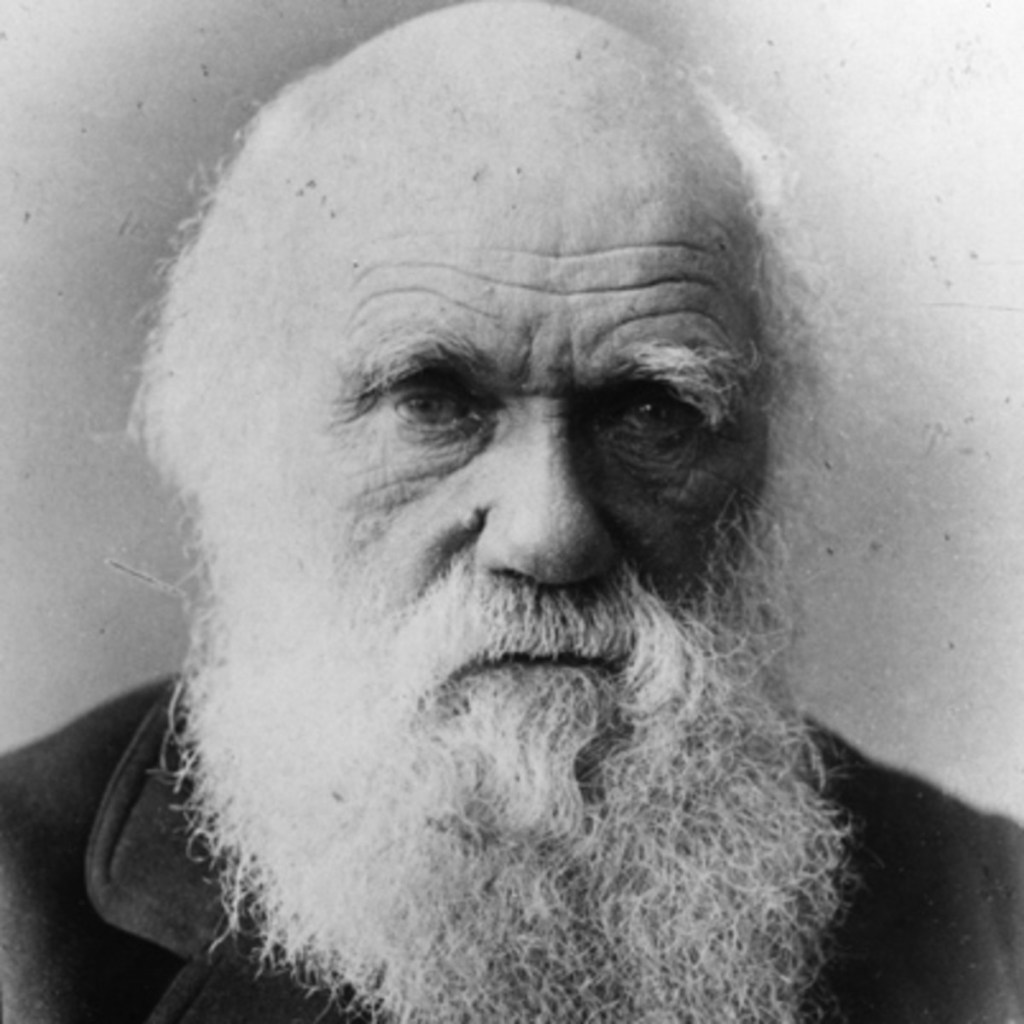
Review of Carl Sagan book (Part 3 of series on Evolution)

November 4, 2011 – 12:57 am

Review of Carl Sagan book (Part 3 of series on Evolution) The Long War against God-Henry Morris, part 4 of 6 Uploaded by FLIPWORLDUPSIDEDOWN3 on Aug 30, 2010 http://www.icr.org/ http://store.icr.org/prodinfo.asp?number=BLOWA2http://store.icr.org/prodinfo.asp?number=BLOWASGhttp://www.fliptheworldupsidedown.com/blog______________________________________ I was really enjoyed this review of Carl Sagan’s book “Pale Blue Dot.” Carl Sagan’s Pale Blue Dot by Larry Vardiman, Ph.D. […]By Everette Hatcher III | Posted in Atheists ConfrontedCurrent Events | Edit | Comments (0)
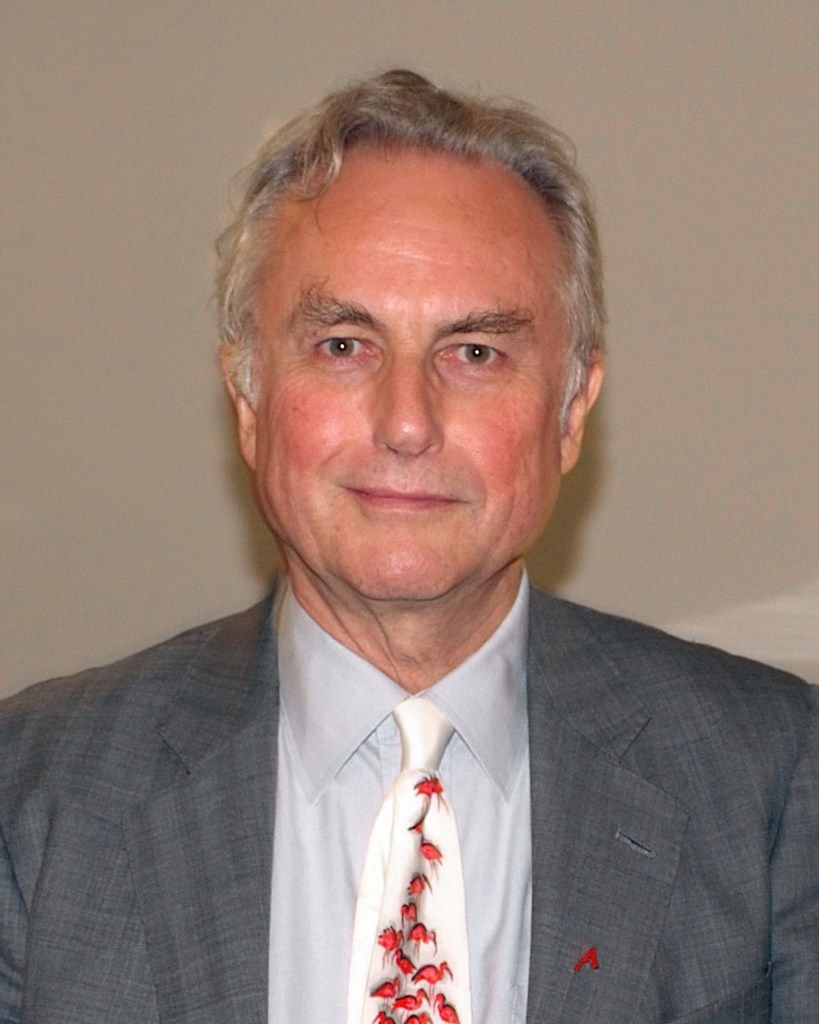
Atheists confronted: How I confronted Carl Sagan the year before he died jh47

May 19, 2011 – 10:30 am

In today’s news you will read about Kirk Cameron taking on the atheist Stephen Hawking over some recent assertions he made concerning the existence of heaven. Back in December of 1995 I had the opportunity to correspond with Carl Sagan about a year before his untimely death. Sarah Anne Hughes in her article,”Kirk Cameron criticizes […]By Everette Hatcher III | Posted in Atheists Confronted | Edit | Comments (2)
My correspondence with George Wald and Antony Flew!!!

May 12, 2014 – 1:14 am

January 8, 2015 – 5:23 am

January 1, 2015 – 4:14 am

December 25, 2014 – 5:04 am

FRANCIS SCHAEFFER ANALYZES ART AND CULTURE Part 38 Woody Allen and Albert Camus “There is but one truly serious philosophical problem, and that is suicide” (Feature on artist Hamish Fulton Photographer )

December 18, 2014 – 4:30 am

FRANCIS SCHAEFFER ANALYZES ART AND CULTURE Part 37 Mahatma Gandhi and “Relieving the Tension in the East” (Feature on artist Luc Tuymans)

December 11, 2014 – 4:19 am

FRANCIS SCHAEFFER ANALYZES ART AND CULTURE Part 36 Julian Huxley:”God does not in fact exist, but act as if He does!” (Feature on artist Barry McGee)

December 4, 2014 – 4:10 am

FRANCIS SCHAEFFER ANALYZES ART AND CULTURE Part 35 Robert M. Pirsig (Feature on artist Kerry James Marshall)

November 27, 2014 – 4:43 am

FRANCIS SCHAEFFER ANALYZES ART AND CULTURE Part 34 Aleksandr Solzhenitsyn (Feature on artist Shahzia Sikander)

November 20, 2014 – 4:28 am

FRANCIS SCHAEFFER ANALYZES ART AND CULTURE Part 33 Aldous Huxley (Feature on artist Matthew Barney )

November 13, 2014 – 4:39 am

FRANCIS SCHAEFFER ANALYZES ART AND CULTURE Part 32 Steven Weinberg and Woody Allen and “The Meaningless of All Things” (Feature on photographer Martin Karplus )

November 6, 2014 – 4:42 am

FRANCIS SCHAEFFER ANALYZES ART AND CULTURE Part 31 David Hume and “How do we know we know?” (Feature on artist William Pope L. )

October 30, 2014 – 5:34 am

FRANCIS SCHAEFFER ANALYZES ART AND CULTURE Part 30 Rene Descartes and “How do we know we know?” (Feature on artist Olafur Eliasson)

October 23, 2014 – 5:01 am

FRANCIS SCHAEFFER ANALYZES ART AND CULTURE Part 29 W.H. Thorpe and “The Search for an Adequate World-View: A Question of Method” (Feature on artist Jeff Koons)

October 16, 2014 – 5:06 am

FRANCIS SCHAEFFER ANALYZES ART AND CULTURE Part 28 Woody Allen and “The Mannishness of Man” (Feature on artist Ryan Gander)

October 9, 2014 – 5:10 am

September 25, 2014 – 1:01 pm

September 25, 2014 – 4:00 am

FRANCIS SCHAEFFER ANALYZES ART AND CULTURE Part 25 BOB DYLAN (Part C) Francis Schaeffer comments on Bob Dylan’s song “Ballad of a Thin Man” and the disconnect between the young generation of the 60’s and their parents’ generation (Feature on artist Fred Wilson)

September 18, 2014 – 3:57 am

FRANCIS SCHAEFFER ANALYZES ART AND CULTURE Part 24 BOB DYLAN (Part B) Francis Schaeffer comments on Bob Dylan’s words from HIGHWAY 61 REVISITED!! (Feature on artist Susan Rothenberg)

September 11, 2014 – 4:18 am

FRANCIS SCHAEFFER ANALYZES ART AND CULTURE Part 23 BOB DYLAN (Part A) (Feature on artist Josiah McElheny)Francis Schaeffer on the proper place of rebellion with comments by Bob Dylan and Samuel Rutherford

September 2, 2014 – 8:42 am

FRANCIS SCHAEFFER ANALYZES ART AND CULTURE Part 22 “The School of Athens by Raphael” (Feature on the artist Sally Mann)

August 11, 2014 – 2:19 pm

FRANCIS SCHAEFFER ANALYZES ART AND CULTURE Part 21 William B. Provine (Feature on artist Andrea Zittel)

June 12, 2014 – 2:52 pm

FRANCIS SCHAEFFER ANALYZES ART AND CULTURE Part 20 Woody Allen and Materialistic Humanism: The World-View of Our Era (Feature on artist Ida Applebroog)

May 12, 2014 – 4:35 am

FRANCIS SCHAEFFER ANALYZES ART AND CULTURE Part 19 Movie Director Luis Bunuel (Feature on artist Oliver Herring)

May 1, 2014 – 11:53 am

FRANCIS SCHAEFFER ANALYZES ART AND CULTURE Part 18 “Michelangelo’s DAVID is the statement of what humanistic man saw himself as being tomorrow” (Feature on artist Paul McCarthy)

April 25, 2014 – 8:26 am

FRANCIS SCHAEFFER ANALYZES ART AND CULTURE Part 17 Francis Schaeffer discusses quotes of Andy Warhol from “The Observer June 12, 1966″ Part C (Feature on artist David Hockney plus many pictures of Warhol with famous friends)

April 18, 2014 – 7:37 am

FRANCIS SCHAEFFER ANALYZES ART AND CULTURE Part 16 Francis Schaeffer discusses quotes of Andy Warhol from “The Observer June 12, 1966″ Part B (Feature on artist James Rosenquist plus many pictures of Warhol with famous friends)

April 11, 2014 – 6:14 am

FRANCIS SCHAEFFER ANALYZES ART AND CULTURE Part 15 Francis Schaeffer discusses quotes of Andy Warhol from “The Observer June 12, 1966″ Part A (Feature on artist Robert Indiana plus many pictures of Warhol with famous friends)

April 4, 2014 – 5:58 am

FRANCIS SCHAEFFER ANALYZES ART AND CULTURE Part 14 David Friedrich Strauss (Feature on artist Roni Horn )

March 28, 2014 – 2:50 pm

FRANCIS SCHAEFFER ANALYZES ART AND CULTURE Part 13 Jacob Bronowski and Materialistic Humanism: The World-View of Our Era (Feature on artist Ellen Gallagher )

March 21, 2014 – 7:18 am

FRANCIS SCHAEFFER ANALYZES ART AND CULTURE Part 12 H.J.Blackham and Materialistic Humanism: The World-View of Our Era (Feature on artist Arturo Herrera)

March 14, 2014 – 9:07 am

FRANCIS SCHAEFFER ANALYZES ART AND CULTURE Part 11 Thomas Aquinas and his Effect on Art and HOW SHOULD WE THEN LIVE? Episode 2: THE MIDDLES AGES (Feature on artist Tony Oursler )

March 4, 2014 – 9:04 pm

FRANCIS SCHAEFFER ANALYZES ART AND CULTURE Part 10 David Douglas Duncan (Feature on artist Georges Rouault )

February 28, 2014 – 5:16 am

FRANCIS SCHAEFFER ANALYZES ART AND CULTURE Part 9 Jasper Johns (Feature on artist Cai Guo-Qiang )

February 21, 2014 – 6:51 am

FRANCIS SCHAEFFER ANALYZES ART AND CULTURE Part 8 “The Last Year at Marienbad” by Alain Resnais (Feature on artist Richard Tuttle and his return to the faith of his youth)

February 13, 2014 – 7:59 am

FRANCIS SCHAEFFER ANALYZES ART AND CULTURE Part 7 Jean Paul Sartre (Feature on artist David Hooker )

February 4, 2014 – 2:00 pm

FRANCIS SCHAEFFER ANALYZES ART AND CULTURE Part 6 The Adoration of the Lamb by Jan Van Eyck which was saved by MONUMENT MEN IN WW2 (Feature on artist Makoto Fujimura)

January 31, 2014 – 5:43 am

FRANCIS SCHAEFFER ANALYZES ART AND CULTURE Part 5 John Cage (Feature on artist Gerhard Richter)

January 21, 2014 – 8:07 am

FRANCIS SCHAEFFER ANALYZES ART AND CULTURE Part 4 ( Schaeffer and H.R. Rookmaaker worked together well!!! (Feature on artist Mike Kelley Part B )

January 14, 2014 – 8:52 am

FRANCIS SCHAEFFER ANALYZES ART AND CULTURE Part 3 PAUL GAUGUIN’S 3 QUESTIONS: “Where do we come from? What art we? Where are we going? and his conclusion was a suicide attempt” (Feature on artist Mike Kelley Part A)

January 7, 2014 – 11:06 pm

FRANCIS SCHAEFFER ANALYZES ART AND CULTURE Part 2 “A look at how modern art was born by discussing Monet, Renoir, Pissaro, Sisley, Degas,Cezanne, Van Gogh, Gauguin, Seurat, and Picasso” (Feature on artist Peter Howson)

January 1, 2014 – 4:27 am

FRANCIS SCHAEFFER ANALYZES ART AND CULTURE Part 1 HOW SHOULD WE THEN LIVE? “The Roman Age” (Feature on artist Tracey Emin)

December 10, 2013 – 2:38 pm