On November 21, 2014 I received a letter from Nobel Laureate Harry Kroto and it said:
…Please click on this URL http://vimeo.com/26991975
and you will hear what far smarter people than I have to say on this matter. I agree with them.
Harry Kroto

I have attempted to respond to all of Dr. Kroto’s friends arguments and I have posted my responses one per week for over a year now. Here are some of my earlier posts:
Arif Ahmed, Sir David Attenborough, Mark Balaguer, Patricia Churchland, Aaron Ciechanover, Noam Chomsky,Alan Dershowitz, Hubert Dreyfus, Bart Ehrman, Stephan Feuchtwang, David Friend, Riccardo Giacconi, Ivar Giaever , Roy Glauber, Rebecca Goldstein, David J. Gross, Brian Greene, Susan Greenfield, Stephen F Gudeman, Alan Guth, Jonathan Haidt, Hermann Hauser, Roald Hoffmann, Bruce Hood, Herbert Huppert, Gareth Stedman Jones, Shelly Kagan, Michio Kaku, Stuart Kauffman, George Lakoff, Lawrence Krauss, Harry Kroto, Elizabeth Loftus, Alan Macfarlane, Peter Millican, Marvin Minsky, Leonard Mlodinow, Yujin Nagasawa, Alva Noe, Douglas Osheroff, Saul Perlmutter, Herman Philipse, Robert M. Price, Lisa Randall, Lord Martin Rees, Oliver Sacks, John Searle, Marcus du Sautoy, Simon Schaffer, J. L. Schellenberg, Lee Silver, Peter Singer, Walter Sinnott-Armstrong, Ronald de Sousa, Victor Stenger, Barry Supple, Leonard Susskind, Raymond Tallis, Neil deGrasse Tyson, .Alexander Vilenkin, Sir John Walker, Frank Wilczek, Steven Weinberg, and Lewis Wolpert,
Nicholas Humphrey
| Nicholas Humphrey | |
|---|---|

Nicholas Humphrey
|
|
| Born | Nicholas Keynes Humphrey 27 March 1943 |
| Residence | Cambridge, England |
| Nationality | English |
| Institutions | London School of Economics |
| Alma mater | Trinity College, Cambridge |
| Doctoral advisor | Lawrence Weiskrantz |
| Doctoral students | Dylan Evans |
Nicholas Keynes Humphrey (born 1943) is an English psychologist, based in Cambridge, who is known for his work on the evolution of human intelligence and consciousness. His interests are wide ranging. He studied mountain gorillas with Dian Fossey in Rwanda, he was the first to demonstrate the existence of “blindsight” after brain damage in monkeys, he proposed the celebrated theory of the “social function of intellect” and he is the only scientist ever to edit the literary journal Granta.
Humphrey played a significant role in the anti-nuclear movement in the late 1970s and delivered the BBC Bronowski memorial lecture titled “Four Minutes to Midnight” in 1981.
His ten books include Consciousness Regained, The Inner Eye, A History of the Mind, Leaps of Faith, The Mind Made Flesh, Seeing Red, and Soul Dust. He has been the recipient of several honours, including the Martin Luther King Memorial Prize, the Pufendorf medal and the British Psychological Society’s book award.
He has been Lecturer in Psychology at Oxford, Assistant Director of the Subdepartment of Animal Behaviour at Cambridge, Senior Research Fellow in Parapsychology at Cambridge, Professor of Psychology at the New School for Social Research, New York, and School Professor at the London School of Economics.
Family[edit]
Humphrey is the son of the immunologist John H. Humphrey and his wife Janet Humphrey (née Hill), daughter of the Nobel Prize–winning physiologist Archibald Hill. His great uncle was the economist John Maynard Keynes. He married Caroline Waddington, daughter of C. H. Waddington in 1967 (divorced 1977). From 1977 to 1984 he was the partner of the English actress Susannah York. He married Ayla Kohn in 1994, with whom he has two children Ada 1995 and Samuel 1997.
Early career[edit]
Nicholas Humphrey was educated at Westminster School (1956–61), and Trinity College, Cambridge (1961–67).
His doctoral research at Cambridge, supervised by Lawrence Weiskrantz, was on the neuropsychology of vision in primates. He made the first single cell recordings from the superior colliculus of monkeys, and discovered the existence of a previously unsuspected capacity for vision after total lesions of the striate cortex (a capacity which, when it was later confirmed in human beings, came to be called “blindsight“).
On moving to Oxford, he turned his attention to evolutionary aesthetics. He did research on monkey visual preferences (especially colour preferences) and wrote an essay “The Illusion of beauty”, which, as a radio broadcast, won the Glaxo Science Writers Prize in 1980.
Work in evolutionary psychology and philosophy of mind[edit]
He returned to Cambridge, to the Sub Department of Animal Behaviour in 1970, and there met Dian Fossey, who invited him to spend three months at her gorilla study camp in Rwanda. His experience with the gorillas, and a subsequent visit to Richard Leakey‘s field-site on Lake Turkana, set Humphrey thinking about how cognitive skills – intelligence and consciousness – could have arisen as an adaption to social life. In 1976 he wrote an essay titled “The Social Function of Intellect”, which is widely regarded as one of the foundational works of evolutionary psychology and the basis for Machiavellian intelligence theory. This paper formed the basis of his first book Consciousness Regained: Chapters in the Development of Mind (1983).
In 1984 Humphrey left his academic post at Cambridge to work on his Channel 4 television series “The Inner Eye” on the development of the human mind. This series was finished in 1986 with the release of a book of the same name.
In 1987, Daniel Dennett invited Humphrey to work with him at his Center for Cognitive Studies at Tufts University. They worked on developing an empirically based theory of consciousness, and undertook a study on Multiple Personality Disorder.
Humphrey’s next book A History of the Mind (1992) put forward a theory on how consciousness as feeling rather than thinking may have evolved. This book won the inaugural British Psychological Society’s annual Book of the Year Award in 1993.
His writings on consciousness continued in The Mind Made Flesh: Essays from the Frontiers of Evolution and Psychology (2002), Seeing Red: A Study in Consciousness (2006), and most recently Soul Dust: the Magic of Consciousness (2011). In this last book he puts forward a radical new theory. Consciousness, he argues, is nothing less than a magical-mystery show that we stage inside our own heads – a show that paves the way for spirituality, and allows us to reap the rewards, and anxieties, of living in what he calls the “soul niche.”
In the third video below in the 141st clip in this series are his words and my response is below them.
50 Renowned Academics Speaking About God (Part 1)
Another 50 Renowned Academics Speaking About God (Part 2)
A Further 50 Renowned Academics Speaking About God (Part 3)
Richard Dawkins interviews Prof. Nicholas Humphrey (Enemies of Reason Uncut Interviews)
_________________________________
Below is a letter and I respond to Dr. Humphrey’s quote:
London School of Economics
UK
September 29, 2015
Dear Dr. Humphrey,
In the popular You Tube video “Renowned Academics Speaking About God” you made the following statement:
As a scientist and as a scholar I am completely confident I don’t find that there is anything added by the postulate of a God at the beginning of the universe or as the designer of consciousness. It doesn’t make any difference if God created the Big Bang, that hasn’t added anything to our statement, unless you want to say he went on to live and die amongst us and bring us to the path of the New Testament. That is a very different kind of God.
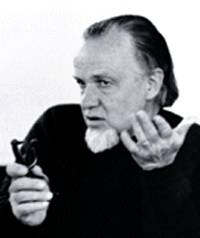
Victor Stenger in this same You Tube clip refers this type of God as a capital “G” type God and that is exactly what I am talking about. Let me respond with the words of Francis Schaeffer from his book HE IS THERE AND HE IS NOT SILENT (the chapter is entitled, “Is Propositional Revelation Nonsense?”
Recently I had the opportunity to come across a very interesting article by Michael Polanyi, LIFE TRANSCENDING PHYSICS AND CHEMISTRY, in the magazine CHEMICAL AND ENGINEERING NEWS, August 21, 1967, and I also got hold of a 1968 talk by Francis Schaeffer based on this article. Polanyi’s son John actually won the 1986 Nobel Prize for Chemistry. This article by Michael Polanyi concerns Francis Crick and James Watson and their discovery of DNA in 1953. Polanyi noted:
Mechanisms, whether man-made or morphological, are boundary conditions harnessing the laws of in
animate nature, being themselves irreducible to those laws. The pattern of organic bases in DNA which functions as a genetic code is a boundary condition irreducible to physics and chemistry. Further controlling principles of life may be represented as a hierarchy of boundary conditions extending, in the case of man, to consciousness and responsibility.
I would like to send you a CD copy of this talk because I thought you may find it very interesting. It includes references to not only James D. Watson, and Francis Crick but also Maurice Wilkins, Erwin Schrodinger, J.S. Haldane (his son was the famous J.B.S. Haldane), Peter Medawar, and Barry Commoner. I WONDER IF YOU EVER HAD THE OPPORTUNITY TO RUN ACROSS THESE MEN OR ANY OF THEIR FORMER STUDENTS?
Below is a portion of the transcript from the CD and Michael Polanyi’s words are in italics while Francis Schaeffer’s words are not:
During the past 15 years, I have worked on these questions, achieving gradually stages of the argument presented in this paper. These are:
- Machines are not formed by physical and chemical equilibration.
- The functional terms needed for characterizing a machine cannot for defined in terms of physics and chemistry.
Polanyi is talking about specific machines but I would include the great cause and effect machine of the external universe that functions on a cause and effect basis. So if this is true of the watch, then you have to ask the same question about the total machine that Sartre points out that is there, and that is the cause and effect universe. Polanyi doesn’t touch on this and he doesn’t have an answer, and I know people who know him. Yet nevertheless he sees the situation exactly as it is. And I would point out what Alfred North Whitehead (1861–1947) and J. Robert Oppenheimer (1904–1967) said and that it needed a Christian consensus to produce modern science because it was the Christian consensus that gave the concept that the world being created by a reasonable God and that it could be found out and discovered by reason. So the modern science when it began with Copernicus and Galileo and all these men conceived that the cause and effect system of the universe would be there on the basis that it was created by a reasonable God, and that is Einstein’s big dilemma and that is why he became a mystic at the end of life…What Polanyi says here can be extended to the watch, and the bridge and the automobile but also to the big cause and effect universe. You have to give some kind of answer to this too and I would say this to Michael Polanyi if I ever have a chance to talk to him. You need another explanation too Polanyi.
3. No physical chemical topography will tell us that we have a machine before us and what its functions are.
In other words, if you only know the chemicals and the physics you don’t know if you have a machine. It may just be junk. So nobody in the world could tell if it was a machine from merely the “physical chemical-topography.” You have to look at the machineness of the machine to say it is a machine. You could take an automobile and smash it into a small piece of metal with a giant press and it would have the same properties of the automobile, but the automobile would have disappeared. The automobile-ness of the automobile is something else than the physical chemical-topography.
4. Such a topography can completely identify one particular specimen of a machine, but can tell us nothing about a class of machines.
5. And if we are asked how the same solid system can be subject to control by two independent principles, the answer is: The boundary conditions of the system are free of control by physics and can be controlled therefore by nonphysical, purely technical, principles.
In other words you have to explain the engineering by something other than merely physical principles and of course it is. You can’t explain the watchness of the watch merely by this. You can explain it on the basis of engineering principles in which the human mind conceives of a use for the machine and produces the machine. But notice where Polanyi is and that is in our argument of a need of personality in the universe though Polanyi doesn’t draw this final conclusion, though I thought that is the only explanation.
If you look at the watch a man has made it for the purpose of telling time. When you see the automobile a man has made it for the purpose of locomotion and the explanation of the difference is not in the chemical and physical properties but in the personality of a man to make these two different machines for two different purposes out of the same material. So what you are left here is the need of personality in the universe.
____
Thank you for your time. I know how busy you are and I want to thank you for taking the time to read this letter.
Sincerely,
Everette Hatcher,
P.O. Box 23416, Little Rock, AR 72221, United States, cell ph 501-920-5733, everettehatcher@gmail.com
________
Related posts:
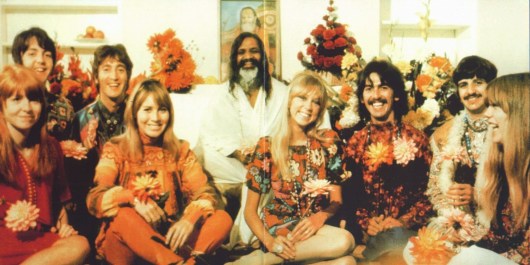
FRANCIS SCHAEFFER ANALYZES ART AND CULTURE Part 53 THE BEATLES (Part E, Stg. Pepper’s and John Lennon’s search in 1967 for truth was through drugs, money, laughter, etc & similar to King Solomon’s, LOTS OF PICTURES OF JOHN AND CYNTHIA) (Feature on artist Yoko Ono)
The John Lennon and the Beatles really were on a long search for meaning and fulfillment in their lives just like King Solomon did in the Book of Ecclesiastes. Solomon looked into learning (1:12-18, 2:12-17), laughter, ladies, luxuries, and liquor (2:1-2, 8, 10, 11), and labor (2:4-6, 18-20). He fount that without God in the picture all […]
FRANCIS SCHAEFFER ANALYZES ART AND CULTURE Part 52 THE BEATLES (Part D, There is evidence that the Beatles may have been exposed to Francis Schaeffer!!!) (Feature on artist Anna Margaret Rose Freeman )
______________ George Harrison Swears & Insults Paul and Yoko Lucy in the Sky with Diamonds- The Beatles The Beatles: I have dedicated several posts to this series on the Beatles and I don’t know when this series will end because Francis Schaeffer spent a lot of time listening to the Beatles and talking […]
FRANCIS SCHAEFFER ANALYZES ART AND CULTURE Part 51 THE BEATLES (Part C, List of those on cover of Stg.Pepper’s ) (Feature on artist Raqib Shaw )
The Beatles in a press conference after their Return from the USA Uploaded on Nov 29, 2010 The Beatles in a press conference after their Return from the USA. The Beatles: I have dedicated several posts to this series on the Beatles and I don’t know when this series will end because Francis […]
FRANCIS SCHAEFFER ANALYZES ART AND CULTURE Part 50 THE BEATLES (Part B, The Psychedelic Music of the Beatles) (Feature on artist Peter Blake )
__________________ Beatles 1966 Last interview I have dedicated several posts to this series on the Beatles and I don’t know when this series will end because Francis Schaeffer spent a lot of time listening to the Beatles and talking and writing about them and their impact on the culture of the 1960’s. In this […]
FRANCIS SCHAEFFER ANALYZES ART AND CULTURE Part 49 THE BEATLES (Part A, The Meaning of Stg. Pepper’s Cover) (Feature on artist Mika Tajima)
_______________ The Beatles documentary || A Long and Winding Road || Episode 5 (This video discusses Stg. Pepper’s creation I have dedicated several posts to this series on the Beatles and I don’t know when this series will end because Francis Schaeffer spent a lot of time listening to the Beatles and talking and writing about […]
FRANCIS SCHAEFFER ANALYZES ART AND CULTURE PART 48 “BLOW UP” by Michelangelo Antonioni makes Philosophic Statement (Feature on artist Nancy Holt)
_______________ Francis Schaeffer pictured below: _____________________ I have included the 27 minute episode THE AGE OF NONREASON by Francis Schaeffer. In that video Schaeffer noted, ” Sergeant Pepper’s Lonely Hearts Club Band…for a time it became the rallying cry for young people throughout the world. It expressed the essence of their lives, thoughts and their feelings.” How Should […]
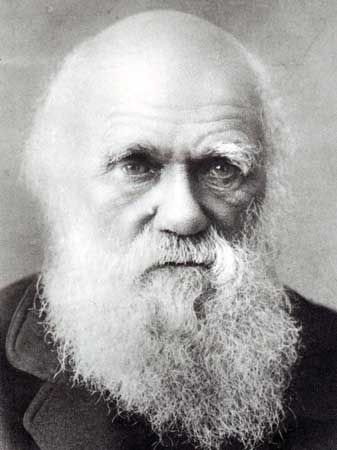
FRANCIS SCHAEFFER ANALYZES ART AND CULTURE Part 47 Woody Allen and Professor Levy and the death of “Optimistic Humanism” from the movie CRIMES AND MISDEMEANORS Plus Charles Darwin’s comments too!!! (Feature on artist Rodney Graham)
Crimes and Misdemeanors: A Discussion: Part 1 ___________________________________ Today I will answer the simple question: IS IT POSSIBLE TO BE AN OPTIMISTIC SECULAR HUMANIST THAT DOES NOT BELIEVE IN GOD OR AN AFTERLIFE? This question has been around for a long time and you can go back to the 19th century and read this same […]
FRANCIS SCHAEFFER ANALYZES ART AND CULTURE PART 46 Friedrich Nietzsche (Featured artist is Thomas Schütte)
____________________________________ Francis Schaeffer pictured below: __________ Francis Schaeffer has written extensively on art and culture spanning the last 2000years and here are some posts I have done on this subject before : Francis Schaeffer’s “How should we then live?” Video and outline of episode 10 “Final Choices” , episode 9 “The Age of Personal Peace and Affluence”, episode 8 […]
FRANCIS SCHAEFFER ANALYZES ART AND CULTURE Part 45 Woody Allen “Reason is Dead” (Feature on artists Allora & Calzadilla )
Love and Death [Woody Allen] – What if there is no God? [PL] ___________ _______________ How Should We then Live Episode 7 small (Age of Nonreason) #02 How Should We Then Live? (Promo Clip) Dr. Francis Schaeffer 10 Worldview and Truth Two Minute Warning: How Then Should We Live?: Francis Schaeffer at 100 Francis Schaeffer […]
FRANCIS SCHAEFFER ANALYZES ART AND CULTURE Part 44 The Book of Genesis (Featured artist is Trey McCarley )
___________________________________ Francis Schaeffer pictured below: ____________________________ Francis Schaeffer “BASIS FOR HUMAN DIGNITY” Whatever…HTTHR Dr. Francis schaeffer – The flow of Materialism(from Part 4 of Whatever happened to human race?) Dr. Francis Schaeffer – The Biblical flow of Truth & History (intro) Francis Schaeffer – The Biblical Flow of History & Truth (1) Dr. Francis Schaeffer […]
__









 “Suppose we are climbing in the Alps and are very high on the bare rock, and suddenly the fog shuts down. The guide turns to us and says that the ice is forming and there is no hope; before morning we will all freeze to death here on the shoulder of the mountain. Simply to keep warm the guide keeps us moving in the dense fog further out on the shoulder until none of us have any idea where we are. After an hour or so, someone says to the guide, ‘Suppose I dropped and hit a ledge ten feet down in the fog. What would happen then?’ The guide would say that you might make it until the morning and thus live. So, with absolutely no knowledge or any reason to support his action, one of the group hangs and drops into the fog. This would be one kind of faith, a leap of faith.Suppose, however, after we have worked out on the shoulder in the midst of the fog and the growing ice on the rock, we had stopped and we heard a voice which said, ‘You cannot see me, but I know exactly where you are from your voices. I am on another ridge. I have lived in these mountains, man and boy, for over sixty years and I know every foot of them. I assure you that ten feet below you there is a ledge. If you hang and drop, you can make it through the night and I will get you in the morning.’I would not hang and drop at once, but would ask questions to try to ascertain if the man knew what he was talking about and if he was not my enemy. In the Alps, for example, I would ask him his name. If the name he gave me was the name of a family from that part of the mountains, it would count a great deal to me. In the Swiss Alps there are certain family names that indicate mountain families of that area. In my desperate situation, even though time would be running out, I would ask him what to me would be the adequate and sufficient questions, and when I became convinced by his answers, then I would hang and drop.This is faith, but obviously it has no relationship to the other use of the word. As a matter of fact, if one of these is called faith, the other should not be designated by the same word. The historic Christian faith is not a leap of faith in the post-Kierkegaardian sense because [God] is not silent, and I am invited to ask the adequate and sufficient questions, not only in regard to details, but also in regard to the existence of the universe and its complexity and in regard to the existence of man. I am invited to ask adequate and sufficient questions and then believe Him and bow before Him metaphysically in knowing that I exist because He made man, and bow before Him morally as needing His provision for me in the substitutionary, propitiatory death of Christ.” – Francis Schaeffer, Francis A. Schaeffer Trilogy: The God Who Is There, Escape From Reason, He Is There and He Is Not Silent__________________________In the 1960’s when so many young people from the USA jumped into eastern religions Francis Schaeffer called it a leap into non-reason and Schaeffer also asserted:




 Faith Ringgold, painter, writer, speaker, mixed media sculptor and performance artist lives and works in Englewood, New Jersey. Ms Ringgold is professor emeritus at the University of California, San Diego where she taught art from 1987 until 2002. Professor Ringgold is the recipient of more than 75 awards including 22 Honorary Doctor of Fine Arts Degrees. She has received fellowships and grants that include the National Endowment For the Arts Award for sculpture (1978) and for painting (1989); The La Napoule Foundation Award for painting in France (1990); The John Simon Guggenheim Memorial Foundation Fellowship for painting (1987); The New York Foundation For the Arts Award for painting (1988); The American Association of University Women for travel to Africa (1976); The Creative Artists Public Service Award for painting (1971). Ringgold’s art has been exhibited in museums and galleries in the USA, Canada, Europe, Asia, South America, the Middle East, and Africa. Her art is included in many private and public art collections including The Metropolitan Museum of Art, The National Museum of American Art, The Museum of Modern Art, The Solomon R. Guggenheim Museum, The Boston Museum of Fine Art, The Chase Manhattan Bank Collection, The Baltimore Museum, Williams College Museum of Art, The High Museum of Fine Art, The Newark Museum, The Phillip Morris Collection, The St. Louis Art Museum and The Spencer Museum. Ms. Ringgold is represented by ACA Gallery in New York City. Ringgold’s public commissions include; People Portraits, 52 mosaics installed in the Los Angeles, California, Civic center subway station (2010); Flying Home: Harlem Heroes and Heroines, two 25 foot mosaic murals installed in the 125th street Subway station in New York City in 1996; The Crown Heights Children’s Story Quilt featuring folklore from the 12 major cultures that settled Crown Heights is installed in the library at PS 90 in Crown Heights, Brooklyn and Eugenio Maria de Hostos: A Man and His Dream, (1994) A mural celebrating the life of Eugenio Maria de Hostos for De Hostos Community College in the Bronx is installed in the atrium of the college. Ringgold’s first published book, the award winning, Tar Beach, “a book for children of all ages”, was published by Random House in 1991 and has won more than 30 awards including, a Caldecott Honor and the Coretta Scott King award for the best illustrated children’s book of 1991. The book, Tar Beach, is based on the story quilt Tar Beach, from Ringgold’s The Woman On A Bridge Series of 1988 and is in the permanent collection of the Guggenheim Museum in New York City. HBO included an animated version of Tar Beach in “Good Night Moon and Other Sleepy Time Lullabies.” This program runs periodically on HBO and has been released as a DVD. Ringgold has completed sixteen children’s books including the above mentioned Tar Beach, Aunt Harriet’s Underground Railroad In The Sky, My Dream of Martin Luther King and Talking to Faith Ringgold, (an autobiographical interactive art book for children of all ages), The Invisible Princess, an original African American Fairy Tale based on the quilt Born in a Cotton Field all published by Random House. If a Bus Could Talk; The Story of Ms. Rosa Parks won the NAACP’s Image Award 2000 and is available from Simon and Schuster. O Holy Night and The Three Witches, and Bronzeville Boys and Girls are from Harper Collins. Faith Ringgold’s latest children’s book is Henry O. Tanner: His Boyhood Dream Comes True published by Bunker Hill Publishing. We Flew Over the Bridge: The Memoirs of Faith Ringgold, Ringgold’s first adult book was published by Little, Brown in 1995 and has been re-released by Duke University Press.








.jpg/220px-Harold_Blackham_(1974).jpg)