icon The Daily Hatch

www.TheDailyHatch.org with Everette Hatcher

Category Archives: Atheists Confronted

« Older posts
Newer posts »

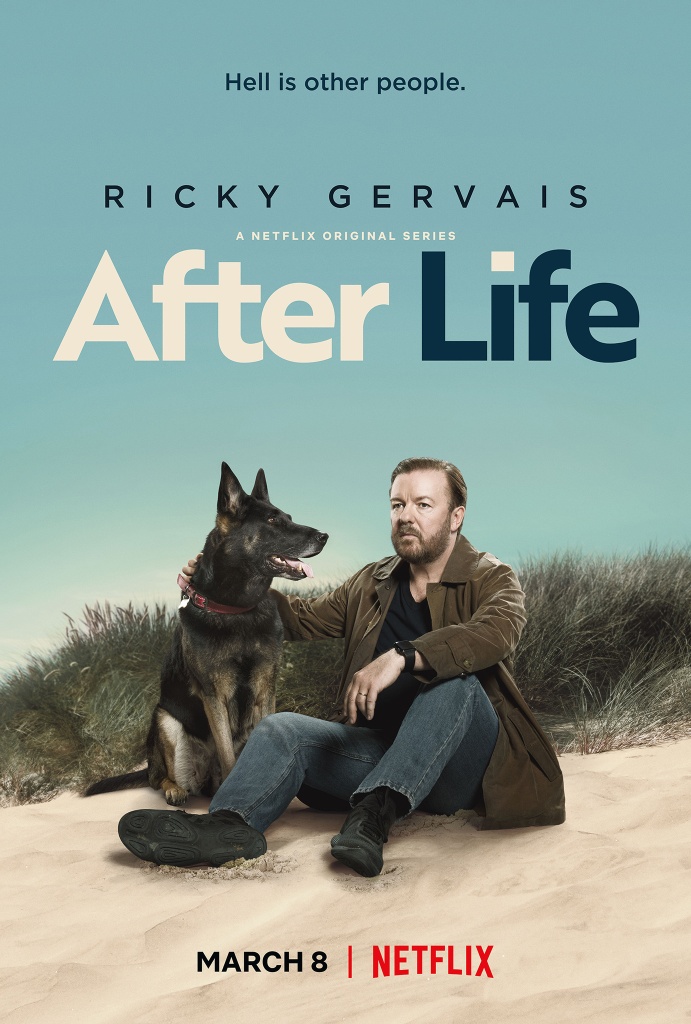
Ricky Gervais Show AFTERLIFE in light of the Book of Ecclesiastes Part 5 “I don’t read books of fiction but mainly science and philosophy”

April 14, 2020 – 5:00 pm

—-

In the series AFTERLIFE you can obviously see how well read Ricky Gervais is and like many atheists it is obvious that Richard Dawkins is one of his heroes.

https://youtu.be/nfIBEJYZG7o

I am not an atheist but I have read about a dozen of Dawkins books also. Dawkins’ favorite book in the Bible is Ecclesiastes because of the poetry found in the King James Version and not the spiritual lessons.

Solomon was searching  for meaning in life in what I call the 6 big L words in the Book of Ecclesiastes. He looked into LEARNING (1:12-18, 2:12-17), laughter, ladies, luxuries, and liquor (2:1-2, 8, 10, 11), and labor (2:4-6, 18-20).

Here is his final conclusion concerning LEARNING:

ECCLESIASTES 1:12-18, 2:12-17 LEARNING

12 I the Preacher have been king over Israel in Jerusalem. 13And I applied my heart to seek and to search out by wisdom all that is done under heaven. It is an unhappy business that God has given to the children of man to be busy with. 14 I have seen everything that is done UNDER THE SUN, and behold, all is vanity and a striving after wind.

15 What is crooked cannot be made straight,
and what is lacking cannot be counted.

16 I said in my heart, “I have acquired great wisdom, surpassing all who were over Jerusalem before me, and my heart has had great experience of wisdom and knowledge.”17 And I applied my heart to know wisdom and to know madness and folly. I perceived that this also is but a striving after wind.

18For in much wisdom is much vexation,
and he who increases knowledge increases sorrow.

12So I turned to consider wisdom and madness and folly. For what can the man do who comes after the king? Only what has already been done. 13 Then I saw that there is more gain in wisdom than in folly, as there is more gain in light than in darkness. 14 The wise person has his eyes in his head, but the fool walks in darkness. And yet I perceived that the same event happens to all of them. 15 Then I said in my heart, “What happens to the fool will happen to me also. Why then have I been so very wise?” And I said in my heart that this also is vanity. 16 For of the wise as of the fool there is no enduring remembrance, seeing that in the days to come all will have been long forgotten. How the wise dies just like the fool!17 So I hated life, because what is done UNDER THE SUN was grievous to me, for all is vanity and a striving after wind.

 Ecclesiastes was written to those who wanted to examine life UNDER THE SUN without God in the picture and Solomon’s conclusion in the final chapter was found in Ecclesiastes 12 when he looked at life ABOVE THE SUN:

13 The end of the matter; all has been heard. Fear God and keep his commandments, for this is the whole duty of man. 14 For God will bring every deed into judgment, with every secret thing, whether good or evil.

—

I watched a replay of Ricky Gervais of his March 28th Twitter Live and he said he doesn’t read a lot of fiction but just mainly books on science and philosophy. This is evident in his dialogue in AFTERLIFE:

You can believe in an afterlife if that makes you feel better, doesn’t mean it’s true, but once you realise you’re not going to be around forever, that’s what makes life so magical…. That’s why you should treasure the few years you’ve got because that’s all there is.

——

Below is the April 9, 2017 Letter I sent to Ricky Gervais on Solomon quest for Learning and the conclusion he came to concerning learning in the Book of Ecclesiastes.

——

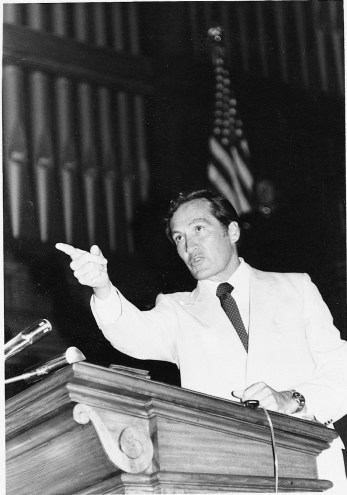
Sean Michael preaching on April 9, 2017 Palm Sunday at Calvary Chapel in Bauxite, Arkansas and he preached on II Corinthians chapters 4 and 5:

17 Therefore, if anyone is in Christ, he is a new creation.[f]The old has passed away; behold, the new has come. 18 All this is from God, who through Christ reconciled us to himself and gave us the ministry of reconciliation; 19 that is, in

Christ God was reconciling[g] the world to himself, not counting their trespasses against them, and entrusting to us the message of reconciliation. 20 Therefore, we are ambassadors for Christ, God making his appeal through us. We implore you on behalf of Christ, be reconciled to God. 21 For our sake he made him to be sin who knew no sin, so that in him we might become the righteousness of God.

(seen below) Sean Michel made it  to Hollywood in the 2007 AMERICAN IDOL COMPETITION while singing the Johnny Cashsong GOD’S GONNA CUT YOU DOWN

Image result for sean michel arkansas american idol

Simon was taken back by the song GOD’S GONNA CUT YOU DOWN

Image result for american idol judges 2007

Check out on You Tube the song THIS IS AMAZING GRACE (It has about 30 million views)

Image result for phil wickham in concert

Jesus paid for our sin even though he was sinless

Image result for jesus pharisees

__________

Larry Joe Speaks

Larry Joe Speaks

August 20, 1947 – April 07, 2017

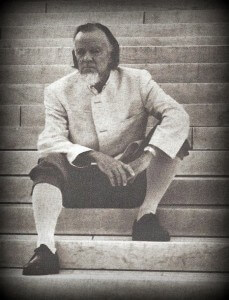
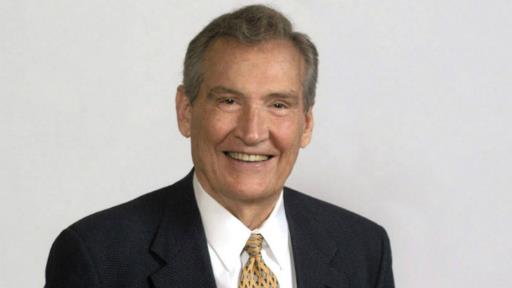
The sermon WHO IS JESUS? was preached by Adrian Rogers (pictured below)  and my good friend Larry Speaks (pictured above) gave out hundreds of CD copies of it before he died on April 7, 2017 at the age of 69.

Image result for adrian rogers jesus

____

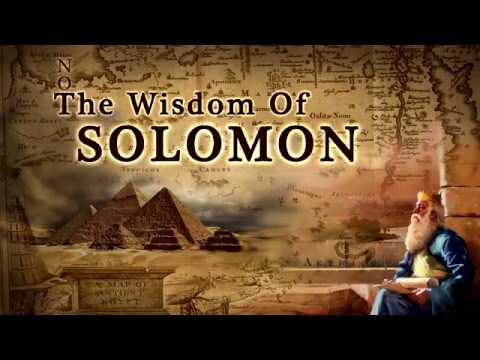
Image result for wisdom of solomon

Blaise Pascal was one of the most brilliant scientists of all time and a believer

Image result for solomon ecclesiastes vanity of vanity education

__

April 9, 2017

Ricky Gervais  United Kingdom
Dear Ricky,

I have also  corresponded with many intellectuals such as you who were committed humanists. For example,    (Paul Kurtz (1925-2012), Sol Gordon (1923-2008), Albert Ellis (1913-2007), Barbara Marie Tabler (1915-1996), Renate Vambery (1916-2005), Archie J. Bahm (1907-1996), Aron S “Gil” Martin ( 1910-1997), Matthew I. Spetter (1921-2012), H. J. Eysenck (1916-1997), Robert L. Erdmann (1929-2006), Mary Morain (1911-1999), Lloyd Morain (1917-2010),  Warren Allen Smith (1921-), Bette Chambers (1930-), Daniel Dennett (1942- ), and   Gordon Stein (1941-1996).

I know your secular philosophy is based on your scientific understanding of the world. Mine is too. That is why I have corresponded with many scientists too. For example, Carl Sagan (1934-1996),  Ernest Mayr (1904-2005), George Wald (1906-1997),Robert Shapiro (1935-2011), Nicolaas Bloembergen (1920-),  Brian Charlesworth (1945-),  Francisco J. Ayala (1934-) Elliott Sober (1948-), Kevin Padian (1951-), Matt Cartmill (1943-) , Milton Fingerman (1928-), John J. Shea (1969-), and  Michael A. Crawford (1938-).

Today I want to ask you to match your wit with King Solomon’s words from 3000 years ago.

In my last letter I told you that the loss of my good friend Larry Speaks has got me thinking a lot about the meaning of life. In this letter today I want to do 3 things.

First, I will tell you what the sermon and music was about today on Palm Sunday at the church service I attended.

Second, I want to take a short look at the message WHO IS JESUS? by Adrian Rogers and Rogers interaction with a scientist from NASA.  This sermon was Larry’s favorite sermon.

Third, I want to start looking at the 6 L words that Solomonpursued UNDER THE SUN to try to get meaning and satisfaction in this life without God in the picture in the Book of Ecclesiastes. Today’s word  is LEARNING. Can one find a lasting meaning to life  in the area of education? Solomon had a lot to say about that in the Book of Ecclesiastes.

Today I was invited by our family friend Sean  Michelto come hear him preach at Calvary Chapel today in Bauxite, Arkansas. Not only did Sean Michel preach but he also helped provide some of the music. In fact, one of the songs they played was my favorite and it is called “This is Amazing Grace,” by Phil Wickham and you can check it out on You Tube.

 In Sean’s sermon we discover that it is  NOT an uneducated head that is the problem to finding God but an UNWILLING STUBBORN HEART.
II Corinthians 4:3-4 (Amplified Bible)

3 But even if our gospel is [in some sense] hidden [behind a veil], it is hidden [only] to those who are perishing; 4 among them the god of this world [Satan] has blinded the minds of the unbelieving to prevent them from seeing the illuminating light of the gospel of the glory of Christ, who is the image of God. 

This verse is clarified even more by Matthew 11:25 (AMP)

25 At that time Jesus said, “I praise You, Father, Lord of heaven and earth [I openly and joyfully acknowledge Your great wisdom], that You have hidden these things [these spiritual truths] from the wise and intelligent and revealed them to infants [to new believers, to those seeking God’s will and purpose].

Here we must observe that many people don’t want to find the truth just like a thief doesn’t want to find a policeman. I now want to share a portion of the sermon WHO IS JESUS? by Adrian Rogers because this very point is made:

Here is how the story goes:

Years ago Adrian Rogerscounseled with a NASA scientist and his severely depressed wife. The wife pointed to her husband and said, “My problem is him.” She went on to explain that her husband was a drinker, a liar, and an adulterer.

Dr. Rogers asked the man if he were a Christian. “No!” the man laughed. “I’m an atheist.” “Really?” Dr. Rogers replied. “That means you’re someone who knows that God does not exist.” “That’s right,” said the man. “Would it be fair to say that you don’t know all there is to know in the universe?” “Of course,” the man admitted. Dr.Rogers asked,“Would it be generous to say you know half of all there is to know?” “Yes!” Then Dr. Rogers inquired,“Wouldn’t it be possible that God’s existence might be in the half you don’t know?” The man acknowledged, “Okay, but I don’t think He exists.” Dr. Rogers replied, “Well then, you’re not an atheist; you’re an agnostic.You’re a doubter.” The man asserted,“Yes, and I’m a big one.” Then Dr. Rogers popped the question, “It doesn’t matter what size you are. I want to know what kind [of doubter] you are.” 

“What kinds are there?”

“There are honest doubters and dishonest doubters. An honest doubter is willing to search out the truth and live by the results; a dishonest doubter doesn’t want to know the truth. He can’t find God for the same reason a thief can’t find a policeman.”

“I want to know the truth.”

“Would you like to prove that God exists?”

“It can’t be done.”

“It can be done. You’ve just been in the wrong laboratory. Jesus said, ‘If any man’s will is to do His will, he will know whether my teaching is from God or whether I am speaking on my own authority’ (John 7:17). I suggest you read one chapter of the book of John each day, but before you do, pray something like this, ‘God, I don’t know if You’re there, I don’t know if the Bible is true, I don’t know if Jesus is Your Son. But if You show me that You are there, that the Bible is true, and that Jesus is Your Son, then I will follow You. My will is to do your will.”

The man agreed. About three weeks later he returned to Dr. Rogers’s office and invited Jesus Christ to be his Savior and Lord.

_________

WHAT DOES SOLOMON HAVE TO SAY ABOUT PURSUING LEARNING in the Book of Ecclesiastes?

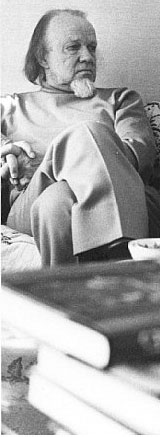
Francis Schaeffer noted that Solomon took a look at the meaning of life on the basis of human life standing alone between birth and death “under the sun.” This phrase UNDER THE SUN appears over and over in Ecclesiastes. The Christian Scholar Ravi Zacharias noted, “The key to understanding the Book of Ecclesiastes is the term UNDER THE SUN — What that literally means is you lock God out of a closed system and you are left with only this world of Time plus Chance plus matter.” 

As you know Solomon was searching for  for meaning in life in what I call the 6 big L words in the Book of Ecclesiastes. He looked into LEARNING (1:12-18, 2:12-17), laughter, ladies, luxuries, and liquor (2:1-2, 8, 10, 11), and labor (2:4-6, 18-20).

Here is his final conclusion concerning LEARNING:

ECCLESIASTES 1:12-18, 2:12-17 LEARNING

12 I the Preacher have been king over Israel in Jerusalem. 13And I applied my heart to seek and to search out by wisdom all that is done under heaven. It is an unhappy business that God has given to the children of man to be busy with. 14 I have seen everything that is done UNDER THE SUN, and behold, all is vanity and a striving after wind.

15 What is crooked cannot be made straight,
and what is lacking cannot be counted.

16 I said in my heart, “I have acquired great wisdom, surpassing all who were over Jerusalem before me, and my heart has had great experience of wisdom and knowledge.”17 And I applied my heart to know wisdom and to know madness and folly. I perceived that this also is but a striving after wind.

18For in much wisdom is much vexation,
and he who increases knowledge increases sorrow.

12So I turned to consider wisdom and madness and folly. For what can the man do who comes after the king? Only what has already been done. 13 Then I saw that there is more gain in wisdom than in folly, as there is more gain in light than in darkness. 14 The wise person has his eyes in his head, but the fool walks in darkness. And yet I perceived that the same event happens to all of them. 15 Then I said in my heart, “What happens to the fool will happen to me also. Why then have I been so very wise?” And I said in my heart that this also is vanity. 16 For of the wise as of the fool there is no enduring remembrance, seeing that in the days to come all will have been long forgotten. How the wise dies just like the fool!17 So I hated life, because what is done UNDER THE SUN was grievous to me, for all is vanity and a striving after wind.

 Ecclesiastes was written to those who wanted to examine life UNDER THE SUN without God in the picture and Solomon’s conclusion in the final chapter was found in Ecclesiastes 12 when he looked at life ABOVE THE SUN:

13 The end of the matter; all has been heard. Fear God and keep his commandments, for this is the whole duty of man. 14 For God will bring every deed into judgment, with every secret thing, whether good or evil.

In an earlier letter to you I quoted Psalms chapter 22. Why not take a few minutes and just read the short chapter of Psalms 22 that was written hundreds of years before the Romans even invented the practice of Crucifixion. 1000 years BC the Jews had the practice of stoning people but we read in this chapter a graphic description of Christ dying on the cross. How do you explain that without looking ABOVE THE SUN to God.

Thanks for your time.

Sincerely,

Everette Hatcher, everettehatcher@gmail.com, http://www.thedailyhatch.org, 13900 Cottontail Lane, Alexander, AR 72002

PS: Like I promised I will continue to write you and go through these 6 L words that Solomon was pursuing UNDER THE SUN in the Book of Ecclesiastes in order to find a lasting meaning to our lives.

XXXXXXXXX

—-

I started this series on my letters and postcards to Hugh Hefner back in September when I read of the passing of Mr. Hefner. There are many more to come. It is my view that he may have taken time to look at glance at one or two of them since these postcards were short and from one of Hef’s favorite cities!!!!

Image result for HUGH HEFNER NEW ORLEANS

Postcards from New Orleans Feb 5, 2017 Proverbs 5

——–

Image result for new orleans postcards mardi gras
Hugh Hefner
Playboy Mansion
16236 Charing Cross Road

Los Angeles, CA 90024

Feb 5, 2017
Dear Hugh
Reading a Proverb for every day of the month has been a practice of mine for a long time. Today is February 5. 2017 and I’m reading Proverbs 5 which is appropriate since I am spending a week in New Orleans this month. Here are verses 3-14:

The lips of a seductive woman are oh so sweet,
    her soft words are oh so smooth.
But it won’t be long before she’s gravel in your mouth,
    a pain in your gut, a wound in your heart.
She’s dancing down the primrose path to Death;
    she’s headed straight for Hell and taking you with her.
She hasn’t a clue about Real Life,
    about who she is or where she’s going.

7-14 So, my friend, listen closely;
    don’t treat my words casually.
Keep your distance from such a woman;
    absolutely stay out of her neighborhood.
You don’t want to squander your wonderful life,
    to waste your precious life among the hardhearted.
Why should you allow strangers to take advantage of you?
    Why be exploited by those who care nothing for you?
You don’t want to end your life full of regrets,
    nothing but sin and bones,
Saying, “Oh, why didn’t I do what they told me?
    Why did I reject a disciplined life?
Why didn’t I listen to my mentors,
    or take my teachers seriously?
My life is ruined!
    I haven’t one blessed thing to show for my life!”

Never Take Love for Granted

—-
There is hope!!! Check out John 3:16!!!
Best wishes,
Everette Hatcher
Xx

____

Image result for francis schaeffer

These comments below are from Francis Schaeffer’ study on Ecclesiastes and they reminded me of Hugh Hefner who was the closest person to a modern day King Solomon and I was also reminded of a Hefner’s possible bitterness against women that started when he learned of his wife’s sexual betrayal of him in 1949. Below are Schaeffer’s comments followed by an article concerning what Hefner called “the most devastating moment in my life.” 

___________

If one would flee to alcohol, then surely one may choose sexual pursuits to flee to. Solomon looks in this area too.

Ecclesiastes 7:25-28

25 I directed my mind to know, to investigate and to seek wisdom and an explanation, and to know the evil of folly and the foolishness of madness. 26 And I discovered more bitter than death the woman whose heart is snares and nets, whose hands are chains. One who is pleasing to God will escape from her, but the sinner will be captured by her.

27 “Behold, I have discovered this,” says the Preacher, “adding one thing to another to find an explanation, 28 I have looked for other answers but have found none. I found one man in a thousand that I could respect, but not one woman. (Good News Translation on verse 28)

One can understand both Solomon’s expertness in this field and his bitterness.

I Kings 11:1-3 (New American Standard Bible) 

11 Now King Solomon loved many foreign women along with the daughter of Pharaoh: Moabite, Ammonite, Edomite, Sidonian, and Hittite women, 2 from the nations concerning which the Lord had said to the sons of Israel, “You shall not associate with them, nor shall they associate with you, for they will surely turn your heart away after their gods.” Solomon held fast to these in love. 3 He had seven hundred wives, princesses, and three hundred concubines, and his wives turned his heart away.

An expert but also the reason for his bitterness. Certainly there have been many men over the centuries who have daydreamed of Solomon’s wealth in this area [of women], but at the end it was sorry, not only sorry but nothing and less than nothing. The simple fact is that one can not know woman in the real sense by pursuing 1000 women. It is not possible. Woman is not found this way. All that is left in this setting if one were to pursue the meaning of life in this direction is this most bitter word found in Ecclesiastes 7:28, “I have looked for other answers but have found none. I found one man in a thousand that I could respect, but not one woman.” (Good News Translation on verse 28) He was searching in the wrong way. He was searching for the answer to life in the limited circle of that which is beautiful in itself but not an answer finally in sexual life. More than that he finally tried to find it in variety and he didn’t even touch one woman at the end.

372305.bin

  1. INDYLIFE

HUGH HEFNER DEAD: THE ‘DEVASTATING’ MARRIAGE BETRAYAL THAT TURNED PLAYBOY FOUNDER INTO A SERIAL LADIES MAN

The infidelity would forever skew his view on sexuality

  • SARAH YOUNG
  • @sarah_j_young
  • Thursday 28 September 2017 11:47 BST

A man who became famous for his hedonism, Hugh Hefner claims to have slept with more than 1,000 women with a stable of girlfriends less than a third of his age.

But it turns out that the silk-robed, pipe-smoking Casanova’s Playboy lifestyle may have been sparked by the “devastating” betrayal of his first wife.

Hugh – who died yesterday age 91 – vowed to ‘save himself’ for childhood sweetheart Mildred ‘Millie’ Williams until they got married. But just days before their wedding, Williams revealed that she had slept with someone else.

“I had literally saved myself for my wife, but after we had sex she told me that she’d had an affair. That was the most devastating moment in my life,” Hefner once said.

Despite the revelation, the pair got married in 1949 and went on to have two children – daughter Christie Hefner, born in 1952, and son David, born three years later.

However, the betrayal loomed over their marriage and Williams gave her husband permission to sleep with other women; a decision that would forever skew his views on the institution and sexuality.

View image on Twitter

View image on Twitter

Mildred Williams and Hugh Hefner married in 1949

After 10 years the marriage came to an end but with the successful launch of Playboy in 1953, Hefner’s lavish and lecherous lifestyle was only just beginning.

The serial ladies’ man who became famed for hosting decadent parties at his luxurious Playboy Mansion, has dated a parade of high-profile women over the years…

_

Preventing Grace Podcast: Playboy, Pornography, and Jesus

October 1, 2017 Matt Kennedy Preventing Grace Podcast
Anne Kennedy:
The children and I are memorizing Ecclesiastes Chapter 12 this fall. I read it out on Thursday September 28th and it was if it was written for Hugh Hefner or for any person who goes throughout their life without thinking about their creator. The description of death is so interesting in Ecclesiastes 12. Solomon wrote the passage and his life looked to be as perfect as Hugh Hefner’s .
Matt Kennedy: 
If you had all the power in the world and all the money in the world what would you do? Solomon did whatever his heart desired. Few of us have the power or the means to do that but Solomon had both.
Anne Kennedy:
But the thing that Solomon regretted was that he wasn’t a peasant in a hut with his one wife. That is what he wished he could have had.

Matt Kennedy: 

What is better in life than to work with your hands and enjoy your food and the wife of your youth? That is what he wishes that he had, not the women, not the kingdom, not the riches, not the building projects. Everything he desired he got, but he was empty at the end, it was dust. It is not an inaccurate comparison to compare Hugh Hefner to King Solomon because at least in his pursuit of women Solomon probably outdid him, yet at the end Solomon came to repentance and not so sure about Hugh Hefner.

Anne Kennedy:

Solomon returned to the wisdom of his youth and it seems that Hugh Hefner never had any wisdom. He had nothing to go back to.

Matt Kennedy: 

Hefner was raised a Methodist though.

Anne Kennedy:

It seems that his parents did not communicate the substance of their faith to their son except to be ridged.

CELEBS

Playboy founder Hugh Hefner has died at the age of 91.

The American icon helped usher in the 1960s sexual revolution with his groundbreaking men’s magazine and built a business empire around his libertine lifestyle.

Hefner, once called the “prophet of pop hedonism”, peacefully passed away at his home, Playboy Enterprises confirmed.

  1. 29th July 1970: Hef and girlfriend Barbi Benton arrive at Heathrow Airport in his private jet, the “Big Bunny” during a grand tour of his empire.On board with him were Jet Bunnies dressed in all black wet-look uniforms, and they were met at the airport by British Bunnies.(Image: Daily Mirror)1 of 34
  2. 27th September 1972: Playboy king Hugh Hefner pictured during a press conference at the Hilton Hotel.”I’m never going to grow up,” Hefner said in a CNN interview when he was 82.”Staying young is what it is all about for me. Holding on to the boy and long ago I decided that age really didn’t matter and as long as the ladies … feel the same way, that’s fine with me.”(Image: Daily Mirror)2 of 34
  3. 8th August 1971: Hef pictured at Heathrow Airport before his flight to Saint-Tropez.There to see him off was playmate Marilyn Cole. Also travelling with Hefner is Roman Polanski (left).(Image: Daily Mirror)3 of 34
  4. 26th September 1972: Hef, girlfriend Barbi Benton and Bunny Girls arrive at Heathrow Airport on the “Big Bunny”.Hefner was sometimes characterised as an oversexed Peter Pan as he kept a harem of young blondes that numbered as many as seven at his legendary Playboy Mansion.(Image: Daily Mirror)4 of 34
    http://tpc.googlesyndication.com/safeframe/1-0-13/html/container.html
  5. 3rd September 1969: Hugh Hefner arriving at Gatwick Airport with his girlfriend Barbara (Barbi) Benton.(Image: Daily Herald)5 of 34
  6. 6th September 1969: Hef and Barbi in their travels again.(Image: Daily Herald)6 of 34
  7. 1966: Playboy Bunnies await Hef’s arrival at London Airport.He said his swinging lifestyle might have been a reaction to growing up in a repressed family where affection was rarely exhibited.His so-called stunted childhood led to a multi-million-dollar enterprise that centered on naked women but also espoused Hefner’s “Playboy philosophy” based on romance, style and the casting off of mainstream mores.(Image: Sunday Mirror)7 of 34
  8. 20th February 1971: Hef on his Playboy Jet headed for chicago with, left to right, Marilyn Cole, Barbi Benton and, seated, Connie Kreski.Hef held legendary parties in his mansions – first in his native Chicago, then in Los Angeles’ exclusive Holmby Hills neighbourhood – where legions of male celebrities swarmed to mingle with beautiful young women.(Image: Sunday Mirror)8 of 34
  9. (Image: Sunday Mirror)9 of 34
  10. 25th June 1966: Hefner arrives at London Airport and is welcomed by fifty Playboy Bunnies.Hefner proved to be a genius at branding. The magazine’s rabbit silhouette became one of the best known logos in the world and the “bunny” waitresses in his Playboy nightclubs were instantly recognisable in their low-cut bathing suit-style uniforms with bow ties, puffy cotton tails and pert rabbit ears.(Image: Sunday Mirror)10 of 34
  11. 1966: Playboy Bunnies wait to welcome Hef to London.”What I created came out of my own adolescent dreams of fantasies,” he told CNN. “I was trying to redefine what it meant to be a young, urban unattached male.”(Image: Sunday Mirror)11 of 34
  12. 25th June 1966: Hefner and his Bunny harem at London Airport.Hef, as he began calling himself in high school, also was a living logo for Playboy, presiding over his realm in silk pajamas and a smoking jacket while puffing on a pipe.(Image: Sunday Mirror)12 of 34
  13. 29th July 1970: Hef had a private DC9-30 jet, the “Big Bunny”.On board with him were Jet Bunnies dressed in all black wet-look uniforms, and they were met at the airport by British Bunnies.(Image: Daily Mirror)13 of 34

Related posts:

Ecclesiastes 2 — The Quest For Meaning and the failed examples of Howard Hughes and Hugh Hefner

June 27, 2013 – 12:49 am

Ecclesiastes 2-3 Published on Sep 19, 2012 Calvary Chapel Spring Valley | Sunday Evening | September 16, 2012 | Derek Neider _____________________________ I have written on the Book of Ecclesiastes and the subject of the meaning of our lives on several occasions on this blog. In this series on Ecclesiastes I hope to show how secular […]

By Everette Hatcher III | Posted in Current Events | Edit | Comments (0)

FRANCIS SCHAEFFER ANALYZES ART AND CULTURE PART 162 A look at the BEATLES Breaking down the song ALL WE NEED IS LOVE Part C (Featured artist is Grace Slick)

May 4, 2017 – 1:40 am

 Is Love All You Need? Jesus v. Lennon Posted on January 19, 2011 by Jovan Payes 0 On June 25, 1967, the Beatles participated in the first worldwide TV special called “Our World”. During this special, the Beatles introduced “All You Need is Love”; one of their most famous and recognizable songs. In it, John Lennon […]

By Everette Hatcher III | Posted in Francis Schaeffer | Edit | Comments (0)

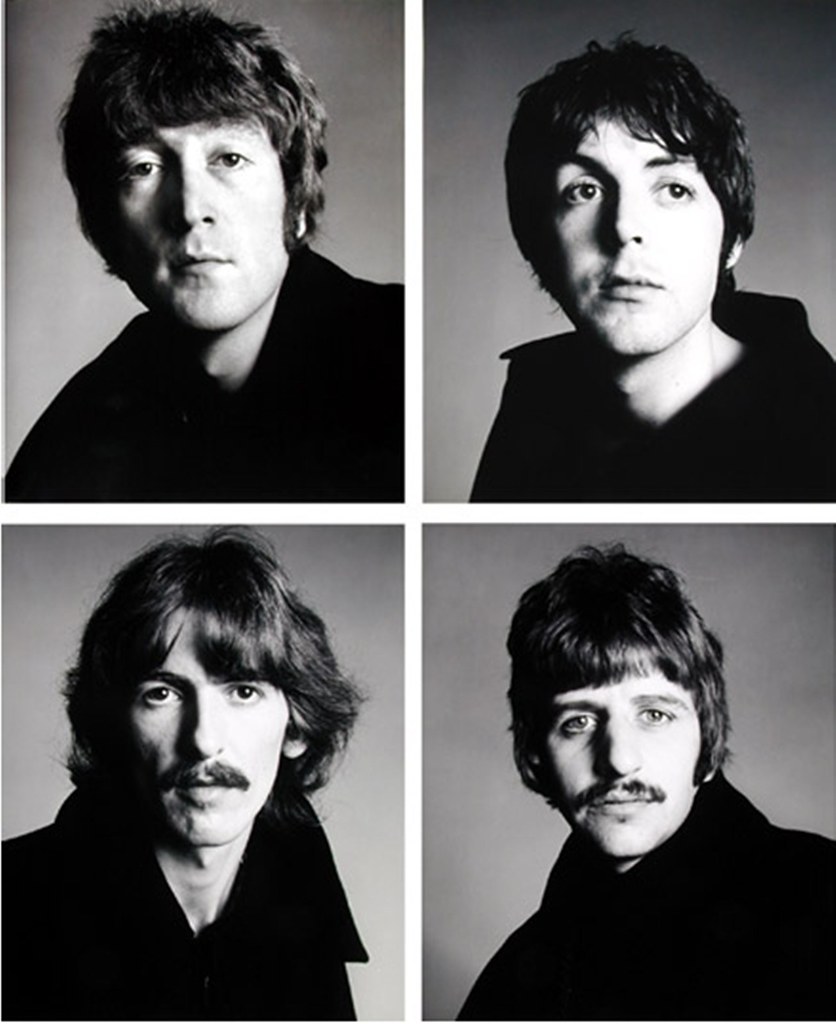
FRANCIS SCHAEFFER ANALYZES ART AND CULTURE Part 158 THE BEATLES (breaking down the song WHY DON’T WE DO IT IN THE ROAD?) Photographer Bob Gomel featured today!

April 6, 2017 – 12:25 am

___________________ Something happened to the Beatles in their journey through the 1960’s and although they started off wanting only to hold their girlfriend’s hand it later evolved into wanting to smash all previous sexual standards. The Beatles: Why Don’t We Do It in the Road? _______ Beatle Ringo Starr, and his girlfriend, later his wife, […]

By Everette Hatcher III | Posted in Current Events | Edit | Comments (0)

FRANCIS SCHAEFFER ANALYZES ART AND CULTURE PART 142 Marvin Minsky Part G (Featured artist is Red Grooms)

December 15, 2016 – 7:18 am

__________ Marvin Minsky __ I was sorry recently  to learn of the passing of one of the great scholars of our generation. I have written about Marvin Minsky several times before in this series and today I again look at a letter I wrote to him in the last couple of years. It is my […]

By Everette Hatcher III | Posted in Adrian Rogers, Francis Schaeffer | Edit | Comments (0)

FRANCIS SCHAEFFER ANALYZES ART AND CULTURE Part 118 THE BEATLES (Why was Tony Curtis on cover of SGT PEP?) (Feature on artist Jeffrey Gibson )

June 30, 2016 – 5:35 am

Why was Tony Curtis on the cover of SGT PEPPERS? I have no idea but if I had to hazard a guess I would say that probably it was because he was in the smash hit SOME LIKE IT HOT.  Above from the  movie SOME LIKE IT HOT __ __ Jojo was a man who […]

By Everette Hatcher III | Posted in Current Events | Edit | Comments (0)

FRANCIS SCHAEFFER ANALYZES ART AND CULTURE Part 101 BEATLES,(MANY CHRISTIANS ATTACKED THE BEATLES WHILE FRANCIS SCHAEFFER STUDIED THEIR MUSIC! Part B) Artist featured today is Cartoonist Gahan Wilson

March 3, 2016 – 12:21 am

__ Francis Schaeffer did not shy away from appreciating the Beatles. In fact, SERGEANT PEPPER’S LONELY HEARTS CLUB BAND album was his favorite and he listened to it over and over. I am a big fan of Francis Schaeffer but there are detractors that attack him because he did not have all the degrees that they […]

By Everette Hatcher III | Posted in Atheists Confronted, Francis Schaeffer | Edit | Comments (0)

10 YEARS AGO ADRIAN ROGERS WENT TO GLORY BUT HIS SERMONS ARE STILL SHARING CHRIST LOVE TODAY!!!

November 16, 2015 – 9:33 am

On 11-15-05 Adrian Rogers passed over to glory and since it is the 10th anniversary of that day I wanted to celebrate his life in two ways. First, I wanted to pass on some of the material from Adrian Rogers’ sermons I have sent to prominent atheists over the last 20 years. Second, I wanted […]

By Everette Hatcher III | Posted in Adrian Rogers | Tagged (Paul Kurtz (1925-2012), Albert Ellis (1913-2007), Archie J. Bahm (1907-1996), Aron S “Gil” Martin ( 1910-1997), Barbara Marie Tabler (1915-1996), Bette Chambers (1930-), Brian Charlesworth (1945-), Carl Sagan (1934-1996), Ernest Mayr (1904-2005), Francisco J. Ayala (1934-) Elliott Sober (1948-), George Wald (1906-1997), Gordon Stein (1941-1996), H. J. Eysenck (1916-1997), John Hospers (1918-2011), John J. Shea (1969-), Kevin Padian (1951-), Lloyd Morain (1917-2010), Mary Morain (1911-1999), Matt Cartmill (1943-), Matthew I. Spetter (1921-2012), Michael A. Crawford (1938-), Michael Martin (1932-)., Milton Fingerman (1928-), Milton Friedman (1912-2006), Nicolaas Bloembergen (1920-), Renate Vambery (1916-2005), Robert L. Erdmann (1929-2006), Robert Shapiro (1935-2011), Sol Gordon (1923-2008), Warren Allen Smith (1921-) | Edit | Comments (0)

FRANCIS SCHAEFFER ANALYZES ART AND CULTURE Part 65 THE BEATLES ( The 1960’s SEXUAL REVOLUTION was on the cover of Sgt. Pepper’s!) (Featured artist is Pauline Boty)

June 25, 2015 – 7:04 am

Looking back on his life as a Beatle Paul  said at a  certain age you start to think “Wow, I have to get serious. I can’t just be a playboy all of my life.” It is true that the Beatles wrote a lot about girls!!!!!! The Beatles – I Want To Hold your Hand [HD] Although […]

By Everette Hatcher III | Posted in Francis Schaeffer | Tagged Diana Dors, Hugh Hefner, Mae West, Marilyn Monroe, Marlene Dietrich | Edit | Comments (0)
By Everette Hatcher III | Comments (0)

Ricky Gervais Show AFTERLIFE in light of the Book of Ecclesiastes Part 4, Tony in episode one, “It should be everyone’s moral duty to kill themselves”

April 13, 2020 – 11:41 pm

_____

Francis Schaeffer comments on the Book of Ecclesiastes and the subject of death:

Ecclesiastes 9:11

11 Again I saw that under the sun the race is not to the swift, nor the battle to the strong, nor bread to the wise, nor riches to the intelligent, nor favor to those with knowledge, but time and chance happen to them all.

Chance rules. If a man starts out only from himself and works outward it must eventually if he is consistent seem so that only chance rules and naturally in such a setting you can not expect him to have anything else but finally a hate of life.

Ecclesiastes 2:17-18a

17 So I hated life, because what is done under the sun was grievous to me, for all is vanity and a striving after wind. 18 I hated all my toil in which I toil under the sun…

That first great cry “So I hated life.” Naturally if you hate life you long for death and you find him saying this in Ecclesiastes 4:2-3:

2 And I thought the dead who are already dead more fortunate than the living who are still alive. 3 But better than both is he who has not yet been and has not seen the evil deeds that are doneunder the sun.

AFTERLIFE episode #1:

  • Tony : Here’s what’s what humanity is a plague. We’re a disgusting, narcissistic, selfish parasite, and the world would be a better place without us. It should be everyone’s moral duty to kill themselves. I could do it now. Quite happily just go upstairs, jump off the roof, and make sure I landed on some cunt from accounts.

—

After Life on Netflix

After Life on Netflix stars Ricky Gervais as a bereaved husband (Image: Netflix)

Below is April 7, 2017 Letter to Ricky Gervais:

__

Larry Joe Speaks

Larry Joe Speaks

August 20, 1947 – April 07, 2017

Larry Joe Speaks was 69 years old (his middle name came from his father Joe who fought in the BATTLE OF THE BULGE in World War 2)

__

For 16 years Larry owned his store Southern Fruit & Grocery Sheridan, AR 72150

See outside

Map of Southern Fruit & Grocery

map expand icon
______

Image result for mccain mall

Francis Schaeffer pictured below

Image result for francis schaeffer

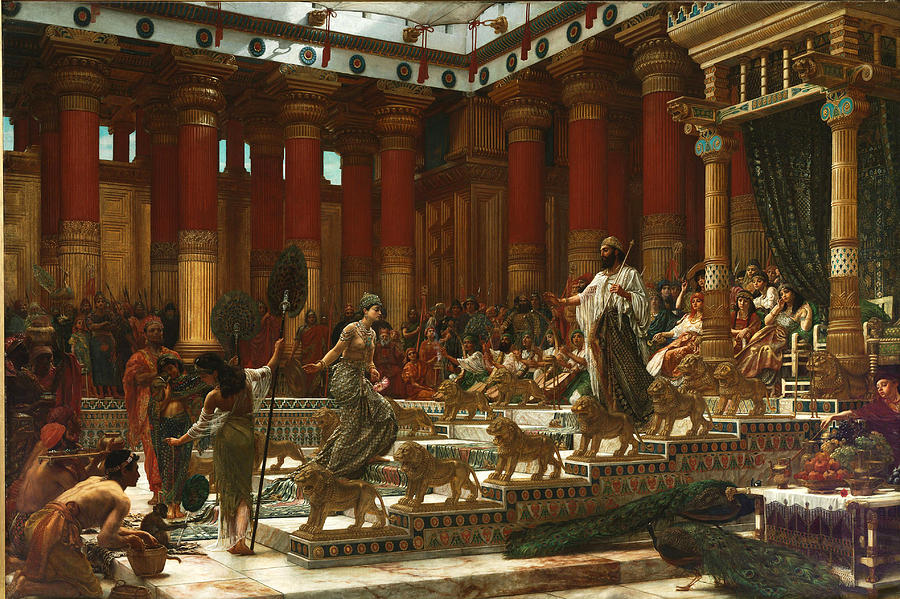
The Visit of the Queen of Sheba to King Solomon’, oil on canvas painting by Edward Poynter, 1890

Image result for king solomon

Adrian Rogers pictured below

Image result for adrian rogers

The Passion of the Christ: The Crucifixion.

Image result for crucifixion of jesus the passion of christ

_____

April 7, 2017

Ricky Gervais
UK

Dear Ricky,

I discovered that on this morning of April 7, 2017  my good friend Larry Speaks has died and gone to heaven. Let me tell you a little about him. After Larry put is faith in Christ alone for his salvation over 20 years ago he got started on  a hobby of listening and  discussing some of the great sermons that he heard. One of those sermons was WHO IS JESUS? by Adrian Rogers. In fact, he asked me to run off some cassette tapes of that message  so he could give it to people who used to come into his store SOUTHERN FRUIT & GROCERY. After he sold the store he continued to give out this message and over the years I switched to putting it on CD’s for him to give out. Even the last years of his life he would go to McCain Mall and walk through the mall and give out the CD’s. He was thrilled that so many people were glad to get them, and he was disappointed when occasionally someone would decline to accept his gift.

In the last years of his life King Solomon took time to look back and then he wrote the BOOK OF ECCLESIASTES. Solomon did believe in God but in this book he  took a look at life “UNDER THE SUN.” Christian scholar Ravi Zacharias has noted, “The key to understanding the Book of Ecclesiastes is the term ‘UNDER THE SUN.’ What that literally means is you lock God out of a closed system, and you are left with only this world of time plus chance plus matter.”

Francis Schaeffer comments on the Book of Ecclesiastes and the subject of death:

Ecclesiastes 9:11

11 Again I saw that under the sun the race is not to the swift, nor the battle to the strong, nor bread to the wise, nor riches to the intelligent, nor favor to those with knowledge, but time and chance happen to them all.

Chance rules. If a man starts out only from himself and works outward it must eventually if he is consistent seem so that only chance rules and naturally in such a setting you can not expect him to have anything else but finally a hate of life.

Ecclesiastes 2:17-18a

17 So I hated life, because what is done under the sun was grievous to me, for all is vanity and a striving after wind. 18 I hated all my toil in which I toil under the sun…

That first great cry “So I hated life.” Naturally if you hate life you long for death and you find him saying this in Ecclesiastes 4:2-3:

2 And I thought the dead who are already dead more fortunate than the living who are still alive. 3 But better than both is he who has not yet been and has not seen the evil deeds that are doneunder the sun.

He lays down an order. It is best never have to been. It is better to be dead, and worse to be alive. But like all men and one could think of the face of Vincent Van Gogh in his final paintings as he came to hate life and you watch something die in his self portraits, the dilemma is double because as one is consistent and one sees life as a game of chance, one must come in a way to hate life. Yet at the same time men never get beyond the fear to die. Solomon didn’t either. So you find him in saying this.

Ecclesiastes 2:14-15

14 The wise person has his eyes in his head, but the fool walks in darkness. And yet I perceived that the same event happens to all of them. 15 Then I said in my heart, “What happens to the fool will happen to me also. Why then have I been so very wise?” And I said in my heart that this also is vanity.

The Hebrew is stronger than this and it says “it happens EVEN TO ME,” Solomon on the throne, Solomon the universal man. EVEN TO ME, even to Solomon.

Ecclesiastes 3:18-21

18 I said in my heart with regard to the children of man that God is testing them that they may see that they themselves are but beasts. 19 For what happens to the children of man and what happens to the beasts is the same; as one dies, so dies the other. They all have the same breath, and man has no advantage over the beasts, for all is vanity.[n] 20 All go to one place. All are from the dust, and to dust all return.21 Who knows whether the spirit of man goes upward and the spirit of the beast goes down into the earth?

What he is saying is as far as the eyes are concerned everything grinds to a stop at death.

Ecclesiastes 4:16

16 There was no end of all the people, all of whom he led. Yet those who come later will not rejoice in him. Surely this also is vanity and a striving after wind.

That is true. There is no place better to feel this than here in Switzerland. You can walk over these hills and men have walked over these hills for at least 4000 years and when do you know when you have passed their graves or who cares? It doesn’t have to be 4000 years ago. Visit a cemetery and look at the tombstones from 40 years ago. Just feel it. IS THIS ALL THERE IS? You can almost see Solomon shrugging his shoulders.

Ecclesiastes 8:8

8 There is no man that hath power over the spirit to retain the spirit; neither hath he power in the day of death: and there is no discharge in that war; neither shall wickedness deliver those that are given to it. (King James Version)

A remarkable two phrase. THERE IS NO DISCHARGE IN THAT WAR or you can translate it “no casting of weapons in that war.” Some wars they come to the end. Even the THIRTY YEARS WAR (1618-1648) finally finished, but this is a war where there is no casting of weapons and putting down the shield because all men fight this battle and one day lose. But more than this he adds, WICKEDNESS WON’T DELIVER YOU FROM THAT FIGHT. Wickedness delivers men from many things, from tedium in a strange city for example. But wickedness won’t deliver you from this war. It isn’t that kind of war. More than this he finally casts death in the world of chance.

Ecclesiastes 9:12

12 For man does not know his time. Like fish that are taken in an evil net, and like birds that are caught in a snare, so the children of man are snared at an evil time, when it suddenly falls upon them.

Death can come at anytime. Death seen merely by the eye of man between birth and death and UNDER THE SUN. Death too is a thing of chance. Albert Camus speeding in a car with a pretty girl at his side and then Camus dead. Lawrence of Arabiacoming up over a crest of a hill 100 miles per hour on his motorcycle and some boys are standing in the road and Lawrence turns aside and dies.

 Surely between birth and death these things are chance. Modern man adds something on top of this and that is the understanding that as the individual man will dies by chance so one day the human race will die by chance!!! It is the death of the human race that lands in the hand of chance and that is why men grew sad when they read Nevil Shute’s book ON THE BEACH. 

__________

By the way, the final chapter of Ecclesiastes finishes with Solomon emphasizing that serving God is the only proper response of man. Solomon looks above the sun and brings God back into the picture.  I am hoping that your good friend Woody Allen will also come to that same conclusion that Solomon came to concerning the meaning of life and man’s proper place in the universe in Ecclesiastes 12:13-14:
13 Now all has been heard;
here is the conclusion of the matter:
Fear God and keep his commandments,
for this is the whole duty of man.

14 For God will bring every deed into judgment,
including every hidden thing,
whether it is good or evil

NOW BACK TO MY FRIEND LARRY SPEAKS. If Larry was here now he would urge you to listen to the message WHO IS JESUS? by Adrian Rogers. Therefore, I wanted to give you a little part of that message. Under the point THE PROPHETIC WITNESS OF THE SCRIPTURES Adrian Rogers talks about Psalm 22:

__

The Amazing Prophecy of the Cross

Psalm 22 is an incredible chapter. Perhaps more than any other chapter in the Bible, you cannot read it and come away not loving the Bible and the Lord Jesus Christ.

Turn to Psalm 22. Just below the name of a psalm, often the name of the one who wrote it is given. Who is the human author of Psalm 22?

Through the inspiration of the Holy Spirit, almost half (73) of the Bible’s 150 psalms were written by King David.

One thousand years before Jesus Christ, David prophetically foretold His crucifixion.

Since crucifixion was a Roman, not Jewish, form of execution, how is that possible?  Crucifixion was completely unknown to the Jewish culture. It would be another 800 years before crucifixion came into the Jewish world. But here we find by divine inspiration a portrait of the cross.

__

Thanks for your time.

Sincerely,

Everette Hatcher, everettehatcher@gmail.com, http://www.thedailyhatch.org, cell ph 501-920-5733, 13900 Cottontail Lane, Alexander, AR 72002

PS: This is the FIRST of SEVEN letters I am writing you on ECCLESIASTES and SOLOMON’s SEARCH for MEANING.

—

I started this series on my letters and postcards to Hugh Hefner back in September when I read of the passing of Mr. Hefner. There are many more to come. It is my view that he may have taken time to look at glance at one or two of them since these postcards were short and from one of Hef’s favorite cities!!!!

Image result for los vegas postcard fireworks

8-23-16

Dear Hef,

I arrived today in Vegas  at 4pm on 8-23-16.  While I was in the front office of the hotel there a young man checking in and he was asked how many would be staying in his room this week and he gave a very ambiguous answer.

It made me think of these words from King Solomon in Proverbs 7:
    I spotted a young man without any sense
Arriving at the corner of the street where she lived,    
Just then, a woman met him—
    she’d been lying in wait for him, dressed to seduce him.
Brazen and brash she was,
Walking the streets….She boldly took his arm and said,   
Come, let’s make love all night,    

All at once he follows her,
    as an ox goes to the slaughter,
     for many a victim has she laid low,    and all her slain are a mighty throng.

From Everette Hatcher, P.O.Box 23416, Little Rock, AR 72221, PS: Jesus loves you Hugh and I do too!!!

_____

I wrote to Hefner in an earlier letter these words:

Francis Schaeffer observed concerning Solomon, “You can not know woman by knowing 1000 women.”

__________

Exalting Jesus in Ecclesiastes Daniel Akin, Jonathan Akin and Tony Merida:

Finally, Solomon indulged in sexual pleasure. In addition to 700 wives (1 Kgs 11), he had 300 concubines (cf. Eccl 2:8). A concubine was a woman given to a man simply for the purpose of sexual pleasure. Concubines were objects. Thus, Solomon could out-locker-room-boast basketball all-star Wilt Chamberlain (who once infamously claimed to have been with 20,000 women!) and infamous playboy Hugh Hefner. So many people are on an endless search for sexual pleasure. They may not have a thousand women literally, but they have that many or more in their pornographic internet history or their romance novels. They constantly look for a new illicit experience in order to be satisfied, but like Solomon they come away empty and disappointed—the high only lasts so long. 

Image result for simpleton proverbs 7

_
Genital elephantiasis is an important medical problem in the tropics. It usually affects young and productive age group, and is associated with physical disability and extreme mental anguish. The majority of cases are due to filariasis; however, a small but significant proportion of patients develop genital elephantiasis due to bacterial sexually transmitted infections (STIs), mainly lymphogranuloma venereum (LGV) and donovanosis.
 Image result for hugh hefner solomon

40 Consequences of Adultery

The counterfeit pleasure of an affair can never overcome the ways infidelity can destroy a life and marriage.
By Dave Boehi
We were praying for someone who was cheating on his wife. And I was struck by what one person said in his prayer: “Lord, work in his heart so that he will think less about the pleasure he is experiencing and more about the pain he is causing.”

That seemed quite appropriate to me. A spouse who is caught up in adultery is living only for the moment, caught up in a fantasy of excitement and desire, and ignoring the very real consequences.

Recently a seminary paper came across my desk titled “100 Consequences of Adultery,” written by Philip Jay, a student at Phoenix Seminary. The list provides a stark wake-up call about the ways infidelity can destroy a life and marriage. Here’s a selection from Jay’s list, presented with his permission:

If I committed adultery…

  1. My relationship with God would suffer from a break in fellowship.
  2. I would need to seek forgiveness from my Lord.
  3. I would suffer from the emotional consequences of guilt.
  4. I would spend countless hours replaying the failure.
  5. My wife would suffer the scars of this abuse more deeply than I could begin to describe.
  6. My wife would spend countless hours in counseling.
  7. My wife’s recovery would be long and painful.
  8. Her pain would grieve me deeply and compound my own suffering and shame.
  9. Our relationship would suffer a break in trust, fellowship, and intimacy.
  10. We would be together, yet feel great loneliness.
  11. The reputation of my family would suffer loss.
  12. My sons would be deeply disappointed and bewildered.
  13. My grandchildren would not understand.
  14. My friends would be disappointed and would question my integrity.
  15. I would lose my job at church.
  16. My witness among neighbors would become worthless.
  17. My witness to my brother would be worthless.
  18. My testimony among my wife’s family would be damaged.
  19. I might never be employed by a church again.
  20. I might never be in men’s ministry leadership.
  21. I would suffer God’s discipline.
  22. Satan would be thrilled at my failure.
  23. Satan would work overtime to be sure my shame never departed.
  24. My wife might divorce me.
  25. My children might never speak to me.
  26. Our mutual friends would shy away from us and break fellowship.
  27. I would bring emotional pain to the woman.
  28. I would bring reproach upon the woman.
  29. If the woman is married, her husband might attempt to bring harm.
  30. He might divorce her.
  31. An unwanted child could be produced.
  32. My part in conception might trigger an abortion, the killing of an innocent child.
  33. Disease might result.
  34. Some might conclude that all Christians are hypocrites.
  35. My business could fail because I couldn’t be trusted.
  36. My leadership among those I have led in the past might also be diminished in impact.
  37. My zeal for ministry would suffer and possibly result in others not continuing in ministry.
  38. My health would suffer.
  39. I might have to start life over again.
  40. This same sin might be visited upon my family for four generations.

It’s a pretty sobering list, isn’t it? What’s even more sobering is that many people will consider these consequences and still proceed in their sin. The fantasy is more important to them than the reality.

Also note that, though the list reflects a man’s perspective, nearly all the consequences would also apply to a wife committing adultery. The biggest benefit of this list may be in helping all of us realize the need to set up strict safeguards to ensure that we are faithful in our marriage commitment. If I am convinced of what adultery would do to me and to my family, I will watch my wandering eyes, guard my thought life, and avoid any situations that could put me in harm’s way.

The fantasy is just not worth it.

Copyright © 2010 by FamilyLife. All rights reserved.

Refresh your marriage at the Weekend to Remember® getaway. And get $100 off by entering the group code ‘Articles’ when you register.

Next Steps

1. Read “Guarding Against Adultery,” by Dennis Rainey.

2. Read Nancy Anderson’s story of infidelity, forgiveness, and restoration in her book, Avoiding the Greener Grass Syndrome.

3. FamilyLife exists to help husbands and wives connect with each other around God’s best for their marriage and family. Articles like this are possible in part because of regular financial support of people like you. Will you help us help others with a gift today?

Meet the Author: Dave Boehi

Dave Boehi is a senior editor at FamilyLife. He has written one book (I Still Do), coauthored the Preparing for Marriage workbook, edited dozens of books and Bible studies, and produces the FamilyLife e-newsletter Help & Hope. Dave and his wife, Merry, live in Little Rock, Arkansas, and have two married daughters.

_
Image result for hugh hefner girlfriends 2014
_
Image result for hugh hefner young

Keith Hefner and Hugh Hefner

Related posts:

Ecclesiastes 2 — The Quest For Meaning and the failed examples of Howard Hughes and Hugh Hefner

June 27, 2013 – 12:49 am

Ecclesiastes 2-3 Published on Sep 19, 2012 Calvary Chapel Spring Valley | Sunday Evening | September 16, 2012 | Derek Neider _____________________________ I have written on the Book of Ecclesiastes and the subject of the meaning of our lives on several occasions on this blog. In this series on Ecclesiastes I hope to show how secular […]

By Everette Hatcher III | Posted in Current Events | Edit | Comments (0)

FRANCIS SCHAEFFER ANALYZES ART AND CULTURE PART 162 A look at the BEATLES Breaking down the song ALL WE NEED IS LOVE Part C (Featured artist is Grace Slick)

May 4, 2017 – 1:40 am

 Is Love All You Need? Jesus v. Lennon Posted on January 19, 2011 by Jovan Payes 0 On June 25, 1967, the Beatles participated in the first worldwide TV special called “Our World”. During this special, the Beatles introduced “All You Need is Love”; one of their most famous and recognizable songs. In it, John Lennon […]

By Everette Hatcher III | Posted in Francis Schaeffer | Edit | Comments (0)

FRANCIS SCHAEFFER ANALYZES ART AND CULTURE Part 158 THE BEATLES (breaking down the song WHY DON’T WE DO IT IN THE ROAD?) Photographer Bob Gomel featured today!

April 6, 2017 – 12:25 am

___________________ Something happened to the Beatles in their journey through the 1960’s and although they started off wanting only to hold their girlfriend’s hand it later evolved into wanting to smash all previous sexual standards. The Beatles: Why Don’t We Do It in the Road? _______ Beatle Ringo Starr, and his girlfriend, later his wife, […]

By Everette Hatcher III | Posted in Current Events | Edit | Comments (0)

FRANCIS SCHAEFFER ANALYZES ART AND CULTURE PART 142 Marvin Minsky Part G (Featured artist is Red Grooms)

December 15, 2016 – 7:18 am

__________ Marvin Minsky __ I was sorry recently  to learn of the passing of one of the great scholars of our generation. I have written about Marvin Minsky several times before in this series and today I again look at a letter I wrote to him in the last couple of years. It is my […]

By Everette Hatcher III | Posted in Adrian Rogers, Francis Schaeffer | Edit | Comments (0)

FRANCIS SCHAEFFER ANALYZES ART AND CULTURE Part 118 THE BEATLES (Why was Tony Curtis on cover of SGT PEP?) (Feature on artist Jeffrey Gibson )

June 30, 2016 – 5:35 am

Why was Tony Curtis on the cover of SGT PEPPERS? I have no idea but if I had to hazard a guess I would say that probably it was because he was in the smash hit SOME LIKE IT HOT.  Above from the  movie SOME LIKE IT HOT __ __ Jojo was a man who […]

By Everette Hatcher III | Posted in Current Events | Edit | Comments (0)

FRANCIS SCHAEFFER ANALYZES ART AND CULTURE Part 101 BEATLES,(MANY CHRISTIANS ATTACKED THE BEATLES WHILE FRANCIS SCHAEFFER STUDIED THEIR MUSIC! Part B) Artist featured today is Cartoonist Gahan Wilson

March 3, 2016 – 12:21 am

__ Francis Schaeffer did not shy away from appreciating the Beatles. In fact, SERGEANT PEPPER’S LONELY HEARTS CLUB BAND album was his favorite and he listened to it over and over. I am a big fan of Francis Schaeffer but there are detractors that attack him because he did not have all the degrees that they […]

By Everette Hatcher III | Posted in Atheists Confronted, Francis Schaeffer | Edit | Comments (0)

10 YEARS AGO ADRIAN ROGERS WENT TO GLORY BUT HIS SERMONS ARE STILL SHARING CHRIST LOVE TODAY!!!

November 16, 2015 – 9:33 am

On 11-15-05 Adrian Rogers passed over to glory and since it is the 10th anniversary of that day I wanted to celebrate his life in two ways. First, I wanted to pass on some of the material from Adrian Rogers’ sermons I have sent to prominent atheists over the last 20 years. Second, I wanted […]

By Everette Hatcher III | Posted in Adrian Rogers | Tagged (Paul Kurtz (1925-2012), Albert Ellis (1913-2007), Archie J. Bahm (1907-1996), Aron S “Gil” Martin ( 1910-1997), Barbara Marie Tabler (1915-1996), Bette Chambers (1930-), Brian Charlesworth (1945-), Carl Sagan (1934-1996), Ernest Mayr (1904-2005), Francisco J. Ayala (1934-) Elliott Sober (1948-), George Wald (1906-1997), Gordon Stein (1941-1996), H. J. Eysenck (1916-1997), John Hospers (1918-2011), John J. Shea (1969-), Kevin Padian (1951-), Lloyd Morain (1917-2010), Mary Morain (1911-1999), Matt Cartmill (1943-), Matthew I. Spetter (1921-2012), Michael A. Crawford (1938-), Michael Martin (1932-)., Milton Fingerman (1928-), Milton Friedman (1912-2006), Nicolaas Bloembergen (1920-), Renate Vambery (1916-2005), Robert L. Erdmann (1929-2006), Robert Shapiro (1935-2011), Sol Gordon (1923-2008), Warren Allen Smith (1921-) | Edit | Comments (0)

FRANCIS SCHAEFFER ANALYZES ART AND CULTURE Part 65 THE BEATLES ( The 1960’s SEXUAL REVOLUTION was on the cover of Sgt. Pepper’s!) (Featured artist is Pauline Boty)

June 25, 2015 – 7:04 am

Looking back on his life as a Beatle Paul  said at a  certain age you start to think “Wow, I have to get serious. I can’t just be a playboy all of my life.” It is true that the Beatles wrote a lot about girls!!!!!! The Beatles – I Want To Hold your Hand [HD] Although […]

By Everette Hatcher III | Posted in Francis Schaeffer | Tagged Diana Dors, Hugh Hefner, Mae West, Marilyn Monroe, Marlene Dietrich | Edit | Comments (0)

__

By Everette Hatcher III | Also posted in Adrian Rogers | Comments (0)

Ricky Gervais Show AFTERLIFE in light of the Book of Ecclesiastes Part 3 “Why didn’t Jesus save her [from cancer]?” (Tony’s 10 year old nephew George in episode 2)

April 13, 2020 – 8:53 pm

—

After Life on Netflix

After Life on Netflix stars Ricky Gervais as a bereaved husband (Image: Netflix)

Daphne who is a good friend of Tony asserted,  Bad things happen to good people, good things happen to bad people… sometimes it’s just no one’s fault.

Episode # 2 of AFTERLIFE:

Below is a discussion between Tony and his ten year old nephew George concerning the passing of Tony’s wife Lisa.

George: Daddy says you are sad since  Aunt Lisa died.

Tony: Yep.

George: I am sad too. I dream about her sometime.

Tony: Me too.

George: Why didn’t the doctors make her better?

Tony: They tried.

George: Why didn’t Jesus save her?

Tony: Because Jesus is a &@$@$&! Don’t tell your Mum and Dad I said that.

George: I won’t.

On Twitter on May 23, 2013 Ricky Gervais wrote:

God doesn’t prevent terrible things because: A) He can’t B) He doesn’t want to C) He causes them D) He doesn’t exist PLEASE VOTE NOW.

——-

This objection to God’s existence has been stated many different ways through the years:

“tsunami just killed up you know i think that numbers higher  up two hundred thousand people flood twenty none of this is a sign that there’s a benevolent anything out there and this ninety percent is shipping nine nine percent of his earlier noted that’s uh… uh…” Neil deGrasse Tyson 

Peter Singer is a gentleman that I have had the opportunity to correspond with and he wrote in an article in FREE INQUIRY:

I argued that while I cannot
disprove the existence of every possible kind of deity, we can be sure that we do
not live in a world that was created by a god who is all-powerful, all-knowing,
and all good. Christians, of course, think we do live in such a world. Yet a
powerful reason for doubting this confronts us every day: the world contains a
vast amount of pain and suffering. If god is all-knowing, he knows how much
suffering there is. If he is all-powerful, he could have created a world without so
much suffering. If he is all-good, he surely would have created a world without
so much suffering.

Monday Morning Quotes: Sir David Attenborough


“I often get letters, quite frequently, from people who say how they like the programmes a lot, but I never give credit to the almighty power that created nature. To which I reply and say, “Well, it’s funny that the people, when they say that this is evidence of the Almighty, always quote beautiful things. They always quote orchids and hummingbirds and butterflies and roses.” But I always have to think too of a little boy sitting on the banks of a river in west Africa who has a worm boring through his eyeball, turning him blind before he’s five years old. And I reply and say, “Well, presumably the God you speak about created the worm as well,” and now, I find that baffling to credit a merciful God with that action. And therefore it seems to me safer to show things that I know to be truth, truthful and factual, and allow people to make up their own minds about the moralities of this thing, or indeed the theology of this thing.”
 

QUOTE FROM REBECCA GOLDSTEIN:

And I am an atheist. I am not wishy-washy on this question. Not only do I think the arguments for God’s existence don’t work, I think that this, more importantly to me, does not look like the kind of world empirically that is created by a good and caring and powerful God. It just—to me there’s just too much empirical evidence against it. Suffering of children is my number one complaint. And the amount of work that one has to do, that philosophers have done, that theists have done to answer the question, the problem of evil—you know, free will, and that works for only some of them, and the Holocaust was, okay, the Nazis had to have the power of absolute evil in order for them to be free, so a certain amount of suffering had to take place—that even that only goes so far. There’s a lot of suffering that can’t be answered that way. Soul making, you know, this is a place where a lot of virtues can only be induced, we can only come to them because of suffering, that doesn’t really seem to be to explain the suffering of children

Quote from Dershowitz in debate with Alan Keyes: 

I think the problem with the theodicy  is a very serious one. How does one explain the disasters in the world? I remember when Elian Gonzalez was rescued. So many religious people said, “See, see, God is wonderful. He saved Elian Gonzalez with porpoises.” Yeah, but what about those people who died? Was God not responsible for their death? “Oh, God works in mysterious ways.” If you are willing as human beings to abdicate your intelligence to a being who you don’t understand or know, what will that lead you to? It will lead you to being Abraham in the Bible. God comes down and says to Abraham, “Kill your son.” And Abraham says, “Sure.” And he’s prepared to kill his son. And there have been many Abrahams in the past.

3,000 years ago Solomon looked at the issue of the existence of pain and suffering in his Book of Ecclesiastes.

Ecclesiastes 4:1

 Then I looked again at all the acts of oppression which were being done under the sun. And behold I saw the tears of the oppressed and that they had no one to comfort them; and on the side of their oppressors was power, but they had no one to comfort them.

Francis Schaeffer: Between birth and death power rules. Solomon looked over his kingdom and also around the world and proclaimed that right does not rule but power rules.

Ecclesiastes 7:14-15

14 In the day of prosperity be happy, but in the day of adversity consider—God has made the one as well as the other so that man will not discover anything that will be after him.

15 I have seen everything during my lifetime of futility; there is a righteous man who perishes in his righteousness and there is a wicked man who prolongs his life in his wickedness.

Ecclesiastes 8:14

14 There is futility which is done on the earth, that is, there are righteous men to whom it happens according to the deeds of the wicked. On the other hand, there are evil men to whom it happens according to the deeds of the righteous. I say that this too is futility.

Francis Schaeffer: We could say it in 20th century language, “The books are not balanced in this life.”

Francis Schaeffer: There is only one reason that viewing life UNDER THE SUN from birth to death causes despair and that is because we live in an abnormal world [since the fall in Genesis 3 when sin entered the world because of rebellion]. It is a legitimate despair if viewed only in the context of UNDER THE SUN,but it is an abnormal despair if it is seen in its proper setting.

—

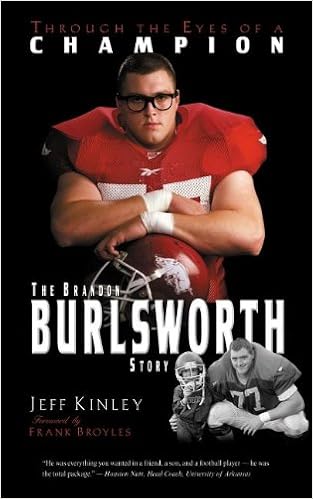
In September of 2016 I wrote the following letter to Ricky Gervais in the subject of suffering and pain in the world and it centered around the movie GREATER about the life of Brandon Burlsworth and for some reason thousands of people have visited the post I did on it.

__________

Image result for greater brandon burlsworth nick searcy the farmer Neal McDonough

Neal McDonough who starred in BAND OF BROTHERS takes center stage in the film GREATER as Brandon‘s older brother Marty Burlsworth

Image result for greater brandon burlsworth nick searcy the farmer Neal McDonough

________

Image result for greater movie cheesecake

“If that boy is sittin’ on that couch eatin’ chips and cheesecake again, I’m gonna explode!”

___________

a-commemorative-display-was-set-up-by-the-indianapolis-colts-at-the-funeral-of-brandon-burlsworth-in-harrison-on-saturday-may-1-1999

Flowers at Burlsworth’s funeral

Image result for greater brandon burlsworth nick searcy the farmer

Brandon’s brother Marty is hounded at the funeral service  by a SECULARIST FARMER WHO QUESTIONS IF BELIEF IN GOD IS WARRENTED.  And the Farmer (played by Nick Searcy), repeatedly delivers soliloquies about the utter foolishness of faith. In one scene, the farmer says, “Brandon did have faith. He believed if he worked hard and did everything he was supposed to do, God would make everything turn out for the best. Did everything turn out for the best, Marty?”

Elsewhere, the Farmer taunts, “There is no loving God, Marty. That’s ridiculous. There’s just a howling void. And a real man, an honest man, doesn’t get down on his knees to pray to it for his mercy. He stands up to it, and he looks it right in his face and he howls right back.”

Image result for brandon burlsworth indianapolis colts

__

Image result for greater brandon burlsworth nick searcy the farmer Neal McDonough

___

______

Image result for greater brandon burlsworth frank broyles

__________

Image result for greater movie brandon burlsworth He believed if he worked hard and did everything he was supposed to that God would make everything turn out for the best

Brandon below with his brother Marty and his two nephews

Image result for brandon burlsworth death

XXXXXXXXX

September 23, 2016

Rickey Gervais, United Kingdom

Dear Rickey,

I know that you are a skeptic similar to Richard Dawkins and you have quoted him in the past in fact. It just so happens that I have just got finishing reading back to back his books, The God Delusion, An Appetite for Wonder: The Making of a Scientist, and Brief Candle in the Dark: My Life in Science.

On Twitter on May 23, 2013 you wrote:

God doesn’t prevent terrible things because: A) He can’t B) He doesn’t want to C) He causes them D) He doesn’t exist PLEASE VOTE NOW

I just saw the movie GREATER about the life of Brandon Burlsworth and there was a secularist farmer played by Nick Searcy that reminded me of you and when the DVD is released on 12-20-16 I would like to send you a free one.

Yesterday while in my  attic  I ran across a cassette tape labeled“April  1999” and it has the recording of my 12 year  old son calling  into a local radio show where he got to talk to Brandon Burlsworth who had just been drafted by the Indianapolis  Colts to play  in the NFL. Just a few days later Burlsworth was on his way to his Harrison, Ark., home from Fayetteville, where he received an SEC West title ring along with the rest of the 1998 Razorbacks on April 28, 1999. Every Wednesday, he returned to take his mom, Barbara, to church. The drive was supposed to take about 90 minutes.

He never made it.

The 22-year-old Burlsworth, who had been drafted by the Colts 11 days earlier after earning first-team All-America honors as a fifth-year senior, was involved in a head-on crash with a tractor-trailer about 15 miles outside Harrison and was killed. He was in the prime of his life and football career, and then he was gone.

One movie reviewer noted: 

There’s a great deal of Christian content in this film. It can perhaps best be summarized by saying that Brandon’s unwavering faith deeply informs everything he does, while his brother’s faltering faith after Brandon’s death is something he grapples with mightily.

Brandon has deep trust in God. At every step along his journey, when naysayers rise up to tell him that he’s being unrealistic, Brandon keeps moving forward in faith. Marty is more pragmatic, asking his brother things like, “You think God would give you D I [Division 1] dreams and a D III (Division III) body?” To Marty, the answer to that rhetorical, spiritual question is self-evident. Brandon, however, soldiers on, refusing to give up. “Have faith, Marty,” he says elsewhere. “This is my road.”

For his part, Marty struggles to cling to his faith in the wake of his brother’s death. That internal battle is depicted in a dramatic way through ongoing dialogue with a doubter named the Farmer. Marty’s trying to summon the courage to go into Brandon’s memorial service at Harrison High School. And the Farmer (played by Nick Searcy), depicted very nearly as a Satan-like tempter, repeatedly delivers soliloquies about the utter foolishness of faith. In one scene, the man (who’s whittling a portrait of Marty into a block of wood, almost as if he’s creating a voodoo doll) says, “Brandon did have faith. He believed if he worked hard and did everything he was supposed to do, God would make everything turn out for the best. Did everything turn out for the best, Marty?”

Elsewhere, the Farmer taunts, “There is no loving God, Marty. That’s ridiculous. There’s just a howling void. And a real man, an honest man, doesn’t get down on his knees to pray to it for his mercy. He stands up to it, and he looks it right in his face and he howls right back.”

But Marty also talks with his godly mother about how to process the randomness of Brandon’s death. She tells him that it’s only random when looked at from an earthly perspective. “If you assume this is all there is, you’d have a point, Marty. But that’s not true. This life is a drop in the ocean. One tick of eternity’s clock, and we’ll all be together again, Marty. And every trouble we had here will recede away like a dream.”

__

It has been a pleasure to send you these letters in the past and I hope you take me up on this offer to see this inspirational true story about Brandon Burlsworth who was truly one of the greatest rags to richest stories in sports history. Also I would encourage you to google FRANCIS SCHAEFFER THE PROBLEM OF EVIL.

Sincerely,

Everette Hatcher, cell ph 501-920-5733, 13900 Cottontail Lane, Alexander, AR 72002 everettehatcher@gmail.com

________________

—-

Josh Wilson – Before The Morning (Official Music Video)

One of my favorite songs  is called “Before the Morning” and it is by  the Christian singer Josh Wilson. The lyrics start out: “Why do you have to feel the things that hurt you? If there’s a God who loves you where is He now?” Over the years I have corresponded with several atheists and many times they confront me on this  very issue such as this letter did from Dr. Brian Charlesworth, Dept of Ecology and Evolution, University of Chicago in letter dated May 10, 1994:

Thank you for your various communications. I am afraid that I formed the view many years ago that there is no foundation for any belief in a benevolent creator of the world. For me, there is too much suffering in the world to be compatible with the existence of such a being. 

Let me make three points concerning the problem of evil and suffering. First, the problem of evil and suffering hit this world in a big way because of Adam and what happened in Genesis Chapter 3. Second, if there is no God then there is no way to distinguish good from evil and there will be no ultimate punishment for Hitler and Josef Mengele. Third. Christ came and suffered and will destroy all evil from this world eventually forever.

Recently I went to see the movie GOD’S NOT DEAD in a local theater and that prompted me to read the book of the same name by Rice Broocks. In the movie the problem of evil and suffering is discussed just like it is in the book  and would love to interact further with anyone who would like to see the film is a big hit in theaters this year. On page 5 on the book you will find these words:
 
Atheists claim that the universe isn’t what you would expect
if a supernatural God existed. All this death and suffering, they say,
are plain evidence that a loving, intelligent God could not be behind
it all. The truth is that God has created a world where free moral
agents are able to have real choices to do good or evil. If God had
created a world without that fundamental choice and option to do
evil, then we wouldn’t be having this discussion. God made a world
where choices are real and humanity is affected by the choices of
other humans. Drunk drivers kill innocent people. Some murder
and steal from their fellow men. Though God gave clear com-
mandments to humanity, we have for the most part ignored these
directives. The mess that results is not God’s fault. It’s ours.
We are called to follow God and love Him with all our hearts
and minds. This means we have to think and investigate. Truth
is another word for reality. When something is true it’s true
everywhere. The multiplication tables are just as true in China
as they are in America. Gravity works in Africa the way it does
in Asia. The fact that there are moral truths that are true every-
where points to a transcendent morality that we did not invent
and from which we cannot escape (C.S.Lewis, MERE CHRISTIANITY,[1952:
New York: Harper Collins, 2001], p. 35).
 
As Creator, God has placed not only natural laws in the earth
but also spiritual laws. For instance, lying is wrong everywhere.
So is stealing. Cruelty to children is wrong regardless of what
culture you’re in or country you’re from. When these laws are
broken, people are broken. Not only does violating these spiritual
laws separate us from God, but it causes pain in our lives and
in the lives of those around us. The big question becomes, what
can be done about our condition? When we break these spiritual
laws, whom can we call for help? How can we be reconciled to
God as well as break free from this cycle of pain and dysfunction?

Francis Schaeffer in his fine book about modern man ESCAPE FROM REASON  states,

“the True Christian position is that, in space and time and history, there was an unprogrammed man who made a choice, and actually rebelled against God…without Christianity’s answer that God made a significant man in a significant history with evil being the result of Satan’s and then man’s historic space-time revolt, there is no answer but to accept Baudelaire’s answer [‘If there is a God, He is the devil’] with tears. Once the historic Christian answer is put away, all we can do is to leap upstairs and say that against all reason God is good.”(pg. 81)

Someone I knew in 1985 grew up in Germany and was part of the Hitler Youth Program, Was he wrong in his beliefs? 

On what basis does the atheist have to say “Hitler was wrong!!!”

Early in his career Hitler was popular and many of the German people bought into his anti-semetic views. Does the atheist have an intellectual basis to condemn Hitler’s actions?

____________________________________

My friend who grew up in Germany  believed until his dying day that Hitler was right. I had a basis for knowing that Hitler was wrong and here it is below.
 
It is my view that according the Bible all men are created by God and are valuable.  However, the atheist has no basis for coming to this same conclusion. Francis Schaeffer put it this way:
 
We cannot deal with people like human beings, we cannot deal with them on the high level of true humanity, unless we really know their origin—who they are. God tells man who he is. God tells us that He created man in His image. So man is some- thing wonderful.
 
In 1972 Schaeffer wrote the book “He is There and He is Not Silent.” Here is the statement that sums up that book:

One of philosophy’s biggest problems is that anything exists at all and has the form that it does. Another is that man exists as a personal being and makes true choices and has moral responsibility. The Bible gives sufficient answers to these problems. In fact, the only sufficient answer is that the infinite-personal triune God is there and He is not silent. He has spoken to man in the Bible.

In the movie CRIMES AND MISDEMEANORS the basic question Woody Allen is presenting to his own agnostic humanistic worldview is: If you really believe there is no God there to punish you in an afterlife, then why not murder if you can get away with it?   The secular humanist worldview that modern man has adopted does not work in the real world that God has created. God “has planted eternity in the human heart…” (Ecclesiastes 3:11). This is a direct result of our God-given conscience. The apostle Paul said it best in Romans 1:19, “For that which is known about God is evident to them and made plain in their inner consciousness, because God  has shown it to them” (Amplified Version).

It’s no wonder, then, that one of Allen’s fellow humanists would comment, “Certain moral truths — such as do not kill, do not steal, and do not lie — do have a special status of being not just ‘mere opinion’ but bulwarks of humanitarian action. I have no intention of saying, ‘I think Hitler was wrong.’ Hitler WAS wrong.” (Gloria Leitner, “A Perspective on Belief,” The Humanist, May/June 1997, pp.38-39). Here Leitner is reasoning from her God-given conscience and not from humanist philosophy. It wasn’t long before she received criticism.

Humanist Abigail Ann Martin responded, “Neither am I an advocate of Hitler; however, by whose criteria is he evil?” (The Humanist, September/October 1997, p. 2.). Humanists don’t really have an intellectual basis for saying that Hitler was wrong, but their God-given conscience tells them that they are wrong on this issue.

Here is fine film by Francis Schaeffer and Dr. C. Everett Koop that makes the case for human dignity.

Francis Schaeffer “BASIS FOR HUMAN DIGNITY” Whatever…HTTHR

Also here is the link for  another fine article on this same issue by Chuck Colson.

Crimes? What Crimes?

The Grand ‘Sez Who’

By Chuck Colson|Published Date: October 29, 1996

Let us take a close look at how you are going to come up with morality as an atheist. When you think about it there is no way around the final conclusion that it is just your opinion against mine concerning morality. There is no final answers. However, if God does exist and he has imparted final answers to us then everything changes.

Take a look at a portion of this paper by Greg Koukl. In this article he points out that atheists don’t even have a basis for saying that Hitler was wrong:

What doesn’t make sense is to look at the existence of evil and question the existence of God. The reason is that atheism turns out being a self-defeating philosophic solution to this problem of evil. Think of what evil is for a minute when we make this kind of objection. Evil is a value judgment that must be measured against a morally perfect standard in order to be meaningful. In other words, something is evil in that it departs from a perfect standard of good. C.S. Lewis made the point, “My argument against God was that the universe seemed so cruel and unjust. But how had I got this idea of just and unjust? A man does not call something crooked unless he has some idea of a straight line.”[ 1 ] He also goes on to point out that a portrait is a good or a bad likeness depending on how it compares with the “perfect” original. So to talk about evil, which is a departure from good, actually presumes something that exists that is absolutely good. If there is no God there’s no perfect standard, no absolute right or wrong, and therefore no departure from that standard. So if there is no God, there can’t be any evil, only personal likes and dislikes–what I prefer morally and what I don’t prefer morally.

This is the big problem with moral relativism as a moral point of view when talking about the problem of evil. If morality is ultimately a matter of personal taste–that’s what most people hold nowadays–then it’s just your opinion what’s good or bad, but it might not be my opinion. Everybody has their own view of morality and if it’s just a matter of personal taste–like preferring steak over broccoli or Brussels sprouts–the objection against the existence of God based on evil actually vanishes because the objection depends on the fact that some things are intrinsically evil–that evil isn’t just a matter of my personal taste, my personal definition. But that evil has absolute existence and the problem for most people today is that there is no thing that is absolutely wrong. Premarital sex? If it’s right for you. Abortion? It’s an individual choice. Killing? It depends on the circumstances. Stealing? Not if it’s from a corporation.

The fact is that most people are drowning in a sea of moral relativism. If everything is allowed then nothing is disallowed. Then nothing is wrong. Then nothing is ultimately evil. What I’m saying is that if moral relativism is true, which it seems like most people seem to believe–even those that object against evil in the world, then the talk of objective evil as a philosophical problem is nonsense. To put it another way, if there is no God, then morals are all relative. And if moral relativism is true, then something like true moral evil can’t exist because evil becomes a relative thing.

An excellent illustration of this point comes from the movie The Quarrel . In this movie, a rabbi and a Jewish secularist meet again after the Second World War after they had been separated. They had gotten into a quarrel as young men, separated on bad terms, and then had their village and their family and everything destroyed through the Second World War, both thinking the other was dead. They meet serendipitously in Toronto, Canada in a park and renew their friendship and renew their old quarrel.divider

Rabbi Hersch says to the secularist Jew Chiam, “If a person does not have the Almighty to turn to, if there’s nothing in the universe that’s higher than human beings, then what’s morality? Well, it’s a matter of opinion. I like milk; you like meat. Hitler likes to kill people; I like to save them. Who’s to say which is better? Do you begin to see the horror of this? If there is no Master of the universe then who’s to say that Hitler did anything wrong? If there is no God then the people that murdered your wife and kids did nothing wrong.”

That is a very, very compelling point coming from the rabbi. In other words, to argue against the existence of God based on the existence of evil forces us into saying something like this: Evil exists, therefore there is no God. If there is no God then good and evil are relative and not absolute, so true evil doesn’t exist, contradicting the first point. Simply put, there cannot be a world in which it makes any sense to say that evil is real and at the same time say that God doesn’t exist. If there is no God then nothing is ultimately bad, deplorable, tragic or worthy of blame. The converse, by the way, is also true. This is the other hard part about this, it cuts both ways. Nothing is ultimately good, honorable, noble or worthy of praise. Everything is ultimately lost in a twilight zone of moral nothingness. To paraphrase the late Dr. Francis Schaeffer, the person who argues against the existence of God based on the existence of evil in the world has both feet firmly planted in mid-air.

_____________

Ricky Gervais in a You Tube clip from the show Piers Morgan Tonight on  1-20-2011 said that he embraced the golden rule because it made sense to him to be good to others so they would be good to you. However, how would that work if there is no ultimate lawmaker that also is our final judge? Rabbi Hersch’s argument to the secularist Jew Chiam seems to point out that without God in the picture it really does come to : “If a person does not have the Almighty to turn to, if there’s nothing in the universe that’s higher than human beings, then what’s morality? Well, it’s a matter of opinion. I like milk; you like meat. Hitler likes to kill people; I like to save them. Who’s to say which is better?”

Francis Schaeffer

Francis Schaeffer pictured above.

_______

Rusty Wright of Probe Ministries wrote the article below:
Many crime victims feel forsaken by God. So do many divorced people, war prisoners, and starving refugees. But this young man’s cry of desperation carried added significance because of its historical allusion.
The words had appeared about a thousand years earlier in a song written by a king. The details of the song are remarkably similar to the suffering the young man endured. It said, “All who see me mock me; they hurl insults, shaking their heads …. They have pierced my hands and my feet…. They divide my garments among them and cast lots for my clothing.”{2}
Historians record precisely this behavior during the young man’s execution.{3} It was as if a divine drama were unfolding as the man slipped into death.
Researchers have uncovered more than 300 predictions or prophesies literally fulfilled in the life and death of this unique individual. Many of these statements written hundreds of years before his birth-were beyond his human control. One correctly foretold the place of his birth. {4} Another said he would be born of a virgin. {5} He would be preceded by a messenger who would prepare the way for his work, {6} He would enter the capital city as a king but riding on a donkeys back {7} He would be betrayed for thirty pieces of Silver, {8} pierced, {9} executed among thieves, {10} and yet, though wounded, {11} he would suffer no broken bones.{12}
Peter Stoner, a California mathematics professor, calculated the chance probability of just eight of these 300 prophecies coming true in one person. Using conservative estimates, Stoner concluded that the probability is 1 in 10 to the 17th power that those eight could be fulfilled by a fluke.
He says 1017silver dollars would cover the state of Texas two feet deep. Mark one coin with red fingernail polish. Stir the whole batch thoroughly. What chance would a blindfolded person have of picking the marked coin on the first try? One in 1017, the same chance that just eight of the 300 prophecies “just happened” to come true in this man, Jesus. {13}
In his dying cry from the cross Jesus reminded His hearers that His life and death precisely fulfilled God’s previously stated plan. According to the biblical perspective, at the moment of death Jesus experienced the equivalent of eternal separation from God in our place so that we might be forgiven and find new life.
He took the penalty due for all the crime, injustice, evil, sin, and shortcomings of the world-including yours and mine.
Though sinless Himself, He likely felt guilty and abandoned. Then-again in fulfillment of prophecy{14} and contrary to natural law-He came back to life. As somewhat of a skeptic I investigated the evidence for Christ’s resurrection and found it to be one of the best-attested facts in history. {15} To the seeker Jesus Christ offers true inner peace, forgiveness, purpose, and strength for contented living.

SO WHAT?

“OK, great,” you might say, “but what hope does this give the crime or divorce victim, the hungry and bleeding refugee, the citizen paralyzed by a world gone bad?” Will Jesus prevent every crime, reconcile every troubled marriage, restore every refugee, stop every war? No. God has given us free will. Suffering–even unjust suffering–is a necessary consequence of sin.
Sometimes God does intervene to change circumstances. (I’m glad my assailant became nervous and left.) Other times God gives those who believe in Him strength to endure and confidence that He will see them through. In the process, believers mature.
Most significantly we can hope in what He has told us about the future. Seeing how God has fulfilled prophecies in the past gives us confidence to believe those not yet fulfilled. Jesus promises eternal life to all who trust Him for it: “Whoever hears my word and believes him who sent me has eternal life and will not be condemned; he has crossed over from death to life.”{16}
He promised He would return to rescue people from this dying planet.{17}
He will judge all evil.{18}
Finally justice will prevail. Those who have chosen to place their faith in Him will know true joy: “He shall wipe away every tear from their eyes; and there shall no longer be any death; there shall no longer be any mourning, or crying, or pain.”{19}
Does God intend that we ignore temporal evil and mentally float off into unrealistic ethereal bliss? Nor at all. God is in the business of working through people to turn hearts to Him, resolve conflicts, make peace. After my assailant went to prison, I felt motivated to tell him that I forgave him because of Christ. He apologized, saying he, too, has now come to believe in Jesus.
But through every trial, every injustice you suffer, you can know that God is your friend and that one day He will set things right. You can know that He is still on the throne of the universe and that He cares for you. You can know this because His Son was born (Christmas is, of course, a celebration of His birth), lived, died, and came back to life in fulfillment of prophecy. Because of Jesus, if you personally receive His free gift of forgiveness, you can have hope!
Will you trust Him?
Notes
 
1. Matthew 27:46.
2. Psalm 22.
3. Matthew 27:35-44; John 20:25.
4. Micah 5:2; Matthew 2:1.
5. Isaiah 7:14; Matthew 1:18, 24-25; Luke 1:26-35.
6. Malachi 3:1; Isaiah 40:3; Matthew 3:1-2.
7. Zechariah 9:9; John 12:15; Matthew 21: 1-9.
8. Zechariah 11:12; Matthew 26:15.
9. Zechariah 12:10; John 19:34, 37.
10. Isaiah 53:12.
11. Matthew 27:38; Isaiah 53:5; Zechariah 13:6; Matthew 27:26.
12. Psalm 34:20; John 19:33, 36.
13. Peter Stoner, Science Speaks, pp. 99-112.
14. Psalm 6:10; Acts 2:31-32.
15. Josh McDowell, Evidence That Demands a Verdict, pp. 185-273.
16. John 5:24.
17. 1 Thessalonians 4:13-18.
18. Revelation 20:10-15.
19. Revelation 21:4 NAS.
©1994 Rusty Wright. Used by permission. All rights reserved.
Reprinted with permission from Pursuit magazine (© 1994, Vol. III, No. 3)

About the Author
Rusty Wright, former associate speaker and writer with Probe Ministries, is an international lecturer, award-winning author, and journalist who has spoken on six continents. He holds Bachelor of Science (psychology) and Master of Theology degrees from Duke and Oxford universities, respectively. http://www.rustywright.com/

The Bible and Archaeology (1/5)

The Bible and Archaeology (2/5)

God Is A Luxury I Can’t Afford – From Crimes And Misdemeanors

___________________

Related posts:

Richard Dawkins, Alister McGrath, D. James Kennedy. Francis Schaeffer and Ravi Zacharias discuss the problem of evil!!!

March 20, 2014 – 4:26 pm

______ 115. Filosofia: Richard Dawkins Vs Alister McGrath Published on Dec 21, 2012 Neste vídeo: Richard Dawkins Vs Alister McGrath Curta nossa página no facebook: https://www.facebook.com/multiversosp… ____________________ At the 40 minute mark Richard Dawkins and Alister McGrath discuss Deena Burnett’s assertion that her husband Tom was an instrument carrying out God’s will in stopping the plane […]

By Everette Hatcher III | Posted in Francis Schaeffer | Tagged Alister McGrath, D. James Kennedy. Francis Schaeffer, ravi zacharias, Richard Dawkins | Edit | Comments (0)

Evil, Evangelism and Ecclesiastes by Melvin Tinker

October 31, 2013 – 1:52 am

I have written on the Book of Ecclesiastes and the subject of the meaning of our lives on several occasions on this blog. In this series on Ecclesiastes I hope to show how secular humanist man can not hope to find a lasting meaning to his life in a closed system without bringing God back […]

By Everette Hatcher III | Posted in Current Events | Edit | Comments (0)

Taking on Ark Times Bloggers on the “Absurdity of Life without God!!” Part 14 ( You can’t identify evil without revealed truth from the infinite personal God)

October 2, 2013 – 1:09 am

The Fruits of Atheism (Part 4) Uploaded on Apr 10, 2009 Examining the Creation/Evolution Controversy in Light of Reason and Revelation Evolutionary Hoaxes (Part 1/4) Uploaded on Apr 10, 2009 Examining the Creation/Evolution Controversy in Light of Reason and Revelation ___________________ Evolutionary Hoaxes (Part 2/4) Uploaded on Apr 10, 2009 Examining the Creation/Evolution Controversy in Light of Reason […]

By Everette Hatcher III | Posted in Arkansas Times, Atheists Confronted, Biblical Archaeology,Francis Schaeffer | Edit | Comments (0)

Hitler’s last few hours before entering hell (never before released photos)

April 30, 2012 – 4:41 pm

Below are several never released before pictures of Hitler’s bunker. These are the sights that Hitler took in last before entering hell. How do I know he entered hell? Read below and you will see why I can say that with confidence. LIFE: Hitler’s Bunker On Monday, April 30, on the anniversary of the day […]

By Everette Hatcher III | Posted in Current Events | Tagged God, Hell, Hitler, judgment,punishment | Edit | Comments (0)
« Older results
 

Former atheist Antony Flew pointed out that natural selection can’t explain the origin of first life and in every other case, information necessarily points to an intelligent source!

April 14, 2014 – 1:26 am

______________ Does God Exist? Thomas Warren vs. Antony Flew Published on Jan 2, 2014 Date: September 20-23, 1976 Location: North Texas State University Christian debater: Thomas B. Warren Atheist debater: Antony G.N. Flew For Thomas Warren: http://www.warrenapologeticscenter.org/ ______________________ Antony Flew and his conversion to theism Uploaded on Aug 12, 2011 Antony Flew, a well known spokesperson […]

By Everette Hatcher III | Posted in Current Events | Tagged Antony Flew | Edit | Comments (0)

DARWINISM RECONSIDERED article from 2005 quotes Antony Flew, Richard Dawkins, Jonathan Miller, and Phillip Johnson

April 11, 2014 – 1:10 am

______________ William Lane Craig versus Eddie Tabash Debate Uploaded on Feb 6, 2012 Secular Humanism versus Christianity, Lawyer versus Theologian. Evangelical Christian apologist William Lane Craig debates humanist atheist lawyer Eddie Tabash at Pepperdine University, February 8, 1999. Visithttp://www.Infidels.org and http://www.WilliamLaneCraig.com ________________ Antony Flew on God and Atheism Published on Feb 11, 2013 Lee Strobel […]

By Everette Hatcher III | Posted in Current Events | Edit | Comments (0)

Antony Flew interviewed by Benjamin Wiker and the two reasons Flew left atheism!!!

April 10, 2014 – 1:57 am

_______________________ Discussion (1 of 3): Antony Flew, N.T. Wright, and Gary Habermas Uploaded on Sep 22, 2010 A discussion with Antony Flew, N.T. Wright, and Gary Habermas. This was held at Westminster Chapel March, 2008 Debate – William Lane Craig vs Christopher Hitchens – Does God Exist? Uploaded on Jan 27, 2011 April 4, 2009 – Craig […]

By Everette Hatcher III | Posted in Current Events | Tagged Antony Flew, Ben Wiker | Edit |Comments (0)

Kyle Butt notes that Antony Flew left Atheism but fell short of making a profession of faith during his lifetime

April 9, 2014 – 1:59 am

_________________ Antony Flew – World’s Most Famous Atheist Accepts Existence of God Uploaded on Nov 28, 2008 Has Science Discovered God? A half-century ago, in 1955, Professor Antony Flew set the agenda for modern atheism with his Theology and Falsification, a paper presented in a debate with C.S. Lewis. This work became the most widely […]

By Everette Hatcher III | Posted in Current Events | Tagged Antony Flew, Kyle Butt, Roy Varghese, Warren-Flew Debate | Edit | Comments (0)

Gary Habermas explains the reasons for Antony Flew’s change of mind

April 8, 2014 – 1:42 am

_____________   Antony Flew on God and Atheism Published on Feb 11, 2013 Lee Strobel interviews philosopher and scholar Antony Flew on his conversion from atheism to deism. Much of it has to do with intelligent design. Flew was considered one of the most influential and important thinker for atheism during his time before his […]

By Everette Hatcher III | Posted in Francis Schaeffer | Tagged A. J. Ayer, Albert Camus, Antony Flew, Bertrand Russell, george wald, J.L. Mackie, Jacques Derrida, jean paul sartre, Martin Heidegger, Michael Martin, paul kurtz, Richard Rorty | Edit | Comments (0)

The finest article on Antony Flew’s long path from Atheism to Theism!!

April 7, 2014 – 1:32 am

___________________    This is the finest article yet I have read that traces Antony Flew’s long path from atheism to theism. How Anthony Flew – Flew to God Among the world’s atheists there was hardly any with the intellectual stature of Anthony Flew.  He was a contemporary with C.S. Lewis and has been a thorn in […]

By Everette Hatcher III | Posted in Current Events | Tagged Antony Flew, Bertrand Russell,C.S.Lewis, Christopher Hitchens, Daniel Dennett, george wald, Katharine Tai, Lewis Wolpert,Richard Dawkins, Sam Harris, Terry Miethe, Victor Stenger | Edit | Comments (0)

Antony Flew incorrectly wrote that George Wald later abandoned atheism!!!

April 4, 2014 – 12:26 am

  Making Sense of Faith and Science Uploaded on May 16, 2008 Dr. H. Fritz Schaefer confronts the assertion that one cannot believe in God and be a credible scientist. He explains that the theistic world view of Bacon, Kepler, Pascal, Boyle, Newton, Faraday and Maxwell was instrumental in the rise of modern science itself. Presented […]

By Everette Hatcher III | Posted in Adrian Rogers | Tagged Antony Flew, george wald | Edit |Comments (0)

Antony Flew opened himself up to the possibility of accepting Christian teachings although never making a public profession of faith

April 3, 2014 – 12:19 am

Discussion (2 of 3): Antony Flew, N.T. Wright, and Gary Habermas ______________ Atheist Lawrence Krauss loses debate to wiser Christian Published on Sep 13, 2013 http://www.reasonablefaith.org More of this here The Bible and Science (Part 02) The Kalam Cosmological Argument (Scientific Evidence) (Henry Schaefer, PhD) Published on Jun 11, 2012 Scientist Dr. Henry “Fritz” Schaefer gives a lecture […]

By Everette Hatcher III | Posted in Current Events | Tagged Antony Flew | Edit | Comments (0)

Part of the reason Antony Flew left atheism can be found in this Paul Davies’ quote “Science can proceed only if the scientist adopts an essentially theological worldview!”

April 2, 2014 – 10:20 am

  Conversation with John Barrow Published on Jun 16, 2012 Templeton Prize 2006, Gifford Lectures 1988 British Academy, 1 June 2012 _______ Many Christians are involved in science and John D. Barrow is one of the leaders of science today. Here is his bio: John D Barrow John D. Barrow was born in London in […]

By Everette Hatcher III | Posted in Current Events | Tagged Antony Flew, John Barrow, Paul Davies | Edit | Comments (0)

Antony Flew, “I was particularly impressed with Gerry Schroeder’s point-by-point refutation of what I call the MONKEY THEOREM” or the “the possibility of life arising by chance using the analogy of a multitude of monkeys banging away on computer keyboards and eventually ending up writing a Shakespearean sonnet!”

April 2, 2014 – 7:11 am

____________   Discussion (1 of 3): Antony Flew, N.T. Wright, and Gary Habermas Uploaded on Sep 22, 2010 A discussion with Antony Flew, N.T. Wright, and Gary Habermas. This was held at Westminster Chapel March, 2008 ___________   __________ Antony Flew, “I was particularly impressed with Gerry Schroeder’s point-by-point refutation of what I call the MONKEY […]

By Everette Hatcher III | Posted in Current Events | Tagged Antony Flew, Gerry Schroeder,Richard Dawkins | Edit | Comments (0)
By Everette Hatcher III | Also posted in Current Events, Francis Schaeffer, Woody Allen | Tagged Brian Charlesworth, C.S.Lewis, chuck colson, crimes and misdemeanors, Dr. C. Everett Koop, Ecclesiastes, Gloria Leitner, Greg Koukl, He is There and He is Not Silen, Hitler, Hitler Youth Program, Humanist Abigail Ann Marti, josh wilson, ravi zacharias, Ricky Gervais, Rusty Wright, The Humanist | Comments (0)

“Music Monday” THE BEATLES, Breaking down the song “BLACKBIRD” Part A (Featured Photographer is Richard Avedon)

April 13, 2020 – 1:26 am

The Beatles in their song BLACKBIRD were taking  notice of the plight of the Blacks and their civil rights struggles in the USA in the 1960’s. The song reminds me  of U2’s song PRIDE and Dion’s song ABRAHAM, MARTIN AND JOHN. Obviously Martin Luther King was the central leader of the Civil Rights Movement at this time and he was murdered  in Memphis just 2  months before the song was recorded by the Beatles. Paul McCartney wrote this song because it was a subject that had to be addressed!!! No wonder in the video THE AGE OF NON-REASON Francis Schaeffer noted that the Beatles did a great job of expressing exactly what people at the time were thinking and feeling in their songs.

How Should We then Live Episode 7 small (Age of Nonreason)

https://www.youtube.com/watch?v=ygzh713TQn8

HowShouldweThenLive Episode 6

The Beatles – Blackbird (official video)

https://www.youtube.com/watch?v=BrxZhWCAuQw

U2 – Pride (In The Name Of Love)

Dion — Abraham, Martin and John — Smothers Brothers Comedy Hour.

https://www.youtube.com/watch?v=A8xcyHplThc


The Beatles – Blackbird Meaning

Martin Luther King noted in 1963 in his I HAVE A DREAM SPEECH: 

In a sense we’ve come to our nation’s capital to cash a check. When the architects of our republic wrote the magnificent words of the Constitution and the Declaration of Independence, they were signing a promissory note to which every American was to fall heir. This note was a promise that all men, yes, black men as well as white men, would be guaranteed the “unalienable Rights” of “Life, Liberty and the pursuit of Happiness.” It is obvious today that America has defaulted on this promissory note, insofar as her citizens of color are concerned. Instead of honoring this sacred obligation, America has given the Negro people a bad check, a check which has come back marked “insufficient funds.”

But we refuse to believe that the bank of justice is bankrupt. We refuse to believe that there are insufficient funds in the great vaults of opportunity of this nation. And so, we’ve come to cash this check, a check that will give us upon demand the riches of freedom and the security of justice.

Francis Schaeffer asserted shortly before his death: 

The world view that the final reality is only material or energy shaped by pure chance, inevitably, (that’s the next word I would bring to you ) mathematically — with mathematical certainty — brings forth all these other results which are in our country and in our society which have led to the breakdown in the country — in society — and which are its present sorrows. So, if you hold this other world view, you must realize that it is inevitable that we will come to the very sorrows of relativity and all these other things that are so represented in our country at this moment of history.

It should be noticed that this new dominant world view is a view which is exactly opposite from that of the founding fathers of this country. Now, not all the founding fathers were individually, personally, Christians. That certainly is true. But, nevertheless, they founded the country on the base that there is a God who is the Creator (now I come to the next central phrase) who gave the inalienable rights.

We must understand something very thoroughly. If society — if the state gives the rights, it can take them away — they’re not inalienable. If the states give the rights, they can change them and manipulate them. But this was not the view of the founding fathers of this country. They believed, although not all of them were individual Christians, that there was a Creator and that this Creator gave the inalienable rights — this upon which our country was founded and which has given us the freedoms which we still have — even the freedoms which are being used now to destroy the freedoms.

The reason that these freedoms were there is because they believed there was somebody who gave the inalienable rights. But if we have the view that the final reality is material or energy which has existed forever in some form, we must understand that this view never, never, never would have given the rights which we now know and which, unhappily, I say to you (those of you who are Christians) that too often you take all too much for granted. You forget that the freedoms which we have in northern Europe after the Reformation (and the United States is an extension of that, as would be Australia or Canada, New Zealand, etc.) are absolutely unique in the world.

______________

According to SONGFACTS.COM:

  • Paul McCartney wrote this about the civil rights struggle for blacks after reading about race riots in the US. He penned it in his kitchen in Scotland not long after Little Rock, when the federal courts forced the racial desegregation of the Arkansas capital’s school system. McCartney told Mojo magazine October 2008: “We were totally immersed in the whole saga which was unfolding. So I got the idea of using a blackbird as a symbol for a black person. It wasn’t necessarily a black ‘bird’, but it works that way, as much as then you called girls ‘birds’; the Everlys had had Bird Dog, so the word ‘bird’ was around. ‘Take these broken wings’ was very much in my mind, but it wasn’t exactly an ornithological ditty; it was purposely symbolic.”

Paul McCartney ‘Early Days’

Published on Jul 7, 2014

http://www.PaulMcCartney.com
‘Early Days’ is taken from Paul McCartney’s ‘NEW’ album.

Get ‘NEW’:
From Amazon: http://smarturl.it/PMc_New_Album_Amzn
From iTunes: http://smarturl.it/PMnewiTunes
From Google Play: http://g.co/PlayPaulMcCartney

—

Early Days:

They can’t take it from me if they try
I lived through those early days
So many times I had to change the pain to laughter
Just to keep from getting crazed

Dressed in black from head to toe
Two guitars across our backs
We would walk the city roads
Seeking someone who would listen to the music
That we were writing down at home

But they can’t take it from me if they try
I lived through those early days
So many times I had to change the pain to laughter
Just to keep from getting crazy

Hair slicked back with Vaseline
Like the pictures on the wall
Of the local record shop
Hearing noises we were destined to remember
We willed the thrill to never stop

May sweet memories of friends from the past
Always come to you, when you look for them
And your inspiration, long may it last
May it come to you, time and time again

Now everybody seems to have their own opinion
Who did this and who did that
But as for me I don’t see how they can remember
When they weren’t where it was at

And they can’t take it from me if they try
I lived through those early days
So many times I had to change the pain to laughter
Just to keep from getting crazed
I lived through those early days

Paul McCartney – Blackbird (Live)

Blackbird (Beatles song)

From Wikipedia, the free encyclopedia
This article is about the Beatles song. For other songs with similar titles, see Blackbird (disambiguation).
“Blackbird”
Beatles-blackbird.jpg

Sheet music
Song by The Beatles from the album The Beatles
Released 22 November 1968
Recorded 11 June 1968, EMI Studios,London
Genre Folk
Length 2:19
Label Apple Records
Writer Lennon–McCartney
Producer George Martin

“Blackbird” is a Beatles song from the double-disc album The Beatles (known as the White Album). The song was written by Paul McCartney, though credited to Lennon–McCartney.

Origins[edit]

McCartney explained on Chaos and Creation at Abbey Road, aired in 2005, that the guitar accompaniment for “Blackbird” was inspired by J.S. Bach‘s Bourrée in E minor, a well known lute piece, often played on the classical guitar.
The first night his future wife Linda Eastman stayed at his home, McCartney played “Blackbird” for the fans camped outside his house.[1]As teenagers, he and George Harrison tried to learn Bourrée as a “show off” piece. The Bourrée is distinguished by melody and bass notes played simultaneously on the upper and lower strings. McCartney adapted a segment of the Bourrée (reharmonised into the original’s relative major key of G) as the opening of “Blackbird”, and carried the musical idea throughout the song.

Meaning[edit]

McCartney was inspired to write it while in Scotland as a reaction to racial tensions escalating in the United States in the spring of 1968.[2]

In May 2002, during a show at the Reunion Arena in Dallas, Texas as part of the Driving USA Tour supporting the Driving Rain album, McCartney spoke on stage about the meaning of the song. KCRW DJ Chris Douridas interviewed McCartney backstage afterwards for his radio show New Ground, and the meaning of the song was discussed.[3] This interview aired on KCRW on 25 May 2002.

I had been doing poetry readings. I had been doing some in the last year or so because I’ve got a poetry book out called Blackbird Singing, and when I would read “Blackbird”, I would always try and think of some explanation to tell the people, ’cause there’s not a lot you can do except just read the poem, you know, you read 10 poems that takes about 10 minutes, almost. It’s like, you’ve got to, just, do a bit more than that. So, I was doing explanations, and I actually just remembered why I’d written “Blackbird”, you know, that I’d been, I was in Scotland playing on my guitar, and I remembered this whole idea of “you were only waiting for this moment to arise” was about, you know, the black people’s struggle in the southern states, and I was using the symbolism of a blackbird. It’s not really about a blackbird whose wings are broken, you know, it’s a bit more symbolic.— Paul McCartney, Interview with KCRW’s Chris Douridas, 25 May 2002 episode of New Ground (17:50–19:00)

Also, before his solo acoustic guitar set during the Driving USA Tour, McCartney explained that “bird” is British slang for girl, making “blackbird” a synonym for ‘black girl’. Near the end of the song’s performance, a young black woman sang the lyrics, “You were only waiting for this moment to arrive, blackbird fly…”, after which the program faded to a commercial.

In 2009, McCartney performed this song at the Coachella Valley Music and Arts Festival, commenting prior to singing it on how it had been written in response to the 1960s Civil Rights movement, and added, “It’s so great to realise so many civil rights issues have been overcome.”[4]

The Beatles – Blackbird (Subtitulada en español)

Composition and recording[edit]

The song was recorded on 11 June 1968 in EMI Studios, with George Martin as the producer and Geoff Emerick as the audio engineer.[5] It is a solo performance with McCartney playing a Martin D 28 acoustic guitar. The track includes recordings of a male blackbird singing in the background.[5][6]

The accompaniment consists of guitar, tapping, and birdsong overdub. The tapping “has been incorrectly identified as a metronome in the past”, according to engineer Geoff Emerick, who says it is actually the sound of Paul tapping his foot, which Emerick recalls as being mic’d up separately.[7] Footage included in the bonus content on disc two of the 2009 remaster of the album shows McCartney tapping both his feet alternately while performing the song.

The mono version contains bird sounds different from the stereo recording, and was originally issued on a mono incarnation of The Beatles (it has since been issued worldwide as part of The Beatles in Mono CD box set). The song appears on Love with “Yesterday“, billed as “Blackbird/Yesterday”. “Blackbird” provides an introduction to “Yesterday”.

George Harrison Interview 2000 (rare!)

Personnel[edit]

  • Paul McCartney – double-tracked lead vocal, acoustic guitar, tape loops, foot taps

Cover versions[edit]

This section needs additional citations for verification. Please help improve this article by adding citations to reliable sources. Unsourced material may be challenged and removed. (January 2014)

“Blackbird” is, by one count, one of the top ten most recorded covers of all time.[8] The following artists have recorded “Blackbird” in a variety of styles (in alphabetical order):

  • Alter Bridge regularly in their live shows, perform a short instrumental of the song before playing their song of the same name.
  • Actor/Pop rock singer Drake Bell has performed Blackbird live on multiple occasions.
  • On 15 March 2011, Chris Colfer‘s character Kurt Hummel sang “Blackbird” for the episode “Original Song” of the FOX series Glee.
  • “Blackbird” appears on the Crosby, Stills, and Nash 1991 box set, having been recorded during the sessions for the album Crosby, Stills & Nash. They performed it often in concert. Their concert version appeared in 2014 on theCSNY 1974 album.
  • The Dandy Warhols covered the song in July 2009 following the death of Michael Jackson, in an unintended ode to a line from the first and title track of their 2003 album Welcome to the Monkey House (“When Michael Jackson dies, we’re coverin’ ‘Blackbird'”).[9] The line was thought to partially reference Jackson’s ownership of the Beatles’ back catalogue of songs[10] when he bought Associated Television (ATV), which had previously acquired Northern Songs, in the mid-1980s.
  • Sarah Darling covered the song in 2012 for the album Let Us In: Nashville – A Tribute to Linda McCartney, and it was released as a single. Darling’s version was later featured in the 200th episode of Criminal Minds.
  • Neil Diamond recorded the song for his 2010 album Dreams.
  • Ara Dinkjian recorded the song in “Night Ark“.
  • The Grateful Dead covered the song twice in concert in 1988.[11]
  • Dave Grohl has played the song in concert a number of times.
  • In 2010, June 2, Herbie Hancock and Corrine Bailey Rae perform “Blackbird” in the East Room of the White House as part of a concert honouring Paul McCartney with the Library of Congress Gershwin Prize for Popular Song. White House web site.
  • Justin Hayward covered the song on his 1994 Classic Blue album.
  • In 2011, Alicia Keys, music video (Piano & I: A One Night Only Event With Alicia Keys).
  • Dave Matthews covered the song in three performances during 2005 (2005-08-21, 2005-08-31, 2005-09-10). The third recording was released in his Weekend on the Rocks live album set. It was also played as an outro on 2005-8-20 and used in sound checks a few times prior.
  • In 2001, Canadian musician Sarah McLachlan recorded a cover version of “Blackbird” for the I Am Sam movie soundtrack. It also appears on her 2008 compilation album Rarities, B-Sides and Other Stuff Volume 2.
  • Bobby McFerrin published an a-cappella version on his album The Voice of 1984.
  • Jazz pianist Brad Mehldau recorded what has been described as a “haunting version of the Beatles’ classic”[12] on his 1997 album The Art of the Trio Volume One.[13]
  • The Paragons featuring Rosalyn Sweat recorded a ska/rocksteady version in 1973.
  • Jaco Pastorius recorded the song in 1981.
  • The song is covered by Phish on the band’s 1994 Halloween performance, Live Phish Volume 13, which includes the performance of the entire White Album.
  • In 1972, Billy Preston recorded the song on his Music Is My Life album.
  • Carly Simon recorded a version for her 2007 album Into White.
  • Sylvester (singer) covered the song on his live Living Proof album in 1979.
  • Evan Rachel Wood sang the song in the 2007 film Across the Universe.
  • Svyatoslav Vakarchuk covered the song live in 2014.[14]

_____________

Featured Photographer is Richard Avedon

Charlie Rose – Richard Avedon

Published on Feb 26, 2014

1999 Interview of photographer Richard Avedon by Charlie Rose. The first half of this episode of The Charlie Rose Show is an interview with photographer Annie Leibovitz here: http://bit.ly/1llyFo4

_________________

These first few people were on the cover of Sgt. Pepper’s:

Marlene Dietrich, Actor, The Ritz, Paris, August 1955 © Richard Avedon

______________


Bob Dylan

__________________


Aldous Huxley

___________

Marilyn Monroe and Arthur Miller by Richard Avedon, New York, May 8, 1957

________________


William S. Burroughs

___________________

Below Paul by Richard Avedon

____________

Richard Avedon is mentioned at the 4:40 mark in the clip below:

Beatles Revolution #7-A

https://www.youtube.com/watch?v=2GYTfhlgcI0

Richard Avedon below:

___________

___________

_____________________

_______________

_____________________________

GEORGE BY AVEDON:

This entry was posted

______________

A Car And A Room And A Room And A Room says:
November 25, 2011 at 8:41 pm

This shot of Ringo as Nero was taken by Richard Avedon on 29 January and used as illustration for a Daily Mail article titlled ‘Hail, Ringo’. The pic was taken at Thomson House where Avedon later took his iconic image of the four Beatles on 11 August 1967 (used for the psychedelic Daily Express posters in 1968 and, of course, on the Love Songs album. The Beatles also came to thomson House to start the Mad Day out photo shoot on 28 July 1968. BTW, Thomson House is now the headquarters of the ITV media empire.

Tags: 1965, Ringo

___________

Richard Avedon- Darkness and Light

https://www.youtube.com/watch?v=S1f3egvLwVE

Published on Sep 6, 2012

From the 1995 American Masters Series.

Good article below:

<a class=”entry-title” style=”margin:0;padding:0;border:none;outline:0;font-size:27px;text-decoration:none;color:#330000;font-family:Times;line-height:28.35000038147px;” title=”Once and For All: What’s The Beatles’ Coolest Collective Look?” href=”http://www.rocktownhall.com/blogs/once-and-for-all-coolest-collective-beatles-look/&#8221; rel=”bookmark”>Once and For All: What’s The Beatles’ Coolest Collective Look?

Posted by Mr

Let’s kick off Once and For All February with a subject that hits on a large segment of the Hall’s demographic, involving a favorite band, Rock Superpowers, and the all-important issues of Look. Let’s determine—once and for all—The Beatles’ Coolest Collective Look.

The nominees and the RTH People’s Poll follow…after the jump!

Collarless Suits. What’s more classic, more Beatle-esque than the original collarless suits? Next to the moptop hairdos (and the music, of course), those suits are most responsible for putting the band on the map.

collarless

Sgt. Pepper’s. What’s more classic, more Beatle-esque than the moustachioed Sgt. Pepper’s Look? Any Beatles tribute band performance builds to a crescendo once the vaguely Beatles-looking members come back from a brief intermission in their colorful silk military suits and glue-on moustaches.

sgtpeppers

Rooftop Concert. The rooftop performance Look is heavy, man. Hair is blowing in the wind. Facial hair is in need of that snazzy electric razor favored by Adrien Brody, André 3000, and the Spanish guy from that overlooked gem of a movie The Science of Sleep. To top it off, they’re wearing a mish-mash of women’s fur coats, raincoats, green jeans, and proto-hipster sneaks!

rooftop

Stoned Soul Picnic. The Rubber Soul album cover photo shoot caught the band on a day when they probably needed a haircut, but someone must have watched the weather report and realized that low humidity would allow for one more day of stoned shagginess.

rubbersoulphoto

Richard Avedon glossies. Fashion photographer Richard Avedon’s White Album glossies capture a unique perspective on the boys: they are both immersed in their hippie-dom yet cleaned up and glammed up just enough to show their original guise as the fresh-faced lads they had been just a few years earlier.

avedon

Runners up (not eligible): Leonine (ie, when all 4 Beatles were bearded, which I don’t believe was ever captured on camera simultaneously); Walrus/Eggman costumes; Beatles Dress Up Like The Band (ie, Beatles Again album cover)…

_____________

Richard Avedon Biography

Photographer (1923–2004)
  • 103
  • 71
  • 6
  • 0

QUICK FACTS

NAME
Richard Avedon
OCCUPATION
Photographer
BIRTH DATE
May 15, 1923
DEATH DATE
October 1, 2004
EDUCATION
DeWitt Clinton High School
PLACE OF BIRTH
New York, New York
PLACE OF DEATH
San Antonio, Texas
  • SYNOPSIS
  • PROFILE
  • CITE THIS PAGE
American photographer Richard Avedon was best known for his work in the fashion world and for his minimalist, large-scale character-revealing portraits.

Synopsis

American photographer Richard Avedon was best known for his work in the fashion world and for his minimalist portraits. He worked first as a photographer for the Merchant Marines, taking identification photos. He then moved to fashion, shooting for Harper’s Bazaar and Vogue, demanding that his models convey emotion and movement, a departure from the norm of motionless fashion photography.

Profile

Richard Avedon was born on May 15, 1923 in New York City. His mother, Anna Avedon, came from a family of dress manufacturers, and his father, Jacob Israel Avedon, owned a clothing store called Avedon’s Fifth Avenue. Inspired by his parents’ clothing businesses, as a boy Avedon took a great interest in fashion, especially enjoying photographing the clothes in his father’s store. At the age of 12, he joined the YMHA (Young Men’s Hebrew Association) Camera Club.

Avedon later described one childhood moment in particular as helping to kindle his interest in fashion photography: “One evening my father and I were walking down Fifth Avenue looking at the store windows,” he remembered. “In front of the Plaza Hotel, I saw a bald man with a camera posing a very beautiful woman against a tree. He lifted his head, adjusted her dress a little bit and took some photographs. Later, I saw the picture in Harper’s Bazaar. I didn’t understand why he’d taken her against that tree until I got to Paris a few years later: the tree in front of the Plaza had that same peeling bark you see all over the Champs-Elysees.”

Avedon attended DeWitt Clinton High School in New York City, where one of his classmates and closest friends was the great writer James Baldwin. In addition to his continued interest in fashion and photography, in high school Avedon also developed an affinity for poetry. He and Baldwin served as co-editors of the school’s prestigious literary magazine, The Magpie, and during his senior year, in 1941, Avedon was named “Poet Laureate of New York City High Schools.” After high school, Avedon enrolled at Columbia University to study philosophy and poetry. However, he dropped out after only one year to serve in the United States Merchant Marine during World War II. As a Photographer’s Mate Second Class, his main duty was taking identification portraits of sailors. Avedon served in the Merchant Marine for two years, from 1942 to 1944.

Upon leaving the Merchant Marine in 1944, Avedon attended the New School for Social Research in New York City to study photography under Alexey Brodovitch, the acclaimed art director of Harper’s Bazaar. Avedon and Brodovitch formed a close bond, and within one year Avedon was hired as a staff photographer for the magazine. After several years photographing daily life in New York City, Avedon was assigned to cover the spring and fall fashion collections in Paris. While legendary editor Carmel Snow covered the runway shows, Avedon’s task was to stage photographs of models wearing the new fashions out in the city itself. Throughout the late 1940s and early 1950s he created elegant black-and-white photographs showcasing the latest fashions in real-life settings such as Paris’s picturesque cafes, cabarets and streetcars.

Already established as one of the most talented young fashion photographers in the business, in 1955 Avedon made fashion and photography history when he staged a photo shoot at a circus. The iconic photograph of that shoot, “Dovima with Elephants,” features the most famous model of the time in a black Dior evening gown with a long white silk sash. She is posed between two elephants, her back serenely arched as she holds on to the trunk of one elephant while reaching out fondly toward the other. The image remains one of the most strikingly original and iconic fashion photographs of all time. “He asked me to do extraordinary things,” Dovima said of Avedon. “But I always knew I was going to be part of a great picture.”

Avedon served as a staff photographer for Harper’s Bazaar for 20 years, from 1945 to 1965. In addition to his fashion photography, he was also well known for his portraiture. His black-and-white portraits were remarkable for capturing the essential humanity and vulnerability lurking in such larger-than-life figures as President Dwight D. Eisenhower, Marilyn Monroe, Bob Dylan and The Beatles. During the 1960s, Avedon also expanded into more explicitly political photography. He did portraits of civil rights leaders such as Dr. Martin Luther King Jr., Malcolm X and Julian Bond, as well as segregationists such as Alabama Governor George Wallace, and ordinary people involved in demonstrations. In 1969, he shot a series of Vietnam War portraits that included the Chicago Seven, American soldiers and Vietnamese napalm victims.

Avedon left Harper’s Bazaar in 1965, and from 1966 to 1990 he worked as a photographer for Vogue, its chief rival among American fashion magazines. He continued to push the boundaries of fashion photography with surreal, provocative and often controversial pictures in which nudity, violence and death featured prominently. He also continued to take illuminating portraits of leading cultural and political figures, ranging from Stephen Sondheim and Toni Morrison to Hillary Clinton. In addition to his work for Vogue, Avedon was also a driving force behind photography’s emergence as a legitimate art form during the 1960s, ’70s and ’80s. In 1959 he published a book of photographs, Observations, featuring commentary by Truman Capote, and in 1964 he published Nothing Personal, another collection of photographs, with an essay by his old friend James Baldwin.

In 1974 Avedon’s photographs of his terminally ill father were featured at the Museum of Modern Art, and the next year a selection of his portraits was displayed at the Marlborough Gallery. In 1977, a retrospective collection of his photographs, “Richard Avedon: Photographs 1947-1977,” was exhibited at the Metropolitan Museum of Art before beginning an international tour of many of the world’s most famous museums. As one of the first self-consciously artistic commercial photographers, Avedon played a large role in defining the artistic purpose and possibilities of the genre. “The moment an emotion or fact is transformed into a photograph it is no longer a fact but an opinion,” he once said. “There is no such thing as inaccuracy in a photograph. All photographs are accurate. None of them is the truth.”

Richard Avedon married a model named Dorcas Nowell in 1944, and they remained married for six years before parting ways in 1950. In 1951, he married a woman named Evelyn Franklin; they had one son, John, before they also divorced.

In 1992, Avedon became the first staff photographer in the history of The New Yorker. “I’ve photographed just about everyone in the world,” he said at the time. “But what I hope to do is photograph people of accomplishment, not celebrity, and help define the difference once again.” His last project for The New Yorker, which remained unfinished, was a portfolio entitled “Democracy” that included portraits of political leaders such as Karl Rove and John Kerry as well as ordinary citizens engaged in political and social activism.

Richard Avedon passed away on October 1, 2004, while on assignment forThe New Yorker in San Antonio, Texas. He was 81 years old.

One of the greatest photographers of the 20th century, Richard Avedon expanded the genre of photography with his surreal and provocative fashion photography as well as portraits that bared the souls of some of the most important and opaque figures in the world. Avedon was such a predominant cultural force that he inspired the classic 1957 film Funny Face, in which Fred Astaire’s character is based on Avedon’s life. While much has been and continues to be written about Avedon, he always believed that the story of his life was best told through his photographs. Avedon said, “Sometimes I think all my pictures are just pictures of me. My concern is… the human predicament; only what I consider the human predicament may simply be my own.”

______________

___________

Groucho Marx by Richard Avedon

_______________

__________

Buster Keaton, comedian, New York, September 1952. Photo Richard Avedon

______________

Dwight-EistenhowerRichard Avedon Foundation. Eli Reed. ‘Tupac Shakur’ 1992 (printed 2013)Richard Avedon. Charlie Chaplin Leaving America. NYC, September 13 1952___________

SIMPLY STUNNING: RICHARD AVEDON’S PORTRAITS

August 31, 2012 • maryckhayes

Good luck keeping your $#!% together when you walk into a room and see Jackie O., Malcolm X, Elizabeth Taylor, Tina Turner, Truman Capote, Janis Joplin, Katharine Hepburn, and Andy Warhol all in the same place.  Perhaps one of the most striking photography exhibitions in modern history, the SF MoMA’s Richard Avedon retrospective in 2009 was the first comprehensive retrospective of the American photographer since his death in 2004.  Titled “Richard Avedon: Photographs 1946-2004,” the exhibit focused purely on Avedon’s black and white photographs spanning his fifty+ year career, from pieces that graced the pages of Vogue to a portrait series of rural, Midwestern farm hands, carneys and beekeepers.

Born to a Russian Jewish family in New York City in 1923, Avedon began his career in his 20s in commercial and fashion photography, producing shots for Harper’s Bazaar, and soon after for Vogue and Life Magazine.

Funny Face – trailer (1956) AUDREY HEPBURN

Though he began his career in fashion photography, as he became a more established artist his interests  meandered to the movers and shakers of the American political and social scene.  Many of Avedon’s iconic photos depict some of the most famous models, actresses and actors, politicians, writers and artists in modern history.  In most cases, however, Avedon tried to capture a version of each person that is stripped of the Hollywood or political branding and bravado, instead aiming to represent basic human emotions and relatable expressions.

Keep in mind that the vast majority of the work reproduced below was originally produced on a larger-than-life scale, some reaching 8 by 10 feet or larger.

Even if you had no idea who these people were or what they did for a living, each portrait could give you a pretty good idea based on how Avedon chose to represent them.  The combination of the simple background with the close-up details and epic proportions of each photograph force your eyes to focus sharply on each facial expression and body movement; You notice the wrinkles around the lips of the trumpeter, the musician’s easy posture, a wife’s admirative stare, the grin and outstretched hand of a budding politician.

“He was trying to cut to the heart of the matter…to understand what people’s lives were really like under force of pressure.  His work, in a way, strips away the masks that we all wear, and in doing so reveals a kind of deeper humanity.  I think that when photographers today, or artists or writers or the public at large, look at his photographs, that this is what they’ll really be able to take away from the work: this penetrating of the masks that we all wear in order to hide ourselves.”  -Paul Roth, curator of Photography at Corcoran Gallery in Washington D.C.

Famous for saying, “All photographs are accurate.  None of them is the truth.”, Avedon understood that photography is an art of collaboration between a photographer and his subject, with push and pull, give and take from each.  He enjoyed using stories to evoke specific reactions from his subjects and to play with their emotions, allowing him to capture the expressions he wanted to show.

Take, for example, his photo shoot with the Duke and Duchess of Windsor.  Here is a photo of the duo taken in the Bahamas by the The Vancouver Sun in 1940 (not by Avedon):

Infamous for abdicating the throne to marry the woman he loved, Edward VIII was given the title Duke of Windsor, and his new wife Wallis Simpson became the Duchess of Windsor upon their marriage in the 1930s.  Wallis was an American socialite with two living ex-husbands (the second divorce was not finalized when she met Edward VIII)–hardly a suitable companion for a British monarch.  In addition to the initial political uproar that their romance caused in Britain,  during the Second World War the Duke and Duchess of Windsor were also suspected by many to be Nazi sympathizers.

Avedon knew that these political and socialite subjects were no strangers to being photographed, and that they were likely expecting a classic “stock photo shoot.”  As they sat down in front of the camera, and with the knowledge that they were avid Pug lovers, Avedon told them that on his way to meet them that day, his taxi had run over and killed a dog.

The following expression ensued:

The Duke and Duchess of Windsor, Waldorf Astoria, Suite 28A, New York, April 16, 1957

In the late 1970s and early 1980s, Avedon’s focus shifted from celebrity portraits to documenting “working class” Americans.  He created a series, eventually published into an exhibition catalogue, called “In the American West: 1979-1984.”

Avedon himself said, during his transition from celebrity and fashion photographer  to “staff photographer” (ha!) at U.S.A. Today:

“I’ve photographed just about everyone in the world…but what I hope to do is photograph people of accomplishment, not celebrity, and help define the difference once again.”

In lieu of me posting a million (or two) additional mesmerizing Avedon portraits, check out The Richard Avedon Foundation’s website, which keeps his artwork and legacy alive in truly stunning photo displays, as well as in arts institutions worldwide.

Avedon Self Portrait

Richard Avedon, Self-portrait, Provo, Utah, August 20, 1980; © 2009 The Richard Avedon Foundation

________________

Salvador Dalí and Dovima, New York, January 1963Photographer: Richard Avedon

Avedon’s son and father, 1969

Avedon’s 8 x 10 portrait of his son, his father, and himself during a visit to Jacob Avedon’s home in Sarasota, Florida, August 9, 1969

☛ Evidence 1944-1994 by Richard Avedon, Random House, 1994, p. 151: “Avedon’s 8″ x 10″ portrait of his son, his father, and himself during a visit to Jacob Avedon’s home in Sarasota, Florida, August 9, 1969”. © Richard Avedon Foundation.

This is the portrait of three different generations of men from the same family, each of them moving through life at different speed and in different direction, immobilized for a fraction of a second within the same frame.

From left to right: John Avedon, Jacob Israel Avedon (died in 1973) and Richard Avedon (died in 2004). The complete series of photos Richard Avedon took of his father can be found online at The Richard Avedon Foundation website.

palonka: photo of Coco Chanel by Richard Avedon via Accro de la Mode

____________

PATTI HANSEN aka Ms KEITH RICHARDS – Richard Avedon (1977) (Via superseventies)George Bush below:Henri Cartier-Bresson – Photographer Richard Avedon, Carmel Snow and Marie-Louise Bousquet, Paris 1951

Boston Museum of Fine Arts Hosts Richard Avedon Exhibit

Legendary American fashion photographer Richard Avedon who revolutionized the industry during his 60-year-long career (until his death in 2004) has taken tens upon thousands of the most well-done and well-known photographs. He is also famous for saying, “Think about the dream of Paris that everyone has. I helped invent that dream.” To honor this icon, theBoston Museum of Fine Arts is hosting a traveling exhibition of Avedon’s works entitled Avedon Fashion 1944-2000 which runs through January 17 2011.

Whether it be his photos of 15-year-old Brooke Shields in the controversial Calvin Klein Jeans campaign, his portraits of Andy Warhol, The Beatles, Audrey Hepburn, Elizabeth Taylor, Bob Dylan, his tenure at Harper’s Bazaar, US Vogue and Life, or his photos for Gianni Versace, Richard Avedon’s name has been synonymous with fashion since the 1940s.

Brooke Shields, Calvin Klein Jeans, 1981

Andy Warhol, Jay Johnson and Candy Darling, New York, August 20, 1969

Audrey Hepburn, evening wear by Balmain, Dior, Patou, at Maxim’s, Paris, 1957

Born in New York City in the 1920s, Richard Avedon was fascinated since childhood by the art of photography, and the power that it has to portray clothes and women. He realized this as he grew up watching his father’s business (a women’s clothing store). Dropping out of Columbia University, Avedon began his career as a photographer for the Merchant Marines in 1942, followed by shooting advertisements for a department store. He soon caught the eye of Harper’s Bazaar’s creative director, eventually leading him to occupy the role of chief photographer for the magazine. During this time, Avedon opened up his own studio and began working on assignments for US Vogue and Life magazine.

Dorian Leigh, evening dress by Piguet, Paris, August 1949

Marilyn Monroe, New York City, May 6, 1957

Dovima with elephants, evening dress by Dior, Cirque d’Hiver, 1955

In 1966, Avedon followed famous editor Diana Vreeland when she left Harper’s Bazaar for Vogue; he subsequently became the staff photographer at Vogue until Anna Wintour‘s entry in 1988. He was also the star photographer year after year for the Gianni Versace label circa the 1980s. Numerous 1990s supermodels such as Linda Evangelista, Naomi Campbell, Christy Turlington, Stephanie Seymour and Cindy Crawford were featured in his photos. These images are now considered precious collectibles.

Christy Turlington, Linda Evangelista & Paulina Porizkova for Gianni Versace, 1988

Christy Turlington & Linda Evangelista for Gianni Versace, 1987

Karen Elson for Versace Couture, 1997

At a time, when fashion photographers followed de rigeur of asking models to remain still and emotionless in order to emphasize the clothes, Avedon went against the grain, asking models to jump, laugh, run down the street and wear rollerblades. He is said to have been able to animate the clothes via the model unlike any other photographer.

Model Carmen, coat by Cardin, Paris, August 1957

Richard Avedon with Twiggy in the 1960s

Stephanie Seymour, dress by Chanel, Paris, 1995

Richard Avedon was not only responsible for animating designers’ creations, but his photos of Paris can be said to hold testament to his self-proclaimed statement regarding the invention of the dreamy vision of Paris that exists today. As he frequented Paris in the latter half of the 1940s on Harper’s Bazaar assignments, Avedon began taking multiple series of photos of bleak Post-World War II Paris. However instead of showing a disheartened, gray city, he showed models skipping on the sidewalks, showing a real sense of joie de vivre.

Models Elise & Monique, hats by Schiaparelli, Cafe de Flore, Paris, August 1948

Suzy Parker & Robin Tattersall, evening dress by Grès, Moulin Rouge, Paris, 1957

Christian Bérard & Renée, suit by Dior, Le Marais, Paris, 1947

He found a way to take designers’ creations, be it Dior or Balenciaga, depict a woman wearing these clothes with sophistication, and then involve her with an element of the city, be it at the Moulin Rouge, or watching street performers in the Marais or outside the many cafes that line the Parisian sidewalks.

Kate Moss, May 1998

John Galliano, December 1999

Although Avedon did take non-fashion photographs as well, the Avedon Fashion exhibition explores only one aspect of his multi-faceted talent. The exhibition runs at the Boston Museum of Fine Arts until January 17, 2011.

Images from TFS & The Richard Avedon Foundation.

Richard Avedon

From Wikipedia, the free encyclopedia
“Avedon” redirects here. For other uses, see Avedon (disambiguation).
Richard Avedon
Richard Avedon.jpg

Richard Avedon, 2004
Born May 15, 1923
New York City, New York, U.S.
Died October 1, 2004 (aged 81)
San Antonio, Texas, U.S.
Alma mater The New School for Social Research
Known for Photography
Spouse(s) Dorcas Marie “Doe” (Nowell) Avedon (m. 1944; div. 1949)
Evelyn Franklin (m. 1951)

Richard Avedon (May 15, 1923 – October 1, 2004) was an American fashion and portrait photographer. An obituary published in The New York Times said that “his fashion and portrait photographs helped define America’s image of style, beauty and culture for the last half-century”.[1]

Personal life and death[edit]

In 1944, Avedon married 19-year-old bank teller Dorcas Marie Nowell who later became the model and actress Doe Avedon; they did not have children and divorced in 1949.[27] In 1951, he married Evelyn Franklin; she died on March 13, 2004.[28] Their marriage produced one son, John Avedon, who has written extensively about Tibet.[29][30][31] [32]

In 1970, Avedon purchased a former carriage house on the Upper East Side that would serve as both his studio and his apartment.[33] In the late 1970s, he purchased a four-bedroom house on a 7.5-acre (3.0 ha) estate in Montauk, nestled between the Atlantic Ocean and a nature preserve; in 1998, he put the place on the market for $10 million and sold it for almost $9 million in 2000.[32][34]

On October 1, 2004, Avedon died in a San Antonio, Texas hospital of complications from a cerebral hemorrhage. He was in San Antonio shooting an assignment for The New Yorker. At the time of his death, he was also working on a new project titled Democracy to focus on the run-up to the 2004 U.S. presidential election.[1]

Legacy[edit]

The Richard Avedon Foundation is a private operating foundation, structured by Avedon during his lifetime. It began its work shortly after his death in 2004. Based in New York, the foundation is the repository for Avedon’s photographs, negatives, publications, papers, and archival materials.[35] In 2006, Avedon’s personal collection was shown at the Pace/MacGill Gallery, New York, and at the Fraenkel Gallery, San Francisco, and later sold to benefit the Avedon Foundation. The collection included photographs by Martin Munkacsi, Edward Steichen and Man Ray, among others. A slender volume, Eye of the Beholder: Photographs From the Collection of Richard Avedon (Fraenkel Gallery), assembles the majority of the collection in a boxed set of five booklets: “Diane Arbus,” “Peter Hujar”, “Irving Penn”, “The Countess de Castiglione” and “Etcetera,” which includes 19th- and 20th-century photographers.[36]

In popular culture[edit]

Hollywood presented a fictional account of his early career in the 1957 musical Funny Face, starring Fred Astaire as the fashion photographer “Dick Avery.” Avedon supplied some of the still photographs used in the production, including its most famous single image: an intentionally overexposed close-up of Audrey Hepburn‘s face in which only her famous features – her eyes, her eyebrows, and her mouth – are visible.

Hepburn was Avedon’s muse in the 1950s and 1960s, and he went so far as to say: “I am, and forever will be, devastated by the gift of Audrey Hepburn before my camera. I cannot lift her to greater heights. She is already there. I can only record. I cannot interpret her. There is no going further than who she is. She has achieved in herself her ultimate portrait.”[37]

Famous photographs[edit]

  • Marella Agnelli, Italian socialite, 1953
  • Carmen Mayrink Veiga, Brazilian socialite (Vogue’s 10 best dressed), 1970
  • Dovima with Elephants, 1955
  • Marilyn Monroe, actress, 1957
  • Homage to Munkacsi, Carmen, coat by Cardin, Paris, 1957
  • Brigitte Bardot, actress, 1959
  • Jacqueline de Ribes, 1961
  • Christina Bellin, model, 1962
  • Kareem Abdul-Jabbar (Lew Alcindor), athlete 1963
  • Dwight David Eisenhower, President of the United States, 1964
  • The Beatles, 1967
  • Andy Warhol and Members of the Factory, New York, 1969
  • Sly Stone (cover of the album Fresh), 1973
  • Asha Puthli, (She Loves to Hear the Music Album back cover), 1974
  • Ronald Fischer, beekeeper, 1981
  • Nastassja Kinski and the Serpent, 1981 [38]
  • Pile of beautiful people, Versace campaign, 1982

_______________


Alberto Giacometti

________________


J. Robert Oppenheimer

____________

Ronald Reagan by Richard Avedon

Merce Cunningham, choreographer, New York, February 17, 1993

_______________

__________

Arnold Schwarzenegger, actor, Republican candidate for Governor of California, New York, June

_____________


Truman Capote

_________________

Richard Avedon with Francis Bacon

____________


Willem de Kooning

___________


Ronald Reagan

___________________


Patti Smith

____________


Janis Joplin

____________


John and Jackie Kennedy

__________


Andy Warhol and Group

_____________

–

Image result for sergent peppers album cover

Francis Schaeffer’s favorite album was SGT. PEPPER”S and he said of the album “Sergeant Pepper’s Lonely Hearts Club Band…for a time it became the rallying cry for young people throughout the world. It expressed the essence of their lives, thoughts and their feelings.”  (at the 14 minute point in episode 7 of HOW SHOULD WE THEN LIVE? ) 

Image result for francis schaeffer how should we then live

How Should We Then Live – Episode Seven – 07 – Portuguese Subtitles

Francis Schaeffer

Image result for francis schaeffer

______

FRANCIS SCHAEFFER ANALYZES ART AND CULTURE PART 202 the BEATLES’ last song FREE AS A BIRD (Featured artist is Susan Weil )

February 15, 2018 – 1:45 am

FRANCIS SCHAEFFER ANALYZES ART AND CULTURE Part 200 George Harrison song HERE ME LORD (Featured artist is Karl Schmidt-Rottluff )

February 1, 2018 – 12:00 am

FRANCIS SCHAEFFER ANALYZES ART AND CULTURE PART 184 the BEATLES’ song REAL LOVE (Featured artist is David Hammonds )

October 5, 2017 – 1:24 am

FRANCIS SCHAEFFER ANALYZES ART AND CULTURE Part 170 George Harrison and his song MY SWEET LORD (Featured artist is Bruce Herman )

June 29, 2017 – 12:19 am

FRANCIS SCHAEFFER ANALYZES ART AND CULTURE Part 168 George Harrison’s song AWAITING ON YOU ALL Part B (Featured artist is Michelle Mackey )

June 15, 2017 – 12:39 am

FRANCIS SCHAEFFER ANALYZES ART AND CULTURE Part 167 George Harrison’s song AWAITING ON YOU Part A (Artist featured is Paul Martin)

June 8, 2017 – 12:28 am

RESPONDING TO HARRY KROTO’S BRILLIANT RENOWNED ACADEMICS!! Part 133 Louise Antony is UMass, Phil Dept, “Atheists if they commit themselves to justice, peace and the relief of suffering can only be doing so out of love for the good. Atheist have the opportunity to practice perfect piety”

June 6, 2017 – 1:35 am

FRANCIS SCHAEFFER ANALYZES ART AND CULTURE Part 166 George Harrison’s song ART OF DYING (Featured artist is Joel Sheesley )

June 1, 2017 – 12:13 am

FRANCIS SCHAEFFER ANALYZES ART AND CULTURE Part 165 George Harrison’s view that many roads lead to Heaven (Featured artist is Tim Lowly)

May 25, 2017 – 12:47 am

FRANCIS SCHAEFFER ANALYZES ART AND CULTURE Part 164 THE BEATLES Edgar Allan Poe (Featured artist is Christopher Wool)

May 18, 2017 – 12:43 am

PART 163 BEATLES Breaking down the song LONG AND WINDING ROAD (Featured artist is Charles Lutyens )

May 11, 2017 – 1:18 am

FRANCIS SCHAEFFER ANALYZES ART AND CULTURE PART 162 A look at the BEATLES Breaking down the song ALL WE NEED IS LOVE Part C (Featured artist is Grace Slick)

May 4, 2017 – 1:40 am

PART 161 A look at the BEATLES Breaking down the song ALL WE NEED IS LOVE Part B (Featured artist is Francis Hoyland )

April 27, 2017 – 1:52 am


FRANCIS SCHAEFFER ANALYZES ART AND CULTURE PART 160 A look at the BEATLES Breaking down the song ALL WE NEED IS LOVE Part A (Featured artist is Shirazeh Houshiary)

April 20, 2017 – 1:00 am

FRANCIS SCHAEFFER ANALYZES ART AND CULTURE Part 159 BEATLES, Soccer player Albert Stubbins made it on SGT. PEP’S because he was sport hero (Artist featured is Richard Land)

April 13, 2017 – 12:29 am

FRANCIS SCHAEFFER ANALYZES ART AND CULTURE Part 158 THE BEATLES (breaking down the song WHY DON’T WE DO IT IN THE ROAD?) Photographer Bob Gomel featured today!

April 6, 2017 – 12:25 am

FRANCIS SCHAEFFER ANALYZES ART AND CULTURE Part 118 THE BEATLES (Why was Tony Curtis on cover of SGT PEP?) (Feature on artist Jeffrey Gibson )

June 30, 2016 – 5:35 am

FRANCIS SCHAEFFER ANALYZES ART AND CULTURE Part 117 THE BEATLES, Breaking down the song WITHIN YOU WITHOUT YOU Part B (Featured artist is Emma Amos )

June 23, 2016 – 1:31 am

FRANCIS SCHAEFFER ANALYZES ART AND CULTURE Part 116 THE BEATLES, Breaking down the song WITHIN YOU WITHOUT YOU Part A (Featured artist is Faith Ringgold)

June 16, 2016 – 1:34 am


FRANCIS SCHAEFFER ANALYZES ART AND CULTURE PART 115 A look at the BEATLES as featured in 7th episode of Francis Schaeffer film HOW SHOULD WE THEN LIVE? “Take these broken wings and learn to fly” (Featured artist is Sam Gilliam )

June 9, 2016 – 7:09 am

FRANCIS SCHAEFFER ANALYZES ART AND CULTURE PART 114 BEATLES (Breaking down the psychedelic song BECAUSE, The composition of the song) (Featured artist is John Baldessari )

June 2, 2016 – 12:34 am

FRANCIS SCHAEFFER ANALYZES ART AND CULTURE PART 113 BEATLES (Breaking down the psychedelic song BECAUSE, what is the meaning of the song?) (Featured artist is Julian Stanczak )

May 26, 2016 – 12:34 am

FRANCIS SCHAEFFER ANALYZES ART AND CULTURE PART 112 A look at the BEATLES as featured in 7th episode of Francis Schaeffer film HOW SHOULD WE THEN LIVE? What irrational trips did the Beatles try in order to find meaning in life? (Featured artist is David Bates )

May 19, 2016 – 8:12 am

FRANCIS SCHAEFFER ANALYZES ART AND CULTURE PART 111 A look at the BEATLES as featured in 7th episode of Francis Schaeffer film “How should we then live?” MAKING NATURE THE MEASURE OF GOODNESS (Featured artist is Dorothea Rockburne )

May 11, 2016 – 11:06 am

FRANCIS SCHAEFFER ANALYZES ART AND CULTURE PART 110 A look at the BEATLES as featured in 7th episode of Francis Schaeffer film HOW SHOULD WE THEN LIVE? Part H The History of Fragmentation in Art and Music leading up to the Beatles! (Artist featured today is Robert Wagner)

May 6, 2016 – 7:55 am

FRANCIS SCHAEFFER ANALYZES ART AND CULTURE PART 109 A look at the BEATLES as featured in 7th episode of Francis Schaeffer film HOW SHOULD WE THEN LIVE? Part G “She (We gave her most of our lives) is leaving (Sacrificed most of our lives) home (We gave her everything money could buy) She’s leaving home after living alone” (Artist featured today is Maggi Hambling )

April 28, 2016 – 12:28 am

FRANCIS SCHAEFFER ANALYZES ART AND CULTURE PART 108 A look at the BEATLES as featured in 7th episode of Francis Schaeffer film HOW SHOULD WE THEN LIVE? Part F The Chance worldview of A DAY IN THE LIFE and the solution it suggests (Artist featured today is Patrick Caulfield )

April 21, 2016 – 7:00 am

FRANCIS SCHAEFFER ANALYZES ART AND CULTURE PART 107 A look at the BEATLES as featured in 7th episode of Francis Schaeffer film HOW SHOULD WE THEN LIVE? Was popularity of OCCULTISM in UK the reason Aleister Crowley appeared on SGT PEP cover? Schaeffer notes, “People put the Occult in the area of non-reason in the hope of some kind of meaning even if it is a horrendous kind of meaning” Part E (Artist featured today is Gerald Laing )

April 14, 2016 – 1:52 am

FRANCIS SCHAEFFER ANALYZES ART AND CULTURE PART 106 A look at the BEATLES as featured in 7th episode of Francis Schaeffer film HOW SHOULD WE THEN LIVE? Part D “Imagine there’s no heaven” (Artist featured today is Allen Jones)

April 7, 2016 – 4:23 am

FRANCIS SCHAEFFER ANALYZES ART AND CULTURE PART 105 A look at the BEATLES as featured in 7th episode of Francis Schaeffer film HOW SHOULD WE THEN LIVE? Part C “Materialism, the philosophic base for Marxist-Leninism, gives no basis for the dignity or rights of man!” (Artist featured today is Peter Findley )

March 31, 2016 – 5:18 am

FRANCIS SCHAEFFER ANALYZES ART AND CULTURE PART 104 A look at the BEATLES as featured in 7th episode of Francis Schaeffer film HOW SHOULD WE THEN LIVE? Part B “The church with its liberal theology has left a vacuum.” The Fab Four were victims of religious liberalism and as a result were constantly searching for values!! (Artist featured today is Richard Hamilton)

March 23, 2016 – 2:14 pm
FRANCIS SCHAEFFER ANALYZES ART AND CULTURE PART 103 A look at the BEATLES as featured in 7th episode of Francis Schaeffer film HOW SHOULD WE THEN LIVE? Part A “Humanist man gave up his optimism for pessimism” (Artist featured today is Peter Max)
March 17, 2016 – 12:06 am

“Sergeant Pepper’s Lonely Hearts Club Band, became the rallying cry for young people throughout the world. It expressed the essence of their lives, thoughts and their feelings…” Francis Schaeffer (1912-1984). We take a look today at how the Beatles were featured in Schaeffer’s film. How Should We then Live Episode 7 small   On You Tube […]

By Everette Hatcher III | Posted in Francis Schaeffer | Tagged peter max | Edit | Comments (0)


FRANCIS SCHAEFFER ANALYZES ART AND CULTURE Part 102 BEATLES, Sonny Liston is another sad story featured on SGT PEPPERS COVER (Artist featured Takako Saito )

March 10, 2016 – 1:17 am

FRANCIS SCHAEFFER ANALYZES ART AND CULTURE Part 101 BEATLES,(MANY CHRISTIANS ATTACKED THE BEATLES WHILE FRANCIS SCHAEFFER STUDIED THEIR MUSIC! Part B) Artist featured today is Cartoonist Gahan Wilson

March 3, 2016 – 12:21 am

FRANCIS SCHAEFFER ANALYZES ART AND CULTURE PART 100 (MANY CHRISTIANS ATTACKED THE BEATLES WHILE FRANCIS SCHAEFFER STUDIED THEIR MUSIC! Part A) Featured Artist is Klaus Voormann

February 25, 2016 – 5:29 am

 FRANCIS SCHAEFFER ANALYZES ART AND CULTURE Part 99 THE BEATLES (Breaking down the song “Penny Lane”Part B) Featured artist is Clive Barker

February 18, 2016 – 5:15 am

FRANCIS SCHAEFFER ANALYZES ART AND CULTURE Part 98 THE BEATLES (Breaking down the song “Penny Lane”Part A) Featured artist is Marty Balin

February 11, 2016 – 5:02 am

FRANCIS SCHAEFFER ANALYZES ART AND CULTURE Part 97 THE BEATLES (The Beatles and Paramhansa Yogananda ) (Feature on artist Ronnie Wood)

February 4, 2016 – 5:22 am

FRANCIS SCHAEFFER ANALYZES ART AND CULTURE PART 96 THE BEATLES (Breaking down the song “Eleanor Rigby” Part B and the issue of LONELINESS) Featured artist is Robert Morris

January 28, 2016 – 5:31 am

FRANCIS SCHAEFFER ANALYZES ART AND CULTURE PART 95 THE BEATLES (Breaking down the song “Eleanor Rigby” Part A and the issue of DEATH ) Featured artist is Joe Tilson

January 21, 2016 – 5:42 am

FRANCIS SCHAEFFER ANALYZES ART AND CULTURE Part 94 THE BEATLES (The Beatles and the Gurus on SGT. PEP. ) (Feature on PHOTOGRAPHER BILL WYMAN )

January 14, 2016 – 5:16 am

FRANCIS SCHAEFFER ANALYZES ART AND CULTURE Part 93 THE BEATLES (Breaking down “REVOLUTION 9” Part B) Astrid Kirchherr is featured Photographer

January 7, 2016 – 5:06 am

FRANCIS SCHAEFFER ANALYZES ART AND CULTURE Part 92 THE BEATLES (Breaking down “REVOLUTION 9” Part A) Featured photographer is John Loengard

December 31, 2015 – 5:35 am

FRANCIS SCHAEFFER ANALYZES ART AND CULTURE PART 91 (WHY WAS H.G.WELLS ON THE COVER OF SGT. PEPPERS? Part B) Featured Artist is Claes Oldenburg

December 24, 2015 – 5:36 am

FRANCIS SCHAEFFER ANALYZES ART AND CULTURE PART 90 (WHY WAS H.G.WELLS ON THE COVER OF SGT. PEPPERS? Part A) Featured Artist is Ellsworth Kelly

December 17, 2015 – 5:11 am

FRANCIS SCHAEFFER ANALYZES ART AND CULTURE Part 89 THE BEATLES, Breaking down the song “BLACKBIRD” Part B (Featured Photographer is Jürgen Vollmer)

December 10, 2015 – 1:52 am

FRANCIS SCHAEFFER ANALYZES ART AND CULTURE Part 88 THE BEATLES, Breaking down the song “BLACKBIRD” Part A (Featured Photographer is Richard Avedon)

December 3, 2015 – 5:24 am

 FRANCIS SCHAEFFER ANALYZES ART AND CULTURE PART THE BEATLES Part 87 George Bernard Shaw Part B “Why was Shaw on the cover of SGT. PEPPER’S?” Featured Photographer is Henry Grossman

November 26, 2015 – 5:44 am

FRANCIS SCHAEFFER ANALYZES ART AND CULTURE, THE BEATLES Part 86 George Bernard Shaw Part A “Why was Shaw on the cover of SGT. PEPPER’S?” Featured Photographer is Robert Whitaker


FRANCIS SCHAEFFER ANALYZES ART AND CULTURE PART 85 (Breaking down the song “When I’m Sixty-Four” Part B) Featured Photographer and Journalist is Bill Harry

November 12, 2015 – 5:03 am

FRANCIS SCHAEFFER ANALYZES ART AND CULTURE PART 84 (Breaking down the song “When I’m Sixty-Four”Part A) Featured Photographer is Annie Leibovitz

November 5, 2015 – 4:57 am

FRANCIS SCHAEFFER ANALYZES ART AND CULTURE Part 83 THE BEATLES (Why was Karlheinz Stockhausen on the cover of Sgt. Pepper’s? ) (Feature on artist Nam June Paik )

October 29, 2015 – 5:27 am

FRANCIS SCHAEFFER ANALYZES ART AND CULTURE Part 82 THE BEATLES, Breaking down the song DEAR PRUDENCE (Photographer featured is Bill Eppridge)

October 22, 2015 – 5:34 am

FRANCIS SCHAEFFER ANALYZES ART AND CULTURE Part 81 THE BEATLES Why was Dylan Thomas put on the cover of SGT PEPPERS? (Featured artist is sculptor David Wynne)

October 15, 2015 – 5:48 am

FRANCIS SCHAEFFER ANALYZES ART AND CULTURE Part 80 THE BEATLES (breaking down the song “Lucy in the Sky with Diamonds” ) (Featured artist is Saul Steinberg)

October 8, 2015 – 5:54 am

FRANCIS SCHAEFFER ANALYZES ART AND CULTURE Part 79 THE BEATLES (Why was William Burroughs on Sgt. Pepper’s cover? ) (Feature on artist Brion Gysin)

October 1, 2015 – 5:48 am

FRANCIS SCHAEFFER ANALYZES ART AND CULTURE PART 78 THE BEATLES (Breaking down the song TOMORROW NEVER KNOWS) Featured musical artist is Stuart Gerber

September 24, 2015 – 5:42 am

FRANCIS SCHAEFFER ANALYZES ART AND CULTURE Part 77 THE BEATLES (Who got the Beatles talking about Vietnam War? ) (Feature on artist Nicholas Monro )

September 17, 2015 – 5:33 am

FRANCIS SCHAEFFER ANALYZES ART AND CULTURE Part 76 THE BEATLES (breaking down the song STRAWBERRY FIELDS FOREVER) (Artist featured is Jamie Wyeth)

September 10, 2015 – 5:38 am

FRANCIS SCHAEFFER ANALYZES ART AND CULTURE Part 75 THE BEATLES (Part Z WHY DID LENNON CHOOSE HITLER FOR THE COVER OF STG. PEPPER’S? ) (Feature on artist Peter Kien )

September 3, 2015 – 5:23 am

FRANCIS SCHAEFFER ANALYZES ART AND CULTURE Part 74 THE BEATLES (Part Y, The link between the Beatles’ song HAPPINESS IS A WARM GUN and PEANUTS creator Charles Schulz) (Featured artist is Andrew Wyeth)

August 27, 2015 – 5:23 am

FRANCIS SCHAEFFER ANALYZES ART AND CULTURE Part 73 THE BEATLES (Part X, Why did Albert Einstein get chosen to be on the cover of SGT. PEPPER’S? ) (Feature on artist John Lennon)

August 20, 2015 – 4:38 am

FRANCIS SCHAEFFER ANALYZES ART AND CULTURE Part 72 THE BEATLES (Part V Breaking down the song ” The Walrus” ) (Featured artist is Brenda Bury)

August 13, 2015 – 5:43 am

FRANCIS SCHAEFFER ANALYZES ART AND CULTURE Part 71 THE BEATLES (Part U, WHY SO MANY ALCOHOLICS ON COVER OF SGT. PEPPER’S?) (Feature on Photographer Linda McCartney )

August 6, 2015 – 5:40 am

FRANCIS SCHAEFFER ANALYZES ART AND CULTURE Part 70 THE BEATLES (Part T, Lennon’s friend and drug guru Timothy Leary spent time at Swiss retreat L’Abri in 1971 with Francis Schaeffer) (Feature on artist Paul McCartney)

July 30, 2015 – 5:23 am


FRANCIS SCHAEFFER ANALYZES ART AND CULTURE Part 69 THE BEATLES (Part S, WHY WAS SIMON RODILLA CHOSEN TO BE ON COVER OF SGT. PEPPER’S? ) (Feature on artist John Outterbridge )

July 23, 2015 at 4:24 am

9474 words

FRANCIS SCHAEFFER ANALYZES ART AND CULTURE Part 68 THE BEATLES (PART R WHY WAS JOHNNY WEISSMULLER CHOSEN TO BE ON COVER OF SGT. PEPPER’S?) Artist featured today is Eduardo Paolozzi

July 16, 2015 – 4:55 am
9193 words

FRANCIS SCHAEFFER ANALYZES ART AND CULTURE Part 67 THE BEATLES (Part Q, RICHES AND LUXURIES NEVER SATISFIED THE BEATLES! ) (Feature on artist Derek Boshier )

July 9, 2015 – 4:23 am
6048 words

FRANCIS SCHAEFFER ANALYZES ART AND CULTURE Part 66 THE BEATLES (Part P, The Beatles’ best song ever is A DAY IN THE LIFE which in on Sgt Pepper’s!) (Feature on artist and clothes designer Manuel Cuevas )

July 2, 2015 – 1:07 am
8693 words

FRANCIS SCHAEFFER ANALYZES ART AND CULTURE Part 65 THE BEATLES (Part O, The 1960’s SEXUAL REVOLUTION was on the cover of Sgt. Pepper’s!) (Featured artist is Pauline Boty)

June 25, 2015 – 7:04 am
11897 words

FRANCIS SCHAEFFER ANALYZES ART AND CULTURE Part 64 THE BEATLES (Part P The Meaning of Stg. Pepper’s song SHE’S LEAVING HOME according to Schaeffer!!!!) (Featured artist Stuart Sutcliffe)

June 18, 2015 – 4:53 am
8326 words

FRANCIS SCHAEFFER ANALYZES ART AND CULTURE Part 63 THE BEATLES (Part O , BECAUSE THE BEATLES LOVED HUMOR IT IS FITTING THAT 6 COMEDIANS MADE IT ON THE COVER OF “SGT. PEPPER’S”!) (Feature on artist H.C. Westermann )

June 10, 2015 – 2:33 pm
9810 words

FRANCIS SCHAEFFER ANALYZES ART AND CULTURE Part 62 THE BEATLES (Part N The last 4 people alive from cover of Stg. Pepper’s and the reason Bob Dylan was put on the cover!) (Feature on artist Larry Bell)

June 4, 2015 – 5:31 am
 9929 words

FRANCIS SCHAEFFER ANALYZES ART AND CULTURE Part 61 THE BEATLES (Part M, Why was Karl Marx on the cover of Stg. Pepper’s?) (Feature on artist George Petty)

May 28, 2015 – 4:56 am
9778 words

FRANCIS SCHAEFFER ANALYZES ART AND CULTURE Part 60 THE BEATLES (Part L, Why was Aleister Crowley on the cover of Stg. Pepper’s?) (Feature on artist Jann Haworth )

May 21, 2015 – 3:33 am
9087 words

FRANCIS SCHAEFFER ANALYZES ART AND CULTURE Part 59 THE BEATLES (Part K, Advocating drugs was reason Aldous Huxley was on cover of Stg. Pepper’s) (Feature on artist Aubrey Beardsley)

May 13, 2015 – 12:49 pm
 11068 words

FRANCIS SCHAEFFER ANALYZES ART AND CULTURE Part 58 THE BEATLES (Part J, Why was Carl Gustav Jung on the cover of Stg. Pepper’s?) (Feature on artist Richard Merkin)

May 7, 2015 – 4:45 am
 9640 words

FRANCIS SCHAEFFER ANALYZES ART AND CULTURE Part 57 THE BEATLES (Part I, Schaeffer loved the Beatles’ music and most of all SERGEANT PEPPER’S LONELY HEARTS CLUB BAND ) (Feature on artist Heinz Edelmann )

April 30, 2015 – 4:17 am
 11509 words

FRANCIS SCHAEFFER ANALYZES ART AND CULTURE Part 56 THE BEATLES (Part H, Stg. Pepper’s and Relativism) (Feature on artist Alberto Vargas )

April 23, 2015 – 9:23 am
5251 words

FRANCIS SCHAEFFER ANALYZES ART AND CULTURE Part 55 THE BEATLES (Part G, The Beatles and Rebellion) (Feature on artist Wallace Berman )

April 16, 2015 – 12:30 am
8725 words

FRANCIS SCHAEFFER ANALYZES ART AND CULTURE Part 54 THE BEATLES (Part F, Sgt Pepper’s & the LEAP into NONREASON and Eastern Religion) (Feature on artist Richard Lindner )

April 9, 2015 – 12:28 am
10,110 words

FRANCIS SCHAEFFER ANALYZES ART AND CULTURE Part 53 THE BEATLES (Part E, Stg. Pepper’s and John Lennon’s search in 1967 for truth was through drugs, money, laughter, etc & similar to King Solomon’s, LOTS OF PICTURES OF JOHN AND CYNTHIA) (Feature on artist Yoko Ono)

April 2, 2015 – 7:05 am
8315 words

FRANCIS SCHAEFFER ANALYZES ART AND CULTURE Part 52 THE BEATLES (Part D, There is evidence that the Beatles may have been exposed to Francis Schaeffer!!!) (Feature on artist Anna Margaret Rose Freeman )

March 22, 2015 – 12:30 am
 11587 words

FRANCIS SCHAEFFER ANALYZES ART AND CULTURE Part 51 THE BEATLES (Part C, List of those on cover of Stg.Pepper’s ) (Feature on artist Raqib Shaw )

March 19, 2015 – 12:21 am
8732 words

FRANCIS SCHAEFFER ANALYZES ART AND CULTURE Part 50 THE BEATLES (Part B, The Psychedelic Music of the Beatles) (Feature on artist Peter Blake )

March 12, 2015 – 12:16 am
9993 words

FRANCIS SCHAEFFER ANALYZES ART AND CULTURE Part 49 THE BEATLES (Part A, The Meaning of Stg. Pepper’s Cover) (Feature on artist Mika Tajima)

March 5, 2015 – 4:47 am
6821 words

Related posts:

Conservative looks at Martin Luther King Jr’s “I have a dream speech”

January 16, 2012 – 12:16 pm

I really got a lot out of this article from the Cato Institute concerning Martin Luther King’s “I have a dream speech.” The Constitutional Foundations of Martin Luther King’s Dream By David Azerrad January 14, 2011   Nearly 50 years ago, Martin Luther King Jr. delivered one of the greatest speeches in American history. Standing […]

By Everette Hatcher III | Posted in Current Events | Edit | Comments (0)

Three conservative principles Martin Luther King believed in

January 16, 2012 – 8:19 am

Why do liberals ignore these core principles that Martin Luther King Jr believed in? Martin Luther King’s Conservative Principles Matt Spalding January 15, 2012 at 9:00 am Martin Luther King Day has arrived once again, and like clockwork, liberals are invoking King’s name to support their causes. In an e-mail to activists, Obama’s former “green […]

By Everette Hatcher III | Posted in Current Events | Edit | Comments (0)

Libertarian Jonathan Martin on Francis Schaeffer

July 15, 2013 – 12:24 am

Libertarian Jonathan Martin on Francis Schaeffer Episode 8: The Age Of Fragmentation Published on Jul 24, 2012 Dr. Schaeffer’s sweeping epic on the rise and decline of Western thought and Culture How Should We Then Live Episode 9: The Age Of Personal Peace & Affluence _______________________ I love the works of Francis Schaeffer and I […]

By Everette Hatcher III | Posted in Francis Schaeffer | Edit | Comments (0)

The most popular posts in the last 30 days about the spiritual quest of Chris Martin of Coldplay that can be found on www.thedailyhatch.org

May 28, 2013 – 4:31 pm

These are some of the most popular posts in the last 30 days about the spiritual quest of Chris Martin of Coldplay that can be found on http://www.thedailyhatch.org: Chris Martin of Coldplay unknowingly lives out his childhood Christian beliefs (Part 3 of notes from June 23, 2012 Dallas Coldplay Concert, Martin left Christianity because of […]

By Everette Hatcher III | Posted in Current Events | Tagged book of ecclesiastes, chris martin, coldplay, meaning of life | Edit | Comments (0)

Jesse Jackson in 1979: “There are those who argue that the right to privacy is of a higher order than the right to life…That was the premise to slavery!”

August 28, 2013 – 12:33 am

Nat Hentoff is an atheist, but he became a pro-life activist because of the scientific evidence that shows that the unborn child is a distinct and separate human being and even has a separate DNA. His perspective is a very intriguing one that I thought you would be interested in. I have shared before many   […]

By Everette Hatcher III | Posted in Cato Institute, Prolife | Tagged Nat Hentoff | Edit | Comments (0)

Liberals at Ark Times can not stand up to Scott Klusendorf’s pro-life arguments (Part 1) Prochoice blogger stated, “You people will kill and murder doctors and anyone who is pro choice…”

July 12, 2013 – 11:22 pm

Anti Abortion Pro-Life Training Video by Scott Klusendorf Part 1 of 4 Francis Schaeffer: “Whatever Happened to the Human Race” (Episode 1) ABORTION OF THE HUMAN RACE Published on Oct 6, 2012 by AdamMetropolis This crucial series is narrated by the late Dr. Francis Schaeffer and former Surgeon General Dr. C. Everett Koop. Today, choices […]

By Everette Hatcher III | Posted in Francis Schaeffer, Prolife | Tagged Greg Koukl, Scott Klusendorf | Edit | Comments (0)

“Sanctity of Life Saturday” Jesse Jackson in 1979: “There are those who argue that the right to privacy is of a higher order than the right to life…That was the premise to slavery!”

June 22, 2013 – 12:28 am

Nat Hentoff is an atheist, but he became a pro-life activist because of the scientific evidence that shows that the unborn child is a distinct and separate human being and even has a separate DNA. His perspective is a very intriguing one that I thought you would be interested in. I have shared before many   […]

By Everette Hatcher III | Posted in Cato Institute, Francis Schaeffer, Prolife | Tagged Nat Hentoff | Edit | Comments (0)

Pro-life Atheist Nat Hentoff’s conversation with Ken Burns about the censoring of pro-life history!!!!!

June 12, 2013 – 8:16 am

Nat Hentoff is an atheist, but he became a pro-life activist because of the scientific evidence that shows that the unborn child is a distinct and separate human being and even has a separate DNA. His perspective is a very intriguing one that I thought you would be interested in. I have shared before many   […]

By Everette Hatcher III | Posted in Cato Institute, Prolife | Edit | Comments (0)

The Selfishness of Chris Evert Part 3 (Includes videos and Pictures) What if she had an ultrasound done first?

June 4, 2013 – 8:31 am

The Selfishness of Chris Evert Part 3 (Includes videos and Pictures) ___________________ SportsCentury Chris Evert Part 1 SportsCentury Chris Evert Part 2 Chicago 1982 Michelob – Connors vs McEnroe flare-up In 1984 I  traveled to Memphis and watched Jimmy Connors win the United States National Indoor tennis championships. I had been a big tennis fan […]

By Everette Hatcher III | Posted in Current Events, Francis Schaeffer, Prolife | Tagged Chris Evert, Jimmy Connors | Edit | Comments (0)

Hope for Kermit Gosnell’s repentance?

May 29, 2013 – 1:32 am

Francis Schaeffer: “Whatever Happened to the Human Race” (Episode 1) ABORTION OF THE HUMAN RACE Published on Oct 6, 2012 by AdamMetropolis ________________ The truth of abortion … the hope for Gosnell’s repentance A conviction in the murder trial of Philadelphia abortionist Kermit Gosnell has boosted the efforts of pro-lifers to demonstrate what abortion really […]

By Everette Hatcher III | Posted in Francis Schaeffer, Prolife | Edit | Comments (0)
By Everette Hatcher III | Also posted in Biblical Archaeology, Francis Schaeffer, Woody Allen | Tagged Bundefineduundefinednundefineddundefinedeundefinedfundefinediundefinednundefinedeundefineddundefineduundefineduundefinednundefineddundefinedeundefinedfundefinediundefinednundefinedeundefineddundefined | Comments (0)

RESPONDING TO HARRY KROTO’S BRILLIANT RENOWNED ACADEMICS!! Part 157g Sir Bertrand Russell in 1918 went to prison for his opposition to the war and when Russell told a jailer he was agnostic the jailer responded,’I guess it’s all right. We worship the same God, don’t we?’

October 23, 2019 – 1:42 am
Image result for bertrand russell
1080 × 630Images may be subject to copyright. Learn More

Bertrand Russell as a child.Image result for bertrand russellOn November 21, 2014 I received a letter from Nobel Laureate Harry Kroto and it said:…Please click on this URL http://vimeo.com/26991975and you will hear what far smarter people than I have to say on this matter. I agree with them.Harry Kroto

Image result for harry kroto
600 × 602Images may be subject to copyright. Learn More

I have attempted to respond to all of Dr. Kroto’s friends arguments and I have posted my responses one per week for over a year now. Here are some of my earlier posts:Arif Ahmed, Sir David Attenborough, Mark Balaguer, Horace Barlow, Michael Bate, Patricia Churchland, Aaron Ciechanover, Noam Chomsky,Alan Dershowitz, Hubert Dreyfus, Bart Ehrman, Stephan Feuchtwang, David Friend,  Riccardo Giacconi, Ivar Giaever , Roy Glauber, Rebecca Goldstein, David J. Gross,  Brian Greene, Susan Greenfield, Stephen F Gudeman,  Alan Guth, Jonathan Haidt, Theodor W. Hänsch, Brian Harrison,  Hermann Hauser, Roald Hoffmann,  Bruce Hood, Herbert Huppert,  Gareth Stedman Jones, Steve Jones, Shelly Kagan, Michio Kaku,  Stuart Kauffman,  Lawrence Krauss, Harry Kroto, George Lakoff, Elizabeth Loftus,  Alan Macfarlane, Peter Millican, Marvin Minsky, Leonard Mlodinow,  Yujin Nagasawa, Alva Noe, Douglas Osheroff,  Jonathan Parry,  Saul Perlmutter, Herman Philipse,  Carolyn Porco, Robert M. Price, Lisa Randall, Lord Martin Rees,  Oliver Sacks, John Searle, Marcus du Sautoy, Simon Schaffer, J. L. Schellenberg,   Lee Silver,  Peter Singer,  Walter Sinnott-Armstrong, Ronald de Sousa, Victor Stenger, Barry Supple,   Leonard Susskind, Raymond Tallis, Neil deGrasse Tyson,  .Alexander Vilenkin, Sir John Walker, Frank Wilczek, Steven Weinberg, and  Lewis Wolpert,In  the first video below in the 14th clip in this series are his words and I will be responding to them in the next few weeks since Sir Bertrand Russell is probably the most quoted skeptic of our time, unless it was someone like Carl Sagan or Antony Flew.  

50 Renowned Academics Speaking About God (Part 1)

Another 50 Renowned Academics Speaking About God (Part 2)

A Further 50 Renowned Academics Speaking About God (Part 3)

__

Quote from Bertrand Russell:

Q: Why are you not a Christian?Russell: Because I see no evidence whatever for any of the Christian dogmas. I’ve examined all the stock arguments in favor of the existence of God, and none of them seem to me to be logically valid.Q: Do you think there’s a practical reason for having a religious belief, for many people?Russell: Well, there can’t be a practical reason for believing what isn’t true. That’s quite… at least, I rule it out as impossible. Either the thing is true, or it isn’t. If it is true, you should believe it, and if it isn’t, you shouldn’t. And if you can’t find out whether it’s true or whether it isn’t, you should suspend judgment. But you can’t… it seems to me a fundamental dishonesty and a fundamental treachery to intellectual integrity to hold a belief because you think it’s useful, and not because you think it’s true.__ Image result for bertrand russell__

Image result for francis schaeffer

Letter to Steven Weinberg on 9-30-18

Francis Schaeffer

Image result for francis schaeffer
H. L. Mencken below
Image result for H.L. Mencken 
J.Gresham Machen below
Image result for j. gresham machen
Bertrand Russell
Image result for bertrand russell
Belshazzar’s Feast is a painting by Rembrandt housed in the National Gallery, London.[1]The painting is Rembrandt’s attempt to establish himself as a painter of large, baroque history paintings.[2][3] The date of the painting is unknown, but most sources give a date between 1635 and 1638.[4][1]
Image result for belshazzar's feast writing on the wall
Image result for adrian rogers
Richard Dawkins interviews Steven Weinberg is this picture below:
Image result for steven weinberg richard dawkins

September 30, 2018

Steven Weinberg
The University of Texas at Austin

Dear Dr. Weinberg,

In this letter I just want to do two things.

First, I agree with you that scientists are closer to conservative Christians in comparison to liberals because the liberals actually believe that something can be “true for you.” Christians like me believe that if the Bible said that Moses received the 10 commandments and did all those miracles that it historically happened. It reminds of a story that Francis Schaeffer once told:

H.L. Mencken died when I was a young man and I read some of the stuff he wrote and he came at just the point of the total collapse of the American consensus back in the 1930’s or a little before. H.L.Mencken was very destructive to the American consensus and he was way out. It is he who said the famous thing about Dr. J. Gresham Machen. Dr. Machen was the man who was fighting the battle for historic Christianity against the liberals in the big denominations and expressly the Presbyterian denomination and the liberals were trying to laugh Machen out of court. But H.L. Mencken said a remarkable thing, “Well, if you really want to be a Christian there is only one kind of Christian to be and that is the Machen kind.” This is wonderful. This is exactly where the battlefield is. When you take Christianity and chip away at it like the liberals wanted to do then you don’t have anything left. This is no halfway war. If you are going to be a Christian you have to be a biblical Christian. Machen and Mencken understood this and this is my position too.  

Second, I wanted to give you an amazing piece of evidence that confirms some accuracy concerning the story of the “handwriting on the wall.” I know you like me have used that phrase many times in the past. It comes from Daniel chapter 5!

Lubos Motl’s recent posting about Steven Weinberg’s recent BBC interview [transcript] on the relation between religion and science mentioned the chapter about God in Weinberg’s book: Dreams of a Final Theory.

The following is from chapter 11, titled “What About God?”. In the middle of that chapter, Weinberg refers to the problem of religious “liberals”, as follows:

“Religious liberals are in one sense even farther in spirit from scientists than are fundamentalists and other religious conservatives.

“At least the conservatives, like the scientists, tell you that they believe in what they believe because it is true, rather than because it makes them good or happy.

“Many religious liberals today seem to think that different people can believe in different mutually exclusive things without any of them being wrong, as long as their beliefs ‘work for them’.

“This one believes in reincarnation, that one in heaven and hell; a third believes in the extinction of the soul at death, but no one can be said to be wrong as long as everyone gets a satisfying spiritual rush from what they believe.

“To borrow a phrase from Susan Sontag, we are surrounded by ‘piety without content’.

Image result for bertrand russell

“It all reminds me of a story that is told about an experience of Bertrand Russell, when in 1918 he was committed to prison for his opposition to the war. Following prison routine, a jailer asked Russell his religion, and Russell said that he was an agnostic. The jailer looked puzzled for a moment, and then brightened, with the observation that ‘I guess it’s all right. We worship the same God, don’t we?’

Image result for bertrand russell
900 × 889Images may be subject to copyright. Learn More

Returning to the role of the religious conservatives, Weinberg later continues:

“Many of the great world religions teach that God demands a particular faith and form of worship. It should not be surprising that some of the people who take these teachings seriously should sincerely regard these divine commands as incomparably more important than any merely secular virtues like tolerance or compassion or reason.”

In the middle of Weinberg’s BBC interview we have the remarks by Weinberg:

“…I once wrote something [apparently referring to the above quote from his Dreams of a Final Theory] rather disparaging about ultra-liberal Christianity and that I found myself more … in some ways more akin to a fundamentalist because at least they haven’t forgotten what it [is] to believe something. And I got a copy of a fundamentalist newspaper from, I think from New Mexico that praised me! Because what they really … I think what their real concern was, was not odd atheist physicists, that wasn’t what they were worried about, what they were worried about was the liberal Christians. … I think they [the fundamentalists] just found a surprising ally in the battle that they really cared about – their battle with the liberal wing of Christianity.

——

It really comes down to the fact that the Bible is a book filled with historical facts (many that can investigated), and also it is filled with many prophecies (many in the Old Testament that have already been fulfilled). Let me give a you an amazing historical fact that has been verified. A couple of years ago I sent you the CD “Dust, Darwin and Disbelief,” by Adrian Rogers and Bill Elliff. On that CD you will find this story below:

The Bible is affirmed through historical accuracy. Do you remember the story about the handwriting on the wall that is found in the fifth chapter of Daniel? Belshazzar hosted a feast with a thousand of his lords and ladies. Suddenly, a gruesome hand appeared out of nowhere and began to write on a wall. The king was disturbed and asked for someone to interpret the writing. Daniel was found and gave the interpretation. After the interpretation, “Then commanded Belshazzar, and they clothed Daniel with scarlet, and put a chain of gold about his neck, and made a proclamation concerning him, that he should be the third ruler in the kingdom.” (Daniel 5:29). Basing their opinion on Babylonian records, the historians claim this never happened. According to the records, the last king of Babylon was not Belshazzar, but a man named Nabonidas. And so, they said, the Bible is in error. There wasn’t a record of a king named Belshazzar. Well, the spades of archeologists continued to do their work. In 1853, an inscription was found on a cornerstone of a temple built by Nabonidas, to the god Ur, which read: “May I, Nabonidas, king of Babylon, not sin against thee. And may reverence for thee dwell in the heart of Belshazzar, my first-born favorite son.” From other inscriptions, it was learned that Belshazzar and Nabonidas were co-regents. Nabonidas traveled while Belshazzar stayed home to run the kingdom. Now that we know that Belshazzar and Nabonidas were co-regents, it makes sense that Belshazzar would say that Daniel would be the third ruler. What a marvelous nugget of truth tucked away in the Word of God!

Francis Schaeffer rightly noted:
From the Bible’s viewpoint, all truth finally rests upon the fact that the infinite-personal God exists in contrast to His not existing. This means that God exists objectively. He exists whether or not people say He does. The Bible also teaches that God is personal.
Much of the Bible is in the sphere of normal existence and is observable. God communicated himself in language. This is not surprising for He  was the creator of people who use language in communicating with other people.
In the Hebrew (and biblical) view, truth is grounded ultimately in the existence and character of God and what has been given us by God in creation and revelation. Because people are finite, reality cannot be exhausted by human reason.
It is within this Judeo-Christian view of truth that, by its own insistence, we must understand the Bible. Moses could appeal to real historical events as the basis for Israel’s confidence and obedience into the future. He could even pass down to subsequent generations physical reminders of what God had done, so that the people could see them and remember.

Thank you again for taking time to read this letter. 

Sincerely,


Everette Hatcher, everettehatcher@gmail.com, http://www.thedailyhatch.org, cell ph 501-920-5733, Box 23416, LittleRock, AR 72221, United States

 Related posts:

RESPONDING TO HARRY KROTO’S BRILLIANT RENOWNED ACADEMICS!! Pausing to take a look at the life of HARRY KROTO Part C (Kroto’s admiration of Bertrand Russell examined)

June 21, 2016 – 1:12 am

Today we look at the 3rd letter in the Kroto correspondence and his admiration of Bertrand Russell. (Below The Nobel chemistry laureates Harold Kroto, Robert Curl and Richard Smalley) It is with sadness that I write this post having learned of the death of Sir Harold Kroto on April 30, 2016 at the age of […]

By Everette Hatcher III | Posted in Atheists Confronted | Tagged .Alexander Vilenkin, Aaron Ciechanover, Alan Dershowitz, Alan Guth, Alan Macfarlane, Alison Richard, Alva Noe, Arif Ahmed, Barry Supple, Bart Ehrman, Brian Greene, Brian Harrison, Bruce Hood, C.J. van Rijsbergen, Carolyn Porco, David Friend, David J. Gross, Douglas Osheroff, Elizabeth Loftus, Frank Wilczek, Gareth Stedman Jones, George Lakoff, Haroon Ahmed, Harry Kroto, Herbert Huppert, Herman Philipse, Hermann Hauser, Horace Barlow, Hubert Dreyfus, Ivar Giaever, J. L. Schellenberg, John Searle, John Sulston, Jonathan Haidt, Jonathan Parry, Lawrence Krauss, Lee Silver, Leonard Mlodinow, Leonard Susskind, Lewis Wolpert, Lisa Randall, Lord Martin Rees, Marcus du Sautoy, Mark Balaguer, Marvin Minsky, Michael Bate, Michio Kaku, Neil deGrasse Tyson, Noam Chomsky, Oliver Sacks, Patricia Churchland, Peter Millican, Peter Singer, Raymond Tallis, Rebecca Goldstein, Riccardo Giacconi, Roald Hoffmann, Robert M. Price, Ronald de Sousa, Roy Glauber, Saul Perlmutter, Shelly Kagan, Simon Schaffer, Sir David Attenborough, Sir John Walker, Sir Patrick Bateson, Stephan Feuchtwang, Stephen F Gudeman, Steve Jones, Steven Weinberg, Stuart Kauffman, Susan Greenfield, Theodor W. Hänsch, Victor Stenger, Walter Sinnott-Armstrong, Yujin Nagasawa | Edit | Comments (0)

RESPONDING TO HARRY KROTO’S BRILLIANT RENOWNED ACADEMICS!! Part 52 The views of Hegel and Bertrand Russell influenced Gareth Stedman Jones of Cambridge!!

November 17, 2015 – 5:37 am

On November 21, 2014 I received a letter from Nobel Laureate Harry Kroto and it said: …Please click on this URL http://vimeo.com/26991975 and you will hear what far smarter people than I have to say on this matter. I agree with them. Harry Kroto _________________ Below you have picture of Dr. Harry Kroto:   Gareth Stedman […]

By Everette Hatcher III | Posted in Atheists Confronted | Tagged (Paul Kurtz (1925-2012), Alan Macfarlane (1941-), Albert Ellis (1913-2007), Archie J. Bahm (1907-1996), Aron S “Gil” Martin ( 1910-1997), Barbara Marie Tabler (1915-1996), Bette Chambers (1930-), Brian Charlesworth (1945-), Carl Sagan (1934-1996), Christopher C. French (1956-) Walter R. Rowe, Edward O. WIlson (1929-), Ernest Mayr (1904-2005), Francisco J. Ayala (1934-) Elliott Sober (1948-), Geoff Harcourt (1931-), George Wald (1906-1997), Gerald Holton (1922-), Glenn Branch, Gordon Stein (1941-1996), H. J. Eysenck (1916-1997), Harry Kroto (1939-), Herbert Kroemer (1928-), James Terry McCollum (1936-), John Hospers (1918-2011), John J. Shea (1969-), John R. Cole (1942-), Kevin Padian (1951-), Lewis Wolpert (1929), Lloyd Morain (1917-2010), Martin Rees (1942-), Marty E. Martin (1928-), Mary Morain (1911-1999), Matt Cartmill (1943-), Matthew I. Spetter (1921-2012), Michael A. Crawford (1938-), Michael Martin (1932-)., Milton Fingerman (1928-), Milton Friedman (1912-2006), Nicolaas Bloembergen (1920-), Paul Quincey, Ray T. Cragun (1976-)., Renate Vambery (1916-2005), Richard Rubenstein (1924-), Roald Hoffmann (1937-), Robert L. Erdmann (1929-2006), Robert Shapiro (1935-2011), Sol Gordon (1923-2008), Susan Blackmore (1951-), Thomas Gilovich (1954-), Thomas H. Jukes (1906-1999), Warren Allen Smith (1921-), Wolf Roder |Edit | Comments (0)

WOODY WEDNESDAY John Piippo makes the case that Bertrand Russell would have loved Woody Allen because they both were atheists who don’t deny the ramifications of atheism!!!

October 28, 2015 – 12:00 am

Top 10 Woody Allen Movies __________ John Piippo makes the case that Bertrand Russell would have loved Woody Allen because they both were  atheists who don’t deny the ramifications of atheism!!! Monday, August 06, 2012 (More On) Woody Allen’s Atheism As I wrote in a previous post, I like Woody Allen. I have long admired his […]

By Everette Hatcher III | Posted in Atheists Confronted, Woody Allen | Edit | Comments (0)

John Piippo makes the case that Bertrand Russell would have loved Woody Allen because they both were two atheists who don’t deny the ramifications of atheism!!!

September 24, 2015 – 12:55 am

______ Top 10 Woody Allen Movies PBS American Masters – Woody Allen A Documentary 01 PBS American Masters – Woody Allen A Documentary 02 __________ John Piippo makes the case that Bertrand Russell would have loved Woody Allen because they both were two atheists who don’t deny the ramifications of atheism!!! Monday, August 06, 2012 […]

By Everette Hatcher III | Posted in Woody Allen | Edit | Comments (0)

Bertrand Russell v. Frederick Copleston debate transcript (Part 4)

January 7, 2013 – 4:55 am

THE MORAL ARGUMENT     BERTRAND RUSSELL But aren’t you now saying in effect, I mean by God whatever is good or the sum total of what is good — the system of what is good, and, therefore, when a young man loves anything that is good he is loving God. Is that what you’re […]

By Everette Hatcher III | Posted in Current Events | Edit | Comments (0)

Bertrand Russell v. Frederick Copleston debate transcript (Part 3)

January 5, 2013 – 4:52 am

Great debate Fr. Frederick C. Copleston vs Bertrand Russell – Part 1 Uploaded by riversonthemoon on Jul 15, 2009 BBC Radio Third Programme Recording January 28, 1948. BBC Recording number T7324W. This is an excerpt from the full broadcast from cassette tape A303/5 Open University Course, Problems of Philosophy Units 7-8. Older than 50 years, […]

By Everette Hatcher III | Posted in Atheists Confronted, Current Events | Edit | Comments (0)

Bertrand Russell v. Frederick Copleston debate transcript and audio (Part 2)

January 3, 2013 – 4:48 am

Uploaded by riversonthemoon on Jul 15, 2009 BBC Radio Third Programme Recording January 28, 1948. BBC Recording number T7324W. This is an excerpt from the full broadcast from cassette tape A303/5 Open University Course, Problems of Philosophy Units 7-8. Older than 50 years, out of UK/BBC copyright. Pardon the hissy audio. It was recorded 51 […]

By Everette Hatcher III | Posted in Atheists Confronted, Current Events | Edit | Comments (0)

Bertrand Russell v. Frederick Copleston debate transcript and audio (Part 1)

January 1, 2013 – 4:43 am

Fr. Frederick C. Copleston vs Bertrand Russell – Part 1 Uploaded by riversonthemoon on Jul 15, 2009 BBC Radio Third Programme Recording January 28, 1948. BBC Recording number T7324W. This is an excerpt from the full broadcast from cassette tape A303/5 Open University Course, Problems of Philosophy Units 7-8. Older than 50 years, out of […]

By Everette Hatcher III | Posted in Atheists Confronted, Current Events | Edit | Comments (0)

Bertrand Russell v. Frederick Copleston debate transcript (Part 4)

June 21, 2012 – 7:12 am

THE MORAL ARGUMENT     BERTRAND RUSSELL But aren’t you now saying in effect, I mean by God whatever is good or the sum total of what is good — the system of what is good, and, therefore, when a young man loves anything that is good he is loving God. Is that what you’re […]

By Everette Hatcher III | Posted in Atheists Confronted, Current Events | Edit | Comments (0)

Bertrand Russell v. Frederick Copleston debate transcript (Part 3)

June 20, 2012 – 6:48 am

Fr. Frederick C. Copleston vs Bertrand Russell – Part 1 Uploaded by riversonthemoon on Jul 15, 2009 BBC Radio Third Programme Recording January 28, 1948. BBC Recording number T7324W. This is an excerpt from the full broadcast from cassette tape A303/5 Open University Course, Problems of Philosophy Units 7-8. Older than 50 years, out of […]

By Everette Hatcher III | Posted in Atheists Confronted, Current Events | Edit | Comments (0)
By Everette Hatcher III | Also posted in Adrian Rogers, Francis Schaeffer | Tagged .Alexander Vilenkin, Aaron Ciechanover, Alan Dershowitz, Alan Guth, Alan Macfarlane, Alva Noe, Arif Ahmed, Barry Supple, Bart Ehrman, Brian Greene, Brian Harrison, Bruce Hood, Carolyn Porco, David Friend, David J. Gross, Douglas Osheroff, Elizabeth Loftus, Frank Wilczek, Gareth Stedman Jones, George Lakoff, Harry Kroto, Herbert Huppert, Herman Philipse, Hermann Hauser, Horace Barlow, Hubert Dreyfus, Ivar Giaever, J. L. Schellenberg, John Searle, Jonathan Haidt, Jonathan Parry, Lawrence Krauss, Lee Silver, Leonard Mlodinow, Leonard Susskind, Lewis Wolpert, Lisa Randall, Lord Martin Rees, Marcus du Sautoy, Mark Balaguer, Marvin Minsky, Michael Bate, Michio Kaku, Neil deGrasse Tyson, Noam Chomsky, Oliver Sacks, Patricia Churchland, Peter Millican, Peter Singer, Raymond Tallis, Rebecca Goldstein, Riccardo Giacconi, Roald Hoffmann, Robert M. Price, Ronald de Sousa, Roy Glauber, Saul Perlmutter, Shelly Kagan, Simon Schaffer, Sir David Attenborough, Sir John Walker, Stephan Feuchtwang, Stephen F Gudeman, Steve Jones, Steven Weinberg, Stuart Kauffman, Susan Greenfield, Theodor W. Hänsch, Victor Stenger, Walter Sinnott-Armstrong, Yujin Nagasawa | Comments (0)

Francis Schaeffer’s term the “Mannishness of Man” and how it relates to Woody Allen and Charles Darwin!!!

September 11, 2019 – 10:10 pm

___________

Dr. Francis Schaeffer – The Naturalistic, Materialistic, World View

Francis Schaeffer and  Gospel of Christ in the pages of the Bible

Francis Schaeffer’s term the “Mannishness of Man” and how it relates to Woody Allen and Charles Darwin!!! Schaeffer noted that everyone has these two things constantly pulling at them. First, it is the universe and its form and second, it is the mannishness of man. If one does not realize that God created them in the image of God where they can know right and wrong and worship their Creator then they will be longing throughout their life and even though they may say that we are a product of chance, like Allen did in his recent film MAGIC IN THE MOONLIGHT, he still is left with an empty feeling. Furthermore, Paul in  Romans 1 brings out these same two factors. In this post I am not going to spend much time on the demonstration that Woody Allen has dealt with the issues for the simple reason that I have done that over and over again in my previous posts. However, I will look at what Schaeffer says about Allen but mostly what he says about Charles Darwin and I will be providing extensive quotes from Darwin’s own autobiography Darwin, Francis ed. 1892. Charles Darwin: his life told in an autobiographical chapter, and in a selected series of his published letters [abridged edition]. London: John Murray.

The Search for an Adequate World-View: A Question of Method
Before we consider various possibilities, we must settle the question of method. What is it we are expecting our “answer” to answer?
There are a number of things we could consider, but at this point we want to concentrate on just two. The first is what we will call “the universe and its form,” and the second is “the mannishness of man.” The first draws attention to the fact that the universe around us is like an amazing jigsaw puzzle. We see many details, and we want to know how they fit together. That is what science is all about. Scientists look at the details and try to find out how they all cohere. So the first question that has to be answered is: how did the universe get this way? How did it get this form, this pattern, this jigsawlike quality it now has?
Second, “the mannishness of man” draws attention to the fact that human beings are different from all other things in the world. Think, for example, of creativity. People in all cultures of all ages have created many kinds of things, from “High Art” to flower arrangements, from silver ornaments to high-technology supersonic aircraft. This is in contrast to the animals about us. People also fear death, and they have the aspiration to truly choose. Incidentally, even those who in their writings say we only think we choose quickly fall into words and phrases that only make sense if they are wrong and we do truly choose. Human beings are also unique in that they verbalize. That is, people put concrete and abstract concepts into words which communicate these concepts to other people. People also have an inner life of the mind; they remember the past and make projections into the future. One could name other factors, but these are enough to differentiate people from other things in the world.
What world-view adequately explains the remarkable phenomenon of the distinctiveness of human beings? There is one world-view which can explain the explain the existence of the universe, its form, and the uniqueness of people – the world-view given to us in the Bible. There is a remarkable parallel between the way scientists go about checking to see if what they think about reality does in fact correspond to it and the way the biblical world-view can be checked to see if it is true.
Many people, however, react strongly against this sort of claim. They see the problem – Where has everything come from and why is it the way it is? – but they do not want to consider a solution which involves God. God, they say, belongs to “religion,” and religious answers, they say, do not deal with facts. Only science deals with facts. Thus, they say, Christian answers are not real answers; they are “faith answers.”
This is a strange reaction, because modern people pride themselves on being open to new ideas, on being willing to consider opinions which contradict what has been believed for a long time. They think this is what “being scientific” necessitates. Suddenly, however, when one crosses into the area of the “big” and most basic questions (like those we are considering now) with an answer involving God, the shutters are pulled down, the open mind closes and a very different attitude, a dogmatic rationalism, takes over.80
This is curious -first, because few seem to notice that the humanist explanations of the big and most basic questions is just as much a “faith answer” as any could be. With the humanist world-view everything begins with only matter; whatever has developed has developed only within matter, a reordering of matter by chance.
Even though materialistic scientists have no scientific understanding of why things exist, nor any certain scientific understanding of how life began, and even though this world-view leaves them with vast problems – the problems Woody Allen has described of “alienation, loneliness [and] emptiness verging on madness” – many modern people still reject at once any solution which uses the word God, in favor of the materialistic humanist “answer” which answers nothing. This is simply prejudice at work.
We need to understand, however, that this prejudice is both recent and arbitrary. Professor Ernest Becker, who taught at the University of California at Berkeley and San Francisco State College, said that for the last half-million years people have always believed in two worlds – one that was visible and one that was invisible. The visible world was where they lived their everyday lives; the invisible world was more powerful, for the meaning and existence of the visible world was dependent on it. Suddenly in the last century and a half, as the ideas of the Enlightenment have spread to the whole of Western culture, we have been told quite arbitrarily that there is no invisible world. This has become dogma for many secular people today.
Christians try to answer prejudices like these by pointing out that the biblical system does not have to be accepted blindly, any more than the scientific hypotheses have to be accepted blindly. What a scientist does is to examine certain phenomena in the world. He then casts about for an explanation that will make sense of these phenomena. That is the hypothesis. But the hypothesis has to be checked. So a careful checking operation is set up, designed to see if there is, in fact, a correspondence between what has been observed and what has been hypothesized. If it does correspond, a scientist accepts the explanation as correct; if it does not, he rejects it as false and looks for an alternative explanation. Depending on how substantially the statement has been “verified,” it becomes accepted as a “law” within science, such as the law of gravity or the second law of thermodynamics.
What we should notice is the method. It is rather like trying to find the right key to fit a particular lock. We try the first key and then the next and the next until finally, if we are fortunate, one of them fits. The same principle applies, so Christians maintain, when we consider the big questions. Here are the phenomena. What key unlocks their meaning? What explanation is correct?
We may consider the materialistic humanist alternative, the Eastern religious alternative, and so on. But each of these leaves at least a part of these most basic questions unanswered. So we turn to examine the Christian alternative.
Obviously, Christians do not look on the Bible as simply an alternative. As Christians we consider it to be objectively true, because we have found that it does give the answers both in knowledge and in life. For the purposes of discussion, however, we invite non-Christians to consider it as an alternative – not to be accepted blindly, but for good and sufficient reasons.
But note this – the physical scientist does something very easy, compared to those who tackle the really important and central questions for mankind. He examines a tiny portion of the real world – a leaf, a cell, an atom, a particle – and, because these things are not personal and obey very precise laws, he is able to arrive at explanations with relative ease. C. F. A. Pantin, who was professor of zoology at Cambridge University, once said: “Very clever men are answering the relatively easy questions of the natural examination paper.” This is not to disparage physical science. It works consistently with its own principles of investigation, looking further and further into the material of the world around us. But it only looks at part of the world. As Professor W. H. Thorpe of Cambridge University says, it is “a deliberate restriction to certain areas of our total experience – a technique for understanding certain parts of that experience and achieving mastery over nature.”
We are not then moving from definite things to indefinite things, when we look at those aspects of our experience which are more central than the study of an individual physical thing such as a leaf, a cell, an atom, or a particle. Rather, we are turning from a small part of reality to a larger part of reality. Picture a scientist for a moment: he is looking at a particular detail and carrying out his scientific investigation according to the recognized procedures. We have already discussed the method he uses to find the answers. Now we need to draw back and consider the whole phenomenon we are looking at, that is, the scientist carrying out his experiment. When the scientist is seated at his desk, he is able to find answers to his questions only because he has made two colossal assumptions about his situation, in fact about the entire world. He is assuming first of all that the things he is looking at do fit together somehow, even if some areas – such as particle physics – cannot at this time be fitted into a simple explanation. If the scientist did not assume that the things he is studying somehow fit together, he would not be trying to find an answer. Second, he is assuming that he as a person is able to find answers.
In other words, the big questions constitute the very framework within which the scientist is operating. To quote Thorpe again, “I recently heard one of the most distinguished theoretical scientists state that his own scientific drive was based on two fundamental attitudes: a conviction of his own responsibility and an awe at the beauty and harmony of nature.” So we have to resist any suggestion that to be involved in answering the big questions is somehow to be getting further and further away from “the real world.”
The opposite is the case. It is as we come to these big questions that we approach the real world that every one of us is living in twenty-four hours a day – the world of real persons who can think and so work out problems such as how to get to the other side of town, persons who can love, persons who can make moral decisions. These are, in other words, the phenomena which cry out for an adequate explanation. These are the things we know best about ourselves and the world around us. What world-view can encompass them?
C. S. Lewis pointed out that there are only two alternatives to the Christian answer – the humanist philosophy of the West and the pantheist philosophy of the East. We would agree. We agree, too, with his observation that Eastern philosophy is an “opposite” to the Christian system, but we shall look at that later. For the present our attention is directed toward the materialistic world-view of the West.
From time to time we read in the press or hear on the radio that an oil tanker has run aground on rocks and that the crude oil is being driven by the wind and currents onto an otherwise beautiful coast. We can picture the problem of humanism in that way. There is a rock on which all humanist philosophy must run aground. It is the problem of relative knowledge and relative morality or, to put it another way, the problem of finiteness or limitation. Even if mankind now had perfect moral integrity regarding the world, people would still be finite. People are limited. This fact, coupled with the rejection of the possibility of having answers from God, leads humanists into the problem of relative knowledge. There has been no alternative to this relativity for the past 200 years, and there can be no alternative within the humanist world-view. That is what we want to show now.

Francis Schaeffer pictured below:

_________________

A nice parallel can be made between Woody Allen’s struggle with the issue of the mannishness of man and that of Charles Darwin. Below is something that Charles Darwin wrote looking back on his life:

“It is impossible to answer your question briefly; and I am not sure that I could do so, even if I wrote at some length. But I may say that the impossibility of conceiving that this grand and wondrous universe, with our conscious selves, arose through chance, seems to me the chief argument for the existence of God; but whether this is an argument of real value, I have never been able to decide.

Francis Schaeffer observed:

So he sees here exactly the same that I would labor and what Paul gives in Romans chapter one, and that is first this tremendous universe [and it’s form] and the second thing, the mannishness of man and the concept of this arising from chance is very difficult for him to come to accept and he is forced to leap into this, his own kind of Kierkegaardian leap, but he is forced to leap into this because of his presuppositions but when in reality the real world troubles him. He sees there is no third alternative. If you do not have the existence of God then you only have chance. In my own lectures I am constantly pointing out there are only two possibilities, a personal God or this concept of the impersonal plus time plus chance.  You will notice that he divides it into the same two points that Paul does in Romans into and that Carl Gustav Jung (1875-1961) will in the problem of existence, the external universe, and man and his consciousness. Paul points out there are these two things that man is confronted with. Two things is the real world, the universe and its form and I usually quote Jean Paul Sartre here, and Sartre says the basic philosophic problem is that something is there rather than nothing is there and I then I add at the point the very thing that Darwin feels and that is it isn’t a bare universe that is out there, it is an universe in a specific form. I always bring in Einstein and the uniformity of the form of the universe and that it is constructed as a well formulated word puzzle or you have Carl Gustav Jung who says two things cut across a man’s will that he can not truly be automous, the external world and what Carl Gustav Jung would call his “collected unconsciousness.” It is the thing that curns up out of man, the mannishness of man. Darwin understood way back here this is a real problem. So he says “the impossibility of conceiving that this grand and wondrouse universe,” part one, the real world, the external universe, and part two “with our conscious selves arose through chance” and then he goes on and says this is not “an argument of real value.” This only thing he has to put in its place is his faith in his own theory.

______________

Here below is the Romans passage that Schaeffer is referring to and verse 19 refers to what Schaeffer calls “the mannishness of man” and verse 20 refers to Schaeffer’s other point which is  “the universe and it’s form.”

Romans 1:18-22Amplified Bible (AMP)

18 For God’s [holy] wrath and indignation are revealed from heaven against all ungodliness and unrighteousness of men, who in their wickedness repress and hinder the truth and make it inoperative.

19 For that which is known about God is evident to them and made plain in their inner consciousness, because God [Himself] has shown it to them.

20 For ever since the creation of the world His invisible nature and attributes, that is, His eternal power and divinity, have been made intelligible and clearly discernible in and through the things that have been made (His handiworks). So [men] are without excuse [altogether without any defense or justification],

21 Because when they knew and recognized Him as God, they did not honor andglorify Him as God or give Him thanks. But instead they became futile andgodless in their thinking [with vain imaginings, foolish reasoning, and stupid speculations] and their senseless minds were darkened.

22 Claiming to be wise, they became fools [professing to be smart, they made simpletons of themselves].

Francis Schaeffer commented:

Now Darwin is going to set forth two arguments for God in this and again you will find when he comes to the end of this that he is in tremendous tension. Darwin wrote, 

“At the present day the most usual argument for the existence of an intelligent God is drawn from the deep inward conviction and feelings which are experienced by most persons. Formerly I was led by feelings such as those just referred to (although I do not think that the religious sentiment was ever strongly developed in me), to the firm conviction of the existence of God and of the immortality of the soul. In my Journal I wrote that whilst standing in the midst of the grandeur of a Brazilian forest, ‘it is not possible to give an adequate idea of the higher feelings of wonder, admiration, and devotion which fill and elevate the mind.’ I well remember my conviction that there is more in man than the mere breath of his body; but now the grandest scenes would not cause any such convictions and feelings to rise in my mind. It may be truly said that I am like a man who has become colour-blind,


Francis Schaeffer observed:


Now Darwin says when I look back and when I look at nature I came to the conclusion that man can not be just a fly! But now Darwin has moved from being a younger man to an older man and he has allowed his presuppositions to enter in to block his logic. These things at the end of his life he had no intellectual answer for. To block them out in favor of his theory. Remember the letter of his that said he had lost all aesthetic senses when he had got older and he had become a clod himself. Now interesting he says just the same thing, but not in relation to the arts, namely music, pictures, etc, but to nature itself. Darwin said, “But now the grandest scenes would not cause any such convictions  and feelings to rise in my mind. It may be truly said that I am like a man who has become colour-blind…” So now you see that his presuppositions have not only robbed him of the beauty of man’s creation in art, but now the universe. He can’t look at it now and see the beauty. The reason he can’t see the beauty is very simple: THE BEAUTY DRIVES HIM TO DISTRACTION. THIS IS WHERE MODERN MAN IS AND IT IS HELL. The art is hell because it reminds him of man and how great man is, and where does it fit in his system? It doesn’t. When he looks at nature and it’s beauty he is driven to the same distraction and so consequently you find what has built up inside him is a real death, not  only the beauty of the artistic but the beauty of nature. 

Darwin wrote:

…and the universal belief by men of the existence of redness makes my present loss of perception of not the least value as evidence. This argument would be a valid one if all men of all races had the same inward conviction of the existence of one God; but we know that this is very far from being the case. Therefore I cannot see that such inward convictions and feelings are of any weight as evidence of what really exists. The state of mind which grand scenes formerly excited in me, and which was intimately connected with a belief in God, did not essentially differ from that which is often called the sense of sublimity; and however difficult it may be to explain the genesis of this sense, it can hardly be advanced as an argument for the existence of God, any more than the powerful though vague and similar feelings excited by music.

Francis Schaeffer noted:

You notice that Darwin had already said he had lost his sense of music [appreciation]. However, he brings forth what I think is a false argument. I usually use it in the area of morality. I mention that anthropologists point out that different people have different moral [systems]  and this is perfectly true, but what the materialist anthropologist can never point out is why man has a sense of moral motion and that is the problem here. Therefore, it is perfectly true that men have different concepts of God and different concepts of moral motion, but Darwin himself is not satisfied in his own position and WHERE DO THEY [MORAL MOTIONS] COME FROM AT ALL? So you are wrestling with the same dilemma here in this reference as you do in the area of all things human. For these men it is not the distinction that raises the problem, but it is the overwhelming factor of the existence of the humanness of man, the mannishness of man. The simple fact is he saw that you are shut up to either God or chance, and he said basically “I don’t see how it could be chance” and at the same time he looks at a mountain or listens to a piece of music it is a testimony that really chance isn’t sufficient enough. So gradually with the sensitivity of his own inborn self conscience he kills it. He deliberately  kills the beauty so it doesn’t argue with his theory. Maybe I am being false to Darwin here. Who can say about Darwin’s subconscious thoughts? It seems to me though this is exactly the case. What you find is a man who can’t stand the argument of the external beauty and the mannishness of man so he just gives it up in this particular place.

The Best Art References in Woody Allen Films Image via Complex / APJAC Productions

 Guardians of the Secret by Jackson Pollock

Film: Play It Again, Sam (1972)

In 1972’s Play It Again, Sam, Allen plays a film critic trying to get over his wife’s leaving him by dating again. In one scene, Allen tries to pick up a depressive woman in front of the early Jackson Pollock work. This painting, because of its elusive title, has been the subject of much debate as to what it portrays. This makes for a nifty gag when Allen strolls up and asks the suicidal belle, “What does it say to you?”

______________

Woody Allen in Play It Again Sam

Uploaded on May 20, 2009

Scene from ‘Play it Again Sam’ (1972)

____________

Allan: That’s quite a lovely Jackson Pollock, isn’t it?

Museum Girl: Yes, it is.

Allan: What does it say to you?

Museum Girl: It restates the negativeness of the universe. The hideous lonely emptiness of existence. Nothingness. The predicament of Man forced to live in a barren, Godless eternity like a tiny flame flickering in an immense void with nothing but waste, horror and degradation, forming a useless bleak straitjacket in a black absurd cosmos.

Allan: What are you doing Saturday night?

Museum Girl: Committing suicide.

Allan: What about Friday night?

___________________________________


Woody Allen Contemplates God in “Hannah & Her Sisters”

_________

Woody Allen on insanity and Cate Blanchett

http://www.youtube.com/watch?v=Y3qOHNqg5ys


12 Questions for Woody Allen


__________________________________

____________


Related posts:

WOODY WEDNESDAY Woody Allen’s past movies and the subject of the Meaning of Life examined by Kyle Turner

January 21, 2015 – 8:28 am

____ Woody Allen’s past movies and the subject of the Meaning of Life examined!!! Out of the Past: Woody Allen, Nostalgia, the Meaning of Life, and Radio Days Kyle Turner Jul 25, 2014 Film, Twilight Time 1 Comment “I firmly believe, and I don’t say this as a criticism, that life is meaningless.” – Woody […]

By Everette Hatcher III | Posted in Woody Allen | Edit | Comments (0)

WOODY WEDNESDAY Woody Allen said that “80% of success is showing up,” By that standard, President Obama is a failure when it comes to fighting jihadists!!!!

January 14, 2015 – 12:00 am

__________ I wrote on this yesterday and will continue to write on it for a while. Below is a very fine article by Mike Huckabee on the subject. American people have to take up the slack for absentee president. (Photo: Philippe Wojazer, AFP/Getty Images) 3237CONNECT 21TWEETLINKEDIN 35COMMENTEMAILMORE Woody Allen said that “80% of success is […]

By Everette Hatcher III | Posted in Uncategorized | Edit | Comments (0)

WOODY WEDNESDAY 40 songs from Past Woody Films plus song I suggested for Woody Allen’s new film from Pee Wee Spitelera (Clarinetist at Al Hirts’ Club, New Orleans)

January 7, 2015 – 6:36 am

40 songs from Past Woody Films plus song I suggested for Woody Allen’s new film from Pee Wee Spitelera (Clarinetist at Al Hirts’ Club, New Orleans) ___________ Woody Allen – Songs from Woody Allen’s Films Published on Oct 7, 2013 Woody Allen – Songs from Woody Allen’s Films Upload the album here :http://bit.ly/17BenPD iTunes […]

By Everette Hatcher III | Posted in Woody Allen | Edit | Comments (0)

God and Carpeting: The Theology of Woody Allen Details Written by David M. of the group “Jews for Jesus”

January 5, 2015 – 5:12 am

______________________ God and Carpeting: The Theology of Woody Allen Details Written by David M. of the group “Jews for Jesus” Woody Allen about meaning and truth of life on Earth Dick & Woody get semi-metaphysical Woody Allen interview 1971 PART 2/4 Woody Allen interview 1971 PART 1/4   God and Carpeting: The Theology of Woody […]

By Everette Hatcher III | Posted in Woody Allen | Edit | Comments (0)

Woody Allen’s recent films have done very well!!!

January 2, 2015 – 12:19 am

_______ Woody Allen’s recent films have done very well!!! Below Allen discusses them. 12 Questions for Woody Allen Woody Allen: American Master The reluctant auteur opens up By Roger Friedman | 07/30/14 11:13am Would it kill you to know that Woody Allen is just like us? He’s got two teenage girls who listen to pop […]

By Everette Hatcher III | Posted in Woody Allen | Edit | Comments (0)

WOODY WEDNESDAY Everything You Always Wanted To Know About Woody Allen’s 2015 Film September 26, 2014 · by William Miller

December 31, 2014 – 12:31 am

____________ Everything You Always Wanted To Know About Woody Allen’s 2015 Film September 26, 2014 · by William Miller · in Actors, Everything You Always Wanted To Know, Films In keeping with his decades old habit of a film a year, there will be a 2015 Film written and directed by Woody Allen. With production […]

By Everette Hatcher III | Posted in Woody Allen | Edit | Comments (0)

Everything You Always Wanted To Know About Woody Allen’s 2015 Film September 26, 2014 · by William Miller

December 24, 2014 – 8:30 am

____________ Everything You Always Wanted To Know About Woody Allen’s 2015 Film September 26, 2014 · by William Miller · in Actors, Everything You Always Wanted To Know, Films In keeping with his decades old habit of a film a year, there will be a 2015 Film written and directed by Woody Allen. With production […]

By Everette Hatcher III | Posted in Woody Allen | Edit | Comments (0)

WOODY WEDNESDAY Woody Allen’s recent films have done very well!!!

December 24, 2014 – 8:19 am

_______ Woody Allen’s recent films have done very well!!! Below Allen discusses them. 12 Questions for Woody Allen Woody Allen: American Master The reluctant auteur opens up By Roger Friedman | 07/30/14 11:13am Would it kill you to know that Woody Allen is just like us? He’s got two teenage girls who listen to pop […]

By Everette Hatcher III | Posted in Woody Allen | Edit | Comments (0)

FRANCIS SCHAEFFER ANALYZES ART AND CULTURE Part 38 Woody Allen and Albert Camus “There is but one truly serious philosophical problem, and that is suicide” (Feature on artist Hamish Fulton Photographer )

December 18, 2014 – 4:30 am

____________________________________________________________________________________________________ Francis Schaeffer below pictured on cover of World Magazine:   __________________ Francis Schaeffer has written extensively on art and culture spanning the last 2000years and here are some posts I have done on this subject before : Francis Schaeffer’s “How should we then live?” Video and outline of episode 10 “Final Choices” , episode 9 “The Age […]

By Everette Hatcher III | Posted in Francis Schaeffer | Tagged Albert Camus | Edit | Comments (0)

WOODY WEDNESDAY God and Carpeting: The Theology of Woody Allen Details Written by David M. of the group “Jews for Jesus”

December 17, 2014 – 6:15 am

______________________ God and Carpeting: The Theology of Woody Allen Details Written by David M. of the group “Jews for Jesus” Woody Allen about meaning and truth of life on Earth Dick & Woody get semi-metaphysical Woody Allen interview 1971 PART 2/4 Woody Allen interview 1971 PART 1/4 God and Carpeting: The Theology of Woody Allen […]

By Everette Hatcher III | Posted in Woody Allen | Edit | Comments (0)

_______________

By Everette Hatcher III | Also posted in Francis Schaeffer, Woody Allen | Tagged Charles Darwin | Comments (0)

ANSWERING RICHARD DAWKINS ON THE PROBLEM OF EVIL

September 9, 2019 – 9:44 pm

______

115. Filosofia: Richard Dawkins Vs Alister McGrath

Published on Dec 21, 2012

Neste vídeo: Richard Dawkins Vs Alister McGrath
Curta nossa página no facebook:
https://www.facebook.com/multiversosp…

____________________

At the 40 minute mark Richard Dawkins and Alister McGrath discuss Deena Burnett’s assertion that her husband Tom was an instrument carrying out God’s will in stopping the plane from hitting the White House.

Wikipedia noted:

United Airlines Flight 93[edit]

On September 11, 2001, while on board United Airlines Flight 93, Burnett sat next to passenger Mark Bingham. Burnett called his wife, Deena, after hijackers took control of the plane. During his second call to her, she relayed to him that the Towers of the World Trade Center had collapsed.[7] Upon learning of the situation, Deena, a former flight attendant, recalled her training and urged Burnett to sit quietly and not draw attention to himself, but Burnett instead informed her that he and three other passengers, Mark Bingham, Todd Beamer and Jeremy Glick, were forming a plan to take the plane back from the hijackers, and leading other passengers in this effort.[5][6][8] He also told Deena not to worry.[9] Burnett and several other passengers stormed the cockpit, foiling the hijackers’ plan to crash the plane into the White House or Capitol Building,[5][10] and forced it to crash in a Pennsylvania field, killing all 44 people on board.[5][6]

________________

Let me make a few points here. I am told that Tom and Deena used to attend Fellowship Bible Church in Little Rock when they were visiting her parents in Little Rock. Deena actually grew up in a Southern Baptist Church like I did.  It is a common view in many evangelical circles that the problem of evil must be explained in light of the events of Genesis chapter 3 and the fall  of man. You can see this pointed out in the Evangelism Explosion leader’s guide written by Dr. D. James Kennedy. Francis Schaeffer and Ravi Zacharias  have written much on this subject too and some their work is below:

___________

So many tragic things happen in this world and many ask ” How can a good God allow evil and suffering?”

Here is an explanation from the Evangelism Explosion leader’s guide:
Their thinking is that either God is not powerful enough to prevent evil or else God is not good. He is often blamed for tragedy. “Where was God when I went through this, or when that happened.”  God is blamed for natural disasters, Even my insurance company describes them as “acts of God.” How to handle this one-  (O.N.E.)
a. Origin of evil— man’s choice- God created a perfect world…
b. Nature of God—He forgives, I John 1:9—He uses tragedy to bring us to Himself, C.S. Lewis, “God whispers to us in our pleasures, speaks in our conscience, but shouts in our pains:  it is His megaphone to arouse a deaf world.”
c. End of it all—Bible teaches that God will one day put an end to all evil, and pain and death. “God will wipe away every tear from their eyes; there shall be no more death, nor sorrow, nor crying.  There shall be no more pain, for the former things have passed away” (Rev. 21:4).As Christians we have this hope of Heaven and eternity. Share how it has made a tremendous difference in your life and that you know for sure that when you die you are going to spend eternity in Heaven. Ask the person, “May I ask you a question? Do you have this hope? Do you know for certain that when you die you are going to Heaven, or is that something you would say you’re still working on?”How could a loving God send people to Hell?
(O.N.E.)
a. Origin of hell—never intended for people. Created for Satan and his demons. Jesus said, “Depart from Me, you cursed, into everlasting fire prepared for the devil and his angels” (Matt 25:41). Man chooses to sin and ignore God. The penalty is death (eternal separation from God) and, yes, Hell. But God doesn’t send anyone to Hell, we choose it by refusing or ignoring God in attitude and action. b. Nature of God—“ God is not willing that any should perish, but that all should come to repentance” (2 Peter 3:9). He is so loving that He sent His own Son to die and pay the penalty for our sin so that we could avoid Hell and have the assurance of Heaven. No one in Hell will be able to blame God. He doesn’t send people there, it’s our own choice. We must choose to repent, to stop ignoring God in attitude and action, accepting His salvation and yielding to His leadership.c. End of it all—Bible teaches that God will one day put an end to all evil, pain, death, and penalty of Hell. “God will wipe away every tear from their eyes; there shall be no more death, nor sorrow, nor crying.  There shall be no more pain, for the former things have passed away” (Rev. 21:4).As Christians , we need not worry about Hell. The Bible says, “these things have been written . . . so that you may know you have eternal life” (1 John 5:13).  I have complete confidence that when I die, I’m going to Heaven.  May I ask you a question?___________________________-

Print E-mail

_________________________________________

In his article “A Conversation with an Atheist,” Rick Wade notes:

The problem of evil is a significant moral issue in the atheist’s arsenal. We talk about a God of goodness, but what we see around us is suffering, and a lot of it apparently unjustifiable. Stephanie said, “Disbelief in a personal, loving God as an explanation of the way the world works is reasonable–especially when one considers natural disasters that can’t be blamed on free will and sin.”{17}

One response to the problem of evil is that God sees our freedom to choose as a higher value than protecting people from harm; this is the freewill defense. Stephanie said, however, that natural disasters can’t be blamed on free will and sin. What about this? Is it true that natural disasters can’t be blamed on sin? I replied that they did come into existence because of sin (Genesis 3). We’re told in Romans 8 that creation will one day “be set free from its slavery to corruption,” that it “groans and suffers the pains of childbirth together until now.” The Fall caused the problem, and, in the consummation of the ages, the problem will be fixed.

Second, I noted that on a naturalistic basis, it’s hard to even know what evil is. But the reality of God explains it. As theologian Henri Blocher said,

The sense of evil requires the God of the Bible. In a novel by Joseph Heller, “While rejecting belief in God, the characters in the story find themselves compelled to postulate his existence in order to have an adequate object for their moral indignation.” . . . When you raise this standard objection against God, to whom do you say it, other than this God? Without this God who is sovereign and good, what is the rationale of our complaints? Can we even tell what is evil? Perhaps the late John Lennon understood: “God is a concept by which we measure our pain,” he sang. Might we be coming to the point where the sense of evil is a proof of the existence of God?{18}

So,… if there is no God, there really is no problem of evil. Does the atheist ever find herself shaking her fist at the sky after some catastrophe and demanding an explanation? If there is no God, no one is listening.

__________________

Francis Schaeffer and  Gospel of Christ in the pages of the Bible

FRANCIS SCHAEFFER’S WORDS BELOW:

The Personal Origin of Man
The Scriptures tell us that the universe exists and has form and meaning because it was created purposefully by a personal Creator. This being the case, we see that, as we are personal, we are not something strange and out of line with an otherwise impersonal universe. Since we are made in the image of God, we are in line with God. There is continuity, in other words, between ourselves, though finite, and the infinite Creator who stands behind the universe as its Creator and its final source of meaning.
Unlike the evolutionary concept of an impersonal beginning plus time plus chance, the Bible gives an account of man’s origin as a finite person make in God’s image, that is, like God. We see then how man can have personality and dignity and value. Our uniqueness is guaranteed, something which is impossible in the materialistic system. If there is no qualitative distinction between man and other organic life (animals or plants), why should we feel greater concern over the death of a human being than over the death of a laboratory rat? Is man in the end any higher?
Though this is the logical end of the materialistic system, men and women still usually in practice assume that people have some real value. All the way back to the dawn of our investigations in history, we find that man is still man. Wherever we turn, to the caves of the Pyrenees, to the Sumerians in Mesopotamia, and even further back to Neanderthal man’s burying his dead in flower petals, it makes no difference: men everywhere show by their art and their accomplishments that they have been and have considered themselves to be unique. They were unique, and people today are unique. What is wrong is a world-view which fails to explain that uniqueness. All people are unique because they are made in the image of God.
The Bible tells us also, however, that man is flawed. We see this to be the case both within ourselves and in our societies throughout the world. People are noble and people are cruel; people have heights of moral achievement and depths of moral depravity.
But this is not simply an enigma, nor is it explained in terms of “the animal in man.” The Bible explains how man is flawed, without destroying the uniqueness and dignity of man. Man is evil and experiences the results of evil, not because man is non-man but because man is fallen and thus is abnormal.
This is the significance of the third chapter of Genesis. Some time after the original Creation (we do not know how long), man rebelled against God. Being made in the image of God as persons, Adam and Eve were able to make real choices. They had true creativity, not just in the area we call “art” but also in the area of choice. And they used this choice to turn from God as their true integration point. Their ability to choose would have been equally validated if they had chosen not to turn away from God, as their true integration point, but instead they used their choice to try to make themselves autonomous. In doing this, they were acting against the moral absolute of the universe, namely, God’s character – and thus evil among people was born.
The Fall brought not only moral evil but also the abnormality of (1) each person divided from himself or herself; (2) people divided from other people; (3) mankind divided from nature; and (4) nature divided from nature. This was the consequence of the choice made by Adam and Eve some time after the Creation. It was not any original deformity that made them choose in this way. God had not made them robots, and so they had real choice. It is man, therefore, and not God, who is responsible for evil.
We have to keep pointing out, because the idea is strange to a society by which the Bible has been neglected or distorted, that Christianity does not begin with a statement of Christ as Savior. That comes later in its proper setting. Genesis 1:1 says, “In the beginning God created….” Christianity begins with the personal and infinite God who is the Creator. It goes on to show that man is made in God’s image but then tells us that man is now fallen. It is the rebellion of man that has made the world abnormal. So there is a broken line as we look back to the creation of man by God. A chasm stands there near the beginning, the chasm which is the Fall, the choice to go against God and His Word.
What follows from this is that not everything that happens in the world is “natural.” Unlike modern materialistic thought on both sides of the Iron Curtain, Christianity does not see everything in history as equally “normal.” Because of the abnormality brought about by man, not everything which occurs in history should be there. Thus, not all that history brings forth is right just because it happens, and not all personal drives and motives are equally good. Here, then, is a marked difference between Christianity and almost all other philosophies. Most other philosophies do not have the concept of a present abnormality. Therefore, they hold that everything now is normal; things are now as they always have been.
By contrast, Christians do not see things as if they always have been this way. This is of immense importance in understanding evil in the world. It is possible for Christians to speak of things as absolutely wrong, for they are not original in human society. They are derived from the Fall; they are in that sense “abnormal.” It also means we can stand against what is wrong and cruel without standing against God, for He did not make the world as it now is.
This understanding of the chasm between what mankind and history are now and what they could have been – and should have been, from the way they were made – gives us a real moral framework for life, one which is compatible with our nature and aspirations. So there are “rules for life,’ like the signs on cliff tops which read: DANGER – KEEP OUT. The signs are there to help, not hinder us. God has put them there because to live in this way, according to His rules, is the way for both safety and fulfillment. The God who made us and knows what is for our best good is the same God who gives us His commands. When we break these, it is not only wrong, it is also not for our best good; it is not for our fulfillment as unique persons made in the image of God.

___________

  • Below is a transcript of the discussion between a student at Nottingham and Ravi Zacharias about evil and morality and it also discussed in the video clip above.

Student: There is too much evil in this world; therefore, there cannot be a God!
Speaker: Would you mind if I asked you something? You said, “God cannot exist because there is too much evil.” If there is such a thing as evil, aren’t you assuming that there is such a thing as good?
Student: I guess so.
Speaker: If there is such a thing as good, you must affirm a moral law on the basis of which to differentiate between good and evil.
Speaker: In a debate between the philosopher Frederick Copleston and the atheist Bertrand Russell, Copleston said, “Mr. Russell, you do believe in good and bad, don’t you?” Russell answered, “Yes, I do.” “How do you differentiate between good and bad?” challenged Copleston. Russell shrugged his shoulders and said, “On the basis of feeling – what else?” I must confess, Mr. Copleston was a kindlier gentleman than many others. The appropriate “logical kill” for the moment would have been, “Mr. Russell, in some cultures they love their neighbors; in other cultures they eat them, both on the basis of feeling. Do you have any preference?”
Speaker: When you say there is evil, aren’t you admitting there is good? When you accept the existence of goodness, you must affirm a moral law on the basis of which to differentiate between good and evil. But when you admit to a moral law, you must posit a moral lawgiver. That, however, is
who you are trying to disprove and not prove. For if there is no moral lawgiver, there is no moral law. If there is no moral law, there is no good. If there is no good, there is no evil. What, then, is your question?
Student: What, then, am I asking you?

__________

The Memphis Commercial Appeal reported on Sept 10:

When Deena Burnett Bailey spoke of the last time she heard her late husband’s voice, the rattle of silverware against china, the whispers and the general noise of a luncheon ceased.

Bailey is the widow of Tom E. Burnett, who led resistance efforts on United Flight 93 on Sept. 11, 2001.

Deena Burnett Bailey, widow of Tom Burnett who orchestrated the resistance against the terrorists aboard Flight 93, talks during the Salvation Army Women's Auxiliary's God Bless America Luncheon on Wednesday at the University of Memphis Holiday Inn.PHOTO BY JIM WEBER
BUY THIS PHOTO »Deena Burnett Bailey, widow of Tom Burnett who orchestrated the resistance against the terrorists aboard Flight 93, talks during the Salvation Army Women’s Auxiliary’s God Bless America Luncheon on Wednesday at the University of Memphis Holiday Inn.

The story of Burnett’s heroism is still a difficult one to tell, Bailey said, especially so close to the anniversary. But she wants to share it to inspire others, she said.

Bailey is the co-author of “Fighting Back: Living Life Beyond Ourselves,” a book about her husband and the others who took action against the terrorists who held the passengers hostage on Flight 93.

Bailey and former New York City police officer Jim Shepherd spoke Wednesday at a Salvation Army Women’s Auxiliary luncheon.

Bailey, now remarried and living in Little Rock, was living in California on Sept. 11. She was waiting with their three daughters for her husband to return from a business trip.

As Bailey watched the two terrorist-controlled planes collide with the World Trade Center in New York, Burnett called and told her he was on a third plane that had been hijacked, and that the hijackers had “already knifed a guy.” He told her to call the authorities.

Bailey called 911 and was eventually connected with the FBI.

Her husband called again, asking questions about the World Trade Center, and then a third time to tell her passengers were hatching a plan to overtake the plane.

He called one last time to say the passengers were waiting until the plane was over a rural area before moving in on the hijackers. While everyone on the airplane was ultimately killed, no one on the ground was injured when Flight 93 went down.

Now, Burnett is honored as an American hero. Bailey says it’s a word her husband felt was overused. She says he believed in making good choices and making a difference in the lives of others.

“Tom’s last words to me were ‘Do something.’ They ring true for each of us to stand up, fight back, do something,” she said.

For Shepherd, who now lives in Memphis, the fateful day began as he drank coffee at the gym. He saw the first airplane circle but assumed it was out of its flight pattern and looking for an airport.

“At the last moment I thought, ‘Oh my God I hope he misses the buildings,’” Shepherd said.

By the time he reached his precinct, the second plane had hit the South Tower.

Later, rescuers found three stories of the building compacted into a pile only 12 feet high, with easily distinguishable layers of concrete floor, carpet and debris, he said.

Shepherd thanked the Salvation Army, which marched quietly into New York and got to work.

“You really felt like you weren’t alone,” he said. “You had another army behind you to help.”

Tom Burnett: A Hero on Flight 93 | An interview with Deena Burnett, author (with Anthony Giombetti) of Fighting Back: Defining Moments in the Life of an American Hero, Tom Burnett 

 Print-friendly version 

Fighting Back is the timely and inspiring story of Thomas Burnett, the ringleader of the small group of courageous men that fought back against the terrorists on United Flight 93 on September 11, 2001, that crashed in the fields in Pennsylvania. His wife Deena tells about the incredible details ofthat horrific day, the now famous four cell phone calls her husband made to her from the plane, his quick assessment of the alarming suicidal flight plan, and his decision to “do something.” She tells about all that happened to her and her children in the days and months after that devastating day, and how the love, faith and strength of her departed husband helped her to fight back to find purpose and joy in her life again.

She also tells about Tom’s life story, showing how he was an ordinary American who was deeply patriotic, a very good athlete, a loving father and husband, a successful businessman, and a devout Catholic and daily communicant. This powerful book reveals the inspiring courage, character, faith and integrity that Tom Burnett showed in all the aspects of his life as a father, husband and businessman, and how his valor and leadership in that perilous plane were the result of how he lived his life every day. His story will strengthen and inspire all “ordinary” Americans, and Catholics, to imitate this man’s life of commitment to excellence, patriotism, devotion to family, and love of God. It is a story of suffering, sacrifice and of rebirth.

Carl E. Olson, editor of IgnatiusInsight.com, recently spoke with Deena Burnett about her late husband, the events of 9/11, and her faith in God.

IgnatiusInsight.com: When and how did you first decide to write Fighting Back?

Deena Burnett: I was approached right after Tom had died, and my first reaction was, “No, I don’t want to write anything.” But after a few months I realized that it would be important to write it down for my children. In January [of 2006], Anthony [Giombetti] and I got together and started writing. He would interview me and record the interviews, and then he would transcribe those interviews and then we would get together and edit it. That’s really when we started. And the idea was to chronicle Tom’s life and what had happened on September 11th, and talk about what he did and why he did it. In my mind, it was for my children, to record it, so that they would not forget. Then it evolved into something that I believe with inspire the reader to make a difference.

IgnatiusInsight.com: What do you hope readers will learn from reading the book?

Deena Burnett: Actually, just that; I hope that they are inspired to make a difference, that they see the value of having faith in God and know the importance of passing that faith on to their children.

IgnatiusInsight.com: A central theme of the book is that seemingly ordinary people can do extraordinary things. How did Tom exemplify that it in his ordinary life and in his extraordinary actions on Flight 93? 

Deena Burnett: I think that is found throughout the whole book. You certainly see that I try to stress that it wasn’t just what he did on September 11th, but that he lived his life with integrity, and I think that it was certainly his upbringing in the Faith that made him kind and attentive and concerned about other people. And I think that those are the values that he brought into the way that he lived, that helped him be a hero everyday of his life, and not just on September 11th.


Deena Burnett: Well, as early as the morning of September 11th, I was requesting to hear the cockpit voice recorder. I felt like it would just give me some answers as to what happened in those final moments. I didn’t know how to go about finding someone who could allow me to hear it. Anyone who had anything to do with the government, I’d just ask them, “Help me.” Very early on I met a lady, Ellen Tauscher, a representative from California, who really took me on as her project and helped me. She helped me go through the channels, writing the letters and making the phone calls and putting the pressure on different channels within the FBI and our government to release that cockpit voice recorder. I have told her so many times, “You know, Ellen, that you did this; it was you, but I’m getting all the credit for it.” And she would just laugh and say, “That’s okay, because I’m just here to help you.” She’s a great lady, absolutely a great lady. She guided me through the channels and made it happen.

We went to New Jersey in April 2002. We were allowed four family members, each family. We went in to hear it and I went through it twice. They had a transcript on the wall that we were able to see and read in sequence with hearing the audio. And I heard Tom’s voice for the first time in several months, and it gave me this incredible sense of peace that I had not expected to find through listening to it. And the peace came because, I think, for the first time in months I knew exactly what had happened by hearing the sounds and being able to visualize what he experienced. After that, it just gave me the energy and the strength to keep moving forward, to keep doing the things that needed to be done, in raising my family and making sure that those responsible for September 11th came to justice.

IgnatiusInsight.com: In the months following 9/11 you gave numerous interviews on high profile televisions programs and dealt with the media quite often. What is your impression, in general of the mainstream media, and how do you think they’ve handled coverage of 9/11 and its aftermath? 

Deena Burnett: I think that almost immediately the press was very respectful, and I was incredibly grateful for that. I initially was very afraid of the media. I kind of laugh about that now because I had a degree in journalism, and yet I was scared to death. But they were very respectful. One thing that I have found during the five years is that they have been very interested in different family members — any family members, it doesn’t matter who they are — who had something to do with September 11th, and they have created this aura of casting 9/11 family members as authorities on different issues, whether it be political issues, or issues dealing with the war on terrorism. Anything happening with our government having to do with immigration laws, the transportation department, or the war on terrorism, the first thing they do is pull a 9/11 family member away and start interviewing them: “What do you think?”

They have cast them in roles of authority, and I think that is odd, that there would be so much interest in the opinion of 9/11 family members. You know, we have this one experience to fall back upon; I’m sure there are people who are far better qualified than we are to answer most of the questions the media asks concerning these issues.

_________________

Related posts:


We can fix the IRS problem by going to the flat tax and lowering the size of government

May 27, 2013 – 1:27 pm

We can fix the IRS problem by going to the flat tax and lowering the size of government. Why the IRS Persecuted the Tea Party and How to Fix the Problem May 27, 2013 by Dan Mitchell Did President Obama and his team of Chicago cronies deliberately target the Tea Party in hopes of thwarting free speech […]

By Everette Hatcher III | Posted in Cato Institute, Economist Dan Mitchell, spending out of control, Taxes | Edit | Comments (0)

How can a loving God allow evil like the Boston Marathon explosions to happen?

April 15, 2013 – 4:36 pm

How can a loving God allow evil like the Boston Marathon explosions to happen? Here are some of the details of the explosions: Boston Marathon Explosion 04/15/2013 Published on Apr 15, 2013 Prayers go out to the victims and their families! View this image › Via: @theoriginalwak The Boston Globe is reporting that at least a […]

By Everette Hatcher III | Posted in Current Events | Edit | Comments (0)

Answers to historical problems in the Book of Daniel (Part 2)

March 19, 2013 – 1:15 am

The Bible and Archaeology (1/5) For many more archaeological evidences in support of the Bible, see Archaeology and the Bible . (There are some great posts on this too at the bottom of this post.)   Till Is Batting Around .250 on Daniel by Everette Hatcher III 1999 / March-April  Let me address three of the […]

By Everette Hatcher III | Posted in Biblical Archaeology | Edit | Comments (0)

Taking on Ark Times bloggers about abortion on the 40th anniversary date of Roe v. Wade (Part 6) For many pro-abortionists ” …the problem is not determining when actual human life begins, but when the value of that life begins to out weigh other considerations”

January 28, 2013 – 6:30 pm

  Here are videos from the HOW SHOULD WE THEN LIVE? film series: Francis Schaeffer’s “How should we then live?” Video and outline of episode 10 “Final Choices” , episode 9 “The Age of Personal Peace and Affluence”, episode 8 “The Age of Fragmentation”, episode 7 “The Age of Non-Reason” , episode 6 “The Scientific Age” ,  episode 5 […]

By Everette Hatcher III | Posted in Arkansas Times, Francis Schaeffer, Prolife | TaggedVanessa | Edit | Comments (1)

Taking on liberal Ark Times Blogger about America’s debt problem

October 26, 2012 – 6:45 am

Is the USA endanger of going broke? The answer is yes, although liberals don’t want to admit it. Elwood from the Arkansas Times Blog objected, take a look below: How many paid attention to Cager Griffin on AETN debates using the familiar FEAR TACTIC of “AMERICA IS BROKE” in danger of becoming another “GREECE?”  …Fayetteville […]

By Everette Hatcher III | Posted in Arkansas Times, Cato Institute, spending out of control | Edit| Comments (0)

The Founders believed national leaders should believe in a God that will punish evil

July 11, 2012 – 10:51 am

Crimes and Misdemeanors (1989)  Roger Ebert called this flick one of Allen’s best. The director, pictured with cinematographer Sven Nykvist on set, was nominated for three Academy Awards, including best director and writing. “Who else but Woody Allen could make a movie in which virtue is punished, evildoing is rewarded and there is a lot of […]

By Everette Hatcher III | Posted in David Barton, Founding Fathers | Edit | Comments (3)

Humanist asserts: “Neither am I an advocate of Hitler; however, by whose criteria is he evil?” (Hitler’s letter from 1919 revealed)

June 8, 2011 – 4:15 pm

  The Associated Press reported today:   The signature under the typewritten words on yellowing sheets of nearly century-old paper is unmistakable: Adolf Hitler, with the last few scribbled letters drooping downward. The date is 1919 and, decades before the Holocaust, the 30-year-old German soldier — born in Austria — penned what are believed to be […]

By Everette Hatcher III | Posted in Francis Schaeffer | Edit | Comments (0)


___________

By Everette Hatcher III | Also posted in Francis Schaeffer | Comments (0)

RESPONDING TO HARRY KROTO’S BRILLIANT RENOWNED ACADEMICS!! Part 155 Sir John Bertrand Gurdon, biologist, 2012 Nobel Prize for Physiology or Medicine “I am actually agnostic on the grounds of I don’t know; there is no scientific proof either way”

August 6, 2019 – 1:44 am

On November 21, 2014 I received a letter from Nobel Laureate Harry Kroto and it said:

…Please click on this URL http://vimeo.com/26991975

and you will hear what far smarter people than I have to say on this matter. I agree with them.

Harry Kroto

Nick Gathergood, David-Birkett, Harry-Kroto

I have attempted to respond to all of Dr. Kroto’s friends arguments and I have posted my responses one per week for over a year now. Here are some of my earlier posts:

Arif Ahmed, Sir David Attenborough, Mark Balaguer, Horace Barlow, Michael Bate, Patricia Churchland, Aaron Ciechanover, Noam Chomsky,Alan Dershowitz, Hubert Dreyfus, Bart Ehrman, Stephan Feuchtwang, David Friend,  Riccardo Giacconi, Ivar Giaever , Roy Glauber, Rebecca Goldstein, David J. Gross,  Brian Greene, Susan Greenfield, Stephen F Gudeman,  Alan Guth, Jonathan Haidt, Theodor W. Hänsch, Brian Harrison,  Hermann Hauser, Roald Hoffmann,  Bruce Hood, Herbert Huppert,  Gareth Stedman Jones, Steve Jones, Shelly Kagan, Michio Kaku,  Stuart Kauffman,  Lawrence Krauss, Harry Kroto, George Lakoff, Elizabeth Loftus,  Alan Macfarlane, Peter Millican, Marvin Minsky, Leonard Mlodinow,  Yujin Nagasawa, Alva Noe, Douglas Osheroff,  Jonathan Parry,  Saul Perlmutter, Herman Philipse,  Carolyn Porco, Robert M. Price, Lisa Randall, Lord Martin Rees,  Oliver Sacks, John Searle, Marcus du Sautoy, Simon Schaffer, J. L. Schellenberg,   Lee Silver,  Peter Singer,  Walter Sinnott-Armstrong, Ronald de Sousa, Victor Stenger, Barry Supple,   Leonard Susskind, Raymond Tallis, Neil deGrasse Tyson,  .Alexander Vilenkin, Sir John Walker, Frank Wilczek, Steven Weinberg, and  Lewis Wolpert,

John Gurdon

From Wikipedia, the free encyclopedia
This article is about the Nobel-winning biologist. For the English politician, see John Gurdon (MP). For the English politician, see John Gurdon (died 1623). For the British flying ace, see John Everard Gurdon.
Sir
John Gurdon
FRS FMedSci
John Gurdon Cambridge 2012.JPG
Born John Bertrand Gurdon
2 October 1933 (age 83)
Dippenhall, Surrey, England
Citizenship British
Nationality English
Fields Biology and Developmental Biology
Institutions University of Oxford
University of Cambridge
California Institute of Technology
Alma mater Christ Church, Oxford
Thesis Nuclear transplantation in Xenopus (1960)
Doctoral advisor Michael Fischberg[1]
Doctoral students Douglas A. Melton
Vincent Pasque
Known for Nuclear transfer, cloning
Notable awards William Bate Hardy Prize (1984)
Royal Medal (1985)
International Prize for Biology(1987)
Wolf Prize in Medicine (1989)
Edwin Grant Conklin Medal (2001)
Albert Lasker Basic Medical Research Award (2009)
Nobel Prize in Physiology or Medicine (2012)
Website
www.zoo.cam.ac.uk/zoostaff/gurdon.htm

Sir John Bertrand Gurdon FRS FMedSci (born 2 October 1933), is an English developmental biologist. He is best known for his pioneering research in nuclear transplantation[2][3][4] and cloning.[1][5][6][7] He was awarded the Lasker Award in 2009. In 2012, he and Shinya Yamanaka were awarded the Nobel Prize for Physiology or Medicine for the discovery that mature cells can be converted to stem cells.[8]

Early days[edit]

Gurdon attended Edgeborough and then Eton College, where he ranked last out of the 250 boys in his year group at biology, and was in the bottom set in every other science subject. A schoolmaster wrote a report stating “I believe he has ideas about becoming a scientist; on his present showing this is quite ridiculous.”[9][10][11] Gurdon explains it is the only document he ever framed; Gurdon also told a reporter “When you have problems like an experiment doesn’t work, which often happens, it’s nice to remind yourself that perhaps after all you are not so good at this job and the schoolmaster may have been right.”[12]

Gurdon went to Christ Church, Oxford, to study classics but switched to zoology. For his DPhil degree he studied nuclear transplantation in a frog species of the genus Xenopus[13][14] with Michael Fischberg at Oxford. Following postdoctoral work at Caltech,[15] he returned to England and his early posts were at the Department of Zoology of the University of Oxford (1962–71).

Gurdon has spent much of his research career at the University of Cambridge, first at the MRC Laboratory of Molecular Biology (1971–83) and then at the Department of Zoology (1983–present). In 1989, he was a founding member of the Wellcome/CRC Institute for Cell Biology and Cancer (later Wellcome/CR UK) in Cambridge, and was its Chair until 2001. He was a member of the Nuffield Council on Bioethics 1991–1995, and Master of Magdalene College, Cambridge, from 1995 to 2002.

Research[edit]

File:Xenopus-Nucleocytoplasmic-Hybrid.ogv

A video from an open-access article co-authored by Gurdon:[16] Animalview of different embryos developing in Xenopus laevis eggs: a diploidlaevis x laevis is shown on the top, cleaving and entering gastrulationabout 50 min earlier than haploid [laevis] x laevis(middle) and [laevis] x tropicalis cybrid (bottom) embryos.

Nuclear transfer[edit]

In 1958, Gurdon, then at the University of Oxford, successfully cloned a frog using intact nuclei from the somatic cells of a Xenopus tadpole.[17][18] This work was an important extension of work of Briggs and King in 1952 on transplanting nuclei from embryonic blastula cells[19] and the successful induction of polyploidy in the stickleback, Gasterosteus aculatus, in 1956 by Har Swarup reported in Nature.[20] At that time he could not conclusively show that the transplanted nuclei derived from a fully differentiated cell. This was finally shown in 1975 by a group working at the Basel Institute for Immunology in Switzerland.[21] They transplanted a nucleus from an antibody-producing lymphocyte (proof that it was fully differentiated) into an enucleated egg and obtained living tadpoles.

Gurdon’s experiments captured the attention of the scientific community and the tools and techniques he developed for nuclear transfer are still used today. The term clone[22] (from the ancient Greek word κλών (klōn, “twig”)) had already been in use since the beginning of the 20th century in reference to plants. In 1963 the British biologist J. B. S. Haldane, in describing Gurdon’s results, became one of the first to use the word “clone” in reference to animals.

Messenger RNA expression[edit]

Gurdon and colleagues also pioneered the use of Xenopus (genus of highly aquatic frog) eggs and oocytes to translate microinjected messenger RNA molecules,[23] a technique which has been widely used to identify the proteins encoded and to study their function.

Recent research[edit]

Gurdon’s recent research has focused on analysing intercellular signalling factors involved in cell differentiation, and on elucidating the mechanisms involved in reprogramming the nucleus in transplantation experiments, including the role of histone variants,[24][25] and demethylation of the transplanted DNA.[26]

Politics and religion[edit]

Gurdon has stated that he is politically “middle of the road”, and religiously agnostic because “there is no scientific proof either way”. During his tenure as Master of Magdalene College, Gurdon created some controversy when he suggested that fellows should occasionally be allowed to deliver “an address on anything they would like to talk about” in college chapel services.[27] In an interview with EWTN.com, Gurdon reports that “I’m what you might call liberal minded. I’m not a Roman Catholic. I’m a Christian, of the Church of England.” [28]

Honours and awards[edit]

Gurdon was made a Fellow of the Royal Society (FRS) in 1971, and was knighted in 1995. In 2004, the Wellcome Trust/Cancer Research UK Institute for Cell Biology and Cancer was renamed the Gurdon Institute[29] in his honour. He has also received numerous awards, medals and honorary degrees.[15] In 2005, he was elected as an Honorary Member of the American Association of Anatomists. He was awarded the 2009 Albert Lasker Basic Medical Research award and in 2014 delivered the Harveian Oration at the Royal College of Physicians.[30]

Nobel Prize[edit]

In 2012 Gurdon was awarded, jointly with Shinya Yamanaka, the Nobel Prize for Physiology or Medicine “for the discovery that mature cells can be reprogrammed to become pluripotent“.[31] His Nobel Lecture was called “The Egg and the Nucleus: A Battle for Supremacy”.

Categories:

  • 1933 births
  • Alumni of Christ Church, Oxford
  • British biologists
  • British Nobel laureates
  • English Nobel laureates
  • Fellows of Churchill College, Cambridge
  • Fellows of the Royal Society
  • Fullerian Professors of Physiology
  • British Anglicans
  • British agnostics
  • Knights Bachelor
  • Living people
  • Masters of Magdalene College, Cambridge
  • Members of the French Academy of Sciences
  • Members of the United States National Academy of Sciences
  • Nobel laureates in Physiology or Medicine
  • Recipients of the Copley Medal
  • Royal Medal winners
  • Wolf Prize in Medicine laureates
  • Recipients of the Albert Lasker Award for Basic Medical Research

In  the first video below in the 13th clip in this series are his words and  my response is below them. 

50 Renowned Academics Speaking About God (Part 1)

Another 50 Renowned Academics Speaking About God (Part 2)

A Further 50 Renowned Academics Speaking About God (Part 3)

______

Interview of Sir John Gurdon, part 1

Interview of Sir John Gurdon, part 2

Uploaded on Dec 15, 2008
Below is a portion of a letter I wrote to Professor Gurdon:

In the You Tube video “A Further 50 Renowned Academics Speaking About God (Part 1),” you asserted:

in terms of religious views I would say I am actually agnostic on the grounds of I don’t know; there is no scientific proof either way

Here is the fuller QUOTE taken from your interview with Alan MacFarlane:

I have respect for people who put a lot into life and contribute; on religion, my father took us to church every Sunday morning; I support the church; in terms of religious views I would say I am agnostic on the grounds of I don’t know; there is no scientific proof either way; I support the ethics of the Church of England; I am anti-Roman Catholic as I think they should  let people decide for themselves on contraception; I find myself giving lectures to theology students from time to time; this happened because when Master of Magdalene College I thought the sermons were boring; I suggested to the Chaplain at Magdalene that he occasionally asked Fellows to give an address on anything they would like to talk about; the letter was not responded to but the Bishop of Coventry, Simon Barrington-Ward, came back to Magdalene and I mentioned the idea to him; he thought it a good idea and I was asked to give an address; I chose to  take as a theme that you should not be prevented from trying to relieve human suffering by your religious views; rather controversial, and the Chaplain didn’t like it at all,  (by this time I was Master of the College), he got preferment at Windsor and decided  that it was interesting and invited me to give it to the theology students in Windsor Castle; I did so and he was very supportive; we disagree on a number of things but I continue do it; these are priests in service who come for revision classes, sent by their Bishop; after the talk I get them to vote; the first time they voted against the line I was taking; the Chaplain suggested that the next time we have a secret vote and then it came out in favour; I like talking on to what extent religion should interfere in the relief of suffering; a classic case is cystic fibrosis and should you get rid of embryos that are going to have it by in vitro-fertilization, and avoid enormous suffering; as Master of Magdalene never found any difficulty in presiding in Chapel; I don’t think an agnostic position is inappropriate; I support what the church does very strongly, but the fact that I can’t prove what we believe is a good reason to be called agnostic; Richard Dawkins’ views are rather too aggressive but make him good as a television presenter; he was a graduate student shortly after me and worked underTinbergen; he does interest people in science and that is good though I wouldn’t agree with his views on religion (he knew Richard Dawkins as a graduate student) 

One of my favorite messages by Adrian Rogers is called  “WHO IS JESUS?”and he goes through the Old Testament and looks at the scriptures that describe the Messiah.  I want to encourage you to listen to this audio message which I will send to anyone anywhere anytime. I have given thousands of these CD’s away over the years that contain this message and they all contain the following story from Adrian Rogers.  Here is how the story goes:

Years ago Adrian Rogers counseled with a NASA scientist and his severely depressed wife. The wife pointed to her husband and said, “My problem is him.” She went on to explain that her husband was a drinker, a liar, and an adulterer. Dr. Rogers asked the man if he were a Christian. “No!” the man laughed. “I’m an atheist.”

“Really?” Dr. Rogers replied. “That means you’re someone who knows that God does not exist.”

“That’s right,” said the man.

“Would it be fair to say that you don’t know all there is to know in the universe?”

“Of course.”

“Would it be generous to say you know half of all there is to know?”

“Yes.”

“Wouldn’t it be possible that God’s existence might be in the half you don’t know?”

“Okay, but I don’t think He exists.”

“Well then, you’re not an atheist; you’re an agnostic. You’re a doubter.”

“Yes, and I’m a big one.”

“It doesn’t matter what size you are. I want to know what kind you are.”

“What kinds are there?”

“There are honest doubters and dishonest doubters. An honest doubter is willing to search out the truth and live by the results; a dishonest doubter doesn’t want to know the truth. He can’t find God for the same reason a thief can’t find a policeman.”

“I want to know the truth.”

“Would you like to prove that God exists?”

“It can’t be done.”

“It can be done. You’ve just been in the wrong laboratory. Jesus said, ‘If any man’s will is to do His will, he will know whether my teaching is from God or whether I am speaking on my own authority’ (John 7:17). I suggest you read one chapter of the book of John each day, but before you do, pray something like this, ‘God, I don’t know if You’re there, I don’t know if the Bible is true, I don’t know if Jesus is Your Son. But if You show me that You are there, that the Bible is true, and that Jesus is Your Son, then I will follow You. My will is to do your will.”

The man agreed. About three weeks later he returned to Dr. Rogers’s office and invited Jesus Christ to be his Savior and Lord.

__

By your own statement you are an agnostic. The only question left is if you really want to know or not. A while back on  Easter we had a special service at our church, Fellowship Bible Church or Little Rock, Arkansas. On that day I heard a song that I wanted to discuss with you.  It is  called MAN OF SORROWS and it can be found on You Tube Man Of Sorrows – Hillsong Live (2013 Album Glorious Ruins) Worship Song with Lyrics and here are the lyrics:

“Man Of Sorrows”

Man of sorrows Lamb of God
By His own betrayed
The sin of man and wrath of God
Has been on Jesus laid

Silent as He stood accused
Beaten mocked and scorned
Bowing to the Father’s will
He took a crown of thorns

Oh that rugged cross
My salvation
Where Your love poured out over me
Now my soul cries out
Hallelujah
Praise and honour unto Thee

Sent of heaven God’s own Son
To purchase and redeem
And reconcile the very ones
Who nailed Him to that tree

Now my debt is paid
It is paid in full
By the precious blood
That my Jesus spilled

Now the curse of sin
Has no hold on me
Whom the Son sets free
Oh is free indeed

See the stone is rolled away
Behold the empty tomb
Hallelujah God be praised
He’s risen from the grave

We sang that song at our Easter service.

On Easter morning March 27, 2016 at FELLOWSHIP BIBLE CHURCH our teaching pastor Brandon Barnard delivered the message THIS CHANGES EVERYTHING based on I Corinthians chapter 15 and I wanted to share a portion of that sermon with you today.

This day is the day that changes everything. The resurrection changes everything and that is why we are gathered here today to celebrate the resurrection of our Lord Jesus Christ because it changes everything.

Some of you are going to be blown away by the opportunity before you this Easter morning because the resurrection of Jesus Christ stands at the very heart of Christianity. If what we we are gathered here to celebrate did not happen then people need to pity us as believers.  They need to feel sorry for you and me more than anyone on earth because we have set our hopes firmly on a lie.

But if the resurrection really did happen, then we need to repent and we need to believe in Jesus and we need to rejoice that we have hope in this life and the life to come. 

Paul wrote this to the believers in Corinth.

1 Corinthians 15:3-6, 13-21 English Standard Version (ESV)

3 For I delivered to you as of first importance what I also received: that Christ died for our sins in accordance with the Scriptures, 4 that he was buried, that he was raised on the third day in accordance with the Scriptures, 5 and that he appeared to Cephas, then to the twelve. 6 Then he appeared to more than five hundred brothers at one time, most of whom are still alive, though some have fallen asleep.

13 But if there is no resurrection of the dead, then not even Christ has been raised. 14 And if Christ has not been raised, then our preaching is in vain and your faith is in vain. 15 We are even found to be misrepresenting God, because we testified about God that he raised Christ, whom he did not raise if it is true that the dead are not raised.16 For if the dead are not raised, not even Christ has been raised. 17 And if Christ has not been raised, your faith is futile and you are still in your sins. 18 Then those also who have fallen asleep in Christ have perished.19 If in Christ we have hope[a] in this life only, we are of all people most to be pitied.

20 But in fact Christ has been raised from the dead, the firstfruits of those who have fallen asleep. 21 For as by a man came death, by a man has come also the resurrection of the dead.

_____

If Christ hasn’t been raised then these facts are true:

  1. PREACHING AND FAITH ARE IN VAIN.
  2. WE ARE FALSE WITNESSES
  3. WE ARE STILL IN OUR SINS.
  4. THOSE WHO DIED IN FAITH ARE STILL DEAD
  5. WE ARE TO BE PITIED MORE THAN ANYONE ELSE IN THE WORLD.

Verse 20 says, “but Christ has been raised!!! Therefore, these things are true:

  1. Our faith is significant, valuable and eternal.
  2. we are truth tellers!!
  3. we are forgiven of our sins.
  4. death is not our final stop.
  5. don’t pity us but join us in believing in Jesus Christ.

You said above that you are an agnostic. However, would you agree that if the Bible is correct in regards to history then Jesus did rise from the grave? Let’s take a closer look at evidence concerning the accuracy of the Bible.

I know that you highly respected Surgeon General C. Everett Koop and he co-authored with Francis Schaeffer the book WHATEVER HAPPENED TO THE HUMAN RACE? Below is a piece of evidence from that book.

Francis Schaeffer (30 January 1912 – 15 May 1984[1])  and his wife Edith  (November 3, 1914 – March 30, 2013)

C. Everett Koop, MD (October 14, 1916 – February 25, 2013) 13th Surgeon General of the United States


__

Two things should be mentioned about the time of Moses in Old Testament history.

First, consider the archaeological evidence that relates to the period. True, it is not of the same explicitness that we have found, say, in relation to the existence of Ahab or Jehu or Jehoiakim. We have no inscription from Egypt which refers to Moses being taken out of the bulrushes and removed from the waterproof basket his mother had made him. But this does not mean that the Book of Exodus is a fictitious account, as some critics has suggested. Some say it is simply an idealized reading-back into history by the Jews under the later monarchy. There is not a reason why these “books of Moses,” as they are called, should not be treated as history, just as we have been forced to treat the Books of Kings and Chronicles dating 500 years later.

There is ample evidence about the building projects of the Egyptian kings, and the evidence we have fits well with Exodus. There are scenes of brick-making (for example, Theban Tomb 100 of Rekhmire). Contemporary parchments and papyri tell of production targets which had to be met. One speaks of a satisfied official report of his men as “making their quota of bricks daily” (Papyrus Anastasi III vso, p.3, in the British Museum. Also Louvre Leather Roll in the Louvre, Paris, col ii, mentions quotes of bricks and “taskmasters”). Actual bricks found show signs of straw which had to be mixed in with the clay, just as Exodus says. This matter of bricks and straw is further affirmed by the record that one despairing official complained, “There are no men to make bricks nor straw in my area.”

We know from contemporary discoveries that Semites were found at all levels of Egypt’s cosmopolitan society. (Brooklyn Museum, New York, no. 35, 1446. Papyrus Brooklyn). There is nothing strange therefore about Joseph’s becoming so important in the pharaoh’s court.

The store cities of Pithom and Raamses (Rameses) mentioned in Exodus 1:11 are well known in Egyptian inscriptions. Raamses was actually in the east-Delta capital, Pi-Ramses (near Goshen), where the Israelites would have had ample experience of agriculture. Thus, the references to agriculture found in the law of Moses would not have been strange to the Israelites even though they were in the desert at the time the law was given. Certainly there is no reason to say, as some critics do, that these sections on agriculture were an indication of a reading-back from a latter period when the Jews were settled in Canaan.

The form of the covenant made at Sinai has remarkable parallels with the covenant forms of other people at that time. (On covenants and parties to a treaty, the Louvre; and Treaty Tablet from Boghaz Koi (i.e., Hittite) in Turkey, Museum of Archaeology in Istanbul.) The covenant form at Sinai resembles just as the forms of letter writings of the first century after Christ (the types of introductions and greetings) are reflected in the letters of the apostles in the New Testament, it is not surprising to find the covenant form of the second millennium before Christ reflected in what occurred at Mount Sinai. God has always spoken to people within the culture of their time, which does not mean that God’s communication is limited by that culture. It is God’s communication but within the forms appropriate to the time.

The Pentateuch tells us that Moses led the Israelites up the east side of the Dead Sea after their long stay in the desert. There they encountered the hostile kingdom of Moab. We have firsthand evidence for the existence of this kingdom of Moab–contrary to what has been said by critical scholars who have denied the existence of Moab at this time. It can be found in a war scene from a temple at Luxor (Al Uqsor). This commemorates a victory by Ramses II over the Moabite nation at Batora (Luxor Temple, Egypt).

Also the definite presence of the Israelites in west Palestine (Canaan) no later than the end of the thirteenth century B.C. is attested by a victory stela of Pharaoh Merenptah (son and successor of Ramses II) to commemorate his victory over Libya (Israel Stela, Cairo Museum, no. 34025). In it he mentions his previous success in Canaan against Aschalon, Gize, Yenom, and Israel; hence there can be no doubt the nation of Israel was in existence at the latest by this time of approximately 1220 B.C. This is not to say it could not have been earlier, but it cannot be later than this date.

Christ came and laid his life down to die for our sins and there is evidence that indicates the Bible is true!!!!! Some 400 years before crucifixion was invented, both Israel’s King David and the prophet Zechariah described the Messiah’s death in words that perfectly depict that mode of execution. Further, they said that the body would be pierced and that none of the bones would be broken, contrary to customary procedure in cases of crucifixion (Psalm 22 and 34:20; Zechariah 12:10). Again, historians and New Testament writers confirm the fulfillment: Jesus of Nazareth died on a Roman cross, and his extraordinarily quick death eliminated the need for the usual breaking of bones. A spear was thrust into his side to verify that he was, indeed, dead.

Psalm 22 New American Standard Bible (NASB)

A Cry of Anguish and a Song of Praise.

For the choir director; upon [a]Aijeleth Hashshahar. A Psalm of David.

22 My God, my God, why have You forsaken me?
[b]Far from my deliverance are the words of my [c]groaning.
2 O my God, I cry by day, but You do not answer;
And by night, but [d]I have no rest.
6 But I am a worm and not a man,

A reproach of men and despised by the people.
7 All who see me [g]sneer at me;
They [h]separate with the lip, they wag the head, saying,
8 “[i]Commit yourself to the Lord; let Him deliver him;
Let Him rescue him, because He delights in him.”

12 Many bulls have surrounded me;
Strong bulls of Bashan have encircled me.
13 They open wide their mouth at me,
As a ravening and a roaring lion.
14 I am poured out like water,
And all my bones are out of joint;
My heart is like wax;
It is melted within [l]me.
15 My strength is dried up like a potsherd,
And my tongue cleaves to my jaws;
And You lay me [m]in the dust of death.
16 For dogs have surrounded me;
[n]A band of evildoers has encompassed me;
[o]They pierced my hands and my feet.
17 I can count all my bones.
They look, they stare at me;
18 They divide my garments among them,
And for my clothing they cast lots.

Francis Schaeffer ended HOW SHOULD WE THEN LIVE? Episode 7 with these words:

When we think of Christ of course we think of his substitutionary death upon the cross when he who claimed to be God died in a substitutionary way and as such his death had infinite value and as we accept  that gift raising the empty hands of faith with no humanistic elements we have that which is real life and that is being in relationship to the infinite personal God who is there and being in a personal relationship to Him. But Christ brings life in another way that is not as often clearly thought about perhaps. He connects himself with what the Bible teaches in his teaching and as such he is a prophet as well as a savior. It is upon the basis of what he taught  and the Bible teaches because he himself wraps these together that we have life instead of death in the sense of having some knowledge that is more than men can have from himself, beginning from himself alone. Both of these elements are the place where Christ gives us life.  

The answer to find meaning in life is found in putting your faith and trust in Jesus Christ. The Bible is true from cover to cover and can be trusted.

Thanks for your time.

Sincerely,

Everette Hatcher, everettehatcher@gmail.com, http://www.thedailyhatch.org, cell ph 501-920-5733, Box 23416, LittleRock, AR 72221

____________

Related posts:

FRANCIS SCHAEFFER ANALYZES ART AND CULTURE Part 53 THE BEATLES (Part E, Stg. Pepper’s and John Lennon’s search in 1967 for truth was through drugs, money, laughter, etc & similar to King Solomon’s, LOTS OF PICTURES OF JOHN AND CYNTHIA) (Feature on artist Yoko Ono)

April 2, 2015 – 7:05 am

The John Lennon and the Beatles really were on a long search for meaning and fulfillment in their lives  just like King Solomon did in the Book of Ecclesiastes. Solomon looked into learning (1:12-18, 2:12-17), laughter, ladies, luxuries, and liquor (2:1-2, 8, 10, 11), and labor (2:4-6, 18-20). He fount that without God in the picture all […]

By Everette Hatcher III | Posted in Current Events, Francis Schaeffer | Edit | Comments (0)

FRANCIS SCHAEFFER ANALYZES ART AND CULTURE Part 52 THE BEATLES (Part D, There is evidence that the Beatles may have been exposed to Francis Schaeffer!!!) (Feature on artist Anna Margaret Rose Freeman )

March 22, 2015 – 12:30 am

______________   George Harrison Swears & Insults Paul and Yoko Lucy in the Sky with Diamonds- The Beatles The Beatles:   I have dedicated several posts to this series on the Beatles and I don’t know when this series will end because Francis Schaeffer spent a lot of time listening to the Beatles and talking […]

By Everette Hatcher III | Posted in Francis Schaeffer | Tagged Anna Margaret Rose Freeman, George Harrison, John Lennon, Paul MacCartney, Ringo Starr, Stg. Pepper’s Lonely Hearts Club Band | Edit| Comments (0)

FRANCIS SCHAEFFER ANALYZES ART AND CULTURE Part 51 THE BEATLES (Part C, List of those on cover of Stg.Pepper’s ) (Feature on artist Raqib Shaw )

March 19, 2015 – 12:21 am

  The Beatles in a press conference after their Return from the USA Uploaded on Nov 29, 2010 The Beatles in a press conference after their Return from the USA. The Beatles:   I have dedicated several posts to this series on the Beatles and I don’t know when this series will end because Francis […]

By Everette Hatcher III | Posted in Francis Schaeffer | Tagged George Harrison, John Lennon, Paul MacCartney, Raqib Shaw, Ringo Starr | Edit | Comments (0)

FRANCIS SCHAEFFER ANALYZES ART AND CULTURE Part 50 THE BEATLES (Part B, The Psychedelic Music of the Beatles) (Feature on artist Peter Blake )

March 12, 2015 – 12:16 am

__________________   Beatles 1966 Last interview I have dedicated several posts to this series on the Beatles and I don’t know when this series will end because Francis Schaeffer spent a lot of time listening to the Beatles and talking and writing about them and their impact on the culture of the 1960’s. In this […]

By Everette Hatcher III | Posted in Francis Schaeffer | Tagged George Harrison, John Lennon, Paul MacCartney, Peter Blake, Ringo Starr | Edit | Comments (1)

FRANCIS SCHAEFFER ANALYZES ART AND CULTURE Part 49 THE BEATLES (Part A, The Meaning of Stg. Pepper’s Cover) (Feature on artist Mika Tajima)

March 5, 2015 – 4:47 am

_______________ The Beatles documentary || A Long and Winding Road || Episode 5 (This video discusses Stg. Pepper’s creation I have dedicated several posts to this series on the Beatles and I don’t know when this series will end because Francis Schaeffer spent a lot of time listening to the Beatles and talking and writing about […]

By Everette Hatcher III | Posted in Francis Schaeffer | Tagged Beatles, Mika Tajima | Edit |Comments (0)

FRANCIS SCHAEFFER ANALYZES ART AND CULTURE PART 48 “BLOW UP” by Michelangelo Antonioni makes Philosophic Statement (Feature on artist Nancy Holt)

February 26, 2015 – 4:57 am

_______________ Francis Schaeffer pictured below: _____________________ I have included the 27 minute  episode THE AGE OF NONREASON by Francis Schaeffer. In that video Schaeffer noted,  ” Sergeant Pepper’s Lonely Hearts Club Band…for a time it became the rallying cry for young people throughout the world. It expressed the essence of their lives, thoughts and their feelings.” How Should […]

By Everette Hatcher III | Posted in Francis Schaeffer | Tagged Blow Up, David Hemmings,Michelangelo Antonioni, Nancy Holt, Sarah Miles., Vanessa Redgrave | Edit | Comments (0)

FRANCIS SCHAEFFER ANALYZES ART AND CULTURE Part 47 Woody Allen and Professor Levy and the death of “Optimistic Humanism” from the movie CRIMES AND MISDEMEANORS Plus Charles Darwin’s comments too!!! (Feature on artist Rodney Graham)

February 19, 2015 – 5:33 am

Crimes and Misdemeanors: A Discussion: Part 1 ___________________________________ Today I will answer the simple question: IS IT POSSIBLE TO BE AN OPTIMISTIC SECULAR HUMANIST THAT DOES NOT BELIEVE IN GOD OR AN AFTERLIFE? This question has been around for a long time and you can go back to the 19th century and read this same […]

By Everette Hatcher III | Posted in Francis Schaeffer, Woody Allen | Tagged alan alda, Anjelica Huston, mia farrow, Sam Waterston | Edit | Comments (0)

FRANCIS SCHAEFFER ANALYZES ART AND CULTURE PART 46 Friedrich Nietzsche (Featured artist is Thomas Schütte)

February 12, 2015 – 5:00 am

____________________________________ Francis Schaeffer pictured below: __________ Francis Schaeffer has written extensively on art and culture spanning the last 2000years and here are some posts I have done on this subject before : Francis Schaeffer’s “How should we then live?” Video and outline of episode 10 “Final Choices” , episode 9 “The Age of Personal Peace and Affluence”, episode 8 […]

By Everette Hatcher III | Posted in Francis Schaeffer | Tagged Bertrand Russell, Friedrich Nietzsche,H.G. Wells, jean paul sartre, Kai Nielsen, Richard Taylor, Richard Wurmbrand, Thomas Schütte | Edit| Comments (0)

FRANCIS SCHAEFFER ANALYZES ART AND CULTURE Part 45 Woody Allen “Reason is Dead” (Feature on artists Allora & Calzadilla )

February 5, 2015 – 4:31 am

Love and Death [Woody Allen] – What if there is no God? [PL] ___________ _______________ How Should We then Live Episode 7 small (Age of Nonreason) #02 How Should We Then Live? (Promo Clip) Dr. Francis Schaeffer 10 Worldview and Truth Two Minute Warning: How Then Should We Live?: Francis Schaeffer at 100 Francis Schaeffer […]

By Everette Hatcher III | Posted in Francis Schaeffer, Woody Allen | Tagged Allora & Calzadilla | Edit| Comments (0)

FRANCIS SCHAEFFER ANALYZES ART AND CULTURE Part 44 The Book of Genesis (Featured artist is Trey McCarley )

January 29, 2015 – 5:01 am

___________________________________ Francis Schaeffer pictured below: ____________________________ Francis Schaeffer “BASIS FOR HUMAN DIGNITY” Whatever…HTTHR Dr. Francis schaeffer – The flow of Materialism(from Part 4 of Whatever happened to human race?) Dr. Francis Schaeffer – The Biblical flow of Truth & History (intro) Francis Schaeffer – The Biblical Flow of History & Truth (1) Dr. Francis Schaeffer […]

By Everette Hatcher III | Posted in Francis Schaeffer | Tagged Trey McCarley | Edit | Comments (0)

_______________

By Everette Hatcher III | Also posted in Francis Schaeffer | Tagged .Alexander Vilenkin, Aaron Ciechanover, Alan Dershowitz, Alan Guth, Alan Macfarlane, Alva Noe, Arif Ahmed, Barry Supple, Bart Ehrman, Brian Greene, Brian Harrison, Bruce Hood, Carolyn Porco, David Friend, David J. Gross, Douglas Osheroff, Elizabeth Loftus, Frank Wilczek, Gareth Stedman Jones, George Lakoff, Harry Kroto, Herbert Huppert, Herman Philipse, Hermann Hauser, Horace Barlow, Hubert Dreyfus, Ivar Giaever, J. L. Schellenberg, John Searle, Jonathan Haidt, Jonathan Parry, Lawrence Krauss, Lee Silver, Leonard Mlodinow, Leonard Susskind, Lewis Wolpert, Lisa Randall, Lord Martin Rees, Marcus du Sautoy, Mark Balaguer, Marvin Minsky, Michael Bate, Michio Kaku, Neil deGrasse Tyson, Noam Chomsky, Oliver Sacks, Patricia Churchland, Peter Millican, Peter Singer, Raymond Tallis, Rebecca Goldstein, Riccardo Giacconi, Roald Hoffmann, Robert M. Price, Ronald de Sousa, Roy Glauber, Saul Perlmutter, Shelly Kagan, Simon Schaffer, Sir David Attenborough, Sir John Walker, Stephan Feuchtwang, Stephen F Gudeman, Steve Jones, Steven Weinberg, Stuart Kauffman, Susan Greenfield, Theodor W. Hänsch, Victor Stenger, Walter Sinnott-Armstrong, Yujin Nagasawa | Comments (0)

Francis Schaeffer died 35 years ago today (May 15, 1984) Here is one of my favorite posts inspired by him!! Some Experiences I have had since a sermon I heard by Adrian Rogers in 1976 on Ecclesiastes!!!

May 15, 2019 – 1:04 am

Adrian Rogers (1931-2005), was pastor of Bellevue Baptist in Memphis where I grew up in the 1970’s and 1980’s.

Image result for adrian rogers

I have been interested in studying the Book of Ecclesiastes since I heard a message by Adrian Rogers on it in 1976 at my Junior High Chapel Service at school. Today I will review some of the experiences I have had that came from my study of the book since that day in 1976.

Image result for book of ecclesiastes

____________

Image result for francis schaeffer

On May 15, 1984 Francis Schaeffer passed away. I had read his books and seen his films all through the 1970’s and 1980’s and they had impacted my life in a big way and give me what he would have called a Christian Worldview. Both Schaeffer and my former pastor, Adrian Rogers were fond of discussing the works of skeptics such as Carl Sagan and Nobel Prize winner George Wald. I took a lead from them and started reading books by skeptics and then writing them to discuss their works. In those letters I would use stories and quotes from Francis Schaeffer. Also I would include a cassette tape of a Rogers’ sermon on Evolution, Creationism and Romans 1, and one by my pastor at the time, Bill Elliff on Romans 1 and Charles Darwin. However, I started the cassette tape off with the 3 minute song DUST IN THE WIND by the group KANSAS because it was my view that if this life is all we have then we are all “DUST IN THE WIND.”

Image result for george wald

(George Wald above and Carl Sagan below)

Image result for carl sagan

(Bill Elliff of Summit Church North Little Rock, Arkansas seen below)

Image result for bill elliff summit church

Adrian Rogers: Evolution Fact or Fiction (#1914)

On May 15, 1994 (the 10th anniversary of Francis Schaeffer’s passing), I  sent out hundreds of these letters that I have described to leading skeptics on the subjects of Evolution, Ecclesiastes, and the ultimate meaning of our lives without God in the picture.
I got a lot of responses back dated the first week of June of 1994. Professor John Hospers (1918-2011), former close friend of the novelist Ayn Rand,  wrote me back on June 2, 1994 after listening to the audio cassette tape “Dust, Darwin and Disbelief.” The late Dr. Hospers thought the idea that there is no  lasting meaning to our lives as the song DUST IN THE WIND was fine with him, and he did not see how adding God into the equation would add any additional meaning to our lives:

Our lives can have profound meaning thru various activities and relationships; why do they have to be eternal? Why is it so uncomfortable for you to realize that all things pass?  They are none the less real and noble because they are temporary. In another couple of thousand years. the earth will undergo another ice age; in another 6 billion years the sun will be extinguished and life on earth no longer possible. 

Image result for ayn rand john hospers

These facts inspired the author of the song DUST IN THE WIND. Kerry Livgren of KANSAS, who wrote the song noted, “I happened to be reading a book of American Indian poetry and somewhere in it I came across the line, ‘We’re just dust in the wind.’ I remembered in the BOOK of ECCLESIASTES  where it said, ‘All is vanity,’ ” Livgren said of the passage that it reminds man he came from dust and will return to dust.

Image result for kansas rock band

I remember a visit in 1976 that Adrian Rogers made to our Junior High Chapel service at EVANGELICAL CHRISTIAN SCHOOL, and it was that day that I personally began a lifelong interest in King Solomon’s life, and his search for satisfaction as pictured in the Book of Ecclesiastes.

(Kerry Livgren, Dave Hope in back)

Image result for kerry livgren kansas

Solomon was searching for meaning and satisfaction in life in what Rogers called the 6 big L words in the Book of Ecclesiastes. He looked into Learning (1:16-18), Laughter, Ladies, Luxuries, and Liquor (2:1-3, 8, 10, 11), and Labor (2:4-6, 18-20).

Ecclesiastes 2:8-10The Message (MSG)

I piled up silver and gold,
loot from kings and kingdoms.
I gathered a chorus of singers to entertain me with song,
and—most exquisite of all pleasures—
voluptuous maidens for my bed.

9-10 Oh, how I prospered! I left all my predecessors in Jerusalem far behind, left them behind in the dust. What’s more, I kept a clear head through it all. Everything I wanted I took—I never said no to myself. I gave in to every impulse, held back nothing. I sucked the marrow of pleasure out of every task—my reward to myself for a hard day’s work!

(Edward John Poynter Painting  below of Solomon)

Image result for solomon painting

Francis Schaeffer observed concerning Solomon, “You can not know woman by knowing 1000 women.”

Image result for francis schaeffer

King Solomon in Ecclesiastes 2:11 sums up his search for meaning with these words, “…behold, all was vanity and a striving after wind, and there was nothing to be gained under the sun.”

After hearing the sermon by Adrian Rogers in 1976, I took a special interest in the Book of Ecclesiastes and then the next year I bought the album POINT OF KNOW RETURN by the group rock group KANSAS. On that album was the song “Dust in the Wind”  and it rose to #6 on the charts in 1978. That song told me that Kerry Livgren the writer of that song had come to the same conclusion that Solomon had. I remember mentioning to my friends at church that we may soon see some members of KANSAS become Christians because their search for the meaning of life had obviously come up empty even though they had risen from being an unknown band to the top of the music business and had all the wealth and fame that came with that. Furthermore, Solomon realized death comes to everyone and there must be something more. I was hoping the members of KANSAS would keep looking for something more than just material pursuits UNDER THE SUN.

Livgren wrote:

“All we do, crumbles to the ground though we refuse to see, Dust in the Wind, All we are is dust in the wind, Don’t hang on, Nothing lasts forever but the Earth and Sky, It slips away, And all your money won’t another minute buy.”

Both Kerry Livgren and the bass player DAVE HOPE of KANSAS became Christians eventually. Kerry Livgren first tried Eastern Religions and DAVE HOPE had to come out of a heavy drug addiction. I was elated to see their personal testimony on The 700 Club in 1981 and that same interview can be seen on youtube today. Livgren lives in Topeka, Kansas today where he teaches “Diggers,” a Sunday school class at Topeka Bible Church. DAVE HOPE is the head of Worship, Evangelism and Outreach at Immanuel Anglican Church in Destin, Florida.

Those who reject God must accept three realities of their life UNDER THE SUN. FIRST, death is the end and SECOND, chance and time are the only guiding forces in this life. FINALLY, power reigns in this life and the scales are never balanced. In contrast, Dave Hope and Kerry Livgren believe death is not the end and the Christian can face death and also confront the world knowing that it is not determined by chance and time alone and finally there is a judge who will balance the scales.

Solomon’s experiment was a search for meaning to life “UNDER the sun.” Notice this phrase UNDER THE SUN since it appears about 30 times in Ecclesiastes. Francis Schaeffer noted that Solomon took a look at the meaning of life on the basis of human life standing alone between birth and death “under the sun.”

The Christian Scholar Ravi Zacharias noted, “The key to understanding the Book of Ecclesiastes is the term UNDER THE SUN — What that literally means is you lock God out of a closed system and you are left with only this world of Time plus Chance plus matter.”

Even though this  phrase is used over and over in Ecclesiastes, Solomon omits the phrase in the 12th and final chapter of Ecclesiastes. In Ecclesiastes 12 he looks ABOVE the sun and brings God back into the picture: “The conclusion, when all has been heard, is: Fear God and keep His commandments, because this applies to every person. For God will bring every act to judgment, everything which is hidden, whether it is good or evil.”

(Adrian Rogers below)

Image result for adrian rogers young

Kerry Livgren/Dave Hope: 700 Club Interview (Kansas) Part 1

____

Kerry Livgren/Dave Hope: 700 Club Interview (Kansas) Part 2

_____

__

Related posts:

“Woody Wednesday” ECCLESIASTES AND WOODY ALLEN’S FILMS: SOLOMON “WOULD GOT ALONG WELL WITH WOODY!” (Part 5 MIDNIGHT IN PARIS Part D, A LOOK AT T.S. Eliot’s DESPAIR AND THEN HIS SOLUTION)

December 9, 2015 – 4:41 am

In MIDNIGHT IN PARIS Gil Pender ponders the advice he gets from his literary heroes from the 1920’s. King Solomon in Ecclesiastes painted a dismal situation for modern man in life UNDER THE SUN  and many modern artists, poets, and philosophers have agreed. In the 1920’s T.S.Eliot and his  house guest Bertrand Russell were two of […]

By Everette Hatcher III | Posted in Woody Allen | Edit | Comments (0)

“Woody Wednesday” ECCLESIASTES AND WOODY ALLEN’S FILMS: SOLOMON “WOULD GOT ALONG WELL WITH WOODY!” (Part 4 MIDNIGHT IN PARIS Part C, IS THE ANSWER TO FINDING SATISFACTION FOUND IN WINE, WOMEN AND SONG?)

December 2, 2015 – 4:50 am

Ernest Hemingway and Scott Fitzgerald left the prohibitionist America for wet Paris in the 1920’s and they both drank a lot. WINE, WOMEN AND SONG  was their motto and I am afraid ultimately wine got the best of Fitzgerald and shortened his career. Woody Allen pictures this culture in the first few clips in the […]

By Everette Hatcher III | Posted in Woody Allen | Edit | Comments (0)

“Woody Wednesday” ECCLESIASTES AND WOODY ALLEN’S FILMS: SOLOMON “WOULD GOT ALONG WELL WITH WOODY!” (Part 3 MIDNIGHT IN PARIS Part B, THE SURREALISTS Salvador Dali, Man Ray, and Luis Bunuel try to break out of cycle!!!)

November 25, 2015 – 4:32 am

In the film MIDNIGHT IN PARIS Woody Allen the best scene of the movie is when Gil Pender encounters the SURREALISTS!!!  This series deals with the Book of Ecclesiastes and Woody Allen films.  The first post  dealt with MAGIC IN THE MOONLIGHT and it dealt with the fact that in the Book of Ecclesiastes Solomon does contend […]

By Everette Hatcher III | Posted in Woody Allen | Edit | Comments (0)

“Woody Wednesday” ECCLESIASTES AND WOODY ALLEN’S FILMS: SOLOMON “WOULD GOT ALONG WELL WITH WOODY!” (Part 2 MIDNIGHT IN PARIS Part A, When was the greatest time to live in Paris? 1920’s or La Belle Époque [1873-1914] )

November 18, 2015 – 5:36 am

In the film MIDNIGHT IN PARIS Woody Allen is really looking at one main question through the pursuits of his main character GIL PENDER. That question is WAS THERE EVER A GOLDEN AGE AND DID THE MOST TALENTED UNIVERSAL MEN OF THAT TIME FIND TRUE SATISFACTION DURING IT? This is the second post I have […]

By Everette Hatcher III | Posted in Woody Allen | Edit | Comments (0)

“Woody Wednesday” ECCLESIASTES AND WOODY ALLEN’S FILMS: SOLOMON “WOULD GOT ALONG WELL WITH WOODY!” (Part 1 MAGIC IN THE MOONLIGHT)

November 11, 2015 – 12:02 am

I am starting a series of posts called ECCLESIASTES AND WOODY ALLEN’S FILMS: SOLOMON “WOULD GOT ALONG WELL WITH WOODY!” The quote from the title is actually taken from the film MAGIC IN THE MOONLIGHT where Stanley derides the belief that life has meaning, saying it’s instead “nasty, brutish, and short. Is that Hobbes? I would have […]

__

By Everette Hatcher III | Also posted in Adrian Rogers | Comments (0)

RESPONDING TO HARRY KROTO’S BRILLIANT RENOWNED ACADEMICS!! Part 153a Sir Bertrand Russell and the Cosmological Argument

April 16, 2019 – 1:00 am

_

Image result for bertrand russell

On November 21, 2014 I received a letter from Nobel Laureate Harry Kroto and it said:

…Please click on this URL http://vimeo.com/26991975

and you will hear what far smarter people than I have to say on this matter. I agree with them.

Harry Kroto

__


Harold W. Kroto (left) receives the Nobel Prize in chemistry from Swedish King Carl XVI Gustaf in Stockholm, in 1996.

Soren Andersson/AP

Image result for harry kroto nobel prize


__

Image result for harry kroto

I have attempted to respond to all of Dr. Kroto’s friends arguments and I have posted my responses one per week for over a year now. Here are some of my earlier posts:

Arif Ahmed, Sir David Attenborough, Mark Balaguer, Horace Barlow, Michael Bate, Patricia Churchland, Aaron Ciechanover, Noam Chomsky,Alan Dershowitz, Hubert Dreyfus, Bart Ehrman, Stephan Feuchtwang, David Friend,  Riccardo Giacconi, Ivar Giaever , Roy Glauber, Rebecca Goldstein, David J. Gross,  Brian Greene, Susan Greenfield, Stephen F Gudeman,  Alan Guth, Jonathan Haidt, Theodor W. Hänsch, Brian Harrison,  Hermann Hauser, Roald Hoffmann,  Bruce Hood, Herbert Huppert,  Gareth Stedman Jones, Steve Jones, Shelly Kagan, Michio Kaku,  Stuart Kauffman,  Lawrence Krauss, Harry Kroto, George Lakoff, Elizabeth Loftus,  Alan Macfarlane, Peter Millican, Marvin Minsky, Leonard Mlodinow,  Yujin Nagasawa, Alva Noe, Douglas Osheroff,  Jonathan Parry,  Saul Perlmutter, Herman Philipse,  Carolyn Porco, Robert M. Price, Lisa Randall, Lord Martin Rees,  Oliver Sacks, John Searle, Marcus du Sautoy, Simon Schaffer, J. L. Schellenberg,   Lee Silver,  Peter Singer,  Walter Sinnott-Armstrong, Ronald de Sousa, Victor Stenger, Barry Supple,   Leonard Susskind, Raymond Tallis, Neil deGrasse Tyson,  .Alexander Vilenkin, Sir John Walker, Frank Wilczek, Steven Weinberg, and  Lewis Wolpert,

_


In  the first video below in the 14th clip in this series are his words and I will be responding to them in the next few weeks since Sir Bertrand Russell is probably the most quoted skeptic of our time, unless it was someone like Carl Sagan or Antony Flew.  

50 Renowned Academics Speaking About God (Part 1)

Another 50 Renowned Academics Speaking About God (Part 2)

A Further 50 Renowned Academics Speaking About God (Part 3)

__

Quote from Bertrand Russell:

Q: Why are you not a Christian?

Russell: Because I see no evidence whatever for any of the Christian dogmas. I’ve examined all the stock arguments in favor of the existence of God, and none of them seem to me to be logically valid.

Q: Do you think there’s a practical reason for having a religious belief, for many people?

Russell: Well, there can’t be a practical reason for believing what isn’t true. That’s quite… at least, I rule it out as impossible. Either the thing is true, or it isn’t. If it is true, you should believe it, and if it isn’t, you shouldn’t. And if you can’t find out whether it’s true or whether it isn’t, you should suspend judgment. But you can’t… it seems to me a fundamental dishonesty and a fundamental treachery to intellectual integrity to hold a belief because you think it’s useful, and not because you think it’s true._

___

This is a fine review I got off the internet:

TUESDAY, NOVEMBER 08, 2005

Why I’m not Bertrand Russell

Along with Hume’s attack on natural theology, Bertrand Russell’s famous essay, Why I am not a Christian, has probably been the most successful piece of popular atheology. And its influence continues up until our own day. So it is worth our while going back over this essay to weigh its logical merits, or the lack thereof.

I. Cosmological Argument

His attack on the cosmological proof is a strawman argument. He starts out by saying that the category of causality isn’t what it used to be. I assume that this is a then-fashionable allusion to quantum mechanics. To begin with, this is a very counterintuitive theory, the interpretation of which remains highly controversial and quite resistant to a realist construction. But even if we accepted that theory, it only applies at the subatomic level.

He misstates the cosmological argument as saying that everything has a cause: ego, God must also have a cause. But the cosmological argument doesn’t say that every thing has a cause; rather, it says that every event has a cause. Everything that comes into being or passes out of being has a cause. That’s the premise.

The remainder of his denials consists in bare assertions without any argumentation to back them up. Conversely, he doesn’t bother to engage the detailed arguments offered by philosophers and scientists and theologians against the eternity of the world or the spontaneous origin of life on earth.

He then claims that to suppose otherwise betrays a poverty of imagination. But doesn’t that ignore a rather important distinction between reality and imagination? There are a number of versions of the cosmological argument. He engages none of them.

II. Nomological Argument

His attack on the nomological proof is fallacious. As he frames the issue, if God had a reason for legislating nature in one way rather than another, then that reason legislates God’s own action. But this formulation falters on an equivocation of terms. Whether we define a law of nature as a statistical mean or the inevitable effect of meeting certain necessary and sufficient physical conditions, that is not the same as a reason. A reason is a mental, and not an extramental entity, and so it doesn’t imply something outside and anterior to the agent—something which thereby constrains the agent. There is no dualism between a reason and a faculty for reason. Reasons inhere in the mind of a personal agent.

On the face of it, it is also a false analogy to equate physical causality with statistical probabilities—like a game of chance. The whole point is that certain natural phenomena are generally predicable in a way that a throw of the dice is not.

Moreover, it would be possible to predict the throw of the dice if we knew all the variables in advance. I’m not saying that that applies to everything (e.g., the weather). But his chosen illustration is really subversive of his point.

III. Teleological Argument

His attack on the teleological proof is another strawman argument. First of all, he identifies the teleological argument with the anthropic principle. But while that is one version of the teleological proof, the evidence of teleology doesn’t depend on this anthropocentric orientation. A universe just like ours, but without intelligent life, or life of any kind, would still be subject to the design argument. So his statement of the principle is a considerable overgeneralization.

He then comes up with flippant illustrations about white-tailed rabbits and glasses that no serious Christian apologist would ever offer or entertain. And his appeal to the Darwinian alternative invites the same criticism.

To begin with, evolution is another quite controversial theory. But even if we waive that issue, it is very difficult to eliminate teleological categories from the theory of evolution (e.g., natural selection). Darwinists are constantly concocting Just-So stories to explain the survival value of a given adaptation.”

Russell doesn’t bother to ask any of the hard questions. How did the organism survive before it had “grown to be suitable to” its environment? Why is it that an organism should have this in-built adaptability to begin with? It sounds suspiciously like preadaptation. And before we account for the survival of various life-forms, we must account for the origin of life itself.

There is, however, an even deeper and more trying irony. In order to enthrone natural selection by dethroning nature’s God, the Darwinist must covertly assume a God’s-eye view of the proceedings. Natural selection is blind to the survival value of adaptive strategies. Only an intelligent observer can appreciate this problem-solving strategy. Thus the naturalist must step outside of nature and look back at nature with a godlike detachment. A hidden homunculus is always peering over the shoulder of the blind watchmaker.

Russell’s appeal to seemingly dysteleological features disregards the distinction between ends and means. Natural or moral evils may be a means to a higher good. Moreover, to brand the world as “defective” presupposes an ideal standard of reference. And this, once again, assumes a standpoint superior to nature. Something is only defective if it falls short of the mark. So Russell must resort to goal-oriented norms to eliminate teleology from nature. Seems like an exercise in self-rebuttal.

IV. Moral Argument

His attack on the moral argument is a variation on his critique of the nomological argument. If the former traded on an equivocation between law and reason, the latter plays on an equivocation between divine goodness and divine fiat. If God commands something because it’s good, then this “fiat” is logically anterior to God himself. There is considerable confusion in this objection.

To begin with, the first party may well have a different reason for prescribing or prohibiting certain behavior on the part of the second party than the second party has for compliance. If I tell my four-year-old not to cross the street on his own, my reason is not his reason. His reason is that I told me so, and I told him so for his own safety. But that is hard a reason for me not to cross the street.

It is not enough to ask, Did God will it because it is good? The question must be broken down. What is the “it”? Good for whom? Good for what? God didn’t will things for his own good. And, in the nature of the case, natural goods are relative goods. What is good for one natural kind is not necessarily good for another. It is not merely God’s command that makes something right or wrong, but his command in conjunction with his creation. His commands are suited to the nature of his creatures, and he has suited his creatures to the nature of his commands.

Hovering in the background of Russell’s discussion is the Euthyphro dilemma. But this dilemma is generated by two Platonic assumptions: (i) goodness is an impersonal universal; (ii) goodness is a generic universal, of which any given good is only a rough approximation. But according to Scripture, goodness is a personal attribute of God. In addition, the Euthyphro dilemma is structurally similar to the Third Man argument. But according, again, to Scripture, creatures to not merely approximate the decree, but exactly answer to the decree down to the very last detail.

The logic of Russell’s backtracking objection would apply, not only to God, but man. It would entail that no agent could ever have a reason for what he does, because, in that event, he has too many reasons, for he cannot have a reason without having a reason for the reason for the reason. By that logic, Russell didn’t have a reason for writing his essay, seeing as every reason demands another reason, ad infinitum.

But, as I said before, what a reason assumes is not another reason, but a faculty for reason. A reason assumes a reasoner—no more, no less. Russell is substituting a verbal paradox for a serious argument. Reasons don’t exist outside the mind.

To say it’s quite doubtful that Christ ever existed is irresponsible even coming from an unbeliever. First of all, there is extrabiblical evidence for Christ (e.g., Tacitus; Josephus; the Talmud). Moreover, we have 27 primary sources dating from the 1C (=the NT) that witness to the historicity of Christ. Russell cites the example of Socrates. Yet we only have three witnesses to the historicity of Socrates (Plato; Xenophon; Aristophanes).

Perhaps Russell would object that the NT is a biased source. Why is a disciple of Christ unreliable, but a disciple of Socrates is not?

V. Christology

Russell says that Jesus was mistaken in his timetable for the Second Coming. Russell is referring to such verses as Mt 10:23; 16:28; 24:34 (cf. Rev 1:1,7). Because Russell was not a student of Scripture, he engages in simplistic prooftexting by lifting isolated verses out of context. Regarding the “imminent” return of Christ, a few things need to be said:
(i) According to Scripture, the kingdom of God doesn’t come all at once. It has a past, present and future dimension. The OT theocracy was an instance of God’s kingdom on earth (e.g., Exod 19:6), but localized in time and space. The first advent of Christ was another instance of God’s kingdom on earth (e.g., Mt 12:28-29). This advances the OT vision, but is still limited in time and space. And there is, finally, a global and lasting advent of the kingdom of God in the Second Coming of Christ the King.
(ii) The prophecies of Christ (Mt 10:23; 16:28; 24:34; Rev 1:1,7) pick up from where the prophecies of Daniel left off (Dan 2:28-30,44-45; 7:13-14). It is important remember that Daniel was a seer. Visionary revelation is not a chronicle or photograph of the future, and Russell commits a level-confusion when he equates a visionary sequence with a historical sequence. Events imminent within a vision are not necessarily imminent in real time and space. Such visions envision a public event, but they do not assume a one-to-one correspondence between promise and fulfillment.
(iii) To attribute false prophecies to Christ logically commits you to the early dating of the Gospels, for no writer would invent or report prophecies which falsified his own case. But that would bring the Gospels back down to the lifetime of the eyewitnesses.

He belittles the cursing of the fig tree (cf. Mt 21:18-19). Because Russell doesn’t know his way around the OT, he is ignorant of the fact that a fig tree is a type of divine judgment on apostate Israel (e.g. Jer 8:13; Hos 9:10,16-17; Joel 1:7,12; Mic 7:1).

Russell’s aristocratic heart also goes out to the sorry fate of the Gadarene swine. His advocacy swine rights is touching, and I trust that his Lordship’s high principles hindered him from forming any excessive familiarity with a plate of pork-links. When, however, Russell shows more sympathy for the swine than the demoniac, one feels that a certain sense of moral disproportion has invaded his ethical system.

But Russell is just warming up for his ringing denunciation of hell. It is hard to know how to respond because Russell offers so little by way of argument. One can only rebut a reason. But a couple of comments are in order:
(i) It is counterintuitive, to say the least, to say that God is unjust in punishing the unjust. Isn’t that what a just God is supposed to do? Wouldn’t we think him unjust for not punishing the unjust?

To be sure, some critics would object to the duration of hell or the standard of judgment. But there’s no obligation to parry objections which Russell never raises or elaborates.
(ii) If Russell doesn’t like Christian ethics, what is his alternative? Is secular ethics possible? In his debate with Fr. Copleston, Russell could never bring himself to condemn the Holocaust. (Cf. F. Copleston, Memoirs [Sheed & Ward, 1993], 136-37.) So how is he in any position to be so judgmental about Christian ethics? How can Russell be such a moralizing moral relativist?

He then makes the perfectly ridiculous and patently false statement that the doctrine of hell put cruelty into the world. Really? What about the Assyrians—to take just one of many examples?

He also draws a causal connection between faith and persecution. But this correlation is very cloudy. The Wars of Religion took place, not during the Middle Ages, but the Enlightenment. The witch-craze took place, not during the Middle Ages, but the Enlightenment. And isn’t the time past due for the humanist community to give an accounting of all the atrocities committed under its watch, viz., Baathism, Jacobinism, Maoism, Nazism, Stalinism, Roe v. Wade, the Khmer Rouge, &c. The body count racked up by secular ideologies is quite unrivalled in human history.

VI. Freudian Critique

He then resorts to a psychogenic explanation of faith. It’s all based on fear, period. But it never seems to have occurred to Russell that a reductive analysis cut both ways. For psychogenic explanations may be as applied easily to unbelief as to belief. By his own admission, Russell’s formative years were steeped in the literature of infidelity (e.g. Carlyle, Comte, Gibbon, Ibsen, McTaggart, Mill, and Shelley). If Russell had any capacity for self-criticism, it would occur to him that such exposure at an impressionable age was a highly prejudicial influence on his receptivity to the Gospel. And his emotionally-starved upbringing fits a familiar profile among many famous infidels. (Cf. O. Guinness, Long Journey Home [Doubleday, 2001]; P. Vitz, Faith of the Fatherless: The Psychology of Atheism [Spence, 1999].)

In any event, psychogenic explanations of the faith commit the genetic fallacy. Even if someone’s faith amounts to make-believe or wishful thinking, that sort of subjective analysis completely fails to address the issue of objective (e.g., historical) evidence for the faith.

Russell then rounds out with a little pep-talk to rally the troops. But Russell has done nothing to lay a foundation for this dutiful optimism, and the track record of secular regimes augurs ill for the cause.

POSTED BY STEVE AT 7:24 AM


Image result for bertrand russell

Bertrand Russell pictured above and Francis Schaeffer below:

Image result for francis schaeffer

Francis Schaeffer noted in his book HOW SHOULD WE THEN LIVE? (p. 182 in Vol 5 of Complete Works) in the chapter The Breakdown in Philosophy and Science:

In his lecture at Acapulco, George Wald finished with only one final value. It was the same one with which English philosopher Bertrand Russell (1872-1970) was left. For Wald and Russell and for many other modern thinkers, the final value is the biological continuity of the human race. If this is the only final value, one is left wondering why this then has importance. 

Now having traveled from the pride of man in the High Renaissance and the Enlightenment down to the present despair, we can understand where modern people are. They have no place for a personal God. But equally they have no place for man as man, or for love, or for freedom, or for significance. This brings a crucial problem. Beginning only from man himself, people affirm that man is only a machine. But those who hold this position cannot live like machines! If they could, there would have been no tensions in their intellectual position or in their lives. But even people who believe they are machines cannot live like machines, and thus they must “leap upstairs” against their reason and try to find something which gives meaning to life, even though to do so they have to deny their reason. 

Francis Schaeffer in another place worded it like this:

The universe was created by an infinite personal God and He brought it into existence by spoken word and made man in His own image. When man tries to reduce [philosophically in a materialistic point of view] himself to less than this [less than being made in the image of God] he will always fail and he will always be willing to make these impossible leaps into the area of nonreason even though they don’t give an answer simply because that isn’t what he is. He himself testifies that this infinite personal God, the God of the Old and New Testament is there. 

We all know deep down that God exists and even atheists have to grapple with that knowledge.

Solomon wisely noted in Ecclesiastes 3:11 “God has planted eternity in the heart of men…” (Living Bible). No wonder Bertrand Russell wrote in his autobiography, “It is odd, isn’t it? I feel passionately for this world and many things and people in it, and yet…what is it all? There must be something more important, one feels, though I don’t believe there is. I am haunted. Some ghosts, for some extra mundane regions, seem always trying to tell me something that I am to repeat to the world, but I cannot understand that message.”

Take a look at this 7th episode from Schaeffer’s series “HOW SHOULD WE THEN LIVE? The Age of Nonreason”:

How Should We Then Live – Episode Seven – 07 – Portuguese Subtitles

_

Instead of making a leap into the area of nonreason the better choice would be to investigate the claims that the Bible is a historically accurate book and that God created the universe and reached out to humankind with the Bible.

Schaeffer then points to the historical accuracy of the Bible in Chapter 5 of the book WHATEVER HAPPENED TO THE HUMAN RACE?

The Bible and Archaeology – Is the Bible from God? (Kyle Butt 42 min)

You want some evidence that indicates that the Bible is true? Here is a good place to start and that is taking a closer look at the archaeology of the Old Testament times. Is the Bible historically accurate? Here are some of the posts I have done in the past on the subject: 1. The Babylonian Chronicle, of Nebuchadnezzars Siege of Jerusalem, 2. Hezekiah’s Siloam Tunnel Inscription. 3. Taylor Prism (Sennacherib Hexagonal Prism), 4. Biblical Cities Attested Archaeologically. 5. The Discovery of the Hittites, 6.Shishak Smiting His Captives, 7. Moabite Stone, 8. Black Obelisk of Shalmaneser III, 9A Verification of places in Gospel of John and Book of Acts., 9B Discovery of Ebla Tablets. 10. Cyrus Cylinder, 11. Puru “The lot of Yahali” 9th Century B.C.E., 12. The Uzziah Tablet Inscription, 13. The Pilate Inscription, 14. Caiaphas Ossuary, 14 B Pontius Pilate Part 2, 14c. Three greatest American Archaeologists moved to accept Bible’s accuracy through archaeology., 

____


Related posts:


RESPONDING TO HARRY KROTO’S BRILLIANT RENOWNED ACADEMICS!! Pausing to take a look at the life of HARRY KROTO Part C (Kroto’s admiration of Bertrand Russell examined)

June 21, 2016 – 1:12 am

Today we look at the 3rd letter in the Kroto correspondence and his admiration of Bertrand Russell. (Below The Nobel chemistry laureates Harold Kroto, Robert Curl and Richard Smalley) It is with sadness that I write this post having learned of the death of Sir Harold Kroto on April 30, 2016 at the age of […]

By Everette Hatcher III | Posted in Atheists Confronted | Tagged .Alexander Vilenkin, Aaron Ciechanover, Alan Dershowitz, Alan Guth, Alan Macfarlane, Alison Richard, Alva Noe, Arif Ahmed, Barry Supple, Bart Ehrman, Brian Greene, Brian Harrison, Bruce Hood, C.J. van Rijsbergen, Carolyn Porco, David Friend, David J. Gross, Douglas Osheroff, Elizabeth Loftus, Frank Wilczek, Gareth Stedman Jones, George Lakoff, Haroon Ahmed, Harry Kroto, Herbert Huppert, Herman Philipse, Hermann Hauser, Horace Barlow, Hubert Dreyfus, Ivar Giaever, J. L. Schellenberg, John Searle, John Sulston, Jonathan Haidt, Jonathan Parry, Lawrence Krauss, Lee Silver, Leonard Mlodinow, Leonard Susskind, Lewis Wolpert, Lisa Randall, Lord Martin Rees, Marcus du Sautoy, Mark Balaguer, Marvin Minsky, Michael Bate, Michio Kaku, Neil deGrasse Tyson, Noam Chomsky, Oliver Sacks, Patricia Churchland, Peter Millican, Peter Singer, Raymond Tallis, Rebecca Goldstein, Riccardo Giacconi, Roald Hoffmann, Robert M. Price, Ronald de Sousa, Roy Glauber, Saul Perlmutter, Shelly Kagan, Simon Schaffer, Sir David Attenborough, Sir John Walker, Sir Patrick Bateson, Stephan Feuchtwang, Stephen F Gudeman, Steve Jones, Steven Weinberg, Stuart Kauffman, Susan Greenfield, Theodor W. Hänsch, Victor Stenger, Walter Sinnott-Armstrong, Yujin Nagasawa | Edit | Comments (0)

RESPONDING TO HARRY KROTO’S BRILLIANT RENOWNED ACADEMICS!! Part 52 The views of Hegel and Bertrand Russell influenced Gareth Stedman Jones of Cambridge!!

November 17, 2015 – 5:37 am

On November 21, 2014 I received a letter from Nobel Laureate Harry Kroto and it said: …Please click on this URL http://vimeo.com/26991975 and you will hear what far smarter people than I have to say on this matter. I agree with them. Harry Kroto _________________ Below you have picture of Dr. Harry Kroto:   Gareth Stedman […]

By Everette Hatcher III | Posted in Atheists Confronted | Tagged (Paul Kurtz (1925-2012), Alan Macfarlane (1941-), Albert Ellis (1913-2007), Archie J. Bahm (1907-1996), Aron S “Gil” Martin ( 1910-1997), Barbara Marie Tabler (1915-1996), Bette Chambers (1930-), Brian Charlesworth (1945-), Carl Sagan (1934-1996), Christopher C. French (1956-) Walter R. Rowe, Edward O. WIlson (1929-), Ernest Mayr (1904-2005), Francisco J. Ayala (1934-) Elliott Sober (1948-), Geoff Harcourt (1931-), George Wald (1906-1997), Gerald Holton (1922-), Glenn Branch, Gordon Stein (1941-1996), H. J. Eysenck (1916-1997), Harry Kroto (1939-), Herbert Kroemer (1928-), James Terry McCollum (1936-), John Hospers (1918-2011), John J. Shea (1969-), John R. Cole (1942-), Kevin Padian (1951-), Lewis Wolpert (1929), Lloyd Morain (1917-2010), Martin Rees (1942-), Marty E. Martin (1928-), Mary Morain (1911-1999), Matt Cartmill (1943-), Matthew I. Spetter (1921-2012), Michael A. Crawford (1938-), Michael Martin (1932-)., Milton Fingerman (1928-), Milton Friedman (1912-2006), Nicolaas Bloembergen (1920-), Paul Quincey, Ray T. Cragun (1976-)., Renate Vambery (1916-2005), Richard Rubenstein (1924-), Roald Hoffmann (1937-), Robert L. Erdmann (1929-2006), Robert Shapiro (1935-2011), Sol Gordon (1923-2008), Susan Blackmore (1951-), Thomas Gilovich (1954-), Thomas H. Jukes (1906-1999), Warren Allen Smith (1921-), Wolf Roder |Edit | Comments (0)

WOODY WEDNESDAY John Piippo makes the case that Bertrand Russell would have loved Woody Allen because they both were atheists who don’t deny the ramifications of atheism!!!

October 28, 2015 – 12:00 am

Top 10 Woody Allen Movies __________ John Piippo makes the case that Bertrand Russell would have loved Woody Allen because they both were  atheists who don’t deny the ramifications of atheism!!! Monday, August 06, 2012 (More On) Woody Allen’s Atheism As I wrote in a previous post, I like Woody Allen. I have long admired his […]

By Everette Hatcher III | Posted in Atheists Confronted, Woody Allen | Edit | Comments (0)

John Piippo makes the case that Bertrand Russell would have loved Woody Allen because they both were two atheists who don’t deny the ramifications of atheism!!!

September 24, 2015 – 12:55 am

______ Top 10 Woody Allen Movies PBS American Masters – Woody Allen A Documentary 01 PBS American Masters – Woody Allen A Documentary 02 __________ John Piippo makes the case that Bertrand Russell would have loved Woody Allen because they both were two atheists who don’t deny the ramifications of atheism!!! Monday, August 06, 2012 […]

By Everette Hatcher III | Posted in Woody Allen | Edit | Comments (0)

Bertrand Russell v. Frederick Copleston debate transcript (Part 4)

January 7, 2013 – 4:55 am

THE MORAL ARGUMENT     BERTRAND RUSSELL But aren’t you now saying in effect, I mean by God whatever is good or the sum total of what is good — the system of what is good, and, therefore, when a young man loves anything that is good he is loving God. Is that what you’re […]

By Everette Hatcher III | Posted in Current Events | Edit | Comments (0)

Bertrand Russell v. Frederick Copleston debate transcript (Part 3)

January 5, 2013 – 4:52 am

Great debate Fr. Frederick C. Copleston vs Bertrand Russell – Part 1 Uploaded by riversonthemoon on Jul 15, 2009 BBC Radio Third Programme Recording January 28, 1948. BBC Recording number T7324W. This is an excerpt from the full broadcast from cassette tape A303/5 Open University Course, Problems of Philosophy Units 7-8. Older than 50 years, […]

By Everette Hatcher III | Posted in Atheists Confronted, Current Events | Edit | Comments (0)

Bertrand Russell v. Frederick Copleston debate transcript and audio (Part 2)

January 3, 2013 – 4:48 am

Uploaded by riversonthemoon on Jul 15, 2009 BBC Radio Third Programme Recording January 28, 1948. BBC Recording number T7324W. This is an excerpt from the full broadcast from cassette tape A303/5 Open University Course, Problems of Philosophy Units 7-8. Older than 50 years, out of UK/BBC copyright. Pardon the hissy audio. It was recorded 51 […]

By Everette Hatcher III | Posted in Atheists Confronted, Current Events | Edit | Comments (0)

Bertrand Russell v. Frederick Copleston debate transcript and audio (Part 1)

January 1, 2013 – 4:43 am

Fr. Frederick C. Copleston vs Bertrand Russell – Part 1 Uploaded by riversonthemoon on Jul 15, 2009 BBC Radio Third Programme Recording January 28, 1948. BBC Recording number T7324W. This is an excerpt from the full broadcast from cassette tape A303/5 Open University Course, Problems of Philosophy Units 7-8. Older than 50 years, out of […]

By Everette Hatcher III | Posted in Atheists Confronted, Current Events | Edit | Comments (0)

Bertrand Russell v. Frederick Copleston debate transcript (Part 4)

June 21, 2012 – 7:12 am

THE MORAL ARGUMENT     BERTRAND RUSSELL But aren’t you now saying in effect, I mean by God whatever is good or the sum total of what is good — the system of what is good, and, therefore, when a young man loves anything that is good he is loving God. Is that what you’re […]

By Everette Hatcher III | Posted in Atheists Confronted, Current Events | Edit | Comments (0)

Bertrand Russell v. Frederick Copleston debate transcript (Part 3)

June 20, 2012 – 6:48 am

Fr. Frederick C. Copleston vs Bertrand Russell – Part 1 Uploaded by riversonthemoon on Jul 15, 2009 BBC Radio Third Programme Recording January 28, 1948. BBC Recording number T7324W. This is an excerpt from the full broadcast from cassette tape A303/5 Open University Course, Problems of Philosophy Units 7-8. Older than 50 years, out of […]

By Everette Hatcher III | Posted in Atheists Confronted, Current Events | Edit | Comments (0)
By Everette Hatcher III | Tagged .Alexander Vilenkin, Aaron Ciechanover, Alan Dershowitz, Alan Guth, Alan Macfarlane, Alva Noe, Arif Ahmed, Barry Supple, Bart Ehrman, Brian Greene, Brian Harrison, Bruce Hood, Carolyn Porco, David Friend, David J. Gross, Douglas Osheroff, Elizabeth Loftus, Frank Wilczek, Gareth Stedman Jones, George Lakoff, Harry Kroto, Herbert Huppert, Herman Philipse, Hermann Hauser, Horace Barlow, Hubert Dreyfus, Ivar Giaever, J. L. Schellenberg, John Searle, Jonathan Haidt, Jonathan Parry, Lawrence Krauss, Lee Silver, Leonard Mlodinow, Leonard Susskind, Lewis Wolpert, Lisa Randall, Lord Martin Rees, Marcus du Sautoy, Mark Balaguer, Marvin Minsky, Michael Bate, Michio Kaku, Neil deGrasse Tyson, Noam Chomsky, Oliver Sacks, Patricia Churchland, Peter Millican, Peter Singer, Raymond Tallis, Rebecca Goldstein, Riccardo Giacconi, Roald Hoffmann, Robert M. Price, Ronald de Sousa, Roy Glauber, Saul Perlmutter, Shelly Kagan, Simon Schaffer, Sir David Attenborough, Sir John Walker, Stephan Feuchtwang, Stephen F Gudeman, Steve Jones, Steven Weinberg, Stuart Kauffman, Susan Greenfield, Theodor W. Hänsch, Victor Stenger, Walter Sinnott-Armstrong, Yujin Nagasawa | Comments (0)
« Older posts
Newer posts »
  • Recent Posts

    • FRIEDMAN FRIDAY Dan Mitchell: Milton Friedman was advocating what is sometimes referred to as “shareholder capitalism,” which is the notion that a company should strive to earn honest profits for its owners!
    • FRANCIS SCHAEFFER ANALYZES ART AND CULTURE Part 557 My March 13, 2016 Letter to Hugh Hefner with quote from Ben Parkinson: There are only two things worth putting your time and life into and that is the WORD OF GOD and the SOULS OF PEOPLE. (Featured artist is Debo Eilers)
    • FRANCIS SCHAEFFER ANALYZES ART AND CULTURE Part 556 Third letter I wrote to HUGH HEFNER (Where do we get our morals from?) Featured Artist is Stephanie Syjuco
    • FRANCIS SCHAEFFER ANALYZES ART AND CULTURE Part 555 LETTER TO HUGH HEFNER “What does it all mean — if it has any meaning at all? But how can it all exist if it doesn’t have some kind of meaning?” Featured Artist is Assume Vivid Astro Focus
    • FRANCIS SCHAEFFER ANALYZES ART AND CULTURE PART 554 My Correspondence with Edward O.Wilson from 1994 to 2021 My 4/21/17 letter to Dr.Wilson I quoted Francis Schaeffer: “Ecclesiastes is the only pessimistic book in the Bible and that is because of the place where Solomon limits himself.He limits himself to the question of human life, life UNDER THE SUN between birth and death and the answers this would give” FEATURED ARTIST IS DALÍ
  • Recent Comments

    SLIMJIM's avatarSLIMJIM on FRANCIS SCHAEFFER ANALYZES ART…
    mosckerr's avatarmosckerr on RFK Jr: “If Trump is kep…
    mosckerr's avatarmosckerr on “Now whether the 14th Am…
    Everette Hatcher III's avatarEverette Hatcher III on “Now whether the 14th Am…
    Everette Hatcher III's avatarEverette Hatcher III on RFK Jr: “If Trump is kep…
  • Archives

    • December 2024
    • November 2024
    • October 2024
    • September 2024
    • August 2024
    • July 2024
    • June 2024
    • May 2024
    • April 2024
    • March 2024
    • February 2024
    • January 2024
    • December 2023
    • November 2023
    • October 2023
    • September 2023
    • August 2023
    • July 2023
    • June 2023
    • May 2023
    • April 2023
    • March 2023
    • February 2023
    • January 2023
    • December 2022
    • November 2022
    • October 2022
    • September 2022
    • August 2022
    • July 2022
    • June 2022
    • May 2022
    • April 2022
    • March 2022
    • February 2022
    • January 2022
    • December 2021
    • November 2021
    • October 2021
    • September 2021
    • August 2021
    • July 2021
    • June 2021
    • May 2021
    • April 2021
    • March 2021
    • February 2021
    • January 2021
    • December 2020
    • November 2020
    • October 2020
    • September 2020
    • August 2020
    • July 2020
    • June 2020
    • May 2020
    • April 2020
    • March 2020
    • February 2020
    • January 2020
    • December 2019
    • November 2019
    • October 2019
    • September 2019
    • August 2019
    • July 2019
    • June 2019
    • May 2019
    • April 2019
    • March 2019
    • February 2019
    • January 2019
    • December 2018
    • November 2018
    • October 2018
    • September 2018
    • August 2018
    • July 2018
    • June 2018
    • May 2018
    • April 2018
    • March 2018
    • February 2018
    • January 2018
    • December 2017
    • November 2017
    • October 2017
    • September 2017
    • August 2017
    • July 2017
    • June 2017
    • May 2017
    • April 2017
    • March 2017
    • February 2017
    • January 2017
    • December 2016
    • November 2016
    • October 2016
    • September 2016
    • August 2016
    • July 2016
    • June 2016
    • May 2016
    • April 2016
    • March 2016
    • February 2016
    • January 2016
    • December 2015
    • November 2015
    • October 2015
    • September 2015
    • August 2015
    • July 2015
    • June 2015
    • May 2015
    • April 2015
    • March 2015
    • February 2015
    • January 2015
    • December 2014
    • November 2014
    • October 2014
    • September 2014
    • August 2014
    • July 2014
    • June 2014
    • May 2014
    • April 2014
    • March 2014
    • February 2014
    • January 2014
    • December 2013
    • November 2013
    • October 2013
    • September 2013
    • August 2013
    • July 2013
    • June 2013
    • May 2013
    • April 2013
    • March 2013
    • February 2013
    • January 2013
    • December 2012
    • November 2012
    • October 2012
    • September 2012
    • August 2012
    • July 2012
    • June 2012
    • May 2012
    • April 2012
    • March 2012
    • February 2012
    • January 2012
    • December 2011
    • November 2011
    • October 2011
    • September 2011
    • August 2011
    • July 2011
    • June 2011
    • May 2011
    • April 2011
    • March 2011
    • February 2011
    • January 2011
    • December 2010
  • Categories

    • Adrian Rogers
    • Atheists Confronted
    • Biblical Archaeology
    • Bill Clinton
    • Capital Punishment
    • Cato Institute
    • Current Events
    • David Barton
    • Economist Dan Mitchell
    • Famous Arkansans
    • Founding Fathers
    • Francis Schaeffer
    • Gun Control
    • Healthcare
    • Hillary Clinton
    • Jason Tolbert
    • Mike Huckabee
    • Milton Friedman
    • President Donald J. Trump
    • President Donald Trump
    • President Obama
    • Prolife
    • Ronald Reagan
    • Social Security
    • spending out of control
    • Taxes
    • Uncategorized
    • Unconfirmed Quotes of Founders
    • Vouchers
    • War Heroes
    • Woody Allen
  • Meta

    • Create account
    • Log in
    • Entries feed
    • Comments feed
    • WordPress.com
Create a free website or blog at WordPress.com. | .
Privacy & Cookies: This site uses cookies. By continuing to use this website, you agree to their use.
To find out more, including how to control cookies, see here: Cookie Policy
  • Subscribe Subscribed
    • The Daily Hatch
    • Join 613 other subscribers
    • Already have a WordPress.com account? Log in now.
    • The Daily Hatch
    • Subscribe Subscribed
    • Sign up
    • Log in
    • Report this content
    • View site in Reader
    • Manage subscriptions
    • Collapse this bar
 

Loading Comments...