My name is Everette Hatcher III. I am a businessman in Little Rock and have been living in Bryant since 1993. My wife Jill and I have four kids (Rett 24, Hunter 22, Murphey 16, and Wilson 14).
Francis Schaeffer has rightly noted concerning Hugh Hefner that Hefner’s goal with the “playboy mentality is just to smash the puritanical ethnic.” I have made the comparison throughout this series of blog posts between Hefner and King Solomon (the author of the BOOK of ECCLESIASTES). I have noticed that many preachers who have delivered sermons on Ecclesiastes have also mentioned Hefner as a modern day example of King Solomon especially because they both tried to find sexual satisfaction through the volume of women you could slept with in a lifetime.
Ecclesiastes 2:8-10 The Message (MSG)
I piled up silver and gold, loot from kings and kingdoms. I gathered a chorus of singers to entertain me with song, and—most exquisite of all pleasures— voluptuous maidens for my bed.
9-10 Oh, how I prospered! I left all my predecessors in Jerusalem far behind, left them behind in the dust. What’s more, I kept a clear head through it all. Everything I wanted I took—I never said no to myself. I gave in to every impulse, held back nothing. I sucked the marrow of pleasure out of every task—my reward to myself for a hard day’s work!
1 Kings 11:1-3 English Standard Version (ESV)
11 Now King Solomon loved many foreign women, along with the daughter of Pharaoh: Moabite, Ammonite, Edomite, Sidonian, and Hittite women, 2 from the nations concerning which the Lord had said to the people of Israel, “You shall not enter into marriage with them, neither shall they with you, for surely they will turn away your heart after their gods.” Solomon clung to these in love.3 He had 700 wives, who were princesses, and 300 concubines. And his wives turned away his heart.
Francis Schaeffer observed concerning Solomon, “You can not know woman by knowing 1000 women.”
Excellent letter on love, MIDNIGHT IN PARIS, archaeology
Pauline and Ernest on their wedding day. Hemingway
Hemingway-Pfeiffer Museum in Piggott, Arkansas
July 15, 2016
Hugh Hefner Playboy Mansion 10236 Charing Cross Road Los Angeles, CA 90024-1815
Dear Mr. Hefner,
Recently I read an article by Cathleen Falsani entitled HUGH HEFNER: MAN OF GOD? and here is some of that article:
Hef says, “I think I am a spiritual person, but I don’t mean that I believe in the supernatural. I believe in the creation, and therefore I believe there has to be a creator of some kind, and that is my God. I do not believe in the biblical God, not in the sense that he doesn’t exist, just in the sense that I know rationally that man created the Bible and that we invented our perception of what we do not know.”
HUGH, you don’t believe in the Bible or in the idea that we were created by God and put here for a purpose, but Ecclesiastes 3:11 says “God has planted eternity in the heart of men…” and that changes everything. Mark Twain himself felt this tension too.
Mark Twain with family in Bermuda.
I know that you are good friends with Woody Allen and that you love to watch his movies. Woody’s movie MIDNIGHT IN PARIS has a plot line that shows this tension in Gil Pender’s life because he believes the universe is “cold,violent, and meaningless,” but then he falls in love!!!
You may remember some of this dialogue from MIDNIGHT IN PARIS:
HEMINGWAY:You like Mark Twain?
GIL PENDER:I’m actually a huge Mark Twain fan. I think you can even make the case that all modern American literature comes from Huckleberry Finn.-
Ernest Hemingway actually lived in Piggott, Arkansas when he wrote some of his best works and Mark Twain was from neighboring Missouri.
Also in the film we find this exchange:
ADRIANA: I can never decide whether Paris is more beautiful by day or by night.
GIL PENDER: No, you can’t. You couldn’t pick one. I mean,I can give you a checkmate argument for each side.You know, I sometimes think,”How’s anyone gonna come up with a book, or a painting, or a symphony or a sculpture that can compete with a great city?”You can’t, ’cause, like,you look around, every…every street, every boulevard is its own special art form.And when you think that in the cold,violent, meaningless universe,that Paris exists, these lights…I mean, come on, there’s nothing happening on Jupiter or Neptune,but from way out in space you can see these lights, the cafe’s, people drinking, and singing…I mean, for all we know, Paris is the hottest spot in the universe.
(You got to remember that the character Gil Pender that Owen Wilson was playing was speaking the words that Woody Allen wrote!!!)
God created us so we can’t deny that we are created for a purpose and when a person falls truly in love with another person then they have a hard time maintaining this we are only just a product of evolution and our lives have no lasting significance.
Solomon wisely noted in Ecclesiastes 3:11 “God has planted eternity in the heart of men…” (Living Bible). No wonder Bertrand Russell wrote in his autobiography, “It is odd, isn’t it? I feel passionately for this worldand many things and people in it, and yet…what is it all? There must be something more important, one feels, though I don’t believe there is. I am haunted. Some ghosts, for some extra mundane regions, seem always trying to tell me something that I am to repeat to the world, but I cannot understand that message.”
Mark Twain admitted:
It is the strangest thing, that the world is not full of books that scoff at the pitiful world, and the useless universe and the vile and contemptible race–books that laugh at the whole paltry scheme and deride it…Why don’t I write such a book? Because I have a family. There is no other reason. – Notebook #29, 10 November 1895
The Clemens family from left to right: Clara, Livy, Jean, Sam, and Susy. Photo courtesy of the The Mark Twain House
Francis Schaeffer noted in his book HE IS THERE AND HE IS NOT SILENT:
So just as all men love even if they say love does not exist, and all men have moral motions even though they say moral motions do not exit, so all men act as though they there is a correlation between the external and the internal world, even if they have no basis for that correlation…Let me draw the parallel again. Modern men say there is no love, there is only sex, but they fall in love. Men say there are no moral motions, everything is behavioristic, but they all have moral motions. Even in the more profound area of epistemology, no matter what a man says he believes, actually–every moment of his life–he is acting as though Christianity were true, and it is only the Christian system that tells him why he can, must, and does act the way he does (Chapter 4, HE IS THERE AND HE IS NOT SILENT ).
In his book CHRISTIAN APOLOGETICS Norman L. Geisler commented on the above Schaeffer quote by observing:
So, if a view is true, it should be livable [as Schaeffer pointed out].
Our concept of worldview comes from the German word WELTANSHAUUNG, which means a WORLD and LIFE view. So a comprehensive worldview in this sense should be something that not only accords with good reasons and fits the facts, but it should be one that fulfills our spiritual need as well. In short, it should SATISFY both the head and the heart. Of course, one should not bypass the head on the way to the heart. Hence, we have an extended discussion of the rational and factual basis for one’s acceptance of a worldview. But once we do this, then we should not stop at the head and never reach the heart. As Pascal said,“What else does this craving, and this helplessness, proclaim but that there was once in man a true happiness, of which all that now remains is the empty print and trace? This he tries in vain to fill with everything around him, seeking in things that are not there the help he cannot find in those that are, though none can help, since this infinite abyss can be filled only with an infinite and immutable object; in other words by God himself.” (Emphasis mine in this paragraph) (Taken from Chapter 10)
Below is a piece of that evidence given by Francis Schaeffer concerning the accuracy of the Bible. This comes from the book WHATEVER HAPPENED TO THE HUMAN RACE? co-authored by Dr. C. Everett Koop and Francis Schaeffer:
TRUTH AND HISTORY (chapter 5 of WHATEVER HAPPENED TO THE HUMAN RACE?, under footnotes #97 and #98)
A common assumption among liberal scholars is that because the Gospels are theologically motivated writings–which they are–they cannot also be historically accurate. In other words, because Luke, say (when he wrote the Book of Luke and the Book of Acts), was convinced of the deity of Christ, this influenced his work to the point where it ceased to be reliable as a historical account. The assumption that a writing cannot be both historical and theological is false.
The experience of the famous classical archaeologist Sir William Ramsay illustrates this well. When he began his pioneer work of exploration in Asia Minor, he accepted the view then current among the Tubingen scholars of his day that the Book of Acts was written long after the events in Paul’s life and was therefore historically inaccurate. However, his travels and discoveries increasingly forced upon his mind a totally different picture, and he became convinced that Acts was minutely accurate in many details which could be checked.
What is even more interesting is the way “liberal” modern scholars today deal with Ramsay’s discoveries and others like them. In the NEW TESTAMENT : THE HISTORY OF THE INVESTIGATION OF ITS PROBLEMS, the German scholar Werner G. Kummel made no reference at all to Ramsay. This provoked a protest from British and American scholars, whereupon in a subsequent edition Kummel responded. His response was revealing. He made it clear that it was his deliberate intention to leave Ramsay out of his work, since “Ramsay’s apologetic analysis of archaeology [in other words, relating it to the New Testament in a positive way] signified no methodologically essential advance for New Testament research.” This is a quite amazing assertion. Statements like these reveal the philosophic assumptions involved in much liberal scholarship.
A modern classical scholar, A.N.Sherwin-White, says about the Book of Acts: “For Acts the confirmation of historicity is overwhelming…Any attempt to reject its basic historicity, even in matters of detail, must not appear absurd. Roman historians have long taken this for granted.”
When we consider the pages of the New Testament, therefore, we must remember what it is we are looking at. The New Testament writers themselves make abundantly clear that they are giving an account of objectively true events.
(Under footnote #98)
Acts is a fairly full account of Paul’s journeys, starting in Pisidian Antioch and ending in Rome itself. The record is quite evidently that of an eyewitness of the events, in part at least. Throughout, however, it is the report of a meticulous historian. The narrative in the Book of Acts takes us back behind the missionary journeys to Paul’s famous conversion on the Damascus Road, and back further through the Day of Pentecost to the time when Jesus finally left His disciples and ascended to be with the Father.
But we must understand that the story begins earlier still, for Acts is quite explicitly the second part of a continuous narrative by the same author, Luke, which reaches back to the birth of Jesus.
Luke 2:1-7 New American Standard Bible (NASB)
2 Now in those days a decree went out from Caesar Augustus, that a census be taken of all [a]the inhabited earth. 2 [b]This was the first census taken while[c]Quirinius was governor of Syria. 3 And everyone was on his way to register for the census, each to his own city. 4 Joseph also went up from Galilee, from the city of Nazareth, to Judea, to the city of David which is called Bethlehem, because he was of the house and family of David, 5 in order to register along with Mary, who was engaged to him, and was with child. 6 While they were there, the days were completed for her to give birth. 7 And she gave birth to her firstborn son; and she wrapped Him in cloths, and laid Him in a [d]manger, because there was no room for them in the inn.
In the opening sentences of his Gospel, Luke states his reason for writing:
Luke 1:1-4 New American Standard Bible (NASB)
1 Inasmuch as many have undertaken to compile an account of the things[a]accomplished among us, 2 just as they were handed down to us by those whofrom the beginning [b]were eyewitnesses and [c]servants of the [d]word, 3 it seemed fitting for me as well, having [e]investigated everything carefully from the beginning, to write it out for you in consecutive order, most excellentTheophilus; 4 so that you may know the exact truth about the things you have been[f]taught.
In Luke and Acts, therefore, we have something which purports to be an adequate history, something which Theophilus (or anyone) can rely on as its pages are read. This is not the language of “myths and fables,” and archaeological discoveries serve only to confirm this.
For example, it is now known that Luke’s references to the titles of officials encountered along the way are uniformly accurate. This was no mean achievement in those days, for they varied from place to place and from time to time in the same place. They were proconsuls in Corinth and Cyprus, asiarchs at Ephesus, politarchesat Thessalonica, and protosor “first man” in Malta. Back in Palestine, Luke was careful to give Herod Antipas the correct title of tetrarch of Galilee. And so one. The details are precise.
The mention of Pontius Pilate as Roman governor of Judea has been confirmed recently by an inscription discovered at Caesarea, which was the Roman capital of that part of the Roman Empire. Although Pilate’s existence has been well known for the past 2000 years by those who have read the Bible, now his governorship has been clearly attested outside the Bible.
PS:This was the 43rd letter that I have written to you and again I was reacting to a quote by you. This time you asserted that the Bible was created by man. However, I gave evidence that indicated that the Bible is true and I also gave an illustration from both Mark Twain’s life and the movie MIDNIGHT IN PARIS that Schaeffer may have been correct when he observed, “Modern men say there is no love, there is only sex, but they fall in love.”
Bryan Zanisnik was born in 1979 in Union, New Jersey and currently lives and works between New York and Stockholm, Sweden. Dealing with both autobiographical and social subject matter, Zanisnik creates videos, performances, installations, and photographs, often with elements of the absurd and the abject as he investigates the dynamic between performer and audience.
During graduate school, Zanisnik realized that the home videos he made as an adolescent—casting his family in Stanley Kubrick- and Martin Scorsese-inspired dramas—were an important part of his beginning as an artist. He later re-cut these home videos and incorporated them in his work.
His projects have included staging a boxing match with his childhood bully, exploring and documenting New Jersey’s Meadowlands, and creating The Philip Roth Presidential Library from hundreds of second-hand copies of books by and about the author. Having created more than thirty performances in collaboration with his parents, Zanisnik, in the New York Close Up film “Bryan Zanisnik & Eric Winkler’s Animated Conversation,” discusses his life and practice following the loss of his mother in 2015.
Ecclesiastes 2-3 Published on Sep 19, 2012 Calvary Chapel Spring Valley | Sunday Evening | September 16, 2012 | Derek Neider _____________________________ I have written on the Book of Ecclesiastes and the subject of the meaning of our lives on several occasions on this blog. In this series on Ecclesiastes I hope to show how secular […] By Everette Hatcher III | Posted in Current Events | Edit | Comments (0)
Is Love All You Need? Jesus v. Lennon Posted on January 19, 2011 by Jovan Payes 0 On June 25, 1967, the Beatles participated in the first worldwide TV special called “Our World”. During this special, the Beatles introduced “All You Need is Love”; one of their most famous and recognizable songs. In it, John Lennon […] By Everette Hatcher III | Posted in Francis Schaeffer | Edit | Comments (0)
___________________ Something happened to the Beatles in their journey through the 1960’s and although they started off wanting only to hold their girlfriend’s hand it later evolved into wanting to smash all previous sexual standards. The Beatles: Why Don’t We Do It in the Road? _______ Beatle Ringo Starr, and his girlfriend, later his wife, […] By Everette Hatcher III | Posted in Current Events | Edit | Comments (0)
__________ Marvin Minsky __ I was sorry recently to learn of the passing of one of the great scholars of our generation. I have written about Marvin Minsky several times before in this series and today I again look at a letter I wrote to him in the last couple of years. It is my […] By Everette Hatcher III | Posted in Adrian Rogers, Francis Schaeffer | Edit | Comments (0)
Why was Tony Curtis on the cover of SGT PEPPERS? I have no idea but if I had to hazard a guess I would say that probably it was because he was in the smash hit SOME LIKE IT HOT. Above from the movie SOME LIKE IT HOT __ __ Jojo was a man who […] By Everette Hatcher III | Posted in Current Events | Edit | Comments (0)
Former President Barack Obama effectively came out in defense of porn in school libraries, adopting the false “banned books” narrative and claiming that parents oppose certain books because authors are black or LGBTQ+. Pictured: Obama and President Joe Biden laugh it up in the East Room of the White House on April 5, 2022. (Photo: Chip Somodevilla/Getty Images)
Sure, the former president didn’t say that outright. He released a letter lamenting the supposed trend of “banned books” and standing with school librarians as if they were under siege.
“In a very real sense, you’re on the front lines — fighting every day to make the widest possible range of viewpoints, opinions, and ideas available to everyone,” Obama wrote in a public letter Monday. “Your dedication and professional expertise allow us to freely read and consider information and ideas, and decide for ourselves which ones we agree with.”
Obama’s letter emphasized a core American value; namely, the idea that the solution to bad speech is more speech, not censorship. Yet, as with so much of Obama’s soaring rhetoric, the real message appears between the lines. Behind the effusive praise for librarians—who help “us understand each other and embrace our shared humanity”—Obama’s letter rebukes the concerned parents who dare to question why school librarians defend sexually explicit books.
“Today, some of the books that shaped my life—and the lives of so many others—are being challenged by people who disagree with certain ideas or perspectives,” Obama wrote. “It’s no coincidence that these ‘banned books’ are often written by, or feature, people of color, indigenous people, and members of the LGBTQ+ community—though there have also been unfortunate instances in which books by conservative authors or books containing ‘triggering’ words or scenes have been targets for removal. Either way, the impulse seems to be to silence, rather than engage, rebut, learn from or seek to understand views that don’t fit our own.”
Obama has mastered the appearance of political neutrality while advancing his agenda. He likely knows the “banned books” talking point is false—that the real debate involves whether sexually explicit books belong in school libraries.
Xxxxxxxxx
To the dedicated and hardworking librarians of America:
In any democracy, the free exchange of ideas is an important part of making sure that citizens are informed, engaged and feel like their perspectives matter.
It’s so important, in fact, that here in America, the First Amendment of our Constitution states that freedom begins with our capacity to share and access ideas—even, and maybe especially, the ones we disagree with.
More often than not, someone decides to write those ideas down in a book.
Books have always shaped how I experience the world. Writers like Mark Twain and Toni Morrison, Walt Whitman and James Baldwin taught me something essential about our country’s character. Reading about people whose lives were very different from mine showed me how to step into someone else’s shoes. And the simple act of writing helped me develop my own identity—all of which would prove vital as a citizen, as a community organizer, and as president.
Today, some of the books that shaped my life—and the lives of so many others—are being challenged by people who disagree with certain ideas or perspectives. It’s no coincidence that these “banned books” are often written by or feature people of color, indigenous people, and members of the LGBTQ+ community—though there have also been unfortunate instances in which books by conservative authors or books containing “triggering” words or scenes have been targets for removal. Either way, the impulse seems to be to silence, rather than engage, rebut, learn from or seek to understand views that don’t fit our own.
I believe such an approach is profoundly misguided, and contrary to what has made this country great. As I’ve said before, not only is it important for young people from all walks of life to see themselves represented in the pages of books, but it’s also important for all of us to engage with different ideas and points of view.
It’s also important to understand that the world is watching. If America—a nation built on freedom of expression—allows certain voices and ideas to be silenced, why should other countries go out of their way to protect them? Ironically, it is Christian and other religious texts—the sacred texts that some calling for book bannings in this country claim to want to defend—that have often been the first target of censorship and book banning efforts in authoritarian countries.
Nobody understands that more than you, our nation’s librarians. In a very real sense, you’re on the front lines—fighting every day to make the widest possible range of viewpoints, opinions, and ideas available to everyone. Your dedication and professional expertise allow us to freely read and consider information and ideas, and decide for ourselves which ones we agree with.
That’s why I want to take a moment to thank all of you for the work you do every day—work that is helping us understand each other and embrace our shared humanity.
And it’s not just about books. You also provide spaces where people can come together, share ideas, participate in community programs, and access essential civic and educational resources. Together, you help people become informed and active citizens, capable of making this country what they want it to be.
And you do it all in a harsh political climate where, all too often, you’re attacked by people who either cannot or will not understand the vital—and uniquely American—role you play in the life of our nation.
So, whether you just started working at a school or public library, or you’ve been there your entire career, Michelle and I want to thank you for your unwavering commitment to the freedom to read. All of us owe you a debt of gratitude for making sure readers across the country have access to a wide range of books, and all the ideas they contain.
Finally, to every citizen reading this, I hope you’ll join me in reminding anyone who will listen—and even some people you think might not—that the free, robust exchange of ideas has always been at the heart of American democracy. Together, we can make that true for generations to come.
With gratitude,
Barack
In supporting his argument, Obama shared a link to an American Library Association project, “Unite Against Book Bans.” The American Library Association, echoing the organization PEN America, also released a list of the 13 “most challenged books of 2022.”
Even ALA admits that every single one of the “most challenged books” faces challenges because they are “claimed to be sexually explicit.”
Jay Greene, a senior research fellow at The Heritage Foundation’s Center for Education Policy, and Madison Marino, a research associate with the center, analyzed PEN America’s report claiming to identify 2,532 books banned in public schools during the 2021-2022 school year. (The Daily Signal is the news outlet of The Heritage Foundation.)
PEN America’s claim is “simply false,” Greene and Marino write. They “examined online card catalogues and found that 74% of the books PEN America identified as banned from school libraries are actually listed as available in the catalogues of those school districts. In many cases, we could see that copies of those books are currently checked out and in use by students.”
PEN America’s report claims that certain school districts have banned some classic works—such as the diary of Anne Frank,“Brave New World,” and “To Kill a Mockingbird”—yet Greene and Marino found each of those books listed as available in the card catalogues of the respective school districts.
Greene and Marino failed to find some books in the card catalogues of school libraries, however. They noted that those books “would strike most reasonable people as unlikely to be age-appropriate for school libraries.”
“Works like ‘Gender Queer,’ ‘Flamer,’ ‘Lawn Boy,’ ‘Fun Home,’ and ‘It’s Perfectly Normal: Changing Bodies, Growing Up, Sex, and Sexual Health’ either contain images of people engaged in sex acts or graphic descriptions of those acts,” the Heritage analysts wrote.
Parents don’t oppose those books due to racism or animus against those who identify as LGBTQ+—they raised concerns about sexually explicit images and passages in the books. “Gender Queer,” for example, contains pictures of sexual acts between a boy and a man. “Lawn Boy” contains long sections in which a boy reminisces about explicit experiences he had at 10 years old. “All Boys Aren’t Blue” contains sexually explicit passages. (Warning: Explicit passages quoted in the link.)
The sainted Obama would not dare to write, “I support sexually explicit pictures and passages in school libraries,” but that is the ultimate message his letter conveys.
Obama’s letter references classic authors like Mark Twain and Walt Whitman, but also includes Toni Morrison, whose book “The Bluest Eye” (on the ALA list mentioned above) reportedly features incest, pedophilia, a graphic description of a married woman’s distaste for intercourse with her husband, and more.
Contrary to the rhetoric of “book bans,” parents are not calling for the government to purge these tomes from existence. They’re complaining about students in elementary schools and middle schools having access to sexually explicit materials in their school libraries.
I remember when school was about education, leading children out of ignorance and equipping them with basic math, language, and writing skills to face the world around them, not indoctrinating them into a hypersexualized identity.
Rather than agreeing with the moms and dads who are rightly outraged about porn in schools, Barack Obama stood with those falsely claiming that concerned parents are trying to suppress minorities.
Have an opinion about this article? To sound off, please email letters@DailySignal.com, and we’ll consider publishing your edited remarks in our regular “We Hear You” feature. Remember to include the URL or headline of the article plus your name and town and/or state.
Since April 17, 2023 when this resolution was passed you would think that something horrible had happened if you read the local press reports!!! Read it for yourself:
SALINE COUNTY RESOLUTION NO. 2023-_______
A RESOLUTION REQUESTING THE SALINE COUNTY LIBRARY ENSURE THAT MATERIALS CONTAINED WITHIN THE CHILDREN’S SECTION OF THE LIBRARY ARE SUBJECT MATTER AND AGE APPROPRIATE.
WHEREAS, the Saline County Library (“Library”) has been an integral part of the Saline County community for decades; and
WHEREAS, the Library is visited by individuals of all ages, backgrounds, and beliefs; and
WHEREAS, the Library currently has many children visit who may be exposed to materials that are not subject matter or age appropriate for children, such as sexual content or imagery, that their parents or the public do not deem to be appropriate; and
WHEREAS, the Library Board of Directors and Library employees have a responsibility to ensure that materials contained at the Library, particularly within the children’s section, regardless of the legal definition of obscenity, are age appropriate for children; and
WHEREAS, while the Arkansas Legislature passed Senate Bill 81, now Act 372 of 2023, which may have an impact on the Library, and the Library should proactively take steps to ensure that materials that are not subject matter or age appropriate, such as those that contain sexual content or imagery, are not located in areas where children’s materials are located; and
NOW, THEREFORE BE IT RESOLVED BY THE SALINE COUNTY QUORUM COURT THAT:
SECTION I: The Library should enact policies to relocate materials that are not subject matter or age appropriate for children, due to their sexual content or imagery, to an area that is not accessible to children.
SECTION II: That this Resolution shall be in full force and effect from and after its passage and approval.
THIS RESOLUTION adopted this 17 th day of April 2023 APPROVED: ______________________ SPONSORS: JIM WHITLEY, CLINT CHISM, EVERETTE HATCHER
Saline County justices of the peace approved a resolution “requesting” the Saline County Library to relocate certain material “due to their sexual content or imagery” on Monday evening.
The resolution, titled “A resolution requesting the Saline County Library ensure that materials contained within the children’s section of the library are subject matter and age appropriate,” is listed as “Exhibit ‘E’” at the 6:30 p.m. quorum court meeting. Its sponsors are Jim Whitley, a justice of the peace representing District 10, and Clint Chism, a justice of the peace who represents District 11.
The resolution states, “The library should enact policies to relocate materials that are not subject matter or age appropriate for children, due to their sexual content or imagery, to an area that is not accessible to children.”
During discussion by the justices of the peace, Whitley said he wanted to dispel “rumors and innuendo” surrounding the resolution. He said that people have accused the resolution of being related to defunding the library system.
“Nothing could be further from the truth,” Whitley said, emphasizing that there was no intent to defund the library in the resolution.
He also rejected claims that the library wanted to remove sexual material from the library at large. Instead, the resolution is “very specific to the children’s section of the library.”
Whitley said children are “inundated daily with sexual language, imagery content that is really inappropriate for them.”
Literature is at the core of America’s democracy, the justice of the peace said, adding that he supports the library system.
However, he said he doesn’t want children to come to the library and “read things they’re too immature to process.”
Chism said that, in the past three days, “I’ve come under a lot of anger.” He read a prepared statement, in which he expressed surprise at their response.
Laws already “do that sort of thing,” he said, adding that movies are rated, and that games and music have warning labels.
“I don’t understand why it’s even being a debate,” Chism said. “Why would you want your children to look at something like that?”
Keith Keck, a justice of the peace representing District 13, proposed an amendment that states “parents or legal guardians are ultimately responsible for the children’s use of the library and for determining the appropriate library materials for their children to have access to.”
After discussion, the amendment was voted down 9-4.
Keck also recommended an amendment that would add an additional reference to Act 372, but withdrew the motion after discussion.
The effort from Whitley and Chism references Act 372, a state law signed March 30 that exposes library personnel to criminal charges for “knowingly” distributing material found to be obscene. Such efforts add to the wave of recent pressure placed on Arkansas libraries to remove children’s books that address sexual subjects.
Act 372 removes existing language from state law that shields library personnel as well as school employees from prosecution for disseminating obscene material.
A person who loans out from a public library material found to be obscene could be charged with a Class D felony under the law. The legislation also creates a new Class A misdemeanor offense for knowingly furnishing a “harmful item” to a minor.
LIBRARY DIRECTOR RESPONDS
In an interview before the quorum court meeting, Saline County Library Director Patty Hector, Saline County Library said she didn’t believe the county resolution was necessary.
The library board has already voted to update standards for Act 372, and their books are in “the appropriate age section,” according to Hector.
Act 372 establishes parameters for citizens to challenge the appropriateness of material available to the public that is held in school or public libraries. Successful challenges could result in material being relocated to an area not accessible to minors.
Decisions not to relocate the challenged material could be appealed to a school district’s board, in the case of a school library, or the governing body of a city or county, in the case of municipal or county libraries.
Anyone wanting to make an official challenge over a book should fill out a form and speak with Hector, the director said. If the complainant wants to continue with their challenge, their complaint will go to a committee of library staff, who will discuss the book. After the committee reports back to the complainant, that person can choose to take the challenge to the quorum court.
However, Hector said that, in the seven years she has been director of the system, “I haven’t had a book challenge in all that time.”
According to the director, library staff read professional reviews of books to determine whether the works are “right” for the library. Staff in the children’s section get together if they feel “the least bit concerned” about a book for kids, she said.
Hector said the library system also doesn’t buy books from groups pushing self-published works, or works that aren’t from a well-known publisher.
“We want things that are vetted by a publisher.”
Hector said she doesn’t think anything will need to be moved or relocated, because she believes her staff bought appropriate books.
OTHER EFFORTS
In addition to Act 372, Hector pointed to other similar efforts to regulate the availability of certain books in Crawford County, Siloam Springs, Craighead County.
A late September post on the website of the conservative education and research group Family Council lists libraries with children’s and young adult books containing what it calls “graphic sexual content.” Crawford County is listed among them, though neither the Saline County Library nor the Craighead County Jonesboro Library systems are mentioned.
The post states that people can take steps to remove material they find objectionable by using a form that asks libraries to remove offensive materials and call on their elected officials to pass laws that regulate “objectionable material” in libraries.
In February, Crawford County Library System Director Deidre Grzymala announced her resignation following criticisms of the inclusion and public display of children’s books with lesbian, gay, bisexual, transgender, queer or questioning themes at the library.
The Craighead County Jonesboro Library lost half its revenue in November, after residents voted to decrease the library’s 2.0 mill tax to 1.0 mill.
The Siloam Springs Library has had at least 10 of its books challenged.
Similar efforts have also been taking place in other states.
Attempts to ban books “nearly doubled” in 2022, compared against the previous year, a March 22 news release from the American Library Association states. Nationwide, there were 1,269 “demands to censor library books and resources in 2022,” according to the association.
In Saline County, other new business on the quorum court’s Monday agenda included a “resolution recognizing public safety communicators as first responders,” a “resolution authorizing continuation of ICJR grant,” an “emergency ordinance designating planning services as professional services,” an “emergency ordinance establishing Saline County Litter Control Fund” and an “ordinance amending the 2023 Saline County budget ordinance 2022-36.”
Information for this article was contributed by Will Langhorne of the Arkansas Democrat-Gazette and Doug Thompson of the Northwest Arkansas Democrat-Gazette.
I have read articles for years from Dan Barker, but recently I just finished the book Barker wrote entitled LIFE DRIVEN PURPOSE which was prompted by Rick Warren’s book PURPOSE DRIVEN LIFE which I also read several years ago.
Dan Barker is the Co-President of the Freedom From Religion Foundation, And co-host of Freethought Radio and co-founder of The Clergy Project.
On March 19, 2022, I got an email back from Dan Barker that said:
Thanks for the insights.
Have you read my book Life Driven Purpose? To say there is no purpose OF life is not to say there is no purpose IN life. Life is immensely meaningful when you stop looking for external purpose.
Ukraine … we’ll, we can no longer blame Russian aggression on “godless communism.” The Russian church, as far as I know, has not denounced the war.
db
—
In the next few weeks I will be discussing the book LIFE DRIVEN PURPOSE which I did enjoy reading. Here is an assertion that Barker makes that I want to discuss:
Think about sexuality. The bible says that “God created mankind in his own image, in the image of God he created them; male and female he created them” (Genesis 1:27). It is assumed that Adam and Eve were heterosexual, because they were commanded to “replenish the earth.” Jesus made the same assumption: “Have you not read that He who created them from the beginning made them male and female, and said ‘for this reason a man shall leave his father and mother and be joined to his wife, and the two shall become one flesh’?” (This is also sexist, from the male point of view.)
Sexiest? Sounds like you are modern day woke and you will end up turning on your buddy Richard Dawkins?
TRANSGENDERISM SEEN BELOW
——
After Life 2 – Man identifies as an 8 year old girl
During a recent interview with British journalist Piers Morgan, famed atheist and biologist Richard Dawkinsdeclared, “there are two sexes, and that’s all there is to it.”
He added that LGBTQ activists looking to discredit the reality of two biological sexes are pushing “utter nonsense.”
Dawkins further noted that those going after Harry Potter author J.K. Rowling for her commitment to the reality of two sexes are “bullies.”
Famed atheist and biologist Richard Dawkins strongly defends the reality of biological sex during an interview with Piers Morgan.(Screenshot/Piers Morgan Uncensored)
The famous critic of religion spoke with Morgan during a recent episode of “Piers Morgan Uncensored.” The host prompted Hawkins by mentioning how “extraordinary” it is that LGBTQ activists and woke ideologues “want to what they call, de-gender and neutralize language.”
Piers was referring to a recent list of problematic words put out by the “EBB Language Project,” a collection of academics looking to police words that could potentially be found to be politically incorrect. The proposed list contained gendered words, such as “male, female, man, woman, mother, father,” U.K. outlet The Telegraph reported.
Dawkins had commented on the project last month, telling the paper, “The only possible response is contemptuous ridicule. I shall continue to use every one of the prohibited words. I am a professional user of the English language. It is my native language.”
During their interview, Morgan trashed such language policing and the idea there aren’t two sexes, He declared, “I mean, it’s incontrovertible. There’s no scientific doubt about this.” He also noted that a “small group of people have been quite successful actually in reshaping vast swathes of the way society talks and is allowed to talk.”
Dawkins immediately discredited the entire movement, saying, “It’s bullying.” Mentioning famous people who have been demonized for going against these activists, the renowned researcher added, “And we’ve seen the way J.K. Rowling has been bullied, Kathleen Stock has been bullied. They’ve stood up to it. But it’s very upsetting the way this tiny minority of people has managed to capture the discourse and really talk errant nonsense.”
Richard Dawkins rose to fame for his books on religion and biology, but he has locked horns with woke orthodoxy over issues such as gender ideology. (Mark Renders/Getty Images)
Upon Morgan asking Dawkins how to combat the “nonsense,” Dawkins simply replied, “Science.”
He then said, “There are two sexes. You can talk about gender if you wish, and that’s subjective.” Morgan asked him about people who claim there are “a hundred genders,” though Dawkins claimed, “I’m not interested in that.”
He said bluntly, “As a biologist, there are two sexes, and that’s all there is to it.”
Subsequently, the host mentioned how Dawkins has had his career and reputation dinged for simply asking questions about inconsistencies in the left’s dogmas on gender and identity.
Morgan said, “You had a humanist award stripped in 2021 because of your comments about of this kind of thing.” He cited the tweet that cost him, which stated, “In 2015, Rachel Dolezal, a white chapter president of the NAACP, was vilified for identifying as Black. Some men choose to identify as women, and some women choose to identify as men. You will be vilified if you deny that they literally are what they identify as. Discuss.”
Morgan mentioned, “You had your award stripped because you were effectively doing what J.K. Rowling and others have said – you were just espousing a biological fact.”
Dawkins shot back, “I wasn’t even doing that. I was asking people to discuss. Discuss! That’s what I’ve done all my life in universities.”
Demonstrators protest in support of rights for transgender youth. (Fox News )
Morgan asked Dawkins why society has “lost that ability to actually have an open and frank debate.”
The scientist replied, “There are people for whom the word discuss doesn’t mean discuss, it means you’ve taken a position, which I hadn’t… I thought it was a reasonable thing to discuss.”
Gabriel Hays is an associate editor for Fox News Digital.
——-
I was referred this fine article by Robyn E. Blumner in defense of her boss at the RICHARD DAWKINS FOUNDATION by a tweet by Daniel Dennett.
As an evangelical I have had the opportunity to correspond with more more secular humanists that have signed the Humanist Manifestos than any other evangelical alive (at least that has been one of my goals since reading Francis Schaeffer’s books and watching his films since 1979). Actually I just attended the retirement party held for my high school Bible teacher Mark Brink of EVANGELICAL CHRISTIAN SCHOOL of Cordova, Tennessee on May 19th and he introduced me to the works of Francis Schaeffer and it was Schaeffer’s works that eventually help topple ROE v WADE!!! Ironically Mr Brink had a 49 year career that spanned 1973 to 2022 which was the same period that ROE v WADE survived!!!
Let me make a few points about this fine article below by the humanist Robyn E. Blumner.
Robyn is trying to use common sense on people that “GOD GAVE THEM OVER to a depraved mind.” Romans 1 states:
28 And just as they did not see fit to acknowledge God any longer, GOD GAVE THEM OVER to a depraved mind, to do those things which are not proper, 29 being filled with all unrighteousness, wickedness, greed, evil; full of envy, murder, strife, deceit, malice; they are…inventors of evil,
Identitarian:A person or ideology that espouses that group identity is the most important thing about a person, and that justice and power must be viewed primarily on the basis of group identity rather than individual merit.(Source: Urban Dictionary)
“The Affirmations of Humanism”:We attempt to transcend divisive parochial loyalties based on race, religion, gender, nationality, creed, class, sexual orientation, or ethnicity and strive to work together for the common good of humanity.(Paul Kurtz,Free Inquiry, Spring 1987)
The humanist project is at a dangerous crossroads. I fear that our cohesion as fellow humanists is being torn apart by a strain of identitarianism that is making enemies of long-standing friends and opponents of natural allies.
Just at a time when it is essential for all of us to come together to work arm-in-arm against Christian Nationalism and the rise of religious privilege in law, humanism is facing a schism within its own movement. It is heartbreaking to watch and even more disheartening to know that the continued breach seems destined to grow.
The division has to do with a fundamental precept of humanism, that enriching human individuality and celebrating the individual is the basis upon which humanism is built. Humanism valorizes the individual—and with good reason; we are each the hero of our own story. Not only is one’s individual sovereignty more essential to the humanist project than one’s group affiliation, but fighting for individual freedom—which includes freedom of conscience, speech, and inquiry—is part of the writ-large agenda of humanism. It unleashes creativity and grants us the breathing space to be agents in our own lives.
Or at least that idea used to be at the core of humanism.
Today, there is a subpart of humanists, identitarians, who are suspicious of individuals and their freedoms. They do not want a free society if it means some people will use their freedom to express ideas with which they disagree. They see everything through a narrow affiliative lens of race, gender, ethnicity, or other demographic category and seek to shield groups that they see as marginalized by ostensible psychic harms inflicted by the speech of others.
This has given rise to a corrosive cultural environment awash in controversial speakers being shouted down on college campuses; even liberal professors and newspaper editors losing their jobs for tiny, one-off slights; the cancellation of great historical figures for being men of their time; and a range of outlandish claims of microaggressions, cultural appropriation, and other crimes against current orthodoxy.
It has pitted humanists who stand for foundational civil liberties principles such as free speech and equal protection under the law against others on the political Left who think individual freedoms should give way when they fail to serve the interests of select identity groups. The most important feature of the symbol of justice is not her sword or scales; it is her blindfold. Identitarians would pull it off so she could benefit certain groups over others.
Good people with humanist hearts have been pilloried if they don’t subscribe to every jot and tittle of the identitarian gospel. A prime example is the decision last year by the American Humanist Association (AHA) to retract its 1996 award to Richard Dawkins as Humanist of the Year. The man who has done more than anyone alive to advance evolutionary biology and the public’s understanding of that science, who has brought the light of atheism to millions of people, and whose vociferous opposition to Donald Trump and Brexit certainly must have burnished his liberal cred became radioactive because of one tweet on transgender issues that the AHA didn’t like.
Apparently decades of past good works are erased by 280 characters. Just poof. No wonder a New York Times poll1 recently found that 84 percent of adults say it is a “very serious” or “somewhat serious” problem that some Americans do not speak freely because of fear of retaliation or harsh criticism.
This is what identitarians have wrought. Rather than lifting up individuals and imbuing them with autonomy and all the extraordinary uniqueness that flows from it, identitarians would divide us all into racial, ethnic, and gender-based groups and make that group affiliation our defining characteristic. This has the distorting effect of obliterating personal agency, rewarding group victimhood, and incentivizing competition to be seen as the most oppressed.
In addition to being inherently divisive, this is self-reinforcing defeatism. It results in extreme examples, such as a draft plan in California to deemphasize calculus as a response to persistent racial gaps in math achievement.2 Suddenly a subject as racially neutral as math has become a flashpoint for identitarians set on ensuring equality of outcomes for certain groups rather than the far-more just standard of equality of opportunity. In this freighted environment, reducing the need for rigor and eliminating challenging standards becomes a feasible solution. The notion of individual merit or recognition that some students are better at math than others becomes racially tinged and suspect.
Not only does the truth suffer under this assault on common sense, but we start to live in a Harrison Bergeron world where one’s natural skills are necessarily sacrificed on the altar of equality or, in today’s parlance, equity.
Of course, the identitarians’ focus is not just on racial issues. Gender divisions also play out on center stage. I was at a secular conference recently when a humanist leader expressed the view that if you don’t have a uterus, you have no business speaking about abortion.
Really? Only people with female reproductive organs should be heard on one of the most consequential issues of the day? Such a call, itself, is a form of lamentable sexism. And it seems purposely to ignore the fact that plenty of people with a uterus are actively opposed to the right to choose, while plenty of people without a uterus are among our greatest allies for abortion rights. Why should those of us who care about reproductive freedom cut fully half of all humanity from our roster of potential vocal supporters and activists?
As has been said by others perplexed and disturbed by such a narrow-minded view, you don’t have to be poor to have a valid opinion on ways to alleviate poverty. You don’t have to be a police officer to have a valid opinion on policing. And, similarly, you don’t have to be a woman to have a valid opinion on abortion rights.
If the Affirmation quoted at the beginning of this article that rejects “divisive parochial loyalties” based on facile group affiliations isn’t a rejection of identitarianism, I don’t know what is. In his 1968 essay “Humanism and the Freedom of the Individual,” Kurtz stated bluntly:
Any humanism that does not cherish the individual, I am prepared to argue, is neither humanistic nor humanitarian. … Any humanism worthy of the name should be concerned with the preservation of the individual personality with all of its unique idiosyncrasies and peculiarities. We need a society in which the full and free development of every individual is the ruling principle. The existence of individual freedom thus is an essential condition for the social good and a necessary end of humanitarianism.
The individual is the most important unit in humanism. When our individuality is stripped away so we can be fitted into prescribed identity groups instead, something essential to the humanist project is lost. Those pushing for this conception of society are misconstruing humanism, diminishing human potential and self-actualization, and driving a wedge between good people everywhere.
Robyn E. Blumner is the CEO of the Center for Inquiry and the executive director of the Richard Dawkins Foundation for Reason &, Science. She was a nationally syndicated columnist and editorial writer for the Tampa Bay Times (formerly the St. Petersburg Times) for sixteen years.
FRANCIS SCHAEFFER LGBTQ+ SCHISM
—-
Francis Schaeffer later in this blog post discusses what the unbelievers in Romans 1 were rejecting, but first John MacArthur discusses what the unbelievers in the Democratic Party today are affirming and how these same activities were condemned 2000 years ago in Romans 1.
Christians Cannot And MUST Not Vote Democrat – John MacArthur
–
A Democrat witness testifying before the HouseJudiciary Committee on abortion rights Thursday declared that men can get pregnant and have abortions. This reminds of Romans chapter 1 and also John MacArthur’s commentary on the 2022 Agenda of the Democratic Party:
25 For they exchanged the truth of God for a lie and worshiped and served the creature rather than the Creator…26 For this reason (M)GOD GAVE THEM OVER to degrading passions; for their women exchanged the natural function for that which is unnatural, 27 and in the same way also the men abandoned the natural function of the woman and burned in their desire toward one another, men with men committing indecent acts and receiving in their own persons the due penalty of their error.28 And just as they did not see fit to acknowledge God any longer, GOD GAVE THEM OVER to a depraved mind, to do those things which are not proper, 29 being filled with all unrighteousness, wickedness, greed, evil; full of envy, murder, strife, deceit, malice; they are…inventors of evil, disobedient to parents, 31 without understanding, untrustworthy, unloving, unmerciful; 32 but also give hearty approval to those who practice them.
Now, all of a sudden, not only is this characteristic of our nation, but we now promote it. One of the parties, the Democratic Party, has now made Romans 1, the sins of Romans 1, their agenda. What God condemns, they affirm.
I know from last week’s message that there was some response from people who said, “Why are you getting political?”
Romans 1 is not politics. This has to do with speaking the Word of God through the culture in which we live….it’s about iniquity and judgment. And why do we say this? Because this must be recognized for what it is–sin, serious sin, damning sin, destructive sin.
Dem witness tells House committee men can get pregnant, have abortions
‘I believe that everyone can identify for themselves,’ Aimee Arrambide tells House Judiciary Committee
A Democrat witness testifying before the HouseJudiciary Committee on abortion rights Thursday declared that men can get pregnant and have abortions.
Aimee Arrambide, the executive director of the abortion rights nonprofit Avow Texas, was asked by Rep. Dan Bishop, R-N.C., to define what “a woman is,” to which she responded, “I believe that everyone can identify for themselves.”
“Do you believe that men can become pregnant and have abortions?” Bishop asked.
“Yes,” Arrambide replied.
The remarks from Arrambide followed a tense exchange between Bishop and Dr. Yashica Robinson, another Democrat witness, after he similarly asked her to define “woman.”
Aimee Arrambide testifies before the House Judiciary Committee on May 11, 2020. (YouTube screenshot) (Screenshot/ House Committee on the Judiciary)
“Dr. Robinson, I noticed in your written testimony you said that you use she/her pronouns. You’re a medical doctor – what is a woman?” Bishop asked Robinson, an OBGYN and board member with Physicians for Reproductive Health.
“I think it’s important that we educate people like you about why we’re doing the things that we do,” Robinson responded. “And so the reason that I use she and her pronouns is because I understand that there are people who become pregnant that may not identify that way. And I think it is discriminatory to speak to people or to call them in such a way as they desire not to be called.”
“Are you going to answer my question? Can you answer the question, what’s a woman?” Bishop asked.
Donna Howard and Aimee Arrambide speaks at Making Virtual Storytelling and Activism Personal during the 2022 SXSW Conference and Festivals at Austin Convention Center on March 14, 2022 in Austin, Texas. (Photo by Hubert Vestil/Getty Images for SXSW)
“I’m a woman, and I will ask you which pronouns do you use?” Robinson replied. “If you tell me that you use she and her pronouns … I’m going to respect you for how you want me to address you.”
“So you gave me an example of a woman, you say that you are a woman, can you tell me otherwise what a woman is?” Bishop asked.
“Yes, I’m telling you, I’m a woman,” Robinson responded.
“Is that as comprehensive a definition as you can give me?” Bishop asked.
“That’s as comprehensive a definition as I will give you today,” Robinson said. “Because I think that it’s important that we focus on what we’re here for, and it’s to talk about access to abortion.”
“So you’re not interested in answering the question that I asked unless it’s part of a message you want to deliver…” Bishop fired back.
Wednesday’s hearing, titled, “Revoking your Rights,” addressed the threat to abortion rights after the leaked Supreme Court draft opinion signaled the high court is poised to soon strike down Roe v. Wade. John MacArthur explains God’s Wrath on unrighteousness from Romans Chapt…
18 For (A)the wrath of God is revealed from heaven against all ungodliness and unrighteousness of men who (B)suppress the truth [a]in unrighteousness, 19 because (C)that which is known about God is evident [b]within them; for God made it evident to them. 20 For (D)since the creation of the world His invisible attributes, His eternal power and divine nature, have been clearly seen, (E)being understood through what has been made, so that they are without excuse. 21 For even though they knew God, they did not [c]honor Him as God or give thanks, but they became (F)futile in their speculations, and their foolish heart was darkened. 22 (G)Professing to be wise, they became fools, 23 and (H)exchanged the glory of the incorruptible God for an image in the form of corruptible man and of birds and four-footed animals and [d]crawling creatures.
24 Therefore (I)God gave them over in the lusts of their hearts to impurity, so that their bodies would be (J)dishonored among them. 25 For they exchanged the truth of God for [e]a (K)lie, and worshiped and served the creature rather than the Creator, (L)who is blessed [f]forever. Amen.
26 For this reason (M)God gave them over to (N)degrading passions; for their women exchanged the natural function for that which is [g]unnatural, 27 and in the same way also the men abandoned the natural function of the woman and burned in their desire toward one another, (O)men with men committing [h]indecent acts and receiving in [i]their own persons the due penalty of their error.
28 And just as they did not see fit [j]to acknowledge God any longer, (P)God gave them over to a depraved mind, to do those things which are not proper, 29 being filled with all unrighteousness, wickedness, greed, evil; full of envy, murder, strife, deceit, malice; they are(Q)gossips, 30 slanderers, [k](R)haters of God, insolent, arrogant, boastful, inventors of evil, (S)disobedient to parents, 31 without understanding, untrustworthy, (T)unloving, unmerciful; 32 and although they know the ordinance of God, that those who practice such things are worthy of (U)death, they not only do the same, but also (V)give hearty approval to those who practice them.
Now, all of a sudden, not only is this characteristic of our nation, but we now promote it. One of the parties, the Democratic Party, has now made Romans 1, the sins of Romans 1, their agenda. What God condemns, they affirm. What God punishes, they exalt. Shocking, really. The Democratic Party has become the anti-God party, the sin-promoting party. By the way, there are seventy-two million registered Democrats in this country who have identified themselves with that party and maybe they need to rethink that identification.
I know from last week’s message that there was some response from people who said, “Why are you getting political?”
Romans 1 is not politics. The Bible is not politics. This has nothing to do with politics. This has to do with speaking the Word of God through the culture in which we live. It has nothing to do with politics. It’s not about personalities; it’s about iniquity and judgment. And why do we say this? Because this must be recognized for what it is–sin, serious sin, damning sin, destructive sin.
WHAT HAS THE DEMOCRATIC PARTY REJECTED? THE ANSWER IS THE GOD WHO HAS REVEALED HIM SELF THROUGH THE BOOK OF NATURE AND THE BOOK OF SCRIPTURE!
God Is There And He Is Not Silent Psalm 19 Intro. 1) Francis Schaeffer lived from 1912-1984. He was one of the Christian intellectual giants of the 20th century. He taught us that you could be a Christian and not abandon the mind. One of the books he wrote was entitled He Is There And He Is Not Silent. In that work he makes a crucial and thought provoking statement, “The infinite- personal God is there, but also he is not silent; that changes the whole world…He is there and is not a silent, nor far-off God.” (Works of F.S., Vol 1, 276). 2) God is there and He is not silent. In fact He has revealed Himself to us in 2 books: the book of nature and the book of Scripture. Francis Bacon, a 15th century scientist who is credited by many with developing the scientific method said it this way: “There are 2 books laid before us to study, to prevent us from falling into error: first the volume to the Scriptures, which reveal the will of God; then the volume of the creation, which expresses His power.” 3) Psalm 19 addresses both of God’s books, the book of nature in vs 1-6 and the book of Scripture in vs. 7-14. Described as a wisdom Psalm, its beauty, poetry and splendor led C.S. Lewis to say, “I take this to be the greatest poem in the Psalter and one of the greatest lyrics in the world” (Reflections on the Psalms, 63). Trans. God is there and He is not silent. How should we hear and listen to the God who talks? I. Listen To God Speak Through Nature 19:1-6 God has revealed himself to ever rational human on the earth in two ways: 1) nature and 2) conscience. We call this natural or general revelation. In vs. 1-6 David addresses the wonder of nature and creation
Helen Pashgian on Georges de La Tour | Artists on Art
FEATURED ARTIST IS DE LA TOUR
GEORGES DE LA TOUR (1593-1652)
The influence of Caravaggio is evident in De la Tour, whose use of light and shadows is unique among the painters of the Baroque era.
—
Francis Schaeffer
How Should We Then Live | Season 1 | Episode 7 | The Age of Non-Reason
How Should We Then Live | Season 1 | Episode 8 | The Age of Fragmentation
Whatever Happened To The Human Race? | Episode 1 | Abortion of the Human…
Whatever Happened To The Human Race? | Episode 4 | The Basis for Human D…
1984 SOUNDWORD LABRI CONFERENCE VIDEO – Q&A With Francis & Edith Schaefer
I have gone back and forth and back and forth with many liberals on the Arkansas Times Blog on many issues such as abortion, human rights, welfare, poverty, gun control and issues dealing with popular culture. Here is another exchange I had with them a while back. My username at the Ark Times Blog is Saline […]
On March 17, 2013 at our worship service at Fellowship Bible Church, Ben Parkinson who is one of our teaching pastors spoke on Genesis 1. He spoke about an issue that I was very interested in. Ben started the sermon by reading the following scripture: Genesis 1-2:3 English Standard Version (ESV) The Creation of the […]
At the end of this post is a message by RC Sproul in which he discusses Sagan. Over the years I have confronted many atheists. Here is one story below: I really believe Hebrews 4:12 when it asserts: For the word of God is living and active and sharper than any two-edged sword, and piercing as far as the […]
In today’s news you will read about Kirk Cameron taking on the atheist Stephen Hawking over some recent assertions he made concerning the existence of heaven. Back in December of 1995 I had the opportunity to correspond with Carl Sagan about a year before his untimely death. Sarah Anne Hughes in her article,”Kirk Cameron criticizes […]
In this post we are going to see that through the years humanist thought has encouraged artists like Michelangelo to think that the future was extremely bright versus the place today where many artist who hold the humanist and secular worldview are very pessimistic. In contrast to Michelangelo’s DAVID when humanist man thought he […]
_________ Antony Flew on God and Atheism Published on Feb 11, 2013 Lee Strobel interviews philosopher and scholar Antony Flew on his conversion from atheism to deism. Much of it has to do with intelligent design. Flew was considered one of the most influential and important thinker for atheism during his time before his death […]
This post is the third in a series and the first and second deal with my response letter of January 10, 1996 to Carl Sagan and this post quotes from the letter and makes some conclusions about both Carl Sagan and Charles Darwin’s common views.
Lynn Alexander married Carl Sagan when she was 19 years old. The happy couple at their wedding. Dorion Sagan, their first son, was born two years later
Thanks for your recent letter about evolution and abortion. The correlation is hardly one to one; there are evolutionists who are anti-abortion and anti-evolutionists who are pro-abortion.You argue that God exists because otherwise we could not understand the world in our consciousness. But if you think God is necessary to understand the world, then why do you not ask the next question of where God came from? And if you say “God was always here,” why not say that the universe was always here? On abortion, my views are contained in the enclosed article (Sagan, Carl and Ann Druyan {1990}, “The Question of Abortion,” Parade Magazine, April 22.)
Charles Darwin and Carl Sagan both could not accept that humans are not special and just a product of chance. They philosophically believed that we are the result of chance but Charles Darwin and Carl Sagan had to live in the world that God made with the conscience that God gave them. This created a tension. As you know the movie CONTACT was written by Carl Sagan and it was about Dr. Arroway’s SEARCH FOR EXTRATERRESTRIAL INTELLIGENCE (SETI) program and her desire to make contact with aliens and ask them questions. It is my view that Sagan should have examined more closely the accuracy of the Bible and it’s fulfilled prophecies from the Old Testament in particular before chasing after aliens from other planets for answers. Sagan himself had written,”Plainly, there’s something within me that’s ready to believe in life after death…If some good evidence for life after death was announced, I’d be eager to examine it; but it would have to be real scientific data, not mere antedote”(pp 203-204, The DemonHaunted World, 1995).
Sagan said he had taken a look at Old Testament prophecy and it did not impress him because it was too vague. He had taken a look at Christ’s life in the gospels, but said it was unrealistic for God to send a man to communicate for God. Instead, Sagan suggested that God could have written a mathematical formula in the Bible or put a cross in the sky. However, what happens at the conclusion of the movie CONTACT? This is Sagan’s last message to the world in the form of the movie that appeared shortly after his death. Dr Arroway (Jodie Foster) who is a young atheistic scientist who meets with an alien and this alien takes the form of Dr. Arroway’s father. The alien tells her that they thought this would make it easier for her. In fact, he meets her on a beach that resembles a beach that she grew up near so she would also be comfortable with the surroundings. Carl Sagan when writing this script chose to put the alien in human form so Dr. Arroway could relate to the alien. Christ chose to take our form and come into our world too and still many make up excuses for not believing.
2573 × 1815Images may be subject to copyright. Learn More
_
Lastly, Carl Sagan could not rid himself of the “mannishness of man.” Those who have read Francis Schaeffer’s many books know exactly what I am talking about. We are made in God’s image and we are living in God’s world. Therefore, we can not totally suppress the objective truths of our unique humanity. In my letter of Jan 10, 1996 to Dr. Sagan, I really camped out on this point a long time because I had read Sagan’s book SHADOWS OF FORGOTTON ANCESTORS and in it Sagan attempts to totally debunk the idea that we are any way special. However, what does Dr. Sagan have Dr. Arroway say at the end of the movie CONTACT when she is testifying before Congress about the alien that communicated with her? See if you can pick out the one illogical word in her statement: “I was given a vision how tiny, insignificant, rare and precious we all are. We belong to something that is greater than ourselves and none of us are alone.”
Dr Sagan deep down knows that we are special so he could not avoid putting the word “precious” in there. Francis Schaeffer said unbelievers are put in a place of tension when they have to live in the world that God has made because deep down they know they are special because God has put that knowledge in their hearts.We are not the result of survival of the fittest and headed back to the dirt forevermore. This is what Schaeffer calls “taking the roof off” of the unbeliever’s worldview and showing the inconsistency that exists.
Now let us look at Charles Darwin, and let me start by quoting Francis Schaeffer from his talk In the spring of 1968 which centered on Charles Darwin’s autobiography:
Darwin in his autobiography Darwin, Francis ed. 1892. Charles Darwin: his life told in an autobiographical chapter, and in a selected series of his published letters[abridged edition]. London: John Murray, and in his letters showed that all through his life he NEVER really came to a QUIETNESS concerning the possibility that chance really explained the situation of the biological world. You will find there is much material on this [from Darwin] extended over many many years that constantly he was wrestling with this problem. Darwin never came to a place of satisfaction. You have philosophically ONLY TWO possible beginnings. The first would be a PERSONAL beginning and the other would be an IMPERSONEL beginning plus time plus CHANCE. There is no other possible alternative except the alternative that everything comes out of nothing and that has to be a total nothing and that has to be a total nothing without mass, energy or motion existing. No one holds this last view because it is unthinkable. Darwin understood this and therefore until his death he was uncomfortable with the idea of CHANCE producing the biological variation.
Darwin, C. R. to Graham, William3 July 1881 (letter written less than a year before Darwin’s death and less than 40 years before your birth, Dr Barlow):
Nevertheless you have EXPRESSED MY INWARD CONVICTION, though far more vividly and clearly than I could have done, that the Universe is NOT THE RESULT OF CHANCE.* But THEN with me the HORRID DOUBT ALWAYS ARISES whether the convictions of man’s mind, which has been developed from the mind of the lower animals, are of any value or at all trustworthy. Would any one trust in the convictions of a monkey’s mind, if there are any convictions in such a mind?
Francis Schaeffer comments:
Can you feel this man? He is in real agony. You can feel the whole of modern man in this tension with Darwin. My mind can’t accept that ultimate of chance, that the universe is a result of chance. He has said 3 or 4 times now that he can’t accept that it all happened by chance and then he will write someone else and say something different. How does he say this (about the mind of a monkey) and then put forth this grand theory? Wrong theory I feel but great just the same. Grand in the same way as when I look at many of the paintings today and I differ with their message but you must say the mark of the mannishness of man are one those paintings titanic-ally even though the message is wrong and this is the same with Darwin. But how can he say you can’t think, you come from a monkey’s mind, and you can’t trust a monkey’s mind, and you can’t trust a monkey’s conviction, so how can you trust me? Trust me here, but not there is what Darwin is saying. In other words it is very selective.
Evidently Darwin was telling his friends that he was an agnostic and that he did not think that God had anything to do with it but it was all left to the hands of chance. Is that the way you are reading this?
What two pieces of evidence did Darwin wrestle with?
(Charles Darwin)
If you want evidence then you will only be given the same evidence that Charles Darwin had. I am going to quote 2 passages, and they both have a common message. That message has 3 points: 1) The conscience tells us of God’s existence. 2) Creatioon tells us the same. 3) If we reject both of those then God will eventually remove conviction from our hearts.
Don’t hold this against me, but I got this first passage out of the current issue of CREATION MAGAZINE:
At the present day the most usual argument for the existence of an intelligent God is drawn from the deep [#1] inward conviction and feelings which are experienced by most persons...Formerly I was led by feelings such as those…to the firm conviction of the existence of God, and of the immortality of the soul. In my Journal I wrote that [#2] whilst standing in the midst of the grandeur of a Brazilian forest, ‘it is not possible to give an adequate idea of the higher feelings of wonder, admiration, and devotion which fill and elevate the mind.’ I well remember my conviction that there is more in man than the mere breath of his body. [#3] But now the grandest scenes would not cause any such convictions and feelings to rise in my mind. It may be truly said that I am like a man who has become colour-blind…(Life and Letters of Charles Darwin, D. Appleton and Co., New York, 1911, Vol. a, page 29).
Romans 1:18-21 Amplified Bible:
18 For [God does not overlook sin and] the wrath of God is revealed from heaven against all ungodliness and unrighteousness of men who in their wickedness suppress and stifle the truth, 19 because that which is known about God is [#1] evident within them [in their inner consciousness], for God made it evident to them. 20 For ever since the creation of the world His invisible attributes, His eternal power and divine nature, have been clearly seen, [#2] being understood through His workmanship [all His creation, the wonderful things that He has made], so that they [who fail to believe and trust in Him] are without excuse and without defense. 21 For even though [a]they knew God [as the Creator], they did not [b]honor Him as God or give thanks [for His wondrous creation]. On the contrary, they became worthless in their thinking [godless, with pointless reasonings, and silly speculations], and their [#3] foolish heart was darkened.
Charles Darwin became an agnostic because he chose to reject the two pieces of evidence God gave him. Take a minute and read the enclosed letter to the editor of THE HUMANIST MAGAZINE. Where did our conscience come from if not from God? In your book SHADOWS OF FORGOTTEN ANCESTORS you quote Darwin’s wife warning him of the dangers of scientism on page 47. Wouldn’t it be wise to heed her advice????
Darwin and Sagan both realized just like modern man that humanism leads to meaningless. Francis Schaeffer in his book WHATEVER HAPPENED TO THE HUMAN RACE? makes these points below concerning this:
Section 3 The humanist base leads to meaningless
An overwhelming number of modern thinkers agree that seeing the universe and man from a humanist base leads to meaningless, both for the universe and for man—not just mankind in general but for each of us as individuals. Professor Steven Weinberg wrote these words in his book THE FIRST 3 MINUTES: A MODERN VIEW OF THE ORIGIN OF THE UNIVERSE while he was looking down from an airplane:
It is almost irresistible for humans to believe that we have some special relation to the universe, that human life is not just a more-or-less farcical outcome of a chain of accidents reaching back to the first three minutes, but that we were somehow built in from the beginning. … It is very hard to realize that this is all just a tiny part of an overwhelmingly hostile universe. It is even harder to realise that this present universe has evolved from an unspeakably unfamiliar early condition, and faces a future extinction of endless cold or intolerable heat. The more the universe seems comprehensible, the more it also seems pointless.
(1993), Epilogue, p. 154
When Weinberg says that the universe seems more “comprehensible,” he is, of course, referring to our greater understanding of the physical universe through the advance of science. But it is an understanding, notice, within a materialistic framework, which considers the universe solely in terms of physics and chemistry—-simply machinery.
If everything “faces a future extinction of endless cold or intolerable heat,” all things are meaningless.
Section 4 Tension results when you have an inadequate worldview
The greatest dilemma for those who hold an inadequate worldview is that it is impossible to live consistently within it. The playwright Samuel Beckett can “say” that words do not communicate anything—and that everything, including language, is absurd—yet he must use words to write his plays, even plays about meaninglessness. The list of contradictions can be extended endlessly. The truth is that everyone who rejects the Biblical worldview must live in a state of tension between ideas about reality and reality itself. If a person believes that everything is only matter or energy and carries this through consistently, meaning dies, morality dies, love dies, hope dies. Yet! The individual does love, does hope, does act on the basis of right and wrong. This is what we mean when we say that everyone is caught , regardless of his worldview, simply by the way things are.
Section 5 The Bible is God’s revealed truth and it tells us about our origin.
The scriptures tell us that the universe exists and has form and meaning because it was created purposefully by a personal creator. This being the case, we see that, as we are personal, we are not something strange and out of line with an otherwise impersonal universe. Since we are made in the image of God, we are in line with God. There is a continuity, in other words, between ourselves, though finite, and the infinite creator who stands behind the universe as its final source of meaning. Unlike the evolutionary concept of an impersonal beginning plus time plus chance, the Bible shows how man has personality and dignity and value. Our uniqueness is guaranteed, something which is impossible in the materialistic system!!!!!!
and you will hear what far smarter people than I have to say on this matter. I agree with them.
Harry Kroto
I have attempted to respond to all of Dr. Kroto’s friends arguments and I have posted my responses one per week for over a year now. Here are some of my earlier posts:
Another 50 Renowned Academics Speaking About God (Part 2
A Further 50 Renowned Academics Speaking About God (Part 3)
–
CARL SAGAN interview with Charlie Rose:
“…faith is belief in the absence of evidence. To believe in the absence of evidence, in my opinion, is a mistake. The idea is to hold belief until there is compelling evidence. If the Universe does not comply with our previous propositions, then we have to change…Religion deals with history poetry, great literature, ethics, morals, compassion…where religion gets into trouble is when it pretends to know something about science,”
______________ George Harrison Swears & Insults Paul and Yoko Lucy in the Sky with Diamonds- The Beatles The Beatles: I have dedicated several posts to this series on the Beatles and I don’t know when this series will end because Francis Schaeffer spent a lot of time listening to the Beatles and talking […]
The Beatles in a press conference after their Return from the USA Uploaded on Nov 29, 2010 The Beatles in a press conference after their Return from the USA. The Beatles: I have dedicated several posts to this series on the Beatles and I don’t know when this series will end because Francis […]
__________________ Beatles 1966 Last interview I have dedicated several posts to this series on the Beatles and I don’t know when this series will end because Francis Schaeffer spent a lot of time listening to the Beatles and talking and writing about them and their impact on the culture of the 1960’s. In this […]
_______________ The Beatles documentary || A Long and Winding Road || Episode 5 (This video discusses Stg. Pepper’s creation I have dedicated several posts to this series on the Beatles and I don’t know when this series will end because Francis Schaeffer spent a lot of time listening to the Beatles and talking and writing about […]
_______________ Francis Schaeffer pictured below: _____________________ I have included the 27 minute episode THE AGE OF NONREASON by Francis Schaeffer. In that video Schaeffer noted, ” Sergeant Pepper’s Lonely Hearts Club Band…for a time it became the rallying cry for young people throughout the world. It expressed the essence of their lives, thoughts and their feelings.” How Should […]
Crimes and Misdemeanors: A Discussion: Part 1 ___________________________________ Today I will answer the simple question: IS IT POSSIBLE TO BE AN OPTIMISTIC SECULAR HUMANIST THAT DOES NOT BELIEVE IN GOD OR AN AFTERLIFE? This question has been around for a long time and you can go back to the 19th century and read this same […]
____________________________________ Francis Schaeffer pictured below: __________ Francis Schaeffer has written extensively on art and culture spanning the last 2000years and here are some posts I have done on this subject before : Francis Schaeffer’s “How should we then live?” Video and outline of episode 10 “Final Choices” , episode 9 “The Age of Personal Peace and Affluence”, episode 8 […]
Love and Death [Woody Allen] – What if there is no God? [PL] ___________ _______________ How Should We then Live Episode 7 small (Age of Nonreason) #02 How Should We Then Live? (Promo Clip) Dr. Francis Schaeffer 10 Worldview and Truth Two Minute Warning: How Then Should We Live?: Francis Schaeffer at 100 Francis Schaeffer […]
___________________________________ Francis Schaeffer pictured below: ____________________________ Francis Schaeffer “BASIS FOR HUMAN DIGNITY” Whatever…HTTHR Dr. Francis schaeffer – The flow of Materialism(from Part 4 of Whatever happened to human race?) Dr. Francis Schaeffer – The Biblical flow of Truth & History (intro) Francis Schaeffer – The Biblical Flow of History & Truth (1) Dr. Francis Schaeffer […]
Former President Barack Obama appeared in what’s expected to be the first in a series of TikToks to promote reading books that defy “profoundly misguided” restriction efforts.
The Kankakee Public Library in Illinois debuted a video that featured a series of people reading books that have faced controversy, such as Alice Walker’s “The Color Purple” and Angie Thomas’ “The Hate U Give.” The video ended with Obama reading from a book himself while drinking from a Kankakee Public Library mug.
The Washington Post reported that Obama has filmed multiple videos in libraries throughout the country to support library services and access to books.
“To have someone like President Obama appreciating the work that we do, and also sharing our mission for intellectual freedom, it just couldn’t come at a better time,” Harris County Public Library system program director Linda Stevens said.
Former President Barack Obama filmed a series of TikTok videos in libraries all over the country. (Spencer Platt/Getty Images)
The video is a response to efforts to restrict school libraries from carrying books considered political or containing explicit material. According to PEN America’s Index of School Book Bans lists, nearly 1,500 books were banned from schools in the first half of the 2022-2023 school year.
Obama attacked these efforts in a letter posted on his Twitter account Monday, highlighting how most of them target “people of color, Indigenous people, and members of the LGBTQ+ community.”
“Today, some of the books that shaped my life—and the lives of so many others—are being challenged by people who disagree with certain ideas or perspectives. It’s no coincidence that these ‘banned books’ are often written by or feature people of color, Indigenous people, and members of the LGBTQ+ community—though there have also been unfortunate instances in which books by conservative authors or books containing ‘triggering’ scenes have been targets for removal,” Obama said in his open letter to librarians.
Xxxxxxxxx
To the dedicated and hardworking librarians of America:
In any democracy, the free exchange of ideas is an important part of making sure that citizens are informed, engaged and feel like their perspectives matter.
It’s so important, in fact, that here in America, the First Amendment of our Constitution states that freedom begins with our capacity to share and access ideas—even, and maybe especially, the ones we disagree with.
More often than not, someone decides to write those ideas down in a book.
Books have always shaped how I experience the world. Writers like Mark Twain and Toni Morrison, Walt Whitman and James Baldwin taught me something essential about our country’s character. Reading about people whose lives were very different from mine showed me how to step into someone else’s shoes. And the simple act of writing helped me develop my own identity—all of which would prove vital as a citizen, as a community organizer, and as president.
Today, some of the books that shaped my life—and the lives of so many others—are being challenged by people who disagree with certain ideas or perspectives. It’s no coincidence that these “banned books” are often written by or feature people of color, indigenous people, and members of the LGBTQ+ community—though there have also been unfortunate instances in which books by conservative authors or books containing “triggering” words or scenes have been targets for removal. Either way, the impulse seems to be to silence, rather than engage, rebut, learn from or seek to understand views that don’t fit our own.
I believe such an approach is profoundly misguided, and contrary to what has made this country great. As I’ve said before, not only is it important for young people from all walks of life to see themselves represented in the pages of books, but it’s also important for all of us to engage with different ideas and points of view.
It’s also important to understand that the world is watching. If America—a nation built on freedom of expression—allows certain voices and ideas to be silenced, why should other countries go out of their way to protect them? Ironically, it is Christian and other religious texts—the sacred texts that some calling for book bannings in this country claim to want to defend—that have often been the first target of censorship and book banning efforts in authoritarian countries.
Nobody understands that more than you, our nation’s librarians. In a very real sense, you’re on the front lines—fighting every day to make the widest possible range of viewpoints, opinions, and ideas available to everyone. Your dedication and professional expertise allow us to freely read and consider information and ideas, and decide for ourselves which ones we agree with.
That’s why I want to take a moment to thank all of you for the work you do every day—work that is helping us understand each other and embrace our shared humanity.
And it’s not just about books. You also provide spaces where people can come together, share ideas, participate in community programs, and access essential civic and educational resources. Together, you help people become informed and active citizens, capable of making this country what they want it to be.
And you do it all in a harsh political climate where, all too often, you’re attacked by people who either cannot or will not understand the vital—and uniquely American—role you play in the life of our nation.
So, whether you just started working at a school or public library, or you’ve been there your entire career, Michelle and I want to thank you for your unwavering commitment to the freedom to read. All of us owe you a debt of gratitude for making sure readers across the country have access to a wide range of books, and all the ideas they contain.
Finally, to every citizen reading this, I hope you’ll join me in reminding anyone who will listen—and even some people you think might not—that the free, robust exchange of ideas has always been at the heart of American democracy. Together, we can make that true for generations to come.
With gratitude,
Barack
Xxxxxxxx
He continued, “Either way, the impulse seems to be to silence, rather than engage, rebut, learn from or seek to understand views that don’t fit our own. I believe such an approach is profoundly misguided, and contrary to what has made this country great.”
In a followup tweet, he referred people to the Unite Against Book Bans campaign from the American Library Association to “support librarians and defend the right to read.”
In Florida, the Parental Rights in Education prohibits educators from distributing classroom instruction about “gender identity” or “sexual orientation.” (Jefferee Woo/Tampa Bay Times via AP)
At the forefront of book restrictions in school libraries is Florida Gov. Ron DeSantis’ Parental Rights in Education Law which prohibits school employees or third parties from distributing materials on “gender identity” or “sexual orientation” throughout all grade levels.
DeSantis has also criticized efforts by mainstream media to paint his law as an outright ban against books rather than a response to parental objection.
“They are doing that to try to create a narrative, they’re not doing that because Florida has a law,” DeSantis said. “They’re doing it because they know there is enough people in corporate media who will just take that, and run with that… if it is explicit and pornographic, parents have the right to object.”
The Washington Post reported that 75% of picture book challenges focused on LGBT content. (Duval County Public Schools)
The Washington Post reported 75% of children’s picture books that have been challenged involved “titles with LGBTQ characters and storylines.”
Lindsay Kornick is an associate editor for Fox News Digital. Story tips can be sent to lindsay.kornick@fox.com and on Twitter: @lmkornick.
Library board chair resigns, ordinance to give County Judge powers over library makes it out of committee
Caroline Robinson, chair of the Saline County Library Board turned in her resignation, County Judge Matt Brumley announced at a Public Works and Safety Committee meeting Monday night.
Brumley said Robinson had turned in her resignation earlier that afternoon.
Robinson’s resignation comes after months of controversy surrounding the contents of the local public library.
Brumley submitted Jamie Clemmer as his recommended replacement for Robinson. The Quorum Court will vote to approve Brumley’s appointment at its regular meeting on June 19. At the library board meeting on April 22, Brumley spoke and told the members he had lost confidence in the leadership of the Saline County Library, and he reiterated those feelings at Monday night’s meeting.
Brumley again pointed out that the Saline County Library was out of compliance with several parts of an ordinance from 1978. Brumley said the library staff had not provided quarterly reports to the county judge and the justices of the peace. He asked the library board to send him the quarterly reports by May 31 which they did. The library leadership also provided Brumley with an organizational chart of library staff.
This comes after the county’s legislative body passed a resolution in April requesting the library move what many have deemed as “sexually explicit” content from the children’s section of the library. Brumley and members of the Quorum Court have expressed their frustrations with the library’s response to the resolution.
The committee also approved a new ordinance on Monday which amends several parts of the ordinance which created the Saline County Library board in 1978.
The amendments give the County Judge oversight of the library board in several areas, including oversight of the management and operations of the Saline County Library.
The ordinance states “The Saline County Library Board created by this ordinance shall have full and complete authority, subject to oversight Saline County Judge, to manage, operate, maintain and keep in a good state of repair any and all buildings.”
The amendments remove language from the ordinance which gave the library board power to employ and remove all employees of the Saline County Library, instead opting to give that power to the county judge.
The original ordinance simply required the library go through an annual audit, the new language states the library should submit an annual audit conducted by a third-party, non-governmental accounting firm. This ordinance passed committee and now goes to the full quorum court for final approval at its next meeting on June 19.
Bailey Morgan, organizer of the Saline County Library Alliance, spoke critically of the Saline County Republican Women, Brumley and the Quorum Court during the public comment portion of the meeting.
Morgan referenced several social media posts from the Saline County Republican Women which target books because of LGTBQ+ content and racial issues content, not sexual or explicit content.
“I get it, that some of these books have content that you are uncomfortable with and that’s fine, you can be uncomfortable, no one is forcing you to read it. The reality is, you might think this is about protecting children, they don’t. This is about so much more,” said Morgan.
He said that the SCRW had shared social media posts leaking the personal information of library staff and supporters.
“You might not be doing that, but the people pushing this here are,” Morgan added. “If you think this is where it stops, you are so off base.”
Kari Lapp, community engagement manager for the library, issued a statement via email Tuesday morning.
“The Saline County Library would like to thank the community for attending and showing support at the Quorum Court committee meetings on June 5th,” the statement read.
“The library is continuing to seek guidance from the Quorum Court on the definition and guidelines of the resolution passed in April as well as researching state library law and court rulings to make sure the actions taken remain constitutional and best fit our community.
“We are sad to see our Library Board Chair, Caroline Miller Robinson, resign but look forward to meeting the new board member who will be appointed later this month. We will continue to keep communication open and cooperate with the County Judge and Quorum Court to do what is best for the entire county.”
Ahead of board meeting, groups keeping up pressure by Paige Eichkorn | Today at 7:30 a.m
The Saline County Republican Committee billboards decrying “x-Rated library books” stand on display over I-30 in Benton near the local Walmart on Friday, May 26, 2023. (Arkansas Democrat-Gazette/Stephen Swofford)
The Saline County Library board delayed a vote earlier in the month that would grant the county judge power to relocate or remove “controversial” books from youth sections in the Benton and Bryant locations.
The board’s meeting was the first since the quorum court approved a resolution in April recommending the library system “relocate materials that are not subject matter or age appropriate for children, due to their sexual content or imagery, to an area that is not accessible to children.”
Director Patty Hector has voiced that the library is already in compliance with Act 372, which will go into effect on Aug. 1, changing the way libraries handle challenges to content that members consider “obscene” and making librarians liable for disseminating such materials.
Hector mentioned that she hadn’t received any material reconsideration forms until the past week before the board meeting.
County Judge Matt Brumley argued that anyone should be able to go into the library and ask a staff member to reconsider a book without having to fill out a form.
But the two locations hold thousands of books, Hector said, and there’s no way her staff could possibly know and read them all.
“The county has no control over books in the library, the county can’t compel a library to do something,” Hector said. “A book has to be declared by the courts that it’s obscene and then if you don’t take it off shelves, that’s when it’s a felony. There’s a lot of chances to meet to avoid a charge on a librarian.”
A total of six Freedom of Information Act requests with 44 questions about the library’s assets and how it spends its money in a very detailed manner were submitted to the library recently, Hector said.
“I’m not sure why anyone would want such detailed information,” she said.
Bailey Morgan, an organizer for the Saline County Library Alliance, speculates that defunding efforts are brewing for the library.
“The GOP social media presence is confusing, and the judge said it’s about moving them from downstairs to upstairs but Saline County Republican Women said it’s about removing them entirely, but then other folks are saying it’s about removing tax dollars to the library,” he said. “Every time a member of the [Saline County Republican Women] or GOP are asked about defunding they say no, but at the same time they’re doing this, and it’s a little like the left hand doesn’t know what the right hand is doing type of thing.”
A billboard along Interstate 30 toward Benton near the local Walmart, put up by the Saline County Republican Committee, has also brought confusion to residents.
It reads: “WARNING: X-RATED LIBRARY BOOKS” and “SalineLibrary.com.”
Chairman of the county Republican committee David Gibson said a number of “like-minded Christians” got together to get the word out so individuals and families can look at the information and decide whether they want their children exposed to such materials.
The website, which is not the actual library’s homepage, gives a “small sample of the hundreds of inappropriate, sexually explicit books being marketed and distributed to minors at the Saline County Library,” it states at the top.
Gibson emphasized that the books are pornographic and should be moved to an adult section.
“The library has been spinning this, but let’s just deal with the facts: these books are sexually explicit and they’re in the children’s section,” he said. “Why do library directors think this is necessary or appropriate? [Hector] has to understand that she’s placing herself and her staff at risk when the law is implemented on August 1.
“They’re upset because we drew attention to the truth. Sex education has nothing to do with these books, these books discuss rape, how individuals were exposed to sex acts; there’s no education here, it’s hypersexualizing children,” Gibson said.
Gibson said the content on the billboard and website is “intended for the average adult voter.”
“I don’t think many children driving down the road will take the same interest,” he said. “The library has said this material is acceptable; the problem is, they redefine what an adult is, and they said it’s 12 years old, but the law decides that.”
Morgan said he got some feedback from a community member who had to explain to their child who was in the car with them what “x-rated” meant.
“It blows my mind that children could be exposed to ‘sexual materials’ and then parents are having to explain what ‘x-rated’ means because of their billboard, when children generally going to the library would never be exposed to that anyway,” he said.
The library alliance now has two billboards of its own, proclaiming “KNOW THE FACTS. FIGHT THE LIES. STAND WITH THE LIBRARY” and “SalineCountyLibraryAlliance.com.”
“General feedback has been overwhelmingly positive, and people are happy there’s a group trying to publicly advocate for the library,” Morgan added. “Our website leads folks to the fight for the first page, explains who we are and what our goals are and dispels misinformation that’s been spread about the library.”
Those who regularly visit the library have let Hector and staff know that they are on their side, Hector said.
“We’ve gotten support from our patrons. Every day someone says that they support us and they appreciate that we’re not trying to censor anything,” she said.
The next library board meeting will be on July 10 at the Bob Herzfeld Memorial Library.
Print Headline: Saline County library facing more scrutiny
Stephanie Duke holds a book she claims is pornographic and available at the Saline County Library during a meeting of the Saline County Quorum Court. She spoke in favor of a resolution that would restrict children’s access to books that contain “sexual content or imagery.” The county governing body adopted the resolution.
The Saline County Quorum Court on Monday recommended that the county’s libraries “relocate materials that are not subject matter or age appropriate for children, due to their sexual content or imagery, to an area that is not accessible to children.”
A state law signed in March allows people to challenge library materials they consider “obscene” and makes librarians legally liable for disseminating such materials. The Saline County resolution says the two libraries, one in Benton and one in Bryant, should “proactively take steps” to ensure children cannot access certain content in light of the new law. Resolutions do not create policy but are meant to guide future policy decisions.
The 13-member, all-Republican quorum court passed the resolution with two votes against it after an hour and 20 minutes of public comment from Saline County residents. Fewer than 30 people spoke out of the 50 that signed up to speak, and several more people gathered on the lawn outside the county courthouse and watched the livestream of the meeting on their phones.
Supporters of the court’s resolution said content pertaining to racism, sex and the LGBTQ+ community is “indoctrination” that should not be accessible to anyone under 18 years of age. Opponents said that the content in question reflects the community and that trying to restrict access to it is censorship.
“Let the library board do its job,” said Bailey Morgan, a former Democratic candidate for the quorum court. “Let librarians do their jobs. Nobody’s handing out inappropriate content to your kids. I promise you, this is a non-issue.”
The quorum court would likely be responsible for the final say on whether to keep challenged materials on Saline County library shelves or “relocate” them under Act 372 of 2023, which will go into effect 90 days after the session officially ends in May.
Act 372 opens the door for school and public librarians to be prosecuted “for disseminating a writing, film, slide, drawing, or other visual reproduction that is claimed to be obscene.” Arkansas’ definition of obscenity is “that to the average person, applying contemporary community standards, the dominant theme of the material taken as a whole appeals to prurient interest,” with prurient meaning overtly sexual.
A committee of five to seven people selected by school principals or head librarians will be charged with reviewing the “appropriateness” of content challenged under the new law. The committee would vote on whether to remove the material after hearing the complainant’s case in a public meeting. A complainant may appeal the committee’s decision if the majority votes no; appeals at public libraries would go to the county judge or the county quorum court for a final decision.
Employees of public or school libraries that “knowingly” distribute obscene material or inform others of how to obtain it would risk conviction of a Class D felony, the law states. Knowingly possessing obscene material would risk conviction of a Class A misdemeanor.
Act 372 did not pass the House Judiciary Committee until it had been amended to say books would be relocated, not removed, if elected officials find them to be “obscene.”
Garland County librarians Katie Allen (second from left) and Tiffany Hough (second from right) watch the livestream of the Saline County Quorum Court meeting on April 17, 2023. Hough’s children, Maggie (left) and Molly (right), brought protest signs to the county courthouse lawn. The quorum court adopted a resolution encouraging Saline County libraries to relocate books that might be inappropriate for children, and the resolution drew more spectators than could fit in the meeting room. (Tess Vrbin/Arkansas Advocate)
Representation vs. propaganda
Other states have seen similar conservative-led pushes for “inappropriate” content to be removed from libraries so children cannot access them. In late March, Missouri’s Republican-controlled House of Representatives passed a budget that would cut funding from all libraries in the state, a response to pushback against a 2022 law that made it a Class A misdemeanor for librarians or teachers to provide “explicit sexual material” to a student.
A county library system in Texas nearly closed due to a lawsuit over its refusal to remove books, some of which are about systemic racism, but system administrators decided earlier this week to keep the libraries open.
Here in Arkansas, the Crawford County Quorum Court has heard public opposition to the inclusion of LGBTQ+ content in the county’s five library branches, and the Farmington School Board restricted two books to readers age 17 and older after a parent voiced concerns.
On Monday, Sarah Griffiths held up a sign that said “Censorship disguised as moral outrage is still censorship” on the Saline County Courthouse lawn. She lives in the county and is a children’s programmer at a library in Little Rock.
Griffiths said she has seen firsthand how much children appreciate seeing members of their own communities in the stories they are told.
“I’m old enough to remember when there weren’t people of color introduced in mainstream storytelling, and we have that now, and it’s a very good thing,” she said. “Everybody needs a hero that they can recognize, no matter what age you are.”
Retired high school librarian and English teacher Marcia Lanier said she did not want her grandchildren to “live in a bubble.” Her decades of education experience meant she knew all kinds of students, including some from other countries, some that were gay and some that had experienced abuse and violence.
“Many of these students came to me, especially when I was a librarian, and asked me to help them find a book about someone else who experienced similar situations,” Lanier said.
The quorum court’s resolution states that Saline County libraries “are visited by individuals of all ages, backgrounds and beliefs.” Relocating books would “alienate” some of these individuals, said Olivia McClure, who spoke against the measure.
“Many of the books that have been listed [by supporters of the resolution] … are considered political based on their nature and representation of a community that some people don’t agree with, and that is in fact censorship that you are promoting today,” McClure said.
Books representing a diverse range of communities should not be considered propaganda, as some supporters of the resolution said, because they are not “biased or misleading” or “used to promote a particular political cause or point of view,” McClure added.
She and Edith Baker both said several of the books that have been considered inappropriate for minors do not contain any sexual content and instead simply acknowledge the existence of LGBTQ+ people.
“I am a queer woman, and if I was old enough to experience homophobia, then children should be old enough to read about it,” Baker said.
Dr. Sam Taggart holds his Saline County Library card while speaking against a resolution proposed by Saline County Quorum Court members that would restrict children’s access to books that contain “sexual content or imagery.” The court adopted the resolution. (John Sykes/Arkansas Advocate)
Dr. Sam Taggart holds his Saline County Library card while speaking against a resolution proposed by Saline County Quorum Court members that would restrict children’s access to books that contain “sexual content or imagery.” The court adopted the resolution. (John Sykes/Arkansas Advocate)
One book under conservative scrutiny is Bathe the Cat, a children’s book about a family doing chores. McClure pointed out that a rainbow flag in the illustration of the family’s refrigerator is the sole reason anyone has had a problem with the book.
Sam Taggart, a historian and retired physician, also spoke against the resolution and said people should only be allowed to make decisions about library content if they have library cards themselves. He said his family, teachers and librarians taught him the value of knowledge from a young age.
“These delightful people … taught me how to think, not what to think,” he said.
Child protection debate
Supporters of the resolution said it would increase parents’ ability to decide what their children read. Both sides agreed that parents have the right to know what their children are reading, but those against the resolution said it would infringe on parental rights instead of enhancing them.
“We can’t protect our children from every single dangerous idea,” said John Goff, a math teacher at Bryant Junior High School. “What can we do? We can be their parents.”
Goff added that the Bible has scenes of rape and other forms of violence in it that would likely come under fire if the same topics in other books were challenged.
Shannon Everett disputed this claim.
“I support this resolution that protects our children from being told their identity comes from anything but Jesus Christ,” he said.
Stephanie Duke said she is “not so proud” that her family donated the land where the library in Benton is located. She said she finds it difficult to go to bookstores with her grandchild, whom she said is a “voracious reader,” because so many books aimed at her grandchild’s age group are about “gayness, LGBT, transgender or anti-white” subject matter.
She held up a book she called “pornographic” — Sex: A Book for Teens: An Uncensored Guide to Your Body, Sex, and Safety by Nicol Hasler — that she said she found in the young adult section of the library.
Carl Hyel, who opposed the resolution, said he believed those in favor of it were sincere about wanting to protect children from harm.
“There are lots of experts that say knowing correct sexual education and correct anatomy terms is the best way to protect kids from abuse,” Hyel said.
However, Duke said she and other Saline County residents plan to challenge the Hasler book and others they consider “anti-Christian” and bring them before the quorum court under Act 372.
“It’s that serious to keep our rights as Christians,” Duke said, to which an audience member said “Amen.”
McClure said she had a different perspective as a Christian.
“I know that the first commandment from God is to love all [people], and when we understand who they are, we can actually do that,” she said.
Children are going to learn about the existence of LGBTQ+ people one way or another, said Grayson Hartz, a transgender teenager who works at a daycare. The children he supervises have accepted him and adjusted to his new name since he transitioned, he said.
“Most of the kids there completely understand that I went from being a girl to a boy,” Hartz said.
A crowd lines up to attend the Saline County Quorum Court meeting Monday evening at the Saline County Courthouse in Benton to discuss a resolution that would restrict children’s access to books that contain “sexual content or imagery”. (John Sykes/Arkansas Advocate)
A crowd lines up to attend the Saline County Quorum Court meeting Monday evening at the Saline County Courthouse in Benton to discuss a resolution that would restrict children’s access to books that contain “sexual content or imagery”. (John Sykes/Arkansas Advocate)
“Slippery slope”
Two of the four state legislators who sponsored Act 372 attended Monday’s quorum court meeting: Rep. Mary Bentley of Perryville, whose district includes part of Saline County, and Sen. Dan Sullivan of Jonesboro, which is more than two hours away from Saline County.
The public libraries in Craighead County, which includes Jonesboro, saw its funding cut in 2022 after protests over an LGBTQ+ book display and a transgender author’s visit to the library within the past couple of years.
Monday’s debate was the first step to Saline County’s libraries experiencing the same thing Craighead County’s libraries did, several opponents of the resolution said. Some, including Hyel, Fred McGraw and Dana Block, added that they did not believe any quorum court members intended to defund libraries now or in the future.
“I think you have good intentions, but my goodness, think about what you’re doing,” McGraw told the quorum court. “This is a slippery slope.”
Block is a mother of four and a children’s programmer in the Saline County library system. She said the library does not have “a secret adult section” where challenged books could be placed.
“We are not trying to indoctrinate your children,” Block said. “We are members of your community. We live here. Our children are being raised here. We go to church with you.”
Scott Gray disagreed and repeated comments he made in March when the House Judiciary Committee first heard Act 372. He said he did not believe taxpayers should fund the availability of sexual content from “leftist librarians,” a statement that made the audience laugh.
Gray was not the only one who claimed librarians have an agenda.
“It’s time, in my opinion, to not only look at the books that are in the libraries but to investigate the people that are placing them there,” Brian English said. “There are too many sexually explicit books available to our children for this to be an oversight or a mistake.”
Jon Newcomb speaks for a resolution before the Saline County Quorum Court that would restrict children’s access to books that contain “sexual content or imagery”. He holds a copy of “All Boys Aren’t Blue,” which he claims is pornographic. The court adopted the resolution, which strongly recommends the county library board take “proactive” steps to keep such books out of the view of children. (John Sykes/Arkansas Advocate)
Jon Newcomb speaks for a resolution before the Saline County Quorum Court that would restrict children’s access to books that contain “sexual content or imagery”. He holds a copy of “All Boys Aren’t Blue,” which he claims is pornographic. The court adopted the resolution, which strongly recommends the county library board take “proactive” steps to keep such books out of the view of children. (John Sykes/Arkansas Advocate)
Jon Newcomb claimed getting children interested in sex is “the first rule of a communist revolution.” He was about to read a passage from All Boys Aren’t Blue: A Memoir-Manifesto by George M. Johnson when Saline County Judge Matt Brumley told him not to read it.
County civil attorney Will Gruber said he agreed with Brumley that those attending or watching the meeting should not have to hear things that are “profane or obscene.” Newcomb and other supporters of the resolution said this proved their point.
“I’m all for the resolution, but in my opinion, it’s not enough,” Newcomb said. “I want this crap out.”
Quorum court discussion
Brumley said he supported the resolution and compared the availability of certain library content to the availability of cigarettes.
“Smoke ‘em up if you can buy them legally, but please don’t place them next to the Play-Doh at our local store,” he said.
Libraries have multiple sections of books aimed at minors, divided into different age groups, Saline County librarians Chelsea Simon and Jordan Sandlin both said. The children’s section is for children 7 and under, the juvenile section is for children between 8 and 12 years old, and the young adult section is for those 13 and up, Simon said.
Sandlin added that parents and guardians must sign library cards for children 12 and under and must be present with them in the library.
Justices of the Peace Carlton Billingsley of District 3 and Keith Keck of District 13 said the quorum court should have received input from local librarians in advance. They were the only members to vote against the resolution.
“If I’m going to a game, I want to make sure all the players are involved,” Keck said. “…We’ve got to do our job and do our due diligence.”
Three justices co-sponsored the resolution: Everette Hatcher of District 2, Jim Whitley of District 10 and Clint Chism of District 11.
Saline County District 10 Justice of the Peace Jim Whitley of Benton talks Monday about a resolution he sponsored that asks the county Library Board to restrict children’s access to books that contain “sexual content or imagery.” The county Quorum Court adopted the resolution after a two-hour discussion. (John Sykes/Arkansas Advocate)
Saline County District 10 Justice of the Peace Jim Whitley of Benton talks Monday about a resolution he sponsored that asks the county Library Board to restrict children’s access to books that contain “sexual content or imagery.” The county Quorum Court adopted the resolution after a two-hour discussion. (John Sykes/Arkansas Advocate)
Chism said he was wary of the fact that “making rules leads to more rules,” and he acknowledged that what is appropriate for children at different ages is not up to him to decide, but he also said it mattered to him that anyone under 18 is legally considered a child.
He quoted a verse from the Gospel of Matthew: “Whoever causes one of these little ones who believe in me to stumble, it would be better for him to have a heavy millstone hung around his neck and be drowned in the depths of the sea.”
The court rejected an amendment Keck proposed to add a statement in the resolution that parents are responsible for their children’s use of libraries. Whitley said he would only support the amendment if it specified that parents must give permission for their children to check out certain content.
Gruber said this requirement “could go down the wrong road.” In 2003, the U.S. District Court for the Western District of Arkansas decided the Cedarville School District violated the First Amendment by requiring signed permission slips from parents allowing their children to read the Harry Potter books.
Whitley was one of nine justices to vote against the amendment.
“If we can’t require parental permission in order for them to access these materials, it makes this resolution moot,” he said.
Justice Pat Bisbee of District 1 said he did not think he had “ever struggled more” on an issue before the court than whether to support the resolution. He used to be the court’s appointed liaison to the county libraries, and he has kept acting in this role even though it is no longer an official position, he said.
“I am always in support of the library,” Bisbee said. “As both a father and as a believing Christian, I strongly feel that the library needs to continue to strive to use common sense when placing books that may contain questionable content.”
The Saline County Quorum Court earlier this weekpassed a resolution to remove inappropriate books from the county public library’s children’s section. Saline County Public Library director, Patty Hector shared with KATV why they do not plan on following the court’s recommendation.
According to Hector, it’s been a tearful few days since the resolution passed. She said the court’s recommendation does not parallel that of the recently passed ACT 372.
“There’s goes a step further, they’re just saying in any children’s book that any parent objects to; actually it’s any parent or person, so anybody in the community whether they have a child or even have a library card,” she said.
ACT 372 is a law concerning libraries and obscene materials; to create the offense of furnishing a harmful item to a minor; to amend the law concerning obscene materials loaned by a library.
Hector said the Saline County Republican Womenhave a list of books they want to be removed but haven’t shared what’s on that list.
“I don’t believe that there endgame has anything to do with books, especially not sexual content,” Hector said. “I think that’s the wedge that they used to get to libraries. I think they want to erase people of color and marginalize LGBTQ people.”
KATV reached out to the women’s group for an on-camera interview, but they weren’t available on Wednesday for comment. One of their members, Mary Lewis made a public comment during Monday’s quorum court meeting.
“We need to make sure they have a solid foundation of goodness not things that are not to be,” Lewis said. “Because you open the door to that and that’s just opening up every single kind of evil in this world.”
According to Hector, they updated their policy to that of ACT 372. She also said they do not have any obscene materials in the children’s area and that they have no plans on removing any books. Hector said her concern if books are removed from the children’s section is a lawsuit could be filed. Hector told KATV such an action could infringe on freedom of speech.
An official with Saline County said the library will not be punished if they do not follow the resolution.
Saline County justices of the peace approved a resolution “requesting” the Saline County Library to relocate certain material “due to their sexual content or imagery” on Monday evening.
The resolution, titled “A resolution requesting the Saline County Library ensure that materials contained within the children’s section of the library are subject matter and age appropriate,” is listed as “Exhibit ‘E’” at the 6:30 p.m. quorum court meeting. Its sponsors are Jim Whitley, a justice of the peace representing District 10, and Clint Chism, a justice of the peace who represents District 11.
The resolution states, “The library should enact policies to relocate materials that are not subject matter or age appropriate for children, due to their sexual content or imagery, to an area that is not accessible to children.”
During discussion by the justices of the peace, Whitley said he wanted to dispel “rumors and innuendo” surrounding the resolution. He said that people have accused the resolution of being related to defunding the library system.
“Nothing could be further from the truth,” Whitley said, emphasizing that there was no intent to defund the library in the resolution.
He also rejected claims that the library wanted to remove sexual material from the library at large. Instead, the resolution is “very specific to the children’s section of the library.”
Whitley said children are “inundated daily with sexual language, imagery content that is really inappropriate for them.”
Literature is at the core of America’s democracy, the justice of the peace said, adding that he supports the library system.
However, he said he doesn’t want children to come to the library and “read things they’re too immature to process.”
Chism said that, in the past three days, “I’ve come under a lot of anger.” He read a prepared statement, in which he expressed surprise at their response.
Laws already “do that sort of thing,” he said, adding that movies are rated, and that games and music have warning labels.
“I don’t understand why it’s even being a debate,” Chism said. “Why would you want your children to look at something like that?”
Keith Keck, a justice of the peace representing District 13, proposed an amendment that states “parents or legal guardians are ultimately responsible for the children’s use of the library and for determining the appropriate library materials for their children to have access to.”
After discussion, the amendment was voted down 9-4.
Keck also recommended an amendment that would add an additional reference to Act 372, but withdrew the motion after discussion.
The effort from Whitley and Chism references Act 372, a state law signed March 30 that exposes library personnel to criminal charges for “knowingly” distributing material found to be obscene. Such efforts add to the wave of recent pressure placed on Arkansas libraries to remove children’s books that address sexual subjects.
Act 372 removes existing language from state law that shields library personnel as well as school employees from prosecution for disseminating obscene material.
A person who loans out from a public library material found to be obscene could be charged with a Class D felony under the law. The legislation also creates a new Class A misdemeanor offense for knowingly furnishing a “harmful item” to a minor.
LIBRARY DIRECTOR RESPONDS
In an interview before the quorum court meeting, Saline County Library Director Patty Hector, Saline County Library said she didn’t believe the county resolution was necessary.
The library board has already voted to update standards for Act 372, and their books are in “the appropriate age section,” according to Hector.
Act 372 establishes parameters for citizens to challenge the appropriateness of material available to the public that is held in school or public libraries. Successful challenges could result in material being relocated to an area not accessible to minors.
Decisions not to relocate the challenged material could be appealed to a school district’s board, in the case of a school library, or the governing body of a city or county, in the case of municipal or county libraries.
Anyone wanting to make an official challenge over a book should fill out a form and speak with Hector, the director said. If the complainant wants to continue with their challenge, their complaint will go to a committee of library staff, who will discuss the book. After the committee reports back to the complainant, that person can choose to take the challenge to the quorum court.
However, Hector said that, in the seven years she has been director of the system, “I haven’t had a book challenge in all that time.”
According to the director, library staff read professional reviews of books to determine whether the works are “right” for the library. Staff in the children’s section get together if they feel “the least bit concerned” about a book for kids, she said.
Hector said the library system also doesn’t buy books from groups pushing self-published works, or works that aren’t from a well-known publisher.
“We want things that are vetted by a publisher.”
Hector said she doesn’t think anything will need to be moved or relocated, because she believes her staff bought appropriate books.
OTHER EFFORTS
In addition to Act 372, Hector pointed to other similar efforts to regulate the availability of certain books in Crawford County, Siloam Springs, Craighead County.
A late September post on the website of the conservative education and research group Family Council lists libraries with children’s and young adult books containing what it calls “graphic sexual content.” Crawford County is listed among them, though neither the Saline County Library nor the Craighead County Jonesboro Library systems are mentioned.
The post states that people can take steps to remove material they find objectionable by using a form that asks libraries to remove offensive materials and call on their elected officials to pass laws that regulate “objectionable material” in libraries.
In February, Crawford County Library System Director Deidre Grzymala announced her resignation following criticisms of the inclusion and public display of children’s books with lesbian, gay, bisexual, transgender, queer or questioning themes at the library.
The Craighead County Jonesboro Library lost half its revenue in November, after residents voted to decrease the library’s 2.0 mill tax to 1.0 mill.
The Siloam Springs Library has had at least 10 of its books challenged.
Similar efforts have also been taking place in other states.
Attempts to ban books “nearly doubled” in 2022, compared against the previous year, a March 22 news release from the American Library Association states. Nationwide, there were 1,269 “demands to censor library books and resources in 2022,” according to the association.
In Saline County, other new business on the quorum court’s Monday agenda included a “resolution recognizing public safety communicators as first responders,” a “resolution authorizing continuation of ICJR grant,” an “emergency ordinance designating planning services as professional services,” an “emergency ordinance establishing Saline County Litter Control Fund” and an “ordinance amending the 2023 Saline County budget ordinance 2022-36.”
Information for this article was contributed by Will Langhorne of the Arkansas Democrat-Gazette and Doug Thompson of the Northwest Arkansas Democrat-Gazette.
I have read articles for years from Dan Barker, but recently I just finished the book Barker wrote entitled LIFE DRIVEN PURPOSE which was prompted by Rick Warren’s book PURPOSE DRIVEN LIFE which I also read several years ago.
Dan Barker is the Co-President of the Freedom From Religion Foundation, And co-host of Freethought Radio and co-founder of The Clergy Project.
On March 19, 2022, I got an email back from Dan Barker that said:
Thanks for the insights.
Have you read my book Life Driven Purpose? To say there is no purpose OF life is not to say there is no purpose IN life. Life is immensely meaningful when you stop looking for external purpose.
Ukraine … we’ll, we can no longer blame Russian aggression on “godless communism.” The Russian church, as far as I know, has not denounced the war.
db
—
In the next few weeks I will be discussing the book LIFE DRIVEN PURPOSE which I did enjoy reading. Here is an assertion that Barker makes that I want to discuss:
Think about sexuality. The bible says that “God created mankind in his own image, in the image of God he created them; male and female he created them” (Genesis 1:27). It is assumed that Adam and Eve were heterosexual, because they were commanded to “replenish the earth.” Jesus made the same assumption: “Have you not read that He who created them from the beginning made them male and female, and said ‘for this reason a man shall leave his father and mother and be joined to his wife, and the two shall become one flesh’?” (This is also sexist, from the male point of view.)
Sexiest? Sounds like you are modern day woke and you will end up turning on your buddy Richard Dawkins?
TRANSGENDERISM SEEN BELOW
——
After Life 2 – Man identifies as an 8 year old girl
During a recent interview with British journalist Piers Morgan, famed atheist and biologist Richard Dawkinsdeclared, “there are two sexes, and that’s all there is to it.”
He added that LGBTQ activists looking to discredit the reality of two biological sexes are pushing “utter nonsense.”
Dawkins further noted that those going after Harry Potter author J.K. Rowling for her commitment to the reality of two sexes are “bullies.”
Famed atheist and biologist Richard Dawkins strongly defends the reality of biological sex during an interview with Piers Morgan.(Screenshot/Piers Morgan Uncensored)
The famous critic of religion spoke with Morgan during a recent episode of “Piers Morgan Uncensored.” The host prompted Hawkins by mentioning how “extraordinary” it is that LGBTQ activists and woke ideologues “want to what they call, de-gender and neutralize language.”
Piers was referring to a recent list of problematic words put out by the “EBB Language Project,” a collection of academics looking to police words that could potentially be found to be politically incorrect. The proposed list contained gendered words, such as “male, female, man, woman, mother, father,” U.K. outlet The Telegraph reported.
Dawkins had commented on the project last month, telling the paper, “The only possible response is contemptuous ridicule. I shall continue to use every one of the prohibited words. I am a professional user of the English language. It is my native language.”
During their interview, Morgan trashed such language policing and the idea there aren’t two sexes, He declared, “I mean, it’s incontrovertible. There’s no scientific doubt about this.” He also noted that a “small group of people have been quite successful actually in reshaping vast swathes of the way society talks and is allowed to talk.”
Dawkins immediately discredited the entire movement, saying, “It’s bullying.” Mentioning famous people who have been demonized for going against these activists, the renowned researcher added, “And we’ve seen the way J.K. Rowling has been bullied, Kathleen Stock has been bullied. They’ve stood up to it. But it’s very upsetting the way this tiny minority of people has managed to capture the discourse and really talk errant nonsense.”
Richard Dawkins rose to fame for his books on religion and biology, but he has locked horns with woke orthodoxy over issues such as gender ideology. (Mark Renders/Getty Images)
Upon Morgan asking Dawkins how to combat the “nonsense,” Dawkins simply replied, “Science.”
He then said, “There are two sexes. You can talk about gender if you wish, and that’s subjective.” Morgan asked him about people who claim there are “a hundred genders,” though Dawkins claimed, “I’m not interested in that.”
He said bluntly, “As a biologist, there are two sexes, and that’s all there is to it.”
Subsequently, the host mentioned how Dawkins has had his career and reputation dinged for simply asking questions about inconsistencies in the left’s dogmas on gender and identity.
Morgan said, “You had a humanist award stripped in 2021 because of your comments about of this kind of thing.” He cited the tweet that cost him, which stated, “In 2015, Rachel Dolezal, a white chapter president of the NAACP, was vilified for identifying as Black. Some men choose to identify as women, and some women choose to identify as men. You will be vilified if you deny that they literally are what they identify as. Discuss.”
Morgan mentioned, “You had your award stripped because you were effectively doing what J.K. Rowling and others have said – you were just espousing a biological fact.”
Dawkins shot back, “I wasn’t even doing that. I was asking people to discuss. Discuss! That’s what I’ve done all my life in universities.”
Demonstrators protest in support of rights for transgender youth. (Fox News )
Morgan asked Dawkins why society has “lost that ability to actually have an open and frank debate.”
The scientist replied, “There are people for whom the word discuss doesn’t mean discuss, it means you’ve taken a position, which I hadn’t… I thought it was a reasonable thing to discuss.”
Gabriel Hays is an associate editor for Fox News Digital.
——-
I was referred this fine article by Robyn E. Blumner in defense of her boss at the RICHARD DAWKINS FOUNDATION by a tweet by Daniel Dennett.
As an evangelical I have had the opportunity to correspond with more more secular humanists that have signed the Humanist Manifestos than any other evangelical alive (at least that has been one of my goals since reading Francis Schaeffer’s books and watching his films since 1979). Actually I just attended the retirement party held for my high school Bible teacher Mark Brink of EVANGELICAL CHRISTIAN SCHOOL of Cordova, Tennessee on May 19th and he introduced me to the works of Francis Schaeffer and it was Schaeffer’s works that eventually help topple ROE v WADE!!! Ironically Mr Brink had a 49 year career that spanned 1973 to 2022 which was the same period that ROE v WADE survived!!!
Let me make a few points about this fine article below by the humanist Robyn E. Blumner.
Robyn is trying to use common sense on people that “GOD GAVE THEM OVER to a depraved mind.” Romans 1 states:
28 And just as they did not see fit to acknowledge God any longer, GOD GAVE THEM OVER to a depraved mind, to do those things which are not proper, 29 being filled with all unrighteousness, wickedness, greed, evil; full of envy, murder, strife, deceit, malice; they are…inventors of evil,
Identitarian:A person or ideology that espouses that group identity is the most important thing about a person, and that justice and power must be viewed primarily on the basis of group identity rather than individual merit.(Source: Urban Dictionary)
“The Affirmations of Humanism”:We attempt to transcend divisive parochial loyalties based on race, religion, gender, nationality, creed, class, sexual orientation, or ethnicity and strive to work together for the common good of humanity.(Paul Kurtz,Free Inquiry, Spring 1987)
The humanist project is at a dangerous crossroads. I fear that our cohesion as fellow humanists is being torn apart by a strain of identitarianism that is making enemies of long-standing friends and opponents of natural allies.
Just at a time when it is essential for all of us to come together to work arm-in-arm against Christian Nationalism and the rise of religious privilege in law, humanism is facing a schism within its own movement. It is heartbreaking to watch and even more disheartening to know that the continued breach seems destined to grow.
The division has to do with a fundamental precept of humanism, that enriching human individuality and celebrating the individual is the basis upon which humanism is built. Humanism valorizes the individual—and with good reason; we are each the hero of our own story. Not only is one’s individual sovereignty more essential to the humanist project than one’s group affiliation, but fighting for individual freedom—which includes freedom of conscience, speech, and inquiry—is part of the writ-large agenda of humanism. It unleashes creativity and grants us the breathing space to be agents in our own lives.
Or at least that idea used to be at the core of humanism.
Today, there is a subpart of humanists, identitarians, who are suspicious of individuals and their freedoms. They do not want a free society if it means some people will use their freedom to express ideas with which they disagree. They see everything through a narrow affiliative lens of race, gender, ethnicity, or other demographic category and seek to shield groups that they see as marginalized by ostensible psychic harms inflicted by the speech of others.
This has given rise to a corrosive cultural environment awash in controversial speakers being shouted down on college campuses; even liberal professors and newspaper editors losing their jobs for tiny, one-off slights; the cancellation of great historical figures for being men of their time; and a range of outlandish claims of microaggressions, cultural appropriation, and other crimes against current orthodoxy.
It has pitted humanists who stand for foundational civil liberties principles such as free speech and equal protection under the law against others on the political Left who think individual freedoms should give way when they fail to serve the interests of select identity groups. The most important feature of the symbol of justice is not her sword or scales; it is her blindfold. Identitarians would pull it off so she could benefit certain groups over others.
Good people with humanist hearts have been pilloried if they don’t subscribe to every jot and tittle of the identitarian gospel. A prime example is the decision last year by the American Humanist Association (AHA) to retract its 1996 award to Richard Dawkins as Humanist of the Year. The man who has done more than anyone alive to advance evolutionary biology and the public’s understanding of that science, who has brought the light of atheism to millions of people, and whose vociferous opposition to Donald Trump and Brexit certainly must have burnished his liberal cred became radioactive because of one tweet on transgender issues that the AHA didn’t like.
Apparently decades of past good works are erased by 280 characters. Just poof. No wonder a New York Times poll1 recently found that 84 percent of adults say it is a “very serious” or “somewhat serious” problem that some Americans do not speak freely because of fear of retaliation or harsh criticism.
This is what identitarians have wrought. Rather than lifting up individuals and imbuing them with autonomy and all the extraordinary uniqueness that flows from it, identitarians would divide us all into racial, ethnic, and gender-based groups and make that group affiliation our defining characteristic. This has the distorting effect of obliterating personal agency, rewarding group victimhood, and incentivizing competition to be seen as the most oppressed.
In addition to being inherently divisive, this is self-reinforcing defeatism. It results in extreme examples, such as a draft plan in California to deemphasize calculus as a response to persistent racial gaps in math achievement.2 Suddenly a subject as racially neutral as math has become a flashpoint for identitarians set on ensuring equality of outcomes for certain groups rather than the far-more just standard of equality of opportunity. In this freighted environment, reducing the need for rigor and eliminating challenging standards becomes a feasible solution. The notion of individual merit or recognition that some students are better at math than others becomes racially tinged and suspect.
Not only does the truth suffer under this assault on common sense, but we start to live in a Harrison Bergeron world where one’s natural skills are necessarily sacrificed on the altar of equality or, in today’s parlance, equity.
Of course, the identitarians’ focus is not just on racial issues. Gender divisions also play out on center stage. I was at a secular conference recently when a humanist leader expressed the view that if you don’t have a uterus, you have no business speaking about abortion.
Really? Only people with female reproductive organs should be heard on one of the most consequential issues of the day? Such a call, itself, is a form of lamentable sexism. And it seems purposely to ignore the fact that plenty of people with a uterus are actively opposed to the right to choose, while plenty of people without a uterus are among our greatest allies for abortion rights. Why should those of us who care about reproductive freedom cut fully half of all humanity from our roster of potential vocal supporters and activists?
As has been said by others perplexed and disturbed by such a narrow-minded view, you don’t have to be poor to have a valid opinion on ways to alleviate poverty. You don’t have to be a police officer to have a valid opinion on policing. And, similarly, you don’t have to be a woman to have a valid opinion on abortion rights.
If the Affirmation quoted at the beginning of this article that rejects “divisive parochial loyalties” based on facile group affiliations isn’t a rejection of identitarianism, I don’t know what is. In his 1968 essay “Humanism and the Freedom of the Individual,” Kurtz stated bluntly:
Any humanism that does not cherish the individual, I am prepared to argue, is neither humanistic nor humanitarian. … Any humanism worthy of the name should be concerned with the preservation of the individual personality with all of its unique idiosyncrasies and peculiarities. We need a society in which the full and free development of every individual is the ruling principle. The existence of individual freedom thus is an essential condition for the social good and a necessary end of humanitarianism.
The individual is the most important unit in humanism. When our individuality is stripped away so we can be fitted into prescribed identity groups instead, something essential to the humanist project is lost. Those pushing for this conception of society are misconstruing humanism, diminishing human potential and self-actualization, and driving a wedge between good people everywhere.
Robyn E. Blumner is the CEO of the Center for Inquiry and the executive director of the Richard Dawkins Foundation for Reason &, Science. She was a nationally syndicated columnist and editorial writer for the Tampa Bay Times (formerly the St. Petersburg Times) for sixteen years.
FRANCIS SCHAEFFER LGBTQ+ SCHISM
—-
Francis Schaeffer later in this blog post discusses what the unbelievers in Romans 1 were rejecting, but first John MacArthur discusses what the unbelievers in the Democratic Party today are affirming and how these same activities were condemned 2000 years ago in Romans 1.
Christians Cannot And MUST Not Vote Democrat – John MacArthur
–
A Democrat witness testifying before the HouseJudiciary Committee on abortion rights Thursday declared that men can get pregnant and have abortions. This reminds of Romans chapter 1 and also John MacArthur’s commentary on the 2022 Agenda of the Democratic Party:
25 For they exchanged the truth of God for a lie and worshiped and served the creature rather than the Creator…26 For this reason (M)GOD GAVE THEM OVER to degrading passions; for their women exchanged the natural function for that which is unnatural, 27 and in the same way also the men abandoned the natural function of the woman and burned in their desire toward one another, men with men committing indecent acts and receiving in their own persons the due penalty of their error.28 And just as they did not see fit to acknowledge God any longer, GOD GAVE THEM OVER to a depraved mind, to do those things which are not proper, 29 being filled with all unrighteousness, wickedness, greed, evil; full of envy, murder, strife, deceit, malice; they are…inventors of evil, disobedient to parents, 31 without understanding, untrustworthy, unloving, unmerciful; 32 but also give hearty approval to those who practice them.
Now, all of a sudden, not only is this characteristic of our nation, but we now promote it. One of the parties, the Democratic Party, has now made Romans 1, the sins of Romans 1, their agenda. What God condemns, they affirm.
I know from last week’s message that there was some response from people who said, “Why are you getting political?”
Romans 1 is not politics. This has to do with speaking the Word of God through the culture in which we live….it’s about iniquity and judgment. And why do we say this? Because this must be recognized for what it is–sin, serious sin, damning sin, destructive sin.
Dem witness tells House committee men can get pregnant, have abortions
‘I believe that everyone can identify for themselves,’ Aimee Arrambide tells House Judiciary Committee
A Democrat witness testifying before the HouseJudiciary Committee on abortion rights Thursday declared that men can get pregnant and have abortions.
Aimee Arrambide, the executive director of the abortion rights nonprofit Avow Texas, was asked by Rep. Dan Bishop, R-N.C., to define what “a woman is,” to which she responded, “I believe that everyone can identify for themselves.”
“Do you believe that men can become pregnant and have abortions?” Bishop asked.
“Yes,” Arrambide replied.
The remarks from Arrambide followed a tense exchange between Bishop and Dr. Yashica Robinson, another Democrat witness, after he similarly asked her to define “woman.”
Aimee Arrambide testifies before the House Judiciary Committee on May 11, 2020. (YouTube screenshot) (Screenshot/ House Committee on the Judiciary)
“Dr. Robinson, I noticed in your written testimony you said that you use she/her pronouns. You’re a medical doctor – what is a woman?” Bishop asked Robinson, an OBGYN and board member with Physicians for Reproductive Health.
“I think it’s important that we educate people like you about why we’re doing the things that we do,” Robinson responded. “And so the reason that I use she and her pronouns is because I understand that there are people who become pregnant that may not identify that way. And I think it is discriminatory to speak to people or to call them in such a way as they desire not to be called.”
“Are you going to answer my question? Can you answer the question, what’s a woman?” Bishop asked.
Donna Howard and Aimee Arrambide speaks at Making Virtual Storytelling and Activism Personal during the 2022 SXSW Conference and Festivals at Austin Convention Center on March 14, 2022 in Austin, Texas. (Photo by Hubert Vestil/Getty Images for SXSW)
“I’m a woman, and I will ask you which pronouns do you use?” Robinson replied. “If you tell me that you use she and her pronouns … I’m going to respect you for how you want me to address you.”
“So you gave me an example of a woman, you say that you are a woman, can you tell me otherwise what a woman is?” Bishop asked.
“Yes, I’m telling you, I’m a woman,” Robinson responded.
“Is that as comprehensive a definition as you can give me?” Bishop asked.
“That’s as comprehensive a definition as I will give you today,” Robinson said. “Because I think that it’s important that we focus on what we’re here for, and it’s to talk about access to abortion.”
“So you’re not interested in answering the question that I asked unless it’s part of a message you want to deliver…” Bishop fired back.
Wednesday’s hearing, titled, “Revoking your Rights,” addressed the threat to abortion rights after the leaked Supreme Court draft opinion signaled the high court is poised to soon strike down Roe v. Wade. John MacArthur explains God’s Wrath on unrighteousness from Romans Chapt…
18 For (A)the wrath of God is revealed from heaven against all ungodliness and unrighteousness of men who (B)suppress the truth [a]in unrighteousness, 19 because (C)that which is known about God is evident [b]within them; for God made it evident to them. 20 For (D)since the creation of the world His invisible attributes, His eternal power and divine nature, have been clearly seen, (E)being understood through what has been made, so that they are without excuse. 21 For even though they knew God, they did not [c]honor Him as God or give thanks, but they became (F)futile in their speculations, and their foolish heart was darkened. 22 (G)Professing to be wise, they became fools, 23 and (H)exchanged the glory of the incorruptible God for an image in the form of corruptible man and of birds and four-footed animals and [d]crawling creatures.
24 Therefore (I)God gave them over in the lusts of their hearts to impurity, so that their bodies would be (J)dishonored among them. 25 For they exchanged the truth of God for [e]a (K)lie, and worshiped and served the creature rather than the Creator, (L)who is blessed [f]forever. Amen.
26 For this reason (M)God gave them over to (N)degrading passions; for their women exchanged the natural function for that which is [g]unnatural, 27 and in the same way also the men abandoned the natural function of the woman and burned in their desire toward one another, (O)men with men committing [h]indecent acts and receiving in [i]their own persons the due penalty of their error.
28 And just as they did not see fit [j]to acknowledge God any longer, (P)God gave them over to a depraved mind, to do those things which are not proper, 29 being filled with all unrighteousness, wickedness, greed, evil; full of envy, murder, strife, deceit, malice; they are(Q)gossips, 30 slanderers, [k](R)haters of God, insolent, arrogant, boastful, inventors of evil, (S)disobedient to parents, 31 without understanding, untrustworthy, (T)unloving, unmerciful; 32 and although they know the ordinance of God, that those who practice such things are worthy of (U)death, they not only do the same, but also (V)give hearty approval to those who practice them.
Now, all of a sudden, not only is this characteristic of our nation, but we now promote it. One of the parties, the Democratic Party, has now made Romans 1, the sins of Romans 1, their agenda. What God condemns, they affirm. What God punishes, they exalt. Shocking, really. The Democratic Party has become the anti-God party, the sin-promoting party. By the way, there are seventy-two million registered Democrats in this country who have identified themselves with that party and maybe they need to rethink that identification.
I know from last week’s message that there was some response from people who said, “Why are you getting political?”
Romans 1 is not politics. The Bible is not politics. This has nothing to do with politics. This has to do with speaking the Word of God through the culture in which we live. It has nothing to do with politics. It’s not about personalities; it’s about iniquity and judgment. And why do we say this? Because this must be recognized for what it is–sin, serious sin, damning sin, destructive sin.
WHAT HAS THE DEMOCRATIC PARTY REJECTED? THE ANSWER IS THE GOD WHO HAS REVEALED HIM SELF THROUGH THE BOOK OF NATURE AND THE BOOK OF SCRIPTURE!
God Is There And He Is Not Silent Psalm 19 Intro. 1) Francis Schaeffer lived from 1912-1984. He was one of the Christian intellectual giants of the 20th century. He taught us that you could be a Christian and not abandon the mind. One of the books he wrote was entitled He Is There And He Is Not Silent. In that work he makes a crucial and thought provoking statement, “The infinite- personal God is there, but also he is not silent; that changes the whole world…He is there and is not a silent, nor far-off God.” (Works of F.S., Vol 1, 276). 2) God is there and He is not silent. In fact He has revealed Himself to us in 2 books: the book of nature and the book of Scripture. Francis Bacon, a 15th century scientist who is credited by many with developing the scientific method said it this way: “There are 2 books laid before us to study, to prevent us from falling into error: first the volume to the Scriptures, which reveal the will of God; then the volume of the creation, which expresses His power.” 3) Psalm 19 addresses both of God’s books, the book of nature in vs 1-6 and the book of Scripture in vs. 7-14. Described as a wisdom Psalm, its beauty, poetry and splendor led C.S. Lewis to say, “I take this to be the greatest poem in the Psalter and one of the greatest lyrics in the world” (Reflections on the Psalms, 63). Trans. God is there and He is not silent. How should we hear and listen to the God who talks? I. Listen To God Speak Through Nature 19:1-6 God has revealed himself to ever rational human on the earth in two ways: 1) nature and 2) conscience. We call this natural or general revelation. In vs. 1-6 David addresses the wonder of nature and creation
Helen Pashgian on Georges de La Tour | Artists on Art
FEATURED ARTIST IS DE LA TOUR
GEORGES DE LA TOUR (1593-1652)
The influence of Caravaggio is evident in De la Tour, whose use of light and shadows is unique among the painters of the Baroque era.
—
Francis Schaeffer
How Should We Then Live | Season 1 | Episode 7 | The Age of Non-Reason
How Should We Then Live | Season 1 | Episode 8 | The Age of Fragmentation
Whatever Happened To The Human Race? | Episode 1 | Abortion of the Human…
Whatever Happened To The Human Race? | Episode 4 | The Basis for Human D…
1984 SOUNDWORD LABRI CONFERENCE VIDEO – Q&A With Francis & Edith Schaefer
I have gone back and forth and back and forth with many liberals on the Arkansas Times Blog on many issues such as abortion, human rights, welfare, poverty, gun control and issues dealing with popular culture. Here is another exchange I had with them a while back. My username at the Ark Times Blog is Saline […]
On March 17, 2013 at our worship service at Fellowship Bible Church, Ben Parkinson who is one of our teaching pastors spoke on Genesis 1. He spoke about an issue that I was very interested in. Ben started the sermon by reading the following scripture: Genesis 1-2:3 English Standard Version (ESV) The Creation of the […]
At the end of this post is a message by RC Sproul in which he discusses Sagan. Over the years I have confronted many atheists. Here is one story below: I really believe Hebrews 4:12 when it asserts: For the word of God is living and active and sharper than any two-edged sword, and piercing as far as the […]
In today’s news you will read about Kirk Cameron taking on the atheist Stephen Hawking over some recent assertions he made concerning the existence of heaven. Back in December of 1995 I had the opportunity to correspond with Carl Sagan about a year before his untimely death. Sarah Anne Hughes in her article,”Kirk Cameron criticizes […]
In this post we are going to see that through the years humanist thought has encouraged artists like Michelangelo to think that the future was extremely bright versus the place today where many artist who hold the humanist and secular worldview are very pessimistic. In contrast to Michelangelo’s DAVID when humanist man thought he […]
_________ Antony Flew on God and Atheism Published on Feb 11, 2013 Lee Strobel interviews philosopher and scholar Antony Flew on his conversion from atheism to deism. Much of it has to do with intelligent design. Flew was considered one of the most influential and important thinker for atheism during his time before his death […]
It’s difficult to have the albums created by the most important band in the history of music ranked from worst to best. After all, it’s unlikely that you’ll find any band or musical artist unwilling to share their admiration for the Fab Four. Their fingerprints are over everything created in popular music.
The Liverpool quartet recorded albums at a significant pace between 1963 and 1970. Many of these are classics that redefined what pop-rock could be. Most of these are tremendously experimental, adventurous affairs.
Still, which one’s the best? Is there any one album worth avoiding?
I’ve looked at the evidence and listened to the whole discography once more, and I think that I have an answer or two.
For simplicity’s sake, I have only included official UK releases. That means that the early US-released records aren’t on here. Neither are compilations such as “Anthology,” “Rarities,” or “Hey Jude.” “Yellow Submarine” is included as it included mostly unreleased material and was crafted as a studio album.
With this in mind, here’s a quick initiation into the musical world created by John, Paul, George, and Ringo, The Beatles albums ranked.
9. “Please Please Me” (1963)
The debut album from The Beatles, “Please Please Me,” is a classic release. In many ways, this is the moment that the 1960s began in terms of pop music. Songs like “I Saw Her Standing There” and “Twist and Shout” are proof.
Lennon and McCartney were still developing as songwriters at this point. This is reflected in the somewhat raw and unpolished nature of the album. However, it is a promising start for the band and it sets the stage for the great things that were to come.
“Please Please Me”also answers questions about whether The Beatles could transfer their Hamburg sound onto record. They do!
Still, they also add to it. Much of this is the result of George Martin’s mentorship. Another factor is the musicianship that the band members had developed in Hamburg and Liverpool.
The album features a mix of original songs and covers and is notable for its energy and enthusiasm. “I Saw Her Standing There” and “Love Me Do” are extremely catchy pop tunes. “Twist and Shout” brings over some of the rawness of The Beatles’ live shows.
Still, it’s the cover of Burt Bacharach’s “Baby It’s You” that is the finest early Beatles recording. It also showcases Lennon’s excellent, resonant vocal tone.
The album was a commercial success, reaching number one on the charts in the United Kingdom. The Beatles first appeared on The Ed Sullivan Show on February 9, 1964.
This is widely considered to be a turning point in their career and a key moment in the history of rock music.
Some predicted that The Beatles’ sound and its popularity would merely be a passing fad. Listening back objectively to “Please, please me,” it’s clear to see why this was not the case.
Come Together – John Lennon (Live In New York City)
Beatles members Paul McCartney, left, John Lennon, George Harrison and Ringo Starr photographed together in April 1969.
My personal favorite is “Here Comes The Sun”
The Bearles most revolutionary song in my view is “A Day In The Life”
I was born in 1961 and only remember hearing two Beatles songs playing on the radio and one of them was “The Long And Winding Road”
The other song I remember hearing on the radio was “Let It Be”
Join us with the Fool on the Hill as we wade through Strawberry Fields (forever), looking through a Glass Onion, in search of the Fabs’ best-ever tune By Mark Beaumont– 21st December 2021
If you ever doubt that The Beatles were the greatest band that ever existed, try ranking their songs. Out of 185 self-penned tunes they released commercially during their initial seven-year run – so not including covers, fan club releases, alternative versions or their 1995 reunion songs – you’ll list well over a hundred tracks before you get to anything you wouldn’t call sublime, and hit 150 or so before anything verging on average appears. Of their entire catalogue, only six or seven songs could be classed as ‘shonky’, and most of those have still got something historic going for them.
Among them you’ll find songs which caused seismic shifts in pop, psychedelia and rock and the formative roots of punk, metal and electronica, amongst a panoply of other styles they pioneered and popularised in such a short time. It’s a feat unmatched by any act before or since, and with Peter Jackson’sGet Backreviving interest in their achievements, let’s pile back in to the most magical mystery tour pop music has ever known, with each track ranked in order of greatness.
‘Wild Honey Pie’ (‘The Beatles’, 1968)
An experimental ‘White Album’ interlude recorded entirely by Paul, ‘Wild Honey Pie’ had a mild element of redneck Grieg menace, but little else to it.
‘Dig It’ (‘Let It Be’, 1970)
50 seconds of a far longer studio jam, during which Lennon makes random references to the FBI, the CIA, the BBC, BB King, Doris Day and Matt Busby over a pretty dreary rock’n’roll dirge, ‘Dig It’ only really existed to exemplify the fact that The Beatles cut loose a lot during the ‘Let It Be’ sessions. Now we’ve got seven-plus hours of Get Back, it’s rendered superfluous.
‘You Know My Name (Look Up The Number)’ (B-side of ‘Let It Be’, 1970)
“Good evening and welcome to Slaggers…”The Beatles spend an inordinate amount of studio time trying to perfect this frankly silly combo of blues rock, lounge samba, music hall clowning and a bit sung by Crazy Frog’s jazz Granddad. Don’t do drugs, kids.
‘Why Don’t We Do It In The Road?’ (‘The Beatles’, 1968)
Even before Google Street View, Paul’s uber-horny blues squeal about dogging like a champion was at best inadvisable and at worst just plain creepy. Everyone will definitely be watching you, so stop. Think. Don’t do it in the road.
‘Revolution 9’ (‘The Beatles’, 1968)
Of interest as an avant-garde curio exemplifying the fact that The Beatles had entirely dismissed all sonic boundaries by the ‘White Album’, John and Yoko’s epic sound collage of radio interference, studio chatter and orchestral samples is more notable and influential than it’s often given credit for. But you wouldn’t bung it on repeat.
‘Flying’ (‘Magical Mystery Tour’, 1967)
An incidental instrumental to accompany a psychedelic segment of Magical Mystery Tour, ‘Flying’ was little more than 12-bar rock’n’roll played, very stoned, on an organ for two minutes. Some distance from a Welsh male voice choir.
‘Only A Northern Song’ (‘Yellow Submarine’, 1969)
Designed as a piss-taking dig at Northern Songs, the Beatles’ publishing company, which George felt rewarded him pitifully for his songwriting efforts, ‘Only A Northern Song’ is intended to sound weird, wonky and half-baked, even as Harrison came into his own as a songsmith.
‘Ask Me Why’ (‘Please Please Me’, 1963)
A formulaic shake shack ballad of little note other than the sneaking suspicion that Morrissey took his entire vocal style from Lennon’s end-of-chorus flicks.
‘Little Child’ (‘With The Beatles’, 1963)
By-numbers Merseybeat that was one of the few unmemorable originals Lennon and McCartney ever penned.
‘Blue Jay Way’ (‘Magical Mystery Tour’, 1967)
Written by George while waiting for houseguests to arrive at the place he was staying on the titular Hollywood Hills street in 1967. They presumably arrived just after he’d perfected the ominous psychedelic organ mood but before he’d really gotten his teeth into the chorus.
‘Not A Second Time’ (‘With The Beatles’, 1963)
A song desperately in search of a hookline, ‘Not A Second Time’ finds John’s voice flapping wildly around the verses as if desperate to find somewhere solid to land.
‘Her Majesty’ (‘Abbey Road’, 1969)
A lightweight folk frippery that sounds particularly throwaway when tacked on the end of ‘Abbey Road’’s monumental side two medley as a secret final track.
‘Run For Your Life’ (‘Rubber Soul’, 1965)
As The Beatles shifted away from love songs, John contributed this out-and-out hate song to ‘Rubber Soul’ – a nifty country rocker and arguably the proto-‘Last Train To Clarkesville’, but notorious as The Beatles’ most problematic track. John would claim to regret having written it, calling it his least favourite Beatles song.
‘Don’t Bother Me’ (‘With The Beatles’, 1963)
“I don’t think it’s a particularly good song,” George said of his debut Beatles writing credit, “it mightn’t even be a song at all.” Actually, it’s a pretty nifty homage to the surf rock craze of the time. And definitely a song.
‘For You Blue’ (‘Let It Be’, 1970)
Standard, formulaic slide guitar blues given a sweetness and light by George’s weightless vocals and exclamation, “Elmore James got nothing on this!”
‘What Goes On’ (‘Rubber Soul’, 1965)
Honky-tonk pastiche written by John in 1959 and passed over for several albums before landing half-heartedly on ‘Rubber Soul’. You can actually hear the band lose interest midway through.
‘Thank You Girl’ (B-side to ‘From Me To You’, 1964)
Recorded by John with a heavy cold, it’s perhaps understandable that this thank you letter to their fans – a “hack song”, according to McCartney – sounds muddy and under-developed. On this evidence you’d assume EMI Studios doubled as a bomb shelter.
‘One After 909’ (‘Let It Be’, 1970)
Plucked from the catalogue of early Lennon/McCartney compositions when the band were short on material for ‘Let It Be’, Paul’s locomotive skiffle knockabout had a retro charm but never really escaped the formula.
‘I Me Mine’ (‘Let It Be’, 1970)
A lovely choral waltz ballad from George, totally ruined by nobody bothering to write a proper chorus and just bawling the title over some 12-bar sleaze rock riffing instead.
‘I’ll Cry Instead’ (‘A Hard Day’s Night’, 1964)
Bitterness, heartbreak and romantic revenge; Lennon’s dark side was on show even on the skiffly, tucked-away tracks of the Beatlemania era.
‘Yer Blues’ (‘The Beatles’, 1968)
Passionate, characterful and a raw exorcism of John’s harrowed late-‘60s mindset, certainly. But The Beatles were way past by-numbers blues rock by ‘68 and ‘Yer Blues’ stood out as an unimaginative throwback on the ‘White Album’.
‘When I Get Home’ (‘A Hard Day’s Night’, 1964)
Formulaic Beatlemania fare in which John gets excited at the prospect of telling his wife about all the screaming girls, drugs and parties on tour. Bet she was thrilled.
‘Being For The Benefit Of Mr Kite!’ (‘Sgt. Pepper’s Lonely Hearts Club Band’, 1967)
For some, John’s cabaret pastiche is the very essence of ‘Sgt. Pepper…’, capturing the sepia carnival vibe in its circus poster lyrics and carousel interlude. To these ears, though, it’s club-footed, corny and unnecessary.
‘I’ll Get You’ (B-side to ‘She Loves You’, 1963)
John’s songwriting sparkles on the B-side of their first single, yet lacks the confidence of more head-waggling numbers of the era.
‘This Boy’ (B-side to ‘All My Loving’)
Faithful homage to the harmony groups of the ‘50s and early ‘60s, and a rare example of a Beatles song that could be mistaken for that of any other band.
‘I’m Down’ (B-side to ‘Help!’)
Nifty Little Richard-style rock’n’roller that doesn’t sound all that “down” at all.
‘Love Me Do’ (single, 1962)
Legendary and all that, being the debut single, but let’s face it: a bit of a plodder.
‘Hold Me Tight’ (‘With The Beatles’, 1963)
Even when rehashing some pretty standard rock’n’roll chord progressions and melodic structures on a song that McCartney himself would call “filler”, The Beatles exuded a fundamental magic that set them apart from the Merseybeat horde.
‘There’s a Place’ (‘Please Please Me’, 1963)
Early signs of spiritual and philosophical musings from John as he tries his hand at Motown.
‘She’s A Woman’ (B-side to ‘I Feel Fine’)
Basic, bluesy rock’n’roller notable for some pretty savage guitar work and McCartney clearly working his way up to the sort of full-throated blues bawls he’d let loose once the ‘60s were ready for them.
‘Misery’ (‘Please Please Me’, 1963)
The exuberance of being in a studio recording ‘Please Please Me’ made this shameless homage to the ‘50s crooners sound like the cheeriest song about existential despair ever recorded. No bad thing.
‘I Call Your Name’ (‘Long Tall Sally EP’, 1964)
A pre-Beatles Lennon tune originally given to British popper Billy J. Kramer. The Beatles’ version swung harder.
‘What You’re Doing’ (‘Beatles For Sale’, 1964)
George’s proto-indie-pop guitar line lifted one of Paul’s less eventful tunes, but not an un-influential one – somewhere in here is the root of The La’s’ ‘There She Goes’.
‘Octopus’s Garden’ (‘Abbey Road’, 1969)
Seemingly envisioning a future in children’s entertainment as The Beatles fell apart, Ringo’s second-ever writing credit involved oompah larks and underwater adventure (sound familiar?), adorned with George making bubble noises by blowing into a glass of milk through a straw.
‘Polythene Pam’ (‘Abbey Road’, 1969)
‘Pinball Wizard’ power chords, nifty solo, broad Scouse accent, low-rent S&M; there was so much going on in John’s throwaway 70-second rocker about a bizarre sexual encounter in Jersey in 1960 (involving beat poet Royston Ellis) that you wish he’d written a chorus for it.
‘You Like Me Too Much’ (‘Help!’, 1965)
It’s baffling that The Beatles only really began recognising and appreciating George’s songwriting come ‘The White Album’, since he was displaying solid melodic chops way back on ‘Help!’.
‘Maxwell’s Silver Hammer’ (‘Abbey Road’, 1969)
You’ve written some of the finest children’s songs of the century, why the hell shouldn’t you try to make a vaudevillian family singalong from the story of an insane, hammer wielding psychopath? Basically Wes Craven’s ‘When I’m Sixty-Four’.
‘Tell Me What You See’ (‘Help!’, 1965)
Sometimes The Beatles’ harmonising could carry an entire song alone, as on this shift towards a more contemplative folk maturity. Includes an entire verse nicked from a religious passage that hung in John’s childhood home.
‘The Ballad Of John And Yoko’ (single, 1969)
The sorry tale of John and Yoko’s troubled and press-hounded attempts to wed at short notice in various European locales, delivered as impassioned country lament.
‘Sun King’ (‘Abbey Road’, 1969)
The Beatles’ impression of The Beach Boysdoing Fleetwood Mac’s ‘Albatross’ (in cod-Spanish) fell between two stools on ‘Abbey Road’; not as plush as ‘Because’ nor as melodically bright as ‘Here Comes The Sun’. Lovely, then, but slight.
‘I Need You’ (‘Help!’, 1965)
Gorgeous flamenco strumble from George, finding his songwriting feet on ‘Help!’.
‘Ob-La-Di, Ob-La-Da’ (‘The Beatles’, 1968)
Macca Marmite: one either adores the cheery Jamaican lilt of Desmond and Molly’s story and considers it pivotal in attuning British pop culture to ska music or, like Lennon, deems it “more of Paul’s granny music shit”.
‘I’m Happy Just To Dance With You’ (‘A Hard Day’s Night’, 1964)
A Lennon/McCartney composition given to George to sing. You likely owe your very existence to this dance hall romance, since it probably gave your Granddad the nerve to chat up your Nanna down the Mecca.
‘I’ll Be Back’ (‘A Hard Day’s Night’, 1964)
Flamenco-flecked and downbeat, the closer of ‘A Hard Day’s Night’ – rewritten from Del Shannon’s ‘Runaway’ – was an early sign of The Beatles’ sophisticated tonal ambitions within what were, at the time, strictly regimented ‘60s pop structures.
‘The Continuing Story Of Bungalow Bill’ (‘The Beatles’, 1968)
The crackle of boy scout campfire virtually enshrouds this charming tale of bravery and derring-do out on the hunt in the days of empire. Twitter would rip it a new arsehole, mind.
‘Lovely Rita’ (‘Sgt. Pepper’s Lonely Hearts Club Band’, 1967)
Of all of Paul’s outlandish character songs, ‘Lovely Rita’, in which our narrator develops affection for a traffic warden, is by far the least believable, but remains charming thanks to some gorgeous band harmonies and nifty work on the paper and comb.
‘I Wanna Be Your Man’ (‘With The Beatles’, 1963)
An energised if one-trick jitterbugger written by Paul on a night out with The Rolling Stones in Richmond. It became The Stones’ second single before The Beatles gave it to Ringo to holler on ‘With The Beatles’.
‘The Word’ (‘Rubber Soul’, 1965)
The link between ‘Drive My Car’ and ‘Taxman’, ‘The Word’ added a touch of harmonic funk to ‘Rubber Soul’ as Lennon took a stab at a one-note song in homage to ‘Long Tall Sally’.
‘Old Brown Shoe’ (B-side of ‘The Ballad Of John And Yoko’, 1969)
George in righteous, piano-thumping boogie-woogie mode. Upstaged its own A-side.
‘Piggies’ (‘The Beatles’, 1968)
Tainted in retrospect by Charles Manson’s murderous interpretations, George’s harpsichord satire of the selfish and gluttonous rich, smothered in porcine snorts and grunts, is a stirring but unsettling listen.
‘Fixing A Hole’ (‘Sgt. Pepper’s Lonely Hearts Club Band’, 1967)
The pot-fixated ‘Fixing A Hole’ makes great use of harpsichord (played by both Paul and George Martin) to give a psychedelic lilt to a music hall pastiche on which Paul makes the utmost of a one-note chorus.
‘If I Needed Someone’ (‘Rubber Soul’, 1965)
This fine Merseybeat evolution offers early indications of George’s Indian influence and of the psychedelic storm the band would later kick up on ‘Tomorrow Never Knows’.
‘I’ve Got A Feeling’ (‘Let It Be’, 1970)
Suitably blustery for a song recorded on a rooftop in January, Paul’s dive into The Band-style bluesy Americana rock is long on feel and passion, short on melodic impact.
‘Think For Yourself’ (‘Rubber Soul’, 1965)
Incorporating Motown beats and an open-mindedness gleaned from encounters with Dylan, George’s first major foray out of romantic odes was targeting at society’s regressive and narrow-minded elements, quite possibly in government.
‘You Can’t Do That’ (‘A Hard Day’s Night’, 1964)
A tuneful precursor to ‘Run For Your Life’, which also finds John’s jealousy getting the better of him.
‘Sgt. Pepper’s Lonely Hearts Club Band (Reprise)’ (‘Sgt. Pepper’s Lonely Hearts Club Band’, 1967)
Rocking up the title track, the reprise rips off the neon military blazers to expose the Hamburg leathers beneath.
‘Every Little Thing’ (‘Beatles For Sale’, 1964)
A marriage of the melancholy and upbeat, this was a rare example of John singing a Paul song.
‘Wait’ (‘Rubber Soul’, 1965)
The Beatles as pop toreadors. A certain Mediterranean fire creeps into Macca’s plea to Jane Asher to give him at least until the end of tour.
‘I Don’t Want To Spoil The Party’ (‘Beatles For Sale’, 1964)
John plays the party-pooping wallflower on this beautifully forlorn skiffle lament and a thematic precursor to ‘How Soon Is Now?’.
‘Tell Me Why’ (‘A Hard Day’s Night’, 1964)
An all-barrels harmonic doo-wop assault which Paul, in retrospect, thought might have been a window onto John’s troubled marriage to Cynthia.
‘Doctor Robert’ (‘Revolver’, 1966)
Perhaps spurred on by The Rolling Stones’ ‘Mother’s Little Helper’ and Donovan’s ‘Candy Man’, Lennon penned his own tribute to a drug-supplying medic, rumoured to be Dr Robert Freymann, known for supplying B-12 injections liberally laced with amphetamine. They kick in on the blissed-out middle-eight, clearly.
‘It’s Only Love’ (‘Help!’, 1965)
One of Lennon’s prettiest early-period tunes (he hated it, natch), built around sumptuous 12-string rhythms and a twee but fan-friendly lyric. Working title: ‘That’s A Nice Hat’.
‘The Inner Light’ (B-side of ‘Lady Madonna’, 1968)
Based on a Taoist poem and recorded with Indian musicians in Bombay, The ‘Lady Madonna’ flipside was one of only four Beatles songs with no Beatles playing on it (quiz compilers: the others are ‘Good Night’, ‘She’s Leaving Home’ and ‘Eleanor Rigby’), but magnificently emulated the serenity of the Transcendental Meditation techniques the band were learning from the Maharishi.
‘Rocky Raccoon’ (‘The Beatles’, 1968)
Cartoonish Wild West soap opera larks and one of Paul’s better novelty tunes, thanks to a popcorn guzzling plot and George Martin’s honky tonk piano solo tumbling past like a saloon fight.
‘Good Night’ (‘The Beatles’, 1968)
As reward for getting all the way through ‘Revolution 9’, Ringo turned up with a full Busby Berkeley orchestra to tuck you in with this sleepyhead lullaby. Night night, Ringo.
Central, stylistically, to the pre-war cabaret conceit of ‘Sgt. Pepper’s…’, Paul’s cheery/corny bandstand ode to somehow reaching your 60s without murdering your spouse was among the first he ever wrote, aged 16. Now go on, give Nanna a kiss.
‘Oh! Darling’ (‘Abbey Road’, 1969)
Updating 1950s US swing for the psychedelic era, McCartney put his all into ‘Oh! Darling’, even coming into the studio early to have one crack at it every day before his voice lost its edge. The song’s part in getting glam underway has gone woefully unrecognised.
‘Yellow Submarine’ (‘Revolver’, 1966)
Ringo’s most legendary moment, the quintessential psychedelia ditty and arguably the most overplayed Beatles song of all. You came for the chant-along chorus aged four and stayed until adulthood for the ‘shroom-friendliness and Lennon shouting, “Full speed ahead, Mr Boatswain / Full speed ahead, bop-dibbetty-bip-bop!” Features The Stones’ Brian Jones on ocarina. No shit.
‘Don’t Let Me Down’ (‘Let It Be’, 1970)
Louche and languid (read: almost certainly on heroin by now), Lennon’s plea to Yoko flits between the vulnerable, optimistic, lovestruck and desperate. Find yourself someone who “does” you like Yoko “done” John.
‘Girl’ (‘Rubber Soul’, 1965)
Melding Greek and German music into a mournful mood piece, Lennon pointed the way to The Beatles’ more sophisticated latter period with ‘Girl’, probably the best song ever to have a chorus that’s mostly just inhaling.
‘Dig A Pony’ (‘Let It Be’, 1970)
One of the more inventive and engaging blues numbers the band worked up for ‘Let It Be’, not least because of Lennon’s acid-fried lyrics. Just exactly how one does “a roadhog” or “syndicate[s] any boat you row” remains unspecified.
‘Things We Said Today’ (‘A Hard Day’s Night’, 1964)
Idyllic strumbler penned by Paul on a yacht called Happy Days in the Virgin Islands with glamorous new girlfriend Jane Asher. And sounds like it.
‘Do You Want To Know A Secret’ (‘Please Please Me’, 1963)
Inspired by a song from Snow White And The Seven Dwarves, which John’s mother used to sing to him as a child, the strength of ‘Do You Want To Know A Secret’ was in its childlike simplicity and coy teen naivety.
‘Baby’s In Black’ (‘Beatles For Sale’, 1964)
Hoedown homage so gorgeous it’ll give you an ounce of sympathy for a man trying to pull a hot widow while her husband isn’t yet cold in the ground.
‘The Fool On The Hill’ (‘Magical Mystery Tour’, 1967)
Flutes! Recorder solos! Meditation! The budget for the Magical Mystery Tour TV special was severely stretched when Paul allegedly decided the sequence for his wistful portrait of the Maharishi should be filmed in a beach near Nice.
‘And I Love Her’ (‘A Hard Day’s Night’, 1964)
Doe-eyed flamenco vibes abound on one of Paul’s early run-ups to ‘Yesterday’.
‘Mean Mr. Mustard’ (‘Abbey Road’, 1969)
Blur basically got their entire ‘90s out of John’s engrossing one-minute oompah tune inspired by a newspaper story of a “dirty old” miser – in real life, one John Mustard of Enfield, Middlesex – who hid his money so he wouldn’t be forced to spend it. His level of personal hygiene was unrecorded.
‘Altogether Now’ (‘Yellow Submarine’, 1969)
While ‘Yellow Submarine’ and ‘Octopus’s Garden’ were story time classics, ‘Altogether Now’’s nursery-level track easily stands up as The Beatles’ best children’s song.
‘Hello, Goodbye’ (single, 1967)
Brisk, bright-eyed and boasting one of the best pre-choruses in pop, ‘Hello, Goodbye’ would be the best single in most bands’ careers. It’s the 107th best song The Beatles wrote. That’s how great they were. Strap in: everything from here gets fucking brilliant.
‘Good Morning Good Morning’ (‘Sgt. Pepper’s Lonely Hearts Club Band’, 1967)
The Beatles did a fine line in rise-and-shine tunes, although John’s compulsive dawn chorus on ‘Sgt. Pepper…’ came with a hearty dollop of cynicism, everyday mundanity and casual adultery.
‘Another Girl’ (‘Help!’, 1965)
The Help! scene set the blueprint for The Monkees‘ entire career, as the band played this Beatlemania cracker on a beach in the Bahamas, with Paul using a bikini-clad girl as a guitar.
‘I Want You (She’s So Heavy)’ (‘Abbey Road’, 1969)
The last song all four Beatles recorded together; you can hear the sheer weight of the occasion. At almost eight minutes and smothered in doomy textures and white noise, it would have seen John invent heavy metal if Paul hadn’t beaten him to it with ‘Helter Skelter’. Instead it invents Pink Floyd’s ‘Meddle’ and provides proof, if any were needed, that stoner rock is basically the blues on military grade tranquilisers.
‘Within You Without You’ (‘Sgt. Pepper’s Lonely Hearts Club Band’, 1967)
Probably the ultimate expression of George’s Indian immersion, ‘Within You Without You’ opened many a Western third eye to the wonders of ‘world music’ and Eastern philosophies.
‘I’m So Tired’ (‘The Beatles’, 1968)
When you shout for ‘Help!’ and nobody listens, this is where you end up. Tortured, wasted, exhausted and desperate. Even three weeks of solid insomnia at the Maharishi’s retreat can’t dampen Lennon’s melodic prowess, as he knocks out the perfect song for day three of the prom night that forgot to finish.
‘The End’ (‘Abbey Road’, 1969)
Masterful and historic as the climax of the ‘Abbey Road’ medley, even taken in isolation ‘The End’ is exultant mood-making, from Ringo’s drum solo to the gathering gospel storm and Paul’s thought-provoking orchestral coda.
‘Birthday’ (‘The Beatles’, 1968)
Along with Stevie Wonder’s ‘Happy Birthday’, The Beatles’ impassioned 12-bar well-wishing – written and recorded in one night – is usually the best thing about scratching off another year on this godforsaken hellhole of a planet.
‘All I’ve Got To Do’ (‘A Hard Day’s Night’, 1964)
A Smokey Robinson homage aimed at the US market – British teens of the ‘60s would never dream of calling a girl up “on the phone”, Lennon later claimed.
‘It’s All Too Much’ (‘Yellow Submarine’, 1969)
The sheer euphoria of George’s peak acid song, floating through a blissed-out clamour of noise rock, trumpet and disintegrating beats, makes us all yearn for the days before you’d pay 50 quid for a bag of blotting paper soaked in balsamic vinegar off the dark web.
‘Baby, You’re A Rich Man’ (B-side of ‘All You Need Is Love’, 1967; ‘Magical Mystery Tour’, 1967)
Because we’re all as loaded as Bezos inside, you dig? Sublimely funky ode to our spiritual wealth that’s still begging the decades-old question: just where in a zoo, exactly, might you stash a bag full of cash?
‘Don’t Pass Me By’ (‘The Beatles’, 1968)
Ringo’s long underrated songwriting debut doesn’t get the credit it deserves for holding its own on ‘The White Album’. The sheer clod-hopping junk shop exuberance (unsurprising, since Ringo had been trying to get it recorded since 1962) makes it an album highlight, along with the fiddle player so drunk he doesn’t realise the song’s finished. A Number One single in Denmark – and don’t think we didn’t consider making it number one in this list too, just for the traffic.
‘She Came In Through The Bathroom Window’ (‘Abbey Road’, 1969)
Plush, proto-Wings country rocker inspired by a fan breaking into Paul’s house to steal photographs. Key to the ‘Abbey Road’ medley’s impression that the band had melodic wonders aplenty to toss into the pile.
‘Glass Onion’ (‘The Beatles’, 1968)
Woooah! Meta… A Beatles song about The Beatles. Walruses, Strawberry Fields, Lady Madonna and the Fool on the Hill all reprise their roles in Beatles history as Lennon mocks people reading too much into the band’s lyrics to a chamber rock backing that ELO got at least three early albums out of.
‘Carry That Weight’ (‘Abbey Road’, 1969)
It takes a certain classical majesty to slip a grand orchestral reprise of ‘You Never Give Me Your Money’ into a stonking great lad rock anthem chorus in search of a song.
‘Yes It Is’ (B-side of ‘Ticket To Ride’)
Effortlessly reinvented the blue-eyed crooner genre on a frickin’ B-side. Just try not playing it twice.
‘P.S. I Love You’ (B-side of ‘Love Me Do’, 1962; ‘Please Please Me’, 1963)
The song The Shadows would have written, had they been the world’s greatest band in the making.
‘Get Back’ (‘Let It Be’, 1970)
We’ve all seen it chug into life in the documentary of the same name, its simple blues strut brought to life by Billy Preston’s wild-at-heart organ. Still slaps.
‘Sgt. Pepper’s Lonely Hearts Club Band’ (‘Sgt. Pepper’s Lonely Hearts Club Band’, 1967)
Pre-war nostalgia meets counterculture psychedelia explosion to landscape obliterating effect. And all, the story goes, because Paul didn’t know that the ‘S’ and ‘P’ on his in-flight meal pots stood for ‘Salt’ and ‘Pepper’.
‘Michelle’ (‘Rubber Soul’, 1965)
In Parisian mood, Paul tries out some schoolboy French to woo a continental bohemian lass. Originally written as a pastiche of a bloke singing a song in French at an art party.
‘Hey Bulldog’ (‘Yellow Submarine’, 1969)
A masterclass in rock dynamism and melodic tension, and testament to the fact that The Beatles buried genius in all corners of their catalogue, smothered in barking noises, ripe for re-evaluation.
‘Any Time At All’ (‘A Hard Day’s Night’, 1964)
Trying to write another ‘It Won’t Be Long’, Lennon came up with something a touch more mature – an early sign that The Beatles were on a fast-track out of Merseybeat, bound for somewhere rather more Dylanish.
‘Lady Madonna’ (single, 1968)
Marrying his revived interest in 1920s radio jazz (see also: ‘Martha My Dear’, ‘Honey Pie’) to a dirty ‘50s swamp blues rock’n’roll riot, McCartney imagined a gender-swapped version of Fats Domino’s working man blues rocker ‘Blue Monday’ and came up with a song that rocks until the wheels damn near come off.
‘I’m Looking Through You’ (‘Rubber Soul’, 1965)
A fine, fond farewell to the ‘old Beatles’ as they approached their giant leap. And yes, that is the riff from The Travelling Wilburys’ ‘End Of The Line’ at the start – nice recycle, George.
‘I’m A Loser’ (‘Beatles For Sale’, 1964)
Considered the first sign of Dylan’s influence on The Beatles, and one of John’s early cries for help hidden beneath a storming country-pop melody.
‘I Feel Fine’ (single, 1964)
“I’ve written this song, but it’s lousy,” Lennon said to Ringo one day in the studio. We call bullshit. One of the first deliberate uses of feedback on record.
‘The Night Before’ (‘Help!’, 1965)
“Love was in your eyes, ah, the night before / Now today I find you have changed your mind.”She was pissed Paul, but at least you got a definitive slice of ‘60s pop out of it. Perfect for playing at, um, Stonehenge (if Help! is anything to go by).
‘Eight Days A Week’ (‘Beatles For Sale’, 1964)
A flippant remark Paul’s chauffeur made en route to John’s house in Weybridge inspired, that very afternoon, a timeless pop demand for more weekly loving than is reasonable or realistic. But then, ‘Twice A Week Unless It’s My Birthday’ wouldn’t have been so catchy.
‘No Reply’ (‘Beatles For Sale’, 1964)
While Paul was in the Virgin Islands with Ringo writing ‘Things We Said Today’, John was in Tahiti with George, knocking together this tropical tale of an unfaithful and unresponsive partner. “You’re getting better now – that was a complete story,” publisher and Beatles pantomime villain Dick James (sssss!) told John on hearing it.
‘I Should Have Known Better’ (‘A Hard Day’s Night’, 1965)
Much harmonica jollity as, with Beatlemania in full swing, John bags himself a good ‘un. Nanna probably thought it was written specifically for her.
‘With A Little Help From My Friends’ (‘Sgt. Pepper’s Lonely Hearts Club Band’, 1967)
Ringo’s finest hour. For once nobody stood up and walked out on him when he sang out this aural hug of a tune, acknowledging his eternal debt to the bandmates without whom he might be slogging the clubs with Merseybeat nostalgia acts to this day.
‘Getting Better’ (‘Sgt. Pepper’s Lonely Hearts Club Band’, 1967)
With George adding Indian tambura drones and John lumping on world-weary falsetto cynicism (“it can’t get no worse”), another of Paul’s optimistic pop bangers gained deliciously dark edges. Much of the magical frisson of The Beatles can be heard in how clearly John doesn’t want to be singing this one.
‘Honey Pie’ (‘The Beatles’, 1968)
We can blame the widespread malaise of ‘White Album’ fatigue for the back end of the album being under-appreciated for decades. Case in point: Macca’s utterly charming tribute to the jazz age, complete with authentically crackled gramophone clarinets.
‘I Want To Tell You’ (‘Revolver’, 1966)
LSD musings and dissonant rock as George comes into his own as a rounded songwriter circa ’66.
‘It Won’t Be Long’ (‘With The Beatles’, 1963)
Effervescent call-and-response “yeah”s. Chord sequences Dylan would call “outrageous”. The promises of imminent romantic reunion. The opener of ‘With The Beatles’ is almost Fabs-by-numbers – but boy, what numbers.
‘You Never Give Me Your Money’ (‘Abbey Road’, 1969)
If only all fractious business disputes could be argued out like this. With Paul and John looking to lose control of their stakes in their own songs, Paul penned this sublime multi-style paean to manager Allen Klein that basically boiled down to “show me the mon-aaay!”
‘For No One’ (‘Revolver’, 1966)
Cracks appear in Paul’s relationship with Jane Asher; hiding in a toilet in a Swiss Alps chalet he writes a lament for “a love that should have lasted years”, his second chamber ballad for ‘Revolver’.
Roll up (hur-hur!) for the trip of a lifetime (pfffft!). This spaced-out rock freewheeler introduced the weirdest Christmas TV special outside of the Grumpy Cat movie. It’s essentially The Who’s ‘Tommy’ inside of three minutes.
‘You’re Going To Lose That Girl’ (‘Help!’, 1965)
Worst. Wingman. Ever. Lennon lurks at the edges of a shaky relationship waiting to pounce, with an irresistible two-minute doo-wopper between his teeth.
‘Your Mother Should Know’ (‘Magical Mystery Tour’, 1967)
Corny, sure, but McCartney’s vaudevillian Broadway high-kicker was so perfectly crafted it could make the harshest critic want to swing on a sparkly trapeze dressed as a Rockette.
‘Long, Long, Long’ (‘The Beatles’, 1968)
Another undervalued back-end-of-‘The Beatles’ classic, in which George explores the space between drowsy serenity and stark passion and Ringo delivers a dynamic tour de force.
‘Back In The USSR’ (‘The Beatles’, 1968)
No political comedy Beach Boys pastiche has ever rocked so hard before or since.
‘Savoy Truffle’ (‘The Beatles’, 1968)
In honour of Eric Clapton’s sweet tooth, George – quite spectacularly – goes full Stax. Mmmm, crème tangerine…
‘Drive My Car’ (‘Rubber Soul’, 1965)
Named after an old blues euphemism for shagging – beep beep, and indeed, yeah – ‘Drive My Car’ finds Paul blues-rocking his way to a pretty sweet deal – lifelong partner anddesignated driver.
‘Good Day Sunshine’ (‘Revolver’, 1966)
A wonderfully lightweight greet-the-dawn ditty inspired by The Kinks‘ ‘Sunny Afternoon’ and, in turn, inventing ELO‘s ‘Mr Blue Sky’.
‘Love You To’ (‘Revolver’, 1966)
George’s first and finest Indian-influenced song, galloping along on compulsive tabla rhythms. Alongside ‘Strawberry Fields…’ and ‘Lucy In The Sky…’, this was the absolute epitome of the psychedelic era. Don’t, however, try to making love while singing songs. Doesn’t go down well.
‘Julia’ (‘The Beatles’, 1968)
The separations of the ‘White Album’ sessions allowed John to finally broach the subject of his mother in song, utilising the finger-picking style Donovan had taught him in India. “Half of what I say is meaningless, but I say it just to reach you, Julia,” he sings in stunningly intimate manner, imagining her as a siren lost to the sea.
‘Ticket To Ride’ (‘Help!’, 1965)
Said to be about the clean-health certificates received by Hamburg sex workers, ‘Ticket To Ride’ is acclaimed more for its significance than anything – here was where The Beatles left plain old Merseybeat behind to embrace Indian textures, proto-Byrdsian plushness and future-facing drumwork.
‘Day Tripper’ (single, 1965)
Increasingly dabbling with ‘secret’ drug and sex references, ‘Day Tripper’ had a pop at weekend hippies in the shape of a squeaky-clean slice of go-go ‘60s pop. I mean, look how high Ringo is in the video.
‘I’ll Follow The Sun’ (‘Beatles For Sale’, 1964)
Written by Paul at the age of 16. The 1950s clearly missed a trick in not realising there was a school kid in Liverpool surpassing all of its wistful guitar balladry.
‘Revolution’ (B-side of ‘Hey Jude’, 1968)
Delivered as an opiated, horn-blasted shoo-wop shuffle called ‘Revolution 1’ on ‘The Beatles’, the definitive version of Lennon’s most politically direct Beatles number was the ballsy strut on the flip of ‘Hey Jude’. Not saying this is whereMarc Bolan got the idea for glam rock, but, y’know…
‘Because’ (‘Abbey Road’, 1969)
Originating from John asking Yoko to play Beethoven’s ‘Moonlight Sonata’ backwards, The Beatles’ merging of Moog synthesiser, harpsichord and triple-tracked harmonies makes for one of the most magical moments of the ‘60s.
‘Please Please Me’ (‘Please Please Me’, 1963)
Second single and the first real sign of The Beatles’ devastating pop brilliance. Lennon originally conceived it as a slow-tempo ballad a laRoy Orbison’s ‘Only The Lonely’, but a more dynamic version made them superstars.
‘If I Fell’ (‘A Hard Day’s Night’, 1964)
Lennon’s first ballad attempt turned out to be a crooner masterclass.
‘Everybody’s Got Something To Hide Except Me And My Monkey’ (‘The Beatles’, 1968)
Lennon sheds his psychedelic satins and rocks out – fire bells and all – around phrases learned during the Transcendental Meditation retreat – only the monkey bit wasn’t taken verbatim from the lips of the Maharishi. The monkey in question, John would later claim, was Yoko.
‘Cry Baby Cry’ (‘The Beatles’, 1968)
Another under-appreciated side-four-of-‘The White Album’ treasure, wherein John twists the nursery rhyme ‘Sing A Song Of Sixpence’ into an eerie vaudevillian rock piece akin to Lewis Carroll going goth.
‘You’ve Got To Hide Your Love Away’ (‘Help!’, 1965)
Arguably the Beatles song showing the greatest Dylan influence – Lennon even lands one of Bob’s trademark backflipping “hey”s in the chorus – ‘You’ve Got To Hide Your Love Away’ has been read as either a song about Brian Epstein’s homosexuality or Lennon’s frustration at having to keep his marriage secret.
‘You Won’t See Me’ (‘Rubber Soul’, 1965)
More Jane Asher woes from Paul, delivered like a honeymoon serenade.
‘Mother Nature’s Son’ (‘The Beatles’, 1968)
Paul’s balladry could verge on the schmaltzy and sentimental, but the gentle, pastoral tone of this ‘White Album’ favourite about the Maharishi struck a more idyllic note.
‘Sexy Sadie’ (‘The Beatles’, 1968)
John’s Maharishi tribute, however, wasn’t quite so rosy. The last song he wrote at the retreat in Rishikesh, in the wake of hearing about the spiritual leader’s alleged advances on Mia Farrow, ‘Sexy Sadie’ became a sultry piano-led groover once Lennon had rewritten some of the more expletive-laden original lyrics.
‘I’ve Just Seen A Face’ (‘Help!’, 1965)
Capturing the breathlessness of love at first sight, Paul presumably sang this fantastic bluegrass frenzy while breathing through his ears.
‘I Will’ (‘The Beatles’, 1968)
“A complete tune,” McCartney said of one of his favourite acoustic ballads, written with Donovan’s help in Rishikesh, throwing back to the rhumba numbers they played in Hamburg and featuring John on maracas.
‘I’m Only Sleeping’ (‘Revolver’, 1966)
John Lennon – “the laziest person in England”, according to friend Maureen Cleave – could even turn his lie-ins into melodic gold. Features the first backwards guitar solo in popular song.
‘Happiness Is A Warm Gun’ (‘The Beatles’, 1968)
Instigating a new form of mainstream songwriting in the shape of the multi-sectional song (see also: ‘Bohemian Rhapsody’, ‘Paranoid Android’, all prog music ever, etc.), Lennon himself separated the three parts of ‘Happiness…’ into ‘The Dirty Old Man’, ‘The Junkie’ and ‘The Gun Slinger’. All about shagging Yoko, apparently.
‘Norwegian Wood (This Bird Has Flown)’ (‘Rubber Soul’, 1965)
John relates a luxuriantly appointed – if rather short on furniture – one-night stand gone awry to the point of casual arson, while George introduces the sitar to Western audiences.
‘She Loves You’ (single, 1963)
Cue Beatlemania! The band’s best-selling UK single and the song that launched a billion wobble-headed “woooo!”s (though Little Richard got there first).
‘Dear Prudence’ (‘The Beatles’, 1968)
The Beatles’ time on the ashram was one of their most productive songwriting periods, producing plenty of ‘White Album’ greats, not least John’s superlative pastoral rock plea to Mia Farrow’s sister Prudence to stop meditating for days on end.
‘From Me To You’ (‘With The Beatles’, 1963)
The sheer simplicity and familiarity of The Beatles’ early hits often makes us forget how impactful they were – ‘From Me To You’ is so embedded in the bedrock of popular culture precisely because it hit like a pop revolution, set apart from the skiffle, blues, country and croon, and behind formative rock’n’roll. Almost 60 years on, it’s still breath-taking.
‘Lucy In The Sky With Diamonds’ (‘Sgt. Pepper’s Lonely Hearts Club Band’, 1967)
Not a drug song – I mean, what could possibly give you that idea? – Lennon’s psychedelic calling card was apparently actually inspired by a crazy painting his son Julian brought home from school. Still great on drugs, though.
‘She Said She Said’ (‘Revolver’, 1966)
Definitely a drug song, John’s garbled LSD conversation with Peter Fonda, set to three different tunes and two time signatures, lay the blueprint for acid rock which the noble heads of Haight Ashbury would soon follow.
‘Taxman’ (‘Revolver’, 1966)
With George, in surprise breadhead mode, slashing out acerbic chords and biting political lyrics, his song-bomb dropped on HMRC has been considered the first punk track. Certainly inspired The Jam’s ‘Start’.
‘Nowhere Man’ (‘Rubber Soul’, 1965)
Here’s another truth for you all: the Nowhere Man was John. ‘Rubber Soul’’s harmonic wonder came to him wholesale during a particularly lost and directionless morning. “I was starting to worry about him,” said Paul.
‘She’s Leaving Home’ (‘Sgt. Pepper’s Lonely Hearts Club Band’, 1967)
The true story of Melanie Coe running away from home, as read by McCartney in the Daily Mirror, and among the most touching and sophisticated ballads of all time.
‘Here, There And Everywhere’ (‘Revolver’, 1966)
‘Soppy Paul’ was never more adorable than on this feather bath of a love song. If Radox made records…
‘A Hard Day’s Night’ (‘A Hard Day’s Night’, 1964)
Its opening chord stopped the world and the rest of the title track from their debut film sent it into a breakneck spin. Not bad for a song written and recorded inside a day.
‘Can’t Buy Me Love’ (single, 1964)
Getting his priorities straight early on, Paul defined The Beatles as categorically not in it for the money on their jubilant sixth single, a fact that publisher Dick James had already taken advantage of by screwing them on their contract.
‘Rain’ (B-side of ‘Paperback Writer’, 1966)
“Ja, the god of marijuana,” reportedly gifted John this immaculate piece of drone pop that came to him in a spliff stupor – the-first ever reversed section on a pop record was the result of Lennon accidentally playing his tape backwards. You pull a whitey; Lennon invents psych rock.
‘The Long And Winding Road’ (‘Let It Be’, 1970)
Even with Phil Spector’s syrupy Golden Age orchestra drowning the track, Paul’s grand rambling anthem remains spectacularly powerful.
‘Come Together’ (‘Abbey Road’, 1969)
Even slowing his (ahem) homage to Chuck Berry’s ‘You Can’t Catch Me’ down to a sleazy crawl couldn’t stop ‘Come Together’ garnering Lennon a lawsuit. As part of an agreement with the plaintiff, Morris Levy, he’d have to record an entire album of covers (‘Rock ‘N’ Roll’) in 1975 to shake it off. In the realm of dank blues, though, The Beatles were never better. I’d get that joo-joo eyeball looked at though, mate.
‘I Saw Her Standing There’ (‘Please Please Me’, 1963)
At the very start of their very first album, The Beatles essentially summed up all of rock’n’roll to that point, perfected it – and then swiftly moved on.
‘I Want To Hold Your Hand’ (single, 1963)
Their best-selling single worldwide and the tune that made them the One Direction of their day. Still sounds like a pop revolution in the making.
‘Helter Skelter’ (‘The Beatles’, 1968)
Macca’s depiction of a simple fairground frolic summoned forth heavy metal; the slide must have been built over an ancient burial ground. Written to be as feral as possible in riposte to critics describing him as “the soppy one”.
‘I Am The Walrus’ (‘Magical Mystery Tour’, 1967)
Written to confuse those studying Beatles lyrics, ‘I Am The Walrus’ incorporated three Lennon songs stuck together, lines that came to him during acid trips, an old school song, George’s personal mantra from the Maharishi, references to Lewis Carroll, Hare Krishnas, Allen Ginsberg, Sergeant Pilcher of the British Police’s Drug Squad and a 16-person choir babbling nonsense. Eric Burdon of The Animals has claimed to be the Eggman.
‘Help!’ (‘Help!’, 1965)
John sang it through a smile that was more like a wince – he really was crying for help from the eye of the Beatlemania tornado – but the title track from The Fabs’ second film rattled by with such jubilance that nobody noticed. Also helped instil the belief that John and Paul were so close they could finish each other’s sentences.
‘Two Of Us’ (‘Let It Be’, 1970)
As The Beatles fractured and frayed during the ‘Let It Be’ sessions, it was heartening to hear Paul and John clearly at the same microphone again, homeward bound, harmonising what sounded like a Simon & Garfunkel style ode to their own friendship: “You and I have memories longer than the road that stretches out ahead…” (Spoiler: actually about Linda).
‘Let It Be’ (‘Let It Be’, 1970)
If ‘Julia’, Lennon’s tribute to his mother, was subdued, McCartney spared no bombast in honouring his own. He wrote her one of the greatest gospel ballads ever put to tape, following a dream in which she told him: “It will be alright. Just let it be.”
‘Penny Lane’ (single, 1967)
Describing the scenes that the young John, Paul and George would witness while waiting for buses en route to each other’s houses ‘Penny Lane’, married to its double A-side ‘Strawberry Fields Forever’, injected a childlike magic into the psychedelic era.
‘All You Need Is Love’ (single, 1967)
Simplistic by design, in order to speak most directly to the global audience of the first international TV satellite broadcast Our World, John’s definitive flower power anthem proved a striking political statement in the age of Vietnam and Cold War hostility.
‘Got To Get You Into My Life’ (‘Revolver’, 1966)
An “ode to pot”, as Macca once put it, Motown rocker ‘Get To Get You Into My Life’ was another late-‘Revolver’ statement that, as a studio band, The Beatles of 1966 had discarded any concept of boundary or limitation on their music. Still two-and-a-half of their most thrilling minutes.
‘Across The Universe’ (‘Let It Be’, 1970)
John on a transcendental cosmic trip to the heart of the ‘60s. In 2008 it became the first song ever beamed into deep space when NASA played it at Polaris. Imagine the disappointment of the aliens showing up at the source only to find that LadBaby is Number One.
‘Martha My Dear’ (‘The Beatles’, 1968)
The best of McCartney’s tributes to the ‘20s on ‘The White Album’, thanks to a string section, marching band and a bit where it forgets itself and almost turns into a sequel to ‘Taxman’. The Martha in question, trivia fans, was Paul’s sheepdog.
‘In My Life’ (‘Rubber Soul’, 1965)
John would call ‘In My Life’ his first major work (although Paul would claim to have written the music) thanks to its reflective and philosophical tone. Inspired a spate of albums featuring harpsichords, despite the solo actually being played on piano, then sped up.
‘Golden Slumbers’ (‘Abbey Road’, 1969)
Thomas Dekker’s Elizabethan poem ‘Cradle Song’ had been set to music by four previous composers before McCartney spotted it on some of his father’s sheet music and made up his own epic lullaby to it. Not that it’s too easy to drop off to a 30-piece orchestra going full balls, mind.
‘Yesterday’ (‘Help!’, 1965)
Famously working-titled ‘Scrambled Eggs’, Paul’s most successful Beatles song ($60 million in royalties and counting) came to him in a dream; he spent two weeks playing it to music industry people to try to work out who he’d stolen it from.
‘And Your Bird Can Sing’ (‘Revolver’, 1966)
Lennon dismissed the song as “throwaway”, but it’s George’s molten mercury riffs that elevate ‘And Your Bird Can Sing’ into the upper echelon of the Beatles canon. Marianne Faithfullclaimed the song was directed at Mick Jagger,whom she dated in 1966; sadly, the dates don’t match up.
‘Eleanor Rigby’ (‘Revolver’, 1966)
Taking loneliness, solemnity and death to the top of the charts, ‘Eleanor Rigby’’s tender, intimate chamber balladry shifted the goalposts in terms of what a pop band could do in 1966.
‘Here Comes The Sun’ (‘Abbey Road’, 1969)
Spotify’s most-streamed Beatles song, written by George in Eric Clapton’s garden during what was, at the time, the sunniest April on record.
‘We Can Work It Out’ (single, 1966)
Paul in optimistic mood amid his increasingly turbulent relationship with Asher, playing off against John’s more pessimistic “life is very short” middle-eight waltz. Damn near to pop perfection.
‘All My Loving’ (‘With The Beatles’, 1964)
Pop perfection, eh? The harmonies coming in on the third verse of ’All My Loving’ did for ‘60s pop what The Wizard Of Oz did for colour cinema.
‘Paperback Writer’ (single, 1966)
Feeling the pain of the world’s wannabe Barbara Cartlands, McCartney penned this fictitious open letter to a publisher, spun into harmonic gold by the staggered – and staggering – vocal intro.
‘Blackbird’ (‘The Beatles’, 1968)
Paul’s civil rights plea is a ‘White Album’ high-point that remains The Beatles’ most poignant and accomplished folk moment.
‘While My Guitar Gently Weeps’ (‘The Beatles’, 1968)
The ascendance of George. Every bit the songwriting equal of his bandmates by ‘The White Album’, his tour-de-force was a captivating treatise on humanity’s unrealised capacity for love, topped off with Eric Clapton’s sensational, uncredited solo.
‘Something’ (‘Abbey Road’, 1969)
The Beatles’ greatest love song and second-most covered track (after ‘Yesterday’), written for Pattie Boyd and very nearly given to Joe Cocker. Elton John would call it “the song I’ve been chasing for 35 years.”
‘Strawberry Fields Forever’ (single, 1967)
Even at a time when The Beatles were crushing musical barriers at every session, ‘Strawberry Fields Forever’ was among their most ground-breaking moments. Strapping two different versions of the song together, smothered in Mellotron, tape loops, Indian swarmandal and backwards tomfoolery, they forged a psychedelic masterwork that set the tone and raised the bar for the era.
‘Hey Jude’ (single, 1968)
Won’t somebody think of the children? Well, Paul did, composing The Beatles’ most rousing sing-along to comfort Julian Lennon over the break-up of his parents. Rumour has it that if you put your ear to the ground at Glastonbury’s stone circle, you can hear the “na-na-na” bit from Macca’s set in 2004 still reverberating through the leyline.
‘A Day In The Life’ (‘Sgt. Pepper’s Lonely Hearts Club Band’, 1967)
The internal universe exploded; the everyday made epic. Lennon’s ‘Sgt. Pepper…’ closer viewed a series of newspaper articles – about the death of Guinness heir Tara Browne and road repairs in Lancashire – through LSD specs and came out with a world-beating vision. Includes arguably the most famous crescendo in rock
Tomorrow Never Knows’ (‘Revolver’, 1966)
It’s possible to trace the origins of most modern music, bar rap, back to The Beatles catalogue. But ‘Tomorrow Never Knows’ was perhaps their most influential track of all. In trying to recreate the sound in Lennon’s head of monks chanting in some cosmic mountain retreat, to accompany lines cribbed from the Tibetan Book Of The Dead intended to emulate a transcendental acid high, the band experimented with loops, sampling, drone and tape manipulation, creating not just the epitome of psychedelia and exposing pop audiences to anti-materialist Eastern ideas, but effectively inventing dance music.
Turn off your mind, relax, and you can hear The Chemical Brothers before The Chemical Brothers were even born…
The Congressional Budget Office has released its new Long-Term Budget Outlook and I will continue a now-annual tradition (see 2018, 2019, 2020, 2021, 2022) of sharing some very bad news about America’s fiscal future.
Here’s the most important chart. It shows two unfortunate developments. First, we see that the tax burden is gradually increasing as a share of economic output. Second, we see that the burden of federal spending is increasing even faster.
What happens when spending grows even faster than revenue?
We get more government debt. Or, to be more precise, this next chart shows that we get a lot more debt.
Indeed, the debt is going to reach unprecedented levels over the next 30 years.
I normally don’t fret that much about red ink. After all, deficits and debt are largely symptoms of a much bigger problem, which is excessive government spending.
That being said, high levels of debt can trigger a crisis if investors decide (like they did in Greece) that a government can’t be trusted to pay all promised money to bondholders.
Now let’s get back to the underlying problem of too much government.
What’s driving America’s long-run problems? In part, the answer is higher interest payments on the ever-increasing debt.
Looking at the above charts, and at the risk of repeating what I’ve already written (many times), the United States is between a rock and a hard place. The only choices are:
Keep fiscal policy on auto-pilot, allowing government to grow until we suffer a Greek-style debt crisis.
Impose massive tax increases on the middle class to finance an ever-bigger future government.
P.S. There was some sensible economic analysis in the CBO report.
Here’s what it said about the economic impact of deficits.
Deficits grow in the agency’s budget projections, and as a result, the federal government borrows more each year. That increase in federal borrowing pushes up interest rates and thus reduces private investment in capital, causing output to be lower in the long term than it would be otherwise,especially in the last two decades of the projection period. Less private investment reduces the amount of capital per worker, making workers less productive and leading to lower wages. Those lower wages reduce people’s incentive to work and, consequently, lead to a smaller supply of labor.
And here’s what CBO says about the impact of taxes.
Under current law, tax rates on individual income will rise at the end of 2025 when those provisions are scheduled to expire. Moreover, as income rises faster than inflation, more income is pushed into higher tax brackets over time. That real bracket creep results in higher effective marginal tax rates on labor income and capital income.11 Higher marginal tax rates on labor income would reduce people’s after-tax wages and weaken their incentive to work. Likewise, an increase in the marginal tax rate on capital income would lower people’s incentives to save and invest, thereby reducing the stock of capital and, in turn, labor productivity. That reduction in labor productivity would put downward pressure on wages. All told, less private investment and a smaller labor supply decrease economic output and income in CBO’s extended baseline projections.
Nothing wrong with that analysis. There are negative consequences when governments borrow and there are negative consequences when governments tax. But there was a sin of omission. CBO also should have explained (as it has on other occasions) that there are negative economic consequences when governments spend.
Ronald Reagan_We will never abandon our belief in God
NASHVILLE, Tenn. (BP)–While much is being said of how former President Ronald Reagan was an eternal optimist who believed America’s best days were ahead, several Southern Baptist leaders have noted his outlook was closely linked to his stated faith in God.
James T. Draper Jr., president of LifeWay Christian Resources, was among six religious leaders to meet with Reagan while he was governor of California. During the meeting, D. James Kennedy asked Reagan two pointed questions about his faith.
The first question was, “If you died today, do you have the assurance you would go to heaven?” Reagan answered, “Yes.”
“Kennedy then asked him, ‘If you should stand before God today and He asked you, ‘Why should I let you in my heaven?’ what would you say?’” Draper recounted in a statement to Baptist Press. “At that point, Gov. Reagan stroked his chin and had that faraway look. After a moment he said, ‘Well, I guess it would be because I pray to His Son Jesus Christ every day.’
“He won my heart that day because that was obviously not a question he had thought about or had planned to answer, and his response was very honest and open,” Draper said. “He was one of the most gracious men I have ever met, and always gave you the sense of honesty and integrity that inspires confidence.”
Reagan died June 5 at his home in Bel Air, Calif., after a decade-long battle with Alzheimer’s disease. The 40th president of the United States was 93.
After being elected President of the Southern Baptist Convention in 1979, Adrian Rogers met with President Ronald Reagan.
Former SBC President Adrian Rogers, pastor of the Memphis-area Bellevue Baptist Church, recounted that he first met Reagan in 1980 when he was a candidate for president. Rogers and four others visited with Reagan in a hotel room.
“Someone asked him this question at the end of the meeting, ‘Governor, I want to ask you a very personal question. Do you know Jesus Christ? Not do you know about Him, but do you know Him?’
“He said, ‘Oh, yes. He is very real to me. I have trusted Him as my personal Lord and Savior, and I pray every day. But I don’t wear my religion on my sleeves.’
“I felt impressed to pray for him, and I put my arm around him and prayed,” Rogers recounted. “I got a letter from him, and I really appreciated it. … He said, ‘Thank you for remembering me in prayer before our Lord.’”
Rogers was in about a half-dozen meetings with Reagan. Once, in the Oval Office early in his administration, “I told him, ‘Mr. President, Southern Baptists love you and will stand behind you if you will stand for the things that mean so much to them. Stand for the home, for the family, for purity. Those are the things that mean so much to them, and I would hope that you would stand for them.’ And he said he would.”
Rogers described Reagan as “a man of principle. He was not driven by polls or political correctness. In that sense, I think he was comparable to our current president. I think the same mosquito may have bit them both.
“The other major thing I would mention about him was his genteel kindness and his ability to make you feel important and feel at home,” Rogers said. “I do believe he was one of the most affable persons I have met.”
Morris H. Chapman, president of the SBC’s Executive Committee, described Reagan as “an extraordinarily gifted and patriotic American and a great president. He had a profound understanding of the difference in right and wrong, justice and injustice, strength and weakness, and civility and incivility. His moral compass kept him on course in leading his beloved country. … His faith sustained him in tough times.”
Chapman recalled the closing words of Reagan’s speech in the wake of the Challenger Space Shuttle disaster in 1986. Reagan said America would never forget the astronauts as they waved goodbye and “slipped the surly bonds of earth to touch the face of God.”
“In times like these he demonstrated the resolve of a president, the caring nature of a pastor and the love of a father,” Chapman said.
Robert E. Reccord, president of the North American Mission Board, noted that Reagan was teaching Sunday School at his home church in Dixon, Ill., by the age of 15, and the principles laid down then led to his realization that faith in God was essential to America’s survival.
Reccord mentioned Reagan’s 1984 address at an ecumenical prayer breakfast in Dallas in which he said, “America needs God more than God needs America. If we ever forget that we are one nation under God, then we will be a nation gone under.”
“I am so thankful for how he courageously corrected those who for so long have misrepresented the principle of separation of church and state,” Reccord said in a statement to Baptist Press. “In 1982 he told the Alabama legislature, ‘To those who cite the First Amendment as a reason for excluding God from more and more of our institutions and everyday life, may I just say: The First Amendment of the Constitution was not written to protect the people of this country from religious values; it was written to protect religious values from government tyranny.’
“That kind of clarity, born in a personal and vital faith, made me thankful Ronald Reagan was my president, but more importantly, a fellow Christ-follower,” Reccord said. “As he now enters the heavenly Shining City, I pray Christ’s comfort for Mrs. Reagan and the family.”
R. Albert Mohler Jr., president of Southern Baptist Theological Seminary in Louisville, Ky., was a 16-year-old volunteer in Reagan’s 1976 campaign for the Republican presidential nomination when he stood in a rope line for the chance to shake Reagan’s hand in Fort Lauderdale, Fla.
“I had been inspired by Reagan’s clear and confident voice, articulating a bold vision for America when others preached disillusionment. He presented a conservative political philosophy that changed a generation — and made a great impact on my life,” Mohler said in a statement to Baptist Press.
“Ronald Reagan transformed the world by refusing to believe that freedom and liberty were too expensive to defend,” Mohler also said. “He transformed the presidency by demonstrating that conviction, rather than political calculation, would drive his policies and decisions…. He believed in the American dream and the American people, and he gave the nation a new confidence in its most cherished ideals.”
Christians should remember that Reagan spoke directly and simply about his personal faith in Christ, Mohler said, noting, “He spoke of his confidence in divine providence and his security in knowing that this life is not the end.”
Reagan also took a courageous stand for the sanctity of human life by telling the nation the truth about abortion and putting the defense of human life on the nation’s agenda, Mohler said.
Paige Patterson, president of Southwestern Baptist Theological Seminary in Fort Worth, Texas, called Reagan the greatest U.S. president since Teddy Roosevelt and ranked Reagan among the five most influential presidents in the history of the nation.
“President Reagan was a gracious friend who demonstrated his own reverence for the Word of God by designating 1983 as the Year of the Bible,” Patterson said.
Reagan chose Patterson’s wife, Dorothy, to serve as chair of the Presidential Bible Committee, which raised money for a special edition of the New King James Version of the Bible.
“President Reagan was a colorful, decisive, humble, principle-driven statesman who was as little affected by Beltway politics as any president we have ever had. We will miss him profoundly,” Patterson said.
Billy Graham expressed his wishes to be present with the Reagan family during their time of mourning but is recuperating in Asheville, N.C., from pelvic surgery.
“Ronald Reagan was one of my closest personal friends for many years,” Graham said in a statement. “Ruth and I spent a number of nights at the White House and had hundreds of hours of conversations with the president and first lady. Mr. Reagan had a religious faith deeper than most people knew.”
Graham said Reagan was a man of tremendous integrity based on his religious belief, and the evangelist had prayer with the ailing former president and his wife during the later years of his life.
“Though her husband was unable to communicate at times, Nancy would say, ‘When you prayed, I think he knew you were here,’” Graham said. “The love between Ronald and Nancy Reagan was an example to the nation.”
Reagan’s casket was transported from a Santa Monica funeral home to his presidential library in Simi Valley, Calif., June 7 where it will lie in repose until the evening of June 8. The casket will then be moved to Washington to lie in state in the rotunda of the U.S. Capitol until a state funeral at the National Cathedral June 11. The body will then be returned to California to be buried at the Reagan Presidential Library.
President Bush has ordered the American flag be lowered to half-staff on all buildings, grounds and naval vessels of the United States for 30 days in honor of Reagan. Bush also declared June 11 a National Day of Mourning and ordered all non-essential government buildings closed on that day. –30– With reporting by Chris Turner, Tom Strode, Martin King, Lawrence Smith & Brent Thompson. (BP) photos posted in the BP Photo Library at http://www.bpnews.net. Photo titles: RONALD REAGAN and MEETING THE PRESIDENT.
Best President of my life time Ronald Wilson Reagan.
Worst President of my lifetime LBJ.
MY PICK OF THE BEST AND WORST PRESIDENTS OF MY LIFETIME:
One of the thrills of my life was getting to hear President Reagan speak in the beginning of November of 1984 at the State House Convention Center in Little Rock. Immediately after that program I was standing outside on Markham with my girlfriend Jill Sawyer (now wife of 34 years) and we were alone on a corner and the President was driven by and he waved at us and we waved back. Since the rally that President Reagan held was filled with thousands of people I assumed Jill and I were on the corner with many other people but when I turned around I realized that President Reagan had only waved to us two because we were all alone on the corner and I felt deeply honored.
One of the reasons I liked Reagan was because of his conservative economic philosophy which he got from my hero Milton Friedman and his social views on abortion which influenced his pick for surgeon general which was C. Everett Koop who was Francis Schaeffer’s good friend. Ronald Reagan because of his pro-life views also attended a meeting in Dallas in 1980 with my pastor Adrian Rogers who was President of the Southern Baptist Convention at the time
—
Dr. C. Everett Koop pictured above and Adrian Rogers pictured below with Reagan.
I have a son named Wilson Daniel Hatcher and he is named after two of the most respected men I have ever read about : Daniel from the Old Testament and Ronald Wilson Reagan. I have studied that book of Daniel for years and have come to respect that author who was a saint who worked in two pagan governments but he never compromised. My favorite record was the album “No Compromise” by Keith Green and on the cover was a picture from the Book of Daniel.
My favorite President was divorced and running against a family man in 1980 who was part my same religious denomination I belong to and I personally thought Carter had been the second worst President During my life time behind LBJ who had pushed Down the accelerator full speed ahead on the welfare state which has trapped so many of our citizens from climbing the economic ladder to true financial freedom.
I decided that Joe Biden was going to win because Chuck Todd on Sunday November 1st on MEET THE PRESS noted that the last poll in 2016 had Hilliary Clinton over Trump 44% to 40% while the final Wall Street Journal NBC poll completed on November 1st, 2020 has Biden up 52% to 42%.
My exact Prediction of who will win between Donald Trump and Joe Biden and by how much.
Let me start off by saying that in October of 1972 my fifth grade class at the private Christian school that I had just started attending named EVANGELICAL CHRISTIAN SCHOOL in Memphis had a vote in my elementary class where Mrs. Blake was our teacher and President Richard Nixon won re-election 21-0. That was the first time I predicted the winner of a Presidential Election, but I have predicted ever since. Sadly I was wrong just four years later when President Gerald Ford was beaten by Jimmy Carter. I then was correct in every election until Mitt Romney lost to President Obama in 2012, and Hillary Clinton lost to Donald Trump in 2016.
Let me share my insights on the race in 2020. The issue that President Trump has chosen to emphasize more than any other is Joe Biden’s corruptness as a politician trying to allow his son Hunter to benefit financially from his relationship to the Vice President. During the last presidential debate in Nashville the moderator asked Biden about his son Hunter and Biden responded:
There are 50 former national intelligence folks who said what he’s accusing me of is a Russian plant. Five former heads of the CIA — both parties — say what he’s saying is a bunch of garbage. Nobody believes it except him and his good friend Rudy Giuliani.
I believe that these emails from Hunter Biden do accurately show that Hunter benefitted from his father agreeing to meet with people that Hunter arranged for him to meet with and this is not Russian disinformation. However, this story was never picked up by the mainstream media and that is whyI am predicting Joe Biden to win Michigan and Wisconsin and defeat Donald Trump. I read an article today on CNN that predicts a 270-268 victory by Biden and that is my prediction too. The article noted:
Biden wins 270 to 268 by winning the Clinton states plus Arizona, Michigan, Nebraska’s 2nd Congressional District and Wisconsin.
Another article that caught my attention is below:
Trump won last time out by just more than 10,000 votes, or around 0.3 percent of those cast, according to figures from The New York Times. According to Real Clear Politics, Biden is up by 7.2 points on average, looking at state polling.
A recent poll from The Hill/Harris X put him up 11 points, with 54 percent of 1,289 likely voters asked October 12 to 15 going for Biden, compared to 43 percent for Trump.
Wisconsin
In Wisconsin, Biden is up 6.1 points on average, according to Real Clear Politics.
Survey Monkey’s latest results, from 4,571 likely voters asked September 20 to October 17, put Biden up 12 points, with 55 percent of the support compared to 43 percent for Trump.
—
THESE DEFICITS ARE YOO BIG FOR TRUMP TO OVERCOME IN MY VIEW AND THAT IS WHY I AM PREDICTING A BIDEN VICTORY.
(Arkansas Governor Hutchinson at White House with President Trump pictured below)
Now let’s look at Past Presidential Races and the Results of my Predictions:
Years I was correct: 1972, 1980, 1984, 1988, 1992, 1996, 2000, 2004, 2008, 2012.
Years my predictions were wrong: 1976, 2012, and 2016.
In 1972 the Republicans nominated President Richard M. Nixon and Vice President Spiro Agnew. The Democrats, still split over the war in Vietnam, chose a presidential candidate of liberal persuasion, Senator George McGovern of South Dakota. Senator Thomas F. Eagleton of Missouri was the vice-presidential choice, but after it was revealed that he had once received electric shock and other psychiatric treatments, he resigned from the ticket. McGovern named Sargent Shriver, director of the Peace Corps, as his replacement.
The campaign focused on the prospect of peace in Vietnam and an upsurge in the economy. Unemployment had leveled off and the inflation rate was declining. Two weeks before the November election, Secretary of State Henry Kissinger predicted inaccurately that the war in Vietnam would soon be over. During the campaign, a break-in occurred at Democratic National Headquarters in the Watergate complex in Washington, D.C., but it had little impact until after the election.
The campaign ended in one of the greatest landslides in the nation’s history. Nixon’s popular vote was 47,169,911 to McGovern’s 29,170,383, and the Republican victory in the Electoral College was even more lopsided at 520 to 17. Only Massachusetts gave its votes to McGovern.
1976: Jimmy Carter vs. Gerald Ford
In 1976 the Democratic Party nominated former governor Jimmy Carter of Georgia for president and Senator Walter Mondale of Minnesota for vice president. The Republicans chose President Gerald Fordand Senator Robert Dole of Kansas. Richard M. Nixon had appointed Ford, a congressman from Michigan, as vice president to replace Spiro Agnew, who had resigned amid charges of corruption. Ford became president when Nixon resigned after the House Judiciary Committee voted three articles of impeachment because of his involvement in an attempted cover-up of the politically inspired Watergate break-in.
In the campaign, Carter ran as an outsider, independent of Washington, which was now in disrepute. Ford tried to justify his pardoning Nixon for any crimes he might have committed during the cover-up, as well as to overcome the disgrace many thought the Republicans had brought to the presidency.
Carter and Mondale won a narrow victory, 40,828,587 popular votes to 39,147,613 and 297 electoral votes to 241. The Democratic victory ended eight years of divided government; the party now controlled both the White House and Congress.
1980: Ronald Reagan vs. Jimmy Carter vs. John B. Anderson
In 1980 President Jimmy Carter was opposed for the Democratic nomination by Senator Edward Kennedy of Massachusetts in ten primaries. But Carter easily won the nomination at the Democratic convention. The party also renominated Walter Mondale for vice president.
Ronald Reagan, former governor of California, received the Republican nomination, and his chief challenger, George Bush, became the vice-presidential nominee. Representative John B. Anderson of Illinois, who had also sought the nomination, ran as an independent with Patrick J. Lucey, former Democratic governor of Wisconsin, as his running mate.
The two major issues of the campaign were the economy and the Iran Hostage Crisis. President Carter seemed unable to control inflation and had not succeeded in obtaining the release of American hostages in Tehran before the election.
Reagan won a landslide victory, and Republicans also gained control of the Senate for the first time in twenty-five years. Reagan received 43,904,153 popular votes in the election, and Carter, 35,483,883. Reagan won 489 votes in the Electoral College to Carter’s 49. John Anderson won no electoral votes, but got 5,720,060 popular votes.
1984: Ronald Reagan vs. Walter Mondale
In 1984 the Republicans renominated Ronald Reagan and George Bush. Former vice president Walter Mondale was the Democratic choice, having turned aside challenges from Senator Gary Hart of Colorado and the Reverend Jesse Jackson. Jackson, an African-American, sought to move the party to the left. Mondale chose Representative Geraldine Ferraro of New York for his running mate. This was the first time a major party nominated a woman for one of the top offices.
Peace and prosperity, despite massive budget deficits, ensured Reagan’s victory. Gary Hart had portrayed Mondale as a candidate of the “special interests,” and the Republicans did so as well. Ferraro’s nomination did not overcome a perceived gender gap, as 56 percent of voting women chose Reagan.
Reagan won a decisive victory, carrying all states except Minnesota, Mondale’s home state, and the District of Columbia. He received 54,455,074 popular votes to Mondale’s total of 37,577,185. In the Electoral College the count was Reagan, 525 and Mondale, 13.
1988: George H.W. Bush vs. Michael Dukakis
Although Vice President George Bush faced some opposition in the primaries from Senator Robert Dole of Kansas in 1988, he won the Republican nomination by acclamation. He chose Senator Dan Quayle of Indiana as his running mate. The Democrats nominated Michael Dukakis, governor of Massachusetts, for president and Senator Lloyd Bentsen of Texas for vice president. Dukakis had faced strong competition in the primaries, including the Reverend Jesse Jacksonand Senator Gary Hart of Colorado. Hart withdrew from the race following revelations about an extramarital affair, and party regulars and political pundits perceived Jackson, a liberal and an African-American, as unlikely to win the general election.
Once again the Republicans were in the enviable situation of running during a time of relative tranquility and economic stability. After a campaign featuring controversial television ads, Bush and Quayle won 48,886,097 popular votes to 41,809,074 for Dukakis and Bentsen and carried the Electoral College, 426 to 111.
1992: Bill Clinton vs. George H.W. Bush vs. H. Ross Perot
In 1991 incumbent President George H. W. Bush’s approval ratings reached 88 percent, the highest in presidential history up to that point. But by 1992, his ratings had sunk, and Bush became the fourth sitting U.S. president to lose re-election.
In the summer of 1992 Ross Perot led the polls with 39 percent of voter support. Although Perot came in a distant third, he was still the most successful third-party candidate since Theodore Roosevelt in 1912.
Popular Vote: 44,908,254 (Clinton) to 39,102,343 (Bush)Electoral College: 370 (Clinton) to 168 (Bush)
1996: Bill Clinton vs. Robert Dole vs. H. Ross Perot vs. Ralph Nader
Although Clinton won a decisive victory, he carried a mere four Southern states, signaling a decline in Southern support for Democrats who historically could count on the area as an electoral stronghold. Later, in the elections of 2000 and 2004, Democrats did not carry a single Southern state.
The 1996 election was the most lavishly funded up to that point. The combined amount spent by the two major parties for all federal candidates topped $2 billion, which was 33 percent more than what was spent in 1992.
During this election the Democratic National Committee was accused of accepting donations from Chinese contributors. Non-American citizens are forbidden by law from donating to U.S. politicians and 17 people were later convicted for the activity.
Popular Vote: 45,590,703 (Clinton) to 37,816,307 (Dole). Electoral College: 379 (Clinton) to 159 (Dole)
2000: George W. Bush vs. Al Gore vs. Ralph Nader
The 2000 election was the fourth election in U.S. history in which the winner of the electoral votes did not carry the popular vote. It was the first such election since 1888, when Benjamin Harris became president after winning more electoral votes but losing the popular vote to Grover Cleveland.
Gore conceded on election night but retracted his concession the next day when he learned that the vote in Florida was too close to call. Florida began a recount, but the U.S. Supreme Court eventually ruled the recount unconstitutional.
Political activist Ralph Nader ran on the Green Party ticket and captured 2.7 percent of the vote.
Popular Vote: 50,996,582 (Gore) to 50,465,062 (Bush). Electoral College: 271 (Bush) to 266 (Gore)
2004: George W. Bush vs. John Kerry
Total voter turnout for the 2004 presidential election numbered at about 120 million, an impressive 15 million increase from the 2000 vote.
After the bitterly contested election of 2000, many were poised for a similar election battle in 2004. Although there were reported irregularities in Ohio, a recount confirmed the original vote counts with nominal differences that did not affect the final outcome.
Former Vermont governor Howard Dean was the expected Democratic candidate but lost support during the primaries. There was speculation that he sealed his fate when he let out a deep, guttural yell in front of a rally of supporters, which became known as the “I Have a Scream” speech, because it was delivered on Martin Luther King Day.
Popular Vote: 60,693,281 (Bush) to 57,355,978 (Kerry). Electoral College: 286 (Bush) to 251 (Kerry)
2008: Barack Obama vs. John McCain
In this historic election, Barack Obamabecame the first African-American to become president. With the Obama/Biden win, Biden became the first-ever Roman Catholic vice president.
Had the McCain/Palin ticket won, John McCain would have been the oldest president in history, and Sarah Palin would have been the first woman vice president.
Popular Vote: 69,297,997 (Obama) to 59,597,520 (McCain). Electoral College: 365 (Obama) to 173 (McCain).
2012: Barack Obama vs. Mitt Romney
Romney, the first Mormon to receive a major party’s nomination, fought off a number of Republican challengers in the primary, while the incumbent Obama faced no intra-party challenges.
The election, the first waged following the “Citizens United” Supreme Court decision that allowed for increased political contributions, cost more than $2.6 billion, with the two major party candidates spending close to $1.12 billion that cycle.
Popular Vote: 65,915,795 (Obama) to 60,933,504 (Romney). Electoral College: 332 (Obama) to 206 (Romney).
2016: Donald J. Trump vs. Hillary Clinton
The 2016 election was unconventional in its level of divisiveness. Former first lady, New York Senator and Secretary of State Hillary Rodham Clinton became the first woman to be nominated by a major party in a U.S. presidential election. Donald Trump, a New York real estate baron and reality TV star, was quick to mock fellow Republicans running for the nomination as well as his democratic opponent.
In what many political analysts considered a stunning upset, Trump, with his populist, nationalist campaign, lost the popular vote, but won the Electoral College, becoming the nation’s 45th president.
Popular Vote: 65,853,516 (Clinton) to 62,984,825 (Trump). Electoral College: 306 (Trump) to 232 (Clinton).
——
—-
If Trump was to win re-election then I predict his next pick for the Supreme Court would have been Allison Jones Rushing who I discussed below:
I have a son named Wilson Daniel Hatcher and he is named after two of the most respected men I have ever read about : Daniel from the Old Testament and Ronald Wilson Reagan. I have studied that book of Daniel for years and have come to respect that author who was a saint who worked in two pagan governments but he never compromised. My favorite record was the album “No Compromise” by Keith Green and on the cover was a picture from the Book of Daniel.
One of the thrills of my life was getting to hear President Reagan speak in the beginning of November of 1984 at the State House Convention Center in Little Rock. Immediately after that program I was standing outside on Markham with my girlfriend Jill Sawyer (now wife of 34 years) and we were alone on a corner and the President was driven by and he waved at us and we waved back. Since the rally that President Reagan held was filled with thousands of people I assumed Jill and I were on the corner with many other people but when I turned around I realized that President Reagan had only waved to us two because we were all alone on the corner and I felt deeply honored.
I have read everything I can get my hands on about the views of Allison Jones Rushing and her views remind me of Ronald Reagan which I am summer
In the judicial-nominee process, smear attacks have replaced substantive discourse. Allison Jones Rushing is just the latest victim.
Rushing was recently confirmed to the U.S. Court of Appeals for the Fourth Circuit by a 53-44 vote. This party-line vote is indicative of the confirmation process in recent years, which has dissolved into a morass of bitter mudslinging. Never mind her impeccable credentials, Rushing was labeled an “ideological extremist” and lambasted for a summer internship with a supposed “hate group.”
Reality is much less scandalous.
A native of North Carolina, Rushing excelled at Wake Forest University and at Duke Law School. She clerked for three of the most preeminent federal judges in the country, including then-Judge Neil Gorsuch and U.S. Supreme Court Justice Clarence Thomas. She then joined and subsequently became a partner at Williams & Connolly, recognized as the most selective law firm in the United States. Accolades have followed her throughout her education and career, and justifiably so.
Rushing also has an impressive record of pro-bono legal service. She successfully represented a military veteran seeking education benefits, helped numerous criminal defendants on appeal, and represented the New York City Council Black, Latino, and Asian Caucus in opposing a discriminatory city facility use policy that was ultimately rescinded by Mayor Bill de Blasio.
Why the attacks on Rushing, then?
A principal complaint against her is that, during law school, she did a summer internship with Alliance Defending Freedom, where I serve as senior vice president of strategic relations and training and which the Southern Poverty Law Center has irresponsibly labeled a “hate group.” Of course, this is the same SPLC that recently paid $3.375 million and issued a public apology to settle a threatened defamation lawsuit after it falsely labeled Muslim reformer Maajid Nawaz an anti-Muslim extremist. So unwarranted attacks are not new territory for the SPLC.
Then what is Alliance Defending Freedom? For the past 25 years, ADF has defended constitutionally guaranteed freedoms for Americans from all walks of life who are seeking to live consistent with their conscience. The Washington Post has described ADF as the “legal powerhouse that keeps winning at the Supreme Court,” with nine victories at the court in the past eight years. In fact, according to independent analysis published last fall, ADF emerged as a front-runner at the Supreme Court: the law firm with the highest number of wins in First Amendment cases and the top performing firm overall during the 2013-2017 terms.
Fair-minded individuals from both sides of the aisle have vigorously rejected the SPLC’s characterization of ADF. U.S. Senator James Lankford calls ADF “a national and reputable law firm that works to advocate for the rights of people to peacefully and freely speak, live and work according to their faith and conscience without threat of government punishment.” Nadine Strossen, the former president of the ACLU, explained, “I consider ADF to be a valuable ally on important issues of common concern, and a worthy adversary (not an ‘enemy’) on important issues of disagreement; what I do not consider it to be, considering the full scope of its work, is a ‘hate group.’”
And what did Rushing actually do during her summer internship with ADF? It was certainly nothing like what the SPLC would have you to believe. She co-authored an academic legal article discussing who had the right to bring a lawsuit in federal court to challenge the constitutionality of a passive display (like a Ten Commandments monument) on public property, a legal question which the Supreme Court is still grappling with today.
For this, activists sought to banish a credentialed and highly competent woman from public service. For this, Rushing was branded an “ideological extremist.” For this, every Democratic senator present for her confirmation vote deemed her unfit to serve on the bench.
Who, in this scenario, are actually the ideological extremists?
TIMOTHY CHANDLER is senior counsel and senior vice president of strategic relations and training for Alliance Defending Freedom.
TIMOTHY CHANDLER is senior counsel and senior vice president of strategic relations and training for Alliance Defending Freedom
—-
Amy Coney Barrett was appointed to the U.S. Court of Appeals for the Seventh Circuit in November 2017. She serves on the faculty of the Notre Dame Law School, teaching on constitutional law, federal courts, and statutory interpretation, and previously served on the Advisory Committee for the Federal Rules of Appellate Procedure. She earned her bachelor’s degree from Rhodes College in 1994 and her J.D. from Notre Dame Law School in 1997. Following law school, Barrett clerked for Judge Laurence Silberman of the U.S. Court of Appeals for the D.C. Circuit and for Associate Justice Antonin Scalia of the U.S. Supreme Court. She also practiced law with Washington, D.C. law firm Miller, Cassidy, Larroca & Lewin.
I have gone back and forth and back and forth with many liberals on the Arkansas Times Blog on many issues such as abortion, human rights, welfare, poverty, gun control and issues dealing with popular culture. Here is another exchange I had with them a while back. My username at the Ark Times Blog is Saline […]By Everette Hatcher III | Posted in Francis Schaeffer, Prolife | Edit | Comments (0)
I have gone back and forth and back and forth with many liberals on the Arkansas Times Blog on many issues such as abortion, human rights, welfare, poverty, gun control and issues dealing with popular culture. Here is another exchange I had with them a while back. My username at the Ark Times Blog is Saline […]By Everette Hatcher III | Posted in Francis Schaeffer, President Obama, Prolife | Edit | Comments (0)
I have gone back and forth and back and forth with many liberals on the Arkansas Times Blog on many issues such as abortion, human rights, welfare, poverty, gun control and issues dealing with popular culture. Here is another exchange I had with them a while back. My username at the Ark Times Blog is Saline […]By Everette Hatcher III | Posted in Francis Schaeffer, President Obama, Prolife | Edit | Comments (0)
I have gone back and forth and back and forth with many liberals on the Arkansas Times Blog on many issues such as abortion, human rights, welfare, poverty, gun control and issues dealing with popular culture. Here is another exchange I had with them a while back. My username at the Ark Times Blog is Saline […]By Everette Hatcher III | Posted in Francis Schaeffer, Prolife | Edit | Comments (0)
I have gone back and forth and back and forth with many liberals on the Arkansas Times Blog on many issues such as abortion, human rights, welfare, poverty, gun control and issues dealing with popular culture. Here is another exchange I had with them a while back. My username at the Ark Times Blog is Saline […]By Everette Hatcher III | Posted in Francis Schaeffer, Prolife | Edit | Comments (0)
I have gone back and forth and back and forth with many liberals on the Arkansas Times Blog on many issues such as abortion, human rights, welfare, poverty, gun control and issues dealing with popular culture. Here is another exchange I had with them a while back. My username at the Ark Times Blog is Saline […]By Everette Hatcher III | Posted in Francis Schaeffer, Prolife | Edit | Comments (3)
I have gone back and forth and back and forth with many liberals on the Arkansas Times Blog on many issues such as abortion, human rights, welfare, poverty, gun control and issues dealing with popular culture. Here is another exchange I had with them a while back. My username at the Ark Times Blog is Saline […]By Everette Hatcher III | Posted in Francis Schaeffer, Prolife | Edit | Comments (2)
It is truly sad to me that liberals will lie in order to attack good Christian people like state senator Jason Rapert of Conway, Arkansas because he headed a group of pro-life senators that got a pro-life bill through the Arkansas State Senate the last week of January in 2013. I have gone back and […]By Everette Hatcher III | Posted in Arkansas Times, Francis Schaeffer, Max Brantley, Prolife | Edit | Comments (0)
I have gone back and forth and back and forth with many liberals on the Arkansas Times Blog on many issues such as abortion, human rights, welfare, poverty, gun control and issues dealing with popular culture. Here is another exchange I had with them a while back. My username at the Ark Times Blog is Saline […]By Everette Hatcher III | Posted in Francis Schaeffer, Prolife | Edit | Comments (0)
Theaters: During World War 2 J. Robert Oppenheimer works on a team to develop a weapon to end the war, if it doesn’t end the world.
Why is Oppenheimer rated ? The MPA rated Oppenheimer
Run Time: 180 minutes
Violence: The creation of nuclear weapons is a significant part of the film. A character has terrifying visions of a nuclear holocaust, complete with burned bodies and radiation sickness. It is implied that a woman is deliberately drowned in her bathtub. There are frequent mentions of bombing raids and associated deaths and injuries. It is suggested that a suicide is not what it appears to be. Sexual Content: There are two sex scenes that include visible breasts and buttocks. Breasts are also visible in non-sexual contexts. Profanity: There are over a dozen uses of profanity, including sexual expletives, scatological curses, and terms of deity. Drugs/Alcohol: Alcohol is consumed in social situations and in an addictive context. Alcoholism is a recurring issue in the film. Characters frequently smoke cigarettes, as is historically accurate for the time period.
On Science and Culture by J. Robert Oppenheimer, Encounter (Magazine) October 1962 issue, was the best article that he ever wrote and it touched on a lot of critical issues including the one that Francis Schaeffer discusses in this blog post!
—
OPPENHEIMER and EINSTEIN
Passage from chapters 3 and 4 from Francis Schaeffer book HE IS THERE AMD HE IS NOT SILENT:
This is where Leonardo da Vinci is so important. He was the first modern mathema- tician, and he really understood this dilemma. It is not that I am reading back into him our dilemma of modern cynicism. He really under- stood it. He understood, in the passage of all these hundreds of years between himself and modern man, where rationalistic man would end up if man failed to find a solution. This is what real genius is—understanding before your time—and Leonardo da Vinci did understand. He understood that if you began on the basis of rationalism—that is, man beginning only from himself, and not having any outside knowledge—you would have only mathematics and particulars and would end up with only mechanics. In other words, he was so far ahead of his time—that he really understood that everything was going to end up only as a ma- chine, and there were not going to be any univ- ersals or meaning at all. The universals were going to be crossed out. So Leonardo really be- came very much like the modern man. He said we should try to paint the universals. This is re- ally very close to the modern concept of the upper-story experience. So he painted and painted and painted, trying to paint the univer- sals. He actually tried to paint the universal just as Plato had had the idea that if we were really to have a knowledge of chairs, there would have to be an ideal chair somewhere that would cover all kinds of chairs. Leonardo, who was a Neo-Platonist, understood this, and he said, “Let man produce the universals.” But what kind of man? The mathematical man? No, not the mathematical man but the painter, the sensitive man. So Leonardo is a very crucial man in the area of humanistic epistemology.
At this point in Escape from Reason, I devel- oped the difference between what I call “mod- ern science” and the “modern modern sci- ence.”
In my earlier books I have referred to Whitehead and Oppenheimer, two scientists—neither one a Christian—who insisted that modern science could not have been born except in the Christian milieu. Bear with me as I repeat this, for I want in this book to carry it a step further, into the area of knowing. As Whitehead so beautifully points out, these men all believed that the universe was created by a reasonable God, and therefore the universe could be found out by reason. This was their base. Modern science is the original science, in which you had men who believed in the unifor- mity of natural causes in a limited system, a system which could be reordered by God and by man made in the image of God. This is a cause and effect system in a limited time span. But from the time of Newton (not with Newton himself, but with the Newtonians who followed him), we have the concept of the “machine” until we are left with the only machine, and you move into the “modern modern science,” in which we have the uniformity of natural causes in a closed system, including sociology and psychology. Man is included in the machine. This is the world in which we live in the area of science today. No longer believing that they can be sure the universe is reasonable because created by a reasonable God, the question is raised that Leonardo da Vinci already under- stood and that the Greeks understood before that: “How does the scientist know; on what basis can he know that what he knows, he really knows?”
So rationalism put forth at this point the epistemological concept of positivism. Posi- tivism is a theory of knowing which assumes that we can know facts and objects with total objectivity. Modern “scientism” is built on it.
It is a truly romantic concept, and while it held sway, rationalistic man stood ten feet tall in his pride. It was based on the notion that without any universals to begin with, finite man could reach out and grasp with finite reason sufficient true knowledge to make universals out of the particulars.
Jean-Jacques Rousseau is crucial at this point, because he changed the formulation from “nature and grace” to “nature and free- dom,” absolute freedom. Rousseau and the men around him saw that in the area of “na- ture,” everything had become the machine. In other words, “downstairs” everything was in the area of positivism, and everything was a ma- chine. “Upstairs” they added the other thing, namely, absolute freedom. In the sense of absolute freedom upstairs, not only is man not to be bound by revelation, but he is not to be bound by society, the polis, either. The concept of autonomous freedom is clearly seen in Gau- gin, the painter. He was getting rid of all the re- straints, not just the restraint of God, but also the restraint of the polis, which for Gaugin was epitomized by the highly developed culture of France. He left France and went to Tahiti to be rid of the culture, the polis. In doing this, he practiced the concept of the noble savage that, of course, Jean-Jacques Rousseau had previ- ously set forth. You get rid of the restraints, you get rid of the polis, you get rid of God or the gods, and then you are free. Unhappily, though not surprisingly, this did not turn out as he ex- pected.
So what we have is not a destructive free- dom only in morals (though it shows itself very quickly in morals, especially quickly, perhaps, in sexual anarchy), but in the area of knowledge as well. In metaphysics, in the area of being, as well as morals, we are supposed to have abso- lute freedom. But then the dilemma comes: How do you know and how do you know you know?
We may imagine the Greeks and Leonardo da Vinci and all the Neo-Platonists at the time of the High Renaissance coming in and asking Rousseau and his followers, “Don’t you see what you have done? Where are the universals? How are you going to know? How are you going to build enough universals out of partic- ulars, even for society to run, let alone build true knowledge, knowledge that you really know and are sure that you know?”
It is only a step, really, from men like Gau- gin to the whole hippie culture, and as a matter of fact, to the whole modern culture. In one sense there is a parenthesis in time from Rousseau until the birth of the hippie culture and the whole modern culture that is founded on the view that there are no universals anywhere—that man is totally, hedonistically free; the individual is totally, hedonistically free—not only morally, but also in the area of knowledge. We can easily see the moral confusion that has resulted from this, but the epistemological confusion is worse. If there are not universals, how do we know reality from non-reality? At this point, we are right in the lap of modern man’s problem, as I will develop later.
Now let us go back to the period immedi- ately after Rousseau, to Immanuel Kant, and Hegel, who changed the whole concept of epistemology. Before this, in epistemology, man always thought in terms of antithesis; the methodology of epistemology had always been antithesis. That is, you learn by saying “a” is not “non-a.” That is the first step of classical logic. In other words, in antithesis, if this is true, then its opposite is not true. You can make an antithesis. That is the classical methodology of epistemology, of knowing. But Hegel argued that antithesis has never turned out well on a rationalistic basis, so he proposed to change the methodology of epistemology. Instead of dealing with antithesis, let us deal with synthesis. So he set up his famous triangle—everything is a thesis, it sets up an antithesis, and the answer is always synthesis. The whole world changed in the area of morals and political science, but it changed more pro- foundly, though less obviously, in the area of knowing and knowing itself. He changed the whole theory of how we know.
In my books I move quickly to Kierkegaard, who took this a step further. He set up, as I have indicated, the absolute dichotomy be- tween reason and non-reason. Kierkegaard, and especially Kierkegaardianism that followed him, teaches that that which would give meaning is always separated from reason; reason only leads to knowledge downstairs, which is mathematical knowledge without any meaning, but upstairs you hope to find a non-rational meaning for the particulars. This is Kierkegaard’s contribution.
All of this flows from four men—Rousseau, Kant, Hegel, and Kierkegaard—and their thinking in the area of epistemology. From Hegel, this kind of think- ing has replaced antithesis with synthesis, so turning the whole theory of knowledge upside down. Today, existentialism has three forms: the French, Jean-Paul Sartre; the German, Hei- degger; and that of Karl Jaspers, who is also a German but lives in Switzerland. The distinc- tions between the forms of existentialism do not change the fact that it is the same system even though it has different expressions with these different men, namely, that rationality only leads to something horrible in every area, including knowledge. Indeed, not including knowledge, but first of all knowledge—principally knowledge. To these men as rationalists the knowledge we can know with our reason is only a mathematical formula in which man is only a machine. Instead of rea- son they hope to find some sort of mystical experience “upstairs,” apart from reason, to provide a universal.
Here we can feel again the whole drift of the hippie movement and the drug culture as well. Man hopes to find something in his head because he cannot know certainly that anything is “out there.” This is where we are. I am con- vinced that the generation gap is basically in the area of epistemology. Before, man had a romantic hope that on the basis of rationalism he was going to be able to find a meaning to life, and put universals over the particulars. But on this side of Rousseau, Kant, Hegel, and Kierkegaard, this hope no longer exists; the hope is given up. Young people today live in a generation that no longer believes in the hope of truth as truth. That is why I use the term “true truth” in my books to emphasize real truth. This is not just a tautology. It is an admission that the word “truth” now means something that before these four men would not have been considered truth at all. So, in desperation, I have coined the expression “true truth” to make the point, but it is hard to make it sharp enough for people to understand how large the problem is.
After Kierkegaard, rationality is seen as leading to pessimism. We can have mathe- matical knowledge, but man is only a machine, and any kind of optimism one could have concerning meaning would have to be in the area of the non-rational, the “upstairs.” So rationality, including modern science, will lead only to pessimism. Man is only the machine; man is only a zero, and nothing has any real meaning. I am nothing—one particular among thousands of particulars. No particulars have meaning, and specifically, man has no meaning—specifically the particular of myself. I have no meaning; I die; man is dead. If stu- dents wonder why they are treated like IBM cards, it is for no less reason than this.
So man makes his leap “upstairs” into all sorts of mysticisms in the area of knowledge—and they are mysticisms, because they are totally separated from all rationality. This is a mysticism like no previous mysticism. Previous mysticisms always assumed something was there. But modern man’s mysticisms are semantic mysticisms that deal only with words; they have nothing to do with anything being there, but are simply concerned with something in one’s own head, or in lan- guage in one form or another. The modern tak- ing of drugs began as one way to try to find meaning within one’s head.
The present situation is one where we have in the area of the rational positivism for “scien- tific fact,” that which leads to mathematical for- mulae and man as a machine; and in the non- rational area we find all kinds of non-rational mysticisms.
Now we must turn our attention again to the “downstairs” positivism. This was the great hope of rationalistic man, but gradually posi- tivism has died. I remember when I first lec- tured at Oxford and Cambridge, one had to change gears between the two great universities because in Oxford they were still teaching log- ical positivism, but in Cambridge it was all lin- guistic analysis. Today it is linguistic analysis almost everywhere in the world. Gradually, positivism has died. For a careful study as to why this has happened, I would recommend Michael Polanyi’s book Personal Knowledge: An Introduction to Post-critical Philosophy. Polanyi is a name that hardly ever appears in the popular press, and he is unknown by many, but he is one of the dominant thinkers in the intellectual world. His book shows why positivism is not a sufficient epistemology, and why the hope of modern science to have any certain knowledge is doomed to failure. And truly there is probably not a chair of philosophy of importance in the world today that teaches positivism. It is still held by the undergraduate and by the naive scientist who, with a happy smile on his face, is building on a foundation that no longer exists. Now we must notice where we have come. The first of the modern scientists—Copernicus, Galileo, up to Newton and Faraday, as White- head pointed out—had the courage to begin to formulate modern science because they be- lieved the universe had been created by a rea- sonable God, and therefore, it was possible to find out that which was true about the universe by reason. But when we come to naturalistic science, that is all destroyed; positivism is put in its place, but now positivism itself is de- stroyed.
Polanyi argues that positivism is inade- quate because it does not consider the knower of what is known. It acts as though the knower may be overlooked and yet have full knowledge of certain things, as though the knower knew without actually being there. Or you might say positivism does not take into account the knower’s theories or presuppositions. You can assume that he approaches the thing without any presuppositions, without any grid through which he feeds his knowledge.
But there is the dilemma, as Polanyi shows, because this simply is not true. There is no scientist in the positivistic position who does not feed knowledge through a grid—a the- ory or worldview through which he sees and finds. The concept of the totally innocent, objective observer is utterly naive. And science cannot exist without an observer.
When I was younger, people would always say that science is completely objective. Then, some years ago in Oxford, it began to be in- sisted that this is not true, that there is no such thing as science without the observer. The observer sets up the experiment and then the observer observes it—then the observer makes the conclusions. Polanyi says the observer is never neutral; he has a grid, he has presuppo- sitions through which he feeds the thing that he finds.
I would go a step further. I have always in- sisted that positivism has an even more basic problem. One must always judge a system in its own total structure; you cannot mix systems, or you get a philosophical chop suey rather than any real thought. Within positivism as a total structure there is no way of saying with certainty that anything exists. Within the system of positivism itself, by the very nature of the case, you simply begin nakedly with nothing there. You have no reason within the system to know that the data is data, or that what is reach- ing you is data. Within the system there is no universal to give you the right to be sure that what is reaching you from outside is data. The system of positivism itself gives you no cer- tainty that anything is there, or that there is re- ally in the first move any difference between reality and fantasy.
There is a further problem. Not only does the positivist not know certainly that anything is there, but even if it is there, he can have no rea- son to think he knows anything truly nor any- where near truly. There is no reason within the system to be sure that there is a correlation be- tween the observer—that is, the subject—and the thing—that is, the object.
To bring it further up to date, Karl Popper, who is another of the well-known thinkers of our own day, has until recently argued that a thing is meaningless unless it is open to verifi- cation and falsification. But in a recent book he has taken a step backwards. He now says there is no possibility of verification. You cannot verify anything—only falsify. That is, you cannot say what a thing is; you can only say certain things that it is not. When Polanyi finished destroying logical positivism so beautifully, he was left with total cynicism in the area of epistemology concerning knowing; in his new book Karl Pop- per has really come to the same place. In sci- ence the same problem is involved with much of the “model” concept. One often finds that the objective reality is getting dim, and all that remains is the model in the scientist’s head.
We are left then with this. Positivism died and has been replaced everywhere by linguistic analysis. Positivism did not leave one with knowledge but only with a set of statistical aver- ages and approximations, with no certainty that anything was there finally and no certainty of continuity in the things that were there.
One can relate this to Alfred Korzybski’s and D. David Bourland’s “General Semantics,” which would not allow the verb “to be” ever to be used. All their books are written without the use of the verb “to be.” Why? Because they say there is no certainty of continuity. I would add that it seems to me also to be related to the stream-of-consciousness psychology that ends up with nothing but a stream-of-consciousness because it is not sure that an “I” is there.
I should like to turn to the philosopher Ludwig Wittgenstein, who is in many ways the key to this whole matter. There is an early Wittgenstein, and there is a later Wittgenstein, but in his Tractatus, to which we refer here, we are concerned with the early Wittgenstein. Later he moved into linguistic analysis, but in this early stage, he argued that down here in the world (in the area of reason) you have facts:
you have the propositions of natural science. This is all that can be said; it is all that you can put into language. This is the limit of language and the limit of logic. “Downstairs” we can speak, but all that can be spoken is the mathe- matical propositions of natural science. Lan- guage is limited to the “downstairs” of reason, and that ends up with mathematical formu- lations.
But, as Bertrand Russell emphasizes, Wittgenstein was a mystic. Even in his early days, there were already the elements of mysti- cism. In the “upper story” he put silence, be- cause you could not talk about anything out- side of the known world of natural science. But man desperately needed values, ethics, mean- ings to it all. Man needs these desperately, but there is only silence there. It was at this point that the title of this present book was born. It is Wittgenstein’s word “silence” that has given me this title. Wittgenstein says that there is only si- lence in the area of the things man desperately needs most—values, ethics, and meanings. Man knows it needs to be there, he argues, but he cannot talk or even think about it. Values, ethics, meanings are all upstairs. No matter how much we need them, there is only silence.
From this he plunged into linguistic anal- ysis, which is now the dominant philosophy all over the world. It was born at this place in the desperation that followed when positivism was seen to be inadequate. The “old” Wittgenstein and the existentialist really are very, very close at this particular point, though if you move from England to the Continent in the study of philosophy you find that people usually assume that they are completely at variance. Yet there is a way of looking at them in which they are very close: at the moment when Wittgenstein says there is no real value or meaning in all these things, only silence.
For those who know Bergman’s film The Silence, this will ring a very familiar bell. Bergman is a philosopher who came to the place where he decided that there would never be anything spoken from this upper level, that God (even as the existentialist would use that word) was meaningless. At that point he made the film The Silence, and Bergman himself changed from that point onward. In other words, he agreed with what Wittgenstein, the brilliant philosopher, had said many years be- fore. So really Bergman and Wittgenstein must be seen together, and the film The Silence was a demonstration of this particular point.
What we are left with, let us notice, is an anti-philosophy, because everything that makes life worthwhile, or gives meaning to life, or binds it together beyond isolated particulars, is in an “upstairs” of total silence.
Thus we are left with two anti-philosophies in the world today. One is existentialism, which is an anti-philosophy because it deals with the big questions but with no rationality. But if we follow the later Wittgenstein’s development, we move into linguistic analysis, and we find that this also is an anti-philosophy, because where it defines words in the area of reason, language leads to language, and that is all. It is not only the certainty of values that is gone but the cer- tainty of knowing.
Speaking of Wittgenstein and his moving into the area of language, as we have seen, it is well to mention at this point the later Hei- degger, who also dealt with language, though in a very different way. Heidegger was originally an existentialist who believed that there was only the angst toward the universe that gave the hope that something was there. But later he moved on into the view that because there is language in the universe, we may hope that there is something there, a nonrational hope of an ultimate meaning to it all. So Heidegger says, “Just listen to the poet,” not the content of the poet who is speaking. In other words, be- cause there is a being—that is, the poet—who speaks, we can hope that Being—that is, existence—has meaning. He adds a different note in an attempt to make his position empir- ical and not just abstract. What he did was to claim that there was, in the far past, in the pre- Socratic age before Aristotle, a great, golden language when there was a direct, “first-order experience” from the universe. This was purely hypothetical. It had no base historically, but he proposed it as an act of desperation in an at- tempt to lay a historical foundation on or under an otherwise purely hypothetical and nebulous concept.
We must understand that these things are not just theoretical in their effects. The later Heidegger is crucially important in theology, in the new hermeneutics. These things have their effect in the student world as well. They are not abstract. They are changing our world.
Let us at this point note an important fac- tor. Whether we are dealing with Heidegger say- ing, “Listen to the poet,” and offering an upper- story semantic mysticism that seems to give hope, or with Wittgenstein who moves in the opposite direction and is more honest in saying that there is only silence upstairs, and there- fore, all we can do is define words, which will never deal finally with meanings or values; whether we look at Heidegger or Wittgenstein, who move in opposite directions at the point of language, the interesting thing is that modern man has come to conclude that the secret of the whole thing lies somehow in language. This is the age of semantics at this very basic point.
Notice what this means to us. The whole question with Heidegger and Wittgenstein—and with Bergman—is whether there is anyone adequately there in the universe to speak. We are surrounded by a sea of anti- philosophy. Positivism, which was an opti- mistic rationalism and the base of naturalistic science, has died. It has been proved to be an insufficient epistemology. But the remaining alternatives—existentialism on the one hand, and linguistic analysis on the other—are anti- philosophies that cause man to be hopeless concerning ethics, values, meaning, and the certainty of knowledge. So in epistemology we are surrounded by a sea of anti-philosophy. Polanyi, for example, who was so magnificent in destroying logical positivism, ends up with pure cynicism in the area of epistemology and knowing. So, as we have seen, does Karl Pop- per. Modern man is stuck right here. Positivism is dead and what is left is cynicism as to know- ing. That is where modern man is, whether the individual man knows it or not.
Those who have been raised in the last couple of decades stand right here in the area of epistemology. The really great problem is not, for example, just drugs or amorality. The problem is knowing. This is a generation of anti-philosophy people caught in an uncer- tainty of knowing. In the downstairs area that modern man ascribes to rationality, and concerning which he talks with meaningful language, he can see himself only as a ma- chine, a totally determined machine, and so has no way to be sure of knowing even the natural world. But in the area of the upstairs, which he ascribes to nonrationality, modern man is com- pletely without categories, for categories are re- lated to reason and antithesis. In the upstairs he has no reason to say that this is right as op- posed to that being wrong (or non-right, per- haps, to use the more modern idiom). In the area of morals, in the upstairs he has no way to say one thing is right as opposed to another thing being non-right. But notice it is more pro- found and more horrible. Equally, living up- stairs he has no way to say that this is true as opposed to that which is non-true. Don’t you feel the desperation? This means that he has no control (and I use the word “control” with the French meaning, the possibility of checking something), he has no way of having such con- trol in the upstairs.
Now we see this vividly in the cinema. I have dealt with this already at some length in Escape from Reason and elsewhere, but it is a necessary part of the picture here, too, and so I am going to repeat myself. Antonioni’s film Blowup is an example of this. The main char- acter is the photographer. He is a perfect choice because what he is dealing with is not a set of human values but an impersonal photo- graphic lens. The camera could be just as easily hooked up to an impersonal computer as to this photographer. The photographer runs around taking his snapshots, a finite human being dealing only with particulars and totally unable to put any meaning into them, and the cold camera lens offers no judgment, no control in any of what it sees. We recall the posters advertising Antonioni’s film: “Murder without guilt, love without meaning.” In other words, there are no categories in the area of morals—murder is without guilt; but equally, there are no categories in the human realm—love is without meaning. So Antonioni pictures the death of categories.
In the area of morality, there is no uni- versal above; we are left only with particulars. The camera can click, click, click, and we are left with a series of particulars and no universals. That is all that rationalistic man can do for him- self, Antonioni says, and he is absolutely right. All the way back to the Greeks, we have for two thousand years the cleverest men who have ever lived trying to find a way to put meaning and certainty of knowledge into the area of rationalistic man, but man, beginning with himself with no other knowledge outside of himself, is a total failure, and Antonioni points it out beautifully in his film.
But the modern cinema and other art forms go beyond the loss of human and moral categories. They point out quite properly that if you have no place for categories, you not only lose categories where moral and human values are concerned, but you also lose any categories that would distinguish between reality and fan- tasy. This is seen in many modern films and novels, for example, Belle de Jour, Juliet of the Spirits, In the Balance, Rendezvous, and—closest to our own moment as I write this, and very well done—the film of Bergman, The Hour of the Wolf.
The drug culture enters into this, too. At the very heart of the thing is the loss of distinc- tion between reality and fantasy by the taking of drugs. But even if modern man does not take drugs, he has no categories once he has moved out of the lower area of reason. Downstairs he is already dead; he is only a machine, and none of these things have any meaning. But as soon as he moves upstairs, into the area of the upper-story mysticism, all that is left is a place with no categories with which to distinguish the inner world from the outer world with any cer- tainty or to distinguish what is in his head from that which is in the external world.
What we are left with today is the fact that modern man has no categories to enable him to be at all sure of the difference between what is real and what is only in his head. Many who come to us at L’Abri have suffered this loss of distinction between reality and fantasy.
There are four groups of categories in- volved here. We have considered three of these: first, the moral category; second, the human; third, the categories of reality and fantasy. The fourth, which we examine now, concerns our knowing other people.
The third group of categories is concerned with moving from inside the head to outside the head with certainty, and being sure that there is any difference between reality and fan- tasy. The fourth group is the reverse: how can two people meeting ever know each other—moving from outside their heads into each other’s heads? How do we have any cate- gories to enable us to move into the other per- son’s thought world? This is the modern man’s alienation; this is the blackness that so many modern people face, the feeling of being totally alienated. A couple can sleep together for ten or fifteen years, but how are they going to get in- side each other’s heads to know anything about the other person as a person, in contrast merely to a language machine? It is easy to know the façade of a language machine, but how can you get in behind the language and know the per- son in this kind of setting? This is a very special modern form of lostness
. I had this brought strongly to my attention a number of years ago when a very modern couple came to L’Abri. We put them in one of the chalets. They keep everyone awake night after night because they would talk all the way through the night until morning—talk, talk, talk. They were driving everyone crazy. Naturally, I became intrigued. I wondered what they were talking about. These people had been together for a long time; what did they talk about all the time? When I got to know them, I found out, and it turned on a new dimension for me as it dawned on me what the dilemma really is. I found out that they talked because they were trying desperately to know each other. They were really in love, and they were talking and talking in order to try to find one sentence or one phrase that they could know exhaustively to- gether so that they could begin to know each other and to move inside of each other’s heads. They had no universals in their world, and thus they had to make a universal by a totally ex- haustive point of contact. Being finite, they could not reach this.
So how do you begin? You are left with only particulars. Moving outward, you have no certainty that there is anything there, outside. Moving inside, inward, you are trying to move into somebody else’s head. How do you know you are touching him? In this setting, human beings are the only ones who are there. There is no one else there to speak—only silence. So if you do not have the exhaustive phrase, how do you begin? You just cannot begin by knowing something partially; it must be exhaustive be- cause there is no one else anywhere to provide any universals. The universal, the certainty, must be in your own conversation, in one ex- haustive sentence or one exhaustive phrase to begin with. The problem is in the area of episte- mology, and it centers on language.
Modern man is left either downstairs, as a machine with words that do not lead either to values or facts but only to words, or he is left upstairs, in a world without categories in regard to human values, moral values, or the differ- ence between reality and fantasy. Weep for our generation! Man, made in the image of God and intended to be in vertical communication with the One who is there and who is not silent, and meant to have horizontal communication with his own kind, has, because of his proud rationalism, making himself autonomous, come to this place.
I would end this chapter with a quotation from Satyricon of Fellini. Toward the end of the film, a man looks down at his friend, who is dying a ridiculous death, an absolutely absurd death. With all his hopes, he has come to a completely absurd end. Modern man, made in the image of God and meant to be in communi- cation with God and then with his kind, has come to this place of horrible silence. In the film Fellini has the voice say, “O God, how far he lies from his destination now.” There was never a truer word.
PAGE 93 69%
CHAPTER 4 THE EPISTEMOLOGICAL NECESSITY
THE ANSWER
There is a Christian answer to the epistemo- logical problem. Let us begin by remembering that the High Renaissance had a problem of na- ture and grace: their rationalism and humanism had no way to bind nature and grace together. They never achieved an answer to the problem, and the dilemma of the twentieth century really springs from this. Rationalistic and humanistic men, brilliant as they were, could never find the way to bind nature and grace together. How- ever, at about the same time, as I have empha- sized in my earlier books, the Reformation was taking place, and the Reformation had no prob- lem of nature and grace. This is really a tremen- dous distinction. Nature and grace arose as a problem out of the rationalistic, humanistic Re- naissance, and it has never been solved. It is not that Christianity had a tremendous problem at the Reformation, and that the reformers wrestled with all this and then came up with an answer. No, there simply was no problem of na- ture and grace to the Reformation, because the Reformation had verbal, propositional reve- lation, and there was no dichotomy between nature and grace. The historic Christian position had no nature and grace problem be- cause of propositional revelation, and reve- lation deals with language.
In our own generation, we have reached the core of the problem of language. We have already discussed the later Heidegger’s use of language, and also Wittgenstein’s use of lan- guage and linguistic analysis. But the difference is that Heidegger and Wittgenstein realized that there must be something spoken if we are going to know anything, but they had no one there to speak. It is as simple and as profound as that. Is there anyone there to speak? Or do we, being finite, just gather enough facts, enough particulars, to try to make our own universals?
In the Reformation and the Judeo-Christian position in general, we find that there is someone there to speak, and that he has told us about two areas. He has spoken first about himself, not exhaustively, but truly; and second, he has spoken about history and about the cos- mos, not exhaustively, but truly. This being the case, and as he has told us about both things on the basis of propositional, verbalized reve- lation, the Reformation had no nature and grace problem. They had a unity, for the simple rea- son that revelation spoke to both areas, thus the problem simply did not exist. Rationalism could not find an answer, but God, speaking, gives the unity needed for the nature and grace dilemma.
This brings us to a very basic question. Is the biblical position intellectually possible? Is it possible to have intellectual integrity while holding to the position of verbalized, proposi- tional revelation? I would say the answer is this: It is not possible if you hold the presupposition of the uniformity of natural causes in a closed system. If you do, any idea of revelation be- comes nonsense. It is not only that there are problems in such a case, but that it becomes absolute nonsense if you really believe in the uniformity of natural causes in a closed system, namely, that everything is a machine. Whether you begin with a naturalistic view in philosophy or a naturalistic view in theology makes no dif- ference. For the liberal theologian, it is quite impossible to think of real propositional reve- lation. Discussion only about detail is not going to solve the problem. The big thing has to be faced, the question of the presuppo- sitions. If I am completely committed, without question, to the uniformity of natural causes in a closed system, then, whether I express myself in philosophical or religious terms, propositional, verbalized revelation—knowledge that man has from God—is a totally unthinkable concept. This is because by definition everything is a machine, so naturally there is no knowledge from outside—from God. If this is your worldview, and you refuse to consider the possibility of any other, even though your naturalistic world- view leads to the dehumanization of man and is against the facts that we know about man and things, you are a dead end. You must remem- ber you can only hold the uniformity of natural causes in the closed system, which is the monolithic consensus today, by denying what man knows about man. But if you insist upon holding this view, even though it dehumanizes man, and even though it is opposed to the evi- dence of what man knows about man, then you must understand there is no place for revelation. Not only that, but if you are going to hold to the uniformity of natural causes in the closed system, against all the evidence (and I do insist it is against the evidence), then you will never, never be able to consider the other presupposition, which began modern science in the first place: the uniformity of natural caus- es in a limited system, open to reordering by God and by man.
There is an interesting factor here, and that is that in modern, secular anthropology (and I stress secular), the distinction of man against non-man is made in the area of language. It was not always so. The distinction used to be made in the area of man as the toolmaker, so that wherever you found the toolmaker, it was man as against non-man. This is no longer true. The distinction is now language. The secular an- thropologists agree that if we are to determine what is man in contrast to what is non-man, it is not in the area of toolmaking, but in the area of the verbalizer. If it is a verbalizer, it is man. If it is a non-verbalizer, it is not man.
We have now concluded that what marks man as man is verbalization. We communicate propositional communication to each other in spoken or written form in language. Indeed, it is deeper than this because the way we think in- side of our own heads is in language. We can have other things in our heads besides lan- guage, but it always must be linked to language. A book, for example, can be written with much figure of speech, but the figure of speech must have a continuity with the normal use of syntax and a defined use of terms, or nobody knows that the book is about. So whether we are talk- ing about outward communication or inward thought, man is a verbalizer.
Now let us look at this argument from a non-Christian view, from the modern man’s view of the uniformity of natural causes in a closed system. Here all concept of proposi- tonal revelation, and especially verbalized, propositional revelation, is totally nonsense. The question I have often tried to raise in con- nection with this presupposition of the unifor- mity of natural causes in a closed system is whether it is viable in the light of what we know. I would insist it is not. It fails to explain man. It fails to explain the universe and its form. It fails to stand up in the area of epistemology.
It is obvious that verbalized propositional revelation is not possible on the basis of the uniformity of natural causes. But the argument stands or falls upon the question: Is the pre- supposition of the uniformity of natural causes really acceptable? In my earlier books, and in the previous chapters of this book, we have considered whether this presupposition is in fact acceptable, or even reasonable, not upon the basis of Christian faith, but upon the basis of what we know concerning man and the uni- verse as it is.
In today’s news you will read about Kirk Cameron taking on the atheist Stephen Hawking over some recent assertions he made concerning the existence of heaven. Back in December of 1995 I had the opportunity to correspond with Carl Sagan about a year before his untimely death. Sarah Anne Hughes in her article,”Kirk Cameron criticizes […]
Ronald Reagan has many famous quotes, including “government is the problem” and “The nine most terrifying words in the English language are ‘I’m from the government and I’m here to help.’”
Channeling Reagan’s wisdom, I have repeatedly shared examples of how government makes things worse rather than better.
If it is any comfort, however, politicians in other nations routinely also make the mistake of thinking (or claiming) that more government can solve problems.
A report in the New York Times by Constant Méheut asks why there is ongoing discontent in French neighborhoods where the government has spent billions of euros.
After the 2005 riots, the French government invested billions of euros to revamp its immigrant suburbs, or banlieues, to try to rid them of run-down social-housing blocks. But the similarity of the recent riots, and what spurred them, almost a generation later has raised questions about whether the efforts to improve conditions in the banlieues have failed.…The reasons for the failure, they say: Change has come too slow, and, perhaps more important, the government programs have done little to address deeper, debilitating issues of poverty… Clichy-sous-Bois embodies the challenges facing France. The city was the center of the 2005 riots and has since become something of a laboratory for the changes promised by various governments. New social housing has sprung up in many neighborhoods. A government-funded cultural center opened in 2018… But when riots broke out across the country after the recent police shooting, Clichy-sous-Bois was hit hard again… A 2018 parliamentary report noted that the successive governments’ efforts to improve life in the suburbs had mostly failed, in part because they did not focus enough on helping residents escape poverty.
The article does not say how many billions were spent, but France has the highest burden of government spending in Europe. Which is saying something.
It is also a country where poor people get plenty of handouts, but the article reminds us that that government spending to “help” the poor has an unfortunate consequence of trapping them in poverty (a problem that also exists in the United States).
NASHVILLE, Tenn. (BP)–While much is being said of how former President Ronald Reagan was an eternal optimist who believed America’s best days were ahead, several Southern Baptist leaders have noted his outlook was closely linked to his stated faith in God.
James T. Draper Jr., president of LifeWay Christian Resources, was among six religious leaders to meet with Reagan while he was governor of California. During the meeting, D. James Kennedy asked Reagan two pointed questions about his faith.
The first question was, “If you died today, do you have the assurance you would go to heaven?” Reagan answered, “Yes.”
“Kennedy then asked him, ‘If you should stand before God today and He asked you, ‘Why should I let you in my heaven?’ what would you say?’” Draper recounted in a statement to Baptist Press. “At that point, Gov. Reagan stroked his chin and had that faraway look. After a moment he said, ‘Well, I guess it would be because I pray to His Son Jesus Christ every day.’
“He won my heart that day because that was obviously not a question he had thought about or had planned to answer, and his response was very honest and open,” Draper said. “He was one of the most gracious men I have ever met, and always gave you the sense of honesty and integrity that inspires confidence.”
Reagan died June 5 at his home in Bel Air, Calif., after a decade-long battle with Alzheimer’s disease. The 40th president of the United States was 93.
After being elected President of the Southern Baptist Convention in 1979, Adrian Rogers met with President Ronald Reagan.
Former SBC President Adrian Rogers, pastor of the Memphis-area Bellevue Baptist Church, recounted that he first met Reagan in 1980 when he was a candidate for president. Rogers and four others visited with Reagan in a hotel room.
“Someone asked him this question at the end of the meeting, ‘Governor, I want to ask you a very personal question. Do you know Jesus Christ? Not do you know about Him, but do you know Him?’
“He said, ‘Oh, yes. He is very real to me. I have trusted Him as my personal Lord and Savior, and I pray every day. But I don’t wear my religion on my sleeves.’
“I felt impressed to pray for him, and I put my arm around him and prayed,” Rogers recounted. “I got a letter from him, and I really appreciated it. … He said, ‘Thank you for remembering me in prayer before our Lord.’”
Rogers was in about a half-dozen meetings with Reagan. Once, in the Oval Office early in his administration, “I told him, ‘Mr. President, Southern Baptists love you and will stand behind you if you will stand for the things that mean so much to them. Stand for the home, for the family, for purity. Those are the things that mean so much to them, and I would hope that you would stand for them.’ And he said he would.”
Rogers described Reagan as “a man of principle. He was not driven by polls or political correctness. In that sense, I think he was comparable to our current president. I think the same mosquito may have bit them both.
“The other major thing I would mention about him was his genteel kindness and his ability to make you feel important and feel at home,” Rogers said. “I do believe he was one of the most affable persons I have met.”
Morris H. Chapman, president of the SBC’s Executive Committee, described Reagan as “an extraordinarily gifted and patriotic American and a great president. He had a profound understanding of the difference in right and wrong, justice and injustice, strength and weakness, and civility and incivility. His moral compass kept him on course in leading his beloved country. … His faith sustained him in tough times.”
Chapman recalled the closing words of Reagan’s speech in the wake of the Challenger Space Shuttle disaster in 1986. Reagan said America would never forget the astronauts as they waved goodbye and “slipped the surly bonds of earth to touch the face of God.”
“In times like these he demonstrated the resolve of a president, the caring nature of a pastor and the love of a father,” Chapman said.
Robert E. Reccord, president of the North American Mission Board, noted that Reagan was teaching Sunday School at his home church in Dixon, Ill., by the age of 15, and the principles laid down then led to his realization that faith in God was essential to America’s survival.
Reccord mentioned Reagan’s 1984 address at an ecumenical prayer breakfast in Dallas in which he said, “America needs God more than God needs America. If we ever forget that we are one nation under God, then we will be a nation gone under.”
“I am so thankful for how he courageously corrected those who for so long have misrepresented the principle of separation of church and state,” Reccord said in a statement to Baptist Press. “In 1982 he told the Alabama legislature, ‘To those who cite the First Amendment as a reason for excluding God from more and more of our institutions and everyday life, may I just say: The First Amendment of the Constitution was not written to protect the people of this country from religious values; it was written to protect religious values from government tyranny.’
“That kind of clarity, born in a personal and vital faith, made me thankful Ronald Reagan was my president, but more importantly, a fellow Christ-follower,” Reccord said. “As he now enters the heavenly Shining City, I pray Christ’s comfort for Mrs. Reagan and the family.”
R. Albert Mohler Jr., president of Southern Baptist Theological Seminary in Louisville, Ky., was a 16-year-old volunteer in Reagan’s 1976 campaign for the Republican presidential nomination when he stood in a rope line for the chance to shake Reagan’s hand in Fort Lauderdale, Fla.
“I had been inspired by Reagan’s clear and confident voice, articulating a bold vision for America when others preached disillusionment. He presented a conservative political philosophy that changed a generation — and made a great impact on my life,” Mohler said in a statement to Baptist Press.
“Ronald Reagan transformed the world by refusing to believe that freedom and liberty were too expensive to defend,” Mohler also said. “He transformed the presidency by demonstrating that conviction, rather than political calculation, would drive his policies and decisions…. He believed in the American dream and the American people, and he gave the nation a new confidence in its most cherished ideals.”
Christians should remember that Reagan spoke directly and simply about his personal faith in Christ, Mohler said, noting, “He spoke of his confidence in divine providence and his security in knowing that this life is not the end.”
Reagan also took a courageous stand for the sanctity of human life by telling the nation the truth about abortion and putting the defense of human life on the nation’s agenda, Mohler said.
Paige Patterson, president of Southwestern Baptist Theological Seminary in Fort Worth, Texas, called Reagan the greatest U.S. president since Teddy Roosevelt and ranked Reagan among the five most influential presidents in the history of the nation.
“President Reagan was a gracious friend who demonstrated his own reverence for the Word of God by designating 1983 as the Year of the Bible,” Patterson said.
Reagan chose Patterson’s wife, Dorothy, to serve as chair of the Presidential Bible Committee, which raised money for a special edition of the New King James Version of the Bible.
“President Reagan was a colorful, decisive, humble, principle-driven statesman who was as little affected by Beltway politics as any president we have ever had. We will miss him profoundly,” Patterson said.
Billy Graham expressed his wishes to be present with the Reagan family during their time of mourning but is recuperating in Asheville, N.C., from pelvic surgery.
“Ronald Reagan was one of my closest personal friends for many years,” Graham said in a statement. “Ruth and I spent a number of nights at the White House and had hundreds of hours of conversations with the president and first lady. Mr. Reagan had a religious faith deeper than most people knew.”
Graham said Reagan was a man of tremendous integrity based on his religious belief, and the evangelist had prayer with the ailing former president and his wife during the later years of his life.
“Though her husband was unable to communicate at times, Nancy would say, ‘When you prayed, I think he knew you were here,’” Graham said. “The love between Ronald and Nancy Reagan was an example to the nation.”
Reagan’s casket was transported from a Santa Monica funeral home to his presidential library in Simi Valley, Calif., June 7 where it will lie in repose until the evening of June 8. The casket will then be moved to Washington to lie in state in the rotunda of the U.S. Capitol until a state funeral at the National Cathedral June 11. The body will then be returned to California to be buried at the Reagan Presidential Library.
President Bush has ordered the American flag be lowered to half-staff on all buildings, grounds and naval vessels of the United States for 30 days in honor of Reagan. Bush also declared June 11 a National Day of Mourning and ordered all non-essential government buildings closed on that day. –30– With reporting by Chris Turner, Tom Strode, Martin King, Lawrence Smith & Brent Thompson. (BP) photos posted in the BP Photo Library at http://www.bpnews.net. Photo titles: RONALD REAGAN and MEETING THE PRESIDENT.
Best President of my life time Ronald Wilson Reagan.
Worst President of my lifetime LBJ.
MY PICK OF THE BEST AND WORST PRESIDENTS OF MY LIFETIME:
One of the thrills of my life was getting to hear President Reagan speak in the beginning of November of 1984 at the State House Convention Center in Little Rock. Immediately after that program I was standing outside on Markham with my girlfriend Jill Sawyer (now wife of 34 years) and we were alone on a corner and the President was driven by and he waved at us and we waved back. Since the rally that President Reagan held was filled with thousands of people I assumed Jill and I were on the corner with many other people but when I turned around I realized that President Reagan had only waved to us two because we were all alone on the corner and I felt deeply honored.
One of the reasons I liked Reagan was because of his conservative economic philosophy which he got from my hero Milton Friedman and his social views on abortion which influenced his pick for surgeon general which was C. Everett Koop who was Francis Schaeffer’s good friend. Ronald Reagan because of his pro-life views also attended a meeting in Dallas in 1980 with my pastor Adrian Rogers who was President of the Southern Baptist Convention at the time
—
Dr. C. Everett Koop pictured above and Adrian Rogers pictured below with Reagan.
I have a son named Wilson Daniel Hatcher and he is named after two of the most respected men I have ever read about : Daniel from the Old Testament and Ronald Wilson Reagan. I have studied that book of Daniel for years and have come to respect that author who was a saint who worked in two pagan governments but he never compromised. My favorite record was the album “No Compromise” by Keith Green and on the cover was a picture from the Book of Daniel.
My favorite President was divorced and running against a family man in 1980 who was part my same religious denomination I belong to and I personally thought Carter had been the second worst President During my life time behind LBJ who had pushed Down the accelerator full speed ahead on the welfare state which has trapped so many of our citizens from climbing the economic ladder to true financial freedom.
I decided that Joe Biden was going to win because Chuck Todd on Sunday November 1st on MEET THE PRESS noted that the last poll in 2016 had Hilliary Clinton over Trump 44% to 40% while the final Wall Street Journal NBC poll completed on November 1st, 2020 has Biden up 52% to 42%.
My exact Prediction of who will win between Donald Trump and Joe Biden and by how much.
Let me start off by saying that in October of 1972 my fifth grade class at the private Christian school that I had just started attending named EVANGELICAL CHRISTIAN SCHOOL in Memphis had a vote in my elementary class where Mrs. Blake was our teacher and President Richard Nixon won re-election 21-0. That was the first time I predicted the winner of a Presidential Election, but I have predicted ever since. Sadly I was wrong just four years later when President Gerald Ford was beaten by Jimmy Carter. I then was correct in every election until Mitt Romney lost to President Obama in 2012, and Hillary Clinton lost to Donald Trump in 2016.
Let me share my insights on the race in 2020. The issue that President Trump has chosen to emphasize more than any other is Joe Biden’s corruptness as a politician trying to allow his son Hunter to benefit financially from his relationship to the Vice President. During the last presidential debate in Nashville the moderator asked Biden about his son Hunter and Biden responded:
There are 50 former national intelligence folks who said what he’s accusing me of is a Russian plant. Five former heads of the CIA — both parties — say what he’s saying is a bunch of garbage. Nobody believes it except him and his good friend Rudy Giuliani.
I believe that these emails from Hunter Biden do accurately show that Hunter benefitted from his father agreeing to meet with people that Hunter arranged for him to meet with and this is not Russian disinformation. However, this story was never picked up by the mainstream media and that is whyI am predicting Joe Biden to win Michigan and Wisconsin and defeat Donald Trump. I read an article today on CNN that predicts a 270-268 victory by Biden and that is my prediction too. The article noted:
Biden wins 270 to 268 by winning the Clinton states plus Arizona, Michigan, Nebraska’s 2nd Congressional District and Wisconsin.
Another article that caught my attention is below:
Trump won last time out by just more than 10,000 votes, or around 0.3 percent of those cast, according to figures from The New York Times. According to Real Clear Politics, Biden is up by 7.2 points on average, looking at state polling.
A recent poll from The Hill/Harris X put him up 11 points, with 54 percent of 1,289 likely voters asked October 12 to 15 going for Biden, compared to 43 percent for Trump.
Wisconsin
In Wisconsin, Biden is up 6.1 points on average, according to Real Clear Politics.
Survey Monkey’s latest results, from 4,571 likely voters asked September 20 to October 17, put Biden up 12 points, with 55 percent of the support compared to 43 percent for Trump.
—
THESE DEFICITS ARE YOO BIG FOR TRUMP TO OVERCOME IN MY VIEW AND THAT IS WHY I AM PREDICTING A BIDEN VICTORY.
(Arkansas Governor Hutchinson at White House with President Trump pictured below)
Now let’s look at Past Presidential Races and the Results of my Predictions:
Years I was correct: 1972, 1980, 1984, 1988, 1992, 1996, 2000, 2004, 2008, 2012.
Years my predictions were wrong: 1976, 2012, and 2016.
In 1972 the Republicans nominated President Richard M. Nixon and Vice President Spiro Agnew. The Democrats, still split over the war in Vietnam, chose a presidential candidate of liberal persuasion, Senator George McGovern of South Dakota. Senator Thomas F. Eagleton of Missouri was the vice-presidential choice, but after it was revealed that he had once received electric shock and other psychiatric treatments, he resigned from the ticket. McGovern named Sargent Shriver, director of the Peace Corps, as his replacement.
The campaign focused on the prospect of peace in Vietnam and an upsurge in the economy. Unemployment had leveled off and the inflation rate was declining. Two weeks before the November election, Secretary of State Henry Kissinger predicted inaccurately that the war in Vietnam would soon be over. During the campaign, a break-in occurred at Democratic National Headquarters in the Watergate complex in Washington, D.C., but it had little impact until after the election.
The campaign ended in one of the greatest landslides in the nation’s history. Nixon’s popular vote was 47,169,911 to McGovern’s 29,170,383, and the Republican victory in the Electoral College was even more lopsided at 520 to 17. Only Massachusetts gave its votes to McGovern.
1976: Jimmy Carter vs. Gerald Ford
In 1976 the Democratic Party nominated former governor Jimmy Carter of Georgia for president and Senator Walter Mondale of Minnesota for vice president. The Republicans chose President Gerald Fordand Senator Robert Dole of Kansas. Richard M. Nixon had appointed Ford, a congressman from Michigan, as vice president to replace Spiro Agnew, who had resigned amid charges of corruption. Ford became president when Nixon resigned after the House Judiciary Committee voted three articles of impeachment because of his involvement in an attempted cover-up of the politically inspired Watergate break-in.
In the campaign, Carter ran as an outsider, independent of Washington, which was now in disrepute. Ford tried to justify his pardoning Nixon for any crimes he might have committed during the cover-up, as well as to overcome the disgrace many thought the Republicans had brought to the presidency.
Carter and Mondale won a narrow victory, 40,828,587 popular votes to 39,147,613 and 297 electoral votes to 241. The Democratic victory ended eight years of divided government; the party now controlled both the White House and Congress.
1980: Ronald Reagan vs. Jimmy Carter vs. John B. Anderson
In 1980 President Jimmy Carter was opposed for the Democratic nomination by Senator Edward Kennedy of Massachusetts in ten primaries. But Carter easily won the nomination at the Democratic convention. The party also renominated Walter Mondale for vice president.
Ronald Reagan, former governor of California, received the Republican nomination, and his chief challenger, George Bush, became the vice-presidential nominee. Representative John B. Anderson of Illinois, who had also sought the nomination, ran as an independent with Patrick J. Lucey, former Democratic governor of Wisconsin, as his running mate.
The two major issues of the campaign were the economy and the Iran Hostage Crisis. President Carter seemed unable to control inflation and had not succeeded in obtaining the release of American hostages in Tehran before the election.
Reagan won a landslide victory, and Republicans also gained control of the Senate for the first time in twenty-five years. Reagan received 43,904,153 popular votes in the election, and Carter, 35,483,883. Reagan won 489 votes in the Electoral College to Carter’s 49. John Anderson won no electoral votes, but got 5,720,060 popular votes.
1984: Ronald Reagan vs. Walter Mondale
In 1984 the Republicans renominated Ronald Reagan and George Bush. Former vice president Walter Mondale was the Democratic choice, having turned aside challenges from Senator Gary Hart of Colorado and the Reverend Jesse Jackson. Jackson, an African-American, sought to move the party to the left. Mondale chose Representative Geraldine Ferraro of New York for his running mate. This was the first time a major party nominated a woman for one of the top offices.
Peace and prosperity, despite massive budget deficits, ensured Reagan’s victory. Gary Hart had portrayed Mondale as a candidate of the “special interests,” and the Republicans did so as well. Ferraro’s nomination did not overcome a perceived gender gap, as 56 percent of voting women chose Reagan.
Reagan won a decisive victory, carrying all states except Minnesota, Mondale’s home state, and the District of Columbia. He received 54,455,074 popular votes to Mondale’s total of 37,577,185. In the Electoral College the count was Reagan, 525 and Mondale, 13.
1988: George H.W. Bush vs. Michael Dukakis
Although Vice President George Bush faced some opposition in the primaries from Senator Robert Dole of Kansas in 1988, he won the Republican nomination by acclamation. He chose Senator Dan Quayle of Indiana as his running mate. The Democrats nominated Michael Dukakis, governor of Massachusetts, for president and Senator Lloyd Bentsen of Texas for vice president. Dukakis had faced strong competition in the primaries, including the Reverend Jesse Jacksonand Senator Gary Hart of Colorado. Hart withdrew from the race following revelations about an extramarital affair, and party regulars and political pundits perceived Jackson, a liberal and an African-American, as unlikely to win the general election.
Once again the Republicans were in the enviable situation of running during a time of relative tranquility and economic stability. After a campaign featuring controversial television ads, Bush and Quayle won 48,886,097 popular votes to 41,809,074 for Dukakis and Bentsen and carried the Electoral College, 426 to 111.
1992: Bill Clinton vs. George H.W. Bush vs. H. Ross Perot
In 1991 incumbent President George H. W. Bush’s approval ratings reached 88 percent, the highest in presidential history up to that point. But by 1992, his ratings had sunk, and Bush became the fourth sitting U.S. president to lose re-election.
In the summer of 1992 Ross Perot led the polls with 39 percent of voter support. Although Perot came in a distant third, he was still the most successful third-party candidate since Theodore Roosevelt in 1912.
Popular Vote: 44,908,254 (Clinton) to 39,102,343 (Bush)Electoral College: 370 (Clinton) to 168 (Bush)
1996: Bill Clinton vs. Robert Dole vs. H. Ross Perot vs. Ralph Nader
Although Clinton won a decisive victory, he carried a mere four Southern states, signaling a decline in Southern support for Democrats who historically could count on the area as an electoral stronghold. Later, in the elections of 2000 and 2004, Democrats did not carry a single Southern state.
The 1996 election was the most lavishly funded up to that point. The combined amount spent by the two major parties for all federal candidates topped $2 billion, which was 33 percent more than what was spent in 1992.
During this election the Democratic National Committee was accused of accepting donations from Chinese contributors. Non-American citizens are forbidden by law from donating to U.S. politicians and 17 people were later convicted for the activity.
Popular Vote: 45,590,703 (Clinton) to 37,816,307 (Dole). Electoral College: 379 (Clinton) to 159 (Dole)
2000: George W. Bush vs. Al Gore vs. Ralph Nader
The 2000 election was the fourth election in U.S. history in which the winner of the electoral votes did not carry the popular vote. It was the first such election since 1888, when Benjamin Harris became president after winning more electoral votes but losing the popular vote to Grover Cleveland.
Gore conceded on election night but retracted his concession the next day when he learned that the vote in Florida was too close to call. Florida began a recount, but the U.S. Supreme Court eventually ruled the recount unconstitutional.
Political activist Ralph Nader ran on the Green Party ticket and captured 2.7 percent of the vote.
Popular Vote: 50,996,582 (Gore) to 50,465,062 (Bush). Electoral College: 271 (Bush) to 266 (Gore)
2004: George W. Bush vs. John Kerry
Total voter turnout for the 2004 presidential election numbered at about 120 million, an impressive 15 million increase from the 2000 vote.
After the bitterly contested election of 2000, many were poised for a similar election battle in 2004. Although there were reported irregularities in Ohio, a recount confirmed the original vote counts with nominal differences that did not affect the final outcome.
Former Vermont governor Howard Dean was the expected Democratic candidate but lost support during the primaries. There was speculation that he sealed his fate when he let out a deep, guttural yell in front of a rally of supporters, which became known as the “I Have a Scream” speech, because it was delivered on Martin Luther King Day.
Popular Vote: 60,693,281 (Bush) to 57,355,978 (Kerry). Electoral College: 286 (Bush) to 251 (Kerry)
2008: Barack Obama vs. John McCain
In this historic election, Barack Obamabecame the first African-American to become president. With the Obama/Biden win, Biden became the first-ever Roman Catholic vice president.
Had the McCain/Palin ticket won, John McCain would have been the oldest president in history, and Sarah Palin would have been the first woman vice president.
Popular Vote: 69,297,997 (Obama) to 59,597,520 (McCain). Electoral College: 365 (Obama) to 173 (McCain).
2012: Barack Obama vs. Mitt Romney
Romney, the first Mormon to receive a major party’s nomination, fought off a number of Republican challengers in the primary, while the incumbent Obama faced no intra-party challenges.
The election, the first waged following the “Citizens United” Supreme Court decision that allowed for increased political contributions, cost more than $2.6 billion, with the two major party candidates spending close to $1.12 billion that cycle.
Popular Vote: 65,915,795 (Obama) to 60,933,504 (Romney). Electoral College: 332 (Obama) to 206 (Romney).
2016: Donald J. Trump vs. Hillary Clinton
The 2016 election was unconventional in its level of divisiveness. Former first lady, New York Senator and Secretary of State Hillary Rodham Clinton became the first woman to be nominated by a major party in a U.S. presidential election. Donald Trump, a New York real estate baron and reality TV star, was quick to mock fellow Republicans running for the nomination as well as his democratic opponent.
In what many political analysts considered a stunning upset, Trump, with his populist, nationalist campaign, lost the popular vote, but won the Electoral College, becoming the nation’s 45th president.
Popular Vote: 65,853,516 (Clinton) to 62,984,825 (Trump). Electoral College: 306 (Trump) to 232 (Clinton).
——
—-
If Trump was to win re-election then I predict his next pick for the Supreme Court would have been Allison Jones Rushing who I discussed below:
I have a son named Wilson Daniel Hatcher and he is named after two of the most respected men I have ever read about : Daniel from the Old Testament and Ronald Wilson Reagan. I have studied that book of Daniel for years and have come to respect that author who was a saint who worked in two pagan governments but he never compromised. My favorite record was the album “No Compromise” by Keith Green and on the cover was a picture from the Book of Daniel.
One of the thrills of my life was getting to hear President Reagan speak in the beginning of November of 1984 at the State House Convention Center in Little Rock. Immediately after that program I was standing outside on Markham with my girlfriend Jill Sawyer (now wife of 34 years) and we were alone on a corner and the President was driven by and he waved at us and we waved back. Since the rally that President Reagan held was filled with thousands of people I assumed Jill and I were on the corner with many other people but when I turned around I realized that President Reagan had only waved to us two because we were all alone on the corner and I felt deeply honored.
I have read everything I can get my hands on about the views of Allison Jones Rushing and her views remind me of Ronald Reagan which I am summer
In the judicial-nominee process, smear attacks have replaced substantive discourse. Allison Jones Rushing is just the latest victim.
Rushing was recently confirmed to the U.S. Court of Appeals for the Fourth Circuit by a 53-44 vote. This party-line vote is indicative of the confirmation process in recent years, which has dissolved into a morass of bitter mudslinging. Never mind her impeccable credentials, Rushing was labeled an “ideological extremist” and lambasted for a summer internship with a supposed “hate group.”
Reality is much less scandalous.
A native of North Carolina, Rushing excelled at Wake Forest University and at Duke Law School. She clerked for three of the most preeminent federal judges in the country, including then-Judge Neil Gorsuch and U.S. Supreme Court Justice Clarence Thomas. She then joined and subsequently became a partner at Williams & Connolly, recognized as the most selective law firm in the United States. Accolades have followed her throughout her education and career, and justifiably so.
Rushing also has an impressive record of pro-bono legal service. She successfully represented a military veteran seeking education benefits, helped numerous criminal defendants on appeal, and represented the New York City Council Black, Latino, and Asian Caucus in opposing a discriminatory city facility use policy that was ultimately rescinded by Mayor Bill de Blasio.
Why the attacks on Rushing, then?
A principal complaint against her is that, during law school, she did a summer internship with Alliance Defending Freedom, where I serve as senior vice president of strategic relations and training and which the Southern Poverty Law Center has irresponsibly labeled a “hate group.” Of course, this is the same SPLC that recently paid $3.375 million and issued a public apology to settle a threatened defamation lawsuit after it falsely labeled Muslim reformer Maajid Nawaz an anti-Muslim extremist. So unwarranted attacks are not new territory for the SPLC.
Then what is Alliance Defending Freedom? For the past 25 years, ADF has defended constitutionally guaranteed freedoms for Americans from all walks of life who are seeking to live consistent with their conscience. The Washington Post has described ADF as the “legal powerhouse that keeps winning at the Supreme Court,” with nine victories at the court in the past eight years. In fact, according to independent analysis published last fall, ADF emerged as a front-runner at the Supreme Court: the law firm with the highest number of wins in First Amendment cases and the top performing firm overall during the 2013-2017 terms.
Fair-minded individuals from both sides of the aisle have vigorously rejected the SPLC’s characterization of ADF. U.S. Senator James Lankford calls ADF “a national and reputable law firm that works to advocate for the rights of people to peacefully and freely speak, live and work according to their faith and conscience without threat of government punishment.” Nadine Strossen, the former president of the ACLU, explained, “I consider ADF to be a valuable ally on important issues of common concern, and a worthy adversary (not an ‘enemy’) on important issues of disagreement; what I do not consider it to be, considering the full scope of its work, is a ‘hate group.’”
And what did Rushing actually do during her summer internship with ADF? It was certainly nothing like what the SPLC would have you to believe. She co-authored an academic legal article discussing who had the right to bring a lawsuit in federal court to challenge the constitutionality of a passive display (like a Ten Commandments monument) on public property, a legal question which the Supreme Court is still grappling with today.
For this, activists sought to banish a credentialed and highly competent woman from public service. For this, Rushing was branded an “ideological extremist.” For this, every Democratic senator present for her confirmation vote deemed her unfit to serve on the bench.
Who, in this scenario, are actually the ideological extremists?
TIMOTHY CHANDLER is senior counsel and senior vice president of strategic relations and training for Alliance Defending Freedom.
TIMOTHY CHANDLER is senior counsel and senior vice president of strategic relations and training for Alliance Defending Freedom
—-
Amy Coney Barrett was appointed to the U.S. Court of Appeals for the Seventh Circuit in November 2017. She serves on the faculty of the Notre Dame Law School, teaching on constitutional law, federal courts, and statutory interpretation, and previously served on the Advisory Committee for the Federal Rules of Appellate Procedure. She earned her bachelor’s degree from Rhodes College in 1994 and her J.D. from Notre Dame Law School in 1997. Following law school, Barrett clerked for Judge Laurence Silberman of the U.S. Court of Appeals for the D.C. Circuit and for Associate Justice Antonin Scalia of the U.S. Supreme Court. She also practiced law with Washington, D.C. law firm Miller, Cassidy, Larroca & Lewin.
I have gone back and forth and back and forth with many liberals on the Arkansas Times Blog on many issues such as abortion, human rights, welfare, poverty, gun control and issues dealing with popular culture. Here is another exchange I had with them a while back. My username at the Ark Times Blog is Saline […]By Everette Hatcher III | Posted in Francis Schaeffer, Prolife | Edit | Comments (0)
I have gone back and forth and back and forth with many liberals on the Arkansas Times Blog on many issues such as abortion, human rights, welfare, poverty, gun control and issues dealing with popular culture. Here is another exchange I had with them a while back. My username at the Ark Times Blog is Saline […]By Everette Hatcher III | Posted in Francis Schaeffer, President Obama, Prolife | Edit | Comments (0)
I have gone back and forth and back and forth with many liberals on the Arkansas Times Blog on many issues such as abortion, human rights, welfare, poverty, gun control and issues dealing with popular culture. Here is another exchange I had with them a while back. My username at the Ark Times Blog is Saline […]By Everette Hatcher III | Posted in Francis Schaeffer, President Obama, Prolife | Edit | Comments (0)
I have gone back and forth and back and forth with many liberals on the Arkansas Times Blog on many issues such as abortion, human rights, welfare, poverty, gun control and issues dealing with popular culture. Here is another exchange I had with them a while back. My username at the Ark Times Blog is Saline […]By Everette Hatcher III | Posted in Francis Schaeffer, Prolife | Edit | Comments (0)
I have gone back and forth and back and forth with many liberals on the Arkansas Times Blog on many issues such as abortion, human rights, welfare, poverty, gun control and issues dealing with popular culture. Here is another exchange I had with them a while back. My username at the Ark Times Blog is Saline […]By Everette Hatcher III | Posted in Francis Schaeffer, Prolife | Edit | Comments (0)
I have gone back and forth and back and forth with many liberals on the Arkansas Times Blog on many issues such as abortion, human rights, welfare, poverty, gun control and issues dealing with popular culture. Here is another exchange I had with them a while back. My username at the Ark Times Blog is Saline […]By Everette Hatcher III | Posted in Francis Schaeffer, Prolife | Edit | Comments (3)
I have gone back and forth and back and forth with many liberals on the Arkansas Times Blog on many issues such as abortion, human rights, welfare, poverty, gun control and issues dealing with popular culture. Here is another exchange I had with them a while back. My username at the Ark Times Blog is Saline […]By Everette Hatcher III | Posted in Francis Schaeffer, Prolife | Edit | Comments (2)
It is truly sad to me that liberals will lie in order to attack good Christian people like state senator Jason Rapert of Conway, Arkansas because he headed a group of pro-life senators that got a pro-life bill through the Arkansas State Senate the last week of January in 2013. I have gone back and […]By Everette Hatcher III | Posted in Arkansas Times, Francis Schaeffer, Max Brantley, Prolife | Edit | Comments (0)
I have gone back and forth and back and forth with many liberals on the Arkansas Times Blog on many issues such as abortion, human rights, welfare, poverty, gun control and issues dealing with popular culture. Here is another exchange I had with them a while back. My username at the Ark Times Blog is Saline […]By Everette Hatcher III | Posted in Francis Schaeffer, Prolife | Edit | Comments (0)
On Science and Culture by J. Robert Oppenheimer, Encounter (Magazine) October 1962 issue, was the best article that he ever wrote and it touched on a lot of critical issues including the one that Francis Schaeffer discusses in this blog post!
The Christopher Nolan film stars Florence Pugh, Emily Blunt, Robert Downey Jr., Matt Damon, and more
The first reactions to Oppenheimer have praised the forthcoming film as “spectacular” and one of Christopher Nolan’s best films to date.
The film, which charts J.Robert Oppenheimer ‘s path to creating the first atomic bomb, premiered last night in Paris to rave early reactions.
As well as Cillian Murphy, who plays the titular theoretical physicist, the film also stars Emily Blunt as Oppenheimer’s wife, biologist Kitty Oppenheimer ; Matt Damon as Manhattan Project director Lt Leslie Groves Jr, Robert Downey Jr as Atomic Energy Commission boss Lewis Strauss and Florence Pugh as Oppenheimer’s ex-fiancee, Jean Tatlock.
Praising the film, Telegraph critic Robbie Collin wrote on Twitter: “Am torn between being all coy and mysterious about Oppenheimer and just coming out and saying it’s a total knockout that split my brain open like a twitchy plutonium nucleus and left me sobbing through the end credits like I can’t even remember what else.”
He added: “And for all those who’ve groused about the lack of sex in Christopher Nolan’s earlier work…boy oh BOY, are you getting some sex as only Nolan could stage it in this one.”
Similarly full of praise was The Sunday Times’ Jonathan Dean, who wrote: “Totally absorbed in OPPENHEIMER, a dense, talkie, tense film partly about the bomb, mostly about how doomed we are. Happy summer! Murphy is good, but the support essential: Damon, Downey Jr & Ehrenreich even bring gags. An audacious, inventive, complex film to rattle its audience.”
He added: “The downside? The women are badly served – Emily Blunt only once gets out of her stressed mother role. But it’s straight into my Nolan top three, alongside Memento & The Prestige.”
Associated Press writer Lindsey Bahr also described the film as “a spectacular achievement in its truthful, concise adaptation, inventive storytelling and nuanced performances from Cillian Murphy, Emily Blunt, Robert Downey Jr, Matt Damon and the many, many others involved”.
Passage from ESCAPE FROM REASON chapter 3 by Francis Schaeffer:
EARLY MODERN SCIENCE Science was very much involved in the situation that has been outlined. What we have to realize is that early modern science was started by those who lived in the consensus and setting of Christianity. A man like J. Robert Oppenheimer, for example, who was not a Christian, nevertheless understood this. He has said that Christianity was needed to give birth to modern science.1 Christianity was necessary for the beginning of modern science for the simple reason that Christianity created a climate of thought which put men in a position to investigate the form of the universe. Jean-Paul Sartre (b. 1905) states that the great philosophic question is that something exists rather than nothing exists. No matter what man thinks, he has to deal with the fact and the problem that there is something there. Christianity gives an explanation of why it is objectively there. In contrast to Eastern thinking, the Hebrew-Christian tradition affirms that God has created a true universe outside of himself. When I use this term “outside of himself,” I do not mean it in a spatial sense; I mean that the universe is not an extension of the essence of God. It is not just a dream of God. There is something there to think about, to deal with and to investigate which has objective reality. Christianity gives a certainty of objective reality and of cause and effect, a certainty that is
strong enough to build on. Thus the object, and history, and cause and effect really exist. Further, many of the early scientists had the same general outlook as that of Francis Bacon (1561-1626), who said, in Novum Organum Scientiarum: “Man by the Fall fell at the same time from his state of innocence and from his dominion over nature. Both of these losses, however, can even in this life be in some part repaired; the former by religion and faith, the latter by the arts and sciences.”Therefore science as science (and art as art) was understood to be, in the best sense, a religious activity. Notice in the quotation the fact that Francis Bacon did not see science as autonomous, for it was placed within the revelation of the Scriptures at the point of the Fall. Yet, within that “form,” science (and art) was free and of intrinsic value before both men and God. The early scientists also shared the outlook of Christianity in believing that there is a reasonable God, who had created a reasonable universe, and thus man, by use of his reason, could find out the universe’s form. These tremendous contributions, which we take for granted, launched early modern science. It would be a very real question if the scientists of today, who function without these assurances and motivations, would, or could, have ever begun modern science. Nature had to be freed from the Byzantine mentality and returned to a proper biblical emphasis; and it was the biblical mentality which gave birth to modern science. Early science was natural science in that it dealt with natural things, but it was not naturalistic, for, though it held to the uniformity of natural causes, it did not conceive of God and man as caught in the machinery. They held the conviction, first, that God gave knowledge to men—knowledge concerning himself and also concerning the universe and history; and, second, that God and man were not a part of the machinery and could affect the working of the machine of cause and effect. So there was not an autonomous situation in the “lower story.” Science thus developed, a science which dealt with the real, natural world but which had not yet become naturalistic.
KANT AND ROUSSEAU After the Renaissance-Reformation period the next crucial stage is reached at the time of Kant (1724-1804) and of Rousseau (1712-1778), although there were of course many others in the intervening period who could well be studied. By the time we come to Kant and Rousseau, the sense of the autonomous, which had derived from Aquinas, is fully developed. So we find now that the problem was formulated differently. This shift in the wording of the formulation shows, in itself, the development of the problem. Whereas men had previously spoken of nature and grace, by this time there was no idea of grace—the word did not fit any longer. Rationalism was now well developed and entrenched; and there was no concept of revelation in any area. Consequently the problem was now defined, not in terms of “nature and grace,” but of “nature and freedom”: FREEDOM NATURE This is a titanic change, expressing a secularized situation. Nature has totally devoured grace, and what is left in its place “upstairs” is the word “freedom.” Kant’s system broke upon the rock of trying to find a way, any way, to bring the phenomenal world of nature into relationship with the noumenal world of universals. The line between the upper and lower stories is now much thicker— and is soon to become thicker still. At this time we find that nature is now really so totally autonomous that determinism begins to emerge. Previously determinism had almost always been confined to the area of physics, or, in other words, to the machine portion of the universe. But, though a determinism was involved in the lower story, there was still an intense longing after human freedom. However, now human freedom was seen as autonomous also. In the diagram, freedom and nature are both now
autonomous. The individual’s freedom is seen not only as freedom without the need of redemption, but as absolute freedom. The fight to retain freedom is carried on by Rousseau to a high degree. He and those who follow him, in their literature and art, express a casting aside of civilization as that which is restraining man’s freedom. It is the birth of the Bohemian ideal. They feel the pressure “downstairs” of man as the machine. Naturalistic science becomes a very heavy weight—an enemy. Freedom is beginning to be lost. So men, who are not really modern men as yet and so have not accepted the fact that they are only machines, begin to hate science. They long for freedom even if the freedom makes no sense, and thus autonomous freedom and the autonomous machine stand facing each other. What is autonomous freedom? It means a freedom in which the individual is the center of the universe. Autonomous freedom is a freedom that is without restraint. Therefore, as man begins to feel the weight of the machine pressing upon him, Rousseau and others swear and curse, as it were, against the science which is threatening their human freedom. The freedom that they advocate is autonomous in that it has nothing to restrain it. It is freedom without limitations. It is freedom that no longer fits into the rational world. It merely hopes and tries to will that the finite individual man will be free—and all that is left is individual self-expression. To appreciate the significance of this stage of the formation of modern man, we must remember that up until this time the schools of philosophy in the West, from the time of the Greeks onward, had three important principles in common. The first is that they were rationalistic. By this is meant that man begins absolutely and totally from himself, gathers the information concerning the particulars, and formulates the universals. This is the proper use of the word rationalistic and the way I am using it in this book. Second, they all believed in the rational. This word has no relationship to the word rationalism. They acted upon the basis that man’s aspiration for the validity of reason was well founded. They thought in terms of antithesis. If a certain thing was true, the opposite was not true. In morals, if a thing was right, the opposite was wrong. This is something that goes as far back as you can go in
man’s thinking. There is no historic basis for the later Heidegger’s position that the pre-Socratic Greeks, prior to Aristotle, thought differently. As a matter of fact it is the only way man can think. The sobering fact is that the only way one can reject thinking in terms of an antithesis and the rational is on the basis of the rational and the antithesis. When a man says that thinking in terms of an antithesis is wrong, what he is really doing is using the concept of antithesis to deny antithesis. That is the way God has made us and there is no other way to think. Therefore, the basis of classical logic is that A is not non-A. The understanding of what is involved in this methodology of antithesis, and what is involved in casting it away, is very important in understanding contemporary thought. The third thing that men had always hoped for in philosophy was that they would be able to construct a unified field of knowledge. At the time of Kant, for example, men were tenaciously hanging on to this hope, despite the pressure against it. They hoped that by means of rationalism plus rationality they would find a complete answer—an answer that would encompass all of thought and all of life. With minor exceptions, this aspiration marked all philosophy up to and including the time of Kant. MODERN MODERN SCIENCE Before we move on to Hegel, who marks the next significant stage toward modern man, I want to take brief note of the shift in science that occurred along with this shift in philosophy that we have been discussing. This requires a moment’s recapitulation. The early scientists believed in the uniformity of natural causes. What they did not believe in was the uniformity of natural causes in a closed system. That little phrase makes all the difference in the world. It makes the difference between natural science and a science that is rooted in naturalistic philosophy. It makes all the difference between what I would call modern science and what I would call modern modern science. It is important to notice that this is not a failing of science as science; rather that the uniformity of
natural causes in a closed system has become the dominant philosophy among scientists. Under the influence of the presupposition of the uniformity of natural causes in a closed system, the machine does not merely embrace the sphere of physics, it now encompasses everything. Earlier thinkers would have rejected this totally. Leonardo da Vinci understood the way things were going. We saw earlier that he understood that if you begin rationalistically with mathematics, all you have is particulars and therefore you are left with mechanics. Having understood this, he hung on to his pursuit of the universal. But, by the time to which we have now come in our study, the autonomous lower story has eaten up the upstairs completely. The modern modern scientists insist on a total unity of the downstairs and the upstairs, and the upstairs disappears. Neither God nor freedom are there any more—everything is in the machine. In science the significant change came about therefore as a result of a shift in emphasis from the uniformity of natural causes to the uniformity of natural causes in a closed system. One thing to note carefully about the men who have taken this direction— and we have now come to the present day—is that these men still insist on unity of knowledge. These men still follow the classical ideal of unity. But what is the result of their desire for a unified field? We find that they include in their naturalism no longer physics only; now psychology and social science are also in the machine. They say there must be unity and no division. But the only way unity can be achieved on this basis is by simply ruling out freedom. Thus we are left with a deterministic sea without a shore. The result of seeking for a unity on the basis of the uniformity of natural causes in a closed system is that freedom does not exist. In fact, love no longer exists; significance, in the old sense of man longing for significance, no longer exists. In other words, what has really happened is that the line has been removed and put up above everything—and in the old “upstairs” nothing exists.
In today’s news you will read about Kirk Cameron taking on the atheist Stephen Hawking over some recent assertions he made concerning the existence of heaven. Back in December of 1995 I had the opportunity to correspond with Carl Sagan about a year before his untimely death. Sarah Anne Hughes in her article,”Kirk Cameron criticizes […]
But plenty of politicians think throwing more money at a problem will yield positive results (or, they pretend to think that way because they figure spending more of other people’s money is a way of buying votes).
Here are some excerpts from a New York Times report by Sarah Mervosh.
Despite billions of federal dollars spent to help make up for pandemic-related learning loss, progress in reading and math stalled over the past school year for elementary and middle-school students…In fact, students in most grades showed slower than average growth in math and reading, when compared with students before the pandemic. That means learning gaps created during the pandemic are not closing — if anything, the gaps may be widening. …Older students, who generally learn at a slower rate and face more challenging material, are the furthest behind.
But at least the report acknowledges the negative affect on poorer children.
Students who do not catch up may be less likely to go to college and, research has shown, could earn $70,000 less over their lifetimes.…Nationally, Black and Hispanic students were more likely to have attended schools that stayed remote for longer and often recorded greater losses compared with white and Asian students. They now have more ground to make up, and, like white and Asian students, their rate of learning has not accelerated.
I’m very tempted to contact the New York Times so I can suggest that they edit to subheadline to read “Because of billions of federal aid” rather than “Despite billions in federal aid.”
President Biden wants to take the opposite approach.
A few days ago, Dan Balz of the Washington Postprovided some “news analysis” about Biden’s fiscal agenda. Some of what he wrote was accurate, noting that the president wants to increase spending by an additional $6 trillion over the next 10 years.
…the scope and implications of his domestic agenda have come sharply into focus. Together they represent the most dramatic shift in federal economic and social welfare policy since Ronald Reagan was elected 40 years ago.…The politics of redistribution, which are at the heart of what Biden is proposing, could test decades of assumptions that Democrats should be afraid of being tagged as the party of big government. …Together, the already approved coronavirus relief plan, the infrastructure proposal that was unveiled a few weeks ago and the newly proposed plan to invest in social welfare programs would total roughly $6 trillion.
But Mr. Balz then decided to be either sloppy or dishonest, writing that we’ve had decades of Reagan-style policies that have squeezed domestic spending and disproportionately lowered tax burden for rich people.
Reagan’s small-government philosophy resulted in a decades-long squeeze on the federal government, especially domestic spending, and on tax policies that mainly benefited the wealthiest Americans. …Government spending on social safety-net programs has been reduced compared with previous years.
Balz is wrong, wildly wrong.
You don’t have to take my word for it. Here’s a chart, taken from an October 2020 report by the Congressional Budget Office. As you can see, people in the lowest income quintile have been the biggest winners,, with their average tax rate dropping from about 10 percent to about 2 percent..
Here’s a chart showing marginal tax rates from a January 2019 CBO report. As you can see, Reagan lowered marginal tax rates for everyone, but Balz’s assertion that the rich got the lion’s share of the benefits is hard to justify considering that people in the bottom quintile now have negative marginal tax rates.
Balz’s mistakes on tax policy are significant.
But his biggest error (or worst dishonesty) occurred when he wrote about a “decades-long squeeze” on domestic spending and asserted that “spending on social safety-net programs has been reduced.”
A quick visit to the Office of Management and Budget’s Historical Tables is all that’s needed to debunk this nonsense. Here’s a chart, based on Table 8.2, showing the inflation-adjusted growth of entitlements and domestic discretionary programs.
Call me crazy, but I’m seeing a rapid increase in domestic spending after Reagan left office.
P.P.S. I also can’t resist noting that Balz wrote how Biden wants to “invest” in social welfare programs, as if there’s some sort of positive return from creating more dependency. Reminds me of this Chuck Asay cartoon from the Obama years.
March 3, 2021
President Biden c/o The White House
1600 Pennsylvania Avenue NW
Washington, DC 20500
Dear Mr. President,
______________________________
Dan Mitchell shows how ignoring the Laffer Curve is like running a stop sign!!!!
I’m thinking of inventing a game, sort of a fiscal version of Pin the Tail on the Donkey.
Only the way it will work is that there will be a map of the world and the winner will be the blindfolded person who puts their pin closest to a nation such asAustralia or Switzerland that has a relatively low risk of long-run fiscal collapse.
That won’t be an easy game to win since we have data from the BIS, OECD, and IMF showing that government is growing far too fast in the vast majority of nations.
We also know that many states and cities suffer from the same problems.
A handful of local governments already have hit the fiscal brick wall, with many of them (gee, what a surprise) from California.
The most spectacular mess, though, is about to happen in Michigan.
After decades of sad and spectacular decline, it has come to this for Detroit: The city is $19 billion in debt and on the edge of becoming the nation’s largest municipal bankruptcy. An emergency manager says the city can make good on only a sliver of what it owes — in many cases just pennies on the dollar.
I could continue with a long list of profligate governments, but you get the idea. Some of these governments are collapsing at a quicker pace and some at a slower pace. But all of them are in deep trouble because they don’t follow my Golden Rule about restraining the burden of government spending so that it grows slower than the private sector.
Detroit obviously is an example of a government that is collapsing sooner rather than later.
Why? Simply stated, as the size and scope of the public sector increased, that created very destructive economic and political dynamics.
More and more people got lured into the wagon of government dependency, which puts an ever-increasing burden on a shrinking pool of producers.
Meanwhile, organized interest groups such as government bureaucrats used their political muscle to extract absurdly excessive compensation packages, putting an even larger burden of the dwindling supply of taxpayers.
But that’s not the main focus of this post. Instead, I want to highlight a particular excerpt from the article and make a point about how too many people are blindly – perhaps willfully – ignorant of the Laffer Curve.
Check out this sentence.
Property tax collections are down 20 percent and income tax collections are down by more than a third in just the past five years — despite some of the highest tax rates in the state.
This is a classic “Fox Butterfield mistake,” which occurs when someone fails to recognize a cause-effect relationship. In this case, the reporter should have recognized that tax collections are down because Detroit has very high tax rates.
The city has a lot more problems than just high tax rates, of course, but can there be any doubt that productive people have very little incentive to earn and report taxable income in Detroit?
And that’s the essential insight of the Laffer Curve. Politicians can’t – or at least shouldn’t – assume that a 20 percent increase in tax rates will lead to a 20 percent increase in tax revenue. They also have to consider the degree to which a higher tax rate will cause a change in taxable income.
In some cases, higher tax rates will discourage people from earning more taxable income.
In some cases, higher tax rates will discourage people from reporting all the income they earn.
In some cases, higher tax rates will encourage people to utilize tax loopholes to shrink their taxable income.
In some cases, higher tax rates will encourage migration, thus causing taxable income to disappear.
The Laffer Curve charts a relationship between tax rates and tax revenue. While the theory behind the Laffer Curve is widely accepted, the concept has become very controversial because politicians on both sides of the debate exaggerate. This video shows the middle ground between those who claim “all tax cuts pay for themselves” and those who claim tax policy has no impact on economic performance. This video, focusing on the theory of the Laffer Curve, is Part I of a three-part series. Part II reviews evidence of Laffer-Curve responses. Part III discusses how the revenue-estimating process in Washington can be improved. For more information please visit the Center for Freedom and Prosperity’s web site: http://www.freedomandprosperity.org
Thank you so much for your time. I know how valuable it is. I also appreciate the fine family that you have and your commitment as a father and a husband.
Sincerely,
Everette Hatcher III, 13900 Cottontail Lane, Alexander, AR 72002, ph 501-920-5733,
We got to cut spending or we will be in a fiscal crisis like Greece!!! Question of the Week: Has the European Fiscal Crisis Ended? January 12, 2013 by Dan Mitchell I’ve frequently commented on Europe’s fiscal mess and argued that excessive government spending is responsible for both the sovereign debt crisis and the economic stagnation […]
The Flat Tax: How it Works and Why it is Good for America Uploaded by afq2007 on Mar 29, 2010 This Center for Freedom and Prosperity Foundation video shows how the flat tax would benefit families and businesses, and also explains how this simple and fair system would boost economic growth and eliminate the special-interest […]
I have put up lots of cartoons from Dan Mitchell’s blog before and they have got lots of hits before. Many of them have dealt with the economy, eternal unemployment benefits, socialism, Greece, welfare state or on gun control. President Obama really does think that all his answers lie in raising taxes on the rich when the […]
__________ President Reagan, Nancy Reagan, Tom Selleck, Dudley Moore, Lucille Ball at a Tribute to Bob Hope’s 80th birthday at the Kennedy Center. 5/20/83. __________________________ Dan Mitchell is very good at giving speeches and making it very simple to understand economic policy and how it affects a nation. Mitchell also talks about slowing the growth […]
The Laffer Curve – Explained Uploaded by Eddie Stannard on Nov 14, 2011 This video explains the relationship between tax rates, taxable income, and tax revenue. The key lesson is that the Laffer Curve is not an all-or-nothing proposition, where we have to choose between the exaggerated claim that “all tax cuts pay for themselves” […]
President Obama c/o The White House 1600 Pennsylvania Avenue NW Washington, DC 20500 Dear Mr. President, I know that you receive 20,000 letters a day and that you actually read 10 of them every day. I really do respect you for trying to get a pulse on what is going on out here. The way […]
Dan Mitchell does a great job explaining the Laffer Curve President Obama c/o The White House 1600 Pennsylvania Avenue NW Washington, DC 20500 Dear Mr. President, I know that you receive 20,000 letters a day and that you actually read 10 of them every day. I really do respect you for trying to get a […]
I have put up lots of cartoons from Dan Mitchell’s blog before and they have got lots of hits before. Many of them have dealt with the economy, eternal unemployment benefits, socialism, Greece, welfare state or on gun control. Today’s cartoon deals with the Laffer curve. Revenge of the Laffer Curve…Again and Again and Again March 27, 2013 […]
I have put up lots of cartoons from Dan Mitchell’s blog before and they have got lots of hits before. Many of them have dealt with the sequester, economy, eternal unemployment benefits, socialism, minimum wage laws, tax increases, social security, high taxes in California, Obamacare, Greece, welfare state or on gun control. President Obama’s favorite state must be California because […]
Class Warfare just don’t pay it seems. Why can’t we learn from other countries’ mistakes? Class Warfare Tax Policy Causes Portugal to Crash on the Laffer Curve, but Will Obama Learn from this Mistake? December 31, 2012 by Dan Mitchell Back in mid-2010, I wrote that Portugal was going to exacerbate its fiscal problems by raising […]
Republicans would be stupid to raise taxes. Don’t Get Bamboozled by the Fiscal Cliff: Five Policy Reasons and Five Political Reasons Why Republicans Should Keep their No-Tax-Hike Promises December 6, 2012 by Dan Mitchell The politicians claim that they are negotiating about how best to reduce the deficit. That irks me because our fiscal problem is […]
The Laffer Curve – Explained Uploaded by Eddie Stannard on Nov 14, 2011 This video explains the relationship between tax rates, taxable income, and tax revenue. The key lesson is that the Laffer Curve is not an all-or-nothing proposition, where we have to choose between the exaggerated claim that “all tax cuts pay for themselves” […]
Dan Mitchell’s article and the video from his organization takes a hard look at President Obama’s tax record. Dissecting Obama’s Record on Tax Policy October 30, 2012 by Dan Mitchell The folks at the Center for Freedom and Prosperity have been on a roll in the past few months, putting out an excellent series of videos […]
The Laffer Curve, Part I: Understanding the Theory Uploaded by afq2007 on Jan 28, 2008 The Laffer Curve charts a relationship between tax rates and tax revenue. While the theory behind the Laffer Curve is widely accepted, the concept has become very controversial because politicians on both sides of the debate exaggerate. This video shows […]
I got to hear Arthur Laffer speak back in 1981 and he predicted what would happen in the next few years with the Reagan tax cuts and he was right with every prediction. The Laffer Curve Wreaks Havoc in the United Kingdom July 1, 2012 by Dan Mitchell Back in 2010, I excoriated the new […]
You can’t blame someone for leaving one state for another if they have a better an opportunity to make money. Maryland to Texas, but Not Okay to Move from the United States to Singapore? July 12, 2012 by Dan Mitchell I’ve commented before about entrepreneurs, investors, and small business owners migrating from high tax states such […]
Raising taxes will not work. Liberals act like the Laffer Curve does not exist. The Laffer Curve Shows that Tax Increases Are a Very Bad Idea – even if They Generate More Tax Revenue April 10, 2012 by Dan Mitchell The Laffer Curve is a graphical representation of the relationship between tax rates, tax revenue, and […]
Dan Mitchell of the Cato Institute shows why Obama’s plan to tax the rich will not solve our deficit problem. Explaining in the New York Post Why Obama’s Soak-the-Rich Tax Policy Is Doomed to Failure April 17, 2012 by Dan Mitchell I think high tax rates on certain classes of citizens are immoral and discriminatory. If the […]
You want the rich to pay more? Dan Mitchell observed:I explained that “rich” taxpayers declared much more income and paid much higher taxes after Reagan reduced the top tax rate from 70 percent to 28 percent. Liberals don’t understand good tax policies. Against 3-1 Odds, Promoting Good Tax Policy on Government TV April 12, 2012 by […]
Class warfare again from President Obama. Rejecting the Buffett Rule and Fighting Obama’s Class Warfare on CNBC April 10, 2012 by Dan Mitchell I’ve already explained why Warren Buffett is either dishonest or clueless about tax policy. Today, on CNBC, I got to debate the tax scheme that President Obama has named after the Omaha investor. […]

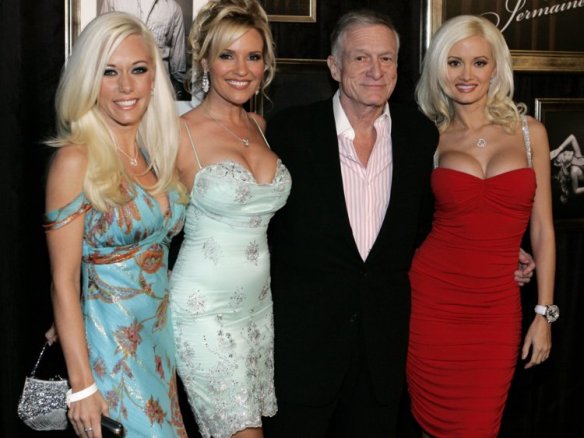
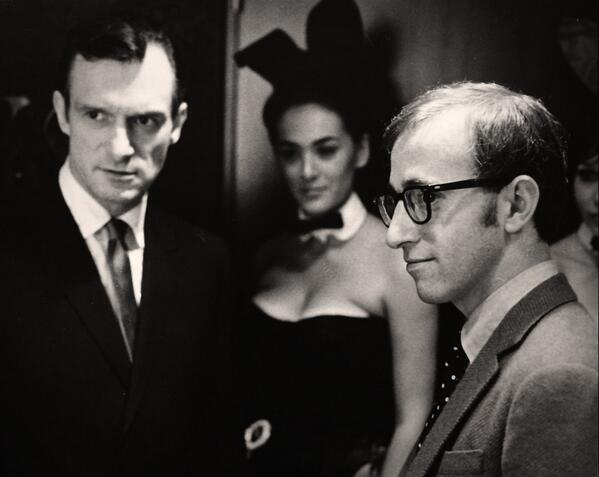




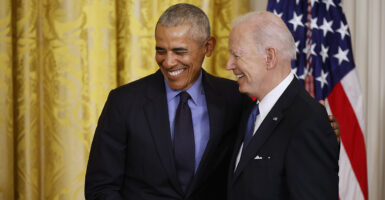



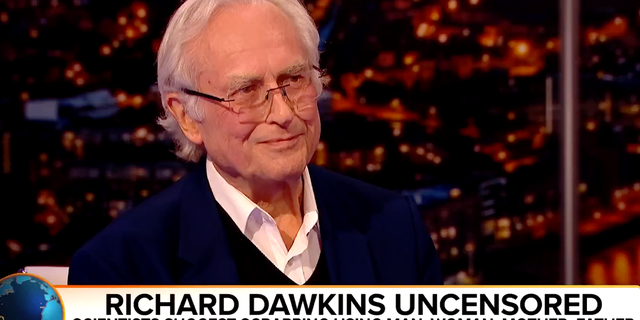
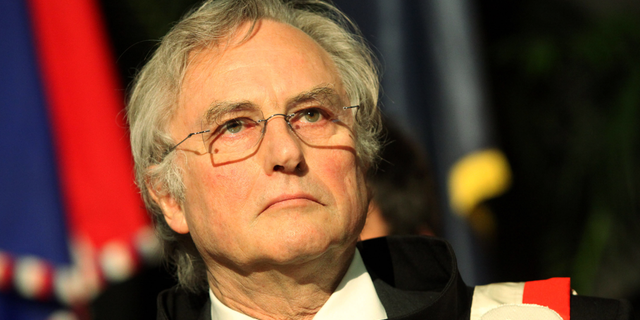



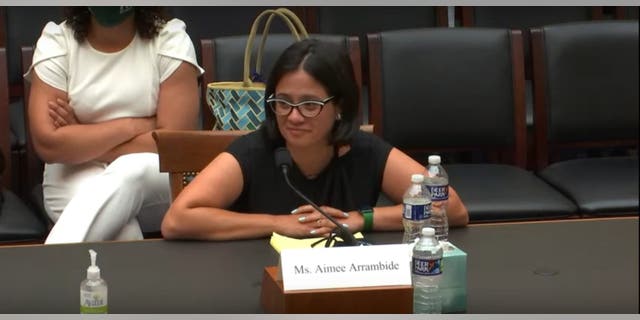

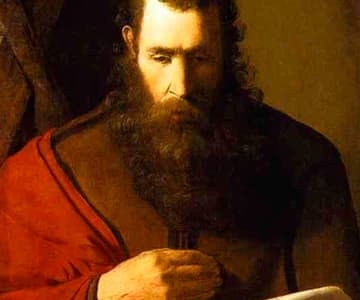


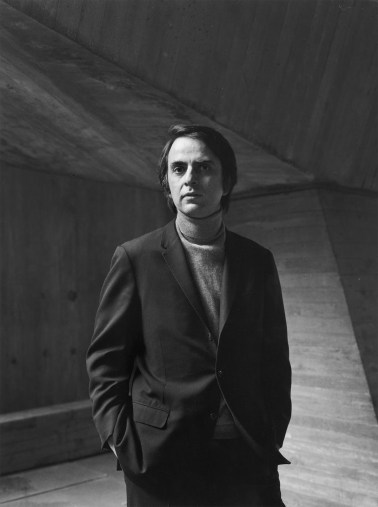


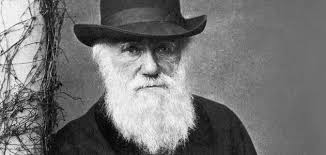
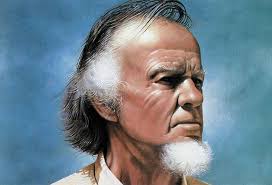

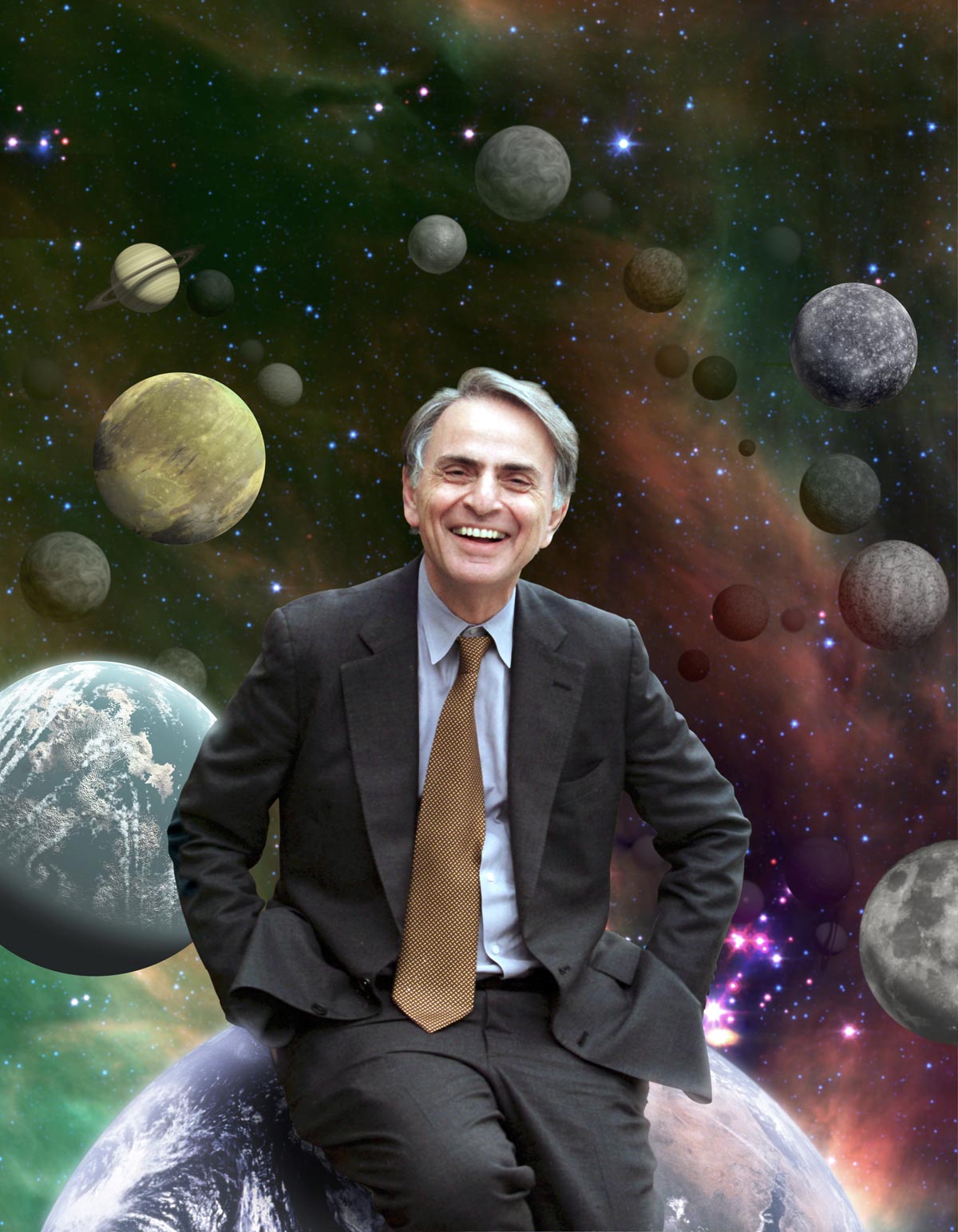 Carl Sagan. Credit: NASA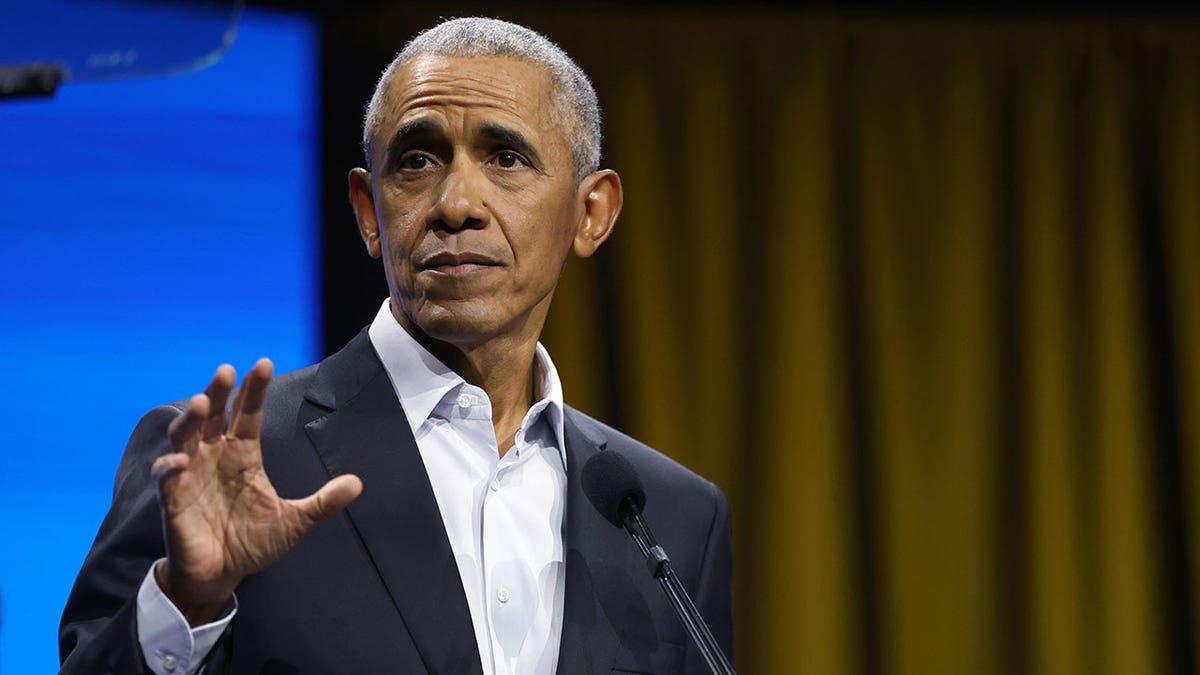






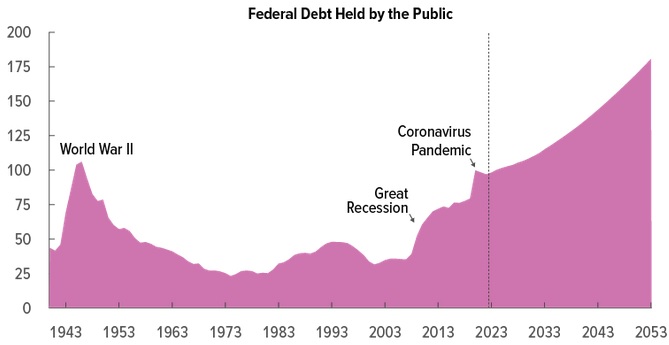





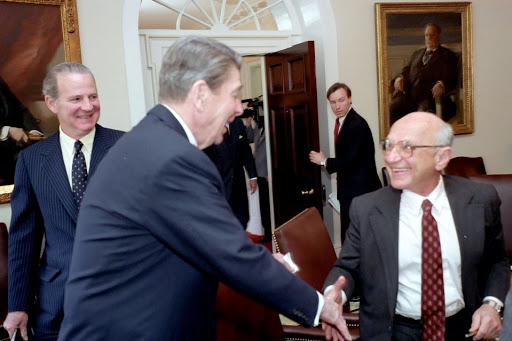
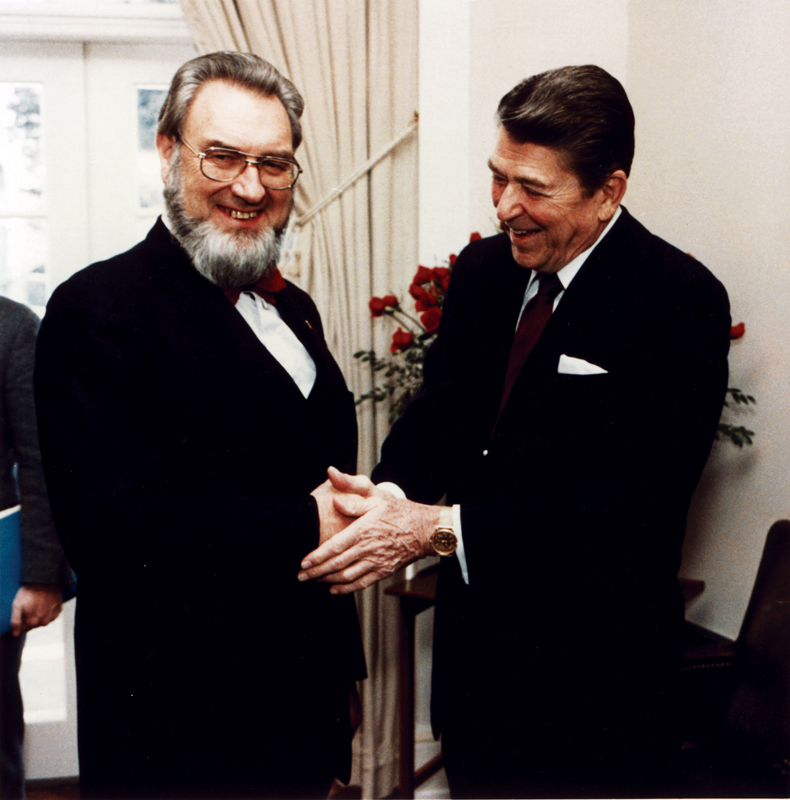









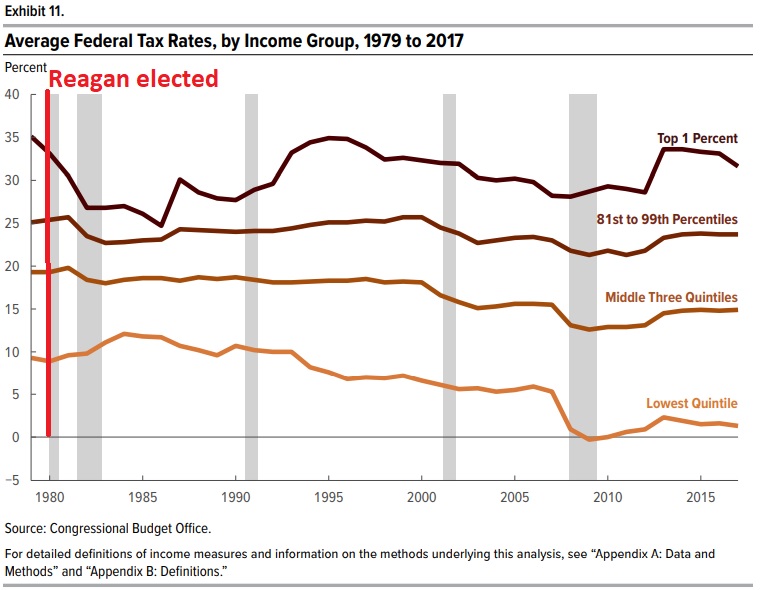
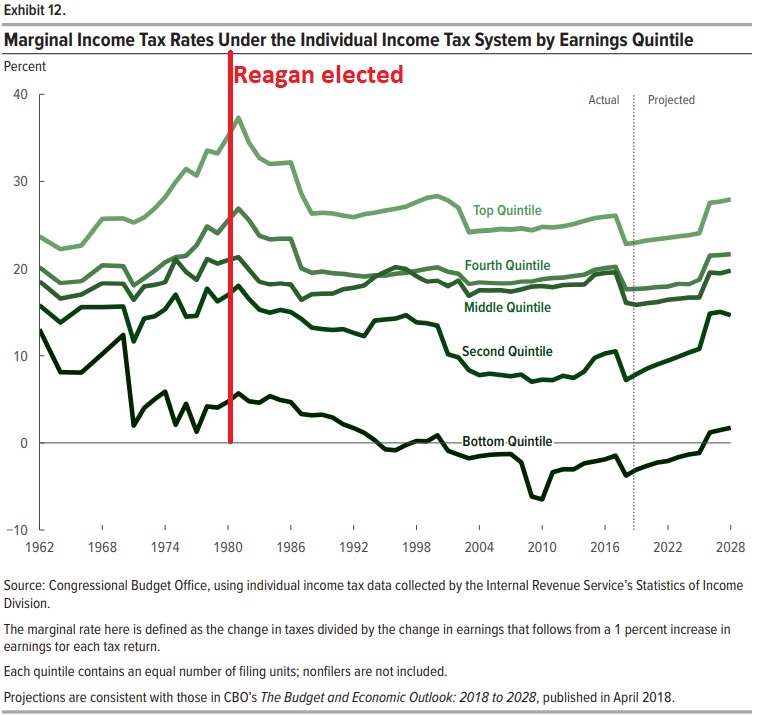
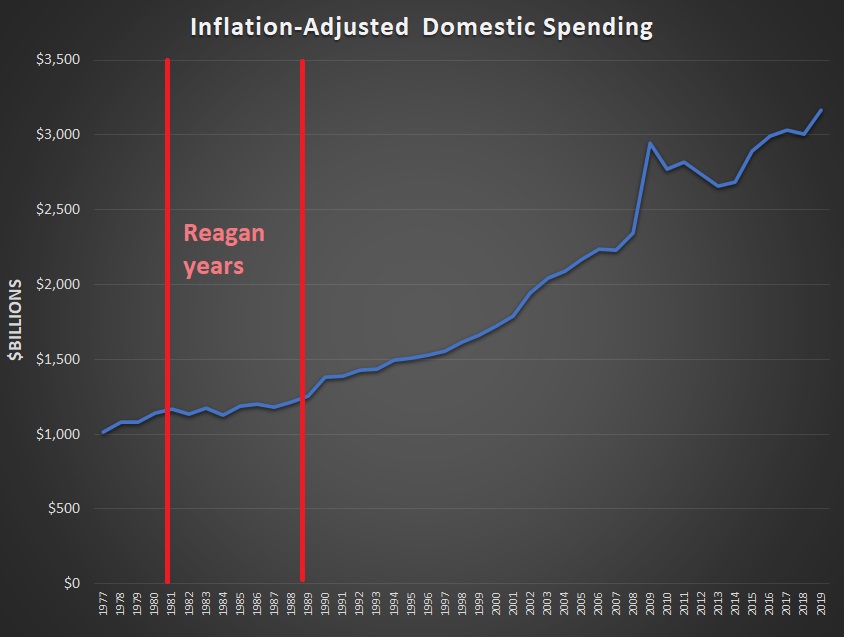

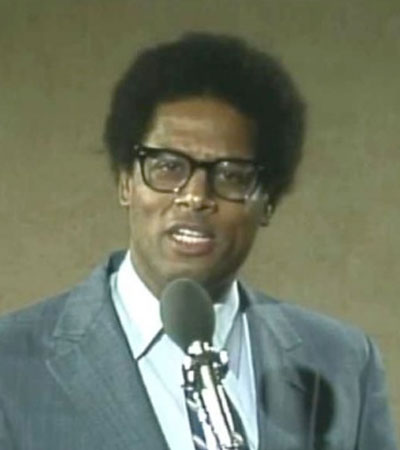


 The Daily Hatch

