Monthly Archives: May 2020

Open Letter #30 on comparison of the Tony of AFTER LIFE to the Solomon of ECCLESIASTES, Psalms 14:1: The fool has said in his heart, “There is no God.” Adrian Rogers notes, “The fool is treating God like he would treat food he did not desire in a cafeteria line. ‘No broccoli for me!’ ” In other words, the fool just doesn’t want God in his life and is a practical atheist!

—-

After Life #1 Trailer

—-

After Life 2 Trailer

—-

On Saturday April 18, 2020 at 6pm in London and noon in Arkansas, I had a chance to ask Ricky Gervais a question on his Twitter Live broadcast which was  “Is Tony a Nihilist?” At the 20:51 mark Ricky answers my question. Below is the video:

—-

—-

If Death is the end then what is the point Kath asks below:

——

Kath: You are an atheist?

—-

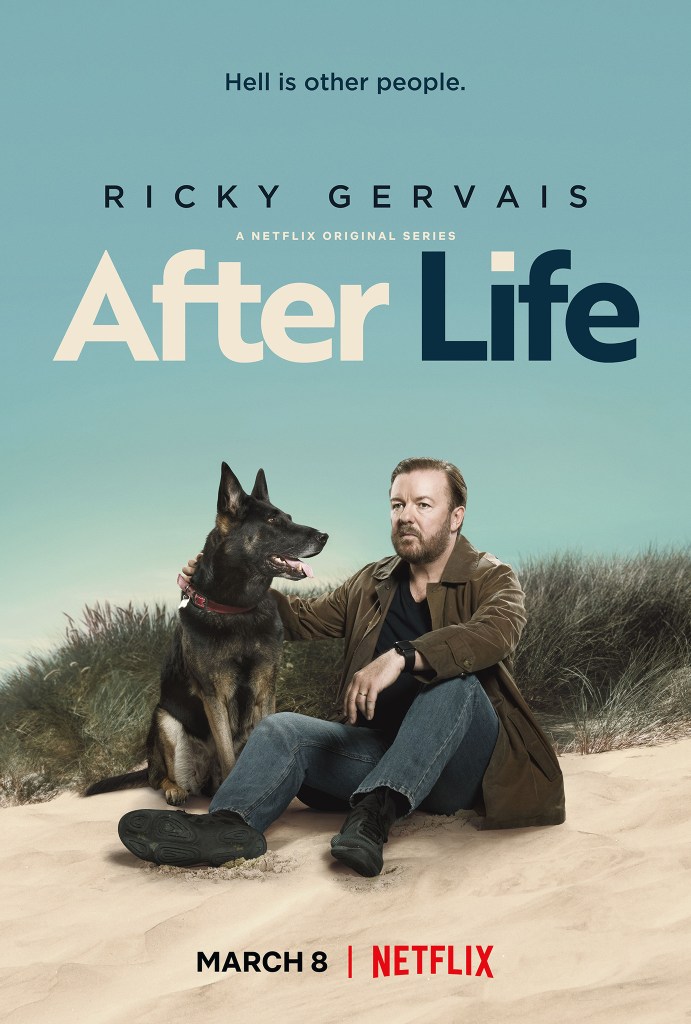
Ricky Gervais plays bereaved husband Tony Johnson in AFTER LIFE 

Tony and his wife Lisa who died 6 months ago of cancer

(Above) Tony and Anne on the bench at the graveyard where their spouses are buried.

May 17, 2020 
Ricky Gervais 


Dear Ricky,  

This is the 30th day in a row that I have written another open letter to you to comment on some of your episodes of AFTER LIFE, and then I wanted to pass along some evidence that indicates the Bible is historically accurate.


As you know I am writing you a series of letters on Solomon’s efforts to find a meaning and purpose to life. Solomon tried to find a meaning and purpose to life UNDER THE SUN in the Book of Ecclesiastes in all of the 6 “L” words and looked into  learning (1:16-18),laughter, ladies, luxuries,  and liquor (2:1-3, 8, 10, 11), and labor (2:4-6, 18-20).  In ECCLESIASTES 3:11 Solomon notes that God has put eternity in our hearts. That includes Tony Johnson’s Heart and that can even been seen in AFTER LIFE.  


In the book “SuperSense” WHY WE BELIEVE IN THE UNBELIEVABLE By BRUCE M. HOOD we read these words: SOMETHING MORE TO REALITY The great American philosopher and early psychologist William James wrote more than one hundred years ago that ordinary people tend to believe not only in the reality of existence but in the presence of “something there”—something intangible that we are bound to infer over and beyond what our normal senses detect.

What Secret Do John McEnroe and David Beckham Share? 5 But the whole array of our instances leads us to a conclusion something like this: It is as if there were in the human consciousness a sense of reality, a feeling of objective presence, a perception of what we may call “something there,” more deep and more general than any of the special and particular “senses” by which the current psychology supposes existent realities to be originally revealed.6 James is telling us that it is natural to think that there is something more to reality. This something is unknown, unseen, and unmeasurable, and beyond natural explanations. It is supernatural. Moreover, this sense of something more is the basis of all the world’s religions, which all agree that the “more” really exists; though some of them hold it to exist in the shape of a personal god or gods, while others are satisfied to conceive it as a stream of ideal tendency embedded in the eternal structures of the world. They all agree, moreover, that it acts as well as exists, and that something is really effected for the better when you throw your life into its hands.7 Why do people think like this? Why do we come to believe that there must be something more to nature than can be measured? Where do these ideas come from? From where do we get our supernatural beliefs? 

The answer to Bruce Hood’s question is found in ECCLESIASTES 3:11!!! “God has planted eternity in the heart of men…”

QUOTE OF DR. ROALD HOFFMANN:

I think this is a human creation because the other part of observing the variety religious experiences that has ever risen in this world out there is that they all take different formats and that convinces me there is no God.

Solomon had all the resources in the world and he found himself searching for meaning in life and trying to come up with answers concerning the afterlife. However, it seems every door he tries to open is locked. Solomon found no lasting satisfaction in riches (Ecclesiastes 2:8-11), pleasure (2:1), education (2:3) and his work (2:4). None of those were able to “fill the God-sized vacuum in his heart” (quote from famous mathematician and philosopher Blaise Pascal).

Ravi Zacharias who is a spiritual hero of mine just tweeted out a few hours ago: The story of the gospel is the story of eternal life. My life is unique and will endure eternally in God’s presence. I will never be “no more.” I will never be lost because I will be with the One who saves me. 

1_After-Life-2-Kerry-Godliman-Ricky-Gervais_Netflix.jpg

I started this series for one reason only and it was because I saw so many similarities between Tony and the Solomon of ECCLESIASTES. Solomon wrote, “God has planted eternity in the heart of men…” Ecclesiastes 3:11 (Living Bible). 

—-

Even Tony seems to feel this same feeling that Solomon had in Ecclesiastes and Tony expressed it in episode 4 of the first season of AFTER LIFE when Tony talks about being with his wife in the future.

Matt: Tony that doesn’t even make sense. You are a rational man. You don’t even believe in an afterlife. 

Tony: I know she is nowhere. Alright. But get this through your head. I would rather be no where with her then somewhere without her. 

0_After-Life-2_Kerry-Gervais-Penelope-Wilton_Netflix.jpg


[From a letter dated August 11, 1918 to Miss Rinder when Bertrand Russell was 46]

It is quite true what you say, that you have never expressed yourself—but who has, that has anything to express? The things one says are all unsuccessful attempts to say something else—something that perhaps by its very nature cannot be said. I know that I have struggled all my life to say something that I never shall learn how to say. And it is the same with you. It is so with all who spend their lives in the quest of something elusive, and yet omnipresent, and at once subtle and infinite. One seeks it in music, and the sea, and sunsets; at times I have seemed very near it in crowds when I have been feeling strongly what they were feeling; one seeks it in love above all. But if one lets oneself imagine one has found it, some cruel irony is sure to come and show one that it is not really found.
The outcome is that one is a ghost, floating through the world without any real contact. Even when one feels nearest to other people, something in one seems obstinately to belong to God and to refuse to enter into any earthly communion—at least that is how I should express it if I thought there was a God. It is odd isn’t it? I care passionately for this world, and many things and people in it, and yet…what is it all? There must be something more important, one feels, though I don’t believe there is. I am haunted—some ghost, from some extra-mundane region, seems always trying to tell me something that I am to repeat to the world, but I cannot understand the message. But it is from listening to the ghost that one comes to feel oneself a ghost. I feel I shall find the truth on my deathbed and be surrounded by people too stupid to understand—fussing about medicines instead of searching for wisdom. 


In the book, THE DEMON-HAUNTED WORLD: Science as a Candle in the Dark by Carl Sagan.  Sagan writes:

The Committee for the Scientific Investigation of Claims of the Paranormal is an organization of scientists, academics, magicians, and others dedicated to skeptical scrutiny of emerging or full-blown pseudo-sciences. It was founded by the University of Buffalo philosopher Paul Kurtz in 1976. I’ve been affiliated with it since its beginning. Its acronym, CSICOP, is pronounced sci-cop C as if it’s an organization of scientists performing a police function  CSICOP publishes a bimonthly periodical called The Skeptical Inquirer. On the day it arrives, I take it home from the office and pore through its pages, wondering what new misunderstandings will be revealed (p. 299).

Back in the late 1990’s I corresponded with many scholars from CSICOP concerning the lie-detector’s ability to detect one’s repressed belief in God. I have a good friend who is a street preacher who preaches on the Santa Monica Promenade in California and during the Q/A sessions he does have lots of atheists that enjoy their time at the mic. When this happens he  always quotes Romans 1:18-19 (Amplified Bible) ” For God’s wrath and indignation are revealed from heaven against all ungodliness and unrighteousness of men, who in their wickedness REPRESS and HINDER the truth and make it inoperative. For that which is KNOWN about God is EVIDENT to them and MADE PLAIN IN THEIR INNER CONSCIOUSNESS, because God  has SHOWN IT TO THEM,”(emphasis mine). Then he  tells the atheist that the atheist already knows that God exists but he has been suppressing that knowledge in unrighteousness. This usually infuriates the atheist.

John Searle commented:

“I think religion is here to stay because it does satisfy [our] needs, but intellectually I don’t think you can justify it. The arguments for god’s existence are uniformly bad…We ought methodologically to be suspicious of believing something we would very much want to believe, something that would make us immensely satisfied. ”

My friend draws some large crowds at times and was thinking about setting up a lie detector test and see if atheists actually secretly believe in God. He discussed this project with me since he knew that I had done a lot of research on the idea about 20 years ago.

Nelson Price in THE EMMANUEL FACTOR (1987) tells the story about Brown Trucking Company in Georgia who used to give polygraph tests to their job applicants. However, in part of the test the operator asked, “Do you believe in God?” In every instance when a professing atheist answered “No,” the test showed the person to be lying. My pastor Adrian Rogers used to tell this same story to illustrate Romans 1:19 and it was his conclusion that “there is no such thing anywhere on earth as a true atheist. If a man says he doesn’t believe in God, then he is lying. God has put his moral consciousness into every man’s heart, and a man has to try to kick his conscience to death to say he doesn’t believe in God.”

It is true that polygraph tests for use in hiring were banned by Congress in 1988.  Mr and Mrs Claude Brown on Aug 25, 1994  wrote me a letter confirming that over 15,000 applicants previous to 1988 had taken the polygraph test and EVERY TIME SOMEONE SAID THEY DID NOT BELIEVE IN GOD, THE MACHINE SAID THEY WERE LYING.

It had been difficult to catch up to the Browns. I had heard about them from Dr. Rogers’ sermon but I did not have enough information to locate them. Dr. Rogers referred me to Dr. Nelson Price and Dr. Price’s office told me that Claude Brown lived in Atlanta. After writing letters to all 9 of the entries for Claude Brown in the Atlanta telephone book, I finally got in touch with the Browns.

Adrian Rogers also pointed out that the Bible does not recognize the theoretical atheist.  Psalms 14:1: The fool has said in his heart, “There is no God.”  Dr Rogers notes, “The fool is treating God like he would treat food he did not desire in a cafeteria line. ‘No broccoli for me!’ ” In other words, the fool just doesn’t want God in his life and is a practical atheist, but not a theoretical atheist. Charles Ryrie in the The Ryrie Study Bible came to the same conclusion on this verse.

Here are the conclusions of the experts I wrote in the secular world concerning the lie detector test and it’s ability to get at the truth:

Professor Frank Horvath of the School of Criminal Justice at Michigan State University has testified before Congress concerning the validity of the polygraph machine. He has stated on numerous occasions that “the evidence from those who have actually been affected by polygraph testing in the workplace is quite contrary to what has been expressed by critics. I give this evidence greater weight than I give to the most of the comments of critics” (letter to me dated October 6, 1994).

There was no better organization suited to investigate this claim concerning the lie detector test than the Committee for the Scientific Investigation of Claims of the Paranormal (CSICOP). This organization changed their name to the Committe for Skeptical Inquiry in 2006. This organization includes anyone who wants to help debunk the whole ever-expanding gamut of misleading, outlandish, and fraudulent claims made in the name of science.

I read The Skeptical Review(publication of CSICOP) for several years during the 90’s and I would write letters to these scientists about taking this project on and putting it to the test.  Below are some of  their responses (15 to 20 years old now):

1st Observation: Religious culture of USA could have influenced polygraph test results.
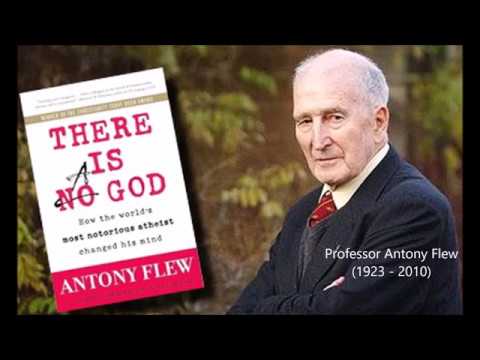
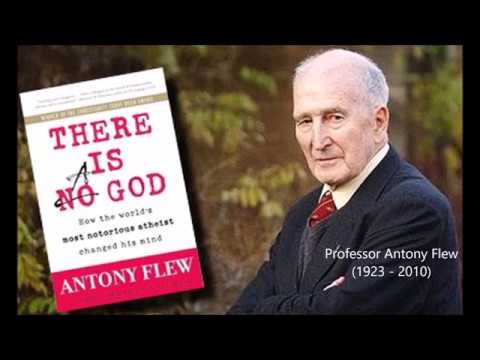
ANTONY FLEW  (formerly of Reading University in England, now deceased, in a letter to me dated 8-11-96) noted, “For all the evidence so far available seems to be of people from a culture in which people are either directly brought up to believe in the existence of God or at least are strongly even if only unconsciously influenced by those who do. Even if everyone from such a culture revealed unconscious belief, it would not really begin to show that — as Descartes maintained— the idea of God is so to speak the Creator’s trademark, stamped on human souls by their Creator at their creation.”

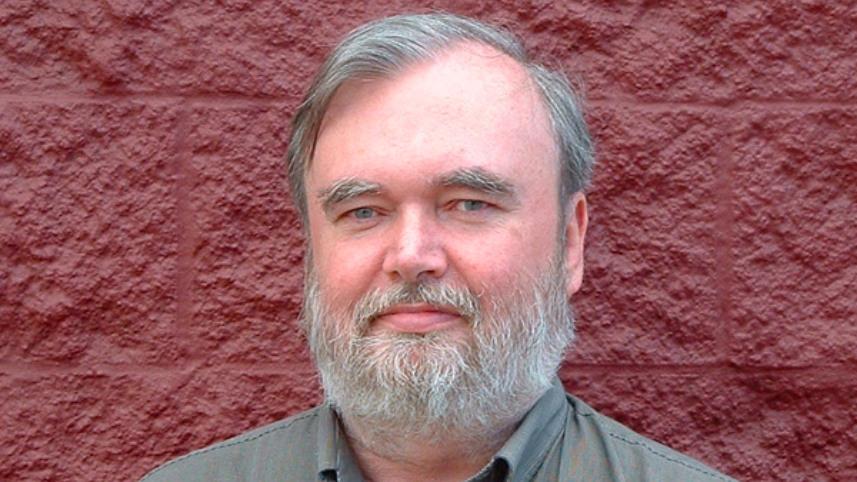
(John R. Cole 1945-2020 pictured below)

2nd Observation: Polygraph Machines do not work. JOHN R. COLE, anthropologist, editor, National Center for Science Education, Dr. WOLF RODER, professor of Geography, University of Cincinnati, Dr. SUSAN BLACKMORE,Dept of Psychology, University of the West of England, Dr. CHRISTOPHER C. FRENCH, Psychology Dept, Goldsmith’s College, University of London, Dr.WALTER F. ROWE, The George Washington University, Dept of Forensic Sciences, Graduate School of Arts and Sciences.

(Dr. Susan Blakemore below)

File:Susan Blackmore (2014).jpg

3rd Observation: The sample size probably was not large enough to apply statistical inference. (These gentlemen made the following assertion before I received the letter back from Claude Brown that revealed that the sample size was over 15,000.) JOHN GEOHEGAN, Chairman of New Mexicans for Science and Reason, Dr. WOLF RODER, and Dr WALTER F. ROWE (in a letter dated July 12, 1994) stated, “The polygraph operator for Brown Trucking Company has probably examined only a few hundred or a few thousand job applicants. I would surmise that only a very small number of these were actually atheists. It seems a statistically insignificant (and distinctly nonrandom) sampling of the 5 billion human beings currently inhabiting the earth. Dr. Nelson Price also seems to be impugning the integrity of anyone who claims to be an atheist in a rather underhanded fashion.”4th Observation: The question (Do you believe in God?)  was out of place and it surprised the applicants. THOMAS GILOVICH, psychologist, Cornell Univ., Dr. ZEN FAULKES, professor of Biology, University of Victoria (Canada), ROBERT CRAIG, Head of Indiana Skeptics Organization, Dr. WALTER ROWE, 5th Observation: Proof that everyone believes in God’s existence does not prove that God does in fact exist. PAUL QUINCEY, Nathional Physical Laboratory,(England), Dr. CLAUDIO BENSKI, Schneider Electric, CFEPP, (France),6th Observation: Both the courts and Congress recognize that lie-detectors don’t work and that is why they were banned in 1988.  (Governments and the military still use them.)Dr WALTER ROWE, KATHLEEN M. DILLION, professor of Psychology, Western New England College.7th Observation:This information concerning Claude Brown’s claim has been passed on to us via a tv preacher and eveybody knows that they are untrustworthy– look at their history. WOLF RODER.

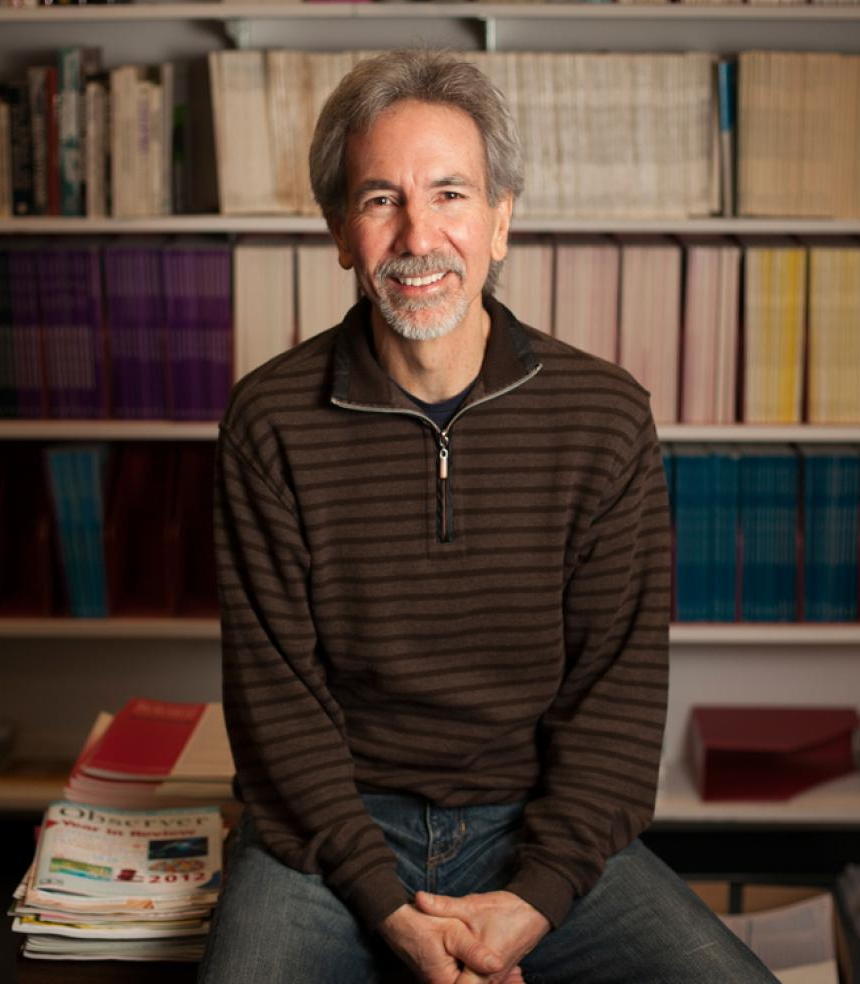
(THOMAS GILOVICH, psychologist, Cornell Univ., pictured below)

Gene Emery, science writer for Providence Journal-Bulletin is a past winner of the CSICOP “Responsibility in Journalism Award” and he had the best suggestion of all when he suggested, “Actually, if you want to make a good case about whether Romans 1:19 is true, arrange to have a polygraph operator (preferably an atheist or agnostic) brought to the next CSICOP meeting. (I’m not a member of CSICOP, by the way, so I can’t give you an official invitation or anything.) If none of the folks at that meeting can convince the machine that they truly believe in God, maybe there is, in fact, an innate willingness to believe in God.”_____________

____________Let me share a story from a former atheist named Jamie Lash:

DOES GOD BELIEVE IN ATHEISTS?

I grew up as an atheist. I thought that the reason I didn’t believe was the lack of evidence that I could see or touch. I kept asking God to show me a sign if He was really there. He didn’t. Despite nine months of searching, I was just as alienated from God as I had ever been.I remember the shock it was when God revealed to me that what I thought was the obstacle wasn’t the obstacle at all! The obstacle was pride and hardness of heart. It wasn’t a head problem; it was a heart problem. I had to come to the place where I was willing to let God be God over my life. Was I willing to confess (i.e. admit) that Jesus is Lord?Years ago Adrian Rogers counseled with a NASA scientist and his severely depressed wife. The wife pointed to her husband and said, “My problem is him.” She went on to explain that her husband was a drinker, a liar, and an adulterer. Dr. Rogers asked the man if he were a Christian. “No!” the man laughed. “I’m an atheist.”“Really?” Dr. Rogers replied. “That means you’re someone who knows that God does not exist.”“That’s right,” said the man.“Would it be fair to say that you don’t know all there is to know in the universe?”“Of course.”“Would it be generous to say you know half of all there is to know?”“Yes.”“Wouldn’t it be possible that God’s existence might be in the half you don’t know?”“Okay, but I don’t think He exists.”“Well then, you’re not an atheist; you’re an agnostic. You’re a doubter.”“Yes, and I’m a big one.”“It doesn’t matter what size you are. I want to know what kind you are.”“What kinds are there?”“There are honest doubters and dishonest doubters. An honest doubter is willing to search out the truth and live by the results; a dishonest doubter doesn’t want to know the truth. He can’t find God for the same reason a thief can’t find a policeman.”“I want to know the truth.”“Would you like to prove that God exists?”“It can’t be done.”“It can be done. You’ve just been in the wrong laboratory. Jesus said, ‘If any man’s will is to do His will, he will know whether my teaching is from God or whether I am speaking on my own authority’ (John 7:17). I suggest you read one chapter of the book of John each day, but before you do, pray something like this, ‘God, I don’t know if You’re there, I don’t know if the Bible is true, I don’t know if Jesus is Your Son. But if You show me that You are there, that the Bible is true, and that Jesus is Your Son, then I will follow You. My will is to do your will.”The man agreed. About three weeks later he returned to Dr. Rogers’s office and invited Jesus Christ to be his Savior and Lord.A man might be convinced that he’s being very sincere in his search for God, but until he humbles himself, he will never find Him.
— Jamie Lash

(This story above quoted by Jamie Lash was told by Adrian Rogers in June of 1972 in Philadelphia at the Southern Baptist Pastors Conference in his sermon ELISHA MAN OF GOD.)


Is the Bible historically accurate? Here are some of the posts I have done in the past on the subject:


1. 
The Babylonian Chronicle
of Nebuchadnezzars Siege of Jerusalem

This clay tablet is a Babylonian chronicle recording events from 605-594BC. It was first translated in 1956 and is now in the British Museum. The cuneiform text on this clay tablet tells, among other things, 3 main events: 1. The Battle of Carchemish (famous battle for world supremacy where Nebuchadnezzar of Babylon defeated Pharoah Necho of Egypt, 605 BC.), 2. The accession to the throne of Nebuchadnezzar II, the Chaldean, and 3. The capture of Jerusalem on the 16th of March, 598 BC.

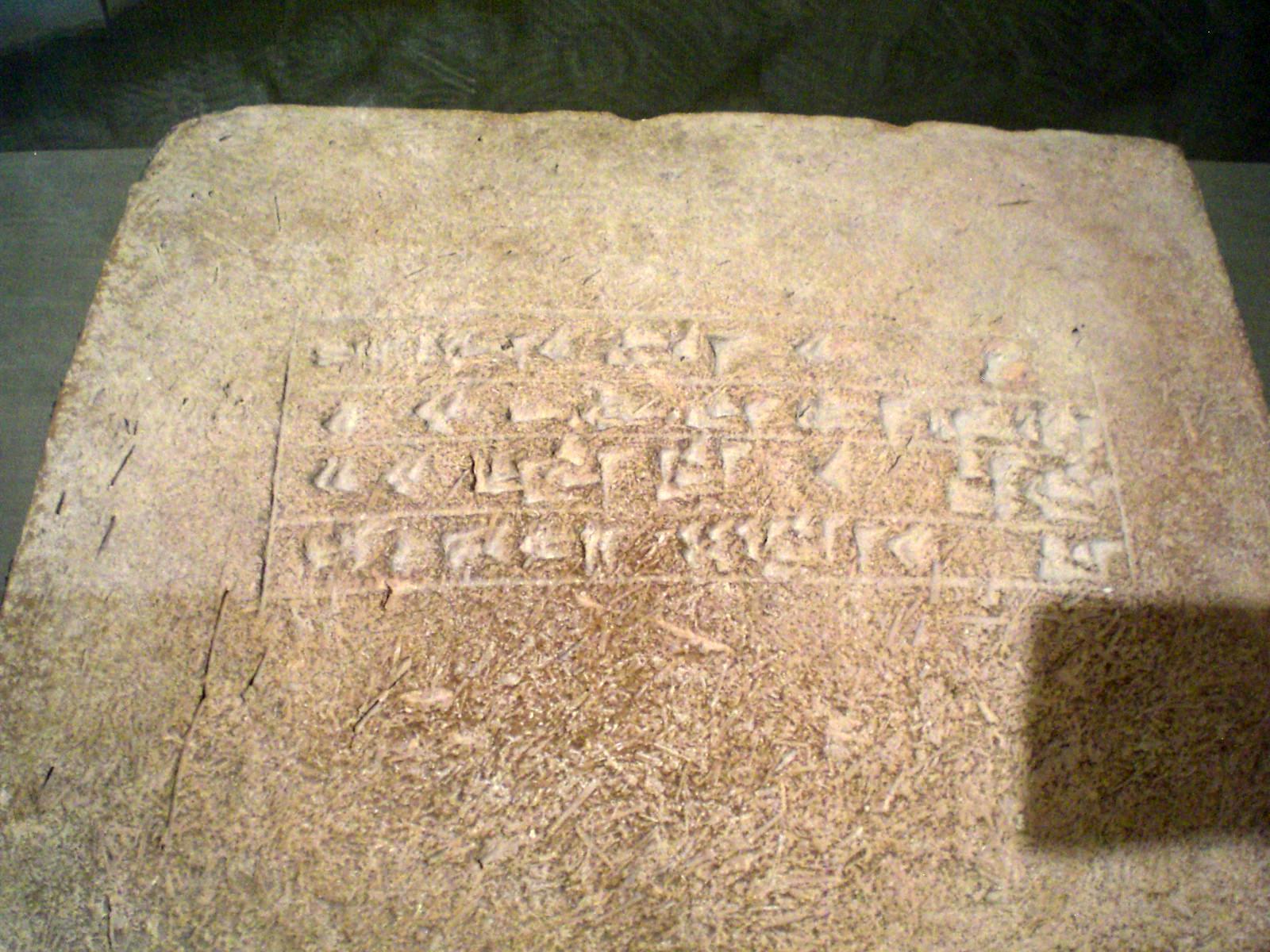
2. Hezekiah’s Siloam Tunnel Inscription.

King Hezekiah of Judah ruled from 721 to 686 BC. Fearing a siege by the Assyrian king, Sennacherib, Hezekiah preserved Jerusalem’s water supply by cutting a tunnel through 1,750 feet of solid rock from the Gihon Spring to the Pool of Siloam inside the city walls (2 Kings 20; 2 Chron. 32). At the Siloam end of the tunnel, an inscription, presently in the archaeological museum at Istanbul, Turkey, celebrates this remarkable accomplishment.

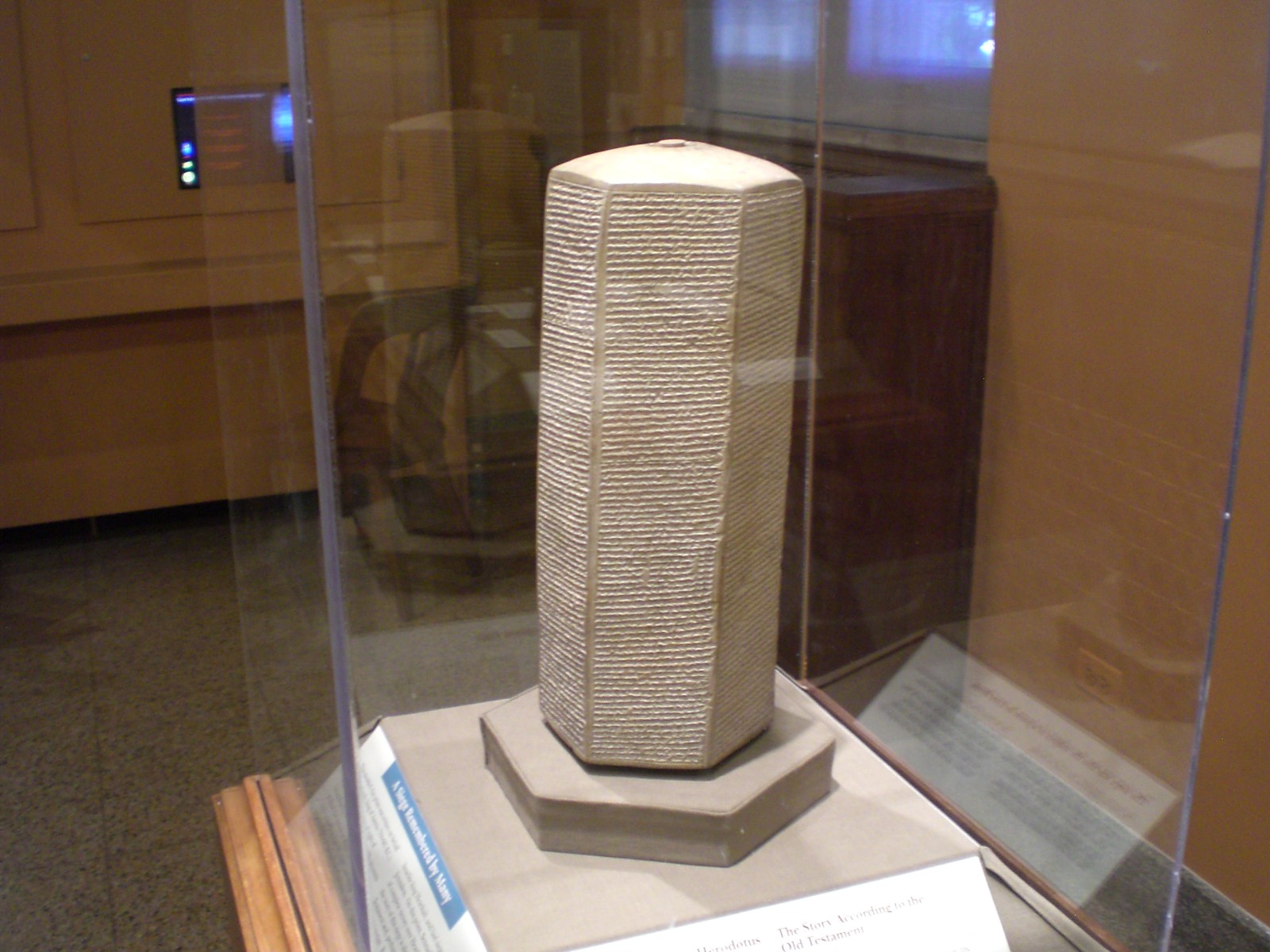
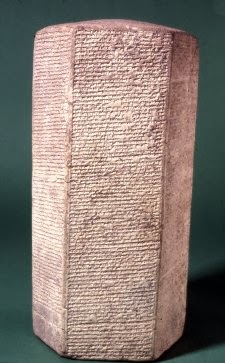
3. Taylor Prism (Sennacherib Hexagonal Prism)

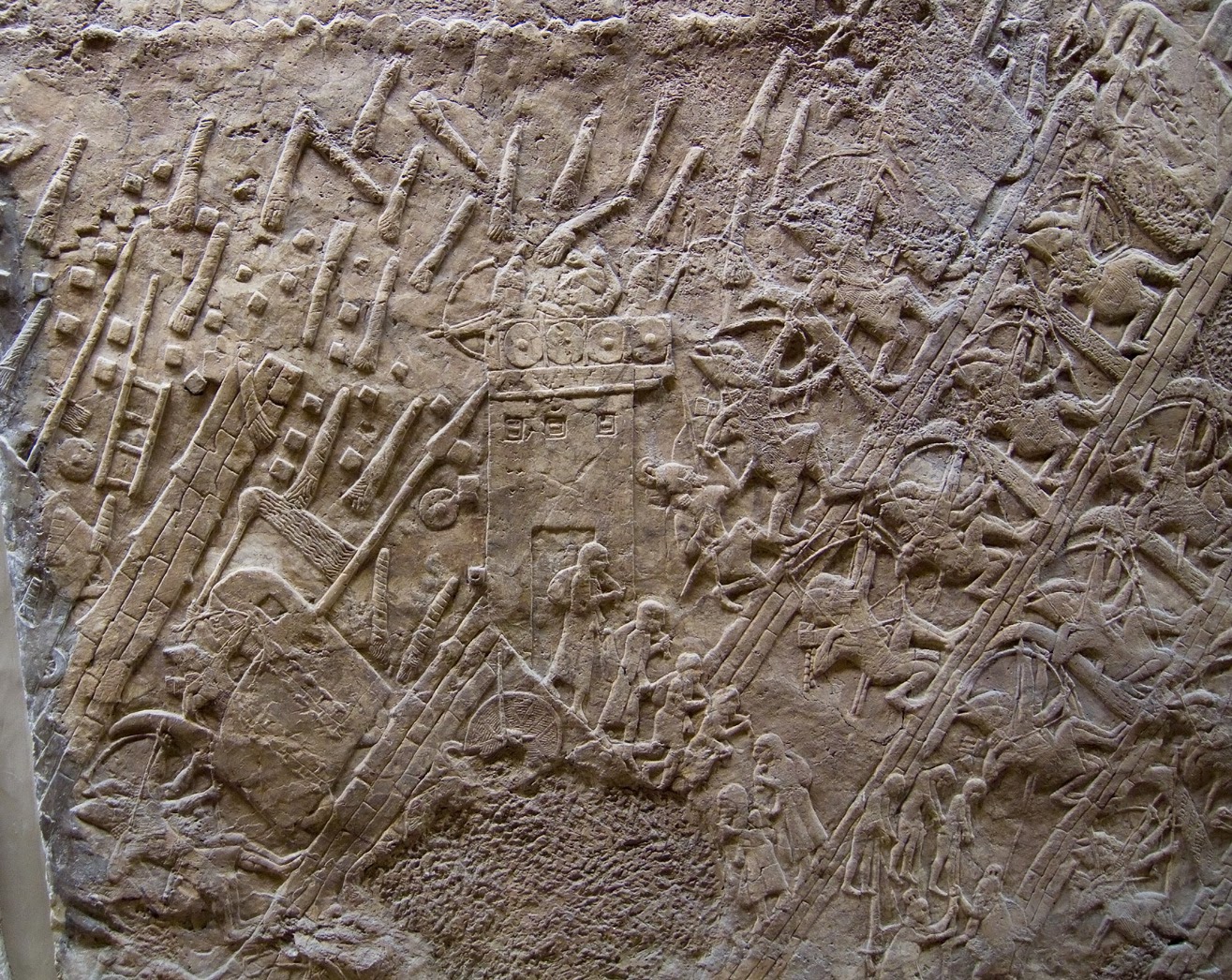
It contains the victories of Sennacherib himself, the Assyrian king who had besieged Jerusalem in 701 BC during the reign of king Hezekiah, it never mentions any defeats. On the prism Sennacherib boasts that he shut up “Hezekiah the Judahite” within Jerusalem his own royal city “like a caged bird.” This prism is among the three accounts discovered so far which have been left by the Assyrian king Sennacherib of his campaign against Israel and Judah.

4. Biblical Cities Attested Archaeologically.

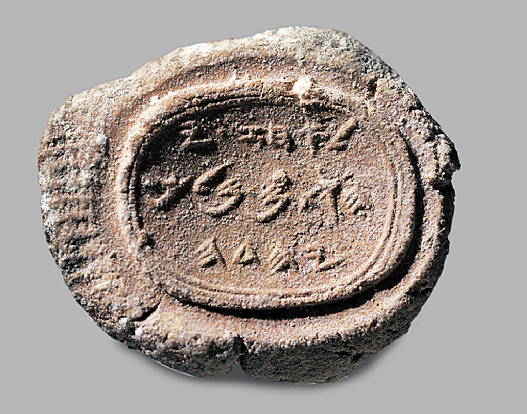
In addition to Jericho, places such as Haran, Hazor, Dan, Megiddo, Shechem, Samaria, Shiloh, Gezer, Gibeah, Beth Shemesh, Beth Shean, Beersheba, Lachish, and many other urban sites have been excavated, quite apart from such larger and obvious locations as Jerusalem or Babylon. Such geographical markers are extremely significant in demonstrating that fact, not fantasy, is intended in the Old Testament historical narratives;

5. The Discovery of the Hittites

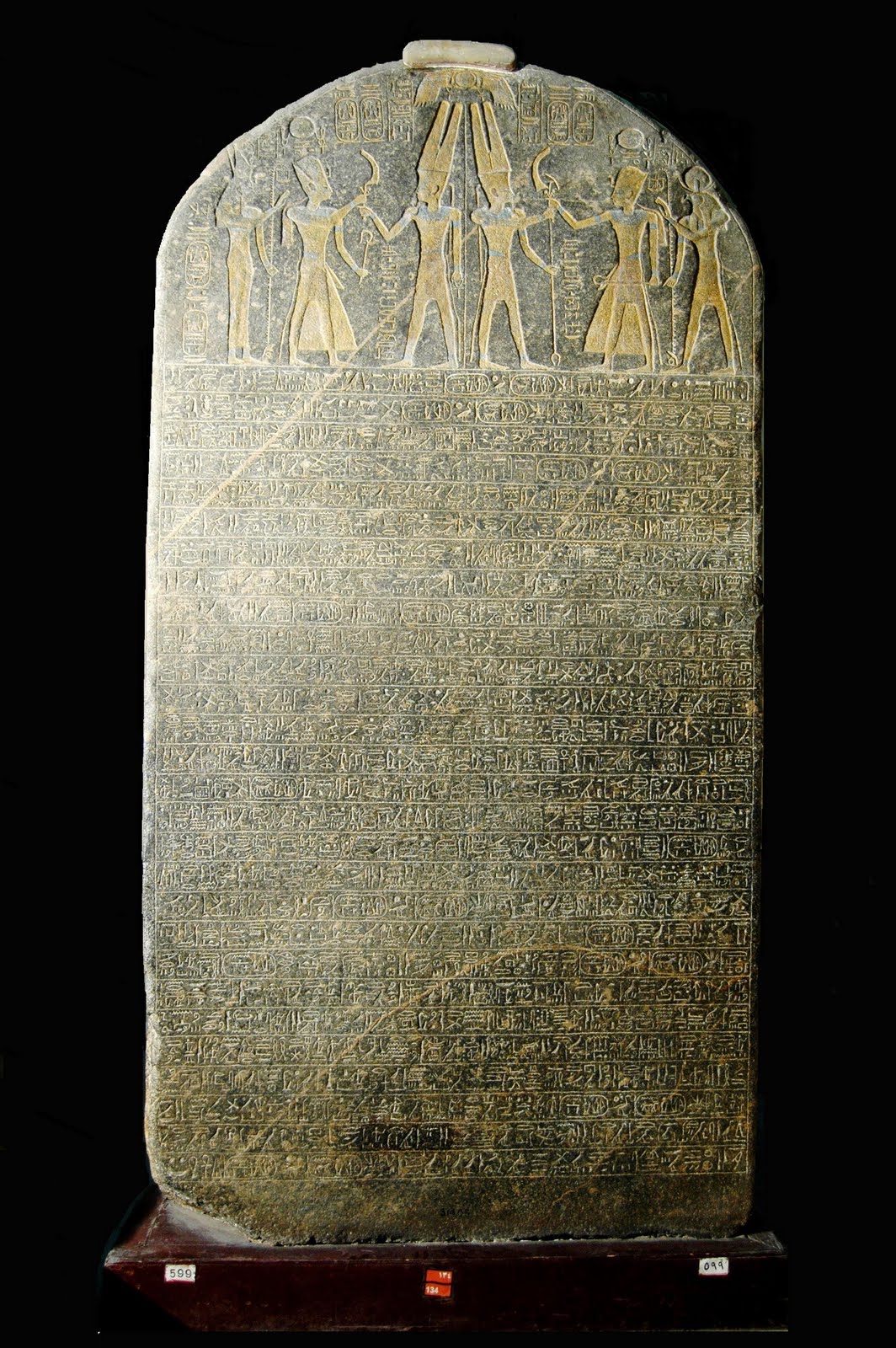
Most doubting scholars back then said that the Hittites were just a “mythical people that are only mentioned in the Bible.” Some skeptics pointed to the fact that the Bible pictures the Hittites as a very big nation that was worthy of being coalition partners with Egypt (II Kings 7:6), and these bible critics would assert that surely we would have found records of this great nation of Hittites.  The ironic thing is that when the Hittite nation was discovered, a vast amount of Hittite documents were found. Among those documents was the treaty between Ramesses II and the Hittite King.

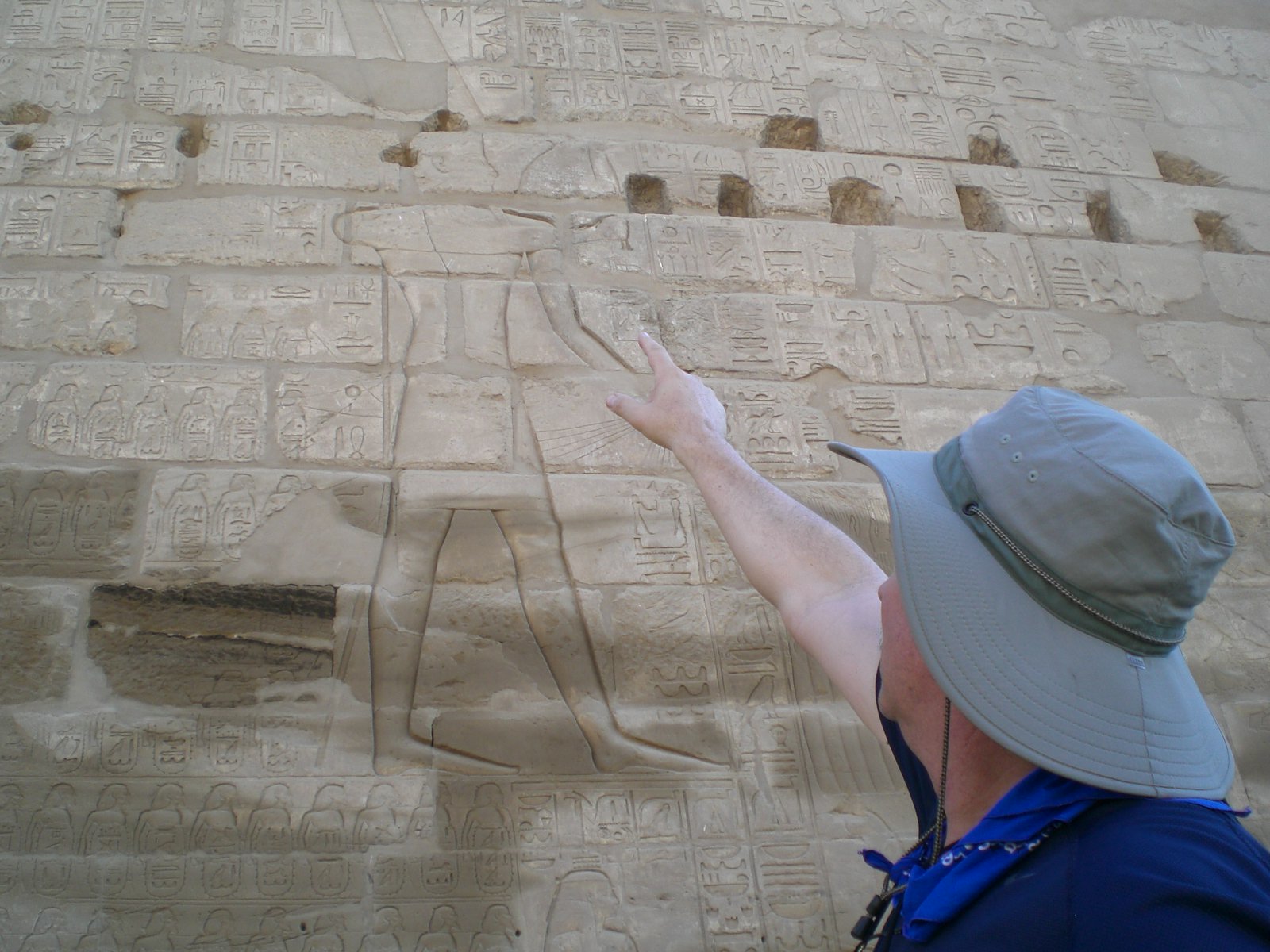
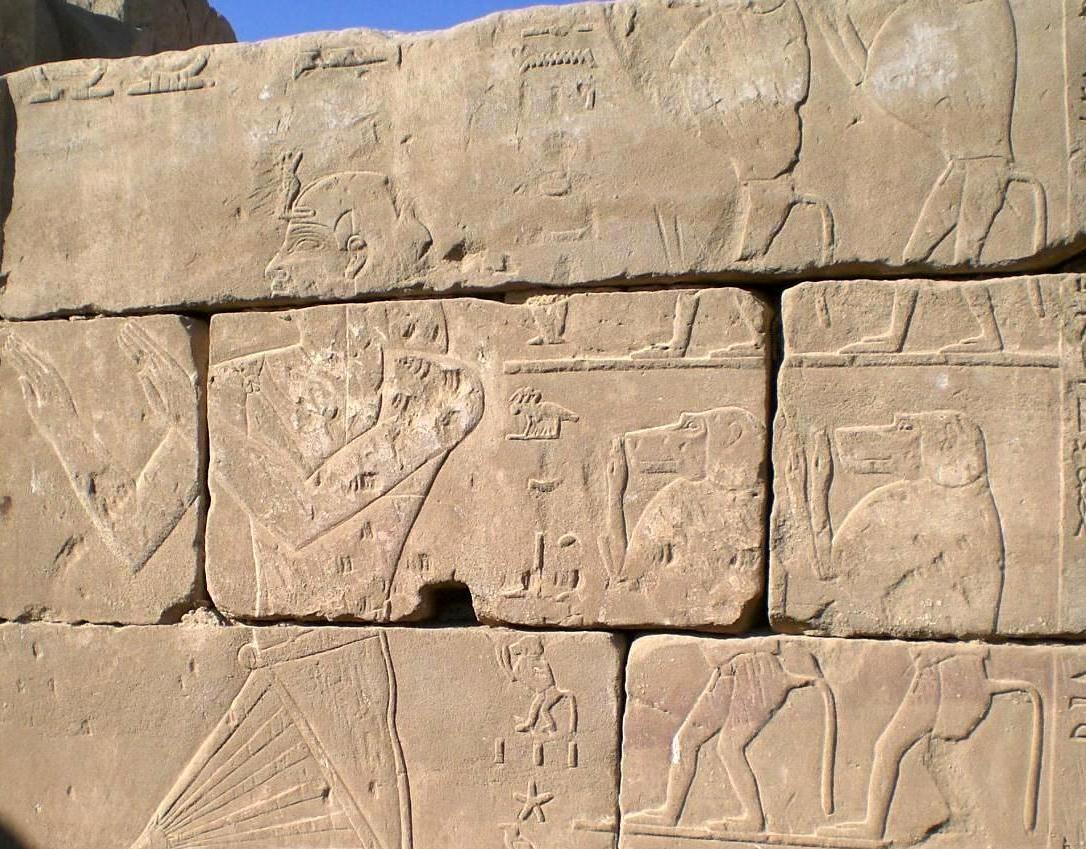
6.Shishak Smiting His Captives

The Bible mentions that Shishak marched his troops into the land of Judah and plundered a host of cities including Jerusalem,  this has been confirmed by archaeologists. Shishak’s own record of his campaign is inscribed on the south wall of the Great Temple of Amon at Karnak in Egypt. In his campaign he presents 156 cities of Judea to his god Amon.

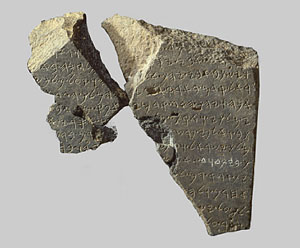
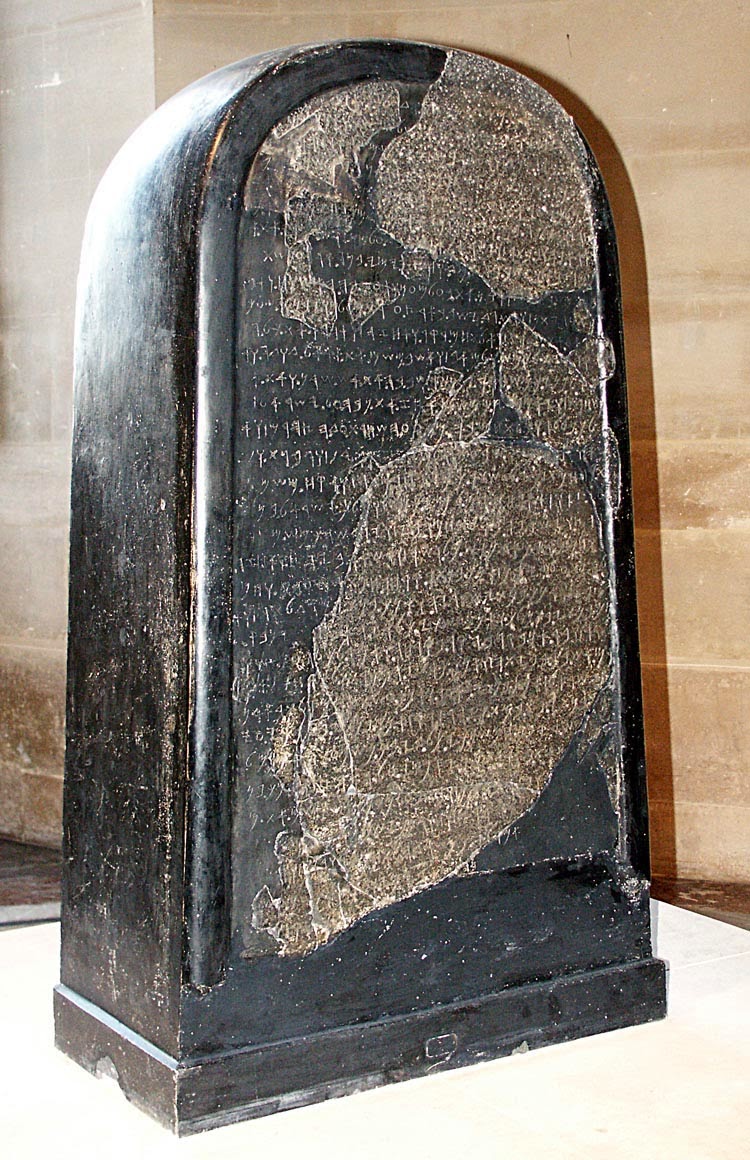
7. Moabite Stone

The Moabite Stone also known as the Mesha Stele is an interesting story. The Bible says in 2 Kings 3:5 that Mesha the king of Moab stopped paying tribute to Israel and rebelled and fought against Israel and later he recorded this event. This record from Mesha has been discovered.

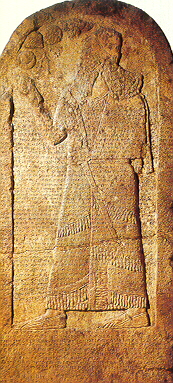
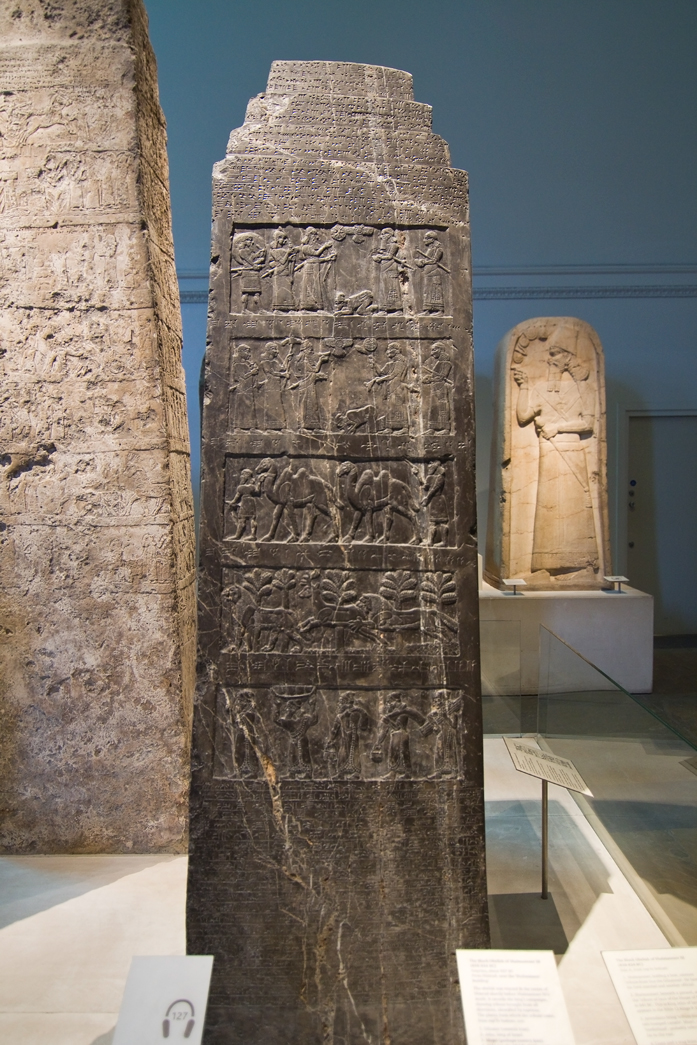
8Black Obelisk of Shalmaneser III

The tribute of Jehu, son of Omri, silver, gold, bowls of gold, chalices of gold, cups of gold, vases of gold, lead, a sceptre for the king, and spear-shafts, I have received.”


The answer to find meaning in life is found in putting your faith and trust in Jesus Christ. The Bible is true from cover to cover and can be trusted.

Thank you again for your time and I know how busy you are.

Sincerely,

Everette Hatcher, everettehatcher@gmail.comhttp://www.thedailyhatch.org, cell ph 501-920-5733, 13900 Cottontail Lane, Alexander, AR 72002

PS: What is the meaning of life? Find it in the end of the open letter I wrote to you on April 23, 2020. 

Below is the workforce of THE TAMBURY GAZETTE 

Seen below is the third episode of AFTERLIFE (season 1) when Matt takes Tony to a comedy club with front row seats to cheer him up but it turns into disaster!!!

——

—-

Part 1 “Why have integrity in Godless Darwinian Universe where Might makes Right?”

Part 2 “My April 14, 2016 Letter to Ricky mentioned Book of Ecclesiastes and the Meaninglessness of Life”

Part 3 Letter about Brandon Burlsworth concerning suffering and pain and evil in the world.  “Why didn’t Jesus save her [from cancer]?” (Tony’s 10 year old nephew George in episode 2)

Part 4 Letter on Solomon on Death Tony in episode one, “It should be everyone’s moral duty to kill themselves.”

Part 5 Letter on subject of Learning in Ecclesiastes “I don’t read books of fiction but mainly science and philosophy”

Part 6 Letter on Luxuries in Ecclesiastes Part 6, The Music of AFTERLIFE (Part A)

Part 7 Letter on Labor in Ecclesiastes My Letter to Ricky on Easter in 2017 concerning Book of Ecclesiastes and the legacy of a person’s life work

Part 8 Letter on Liquor in Ecclesiastes Tony’s late wife Lisa told him, “Don’t get drunk all the time alright? It will only make you feel worse in the log run!”

Part 9 Letter on Laughter in Ecclesiastes , I said of laughter, “It is foolishness;” and of mirth, “What does it accomplish?” Ecclesiastes 2:2

Part 10 Final letter to Ricky on Ladies in Ecclesiastes “I gathered a chorus of singers to entertain me with song, and—most exquisite of all pleasures— voluptuous maidens for my bed…behold, all was vanity and a striving after wind, and there was nothing to be gained under the sun” Ecclesiastes 2:8-11.

Part 11 Letter about Daniel Stanhope and optimistic humanism  “If man has been kicked up out of that which is only impersonal by chance , then those things that make him man-hope of purpose and significance, love, motions of morality and rationality, beauty and verbal communication-are ultimately unfulfillable and thus meaningless.” (Francis Schaeffer)

Part 12 Letter on how pursuit of God is only way to get Satisfaction Dan Jarrell “[In Ecclesiastes] if one seeks satisfaction they will never find it. In fact, every pleasure will be fleeting and can not be sustained, BUT IF ONE SEEKS GOD THEN ONE FINDS SATISFACTION”

Part 13 Letter to Stephen Hawking on Solomon realizing he will die just as a dog will die “For men and animals both breathe the same air, and both die. So mankind has no real advantage over the beasts; what an absurdity!” Ecclesiastes

Part 14 Letter to Stephen Hawking on 3 conclusions of humanism and Bertrand Russell destruction of optimistic humanism. “That Man is the product of causes which had no prevision of the end they were achieving; that his origin, his growth, his hopes and fears, his loves and his beliefs, are but the outcome of accidental collocations of atoms—no philosophy which rejects them can hope to stand. Only within the scaffolding of these truths, only on the firm foundation of unyielding despair, can the soul’s habitation henceforth be safely built.”(Bertrand Russell, Free Man’s Worship)

Part 15 Letter to Stephen Hawking on Leonardo da Vinci and Solomon and Meaningless of life “I hate life. As far as I can see, what happens on earth is a bad business. It’s smoke—and spitting into the wind” Ecclesiastes Book of Ecclesiastes Part 15 “I hate life. As far as I can see, what happens on earth is a bad business. It’s smoke—and spitting into the wind” Ecclesiastes 2:17

Part 16 Letter to Stephen Hawking on Solomon’s longing for death but still fear of death and 5 conclusions of humanism on life UNDER THE SUN. Francis Schaeffer “Life is just a series of continual and unending cycles and man is stuck in the middle of the cycle. Youth, old age, Death. Does Solomon at this point embrace nihilism? Yes!!! He exclaims that the hates life (Ecclesiastes 2:17), he longs for death (4:2-3) Yet he stills has a fear of death (2:14-16)”

Mandeep Dhillon as Sandy on her first assignment in ‘After Life’. (Twitter)

A still from ‘After Life’ that captures the vibe of the Tambury Gazette. (Twitter)

Michael Scott of THE OFFICE (USA) with Ricky Gervais 

After Life on Netflix

After Life on Netflix stars Ricky Gervais as a bereaved husband (Image: Netflix)

—-

Psychiatrist played by Paul Kaye seen below.

The sandy beach walk

Tony Johnson with his dog Brandi seen below:

—-

Related posts:

Taking on Ark Times Bloggers on various issues Part I “Old Testament Bible Prophecy” includes the film TRUTH AND HISTORY and article ” Jane Roe became pro-life”

April 12, 2013 – 5:45 am

I have gone back and forth and back and forth with many liberals on the Arkansas Times Blog on many issues such as abortion, human rights, welfare, poverty, gun control  and issues dealing with popular culture. Here is another exchange I had with them a while back. My username at the Ark Times Blog is Saline […]By Everette Hatcher III | Posted in Biblical ArchaeologyFrancis SchaefferProlife | Edit|Comments (0)

John MacArthur on fulfilled prophecy from the Bible Part 2

August 8, 2013 – 1:28 am

I have posted many of the sermons by John MacArthur. He is a great bible teacher and this sermon below is another great message. His series on the Book of Proverbs was outstanding too.  I also have posted several of the visits MacArthur made to Larry King’s Show. One of two most popular posts I […]By Everette Hatcher III | Posted in Adrian RogersCurrent Events | Edit|Comments (0)

John MacArthur on fulfilled prophecy from the Bible Part 1

August 6, 2013 – 1:24 am

I have posted many of the sermons by John MacArthur. He is a great bible teacher and this sermon below is another great message. His series on the Book of Proverbs was outstanding too.  I also have posted several of the visits MacArthur made to Larry King’s Show. One of two most popular posts I […]By Everette Hatcher III | Posted in Adrian RogersCurrent Events |Tagged Bible Prophecyjohn macarthur | Edit|Comments (0)

John MacArthur: Fulfilled prophecy in the Bible? (Ezekiel 26-28 and the story of Tyre, video clips)

April 5, 2012 – 10:39 am

Prophecy–The Biblical Prophesy About Tyre.mp4 Uploaded by TruthIsLife7 on Dec 5, 2010 A short summary of the prophecy about Tyre and it’s precise fulfillment. Go to this link and watch the whole series for the amazing fulfillment from secular sources. http://www.youtube.com/watch?v=qvt4mDZUefo________________ John MacArthur on the amazing fulfilled prophecy on Tyre and how it was fulfilled […]By Everette Hatcher III | Posted in Biblical Archaeology | Edit|Comments (1)

John MacArthur on the Bible and Science (Part 2)

August 1, 2013 – 12:10 am

John MacArthur on the Bible and Science (Part 2) I have posted many of the sermons by John MacArthur. He is a great bible teacher and this sermon below is another great message. His series on the Book of Proverbs was outstanding too.  I also have posted several of the visits MacArthur made to Larry […]By Everette Hatcher III | Posted in Current Events | Edit|Comments (0)

John MacArthur on the Bible and Science (Part 1)

July 30, 2013 – 1:32 am

John MacArthur on the Bible and Science (Part 1) I have posted many of the sermons by John MacArthur. He is a great bible teacher and this sermon below is another great message. His series on the Book of Proverbs was outstanding too.  I also have posted several of the visits MacArthur made to Larry […]By Everette Hatcher III | Posted in Current Events | Edit|Comments (0)

Adrian Rogers: “Why I believe the Bible is true”

July 9, 2013 – 8:38 am

Adrian Rogers – How you can be certain the Bible is the word of God Great article by Adrian Rogers. What evidence is there that the Bible is in fact God’s Word? I want to give you five reasons to affirm the Bible is the Word of God. First, I believe the Bible is the […]By Everette Hatcher III | Posted in Adrian RogersBiblical Archaeology | Edit|Comments (0)

The Old Testament is Filled with Fulfilled Prophecy by Jim Wallace

June 24, 2013 – 9:47 am

Is there any evidence the Bible is true? Articles By PleaseConvinceMe Apologetics Radio The Old Testament is Filled with Fulfilled Prophecy Jim Wallace A Simple Litmus Test There are many ways to verify the reliability of scripture from both internal evidences of transmission and agreement, to external confirmation through archeology and science. But perhaps the […]By Everette Hatcher III | Posted in Biblical ArchaeologyCurrent Events | Edit|Comments (0)

Taking on Ark Times Bloggers on various issues Part M “Old Testament prophecy fulfilled?”Part 3(includes film DEATH BY SOMEONE’S CHOICE)

April 19, 2013 – 1:52 am

  I have gone back and forth and back and forth with many liberals on the Arkansas Times Blog on many issues such as abortion, human rights, welfare, poverty, gun control  and issues dealing with popular culture. Here is another exchange I had with them a while back. My username at the Ark Times Blog is […]By Everette Hatcher III | Posted in Francis SchaefferProlife | Edit|Comments (0)

Evidence for the Bible

March 27, 2013 – 9:43 pm

Here is some very convincing evidence that points to the view that the Bible is historically accurate. Archaeological and External Evidence for the Bible Archeology consistently confirms the Bible! Archaeology and the Old Testament Ebla tablets—discovered in 1970s in Northern Syria. Documents written on clay tablets from around 2300 B.C. demonstrate that personal and place […]By Everette Hatcher III | Posted in Biblical Archaeology | E

——

Adrian Rogers on Evolution

—-

Charles Darwin Autobiography

Francis Schaeffer “The Age of NONREASON”

——-

—-

—-

—-

Open Letter #29 to Ricky Gervais on comparison of the Tony of AFTER LIFE to the Solomon of ECCLESIASTES, The excellent song “Passing Afternoon” by IRON & WINE emphasizes the passing of time so quickly and how we have our regrets in our short lives between birth and death and how our lives go from the Springtime to Winter

—-

After Life #1 Trailer

—-

After Life 2 Trailer

—-

On Saturday April 18, 2020 at 6pm in London and noon in Arkansas, I had a chance to ask Ricky Gervais a question on his Twitter Live broadcast which was  “Is Tony a Nihilist?” At the 20:51 mark Ricky answers my question. Below is the video:

—-

—-

If Death is the end then what is the point Kath asks below:

——

Kath: You are an atheist?

—-

Ricky Gervais plays bereaved husband Tony Johnson in AFTER LIFE 

Tony and his wife Lisa who died 6 months ago of cancer

(Above) Tony and Anne on the bench at the graveyard where their spouses are buried.

May 16, 2020 
Ricky Gervais 


Dear Ricky,  

This is the 29th day in a row that I have written another open letter to you to comment on some of your episodes of AFTER LIFE, and then I wanted to pass along some evidence that indicates the Bible is historically accurate.

There is an excellent song “Passing Afternoon” by IRON & WINE that emphasizes the passing of time so quickly and how we have our regrets in our short lives between birth and death and how our lives go from the Springtime to Winter. Actually this song is played as Tony Johnson is getting ready to speak at his father’s funeral, so this song selection was a pivotal selection by you for this episode. The words go as follows:

There are times that walk from you like some passing afternoon
Summer warmed the open window of her honeymoon
And she chose a yard to burn but the ground remembers her
Wooden spoons, her children stir her Bougainvillea bloomsThere are things that drift away like our endless, numbered days
Autumn blew the quilt right off the perfect bed she made
And she’s chosen to believe in the hymns her mother sings
Sunday pulls its children from the piles of fallen leavesThere are sailing ships that pass all our bodies in the grass
Springtime calls her children until she let’s them go at last
And she’s chosen where to be, though she’s lost her wedding ring
Somewhere near her misplaced jar of Bougainvillea seedsThere are things we can’t recall, Blind as night that finds us all
Winter tucks her children in, her fragile china dolls
But my hands remember hers, rolling around the shaded ferns
Naked arms, her secrets still like songs I’d never learnedThere are names across the sea, only now I do believe
Sometimes, with the window closed, she’ll sit and think of me
But she’ll mend his tattered clothes and they’ll kiss as if they know
A baby sleeps in all our bones, so scared to be alone (End of lyrics) 

Ricky we both have something in common and that is we both were born in 1961 and just 39 days apart. Today I am turning 59 years old and many people call that middle age but how many 118 year old people do you see walking around?    I also  have started to think about the end of my life in recent days since it is fast approaching all of us. King Solomon in his book of ECCLESIASTES talks about death quite a lot and he wrote a passage in chapter 2 that I wanted to quote and then I wanted to include some comments from the preacher Ken Whitten in his sermon HAUNTED BY DEATH:Ken Whitten pastor of Tampa’s Idlewild Baptist Church.

Ravi Zacharias

The Christian Scholar Ravi Zacharias noted, “The key to understanding the Book of Ecclesiastes is the term UNDER THE SUN — What that literally means is you lock God out of a closed system and you are left with only this world of Time plus Chance plus matter.”

King Solomon gives us a little key to his heart in the Book of Ecclesiastes when he said he looked for everything imaginable tofind satisfaction UNDER THE SUN.  Now folks anytime you look for satisfaction UNDER THE SUN it means you have an earthly view of life and if all you have is an earthly view of life you are going to be discouraged. You can tell Solomon is cynical. In Ecclesiastes 2 it says Solomon has tried LEARNING, LABOR, LEISURE, LUST, LAUGHTER, and LIQUOR but it is just like chasing the wind. It was like a little bubble that a kid would blow and then he catches it and there is nothing left there.

12 So I turned to consider wisdom, madness and folly; for what will the man do who will come after the king except what has already been done? 13 And I saw that wisdom excels folly as light excels darkness. 14 The wise man’s eyes are in his head, but the fool walks in darkness. And yet I know that one fate befalls them both. 15 Then I said [j]to myself, “As is the fate of the fool, it will also befall me. Why then have I been extremely wise?” So [k]I said to myself, “This too is vanity.” 16 For there is no [l]lasting remembrance of the wise man as with the fool, inasmuch as in the coming days all will be forgotten. And how the wise man and the fool alike die! 17 So I hated life, for the work which had been done under the sun was [m]grievous to me;because everything is futility and striving after wind.

Solomon is saying no matter if you are a fool or a wise-man it has nothing to do with removing the reality of death. It is an universal experience and it is going to happen to everyone. The Bible says it “befalls” or overtakes them all. Death overtakes us all.

Solomon looks at life like a race. At the beginning of life and when you are younger you look over your shoulder and in the far distance you see that someone is chasing you and he is in the race with you but you don’t pay much attention to him and there is no sense looking back since you are so far ahead. You think he will never catch you. Then you get a little older and guess what you notice. He seems to be going a little faster and you seem to be going a little slower. And you notice that while you continue to move you are starting to hear the footsteps and you starting failing.

Something is happening to us and we are deteriorating physically. In verse 14 Solomon says one fate  befalls both the fool and the wise and that is they both die. The rich is gonna die and the poor is gonna die. The actors, athletes, entertainers and the movie stars are gonna die.

Solomon doesn’t like this very much and he says in verses 16-17:

16 For there is no [l]lasting remembrance of the wise man as with the fool, inasmuch as in the coming days all will be forgotten. And how the wise man and the fool alike die! 17 So I hated life, for the work which had been done under the sun was [m]grievous to me; because everything is futility and striving after wind.

Solomon is saying that he doesn’t like this. It doesn’t matter how famous you get because there will be very little remembrance of you. Regardless of how famous you become there are people behind you who are going to be famous and they need your space in the history books and they will take it.

The rich and poor are gonna die. It doesn’t matter what is in your pocketbook but only what is in your heart. If you died tonight where would you spend eternity?

(End of sermon by Ken Whitten) 

Below Ken is pictured with his wife Ginny

Image result for ken whitten idlewild

________________

Image result for ken whitten idlewild

What evidence is there that the Bible is in fact God’s Word?

I want to give you five reasons to affirm the Bible is the Word of God.

First, I believe the Bible is the Word of God because of its scientific accuracy. The Truth of the Word of God tells us that God “hangeth the earth upon nothing” (Job 26:7). How did Job know that the earth hung in space before the age of modern astronomy and space travel? The Holy Spirit told him. The scientists of Isaiah’s day didn’t know the topography of the earth, but Isaiah said, “It is [God] that sitteth upon the circle of the earth” (Isaiah 40:22). The word for “circle” here means a globe or sphere. How did Isaiah know that God say upon the circle of the earth? By divine inspiration.

Secondly, the Bible is affirmed through historical accuracy. Do you remember the story about the handwriting on the wall that is found in the fifth chapter of Daniel? Belshazzar hosted a feast with a thousand of his lords and ladies. Suddenly, a gruesome hand appeared out of nowhere and began to write on a wall. The king was disturbed and asked for someone to interpret the writing. Daniel was found and gave the interpretation. After the interpretation, “Then commanded Belshazzar, and they clothed Daniel with scarlet, and put a chain of gold about his neck, and made a proclamation concerning him, that he should be the third ruler in the kingdom.” (Daniel 5:29). Basing their opinion on Babylonian records, the historians claim this never happened. According to the records, the last king of Babylon was not Belshazzar, but a man named Nabonidas. And so, they said, the Bible is in error. There wasn’t a record of a king named Belshazzar. Well, the spades of archeologists continued to do their work. In 1853, an inscription was found on a cornerstone of a temple built by Nabonidas, to the god Ur, which read: “May I, Nabonidas, king of Babylon, not sin against thee. And may reverence for thee dwell in the heart of Belshazzar, my first-born favorite son.” From other inscriptions, it was learned that Belshazzar and Nabonidas were co-regents. Nabonidas traveled while Belshazzar stayed home to run the kingdom. Now that we know that Belshazzar and Nabonidas were co-regents, it makes sense that Belshazzar would say that Daniel would be the third ruler. What a marvelous nugget of truth tucked away in the Word of God!

Third, from Genesis to Revelation, the Bible reads as one book. And there is incredible unity to the Bible. The Bible is one book, and yet it is made up of 66 books, was written by at least 40 different authors over a period of about 1600 years, in 13 different countries and on three different continents. It was written in at least three different languages by people in all professions. The Bible forms one beautiful temple of truth that does not contradict itself theologically, morally, ethically, doctrinally, scientifically, historically, or in any other way.

Fourth, did you know the Bible is the only book in the world that has accurate prophecy? When you read the prophecies of the Bible, you simply have to stand back in awe. There are over 300 precise prophecies that deal with the Lord Jesus Christ in the Old Testament that are fulfilled in the New Testament. To say that these are fulfilled by chance is an astronomical impossibility.

Finally, the Bible is not a book of the month, but the Book of the Ages. First Peter 1:25 says: “But the word of the Lord endureth for ever. And this is the Word which by the gospel is preached unto you.” No book has ever had as much opposition as the Bible. Men have laughed at it, scorned it, burned it, ridiculed it, and made laws against it. But the Word of God has survived. And it is applicable today as much as it was yesterday and will be tomorrow.

It’s so majestically deep that scholars could swim and never touch the bottom. Yet so wonderfully shallow that a little child could come and get a drink of water without fear of drowning. That is God’s precious, holy Word. The Word of God. Know it. Believe it. It is True.

—-


The answer to find meaning in life is found in putting your faith and trust in Jesus Christ. The Bible is true from cover to cover and can be trusted.

Thank you again for your time and I know how busy you are.

Sincerely,

Everette Hatcher, everettehatcher@gmail.comhttp://www.thedailyhatch.org, cell ph 501-920-5733, 13900 Cottontail Lane, Alexander, AR 72002

PS: What is the meaning of life? Find it in the end of the open letter I wrote to you on April 23, 2020. 

Below is the workforce of THE TAMBURY GAZETTE 

Seen below is the third episode of AFTERLIFE (season 1) when Matt takes Tony to a comedy club with front row seats to cheer him up but it turns into disaster!!!

——

—-

Part 1 “Why have integrity in Godless Darwinian Universe where Might makes Right?”

Part 2 “My April 14, 2016 Letter to Ricky mentioned Book of Ecclesiastes and the Meaninglessness of Life”

Part 3 Letter about Brandon Burlsworth concerning suffering and pain and evil in the world.  “Why didn’t Jesus save her [from cancer]?” (Tony’s 10 year old nephew George in episode 2)

Part 4 Letter on Solomon on Death Tony in episode one, “It should be everyone’s moral duty to kill themselves.”

Part 5 Letter on subject of Learning in Ecclesiastes “I don’t read books of fiction but mainly science and philosophy”

Part 6 Letter on Luxuries in Ecclesiastes Part 6, The Music of AFTERLIFE (Part A)

Part 7 Letter on Labor in Ecclesiastes My Letter to Ricky on Easter in 2017 concerning Book of Ecclesiastes and the legacy of a person’s life work

Part 8 Letter on Liquor in Ecclesiastes Tony’s late wife Lisa told him, “Don’t get drunk all the time alright? It will only make you feel worse in the log run!”

Part 9 Letter on Laughter in Ecclesiastes , I said of laughter, “It is foolishness;” and of mirth, “What does it accomplish?” Ecclesiastes 2:2

Part 10 Final letter to Ricky on Ladies in Ecclesiastes “I gathered a chorus of singers to entertain me with song, and—most exquisite of all pleasures— voluptuous maidens for my bed…behold, all was vanity and a striving after wind, and there was nothing to be gained under the sun” Ecclesiastes 2:8-11.

Part 11 Letter about Daniel Stanhope and optimistic humanism  “If man has been kicked up out of that which is only impersonal by chance , then those things that make him man-hope of purpose and significance, love, motions of morality and rationality, beauty and verbal communication-are ultimately unfulfillable and thus meaningless.” (Francis Schaeffer)

Part 12 Letter on how pursuit of God is only way to get Satisfaction Dan Jarrell “[In Ecclesiastes] if one seeks satisfaction they will never find it. In fact, every pleasure will be fleeting and can not be sustained, BUT IF ONE SEEKS GOD THEN ONE FINDS SATISFACTION”

Part 13 Letter to Stephen Hawking on Solomon realizing he will die just as a dog will die “For men and animals both breathe the same air, and both die. So mankind has no real advantage over the beasts; what an absurdity!” Ecclesiastes

Part 14 Letter to Stephen Hawking on 3 conclusions of humanism and Bertrand Russell destruction of optimistic humanism. “That Man is the product of causes which had no prevision of the end they were achieving; that his origin, his growth, his hopes and fears, his loves and his beliefs, are but the outcome of accidental collocations of atoms—no philosophy which rejects them can hope to stand. Only within the scaffolding of these truths, only on the firm foundation of unyielding despair, can the soul’s habitation henceforth be safely built.”(Bertrand Russell, Free Man’s Worship)

Part 15 Letter to Stephen Hawking on Leonardo da Vinci and Solomon and Meaningless of life “I hate life. As far as I can see, what happens on earth is a bad business. It’s smoke—and spitting into the wind” Ecclesiastes Book of Ecclesiastes Part 15 “I hate life. As far as I can see, what happens on earth is a bad business. It’s smoke—and spitting into the wind” Ecclesiastes 2:17

Part 16 Letter to Stephen Hawking on Solomon’s longing for death but still fear of death and 5 conclusions of humanism on life UNDER THE SUN. Francis Schaeffer “Life is just a series of continual and unending cycles and man is stuck in the middle of the cycle. Youth, old age, Death. Does Solomon at this point embrace nihilism? Yes!!! He exclaims that the hates life (Ecclesiastes 2:17), he longs for death (4:2-3) Yet he stills has a fear of death (2:14-16)”

Mandeep Dhillon as Sandy on her first assignment in ‘After Life’. (Twitter)

A still from ‘After Life’ that captures the vibe of the Tambury Gazette. (Twitter)

Michael Scott of THE OFFICE (USA) with Ricky Gervais 

After Life on Netflix

After Life on Netflix stars Ricky Gervais as a bereaved husband (Image: Netflix)

—-

Psychiatrist played by Paul Kaye seen below.

The sandy beach walk

Tony Johnson with his dog Brandi seen below:

—-

Related posts:

Taking on Ark Times Bloggers on various issues Part I “Old Testament Bible Prophecy” includes the film TRUTH AND HISTORY and article ” Jane Roe became pro-life”

April 12, 2013 – 5:45 am

I have gone back and forth and back and forth with many liberals on the Arkansas Times Blog on many issues such as abortion, human rights, welfare, poverty, gun control  and issues dealing with popular culture. Here is another exchange I had with them a while back. My username at the Ark Times Blog is Saline […]By Everette Hatcher III | Posted in Biblical ArchaeologyFrancis SchaefferProlife | Edit|Comments (0)

John MacArthur on fulfilled prophecy from the Bible Part 2

August 8, 2013 – 1:28 am

I have posted many of the sermons by John MacArthur. He is a great bible teacher and this sermon below is another great message. His series on the Book of Proverbs was outstanding too.  I also have posted several of the visits MacArthur made to Larry King’s Show. One of two most popular posts I […]By Everette Hatcher III | Posted in Adrian RogersCurrent Events | Edit|Comments (0)

John MacArthur on fulfilled prophecy from the Bible Part 1

August 6, 2013 – 1:24 am

I have posted many of the sermons by John MacArthur. He is a great bible teacher and this sermon below is another great message. His series on the Book of Proverbs was outstanding too.  I also have posted several of the visits MacArthur made to Larry King’s Show. One of two most popular posts I […]By Everette Hatcher III | Posted in Adrian RogersCurrent Events |Tagged Bible Prophecyjohn macarthur | Edit|Comments (0)

John MacArthur: Fulfilled prophecy in the Bible? (Ezekiel 26-28 and the story of Tyre, video clips)

April 5, 2012 – 10:39 am

Prophecy–The Biblical Prophesy About Tyre.mp4 Uploaded by TruthIsLife7 on Dec 5, 2010 A short summary of the prophecy about Tyre and it’s precise fulfillment. Go to this link and watch the whole series for the amazing fulfillment from secular sources. http://www.youtube.com/watch?v=qvt4mDZUefo________________ John MacArthur on the amazing fulfilled prophecy on Tyre and how it was fulfilled […]By Everette Hatcher III | Posted in Biblical Archaeology | Edit|Comments (1)

John MacArthur on the Bible and Science (Part 2)

August 1, 2013 – 12:10 am

John MacArthur on the Bible and Science (Part 2) I have posted many of the sermons by John MacArthur. He is a great bible teacher and this sermon below is another great message. His series on the Book of Proverbs was outstanding too.  I also have posted several of the visits MacArthur made to Larry […]By Everette Hatcher III | Posted in Current Events | Edit|Comments (0)

John MacArthur on the Bible and Science (Part 1)

July 30, 2013 – 1:32 am

John MacArthur on the Bible and Science (Part 1) I have posted many of the sermons by John MacArthur. He is a great bible teacher and this sermon below is another great message. His series on the Book of Proverbs was outstanding too.  I also have posted several of the visits MacArthur made to Larry […]By Everette Hatcher III | Posted in Current Events | Edit|Comments (0)

Adrian Rogers: “Why I believe the Bible is true”

July 9, 2013 – 8:38 am

Adrian Rogers – How you can be certain the Bible is the word of God Great article by Adrian Rogers. What evidence is there that the Bible is in fact God’s Word? I want to give you five reasons to affirm the Bible is the Word of God. First, I believe the Bible is the […]By Everette Hatcher III | Posted in Adrian RogersBiblical Archaeology | Edit|Comments (0)

The Old Testament is Filled with Fulfilled Prophecy by Jim Wallace

June 24, 2013 – 9:47 am

Is there any evidence the Bible is true? Articles By PleaseConvinceMe Apologetics Radio The Old Testament is Filled with Fulfilled Prophecy Jim Wallace A Simple Litmus Test There are many ways to verify the reliability of scripture from both internal evidences of transmission and agreement, to external confirmation through archeology and science. But perhaps the […]By Everette Hatcher III | Posted in Biblical ArchaeologyCurrent Events | Edit|Comments (0)

Taking on Ark Times Bloggers on various issues Part M “Old Testament prophecy fulfilled?”Part 3(includes film DEATH BY SOMEONE’S CHOICE)

April 19, 2013 – 1:52 am

  I have gone back and forth and back and forth with many liberals on the Arkansas Times Blog on many issues such as abortion, human rights, welfare, poverty, gun control  and issues dealing with popular culture. Here is another exchange I had with them a while back. My username at the Ark Times Blog is […]By Everette Hatcher III | Posted in Francis SchaefferProlife | Edit|Comments (0)

Evidence for the Bible

March 27, 2013 – 9:43 pm

Here is some very convincing evidence that points to the view that the Bible is historically accurate. Archaeological and External Evidence for the Bible Archeology consistently confirms the Bible! Archaeology and the Old Testament Ebla tablets—discovered in 1970s in Northern Syria. Documents written on clay tablets from around 2300 B.C. demonstrate that personal and place […]By Everette Hatcher III | Posted in Biblical Archaeology | E

Adrian Rogers on Evolution

—-

Charles Darwin Autobiography

The basis for human dignity by Francis Schaeffer and C. Everett Koop

Dust in the Wind by KANSAS

—-

Kerry Livgren and Dave Hope of KANSAS on 700 Club Part 1

——-

Kerry Livgren and Dave Hope of KANSAS on 700 Club Part 2


—-

—-

—-

Remembering Francis Schaeffer 36 years after his passing!!

—-


Since I started my blog in 2011 I have dedicated two posts every week on the works of Francis Schaeffer and today I am posting a letter I sent out May 15, 1994 to skeptics worldwide on Ecclesiastes based on Schaeffer’s comments.

Francis Schaeffer with his son Franky pictured below. Francis and Edith (who passed away in 2013) opened L’ Abri in 1955 in Switzerland.


On May 15, 1994 on the 10th anniversary of the passing of Francis Schaeffer I mailed the following letter to Stephen Hawking and to about 100 other skeptics and academics including Carl Sagan. Actually I have mailed about 200 more since then also. I included a tape that began with the song DUST IN THE WIND by the rock group KANSAS and it was followed by the message on evolution by Adrian Rogers. A message by Bill Elliff on Romans 1 also dealt with Charles Darwin’s famous statement about the Brazilian Forest and how the conviction that God created it left him after he came up with evolution as an explanation. I actually quoted Darwin in my January 10, 1996 response letter to Carl Sagan. Unfortunately, Carl Sagan passed away that same year and I never got a response. 

Image result for carl sagan


Could you take 3 minutes and attempt to refute the nihilistic message of the song which appears at the beginning of the enclosed tape? Back in 1980 I watched the series COSMOS and on May 5, 1994 I again sat down to watch it again. In this letter today I will tell you of 3 GENTLEMEN who contemplated the world around them. The first one is an evolutionist by the name of Carl Sagan. Mr. Sagan is what I would call a humanist full of optimism.

Image result for king solomon

The second man also sought to contemplate the world around him and this man was King Solomon of Israel. In the Book of Ecclesiastes, Solomon limits himself to the question of human life lived “under the sun” between birth and death and what answers this would give (that is exactly what Mr. Sagan has done in COSMOS).It is this belief that life is only between birth and death that eventually causes Solomon to embrace nihilism. In the first few words of Ecclesiastes he observes the continual cycles of the earth and makes some very interesting conclusions”…to search for understanding about everything in the universe.”

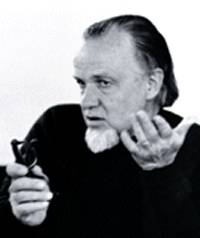
Image result for francis schaeffer

—-

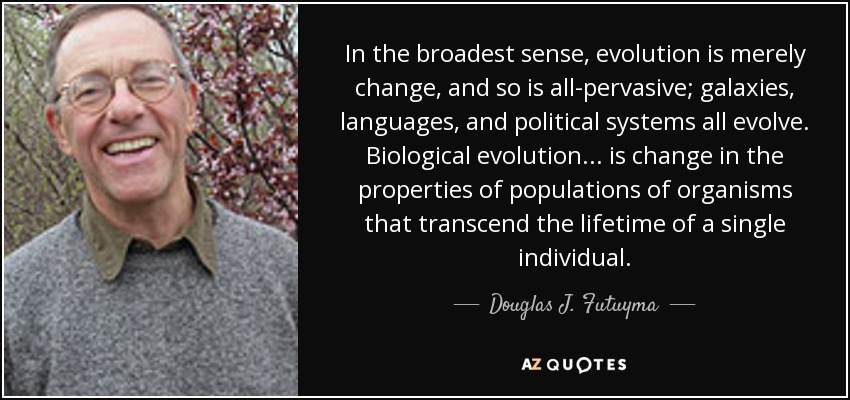
The third man I want to mention is Francis Schaeffer who I believe was the greatest Christian philosopher of the 20th century. However, when he was a young agnostic many years ago he also had an experience similar to King Solomon’s when he contemplated the world and universe around him.contemplated the world and the universe around him.CARLSAGAN:”Our contemplations of the Cosmos stir us. There is a tingling in the spine, a catch in the voice, a faint sensation as if a distant memory of falling from a great height. We know we are approaching the grandest of mysteries.”KING SOLOMON: Ecclesiastes 1:2-11;3:18-19 (Living Bible): 2 In my opinion, nothing is worthwhile; everything is futile. 3-7 For what does a man get for all his hard work?Generations come and go, but it makes no difference.[b] The sun rises and sets and hurries around to rise again. The wind blows south and north, here and there, twisting back and forth, getting nowhere.* The rivers run into the sea, but the sea is never full, and the water returns again to the rivers and flows again to the sea . .everything is unutterably weary and tiresome. No matter how much we see, we are never satisfied; no matter how much we hear, we are not content. History merely repeats itself…For men and animals both breathe the same air, and both die. So mankind has no real advantage over the beasts; what an absurdity!—-What Solomon said ties into this following statement by evolutionist Douglas Futuyma – “Whether people are explicitly religious or not they tend to imagine that humans are in some sense the center of the universe. And what evolution does is to remove humans from the center of the universe. We are just one product of a very long historical process that has given rise to an enormous amount of organisms, and we are just one of them. So in one sense there is nothing special about us.”

Image result for douglas futuyma

———-FRANCIS SCHAEFFER: There is no doubt in my mind that Solomon had the same experience in his life that I had as a younger man (at the age of 18 in 1930). I remember standing by the sea and the moon arose and it was copper and beauty. Then the moon did not look like a flat dish but a globe or a sphere since it was close to the horizon. One could feel the global shape of the earth too. Then it occurred to me that I could contemplate the interplay of the spheres and I was exalted because I thought I can look upon them with all their power, might, and size, but they could contempt nothing. Then came upon me a horror of great darkness because it suddenly occurred to me that although I could contemplate them and they could contemplate nothing yet they would continue to turn in ongoing cycles when I saw no more forever and I was crushed.

__________________PAGE 1 B

Solomon died 3000 years ago and Francis Schaeffer passed away on May 15, 1984  exactly 10 years ago.I firmly believe Solomon was correct when he said in Ecclesiastes 7:2 “It is better to spend your time at funerals than at festivals. For you are going to die, and it is a good thing to think about it while there is time.”Suppose that you to learn that you only had just one year to live—the number of your days would be 365. What would you do with the precious few days that remained to you? With death stalking you, you would have little interest in trivial subjects and would instead be concerned with essentials. I know that is what I did when I was bed ridden in a hospital in Memphis at age 15. I was told that I may not live. My thoughts turned to spiritual things. Thank you for your time.Sincerely,Everette Hatcher III, P.O. Box 23426, Little Rock, AR 72221TIME MAGAZINE May 28, 1984:DIED, Francis Schaeffer, 72. Christian theologian and a leading scholar of evangelical Protestantism; of cancer; in Rochester, Minn. Schaeffer, a Philadelphia-born Presbyterian, and his wife in 1955 founded L’Abri (French for ‘the shelter’), a chalet in the Swiss Alps known among students and intellectuals for a reasoned rather than emotional approach to religious counseling. His 23 philosophical books include the bestseller How Should We Then Live? (1976).” (January 30, 1912-May 15, 1985)

Adrian Rogers is pictured below and Francis Schaeffer above.

Watching the film HOW SHOULD WE THEN LIVE? in 1979 impacted my life greatly

Francis Schaeffer in the film WHATEVER HAPPENED TO THE HUMAN RACE?

Francis and Edith Schaeffer

SECTION #1 Evolution is discussed by these scholars: H.G.Wells, Antony Flew, Neal Gillespie, Carl Sagan, Richard Dawkins, Joseph McCabe, Louis Russell, Leo Hickey, Francis Crick, Michael Ruse, Norman D. Newell, Robert C. Cowen, Jeremy Rifkin, Francis Schaeffer, H.J.Blackham, Paul Churchland, J.W.Burrow, Douglas Futuyma, William Provine, and Bertrand Russell!!!!______________________ I am trying in this letter to show that the following statements are true and can not be refuted logically.1. Theistic evolution is not rational.2. Evolution has been considered a fact by the vast majority of leading scholars worldwide for many years now.3. There  has been a drift from belief to agnosticism caused by science in recent years.4. The vast majority of leading scientists today do not consider creationism scientific.5. There are philosophical implications of Darwinism.——————
1. Theistic evolution is not rational.

H.G.Wells

Image result for H. G. Wells


‘If all the animals and man had been evolved in this ascendant manner, then there had been no first parents, no Eden, and no Fall. And if there had been no fall, then the entire historical fabric of Christianity, the story of the first sin and the reason for an atonement, upon which the current teaching based Christian emotion and morality, collapsed like a house of cards.’ (H.G. Wells)


’—-Antony Flew

Image result for antony flew


It is obviously impossible to square any evolutionary account of the origin of the species with a substantially literal reading of the first chapters of Genesis.—-
2.Evolution has been considered a fact by the vast majority of leading scholars worldwide for many years now.—-
Humanist Manifesto II (1973): Science affirms that the human species is an emergence from natural evolutionary forces.—Neal Gillespie
Darwin’s rejection of special creation was part of the transformation of biology into a positive science, one committed to thoroughly naturalistic explanations based on material causes and the uniformity of nature…——Carl Sagan

Image result for carl sagan


Evolution is fact, not a theory—-Lee Dembart of the Los Angeles Times commenting on the book by Richard Dawkins called “The Blind Watchmaker”:The book cuts through the nonsense about the origin of life and leaves it for dead….He demonstrates beyond a shadow of a doubt that evolution is the only possible explanation for the world we see around us. In this work Dawkins refutes the argument that the complexity of life cannot be random, this implying a designer or creator.—-
Joseph McCabe in a debate with George Mccready Price:
Something over 50 years ago a great man of science launched the doctrine of evolution upon the world. Generation by generation , decade by decade, scientific men have fought out that issue. I say that there is not an university professor in the world today who does not emphatically endorse the doctrine of evolution ….100 years ago, in the days of Lamarck and Darwin, men looked across that broad river and there was nothing between (man and ape)….Now we men of the Stone Age carrying us nearer to the ape; the pilot down man, and one or two others, going as far again in the direction of the ape.—-Louis S Russell, director, Royal Ontario Museum, It’s completely false to say that there’s a lacking of transitional forms. We have plenty of them —-more than sometimes we can deal with.—-Leo Hickey, former director, Yale Peabody Museum, There are myriad transitional forms. There’s really no problem finding them.—- 

Image result for francis crick

250 × 275Images may be subject to copyright. Learn More

—-

Francis Crick: The ultimate aim of the modern movement in biology is, in fact, to explain all biology in terms of physics and chemistry.—-
3. There has been a drift from belief to agnosticism caused by science in recent years———————-
Dr Huston Smith: One reason education undoes belief (in God) is it’s teaching of evolution; Darwin’s own drift from orthodoxy to agnosticism was symptomatic.—-Asa Gray (1810-1888), a Harvard professor of botony was a supporter of theistic evolution. He tried to persuade Darwin to adopt the  position of  theistic evolution. Darwin quickly struck down Gray’s  argument, “The view that each variation has been providentially arranged seems to me to make natural selection entirely superfluous, and indeed takes the whole case of the appearance of new species out of the range of science. ——Michael Denton “ today it is perhaps the Darwinian view of nature more than any other that is responsible for the agnostic and sceptical outlook of the twentieth century…(It is) a theory that literally changed the world.”

PAGE 2

Vincent Sarich in a debate with Mr Gish said, “As far as I am concerned it was not God that created man, but quite clearly and obviously man that in ultimate example of his overwhelming pride created an omnipotent God in his own idealized image of himself and in doing so thought to make himself all powerful and independent of any laws but those of his own making.”—-4. Leading scientists worldwide today do not believe creationism is scientific.Michael Ruse – “And, I learnt what a hollow sham modern day creationism really is : crude, dogmatic, biblical literal-ism masquerading as  genuine science.”
Norman D. Newell
 – “Finally I should like to define the word science, and explain why scientific creationism cannot be included in its definition. Science is characterized by the willingness of an investigator to follow evidence wherever it leads.”Robert C. Cowen – It is this many-faceted on-going science story that should be told in public school biology courses. Creationists want those courses to include the possibility of – and the “scientific” evidence for – a creator as well. There is no such “scientific” evidence. The concept of a supernatural creator is inherently religious. It has no place in a science class.

Image result for jeremy rifkin

Jeremy Rifkin – “Evolutionary theory has been enshrined as the centerpiece of our educational system, and elaborate walls have been erected around it to protect it from unnecessary abuse.”5.There are philosophical implications of Darwinism.Francis Schaeffer in his book WHATEVER HAPPENED TO THE HUMAN RACE? co-authored by C. Everett Koop in 1979 said this, “Humanism: 1. Rejects the doctrine of creation. 2. Therefore rejects the idea that there is anything stable or ‘given’ about human nature. 3. Sees human nature as part of a long, unfolding process of development in which everything is changing. 4. Casts around for some solution to the problem of despair that this determinist-evolutionist vision induces…

Image result for h. j. blackham

The humanist H. J. Blackham has expressed this with a dramatic illustration: On humanist assumptions, life leads to nothing, and every pretense that it does not is a deceit. If there is a bridge over a gorge which spans only half the distance and ends in mid-air, and if the bridge is crowded with human beings pressing on, one after the other they fall into the abyss. The bridge leads nowhere, and those who are pressing forward to cross it are going nowhere….It does not matter where they think they are going, what preparations for the journey they may have made, how much they may be enjoying it all. The objection merely points out objectively that such a situation is a model of futility“( H. J. Blackham, et al., Objections to Humanism (Riverside, Connecticut: Greenwood Press, 1967). Mr. Schaeffer comments, “One does not have to be highly educated to understand this. It follows directly from the starting point of the humanists’ position, namely, that everything is just matter. That is, that which has exited forever and in ever is only some form of matter or energy, and everything in our world now is this and only this in a more or less complex form.”Paul Churchland – “The important point about the standard evolutionary story is that the human species and all of its features are the wholly physical outcome of a purely physical process. If this is the correct account of our origin, then there seems neither need nor room to fit any nonphysical substances or properties into our theoretical accounts of ourselves. We are creatures of matter.”J.W.Burrow – “Nature, according to Darwin, was the product of blind chance and a blind struggle, and man a lonely, intelligent mutation, scrambling with the brutes for his sustenance. To some the sense of loss was irrevocable; It was as if an umbilical cord had been cut, and men found themselves part of a cold passionless universe.”

Image result for douglas futuyma

Douglas Futuyma –  “Whether people are explicitly religious or not they tend to imagine that humans are in some sense the center of the universe. And what evolution does is to remove humans from the center of the universe. We are just one product of a very long historical process that has given rise to an enormous amount of organisms, and we are just one of them. So in one sense there is nothing special about us.”William B. Provine in “The End of Ethics?” article in HARD CHOICES (a magazine companion to the television series HARD CHOICES) wrote:Even though it is often asserted that science is fully compatible with our Judeo-Christian tradition, in fact it is not… To be sure, even in antiquity, the mechanistic view of life–that chance was responsible for the shape of the world– had a few adherents. But belief in overarching order was dominant; it can be seen as easily in such scientists as Newton, Harvey, and Einstein as in the theologians Augustine, Luther, and Tillich. But beginning with Darwin, biology has undermined that tradition. Darwin in effect asserted that all living organisms had been created by a combination of chance and necessity–natural selection.In the twentieth century, this view of life has been reinforced by a whole series of discoveries…Mind is the only remaining frontier, but it would be shortsighted to doubt that it can, one day, be duplicated in the form of thinking robots or analyzed in terms of the chemistry and electricity of the brain. The extreme mechanic view of life, which every new discovery in biology tends to confirm, has certain implications. First, God has no role in the physical world…Second, except for the laws of probability and cause and effect, there is no organizing principle in the world, and no purpose. 

Image result for bertrand russell

Bertrand Russell – “That Man is the product of causes which had no prevision of the end they were achieving; that his origin, his growth, his hopes and fears, his loves and his beliefs, are but the outcome of accidental collocations of atoms; that no fire, no heroism, no intensity of thought and feeling, can preserve an individual life beyond the grave; that all the labours of the ages, all the devotion, all the inspiration, all the noonday brightness of human genius, are destined to extinction in the vast death of the solar system, and that the whole temple of Man’s achievement must inevitably be buried beneath the débris of a universe in ruins—all these things, if not quite beyond dispute, are yet so nearly certain, that no philosophy which rejects them can hope to stand. Only within the scaffolding of these truths, only on the firm foundation of unyielding despair, can the soul’s habitation henceforth be safely built.”(Bertrand Russell, Free Man’s Worship)

SECTION #2 If there is no Afterlife, how can there be any lasting meaning to our lives? Should people be asking themselves these types of Questions???

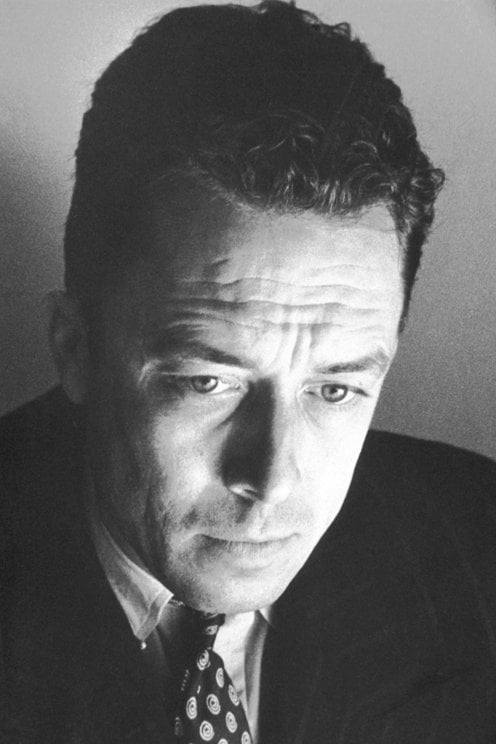
Image result for albert camus


Albert Camus:The fundamental question about life is meaning, anything else is secondary and until that question of meaning is dealt with I really cannot for what the answers are for the other queries.George H. Smith – Religions are successful, not because they provide the correct answers, but because they ask important questions—Questions that concern every human being. What is the nature of the universe? Is there a purpose, or plan, to human existence? …PESSIMISM FROM AGNOSTICS?Nathaniel Brandon: But twentieth-century philosophy has almost totally backed off from the responsibility of offering such a vision or addressing itself to the kind of questions human beings struggle with in the course of their existence. Twentieth-century philosophy typically scorns system building. The problems to which it addresses itself grow smaller and smaller and more and more remote from human experience. At their philosophical conferences and conventions, philosophers explicitly acknowledge that they have nothing of practical value to offer anyone. This is not my accusation; they announce it themselves.During the same period of history, the twentieth century, orthodox religion has lost more and more of its hold over people’s minds and lives. It is perceived as more and more irrelevant. Its demise as a cultural force really began with the Renaissance and has been declining ever since.But the need for answers persists. The need for values by which to guide our lives remains unabated. The hunger for intelligibility is as strong as it ever was. The world around us is more and more confusing, more and more frightening; the need to understand it cries out in anguish.The ENCYCLPEDIA OF PHILOSOPHY on page 471 “When Fred Hoyle in his book THE NATURE OF THE UNIVERSE turns to what he calls ‘the deeper issues’ and remarks that we find ourselves in a ‘dreadful situation’ in which there is ‘scarcely a clue as to whether our existence has ourselves in a ‘dreadful situation’ in which there is ‘scarcely a clue as to whether our existence has any real significance.’ He is using the word ‘significance’ in this comic sense.”

Image result for fred hoyle

—-

On Sunday April 11, 1920 in Chicago there was a debate on this question: Has life any meaning? The following 3 quotes were taken from that meeting:Percy Ward -How can life have any meaning at all, when all living things, along with the world on which they live, are doomed to destruction? What meaning can there be to life, when its dominant law is age-long and world-wide struggle for existence? What possible meaning can there be to life, when the chief experience of living things is suffering and pain? Percy Ward – “To what end is comic evolution moving? All this life which rises, step by step, from moneron to main is impotent effort; the road to nowhere. Imagine an artist devoting his entire life to the painting of a wonderful picture; and then, when his picture is completed, tearing it to ribbons, what could be the meaning of such a painter’s behavior? Arthur J. Balfour – “Man, so far as natural science by itself is able to teach us, is no longer the final cause of the universe, the heaven-descended heir of all the ages. His very existence is an accident, history a brief and transitory episode in the life of one of the meanest of the planets…Man will go down into the pit, and all his thoughts will perish, the uneasy consciousness, which in this obscure corner has for a long space broken the contented silence of the universe, will be at rest. Matter will know itself no longer. Imperishable monuments and immortal deeds, death itself, will be as though they had never been.”SHOULD TRUE HUMANISTS BE OPTIMISTS OR NIHILISTS?????????Paul Kurtz – 

Image result for paul kurtz

220 × 323Images may be subject to copyright. Learn More

“The universe is neutral, indifferent to man’s existential yearnings. But we instinctively discover life, experience its throb, its excitement, its attraction. Life is here to be lived, enjoyed, suffered, and endured…Again–one cannot ‘prove’ this normative principle to everyone’s satisfaction. Living beings tend instinctively to maintain themselves and to reproduce beyond ultimate justification. It is a brute fact of our contingent natures; It is an instinctive desire to live.”

Image result for j p moreland

is no rational justification for choosing it over nihilism. As far as rationality is concerned, it has nothing to offer over nihilism. Therefore, optimistic humanism suffers from some of the same objections we raised against nihilism. Kurtz himself admits that the ultimate values of humanism are incapable of rational justification!!!!!!  #2 Optimistic Humanism really answers the question of the meaning of life in the negative, just as nihilism does. For the optimistic humanist life has no objective value or purpose; It offers only subjective satisfaction, one should think long and hard before embracing such a horrible view. If there is a decent case that life has objective value and purpose, then such a case should be given as good a hearing as possible.  

Image result for r c sproul

R.C. Sproul:Nihilism has two traditional enemies–Theism and Naive Humanism. The theist contradicts the nihilist because the existence of God guarantees that ultimate meaning and significance of personal life and history. Naive Humanism is considered naive by the nihilist because it rhapsodizes–with no rational foundation–the dignity and significance of human life. The humanist declares that man is a cosmic accident whose origin was fortuitous and entrenched in meaningless insignificance. Yet in between the humanist mindlessly crusades for, defends, and celebrates the chimera of human dignity…Herein is the dilemma: Nihilism declares that nothing really matters ultimately…In my judgment, no philosophical treatise has ever surpassed or equaled the penetrating analysis of the ultimate question of meaning versus vanity that is found in the Book of Ecclesiastes

PAGE 4

Image result for kirby anderson

J. Kerby Anderson– “The cynicism and skepticism in the arts, politics, commerce, and the media all testify to the futility of trying to find wisdom and meaning in a world without wisdom based on ‘the Fear of the Lord’ is folly. 

Image result for ravi zacharias

—-

Ravi Zacharias – “Having killed God, the atheist is left with no reason for being, no morality to espouse, no meaning to life and no hope beyond the grave.”Arthur Ashe – (born in 1943, won U.S.Open in 1968, and Wimbledon in 1975) “If I am just remembered as an exceptional tennis player then my life really was not much.”The next two quotes by Kai Nielson and the next quote by J.P. Moreland were taken from a debate held at Ole Miss on March 24, 1988. This debate was later published by Prometheus Books by the title DOES GOD EXIST?
Does death ultimately take away the love we feel for others?Kai Nielson – “If you love someone, whether there is a God or not, that love can go on. It remains intact. It might even be more intact, because if death ends it all, the love relationships between people in life are all the more precious because that is all there is in that respect. So that’s perfectly intact, God or no God. Indeed, as I have just argued, it may even become more important.” 

Image result for clarence darrow

220 × 305Images may be subject to copyright. Learn More

Clarence Darrow – “I love my friends, but they all must come to a tragic end. Death is more terrible the more one is attached to things in the world.” Do we need a lasting purpose to our lives?Kai Nielson – “There are all those intentions, purposes, goals, and the like that you can figure out and can have. They are what John Rawls called life plans. You can have all these purposes in life even though there is no purpose to life. So life doesn’t become meaningless and pointless if you were not made for a purpose.” 

Image result for francis schaeffer

—-

Francis Schaeffer – “The struggle for modern man is to begin with himself and find a meaning in life. Not just plans in life. It is nothing to have plans in life. Anybody can find plans in life. A child can fill up his time with plans of building tomorrow’s sand castle when today’s have been washed away. There is a difference between finding plans in life and purpose.”J.P.Moreland – “James Rachels says that we don’t need purpose in the sense of an over arching objective purpose to life, but we can have purpose in life, as Nielson says. And he means by that ‘subjective satisfaction,’ things that we find worthwhile to us. Now if this is true, what’s the difference, let’s say between becoming a doctor and feeding the poor and sitting around pinching heads off rats or being a Sisyphus and pushing a rock up and down a hill, or giving your time to flipping tiddlywinks? There is no difference since each of these options could be satisfying and worthwhile to someone.”Marvin Kohl – (Taken from an article in FREE INQUIRY, Spring 81 issue, article entitled, “The Meaning of Life and belief in God” ) “….Belief in beneficent providence is untrue. It is untrue because there is no evidence to warrant the claim that there is a benevolent force behind nature. Not only does the secular humanist deny that we have knowledge about a friend behind the universe; He also denies that we have knowledge about divine or cosmic purpose. The argument in its essential form is simple and, I believe, decisive. Purposes can only be correctly assigned to sentient beings; And since man does not have knowledge that God or other sentient beings govern the universe, He cannot on a cognitive level maintain that the universe has any purpose…The facts also indicate that many, like lady Katharine (Bertrand Russell’s Christian daughter who was quoted earlier in the article), are given insight about the meaning of life, about  the chief end of human living, when they believe God makes a disclosure about his own nature and purpose and gently embraces them in his absolute love. In short, it appears to be true that belief in God has had and still has the power to give comfort and consolation to millions of devout believers. Largely because of this, two important claims cannot be easily, if at all, dismissed. They are: (1) that in addition to other basic human needs, there is a need for psychological security, which includes the need to believe in God, or at least believe that the cosmos is guided by a loving purpose; and (2) that this need is often successfully met if a man genuinely recognizes that his goal for living is in, and given to him by, God.”Aldous Huxley – “Science does not retain the sovereignty over metaphysical pronouncements…Science does not have the right to give to me my reason for being and my definition for existence, but I am going to take science’s view because I want this world not to have meaning because it frees me to my own erotic and political desires.”

Image result for aldous huxley

_

The 5 Conclusions of Humanism according to King Solomon of Israel in the Book of Ecclesiastes!!!!!

Image result for king solomon

The Humanistic world view tells us there is no afterlife and all we have is this life “under the sun.” 

Image result for francis schaeffer

SECTION 3 A Study in the Book of Ecclesiastes done by Francis Schaeffer (Christian Philosopher). Solomon limits himself to “under the sun” – In other words the meaning of life on the basis of human life standing alone between birth and death. It is indeed the book of modern man. Solomon is the universal man with unlimited resources who says let us see where I go. Ravi Zacharias 

Image result for ravi zacharias

“The key to understanding the Book of Ecclesiastes is the term ‘under the sun.’ What that literally means is you lock God out of a closed system and you are left with only this world of time plus chance plus us (Matter)”

1st Conclusion: Nothing in life truly satisfies and that includes wisdom, great works and pleasure. A) Will wisdom satisfy someone under the sun? We know it is good in its proper place. Take a look at this quote by Mike Malone: “Knowing God is the deepest longing of the human heart. It is knowledge so high and lofty that it transcends language, which can never exhaust the glorious reality of God. The wise man would take you by the hand and lead you to the fountain, where you may drink to your heart’s content, never tasting enough, yet never failing to be satisfied.” But what did Solomon find out about wisdom “under the sun”? Ecclesiastes 1:16-18 (Living Bible): I said to myself, ‘Look, I am better educated than any of the kings before me in Jerusalem. I have greater wisdom and knowledge.’So I worked hard to be wise instead of foolish[c]—but now I realize that even this was like chasing the wind. For the more my wisdom, the more my grief; to increase knowledge only increases distress.”

—-

B) Do great works of men bring satisfaction?Ecclesiastes 2:4-6, 18-20: Then I tried to find fulfillment by inaugurating a great public works program: homes, vineyards, gardens, parks, and orchards for myself, and reservoirs to hold the water to irrigate my plantations.And I am disgusted about this—that I must leave the fruits of all my hard work to others. 19 And who can tell whether my son will be a wise man or a fool? And yet all I have will be given to him—how discouraging!So I turned in despair from hard work as the answer to my search for satisfaction.C) Does pleasure give lasting satisfaction?

Image result for hugh hefner


KJV and Living Bible Ecclesiastes 2:1-3, 8, 10, 11: I said in mine heart, Go to now, I will prove thee with mirth, therefore enjoy pleasure: and, behold, this also is vanity.I said of laughter, It is mad: and of mirth, What doeth it? I sought in mine heart to give myself unto wine, yet acquainting mine heart with wisdom; and to lay hold on folly,And then there were my many beautiful concubines.10 Anything I wanted I took and did not restrain myself from any joy…11 But as I looked at everything I had tried, it was all so useless, a chasing of the wind, and there was nothing really worthwhile anywhere…
2nd Conclusion: Power reigns in this life and the scales are not balanced!!!!!Ecclesiastes 4:1 (King James Version): So I returned, and considered all the oppressions that are done under the sun: and behold the tears of such as were oppressed, and they had no comforter; and on the side of their oppressors there was power; but they had no comforter.
Ecclesiastes 7:15 (King James Version) All things have I seen in the days of my vanity: there is a just man that perisheth in his righteousness, and there is a wicked man that prolongeth his life in his wickedness.If you are a humanist you must admit that men like Hitler will not be punished in the afterlife because you deny there is an afterlife? Right?

Image result for hitler

3rd Conclusion – Death is the great equalizer. Just as the beasts will not be remembered so ultimately brilliant men will not be remembered. Ecclesiastes 3:20 “All go unto one place; All are of the dust, and all turn to dust again.” Here Solomon comes to the same point that Kerry Livgren came to in January of 1978 when he wrote the hit song DUST IN THE WIND. Can you refute the nihilistic claims of this song within the humanistic world view? Solomon couldn’t but maybe you can.

Image result for rock band kansas dust in the wind

—-

4th Conclusion – Chance and time plus matter (us) has determined the past and it will determine the future.By the way, what are the ingredients that make evolution work? George Wald – “Time is the Hero.”

Image result for george wald

 Jacques Monod – “Pure chance, absolutely free but blind, is at the root of the stupendous edifice of evolution.” 

Image result for manod jac nobel prize

496 × 744Images may be subject to copyright. Learn More

Image result for movie on the beach 1959

—-

 I can not think of a better illustration of this in action than the movie ON THE BEACH by Nevil Shute. On May 4, 1994 I watched the movie for the first time and again I thought of the humanist who believes that history is not heading somewhere with a purpose but is guided by pure chance, absolutely free but blind. I thought of the passage Ecclesiastes 9:10-12 Whatsoever thy hand findeth to do, do it with thy might; for there is no work, nor device, nor knowledge, nor wisdom, in the grave, whither thou goest.11 I returned, and saw under the sun, that the race is not to the swift, nor the battle to the strong, neither yet bread to the wise, nor yet riches to men of understanding, nor yet favour to men of skill; but time and chance happeneth to them all.12 For man also knoweth not his time: as the fishes that are taken in an evil net, and as the birds that are caught in the snare; so are the sons of men snared in an evil time, when it falleth suddenly upon them.

5th Conclusion – Life is just a series ofcontinual and unending cycles and man is stuck in the middle of the cycle. Youth, old age, Death.
Does Solomon at this point embrace nihilism? Yes!!! He exclaims that the hates life (Ecclesiastes 2:17), he longs for death (4:2-3) Yet he stills has a fear of death (2:14-16). How do you want your life to go the next million years? The humanist world view has no answer (see H. J. Blackham earlier quote). Ecclesiastes2:15-16: 15 Then said I in my heart, As it happeneth to the fool, so it happeneth even to me; and why was I then more wise? Then I said in my heart, that this also is vanity.16 For there is no remembrance of the wise more than of the fool for ever; seeing that which now is in the days to come shall all be forgotten. And how dieth the wise man? as the fool.(Also refer to the lyrics of the song DUST IN THE WIND by the group KANSAS).Can you refute any of the conclusions of Solomon? Will you ridicule this material. In 1988 in the September-October of the HUMANIST MAGAZINE a 3 page article was devoted to cutting Schaeffer down to size, but even in that article which was called FRANCIS SCHAEFFER: A LOOK AT ONE OF THE FOREMOST FIGURES IN THE CRUSADE AGAINST HUMANISM the writer gave Schaeffer his due by saying “Schaeffer’s books are not the typical hodge-podge of newspaper headlines and obscure  Biblical prophecies, as in Hal Lindsey’s books. Schaeffer demonstrates a familiarity with the major theologians and some understanding of philosophy, art and literature. His books are clearly in a different league from the typical evangelical Christian reading matter…:” 

(Francis Schaeffer with his son Franky pictured below. Francis and Edith (who passed away in 2013) opened L’ Abri in 1955 in Switzerland.)

Why did I write about the meaning of life in this letter addressed to you?????? The answer is very simple: You have a spiritual need that must be met, and only Christ can meet it!!!! In the introduction of the book A SHATTERED VISAGE, Ravi Zachariassaid this “The most telling aspect of the afternoon I spoke to a group of scientists at the Bell Lab in Holmdel, NJ was the nature of the questions that were raised following the address. None had to do with the technical or scientific expertise that the audience represented. They all had to do with the heart searching questions of men and women in pursuit of meaning of life. I have found these same questions asked time and time again in a variety of settings. After the intellectual that comes to the fore.” Ecclesiastes 3:11b “God has planted eternity in the hearts of men.” 

Image result for charles spurgeon

Charles Spurgeon “The soul is insatiable till it finds the savoir.”I want to finish with a prediction: There is coming a time in your life that the most important thing to you will be to get your prayer answered by God. When I was ridden in a hospital many years ago I was told that I may not live. My thoughts turned to spiritual things. Does it take a tragic situation for you to wake up? I will pray that you see the humanistic worldview for what it is, and that you would honestly pursue the Bible. Thank you for your time 

Finally I have enclosed a copy of my letter published in the Arkansas Democrat-Gazette Newspaper on April 22, 1994:

A BANKRUPT WORLDVIEW

Brian Bolton, the ordained humanist minister, asserted that humanism deserves out respect in his March 27 article. Does it really?

Humanism is the belief that we are limited to human life standing alone between birth and death. There is no belief in God and the afterlife. Three thousand years ago, Solomon took a look at this humanistic world view in the Book of Ecclesiastes when he limited himself to examining life “under the sun.”

Humanists will tell you that the world evolved, and just as time and chance have determined the human race’s past, it will also determine the human race’s future. Ecclesiastes says, “I returned and saw under the sun that the race is not to the swift, nor the battle to the strong, neither yet bread to the wise, nor yet riches to men of understanding, nor yet favor to men of skill; but time and chance happeneth to them all.”

Solomon saw that the humanistic world view was bankrupt because without God in the picture man’s future was left up to time and chance.

When I play with my two children, they constantly are saying, “Daddy, watch me!” Their hearts long for my personal attention just as my heart longs for a daily personal relationship with a God who cares about me.

Why respect a religion like humanism that hands your future over to time and chance instead of a God who created you for a purpose? Humanism tells you that you are just a face in the crowd, and 1 million years from now it will be as though you never existed. Is Bolton a naive humanist who has avoided this conclusion?

Everette Hatcher III, May 15, 1994.

“Music Monday” THE BEATLES (Breaking down “REVOLUTION 9” Part B) Astrid Kirchherr is featured Photographer

Sgt. Pepper’s footnote: Karlheinz Stockhausen passes
[Posted by Dave Haber on Tuesday, 12/18/07 7:34 am] [Full Blog] [Tweet] [Facebook]

It was announced last week that Karlheinz Stockhausen , one of the most important and controversial postwar composers, passed away on Friday, December 7 at his home in western Germany. He was 79.

So taken were the Beatles by Stockhausen’s music that he was included among the Beatle’s other heroes and idols on the cover of Sgt. Pepper’s Lonely Hearts Club Band in 1967.


See this page on our sister-site, The Internet Beatles Album, for more about theSgt. Pepper’s cover.

_______

Revolution 9

Written by: Lennon-McCartney
Recorded: 30 May; 6, 10, 11, 20, 21 June 1968
Producers: George Martin, John Lennon
Engineer: Geoff Emerick

John Lennon: vocals, tape loops, effects, samples
George Harrison: vocals, samples
Yoko Ono: vocals, effects, samples

Released: 22 November 1968 (UK), 25 November 1968 (US)

Available on:
The Beatles (White Album)

Dividing audiences since late 1968, John Lennon’s sound collage Revolution 9 was an exercise in musique concrèteinfluenced heavily by Yoko Ono and the avant-garde art world.Download on iTunes
http://rcm-na.amazon-adsystem.com/e/cm?lt1=_blank&bc1=000000&IS2=1&bg1=FFFFFF&fc1=000000&lc1=0000FF&t=thebeabib06-20&o=1&p=8&l=as4&m=amazon&f=ifr&ref=ss_til&asins=B0025KVLU6&MsrketPlace=US

The recording emerged from Revolution 1, the final six minutes of which formed a lengthy, mostly instrumental jam. Lennon took the recording and added a range of vocals, tape loops and sound effects, creating Revolution 9, the longest track released during The Beatles’ career.

The slow version of Revolution on the album went on and on and on and I took the fade-out part, which is what they sometimes do with disco records now, and just layered all this stuff over it. It was the basic rhythm of the original Revolution going on with some 20 loops we put on, things from the archives of EMI.
John Lennon
All We Are Saying, David Sheff

Although he made no direct contribution to Revolution 9, being in New York at the time, Paul McCartney had made a similar sound collage, the unreleased 14-minute Carnival Of Light, 18 months previously.

Revolution 9 was quite similar to some stuff I’d been doing myself for fun. I didn’t think that mine was suitable for release, but John always encouraged me.
Paul McCartney
Anthology

The other Beatles and George Martin are said to have persuaded Lennon not to include Revolution 9 on the White Album, to no avail. Although McCartney had long been interested in musique concrète, particularly Karlheinz Stockhausen’s Gesang der Jünglinge, it is likely that he was concerned at the effect Revolution 9 would have on the group’s public perception.

I don’t know what influence Revolution 9 had on the teenybopper fans, but most of them didn’t dig it. So what am I supposed to do?
John Lennon, 1969
Anthology

It wasn’t only the group’s teenage fans who were confused by Revolution 9. Charles Manson found a wealth of symbolism in the track’s loops and effects, and thought that Lennon’s shouts of ‘Right!’ were, in fact, a call to ‘rise’ up in revolt.

Manson drew a parallel between Revolution 9 and the Bible’s book of Revelation. He thought The Beatles were variously four angels sent to kill a third of mankind, or four locusts mentioned in Revelation 9, which he equated with beetles.

Revolution 9 was an unconscious picture of what I actually think will happen when it happens; just like a drawing of a revolution. All the thing was made with loops. I had about 30 loops going, fed them onto one basic track. I was getting classical tapes, going upstairs and chopping them up, making it backwards and things like that, to get the sound effects. One thing was an engineer’s testing voice saying, ‘This is EMI test series number nine’. I just cut up whatever he said and I’d number nine it. Nine turned out to be my birthday and my lucky number and everything. I didn’t realise it: it was just so funny the voice saying, ‘number nine’; it was like a joke, bringing number nine into it all the time, that’s all it was.
John Lennon
Rolling Stone, 1970

Revolution 9 also featured in the ‘Paul is dead’ myth, after it was discovered that the ‘number nine’ motif, when played backwards, sounded like ‘Turn me on, dead man’. A number of other elements of the recording featured in the myth, including the sound of a car crashing followed by an explosion.

How Should We Then Live – Episode 8 – The Age of Fragmentation

Published on Aug 6, 2015

Francis Shaeffer

THE AGE OF FRAGMENTATION 

I. Art As a Vehicle Of Modern Thought

A. Impressionism (Monet, Renoir, Pissarro, Sisley, Degas) and Post-Impressionism (Cézanne, Van Gogh, Gauguin, Seurat): appearance and reality.

1. Problem of reality in Impressionism: no universal.

2. Post-Impression seeks the universal behind appearances.

3. Painting expresses an idea in its own terms as a work of art; to discuss the idea in a painting is not to intellectualize art.

4. Parallel search for universal in art and philosophy; Cézanne.

B. Fragmentation.

1. Extremes of ultra-naturalism or abstraction: Wassily Kandinsky.

2. Picasso leads choice for abstraction: relevance of this choice.

3. Failure of Picasso (like Sartre, and for similar reasons) to be fully consistent with his choice.

C. Retreat to absurdity.

1. Dada, and Marcel Duchamp: art as absurd.

2. Art followed philosophy but came sooner to logical end.

3. Chance in his art technique as an art theory impossible to practice: Pollock.

II. Music As a Vehicle of Modern Thought

A. Non-resolution and fragmentation: German and French streams.

1. Influence of Beethoven’s last Quartets.

2. Direction and influence of Debussy.

3. Schoenberg’s non-resolution; contrast with Bach.

4. Stockhausen: electronic music and concern with the element of change.

B. Cage: a case study in confusion.

1. Deliberate chance and confusion in Cage’s music.

2. Cage’s inability to live the philosophy of his music.

Stockhausen on cover of SGT PEPPER’s


________

December 30, 2007

____________

Astrid Kirchherr is featured Photographer

From Wikipedia, the free encyclopedia
Astrid Kirchherr
Born 20 May 1938 (age 77)
Hamburg, Germany
Occupation Photographer, Artist
Spouse(s) Engaged to Stuart Sutcliffe, and twice divorced
Children None
Parent(s) Nielsa Kirchherr

Astrid Kirchherr (born 20 May 1938) is a German photographer and artist and is well known for her association with the Beatles (along with her friends Klaus Voormann and Jürgen Vollmer), and her photographs of the band’s original members – John Lennon, Paul McCartney, George Harrison, Stuart Sutcliffe and Pete Best – during their early days in Hamburg.

Kirchherr met artist Sutcliffe in the Kaiserkeller bar in Hamburg in 1960, where he was playing bass with the Beatles, and was later engaged to him, before his death in 1962. Although Kirchherr has taken very few photographs since 1967, her early work has been exhibited in Hamburg, Bremen, London, Liverpool, New York City, Washington, D.C., Tokyo, Vienna and at the Rock ‘n’ Roll Hall of Fame. She has published three limited-edition books of photographs.

Kirchherr and Stuart Sutcliffe, 1961

Early life[edit]

Astrid Kirchherr was born in 1938 in Hamburg, Germany, and is the daughter of a former executive of the German branch of the Ford Motor Company. During World War II she was evacuated to the safety of the Baltic Sea where she remembered seeing dead bodies on the shore (after the ships Cap Arcona and the SS Deutschland had been bombed and sunk) and the destruction in Hamburg when she returned.[1]

After her graduation, Kirchherr enrolled in the Meisterschule für Mode, Textil, Graphik und Werbung in Hamburg, as she wanted to study fashion design but demonstrated a talent for black-and-white photography.[2][3] Reinhard Wolf, the school’s main photographic tutor, convinced her to switch courses and promised that he would hire her as his assistant when she graduated.[4] Kirchherr worked for Wolf as his assistant from 1959 until 1963.[5]

In the late 1950s and early 1960s Kirchherr and her art school friends were involved in the European existentialist movement whose followers were later nicknamed “Exis” by Lennon.[6] In 1995 she told BBC Radio Merseyside: “Our philosophythen, because we were only little kids, was wearing black clothes and going around looking moody. Of course, we had a clue who Jean-Paul Sartre was.[7] We got inspired by all the French artists and writers, because that was the closest we could get. England was so far away, and America was out of the question. So France was the nearest. So we got all the information from France, and we tried to dress like the French existentialists… We wanted to be free, we wanted to be different, and tried to be cool, as we call it now.”[8][9]

“In some ways I was more like a mother figure. When George was being deported for being underage and not having a work permit, I looked after him,

The Beatles[edit]

Print cover featuring an early photo of the Beatles, signed by Astrid Kirchherr

Kirchherr, Voormann and Vollmer were friends who had all attended the Meisterschule, and shared the same ideas about fashion, culture and music. Voormann became Astrid’s boyfriend, and moved into the Kirchherr home, where he had his own room.[10] In 1960, after Kirchherr and Vollmer had had an argument with Voormann, he wandered down the Reeperbahn (in the St. Pauli district of Hamburg) and heard music coming from the Kaiserkeller club. Voormann walked in and watched a performance by a group called the Beatles: Lennon, McCartney, Harrison, Sutcliffe and Best, their drummer at the time.[11] Voormann asked Kirchherr and Vollmer to listen to this new music, and after being persuaded to visit the Kaiserkeller (which was in the rough area of the Reeperbahn),[12] Kirchherr decided that all she wanted to do was to be as close to the Beatles as she could.[13] The trio of friends had never heard this new music called Rock n’ Roll before, having previously only listened to Trad jazz, with some Nat King Cole and The Platters mixed in.[6][14] The trio then visited the Kaiserkeller almost every night, arriving at 9 o’clock and sitting by the front of the stage.[15] Kirchherr later said: “It was like a merry-go-round in my head, they looked absolutely astonishing… My whole life changed in a couple of minutes. All I wanted was to be with them and to know them.”[16]

Kirchherr later said that she, Voormann and Vollmer felt guilty about being German, and about Germany’s recent history. Meeting the Beatles was something very special for her, although she knew that English people would think that she ate sauerkraut, and would comment on her heavy German accent, but they made jokes about it together.[10] Lennon would make sarcastic remarks from the stage, saying “You Krauts, we won the war,” knowing that very few Germans in the audience spoke English, but any English sailors present would roar with laughter.[12]

Sutcliffe was fascinated by the trio, but especially Kirchherr, and thought they looked like “real bohemians“. Bill Harry later said that when Kirchherr walked in, every head would immediately turn her way, and that she always captivated the whole room.[6] Sutcliffe wrote to a friend that he could hardly take his eyes off her and had tried to talk to Kirchherr during the next break, but she had already left the club.[6] Sutcliffe managed to meet them eventually, and learned that all three had attended the Meisterschule, which was the same type of art college that Lennon and Sutcliffe had attended in Liverpool.[6] (Note: Meisterschule für Mode, Textil, Grafik und Werbung [Master Craftspeople College for Fashion, Textile, Graphics, and Advertising], although it is now called the University of Applied Sciences).[17]

Photographs[edit]

A Rolleicord camera (1955), which Kirchherr used

Kirchherr asked the Beatles if they would mind letting her take photographs of them in a photo session, which impressed them, as other groups only had snapshots that were taken by friends. The next morning Kirchherr took photographs with a Rolleicord camera,[18] at a fairground in a municipal park called Hamburger Dom which was close to the Reeperbahn,[12] and in the afternoon she took them all (minus Best, who decided not to go) to her mother’s house in Altona.[16][19] Kirchherr’s bedroom (which was all in black, including the furniture, with silver foil on the walls and a large tree branch suspended from the ceiling), was decorated especially for Voormann, whom she had a relationship with, although after the visits to the Kaiserkeller their relationship became purely platonic. Kirchherr started dating Sutcliffe, although she always remained a close friend of Voormann.[5][20]

Kirchherr later supplied Sutcliffe and the other Beatles with Preludin, which, when taken with beer, made them feel euphoric and helped to keep them awake until the early hours of the morning. The Beatles had taken Preludin before, but it was only possible at that time to get Preludin with a doctor’s prescription note, so Kirchherr’s mother got them from a local chemist, who supplied them without asking questions.[21] After meeting Kirchherr, Lennon filled his letters to Cynthia Powell (his girlfriend at the time) with “Astrid said this, Astrid did that”,[22] which made Powell jealous, until she read that Sutcliffe was in a relationship with Kirchherr.[23] When Powell visited Hamburg with Dot Rhone (McCartney’s girlfriend at the time) in April 1961, they stayed at Kirchherr’s house.[24] In August 1963, Kirchherr met Lennon and Cynthia in Paris while they were both there for a belated honeymoon, as Kirchherr was there with a girlfriend for a few days’ holiday. The four of them went from wine bar to wine bar and finally ended up back at Kirchherr’s lodgings, where all four fell asleep on Kirchherr’s single bed.[25]

The Beatles met Kirchherr again in Hamburg in 1966 when they were touring Germany, and Kirchherr gave Lennon the letters he had written to Sutcliffe in 1961 and 1962. Lennon said it was “the best present I’ve had in years”.[26] All of the Beatles wrote many letters to Kirchherr: “I only have a couple from George [Harrison], which I’ll never show anyone, but he wrote so many. So did the others. I probably threw them away. You do that when you’re young – you don’t think of the future.”[9] Harrison later asked Kirchherr to arrange the cover of his Wonderwall Music album in 1968.[27]

The Beatles haircut and clothes[edit]

Kirchherr is credited with inventing the Beatles’ moptop haircut although she disagrees, saying: “All that rubbish people said, that I created their hairstyle, that’s rubbish! Lots of German boys had that hairstyle. Stuart [Sutcliffe] had it for a long while and the others copied it. I suppose the most important thing I contributed to them was friendship.”[28][29] In 1995, Kirchherr told BBC Radio Merseyside: “All my friends in art school used to run around with this sort of what you call Beatles haircut. And my boyfriend then, Klaus Voormann, had this hairstyle, and Stuart liked it very very much. He was the first one who really got the nerve to get the Brylcreem out of his hair and asking me to cut his hair for him. Pete [Best] has really curly hair and it wouldn’t work.”[8] Kirchherr says that after she cut Sutcliffe’s hair, Harrison asked her to do the same when she was visiting Liverpool, and Lennon and McCartney had their hair cut in the same style while they were in Paris, by Kirchherr’s friend, Vollmer, who was living there at the time as an assistant to photographer William Klein.[12]

After moving into the Kirchherr family’s house, Sutcliffe used to borrow her clothes, as he was the same height as Kirchherr. He wore her leather pants and jackets, collarless jackets, over-sized shirts, and long scarves. He also borrowed acorduroy suit with no lapels that he wore on stage, which prompted Lennon to sarcastically ask if his mother had lent him the suit.[12]

Astrid Kirchherr remained friends with the Beatles and also accompanied them while they where filming ‘A Hard Day’s Night’ in 1964, where she took more

Stuart Sutcliffe[edit]

Sutcliffe wrote to friends that he was infatuated with Kirchherr, and asked her friends which colours, films, books and painters she liked, and whom she fancied. Best later commented that the beginning of their relationship was, “like one of those fairy stories”.[30] Kirchherr says that she immediately fell in love with Sutcliffe, and still calls him “the love of my life”.[12] Kirchherr and Sutcliffe got engaged in November 1960, and exchanged rings, as is the German custom.[31] Sutcliffe later wrote to his parents that he was engaged to Kirchherr, which they were shocked to learn, as they thought he would give up his career as an artist,[32] although he told Kirchherr that he would like to be an art teacher in London or Germany in the future.[12] Sutcliffe later borrowed money from Kirchherr for the airfare to fly back to Liverpool in February 1961, returning to Hamburg in March.[33][34]

Kirchherr and Sutcliffe went to Liverpool in the summer of 1961, as Kirchherr wanted to meet Sutcliffe’s family (and to see Liverpool) before their marriage. Everybody was expecting a strange beatnik artist from Hamburg, but Kirchherr turned up at the Sutcliffe’s house at 37 Aigburth Drive, Liverpool, bearing a single long-stemmed orchid in her hand as a present, and dressed in a round-necked cashmere sweater and tailored skirt.[35] In 1962, Sutcliffe collapsed in the middle of an art class in Hamburg. He was suffering from intense headaches, and Kirchherr’s mother had German doctors perform various checks on him, although they were unable to determine exactly what was causing the headaches. While living at the Kirchherrs’ house in Hamburg his condition got worse. On 10 April 1962, Kirchherr’s mother phoned her daughter at work and told her Sutcliffe was not feeling well, had been brought back to the house, and an ambulance had been called for.[12] Kirchherr rushed home and rode with Sutcliffe in the ambulance, but he died in her arms before it reached the hospital.[36]

Astrid Kirchherr & Stuart Sutcliffe

Three days later Kirchherr met Lennon, McCartney and Best at the Hamburg airport (they were returning to Hamburg to perform) and told them Sutcliffe had died of a brain haemorrhage.[37] Harrison and manager Brian Epstein arrived on another plane sometime later with Sutcliffe’s mother, who had been informed by telegram.[12] Harrison and Lennon were helpful towards the distraught Kirchherr, with Lennon telling her one day that she definitely had to decide if she wanted to “Live or die, there is no other question.”[12]

Ringo Starr, Astrid Kirchherr and John Lennon

Freelance photographer[edit]

In 1964, Kirchherr became a freelance photographer, and with her colleague Max Scheler she took “behind the scenes” photographs of the Beatles during the filming of “A Hard Day’s Night“, as an assignment for the German Stern magazine. Epstein had forbidden any publicity photographs to be taken without his permission, but Kirchherr phoned Harrison, who said he would arrange it, but added, “Only if they pay you.”[12]

St. George’s Hall, Liverpool. Kirchherr took photographs of Liverpool groups as they stood on the front steps

Stern phoned Bill Harry at his Mersey Beat newspaper and asked if he could arrange a photograph of all the groups in Liverpool,[38] so Harry suggested Kirchherr be the photographer, although Kirchherr later said she placed an advertisement in the Liverpool Echo newspaper.[12] Kirchherr and Scheler said that any group who wanted their photograph taken in front of St. George’s Hallwould be paid £1 per musician,[18] but over 200 groups turned up on the day, which meant Kirchherr and Scheler soon ran out of money.[8][39] Kirchherr didn’t publish the photographs until 1995, in a book called Liverpool Days, which is a limited edition collection of black-and-white photographs.[8] In 1999, a companion book called Hamburg Days was published (a two-volume limited edition), containing a set of photographs by Kirchherr and “memory drawings” by Voormann. The drawings are recollections of places and situations that Voormann clearly remembers, but Kirchherr had never photographed, or had lost the photographs.[40]

Kirchherr described how difficult it was to be accepted as a female photographer in the 1960s: “Every magazine and newspaper wanted me to photograph the Beatles again. Or they wanted my old stuff, even if it was out of focus, whether they were nice or not. They wouldn’t look at my other work. It was very hard for a girl photographer in the 60s to be accepted. In the end I gave up. I’ve hardly taken a photo since 1967.[27]” Kirchherr was quoted as saying that When We Was Fab (Genesis Publications 2007), would be her last book of photographs: “I have decided it is time to create one book in which I am totally involved so that it contains the pictures I like most, printed the way I would print them, even down to the text and design…. This book is me and that is why it will be the last one. The very last one.”[41]

Kirchherr has expressed respect for other photographers, such as Annie Leibovitz (because of the humour in her work), Irving Penn, Richard Avedon, Jim Rakete and Reinhard Wolf (German Wikipedia), and French film-makers François Truffaut, and Jean Cocteau.[1] Kirchherr said that her favourite photos are the ones she took of Sutcliffe by the Baltic sea, and of Lennon and Harrison in her attic room at 45a Eimsbütteler Strasse. She has expressed reservations about digital photography, saying that a photographer should concentrate on the art of photography and not on the technical results, although admitting that she knows nothing about computers and is “afraid of the internet”.[1]

Kirchherr admits that she is not good at business as she is not organised enough, and has never really looked after the negatives of her photographs to prove ownership.[27] Her business partner Ulf Krüger—a songwriter and record producer—successfully found many of Astrid’s negatives and photographs and had them copyrighted, although he believes that Kirchherr has lost £500,000 over the years because of people using her photographs without permission.[18][27] In July 2001 Kirchherr visited Liverpool to open an exhibition of her work at the Mathew Street art gallery, which is close to the former site of The Cavern Club. She appeared as a guest at the city’s Beatles Week Festival during the August Bank Holiday.[42] Kirchherr’s work has been exhibited internationally in places, such as Hamburg, Bremen, London, Liverpool, New York City, Washington D.C., Tokyo, Vienna, and at the Rock ‘n’ Roll Hall of Fame.

Later life to present[edit]

In 1967, Kirchherr married English drummer Gibson Kemp (born Gibson Stewart Kemp, 1945, Liverpool, Lancashire), who had replaced Ringo Starr in Rory Storm and the Hurricanes. The marriage ended in divorce after seven years.[6] She then worked as a barmaid, as an interior designer, and then for a music publishing firm,[18] getting married for a second time to a German businessman.[12] Kirchherr worked as an advisor in 1994, on the film Backbeat, which portrayed Kirchherr, Sutcliffe and the Beatles during their early days in Hamburg.[8] She was impressed with Stephen Dorff (who played Sutcliffe in the film), commenting that he was the right age (19-years-old at the time), and his gestures, the way he smoked, and talked were so like Sutcliffe’s that she had goose pimples. Kirchherr was portrayed in the film by actress Sheryl Lee.[27]

Since the mid-1990s Kirchherr and business partner Krüger have operated the K&K photography shop in Hamburg, offering custom vintage prints, books and artwork for sale. K&K periodically helps arrange Beatles’ conventions and other Beatles’ events in the Hamburg area.[43] She has no children, and now lives alone: “”My [second] marriage ended in 1985… I regretted I had no children. I just couldn’t see me have [sic] any. But now I am pleased when I see the situation the world is in. I live alone and am very happy.”[9]

Categories:

____

Image result for sergent peppers album cover

Francis Schaeffer’s favorite album was SGT. PEPPER”S and he said of the album “Sergeant Pepper’s Lonely Hearts Club Band…for a time it became the rallying cry for young people throughout the world. It expressed the essence of their lives, thoughts and their feelings.”  (at the 14 minute point in episode 7 of HOW SHOULD WE THEN LIVE? ) 

Image result for francis schaeffer how should we then live

How Should We Then Live – Episode Seven – 07 – Portuguese Subtitles

Francis Schaeffer

Image result for francis schaeffer

______

FRANCIS SCHAEFFER ANALYZES ART AND CULTURE PART 202 the BEATLES’ last song FREE AS A BIRD (Featured artist is Susan Weil )

February 15, 2018 – 1:45 am

FRANCIS SCHAEFFER ANALYZES ART AND CULTURE Part 200 George Harrison song HERE ME LORD (Featured artist is Karl Schmidt-Rottluff )

FRANCIS SCHAEFFER ANALYZES ART AND CULTURE PART 184 the BEATLES’ song REAL LOVE (Featured artist is David Hammonds )

FRANCIS SCHAEFFER ANALYZES ART AND CULTURE Part 170 George Harrison and his song MY SWEET LORD (Featured artist is Bruce Herman )

FRANCIS SCHAEFFER ANALYZES ART AND CULTURE Part 168 George Harrison’s song AWAITING ON YOU ALL Part B (Featured artist is Michelle Mackey )

FRANCIS SCHAEFFER ANALYZES ART AND CULTURE Part 167 George Harrison’s song AWAITING ON YOU Part A (Artist featured is Paul Martin)

RESPONDING TO HARRY KROTO’S BRILLIANT RENOWNED ACADEMICS!! Part 133 Louise Antony is UMass, Phil Dept, “Atheists if they commit themselves to justice, peace and the relief of suffering can only be doing so out of love for the good. Atheist have the opportunity to practice perfect piety”

FRANCIS SCHAEFFER ANALYZES ART AND CULTURE Part 166 George Harrison’s song ART OF DYING (Featured artist is Joel Sheesley )

FRANCIS SCHAEFFER ANALYZES ART AND CULTURE Part 165 George Harrison’s view that many roads lead to Heaven (Featured artist is Tim Lowly)

FRANCIS SCHAEFFER ANALYZES ART AND CULTURE Part 164 THE BEATLES Edgar Allan Poe (Featured artist is Christopher Wool)

PART 163 BEATLES Breaking down the song LONG AND WINDING ROAD (Featured artist is Charles Lutyens )

FRANCIS SCHAEFFER ANALYZES ART AND CULTURE PART 162 A look at the BEATLES Breaking down the song ALL WE NEED IS LOVE Part C (Featured artist is Grace Slick)

PART 161 A look at the BEATLES Breaking down the song ALL WE NEED IS LOVE Part B (Featured artist is Francis Hoyland )


FRANCIS SCHAEFFER ANALYZES ART AND CULTURE PART 160 A look at the BEATLES Breaking down the song ALL WE NEED IS LOVE Part A (Featured artist is Shirazeh Houshiary)

FRANCIS SCHAEFFER ANALYZES ART AND CULTURE Part 159 BEATLES, Soccer player Albert Stubbins made it on SGT. PEP’S because he was sport hero (Artist featured is Richard Land)

FRANCIS SCHAEFFER ANALYZES ART AND CULTURE Part 158 THE BEATLES (breaking down the song WHY DON’T WE DO IT IN THE ROAD?) Photographer Bob Gomel featured today!

FRANCIS SCHAEFFER ANALYZES ART AND CULTURE Part 118 THE BEATLES (Why was Tony Curtis on cover of SGT PEP?) (Feature on artist Jeffrey Gibson )

FRANCIS SCHAEFFER ANALYZES ART AND CULTURE Part 117 THE BEATLES, Breaking down the song WITHIN YOU WITHOUT YOU Part B (Featured artist is Emma Amos )

Related posts:

FRANCIS SCHAEFFER ANALYZES ART AND CULTURE PART 85 (Breaking down the song “When I’m Sixty-Four” Part B) Featured Photographer and Journalist is Bill Harry

One would think that the young people of the 1960’s thought little of death but is that true? The most successful song on the  SGT PEPPER’S album was about the sudden death of a close friend and the album cover was pictured in front of a burial scene.   Francis Schaeffer’s favorite album was SGT. […]

FRANCIS SCHAEFFER ANALYZES ART AND CULTURE PART 84 (Breaking down the song “When I’m Sixty-Four”Part A) Featured Photographer is Annie Leibovitz

_________ I think it is revolutionary for a 18 year old Paul McCartney to write a song about an old person nearing death. This demonstrates that the Beatles did really think about the process of life and its challenges from birth to day in a  complete way and the possible answer. Solomon does that too […]

FRANCIS SCHAEFFER ANALYZES ART AND CULTURE Part 83 THE BEATLES (Why was Karlheinz Stockhausen on the cover of Sgt. Pepper’s? ) (Feature on artist Nam June Paik )

_____________ Karlheinz Stockhausen was friends with both Lennon and McCartney and he influenced some of their music. Today we will take a close look at his music and his views and at some of the songs of the Beatles that he influenced.   Dr. Francis Schaeffer: How Should We Then Live? Episode 9 (Promo Clip) […]

FRANCIS SCHAEFFER ANALYZES ART AND CULTURE Part 82 THE BEATLES, Breaking down the song DEAR PRUDENCE (Photographer featured is Bill Eppridge)

Mia and Prudence Farrow both joined the Beatles in their trip to India to check out Eastern Religions. Francis Schaeffer noted, ” The younger people and the older ones tried drug taking but then turned to the eastern religions. Both drugs and the eastern religions seek truth inside one’s own head, a negation of reason. […]

FRANCIS SCHAEFFER ANALYZES ART AND CULTURE Part 81 THE BEATLES Why was Dylan Thomas put on the cover of SGT PEPPERS? (Featured artist is sculptor David Wynne)

    Dylan Thomas was included on SGT PEPPER’S cover because of words like this, “Too proud to cry, too frail to check the tears, And caught between two nights, blindness and death.” Francis Schaeffer noted: This is sensitivity crying out in darkness. But it is not mere emotion; the problem is not on this […]

FRANCIS SCHAEFFER ANALYZES ART AND CULTURE Part 80 THE BEATLES (breaking down the song “Lucy in the Sky with Diamonds” ) (Featured artist is Saul Steinberg)

John Lennon was writing about a drug trip when he wrote the song LUCY IN THE SKY WITH DIAMONDS and Paul later confirmed that many years later. Francis Schaeffer correctly noted that the Beatles’ album Sgt. Pepper’s brought the message of drugs and Eastern Religion to the masses like no other means of communication could. Today […]

FRANCIS SCHAEFFER ANALYZES ART AND CULTURE Part 79 THE BEATLES (Why was William Burroughs on Sgt. Pepper’s cover? ) (Feature on artist Brion Gysin)

______________ Why was William S. Burroughs put on the cover of Sgt. Pepper’s Lonely Hearts Club Band? Burroughs was challenging the norms of the 1960’s but at the same time he was like the Beatles in that he was also searching for values and he never found the solution. (In the last post in this […]

FRANCIS SCHAEFFER ANALYZES ART AND CULTURE PART 78 THE BEATLES (Breaking down the song TOMORROW NEVER KNOWS) Featured musical artist is Stuart Gerber

The Beatles were “inspired by the musique concrète of German composer and early electronic music pioneer Karlheinz Stockhausen…”  as SCOTT THILL has asserted. Francis Schaeffer noted that ideas of  “Non-resolution” and “Fragmentation” came down German and French streams with the influence of Beethoven’s last Quartets and then the influence of Debussy and later Schoenberg’s non-resolution which is in total contrast […]

FRANCIS SCHAEFFER ANALYZES ART AND CULTURE Part 77 THE BEATLES (Who got the Beatles talking about Vietnam War? ) (Feature on artist Nicholas Monro )

It was the famous atheist Bertrand Russell who pointed out to Paul McCartney early on that the Beatles needed to bring more attention to the Vietnam war protests and Paul promptly went back to the group and reported Russell’s advice. We will take a closer look at some of Russell’s views and break them down […]

FRANCIS SCHAEFFER ANALYZES ART AND CULTURE Part 76 THE BEATLES (breaking down the song STRAWBERRY FIELDS FOREVER) (Artist featured is Jamie Wyeth)

Francis Schaeffer correctly noted: In this flow there was also the period of psychedelic rock, an attempt to find this experience without drugs, by the use of a certain type of music. This was the period of the Beatles’ Revolver (1966) and Strawberry Fields Forever (1967). In the same period and in the same direction […]

_______________

________

Open Letter #28 to Ricky Gervais on comparison of the Tony of AFTER LIFE to the Solomon of ECCLESIASTES, Ravi Zacharias (March 26, 1946- May 19, 2020)“Having killed God, the atheist is left with no reason for being, no morality to espouse, no meaning to life and no hope beyond the grave.”


https://m.youtube.com/watch?feature=youtu.be&v=G9H6mecYrc8

Hope is everything… I’ve always thought that. And I believe it. If you’ve got hope you can work towards something. It’s a medicine and a shield. I’m an optimist, I always see the good in people.”

Ricky Gervais plays bereaved husband Tony Johnson in AFTER LIFE

Tony and his wife Lisa who died 6 months ago of cancer

(Above) Tony and Anne on the bench at the graveyard where their spouses are buried.


May 15, 2020 
Ricky Gervais 


Dear Ricky,  

This is the 29th day in a row that I have written another open letter to you to comment on some of your episodes of AFTER LIFE, and then I wanted to pass along an interesting letter that I wrote on May 15, 1994 which is exacting 26 years ago. It had a lot of ECCLESIASTES in it.

—-

In the introduction of the book A SHATTERED VISAGE, Ravi Zacharias said this “The most telling aspect of the afternoon I spoke to a group of scientists at the Bell Lab in Holmdel, NJ was the nature of the questions that were raised following the address. None had to do with the technical or scientific expertise that the audience represented. They all had to do with the heart searching questions of men and women in pursuit of meaning of life. I have found these same questions asked time and time again in a variety of settings. After the intellectual that comes to the fore.” Ecclesiastes 3:11b “God has planted eternity in the hearts of men.” 

Ravi Zacharias – “Having killed God, the atheist is left with no reason for being, no morality to espouse, no meaning to life and no hope beyond the grave.”

Tony Johnson: No, of course not!!!! How could have I possibly had a good week? 

The sandy beach walk


Psychiatrist: Only you know that really. 


Tony: Why am I paying you then?

Psychiatrist: That is a good question. Why are you paying me? 

Tony: So I got to know that too?

Psychiatrist: Tony we are here to ask and answer difficult questions about yourself. Maybe you don’t want to know the answer? Maybe it is easy for you to think there is isn’t an answer? There is an answer, but you seem happier to just accept your unhappiness. 

Tony: I do accept my unhappiness. I know exactly why I unhappy. I also know that the only thing that would stop me from being unhappy is impossible. What I don’t know is why I pay someone who doesn’t care about me.

Psychiatrist: There are people in your life who care about you, but do they actually do know what is good for you?

Tony: I don’t think anyone knows what is good for me. 
Psychiatrist: I think it [the answer] is in there somewhere. 

Is Tony right that there are no answers? This is the conclusion of western philosophy today.

Francis Schaeffer noted in the beginning of episode 7 of HOW SHOULD WE THEN LIVE?


The history of the nonchristian Philosophers up until the 18th century went like this:
Here is a circle which stands for what the unified and true knowledge of the universe is. The next man would say “No,” and cross out the circle. He then would say “Here is the circle.” Then the next man would say “No,”and cross out that circle. Then he would make his circle and the next man would cross it out and make his circle. This continued through the centuries. They never found the circle, but they optimistically thought someone would beginning with man himself and on the basis of man’s reasoning alone.Then the endless rows of circles through the and the crossing out were broken and a drastic shift came because the humanist ideal had failed. Humanist man gave up his optimism for pessimism. He gave up the hope of an unified answer and this makes modern man who he is.

Francis A. Schaeffer
Founder of the L’Abri community

Francis Schaeffer with his son Franky pictured below. Francis and Edith (who passed away in 2013) opened L’ Abri in 1955 in Switzerland.


On May 15, 1994 on the 10th anniversary of the passing of Francis Schaeffer I mailed the following letter to Stephen Hawking and to about 100 other skeptics and academics including Carl Sagan. Actually I have mailed about 200 more since then also. I included a tape that began with the song DUST IN THE WIND by the rock group KANSAS and it was followed by the message on evolution by Adrian Rogers. A message by Bill Elliff on Romans 1 also dealt with Charles Darwin’s famous statement about the Brazilian Forest and how the conviction that God created it left him after he came up with evolution as an explanation. I actually quoted Darwin in my January 10, 1996 response letter to Carl Sagan. Unfortunately, Carl Sagan passed away that same year and I never got a response. 

Image result for carl sagan


Could you take 3 minutes and attempt to refute the nihilistic message of the song which appears at the beginning of the enclosed tape? Back in 1980 I watched the series COSMOS and on May 5, 1994 I again sat down to watch it again. In this letter today I will tell you of 3 GENTLEMEN who contemplated the world around them. The first one is an evolutionist by the name of Carl Sagan. Mr. Sagan is what I would call a humanist full of optimism.

Image result for king solomon

The second man also sought to contemplate the world around him and this man was King Solomon of Israel. In the Book of Ecclesiastes, Solomon limits himself to the question of human life lived “under the sun” between birth and death and what answers this would give (that is exactly what Mr. Sagan has done in COSMOS).It is this belief that life is only between birth and death that eventually causes Solomon to embrace nihilism. In the first few words of Ecclesiastes he observes the continual cycles of the earth and makes some very interesting conclusions”…to search for understanding about everything in the universe.”

Image result for francis schaeffer

—-

The third man I want to mention is Francis Schaeffer who I believe was the greatest Christian philosopher of the 20th century. However, when he was a young agnostic many years ago he also had an experience similar to King Solomon’s when he contemplated the world and universe around him.contemplated the world and the universe around him.CARLSAGAN:”Our contemplations of the Cosmos stir us. There is a tingling in the spine, a catch in the voice, a faint sensation as if a distant memory of falling from a great height. We know we are approaching the grandest of mysteries.”KING SOLOMON: Ecclesiastes 1:2-11;3:18-19 (Living Bible): 2 In my opinion, nothing is worthwhile; everything is futile. 3-7 For what does a man get for all his hard work?Generations come and go, but it makes no difference.[b] The sun rises and sets and hurries around to rise again. The wind blows south and north, here and there, twisting back and forth, getting nowhere.* The rivers run into the sea, but the sea is never full, and the water returns again to the rivers and flows again to the sea . .everything is unutterably weary and tiresome. No matter how much we see, we are never satisfied; no matter how much we hear, we are not content. History merely repeats itself…For men and animals both breathe the same air, and both die. So mankind has no real advantage over the beasts; what an absurdity!—-What Solomon said ties into this following statement by evolutionist Douglas Futuyma – “Whether people are explicitly religious or not they tend to imagine that humans are in some sense the center of the universe. And what evolution does is to remove humans from the center of the universe. We are just one product of a very long historical process that has given rise to an enormous amount of organisms, and we are just one of them. So in one sense there is nothing special about us.”

Image result for douglas futuyma

———-FRANCIS SCHAEFFER: There is no doubt in my mind that Solomon had the same experience in his life that I had as a younger man (at the age of 18 in 1930). I remember standing by the sea and the moon arose and it was copper and beauty. Then the moon did not look like a flat dish but a globe or a sphere since it was close to the horizon. One could feel the global shape of the earth too. Then it occurred to me that I could contemplate the interplay of the spheres and I was exalted because I thought I can look upon them with all their power, might, and size, but they could contempt nothing. Then came upon me a horror of great darkness because it suddenly occurred to me that although I could contemplate them and they could contemplate nothing yet they would continue to turn in ongoing cycles when I saw no more forever and I was crushed.

__________________PAGE 1 B

Solomon died 3000 years ago and Francis Schaeffer passed away on May 15, 1984  exactly 10 years ago.I firmly believe Solomon was correct when he said in Ecclesiastes 7:2 “It is better to spend your time at funerals than at festivals. For you are going to die, and it is a good thing to think about it while there is time.”Suppose that you to learn that you only had just one year to live—the number of your days would be 365. What would you do with the precious few days that remained to you? With death stalking you, you would have little interest in trivial subjects and would instead be concerned with essentials. I know that is what I did when I was bed ridden in a hospital in Memphis at age 15. I was told that I may not live. My thoughts turned to spiritual things. Thank you for your time.Sincerely,Everette Hatcher III, P.O. Box 23426, Little Rock, AR 72221TIME MAGAZINE May 28, 1984:DIED, Francis Schaeffer, 72. Christian theologian and a leading scholar of evangelical Protestantism; of cancer; in Rochester, Minn. Schaeffer, a Philadelphia-born Presbyterian, and his wife in 1955 founded L’Abri (French for ‘the shelter’), a chalet in the Swiss Alps known among students and intellectuals for a reasoned rather than emotional approach to religious counseling. His 23 philosophical books include the bestseller How Should We Then Live? (1976).” (January 30, 1912-May 15, 1985)

Adrian Rogers is pictured below and Francis Schaeffer above.

Watching the film HOW SHOULD WE THEN LIVE? in 1979 impacted my life greatly

Francis Schaeffer in the film WHATEVER HAPPENED TO THE HUMAN RACE?

Francis and Edith Schaeffer

SECTION #1 Evolution is discussed by these scholars: H.G.Wells, Antony Flew, Neal Gillespie, Carl Sagan, Richard Dawkins, Joseph McCabe, Louis Russell, Leo Hickey, Francis Crick, Michael Ruse, Norman D. Newell, Robert C. Cowen, Jeremy Rifkin, Francis Schaeffer, H.J.Blackham, Paul Churchland, J.W.Burrow, Douglas Futuyma, William Provine, and Bertrand Russell!!!!______________________ I am trying in this letter to show that the following statements are true and can not be refuted logically.1. Theistic evolution is not rational.2. Evolution has been considered a fact by the vast majority of leading scholars worldwide for many years now.3. There  has been a drift from belief to agnosticism caused by science in recent years.4. The vast majority of leading scientists today do not consider creationism scientific.5. There are philosophical implications of Darwinism.——————
1. Theistic evolution is not rational.

H.G.Wells

Image result for H. G. Wells


‘If all the animals and man had been evolved in this ascendant manner, then there had been no first parents, no Eden, and no Fall. And if there had been no fall, then the entire historical fabric of Christianity, the story of the first sin and the reason for an atonement, upon which the current teaching based Christian emotion and morality, collapsed like a house of cards.’ (H.G. Wells)


’—-Antony Flew

Image result for antony flew


It is obviously impossible to square any evolutionary account of the origin of the species with a substantially literal reading of the first chapters of Genesis.—-
2.Evolution has been considered a fact by the vast majority of leading scholars worldwide for many years now.—-
Humanist Manifesto II (1973): Science affirms that the human species is an emergence from natural evolutionary forces.—Neal Gillespie
Darwin’s rejection of special creation was part of the transformation of biology into a positive science, one committed to thoroughly naturalistic explanations based on material causes and the uniformity of nature…——Carl Sagan

Image result for carl sagan


Evolution is fact, not a theory—-Lee Dembart of the Los Angeles Times commenting on the book by Richard Dawkins called “The Blind Watchmaker”:The book cuts through the nonsense about the origin of life and leaves it for dead….He demonstrates beyond a shadow of a doubt that evolution is the only possible explanation for the world we see around us. In this work Dawkins refutes the argument that the complexity of life cannot be random, this implying a designer or creator.—-
Joseph McCabe in a debate with George Mccready Price:
Something over 50 years ago a great man of science launched the doctrine of evolution upon the world. Generation by generation , decade by decade, scientific men have fought out that issue. I say that there is not an university professor in the world today who does not emphatically endorse the doctrine of evolution ….100 years ago, in the days of Lamarck and Darwin, men looked across that broad river and there was nothing between (man and ape)….Now we men of the Stone Age carrying us nearer to the ape; the pilot down man, and one or two others, going as far again in the direction of the ape.—-Louis S Russell, director, Royal Ontario Museum, It’s completely false to say that there’s a lacking of transitional forms. We have plenty of them —-more than sometimes we can deal with.—-Leo Hickey, former director, Yale Peabody Museum, There are myriad transitional forms. There’s really no problem finding them.—- 

Image result for francis crick

250 × 275Images may be subject to copyright. Learn More

—-

Francis Crick: The ultimate aim of the modern movement in biology is, in fact, to explain all biology in terms of physics and chemistry.—-
3. There has been a drift from belief to agnosticism caused by science in recent years———————-
Dr Huston Smith: One reason education undoes belief (in God) is it’s teaching of evolution; Darwin’s own drift from orthodoxy to agnosticism was symptomatic.—-Asa Gray (1810-1888), a Harvard professor of botony was a supporter of theistic evolution. He tried to persuade Darwin to adopt the  position of  theistic evolution. Darwin quickly struck down Gray’s  argument, “The view that each variation has been providentially arranged seems to me to make natural selection entirely superfluous, and indeed takes the whole case of the appearance of new species out of the range of science. ——Michael Denton “ today it is perhaps the Darwinian view of nature more than any other that is responsible for the agnostic and sceptical outlook of the twentieth century…(It is) a theory that literally changed the world.”

PAGE 2

Vincent Sarich in a debate with Mr Gish said, “As far as I am concerned it was not God that created man, but quite clearly and obviously man that in ultimate example of his overwhelming pride created an omnipotent God in his own idealized image of himself and in doing so thought to make himself all powerful and independent of any laws but those of his own making.”—-4. Leading scientists worldwide today do not believe creationism is scientific.Michael Ruse – “And, I learnt what a hollow sham modern day creationism really is : crude, dogmatic, biblical literal-ism masquerading as  genuine science.”
Norman D. Newell
 – “Finally I should like to define the word science, and explain why scientific creationism cannot be included in its definition. Science is characterized by the willingness of an investigator to follow evidence wherever it leads.”Robert C. Cowen – It is this many-faceted on-going science story that should be told in public school biology courses. Creationists want those courses to include the possibility of – and the “scientific” evidence for – a creator as well. There is no such “scientific” evidence. The concept of a supernatural creator is inherently religious. It has no place in a science class.

Image result for jeremy rifkin

Jeremy Rifkin – “Evolutionary theory has been enshrined as the centerpiece of our educational system, and elaborate walls have been erected around it to protect it from unnecessary abuse.”5.There are philosophical implications of Darwinism.Francis Schaeffer in his book WHATEVER HAPPENED TO THE HUMAN RACE? co-authored by C. Everett Koop in 1979 said this, “Humanism: 1. Rejects the doctrine of creation. 2. Therefore rejects the idea that there is anything stable or ‘given’ about human nature. 3. Sees human nature as part of a long, unfolding process of development in which everything is changing. 4. Casts around for some solution to the problem of despair that this determinist-evolutionist vision induces…

Image result for h. j. blackham

The humanist H. J. Blackham has expressed this with a dramatic illustration: On humanist assumptions, life leads to nothing, and every pretense that it does not is a deceit. If there is a bridge over a gorge which spans only half the distance and ends in mid-air, and if the bridge is crowded with human beings pressing on, one after the other they fall into the abyss. The bridge leads nowhere, and those who are pressing forward to cross it are going nowhere….It does not matter where they think they are going, what preparations for the journey they may have made, how much they may be enjoying it all. The objection merely points out objectively that such a situation is a model of futility“( H. J. Blackham, et al., Objections to Humanism (Riverside, Connecticut: Greenwood Press, 1967). Mr. Schaeffer comments, “One does not have to be highly educated to understand this. It follows directly from the starting point of the humanists’ position, namely, that everything is just matter. That is, that which has exited forever and in ever is only some form of matter or energy, and everything in our world now is this and only this in a more or less complex form.”Paul Churchland – “The important point about the standard evolutionary story is that the human species and all of its features are the wholly physical outcome of a purely physical process. If this is the correct account of our origin, then there seems neither need nor room to fit any nonphysical substances or properties into our theoretical accounts of ourselves. We are creatures of matter.”J.W.Burrow – “Nature, according to Darwin, was the product of blind chance and a blind struggle, and man a lonely, intelligent mutation, scrambling with the brutes for his sustenance. To some the sense of loss was irrevocable; It was as if an umbilical cord had been cut, and men found themselves part of a cold passionless universe.”

Image result for douglas futuyma

Douglas Futuyma –  “Whether people are explicitly religious or not they tend to imagine that humans are in some sense the center of the universe. And what evolution does is to remove humans from the center of the universe. We are just one product of a very long historical process that has given rise to an enormous amount of organisms, and we are just one of them. So in one sense there is nothing special about us.”William B. Provine in “The End of Ethics?” article in HARD CHOICES (a magazine companion to the television series HARD CHOICES) wrote:Even though it is often asserted that science is fully compatible with our Judeo-Christian tradition, in fact it is not… To be sure, even in antiquity, the mechanistic view of life–that chance was responsible for the shape of the world– had a few adherents. But belief in overarching order was dominant; it can be seen as easily in such scientists as Newton, Harvey, and Einstein as in the theologians Augustine, Luther, and Tillich. But beginning with Darwin, biology has undermined that tradition. Darwin in effect asserted that all living organisms had been created by a combination of chance and necessity–natural selection.In the twentieth century, this view of life has been reinforced by a whole series of discoveries…Mind is the only remaining frontier, but it would be shortsighted to doubt that it can, one day, be duplicated in the form of thinking robots or analyzed in terms of the chemistry and electricity of the brain. The extreme mechanic view of life, which every new discovery in biology tends to confirm, has certain implications. First, God has no role in the physical world…Second, except for the laws of probability and cause and effect, there is no organizing principle in the world, and no purpose. 

Image result for bertrand russell

Bertrand Russell – “That Man is the product of causes which had no prevision of the end they were achieving; that his origin, his growth, his hopes and fears, his loves and his beliefs, are but the outcome of accidental collocations of atoms; that no fire, no heroism, no intensity of thought and feeling, can preserve an individual life beyond the grave; that all the labours of the ages, all the devotion, all the inspiration, all the noonday brightness of human genius, are destined to extinction in the vast death of the solar system, and that the whole temple of Man’s achievement must inevitably be buried beneath the débris of a universe in ruins—all these things, if not quite beyond dispute, are yet so nearly certain, that no philosophy which rejects them can hope to stand. Only within the scaffolding of these truths, only on the firm foundation of unyielding despair, can the soul’s habitation henceforth be safely built.”(Bertrand Russell, Free Man’s Worship)

SECTION #2 If there is no Afterlife, how can there be any lasting meaning to our lives? Should people be asking themselves these types of Questions???

Image result for albert camus


Albert Camus:The fundamental question about life is meaning, anything else is secondary and until that question of meaning is dealt with I really cannot for what the answers are for the other queries.George H. Smith – Religions are successful, not because they provide the correct answers, but because they ask important questions—Questions that concern every human being. What is the nature of the universe? Is there a purpose, or plan, to human existence? …PESSIMISM FROM AGNOSTICS?Nathaniel Brandon: But twentieth-century philosophy has almost totally backed off from the responsibility of offering such a vision or addressing itself to the kind of questions human beings struggle with in the course of their existence. Twentieth-century philosophy typically scorns system building. The problems to which it addresses itself grow smaller and smaller and more and more remote from human experience. At their philosophical conferences and conventions, philosophers explicitly acknowledge that they have nothing of practical value to offer anyone. This is not my accusation; they announce it themselves.During the same period of history, the twentieth century, orthodox religion has lost more and more of its hold over people’s minds and lives. It is perceived as more and more irrelevant. Its demise as a cultural force really began with the Renaissance and has been declining ever since.But the need for answers persists. The need for values by which to guide our lives remains unabated. The hunger for intelligibility is as strong as it ever was. The world around us is more and more confusing, more and more frightening; the need to understand it cries out in anguish.The ENCYCLPEDIA OF PHILOSOPHY on page 471 “When Fred Hoyle in his book THE NATURE OF THE UNIVERSE turns to what he calls ‘the deeper issues’ and remarks that we find ourselves in a ‘dreadful situation’ in which there is ‘scarcely a clue as to whether our existence has ourselves in a ‘dreadful situation’ in which there is ‘scarcely a clue as to whether our existence has any real significance.’ He is using the word ‘significance’ in this comic sense.”

Image result for fred hoyle

—-

On Sunday April 11, 1920 in Chicago there was a debate on this question: Has life any meaning? The following 3 quotes were taken from that meeting:Percy Ward -How can life have any meaning at all, when all living things, along with the world on which they live, are doomed to destruction? What meaning can there be to life, when its dominant law is age-long and world-wide struggle for existence? What possible meaning can there be to life, when the chief experience of living things is suffering and pain? Percy Ward – “To what end is comic evolution moving? All this life which rises, step by step, from moneron to main is impotent effort; the road to nowhere. Imagine an artist devoting his entire life to the painting of a wonderful picture; and then, when his picture is completed, tearing it to ribbons, what could be the meaning of such a painter’s behavior? Arthur J. Balfour – “Man, so far as natural science by itself is able to teach us, is no longer the final cause of the universe, the heaven-descended heir of all the ages. His very existence is an accident, history a brief and transitory episode in the life of one of the meanest of the planets…Man will go down into the pit, and all his thoughts will perish, the uneasy consciousness, which in this obscure corner has for a long space broken the contented silence of the universe, will be at rest. Matter will know itself no longer. Imperishable monuments and immortal deeds, death itself, will be as though they had never been.”SHOULD TRUE HUMANISTS BE OPTIMISTS OR NIHILISTS?????????Paul Kurtz – 

Image result for paul kurtz

220 × 323Images may be subject to copyright. Learn More

“The universe is neutral, indifferent to man’s existential yearnings. But we instinctively discover life, experience its throb, its excitement, its attraction. Life is here to be lived, enjoyed, suffered, and endured…Again–one cannot ‘prove’ this normative principle to everyone’s satisfaction. Living beings tend instinctively to maintain themselves and to reproduce beyond ultimate justification. It is a brute fact of our contingent natures; It is an instinctive desire to live.”

Image result for j p moreland

is no rational justification for choosing it over nihilism. As far as rationality is concerned, it has nothing to offer over nihilism. Therefore, optimistic humanism suffers from some of the same objections we raised against nihilism. Kurtz himself admits that the ultimate values of humanism are incapable of rational justification!!!!!!  #2 Optimistic Humanism really answers the question of the meaning of life in the negative, just as nihilism does. For the optimistic humanist life has no objective value or purpose; It offers only subjective satisfaction, one should think long and hard before embracing such a horrible view. If there is a decent case that life has objective value and purpose, then such a case should be given as good a hearing as possible.  

Image result for r c sproul

R.C. Sproul:Nihilism has two traditional enemies–Theism and Naive Humanism. The theist contradicts the nihilist because the existence of God guarantees that ultimate meaning and significance of personal life and history. Naive Humanism is considered naive by the nihilist because it rhapsodizes–with no rational foundation–the dignity and significance of human life. The humanist declares that man is a cosmic accident whose origin was fortuitous and entrenched in meaningless insignificance. Yet in between the humanist mindlessly crusades for, defends, and celebrates the chimera of human dignity…Herein is the dilemma: Nihilism declares that nothing really matters ultimately…In my judgment, no philosophical treatise has ever surpassed or equaled the penetrating analysis of the ultimate question of meaning versus vanity that is found in the Book of Ecclesiastes

PAGE 4

Image result for kirby anderson

J. Kerby Anderson– “The cynicism and skepticism in the arts, politics, commerce, and the media all testify to the futility of trying to find wisdom and meaning in a world without wisdom based on ‘the Fear of the Lord’ is folly. 

Image result for ravi zacharias

—-

Ravi Zacharias – “Having killed God, the atheist is left with no reason for being, no morality to espouse, no meaning to life and no hope beyond the grave.”Arthur Ashe – (born in 1943, won U.S.Open in 1968, and Wimbledon in 1975) “If I am just remembered as an exceptional tennis player then my life really was not much.”The next two quotes by Kai Nielson and the next quote by J.P. Moreland were taken from a debate held at Ole Miss on March 24, 1988. This debate was later published by Prometheus Books by the title DOES GOD EXIST?
Does death ultimately take away the love we feel for others?Kai Nielson – “If you love someone, whether there is a God or not, that love can go on. It remains intact. It might even be more intact, because if death ends it all, the love relationships between people in life are all the more precious because that is all there is in that respect. So that’s perfectly intact, God or no God. Indeed, as I have just argued, it may even become more important.” 

Image result for clarence darrow

220 × 305Images may be subject to copyright. Learn More

Clarence Darrow – “I love my friends, but they all must come to a tragic end. Death is more terrible the more one is attached to things in the world.” Do we need a lasting purpose to our lives?Kai Nielson – “There are all those intentions, purposes, goals, and the like that you can figure out and can have. They are what John Rawls called life plans. You can have all these purposes in life even though there is no purpose to life. So life doesn’t become meaningless and pointless if you were not made for a purpose.” 

Image result for francis schaeffer

—-

Francis Schaeffer – “The struggle for modern man is to begin with himself and find a meaning in life. Not just plans in life. It is nothing to have plans in life. Anybody can find plans in life. A child can fill up his time with plans of building tomorrow’s sand castle when today’s have been washed away. There is a difference between finding plans in life and purpose.”J.P.Moreland – “James Rachels says that we don’t need purpose in the sense of an over arching objective purpose to life, but we can have purpose in life, as Nielson says. And he means by that ‘subjective satisfaction,’ things that we find worthwhile to us. Now if this is true, what’s the difference, let’s say between becoming a doctor and feeding the poor and sitting around pinching heads off rats or being a Sisyphus and pushing a rock up and down a hill, or giving your time to flipping tiddlywinks? There is no difference since each of these options could be satisfying and worthwhile to someone.”Marvin Kohl – (Taken from an article in FREE INQUIRY, Spring 81 issue, article entitled, “The Meaning of Life and belief in God” ) “….Belief in beneficent providence is untrue. It is untrue because there is no evidence to warrant the claim that there is a benevolent force behind nature. Not only does the secular humanist deny that we have knowledge about a friend behind the universe; He also denies that we have knowledge about divine or cosmic purpose. The argument in its essential form is simple and, I believe, decisive. Purposes can only be correctly assigned to sentient beings; And since man does not have knowledge that God or other sentient beings govern the universe, He cannot on a cognitive level maintain that the universe has any purpose…The facts also indicate that many, like lady Katharine (Bertrand Russell’s Christian daughter who was quoted earlier in the article), are given insight about the meaning of life, about  the chief end of human living, when they believe God makes a disclosure about his own nature and purpose and gently embraces them in his absolute love. In short, it appears to be true that belief in God has had and still has the power to give comfort and consolation to millions of devout believers. Largely because of this, two important claims cannot be easily, if at all, dismissed. They are: (1) that in addition to other basic human needs, there is a need for psychological security, which includes the need to believe in God, or at least believe that the cosmos is guided by a loving purpose; and (2) that this need is often successfully met if a man genuinely recognizes that his goal for living is in, and given to him by, God.”Aldous Huxley – “Science does not retain the sovereignty over metaphysical pronouncements…Science does not have the right to give to me my reason for being and my definition for existence, but I am going to take science’s view because I want this world not to have meaning because it frees me to my own erotic and political desires.”

Image result for aldous huxley

_

The 5 Conclusions of Humanism according to King Solomon of Israel in the Book of Ecclesiastes!!!!!

Image result for king solomon

The Humanistic world view tells us there is no afterlife and all we have is this life “under the sun.” 

Image result for francis schaeffer

SECTION 3 A Study in the Book of Ecclesiastes done by Francis Schaeffer (Christian Philosopher). Solomon limits himself to “under the sun” – In other words the meaning of life on the basis of human life standing alone between birth and death. It is indeed the book of modern man. Solomon is the universal man with unlimited resources who says let us see where I go. Ravi Zacharias 

Image result for ravi zacharias

“The key to understanding the Book of Ecclesiastes is the term ‘under the sun.’ What that literally means is you lock God out of a closed system and you are left with only this world of time plus chance plus us (Matter)”

1st Conclusion: Nothing in life truly satisfies and that includes wisdom, great works and pleasure. A) Will wisdom satisfy someone under the sun? We know it is good in its proper place. Take a look at this quote by Mike Malone: “Knowing God is the deepest longing of the human heart. It is knowledge so high and lofty that it transcends language, which can never exhaust the glorious reality of God. The wise man would take you by the hand and lead you to the fountain, where you may drink to your heart’s content, never tasting enough, yet never failing to be satisfied.” But what did Solomon find out about wisdom “under the sun”? Ecclesiastes 1:16-18 (Living Bible): I said to myself, ‘Look, I am better educated than any of the kings before me in Jerusalem. I have greater wisdom and knowledge.’So I worked hard to be wise instead of foolish[c]—but now I realize that even this was like chasing the wind. For the more my wisdom, the more my grief; to increase knowledge only increases distress.”

—-

B) Do great works of men bring satisfaction?Ecclesiastes 2:4-6, 18-20: Then I tried to find fulfillment by inaugurating a great public works program: homes, vineyards, gardens, parks, and orchards for myself, and reservoirs to hold the water to irrigate my plantations.And I am disgusted about this—that I must leave the fruits of all my hard work to others. 19 And who can tell whether my son will be a wise man or a fool? And yet all I have will be given to him—how discouraging!So I turned in despair from hard work as the answer to my search for satisfaction.C) Does pleasure give lasting satisfaction?

Image result for hugh hefner


KJV and Living Bible Ecclesiastes 2:1-3, 8, 10, 11: I said in mine heart, Go to now, I will prove thee with mirth, therefore enjoy pleasure: and, behold, this also is vanity.I said of laughter, It is mad: and of mirth, What doeth it? I sought in mine heart to give myself unto wine, yet acquainting mine heart with wisdom; and to lay hold on folly,And then there were my many beautiful concubines.10 Anything I wanted I took and did not restrain myself from any joy…11 But as I looked at everything I had tried, it was all so useless, a chasing of the wind, and there was nothing really worthwhile anywhere…
2nd Conclusion: Power reigns in this life and the scales are not balanced!!!!!Ecclesiastes 4:1 (King James Version): So I returned, and considered all the oppressions that are done under the sun: and behold the tears of such as were oppressed, and they had no comforter; and on the side of their oppressors there was power; but they had no comforter.
Ecclesiastes 7:15 (King James Version) All things have I seen in the days of my vanity: there is a just man that perisheth in his righteousness, and there is a wicked man that prolongeth his life in his wickedness.If you are a humanist you must admit that men like Hitler will not be punished in the afterlife because you deny there is an afterlife? Right?

Image result for hitler

3rd Conclusion – Death is the great equalizer. Just as the beasts will not be remembered so ultimately brilliant men will not be remembered. Ecclesiastes 3:20 “All go unto one place; All are of the dust, and all turn to dust again.” Here Solomon comes to the same point that Kerry Livgren came to in January of 1978 when he wrote the hit song DUST IN THE WIND. Can you refute the nihilistic claims of this song within the humanistic world view? Solomon couldn’t but maybe you can.

Image result for rock band kansas dust in the wind

—-

4th Conclusion – Chance and time plus matter (us) has determined the past and it will determine the future.By the way, what are the ingredients that make evolution work? George Wald – “Time is the Hero.”

Image result for george wald

 Jacques Monod – “Pure chance, absolutely free but blind, is at the root of the stupendous edifice of evolution.” 

Image result for manod jac nobel prize

496 × 744Images may be subject to copyright. Learn More

Image result for movie on the beach 1959

—-

 I can not think of a better illustration of this in action than the movie ON THE BEACH by Nevil Shute. On May 4, 1994 I watched the movie for the first time and again I thought of the humanist who believes that history is not heading somewhere with a purpose but is guided by pure chance, absolutely free but blind. I thought of the passage Ecclesiastes 9:10-12 Whatsoever thy hand findeth to do, do it with thy might; for there is no work, nor device, nor knowledge, nor wisdom, in the grave, whither thou goest.11 I returned, and saw under the sun, that the race is not to the swift, nor the battle to the strong, neither yet bread to the wise, nor yet riches to men of understanding, nor yet favour to men of skill; but time and chance happeneth to them all.12 For man also knoweth not his time: as the fishes that are taken in an evil net, and as the birds that are caught in the snare; so are the sons of men snared in an evil time, when it falleth suddenly upon them.

5th Conclusion – Life is just a series ofcontinual and unending cycles and man is stuck in the middle of the cycle. Youth, old age, Death.
Does Solomon at this point embrace nihilism? Yes!!! He exclaims that the hates life (Ecclesiastes 2:17), he longs for death (4:2-3) Yet he stills has a fear of death (2:14-16). How do you want your life to go the next million years? The humanist world view has no answer (see H. J. Blackham earlier quote). Ecclesiastes2:15-16: 15 Then said I in my heart, As it happeneth to the fool, so it happeneth even to me; and why was I then more wise? Then I said in my heart, that this also is vanity.16 For there is no remembrance of the wise more than of the fool for ever; seeing that which now is in the days to come shall all be forgotten. And how dieth the wise man? as the fool.(Also refer to the lyrics of the song DUST IN THE WIND by the group KANSAS).Can you refute any of the conclusions of Solomon? Will you ridicule this material. In 1988 in the September-October of the HUMANIST MAGAZINE a 3 page article was devoted to cutting Schaeffer down to size, but even in that article which was called FRANCIS SCHAEFFER: A LOOK AT ONE OF THE FOREMOST FIGURES IN THE CRUSADE AGAINST HUMANISM the writer gave Schaeffer his due by saying “Schaeffer’s books are not the typical hodge-podge of newspaper headlines and obscure  Biblical prophecies, as in Hal Lindsey’s books. Schaeffer demonstrates a familiarity with the major theologians and some understanding of philosophy, art and literature. His books are clearly in a different league from the typical evangelical Christian reading matter…:” 

(Francis Schaeffer with his son Franky pictured below. Francis and Edith (who passed away in 2013) opened L’ Abri in 1955 in Switzerland.)

Why did I write about the meaning of life in this letter addressed to you?????? The answer is very simple: You have a spiritual need that must be met, and only Christ can meet it!!!! In the introduction of the book A SHATTERED VISAGE, Ravi Zacharias said this “The most telling aspect of the afternoon I spoke to a group of scientists at the Bell Lab in Holmdel, NJ was the nature of the questions that were raised following the address. None had to do with the technical or scientific expertise that the audience represented. They all had to do with the heart searching questions of men and women in pursuit of meaning of life. I have found these same questions asked time and time again in a variety of settings. After the intellectual that comes to the fore.” Ecclesiastes 3:11b “God has planted eternity in the hearts of men.” 

Image result for charles spurgeon

Charles Spurgeon “The soul is insatiable till it finds the savoir.”I want to finish with a prediction: There is coming a time in your life that the most important thing to you will be to get your prayer answered by God. When I was ridden in a hospital many years ago I was told that I may not live. My thoughts turned to spiritual things. Does it take a tragic situation for you to wake up? I will pray that you see the humanistic worldview for what it is, and that you would honestly pursue the Bible. Thank you for your time 

Finally I have enclosed a copy of my letter published in the Arkansas Democrat-Gazette Newspaper on April 22, 1994:

A BANKRUPT WORLDVIEW

Brian Bolton, the ordained humanist minister, asserted that humanism deserves out respect in his March 27 article. Does it really?

Humanism is the belief that we are limited to human life standing alone between birth and death. There is no belief in God and the afterlife. Three thousand years ago, Solomon took a look at this humanistic world view in the Book of Ecclesiastes when he limited himself to examining life “under the sun.”

Humanists will tell you that the world evolved, and just as time and chance have determined the human race’s past, it will also determine the human race’s future. Ecclesiastes says, “I returned and saw under the sun that the race is not to the swift, nor the battle to the strong, neither yet bread to the wise, nor yet riches to men of understanding, nor yet favor to men of skill; but time and chance happeneth to them all.”

Solomon saw that the humanistic world view was bankrupt because without God in the picture man’s future was left up to time and chance.

When I play with my two children, they constantly are saying, “Daddy, watch me!” Their hearts long for my personal attention just as my heart longs for a daily personal relationship with a God who cares about me.

Why respect a religion like humanism that hands your future over to time and chance instead of a God who created you for a purpose? Humanism tells you that you are just a face in the crowd, and 1 million years from now it will be as though you never existed. Is Bolton a naive humanist who has avoided this conclusion?

Everette Hatcher III, May 15, 1994.

—-

After writing DUST IN THE WIND Kerry Livgren of KANSAS gave his heart to Christ.

https://youtu.be/Eu1HrqBrpCY


The answer to find meaning in life is found in putting your faith and trust in Jesus Christ. The Bible is true from cover to cover and can be trusted.

Thank you again for your time and I know how busy you are.

Sincerely,

Everette Hatcher, everettehatcher@gmail.comhttp://www.thedailyhatch.org, cell ph 501-920-5733, 13900 Cottontail Lane, Alexander, AR 72002

PS: What is the meaning of life? Find it in the end of the open letter I wrote to you on April 23, 2020. 

Below is the workforce of THE TAMBURY GAZETTE

Seen below is the third episode of AFTERLIFE (season 1) when Matt takes Tony to a comedy club with front row seats to cheer him up but it turns into disaster!!!

Part 1 “Why have integrity in Godless Darwinian Universe where Might makes Right?”

Part 2 “My April 14, 2016 Letter to Ricky mentioned Book of Ecclesiastes and the Meaninglessness of Life”

Part 3 Letter about Brandon Burlsworth concerning suffering and pain and evil in the world.  “Why didn’t Jesus save her [from cancer]?” (Tony’s 10 year old nephew George in episode 2)

Part 4 Letter on Solomon on Death Tony in episode one, “It should be everyone’s moral duty to kill themselves.”

Part 5 Letter on subject of Learning in Ecclesiastes “I don’t read books of fiction but mainly science and philosophy”

Part 6 Letter on Luxuries in Ecclesiastes Part 6, The Music of AFTERLIFE (Part A)

Part 7 Letter on Labor in Ecclesiastes My Letter to Ricky on Easter in 2017 concerning Book of Ecclesiastes and the legacy of a person’s life work

Part 8 Letter on Liquor in Ecclesiastes Tony’s late wife Lisa told him, “Don’t get drunk all the time alright? It will only make you feel worse in the log run!”

Part 9 Letter on Laughter in Ecclesiastes , I said of laughter, “It is foolishness;” and of mirth, “What does it accomplish?” Ecclesiastes 2:2

Part 10 Final letter to Ricky on Ladies in Ecclesiastes “I gathered a chorus of singers to entertain me with song, and—most exquisite of all pleasures— voluptuous maidens for my bed…behold, all was vanity and a striving after wind, and there was nothing to be gained under the sun” Ecclesiastes 2:8-11.

Part 11 Letter about Daniel Stanhope and optimistic humanism  “If man has been kicked up out of that which is only impersonal by chance , then those things that make him man-hope of purpose and significance, love, motions of morality and rationality, beauty and verbal communication-are ultimately unfulfillable and thus meaningless.” (Francis Schaeffer)

Part 12 Letter on how pursuit of God is only way to get Satisfaction Dan Jarrell “[In Ecclesiastes] if one seeks satisfaction they will never find it. In fact, every pleasure will be fleeting and can not be sustained, BUT IF ONE SEEKS GOD THEN ONE FINDS SATISFACTION”

Part 13 Letter to Stephen Hawking on Solomon realizing he will die just as a dog will die “For men and animals both breathe the same air, and both die. So mankind has no real advantage over the beasts; what an absurdity!” Ecclesiastes

Part 14 Letter to Stephen Hawking on 3 conclusions of humanism and Bertrand Russell destruction of optimistic humanism. “That Man is the product of causes which had no prevision of the end they were achieving; that his origin, his growth, his hopes and fears, his loves and his beliefs, are but the outcome of accidental collocations of atoms—no philosophy which rejects them can hope to stand. Only within the scaffolding of these truths, only on the firm foundation of unyielding despair, can the soul’s habitation henceforth be safely built.”(Bertrand Russell, Free Man’s Worship)

Part 15 Letter to Stephen Hawking on Leonardo da Vinci and Solomon and Meaningless of life “I hate life. As far as I can see, what happens on earth is a bad business. It’s smoke—and spitting into the wind” Ecclesiastes Book of Ecclesiastes Part 15 “I hate life. As far as I can see, what happens on earth is a bad business. It’s smoke—and spitting into the wind” Ecclesiastes 2:17

Part 16 Letter to Stephen Hawking on Solomon’s longing for death but still fear of death and 5 conclusions of humanism on life UNDER THE SUN. Francis Schaeffer “Life is just a series of continual and unending cycles and man is stuck in the middle of the cycle. Youth, old age, Death. Does Solomon at this point embrace nihilism? Yes!!! He exclaims that the hates life (Ecclesiastes 2:17), he longs for death (4:2-3) Yet he stills has a fear of death (2:14-16)”

Mandeep Dhillon as Sandy on her first assignment in ‘After Life’. (Twitter)

A still from ‘After Life’ that captures the vibe of the Tambury Gazette. (Twitter)

Michael Scott of THE OFFICE (USA) with Ricky Gervais

After Life on Netflix

After Life on Netflix stars Ricky Gervais as a bereaved husband (Image: Netflix)

—-

Psychiatrist played by Paul Kaye seen below.

The sandy beach walk

Tony Johnson with his dog Brandi seen below:


—-

Related posts:

Taking on Ark Times Bloggers on various issues Part I “Old Testament Bible Prophecy” includes the film TRUTH AND HISTORY and article ” Jane Roe became pro-life”

April 12, 2013 – 5:45 am

I have gone back and forth and back and forth with many liberals on the Arkansas Times Blog on many issues such as abortion, human rights, welfare, poverty, gun control  and issues dealing with popular culture. Here is another exchange I had with them a while back. My username at the Ark Times Blog is Saline […]By Everette Hatcher III | Posted in Biblical ArchaeologyFrancis SchaefferProlife | Edit|Comments (0)

John MacArthur on fulfilled prophecy from the Bible Part 2

August 8, 2013 – 1:28 am

I have posted many of the sermons by John MacArthur. He is a great bible teacher and this sermon below is another great message. His series on the Book of Proverbs was outstanding too.  I also have posted several of the visits MacArthur made to Larry King’s Show. One of two most popular posts I […]By Everette Hatcher III | Posted in Adrian RogersCurrent Events | Edit|Comments (0)

John MacArthur on fulfilled prophecy from the Bible Part 1

August 6, 2013 – 1:24 am

I have posted many of the sermons by John MacArthur. He is a great bible teacher and this sermon below is another great message. His series on the Book of Proverbs was outstanding too.  I also have posted several of the visits MacArthur made to Larry King’s Show. One of two most popular posts I […]By Everette Hatcher III | Posted in Adrian RogersCurrent Events |Tagged Bible Prophecyjohn macarthur | Edit|Comments (0)

John MacArthur: Fulfilled prophecy in the Bible? (Ezekiel 26-28 and the story of Tyre, video clips)

April 5, 2012 – 10:39 am

Prophecy–The Biblical Prophesy About Tyre.mp4 Uploaded by TruthIsLife7 on Dec 5, 2010 A short summary of the prophecy about Tyre and it’s precise fulfillment. Go to this link and watch the whole series for the amazing fulfillment from secular sources. http://www.youtube.com/watch?v=qvt4mDZUefo________________ John MacArthur on the amazing fulfilled prophecy on Tyre and how it was fulfilled […]By Everette Hatcher III | Posted in Biblical Archaeology | Edit|Comments (1)

John MacArthur on the Bible and Science (Part 2)

August 1, 2013 – 12:10 am

John MacArthur on the Bible and Science (Part 2) I have posted many of the sermons by John MacArthur. He is a great bible teacher and this sermon below is another great message. His series on the Book of Proverbs was outstanding too.  I also have posted several of the visits MacArthur made to Larry […]By Everette Hatcher III | Posted in Current Events | Edit|Comments (0)

John MacArthur on the Bible and Science (Part 1)

July 30, 2013 – 1:32 am

John MacArthur on the Bible and Science (Part 1) I have posted many of the sermons by John MacArthur. He is a great bible teacher and this sermon below is another great message. His series on the Book of Proverbs was outstanding too.  I also have posted several of the visits MacArthur made to Larry […]By Everette Hatcher III | Posted in Current Events | Edit|Comments (0)

Adrian Rogers: “Why I believe the Bible is true”

July 9, 2013 – 8:38 am

Adrian Rogers – How you can be certain the Bible is the word of God Great article by Adrian Rogers. What evidence is there that the Bible is in fact God’s Word? I want to give you five reasons to affirm the Bible is the Word of God. First, I believe the Bible is the […]By Everette Hatcher III | Posted in Adrian RogersBiblical Archaeology | Edit|Comments (0)

The Old Testament is Filled with Fulfilled Prophecy by Jim Wallace

June 24, 2013 – 9:47 am

Is there any evidence the Bible is true? Articles By PleaseConvinceMe Apologetics Radio The Old Testament is Filled with Fulfilled Prophecy Jim Wallace A Simple Litmus Test There are many ways to verify the reliability of scripture from both internal evidences of transmission and agreement, to external confirmation through archeology and science. But perhaps the […]By Everette Hatcher III | Posted in Biblical ArchaeologyCurrent Events | Edit|Comments (0)

Taking on Ark Times Bloggers on various issues Part M “Old Testament prophecy fulfilled?”Part 3(includes film DEATH BY SOMEONE’S CHOICE)

April 19, 2013 – 1:52 am

  I have gone back and forth and back and forth with many liberals on the Arkansas Times Blog on many issues such as abortion, human rights, welfare, poverty, gun control  and issues dealing with popular culture. Here is another exchange I had with them a while back. My username at the Ark Times Blog is […]By Everette Hatcher III | Posted in Francis SchaefferProlife | Edit|Comments (0)

Evidence for the Bible

March 27, 2013 – 9:43 pm

Here is some very convincing evidence that points to the view that the Bible is historically accurate. Archaeological and External Evidence for the Bible Archeology consistently confirms the Bible! Archaeology and the Old Testament Ebla tablets—discovered in 1970s in Northern Syria. Documents written on clay tablets from around 2300 B.C. demonstrate that personal and place […]By Everette Hatcher III | Posted in Biblical Archaeology | E

——

Open Letter #27 to Ricky Gervais on comparison of the Tony of AFTER LIFE to the Solomon of ECCLESIASTES, Ravi Zacharias (March 26, 1946- May 19, 2020) noted, “The key to understanding the Book of Ecclesiastes is the term UNDER THE SUN — What that literally means is you lock God out of a closed system and you are left with only this world of Time plus Chance plus matter.”

—-

After Life #1 Trailer

—-

After Life 2 Trailer

—-

On Saturday April 18, 2020 at 6pm in London and noon in Arkansas, I had a chance to ask Ricky Gervais a question on his Twitter Live broadcast which was  “Is Tony a Nihilist?” At the 20:51 mark Ricky answers my question. Below is the video:

—-

—-

If Death is the end then what is the point Kath asks below:

——

Kath: You are an atheist?

—-

Adrian Rogers on Evolution

—-

Charles Darwin Autobiography

Ricky Gervais plays bereaved husband Tony Johnson in AFTER LIFE 

Tony and his wife Lisa who died 6 months ago of cancer

(Above) Tony and Anne on the bench at the graveyard where their spouses are buried.

May 14, 2020 (72nd anniversary of founding of Israel)
Ricky Gervais 


Dear Ricky,  

This is the 27th day in a row that I have written another open letter to you to comment on some of your episodes of AFTER LIFE, and then I wanted to pass along some evidence that indicates the Bible contains some Bible prophecy that has been fulfilled predicting the existence of the country of modern Israel. How could this happen unless the God of the Bible caused it to happen in what would amount to a modern day miracle!!!

Ecclesiastes is a book that is truly a picture of how modern secular man looks at the world. The Christian Scholar Ravi Zacharias noted, “The key to understanding the Book of Ecclesiastes is the term UNDER THE SUN — What that literally means is you lock God out of a closed system and you are left with only this world of Time plus Chance plus matter.”


Ecclesiastes 9:11

11 Again I saw that under the sun the race is not to the swift, nor the battle to the strong, nor bread to the wise, nor riches to the intelligent, nor favor to those with knowledge, but time and chance happen to them all.

Chance rules. If a man starts out only from himself and works outward it must eventually if he is consistent seem so that only chance rules. 

In this letter, I want to take a look at Charles Darwin’s views concerning miracles and then turn my attention to some evidence of fulfilled Old Testament prophecy concerning Israel and give some archaeological evidence in favor of the Bible being accurate. 

Charles Darwin is a hero of yours. And like Darwin you have accepted the uniformity of natural causes in a closed system which I say is the basic presupposition  of modern man. 

Tony Johnson with his dog Brandi seen below:

In episode 2 of the second season of AFTER LIFE is the following discussion: 
Tony: I drink in times of trouble. I can’t help it the world is filled with trouble. It is a horrible place. Everyone is screwed up in someway. Everyone has worries like money or health or famine, war. We are chimps with brains the size of planets. No wonder we get drunk and try to kill each other. It is mental.

Matt: Always good to talk.

Tony: I was just explaining my new plan is to drink myself to death till I eventually implode in on my own evolution. 
Kath: Do you believe in all that? 
Tony: What? The proven fact that there is evolution? Yeah. 

Kath: That is the problem that your science only deals with facts. I am the more opened mind type. I love anything paranormal. Do you know when an angel has entered the room?

—-


 Francis Schaeffer comments on the book  Darwin, Francis ed. 1892. Charles Darwin: his life told in an autobiographical chapter, and in a selected series of his published letters [abridged edition]. London: John Murray.

Charles Darwin: “By further reflecting that the clearest evidence would be requisite to make any sane man believe in the miracles by which Christianity is supported,—and that the more we know of the fixed laws of nature the more incredible do miracles become,—that the men at that time were ignorant and credulous to a degree almost incomprehensible by us,

Francis Schaeffer commented:

 He now says who can accept the miracles? But notice again this is an argument from presuppositions, because what this means is that he has accepted the uniformity of natural causes in a closed system which I say is the basic presupposition  of modern man. So therefore since he has accepted a closed system he assumes there is no miracle, but that doesn’t mean he has any evidence that there were no miracles. It doesn’t mean he  is at ease as a man because he has ruled these things out. Darwin is a man in tension. Does  the uniformity of natural causes in a closed system explain the wonder of the universe and secondly the mannishness of man? He himself feels caught on these two great hooks of the real world. In others I would say, “DARWIN your presuppositions don’t even satisfy you. You rule miracles on the basis of your presuppositions but your belief of the uniformity of natural causes in a closed system does not even satisfy you.” Darwin went to his death unsatisfied and yet  he was forced to give up his own presuppositions but he never gave them up. It seems to me you have the old man Darwin perspiring in his tension that you can only think of Paul’s conclusion in Romans 1, that when men deliberately turn away from the truth that is there, the external universe and the mannishness of man, God gives them up to an unsound mind. If there even was anybody that ever demonstrated this it was Darwin himself  at the end of his life. It is a position that Darwin holds with implicit faith. You must understand what the term IMPLICIT FAITH  means. In the old Roman Catholic Church when someone who became a Roman Catholic they had to promise implicit faith. That meant that you not only had to believe everything that Roman Catholic Church taught then but also everything it would teach in the future. It seems to me this is the kind of faith that these people have in the uniformity of natural causes in a closed system and they have accepted it no matter what it leads them into. 

Francis Schaeffer noted: 

[Daniel] Bell’s most astute warning concerns the ethical implications of this situation: “A post-industrial society cannot provide a transcendent ethic…The lack of a rooted moral belief system is the cultural contribution of the society, the deepest challenge to its survival.” He adds that in the future men can be remade, their behavior conditioned, or their consciousness altered. The constraints of the part vanish. To the extent that Bell’s picture of the future is fulfilled, Galbraith’s form of the elite will be the actuality. 

Humanism has led to its natural conclusion. It has ground down to the point Leonardo da Vinci visualized so long ago when he realized that, starting only from man, mathematics leads us only to particular—and particulars lead only to mechanics.

Humanism had no way to find the universal in the areas of meaning and values. As my son, Franky, put it, “Humanism has changed the Twenty-third Psalm: 


They began – I am my shepherd 

Then – Sheep are my shepherd

Then – Everything is my shepherd 

Finally – Nothing is my shepherd.” 

There is a death wish inherent in humanism – the impulsive drive to beat to death the base which made our freedoms and our culture possible.

In ancient Israel, when the nation had turned from God and from His truth and commands as given in Scripture, the prophet Jeremiah cried out that there was death in the city. He was speaking not only of physical death in Jerusalem but also a wider death. God had given them in the Scripture, there was death in the polis—that is, death in the total culture and the total society. 

In our era, sociologically man destroyed the base which gave him the possibility of freedoms without chaos. Humanists have been determined to beat to death the knowledge of God and the knowledge that God has not been silent, but has spoken in the Bible and through Christ—and they have been determined to do this even though the death of values has come with the death of that knowledge. 

We see two effects of our loss of meaning and values. The first is degeneracy. Think of New York City’s Time Square—Forty-second and Broadway. If one goes to what used to be the lovely Kalverstraat in Amsterdam, one finds that it too, has become equally squalid. The same is true of lovely old streets in Copenhagen. Pompeii has returned! The marks of Ancient Rome scar us: degeneracy, decadence, depravity, a love of violence for violence’s sake. The situation is plain. If we look, we see it. If we see it, we are concerned. (Francis Schaeffer, HOW SHOULD WE THEN LIVE? Chapter11) 

On Friday July 18, 2014 I had the opportunity to visit personally with Bill Kristol who is the founder of THE WEEKLY STANDARD MAGAZINE. I told him that I had the privilege to correspond with both his father, Irving Kristol, and his father’s good friend Daniel Bell back in 1995. I actually gave him a copy of both letters I received back from them and he read them both as we stood there. I told him that those copies were his to keep, and he thanked me for that.I went on to explain how the correspondence started.  I had come across several quotes from Daniel Bell when I was reading the books HOW SHOULD WE THEN LIVE?  and WHATEVER HAPPENED TO THE HUMAN RACE? by Francis Schaeffer (and this second book was co-authored by Dr. C. Everett Koop). Dr. Koop’s name caught Mr. Kristol’s attention and he said he found that interesting. I pointed out those quotes by Bell led me to eventually begin a correspondence with both Bell and Kristol’s father Irving on the subject of what the Old Testament scriptures have to say about the Jews being returned from all over the world back to the land of Israel.Finally, I asked how his mother was doing and he said that she was doing very well in fact. I told him how much I respected her work as a historian.Let me make a few observations about Irving Kristol who I was very fascinated with because of some of his comments in the 1990′s. First, isn’t it worth noting that the Old Testament predicted that the Jews would regather from all over the world and form a new reborn nation of Israel. Second, it was also predicted that the nation of Israel would become a stumbling block to the whole world. Third, it was predicted that the Hebrew language would be used again as the Jews first language even though we know in 1948 that Hebrew at that time was a dead language!!!Fourth, it was predicted that the Jews would never again be removed from their land.

image
[Full Size]

Daniel Bell and Irving Kristol share an umbrella in Rome in the mid-1950s. In
1965 the two founded The Public Interest, which they co-edited. In 1969 a special
issue of the magazine, devoted to an evaluati

Embedded image permalink

Bill Kristol with Everette Hatcher 

——

I had the opportunity to correspond several times with the Nobel Prize winner the late Harry Kroto and below was my first letter to him:

—-

May 15, 2014 (66th anniversary of the old/new State of Israel in its modern form!)

Dear Dr. Kroto,

I wanted to challenge you on a couple of points you have made concerning the existence of God. First, you observed that 92% of the top scientists are free-thinkers and secondly you noted that you need evidence and that religion doesn’t have any.

I saw that in 2001, you won the Royal Society’s prestigious Michael Faraday Award. That reminds me of the  Adrian Rogers’ quote: “Many of the greatest scientists who’ve ever lived in the past were creationists. Let me name some of them. This is the “Hall of Fame” in science:Michael Faraday, Lord Kelvin, Joseph Lister, Louis Pasteur, Isaac Newton, Johannes Kepler, Sir William Ramsey, Lord Francis Bacon, Samuel Morris. And, we could name others. All of these men were great scientists, and all of them were creationists.”

You want evidence indicating that God exists then take a look at this evidence I have enclosed some evidence that indicates that God has made some predictions thousands of years ago and they have taken place in history.


Today I am writing you for two reasons. First, I wanted to appeal to your Jewish Heritage and ask you to take a closer look at some Old Testament scriptures dealing with the land of Israel. Second, I wanted to point out some scientific evidence that caused Antony Flew to switch from an atheist (as you are now) to a theist.  Twenty years I had the opportunity to correspond with two individuals that were regarded as two of the most famous atheists of the 20th Century, Antony Flew and Carl Sagan. (I have enclosed some of those letters between us.) I had read the books and seen the films of the Christian philosopher Francis Schaeffer and he had discussed the works of both of these men. I sent both of these gentlemen philosophical arguments from Schaeffer in these letters and in the first letter I sent a cassette tape of my pastor’s sermon IS THE BIBLE TRUE? (CD is enclosed also.) You may have noticed in the news a few years that Antony Flew actually became a theist in 2004 and remained one until his death in 2010. Carl Sagan remained a skeptic until his dying day in 1996.

You will notice in the enclosed letter from June 1, 1994 that Dr. Flew commented, “Thank you for sending me the IS THE BIBLE TRUE? tape to which I have just listened with great interest and, I trust, profit.” It would be a great honor for me if you would take time and drop me a note and let me know what your reaction is to this same message.

Robert Lewis noted that many orthodox Jews believed through the centuries that God would honor the ancient prophecies that predicted that the Jews would be restored to the land of Israel, but then I notice the latest film series on the Jews done by an orthodox Jew seemed to ignore many of these scriptures. Recently I watched the 5 part PBS series Simon Schama’s THE STORY OF THE JEWS, and in the last episode Schama calls Israel “a miracle” but he is hoping that Israel can get along with the non-Jews in the area. Schama noted, “I’ve always thought that Israel is the consummation of some of the highest ethical values of Jewish traditional history, but creating a place of safety and defending it has sometimes challenged those same ethics and values”. There is an ancient book that sheds light on Israel’s plight today, and it is very clear about the struggles between the Jews and their cousins that surround them. It all comes down to what the Book of Genesis had to say concerning Abraham’s son by Hagar.  

Genesis 16:11-12  (NIV)

11 The angel of the Lord also said to her:

“You are now pregnant
    and you will give birth to a son.
You shall name him Ishmael,
    for the Lord has heard of your misery.
12 He will be a wild donkey of a man;
    his hand will be against everyone
    and everyone’s hand against him,
and he will live in hostility
toward all his brothers.”The first 90 seconds of episode 5 opened though by allowing us all to experience the sirens and silence of that day in Spring, each year, when Israel halts to mark the Holocaust and I actually wept while I thought of those who had died. Schama noted, “”Today around half the Jews in the world live here in Israel. 6 million people. 6 million defeats for the Nazi program of total extermination.”After World War II Schama tells about the events leading up to the re-birth of Israel.  Here again Schama although a practicing Jewish believer did not bring in scripture to shed light on the issue. David O. Dykes who is pastor of Green Acres Baptist Church in Tyler, Texas has done just that:The nation of Israel was destroyed in 70 A.D…Beginning in the early 20th century Jews started trickling back into Palestine at the risk of their lives. Then after World War II, the British government was given authority over Palestine and in 1948, Israel became a nation again through the action of the United Nations…This should not have come as a surprise to any Bible scholar, because this regathering of Israel is predicted many times in scripture. The prophet Amos wrote in Chapter 9:

14 And I will bring back the exiles of My people Israel, and they shall build the waste cities and inhabit them; and they shall plant vineyards and drink the wine from them; they shall also make gardens and eat the fruit of them.

15 And I will plant them upon their land, and they shall no more be torn up out of their land which I gave them, says the Lord your God.

Some people think the Amos prophecy was referring to the return of Israel after their Babylonian captitvity in 586 B.C. But the nation was uprooted in 70 A.D. And notice God said they would “NEVER AGAIN TO BE UPROOTED.”

Even the preservation of their language is a miracle. For centuries, Hebrew was a dead language spoken nowhere in the world. But within the last century, this dead language has been resurrected and now millions of Israelis speak Hebrew...Have you noticed how often Israel is in the news? They are only a small nation about the size of New Jersey.

I have checked out some of the details that David O. Dykes has provided and they check out. Philip Lieberman is a cognitive scientist at Brown University, and in a letter dated in 1995 he told me that only a few other languages besides Hebrew have ever been revived including some American Indian ones along with Celtic.

Also Zechariah 12:3 also verifies the newsworthiness of Israel now:  And in that day I will make Jerusalem a burdensome stone for all peoples; all who lift it or burden themselves with it shall be sorely wounded. And all the nations of the earth shall come and gather together against it.

I do think that Isaiah also predicted the Jews would come from all over the earth back to their homeland Israel. Isaiah 11:11-12 states, “And in that day the Lord shall again lift up His hand a second time to recover (acquire and deliver) the remnant of His people which is left, from Assyria, from Lower Egypt, from Pathros, from Ethiopia, from Elam [in Persia], from Shinar [Babylonia], from Hamath [in Upper Syria], and from the countries ordering on the [Mediterranean] Sea. And He will raise up a signal for the nations and will assemble the outcasts of Israel and will gather together the dispersed of Judah from the four corners of the earth. (Amplified Bible)

I was reading  THE BOOK OF DANIEL COMMENTARY (Cambridge University Press, 1900) by the Bible critic  Samuel Rolles Driver, and on page 100 Dr. Driver commented that the country of Israel is obviously a thing of the past and has no place in prophecy in the future and the prophet Daniel was definitely wrong about that.  I wonder what Dr. Driver would say if he lived to see the newspapers today?

In fact, my former pastor Robert Lewis at Fellowship Bible Church in his sermon “Let the Prophets Speak” on 1-31-99 noted that even the great Princeton Theologian Charles Hodge erred in 1871 when he stated:

The argument from the ancient prophecies is proved to be invalid because it would prove too much. If those prophecies foretell a literal restoration, they foretell that the temple is to be rebuilt, the priesthood restored, sacrifices again offered, and that the whole Mosaic ritual is to be observed in all its details, (Systematic Theology. [New York: Charles Scribner & Sons, 1871; reprint Grand Rapids, Michigan: Eerdman’s Publishing Co., 1949], 3:807).__

Robert Lewis went on to point out that the prophet Amos 2700 years ago predicted the destruction of Aram, Philistia, Tyre, Edom, Ammon, Moab and Israel, but at the end of the Book he said Israel would one day be returned to their land and never removed. We saw from Isaiah 11:11-12 that the Lord “will assemble the outcasts of Israel and will gather together the dispersed of Judah from the four corners of the earth.” And that certainly did happen after World War II.  I corresponded with some secular Jewish Scholars on this back in the 1990’s such as Irving Kristol and Daniel Bell but they dismissed these type of Old Testament prophecies. In his letter of September 23, 1995, Daniel Bell wrote, “As to the survival of the Jewish people, I think of the remark of Samuel Johnson that there is nothing stronger than the knowledge that one may be hanged the next day to concentrate the mind–or the will.”

Noam Chomsky comments:

“I believe in a principle that was enunciated rather well by Bertrand Russell which is that you should try to keep away from having irrational beliefs. You should believe things for which you can find some evidence, apart from commitment to principles – like equality, freedom, and justice.”

After looking at the accuracy of Old Testament, I want to turn my attention to the accuracy of the New Testament. Recently I was reading the book GOD’S NOT DEAD by Rick Broocks and in it he quotes Sir William Ramsay who was a scholar who originally went to Palestine to disprove the Book of Luke. Below is some background info on Ramsay followed by his story.

From Wikipedia:

Sir William Mitchell Ramsay (15 March 1851, Glasgow –20 April 1939) was a Scottish archaeologist and New Testament scholar. By his death in 1939 he had become the foremost authority of his day on the history of Asia Minor and a leading scholar in the study of the New Testament. From the post of Professor of Classical Art and Architecture at Oxford, he was appointed Regius Professor of Humanity (the Latin Professorship) at Aberdeen. Knighted in 1906 to mark his distinguished service to the world of scholarship, Ramsay also gained three honorary fellowships from Oxford colleges, nine honorary doctorates from British, Continental and North American universities and became an honorary member of almost every association devoted to archaeology and historical research. He was one of the original members of the British Academy, was awarded the Gold Medal of Pope Leo XIII in 1893 and the Victorian Medal of the Royal Geographical Society in 1906. 

Sir William Ramsay

William Mitchell Ramsay was born on March 15, 1851 in Glasgow, Scotland. His father was a lawyer, but died when William was just six. Through the hard work of other family members, William attended the University of Aberdeen, achieving honors. Through means of a scholarship, he was then able to go to Oxford University and attend the college there named for St. John. His family resource also allowed him to study abroad, notably in Germany. It was under one of his professors that his love of history began. After receiving a new scholarship from another college at Oxford, he traveled to Asia Minor.

William, however, is most noted for beliefs pertaining to the Bible, not his early life. Originally, he labeled it as a ‘Book of Fables,’ having only third-hand knowledge. He neither read nor studied it, skeptically believing it to be of fiction and not historical fact. His interest in history would lead him on a search that would radically redefine his thoughts on that Ancient Book…

Some argue that Ramsay was originally just a product of his time. For example, the general consensus on the Acts of the Apostles (and its alleged writer Luke) was almost humouress:

“… [A]bout 1880 to 1890 the book of the Acts was regarded as the weakest part of the New Testament. No one that had any regard for his reputation as a scholar cared to say a word in its defence. The most conservative of theological scholars, as a rule, thought the wisest plan of defence for the New Testament as a whole was to say as little as possible about the Acts.”[1]

It was his dislike for Acts that launched him into a Mid-East adventure. With Bible-in-hand, he made a trip to the Holy Land. What William found, however, was not what he expected…

As it turns out, ‘ole Willy’ changed his mind. After his extensive study he concluded that Luke was one of the world’s greatest historians:

The more I have studied the narrative of the Acts, and the more I have learned year after year about Graeco-Roman society and thoughts and fashions, and organization in those provinces, the more I admire and the better I understand. I set out to look for truth on the borderland where Greece and Asia meet, and found it here [in the Book of Acts—KB]. You may press the words of Luke in a degree beyond any other historian’s, and they stand the keenest scrutiny and the hardest treatment, provided always that the critic knows the subject and does not go beyond the limits of science and of justice.[2]

Skeptics were strikingly shocked. In ‘Evidence that Demands a Verdict’ Josh Mcdowell writes,

“The book caused a furor of dismay among the skeptics of the world. Its attitude was utterly unexpected because it was contrary to the announced intention of the author years before…. for twenty years more, book after book from the same author came from the press, each filled with additional evidence of the exact, minute truthfulness of the whole New Testament as tested by the spade on the spot. The evidence was so overwhelming that many infidels announced their repudiation of their former unbelief and accepted Christianity. And these books have stood the test of time, not one having been refuted, nor have I found even any attempt to refute them.”[3]

The Bible has always stood the test of time. Renowned archaeologist Nelson Glueck put it like this:

“It may be stated categorically that no archaeological discovery has ever controverted a Biblical reference. Scores of archaeological findings have been made which conform in clear outline or exact detail historical statements in the Bible.”[4]

1) The Bearing of Recent Discovery on the Trustworthiness of the New Testament (1915)
2) Ibid
3) See page 366
4) See page 31 of: Rivers in the Desert: A History of the Negev (1959)

 Thank you again for your time and I know how busy you are.

Everette Hatcher, everettehatcher@gmail.comhttp://www.thedailyhatch.org, cell ph 501-920-5733, Box 23416, LittleRock, AR 72221

End of letter to Harry Kroto

—-

—-


The answer to find meaning in life is found in putting your faith and trust in Jesus Christ. The Bible is true from cover to cover and can be trusted.

Thank you again for your time and I know how busy you are.

Sincerely,

Everette Hatcher, everettehatcher@gmail.comhttp://www.thedailyhatch.org, cell ph 501-920-5733, 13900 Cottontail Lane, Alexander, AR 72002

PS: What is the meaning of life? Find it in the end of the open letter I wrote to you on April 23, 2020. 

Below is the workforce of THE TAMBURY GAZETTE 

Seen below is the third episode of AFTERLIFE (season 1) when Matt takes Tony to a comedy club with front row seats to cheer him up but it turns into disaster!!!

——

—-

Part 1 “Why have integrity in Godless Darwinian Universe where Might makes Right?”

Part 2 “My April 14, 2016 Letter to Ricky mentioned Book of Ecclesiastes and the Meaninglessness of Life”

Part 3 Letter about Brandon Burlsworth concerning suffering and pain and evil in the world.  “Why didn’t Jesus save her [from cancer]?” (Tony’s 10 year old nephew George in episode 2)

Part 4 Letter on Solomon on Death Tony in episode one, “It should be everyone’s moral duty to kill themselves.”

Part 5 Letter on subject of Learning in Ecclesiastes “I don’t read books of fiction but mainly science and philosophy”

Part 6 Letter on Luxuries in Ecclesiastes Part 6, The Music of AFTERLIFE (Part A)

Part 7 Letter on Labor in Ecclesiastes My Letter to Ricky on Easter in 2017 concerning Book of Ecclesiastes and the legacy of a person’s life work

Part 8 Letter on Liquor in Ecclesiastes Tony’s late wife Lisa told him, “Don’t get drunk all the time alright? It will only make you feel worse in the log run!”

Part 9 Letter on Laughter in Ecclesiastes , I said of laughter, “It is foolishness;” and of mirth, “What does it accomplish?” Ecclesiastes 2:2

Part 10 Final letter to Ricky on Ladies in Ecclesiastes “I gathered a chorus of singers to entertain me with song, and—most exquisite of all pleasures— voluptuous maidens for my bed…behold, all was vanity and a striving after wind, and there was nothing to be gained under the sun” Ecclesiastes 2:8-11.

Part 11 Letter about Daniel Stanhope and optimistic humanism  “If man has been kicked up out of that which is only impersonal by chance , then those things that make him man-hope of purpose and significance, love, motions of morality and rationality, beauty and verbal communication-are ultimately unfulfillable and thus meaningless.” (Francis Schaeffer)

Part 12 Letter on how pursuit of God is only way to get Satisfaction Dan Jarrell “[In Ecclesiastes] if one seeks satisfaction they will never find it. In fact, every pleasure will be fleeting and can not be sustained, BUT IF ONE SEEKS GOD THEN ONE FINDS SATISFACTION”

Part 13 Letter to Stephen Hawking on Solomon realizing he will die just as a dog will die “For men and animals both breathe the same air, and both die. So mankind has no real advantage over the beasts; what an absurdity!” Ecclesiastes

Part 14 Letter to Stephen Hawking on 3 conclusions of humanism and Bertrand Russell destruction of optimistic humanism. “That Man is the product of causes which had no prevision of the end they were achieving; that his origin, his growth, his hopes and fears, his loves and his beliefs, are but the outcome of accidental collocations of atoms—no philosophy which rejects them can hope to stand. Only within the scaffolding of these truths, only on the firm foundation of unyielding despair, can the soul’s habitation henceforth be safely built.”(Bertrand Russell, Free Man’s Worship)

Part 15 Letter to Stephen Hawking on Leonardo da Vinci and Solomon and Meaningless of life “I hate life. As far as I can see, what happens on earth is a bad business. It’s smoke—and spitting into the wind” Ecclesiastes Book of Ecclesiastes Part 15 “I hate life. As far as I can see, what happens on earth is a bad business. It’s smoke—and spitting into the wind” Ecclesiastes 2:17

Part 16 Letter to Stephen Hawking on Solomon’s longing for death but still fear of death and 5 conclusions of humanism on life UNDER THE SUN. Francis Schaeffer “Life is just a series of continual and unending cycles and man is stuck in the middle of the cycle. Youth, old age, Death. Does Solomon at this point embrace nihilism? Yes!!! He exclaims that the hates life (Ecclesiastes 2:17), he longs for death (4:2-3) Yet he stills has a fear of death (2:14-16)”

Mandeep Dhillon as Sandy on her first assignment in ‘After Life’. (Twitter)

A still from ‘After Life’ that captures the vibe of the Tambury Gazette. (Twitter)

Michael Scott of THE OFFICE (USA) with Ricky Gervais 

After Life on Netflix

After Life on Netflix stars Ricky Gervais as a bereaved husband (Image: Netflix)

—-

Psychiatrist played by Paul Kaye seen below.

The sandy beach walk

Tony Johnson with his dog Brandi seen below:

—-

Related posts:

Taking on Ark Times Bloggers on various issues Part I “Old Testament Bible Prophecy” includes the film TRUTH AND HISTORY and article ” Jane Roe became pro-life”

April 12, 2013 – 5:45 am

I have gone back and forth and back and forth with many liberals on the Arkansas Times Blog on many issues such as abortion, human rights, welfare, poverty, gun control  and issues dealing with popular culture. Here is another exchange I had with them a while back. My username at the Ark Times Blog is Saline […]By Everette Hatcher III | Posted in Biblical ArchaeologyFrancis SchaefferProlife | Edit|Comments (0)

John MacArthur on fulfilled prophecy from the Bible Part 2

August 8, 2013 – 1:28 am

I have posted many of the sermons by John MacArthur. He is a great bible teacher and this sermon below is another great message. His series on the Book of Proverbs was outstanding too.  I also have posted several of the visits MacArthur made to Larry King’s Show. One of two most popular posts I […]By Everette Hatcher III | Posted in Adrian RogersCurrent Events | Edit|Comments (0)

John MacArthur on fulfilled prophecy from the Bible Part 1

August 6, 2013 – 1:24 am

I have posted many of the sermons by John MacArthur. He is a great bible teacher and this sermon below is another great message. His series on the Book of Proverbs was outstanding too.  I also have posted several of the visits MacArthur made to Larry King’s Show. One of two most popular posts I […]By Everette Hatcher III | Posted in Adrian RogersCurrent Events |Tagged Bible Prophecyjohn macarthur | Edit|Comments (0)

John MacArthur: Fulfilled prophecy in the Bible? (Ezekiel 26-28 and the story of Tyre, video clips)

April 5, 2012 – 10:39 am

Prophecy–The Biblical Prophesy About Tyre.mp4 Uploaded by TruthIsLife7 on Dec 5, 2010 A short summary of the prophecy about Tyre and it’s precise fulfillment. Go to this link and watch the whole series for the amazing fulfillment from secular sources. http://www.youtube.com/watch?v=qvt4mDZUefo________________ John MacArthur on the amazing fulfilled prophecy on Tyre and how it was fulfilled […]By Everette Hatcher III | Posted in Biblical Archaeology | Edit|Comments (1)

John MacArthur on the Bible and Science (Part 2)

August 1, 2013 – 12:10 am

John MacArthur on the Bible and Science (Part 2) I have posted many of the sermons by John MacArthur. He is a great bible teacher and this sermon below is another great message. His series on the Book of Proverbs was outstanding too.  I also have posted several of the visits MacArthur made to Larry […]By Everette Hatcher III | Posted in Current Events | Edit|Comments (0)

John MacArthur on the Bible and Science (Part 1)

July 30, 2013 – 1:32 am

John MacArthur on the Bible and Science (Part 1) I have posted many of the sermons by John MacArthur. He is a great bible teacher and this sermon below is another great message. His series on the Book of Proverbs was outstanding too.  I also have posted several of the visits MacArthur made to Larry […]By Everette Hatcher III | Posted in Current Events | Edit|Comments (0)

Adrian Rogers: “Why I believe the Bible is true”

July 9, 2013 – 8:38 am

Adrian Rogers – How you can be certain the Bible is the word of God Great article by Adrian Rogers. What evidence is there that the Bible is in fact God’s Word? I want to give you five reasons to affirm the Bible is the Word of God. First, I believe the Bible is the […]By Everette Hatcher III | Posted in Adrian RogersBiblical Archaeology | Edit|Comments (0)

The Old Testament is Filled with Fulfilled Prophecy by Jim Wallace

June 24, 2013 – 9:47 am

Is there any evidence the Bible is true? Articles By PleaseConvinceMe Apologetics Radio The Old Testament is Filled with Fulfilled Prophecy Jim Wallace A Simple Litmus Test There are many ways to verify the reliability of scripture from both internal evidences of transmission and agreement, to external confirmation through archeology and science. But perhaps the […]By Everette Hatcher III | Posted in Biblical ArchaeologyCurrent Events | Edit|Comments (0)

Taking on Ark Times Bloggers on various issues Part M “Old Testament prophecy fulfilled?”Part 3(includes film DEATH BY SOMEONE’S CHOICE)

April 19, 2013 – 1:52 am

  I have gone back and forth and back and forth with many liberals on the Arkansas Times Blog on many issues such as abortion, human rights, welfare, poverty, gun control  and issues dealing with popular culture. Here is another exchange I had with them a while back. My username at the Ark Times Blog is […]By Everette Hatcher III | Posted in Francis SchaefferProlife | Edit|Comments (0)

Evidence for the Bible

March 27, 2013 – 9:43 pm

Here is some very convincing evidence that points to the view that the Bible is historically accurate. Archaeological and External Evidence for the Bible Archeology consistently confirms the Bible! Archaeology and the Old Testament Ebla tablets—discovered in 1970s in Northern Syria. Documents written on clay tablets from around 2300 B.C. demonstrate that personal and place […]By Everette Hatcher III | Posted in Biblical Archaeology | E

——

The basis for human dignity by Francis Schaeffer and C. Everett Koop

Dust in the Wind by KANSAS

—-

Kerry Livgren and Dave Hope of KANSAS on 700 Club Part 1

——-

Kerry Livgren and Dave Hope of KANSAS on 700 Club Part 2


—-

—-

—-

FRANCIS SCHAEFFER ANALYZES ART AND CULTURE Part 319 Pointing out a weakness to Richard Dawkins in his new book OUTGROWING GOD (Dawkins’ view that the Old Testament is inaccurate is wrong and a doubter should check out Hezekiah’s Tunnel.) November 16, 2019 Open Letter to Richard Dawkins, Featured artist is Peter Paul Rubens

_

Bill Maher and Richard Dawkins

Image result for richard dawkins obama

__

Image result for francis schaeffer


XXXX November 16, 2019

November 16, 2019

Richard Dawkins c/o Richard Dawkins Foundation, 
Washington, DC 20005

Dear Mr. Dawkins,

I have enjoyed reading about a dozen of your books and some of the most intriguing were The God DelusionAn Appetite for Wonder: The Making of a Scientist, and Brief Candle in the Dark: My Life in Science.


I have posted in the past showing the false claims made in “Outgrowing God,” and you can reference these by googling “Outgrowing God The Daily Hatch.” Some questions raised by you include “Did Jesus even exist?” One of my favorite posts was FRANCIS SCHAEFFER ANALYZES ART AND CULTURE Part 292 In OUTGROWING GOD Richard Dawkins wrongly notes “Genesis says Abraham owned camels, but archaeological evidence shows that the camel was not domesticated until many centuries after Abraham” Featured Artist is Paul Pfeiffer

I enjoyed your latest book Outgrowing God which is one of my favorite books that you have written. 

However, there are some some weak parts of the book. For instance, in chapter 2 you write: 

“We have no more reason to believe [the Old Testament narratives] than we do Homer’s stories about Achilles or Helen. . . The stories of Abraham and Joseph are Hebrew legends, just as Homer’s are Greek legends.” (chapter 2)

Francis Schaeffer has correctly argued:

The universe was created by an infinite personal God and He brought it into existence by spoken word and made man in His own image. When man tries to reduce [philosophically in a materialistic point of view] himself to less than this [less than being made in the image of God] he will always fail and he will always be willing to make these impossible leaps into the area of nonreason even though they don’t give an answer simply because that isn’t what he is. He himself testifies that this infinite personal God, the God of the Old and New Testament is there. 

Instead of making a leap into the area of nonreason the better choice would be to investigate the claims that the Bible is a historically accurate book and that God created the universe and reached out to humankind with the Bible. Below is a piece of that evidence given by Francis Schaeffer concerning the accuracy of the Bible.

TRUTH AND HISTORY (chapter 5 of WHATEVER HAPPENED TO THE HUMAN RACE?, under footnote #94)

We looked earlier at the city of Lachish. Let us return to the same period in Israel’s history when Lachich was besieged and captured by the Assyrian King Sennacherib. The king of Judah at the time was Hezekiah.

Perhaps you remember the story of how Jesus healed a blind man and told him to go and wash in the Pool of Siloam. It is the same place known by King Hezekiah, approximately 700 years earlier. One of the remarkable things about the flow of the Bible is that historical events separated by hundreds of years took place in the same geographic spots, and standing in these places today, we can feel that flow of history about us. The crucial archaeological discovery which relates the Pool of Siloam is the tunnel which lies behind it.

One day in 1880 a small Arab boy was playing with his friend and fell into the pool. When he clambered out, he found a small opening about two feet wide and five feet high. On examination, it turned out to be a tunnel reaching  back into the rock. But that was not all. On the side of the tunnel an inscribed stone (now kept in the museum in Istanbul) was discovered, which told how the tunnel had been built originally. The inscription in classical Hebrew reads as follows:

The boring through is completed. And this is the story of the boring: while yet they plied the pick, each toward his fellow, and while there were yet three cubits [4 14 feet] to be bored through, there was heard the voice of one calling to the other that there was a hole in the rock on the right hand and on the left hand. And on the day of the boring through the workers on the tunnel struck each to meet his fellow, pick upon pick. Then the water poured from the source to the Pool 1,200 cubits [about 600 yards] and a 100 cubits was the height of the rock above the heads of the workers in the tunnel. 

We know this as Hezekiah’s Tunnel. The Bible tells us how Hezekiah made provision for a better water supply to the city:Now the rest of the acts of Hezekiah and all his might, and how he made the pool and the conduit and brought water into the city, are they not written in the Book of the Chronicles of the Kings of Judah?(II Kings 20:20). We know here three things: the biblical account, the tunnel itself of which the Bible speaks, and the original stone with its inscription in classical Hebrew.

From the Assyrian side, there is additional confirmation of the incidents mentioned in the Bible. There is a clay prism in the British Museum called the Taylor Prism (British Museum, Ref. 91032). It is only fifteen inches high and was discovered in the Assyrian palace at Nineveh. This particular prism dates from about 691 B.C. and tells about Sennacherib’s exploits. A section from the prism reads, “As for Hezekiah,  the Jew, who did not submit to my yoke, forty-six of his strong walled cities, as well as small cities  in their neighborhood I have besieged and took…himself like a caged bird, I shut up in Jerusalem, his royal city. Earthworks I threw up against him,” Thus, there is a three-way confirmation concerning Hezekiah’s tunnel from the Hebrew side and this amazing confirmation from the Assyrian side.

The answer to find meaning in life is found in putting your faith and trust in Jesus Christ. The Bible is true from cover to cover and can be trusted.

Thank you again for your time and I know how busy you are.

Everette Hatcher, everettehatcher@gmail.comhttp://www.thedailyhatch.org, cell ph 501-920-5733, Box 23416, LittleRock, AR 72221, United States

XXXXXXX

__

Image result for richard dawkins peter singer

__

Image result for francis schaeffer

Francis and Edith Schaeffer at their home in Switzerland with some visiting friends

__

Image result for richard dawkins young

Schaeffer with his wife Edith in Switzerland.


Image result for john lennox and richard dawkins

Richard Dawkins and John Lennox

_

DawkinsWard

_

Image result for francis schaeffer c. everett koop whatever happened to human race?

_

Dawkins, Hitchens, Dennett, Harris 

Image result for four horsemen richard dawkins

Canary Islands 2014: Harold Kroto and Richard Dawkins

Image result for harry kroto richard dawkins

__

Francis Schaeffer pictured below:

The Basis of Human Dignity by Francis Schaeffer

Richard Dawkins, founder of the Richard Dawkins Foundation for Reason and Science. Credit: Don Arnold Getty Images

Francis Schaeffer in 1984

Christian Manifesto by Francis Schaeffer

Francis Schaeffer in 1982

—-

Whatever Happened to the Human Race? Episode 1

Image result for richard dawkins brief candle in the dark

Garik Israelian, Stephen Hawking, Alexey Leonov, Brian May, Richard Dawkins and Harry Kroto

—-

—-

—-

Featured artist is Peter Paul Rubens

From Wikipedia, the free encyclopediaJump to navigationJump to search“Rubens” redirects here. For other uses, see Rubens (disambiguation).

Sir Peter Paul Rubens
Self-portrait, 1623, Royal Collection
Born28 June 1577
SiegenNassau-DillenburgHoly Roman Empire
Died30 May 1640 (aged 62)
AntwerpSpanish Netherlands
NationalityFlemish
EducationTobias Verhaecht
Adam van Noort
Otto van Veen
Known forPaintingprintmaking
MovementFlemish Baroque
Baroque
Spouse(s)Isabella Brant (1609 – her death 1626)
Helena Fourment (1630 – his death 1640)
Signature

We ask you, humbly, to help. Hi, reader in the U.S., it seems you use Wikipedia a lot; that’s great! It’s a little awkward to ask, but this Thursday we need your help. Time is running out in 2019 to help us. We’re a non-profit and we don’t have salespeople. We depend on donations averaging $16.36, and fewer than 2% of readers give. If you donate just $2.75, the price of your Thursday coffee, Wikipedia could keep thriving. Thank you.Please select a payment method

  •    

MAYBE LATER  CLOSE 

Sir Peter Paul Rubens (/ˈruːbənz/;[1] Dutch: [ˈrybə(n)s]; 28 June 1577 – 30 May 1640) was a Flemish artist. He is considered the most influential artist of Flemish Baroque tradition. Rubens’s highly charged compositions reference erudite aspects of classical and Christian history. His unique and immensely popular Baroque style emphasized movement, colour, and sensuality, which followed the immediate, dramatic artistic style promoted in the Counter-Reformation. Rubens specialized in making altarpieces, portraits, landscapes, and history paintings of mythological and allegorical subjects.

In addition to running a large studio in Antwerp that produced paintings popular with nobility and art collectors throughout Europe, Rubens was a classically educated humanist scholar and diplomat who was knighted by both Philip IV of Spain and Charles I of England. Rubens was a prolific artist. The catalogue of his works by Michael Jaffé lists 1,403 pieces, excluding numerous copies made in his workshop.[2]

His commissioned works were mostly “history paintings“, which included religious and mythological subjects, and hunt scenes. He painted portraits, especially of friends, and self-portraits, and in later life painted several landscapes. Rubens designed tapestries and prints, as well as his own house. He also oversaw the ephemeral decorations of the royal entry into Antwerp by the Cardinal-Infante Ferdinand of Austria in 1635.

His drawings are predominantly very forceful and without great detail. He also made great use of oil sketches as preparatory studies. He was one of the last major artists to make consistent use of wooden panels as a support medium, even for very large works, but he used canvas as well, especially when the work needed to be sent a long distance. For altarpieces he sometimes painted on slate to reduce reflection problems.

Contents

Biography[edit]

Statue of Peter Paul Rubens in Antwerp

Early life[edit]

The garden designed by Rubens at the Rubenshuis in Antwerpen

Rubens was born in the city of Siegen to Jan Rubens and Maria Pypelincks. He was named in honour of Saint Peter and Saint Paul, because he was born on their solemnity.[3] His father, a Calvinist, and mother fled Antwerp for Cologne in 1568, after increased religious turmoil and persecution of Protestants during the rule of the Habsburg Netherlands by the Duke of Alba. Rubens was baptised in Cologne at St Peter’s Church.

Jan Rubens became the legal adviser (and lover) of Anna of Saxony, the second wife of William I of Orange, and settled at her court in Siegen in 1570, fathering her daughter Christine who was born in 1571.[4]

Following Jan Rubens’s imprisonment for the affair, Peter Paul Rubens was born in 1577. The family returned to Cologne the next year. In 1589, two years after his father’s death, Rubens moved with his mother Maria Pypelincks to Antwerp, where he was raised as a Catholic.

Religion figured prominently in much of his work, and Rubens later became one of the leading voices of the Catholic Counter-Reformation style of painting[5] (he had said “My passion comes from the heavens, not from earthly musings”).[citation needed]

Apprenticeship[edit]

Portrait of a Young Scholar, from 1597

In Antwerp, Rubens received a Renaissance humanist education, studying Latin and classical literature. By fourteen he began his artistic apprenticeship with Tobias Verhaeght. Subsequently, he studied under two of the city’s leading painters of the time, the late Mannerist artists Adam van Noort and Otto van Veen.[6] Much of his earliest training involved copying earlier artists’ works, such as woodcuts by Hans Holbein the Younger and Marcantonio Raimondi‘s engravings after Raphael. Rubens completed his education in 1598, at which time he entered the Guild of St. Luke as an independent master.[7]

Italy (1600–1608)[edit]

In 1600 Rubens travelled to Italy. He stopped first in Venice, where he saw paintings by TitianVeronese, and Tintoretto, before settling in Mantua at the court of Duke Vincenzo I Gonzaga. The colouring and compositions of Veronese and Tintoretto had an immediate effect on Rubens’s painting, and his later, mature style was profoundly influenced by Titian.[8] With financial support from the Duke, Rubens travelled to Rome by way of Florence in 1601. There, he studied classical Greek and Roman art and copied works of the Italian masters. The Hellenistic sculpture Laocoön and His Sons was especially influential on him, as was the art of MichelangeloRaphael, and Leonardo da Vinci.[9] He was also influenced by the recent, highly naturalistic paintings by Caravaggio.

The Fall of Phaeton, 1604, in the National Gallery of Art in Washington, D.C.

Rubens later made a copy of Caravaggio’s Entombment of Christ and recommended his patron, the Duke of Mantua, to purchase The Death of the Virgin (Louvre).[10] After his return to Antwerp he was instrumental in the acquisition of The Madonna of the Rosary (Kunsthistorisches Museum, Vienna) for the St. Paul’s Church in Antwerp.[11] During this first stay in Rome, Rubens completed his first altarpiece commission, St. Helena with the True Cross for the Roman church of Santa Croce in Gerusalemme.

Rubens travelled to Spain on a diplomatic mission in 1603, delivering gifts from the Gonzagas to the court of Philip III.[12] While there, he studied the extensive collections of Raphael and Titian that had been collected by Philip II.[13] He also painted an equestrian portrait of the Duke of Lerma during his stay (Prado, Madrid) that demonstrates the influence of works like Titian’s Charles V at Mühlberg (1548; Prado, Madrid). This journey marked the first of many during his career that combined art and diplomacy.

He returned to Italy in 1604, where he remained for the next four years, first in Mantua and then in Genoa and Rome. In Genoa, Rubens painted numerous portraits, such as the Marchesa Brigida Spinola-Doria (National Gallery of Art, Washington, D.C.), and the portrait of Maria di Antonio Serra Pallavicini, in a style that influenced later paintings by Anthony van DyckJoshua Reynolds and Thomas Gainsborough.[14]

Madonna on Floral Wreath, together with Jan Brueghel the Elder, 1619

He also began a book illustrating the palaces in the city, which was published in 1622 as Palazzi di Genova. From 1606 to 1608, he was mostly in Rome. During this period Rubens received, with the assistance of Cardinal Jacopo Serra (the brother of Maria Pallavicini), his most important commission to date for the High Altar of the city’s most fashionable new church, Santa Maria in Vallicella also known as the Chiesa Nuova.

The subject was to be St. Gregory the Great and important local saints adoring an icon of the Virgin and Child. The first version, a single canvas (now at the Musée des Beaux-Arts, Grenoble), was immediately replaced by a second version on three slate panels that permits the actual miraculous holy image of the “Santa Maria in Vallicella” to be revealed on important feast days by a removable copper cover, also painted by the artist.[15]

Rubens’s experiences in Italy continued to influence his work. He continued to write many of his letters and correspondences in Italian, signed his name as “Pietro Paolo Rubens”, and spoke longingly of returning to the peninsula—a hope that never materialized.[16]

Antwerp (1609–1621)[edit]

Rubens and Isabella Brandt, the Honeysuckle Bower, c. 1609. Alte Pinakothek

Upon hearing of his mother’s illness in 1608, Rubens planned his departure from Italy for Antwerp. However, she died before he arrived home. His return coincided with a period of renewed prosperity in the city with the signing of the Treaty of Antwerp in April 1609, which initiated the Twelve Years’ Truce. In September 1609 Rubens was appointed as court painter by Albert VII, Archduke of Austria, and Infanta Isabella Clara Eugenia of Spain, sovereigns of the Low Countries.

He received special permission to base his studio in Antwerp instead of at their court in Brussels, and to also work for other clients. He remained close to the Archduchess Isabella until her death in 1633, and was called upon not only as a painter but also as an ambassador and diplomat. Rubens further cemented his ties to the city when, on 3 October 1609, he married Isabella Brant, the daughter of a leading Antwerp citizen and humanist, Jan Brant.

Descent from the Cross, 1618. Hermitage Museum

In 1610 Rubens moved into a new house and studio that he designed. Now the Rubenshuis Museum, the Italian-influenced villa in the centre of Antwerp accommodated his workshop, where he and his apprentices made most of the paintings, and his personal art collection and library, both among the most extensive in Antwerp. During this time he built up a studio with numerous students and assistants. His most famous pupil was the young Anthony van Dyck, who soon became the leading Flemish portraitist and collaborated frequently with Rubens. He also often collaborated with the many specialists active in the city, including the animal painter Frans Snyders, who contributed the eagle to Prometheus Bound (c. 1611–12, completed by 1618), and his good friend the flower-painter Jan Brueghel the Elder.

Another house was built by Rubens to the north of Antwerp in the polder village of Doel, “Hooghuis” (1613/1643), perhaps as an investment. The “High House” was built next to the village church.

Family of Jan Brueghel the Elder, 1613–1615. Courtauld Institute of Art

Altarpieces such as The Raising of the Cross (1610) and The Descent from the Cross (1611–1614) for the Cathedral of Our Lady were particularly important in establishing Rubens as Flanders’ leading painter shortly after his return. The Raising of the Cross, for example, demonstrates the artist’s synthesis of Tintoretto’s Crucifixion for the Scuola Grande di San Rocco in Venice, Michelangelo‘s dynamic figures, and Rubens’s own personal style. This painting has been held as a prime example of Baroque religious art.[17]

Rubens used the production of prints and book title-pages, especially for his friend Balthasar Moretus, the owner of the large Plantin-Moretus publishing house, to extend his fame throughout Europe during this part of his career. In 1618, Rubens embarked upon a printmaking enterprise by soliciting an unusual triple privilege (an early form of copyright) to protect his designs in France, the Southern Netherlands, and United Provinces.[18] He enlisted Lucas Vorsterman to engrave a number of his notable religious and mythological paintings, to which Rubens appended personal and professional dedications to noteworthy individuals in the Southern Netherlands, United Provinces, England, France, and Spain.[18] With the exception of a few etchings, Rubens left the printmaking to specialists, who included Lucas Vorsterman, Paulus Pontius and Willem Panneels.[19] He recruited a number of engravers trained by Christoffel Jegher, whom he carefully schooled in the more vigorous style he wanted. Rubens also designed the last significant woodcuts before the 19th-century revival in the technique.[20]

Marie de’ Medici Cycle and diplomatic missions (1621–1630)[edit]

Main article: Marie de’ Medici cycle

In 1621, the Queen Mother of France, Marie de’ Medici, commissioned Rubens to paint two large allegorical cycles celebrating her life and the life of her late husband, Henry IV, for the Luxembourg Palace in Paris. The Marie de’ Medici cycle (now in the Louvre) was installed in 1625, and although he began work on the second series it was never completed.[21] Marie was exiled from France in 1630 by her son, Louis XIII, and died in 1642 in the same house in Cologne where Rubens had lived as a child.[22]

Portrait of Anna of Austria, Queen of France, c. 1622–1625

After the end of the Twelve Years’ Truce in 1621, the Spanish Habsburg rulers entrusted Rubens with a number of diplomatic missions.[23] While in Paris in 1622 to discuss the Marie de’ Medici cycle, Rubens engaged in clandestine information gathering activities, which at the time was an important task of diplomats. He relied on his friendship with Nicolas-Claude Fabri de Peiresc to get information on political developments in France.[24] Between 1627 and 1630, Rubens’s diplomatic career was particularly active, and he moved between the courts of Spain and England in an attempt to bring peace between the Spanish Netherlands and the United Provinces. He also made several trips to the northern Netherlands as both an artist and a diplomat.

At the courts he sometimes encountered the attitude that courtiers should not use their hands in any art or trade, but he was also received as a gentleman by many. Rubens was raised by Philip IV of Spain to the nobility in 1624 and knighted by Charles I of England in 1630. Philip IV confirmed Rubens’s status as a knight a few months later.[25] Rubens was awarded an honorary Master of Arts degree from Cambridge University in 1629.[26]

Rubens was in Madrid for eight months in 1628–1629. In addition to diplomatic negotiations, he executed several important works for Philip IV and private patrons. He also began a renewed study of Titian’s paintings, copying numerous works including the Madrid Fall of Man (1628–29).[27] During this stay, he befriended the court painter Diego Velázquez and the two planned to travel to Italy together the following year. Rubens, however, returned to Antwerp and Velázquez made the journey without him.[28]

The Fall of Man, 1628–29. Prado, Madrid

His stay in Antwerp was brief, and he soon travelled on to London where he remained until April 1630. An important work from this period is the Allegory of Peace and War (1629; National Gallery, London).[29] It illustrates the artist’s lively concern for peace, and was given to Charles I as a gift.

While Rubens’s international reputation with collectors and nobility abroad continued to grow during this decade, he and his workshop also continued to paint monumental paintings for local patrons in Antwerp. The Assumption of the Virgin Mary (1625–6) for the Cathedral of Antwerp is one prominent example.

Last decade (1630–1640)[edit]

Rubens’s last decade was spent in and around Antwerp. Major works for foreign patrons still occupied him, such as the ceiling paintings for the Banqueting House at Inigo Jones‘s Palace of Whitehall, but he also explored more personal artistic directions.

In 1630, four years after the death of his first wife Isabella, the 53-year-old painter married his first wife’s niece, the 16-year-old Hélène Fourment. Hélène inspired the voluptuous figures in many of his paintings from the 1630s, including The Feast of Venus (Kunsthistorisches Museum, Vienna), The Three Graces and The Judgment of Paris (both Prado, Madrid). In the latter painting, which was made for the Spanish court, the artist’s young wife was recognized by viewers in the figure of Venus. In an intimate portrait of her, Hélène Fourment in a Fur Wrap, also known as Het Pelsken, Rubens’s wife is even partially modelled after classical sculptures of the Venus Pudica, such as the Medici Venus.

In 1635, Rubens bought an estate outside Antwerp, the Steen, where he spent much of his time. Landscapes, such as his Château de Steen with Hunter (National Gallery, London) and Farmers Returning from the Fields (Pitti Gallery, Florence), reflect the more personal nature of many of his later works. He also drew upon the Netherlandish traditions of Pieter Bruegel the Elder for inspiration in later works like Flemish Kermis (c. 1630; Louvre, Paris).

Death[edit]

Rubens died from heart failure, a result of his chronic gout, on 30 May 1640. He was interred in Saint James’ Church, Antwerp. His epitaph read:[30]

D.O.M./PETRVS PAVLVS RVBENIVS eques/IOANNIS, huius urbis senatoris/flfius steini Toparcha:/qui inter cæteras quibus ad miraculum/excelluit doctrinæ historiæ priscæ/omniumq. bonarum artiu. et elegantiaru. dotes/ non sui tantum sæculi,/ sed et omnes ævi/ Appeles dicit meruit:/atque ad Regum Principumq. Virorum amicitias/gradum sibi fecit:/a. PHILIPPO IV. Hispaniarum Indiarumq. Rege / inter Sanctioris Concilli scribas Adscitus,/ et ad CAROLVM Magmnæ Brittaniæ Regem/Anno M.DC.XXIX. delegatus,/pacis inter eosdem principes mox initæ/fundamenta filiciter posuit./ Obiit anno sal. M.DC.XL.XXX. May ætatis LXIV.

Hoc momumenteum a Clarissimo GEVARTIO/olim PETRO PAVLO RVBENIO consecratum/ a Posteris huc usque neglectum,/ Rubeniana stirpe Masculina jam inde extincta/ hoc anno M.DCC.LV. Poni Curavit./ R.D. JOANNES BAPT. JACOBVS DE PARYS. Hujus insignis Eccelsiæ Canonicus/ ex matre et avia Rubenia nepos./ R.I.P.//

Descendants[edit]

Main article: Rubens family

The artist had eight children, three with Isabella and five with Hélène; his youngest child was born eight months after his death. Many of his descendants married into important noble families of Antwerp.

Descendants by Isabella Brant:

  • Albert Rubens (1614–1657), married Clara del Monte
  • Nicolaas Rubens, Lord of Rameyen (1618–1655), married Constancia Helman
    • Albert Marie Nicolaas Peter Rubens (1642–1672), married Maria Catharina Vecquemans
    • Peter Paul II Rubens (1642–1672)
    • Philippe Nicolaas (1643–1693)
    • Hélène Françoise Baptiste (1641–1710), married John Lunden.
    • Maria Constantia Rubens (1649–?), married Lambert Frederik of Bronckhorst, Lord of Berlaer.

Art[edit]

Old Woman and Boy with Candles, c. 1616/17

His nudes of various biblical and mythological women are especially well-known. Painted in the Baroque tradition of depicting women as soft-bodied, passive, and highly sexualized beings, his nudes emphasize the concepts of fertility, desire, physical beauty, temptation, and virtue. Skillfully rendered, these paintings of nude women were undoubtedly created to appeal to his largely male audience of patrons.[31] Additionally, Rubens was quite fond of painting full-figured women, giving rise to terms like ‘Rubensian’ or ‘Rubenesque’ (sometimes ‘Rubensesque’). And while the male gaze features heavily in Rubens’s paintings of females generally, he brings multi-layered allegory and symbolism to his portraits.[32] His large-scale cycle representing Marie de Medicis focuses on several classic female archetypes like the virgin, consort, wife, widow, and diplomatic regent.[33] The inclusion of this iconography in his female portraits, along with his art depicting noblewomen of the day, serve to elevate his female portrait sitters to the status and importance of his male portrait sitters.[33]

Rubens’s depiction of males is equally stylized, replete with meaning, and quite the opposite of his female subjects. His male nudes represent highly athletic and large mythical or biblical men. Unlike his female nudes, most of his male nudes are depicted partially nude, with sashes, armour, or shadows shielding them from being completely unclothed. These men are twisting, reaching, bending, and grasping: all of which portrays his male subjects engaged in a great deal of physical, sometimes aggressive, action. The concepts Rubens artistically represents illustrate the male as powerful, capable, forceful and compelling. The allegorical and symbolic subjects he painted reference the classic masculine tropes of athleticism, high achievement, valour in war, and civil authority.[32] Male archetypes readily found in Rubens’s paintings include the hero, husband, father, civic leader, king, and the battle weary.

Rubens was a great admirer of Leonardo da Vinci’s work. Using an engraving done 50 years after Leonardo started his project on the Battle of Anghiari, Rubens did a masterly drawing of the Battle which is now in the Louvre in Paris. “The idea that an ancient copy of a lost artwork can be as important as the original is familiar to scholars,” says Salvatore Settis, archaeologist and art historian.

  • Peter Paul Rubens works at the Royal Museums of Fine Arts, Brussels, Belgium
  • Peter Paul Rubens work at the Louvre
  • Peter Paul Rubens works at the Victor Balaguer Museum

Workshop[edit]

Paintings from Rubens’s workshop can be divided into three categories: those he painted by himself, those he painted in part (mainly hands and faces), and those he only supervised as other painters produced them from his drawings or oil sketches. He had, as was usual at the time, a large workshop with many apprentices and students, some of whom, such as Anthony van Dyck, became famous in their own right. He also often sub-contracted elements such as animals or still-life in large compositions to specialists such as Frans Snyders, or other artists such as Jacob Jordaens.

Works[edit]

_

—-

Related posts:

RESPONDING TO HARRY KROTO’S BRILLIANT RENOWNED ACADEMICS!! Part 48 Nobel Prize Winner and Global Warming Denier Ivar Giaever “I think religion is to blame for a lot of the ills in this world!”

October 20, 2015 – 5:20 am

  On November 21, 2014 I received a letter from Nobel Laureate Harry Kroto and it said: …Please click on this URL http://vimeo.com/26991975 and you will hear what far smarter people than I have to say on this matter. I agree with them. Harry Kroto _________________ Below you have picture of 1996 Chemistry Nobel Prize Winner […]

FRANCIS SCHAEFFER ANALYZES ART AND CULTURE PART 78 THE BEATLES (Breaking down the song TOMORROW NEVER KNOWS) Featured musical artist is Stuart Gerber

September 24, 2015 – 5:42 am

The Beatles were “inspired by the musique concrète of German composer and early electronic music pioneer Karlheinz Stockhausen…”  as SCOTT THILL has asserted. Francis Schaeffer noted that ideas of  “Non-resolution” and “Fragmentation” came down German and French streams with the influence of Beethoven’s last Quartets and then the influence of Debussy and later Schoenberg’s non-resolution which is in total contrast […]

RESPONDING TO HARRY KROTO’S BRILLIANT RENOWNED ACADEMICS!! Part 42 Peter Singer, Professor of Bioethics at Princeton University, THE PROBLEM OF EVIL

September 8, 2015 – 5:10 am

  _______ On November 21, 2014 I received a letter from Nobel Laureate Harry Kroto and it said: …Please click on this URL http://vimeo.com/26991975 and you will hear what far smarter people than I have to say on this matter. I agree with them. Harry Kroto _________________ Below you have picture of 1996 Chemistry Nobel Prize […]

RESPONDING TO HARRY KROTO’S BRILLIANT RENOWNED ACADEMICS!! Bart Ehrman “Why should one think that God performed the miracle of inspiring the words in the first place if He didn’t perform the miracle of preserving the words?”

September 2, 2015 – 8:42 am

On November 21, 2014 I received a letter from Nobel Laureate Harry Kroto and it said: …Please click on this URL http://vimeo.com/26991975 and you will hear what far smarter people than I have to say on this matter. I agree with them. Harry Kroto ____________________ Below you have picture of 1996 Chemistry Nobel Prize Winner Dr. […]

Open Letter #26 to Ricky Gervais on comparison of the Tony of AFTER LIFE to the Solomon of ECCLESIASTES, Ravi Zacharias (March 26, 1946- May 19, 2020) “I had come to believe that life had no meaning. I found myself lying in a hospital bed after an attempted suicide. The struggle for answers when met by despair led me along that tragic path. But there in my hospital room the Scriptures were brought and read to me. For the first time I engaged the direct answers of God to my seeking heart”

—-

After Life #1 Trailer

—-

After Life 2 Trailer

—-

On Saturday April 18, 2020 at 6pm in London and noon in Arkansas, I had a chance to ask Ricky Gervais a question on his Twitter Live broadcast which was  “Is Tony a Nihilist?” At the 20:51 mark Ricky answers my question. Below is the video:

—-

Ricky Gervais plays bereaved husband Tony Johnson in AFTER LIFE 

Tony and his wife Lisa who died 6 months ago of cancer

(Above) Tony and Anne on the bench at the graveyard where their spouses are buried.

May 13, 2020 
Ricky Gervais 


Dear Ricky,  

This is the 26th day in a row that I have written another open letter to you to comment on some of your episodes of AFTER LIFE, and then I wanted to pass along some evidence that indicates the Bible is scientifically accurate.

https://youtu.be/XNuhoK1kqJ8

Tony 
Here’s what’s what humanity is a plague. We’re a disgusting, narcissistic, selfish parasite, and the world would be a better place without us. It should be everyone’s moral duty to kill themselves. I could do it now. Quite happily just go upstairs, jump off the roof, and make sure I landed on some cunt from accounts.

The Most Difficult Questions

Article ByRavi Zacharias

Out of the scores of letters that I have received over the years, one in particular stands out. The writer simply asked, “Why has God made it so difficult to believe in him? If I loved somebody and had infinite power, I would use that power to show myself more obviously. Why has God made it so difficult to see his presence and his plan?” It is a powerful question that is both felt and intellectual at the same time. One might say, “Why is God so hidden?” The question ultimately gains momentum and parks itself in our heart’s genuine search for meaning, belongingness, and relationship to our own creator.

I recall the restlessness and turning point of my own life. I had come to believe that life had no meaning. Nothing seemed to connect. When still in my teens, I found myself lying in a hospital bed after an attempted suicideThe struggle for answers when met by despair led me along that tragic path. But there in my hospital room the Scriptures were brought and read to me. For the first time I engaged the direct answers of God to my seeking heart. The profound realization of the news that God could be known personally drew me, with sincerity and determination, to plumb the depths of that claim. With a simple prayer of trust, in that moment, the change from a desperate heart to one that found the fullness of meaning became a reality for me.

The immediate change was in the way I saw God’s handiwork in ways I had never seen before. The marvel of discovering even splendor in the ordinary was the work of God in my heart. Over a period of time, I was able to study, pursue, and understand how to respond to more intricate questions of the mind.

That divine encounter of coming to know Him brought meaningand made answers reachable. I believe God intervenes in each of our lives. He speaks to us in different ways and at different times so that we may know that it is He who is the author of our very personality; that his answers are both propositional and relational (and sometimes in reverse order); that his presence stills the storms of the heart.

Oddly enough, in history, the most questioning and the resistant became God’s mouthpieces to skeptics. Consider Peter, Paul, and Thomas—just to name a few. They questioned, they wrestled, they challenged. But once convinced, they spoke and wrote and persuaded people in the most stubborn of circumstances. That is why they willingly paid the ultimate price, even as they sought God’s power and presence in those “dark nights of the soul.”

In the end, in the face of difficult questions, the answers that are given and received must be both felt and real, with the firm knowledge that God is nearer than one might think. Yes, the Scriptures reveal, as many can attest, that this assurance of nearness sometimes comes at a cost, like any relationship of love and commitment. But God is grander than any wondrous sight we may behold and the answer to every heart’s deepest question.

The final consummation of that glimpse is yet future. I firmly believe as the apostle Paul declared—that “eye has not seen and ear has not heard, and which have not entered the heart of man, all that God has prepared for those who love Him” (1 Corinthians 2:9). Then we shall see, not darkly, but face to face. That is when the soul will feel the ultimate touch, and the silence will be one of knowing with awesome wonder. The only thing we would want hidden is how blind we were.

Ravi Zacharias is founder and chairman of the board of Ravi Zacharias International Ministries.

Francis Schaeffer comments on the Book of ECCLESIASTES:


Ecclesiastes 9:7-12

Go, eat your bread with joy, and drink your wine with a merry heart, for God has already approved what you do.

Let your garments be always white. Let not oil be lacking on your head.

Enjoy life with the wife whom you love, (DOES IT SOUND OPTIMISTIC? NOW COMES THE BACKLASH) all the days of your vain life that he has given you under the sun, because that is your portion in life and in your toil at which you toil under the sun. 10 Whatever your hand finds to do, do it with your might, for there is no work or thought or knowledge or wisdom in Sheol, to which you are going.

11 Again I saw that under the sun the race is not to the swift, nor the battle to the strong, nor bread to the wise, nor riches to the intelligent, nor favor to those with knowledge, but time and chance happen to them all. 12 For man does not know his time. Like fish that are taken in an evil net, and like birds that are caught in a snare, so the children of man are snared at an evil time, when it suddenly falls upon them.

Solomon when at work takes off his hat and he stands by the grave of man and he says, “ALAS. ALAS. ALAS.”

But interestingly enough the story of Ecclesiastes does not end its message here because in two places in the New Testament it is picked up and carried along and put in its proper perspective.

Luke 12:16-21

16 And he told them a parable, saying, “The land of a rich man produced plentifully, 17 and he thought to himself, ‘What shall I do, for I have nowhere to store my crops?’ 18 And he said, ‘I will do this: I will tear down my barns and build larger ones, and there I will store all my grain and my goods. 19 And I will say to my soul, “Soul, you have ample goods laid up for many years; relax,eat, drink, be merry.”’ [ALMOST EVERYONE WHO HAS PROCEEDED HERE HAS FELT CERTAINLY THAT JESUS IS DELIBERATELY REFERRING TO SOLOMON’S SOLUTION.]20 But God said to him, ‘Fool! This night your soul is required of you, and the things you have prepared, whose will they be?’ 21 So is the one who lays up treasure for himself and is not rich toward God.”

Christ here points out the reason for the failure of the logic that is involved. He points out why it fails in logic and then why it fails in reality. This view of Solomon must end in failure philosophically and also in emotional desperation.

We are not made to live in the shortened environment of UNDER THE SUN in this life only!!! Neither are we made to live only in the environment of a bare concept of afterlife [ignoring trying to make this life better]. We are made to live in the environment of a God who exists and who is the judge. This is the difference and that is what Jesus is setting forth here.

I Corinthians 15:32

32 What do I gain if, humanly speaking, I fought with beasts at Ephesus? If the dead are not raised, “Let us eat and drink, for tomorrow we die.

There is no doubt here he is reaching back to Solomon again and he is just saying if there isn’t a resurrection of the dead then let’s just follow Solomon and let’s just eat and drink for tomorrow we die!!!! If there isn’t this full structure [including the resurrection of the dead] then just have the courage to follow Solomon and we can eat and drink because tomorrow we die and that is all we have. If the full structure isn’t there then pick up the cup and drink it dry! You can say it a different way in the 20th century: If the full structure is not there then go ahead and be an EXISTENTIALIST, but don’t cheat. Drink the cup to the end. Drink it dry! That is what Paul says. Paul  the educated man. Paul the man who knew his Greek philosophy. Paul the man who understood Solomon and the dilemma. Paul said it one way or the other. There is no room for a middle ground. IF CHRISTIANS AREN’T RAISED FROM THE DEAD THEN SOLOMON IS RIGHT IN ECCLESIASTES, BUT ONLY THEN. But if he is right then you should accept all of Solomon’s despair and his conclusions. Isaiah picks up this theme.

Isaiah 22:10-14

10 and you counted the houses of Jerusalem, and you broke down the houses to fortify the wall. 11 You made a reservoir between the two walls for the water of the old pool. But you did not look to him who did it, or see him who planned it long ago.

12 In that day the Lord God of hosts
    called for weeping and mourning,
    for baldness and wearing sackcloth; [ INSTEAD OF WEEPING THIS NEXT VERSE TELLS WHAT THEY DID.]
13 and behold, joy and gladness,
    killing oxen and slaughtering sheep,
    eating flesh and drinking wine.
“Let us eat and drink,
    for tomorrow we die.”
14 The Lord of hosts has revealed himself in my ears:
“Surely this iniquity will not be atoned for you until you die,”
    says the Lord God of hosts.

God brings it together here. Solomon’s words, Isaiah’s words and Paul’s words are one message. What is occurring in Isaiah? They are under siege and they have strengthened the wall but they have turned away both from the creator of the world and the one who laid the foundation of the walls in Jerusalem, David himself, and his teaching. They have said since it is hopeless let’s just eat and drink and be merry for tomorrow we die. In a little while the walls will be overthrown and the enemy will sweep across us and we will be slain. Let’s fill our stomachs today. Let’s eat and drink and be merry.

God is saying through Isaiah, don’t you understand that isn’t the call now. The call is not to eat and drink and be merry and try to blot yourself out. It is day for being sad. Not because you are going to be destroyed but because you must understand that the reason you are in this circumstance is because you have revolted against the GOD WHO IS THERE. The reason for the dilemma is a moral question. They have revolted against the God who exists. The solution is being sorrowful and saying to God I AM SORRY. But instead of that because they turned their back from the real problem and only look to the forces without, so they make their wall strong and they eat and drink and be merry for tomorrow they die. The only time it would make sense for them to live this way would be if they were living under Solomon’s framework UNDER THE SUN which looking at human life alone seen only between birth and death and if that is all there is.

Solomon would say it really doesn’t make any difference if the enemy is at the gate today  versus the day after in the form of death. Nevil Shute in ON THE BEACH says the human will eventually go this way too!!!

The difficulty is they refuse to come as sinners and because they haven’t there is one thing left and that is despair if they are consistent.

Now turning back to I Corinthians 15:32 we can understand more the force of what Paul is talking about here and more of the depth of what he is saying.

I Corinthians 15:32

32 What do I gain if, humanly speaking, I fought with beasts at Ephesus? If the dead are not raised, “Let us eat and drink, for tomorrow we die.

Paul sweeps this all together, Solomon’s conclusions and the case in Isaiah, and Paul says that would be consistent if this [If the dead are not raised] is not so. This same message is found in I Corinthians 15:19,  “If in Christ we have hope in this life only, we are of all people most to be pitied.” How would you word that for the 20th century? IF CHRIST IS A BARE WORD TO WAVE AS A FLAG, IF CHRISTIANITY IS ONLY THAT TO INTEGRATE INTO INDIVIDUAL PSYCHOLOGICALLY AND SOCIETY AS SUCH, IF THAT IS ALL CHRIST IS, PAUL SAYS LET’S PLEASE BE CONSISTENT ABOUT IT, THROW DOWN THE WORD “CHRIST” AND WALK UPON IT. Don’t play with this and have the courage of a Solomon.

I Corinthians 15:19-20

19 If in Christ we have hope  in this life only, we are of all people most to be pitied.

20 But in fact Christ has been raised from the dead, the first fruits of those who have fallen asleep.

Christ is raised. We will be raised. Therefore, a consistent despair that rests in the other line of thinking is not really consistent in the light of what is. The people in Isaiah’s day were eating and drinking and waiting for death and it was folly because the real solution was turning back to God. There is a total framework here that Paul is presenting and it tells us why it is folly to accept Solomon’s solution (eating and drinking and being merry because tomorrow we die).

I Corinthians 15:21-22

21 For as by a man came death, by a man has come also the resurrection of the dead. 22 For as in Adam all die, so also in Christ shall all be made alive.

There is only one reason that viewing life UNDER THE SUN from birth to death causes despair and that is because we live in an abnormal world [since the fall in Genesis 3 when sin entered the world because of rebellion]. It is a legitimate despair if viewed only in the context of UNDER THE SUN,but it is an abnormal despair if it is seen in its proper setting. The problem in Isaiah’s day was not that the enemy was coming to kill them, but it was the revolt of man against the creator.

—-

In 1978 I heard the song “Dust in the Wind” by Kansas when it rose to #6 on the charts. That song told me thatKerry Livgren the writer of that song and a member of Kansas had come to the same conclusion that Solomon had. I remember mentioning to my friends at church that we may soon see some members of Kansas become Christians because their search for the meaning of life had obviously come up empty even though they had risen from being an unknown band to the top of the music business and had all the wealth and fame that came with that. Furthermore, like Solomon and Coldplay, they realized death comes to everyone and “there must be something more.”

Livgren wrote:

“All we do, crumbles to the ground though we refuse to see, Dust in the Wind, All we are is dust in the wind, Don’t hang on, Nothing lasts forever but the Earth and Sky, It slips away, And all your money won’t another minute buy.”

Both Kerry Livgren and Dave Hope of Kansas became Christians eventually. Kerry Livgren first tried Eastern Religions and Dave Hope had to come out of a heavy drug addiction. I was shocked and elated to see their personal testimony on The 700 Club in 1981 and that same  interview can be seen on youtube today. Livgren lives in Topeka, Kansas today where he teaches “Diggers,” a Sunday school class at Topeka Bible Church. Hope is the head of Worship, Evangelism and Outreach at Immanuel Anglican Church in Destin, Florida.

The movie maker Woody Allen has embraced the nihilistic message of the song “Dust in the Wind” by Kansas. David Segal in his article, “Things are Looking Up for the Director Woody Allen. No?” (Washington Post, July 26, 2006), wrote, “Allen is evangelically passionate about a few subjects. None more so than the chilling emptiness of life…The 70-year-old writer and director has been musing about life, sex, work, death and his generally futile search for hope…the world according to Woody is so bereft of meaning, so godless and absurd, that the only proper response is to curl up on a sofa and howl for your mommy.”

The song “Dust in the Wind” recommends, “Don’t hang on.” Allen himself says, “It’s just an awful thing and in that context you’ve got to find an answer to the question: ‘Why go on?’ ”  It is ironic that Chris Martin the leader of Coldplay regards Woody Allen as his favorite director.

Lets sum up the final conclusions of these gentlemen:  Coldplay is still searching for that “something more.” Woody Allen has concluded the search is futile. Livgren and Hope of Kansas have become Christians and are involved in fulltime ministry. Solomon’s experiment was a search for meaning to life “under the sun.” Then in last few words in the Book of Ecclesiastes he looks above the sun and brings God back into the picture: “The conclusion, when all has been heard, is: Fear God and keep His commandments, because this applies to every person. For God will bring every act to judgment, everything which is hidden, whether it is good or evil.”

You can hear Kerry Livgren’s story from this youtube link:

—-

—-

Frank Wilczek quote:

 The first thing that science says is that many of the traditional ideas about how God acts in the world are definitely wrong, they are naive. I won’t belabor the point. There is enormous literature on that. The arguments are well known.
The ancient texts which are the basis of most of the traditional religions don’t do justice to what we know about the universe now. They with rare exceptions don’t have a notion that the universe could be enormously large or so very old or most of all, most profoundly that it is so comprehensible or understood in terms of precise mathematical laws.


David J.Gross Quote:

There have been areas of conflict between religion and science,  by and large religion has been on the retreat in those areas of overlap as scientists discovered more about the real world that did conflict with earlier myths and beliefs and there remains areas of deep conflict in biology and cosmology. I don’t think there is much room for compromise there as a scientist and I think the truth that science reveals are truths according to the scientific criteria and if they conflict with some myth then too bad.

Adrian Rogers noted: 

Scientific Evidence

Skeptics seem to think that the Bible is full of scientific errors. However, before an individual can make that assertion, they had better make sure they know both science and Scripture. You see, I have heard unbelievers state that the Bible is not a book of science, but a book of religion, which is basically true. It is not written to teach us about science, but to teach us about God. But the God of salvation and the God of creation are the same. Science doesn’t take God by surprise. A close look at Scripture reveals that it is scientifically accurate.

Every now and then science may disagree with the Bible, but usually science just needs time to catch up. For example, in 1861 a French scientific academy printed a brochure offering 51 incontrovertible facts that proved the Bible in error. Today there is not a single reputable scientist who would support those supposed “facts,” because modern science has disproved them all!

The ancients believed the earth was held up by Atlas, or resting on pillars, or even seated on the backs of elephants. But today we know the earth is suspended in space, a fact the Word of God records in Job 26:7: “He . . . hangeth the earth upon nothing.” God revealed the facts of cosmology long before man had any idea of the truth.

For centuries man believed the earth was flat, but now we know the earth is a globe. The prophet Isaiah, writing 750 years before the birth of Christ, revealed that “God sitteth upon the circle of the earth” (Isaiah 40:22). The word translated here as “circle” was more commonly translated “sphere.” In other words, Isaiah explained that the earth was a globe centuries before science discovered it.

When Ptolemy charted the heavens, he counted 1026 stars in the sky. But with the invention of the telescope man discovered millions and millions of stars, something that Jeremiah 33:22 revealed nearly three thousand years ago: “The host of heaven cannot be numbered.” How did these men of God know the truth of science long before the rest of the world discovered it? They were moved by the Holy Spirit to write the truth. God’s Word is not filled with errors. It is filled with facts, even scientific facts.

When the black plague was killing one quarter of Europe’s population in the fourteenth century, it was the church, not science, that helped overcome the dread disease. The leaders in the church noticed the instructions given by the Lord to Moses in Leviticus 13:46: “All the days wherein the plague shall be in him he shall be defiled; he is unclean: he shall dwell alone; without the camp shall his habitation be.” These early believers did not know microbiology or understand what germs were, but they could understand a clear teaching to quarantine someone who was sick. So they followed the Biblical dictum, quarantined those sick with the plague, and stopped it from spreading. The Bible had its science correct even before man discovered the truth! Don’t accept the charge that the Bible is filled with scientific errors. Modern science seems determined to explain God away, and refuses to acknowledge any evidence of the supernatural. But the science of Scripture is one reason to accept the Bible as God’s Word.

—-


The answer to find meaning in life is found in putting your faith and trust in Jesus Christ. The Bible is true from cover to cover and can be trusted.

Thank you again for your time and I know how busy you are.

Sincerely,

Everette Hatcher, everettehatcher@gmail.comhttp://www.thedailyhatch.org, cell ph 501-920-5733, 13900 Cottontail Lane, Alexander, AR 72002

PS: What is the meaning of life? Find it in the end of the open letter I wrote to you on April 23, 2020. 

Below is the workforce of THE TAMBURY GAZETTE 

Seen below is the third episode of AFTERLIFE (season 1) when Matt takes Tony to a comedy club with front row seats to cheer him up but it turns into disaster!!!

——

—-

Part 1 “Why have integrity in Godless Darwinian Universe where Might makes Right?”

Part 2 “My April 14, 2016 Letter to Ricky mentioned Book of Ecclesiastes and the Meaninglessness of Life”

Part 3 Letter about Brandon Burlsworth concerning suffering and pain and evil in the world.  “Why didn’t Jesus save her [from cancer]?” (Tony’s 10 year old nephew George in episode 2)

Part 4 Letter on Solomon on Death Tony in episode one, “It should be everyone’s moral duty to kill themselves.”

Part 5 Letter on subject of Learning in Ecclesiastes “I don’t read books of fiction but mainly science and philosophy”

Part 6 Letter on Luxuries in Ecclesiastes Part 6, The Music of AFTERLIFE (Part A)

Part 7 Letter on Labor in Ecclesiastes My Letter to Ricky on Easter in 2017 concerning Book of Ecclesiastes and the legacy of a person’s life work

Part 8 Letter on Liquor in Ecclesiastes Tony’s late wife Lisa told him, “Don’t get drunk all the time alright? It will only make you feel worse in the log run!”

Part 9 Letter on Laughter in Ecclesiastes , I said of laughter, “It is foolishness;” and of mirth, “What does it accomplish?” Ecclesiastes 2:2

Part 10 Final letter to Ricky on Ladies in Ecclesiastes “I gathered a chorus of singers to entertain me with song, and—most exquisite of all pleasures— voluptuous maidens for my bed…behold, all was vanity and a striving after wind, and there was nothing to be gained under the sun” Ecclesiastes 2:8-11.

Part 11 Letter about Daniel Stanhope and optimistic humanism  “If man has been kicked up out of that which is only impersonal by chance , then those things that make him man-hope of purpose and significance, love, motions of morality and rationality, beauty and verbal communication-are ultimately unfulfillable and thus meaningless.” (Francis Schaeffer)

Part 12 Letter on how pursuit of God is only way to get Satisfaction Dan Jarrell “[In Ecclesiastes] if one seeks satisfaction they will never find it. In fact, every pleasure will be fleeting and can not be sustained, BUT IF ONE SEEKS GOD THEN ONE FINDS SATISFACTION”

Part 13 Letter to Stephen Hawking on Solomon realizing he will die just as a dog will die “For men and animals both breathe the same air, and both die. So mankind has no real advantage over the beasts; what an absurdity!” Ecclesiastes

Part 14 Letter to Stephen Hawking on 3 conclusions of humanism and Bertrand Russell destruction of optimistic humanism. “That Man is the product of causes which had no prevision of the end they were achieving; that his origin, his growth, his hopes and fears, his loves and his beliefs, are but the outcome of accidental collocations of atoms—no philosophy which rejects them can hope to stand. Only within the scaffolding of these truths, only on the firm foundation of unyielding despair, can the soul’s habitation henceforth be safely built.”(Bertrand Russell, Free Man’s Worship)

Part 15 Letter to Stephen Hawking on Leonardo da Vinci and Solomon and Meaningless of life “I hate life. As far as I can see, what happens on earth is a bad business. It’s smoke—and spitting into the wind” Ecclesiastes Book of Ecclesiastes Part 15 “I hate life. As far as I can see, what happens on earth is a bad business. It’s smoke—and spitting into the wind” Ecclesiastes 2:17

Part 16 Letter to Stephen Hawking on Solomon’s longing for death but still fear of death and 5 conclusions of humanism on life UNDER THE SUN. Francis Schaeffer “Life is just a series of continual and unending cycles and man is stuck in the middle of the cycle. Youth, old age, Death. Does Solomon at this point embrace nihilism? Yes!!! He exclaims that the hates life (Ecclesiastes 2:17), he longs for death (4:2-3) Yet he stills has a fear of death (2:14-16)”

Mandeep Dhillon as Sandy on her first assignment in ‘After Life’. (Twitter)

A still from ‘After Life’ that captures the vibe of the Tambury Gazette. (Twitter)

Michael Scott of THE OFFICE (USA) with Ricky Gervais 

After Life on Netflix

After Life on Netflix stars Ricky Gervais as a bereaved husband (Image: Netflix)

—-

Psychiatrist played by Paul Kaye seen below.

The sandy beach walk

Tony Johnson with his dog Brandi seen below:

—-

Taking on Ark Times Bloggers on various issues Part I “Old Testament Bible Prophecy” includes the film TRUTH AND HISTORY and article ” Jane Roe became pro-life”

April 12, 2013 – 5:45 am

I have gone back and forth and back and forth with many liberals on the Arkansas Times Blog on many issues such as abortion, human rights, welfare, poverty, gun control  and issues dealing with popular culture. Here is another exchange I had with them a while back. My username at the Ark Times Blog is Saline […]By Everette Hatcher III | Posted in Biblical ArchaeologyFrancis SchaefferProlife | Edit|Comments (0)

John MacArthur on fulfilled prophecy from the Bible Part 2

August 8, 2013 – 1:28 am

I have posted many of the sermons by John MacArthur. He is a great bible teacher and this sermon below is another great message. His series on the Book of Proverbs was outstanding too.  I also have posted several of the visits MacArthur made to Larry King’s Show. One of two most popular posts I […]By Everette Hatcher III | Posted in Adrian RogersCurrent Events | Edit|Comments (0)

John MacArthur on fulfilled prophecy from the Bible Part 1

August 6, 2013 – 1:24 am

I have posted many of the sermons by John MacArthur. He is a great bible teacher and this sermon below is another great message. His series on the Book of Proverbs was outstanding too.  I also have posted several of the visits MacArthur made to Larry King’s Show. One of two most popular posts I […]By Everette Hatcher III | Posted in Adrian RogersCurrent Events |Tagged Bible Prophecyjohn macarthur | Edit|Comments (0)

John MacArthur: Fulfilled prophecy in the Bible? (Ezekiel 26-28 and the story of Tyre, video clips)

April 5, 2012 – 10:39 am

Prophecy–The Biblical Prophesy About Tyre.mp4 Uploaded by TruthIsLife7 on Dec 5, 2010 A short summary of the prophecy about Tyre and it’s precise fulfillment. Go to this link and watch the whole series for the amazing fulfillment from secular sources. http://www.youtube.com/watch?v=qvt4mDZUefo________________ John MacArthur on the amazing fulfilled prophecy on Tyre and how it was fulfilled […]By Everette Hatcher III | Posted in Biblical Archaeology | Edit|Comments (1)

John MacArthur on the Bible and Science (Part 2)

August 1, 2013 – 12:10 am

John MacArthur on the Bible and Science (Part 2) I have posted many of the sermons by John MacArthur. He is a great bible teacher and this sermon below is another great message. His series on the Book of Proverbs was outstanding too.  I also have posted several of the visits MacArthur made to Larry […]By Everette Hatcher III | Posted in Current Events | Edit|Comments (0)

John MacArthur on the Bible and Science (Part 1)

July 30, 2013 – 1:32 am

John MacArthur on the Bible and Science (Part 1) I have posted many of the sermons by John MacArthur. He is a great bible teacher and this sermon below is another great message. His series on the Book of Proverbs was outstanding too.  I also have posted several of the visits MacArthur made to Larry […]By Everette Hatcher III | Posted in Current Events | Edit|Comments (0)

Adrian Rogers: “Why I believe the Bible is true”

July 9, 2013 – 8:38 am

Adrian Rogers – How you can be certain the Bible is the word of God Great article by Adrian Rogers. What evidence is there that the Bible is in fact God’s Word? I want to give you five reasons to affirm the Bible is the Word of God. First, I believe the Bible is the […]By Everette Hatcher III | Posted in Adrian RogersBiblical Archaeology | Edit|Comments (0)

The Old Testament is Filled with Fulfilled Prophecy by Jim Wallace

June 24, 2013 – 9:47 am

Is there any evidence the Bible is true? Articles By PleaseConvinceMe Apologetics Radio The Old Testament is Filled with Fulfilled Prophecy Jim Wallace A Simple Litmus Test There are many ways to verify the reliability of scripture from both internal evidences of transmission and agreement, to external confirmation through archeology and science. But perhaps the […]By Everette Hatcher III | Posted in Biblical ArchaeologyCurrent Events | Edit|Comments (0)

Taking on Ark Times Bloggers on various issues Part M “Old Testament prophecy fulfilled?”Part 3(includes film DEATH BY SOMEONE’S CHOICE)

April 19, 2013 – 1:52 am

  I have gone back and forth and back and forth with many liberals on the Arkansas Times Blog on many issues such as abortion, human rights, welfare, poverty, gun control  and issues dealing with popular culture. Here is another exchange I had with them a while back. My username at the Ark Times Blog is […]By Everette Hatcher III | Posted in Francis SchaefferProlife | Edit|Comments (0)

Evidence for the Bible

March 27, 2013 – 9:43 pm

Here is some very convincing evidence that points to the view that the Bible is historically accurate. Archaeological and External Evidence for the Bible Archeology consistently confirms the Bible! Archaeology and the Old Testament Ebla tablets—discovered in 1970s in Northern Syria. Documents written on clay tablets from around 2300 B.C. demonstrate that personal and place […]By Everette Hatcher III | Posted in Biblical Archaeology | E

——

—-

If Death is the end then what is the point Kath asks below:

——

Kath: You are an atheist?

—-

Francis Schaeffer THE AGE of FRAGMENTATION

——-

—-

—-

—-

Open Letter #25 to Ricky Gervais on comparison of the Tony of AFTER LIFE to the Solomon of ECCLESIASTES, Ravi Zacharias (March 26, 1946- May 19, 2020) quoted Jack Higgins, author of The Eagle Has Landed, “When you get to the top, there’s nothing there.” Tom Brady’s 2005 60 MINUTES INTERVIEW makes SOLOMON’s Point in ECCLESIASTES 2:11


After Life on Netflix


https://youtu.be/eIGGKSHMQOM

Ricky Gervais plays bereaved husband Tony Johnson in AFTER LIFE

Tony and his wife Lisa who died 6 months ago of cancer

(Above) Tony and Anne on the bench at the graveyard where their spouses are buried.

May 12, 2020 
Ricky Gervais 


Dear Ricky,  

This is the 25th day in a row that I have written another open letter to you to comment on some of your episodes of AFTER LIFE, and then I wanted to pass along some evidence that indicates the Bible is historically accurate.

As you know I am writing you a series of letters on Solomon’s efforts to find a meaning and purpose to life. Solomon tried to find a meaning and purpose to life UNDER THE SUN in the Book of Ecclesiastes in all of the 6 “L” words and looked into  learning(1:16-18),laughter, ladies, luxuries,  and liquor (2:1-3, 8, 10, 11), and labor (2:4-6, 18-20).  

In season two of AFTER LIFE there is the following discussion: 


Matt: Okay everyone listen up. That was Mr. Middleton. Some of you know that he owns everything, the newspaper and the building. He wants to stop running the paper. He wants to close the paper and then sell the building. 
Tony: Probably sell it to a property developer. This would be luxury flats. 
Kath: I will be alright. Tambury Brewery already said they would take me on. I think the boss fancies me. 
Tony: Well that is the end of the Tambury Gazette kids. Don’t worry we will just get another [crappy] job that barely pays enough to live. 

Sandy: This is the only job I have ever liked. I won’t have a job. My mum is disabled and my daddy can’t work. My brother and sister are in school and they get nothing as it is. (Starts to cry.) 

Tony: Okay. 
Sandy: So I got to find another job that I hate. 
Tony: Okay we will save the paper. 
Sandy: How?

Tony: We will get more revenue. Kath will get more. 
Kath: How?

Tony: You are really good at your job. You will charge more for advertising, like Tambury Brewery. They will pay more, won’t they. Or we will get a loan. Happens all the time. We will buy the building and we will pay back the loan with the profit from the paper and it will be our business to make it work. So don’t worry. 
Sandy: You promise? You will save the paper? 
Tony: Yeah. We will. 
—-

Tony is involved in a very worthwhile effort to save the newspaper but ultimately will it being meaning to his life UNDER THE SUN?

Ravi Zacharias quoted Jack Higgins, author of The Eagle Has Landed, “When you get to the top, there’s nothing there.” Tom Brady’s 2005 60 MINUTES INTERVIEW makes SOLOMON’s Point in ECCLESIASTES 2:11 “Then I considered all that my hands had done and the toil I had expended in doing it, and behold, all was vanity and a striving after wind, and there was nothing to be gained under the sun.”

Emptiness

One of the most common refrains we hear from those who have reached the pinnacle of success is that of the emptiness that still stalks their lives, all their successes notwithstanding. That sort of confession is at least one reason the question of meaning is so central in life’s pursuit. Although none like to admit it, what brings purpose in life for many, particularly in countries rich in enterprising opportunities, is a higher standard of living, even if it means being willing to die for it. Yet, judging by the remarks of some who have attained those higher standards, there is frequently an admission of disappointment. After his second Wimbledon victory, Boris Becker surprised the world by admitting his great struggle with suicide. 

Jack Higgins, the renowned author of The Eagle Has Landed, has said that he had known as a small boy is this: “When you get to the top, there’s nothing there.”

Ravi Zacharias, Can Man Live Without God, (Word Publ., Dallas: 1994), p. 56

In June 2005, 60-Minutes correspondent Steve Kroft spoke with New England Patriots quarterback Tom Brady about his success on and off the field. What he said about being satisfied in life surprised everyone.

BRADY: …There’s times where I’m not the person that I want to be. Why do I have three Super Bowl rings, and still think there’s something greater out there for me? I mean, maybe a lot of people would say, “Hey man, this is what is.” I reached my goal, my dream, my life. Me, I think: God, it’s gotta be more than this. I mean this can’t be what it’s all cracked up to be. I mean I’ve done it. I’m 27. And what else is there for me?

Tom Brady “More than this…” 

——-

Uploaded by EdenWorshipCenter on Jan 22, 2008

EWC sermon illustration showing a clip from the 2005 Tom Brady 60 minutes interview.

To Download this video copy the URL to www.vixy.net

Below you will see several video clips of both Tom Brady and Tim Tebow. Evidently despite all the super bowl rings Brady is still looking for true satisfaction, and Tim Tebow has already found it in a relationship with Jesus Christ (the article below indicates this.)

Tom Brady, the answer is Jesus Christ!

Uploaded by HarvestTV on Jan 28, 2008

Everyone needs Jesus, even Super Bowl champions. See the rest of Pastor Greg Laurie’s message “What Do You Live For?” at www.harvest.org.

_____________________________

Tim Tebow at Lipscomb University (04.17.2010) 4 of 4.wmv

Uploaded by PositiveRoleModels4U on Apr 28, 2010

Tim Tebow’s Inspirational Speech at Lipscomb University on Saturday, April 17, 2010 (Nashville, TN) video 4 of 4

_________________

Tim Tebow

Quarterback :: Denver Broncos 

Many Gator fans may think that Tim Tebow is a “miracle” quarterback, but his parents say he was actually a miracle baby.

Bob and Pam Tebow were Christian missionaries in the Philippines in 1987 when Pam, Tim’s mother contracted amoebic dysentery, the leading cause of death in the country. She was pregnant with Tim—her fifth child—at the time, very dehydrated and very sick when she went to her doctor who advised her to abort the baby because of the powerful medicines she would have to take to survive. But they decided against abortion and instead prayed. Both mom and baby survived.

“We thought we lost the baby about four times,” Tim’s dad, Bob, says. “He’s a miracle baby, so we’ve reminded him of that hundreds of times.”

Tim, now a strapping 6-3, 240 lb. 2007 Heisman Trophy winner at the University of Florida, keeps his humble beginnings in mind to stay grounded. “I am fortunate to have family members, coaches and teammates around who can help me stay focused on the right things,” Tim says. “For me, every day includes four things: God, family, academics and football, in that order. If those get jumbled around and you get the wrong one first, you can have a lot of problems.

“I am no different than anyone else—despite what people may think—because I am a Gator football player,” Tim adds. “Through everything I do…and just by living…I want people, when they see me, to say, ‘There’s something different about this guy, and that’s because he has a relationship with Jesus Christ.’”

Tim, who began his walk with Christ as a six-year-old, according to BPSports, says, “I want to take this platform that I have—being a quarterback and being at the University of Florida—and use that to help people…and to be that role model, that example for kids. That’s the reason I think I’ve been blessed to have the success that I’ve had.”

Tim, who will lead Florida against the Oklahoma Sooners in the January 8 BCS National Championship Game in Miami, uses his influence as a Gator football player in every game. In the blacks under his eyes, he has the words “Phil. 4:13” written in white lettering, referencing the verse in Philippians, “I can do all things through Christ who strengthens me.”

During his 2008 spring break, instead of hanging out at the beach, he spent his week as a missionary in the Philippines with his dad’s ministry, The Bob Tebow Evangelistic Association. He has traveled to the Philippines several summers to minister to orphans and the poor there.

“Meeting all of those different people who have nothing and are poor gave me an appreciation for what I and my family have, and provided me with the perspective of taking nothing for granted,” Tim says. “It also allowed me to see the effect that I could have on those people. For some, the belief in Christ is all that they have and is much more important than money or material possessions.”

He also has spoken at several prisons across the state of Florida, talking to them about his Christian faith and offering the opportunity for the prisoners and guards to ask Jesus into their hearts as Savior and Lord.

Tim tells the crowds, “I found true satisfaction, true happiness, and it is not by having your name in a newspaper, it is not by winning trophies, it is not by winning championships, it is by having a relationship with Jesus Christ.”

Tim Tebow Prison Sermon

Uploaded by GatorSports on May 2, 2011

Florida quarterback Tim Tebow preaches a sermon with inmates at the Lake City Correctional Facility.–(Aaron Daye/The Gainesville Sun)

_____________________

Tom Brady ESPN Interview

—-

“There’s Gotta Be More Than This…” – Tom Brady

February 6, 2017 Featured Post

Inspired by both the Super Bowl and our first Sunday Night Chapel of the spring 2017 semester, our Director, Andy Deane, wrote this article for calvarychapel.com:

In what many are calling the most exciting Super Bowl game ever played, Tom Brady ended the debate over who is the greatest quarterback of all time. He is the only quarterback to win five Super Bowl games, and it’s a record that may last decades. At one point the Patriots were down 25 points, and I found myself congratulating a

pastor friend who lived in Georgia on a great victory. But, as one commentator put it, “Tom Brady saved his most ruthless performance for the Atlanta Falcons in the Super Bowl.” The unlikely, and terribly suspenseful, comeback sent the game into the first overtime period in Super Bowl history before the Patriots forced their way into the end zone to win it in overtime.

As I sat there in amazement, watching the celebration, I turned to my wife and said, “Isn’t this the guy that 10 years ago said…” After searching online, I found the sobering interview with Tom Brady I was looking for.

In June 2005, 60-Minutes correspondent Steve Kroft spoke with New England Patriots quarterback Tom Brady about his success on and off the field. What he said about being satisfied in life surprised everyone.

BRADY: …There’s times where I’m not the person that I want to be. Why do I have three Super Bowl rings, and still think there’s something greater out there for me? I mean, maybe a lot of people would say, “Hey man, this is what is.” I reached my goal, my dream, my life. Me, I think: God, it’s gotta be more than this. I mean this can’t be what it’s all cracked up to be. I mean I’ve done it. I’m 27. And what else is there for me?

KROFT: What’s the answer?

BRADY: I wish I knew. I wish I knew…

Watch the clip starting around the 55-second marker:

—-

Tom Brady “More than this…” 


After watching what was the best game I’ve ever seen, I went over to the auditorium at Calvary Chapel Bible College for our first Sunday Night Chapel. As I sat there in worship, we sang the song Crowns written by Hillsong. As I listened to the song, and personally found great joy and peace in the Lord, I found myself praying for Tom Brady. As you read the lyrics, you may see why. The chorus goes like this:

My wealth is in the cross
There’s nothing more I want
Than just to know His love
My heart is set on Christ
And I will count all else as loss
The greatest of my crowns
Mean nothing to me now
For I counted up the cost
And all my wealth is in the cross

Until these words ring true in the heart of every person, they will find themselves saying, “There’s gotta be more than this.” What people experience after they come down from amazing highs in life was described by Solomon thousands of years ago when he wrote, “Then I considered all that my hands had done and the toil I had expended in doing it, and behold, all was vanity and a striving after wind, and there was nothing to be gained under the sun” (Ecclesiastes 2:11).

17 pieces of evidence for the accuracy of the Bi le below:

__________

1. Yahweh inscription, c. 1400 BC

This photo displays a reproduction of the oldest known inscription of the name “Yahweh,” the personal name of God (cf. Exodus 3). The writing is in hieroglyphs and is dated to c. 1400 BC. The inscription was discovered in the temple built by the Egyptian Pharaoh Amenhotep III in Soleb, which is in modern day Sudan. The text refers to a group of wandering followers of Yahweh who are possibly the Israelites; however, this is uncertain at this time.

NOTE: The inscription shown here is not related to the purported inscription from Jebel al-Lawz. Though Jebel al-Lawz may someday prove to be the Biblical Mt. Sinai, the purported inscription from there currently lacks scholarly support.

Links to this post

2. Israel outside of the Bible

This engraved slab of granite is more than ten feet tall and was found in 1896 in Western Thebes, Egypt. It contains the oldest* certain reference to “Israel” outside of the Bible, and is referred to as the Merneptah Stela. It was carved c. 1210 BC in hieroglyphs and is currently located in the Egyptian Museum, Cairo. (Note: the word “Israel” is the darkened section in the second line from the bottom, which can be seen more clearly by clicking on the photo to enlarge it.)

*The Berlin Pedestal may contain a reference to Israel that is older than the Merneptah Stela.

Links to this post

3. King David

This inscribed basalt stone contains an ancient reference to the Biblical King David. Being roughly a foot tall, it was written in Aramaic in the mid 9th century BC and is known as the Tel Dan Stela. The text actually refers to the “House of David,” meaning his royal family. Found during excavations in the ancient city of Dan in 1993/94, it is now located in the Israel Museum.

Links to this post

4. King Solomon

In the Biblical passage found in 1 Kings 9:15 it notes that King Solomon constructed the city wall for the town of Gezer.  Archaeologists working at the site have now identified Solomon’s wall, and the photo displayed here shows the remains of the gated portion.PHOTO USED WITH PERMISSION: © BiblePlaces.

Links to this post

5. Pharaoh Shishak

This wall carving within the Karnak Temple complex in Egypt commemorates Pharaoh Shishak’s military exploits, including an invasion into Israel, c. 925 BC. Shishak is referred to in the Bible, and most scholars believe the invasion depicted in the carving is the same event noted in the Bible in 1 Kings 14:25. The carving displays a large image of the god Amun leading a number of captive cities by ropes. The scene is damaged; but, among others, it lists the Israelite city of Megiddo as one of many attacked by the Egyptians. Click “Read more” below to see the sequence of Egyptian pyramid development from the first pyramid to the Great Pyramid.

Links to this post

6. King Ahab

This limestone monument, known as the Kurkh Monolith, is approximately seven feet high and is now located in the British Museum. Discovered in 1861 in Kurkh, Turkey, it was originally carved in c. 852 BC by the Assyrians. The cuneiform writing on the monument refers to a battle involving King Ahab of Israel, who is also frequently referred to in the Bible (cf. 1 Kings 16-22).

Links to this post

7. Moabite Stone

The Moabite Stone, also called the Mesha Stela, is an inscribed black basalt monument written in the Moabite language in c. 835 BC. It stands nearly four feet tall and was found in 1868 in the land of ancient Moab, now modern Jordan. It contains references to Biblical figures such as Israelite King Omri and Moabite King Mesha (cf. 1 and 2 Kings), as well as the covenant name of God, YHWH (cf. Exodus 3). It is now located in the Louvre.

Links to this post

8. Israelite kings

The Black Obelisk of Shalmaneser III was made in c. 827 BC in ancient Assyria. It is about six and a half feet in height and is made of fine grained black limestone. The cuneiform text reads, “Tribute of Jehu, son of Omri….”  Both Jehu and Omri were Israelite kings who are referred to in the Bible (cf. 1 & 2 Kings). A close-up photo showing an Israelite, possibly Jehu, bowing to the king of Assyria can be seen by clicking “Read more” below. The obelisk was found in 1846 in Nimrud and is now in the British Museum.

Links to this post

9. King Hazael

This inscribed basalt slab is known as the Stela of Zakkur. It refers to the Aramaic king Hazael who is also referred to in the Bible in such passages as 1 Kings 19:15. The item was discovered in 1903 at Tel Afis in Syria and dates to approximately 800 BC. The artifact is about 24 inches tall and the language is Aramaic. It is now located in the Louvre.PHOTO

USED WITH PERMISSION: © BiblePlaces.comEmail ThisBlogThis!Share to TwitterShare to FacebookShare to Pinteresthttps://apis.google.com/u/0/se/0/_/+1/fastbutton?usegapi=1&source=blogger%3Ablog%3Aplusone&size=medium&width=300&annotation=inline&hl=en&origin=http%3A%2F%2Fbibleandarchaeology.blogspot.com&url=http%3A%2F%2Fbibleandarchaeology.blogspot.com%2F2011%2F09%2Fuzziah-re-burial-inscription.html&gsrc=3p&jsh=m%3B%2F_%2Fscs%2Fapps-static%2F_%2Fjs%2Fk%3Doz.gapi.en.Rf1K0P5IJVE.O%2Fm%3D__features__%2Fam%3DAQ%2Frt%3Dj%2Fd%3D1%2Ft%3Dzcms%2Frs%3DAGLTcCNZ6t72TrLdRouGl8wNgklzWb5Tig#_methods=onPlusOne%2C_ready%2C_close%2C_open%2C_resizeMe%2C_renderstart%2Concircled%2Cdrefresh%2Cerefresh&id=I8_1432125514420&parent=http%3A%2F%2Fbibleandarchaeology.blogspot.com&pfname=&rpctoken=43931483

Links to this post

10. King Jeroboam II

This seal is a bronze cast replica of the original found at Megiddo in c. 1904.  The Hebrew lettering reads, “belonging to Shema, servant of Jeroboam.” Scholars believe that the original seal was from King Jeroboam II* who is referred to in such passages as 2 Kings 13:13. The original was made in the 8th century BC of jasper and measured about 1 x 1.5 inches.  Unfortunately, the original is now lost but the replica remains in a private collection.*Some scholars suggest that the seal comes from Jeroboam I instead of Jeroboam II, but this is not widely accepted.

Links to this post

11. King Ahaz

This clay seal impression from the 8th century BC contains the Hebrew text, “Belonging to Ahaz [son of] Jotham, King of Judah.” Ahaz was a Biblical king referred to in the books of 2 Kings and Isaiah. Fingerprints can be seen on the left side of the impression, possibly those of Ahaz himself. The artifact is roughly one-half inch in size and is now in a private collection. Click on “Read more” below to see how a seal such as this, along with a string, were used to secure a papyrus document.NOTE: Though the likelihood of authenticity is very high, the provenance of this item is unknown.PHOTO USED WITH PERMISSION: © Z.Radovan/www.BibleLandPictures.comRead moreEmail ThisBlogThis!Share to TwitterShare to FacebookShare to Pinteresthttps://apis.google.com/u/0/se/0/_/+1/fastbutton?usegapi=1&source=blogger%3Ablog%3Aplusone&size=medium&width=300&annotation=inline&hl=en&origin=http%3A%2F%2Fbibleandarchaeology.blogspot.com&url=http%3A%2F%2Fbibleandarchaeology.blogspot.com%2F2010%2F12%2Fking-ahaz-seal.html&gsrc=3p&jsh=m%3B%2F_%2Fscs%2Fapps-static%2F_%2Fjs%2Fk%3Doz.gapi.en.Rf1K0P5IJVE.O%2Fm%3D__features__%2Fam%3DAQ%2Frt%3Dj%2Fd%3D1%2Ft%3Dzcms%2Frs%3DAGLTcCNZ6t72TrLdRouGl8wNgklzWb5Tig#_methods=onPlusOne%2C_ready%2C_close%2C_open%2C_resizeMe%2C_renderstart%2Concircled%2Cdrefresh%2Cerefresh&id=I10_1432125514427&parent=http%3A%2F%2Fbibleandarchaeology.blogspot.com&pfname=&rpctoken=24027052

Links to this post

12. Sargon II

This brick refers to the Assyrian King Sargon II who reigned from 721 to 705 BC. It is inscribed in cuneiform text and is located in the Oriental Institute Museum at the University of Chicago. The brick was found in the ancient Assyrian city of Khorsabad during excavations that took place from 1929 to 1935. Sargon is also referred to in the Bible in Isaiah 20:1. Click “Read more” below to see a giant lammasu, the winged bull deity from ancient Assyria.


Links to this post

13. Hezekiah’s Tunnel (probable)

In the Biblical passage found in 2 Kings 20:20 there is a reference to a “tunnel” built by King Hezekiah in Jerusalem to bring water into the city c. 700 BC.  A tunnel in Jerusalem, likely built by Hezekiah, is still open and visitors can walk through it. It is about one-third of a mile long, and the water is roughly knee deep. Some scholars question if this is the exact tunnel built by Hezekiah; but, in any case an ancient Hebrew inscription was found in the tunnel showing Jewish presence in Jerusalem in antiquity. Click “Read more” below to see a picture of the ancient inscription.

Links to this post

14. Sennacherib Prism

This artifact is known as the Sennacherib Prism. It was made in ancient Assyria in c. 700 BC of baked clay and is approximately 15 inches tall. The cuneiform script in the Akkadian language refers to Israelite King Hezekiah and to Assyrian King Sennacherib, both of whom are in the Biblical text (cf. 2 Kings 19:9). In the inscription the Assyrian talks about trapping Hezekiah in Jerusalem like a caged bird. The artifact was purchased from a Baghdad antiquities dealer in c. 1919 and is now in the Oriental Institute Museum, University of Chicago. It is one of eight such prisms found so far (e.g. Taylor Prism, British Museum).

Links to this post

15. Siege of Lachish

This wall relief carving depicts the siege of Lachish, telling the story from the Assyrian point of view. The carving was created in c. 700 BC and was discovered in the 1850s in the ancient city of Nineveh, Assyria. The full original panel measured sixty-two feet in length and was nearly nine feet tall. The same events are recorded in the Bible in 2 Kings 18-19. The relief now resides in the British Museum.(NOTE: If you click on the photo and enlarge it, the detail is really quite engaging. The defenders are throwing flaming torches, the attackers have battering rams, etc. In the lower right there are even depictions of victims being impaled.)

Links to this post

16. King Manasseh

This clay prism, known as the Esarhaddon Prism, was made by the Assyrian king Esarhaddon in 673-672 BC. It refers to “Manasseh king of Judah,” who is also frequently referred to in the Bible in such passages as 2 Kings 20:21. The prism is written in cuneiform script and was found in the 1920s in the ruins of Nineveh. It is made of clay and is about 13 inches high. It is now located in the British Museum.

Links to this post

17. Pharaoh Tirhakah

This wall carving was fashioned in the 7th century BC in the Edifice of Tirhakah in the Karnak Temple complex, which is located in modern day Luxor, Egypt. The building is made of sandstone and the carving shows Pharaoh Tirhakah on the left and baboons on the right worshipping the Egyptian god Re. Pharaoh Tirhakah, originally from the Kingdom of Cush,  is referred to in the Bible in both 2 Kings 19:9 and Isaiah 37:9.

Links to this post


The answer to find meaning in life is found in putting your faith and trust in Jesus Christ. The Bible is true from cover to cover and can be trusted.

Thank you again for your time and I know how busy you are.

Sincerely,

Everette Hatcher, everettehatcher@gmail.comhttp://www.thedailyhatch.org, cell ph 501-920-5733, 13900 Cottontail Lane, Alexander, AR 72002

PS: What is the meaning of life? Find it in the end of the open letter I wrote to you on April 23, 2020. 

Below is the workforce of THE TAMBURY GAZETTE

Seen below is the third episode of AFTERLIFE (season 1) when Matt takes Tony to a comedy club with front row seats to cheer him up but it turns into disaster!!!

——

—-

Part 1 “Why have integrity in Godless Darwinian Universe where Might makes Right?”

Part 2 “My April 14, 2016 Letter to Ricky mentioned Book of Ecclesiastes and the Meaninglessness of Life”

Part 3 Letter about Brandon Burlsworth concerning suffering and pain and evil in the world.  “Why didn’t Jesus save her [from cancer]?” (Tony’s 10 year old nephew George in episode 2)

Part 4 Letter on Solomon on Death Tony in episode one, “It should be everyone’s moral duty to kill themselves.”

Part 5 Letter on subject of Learning in Ecclesiastes “I don’t read books of fiction but mainly science and philosophy”

Part 6 Letter on Luxuries in Ecclesiastes Part 6, The Music of AFTERLIFE (Part A)

Part 7 Letter on Labor in Ecclesiastes My Letter to Ricky on Easter in 2017 concerning Book of Ecclesiastes and the legacy of a person’s life work

Part 8 Letter on Liquor in Ecclesiastes Tony’s late wife Lisa told him, “Don’t get drunk all the time alright? It will only make you feel worse in the log run!”

Part 9 Letter on Laughter in Ecclesiastes , I said of laughter, “It is foolishness;” and of mirth, “What does it accomplish?” Ecclesiastes 2:2

Part 10 Final letter to Ricky on Ladies in Ecclesiastes “I gathered a chorus of singers to entertain me with song, and—most exquisite of all pleasures— voluptuous maidens for my bed…behold, all was vanity and a striving after wind, and there was nothing to be gained under the sun” Ecclesiastes 2:8-11.

Part 11 Letter about Daniel Stanhope and optimistic humanism  “If man has been kicked up out of that which is only impersonal by chance , then those things that make him man-hope of purpose and significance, love, motions of morality and rationality, beauty and verbal communication-are ultimately unfulfillable and thus meaningless.” (Francis Schaeffer)

Part 12 Letter on how pursuit of God is only way to get Satisfaction Dan Jarrell “[In Ecclesiastes] if one seeks satisfaction they will never find it. In fact, every pleasure will be fleeting and can not be sustained, BUT IF ONE SEEKS GOD THEN ONE FINDS SATISFACTION”

Part 13 Letter to Stephen Hawking on Solomon realizing he will die just as a dog will die “For men and animals both breathe the same air, and both die. So mankind has no real advantage over the beasts; what an absurdity!” Ecclesiastes

Part 14 Letter to Stephen Hawking on 3 conclusions of humanism and Bertrand Russell destruction of optimistic humanism. “That Man is the product of causes which had no prevision of the end they were achieving; that his origin, his growth, his hopes and fears, his loves and his beliefs, are but the outcome of accidental collocations of atoms—no philosophy which rejects them can hope to stand. Only within the scaffolding of these truths, only on the firm foundation of unyielding despair, can the soul’s habitation henceforth be safely built.”(Bertrand Russell, Free Man’s Worship)

Part 15 Letter to Stephen Hawking on Leonardo da Vinci and Solomon and Meaningless of life “I hate life. As far as I can see, what happens on earth is a bad business. It’s smoke—and spitting into the wind” Ecclesiastes Book of Ecclesiastes Part 15 “I hate life. As far as I can see, what happens on earth is a bad business. It’s smoke—and spitting into the wind” Ecclesiastes 2:17

Part 16 Letter to Stephen Hawking on Solomon’s longing for death but still fear of death and 5 conclusions of humanism on life UNDER THE SUN. Francis Schaeffer “Life is just a series of continual and unending cycles and man is stuck in the middle of the cycle. Youth, old age, Death. Does Solomon at this point embrace nihilism? Yes!!! He exclaims that the hates life (Ecclesiastes 2:17), he longs for death (4:2-3) Yet he stills has a fear of death (2:14-16)”

Mandeep Dhillon as Sandy on her first assignment in ‘After Life’. (Twitter)

A still from ‘After Life’ that captures the vibe of the Tambury Gazette. (Twitter)

Michael Scott of THE OFFICE (USA) with Ricky Gervais

After Life on Netflix

After Life on Netflix stars Ricky Gervais as a bereaved husband (Image: Netflix)

—-

Psychiatrist played by Paul Kaye seen below.

The sandy beach walk

Tony Johnson with his dog Brandi seen below:


—-

Related posts:

Taking on Ark Times Bloggers on various issues Part I “Old Testament Bible Prophecy” includes the film TRUTH AND HISTORY and article ” Jane Roe became pro-life”

April 12, 2013 – 5:45 am

I have gone back and forth and back and forth with many liberals on the Arkansas Times Blog on many issues such as abortion, human rights, welfare, poverty, gun control  and issues dealing with popular culture. Here is another exchange I had with them a while back. My username at the Ark Times Blog is Saline […]By Everette Hatcher III | Posted in Biblical ArchaeologyFrancis SchaefferProlife | Edit|Comments (0)

John MacArthur on fulfilled prophecy from the Bible Part 2

August 8, 2013 – 1:28 am

I have posted many of the sermons by John MacArthur. He is a great bible teacher and this sermon below is another great message. His series on the Book of Proverbs was outstanding too.  I also have posted several of the visits MacArthur made to Larry King’s Show. One of two most popular posts I […]By Everette Hatcher III | Posted in Adrian RogersCurrent Events | Edit|Comments (0)

John MacArthur on fulfilled prophecy from the Bible Part 1

August 6, 2013 – 1:24 am

I have posted many of the sermons by John MacArthur. He is a great bible teacher and this sermon below is another great message. His series on the Book of Proverbs was outstanding too.  I also have posted several of the visits MacArthur made to Larry King’s Show. One of two most popular posts I […]By Everette Hatcher III | Posted in Adrian RogersCurrent Events |Tagged Bible Prophecyjohn macarthur | Edit|Comments (0)

John MacArthur: Fulfilled prophecy in the Bible? (Ezekiel 26-28 and the story of Tyre, video clips)

April 5, 2012 – 10:39 am

Prophecy–The Biblical Prophesy About Tyre.mp4 Uploaded by TruthIsLife7 on Dec 5, 2010 A short summary of the prophecy about Tyre and it’s precise fulfillment. Go to this link and watch the whole series for the amazing fulfillment from secular sources. http://www.youtube.com/watch?v=qvt4mDZUefo________________ John MacArthur on the amazing fulfilled prophecy on Tyre and how it was fulfilled […]By Everette Hatcher III | Posted in Biblical Archaeology | Edit|Comments (1)

John MacArthur on the Bible and Science (Part 2)

August 1, 2013 – 12:10 am

John MacArthur on the Bible and Science (Part 2) I have posted many of the sermons by John MacArthur. He is a great bible teacher and this sermon below is another great message. His series on the Book of Proverbs was outstanding too.  I also have posted several of the visits MacArthur made to Larry […]By Everette Hatcher III | Posted in Current Events | Edit|Comments (0)

John MacArthur on the Bible and Science (Part 1)

July 30, 2013 – 1:32 am

John MacArthur on the Bible and Science (Part 1) I have posted many of the sermons by John MacArthur. He is a great bible teacher and this sermon below is another great message. His series on the Book of Proverbs was outstanding too.  I also have posted several of the visits MacArthur made to Larry […]By Everette Hatcher III | Posted in Current Events | Edit|Comments (0)

Adrian Rogers: “Why I believe the Bible is true”

July 9, 2013 – 8:38 am

Adrian Rogers – How you can be certain the Bible is the word of God Great article by Adrian Rogers. What evidence is there that the Bible is in fact God’s Word? I want to give you five reasons to affirm the Bible is the Word of God. First, I believe the Bible is the […]By Everette Hatcher III | Posted in Adrian RogersBiblical Archaeology | Edit|Comments (0)

The Old Testament is Filled with Fulfilled Prophecy by Jim Wallace

June 24, 2013 – 9:47 am

Is there any evidence the Bible is true? Articles By PleaseConvinceMe Apologetics Radio The Old Testament is Filled with Fulfilled Prophecy Jim Wallace A Simple Litmus Test There are many ways to verify the reliability of scripture from both internal evidences of transmission and agreement, to external confirmation through archeology and science. But perhaps the […]By Everette Hatcher III | Posted in Biblical ArchaeologyCurrent Events | Edit|Comments (0)

Taking on Ark Times Bloggers on various issues Part M “Old Testament prophecy fulfilled?”Part 3(includes film DEATH BY SOMEONE’S CHOICE)

April 19, 2013 – 1:52 am

  I have gone back and forth and back and forth with many liberals on the Arkansas Times Blog on many issues such as abortion, human rights, welfare, poverty, gun control  and issues dealing with popular culture. Here is another exchange I had with them a while back. My username at the Ark Times Blog is […]By Everette Hatcher III | Posted in Francis SchaefferProlife | Edit|Comments (0)

Evidence for the Bible

March 27, 2013 – 9:43 pm

Here is some very convincing evidence that points to the view that the Bible is historically accurate. Archaeological and External Evidence for the Bible Archeology consistently confirms the Bible! Archaeology and the Old Testament Ebla tablets—discovered in 1970s in Northern Syria. Documents written on clay tablets from around 2300 B.C. demonstrate that personal and place […]By Everette Hatcher III | Posted in Biblical Archaeology | E

——

RESPONDING TO HARRY KROTO’S BRILLIANT RENOWNED ACADEMICS!! Part 159 U “Open letter to Harry Kroto’s friend Richard Dawkins” Page 57 in THE GOD DELUSION: “Christianity, too, was spread by the sword… by the Crusaders, and later by the conquistadores”

Canary Islands 2014: Harold Kroto and Richard Dawkins

Image result for harry kroto richard dawkins

_

August 13, 2019

Richard Dawkins c/o Richard Dawkins Foundation, 
Washington, DC 20005

Dear Mr. Dawkins,

i have enjoyed reading about a dozen of your books and some of the most intriguing were The God DelusionAn Appetite for Wonder: The Making of a Scientist, and Brief Candle in the Dark: My Life in Science.

Page 57 in THE GOD DELUSION: “Christianity, too, was spread by the sword… by the Crusaders, and later by the conquistadores”

Nobel Prize winner Nicolaas Bloembergen called me on 7-1-16 and said Muslims get too much blame.

Here is a portion of a blog post I wrote on Nicolaas Bloembergen.

_

Image result for nicolaas bloembergen

_

I was saddened to learn of the passing of Dr. Nicolaas Bloembergen on September 5, 2017, and I wanted to spend time on several posts concentrating on him. I always enjoyed corresponding with him during the last three decades. He brought up the issue of Religious wars to me in 1995 which I responded to back then, and also he discussed the issue of abortion with me. I also took time to write him back concerning that issue too.  Then on July 1, 2016, I was honored to get a call from Dr. Bloembergen, and we discussed several issues such as his abandonment of his childhood faiththat he was brought up in, and I mentioned that Charles Darwin had gone through a similar situation. He seemed to know a lot about Darwin’s background.

On July 3, 2016, I responded to our phone call with an email that basically recapped several things that Dr. Bloembergen and I had discussed in our phone discussion 2 days before. I pointed out to him on the phone that day that each religion was different and that in recent history it was Islam fanatics that were guilty of so much killing, and Dr Bloembergen seemed to resist that by saying that Muslims are not getting treated very well.I addressed this in my email of July 3rd that is posted below. So far in 2017 there are have been 1,049 attacks and 6,571 fatalities by Muslim radicals. In fact, on October 31, 2017, Eight people are killed and almost a dozen injured when a 29-year-old man in a rented pickup truck drives down a busy bicycle path near the World Trade Center in New York. The suspect has been identified as Sayfullo Habibullaevic Saipov. Authorities found a note near the truck used in the incident, claiming the attack was made in the name of ISIS, a senior law enforcement official said.

Also CNN Reported: 

Terrorist Attacks by Vehicle Fast Facts

Al Qaeda’s Yemeni branch encouraged its Western recruits to use trucks as weapons. A 2010 webzine article, “The Ultimate Mowing Machine” called for deploying a pickup truck as a“mowing machine, not to mow grass but mow down the enemies of Allah.”In September 2014, ISIS spokesman Abu Mohammad al-Adnani called for lone wolf attacks using improvised weaponry, “If you are not able to find an IED or a bullet, then single out the disbelieving American, Frenchman or any of their allies. Smash his head with a rock or slaughter him with a knife or run him over with your car or throw him down from a high place or choke him or poison him.”Timeline:
March 3, 2006 – 
Mohammed Taheri-azar, an Iranian-American, drives an SUV into an area crowded with students at the University of North Carolina at Chapel Hill. Nine people sustain minor injuries during the attack, which Teheri-azar later says is retribution for the killing of Muslims overseas. He is convicted of attempted murder in 2008 and is sentenced to 33 years in prison.October 22, 2014 – A three-month old girl and an Ecuadorian tourist are killed when a driver swerves into a crowd at a light rail station in Jerusalem. The driver, Abdel Rahman al-Shaludi is shot and killed by police. Israeli media reported he published militant writing on Facebook and supported Hamas, a fundamentalist Islamic group that has conducted attacks in Gaza and the West Bank, but his family denied he supported Hamas or any terror organization.July 14, 2016 – After a Bastille Day fireworks display in Nice, France, a man drives a 20-ton rental truck into the crowd, striking and killing 86 people. The attacker, Mohamed Lahouaiej Bouhlel, 31, a Tunisian national, drives nearly a mile on the beachfront promenade before he is shot and killed by authorities. French officials say Bouhlel seemed to become radicalized “very quickly” by ISIS propaganda before the attack. He also suffered from mental illness, according to his father.November 28, 2016 –At Ohio State University, 11 people are injured when a student, Abdul Razak Ali Artan, 18, carries out a car and knife attack. A campus police officer shoots and kills Artan, whom police believe inspired by ISIS and the radical cleric, Anwar al-Awlaki

The answer to find meaning in life is found in putting your faith and trust in Jesus Christ. The Bible is true from cover to cover and can be trusted.

Thank you again for your time and I know how busy you are.

Everette Hatcher, everettehatcher@gmail.comhttp://www.thedailyhatch.org, cell ph 501-920-5733, Box 23416, LittleRock, AR 72221, United States

On November 21, 2014 I received a letter from Nobel Laureate Harry Kroto and it said:

…Please click on this URL http://vimeo.com/26991975

and you will hear what far smarter people than I have to say on this matter. I agree with them.

Harry Kroto

Nick Gathergood, David-Birkett, Harry-Kroto

Image result for harry kroto richard dawkins

I have attempted to respond to all of Dr. Kroto’s friends arguments and I have posted my responses one per week for over a year now. Here are some of my earlier posts:

Arif Ahmed, Sir David AttenboroughMark Balaguer, Horace Barlow, Michael BatePatricia ChurchlandAaron CiechanoverNoam Chomsky,Alan DershowitzHubert DreyfusBart Ehrman, Stephan FeuchtwangDavid Friend,  Riccardo GiacconiIvar Giaever , Roy GlauberRebecca GoldsteinDavid J. Gross Brian Greene, Susan GreenfieldStephen F Gudeman,  Alan Guth, Jonathan HaidtTheodor W. HänschBrian Harrison,  Hermann HauserRoald Hoffmann,  Bruce HoodHerbert Huppert,  Gareth Stedman JonesSteve JonesShelly KaganMichio Kaku,  Stuart Kauffman,  Lawrence KraussHarry KrotoGeorge LakoffElizabeth Loftus,  Alan MacfarlanePeter MillicanMarvin MinskyLeonard Mlodinow Yujin NagasawaAlva NoeDouglas Osheroff,  Jonathan Parry,  Saul PerlmutterHerman PhilipseCarolyn PorcoRobert M. PriceLisa RandallLord Martin Rees,  Oliver SacksJohn SearleMarcus du SautoySimon SchafferJ. L. Schellenberg,   Lee Silver Peter Singer,  Walter Sinnott-ArmstrongRonald de SousaVictor StengerBarry Supple,   Leonard SusskindRaymond TallisNeil deGrasse Tyson,  .Alexander VilenkinSir John WalkerFrank WilczekSteven Weinberg, and  Lewis Wolpert,

In  the second video below in the 67th clip in this series are Richard Dawkins’ words that Harry Kroto wanted me to see. Since then I have read several of Richard Dawkins books and have attempted to respond to the contents of these books directly to Richard Dawkins by mail. In fact, I have been writing Richard Dawkins letters since May 15, 1994 which was the 10th anniversary of the passing of one of my heroes, Francis Schaeffer. Francis Schaeffer spent a lot of time responding to many of Richard Dawkins’ heroes such as Carl Sagan, Jacques Monod, H.J. Blackham, Isaac Newton, Ludwig Wittgenstein, Max Planck, Johann Sebastian Bach, Francis Bacon, Samuel Beckett, Leonardo Da Vinci, Albert Einstein, Michael Faraday, Gerald Horton, Edmund Leach, Louis Pasteur, George Wald, Jacob Bronowski, Steven Weinberg, Charles Darwin, Paul Kurtz, Peter Singer, Jonathan Miller, William B. Provine, Woody Allen, Noam Chomsky, James D. Watson, Francis Crick, Michael Polanyi, The Huxley family, Antony Flew, and Edward O. Wilson (Dawkins has since revised his opinion of Flew and Wilson, but he earlier regarded them very highly). 

Image result for francis schaeffer
Francis Schaeffer 1911-1984

_

Image result for antony flew

_

Both Francis Schaeffer and Richard Dawkins have talked extensively about the life of Charles Darwin.

Image result for charles darwin

_

Sir Harry Kroto with his high school friend Sir Ian McKellan at the FSU National High Field Magnetic Lab on Tuesday, October 27, 2009.

Image result for harry kroto richard dawkins

50 Renowned Academics Speaking About God (Part 1)

_

Another 50 Renowned Academics Speaking About God (Part 2)

_

_

Edit Post ‹ The Daily Hatch — WordPress

A Further 50 Renowned Academics Speaking About God (Part 3)

_

Richard Dawkins Photos Photos – Professor Stephen Hawking Unveils Medal For Science Communication – Zimbio

Professor Stephen Hawking Unveils Medal For Science Communication

Professor Stephen Hawking Unveils Medal For Science Communication In This Photo: Richard Dawkins, Stephen Hawking, Brian May, Harold Kroto, Alexi Leonov, Garik Israelian

__

Richard Dawkins, founder of the Richard Dawkins Foundation for Reason and Science. Credit: Don Arnold Getty Images

16

Image result for richard dawkins brief candle in the dark

Garik Israelian, Stephen Hawking, Alexey Leonov, Brian May, Richard Dawkins and Harry Kroto

—-

—-

—-

—-
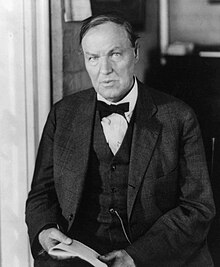
—-
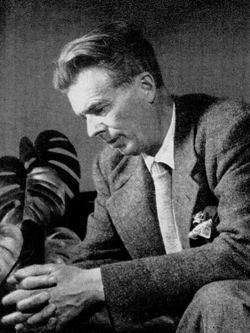
Related posts:

RESPONDING TO HARRY KROTO’S BRILLIANT RENOWNED ACADEMICS!! Part 48 Nobel Prize Winner and Global Warming Denier Ivar Giaever “I think religion is to blame for a lot of the ills in this world!”

October 20, 2015 – 5:20 am

  On November 21, 2014 I received a letter from Nobel Laureate Harry Kroto and it said: …Please click on this URL http://vimeo.com/26991975 and you will hear what far smarter people than I have to say on this matter. I agree with them. Harry Kroto _________________ Below you have picture of 1996 Chemistry Nobel Prize Winner […]

FRANCIS SCHAEFFER ANALYZES ART AND CULTURE PART 78 THE BEATLES (Breaking down the song TOMORROW NEVER KNOWS) Featured musical artist is Stuart Gerber

September 24, 2015 – 5:42 am

The Beatles were “inspired by the musique concrète of German composer and early electronic music pioneer Karlheinz Stockhausen…”  as SCOTT THILL has asserted. Francis Schaeffer noted that ideas of  “Non-resolution” and “Fragmentation” came down German and French streams with the influence of Beethoven’s last Quartets and then the influence of Debussy and later Schoenberg’s non-resolution which is in total contrast […]

RESPONDING TO HARRY KROTO’S BRILLIANT RENOWNED ACADEMICS!! Part 42 Peter Singer, Professor of Bioethics at Princeton University, THE PROBLEM OF EVIL

September 8, 2015 – 5:10 am

  _______ On November 21, 2014 I received a letter from Nobel Laureate Harry Kroto and it said: …Please click on this URL http://vimeo.com/26991975 and you will hear what far smarter people than I have to say on this matter. I agree with them. Harry Kroto _________________ Below you have picture of 1996 Chemistry Nobel Prize […]

RESPONDING TO HARRY KROTO’S BRILLIANT RENOWNED ACADEMICS!! Bart Ehrman “Why should one think that God performed the miracle of inspiring the words in the first place if He didn’t perform the miracle of preserving the words?”

September 2, 2015 – 8:42 am

On November 21, 2014 I received a letter from Nobel Laureate Harry Kroto and it said: …Please click on this URL http://vimeo.com/26991975 and you will hear what far smarter people than I have to say on this matter. I agree with them. Harry Kroto ____________________ Below you have picture of 1996 Chemistry Nobel Prize Winner Dr. […]