Monthly Archives: June 2016

MUSIC MONDAY My two favorite songs from Harry Nilsson!!!

Harry Nilsson – Everybody’s Talkin’ (1969)

Harry Nilsson – Without You 1972 (HD)

Harry Nilsson

From Wikipedia, the free encyclopedia
For the Swedish footballer, see Harry Nilsson (footballer).
Harry Nilsson
Harry Nilsson (1974) (tall).png

Nilsson in 1974
Background information
Birth name Harry Edward Nilsson III
Also known as Nilsson
Born June 15, 1941
Brooklyn, New York, U.S.
Died January 15, 1994 (aged 52)
Agoura Hills, California, U.S.
Genres Rock, pop[1]
Occupation(s) Singer-songwriter
Instruments Piano, vocals, keyboards,guitar, harmonica
Years active 1958–1994
Labels Tower Records, Musicor,RCA Victor, Mercury Records
Associated acts Perry Botkin, Jr., John Lennon, The Monkees, Van Dyke Parks, Richard Perry,Phil Spector, Ringo Starr,George Tipton, Klaus Voormann

Harry Edward Nilsson III (June 15, 1941 – January 15, 1994[2]), usually credited as Nilsson, was an American singer-songwriter who achieved the peak of his commercial success in the early 1970s. His work is characterized by pioneering overdub experiments, returns to the Great American Songbook, and fusions of Caribbean sounds.[3]

A tenor with a three-and-a-half octave range, Nilsson was one of the few major pop-rock recording artists of his era to achieve significant commercial success without ever performing major public concerts or undertaking regular tours. He is known for the charting singles “Everybody’s Talkin’” (1969), “Without You” (1971), and “Coconut” (1972). Nilsson also wrote the song “One” (1968), made famous by the rock band Three Dog Night.[3]

His honors include Grammy Awards for two of his recordings; Best Contemporary Vocal Performance, Male in 1970 for “Everybody’s Talkin'”, a prominent song in the 1969 film Midnight Cowboy, and Best Pop Vocal Performance, Male in 1973 for “Without You”. In 2015, he was voted No. 62 in Rolling Stone‘s list of “The 100 Greatest Songwriters of All Time”.[4]

Biography[edit]

1941–61: Early life[edit]

Nilsson was born in Bedford Stuyvesant, Brooklyn in 1941. His paternal grandparents were Swedish circus performers and dancers, especially known for their “aerial ballet” (which is the title of one of Nilsson’s albums). His father, Harry Edward Nilsson Jr., abandoned the family when Harry was three years old. An autobiographical reference to this is found in the opening to Nilsson’s song “1941”:

Well, in 1941, the happy father had a son
And in 1944, the father walked right out the door

Nilsson’s “Daddy’s Song” also refers to this period in Nilsson’s childhood.[5] He grew up with his mother Bette and his younger half-sister. His younger half-brother Drake was left with family or friends during their moves betweenCalifornia and New York, sometimes living with a succession of relatives and stepfathers. His uncle, a mechanic in San Bernardino, California, helped Nilsson improve his vocal and musical abilities.[6] As well as his half-brother and a half-sister through his mother he also had three half-sisters and one half-brother through his father.[5]

Because of the poor financial situation of his family, Nilsson worked from an early age, including a job at the Paramount Theatre in Los Angeles. When the theatre closed in 1960, he applied for a job at a bank, falsely claiming he was a high school graduate on his application (he only completed ninth grade).[6] He had an aptitude for computers, which were beginning to be employed by banks at the time. He performed so well the bank retained him even after uncovering his deception regarding being a high school graduate. He worked on bank computers at night, and in the daytime pursued his songwriting and singing career.[6]

1962–66: Musicianship beginnings[edit]

By 1958, Nilsson was intrigued by emerging forms of popular music, especially rhythm and blues artists like Ray Charles. He had made early attempts at performing while he was working at the Paramount, forming a vocal duo with his friend Jerry Smith and singing close harmonies in the style of the Everly Brothers. The manager at a favorite hangout gave Nilsson a plastic ukulele, which he learned to play, and he later learned to play the guitar and piano. In the 2006 documentary Who Is Harry Nilsson (And Why Is Everybody Talkin’ About Him)?, Nilsson recalled that when he could not remember lyrics or parts of the melodies to popular songs, he created his own, which led to writing original songs.

Uncle John’s singing lessons, along with Nilsson’s natural talent, helped when he got a job singing demos for songwriter Scott Turner in 1962. Turner paid Nilsson five dollars for each track they recorded. (When Nilsson became famous, Turner decided to release these early recordings, and contacted Nilsson to work out a fair payment. Nilsson replied that he had already been paid – five dollars a track.).[5]

In 1963, Nilsson began to have some early success as a songwriter, working with John Marascalco on a song for Little Richard. Upon hearing Nilsson sing, Little Richard reportedly remarked: “My! You sing good for a white boy!”[6]Marascalco also financed some independent singles by Nilsson. One, “Baa Baa Blacksheep”, was released under the pseudonym “Bo Pete” to some small local airplay. Another recording, “Donna, I Understand”, convinced Mercury Records to offer Nilsson a contract, and release recordings by him under the name “Johnny Niles.”[6]

In 1964, Nilsson worked with Phil Spector, writing three songs with him. He also established a relationship with songwriter and publisher Perry Botkin, Jr., who began to find a market for Nilsson’s songs. Botkin also gave Nilsson a key to his office, providing another place to write after hours.[5] Through his association with Botkin, Nilsson met and became friends with musician, composer and arranger George Tipton, who was at the time working for Botkin as a music copyist. During 1964 Tipton invested his life savings – $2500 – to finance the recording of four Nilsson songs, which he arranged; they were able to sell the completed recordings to the Tower label, a recently established subsidiary of Capitol Records, and the tracks were subsequently included on Nilsson’s debut album. The fruitful association between Nilsson and Tipton continued after Nilsson signed with RCA Records – Tipton went on to create the arrangements for nearly all of Nilsson’s RCA recordings between 1967 and 1971 but their association ended in the 1970s when the two fell out for unknown reasons. Whatever the cause, it was evidently a source of lingering resentment for Tipton, who was one of the few significant collaborators who refused to participate in the 2010 documentary on Nilsson’s life and career.

Nilsson’s recording contract was picked up by Tower Records, which in 1966 released the first singles actually credited to him by name, as well as the debut album Spotlight on Nilsson. None of Nilsson’s Tower releases charted or gained much critical attention, although his songs were being recorded by Glen Campbell, Fred Astaire, The Shangri-Las, The Yardbirds, and others. Despite his growing success, Nilsson remained on the night shift at the bank.[5]

1967–68: Signing with RCA Records[edit]

Nilsson in 1967

Nilsson signed with RCA Records in 1966 and released an album the following year, Pandemonium Shadow Show, which was a critical (if not commercial) success. Music industry insiders were impressed both with the songwriting and with Nilsson’s pure-toned, multi-octave vocals. One such insider was Beatles press officer Derek Taylor, who bought an entire box of copies of the album to share this new sound with others. With a major-label release, and continued songwriting success (most notably with The Monkees, who had a hit with Nilsson’s “Cuddly Toy”[7] after meeting him through their producer Chip Douglas), Nilsson finally felt secure enough in the music business to quit his job with the bank. Monkees member Micky Dolenz maintained a close friendship until Nilsson’s death in 1994.

Some of the albums from Derek Taylor’s box eventually ended up with the Beatles themselves,[8] who quickly became Nilsson fans. This may have been helped by the track “You Can’t Do That”, in which Nilsson covered one Beatles song but added 22 others in the multi-tracked background vocals. When John Lennon and Paul McCartney held a press conference in 1968 to announce the formation of Apple Corps, Lennon was asked to name his favorite American artist. He replied, “Nilsson”. McCartney was then asked to name his favorite American group. He replied, “Nilsson”.[5]

Aided by the Beatles’ praise, “You Can’t Do That” became a minor hit in the US, and a top 10 hit in Canada.[5]

When RCA had asked if there was anything special he wanted as a signing premium, Nilsson asked for his own office at RCA, being used to working out of one. In the weeks after the Apple press conference, Nilsson’s office phone began ringing constantly, with offers and requests for interviews and inquiries about his performing schedule. Nilsson usually answered the calls himself, surprising the callers, and answered questions candidly. (He recalled years later the flow of a typical conversation: “When did you play last?” “I didn’t.” “Where have you played before?” “I haven’t.” “When will you be playing next?” “I don’t.”) Nilsson acquired a manager, who steered him into a handful of TV guest appearances, and a brief run of stage performances in Europe set up by RCA. He disliked the experiences he had, though, and decided to stick to the recording studio. He later admitted this was a huge mistake on his part.[5]

Once Lennon called and praised Pandemonium Shadow Show, which he had listened to in a 36-hour marathon.[6] McCartney called the following day, also expressing his admiration. Eventually a message came, inviting him to London to meet the Beatles, watch them at work, and possibly sign with Apple Corps.

Pandemonium Shadow Show was followed in 1968 by Aerial Ballet, an album that included Nilsson’s rendition of Fred Neil‘s song “Everybody’s Talkin’“. A minor US hit at the time of release (and a top 40 hit in Canada), the song would become extremely popular a year later when it was featured in the film Midnight Cowboy, and it would earn Nilsson his first Grammy Award.[7] The song would also become Nilsson’s first US top 10 hit, reaching #6, and his first Canadian #1.

Aerial Ballet also contained Nilsson’s version of his own composition “One”, which was later taken to the top 5 of the US charts by Three Dog Night and also successfully covered in Australia by John Farnham. Nilsson was also commissioned at this time to write and perform the theme song for the ABC television series The Courtship of Eddie’s Father. The result, “Best Friend”, was very popular, but Nilsson never released the song on record; the original version of the song (entitled “Girlfriend”) was recorded during the making of Aerial Ballet but not included on that LP, and it eventually appeared on the 1995 Personal Best anthology, and as a bonus track on a later release of Aerial Ballet. Late in 1968, The Monkees‘ notorious experimental film Head premiered, featuring a memorable song-and-dance sequence with Davy Jones and Toni Basil performing Nilsson’s composition “Daddy’s Song.” (This is followed by Frank Zappa‘s cameo as “The Critic,” who dismisses the 1920s-style tune as “pretty white.”)[5]

With the success of Nilsson’s RCA recordings, Tower re-issued or re-packaged many of their early Nilsson recordings in various formats. All of these re-issues failed to chart, including a 1969 single “Good Times”.[5]

1969–72: Chart success[edit]

Nilsson’s next album, Harry (1969), was his first to hit the charts, and also provided a Top 40 single with “I Guess the Lord Must Be in New York City” (written as a contender for the theme to Midnight Cowboy), used in the Sophia Loren movie La Mortadella (1971) (US title: Lady Liberty). While the album still presented Nilsson as primarily a songwriter, his astute choice of cover material included, this time, a song by then-little-known composer Randy Newman, “Simon Smith and the Amazing Dancing Bear“. Nilsson was so impressed with Newman’s talent that he devoted his entire next album to Newman compositions, with Newman himself playing piano behind Nilsson’s multi-tracked vocals.[6] The result, Nilsson Sings Newman (1970), was commercially disappointing but was named Record of the Year by Stereo Review magazine and provided momentum to Newman’s career.[6] The self-produced Nilsson Sings Newman also marked the end of his collaboration with RCA staff producer Rick Jarrard, who recounted in the Nilsson documentary that the partnership was terminated by a telegram from Nilsson, who abruptly informed Jarrard that he wanted to work with other producers, and the two never met or spoke again.[5]

Nilsson’s next project was an animated film, The Point! (aka Oblio), created with animation director Fred Wolf, and broadcast on ABC television on February 2, 1971, as an “ABC Movie of the Week“. Nilsson’s self-produced album of songs from The Point! was well received and it spawned a hit single, “Me and My Arrow”.[5]

Later that year, Nilsson went to England with producer Richard Perry to record what became the most successful album of his career. Nilsson Schmilsson yielded three very stylistically different hit singles. The first was a cover ofBadfinger‘s song “Without You” (by Pete Ham and Tom Evans), featuring a highly emotional arrangement and soaring vocals to match – recorded, according to Perry, in a single take.[5] His superb performance was rewarded with Nilsson’s second Grammy Award.[7]

The second single was “Coconut“, a novelty calypso number featuring four characters (the narrator, the brother, the sister, and the doctor) all sung (at Perry’s suggestion[5]) in different voices by Nilsson. The song is best remembered for its chorus lyric (“Put de lime in de coconut, and drink ’em both up”). Also notable is that the entire song is played using one chord, C7th.

The third single, “Jump into the Fire”, was raucous, screaming rock and roll, including a drum solo by Derek and the DominosJim Gordon and a bass detuning by Herbie Flowers.

Nilsson followed quickly with Son of Schmilsson (1972), released while its predecessor was still in the charts. Besides the problem of competing with himself, Nilsson was by then ignoring most of Perry’s production advice[5] and his decision to give free rein to his bawdiness and bluntness on this release alienated some of his earlier, more conservative fan base. With lyrics like “I sang my balls off for you, baby”, “Roll the world over / And give her a kiss and a feel”, and the notorious “You’re breaking my heart / You’re tearing it apart / So fuck you” (a reference to his ongoing divorce), Nilsson had traveled far afield from his earlier work. The album nevertheless reached #12 on the Billboard200, and the single “Spaceman” was a Top 40 hit in October 1972. The follow-up single “Remember (Christmas)”, however, stalled at #53. A third single, the tongue-in-cheek C&W send up “Joy”, was issued on RCA’s country imprint Green and credited to Buck Earle, but it failed to chart.[5]

1973–79: Maverick[edit]

Nilsson in 1976

Nilsson’s disregard for commercialism in favor of artistic satisfaction showed itself in his next release, A Little Touch of Schmilsson in the Night (1973). Performing a selection of pop standardsby the likes of Berlin, Kalmar and Ruby, Nilsson sang in front of an orchestra arranged and conducted by veteran Gordon Jenkins in sessions produced by Derek Taylor. This musical endeavor did not do well commercially. The session was filmed, and broadcast as a television special by the BBC in the UK.[5]

1973 found Nilsson back in California, and when John Lennon moved there during his separation from Yoko Ono, the two musicians rekindled their earlier friendship. Lennon was intent upon producing Nilsson’s next album, much to Nilsson’s delight. However, their time together in California became known much more for heavy drinking than it did for musical collaboration. In a widely publicized incident, the two were ejected from the Troubadour nightclub in West Hollywood for drunken heckling of the Smothers Brothers.[9] Both men caused property damage during binges, with Lennon trashing a bedroom in Lou Adler‘s house, and Nilsson throwing a bottle through a 30-foot-high hotel window.[citation needed]

To make matters worse, at a late night party and jam session during the recording of the album, attended by Lennon, McCartney, Danny Kortchmar, and other musicians,[10] Nilsson ruptured avocal cord, but he hid the injury for fear that Lennon would call a halt to the production. The resulting album was Pussy Cats. In an effort to clean up, Lennon, Nilsson and Ringo Starr first rented a house together, then Lennon and Nilsson left for New York.[5] After the relative failure of his latest two albums, RCA Records considered dropping Nilsson’s contract. In a show of friendship, Lennon accompanied Nilsson to negotiations, and both intimated to RCA that Lennon and Starr might want to sign with them, once their Apple Records contracts with EMI expired in 1975, but would not be interested if Nilsson were no longer with the label.[6] RCA took the hint and re-signed Nilsson (adding a bonus clause, to apply to each new album completed), but neither Lennon nor Starr signed with RCA.

Nilsson’s voice had mostly recovered by his next release, Duit on Mon Dei (1975), but neither it nor its follow-ups, Sandman and …That’s the Way It Is (both 1976), met with chart success. Finally, Nilsson recorded what he later considered to be his favorite album Knnillssonn (1977). With his voice strong again, and his songs exploring musical territory reminiscent of Harry or The Point!, Nilsson anticipated Knnillssonn to be a comeback album. RCA seemed to agree, and promised Nilsson a substantial marketing campaign for the album. However, the death of Elvis Presley caused RCA to ignore everything except meeting demand for Presley’s back catalog, and the promised marketing push never happened.[11] This, combined with RCA releasing a Nilsson Greatest Hits collection without consulting him, prompted Nilsson to leave the label.[5]

Nilsson’s London flat[edit]

9 Curzon Square, London in 2012; flat on 4th floor, at top right was Nilsson’s, the site of both Cass Elliot‘s and Keith Moon‘s deaths.

Nilsson’s 1970s London flat, at Flat 12, 9 Curzon Street on the edge of Mayfair, was a two-bedroom apartment decorated by the ROR (“Ringo or Robin”) design company owned by Starr and interior designer Robin Cruikshank. Nilsson cumulatively spent several years at the flat, which was located near Apple Records, the Playboy Club, Tramp and the homes of friends and business associates. Nilsson’s work and interests took him to the US for extended periods, and while he was away he lent his place to numerous musician friends. During one of his absences, formerThe Mamas & the Papas singer Cass Elliot and a few members of her tour group stayed at the flat while she performed solo at the London Palladium, headlining with her torch songs and “Don’t Call Me Mama Anymore“. Following a strenuous performance with encores on July 29, 1974, Elliot was discovered in one of the bedrooms, dead of heart failure at 32.[6]

On September 7, 1978, The Who‘s drummer Keith Moon returned to the same room in the flat after a night out, and died at 32 from an overdose of Clomethiazole, a prescribed anti-alcohol drug.[6] Nilsson, distraught over another friend’s death in his flat, and having little need for the property, sold it to Moon’s bandmate Pete Townshend and consolidated his life in Los Angeles.[citation needed]

1980–92: Winding down[edit]

Nilsson’s musical work after leaving RCA Victor was sporadic. He wrote a musical, Zapata, with Perry Botkin Jr. and libretto by Allan Katz, which was produced and directed by longtime friendBert Convy. The show was mounted at the Goodspeed Opera House in East Haddam, Connecticut, but never had another production. He wrote all the songs for Robert Altman‘s movie-musicalPopeye (1980),[6] the score of which met with unfavorable reviews. Nilsson’s Popeye compositions included several songs that were representative of Nilsson’s acclaimed Point era, such as “Everything Is Food” and “Sweethaven”. The song “He Needs Me” featured years later in the film Punch-Drunk Love. Nilsson recorded one more album, Flash Harry, co-produced by Bruce Robb and Steve Cropper, which was released in the UK but not in the US. From this point onward, Nilsson increasingly began referring to himself as a “retired musician”.

Nilsson was profoundly affected by the death of John Lennon on December 8, 1980. He joined the Coalition to Stop Gun Violence and overcame his preference for privacy to make appearances for gun control fundraising. He began to appear at Beatlefest conventions and he would get on stage with the Beatlefest house band “Liverpool” to either sing some of his own songs or “Give Peace a Chance.”[5]

After a long hiatus from the studio, Nilsson started recording sporadically once again in the mid to late 1980s. Most of these recordings were commissioned songs for movies or television shows. One notable exception was his work on a Yoko Ono Lennon tribute album, Every Man Has A Woman (1984) (Polydor); another was a cover of “Zip-A-Dee-Doo-Dah” recorded for Hal Willner‘s 1988 tribute album Stay Awake: Various Interpretations of Music from Vintage Disney Films. Nilsson donated his performance royalties from the song to the Coalition to Stop Gun Violence.[5]

In 1985 Nilsson set up a production company, Hawkeye, to oversee various film, TV and multimedia projects for which he was involved. He appointed his friend, satirist and screenwriter Terry Southern, as one of the principals. They collaborated on a number of screenplays including Obits (a Citizen Kane-style story about a journalist investigating an obituary notice) and The Telephone, a comedy about an unhinged unemployed actor.[5]

The Telephone was virtually the only Hawkeye project that made it to the screen. It had been written with Robin Williams in mind but he turned it down; comedian-actress Whoopi Goldberg then signed on, with Southern’s friend Rip Torn directing, but the project was troubled. Torn battled with Goldberg, who interfered in the production and constantly digressed from the script during shooting, and Torn was forced to plead with her to perform takes that stuck to the screenplay. Torn, Southern and Nilsson put together their own version of the film, which screened at the Sundance Film Festival in early 1988, but it was overtaken by the “official” version from the studio, and this version premiered to poor reviews in late January 1988. The project reportedly had some later success when adapted as a theatre piece in Germany.[12]

In 1990, Hawkeye floundered and Nilsson found himself in a dire financial situation after it was discovered that his financial adviser Cindy Sims had embezzled all the funds he had earned as a recording artist. The Nilssons were left with $300 in the bank and a mountain of debt, while Sims served less than two years and was released from prison in 1994 without making restitution.[13]

In 1991, the Disney CD For Our Children, a compilation of children’s music performed by celebrities to benefit the Elizabeth Glaser Pediatric AIDS Foundation, included Nilsson’s original composition “Blanket for a Sail,” recorded at the Shandaliza Recording Studio in Los Angeles.[5]

Nilsson made his last concert appearance September 1, 1992, when he joined Ringo Starr & His All-Starr Band on stage at Caesar’s Palace in Las Vegas, Nevada to sing “Without You” with Todd Rundgren handling the high notes. Afterwards, an emotional Starr embraced Nilsson on stage.[5]

1993–94: Heart attack and death[edit]

Nilsson suffered a massive heart attack on February 14, 1993.[14] After surviving that, he began pressing his old label, RCA, to release a boxed-set retrospective of his career, and resumed recording, attempting to complete one final album. He finished the vocal tracks for the album with producer Mark Hudson, who has the tapes of that session.[citation needed] Nilsson died of heart failure on January 15, 1994 in his Agoura Hills, California home.[14] In 1995, the 2-CD anthology he worked on with RCA, Personal Best, was released.[5]

Nilsson is interred in Pierce Brothers Valley Oaks Memorial Park.[citation needed]

Personal life[edit]

Nilsson married Sandra McTaggart on October 24, 1964. They divorced in 1966 (one stepson).

Nilsson married Diane Clatworthy on December 31, 1969. They had one son. Nilsson and Clatworthy divorced in 1974.

Nilsson married Una O’Keeffe on August 12, 1976; they remained married until his death on January 15, 1994. They had six children.

Legacy[edit]

Nilsson is the subject of a 2006 documentary, Who Is Harry Nilsson (And Why Is Everybody Talkin’ About Him)? produced by David Leaf and John Schienfeld. The film was screened in 2006 at the Seattle International Film Festivaland the Santa Barbara International Film Festival. In August 2006, the film received its Los Angeles premiere when it was screened at the 7th Annual Mods & Rockers Film Festival followed by a panel discussion about Nilsson featuring the filmmakers and two friends of Nilsson, producer Richard Perry and attorney/executive producer Lee Blackman.[5]

The filmmakers re-edited the film with rare found footage of Nilsson, further interviews, and family photographs, and finally released it on September 17, 2010 at selected theaters in the United States. A DVD, including additional footage not in the theatrical release, was released on October 26, 2010.[5]

Nilsson’s final album, tentatively titled Papa’s Got a Brown New Robe (produced by Mark Hudson) was not released, though several demos from the album were available on promotional CDs and online.[5]

The musical Everyday Rapture features three songs by Nilsson and, similarly, the film A Good Year starring Russell Crowe and Marion Cotillard features “Gotta get up”, “Jump into the fire” and “How can I be sure of you”.

On July 30, 2013, Sony released a definitive box-set of his RCA era albums, The RCA Albums Collection.[15] Each of the albums in the 17-CD set had additional bonus tracks, along with 3 of the 17 discs which contained rarities and outtakes spanning his entire career. Additionally, several weeks later on August 13, Flash Harry was finally issued on CD[16] also featuring additional material. Completing the two CD releases, the first book written about Nilsson was published covering his life story.[17]

Awards and nominations[edit]

Nilsson won two Grammy Awards. He received several more Grammy nominations for the album Nilsson Schmilsson.[18]

The New York Post rated Nilsson’s cover of Fred Neil’s “Everybody’s Talking” #51 on their list of the 100 Best Cover Songs of All Time.[19]

Rolling Stone ranked Nilsson as No. 62 on “The 100 Greatest Songwriters of All Time”.[4]

Discography[edit]

Studio albums

Filmography[edit]

  • I Spy (1965 TV Series) – In 1966 Episode Sparrowhawk “Untitled Composition” sung by Nilsson in background of a conversation scene.
  • Skidoo (1968) songs written and performed, soundtrack music composer, actor (bit role)
  • The Ghost & Mrs. Muir (1969 TV Series) acted and sang – He appeared in the episode “The Music Maker”, and his character name was Tim Seagirt. He sang “Without Her” and “If Only I Could Touch Your Hand.”
  • The Courtship of Eddie’s Father (TV series, 1969–1972) theme song written and performed, incidental music
  • Midnight Cowboy (1969) new version of “Everybody’s Talkin'” performed
  • Jenny (1970) song “Waiting” written and performed
  • The Point! (1971) story, all songs written and performed
  • Son of Dracula (1974) actor (lead role), all songs performed
  • The World’s Greatest Lover (1978) song “Ain’t It Kinda Wonderful” performed
  • In God We Tru$t (1980) new version of “Good For God” performed
  • Popeye (1980) all songs written, except “I’m Popeye the Sailor Man”
  • Handgun (1983) song “Lay Down Your Arms” written and performed
  • First Impressions, (TV series, 1988) theme song co-written, performed
  • Camp Candy (TV series, animated, 1989–1991) theme song written, and performed with John Candy
  • The Fisher King (1991) song “How About You” performed
  • Me, Myself, and I (1992) song “Me, Myself and I” written and performed

When Harry met… John, Paul, George and Ringo: The American Beatle’s 18-month ‘lost weekend’ with Lennon

By ALYN SHIPTON

Read more: http://www.dailymail.co.uk/home/event/article-2382537/The-Beatles-When-Harry-met–John-Paul-George-Ringo-The-American-Beatles-18-month-lost-weekend-Lennon.html#ixzz4B5TCln8C
Follow us: @MailOnline on Twitter | DailyMail on Facebook

Epic brandy binges. Guns in the studio. The famous ‘Lost Weekend’. How Harry Nilsson, the hellraising singer of Without You, befriended and bewitched the Fab Four – and drove himself into an early grave

One long party: During the infamous 'lost weekend' Harry Nilsson with John Lennon and May Pang. Nilsson always slightly hero-worshipped Lennon, and there was a shared love of the outrageous

One long party: During the infamous ‘lost weekend’ Harry Nilsson with John Lennon and May Pang. Nilsson always slightly hero-worshipped Lennon, and there was a shared love of the outrageous

Somewhere between three and four o’clock on a Monday morning in April 1968, the telephone rang in the little office at RCA Records in Los Angeles where an obscure singer-songwriter named Harry Nilsson was keeping his usual nocturnal hours.

‘I was half asleep,’ Nilsson recalled. ‘A voice says: “Hello, Harry. This is John. Man you’re too f***ing much, you’re just great. We’ve got to get together and do something.”

‘I said, “Who is this?”

‘“John Lennon.”

‘I said: “Yeah, right, who is this?”

‘“It’s John Lennon. I’m just trying to say you’re fantastic. Have a good night’s sleep. Speak to you soon. Goodbye.”

‘I thought, “Was that a dream?”’ Not a dream, but the start of an association that would change Nilsson’s life.

The year before, Nilsson recorded The Beatles’ You Can’t Do That, cleverly using quotes from 14 other Beatles songs.

That had led to an invitation to a party at George Harrison’s rented house in the Hollywood Hills.

Harry recalled that the Beatle, ‘in a white windblown robe with a beard and long hair, looking like Christ with a camcorder’, had listened to his songs and been ‘very complimentary’.

Nilsson was described as 'the finest white male singer on the planet', and was an accomplished songwriter who happened to have huge hits with two songs he did not write: Everybody's Talkin' and Without You

Nilsson was described as ‘the finest white male singer on the planet’, and was an accomplished songwriter who happened to have huge hits with two songs he did not write: Everybody’s Talkin’ and Without You

Harrison took Nilsson’s demos away and played them to the other Beatles, who were now calling Harry in the middle of the night.

The Monday after Lennon’s call, Paul McCartney rang. ‘Hello, Harry. Yeah, this is Paul. Just wanted to say you’re great, man! John gave me the album. It’s great; you’re terrific. Look forward to seeing you.’

The next Monday, Nilsson dressed and waited for a four o’clock call from Ringo. It didn’t come. But on May 14, Lennon and McCartney appeared at a press conference in New York.

Asked to name their favourite American artist, Lennon replied ‘Nilsson’. The two gave the same response when asked their favourite group.

Later that day, when a journalist wondered what they thought about American music, Lennon replied, ‘Nilsson! Nilsson for president!’

A unique relationship would form between Nilsson and The Beatles. He would write a song for McCartney, make films and party through the 1970s with Ringo Starr, and record and raise hell with Lennon in the notorious 18-month ‘lost weekend’ period in 1973 and 1974, when John left Yoko Ono for a wild life in Los Angeles.

There was, it should be said, much more to Nilsson than his Beatles associations.

He was described by his producer Richard Perry as ‘the finest white male singer on the planet’, and was an accomplished songwriter who happened to have huge hits with two songs he did not write: Everybody’s Talkin’ and Without You.

Not long after Lennon and McCartney returned from New York, Derek Taylor, The Beatles’ press officer at Apple, made a call to Harry.

‘Derek says: “The lads, the boys, the Fabs would like you to come over and join them at a session,”’ Nilsson remembered. ‘“They’re recording at Abbey Road. They’re dying to see you.”’

Nilsson with Ringo Starr and Lynsey de Paul. 'When he got to make records with John Lennon and be friends with Ringo Starr, his life was complete,' said legendary songwriter Jimmy Webb

Nilsson with Ringo Starr and Lynsey de Paul. ‘When he got to make records with John Lennon and be friends with Ringo Starr, his life was complete,’ said legendary songwriter Jimmy Webb

Within a few days, Nilsson was sitting on a plane crossing the Atlantic.

Arriving at Heathrow, he found that Ringo had kindly left his Daimler limousine at the airport for him.

Suddenly famous, having been endorsed by the world’s biggest band, Nilsson went straight to a reception for his own record, where the other three Beatles were the stars of a guest list that included everybody who was anybody in swinging London.

That afternoon, another limo arrived to take Harry out to Lennon’s home in the Surrey commuter belt.

Nilsson was greeted warmly by Lennon, and a single look between them was the start of a lifelong friendship.

‘We spent the entire night talking until dawn,’ said Nilsson.

‘Yoko ended up like a kitten at John’s feet, curled up. And John and I are on about marriage, life, death, divorce, women. And I’m thinking, “This is it! This is truthful. This is good. This is honest. This is exciting. It’s inspirational.”’

Lennon gave Nilsson an Indian gold braided jacket with fur trim lining he had worn in Magical Mystery Tour.

The following day McCartney announced he was coming over to Nilsson’s hotel, and he ran through rough versions of several of his newly written songs.

Nilsson sent down for a bottle or two of the best wine on the hotel’s room service list, and they carried on singing songs for one another into the small hours, until there was a thunderous banging on the door from the occupants of the room next door: ‘What the hell do you people think you’re doing? Don’t you know some people work for a living? Some people have to get up in the morning!’

Nilsson calmly introduced them to his visitors, and Paul gently apologised. The neighbours were impressed to find that the disturbance had been created by so famous a guest and made no further complaints. The evening ended with McCartney driving Nilsson around London in his Aston Martin.

It laid the groundwork for future collaborations between Nilsson and all four members of the group.

The song Everybody’s Talkin’ had made Nilsson a star in his own right by the time his friendship with Ringo – soon to be one of the cornerstones of Nilsson’s life – blossomed in the early 1970s.

‘Ringo and I spent a thousand hours laughing,’ said Nilsson.

Lennon and Nilsson are thrown out of the Troubador in LA on March 13, 1974, for heckling

Lennon and Nilsson are thrown out of the Troubador in LA on March 13, 1974, for heckling

Ringo, often sporting mirrored sunglasses that disguised the effects of the night before, was at the heart of a social set that enjoyed late nights, exclusive bars, nightclubs and brandy.

Along with Nilsson and Ringo, there would be Marc Bolan of T Rex, Keith Moon, and Graham Chapman of Monty Python.

When in London, they would meet in the afternoon, drinking brandy and swapping yarns, each new arrival dropping in with the catchphrase: ‘I hope I’m not interrupting anything?’

‘We would drink until 9pm,’ Nilsson recalled. ‘That’s six hours of brandy. Then between 9 and 10, we would usually end up at Tramp, the most uproarious, exclusive disco-restaurant in the world.

‘Royalty, movie stars, world champions all frequented the place. It was a ride, meeting luminaries and having blow-outs every night.’

Nilsson was back in Los Angeles by the time of John Lennon’s arrival in the city in the autumn of 1973.

Ever since their time together at Lennon’s home, there had been a strong bond of friendship between the two of them.

However, unlike the camaraderie he enjoyed with Ringo, Nilsson always slightly hero-worshipped Lennon, and there was a shared love of the outrageous. This could, and often did, prove to be a destructive force.

Lennon was at a crossroads. His album Mind Games would be released in October to indifferent reviews, and in June he had split from Yoko. He and Ono’s former personal assistant, May Pang, eloped to the West Coast, where Lennon planned to make an album of rock classics, to be produced by Phil Spector.

Lennon’s drinking was under control in New York, but in Los Angeles, away from Yoko, it increased dramatically as he began socialising with Nilsson.

As she watched Lennon match Nilsson’s intake of brandy and cocaine, May Pang felt powerless: ‘(Nilsson) had charm. We loved him. But he went to extremes.’

Nilsson and Micky Dolenz at the Rainbow

Nilsson and Micky Dolenz at the Rainbow

According to Spector, Nilsson was a hindrance to the sessions, and one of his more extreme pranks involved suggesting holding up a 7-Eleven store.Spector was no less outrageous.

He started arriving at the studio dressed up in various costumes, first as a doctor, then a karate instructor, and finally a cowboy, complete with loaded revolver.

Trying to assert his authority, Spector fired the gun into the air.

Covering his ears, Lennon quipped, ‘Listen Phil, if you’re going to kill me, kill me. But don’t f*** with me ears – I need ’em.’

The sessions broke down, leaving Lennon to spend more time with Nilsson, who introduced him to all his nocturnal haunts.

These included the Rainbow Bar and Grill in Hollywood, where the upstairs room still has a plaque on the wall commemorating their late-night drinking club, ‘the Hollywood Vampires’, which included Micky Dolenz of The Monkees, Keith Moon and Alice Cooper.

On March 13, 1974, Nilsson took his friend to see comedians the Smothers Brothers at the Troubadour club. Lennon proceeded to get seriously drunk on Brandy Alexanders.

The press the next day reported: ‘Customers in the jammed nightclub complained Lennon made sarcastic comments and shouted obscenities during the show.

Said the Smothers’ manager, Ken Fritz: ‘I went over and asked Harry to try to shut up Lennon. Harry said: “I’m trying – don’t blame me!”

‘When Lennon continued, I told him to keep quiet. He swung and hit me in the jaw.’

The bouncers had Lennon out in seconds.

Photographer Brenda Mary Perkins tried to snap him, but the enraged Lennon took a swing and his fist allegedly hit her right eye.

The Nixon administration had tried to have Lennon returned to Britain because of an ancient drug charge. When Perkins filed charges at the sheriff’s office, a Nilsson cover-up and charm campaign quelled an investigation that could have got Lennon deported.

Lennon and Nilsson agreed they had to do something more positive than going out on wild benders. John announced his intention of producing an album for Nilsson, and they decided they and the musicians should rent a beach house close to Santa Monica.

The sessions yielded the disappointing Pussy Cats, but were notable for a rare reunion of the principal Beatles.

Round midnight on the first night, McCartney appeared with Stevie Wonder. Lennon was passing cocaine around, and his offer of a ‘toot’ to Stevie gave the subsequent bootleg album its title: A Toot And A Snore In ’74. It was the last time the two ex-Beatles would ever play together in a studio.

On December 8, 1980, Nilsson was in the studio when he heard Lennon had been shot – it brought his professional life to a complete stop.

He would never make another completed studio album of his own. But by the early 1990s, his weight, his drinking, and the years of cocaine intake had taken a serious toll on his wellbeing.

A business venture resulted in bankruptcy, and Ringo had to step in to provide Harry and his family with a house and spending money. Beset by ill health, Nilsson died on January 15, 1994, aged 52.

In most obituaries, Nilsson’s career was summed up by his two Grammy-winning records, with the suggestion that the rest was an inexorable downturn into self-destruction.

Nilsson seemed to agree: ‘Being relegated to Everybody’s Talkin’ and Without You ain’t exactly what I set out to do.’

‘When he got to make records with John Lennon and be friends with Ringo Starr, his life was complete,’ said close friend and legendary songwriter Jimmy Webb.

‘That’s all he ever wanted. He wanted to know those people, to be admired by them. Everything else was the small print.’

From ‘Nilsson’ by Alyn Shipton,  published by OUP USA, £18.99.

To order at a special price of £14.99 with free p&p, please call the Mail Book Shop on 0844 472 4157 or visit mailbookshop.co.uk

Read more: http://www.dailymail.co.uk/home/event/article-2382537/The-Beatles-When-Harry-met–John-Paul-George-Ringo-The-American-Beatles-18-month-lost-weekend-Lennon.html#ixzz4B5T1h1vJ
Follow us: @MailOnline on Twitter | DailyMail on Facebook

Related posts:

MUSIC MONDAY ‘Apple gave me advice’: Coldplay’s Chris Martin turned to 11-year-old daughter for words of wisdom ahead of Superbowl 50 By DAILYMAIL.COM REPORTER PUBLISHED: 00:58 EST, 2 February 2016

‘Apple gave me advice’: Coldplay’s Chris Martin turned to 11-year-old daughter for words of wisdom ahead of Superbowl 50 By DAILYMAIL.COM REPORTER PUBLISHED: 00:58 EST, 2 February 2016 | UPDATED: 17:20 EST, 2 February 2016 n Facebook They’ve sold 80 million records and been around for 20 years. But Coldplay’s lead singer Chris Martin, 38, […]

MUSIC MONDAY Chris Martin, Lead Singer of Coldplay: 5 Fast Facts You Need to Know Published 3:44 pm EDT, February 7, 2016

__________ Chris Martin, Lead Singer of Coldplay: 5 Fast Facts You Need to Know Published 3:44 pm EDT, February 7, 2016 Updated 3:44 pm EDT, February 7, 2016 Comment By Lauren Weigle 17.6k (Getty) Chris Martin has been the front-man of the band Coldplay for about 20 years, though the band changed its name a […]

MUSIC MONDAY Christian Rock Pioneer Larry Norman’s Songs Part 14

Christian Rock Pioneer Larry Norman’s Songs Part 14 I posted a lot in the past about my favorite Christian musicians such as Keith Green (I enjoyed reading Green’s monthly publications too), and 2nd Chapter of Acts and others. Today I wanted to talk about one of Larry Norman’s songs. David Rogers introduced me to Larry […]

MUSIC MONDAY Christian Rock Pioneer Larry Norman’s Songs Part 13

Christian Rock Pioneer Larry Norman’s Songs Part 13 I posted a lot in the past about my favorite Christian musicians such as Keith Green (I enjoyed reading Green’s monthly publications too), and 2nd Chapter of Acts and others. Today I wanted to talk about one of Larry Norman’s songs. David Rogers introduced me to Larry […]

MUSIC MONDAY Christian Rock Pioneer Larry Norman’s Songs Part 12

Christian Rock Pioneer Larry Norman’s Songs Part 12 I posted a lot in the past about my favorite Christian musicians such as Keith Green (I enjoyed reading Green’s monthly publications too), and 2nd Chapter of Acts and others. Today I wanted to talk about one of Larry Norman’s songs. David Rogers introduced me to Larry […]

MUSIC MONDAY Christian Rock Pioneer Larry Norman’s Songs Part 11

Christian Rock Pioneer Larry Norman’s Songs Part 11 I posted a lot in the past about my favorite Christian musicians such as Keith Green (I enjoyed reading Green’s monthly publications too), and 2nd Chapter of Acts and others. Today I wanted to talk about one of Larry Norman’s songs. David Rogers introduced me to Larry […]

MUSIC MONDAY Christian Rock Pioneer Larry Norman’s Songs Part 10 more on Album “Only Visiting This Planet”

Christian Rock Pioneer Larry Norman’s Songs Part 10 more on Album “Only Visiting This Planet” I posted a lot in the past about my favorite Christian musicians such as Keith Green (I enjoyed reading Green’s monthly publications too), and 2nd Chapter of Acts and others. Today I wanted to talk about one of Larry Norman’s […]

John MacArthur Sermon “The Coming Kingdom of Christ, Part 3” Daniel 7:8-28 27-17 Apr 6, 1980

__________

The Coming Kingdom of Christ, Part 3

  • Sermons
  • Daniel 7:8-28
  • 27-17
  • Apr 6, 1980

Let’s share together in a word of prayer as we come to our study tonight. Father, it’s with great desire in my heart that I approach Your Word, that we might clearly understand the power and the urgency of this message. We’ve been sharing together the principles of the Book of Daniel for several weeks. Even in this very chapter. And, yet, we feel, no matter how long we linger here, we cannot exhaust the great treasures that are in this place. We pray, Father, that You would bring to our minds a new and a fresh things already known, that You would lead us into truth that we have not yet seen. That most of all, we might commit ourselves to being like You, living in obedience to Your will. Thank You for Your love to us. For this incomparable treasure of Your Word. Help us to just, in a small way, understand what it means to know the future of the world and how rich we are, when the rest of the world is groping to find answers for the future. How rich we are to have those answers in Your Word. And may we live in the light of them, and we’ll praise You in Christ’s name. Amen…

If you’ve been with us for the last few weeks, you know that we have been studying the seventh chapter of Daniel. I’d invite you to look with me to that chapter, if you will, and see what the Spirit of God has for us again tonight. We’re moving our way through this thrilling Book of Daniel. Our hearts have been blessed and challenged all the way through. No less as we have reached chapter 7, which is, perhaps, the greatest prophetic panorama in all of the Bible. It causes us to have to stop, pay careful attention to everything that the Lord says here, for none of it is wasted words. And so we have profited so much in the study of this chapter.

It culminates, you will notice, in verses 13 and 14, where Daniel says, “I saw in the night visions, and behold, one like the Son of Man came with the clouds of heaven, and came to the Ancient of Days, and they brought Him near before Him. And there was given Him dominion and glory and a Kingdom, that all people, nations, and languages should serve Him. His dominion is an everlasting dominion, which shall not pass away, and His Kingdom that which shall not be destroyed.”

Now, in those two verses, you have the granting by the Father to the Son of the Kingdom. The eternal Kingdom given from the Father, who is the Ancient of Days, to the Son, who is the Son of Man. We have seen in our study that the Bible teaches very clearly that history culminates in Christ receiving His Kingdom. That Kingdom is an eternal Kingdom. It has a millennial phase. That’s phase one. It has a thousand-year earthly phase, and then it moves into the eternal Kingdom in the new heavens and the new earth. But it is an eternal Kingdom.

So the seventh chapter of Daniel presents to us all of the history of man, from the time of Daniel to the time when the Lord Jesus Christ receives and establishes His own eternal Kingdom. It is a monumental sweep of prophetic history from Daniel’s day forward.

Now, we believe that the Bible tells us that everything in history is moving toward the cataclysmic event of the Kingdom of Christ. And I’m convinced, as I study my Bible, that the Kingdom of Christ is not something that sneaks up on us gradually. It is not something that is going to be almost imperceptible, and we’ll wake up sometime and find it already here. The Kingdom of Christ is not just a matter of some quiet flow of history. I believe that the Kingdom of Christ is a cataclysmic, violent, furious, momentary thing that is established and then flows on forever.

The Bible tells us that, when the Kingdom is granted to the Son, the Son will appear in blazing glory in the sky. There will be fiery judgment. There will be a bloodbath in the earth. We know that this will be a cataclysmic event. It is described for us by the Apostle Paul in 2 Thessalonians chapter 1 verse 7. He says, “And to you who are troubled, rest with us, when the Lord Jesus shall be revealed from Heaven with His mighty angels…in flaming fire, taking vengeance on them that know not God, and that obey not the Gospel of our Lord Jesus Christ. Who shall be punished with everlasting destruction from the presence of the Lord and from the glory of His power. When He shall come to be glorified in His saints and to be admired in all them that believe.”

In other words, Paul is saying there’s going to come a moment of fury, a moment of divine revelation, a moment of utter devastation when Christ returns. Jude says, “He will come with 10,000s of His saints to execute judgment upon all.” In Revelation chapter 19, we find a picture of the coming of Christ. “I saw Heaven opened, and behold, a white horse; and He that sat upon him was called Faithful and True, and in righteousness He doth judge…listen to this…and make war. His eyes are like a flame of fire. On His head were many crowns; and He had a name written that no man knew, but He Himself. And He was clothed with a vesture dipped in blood, and His name is called, The Word of God. And the armies that were in Heaven followed Him upon white horses, clothed in fine linen, white and clean. And out of His mouth goeth a sharp sword that with it He should smite the nations, and He shall rule them with a rod of iron; and He treadeth the wine press of the fierceness and wrath of Almighty God. And He hath on His vesture and on His thigh a name written: ‘King of Kings, and Lord of Lords.’ And I saw an angel standing in the sun, and he cried with a loud voice, saying to all the fowls that fly in the midst of heaven, ‘Come and gather yourselves together to the supper of the great God, that ye may eat the flesh of kings, the flesh of captains, the flesh of mighty men, the flesh of horses and of them that sit on them, the flesh of all men, both free and enslaved, both small and great.’ And I saw the beast, and the kings of the earth, and their armies gathered together to make war against Him that sat on the horse, and against His army. And the beast was taken, and with him the false prophet that wrought miracles before him, which he had deceived that that had received the mark of the beast, and them that worshiped his image. These both were cast alive into a lake of fire, burning with brimstone. And the remnant were slain with the sword of Him that sat on the horse, whose sword proceeded out of His mouth. And all the fowls were filled with their flesh.”

Needless to say, that’s a shocking, fearful, horrifying scene. John is showing us what happens when Christ takes His throne. When Christ establishes Himself as King of Kings and Lord of Lords. We do not mildly, quietly, subtly move to the Kingdom. It is a holocaust of fiery judgment. It is a moment when Christ takes over the earth as its ruler.

Look with me for a moment at Revelation chapter 5. As we prepare to understand Daniel a little better, we need to look to look at some passages in Revelation. In Revelation chapter 5, it says, “I saw Him…verse 1…that sat on the throne, and in His right hand was a scroll written within and on the back and sealed with seven seals.” Now, John sees a vision of the future, a vision of the time when Christ comes to establish His Kingdom. It is preceded by this terrible holocaust known as The Tribulation. But he sees in chapter 4 God sitting on the throne, preparing to give the Kingdom to Christ. And in God’s hand is a scroll, and the scroll is sealed seven times. They would roll it, and then they put a seal. They would roll it further, and seal it again. Roll it further, and seal it again. Sometimes they would do it on the edges. Roll it a little ways and seal it there. The Roman law required that a will or a testament be sealed seven times so that it could not be broken.

What the Father holds in His hand is His will, His testament, His inheritance. It is, if you will, the title deed to the earth. It is the right to rule…”And a strong angel…in verse 2…proclaimed with a loud voice, ‘Who is worthy to open the scroll and loose its seals?’ And no man in Heaven, nor on earth, neither under the earth, was able to open the scroll, neither to look on it. And I wept much, because no man was found worthy to open and read the book, neither to look on it.” Nobody was worthy. “And one of the elders saith unto me, ‘Weep not. Behold, the Lion of the tribe of Judah, the Root of David, hath prevailed to open the scroll and to loose its seven seals.’ And I beheld, and lo, in the midst of the throne and of the four living creatures, and in the midst of the elders, stood a Lamb as though it had been slain, having seven horns and seven eyes, which are the seven Spirits of God, or the sevenfold Spirit of God, sent forth into all the earth. And He came and took the scroll out of the right of Him that sat upon the throne. And when He had taken the scroll, the four living creatures…who are angels…the four and twenty elders…who may be angels or possibly representatives of the church…fell down before the Lamb, having every one of them harps and golden bowls full of incense, which are the prayers of the saints. And they sang a new song, saying, ‘Thou art worthy to take the scroll and to open it’s seals, for Thou wast slain, and hast redeemed to God by Thy blood, out of every kindred and tongue, and people and nation, and hast made us unto our God a kingdom of priests; and we shall reign on the earth.'”

Now, the point is this: they could anticipate their reign on earth. They could anticipate the Kingdom, because the One whose right it was to take the Kingdom, the Lion of the tribe of Judah, the One who had the right to take the scepter, Shiloh. The Root of David, as well as the seed of David. The Lamb slain from the foundation of the earth. The One who had redeemed us to God, Christ Himself, ascended and took the scroll and had the right to open its seals and to establish His reign on earth. And then they sing with a loud voice, “Worthy is the Lamb that was slain, to receive power and riches and wisdom and strength, and honor and glory and blessing.” The scene is the same. The Father giving to the Son the right to reign.

By the way, that’s the way it commonly was done. A sealed scroll was the title deed. If you read the 32nd chapter of Jeremiah, you will find that there was such a scroll used there as the title deed to certain land which was purchased, to be recuperated after the Babylonian captivity. So the scroll represents, then, the title deed to the earth. Revelation chapter 5 indicating to us that the earth is occupied presently by usurpers. Satan, of course, the master usurper, controls the earth. He is the god of this age, the prince of this world, the monarch of this system. But the time is coming when he has to forfeit that to the One who has the right to rule. The One whose right it is, Shiloh, the One who deserves the scepter. The One who earns the crown and shall receive it from the Father. And we see, in chapter 5, the taking of that right.

Then in chapter 6, He begins to unroll the scroll, and you have immediately a series of devastating judgments. They are the breaking of the seals. And out of the seals flow the trumpet judgments, and out of the trumpet flow the vial or the bowl judgments. And in a rapid-fire staccato session of judgments, man’s day is ended in an incredible holocaust which takes the life of far and away the vast majority of the earth. And Christ then establishes His eternal Kingdom.

There is coming, then, beloved, a day when Christ will take back the right to rule in this world. You see, when God created man in the Garden, He gave him dominion over the earth, but Satan usurped that dominion in the Fall, and it will not be until Christ comes back, the second Adam, that that dominion is restored to man, and then we will reign with Jesus Christ. That’s our great and glorious hope.

Now, the message of the Second Coming of Christ dominates the Bible. The message of Christ coming to establish His Kingdom is replete in Scripture. Just to give you an idea, prophecy occupies approximately one-fifth of Scripture, and the Second Coming prophecies occupy approximately one-third of that…There are 660 general prophecies, 333 of them are about Christ. Or about half of them. Of the 333 that are about Christ, 109 were fulfilled in His First Coming, and 224 are yet to be fulfilled in His Second Coming. So there are at least 224 prophecies related to the return of Christ.

Put it another way. There are 7,959 verses in the New Testament; 330 of them are about the Second Coming. That’s one out of every 25. Next to the subject of faith, no subject is more discussed than the Second Coming of Christ. For every time His First Coming is mentioned, His Second Coming is mentioned eight times. Each time the Atonement is mentioned, the Second Coming is mentioned twice. The Lord Himself personally referred to His return 21 times. Over 50 times, we are told to be ready for it…

Some time ago, there was a convocation of church delegates from around the world, and they met in Evanston, Illinois. Sponsored by the World Council of Churches, and it was reported from that meeting that only 10 percent of the American Protestant clergymen questioned at that conference found any significance at all in the doctrine of the Second Coming…Scoffers have always said, “Where is the promise of His coming?” They’ve always wanted to deny it, but that denial doesn’t change the reality. History peaks out at the return of Christ.

Now, Daniel was given this amazing vision at least 2500 years before this time. Amazing. He could perceive this by the inspiration of the Spirit of God, and people who have lived through all of that history and have it here in the Word of God deny it. Now, look back at Daniel 7. As we look at the chapter, we find three themes that I mentioned to you in our last two studies. Number one, the coronation. The coronation. We saw that, didn’t we, in verse 9 when we looked at the thrones and the Ancient of Days. And then in verses 13 and 14, where the Ancient of Days presents the Kingdom to the Son of Man. We saw the coronation.

The second thing that we see in the chapter is not only the coronation of the King, but the character of His Kingdom. The character of His Kingdom is described in verse 14. It was a dominion, a glory, a Kingdom “that all people, nations, and languages should serve Him.” And it is an everlasting Kingdom. It is an indestructible Kingdom. Verse 27 also tells us that it is a great Kingdom. It is “given also to the people of the saints of the Most High.” Whose is also an everlasting Kingdom, “and all dominions shall serve and obey Him.” We went into that in great detail, discussing all those terms and the meaning of the character of His Kingdom.

So we see the coronation of the King and the character. Now that takes care of who: the coronation. And that takes care of what: the character of the Kingdom. The third point is the chronology of the Kingdom, and that takes of when. When is this gonna happen? We see who: the Son of Man. We see what: an everlasting dominion and glory and Kingdom and so forth. But when? And in our last study, we began to examine this, didn’t we? And I’m trying to give you a sequential perspective, so you’ll see. I don’t wanna confuse you with this, so just kinda screw your brain down tight and see if you can get it.

Several key statements show us the sequence of the Kingdom. The disciples asked the question, “Is this the time You’re gonna reveal to us the Kingdom?” It’s always been on the hearts of believers to wonder when is it gonna be. Throughout all the history of the church, there have always been people who said, “Oh, I believe it’s very soon,” and there are people who set dates, and there’s always those groups that climb on a mountain in their pajamas and look up and figure it’ll happen any moment. We always have that.

I believe Paul lived in the immanency of the return of Christ. I believe John lived in it and Peter and James. They all did. And we do, too. But when is it gonna happen? When is Christ gonna come down and establish His Kingdom? When does the times of the Gentiles end? When is man’s day over?

Principle number one we learned in this chapter, the Kingdom of Christ follows the kingdoms of the nations. That’s principle number one. Mark it down. The Kingdom of Christ follows the kingdoms of the nations. In the first seven verses of the chapter, which we went into detail on last time, we noted that there are four great world empires. In verse 4, there is Babylon. In verse 5, Medo-Persia. In verse 6, Greece. In verse 7, Rome. And we saw that these four kingdoms will precede the Kingdom of Christ. So the Kingdom of Christ follows the kingdoms of the nations. We noted also, in verses 15 to 17, that Daniel saw this amazing vision of these four beasts, and he sought the interpretation. And, of course, it was given to him.

Now, a second principle that I want you to hang onto. Very important one. The Kingdom of Christ follows the kingdoms of the nations. That’s principle number one. Principle number two is the Kingdom of Christ follows the final form of the final kingdom of the nations. Okay? It follows the final kingdom of the nations, but also the final form of that final kingdom. And what is that? Well, the final kingdom was the kingdom of what? Rome…You say, “Rome died a long time ago.” Well, not really. We still have vestiges of the Roman system with us, because our law is basically Roman law. Our culture is basically a Roman culture. Our language even has its derivatives, at lease in Western culture, from Roman sources to some extent. Is there coming again, then, a rebirth of that Roman Empire so it can be the last? Yes, we saw that last time at the end of verse 7. The final form has how many horns? Ten horns. That is the final form…of the final kingdom. The Kingdom of Christ, then, follows the final kingdom, but the final form of the final kingdom. And so we looked also at verse 24. We saw ten horns in this kingdom representing ten kings.

Now, listen, what did we say last time? The final form of the Roman Empire would be a ten-king confederacy occupying substantially the territory once dominated by Rome. And we suggested to you last time that there is a very important and significant event in our world today, the coming together of Europe under the European economic community called the Common Market, which, as I said last time, has ten member nations right now. And some of you came to me and said, “No, it only has nine.” So I called the Swedish embassy this week…and I said, “Are you in the Common Market?” And there was a sheepish, “Uhhhhh, yes, we are.” There are ten member nations in the European Common Market. You say, “What happens if there get to be 11?” That’s no problem. If there got to be 26, it wouldn’t be a problem, because by the time the final form comes, there’ll be ten. But it is interesting that there are ten now…Just exactly where that’s gonna go, I don’t know. The Lord may shuffle it a little bit. That’s fine.

There is a final kingdom, Rome. But there is a final form of that kingdom. And if you go into Revelation 13 and following, you will find that the Bible says the final kingdom was dead and came alive again. It had a fatal wound, but it rose again. And that is precisely exactly what Daniel is pointing to. Revelation says that final kingdom will die, but it’ll rise again. That is exactly what’s happening. In fact, as I told you some months back when we studied Daniel 2, one of the key men in the European Common Market made a statement that I read in the LA Times. He said this, “In the European economic community, the world is seeing the revival of the old Roman Empire.” They said it, not me…And they are identifying themselves, and they are coming together in order to preserve themselves from the power to the north and the Islamic power to the east, as we saw last time. A unified Europe is very, very imminent.

There’s a third principle. Now mark it. The Kingdom of Christ follows the final ruler of the final form of the final kingdom of the nations. So you have the final kingdom in its final form, but even in its final form, there is a final ruler, and the Kingdom of Christ will follow him. Now, let’s meet him. Verse 8, Daniel 7, “I considered the horns, and behold, there came up among them another little horn, before which there were three of the first horns plucked up by the roots. And behold, in this horn were eyes like the eyes of a man, and a mouth speaking great things.”

Verse 20, “And of the ten horns that were in its head, and of the other which came up and before whom three fell, even of that horn that had eyes and a mouth that spoke very great things, whose look was more…stout says the authorized…than its fellows.” Again commenting on this little horn that rises. Verse 24, “And the ten horns out of this kingdom are the ten kings that shall arise.” That’s the final form of the final kingdom. “But out of that final form shall arise after them another, diverse from the first, and subdue three kings. And he shall speak great words against the Most High, and shall wear out the saints of the Most High, and think to change the times and the laws; and they shall be given unto his hand until a time, and times, and the dividing of time.”

Now, in those four verses that I’ve read to you, there is a constant comment that there’s going to rise a king out of the ten. He will subdue three others. He will take over and rule, and he will do various and sundry things. Now, this is a prediction of what we call in Daniel 7 “the little horn.” But he is none other than the antichrist…In fact, the Apostle John, writing in the first general epistle, made a remarkable statement. He said to the Christians to whom he wrote, “Little children, listen. Little children, you have heard that antichrist shall come.” That’s what he said. Where did they hear that? Where did they hear that? Somebody must have been teaching them Book of Daniel, for one thing. Paul certainly taught it. In a Thessalonian letter chapter 2 verse 3, he talked about the son of perdition or the man of sin who was going to come and bring a great delusion on the world. But I believe the primary source, even of apostolic teaching about antichrist was Daniel. And they had done their job. And John can say in a very general way, “You have heard that antichrist shall come.” And you’ve already seen previews, because, even now, there are many antichrists. This final ruler is discussed in the Book of Daniel in several ways. In chapter 7, he is called the little horn. In chapter 8, he is called the king of fierce countenance. In chapter 9, he is called a prince that shall come. In chapter 11, he is called the willful king. But it all refers to the same individual. He is the final ruler of the final form of the final kingdom of the Gentiles. And Christ’s Kingdom doesn’t come till after that.

Now, let’s look more specifically. It says in verse 24, “And the ten horns out of this kingdom are the ten kings that shall arise.” That’s the final form of that Roman revival. “And another shall rise after them.” And this is the antichrist. “And he is diverse from the rest.” That is, he is unique. I believe he embodies all the power and all of the treachery of all of those that precede him. “And he shall subdue three kings.” Now, it says that also in verse 20, “Before whom three fell.” And in verse 8, it says the same thing, “Before which there were three of the first horns plucked up by the roots.”

Now, I don’t understand that, but somehow in this conglomerate of members to the final form of the Roman Empire, there’s gonna be some kind of an interplay. And in the middle of that interplay, there will probably be some kind of a triumvirate. Some kind of a dominance. Some of the elements of it will be dominant. But out of the mix of that, he will rise, and he will overthrow those three leading nations or leading elements. Three rivals will be set aside as he surges and rises to the place of prominence and power.

Now, frankly, folks, we can’t really interpret that. We just don’t know what that means. We don’t know how that’s gonna work, but we do know that’s what Daniel said. But let’s face it. Fifty years ago, people didn’t understand the ten horns did they? So there’s a little more for us to look forward to. Look at verse 8. It says that he started out small. He was called a little horn. He starts out small. Apparently becoming larger as you go to verse 20, “His look is more stout,” says the authorized. It means abundant in size, rank. It can mean a captain or a chief or a lord. In other words, he ranked higher. He started little, and he moved to the place where he dominates. Apparently this…this formation has a triumvirate of ruling powers. He rises above them and dominates the whole scene.

Now, how can he do this? Lemme tell you how. First of all, he’s a political genius. He is literally a political genius. Go back to verse 8. “I considered the horns, and behold, there came up among them another little horn…watch…before which there were three of the first horns plucked up by the roots.” Now, the language here sounds violent in the authorized. But in the original text, it is not nearly so violent. It expresses, rather, a pushing out, as if three are growing, and as one comes up, it just gradually squeezes its way through until it becomes prominent. It actually refers to a gradual replacement as the new pushes out the old, and the old gradually fades away. It is not a catastrophe. It is progressive.

Now, what does that mean? That means, to me, that somehow this individual is so subtle in his genius politically that without an upheaval, and without a revolution, he subtly moves himself up the political ladder to dominance. Revelation chapter 6, for example, says that he comes riding on a horse with a bow to conquer. It’s always fascinated me that he had a bow, but no arrows. Apparently, he can do more with a threat than he needs to do with a war. In his subtlety, he conquers without fighting. Look, for example, at Daniel 11:21…”And in his estate…talking again about the antichrist…shall stand up a vile person to whom they shall not give the honor of the kingdom; but he shall come in peaceably, and obtain the kingdom by…what?…flatteries.” That’s politics, folks. The art of flattery. He’s a political genius. That’s the first thing about him.

So when you look to think of one who would be the antichrist, he will be a political mastermind. He is even able to make peace in the Middle East, according to Daniel 9. He even makes a covenant with Israel. Perhaps there is gonna be some protection by this European community of Israel and Israel’s resources, protecting them against invasion from the north of Russia, from the east, the Middle East, and even beyond.

So he’s politically very astute. Secondly, he’s not only a political genius, he’s an intellectual genius. Brilliant. It says in verse 8, “He has eyes like the eyes of a man.” In verse 20, he had eyes. And the eyes refer to insight. They refer to intelligence, mental ability. He will be clever. He will be shrewd. He will be knowledgeable. He will be able to give advice. He will be able to solve problems. Oh, for someone like that today who could solve problems. The world is so set up for somebody who could come in. America can’t even solve the problem we’ve got with Iran. And there are multiple problems. Imagine a man who arrives on the scene who could solve the problems of the world.

Thirdly, he will be an oratorical genius. Not only will he be politically powerful and subtle. Not only will he be a mind perhaps greater than any other. But he will be able to articulate in marvelous ways. At the end of verse 8, it says, “He has a mouth speaking great things.” Verse 20, “He has a mouth that spoke very great things.” And some of them, verse 25, are “great words against the Most High God.” But he has some kind of oratorical ability. In Revelation 13:5, it says, John says the same thing. “He had a mouth speaking great things.”

Fourthly, he’ll be a military genius…Verse 23, it says at the end of the verse, “He’ll devour the whole earth and tread it down and break it in pieces.” Once he rises to his place peaceably, once he obtains his kingdom by flattery, then the holocaust begins. For a while, listen to this, according to Revelation 17, when the church is taken out, I believe the church will be Raptured before all this comes fully to pass. When the church is taken out, the false church flourishes. Right? Revelation 17, called the harlot, the prostitute, mystery, Babylon, the great whore. Once the true bride is gone, all that’s left is the prostitute. And the false church will flourish. And this antichrist will accommodate the false church.

Revelation 17, the false church will linked to him, and he’ll waltz the church along a while, and then all of a sudden, the Bible says, “He will consume that false system and demand the whole world worship him.” So for a while, by flattery and peace, he attains his ends, and then he becomes a military power who devours the earth and smashes it into pieces. So that in Revelation 13:4, they say, “Who is like the beast? Who is able to make war with him?” He is invincible. Revelation 13:7 says he “Makes war and overcomes.” Political, intellectual, oratorical, and military genius.

Number five, he is a commercial genius. He can pull off economic coups. It may be that he’ll solve inflation in the world. Can you imagine that? A guy can do all of this and solve inflation. He will cause deceit to prosper, and he’ll solve some of his problems by lying. He will be cunning. He will be deceitful. And if you read Revelation 18, you will find that he devises a worldwide economic system, which, incidentally, comes crashing down when Christ establishes His Kingdom. But he can pull it off. Worldwide economics.

Finally, he’ll be a religious genius. He’ll have charisma. He’ll pull himself off as an antichrist. That is a pseudochristos as well as an antichristos. He will be a phony Christ. He will come off as a great religious leader. He will want the whole, entire world to worship him, it says in Revelation 13:8. “He will speak great words…verse 25…against the Most High.” In other words, he will boast of superiority or of equality with God. In the 11th chapter of Daniel, it says that he wants to set himself as equal with God. Credible thought.

By the way, it says that he will speak against the Most High. The original text says, “At the side of. He will seek to set himself at the side of the Most High.” To be equal. He will try, for example, verse 25, this is fascinating, “To change…you see it there?…the times and the laws.” What? What is he referring to here?

Well, some people think the times would be the normal religious observances. Some people think he will try to throw over the normal religious observances. Others think he will try to destroy the Sabbath worship or the sacredness of Sunday. Or he will try to twist the times of working and so forth around. Somehow, he will try to obliterate the God-ordained pattern. I don’t know how. But changing the laws, that’s pretty clear. He’ll try to change God’s moral laws. Try to wipe them out. I guess I lean to the fact that he will probably try to change God’s moral laws, and he will try to change the times of worship and the times of religious observance in the society that he’s in. He’ll do everything he can to overturn everything God has established.

Now, look at the end of verse 25. Fortunately, his time will be limited. He shall be given a time and times, and a half a time. Now, that’s kind of interesting. What is that? A time, times, and half a time. A time, one. Times would be two. Half a time would be a half. That’s three-and-a-half. He will have three-and-a-half years. Now, that is a very important note prophetically, because that’s all the time he’ll have. In fact, if you look at chapter 12 of Daniel verse 7, it says it there. “There’ll be a time, times, and half a time.” In verse 11, it draws it down to days, “A thousand two hundred and ninety days.” Or “a thousand three hundred and five and thirty days.” Somewhere around that period of three-and-a-half years is all the time he’ll have.

Now, we’ll see more about that when we get into Daniel chapter 9. He makes a seven-year covenant with Israel, breaks it in the middle, and for the last three-and-a-half years, he literally devastates the earth, along with the judgment of God. Then comes his horrible end. What have I said there? Now, listen. I said this: Principle number one, the Kingdom of Christ follows the kingdoms of the nations. Principle number two, the Kingdom of Christ follows the final form of the kingdoms of the nations. Principle number three, the Kingdom of Christ follows the final ruler of that final form of the kingdoms of the nations.

Now, principle number four. Are you still with me? Here we go. The Kingdom of Chri–I don’t know if I can say it. The Kingdom of Christ follows the final ruler, and the final form, and the final kingdom, only after the final persecution by that final ruler. You’re doing so well, class…

All right? In other words, the kingdom, it’s final form, it’s final ruler, and it’s final ruler’s final persecution. At the very culmination of this, there will be a bloodletting of all the saints…Verse 21, Daniel 7, “And I beheld and the same horn made war with the saints and prevailed against them.” War with the saints. And you can read in the Book of Revelation in the 13th chapter the very same thing. I’ll just read a verse or two, chapter 13. I’m reminded of verse 7, I think it is. “It was given unto him to make war with the saints and to overcome them; and power was given him over all kindred, and tongues, and nations.” The peace ends. The pact is broken in the middle of the week, and he makes a terrible war. And I tell you, it’s effective. Lemme tell you how effective it is. He kills two-thirds of the Jews…Now if you wanna know where that is in Scripture, Zachariah 13:8-9. He kills two-thirds of the Jews. He literally conquers the city of Jerusalem, Zachariah 14:1-2. He slaughters myriad number of Gentiles, according to Revelation 13:7-10. And verse 25 of Daniel 7 says, “He wears out the saints of the Most High.” And the word there is referring to a worn-out garment. He makes them into wretchedness. He shreds them.

Now how’s he gonna do it? I think by injustice, by seizure of their property, by physical punishment, failure to comply in the first place. Revelation 13 says this, if a believer is living in that time, everybody in the human society is gonna have to take a mark, right? A mark of the beast on their hand or forehead. If you don’t take the mark, you can’t buy or sell. If you don’t take the mark, you identify yourself as revolutionary and reactionary. The second phase would be you wouldn’t bow down to the beast and his image. If you fail that…to do that, you lose your life. There will be a slaughter across the earth…of those who are the saints of the Most High.

And, you know, I…I get the feeling in the society in which we live, that that kinda thing could become a reality. I’ve never seen in my lifetime, and I just live in one little tiny slice of time, but I’ve never seen in my lifetime any such concerted, wholesale effort to put the church out of existence as I see today. From every angle. They wanna shut the church down every way you slice it. They wanna shut us down by zoning us out of existence if they can. By taxing us. It’s gonna come to the place, and I think this push will come, where they’re gonna want, because there’s so many religious nuts around, and there’s so many problems in religion today, that the government is gonna wanna license preachers and ministers, just like they license doctors and other people. Once they do that, they’ll have control of everything. They’re already moving rapidly right now to license all Christian school teachers. Once they do that, they’ll control ’em…

We have to be careful about that. We can see what’s happening. We can see the encroachment of humanism on the church of Christ, and I can see the day where they can make life wretched for us. Where we can’t comply with anything. They’re trying to put churches out of existence just on fire codes alone. There are all kinds of things happening in our society that can close in on the church. There’s coming a terrible, terrible persecution. I believe we’ll be removed, and then the wonderful group of saints that are redeemed out of the Tribulation are gonna feel this in their neck. But, oh, they’ll be honored by God. They’ll be lifted up and exalted if they die for His cause.

That leads me to the final point. The Kingdom of Christ follows a divine judgment for the great persecution by the final ruler of the final phase of the final kingdom of the nations. What have we said then? First the kingdoms of the nations. Then the final form. Then the final ruler. Then his final persecution. Then the final judgment. Then the Kingdom of Christ. What a scene. Verse 9, here comes the judgment of that final ruler. “I beheld till the thrones were placed.” In the Orient, when they place a throne, they throw it on the ground. It’s just a pile of pillows. The throne was thrown down, “The Ancient of Days sat. His garment was white as snow, and the hair of Hs head like pure wool. His throne was like the fiery flame, and His wheels as burning fire. A fiery stream issued and came forth from before Him. A thousand thousands ministered to Him, and ten thousand times then thousand stood before Him: the judgment was set, and the books were opened. And I beheld then, because of the voice of the great words which the horn spoke. I beheld even till the beast was slain, and its body destroyed and given to the burning flame. And, as for the rest of the beasts, they had their dominion taken away, yet their lives were prolonged for a season and time.”

Now, what is it saying? First verse 9. The Ancient of Days is God, the Father. We’ve seen that verse. He sits on the thrown of His majesty. Isaiah calls Him, “Him who sits in judgment.” Psalm 9 pictures God sitting in judgment. And there God takes His seat, and the great Judge is described as one “whose garment was white as snow.” That is an emphasis on purity. “Whose hair was like pure wool.” That’s an emphasis on wisdom. The white hairs, the hoary heads. And it says, “Proceeding from Him was a fiery flame.” Says, “His throne was like a fiery flame, and His wheel as burning fire.” That speaks of His authority. On the one, His purity. On the second, His wisdom. On the third, His authority.

And fire, by the way, is often associated with God as He speaks in flaming judgment. Psalm 97:3 says, “A fire goeth before Him and burneth up His enemies round about.” Whenever you see fire, people, it’s judgment. “His wheels are burning fire.” Now that sounds like Ezekiel chapter 1. Ezekiel described God as wheels of flaming fire. And I see the picture as the throne of God just spinning off fire. This is judgment. This is judgment.

There’s one other description in the Bible that’s similar to this. And, interestingly enough, it’s found in Revelation chapter 1. You don’t need to look at it. Just remind yourself. And it is a description, not of God the Father, but of God the Son. And it’s almost identical, which wonderfully, to me, speaks of the fact that the Father and the Son, thought distinct, are one. They are equal in deity, and that is why in John 5, the Father who sits in judgment says, “I have committed all judgment unto…whom?…the Son.” Now I don’t understand the mystery of the inner working of the Trinity. But in one place in Daniel, the Father is thus described. In another place, in Revelation, the Son is thus described, and They are equally described in this flaming, fiery, judgmental way. One time in judgment on antichrist. One time in a chastening purification of the church. But, nonetheless, there is a commonness is how They are described, because Their essence is the same.

And that is why the Father can say in John 5 that He has committed all judgment to the Son. Verse 10 says, “That fiery stream issued and came forth from before Him.” It is a river of fire now. It is a consuming, devastating, destroying, flaming judgment fire, pouring forth as wheels spinning out of the throne of God. What a scene. And standing around God are a thousand thousands, and ten thousand times ten thousand, and what are these? These are angels. Same terms that John uses for them, although he speaks in the Greek rather than the Hebrew or Aramaic.

And the angels are there. By the way, angels are always associated with serving God, and particularly we find them when He is in judgment, as we saw in 2 Thessalonians. He returns in fiery judgment with His angels, and as Jude said. Then it says, “The judgment was set.” This is a court. And it literally means the court sat. The judge took His place. “Judgment was set, and the books were opened.” Sometime we’ll do a Bible study just on the thought of the books were opened. You know, that God keeps books on everybody? God has the record of every life, and that when judgment comes, and it’s the same thing in Revelation chapter 20, God opens the books. You know what He’s looking for? He’s looking for a big cancelled stripe down the middle of the page. Cancelled by the blood of Christ. And if it isn’t there, the evidence is in to damn man to hell. God keeps records in His books. He doesn’t judge whimsically. He is a judge who judges righteous judgment.

Verse 11, in one of the acts of judgment, “I beheld then because of the voice of the great words which the horn spoke; I beheld even till the beast was slain, and its body destroyed and given to the burning flame.” In Daniel’s vision, he sees this antichrist, this little horn who has risen to become a composite beast of all the rest of the nations that were involved. He sees this beast utterly devastated, and I believe verse 12, “The rest of the beasts,” which are still alive in a sense, embodied in Him, who had a little bit of time to last beyond their own boundaries, are ultimately devastated and destroyed, as well…

Babylon, Medo-Persia, Greece, all sort of continued in part in their successors, because all Gentile pattern followed, power rather, followed the same pattern. Finally, all embodied in the final beast, and he is utterly consumed. Now listen. After the final kings of the Gentiles in their final form, and the revelation of the final ruler and the final persecution, comes the destruction of that individual. The nations are judged. That judgment is recorded in Matthew 25. The judgment of the nations. Verse 26 in this text gives us a little insight into it. “But the judgment shall sit, and they shall take away his dominion, to consume and to destroy it unto the end.”

Beloved, that is the utter cessation of man’s day, and then comes the key, verse 27. “And the kingdom and dominion, and the greatness of the kingdom under the whole heaven, shall be given to the people of the saints of the Most High, whose Kingdom is an everlasting Kingdom, and all dominion shall serve and obey Him.” That’s it, folks. Christ’s Kingdom follows that final issue of judgment. That’s quite a vision, isn’t it? Incredible.

Wanna see Daniel’s reaction? Verse 28, “Here is the end of the matter. Here is the end of the matter.” That’s it, folks. I see that at the end of cartoons sometime. That’s all, folks. It’s frivolous there, but it isn’t frivolous here. That’s it. “As for me…you wanna know how I feel about this?…Daniel, my cogitations much troubled me, and my countenance changed in me; but I kept the matter in my heart.” He said, “It just devastated me. My thinking was all mixed up. I was troubled. My whole physical form began to change; but I kept it in my heart.”

You know, when I think about these things, I have the same reaction. You know what John’s reaction was? He said, “I saw myself in the vision, and I saw the Son of Man take that scroll and begin to unroll the title deed to the earth, and I took the scroll and the vision, and I ate it, and I found that it was sweet in my mouth, but it was bitter in my stomach. It was sweet at first, because I thought, ‘Oh, Christ shall reign. Christ shall rule at last.’ But it was bitter because I realized that, when He set up His Kingdom, it would be the damnation of everyone who rejected Him forever without hope. So it’s sweet and bitter.”

And I think Daniel is caught in that same tension, and he’s troubled, and he’s changed, and he ponders in his heart. How does history end? It ends with the coming of Christ. The sum of the story of Easter is this, “He who wept above the grave, He who stilled the raging wave, meek to suffer strong to save, He shall come in glory. He who sorrow’s pathway trod, He that every good bestowed, Son of Man and Son of God, He shall come in glory. He who bled with scourging sore, thorns and scarlet meekly wore. He who every sorrow bore, He shall come in glory. Monarch of the smitten cheek, scorn of Jew and scorn of Greek, priest and king divinely meek, He shall come in glory. He who died to set us free, He who rose and lives for me, He who comes Whom I shall see, Jesus only, only He. He shall reign in glory.”

That’s our great hope, isn’t it? Can you say amen to that? Let’s pray…

Father, thank You for these precious people here tonight. Thank You for the great encouragement they are to my own heart. Thank You for these last several wonderful days. Days of joy to be here on Friday to share in the bread and the cup and remember Your death. This morning, Your resurrection. Tonight, Your soon return. Thank You for the hope in my heart, because…I know You through faith. I thank You for the fellowship of this church that enriches me. I thank You for my precious family, my children and my wife, my dear friends who make life so rich and full. I thank You, but I can enjoy every bit of it because I know it’s forever. And we shall be together in divine presence throughout all of eternity. Father, I thank You for that day yet coming when You shall split the heavens, come to reign as King of Kings and Lord of Lords. I thank You that I’ll be there coming with You, for we shall appear with Christ in glory…Father, in the meantime, may we hear the word of dear, blessed Peter who said, “Seeing you know all these are come to pass, what manner of persons ought you to be?” And then went to say we should be characterized by holy living and godliness. May we remember the words of John who said, “He that hath this hope in him, purifies himself.” And may we, knowing that You shall come, live for that day, a pure life that we may enter into Your presence to hear, “Well done, good and faithful servant.” Enter into the joy of our Lord. Bless every life here. We thank You for this time together in Christ’s name. Amen.


___________

RESPONDING TO HARRY KROTO’S BRILLIANT RENOWNED ACADEMICS!! Martinus J. G. Veltman, University of Michigan, theoretical physicist , “So for science it’s very essential that we take a position that through the scientific method that keeps us away of all the irrationalities that seem to dominate human activities” ________

On November 21, 2014 I received a letter from Nobel Laureate Harry Kroto and it said:

…Please click on this URL http://vimeo.com/26991975

and you will hear what far smarter people than I have to say on this matter. I agree with them.

Harry Kroto

I have attempted to respond to all of Dr. Kroto’s friends arguments and I have posted my responses one per week for over a year now. Here are some of my earlier posts:

Arif Ahmed, Sir David AttenboroughMark Balaguer, Patricia ChurchlandAaron CiechanoverNoam Chomsky,Alan DershowitzHubert Dreyfus, Bart Ehrman, Stephan FeuchtwangDavid Friend,  Riccardo GiacconiIvar Giaever , Roy GlauberRebecca GoldsteinDavid J. Gross,  Brian Greene, Susan GreenfieldStephen F Gudeman,  Alan Guth, Jonathan HaidtHermann HauserRoald Hoffmann,  Bruce HoodHerbert Huppert,  Gareth Stedman JonesShelly KaganMichio Kaku,  Stuart Kauffman, George Lakoff,  Lawrence KraussHarry Kroto, Elizabeth Loftus,  Alan MacfarlanePeter MillicanMarvin MinskyLeonard Mlodinow,  Yujin NagasawaAlva NoeDouglas Osheroff,   Saul PerlmutterHerman Philipse,  Robert M. PriceLisa RandallLord Martin Rees,  Oliver Sacks, John SearleMarcus du SautoySimon SchafferJ. L. Schellenberg,   Lee Silver Peter Singer,  Walter Sinnott-ArmstrongRonald de Sousa, Victor StengerBarry Supple,   Leonard Susskind, Raymond TallisNeil deGrasse Tyson,  .Alexander Vilenkin, Sir John WalkerFrank WilczekSteven Weinberg, and  Lewis Wolpert,

Martinus J. G. Veltman

From Wikipedia, the free encyclopedia
Martinus Justinus Godefriedus Veltman
Martinus Veltman.jpg
Born June 27, 1931 (age 83)
Waalwijk, Netherlands
Nationality Netherlands
Fields Physics
Institutions University of Michigan-Ann Arbor
Utrecht University
Alma mater Utrecht University
Doctoral students Gerardus ‘t Hooft
Peter Van Nieuwenhuizen
Bernard de Wit
Notable awards Nobel Prize in physics (1999)

Martinus Justinus Godefriedus “Tini” Veltman (Dutch: [ˈvɛltmɑn]; born June 27, 1931) is a Dutch theoretical physicist. He shared the 1999 Nobel Prize in physics with his former student Gerardus ‘t Hooft for their work on particle theory.

Biography

Martinus J.G. Veltman was born in Waalwijk, Netherlands on June 27, 1931. He started studying mathematics and physics at Utrecht University in 1948. He obtained his PhD in theoretical physics in 1963 and became professor at Utrecht University in 1966.

In 1963/64, during an extended stay at SLAC he designed the computer program Schoonschip for symbolic manipulation of mathematical equations, which is now considered the very first Computer algebra system.

In 1971, Gerardus ‘t Hooft, who was completing his PhD under the supervision of Veltman, renormalized Yang–Mills theory. They showed that if the symmetries of Yang–Mills theory were to be realized in the spontaneously broken mode, referred to as the Higgs mechanism, then Yang–Mills theory can be renormalized.[1][2] Renormalization of Yang–Mills theory is a major achievement of twentieth century physics.

In 1981, Veltman left Utrecht University for the University of Michigan-Ann Arbor.[3]

Eventually, he shared the Nobel Prize for Physics in 1999 with ‘t Hooft, “for elucidating the quantum structure of electroweak interactions in physics”.[4] Veltman and ‘t Hooft joined in the celebrations at Utrecht University when the prize was awarded.

Veltman is now retired and holds a position of Emeritus Professor at the University of Michigan. Asteroid 9492 Veltman is named in his honor.

In 2003, Veltman published a book about particle physics for a broad audience, entitled Facts and Mysteries in Elementary Particle Physics, published by World Scientific Publishing.

In  the first video below in the 24th clip in this series are his words and  my response is below them. 

50 Renowned Academics Speaking About God (Part 1)

Another 50 Renowned Academics Speaking About God (Part 2)

A Further 50 Renowned Academics Speaking About God (Part 3)

Below in this letter I respond to Dr. Veltman’s quote:

April 9, 2015

Dr. Martinus J. G. Veltman, University of Michigan, Physics Dept,

Dear Dr. Veltman,

When I heard in your interview at Vega.org.uk about you experimenting when you were young and  it reminded me of my friend in Little Rock who used allow his older brother to use him for experiments with explosives and electricity a lot when they were kids. His brother eventually grew up to be a prominent scientist in Arkansas and  owns a large laboratory . He tells me that “my brother almost  blew me up several times!!!!”Let me start off by saying that this is not the first time that I have written you. Earlier I shared several letters of correspondence I had with Carl Sagan, and Antony Flew. Both men were strong believers in evolution as you are today. Instead of talking to you about their views today I wanted to discuss the views of you and Charles Darwin. 

TWO THINGS MADE ME THINK OF YOU RECENTLY. On April 5, 2015 at the Fellowship Bible Church Easter morning service in Little Rock, Arkansas our pastor Mark Henry described DOUBTING THOMAS and that description made me think of you.  Moreover, your skeptical view towards  Christianity reminds me of CHARLES DARWIN’S growing doubts throughout his life on these same theological issues such as skepticism in reaction to the claims of the Bible!!!

I’m an evangelical Christian and you are a secularist but I am sure we can both agree with the apostle Paul when he said in First Corinthians 15 that if Christ did not rise from the dead then Christians are to be most pited!!!! I attended Easter services this week and this issue came up and Mark Henry asserted that there is plenty of evidence that indicates that the Bible is historically accurate. Did you know that CHARLES DARWIN thought about this very subject quite a lot?

I just finished reading the online addition of the book Darwin, Francis ed. 1892. Charles Darwin: his life told in an autobiographical chapter, and in a selected series of his published letters [abridged edition]. London: John Murray. There are several points that Charles Darwin makes in this book that were very wise, honest, logical, shocking and some that were not so wise. The Christian Philosopher Francis Schaeffer once said of Darwin’s writings, “Darwin in his autobiography and in his letters showed that all through his life he never really came to a quietness concerning the possibility that chance really explained the situation of the biological world. You will find there is much material on this [from Darwin] extended over many many years that constantly he was wrestling with this problem.”

Wikipedia says this about your views on religions and superstitions:

In an interview[5] with Harold Kroto he states:

We are living in a totally ridiculous world. We have all kinds of things from horoscopes to Zen Buddhism to faith healers to religions to what have you. All kinds of things are going around in the world […], including what politicians do and the kind of nonsense they let us swallow. The whole world around us is full of nonsense, baloney, big speak and what have you. And that of course is not new. 99% of what people do usually moves in the sphere of something which is irrational, not correct, what have you? So in this whole world of all the baloney that goes on why does it [science] exist? It’s because […] a few hundred years ago Galilei, Copernicus and these people discovered the scientific method. And the scientific method is something that allows you to make progress whereby your statement is this: In the scientific method […] the only criterion we have is that it can be explored experimentally and if we have a theory we will believe it if it produces something that can be verified experimentally. And in this way without telling us why and how it is there we have separated our science from religion. We have found a basis on which we can access without being put on a stack and set to fire. So for science it’s very essential that we take a position that through the scientific method that keeps us away of all the irrationalities that seem to dominate human activities. And I think we should stay there. And the fact that I’m busy in science has little or nothing to do with religion. In fact I protect myself, I don’t want to have to do with religion. Because once I start with that I don’t know where it will end. But probably I will be burned or shot or something in the end. I don’t want anything to do with it. I talk about things I can observe and other things I can predict and for the rest you can have it.

Quotes like this indicate to me that you are a DOUBTING THOMAS type. YOU MAY FIND IT INTERESTING THAT CHARLES DARWIN WAS ALSO INTERESTED IN THE HISTORICAL ASPECT OF THE BIBLE. When I read the book  Charles Darwin: his life told in an autobiographical chapter, and in a selected series of his published letters, I also read  a commentary on it by Francis Schaeffer and I wanted to both  quote some of Charles Darwin’s own words to you and then include the comments of Francis Schaeffer on those words. I have also enclosed a CD with two messages from Adrian Rogers and Bill Elliff concerning Darwinism.

Darwin, C. R. to Doedes, N. D.2 Apr 1873

“It is impossible to answer your question briefly; and I am not sure that I could do so, even if I wrote at some length. But I may say that the impossibility of conceiving that this grand and wondrous universe, with our conscious selves, arose through chance, seems to me the chief argument for the existence of God; but whether this is an argument of real value, I have never been able to decide…Nor can I overlook the difficulty from the immense amount of suffering through the world. I am aware that if we admit a First Cause, the mind still craves to know whence it came, and how it arose.”

Francis Schaeffer noted:

What he is saying is if you say there is a first cause, then the mind says, “Where did this come from?” I think this is a bit old fashioned, with some of the modern thinkers, this would not have carry as much weight today as it did when Darwin expressed it. Jean Paul Sartre said it as well as anyone could possibly say it. The philosophic problem is that something is there and not nothing being there. No one has the luxury of beginning with nothing. Nobody I have ever read has put forth that everything came from nothing. I have never met such a person in all my reading,or all my discussion. If you are going to begin with nothing being there, it has to be nothing nothing, and it can’t be something nothing. When someone says they believe nothing is there, in reality they have already built in something there. The only question is do you begin with an impersonal something or a personal something. All human thought is shut up to these two possibilities. Either you begin with an impersonal and then have Darwin’s own dilemma which impersonal plus chance, now he didn’t bring in the amount of time that modern man would though. Modern man has brought in huge amounts of time into the equation as though that would make a difference because I have said many times that time can’t make a qualitative difference but only a quantitative difference. The dilemma is it is either God or chance. Now you find this intriguing thing in Darwin’s own situation, he can’t understand how chance could have produced these two great factors of the universe and its form and the mannishness of man.

From Charles Darwin, Autobiography (1876), in The Life and Letters of Charles Darwin, ed. Francis Darwin, vol. 1 (London: John Murray, 1888), pp. 307 to 313.

“Another source of conviction in the existence of God, connected with the reason and not with the feelings, impresses me as having much more weight. This follows from the extreme difficulty or rather impossibility of conceiving this immense and wonderful universe, including man with his capacity of looking far backwards and far into futurity, as the result of blind chance or necessity. When thus reflecting, I feel compelled to look to a First Cause having an intelligent mind in some degree analogous to that of man; and I deserve to be called a Theist. This conclusion was strong in my mind about the time, as far as I can remember, when I wrote the Origin of Species, and it is since that time that it has very gradually, with many fluctuations, become weaker. But then arises the doubt…”

Francis Schaeffer commented:

On the basis of his reason he has to say there must be an intelligent mind, someone analogous to man. You couldn’t describe the God of the Bible better. That is man is made in God’s image  and therefore, you know a great deal about God when you know something about man. What he is really saying here is that everything in my experience tells me it must be so, and my mind demands it is so. Not just these feelings he talked about earlier but his MIND demands it is so, but now how does he counter this? How does he escape this? Here is how he does it!!!

Charles Darwin went on to observe:  —can the mind of man, which has, as I fully believe, been developed from a mind as low as that possessed by the lowest animals, be trusted when it draws such grand conclusions?”

Francis Schaeffer asserted:

So he says my mind can only come to one conclusion, and that is there is a mind behind it all. However, the doubt comes because his mind has come from the lowest form of earthworm, so how can I trust my mind. But this is a joker isn’t it?  Then how can you trust his mind to support such a theory as this? He proved too much. The fact that Darwin found it necessary to take such an escape shows the tremendous weight of Romans 1, that the only escape he can make is to say how can I trust my mind when I come from the lowest animal the earthworm? Obviously think of the grandeur of his concept, I don’t think it is true, but the grandeur of his concept, so what you find is that Darwin is presenting something here that is wrong I feel, but it is not nothing. It is a tremendously grand concept that he has put forward. So he is accepting the dictates of his mind to put forth a grand concept which he later can’t accept in this basic area with his reason, but he rejects what he could accept with his reason on this escape. It really doesn’t make sense. This is a tremendous demonstration of the weakness of his own position.

Darwin also noted, “I cannot pretend to throw the least light on such abstruse problems. The mystery of the beginning of all things is insoluble by us, and I for one must be content to remain an Agnostic.”

Francis Schaeffer remarked:

What a stupid reply and I didn’t say wicked. It just seems to me that here is 2 plus 2 equals 36 at this particular place.

Darwin, C. R. to Graham, William 3 July 1881

Nevertheless you have expressed my inward conviction, though far more vividly and clearly than I could have done, that the Universe is not the result of chance.* But then with me the horrid doubt always arises whether the convictions of man’s mind, which has been developed from the mind of the lower animals, are of any value or at all trustworthy. Would any one trust in the convictions of a monkey’s mind, if there are any convictions in such a mind?

Francis Schaeffer observed:

Can you feel this man? He is in real agony. You can feel the whole of modern man in this tension with Darwin. My mind can’t accept that ultimate of chance, that the universe is a result of chance. He has said 3 or 4 times now that he can’t accept that it all happened by chance and then he will write someone else and say something different. How does he say this (about the mind of a monkey) and then put forth this grand theory? Wrong theory I feel but great just the same. Grand in the same way as when I look at many of the paintings today and I differ with their message but you must say the mark of the mannishness of man are one those paintings titanic-ally even though the message is wrong and this is the same with Darwin.  But how can he say you can’t think, you come from a monkey’s mind, and you can’t trust a monkey’s mind, and you can’t trust a monkey’s conviction, so how can you trust me? Trust me here, but not there is what Darwin is saying. In other words it is very selective. 

Now we are down to the last year of Darwin’s life.

* The Duke of Argyll (Good Words, April 1885, p. 244) has recorded a few words on this subject, spoken by my father in the last year of his life. “. . . in the course of that conversation I said to Mr. Darwin, with reference to some of his own remarkable works on the Fertilisation of Orchids, and upon The Earthworms,and various other observations he made of the wonderful contrivances for certain purposes in nature—I said it was impossible to look at these without seeing that they were the effect and the expression of mind. I shall never forget Mr. Darwin’s answer. He looked at me very hard and said, ‘Well, that often comes over me with overwhelming force; but at other times,’ and he shook his head vaguely, adding, ‘it seems to go away.'”

Francis Schaeffer summarized :

And this is the great Darwin, and it makes you cry inside. This is the great Darwin and he ends as a man in total tension.

Francis Schaeffer noted that in Darwin’s 1876 Autobiography that Darwin he is going to set forth two arguments for God in this and again you will find when he comes to the end of this that he is in tremendous tension. Darwin wrote, 

At the present day the most usual argument for the existence of an intelligent God is drawn from the deep inward conviction and feelings which are experienced by most persons.Formerly I was led by feelings such as those just referred to (although I do not think that the religious sentiment was ever strongly developed in me), to the firm conviction of the existence of God and of the immortality of the soul. In my Journal I wrote that whilst standing in the midst of the grandeur of a Brazilian forest, ‘it is not possible to give an adequate idea of the higher feelings of wonder, admiration, and devotion which fill and elevate the mind.’ I well remember my conviction that there is more in man than the mere breath of his body; but now the grandest scenes would not cause any such convictions and feelings to rise in my mind. It may be truly said that I am like a man who has become colour-blind.

Francis Schaeffer remarked:

Now Darwin says when I look back and when I look at nature I came to the conclusion that man can not be just a fly! But now Darwin has moved from being a younger man to an older man and he has allowed his presuppositions to enter in to block his logic. These things at the end of his life he had no intellectual answer for. To block them out in favor of his theory. Remember the letter of his that said he had lost all aesthetic senses when he had got older and he had become a clod himself. Now interesting he says just the same thing, but not in relation to the arts, namely music, pictures, etc, but to nature itself. Darwin said, “But now the grandest scenes would not cause any such convictions  and feelings to rise in my mind. It may be truly said that I am like a man who has become colour-blind…” So now you see that Darwin’s presuppositions have not only robbed him of the beauty of man’s creation in art, but now the universe. He can’t look at it now and see the beauty. The reason he can’t see the beauty is for a very, very , very simple reason: THE BEAUTY DRIVES HIM TO DISTRACTION. THIS IS WHERE MODERN MAN IS AND IT IS HELL. The art is hell because it reminds him of man and how great man is, and where does it fit in his system? It doesn’t. When he looks at nature and it’s beauty he is driven to the same distraction and so consequently you find what has built up inside him is a real death, not  only the beauty of the artistic but the beauty of nature. He has no answer in his logic and he is left in tension.  He dies and has become less than human because these two great things (such as any kind of art and the beauty of  nature) that would make him human  stand against his theory.

________________________

DO THESE WORDS OF DARWIN APPLY TO YOU TODAY? “I am like a man who has become colour-blind.”  As a secularist you believe that it is sad indeed that millions of Christians are hoping for heaven but no heaven is waiting for them. Paul took a close look at this issue too. I Corinthians 15 asserts:

12 But if it is preached that Christ has been raised from the dead, how can some of you say that there is no resurrection of the dead? 13 If there is no resurrection of the dead, then not even Christ has been raised. 14 And if Christ has not been raised, our preaching is useless and so is your faith. 15 More than that, we are then found to be false witnesses about God, for we have testified about God that he raised Christ from the dead. But he did not raise him if in fact the dead are not raised. 16 For if the dead are not raised, then Christ has not been raised either. 17 And if Christ has not been raised, your faith is futile; you are still in your sins. 18 Then those also who have fallen asleep in Christ are lost. 19 If only for this life we have hope in Christ, we are of all people most to be pitied.

I sent you a CD that starts off with the song DUST IN THE WIND by Kerry Livgren of the group KANSAS which was a hit song in 1978 when it rose to #6 on the charts because so many people connected with the message of the song. It included these words, “All we do, crumbles to the ground though we refuse to see, Dust in the Wind, All we are is dust in the wind, Don’t hang on, Nothing lasts forever but the Earth and Sky, It slips away, And all your money won’t another minute buy.”

Kerry Livgren himself said that he wrote the song because he saw where man was without a personal God in the picture. Solomon pointed out in the Book of Ecclesiastes that those who believe that God doesn’t exist must accept three things. FIRST, death is the end and SECOND, chance and time are the only guiding forces in this life.  FINALLY, power reigns in this life and the scales are never balanced. The Christian can  face death and also confront the world knowing that it is not determined by chance and time alone and finally there is a judge who will balance the scales.

Both Kerry Livgren and the bass player Dave Hope of Kansas became Christians eventually. Kerry Livgren first tried Eastern Religions and Dave Hope had to come out of a heavy drug addiction. I was shocked and elated to see their personal testimony on The 700 Club in 1981 and that same  interview can be seen on You Tube today. Livgren lives in Topeka, Kansas today where he teaches “Diggers,” a Sunday school class at Topeka Bible ChurchDAVE HOPE is the head of Worship, Evangelism and Outreach at Immanuel Anglican Church in Destin, Florida.

The answer to find meaning in life is found in putting your faith and trust in Jesus Christ. The Bible is true from cover to cover and can be trusted.

Thank you again for your time and I know how busy you are.

Everette Hatcher, everettehatcher@gmail.com, http://www.thedailyhatch.org, cell ph 501-920-5733, Box 23416, LittleRock, AR 72221, United States

Is the Bible historically accurate? Here are some of the posts I have done in the past on the subject: 1. The Babylonian Chronicleof Nebuchadnezzars Siege of Jerusalem2. Hezekiah’s Siloam Tunnel Inscription. 3. Taylor Prism (Sennacherib Hexagonal Prism)4. Biblical Cities Attested Archaeologically. 5. The Discovery of the Hittites6.Shishak Smiting His Captives7. Moabite Stone8Black Obelisk of Shalmaneser III9A Verification of places in Gospel of John and Book of Acts., 9B Discovery of Ebla Tablets10. Cyrus Cylinder11. Puru “The lot of Yahali” 9th Century B.C.E.12. The Uzziah Tablet Inscription13. The Pilate Inscription14. Caiaphas Ossuary14 B Pontius Pilate Part 214c. Three greatest American Archaeologists moved to accept Bible’s accuracy through archaeology.

You can hear DAVE HOPE and Kerry Livgren’s stories from this youtube link:

(part 1 ten minutes)

(part 2 ten minutes)

Kansas – Dust in the Wind (Official Video)

Uploaded on Nov 7, 2009

Pre-Order Miracles Out of Nowhere now at http://www.miraclesoutofnowhere.com

About the film:
In 1973, six guys in a local band from America’s heartland began a journey that surpassed even their own wildest expectations, by achieving worldwide superstardom… watch the story unfold as the incredible story of the band KANSAS is told for the first time in the DVD Miracles Out of Nowhere.

_____________________________

Adrian Rogers on Darwinism

______________

_________________________________

________

Related posts:

FRANCIS SCHAEFFER ANALYZES ART AND CULTURE Part 53 THE BEATLES (Part E, Stg. Pepper’s and John Lennon’s search in 1967 for truth was through drugs, money, laughter, etc & similar to King Solomon’s, LOTS OF PICTURES OF JOHN AND CYNTHIA) (Feature on artist Yoko Ono)

The John Lennon and the Beatles really were on a long search for meaning and fulfillment in their lives  just like King Solomon did in the Book of Ecclesiastes. Solomon looked into learning (1:12-18, 2:12-17), laughter, ladies, luxuries, and liquor (2:1-2, 8, 10, 11), and labor (2:4-6, 18-20). He fount that without God in the picture all […]

FRANCIS SCHAEFFER ANALYZES ART AND CULTURE Part 52 THE BEATLES (Part D, There is evidence that the Beatles may have been exposed to Francis Schaeffer!!!) (Feature on artist Anna Margaret Rose Freeman )

______________   George Harrison Swears & Insults Paul and Yoko Lucy in the Sky with Diamonds- The Beatles The Beatles:   I have dedicated several posts to this series on the Beatles and I don’t know when this series will end because Francis Schaeffer spent a lot of time listening to the Beatles and talking […]

FRANCIS SCHAEFFER ANALYZES ART AND CULTURE Part 51 THE BEATLES (Part C, List of those on cover of Stg.Pepper’s ) (Feature on artist Raqib Shaw )

  The Beatles in a press conference after their Return from the USA Uploaded on Nov 29, 2010 The Beatles in a press conference after their Return from the USA. The Beatles:   I have dedicated several posts to this series on the Beatles and I don’t know when this series will end because Francis […]

FRANCIS SCHAEFFER ANALYZES ART AND CULTURE Part 50 THE BEATLES (Part B, The Psychedelic Music of the Beatles) (Feature on artist Peter Blake )

__________________   Beatles 1966 Last interview I have dedicated several posts to this series on the Beatles and I don’t know when this series will end because Francis Schaeffer spent a lot of time listening to the Beatles and talking and writing about them and their impact on the culture of the 1960’s. In this […]

FRANCIS SCHAEFFER ANALYZES ART AND CULTURE Part 49 THE BEATLES (Part A, The Meaning of Stg. Pepper’s Cover) (Feature on artist Mika Tajima)

_______________ The Beatles documentary || A Long and Winding Road || Episode 5 (This video discusses Stg. Pepper’s creation I have dedicated several posts to this series on the Beatles and I don’t know when this series will end because Francis Schaeffer spent a lot of time listening to the Beatles and talking and writing about […]

FRANCIS SCHAEFFER ANALYZES ART AND CULTURE PART 48 “BLOW UP” by Michelangelo Antonioni makes Philosophic Statement (Feature on artist Nancy Holt)

_______________ Francis Schaeffer pictured below: _____________________ I have included the 27 minute  episode THE AGE OF NONREASON by Francis Schaeffer. In that video Schaeffer noted,  ” Sergeant Pepper’s Lonely Hearts Club Band…for a time it became the rallying cry for young people throughout the world. It expressed the essence of their lives, thoughts and their feelings.” How Should […]

FRANCIS SCHAEFFER ANALYZES ART AND CULTURE Part 47 Woody Allen and Professor Levy and the death of “Optimistic Humanism” from the movie CRIMES AND MISDEMEANORS Plus Charles Darwin’s comments too!!! (Feature on artist Rodney Graham)

Crimes and Misdemeanors: A Discussion: Part 1 ___________________________________ Today I will answer the simple question: IS IT POSSIBLE TO BE AN OPTIMISTIC SECULAR HUMANIST THAT DOES NOT BELIEVE IN GOD OR AN AFTERLIFE? This question has been around for a long time and you can go back to the 19th century and read this same […]

FRANCIS SCHAEFFER ANALYZES ART AND CULTURE PART 46 Friedrich Nietzsche (Featured artist is Thomas Schütte)

____________________________________ Francis Schaeffer pictured below: __________ Francis Schaeffer has written extensively on art and culture spanning the last 2000years and here are some posts I have done on this subject before : Francis Schaeffer’s “How should we then live?” Video and outline of episode 10 “Final Choices” , episode 9 “The Age of Personal Peace and Affluence”, episode 8 […]

FRANCIS SCHAEFFER ANALYZES ART AND CULTURE Part 45 Woody Allen “Reason is Dead” (Feature on artists Allora & Calzadilla )

Love and Death [Woody Allen] – What if there is no God? [PL] ___________ _______________ How Should We then Live Episode 7 small (Age of Nonreason) #02 How Should We Then Live? (Promo Clip) Dr. Francis Schaeffer 10 Worldview and Truth Two Minute Warning: How Then Should We Live?: Francis Schaeffer at 100 Francis Schaeffer […]

FRANCIS SCHAEFFER ANALYZES ART AND CULTURE Part 44 The Book of Genesis (Featured artist is Trey McCarley )

___________________________________ Francis Schaeffer pictured below: ____________________________ Francis Schaeffer “BASIS FOR HUMAN DIGNITY” Whatever…HTTHR Dr. Francis schaeffer – The flow of Materialism(from Part 4 of Whatever happened to human race?) Dr. Francis Schaeffer – The Biblical flow of Truth & History (intro) Francis Schaeffer – The Biblical Flow of History & Truth (1) Dr. Francis Schaeffer […]

__

RESPONDING TO HARRY KROTO’S BRILLIANT RENOWNED ACADEMICS!! Nicholas Humphrey, psychologist, London School of Economics, “It doesn’t make any difference if God created the Big Bang, that hasn’t added anything to our statement, unless you want to say he went on to live and die amongst us and bring us to the path of the New Testament. That is a very different kind of God”

On November 21, 2014 I received a letter from Nobel Laureate Harry Kroto and it said:

…Please click on this URL http://vimeo.com/26991975

and you will hear what far smarter people than I have to say on this matter. I agree with them.

Harry Kroto

I have attempted to respond to all of Dr. Kroto’s friends arguments and I have posted my responses one per week for over a year now. Here are some of my earlier posts:

Arif Ahmed, Sir David AttenboroughMark Balaguer, Patricia ChurchlandAaron CiechanoverNoam Chomsky,Alan DershowitzHubert Dreyfus, Bart Ehrman, Stephan FeuchtwangDavid Friend,  Riccardo GiacconiIvar Giaever , Roy GlauberRebecca GoldsteinDavid J. Gross,  Brian Greene, Susan GreenfieldStephen F Gudeman,  Alan Guth, Jonathan HaidtHermann HauserRoald Hoffmann,  Bruce HoodHerbert Huppert,  Gareth Stedman JonesShelly KaganMichio Kaku,  Stuart Kauffman, George Lakoff,  Lawrence KraussHarry Kroto, Elizabeth Loftus,  Alan MacfarlanePeter MillicanMarvin MinskyLeonard Mlodinow,  Yujin NagasawaAlva NoeDouglas Osheroff,   Saul PerlmutterHerman Philipse,  Robert M. PriceLisa RandallLord Martin Rees,  Oliver Sacks, John SearleMarcus du SautoySimon SchafferJ. L. Schellenberg,   Lee Silver Peter Singer,  Walter Sinnott-ArmstrongRonald de Sousa, Victor StengerBarry Supple,   Leonard Susskind, Raymond TallisNeil deGrasse Tyson,  .Alexander Vilenkin, Sir John WalkerFrank WilczekSteven Weinberg, and  Lewis Wolpert,

Nicholas Humphrey

From Wikipedia, the free encyclopedia
Nicholas Humphrey
Nick Humphrey.jpg

Nicholas Humphrey
Born Nicholas Keynes Humphrey
27 March 1943 (age 71)
Residence Cambridge, England
Nationality English
Institutions London School of Economics
Alma mater Trinity College, Cambridge
Doctoral advisor Lawrence Weiskrantz
Doctoral students Dylan Evans

Nicholas Keynes Humphrey (born 1943) is an English psychologist, based in Cambridge, who is known for his work on the evolution of human intelligence and consciousness. His interests are wide ranging. He studied mountain gorillas with Dian Fossey in Rwanda, he was the first to demonstrate the existence of “blindsight” after brain damage in monkeys, he proposed the celebrated theory of the “social function of intellect” and he is the only scientist ever to edit the literary journal Granta.

Humphrey played a significant role in the anti-nuclear movement in the late 1970s and delivered the BBC Bronowski memorial lecture titled “Four Minutes to Midnight” in 1981.

His ten books include Consciousness Regained, The Inner Eye, A History of the Mind, Leaps of Faith, The Mind Made Flesh, Seeing Red, and Soul Dust. He has been the recipient of several honours, including the Martin Luther King Memorial Prize, the Pufendorf medal and the British Psychological Society’s book award.

He has been Lecturer in Psychology at Oxford, Assistant Director of the Subdepartment of Animal Behaviour at Cambridge, Senior Research Fellow in Parapsychology at Cambridge, Professor of Psychology at the New School for Social Research, New York, and School Professor at the London School of Economics.

Family[edit]

Humphrey is the son of the immunologist John H. Humphrey and his wife Janet Humphrey (née Hill), daughter of the Nobel Prize–winning physiologist Archibald Hill. His great uncle was the economist John Maynard Keynes. He married Caroline Waddington, daughter of C. H. Waddington in 1967 (divorced 1977). From 1977 to 1984 he was the partner of the English actress Susannah York. He married Ayla Kohn in 1994, with whom he has two children Ada 1995 and Samuel 1997.

Early career[edit]

Nicholas Humphrey was educated at Westminster School (1956–61), and Trinity College, Cambridge (1961–67).

His doctoral research at Cambridge, supervised by Lawrence Weiskrantz, was on the neuropsychology of vision in primates. He made the first single cell recordings from the superior colliculus of monkeys, and discovered the existence of a previously unsuspected capacity for vision after total lesions of the striate cortex (a capacity which, when it was later confirmed in human beings, came to be called “blindsight“).

On moving to Oxford, he turned his attention to evolutionary aesthetics. He did research on monkey visual preferences (especially colour preferences) and wrote an essay “The Illusion of beauty”, which, as a radio broadcast, won the Glaxo Science Writers Prize in 1980.

Work in evolutionary psychology and philosophy of mind[edit]

He returned to Cambridge, to the Sub Department of Animal Behaviour in 1970, and there met Dian Fossey, who invited him to spend three months at her gorilla study camp in Rwanda. His experience with the gorillas, and a subsequent visit to Richard Leakey‘s field-site on Lake Turkana, set Humphrey thinking about how cognitive skills – intelligence and consciousness – could have arisen as an adaption to social life. In 1976 he wrote an essay titled “The Social Function of Intellect”, which is widely regarded as one of the foundational works of evolutionary psychology and the basis for Machiavellian intelligence theory. This paper formed the basis of his first book Consciousness Regained: Chapters in the Development of Mind (1983).

In 1984 Humphrey left his academic post at Cambridge to work on his Channel 4 television series “The Inner Eye” on the development of the human mind. This series was finished in 1986 with the release of a book of the same name.

In 1987, Daniel Dennett invited Humphrey to work with him at his Center for Cognitive Studies at Tufts University. They worked on developing an empirically based theory of consciousness, and undertook a study on Multiple Personality Disorder.

Humphrey’s next book A History of the Mind (1992) put forward a theory on how consciousness as feeling rather than thinking may have evolved. This book won the inaugural British Psychological Society’s annual Book of the Year Award in 1993.

His writings on consciousness continued in The Mind Made Flesh: Essays from the Frontiers of Evolution and Psychology (2002), Seeing Red: A Study in Consciousness (2006), and most recently Soul Dust: the Magic of Consciousness (2011). In this last book he puts forward a radical new theory. Consciousness, he argues, is nothing less than a magical-mystery show that we stage inside our own heads – a show that paves the way for spirituality, and allows us to reap the rewards, and anxieties, of living in what he calls the “soul niche.”

In  the third video below in the 141st clip in this series are his words and  my response is below them. 

50 Renowned Academics Speaking About God (Part 1)

Another 50 Renowned Academics Speaking About God (Part 2)

A Further 50 Renowned Academics Speaking About God (Part 3)

Richard Dawkins interviews Prof. Nicholas Humphrey (Enemies of Reason Uncut Interviews)

_________________________________

Below is a letter and I respond to Dr. Humphrey’s quote:

London School of Economics
UK

September 29, 2015

Dear Dr. Humphrey,

In the popular You Tube video “Renowned Academics Speaking About God” you made the following statement:

 As a scientist  and as a scholar I am completely confident I don’t find that there is anything added by the postulate of a God at the beginning of the universe or as the designer of consciousness. It doesn’t make any difference if God created the Big Bang, that hasn’t added anything to our statement, unless you want to say he went on to live and die amongst us and bring us to the path of the New Testament. That is a very different kind of God.

Victor Stenger in this same You Tube clip refers this type of God as a capital “G” type God and that is exactly what I am talking about. Let me respond with the words of Francis Schaeffer from his book HE IS THERE AND HE IS NOT SILENT (the chapter is entitled, “Is Propositional Revelation Nonsense?”

Of course, if the infinite uncreated Personal communicated to the finite created personal, he would not exhaust himself in his communication; but two things are clear here:
 
1. Even communication between once created person and another is not exhaustive, but that does not mean that for that reason it is not true. 
 
2. If the uncreated Personal really cared for the created personal, it could not be thought unexpected for him to tell the created personal things of a propositional nature; otherwise as a finite being the created personal would have numerous things he could not know if he just began with himself as a limited, finite reference point. In such a case, there is no intrinsic reason why the uncreated Personal could communicate some vaguely true things, but could not communicate propositional truth concerning the world surrounding the created personal – for fun, let’s call that science. Or why he could not communicate propositional truth to the created personal concerning the sequence that followed the uncreated Personal making everything he made – let’s call that history. There is no reason we could think of why he could not tell these two types of propositional things truly. They would not be exhaustive; but could we think of any reason why they would not be true? The above is, of course, what the Bible claims for itself in regard to propositional revelation.
DOES THE BIBLE ERR IN THE AREA OF SCIENCE AND HISTORY? The Bible is true from cover to cover and can be trusted. Charles Darwin himself longed for evidence to come forward from the area of  Biblical Archaeology  but so much has  advanced  since Darwin wrote these words in the 19th century! Here are some of the posts I have done in the past on the subject and if you like you could just google these subjects: 1. The Babylonian Chronicleof Nebuchadnezzars Siege of Jerusalem, 2. Hezekiah’s Siloam Tunnel Inscription.13. The Pilate Inscription14. Caiaphas Ossuary14 B Pontius Pilate Part 214c. Three greatest American Archaeologists moved to accept Bible’s accuracy through archaeology.

Recently I had the opportunity to come across a very interesting article by Michael Polanyi, LIFE TRANSCENDING PHYSICS AND CHEMISTRY, in the magazine CHEMICAL AND ENGINEERING NEWS, August 21, 1967, and I also got hold of a 1968 talk by Francis Schaeffer based on this article. Polanyi’s son John actually won the 1986 Nobel Prize for Chemistry. This article by Michael Polanyi concerns Francis Crick and James Watson and their discovery of DNA in 1953. Polanyi noted:

Mechanisms, whether man-made or morphological, are boundary conditions harnessing the laws of in
animate nature, being themselves irreducible to those laws. The pattern of organic bases in DNA which functions as a genetic code is a boundary condition irreducible to physics and chemistry. Further controlling principles of life may be represented as a hierarchy of boundary conditions extending, in the case of man, to consciousness and responsibility.

I would like to send you a CD copy of this talk because I thought you may find it very interesting. It includes references to not only James D. Watson, and Francis Crick but also  Maurice Wilkins, Erwin Schrodinger, J.S. Haldane (his son was the famous J.B.S. Haldane), Peter Medawar, and Barry Commoner. I WONDER IF YOU EVER HAD THE OPPORTUNITY TO RUN ACROSS THESE MEN OR ANY OF THEIR FORMER STUDENTS?

Below is a portion of the transcript from the CD and Michael Polanyi’s words are in italics while Francis Schaeffer’s words are not:

During the past 15 years, I have worked on these questions, achieving gradually stages of the argument presented in this paper. These are:

  1. Machines are not formed by physical and chemical equilibration. 
  2. The functional terms needed for characterizing a machine cannot for defined in terms of physics and chemistry. 

Polanyi is talking about specific machines but I would include the great cause and effect machine of the external universe that functions on a cause and effect basis. So if this is true of the watch,  then you have to ask the same question about the total machine that Sartre points out that is there, and that is the cause and effect universe. Polanyi doesn’t touch on this and he doesn’t have an answer, and I know people who know him. Yet nevertheless he sees the situation exactly as it is. And I would point out what  Alfred North Whitehead (1861–1947) and J. Robert Oppenheimer (1904–1967) said and that it needed a Christian consensus to produce modern science because it was the Christian consensus that gave the concept that the world being created by a reasonable God and that it could be found out and discovered by reason. So the modern science when it began with Copernicus and Galileo and all these men conceived that the cause and effect system of the universe would be there on the basis that it was created by a reasonable God, and that is Einstein’s big dilemma and that is why he became a mystic at the end of life…What Polanyi says here can be extended to the watch, and the bridge and the automobile but also to the big cause and effect universe. You have to give some kind of answer to this too and I would say this to Michael Polanyi if I ever have a chance to talk to him. You need another explanation too Polanyi.

3. No physical chemical topography will tell us that we have a machine before us and what its functions are. 

In other words, if you only know the chemicals and the physics you don’t know if you have a machine. It may just be junk. So nobody in the world could tell if it was a machine from merely the “physical chemical-topography.” You have to look at the machineness of the machine to say it is a machine. You could take an automobile and smash it into a small piece of metal with a giant press and it would have the same properties of the automobile, but the automobile would have disappeared. The automobile-ness of the automobile is something else than the physical chemical-topography.

4. Such a topography can completely identify one particular specimen of a machine, but can tell us nothing about a class of machines. 

5. And if we are asked how the same solid system can be subject to control by two independent principles, the answer is: The boundary conditions of the system are free of control by physics and can be controlled therefore by nonphysical, purely technical, principles. 

In other words you have to explain the engineering by something other than merely physical principles and of course it is. You can’t explain the watchness of the watch merely by this. You can explain it on the basis of engineering principles in which the human mind conceives of a use for the machine and produces the machine. But notice where Polanyi is and that is in our argument of a need of personality in the universe though Polanyi doesn’t draw this final conclusion, though I thought that is the only explanation.

If you look at the watch a man has made it for the purpose of telling time. When you see the automobile a man has made it for the purpose of locomotion and the explanation of the difference is not in the chemical and physical properties but in the personality of a man to make these two different machines for two different purposes out of the same material. So what you are left here is the need of personality in the universe.

____

Thank you for your time. I know how busy you are and I want to thank you for taking the time to read this letter.

Sincerely,

Everette Hatcher,

P.O. Box 23416, Little Rock, AR 72221, United States, cell ph 501-920-5733, everettehatcher@gmail.com

________

Related posts:

FRANCIS SCHAEFFER ANALYZES ART AND CULTURE Part 53 THE BEATLES (Part E, Stg. Pepper’s and John Lennon’s search in 1967 for truth was through drugs, money, laughter, etc & similar to King Solomon’s, LOTS OF PICTURES OF JOHN AND CYNTHIA) (Feature on artist Yoko Ono)

The John Lennon and the Beatles really were on a long search for meaning and fulfillment in their lives  just like King Solomon did in the Book of Ecclesiastes. Solomon looked into learning (1:12-18, 2:12-17), laughter, ladies, luxuries, and liquor (2:1-2, 8, 10, 11), and labor (2:4-6, 18-20). He fount that without God in the picture all […]

FRANCIS SCHAEFFER ANALYZES ART AND CULTURE Part 52 THE BEATLES (Part D, There is evidence that the Beatles may have been exposed to Francis Schaeffer!!!) (Feature on artist Anna Margaret Rose Freeman )

______________   George Harrison Swears & Insults Paul and Yoko Lucy in the Sky with Diamonds- The Beatles The Beatles:   I have dedicated several posts to this series on the Beatles and I don’t know when this series will end because Francis Schaeffer spent a lot of time listening to the Beatles and talking […]

FRANCIS SCHAEFFER ANALYZES ART AND CULTURE Part 51 THE BEATLES (Part C, List of those on cover of Stg.Pepper’s ) (Feature on artist Raqib Shaw )

  The Beatles in a press conference after their Return from the USA Uploaded on Nov 29, 2010 The Beatles in a press conference after their Return from the USA. The Beatles:   I have dedicated several posts to this series on the Beatles and I don’t know when this series will end because Francis […]

FRANCIS SCHAEFFER ANALYZES ART AND CULTURE Part 50 THE BEATLES (Part B, The Psychedelic Music of the Beatles) (Feature on artist Peter Blake )

__________________   Beatles 1966 Last interview I have dedicated several posts to this series on the Beatles and I don’t know when this series will end because Francis Schaeffer spent a lot of time listening to the Beatles and talking and writing about them and their impact on the culture of the 1960’s. In this […]

FRANCIS SCHAEFFER ANALYZES ART AND CULTURE Part 49 THE BEATLES (Part A, The Meaning of Stg. Pepper’s Cover) (Feature on artist Mika Tajima)

_______________ The Beatles documentary || A Long and Winding Road || Episode 5 (This video discusses Stg. Pepper’s creation I have dedicated several posts to this series on the Beatles and I don’t know when this series will end because Francis Schaeffer spent a lot of time listening to the Beatles and talking and writing about […]

FRANCIS SCHAEFFER ANALYZES ART AND CULTURE PART 48 “BLOW UP” by Michelangelo Antonioni makes Philosophic Statement (Feature on artist Nancy Holt)

_______________ Francis Schaeffer pictured below: _____________________ I have included the 27 minute  episode THE AGE OF NONREASON by Francis Schaeffer. In that video Schaeffer noted,  ” Sergeant Pepper’s Lonely Hearts Club Band…for a time it became the rallying cry for young people throughout the world. It expressed the essence of their lives, thoughts and their feelings.” How Should […]

FRANCIS SCHAEFFER ANALYZES ART AND CULTURE Part 47 Woody Allen and Professor Levy and the death of “Optimistic Humanism” from the movie CRIMES AND MISDEMEANORS Plus Charles Darwin’s comments too!!! (Feature on artist Rodney Graham)

Crimes and Misdemeanors: A Discussion: Part 1 ___________________________________ Today I will answer the simple question: IS IT POSSIBLE TO BE AN OPTIMISTIC SECULAR HUMANIST THAT DOES NOT BELIEVE IN GOD OR AN AFTERLIFE? This question has been around for a long time and you can go back to the 19th century and read this same […]

FRANCIS SCHAEFFER ANALYZES ART AND CULTURE PART 46 Friedrich Nietzsche (Featured artist is Thomas Schütte)

____________________________________ Francis Schaeffer pictured below: __________ Francis Schaeffer has written extensively on art and culture spanning the last 2000years and here are some posts I have done on this subject before : Francis Schaeffer’s “How should we then live?” Video and outline of episode 10 “Final Choices” , episode 9 “The Age of Personal Peace and Affluence”, episode 8 […]

FRANCIS SCHAEFFER ANALYZES ART AND CULTURE Part 45 Woody Allen “Reason is Dead” (Feature on artists Allora & Calzadilla )

Love and Death [Woody Allen] – What if there is no God? [PL] ___________ _______________ How Should We then Live Episode 7 small (Age of Nonreason) #02 How Should We Then Live? (Promo Clip) Dr. Francis Schaeffer 10 Worldview and Truth Two Minute Warning: How Then Should We Live?: Francis Schaeffer at 100 Francis Schaeffer […]

FRANCIS SCHAEFFER ANALYZES ART AND CULTURE Part 44 The Book of Genesis (Featured artist is Trey McCarley )

___________________________________ Francis Schaeffer pictured below: ____________________________ Francis Schaeffer “BASIS FOR HUMAN DIGNITY” Whatever…HTTHR Dr. Francis schaeffer – The flow of Materialism(from Part 4 of Whatever happened to human race?) Dr. Francis Schaeffer – The Biblical flow of Truth & History (intro) Francis Schaeffer – The Biblical Flow of History & Truth (1) Dr. Francis Schaeffer […]

__

RESPONDING TO HARRY KROTO’S BRILLIANT RENOWNED ACADEMICS!! Max Tegmark, MIT, cosmologist, “Mathematical objects are clearly not created, ever. The cube wasn’t created 14 billion years ago, right?”

On November 21, 2014 I received a letter from Nobel Laureate Harry Kroto and it said:

…Please click on this URL http://vimeo.com/26991975

and you will hear what far smarter people than I have to say on this matter. I agree with them.

Harry Kroto

I have attempted to respond to all of Dr. Kroto’s friends arguments and I have posted my responses one per week for over a year now. Here are some of my earlier posts:

Arif Ahmed, Sir David AttenboroughMark Balaguer, Horace Barlow, Michael BatePatricia ChurchlandAaron CiechanoverNoam Chomsky,Alan DershowitzHubert Dreyfus, Bart Ehrman, Stephan FeuchtwangDavid Friend,  Riccardo GiacconiIvar Giaever , Roy GlauberRebecca GoldsteinDavid J. Gross,  Brian Greene, Susan GreenfieldStephen F Gudeman,  Alan Guth, Jonathan HaidtTheodor W. Hänsch, Brian Harrison,  Hermann HauserRoald Hoffmann,  Bruce HoodHerbert Huppert,  Gareth Stedman Jones, Steve JonesShelly KaganMichio Kaku,  Stuart Kauffman,  Lawrence KraussHarry Kroto, George LakoffElizabeth Loftus,  Alan MacfarlanePeter MillicanMarvin MinskyLeonard Mlodinow,  Yujin NagasawaAlva NoeDouglas Osheroff,  Jonathan Parry,  Saul PerlmutterHerman Philipse,  Carolyn PorcoRobert M. PriceLisa RandallLord Martin Rees,  Oliver Sacks, John SearleMarcus du SautoySimon SchafferJ. L. Schellenberg,   Lee Silver Peter Singer,  Walter Sinnott-ArmstrongRonald de Sousa, Victor StengerBarry Supple,   Leonard Susskind, Raymond TallisNeil deGrasse Tyson,  .Alexander Vilenkin, Sir John WalkerFrank WilczekSteven Weinberg, and  Lewis Wolpert,

Wikipedia notes:

Max Tegmark

From Wikipedia, the free encyclopedia
Max Tegmark
Max Tegmark.jpg
Born May 5, 1967 (age 47)
Sweden
Nationality SwedishAmerican
Fields Cosmology Physics
Institutions MIT
Alma mater Royal Institute of Technology
Berkeley
Signature

Max Erik Tegmark[1] (born 5 May 1967) is a SwedishAmerican cosmologist. Tegmark is a professor at the Massachusetts Institute of Technology and is the scientific director of the Foundational Questions Institute. He is also a co-founder of the Future of Life Institute.

Early life[edit]

Tegmark was born in Sweden, son of Karin Tegmark and Harold S. Shapiro, graduated from the Stockholm School of Economics and the Royal Institute of Technology in Stockholm, and later received his Ph.D. from the University of California, Berkeley. After having worked at the University of Pennsylvania, he is now at the Massachusetts Institute of Technology. While still in high-school, Max wrote, and sold commercially, together with school buddy Magnus Bodin, a word processor written in pure machine code [2] for the Swedish eight-bit computer ABC 80, and the 3D Tetris-like game Frac.[3]

Career[edit]

His research has focused on cosmology, combining theoretical work with new measurements to place constraints on cosmological models and their free parameters, often in collaboration with experimentalists. He has over 200 publications, of which nine have been cited over 500 times.[4] He has developed data analysis tools based on information theory and applied them to Cosmic Microwave Background experiments such as COBE, QMAP, and WMAP, and to galaxy redshift surveys such as the Las Campanas Redshift Survey, the 2dF Survey and the Sloan Digital Sky Survey.

With Daniel Eisenstein and Wayne Hu, he introduced the idea of using Baryon Acoustic Oscillations as a Standard Ruler.[5][non-primary source needed] With Angelica de Oliveira-Costa and Andrew Hamilton, he discovered the anomalous multipole alignment in the WMAP data sometimes referred to as the “axis of evil”.[6][non-primary source needed] With Anthony Aguirre, he developed the Cosmological interpretation of quantum mechanics.

Tegmark has also formulated the “Ultimate ensemble theory of everything”, whose only postulate is that “all structures that exist mathematically exist also physically”. This simple theory, with no free parameters at all, suggests that in those structures complex enough to contain self-aware substructures (SASs), these SASs will subjectively perceive themselves as existing in a physically “real” world. This idea is formalized as the mathematical universe hypothesis,[7] described in his book Our Mathematical Universe.

Tegmark was elected Fellow of the American Physical Society in 2012 for, according to the citation, “his contributions to cosmology, including precision measurements from cosmic microwave background and galaxy clustering data, tests of inflation and gravitation theories, and the development of a new technology for low-frequency radio interferometry”.[8]

Personal life[edit]

He was married to astrophysicist Angelica de Oliveira-Costa in 1997, and divorced in 2009. They have two sons.[9] On August 5, 2012, Prof. Tegmark married Meia Chita.[10]

In  the second video below in the 73rd clip in this series are his words and  my response is below them. 

50 Renowned Academics Speaking About God (Part 1)

Another 50 Renowned Academics Speaking About God (Part 2)

A Further 50 Renowned Academics Speaking About God (Part 3)

_________________________________

April 7, 2015

Dr. Max Tegmark, Professor of Physics, Massachusetts Institute of Technology,

Dear Dr. Tegmark,

I really enjoyed watching your comments on the show CLOSER TO TRUTH and that got me started reading your material. Let me start off by saying that this is not the first time that I have written you. Earlier I shared several letters of correspondence I had with Carl Sagan, and Antony Flew. Both men were strong believers in evolution as you are today. Instead of talking to you about their views today I wanted to discuss the views of you and Charles Darwin. 

TWO THINGS MADE ME THINK OF YOU RECENTLY. On April 5, 2015 at the Fellowship Bible Church Easter morning service in Little Rock, Arkansas our pastor Mark Henry described DOUBTING THOMAS and that description made me think of you.  Moreover, your skeptical view towards  Christianity reminds me of CHARLES DARWIN’S growing doubts throughout his life on these same theological issues such as skepticism in reaction to the claims of the Bible!!!

I’m an evangelical Christian and you are a secularist but I am sure we can both agree with the apostle Paul when he said in First Corinthians 15 that if Christ did not rise from the dead then Christians are to be most pited!!!! I attended Easter services this week and this issue came up and Mark Henry asserted that there is plenty of evidence that indicates that the Bible is historically accurate. Did you know that CHARLES DARWIN thought about this very subject quite a lot?

I just finished reading the online addition of the book Darwin, Francis ed. 1892. Charles Darwin: his life told in an autobiographical chapter, and in a selected series of his published letters [abridged edition]. London: John Murray. There are several points that Charles Darwin makes in this book that were very wise, honest, logical, shocking and some that were not so wise. The Christian Philosopher Francis Schaeffer once said of Darwin’s writings, “Darwin in his autobiography and in his letters showed that all through his life he never really came to a quietness concerning the possibility that chance really explained the situation of the biological world. You will find there is much material on this [from Darwin] extended over many manufacturers years that constantly he was wrestling with this problem.”

Your QUOTE from the program CLOSER TO TRUTH:

 And mathematical objects, like the cube or dodecahedron or sphere or a vector space, “clearly exist outside of space and time,” he says. “Mathematical objects are clearly not created, ever. The cube wasn’t created 14 billion years ago, right? And yet you still feel that it exists in the sense that it’s not like we invented the cube. The whole idea that there could be a cube is very not arbitrary. What’s so beautiful about these mathematical objects is that they exist outside of space and time. There’s no time element, so they never needed to pop into existence.”
He continues: “Our entire physical universe can be thought of as a four-dimension space-time, with time as the fourth dimension, as Einstein pointed out. This means that we just have another four-dimensional shape here, which could then exist without ever being created outside of space and time. If this is true, it would mean that the universe really is a completely mathematical object.”

Quotes like this indicate to me that you are a DOUBTING THOMAS type. YOU MAY FIND IT INTERESTING THAT CHARLES DARWIN WAS ALSO INTERESTED IN THE HISTORICAL ASPECT OF THE BIBLE. When I read the book  Charles Darwin: his life told in an autobiographical chapter, and in a selected series of his published letters, I also read  a commentary on it by Francis Schaeffer and I wanted to both  quote some of Charles Darwin’s own words to you and then include the comments of Francis Schaeffer on those words. I have also enclosed a CD with two messages from Adrian Rogers and Bill Elliff concerning Darwinism.

Darwin, C. R. to Doedes, N. D.2 Apr 1873

“It is impossible to answer your question briefly; and I am not sure that I could do so, even if I wrote at some length. But I may say that the impossibility of conceiving that this grand and wondrous universe, with our conscious selves, arose through chance, seems to me the chief argument for the existence of God; but whether this is an argument of real value, I have never been able to decide…Nor can I overlook the difficulty from the immense amount of suffering through the world. I am aware that if we admit a First Cause, the mind still craves to know whence it came, and how it arose.”

Francis Schaeffer noted:

What he is saying is if you say there is a first cause, then the mind says, “Where did this come from?” I think this is a bit old fashioned, with some of the modern thinkers, this would not have carry as much weight today as it did when Darwin expressed it. Jean Paul Sartre said it as well as anyone could possibly say it. The philosophic problem is that something is there and not nothing being there. No one has the luxury of beginning with nothing. Nobody I have ever read has put forth that everything came from nothing. I have never met such a person in all my reading,or all my discussion. If you are going to begin with nothing being there, it has to be nothing nothing, and it can’t be something nothing. When someone says they believe nothing is there, in reality they have already built in something there. The only question is do you begin with an impersonal something or a personal something. All human thought is shut up to these two possibilities. Either you begin with an impersonal and then have Darwin’s own dilemma which impersonal plus chance, now he didn’t bring in the amount of time that modern man would though. Modern man has brought in huge amounts of time into the equation as though that would make a difference because I have said many times that time can’t make a qualitative difference but only a quantitative difference. The dilemma is it is either God or chance. Now you find this intriguing thing in Darwin’s own situation, he can’t understand how chance could have produced these two great factors of the universe and its form and the mannishness of man.

From Charles Darwin, Autobiography (1876), in The Life and Letters of Charles Darwin, ed. Francis Darwin, vol. 1 (London: John Murray, 1888), pp. 307 to 313.

“Another source of conviction in the existence of God, connected with the reason and not with the feelings, impresses me as having much more weight. This follows from the extreme difficulty or rather impossibility of conceiving this immense and wonderful universe, including man with his capacity of looking far backwards and far into futurity, as the result of blind chance or necessity. When thus reflecting, I feel compelled to look to a First Cause having an intelligent mind in some degree analogous to that of man; and I deserve to be called a Theist. This conclusion was strong in my mind about the time, as far as I can remember, when I wrote the Origin of Species, and it is since that time that it has very gradually, with many fluctuations, become weaker. But then arises the doubt…”

Francis Schaeffer commented:

On the basis of his reason he has to say there must be an intelligent mind, someone analogous to man. You couldn’t describe the God of the Bible better. That is man is made in God’s image  and therefore, you know a great deal about God when you know something about man. What he is really saying here is that everything in my experience tells me it must be so, and my mind demands it is so. Not just these feelings he talked about earlier but his MIND demands it is so, but now how does he counter this? How does he escape this? Here is how he does it!!!

Charles Darwin went on to observe:  —can the mind of man, which has, as I fully believe, been developed from a mind as low as that possessed by the lowest animals, be trusted when it draws such grand conclusions?”

Francis Schaeffer asserted:

So he says my mind can only come to one conclusion, and that is there is a mind behind it all. However, the doubt comes because his mind has come from the lowest form of earthworm, so how can I trust my mind. But this is a joker isn’t it?  Then how can you trust his mind to support such a theory as this? He proved too much. The fact that Darwin found it necessary to take such an escape shows the tremendous weight of Romans 1, that the only escape he can make is to say how can I trust my mind when I come from the lowest animal the earthworm? Obviously think of the grandeur of his concept, I don’t think it is true, but the grandeur of his concept, so what you find is that Darwin is presenting something here that is wrong I feel, but it is not nothing. It is a tremendously grand concept that he has put forward. So he is accepting the dictates of his mind to put forth a grand concept which he later can’t accept in this basic area with his reason, but he rejects what he could accept with his reason on this escape. It really doesn’t make sense. This is a tremendous demonstration of the weakness of his own position.

Darwin also noted, “I cannot pretend to throw the least light on such abstruse problems. The mystery of the beginning of all things is insoluble by us, and I for one must be content to remain an Agnostic.”

Francis Schaeffer remarked:

What a stupid reply and I didn’t say wicked. It just seems to me that here is 2 plus 2 equals 36 at this particular place.

Darwin, C. R. to Graham, William 3 July 1881

Nevertheless you have expressed my inward conviction, though far more vividly and clearly than I could have done, that the Universe is not the result of chance.* But then with me the horrid doubt always arises whether the convictions of man’s mind, which has been developed from the mind of the lower animals, are of any value or at all trustworthy. Would any one trust in the convictions of a monkey’s mind, if there are any convictions in such a mind?

Francis Schaeffer observed:

Can you feel this man? He is in real agony. You can feel the whole of modern man in this tension with Darwin. My mind can’t accept that ultimate of chance, that the universe is a result of chance. He has said 3 or 4 times now that he can’t accept that it all happened by chance and then he will write someone else and say something different. How does he say this (about the mind of a monkey) and then put forth this grand theory? Wrong theory I feel but great just the same. Grand in the same way as when I look at many of the paintings today and I differ with their message but you must say the mark of the mannishness of man are one those paintings titanic-ally even though the message is wrong and this is the same with Darwin.  But how can he say you can’t think, you come from a monkey’s mind, and you can’t trust a monkey’s mind, and you can’t trust a monkey’s conviction, so how can you trust me? Trust me here, but not there is what Darwin is saying. In other words it is very selective. 

Now we are down to the last year of Darwin’s life.

* The Duke of Argyll (Good Words, April 1885, p. 244) has recorded a few words on this subject, spoken by my father in the last year of his life. “. . . in the course of that conversation I said to Mr. Darwin, with reference to some of his own remarkable works on the Fertilisation of Orchids, and upon The Earthworms,and various other observations he made of the wonderful contrivances for certain purposes in nature—I said it was impossible to look at these without seeing that they were the effect and the expression of mind. I shall never forget Mr. Darwin’s answer. He looked at me very hard and said, ‘Well, that often comes over me with overwhelming force; but at other times,’ and he shook his head vaguely, adding, ‘it seems to go away.'”

Francis Schaeffer summarized :

And this is the great Darwin, and it makes you cry inside. This is the great Darwin and he ends as a man in total tension.

Francis Schaeffer noted that in Darwin’s 1876 Autobiography that Darwin he is going to set forth two arguments for God in this and again you will find when he comes to the end of this that he is in tremendous tension. Darwin wrote, 

At the present day the most usual argument for the existence of an intelligent God is drawn from the deep inward conviction and feelings which are experienced by most persons.Formerly I was led by feelings such as those just referred to (although I do not think that the religious sentiment was ever strongly developed in me), to the firm conviction of the existence of God and of the immortality of the soul. In my Journal I wrote that whilst standing in the midst of the grandeur of a Brazilian forest, ‘it is not possible to give an adequate idea of the higher feelings of wonder, admiration, and devotion which fill and elevate the mind.’ I well remember my conviction that there is more in man than the mere breath of his body; but now the grandest scenes would not cause any such convictions and feelings to rise in my mind. It may be truly said that I am like a man who has become colour-blind.

Francis Schaeffer remarked:

Now Darwin says when I look back and when I look at nature I came to the conclusion that man can not be just a fly! But now Darwin has moved from being a younger man to an older man and he has allowed his presuppositions to enter in to block his logic. These things at the end of his life he had no intellectual answer for. To block them out in favor of his theory. Remember the letter of his that said he had lost all aesthetic senses when he had got older and he had become a clod himself. Now interesting he says just the same thing, but not in relation to the arts, namely music, pictures, etc, but to nature itself. Darwin said, “But now the grandest scenes would not cause any such convictions  and feelings to rise in my mind. It may be truly said that I am like a man who has become colour-blind…” So now you see that Darwin’s presuppositions have not only robbed him of the beauty of man’s creation in art, but now the universe. He can’t look at it now and see the beauty. The reason he can’t see the beauty is for a very, very , very simple reason: THE BEAUTY DRIVES HIM TO DISTRACTION. THIS IS WHERE MODERN MAN IS AND IT IS HELL. The art is hell because it reminds him of man and how great man is, and where does it fit in his system? It doesn’t. When he looks at nature and it’s beauty he is driven to the same distraction and so consequently you find what has built up inside him is a real death, not  only the beauty of the artistic but the beauty of nature. He has no answer in his logic and he is left in tension.  He dies and has become less than human because these two great things (such as any kind of art and the beauty of  nature) that would make him human  stand against his theory.

________________________

DO THESE WORDS OF DARWIN APPLY TO YOU TODAY? “I am like a man who has become colour-blind.”  As a secularist you believe that it is sad indeed that millions of Christians are hoping for heaven but no heaven is waiting for them. Paul took a close look at this issue too. I Corinthians 15 asserts:

12 But if it is preached that Christ has been raised from the dead, how can some of you say that there is no resurrection of the dead? 13 If there is no resurrection of the dead, then not even Christ has been raised. 14 And if Christ has not been raised, our preaching is useless and so is your faith. 15 More than that, we are then found to be false witnesses about God, for we have testified about God that he raised Christ from the dead. But he did not raise him if in fact the dead are not raised. 16 For if the dead are not raised, then Christ has not been raised either. 17 And if Christ has not been raised, your faith is futile; you are still in your sins. 18 Then those also who have fallen asleep in Christ are lost. 19 If only for this life we have hope in Christ, we are of all people most to be pitied.

I sent you a CD that starts off with the song DUST IN THE WIND by Kerry Livgren of the group KANSAS which was a hit song in 1978 when it rose to #6 on the charts because so many people connected with the message of the song. It included these words, “All we do, crumbles to the ground though we refuse to see, Dust in the Wind, All we are is dust in the wind, Don’t hang on, Nothing lasts forever but the Earth and Sky, It slips away, And all your money won’t another minute buy.”

Kerry Livgren himself said that he wrote the song because he saw where man was without a personal God in the picture. Solomon pointed out in the Book of Ecclesiastes that those who believe that God doesn’t exist must accept three things. FIRST, death is the end and SECOND, chance and time are the only guiding forces in this life.  FINALLY, power reigns in this life and the scales are never balanced. The Christian can  face death and also confront the world knowing that it is not determined by chance and time alone and finally there is a judge who will balance the scales.

Both Kerry Livgren and the bass player Dave Hope of Kansas became Christians eventually. Kerry Livgren first tried Eastern Religions and Dave Hope had to come out of a heavy drug addiction. I was shocked and elated to see their personal testimony on The 700 Club in 1981 and that same  interview can be seen on You Tube today. Livgren lives in Topeka, Kansas today where he teaches “Diggers,” a Sunday school class at Topeka Bible ChurchDAVE HOPE is the head of Worship, Evangelism and Outreach at Immanuel Anglican Church in Destin, Florida.

The answer to find meaning in life is found in putting your faith and trust in Jesus Christ. The Bible is true from cover to cover and can be trusted.

Thank you again for your time and I know how busy you are.

Everette Hatcher, everettehatcher@gmail.com, http://www.thedailyhatch.org, cell ph 501-920-5733, Box 23416, LittleRock, AR 72221, United States

_______________________________________

Is the Bible historically accurate? Here are some of the posts I have done in the past on the subject: 1. The Babylonian Chronicleof Nebuchadnezzars Siege of Jerusalem2. Hezekiah’s Siloam Tunnel Inscription. 3. Taylor Prism (Sennacherib Hexagonal Prism)4. Biblical Cities Attested Archaeologically. 5. The Discovery of the Hittites6.Shishak Smiting His Captives7. Moabite Stone8Black Obelisk of Shalmaneser III9A Verification of places in Gospel of John and Book of Acts., 9B Discovery of Ebla Tablets10. Cyrus Cylinder11. Puru “The lot of Yahali” 9th Century B.C.E.12. The Uzziah Tablet Inscription13. The Pilate Inscription14. Caiaphas Ossuary14 B Pontius Pilate Part 214c. Three greatest American Archaeologists moved to accept Bible’s accuracy through archaeology.

You can hear DAVE HOPE and Kerry Livgren’s stories from this youtube link:

(part 1 ten minutes)

(part 2 ten minutes)

Kansas – Dust in the Wind (Official Video)

Uploaded on Nov 7, 2009

Pre-Order Miracles Out of Nowhere now at http://www.miraclesoutofnowhere.com

About the film:
In 1973, six guys in a local band from America’s heartland began a journey that surpassed even their own wildest expectations, by achieving worldwide superstardom… watch the story unfold as the incredible story of the band KANSAS is told for the first time in the DVD Miracles Out of Nowhere.

_____________________________

Adrian Rogers on Darwinism

XXXXXXXXXXXXXXXXXMax Tegmark – Why is the Quantum so Strange?

________

Related posts:

FRANCIS SCHAEFFER ANALYZES ART AND CULTURE Part 53 THE BEATLES (Part E, Stg. Pepper’s and John Lennon’s search in 1967 for truth was through drugs, money, laughter, etc & similar to King Solomon’s, LOTS OF PICTURES OF JOHN AND CYNTHIA) (Feature on artist Yoko Ono)

The John Lennon and the Beatles really were on a long search for meaning and fulfillment in their lives  just like King Solomon did in the Book of Ecclesiastes. Solomon looked into learning (1:12-18, 2:12-17), laughter, ladies, luxuries, and liquor (2:1-2, 8, 10, 11), and labor (2:4-6, 18-20). He fount that without God in the picture all […]

FRANCIS SCHAEFFER ANALYZES ART AND CULTURE Part 52 THE BEATLES (Part D, There is evidence that the Beatles may have been exposed to Francis Schaeffer!!!) (Feature on artist Anna Margaret Rose Freeman )

______________   George Harrison Swears & Insults Paul and Yoko Lucy in the Sky with Diamonds- The Beatles The Beatles:   I have dedicated several posts to this series on the Beatles and I don’t know when this series will end because Francis Schaeffer spent a lot of time listening to the Beatles and talking […]

FRANCIS SCHAEFFER ANALYZES ART AND CULTURE Part 51 THE BEATLES (Part C, List of those on cover of Stg.Pepper’s ) (Feature on artist Raqib Shaw )

  The Beatles in a press conference after their Return from the USA Uploaded on Nov 29, 2010 The Beatles in a press conference after their Return from the USA. The Beatles:   I have dedicated several posts to this series on the Beatles and I don’t know when this series will end because Francis […]

FRANCIS SCHAEFFER ANALYZES ART AND CULTURE Part 50 THE BEATLES (Part B, The Psychedelic Music of the Beatles) (Feature on artist Peter Blake )

__________________   Beatles 1966 Last interview I have dedicated several posts to this series on the Beatles and I don’t know when this series will end because Francis Schaeffer spent a lot of time listening to the Beatles and talking and writing about them and their impact on the culture of the 1960’s. In this […]

FRANCIS SCHAEFFER ANALYZES ART AND CULTURE Part 49 THE BEATLES (Part A, The Meaning of Stg. Pepper’s Cover) (Feature on artist Mika Tajima)

_______________ The Beatles documentary || A Long and Winding Road || Episode 5 (This video discusses Stg. Pepper’s creation I have dedicated several posts to this series on the Beatles and I don’t know when this series will end because Francis Schaeffer spent a lot of time listening to the Beatles and talking and writing about […]

FRANCIS SCHAEFFER ANALYZES ART AND CULTURE PART 48 “BLOW UP” by Michelangelo Antonioni makes Philosophic Statement (Feature on artist Nancy Holt)

_______________ Francis Schaeffer pictured below: _____________________ I have included the 27 minute  episode THE AGE OF NONREASON by Francis Schaeffer. In that video Schaeffer noted,  ” Sergeant Pepper’s Lonely Hearts Club Band…for a time it became the rallying cry for young people throughout the world. It expressed the essence of their lives, thoughts and their feelings.” How Should […]

FRANCIS SCHAEFFER ANALYZES ART AND CULTURE Part 47 Woody Allen and Professor Levy and the death of “Optimistic Humanism” from the movie CRIMES AND MISDEMEANORS Plus Charles Darwin’s comments too!!! (Feature on artist Rodney Graham)

Crimes and Misdemeanors: A Discussion: Part 1 ___________________________________ Today I will answer the simple question: IS IT POSSIBLE TO BE AN OPTIMISTIC SECULAR HUMANIST THAT DOES NOT BELIEVE IN GOD OR AN AFTERLIFE? This question has been around for a long time and you can go back to the 19th century and read this same […]

FRANCIS SCHAEFFER ANALYZES ART AND CULTURE PART 46 Friedrich Nietzsche (Featured artist is Thomas Schütte)

____________________________________ Francis Schaeffer pictured below: __________ Francis Schaeffer has written extensively on art and culture spanning the last 2000years and here are some posts I have done on this subject before : Francis Schaeffer’s “How should we then live?” Video and outline of episode 10 “Final Choices” , episode 9 “The Age of Personal Peace and Affluence”, episode 8 […]

FRANCIS SCHAEFFER ANALYZES ART AND CULTURE Part 45 Woody Allen “Reason is Dead” (Feature on artists Allora & Calzadilla )

Love and Death [Woody Allen] – What if there is no God? [PL] ___________ _______________ How Should We then Live Episode 7 small (Age of Nonreason) #02 How Should We Then Live? (Promo Clip) Dr. Francis Schaeffer 10 Worldview and Truth Two Minute Warning: How Then Should We Live?: Francis Schaeffer at 100 Francis Schaeffer […]

FRANCIS SCHAEFFER ANALYZES ART AND CULTURE Part 44 The Book of Genesis (Featured artist is Trey McCarley )

___________________________________ Francis Schaeffer pictured below: ____________________________ Francis Schaeffer “BASIS FOR HUMAN DIGNITY” Whatever…HTTHR Dr. Francis schaeffer – The flow of Materialism(from Part 4 of Whatever happened to human race?) Dr. Francis Schaeffer – The Biblical flow of Truth & History (intro) Francis Schaeffer – The Biblical Flow of History & Truth (1) Dr. Francis Schaeffer […]

__

FRIEDMAN FRIDAY Walter Williams, Freedom Fighter March 23, 2011 by Dan Mitchell (with videos featuring Walter Williams and Milton Friedman)

Dr. Walter Williams Highlights from – Testing Milton Friedman

Milton Friedman PBS Free to Choose 1980 Vol 8 of 10 Who Protects the Worker

Walter E Williams – A Discussion About Fairness & Redistribution

Testing Milton Friedman: Equality of Opportunity – Full Video

Walter Williams, Freedom Fighter

I’ve been fortunate to know Walter Williams ever since I began my Ph.D. studies at George Mason University in the mid-1980s. He is a very good economist, but his real value is as a public intellectual.

He also has a remarkable personal story, which he tells in his new autobiography,Up from the Projects. I’ve read the book and urge you to do the same. It’s very interesting and, like his columns, crisply written.

To get a flavor for Walter’s strong principles and blunt opinions, watch this video from Reason TV. I won’t spoil things, but the last couple of minutes are quite sobering.

Walter Williams: Up From the Projects

I suppose a personal story might be appropriate at this point. My ex also was at George Mason University, and she was Walter’s research assistant. Walter would give multiple-choice tests to students taking his entry-level classes and she was responsible for grading them by sending them through a machine that would “click” for every wrong answer. For almost every student, it sounded like a machine gun was going off. Suffice to say, Walter’s classes were not easy.

So while I’m glad to say he’s my friend, I’m also happy I never took one of his classes.

Related posts:

FRIEDMAN FRIDAY Milton Friedman’s FREE TO CHOOSE “The Tyranny of Control” Transcript and Video (60 Minutes)

Milton Friedman’s FREE TO CHOOSE “The Tyranny of Control” Transcript and Video (60 Minutes) In 1980 I read the book FREE TO CHOOSE by Milton Friedman and it really enlightened me a tremendous amount.  I suggest checking out these episodes and transcripts of Milton Friedman’s film series FREE TO CHOOSE: “The Failure of Socialism” and […]

FRIEDMAN FRIDAY “The Tyranny of Control” in Milton Friedman’s FREE TO CHOOSE Part 7 of 7 (Transcript and Video) “I’m not pro business, I’m pro free enterprise, which is a very different thing, and the reason I’m pro free enterprise”

In 1980 I read the book FREE TO CHOOSE by Milton Friedman and it really enlightened me a tremendous amount.  I suggest checking out these episodes and transcripts of Milton Friedman’s film series FREE TO CHOOSE: “The Failure of Socialism” and “What is wrong with our schools?”  and “Created Equal”  and  From Cradle to Grave, […]

FRIEDMAN FRIDAY “The Tyranny of Control” in Milton Friedman’s FREE TO CHOOSE Part 6 of 7 (Transcript and Video) “We are the ones who promote freedom, and free enterprise, and individual initiative, And what do we do? We force puny little Hong Kong to impose limits, restrictions on its exports at tariffs, in order to protect our textile workers”

In 1980 I read the book FREE TO CHOOSE by Milton Friedman and it really enlightened me a tremendous amount.  I suggest checking out these episodes and transcripts of Milton Friedman’s film series FREE TO CHOOSE: “The Failure of Socialism” and “What is wrong with our schools?”  and “Created Equal”  and  From Cradle to Grave, […]

FRIEDMAN FRIDAY “The Tyranny of Control” in Milton Friedman’s FREE TO CHOOSE Part 5 of 7 (Transcript and Video) “There is no measure whatsoever that would do more to prevent private monopoly development than complete free trade”

In 1980 I read the book FREE TO CHOOSE by Milton Friedman and it really enlightened me a tremendous amount.  I suggest checking out these episodes and transcripts of Milton Friedman’s film series FREE TO CHOOSE: “The Failure of Socialism” and “What is wrong with our schools?”  and “Created Equal”  and  From Cradle to Grave, […]

FRIEDMAN FRIDAY “The Tyranny of Control” in Milton Friedman’s FREE TO CHOOSE Part 4 of 7 (Transcript and Video) ” What we need are constitutional restraints on the power of government to interfere with free markets in foreign exchange, in foreign trade, and in many other aspects of our lives.”

In 1980 I read the book FREE TO CHOOSE by Milton Friedman and it really enlightened me a tremendous amount.  I suggest checking out these episodes and transcripts of Milton Friedman’s film series FREE TO CHOOSE: “The Failure of Socialism” and “What is wrong with our schools?”  and “Created Equal”  and  From Cradle to Grave, […]

FRIEDMAN FRIDAY “The Tyranny of Control” in Milton Friedman’s FREE TO CHOOSE Part 3 of 7 (Transcript and Video) “When anyone complains about unfair competition, consumers beware, That is really a cry for special privilege always at the expense of the consumer”

In 1980 I read the book FREE TO CHOOSE by Milton Friedman and it really enlightened me a tremendous amount.  I suggest checking out these episodes and transcripts of Milton Friedman’s film series FREE TO CHOOSE: “The Failure of Socialism” and “What is wrong with our schools?”  and “Created Equal”  and  From Cradle to Grave, […]

FRIEDMAN FRIDAY “The Tyranny of Control” in Milton Friedman’s FREE TO CHOOSE Part 2 of 7 (Transcript and Video) “As always, economic freedom promotes human freedom”

In 1980 I read the book FREE TO CHOOSE by Milton Friedman and it really enlightened me a tremendous amount.  I suggest checking out these episodes and transcripts of Milton Friedman’s film series FREE TO CHOOSE: “The Failure of Socialism” and “What is wrong with our schools?”  and “Created Equal”  and  From Cradle to Grave, […]

FRIEDMAN FRIDAY “The Tyranny of Control” Milton Friedman’s FREE TO CHOOSE Part 1 of 7 (Transcript and Video) “Adam Smith’s… key idea was that self-interest could produce an orderly society benefiting everybody, It was as though there were an invisible hand at work”

In 1980 I read the book FREE TO CHOOSE by Milton Friedman and it really enlightened me a tremendous amount.  I suggest checking out these episodes and transcripts of Milton Friedman’s film series FREE TO CHOOSE: “The Failure of Socialism” and “What is wrong with our schools?”  and “Created Equal”  and  From Cradle to Grave, […]

Open letter to President Obama (Part 654) “The Tyranny of Control” in Milton Friedman’s FREE TO CHOOSE Part 7 of 7 (Transcript and Video) “I’m not pro business, I’m pro free enterprise, which is a very different thing, and the reason I’m pro free enterprise”

Open letter to President Obama (Part 654) (Emailed to White House on July 22, 2013) President Obama c/o The White House 1600 Pennsylvania Avenue NW Washington, DC 20500 Dear Mr. President, I know that you receive 20,000 letters a day and that you actually read 10 of them every day. I really do respect you […]

Open letter to President Obama (Part 650) “The Tyranny of Control” in Milton Friedman’s FREE TO CHOOSE Part 6 of 7 (Transcript and Video) “We are the ones who promote freedom, and free enterprise, and individual initiative, And what do we do? We force puny little Hong Kong to impose limits, restrictions on its exports at tariffs, in order to protect our textile workers”

Open letter to President Obama (Part 650) (Emailed to White House on July 22, 2013) President Obama c/o The White House 1600 Pennsylvania Avenue NW Washington, DC 20500 Dear Mr. President, I know that you receive 20,000 letters a day and that you actually read 10 of them every day. I really do respect you […]

__________

RESPONDING TO HARRY KROTO’S BRILLIANT RENOWNED ACADEMICS!! Robert Hinde, zoologist, Cambridge, “I was then a mild skeptical Christian but the man I was on lookout duty with was a passionate atheist and we talked for weeks and when we got to England, he was a Christian and I was an agnostic”

On November 21, 2014 I received a letter from Nobel Laureate Harry Kroto and it said:

…Please click on this URL http://vimeo.com/26991975

and you will hear what far smarter people than I have to say on this matter. I agree with them.

Harry Kroto

I have attempted to respond to all of Dr. Kroto’s friends arguments and I have posted my responses one per week for over a year now. Here are some of my earlier posts:

Arif Ahmed, Sir David AttenboroughMark Balaguer, Horace Barlow, Michael BatePatricia ChurchlandAaron CiechanoverNoam Chomsky,Alan DershowitzHubert Dreyfus, Bart Ehrman, Stephan FeuchtwangDavid Friend,  Riccardo GiacconiIvar Giaever , Roy GlauberRebecca GoldsteinDavid J. Gross,  Brian Greene, Susan GreenfieldStephen F Gudeman,  Alan Guth, Jonathan HaidtTheodor W. Hänsch, Brian Harrison,  Hermann HauserRoald Hoffmann,  Bruce HoodHerbert Huppert,  Gareth Stedman Jones, Steve JonesShelly KaganMichio Kaku,  Stuart Kauffman,  Lawrence KraussHarry Kroto, George LakoffElizabeth Loftus,  Alan MacfarlanePeter MillicanMarvin MinskyLeonard Mlodinow,  Yujin NagasawaAlva NoeDouglas Osheroff,  Jonathan Parry,  Saul PerlmutterHerman Philipse,  Carolyn PorcoRobert M. PriceLisa RandallLord Martin Rees,  Oliver Sacks, John SearleMarcus du SautoySimon SchafferJ. L. Schellenberg,   Lee Silver Peter Singer,  Walter Sinnott-ArmstrongRonald de Sousa, Victor StengerBarry Supple,   Leonard Susskind, Raymond TallisNeil deGrasse Tyson,  .Alexander Vilenkin, Sir John WalkerFrank WilczekSteven Weinberg, and  Lewis Wolpert,

Dian Fossey below who was one of his students:

Robert Hinde

From Wikipedia, the free encyclopedia
 Jane Goodall was also one of students
Robert Aubrey Hinde
Born 26 October 1923 (age 92)
Norwich, England
Nationality United Kingdom
Fields Zoology
Institutions University of Cambridge
Alma mater University of Cambridge
University of Oxford
Notable awards Frink Medal (1991)
Royal Medal (1996)

Robert Aubrey Hinde CBE FRS FBA /hnd/ (born 26 October 1923 in Norwich, England) is a British zoologist, the Emeritus Royal Society ResearchProfessor of Zoology at the University of Cambridge.[1]

Hinde was the master of St. John’s College, Cambridge in 1989-94.[2] He is the chair of British Pugwash. He studies “the application of biological and psychological data to understanding the bases of religion and ethics” and “eliminating the causes of war”.[3]

Hinde was educated at St. John’s College, Cambridge and at Balliol College, Oxford.

He is a distinguished supporter of the British Humanist Association.

Publications[edit]

External links[edit]

Academic offices
Preceded by
Francis Harry Hinsley
Master of St John’s College, Cambridge
1989–1994
Succeeded by
Peter Goddard

In  the second video below in the 99th clip in this series are his words and  my response is below them. 

50 Renowned Academics Speaking About God (Part 1)

Another 50 Renowned Academics Speaking About God (Part 2)

A Further 50 Renowned Academics Speaking About God (Part 3)

Interview of Robert Hinde – 2007 – part 1

Uploaded on Jan 22, 2008

Interview of the ethologist and sometime Master of St John’s College, Cambridge. For full downloadable version in higher quality, please see http://www.alanmacfarlane.com

All revenues to World Oral Literature Project

Interview of Robert Hinde – 2007 – part 2


Interview of Robert Hinde – 2007 – part 3

Below is a letter in which I respond to the quote from Dr. Hinde:

April 13, 2016

Professor Robert Hinde, Department of Zoology, University of Cambridge, United Kingdom,

Dear Dr. Hinde,

I have been simply amazed at the people over the years you have been associated with. Students such as Pat BatesonJane Goodall and Dian Fossey. Also you were around such famous people as  Bill Thorpe, Danny Lehrman and Jay Rosenblatt, Gabriel Horn, Danny Lehrman and Jay Rosenblatt, and Frank Beach. And I was stunned that you got to write a paper with Ernst Mayr. I also had the honor of corresponding with him back in 1995. 

Thank you for taking the time to give an interview to  Dr. Alan MacFarlane. Dr. MacFarlane’s series of interviews have been so intriguing and yours was one of the best.

In the You Tube video “A Further 50 Renowned Academics Speaking About God (Part 2),” you asserted: 

Later interest in religion was not influenced by work with YMCA at that time; called up and sent to Southern Rhodesia to train as a pilot; went on to flying training school and flew tiger moths; group of us were selected for Coastal Command and sent down to George in South Africa to train as a navigator; came home on a troop ship via South America; took months and months despite being on a fairly fast troop ship without an escort, having to keep watch for submarines; I was then a mild sceptical Christian but the man I was on lookout duty with was a passionate atheist; talked for weeks and weeks and when we got to England, he was a Christian and I was an agnostic;

If you are an agnostic/atheist and a humanist then what do you have to  say about the negative view that many humanists have about the ultimate meaningless of life?

I know that you are active in the  BRITISH HUMANIST ASSOCIATION so I thought this short letter may interest you.

H. J. Blackham was the founder of the BRITISH HUMANIST ASSOCIATION and he asserted:

On humanist assumptions, life leads to nothing, and every pretense that it does not is a deceit. If there is a bridge over a gorge which spans only half the distance and ends in mid-air, and if the bridge is crowded with human beings pressing on, one after the other they fall into the abyss. The bridge leads nowhere, and those who are pressing forward to cross it are going nowhere….It does not matter where they think they are going, what preparations for the journey they may have made, how much they may be enjoying it all. The objection merely points out objectively that such a situation is a model of futility“( H. J. Blackham, et al., Objections to Humanism (Riverside, Connecticut: Greenwood Press, 1967).

On John Ankerberg’s show in 1986 there was a debate between  Dr. Paul Kurtz, and Dr. Norman Geisler and when part of the above quote was read, Dr. Kurtz responded:

I think you may be quoting Blackham out of context because I’ve heard Blackham speak, and read much of what he said, but Blackham has argued continuously that life is full of meaning;

Harold J. Blackham (1903-2009)

With that in mind I wanted to ask you what  does the BRITISH HUMANIST ASSOCIATION have to offer in the area of meaning and values? Francis Schaeffer two months before he died said if he was talking to a gentleman he was sitting next to on an airplane about Christ he wouldn’t start off quoting Bible verses. Schaeffer asserted:

I would go back rather to their dilemma if they hold the modern worldview of the final reality only being energy, etc., I would start with that. I would begin as I stress in the book THE GOD WHO IS THERE about their own [humanist] prophets who really show where their view goes. For instance, Jacques Monod, Nobel Prize winner from France, in his book NECESSITY AND CHANCE said there is no way to tell the OUGHT from the IS. In other words, you live in a totally silent universe. 

Francis Schaeffer (1912-1984)

Jacques Monod (1910-1976), Nobel Prize in Physiology or Medicine (1965)

The men like Monod and Sartre or whoever the man might know that is his [humanist] prophet and they point out quite properly and conclusively what life is like, not just that there is no meaningfulness in life but everyone according to modern man is just living out some kind of game plan. It may be knocking 1/10th of a second off a downhill ski run or making one more million dollars. But all you are doing is making a game plan within the mix of a meaningless situation. WOODY ALLEN exploits this very strongly in his films. He really lives it. I feel for that man, and he has expressed it so thoroughly in ANNIE HALL and MANHATTAN and so on.

According to the Humanist worldview Jacques Monod the universe is silent about values and therefore his good friend Woody Allendemonstrated this very fact so well in his 1989 movie CRIMES AND MISDEMEANORS. In other words, if we can’t get our values from the Bible then  the answer is MIGHT MAKES RIGHT!!!!

I CHALLENGE YOU TO TAKE 90 MINUTES AND WATCH THE MOVIE “CRIMES AND MISDEMEANORS” AND THEN ANSWER THE QUESTION: “What reason is there that Judah should not have his mistress eliminated if there is no God and afterlife of judgment and rewards?”

CRIMES AND MISDEMEANORS was written and directed by Woody Allen

Judah has his mistress eliminated through his brother’s underworld connections

Anjelica Huston

__

King Solomon closed the Book of Ecclesiastes (Richard Dawkins’ favorite Book of the Bible) with these words, “The end of the matter; all has been heard. Fear God and keep his commandments, for this is the whole duty of man. For God will bring every deed into judgment, with[d] every secret thing, whether good or evil.” With that in mind I have enclosed a short booklet called THIS WAS YOUR LIFE!

In light of your work with monkeys I thought you would be interested in this article below:

Greg Koukl takes on Evolutionist Robert Wright and Monkey Morality in the article, “Monkey Morality: Can Evolution Explain Ethics? :”

Why Be a Good Boy Tomorrow?

This observation uncovers the most serious objection to the idea that evolution is adequate to explain morality.  There is one question that can never be answered by any evolutionary assessment of ethics.  The question is this:  Why ought I be moral tomorrow?

One of the distinctives of morality is its “oughtness,” its moral incumbency.  Assessments of mere behavior, however, are descriptive only.  Since morality is essentially prescriptive–telling what should be the case, as opposed to what is the case–and since all evolutionary assessments of moral behavior are descriptive, then evolution cannot account for the most important thing that needs to be explained:  morality’s “oughtness.”

The question that really needs to be answered is:  “Why shouldn’t the chimp (or a human, for that matter) be selfish?”  The evolutionary answer might be that when we’re selfish, we hurt the group.  That answer, though, presumes another moral value:  We ought to be concerned about the welfare of the group.  Why should that concern us?  Answer:  If the group doesn’t survive, then the species doesn’t survive.  But why should I care about the survival of the species?

Here’s the problem.  All of these responses meant to explain morality ultimately depend on some prior moral notion to hold them together.  It’s going to be hard to explain, on an evolutionary view of things why I should not be selfish, or steal, or rape, or even kill tomorrow without smuggling morality into the answer.

The evolutionary explanation disembowels morality, reducing it to mere descriptions of conduct.  The best the Darwinist explanation can do–if it succeeds at all–is explain past behavior.  It cannot inform future behavior.  The essence of morality, though, is not description, but prescription.

Evolution may be an explanation for the existence of conduct we choose to call moral, but it gives no explanation why I should obey any moral rules in the future.  If one countered that we have a moral obligation to evolve, then the game would be up, because if we have moral obligations prior to evolution, then evolution itself can’t be their source.

Evolutionists are Wrong about Ethics

Darwinists opt for an evolutionary explanation for morality without sufficient justification.  In order to make their naturalistic explanation work, “morality” must reside in the genes.  “Good,” beneficial tendencies can then be chosen by natural selection.  Nature, through the mechanics of genetic chemistry, cultivates behaviors we call morality.

This creates two problems.  First, evolution doesn’t explain what it’s meant to explain.  It can only account for preprogrammed behavior, which doesn’t qualify as morality.  Moral choices, by their nature, are made by free agents, not dictated by internal mechanics.

Secondly, the Darwinist explanation reduces morality to mere descriptions of behavior.  The morality that evolution needs to account for, however, entails much more than conduct.  Minimally, it involves motive and intent as well.  Both are non-physical elements which can’t, even in principle, evolve in a Darwinian sense.

Further, this assessment of morality, being descriptive only, ignores the most fundamental moral question of all:  Why should I be moral tomorrow?  Evolution cannot answer that question.  It can only attempt to describe why humans acted in a certain way in the past.  Morality dictates what future behavior ought to be.

Evolution does not explain morality.  Bongo is not a bad chimp, he’s just a chimp.  No moral rules apply to him.  Eat the banana, Bongo.

Thank you again for your time. I know how busy you are. 

Everette Hatcher, everettehatcher@gmail.com, http://www.thedailyhatch.org, cell ph 501-920-5733, Box 23416, LittleRock, AR 72221

PS: Dr. Hinde you say that you are sure that Christianity is not true but have you investigated adequately? If  someone is truly interested in investigating the Old Testament Scriptures then all they have to do is google some of the following posts I have featured and click on these links and the evidence is there showing that Christ is the Messiah predicted in the Old Testament. Here are some of my past posts on this subject, My correspondence with Daniel Bell and Irving Kristol about the rebirth of Israel!!!!My personal visit with Bill Kristol on 7-18-14 in Hot Springs, Arkansas!!!!Simon Schama’s lack of faith in Old Testament ProphecyWho are the good guys: Hamas or Israel?“A Jewish Doctor Speaks Out: Why I Believe that Jesus is the Jewish Messiah” written by Dr. Jack Sternberg (author of the book CHRISTIANITY: THE JEWISH ROOTS), and  Jesus Christ in the Old Testament by Adrian Rogers,

Interview of Robert Hinde – 2007 – part 1

Uploaded on Jan 22, 2008

Interview of the ethologist and sometime Master of St John’s College, Cambridge. For full downloadable version in higher quality, please see http://www.alanmacfarlane.com

All revenues to World Oral Literature Project

Interview of Robert Hinde – 2007 – part 2

Interview of Robert Hinde – 2007 – part 3

_________________________________

________

Related posts:

FRANCIS SCHAEFFER ANALYZES ART AND CULTURE Part 53 THE BEATLES (Part E, Stg. Pepper’s and John Lennon’s search in 1967 for truth was through drugs, money, laughter, etc & similar to King Solomon’s, LOTS OF PICTURES OF JOHN AND CYNTHIA) (Feature on artist Yoko Ono)

The John Lennon and the Beatles really were on a long search for meaning and fulfillment in their lives  just like King Solomon did in the Book of Ecclesiastes. Solomon looked into learning (1:12-18, 2:12-17), laughter, ladies, luxuries, and liquor (2:1-2, 8, 10, 11), and labor (2:4-6, 18-20). He fount that without God in the picture all […]

FRANCIS SCHAEFFER ANALYZES ART AND CULTURE Part 52 THE BEATLES (Part D, There is evidence that the Beatles may have been exposed to Francis Schaeffer!!!) (Feature on artist Anna Margaret Rose Freeman )

______________   George Harrison Swears & Insults Paul and Yoko Lucy in the Sky with Diamonds- The Beatles The Beatles:   I have dedicated several posts to this series on the Beatles and I don’t know when this series will end because Francis Schaeffer spent a lot of time listening to the Beatles and talking […]

FRANCIS SCHAEFFER ANALYZES ART AND CULTURE Part 51 THE BEATLES (Part C, List of those on cover of Stg.Pepper’s ) (Feature on artist Raqib Shaw )

  The Beatles in a press conference after their Return from the USA Uploaded on Nov 29, 2010 The Beatles in a press conference after their Return from the USA. The Beatles:   I have dedicated several posts to this series on the Beatles and I don’t know when this series will end because Francis […]

FRANCIS SCHAEFFER ANALYZES ART AND CULTURE Part 50 THE BEATLES (Part B, The Psychedelic Music of the Beatles) (Feature on artist Peter Blake )

__________________   Beatles 1966 Last interview I have dedicated several posts to this series on the Beatles and I don’t know when this series will end because Francis Schaeffer spent a lot of time listening to the Beatles and talking and writing about them and their impact on the culture of the 1960’s. In this […]

FRANCIS SCHAEFFER ANALYZES ART AND CULTURE Part 49 THE BEATLES (Part A, The Meaning of Stg. Pepper’s Cover) (Feature on artist Mika Tajima)

_______________ The Beatles documentary || A Long and Winding Road || Episode 5 (This video discusses Stg. Pepper’s creation I have dedicated several posts to this series on the Beatles and I don’t know when this series will end because Francis Schaeffer spent a lot of time listening to the Beatles and talking and writing about […]

FRANCIS SCHAEFFER ANALYZES ART AND CULTURE PART 48 “BLOW UP” by Michelangelo Antonioni makes Philosophic Statement (Feature on artist Nancy Holt)

_______________ Francis Schaeffer pictured below: _____________________ I have included the 27 minute  episode THE AGE OF NONREASON by Francis Schaeffer. In that video Schaeffer noted,  ” Sergeant Pepper’s Lonely Hearts Club Band…for a time it became the rallying cry for young people throughout the world. It expressed the essence of their lives, thoughts and their feelings.” How Should […]

FRANCIS SCHAEFFER ANALYZES ART AND CULTURE Part 47 Woody Allen and Professor Levy and the death of “Optimistic Humanism” from the movie CRIMES AND MISDEMEANORS Plus Charles Darwin’s comments too!!! (Feature on artist Rodney Graham)

Crimes and Misdemeanors: A Discussion: Part 1 ___________________________________ Today I will answer the simple question: IS IT POSSIBLE TO BE AN OPTIMISTIC SECULAR HUMANIST THAT DOES NOT BELIEVE IN GOD OR AN AFTERLIFE? This question has been around for a long time and you can go back to the 19th century and read this same […]

FRANCIS SCHAEFFER ANALYZES ART AND CULTURE PART 46 Friedrich Nietzsche (Featured artist is Thomas Schütte)

____________________________________ Francis Schaeffer pictured below: __________ Francis Schaeffer has written extensively on art and culture spanning the last 2000years and here are some posts I have done on this subject before : Francis Schaeffer’s “How should we then live?” Video and outline of episode 10 “Final Choices” , episode 9 “The Age of Personal Peace and Affluence”, episode 8 […]

FRANCIS SCHAEFFER ANALYZES ART AND CULTURE Part 45 Woody Allen “Reason is Dead” (Feature on artists Allora & Calzadilla )

Love and Death [Woody Allen] – What if there is no God? [PL] ___________ _______________ How Should We then Live Episode 7 small (Age of Nonreason) #02 How Should We Then Live? (Promo Clip) Dr. Francis Schaeffer 10 Worldview and Truth Two Minute Warning: How Then Should We Live?: Francis Schaeffer at 100 Francis Schaeffer […]

FRANCIS SCHAEFFER ANALYZES ART AND CULTURE Part 44 The Book of Genesis (Featured artist is Trey McCarley )

___________________________________ Francis Schaeffer pictured below: ____________________________ Francis Schaeffer “BASIS FOR HUMAN DIGNITY” Whatever…HTTHR Dr. Francis schaeffer – The flow of Materialism(from Part 4 of Whatever happened to human race?) Dr. Francis Schaeffer – The Biblical flow of Truth & History (intro) Francis Schaeffer – The Biblical Flow of History & Truth (1) Dr. Francis Schaeffer […]

__

FRANCIS SCHAEFFER ANALYZES ART AND CULTURE Part 116 THE BEATLES, Breaking down the song WITHIN YOU WITHOUT YOU Part A (Featured artist is Faith Ringgold)

George Harrison is the only member of the Beatles who stuck with Hinduism while the other three abandoned it shortly after their one trip to India.  Francis Schaeffer noted, ” The younger people and the older ones tried drug taking but then turned to the eastern religions. Both drugs and the eastern religions seek truth inside one’s own head, a negation of reason. The central reason of the popularity of eastern religions in the west is a hope for a nonrational meaning to life and values. The reason the young people turn to eastern religion is simply the fact as we have said and that is that man having moved into the area of nonreason could put anything up there and the heart of the eastern religions  is a denial of reason just exactly as the idealistic drug taking was.”

Patti Smith Within You Without You

__________

The Beatles – Within you without you (speed up)

_________________


_

Within You Without You

From Wikipedia, the free encyclopedia
“Within You Without You”
1971 "Within You Without You" Mexican EP cover.jpg

1971 Within You Without You Mexican EP cover
Song by the Beatles from the album Sgt. Pepper’s Lonely Hearts Club Band
Published Northern Songs
Released 1 June 1967
Recorded 15 and 22 March, 3 April 1967,
EMI Studios, London
Genre Indian classical, raga rock
Length 5:05
Label Parlophone
Writer George Harrison
Producer George Martin

Within You Without You” is a song written by George Harrison and released on the Beatles‘ 1967 album Sgt. Pepper’s Lonely Hearts Club Band. It was Harrison’s second composition in the Indian classical style, after “Love You To“, and was inspired by his six-week stay in India with his mentor and sitar teacher, Ravi Shankar, over September–October 1966. Recorded in London without the other Beatles, the song features Indian instrumentation such as sitar, dilruba and tabla, and was performed by Harrison and members of the Asian Music Circle. The recording marked a significant departure from the Beatles’ previous work; musically, it evokes the Indian devotional tradition, while the overtly spiritual quality of the lyrics reflects Harrison’s absorption in Hindu philosophy and the teachings of the Vedas. Although the song was his only composition on Sgt. Pepper, Harrison’s endorsement of Indian culture was further reflected in the inclusion of yogis such as Paramahansa Yogananda among the crowd depicted on the album cover.

With the worldwide success of the album, “Within You Without You” presented Indian classical music to a new audience in the West and contributed to the genre’s peak in international popularity. It also influenced the philosophical direction of many of Harrison’s peers during an era of utopian idealism marked by the Summer of Love. The song has traditionally received a varied response from music critics, some of whom find it lacklustre and pretentious, while others admire its musical authenticity and consider the message to be the most meaningful on Sgt. Pepper. Writing for Rolling Stone, David Fricke described the track as being “at once beautiful and severe, a magnetic sermon about materialism and communal responsibility in the middle of a record devoted to gentle Technicolor anarchy”.[1]

On the Beatles’ 2006 remix album Love, the song was mixed with the John Lennon-written “Tomorrow Never Knows“, creating what some reviewers consider to be that project’s most successfulmashup. Sonic Youth, Rainer Ptacek, Oasis, Patti Smith, Cheap Trick and the Flaming Lips are among the artists who have covered “Within You Without You”.

Background and inspiration[edit]

George Harrison began writing “Within You Without You” in early 1967[2] while at the house of musician and artist Klaus Voormann,[3] in the north London suburb of Hampstead.[4] Harrison’s immediate inspiration for the song came from a conversation they had shared over dinner, regarding the metaphysical space that prevents individuals from recognising the natural forces uniting the world.[5][6] Following this discussion, Harrison worked out the song’s melody on a harmoniumand came up with the opening line: “We were talking about the space between us all“.[7]

Dal Lake in Kashmir – part of the “pure essence of India” that Harrison said he experienced in 1966[8] and inspired the song

The song was Harrison’s second composition to be explicitly influenced by Indian classical music, after “Love You To“, which featured Indian instruments such as sitar, tabla and tambura.[9] Since recording the latter track for the BeatlesRevolver album in April 1966, Harrison had continued to look outside of his role as the band’s lead guitarist, further immersing himself in studying the sitar, partly under the tutelage of master sitarist Ravi Shankar.[10][11] Harrison later said that the tune for “Within You Without You” came about through his regularly performing musical exercises known assargam, which use the same scales as those found in Indian ragas.[12]

“Within You Without You” is the first of many songs in which Harrison espouses Hindu spiritual concepts in his lyrics.[13][14] Having incorporated elements of Eastern philosophy in “Love You To”,[15]Harrison became fascinated by ancient Hindu teachings[16][17] after he and his wife, Pattie Boyd, visited Shankar in India over September–October 1966.[18][19] Intent on mastering the sitar, Harrison first joined other students of Shankar’s in Bombay,[20] until local fans and the press learned of his arrival.[21][nb 1] Harrison, Boyd, Shankar and the latter’s partner, Kamala Chakravarty, then relocated to a houseboat on Dal Lake[26] in Srinagar, Kashmir.[23][27] There, Harrison received personal tuition from Shankar while absorbing religious texts such as Paramahansa Yogananda‘s Autobiography of a Yogi and Swami Vivekananda‘s Raja Yoga.[28][29] This period coincided with his introduction to meditation[7] and, during their visit to Vrindavan, he witnessed communal chanting for the first time.[30]

The education he received in India, particularly regarding the illusory nature of the material world, resonated with Harrison following his experiences with the hallucinogenic drug LSD (commonly known as “acid”)[31] and informed his lyrics to “Within You Without You”.[32] Having considered leaving the Beatles after the completion of their third US tour, on 29 August 1966,[33] he also gained a philosophical perspective on the effects of the band’s international fame.[34][35] He later attributed “Within You Without You” to his having “fallen under the spell of the country”[36] after experiencing the “pure essence of India” through Shankar’s guidance.[37]

Composition[edit]

Music[edit]

“Within You Without You” was a song that I wrote based upon a piece of music of Ravi [Shankar]’s that he’d recorded for All-India Radio. It was a very long piece – maybe thirty or forty minutes … I wrote a mini version of it, using sounds similar to those I’d discovered on his piece.[36]

George Harrison discussing the composition in 2000

The song follows the pitches of Khamaj thaat, the Indian equivalent of Mixolydian mode.[12] Written and performed in the tonic key of C (but subsequently sped up to C# on the official recording), it features what musicologist Dominic Pedler terms an “exotic” melody over a constant C-G “root-fifth” drone, which is neither obviously major nor minor in scale.[38] Based on a musical piece that Shankar had written for All India Radio,[39] the structure of the composition adheres to the Hindustani musical tradition[12] and demonstrates Harrison’s advances in the Indian classical genre since “Love You To”.[40]

Following a brief alap, which serves to introduce the song’s main musical themes, “Within You Without You” comprises three distinct sections: two verses and a chorus; an extended instrumental passage; and a final verse and chorus.[41] The alap consists of tambura drone, over which the main melody is outlined on dilruba,[39] a bow-played string instrument that Boyd began learning in India.[42][43] Throughout the vocal section of the song – the gat, in traditional Indian composition – the rhythm is a 16-beat tintal inmadhya laya (medium tempo). The vocal line is supported throughout by dilruba, in the manner of a sarangi echoing the melody in a khyal piece.[12][39] The first three words of each verse (“We were talking“) have a tritone interval (E to B), which, in Pedler’s view, enhances the spiritual dissonance that Harrison expresses in his lyrics.[44]

Over the instrumental passage, the tabla rhythm switches to a 10-beat jhaptal cycle. A musical dialogue ensues in 5/4 time, first between the dilruba and sitar, then between a Western string section and sitar, resolving in melodic unison and together stating a rhythmic cadence, known as a tihai, to close the middle segment. After this, the drone is again prominent as the rhythm returns to 16-beat tintal for the final verse and chorus. On the finished recording, the tonal and spiritual tension is relieved by the inclusion of muted canned laughter.[45]

In his book Indian Music and the West, Gerry Farrell writes of “Within You Without You”: “The overall effect is of several disparate strands of Indian music being woven together to create a new form. It is a quintessential fusion of pop and Indian music.”[46] Peter Lavezzoli, author of The Dawn of Indian Music in the West, describes the song as “a survey of Indian classical and semiclassical styles” in which “the diverse elements … are skillfully woven together into an interesting hybrid. If anything, the closest comparison that might be made is to the Hindu devotional song form known as bhajan.”[39]

Lyrics[edit]

Harrison (pictured in the Hindu holy city ofVrindavan in 1996) drew from Vedanta philosophy for the first time in his lyrics to “Within You Without You”.

According to Religion News Service writer Steve Rabey, “Within You Without You” “contrast[s] Western individualism with Eastern monism“.[47] The lyrics convey basic tenets of Vedanta philosophy, particularly in Harrison’s reference to the concept of maya (the illusory nature of existence),[48] in the lines “And the people who hide themselves behind a wall of illusion / Never glimpse the truth“.[39] Author Joshua Greene paraphrases the song-wide message as: “A wall of illusion separates us from each other … which only turns our love for one another cold. Peace will come when we learn to see past the illusion of differences and come to know that we are one …”[49] The solution espoused by Harrison is for individuals to see beyond the self and each seek change within,[50] further to Vivekananda’s contention in Raja Yoga that “Each soul is potentially divine. The goal is to manifest that divinity …”[51]

At times in the song, Harrison distances himself from those who live in ignorance of these apparent truths – saying, “If they only knew” and asking the listener, “Are you one of them?[52] In the final verse,[53] he quotes from the gospels of St Matthew and St Mark, lamenting those who “gain the world and lose their soul“.[54] Author Ian MacDonald defends the “accusatory finger” behind such statements, saying: “this is a token of what was then felt to be a revolution in progress: an inner revolution against materialism.”[55]

In the context of 1967, the transcendental theme of Harrison’s lyrics aligned with the philosophy behind the Summer of Love – namely, the search for universality and an ego-less existence.[56] Author Ian Inglis considers the line “With our love we could save the world” to be a “cogent reflection” of the Summer of Love ethos, anticipating the utopian message of Harrison’s composition “It’s All Too Much” and the John Lennon-written “All You Need Is Love“.[57] He adds, with reference to the chorus: “The lyrics are given greater depth by the double meaning of without – ‘in the absence of’ and ‘outside’ – each of which is perfectly applicable to the song’s sentiments.”[58]

Production[edit]

Recording[edit]

Harrison recorded “Within You Without You” for the Beatles’ Sgt. Pepper’s Lonely Hearts Club Band, an album based around Paul McCartney‘s vision of a fictitious band that would serve as the Beatles’ alter egos, after their decision to quit touring.[59] Harrison had little interest in McCartney’s concept;[60] he later admitted that, following his return from India, “my heart was still out there”, and working with the Beatles again “felt like going backwards”.[61] After it was decided to omit “Only a Northern Song” from the album, the song became Harrison’s sole composition on Sgt. Pepper.[62][56]

George has done a great Indian one. We came along one night and he had about 400 Indian fellas playing there … it was a great swinging evening, as they say.[36]

John Lennon recalling the recording of “Within You Without You”, 1967

The recording features musical contributions from only Harrison, Beatles aide Neil Aspinall, and a group of uncredited Indian musicians.[4][55] As with his Indian accompanists on “Love You To”, Harrison sourced these musicians through the Asian Music Circle in north London.[63] According to author Alan Clayson, Harrison missed a Beatles recording session to attend one of Shankar’s London concerts, an absence that served as “fieldwork” for “Within You Without You”.[5]

MacDonald describes the song as “Stylistically … the most distant departure from the staple Beatles sound in their discography”.[64][nb 2] The basic track was recorded on 15 March 1967 at EMI‘s Abbey Road studio 2 in London.[2] The participants sat on a carpet in the studio, which was decorated with Indian tapestries on the walls,[45] with the lights turned low and incense burning.[65] Harrison and Aspinall each played a tambura, while the Indian musicians contributed on tabla, dilruba, tambura and swarmandal.[2][nb 3] A type of zither, the swarmandal provided the glissando flourishes that introduce the tabla during the alap[12] and signal the return to 16-beat tintal before the final verse.[67]

The session was also attended by Lennon,[36] artist Peter Blake,[68] and John Barham, an English classical pianist and student of Shankar who shared Harrison’s desire to promote Indian music to Western audiences.[69] In Barham’s recollection, Harrison “had the entire structure of the song mapped out in his head” and sung the melody that he wanted the dilruba player to follow.[70] The twin hand-drums of the tabla were close-miked by recording engineer Geoff Emerick,[45] in order to capture what he later described as “the texture and the lovely low resonances” of the instrument.[2]

Release[edit]

Harrison’s Māyan discourse [in “Within You Without You”] establishes the firmament for the Beatles’ utopian sentiments that ultimately propel the Summer of Love into being: “With our love we could save the world,” Harrison sings.[81]

Kenneth Womack, 2014

Sgt. Pepper’s Lonely Hearts Club Band was released on 1 June 1967,[82] with “Within You Without You” sequenced as the opening track on side two of the LP.[83] Greene notes that for many listeners at the time, the song provided their “first meaningful contact with meditative sound”.[84] In his 1977 book The Beatles Forever, Nicholas Schaffner likened “Within You Without You” to Hermann Hesse‘s Siddhartha – an influential novel among the emerging counterculture during the Summer of Love – in terms of the song’s evocation of Hesse’s “idealization of individuality” and “vision of a mysterious East”.[85] Eager to separate the song’s message from the LSD experience at a time when the drug had grown in popularity and influence, Harrison told an interviewer: “It’s nothing to do with pills … It’s just in your own head, the realisation.”[56]

Although Harrison later spoke dismissively of the Sgt. Pepper project and its legacy,[nb 5] he conceded that he had enjoyed working on the record’s iconic cover.[87][88] For this, he asked Blake to include pictures of Indian yogis and religious leaders – including Yogananda, Mahavatar Babaji, Lahiri Mahasaya and Sri Yukteswar[89] – to feature beside images of the Beatles.[90] Among the song’s lyrics, printed on the back cover, the positioning of the words “Without You” behind McCartney’s head served as a clue in the Paul Is Dead rumour,[80] which grew in the United States partly as a result of the Beatles’ failure to perform live after 1966.[91]

In 1971 the song was issued as the title track of an EP release in Mexico.[80] Part of a series of Beatles releases sequenced by Lennon, the EP also included the Harrison-written tracks “Love You To”, “The Inner Light” and “I Want to Tell You“.[92] In 1978 “Within You Without You” appeared as the B-side to the “Sgt. Pepper’s Lonely Hearts Club Band“/”With a Little Help from My Friends” medley, on singles released in West Germany and some other European countries.[93] An instrumental version of the track, at the original speed and in the key of C, appeared on the Beatles’ 1996 outtakes compilation Anthology 2.[94]

Cultural influence and legacy[edit]

Sgt. Peppers “Within You, Without You” exemplified the transformation – a transfusion of Indian melody and instrumentation that captured the zeitgeist of millions of freaky young ‘uns sitting around discussing consciousness. Needless to say, sitar sales skyrocketed, as did the demand for gurus.[119]

– Michael Simmons, Mojo, 2011

According to Mikal Gilmore of Rolling Stone, Harrison’s interest in Indian culture “spread like wildfire” among his peers as well as their audience.[120] Author Simon Leng writes that “[‘Within You Without You’], and Harrison’s leadership of the Beatles into Vedic philosophy, sparked the entire fashion for Indian music and a million backpackers’ pilgrimages to Kashmir …”[70] Juan Mascaró, a professor in Sanskrit studies at Cambridge University, wrote to Harrison after the song’s release,[121] saying: “it is a moving song, and may it move the souls of millions. And there is more to come, as you are only beginning on the great journey.”[122][nb 8]

Aided by the Beatles’ song, the sitar, and Indian classical music generally, reached its peak in popularity in the West in 1967.

In the opinion of New Yorker journalist Mark Hertsgaard, the lyrics to “Within You Without You” “contained the album’s most overt expression of the Beatles’ shared belief in spiritual awareness and social change”.[126] Harrison’s espousal of Eastern philosophy dominated the band’s extracurricular activities by mid 1967,[127] such that, author Peter Doggett writes, with Harrison’s “emerge[ence] as the champion of all things Indian … his power within the group increased”.[128] This in turn led to the Beatles’ endorsement of Transcendental Meditation[129][130] and their highly publicised attendance at Maharishi Mahesh Yogi‘s spiritual retreat in Rishikesh, India, early the following year.[47]

Music journalist Rip Rense cites the lyrics to “Within You Without You” as an example of how, in comparison to Lennon and McCartney, “Harrison was deliberately, forthrightly trying to say something [in his songwriting], and often something vast …”[131] Among other contemporary rock musicians, Stephen Stills was so taken with the song that he had its lyrics carved on a stone monument in his yard.[6] Lennon also admired the track,[45]saying of Harrison: “His mind and his music are clear. There is his innate talent, he brought that sound together.”[36][nb 9] David Crosby – whom Harrison acknowledged as having introduced him to Shankar’s music – described Harrison’s fusion of ideas as “utterly brilliant”, adding: “He did it beautifully and tastefully … He did it at absolutely the highest level that he could, and I was extremely proud of him for that.”[134] Music critic Ken Hunt describes the song as an “early landmark” in Harrison’s championing of Shankar, and Indian classical music generally, which gained “real global attention” for the first time through the Beatle’s commitment.[135][nb 10]Peter Lavezzoli also highlights the effect of Sgt. Pepper and its “spiritual centerpiece [‘Within You Without You’]” on Shankar’s popularity, during a year that served as “the annus mirabilis” for Indian music and “a watershed moment in the West when the search for higher consciousness and an alternative world view had reached critical mass”.[138] Musicologist Walter Everett lists Spirit‘s “Mechanical World” and the Incredible String Band‘s “Maya”, both released in 1968, and much of the Moody Blues‘ 1969 album To Our Children’s Children’s Children as works that were directly influenced by the Beatles’ song.[139]

American musician Gary Wright recalls listening to “Within You Without You” “over and over” in the summer of 1967 while touring Europe for the first time, and he says: “I was transported to another place of consciousness. I’d never heard such sound textures before.”[140] Writing in the “100 Rock Icons” issue of Classic Rock, in 2006, singer Paul Rodgers cited the track to support Harrison’s standing as what the magazine called “the Beatles’ musical medicine man”. Rodgers said: “He introduced me and a generation of people worldwide to the wisdom of the East. His thought-provoking ‘Within You Without You’ – with sitars, tablas and deep lyrics – was something completely different, even in a world full of unique music.”[141]

Cover versions[edit]

Big Jim Sullivan, a British session guitarist who became proficient on the sitar,[153] included “Within You Without You” on his album of Indian music-style recordings,[154] titled Sitar Beat and first released in 1967.[155] In the same year, the Soulful Strings recorded the song for their album Groovin’ with the Soulful Strings,[156] a version that also appeared on the B-side of their most successful single, “Burning Spear”.[157]

A 1988 cover version by Sonic Youth (pictured performing in 2005) transformed “Within You Without You” into a rock song, complete with guitarfeedback.[158]

In 1988 Sonic Youth recorded “Within You Without You” for the NMEs multi-artist tribute Sgt. Pepper Knew My Father.[158] Fricke highlights this recording as an example of how, regardless of its Indian origins, the composition can be interpreted on electric guitar effectively and “with transportive force”.[159] Big Daddy covered the song on their 1992 Sgt. Pepper tribute album, a release that Moore recognises as “the most audacious” of the many interpretations of the Beatles’ 1967 LP, with “Within You Without You” serving as “the cleverest pastiche”, performed in a free jazz style reminiscent ofOrnette Coleman or Don Cherry.[160] Other acts who have covered it for Sgt. Pepper tributes include Oasis, on a BBC Radio 2 project celebrating the album’s 40th anniversary (2007);[81] Easy Star All-Stars(featuring Matisyahu), on Easy Star’s Lonely Hearts Dub Band (2009);[161] and Cheap Trick, on their Sgt. Pepper Live DVD (2009).[162] In 2014, the Flaming Lips, with featured guests Birdflower and Morgan Delt, recorded it for their Sgt. Pepper tribute, With a Little Help from My Fwends.[163]

Guitarist Rainer Ptacek opened his 1994 album Nocturnes with what AllMusic critic Bob Gottlieb describes as a “stunning instrumental” reading of the song,[164] recorded live in a chapel in Tucson.[165] A version by Angels of Venice appeared on their self-titled album, released in 1999,[166] and Big Head Todd and the Monsters contributed a recording for Songs from the Material World: A Tribute to George Harrison in 2003.[167] The following year, Thievery Corporation covered the track on their album The Outernational Sound.[168] Patti Smith included it on her 2007 covers album Twelve,[169] a version that, according to BBC music critic Chris Jones, “sounds like [the song] could have been written for her”.[170] Peter Knight and his Orchestra, Firefall, Glenn Mercer, R. Stevie Moore and Les Fradkin are among the other artists who have recorded the song.[80]

Dead Can Dance‘s 1996 album Spiritchaser includes the track “Indus”,[171] the melody of which was found to be very similar to that of “Within You Without You”.[172] The duo’s singer, Lisa Gerrard, told The Boston Globe that they had subsequently obtained Harrison’s blessing but “the [record company] pushed it”, with the result that they were forced to give the former Beatle a partial songwriting credit.[172] In 1978, the Rutles parodied “Within You Without You” on the track “Nevertheless”, performed by Rikki Fataar.[173]

Personnel[edit]

According to Ian MacDonald:[174]

Notes[edit]


___

___

George Harrison My Sweet Lord


Francis Schaeffer in his book HOW SHOULD WE THEN LIVE? (page 191 Vol 5) asserted:

But this finally brings them to the place where the word GOD merely becomes the word GOD, and no certain content can be put into it. In this many of the established theologians are in the same position as George Harrison (1943-) (the former Beatles guitarist) when he wrote MY SWEET LORD (1970). Many people thought he had come to Christianity. But listen to the words in the background: “Krishna, Krishna, Krishna.” Krishna is one Hindu name for God. This song expressed  no content, just a feeling of religious experience. To Harrison, the words were equal: Christ or Krishna. Actually, neither the word used nor its content was of importance. 

This problem has been around for a long time because people need to clarify what they mean when they say the word GOD. Many years ago Charles Darwin even had to clarify this same issue when he responded to different letters. Recently I read the online book  Charles Darwin: his life told in an autobiographical chapter, and in a selected series of his published letters, and in it I noticed that Francis Darwin wrote In 1879 Charles Darwin was applied to by a German student, in a similar manner. The letter was answered by a member of my father’s family, who wrote:–

“Mr. Darwin…considers that the theory of Evolution is quite compatible with the belief in a God; but that you must remember that different persons have different definitions of what they mean by God.” 

Francis Schaeffer commented:

You find a great confusion in Darwin’s writings although there is a general structure in them. Here he says the word “God” is alright but you find later what he doesn’t take is a personal God. Of course, what you open is the whole modern linguistics concerning the word “God.” is God a pantheistic God? What kind of God is God? Darwin says there is nothing incompatible with the word “God.”

(Francis Schaeffer pictured below)

“My Sweet Lord”

I really want to know you
Really want to go with you
Really want to show you lord
That it won’t take long, my lord (hallelujah)
Hm, my lord (hallelujah)
My, my, my lord (hare krishna)
My sweet lord (hare krishna)
My sweet lord (krishna krishna)
My lord (hare hare)
Hm, hm (Gurur Brahma)
Hm, hm (Gurur Vishnu)
Hm, hm (Gurur Devo)
Hm, hm (Maheshwara)
My sweet lord (Gurur Sakshaat)
My sweet lord (Parabrahma)
My, my, my lord (Tasmayi Shree)
My, my, my, my lord (Guruve Namah)
My sweet lord (Hare Rama)Look at the first two lines above, “I really want to know you, Really want to go with you.” Is this just a mumbo jumbo kind of talk or did krishna, Gurur Brahma, Vishnu,  Devo, Maheshwara, Parabrahma, Tasmayi Shree, Namah and Rama all speak of a historical faith rooted in history that can be researched?

Thought Snack: What Christian Faith Really Is

“Suppose we are climbing in the Alps and are very high on the bare rock, and suddenly the fog shuts down. The guide turns to us and says that the ice is forming and there is no hope; before morning we will all freeze to death here on the shoulder of the mountain. Simply to keep warm the guide keeps us moving in the dense fog further out on the shoulder until none of us have any idea where we are. After an hour or so, someone says to the guide, ‘Suppose I dropped and hit a ledge ten feet down in the fog. What would happen then?’ The guide would say that you might make it until the morning and thus live. So, with absolutely no knowledge or any reason to support his action, one of the group hangs and drops into the fog. This would be one kind of faith, a leap of faith.Suppose, however, after we have worked out on the shoulder in the midst of the fog and the growing ice on the rock, we had stopped and we heard a voice which said, ‘You cannot see me, but I know exactly where you are from your voices. I am on another ridge. I have lived in these mountains, man and boy, for over sixty years and I know every foot of them. I assure you that ten feet below you there is a ledge. If you hang and drop, you can make it through the night and I will get you in the morning.’I would not hang and drop at once, but would ask questions to try to ascertain if the man knew what he was talking about and if he was not my enemy. In the Alps, for example, I would ask him his name. If the name he gave me was the name of a family from that part of the mountains, it would count a great deal to me. In the Swiss Alps there are certain family names that indicate mountain families of that area. In my desperate situation, even though time would be running out, I would ask him what to me would be the adequate and sufficient questions, and when I became convinced by his answers, then I would hang and drop.This is faith, but obviously it has no relationship to the other use of the word. As a matter of fact, if one of these is called faith, the other should not be designated by the same word. The historic Christian faith is not a leap of faith in the post-Kierkegaardian sense because [God] is not silent, and I am invited to ask the adequate and sufficient questions, not only in regard to details, but also in regard to the existence of the universe and its complexity and in regard to the existence of man. I am invited to ask adequate and sufficient questions and then believe Him and bow before Him metaphysically in knowing that I exist because He made man, and bow before Him morally as needing His provision for me in the substitutionary, propitiatory death of Christ.” – Francis Schaeffer, Francis A. Schaeffer Trilogy: The God Who Is There, Escape From Reason, He Is There and He Is Not Silent__________________________In the 1960’s when so many young people from the USA jumped into eastern religions Francis Schaeffer called it a leap into non-reason and Schaeffer also asserted:
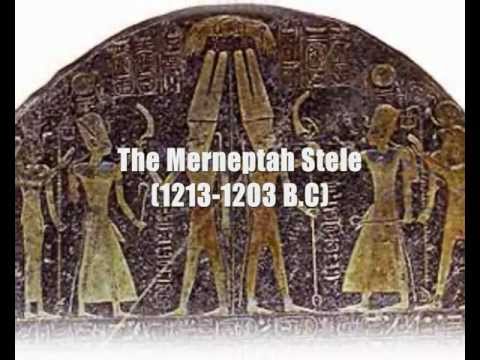

The universe was created by an infinite personal God and He brought it into existence by spoken word and made man in His own image. When man tries to reduce [philosophically in a materialistic point of view] himself to less than this [less than being made in the image of God] he will always fail and he will always be willing to make these impossible leaps into the area of nonreason even though they don’t give an answer simply because that isn’t what he is. He himself testifies that this infinite personal God, the God of the Old and New Testament is there. 

Instead of making a leap into the area of non-reason the better choice would be to investigate the claims that the Bible is a historically accurate book and that God created the universe and reached out to humankind with the Bible. Below is a piece of that evidence given by Francis Schaeffer concerning the accuracy of the Bible.

TRUTH AND HISTORY (chapter 5 of WHATEVER HAPPENED TO THE HUMAN RACE?, under footnote #95)

Two things should be mentioned about the time of Moses in Old Testament history.

The form of the covenant made at Sinai has remarkable parallels with the covenant forms of other people at that time. (On covenants and parties to a treaty, the Louvre; and Treaty Tablet from Boghaz Koi (i.e., Hittite) in Turkey, Museum of Archaeology in Istanbul.) The covenant form at Sinai resembles just as the forms of letter writings of the first century after Christ (the types of introductions and greetings) are reflected in the letters of the apostles in the New Testament, it is not surprising to find the covenant form of the second millennium before Christ reflected in what occurred at Mount Sinai. God has always spoken to people within the culture of their time, which does not mean that God’s communication is limited by that culture. It is God’s communication but within the forms appropriate to the time.

The Pentateuch tells us that Moses led the Israelites up the east side of the Dead Sea after their long stay in the desert. There they encountered the hostile kingdom of Moab. We have firsthand evidence for the existence of this kingdom of Moab–contrary to what has been said by critical scholars who have denied the existence of Moab at this time. It can be found in a war scene from a temple at Luxor (Al Uqsor). This commemorates a victory by Ramses II over the Moabite nation at Batora (Luxor Temple, Egypt).

Also the definite presence of the Israelites in west Palestine (Canaan) no later than the end of the thirteenth century B.C. is attested by a victory stela of Pharaoh Merenptah (son and successor of Ramses II) to commemorate his victory over Libya (Israel Stela, Cairo Museum, no. 34025). In it he mentions his previous success in Canaan against Aschalon, Gize, Yenom, and Israel; hence there can be no doubt the nation of Israel was in existence at the latest by this time of approximately 1220 B.C. This is not to say it could not have been earlier, but it cannot be later than this date.

Merneptah Stele, Israel 1200 BC

____


Faith Ringgold is today’s featured artist

Eldridge & Co.: Faith Ringgold, Artist

Faith Ringgold: Paints Crown Heights DVD/VHS Tape

Faith Ringgold

Faith Ringgold
Welcome to the web site of artist and writer, Faith Ringgold. If you are an artist, writer, teacher, or a kid of any age who loves art and stories you may just be in the right place. So check me out and let me know what you think. Email me at ringgoldfaith@aol.com. Visit my blog at http://faithringgold.blogspot.com/.

______

Biography:
Portrait of Faith RinggoldFaith Ringgold, painter, writer, speaker, mixed media sculptor and performance artist lives and works in Englewood, New Jersey. Ms Ringgold is professor emeritus at the University of California, San Diego where she taught art from 1987 until 2002. Professor Ringgold is the recipient of more than 75 awards including 22 Honorary Doctor of Fine Arts Degrees. She has received fellowships and grants that include the National Endowment For the Arts Award for sculpture (1978) and for painting (1989); The La Napoule Foundation Award for painting in France (1990); The John Simon Guggenheim Memorial Foundation Fellowship for painting (1987); The New York Foundation For the Arts Award for painting (1988); The American Association of University Women for travel to Africa (1976); The Creative Artists Public Service Award for painting (1971). Ringgold’s art has been exhibited in museums and galleries in the USA, Canada, Europe, Asia, South America, the Middle East, and Africa. Her art is included in many private and public art collections including The Metropolitan Museum of Art, The National Museum of American Art, The Museum of Modern Art, The Solomon R. Guggenheim Museum, The Boston Museum of Fine Art, The Chase Manhattan Bank Collection, The Baltimore Museum, Williams College Museum of Art, The High Museum of Fine Art, The Newark Museum, The Phillip Morris Collection, The St. Louis Art Museum and The Spencer Museum. Ms. Ringgold is represented by ACA Gallery in New York City. Ringgold’s public commissions include; People Portraits, 52 mosaics installed in the Los Angeles, California, Civic center subway station (2010); Flying Home: Harlem Heroes and Heroines, two 25 foot mosaic murals installed in the 125th street Subway station in New York City in 1996; The Crown Heights Children’s Story Quilt featuring folklore from the 12 major cultures that settled Crown Heights is installed in the library at PS 90 in Crown Heights, Brooklyn and Eugenio Maria de Hostos: A Man and His Dream, (1994) A mural celebrating the life of Eugenio Maria de Hostos for De Hostos Community College in the Bronx is installed in the atrium of the college. Ringgold’s first published book, the award winning, Tar Beach, “a book for children of all ages”, was published by Random House in 1991 and has won more than 30 awards including, a Caldecott Honor and the Coretta Scott King award for the best illustrated children’s book of 1991. The book, Tar Beach, is based on the story quilt Tar Beach, from Ringgold’s The Woman On A Bridge Series of 1988 and is in the permanent collection of the Guggenheim Museum in New York City. HBO included an animated version of Tar Beach in “Good Night Moon and Other Sleepy Time Lullabies.” This program runs periodically on HBO and has been released as a DVD. Ringgold has completed sixteen children’s books including the above mentioned Tar Beach, Aunt Harriet’s Underground Railroad In The Sky, My Dream of Martin Luther King and Talking to Faith Ringgold, (an autobiographical interactive art book for children of all ages), The Invisible Princess, an original African American Fairy Tale based on the quilt Born in a Cotton Field all published by Random House. If a Bus Could Talk; The Story of Ms. Rosa Parks won the NAACP’s Image Award 2000 and is available from Simon and Schuster. O Holy Night and The Three Witches, and Bronzeville Boys and Girls are from Harper Collins. Faith Ringgold’s latest children’s book is Henry O. Tanner: His Boyhood Dream Comes True published by Bunker Hill Publishing. We Flew Over the Bridge: The Memoirs of Faith Ringgold, Ringgold’s first adult book was published by Little, Brown in 1995 and has been re-released by Duke University Press.

New! To find out more about Faith, download Faith Ringgold’s Chronology, available in Portable Document Format (PDF). PDF documents may be viewed or printed using Adobe Acrobat. A free version of the Acrobat Reader is available from Adobe.

Faith Ringgold

From Wikipedia, the free encyclopedia
Faith Ringgold
Born Faith Willi Jones
October 8, 1930 (age 85)
Harlem, New York City
Education City College of New York
Known for Painting
Textile arts

Faith Ringgold (born October 8, 1930, in Harlem,[1] New York City) is an African-American artist, best known for her narrative quilts.

Early life[edit]

Faith Ringgold was born the youngest of three children on October 8, 1930 in Harlem Hospital, New York City.[2]:24 Her parents, Andrew Louis Jones and Willie Posey Jones, descended from working class families displaced by the Great Migration.[2]:24 Because her mother was a fashion designer and father an avid storyteller, Ringgold was exposed to creativity from an early age. After the Harlem Renaissance, Ringgold’s childhood home in Harlem was left with a vibrant and thriving arts scene. Figures like Duke Ellington and Langston Hughes lived just around the corner from her home.[2]:27 Her childhood friend, Sonny Rollins, who would later become a prominent jazz musician, often visited her family and practiced his saxophone at their parties.[2]:28 Because of her chronic asthma, Ringold explored visual art as a major pastime through the support of her mother, often experimenting with crayons as a young girl.[2]:24 In a statement she later made about her youth, she said, “I grew up in Harlem during the Great Depression. This did not mean I was poor and oppressed. We were protected from oppression and surrounded by a loving family.”.[2]:24 With all of these influences combined, Ringgold’s future artwork was greatly affected by the people, poetry, and music she experienced in her childhood, as well as the racism, sexism, and segregation she dealt with in her everyday life.[2]:9

In 1950, due to pressure from her family, Ringgold enrolled at the City College of New York to major in art, but was forced to major in art education instead because art was thought to be an exclusively male profession.[3]:134 The same year, she also married a jazz pianist named Robert Earl Wallace and had two children (Michele Faith Wallace and Barbara Faith Wallace). However, because of his heroin addiction, they separated four years later.[4]:54 In the meantime, she studied with artists Robert Gwathmey, Yasuo Kuniyoshi, and was introduced to printmaker Robert Blackburn, with whom she would collaborate on a series of prints 30 years later.[2]:29

In 1955, Ringgold received her bachelor’s degree from City College and soon afterward taught in the New York City public school system.[5] In 1959, she received her master’s degree from City College and left with her mother and daughters on her first trip to Europe.[5] While travelling abroad in Paris, Florence, and Rome, Ringgold visited many museums, including the Louvre. This museum in particular inspired her future series of quilt paintings known as the French Collection. This trip was abruptly cut short, however, due to the untimely death of her brother in 1961. Faith Ringgold, her mother, and her daughters all returned to the US for his funeral.[4]:141

Ringold also traveled to West Africa in 1976 and 1977. These two trips would later have a profound influence on her mask making, doll painting and sculptures.

Artwork[edit]

Ringgold’s artistic practice was extremely broad and diverse, and included media from painting to quilts, from sculptures and performance art to children’s books. She was an educator who taught in the New York city Public school system and on the college level. In 1973 she quit teaching public school to devote herself to creating art full time.

Painting[edit]

Ringgold began her painting career in the 1950’s after marrying her husband Burdette Ringgold.[5] She took inspiration from the writings of James Baldwin and Amiri Baraka, African art, Impressionism and Cubism to create the works she made in the 1960s. Her early work is composed with flat figures and shapes. Though she received a great deal of attention with these images, galleries and collectors were uncomfortable with them and she sold very little work.[2]:41 This is because many of her early paintings focused on the underlying racism in everyday activities.[6] These works were also politically based and reflected her experiences growing up during the Harlem Renaissance. These themes grew into maturity during the Civil Rights and Women’s movements.[7]:8

Taking inspiration from artist Jacob Lawrence and writer James Baldwin, Ringgold painted her first political collection named the American People Series in 1963. It portrays the American lifestyle in relation to the Civil Rights movement and illustrates these racial interactions from a woman’s point of view. This collection asks the question “why?” about some basic racial issues in American society.[4]:145 Oil paintings like For Members Only, Neighbors, Watching and Waiting, andThe Civil Rights Triangle also embody these themes.

Around the opening of her show for American People, Ringgold also worked on her collection called America Black, also called the Black Light Series, in which she experimented with darker colors. This was spurred by her observation that “white western art was focused around the color white and light/contrast/chiaroscuro, while African cultures in general used darker colors and emphasized color rather than tonality to create contrast.” Because of this, she was “in pursuit of a more affirmative black aesthetic“.[4]:162-164 She also created larger than life murals such as The Flag Is Bleeding, U.S. Postage Stamp Commemorating the Advent of Black Power People, and Die, concluding her American People series. These murals helped her approach her future artwork in a new way.

In the French Collection, Ringgold explored a different solution to overcome the rough historical legacy of women and men of African descent. Ringgold made this multi-paneled series that touches on the truths and mythologies of modernism. As France was the home of modern art at the time, it also became the source for African American artists to find their own “modern” identity.[7]:2

Quilts[edit]

Ringgold went to Europe in the summer of 1972 with her daughter Michele. While Michele went to visit her friends in Spain, Ringgold continued onto Germany and the Netherlands. In Amsterdam, she visited the Rijksmuseum, which became one of the most influential experiences affecting her mature work, and subsequently, lead to the development of her quilt paintings. In the museum, Ringgold encountered a collection of 14th and 15th century Nepali paintings that were framed with cloth brocades. These thangkas inspired her to produce fabric borders around her own work, so when she returned to the US, a new painting series was born: The Slave Rape Series. In these works, Ringgold imagined what it would have been like to be an African woman captured and sold into slavery. She invited her mother to collaborate on this project, since she was a popular Harlem clothing designer and seamstress during the 1950’s. This collaboration eventually lead to the making of their first quilt, Echoes of Harlem, in 1980.[2]:44-45

She quilted her stories in order to be heard, since at the time no one would publish the autobiography she’d been working on. Her first quilt story Who’s Afraid of Aunt Jemima? (1983) depicts the story of Aunt Jemima as a matriarch restaurateur. Another piece, titled Change: Faith Ringgold’s Over 100 Pounds Weight Loss Performance Story Quilt (1986), engages the topic of “a woman who wants to feel good about herself, struggling to [the] cultural norms of beauty, a person whose intelligence and political sensitivity allows her to see the inherent contradictions in her position, and someone who gets inspired to take the whole dilemma into an artwork”.[7]:9

The series of story quilts from Ringgold’s French Collection deals with historical African American women who dedicated themselves to change the world (The Sunflowers Quilting Bee at Arles), the redirection of the male gaze, and the immersion of historical fantasy and childlike imaginative storytelling. Many of her quilts went on to inspire the children books that she later made, such as Dinner at Aunt Connie’s House (1993) published by Hyperion Books, based on The Dinner Quilt (1988).

Sculpture[edit]

In 1973, Ringgold began experimenting with sculpture as a new medium to document her local community and national events. Her sculptures range from costumed masks to hanging and freestanding soft sculptures, representing both real and fictional characters from her past and present. She began making mixed-media costumed masks after hearing her students express their surprise that she did not already include masks in her artistic practice.[4]:198 The masks were pieces of linen canvas that were painted, beaded and woven with raffia for hair, and rectangular pieces of cloth for dresses with painted gourds to represent breasts. She eventually made a series of 11 mask costumes, called the Witch Mask Series, in collaboration with her mother. These costumes could also be worn, but would give the wearer feminine features like breasts, bellies and hips. In her memoir We Flew Over the Bridge, Ringgold also notes that in traditional African rituals, the masks would have feminine features though the wearers were almost always men.[4]:200 In this series she wanted the masks to have both a “spiritual and sculptural identity”,[4]:199 emphasizing the fact that the masks could be worn and were not merely objects to be hung and displayed.

After the Witch Mask Series, she moved onto another series of 31 masks, the Family of Woman Mask Series in 1973, which commemorated women and children whom she had known as a child. She later began making dolls with painted gourd heads and costumes (also made by her mother, which subsequently lead her to life-sized soft sculptures). The first of this series was her piece, Wilt, a 7’3” portrait sculpture of basketball player Wilt Chamberlain. She began with Wilt as a response to some negative comments that Chamberlain made on African American women in his autobiography. Wilt features three figures, the basketball player with a white wife and a mixed daughter, both fictional characters. The sculptures had baked and painted coconuts shell heads, and anatomically-correct foam and rubber bodies covered in clothing. They also hung from the ceiling on invisible fishing lines. Her soft sculptures later evolved even further into life sized “portrait masks,” representing characters from her life and society, from unknown Harlem denizens to Martin Luther King Jr. She carved foam faces into likenesses that were then spray-painted—however, in her memoir she describes how the faces later began to deteriorate and had to be restored. She did this by covering the faces in cloth, molding them carefully to preserve the likeness.

Performance Art[edit]

As many of Ringgold’s mask sculptures could also be worn as costumes, her transition from mask making to performance art was a self-described “natural progression”.[4]:206 Though art performance pieces were abundant in the 1960’s and 70’s, Ringgold was instead inspired by the African tradition of combining storytelling, dance, music, costumes and masks into one production.[4]:238 Her first piece involving these masks was The Wake and Resurrection of the Bicentennial Negro. She described it as a narrative of the dynamics of racism and the oppression of drug addiction, in response to the American Bicentennial celebrations of 1976. She wished to voice the opinion of many other African Americans that there was “no reason to celebrate two hundred years of American Independence…for almost half of that time we had been in slavery”.[4]:205 The piece was performed in mime with music and lasted thirty minutes, and incorporated many of her past paintings, sculptures and installations. She later moved on to produce many other performance pieces including a solo autobiographical performance piece called Being My Own Woman: An Autobiographical Masked Performance Piece, a masked story performance set during the Harlem Renaissance called The Bitter Nest (1985), and a piece to celebrate her weight loss called Change: Faith Ringgold’s Over 100 Pound Weight Loss Performance Story Quilt (1986). Each of these pieces were multidisciplinary, involving masks, costumes, quilts, paintings, storytelling, song and dance. Many of these performances were also interactive, as Ringgold encouraged her audience to sing and dance with her. She describes in her autobiography, We Flew Over the Bridge, that her performance pieces were not meant to shock, confuse or anger, but rather “simply another way to tell my story”.[4]:238

Publications[edit]

Ringgold has written and illustrated seventeen children’s books.[8] Her first was Tar Beach, published by Crown in 1991, based on her quilt story of the same name.[9] For that work she won the Ezra Jack Keats New Writer Award [10] and theCoretta Scott King Award for Illustration.[11] She was also the runner-up for the Caldecott Medal, the premier American Library Association award for picture book illustration.[9]

Activism[edit]

Ringgold has been an activist since the 1970s, participating in several feminist and anti-racist organizations. In 1968, fellow artist Poppy Johnson, and art critic Lucy Lippard, founded the Ad Hoc Women’s Art Committee with Ringgold and protested a major modernist art exhibition at the Whitney Museum of American Art. Members of the committee demanded that women artists account for fifty percent of the exhibitors and created disturbances at the museum by singing, blowing whistles, chanting about their exclusion, and leaving raw eggs and sanitary napkins on the ground. Not only were women artists excluded from this show, but no African American artists were represented either. Even Jacob Lawrence, an artist in the museum’s permanent collection, was excluded.[2]:41 After participating in more protest activity, Ringgold was arrested on November 13, 1970.[2]:41

Ringgold and Lippard also worked together during their participation in the group Women Artists in Revolution (WAR). That same year, Ringgold and her daughter Michele Wallace founded Women Students and Artists for Black Art Liberation (WSABAL). Around 1974, Ringgold and Wallace were founding members of the National Black Feminist Organization. Ringgold was also a founding member of the “Where We At” Black Women Artists, a New York-based women’s art collective associated with the Black Arts Movement. The inaugural show of “Where We At” featured soul food rather than traditional cocktails, exhibiting an embrace of cultural roots. The show was first presented in 1971 with eight artists and had expanded to twenty by 1976.[12]

In a statement about black representation in the arts, she said:

“When I was in elementary school I used to see reproductions of Horace Pippin’s 1942 painting called John Brown Going to His Hanging in my textbooks. I didn’t know Pippin was a black person. No one ever told me that. I was much, much older before I found out that there was at least one black artist in my history books. Only one. Now that didn’t help me. That wasn’t good enough for me. How come I didn’t have that source of power? It is important. That’s why I am a black artist. It is exactly why I say who I am.” [2]:62

Later life[edit]

In 1995, Ringgold published her first autobiography titled We Flew Over the Bridge. The book is a memoir detailing her journey as an artist and life events, from her childhood in Harlem and Sugar Hill, to her marriages and children, to her professional career and accomplishments as an artist. Two years later she received two honorary Doctorates, one for Education from Wheelock College in Boston, and the second for Philosophy from Molloy College in New York.[5]

Ringgold currently resides with her husband Burdette “Birdie” Ringgold on a ranch in Englewood, New Jersey, where she has lived and maintained a steady studio practice since 1992.


d posts:

Image result for sergent peppers album cover

Francis Schaeffer’s favorite album was SGT. PEPPER”S and he said of the album “Sergeant Pepper’s Lonely Hearts Club Band…for a time it became the rallying cry for young people throughout the world. It expressed the essence of their lives, thoughts and their feelings.”  (at the 14 minute point in episode 7 of HOW SHOULD WE THEN LIVE? ) 

Image result for francis schaeffer how should we then live

How Should We Then Live – Episode Seven – 07 – Portuguese Subtitles

Francis Schaeffer

Image result for francis schaeffer

______

FRANCIS SCHAEFFER ANALYZES ART AND CULTURE PART 202 the BEATLES’ last song FREE AS A BIRD (Featured artist is Susan Weil )

February 15, 2018 – 1:45 am

FRANCIS SCHAEFFER ANALYZES ART AND CULTURE Part 200 George Harrison song HERE ME LORD (Featured artist is Karl Schmidt-Rottluff )

FRANCIS SCHAEFFER ANALYZES ART AND CULTURE PART 184 the BEATLES’ song REAL LOVE (Featured artist is David Hammonds )

FRANCIS SCHAEFFER ANALYZES ART AND CULTURE Part 170 George Harrison and his song MY SWEET LORD (Featured artist is Bruce Herman )

FRANCIS SCHAEFFER ANALYZES ART AND CULTURE Part 168 George Harrison’s song AWAITING ON YOU ALL Part B (Featured artist is Michelle Mackey )

FRANCIS SCHAEFFER ANALYZES ART AND CULTURE Part 167 George Harrison’s song AWAITING ON YOU Part A (Artist featured is Paul Martin)

RESPONDING TO HARRY KROTO’S BRILLIANT RENOWNED ACADEMICS!! Part 133 Louise Antony is UMass, Phil Dept, “Atheists if they commit themselves to justice, peace and the relief of suffering can only be doing so out of love for the good. Atheist have the opportunity to practice perfect piety”

FRANCIS SCHAEFFER ANALYZES ART AND CULTURE Part 166 George Harrison’s song ART OF DYING (Featured artist is Joel Sheesley )

FRANCIS SCHAEFFER ANALYZES ART AND CULTURE Part 165 George Harrison’s view that many roads lead to Heaven (Featured artist is Tim Lowly)

FRANCIS SCHAEFFER ANALYZES ART AND CULTURE Part 164 THE BEATLES Edgar Allan Poe (Featured artist is Christopher Wool)

PART 163 BEATLES Breaking down the song LONG AND WINDING ROAD (Featured artist is Charles Lutyens )

FRANCIS SCHAEFFER ANALYZES ART AND CULTURE PART 162 A look at the BEATLES Breaking down the song ALL WE NEED IS LOVE Part C (Featured artist is Grace Slick)

PART 161 A look at the BEATLES Breaking down the song ALL WE NEED IS LOVE Part B (Featured artist is Francis Hoyland )


FRANCIS SCHAEFFER ANALYZES ART AND CULTURE PART 160 A look at the BEATLES Breaking down the song ALL WE NEED IS LOVE Part A (Featured artist is Shirazeh Houshiary)

FRANCIS SCHAEFFER ANALYZES ART AND CULTURE Part 159 BEATLES, Soccer player Albert Stubbins made it on SGT. PEP’S because he was sport hero (Artist featured is Richard Land)

FRANCIS SCHAEFFER ANALYZES ART AND CULTURE Part 158 THE BEATLES (breaking down the song WHY DON’T WE DO IT IN THE ROAD?) Photographer Bob Gomel featured today!

FRANCIS SCHAEFFER ANALYZES ART AND CULTURE Part 118 THE BEATLES (Why was Tony Curtis on cover of SGT PEP?) (Feature on artist Jeffrey Gibson )

FRANCIS SCHAEFFER ANALYZES ART AND CULTURE Part 117 THE BEATLES, Breaking down the song WITHIN YOU WITHOUT YOU Part B (Featured artist is Emma Amos )

FRANCIS SCHAEFFER ANALYZES ART AND CULTURE Part 67 THE BEATLES (Part Q, RICHES AND LUXURIES NEVER SATISFIED THE BEATLES! ) (Feature on artist Derek Boshier )

_____________ The Beatles were looking for lasting satisfaction in their lives and their journey took them down many of the same paths that other young people of the 1960’s were taking. No wonder in the video THE AGE OF NON-REASON Schaeffer noted,  ” Sergeant Pepper’s Lonely Hearts Club Band…for a time it became the rallying cry for young people throughout […]

FRANCIS SCHAEFFER ANALYZES ART AND CULTURE Part 66 THE BEATLES (Part P, The Beatles’ best song ever is A DAY IN THE LIFE which in on Sgt Pepper’s!) (Feature on artist and clothes designer Manuel Cuevas )

  SGT. PEPPER’S LONELY HEARTS CLUB BAND ALBUM was the Beatles’ finest work and in my view it had their best song of all-time in it. The revolutionary song was A DAY IN THE LIFE which both showed the common place part of everyday life and also the sudden unexpected side of life.  The shocking […]

FRANCIS SCHAEFFER ANALYZES ART AND CULTURE Part 65 THE BEATLES (Part O, The 1960’s SEXUAL REVOLUTION was on the cover of Sgt. Pepper’s!) (Featured artist is Pauline Boty)

_ The Beatles wrote a lot about girls!!!!!! The Beatles – I Want To Hold your Hand [HD] The Beatles – ‘You got to hide your love away’ music video Uploaded on Nov 6, 2007 The Beatles – ‘You got to hide your love away’ music video. The Beatles – Twist and Shout [live] THE […]

FRANCIS SCHAEFFER ANALYZES ART AND CULTURE Part 64 THE BEATLES (Part P The Meaning of Stg. Pepper’s song SHE’S LEAVING HOME according to Schaeffer!!!!) (Featured artist Stuart Sutcliffe)

__________ Melanie Coe – She’s Leaving Home – The Beatles Uploaded on Nov 25, 2010 Melanie Coe ran away from home in 1967 when she was 15. Paul McCartney read about her in the papers and wrote ‘She’s Leaving Home’ for Sgt.Pepper’s. Melanie didn’t know Paul’s song was about her, but actually, the two did […]

FRANCIS SCHAEFFER ANALYZES ART AND CULTURE Part 63 THE BEATLES (Part O , BECAUSE THE BEATLES LOVED HUMOR IT IS FITTING THAT 6 COMEDIANS MADE IT ON THE COVER OF “SGT. PEPPER’S”!) (Feature on artist H.C. Westermann )

__________________ A Funny Press Interview of The Beatles in The US (1964) Funny Pictures of The Beatles Published on Oct 23, 2012 funny moments i took from the beatles movie; A Hard Days Night ___________________ Scene from Help! The Beatles Funny Clips and Outtakes (Part 1) The Beatles * Wildcat* (funny) Uploaded on Mar 20, […]

FRANCIS SCHAEFFER ANALYZES ART AND CULTURE Part 62 THE BEATLES (Part N The last 4 people alive from cover of Stg. Pepper’s and the reason Bob Dylan was put on the cover!) (Feature on artist Larry Bell)

_____________________ Great article on Dylan and Sergeant Pepper’s Lonely Hearts Club Band Cover: A famous album by the fab four – The Beatles – is “Sergeant peppers lonely hearts club band“. The album itself is one of the must influential albums of all time. New recording techniques and experiments with different styles of music made this […]

FRANCIS SCHAEFFER ANALYZES ART AND CULTURE Part 61 THE BEATLES (Part M, Why was Karl Marx on the cover of Stg. Pepper’s?) (Feature on artist George Petty)

__________________________ Beatles 1966 Last interview 69 THE BEATLES TWO OF US As a university student, Karl Marx (1818-1883) joined a movement known as the Young Hegelians, who strongly criticized the political and cultural establishments of the day. He became a journalist, and the radical nature of his writings would eventually get him expelled by the […]

FRANCIS SCHAEFFER ANALYZES ART AND CULTURE Part 60 THE BEATLES (Part L, Why was Aleister Crowley on the cover of Stg. Pepper’s?) (Feature on artist Jann Haworth )

____________ Aleister Crowley on cover of Stg. Pepper’s: _______________ I have dedicated several posts to this series on the Beatles and I don’t know when this series will end because Francis Schaeffer spent a lot of time listening to the Beatles and talking and writing about them and their impact on the culture of the 1960’s. […]

FRANCIS SCHAEFFER ANALYZES ART AND CULTURE Part 59 THE BEATLES (Part K, Advocating drugs was reason Aldous Huxley was on cover of Stg. Pepper’s) (Feature on artist Aubrey Beardsley)

(HD) Paul McCartney & Ringo Starr – With a Little Help From My Friends (Live) John Lennon The Final Interview BBC Radio 1 December 6th 1980 A young Aldous Huxley pictured below: _______   Much attention in this post is given to the songs LUCY IN THE SKY WITH DIAMONDS and TOMORROW NEVER KNOWS which […]

FRANCIS SCHAEFFER ANALYZES ART AND CULTURE Part 58 THE BEATLES (Part J, Why was Carl Gustav Jung on the cover of Stg. Pepper’s?) (Feature on artist Richard Merkin)

___

“Woody Wednesday” ECCLESIASTES AND WOODY ALLEN’S FILMS: SOLOMON “WOULD GOT ALONG WELL WITH WOODY!” (Part 32 MIDNIGHT IN PARIS Just like Solomon in Ecclesiastes Picasso’s women mostly considered suicide or accepted nihilism )

Just like Solomon in Ecclesiastes Picasso’s women mostly considered suicide or accepted nihilism and  Woody Allen alludes to this in MIDNIGHT IN PARIS when Adriana tells her own story:

GIL PENDER: No, you do! How long have you been dating Picasso?My God, did I just say that?Pardon?I don’t mean to…I didn’t meanto pry…. Were you born in Paris?


ADRIANA: .I…came here to study with Coco Chanel,and I fell in love with Paris,and also,a very dark-eyed, haunted Jewish-Italian painter.And I knew Amedeo had another woman, but still, I couldn’t resist moving into his apartment when he asked,and it was a beautiful six months.

GIL PENDER: M..M…Modigliani?You lived with… You lived with Modigliani?

ADRIANA: You asked me, so I’m telling you my sad story.With Braque, though, there was another woman.Many.And now,with Pablo.I mean, he’s married, but…every day, it’son-again, off-again.I don’t know how any woman can stay with him. He’s so difficult.

GIL PENDER: My God, you take “art groupie” to a whole new level!-


HEMINGWAY:This is Gil Pender, Miss Stein.He’s a young American writer. I thought you two should know each other.

GERTRUDE STEIN:I’m glad you’re here.You can help decide which of usis right, and which of us is wrong.I was just telling Pablo that thisportrait doesn’t capture Adriana.It has a universality,but no objectivity.

PICASSO: Non, non, non. Vous ne le comprenez pas correctement.(No, no ,no. You don’t understand correctly.)Connaisez pas Adriana. Regardez…(You don’t know Adriana. Look…)Regardez le mouvement, le tableau.(Look at the motion, the painting.)C’est exactement ce qu’elle représente!(It’s exactly what she represents!)Non. Tu n’as pas raison.(No. You’rewrong.)

GERTRUDE STEIN: Look how he’s done her:dripping with sexual innuendo,carnal to the point of smoldering,and, yes, she’s beautiful, butit’s a subtle beauty;an implied sensuality.I mean, what is your firstimpression of Adriana?Exceptionally lovely.Belle, mais trop subtile. Plus implicite, Pablo!(Beautiful, but too subtle. More defined, Pablo!)Yes, you’re right, MissStein. ‘Course…uh…you can see why he’slost all objectivity.He’s made a creature of Place Pigalle.A whore with volcanic appetites.Non, non! C’est ce qu’elle vraiment si vous laconnaissez! (No, no! It’s true if you know her!)Yes, avec toi, au privé,(Yes, with you, in private,)because she’s your lover, butwe don’t know her that way!So you make a petit-bourgeois judgmentand turn her into an object of pleasure.- It’s more like a still-life than a portrait. – Non.Non. Non. Je ne suis pasd’accord. (No. No. I do not agree.)And what’s this book of yours I’ve been hearing about? Is this it?-

GIL PENDER: Yeah, this is…uh…-

GERTRUDE STEIN: I’ll take a look.Have you read it, Hemingway?

HEMINGWAY:No, this I leave to you. You’ve always been a fine judge of my work.”

GERTRUDE STEIN:”Out of the Past” was the name of the store,””and its products consisted of memories.””What was prosaic and even vulgar to one generation,””had been transmuted by the mere passing of years””to a status at once magical and also camp.

ADRIANA:I love it.I’m already hooked. Hooked!

GERTRUDE STEIN: I’ll start it tonight,but first, you and I have something to talk about.I’ve been waiting for two months for a reply from that editor.I sent him the piece you andI looked at, plus four others,plus four shorter pieces. And this guy, I gave him a copy of the…- Nevertheless, two months: nary a word.-

GIL PENDER: Right.So were you really hooked with those opening lines?

ADRIANA: Oh, the past has always had a great charisma for me.Oh, me, too. Great charisma for me.I always say that I was born too late.Mmm. Moi aussi. (Mmm. Me, too.)For me, la Belle ÉpoqueParis would have been perfect.-

GIL PENDER: Really? Better than now?-

ADRIANA: Yes.Another whole sensibility,the street lamps, the kiosques,the…horse and carriages,and Maxim’s then.

GIL PENDER:You speak very good English.-

ADRIANA:No, not really.-

GIL PENDER: No, you do! How long have you been dating Picasso?My God, did I just say that?Pardon?I don’t mean to…I didn’t mean to pry…. Were you born in Paris?

ADRIANA:I was born in Bordeaux.I moved here to study fashion.But you don’t want to hear all this.

GIL PENDER: Yes, I do.Yes, continue.You moved here to study fashion..

ADRIANA: .I…came here to study with Coco Chanel,and I fell in love with Paris,and also,a very dark-eyed, haunted Jewish-Italian painter.And I knew Amedeo had another woman, but still, I couldn’t resist moving into his apartment when he asked,and it was a beautiful six months.

GIL PENDER: M..M…Modigliani?You lived with… Youlived with Modigliani?

ADRIANA: You asked me, so I’mtelling you my sad story.With Braque, though,there was another woman.Many.And now,with Pablo.I mean, he’s married, but…every day, it’son-again, off-again.I don’t know how any woman canstay with him. He’s so difficult.

GIL PENDER: My God, you take “art groupie” to a whole new level!-

ADRIANA:Pardon?-

GIL PENDER: Nothing. I was just saying that…

ADRIANA: But tell me about yourself.-

GIL PENDER: What? Well, what can I say…-

ADRIANA: So, have you come to Paris to write?Because, you know,these days, so many Americansfeel the need to move here.Isn’t Hemingway attractive?I love his writing.

GIL PENDER: I know. Actually, I’m just here visiting.

ADRIANA: Oh, you must stay here.-

GIL PENDER:  Really?-

ADRIANA: Yeah. It’s a wonderful city, for- writers, artists.-

GIL PENDER: M I know. I’d like to, but it’s not that easy.

ADRIANA: And,I didn’t fall in love madly with your book…-

GIL PENDER: Really?-

ADRIANA: …so I want to hear the rest of it.-

GIL PENDER: You really like? Because I’m still kind of tinkering…

HEMINGWAY: – Pender?-

GIL PENDER: Yeah,

HEMINGWAY: let’s go up to Montmartre. Let’s get a drink, OK?

GIL PENDER: – Uh…yeah.

GERTRUDE STEIN: I’ll discuss your book with you as soon as I’ve finished it. Where can I reach you?

GIL PENDER: Why don’t I drop back by, instead of you trying to find me, if that’s all right?-

GERTRUDE STEIN: We run an open house.-

HEMINGWAY: Are you coming with us?

GIL PENDER: I wish that I could. I cant, but hopefully I’ll see you again eventually.

ADRIANA: That would be nice.-

HEMINGWAY: Let’s go!- One of these days, I plan to steal you away from this genius who’s great, but he’s no Joan Miró

Pablo Picasso: women are either goddesses or doormats


'Nude Woman in a Red Armchair' by Pablo Picasso, on display at Tate Britain in 2012
‘Nude Woman in a Red Armchair’ by Pablo Picasso, on display at Tate Britain in 2012CREDIT: REX FEATURES

Pablo Picasso, who was born on October 25, 1881, died on April 8, 1973, aged 91. The artist had a complicated relationship with women. This article by Mark Hudson was first published in 2009 to mark the National Gallery exhibition ‘Picasso: Challenging the Past’.


“Women are machines for suffering,” Picasso told his mistress Françoise Gilot in 1943. Indeed, as they embarked on their nine-year affair, the 61-year-old artist warned the 21-year-old student: “For me there are only two kinds of women, goddesses and doormats”.

From Rembrandt and Goya to Bonnard and Stanley Spencer, male artists have drawn obsessively and immensely productively on the faces and bodies of their wives and lovers. But no one used and abused his women quite like the greatest artist of the 20th century, Pablo Picasso.

Looking at the extraordinary images in a new Picasso exhibition that opens later this month at the National Gallery in London, you feel that Picasso eviscerates his women in the service of his art. Here, alongside images of exquisite tenderness, are women pulled and gouged into tortured shapes, women cut in bits and reconfigured on the canvas. Yet harrowing as these images are, they are nothing beside the real life dramas that led to their creation.

Of the seven most important women in Picasso’s life, two killed themselves and two went mad. Another died of natural causes only four years into their relationship. Yet while Picasso had affairs with dozens, perhaps hundreds of women, and was true to none of them – except possibly the last – each of these seven women shines out as a crucial catalyst in his development as an artist. Each stands for a different period in his career, representing a complementary or opposing ideal that inspired the evolution of a new visual language. Just as they became obsessively involved with him, so he was dependent on them.

'Portrait of Dora Maar' by Pablo Picasso
‘Portrait of Dora Maar’ by Pablo Picasso CREDIT: REX FEATURES


Loyal, generous and affectionate when it suited him, Picasso could be astoundingly brutal, to friends, lovers, even complete strangers. Yet he felt real, often anguished passion for each of these women – a passion he explored in tens of thousands of paintings, drawings and prints, in which he attempted to capture not just the way these women looked, but the totality of his feelings towards them.  Fernande Olivier, the first great love of the Spanish artist’s life whom he met in 1904, was far from a pushover.

Incorrigibly lazy and promiscuous, but with a lively and independent mind, this statuesque redhead was a popular artist’s model, a kind of “it” girl of the Parisian avant-garde. To the young Picasso, who had arrived in Paris from Barcelona only two years before – and whose experience of women was limited largely to prostitutes and the pious Catholic women who raised him – Olivier must have seemed an intoxicating challenge.

Physically obsessed with her languid, bemused presence, Picasso moved from the poetic romanticism of his Rose Period to a new way of working inspired both by the dynamism of modern Paris and by the enduring values of Mediterranean culture on which he was to draw all his life.

In 1906, Olivier accompanied him to the village of Gosol in the Spanish Pyrenees, where the cubistic traditional architecture and her strong, sensual features were endlessly analysed in a vast body of drawings that led to the most influential painting of the 20th century – Demoiselles d’Avignon.  As Picasso worked on this definitive canvas in the suffocating heat of his Montmartre studio, he was consumed with jealousy and anger towards Olivier who had temporarily walked out on him – this emotional violence feeding into a work that blasted the Renaissance idea of fixed perspective out of the window and changed the course of Western art.

Pablo Picasso
Pablo Picasso CREDIT: REX FEATURES


When Olivier took up with a minor Italian artist in 1912 in an attempt to pique his jealousy, Picasso began seeing her close friend, Eva Gouel, the most elusive of the seven women. Frail and slender, she appears in only two photographs and her personality remains an enigma.

Picasso’s time with her coincided with the moment of synthetic cubism, in which observational elements were synthesised into semi-abstract compositions, often including collage or text. While Picasso never painted Gouel, he paid homage to her in several of these paintings, by including the words Ma Jolie – my pretty one – which is perhaps the most overtly affectionate artistic gesture he made to any of his women.

See our gallery of unknown Picasso paintings

While he was apparently devastated by her death from tuberculosis in 1916, this didn’t stop him carrying on a simultaneous affair with one Gaby Depeyre.  Picasso’s marriage to the Russian dancer Olga Khokhlova in 1915 coincided with a complete reversal in his artistic direction – from world-changing abstraction to relatively conservative neoclassicism. His portraits of Khokhlova have a restraint and serenity inspired by the 19th-century master Jean Auguste Dominique Ingres.

Yet just as Picasso’s artistic restlessness couldn’t be contained for more than a few hours, so the desire of the socially ambitious Khokhlova to tame the now wealthy artist soon began to suffocate him. As their relationship disintegrated and she became increasingly delusional, his depictions of her and women in general grew ever more hateful – tortured masses of teeth, limbs and vaginas.

Jacqueline and Pablo Picasso at a bullfight in France in 1954
Jacqueline and Pablo Picasso at a bullfight in France in 1954 CREDIT: REX FEATURES


While Picasso’s sense that he could do what he liked with absolutely anyone increased as his fame and wealth grew, he stayed with Khokhlova out of a residual desire for bourgeois respectability and the deeply ingrained Spanish idea that however unfaithful, a man doesn’t leave his wife.

Picasso kept his relationship with the youthful Marie-Thérèse Walter – just 17 when he met her – secret from Khokhlova for eight years. Blonde, of equable temperament and athletic physique – but completely ignorant of art – Walter was immortalised in images of melting, idyllic eroticism in which we feel her guiltless enjoyment of her own sensuality and the artist’s complete satisfaction in regarding it.

If Walter offered Picasso little on an intellectual level, his next great muse was the one who came closest to challenging him on his own terms – an artist and photographer closely involved with the Surrealists. He first encountered the mesmerising, raven-haired Dora Maar across the tables of the Café aux Deux Magots, stabbing a knife between her fingers till she drew blood.

Picasso asked to keep her bloodstained gloves. When Maar and Walter later met in his studio, the ensuing argument degenerated into an all-out catfight between the two women, an incident Picasso later described as one of his “choicest memories”.

Maar was Picasso’s partner during the period of his greatest political engagement, her inner turmoil standing in for Spain’s agony during the Civil War in Tate’s iconic Crying Woman. She made a photographic record of Picasso’s work on the monumental masterpiece Guernica, and her unmistakable features appear in the banshee-like head swooping into the painting. But in Picasso’s most telling images of Maar, her features are disturbingly reconfigured – growing out of each other in all the wrong places – as though she is literally breaking down in front of us.

When Picasso threw her over for the much younger Françoise Gilot in 1943, Maar suffered a complete mental collapse, followed by nun-like seclusion.  “After Picasso,” she famously declared, “only God.” Lest it should be thought that Picasso had things entirely his own way, the case of Gilot is instructive. This young aspiring artist – just 21 when they met – seems to have handled Picasso’s cruelties and perversities with amazing deftness, and was the only woman to leave him entirely voluntarily, with her dignity more or less intact. She bore him two children, with whom they lived a relatively normal family life for nine years.

Jacqueline Roque 
Picasso’s painting of Jacqueline Roque CREDIT: REX FEATURES


But was this domestic stability good for Picasso’s art?

While he captured Gilot’s features in a series of radiant drawings and etchings, this was the period of his greatest fame, when his millionaire life on the Cote d’Azur was cut off from external reality, and it was all too easy for the artist to “play Picasso” in art and life.  The last of Picasso’s great loves was, on the face of it, the one most in control. Picasso created more than 400 portraits of the demure Jacqueline Roque, who he married in 1961.

The most memorable imbue her sharp features with a watchful, almost classical stillness that harks back to his Blue period paintings of nearly 70 years before. Roque, you feel, was the one who finally got Picasso to behave, and created a tranquil base for his last years.  Yet even her story ended in tragedy. In 1986 she killed herself, 13 years after Picasso’s death. Like the other six women, she had collaborated in what is arguably the greatest artistic oeuvre of all time. Whether it was worth the pain, only she would be able to say.

Picasso's muses: Fernande Olivier (clockwise from top left), Olga Khoklova, Marie-Thérèse Walter, Dora Maar, Françoise Gilot and Jacqueline Roque
Picasso’s muses: Fernande Olivier (clockwise from top left), Olga Khoklova, Marie-Thérèse Walter, Dora Maar, Françoise Gilot and Jacqueline Roque


Picasso’s female muses


Fernande Olivier  (1881-1966; with Picasso 1904-1911)  

After an abusive childhood and a violent teenage marriage, Olivier escaped into Paris’s bohemia, and took up with Picasso during his most revolutionary phase – though she never saw the point of cubism. Picasso failed to suppress her lively memoir Picasso et ses Amis, but paid her a small pension provided the second volume didn’t appear till after his death.

Eva Gouel  (1885-1915; with Picasso 1911-1915)  

Born as Marcelle Humbert, she was the girlfriend of fellow artist Louis Marcoussis when Picasso became involved with her in 1911. Little is known of the frail Eva. While Picasso later claimed he knew greater contentment with her than anyone else, he carried on an affair as Eva lay dying of tuberculosis in 1915.

Olga Khokhlova  (1891-1954; with Picasso 1917-1935)  

Picasso’s Ukrainian first wife, and the mother of his eldest child Paulo, was a dancer with Diaghilev’s Ballets Russes, and one of the few people of either sex to stand up to the artist. After their separation in 1935, she bombarded him with hate mail. But since Picasso refused to divide his assets with her, as required by French law, they never divorced.

Marie-Thérèse Walter  (1909-1977; with Picasso 1927-1936)  

Picasso met the blonde 17 year-old outside the Galeries Lafayette department store in Paris in 1927, but kept their affair secret for eight years. She gave him a daughter, Maia, in 1935, at about the time she was supplanted in Picasso’s affections by Dora Maar. She hanged herself in 1977.

Dora Maar  (1907-1997; with Picasso 1936-1944)

Born Henriette Theodora Markovitch, of Croatian and French descent. A talented artist and photographer, this Surrealist icon – powerfully portrayed by Man Ray – had a tragic air, caused, Picasso believed, by her inability to have children. She ended her days surrounded by dust-encrusted relics of her time with Picasso.

Françoise Gilot  (b.1921; with Picasso 1944-1953)  

This level-headed law student abandoned her studies in favour of art and began an affair with Picasso at 21. She gave him two children, Claude and Paloma, and recalled their nine-year relationship in the best-selling Life with Picasso. Later married to American vaccine pioneer Jonas Salk, she still paints.

 Jacqueline Roque  (1927-1986; with Picasso 1954-1993)

A sales assistant in the Madoura Pottery Studio in Vallauris, where Picasso created his ceramics, Jacqueline met Picasso in 1954, when she was 27, and became his second wife in 1961. While she quarrelled with his children over the division of his estate, they collaborated in the creation of the Musée Picasso. She shot herself in 1986.

See: Picasso’s palettes were a work of art

Q&A: John Richardson on Picasso’s “Uncontrollable” Sex Drive

APRIL 5, 2011 12:00 AM

Speaking of Picasso’s vampiric quality, SEVERAL OF HIS WOMEN CAME TO UNFORTUNATE ENDS—his first wife, Olga, would sometimes need to be institutionalized, and both Marie-Thérèse and Jacqueline, his second wife, committed suicide. Was it due in part to the draining emotional toll of their relationships with Picasso?

Totally. I think he obsessed them. Dora Maar did not commit suicide but, after being cooped up with Picasso for most of World War II, suffered a total nervous collapse. Both Marie-Thérèse and Jacqueline were evidently prepared to sacrifice themselves on the altar of his art.

As you’ve written, for all his tenderness, Picasso could be quite cruel to the women in his life.

He could on occasion be cruel; bear in mind, however, that whatever you say about Picasso, the reverse is also apt to be true. In life, as in art, he could be one of the kindest and one of the unkindest people I have ever known. And then remember that whereas Dora was masochistic by nature, Marie-Thérèse was submissive, and throughout her relationship with Picasso she did what she was told. And because she was insanely in love with him, she was happy to do so. Her rival, Dora, was more sophisticated. She had lived previously with Georges Bataille, a great thinker and a disciple of the Marquis de Sade. Like most of the Surrealist women, she knew what she was in for. Remember too, that Man Ray, the greatest of Surrealist photographers, was a close friend of Picasso’s. I didn’t realize how close until a friend discovered that the painting that fetched $106 million last year [Nude, Green Leaves and Bust] was in fact based on a bondage photograph taken by Man Ray. In the catalogue of our Marie-Thérèse show, we’re placing the photograph and the painting side by side.

Man Ray photograph of  -paul eluard and picasso in 1936

Tom Cordier as Man Ray with Oscar Winner Adrian Brody as Salvador Dali


Not to be too crude about it, but do you think that, in terms of the sheer number of his conquests, he was on par with, say, a Warren Beatty or Wilt Chamberlain?

I think it would be rash to speculate about that, but we have to take into account how different life was a century ago, when Picasso was coming of age. He was brought up in Spain, where there was a whole brothel culture. In Malaga, where he grew up, his father was famous for going to the brothels. It was kind of a feather in his cap. The men would go to Mass on Sunday, and afterward they’d all go to the brothel. Then they’d go to the café, where they’d drink and discuss politics, sports, and sex—whether the new brunette in the whorehouse was better than the old one, for instance.

This was acceptable for people in that social class? Church and then the brothel?

Absolutely. It was standard in the south of Spain—standard. Picasso was going to brothels by the age of 13. It was an accepted part of Spanish and French culture in the first half of the 20th century.

When you knew Picasso, in the 1950s and 60s, was he still on the prowl, despite being in his late 70s and early 80s?

Oh, yes. He was uncontrollably horny. I’ll give you an example of a very naughty thing he did: he made gold figurines of a little man with a huge phallus, like the ones they sell in the back streets of Naples. And he would give them to women he had seduced or was trying to seduce—right in front of Jacqueline, his wife. He’d give the woman one of these gold figures, and immediately everyone knew what was going on, and the result was that that woman would never be allowed back into the house.

In the film MIDNIGHT IN PARIS Gertrude Stein tells Gil Pender what she thinks about his book, “Now, about your book,it’s very unusual, indeed.I mean, in a way, it’s almost like science fiction.We all fear death, and question our place in the universe.The artist’s job is not to succumb to despair,but to find an antidote for the emptiness of existence.You have a clear and lively voice. Don’t be such a defeatist.”

Three thousand years ago, Solomon took a look at life “under the sun” in his book of Ecclesiastes. Christian scholar Ravi Zacharias has noted, “The key to understanding the Book of Ecclesiastes is the term ‘under the sun.’ What that literally means is you lock God out of a closed system, and you are left with only this world of time plus chance plus matter.”


Let me show you some inescapable conclusions if you choose to live without God in the picture. Solomon came to these same conclusions when he looked at life “under the sun.”

  1. Death is the great equalizer (Eccl 3:20, “All go to the same place; all come from dust, and to dust all return.”)
  2. Chance and time have determined the past, and they will determine the future.  (Ecclesiastes 9:11-13 “I have seen something else under the sun:  The race is not to the swift
    or the battle to the strong, nor does food come to the wise
    or wealth to the brilliant  or favor to the learned; but time and chance happen to them all.  Moreover, no one knows when their hour will come: As fish are caught in a cruel net,
    or birds are taken in a snare, so people are trapped by evil times  that fall unexpectedly upon them.”)

_______

Francis Schaeffer comments on the Book of Ecclesiastes and the subject of death:

Ecclesiastes 9:11

11 Again I saw that under the sun the race is not to the swift, nor the battle to the strong, nor bread to the wise, nor riches to the intelligent, nor favor to those with knowledge, but time and chance happen to them all.

Chance rules. If a man starts out only from himself and works outward it must eventually if he is consistent seem so that only chance rules and naturally in such a setting you can not expect him to have anything else but finally a hate of life.

Ecclesiastes 2:17-18a

17 So I hated life, because what is done under the sun was grievous to me, for all is vanity and a striving after wind. 18 I hated all my toil in which I toil under the sun…

That first great cry “So I hated life.” Naturally if you hate life you long for death and you find him saying this in Ecclesiastes 4:2-3:

And I thought the dead who are already dead more fortunate than the living who are still alive. But better than both is he who has not yet been and has not seen the evil deeds that are done under the sun.

He lays down an order. It is best never have to been. It is better to be dead, and worse to be alive. But like all men and one could think of the face of Vincent Van Gogh in his final paintings as he came to hate life and you watch something die in his self portraits, the dilemma is double because as one is consistent and one sees life as a game of chance, one must come in a way to hate life. Yet at the same time men never get beyond the fear to die. 

________________

By the way, the final chapter of Ecclesiastes finishes with Solomon emphasizing that serving God is the only proper response of man. Solomon looks above the sun and brings God back into the picture.  I am hoping that Woody Allen will also come to that same conclusion that Solomon came to concerning the meaning of life and man’s proper place in the universe in Ecclesiastes 12:13-14:
13 Now all has been heard;
here is the conclusion of the matter:
Fear God and keep his commandments,
for this is the whole duty of man.

14 For God will bring every deed into judgment,
including every hidden thing,
whether it is good or evil

Picasso’s Widow, 60, Kills Herself at Chateau on Riviera, Police Say

October 16, 1986|United Press International

CANNES, France — Jacqueline Picasso, the widow of Pablo Picasso, committed suicide Wednesday at the chateau on the French Riviera where the giant of modern art died in 1973, police said.

Picasso, 60, was found dead in her bed at 9 a.m. by her maid. An automatic pistol was at her side. Police said the single gunshot wound to the head appeared to have been self-inflicted.

The death occurred at Notre Dame de Vie, French for Our Lady of Life, a medieval mountaintop castle at Mougins, a village overlooking Cannes. She and Picasso lived there until his death in April 8, 1973, at age 92. The castle is virtually a museum filled with some of Picasso’s greatest works.

Stormy Relationship

Jacqueline Picasso was the painter’s second wife, and though their relationship was often stormy, with separations and reconciliations, she remained loyal to him until the end.

Friends said Jacqueline never was able to get over her grief after the death of the Spanish-born Picasso, who in 60 years created about 10,000 paintings and other artworks.

She first came to know the painter as his model in 1953 when she was a 28-year-old divorcee and Picasso was 72. His first wife, Russian ballerina Olga Khokhlova, died in 1955, and he married Jacqueline Roque in 1961.

A doctor said “the state of her health was very serious,” police reported. The nature of her illness was not disclosed.

Her depression was said to have increased in recent months, and she reportedly confided to a close friend recently that she intended to commit suicide because “I would prefer to die than to continue like this.”

‘He Lives Always’

Jacqueline Picasso once told a photographer: “I am not the widow of Picasso. He lives always.”

She spent her last years organizing exhibitions of his work for worldwide tours. A Picasso retrospective she was planning is scheduled to open in Madrid on Oct. 25.

Her body will be buried alongside her husband at the Chateau de Vauvenargues, near Aix-en-Provence in southern France.

This series deals with the Book of Ecclesiastes and Woody Allen films.  The first post  dealt with MAGIC IN THE MOONLIGHT and it dealt with the fact that in the Book of Ecclesiastes Solomon does contend like Hobbes  and Stanley that life is “nasty, brutish and short” and as a result has no meaning UNDER THE SUN.

The movie MIDNIGHT IN PARIS offers many of the same themes we see in Ecclesiastes. The second post looked at the question: WAS THERE EVER A GOLDEN AGE AND DID THE MOST TALENTED UNIVERSAL MEN OF THAT TIME FIND TRUE SATISFACTION DURING IT?

In the third post in this series we discover in Ecclesiastes that man UNDER THE SUN finds himself caught in the never ending cycle of birth and death. The SURREALISTS make a leap into the area of nonreason in order to get out of this cycle and that is why the scene in MIDNIGHT IN PARIS with Salvador Dali, Man Ray, and Luis Bunuel works so well!!!! These surrealists look to the area of their dreams to find a meaning for their lives and their break with reality is  only because they know that they can’t find a rational meaning in life without God in the picture.

The fourth post looks at the solution of WINE, WOMEN AND SONG and the fifth and sixth posts look at the solution T.S.Eliot found in the Christian Faith and how he left his fragmented message of pessimism behind. In the seventh post the SURREALISTS say that time and chance is all we have but how can that explain love or art and the hunger for God? The eighth  post looks at the subject of DEATH both in Ecclesiastes and MIDNIGHT IN PARIS. In the ninth post we look at the nihilistic worldview of Woody Allen and why he keeps putting suicides into his films.

In the tenth post I show how Woody Allen pokes fun at the brilliant thinkers of this world and how King Solomon did the same thing 3000 years ago. In the eleventh post I point out how many of Woody Allen’s liberal political views come a lack of understanding of the sinful nature of man and where it originated. In the twelfth post I look at the mannishness of man and vacuum in his heart that can only be satisfied by a relationship with God.

In the thirteenth post we look at the life of Ernest Hemingway as pictured in MIDNIGHT AND PARIS and relate it to the change of outlook he had on life as the years passed. In the fourteenth post we look at Hemingway’s idea of Paris being a movable  feast. The fifteenth and sixteenth posts both compare Hemingway’s statement, “Happiness in intelligent people is the rarest thing I know…”  with Ecclesiastes 2:18 “For in much wisdom is much vexation, and he who increases knowledge increases sorrow.” The seventeenth post looks at these words Woody Allen put into Hemingway’s mouth,  “We fear death because we feel that we haven’t loved well enough or loved at all.”

In MIDNIGHT IN PARIS Hemingway and Gil Pender talk about their literary idol Mark Twain and the eighteenth post is summed up nicely by Kris Hemphill‘swords, “Both Twain and [King Solomon in the Book of Ecclesiastes] voice questions our souls long to have answered: Where does one find enduring meaning, life purpose, and sustainable joy, and why do so few seem to find it? The nineteenth post looks at the tension felt both in the life of Gil Pender (written by Woody Allen) in the movie MIDNIGHT IN PARIS and in Mark Twain’s life and that is when an atheist says he wants to scoff at the idea THAT WE WERE PUT HERE FOR A PURPOSE but he must stay face the reality of  Ecclesiastes 3:11 that says “God has planted eternity in the heart of men…” and  THAT CHANGES EVERYTHING! Therefore, the secular view that there is no such thing as love or purpose looks implausible. The twentieth post examines how Mark Twain discovered just like King Solomon in the Book of Ecclesiastes that there is no explanation  for the suffering and injustice that occurs in life UNDER THE SUN. Solomon actually brought God back into the picture in the last chapter and he looked  ABOVE THE SUN for the books to be balanced and for the tears to be wiped away.

The twenty-first post looks at the words of King Solomon, Woody Allen and Mark Twain that without God in the picture our lives UNDER THE SUN will accomplish nothing that lasts. The twenty-second post looks at King Solomon’s experiment 3000 years that proved that luxuries can’t bring satisfaction to one’s life but we have seen this proven over and over through the ages. Mark Twain lampooned the rich in his book “The Gilded Age” and he discussed  get rich quick fever, but Sam Clemens loved money and the comfort and luxuries it could buy. Likewise Scott Fitzgerald  was very successful in the 1920’s after his publication of THE GREAT GATSBY and lived a lavish lifestyle until his death in 1940 as a result of alcoholism.

In the twenty-third post we look at Mark Twain’s statement that people should either commit suicide or stay drunk if they are “demonstrably wise” and want to “keep their reasoning faculties.” We actually see this play out in the film MIDNIGHT IN PARIS with the character Zelda Fitzgerald. In the twenty-fourth, twenty-fifth and twenty-sixth posts I look at Mark Twain and the issue of racism. In MIDNIGHT IN PARIS we see the difference between the attitudes concerning race in 1925 Paris and the rest of the world.

The twenty-seventh and twenty-eighth posts are summing up Mark Twain. In the 29th post we ask did MIDNIGHT IN PARIS accurately portray Hemingway’s personality and outlook on life? and in the 30th post the life and views of Hemingway are summed up.

In the 31st post we will observe that just like Solomon Picasso slept with many women. Solomon actually slept with  over 1000 women ( Eccl 2:8, I Kings 11:3), and both men ended their lives bitter against all women and in the 32nd post we look at what happened to these former lovers of Picasso. In the 33rd post we see that Picasso  deliberately painted his secular  worldview of fragmentation on his canvas but he could not live with the loss of humanness and he reverted back at crucial points and painted those he loved with all his genius and with all their humanness!!! In the 34th post  we notice that both Solomon in Ecclesiastes and Picasso in his painting had an obsession with the issue of their impending death!!!

Related posts:

_____________

__

RESPONDING TO HARRY KROTO’S BRILLIANT RENOWNED ACADEMICS!! Craig Venter,   “I believe the universe is far more wonderful than just assuming it was made by some higher power”

I read the book by Craig Venter called LIFE AT THE SPEED OF LIGHT: FROM THE DOUBLE HELIX TO THE DAWN OF DIGITAL LIFE and in that book  on page 146 Venter wrote, “The future of biological research will be based to a great extent on the combination of computer science and synthetic biology.  We can get a fascinating view of this future from a series of contests that culminate in a remarkable event that takes place each year in Cambridge, Massachusetts–A gathering of brilliant young minds that gives me great hope for the future.  The International Genetically Engineered Machine (iGEM) competition invites high school and college students and entrepreneurs to shuffle a standard set of DNA subroutines into something new in a competition for a trophy…”

This statement of Dr. Venter assumes that EDUCATION IS THE ANSWER!!!

A man who has never gone to school may steal from a freight car; but if he has a university education, he may steal the whole railroad. Theodore Roosevelt

Humans’ is  not a lack of education but a moral problem.

Adrian Rogers:

Did you know that all atheists are not atheists because of intellectual problems? They’re atheists because of moral problems. You say, “But I know some brilliant people who are atheists.” Well, that may be so, but I know some brilliant people who are not. You say, “I know some foolish people who believe in God.” Well, I know everyone who doesn’t believe in God is foolish.

Later in the letter to Dr. Venter I expose the problems with OPTIMISTIC HUMANISM.

___________


On November 21, 2014 I received a letter from Nobel Laureate Harry Kroto and it said:

…Please click on this URL http://vimeo.com/26991975

and you will hear what far smarter people than I have to say on this matter. I agree with them.

Harry Kroto

I have attempted to respond to all of Dr. Kroto’s friends arguments and I have posted my responses one per week for over a year now. Here are some of my earlier posts:

Arif Ahmed, Sir David AttenboroughMark Balaguer, Horace Barlow, Michael BatePatricia ChurchlandAaron CiechanoverNoam Chomsky,Alan DershowitzHubert Dreyfus, Bart Ehrman, Stephan FeuchtwangDavid Friend,  Riccardo GiacconiIvar Giaever , Roy GlauberRebecca GoldsteinDavid J. Gross,  Brian Greene, Susan GreenfieldStephen F Gudeman,  Alan Guth, Jonathan HaidtTheodor W. Hänsch, Brian Harrison,  Hermann HauserRoald Hoffmann,  Bruce HoodHerbert Huppert,  Gareth Stedman Jones, Steve JonesShelly KaganMichio Kaku,  Stuart Kauffman,  Lawrence KraussHarry Kroto, George LakoffElizabeth Loftus,  Alan MacfarlanePeter MillicanMarvin MinskyLeonard Mlodinow,  Yujin NagasawaAlva NoeDouglas Osheroff,  Jonathan Parry,  Saul PerlmutterHerman Philipse,  Carolyn PorcoRobert M. PriceLisa RandallLord Martin Rees,  Oliver Sacks, John SearleMarcus du SautoySimon SchafferJ. L. Schellenberg,   Lee Silver Peter Singer,  Walter Sinnott-ArmstrongRonald de Sousa, Victor StengerBarry Supple,   Leonard Susskind, Raymond TallisNeil deGrasse Tyson,  .Alexander Vilenkin, Sir John WalkerFrank WilczekSteven Weinberg, and  Lewis Wolpert,

Craig Venter

From Wikipedia, the free encyclopedia
Craig Venter
Craigventer2.jpg

Venter in 2007
Born John Craig Venter
October 14, 1946 (age 68)
Salt Lake City, Utah, U.S.
Institutions State University of New York at Buffalo
National Institutes of Health
J. Craig Venter Institute
Alma mater University of California, San Diego
Known for DNA
Human genome
Metagenomics
Synthetic genomics
Shotgun approach to genome sequencing
Notable awards Gairdner Award (2002)
Nierenberg Prize (2007)
Kistler Prize (2008)
ENI award (2008)
Medal of Science (2008)
Dickson Prize (2011)
Website
J. Craig Venter Institute

John Craig Venter (born October 14, 1946) is an American biochemist, geneticist, and entrepreneur. He is known for being one of the first to sequence the human genome[1] and the first to transfect a cell with a synthetic genome.[2][3] Venter founded Celera Genomics, The Institute for Genomic Research (TIGR) and the J. Craig Venter Institute (JCVI), and is now working at JCVI to create synthetic biological organisms. He was listed on Time magazine’s 2007 and 2008 Time 100 list of the most influential people in the world. In 2010, the British magazine New Statesman listed Craig Venter at 14th in the list of “The World’s 50 Most Influential Figures 2010”.[4] He is a member of the USA Science and Engineering Festival‘s Advisory Board.[5]

Early life and education[edit]

Venter was born in Salt Lake City, Utah, the son of Elizabeth and John Venter.[6] In his youth, he did not take his education seriously, preferring to spend his time on the water in boats or surfing.[7] According to his biography, A Life Decoded, he was said to never be a terribly engaged student, having Cs and Ds on his eighth-grade report cards.[8] He graduated from Mills High School in Millbrae, California.

Although he was against the Vietnam War,[9] Venter was drafted and enlisted in the United States Navy where he worked in the intensive-care ward of a field hospital.[10] While in Vietnam, he attempted suicide by swimming out to sea, but changed his mind more than a mile out.[11] Being confronted with wounded, maimed, and dying [marines] on a daily basis instilled in him a desire to study medicine[12] — although he later switched to biomedical research.

Venter began his college education at a community college, College of San Mateo in California, and later transferred to the University of California, San Diego, where he studied under biochemist Nathan O. Kaplan. He received a BS in biochemistry in 1972, and a PhD in physiology and pharmacology in 1975, both from UCSD.[13] He married former PhD candidate Barbara Rae.[14][15][16] After working as an associate professor, and later as full professor, at the State University of New York at Buffalo, he joined the National Institutes of Health in 1984.

In Buffalo, he divorced Dr. Rae-Venter and married his student, Claire M. Fraser,[15] remaining married to her until 2005.[17] In late 2008 he married Heather Kowalski.[18] They live in La Jolla outside San Diego, California where Venter gut-renovated a $6 million home.[18]

Venter is an atheist.[19]

Venter himself recognized his own ADHD behavior in his adolescence, and later found ADHD-linked genes in his own DNA.[20]

In  the third video below in the 142nd clip in this series are his words and  my response is below them. 

50 Renowned Academics Speaking About God (Part 1)

Another 50 Renowned Academics Speaking About God (Part 2)

A Further 50 Renowned Academics Speaking About God (Part 3)

_________________________________

Below is the letter I wrote to respond to his quote:

February 23. 2015

Dr. J. Craig Venter, c/o The J. Craig Venter Institute,

Dear Dr. Venter,

I just finished reading the online addition of the book Darwin, Francis ed. 1892. Charles Darwin: his life told in an autobiographical chapter, and in a selected series of his published letters [abridged edition]. London: John Murray. There are several points that Charles Darwin makes in this book that were very wise, honest, logical, shocking and some that were not so wise. The Christian Philosopher Francis Schaeffer once said of Darwin’s writings, “Darwin in his autobiography and in his letters showed that all through his life he never really came to a quietness concerning the possibility that chance really explained the situation of the biological world. You will find there is much material on this [from Darwin] extended over many many years that constantly he was wrestling with this problem.”

A while back on the show 60 MINUTES I saw an interview of you with this exchange:

KROFT: “You know, I’ve asked two or three times, ‘Do you think you’re playing God?’ I mean, do you believe in God?”

VENTER: “No. I believe the universe is far more wonderful than just assuming it was made by some higher power. I think the fact that these cells are software-driven machines and that software is DNA and that truly the secret of life is writing software, is pretty miraculous. Just seeing that process in the simplest forms that we’re just witnessing is pretty stunning.”

You asserted that a world without God is “far more wonderful” than a world with a personal God who created it all and gave us the Bible. This is what I call evolutionary optimistic humanism and even in the 19th century Charles Darwin in his autobiography was touting the same product you are today!!!!

When I read the book  Charles Darwin: his life told in an autobiographical chapter, and in a selected series of his published letters, I also read  a commentary on it by Francis Schaeffer and I wanted to both  quote some of Charles Darwin’s own words to you and then include the comments of Francis Schaeffer on those words. I have also enclosed a CD with two messages from Adrian Rogers and Bill Elliff concerning Darwinism.

The passages which here follow are extracts, somewhat abbreviated, from a part of CHARLES DARWIN’S Autobiography, written in 1876, in which my father gives the history of his religious views:—

“Believing as I do that man in the distant future will be a far more perfect creature than he now is,”

FRANCIS SCHAEFFER COMMENTED:

Now you have now the birth of Julian Huxley’s evolutionary optimistic humanism already stated by Darwin. Darwin now has a theory that man is going to be better. If you had lived at 1860 or 1890 and you said to Darwin, “By 1970 will man be better?” He certainly would have the hope that man would be better as Julian Huxley does today. Of course, I wonder what he would say if he lived in our day and saw what has been made of his own views in the direction of (the mass murder) Richard Speck (and deterministic thinking of today’s philosophers). I wonder what he would say. So you have the factor, already the dilemma in Darwin that I pointed out in Julian Huxley and that is evolutionary optimistic humanism rests always on tomorrow. You never have an argument from the present or the past for evolutionary optimistic humanism.

You can have evolutionary nihilism on the basis of the present and the past. Every time you have someone bringing in evolutionary optimistic humanism it is always based on what is going to be produced tomorrow. When is it coming? The years pass and is it coming? Arthur Koestler doesn’t think it is coming. He sees lots of problems here and puts forth for another solution.

DR. VENTER I NOTICED ON YOUR WEBSITE THAT YOU ARE FOUNDER OF CEO OF Human Longevity Inc (HLI), a San Diego-based genomics and cell therapy-based diagnostic and therapeutic company focused on extending the healthy, high performance human life span. Evidently you are concerned today like Darwin was in the 19th century not only about the length of one’s life but also about the longevity of the human race.

In Darwin’s 1876 Autobiography he noted:

“…it is an intolerable thought that he and all other sentient beings are doomed to complete annihilation after such long-continued slow progress. To those who fully admit the immortality of the human soul, the destruction of our world will not appear so dreadful.”

Francis Schaeffer commented:

Here you feel Marcel Proust and the dust of death is on everything today because the dust of death is on everything tomorrow. Here you have the dilemma of Nevil Shute’s ON THE BEACH. If it is true that all we have left is biological continuity and increased biological complexity, which is all we have left in Darwinism here, or with many of the modern philosophers, then you can’t stand Shute’s ON THE BEACH. Maybe tomorrow at noon human life may be wiped out. Darwin already feels the tension, because if human life is going to be wiped out tomorrow, what is it worth today? Darwin can’t stand the thought of death of all men. Charlie Chaplin when he heard there was no life on Mars said, “I’m lonely.”

You think of the Swedish Opera (ANIARA) that is pictured inside a spaceship. There was a group of men and women going into outer space and they had come to another planet and the singing inside the spaceship was normal opera music. Suddenly there was a big explosion and the world had blown up and these were the last people left, the only conscious people left, and the last scene is the spaceship is off course and it will never land, but will just sail out into outer space and that is the end of the plot. They say when it was shown in Stockholm the first time, the tough Swedes with all their modern  mannishness, came out (after the opera was over) with hardly a word said, just complete silence.

Darwin already with his own position says he CAN’T STAND IT!! You can say, “Why can’t you stand it?” We would say to Darwin, “You were not made for this kind of thing. Man was made in the image of God. Your CAN’T- STAND- IT- NESS is screaming at you that your position is wrong. Why can’t you listen to yourself?”

You find all he is left here is biological continuity, and thus his feeling as well as his reason now is against his own theory, yet he holds it against the conclusions of his reason. Reason doesn’t make it hard to be a Christian. Darwin shows us the other way. He is holding his position against his reason.

____________

These words of Darwin ring in my ear, “…it is an intolerable thought that he and all other sentient beings are doomed to complete annihilation after such long-continued slow progress…” . Schaeffer rightly noted, “Maybe tomorrow at noon human life may be wiped out. Darwin already feels the tension, because if human life is going to be wiped out tomorrow, what is it worth today? Darwin can’t stand the thought of death of all men.” IN OTHER WORDS ALL WE ARE IS DUST IN THE WIND.  I sent you a CD that starts off with the song DUST IN THE WIND by Kerry Livgren of the group KANSAS which was a hit song in 1978 when it rose to #6 on the charts because so many people connected with the message of the song. It included these words, “All we do, crumbles to the ground though we refuse to see, Dust in the Wind, All we are is dust in the wind, Don’t hang on, Nothing lasts forever but the Earth and Sky, It slips away, And all your money won’t another minute buy.”

Kerry Livgren himself said that he wrote the song because he saw where man was without a personal God in the picture. Solomon pointed out in the Book of Ecclesiastes that those who believe that God doesn’t exist must accept three things. FIRST, death is the end and SECOND, chance and time are the only guiding forces in this life.  FINALLY, power reigns in this life and the scales are never balanced. The Christian can  face death and also confront the world knowing that it is not determined by chance and time alone and finally there is a judge who will balance the scales.

Both Kerry Livgren and the bass player Dave Hope of Kansas became Christians eventually. Kerry Livgren first tried Eastern Religions and Dave Hope had to come out of a heavy drug addiction. I was shocked and elated to see their personal testimony on The 700 Club in 1981 and that same  interview can be seen on You Tube today. Livgren lives in Topeka, Kansas today where he teaches “Diggers,” a Sunday school class at Topeka Bible ChurchDAVE HOPE is the head of Worship, Evangelism and Outreach at Immanuel Anglican Church in Destin, Florida.

The answer to find meaning in life is found in putting your faith and trust in Jesus Christ. The Bible is true from cover to cover and can be trusted.

Thank you again for your time and I know how busy you are.

Everette Hatcher, everettehatcher@gmail.com, http://www.thedailyhatch.org, cell ph 501-920-5733, Box 23416, LittleRock, AR 72221, United States


You can hear DAVE HOPE and Kerry Livgren’s stories from this youtube link:

(part 1 ten minutes)

(part 2 ten minutes)

Kansas – Dust in the Wind (Official Video)

Uploaded on Nov 7, 2009

Pre-Order Miracles Out of Nowhere now at http://www.miraclesoutofnowhere.com

About the film:
In 1973, six guys in a local band from America’s heartland began a journey that surpassed even their own wildest expectations, by achieving worldwide superstardom… watch the story unfold as the incredible story of the band KANSAS is told for the first time in the DVD Miracles Out of Nowhere.

________

Related posts:

FRANCIS SCHAEFFER ANALYZES ART AND CULTURE Part 53 THE BEATLES (Part E, Stg. Pepper’s and John Lennon’s search in 1967 for truth was through drugs, money, laughter, etc & similar to King Solomon’s, LOTS OF PICTURES OF JOHN AND CYNTHIA) (Feature on artist Yoko Ono)

The John Lennon and the Beatles really were on a long search for meaning and fulfillment in their lives  just like King Solomon did in the Book of Ecclesiastes. Solomon looked into learning (1:12-18, 2:12-17), laughter, ladies, luxuries, and liquor (2:1-2, 8, 10, 11), and labor (2:4-6, 18-20). He fount that without God in the picture all […]

FRANCIS SCHAEFFER ANALYZES ART AND CULTURE Part 52 THE BEATLES (Part D, There is evidence that the Beatles may have been exposed to Francis Schaeffer!!!) (Feature on artist Anna Margaret Rose Freeman )

______________   George Harrison Swears & Insults Paul and Yoko Lucy in the Sky with Diamonds- The Beatles The Beatles:   I have dedicated several posts to this series on the Beatles and I don’t know when this series will end because Francis Schaeffer spent a lot of time listening to the Beatles and talking […]

FRANCIS SCHAEFFER ANALYZES ART AND CULTURE Part 51 THE BEATLES (Part C, List of those on cover of Stg.Pepper’s ) (Feature on artist Raqib Shaw )

  The Beatles in a press conference after their Return from the USA Uploaded on Nov 29, 2010 The Beatles in a press conference after their Return from the USA. The Beatles:   I have dedicated several posts to this series on the Beatles and I don’t know when this series will end because Francis […]

FRANCIS SCHAEFFER ANALYZES ART AND CULTURE Part 50 THE BEATLES (Part B, The Psychedelic Music of the Beatles) (Feature on artist Peter Blake )

__________________   Beatles 1966 Last interview I have dedicated several posts to this series on the Beatles and I don’t know when this series will end because Francis Schaeffer spent a lot of time listening to the Beatles and talking and writing about them and their impact on the culture of the 1960’s. In this […]

FRANCIS SCHAEFFER ANALYZES ART AND CULTURE Part 49 THE BEATLES (Part A, The Meaning of Stg. Pepper’s Cover) (Feature on artist Mika Tajima)

_______________ The Beatles documentary || A Long and Winding Road || Episode 5 (This video discusses Stg. Pepper’s creation I have dedicated several posts to this series on the Beatles and I don’t know when this series will end because Francis Schaeffer spent a lot of time listening to the Beatles and talking and writing about […]

FRANCIS SCHAEFFER ANALYZES ART AND CULTURE PART 48 “BLOW UP” by Michelangelo Antonioni makes Philosophic Statement (Feature on artist Nancy Holt)

_______________ Francis Schaeffer pictured below: _____________________ I have included the 27 minute  episode THE AGE OF NONREASON by Francis Schaeffer. In that video Schaeffer noted,  ” Sergeant Pepper’s Lonely Hearts Club Band…for a time it became the rallying cry for young people throughout the world. It expressed the essence of their lives, thoughts and their feelings.” How Should […]

FRANCIS SCHAEFFER ANALYZES ART AND CULTURE Part 47 Woody Allen and Professor Levy and the death of “Optimistic Humanism” from the movie CRIMES AND MISDEMEANORS Plus Charles Darwin’s comments too!!! (Feature on artist Rodney Graham)

Crimes and Misdemeanors: A Discussion: Part 1 ___________________________________ Today I will answer the simple question: IS IT POSSIBLE TO BE AN OPTIMISTIC SECULAR HUMANIST THAT DOES NOT BELIEVE IN GOD OR AN AFTERLIFE? This question has been around for a long time and you can go back to the 19th century and read this same […]

FRANCIS SCHAEFFER ANALYZES ART AND CULTURE PART 46 Friedrich Nietzsche (Featured artist is Thomas Schütte)

____________________________________ Francis Schaeffer pictured below: __________ Francis Schaeffer has written extensively on art and culture spanning the last 2000years and here are some posts I have done on this subject before : Francis Schaeffer’s “How should we then live?” Video and outline of episode 10 “Final Choices” , episode 9 “The Age of Personal Peace and Affluence”, episode 8 […]

FRANCIS SCHAEFFER ANALYZES ART AND CULTURE Part 45 Woody Allen “Reason is Dead” (Feature on artists Allora & Calzadilla )

Love and Death [Woody Allen] – What if there is no God? [PL] ___________ _______________ How Should We then Live Episode 7 small (Age of Nonreason) #02 How Should We Then Live? (Promo Clip) Dr. Francis Schaeffer 10 Worldview and Truth Two Minute Warning: How Then Should We Live?: Francis Schaeffer at 100 Francis Schaeffer […]

FRANCIS SCHAEFFER ANALYZES ART AND CULTURE Part 44 The Book of Genesis (Featured artist is Trey McCarley )

___________________________________ Francis Schaeffer pictured below: ____________________________ Francis Schaeffer “BASIS FOR HUMAN DIGNITY” Whatever…HTTHR Dr. Francis schaeffer – The flow of Materialism(from Part 4 of Whatever happened to human race?) Dr. Francis Schaeffer – The Biblical flow of Truth & History (intro) Francis Schaeffer – The Biblical Flow of History & Truth (1) Dr. Francis Schaeffer […]

__