In the report, I ask “Is it time for Reaganomics 2.0?”
This week, I’m going to look at key economic issues and see whether Reagan’s policies worked and whether similar policies are needed again today.
We’ll start with fiscal policy. Here’s Figure 2 from the study, showing that the burden of federal spending, measured as a share of economic output, increased significantly during the 1970s.
Most troubling, almost all of the increase was because of additional domestic spending.
What happened during the Reagan years? Did policy improve?
As you can see from this next chart, Figure 3, Reagan reversed that worrisome trend. The burden of government spending fell during his years in office (Reagan’s budgets covered 1981-1989, but I also included 1980 and 1988 for people who focus on election years).
Most impressively, Reagan reduced the burden of domestic spending (both entitlements and discretionary) by 2.5 percentage points of GDP.
For those who want more information on Reagan’s successful spending restraint, I recommend this 2011 video.
The purpose of today’s column, though, is to focus on the future. Specifically, what are the challenges we face today and would a Reagan-style approach be appropriate?
The first part of that question is easy to answer. The federal government is far too big and America’s fiscal burden is projected to become an even bigger problem in the near future.
In the study, I included this chart from the Congressional Budget Office, which shows that the burden of federal spending is on a very bad upward trajectory over the next three decades.
The second part of the question also is easy to answer.
Reagan’s approach was to restrain spending and that same approach is needed today. Here’s some of what I wrote.
America’s spending problem today is worse than it was when Reagan was elected and inaugurated. The overall burden of spending has reached more than 24 percent of economic output and domestic spending by itself consumes more than 19 percent of GDP. …All this spending…undermines growth by diverting resources from the productive sector of the economy. …Domestic discretionary spending is a very ripe target for budget savings. …Entitlements are the major budget challenge. More than 70 percent of the federal budget is allocated to these programs, and that share will increase since entitlement spending is projected to become an even bigger burden in the future. …some sort of spending restraint would be desirable. One option is a…spending cap. The best model in the United States is Colorado’s Taxpayer Bill of Rights. The TABOR provision in Colorado’s constitution effectively limits spending so that it cannot grow faster than the combination of inflation plus population. …Globally, the best model is Switzerland’s spending cap.
And I also make the case for entitlement reform, including Medicare, Medicaid, and Social Security.
To conclude this column, let’s look at the big picture.
I wrote that some sort of spending cap is needed. To help make the case, I showed what would have happened to federal spending if Washington was subjected to a TABOR-style spending cap at the start of the Trump years.
As you can see in Figure 5. the savings would be enormous. Limiting spending increases to population plus inflation would have resulted in a federal budget of about $5 trillion for 2023, which is more than $1 trillion less than politicians actually spent.
There is a real debate about the shape of the Laffer Curve and the ideal point on the curve.
The fifth point recognizes that well-meaning and knowledgeable people can vigorously disagree.
Do changes in tax policy have big effects or small effects on the economy? How much revenue feedback will occur if there is a change in tax rates?
Just a couple of examples of questions that I have endlessly debated with reasonable folks on the left.
But let’s focus today on the unreasonable left. Or, to be more specific, let’s look at an editorial from the St. Louis Post-Dispatch.
Here are some portions of that newspaper’s simplistic screed.
…the deficit explosion…effectively disproved his theory that cutting taxes on the rich would increase government tax revenue. …Laffer continues to be unchastened…, even as Britain reels from a leadership shuffle caused by the catastrophic application of his very theories. Hand it to Laffer: Seldom does someone who is so often proven wrong have the gumption to maintain he’s right…His famous “Laffer curve” presumes to prove that tax cuts for the rich will spur economic investment, causing such strong economic growth that the government’s tax revenue would actually rise instead of falling. …Yes, the economy was robust in the 1980s after Reagan’s historic tax cuts. But that’s also when the era of big budget deficits began. …congressional Republicans and President Donald Trump in 2017 slashed corporate taxes in what they claimed was a necessary economy-booster… Then-Treasury Secretary Stephen Mnuchin’s famous vow that the tax-cut plan would “pay for itself” in growth — the very definition of Laffer’s theory — has since been exposed as the voodoo it always was.
Almost every sentence in the above excerpt cries out for correction.
For instance, Reagan and his team never claimed that the 1981 tax cuts would be self-financing (though IRS data shows that lower tax rates on the rich did produce more revenue).
And it’s absurd to blame the United Kingdom’s political instability on tax cuts that never occurred.
If Secretary Mnunchin claimed the entire tax cut would pay for itself, he clearly deserves to be mocked, but it’s worth noting that the lower corporate tax rate from the 2017 reform is very close to being self-financing.
Not that we should be surprised. Both the IMF and OECD have research showing that lower corporate tax rates do not necessarily lead to lower corporate tax revenues.
The bottom line is that the editorial board of the St. Louis Post-Dispatch obviously puts ideology above accuracy.
P.S. I can’t resist sharing one other excerpt from the editorial.
“The Kansas Experiment,” was a debacle. The state’s economy didn’t skyrocket, but the deficit did, forcing deep cuts to education before the legislature finally acknowledged defeat and reversed the tax cuts.
Once again, the editors are showing that ideology trumps accuracy. Here’s what really happened in Kansas. I hope we can have more defeats like that! Though I’ll be the first to admit that North Carolina is a much better role model.
In the case of business taxation, the most visually powerful evidence for the Laffer Curve is what happened to corporate tax revenue in Ireland after the corporate tax rate was slashed from 50 percent to 12.5 percent.
Tax revenue increased dramatically. Not just in nominal terms. Not just in inflation-adjusted terms.
Corporate receipts actually climbed as a share of GDP.
And this was during the decades when economic output was rapidly expanding.
Now let’s look at some evidence from a new study. Three professors from the University of Utah (Jeffrey Coles, Elena Patel, and Nather Seegert), and a Treasury Department economist (Matthew Smith) estimated what happens to taxable income for U.S. companies when there is a change in the corporate tax rate.
In response to a 10% increase in the expected marginal tax rate, private U.S. firms decrease taxable income by 9.1%, which indicates a discernibly more elastic response than prevailing estimates. This response reflects a decrease in taxable income of 3.0%arising from real economic responses to a firm’s scale of operations and 6.1% arising from accounting transactions via (for example) revenue and expense timing. Responsiveness to the corporate tax rate is more elastic if a firm uses cash (9.9%) rather than accrual accounting (7.4%), if the firm is small (9.9%) rather than large (8.6%), and if the firm discounts future cash flows at a lower rate.
The paper is filled with equation, graphs, and jargon, but the above excerpt tells us everything we need to know.
When tax rates go up, taxable income goes down (both because there is less economic activity and because companies have more incentive to manipulate the tax code).
But it does mean that politicians will not grab as much money as they hope when they increase tax rates. And that they won’t lose as much revenue as they fear when they lower tax rates (and we saw that most recently with the 2017 tax reform).
I’ll close by noting that this is additional evidence for why we should be thankful that Biden’s proposal for higher corporate tax rates was not enacted.
P.S. The chart at the beginning of this column may be the most visually powerful evidence for the corporate Laffer Curve. The most empirically powerful evidence, however, comes from very unlikely sources – the pro-tax IMF and the pro-tax OECD.
March 3, 2021
President Biden c/o The White House 1600 Pennsylvania Avenue NW Washington, DC 20500
Dear Mr. President,
______________________________
Dan Mitchell shows how ignoring the Laffer Curve is like running a stop sign!!!!
I’m thinking of inventing a game, sort of a fiscal version of Pin the Tail on the Donkey.
Only the way it will work is that there will be a map of the world and the winner will be the blindfolded person who puts their pin closest to a nation such asAustralia or Switzerland that has a relatively low risk of long-run fiscal collapse.
That won’t be an easy game to win since we have data from the BIS, OECD, and IMF showing that government is growing far too fast in the vast majority of nations.
We also know that many states and cities suffer from the same problems.
A handful of local governments already have hit the fiscal brick wall, with many of them (gee, what a surprise) from California.
The most spectacular mess, though, is about to happen in Michigan.
After decades of sad and spectacular decline, it has come to this for Detroit: The city is $19 billion in debt and on the edge of becoming the nation’s largest municipal bankruptcy. An emergency manager says the city can make good on only a sliver of what it owes — in many cases just pennies on the dollar.
I could continue with a long list of profligate governments, but you get the idea. Some of these governments are collapsing at a quicker pace and some at a slower pace. But all of them are in deep trouble because they don’t follow my Golden Rule about restraining the burden of government spending so that it grows slower than the private sector.
Detroit obviously is an example of a government that is collapsing sooner rather than later.
Why? Simply stated, as the size and scope of the public sector increased, that created very destructive economic and political dynamics.
More and more people got lured into the wagon of government dependency, which puts an ever-increasing burden on a shrinking pool of producers.
Meanwhile, organized interest groups such as government bureaucrats used their political muscle to extract absurdly excessive compensation packages, putting an even larger burden of the dwindling supply of taxpayers.
But that’s not the main focus of this post. Instead, I want to highlight a particular excerpt from the article and make a point about how too many people are blindly – perhaps willfully – ignorant of the Laffer Curve.
Check out this sentence.
Property tax collections are down 20 percent and income tax collections are down by more than a third in just the past five years — despite some of the highest tax rates in the state.
This is a classic “Fox Butterfield mistake,” which occurs when someone fails to recognize a cause-effect relationship. In this case, the reporter should have recognized that tax collections are down because Detroit has very high tax rates.
The city has a lot more problems than just high tax rates, of course, but can there be any doubt that productive people have very little incentive to earn and report taxable income in Detroit?
And that’s the essential insight of the Laffer Curve. Politicians can’t – or at least shouldn’t – assume that a 20 percent increase in tax rates will lead to a 20 percent increase in tax revenue. They also have to consider the degree to which a higher tax rate will cause a change in taxable income.
In some cases, higher tax rates will discourage people from earning more taxable income.
In some cases, higher tax rates will discourage people from reporting all the income they earn.
In some cases, higher tax rates will encourage people to utilize tax loopholes to shrink their taxable income.
In some cases, higher tax rates will encourage migration, thus causing taxable income to disappear.
The Laffer Curve charts a relationship between tax rates and tax revenue. While the theory behind the Laffer Curve is widely accepted, the concept has become very controversial because politicians on both sides of the debate exaggerate. This video shows the middle ground between those who claim “all tax cuts pay for themselves” and those who claim tax policy has no impact on economic performance. This video, focusing on the theory of the Laffer Curve, is Part I of a three-part series. Part II reviews evidence of Laffer-Curve responses. Part III discusses how the revenue-estimating process in Washington can be improved. For more information please visit the Center for Freedom and Prosperity’s web site: http://www.freedomandprosperity.org
Thank you so much for your time. I know how valuable it is. I also appreciate the fine family that you have and your commitment as a father and a husband.
Sincerely,
Everette Hatcher III, 13900 Cottontail Lane, Alexander, AR 72002, ph 501-920-5733,
We got to cut spending or we will be in a fiscal crisis like Greece!!! Question of the Week: Has the European Fiscal Crisis Ended? January 12, 2013 by Dan Mitchell I’ve frequently commented on Europe’s fiscal mess and argued that excessive government spending is responsible for both the sovereign debt crisis and the economic stagnation […]
The Flat Tax: How it Works and Why it is Good for America Uploaded by afq2007 on Mar 29, 2010 This Center for Freedom and Prosperity Foundation video shows how the flat tax would benefit families and businesses, and also explains how this simple and fair system would boost economic growth and eliminate the special-interest […]
I have put up lots of cartoons from Dan Mitchell’s blog before and they have got lots of hits before. Many of them have dealt with the economy, eternal unemployment benefits, socialism, Greece, welfare state or on gun control. President Obama really does think that all his answers lie in raising taxes on the rich when the […]
__________ President Reagan, Nancy Reagan, Tom Selleck, Dudley Moore, Lucille Ball at a Tribute to Bob Hope’s 80th birthday at the Kennedy Center. 5/20/83. __________________________ Dan Mitchell is very good at giving speeches and making it very simple to understand economic policy and how it affects a nation. Mitchell also talks about slowing the growth […]
The Laffer Curve – Explained Uploaded by Eddie Stannard on Nov 14, 2011 This video explains the relationship between tax rates, taxable income, and tax revenue. The key lesson is that the Laffer Curve is not an all-or-nothing proposition, where we have to choose between the exaggerated claim that “all tax cuts pay for themselves” […]
President Obama c/o The White House 1600 Pennsylvania Avenue NW Washington, DC 20500 Dear Mr. President, I know that you receive 20,000 letters a day and that you actually read 10 of them every day. I really do respect you for trying to get a pulse on what is going on out here. The way […]
Dan Mitchell does a great job explaining the Laffer Curve President Obama c/o The White House 1600 Pennsylvania Avenue NW Washington, DC 20500 Dear Mr. President, I know that you receive 20,000 letters a day and that you actually read 10 of them every day. I really do respect you for trying to get a […]
I have put up lots of cartoons from Dan Mitchell’s blog before and they have got lots of hits before. Many of them have dealt with the economy, eternal unemployment benefits, socialism, Greece, welfare state or on gun control. Today’s cartoon deals with the Laffer curve. Revenge of the Laffer Curve…Again and Again and Again March 27, 2013 […]
I have put up lots of cartoons from Dan Mitchell’s blog before and they have got lots of hits before. Many of them have dealt with the sequester, economy, eternal unemployment benefits, socialism, minimum wage laws, tax increases, social security, high taxes in California, Obamacare, Greece, welfare state or on gun control. President Obama’s favorite state must be California because […]
Class Warfare just don’t pay it seems. Why can’t we learn from other countries’ mistakes? Class Warfare Tax Policy Causes Portugal to Crash on the Laffer Curve, but Will Obama Learn from this Mistake? December 31, 2012 by Dan Mitchell Back in mid-2010, I wrote that Portugal was going to exacerbate its fiscal problems by raising […]
Republicans would be stupid to raise taxes. Don’t Get Bamboozled by the Fiscal Cliff: Five Policy Reasons and Five Political Reasons Why Republicans Should Keep their No-Tax-Hike Promises December 6, 2012 by Dan Mitchell The politicians claim that they are negotiating about how best to reduce the deficit. That irks me because our fiscal problem is […]
The Laffer Curve – Explained Uploaded by Eddie Stannard on Nov 14, 2011 This video explains the relationship between tax rates, taxable income, and tax revenue. The key lesson is that the Laffer Curve is not an all-or-nothing proposition, where we have to choose between the exaggerated claim that “all tax cuts pay for themselves” […]
Dan Mitchell’s article and the video from his organization takes a hard look at President Obama’s tax record. Dissecting Obama’s Record on Tax Policy October 30, 2012 by Dan Mitchell The folks at the Center for Freedom and Prosperity have been on a roll in the past few months, putting out an excellent series of videos […]
The Laffer Curve, Part I: Understanding the Theory Uploaded by afq2007 on Jan 28, 2008 The Laffer Curve charts a relationship between tax rates and tax revenue. While the theory behind the Laffer Curve is widely accepted, the concept has become very controversial because politicians on both sides of the debate exaggerate. This video shows […]
I got to hear Arthur Laffer speak back in 1981 and he predicted what would happen in the next few years with the Reagan tax cuts and he was right with every prediction. The Laffer Curve Wreaks Havoc in the United Kingdom July 1, 2012 by Dan Mitchell Back in 2010, I excoriated the new […]
You can’t blame someone for leaving one state for another if they have a better an opportunity to make money. Maryland to Texas, but Not Okay to Move from the United States to Singapore? July 12, 2012 by Dan Mitchell I’ve commented before about entrepreneurs, investors, and small business owners migrating from high tax states such […]
Raising taxes will not work. Liberals act like the Laffer Curve does not exist. The Laffer Curve Shows that Tax Increases Are a Very Bad Idea – even if They Generate More Tax Revenue April 10, 2012 by Dan Mitchell The Laffer Curve is a graphical representation of the relationship between tax rates, tax revenue, and […]
Dan Mitchell of the Cato Institute shows why Obama’s plan to tax the rich will not solve our deficit problem. Explaining in the New York Post Why Obama’s Soak-the-Rich Tax Policy Is Doomed to Failure April 17, 2012 by Dan Mitchell I think high tax rates on certain classes of citizens are immoral and discriminatory. If the […]
You want the rich to pay more? Dan Mitchell observed:I explained that “rich” taxpayers declared much more income and paid much higher taxes after Reagan reduced the top tax rate from 70 percent to 28 percent. Liberals don’t understand good tax policies. Against 3-1 Odds, Promoting Good Tax Policy on Government TV April 12, 2012 by […]
Class warfare again from President Obama. Rejecting the Buffett Rule and Fighting Obama’s Class Warfare on CNBC April 10, 2012 by Dan Mitchell I’ve already explained why Warren Buffett is either dishonest or clueless about tax policy. Today, on CNBC, I got to debate the tax scheme that President Obama has named after the Omaha investor. […]
And when people are sinking – or even if they are treading water – that is a recipe for dissatisfaction.
Yet people like Paul Krugman claim that there is a “Biden boom.”
Today, we are going to look at other examples of how journalists are trying to rationalize and defend Bidenomics.
We’ll start with a conversation in the New York Timesbetween Peter Coy and Binyamin Appelbaum.
Peter Coy: …Americans seem very grumpy about the economy lately, despite what looks like some pretty good news. …Binyamin Appelbaum: …there are basically two flavors of answers to this question. The first looks at the economic data and sees good reason for America’s bad mood. …The second concludes that people are mad despite the economic data. Our colleague Paul Krugman is on that side of the debate. I want to introduce a third kind of explanation. …when people say they’re unhappy about the economy, we should understand that primarily as a statement of concern about where we’re headed. …Coy: …To an economist, Bidenomics is a set of policies… More public investment. Empowering workers. More competition. …But when most people hear “Bidenomics,” they just think “Biden’s economy” — the state of the economy while President Biden is in office. And they aren’t happy about it. …Appelbaum:In an NBC News poll released last weekend, only 19 percent of respondents said that they were confident the next generation would have better lives than their own generation. …this is the great failure of the Biden administration and its economic policies: Americans simply aren’t convinced that the future is bright. …Coy: Yeah, pessimism is a tough problem to fix. We need someone like Franklin Roosevelt, who lifted the spirits of the nation when things were much worse than they are now. Actually, Mr. Biden has modeled himself a bit on Roosevelt. He’s inveighing against crony capitalists, saying the government is here to help and so on. …Appelbaum: I’m skeptical that prices are the problem. ..Americans aren’t behaving like people crushed by inflation. Consumer spending has been a lot stronger this year than pretty much anyone predicted. And the pace of price increases has slowed down to something close to normal… I think what we’re experiencing is a crisis of faith in the narrative of capitalism — at least as practiced in the United States in 2023 — as an engine of shared prosperity.
Some of the above conversation is reasonable. People won’t be happy, for instance, if they think the future is grim (and there are reasons to be worried).
But they largely ignored or dismissed the elephant in the room, which is that inflation-adjusted earnings have been declining or – at best – stagnant.
And I rolled my eyes when Coy described Bidenomics as being about “empowering workers.”
I also didn’t know whether to laugh or cry when Appelbaum asserted that the current malaise is because people are having “a crisis of faith in the narrative of capitalism.”
In other words, Biden makes government bigger and more expensive. And when the economy suffers, people at the New York Times think that’s the fault of capitalism?!?
Next we have an article in the Washington Post by Jeff Stein and Taylor Lorenz.
Olive’s video about a $16 McDonald’s order went viral, racking up hundreds of thousands of views. After a McDonald’s revenue report recently, the same post went viral again earlier this month… Posts…tied the cost to President Biden’s economic management: Inflation, the theory went, had gotten so out of control that the price of a fast-food burger was approaching $20.…In reality, inflation has been steadily subsiding… The Big Mac conundrum reflects what Biden aides and senior Democratic officials regard as one of their most vexing challenges… Even as inflation has fallen…and although the labor market has remained hot amid strong growth, voters still don’t like the economy, and they blame the president. …Some economists…have been astounded by polling data on Biden’s economic approval and surveys of consumer sentiment, where results during the Biden administration are similar to the Great Recession…and that it is vital to make clear that this remains by many measures one of the best recoveries in modern U.S. history.
Stein and Taylor also ignore the elephant in the room. They dismiss concerns about inflation and they totally ignore the problem of what’s happened to inflation-adjusted income.
But the most absurd part of the article was the assertion from “some economists” that the country is experiencing “one of the best recoveries in modern U.S. history.”
I went to the Minneapolis Federal Reserve’s webpagewhere you can compare recessions and recoveries.
Here’s the chart that the site auto-generated when I compared Reaganomics (in green) and Bidenomics (in red). Reaganomics wins by so much that the chart doesn’t even show the peak for Reagan.
To fully visualize and appreciate the superiority of Reaganomics, I created my own version of the chart, based on the Minneapolis Fed’s data.
You can see that GDP expanded nearly twice as much during Reagan’s recovery (13.1 percent) as during Biden’s recovery (7.4 percent).
Game, set, and match.
Let’s conclude by looking at a column in the New York Times by Karen Petrou. She admits that voters are unhappy and she writes that they have good reason to be unhappy.
As the White House proclaimed U.S. prosperity, a New York Times/Siena College poll found that 59 percent of voters in six key swing states said they had more confidence in Mr. Trump’s ability to manage the economy than in Mr. Biden’s, regardless of whom they thought they’d vote for.Zero — yes, zero — respondents under 30 in three of the swing states said they considered the economy “excellent.” The West Wing may believe Bidenomics is working because the macroeconomic gurus at the Federal Reserve are telling the White House it’s working. But Bidenomics has failed to create sufficient tangible improvement in the lives of most voters in a world in which groceries still cost more than they did a year ago, average rent and mortgage rates have spiked and health and child care grow ever more unaffordable.
The column has plenty of good analysis, especially her observation that prices have been rising faster than incomes.
But I think her main point is wrong. She wants readers to think that the real problem is inequality.
…income inequality is worse than ever. …In a nation this unequal, the income generated by a growing G.D.P. is so unevenly shared that the impression of widespread prosperity falls apart. …America’s top 1 percent always got far more than 1 percent of national income and wealth, but they have rarely gotten as much as they do now. …What’s different now is not only that inequality is more deeply entrenched but also that Americans are less inclined to hope that even as they fall behind, they and their children will soon catch up.
Needless to say, Ms. Petrou presents no evidence to suggest that voters with modest incomes be happier if rich people suddenly had less income.
And the reason that she presents no evidence is that only a small share of the population is motivated by envy. Normal people with modest incomes are more interested in having their incomes go up instead of having someone else’s income go down.
There is a real debate about the shape of the Laffer Curve and the ideal point on the curve.
The fifth point recognizes that well-meaning and knowledgeable people can vigorously disagree.
Do changes in tax policy have big effects or small effects on the economy? How much revenue feedback will occur if there is a change in tax rates?
Just a couple of examples of questions that I have endlessly debated with reasonable folks on the left.
But let’s focus today on the unreasonable left. Or, to be more specific, let’s look at an editorial from the St. Louis Post-Dispatch.
Here are some portions of that newspaper’s simplistic screed.
…the deficit explosion…effectively disproved his theory that cutting taxes on the rich would increase government tax revenue. …Laffer continues to be unchastened…, even as Britain reels from a leadership shuffle caused by the catastrophic application of his very theories. Hand it to Laffer: Seldom does someone who is so often proven wrong have the gumption to maintain he’s right…His famous “Laffer curve” presumes to prove that tax cuts for the rich will spur economic investment, causing such strong economic growth that the government’s tax revenue would actually rise instead of falling. …Yes, the economy was robust in the 1980s after Reagan’s historic tax cuts. But that’s also when the era of big budget deficits began. …congressional Republicans and President Donald Trump in 2017 slashed corporate taxes in what they claimed was a necessary economy-booster… Then-Treasury Secretary Stephen Mnuchin’s famous vow that the tax-cut plan would “pay for itself” in growth — the very definition of Laffer’s theory — has since been exposed as the voodoo it always was.
Almost every sentence in the above excerpt cries out for correction.
For instance, Reagan and his team never claimed that the 1981 tax cuts would be self-financing (though IRS data shows that lower tax rates on the rich did produce more revenue).
And it’s absurd to blame the United Kingdom’s political instability on tax cuts that never occurred.
If Secretary Mnunchin claimed the entire tax cut would pay for itself, he clearly deserves to be mocked, but it’s worth noting that the lower corporate tax rate from the 2017 reform is very close to being self-financing.
Not that we should be surprised. Both the IMF and OECD have research showing that lower corporate tax rates do not necessarily lead to lower corporate tax revenues.
The bottom line is that the editorial board of the St. Louis Post-Dispatch obviously puts ideology above accuracy.
P.S. I can’t resist sharing one other excerpt from the editorial.
“The Kansas Experiment,” was a debacle. The state’s economy didn’t skyrocket, but the deficit did, forcing deep cuts to education before the legislature finally acknowledged defeat and reversed the tax cuts.
Once again, the editors are showing that ideology trumps accuracy. Here’s what really happened in Kansas. I hope we can have more defeats like that! Though I’ll be the first to admit that North Carolina is a much better role model.
In the case of business taxation, the most visually powerful evidence for the Laffer Curve is what happened to corporate tax revenue in Ireland after the corporate tax rate was slashed from 50 percent to 12.5 percent.
Tax revenue increased dramatically. Not just in nominal terms. Not just in inflation-adjusted terms.
Corporate receipts actually climbed as a share of GDP.
And this was during the decades when economic output was rapidly expanding.
Now let’s look at some evidence from a new study. Three professors from the University of Utah (Jeffrey Coles, Elena Patel, and Nather Seegert), and a Treasury Department economist (Matthew Smith) estimated what happens to taxable income for U.S. companies when there is a change in the corporate tax rate.
In response to a 10% increase in the expected marginal tax rate, private U.S. firms decrease taxable income by 9.1%, which indicates a discernibly more elastic response than prevailing estimates. This response reflects a decrease in taxable income of 3.0%arising from real economic responses to a firm’s scale of operations and 6.1% arising from accounting transactions via (for example) revenue and expense timing. Responsiveness to the corporate tax rate is more elastic if a firm uses cash (9.9%) rather than accrual accounting (7.4%), if the firm is small (9.9%) rather than large (8.6%), and if the firm discounts future cash flows at a lower rate.
The paper is filled with equation, graphs, and jargon, but the above excerpt tells us everything we need to know.
When tax rates go up, taxable income goes down (both because there is less economic activity and because companies have more incentive to manipulate the tax code).
But it does mean that politicians will not grab as much money as they hope when they increase tax rates. And that they won’t lose as much revenue as they fear when they lower tax rates (and we saw that most recently with the 2017 tax reform).
I’ll close by noting that this is additional evidence for why we should be thankful that Biden’s proposal for higher corporate tax rates was not enacted.
P.S. The chart at the beginning of this column may be the most visually powerful evidence for the corporate Laffer Curve. The most empirically powerful evidence, however, comes from very unlikely sources – the pro-tax IMF and the pro-tax OECD.
March 3, 2021
President Biden c/o The White House 1600 Pennsylvania Avenue NW Washington, DC 20500
Dear Mr. President,
______________________________
Dan Mitchell shows how ignoring the Laffer Curve is like running a stop sign!!!!
I’m thinking of inventing a game, sort of a fiscal version of Pin the Tail on the Donkey.
Only the way it will work is that there will be a map of the world and the winner will be the blindfolded person who puts their pin closest to a nation such asAustralia or Switzerland that has a relatively low risk of long-run fiscal collapse.
That won’t be an easy game to win since we have data from the BIS, OECD, and IMF showing that government is growing far too fast in the vast majority of nations.
We also know that many states and cities suffer from the same problems.
A handful of local governments already have hit the fiscal brick wall, with many of them (gee, what a surprise) from California.
The most spectacular mess, though, is about to happen in Michigan.
After decades of sad and spectacular decline, it has come to this for Detroit: The city is $19 billion in debt and on the edge of becoming the nation’s largest municipal bankruptcy. An emergency manager says the city can make good on only a sliver of what it owes — in many cases just pennies on the dollar.
I could continue with a long list of profligate governments, but you get the idea. Some of these governments are collapsing at a quicker pace and some at a slower pace. But all of them are in deep trouble because they don’t follow my Golden Rule about restraining the burden of government spending so that it grows slower than the private sector.
Detroit obviously is an example of a government that is collapsing sooner rather than later.
Why? Simply stated, as the size and scope of the public sector increased, that created very destructive economic and political dynamics.
More and more people got lured into the wagon of government dependency, which puts an ever-increasing burden on a shrinking pool of producers.
Meanwhile, organized interest groups such as government bureaucrats used their political muscle to extract absurdly excessive compensation packages, putting an even larger burden of the dwindling supply of taxpayers.
But that’s not the main focus of this post. Instead, I want to highlight a particular excerpt from the article and make a point about how too many people are blindly – perhaps willfully – ignorant of the Laffer Curve.
Check out this sentence.
Property tax collections are down 20 percent and income tax collections are down by more than a third in just the past five years — despite some of the highest tax rates in the state.
This is a classic “Fox Butterfield mistake,” which occurs when someone fails to recognize a cause-effect relationship. In this case, the reporter should have recognized that tax collections are down because Detroit has very high tax rates.
The city has a lot more problems than just high tax rates, of course, but can there be any doubt that productive people have very little incentive to earn and report taxable income in Detroit?
And that’s the essential insight of the Laffer Curve. Politicians can’t – or at least shouldn’t – assume that a 20 percent increase in tax rates will lead to a 20 percent increase in tax revenue. They also have to consider the degree to which a higher tax rate will cause a change in taxable income.
In some cases, higher tax rates will discourage people from earning more taxable income.
In some cases, higher tax rates will discourage people from reporting all the income they earn.
In some cases, higher tax rates will encourage people to utilize tax loopholes to shrink their taxable income.
In some cases, higher tax rates will encourage migration, thus causing taxable income to disappear.
The Laffer Curve charts a relationship between tax rates and tax revenue. While the theory behind the Laffer Curve is widely accepted, the concept has become very controversial because politicians on both sides of the debate exaggerate. This video shows the middle ground between those who claim “all tax cuts pay for themselves” and those who claim tax policy has no impact on economic performance. This video, focusing on the theory of the Laffer Curve, is Part I of a three-part series. Part II reviews evidence of Laffer-Curve responses. Part III discusses how the revenue-estimating process in Washington can be improved. For more information please visit the Center for Freedom and Prosperity’s web site: http://www.freedomandprosperity.org
Thank you so much for your time. I know how valuable it is. I also appreciate the fine family that you have and your commitment as a father and a husband.
Sincerely,
Everette Hatcher III, 13900 Cottontail Lane, Alexander, AR 72002, ph 501-920-5733,
We got to cut spending or we will be in a fiscal crisis like Greece!!! Question of the Week: Has the European Fiscal Crisis Ended? January 12, 2013 by Dan Mitchell I’ve frequently commented on Europe’s fiscal mess and argued that excessive government spending is responsible for both the sovereign debt crisis and the economic stagnation […]
The Flat Tax: How it Works and Why it is Good for America Uploaded by afq2007 on Mar 29, 2010 This Center for Freedom and Prosperity Foundation video shows how the flat tax would benefit families and businesses, and also explains how this simple and fair system would boost economic growth and eliminate the special-interest […]
I have put up lots of cartoons from Dan Mitchell’s blog before and they have got lots of hits before. Many of them have dealt with the economy, eternal unemployment benefits, socialism, Greece, welfare state or on gun control. President Obama really does think that all his answers lie in raising taxes on the rich when the […]
__________ President Reagan, Nancy Reagan, Tom Selleck, Dudley Moore, Lucille Ball at a Tribute to Bob Hope’s 80th birthday at the Kennedy Center. 5/20/83. __________________________ Dan Mitchell is very good at giving speeches and making it very simple to understand economic policy and how it affects a nation. Mitchell also talks about slowing the growth […]
The Laffer Curve – Explained Uploaded by Eddie Stannard on Nov 14, 2011 This video explains the relationship between tax rates, taxable income, and tax revenue. The key lesson is that the Laffer Curve is not an all-or-nothing proposition, where we have to choose between the exaggerated claim that “all tax cuts pay for themselves” […]
President Obama c/o The White House 1600 Pennsylvania Avenue NW Washington, DC 20500 Dear Mr. President, I know that you receive 20,000 letters a day and that you actually read 10 of them every day. I really do respect you for trying to get a pulse on what is going on out here. The way […]
Dan Mitchell does a great job explaining the Laffer Curve President Obama c/o The White House 1600 Pennsylvania Avenue NW Washington, DC 20500 Dear Mr. President, I know that you receive 20,000 letters a day and that you actually read 10 of them every day. I really do respect you for trying to get a […]
I have put up lots of cartoons from Dan Mitchell’s blog before and they have got lots of hits before. Many of them have dealt with the economy, eternal unemployment benefits, socialism, Greece, welfare state or on gun control. Today’s cartoon deals with the Laffer curve. Revenge of the Laffer Curve…Again and Again and Again March 27, 2013 […]
I have put up lots of cartoons from Dan Mitchell’s blog before and they have got lots of hits before. Many of them have dealt with the sequester, economy, eternal unemployment benefits, socialism, minimum wage laws, tax increases, social security, high taxes in California, Obamacare, Greece, welfare state or on gun control. President Obama’s favorite state must be California because […]
Class Warfare just don’t pay it seems. Why can’t we learn from other countries’ mistakes? Class Warfare Tax Policy Causes Portugal to Crash on the Laffer Curve, but Will Obama Learn from this Mistake? December 31, 2012 by Dan Mitchell Back in mid-2010, I wrote that Portugal was going to exacerbate its fiscal problems by raising […]
Republicans would be stupid to raise taxes. Don’t Get Bamboozled by the Fiscal Cliff: Five Policy Reasons and Five Political Reasons Why Republicans Should Keep their No-Tax-Hike Promises December 6, 2012 by Dan Mitchell The politicians claim that they are negotiating about how best to reduce the deficit. That irks me because our fiscal problem is […]
The Laffer Curve – Explained Uploaded by Eddie Stannard on Nov 14, 2011 This video explains the relationship between tax rates, taxable income, and tax revenue. The key lesson is that the Laffer Curve is not an all-or-nothing proposition, where we have to choose between the exaggerated claim that “all tax cuts pay for themselves” […]
Dan Mitchell’s article and the video from his organization takes a hard look at President Obama’s tax record. Dissecting Obama’s Record on Tax Policy October 30, 2012 by Dan Mitchell The folks at the Center for Freedom and Prosperity have been on a roll in the past few months, putting out an excellent series of videos […]
The Laffer Curve, Part I: Understanding the Theory Uploaded by afq2007 on Jan 28, 2008 The Laffer Curve charts a relationship between tax rates and tax revenue. While the theory behind the Laffer Curve is widely accepted, the concept has become very controversial because politicians on both sides of the debate exaggerate. This video shows […]
I got to hear Arthur Laffer speak back in 1981 and he predicted what would happen in the next few years with the Reagan tax cuts and he was right with every prediction. The Laffer Curve Wreaks Havoc in the United Kingdom July 1, 2012 by Dan Mitchell Back in 2010, I excoriated the new […]
You can’t blame someone for leaving one state for another if they have a better an opportunity to make money. Maryland to Texas, but Not Okay to Move from the United States to Singapore? July 12, 2012 by Dan Mitchell I’ve commented before about entrepreneurs, investors, and small business owners migrating from high tax states such […]
Raising taxes will not work. Liberals act like the Laffer Curve does not exist. The Laffer Curve Shows that Tax Increases Are a Very Bad Idea – even if They Generate More Tax Revenue April 10, 2012 by Dan Mitchell The Laffer Curve is a graphical representation of the relationship between tax rates, tax revenue, and […]
Dan Mitchell of the Cato Institute shows why Obama’s plan to tax the rich will not solve our deficit problem. Explaining in the New York Post Why Obama’s Soak-the-Rich Tax Policy Is Doomed to Failure April 17, 2012 by Dan Mitchell I think high tax rates on certain classes of citizens are immoral and discriminatory. If the […]
You want the rich to pay more? Dan Mitchell observed:I explained that “rich” taxpayers declared much more income and paid much higher taxes after Reagan reduced the top tax rate from 70 percent to 28 percent. Liberals don’t understand good tax policies. Against 3-1 Odds, Promoting Good Tax Policy on Government TV April 12, 2012 by […]
Class warfare again from President Obama. Rejecting the Buffett Rule and Fighting Obama’s Class Warfare on CNBC April 10, 2012 by Dan Mitchell I’ve already explained why Warren Buffett is either dishonest or clueless about tax policy. Today, on CNBC, I got to debate the tax scheme that President Obama has named after the Omaha investor. […]
So-called emergency spending is not a trivial problem.
Here’s a chart from Romina Boccia and Dominik Lett, which documents $12 trillion of supposed emergency spending over the past three decades.
At the risk of understatement, that huge amount of money is a big reason Washington is a fiscal disaster.
Veronique de Rugy of the Mercatus Center wrote about the emergency scam in a column for the New York Sun. Here are some excerpts.
Remember…the debt-ceiling deal… Well, it took less than two months for politicians to start evading the caps with an old trick: emergency spending. …politicians shamelessly abuse the emergency label to push through non-emergency spending that would otherwise violate budget constraints. …If legislators believe more is needed, they should debate and allocate that money through the regular budget process. …putting the “emergency” label on anything important — or not-so important — but not unforeseen makes a mockery of budget rules and the debt-ceiling caps and, indeed, of the very concept of emergency spending. …There is always an excuse. …It’s time to fix the current process and stop an abuse that only further weakens the government’s fiscal condition. The best option would be to stop exempting emergency spending from budget rules. That would mean that supplemental spending, emergency or otherwise, must be offset with spending cuts on other programs.
Let’s look at a very recent example of the emergency-spending scam.
Kimberley Strassel of the Wall Street Journalopinedtwo months ago about Biden playing this fraudulent game.
Congress is trickling back from summer recess, and Senate Majority Leader Chuck Schumer intends to move swiftly to pass a giant “supplemental aid” package that funds Ukraine assistance, disaster relief and border security (for starters). The goal is to jam House Speaker Kevin McCarthy, forcing him to forgo whatever spending restraint was negotiated in the June debt-ceiling agreement…The White House bait—or cudgel—is “crisis” disaster-relief funding. The Federal Emergency Management Agency warned in April that its disaster fund could be out of money by July. Yet somehow the administration didn’t make a priority of this “critical” FEMA funding during the May debt ceiling talks, unwilling as it was then to cede any of its other domestic pork, such as green subsidies and its $80 billion IRS blowout. Only after next year’s spending levels were set did it cry poverty, asking for an “emergency” $16 billion for FEMA.
The bottom line is that the misuse of emergency spending is a serious problem. Politicians routinely slap an emergency label on things that are not emergencies. And, when there is an actual emergency, they use that as an excuse to include lots of non-emergency spending (as we saw during the Trump–Biden COVID spending spree).
But is there a solution? There are sometimes real emergencies, so banning supplemental spending bills presumably is not the answer.
Having a spending cap is good overall fiscal policy, of course, but a very relevant feature of the Swiss spending cap is that there is a provision for emergency spending, but any extra spending has to be offset by additional spending restraint in the future.
Which helps to explain why American politicians were nearly four times as profligate as Swiss politicians during the pandemic.
There is a real debate about the shape of the Laffer Curve and the ideal point on the curve.
The fifth point recognizes that well-meaning and knowledgeable people can vigorously disagree.
Do changes in tax policy have big effects or small effects on the economy? How much revenue feedback will occur if there is a change in tax rates?
Just a couple of examples of questions that I have endlessly debated with reasonable folks on the left.
But let’s focus today on the unreasonable left. Or, to be more specific, let’s look at an editorial from the St. Louis Post-Dispatch.
Here are some portions of that newspaper’s simplistic screed.
…the deficit explosion…effectively disproved his theory that cutting taxes on the rich would increase government tax revenue. …Laffer continues to be unchastened…, even as Britain reels from a leadership shuffle caused by the catastrophic application of his very theories. Hand it to Laffer: Seldom does someone who is so often proven wrong have the gumption to maintain he’s right…His famous “Laffer curve” presumes to prove that tax cuts for the rich will spur economic investment, causing such strong economic growth that the government’s tax revenue would actually rise instead of falling. …Yes, the economy was robust in the 1980s after Reagan’s historic tax cuts. But that’s also when the era of big budget deficits began. …congressional Republicans and President Donald Trump in 2017 slashed corporate taxes in what they claimed was a necessary economy-booster… Then-Treasury Secretary Stephen Mnuchin’s famous vow that the tax-cut plan would “pay for itself” in growth — the very definition of Laffer’s theory — has since been exposed as the voodoo it always was.
Almost every sentence in the above excerpt cries out for correction.
For instance, Reagan and his team never claimed that the 1981 tax cuts would be self-financing (though IRS data shows that lower tax rates on the rich did produce more revenue).
And it’s absurd to blame the United Kingdom’s political instability on tax cuts that never occurred.
If Secretary Mnunchin claimed the entire tax cut would pay for itself, he clearly deserves to be mocked, but it’s worth noting that the lower corporate tax rate from the 2017 reform is very close to being self-financing.
Not that we should be surprised. Both the IMF and OECD have research showing that lower corporate tax rates do not necessarily lead to lower corporate tax revenues.
The bottom line is that the editorial board of the St. Louis Post-Dispatch obviously puts ideology above accuracy.
P.S. I can’t resist sharing one other excerpt from the editorial.
“The Kansas Experiment,” was a debacle. The state’s economy didn’t skyrocket, but the deficit did, forcing deep cuts to education before the legislature finally acknowledged defeat and reversed the tax cuts.
Once again, the editors are showing that ideology trumps accuracy. Here’s what really happened in Kansas. I hope we can have more defeats like that! Though I’ll be the first to admit that North Carolina is a much better role model.
In the case of business taxation, the most visually powerful evidence for the Laffer Curve is what happened to corporate tax revenue in Ireland after the corporate tax rate was slashed from 50 percent to 12.5 percent.
Tax revenue increased dramatically. Not just in nominal terms. Not just in inflation-adjusted terms.
Corporate receipts actually climbed as a share of GDP.
And this was during the decades when economic output was rapidly expanding.
Now let’s look at some evidence from a new study. Three professors from the University of Utah (Jeffrey Coles, Elena Patel, and Nather Seegert), and a Treasury Department economist (Matthew Smith) estimated what happens to taxable income for U.S. companies when there is a change in the corporate tax rate.
In response to a 10% increase in the expected marginal tax rate, private U.S. firms decrease taxable income by 9.1%, which indicates a discernibly more elastic response than prevailing estimates. This response reflects a decrease in taxable income of 3.0%arising from real economic responses to a firm’s scale of operations and 6.1% arising from accounting transactions via (for example) revenue and expense timing. Responsiveness to the corporate tax rate is more elastic if a firm uses cash (9.9%) rather than accrual accounting (7.4%), if the firm is small (9.9%) rather than large (8.6%), and if the firm discounts future cash flows at a lower rate.
The paper is filled with equation, graphs, and jargon, but the above excerpt tells us everything we need to know.
When tax rates go up, taxable income goes down (both because there is less economic activity and because companies have more incentive to manipulate the tax code).
But it does mean that politicians will not grab as much money as they hope when they increase tax rates. And that they won’t lose as much revenue as they fear when they lower tax rates (and we saw that most recently with the 2017 tax reform).
I’ll close by noting that this is additional evidence for why we should be thankful that Biden’s proposal for higher corporate tax rates was not enacted.
P.S. The chart at the beginning of this column may be the most visually powerful evidence for the corporate Laffer Curve. The most empirically powerful evidence, however, comes from very unlikely sources – the pro-tax IMF and the pro-tax OECD.
March 3, 2021
President Biden c/o The White House 1600 Pennsylvania Avenue NW Washington, DC 20500
Dear Mr. President,
______________________________
Dan Mitchell shows how ignoring the Laffer Curve is like running a stop sign!!!!
I’m thinking of inventing a game, sort of a fiscal version of Pin the Tail on the Donkey.
Only the way it will work is that there will be a map of the world and the winner will be the blindfolded person who puts their pin closest to a nation such asAustralia or Switzerland that has a relatively low risk of long-run fiscal collapse.
That won’t be an easy game to win since we have data from the BIS, OECD, and IMF showing that government is growing far too fast in the vast majority of nations.
We also know that many states and cities suffer from the same problems.
A handful of local governments already have hit the fiscal brick wall, with many of them (gee, what a surprise) from California.
The most spectacular mess, though, is about to happen in Michigan.
After decades of sad and spectacular decline, it has come to this for Detroit: The city is $19 billion in debt and on the edge of becoming the nation’s largest municipal bankruptcy. An emergency manager says the city can make good on only a sliver of what it owes — in many cases just pennies on the dollar.
I could continue with a long list of profligate governments, but you get the idea. Some of these governments are collapsing at a quicker pace and some at a slower pace. But all of them are in deep trouble because they don’t follow my Golden Rule about restraining the burden of government spending so that it grows slower than the private sector.
Detroit obviously is an example of a government that is collapsing sooner rather than later.
Why? Simply stated, as the size and scope of the public sector increased, that created very destructive economic and political dynamics.
More and more people got lured into the wagon of government dependency, which puts an ever-increasing burden on a shrinking pool of producers.
Meanwhile, organized interest groups such as government bureaucrats used their political muscle to extract absurdly excessive compensation packages, putting an even larger burden of the dwindling supply of taxpayers.
But that’s not the main focus of this post. Instead, I want to highlight a particular excerpt from the article and make a point about how too many people are blindly – perhaps willfully – ignorant of the Laffer Curve.
Check out this sentence.
Property tax collections are down 20 percent and income tax collections are down by more than a third in just the past five years — despite some of the highest tax rates in the state.
This is a classic “Fox Butterfield mistake,” which occurs when someone fails to recognize a cause-effect relationship. In this case, the reporter should have recognized that tax collections are down because Detroit has very high tax rates.
The city has a lot more problems than just high tax rates, of course, but can there be any doubt that productive people have very little incentive to earn and report taxable income in Detroit?
And that’s the essential insight of the Laffer Curve. Politicians can’t – or at least shouldn’t – assume that a 20 percent increase in tax rates will lead to a 20 percent increase in tax revenue. They also have to consider the degree to which a higher tax rate will cause a change in taxable income.
In some cases, higher tax rates will discourage people from earning more taxable income.
In some cases, higher tax rates will discourage people from reporting all the income they earn.
In some cases, higher tax rates will encourage people to utilize tax loopholes to shrink their taxable income.
In some cases, higher tax rates will encourage migration, thus causing taxable income to disappear.
The Laffer Curve charts a relationship between tax rates and tax revenue. While the theory behind the Laffer Curve is widely accepted, the concept has become very controversial because politicians on both sides of the debate exaggerate. This video shows the middle ground between those who claim “all tax cuts pay for themselves” and those who claim tax policy has no impact on economic performance. This video, focusing on the theory of the Laffer Curve, is Part I of a three-part series. Part II reviews evidence of Laffer-Curve responses. Part III discusses how the revenue-estimating process in Washington can be improved. For more information please visit the Center for Freedom and Prosperity’s web site: http://www.freedomandprosperity.org
Thank you so much for your time. I know how valuable it is. I also appreciate the fine family that you have and your commitment as a father and a husband.
Sincerely,
Everette Hatcher III, 13900 Cottontail Lane, Alexander, AR 72002, ph 501-920-5733,
We got to cut spending or we will be in a fiscal crisis like Greece!!! Question of the Week: Has the European Fiscal Crisis Ended? January 12, 2013 by Dan Mitchell I’ve frequently commented on Europe’s fiscal mess and argued that excessive government spending is responsible for both the sovereign debt crisis and the economic stagnation […]
The Flat Tax: How it Works and Why it is Good for America Uploaded by afq2007 on Mar 29, 2010 This Center for Freedom and Prosperity Foundation video shows how the flat tax would benefit families and businesses, and also explains how this simple and fair system would boost economic growth and eliminate the special-interest […]
I have put up lots of cartoons from Dan Mitchell’s blog before and they have got lots of hits before. Many of them have dealt with the economy, eternal unemployment benefits, socialism, Greece, welfare state or on gun control. President Obama really does think that all his answers lie in raising taxes on the rich when the […]
__________ President Reagan, Nancy Reagan, Tom Selleck, Dudley Moore, Lucille Ball at a Tribute to Bob Hope’s 80th birthday at the Kennedy Center. 5/20/83. __________________________ Dan Mitchell is very good at giving speeches and making it very simple to understand economic policy and how it affects a nation. Mitchell also talks about slowing the growth […]
The Laffer Curve – Explained Uploaded by Eddie Stannard on Nov 14, 2011 This video explains the relationship between tax rates, taxable income, and tax revenue. The key lesson is that the Laffer Curve is not an all-or-nothing proposition, where we have to choose between the exaggerated claim that “all tax cuts pay for themselves” […]
President Obama c/o The White House 1600 Pennsylvania Avenue NW Washington, DC 20500 Dear Mr. President, I know that you receive 20,000 letters a day and that you actually read 10 of them every day. I really do respect you for trying to get a pulse on what is going on out here. The way […]
Dan Mitchell does a great job explaining the Laffer Curve President Obama c/o The White House 1600 Pennsylvania Avenue NW Washington, DC 20500 Dear Mr. President, I know that you receive 20,000 letters a day and that you actually read 10 of them every day. I really do respect you for trying to get a […]
I have put up lots of cartoons from Dan Mitchell’s blog before and they have got lots of hits before. Many of them have dealt with the economy, eternal unemployment benefits, socialism, Greece, welfare state or on gun control. Today’s cartoon deals with the Laffer curve. Revenge of the Laffer Curve…Again and Again and Again March 27, 2013 […]
I have put up lots of cartoons from Dan Mitchell’s blog before and they have got lots of hits before. Many of them have dealt with the sequester, economy, eternal unemployment benefits, socialism, minimum wage laws, tax increases, social security, high taxes in California, Obamacare, Greece, welfare state or on gun control. President Obama’s favorite state must be California because […]
Class Warfare just don’t pay it seems. Why can’t we learn from other countries’ mistakes? Class Warfare Tax Policy Causes Portugal to Crash on the Laffer Curve, but Will Obama Learn from this Mistake? December 31, 2012 by Dan Mitchell Back in mid-2010, I wrote that Portugal was going to exacerbate its fiscal problems by raising […]
Republicans would be stupid to raise taxes. Don’t Get Bamboozled by the Fiscal Cliff: Five Policy Reasons and Five Political Reasons Why Republicans Should Keep their No-Tax-Hike Promises December 6, 2012 by Dan Mitchell The politicians claim that they are negotiating about how best to reduce the deficit. That irks me because our fiscal problem is […]
The Laffer Curve – Explained Uploaded by Eddie Stannard on Nov 14, 2011 This video explains the relationship between tax rates, taxable income, and tax revenue. The key lesson is that the Laffer Curve is not an all-or-nothing proposition, where we have to choose between the exaggerated claim that “all tax cuts pay for themselves” […]
Dan Mitchell’s article and the video from his organization takes a hard look at President Obama’s tax record. Dissecting Obama’s Record on Tax Policy October 30, 2012 by Dan Mitchell The folks at the Center for Freedom and Prosperity have been on a roll in the past few months, putting out an excellent series of videos […]
The Laffer Curve, Part I: Understanding the Theory Uploaded by afq2007 on Jan 28, 2008 The Laffer Curve charts a relationship between tax rates and tax revenue. While the theory behind the Laffer Curve is widely accepted, the concept has become very controversial because politicians on both sides of the debate exaggerate. This video shows […]
I got to hear Arthur Laffer speak back in 1981 and he predicted what would happen in the next few years with the Reagan tax cuts and he was right with every prediction. The Laffer Curve Wreaks Havoc in the United Kingdom July 1, 2012 by Dan Mitchell Back in 2010, I excoriated the new […]
You can’t blame someone for leaving one state for another if they have a better an opportunity to make money. Maryland to Texas, but Not Okay to Move from the United States to Singapore? July 12, 2012 by Dan Mitchell I’ve commented before about entrepreneurs, investors, and small business owners migrating from high tax states such […]
Raising taxes will not work. Liberals act like the Laffer Curve does not exist. The Laffer Curve Shows that Tax Increases Are a Very Bad Idea – even if They Generate More Tax Revenue April 10, 2012 by Dan Mitchell The Laffer Curve is a graphical representation of the relationship between tax rates, tax revenue, and […]
Dan Mitchell of the Cato Institute shows why Obama’s plan to tax the rich will not solve our deficit problem. Explaining in the New York Post Why Obama’s Soak-the-Rich Tax Policy Is Doomed to Failure April 17, 2012 by Dan Mitchell I think high tax rates on certain classes of citizens are immoral and discriminatory. If the […]
You want the rich to pay more? Dan Mitchell observed:I explained that “rich” taxpayers declared much more income and paid much higher taxes after Reagan reduced the top tax rate from 70 percent to 28 percent. Liberals don’t understand good tax policies. Against 3-1 Odds, Promoting Good Tax Policy on Government TV April 12, 2012 by […]
Class warfare again from President Obama. Rejecting the Buffett Rule and Fighting Obama’s Class Warfare on CNBC April 10, 2012 by Dan Mitchell I’ve already explained why Warren Buffett is either dishonest or clueless about tax policy. Today, on CNBC, I got to debate the tax scheme that President Obama has named after the Omaha investor. […]
Two months ago, I wrote about a remarkable example of the Laffer Curve, involving Ireland’s low 12.5 percent corporate tax rate.
According to the New York Times, Ireland was collecting so much corporate tax revenue that the government was having a hard time figuring out what to do with all the money (as you might expect, I suggested that politicians lower other taxes).
Today, let’s look at a different story about Ireland’s corporate tax policy.
Only we’ll be talking about jealousy and bitterness rather than how to dispose of extra tax revenue.
Sarah Collins reports that some of the world’s best-known left-wing economists are upset that Ireland is so successful.
Three leading economists – including France’s Thomas Picketty and former IMF official Ashoka Mody – have accused Ireland of “siphoning” other countries’ tax revenues and operating a “parasitic” corporation tax policy. …Princeton professor Ashoka Mody, the former International Monetary Fund economist…, said Ireland’s policy was “parasitic”.…French economist Thomas Picketty, professor at France’s school for advanced studies in social studies (EHESS)…, said Ireland is “siphoning” taxes off other countries. …Their comments follow a tweet on Wednesday by French economist Gabriel Zucman, head of the EU Tax Observatory and author of a recent EU-funded report that called Ireland a tax haven. …It comes the same week corporation tax receipts were revealed to be up more than a quarter in November compared with the same month last year, boosting overall revenues and putting the State on track to beat last year’s record tax take.
What makes this story amusing (above and beyond the whining) is that left-wing economists should be happy with Ireland.
The OECD’s annual Revenue Statistics was just released and the data show that Ireland is collecting much more tax revenue from corporations.
So the government is collecting more than twice as much revenue from a pie that is more than five times larger.
You would think lefty economists would applaud.
Here’s some more data from the OECD report. It shows corporate tax revenue as a share of overall tax revenue.
This is another chart that the left should applaud. They complain that big companies don’t pay their “fair share.”
Yet when there’s an example of a country where corporate tax revenues have soared, they are not happy.
There are three reasons for their unhappiness.
They don’t like Ireland’s low corporate tax rate because it shows that supply-side tax policygenerates prosperity and it shows that the Laffer Curve is real.
They don’t like Ireland’s low corporate tax rate because they are mostly motivated by envy and they like punitive tax rates even more than they like tax revenue.
They don’t like Ireland’s low corporate tax rate because it puts pressure on other countries to lower their corporate rates to become more competitive.
Let’s look at a favorable article about Ireland.
Lawrence Reed wrote earlier this year that the Emerald Isle is a case study for economic freedom Here are some excerpts.
Though fewer people today live in Ireland than did almost two centuries ago, they’re busy teaching the world that economic freedom works. The Heritage Foundation’s Index of Economic Freedom ranks the Irish economy as the third freest in the world, behind Singapore and Switzerland.…In 2022, the Irish economy grew at the astonishing rate of 12.2 percent, the fastest on the European continent. (By comparison, the US economy grew by 2.1 percent in 2022.) If you think there’s no connection between Irish freedom and Irish prosperity, contact your economics teachers and demand a refund. …Ireland ranks high because property rights and contracts are well protected. The business climate is friendly because regulations aren’t nutty and intrusive, while tax rates are competitive. …It’s freedom, not the “luck of the Irish,” that explains Ireland’s remarkable economic success.
I agree that Ireland is a success story, but I also warn that it is not quite as successful as some people think.
Way back in 2011, I explained that the presence of so many companies created a distorted picture of Irish prosperity and that it’s better to use gross national income rather than gross domestic product.
Ireland is still a success story with GNI numbers, to be sure, but you won’t find 12.2 percent annual growth.
For wonky readers, I recommend this thread on Irish economic data.
And if you want to understand how Ireland wound up enacting a good corporate tax system, here’s another very illuminating thread.
I’ll close with a couple of negative observations about Ireland. First, Ireland does not get a good score on the Tax Foundation’s International Tax Competitiveness Index, so it definitely should be using any extra tax revenue to finance lower personal income tax rates.
Second, it appears that Ireland has a relatively low burden of government spending (see the chart in Thursday’s column), but those numbers would look much worse if we used GNI rather than GDP. And Ireland has gotten in trouble before because of excessive spending.
About 15 years ago, I narrated a three-part series on the Laffer Curve. Here’s Part II, which looks at real-world evidence.
About halfway through the video (3:15-3:55), I discuss what happened when Ireland dramatically lowered its corporate tax rate.
The net result was an increase in tax revenue.
But not just by a small amount. I included a chart showing that corporate tax revenue as a share of GDP significantly increased in response to the lower rate.
And I made sure to point out that economic output also increased dramatically, meaning that the Irish government not only got a bigger slice of the pie, but also that the pie was much larger.
I’ve been asked a few times, however, whether that was a transitory phenomenon.
The answer is no. Using OECD data, I’ve updated the chart to also show what’s happened in the past 15 years. As you can see, corporate tax revenue has averaged close to 3 percent of economic output.
I realize that some folks on the left will be skeptical, even though I’m using data from the left-leaning OECD.
But perhaps they’ll believe the New York Times.
Ed O’Loughlin reports that Irish corporate tax revenues are so buoyant that the government in battling over how to allocate a budget surplus.
Ireland…is discovering that having too much money can…be a problem. Swollen by rising corporate tax revenue, mainly from American tech and pharmaceutical corporations, the government is expecting to have a record budget surplus of 10 billion euros ($10.9 billion) this year. Next year, the windfall is projected to be even larger, reaching €16 billion. For years, Ireland’s low corporate tax rate has lured multinational organizations to set up overseas subsidiaries here. Their tax payments have created a financial cushion for the government… Which leaves Irish lawmakers in a quandary. As the government prepares its annual budget statement in October, it must settle the tricky question of what to do with this pot of money. Chief among the options: save it for the future; pay off debts; invest in badly needed housing or some other infrastructure, like hospitals, schools and a subway system for Dublin; or give it away in tax cuts and support payments.
P.S. The NYT article also points out that big-ticket infrastructure projects suffer from massive cost overruns (sound familiar?).
…one obstacle to spending money on major projects, said Eoin Reeves, an economics professor at the University of Limerick, is that the Irish government has not been efficient at spending large sums of money on big investments. …Even by global standards, big infrastructure projects in Ireland tend to be completed late and far over budget. In 2015, a new 380-bed national children’s hospital in Dublin was projected to open by 2020, at a cost of €650 million. Its opening date has now been postponed until next year and at a cost of almost €2.2 billion — which reportedly could make it the most expensive hospital in the world, in terms of cost per bed. …plans for a line to its busy airport, with an estimated price tag in 2000 of €3.5 billion, have been repeatedly postponed or modified. The latest plan, if it ever gets underway, would take about 10 years to construct, at a cost of €7 billion to €12 billion.
…the Organization for Economic Cooperation and Development is leading an effort to create a global minimum corporate tax rate of 15 percent, which could flatten Ireland’s tax-rate advantage.
There is a real debate about the shape of the Laffer Curve and the ideal point on the curve.
The fifth point recognizes that well-meaning and knowledgeable people can vigorously disagree.
Do changes in tax policy have big effects or small effects on the economy? How much revenue feedback will occur if there is a change in tax rates?
Just a couple of examples of questions that I have endlessly debated with reasonable folks on the left.
But let’s focus today on the unreasonable left. Or, to be more specific, let’s look at an editorial from the St. Louis Post-Dispatch.
Here are some portions of that newspaper’s simplistic screed.
…the deficit explosion…effectively disproved his theory that cutting taxes on the rich would increase government tax revenue. …Laffer continues to be unchastened…, even as Britain reels from a leadership shuffle caused by the catastrophic application of his very theories. Hand it to Laffer: Seldom does someone who is so often proven wrong have the gumption to maintain he’s right…His famous “Laffer curve” presumes to prove that tax cuts for the rich will spur economic investment, causing such strong economic growth that the government’s tax revenue would actually rise instead of falling. …Yes, the economy was robust in the 1980s after Reagan’s historic tax cuts. But that’s also when the era of big budget deficits began. …congressional Republicans and President Donald Trump in 2017 slashed corporate taxes in what they claimed was a necessary economy-booster… Then-Treasury Secretary Stephen Mnuchin’s famous vow that the tax-cut plan would “pay for itself” in growth — the very definition of Laffer’s theory — has since been exposed as the voodoo it always was.
Almost every sentence in the above excerpt cries out for correction.
For instance, Reagan and his team never claimed that the 1981 tax cuts would be self-financing (though IRS data shows that lower tax rates on the rich did produce more revenue).
And it’s absurd to blame the United Kingdom’s political instability on tax cuts that never occurred.
If Secretary Mnunchin claimed the entire tax cut would pay for itself, he clearly deserves to be mocked, but it’s worth noting that the lower corporate tax rate from the 2017 reform is very close to being self-financing.
Not that we should be surprised. Both the IMF and OECD have research showing that lower corporate tax rates do not necessarily lead to lower corporate tax revenues.
The bottom line is that the editorial board of the St. Louis Post-Dispatch obviously puts ideology above accuracy.
P.S. I can’t resist sharing one other excerpt from the editorial.
“The Kansas Experiment,” was a debacle. The state’s economy didn’t skyrocket, but the deficit did, forcing deep cuts to education before the legislature finally acknowledged defeat and reversed the tax cuts.
Once again, the editors are showing that ideology trumps accuracy. Here’s what really happened in Kansas. I hope we can have more defeats like that! Though I’ll be the first to admit that North Carolina is a much better role model.
In the case of business taxation, the most visually powerful evidence for the Laffer Curve is what happened to corporate tax revenue in Ireland after the corporate tax rate was slashed from 50 percent to 12.5 percent.
Tax revenue increased dramatically. Not just in nominal terms. Not just in inflation-adjusted terms.
Corporate receipts actually climbed as a share of GDP.
And this was during the decades when economic output was rapidly expanding.
Now let’s look at some evidence from a new study. Three professors from the University of Utah (Jeffrey Coles, Elena Patel, and Nather Seegert), and a Treasury Department economist (Matthew Smith) estimated what happens to taxable income for U.S. companies when there is a change in the corporate tax rate.
In response to a 10% increase in the expected marginal tax rate, private U.S. firms decrease taxable income by 9.1%, which indicates a discernibly more elastic response than prevailing estimates. This response reflects a decrease in taxable income of 3.0%arising from real economic responses to a firm’s scale of operations and 6.1% arising from accounting transactions via (for example) revenue and expense timing. Responsiveness to the corporate tax rate is more elastic if a firm uses cash (9.9%) rather than accrual accounting (7.4%), if the firm is small (9.9%) rather than large (8.6%), and if the firm discounts future cash flows at a lower rate.
The paper is filled with equation, graphs, and jargon, but the above excerpt tells us everything we need to know.
When tax rates go up, taxable income goes down (both because there is less economic activity and because companies have more incentive to manipulate the tax code).
But it does mean that politicians will not grab as much money as they hope when they increase tax rates. And that they won’t lose as much revenue as they fear when they lower tax rates (and we saw that most recently with the 2017 tax reform).
I’ll close by noting that this is additional evidence for why we should be thankful that Biden’s proposal for higher corporate tax rates was not enacted.
P.S. The chart at the beginning of this column may be the most visually powerful evidence for the corporate Laffer Curve. The most empirically powerful evidence, however, comes from very unlikely sources – the pro-tax IMF and the pro-tax OECD.
March 3, 2021
President Biden c/o The White House 1600 Pennsylvania Avenue NW Washington, DC 20500
Dear Mr. President,
______________________________
Dan Mitchell shows how ignoring the Laffer Curve is like running a stop sign!!!!
I’m thinking of inventing a game, sort of a fiscal version of Pin the Tail on the Donkey.
Only the way it will work is that there will be a map of the world and the winner will be the blindfolded person who puts their pin closest to a nation such asAustralia or Switzerland that has a relatively low risk of long-run fiscal collapse.
That won’t be an easy game to win since we have data from the BIS, OECD, and IMF showing that government is growing far too fast in the vast majority of nations.
We also know that many states and cities suffer from the same problems.
A handful of local governments already have hit the fiscal brick wall, with many of them (gee, what a surprise) from California.
The most spectacular mess, though, is about to happen in Michigan.
After decades of sad and spectacular decline, it has come to this for Detroit: The city is $19 billion in debt and on the edge of becoming the nation’s largest municipal bankruptcy. An emergency manager says the city can make good on only a sliver of what it owes — in many cases just pennies on the dollar.
I could continue with a long list of profligate governments, but you get the idea. Some of these governments are collapsing at a quicker pace and some at a slower pace. But all of them are in deep trouble because they don’t follow my Golden Rule about restraining the burden of government spending so that it grows slower than the private sector.
Detroit obviously is an example of a government that is collapsing sooner rather than later.
Why? Simply stated, as the size and scope of the public sector increased, that created very destructive economic and political dynamics.
More and more people got lured into the wagon of government dependency, which puts an ever-increasing burden on a shrinking pool of producers.
Meanwhile, organized interest groups such as government bureaucrats used their political muscle to extract absurdly excessive compensation packages, putting an even larger burden of the dwindling supply of taxpayers.
But that’s not the main focus of this post. Instead, I want to highlight a particular excerpt from the article and make a point about how too many people are blindly – perhaps willfully – ignorant of the Laffer Curve.
Check out this sentence.
Property tax collections are down 20 percent and income tax collections are down by more than a third in just the past five years — despite some of the highest tax rates in the state.
This is a classic “Fox Butterfield mistake,” which occurs when someone fails to recognize a cause-effect relationship. In this case, the reporter should have recognized that tax collections are down because Detroit has very high tax rates.
The city has a lot more problems than just high tax rates, of course, but can there be any doubt that productive people have very little incentive to earn and report taxable income in Detroit?
And that’s the essential insight of the Laffer Curve. Politicians can’t – or at least shouldn’t – assume that a 20 percent increase in tax rates will lead to a 20 percent increase in tax revenue. They also have to consider the degree to which a higher tax rate will cause a change in taxable income.
In some cases, higher tax rates will discourage people from earning more taxable income.
In some cases, higher tax rates will discourage people from reporting all the income they earn.
In some cases, higher tax rates will encourage people to utilize tax loopholes to shrink their taxable income.
In some cases, higher tax rates will encourage migration, thus causing taxable income to disappear.
The Laffer Curve charts a relationship between tax rates and tax revenue. While the theory behind the Laffer Curve is widely accepted, the concept has become very controversial because politicians on both sides of the debate exaggerate. This video shows the middle ground between those who claim “all tax cuts pay for themselves” and those who claim tax policy has no impact on economic performance. This video, focusing on the theory of the Laffer Curve, is Part I of a three-part series. Part II reviews evidence of Laffer-Curve responses. Part III discusses how the revenue-estimating process in Washington can be improved. For more information please visit the Center for Freedom and Prosperity’s web site: http://www.freedomandprosperity.org
Thank you so much for your time. I know how valuable it is. I also appreciate the fine family that you have and your commitment as a father and a husband.
Sincerely,
Everette Hatcher III, 13900 Cottontail Lane, Alexander, AR 72002, ph 501-920-5733,
We got to cut spending or we will be in a fiscal crisis like Greece!!! Question of the Week: Has the European Fiscal Crisis Ended? January 12, 2013 by Dan Mitchell I’ve frequently commented on Europe’s fiscal mess and argued that excessive government spending is responsible for both the sovereign debt crisis and the economic stagnation […]
The Flat Tax: How it Works and Why it is Good for America Uploaded by afq2007 on Mar 29, 2010 This Center for Freedom and Prosperity Foundation video shows how the flat tax would benefit families and businesses, and also explains how this simple and fair system would boost economic growth and eliminate the special-interest […]
I have put up lots of cartoons from Dan Mitchell’s blog before and they have got lots of hits before. Many of them have dealt with the economy, eternal unemployment benefits, socialism, Greece, welfare state or on gun control. President Obama really does think that all his answers lie in raising taxes on the rich when the […]
__________ President Reagan, Nancy Reagan, Tom Selleck, Dudley Moore, Lucille Ball at a Tribute to Bob Hope’s 80th birthday at the Kennedy Center. 5/20/83. __________________________ Dan Mitchell is very good at giving speeches and making it very simple to understand economic policy and how it affects a nation. Mitchell also talks about slowing the growth […]
The Laffer Curve – Explained Uploaded by Eddie Stannard on Nov 14, 2011 This video explains the relationship between tax rates, taxable income, and tax revenue. The key lesson is that the Laffer Curve is not an all-or-nothing proposition, where we have to choose between the exaggerated claim that “all tax cuts pay for themselves” […]
President Obama c/o The White House 1600 Pennsylvania Avenue NW Washington, DC 20500 Dear Mr. President, I know that you receive 20,000 letters a day and that you actually read 10 of them every day. I really do respect you for trying to get a pulse on what is going on out here. The way […]
Dan Mitchell does a great job explaining the Laffer Curve President Obama c/o The White House 1600 Pennsylvania Avenue NW Washington, DC 20500 Dear Mr. President, I know that you receive 20,000 letters a day and that you actually read 10 of them every day. I really do respect you for trying to get a […]
I have put up lots of cartoons from Dan Mitchell’s blog before and they have got lots of hits before. Many of them have dealt with the economy, eternal unemployment benefits, socialism, Greece, welfare state or on gun control. Today’s cartoon deals with the Laffer curve. Revenge of the Laffer Curve…Again and Again and Again March 27, 2013 […]
I have put up lots of cartoons from Dan Mitchell’s blog before and they have got lots of hits before. Many of them have dealt with the sequester, economy, eternal unemployment benefits, socialism, minimum wage laws, tax increases, social security, high taxes in California, Obamacare, Greece, welfare state or on gun control. President Obama’s favorite state must be California because […]
Class Warfare just don’t pay it seems. Why can’t we learn from other countries’ mistakes? Class Warfare Tax Policy Causes Portugal to Crash on the Laffer Curve, but Will Obama Learn from this Mistake? December 31, 2012 by Dan Mitchell Back in mid-2010, I wrote that Portugal was going to exacerbate its fiscal problems by raising […]
Republicans would be stupid to raise taxes. Don’t Get Bamboozled by the Fiscal Cliff: Five Policy Reasons and Five Political Reasons Why Republicans Should Keep their No-Tax-Hike Promises December 6, 2012 by Dan Mitchell The politicians claim that they are negotiating about how best to reduce the deficit. That irks me because our fiscal problem is […]
The Laffer Curve – Explained Uploaded by Eddie Stannard on Nov 14, 2011 This video explains the relationship between tax rates, taxable income, and tax revenue. The key lesson is that the Laffer Curve is not an all-or-nothing proposition, where we have to choose between the exaggerated claim that “all tax cuts pay for themselves” […]
Dan Mitchell’s article and the video from his organization takes a hard look at President Obama’s tax record. Dissecting Obama’s Record on Tax Policy October 30, 2012 by Dan Mitchell The folks at the Center for Freedom and Prosperity have been on a roll in the past few months, putting out an excellent series of videos […]
The Laffer Curve, Part I: Understanding the Theory Uploaded by afq2007 on Jan 28, 2008 The Laffer Curve charts a relationship between tax rates and tax revenue. While the theory behind the Laffer Curve is widely accepted, the concept has become very controversial because politicians on both sides of the debate exaggerate. This video shows […]
I got to hear Arthur Laffer speak back in 1981 and he predicted what would happen in the next few years with the Reagan tax cuts and he was right with every prediction. The Laffer Curve Wreaks Havoc in the United Kingdom July 1, 2012 by Dan Mitchell Back in 2010, I excoriated the new […]
You can’t blame someone for leaving one state for another if they have a better an opportunity to make money. Maryland to Texas, but Not Okay to Move from the United States to Singapore? July 12, 2012 by Dan Mitchell I’ve commented before about entrepreneurs, investors, and small business owners migrating from high tax states such […]
Raising taxes will not work. Liberals act like the Laffer Curve does not exist. The Laffer Curve Shows that Tax Increases Are a Very Bad Idea – even if They Generate More Tax Revenue April 10, 2012 by Dan Mitchell The Laffer Curve is a graphical representation of the relationship between tax rates, tax revenue, and […]
Dan Mitchell of the Cato Institute shows why Obama’s plan to tax the rich will not solve our deficit problem. Explaining in the New York Post Why Obama’s Soak-the-Rich Tax Policy Is Doomed to Failure April 17, 2012 by Dan Mitchell I think high tax rates on certain classes of citizens are immoral and discriminatory. If the […]
You want the rich to pay more? Dan Mitchell observed:I explained that “rich” taxpayers declared much more income and paid much higher taxes after Reagan reduced the top tax rate from 70 percent to 28 percent. Liberals don’t understand good tax policies. Against 3-1 Odds, Promoting Good Tax Policy on Government TV April 12, 2012 by […]
Class warfare again from President Obama. Rejecting the Buffett Rule and Fighting Obama’s Class Warfare on CNBC April 10, 2012 by Dan Mitchell I’ve already explained why Warren Buffett is either dishonest or clueless about tax policy. Today, on CNBC, I got to debate the tax scheme that President Obama has named after the Omaha investor. […]
And I included a very appropriate poster from Jews for the Preservation of Firearms Ownership to emphasize how gun control often has been a go-to policy for the world’s most despicable tyrants.
What’s now happening in Israel underscores that message.
In a report from the Washington Post, Claire Parker, Jon Gerberg, Judith Sudilovsky, and John Hudson explain that October 7 was a wake-up calls for both lawmakers and citizens.
Since Hamas rampaged through Israeli communities on Oct. 7, the government here has promoted a simple message: Guns save lives. Using rhetoric redolent of gun rights advocates in the United States, hard-right national security minister Itamar Ben Gvir has pushed to loosen strictfirearm licensing requirements and create more civilian “standby teams” to harden communities against a repeat of the deadly surprise attack. …Under an expedited processing system, Ben Gvir’s ministry in the past two months has received more than 256,000 applications to carry private firearms… Jewish Israeli volunteers across Israel and West Bank settlers are arming themselves, training and forming groups to patrol the streets… Private gun ownership was rising before the war. But since Oct. 7, interest has exploded… Before the war, to be considered for a gun license civilians had to live or work in an area deemed to be under heightened security risk, be interviewed in person, submit a health declaration signed by a physician, undergo training and demonstrate they knew how to use a gun safely. The license limited bearers to one gun and 50 bullets. Now residents of more cities have been made eligible. They can be interviewed by telephone. It’s easier to renew licenses that have lapsed. And licensees are permitted 100 bullets.
The article also notes that armed Jews saved many lives on October 7.
The army took hours to respond, leaving men, women and children largely defenseless against the militants. In the aftermath, accounts emerged of volunteer security teams in some kibbutzim fending off Hamas attackers and saving lives. The teams, known in Israel as “kitat konenut,” have long been active in Jewish settlements in the West Bank and in Israeli communities near the Gazan border, where they act as first responders to security threats. For advocates of wider access to gun ownership, the accounts served as vindication of their cause — and helped build support for lowering barriers to firearms access.
In the New York Times, Aaron Boxerman and Talya Minsberg wrote about the expansion of private gun ownership in Israel.
…in the aftermath of Oct. 7, Israelis have submitted at least 256,000 applications for gun licenses, including many who had never before considered owning a weapon. Israel’s current far-right national security minister, Itamar Ben-Gvir, has long pushed for an expansion of gun ownership, and in mid-October, lawmakers signed off on eased gun ownership regulations promulgated by his office. Young adults with assault rifles slung over their shoulders are a common sight in Israel, where hundreds of thousands are soldiers on active duty or reservists with weapons stashed at home. But despite decades of insecurity, private gun ownership never approached the levels seen in the United States, where surveys show about one-third of adults own firearms. …national security minister, Itamar Ben-Gvir, has long pushed for an expansion of gun ownership…told a meeting…“If there had been more guns in the Gaza border area, more emergency response teams, more lives could have been saved.”
This passage is especially relevant.
Maayan Rosenberg-Schatz, said that like so many other Israelis, she no longer believed the Israeli military — which took hours to arrive at some embattled communities on Oct. 7 — would reach them in time in a crisis…said Ms. Rosenberg-Schatz, 42, who applied for a gun license along with her husband. “But in the end, there’s no replacement for having a weapon.”
P.S. Some American Jews also understand this issue. In a column for the Daily Wire, written nearly four years before the October 7 Hamas attack, Josh Hammer wrote about gun ownership among American Jews.
A Jew who is trained, armed, and proficient in the use of firearms is necessarily a Jew who the anti-Semites fear the most — which makes this Jew the very best kind of Jew. This is a Jew who is ready, willing, and able, if need be, to heed the Talmudic principle that one must rise to take the life of someone who is trying to take his/her own life. …This is a Jew who is physically capable and emotionally prepared to take down an active shooter, if need be. …I live in Texas, and it is hardly the least bit unusual for Jews here to pack heat while attending synagogue or attending any other kind of Jewish-themed event. …Why on Earth would Jews, the most systemically persecuted group of humans to have ever lived, delegate responsibility for their own lives to third-party actors?
Prime Minister Benjamin Netanyahu meets with Democratic nominee Hillary Clinton in New York, September 25, 2016 (Kobi Gideon/GPO)
———
In this handout photo provided by the Israeli Government Press Office, Israeli prime minister Benjamin Netanyahu meets former U.S. President Bill Clinton, on November 8, 2010 in New York City. | Getty
BIBI AND OBAMA DISAGREED ON PALESTINIAN QUESTION!!!
We had a policy clash. Though our personalities were decidedly different in many respects, it was noted by some commentators that in one sense they were oddly similar. We both tended to the cerebral, and we came to politics to realize ideological convictions, viewing political power as a means to achieving our ends. But given our ideological divide, we differed sharply on what those ends should be. We clearly differed on the Palestinian issue, which Obama viewed through the distorted prism of the Palestinian narrative. He truly believed the Jews of Israel were neocolonials usurping the land from native Arab inhabitants, when the facts not only of ancient history but of modern times showed that things were the other way around. The Palestinian Arabs joined five Arab armies in their attempt in 1948 to uproot the Jews from their ancestral homeland and since then opposed any arrangement that would leave the Jewish state in place. In the extreme, Obama’s espousal of the Palestinian narrative manifested itself not only in flawed policy but also in personal attacks. He disregarded our history and disrespected Israel’s elected leader, who dared to disagree with him. I doubt that he applied the language and tactics he used against me to many, if any, other world leaders. In this I differed from him. No matter how deep the disagreement, I tried as best I could to avoid showing personal disrespect to democratically elected leaders.
Nine Senate Republicans, led by Sen. Marsha Blackburn, R-Tenn., demand that the Biden administration refreeze $6 billion intended for Iran, following Hamas’ terrorist attack on Israel. Pictured: Blackburn listens at a July 19 press conference at the Capitol. (Photo: Anna Moneymaker/Getty Images)
Senate Republicans called Tuesday for the Biden administration to refreeze $6 billion in Iranian funds amid the Israel-Hamas war, citing indications that Iran helped Hamas plan its Oct. 7 terrorist attack on the Jewish state.
“You can’t be pro-Israel and pro-Iran,” Sen. Roger Marshall, R-Kan., said.
“Joe Biden is the most pro-Iranian president we’ve ever had,” Marshall said. “Think about it. It goes way beyond the $6 billion we are talking about. Under this administration, the Iranian oil reserves went from $6 billion to $60 billion. How come? Since the moment [President] Joe Biden got into office, he turned his head to the [economic] sanctions we’ve had.”
Marshall was among nine GOP senators, led by Sen. Marsha Blackburn of Tennessee, who gathered Tuesday on Capitol Hill to demand that the Biden administration refreeze the $6 billion used as ransom for five American hostages held by Iran. That amount was to be released after being frozen under U.S. sanctions; the deal also included U.S. release of Iranian prisoners.
Blackburn and the other Senate Republicans spoke at a press conference called one day before Biden is set to arrive in Israel to meet with Israeli Prime Minister Benjamin Netanyahu.
Also Wednesday, the Senate Foreign Relations Committee is set to hold a confirmation hearing for Jacob Lew, a former treasury secretary in the Obama administration who Biden nominated to be ambassador to Israel.
For his part, Biden denounced Hamas’ surprise attack on Israel and compared the terrorist group to the Islamic State, a terrorist army also known as ISIS. Biden administration officials have insisted that Iranians have yet to get any of the $6 billion.
However, Marshall said the anticipated access to the $6 billion was likely enough for the world’s leading sponsor of terrorism.
“I have a hunch the moment the Biden administration unfroze the $6 billion was the signal moment when the Iranian Islamic Revolutionary Guard told Hamas, ‘Let’s go forward with this plan we’ve had going,’” Marshall said.
Blackburn said senators learned Biden’s trip to Israel was intentionally not announced until Secretary of State Antony Blinken received assurances from Netanyahu on a humanitarian aid package for Palestinians displaced by the war as the Israel Defense Force prepares to move into the Gaza Strip.
“The U.S. should not be placing conditions on our support for Israel because of demands made by the Squad,” Blackburn said, referring to a far-left group of pro-Palestinian House members that includes Reps. Illhan Omar, D-Minn., and Rashida Tlaib, D-Mich.
The Tennessee Republican said the United States also learned that Hamas accessed United Nations funding for Palestinian humanitarian relief, aid backed by U.S. tax dollars.
Blackburn warned about the dangers to the United States.
“As long as Biden allows our border to be open, an attack on our own soil isn’t a matter of if. It’s a matter of when,” Blackburn said. “Protecting our homeland and preventing Hamas sympathizers from entering our country is paramount, and the egregious actions of Hamas must not go unpunished.”
Sen. Lindsey Graham, R-S.C., suggested U.S. intervention in the Hamas-Israel conflict.
“Not only should we cut off the money, we should put on the table that if there is a second front opened against Israel by Hezbollah, [which] has 100,000 precision-guided rockets pointed at Israel, if that happens, there will not be a two-front war, there will be a three-front war,” Graham said.
“There is either going to be one front or three fronts. I’m begging the Biden administration to be clear. Just don’t say ‘Don’t,’” the South Carolina Reopublican said, referring to President Joe Biden’s recent warning to Hezbollah and other potential combatants not to join the conflict.
“Spell out what happens if Hezbollah is used to try to expand this war and destroy Israel,” Graham told reporters. “I believe the people behind me would rise to the occasion and I hope the people on the other side would rise to the occasion if this war escalates.”
Have an opinion about this article? To sound off, please email letters@DailySignal.com, and we’ll consider publishing your edited remarks in our regular “We Hear You” feature. Remember to include the URL or headline of the article plus your name and town and/or state.
The Bible and Archaeology – Is the Bible from God? (Kyle Butt 42 min)
We live in a world that, for the most part, has no absolute standard for life and behavior. We are under a system of morality by majority vote—in other words, whatever feels right sets the standard for behavior.
That philosophy, however, runs contrary to everything we know about our world. For example, in science there are absolutes. Our entire universe is built on fixed laws. We can send satellites and other spacecraft into space and accurately predict their behavior. Science—whether biology, botany, physiology, astronomy, mathematics, or engineering—is controlled by unalterable and inviolable laws.
Yet in the moral world many people want to live without laws or absolutes. They try to determine their points of reference from their own minds. However, that is impossible. When we move from the physical to the spiritual realm, fixed laws still exist. We cannot exist without laws in the moral and spiritual dimensions of life any more than we can do so in the physical dimension. Our Creator built morality into life. Just as there are physical laws, so there are spiritual laws. Let me give you an example.
People have asked me whether I believe that AIDS is the judgment of God. My response is that AIDS is the judgment of God in the same sense that cirrhosis of the liver is the judgment of God or that emphysema is the judgment of God. If you drink alcohol, you’re liable to get cirrhosis of the liver. If you smoke, you’re liable to get emphysema or heart disease. And if you choose to violate God’s standards for morality, you’re likely to contract venereal disease—even AIDS. It is a law that the Bible describes in terms of sowing and reaping.
We can explain this principle in another illustration. Gravity is a fixed law. You may choose not to believe in gravity, but regardless of what you choose to believe, if you jump off a building you’ll fall to the ground. You don’t have an option. It’s not a question of what you believe; it’s a question of law. The law will go into effect when you put it to the test. That is true in any other area of physical law.
The same thing is true in the moral and spiritual dimension. To segment life into a physical dimension in which fixed laws cannot be violated and a moral or spiritual dimension in which laws can be violated is an impossible dichotomization. The same God who controls the physical world by fixed laws controls the moral and spiritual world.
Where, then, do you find the laws of morality? How do you determine what is right and what is wrong? Has our Creator revealed such standards to mankind in a way we can understand?
The Bible claims to be the revelation of God to man. Although I have spent many years of my life studying the Bible, I wasn’t always committed to it. That commitment developed after my freshman year in col lege, when I came to grips with my life and future and wanted to know the source of truth. I discovered several compelling reasons for believing that the Bible is God’s Word. Five basic areas, which go from the lesser to the greater, help prove its authenticity.
The Authenticity of the Bible
Experience
First, the Bible is true because it gives us the experience it claims it will. For example, the Bible says God will forgive our sin (1 John 1:9). I believe that, and I can truly say that I have a sense of freedom from guilt. The Bible also says that “if any man is in Christ, he is a new creature; the old things passed away; behold, new things have come” (2 Corinthians 5:17 ). That’s what happened to me when I came to Jesus Christ. The Bible changes lives. Someone has said that a Bible that’s falling apart usually belongs to someone who isn’t. That’s true because the Bible can put lives together. Millions of people all over the world are living proof that that is true. Maybe you know one or two of them. They’ve experienced the Bible’s power.
That’s an acceptable argument in one sense, but it’s weak in another. If you base everything you believe on experience, you’re going to run into trouble. Followers of Muhammad, Buddha, and Hare Krishna can point to various experiences as the basis for their beliefs, but that doesn’t necessarily mean that their beliefs are correct. So although experience can help validate the power and authority of the Bible, we will need more evidence.
Science
The Bible also presents a most plausible, objective understanding of the universe and the existence of life. It presents a God who creates. That makes more sense than believing that everything came out of nothing, which is essentially what the theory of evolution says. I have an easier time assuming that someone produced everything. And the Bible tells me who that someone is: God.
The study of creation helps explain how the earth’s geology became the way it is. The Bible tells of a supernatural creation that took place in six days and of a catastrophic worldwide flood. These two events help explain many geological and other scientific questions, some of which we will soon explore.
You will find that the Bible is accurate when it intersects with modern scientific concepts. For example, Isaiah 40:26 says it is God who creates the universe. He holds the stars together by His power and not one of them is ever missing. In this way the Bible suggests the first law of thermodynamics—that ultimately nothing is ever destroyed.
We read in Ecclesiastes 1:10: “Is there anything of which one might say, ‘See this, it is new’?” The answer immediately follows: “Already it has existed for ages which were before us.” Ancient writers of the Bible, thousands of years before the laws of thermodynamics had been categorically stated, were affirming the conservation of mass and energy.
The second law of thermodynamics states that although mass and energy are always conserved, they nevertheless are breaking down and going from order to disorder, from cosmos to chaos, from system to non-system. The Bible, contrary to the theory of evolution, affirms that. As matter breaks down and energy dissipates, ultimately the world and universe as we know it will become dead. It will be unable to reproduce itself. Romans 8 says that all creation groans because of its curse, which is described at the beginning of the Bible (Genesis 3). That curse—and God’s plan to reverse the curse—is reflected throughout biblical teaching.
The science of hydrology studies the cycle of water, which consists of three major phases: evaporation, condensation, and precipitation. Clouds move over the land and drop water through precipitation. The rain runs into creeks, the creeks run into streams, the streams run into the sea, and the evaporation process takes place all the way along the path. That same process is described in Scripture. Ecclesiastes 1 and Isaiah 55 present the entire water cycle: “All the rivers flow into the sea, yet the sea is not full. To the place where the rivers flow, there they flow again” (Ecclesiastes 1:7). “For . . . the rain and the snow come down from heaven, and do not return there without watering the earth” (Isaiah 55:10). Also, Job 36:27-28 speaks of evaporation and condensation—centuries prior to any scientific discovery of the process: “He [God] draws up the drops of water, they distill rain from the mist, which the clouds pour down, they drip upon man abundantly.”
In the 1500s, when Copernicus first presented the idea that the earth was in motion, people were astounded. They previously believed that the earth was a flat disc and that if you went through the Pillars of Hercules at the Rock of Gibraltar you’d fall off the edge. In the seventeenth century, men like Kepler and Galileo gave birth to modern astronomy. Prior to that, the universe was generally thought to contain only about one thousand stars, which was the number that had been counted.
However, in Genesis, the first book of the Bible, the number of the stars of heaven is equated with the number of grains of sand on the seashore. God told Abraham, “I will greatly multiply your seed as the stars of the heavens, and as the sand which is on the seashore” ( 22:17 ). Jeremiah 33:22says that the stars can’t be counted. Again God is speaking: “As the host of heaven cannot be counted, and the sand of the sea cannot be measured, so I will multiply the descendants of David.” Today several million stars have been cataloged, though hundreds of millions remain unlisted.
The oldest book in the Bible, the Book of Job, pre-dates Christ by about two thousand years. YetJob 26:7 says, “He hangs the earth on nothing.” In the sacred books of other religions you may read that the earth is on the backs of elephants that produce earthquakes when they shake. The cosmogony of Greek mythology is at about the same level of sophistication. But the Bible is in a completely different class. It says, “He . . . hangs the earth on nothing” (emphasis added).
Job also says that the earth is “turned like the clay to the seal” (38:14, KJV*). In those days, soft clay was used for writing and a seal was used for applying one’s signature. One kind of seal was a hollow cylinder of hardened clay with a signature raised on it. A stick went through it so that it could be rolled like a rolling pin. The writer could, therefore, roll his signature across the soft clay and in that way sign his name. In saying the earth is turned like the clay to the seal, Job may have implied that it rotates on its axis. The Hebrew word translated “earth” (hug) refers to a sphere.
It’s also interesting to note that the earth maintains a perfect balance. If you’ve ever seen a basketball that’s out of balance, you know that it rotates unevenly. You can imagine what would happen if the earth were like that. The earth is a perfect sphere, and it is perfectly balanced. The depths of the sea have to be balanced with the height of the mountains. The branch of science that studies that balance is called isostasy. In Isaiah 40:12, centuries before science even conceived of this phenomenon, Isaiah said that God “has measured the waters in the hollow of His hand, and marked off the heavens by the span, and calculated the dust of the earth by the measure, and weighed the mountains in a balance, and the hills in a pair of scales.”
English philosopher Herbert Spencer, who died in 1903, was famous for applying scientific discoveries to philosophy. He listed five knowable categories in the natural sciences: time, force, motion, space, and matter. However, Genesis 1:1, the first verse in the Bible, says, “In the beginning [time] God [force] created [motion] the heavens [space] and the earth [matter].” God laid it all out in the very first verse of Scripture.
The Bible truly is the revelation of God to mankind. He wants us to know about Him and the world He created. Although the Bible does not contain scientific terminology, it is amazingly accurate whenever it happens to refer to scientific truth. But someone might say, “Wait a minute. The Old Testament says that the sun once stood still, and if that happened, the sun didn’t really stand still; the earth stopped revolving.” Yes, but that statement is based on the perception of someone on earth. When you got up this morning, you didn’t look east and say, “What a lovely earth rotation!” From your perspective, you saw a sunrise. And because you permit yourself to do that, you must permit Scripture to do that as well.
Miracles
A third evidence for the authenticity of the Bible is its miracles. We would expect to read of those in a revelation from God Himself, who by definition is supernatural. Miracles are a supernatural alteration of the natural world—a great way to get man’s attention.
The Bible includes supportive information to establish the credibility of the miracles it records. For example, Scripture says that after Jesus had risen from the dead more than five hundred people saw Him alive (1 Corinthians 15:6). That would be enough witnesses to convince any jury. The miraculous nature of the Bible demonstrates the involvement of God. But to believe the miracles, we must take the Bible at its word. So to further validate its authenticity we must take another step and consider its incredible ability to predict the future.
Prophecy
There is no way to explain the Bible’s ability to predict the future unless we see God as its Author. For example, the Old Testament contains more than three hundred references to the Messiah of Israel that were preciselyfulfilled by JesusChrist (Christ isthe Greek translation of the Hebrew word Messiah).
Peter Stoner, a scientist in the area of mathematical probabilities, said in his book Science Speaks that if we take just eight of the Old Testament prophecies Christ fulfilled, we find that the probability of their coming to pass is one in 1017. He illustrates that staggering amount this way:
We take 1017 silver dollars and lay them on the face of Texas . They will cover all of the state two feet deep. Now mark one of these silver dollars and stir the whole mass thoroughly. . . . Blindfold a man and tell him he must pick up one silver dollar. . . . What chance would he have of getting the right one? Just the same chance that the prophets would have had of writing these eight prophecies and having them come true in any one man. ([ Chicago : Moody, 1963], 100-107)
And Jesus fulfilled hundreds more than just eight prophecies!
The Bible includes many other prophecies as well. For example, the Bible predicted that a man named Cyrus would be born, would rise to power in the Middle East, and would release the Jewish people from captivity (Isaiah 44:28—45:7). Approximately 150 years later, Cyrus the Great became king of Persia and released the Jews. No man could have known that would happen; only God could.
In Ezekiel 26 God says through the prophet that the Phoenician city of Tyre would be destroyed, specifying that a conqueror would come in and wipe out the city. He said that the city would be scraped clean and that the rubble left on the city’s surface would be thrown into the ocean. The prophecy ended by saying that men would dry their fishnets there and that the city would never be rebuilt.
Nebuchadnezzar of Babylon laid siege to Tyre three years after the prophecy was given. When he broke down the gates, he found the city almost empty. The Phoenicians were navigators and colonizers of the ancient world; they had taken their boats and sailed to an island a half mile offshore. They had reestablished their city on the island during the years of siege. Nebuchadnezzar destroyed the city on the mainland, but since he didn’t have a navy, he was unable to do anything about the island city of Tyre . This left the prophecy partially unfulfilled.
About 250 years later Alexander the Great came into the area of Tyre needing supplies for his eastern campaign. He sent word to the residents of the island city, but they refused his request. They believed they were safe from attack on the island. Alexander was so infuriated at their response that he and his army picked up the rubble that was left from Nebuchadnezzar’s devastation of the mainland city and threw it into the sea. They used it to build a causeway, which allowed them to march to the island and destroy the city. That exactly fulfilled what Ezekiel had predicted hundreds of years previously.
If you travel to the site of Tyre today, you’ll see fishermen there drying their nets. The city was never rebuilt. Peter Stoner said that the probability of all the details of that prophecy happening by chance is one in 75million.
The Assyrian city of Nineveh is another example. It was one of the most formidable ancient cities, which reached its apex during the seventh century b.c. Yet the prophet Nahum predicted that it would soon be wiped out. He said an overflowing river would crush the gates and that the city would be destroyed (Nahum 1:8; 2:6).
In those days when people walled in their cities, they tended to build gates down into the rivers nearby. The water could flow through the bars of the gates and keep out intruders. In the case of Nineveh , a great storm came and flooded the river, carrying away a vital part of the city walls. That permitted besieging Medes and Babylonians to enter the city and destroy it, just as the prophet predicted.
The Life of Christ
Additional evidence for the authenticity of the Bible is Christ Himself. As we have already seen, He fulfilled many detailed prophecies and did many miracles. It is important to note that He also believed in the authority of the Bible. In Matthew 5:18 He says, “Until heaven and earth pass away, not the smallest letter or stroke shall pass away from the Law, until all is accomplished.”
If you would like to read more about the life of Christ and other evidences for the Bible’s reliability, try Evidence That Demands a Verdict, by Josh McDowell (Here’s Life Publishers).
The Power of the Bible
The Bible is an amazing book. It’s amazing in that it stands up to many tests of authenticity. But beyond that, it’s particularly amazing when looked at from a spiritual and moral perspective.
The Bible claims to be alive and powerful. That’s a tremendous statement. I have never read any other living book. There are some books that change your thinking, but this is the only book that can change your nature. This is the only book that can totally transform you from the inside out.
There’s a section in Psalm 19 that is Scripture’s own testimony to itself. This is what it says:
The law of the Lord is perfect, restoring the soul;
The testimony of the Lord is sure, making wise the simple.
The precepts of the Lord are right, rejoicing the heart;
The commandment of the Lord is pure, enlightening the eyes.
The fear of the Lord is clean, enduring forever;
The judgments of the Lord are true; they are righteous altogether. (vv. 7-9)
Let’s look at each aspect separately.
The Bible Is “Perfect”
First, “the law of the Lord” is a Hebrew term used to define Scripture. Psalm 19 specifies that it is “perfect”—a comprehensive treatment of truth that is able to transform the soul. The Hebrew word translated “soul”(nepesh) refers to the total person. It meansthe real you—not your body but what is inside. So the truths in Scripture can totally transform a person.
You may say, “I’m not interested in being transformed.” Then you probably aren’t interested in the Bible. The Bible is for people who have some sense of desperation about where they are. It is for people who don’t have the purpose in their lives they wish they had. They’re not sure where they are, where they came from, or where they’re going. There are things in their lives they wish they could change. They wish they weren’t driven by passions they can’t control; that they weren’t victims of circumstance; that they didn’t have so much pain in life; that their relationships were all they ought to be; that they could think more clearly about things that matter in their lives. That’s who this book is for: people who don’t have all the answers and who want something better.
The Bible says that the key to this transformation is the Lord Jesus Christ. God came into the world in the form of Christ. He died on a cross to pay the penalty for your sins and mine, and rose again to conquer death. He now lives and comes into the lives of those who acknowledge Him as their Lord and Savior, transforming them into the people God means for them to be. If you’re content with the way you are, you’re not going to look to the Word of God for a way to change. But if you’re aware of your guilt, if you want to get rid of your anxiety and the patterns of life that desperately need to be changed, if you have some emptiness in your heart, if there’s some longing that has never been satisfied, and if there are some answers you just can’t seem to find, then you’re just the person who needs to look into the Word of God to determine if it can do what it says it can. It can transform you completely through the power of Christ, the One who died and rose again for you.
The Bible Is “Sure”
Second, Psalm 19 says that the Scripture is “sure”—absolute, trustworthy, reliable—”making wise the simple.” The Hebrew word translated “simple” comes from a root that speaks of an open door. Ancient Jewish people described a person with a simple mind as someone with a head like an open door: everything comes in; everything goes out. He doesn’t know what to keep out and what to keep in. He’s indiscriminate, totally naive, and unable to evaluate truth. He doesn’t have any standards by which to make a judgment.
The Bible says it is able to make such a person wise. Wisdom to the Jew was the skill of daily living. To the Greek it was sheer sophistry—an abstraction. So when the Hebrew text says it can make a simple person wise, it means it can take the uninitiated, naive, uninstructed, undiscerning person and make him skilled in every aspect of daily living.
The Bible touches every area of life, including relationships, marriage, the work ethic, and factors of the human mind and motivation. It tells you about attitudes, reactions, responses, how to treat people, how you’re to be treated by people, how to cultivate virtue in your life—every aspect of living is covered in the pages of the Bible.
How does the Bible transform one’s life? It does so when you read it and Commit your life to Jesus Christ, the Teacher and the Author of Scripture. He comes to live in you and applies the truth of the Word to your life.
The Bible Is “Right”
Third, the Word of God—called “the precepts of the Lord—is right. In Hebrew, that means it sets out a right path or lays out a right track. And the result is joy to the heart.
I look back at times in my own life when I didn’t know what direction to go, what my future was, or what my career ought to be. Then I began to study God’s Word and submit myself to His Spirit. Then God laid out the path for me. As I’ve walked in that path, I’ve experienced joy, happiness, and blessing. In fact, I find so much satisfaction in life that people sometimes believe something’s wrong with me. Even difficulty brings satisfaction, because it creates a way in which God can show Himself faithful. Even unhappiness is a source of happiness. In John 16, Jesus compares the disciples’ sorrow at His leaving to the pain of a woman having a baby. There’s joy through any circumstance. I know you want a happy life. I know you want peace, joy, meaning, and purpose. I know you want the fullness of life that everybody seeks. The Bible says, “[Happy] are those who hear the word of God and observe it” (Luke 11:28). Why? Because God blesses their faithfulness and obedience. You can have a happy life without sin, without sex outside of marriage, without drugs, and without alcohol. God is not a cosmic killjoy. He made you. He knows how you operate best. And He knows what makes you happy. The happiness He gives doesn’t stop when the party’s over. It lasts because it comes from deep within.
The Bible Is “Pure”
Fourth, the psalmist says the Word of God is pure, enlightening the eyes. The simplest Christian knows a lot of things that many scholarly people don’t know. Because I know the Bible, some things are clear to me that aren’t clear to others.
The autobiography of English philosopher Bertrand Russell, written near the end of his life, implies that philosophy was something of a washout to him. That’s shocking. He spent his life musing on reality, but was not able to define it. I don’t believe I’m Russell’s equal intellectually, but I do know the Word of God. Scripture enlightens the eyes, particularly concerning the dark things of life, such as death, disease, tragic events, and the devastation of the world. Scripture deals with the tough issues of life.
I can go to a Christian who is facing death and see joy in his heart. My grandmother died when she was ninety-three years old. She was lying in bed, and the nurse told her it was time to get up. My grandmother said, “No, I’m not getting up today.” When the nurse asked why, my grandmother said, “I love Jesus, and I’m going to heaven today, so don’t bother me.” Then she smiled and went to heaven.
Do you have that kind of hope?
When I was a boy I used to go to Christ Church in Philadelphia and read epitaphs written about Americans who have had a great impact on our country. Benjamin Franklin wrote his own epitaph:
The body of
Benjamin Franklin, printer,
(Like the cover of an old book,
Its contents worn out
And stript of its lettering and gilding)
Lies here, food for worms!
Yet the work itself shall not be lost,
For it will, as he believed, appear once more
In a new
And more beautiful edition,
Corrected and amended
By its Author!
Can you look death in the eye and say, “This is not the end; it is but the beginning for me”? What can you say to someone who loses a child? What can you say to someone who loses a spouse to cancer or heart disease? Are you roaming around in the confusion in which many people find themselves? Where do you go for the dark things to be made clear? I go to the Word of God, and I find clarity there.
The Bible Is “Clean”
Further, Psalm 19:1 says that the Word of God is “clean, enduring forever.” The only things that last forever are things untouched by the devastation of evil—another word for sin. The word of God is clean. It describes and uncovers sin, but it is untouched by evil. And even though it is an ancient document, every person in every situation in every society can find timeless truth in this book. Here’s a book that never needs another edition because it’s never out of date or obsolete. It speaks to us as pointedly and directly as it ever has to anyone in history. It’s so pure that it lasts forever.
When I was in college I studied philosophy. Almost every philosophy I studied was long dead. I also studied psychology. Almost every form of psychotherapy I read about is now obsolete or has been replaced by more progressive thinking.
But there’s one thing that never changes, and that is the eternal Word of God. It is always relevant.
The Bible Is “True”
Finally, and most pointedly, Psalm 19:9 says that the Word of God is true. Today it seems there’s no longer a premium on truth. But that was true even in Jesus’ day. Pilate, when he sent Jesus to the cross, said, “What is truth?” (John 18:38). The context makes clear that he was being cynical.
I remember meeting a young man on drugs who was living in an overturned refrigerator box by a stream in the mountains of northern California . I was hiking through the area and asked if I could introduce myself. We talked a little while. It turned out he was a graduate of Boston University . He said, “I’ve escaped.” I asked, “Have you found the answers?” “No,” he said, “but at least I’ve gotten myself into a situation where I don’t ask the questions.” That’s the despair of not knowing the truth.
Scripture describes some people as “always learning and never able to come to the knowledge of the truth” (2 Timothy 3:7). That’s not referring to intellectual truth; it’s referring to the truth of life, death, God, man, sin, right, wrong, heaven, hell, hope, joy, and peace. People can’t find it on their own.
What Is Truth?
To look at things philosophically, we live in a time-space box we can’t get out of. We cannot go into a phone booth and come out Superman—we cannot transcend the natural world. We are locked into a time-space continuum.
And we bounce around in our little box trying to figure out God. We invent religions, but they’re self-contained. The only way we’ll ever know what is beyond us is if what is on the outside comes in. And that’s exactly what the Bible claims. It’s a supernatural revelation from God, who has invaded our box. And He invaded it not only through the written word, but also in the Person of Jesus Christ.
Jean-Paul Sartre’s novel Nausea lays out an existential view of life. Its main character, Antoine Roquentin, is horrified by his own existence. He tries to find meaning in life through sex, humanitarianism, and other avenues but is left with a nauseating feeling of meaninglessness, never really finding genuine answers.
Where do you find truth that eluded Roquentin? I believe it is in the Word of God, the Bible. Consider its attributes.
The Attributes of the Bible
The Bible Is Infallible and Inerrant
The Bible, in its entirety, has no mistakes. It is flawless because God wrote it—and He is flawless. It is not only infallible in total, but also inerrant in its parts. Proverbs 30:5-6 says, “Every word of God is tested. . . . Do not add to His words or He will reprove you, and you will be proved a liar.” Every word of God is pure and true. The Bible is the only book that never makes a mistake—everything it says is the truth.
The Bible Is Complete
Nothing needs to be added to the Bible. It is complete. Some today say the Bible is incomplete and simply a product of its time—a comment on man’s spiritual experience in history—and that we now need something else. Some believe that preachers who say, “The Lord told me this or that,” are equally inspired, like Isaiah, Jeremiah, or any of the other prophets. That is essentially to say that the Bible is not complete. However, the last book of the Bible, Revelation, warns, “If anyone adds to [the words of this book], God shall add to him the plagues which are written in this book; and if anyone takes away from the words of the book of this prophecy, God will take away his part from the tree of life and from the holy city, which are written in this book” (22: 18-19).
The Bible Is Authoritative
Since the Bible is perfect and complete, it is the last Word—the final authority. Isaiah 1:2 says, “Listen, Oh heavens, and hear, Oh earth; for the Lord speaks.” When God speaks, we should listen, because He is the final authority. The Bible demands obedience.
John 8:30-31 reports that many of the people Jesus preached to came to believe in Him. Jesus said to them, “If you continue in My word, then are you are truly disciples of Mine.” In other words, He demanded a response to His word. It is authoritative. Galatians 3:10 says, “Cursed is everyone who does not abide by all things written in the book of the law, to perform them.” That’s a tremendous claim to absolute authority. In James 2:10 we read, “Whoever keeps the whole law and yet stumbles in one point, he has become guilty of all.” To violate the Bible at one point is to break God’s entire law. That’s because the Bible is authoritative in every part.
The Bible Is Sufficient
The Bible is sufficient for a number of essentials:
Salvation . Jesus said, “What will it profit a man if he gains the whole world, and forfeits his soul?” (Matthew 16:26). Salvation is the greatest reality in the universe—and the Bible reveals the source of that salvation. Acts 4:12 says regarding Jesus, “There is salvation in no one else; for there is no other name under heaven that has been given among men by which we must be saved.”
Instruction . Second Timothy 3:16 says, “All Scripture is inspired by God and profitable for teaching, for reproof, for correction, for training in righteousness.” The Bible can take those who don’t know God and introduce them to Him. Then it will teach them, reprove them when they do wrong, point them to what is right, and show them how to walk in that right path.
Hope . Romans 15:4 says “Whatever was written in earlier times [a reference to the Old Testament] was written for our instruction, so that through perseverance and the encouragement of the Scriptures we might have hope.” The Bible is a source of encouragement, giving us hope now and forever.
Happiness . James 1:25 reveals the key to happiness: “One who looks intently at [Scripture], and abides by it . . . this man will be [happy] in what he does.” Psalm 119, the longest psalm in the Bible, devotes all 176 verses to describing the Word of God. It begins, “How [happy] are those who walk in the law of the Lord.”
How Will You Respond?
Your response to the Bible determines the course of your life and your eternal destiny. First Corinthians 2:9 says, “No eye has seen, no ear has heard, no mind has conceived what God has prepared for those who love him” (NIV). Man could never conceive of all that God has to offer on his own!
Every time we pick up the Bible, we pick up the truth. Jesus said, “If you continue in My word . . . you will know the truth, and the truth will make you free” (John 8:31-32). What did He mean by that? Think of the person who is working diligently on a math problem. As soon as he finds the answer—he’s free. Or consider the scientist in the lab pouring different solutions into test tubes. He stays with it until he says, “Eureka, I found it!”—then he’s free. Man will search and struggle and grapple and grope for the truth until he finds it. Only then is he free. The Bible is our source of truth—about God, man, life, death, men, women, children, husbands, wives, fathers, mothers, friends, and enemies. It shows us how to live. The Bible is the source of everything you need to know about life on earth and the life to come. You can trust the Bible. It is God’s living Word.
I have gone back and forth and back and forth with many liberals on the Arkansas Times Blog on many issues such as abortion, human rights, welfare, poverty, gun control and issues dealing with popular culture. Here is another exchange I had with them a while back. My username at the Ark Times Blog is Saline […]
I have posted many of the sermons by John MacArthur. He is a great bible teacher and this sermon below is another great message. His series on the Book of Proverbs was outstanding too. I also have posted several of the visits MacArthur made to Larry King’s Show. One of two most popular posts I […]
I have posted many of the sermons by John MacArthur. He is a great bible teacher and this sermon below is another great message. His series on the Book of Proverbs was outstanding too. I also have posted several of the visits MacArthur made to Larry King’s Show. One of two most popular posts I […]
Prophecy–The Biblical Prophesy About Tyre.mp4 Uploaded by TruthIsLife7 on Dec 5, 2010 A short summary of the prophecy about Tyre and it’s precise fulfillment. Go to this link and watch the whole series for the amazing fulfillment from secular sources. http://www.youtube.com/watch?v=qvt4mDZUefo ________________ John MacArthur on the amazing fulfilled prophecy on Tyre and how it was fulfilled […]
John MacArthur on the Bible and Science (Part 2) I have posted many of the sermons by John MacArthur. He is a great bible teacher and this sermon below is another great message. His series on the Book of Proverbs was outstanding too. I also have posted several of the visits MacArthur made to Larry […]
John MacArthur on the Bible and Science (Part 1) I have posted many of the sermons by John MacArthur. He is a great bible teacher and this sermon below is another great message. His series on the Book of Proverbs was outstanding too. I also have posted several of the visits MacArthur made to Larry […]
Adrian Rogers – How you can be certain the Bible is the word of God Great article by Adrian Rogers. What evidence is there that the Bible is in fact God’s Word? I want to give you five reasons to affirm the Bible is the Word of God. First, I believe the Bible is the […]
Is there any evidence the Bible is true? Articles By PleaseConvinceMe Apologetics Radio The Old Testament is Filled with Fulfilled Prophecy Jim Wallace A Simple Litmus Test There are many ways to verify the reliability of scripture from both internal evidences of transmission and agreement, to external confirmation through archeology and science. But perhaps the […]
I have gone back and forth and back and forth with many liberals on the Arkansas Times Blog on many issues such as abortion, human rights, welfare, poverty, gun control and issues dealing with popular culture. Here is another exchange I had with them a while back. My username at the Ark Times Blog is […]
Here is some very convincing evidence that points to the view that the Bible is historically accurate. Archaeological and External Evidence for the Bible Archeology consistently confirms the Bible! Archaeology and the Old Testament Ebla tablets—discovered in 1970s in Northern Syria. Documents written on clay tablets from around 2300 B.C. demonstrate that personal and place […]
The John Lennon and the Beatles really were on a long search for meaning and fulfillment in their lives just like King Solomon did in the Book of Ecclesiastes. Solomon looked into learning (1:12-18, 2:12-17), laughter, ladies, luxuries, and liquor (2:1-2, 8, 10, 11), and labor (2:4-6, 18-20). He fount that without God in the picture all […]
______________ George Harrison Swears & Insults Paul and Yoko Lucy in the Sky with Diamonds- The Beatles The Beatles: I have dedicated several posts to this series on the Beatles and I don’t know when this series will end because Francis Schaeffer spent a lot of time listening to the Beatles and talking […]
The Beatles in a press conference after their Return from the USA Uploaded on Nov 29, 2010 The Beatles in a press conference after their Return from the USA. The Beatles: I have dedicated several posts to this series on the Beatles and I don’t know when this series will end because Francis […]
__________________ Beatles 1966 Last interview I have dedicated several posts to this series on the Beatles and I don’t know when this series will end because Francis Schaeffer spent a lot of time listening to the Beatles and talking and writing about them and their impact on the culture of the 1960’s. In this […]
_______________ The Beatles documentary || A Long and Winding Road || Episode 5 (This video discusses Stg. Pepper’s creation I have dedicated several posts to this series on the Beatles and I don’t know when this series will end because Francis Schaeffer spent a lot of time listening to the Beatles and talking and writing about […]
_______________ Francis Schaeffer pictured below: _____________________ I have included the 27 minute episode THE AGE OF NONREASON by Francis Schaeffer. In that video Schaeffer noted, ” Sergeant Pepper’s Lonely Hearts Club Band…for a time it became the rallying cry for young people throughout the world. It expressed the essence of their lives, thoughts and their feelings.” How Should […]
Crimes and Misdemeanors: A Discussion: Part 1 ___________________________________ Today I will answer the simple question: IS IT POSSIBLE TO BE AN OPTIMISTIC SECULAR HUMANIST THAT DOES NOT BELIEVE IN GOD OR AN AFTERLIFE? This question has been around for a long time and you can go back to the 19th century and read this same […]
____________________________________ Francis Schaeffer pictured below: __________ Francis Schaeffer has written extensively on art and culture spanning the last 2000years and here are some posts I have done on this subject before : Francis Schaeffer’s “How should we then live?” Video and outline of episode 10 “Final Choices” , episode 9 “The Age of Personal Peace and Affluence”, episode 8 […]
Francis Schaeffer wrote in 1981 in CHRISTIAN MANIFESTO chapter 3 The Destruction of Faith and Freedom:
Then there was a shift into materialistic science based on a philosophic change to the materialistic concept of final reality. This shift was based on no addition to the facts known. It was a choice, in faith, to see things that way. No clearer expression of this could be given than Carl Sagan’s arrogant statement on public television–made without any scientific proof for the statement–to 140 million viewers: “The cosmos is all that is or ever was or ever was or ever will be.” He opened the series, COSMOS, with this essentially creedal declaration and went on to build every subsequent conclusion upon it.
(Carl Sagan brought astronomy into popular culture. Photograph: Tony Korody/Corbis)
I am evangelical but I enjoyed reading Carl Sagan’s books and even had the chance to have my reviews of them published. Sagan’s correspondence with me with me in 1995 on two subjects showed what a gentleman he was.
Thanks for your recent letter about evolution and abortion. The correlation is hardly one to one; there are evolutionists who are anti-abortion and anti-evolutionists who are pro-abortion.You argue that God exists because otherwise we could not understand the world in our consciousness. But if you think God is necessary to understand the world, then why do you not ask the next question of where God came from? And if you say “God was always here,” why not say that the universe was always here? On abortion, my views are contained in the enclosed article (Sagan, Carl and Ann Druyan {1990}, “The Question of Abortion,” Parade Magazine, April 22.)
This blog serves to provide the intellectual tools to educate, equip and encourage fellow Christians so that they have the confidence to face the challenges to their faith. This blog stands to build a strong foundation on the case for faith. John 16:1, 1 Corinthians 1:19, 2 Corinthians 10:5, Philippians 3:1, 1 Peter 3:15, Jude 1:3
Thursday, April 15, 2010 – Grace to You BlogCarl Sagan, perhaps the best-known scientific celebrity of the past couple of decades. A renowned astronomer and media figure, Sagan was overtly antagonistic to biblical theism. But he became the chief televangelist for the religion of naturalism. He preached a world-view that was based entirely on naturalistic assumptions. Underlying all he taught was the firm conviction that everything in the universe has a natural cause and a natural explanation. That belief—a matter of faith, not a truly scientific observation—governed and shaped every one of his theories about the universe.Sagan’s religion included the belief that the human race is nothing special. Given the incomprehensible vastness of the universe and the impersonality of it all, how could humanity possibly be important? Sagan concluded that our race is not significant at all. In December 1996, less than three weeks before Sagan died, he was interviewed by Ted Koppel on “Nightline.” Sagan knew he was dying, and Koppel asked him, “Dr. Sagan, do you have any pearls of wisdom that you would like to give to the human race?”
Sagan replied,
We live on a hunk of rock and metal that circles a humdrum star that is one of 400 billion other stars that make up the Milky Way Galaxy, which is one of billions of other galaxies, which make up a universe, which may be one of a very large number—perhaps an infinite number—of other universes. That is a perspective on human life and our culture that is well worth pondering. (ABC News Nightline, December 4, 1996)
In a book published posthumously, Sagan wrote, “Our planet is a lonely speck in the great enveloping cosmic dark. In our obscurity, in all this vastness, there is no hint that help will come from elsewhere to save us from ourselves” (Pale Blue Dot, New York: Random House, 1994, p. 9).
Although Sagan resolutely tried to maintain a semblance of optimism to the bitter end, his religion led where all naturalism inevitably leads: to a sense of utter insignificance and despair. According to his word-view, humanity occupies a tiny outpost—a pale blue speck in a vast sea of galaxies. As far as we know, we are unnoticed by the rest of the universe, accountable to no one, and petty and irrelevant in a cosmos so expansive. It is fatuous to talk of outside help or redemption for the human race. No help is forthcoming. It would be nice if we somehow managed to solve some of our problems, but whether we do or not will ultimately be a forgotten bit of cosmic trivia. That, said Sagan, is a perspective well worth pondering.
All of this underscores the spiritual barrenness of naturalism. The naturalist’s religion erases all moral and ethical accountability, and it ultimately abandons all hope for humanity. If the impersonal cosmos is all there is, all there ever was, and all there ever will be, then morality is ultimately moot. If there is no personal Creator to whom humanity is accountable and the survival of the fittest is the governing law of the universe, all the moral principles that normally regulate the human conscience are ultimately groundless—and possibly even deleterious to the survival of our species.
Indeed, the rise of naturalism has meant moral catastrophe for modern society. The most damaging ideologies of the nineteenth and twentieth centuries were all rooted in Darwinism. One of Darwin’s earliest champions, Thomas Huxley, gave a lecture in 1893 in which he argued that evolution and ethics are incompatible. He wrote that “the practice of that which is ethically best—what we call goodness or virtue—involves a course of conduct which, in all respects, is opposed to that which leads to success in the cosmic struggle for existence” (“Evolution and Ethics,” The Romanes Lecture, 1893).
[Note: Huxley nonetheless went on to try to justify ethics as a positive result of humanity’s higher rational functions, and he called upon his audience neither to imitate “the cosmic process” nor to run away from it, but rather to combat it—ostensibly by maintaining some semblance of morality and ethics. But what he could not do—what he and other philosophers of his era did not even bother attempting to do—was offer any justification for assuming the validity of morality and ethics per se on purely naturalistic principles. Huxley and his fellow naturalists could offer no moral compass other than their own personal preferences, and predictably, their philosophies all opened the door wide for complete moral subjectivity and ultimately amorality.]
Philosophers who incorporated Darwin’s ideas were quick to see Huxley’s point, conceiving new philosophies that set the stage for the amorality and genocide that characterized so much of the twentieth century.
Karl Marx, for example, self-consciously followed Darwin in the devising of his economic and social theories. He inscribed a copy of his book Das Kapital to Darwin, “from a devoted admirer.” He referred to Darwin’s The Origin of Species as “the book which contains the basis in natural history for our view” (Stephen Jay Gould, Ever Since Darwin, New York: Norton, 1977, p. 26).
Herbert Spencer’s philosophy of “Social Darwinism” applied the doctrines of evolution and the survival of the fittest to human societies. Spencer argued that if nature itself has determined that the strong survive and the weak perish, this rule should govern society as well. Racial and class distinctions simply reflect nature’s way. There is therefore no transcendent moral reason to be sympathetic to the struggle of the disadvantaged classes. It is, after all, part of the natural evolutionary process—and society would actually be improved by recognizing the superiority of the dominant classes and encouraging their ascendancy. The racialism of writers such as Ernst Haeckel (who believed that the African races were incapable of culture or higher mental development) was also rooted in Darwinism.
Friedrich Nietzsche’s whole philosophy was based on the doctrine of evolution. Nietzsche was bitterly hostile to religion, and particularly Christianity. Christian morality embodied the essence of everything Nietzsche hated; he believed Christ’s teaching glorified human weakness and was detrimental to the development of the human race. He scoffed at Christian moral values such as humility, mercy, modesty, meekness, compassion for the powerless, and service to one another. He believed such ideals had bred weakness in society. Nietzsche saw two types of people—the master-class, an enlightened, dominant minority; and the “herd,” sheeplike followers who were easily led. And he concluded that the only hope for humanity would be when the master-class evolved into a race of Übermenschen (supermen), unencumbered by religious or social mores, who would take power and bring humanity to the next stage of its evolution.
It’s not surprising that Nietzsche’s philosophy laid the foundation for the Nazi movement in Germany. What is surprising is that at the dawn of the twenty-first century, Nietzsche’s reputation has been rehabilitated by philosophical spin-doctors and his writings are once again trendy in the academic world. Indeed, his philosophy—or something very nearly like it—is what naturalism must inevitably return to.
All of these philosophies are based on notions that are diametrically opposed to a biblical view of the nature of man, because they all start by embracing a Darwinian view of the origin of humanity. They are rooted in anti-Christian theories about human origins and the origin of the cosmos, and therefore it is no wonder that they stand in opposition to biblical principles at every level.
The simple fact of the matter is that all the philosophical fruits of Darwinism have been negative, ignoble, and destructive to the very fabric of society. Not one of the major twentieth-century revolutions led by post-Darwinian philosophies ever improved or ennobled any society. Instead, the chief social and political legacy of Darwinian thought is a full spectrum of evil tyranny with Marx-inspired communism at one extreme and Nietzsche-inspired fascism at the other. And the moral catastrophe that has disfigured modern Western society is also directly traceable to Darwinism and the rejection of the early chapters of Genesis.
At this moment in history, even though most of modern society is already fully committed to an evolutionary and naturalistic world view, our society still benefits from the collective memory of a biblical worldview. People in general still believe human life is special. They still hold remnants of biblical morality, such as the notion that love is the greatest virtue (1 Corinthians 13:13); service to one another is better than fighting for personal dominion (Matthew 20:25-27); and humility and submission are superior to arrogance and rebellion (1 Peter 5:5).
But to whatever degree secular society still holds those virtues in esteem, it does so entirely without any philosophical foundation. Having already rejected the God revealed in Scripture and embraced instead pure naturalistic materialism, the modern mind has no grounds whatsoever for holding to any ethical standard; no reason whatsoever for esteeming “virtue” over “vice”; and no justification whatsoever for regarding human life as more valuable than any other form of life. Modern society has already abandoned its moral foundation.
Carl Sagan, in full Carl Edward Sagan, (born November 9, 1934, Brooklyn, New York, U.S.—died December 20, 1996, Seattle, Washington), American astronomer and science writer. A popular and influential figure in the United States, he was controversial in scientific, political, and religious circles for his views on extraterrestrial intelligence, nuclear weapons, and religion. Sagan wrote the article “life” for the 1970 printing of the 14th edition of the Encyclopædia Britannica (1929–73).
Sagan attended the University of Chicago, where he earned a bachelor’s and a master’s degree in physics in 1955 and 1956, respectively, and a doctorate in astronomy and astrophysics in 1960. From 1960 to 1962 he was a fellow in astronomy at the University of California, Berkeley, and from 1962 to 1968 he worked at Harvard University and the Smithsonian Astrophysical Observatory. His early work focused on the physical conditions of the planets, especially the atmospheres of Venus and Jupiter. During that time he became interested in the possibility of lifebeyond Earth and the search for extraterrestrial intelligence (SETI), a controversial research field he did much to advance. For example, building on earlier work by American chemists Stanley Miller and Harold Urey, he demonstrated that amino acids and nucleic acids—the building blocks of life—could be produced by exposing a mixture of simple chemicals to ultraviolet radiation. Some scientists criticized Sagan’s work, arguing that it was unreasonable to use resources for SETI, a fantasy project that was almost certainly doomed to failure.
and you will hear what far smarter people than I have to say on this matter. I agree with them.
Harry Kroto
I have attempted to respond to all of Dr. Kroto’s friends arguments and I have posted my responses one per week for over a year now. Here are some of my earlier posts:
In the 1st video below in the 45th clip in this series are his words and my response is below them.
50 Renowned Academics Speaking About God (Part 1)
Another 50 Renowned Academics Speaking About God (Part 2
A Further 50 Renowned Academics Speaking About God (Part 3)
–
CARL SAGAN interview with Charlie Rose:
“…faith is belief in the absence of evidence. To believe in the absence of evidence, in my opinion, is a mistake. The idea is to hold belief until there is compelling evidence. If the Universe does not comply with our previous propositions, then we have to change…Religion deals with history poetry, great literature, ethics, morals, compassion…where religion gets into trouble is when it pretends to know something about science,”
______________ George Harrison Swears & Insults Paul and Yoko Lucy in the Sky with Diamonds- The Beatles The Beatles: I have dedicated several posts to this series on the Beatles and I don’t know when this series will end because Francis Schaeffer spent a lot of time listening to the Beatles and talking […]
The Beatles in a press conference after their Return from the USA Uploaded on Nov 29, 2010 The Beatles in a press conference after their Return from the USA. The Beatles: I have dedicated several posts to this series on the Beatles and I don’t know when this series will end because Francis […]
__________________ Beatles 1966 Last interview I have dedicated several posts to this series on the Beatles and I don’t know when this series will end because Francis Schaeffer spent a lot of time listening to the Beatles and talking and writing about them and their impact on the culture of the 1960’s. In this […]
_______________ The Beatles documentary || A Long and Winding Road || Episode 5 (This video discusses Stg. Pepper’s creation I have dedicated several posts to this series on the Beatles and I don’t know when this series will end because Francis Schaeffer spent a lot of time listening to the Beatles and talking and writing about […]
_______________ Francis Schaeffer pictured below: _____________________ I have included the 27 minute episode THE AGE OF NONREASON by Francis Schaeffer. In that video Schaeffer noted, ” Sergeant Pepper’s Lonely Hearts Club Band…for a time it became the rallying cry for young people throughout the world. It expressed the essence of their lives, thoughts and their feelings.” How Should […]
Crimes and Misdemeanors: A Discussion: Part 1 ___________________________________ Today I will answer the simple question: IS IT POSSIBLE TO BE AN OPTIMISTIC SECULAR HUMANIST THAT DOES NOT BELIEVE IN GOD OR AN AFTERLIFE? This question has been around for a long time and you can go back to the 19th century and read this same […]
____________________________________ Francis Schaeffer pictured below: __________ Francis Schaeffer has written extensively on art and culture spanning the last 2000years and here are some posts I have done on this subject before : Francis Schaeffer’s “How should we then live?” Video and outline of episode 10 “Final Choices” , episode 9 “The Age of Personal Peace and Affluence”, episode 8 […]
Love and Death [Woody Allen] – What if there is no God? [PL] ___________ _______________ How Should We then Live Episode 7 small (Age of Nonreason) #02 How Should We Then Live? (Promo Clip) Dr. Francis Schaeffer 10 Worldview and Truth Two Minute Warning: How Then Should We Live?: Francis Schaeffer at 100 Francis Schaeffer […]
___________________________________ Francis Schaeffer pictured below: ____________________________ Francis Schaeffer “BASIS FOR HUMAN DIGNITY” Whatever…HTTHR Dr. Francis schaeffer – The flow of Materialism(from Part 4 of Whatever happened to human race?) Dr. Francis Schaeffer – The Biblical flow of Truth & History (intro) Francis Schaeffer – The Biblical Flow of History & Truth (1) Dr. Francis Schaeffer […]
A man whose dedication to selling brooms in Little Rock’s Heights neighborhood earned him national attention and legions of customers in his adopted hometown has died.
Melvin Pickens, 84, died Sunday night in June of 2017 at a Little Rock nursing home after health issues in recent years slowed — but didn’t stop — his longtime business model. Over the course of several decades, Pickens would buy up brooms from Little Rock Broom Works and then sell them to individuals for $10 apiece at Shipley Donuts, Ozark Country Breakfast, Cheers in the Heights, Terry’s Finer Foods and other spots. He was affectionately nicknamed the “Broom Man.”
Everette Hatcher, president of Little Rock Broom Works, first met Pickens when Hatcher started working at the company in 1983. He still remembers an encounter around that same time at the donut stand when Pickens tried to sell him a broom for $6.
“I said, ‘I’m the one that sold it to you for a dollar fifty,'” Hatcher said with a laugh. “And he was like ‘keep it down!’”
Back then, Pickens would go to the Little Rock broom factory each afternoon and buy up discounted models that had minor scratches or other blemishes and then take them to the Heights, where he would offer them for sale.
The key to his success, in part, was an attitude that won over his customers, Hatcher said.
“Melvin was so positive,” he said. “Anytime you talked to him. His wife had passed away; he had cancer; he suffered from partial blindness. But he was always positive. It’s amazing to me.”
Several years ago, Pickens had a stroke, Hatcher said, and that slowed him down and stopped him from carrying his inventory over his shoulder. But his caretaker would still come by and pick up brooms, and they’d set up at some of his usual locations in the Heights and offer them for sale. More recently, Pickens was living in a rehabilitation center in midtown Little Rock, Hatcher said.
In 2013, Pickens was profiled on the national CBS Evening News, which featured him in its “On the Road” series and noted he’d been selling brooms since around 1950. That was about the time he moved to Little Rock, Hatcher said.
“You can’t quit,” Melvin, then 81, told the CBS reporter. “A quitter never wins and a winner never quits, you know.”
Jill Hatcher, Everette Hatcher’s wife, met Pickens for the first time at the Shipley Donuts shop when she was in junior high school. And she would come to know him again later in life after she married his supplier.
It was easy to see why he found success in his chosen trade, Jill Hatcher said.
“I think the reason that everybody bought brooms from Melvin is really the best reason of all: He was very lovable,” she said. “I enjoyed seeing him, all my friends bought brooms from him, and half my friends don’t even use brooms. … He’s a piece of Little Rock history. He really is.”
June 19, 2017 2:23 p.m.
——
Melvin Pickens,
On the Road: 81-year-old salesman sweeps customers off their feet
Published on Sep 20, 2013
As part of our continuing series “On the Road,” Steve Hartman meets an 81-year-old salesman who’s been in business for over six decades selling one simple product that everyone needs.
___________
Here is a picture that appeared in Ark Times today:
ON THE JOB: Melvin Pickens strolls Kavanaugh in a 2011 photo.
Melvin Pickens has shown up at Little Rock Broom Works almost every afternoon for about 60 years to purchase brooms and then a few months ago he went into the hospital. I visited him there and he seemed to be in good spirits and was hopeful that he hit the street again. However, he is going to have do his business from his home from now on. Lots of people across the USA are wondering what red handle broom Melvin Pickens sells in Little Rock and it is the Airlight made by Little Rock Broom Works! There is a website, http://www.theairlightbroom.com that tells all about the Airlight Broom. Max Brantley of the
Arkansas Times was nice enough to run a story on him and encourage people to get in touch with Melvin. Max noted, “Friends ask that I say a word about a familiar Little Rock person — Melvin Pickens, the Broom Man. He’s walked the streets of Little Rock selling brooms and mops since I came to town 40 years ago. A Facebook page post reports that health problems have confined him to his apartment in Cumberland Towers, though he welcomes well-wishers and, at this writing, still had a supply of brooms on hand for those who’d like to drop by and purchase one.”
Here is an article on Melvin Pickens that appeared a few years ago but the link to Carti no longer works:
SELLING BROOMS WITH STYLE by Mark Carter, Perspective Writer * Photos by Bob Ocken
12 * CARTI Perspective * Fall 2005 Fall 2005 * CARTI Perspective * 13
An entire generation – maybe even two – of
Little Rock residents knows the Broom Man. He’s been
a fixture at the Smokehouse, at Shipley’s Donuts, and at
shops up and down Kavanaugh in the Heights for years.
It’s second nature to him now, so much so that
even he’s not sure how long he’s been selling brooms.
“How long?” he said.”It’s been a long time, let’s put
it that way.”
Customers at the Smokehouse on a Wednesday
morning in August remembered the Broom Man from
their childhoods. Estimates come in at 40 years on the
job, at least as far as they can remember Pickens
roaming the neighborhood with his brooms.
Pickens made a bit of a detour in March – he and
his brooms found their way to CARTI/St.Vincent.
Although he hadn’t experienced any symptoms, a
routine check-up revealed something was wrong. His
urologist discovered the cancer and referred him
to CARTI.
“I’m really grateful she did,” Pickens said. “CARTI
has been really, really good to me.”
He completed treatment in eight weeks, and the
prognosis so far is good.
“I know the Lord’s gonna deliver me from
cancer,” Pickens said.”When you put your trust in God
and do what you’re supposed to do, everything’s
gonna be all right.”
Pickens, a grandfather of 10, is completely at
ease talking about his faith. It’s helped him endure
blindness – both his own partial blindness and that of
his wife of 46 years, Dorothy, who is legally blind – the
loss of two of his five children,and now cancer. His faith
has been a source of strength.
“Now I can tell people who have cancer, don’t
worry,” Pickens said. “Just accept it, and let God’s
will be done.”
Pickens credits God for his ongoing recovery from
cancer, but is quick to praise his entire treatment team
at CARTI/St.Vincent, including drivers Levi Mackey and
Albert Strickland, who picked him up at his house each
day of treatment.
“I give CARTI a lot of the credit,” he said.”They were
so nice to me. If I had to do it over again, I’d do the
same thing.”
Pickens arrived in Little Rock in 1957 from his
hometown of Hope, six years after high school. He
attended the Arkansas School for the Blind for a time,
and soon became involved with the non-profit
organization Lighthouse for the Blind, an advocacy
group for the blind and partially-sighted. And it was
through Lighthouse that he began selling brooms.
These days, the brooms come from Little Rock
Broomworks. Pickens gets a cut of each one sold. He
starts out at the Smokehouse, where the staff often feeds
him breakfast, then walks around the corner to Shipley’s
Donuts. It’s not uncommon on a
Saturday morning to see folks
leaving Shipley’s with a box of
donuts in one hand and a broom
in the other.
From there, he catches the
bus and takes the short ride over
to Kavanaugh, where he stops by
Sully’s Barber Shop and other
neighborhood haunts. And
where, after all these years, Pickens is as much a part of
the landscape as the old Heights Theater building.
Many homes in that part of town can boast an
impressive cache of brooms.Depending on the weather
and the pace of sales, Pickens may call it a day on
Kavanaugh. Or, if the weather is good and there are
brooms left to sell, he may wind up over at Parker
Cadillac in west Little Rock.
“Some days are pretty good,” he said.”Some days I
don’t sell nothing. But everybody is always so nice to
me. I don’t have any problems at all. I try to carry myself
a certain way – I give respect and get respect. If you do
the right thing, you’ll make it all right.”
That approach to life has served Pickens well. He
has volunteered on numerous city
committees and been active in
community affairs.
Watching him interact with
people, it’s clear his kindness
is contagious.
“If I can say a kind word to lift
somebody up in spirit, that’s all I
want to do,” he said. “It’s not what
people can do for you, but what you
can do for somebody.”
In his own way,Pickens has etched out a special place
in the heart of an entire Little Rock generation, or two.
“I don’t mind the sight or the cancer,” he said.
“There’s a place in society for everybody if you
apply yourself.”
I give CARTI a lot of
the credit,” he said.
“They were so nice to
me. If I had to do it
over again, I’d do the
same thing.”
42 Interview – Chadwick Boseman (2013) – Jackie Robinson Movie HD 42 Trailer 42 Interview – Harrison Ford (2013) Jackie Robinson Movie HD 42 Official Trailer #2 You can find more movies and pictures from this link: http://42movie.warnerbros.com/ ’42′ Jackie Robinson Movie Releases New Images Posted on March 22, 2013 by Shawn S. Lealos Great […]
This is the pregame broadcast of the Arkansas-Texas game at Razorback Stadium in 1985. It features both the Razorback and Lonhorn bands and the 1964 punt return by Ken Hatfield. I got to hear former Arkansas Razorback Football Coach Ken Hatfield speak and it was very encouraging and enjoyable. The “Zone Luncheon” is held the […]
Got some bad news on 11-17-23 that my PET SCAN found a lot of cancer in my liver too which puts me in stage 4 pancreatic cancer and a life expectancy of 6 months and with possible success from chemotherapy treatments my life may be extended up to 2 years with 5% chance of 5 years. Need all the prayer partners I can get so feel free to tell others!!!
______
During the last twenty years it has been my practice to visit in person with those that don’t agree with my political or religious views and just try to get to know them. Back in 1996 while on a family trip to New York, Washington, Philadelphia, Delaware, and New Jersey, we had dinner one night with Herbert A. Tonne, who was one of the signers of the Humanist Manifesto II. While in Missouri several years ago I got to spend a couple of hours with the former Unitarian minister Lester Mondale and his wife at their cabin.
Several of these meetings led to longtime friendships. The Late Professor John George who has written books for Prometheus Press (a secular humanist group) was my good friend during the last 10 years of his life. (I still miss him today.) We often ate together and were constantly talking on the phone and writing letters to one another. Ed Babinski, the author of LEAVING THE FOLD, has corresponded with me for almost 20 years now, and that goes also for evolutionist Kevin Henke.
On August 7, 2014 I was able to meet another signer of the Humanist Manifesto II, and I must say it we had a delightful time. I got to visit with Jim and Betty Grace McCollum, and I gave them a tour of Little Rock Broom Works and how we make brooms and mops. Jim said he really enjoyed visiting manufacturing plants and learning how products were made. As you see below Jim is wearing a Southern Arkansas University shirt where he furthering his education. After living in Rochester, New York for 34 years and practicing law, he moved to Arkansas in 1994. They have been living in Emerson, Arkansas ever since. Below you can see pictured from left to right: Betty Grace and Jim McCollum, Everette Hatcher, and Wilson Hatcher.
Jim’s mother was Vashti McCollum, a housewife who later became president of the American Humanist Association. Her U.S. Supreme Court victory in McCollum v. Board of Education established that American public schools must be religiously neutral. I mentioned to Jim that I have visited with Lester Mondale at his cabin in Missouri and he pointed out that Lester was the only living signer of Humanist Manifesto I until his death several years ago.
I explained earlier that I have many friends who are skeptics and I hold them in high regard and consider them extremely ethical. The late John George (author of THEY NEVER SAID IT) was one of those and below you can see that he came to my defense with Farrell Till and Farrell changed his attitude about me and actually ran an article I gave him from Ted Davis about James Bartley and the fake modern day Jonah story which I heard from my pulpit while growing up in a Baptist Church.
Dr. Ted Davis
This originally came to our church from a book by Sidlow Baxter who spoke several times at our church. Below I will provide John George’s letter about my Daniel article and then provide my article last following the article on the modern Jonah. You will notice also that I have confronted over 30 religious right authors who have used founders quotes that have not been verified, and Farrell Till praised Dr. George and I for our efforts in that regard. D. James Kennedy and Tim LaHaye were two of the individuals who tried to defend their use of these unverified quotes.
Having been quite impressed with your work (especially your humor and fairness) for several years now, I feel compelled to call your attention to two instances where you have written inaccurately about claims made by Everette Hatcher. And please understand that my views on religion are the same as yours and thus in diametric opposition to those of Mr. Hatcher.
(1) TSR, March/April 1998, p. 7, you accuse Hatcher of misrepresenting the views of Norman Porteous by claiming Porteous as an advocate of 6th century BCE authorship of Daniel, ^but^ on p. 2 (middle column) Hatcher calls Porteous a “Bible critic” who questions only one small item about Daniel. Hatcher has never tried to pass Porteous off as anything other than a proponent of the 2nd century BCE authorship view.
(2) TSR, July/August 1998, p. 14, you again accuse Hatcher of purposely leaving the impression that certain scholars favor the 6th century BCE view. Knowing Everette Hatcher as I do, I can state unequivocally that he is intellectually honest and would do no such thing. Hatcher respects your scholarship and broad knowledge of the Bible and has stated these views to me on three different occasions.
Please continue your instructive work.
(John George, College of Liberal Arts, University of Central Oklahoma, Department of Political Science, 100 North University Drive, Edmond, OK 73034-5209)
EDITOR’S NOTE: In the June/July 1998 issue, I explained that Everette Hatcher had informed me during a phone conversation that I had misunderstood his intentions, because he was not trying “to leave the impression that scholars like H. H. Rowley, Samuel Driver, and Norman Porteous were advocates of a 6th-century B. C. authorship of Daniel” but was claiming only that they “had made some admissions that were damaging to their position that this book was written in the 2nd century B. C., during the Maccabean era” (p. 6). I went on to say that after having reread Hatcher’s article, I had noticed some sections “that could be so interpreted.” I noted, however, that Hatcher did at other times leave the impression that “these scholars were on his side” but that I was “willing to take his word for it” if he claimed that his intention was not to misrepresent. That issue, then, has already been settled, but I do think that in future articles, Hatcher should be more careful in his citation of authorities. One thing that he may want to keep in mind is that it isn’t a good idea to quote just a brief fragment of an author’s statement, without giving the full context of the statement, especially when the full context would clearly show a position that is contrary to the one that is being argued. This tactic is so widespread in the literature of biblical fundamentalism that an apologist with honest intentions who quotes only fragments and snatches from his sources will run the risk of having his readers assume that they are seeing just another inerrantist attempt to misrepresent.
My contacts with Professor John George and Everette Hatcher since the discussions of the book of Daniel began have altered significantly my opinion of Mr. Hatcher. I have seen enough of his letters to biblical fundamentalists to see that even though he is himself a biblical inerrantist, he deplores the dishonest methods that many inerrantists use in defense of their positions. What I have seen has, in fact, given me hope that Hatcher may some day see that biblical inerrancy is a position that cannot be sustained even by honest methods of argumentation. The recognition that there is no real evidence to support their position is probably why so many inerrantists resort to dishonest apologetic methods.
Although the religious beliefs of the so-called founding fathers is not an issue that TSR discusses, I will take the time to mention that Everette Hatcher sent to me an excellent manuscript (“Misquotes, Fake Quotes, and Disputed Quotes of the Founders”) on the subject. It exposes the misrepresentations and distortions found in the works of Christian fundamentalists who are trying hard to make their readers believe that men like Jefferson, Adams, Washington, Madison, etc. were zealous, Bible-believing Christians. Those interested in seeing the manuscript should contact Hatcher at 13900 Cottontail Lane, Alexander, AR 72002.
I have also learned that Hatcher and Professor George have worked together on this issue and that George and Paul Boller, Jr., co-authored *They Never Said It,* a book published by Oxford University Press, which exposes many misquotations that Christian fundamentalists, in their zeal to make the United States a nation founded on biblical principles, have attributed to the “founding fathers.” Paul F. Boller, Jr., is a historian at Texas Christian University, whose book George Washington & Religion (Southern University Press, 1963) demolished the myth that Washington was a devout Christian.
This article is about scientific statements contained in the Bible. I hope you are looking at it with a good deal of skepticism. So you should. The world is filled with simple folk who will make a shrine to a knot in a tree because it supposedly has the features of a dead “saint.” You are wise to consider the evidence before deciding whether something is true.
Before we look at these “scientific facts” in the Bible, I must preface them with some important information. To do this, I will quote the Bible. This is not “circular reasoning”; I simply want to make a point that is relevant to what I am going to present.
Many years ago, I ran a children’s club. One day I told about one hundred kids to line up for candy. There was an immediate rush, and the line sorted itself into what I saw as being a line of greed. The bigger, selfish kids were at the front, and the small and timid ones were at the back. I then did something that gave me great satisfaction: I told the kids to turn about face. Everyone did. Then I told them to stay where they were, and I took great delight in going to the other end of the line and giving the candy to the smaller, timid kids first.
In a world where the rich and powerful often take advantage of the poor and meek, we are informed that God has gone to the other end of the line with the message of everlasting life (you may not believe in the existence of God, but please bear with me). Here is what we are told:
For the message of the cross is foolishness to those who are perishing…For it is written: “I will destroy the wisdom of the wise, and bring to nothing the understanding of the prudent.”…But God has chosen the foolish things of the world to put to shame the wise, and God has chosen the weak things of the world to put to shame the things which are mighty; and the base things of the world and the things which are despised God has chosen, and the things which are not, to bring to nothing the things that are, that no flesh should glory in His presence. (1 Corinthians 1:18,19,27–29)
How has God gone to the other end of the line? Simply by choosing that which is foolish, weak, base, and despised. Let me illustrate. Do you believe that the following biblical accounts actually happened?
Adam and Eve
Noah’s ark
Jonah and the whale
Joshua and the walls of Jericho
Samson and his long hair
Daniel and the lion’s den
Moses and the Red Sea
If you’re an atheist, of course you don’t. To say that you believed such fantastic stories would require that you surrender your intellectual dignity. Who in their right mind would ever do that? The answer is simply those who understand that God has chosen foolish, weak, base, and despised things of the world to confound those who think they are wise.
Consider the intellectual offense in the tone of this letter I received, prior to a debate I had on the subject “Does God exist?”:
How sad for you to have so completely surrendered your intellect to an ignorant, pre-scientific book. I know about your upcoming debate…I won’t be there, but I’m sure the audience will get some good belly laughs from your presentation. Biblical literalists may not be very bright, but they are extremely funny.
Where’s the Evidence?
Imagine that you are viewing a luxury liner moving through calm waters. To your amazement about a dozen people jump off the ship and cling to a lifeboat. You watch as the rest of the passengers stand on the ship and laugh at them. You can understand their reaction. What those few people did was foolish. It made no sense.
Suddenly, the ship hits an unseen iceberg and sinks, taking with it all who stayed on board. Now you see that those who seemed like fools were wise, but those who stayed on the ship and seemed to be wise were fools.
We have in the Bible a command to jump off the luxury liner of this world. Before you laugh at stupid Christians, ask yourself if there is any proof that its claims are true. The following is compelling evidence that the Bible is no ordinary book.
EARTH’S FREE FLOAT IN SPACE
Job 26:7 (written 3,500 years ago): “He stretches out the north over empty space; He hangs the earth on nothing.”
The Bible proclaims that the earth freely floats in space. Some in ancient times thought that the earth sat on a large animal. We now know that the earth has a free float in space.
THE EARTH IS ROUND
Isaiah 40:22 (written 2,800 years ago): “It is He who sits above the circle of the earth.”
The Bible informs us that the earth is round. Though it once was commonly believed the earth was flat, it was the Scriptures that inspired Christopher Columbus to sail around the world. He wrote: “It was the Lord who put it into my mind…There is no question the inspiration was from the Holy Spirit because He comforted me with rays of marvelous illumination from the Holy Scriptures…” (from his diary, in reference to his discovery of “the New World”).
FIRST LAW OF THERMODYNAMICS
Genesis 2:1 (after creation): “Thus the heavens and the earth, and all the host of them, were finished.”
The Hebrew word used here is the past definite tense for the verb “finished,” indicating an action completed in the past, never again to occur. The creation was “finished”—once and for all. That is exactly what the First Law of Thermodynamics says.
This law (also referred to as the Law of the Conservation of Energy and/or Mass) states that neither matter nor energy can be either created or destroyed. There is no “creation” ongoing today. It is “finished” exactly as the Bible states.
SECOND LAW OF THERMODYNAMICS
Psalm 102:25,26: “Of old You founded the earth, and the heavens are the work of Your hands. Even they will perish, but You endure; and all of them will wear out like a garment” (NASB).
The Bible tells us three times that the earth is wearing out like a garment. This is what the Second Law of Thermodynamics (the Law of Increasing Entropy) states: that in all physical processes, every ordered system over time tends to become more disordered. Everything is running down and wearing out as energy is becoming less and less available for use. That means the universe will eventually “wear out”—something that wasn’t discovered by science until fairly recently.
THE HYDROLOGIC CYCLE
Amos 9:6 (written 2,800 years ago): “He…calls for the waters of the sea, and pours them out on the face of the earth…”
The Mississippi River dumps over six million gallons of water per second into the Gulf of Mexico. Where does all that water go? That’s just one of thousands of rivers. The answer lies in the hydrologic cycle—something not fully understood until the 17th century, but so well brought out in the Bible. The Scriptures inform us, “All the rivers run into the sea, yet the sea is not full; to the place from which the rivers come, there they return again” (Ecclesiastes 1:7). Psalm 135:7 tells us, “He causes the vapors to ascend from the ends of the earth; He makes lightning for the rain.” Ecclesiastes 11:3 states that “if the clouds are full of rain, they empty themselves upon the earth.”
THE SCIENCE OF OCEANOGRAPHY
Psalm 8:8: “…and the fish of the sea that pass through the paths of the seas.”
The sea is just a huge mass of water; how could it have “paths”? Man discovered the existence of ocean currents in the 1850s, but the Bible declared the science of oceanography 2,800 years ago. Matthew Maury (1806–1873), considered the father of oceanography, noticed the expression “paths of the sea” in Psalm 8. Maury took God at His word and went looking for these paths, and his vital book on oceanography is still in print today.
THE ORIGIN OF LIFE
Genesis 2:7: “And the Lord God formed man of the dust of the ground, and breathed into his nostrils the breath of life; and man became a living being.”
While scientists in the 21st century admit they have “lots of theories, little science” about the origin of life, the Bible tells us clearly how life began, based on the word of the only One who was there at the beginning.
“The likelihood of the spontaneous formation of life from inanimate matter is one to a number with 40,000 noughts after it…It is big enough to bury Darwin and the whole theory of evolution. There was no primeval soup, neither on this planet nor on any other, and if the beginnings of life were not random, they must therefore have been the product of purposeful intelligence.” —Sir Fred Hoyle, professor of astronomy, Cambridge University
THE ORIGIN OF SEXES
Matthew 19:4: “He who made them at the beginning ‘made them male and female.’”
Almost all forms of complex life have both male and female—horses, dogs, humans, fish, moths, monkeys, elephants, birds, etc. The male needs the female to reproduce, and the female needs the male to reproduce. One cannot carry on life without the other. But if evolution were true, which then came first according to the theory?
If a male came into being before a female, how did the male of each species reproduce without females? How is it possible that a male and a female each spontaneously came into being, yet they have complex, complementary reproductive systems? If each sex was able to reproduce without the other, why (and how) would they have developed a reproductive system that requires both sexes in order for the species to survive?
COUNTLESS STARS
Jeremiah 33:22 (written 2,500 years ago):“As the host of heaven cannot be numbered, nor the sand of the sea measured…”
The Bible asserts there are countless stars (described here as the “host of heaven”). When this statement was recorded, no one knew how vast the stars were, as fewer than 1,100 were observable. That’s as many as Ptolemy was able to catalog in The Almagest. Now we know that there are countless billions of stars—an estimated 1025 stars in the observable universe—and that they cannot be numbered.
BLOOD IS THE SOURCE OF LIFE
Leviticus 17:11 (written 3,500 years ago): “For the life of the flesh is in the blood.”
The Scriptures declare that blood is the source of life. Up until two hundred years ago, sick people were “bled,” and many died because of the practice. We now know that blood is the source of life. It carries water and nourishment to every cell, removes the waste material from cells, and maintains the body’s temperature. This vital element also carries oxygen from the lungs throughout the body. If you lose your blood, you will lose your life.
BLOOD CLOTTING
Genesis 17:12: “He who is eight days old among you shall be circumcised, every male child in your generations…”
Why was circumcision to be carried out on the eighth day? Medical science has only recently discovered that blood clotting in a newborn reaches its peak on that day. That’s when the coagulating factors in the blood are at optimal levels: vitamin K doesn’t reach sufficient quantity until after day seven, and day eight is when prothrombin is the highest, reaching 110 percent of the normal level.
LAWS OF HYGIENE
Leviticus 15:13 (written 3,500 years ago): “And when he who has a discharge is cleansed of his discharge, then he shall count for himself seven days for his cleansing, wash his clothes, and bathe his body in running water; then he shall be clean.”
The Bible states that when dealing with disease, hands should be washed under running water. Until the 1800s doctors washed their hands in a basin of still water, leaving invisible germs and resulting in countless deaths. We now know to wash hands under running water. The Encyclopedia Britannica documents that in 1845, Dr. Ignaz Semmelweis in Vienna was horrified at the terrible death rate of women who gave birth in hospitals. As many as 30 percent died after giving birth. Semmelweis noted that doctors would examine patients who died, then go straight to the next ward and examine expectant mothers. This was their normal practice, because the presence of microscopic diseases was unknown. Semmelweis insisted that doctors wash their hands before examinations, and the death rate immediately dropped to 2 percent.
LAWS OF QUARANTINE
Leviticus 13:46 (written 3,500 years ago): “All the days he has the sore he shall be unclean. He is unclean, and he shall dwell alone; his dwelling shall be outside the camp.”
Long before medical science discovered the importance of quarantining persons with infectious diseases, the Bible instructed it. In 1490 BC the Scriptures tell what to do if someone has a skin condition like leprosy. Laws of quarantine were not instigated by modern man until the seventeenth century.
“During the devastating Black Death of the fourteenth century, patients who were sick or dead were kept in the same rooms as the rest of the family. People often wondered why the disease was affecting so many people at one time. They attributed these epidemics to ‘bad air’ or ‘evil spirits.’ However, careful attention to the medical commands of God as revealed in Leviticus would have saved untold millions of lives. Arturo Castiglione wrote about the overwhelming importance of this biblical medical law: ‘The laws against leprosy in Leviticus 13 may be regarded as the first model of sanitary legislation’ (A History of Medicine).” —Grant R. Jeffery, The Signature of God
THE DISAPPEARING DINOSAUR
Job 40:15–24 (written 3,500 years ago): “Look now at the behemoth, which I made along with you; he eats grass like an ox. See now, his strength is in his hips, and his power is in his stomach muscles. He moves his tail like a cedar; the sinews of his thighs are tightly knit. His bones are like beams of bronze, his ribs like bars of iron. He is the first of the ways of God; only He who made him can bring near His sword
“Surely the mountains yield food for him, and all the beasts of the field play there. He lies under the lotus trees, in a covert of reeds and marsh. The lotus trees cover him with their shade; the willows by the brook surround him. Indeed the river may rage, yet he is not disturbed; he is confident, though the Jordan gushes into his mouth, though he takes it in his eyes, or one pierces his nose with a snare.”
Why did the dinosaur disappear? This is something that has modern science mystified, but the Bible may have the answer:
This was the largest of all the creatures God made.
It was plant-eating (herbivorous).
It had tremendous strength in its hips and belly.
Its tail was like a large tree (a cedar).
Its bones were as strong as bronze and iron.
Its habitat was among the trees.
It could stand unmoved in the midst of a raging river.
It was impervious to snares.
Then Scripture says, “Only He who made him can bring near His sword.” This massive creature could not be threatened by man, but only by its Creator. Perhaps God caused this, the largest of all the creatures He had made, to become extinct.
The Bible’s 100 Percent Accurate Prophecies
THE BIRTH OF A NATION
Prophecies from the Old and New Testaments that have been fulfilled also add credibility to the Bible. For example, in Isaiah 66:7,8 (700 BC), the prophet gives a strange prophecy: “Shall the earth be made to give birth in one day? Or shall a nation be born at once? For as soon as Zion was in labor, she gave birth to her children.”
In 1922 the League of Nations gave Great Britain the mandate (political authority) over Palestine. On May 14, 1948, Britain withdrew her mandate, and the nation of Israel was “born in a day.”
There are more than twenty-five Bible prophecies concerning Palestine that have been literally fulfilled. Probability estimations conclude that the chances of these being randomly fulfilled are less than one chance in 33 million.
THE RISE AND FALL OF NATIONS AND LEADERS
The Scriptures predicted the rise and fall of great empires like Greece and Rome (Daniel 2:39,40), and foretold the destruction of cities like Tyre and Sidon (Isaiah 23). Tyre’s demise is recorded by ancient historians, who tell how Alexander the Great lay siege to the city for seven months. King Nebuchadnezzar of Babylon had failed in his thirteen-year attempt to capture the seacoast city and completely destroy its inhabitants.
During the siege of 573 BC, much of the population of Tyre moved to its new island home approximately half a mile off the coast. Here it remained surrounded by walls as high as 150 feet until judgment fell in 332 BC with the arrival of Alexander the Great. In the seven-month siege, he fulfilled the remainder of the prophecies (Zechariah 9:4; Ezekiel 26:12) concerning the city at sea by completely destroying Tyre, killing 8,000 of its inhabitants and selling 30,000 of its population into slavery. To reach the island, he scraped up the dust and rubble of the old land city of Tyre, just like the Bible predicted, and cast it into the sea, building a 200-foot-wide causeway out to the island.
Another startling prophecy was Jesus’ detailed prediction of Jerusalem’s destruction, and the further dispersion of the Jewish people throughout the world, which is recorded in Luke 21. In AD 70, not only was Jerusalem destroyed by Titus, the future emperor of Rome, but another prediction of Jesus (Matthew 24:1,2) came to pass: the complete destruction of the Jerusalem temple.
THE COMING OF THE MESSIAH
In Daniel chapter 9, the Bible prophesied the timeline of the coming of the one and only Jewish Messiah, prior to the temple’s demise. Five centuries in advance, the Bible gives a precise and accurate countdown from when King Artaxerxes would give the decree to restore Jerusalem in 445 BC to the crucifixion of Christ in AD 33, culminating in the temple’s destruction in AD 70.
Some argue that prophecies like this must have been written after the events took place, to make the Bible appear supernatural. However, any historian can attest that the Jewish Scriptures had already been completed, translated into the Greek Septuagint, and widely published before Jesus’ birth.
In the following description, see if you can identify who is being referred to:
He was wounded for our transgressions, he was bruised for our iniquities; the chastisement for our peace was upon him…And the Lord has laid on him the iniquity of us all. He was oppressed and he was afflicted, yet he opened not his mouth; he was led as a lamb to the slaughter, and as a sheep before its shearers is silent, so he opened not his mouth…He was cut off from the land of the living; for the transgressions of My people he was stricken.
Who do you think this text is speaking about? If you said Jesus Christ, you would be correct. What you may not realize is that this description was given 700 years before Jesus’ birth in the Book of Isaiah (chapter 53). This is another clear foretelling of the Savior given hundreds of years before His birth. While many have died for noble causes through the centuries, Jesus alone uniquely embodies these words—so that we could easily identify Him as the Savior.
ASTOUNDING MATHEMATICAL ODDS
The Old Testament prophets declared, among many other things, that the Messiah would be born in Bethlehem (Micah 5:2) to a virgin (Isaiah 7:14), be betrayed for thirty pieces of silver (Zechariah 11:12,13), die by crucifixion (Psalm 22), and be buried in a rich man’s tomb (Isaiah 53:9). There was only one person who fits all of the messianic prophecies of the Old Testament, who publicly performed countless miracles, made the crippled walk and the blind see, resurrected the dead, taught the most profound words ever uttered, and then died for the sins of the people, all before AD 70: Jesus of Nazareth, the Son of Mary.
Couldn’t Jesus have “accidentally” fulfilled all the dozens of prophecies? No. The scientific probability that any one person could fulfill just eight of these prophecies is 1 in 1017.
Now let’s try to imagine the likelihood of that. If we took that number of silver dollars (100,000,000,000,000,000), drew a black X on only one, and laid them over the state of Texas, they would cover the entire state two feet deep. Now blindfold a man and tell him to travel as far as he wishes and then pick up only one silver dollar, and it must be the marked one. What chance would he have of picking up the right one? It would be exactly the same odds that just eight of the messianic prophecies would all come true in any one person—yet they all came true in Christ (adapted from Science Speaks by Peter Stoner).
Even one real case of fulfilled prophecy would be sufficient to establish the Bible’s supernatural origin. But in all, there are over three hundred prophecies that tell of the ancestry, birth, life, ministry, death, resurrection, and ascension of Jesus of Nazareth. All have been literally fulfilled to the smallest detail.
Over 25 percent of the entire Bible contains specific predictive prophecies that have been literally fulfilled. This is true of no other book in the world. And it is a sure sign of its divine origin.
What Does All This Mean?
Here is the incredible implication. If God did write the Bible through the pens of men (see 2 Timothy 3:16), then its terrible warning of Hell and incredible promise of Heaven are therefore true and need to be heeded. How then can a person find everlasting life?
Most think that it’s by living a good life. That seems right, but according to the Bible, it is wrong. Our mistake is that we think God’s standards are the same as ours. Let’s look at the Ten Commandments, God’s moral Law, to see if we have kept His standards: Have you ever told a lie (even once)? Have you ever stolen anything (the value is irrelevant)? If you said “Yes” to those two questions, you cannot enter Heaven, because you are a lying thief. If you hate someone, you are a murderer in God’s sight (1 John 3:15). Jesus said, “Whoever looks at a woman to lust for her has already committed adultery with her in his heart” (Matthew 5:27,28). Have you ever done that? Have you ever jealously desired anything that belonged to someone else? If you have (and who hasn’t?), then you’ve broken the Tenth Commandment. Have you loved God above all else? Have you made a god to suit yourself? Have you ever used His holy name as a cuss word? Have you kept the Sabbath holy? Have you always honored your parents?
Listen to your conscience. Remember all those secret sins you thought no one knew about. God has seen them, and He will bring every work into judgment, including every secret thing. We are guilty criminals who have broken the moral Law, and to offer God anything in the area of good works, etc., is an attempt to bribe the Judge of the universe. The only thing that can save us from His wrath is His mercy, and that can’t be earned. It doesn’t matter if you don’t believe in God or in Judgment Day; you will still have to face Him.
But because God is rich in mercy, He sent His Son, Jesus of Nazareth, to suffer and die on the cross, taking the punishment for sinners. He was bruised for our iniquities. The Bible tells us, “God demonstrates His own love toward us, in that while we were still sinners, Christ died for us” (Romans 5:8). Jesus suffered and died, and then He rose from the dead. If we repent and trust in the Savior alone, God will forgive us and grant us eternal life: “For by grace you have been saved through faith, and that not of yourselves; it is the gift of God, not of works, lest anyone should boast” (Ephesians 2:8,9). How could we earn His mercy by “doing” anything? It is a fatal mistake to believe that God can be bribed.
Allow me to share an illustration to offer further insight. An African chief got wind of a mutiny being planned in his tribe. In an effort to quash the revolt, he called the tribe together and said that anyone caught in rebellion would be given one hundred lashes, without mercy. To the chief’s dismay, he soon found out that the one behind the revolt was his own brother—trying to overthrow him to become the head of the tribe. Everyone thought the chief would break his word. But being a just man, he had his brother tied to a tree. Then he had himself tied next to him, and he took those one hundred lashes across his own bare flesh, in his brother’s place. In doing so, he not only kept his word (justice was done), but he also demonstrated his great love and forgiveness toward his brother.
That’s what God did for sinners, 2,000 years ago. He became a Man in Jesus Christ, and died on the cross to pay the death penalty for guilty criminals. The Bible says, “God so loved the world that He gave His only begotten Son, that whoever believes in Him should not perish but have everlasting life” (John 3:16). Sinners broke the Law; Jesus paid their fine. It’s that simple.
Please, come to your senses and obey the gospel. There is no second chance: “It is appointed for men to die once, but after this the judgment” (Hebrews 9:27). What will you say on Judgment Day? “Hare don’t chew cud?” Will you be worried about where Cain got his wife? Will your defense be that insects don’t have four legs? What do they have to do with the fact that you have sinned against Almighty God? God is not willing that any should perish. The Bible says, “He who covers his sins will not prosper, but whoever confesses and forsakes them will have mercy” (Proverbs 28:13).
If you will admit that you have broken the Commandments, cry out to God and humbly ask Him to forgive your sins (name them). Come to Him, understanding that nothing you can do could merit everlasting life. Trust entirely in the mercy that He offers in Jesus Christ. Repent and put your faith in the Savior (not in man, in a church, or in your good works) for your salvation. Then show your gratitude by obeying His command to be baptized. Make sure to also attend a Christ-centered church, and read the Bible daily and obey what you read.
Thank you for being open-minded enough to read this booklet. My motivation for writing it was solely a concern for your eternal salvation. I earnestly hope you have made peace with God.
Skeptics seem to think that the Bible is full of scientific errors. However, before an individual can make that assertion, they had better make sure they know both science and Scripture. You see, I have heard unbelievers state that the Bible is not a book of science, but a book of religion, which is basically true. It is not written to teach us about science, but to teach us about God. But the God of salvation and the God of creation are the same. Science doesn’t take God by surprise. A close look at Scripture reveals that it is scientifically accurate.
Every now and then science may disagree with the Bible, but usually science just needs time to catch up. For example, in 1861 a French scientific academy printed a brochure offering 51 incontrovertible facts that proved the Bible in error. Today there is not a single reputable scientist who would support those supposed “facts,” because modern science has disproved them all!
The ancients believed the earth was held up by Atlas, or resting on pillars, or even seated on the backs of elephants. But today we know the earth is suspended in space, a fact the Word of God records in Job 26:7: “He . . . hangeth the earth upon nothing.” God revealed the facts of cosmology long before man had any idea of the truth.
For centuries man believed the earth was flat, but now we know the earth is a globe. The prophet Isaiah, writing 750 years before the birth of Christ, revealed that “God sitteth upon the circle of the earth” (Isaiah 40:22). The word translated here as “circle” was more commonly translated “sphere.” In other words, Isaiah explained that the earth was a globe centuries before science discovered it.
When Ptolemy charted the heavens, he counted 1026 stars in the sky. But with the invention of the telescope man discovered millions and millions of stars, something that Jeremiah 33:22 revealed nearly three thousand years ago: “The host of heaven cannot be numbered.” How did these men of God know the truth of science long before the rest of the world discovered it? They were moved by the Holy Spirit to write the truth. God’s Word is not filled with errors. It is filled with facts, even scientific facts.
When the black plague was killing one quarter of Europe’s population in the fourteenth century, it was the church, not science, that helped overcome the dread disease. The leaders in the church noticed the instructions given by the Lord to Moses in Leviticus 13:46: “All the days wherein the plague shall be in him he shall be defiled; he is unclean: he shall dwell alone; without the camp shall his habitation be.” These early believers did not know microbiology or understand what germs were, but they could understand a clear teaching to quarantine someone who was sick. So they followed the Biblical dictum, quarantined those sick with the plague, and stopped it from spreading. The Bible had its science correct even before man discovered the truth! Don’t accept the charge that the Bible is filled with scientific errors. Modern science seems determined to explain God away, and refuses to acknowledge any evidence of the supernatural. But the science of Scripture is one reason to accept the Bible as God’s word.
Biblical Inspiration Validated By Science, Part 2 (Selected Scriptures) John MacArthur
We are examining the great doctrine of biblical inspiration. We are looking at the reality that God wrote the Bible and the question always comes up…How do we know God wrote the Bible? There are a number of ways to answer that question. One way to answer it is to look at what the Bible says about the scientific world. To put it simply, whoever designed the universe understands it. Whoever created everything understands His creation, from the microcosm of the minute world of atomic energy, to the macrocosm of limitless space. Whoever created it all understands it because He conceived it and he made it and He sustains it. And whoever is intelligent enough to create this universe with its astonishing and immeasurable complexity is certainly capable of writing a book explaining the way things really are in a simple enough fashion so as to leave His stamp on that book as the divine author. And the fact of the matter is, communication is not something difficult for the creator, He is a communication genius beyond all comprehension. God is the source of all the information that exists and He has appropriately spread it throughout His universe as He deemed necessary to accomplish His purpose.
Post-modernists philosopher Richard Rorty admits that the idea of truth is coherent only in the context of a Christian world view. He said this, “The suggestion that truth is out there, objective and universal, is a legacy of an age in which the world was seen as the creation of a being who had a language of his own, a non-human language which he wrote into the cosmos.” Now he depreciates that view but that is precisely the biblical view and that is precisely what Christians believe, that God is there…as Francis Schaeffer says…and He is not silent. He has spoken, He has spoken throughout His creation sometimes in the written Word of God and sometimes with a language of His own that is non-human. But the Creator speaks and science is more and more month by month year by year discovering what He has said.
For example, the discovery of DNA, the coded instruction that is in every cell of every living thing means that at the heart of all life is language, a message, information. In other words, the organic world is really a book, it is a repository of complex biological information. And not only the organic world, information has become the key for interpreting the physical universe as well. Everything in creation operates on information that has been transmitted to it in a language from the creator. Scientific American journal said recently, “Ask anybody what the physical world is made of and you are likely to be told matter and energy. Yet if we have learned anything from engineering, biology and physics, information is just as crucial an ingredient. Indeed, some physicists now regard the physical world as made of information with energy and matter as incidentals.” And where does information come from? “In all human experience.” I’ll say that again, “In all human experience, information comes from an intelligent source.” Never is it generated by blind material forces, chance or coincidence. In all human experience information comes only by an intelligent agent, an intelligent agent who can assemble that information and communicate effectively that information to another intelligent agent or to an another receptor of that information that then can function on the basis of that information.
If you look at the microcosm of the world, it is loaded with information. Think of the genetic code. Scientists have now discovered that the genetic code is digital, it’s not analogous to a digital code, it is digital. It is exactly as a digitized computer code. It is not like it, it is in reality a digital code of information. More than a hundred years ago when Darwin came up with his theory, his idea was that a cell was extremely simple, just a bubble of protoplasm, a bubble of jelly. Over the past few decades, however, new technology like electron microscopes have produced a revolution in molecular biology, we now know that the cell is not just simple jelly, simple protoplasm, it is a high-tech molecular machine far more complex than any machine ever built by a human being, and I’m talking about every single cell. Scientists tell us now that every cell is like a miniature factory town. Every single cell hums with power plants, automated factories and recycling centers. In the nucleus is a cellular library of every cell, housing blueprints and plans that are copied and transported to the factories in the cell, each of which is filled with molecular machines that function like computerized motors. These manufacture the immense array of products needed within the cell with the processes all regulated by enzymes that function as stop watches to ensure that everything is perfectly timed. And all things are assembled, gathered, transported and delivered in exactly the required moment. It was Francis Crick of DNA fame who said, “The cell is thus a minute factory bristling with rapid organized chemical activity.” Even the outside of the cell, the surface, the membrane is studded with censors, gates, pumps and identification markers to regulate traffic coming in and out of that cell. Today biologists can not even describe the cell without using the language of machines and engineering.
It was Michael Behe who wrote the blockbuster Darwin’s Black Box in which he posited the obvious truth of intelligent design behind creation, rather than random chance. And Behee describes a cell like this. “Each cell has an automated rapid transit system in which certain molecules function as tiny monorail trains running along tracks to whisk cargo around from one part of the cell to the other. Other molecules act as loading machines, filling up the train cars and attaching address labels. When the train reaches the right address in another part of the cell, it is met by other molecules that act as docking machines, opening them up and removing the supplies. To frame a mental image of the cell, picture it as a large and complex model train layout with tracks crisscrossing everywhere. Its switches and signals perfectly timed so that no trains collide and the cargo reaches its destination precisely when needed.” And Behee goes on to say, and here’s his main point, “This is a level of complexity that Darwin never dreamed of and his theory utterly fails to account for. Why? Because a system of coordinated interlocking parts like this can only operate after all the pieces are in place, which means they must all appear simultaneously, not by any gradual piece by piece process.” Therefore, Behee coined the term “Irreducible complexity.” “To refer to the minimum level of complexity, it must be present before such a highly integrated system can function at all. It cannot evolve piece by piece, it must appear simultaneously in the very same moment. Irreducibly complex systems don’t have any function without this minimum number of parts in place, which means they can’t occur by natural selection.”
As another illustration of this, consider the tiny string-like flagellum attached like a tail to some bacteria. Have you ever seen in a microscope a bacteria with a little tail? As the bacterium swims around in its environment, the flagellum whips around like a propellor and from a diagram if you were to see it, you would consider it to be a kind of motorized machine like you would have in an outboard motor. It is a microscopic rotary motor that comes equipped, scientists tell us, with a hook joint, a drive shaft, o rings, a starter and a bidirectional acid power motor that can hum along at up to…are you ready for this?…one hundred thousand revolutions per minute. Structures like these require dozens of precisely tailored, intricately interacting parts which could not emerge by any gradual process. Instead the coordinated parts must somehow appear on the scene all at the same time, combined and perfectly coordinated in the right patterns for the molecular machine to function at all. And all of this is dependent upon information, operational manuals in every part of the organic world.
This has to come from intelligence. It has to come from the Creator who is communicating this information to His creation. If you go from the micro world to the macro world, it’s the same thing. In fact, I am fascinated, and always have been, by the macro world…stars, space. And science is continuing to discover the complexity of our cosmology. This universe, as we know it, is intricately balanced as if on an edge of a knife. Take, for example, just the force of gravity. If it were only slightly weaker, all stars would be red dwarfs, too cold to support life in the universe. If it were only slightly stronger, all stars would be blue giants burning too briefly for life to develop. The margin of error in the universe expansion rate is only one part in ten to the sixtieth power. Cosmologists speaks of cosmic coincidences, meaning that the fundamental forces of the universe just happen to have the exact numerical value required to make life possible. The slightest change would yield a universe inhospitable to life.
What makes the question so puzzling is that there is no physical cause explaining this fine tuned complexity. George Greenstein(?), writes, “Nothing in all of physics explains why its fundamental principles should conform themselves so precisely to life’s requirement.” In other words, there is no physical explanation for why the universe is the way it is. To make it even more clear, perhaps, imagine that you found a huge universe-creating machine, okay? And it had thousands of dials on this machine representing the gravitational constant and the strong nuclear force and the weak nuclear force and the electromagnetic force and the ratio of the mass of the protein and the electron and all the rest of the complexity of matter, and imagine that each dial has hundreds of possible settings and you can spin them and twirl them around at your will. Nothing is preset to any particular value. What you discover is, however, that the infinite number of dials just happen to be set exactly at the right value everywhere in the entire complexity of the universe so that it all operates perfectly when even the slightest tweak of one of the cosmic knobs would produce a universe where life was impossible. As a science reporter puts it, “They are like the knobs on God’s console counsel and they seem almost miraculously tuned to allow life.” And so they are. They are not constrained by any natural law, that’s what Einstein couldn’t find, that’s what scientists can’t find today. And yet scientists are reluctant to acknowledge a creator. Astronomer Heinz Oberhummer says, “I am not a religious person, but I could say this universe is designed very well.” Well you ought to be a religious person if you can say that. How about astronomer Fred Hoyle, he said this, it’s a famous quote, “A common sense interpretation of the facts suggests that a super-intellect has monkeyed with the physics.” Who is that super-intellect? Hoyle says, “An alien mind from another universe,” which just moves his problem somewhere else.
All of that to say that the Creator is the master of information, the master of information in the microcosm, the master of information in the macrocosm. So the Creator knows His creation and the Creator knows the complexity of His creation and He knows the simplicity of His creation and He knows what scientists are going to find out. And He has to write a book that when time goes on and centuries go on and millennia goes on and science digs deeper and deeper and deeper into the matter and the organic life of the universe, nothing that He has said is going to be wrong. And so He speaks in His Word and since He is the Creator, what He says in His Word is absolutely accurate, absolutely right. His Word does not speak about the complexity of the atomic world or the world of cellular structure in the organic realm and the world of complex atomic structure in the inorganic world. It doesn’t speak about that which is only observable to a high-tech far-advanced society. It speaks to those things which are observable by everyone and have always been observable to one degree or another, but it speaks also of things that were not discovered at the time that they were basically written in the Word of God. In fact, they were contrary to common belief at that time. And yet as time has gone on, they have proven to be exactly accurate.
Let’s take some simple categories and look at them. First of all, hydrology…hydrology. This deals with the subject of water…of water, the waters of the earth. You can get all the way in to the seventeenth century, the sixteen hundreds, and you will find scientists puzzled about the source of water, talking about subterranean reservoirs where water is held down in the belly of the earth and comes up from there. But in the seventeenth century, scientists such as Edmé Mariotte, Pierre Perrault, and Edmond Halley, all three in the seventeenth century, opened up the modern understanding of hydrological motion, or the hydrological cycle, how there is only an original mass of water. It is always the same, it always has been the same, it always will be the same. This is the first law of thermodynamics. This same mass of water, this same cycle of the combination of H2O moves continually through a process of evaporation, transportation, precipitation and irrigation, and then run off back to start the process all over again. The Bible is absolutely accurate in the way it presents the hydrological cycle.
Listen to the language of Isaiah 55 and verse 10. “For as the rain and snow come down from heaven and do not return there without watering the earth and making it bear and sprout and furnish seed to the sower and bread to the eater, so shall My Word be which goes forth from My mouth. It shall not return to Me empty without accomplishing what I desire and without succeeding in the matter for which I said it.” Now the point of that statement by the prophet is to show that the Word of God always accomplishes its purposes as God sends it forth. But the analogy, and the Bible isn’t a book trying to teach you science, but when it uses a scientific analogy it is an accurate one. It’s as the rain comes down from heaven and returns there but only after its watered the earth that you see the hydrological cycle.
If you turn with me for a moment to Ecclesiastes chapter 1, you find again a reference to this. In verse 6 it talks about how the sun rises, the sun sets, hastening to its place. It rises there again, blowing toward the south and turning toward the north. The wind continues swirling along. Talks about wind currents as well. And on its circular courses the wind returns, the wind runs in circles. This is before they knew the earth was a circle. But the wind is running the circle of the earth. You have in verse 7 hydrology, all the rivers flow into the sea yet the sea is not full, or the sea does not overflow. Why? Because when all the water flows into the sea, it evaporates back out of the sea up to the heavens where it is retained in the clouds and then deposited again on the earth and runs the same cycle again and again.
In Job, perhaps the first book ever written, talking about the same time as the Pentateuch would be written, you have this in Job 36 verses 27 and 28, “For He draws up the drops of water, He draws them up, they distill rain from the midst which the clouds pour down. They drip upon man abundantly.” Now it’s starting to put together the rain and the snow come out of the sky, they come down, they irrigate the earth, they go into the rivers and the streams, they flow into the sea, the sea never overflows because the water is drawn up and distilled in the clouds. The clouds move over the land and they drip upon man abundantly and the cycle goes on. Psalm 135:7, “He causes the vapors to ascend to the ends of the earth. He makes lightnings for the rain.” There you have all of those elements of evaporation, transportation, precipitation, irrigation and run off and the cycle goes on again.
And Scripture speaks about this not infrequently, but quite frequently. Just a couple of other passages that show this. The twenty-sixth chapter of Job verse 8, “He wraps up the waters in His clouds and the cloud does not burst under them.” God collects the evaporated water in the clouds and the clouds as…as thin as they are, as seemingly weak as they are…hold the water. They hold massive, massive amounts of water as we well know who have lived through severe storms when those clouds bring that water, collecting it off the sea as they go and bursting upon the land even to the degree of hurricanes and their horrific deluges.
There is in Psalm 33:7, and I don’t want to go to every passage, I’ll skip a few. Psalm 33:7, “He gathers the waters of the sea together as a heap.” This pictures the great ocean reservoir. “He lays up the deeps in storehouses.” God’s storehouse for the water is the deep, is the ocean.
In Job 38:22 it says, “Have you entered the storehouses of the snow? Or have you seen the storehouses of the hail?” That is to say, have you ever ascended into heaven and gone into a cloud?
Water is an amazing thing. I was reading this week about a mole…m-o-l-e…. It is a collection of molecules and in one mole of water which is 18 grams of water, you have six-hundred-billion-trillion molecules. It is a staggering amount of material in one mole of water. And this massive amount of water moves in this continual cycle that God has designed and simply explained in Scripture not as a scientific explanation but almost in each case either to show the ignorance of man and the inability of man to ascend into the place where God dwells, or to use as an illustration of some spiritual truth.
Going beyond that, let’s talk about astronomy. The most amazing fact of modern astronomy is the essentially infinite size of the universe and the infinite variety of the physical components of that universe, including the stars. And after years and years, there’s universal agreement on the nature of space and all that occupies it.
To show you something of the Scripture’s understanding of this, go to Psalm 103…Psalm 103. Remember now, whoever wrote this book understood this perfectly at a time when no one else did because He is the Creator. In Psalm 103 and verse 11 we read this, “For as high as the heavens are above the earth, so great is His loving kindness toward those who fear Him.” Now again we find God making statements that are a true indication of cosmology, a true indication true science and a true understanding of the universe, but not for the sake of the science but for the sake of the illustration. And he is trying to express the infinite nature of His loving kindness and he parallels it to the height of the heavens, as high as the heavens are above the earth, that is how great is the loving kindness of God toward those who fear Him. And just how great is it? It is equal to the distance between the east and the west. Now try to figure that out. How far is east from west? It’s impossible because it’s an infinite line…it’s an infinite line. And there is that point being made. That’s how far He’s removed our transgressions from us. He has removed them infinitely from us as far as east is from west because His loving kindness is infinite, it is as far up as this universe will go. And so we find that God speaks of His infinite loving kindness and His infinite forgiveness by describing the infinity of what we now know is an infinite universe.
In Job 22:12 we read, “Is not God in the height of heaven? Look also at the distant stars, how high they are.”
And Jeremiah 31 verses 35 to 37 is another very straightforward and accurate statement with regard to astronomy. Jeremiah 31:35, “Thus says the Lord who gives the sun for light by day and the fixed order of the moon and the stars for light by night.” We now know that they all move in a fixed order in orbits, in motions that are fixed and permanently controlled and varying. This is our God and this is His creation and He knows how it operates.
Go down to verse 37, “Thus says the Lord, if the heavens above can be measured and the foundations of the earth searched out below, then I will also cast off all the offspring of Israel.” Meaning, you cannot measure the height of the heavens and you cannot discern what holds the earth in its place, anymore than I will cast off the offspring of Israel. Pretty important statement eschatologically, too, isn’t it?
In the third chapter of Jeremiah and verse 22, a very interesting statement. “As the host of heaven cannot be counted and the sand of the sea cannot be measured, so I will multiply the descendants of David.” Here the Bible says you can’t count the stars and you can’t count the sand on the seashores of the world. That we would agree would be utterly impossible.
However, before the seventeenth century, Hipparchus said there one-thousand and twenty-two stars. Ptolemy said there are one-thousand-fifty-six. Kepler said there are one-thousand and fifty-five. And today scientists tell us there are over one-hundred-billion in our galaxy and billions and billions of uncounted galaxies. Scientists have also discovered in recent centuries that stars are different sizes, different temperatures, various kinds of stars, different varieties. And they are busy cataloging the numerous types of stars.
Listen to 1 Corinthians 15:41, “There is one glory of the sun and another glory of the moon.” The moon is not like the sun. “Another glory of the stars, for star differs from star in glory.” This is to illustrate that in the resurrection we will have a different kind of body. And the Bible is right. There are all kinds of stars and they differ one from another. Science has also charted the absolute patterns of orbits which do not vary. The consistency of these bodies in motion, the great astronomer Kepler had predicted mathematically that on December 6, 1631 the planet Venus would pass in front of the sun. He predicted that based upon the fixed orbit of the planet Venus. He didn’t live to see it but a Frenchman, Pierre Gassendi, prepared to see it occur and it did so as predicted. According to Kepler, a transit again would occur over a hundred years later. But there was an English school boy who calculated orbits and found it should occur frankly in two years…to years after the original one calculated by Kepler, it should happen on December 4 in 1639 and it did.
How can you predict that? Because the orbits are fixed and unwavering. And that’s exactly what we’ve just read. The Lord sets things in their place in fixed orbits. Listen to Jeremiah 31:35 and 36, “Thus says the Lord who gives the sun for light by day and the fixed order of the moon and the stars for light by night. If this fixed order departs from before Me, then the offspring of Israel shall also cease from being a nation before Me forever.”
Look at Psalm 19 for just a moment, in the sixth verse of Psalm 19 a statement is made that science used to laugh at and use it to debunk the accuracy of the Bible. It says in verse 6, speaking of the sun, that the sun is like a bridegroom coming out of his chamber, rejoices as a strong man to run his course, its rising is from one end of the heavens and its circuit to the other end of them and there is nothing hidden from its heat.” And here the psalmist says that the sun moves from one end of heaven to the other. There were people up until the seventeenth century who thought the sun didn’t move at all. But the psalmist tells us it does move, we now know that the sun is in constant motion, it is in orbit dragging our entire solar system with it and the sun is moving through space at 72 thousand miles per hour in a gigantic orbit that takes two million centuries to complete, based upon that speed. Not many years ago scientists taught that the moon was a great luminous globe like the sun even though 25 centuries ago Job said, “Look to the moon, it does not shine,” Job 25:5. It has no light of its own, it is merely a reflector of the sun.
When you look at the Bible and you look for hydrology and you look for astronomy, the scientific facts are correct. How about geology, the science of the earth? There are a lot of geological things that we could talk about, and I confess that I am not a scientist, but I can read like anybody else and find the things that science is interested in and compare them with the Word of God which is basically what I’ve endeavored to do. But in the realm of geology there is a science called isostasy…isostasy. It is the study of the balance of the earth. It really didn’t come into prominence until around 1959 and it deals with the landmass the mountains, the seas, and how those things all effect the weight of the earth. That is the foundation of what are called geo…what is called geophysics. And the Bible acknowledges this whole matter of isostasy..weight. Isaiah 40 and verse 12, “Behold the Lord God who has measured the waters in the hallow of His hand and marked off the heavens by a span and calculated the dust of the earth by the measure and weighed the mountains in a balance and the hills in a pair of scales.”
God knows who much everything weight…weighs. It is in perfect harmony. You have all taken a basketball that was not round and have rolled it, right? And seen it go like that….and that’s what we would be doing every so often, bouncing a little if the earth did not move in a balanced fashion. Psalm 104 verses 5 through 8, “He established the earth upon its foundations so that it will not totter. The mountains rose, the valleys sank down to the place which Thou didst establish for them.” The right height of the mountains, the right depth of the valleys, the right weight of the water, the right weight of the dirt and the dust and it all is in perfect balance.
Geology has another sub-science called geodesy, dealing with the shape of the earth. The shape of the earth, we know what it is, it is round. It is spherical. The ancients taught that it was flat, as you well know, and they thought even up to Columbus’ time that if you just kept sailing, you’d fall off the edge. In fact, they used to think that if you sailed through the gates of Pericles, that was the ancient name of Gibralter, if you passed the land mass North Africa and Spain, that was the end and you would fall into nothingness. But the Bible was crystal-clear about that. Long before that, Isaiah 40 verse 22. “It is He who sits on the circle of the earth.” Circle is a Hebrew word meaning sphere, meaning sphere. The earth is a circle. The Bible says that. And it even goes further than that. In Job 22 verse 14 it talks about the circle of heaven. And in Proverbs 8 and verse 27, that might be a verse just to point to you, Proverbs 8:27, “When He established the heavens, I was there when He inscribed a circle on the face of the deep.” What’s that? That’s the one place where you and I can see the circular character of the earth standing on the beach looking at the circle on the horizon across the edge of the deep. The Bible is crystal clear that this is a sphere, that it is a circle and that it is visible on the horizon.
Even more. Job 38, two verses in Job 38, verses 13 and 14. And again remember, these are usually in the context of making a spiritual point or indicating what it is that God knows that we don’t know unless He reveals it to us. But in Job 38 verse 13 it talks about taking hold of the ends of the earth. What in the world does that mean, taking hold of the ends of the earth? If you go to verse 14 you find out. It is turned…the Hebrew says it is turned like clay under the seal, or clay to the seal. You will notice that under is added. It is rotated like clay to the seal. You take a hold of the ends of the earth and you rotate it like clay to the seal.
Here’s what happened. When in ancient times you wanted to write something, you wrote it in clay before paper. In Job’s time you would have written it in soft clay, like God wrote His Law. And then you would have sealed it so everyone had a seal with his name on it. And you took the soft clay and you rolled the seal of your name across the clay which imprinted your signature. That’s how printing is done even today on a cylinder, it’s rolled across. And Job…God is telling Job that the earth, you take the ends of it and you turn it like you turn that clay signature across soft clay to make an imprint. It is rotated on an axis, you take two ends and the earth rotates on the axis around those two ends, one at the north and one at the south. And we saw even in Job, the oldest book, the understanding that the earth is a sphere, that it is a circle and that it rotates on an axis.
It was the seventeenth century when Newton discovered gravity. That was big. Gravity had always been around, he just identified it for what it was. But it was Job chapter 26 verse 7, “He hangs the earth on nothing. He hangs the earth on nothing.” And gravity is even indicated, go to Job 38 for a minute, verses 31 and 32…Job 38:31 and 32. The Lord’s talking again and He’s giving Job a very important lesson about Job’s ignorance. And He says, “You must think you’re something, Job, so let me give you a few things to think about,” verse 31, “Can you bind the chains of the Pleiades, or loose the cords of Orion?” What’s He talking about there? He’s talking about gravity. All those stars that move in space in those constellations are held together by divine chains, by divine cords. Who do you think you are? “Do you think you can hold the constellations together? Can you lead forth a constellation in its season? Can you move it through space? Can you guide the bear with her satellites? Do you know the ordinances of the heavens and…or fix their rule over the earth?” Who do you think you are?
There is knowledge…if you go back to the fourteenth chapter of Job of another element of geology…in Job 14 and verse 18, “But the falling mountain crumbles away and the rock moves from its place, water wears away stones. Its torrents wash away the dust of the earth.” This is erosion. This is rock erosion. People didn’t live their life long enough to see it. Post-flood, they…they…they would never have known this. No one is around long enough to see that really take place.
In the thirty-eighth chapter, go back again to Job 38 verses 29 and 30, “From whose womb has come the ice and the frost of heaven? Who has given it birth?” Where does the frost come from? The dew. Where does the ice come from? Water becomes hard like stone and the surface of the deep is imprisoned. What’s that? That’s a glacier. You even have here an understanding of the hardness, the dense hardness of glaciers.
So whether you’re talking about hydrology, whether you’re talking about astronomy, whether you’re talking about geology, the Bible shows the designer and the creator’s understanding of all these things in simple enough expressions for everyone to understand. Let’s talk about meteorology for a minute. This is the circulation of the atmosphere, and I already read you how the wind moves in cycles and in circles because it circles the circle of the earth. It wasn’t until the seventeenth century that Galileo discovered that wind had circuits. We read that in Ecclesiastes 1:6. And no scientist before Galileo knew or believed that the air had weight…that it had weight. But Job 28:25 says God imparted weight to the wind…weight to the air.
Let’s talk about physiology briefly…physiology. It wasn’t until 1628 and this was a huge change in the world, that William Harvey discovered the circulation of blood was the key to life. Prior to that, if you got sick, what did they do? Took your blood away. They bled you, stuck leeches on you, cut you open and let you bleed. Not until 1628 did they know what is in Leviticus 17:11, “For the life of the flesh is in the blood.” That is scientifically correct. It was about the 1950’s when medicine began to look in psychosomatic illnesses. And there was a book that came out called Personality Manifestations in Psycho…Psychosomatic Illnessand it began for the first time to understand how emotions cause changes in the body, they cause physiology to change. The Bible completely understood this. Psalm 32, David understood it so well, “How blessed,” he starts in Psalm 32, “is he whose transgression is forgiven, whose sin is covered. How blessed is the man whom the Lord does not impute iniquity and in whose spirit there is no deceit.” It’s wonderful…he says…to be forgiven, what a blessing it is to be delivered from guilt.
On the other hand, “When I kept silent about my sin, my body wasted away.” It had physiological effects. “Through my groaning all day long.” What he means is, I was weakened by my guilt, it affected my strength, it sapped me of my energy. He said, “For day and night thy hand was heavy upon me, my life juices…literally…my life juices…in the Hebrew…drained away as in the fever heat of summer.” It was like…it was like having…being dehydrated, all my life’s juices disappeared. What are life juices? Well the fluids in your body…blood, secretions of the glands, saliva. The emotional experience of this kind of guilt produced changing amount of blood flow. That’s why when people get angry their face gets red…or when people get frightened their face gets white…or when people lie their mouth gets dry. Excess thyroxin produced by emotion and poured into the blood stream can produce all kinds of things, even fatal heart disease. Also changes muscle tension. In Proverbs 16:24 we read this, “Pleasant words are a honeycomb, sweet to the soul and healing to the bones.” Pleasant words make you feel better, right? It’s like Proverbs 17:22, “A merry heart does good like a medicine.” Happiness produces a self of well-being, you feel better. The Bible is accurate about everything, even down to these physiological realities.
Well, that’s only an introduction to the vastness of this wonderful subject. But let’s close by looking at Proverbs 30…Proverbs 30. And this is a good place to bring our thoughts to a conclusion. “The words of Agur, the son of Jakeh, the oracle. The man declares to Ithiel, to Ithiel and Ucal.” Listen to what he says. “Surely I am more stupid than any man and I do not have the understanding of a man, neither have I learned wisdom, nor do I have the knowledge of the Holy One.” On my own I am stupid, I don’t know anything. Verse 4, “Who has ascended into heaven and descended? Who has gathered the wind in His fists? Who has wrapped the waters in His garment? Who has established all the ends of the earth? What is His name, or His Son’s name? Surely you know.” We do? How do we know? Verse 5, “Because every word of God is…what?…is pure, proven, tested.” You know the Holy One, you know that He came from heaven. You know He created the wind and the waters and the ends of the earth and you know His name, and by the way, you know His Son’s name, through His revelation. “And you know that He’s a shield to those who take refuge in Him and do not add to His words, lest He reprove you and you be proved a liar.” What that is saying is simply this, God has spoken and what He said is here. Don’t add to it. And whether it talks about spiritual things, or whether it talks about material things, it is the truth because it is written by the creator who knows. Pray with me.
Father, we are so stunned in one sense to look into the passages of Scripture from ancient books, way back at the beginning, millennia ago, long before man was ever able to develop the skill and the equipment to understand these things, but was all laid out accurately. And herein is the evidence that this book comes from the creator who knows. There is no way that the writers could have known. Moses who wrote the Pentateuch couldn’t have known, apart from revelation all these things, nor could Isaiah the prophet, nor could the writer of Job, or the psalmist or even the Apostles of the New Testament who talked about the differing character of the sun, the moon and the variety of stars. It’s all reflective of one single author who is himself the creator. And how wonderful it is that the one who made all this is none other than the one who came incarnate, for in the beginning was the Word and the Word was with God and the Word was God and all things were made by Him and without Him was not anything made that was made. But the Word also became flesh and dwelt among us and we beheld His glory, the glory as of the only begotten of the Father, full of grace and truth. And as many as received Him, to them He gave the right, the authority and the power to be called the sons of God. We thank You that we can know You, the true and living God. You are the One who made this universe, You are the One who came down to provide spiritual life, eternal life to all who would put their trust in You. And all that You desire to say to us spiritually and to confirm that You indeed are the Creator, you have placed in Your Word. Increase our confidence in it, our love for it, our devotion to it, to know it and thereby to know You, to proclaim it, to defend it to the glory that You deserve as its author and the final object of its purpose which is to redeem sinners for Your eternal glory. We thank You again for the power of the Word in Christ’s name. Amen.
I have gone back and forth and back and forth with many liberals on the Arkansas Times Blog on many issues such as abortion, human rights, welfare, poverty, gun control and issues dealing with popular culture. Here is another exchange I had with them a while back. My username at the Ark Times Blog is Saline […]
I have posted many of the sermons by John MacArthur. He is a great bible teacher and this sermon below is another great message. His series on the Book of Proverbs was outstanding too. I also have posted several of the visits MacArthur made to Larry King’s Show. One of two most popular posts I […]
I have posted many of the sermons by John MacArthur. He is a great bible teacher and this sermon below is another great message. His series on the Book of Proverbs was outstanding too. I also have posted several of the visits MacArthur made to Larry King’s Show. One of two most popular posts I […]
Prophecy–The Biblical Prophesy About Tyre.mp4 Uploaded by TruthIsLife7 on Dec 5, 2010 A short summary of the prophecy about Tyre and it’s precise fulfillment. Go to this link and watch the whole series for the amazing fulfillment from secular sources. http://www.youtube.com/watch?v=qvt4mDZUefo ________________ John MacArthur on the amazing fulfilled prophecy on Tyre and how it was fulfilled […]
John MacArthur on the Bible and Science (Part 2) I have posted many of the sermons by John MacArthur. He is a great bible teacher and this sermon below is another great message. His series on the Book of Proverbs was outstanding too. I also have posted several of the visits MacArthur made to Larry […]
John MacArthur on the Bible and Science (Part 1) I have posted many of the sermons by John MacArthur. He is a great bible teacher and this sermon below is another great message. His series on the Book of Proverbs was outstanding too. I also have posted several of the visits MacArthur made to Larry […]
Adrian Rogers – How you can be certain the Bible is the word of God Great article by Adrian Rogers. What evidence is there that the Bible is in fact God’s Word? I want to give you five reasons to affirm the Bible is the Word of God. First, I believe the Bible is the […]
Is there any evidence the Bible is true? Articles By PleaseConvinceMe Apologetics Radio The Old Testament is Filled with Fulfilled Prophecy Jim Wallace A Simple Litmus Test There are many ways to verify the reliability of scripture from both internal evidences of transmission and agreement, to external confirmation through archeology and science. But perhaps the […]
I have gone back and forth and back and forth with many liberals on the Arkansas Times Blog on many issues such as abortion, human rights, welfare, poverty, gun control and issues dealing with popular culture. Here is another exchange I had with them a while back. My username at the Ark Times Blog is […]
Here is some very convincing evidence that points to the view that the Bible is historically accurate. Archaeological and External Evidence for the Bible Archeology consistently confirms the Bible! Archaeology and the Old Testament Ebla tablets—discovered in 1970s in Northern Syria. Documents written on clay tablets from around 2300 B.C. demonstrate that personal and place […]
The John Lennon and the Beatles really were on a long search for meaning and fulfillment in their lives just like King Solomon did in the Book of Ecclesiastes. Solomon looked into learning (1:12-18, 2:12-17), laughter, ladies, luxuries, and liquor (2:1-2, 8, 10, 11), and labor (2:4-6, 18-20). He fount that without God in the picture all […]
______________ George Harrison Swears & Insults Paul and Yoko Lucy in the Sky with Diamonds- The Beatles The Beatles: I have dedicated several posts to this series on the Beatles and I don’t know when this series will end because Francis Schaeffer spent a lot of time listening to the Beatles and talking […]
The Beatles in a press conference after their Return from the USA Uploaded on Nov 29, 2010 The Beatles in a press conference after their Return from the USA. The Beatles: I have dedicated several posts to this series on the Beatles and I don’t know when this series will end because Francis […]
__________________ Beatles 1966 Last interview I have dedicated several posts to this series on the Beatles and I don’t know when this series will end because Francis Schaeffer spent a lot of time listening to the Beatles and talking and writing about them and their impact on the culture of the 1960’s. In this […]
_______________ The Beatles documentary || A Long and Winding Road || Episode 5 (This video discusses Stg. Pepper’s creation I have dedicated several posts to this series on the Beatles and I don’t know when this series will end because Francis Schaeffer spent a lot of time listening to the Beatles and talking and writing about […]
_______________ Francis Schaeffer pictured below: _____________________ I have included the 27 minute episode THE AGE OF NONREASON by Francis Schaeffer. In that video Schaeffer noted, ” Sergeant Pepper’s Lonely Hearts Club Band…for a time it became the rallying cry for young people throughout the world. It expressed the essence of their lives, thoughts and their feelings.” How Should […]
Crimes and Misdemeanors: A Discussion: Part 1 ___________________________________ Today I will answer the simple question: IS IT POSSIBLE TO BE AN OPTIMISTIC SECULAR HUMANIST THAT DOES NOT BELIEVE IN GOD OR AN AFTERLIFE? This question has been around for a long time and you can go back to the 19th century and read this same […]
____________________________________ Francis Schaeffer pictured below: __________ Francis Schaeffer has written extensively on art and culture spanning the last 2000years and here are some posts I have done on this subject before : Francis Schaeffer’s “How should we then live?” Video and outline of episode 10 “Final Choices” , episode 9 “The Age of Personal Peace and Affluence”, episode 8 […]
I have written you before because I am fan of your music. Today I wanted to share with you some information from a book by Francis Schaeffer that was read by Eric Clapton and Jimmy Page back in the 1970’s. Francis Schaeffer talked about the views of the Beatles and many other Rock Groups in the 1960’s and 1970’s. His son Frank wrote recently about the impact of SGT. PEPPER’S LONELY HEARTS CLUB BAND:
“Sgt. Pepper’s” became my personal sound track of liberation back then…Genie, my wife of 44 years… grew up in the Bay Area and as a teen had the distinction of seeing the Beatles three times (!) live and the Rolling Stones four times (!) live.
Meanwhile, I was growing up in Switzerland in a mission(L’Abri Fellowship), and my “almost famous” rock-n-roll high point came when I got a job helping with theLed Zeppelin’slight show at the Montreux Jazz/rock festival.I met Jimmy Page and noticed he was reading one of my dad’s first books, ESCAPE FROM REASON. (No kidding.)
This was back in the days when Dad was a sort of hippie guru for Jesus catering to Beats, hippies and dropouts hitching across Europe.Eric Claptonhad given Page the book as it turned out. I was trying to be “cool” that day on the light show crew… and I wasn’t too pleased to find my brief escape into the rock world from the world of my Dad’s evangelical mission was no escape from my God-world at all. He’d been giving lectures on Bob Dylan, and drug guru Timothy Leary had been a guest at L’Abri. And now I got to briefly “hang out with the band” and Dad got there first, or at least one of his books did! Sheesh! It’s hard to be cool!
…Anyway… Just before coming to my parent’s mission in 1969 – Genie was visiting a friend and knew nothing about the place — she was hanging out with the Santana drummer in California. My then teen bride-to-be Genie might as well have gone to another planet when she stumbled into Dad and Mom’s ministry. The only Billy Graham she’d ever heard of was the Fillmore West manager!
I wonder if my wife-to-be was in the Fillmore West rock palace when Dad and I were there one night in 1968 listening to the Jefferson Airplane together and some hippie handed Dad a joint? Dad passed it on down the row, not taking any himself but totally un-shocked and loving Grace Slick as much as I did… if only Jerry Falwell could have seen us then…
This was back in the days when Dad was a sort of hippie guru for Jesus catering to Beats, hippies and dropouts hitching across Europe. Eric Clapton had given Page the book as it turned out.
Let me share with you a few parts of the book ESCAPE FROM REASON:
The decisive result of falling below the line of despair is a pitting of rationality against faith. Schaeffer sees this as an enormous problem and details four consequences in his book, Escape From Reason.
First, when rationality contends against faith, one is not able to establish a system of morality. It is simply impossible to have an “upstairs morality” that is unrelated to matters of everyday living.
Second, when rationality and faith are dichotomized, there is no adequate basis for law. “The whole Reformation system of law was built on the fact that God had revealed something real down into the common things of life” (Escape From Reason, 261). But when rationality and faith are pitted against one another, all hope for law is obliterated.
The third consequence is that this scheme throws away the answer to the problem of evil. Christianity’s answer rests in the historic, space-time, real and complete Fall of man who rebelled and made a choice against God. “Once the historic Christian answer is put away, all we can do is to leap upstairs and say that against all reason God is good” (Escape From Reason, 262).
Finally, when one accepts this unbiblical dichotomy he loses the opportunity to evangelize people at their real point of despair. Schaeffer makes it clear that modern man longs for answers. “He did not accept the line of despair and the dichotomy because he wanted to. He accepted it because, on the basis of the natural development of his rationalistic presuppositions, he had to. He may talk bravely at times, but in the end it is despair” (Escape From Reason, 262). It is at this point that Schaeffer believes the Christian apologist has a golden opportunity to make an impact. “Christianity has the opportunity, therefore, to say clearly that its answer has the very thing modern man has despaired of – the unity of thought. It provides a unified answer for the whole of life. True, man has to renounce his rationalism; but then, on the basis of what can be discussed, he has the possibility of recovering his rationality” (Escape From Reason, 262).
Schaeffer challenges us, “Let us Christians remember, then, that if we fall into the trap against which I have been warning, what we have done, among other things, is to put ourselves in the position where in reality we are only saying with evangelical words what the unbeliever is saying with his words. In order to confront modern man effectively, we must not have this dichotomy. You must have the Scriptures speaking truth both about God Himself and about the area where the Bible touches history and the cosmos” (Escape From Reason, 263).
The Tension of Being a Man
Before proceeding to Dr. Schaeffer’s basic approach to apologetics one must understand the concept he calls “mannishness” or the tension of being a man. The idea is essentially that no man can live at ease in the area of despair. His significance, ability to love and be loved, and his capacity for rationality distinguish him from machines and animals and give evidence to this fact: Man is made in the image of God. Modern man has been forced to accept the false dichotomy between nature and grace and consequently takes a leap of faith to the upper story and embraces some form of mysticism, which gives an illusion of unity to the whole. But as Schaeffer points out, “The very ‘mannishness’ of man refuses to live in the logic of the position to which his humanism and rationalism have brought him. To say that I am only a machine is one thing; to live consistently as if this were true is quite another” (The God Who Is There, 68). Schaeffer continues, “Every truly modern man is forced to accept some sort of leap in theory or practice, because the pressure of his own humanity demands it. He can say what he will concerning what he himself is; but no matter what he says he is, he is still a man” (The God Who Is There, 69).
Thus, the foundation for Francis Schaeffer’s basic approach to apologetics is simply to recognize that man is an image-bearer. Man even in his sin has personality, significance, and worth. Therefore, the apologist should approach him in those terms. The apologist must not only recognize that man is made in the image of God; he must also love him in word and deed. Finally, the apologist must speak to the man as a unit; he must reach the whole man (for faith truly does involve the whole man) and refuse to buy into the popularized Platonic idea that man’s soul is more important than the body.
Francis Schaeffer in describing the 1960’s noted:
The younger people and the older ones tried drug taking but then turned to the eastern religions. Both drugs and the eastern religions seek truth inside one’s own head, a negation of reason. The central reason of the popularity of eastern religions in the west is a hope for a nonrational meaning to life and values. The reason the young people turn to eastern religion is simply the fact as we have said and that is that man having moved into the area of nonreason could put anything up there and the heart of the eastern religions is a denial of reason just exactly as the idealistic drug taking was….The universe was created by an infinite personal God and He brought it into existence by spoken word and made man in His own image. When man tries to reduce [philosophically in a materialistic point of view] himself to less than this [less than being made in the image of God] he will always fail and he will always be willing to make these impossible leaps into the area of nonreason even though they don’t give an answer simply because that isn’t what he is. He himself testifies that this infinite personal God, the God of the Old and New Testament is there.
Here are some wise words of Francis Schaeffer from his book HE IS THERE AND HE IS NOT SILENT (the chapter is entitled, “Is Propositional Revelation Nonsense?”Of course, if the infinite uncreated Personal communicated to the finite created personal, he would not exhaust himself in his communication; but two things are clear here:1. Even communication between once created person and another is not exhaustive, but that does not mean that for that reason it is not true. 2. If the uncreated Personal really cared for the created personal, it could not be thought unexpected for him to tell the created personal things of a propositional nature; otherwise as a finite being the created personal would have numerous things he could not know if he just began with himself as a limited, finite reference point. In such a case, there is no intrinsic reason why the uncreated Personal could communicate some vaguely true things, but could not communicate propositional truth concerning the world surrounding the created personal – for fun, let’s call that science. Or why he could not communicate propositional truth to the created personal concerning the sequence that followed the uncreated Personal making everything he made – let’s call thathistory. There is no reason we could think of why he could not tell these two types of propositional things truly. They would not be exhaustive; but could we think of any reason why they would not be true? The above is, of course, what the Bible claims for itself in regard to PROPOSITIONAL revelation.
Francis Schaeffer tells his story in his film series HOW SHOULD WE THEN LIVE?:
Before you even come to the Bible and begin to read it one must realize there are 2 ways to read the Bible. One is just one more religious thing among thousands of other religious is nothing more than another form of a trip, not very, very different actually from a drug trip. The other way is to understand that the Bible is truth and as such what we are listening to is something that is completely contrary to what here about us on every side namely merely statistical averages, relativistic things. Now having said this then I would have to guard myself for the simple reason that it doesn’t mean a person has to believe all of this before he can begin to read the Bible and find truth in the Bible.
I would just say in just passing I was not raised in a Christian family and I was reading much philosophy when I was a young man and I didn’t read the Bible because I believed it was true. I read it simply out of an intellectual honesty, but I did do one thing. I read it exactly as it was written beginning with Genesis 1:1 and going right on, I read it just as I would read another book expecting what was being given was a straight forward statement of what was meant and it wasn’t supposed to be read on a different level than that I would read in another kind of book. As I read it, it answered the questions already at that time I realized that humanistic philosophy couldn’t answer and over a six month period I came to conclude it was truth. Nevertheless, we must keep in the back of our mind how are we reading the Bible, just as another religious trip or am I really wrestling with the question of what is given in all the areas in which it speaks. Is it truth in comparison to merely relativism?
Instead of making a leap into the area of nonreason the better choice would be to investigate the claims that the Bible is a historically accurate book and that God created the universe and reached out to humankind with the Bible. Below is a piece of that evidence given by Francis Schaeffer concerning the accuracy of the Bible.
TRUTH AND HISTORY (chapter 5 of WHATEVER HAPPENED TO THE HUMAN RACE? written by Francis Schaeffer and C. Everett Koop, under footnote #94):
Consider, too, the threat in the entire Middle East from the power of Assyria. In 853 B.C. King Shalmaneser III of Assyria came west from the region of the Euphrates River, only to be successfully repulsed by a determined alliance of all the states in that area of the Battle of Qarqar. Shalmaneser’s record gives details of the alliance. In these he includes Ahab, who he tells us put 2000 chariots and 10,000 infantry into the battle. However, after Ahab’s death, Samaria was no longer strong enough to retain control, and Moab under King Mesha declared its independence, as II Kings 3:4,5 makes clear:
4 Now Mesha king of Moab was a sheep breeder, and he had to deliver to the king of Israel 100,000 lambs and the wool of 100,000 rams. 5 But when Ahab died, the king of Moab rebelled against the king of Israel.
The famous Moabite (Mesha) Stone, now in the Louvre, bears an inscription which testifies to Mesha’s reality and of his success in throwing off the yoke of Israel. This is an inscribed black basalt stela, about four feet high, two feet wide, and several inches thick.
In an earlier letter to you I quoted Psalms chapter 22. Why not take a few minutes and just read the short chapter of Psalms 22 that was written hundreds of years before the Romans even invented the practice of Crucifixion. 1000 years BC the Jews had the practice of stoning people but we read in this chapter a graphic description of Christ dying on the cross. How do you explain that without looking ABOVE THE SUN to God.
Walking Down the “Romans Road” to Salvation . . . .
Because of our sin, we are separated from God. For all have sinned and fall short of the glory of God. (Romans 3:23)
The Penalty for our sin is death. For the wages of sin is death, but the gift of God is eternal life in Jesus Christ our Lord. (Romans 6:23)
The penalty for our sin was paid by Jesus Christ! But God demonstrates His own love toward us, in that while we were yet sinners, Christ died for us. (Romans 5:8)
If we repent of our sin, then confess and trust Jesus Christ as our Lord and Savior, we will be saved from our sins! For whoever calls on the name of the Lord shall be saved. (Romans 10:13) …if you confess with your mouth the Lord Jesus and believe in your heart that God has raised Him from the dead, you will be saved. For with the heart one believes unto righteousness, and with the mouth confession is made unto salvation. (Romans 10:9,10)
Anthony Kiedis, c/o Hachette Book Group 1290 6th Ave, New York, NY 10104
Dear Anthony,
I read your autobiography SCAR TISSUE and I found it very interesting. You talked a lot about your father. I actually read something about your father and her is an excerpt from what I read:
April 1, 2013–Beverly Hills, California: You may wish you had some of that evil 1980s Sunset Strip cocaine too when you can’t put this book down til dawn–it’s immersive, exhilarating, exhausting, elegiac, ribald…and hilarious.
It’s simply the biggest, boldest epic of Hollywood and Rock & Roll ever written.
It’s the memoir of John Kiedis, father of legendary rockers Red Hot Chili Peppers front man Anthony Kiedis.
John Keidis–AKA Blackie Dammett–the Hollywood Babylon Renaissance man whose mind blowing exploits and relentlessly lurid lifestyle shaped his future Rock & Roll Hall of Famer son–between the torrent of drug and sex fueled parties, auditions and business deals in Hollywood, New York and London, Dammett towed the young Red Hot Chili Pepper with him on his drug deals with a show biz who’s who.
Along the way Dammett found time for acting in high profile movies and TV too–everything from “misunderstood junkie hypochondriac suspected child kidnapper with a soft side” to “a failed Hell’s Angel.”
Then there were the “girls.” OMG. Nobody could make this stuff up:
“New girls were always coming of age, replenishing the scene… Deirdre, Darcy, Jill Jacobson, Melissa, Skye Aubrey, Lisa Blount, Lehna from Sweden, Summer, Shannon, Veronica Blakely, Tallulah, Debbie Baker from Trashy Lingerie, Punky, Vickie, Raven Cruel… Annette Walter-Lax who later became Keith Moon’s significant other…”
Fasten your seatbelts–it’s going to be a humpy ride.
Dammett knew them all:
He played Pong (the first video game) with John Lennon, and then Lennon, temporarily exiled from NY by Yoko Ono and lubed with coke and whiskey, poured out his legendary heart to Dammett.
Dammett partied with the likes of Lou Reed, Axl Rose, Andy Warhol, Keith Moon, Alice Cooper, Liza Minnelli, Frank Sinatra, 14-year-old Drew Barrymore, George Carlin, David Lee Roth, Deborah Harry, the Ramones, Talking Heads, Richard Hell and Television, Patti Smith and Basquiat…the list goes on and on.
This is Blackie Dammett’s story–the man who has had a profound, ineffable influence on his son, Anthony Kiedis, front man of the seminal Rock & Roll Hall of Famers Red Hot Chili Peppers.
And the entire book is ghost-writer free–every single word is Blackie Dammett’s.
From his Lithuanian ancestors landing at Ellis Island (with some Algonquin and Mohican blood mixed along the way), to Blackie’s classic youth in 1940s and ‘50s hardscrabble Michigan (an almost Norman Rockwellian, American Graffiti idyll), to his hilariously depraved Hollywood of the 60s through the 90s, his story is the story of America in the second half of the twentieth century–an epic, authentic cultural document without equal in detail, profound candor and heart.
Hey Blackie–You’ll never heave lunch in this town again.
I understand that Andy Warhol actually did a picture of you!!!
I live in Arkansas and I just can’t get enough of the CRYSTAL BRIDGES MUSEUM in Bentonville. In 1981 I visited 20 European countries on a college trip and I was hooked on art.
Francis Schaeffer is one of my favorite writers and he was constantly talking about modern culture and art in his books and that really got me interested in finding out what it was all about. Actually on my blog http://www.thedailyhatch.org I devote my blog every Thursday to the series called FRANCIS SCHAEFFER ANALYZES ART AND CULTURE and I examine the work of a modern day artist. Here is an alphabetical list of those I have featured so far:
I noticed that you knew Andy Warhol. Let me share with you some of what Francis Schaeffer wrote about Andy Warhol’s art and interviews:
The Observer June 12, 1966 does a big spread on Warhol. Andy is a mass communicator. Someone has described pop art as Dada plus Madison Avenue or commercialism and I think that is a good definition. Dada was started in Zurich and came along in modern art. Dada means nothing. The word “Dada” means rocking horse, but it was chosen by chance. The whole concept Dada is everything means nothing. Pop Art has been said to be the Dada concept put forth in modern commercialization.
Everything in his work is being leveled down to an universal monotony which he can always sell for $8000.00.
Andy Warhol says, “It stops you thinking about things. I wish I were a machine. I don’t want to be heard. I don’t want human emotions. I have never been touched by a painting. I don’t want to think. The world would be easier to live in if we all were machines. It is nothing in the end anyway.”
_______________________________
(Francis Schaeffer pictured below)
Notice Andy Warhol’s words very closely concerning the time he takes to make his movies:
“It stops you thinking about things. I wish I were a machine. I don’t want to be heard. I don’t want human emotions. I have never been touched by a painting. I don’t want to think. The world would be easier to live in if we all were machines. It is nothing in the end anyway.”
Francis Schaeffer said that modern man may say that we all are the results of chance plus time and there is no life beyond the grave but then people can’t live that way because of the “mannishness of man.” We all have significance and the ability to love and be loved and we have the ability of rational thought that distinguishes us from machines and animals and that indicates that we were man in the image of God.
YOU HAVE LOVED AND DEEP DOWN YOU KNOW THAT GOD PUT YOU ON THIS EARTH FOR A PURPOSE AND THAT IS WHY WE HAVE ART TO BEGIN WITH BECAUSE OF MAN’S CREATIVITY!!
Your music reminds me a lot about the Memphis Blues. I thought of your music when I heard the news today, “In 2 days, Mississippi River has risen 10 feet north of St. Louis.”
Everybody is now educating themselves on the great flood of 1927. The 1927 Great Mississippi Flood was the most destructive river flood in the history of the United States, causing over $400million in damages and killing 246 people in seven states and displaced 700,000 people.
My grandfather moved to Memphis in 1927 and he told me about this flood. There was a lady named Memphis Minnie and she wrote about this flood. I always heard that there was lots of great blues music that had come out of Memphis, but I always thought that was overstated and that the Blues was not a significant form of music. (Live and learn, the Blues music out of Memphis had a GREAT AFFECT ON MUSIC WORLDWIDE!!!)
However, at the same time I was listening to groups like Led Zeppelin and the ROLLING STONES, I had no idea that many of their songs were based on old Blues songs out of Memphis.
One of my favorite Led Zeppelin songs was “When the Levee breaks.” It was based on a song by Memphis Minnie.
When I examine the Blues they are really an expression of one’s desperation to deal with the hard realities we face in life. Some seek escapism through alcohol or drugs. In fact, many famous Blues musicians have died from from addictions to drugs or alcohol!!
For some time, young people were fighting against their parents’ impoverished values of personal peace and affluence-whether their way of fighting was through Marcuse’s New Left or through taking drugs as an ideology. The young people wanted more to life than personal peace and affluence. They were right in their analysis of the problem, but they were mistaken in their solutions.
As the sixties drew to a close and the seventies began, probably more people were taking some form of drug, and at an ever-younger age. But taking drugs was no longer an ideology. That was finished. Drugs simply became the escape which they had been traditionally in many places in the past.
Francis Schaeffer concluded though that something happened that involved the ROLLING STONES that changed everything concerning taking drugs as an ideology:
AFTER WOODSTOCK TWO EVENTS "ENDED THE AGE OF INNOCENCE,"
to use the expression of Rolling Stone magazine. The FIRST
occurred at Altamont, California, where the ROLLING STONES put
on a festival and hired the Hell's Angels (for several barrels of
beer) to police the grounds. Instead, the Hell's Angels killed
people without any cause, and it was a bad scene indeed. But
people thought maybe this was a fluke, maybe it was just
California! IT TOOK A SECOND EVENT TO BE CONVINCING.

On the Isle of Wight, 450,000 people assembled, and it was
totally ugly. A number of people from L'Abri were there, and I
know a man closely associated with the rock world who knows
the organizer of this festival. Everyone agrees that the situation
was just plain hideous.

THUS, AFTER THESE TWO ROCK FESTIVALS THE PICTURE CHANGED. IT IS
NOT THAT KIDS HAVE STOPPED TAKING DRUGS, FOR MORE ARE TAKING
DRUGS ALL THE TIME. And what the eventual outcome will be is
certainly unpredictable. I know that in many places, California
for example, drugs are down through the high schools and on
into the heads of ten- and eleven-year-olds. But drugs are not
considered a philosophic expression anymore; among the very
young they are just a peer group thing. It's like permissive
sexuality. You have to sleep with a certain number of boys or
you're not in; you have to take a certain kind of drug or you're
not in. THE OPTIMISTIC IDEOLOGY HAS DIED.
I was curious what you thought of these assertions. Thank you for your time and keep up the good work on your music. I have enjoyed it a great deal .
PS: I enclosed a short tract called HAPPY HOUR since it tells you can have a true HAPPY HOUR with your kids or grand kids today. Take them to church!!!
Little One – From the Film, “Sarah’s Choice” Rebecca St James on faith and values – theDove.us Sarah’s Choice Trailer Sarah’s Choice – Behind the Scenes Rebecca St. James on Sarah’s Choice – CBN.com Rebecca St James Interview on Real Videos Sarah’s Choice – The Proposal Sarahs Choice Pregnancy Test Sarahs Choice Crossroad Sarah’s Choice […]By Everette Hatcher III | Posted in Current Events | Edit | Comments (0)
Lion – Rebecca St. James I will praise You – Rebecca St James Rebecca St James 1995 TBN – Everything I Do Rebecca St. James & Rachel Scott “Blessed Be Your Name” Rebecca St. James From Wikipedia, the free encyclopedia Rebecca St. James St. James in 2007 Background information Birth name Rebecca Jean Smallbone Also […]By Everette Hatcher III | Posted in Current Events | Edit | Comments (0)
Foster The People – Pumped up Kicks Foster the People From Wikipedia, the free encyclopedia Foster the People Foster the People at the 2011 MuchMusic Video Awards, from left to right: Pontius, Foster, and Fink Background information Origin Los Angeles, California, U.S. Genres Indie pop alternative rock indietronica alternative dance neo-psychedelia[1] Years active 2009–present Labels […]By Everette Hatcher III | Posted in Current Events | Edit | Comments (0)
‘Apple gave me advice’: Coldplay’s Chris Martin turned to 11-year-old daughter for words of wisdom ahead of Superbowl 50 By DAILYMAIL.COM REPORTER PUBLISHED: 00:58 EST, 2 February 2016 | UPDATED: 17:20 EST, 2 February 2016 n Facebook They’ve sold 80 million records and been around for 20 years. But Coldplay’s lead singer Chris Martin, 38, […]By Everette Hatcher III | Posted in Current Events | Edit | Comments (0)
__________ Chris Martin, Lead Singer of Coldplay: 5 Fast Facts You Need to Know Published 3:44 pm EDT, February 7, 2016 Updated 3:44 pm EDT, February 7, 2016 Comment By Lauren Weigle 17.6k (Getty) Chris Martin has been the front-man of the band Coldplay for about 20 years, though the band changed its name a […]By Everette Hatcher III | Posted in Current Events | Edit | Comments (0)
Christian Rock Pioneer Larry Norman’s Songs Part 14 I posted a lot in the past about my favorite Christian musicians such as Keith Green (I enjoyed reading Green’s monthly publications too), and 2nd Chapter of Acts and others. Today I wanted to talk about one of Larry Norman’s songs. David Rogers introduced me to Larry […]By Everette Hatcher III | Posted in Current Events | Edit | Comments (0)
Christian Rock Pioneer Larry Norman’s Songs Part 13 I posted a lot in the past about my favorite Christian musicians such as Keith Green (I enjoyed reading Green’s monthly publications too), and 2nd Chapter of Acts and others. Today I wanted to talk about one of Larry Norman’s songs. David Rogers introduced me to Larry […]By Everette Hatcher III | Posted in Current Events | Edit | Comments (0)
Christian Rock Pioneer Larry Norman’s Songs Part 12 I posted a lot in the past about my favorite Christian musicians such as Keith Green (I enjoyed reading Green’s monthly publications too), and 2nd Chapter of Acts and others. Today I wanted to talk about one of Larry Norman’s songs. David Rogers introduced me to Larry […]By Everette Hatcher III | Posted in Current Events | Edit | Comments (0)
Christian Rock Pioneer Larry Norman’s Songs Part 11 I posted a lot in the past about my favorite Christian musicians such as Keith Green (I enjoyed reading Green’s monthly publications too), and 2nd Chapter of Acts and others. Today I wanted to talk about one of Larry Norman’s songs. David Rogers introduced me to Larry […]By Everette Hatcher III | Posted in Current Events | Edit | Comments (0)
Christian Rock Pioneer Larry Norman’s Songs Part 10 more on Album “Only Visiting This Planet” I posted a lot in the past about my favorite Christian musicians such as Keith Green (I enjoyed reading Green’s monthly publications too), and 2nd Chapter of Acts and others. Today I wanted to talk about one of Larry Norman’s […]By Everette Hatcher III | Posted in Current Events | Edit | Comments (0)
Opinion: The 14th Amendment gambit is breathtakingly foolish
Opinion by Damon Linker
Updated 8:16 AM EST, Thu December 21, 2023
Editor’s Note: Damon Linker writes the Substack newsletter “Notes from the Middleground.” He is a senior lecturer in the department of political science at the University of Pennsylvania and a senior fellow in the Open Society Project at the Niskanen Center. The opinions expressed in this commentary are his own. View more opinion on CNN.
CNN —
The Colorado Supreme Court’s decision Tuesday disqualifying former President Donald Trump from appearing on the state’s presidential ballot is breathtakingly foolish.
Brenda Carpenter
Damon Linker
I say that as someone who considers Trump an aspiring authoritarian who poses a serious threat to democracy in America. Unfortunately, many people who agree with me in this judgment — including the lawyers who supported the gambit of arguing that Section 3 of the 14th Amendment bars Trump from running and the Colorado judges who were persuaded by it — believe the former president can be neutralized by appealing to a clause of the Constitution written to exclude members of an armed rebellion against the United States (who had surrendered after defeat in the Civil War) from holding office.
But this is an illusion. Trump fundamentally represents a political problem, which means he can only be beaten in the political arena. Efforts to take him down by other means will only make him stronger.
From the very beginning of his political rise, Trump has played by the rules of populist politics. The populist sets himself up as the angry, defiant champion of ordinary people against them — the powers that be who make up the political, cultural, journalistic and legal establishments. The populist calls them corrupt. He dubs them cheaters who rig the system to benefit themselves. He insists they will stop at nothing to hold onto their ill-gotten power and privileges.
The populist style of angry opposition has the effect of reversing the polarities that prevail in normal democratic politics. For a standard politician, a criminal indictment is a major problem, a setback that can derail a career in public office. But for a politician like Trump, an indictment can be an opportunity because it confirms the populist narrative: See, they view me as such a potent threat that they’re threatening to throw me in jail just to get me to stop fighting for you. But they can’t scare me. Together, we will achieve vengeance!
Opinion: Why the Colorado decision disqualifying Trump was absolutely right
Trump has been incredibly successful at weaponizing this way of doing politics. Back in late March, on the eve of his first indictment in New York City, Trump was beating second-place Florida Gov. Ron DeSantis in GOP primary polls by roughly 15 points — a solid but hardly insurmountable lead. Three weeks later, that lead had doubled to 30 points. Four months and a few more indictments later, Trump was ahead by 40. Today, he leads by nearly 50 points.
He’s also already begun to fundraise over the Colorado ruling, with the pitch pointing out that the four judges who voted to remove Trump’s name from the ballot were all appointed by Democrats.
Many of the roughly 63% of Republicans who support the former president do so on the basis of his lies about the “stolen” 2020 election. They think President Joe Biden prevailed through fraud that was covered up by election officials aligned with the Democratic Party, that the insurrection of January 6, 2021, was a patriotic effort by ordinary citizens to resist Biden’s power grab and that partisan prosecutors are now attempting to railroad their tribune by throwing him in jail as he seeks to vindicate himself and his cause.
It’s bad that a significant chunk of the American electorate has fallen prey to delusions encouraged by a demagogue. But you know what’s worse? Giving those deluded voters fodder for their belief that powerful people in American public life (constitutional lawyers and state Supreme Court judges appointed by Democrats) actually are seeking to deprive them of the opportunity to express their political preferences at the ballot box.
Opinion: Why the 14th Amendment shouldn’t disqualify Trump
The Colorado ruling not only disqualifies Trump from appearing on primary ballots in the state; it even forbids the Colorado secretary of state from counting write-in votes for the former president.
One needn’t be a populist to recognize what’s happening here: A solid majority of the Republican electorate wants Trump to be its nominee, but those who really wield power in our system have decided they will not permit it. So far this has only happened in Colorado. But now that a state has acted, courts in other states are sure to follow. I can’t think of a series of events more likely than this to shred the legitimacy of the judicial branch of government among Republican voters — and for good reason.
Such a guilty verdict must also establish that those actions constituted acts covered by the relevant section of the 14th Amendment. Unless and until that happens, the attempt to overrule the preferences of Republican voters will be rightly judged an illegitimate power grab.
Democracy cannot be vindicated by abrogating democracy.
Which is why the best outcome of this episode would be for the US Supreme Court to strike down the Colorado ruling swiftly and unambiguously, making clear that, for now, no state will be permitted to disqualify Trump from seeking or holding the office of the presidency. Trump and his populist style of politics can’t be defeated by lawyers and judges. They can only be beaten at the ballot box.
The time and place to declare Trump disqualified from holding high office was at the conclusion of his second impeachment trial, conducted by elected officials of both parties in the US Senate in the weeks following January 6. Fearing the wrath of the voters, insufficient numbers of Republican senators were willing to convict him.
I think that was a terrible mistake, and one with potentially disastrous consequences. But that doesn’t mean a handful of judges in states dominated by Democrats have the legitimacy to reverse course now by forbidding Republican voters from casting ballots for their preferred candidate — especially before Trump has been found guilty in a court of law for acts committed in the days leading up to and on January 6.
The left praises democracy when elected but claims the right will destroy democracy when it loses. Pictured: Former presidential candidate Hillary Clinton discusses the 2016 election during her 2017 book tour. (Photo: Bastiaan Slabbers, NurPhoto/Getty Images)
Recently, Democrats have been despondent over President Joe Biden’s sinking poll numbers. His policies on the economy, energy, foreign policy, the border, and COVID-19 all have lost majority support.
As a result, the left now variously alleges that either in 2022, when it expects to lose the Congress, or in 2024, when it fears losing the presidency, Republicans will “destroy democracy” or stage a coup.
A cynic might suggest that those on the left praise democracy when they get elected, only to claim it is broken when they lose. Or they hope to avoid their defeat by trying to terrify the electorate. Or they mask their own revolutionary propensities by projecting them onto their opponents.
After all, who is trying to federalize election laws in national elections contrary to the spirit of the Constitution? Who wishes to repeal or circumvent the Electoral College? Who wishes to destroy the more than 180-year-old Senate filibuster, the over 150-year-old nine-justice Supreme Court, and the more than 60-year-old 50-state union?
Who is attacking the founding constitutional idea of two senators per state?
The Constitution also clearly states that “When the President of the United States is tried, the Chief Justice shall preside.” Who slammed through the impeachment of former President Donald Trump without a presiding chief justice?
Never had a president been either impeached twice or tried in the Senate as a private citizen. Who did both?
The left further broke prior precedent by impeaching Trump without a special counsel’s report, formal hearings, witnesses, and cross-examinations.
Who exactly is violating federal civil rights legislation?
New York City’s Department of Health and Mental Hygiene in December decided to ration new potentially lifesaving COVID-19 medicines, partially on the basis of race, in the name of “equity.”
The agency also allegedly used racial preferences to determine who would be first tested for COVID-19. Yet such racial discrimination seems in direct violation of various title clauses of the 1964 Civil Rights Act.
That law makes it clear that no public agency can use race to deny “equal utilization of any public facility which is owned, operated, or managed by or on behalf of any State or subdivision thereof.” Who is behind the new racial discrimination?
In summer 2020, many local- and state-mandated quarantines and bans on public assemblies were simply ignored with impunity—if demonstrators were associated with Black Lives Matter or protesting the police.
Currently, the Biden administration is also flagrantly embracing the neo-Confederate idea of nullifying federal law.
The Biden administration has allowed nearly 2 million foreign nationals to enter the United States illegally across the southern border—in hopes they will soon be loyal constituents.
The administration has not asked illegal entrants either to be tested for or vaccinated against COVID-19. Yet all U.S. citizens in the military and employed by the federal government are threatened with dismissal if they fail to become vaccinated.
Such selective exemption of lawbreaking non-U.S. citizens, but not millions of U.S. citizens, seems in conflict with the equal protection clause of the 14th Amendment.
After entering the United States illegally, millions of immigrants are protected by some 550 “sanctuary city” jurisdictions. These revolutionary areas all brazenly nullify immigration law by refusing to allow federal immigration authorities to deport illegal immigrant lawbreakers.
At various times in our nation’s history—1832, 1861-65, and 1961-63—America was either racked by internal violence or fought a civil war over similar state nullification of federal laws.
In the last five years, we have indeed seen many internal threats to democracy.
Hillary Clinton hired a foreign national to concoct a dossier of dirt against her presidential opponent. She disguised her own role by projecting her efforts to use Russian sources onto Trump. She used her contacts in government and media to seed the dossier to create a national hysteria about “Russian collusion.” Clinton urged Biden not to accept the 2020 result if he lost, and herself claimed Trump was not a legitimately elected president.
The chairman of the Joint Chiefs of Staff has violated laws governing the chain of command. Some retired officers violated Article 88 of the Uniform Code of Military Justice by slandering their commander in chief. Others publicly were on record calling for the military to intervene to remove an elected president.
Some of the nation’s top officials in the FBI and intelligence committee have misled or lied under oath either to federal investigators or the U.S. Congress, again, mostly with impunity.
All these sustained revolutionary activities were justified as necessary to achieve the supposedly noble ends of removing Trump.
The result is Third World-like jurisprudence in America aimed at rewarding friends and punishing enemies, masked by service to social justice.
We are in a dangerous revolutionary cycle. But the threat is not so much from loud, buffoonish, one-day rioters on Jan. 6. Such clownish characters did not for 120 days loot, burn, attack courthouses and police precincts, cause over 30 deaths, injure 2,000 policemen, and destroy at least $2 billion in property—all under the banner of revolutionary justice.
Even more ominously, stone-cold sober elites are systematically waging an insidious revolution in the shadows that seeks to dismantle America’s institutions and the rule of law as we have known them.
(C)2022 Tribune Content Agency, LLC.
The Daily Signal publishes a variety of perspectives. Nothing written here is to be construed as representing the views of The Heritage Foundation.
Have an opinion about this article? To sound off, please email letters@DailySignal.com and we’ll consider publishing your edited remarks in our regular “We Hear You” feature. Remember to include the URL or headline of the article plus your name and town and/or state.
The Honorable Representative Adam Kinzinger of Illinois, Washington D.C.
Dear Representative Adam Kinzinger,
I noticed that you are a pro-life representative that has a long record of standing up for unborn babies! It was in the 1970’s when I was first introduced to the works of Francis Schaeffer and Dr. C. Everett Koop and I wanted to commend their writings and films to you.
Washington, DC – Today, Congressman Adam Kinzinger (IL-16) joined his House Republican colleagues in a press conference urging Democratic leadership to allow a vote on the Born Alive protections. The proposal would protect babies who survive abortion and provide them with the same medical care that any other premature baby would receive. Yesterday, the Democrats blocked the proposed legislation—for the 17th time—from coming before the House for a vote.
Joining the Congressman and House Republican leaders at the press conference this morning was Jill Stanek, an Illinois nurse and pro-life advocate who has witnessed the devastating realities of these pro-abortion laws. The Illinois legislature is currently debating two abortion bills, similar to the extreme pro-abortion agendas in New York and Virginia.
It seems you have a grudge against President Trump while our freedoms under President Biden are being taken away. I recommend to you the article below:
Roger Kimball Editor and Publisher, The New Criterion
Mr. Kimball concludes his article with these words:
That’s one melancholy lesson of the January 6 insurrection hoax: that America is fast mutating from a republic, in which individual liberty is paramount, into an oligarchy, in which conformity is increasingly demanded and enforced.
Another lesson was perfectly expressed by Donald Trump when he reflected on the unremitting tsunami of hostility that he faced as President. “They’re after you,” he more than once told his supporters. “I’m just in the way.”
There were a few Republicans Thursday who surprised observers when they voted in support of holding former Trump adviser Steve Bannon in contempt of Congress and referring him to the Justice Department for criminal prosecution.
Prior to the vote, four Republicans were considered a lock to approve the criminal referral, according to Capitol Hill sources: Reps. Liz Cheney of Wyoming, Adam Kinzinger of Illinois, Fred Upton of Michigan and Anthony Gonzalez of Ohio.
Cheney and Kinzinger are on the House select committee investigating the Jan. 6 insurrection at the U.S. Capitol, and have for months stood alone as the only two House Republicans willing to speak out against former President Donald Trump’s continued lies about the 2020 election. They were the only two House Republicans to vote for the formation of the select committee on June 30.
House Speaker Nancy Pelosi formed the select committee after Republicans rejected a bipartisan commission that would have been evenly split between five Democrats and five Republicans. Only 35 Republicans voted for that measure when itpassed the House of Representatives, and it was defeated by a GOP filibuster in the Senate.
From left: Reps. Jamie Raskin of Maryland, a Democrat, and Liz Cheney of Wyoming and Adam Kinzinger of Illinois arrive for the House Select Committee hearing investigating the Jan. 6 attack on the U.S. Capitol. (Drew Angerer/Getty Images)
More
Upton has served in the House for more than three decades, since 1987, and will face a primary challenge next year because of his willingness to stand up to Trump.
Gonzalez is retiring from Congress next year, after only four years in the House. “While my desire to build a fuller family life is at the heart of my decision, it is also true that the current state of our politics, especially many of the toxic dynamics inside our own party, is a significant factor in my decision,” Gonzalez said in September when heannounced he would not seek another term.
The remaining five Republicans included three who voted for impeachment — Peter Meijer of Michigan, John Katko of New York and Jaime Herrera Beutler of Washington — and two House Republicans who did not vote to impeach Trump: Nancy Mace of South Carolina and Brian Fitzpatrick of Pennsylvania.
Trump seems never to have discerned what a viper’s nest our politics has become for anyone who is not a paid-up member of The Club.
Maybe Trump understands this now. I have no insight into that question. I am pretty confident, though, that the 74 plus million people who voted for him understand it deeply. It’s another reason that The Club should be wary of celebrating its victory too expansively.
Friedrich Hayek took one of the two epigraphs for his book, The Road to Serfdom, from the philosopher David Hume. “It is seldom,” Hume wrote, “that liberty of any kind is lost all at once.” Much as I admire Hume, I wonder whether he got this quite right. Sometimes, I would argue, liberty is erased almost instantaneously.
I’d be willing to wager that Joseph Hackett, confronted with Hume’s observation, would express similar doubts. I would be happy to ask Mr. Hackett myself, but he is inaccessible. If the ironically titled “Department of Justice” has its way, he will be inaccessible for a long, long time—perhaps as long as 20 years.
Joseph Hackett, you see, is a 51-year-old Trump supporter and member of an organization called the Oath Keepers, a group whose members have pledged to “defend the Constitution against all enemies foreign and domestic.” The FBI does not like the Oath Keepers—agents arrested its leader in January and have picked up many other members in the months since. Hackett traveled to Washington from his home in Florida to join the January 6 rally. According to court documents, he entered the Capitol at 2:45 that afternoon and left some nine minutes later, at 2:54. The next day, he went home. On May 28, he was apprehended by the FBI and indicted on a long list of charges, including conspiracy, obstruction of an official proceeding, destruction of government property, and illegally entering a restricted building.
As far as I have been able to determine, no evidence of Hackett destroying property has come to light. According to his wife, it is not even clear that he entered the Capitol. But he certainly was in the environs. He was a member of the Oath Keepers. He was a supporter of Donald Trump. Therefore, he must be neutralized.
Joseph Hackett is only one of hundreds of citizens who have beenbranded as “domestic terrorists” trying to “overthrow the government” and who are now languishing, in appalling conditions, jailed as political prisoners of an angry state apparat.
Let me recommend that you read this letter below from Senator Ron Johnson and his colleagues:
WASHINGTON — U.S. Sen. Ron Johnson (R-Wis.), along with senators Tommy Tuberville (R-Ala.), Mike Lee (R-Utah), Rick Scott (R-Fla.), and Ted Cruz (R-Texas), sent a letter on Monday to Attorney General Merrick Garland requesting information on the unequal application of justice between the individuals who breached the Capitol on Jan. 6, and those involved in the unrest during the spring and summer of 2020. The senators sent 18 questions to the attorney general on what steps the DOJ has taken to prosecute individuals who committed crimes during both events, and requested a response by June 21.
“Americans have the constitutional right to peaceably assemble and petition the government for a redress of grievances,” the senators wrote. “This constitutional right should be cherished and protected. Violence, property damage, and vandalism of any kind should not be tolerated and individuals that break the law should be prosecuted. However, the potential unequal administration of justice with respect to certain protestors is particularly concerning.”
The full text of the letter can be found here and below.
June 7, 2021
The Honorable Merrick B. Garland
Attorney General
U.S. Department of Justice
950 Pennsylvania Avenue, NW
Washington, DC 20530
Dear Attorney General Garland:
The U.S. Department of Justice (DOJ) is currently dedicating enormous resources and manpower to investigating and prosecuting the criminals who breached the U.S. Capitol on January 6, 2021. We fully support and appreciate the efforts by the DOJ and its federal, state and local law enforcement partners to hold those responsible fully accountable.
We join all Americans in the expectation that the DOJ’s response to the events of January 6 will result in rightful criminal prosecutions and accountability. As you are aware, the mission of the DOJ is, among other things, to ensure fair and impartial administration of justice for all Americans. Today, we write to request information about our concerns regarding potential unequal justice administered in response to other recent instances of mass unrest, destruction, and loss of life throughout the United States.
During the spring and summer of 2020, individuals used peaceful protests across the country to engage in rioting and other crimes that resulted in loss of life, injuries to law enforcement officers, and significant property damage.[1] A federal court house in Portland, Oregon, has been effectively under siege for months.[2] Property destruction stemming from the 2020 social justice protests throughout the country will reportedly result in at least $1 billion to $2 billion in paid insurance claims.[3]
In June 2020, the DOJ reportedly compiled the following information regarding last year’s unrest:
“One federal officer [was] killed, 147 federal officers [were] injured and 600 local officers [were] injured around the country during the protests, frequently from projectiles.”[4]
According to the Bureau of Alcohol, Tobacco, Firearms and Explosives (ATF), “since the start of the unrest there has been 81 Federal Firearms License burglaries of an estimated loss of 1,116 firearms; 876 reported arsons; 76 explosive incidents; and 46 ATF arrests[.]”[5]
Despite these numerous examples of violence occurring during these protests, it appears that individuals charged with committing crimes at these events may benefit from infrequent prosecutions and minimal, if any, penalties. According to a recent article, “prosecutors have approved deals in at least half a dozen federal felony cases arising from clashes between protesters and law enforcement in Oregon last summer. The arrangements — known as deferred resolution agreements — will leave the defendants with a clean criminal record if they stay out of trouble for a period of time and complete a modest amount of community service, according to defense attorneys and court records.”[6]
DOJ’s apparent unwillingness to punish these individuals who allegedly committed crimes during the spring and summer 2020 protests stands in stark contrast to the harsher treatment of the individuals charged in connection with the January 6, 2021 breach of the U.S. Capitol Building in Washington, D.C. To date, DOJ has charged 510 individuals stemming from Capitol breach.[7] DOJ maintains and updates a webpage that lists the defendants charged with crimes committed at the Capitol. This database includes information such as the defendant’s name, charge(s), case number, case documents, location of arrest, case status, and informs readers when the entry was last updated.[8] No such database exists for alleged perpetrators of crimes associated with the spring and summer 2020 protests. It is unclear whether any defendants charged with crimes in connection with the Capitol breach have received deferred resolution agreements.
Americans have the constitutional right to peaceably assemble and petition the government for a redress of grievances. This constitutional right should be cherished and protected. Violence, property damage, and vandalism of any kind should not be tolerated and individuals that break the law should be prosecuted. However, the potential unequal administration of justice with respect to certain protestors is particularly concerning. In order to assist Congress in conducting its oversight work, we respectfully request answers to the following questions by June 21, 2021:
Spring and Summer 2020 Unrest:
Did federal law enforcement utilize geolocation data from defendants’ cell phones to track protestors associated with the unrest in the spring and summer of 2020? If so, how many times and for which locations/riots?
How many individuals who may have committed crimes associated with protests in the spring and summer of 2020 were arrested by law enforcement using pre-dawn raids and SWAT teams?
How many individuals were incarcerated for allegedly committing crimes associated with protests in the spring and summer of 2020?
How many of these individuals are or were placed in solitary confinement? What was the average amount of consecutive days such individuals were in solitary confinement?
How many of these individuals have been released on bail?
How many of these individuals were released on their own recognizance or without being required to post bond?
How many of these individuals were offered deferred resolution agreements?[9]
How many DOJ prosecutors were assigned to work on cases involving defendants who allegedly committed crimes associated with protests in the spring and summer of 2020?
How many FBI personnel were assigned to work on cases involving defendants who allegedly committed crimes associated with protests in the spring and summer of 2020?
January 6, 2021 U.S. Capitol Breach:
Did federal law enforcement utilize geolocation data from defendants’ cell phones to track protestors associated with the January 6, 2021 protests and Capitol breach? If so, how many times and how many additional arrests resulted from law enforcement utilizing geolocation information?
How many individuals who may have committed crimes associated with the Capitol breach were arrested by law enforcement using pre-dawn raids and SWAT teams?
How many individuals are incarcerated for allegedly committing crimes associated with the Capitol breach?
How many of these individuals are or were placed in solitary confinement? What was the average amount of consecutive days such individuals were in solitary confinement?
How many of these individuals have been released on bail?
How many of these individuals have been released on their own recognizance or without being required to post bond?
How many of these individuals were offered deferred resolution agreements?
How many DOJ prosecutors have been assigned to work on cases involving defendants who allegedly committed crimes associated with the Capitol breach?
How many FBI personnel were assigned to work on cases involving defendants who allegedly committed crimes associated with the Capitol breach?
I want to recommend to you a video on YOU TUBE that runs 28 minutes and 39 seconds by Francis Schaeffer entitled because it discusses the founding of our nation and what the FOUNDERS believed:
Edith Schaeffer with her husband, Francis Schaeffer, in 1970 in Switzerland, where they founded L’Abri, a Christian commune.
________________
______________________
March 23, 2021
President Biden c/o The White House 1600 Pennsylvania Avenue NW Washington, DC 20500
Dear Mr. President,
I really do respect you for trying to get a pulse on what is going on out here. I know that you don’t agree with my pro-life views but I wanted to challenge you as a fellow Christian to re-examine your pro-choice view. Although we are both Christians and have the Bible as the basis for our moral views, I did want you to take a close look at the views of the pro-life atheist Nat Hentoff too. Hentoff became convinced of the pro-life view because of secular evidence that shows that the unborn child is human. I would ask you to consider his evidence and then of course reverse your views on abortion.
___________________
The pro-life atheist Nat Hentoff wrote a fine article below I wanted to share with you.
Nat Hentoff is an atheist, but he became a pro-life activist because of the scientific evidence that shows that the unborn child is a distinct and separate human being and even has a separate DNA. His perspective is a very intriguing one that I thought you would be interested in. I have shared before many cases (Bernard Nathanson, Donald Trump, Paul Greenberg, Kathy Ireland) when other high profile pro-choice leaders have changed their views and this is just another case like those. I have contacted the White House over and over concerning this issue and have even received responses. I am hopeful that people will stop and look even in a secular way (if they are not believers) at this abortion debate and see that the unborn child is deserving of our protection.That is why the writings of Nat Hentoff of the Cato Institute are so crucial.
I truly believe that many of the problems we have today in the USA are due to the advancement of humanism in the last few decades in our society. Ronald Reagan appointed the evangelical Dr. C. Everett Koop to the position of Surgeon General in his administration. He partnered with Dr. Francis Schaeffer in making the video below. It is very valuable information for Christians to have. Actually I have included a video below that includes comments from him on this subject.
Francis Schaeffer Whatever Happened to the Human Race (Episode 1) ABORTION
_____________________________________
Dr. Francis schaeffer – from Part 5 of Whatever happened to human race?) Whatever Happened To The Human Race? | Episode 5 | Truth and History
Dr. Francis Schaeffer – A Christian Manifesto – Dr. Francis Schaeffer Lecture
Francis Schaeffer – A 700 Club Special! ~ Francis Schaeffer 1982
Dr. Francis Schaeffer – 1984 SOUNDWORD LABRI CONFERENCE VIDEO – Q&A With Francis & Edith Schaeffer
http://www.NewsandOpinion.com | A longtime friend of mine is married to a doctor who also performs abortions. At the dinner table one recent evening, their 9-year-old son — having heard a word whose meaning he didn’t know — asked, “What is an abortion?” His mother, choosing her words carefully, described the procedure in simple terms.
“But,” said her son, “that means killing the baby.” The mother then explained that there are certain months during which an abortion cannot be performed, with very few exceptions. The 9-year-old shook his head. “But,” he said, “it doesn’t matter what month. It still means killing the babies.”
Hearing the story, I wished it could be repeated to the justices of the Supreme Court, in the hope that at least five of them might act on this 9-year-old’s clarity of thought and vision.
The boy’s spontaneous insistence on the primacy of life also reminded me of a powerful pro-life speaker and writer who, many years ago, helped me become a pro-lifer. He was a preacher, a black preacher. He said: “There are those who argue that the right to privacy is of a higher order than the right to life.
“That,” he continued, “was the premise of slavery. You could not protest the existence or treatment of slaves on the plantation because that was private and therefore out of your right to be concerned.”
This passionate reverend used to warn: “Don’t let the pro-choicers convince you that a fetus isn’t a human being. That’s how the whites dehumanized us … The first step was to distort the image of us as human beings in order to justify what they wanted to do — and not even feel they’d done anything wrong.”
That preacher was Jesse Jackson. Later, he decided to run for the presidency — and it was a credible campaign that many found inspiring in its focus on what still had to be done on civil rights. But Jackson had by now become “pro-choice” — much to the appreciation of most of those in the liberal base.
The last time I saw Jackson was years later, on a train from Washington to New York. I told him of a man nominated, but not yet confirmed, to a seat on a federal circuit court of appeals. This candidate was a strong supporter of capital punishment — which both the Rev. Jackson and I oppose, since it involves the irreversible taking of a human life by the state.
I asked Jackson if he would hold a press conference in Washington, criticizing the nomination, and he said he would. The reverend was true to his word; the press conference took place; but that nominee was confirmed to the federal circuit court. However, I appreciated Jackson’s effort.
On that train, I also told Jackson that I’d been quoting — in articles, and in talks with various groups — from his compelling pro-life statements. I asked him if he’d had any second thoughts on his reversal of those views.
Usually quick to respond to any challenge that he is not consistent in his positions, Jackson paused, and seemed somewhat disquieted at my question. Then he said to me, “I’ll get back to you on that.” I still patiently await what he has to say.
As time goes on, my deepening concern with the consequences of abortion is that its validation by the Supreme Court, as a constitutional practice, helps support the convictions of those who, in other controversies — euthanasia, assisted suicide and the “futility doctrine” by certain hospital ethics committees — believe that there are lives not worth continuing.
Around the time of my conversation with Jackson on the train, I attended a conference on euthanasia at Clark College in Worcester, Mass. There, I met Derek Humphry, the founder of the Hemlock Society, and already known internationally as a key proponent of the “death with dignity” movement.
He told me that for some years in this country, he had considerable difficulty getting his views about assisted suicide and, as he sees it, compassionate euthanasia into the American press.
“But then,” Humphry told me, “a wonderful thing happened. It opened all the doors for me.”
“What was that wonderful thing?” I asked.
“Roe v. Wade,” he answered.
The devaluing of human life — as the 9-year-old at the dinner table put it more vividly — did not end with making abortion legal, and therefore, to some people, moral. The word “baby” does not appear in Roe v. Wade — let alone the word “killing.”
And so, the termination of “lives not worth living” goes on.
______________________
Thank you so much for your time. I know how valuable it is. I also appreciate the fine family that you have and your commitment as a father and a husband. Now after presenting the secular approach of Nat Hentoff I wanted to make some comments concerning our shared Christian faith. I respect you for putting your faith in Christ for your eternal life. I am pleading to you on the basis of the Bible to please review your religious views concerning abortion. It was the Bible that caused the abolition movement of the 1800’s and it also was the basis for Martin Luther King’s movement for civil rights and it also is the basis for recognizing the unborn children.
Sincerely,
Everette Hatcher III, 13900 Cottontail Lane, Alexander, AR 72002, ph 501-920-5733,
Francis Schaeffer: “Whatever Happened to the Human Race” (Episode 1) ABORTION OF THE HUMAN RACE Published on Oct 6, 2012 by AdamMetropolis ________________ Picture of Francis Schaeffer and his wife Edith from the 1930′s above. I was sad to read about Edith passing away on Easter weekend in 2013. I wanted to pass along this fine […]
I have gone back and forth and back and forth with many liberals on the Arkansas Times Blog on many issues such as abortion, human rights, welfare, poverty, gun control and issues dealing with popular culture. Here is another exchange I had with them a while back. My username at the Ark Times Blog is Saline […]
I have gone back and forth and back and forth with many liberals on the Arkansas Times Blog on many issues such as abortion, human rights, welfare, poverty, gun control and issues dealing with popular culture. Here is another exchange I had with them a while back. My username at the Ark Times Blog is Saline […]
It is truly sad to me that liberals will lie in order to attack good Christian people like state senator Jason Rapert of Conway, Arkansas because he headed a group of pro-life senators that got a pro-life bill through the Arkansas State Senate the last week of January in 2013. I have gone back and […]
I have gone back and forth and back and forth with many liberals on the Arkansas Times Blog on many issues such as abortion, human rights, welfare, poverty, gun control and issues dealing with popular culture. Here is another exchange I had with them a while back. My username at the Ark Times Blog is Saline […]
I have gone back and forth and back and forth with many liberals on the Arkansas Times Blog on many issues such as abortion, human rights, welfare, poverty, gun control and issues dealing with popular culture. Here is another exchange I had with them a while back. My username at the Ark Times Blog is Saline […]
I have gone back and forth and back and forth with many liberals on the Arkansas Times Blog on many issues such as abortion, human rights, welfare, poverty, gun control and issues dealing with popular culture. Here is another exchange I had with them a while back. My username at the Ark Times Blog is Saline […]
Sometimes you can see evidences in someone’s life of how content they really are. I saw something like that on 2-8-13 when I confronted a blogger that goes by the name “AngryOldWoman” on the Arkansas Times Blog. See below. Leadership Crisis in America Published on Jul 11, 2012 Picture of Adrian Rogers above from 1970′s […]
In the film series “WHATEVER HAPPENED TO THE HUMAN RACE?” the arguments are presented against abortion (Episode 1), infanticide (Episode 2), euthenasia (Episode 3), and then there is a discussion of the Christian versus Humanist worldview concerning the issue of “the basis for human dignity” in Episode 4 and then in the last episode a close […]
I have gone back and forth and back and forth with many liberals on the Arkansas Times Blog on many issues such as abortion, human rights, welfare, poverty, gun control and issues dealing with popular culture. Here is another exchange I had with them a while back. My username at the Ark Times Blog is Saline […]
I have gone back and forth and back and forth with many liberals on the Arkansas Times Blog on many issues such as abortion, human rights, welfare, poverty, gun control and issues dealing with popular culture. Here is another exchange I had with them a while back. My username at the Ark Times Blog is Saline […]
I have gone back and forth and back and forth with many liberals on the Arkansas Times Blog on many issues such as abortion, human rights, welfare, poverty, gun control and issues dealing with popular culture. Here is another exchange I had with them a while back. My username at the Ark Times Blog is Saline […]
E P I S O D E 1 0 Dr. Francis Schaeffer – Episode X – Final Choices 27 min FINAL CHOICES I. Authoritarianism the Only Humanistic Social Option One man or an elite giving authoritative arbitrary absolutes. A. Society is sole absolute in absence of other absolutes. B. But society has to be […]
E P I S O D E 9 Dr. Francis Schaeffer – Episode IX – The Age of Personal Peace and Affluence 27 min T h e Age of Personal Peace and Afflunce I. By the Early 1960s People Were Bombarded From Every Side by Modern Man’s Humanistic Thought II. Modern Form of Humanistic Thought Leads […]
E P I S O D E 8 Dr. Francis Schaeffer – Episode VIII – The Age of Fragmentation 27 min I saw this film series in 1979 and it had a major impact on me. T h e Age of FRAGMENTATION I. Art As a Vehicle Of Modern Thought A. Impressionism (Monet, Renoir, Pissarro, Sisley, […]
E P I S O D E 7 Dr. Francis Schaeffer – Episode VII – The Age of Non Reason I am thrilled to get this film series with you. I saw it first in 1979 and it had such a big impact on me. Today’s episode is where we see modern humanist man act […]
E P I S O D E 6 How Should We Then Live 6#1 Uploaded by NoMirrorHDDHrorriMoN on Oct 3, 2011 How Should We Then Live? Episode 6 of 12 ________ I am sharing with you a film series that I saw in 1979. In this film Francis Schaeffer asserted that was a shift in […]
E P I S O D E 5 How Should We Then Live? Episode 5: The Revolutionary Age I was impacted by this film series by Francis Schaeffer back in the 1970′s and I wanted to share it with you. Francis Schaeffer noted, “Reformation Did Not Bring Perfection. But gradually on basis of biblical teaching there […]
Dr. Francis Schaeffer – Episode IV – The Reformation 27 min I was impacted by this film series by Francis Schaeffer back in the 1970′s and I wanted to share it with you. Schaeffer makes three key points concerning the Reformation: “1. Erasmian Christian humanism rejected by Farel. 2. Bible gives needed answers not only as to […]
Francis Schaeffer’s “How should we then live?” Video and outline of episode 3 “The Renaissance” Francis Schaeffer: “How Should We Then Live?” (Episode 3) THE RENAISSANCE I was impacted by this film series by Francis Schaeffer back in the 1970′s and I wanted to share it with you. Schaeffer really shows why we have so […]
Francis Schaeffer: “How Should We Then Live?” (Episode 2) THE MIDDLE AGES I was impacted by this film series by Francis Schaeffer back in the 1970′s and I wanted to share it with you. Schaeffer points out that during this time period unfortunately we have the “Church’s deviation from early church’s teaching in regard […]
Francis Schaeffer: “How Should We Then Live?” (Episode 1) THE ROMAN AGE Today I am starting a series that really had a big impact on my life back in the 1970′s when I first saw it. There are ten parts and today is the first. Francis Schaeffer takes a look at Rome and why […]

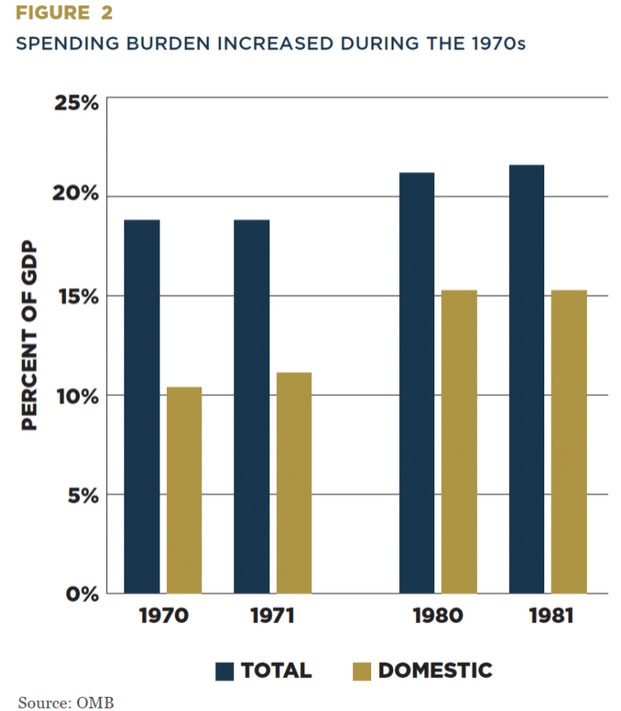 We’ll start with fiscal policy. Here’s Figure 2 from the study, showing that the burden of federal spending, measured as a share of economic output, increased significantly during the 1970s.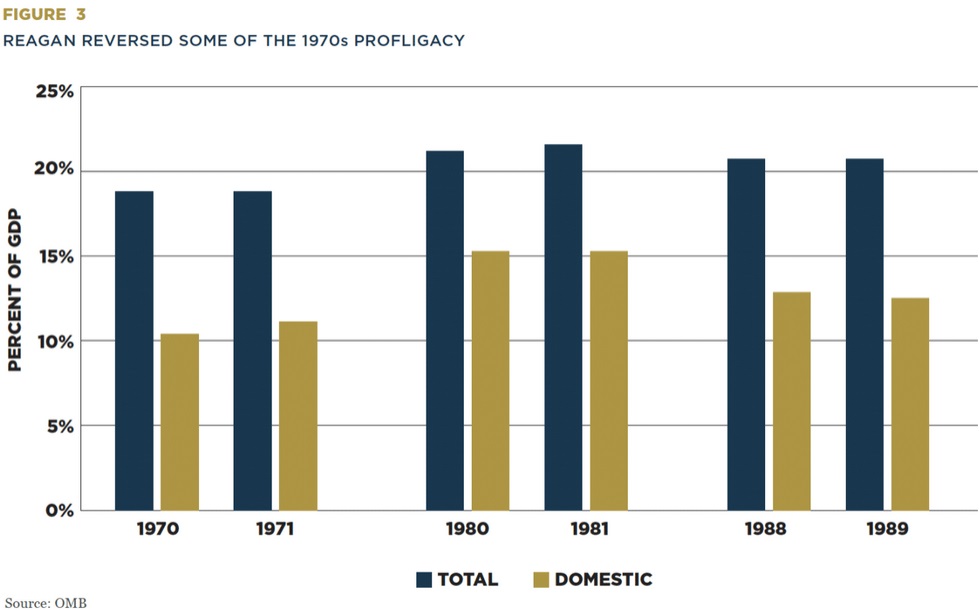
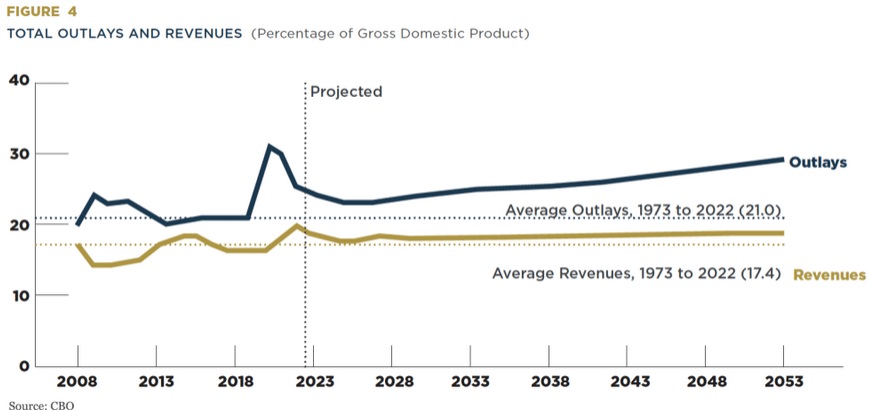
…All this spending…undermines growth by diverting resources from the productive sector of the economy. …Domestic discretionary spending is a very ripe target for budget savings. …Entitlements are the major budget challenge. More than 70 percent of the federal budget is allocated to these programs, and that share will increase since entitlement spending is projected to become an even bigger burden in the future. …some sort of spending restraint would be desirable. One option is a…spending cap. The best model in the United States is Colorado’s Taxpayer Bill of Rights. The TABOR provision in Colorado’s constitution effectively limits spending so that it cannot grow faster than the combination of inflation plus population. …Globally, the best model is Switzerland’s spending cap.
 And I also make the case for entitlement reform, including Medicare, Medicaid, and Social Security.
His famous “Laffer curve” presumes to prove that tax cuts for the rich will spur economic investment, causing such strong economic growth that the government’s tax revenue would actually rise instead of falling. …Yes, the economy was robust in the 1980s after Reagan’s historic tax cuts. But that’s also when the era of big budget deficits began. …congressional Republicans and President Donald Trump in 2017 slashed corporate taxes in what they claimed was a necessary economy-booster… Then-Treasury Secretary Stephen Mnuchin’s famous vow that the tax-cut plan would “pay for itself” in growth — the very definition of Laffer’s theory — has since been exposed as the voodoo it always was.
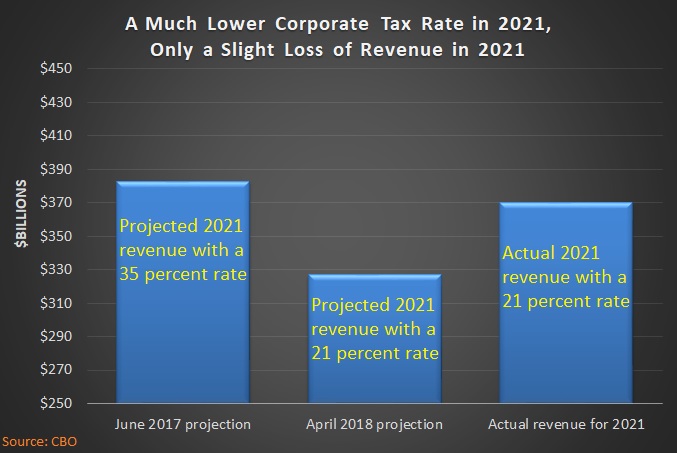 There were big deficits because of the 1980-1982 double-dip recession, and that spike in red ink mostly took place before Reagan’s tax cuts went into effect.
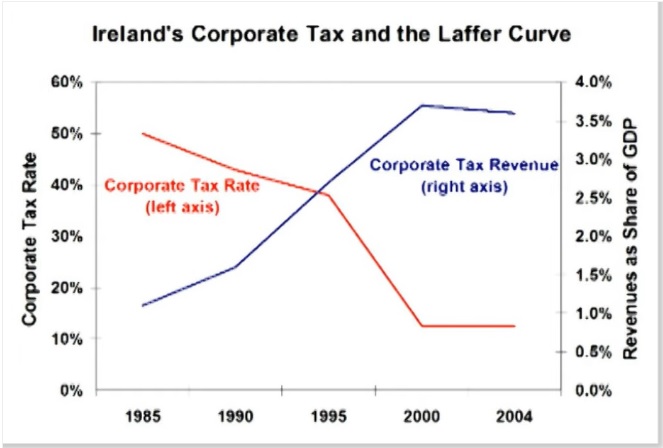 Tax revenue increased dramatically. Not just in nominal terms. Not just in inflation-adjusted terms.
arising from real economic responses to a firm’s scale of operations and 6.1% arising from accounting transactions via (for example) revenue and expense timing. Responsiveness to the corporate tax rate is more elastic if a firm uses cash (9.9%) rather than accrual accounting (7.4%), if the firm is small (9.9%) rather than large (8.6%), and if the firm discounts future cash flows at a lower rate.
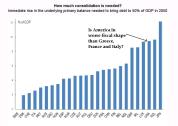 That won’t be an easy game to win since we have data from the BIS, OECD, and IMF showing that government is growing far too fast in the vast majority of nations.
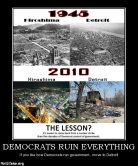 Detroit obviously is an example of a government that is collapsing sooner rather than later.





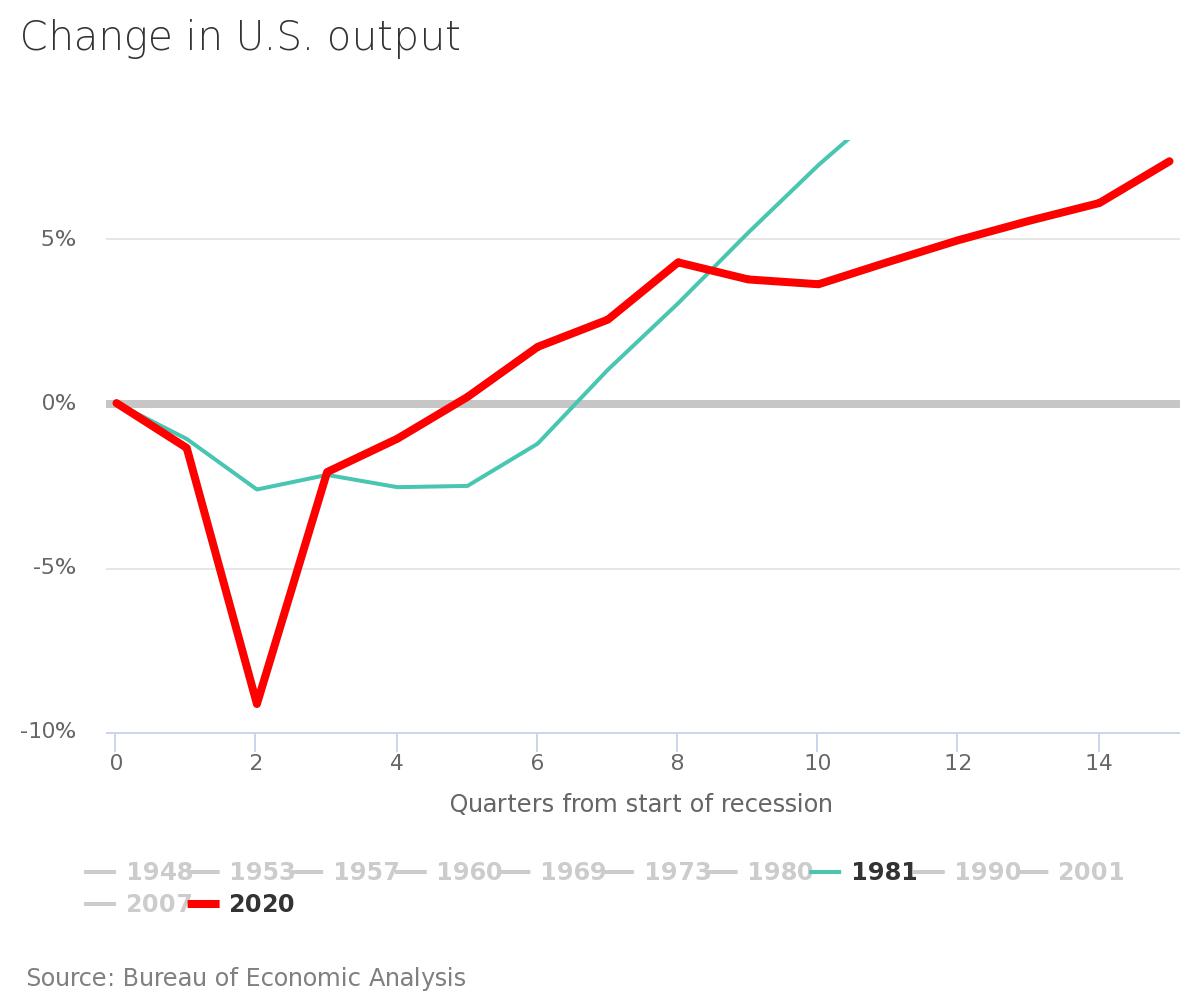
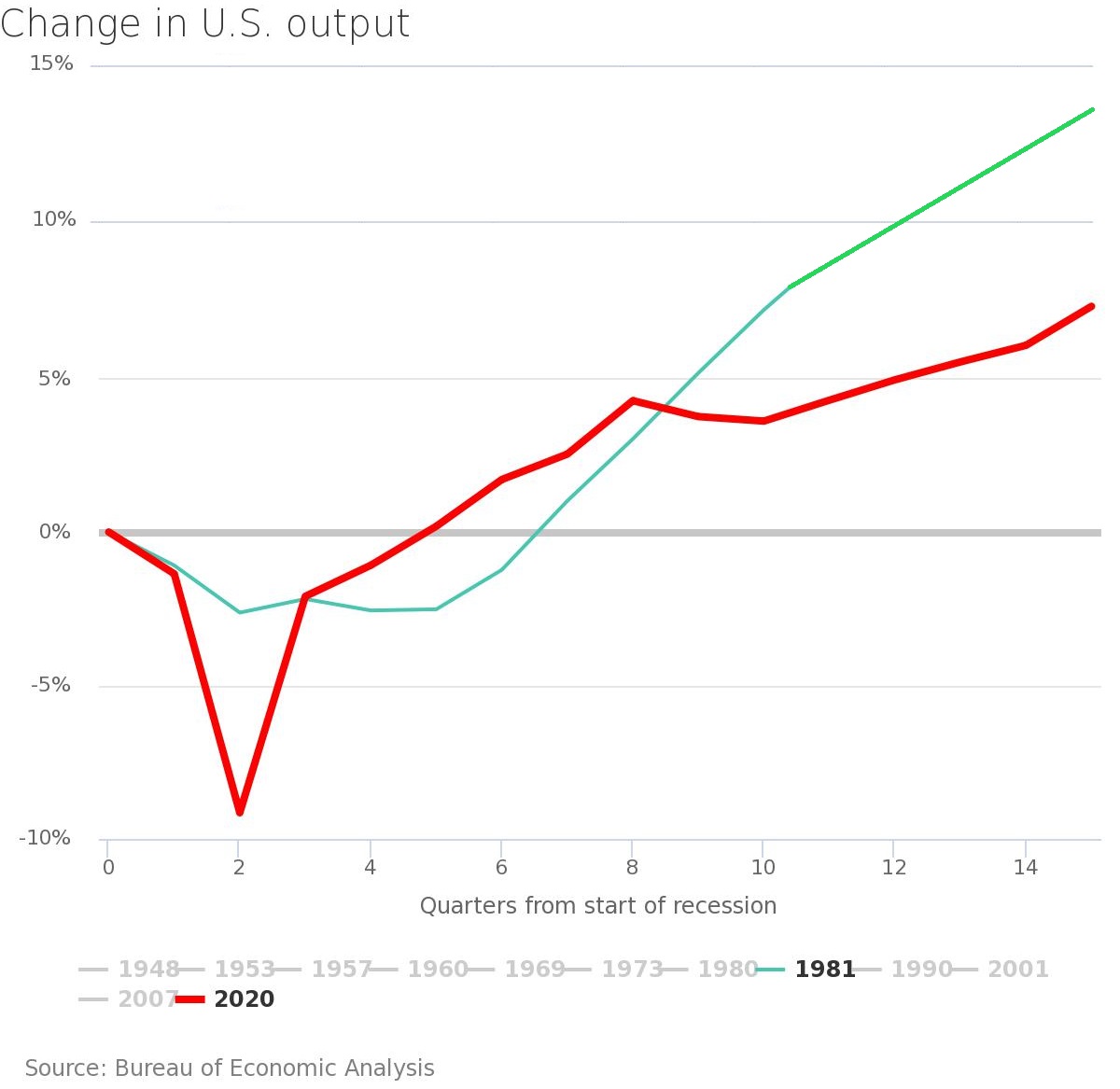




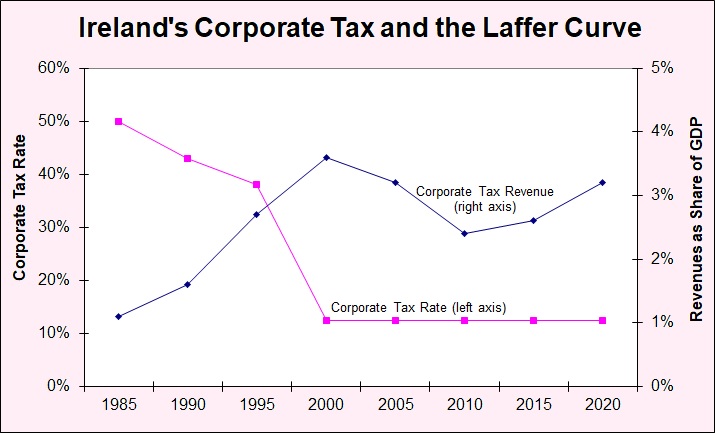


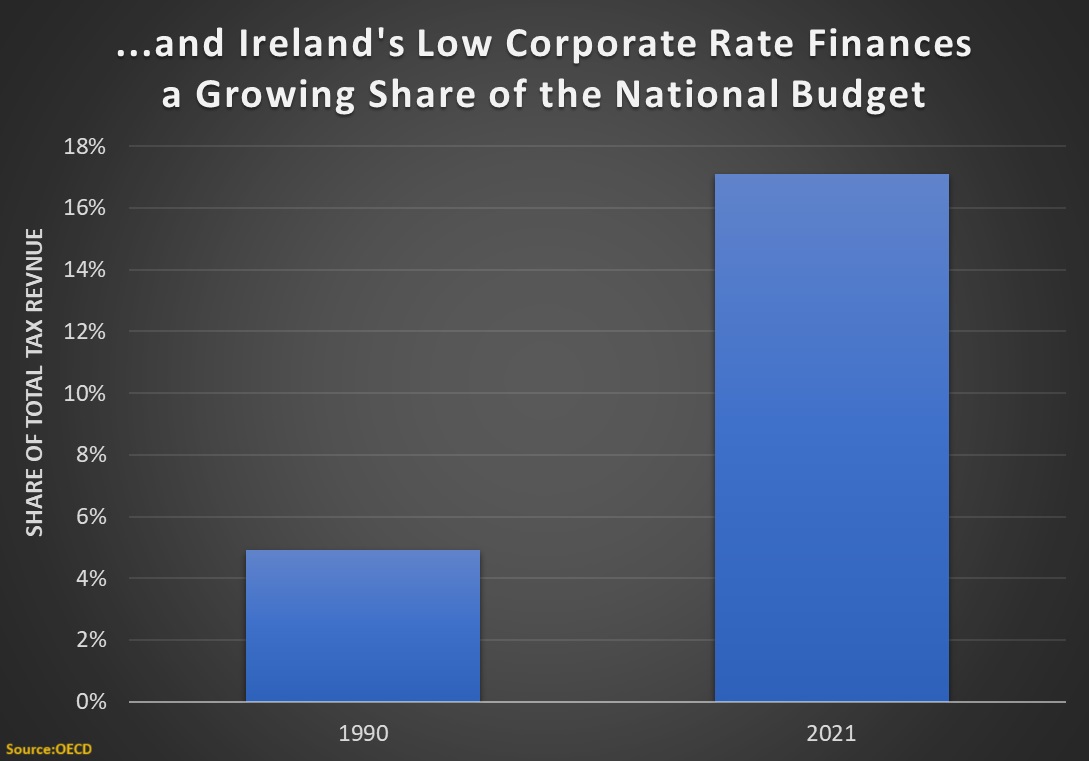

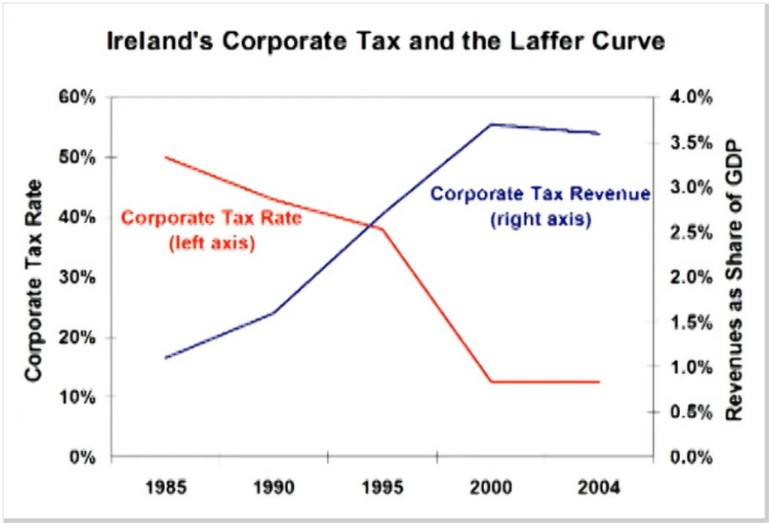








 We live in a world that, for the most part, has no absolute standard for life and behavior. We are under a system of morality by majority vote—in other words, whatever feels right sets the standard for behavior.
 (Carl Sagan brought astronomy into popular culture. Photograph: Tony Korody/Corbis)



 Melvin Pickens,











 The Daily Hatch