Richard Dawkins on Carl Sagan, Einstein and Religion | A How To Academy …
—
Francis Schaeffer the Founder of the L’Abri community
The Cosmos Is All That Is
Francis Schaeffer wrote in 1981 in CHRISTIAN MANIFESTO chapter 3 The Destruction of Faith and Freedom:
Then there was a shift into materialistic science based on a philosophic change to the materialistic concept of final reality. This shift was based on no addition to the facts known. It was a choice, in faith, to see things that way. No clearer expression of this could be given than Carl Sagan’s arrogant statement on public television–made without any scientific proof for the statement–to 140 million viewers: “The cosmos is all that is or ever was or ever was or ever will be.” He opened the series, COSMOS, with this essentially creedal declaration and went on to build every subsequent conclusion upon it.
How Should We Then Live | Season 1 | Episode 6 | The Scientific Age
The story has circulated for decades. Charles Darwin, after a career of promoting evolution and naturalism, returned to the Christianity of his youth, renouncing on his deathbed the theory of evolution. The story appears to have been authored by a “Lady Hope,” and relates how she visited him near the end and received his testimony.
Evolutionists in general and his surviving family in particular have disputed the account. Those with him at the time insist there was no evident changing of mind. Indeed, in his autobiography written late in his life, Darwin fully supported evolution. He admitted the concept was distasteful to him and had brought him much dismay, but he still held it.
Lady Hope was real, the wife of Lord Hope. She was a fervent Christian and friend of Darwin’s wife, also a strong Christian who prayed for and witnessed to him all their married life, to no avail according to him. Nevertheless, many have researched the story, and all have concluded it is probably an “urban myth.”
In his later years Darwin did soften in his attitude toward Christianity. He even allowed a local church to hold their meetings on his property, and asked that his bedroom windows be opened so he could hear the hymns being sung. A Christian can only hope that the seeds planted earlier took root at the end, and that he did place his faith in Christ before he died.
A similar scenario took place more recently with the death of the great spokesman for evolution and atheism, Carl Sagan. He received strong witness of Christianity from many people; most notably ICR’s physics chairman Dr. Larry Vardiman. They corresponded for years, during which God’s plan of salvation and the evidence for creation were clearly discussed. Dr. Sagan fully understood the salvation message but specifically refused it. He said he wished he could believe, but was convinced evolution was true and there was no God. He contracted cancer and passed into eternity in 1996.
His wife, Ann Druyan, herself an avowed anti-Christian, takes a different tack, however. She takes great pains to insure that no one writes an “urban myth” about her husband. She reportedly organized a vigil at his bedside to make sure no Christian came near. No last-minute prayer, no final testimony was allowed.
Again, a Christian can only trust in the grace of our loving Lord and wonder if the seeds planted took root before it was too late. There is no joy for a Christian if anyone, even a lifelong opponent of the cross, slips into a Christless eternity.
FEATURED ARTIST IS Jan van Eyck
“[Van Eyck] showed people with all their strengths and weaknesses: dignified, but with their big noses and bad skin, their wrinkles and sleepy eyes”
Thomas Köster
Jan van Eyck – Portrait of a Man in a Turban – 1433
The foremost of all the Early Netherlandish painters, Jan van Eyck took pictorial realism to heights never seen before. Van Eyck transferred the precision and meticulousness of the illuminated manuscripts to oil painting, both large-scale painting (“Ghent Polyptych“) and small portraits (“Portrait of a Man in a Turban“). With his technical perfection and his remarkable use of perspective, Van Eyck was undoubtedly the greatest painter of his time.
Imagen: Jan van Eyck: Portrait of a Man (Self Portrait?). 1433. Oil on panel, 19 x 15.5 cm
Little is known of Jan van Eyck’s early life, although it seems clear that he was not the first painter in his family. In fact, we know that his brother Hubert van Eyck was an esteemed artist, and on the aforementioned Ghent Polyptych (known as “Adoration of the Mystic Lamb” or “Polyptych of the Mystic Lamb”) there is an inscription stating that “The painter Hubert van Eyck, greater than whom none was to be found, began this work and Jan, his brother -second in art…“. Whoever was the true author of this work, one of the summits not only of Flemish painting, but of universal art, the intervention of Jan van Eyck in it is beyond doubt.
Even before his intervention in the aforementioned polyptych, Jan van Eyck began painting in the field of miniatures, and it is believed that some of the most beautiful illustrations of the “Turin Book of Hours” (those usually identified as “Hand G” or “Master G”) were made by him. In any case, “whether it was [Van Eyck’s] or whether it was made years later by a miniaturist familiar with his painting,[we are] faced with one of those works in which the limits of Flemish art in the recreation of a luminous illusionist space based on a practice not supported by a rigid system of representation are revealed” (Joaquín Yarza, “Jan van Eyck”, 1993). The precision demanded by miniature painting is notable in later works by Van Eyck, such as the “Léal Souvenir” in the National Gallery in London or the “Madonna of Chancellor Rolin” in the Louvre. However, his most outstanding work is the portrait of Giovanni Arnolfini and his wife, known as “The Arnolfini Marriage” or “Arnolfini Portrait”, a supreme masterpiece that has provoked multiple debates among scholars and critics. This work was selected by theartwolf.com as one of the 50 masterpieces of universal painting.
Jan (and Hubert?) van Eyck: Ghent Polyptych (known as “Adoration of the Mystic Lamb” or “Polyptych of the Mystic Lamb”), 1432. Oil on panels, 350 cm × 223 cm. St Bavo’s Cathedral, Ghent. Jan van Eyck: “Portrait of Giovanni Arnolfini and his Wife”, known as “Arnolfini Portrait”, 1434. Oil on panel, 82 x 59.5 cm. London, National Gallery.
After this sensational work, Van Eyck painted two important religious scenes, the “Virgin of Chancellor Rolin” (1434), now in the Louvre Museum, in which he included “a realistic landscape that appears as the marvellous discovery of a visible world” (History of Art, Salvat Editores, Vol. V, 1981), and “Virgin and Child with Canon van der Paele“, the largest of all the works attributed exclusively to Jan van Eyck, and preserved today in the Groeningemuseum in Bruges. He died in June 1441, and was buried in the Church of St. Donacian in Bruges.
Few works undoubtedly attributed to Jan van Eyck have survived to the present day. There are, however, several copies of lost works by the artist, the most prominent being “Woman Bathing” (which, for all we know, may have been a work of comparable quality to the Arnolfini Portrait) and the “Madonna of Nicolas van Maelbeke”, which may have been his last work. Many scholars hope that some of these works may be rediscovered in the future, which would be one of the most important events for the study of old masters painting.
I have gone back and forth and back and forth with many liberals on the Arkansas Times Blog on many issues such as abortion, human rights, welfare, poverty, gun control and issues dealing with popular culture. Here is another exchange I had with them a while back. My username at the Ark Times Blog is Saline […]
On March 17, 2013 at our worship service at Fellowship Bible Church, Ben Parkinson who is one of our teaching pastors spoke on Genesis 1. He spoke about an issue that I was very interested in. Ben started the sermon by reading the following scripture: Genesis 1-2:3 English Standard Version (ESV) The Creation of the […]
At the end of this post is a message by RC Sproul in which he discusses Sagan. Over the years I have confronted many atheists. Here is one story below: I really believe Hebrews 4:12 when it asserts: For the word of God is living and active and sharper than any two-edged sword, and piercing as far as the […]
In today’s news you will read about Kirk Cameron taking on the atheist Stephen Hawking over some recent assertions he made concerning the existence of heaven. Back in December of 1995 I had the opportunity to correspond with Carl Sagan about a year before his untimely death. Sarah Anne Hughes in her article,”Kirk Cameron criticizes […]
In this post we are going to see that through the years humanist thought has encouraged artists like Michelangelo to think that the future was extremely bright versus the place today where many artist who hold the humanist and secular worldview are very pessimistic. In contrast to Michelangelo’s DAVID when humanist man thought he […]
_________ Antony Flew on God and Atheism Published on Feb 11, 2013 Lee Strobel interviews philosopher and scholar Antony Flew on his conversion from atheism to deism. Much of it has to do with intelligent design. Flew was considered one of the most influential and important thinker for atheism during his time before his death […]
J.I.PACKER WROTE OF SCHAEFFER, “His communicativestyle was not that of acautious academic who labors for exhaustive coverage and dispassionate objectivity. It was rather that of an impassioned thinker who paints his vision of eternal truth in bold strokes and stark contrasts.Yet it is a fact thatMANY YOUNG THINKERS AND ARTISTS…HAVE FOUND SCHAEFFER’S ANALYSES A LIFELINE TO SANITY WITHOUT WHICH THEY COULD NOT HAVE GONE ON LIVING.”
Francis Schaeffer in Art and the Bible noted, “Many modern artists, it seems to me, have forgotten the value that art has in itself. Much modern art is far too intellectual to be great art. Many modern artists seem not to see the distinction between man and non-man, and it is a part of the lostness of modern man that they no longer see value in the work of art as a work of art.”
Many modern artists are left in this point of desperation that Schaeffer points out and it reminds me of the despair that Solomon speaks of in Ecclesiastes. Christian scholar Ravi Zacharias has noted, “The key to understanding the Book of Ecclesiastes is the term ‘under the sun.’ What that literally means is you lock God out of a closed system, and you are left with only this world of time plus chance plus matter.” THIS IS EXACT POINT SCHAEFFER SAYS SECULAR ARTISTSARE PAINTING FROM TODAY BECAUSE THEY BELIEVED ARE A RESULTOF MINDLESS CHANCE.
I have written a lot in the past about Carl Sagan on my blog and over and over again these posts have been some of my most popular because I believe Carl Sagan did a great job of articulating the naturalistic view that the world is a result of nothing more than impersonal matter, time and chance. Christians like me have to challenge those who hold this view and that is why I took it upon myself to read many of Sagan’s books and to watch his film series Cosmos.
Francis Schaeffer in his book HE IS THERE AND HE IS NOT SILENT (Chapter 4) asserts:
Because men have lost the objective basis for certainty of knowledge in the areas in which they are working, more and more we are going to find them manipulating science according to their own sociological or political desires rather than standing upon concrete objectivity. We are going to find increasingly what I would call sociological science, where men manipulate the scientific facts. Carl Sagan (1934-1996), professor of astronomy and space science at Cornell University, demonstrates that the concept of a manipulated science is not far-fetched. He mixes science and science fiction constantly. He is a true follower of Edgar Rice Burroughs (1875-1950). The media gives him much TV prime time and much space in the press and magazine coverage, and the United State Government spent millions of dollars in the special equipment which was included in the equipment of the Mars probe–at his instigation, to give support to his obsessive certainty that life would be found on Mars, or that even large-sized life would be found there. With Carl Saganthe line concerning objective science is blurred, and the media spreads his mixture of science and science fiction out to the public as exciting fact.
There is a tension in a person’s life that denies the existence of God but then he can’t live that way in the real world. Carl Sagan had this tension in his life. He denied that humans were special but he said we were precious in his movie CONTACT. He said that God didn’t exist but he did spend his whole life looking for life on other planets and if we had found it he said they would be able possibly to tell us what our purpose is in the universe. Note in the quote above that Schaeffer accuses Sagan of mixing science and science fiction. One side of his brain was ruling out that we have meaning and the other side was constanting searching for it.
In Sagan’s books and in his film series COSMOS he assumes that science is only naturalistic and materialistic and God is locked out. However, in the book THE DEMON-HAUNTED WORLD he does admit that he would be willing to consider evidence that pointed to God’s existence, but again in this review I attacked Sagan’s basis for his morality decisions and how it was insufficient on a materialistic base.
Sagan is the David Duncan Professor of Astronomy and Space Sciences at Cornell University. He is author of many best sellers, including Cosmos, which became the most widely read science book ever published in the English language.
In this book Sagan discusses the claims of the paranormal and fringe-science. For instance, he examines closely such issues as astrology (p. 303), crop circles (p. 75), channelers (pp. 203-206), UFO abductees (pp. 185-186), faith-healing fakes (p. 229), and witch-hunting (p. 119). Readers of The Skeptical Inquirer will notice that Sagan’s approach is very similar.
Sagan writes:
The Committee for the Scientific Investigation of Claims of the Paranormal is an organization of scientists, academics, magicians, and others dedicated to skeptical scrutiny of emerging or full-blown pseudo-sciences. It was founded by the University of Buffalo philosopher Paul Kurtz in 1976. I’ve been affiliated with it since its beginning. Its acronym, CSICOP, is pronounced Asci-cop C as if it’s an organization of scientists performing a police function Y CSICOP publishes a bimonthly periodical called AThe Skeptical Inquirer. On the day it arrives, I take it home from the office and pore through its pages, wondering what new misunderstandings will be revealed (p. 299).
Sagan points out that in 1991 two pranksters in England admitted that they had been making crop figures for 15 years. They flattened the wheat with a heavy steel bar. Later on they used planks and ropes, but the media paid brief attention to the confession of these hoaxers. Why? Sagan concludes, ’Demons sell; hoaxers are boring and in bad taste’ (p. 76).
Christians must admire Sagan’s commitment to critical thinking, logic, and freedom of thought. He takes on many subjects in this book, and the vast majority of his analysis is exceptional. However, his opinions on religious matters are affected by his devotion to scientism. Sagan believes only that which can be proved by science is true. He disputes psychologist Charles Tart’s assertion that scientism is ’dehumanizing, despiritualizing’ (p. 267). Sagan comments, ’There is very little doubt that, in the everyday world, matter (and energy) exist. The evidence is all around us. In contrast, as I’ve mentioned earlier the evidence for something non-material called `spirit’ or `soul’ is very much in doubt’ (p. 267).
Science can only prove things about the physical world, and it cannot prove anything about the spiritual world. Does that mean that the mind and soul don’t exist? Of course not! First, we must realize that science is not the only way to truth. Even Sagan must admit that he must justify values like ’be objective’ or ’report data honestly’. Where do those values come from? They came from outside science, but they must be in place for science to work.
Sagan gives an illustration that contrasts physics and metaphysics. He shows that the physicist’s idea will have to be discarded if tests fail in the laboratory. Therefore, the main difference between physics and metaphysics is that the metaphysicist has no laboratory. This is a cute story, but can science answer the basic questions that underline all knowledge? Metaphysics is necessary for science to take place. It is not true that science is superior to metaphysics like Sagan would have us believe. The presuppositions of science can only be validated by philosophy. J. P. Moreland has correctly said, ’The validation of science is a philosophical issue, not a scientific one, and any claim to the contrary will be a self-refuting philosophical claim’ (Scaling the Secular City, p. 197).
Second, the absence of scientific evidence for the soul does not mean the soul does not exist. Sagan himself states,’Absence of evidence is not evidence of absence’ (p. 213).
I was impressed with the way Sagan put his inner thoughts on the table. For instance, he comments, ’Plainly, there’s something within me that’s ready to believe in life after death…If some good evidence for life after death was announced, I’d be eager to examine it; but it would have to be real scientific data, not mere anecdote’ (pp. 203-204). What kind of evidence is Sagan looking for? It certainly is not vague prophecies. He states, ’Think of how many religions attempt to validate themselves with prophecy…Think of how many people rely on these prophecies, however vague, however unfulfilled, to support or prop up their beliefs…Yet has there ever been a religion with the prophetic accuracy and reliability of science? (p. 30). The answer to that question is yes. Christianity can point to very clear passages such as Isaiah 53 and Daniel 11 written hundreds of years before the events occurred.
While comparing science to religion, Sagan comments, ’Science is far from a perfect instrument of knowledge. It’s just the best we have (pp. 27-28). Here Sagan is only half right. Science is imperfect, but it is not better than the Bible.’
The Demon-Haunted World is a thought-provoking book that I thoroughly enjoyed. Some of Sagan’s anti-Christian views come through, but on the whole, this book uses critical thinking and logic and applies them to the claims of the paranormal and fringe-science of our day.
Reviewed by Everette Hatcher III, P.O. Box 23416, Little Rock, AR 72221.
I agree with Sagan that we should embrace “the hard truth” but do the facts indicate that the Bible is filled with fables? If you want evidence lends support to the idea that the Bible is true then check out these next few videos by Francis Schaeffer and the material in the remaining part of this post:
and you will hear what far smarter people than I have to say on this matter. I agree with them.
Harry Kroto
I have attempted to respond to all of Dr. Kroto’s friends arguments and I have posted my responses one per week for over a year now. Here are some of my earlier posts:
In the 1st video below in the 45th clip in this series are his words and my response is below them.
50 Renowned Academics Speaking About God (Part 1)
Another 50 Renowned Academics Speaking About God (Part 2
A Further 50 Renowned Academics Speaking About God (Part 3)
–
CARL SAGAN interview with Charlie Rose:
“…faith is belief in the absence of evidence. To believe in the absence of evidence, in my opinion, is a mistake. The idea is to hold belief until there is compelling evidence. If the Universe does not comply with our previous propositions, then we have to change…Religion deals with history poetry, great literature, ethics, morals, compassion…where religion gets into trouble is when it pretends to know something about science,”
______________ George Harrison Swears & Insults Paul and Yoko Lucy in the Sky with Diamonds- The Beatles The Beatles: I have dedicated several posts to this series on the Beatles and I don’t know when this series will end because Francis Schaeffer spent a lot of time listening to the Beatles and talking […]
The Beatles in a press conference after their Return from the USA Uploaded on Nov 29, 2010 The Beatles in a press conference after their Return from the USA. The Beatles: I have dedicated several posts to this series on the Beatles and I don’t know when this series will end because Francis […]
__________________ Beatles 1966 Last interview I have dedicated several posts to this series on the Beatles and I don’t know when this series will end because Francis Schaeffer spent a lot of time listening to the Beatles and talking and writing about them and their impact on the culture of the 1960’s. In this […]
_______________ The Beatles documentary || A Long and Winding Road || Episode 5 (This video discusses Stg. Pepper’s creation I have dedicated several posts to this series on the Beatles and I don’t know when this series will end because Francis Schaeffer spent a lot of time listening to the Beatles and talking and writing about […]
_______________ Francis Schaeffer pictured below: _____________________ I have included the 27 minute episode THE AGE OF NONREASON by Francis Schaeffer. In that video Schaeffer noted, ” Sergeant Pepper’s Lonely Hearts Club Band…for a time it became the rallying cry for young people throughout the world. It expressed the essence of their lives, thoughts and their feelings.” How Should […]
Crimes and Misdemeanors: A Discussion: Part 1 ___________________________________ Today I will answer the simple question: IS IT POSSIBLE TO BE AN OPTIMISTIC SECULAR HUMANIST THAT DOES NOT BELIEVE IN GOD OR AN AFTERLIFE? This question has been around for a long time and you can go back to the 19th century and read this same […]
____________________________________ Francis Schaeffer pictured below: __________ Francis Schaeffer has written extensively on art and culture spanning the last 2000years and here are some posts I have done on this subject before : Francis Schaeffer’s “How should we then live?” Video and outline of episode 10 “Final Choices” , episode 9 “The Age of Personal Peace and Affluence”, episode 8 […]
Love and Death [Woody Allen] – What if there is no God? [PL] ___________ _______________ How Should We then Live Episode 7 small (Age of Nonreason) #02 How Should We Then Live? (Promo Clip) Dr. Francis Schaeffer 10 Worldview and Truth Two Minute Warning: How Then Should We Live?: Francis Schaeffer at 100 Francis Schaeffer […]
___________________________________ Francis Schaeffer pictured below: ____________________________ Francis Schaeffer “BASIS FOR HUMAN DIGNITY” Whatever…HTTHR Dr. Francis schaeffer – The flow of Materialism(from Part 4 of Whatever happened to human race?) Dr. Francis Schaeffer – The Biblical flow of Truth & History (intro) Francis Schaeffer – The Biblical Flow of History & Truth (1) Dr. Francis Schaeffer […]
All of these factors help to explain why school choice is expanding all across the nation (at least in places where lawmakers are not controlled by teacher unions).
Today, though, let’s set aside the national arguments and focus on a local example from the reliably crazy state of California.
Heather McDonald has a sobering column about Los Angeles government schools in City Journal.
Much of her article focuses on ideological indoctrination of students, but here’s the passage that caught my attention.
Any school system that can afford climate advocates (as part of a black uplift plan, no less) is not hurting for taxpayer dollars. Any school system that runs a massive system of subcontracting for “psychiatric social workers” and “counselors” is not hurting for taxpayer dollars.Such a system has more money than it knows what to do with. Indeed, the LAUSD budget for the 2022–23 school year was $20 billion—more than that of some nations. Divide that pot among the district’s 397,623 K-12 students, and taxpayers are paying the equivalent of an Ivy League tuition—over $50,000—for every student, every year. Add “clients” in other functions that the LAUSD has embraced— early education centers, infant centers, and adult education—and the district spends a still-lavish $35,341 per student. The LAUSD is not underfunded. It is overfunded. The reasons for student failure lie elsewhere than in allegedly inadequate resources.
Wow.
I wrote about the failing Los Angeles government schools system back in 2010, but the focus then was about under-performing teachers.
Today, the issue is an over-funded system. The government schools are getting $35.000-$50,000 per student, yet doing a crummy job.
How crummy?
Howard Blume of the L.A. Times wrote about the bad news last October.
In math, …about 7 in 10 students do not meet standards. …for Black students…, only 19% met the learning standards in math. …Latinos make up about 3 in 4 students; about 24% met learning standards. …L.A. Unified math scores still were below levels from the 2017-18 school year, two years before the pandemic resulted in campus closures. The same is true for English scores, which were slightly down overall compared with last year, with 41.2% of students meeting standards. Among all district students, scores dropped by half a percentage point.
The only practical answer to this mess is school choice.
Instead of squandering $35,000-$50,000 per student of government schools that produce bad test scores, divvy up the money and give families some type of voucher or educational savings account that can be used to pay tuition at higher-performing private schools.
Families could opt to stay in government schools, of course, especially if they value indoctrination.
But it’s safe to assume most families will be more interested in better education.
Milton Friedman: It is an interesting thing, if you look at the facts, the one area, the area in which the low-income people of this country, the blacks and the minority, are most disadvantaged is with respect with the kinds of schools they can send their children to. The people who live in Harlem or the slums or the corresponding areas in LA or San Francisco, they can go to the same stores, shop in the same stores everybody else can, they can buy the same automobiles, they can go to supermarket, but they have very limited choice of schools. Everybody agrees that the schools in those areas are the worst. They are poor. Yet, here you have a Democrat who allege their interest is to help the poor and the low-income people. Here you have to take a different point. Every poll has shown that the strongest supporters of vouchers are the low-income blacks, and yet hardly a single black leader has been willing to come out for vouchers. There were some exceptions, Paul Williams in Milwaukee who was responsible for that, and a few others.
EXCLUSIVE – A Democrat in the Georgia General Assembly who angered her party by supporting a recent school choice bill says fellow progressives are hypocritically abandoning some of the state’s most vulnerable people.
“Why is no one fighting for young Black minds? Why isn’t that one of the things that we’re fighting for?” State Rep. Mesha Mainor said, adding, “I actually say you’re a hypocrite. That’s what I tell them directly. You are being a hypocrite. There are state lawmakers right now where their children are in schools that they’re not even zoned for… They’re lying about their address, state lawmakers, but they won’t vote for this bill.”
Mainor’s deep-blue 56th House district stretches from southwest Atlanta up into the Midtown area and includes schools in dire need of improvement. Asked why she supported the school choice bill that ultimately didn’t pass, she responded she prefers the term “parent choice.”
“I support parent choice because some parents have children in schools where their needs are not being met,” she told Fox News Digital. “In my district in particular, we have schools with 3% reading proficiency, 3% have obtained math proficiency by the eighth grade. And so to say that this is just how it is and that the kid needs to just suffer these consequences, I don’t agree with that. And I don’t think that all parents agree with that either.”
Georgia General Assembly member Mesha Mainor, D., discusses why she calls school choice “parent choice” and how she has bucked her party to support vouchers for students at underperforming schools.(Fox News Digital)
School choice has been a subject of intense debate for years, with teachers union-backed Democrats often fiercely opposing such measures as siphoning funding from public schools. Proponents say parents and children deserve opportunities for the best education and shouldn’t be punished for living in poorly performing districts.
School choice advocates also support expansion of charter schools, which have grown greatly in Georgia in recent years and many of which count minority students as a majority of their enrollments. Charter schools are publicly funded schools that are independently run and include students who aren’t in the immediate area; teachers unions often oppose them as well since their teachers generally aren’t unionized.
“We should be voting at times just for our district and at times for the entire state of Georgia,” Mainor said.
The bill that would have expanded opportunities for students who attend Georgia’s lowest-rated schools was surprisingly shot down last month due to opposition from some rural Republicans.
Georgia Senate Bill 233 would have created $6,500-vouchers for students at schools performing in the bottom-25 percent in the state, to help pay for private school tuition and homeschooling expenses if they were inclined. Gov. Brian Kemp, R., pushed for it, and it appeared to have the votes to pass under the Republican-controlled Golden Dome, until 16 House Republicans voted it down.
It’s not dead yet, as it could still be brought for a vote at a later time. Any political battles in Georgia now attract outsized attention, given the state’s battleground status in presidential elections.
Georgia has emerged as one of the country’s top battleground states.(Charlie Creitz/Fox News)
Opponents of the bill said the vouchers would hurt local public school systems needing additional funding, particularly those in poorer communities. The state planned to deduct public schools’ funding for each student that takes their education dollars elsewhere.
Mainor was the only Democrat who voted for it, and her fellow party members let her hear about it. A Democrat in the State Senate, Josh McLaurin, offered $1,000 to anyone who would primary her. State Rep. Michelle Au, D., linked to an AJC article about Mainor facing a primary challenge and wrote, “This is about floridly whipping votes in favor of a harmful bill we took a CAUCUS POSITION AGAINST.”
McLaurin represents Sandy Springs, an affluent city known for its array of corporate headquarters in north Fulton County. Mainor retorted that he doesn’t have children, represents a district with thriving schools and has “no idea of what it means to live in a poverty-stricken community with no resources, with no hope.”
“To me, it’s ludicrous,” she said. “I think my fellow Democrats – and not all of them, I hate to say that because it’s not all of them – some of my colleagues will march in the streets for abortion rights. I’m pro-choice. They were crying on the floor for transgender rights. They were very outspoken about anti-Semitism. My problem is, why is no one fighting for young Black minds?… And so to say that all these other issues are important, but a child living in poverty that’s of color is at the bottom of your totem pole of priorities, that’s a problem with the value system if you ask me.”
“I can only assume it’s because poor Black children are not their priority,” she added. “Let’s put it like that. Until the Democratic Party wants to put poor Black children as a priority, then State Representative Mesha Mainor will continue to vote against them when it comes to these educational needs.”
Georgia Gov. Brian Kemp supported a school choice bill in March that surprisingly didn’t pass. (Megan Varner/Getty Images)
Fox News Digital reached out to McLaurin for comment.
She also said it was “absolutely the truth” that Democrats are afraid of running afoul of powerful teachers unions; the Georgia Federation of Teachers has made removing Mainor from office a pet project.
“Teachers don’t necessarily agree with what the teachers union supports, because guess what? Teachers have children in failing schools. Teachers have children that have special needs that benefit from these services. So I think the teachers union is actually out of touch with their own constituency,” Mainor said.
Her constituents, she says, don’t care if she votes on a straight party line, but instead thank her for keeping their needs in mind. Born and raised in Atlanta, Mainor said her mother used someone else’s address, so her daughter could attend one of the better public high schools in the city.
She also disagreed with the notion that more money needs to be put into public schools, but instead there needed to be more responsible fiscal governance from local boards.
“I don’t think throwing money at a system that’s not working is the answer. I think going in and looking at how the money is spent is what needs to be done first,” she said.
Axios reported Mainor has voted with Republicans on other major issues since she took office in 2021, including a ban on localities lowering police budgets and a controversial oversight board for prosecutors.
Firefighters work to extinguish a fire after an Atlanta police vehicle was set on fire during a “Stop cop city” protest in Atlanta, Georgia, United States on January 21, 2023. (Benjamin Hendren/Anadolu Agency via Getty Images)
A physical therapist who is also pursuing a doctorate in business administration, Mainor said her Christian faith helped guide her to run for office, pointing in part to Priscilla Shirer’s book, “Discerning the Voice of God.” She is a single mother with two children, one of whom is about to head to college.
“I’m not a part of anybody’s system. I’m not part of anybody’s ‘in’ crowd,” she said. “God said to run, and so we’re going to run. And I won… The moment I hear I need to get out, I will get out.”
The Georgia State Department of Education recently identified 175 low-performing schools in need of additional support, with issues like poor graduation rates and falling behind on key skills. All of them are Title 1-schools, meaning at least 40% of the student body comes from low-income families, GPB reported.
Arkansas’ new governor, Sarah Sanders, on Wednesday signed into state law a major education-reform initiative. Pictured: Then still a candidate for governor, Sanders addresses the America First Policy Institute Agenda Summit in Washington last July 26. (Photo: Mandel Ngan/AFP/Getty Images)
Jason Bedrick is a research fellow with The Heritage Foundation’s Center for Education Policy.
Arkansas Gov. Sarah Huckabee Sanders on Wednesday signed into law what she called “the largest overhaul of the state’s education system in Arkansas history.”
The “Arkansas LEARNS” initiative is an ambitious reform agenda that expands school choice, modernizes school transportation, restructures teacher compensation to pay more for performance, provides supplemental education for struggling students, and prohibits Arkansas public schools from indoctrinating students.
“We’ve seen how the status quo condemns Arkansans to a lifetime of poverty, and we’re tired of sitting at the bottom of national education rankings,” Sanders said. “We know that if we don’t plant this seed today, then there will be nothing for our kids to reap down the line.”
Perhaps the boldest component of the initiative is the creation of Educational Freedom Accounts, which are similar to education savings account (ESA) policies in 11 other states. With an ESA, families can pay for private school tuition, tutoring, textbooks, homeschool curriculums, online learning, special-needs therapy, and more. ESAs empower families to choose the learning environments that align with their values and best meet their children’s individual learning needs.
Eligibility for the ESAs phases in over three years. In the third year of the ESA program’s operation, all K-12 students will be eligible. In the first year of the ESA program (the 2023-24 academic year), all incoming kindergarten students in Arkansas will be eligible. So will students with disabilities, homeless students, children in foster care, the children of active-duty military personnel, students assigned to low-performing district schools, or children enrolled in one of Arkansas’s other school choice programs.
According to a recent Morning Consult survey, 7 in 10 Arkansans support an ESA policy. Support is even higher among parents of school-aged children, 78% of whom support ESAs.
The Arkansas LEARNS initiative will significantly improve the state’s national standing on education issues. Last year, Arkansas ranked No. 18 in the nation for education choice on The Heritage Foundation’s Education Freedom Report Card. (The Daily Signal is the news outlet of The Heritage Foundation.)
The enactment of a universal ESA would have boosted Arkansas to No. 5 in the nation, assuming other states’ policies remained constant. Of course, competition for the top five will be fierce as states such as Florida, Indiana, Ohio, Oklahoma, and Texas are also considering adopting universal education choice policies.
Arkansas’ initiative also takes important steps to protect school students from being exposed to indoctrination or discrimination.
The law requires the Arkansas Department of Education to review its “rules, policies, materials, and communications” to ensure that they are in compliance with the Civil Rights Act of 1964 and do not “conflict with the principle of equal protection under the law or encourage students to discriminate against someone based on the individual’s color, creed, race, ethnicity, sex, age, marital status, familial status, disability, religion, national origin, or any other characteristic protected by federal or state law.”
The law also prohibits school faculty and staff or guest speakers from compelling students to “adopt, affirm, or profess an idea in violation” of the Civil Rights Act of 1964, such as that people of one race or ethnicity are inherently superior or inferior to anyone else, or that individuals should “be discriminated against or receive adverse treatment solely or partly because of the individual’s color, creed, race, ethnicity, sex” or other characteristics protected by law.
The statute makes clear that it does not prohibit the discussion of ideas and or the teaching of history.
Students in Arkansas will still learn about the ugly aspects of American history, such as slavery, segregation, and Jim Crow. However, the law will appropriately prohibit lessons that divide students into “oppressors” or “oppressed,” based solely on skin color or that associate certain traits with particular skin colors.
As Tony Kinnett recently reported in The Daily Signal, there are recorded instances of such lessons in critical race theory in Arkansas classrooms, despite the best efforts of mainstream media outlets to deny it.
With the enactment of the Arkansas LEARNS initiative, Sanders has raised the bar for conservative education reform. Arkansas will now be among the top states that empower families to choose the learning environments that work best for their kids.
Arkansas has also taken an important step to ensure that traditional public schools are focused on education, not indoctrination.
Have an opinion about this article? To sound off, please email letters@DailySignal.com and we’ll consider publishing your edited remarks in our regular “We Hear You” feature. Remember to include the url or headline of the article plus your name and town and/or state.
The Daily Signal depends on the support of readers like you. Donate now
As we wrap up our National School Choice Week look at the history of school choice, I’m going to explore some notable milestones in the U.S. over the years. For more in‐depth coverage, be sure to check out our new School Choice Timeline.
When we talk about school choice, we generally mean a program where public funding follows students to nonpublic schools. This becomes particularly important after the mid‐1800s, when state governments began to mandate taxpayers fund and children attend specific schools established and run by local government entities. Prior to that, education was typically a private or local concern—the domain of parents or small communities.
The oldest school choice program in the U.S. is Vermont’s town tuitioning program. Vermont’s founding constitution, adopted in 1777, required the legislature to establish a school in each town. As the state grew and the population became more dispersed, some towns could not support a public school. In 1869, the legislature passed a law allowing students from a town without a public school to attend any public or private school in or outside of Vermont, with the sending town paying the receiving school’s tuition. Originally, parents could choose religious private schools, but that option was removed by the state’s supreme court in 1961. The U.S. Supreme Court’s 2022 decision in Carson v. Makin overturned a similar ban on religious schools in Maine’s town tuitioning program. In response, the Vermont Secretary of Education notified superintendents that “School districts may not deny tuition payments to religious” schools that otherwise meet the criteria for the program.
The Milwaukee Parental Choice Program, created in 1990, is the country’s first modern private school choice program. Right in line with Milton Friedman’s 1955 idea for a tuition voucher, the program offers private school vouchers to low‐ and middle‐income families who live in Milwaukee. In its first year, 341 students used vouchers to attend seven private schools in the city. This year, 129 schools in the metro Milwaukee area are participating in the program, enrolling nearly 29,000 students. The value of the voucher increases when state aid to school districts increases. Today there are 26 voucher programs running in 15 states plus Washington, DC and Puerto Rico.
Arizona introduced the Individual Income Tax Credit Scholarship Program, the nation’s first tax credit scholarship, in 1997. It provides tax credits to individuals who donate to school tuition organizations that provide scholarships for private school tuition. While the tax credits are worth 100% of the donation, they’re capped at $611 per donor. There is no cap on scholarship values, students can receive multiple scholarships, and every K–12 student in the state is eligible to participate in the program. There are now 26 tax credit scholarship programs in 21 states.
While I’ve long known that Milton Friedman is considered the father of school vouchers, I only recently learned he later suggested “partial vouchers”—which sound a lot like education savings accounts (ESAs). Here’s how he described them in a 2006 EducationNext interview:
Moreover, there’s no reason to expect that the future market will have the shape or form that our present market has. How do we know how education will develop? Why is it sensible for a child to get all his or her schooling in one brick building? Why not add partial vouchers? Why not let them spend part of a voucher for math in one place and English or science somewhere else? Why should schooling have to be in one building? Why can’t a student take some lessons at home, especially now, with the availability of the Internet? Right now, as a matter of fact, one of the biggest growth areas has been home schooling. There are more children being home schooled than there are in all of the voucher programs combined.
Friedman’s words proved prophetic when Arizona created the nation’s first ESA in 2011: the Empowerment Scholarship Account program. Originally limited to students with special needs, the program allows parents who opt out of public school to receive a portion of state education funding in an account that can be used for a variety of approved educational purchases—like private school tuition, tutoring, or education therapies.
Other states adopted similar ESAs that were restricted to various populations (students with special needs, military families, economically disadvantaged families, children assigned to low‐performing public schools, etc.). In 2021, West Virginia made a huge jump forward with Hope Scholarships, an ESA that’s open to every child in public schools (93% of kids in the state). Last year, Arizona re‐claimed the ESA crown by becoming the first state with universal eligibility. Already this year, Iowahas joined the universal ESA club and Utahis on the verge. Other states are poised to follow suit. After decades of baby steps, universal school choice is on the march.
Assuming courts are doing their job, it doesn’t matterif 90 percent of voters support restrictions on free speech.
Assuming courts are doing their job, it doesn’t matter if 90 percent of voters support gun confiscation.
Assuming courts are doing their job, it doesn’t matter if 90 percent of voters support warrantless searches.
That being said, a constitutional republic is a democratic form of government. And if government is staying within proper boundaries, political decisions should be based on majority rule, as expressed through elections.
In some cases, that will lead to decisions I don’t like. For instance, the (tragic) 16th Amendment gives the federal government the authority to impose an income tax and voters repeatedly have elected politicians who have opted to exercise that authority.
Needless to say, I will continue my efforts to educate voters and lawmakers in hopes that eventually there will be majorities that choose a different approach. That’s how things should work in a properly functioning democracy.
But not everyone agrees.
A report in the New York Times, authored by Elizabeth Harris and Alexandra Alter, discusses the controversy over which books should be in the libraries of government schools.
The Keller Independent School District, just outside of Dallas, passed a new rule in November: It banned books from its libraries that include the concept of gender fluidity. …recently, the issue has been supercharged by a rapidly growing and increasingly influential constellation of conservative groups.The organizations frequently describe themselves as defending parental rights. …“This is not about banning books, it’s about protecting the innocence of our children,” said Keith Flaugh, one of the founders of Florida Citizens Alliance, a conservative group focused on education… The restrictions, said Emerson Sykes, a First Amendment litigator for the American Civil Liberties Union, infringe on students’ “right to access a broad range of material without political censorship.” …In Florida, parents who oppose book banning formed the Freedom to Read Project.
As indicated by the excerpt, some people are very sloppy with language.
If a school decides not to buy a certain book for its library, that is not a “book ban.” Censorship only exists when the government uses coercion to prevent people from buying books with their own money.
As I wrote earlier this year, “The fight is not over which books to ban. It’s about which books to buy.”
And this brings us back to the issue of democracy.
School libraries obviously don’t have the space or funds to stock every book ever published, so somebody has to make choices. And voters have the ultimate power to make those choices since they elect school boards.
I’ll close by noting that democracy does not please everyone. Left-leaning parents in Alabama probably don’t always like the decisions of their school boards,just like right-leaning parents in Vermont presumably don’t always like the decisions of their school boards.
And the same thing happens with other contentious issues, such as teaching critical race theory.
Which is why school choice is the best outcome. Then, regardless of ideology, parents can choose schools that have the curriculum (and books) that they think will be best for their children.
P.S. If you want to peruse a genuine example of censorship, click here.
In a study published by the National Bureau of Economic Research, Professors David N. Figlio, Cassandra M.D. Hart & Krzysztof Karbownikfound that school choice led to benefits even for kids who remained stuck in government schools.
They enjoyed better academic outcomes, which is somewhat surprising, but even I was pleasantly shocked to see improved behavioral outcomes as well.
School choice programs have been growing in the United States and worldwide over the past two decades, and thus there is considerable interest in how these policies affect students remaining in public schools. …the evidence on the effects of these programs as they scale up is virtually non-existent. Here, we investigate this question using data from the state of Florida where, over the course of our sample period, the voucher program participation increased nearly seven-fold.We find consistent evidence that as the program grows in size, students in public schools that faced higher competitive pressure levels see greater gains from the program expansion than do those in locations with less competitive pressure. Importantly, we find that these positive externalities extend to behavioral outcomes— absenteeism and suspensions—that have not been well-explored in prior literature on school choice from either voucher or charter programs. Our preferred competition measure, the Competitive Pressure Index, produces estimates implying that a 10 percent increase in the number of students participating in the voucher program increases test scores by 0.3 to 0.7 percent of a standard deviation and reduces behavioral problems by 0.6 to 0.9 percent. …Finally, we find that public school students who are most positively affected come from comparatively lower socioeconomic background, which is the set of students that schools should be most concerned about losing under the Florida Tax Credit Scholarship program.
It’s good news that competition from the private sector produces better results in government schools.
But it’s great news that those from disadvantaged backgrounds disproportionately benefit when there is more school choice.
Wonkier readers will enjoy Figure A2, which shows the benefits to regular kids on the right and disadvantaged kids on the left.
Since the study looked at results in Florida, I’ll close by observing that Florida is ranked #1 for education freedom and ranked #3 for school choice.
P.S. Here’s a video explaining the benefits of school choice.
P.P.S. There’s international evidence from Sweden, Chile, Canada, and the Netherlands, all of which shows superior results when competition replaces government education monopolies.
———-
Milton Friedman chose the emphasis on school choice and school vouchers as his greatest legacy and hopefully the Supreme Court will help that dream see a chance!
Monopoly government school systems cost a lot of moneyand do a bad job.The interests of the education bureaucracy rank higherthan the educational needs of kids. Poor families are especially disadvantaged.
But 2022 may be a good year as well. That’s because the Supreme Court is considering whether to strike down state laws that restrict choice by discriminating against religious schools.
Michael Bindas of the Institute for Justice and Walter Womack of the Southern Christian Leadership Conference make the case for a level playing field in a column for the New York Times.
In 2002, the Supreme Court held that the Constitution allows school choice programs to include schools that provide religious instruction, so long as the voucher program also offers secular options. The question now before the court is whether a state may nevertheless exclude schools that provide religious instruction. The case, Carson v. Makin, …concerns Maine’s tuition assistance program. In that large and sparsely populated state, over half of the school districts have no public high schools. If a student lives in such a district, and it does not contract with another high school to educate its students, then the district must pay tuition for the student to attend the school of her or his parents’ choice. …But one type of school is off limits: a school that provides religious instruction. That may seem unconstitutional, and we argue that it is. Only last year, the Supreme Court, citing the free exercise clause of the Constitution, held that states cannot bar students in a school choice program from selecting religious schools when it allows them to choose other private schools. …The outcome will be enormously consequential for families in public schools that are failing them and will go a long way toward determining whether the most disadvantaged families can exercise the same control over the education of their children as wealthier citizens.
The Wall Street Journaleditorialized on this issue earlier this week.
Maine has one of the country’s oldest educational choice systems, a tuition program for students who live in areas that don’t run schools of their own. Instead these families get to pick a school, and public funds go toward enrollment. Religious schools are excluded, however, and on Wednesday the Supreme Court will hear from parents who have closely read the First Amendment.…Maine argues it isn’t denying funds based on the religious “status” of any school… The state claims, rather, that it is merely refusing to allocate money for a “religious use,” specifically, “an education designed to proselytize and inculcate children with a particular faith.” In practice, this distinction between “status” and “use” falls apart. Think about it: Maine is happy to fund tuition at an evangelical school, as long as nothing evangelical is taught. Hmmm. …A state can’t subsidize tuition only for private schools with government-approved values, and trying to define the product as “secular education” gives away the game. …America’s Founders knew what they were doing when they wrote the First Amendment to protect religious “free exercise.”
What does the other side say?
Rachel Laser, head of Americans United for Separation of Church and State, doesn’t want religious schools to be treated equally under school choice programs.
…two sets of parents in Maine claim that the Constitution’s promise of religious freedom actually requires the state to fund religious education at private schools with taxpayer dollars — as a substitute for public education. This interpretation flips the meaning of religious freedom on its head and threatens both true religious freedom and public education.…The problem here is even bigger than public funds paying for praying, as wrong as that is. Unlike public schools, private religious schools often do not honor civil rights protections, especially for LGBTQ people, women, students with disabilities, religious minorities and the nonreligious. …If the court were to agree with the parents, it would also be rejecting the will of three-quarters of the states, which long ago enacted clauses in their state constitutions and passed statutes specifically prohibiting public funding of religious education. …It is up to parents and religious communities to educate their children in their faith. Publicly funded schools should never serve that purpose.
These arguments are not persuasive.
The fact that many state constitutions include so-called Blaine amendments actually undermines her argument since those provisions were motivated by a desire to discriminate against parochial schools that provided education to Catholic immigrants.
And it’s definitely not clear why school choice shouldn’t include religious schools that follow religious teachings, unless she also wants to argue that student grants and loans shouldn’t go to students at Notre Dame, Brigham Young, Liberty, and other religiously affiliated colleges.
The good news is that Ms. Laser’s arguments don’t seem to be winning. Based on this report from yesterday’s Washington Post, authored by Robert Barnes, there are reasons to believe the Justices will make the right decision.
Conservatives on the Supreme Court seemed…critical of a Maine tuition program that does not allow public funds to go to schools that promote religious instruction. The case involves an unusual program in a small state that affects only a few thousand students. But it could have greater implications… The oral argument went on for nearly two hours and featured an array of hypotheticals. …But the session ended as most suspected it would, with the three liberal justices expressing support for Maine and the six conservatives skeptical that it protected religious parents from unconstitutional discrimination.
I can’t resist sharing this additional excerpt about President Biden deciding to side with teacher unions instead of students.
The Justice Department switched its position in the case after President Biden was inaugurated and now supports Maine.
Instead, let’s close with some uplifting thoughts about what might happen if we get a good decision from the Supreme Court when decisions are announced next year.
Maybe I’m overly optimistic, but I think we’re getting close to a tipping point. As more and more states and communities shift to choice, we will have more and more evidence that it’s a win-win for both families and taxpayers.
Which will lead to more choice programs, which will produce more helpful data.
Libertarians and others are often torn about school choice. They may wish to see the government schooling monopoly weakened, but they may resist supporting choice mechanisms, like vouchers and education savings accounts, because they don’t go far enough. Indeed, most current choice programs continue to rely on taxpayer funding of education and don’t address the underlying compulsory nature of elementary and secondary schooling.
Skeptics may also have legitimate fears that taxpayer-funded education choice programs will lead to over-regulation of previously independent and parochial schooling options, making all schooling mirror compulsory mass schooling, with no substantive variation.
Friedman Challenged Compulsory Schooling Laws
Milton Friedman had these same concerns. The Nobel prize-winning economist is widely considered to be the one to popularize the idea of vouchers and school choice beginning with his 1955 paper, “The Role of Government in Education.” His vision continues to be realized through the important work of EdChoice, formerly the Friedman Foundation for Education Choice, that Friedman and his economist wife, Rose, founded in 1996.
July 31 is Milton Friedman’s birthday. He died in 2006 at the age of 94, but his ideas continue to have an impact, particularly in education policy.
Friedman saw vouchers and other choice programs as half-measures. He recognized the larger problems of taxpayer funding and compulsion, but saw vouchers as an important starting point in allowing parents to regain control of their children’s education. In their popular book, Free To Choose, first published in 1980, the Friedmans wrote:
We regard the voucher plan as a partial solution because it affects neither the financing of schooling nor the compulsory attendance laws. We favor going much farther. (p.161)
They continued:
The compulsory attendance laws are the justification for government control over the standards of private schools. But it is far from clear that there is any justification for the compulsory attendance laws themselves. (p. 162)
The Friedmans admitted that their “own views on this have changed over time,” as they realized that “compulsory attendance at schools is not necessary to achieve that minimum standard of literacy and knowledge,” and that “schooling was well-nigh universal in the United States before either compulsory attendance or government financing of schooling existed. Like most laws, compulsory attendance laws have costs as well as benefits. We no longer believe the benefits justify the costs.” (pp. 162-3)
Still, they felt that vouchers would be the essential starting point toward chipping away at monopoly mass schooling by putting parents back in charge. School choice, in other words, would be a necessary but not sufficient policy approach toward addressing the underlying issue of government control of education.
Vouchers as a First Step
In their book, the Friedmans presented the potential outcomes of their proposed voucher plan, which would give parents access to some or all of the average per-pupil expenditures of a child enrolled in public school. They believed that vouchers would help create a more competitive education market, encouraging education entrepreneurship. They felt that parents would be more empowered with greater control over their children’s education and have a stronger desire to contribute some of their own money toward education. They asserted that in many places “the public school has fostered residential stratification, by tying the kind and cost of schooling to residential location” and suggested that voucher programs would lead to increased integration and heterogeneity. (pp. 166-7)
To the critics who said, and still say, that school choice programs would destroy the public schools, the Friedmans replied that these critics fail to
explain why, if the public school system is doing such a splendid job, it needs to fear competition from nongovernmental, competitive schools or, if it isn’t, why anyone should object to its “destruction.” (p. 170)
What I appreciate most about the Friedmans discussion of vouchers and the promise of school choice is their unrelenting support of parents. They believed that parents, not government bureaucrats and intellectuals, know what is best for their children’s education and well-being and are fully capable of choosing wisely for their children—when they have the opportunity to do so.
They wrote:
Parents generally have both greater interest in their children’s schooling and more intimate knowledge of their capacities and needs than anyone else. Social reformers, and educational reformers in particular, often self-righteously take for granted that parents, especially those who are poor and have little education themselves, have little interest in their children’s education and no competence to choose for them. That is a gratuitous insult. Such parents have frequently had limited opportunity to choose. However, U.S. history has demonstrated that, given the opportunity, they have often been willing to sacrifice a great deal, and have done so wisely, for their children’s welfare. (p. 160).
Today, school voucher programs exist in 15 states plus the District of Columbia. These programs have consistently shown that when parents are given the choice to opt-out of an assigned district school, many will take advantage of the opportunity. In Washington, D.C., low-income parents who win a voucher lottery send their children to private schools.
The most recent three-year federal evaluationof voucher program participants found that while student academic achievement was comparable to achievement for non-voucher students remaining in public schools, there were statistically significant improvements in other important areas. For instance, voucher participants had lower rates of chronic absenteeism than the control groups, as well as higher student satisfaction scores. There were also tremendous cost-savings.
In Wisconsin, the Milwaukee Parental Choice Program has served over 28,000 low-income students attending 129 participating private schools.
According to Corey DeAngelis, Director of School Choice at the Reason Foundation and a prolific researcher on the topic, the recent analysis of the D.C. voucher program “reveals that private schools produce the same academic outcomes for only a third of the cost of the public schools. In other words, school choice is a great investment.”
In Wisconsin, the Milwaukee Parental Choice Program was created in 1990 and is the nation’s oldest voucher program. It currently serves over 28,000 low-income students attending 129 participating private schools. Like the D.C. voucher program, data on test scores of Milwaukee voucher students show similar results to public school students, but non-academic results are promising.
Increased Access and Decreased Crime
Recent research found voucher recipients had lower crime rates and lower incidences of unplanned pregnancies in young adulthood. On his birthday, let’s celebrate Milton Friedman’s vision of enabling parents, not government, to be in control of a child’s education.
According to Howard Fuller, an education professor at Marquette University, founder of the Black Alliance for Educational Options, and one of the developers of the Milwaukee voucher program, the key is parent empowerment—particularly for low-income minority families.
In an interview with NPR, Fuller said: “What I’m saying to you is that there are thousands of black children whose lives are much better today because of the Milwaukee parental choice program,” he says. “They were able to access better schools than they would have without a voucher.”
Putting parents back in charge of their child’s education through school choice measures was Milton Friedman’s goal. It was not his ultimate goal, as it would not fully address the funding and compulsion components of government schooling; but it was, and remains, an important first step. As the Friedmans wrote in Free To Choose:
The strong American tradition of voluntary action has provided many excellent examples that demonstrate what can be done when parents have greater choice. (p. 159).
On his birthday, let’s celebrate Milton Friedman’s vision of enabling parents, not government, to be in control of a child’s education.
Michael Harrington: If you don’t have the expertise, the knowledge technology today, you’re out of the debate. And I think that we have to democratize information and government as well as the economy and society. FRIEDMAN: I am sorry to say Michael Harrington’s solution is not a solution to it. He wants minority rule, I […]
By Everette Hatcher III | Posted in Current Events, Milton Friedman | Edit | Comments (0)
PETERSON: Well, let me ask you how you would cope with this problem, Dr. Friedman. The people decided that they wanted cool air, and there was tremendous need, and so we built a huge industry, the air conditioning industry, hundreds of thousands of jobs, tremendous earnings opportunities and nearly all of us now have air […]
By Everette Hatcher III | Posted in Current Events, Milton Friedman | Edit | Comments (0)
Part 5 Milton Friedman: I do not believe it’s proper to put the situation in terms of industrialist versus government. On the contrary, one of the reasons why I am in favor of less government is because when you have more government industrialists take it over, and the two together form a coalition against the ordinary […]
By Everette Hatcher III | Posted in Current Events, Milton Friedman | Edit | Comments (0)
The fundamental principal of the free society is voluntary cooperation. The economic market, buying and selling, is one example. But it’s only one example. Voluntary cooperation is far broader than that. To take an example that at first sight seems about as far away as you can get __ the language we speak; the words […]
By Everette Hatcher III | Posted in Current Events, Milton Friedman | Edit | Comments (0)
_________________________ Pt3 Nowadays there’s a considerable amount of traffic at this border. People cross a little more freely than they use to. Many people from Hong Kong trade in China and the market has helped bring the two countries closer together, but the barriers between them are still very real. On this side […]
By Everette Hatcher III | Posted in Current Events, Milton Friedman | Edit | Comments (0)
Aside from its harbor, the only other important resource of Hong Kong is people __ over 4_ million of them. Like America a century ago, Hong Kong in the past few decades has been a haven for people who sought the freedom to make the most of their own abilities. Many of them are […]
By Everette Hatcher III | Posted in Current Events, Milton Friedman | Edit | Comments (0)
“FREE TO CHOOSE” 1: The Power of the Market (Milton Friedman) Free to Choose ^ | 1980 | Milton Friedman Posted on Monday, July 17, 2006 4:20:46 PM by Choose Ye This Day FREE TO CHOOSE: The Power of the Market Friedman: Once all of this was a swamp, covered with forest. The Canarce Indians […]
If you would like to see the first three episodes on inflation in Milton Friedman’s film series “Free to Choose” then go to a previous post I did. Ep. 9 – How to Cure Inflation [4/7]. Milton Friedman’s Free to Choose (1980) Uploaded by investbligurucom on Jun 16, 2010 While many people have a fairly […]
Charlie Rose interview of Milton Friedman My favorite economist: Milton Friedman : A Great Champion of Liberty by V. Sundaram Milton Friedman, the Nobel Prize-winning economist who advocated an unfettered free market and had the ear of three US Presidents – Nixon, Ford and Reagan – died last Thursday (16 November, 2006 ) in San Francisco […]
By Everette Hatcher III | Posted in Milton Friedman | Edit | Comments (0)
Stearns Speaks on House Floor in Support of Balanced Budget Amendment Uploaded by RepCliffStearns on Nov 18, 2011 Speaking on House floor in support of Balanced Budget Resolution, 11/18/2011 ___________ Below are some of the main proposals of Milton Friedman. I highly respected his work. David J. Theroux said this about Milton Friedman’s view concerning […]
By Everette Hatcher III | Posted in Milton Friedman | Edit | Comments (0)
Milton Friedman: Free To Choose – The Failure Of Socialism With Ronald Reagan (Full) Published on Mar 19, 2012 by NoNationalityNeeded Milton Friedman’s writings affected me greatly when I first discovered them and I wanted to share with you. We must not head down the path of socialism like Greece has done. Abstract: Ronald Reagan […]
By Everette Hatcher III | Posted in Milton Friedman, President Obama | Edit | Comments (1)
What a great defense of Milton Friedman!!!! Defaming Milton Friedman by Johan Norberg This article appeared in Reason Online on September 26, 2008 PRINT PAGE CITE THIS Sans Serif Serif Share with your friends: ShareThis In the future, if you tell a student or a journalist that you favor free markets and limited government, there is […]
Thanks for your recent letter about evolution and abortion. The correlation is hardly one to one; there are evolutionists who are anti-abortion and anti-evolutionists who are pro-abortion.You argue that God exists because otherwise we could not understand the world in our consciousness. But if you think God is necessary to understand the world, then why do you not ask the next question of where God came from? And if you say “God was always here,” why not say that the universe was always here? On abortion, my views are contained in the enclosed article (Sagan, Carl and Ann Druyan {1990}, “The Question of Abortion,” Parade Magazine, April 22.)
Francis Schaeffer when he was a young pastor in St. Louis pictured above.
Francis Schaeffer and Adrian Rogers
(both Adrian Rogers and Francis Schaeffer mentioned Carl Sagan in their books and that prompted me to write Sagan and expose him to their views.
Carl Sagan asserted, “Despite many claims to the contrary, life does not begin at conception: It is an unbroken chain that stretches back nearly to the origin of the Earth, 4.6 billion years ago. Nor does human life begin at conception: It is an unbroken chain dating back to the origin of our species, hundreds of thousands of years ago” Great article on Sagan article
A fundamental change occurs to the sperm and egg during fertilization.
PAGE SUMMARY:
Some ethicists try to defend abortion on the assertion that sperm and egg cells are just as “alive” as an embryo or fetus. Biologically speaking, this is an absurd and unfounded claim.
In 1990, the late American astronomer, Carl Sagan, made a philosophical defense of abortion in an article he wrote with his third wife, Ann Druyan, for Parade magazine. One of their key arguments hinges on the belief that there is no moral difference between killing an embryo and killing a sperm or egg cell. In their own words:
Despite many claims to the contrary, life does not begin at conception: It is an unbroken chain that stretches back nearly to the origin of the Earth, 4.6 billion years ago. Nor does human life begin at conception: It is an unbroken chain dating back to the origin of our species, tens or hundreds of thousands of years ago. Every human sperm and egg is, beyond the shadow of a doubt, alive. They are not human beings, of course. However, it could be argued that neither is a fertilized egg.
In some animals, an egg develops into a healthy adult without benefit of a sperm cell. But not, so far as we know, among humans. A sperm and an unfertilized egg jointly comprise the full genetic blueprint for a human being. Under certain circumstances, after fertilization, they can develop into a baby. But most fertilized eggs are spontaneously miscarried. Development into a baby is by no means guaranteed. Neither a sperm and egg separately, nor a fertilized egg, is more than a potential baby or a potential adult. So if a sperm and egg are as human as the fertilized egg produced by their union, and if it is murder to destroy a fertilized egg—despite the fact that it’s only potentially a baby—why isn’t it murder to destroy a sperm or an egg?1
The main problem with this conclusion is that it ignores the fundamental difference between a sperm and an egg prior to fertilization, and the zygote which results through fertilization. The difference is genetic. Former United States Surgeon General and pediatric surgeon, C. Everett Koop, wrote:
A sperm has twenty-three chromosomes; even though it is alive and can fertilize an egg, it can never make another sperm. An egg also has twenty-three chromosomes, and it can never make another egg. Thus, we have sperm that cannot reproduce and eggs that cannot reproduce unless they get together.2
Sperm and egg cells in themselves are not complete. If left alone they will die after a few days, never developing into anything other than what they are. The sperm shares the genetic code of the man, the egg shares the genetic code of the woman. It is only in combination, when the 23 chromosomes from the father join the 23 chromosomes from the mother, through fertilization, that a new, biologically distinct human beings comes into existence. This one fertilized cell, in fact, contains all the information necessary for a lifetime of human growth. Quoting C. Everett Koop again, “All that makes up the adult is present as the ovum and the sperm are united—the whole genetic code!”3
Individual sperm and egg cells are only alive in the same sense that any other human cell is “alive.” Sagan knows this and plainly admits that sperm and egg cells are “not human beings.” In the very next sentence, however, he makes an unfounded leap of faith, asserting that it is reasonable to argue that a fertilized egg is not a human being either. Interestingly, this is an argument he never bothers making. Instead he substitutes a biologically concrete term (human being) for a biologically fuzzy one (baby), and states that a fertilized egg is only a “potential baby or potential adult.” This may be a true statement (depending on how you define “baby”), but its inconsequential. The fact that a fertilized egg is a potential adult, does not thereby make it a potential human.
Later in the article, Sagan again resorts to a philosophic sleight of hand when he writes:
To date, murder uniquely applies to killing human beings. Therefore, the question of when personhood (or, if we like, ensoulment) arises is key to the abortion debate. When does the fetus become human? When do distinct and characteristic human qualities emerge?4
Notice what these questions assume. They assume that the fetus doesn’t “become human” until it exhibits human qualities and characteristics. In other words, Sagan has substituted something that is measurable (the specific species of a living being), with something that isn’t (relative characteristics of a species). He goes on to assert that “characteristically human thought” is the only unique characteristic that humans possess and concludes that human beings who can’t think like a human being, shouldn’t be recognized as human beings. The manifold dangers of this conclusion nothwithstanding, this is not the point he set out to prove at the beginning—that embryos and fetuses are qualitatively the same as sperm or eggs.
Though Sagan’s article does contain some accurate observations regarding the morality of abortion, his conclusions are not well-reasoned. In the broadest sense, his assertion that legal protection should be connected to “human thought” has dangerous ramifications that go well beyond the abortion debate. No matter what someone believes about the ethics of abortion, the fundamental differences between a sperm, an egg and an embryo are biologically obvious and undisputed.
This page was last updated on June 16, 2014. To cite this page in a research paper, visit: “Citing Abort73 as a Source.”
Carl Sagan and Ann Druyan, “Is It Possible To Be Pro-Life and Pro-Choice?” Parade Magazine. April 22, 1990, 5.
C. Everett Koop, M.D., and Francis A. Schaeffer, Whatever Happened to the Human Race? (Fleming H. Revell Company, 1979), 37.
Ibid, 41.
Carl Sagan and Ann Druyan, “Is It Possible To Be Pro-Life and Pro-Choice?” Parade Magazine. April 22, 1990, 6.
I mentioned earlier that I was blessed with the opportunity to correspond with Dr. Sagan. In his December 5, 1995 letter Dr. Sagan went on to tell me that he was enclosing his article “The Question of Abortion: A Search for Answers”by Carl Sagan and Ann Druyan. I am going to respond to several points made in that article. Here is a portion of Sagan’s article (here is a link to the whole article):
For the complete text, including illustrations, introductory quote, footnotes, and commentary on the reaction to the originally published article see Billions and Billions.
The issue had been decided years ago. The court had chosen the middle ground. You’d think the fight was over. Instead, there are mass rallies, bombings and intimidation, murders of workers at abortion clinics, arrests, intense lobbying, legislative drama, Congressional hearings, Supreme Court decisions, major political parties almost defining themselves on the issue, and clerics threatening politicians with perdition. Partisans fling accusations of hypocrisy and murder. The intent of the Constitution and the will of God are equally invoked. Doubtful arguments are trotted out as certitudes. The contending factions call on science to bolster their positions. Families are divided, husbands and wives agree not to discuss it, old friends are no longer speaking. Politicians check the latest polls to discover the dictates of their consciences. Amid all the shouting, it is hard for the adversaries to hear one another. Opinions are polarized. Minds are closed.
Is it wrong to abort a pregnancy? Always? Sometimes? Never? How do we decide? We wrote this article to understand better what the contending views are and to see if we ourselves could find a position that would satisfy us both. Is there no middle ground? We had to weigh the arguments of both sides for consistency and to pose test cases, some of which are purely hypothetical. If in some of these tests we seem to go too far, we ask the reader to be patient with us–we’re trying to stress the various positions to the breaking point to see their weaknesses and where they fail.
In contemplative moments, nearly everyone recognizes that the issue is not wholly one-sided. Many partisans of differing views, we find, feel some disquiet, some unease when confronting what’s behind the opposing arguments. (This is partly why such confrontations are avoided.) And the issue surely touches on deep questions: What are our responses to one another? Should we permit the state to intrude into the most intimate and personal aspects of our lives? Where are the boundaries of freedom? What does it mean to be human?
Of the many actual points of view, it is widely held–especially in the media, which rarely have the time or the inclination to make fine distinctions–that there are only two: “pro-choice” and “pro-life.” This is what the two principal warring camps like to call themselves, and that’s what we’ll call them here. In the simplest characterization, a pro-choicer would hold that the decision to abort a pregnancy is to be made only by the woman; the state has no right to interfere. And a pro-lifer would hold that, from the moment of conception, the embryo or fetus is alive; that this life imposes on us a moral obligation to preserve it; and that abortion is tantamount to murder. Both names–pro-choice and pro-life–were picked with an eye toward influencing those whose minds are not yet made up: Few people wish to be counted either as being against freedom of choice or as opposed to life. Indeed, freedom and life are two of our most cherished values, and here they seem to be in fundamental conflict.
Let’s consider these two absolutist positions in turn. A newborn baby is surely the same being it was just before birth. There ‘s good evidence that a late-term fetus responds to sound–including music, but especially its mother’s voice. It can suck its thumb or do a somersault. Occasionally, it generates adult brain-wave patterns. Some people claim to remember being born, or even the uterine environment. Perhaps there is thought in the womb. It’s hard to maintain that a transformation to full personhood happens abruptly at the moment of birth. Why, then, should it be murder to kill an infant the day after it was born but not the day before?
As a practical matter, this isn’t very important: Less than 1 percent of all tabulated abortions in the United States are listed in the last three months of pregnancy (and, on closer investigation, most such reports turn out to be due to miscarriage or miscalculation). But third-trimester abortions provide a test of the limits of the pro-choice point of view. Does a woman’s “innate right to control her own body” encompass the right to kill a near-term fetus who is, for all intents and purposes, identical to a newborn child?
We believe that many supporters of reproductive freedom are troubled at least occasionally by this question. But they are reluctant to raise it because it is the beginning of a slippery slope. If it is impermissible to abort a pregnancy in the ninth month, what about the eighth, seventh, sixth … ? Once we acknowledge that the state can interfere at any time in the pregnancy, doesn’t it follow that the state can interfere at all times?
Abortion and the slippery slope argument above
This conjures up the specter of predominantly male, predominantly affluent legislators telling poor women they must bear and raise alone children they cannot afford to bring up; forcing teenagers to bear children they are not emotionally prepared to deal with; saying to women who wish for a career that they must give up their dreams, stay home, and bring up babies; and, worst of all, condemning victims of rape and incest to carry and nurture the offspring of their assailants. Legislative prohibitions on abortion arouse the suspicion that their real intent is to control the independence and sexuality of women…
And yet, by consensus, all of us think it proper that there be prohibitions against, and penalties exacted for, murder. It would be a flimsy defense if the murderer pleads that this is just between him and his victim and none of the government’s business. If killing a fetus is truly killing a human being, is it not the duty of the state to prevent it? Indeed, one of the chief functions of government is to protect the weak from the strong.
If we do not oppose abortion at some stage of pregnancy, is there not a danger of dismissing an entire category of human beings as unworthy of our protection and respect? And isn’t that dismissal the hallmark of sexism, racism, nationalism, and religious fanaticism? Shouldn’t those dedicated to fighting such injustices be scrupulously careful not to embrace another?
Adrian Rogers’ sermon on animal rights refutes Sagan here
There is no right to life in any society on Earth today, nor has there been at any former time… : We raise farm animals for slaughter; destroy forests; pollute rivers and lakes until no fish can live there; kill deer and elk for sport, leopards for the pelts, and whales for fertilizer; entrap dolphins, gasping and writhing, in great tuna nets; club seal pups to death; and render a species extinct every day. All these beasts and vegetables are as alive as we. What is (allegedly) protected is not life, but human life.
Genesis 3 defines being human
And even with that protection, casual murder is an urban commonplace, and we wage “conventional” wars with tolls so terrible that we are, most of us, afraid to consider them very deeply… That protection, that right to life, eludes the 40,000 children under five who die on our planet each day from preventable starvation, dehydration, disease, and neglect.
Those who assert a “right to life” are for (at most) not just any kind of life, but for–particularly and uniquely—human life. So they too, like pro-choicers, must decide what distinguishes a human being from other animals and when, during gestation, the uniquely human qualities–whatever they are–emerge.
The Bible talks about the differences between humans and animals
Despite many claims to the contrary, life does not begin at conception: It is an unbroken chain that stretches back nearly to the origin of the Earth, 4.6 billion years ago. Nor does human life begin at conception: It is an unbroken chain dating back to the origin of our species, hundreds of thousands of years ago. Every human sperm and egg is, beyond the shadow of a doubt, alive. They are not human beings, of course. However, it could be argued that neither is a fertilized egg.
In some animals, an egg develops into a healthy adult without benefit of a sperm cell. But not, so far as we know, among humans. A sperm and an unfertilized egg jointly comprise the full genetic blueprint for a human being. Under certain circumstances, after fertilization, they can develop into a baby. But most fertilized eggs are spontaneously miscarried. Development into a baby is by no means guaranteed. Neither a sperm and egg separately, nor a fertilized egg, is more than a potential baby or a potential adult. So if a sperm and egg are as human as the fertilized egg produced by their union, and if it is murder to destroy a fertilized egg–despite the fact that it’s only potentially a baby–why isn’t it murder to destroy a sperm or an egg?
Hundreds of millions of sperm cells (top speed with tails lashing: five inches per hour) are produced in an average human ejaculation. A healthy young man can produce in a week or two enough spermatozoa to double the human population of the Earth. So is masturbation mass murder? How about nocturnal emissions or just plain sex? When the unfertilized egg is expelled each month, has someone died? Should we mourn all those spontaneous miscarriages? Many lower animals can be grown in a laboratory from a single body cell. Human cells can be cloned… In light of such cloning technology, would we be committing mass murder by destroying any potentially clonable cells? By shedding a drop of blood?
All human sperm and eggs are genetic halves of “potential” human beings. Should heroic efforts be made to save and preserve all of them, everywhere, because of this “potential”? Is failure to do so immoral or criminal? Of course, there’s a difference between taking a life and failing to save it. And there’s a big difference between the probability of survival of a sperm cell and that of a fertilized egg. But the absurdity of a corps of high-minded semen-preservers moves us to wonder whether a fertilized egg’s mere “potential” to become a baby really does make destroying it murder.
Opponents of abortion worry that, once abortion is permissible immediately after conception, no argument will restrict it at any later time in the pregnancy. Then, they fear, one day it will be permissible to murder a fetus that is unambiguously a human being. Both pro-choicers and pro-lifers (at least some of them) are pushed toward absolutist positions by parallel fears of the slippery slope.
Another slippery slope is reached by those pro-lifers who are willing to make an exception in the agonizing case of a pregnancy resulting from rape or incest. But why should the right to live depend on the circumstances of conception? If the same child were to result, can the state ordain life for the offspring of a lawful union but death for one conceived by force or coercion? How can this be just? And if exceptions are extended to such a fetus, why should they be withheld from any other fetus? This is part of the reason some pro-lifers adopt what many others consider the outrageous posture of opposing abortions under any and all circumstances–only excepting, perhaps, when the life of the mother is in danger.
By far the most common reason for abortion worldwide is birth control. So shouldn’t opponents of abortion be handing out contraceptives and teaching school children how to use them? That would be an effective way to reduce the number of abortions. Instead, the United States is far behind other nations in the development of safe and effective methods of birth control–and, in many cases, opposition to such research (and to sex education) has come from the same people who oppose abortions.continue on to Part 3
For the complete text, including illustrations, introductory quote, footnotes, and commentary on the reaction to the originally published article see Billions and Billions.
The attempt to find an ethically sound and unambiguous judgment on when, if ever, abortion is permissible has deep historical roots. Often, especially in Christian tradition, such attempts were connected with the question of when the soul enters the body–a matter not readily amenable to scientific investigation and an issue of controversy even among learned theologians. Ensoulment has been asserted to occur in the sperm before conception, at conception, at the time of “quickening” (when the mother is first able to feel the fetus stirring within her), and at birth. Or even later.
Different religions have different teachings. Among hunter-gatherers, there are usually no prohibitions against abortion, and it was common in ancient Greece and Rome. In contrast, the more severe Assyrians impaled women on stakes for attempting abortion. The Jewish Talmud teaches that the fetus is not a person and has no rights. The Old and New Testaments–rich in astonishingly detailed prohibitions on dress, diet, and permissible words–contain not a word specifically prohibiting abortion. The only passage that’s remotely relevant (Exodus 21:22) decrees that if there’s a fight and a woman bystander should accidentally be injured and made to miscarry, the assailant must pay a fine.
Neither St. Augustine nor St. Thomas Aquinas considered early-term abortion to be homicide (the latter on the grounds that the embryo doesn’t look human). This view was embraced by the Church in the Council of Vienne in 1312, and has never been repudiated. The Catholic Church’s first and long-standing collection of canon law (according to the leading historian of the Church’s teaching on abortion, John Connery, S.J.) held that abortion was homicide only after the fetus was already “formed”–roughly, the end of the first trimester.
But when sperm cells were examined in the seventeenth century by the first microscopes, they were thought to show a fully formed human being. An old idea of the homunculus was resuscitated–in which within each sperm cell was a fully formed tiny human, within whose testes were innumerable other homunculi, etc., ad infinitum. In part through this misinterpretation of scientific data, in 1869 abortion at any time for any reason became grounds for excommunication. It is surprising to most Catholics and others to discover that the date was not much earlier.
From colonial times to the nineteenth century, the choice in the United States was the woman’s until “quickening.” An abortion in the first or even second trimester was at worst a misdemeanor. Convictions were rarely sought and almost impossible to obtain, because they depended entirely on the woman’s own testimony of whether she had felt quickening, and because of the jury’s distaste for prosecuting a woman for exercising her right to choose. In 1800 there was not, so far as is known, a single statute in the United States concerning abortion. Advertisements for drugs to induce abortion could be found in virtually every newspaper and even in many church publications–although the language used was suitably euphemistic, if widely understood.
But by 1900, abortion had been banned at any time in pregnancy by every state in the Union, except when necessary to save the woman’s life. What happened to bring about so striking a reversal? Religion had little to do with it.Drastic economic and social conversions were turning this country from an agrarian to an urban-industrial society. America was in the process of changing from having one of the highest birthrates in the world to one of the lowest. Abortion certainly played a role and stimulated forces to suppress it.
One of the most significant of these forces was the medical profession. Up to the mid-nineteenth century, medicine was an uncertified, unsupervised business. Anyone could hang up a shingle and call himself (or herself) a doctor. With the rise of a new, university-educated medical elite, anxious to enhance the status and influence of physicians, the American Medical Association was formed. In its first decade, the AMA began lobbying against abortions performed by anyone except licensed physicians. New knowledge of embryology, the physicians said, had shown the fetus to be human even before quickening.
Their assault on abortion was motivated not by concern for the health of the woman but, they claimed, for the welfare of the fetus. You had to be a physician to know when abortion was morally justified, because the question depended on scientific and medical facts understood only by physicians. At the same time, women were effectively excluded from the medical schools, where such arcane knowledge could be acquired. So, as things worked out, women had almost nothing to say about terminating their own pregnancies. It was also up to the physician to decide if the pregnancy posed a threat to the woman, and it was entirely at his discretion to determine what was and was not a threat. For the rich woman, the threat might be a threat to her emotional tranquillity or even to her lifestyle. The poor woman was often forced to resort to the back alley or the coathanger.
This was the law until the 1960s, when a coalition of individuals and organizations, the AMA now among them, sought to overturn it and to reinstate the more traditional values that were to be embodied in Roe v. Wade.continue on to Part 4
If you deliberately kill a human being, it’s called murder. If you deliberately kill a chimpanzee–biologically, our closest relative, sharing 99.6 percent of our active genes–whatever else it is, it’s not murder. To date, murder uniquely applies to killing human beings. Therefore, the question of when personhood (or, if we like, ensoulment) arises is key to the abortion debate. When does the fetus become human? When do distinct and characteristic human qualities emerge?
Section 8 Sperm journey to becoming Human
We recognize that specifying a precise moment will overlook individual differences. Therefore, if we must draw a line, it ought to be drawn conservatively–that is, on the early side. There are people who object to having to set some numerical limit, and we share their disquiet; but if there is to be a law on this matter, and it is to effect some useful compromise between the two absolutist positions, it must specify, at least roughly, a time of transition to personhood.
Every one of us began from a dot. A fertilized egg is roughly the size of the period at the end of this sentence. The momentous meeting of sperm and egg generally occurs in one of the two fallopian tubes. One cell becomes two, two become four, and so on—an exponentiation of base-2 arithmetic. By the tenth day the fertilized egg has become a kind of hollow sphere wandering off to another realm: the womb. It destroys tissue in its path. It sucks blood from capillaries. It bathes itself in maternal blood, from which it extracts oxygen and nutrients. It establishes itself as a kind of parasite on the walls of the uterus.By the third week, around the time of the first missed menstrual period, the forming embryo is about 2 millimeters long and is developing various body parts. Only at this stage does it begin to be dependent on a rudimentary placenta. It looks a little like a segmented worm.By the end of the fourth week, it’s about 5 millimeters (about 1/5 inch) long. It’s recognizable now as a vertebrate, its tube-shaped heart is beginning to beat, something like the gill arches of a fish or an amphibian become conspicuous, and there is a pronounced tail. It looks rather like a newt or a tadpole. This is the end of the first month after conception.By the fifth week, the gross divisions of the brain can be distinguished. What will later develop into eyes are apparent, and little buds appear—on their way to becoming arms and legs.By the sixth week, the embryo is 13 millimeteres (about ½ inch) long. The eyes are still on the side of the head, as in most animals, and the reptilian face has connected slits where the mouth and nose eventually will be.By the end of the seventh week, the tail is almost gone, and sexual characteristics can be discerned (although both sexes look female). The face is mammalian but somewhat piglike.By the end of the eighth week, the face resembles that of a primate but is still not quite human. Most of the human body parts are present in their essentials. Some lower brain anatomy is well-developed. The fetus shows some reflex response to delicate stimulation.By the tenth week, the face has an unmistakably human cast. It is beginning to be possible to distinguish males from females. Nails and major bone structures are not apparent until the third month.By the fourth month, you can tell the face of one fetus from that of another. Quickening is most commonly felt in the fifth month. The bronchioles of the lungs do not begin developing until approximately the sixth month, the alveoli still later.
So, if only a person can be murdered, when does the fetus attain personhood? When its face becomes distinctly human, near the end of the first trimester? When the fetus becomes responsive to stimuli–again, at the end of the first trimester? When it becomes active enough to be felt as quickening, typically in the middle of the second trimester? When the lungs have reached a stage of development sufficient that the fetus might, just conceivably, be able to breathe on its own in the outside air?
The trouble with these particular developmental milestones is not just that they’re arbitrary. More troubling is the fact that none of them involves uniquely humancharacteristics–apart from the superficial matter of facial appearance. All animals respond to stimuli and move of their own volition. Large numbers are able to breathe. But that doesn’t stop us from slaughtering them by the billions. Reflexes and motion are not what make us human.
Sagan’s conclusion based on arbitrary choice of the presence of thought by unborn baby
Other animals have advantages over us–in speed, strength, endurance, climbing or burrowing skills, camouflage, sight or smell or hearing, mastery of the air or water. Our one great advantage, the secret of our success, is thought–characteristically human thought. We are able to think things through, imagine events yet to occur, figure things out. That’s how we invented agriculture and civilization. Thought is our blessing and our curse, and it makes us who we are.
Thinking occurs, of course, in the brain–principally in the top layers of the convoluted “gray matter” called the cerebral cortex. The roughly 100 billion neurons in the brain constitute the material basis of thought. The neurons are connected to each other, and their linkups play a major role in what we experience as thinking. But large-scale linking up of neurons doesn’t begin until the 24th to 27th week of pregnancy–the sixth month.
By placing harmless electrodes on a subject’s head, scientists can measure the electrical activity produced by the network of neurons inside the skull. Different kinds of mental activity show different kinds of brain waves. But brain waves with regular patterns typical of adult human brains do not appear in the fetus until about the 30th week of pregnancy–near the beginning of the third trimester. Fetuses younger than this–however alive and active they may be–lack the necessary brain architecture. They cannot yet think.
Acquiescing in the killing of any living creature, especially one that might later become a baby, is troublesome and painful. But we’ve rejected the extremes of “always” and “never,” and this puts us–like it or not–on the slippery slope. If we are forced to choose a developmental criterion, then this is where we draw the line: when the beginning of characteristically human thinking becomes barely possible.
It is, in fact, a very conservative definition: Regular brain waves are rarely found in fetuses. More research would help… If we wanted to make the criterion still more stringent, to allow for occasional precocious fetal brain development, we might draw the line at six months. This, it so happens, is where the Supreme Court drew it in 1973–although for completely different reasons.
Its decision in the case of Roe v. Wade changed American law on abortion. It permits abortion at the request of the woman without restriction in the first trimester and, with some restrictions intended to protect her health, in the second trimester. It allows states to forbid abortion in the third trimester, except when there’s a serious threat to the life or health of the woman. In the 1989 Webster decision, the Supreme Court declined explicitly to overturn Roe v. Wade but in effect invited the 50 state legislatures to decide for themselves.
What was the reasoning in Roe v. Wade? There was no legal weight given to what happens to the children once they are born, or to the family. Instead, a woman’s right to reproductive freedom is protected, the court ruled, by constitutional guarantees of privacy. But that right is not unqualified. The woman’s guarantee of privacy and the fetus’s right to life must be weighed–and when the court did the weighing’ priority was given to privacy in the first trimester and to life in the third. The transition was decided not from any of the considerations we have been dealing with so far…–not when “ensoulment” occurs, not when the fetus takes on sufficient human characteristics to be protected by laws against murder. Instead, the criterion adopted was whether the fetus could live outside the mother. This is called “viability” and depends in part on the ability to breathe. The lungs are simply not developed, and the fetus cannot breathe–no matter how advanced an artificial lung it might be placed in—until about the 24th week, near the start of the sixth month. This is why Roe v. Wade permits the states to prohibit abortions in the last trimester. It’s a very pragmatic criterion.
If the fetus at a certain stage of gestation would be viable outside the womb, the argument goes, then the right of the fetus to life overrides the right of the woman to privacy. But just what does “viable” mean? Even a full-term newborn is not viable without a great deal of care and love. There was a time before incubators, only a few decades ago, when babies in their seventh month were unlikely to be viable. Would aborting in the seventh month have been permissible then? After the invention of incubators, did aborting pregnancies in the seventh month suddenly become immoral? What happens if, in the future, a new technology develops so that an artificial womb can sustain a fetus even before the sixth month by delivering oxygen and nutrients through the blood–as the mother does through the placenta and into the fetal blood system? We grant that this technology is unlikely to be developed soon or become available to many. But if it were available, does it then become immoral to abort earlier than the sixth month, when previously it was moral? A morality that depends on, and changes with, technology is a fragile morality; for some, it is also an unacceptable morality.
And why, exactly, should breathing (or kidney function, or the ability to resist disease) justify legal protection? If a fetus can be shown to think and feel but not be able to breathe, would it be all right to kill it? Do we value breathing more than thinking and feeling? Viability arguments cannot, it seems to us, coherently determine when abortions are permissible. Some other criterion is needed. Again, we offer for consideration the earliest onset of human thinking as that criterion.
Since, on average, fetal thinking occurs even later than fetal lung development, we find Roe v. Wade to be a good and prudent decision addressing a complex and difficult issue. With prohibitions on abortion in the last trimester–except in cases of grave medical necessity–it strikes a fair balance between the conflicting claims of freedom and life.What do you think? What have others said about Carl Sagan’s thoughts on
END OF SAGAN’S ARTICLE
Carl Sagan with his wife Ann in the 1990’s
I grew up in Memphis as a member of Bellevue Baptist Church under our pastor Adrian Rogers and attended ECS High School where the books and films of Francis Schaeffer were taught. Both men dealt with current issues in the culture such as the film series COSMOS by Carl Sagan. I personally read several of Sagan’s books. (Francis and Edith Schaeffer pictured below in their home at L’ Abri in Switzerland where Francis taught students for 3 decades.
630 × 414Images may be subject to copyright.
Xxxxxxxxxxxxx
FEATURED ARTIST IS Joseph Mallord William Turner
MASTER OF ATMOSPHERES – The life and works of Joseph Mallord William Turner
My business is to paint what I see, not what I know is there
J.M.W. Turner
Joseph Mallord William Turner – Self Portrait – 1799
The popular confusion between genius and madness is clearer than ever in the figure of Joseph Mallord William Turner (1775-1851). Although an academic painter in his beginnings, Turner slowly but unstoppably evolved towards a free, atmospheric style, sometimes even outlining abstraction, which was misunderstood and rejected by the same critics who had admired him for decades. The apparent chaos that filled his last works was criticized for being considered the work of a lunatic. It is said that even Queen Victoria refused to bestow a knighthood on him -an honour given to many lesser artists- because she thought that Mister Turner was simply mental.
In a certain sense, it was quite easy to label Turner as “mental”, considering his family precedents: his mother spent the last 4 years of her life confined in a mental hospital. In addition, William Turner himself spent his last years in Chelsea, with a woman named Sophia Boot, pretending to be a retired Admiral. But, in fact, the “chaos” that can be found in Turner’s late works is actually the result of a complex artistic evolution in which the painter is several decades ahead of any other artist of his generation. Therefore, the lack of understanding which Turner suffered in his life should not be surprising.
It is told that, during an exhibition at the Royal Academy, a piece of canvas from one of his paintings fell to the ground, and the painter played down the importance of the incident arguing that “the only important thing is making an impression”. It is easy to imagine the surprise that this idea could have caused in the Academy. Writer John Ruskin -who was a close friend of the painter- told that during an exhibition -once again- at the Academy, an Art critic reproached Turner that he had not painted the ship’s portholes in one of his paintings. Turner replied that, at the moment in which the picture was painted, the ships were against the light and, therefore, the portholes were not visible. Annoyed, the critic argued: “yes, but you know that the ships have portholes”, to which Turner replied: “Yes, but I paint what I see, not what I know”. Indeed, the direct contemplation of objects and atmospheric phenomena had a pivotal importance in the genesis of his late style. But -as Ruskin pointed- the result of this direct contemplation was not an exact, precise representation of the observed thing, but a subjective impression that those objects or phenomena caused in the painter’s mind.
J.M.W. Turner: “Calais Pier, an English packet boat arriving”, 1803. Oil on canvas. London, National Gallery ·· J.M.W. Turner: “Snowstorm: Hannibal crossing the Alps”, 1810-12. Oil on canvas. London, Tate Britain.
TURNER AND THE “YEAR WITHOUT A SUMMER”
In April 1815, the eruptions of Mount Tambora in Indonesia ejected to the atmosphere aproximately 100 cubic kms. of ashes, being the most violent eruption in modern times. The following year, 1816, became known as “the year without a summer” due to the extreme weather conditions and the persistent fogs caused by the eruption. Some historians believe that this altered climate could be an inspiration for many works by Joseph Mallord William Turner
Mount Tambora, in Indonesia, with the spectacular crater caused by the 1815 eruption (photo: NASA)
FIRST YEARS – FROM THE ACADEMY TO CARTHAGE
A precocious painter and a brilliant student, Joseph Mallord William Turner began his studies at the Royal Academy of London, studying with teachers like Sir Joshua Reynolds or Paul Sandby. From the beginning, his paintings and watercolours were admired and received positive critics. For this reason, Turner soon found himself in an enviable economic situation, which allowed him to make numerous trips in England and Wales, taking numerous sketches of places and monuments, just before visiting France and Switzerland, increasing his pictorial universe studying masterworks by great old masters like Rembrandt, Albert Cuyp, and, of course, Claude Lorrain. The influence of the French master is easily identifiable in Turner’s works from this period, in works such as “The Plagues of Egypt” (1800) and the later “Sun rising through vapour” (1807, National Gallery of London)
A precocious painter and a brilliant student, Joseph Mallord William Turner began his studies at the Royal Academy of London, studying with teachers like Sir Joshua Reynolds or Paul Sandby. From the beginning, his paintings and watercolours were admired and received positive critics. For this reason, Turner soon found himself in an enviable economic situation, which allowed him to make numerous trips in England and Wales, taking numerous sketches of places and monuments, just before visiting France and Switzerland, increasing his pictorial universe studying masterworks by great old masters like Rembrandt, Albert Cuyp, and, of course, Claude Lorrain. The influence of the French master is easily identifiable in Turner’s works from this period, in works such as “The Plagues of Egypt” (1800) and the later “Sun rising through vapour“ (1807, National Gallery of London)
It is told that one day Turner was at the home of his patron Walter Fawkes in Farnley Hall, Yorkshire , when a sudden thunderstorm interrupted the quiet afternoon. Quickly, Turner began to make sketches of the clouds and the hard rain, telling Fawkes: “In two years, you will see these sketches transformed into a painting called ‘Hannibal crossing the Alps’”. In 1812, Turner displayed his most ambitious early work at the Royal Academy, the epic “Hannibal and his Army crossing the Alps” (1812, London, Tate Gallery)
The success of this painting encouraged Turner to paint other historical scenes of similar thematic, such as the “Dido building Carthage” (1815, London, National Gallery) or “The decline of the Carthaginian empire“ (1817, London, Tate Gallery)
J.M.W. Turner: “Dido building Carthage”, 1815. Oil on canvas. London, National Gallery ·· J.M.W. Turner: “The decline of the Carthaginian Empire”, 1817. Oil on canvas.. London, Tate Britain.
Joseph Mallord William Turner – The Roman Forum – 1826
A BRITON IN ROME
Turner’s fame was quickly growing. “Turner would find in Rome new and suitable material for his genius”, Sir Thomas Lawrence wrote in 1819. Finally, in August of that year, Turner arrived in Italy.
There, Turner’s open and perceptive mind found a new world of colours, lights and atmospheres, which he transferred to the canvases after his return to England. Turner visited Torino, Milano, Venice and Naples; and studied works by great masters like Titian, Tintoretto or Raphael. He also met contemporary artists such as Antonio Canova.
Turner returned to England in February 1820. The images and memories from Italy would mark his pictorial production in the following years, as we can see in works like “The Roman Forum” (1826, London, Tate Gallery) or his personal tribute to Raphael, the “Rome, seen from the Vatican, Raphael with Fornarina prepares the pictures for the decoration of the lodges” painted in the year of his return to England (London, Tate Gallery).
MATURITY – ULYSSES DERIDING POLYPHEMUS
Turner made another trip to Italy in 1828, creating several outdoor sketches that would have their result in a sensational picture painted in England the following year: “Ulysses deriding Polyphemus – Homer’s Odyssey” (1829, London, Tate Gallery) was described by Ruskin as “the central painting in Turner’s artistic production”, and, in a certain sense, the description is very valid. In effect, in “Ulysses”, the mythological subject (Ulysses defeated the Polyphemus -a Cyclops- destroying the giant’s eye with a burning stake) is little more than an excuse to represent the furious strength of nature. With its striking colours, the picture surprised viewers, and received more negative than positive critics when exhibited at the Royal Academy in 1829.
In the 1830s, Turner’s style was becoming more and more free, with the use of a predominantly clear palette. The culmination of all this process is the sublime “Norham Castle : sunrise” (c.1840-45, London , Tate Gallery), in where almost all recognizable forms are diluted by the omnipresent sunrise’s light. With its technical perfection and its extraordinarily clear palette, the painting resembles more to a watercolour than a painting on canvas.
The fire of the House of Lords and Commons on the night of October 16, 1834, allowed Turner to created a series of sketches that would result in two paintings about this incident (now in Cleveland and Philadelphia) in which Turner is specially interested in the reflection of the fire on the Thames, highlighting the contrast between fire and water. In a daring exercise of painting au plein air, Turner “worked without interruption and without ever moving away from the canvas to obtain an overall view. At a certain moment the painting was finished: he stopped painting, put down the tools and left in a hurry without looking around and without talking to anyone” (Silvia Ginzburg: “Turner”, 1990). These views impressed Monet when the later visited London several decades later, and inspired him to create a series of paintings depicting the Houses of Parliament.
During these years, Turner made three trips to Venice , being the last of them -in 1840- the most prolific of his entire career. In the Italian city, Turner painted some of his best paintings with oil and watercolour. In “Venice from the portal of Santa Maria della Salute” (1835, New York , Metropolitan Museum of Art), Turner slightly varies the original landscape (he adds a nonexistent building to the composition) to reflect with more emphasis the beauty of the city.
In April 2006, one of these Venetians views painted by Turner, “Giudecca, La Donna della Salute and San Giorgio”, an oil on canvas painted during his last trip to Venice, was auctioned in Christie’s New York for more than $35 million.
J.M.W. Turner: “The Burning of the Houses of Lords and Commons, 16th October, 1834”, 1834. Oil on canvas. Philadelphia Museum of Art ·· J.M.W. Turner: “Giudecca, La Donna Della Salute and San Giorgio”, 1841. Oil on canvas. Private collection.
FIGHTING TEMERITY – THE TRIBUTES IN THE SEA
Although William Turner was more -much more- than a simple seascape painter, it would be absurd not to recognize that many of his greatest achievements were obtained in the depiction of the sea and the marine elements. In these subjects, his greatest masterpiece is with no doubt “The fighting Teméraire tugged to her last berth to be broken up” (1839, London, National Gallery). Deliberately, and without being a false move, the “dissolution of forms” effect appreciable in previous paintings (like the already mentioned “Norham Castle”) is not so evident here, allowing a better understanding of the the painting’s narrative.
Audacious and technically perfect, Turner’s masterpiece is an unusual representation of a royal ship, normally depicted in its maximum splendour like Fitz Hugh Lane did in his seascapes, but here Turner tributed the brave “Temeraire” depicting its last trip before being scrapped. This supreme work was elected as the best painting in England in a poll organized by the National Gallery of London in 2005. Certainly, very few paintings resist comparison with this one. One of them is “Peace – Burial at sea”(1842, London , Tate Gallery), created to the memory of painter Sir David Wilkie.
J.M.W. Turner: “The fighting Teméraire tugged to her last berth to be broken up”, 1839. Oil on canvas. London, National Gallery ·· J.M.W. Turner: “Peace. Burial at sea”, 1817. Oil on canvas. London, Tate Britain.
RAIN, STEAM AND SPEED
The “Ulysses deriding Polyphemus” can be considered the “pivotal picture” of Turner’s oeuvre. But the culmination of his career, the pinnacle of Turner’s powers, and one of the greatest masterpieces of the history of Art, is, with no doubt, “Rain, steam and speed – The Great Western Railway” (1844, London , National Gallery)
The picture is a sensational conclusion to Turner’s investigations about the representation of light and atmospheric effects in painting, which were developed during his time as a professor at the Royal Academy, where Turner learned Newton and Goethe’s theories about light and colour. In this painting, the authentic protagonist, even ahead of the dynamical locomotive, is the changing English atmosphere, an effect increased by the steam caused by the powerful machinery. Many art critics -and later many impressionist painters- felt a deep fascination for this quick locomotive. When this painting was first exhibited in 1844, a critic wrote: “a train advances towards you, a train that really moves at 50 miles per hour, and that the reader would do well to see before it leaves the picture…”.
J.M.W. Turner: “Rain, steam and speed”, 1844. Oil on canvas. London, National Gallery (full view and detail)
VISION AND HALLUCINATION – THE LAST YEARS
We have already commented that the “dissolution of forms” appreciable in many of Turner’s last works was interpreted by numerous critics as the beginning of a dementia. Even Ruskin himself was quite disturbed by these works by Turner, who was sometimes forced to place nails in the frames so workers and viewers could identify the top and the bottom of the canvas.
“Sunrise with sea monsters” (1845, London, Tate Gallery) is one of the best examples of this last period of his career. The forms of the sea monsters are hardly recognizable in the middle of the omnipresent marine atmosphere. The almost divine quality of the light reflects Turner’s theory of considering the Sun as the centre of all life. Something similar happens in “Yacht approaching the coast” (c.1845-50, London, Tate Gallery)
J.M.W. Turner: “Sunrise with sea monsters”, 1845. Oil on canvas, London, Tate Britain ·· J.M.W. Turner: “Yacht approaching the coast“, .c1845-50. Oil on canvas, London, Tate Britain.
Seriously ill, in October 1851, Turner was forced to stop any artistic activity. On December 19th, 1851, Joseph Mallord William Turner passed away in his house in Chelsea, London, and he was buried in Saint Paul’s Cathedral. The main core of his works can be admired today at the Clore Gallery, a wing of the Tate Gallery specially built to exhibit the works of the greatest English painter of all time.
I have gone back and forth and back and forth with many liberals on the Arkansas Times Blog on many issues such as abortion, human rights, welfare, poverty, gun control and issues dealing with popular culture. Here is another exchange I had with them a while back. My username at the Ark Times Blog is Saline […] By Everette Hatcher III | Posted in Francis Schaeffer, Prolife | Edit | Comments (0)
On March 17, 2013 at our worship service at Fellowship Bible Church, Ben Parkinson who is one of our teaching pastors spoke on Genesis 1. He spoke about an issue that I was very interested in. Ben started the sermon by reading the following scripture: Genesis 1-2:3 English Standard Version (ESV) The Creation of the […] By Everette Hatcher III | Posted in Adrian Rogers, Atheists Confronted, Current Events | TaggedBen Parkinson, Carl Sagan | Edit | Comments (0)
In the beginning, God created the heavens and the earth. — Genesis 1:1(ESV)
“The cosmos is all that is or ever was or ever will be.” — Carl Sagan, from Cosmos.
Which of these two quotes is a scientific statement, and which is a religious statement?
The initial reaction most people—including Christians— have had when I have asked this question is that the quote from Genesis is a religious statement, and the quote from Sagan is a scientific statement. In reality, both statements are religious or philosophical in nature, but only the Genesis quote is fully compatible with the universe as we know it.
I won’t dispute that the quote from the Bible is a religious statement. If religion is about God and his relationship to the universe and humanity, then Genesis 1:1 is clearly a religious statement.
Carl Sagan’s famous Cosmos statement is also a philosophical—and I would say religious—statement. Sagan had not observed that “the cosmos is all that is or ever was or ever will be,” nor had he nor any other scientist done an experiment which proved that God doesn’t exist or isn’t necessary. In other words, Sagan had not used anything like “the scientific method” to arrive at his conclusion, and his Cosmos quote is a philosophical statement, not a scientific one.
Atheists such as Sagan would say that science has explained everything from nuclear fusion to sexual reproduction without any need for inserting God into the process and so their faith that there is no God is justified (faith is the right word, even if they would scramble to say it in a different way). But in doing this they are confusing categories. It is one thing to say that stellar evolution or meiosis can be explained without inserting a “God did it” step. Christians do not insert a “God did it” step into these processes either. However, it is an entirely different matter to explain why there is a cosmos at all. This question is outside of science, and is one that theists have a better explanation for than do atheists.
Many dismiss the Christian belief that God created the entire cosmos—matter, energy, space, time, and laws—as coming from a primitive myth. By “cosmos” I mean “everything that is or ever was or ever will be,” which would include the multiverse (if there is such a thing) beyond our observed universe, but would not include God. Only one of the following statements, however, is actually compatible with the cosmos as we know it:
“In the beginning, God created the heavens and the earth.”
“In the beginning, nothing created everything.”
In the universe we live in, things do not pop into existence completely out of nothing. I am not talking about random quantum fluctuations creating subatomic particles here and there, because these particles are not truly popping up out of nothing. By nothing, I mean nothing — no space, time, matter, energy, nor laws. Because of this, it is incompatible with what we know about the cosmos—that is, it is incompatible with science—to believe that the cosmos came from absolutely nothing, or that it somehow created itself.
On the other hand, it is compatible with the universe as we know it (i.e. science) to advocate that it was caused to exist by something completely outside of it. There is absolutely no scientific reason, therefore, for a scientist to not accept that “in the beginning, God created the heavens and the earth.”
A Christian Manifesto
by Dr. Francis A. Schaeffer
The following address was delivered by the late Dr. Schaeffer in 1982 at the Coral Ridge Presbyterian Church, Fort Lauderdale, Florida. It is based on one of his books, which bears the same title.
What we have, and take so poorly for granted, is unique. It was brought forth by a specific world view and that specific world view was the Judeo-Christian world view especially as it was refined in the Reformation, putting the authority indeed at a central point — not in the Church and the state and the Word of God, but rather the Word of God alone. All the benefits which we know — I would repeat — which we have taken so easily and so much for granted, are unique. They have been grounded on the certain world view that there was a Creator there to give inalienable rights. And this other view over here, which has become increasingly dominant, of the material-energy final world view (shaped by pure chance) never would have, could not, has, no basis of values, in order to give such a balance of freedom…It is the same with the television programs. Public television gives us many things that many of us like culturally, but is also completely committed to a propaganda position that the last reality is only material / energy shaped by pure chance. Clark’s Civilization, Brunowski, The Ascent of Man, Carl Sagan’s Cosmos — they all say it. There is only one final view of reality that’s possible and that is that the final reality is material or energy shaped by pure chance.
Below are Francis Schaeffer and his son Franky:
In 1992 I began to write skeptics letters after reading their books and articles and watching their films and I was introduced to Carl Sagan’s name by a book published in 1968 by Francis Schaeffer.
Francis Schaeffer in his book HE IS THERE AND HE IS NOT SILENT (Chapter 4) asserts:
Because men have lost the objective basis for certainty of knowledge in the areas in which they are working, more and more we are going to find them manipulating science according to their own sociological or political desires rather than standing upon concrete objectivity. We are going to find increasingly what I would call sociological science, where men manipulate the scientific facts. Carl Sagan (1934-1996),professor of astronomy and space science at Cornell University, demonstrates that the concept of a manipulated science is not far-fetched. He mixes science and science fiction constantly. He is a true follower of Edgar Rice Burroughs (1875-1950). The media gives him much TV prime time and much space in the press and magazine coverage, and the United State Government spent millions of dollars in the special equipment which was included in the equipment of the Mars probe–at his instigation, to give support to his obsessive certainty that life would be found on Mars, or that even large-sized life would be found there. With Carl Sagan the line concerning objective science is blurred, and the media spreads his mixture of science and science fiction out to the public as exciting fact.
and you will hear what far smarter people than I have to say on this matter. I agree with them.
Harry Kroto
I have attempted to respond to all of Dr. Kroto’s friends arguments and I have posted my responses one per week for over a year now. Here are some of my earlier posts:
nitially an associate professor at Harvard, Sagan later moved to Cornell where he would spend the majority of his career as the David Duncan Professor of Astronomy and Space Sciences. Sagan published more than 600 scientific papers and articles and was author, co-author or editor of more than 20 books.[5] He wrote many popular science books, such as The Dragons of Eden, Broca’s Brain, Pale Blue Dot and narrated and co-wrote the award-winning 1980 television series Cosmos: A Personal Voyage. The most widely watched series in the history of American public television, Cosmos, has been seen by at least 500 million people in 60 countries.[6] The book Cosmos was published to accompany the series. He also wrote the 1985 science fiction novel Contact, the basis for a 1997 film of the same name. His papers, containing 595,000 items,[7] are archived at The Library of Congress.[8]
In the 1st video below in the 45th clip in this series are his words and my response is below them.
50 Renowned Academics Speaking About God (Part 1)
Another 50 Renowned Academics Speaking About God (Part 2
A Further 50 Renowned Academics Speaking About God (Part 3)
–
CARL SAGAN interview with Charlie Rose:
“…faith is belief in the absence of evidence. To believe in the absence of evidence, in my opinion, is a mistake. The idea is to hold belief until there is compelling evidence. If the Universe does not comply with our previous propositions, then we have to change…Religion deals with history poetry, great literature, ethics, morals, compassion…where religion gets into trouble is when it pretends to know something about science,”
I would respond that there is evidence that Christianity is true. The accuracy of the Bible has been confirmed by archaeology over and over in the past and one of the amazing finds was in 1948 when the Dead Sea Scrolls had copies from every Old Testament Book except Esther! One of the most powerful recent discoveries involved the bones of the high priest Caiaphas who questioned Christ in 30 AD.
______________ George Harrison Swears & Insults Paul and Yoko Lucy in the Sky with Diamonds- The Beatles The Beatles: I have dedicated several posts to this series on the Beatles and I don’t know when this series will end because Francis Schaeffer spent a lot of time listening to the Beatles and talking […]
The Beatles in a press conference after their Return from the USA Uploaded on Nov 29, 2010 The Beatles in a press conference after their Return from the USA. The Beatles: I have dedicated several posts to this series on the Beatles and I don’t know when this series will end because Francis […]
__________________ Beatles 1966 Last interview I have dedicated several posts to this series on the Beatles and I don’t know when this series will end because Francis Schaeffer spent a lot of time listening to the Beatles and talking and writing about them and their impact on the culture of the 1960’s. In this […]
_______________ The Beatles documentary || A Long and Winding Road || Episode 5 (This video discusses Stg. Pepper’s creation I have dedicated several posts to this series on the Beatles and I don’t know when this series will end because Francis Schaeffer spent a lot of time listening to the Beatles and talking and writing about […]
_______________ Francis Schaeffer pictured below: _____________________ I have included the 27 minute episode THE AGE OF NONREASON by Francis Schaeffer. In that video Schaeffer noted, ” Sergeant Pepper’s Lonely Hearts Club Band…for a time it became the rallying cry for young people throughout the world. It expressed the essence of their lives, thoughts and their feelings.” How Should […]
Crimes and Misdemeanors: A Discussion: Part 1 ___________________________________ Today I will answer the simple question: IS IT POSSIBLE TO BE AN OPTIMISTIC SECULAR HUMANIST THAT DOES NOT BELIEVE IN GOD OR AN AFTERLIFE? This question has been around for a long time and you can go back to the 19th century and read this same […]
____________________________________ Francis Schaeffer pictured below: __________ Francis Schaeffer has written extensively on art and culture spanning the last 2000years and here are some posts I have done on this subject before : Francis Schaeffer’s “How should we then live?” Video and outline of episode 10 “Final Choices” , episode 9 “The Age of Personal Peace and Affluence”, episode 8 […]
Love and Death [Woody Allen] – What if there is no God? [PL] ___________ _______________ How Should We then Live Episode 7 small (Age of Nonreason) #02 How Should We Then Live? (Promo Clip) Dr. Francis Schaeffer 10 Worldview and Truth Two Minute Warning: How Then Should We Live?: Francis Schaeffer at 100 Francis Schaeffer […]
___________________________________ Francis Schaeffer pictured below: ____________________________ Francis Schaeffer “BASIS FOR HUMAN DIGNITY” Whatever…HTTHR Dr. Francis schaeffer – The flow of Materialism(from Part 4 of Whatever happened to human race?) Dr. Francis Schaeffer – The Biblical flow of Truth & History (intro) Francis Schaeffer – The Biblical Flow of History & Truth (1) Dr. Francis Schaeffer […]
A thousand generations Falling down in worship To sing the song of ages to the Lamb And all who’ve gone before us And all who will believe Will sing the song of ages to the Lamb
Your name is the highest Your name is the greatest Your name stands above them all All thrones and dominions All powers and positions Your name stands above them all
And the angels cry, Holy All creation cries, Holy You are lifted high, Holy Holy forever
If you’ve been forgiven And if you’ve been redeemed Sing the song forever to the Lamb If you walk in freedom And if you bear His name Sing the song forever to the Lamb We’ll sing the song forever and amen
And the angels cry, Holy All creation cries, Holy You are lifted high, Holy Holy forever Hear Your people sing, Holy To the King of Kings, Holy You will always be, Holy Holy forever
Your name is the highest Your name is the greatest Your name stands above them all All thrones and dominions All powers and positions Your name stands above them all Jesus Your name is the highest Your name is the greatest Your name stands above them all Above all thrones and dominions All powers and positions Your name stands above them all
And the angels cry, Holy All creation cries, Holy You are lifted high, Holy Holy forever Hear Your people sing, Holy To the King of Kings, Holy You will always be, Holy Holy forever You will always be, Holy Holy forever
You will always be, Holy Holy forever You will always be, Holy You will always be, Holy You will always be, Holy Holy forever So I’m gonna stay right here Cause You will always be, (Holy) You will always be, (Holy) I’m gonna keep worshipping You cause You will always be, (Holy) Holy forever I’m gonna keep bowing down I’m gonna keep worshipping cause You will always be (Holy) You will always be (Holy) You will never change, Holy Holy forever I’m gonna keep praising Your name Because You will always be (Holy) Nobody like You we praise Your name because You’re Holy (Holy) You’re worthy, You’re righteous You will always be, (Holy) Holy forever
Holy, holy, holy Lord God Almighty Early in the morning My song shall rise to Thee Holy, holy, holy Merciful and mighty God in three Persons, blessed Trinity You will always be, Holy You will always be, (Holy) You are lifted high, (Holy) Holy forever Lord we praise Your name, (Holy) We join in with heaven and we sing, (Holy) You will always be, (Holy) Holy forever
Keith Green passed away on July 28th, 1982 almost 39 years ago to the day!!! I want to remember him with a series of posts!!!
I am moving the MUSIC MONDAY to a monthly feature on http://www.thedailyhatch.org. My passion has been in the recent years to emphasize the works of Francis Schaeffer in my apologetic efforts and most of those posts are either on Tuesdays or Thursdays.
Thirty-three years ago today, the world lost one of its great songwriters. On July 28, 1982, Keith Green boarded a private plane with two of his young children and a family of church planters. It crashed shortly after take off, killing all 12 people on board.
Though he was only 28-years-old when he died, Green’s music and legacy as a songwriter, minister and artist continue to have an impact today.
Following his commitment to Christ, after spending his youth years searching for meaning, Green began to write songs at a prolific pace—releasing dozens over his relatively short career
Though Green was a respected musician—he was close friends with Bob Dylan—his legacy as recording artist transcends his songs. He implemented a then-unheard-of “whatever you can afford” pricing system for some of his music (even if it meant giving it away)—all the way back in 1979. And, long before TOMS, he embraced the “buy-one, give-one” model, requesting that Christian bookstores that sold his album give another to the customer for he or she to give to a friend.
Throughout his life, Green strived to be more than a singer. He was involved in missions, helping people recovering from addiction, prison outreach, evangelism and more. Despite his influence, he maintained a conflicted view of his own fame. He once explained, “I only want to build God’s Kingdom and see it increase, not my own. If someone writes a great poem no one praises the pencil they used, they praise the one who created the poem. Well, I’m just a pencil in the hands of the Lord. Don’t praise me, praise Him!”
Banning Liebscher, founder and director of Jesus Culture, explained to RELEVANT,
Keith Green gave the church more than just music; he gave us his life. His daily wholehearted devotion for the Lord has created a lasting impact on a generation. Keith was the message. His music was merely an extension of his life. Even today, he challenges us to live boldly for Jesus and to burn for the One who gave it all. My heart continues to be stirred by how Keith’s passion for Jesus showed up in his extravagant love for people. He would not allow the walls that can so quickly form in the church keep him from expressing his sincere love for believers. I am so grateful for the life of Keith Green and the impact he continues to have on us.
_ Washed Out – Within and Without (Full Album) Published on Aug 16, 2013 Within and Without is the 2011 debut album by the artist Washed Out. Track List: 1. “Eyes Be Closed” 00:00 2. “Echoes” 4:48 3. “Amor Fati” 8:56 4. “Soft” 13:23 5. “Far Away” 18:54 6. “Before” 22:55 7. “You and I (Ft. Caroline Polachek)” 27:41 8. “Within and […]
Washed Out – It All Feels Right (Live on KEXP) Washed Out – Eyes Be Closed (Live on KEXP) Published on Feb 8, 2012 Washed Out performs “Eyes Be Closed” live in the KEXP studio. Recorded on 10/11/2011. Host: DJ El Toro Engineer: Kevin Suggs Cameras: Jim Beckmann, Shelly Corbett & Scott Holpainen Editing: Christopher […]
_ Feel It All Around by Washed Out – Portlandia Theme Published on Dec 24, 2011 This is the song Feel It All Around used in the opening for the TV Series on IFC called Portlandia. I claim no rights to the song or any rights to the show. All rights go to IFC, the […]
____________________ Sixteen Candles Final Scene Movie Ending Video if you were here i could deceive you and if you were here you would believe but would you suspect my emotion wandering, yeah do not want a part of this anymore The rain water drips through a crack in the ceiling and i’ll have to spend […]
________ Elvis Presley – Scene from “Viva Las Vegas” (MGM 1964) Elvis & Ann Margret Elvis Presley, Ann Margret – The Lady Loves Me – Viva Las Vegas Come On Everybody – Elvis and Ann-Margret HD. Hollywood Legend Ann-Margret on Faith, Love and Recovery Julie Blim – 700 Club Producer Scott Ross Ann-Margret interview on […]
__ Barry McGuire – Eve Of Destruction Barry McGuire Eve of Destruction [1965] Eve of Destruction (song) From Wikipedia, the free encyclopedia This article needs additional citations for verification. Please help improve this article by adding citations to reliable sources. Unsourced material may be challenged and removed. (April 2010)(Learn how and when to remove this […]
Barry McGuire – Eve Of Destruction Machine Gun by Jimi Hendrix Marvin Gaye ” What’s Going On ” Live 1972 Bob Dylan – Knockin’ On Heaven’s Door “Blowin’ in the Wind” – Bob Dylan | Vietnam War Montage Edwin Starr – War (Original Video – 1969) Uploaded on Dec 6, 2007 Original […]
__ Faces “Stay With Me” The Faces – Had Me A Real Good Time Stay with Me (Faces song) From Wikipedia, the free encyclopedia “Stay with Me” Single by Faces from the album A Nod Is As Good As a Wink… to a Blind Horse B-side “You’re So Rude” (US) “Debris” (Intl.) Released December 1971 […]
__ It is Enough – The Waiting Published on Feb 26, 2014 John 3:16-17 King James Version (KJV) 16,For God so loved the world, that he gave his only begotten Son, that whosoever believeth in him should not perish, but have everlasting life. 17,For God sent not his Son into the world to condemn […]
__ Religious Songs That Secular People Can Love: Bob Dylan, The Byrds, Sam Cooke, Johnny Cash & Your Favorites in Music, Religion| December 15th, 2015 7 Comments There are good reasons to find the onslaught of religious music this time of year objectionable. And yet—though I want to do my part in the War on […]
Cover Story NEW STATESMAN May 7, 2012 We asked prominent scientists and thinkers two of the biggest questions in their field: is there anything science can’t explain? And is there anything it shouldn’t try to explain?
Dangerous knowledge
Michael Brooks
Author and NS science columnist
History tells us there is no reason to think some things lie beyond scientific explanation; scientists have a good track record in transgressing boundaries. One of the few boundaries yet to be challenged is the strange nature of quantum mechanics atoms existing in two places at once, for example. Richard Feynman said no one can understand how it can be like that. But it is likely we’ll eventually find a theory that lies beneath quantum theory, and that the root of such oddities will be exposed. It’s worth pointing out that “explain” and “prove” are two different things. Exactly how life on earth got started can’t be proved: the fossil record doesn’t contain the earliest chemical progenitors of life. Nor can we prove our hypothesis about how the universe began – all we can do is line up the evidence and decide whether we think it’s convincing (it is). As for keeping things off-limits, where’s the fun? And there would be no point. If you want something explained, the best thing you can do is tell scientists they mustn’t look into it. There’s no harm in understanding; if need be, you can ignore the inconvenient truths. Neuroscience has made it clear that humans don’t have free will, but that’s not going to make us reform the justice system, any more than our understanding of relative harm is going to make a government reclassify alcohol as a class A drug.
Daniel Dennett Philosopher and cognitive scientist
We should get used to the idea that we’ll probably never be able to find and confirm –a good explanation of the ultimate origin of the universe, though I see no reason to believe that we can’t press much further on this question than we have managed to date. In 50 years –or 20 years, or 200 years our current epistemic horizon (the Big Bang, roughly) may look as parochial as the horizon Newton had to settle for in his day, but no doubt there will still be good questions whose answers elude us. And, of course, we never confirm any scientific answer in any absolute sense. As for questions science shouldn’t tackle, I think we should apply the rule that if nobody can think of any good that might come from knowing the answer, and there is clearly some harm that might come from knowing the answer, we should postpone research on that question indefinitely. Today most people at risk of Huntington’s chorea choose not to take the test that would tell them, with very high probability, whether they will succumb to the disease; the day a cure or treatment comes on line (and there is heartening progress on it, now that the critical proteins have been identified), those same people will want to take the test, because if the result is positive, there will be a course of action for them to take, and not just despair. No doubt advances in medical diagnosis and molecular biology will provide other such opportunities we may want to shelve for the time being.
Paul Davies Theoretical physicist
My feeling is that scientific method has the power to account for and interlink all phenomena in the universe, including its origin, using the laws of nature. But that still leaves the laws unexplained. Scientists normally accept the laws as “given” explaining the laws of nature is above their pay grade. Cosmologists have attempted to account for the day-to-day laws you find in textbooks in terms of fundamental “superlaws”, but the superlaws themselves must still be accepted as brute facts. So maybe the ultimate laws of nature will always be off-limits to science. I hope not, but it’s hard to know what form a scientific explanation of laws would take. A final caution: the ultimate laws to which scientists refer may turn out not to be the eternal, immutable, universal, precise, pre-existing mathematical relationships that scientists assume. Maybe the laws and the universe came into existence together. Then we’d have to find another explanation for physical existence. Is there anything science should not try to explain? Science is knowledge and knowledge is power –power to do good or evil. Sometimes ignorance is bliss. It is possible that a scientific discovery will be made that humans will later regret because it has awful consequences. The problem is, we probably would not know in advance and, once the discovery is made, it cannot be undiscovered.
Maggie Aderin-Pocock Space scientist
I spend a significant part of my time participating in science communication activities. Many of these involve speaking with schoolchildren. I give a “Tour of the Universe”, which is a guided tour that starts on our planet, travels through the solar system and ends up with pictures taken from the edge of the perceived universe. One of the favourite questions at the end of the talk is “What came before the Big Bang?” –to which I have usually answered, “As time space and time were created with the Big Bang it is hard to talk about a time before time began.” But now scientists are doing just that and postulating what came before. The difficulty is, any evidence that we get is interpreted by the laws of physics of our universe, which may be very different from anything that came before. I stand and possibly hope to be corrected on this.
On the question of if there is anything science should not try to explain, to me, science is a tool that should be used to explain everything, as only understanding can help us decide whether something is worth pursuing or not. However, the chemical nature of the emotions love or hate may be where I draw the line. I would find it too scary to live in a world where we as individuals, groups or even nations could be put into either state synthetically, just by adding something to the water supply.
Neil deGrasse Tyson Astrophysicist, American Museum of Natural History
The methods and tools of science perennially breach barriers, granting me confidence that our epic march of insight into the operations of nature will continue without end. I know of no time in human history where ignorance was better than know ledge. Would I like to know if an asteroid is coming that could render life on earth extinct? Certainly. Armed with awareness of this fact, I might seize the opportunity to do something about it –a way of thinking common among scientists, engineers and technologists. If anyone walks among us who prefers not to know, then leave them behind in the cave while the rest of us step forward, discovering all that the universe reveals while using our minds to save the world (if necessary) but, as a minimum, to make life better for us all.
Peter J Bussey Particle physicist
When we are investigating a phy sical system, physics tries to answer three kinds of question –composition, arrangement and behaviour. In other words, what is it made of, how are the parts put together and what laws of nature are operating? The answers provide a “physical explanation” of the system and its properties, and in this way physics achieves much insight into the world around us. In fact, there are those who claim that everything reduces to physics. But there are areas where physics cannot give answers, one such being metaphysics: questions about physics. More importantly, physics cannot deal with our conscious mental nature and our nature as human persons. The nature of consciousness is beyond the methodology and conceptual apparatus of physics, which confines itself to objective, universal facts, whereas my conscious awareness is associated just with me. Cleverer physical theories are of no avail here –physics has a limited remit and is not set up to address what it really means to be human. Procrustean philosophies that try to cut humanity down to fit into a bed of physics are a dangerous illusion and should be shunned. They are true neither to humanity nor to physics.
Derek Burke Biochemist
Is there anything science can’t explain? Do we need religious explanations at all? Some say not. One approach was to look for gaps in the scientific account and say “God does this”. The current debate about creationism is full of this. But it is a perilous path. Too often a scientific explanation has been found and then the “God of the Gaps” vanishes. As a Christian, I believe that there is an ultimate purpose in trying to explain the whole of the natural world. But could science and faith both be right? We all know that science works by asking “how” questions: “How does it work?” But we also ask “why” questions: “What purpose does my life have?” This is the sort of question that religious faith claims to answer but science can’t, and never will, because science is not set up to do this. So we have two sorts of questions and two sorts of answers, which complement each other. Historically, keeping science out has not worked, and I, as a practising Christian, have nothing to fear from inquiry. My faith, though bound into history, is not as insecure as that. I’m happy to pursue science without arbitrary boundaries. But there are certain questions that involve experiments that should not be done – for instance, any involving human torture –and that must limit certain lines of inquiry. Ethical limits to experimentation need not block trying to explain something by science, but may block ways of getting data. So we need ethics and we need values, and these come from outside science. Science is not enough.
Richard Swinburne Philosopher
Science will never explain why there are laws of nature covering the behaviour of all physical phenomena. This is because scientific explanation of the operation of some lower-level law says that it holds because of the operation of some higherlevel law under certain physical conditions. Thus, science explains the operation of Gal ileo’s law of fall on earth by the operation of Newton’s laws of gravity on earth in virtue of earth having a certain mass. Today it is trying to explain the operation of the four forces (gravity, electromagnetism, the weak and strong forces) by a “theory of everything” in virtue of some feature of the present circumstances of our universe. Any “theory of everything” will consist of some very highest-level law (or laws). All that the universal operation of such a law amounts to is the enormous coincidence that every physical object has precisely the same powers and liabilities to act as every other physical object –for example, to attract and repel every other physical object in accord with some general formula. This coincidence would, because of the very nature of scientific explanation, be always scientifically inexplicable. Science will also never explain why that highest-level law (or laws) eventually produced a universe in which there is a planet on which human beings have evolved. It may well be that our universe belongs to a multiverse, in which there are many universes governed by different lower-level laws. But our only grounds for supposing that there is such a multiverse are that the postulation of such a multiverse governed by a highest-level law and having some general physical features (such as an eternally expanding vacuum space) explains the coming into being of our universe. Yet in order for this to happen, the multiverse must have a certain sort of general law and general features. For there are innumerable logically possible multiverses governed by different laws with different general features which would never produce a universe in which there is a planet where human beings could evolve. So if there is a multiverse, what science will never explain is why the multiverse is of such a kind as to produce a universe “fine-tuned” to produce humans.
Precious Lunga Epidemiologist
I do not think there is a limit to what science can explain in the physical or material world. However, I cannot envisage a time when everything will have been explained by science. Early on in my training I realised that each discovery reveals more complex questions. This is what makes science so exciting. Its ability to provide explanations is determined to a large extent by technology and understanding. Explanations based on know ledge available at one time can be debunked or revised when new evidence comes to light. There are questions that will take a long time for science to fully illuminate –such as the nature of consciousness, even though with smart experiments and functional imaging we are catching glimpses of the inner workings of the brain. I am certain that in my lifetime science will not have a full explanation of how brain activity produces consciousness; however, I think it is a matter of time rather than an impossibility. Most challenging is for us to explain how the universe came to exist from nothing. The limits I put on what science should try to explain are ethical boundaries, in terms of avoiding harm to people or the environment. There are questions that lie beyond the material world that are best addressed by philosophy as they are not amenable to the scientific method and consequently not worth trying to explain with science, such as: “What is the point of human existence?” Science can explain almost anything, but it is not the answer to everything.
Denis Alexander Director, Faraday Institute for Science and Religion, St Edmund’s College, Cambridge
Science by definition can provide, in principle at least, complete nomological explanations for those items that lie within its domain. But most things that require explanation lie outside the competency of science, including axiological explanations, such as why the First World War happened, why rape is wrong, why I think this painting is beautiful and you don’t, and why the economy is in such a mess. Nor will science ever explain why something exists rather than nothing, because its scope is to investigate “somethings” once they exist, be they quantum fluctuations, mathematical relationships, laws of nature, or elementary particles. The ability to provide explanations regarding things that exist is not the same as explaining why anything exists rather than nothing. There is nothing that science should not try to explain, provided that it seems reasonable to suppose that what needs explaining lies within the domain of science. Unfortunately, not all scientists have made that distinction, leading to a waste of time and public money, in addition bringing embarrassment to the scientific community. Care should also be taken in distinguishing between science and scientism, the idea that the scientific explanation is the only one that counts. In practice, complex systems require explanations at many different levels, only some of which count as scientific explanations. A scientific explanation of the workings of my brain cannot provide, in principle, an exhaustive explanation. The “I” language of personal agency is complementary to the “it” language of the neuroscientist, providing its own explanations for things based on qualia and conscious experience. It is the explanatory, non-science “I” language of our personal biographies that we care most deeply about.
Martin Rees Astronomer Royal
Einstein averred that “the most incomprehensible thing about the universe is that it is comprehensible”. He was right to be astonished. It seems sur prising that our minds, which evolved to cope with life on the African savannah and haven’t changed much in 10,000 years, can make sense of phenomena far from our everyday intuitions: the microworld of atoms and the vastness of the cosmos. But our comprehension could one day “hit the buffers”. A monkey is unaware that atoms exist. Likewise, our brainpower may not stretch to the deepest aspects of reality. The bedrock nature of space and time, and the structure of our entire universe, may remain “open frontiers” beyond human grasp. Indeed, our everyday world presents intellectual challenges just as daunting as those of the cosmos and the quantum, and that is where 99 per cent of scientists focus their efforts. Even the smallest insect, with its intricate structure, is far more complex than either an atom or a star. Everything, however complicated –breaking waves, migrating birds, or tropical forests –is made up of atoms and obeys the equations of quantum physics. That, at least, is what most scientists believe, and there is no reason to doubt it. Yet there are inherent limits to science’s predictive power. Some things, like the orbits of the planets, can be calculated far into the future. But that’s atypical. In most contexts, there is a limit. Even the most fine-grained compu tation can only forecast British weather a few days ahead. There are limits to what can ever be learned about the future, however powerful computers become. And even if we could build a computer with hugely superhuman processing power, which could offer an accurate simulation, that doesn’t mean that we will have the insight to understand it. Some of the “aha” insights that scientists strive for may have to await the emergence of post-human intellects.
Carolyn Porco Space scientist
Those of us engaged in the practice of science come to feel a certain reverence for it, engendered by its demonstrable power to dissect, clarify and explain what previously was unexplainable, and thus to improve the human condition. But one arena where it is pointless to direct legitimate scientific inquiry is the question of “why” in the physical realm. Science is not the means by which we come to understand why physical laws and circumstances are the way they are. When we ask why –assuming the question is really “why” and not “how” –we are really asking to know the motive of some responsible agent capable of reason. Take as an example a question often heard in attempting to justify the existence of God: if there is no God, why is the universe here? Scientific inquiry can’t be expected to answer such a question, not because its methodology is inherently flawed or feeble, but because the question is absurd and the reasoning underlying it is circular.
In asking that question, we are, first, guilty of anthropomorphism, ascribing human-like motivation to an observed phenomenon. But there doesn’t have to be a motive or a reason for the existence of a natural physical phenomenon, and so the question is ill-posed because its premise is faulty: it presumes there was a motive and hence a creator with attributes such as motives, but there needn’t be either. The logic is circular. Moreover, even if there were an agent who created the universe, science can’t be expected to shed light on its motive for taking such an action. Motive may be inferred only when the stimuli in the agent’s environment are open to view and the influences leading an agent to a particular action can be evaluated. But we have no such contextual information and no such insight. We can have fun speculating about why things are the way they are, but don’t look to science to provide any answers.
Richard Dawkins Evolutionary biologist
There are certainly many things that science has not yet explained, which is one reason a scientific career is so worthwhile. But is there anything that science can never explain? The origin of the laws of physics, perhaps? Subjective consciousness? There are some physicists who think physics will come to an end and reach a quietus, a nirvana. That is a very exciting prospect, but it is also possible that physics will become a never-ending quest, each answered question opening the door on a new question. We don’t know which of these two equally exciting possibilities will transpire. But what we do know is that, if there is a question about the universe that science can never answer, no other discipline will. Science is our best hope for answering the deep questions of existence, but we must be alive to the possibility that the science of the future will be so different from the science of the present as to be scarcely recognisable under the same title. Is there anything science should not try to explain? No.
___
At the 53:00 mark of the following 1963 talk by Francis Schaeffer on the 1962 paper by J. Robert Oppenheimer are these words:
Meaning is always attained at the cost of leaving things out. …We have freedom of choice, but we have no escape from the fact that doing some things must leave out others. In practical terms, this means, of course, that our knowledge is finite and never all-encompassing.
For all the pre-release speculation about how analog epic-maker Christopher Nolan’s “Oppenheimer” would re-create the explosion of the first atomic bomb, the film’s most spectacular attraction turns out to be something else: the human face.
This three-plus hour biography of J. Robert Oppenheimer (Cillian Murphy) is a film about faces. They talk, a lot. They listen. They react to good and bad news. And sometimes they get lost in their own heads—none more so than the title character, the supervisor of the nuclear weapons team at Los Alamos whose apocalyptic contribution to science earned him the nickname The American Prometheus (as per the title of Nolan’s primary source, the biography by Kai Bird and Martin J. Sherman). Nolan and cinematographer Hoyte van Hoytema use the large-format IMAX film system not merely to capture the splendor of New Mexico’s desert panoramas but contrast the external coolness and internal turmoil of Oppenheimer, a brilliant mathematician and low-key showman and leader whose impulsive nature and insatiable sexual appetites made his private life a disaster, and whose greatest contribution to civilization was a weapon that could destroy it. Close-up after close-up shows star Cillian Murphy’s face staring into the middle distance, off-screen, and sometimes directly into the lens, while Oppenheimer dissociates from unpleasant interactions, or gets lost inside memories, fantasies, and waking nightmares. “Oppenheimer” rediscovers the power of huge closeups of people’s faces as they grapple with who they are, and who other people have decided that they are, and what they’ve done to themselves and others.
Sometimes the close-ups of people’s faces are interrupted by flash-cuts of events that haven’t happened, or already happened. There are recurring images of flame, debris, and smaller chain-reaction explosions that resemble strings of firecrackers, as well as non-incendiary images that evoke other awful, personal disasters. (There are a lot of gradually expanding flashbacks in this film, where you see a glimpse of something first, then a bit more of it, and then finally the entire thing.) But these don’t just relate to the big bomb that Oppenheimer’s team hopes to detonate in the desert, or the little ones that are constantly detonating in Oppenheimer’s life, sometimes because he personally pushed the big red button in a moment of anger, pride or lust, and other times because he made a naive or thoughtless mistake that pissed somebody off long ago, and the wronged person retaliated with the equivalent of a time-delayed bomb. The “fissile” cutting, to borrow a physics word, is also a metaphor for the domino effect caused by individual decisions, and the chain reaction that makes other things happen as a result. This principle is also visualized by repeated images of ripples in water, starting with the opening closeup of raindrops setting off expanding circles on the surface that foreshadow both the ending of Oppenheimer’s career as a government advisor and public figure and the explosion of the first nuke at Los Alamos (which observers see, then hear, then finally feel, in all its awful impact).
The weight of the film’s interests and meanings are carried by faces—not just Oppenheimer’s, but those of other significant characters, including General Leslie Groves (Matt Damon), Los Alamos’ military supervisor; Robert’s suffering wife Kitty Oppenheimer (Emily Blunt), whose tactical mind could have averted a lot of disasters if her husband would have only listened; and Lewis Strauss (Robert Downey, Jr.), the Atomic Energy Commission chair who despised Oppenheimer for a lot of reasons, including his decision to distance himself from his Jewish roots, and who spent several years trying to derail Oppenheimer’s post-Los Alamos career. The latter constitutes its own adjacent full-length story about pettiness, mediocrity, and jealousy. Strauss is Salieri to Oppenheimer’s Mozart, regularly and often pathetically reminding others that he studied physics, too, back in the day, and that he’s a good person, unlike Oppenheimer the adulterer and communist sympathizer. (This film asserts that Strauss leaked the FBI file on his progressive and communist associations to a third party who then wrote to the bureau’s director, J. Edgar Hoover.)
The film speaks quite often of one of the principles of quantum physics, which holds that observing quantum phenomena by a detector or an instrument can change the results of this experiment. The editing illustrates it by constantly re-framing our perception of an event to change its meaning, and the script does it by adding new information that undermines, contradicts, or expands our sense of why a character did something, or whether they even knew why they did it.
That, I believe, is really what “Oppenheimer” is about, much more so than the atom bomb itself, or even its impact on the war and the Japanese civilian population, which is talked about but never shown. The film does show what the atom bomb does to human flesh, but it’s not recreations of the actual attacks on Japan: the agonized Oppenheimer imagines Americans going through it. This filmmaking decision is likely to antagonize both viewers who wanted a more direct reckoning with the destruction of Hiroshima and Nagasaki, and those who have bought into the arguments advanced by Strauss and others that the bombs had to be dropped because Japan never would have surrendered otherwise. The movie doesn’t indicate whether it thinks that interpretation is true or if it sides more with Oppenheimer and others who insisted that Japan was on its knees by that point in World War II and would have eventually given up without atomic attacks that killed hundreds of thousands of civilians. No, this is a film that permits itself the freedoms and indulgences of novelists, poets, and opera composers. It does what we expect it to do: Dramatize the life of Oppenheimer and other historically significant people in his orbit in an aesthetically daring way while also letting all of the characters and all of the events be used metaphorically and symbolically as well, so that they become pointillistic elements in a much larger canvas that’s about the mysteries of the human personality and the unforeseen impact of decisions made by individuals and societies.
This is another striking thing about “Oppenheimer.” It’s not entirely about Oppenheimer even though Murphy’s baleful face and haunting yet opaque eyes dominate the movie. It’s also about the effect of Oppenheimer’s personality and decisions on other people, from the other strong-willed members of his atom bomb development team (including Benny Safdie’s Edwin Teller, who wanted to skip ahead to create the much more powerful hydrogen bomb, and eventually did) to the beleaguered Kitty; Oppenheimer’s mistress Jean Tatlock (Florence Pugh, who has some of Gloria Grahame’s self-immolating smolder); General Groves, who likes Oppenheimer in spite of his arrogance but isn’t going to side with him over the United States government; and even Harry Truman, the US president who ordered the atom bomb dropped on Hiroshima and Nagasaki (played in a marvelous cameo by Gary Oldman) and who derides Oppenheimer as a naive and narcissistic “crybaby” who sees history mainly in terms of his own feelings.
Jennifer Lame’s editing is prismatic and relentless, often in a faintly Terrence Malick-y way, skipping between three or more time periods within seconds. It’s wedded to virtually nonstop music by Ludwig Göransson that fuses with the equally relentless dialogue and monologues to create an odd but distinctive sort of scientifically expository aria that’s probably what it would feel like to read American Prometheus while listening to a playlist of Philip Glass film scores. Non-linear movies like this one do a better job of capturing the pinball-machine motions of human consciousness than linear movies do, and they also capture what it’s like to read a third-person omniscient book (or a biography that permits itself to imagine what its subjects might have been thinking or feeling). It also paradoxically captures the mental process of reading a text and responding to it emotionally and viscerally as well as intellectually. The mind stays anchored to the text. But it also jumps outside of it, connecting the text to other texts, to external knowledge, and to one’s own experience and imaginings.
This review hasn’t delved into the plot of the film or the real-world history that inspired it, not because it isn’t important (of course it is) but because—as is always the case with Nolan—the main attraction is not the story, itself but how the filmmaker tells it. Nolan has been derided as less a dramatist than half showman, half mathematician, making bombastic, overcomplicated, but ultimately muddled and simplistic blockbusters that are as much puzzles as stories. But whether that characterization was ever entirely true (and I’m increasingly convinced that it never was) it seems beside the point when you see how thoughtfully and rewardingly it’s been applied to a biography of a real person. It seems possible that “Oppenheimer” could retrospectively seem like a turning point in the director’s filmography, when he takes all of the stylistic and technical practices that he’d been honing for the previous twenty years in intellectualized pulp blockbusters and turns them inward, using them to explore the innermost recesses of the mind and heart, not just to move human pieces around on a series of interlinked, multi-dimensional storytelling boards.
The movie is an academic-psychedelic biography in the vein of those 1990s Oliver Stone films that were edited within an inch of their lives (at times it’s as if the park bench scene in “JFK” had been expanded to three hours). There’s also a strain of pitch-black humor, in a Stanley Kubrick mode, as when top government officials meet to go over a list of possible Japanese cities to bomb, and the man reading the list says that he just made an executive decision to delete Kyoto from it because he and his wife honeymooned there. (The Kubrick connection is cemented further by the presence of “Full Metal Jacket” star Matthew Modine, who co-stars as American engineer and inventor Vannevar Bush.) As an example of top-of-the-line, studio-produced popular art with a dash of swagger, “Oppenheimer” draws on Michael Mann’s “The Insider,” late-period Terrence Malick, nonlinearly-edited art cinema touchstones like “Hiroshima Mon Amour,” “The Pawnbroker,” “All That Jazz” and “Picnic at Hanging Rock“; and, inevitably, “Citizen Kane” (there’s even a Rosebud-like mystery surrounding what Oppenheimer and his hero Albert Einstein, played by Tom Conti, talked about on the banks of a Princeton pond). Most of the performances have a bit of an “old movie” feeling, with the actors snapping off their lines and not moving their faces as much as they would in a more modern story. A lot of the dialogue is delivered quickly, producing a screwball comedy energy. This comes through most strongly in the arguments between Robert and Kitty about his sexual indiscretions and refusal to listen to her mostly superb advice; the more abstract debates about power and responsibility between Robert and General Groves, and the scenes between Strauss and a Senate aide (Alden Ehrenreich) who is advising him as he testifies before a committee that he hopes will approve him to serve in President Dwight Eisenhower’s cabinet. But as a physical experience, “Oppenheimer” is something else entirely—it’s hard to say exactly what, and that’s what’s so fascinating about it. I’ve already heard complaints that the movie is “too long,” that it could’ve ended with the first bomb detonating, and could’ve done without the bits about Oppenheimer’s sex life and the enmity of Strauss, and that it’s perversely self-defeating to devote so much of the running time, including the most of the third hour, to a pair of governmental hearings: the one where Oppenheimer tries to get his security clearance renewed, and Strauss trying to get approved for Eisenhower’s cabinet. But the film’s furiously entropic tendencies complement the theoretical discussions of the how’s and why’s of the individual and collective personality. To greater and lesser degrees, all of the characters are appearing before a tribunal and bring called to account for their contradictions, hypocrisies, and sins. The tribunal is out there in the dark. We’ve been given the information but not told what to decide, which is as it should be.
Matt Damon as Gen. Leslie Groves, left, and Cillian Murphy as J. Robert Oppenheimer in a scene from “Oppenheimer.”
UNIVERSAL PICTURES VIA AP
Cillian Murphy, center, in a scene from “Oppenheimer.”
UNIVERSAL PICTURES VIA AP
On Science and Culture by J. Robert Oppenheimer, Encounter (Magazine) October 1962 issue, was the best article that he ever wrote and it touched on a lot of critical issues including the one that Francis Schaeffer discusses in this blog post!
(53:00)
OPPENHEIMER:
Meaning is always attained at the cost of leaving things out. …We have freedom of choice, but we have no escape from the fact that doing some things must leave out others. In practical terms, this means, of course, that our knowledge is finite and never all-encompassing.
(53:12)
FRANCIS SCHAEFFER: What he is saying here that we stand and confront the total thing that confronts us, objective reality and including man himself and because we are finite we always have to leave out something in our studies, we can’t study the whole, and this of course becomes more and more specialized. Can’t you see that now you can read it the other way: Only somebody who is infinite can start from his own starting point point and come to absolute knowledge. Oppenheimer is perfectly right. It is a tremendous article. Everything I study I got to exclude something else and this is because we are finite as he points out, consequently beginning with one’s self, one would have to be infinite to come to any absolute meanings. So it is no wonder that he says that science isn’t going to give us a conclusion. Science can’t give us a conclusion. In a sense since we are confronting by such a tremendous thing, the more you study the less of a conclusion you can have, because the more you study the more you have to exclude. Now this isn’t just foolishness this is one of the great scientists of our day, and he is absolutely right.
You know more and more, but every time you choose a field, for instance, if you go from one area of physics to a narrower area of physics, and then a narrower area of physics, and then a narrower area of physics, and then a narrower area of physics, and in each case you exclude something and you exclude and exclude and consequently beginning with a point of finiteness you can never expect to come to the end of the search.
(56:00)
I am not saying anything against the scientific method. I am all for it. I believe the edifice that science is building is valid.
Now then is there a possibility of knowing something really though? We as Christians think there is. We think there is an infinite God that does know things really and who has ultimate meaning really and because of our relationship with God, He can tell us that which will have real meaning. But now what have I have I have said?
Mr. Oppenheimer there is a solution to the dilemma, but in order to come to it you have to shift gears, and not shift gears from 320 to 321, but from one side of antithesis to the opposite of an antithesis. You are absolutely right Mr. Oppenheimer you are not going to arrive at real solutions concerning man. You are not come to this from a humanist starting point, because beginning from a finite viewpoint, never mind infinity, just face to face with the massive stuff you face, every time you make a choice to really study something in detail you have to reject the study of something’s else, so you never get off the ground in a sense. I am not saying anything against the scientific method. I am all for it. I believe the edifice that science is building is valid. As a Bible believing Christian who believes that God has made all things and all truth is one I am a friend of real science.
Oppenheimer is pointing that you are not going to arrive to a final solution concerning man beginning with your own finite starting point. We as Christians agree, but we do believe though that there is one that does things absolutely because He is not limited and He is not finite and He didn’t begin facing a mass of stuff that He couldn’t comprehend and had to reject certain studies in order to grasp others. It is God. And because man is made in the image of God, this God if He wants to can tell us some things in communication that tells us the thing absolutely. Now there have been scientists that believe that. Who is one of them? Hooray it is Isaac Newton. And Newton didn’t fit in to the Newtonian concept. Remember (the liberal theologian) Richardson? Richardson said he was very appreciative of Newton but he rejected Newton’s cosmology and his view of history. This is exactly what Oppenheimer is touching on here when he said Newton was not Newtonian. So therefore Oppenheimer has a deep grasp of the dilemma, and now he is to the end. ON SCIENCE AND CULTURE is the article, but so far all he has told us is the dilemma from a purely scientific viewpoint. We can read on here:
(59:46)
OPPENHEIMER:
There is always much that we miss, much that we cannot be aware of because the very act of learning, of ordering, of finding unity and meaning, the very power to talk about things means that we leave out a great deal.
Ask the question: Would another civilisation based on life on another planet very similar to ours in its ability to sustain life have the same physics? One has no idea whether they would have the same physics or not. We might be talking about quite different questions. This makes ours an open world without end.
(1:00:21)
FRANCIS SCHAEFFER: Why? Because their physics might be on different choice they studied and what they left unstudied. In other words they might make an entirely different start and because our physics is not based on the totally reality but it is based on what we decided to study rather than what we have left unstudied. Of course in the terms of old classic physics this wouldn’t make sense, but Oppenheimer is taking about the physics we now understand. So he says you just can’t talk like this.
So Oppenheimer only has a page left and he hasn’t given us the solution of culture yet.
(1:01:24)
OPPENHEIMER: THE THINGS THAT MAKE US choose one set of questions, one branch of enquiry rather than another are embodied in scientific traditions. In developed sciences each man has only a limited sense of freedom to shape or alter them; but they are not themselves wholly determined by the findings of science. They are largely of an ~esthetic character. The words that we use: simplicity, elegance, beauty: indicate that what we grope for is not only more knowledge, but knowledge that has order and harmony in it, and continuity with the past.
(1:02:09)
FRANCIS SCHAEFFER: Now what is he talking about in line with our lectures on the intellectual climate? He is saying that if you live downstairs you don’t find meaning because this isn’t just in the area just of knowledge. This is in the area of the esthetic. Now these words listen: esthetic character, elegance, beauty, order, harmony, on the basis of everything in the area of science that he has set forth or modern man has set forth in his downstairs so called scientific are, WHAT DO THESE WORDS MEAN? And the answer is absolutely nothing. Don’t you see what he has done. Here is J. Robert Oppenheimer with all his brilliance. He must be a fine man. I have known some men who have known him and they say he is a fine man. With all his brilliance and being a fine man he is really despite of all this really playing a trick under the table on us. He has talked about science, and now he hasn’t built any bridge between science and what he is talking about, he just jumps. That is all. I don’t mean he is dishonest at all. I imagine he is a very honest man, but there is no other way to think in his framework. There is no where else to go. The very words he uses are meaningless based on everything that has proceeded in this article. He says they are of an ecstatic character. In other words they are like a song. For instance, elegance and beauty, what do these words mean in the area he has been talking? Nothing absolutely nothing. Order and Harmony in these areas as he moves over into culture, the words are meaningless. Down a little further.
(1:04:11)
OPPENHEIMER: I am not here thinking of the popular subject of “mass culture.” In broaching that, it seems to me one must be critical but one must, above all, be human; one must not be a snob; one must be rather tolerant and almost loving.
(1:04:23)
FRANCIS SCHAEFFER: What do these words mean? Nothing in the area he has given us. He hasn’t given us any framework for these words to have any meaning. Human, tolerant, almost loving, he has moved entirely into a new area. He has gone upstairs. Now we aren’t calling names. I have said I am sure he is a fine man, but on the basis of his own presuppositions he has nowhere else to go. This is the amazing factor. I am sure he is a man of goodwill, but with all his goodwill he has no where else to go. Down at the bottom of page 9 and running page 10.
(1:05:09)
OPPENHEIMER:
Rather, I think loosely of what we may call the intellectual community: artists, philosophers, statesmen, teachers, men of most professions, prophets, scientists.
FRANCIS SCHAEFFER: It is interesting. It is prophets now not ministers you see. Prophets, prophets, it is a scary word. Here are the mediators coming. The mediators of the symbols, he doesn’t say this of course, but that is what scares me to death.
(1:05:33)
OPPENHEIMER:
This is an open group, with no sharp lines separating those that think themselves of it. It is a growing faction of all peoples. In it is vested the great duty for enlarging, preserving, and transmitting our knowledge and skills, and indeed our understanding of the interrelations, priorities, commitments, injunctions, that help men deal with their joys, temptations and sorrows, their finiteness, their beauty. Some of this has to do, as the sciences so largely do, with propositional truth, with propositions which say “If you do thus and so you will see this and that”; these are objective and can be checked and cross-checked; though it is always wise from time to time to doubt, there are ways to put an end to the doubt. This is how it is with the sciences.
In this community there are other statements which “emphasise a theme” rather than declare a fact. They may be statements of connectedness or relatedness or importance, or they may be in one way or another statements of commitment. For them the word “certitude,” which is a natural norm to apply in the sciences, is not very sensible–depth, firmness, universality, perhaps more–but certitude, which applies really to verification, is not the great criterion in most of the work of a philosopher, a painter, a poet, or a playwright. For these are not, in the sense I have outlined, objective. Yet for any true community, for any society worthy of the name, they must have an element of community of being common, of being public, of being relevant and meaningful to man, not necessarily to everybody, but surely not just to specialists.
(1:07:29)
FRANCIS SCHAEFFER: Now here you see is the total dilemma. Emphasizing a theme
In today’s news you will read about Kirk Cameron taking on the atheist Stephen Hawking over some recent assertions he made concerning the existence of heaven. Back in December of 1995 I had the opportunity to correspond with Carl Sagan about a year before his untimely death. Sarah Anne Hughes in her article,”Kirk Cameron criticizes […]
In my 32 letters to Dr. Horace Barlow between February 11, 2015 and April 18, 2020, I answered questions concerning religious zealots who killed people on behalf of their religious views, and I have discussed other troubling issues such as the existence of suffering in the world that Charles Darwin wondered about in his autobiography.
I suggested to Dr. Barlow to watch the Woody Allen movie CRIMES AND MISDEMEANORS since the bankruptcy of secular morality which has no moral basis for not evolving into survival of the fittest.
Dr. Barlow and I discussed that idea that evolution is unguided by chance and that the only possible alternative to that is special creation.
Darwin’s Doubts:
Dr. Barlow agreed with my February 11, 2015 letter that Charles Darwin did lose his appreciation of poetry, Shakespeare, paintings, music, and his love of fine scenery and that he blamed it on his study of evolution. Francis Schaefferasserts that Darwin was a forerunner in his personal life what has happened to our society as a whole with this adoption of the Chance Evolutionary worldview. Darwin himself said, “The loss of these [aesthetic] tastes is a loss of happiness.”
In my March 18, 2020 letter to Dr. Barlow I wrote: I wanted to recommend a book to you that I thought you would really enjoy. It is the book “Why Darwin Matters” by the skeptic Michael Shermer. Michael had lost his faith just like Charles Darwin and I agree with his view that what Darwin wrote mattered a great deal and has a big impact on our secular society today. Furthermore, I pointed out that Darwin also lost his earlier form belief that both our conscience and the nature around us testifies of God’s existence.
Skeptical Luminaries right to left: paranormal investigator Joe Nickell, Center for Inquiry founder Paul Kurtz, the Amazing One himself, and psychologist and magician Ray Hyman and Michael Shermer on left
Darwin wrote: At the present day the most usual argument for the existence of an intelligent God is drawn from the deep inward conviction and feelings which are experienced by most persons.Formerly I was led by feelings such as those just referred to, to the firm conviction of the existence of God and of the immortality of the soul. In my Journal I wrote that whilst standing in the midst of the grandeur of a Brazilian forest, ‘it is not possible to give an adequate idea of the higher feelings of wonder, admiration, and devotion which fill and elevate the mind.’ I well remember my conviction that there is more in man than the mere breath of his body; but now the grandest scenes would not cause any such convictions and feelings to rise in my mind. It may be truly said that I am like a man who has become colour-blind.
In another place again Darwin returned to these two evidences which had convinced him earlier of God’s existence (the grand universe around us and our conscious selves). Darwin, C. R. to Doedes, N. D., 2 Apr 1873:
“But I may say that the impossibility. of conceiving that this grand and wondrous universe, with our conscious selves, arose through chance, seems to me the chief argument for the existence of God; but whether this is an argument of real value, I have never been able to decide.”
“Another source of conviction in the existence of God, connected with the reason and not with the feelings, impresses me as having much more weight.This follows from the extreme difficulty or rather impossibility of conceiving this immense and wonderful universe, including man with his capacity of looking far backwards and far into futurity, as the result of blind chance or necessity. When thus reflecting, I feel compelled to look to a First Cause having an intelligent mind in some degree analogous to that of man; and I deserve to be called a Theist. This conclusion was strong in my mind about the time, as far as I can remember, when I wrote the Origin of Species, and it is since that time that it has very gradually, with many fluctuations, become weaker. But then arises the doubt…”
Francis Schaeffer commented:
Francis Schaeffer
On the basis of his reason he has to say there must be an intelligent mind, someone analogous to man. You couldn’t describe the God of the Bible better. That is man is made in God’s image and therefore, you know a great deal about God when you know something about man. What he is really saying here is that everything in my experience tells me it must be so, and my mind demands it is so. Not just these feelings he talked about earlier but his MIND demands it is so, but now how does he counter this? How does he escape this? Here is how he does it!!!
Charles Darwin went on to observe: “—can the mind of man, which has, as I fully believe, been developed from a mind as low as that possessed by the lowest animals, be trusted when it draws such grand conclusions?”
Francis Schaeffer
Francis Schaeffer asserted:
So he says my mind can only come to one conclusion, and that is there is a mind behind it all. However, the doubt comes because his mind has come from the lowest form of earthworm, so how can I trust my mind. But this is a joker isn’t it? Then how can you trust his mind to support such a theory as this? He proved too much. The fact that Darwin found it necessary to take such an escape shows the tremendous weight of Romans 1, that the only escape he can make is to say how can I trust my mind when I come from the lowest animal the earthworm?…This is a tremendous demonstration of the weakness of his own position.
In my November 2, 2018 letter to Dr. Barlow, I quoted Randal Keynes who said in an interview with Richard Dawkins, “[Darwin] was, at different times, enormously confident in it,and at other times, he was utterly uncertain.He had a deep fear, I think,that one species would be discovered that had some element of its make-upthat could only have been designed.”
In my February 11, 2015 letter to Dr. Barlow, I quoted Francis Schaeffer who rightly noted:
Charles Darwin in his autobiography and letters showed that all through his life he never really came to a quietness concerning the possibility that chance really explained the situation of the biological world. You will find there is much material on this [from Darwin] extended over many many years that constantly he was wrestling with this problem. Darwin never came to a place of satisfaction. You have philosophically only two possible beginnings. The first would be a personal beginning and the other would be an impersonal beginning plus time plus chance. There is no other possible alternative except the alternative that everything comes out of nothing and that has to be a total nothing and that has to be a total nothing without mass, energy or motion existing. No one holds this last view because it is unthinkable. Darwin understood this and therefore until his death he was uncomfortable with the idea of chance producing the biological variation.
Darwin rejected the Gospel
Darwin pictured above
The naturalistic worldview has brought forth a pessimistic worldview and it is best conveyed in the song DUST IN THE WIND and the BOOK OF ECCLESIASTES. The problem with Solomon’s search for meaning in ECCLESIASTES was that he limited himself to searching UNDER THE SUN without God in the picture. In my December 2, 2018 letter to Dr. Barlow, I pointed out that the spiritual answer that sinners like us need is the gospel and the forgiveness we can experience through Christ. Darwin rejected the Christian Gospel that his wife Emma embraced.
Evidence for Christian View
I have demonstrated that Charles Darwin earlier in his life longed to see archaeological evidence that supported the accuracy of the Bible, and he also questioned the lack of fossil evidence supporting gradual evolution. Later in life, Darwin accused the Old Testament of historical errors just like Richard Dawkins did recently when he mistakenly accused the Book of Genesis of incorrectly placing camels in the Middle East during the time of Abraham. In fact, evidence indicates the Book of Genesis was correct after all.
Whole libraries have been discovered from places like Nuzu and Mari and most recently at Elba, which give hundreds of thousands of texts relating to the historical details of their time. It is within this geographical area that the Bible is set. So it is possible to find material which bears upon what the Bible tells us.
In my February 11, 2015 letter to Dr. Barlow I quoted Adrian Rogers who rightly noted: For centuries man believed the earth was flat, but now we know the earth is a globe. The prophet Isaiah, writing 750 years before the birth of Christ, revealed that “God sitteth upon the circle of the earth” (Isaiah 40:22). The word translated here as “circle” was more commonly translated “sphere.” In other words, Isaiah explained that the earth was a globe centuries before science discovered it.
(Adrian Rogers pictured below)
When Ptolemy charted the heavens, he counted 1026 stars in the sky. But with the invention of the telescope man discovered millions and millions of stars, something that Jeremiah 33:22 revealed nearly three thousand years ago: “The host of heaven cannot be numbered.” How did these men of God know the truth of science long before the rest of the world discovered it? They were moved by the Holy Spirit to write the truth.
A modern classical scholar, A.N.Sherwin-White, says about the Book of Acts: “For Acts the confirmation of historicity is overwhelming…Any attempt to reject its basic historicity, even in matters of detail, must not appear absurd. Roman historians have long taken this for granted.”
The experience of the famous classical archaeologist Sir William Ramsay illustrates this well. When he began his pioneer work of exploration in Asia Minor, he accepted the view then current among the Tubingen scholars of his day that the Book of Acts was written long after the events in Paul’s life and was therefore historically inaccurate. However, his travels and discoveries increasingly forced upon his mind a totally different picture, and he became convinced that Acts was minutely accurate in many details which could be checked.
Sir William Mitchell Ramsay, FBA (15 March 1851 – 20 April 1939) pictured below:
In Luke and Acts, therefore, we have something which purports to be an adequate history, something which Theophilus (or anyone) can rely on as its pages are read. This is not the language of “myths and fables,” and archaeological discoveries serve only to confirm this.
For example, it is now known that Luke’s references to the titles of officials encountered along the way are uniformly accurate. This was no mean achievement in those days, for they varied from place to place and from time to time in the same place. They were proconsuls in Corinth and Cyprus, asiarchs at Ephesus, politarches at Thessalonica, and protos or “first man” in Malta. Back in Palestine, Luke was careful to give Herod Antipas the correct title of tetrarch of Galilee. And so one. The details are precise.
(Bertrand Russell with his son John and daughter Kait)
—
Reaction of skeptics to evidence? (Just like Darwin’s Christian wife reached out to him so did Bertrand Russell’s daughter but they hold to their implicit faith!! In my October 2, 2019 letter to Dr. Barlow I asked if he ever met Bertrand Russell’s born again daughter:
(Dora Russell and son John and daughter Kait above)
I am looking forward to reading Richard Dawkins’ latest book OUTGROWING GOD. As you know that doesn’t always happen, and Sir Bertrand Russell’s own Lady Katharine Tait is a prime example. Did you ever have a chance to hear Russell speak in person? Did you ever get to meet Lady Tait?
(Bertrand Russell with John and Kait)
[Bertrand Russell’s born again daughter wrote the book “My Father—Bertrand Russell,” by Katharine Tait.
His daughter declared:“I believe myself that his whole life was a search for God…. Indeed, he had first taken up philosophy in hope of finding proof of the evidence of the existence of God … Somewhere at the back of my father’s mind, at the bottom of his heart, in the depths of his soul there was an empty space that had once been filled by God, and he never found anything else to put in it” (185).
(SEE BELOW)
Person(s) in Photograph: Bertrand Russell, Patricia Russell, Kate Russell, John Russell
Description: Kate, Russell, Peter and John in Redwood National Park, 1939. In spring 1939 Russell moved to Santa Barbara to take up a professorship at the University of California at Los Angeles.
Archive Box Number: 6,25
Date: c. 1939
BELOW ARE THE COMMENTS BY FRANCIS SCHAEFFER IN the 1960’s CONCERNING BERTRAND RUSSELL’S VIEWS AND HOW THEY WERE SHAPED:
1024 × 682Images may be subject to copyright. Learn More
Francis Schaeffer noted concerning the IMPLICIT FAITH of Bertrand Russell:
I was lecturing at the University of St. Andrews one night and someone put forth the question, “If Christianity is so clear and reasonable then why doesn’t Bertrand Russell then become a Christian? Is it because he hasn’t discovered theology?”
It wasn’t a matter of studying theology that was involved but rather that he had too much faith. I was surrounded by humanists and you could hear the gasps. Bertrand Russell and faith; Isn’t this the man of reason? I pointed out that this is a man of high orthodoxy who will hold his IMPLICIT FAITH on the basis of his presuppositions no matter how many times he has to zig and zag because it doesn’t conform to the facts.
You must understand what the term IMPLICIT FAITH means. In the old Roman Catholic Church when someone who became a Roman Catholic they had to promise implicit faith. That meant that you not only had to believe everything that Roman Catholic Church taught then but also everything it would teach in the future. It seems to me this is the kind of faith that these people have in the uniformity of natural causes in a closed system and they have accepted it no matter what it leads them into.
I think that these men are men of a high level of IMPLICIT FAITH in their own set of presuppositions. Paul said (in Romans Chapter One) they won’t carry it to it’s logical conclusion even though they hold a great deal of the truth and they have revolted and they have set up a series of universals in themselves which they won’t transgress no matter if they conform to the facts or not.
Here below is the Romans passage that Schaeffer is referring to and verse 19 refers to what Schaeffer calls “the mannishness of man” and verse 20 refers to Schaeffer’s other point which is “the universe and it’s form.”
Romans 1:18-20 Amplified Bible :
18 For God’s [holy] wrath and indignation are revealed from heaven against all ungodliness and unrighteousness of men, who in their wickedness repress and hinder the truth and make it inoperative. 19 For that which is known about God is evident to them and made plain in their inner consciousness, because God [Himself] has shown it to them. 20 For ever since the creation of the world His invisible nature and attributes, that is, His eternal power and divinity, have been made intelligible and clearly discernible in and through the things that have been made (His handiworks). So [men] are without excuse [altogether without any defense or justification].
We can actually see the two points makes playing themselves out in Bertrand Russell’s own life.
It is so with all who spend their lives in the quest of something elusive, and yet omnipresent, and at once subtle and infinite. One seeks it in music, and the sea, and sunsets; at times I have seemed very near it in crowds when I have been feeling strongly what they were feeling; one seeks it in love above all.But if one lets oneself imagine one has found it, some cruel irony is sure to come and show one that it is not really found. The outcome is that one is a ghost, floating through the world without any real contact. Even when one feels nearest to other people, something in one seems obstinately to belong to God and to refuse to enter into any earthly communion—at least that is how I should express it if I thought there was a God. It is odd isn’t it? I care passionately for this world, and many things and people in it, and yet…what is it all? There must be something more important, one feels, though I don’t believe there is. I am haunted—some ghost, from some extra-mundane region, seems always trying to tell me something that I am to repeat to the world, but I cannot understand the message.
Francis Schaeffer
Debating from 2015-2020 Darwin’s great grandson (Horace Barlow) about Francis Schaeffer’s 1968 critique of Darwinism!
The autobiography of Charles Darwin read by Francis Schaeffer in 1968 was not the same one originally released in 1892 because that one omitted the religious statements of Charles Darwin.
pictured below with his eldest child William:
Notice this statement below from the Freedom from Religion Foundation:
(Nora Barlow pictured below)
Charles Darwin wrote the Rev. J. Fordyce on July 7, 1879, that “an agnostic would be the most correct description of my state of mind.” Darwin penned his memoirs between the ages of 67 and 73, finishing the main text in 1876. These memoirs were published posthumously in 1887 by his family under the title Life and Letters of Charles Darwin, with his hardest-hitting views on religion excised. Only in 1958 did Darwin’s granddaughter Nora Barlow publish his Autobiography with original omissions restored D. 1882. ——-
Charles Robert Darwin (1809 – 1882) had 10 children and 7 of them survived to adulthood.
Sir Horace Darwin, KBE, FRS (13 May 1851 – 22 September 1928), the fifth son and ninth child of the British naturalist Charles Darwin and his wife Emma, the youngest of their seven children who survived to adulthood.
(Horace Darwin pictured below)
Emma Nora Barlow, Lady Barlow (née Darwin; 22 December 1885 – 29 May 1989) Nora, as she was known, was the daughter of the civil engineer Sir Horace Darwin and his wife The Hon. Lady Ida Darwin (née Farrer),
Horace Darwin married Emma Cecilia “Ida” Farrer (1854–1946) pictured below.
—-
Francis Schaeffer
Horace Barlow was the son of Nora Barlow. From February 11, 2015 to July 1, 2017, I wrote 7 letters to Dr. Horace Barlow because I wanted to discuss primarily the views of his grandfather CharlesDarwin and Francis Schaeffer’s 1968 critique of Darwinism!
In December of 2017, I received a two page typed letter from Dr. Barlow reacting to several of the points made in the previous letters and emails. Over the next few weeks I will be posting the 32 letters I wrote to Dr. Barlow from February 11, 2015 to April 18, 2020 one per week every Tuesday and below is a list of those letters. Sadly Dr. Barlow passed away on July 5, 2020 at age 98. However, I want to summarize some the issues we discussed in the next few days.
Franicis Schaeffer
If you wish to hear Francis Schaeffer’s 1968 talk on Darwin’s autobiography then you can access part 1 at this link and part 2 at this link.
—-
—
—-
—-
TRIBUTE TO HORACE BARLOW
Summerfieldlab @summerfeildlab
Horace Barlow was extraordinary. I heard him speak in Durham in 2017, where he was invited to give the opening remarks. Instead, he gave a 1h lecture comprisingly mostly new ideas (at the sprightly age of 96). Our field is diminished by his loss.
I found Dr. Barlow to be a true gentleman and he was very kind to take the time to answer the questions that I submitted to him. In the upcoming months I will take time once a week to pay tribute to his life and reveal our correspondence. In the first week I noted:
Today I am posting my first letter to him in February of 2015 which discussed Charles Darwin lamenting his loss of aesthetic tastes which he blamed on Darwin’s own dedication to the study of evolution. In a later return letter, Dr. Barlow agreed that Darwin did in fact lose his aesthetic tastes at the end of his life.
In the second week I look at the views of Michael Polanyi and share the comments of Francis Schaeffer concerning Polanyi’s views.
In the third week, I look at the life of Brandon Burlsworth in the November 28, 2016 letter and the movie GREATER and the problem of evil which Charles Darwin definitely had a problem with once his daughter died.
On the 4th letter to Dr. Barlow looks at Darwin’s admission that he at times thinks that creation appears to look like the expression of a mind. Francis Schaeffer discusses Darwin’s own words in 1968 sermon at this link.
My Fifth Letter concerning Charles Darwin’s views on MORAL MOTIONS Which was mailed on March 1, 2017. Francis Schaeffer discusses Darwin’s own words concerning moral motions in Schaeffer’s 1968 sermon at this link.
6th letter on May 1, 2017 in which Charles Darwin’s hopes are that someone would find in Pompeii an old manuscript by a distinguished Roman that would show that Christ existed! Francis Schaeffer discusses Darwin’s own words concerning the possible manuscript finds in Schaeffer’s 1968 sermon at this link.
7th letter on Darwin discussing DETERMINISM dated 7-1-17 . Francis Schaeffer discusses Darwin’s own words concerning determinism in Schaeffer’s 1968 sermon at this link.
Thanks 8th letter responds to Dr. Barlow’s letter to me concerning the Francis Schaeffer discusses Darwin’s own words concerning chance in Schaeffer’s 1968 sermon at this link.
Thanks 9th letter in response to 11-22-17 letter I received from Professor Horace Barlow was mailed on 1-2-18 and included Charles Darwin’s comments on William Paley. Francis Schaeffer discusses Darwin’s own words concerning William Paley in Schaeffer’s 1968 sermon at this link.
10th letter in response to 11-22-17 letter I received from Professor Horace Barlow was mailed on 2-2-18 and includes Darwin’s comments asking for archaeological evidence for the Bible! Francis Schaeffer discusses Darwin’s own words concerning His desire to see archaeological evidence supporting the Bible’s accuracy in Schaeffer’s 1968 sermon at this link.
11th letter I mailed on 3-2-18 in response to 11-22-17 letter from Barlow that asserted: It is also sometimes asked whether chance, even together with selection, can define a “MORAL CODE,” which the religiously inclined say is defined by their God. I think the answer is “Yes, it certainly can…” Francis Schaeffer discusses Darwin’s own words concerning A MORAL CODE in Schaeffer’s 1968 sermon at this link.
12th letter on March 26, 2018 breaks down song DUST IN THE WIND “All we do, crumbles to the ground though we refuse to see, Dust in the Wind, All we are is dust in the wind, Don’t hang on, Nothing lasts forever but the Earth and Sky, It slips away, And all your money won’t another minute buy.”
In 13th letter I respond to Barlow’s November 22, 2017 letter and assertion “He {Darwin} clearly did not lose his sense of the VALUE of TRUTH, and of the importance of FOREVER SEARCHING it out.”
In 14th letter to Dr. Barlow on 10-2-18, I assert: “Let me demonstrate how the Bible’s view of the origin of life fits better with the evidence we have from archaeology than that of gradual evolution.”In 15th letter in November 2, 2018 to Dr. Barlow I quote his relative Randal Keynes Who in the Richard Dawkins special “The Genius of Darwin” makes this point concerning Darwin, “he was, at different times, enormously confident in it,and at other times, he was utterly uncertain.”In 16th Letter on 12-2-18 to Dr. Barlow I respond to his letter that stated, If I am pressed to say whether I think belief in God helps people to make wise and beneficial decisions I am bound to say (and I fear this will cause you pain) “No, it is often very disastrous, leading to violence, death and vile behaviour…Muslim terrorists…violence within the Christian church itself”17th letter sent on January 2, 2019 shows the great advantage we have over Charles Darwin when examining the archaeological record concerning the accuracy of the Bible!In the 18th letter I respond to the comment by Charles Darwin: “My mind seems to have become a kind of machine for grinding general laws out of large collections of facts, but why this should have caused the atrophy of that part of the brain alone, on which the higher tastes depend, I cannot conceive….The loss of these tastes is a loss of happiness.” Francis Schaeffer discusses Darwin’s own words on his loss of aesthetic tastes in Schaeffer’s 1968 sermon at this link.In 19th letter on 2-2-19 I discuss Steven Weinberg’s words, But if language is to be of any use to us, we ought to try to preserve the meanings of words, and “God” historically has not meant the laws of nature. It has meant an interested personality.
In the 20th letter on 3-2-19 I respond to Charles Darwin’s comment, “At the present day the most usual argument for the existence of an intelligent God is drawn from the deep [#1] inward conviction and feelings which are experienced by most persons...Formerly I was led by feelings such as those…to the firm conviction of the existence of God, and of the immortality of the soul. In my Journal I wrote that [#2] whilst standing in the midst of the grandeur of a Brazilian forest, ‘it is not possible to give an adequate idea of the higher feelings of wonder, admiration, and devotion which fill and elevate the mind.’ I well remember my conviction that there is more in man than the mere breath of his body. [#3] But now the grandest scenes would not cause any such convictions and feelings to rise in my mind. It may be truly said that I am like a man who has become colour-blind.” Francis Schaeffer discusses Darwin’s own words concerning his former belief in God in Schaeffer’s 1968 sermon at this link.
In the 21st letter on May 15, 2019 to Dr Barlow I discuss the writings of Francis Schaeffer who passed away the 35 years earlier on May 15, 1985. Francis Schaeffer discusses Darwin’s own words at length in Schaeffer’s 1968 sermon at this link.
In the 22nd letter I respond to Charles Darwin’s words, “I can indeed hardly see how anyone ought to wish Christianity to be true; for if so the plain language of the text seems to show that the men who do not believe…will be everlastingly punished. And this is a damnable doctrine.” Francis Schaeffer discusses Darwin’s own words about hell in Schaeffer’s 1968 sermon at this link
In 23rd postcard sent on 7-2-19 I asked Dr Barlow if he was a humanist. Sir Julian Huxley, founder of the American Humanist Association noted, “I use the word ‘humanist’ to mean someone who believes that man is just as much a natural phenomenon as an animal or plant; that his body, mind and soul were not supernaturally created but are products of evolution, and that he is not under the control or guidance of any supernatural being.”
In my 24th letter on 8-2-19 I quote Jerry Bergman who noted Jean Louis Agassiz (1807-1873) is regarded as one of the greatest scientists of the 19th century. A founding father of the modern American scientific establishment, Agassiz was also a lifelong opponent of Charles Darwin’s theory of evolution. Agassiz “ruled in professorial majesty at Harvard’s Museum of Comparative Zoology.”
In my 25th letter on 9-2-19 I respond to Charles Darwin’s assertion, “This argument would be a valid one if all men of ALL RACES had the SAME INWARD CONVICTION of the existence of one God; but we know that this is very far from being the case.” Francis Schaeffer discusses Darwin’s own words concerning MORAL MOTIONS in Schaeffer’s 1968 sermon at this link.
In my 26th letter on 10-2-19 I quoted Bertrand Russell’s daughter’s statement, “I believe myself that his whole life was a search for God…. Indeed, he had first taken up philosophy in hope of finding proof of the evidence of the existence of God … Somewhere at the back of my father’s mind, at the bottom of his heart, in the depths of his soul there was an empty space that had once been filled by God, and he never found anything else to put in it”
In my 27th letter on 11-2-19 I disproved Richard Dawkins’ assertion, “Genesis says Abraham owned camels, but archaeological evidence shows that the camel was not domesticated until many centuries after Abraham.” Furthermore, I gave more evidence indicating the Bible is historically accurate.
In my 28th letter on 12-2-19 I respond to Charles Darwin’s statement, “I am glad you were at the Messiah, it is the one thing that I should like to hear again, but I dare say I should find my soul too dried up to appreciate it as in old days; and then I should feel very flat, for it is a horrid bore to feel as I constantly do, that I am a withered leaf for every subject except Science. It sometimes makes me hate Science.” Francis Schaeffer discusses Darwin’s own words concerning MORAL MOTIONS in Schaeffer’s 1968 sermon at this link.
In my 29th letter on 12-25-19 I responded to Charles Darwin’s statement, “I have said that in one respect my mind has changed during the last twenty or thirty years. Up to the age of thirty, or beyond it, poetry of many kinds…gave me great pleasure, and even as a schoolboy I took intense delight in Shakespeare, especially in the historical plays. I have also said that formerly pictures gave me considerable, and music very great delight. But now for many years I cannot endure to read a line of poetry: I have tried lately to read Shakespeare, and found it so intolerably dullthat it nauseated me…. My mind seems to have become a kind of machine for grinding general laws out of large collections of facts, but why this should have caused the atrophy of that part of the brain alone, on which the higher tastes depend, I cannot conceive… The loss of these tastes is a loss of happiness…” Francis Schaeffer discusses Darwin’s own words concerning his loss of aesthetic tastes in Schaeffer’s 1968 sermon at this link.
In my 30th letter on 2-2-20 I quote Dustin Shramek who asserted, “Without God the universe is the result of a cosmic accident, a chance explosion. There is no reason for which it exist. As for man, he is a freak of nature–a blind product of matter plus time plus chance. Man is just a lump of slime that evolved into rationality. There is no more purpose in life for the human race than for a species of insect; for both are the result of the blind interaction of chance and necessity.”
In my 31st letter on 3-18-20 I quote Francis Schaeffer who noted, “Darwin is saying that he gave up the New Testament because it was connected to the Old Testament. He gave up the Old Testament because it conflicted with his own theory. Did he have a real answer himself and the answer is no. At the end of his life we see that he is dehumanized by his position and on the other side we see that he never comes to the place of intellectual satisfaction for himself that his answers were sufficient.” Francis Schaeffer discusses Darwin’s own words concerning his loss of his Christian faith in Schaeffer’s 1968 sermon at this link.
In my 32nd letter on 4-18-20 quoted H.J. Blackham on where humanism leads “On humanist assumptions, life leads to nothing, and every pretense that it does not is a deceit. If there is a bridge over a gorge which spans only half the distance and ends in mid-air, and if the bridge is crowded with human beings pressing on, one after the other they fall into the abyss. The bridge leads nowhere, and those who are pressing forward to cross it are going nowhere….It does not matter where they think they are going, what preparations for the journey they may have made, how much they may be enjoying it all. The objection merely points out objectively that such a situation is a model of futility“
We spotlight a selection of our favourite artists’ autobiographies and biographies, from the empowering to the scandalous, for your summer reading inspiration
Summer is upon us and this year, more than ever, it feels pertinent to pick holiday reads that will uplift and inspire. Where better to turn to, then, than artists’ memoirs and biographies – filled as they are with tales of overcoming life’s hardships, fights for justice and recognition in and outside of the art world, the quest to forge a legacy through art, and, more often than not, a juicy scandal or two to keep the reader’s interest piqued. Here, we’ve selected 15 of our favourites for your perusal, spanning the empowering, the ephemeral, the political and the downright provocative (Diego Rivera, we’re looking at you
My Art, My Life by Diego Rivera is a wild read, offering juicy first-person insight into the world of the larger-than-life Mexican painter. Rivera recounted his life’s story to the young American writer Gladys March over the course of 13 years, leading up to his death in 1957. The book sheds fascinating light on Rivera’s radical approach to modern mural painting, his strong political ideology and his equally unerring devotion to women (he married Frida Kahlo not once but twice, you’ll remember). In the words of the San Francisco Chronicle: “There is no lack of exciting material. A lover at nine, a cannibal at 18, by his own account, Rivera was prodigiously productive of art and controversy.”
I have gone back and forth and back and forth with many liberals on the Arkansas Times Blog on many issues such as abortion, human rights, welfare, poverty, gun control and issues dealing with popular culture. Here is another exchange I had with them a while back. My username at the Ark Times Blog is Saline […]By Everette Hatcher III | Posted in Francis Schaeffer, Prolife | Edit | Comments (0)
On March 17, 2013 at our worship service at Fellowship Bible Church, Ben Parkinson who is one of our teaching pastors spoke on Genesis 1. He spoke about an issue that I was very interested in. Ben started the sermon by reading the following scripture: Genesis 1-2:3 English Standard Version (ESV) The Creation of the […]By Everette Hatcher III | Posted in Adrian Rogers, Atheists Confronted, Current Events | TaggedBen Parkinson, Carl Sagan | Edit | Comments (0)
In today’s news you will read about Kirk Cameron taking on the atheist Stephen Hawking over some recent assertions he made concerning the existence of heaven. Back in December of 1995 I had the opportunity to correspond with Carl Sagan about a year before his untimely death. Sarah Anne Hughes in her article,”Kirk Cameron criticizes […]By Everette Hatcher III | Posted in Atheists Confronted | Edit | Comments (2)
Francis Schaeffer wrote in 1981 in CHRISTIAN MANIFESTO chapter 3 The Destruction of Faith and Freedom:
Then there was a shift into materialistic science based on a philosophic change to the materialistic concept of final reality. This shift was based on no addition to the facts known. It was a choice, in faith, to see things that way. No clearer expression of this could be given than Carl Sagan’s arrogant statement on public television–made without any scientific proof for the statement–to 140 million viewers: “The cosmos is all that is or ever was or ever was or ever will be.” He opened the series, COSMOS, with this essentially creedal declaration and went on to build every subsequent conclusion upon it.
(Carl Sagan brought astronomy into popular culture. Photograph: Tony Korody/Corbis)
I am evangelical but I enjoyed reading Carl Sagan’s books and even had the chance to have my reviews of them published. Sagan’s correspondence with me with me in 1995 on two subjects showed what a gentleman he was.
Thanks for your recent letter about evolution and abortion. The correlation is hardly one to one; there are evolutionists who are anti-abortion and anti-evolutionists who are pro-abortion.You argue that God exists because otherwise we could not understand the world in our consciousness. But if you think God is necessary to understand the world, then why do you not ask the next question of where God came from? And if you say “God was always here,” why not say that the universe was always here? On abortion, my views are contained in the enclosed article (Sagan, Carl and Ann Druyan {1990}, “The Question of Abortion,” Parade Magazine, April 22.)
This blog serves to provide the intellectual tools to educate, equip and encourage fellow Christians so that they have the confidence to face the challenges to their faith. This blog stands to build a strong foundation on the case for faith. John 16:1, 1 Corinthians 1:19, 2 Corinthians 10:5, Philippians 3:1, 1 Peter 3:15, Jude 1:3
Thursday, April 15, 2010 – Grace to You BlogCarl Sagan, perhaps the best-known scientific celebrity of the past couple of decades. A renowned astronomer and media figure, Sagan was overtly antagonistic to biblical theism. But he became the chief televangelist for the religion of naturalism. He preached a world-view that was based entirely on naturalistic assumptions. Underlying all he taught was the firm conviction that everything in the universe has a natural cause and a natural explanation. That belief—a matter of faith, not a truly scientific observation—governed and shaped every one of his theories about the universe.Sagan’s religion included the belief that the human race is nothing special. Given the incomprehensible vastness of the universe and the impersonality of it all, how could humanity possibly be important? Sagan concluded that our race is not significant at all. In December 1996, less than three weeks before Sagan died, he was interviewed by Ted Koppel on “Nightline.” Sagan knew he was dying, and Koppel asked him, “Dr. Sagan, do you have any pearls of wisdom that you would like to give to the human race?”
Sagan replied,
We live on a hunk of rock and metal that circles a humdrum star that is one of 400 billion other stars that make up the Milky Way Galaxy, which is one of billions of other galaxies, which make up a universe, which may be one of a very large number—perhaps an infinite number—of other universes. That is a perspective on human life and our culture that is well worth pondering. (ABC News Nightline, December 4, 1996)
In a book published posthumously, Sagan wrote, “Our planet is a lonely speck in the great enveloping cosmic dark. In our obscurity, in all this vastness, there is no hint that help will come from elsewhere to save us from ourselves” (Pale Blue Dot, New York: Random House, 1994, p. 9).
Although Sagan resolutely tried to maintain a semblance of optimism to the bitter end, his religion led where all naturalism inevitably leads: to a sense of utter insignificance and despair. According to his word-view, humanity occupies a tiny outpost—a pale blue speck in a vast sea of galaxies. As far as we know, we are unnoticed by the rest of the universe, accountable to no one, and petty and irrelevant in a cosmos so expansive. It is fatuous to talk of outside help or redemption for the human race. No help is forthcoming. It would be nice if we somehow managed to solve some of our problems, but whether we do or not will ultimately be a forgotten bit of cosmic trivia. That, said Sagan, is a perspective well worth pondering.
All of this underscores the spiritual barrenness of naturalism. The naturalist’s religion erases all moral and ethical accountability, and it ultimately abandons all hope for humanity. If the impersonal cosmos is all there is, all there ever was, and all there ever will be, then morality is ultimately moot. If there is no personal Creator to whom humanity is accountable and the survival of the fittest is the governing law of the universe, all the moral principles that normally regulate the human conscience are ultimately groundless—and possibly even deleterious to the survival of our species.
Indeed, the rise of naturalism has meant moral catastrophe for modern society. The most damaging ideologies of the nineteenth and twentieth centuries were all rooted in Darwinism. One of Darwin’s earliest champions, Thomas Huxley, gave a lecture in 1893 in which he argued that evolution and ethics are incompatible. He wrote that “the practice of that which is ethically best—what we call goodness or virtue—involves a course of conduct which, in all respects, is opposed to that which leads to success in the cosmic struggle for existence” (“Evolution and Ethics,” The Romanes Lecture, 1893).
[Note: Huxley nonetheless went on to try to justify ethics as a positive result of humanity’s higher rational functions, and he called upon his audience neither to imitate “the cosmic process” nor to run away from it, but rather to combat it—ostensibly by maintaining some semblance of morality and ethics. But what he could not do—what he and other philosophers of his era did not even bother attempting to do—was offer any justification for assuming the validity of morality and ethics per se on purely naturalistic principles. Huxley and his fellow naturalists could offer no moral compass other than their own personal preferences, and predictably, their philosophies all opened the door wide for complete moral subjectivity and ultimately amorality.]
Philosophers who incorporated Darwin’s ideas were quick to see Huxley’s point, conceiving new philosophies that set the stage for the amorality and genocide that characterized so much of the twentieth century.
Karl Marx, for example, self-consciously followed Darwin in the devising of his economic and social theories. He inscribed a copy of his book Das Kapital to Darwin, “from a devoted admirer.” He referred to Darwin’s The Origin of Species as “the book which contains the basis in natural history for our view” (Stephen Jay Gould, Ever Since Darwin, New York: Norton, 1977, p. 26).
Herbert Spencer’s philosophy of “Social Darwinism” applied the doctrines of evolution and the survival of the fittest to human societies. Spencer argued that if nature itself has determined that the strong survive and the weak perish, this rule should govern society as well. Racial and class distinctions simply reflect nature’s way. There is therefore no transcendent moral reason to be sympathetic to the struggle of the disadvantaged classes. It is, after all, part of the natural evolutionary process—and society would actually be improved by recognizing the superiority of the dominant classes and encouraging their ascendancy. The racialism of writers such as Ernst Haeckel (who believed that the African races were incapable of culture or higher mental development) was also rooted in Darwinism.
Friedrich Nietzsche’s whole philosophy was based on the doctrine of evolution. Nietzsche was bitterly hostile to religion, and particularly Christianity. Christian morality embodied the essence of everything Nietzsche hated; he believed Christ’s teaching glorified human weakness and was detrimental to the development of the human race. He scoffed at Christian moral values such as humility, mercy, modesty, meekness, compassion for the powerless, and service to one another. He believed such ideals had bred weakness in society. Nietzsche saw two types of people—the master-class, an enlightened, dominant minority; and the “herd,” sheeplike followers who were easily led. And he concluded that the only hope for humanity would be when the master-class evolved into a race of Übermenschen (supermen), unencumbered by religious or social mores, who would take power and bring humanity to the next stage of its evolution.
It’s not surprising that Nietzsche’s philosophy laid the foundation for the Nazi movement in Germany. What is surprising is that at the dawn of the twenty-first century, Nietzsche’s reputation has been rehabilitated by philosophical spin-doctors and his writings are once again trendy in the academic world. Indeed, his philosophy—or something very nearly like it—is what naturalism must inevitably return to.
All of these philosophies are based on notions that are diametrically opposed to a biblical view of the nature of man, because they all start by embracing a Darwinian view of the origin of humanity. They are rooted in anti-Christian theories about human origins and the origin of the cosmos, and therefore it is no wonder that they stand in opposition to biblical principles at every level.
The simple fact of the matter is that all the philosophical fruits of Darwinism have been negative, ignoble, and destructive to the very fabric of society. Not one of the major twentieth-century revolutions led by post-Darwinian philosophies ever improved or ennobled any society. Instead, the chief social and political legacy of Darwinian thought is a full spectrum of evil tyranny with Marx-inspired communism at one extreme and Nietzsche-inspired fascism at the other. And the moral catastrophe that has disfigured modern Western society is also directly traceable to Darwinism and the rejection of the early chapters of Genesis.
At this moment in history, even though most of modern society is already fully committed to an evolutionary and naturalistic world view, our society still benefits from the collective memory of a biblical worldview. People in general still believe human life is special. They still hold remnants of biblical morality, such as the notion that love is the greatest virtue (1 Corinthians 13:13); service to one another is better than fighting for personal dominion (Matthew 20:25-27); and humility and submission are superior to arrogance and rebellion (1 Peter 5:5).
But to whatever degree secular society still holds those virtues in esteem, it does so entirely without any philosophical foundation. Having already rejected the God revealed in Scripture and embraced instead pure naturalistic materialism, the modern mind has no grounds whatsoever for holding to any ethical standard; no reason whatsoever for esteeming “virtue” over “vice”; and no justification whatsoever for regarding human life as more valuable than any other form of life. Modern society has already abandoned its moral foundation.
Carl Sagan, in full Carl Edward Sagan, (born November 9, 1934, Brooklyn, New York, U.S.—died December 20, 1996, Seattle, Washington), American astronomer and science writer. A popular and influential figure in the United States, he was controversial in scientific, political, and religious circles for his views on extraterrestrial intelligence, nuclear weapons, and religion. Sagan wrote the article “life” for the 1970 printing of the 14th edition of the Encyclopædia Britannica (1929–73).
Sagan attended the University of Chicago, where he earned a bachelor’s and a master’s degree in physics in 1955 and 1956, respectively, and a doctorate in astronomy and astrophysics in 1960. From 1960 to 1962 he was a fellow in astronomy at the University of California, Berkeley, and from 1962 to 1968 he worked at Harvard University and the Smithsonian Astrophysical Observatory. His early work focused on the physical conditions of the planets, especially the atmospheres of Venus and Jupiter. During that time he became interested in the possibility of lifebeyond Earth and the search for extraterrestrial intelligence (SETI), a controversial research field he did much to advance. For example, building on earlier work by American chemists Stanley Miller and Harold Urey, he demonstrated that amino acids and nucleic acids—the building blocks of life—could be produced by exposing a mixture of simple chemicals to ultraviolet radiation. Some scientists criticized Sagan’s work, arguing that it was unreasonable to use resources for SETI, a fantasy project that was almost certainly doomed to failure.
and you will hear what far smarter people than I have to say on this matter. I agree with them.
Harry Kroto
I have attempted to respond to all of Dr. Kroto’s friends arguments and I have posted my responses one per week for over a year now. Here are some of my earlier posts:
In the 1st video below in the 45th clip in this series are his words and my response is below them.
50 Renowned Academics Speaking About God (Part 1)
Another 50 Renowned Academics Speaking About God (Part 2
A Further 50 Renowned Academics Speaking About God (Part 3)
–
CARL SAGAN interview with Charlie Rose:
“…faith is belief in the absence of evidence. To believe in the absence of evidence, in my opinion, is a mistake. The idea is to hold belief until there is compelling evidence. If the Universe does not comply with our previous propositions, then we have to change…Religion deals with history poetry, great literature, ethics, morals, compassion…where religion gets into trouble is when it pretends to know something about science,”
______________ George Harrison Swears & Insults Paul and Yoko Lucy in the Sky with Diamonds- The Beatles The Beatles: I have dedicated several posts to this series on the Beatles and I don’t know when this series will end because Francis Schaeffer spent a lot of time listening to the Beatles and talking […]
The Beatles in a press conference after their Return from the USA Uploaded on Nov 29, 2010 The Beatles in a press conference after their Return from the USA. The Beatles: I have dedicated several posts to this series on the Beatles and I don’t know when this series will end because Francis […]
__________________ Beatles 1966 Last interview I have dedicated several posts to this series on the Beatles and I don’t know when this series will end because Francis Schaeffer spent a lot of time listening to the Beatles and talking and writing about them and their impact on the culture of the 1960’s. In this […]
_______________ The Beatles documentary || A Long and Winding Road || Episode 5 (This video discusses Stg. Pepper’s creation I have dedicated several posts to this series on the Beatles and I don’t know when this series will end because Francis Schaeffer spent a lot of time listening to the Beatles and talking and writing about […]
_______________ Francis Schaeffer pictured below: _____________________ I have included the 27 minute episode THE AGE OF NONREASON by Francis Schaeffer. In that video Schaeffer noted, ” Sergeant Pepper’s Lonely Hearts Club Band…for a time it became the rallying cry for young people throughout the world. It expressed the essence of their lives, thoughts and their feelings.” How Should […]
Crimes and Misdemeanors: A Discussion: Part 1 ___________________________________ Today I will answer the simple question: IS IT POSSIBLE TO BE AN OPTIMISTIC SECULAR HUMANIST THAT DOES NOT BELIEVE IN GOD OR AN AFTERLIFE? This question has been around for a long time and you can go back to the 19th century and read this same […]
____________________________________ Francis Schaeffer pictured below: __________ Francis Schaeffer has written extensively on art and culture spanning the last 2000years and here are some posts I have done on this subject before : Francis Schaeffer’s “How should we then live?” Video and outline of episode 10 “Final Choices” , episode 9 “The Age of Personal Peace and Affluence”, episode 8 […]
Love and Death [Woody Allen] – What if there is no God? [PL] ___________ _______________ How Should We then Live Episode 7 small (Age of Nonreason) #02 How Should We Then Live? (Promo Clip) Dr. Francis Schaeffer 10 Worldview and Truth Two Minute Warning: How Then Should We Live?: Francis Schaeffer at 100 Francis Schaeffer […]
___________________________________ Francis Schaeffer pictured below: ____________________________ Francis Schaeffer “BASIS FOR HUMAN DIGNITY” Whatever…HTTHR Dr. Francis schaeffer – The flow of Materialism(from Part 4 of Whatever happened to human race?) Dr. Francis Schaeffer – The Biblical flow of Truth & History (intro) Francis Schaeffer – The Biblical Flow of History & Truth (1) Dr. Francis Schaeffer […]
Got some bad news on 11-17-23 that my PET SCAN found a lot of cancer in my liver too which puts me in stage 4 pancreatic cancer and a life expectancy of 6 months and with possible success from chemotherapy treatments my life may be extended up to 2 years with 5% chance of 5 years. Need all the prayer partners I can get so feel free to tell others!!!
______
During the last twenty years it has been my practice to visit in person with those that don’t agree with my political or religious views and just try to get to know them. Back in 1996 while on a family trip to New York, Washington, Philadelphia, Delaware, and New Jersey, we had dinner one night with Herbert A. Tonne, who was one of the signers of the Humanist Manifesto II. While in Missouri several years ago I got to spend a couple of hours with the former Unitarian minister Lester Mondale and his wife at their cabin.
Several of these meetings led to longtime friendships. The Late Professor John George who has written books for Prometheus Press (a secular humanist group) was my good friend during the last 10 years of his life. (I still miss him today.) We often ate together and were constantly talking on the phone and writing letters to one another. Ed Babinski, the author of LEAVING THE FOLD, has corresponded with me for almost 20 years now, and that goes also for evolutionist Kevin Henke.
On August 7, 2014 I was able to meet another signer of the Humanist Manifesto II, and I must say it we had a delightful time. I got to visit with Jim and Betty Grace McCollum, and I gave them a tour of Little Rock Broom Works and how we make brooms and mops. Jim said he really enjoyed visiting manufacturing plants and learning how products were made. As you see below Jim is wearing a Southern Arkansas University shirt where he furthering his education. After living in Rochester, New York for 34 years and practicing law, he moved to Arkansas in 1994. They have been living in Emerson, Arkansas ever since. Below you can see pictured from left to right: Betty Grace and Jim McCollum, Everette Hatcher, and Wilson Hatcher.
Jim’s mother was Vashti McCollum, a housewife who later became president of the American Humanist Association. Her U.S. Supreme Court victory in McCollum v. Board of Education established that American public schools must be religiously neutral. I mentioned to Jim that I have visited with Lester Mondale at his cabin in Missouri and he pointed out that Lester was the only living signer of Humanist Manifesto I until his death several years ago.
I explained earlier that I have many friends who are skeptics and I hold them in high regard and consider them extremely ethical. The late John George (author of THEY NEVER SAID IT) was one of those and below you can see that he came to my defense with Farrell Till and Farrell changed his attitude about me and actually ran an article I gave him from Ted Davis about James Bartley and the fake modern day Jonah story which I heard from my pulpit while growing up in a Baptist Church.
Dr. Ted Davis
This originally came to our church from a book by Sidlow Baxter who spoke several times at our church. Below I will provide John George’s letter about my Daniel article and then provide my article last following the article on the modern Jonah. You will notice also that I have confronted over 30 religious right authors who have used founders quotes that have not been verified, and Farrell Till praised Dr. George and I for our efforts in that regard. D. James Kennedy and Tim LaHaye were two of the individuals who tried to defend their use of these unverified quotes.
Having been quite impressed with your work (especially your humor and fairness) for several years now, I feel compelled to call your attention to two instances where you have written inaccurately about claims made by Everette Hatcher. And please understand that my views on religion are the same as yours and thus in diametric opposition to those of Mr. Hatcher.
(1) TSR, March/April 1998, p. 7, you accuse Hatcher of misrepresenting the views of Norman Porteous by claiming Porteous as an advocate of 6th century BCE authorship of Daniel, ^but^ on p. 2 (middle column) Hatcher calls Porteous a “Bible critic” who questions only one small item about Daniel. Hatcher has never tried to pass Porteous off as anything other than a proponent of the 2nd century BCE authorship view.
(2) TSR, July/August 1998, p. 14, you again accuse Hatcher of purposely leaving the impression that certain scholars favor the 6th century BCE view. Knowing Everette Hatcher as I do, I can state unequivocally that he is intellectually honest and would do no such thing. Hatcher respects your scholarship and broad knowledge of the Bible and has stated these views to me on three different occasions.
Please continue your instructive work.
(John George, College of Liberal Arts, University of Central Oklahoma, Department of Political Science, 100 North University Drive, Edmond, OK 73034-5209)
EDITOR’S NOTE: In the June/July 1998 issue, I explained that Everette Hatcher had informed me during a phone conversation that I had misunderstood his intentions, because he was not trying “to leave the impression that scholars like H. H. Rowley, Samuel Driver, and Norman Porteous were advocates of a 6th-century B. C. authorship of Daniel” but was claiming only that they “had made some admissions that were damaging to their position that this book was written in the 2nd century B. C., during the Maccabean era” (p. 6). I went on to say that after having reread Hatcher’s article, I had noticed some sections “that could be so interpreted.” I noted, however, that Hatcher did at other times leave the impression that “these scholars were on his side” but that I was “willing to take his word for it” if he claimed that his intention was not to misrepresent. That issue, then, has already been settled, but I do think that in future articles, Hatcher should be more careful in his citation of authorities. One thing that he may want to keep in mind is that it isn’t a good idea to quote just a brief fragment of an author’s statement, without giving the full context of the statement, especially when the full context would clearly show a position that is contrary to the one that is being argued. This tactic is so widespread in the literature of biblical fundamentalism that an apologist with honest intentions who quotes only fragments and snatches from his sources will run the risk of having his readers assume that they are seeing just another inerrantist attempt to misrepresent.
My contacts with Professor John George and Everette Hatcher since the discussions of the book of Daniel began have altered significantly my opinion of Mr. Hatcher. I have seen enough of his letters to biblical fundamentalists to see that even though he is himself a biblical inerrantist, he deplores the dishonest methods that many inerrantists use in defense of their positions. What I have seen has, in fact, given me hope that Hatcher may some day see that biblical inerrancy is a position that cannot be sustained even by honest methods of argumentation. The recognition that there is no real evidence to support their position is probably why so many inerrantists resort to dishonest apologetic methods.
Although the religious beliefs of the so-called founding fathers is not an issue that TSR discusses, I will take the time to mention that Everette Hatcher sent to me an excellent manuscript (“Misquotes, Fake Quotes, and Disputed Quotes of the Founders”) on the subject. It exposes the misrepresentations and distortions found in the works of Christian fundamentalists who are trying hard to make their readers believe that men like Jefferson, Adams, Washington, Madison, etc. were zealous, Bible-believing Christians. Those interested in seeing the manuscript should contact Hatcher at 13900 Cottontail Lane, Alexander, AR 72002.
I have also learned that Hatcher and Professor George have worked together on this issue and that George and Paul Boller, Jr., co-authored *They Never Said It,* a book published by Oxford University Press, which exposes many misquotations that Christian fundamentalists, in their zeal to make the United States a nation founded on biblical principles, have attributed to the “founding fathers.” Paul F. Boller, Jr., is a historian at Texas Christian University, whose book George Washington & Religion (Southern University Press, 1963) demolished the myth that Washington was a devout Christian.
This article is about scientific statements contained in the Bible. I hope you are looking at it with a good deal of skepticism. So you should. The world is filled with simple folk who will make a shrine to a knot in a tree because it supposedly has the features of a dead “saint.” You are wise to consider the evidence before deciding whether something is true.
Before we look at these “scientific facts” in the Bible, I must preface them with some important information. To do this, I will quote the Bible. This is not “circular reasoning”; I simply want to make a point that is relevant to what I am going to present.
Many years ago, I ran a children’s club. One day I told about one hundred kids to line up for candy. There was an immediate rush, and the line sorted itself into what I saw as being a line of greed. The bigger, selfish kids were at the front, and the small and timid ones were at the back. I then did something that gave me great satisfaction: I told the kids to turn about face. Everyone did. Then I told them to stay where they were, and I took great delight in going to the other end of the line and giving the candy to the smaller, timid kids first.
In a world where the rich and powerful often take advantage of the poor and meek, we are informed that God has gone to the other end of the line with the message of everlasting life (you may not believe in the existence of God, but please bear with me). Here is what we are told:
For the message of the cross is foolishness to those who are perishing…For it is written: “I will destroy the wisdom of the wise, and bring to nothing the understanding of the prudent.”…But God has chosen the foolish things of the world to put to shame the wise, and God has chosen the weak things of the world to put to shame the things which are mighty; and the base things of the world and the things which are despised God has chosen, and the things which are not, to bring to nothing the things that are, that no flesh should glory in His presence. (1 Corinthians 1:18,19,27–29)
How has God gone to the other end of the line? Simply by choosing that which is foolish, weak, base, and despised. Let me illustrate. Do you believe that the following biblical accounts actually happened?
Adam and Eve
Noah’s ark
Jonah and the whale
Joshua and the walls of Jericho
Samson and his long hair
Daniel and the lion’s den
Moses and the Red Sea
If you’re an atheist, of course you don’t. To say that you believed such fantastic stories would require that you surrender your intellectual dignity. Who in their right mind would ever do that? The answer is simply those who understand that God has chosen foolish, weak, base, and despised things of the world to confound those who think they are wise.
Consider the intellectual offense in the tone of this letter I received, prior to a debate I had on the subject “Does God exist?”:
How sad for you to have so completely surrendered your intellect to an ignorant, pre-scientific book. I know about your upcoming debate…I won’t be there, but I’m sure the audience will get some good belly laughs from your presentation. Biblical literalists may not be very bright, but they are extremely funny.
Where’s the Evidence?
Imagine that you are viewing a luxury liner moving through calm waters. To your amazement about a dozen people jump off the ship and cling to a lifeboat. You watch as the rest of the passengers stand on the ship and laugh at them. You can understand their reaction. What those few people did was foolish. It made no sense.
Suddenly, the ship hits an unseen iceberg and sinks, taking with it all who stayed on board. Now you see that those who seemed like fools were wise, but those who stayed on the ship and seemed to be wise were fools.
We have in the Bible a command to jump off the luxury liner of this world. Before you laugh at stupid Christians, ask yourself if there is any proof that its claims are true. The following is compelling evidence that the Bible is no ordinary book.
EARTH’S FREE FLOAT IN SPACE
Job 26:7 (written 3,500 years ago): “He stretches out the north over empty space; He hangs the earth on nothing.”
The Bible proclaims that the earth freely floats in space. Some in ancient times thought that the earth sat on a large animal. We now know that the earth has a free float in space.
THE EARTH IS ROUND
Isaiah 40:22 (written 2,800 years ago): “It is He who sits above the circle of the earth.”
The Bible informs us that the earth is round. Though it once was commonly believed the earth was flat, it was the Scriptures that inspired Christopher Columbus to sail around the world. He wrote: “It was the Lord who put it into my mind…There is no question the inspiration was from the Holy Spirit because He comforted me with rays of marvelous illumination from the Holy Scriptures…” (from his diary, in reference to his discovery of “the New World”).
FIRST LAW OF THERMODYNAMICS
Genesis 2:1 (after creation): “Thus the heavens and the earth, and all the host of them, were finished.”
The Hebrew word used here is the past definite tense for the verb “finished,” indicating an action completed in the past, never again to occur. The creation was “finished”—once and for all. That is exactly what the First Law of Thermodynamics says.
This law (also referred to as the Law of the Conservation of Energy and/or Mass) states that neither matter nor energy can be either created or destroyed. There is no “creation” ongoing today. It is “finished” exactly as the Bible states.
SECOND LAW OF THERMODYNAMICS
Psalm 102:25,26: “Of old You founded the earth, and the heavens are the work of Your hands. Even they will perish, but You endure; and all of them will wear out like a garment” (NASB).
The Bible tells us three times that the earth is wearing out like a garment. This is what the Second Law of Thermodynamics (the Law of Increasing Entropy) states: that in all physical processes, every ordered system over time tends to become more disordered. Everything is running down and wearing out as energy is becoming less and less available for use. That means the universe will eventually “wear out”—something that wasn’t discovered by science until fairly recently.
THE HYDROLOGIC CYCLE
Amos 9:6 (written 2,800 years ago): “He…calls for the waters of the sea, and pours them out on the face of the earth…”
The Mississippi River dumps over six million gallons of water per second into the Gulf of Mexico. Where does all that water go? That’s just one of thousands of rivers. The answer lies in the hydrologic cycle—something not fully understood until the 17th century, but so well brought out in the Bible. The Scriptures inform us, “All the rivers run into the sea, yet the sea is not full; to the place from which the rivers come, there they return again” (Ecclesiastes 1:7). Psalm 135:7 tells us, “He causes the vapors to ascend from the ends of the earth; He makes lightning for the rain.” Ecclesiastes 11:3 states that “if the clouds are full of rain, they empty themselves upon the earth.”
THE SCIENCE OF OCEANOGRAPHY
Psalm 8:8: “…and the fish of the sea that pass through the paths of the seas.”
The sea is just a huge mass of water; how could it have “paths”? Man discovered the existence of ocean currents in the 1850s, but the Bible declared the science of oceanography 2,800 years ago. Matthew Maury (1806–1873), considered the father of oceanography, noticed the expression “paths of the sea” in Psalm 8. Maury took God at His word and went looking for these paths, and his vital book on oceanography is still in print today.
THE ORIGIN OF LIFE
Genesis 2:7: “And the Lord God formed man of the dust of the ground, and breathed into his nostrils the breath of life; and man became a living being.”
While scientists in the 21st century admit they have “lots of theories, little science” about the origin of life, the Bible tells us clearly how life began, based on the word of the only One who was there at the beginning.
“The likelihood of the spontaneous formation of life from inanimate matter is one to a number with 40,000 noughts after it…It is big enough to bury Darwin and the whole theory of evolution. There was no primeval soup, neither on this planet nor on any other, and if the beginnings of life were not random, they must therefore have been the product of purposeful intelligence.” —Sir Fred Hoyle, professor of astronomy, Cambridge University
THE ORIGIN OF SEXES
Matthew 19:4: “He who made them at the beginning ‘made them male and female.’”
Almost all forms of complex life have both male and female—horses, dogs, humans, fish, moths, monkeys, elephants, birds, etc. The male needs the female to reproduce, and the female needs the male to reproduce. One cannot carry on life without the other. But if evolution were true, which then came first according to the theory?
If a male came into being before a female, how did the male of each species reproduce without females? How is it possible that a male and a female each spontaneously came into being, yet they have complex, complementary reproductive systems? If each sex was able to reproduce without the other, why (and how) would they have developed a reproductive system that requires both sexes in order for the species to survive?
COUNTLESS STARS
Jeremiah 33:22 (written 2,500 years ago):“As the host of heaven cannot be numbered, nor the sand of the sea measured…”
The Bible asserts there are countless stars (described here as the “host of heaven”). When this statement was recorded, no one knew how vast the stars were, as fewer than 1,100 were observable. That’s as many as Ptolemy was able to catalog in The Almagest. Now we know that there are countless billions of stars—an estimated 1025 stars in the observable universe—and that they cannot be numbered.
BLOOD IS THE SOURCE OF LIFE
Leviticus 17:11 (written 3,500 years ago): “For the life of the flesh is in the blood.”
The Scriptures declare that blood is the source of life. Up until two hundred years ago, sick people were “bled,” and many died because of the practice. We now know that blood is the source of life. It carries water and nourishment to every cell, removes the waste material from cells, and maintains the body’s temperature. This vital element also carries oxygen from the lungs throughout the body. If you lose your blood, you will lose your life.
BLOOD CLOTTING
Genesis 17:12: “He who is eight days old among you shall be circumcised, every male child in your generations…”
Why was circumcision to be carried out on the eighth day? Medical science has only recently discovered that blood clotting in a newborn reaches its peak on that day. That’s when the coagulating factors in the blood are at optimal levels: vitamin K doesn’t reach sufficient quantity until after day seven, and day eight is when prothrombin is the highest, reaching 110 percent of the normal level.
LAWS OF HYGIENE
Leviticus 15:13 (written 3,500 years ago): “And when he who has a discharge is cleansed of his discharge, then he shall count for himself seven days for his cleansing, wash his clothes, and bathe his body in running water; then he shall be clean.”
The Bible states that when dealing with disease, hands should be washed under running water. Until the 1800s doctors washed their hands in a basin of still water, leaving invisible germs and resulting in countless deaths. We now know to wash hands under running water. The Encyclopedia Britannica documents that in 1845, Dr. Ignaz Semmelweis in Vienna was horrified at the terrible death rate of women who gave birth in hospitals. As many as 30 percent died after giving birth. Semmelweis noted that doctors would examine patients who died, then go straight to the next ward and examine expectant mothers. This was their normal practice, because the presence of microscopic diseases was unknown. Semmelweis insisted that doctors wash their hands before examinations, and the death rate immediately dropped to 2 percent.
LAWS OF QUARANTINE
Leviticus 13:46 (written 3,500 years ago): “All the days he has the sore he shall be unclean. He is unclean, and he shall dwell alone; his dwelling shall be outside the camp.”
Long before medical science discovered the importance of quarantining persons with infectious diseases, the Bible instructed it. In 1490 BC the Scriptures tell what to do if someone has a skin condition like leprosy. Laws of quarantine were not instigated by modern man until the seventeenth century.
“During the devastating Black Death of the fourteenth century, patients who were sick or dead were kept in the same rooms as the rest of the family. People often wondered why the disease was affecting so many people at one time. They attributed these epidemics to ‘bad air’ or ‘evil spirits.’ However, careful attention to the medical commands of God as revealed in Leviticus would have saved untold millions of lives. Arturo Castiglione wrote about the overwhelming importance of this biblical medical law: ‘The laws against leprosy in Leviticus 13 may be regarded as the first model of sanitary legislation’ (A History of Medicine).” —Grant R. Jeffery, The Signature of God
THE DISAPPEARING DINOSAUR
Job 40:15–24 (written 3,500 years ago): “Look now at the behemoth, which I made along with you; he eats grass like an ox. See now, his strength is in his hips, and his power is in his stomach muscles. He moves his tail like a cedar; the sinews of his thighs are tightly knit. His bones are like beams of bronze, his ribs like bars of iron. He is the first of the ways of God; only He who made him can bring near His sword
“Surely the mountains yield food for him, and all the beasts of the field play there. He lies under the lotus trees, in a covert of reeds and marsh. The lotus trees cover him with their shade; the willows by the brook surround him. Indeed the river may rage, yet he is not disturbed; he is confident, though the Jordan gushes into his mouth, though he takes it in his eyes, or one pierces his nose with a snare.”
Why did the dinosaur disappear? This is something that has modern science mystified, but the Bible may have the answer:
This was the largest of all the creatures God made.
It was plant-eating (herbivorous).
It had tremendous strength in its hips and belly.
Its tail was like a large tree (a cedar).
Its bones were as strong as bronze and iron.
Its habitat was among the trees.
It could stand unmoved in the midst of a raging river.
It was impervious to snares.
Then Scripture says, “Only He who made him can bring near His sword.” This massive creature could not be threatened by man, but only by its Creator. Perhaps God caused this, the largest of all the creatures He had made, to become extinct.
The Bible’s 100 Percent Accurate Prophecies
THE BIRTH OF A NATION
Prophecies from the Old and New Testaments that have been fulfilled also add credibility to the Bible. For example, in Isaiah 66:7,8 (700 BC), the prophet gives a strange prophecy: “Shall the earth be made to give birth in one day? Or shall a nation be born at once? For as soon as Zion was in labor, she gave birth to her children.”
In 1922 the League of Nations gave Great Britain the mandate (political authority) over Palestine. On May 14, 1948, Britain withdrew her mandate, and the nation of Israel was “born in a day.”
There are more than twenty-five Bible prophecies concerning Palestine that have been literally fulfilled. Probability estimations conclude that the chances of these being randomly fulfilled are less than one chance in 33 million.
THE RISE AND FALL OF NATIONS AND LEADERS
The Scriptures predicted the rise and fall of great empires like Greece and Rome (Daniel 2:39,40), and foretold the destruction of cities like Tyre and Sidon (Isaiah 23). Tyre’s demise is recorded by ancient historians, who tell how Alexander the Great lay siege to the city for seven months. King Nebuchadnezzar of Babylon had failed in his thirteen-year attempt to capture the seacoast city and completely destroy its inhabitants.
During the siege of 573 BC, much of the population of Tyre moved to its new island home approximately half a mile off the coast. Here it remained surrounded by walls as high as 150 feet until judgment fell in 332 BC with the arrival of Alexander the Great. In the seven-month siege, he fulfilled the remainder of the prophecies (Zechariah 9:4; Ezekiel 26:12) concerning the city at sea by completely destroying Tyre, killing 8,000 of its inhabitants and selling 30,000 of its population into slavery. To reach the island, he scraped up the dust and rubble of the old land city of Tyre, just like the Bible predicted, and cast it into the sea, building a 200-foot-wide causeway out to the island.
Another startling prophecy was Jesus’ detailed prediction of Jerusalem’s destruction, and the further dispersion of the Jewish people throughout the world, which is recorded in Luke 21. In AD 70, not only was Jerusalem destroyed by Titus, the future emperor of Rome, but another prediction of Jesus (Matthew 24:1,2) came to pass: the complete destruction of the Jerusalem temple.
THE COMING OF THE MESSIAH
In Daniel chapter 9, the Bible prophesied the timeline of the coming of the one and only Jewish Messiah, prior to the temple’s demise. Five centuries in advance, the Bible gives a precise and accurate countdown from when King Artaxerxes would give the decree to restore Jerusalem in 445 BC to the crucifixion of Christ in AD 33, culminating in the temple’s destruction in AD 70.
Some argue that prophecies like this must have been written after the events took place, to make the Bible appear supernatural. However, any historian can attest that the Jewish Scriptures had already been completed, translated into the Greek Septuagint, and widely published before Jesus’ birth.
In the following description, see if you can identify who is being referred to:
He was wounded for our transgressions, he was bruised for our iniquities; the chastisement for our peace was upon him…And the Lord has laid on him the iniquity of us all. He was oppressed and he was afflicted, yet he opened not his mouth; he was led as a lamb to the slaughter, and as a sheep before its shearers is silent, so he opened not his mouth…He was cut off from the land of the living; for the transgressions of My people he was stricken.
Who do you think this text is speaking about? If you said Jesus Christ, you would be correct. What you may not realize is that this description was given 700 years before Jesus’ birth in the Book of Isaiah (chapter 53). This is another clear foretelling of the Savior given hundreds of years before His birth. While many have died for noble causes through the centuries, Jesus alone uniquely embodies these words—so that we could easily identify Him as the Savior.
ASTOUNDING MATHEMATICAL ODDS
The Old Testament prophets declared, among many other things, that the Messiah would be born in Bethlehem (Micah 5:2) to a virgin (Isaiah 7:14), be betrayed for thirty pieces of silver (Zechariah 11:12,13), die by crucifixion (Psalm 22), and be buried in a rich man’s tomb (Isaiah 53:9). There was only one person who fits all of the messianic prophecies of the Old Testament, who publicly performed countless miracles, made the crippled walk and the blind see, resurrected the dead, taught the most profound words ever uttered, and then died for the sins of the people, all before AD 70: Jesus of Nazareth, the Son of Mary.
Couldn’t Jesus have “accidentally” fulfilled all the dozens of prophecies? No. The scientific probability that any one person could fulfill just eight of these prophecies is 1 in 1017.
Now let’s try to imagine the likelihood of that. If we took that number of silver dollars (100,000,000,000,000,000), drew a black X on only one, and laid them over the state of Texas, they would cover the entire state two feet deep. Now blindfold a man and tell him to travel as far as he wishes and then pick up only one silver dollar, and it must be the marked one. What chance would he have of picking up the right one? It would be exactly the same odds that just eight of the messianic prophecies would all come true in any one person—yet they all came true in Christ (adapted from Science Speaks by Peter Stoner).
Even one real case of fulfilled prophecy would be sufficient to establish the Bible’s supernatural origin. But in all, there are over three hundred prophecies that tell of the ancestry, birth, life, ministry, death, resurrection, and ascension of Jesus of Nazareth. All have been literally fulfilled to the smallest detail.
Over 25 percent of the entire Bible contains specific predictive prophecies that have been literally fulfilled. This is true of no other book in the world. And it is a sure sign of its divine origin.
What Does All This Mean?
Here is the incredible implication. If God did write the Bible through the pens of men (see 2 Timothy 3:16), then its terrible warning of Hell and incredible promise of Heaven are therefore true and need to be heeded. How then can a person find everlasting life?
Most think that it’s by living a good life. That seems right, but according to the Bible, it is wrong. Our mistake is that we think God’s standards are the same as ours. Let’s look at the Ten Commandments, God’s moral Law, to see if we have kept His standards: Have you ever told a lie (even once)? Have you ever stolen anything (the value is irrelevant)? If you said “Yes” to those two questions, you cannot enter Heaven, because you are a lying thief. If you hate someone, you are a murderer in God’s sight (1 John 3:15). Jesus said, “Whoever looks at a woman to lust for her has already committed adultery with her in his heart” (Matthew 5:27,28). Have you ever done that? Have you ever jealously desired anything that belonged to someone else? If you have (and who hasn’t?), then you’ve broken the Tenth Commandment. Have you loved God above all else? Have you made a god to suit yourself? Have you ever used His holy name as a cuss word? Have you kept the Sabbath holy? Have you always honored your parents?
Listen to your conscience. Remember all those secret sins you thought no one knew about. God has seen them, and He will bring every work into judgment, including every secret thing. We are guilty criminals who have broken the moral Law, and to offer God anything in the area of good works, etc., is an attempt to bribe the Judge of the universe. The only thing that can save us from His wrath is His mercy, and that can’t be earned. It doesn’t matter if you don’t believe in God or in Judgment Day; you will still have to face Him.
But because God is rich in mercy, He sent His Son, Jesus of Nazareth, to suffer and die on the cross, taking the punishment for sinners. He was bruised for our iniquities. The Bible tells us, “God demonstrates His own love toward us, in that while we were still sinners, Christ died for us” (Romans 5:8). Jesus suffered and died, and then He rose from the dead. If we repent and trust in the Savior alone, God will forgive us and grant us eternal life: “For by grace you have been saved through faith, and that not of yourselves; it is the gift of God, not of works, lest anyone should boast” (Ephesians 2:8,9). How could we earn His mercy by “doing” anything? It is a fatal mistake to believe that God can be bribed.
Allow me to share an illustration to offer further insight. An African chief got wind of a mutiny being planned in his tribe. In an effort to quash the revolt, he called the tribe together and said that anyone caught in rebellion would be given one hundred lashes, without mercy. To the chief’s dismay, he soon found out that the one behind the revolt was his own brother—trying to overthrow him to become the head of the tribe. Everyone thought the chief would break his word. But being a just man, he had his brother tied to a tree. Then he had himself tied next to him, and he took those one hundred lashes across his own bare flesh, in his brother’s place. In doing so, he not only kept his word (justice was done), but he also demonstrated his great love and forgiveness toward his brother.
That’s what God did for sinners, 2,000 years ago. He became a Man in Jesus Christ, and died on the cross to pay the death penalty for guilty criminals. The Bible says, “God so loved the world that He gave His only begotten Son, that whoever believes in Him should not perish but have everlasting life” (John 3:16). Sinners broke the Law; Jesus paid their fine. It’s that simple.
Please, come to your senses and obey the gospel. There is no second chance: “It is appointed for men to die once, but after this the judgment” (Hebrews 9:27). What will you say on Judgment Day? “Hare don’t chew cud?” Will you be worried about where Cain got his wife? Will your defense be that insects don’t have four legs? What do they have to do with the fact that you have sinned against Almighty God? God is not willing that any should perish. The Bible says, “He who covers his sins will not prosper, but whoever confesses and forsakes them will have mercy” (Proverbs 28:13).
If you will admit that you have broken the Commandments, cry out to God and humbly ask Him to forgive your sins (name them). Come to Him, understanding that nothing you can do could merit everlasting life. Trust entirely in the mercy that He offers in Jesus Christ. Repent and put your faith in the Savior (not in man, in a church, or in your good works) for your salvation. Then show your gratitude by obeying His command to be baptized. Make sure to also attend a Christ-centered church, and read the Bible daily and obey what you read.
Thank you for being open-minded enough to read this booklet. My motivation for writing it was solely a concern for your eternal salvation. I earnestly hope you have made peace with God.
Skeptics seem to think that the Bible is full of scientific errors. However, before an individual can make that assertion, they had better make sure they know both science and Scripture. You see, I have heard unbelievers state that the Bible is not a book of science, but a book of religion, which is basically true. It is not written to teach us about science, but to teach us about God. But the God of salvation and the God of creation are the same. Science doesn’t take God by surprise. A close look at Scripture reveals that it is scientifically accurate.
Every now and then science may disagree with the Bible, but usually science just needs time to catch up. For example, in 1861 a French scientific academy printed a brochure offering 51 incontrovertible facts that proved the Bible in error. Today there is not a single reputable scientist who would support those supposed “facts,” because modern science has disproved them all!
The ancients believed the earth was held up by Atlas, or resting on pillars, or even seated on the backs of elephants. But today we know the earth is suspended in space, a fact the Word of God records in Job 26:7: “He . . . hangeth the earth upon nothing.” God revealed the facts of cosmology long before man had any idea of the truth.
For centuries man believed the earth was flat, but now we know the earth is a globe. The prophet Isaiah, writing 750 years before the birth of Christ, revealed that “God sitteth upon the circle of the earth” (Isaiah 40:22). The word translated here as “circle” was more commonly translated “sphere.” In other words, Isaiah explained that the earth was a globe centuries before science discovered it.
When Ptolemy charted the heavens, he counted 1026 stars in the sky. But with the invention of the telescope man discovered millions and millions of stars, something that Jeremiah 33:22 revealed nearly three thousand years ago: “The host of heaven cannot be numbered.” How did these men of God know the truth of science long before the rest of the world discovered it? They were moved by the Holy Spirit to write the truth. God’s Word is not filled with errors. It is filled with facts, even scientific facts.
When the black plague was killing one quarter of Europe’s population in the fourteenth century, it was the church, not science, that helped overcome the dread disease. The leaders in the church noticed the instructions given by the Lord to Moses in Leviticus 13:46: “All the days wherein the plague shall be in him he shall be defiled; he is unclean: he shall dwell alone; without the camp shall his habitation be.” These early believers did not know microbiology or understand what germs were, but they could understand a clear teaching to quarantine someone who was sick. So they followed the Biblical dictum, quarantined those sick with the plague, and stopped it from spreading. The Bible had its science correct even before man discovered the truth! Don’t accept the charge that the Bible is filled with scientific errors. Modern science seems determined to explain God away, and refuses to acknowledge any evidence of the supernatural. But the science of Scripture is one reason to accept the Bible as God’s word.
Biblical Inspiration Validated By Science, Part 2 (Selected Scriptures) John MacArthur
We are examining the great doctrine of biblical inspiration. We are looking at the reality that God wrote the Bible and the question always comes up…How do we know God wrote the Bible? There are a number of ways to answer that question. One way to answer it is to look at what the Bible says about the scientific world. To put it simply, whoever designed the universe understands it. Whoever created everything understands His creation, from the microcosm of the minute world of atomic energy, to the macrocosm of limitless space. Whoever created it all understands it because He conceived it and he made it and He sustains it. And whoever is intelligent enough to create this universe with its astonishing and immeasurable complexity is certainly capable of writing a book explaining the way things really are in a simple enough fashion so as to leave His stamp on that book as the divine author. And the fact of the matter is, communication is not something difficult for the creator, He is a communication genius beyond all comprehension. God is the source of all the information that exists and He has appropriately spread it throughout His universe as He deemed necessary to accomplish His purpose.
Post-modernists philosopher Richard Rorty admits that the idea of truth is coherent only in the context of a Christian world view. He said this, “The suggestion that truth is out there, objective and universal, is a legacy of an age in which the world was seen as the creation of a being who had a language of his own, a non-human language which he wrote into the cosmos.” Now he depreciates that view but that is precisely the biblical view and that is precisely what Christians believe, that God is there…as Francis Schaeffer says…and He is not silent. He has spoken, He has spoken throughout His creation sometimes in the written Word of God and sometimes with a language of His own that is non-human. But the Creator speaks and science is more and more month by month year by year discovering what He has said.
For example, the discovery of DNA, the coded instruction that is in every cell of every living thing means that at the heart of all life is language, a message, information. In other words, the organic world is really a book, it is a repository of complex biological information. And not only the organic world, information has become the key for interpreting the physical universe as well. Everything in creation operates on information that has been transmitted to it in a language from the creator. Scientific American journal said recently, “Ask anybody what the physical world is made of and you are likely to be told matter and energy. Yet if we have learned anything from engineering, biology and physics, information is just as crucial an ingredient. Indeed, some physicists now regard the physical world as made of information with energy and matter as incidentals.” And where does information come from? “In all human experience.” I’ll say that again, “In all human experience, information comes from an intelligent source.” Never is it generated by blind material forces, chance or coincidence. In all human experience information comes only by an intelligent agent, an intelligent agent who can assemble that information and communicate effectively that information to another intelligent agent or to an another receptor of that information that then can function on the basis of that information.
If you look at the microcosm of the world, it is loaded with information. Think of the genetic code. Scientists have now discovered that the genetic code is digital, it’s not analogous to a digital code, it is digital. It is exactly as a digitized computer code. It is not like it, it is in reality a digital code of information. More than a hundred years ago when Darwin came up with his theory, his idea was that a cell was extremely simple, just a bubble of protoplasm, a bubble of jelly. Over the past few decades, however, new technology like electron microscopes have produced a revolution in molecular biology, we now know that the cell is not just simple jelly, simple protoplasm, it is a high-tech molecular machine far more complex than any machine ever built by a human being, and I’m talking about every single cell. Scientists tell us now that every cell is like a miniature factory town. Every single cell hums with power plants, automated factories and recycling centers. In the nucleus is a cellular library of every cell, housing blueprints and plans that are copied and transported to the factories in the cell, each of which is filled with molecular machines that function like computerized motors. These manufacture the immense array of products needed within the cell with the processes all regulated by enzymes that function as stop watches to ensure that everything is perfectly timed. And all things are assembled, gathered, transported and delivered in exactly the required moment. It was Francis Crick of DNA fame who said, “The cell is thus a minute factory bristling with rapid organized chemical activity.” Even the outside of the cell, the surface, the membrane is studded with censors, gates, pumps and identification markers to regulate traffic coming in and out of that cell. Today biologists can not even describe the cell without using the language of machines and engineering.
It was Michael Behe who wrote the blockbuster Darwin’s Black Box in which he posited the obvious truth of intelligent design behind creation, rather than random chance. And Behee describes a cell like this. “Each cell has an automated rapid transit system in which certain molecules function as tiny monorail trains running along tracks to whisk cargo around from one part of the cell to the other. Other molecules act as loading machines, filling up the train cars and attaching address labels. When the train reaches the right address in another part of the cell, it is met by other molecules that act as docking machines, opening them up and removing the supplies. To frame a mental image of the cell, picture it as a large and complex model train layout with tracks crisscrossing everywhere. Its switches and signals perfectly timed so that no trains collide and the cargo reaches its destination precisely when needed.” And Behee goes on to say, and here’s his main point, “This is a level of complexity that Darwin never dreamed of and his theory utterly fails to account for. Why? Because a system of coordinated interlocking parts like this can only operate after all the pieces are in place, which means they must all appear simultaneously, not by any gradual piece by piece process.” Therefore, Behee coined the term “Irreducible complexity.” “To refer to the minimum level of complexity, it must be present before such a highly integrated system can function at all. It cannot evolve piece by piece, it must appear simultaneously in the very same moment. Irreducibly complex systems don’t have any function without this minimum number of parts in place, which means they can’t occur by natural selection.”
As another illustration of this, consider the tiny string-like flagellum attached like a tail to some bacteria. Have you ever seen in a microscope a bacteria with a little tail? As the bacterium swims around in its environment, the flagellum whips around like a propellor and from a diagram if you were to see it, you would consider it to be a kind of motorized machine like you would have in an outboard motor. It is a microscopic rotary motor that comes equipped, scientists tell us, with a hook joint, a drive shaft, o rings, a starter and a bidirectional acid power motor that can hum along at up to…are you ready for this?…one hundred thousand revolutions per minute. Structures like these require dozens of precisely tailored, intricately interacting parts which could not emerge by any gradual process. Instead the coordinated parts must somehow appear on the scene all at the same time, combined and perfectly coordinated in the right patterns for the molecular machine to function at all. And all of this is dependent upon information, operational manuals in every part of the organic world.
This has to come from intelligence. It has to come from the Creator who is communicating this information to His creation. If you go from the micro world to the macro world, it’s the same thing. In fact, I am fascinated, and always have been, by the macro world…stars, space. And science is continuing to discover the complexity of our cosmology. This universe, as we know it, is intricately balanced as if on an edge of a knife. Take, for example, just the force of gravity. If it were only slightly weaker, all stars would be red dwarfs, too cold to support life in the universe. If it were only slightly stronger, all stars would be blue giants burning too briefly for life to develop. The margin of error in the universe expansion rate is only one part in ten to the sixtieth power. Cosmologists speaks of cosmic coincidences, meaning that the fundamental forces of the universe just happen to have the exact numerical value required to make life possible. The slightest change would yield a universe inhospitable to life.
What makes the question so puzzling is that there is no physical cause explaining this fine tuned complexity. George Greenstein(?), writes, “Nothing in all of physics explains why its fundamental principles should conform themselves so precisely to life’s requirement.” In other words, there is no physical explanation for why the universe is the way it is. To make it even more clear, perhaps, imagine that you found a huge universe-creating machine, okay? And it had thousands of dials on this machine representing the gravitational constant and the strong nuclear force and the weak nuclear force and the electromagnetic force and the ratio of the mass of the protein and the electron and all the rest of the complexity of matter, and imagine that each dial has hundreds of possible settings and you can spin them and twirl them around at your will. Nothing is preset to any particular value. What you discover is, however, that the infinite number of dials just happen to be set exactly at the right value everywhere in the entire complexity of the universe so that it all operates perfectly when even the slightest tweak of one of the cosmic knobs would produce a universe where life was impossible. As a science reporter puts it, “They are like the knobs on God’s console counsel and they seem almost miraculously tuned to allow life.” And so they are. They are not constrained by any natural law, that’s what Einstein couldn’t find, that’s what scientists can’t find today. And yet scientists are reluctant to acknowledge a creator. Astronomer Heinz Oberhummer says, “I am not a religious person, but I could say this universe is designed very well.” Well you ought to be a religious person if you can say that. How about astronomer Fred Hoyle, he said this, it’s a famous quote, “A common sense interpretation of the facts suggests that a super-intellect has monkeyed with the physics.” Who is that super-intellect? Hoyle says, “An alien mind from another universe,” which just moves his problem somewhere else.
All of that to say that the Creator is the master of information, the master of information in the microcosm, the master of information in the macrocosm. So the Creator knows His creation and the Creator knows the complexity of His creation and He knows the simplicity of His creation and He knows what scientists are going to find out. And He has to write a book that when time goes on and centuries go on and millennia goes on and science digs deeper and deeper and deeper into the matter and the organic life of the universe, nothing that He has said is going to be wrong. And so He speaks in His Word and since He is the Creator, what He says in His Word is absolutely accurate, absolutely right. His Word does not speak about the complexity of the atomic world or the world of cellular structure in the organic realm and the world of complex atomic structure in the inorganic world. It doesn’t speak about that which is only observable to a high-tech far-advanced society. It speaks to those things which are observable by everyone and have always been observable to one degree or another, but it speaks also of things that were not discovered at the time that they were basically written in the Word of God. In fact, they were contrary to common belief at that time. And yet as time has gone on, they have proven to be exactly accurate.
Let’s take some simple categories and look at them. First of all, hydrology…hydrology. This deals with the subject of water…of water, the waters of the earth. You can get all the way in to the seventeenth century, the sixteen hundreds, and you will find scientists puzzled about the source of water, talking about subterranean reservoirs where water is held down in the belly of the earth and comes up from there. But in the seventeenth century, scientists such as Edmé Mariotte, Pierre Perrault, and Edmond Halley, all three in the seventeenth century, opened up the modern understanding of hydrological motion, or the hydrological cycle, how there is only an original mass of water. It is always the same, it always has been the same, it always will be the same. This is the first law of thermodynamics. This same mass of water, this same cycle of the combination of H2O moves continually through a process of evaporation, transportation, precipitation and irrigation, and then run off back to start the process all over again. The Bible is absolutely accurate in the way it presents the hydrological cycle.
Listen to the language of Isaiah 55 and verse 10. “For as the rain and snow come down from heaven and do not return there without watering the earth and making it bear and sprout and furnish seed to the sower and bread to the eater, so shall My Word be which goes forth from My mouth. It shall not return to Me empty without accomplishing what I desire and without succeeding in the matter for which I said it.” Now the point of that statement by the prophet is to show that the Word of God always accomplishes its purposes as God sends it forth. But the analogy, and the Bible isn’t a book trying to teach you science, but when it uses a scientific analogy it is an accurate one. It’s as the rain comes down from heaven and returns there but only after its watered the earth that you see the hydrological cycle.
If you turn with me for a moment to Ecclesiastes chapter 1, you find again a reference to this. In verse 6 it talks about how the sun rises, the sun sets, hastening to its place. It rises there again, blowing toward the south and turning toward the north. The wind continues swirling along. Talks about wind currents as well. And on its circular courses the wind returns, the wind runs in circles. This is before they knew the earth was a circle. But the wind is running the circle of the earth. You have in verse 7 hydrology, all the rivers flow into the sea yet the sea is not full, or the sea does not overflow. Why? Because when all the water flows into the sea, it evaporates back out of the sea up to the heavens where it is retained in the clouds and then deposited again on the earth and runs the same cycle again and again.
In Job, perhaps the first book ever written, talking about the same time as the Pentateuch would be written, you have this in Job 36 verses 27 and 28, “For He draws up the drops of water, He draws them up, they distill rain from the midst which the clouds pour down. They drip upon man abundantly.” Now it’s starting to put together the rain and the snow come out of the sky, they come down, they irrigate the earth, they go into the rivers and the streams, they flow into the sea, the sea never overflows because the water is drawn up and distilled in the clouds. The clouds move over the land and they drip upon man abundantly and the cycle goes on. Psalm 135:7, “He causes the vapors to ascend to the ends of the earth. He makes lightnings for the rain.” There you have all of those elements of evaporation, transportation, precipitation, irrigation and run off and the cycle goes on again.
And Scripture speaks about this not infrequently, but quite frequently. Just a couple of other passages that show this. The twenty-sixth chapter of Job verse 8, “He wraps up the waters in His clouds and the cloud does not burst under them.” God collects the evaporated water in the clouds and the clouds as…as thin as they are, as seemingly weak as they are…hold the water. They hold massive, massive amounts of water as we well know who have lived through severe storms when those clouds bring that water, collecting it off the sea as they go and bursting upon the land even to the degree of hurricanes and their horrific deluges.
There is in Psalm 33:7, and I don’t want to go to every passage, I’ll skip a few. Psalm 33:7, “He gathers the waters of the sea together as a heap.” This pictures the great ocean reservoir. “He lays up the deeps in storehouses.” God’s storehouse for the water is the deep, is the ocean.
In Job 38:22 it says, “Have you entered the storehouses of the snow? Or have you seen the storehouses of the hail?” That is to say, have you ever ascended into heaven and gone into a cloud?
Water is an amazing thing. I was reading this week about a mole…m-o-l-e…. It is a collection of molecules and in one mole of water which is 18 grams of water, you have six-hundred-billion-trillion molecules. It is a staggering amount of material in one mole of water. And this massive amount of water moves in this continual cycle that God has designed and simply explained in Scripture not as a scientific explanation but almost in each case either to show the ignorance of man and the inability of man to ascend into the place where God dwells, or to use as an illustration of some spiritual truth.
Going beyond that, let’s talk about astronomy. The most amazing fact of modern astronomy is the essentially infinite size of the universe and the infinite variety of the physical components of that universe, including the stars. And after years and years, there’s universal agreement on the nature of space and all that occupies it.
To show you something of the Scripture’s understanding of this, go to Psalm 103…Psalm 103. Remember now, whoever wrote this book understood this perfectly at a time when no one else did because He is the Creator. In Psalm 103 and verse 11 we read this, “For as high as the heavens are above the earth, so great is His loving kindness toward those who fear Him.” Now again we find God making statements that are a true indication of cosmology, a true indication true science and a true understanding of the universe, but not for the sake of the science but for the sake of the illustration. And he is trying to express the infinite nature of His loving kindness and he parallels it to the height of the heavens, as high as the heavens are above the earth, that is how great is the loving kindness of God toward those who fear Him. And just how great is it? It is equal to the distance between the east and the west. Now try to figure that out. How far is east from west? It’s impossible because it’s an infinite line…it’s an infinite line. And there is that point being made. That’s how far He’s removed our transgressions from us. He has removed them infinitely from us as far as east is from west because His loving kindness is infinite, it is as far up as this universe will go. And so we find that God speaks of His infinite loving kindness and His infinite forgiveness by describing the infinity of what we now know is an infinite universe.
In Job 22:12 we read, “Is not God in the height of heaven? Look also at the distant stars, how high they are.”
And Jeremiah 31 verses 35 to 37 is another very straightforward and accurate statement with regard to astronomy. Jeremiah 31:35, “Thus says the Lord who gives the sun for light by day and the fixed order of the moon and the stars for light by night.” We now know that they all move in a fixed order in orbits, in motions that are fixed and permanently controlled and varying. This is our God and this is His creation and He knows how it operates.
Go down to verse 37, “Thus says the Lord, if the heavens above can be measured and the foundations of the earth searched out below, then I will also cast off all the offspring of Israel.” Meaning, you cannot measure the height of the heavens and you cannot discern what holds the earth in its place, anymore than I will cast off the offspring of Israel. Pretty important statement eschatologically, too, isn’t it?
In the third chapter of Jeremiah and verse 22, a very interesting statement. “As the host of heaven cannot be counted and the sand of the sea cannot be measured, so I will multiply the descendants of David.” Here the Bible says you can’t count the stars and you can’t count the sand on the seashores of the world. That we would agree would be utterly impossible.
However, before the seventeenth century, Hipparchus said there one-thousand and twenty-two stars. Ptolemy said there are one-thousand-fifty-six. Kepler said there are one-thousand and fifty-five. And today scientists tell us there are over one-hundred-billion in our galaxy and billions and billions of uncounted galaxies. Scientists have also discovered in recent centuries that stars are different sizes, different temperatures, various kinds of stars, different varieties. And they are busy cataloging the numerous types of stars.
Listen to 1 Corinthians 15:41, “There is one glory of the sun and another glory of the moon.” The moon is not like the sun. “Another glory of the stars, for star differs from star in glory.” This is to illustrate that in the resurrection we will have a different kind of body. And the Bible is right. There are all kinds of stars and they differ one from another. Science has also charted the absolute patterns of orbits which do not vary. The consistency of these bodies in motion, the great astronomer Kepler had predicted mathematically that on December 6, 1631 the planet Venus would pass in front of the sun. He predicted that based upon the fixed orbit of the planet Venus. He didn’t live to see it but a Frenchman, Pierre Gassendi, prepared to see it occur and it did so as predicted. According to Kepler, a transit again would occur over a hundred years later. But there was an English school boy who calculated orbits and found it should occur frankly in two years…to years after the original one calculated by Kepler, it should happen on December 4 in 1639 and it did.
How can you predict that? Because the orbits are fixed and unwavering. And that’s exactly what we’ve just read. The Lord sets things in their place in fixed orbits. Listen to Jeremiah 31:35 and 36, “Thus says the Lord who gives the sun for light by day and the fixed order of the moon and the stars for light by night. If this fixed order departs from before Me, then the offspring of Israel shall also cease from being a nation before Me forever.”
Look at Psalm 19 for just a moment, in the sixth verse of Psalm 19 a statement is made that science used to laugh at and use it to debunk the accuracy of the Bible. It says in verse 6, speaking of the sun, that the sun is like a bridegroom coming out of his chamber, rejoices as a strong man to run his course, its rising is from one end of the heavens and its circuit to the other end of them and there is nothing hidden from its heat.” And here the psalmist says that the sun moves from one end of heaven to the other. There were people up until the seventeenth century who thought the sun didn’t move at all. But the psalmist tells us it does move, we now know that the sun is in constant motion, it is in orbit dragging our entire solar system with it and the sun is moving through space at 72 thousand miles per hour in a gigantic orbit that takes two million centuries to complete, based upon that speed. Not many years ago scientists taught that the moon was a great luminous globe like the sun even though 25 centuries ago Job said, “Look to the moon, it does not shine,” Job 25:5. It has no light of its own, it is merely a reflector of the sun.
When you look at the Bible and you look for hydrology and you look for astronomy, the scientific facts are correct. How about geology, the science of the earth? There are a lot of geological things that we could talk about, and I confess that I am not a scientist, but I can read like anybody else and find the things that science is interested in and compare them with the Word of God which is basically what I’ve endeavored to do. But in the realm of geology there is a science called isostasy…isostasy. It is the study of the balance of the earth. It really didn’t come into prominence until around 1959 and it deals with the landmass the mountains, the seas, and how those things all effect the weight of the earth. That is the foundation of what are called geo…what is called geophysics. And the Bible acknowledges this whole matter of isostasy..weight. Isaiah 40 and verse 12, “Behold the Lord God who has measured the waters in the hallow of His hand and marked off the heavens by a span and calculated the dust of the earth by the measure and weighed the mountains in a balance and the hills in a pair of scales.”
God knows who much everything weight…weighs. It is in perfect harmony. You have all taken a basketball that was not round and have rolled it, right? And seen it go like that….and that’s what we would be doing every so often, bouncing a little if the earth did not move in a balanced fashion. Psalm 104 verses 5 through 8, “He established the earth upon its foundations so that it will not totter. The mountains rose, the valleys sank down to the place which Thou didst establish for them.” The right height of the mountains, the right depth of the valleys, the right weight of the water, the right weight of the dirt and the dust and it all is in perfect balance.
Geology has another sub-science called geodesy, dealing with the shape of the earth. The shape of the earth, we know what it is, it is round. It is spherical. The ancients taught that it was flat, as you well know, and they thought even up to Columbus’ time that if you just kept sailing, you’d fall off the edge. In fact, they used to think that if you sailed through the gates of Pericles, that was the ancient name of Gibralter, if you passed the land mass North Africa and Spain, that was the end and you would fall into nothingness. But the Bible was crystal-clear about that. Long before that, Isaiah 40 verse 22. “It is He who sits on the circle of the earth.” Circle is a Hebrew word meaning sphere, meaning sphere. The earth is a circle. The Bible says that. And it even goes further than that. In Job 22 verse 14 it talks about the circle of heaven. And in Proverbs 8 and verse 27, that might be a verse just to point to you, Proverbs 8:27, “When He established the heavens, I was there when He inscribed a circle on the face of the deep.” What’s that? That’s the one place where you and I can see the circular character of the earth standing on the beach looking at the circle on the horizon across the edge of the deep. The Bible is crystal clear that this is a sphere, that it is a circle and that it is visible on the horizon.
Even more. Job 38, two verses in Job 38, verses 13 and 14. And again remember, these are usually in the context of making a spiritual point or indicating what it is that God knows that we don’t know unless He reveals it to us. But in Job 38 verse 13 it talks about taking hold of the ends of the earth. What in the world does that mean, taking hold of the ends of the earth? If you go to verse 14 you find out. It is turned…the Hebrew says it is turned like clay under the seal, or clay to the seal. You will notice that under is added. It is rotated like clay to the seal. You take a hold of the ends of the earth and you rotate it like clay to the seal.
Here’s what happened. When in ancient times you wanted to write something, you wrote it in clay before paper. In Job’s time you would have written it in soft clay, like God wrote His Law. And then you would have sealed it so everyone had a seal with his name on it. And you took the soft clay and you rolled the seal of your name across the clay which imprinted your signature. That’s how printing is done even today on a cylinder, it’s rolled across. And Job…God is telling Job that the earth, you take the ends of it and you turn it like you turn that clay signature across soft clay to make an imprint. It is rotated on an axis, you take two ends and the earth rotates on the axis around those two ends, one at the north and one at the south. And we saw even in Job, the oldest book, the understanding that the earth is a sphere, that it is a circle and that it rotates on an axis.
It was the seventeenth century when Newton discovered gravity. That was big. Gravity had always been around, he just identified it for what it was. But it was Job chapter 26 verse 7, “He hangs the earth on nothing. He hangs the earth on nothing.” And gravity is even indicated, go to Job 38 for a minute, verses 31 and 32…Job 38:31 and 32. The Lord’s talking again and He’s giving Job a very important lesson about Job’s ignorance. And He says, “You must think you’re something, Job, so let me give you a few things to think about,” verse 31, “Can you bind the chains of the Pleiades, or loose the cords of Orion?” What’s He talking about there? He’s talking about gravity. All those stars that move in space in those constellations are held together by divine chains, by divine cords. Who do you think you are? “Do you think you can hold the constellations together? Can you lead forth a constellation in its season? Can you move it through space? Can you guide the bear with her satellites? Do you know the ordinances of the heavens and…or fix their rule over the earth?” Who do you think you are?
There is knowledge…if you go back to the fourteenth chapter of Job of another element of geology…in Job 14 and verse 18, “But the falling mountain crumbles away and the rock moves from its place, water wears away stones. Its torrents wash away the dust of the earth.” This is erosion. This is rock erosion. People didn’t live their life long enough to see it. Post-flood, they…they…they would never have known this. No one is around long enough to see that really take place.
In the thirty-eighth chapter, go back again to Job 38 verses 29 and 30, “From whose womb has come the ice and the frost of heaven? Who has given it birth?” Where does the frost come from? The dew. Where does the ice come from? Water becomes hard like stone and the surface of the deep is imprisoned. What’s that? That’s a glacier. You even have here an understanding of the hardness, the dense hardness of glaciers.
So whether you’re talking about hydrology, whether you’re talking about astronomy, whether you’re talking about geology, the Bible shows the designer and the creator’s understanding of all these things in simple enough expressions for everyone to understand. Let’s talk about meteorology for a minute. This is the circulation of the atmosphere, and I already read you how the wind moves in cycles and in circles because it circles the circle of the earth. It wasn’t until the seventeenth century that Galileo discovered that wind had circuits. We read that in Ecclesiastes 1:6. And no scientist before Galileo knew or believed that the air had weight…that it had weight. But Job 28:25 says God imparted weight to the wind…weight to the air.
Let’s talk about physiology briefly…physiology. It wasn’t until 1628 and this was a huge change in the world, that William Harvey discovered the circulation of blood was the key to life. Prior to that, if you got sick, what did they do? Took your blood away. They bled you, stuck leeches on you, cut you open and let you bleed. Not until 1628 did they know what is in Leviticus 17:11, “For the life of the flesh is in the blood.” That is scientifically correct. It was about the 1950’s when medicine began to look in psychosomatic illnesses. And there was a book that came out called Personality Manifestations in Psycho…Psychosomatic Illnessand it began for the first time to understand how emotions cause changes in the body, they cause physiology to change. The Bible completely understood this. Psalm 32, David understood it so well, “How blessed,” he starts in Psalm 32, “is he whose transgression is forgiven, whose sin is covered. How blessed is the man whom the Lord does not impute iniquity and in whose spirit there is no deceit.” It’s wonderful…he says…to be forgiven, what a blessing it is to be delivered from guilt.
On the other hand, “When I kept silent about my sin, my body wasted away.” It had physiological effects. “Through my groaning all day long.” What he means is, I was weakened by my guilt, it affected my strength, it sapped me of my energy. He said, “For day and night thy hand was heavy upon me, my life juices…literally…my life juices…in the Hebrew…drained away as in the fever heat of summer.” It was like…it was like having…being dehydrated, all my life’s juices disappeared. What are life juices? Well the fluids in your body…blood, secretions of the glands, saliva. The emotional experience of this kind of guilt produced changing amount of blood flow. That’s why when people get angry their face gets red…or when people get frightened their face gets white…or when people lie their mouth gets dry. Excess thyroxin produced by emotion and poured into the blood stream can produce all kinds of things, even fatal heart disease. Also changes muscle tension. In Proverbs 16:24 we read this, “Pleasant words are a honeycomb, sweet to the soul and healing to the bones.” Pleasant words make you feel better, right? It’s like Proverbs 17:22, “A merry heart does good like a medicine.” Happiness produces a self of well-being, you feel better. The Bible is accurate about everything, even down to these physiological realities.
Well, that’s only an introduction to the vastness of this wonderful subject. But let’s close by looking at Proverbs 30…Proverbs 30. And this is a good place to bring our thoughts to a conclusion. “The words of Agur, the son of Jakeh, the oracle. The man declares to Ithiel, to Ithiel and Ucal.” Listen to what he says. “Surely I am more stupid than any man and I do not have the understanding of a man, neither have I learned wisdom, nor do I have the knowledge of the Holy One.” On my own I am stupid, I don’t know anything. Verse 4, “Who has ascended into heaven and descended? Who has gathered the wind in His fists? Who has wrapped the waters in His garment? Who has established all the ends of the earth? What is His name, or His Son’s name? Surely you know.” We do? How do we know? Verse 5, “Because every word of God is…what?…is pure, proven, tested.” You know the Holy One, you know that He came from heaven. You know He created the wind and the waters and the ends of the earth and you know His name, and by the way, you know His Son’s name, through His revelation. “And you know that He’s a shield to those who take refuge in Him and do not add to His words, lest He reprove you and you be proved a liar.” What that is saying is simply this, God has spoken and what He said is here. Don’t add to it. And whether it talks about spiritual things, or whether it talks about material things, it is the truth because it is written by the creator who knows. Pray with me.
Father, we are so stunned in one sense to look into the passages of Scripture from ancient books, way back at the beginning, millennia ago, long before man was ever able to develop the skill and the equipment to understand these things, but was all laid out accurately. And herein is the evidence that this book comes from the creator who knows. There is no way that the writers could have known. Moses who wrote the Pentateuch couldn’t have known, apart from revelation all these things, nor could Isaiah the prophet, nor could the writer of Job, or the psalmist or even the Apostles of the New Testament who talked about the differing character of the sun, the moon and the variety of stars. It’s all reflective of one single author who is himself the creator. And how wonderful it is that the one who made all this is none other than the one who came incarnate, for in the beginning was the Word and the Word was with God and the Word was God and all things were made by Him and without Him was not anything made that was made. But the Word also became flesh and dwelt among us and we beheld His glory, the glory as of the only begotten of the Father, full of grace and truth. And as many as received Him, to them He gave the right, the authority and the power to be called the sons of God. We thank You that we can know You, the true and living God. You are the One who made this universe, You are the One who came down to provide spiritual life, eternal life to all who would put their trust in You. And all that You desire to say to us spiritually and to confirm that You indeed are the Creator, you have placed in Your Word. Increase our confidence in it, our love for it, our devotion to it, to know it and thereby to know You, to proclaim it, to defend it to the glory that You deserve as its author and the final object of its purpose which is to redeem sinners for Your eternal glory. We thank You again for the power of the Word in Christ’s name. Amen.
I have gone back and forth and back and forth with many liberals on the Arkansas Times Blog on many issues such as abortion, human rights, welfare, poverty, gun control and issues dealing with popular culture. Here is another exchange I had with them a while back. My username at the Ark Times Blog is Saline […]
I have posted many of the sermons by John MacArthur. He is a great bible teacher and this sermon below is another great message. His series on the Book of Proverbs was outstanding too. I also have posted several of the visits MacArthur made to Larry King’s Show. One of two most popular posts I […]
I have posted many of the sermons by John MacArthur. He is a great bible teacher and this sermon below is another great message. His series on the Book of Proverbs was outstanding too. I also have posted several of the visits MacArthur made to Larry King’s Show. One of two most popular posts I […]
Prophecy–The Biblical Prophesy About Tyre.mp4 Uploaded by TruthIsLife7 on Dec 5, 2010 A short summary of the prophecy about Tyre and it’s precise fulfillment. Go to this link and watch the whole series for the amazing fulfillment from secular sources. http://www.youtube.com/watch?v=qvt4mDZUefo ________________ John MacArthur on the amazing fulfilled prophecy on Tyre and how it was fulfilled […]
John MacArthur on the Bible and Science (Part 2) I have posted many of the sermons by John MacArthur. He is a great bible teacher and this sermon below is another great message. His series on the Book of Proverbs was outstanding too. I also have posted several of the visits MacArthur made to Larry […]
John MacArthur on the Bible and Science (Part 1) I have posted many of the sermons by John MacArthur. He is a great bible teacher and this sermon below is another great message. His series on the Book of Proverbs was outstanding too. I also have posted several of the visits MacArthur made to Larry […]
Adrian Rogers – How you can be certain the Bible is the word of God Great article by Adrian Rogers. What evidence is there that the Bible is in fact God’s Word? I want to give you five reasons to affirm the Bible is the Word of God. First, I believe the Bible is the […]
Is there any evidence the Bible is true? Articles By PleaseConvinceMe Apologetics Radio The Old Testament is Filled with Fulfilled Prophecy Jim Wallace A Simple Litmus Test There are many ways to verify the reliability of scripture from both internal evidences of transmission and agreement, to external confirmation through archeology and science. But perhaps the […]
I have gone back and forth and back and forth with many liberals on the Arkansas Times Blog on many issues such as abortion, human rights, welfare, poverty, gun control and issues dealing with popular culture. Here is another exchange I had with them a while back. My username at the Ark Times Blog is […]
Here is some very convincing evidence that points to the view that the Bible is historically accurate. Archaeological and External Evidence for the Bible Archeology consistently confirms the Bible! Archaeology and the Old Testament Ebla tablets—discovered in 1970s in Northern Syria. Documents written on clay tablets from around 2300 B.C. demonstrate that personal and place […]
The John Lennon and the Beatles really were on a long search for meaning and fulfillment in their lives just like King Solomon did in the Book of Ecclesiastes. Solomon looked into learning (1:12-18, 2:12-17), laughter, ladies, luxuries, and liquor (2:1-2, 8, 10, 11), and labor (2:4-6, 18-20). He fount that without God in the picture all […]
______________ George Harrison Swears & Insults Paul and Yoko Lucy in the Sky with Diamonds- The Beatles The Beatles: I have dedicated several posts to this series on the Beatles and I don’t know when this series will end because Francis Schaeffer spent a lot of time listening to the Beatles and talking […]
The Beatles in a press conference after their Return from the USA Uploaded on Nov 29, 2010 The Beatles in a press conference after their Return from the USA. The Beatles: I have dedicated several posts to this series on the Beatles and I don’t know when this series will end because Francis […]
__________________ Beatles 1966 Last interview I have dedicated several posts to this series on the Beatles and I don’t know when this series will end because Francis Schaeffer spent a lot of time listening to the Beatles and talking and writing about them and their impact on the culture of the 1960’s. In this […]
_______________ The Beatles documentary || A Long and Winding Road || Episode 5 (This video discusses Stg. Pepper’s creation I have dedicated several posts to this series on the Beatles and I don’t know when this series will end because Francis Schaeffer spent a lot of time listening to the Beatles and talking and writing about […]
_______________ Francis Schaeffer pictured below: _____________________ I have included the 27 minute episode THE AGE OF NONREASON by Francis Schaeffer. In that video Schaeffer noted, ” Sergeant Pepper’s Lonely Hearts Club Band…for a time it became the rallying cry for young people throughout the world. It expressed the essence of their lives, thoughts and their feelings.” How Should […]
Crimes and Misdemeanors: A Discussion: Part 1 ___________________________________ Today I will answer the simple question: IS IT POSSIBLE TO BE AN OPTIMISTIC SECULAR HUMANIST THAT DOES NOT BELIEVE IN GOD OR AN AFTERLIFE? This question has been around for a long time and you can go back to the 19th century and read this same […]
____________________________________ Francis Schaeffer pictured below: __________ Francis Schaeffer has written extensively on art and culture spanning the last 2000years and here are some posts I have done on this subject before : Francis Schaeffer’s “How should we then live?” Video and outline of episode 10 “Final Choices” , episode 9 “The Age of Personal Peace and Affluence”, episode 8 […]


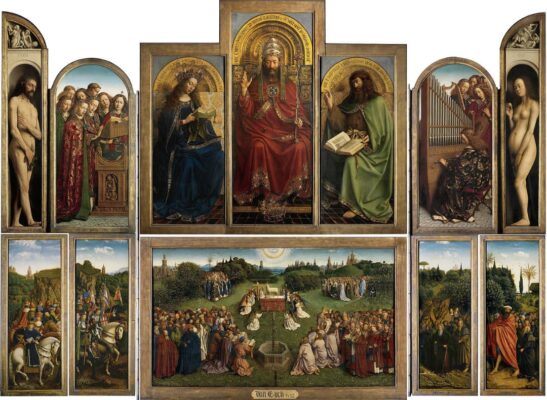


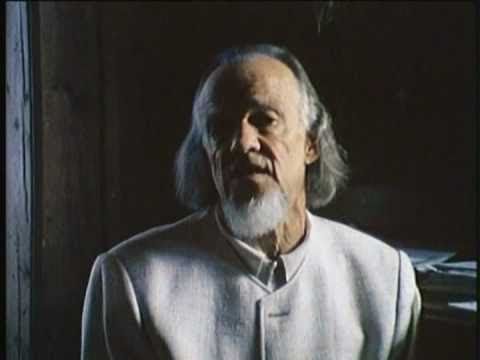
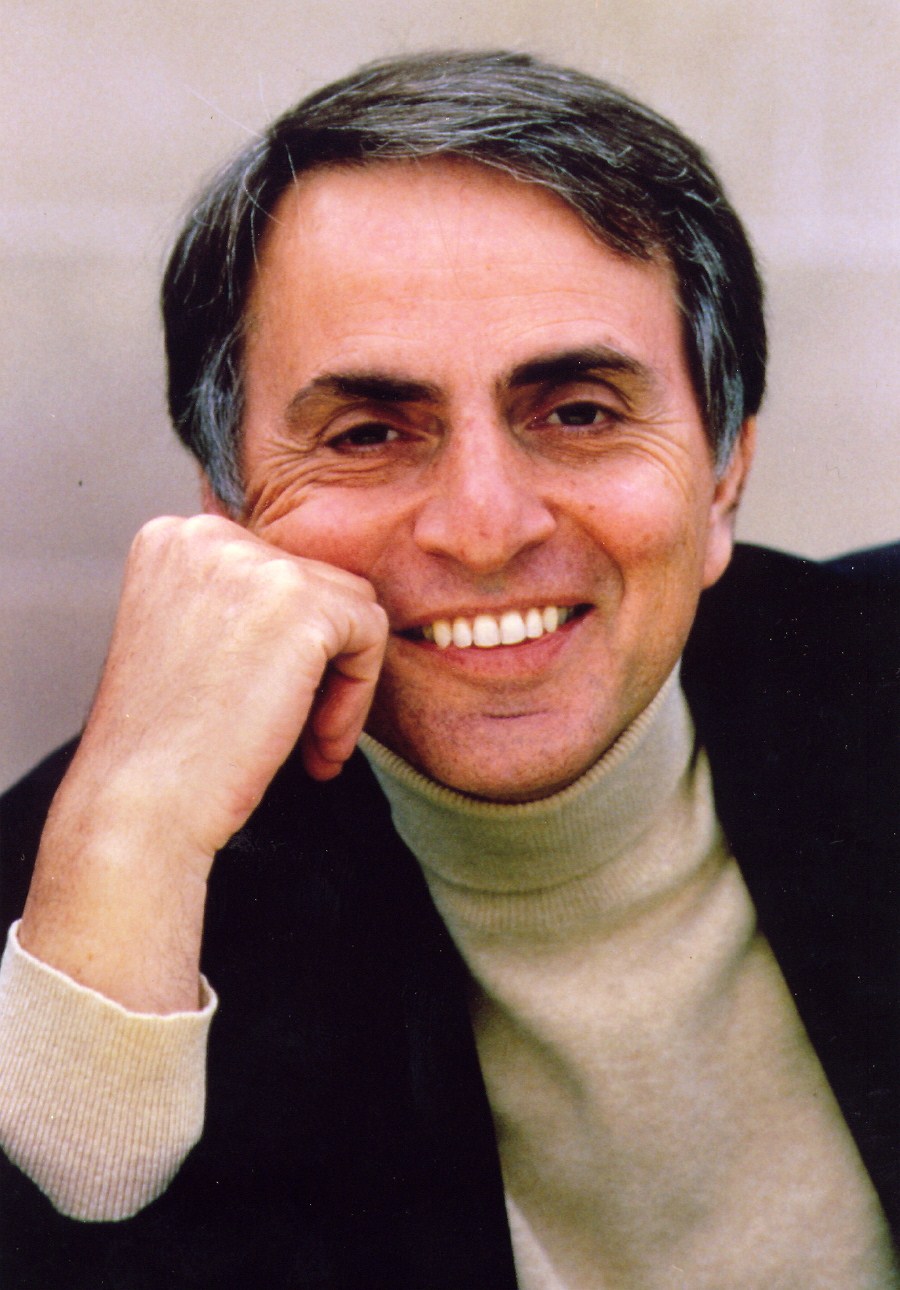
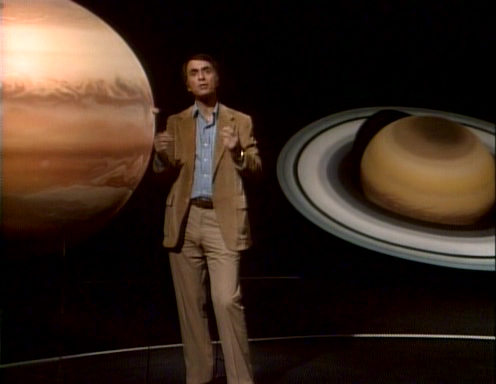

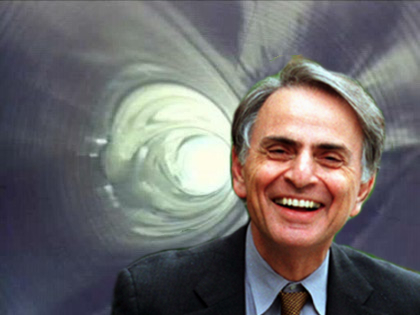









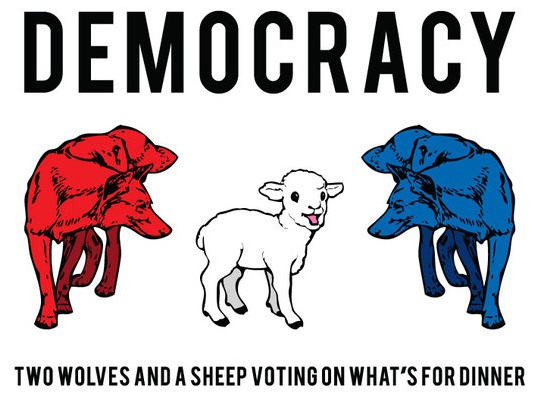









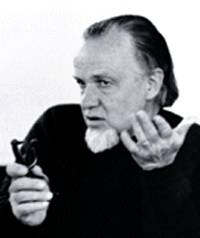






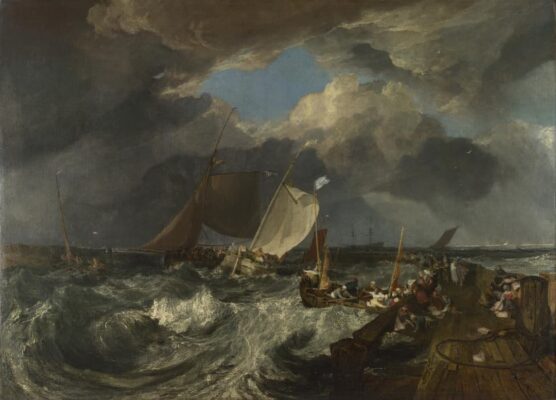


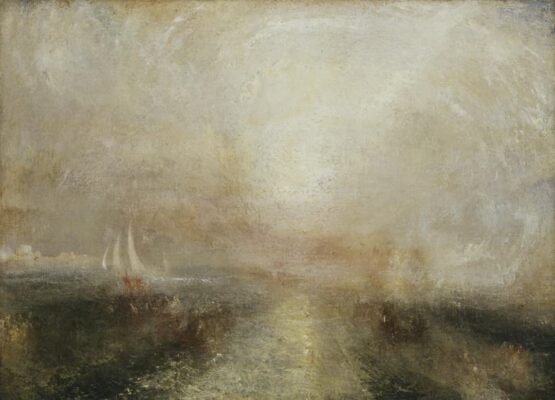

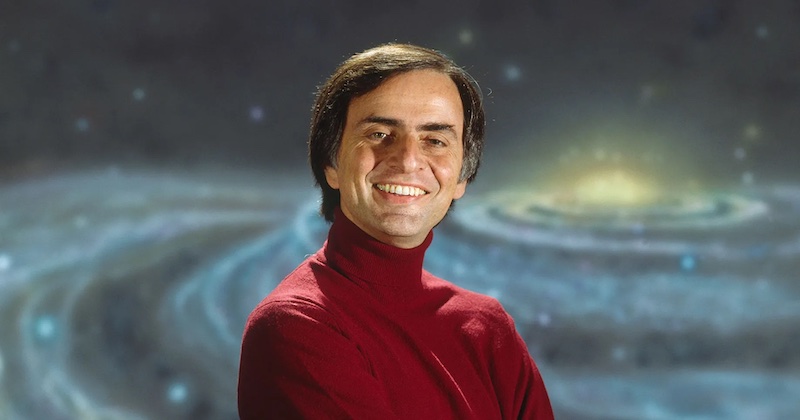






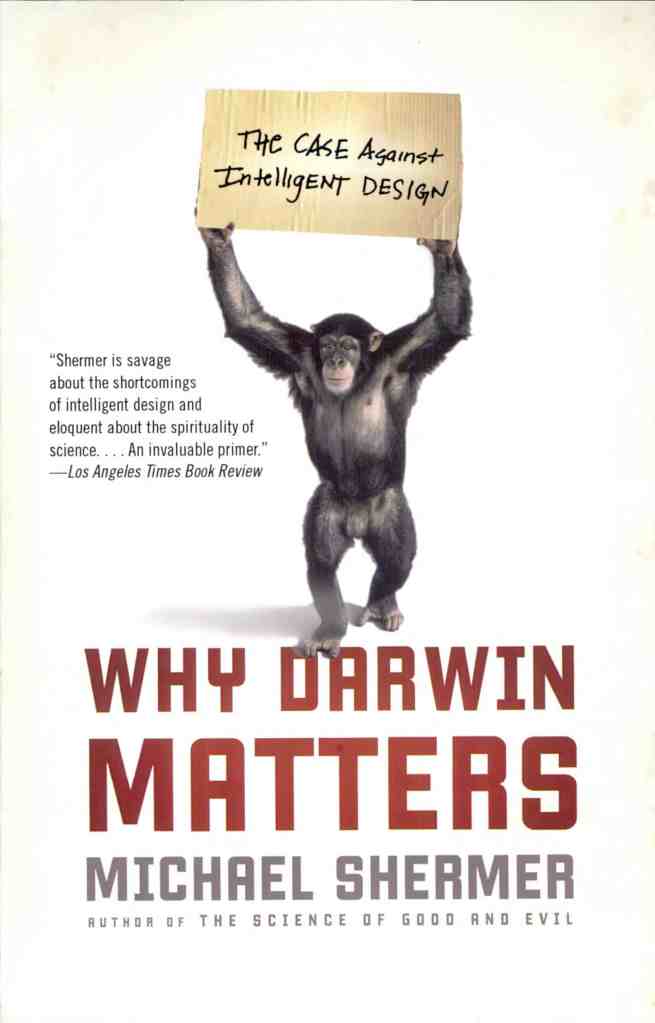

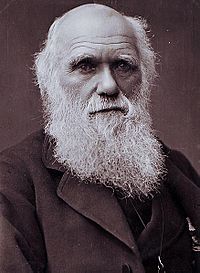
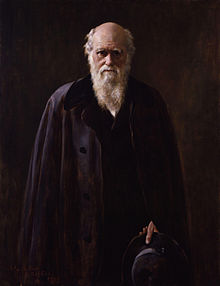
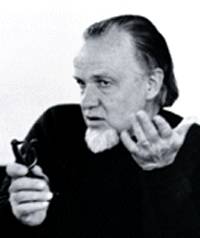
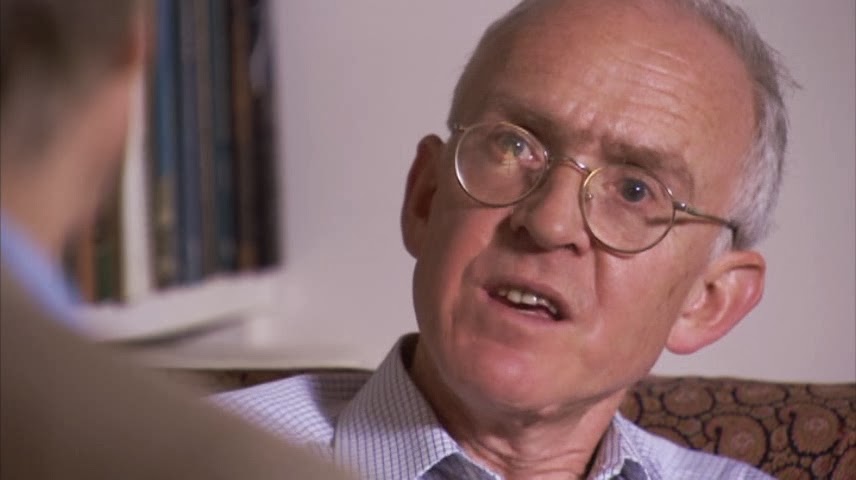
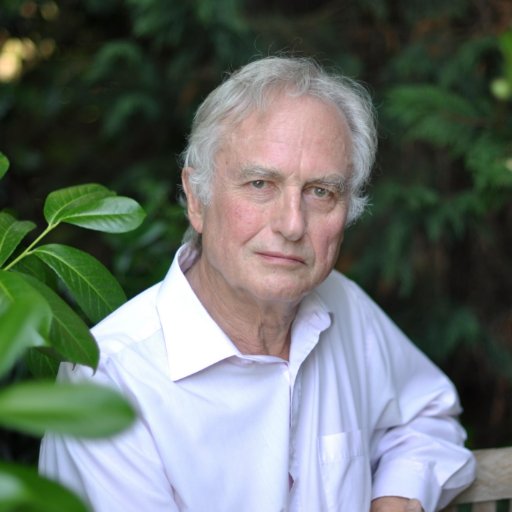
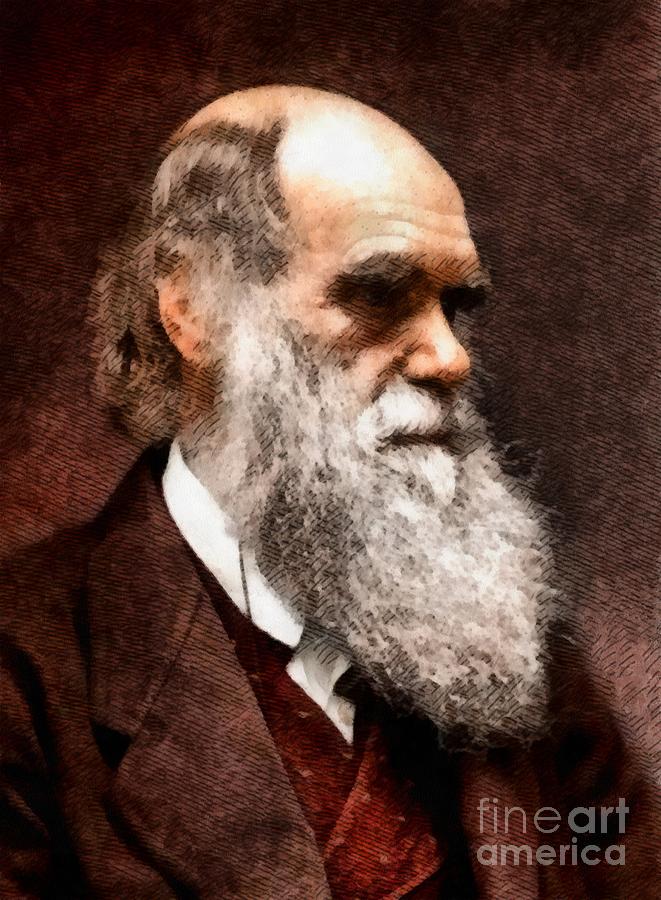
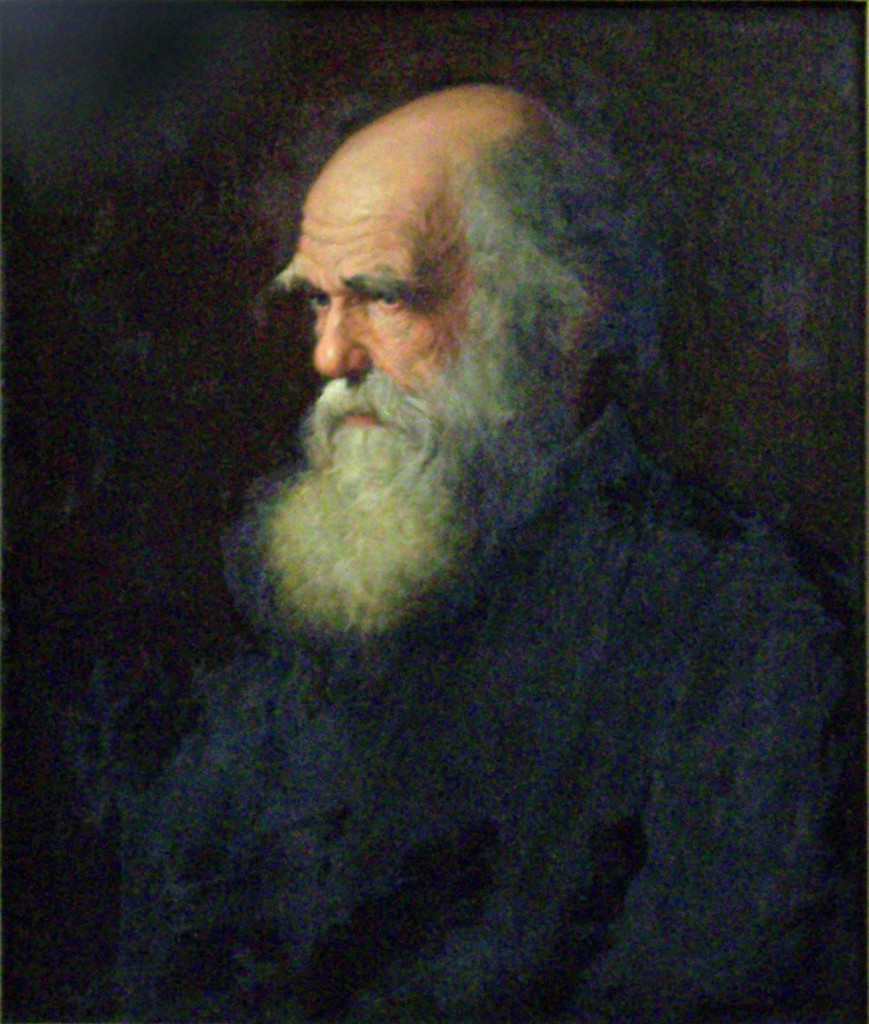



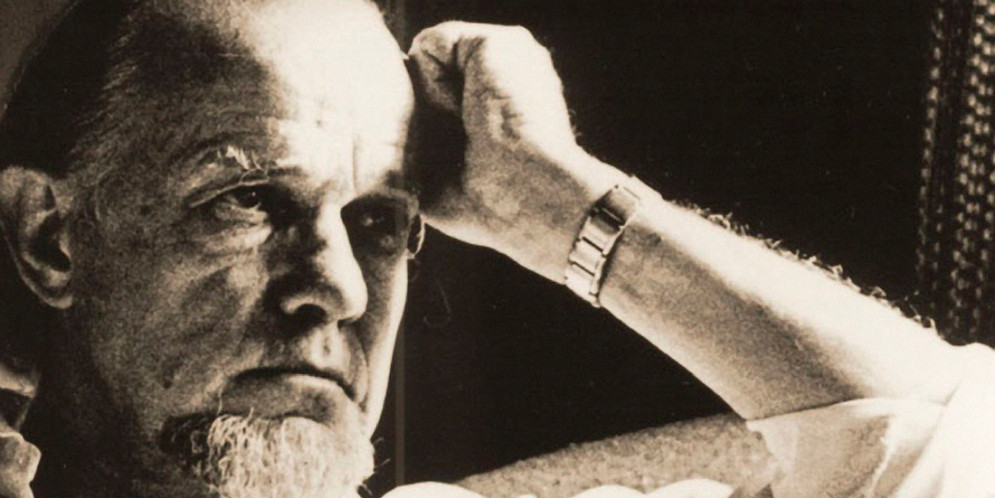



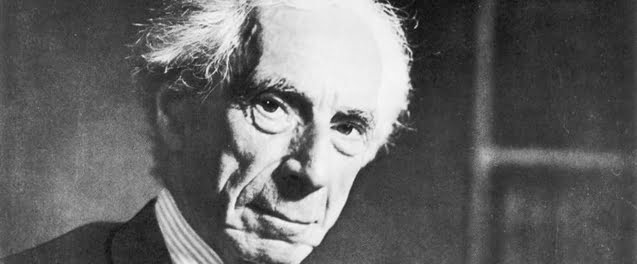


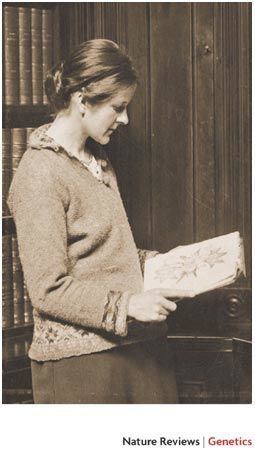


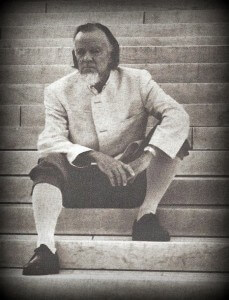
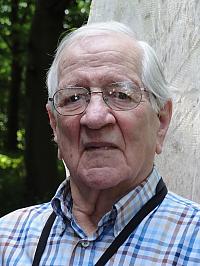
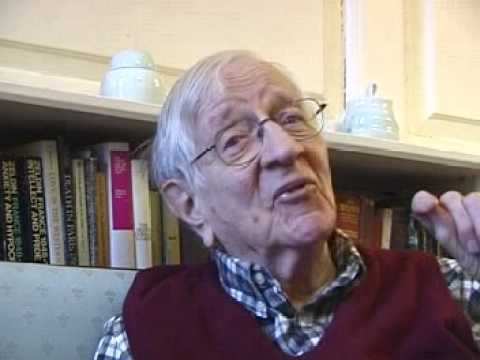
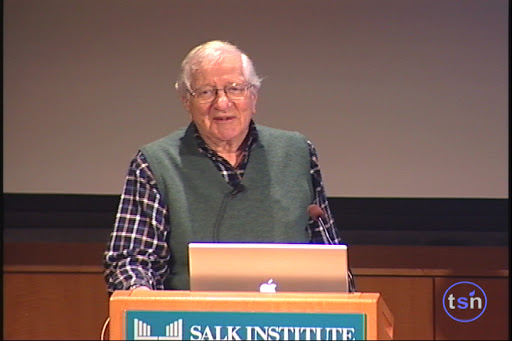


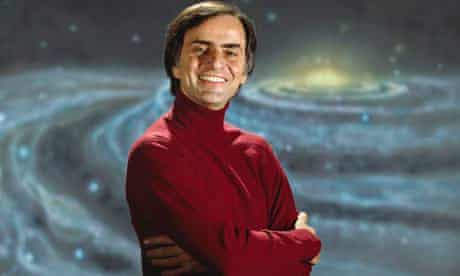 (Carl Sagan brought astronomy into popular culture. Photograph: Tony Korody/Corbis)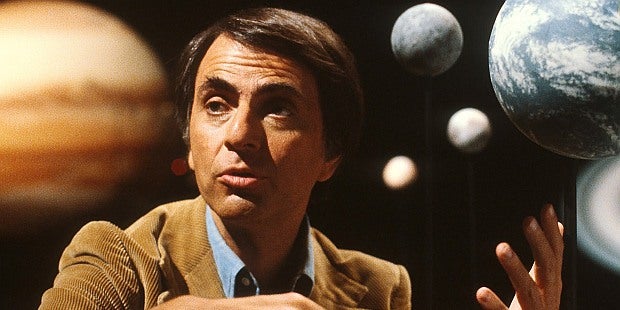



 The Daily Hatch

