Category Archives: Uncategorized

RESPONDING TO HARRY KROTO’S BRILLIANT RENOWNED ACADEMICS!! Carl Sagan Part 48 FRANCIS SCHAEFFER, ”Public television gives us many things that many of us like culturally, but is also completely committed to a propaganda position that the last reality is only material / energy shaped by pure chance. Clark’s Civilization, Brunowski, The Ascent of Man, Carl Sagan’s Cosmos — they all say it. There is only one final view of reality that’s possible and that is that the final reality is material or energy shaped by pure chance!”

Francis Schaeffer has written extensively on art and culturespanning the last 2000years and here are some posts I have done on this subject before : Francis Schaeffer’s “How should we then live?” Video and outline of episode 10 “Final Choices” episode 9 “The Age of Personal Peace and Affluence”episode 8 “The Age of Fragmentation”episode 7 “The Age of Non-Reason” episode 6 “The Scientific Age” , episode 5 “The Revolutionary Age” episode 4 “The Reformation” episode 3 “The Renaissance”episode 2 “The Middle Ages,”, and  episode 1 “The Roman Age,” . My favorite episodes are number 7 and 8 since they deal with modern art and culture primarily.(Joe Carter rightly noted,Schaefferwho always claimed to be an evangelist and notaphilosopher—was often criticized for the way his work oversimplifiedintellectual history and philosophy.” To thosecritics I say take a chill pillbecause Schaeffer was introducing millions into the fields of art andculture!!!! !!! More people need to read his works and blog aboutthembecause they show how people’s worldviews affecttheir lives!

J.I.PACKER WROTE OF SCHAEFFER, “His communicativestyle was not that of acautious academic who labors for exhaustive coverage and dispassionate objectivity. It was rather that of an impassioned thinker who paints his vision of eternal truth in bold strokes and stark contrasts.Yet it is a fact thatMANY YOUNG THINKERS AND ARTISTS…HAVE FOUND SCHAEFFER’S ANALYSES A LIFELINE TO SANITY WITHOUT WHICH THEY COULD NOT HAVE GONE ON LIVING.”

Francis Schaeffer’s works  are the basis for a large portion of myblog posts andthey have stood the test of time. In fact, manypeople would say that many of the things he wrote in the 1960’s  were right on  in the sense he saw where ourwestern society was heading and he knew that abortion, infanticide and youthenthansia were  moral boundaries we would be crossing  in the coming decadesbecause of humanism and these are the discussions we are having now!)

There is evidence that points to the fact that the Bible is historically true asSchaeffer pointed out in episode 5 of WHATEVER HAPPENED TO THE HUMAN RACE? There is abasis then for faith in Christ alone for our eternal hope. Thislinkshows how to do that.

Francis Schaeffer in Art and the Bible noted, “Many modern artists, it seems to me, have forgotten the value that art has in itself. Much modern art is far too intellectual to be great art. Many modern artists seem not to see the distinction between man and non-man, and it is a part of the lostness of modern man that they no longer see value in the work of art as a work of art.” 

Many modern artists are left in this point of desperation that Schaeffer points out and it reminds me of the despair that Solomon speaks of in Ecclesiastes.  Christian scholar Ravi Zacharias has noted, “The key to understanding the Book of Ecclesiastes is the term ‘under the sun.’ What that literally means is you lock God out of a closed system, and you are left with only this world of time plus chance plus matter.” THIS IS EXACT POINT SCHAEFFER SAYS SECULAR ARTISTSARE PAINTING FROM TODAY BECAUSE THEY BELIEVED ARE A RESULTOF MINDLESS CHANCE.

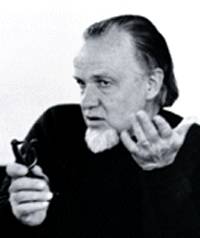
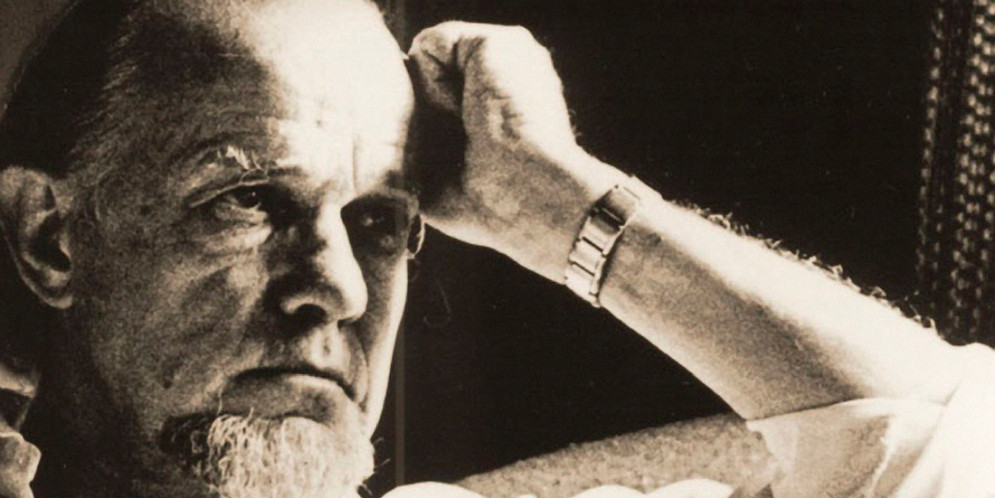
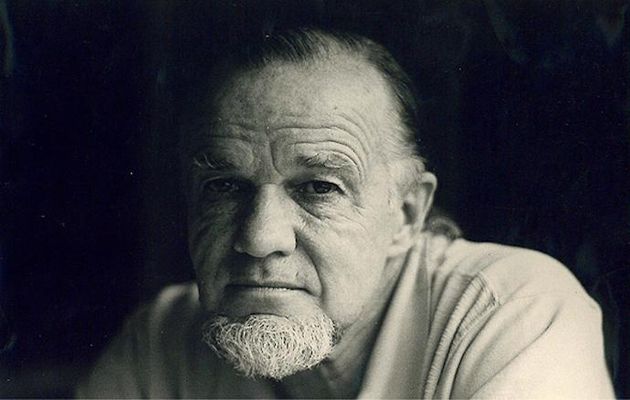
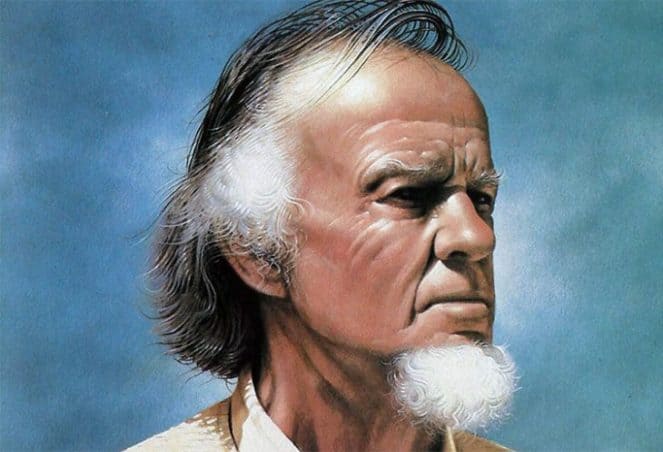
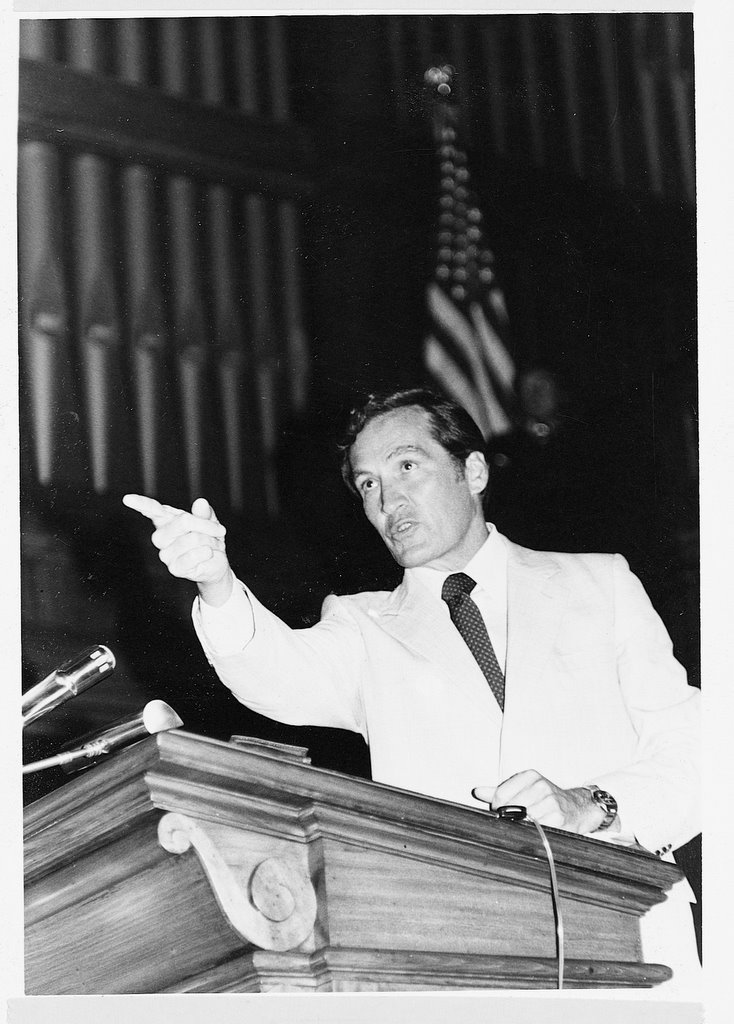
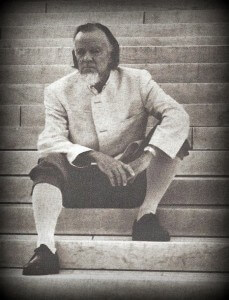
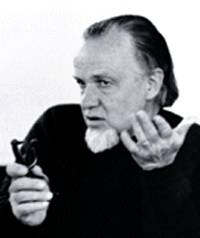
Francis Schaeffer pictured below:

_____________

Francis Schaeffer at International Congress of World Evangelism, Lausanne, Switzerland, July 1974

https://www.youtube.com/watch?v=wMYEH435os0

A Christian Manifesto
by Dr. Francis A. Schaeffer

This address was delivered by the late Dr. Schaeffer in 1982 at the Coral Ridge Presbyterian Church, Fort Lauderdale, Florida. It is based on one of his books, which bears the same title.

Christians, in the last 80 years or so, have only been seeing things as bits and pieces which have gradually begun to trouble them and others, instead of understanding that they are the natural outcome of a change from aChristian World View to a Humanistic one; things such as overpermissiveness, pornography, the problem of the public schools, the breakdown of the family, abortion, infanticide (the killing of newborn babies), increased emphasis upon the euthanasia of the old and many, many other things.

All of these things and many more are only the results. We may be troubled with the individual thing, but in reality we are missing the whole thing if we do not see each of these things and many more as only symptoms of the deeper problem. And that is the change in our society, a change in our country, a change in the Western world from a Judeo-Christian consensus to a Humanistic one. That is, instead of the final reality that exists being the infinite creator God; instead of that which is the basis of all reality being such a creator God, now largely, all else is seen as only material or energy which has existed forever in some form, shaped into its present complex form only by pure chance.

I want to say to you, those of you who are Christians or even if you are not a Christian and you are troubled about the direction that our society is going in, that we must not concentrate merely on the bits and pieces. But we must understand that all of these dilemmas come on the basis of moving from the Judeo-Christian world view — that the final reality is an infinite creator God — over into this other reality which is that the final reality is only energy or material in some mixture or form which has existed forever and which has taken its present shape by pure chance.

The word Humanism should be carefully defined. We should not just use it as a flag, or what younger people might call a “buzz” word. We must understand what we are talking about when we use the word Humanism. Humanism means that the man is the measure of all things. Man is the measure of all things. If this other final reality of material or energy shaped by pure chance is the final reality, it gives no meaning to life. It gives no value system. It gives no basis for law, and therefore, in this case, man must be the measure of all things. So, Humanism properly defined, in contrast, let us say, to the humanities or humanitarianism, (which is something entirely different and which Christians should be in favor of) being the measure of all things, comes naturally, mathematically, inevitably, certainly. If indeed the final reality is silent about these values, then man must generate them from himself.

So, Humanism is the absolute certain result, if we choose this other final reality and say that is what it is. You must realize that when we speak of man being the measure of all things under the Humanist label, the first thing is that man has only knowledge from himself. That he, being finite, limited, very faulty in his observation of many things, yet nevertheless, has no possible source of knowledge except what man, beginning from himself, can find out from his own observation. Specifically, in this view, there is no place for any knowledge from God.

But it is not only that man must start from himself in the area of knowledge and learning, but any value system must come arbitrarily from man himself by arbitrary choice. More frightening still, in our country, at our own moment of history, is the fact that any basis of law then becomes arbitrary — merely certain people making decisions as to what is for the good of society at the given moment.

Now this is the real reason for the breakdown in morals in our country. It’s the real reason for the breakdown in values in our country, and it is the reason that our Supreme Court now functions so thoroughly upon the fact of arbitrary law. They have no basis for law that is fixed, therefore, like the young person who decides to live hedonistically upon their own chosen arbitrary values, society is now doing the same thing legally. Certain few people come together and decide what they arbitrarily believe is for the good of society at the given moment, and that becomes law.

The world view that the final reality is only material or energy shaped by pure chance, inevitably, (that’s the next word I would bring to you ) mathematically — with mathematical certainty — brings forth all these other results which are in our country and in our society which have led to the breakdown in the country — in society — and which are its present sorrows. So, if you hold this other world view, you must realize that it is inevitable that we will come to the very sorrows of relativity and all these other things that are so represented in our country at this moment of history.

It should be noticed that this new dominant world view is a view which is exactly opposite from that of the founding fathers of this country. Now, not all the founding fathers were individually, personally, Christians.

(PART 2 of speech from above video)

That certainly is true. But, nevertheless, they founded the country on the base that there is a God who is the Creator (now I come to the next central phrase) who gave the inalienable rights.

We must understand something very thoroughly. If society — if the state gives the rights, it can take them away — they’re not inalienable. If the states give the rights, they can change them and manipulate them. But this was not the view of the founding fathers of this country. They believed, although not all of them were individual Christians, that there was a Creator and that this Creator gave the inalienable rights — this upon which our country was founded and which has given us the freedoms which we still have — even the freedoms which are being used now to destroy the freedoms.

The reason that these freedoms were there is because they believed there was somebody who gave the inalienable rights. But if we have the view that the final reality is material or energy which has existed forever in some form, we must understand that this view never, never, never would have given the rights which we now know and which, unhappily, I say to you (those of you who are Christians) that too often you take all too much for granted. You forget that the freedoms which we have in northern Europe after the Reformation (and the United States is an extension of that, as would be Australia or Canada, New Zealand, etc.) are absolutely unique in the world.

Occasionally, some of you who have gone to universities have been taught that these freedoms are rooted in the Greek city-states. That is not the truth. All you have to do is read Plato’s Republic and you understand that the Greek city-states never had any concept of the freedoms that we have. Go back into history. The freedoms which we have (the form / freedom balance of government) are unique in history and they are also unique in the world at this day.

A fairly recent poll of the 150 some countries that now constitute the world shows that only 25 of these countries have any freedoms at all. What we have, and take so poorly for granted, is unique. It was brought forth by a specific world view and that specific world view was the Judeo-Christian world view especially as it was refined in the Reformation, putting the authority indeed at a central point — not in the Church and the state and the Word of God, but rather the Word of God alone. All the benefits which we know — I would repeat — which we have taken so easily and so much for granted, are unique. They have been grounded on the certain world view that there was a Creator there to give inalienable rights. And this other view over here, which has become increasingly dominant, of the material-energy final world view (shaped by pure chance) never would have, could not, has, no basis of values, in order to give such a balance of freedom that we have known so easily and which we unhappily, if we are not careful, take so for granted.

We are now losing those freedoms and we can expect to continue to lose them if this other world view continues to take increased force and power in our county. We can be sure of this. I would say it again — inevitably, mathematically, all of these things will come forth. There is no possible way to heal the relativistic thinking of our own day, if indeed all there is is a universe out there that is silent about any values. None, whatsoever! It is not possible. It is a loss of values and it is a loss of freedom which we may be sure will continually grow.

A good illustration is in the public schools. This view is taught in our public schools exclusively — by law. There is no other view that can be taught. I‘ll mention it a bit later, but by law there is no other view that can be taught. By law, in the public schools, the United States of America in 1982, legally there is only one view of reality that can be taught. I’ll mention it a bit later, but there is only one view of reality that can be taught, and that is that the final reality is only material or energy shaped by pure chance.

It is the same with the television programs. Public television gives us many things that many of us like culturally, but is also completely committed to a propaganda position that the last reality is only material / energy shaped by pure chance. Clark’s Civilization, Brunowski, The Ascent of ManCarl Sagan’s Cosmos — they all say it. There is only one final view of reality that’s possible and that is that the final reality is material or energy shaped by pure chance.

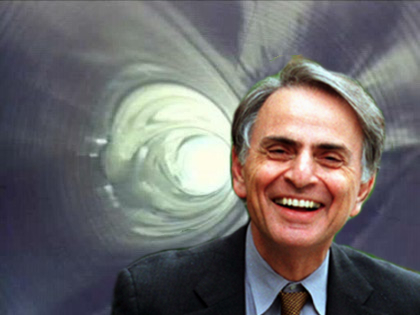
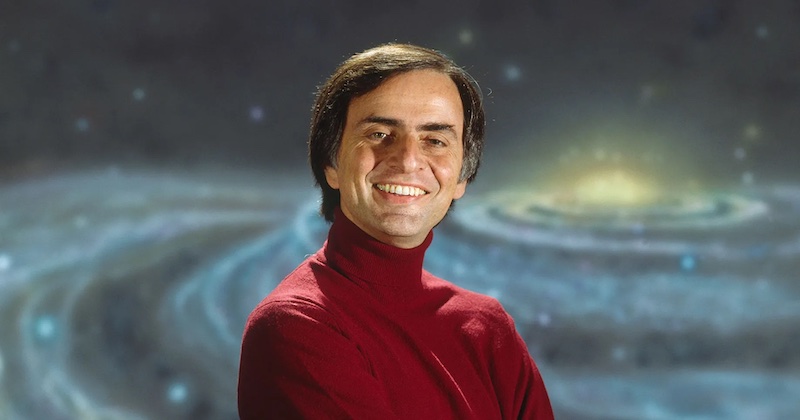
Carl Sagan pictured in 1954:

have written a lot in the past about Carl Sagan on my blog and over and over again these posts have been some of my most popular because I believe Carl Sagan did a great job of articulating the naturalistic view that the world is a result of nothing more than impersonal matter, time and chance. Christians like me have to challenge those who hold this view and that is why I took it upon myself to read many of Sagan’s books and to watch his film series Cosmos.

Dec 10

The Dragons of Materialism

In his book The Dragons of Eden, the late Carl Sagan writes,“The reason we prohibit the killing of human beings must be because of some quality human beings possess, a quality we especially prize, that few or no other organisms on earth enjoy.”1  When I first read this, my heart started to beat a little faster.  A dogmatic atheist, a dyed-in-the-wool materialist, was essentially agreeing with Christians that humans are more than molecules in motion!  I wasn’t expecting him to go as far as to say that we are “special”, but he was dangerously close.  However, I was quite disappointed as I read what Dr. Sagan thought this quality was: “This essential human quality, I believe, can only be our intelligence.”  How could someone get so close to the truth yet end up so far from it?  If we want to address this question, we must first examine why Sagan even thought that human life is valuable or worth protecting.  We must ask why he thought that humans possess something that “few or no other organisms on earth enjoy.”Francis Schaeffer insightfully observed that the more a non-Christian stays consistent with his own presuppositions, the further he is from the real world; conversely,  the closer he is to the real world, the more inconsistent he is with his own presuppositions.  It’s quite a predicament for the unbeliever.  Schaeffer says that “in reality no one can live logically according to his own non-Christian presuppositions, and consequently, because he is faced with the real world and himself, in practice you will find a place where you can talk.”2  This is a bold claim, but I find it to be the case with every God-substitute out there: materialism, naturalism, nihilism, communism, paganism, pantheism, and any “ism” you can name.  Sagan and his atheistic materialism certainly fall into this arena.  If we take Schaeffer’s claim (and the Bible) to be correct, then we know two things:  first, that materialism is false and will prove itself illogical if held consistently; second, that we can find common ground with those held captive by this worldview.  Many people who grew up during the 70s were influenced by Sagan’s Cosmos series, and many prominent scientists today point to him as an inspiration.  Finding the issue with Sagan’s specific statement, as well as his broader worldview, can help us persuade those held captive to materialism.In essence, materialists or naturalists hold that the material universe is all that there is:  everything can be explained in terms of matter and physical processes.  Did you catch that keyword?  Everything.  This categorical statement, comprising the basis of materialism, is logically invalid since it requires the proof through only material that only material exists. When clearly stated, the circular argument shows that materialists are using unproven and unprovable assumptions about the nature of reality to justify their worldview.  I would argue that you can’t use materialism to prove materialism unless you are inconsistent with materialism.  You must be able to step outside, or transcend materialism if you are to evaluate it.  This, then, is the problem with Sagan’s statement: his worldview is unsupportable. Sagan looked to his worldview–materialism, or the “box of things” Nancy Pearcey described–to explain his intuitive understanding that there is something special and unique about humans.  Unfortunately for him, the answer was not in the box of things.  Still, Sagan and other dedicated materialists are committed to this box and will not look elsewhere. Therefore, we need to gently and respectfully push them to accept the consequences of their beliefs or turn to the gospel.A consistently held materialist worldview claims that human rationality comes from non-rationality: all of humanity’s ability to reason comes from an irrational process.  Sagan actually affirms this concept later in the same book when he states that “only through the deaths of an immense number of slightly maladapted organisms are we, brains and all, here today. [T]he accidents and errors and lucky happenstances of the past powerfully prefigure the present.”3  Why trust your conclusions or beliefs if they are rooted in luck?  In God’s Undertaker: Has Science Buried God? Dr. John Lennox observes that “either human intelligence ultimately owes its origin to mindless matter; or there is a Creator.  It is strange that some people claim that it is their intelligence that leads them to prefer the first to the second.”4   Indeed, it is strange!  Trusting such convictions is not only irrational, but also requires a leap of faith.  To make sense of life, logically consistent materialists have no choice but to step outside the confines of their worldview.  Sagan could not understand why human life is special because the foundations of his worldview indicate that no molecule is more or less important than another molecule.  Giving any sort of value to a particular atom or force would be completely arbitrary; matter is matter.  Any belief to the contrary is a departure from the logically necessary tenets of materialism.  Ironically, departing from materialism is also a step in the right direction–a step Sagan took when he realized that humans are different from other animals.  Considering the limited set of explanations in the box of things for the “quality we especially prize,” he selected intelligence.  Can this be falsified or proven scientifically?  It cannot, because it is simply an arbitrary guess.  Why not instead select our ability to walk upright, or our ability to lie?  Consider, too, the consequences of holding to such an arbitrary decision.  Do people of lower intelligence have less worth?  What level of intelligence constitutes personhood? Who determines the threshold? Are we able to move that line around as we please?  Once we accept such an arbitrary answer, the door is open to redefine what it means to be human, causing consequent redefinitions of sin, morality and all that constitutes life as we know it.  I doubt that the materialist can live with such consequences.  The box of things leaves us without a satisfactory answer for the uniqueness and specialness of humanity and robs life of any ultimate meaning.  The Gospel, on the other hand, provides answers that are consistent with human experience and can satisfy both the heart and the mind.The Bible affirms that man is different in kind from animals because God created humans in His image.  Genesis 1:26-27 tells us that we are made in His likeness; while there has been much debate over the centuries on the extent and nature of this Godlikeness, most would agree that this means we are spiritual, rational, and moral creatures.  If the Biblical account is correct, we should expect to see evidence that humans are different from animals in both degree and kind.  The materialist must argue that humans and animals are simply different in degree.  Who is right?  Obviously, there are similarities between humans and animals, and we should expect such similarities since we have a common Creator.  Still, the differences will be significant if we truly are made in the likeness of a personal Creator. In A World of Difference, Ken Samples lists seven ways in which humans are drastically different from animals, revealing that the biblical Imago Dei, or image of God, better corresponds to and explains reality than the materialist worldview: 5

  1. Human beings have an inherent spiritual and religious nature.
  2. Human beings possess unique intellectual, cultural, and communicative abilities.
  3. Human beings are conscious of time, reality and truth.
  4. Human beings possess a conscience, identity a value system, and legislate moral laws for society.
  5. Human beings are uniquely inventive and technological.
  6. Human beings possess an intense curiosity to explore and understand the entire created realm.
  7. Human beings possess aesthetic taste and appreciation for more than just practical purposes.

Sagan and materialism stand in direct opposition to the Bible.  Materialism is incapable of placing any value on human life despite attempts to arbitrarily elevate some human characteristic as a source for humanity’s intuitively observed uniqueness.  However, since materialists bear the image of God, they cannot help seeking some explanation for their intuitive understanding of humanity’s inherent value.  If we hold to Sagan’s and materialism’s tenet that everything is merely atoms of one form or another, then his words would have been no more valuable than the sound of the wind in the trees.  His worldview would require him to deny the significance of human life as well as the ability of reason to determine truth, undermining his reason-dependent worldview at its most basic level.  Sagan couldn’t stop wondering how the universe works and trying to explain life and reality – he was made in the image of God and knew that there was ultimate meaning to be found.  On the other hand, the Bible tells us that human reason comes from ultimate reason and humanity is unique and valuable because it bears the image of God.  The question of the uniqueness of humanity gives us a place to start a conversation.  As Schaeffer put it, “Christian apologetics do not start somewhere beyond the stars.  They begin with man and what he knows about himself.”6   The materialist knows in his heart that man is indeed special.  He may not admit it, but he has no choice but to live it.

1. Carl Sagan, The Dragons of Eden (New York: Random House, 1977), 197
2. Francis Schaeffer, Francis A. Schaeffer Trilogy (Crossway, 1990), 137
3. Carl Sagan, The Dragons of Eden (New York: Random House, 1977), 6
4. John Lennox, God’s Undertaker: Has Science Buried God? (Lion Hudson, 2009)
5. Kenneth Samples, A World of Difference (Grand Rapids: Baker Books, 2007), 182-185
6. Francis Schaeffer, Francis A. Schaeffer Trilogy (Crossway, 1990), 133

______________

When I confronted Carl Sagan about his moral views concerning abortion and also about his views of the origin of the universe he responded with a letter, but the more important response came after his death when I viewed his movie CONTACT.  He wanted to say there was no afterlife and we were all products of chance but then he wanted to jump back and grab words like “precious” to describe us as if we could attain lasting meaning to our lives without God in the picture.

Carl Sagan had no valid basis for his morality. He was borrowing from a Judeo-Christian basis.

I will give agnostics credit when they realize that without God in the picture everything is left to chance. I posted earlier. Neo-Darwinist Richard Dawkins recognized the purposelessness of such a system:

In a universe of blind physical forces and genetic replication some people are going to get hurt, other people are going to get lucky, and you won’t find any rhyme or reason in it, nor any justice. The universe we observe has precisely the properties we should expect if there is, at bottom, no design, no purpose, no evil and no good, nothing but blind, pitiless indifference.22

Without God in the picture life is meaningless ultimately.  Also without God providing punishment in the afterlife for evil then there is no reason to do good without an enforcement factor.

I would love to hear from any atheist that would present a case for lasting meaning in life apart from God. It seems to me that H. J. Blackham was right in his accessment of the predictament that atheists face:

On humanist assumptions [the assumption that there is no God and life has evolved by time and chance alone], life leads to nothing, and every pretense that it does not is a deceit. If there is a bridge over a gorge which spans only half the distance and ends in mid-air, and if the bridge is crowded with human beings pressing on, one after another they fall into the abyss. The bridge leads to nowhere, and those who are pressing forward to cross it are going nowhere. . . It does not matter where they think they are going, what preparations for the journey they may have made, how much they may be enjoying it all . . . such a situation is a model of futility (H. J. Blackham et al., Objections to Humanism (Riverside, Connecticut: Greenwood Press, 1967).)

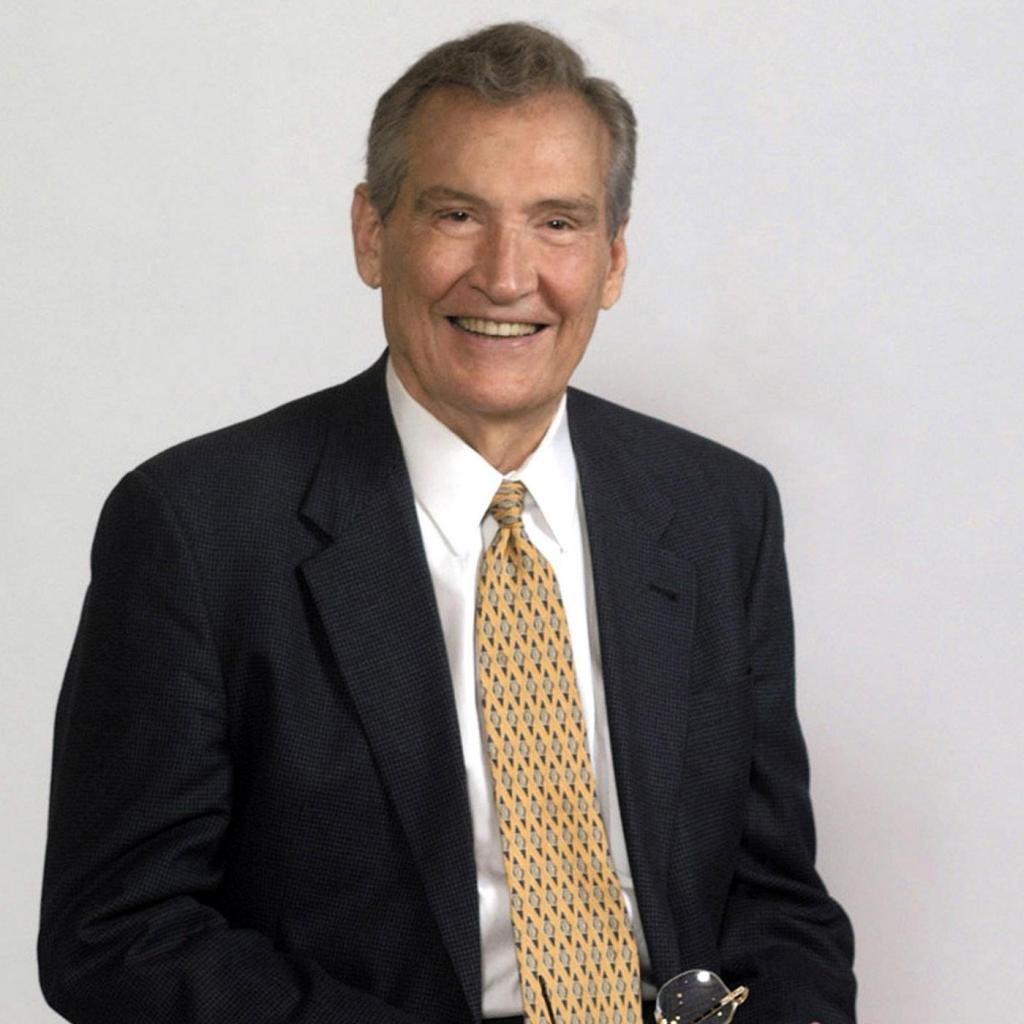
I do not accept evolution at all. Adrian Rogers noted three problems with evolution:

1. The fossil record. Not only is the so-called missing link still missing, all of the transitional life forms so crucial to evolutionary theory are missing from the fossil record. There are thousands of missing links, not one!
2. The second law of thermodynamics. This law states that energy is winding down and that matter left to itself tends toward chaos and randomness, not greater organization and complexity. Evolution demands exactly the opposite process, which is observed nowhere in nature.
3. The origin of life. Evolution offers no answers to the origin of life. It simply pushes the question farther back in time, back to some primordial event in space or an act of spontaneous generation in which life simply sprang from nothing.

__________

The answer to find meaning in life is found in putting your faith and trust in Jesus Christ. The Bible is true from cover to cover and can be trusted.

Solomon is said to be the wisest man who ever lived.Solomon went to the extreme in his searching in the Book of Ecclesiastes for this something more,  but he did not find any satisfaction in pleasure (2:1), education (2:3), work (2:4), wealth (2:8) or fame (2:9). All of his accomplishments would not be remembered (1:11) and who is to say that they had not already been done before by others (1:10)?   Also Solomon’s upcoming death depressed him because both people and animals alike “go to the same place — they came from dust and they return to dust” (3:20).

In 1978 I heard the song “Dust in the Wind” by Kansas when it rose to #6 on the charts. That song told me thatKerry Livgren the writer of that song and a member of Kansas had come to the same conclusion that Solomon had. I remember mentioning to my friends at church that we may soon see some members of Kansas become Christians because their search for the meaning of life had obviously come up empty even though they had risen from being an unknown band to the top of the music business and had all the wealth and fame that came with that. Furthermore, Solomon realized death comes to everyone and there must be something more.

Livgren wrote:

“All we do, crumbles to the ground though we refuse to see, Dust in the Wind, All we are is dust in the wind, Don’t hang on, Nothing lasts forever but the Earth and Sky, It slips away, And all your money won’t another minute buy.”

Both Kerry Livgren and Dave Hope of Kansas became Christians eventually. Kerry Livgren first tried Eastern Religions and Dave Hope had to come out of a heavy drug addiction. I was shocked and elated to see their personal testimony on The 700 Club in 1981 and that same  interview can be seen on youtube today. Livgren lives in Topeka, Kansas today where he teaches “Diggers,” a Sunday school class at Topeka Bible Church. Hope is the head of Worship, Evangelism and Outreach at Immanuel Anglican Church in Destin, Florida.

Solomon’s experiment was a search for meaning to life “under the sun.” Then in last few words in the Book of Ecclesiastes he looks above the sun and brings God back into the picture: “The conclusion, when all has been heard, is: Fear God and keep His commandments, because this applies to every person. For God will bring every act to judgment, everything which is hidden, whether it is good or evil.”

On November 21, 2014 I received a letter from Nobel Laureate Harry Kroto and it said:

…Please click on this URL http://vimeo.com/26991975

and you will hear what far smarter people than I have to say on this matter. I agree with them.

Harry Kroto

I have attempted to respond to all of Dr. Kroto’s friends arguments and I have posted my responses one per week for over a year now. Here are some of my earlier posts:

Arif AhmedHaroon Ahmed,  Jim Al-Khalili, Sir David AttenboroughMark Balaguer, Horace Barlow, Michael BateSir Patrick BatesonSimon Blackburn, Colin Blakemore, Ned BlockPascal BoyerPatricia ChurchlandAaron CiechanoverNoam Chomsky, Brian CoxPartha Dasgupta,  Alan Dershowitz, Frank DrakeHubert Dreyfus, John DunnBart Ehrman, Mark ElvinRichard Ernst, Stephan Feuchtwang, Robert FoleyDavid Friend,  Riccardo GiacconiIvar Giaever , Roy GlauberRebecca GoldsteinDavid J. Gross,  Brian Greene, Susan GreenfieldStephen F Gudeman,  Alan Guth, Jonathan HaidtTheodor W. Hänsch, Brian Harrison,  Stephen HawkingHermann Hauser, Robert HindeRoald Hoffmann,  Bruce HoodGerard ‘t HooftCaroline HumphreyNicholas Humphrey,  Herbert Huppert,  Gareth Stedman Jones, Steve JonesShelly KaganMichio Kaku,  Stuart KauffmanMasatoshi Koshiba,  Lawrence KraussHarry Kroto, George Lakoff,  Rodolfo LlinasElizabeth Loftus,  Alan MacfarlaneDan McKenzie,  Mahzarin BanajiPeter MillicanMarvin MinskyLeonard Mlodinow,  P.Z.Myers,   Yujin NagasawaAlva NoeDouglas Osheroff, David Parkin,  Jonathan Parry, Roger Penrose,  Saul PerlmutterHerman Philipse,  Carolyn PorcoRobert M. PriceVS RamachandranLisa RandallLord Martin ReesColin RenfrewAlison Richard,  C.J. van Rijsbergen,  Oliver Sacks, John SearleMarcus du SautoySimon SchafferJ. L. Schellenberg,   Lee Silver Peter Singer,  Walter Sinnott-ArmstrongRonald de Sousa, Victor StengerJohn SulstonBarry Supple,   Leonard Susskind, Raymond TallisMax TegmarkNeil deGrasse Tyson,  Martinus J. G. Veltman, Craig Venter.Alexander Vilenkin, Sir John Walker, James D. WatsonFrank WilczekSteven Weinberg, and  Lewis Wolpert,

In  the 1st video below in the 45th clip in this series are his words and  my response is below them.
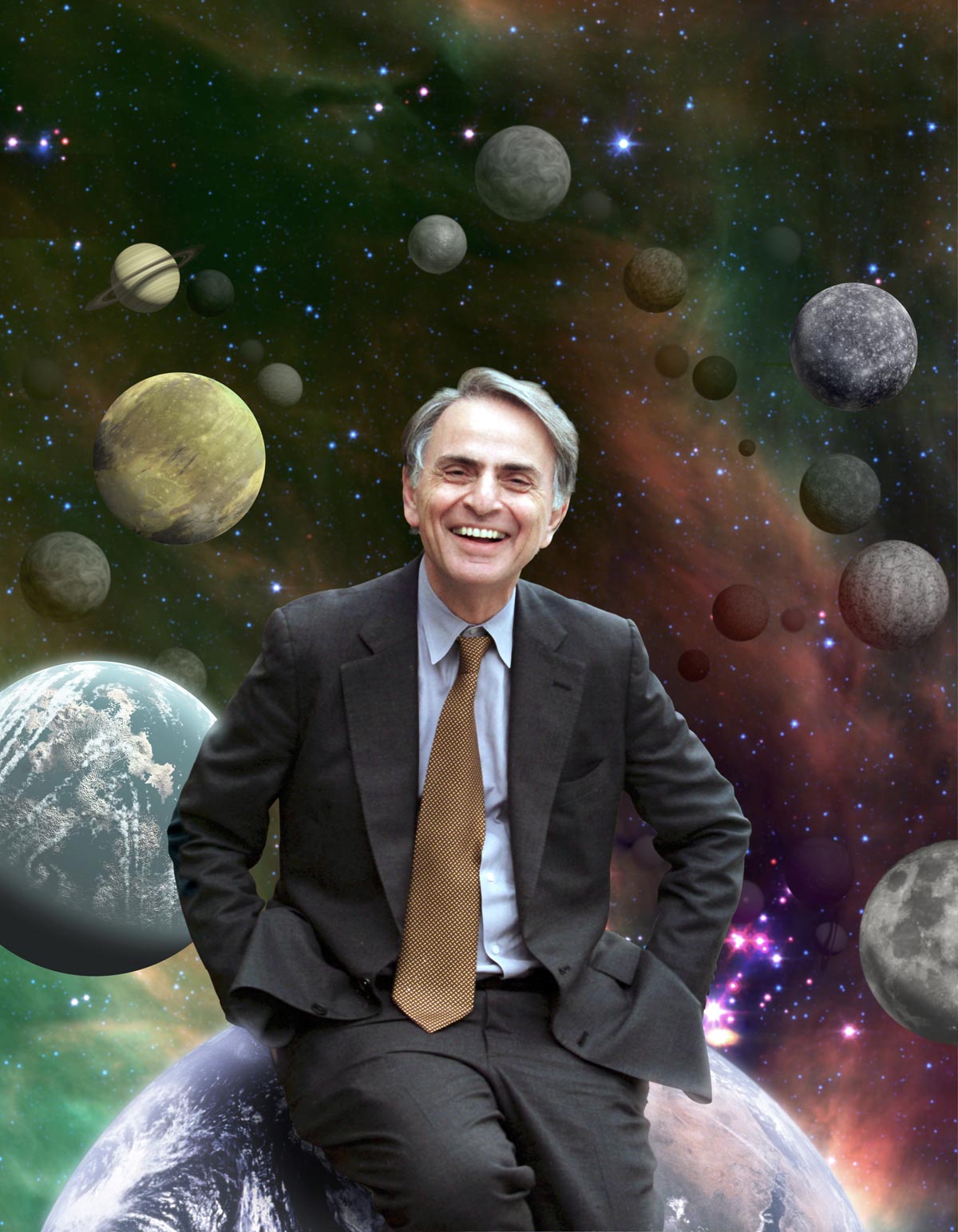
Carl Sagan. Credit: NASA


Carl Edward Sagan (/ˈsɡən/; SAY-gən; November 9, 1934 – December 20, 1996) was an American astronomer, planetary scientist, cosmologist, astrophysicist, astrobiologist, author, and science communicator. His best known scientific contribution is research on extraterrestrial life, including experimental demonstration of the production of amino acids from basic chemicals by radiation. Sagan assembled the first physical messages sent into space, the Pioneer plaque and the Voyager Golden Record, universal messages that could potentially be understood by any extraterrestrial intelligence that might find them. Sagan argued the hypothesis, accepted since, that the high surface temperatures of Venus can be attributed to, and calculated using, the greenhouse effect.[3]

50 Renowned Academics Speaking About God (Part 1)

Another 50 Renowned Academics Speaking About God (Part 2

A Further 50 Renowned Academics Speaking About God (Part 3)

CARL SAGAN interview with Charlie Rose:

“…faith is belief in the absence of evidence. To believe in the absence of evidence, in my opinion, is a mistake. The idea is to hold belief until there is compelling evidence. If the Universe does not comply with our previous propositions, then we have to change…Religion deals with history poetry, great literature, ethics, morals, compassion…where religion gets into trouble is when it pretends to know something about science,”

I would respond that there is evidence that Christianity is true. Biblical Archaeology is Silencing the critics! Significantly, even liberal theologians, secular academics, and critics generally cannot deny that archaeology has confirmed thebiblical record at many points. Rationalistic detractors of the Bible can attack it all day long, but they cannot dispute archaeological facts.

Related posts:

FRANCIS SCHAEFFER ANALYZES ART AND CULTURE Part 52 THE BEATLES (Part D, There is evidence that the Beatles may have been exposed to Francis Schaeffer!!!) (Feature on artist Anna Margaret Rose Freeman )

______________   George Harrison Swears & Insults Paul and Yoko Lucy in the Sky with Diamonds- The Beatles The Beatles:   I have dedicated several posts to this series on the Beatles and I don’t know when this series will end because Francis Schaeffer spent a lot of time listening to the Beatles and talking […]

FRANCIS SCHAEFFER ANALYZES ART AND CULTURE Part 51 THE BEATLES (Part C, List of those on cover of Stg.Pepper’s ) (Feature on artist Raqib Shaw )

  The Beatles in a press conference after their Return from the USA Uploaded on Nov 29, 2010 The Beatles in a press conference after their Return from the USA. The Beatles:   I have dedicated several posts to this series on the Beatles and I don’t know when this series will end because Francis […]

FRANCIS SCHAEFFER ANALYZES ART AND CULTURE Part 50 THE BEATLES (Part B, The Psychedelic Music of the Beatles) (Feature on artist Peter Blake )

__________________   Beatles 1966 Last interview I have dedicated several posts to this series on the Beatles and I don’t know when this series will end because Francis Schaeffer spent a lot of time listening to the Beatles and talking and writing about them and their impact on the culture of the 1960’s. In this […]

FRANCIS SCHAEFFER ANALYZES ART AND CULTURE Part 49 THE BEATLES (Part A, The Meaning of Stg. Pepper’s Cover) (Feature on artist Mika Tajima)

_______________ The Beatles documentary || A Long and Winding Road || Episode 5 (This video discusses Stg. Pepper’s creation I have dedicated several posts to this series on the Beatles and I don’t know when this series will end because Francis Schaeffer spent a lot of time listening to the Beatles and talking and writing about […]

FRANCIS SCHAEFFER ANALYZES ART AND CULTURE PART 48 “BLOW UP” by Michelangelo Antonioni makes Philosophic Statement (Feature on artist Nancy Holt)

_______________ Francis Schaeffer pictured below: _____________________ I have included the 27 minute  episode THE AGE OF NONREASON by Francis Schaeffer. In that video Schaeffer noted,  ” Sergeant Pepper’s Lonely Hearts Club Band…for a time it became the rallying cry for young people throughout the world. It expressed the essence of their lives, thoughts and their feelings.” How Should […]

FRANCIS SCHAEFFER ANALYZES ART AND CULTURE Part 47 Woody Allen and Professor Levy and the death of “Optimistic Humanism” from the movie CRIMES AND MISDEMEANORS Plus Charles Darwin’s comments too!!! (Feature on artist Rodney Graham)

Crimes and Misdemeanors: A Discussion: Part 1 ___________________________________ Today I will answer the simple question: IS IT POSSIBLE TO BE AN OPTIMISTIC SECULAR HUMANIST THAT DOES NOT BELIEVE IN GOD OR AN AFTERLIFE? This question has been around for a long time and you can go back to the 19th century and read this same […]

FRANCIS SCHAEFFER ANALYZES ART AND CULTURE PART 46 Friedrich Nietzsche (Featured artist is Thomas Schütte)

____________________________________ Francis Schaeffer pictured below: __________ Francis Schaeffer has written extensively on art and culture spanning the last 2000years and here are some posts I have done on this subject before : Francis Schaeffer’s “How should we then live?” Video and outline of episode 10 “Final Choices” , episode 9 “The Age of Personal Peace and Affluence”, episode 8 […]

FRANCIS SCHAEFFER ANALYZES ART AND CULTURE Part 45 Woody Allen “Reason is Dead” (Feature on artists Allora & Calzadilla )

Love and Death [Woody Allen] – What if there is no God? [PL] ___________ _______________ How Should We then Live Episode 7 small (Age of Nonreason) #02 How Should We Then Live? (Promo Clip) Dr. Francis Schaeffer 10 Worldview and Truth Two Minute Warning: How Then Should We Live?: Francis Schaeffer at 100 Francis Schaeffer […]

FRANCIS SCHAEFFER ANALYZES ART AND CULTURE Part 44 The Book of Genesis (Featured artist is Trey McCarley )

___________________________________ Francis Schaeffer pictured below: ____________________________ Francis Schaeffer “BASIS FOR HUMAN DIGNITY” Whatever…HTTHR Dr. Francis schaeffer – The flow of Materialism(from Part 4 of Whatever happened to human race?) Dr. Francis Schaeffer – The Biblical flow of Truth & History (intro) Francis Schaeffer – The Biblical Flow of History & Truth (1) Dr. Francis Schaeffer […]

__

__

MUSIC MONDAY Henry Mancini Collection of Great Music | The Classic Soundtrack Collection

Henry Mancini Collection of Great Music | The Classic Soundtrack Collection


BIOGRAPHY

Image of Henry drawing

HENRY MANCINI WAS ONE OF THE MOST VERSATILE TALENTS IN CONTEMPORARY MUSIC.

THE MANCINI NAME IS SYNONYMOUS WITH GREAT MOTION PICTURE AND TELEVISION MUSIC, FINE RECORDINGS AND INTERNATIONAL CONCERT PERFORMANCES.

During his lifetime, Mancini was nominated for 72 GRAMMY® Awards, winning 20. He was nominated for 18 Academy Awards® winning four, honored with a Golden Globe® Award and nominated for two Emmy ®Awards.

Mancini created many memorable film scores including ‘Breakfast at Tiffany’s’, ‘The Pink Panther’, ‘Days of Wine and Roses’, ‘Hatari!’, ‘Charade’, ‘Victor/Victoria’, “10,” ‘Darling Lili’, ‘Arabesque’, and ‘The Glass Menagerie’. He also wrote for a number of television films including “The Thorn Birds” and “The Shadow Box,” as well as television themes including “Peter Gunn,” “Mr. Lucky,” “NBC Election Night Theme,” “Newhart,” “Remington Steele” and “Hotel.” Mancini recorded over 90 albums with styles varying from big band to jazz to classical to pop, eight of which were certified gold by The Recording Industry Association of America®.

Born in Cleveland, Ohio on April 16, 1924, Mancini was introduced to music and the flute at the age of eight by his father, Quinto, an avid flutist. The family moved to Aliquippa, Pennsylvania where at age 12 he took up piano, and within a few years became interested in arranging. ;After graduating from high school in 1942 Mancini enrolled in New York’s Juilliard School of Music but his studies were interrupted the next year when he was drafted, leading to overseas service in the Air Force and later in the infantry.

In 1946 Mancini joined The Glenn Miller-Tex Beneke Orchestra as a pianist/arranger. It was there that he met the future Mrs. Henry Mancini, Ginny O’Connor, who was one of the original members of Mel Torme’s Mel-Tones. Ginny and Henry were married in Hollywood the following year.

In 1952 Mancini joined the Universal-International Studios music department. During the next six years he contributed to over 100 films, most notably The Glenn Miller Story (for which he received his first Academy Award® nomination), The Benny Goodman Story and Orson Welles’ Touch of Evil. Mancini left Universal-International in 1958 to work as an independent composer/arranger. Soon after he scored the television series “Peter Gunn” for writer/producer Blake Edwards, the genesis of a close relationship that lasted over 30 years and produced 26 films.

Mancini was an in-demand concert performer conducting over 50 engagements a year, resulting in over 600 symphony performances. Among the symphony orchestras he conducted were the London Symphony Orchestra, the Israel Philharmonic, the Boston Pops, the Los Angeles Philharmonic and the Royal Philharmonic Orchestra.

He appeared in 1966, 1980 and 1984 in command performances for the Royal Family. Mancini collaborated with a number of noted artists such as Sir James Galway, Johnny Mathis, Luciano Pavarotti, Doc Severinsen and Andy Williams.

Henry Mancini wrote two books: ‘Sounds and Scores – A Practical Guide to Professional Orchestration’, which can be found on the shelf of virtually every serious student of music, and his autobiography ‘Did They Mention The Music?’

In 1994 Mancini received UCLA’s most prestigious award, The Distinguished Artist Circle Award. Mancini was also bestowed with four honorary doctorate degrees: Duquesne University of Pennsylvania, Mount Saint Mary’s College in Maryland, Washington and Jefferson College in Pennsylvania, and the California Institute of the Arts in Valencia.

Mancini’s deep love of music and support of young musicians is evident in the scholarships and fellowships he established at top music schools. Many up and coming composers, conductors and arrangers have benefited from Mancini programs at Juilliard School of Music, UCLA, USC and at The American Federation of Music’s “Congress of Strings.”

Henry Mancini died in 1994. His wife, Ginny, and their three children – Chris, Monica and Felice; and two grandchildren -Christopher and Luca, continue the Mancini legacy.

In April 2004, Mancini was honored by the United States Postal Service with a stamp commemorating his lifetime achievements in film music, and to celebrate the 40th anniversary of the film The Pink Panther.

Related posts:

FRANCIS SCHAEFFER ANALYZES ART AND CULTURE Part 63 THE BEATLES (Part O , BECAUSE THE BEATLES LOVED HUMOR IT IS FITTING THAT 6 COMEDIANS MADE IT ON THE COVER OF “SGT. PEPPER’S”!) (Feature on artist H.C. Westermann )

June 10, 2015 – 2:33 pm

__________________ A Funny Press Interview of The Beatles in The US (1964) Funny Pictures of The Beatles Published on Oct 23, 2012 funny moments i took from the beatles movie; A Hard Days Night ___________________ Scene from Help! The Beatles Funny Clips and Outtakes (Part 1) The Beatles * Wildcat* (funny) Uploaded on Mar 20, […]

By Everette Hatcher III | Posted in Francis Schaeffer |Edit|Comments (0)

FRANCIS SCHAEFFER ANALYZES ART AND CULTURE Part 62 THE BEATLES (Part N The last 4 people alive from cover of Stg. Pepper’s and the reason Bob Dylan was put on the cover!) (Feature on artist Larry Bell)

June 4, 2015 – 5:31 am

_____________________ Great article on Dylan and Sergeant Pepper’s Lonely Hearts Club Band Cover: A famous album by the fab four – The Beatles – is “Sergeant peppers lonely hearts club band“. The album itself is one of the must influential albums of all time. New recording techniques and experiments with different styles of music made this […]

By Everette Hatcher III | Posted in Francis Schaeffer | Tagged Bob DylanBobby BreenDionLarry Bell | Edit|Comments (0)

FRANCIS SCHAEFFER ANALYZES ART AND CULTURE Part 61 THE BEATLES (Part M, Why was Karl Marx on the cover of Stg. Pepper’s?) (Feature on artist George Petty)

May 28, 2015 – 4:56 am

__________________________ Beatles 1966 Last interview 69 THE BEATLES TWO OF US As a university student, Karl Marx (1818-1883) joined a movement known as the Young Hegelians, who strongly criticized the political and cultural establishments of the day. He became a journalist, and the radical nature of his writings would eventually get him expelled by the […]

By Everette Hatcher III | Posted in Francis Schaeffer |Edit|Comments (0)

FRANCIS SCHAEFFER ANALYZES ART AND CULTURE Part 60 THE BEATLES (Part L, Why was Aleister Crowley on the cover of Stg. Pepper’s?) (Feature on artist Jann Haworth )

May 21, 2015 – 3:33 am

____________ Aleister Crowley on cover of Stg. Pepper’s: _______________ I have dedicated several posts to this series on the Beatles and I don’t know when this series will end because Francis Schaeffer spent a lot of time listening to the Beatles and talking and writing about them and their impact on the culture of the 1960’s. […]

—-

FRIEDMAN FRIDAY Dan Mitchell: The Harmful Consequences of China’s Leftward Shift (Also Milton Friedman on the earlier miracle of Hong Kong!!)

The Harmful Consequences of China’s Leftward Shift

Back in 2019, I divided China’s recent economic history into three periods.

The net result of these three periods is that China did enjoy some growth thanks to partial liberalization. The good news is that the wrenching destitution and suffering of the Mao years is now just an unpleasant memory.

But the bad news is that China is still not a rich nation.

It lags far behind the United States, and I noted just a few months ago that Poland has been out-performing China in recent decades.

And there’s no reason to expect much future progress because of Xi’s misguided policies.

Writing for National Review, Veronique de Rugy noted that Chinese officials are sabotaging the nation with industrial policy – and she warns against similar mistakes in the United States.

…some of us were always skeptical of the notion that China would achieve great economic success after having reversed its move toward market liberalization in 2012 and returned to central planning for its industrial policy. …The idea that a country can become rich through central planning is a myth. …malinvestment, economic distortion, and politically driven policies replete with special-interest-driven handouts, all of which are characteristic features of central planning, eventually inflict a sizeable economic toll that’s impossible to hide. When this happens, the economy slows, companies collapse. …we have a deep historical record that shows repeatedly that state direction of economic activity impoverishes rather than enriches. Many people in America today — on the left and right — still have faith that central planning can work economic marvels, and that we should therefore emulate China’s policies. …Too many politicians, economists, and pundits are invested in the illusion that — equipped with models that can ostensibly predict the future — they can design clever plans to organize the economy.

It’s no surprise that bad policy has bad economic consequences. But it also appears that bad policy has adverse psychological effects as well.

Here are some excerpts from a Washington Postcolumn by Nicholas Eberstadt of the American Enterprise Institute.

China is in the midst of a quiet but stunning nationwide collapse of birthrates. …China’s nosedive in childbearing is a silent alarm. It signals deep disaffection with the bleak future the regime is engineering for its subjects. In this land without democracy, the birth collapse can be read as a landslide vote of no confidence in President Xi Jinping’s rule. …Since 2013 — the year Xi completed his ascent to power — the rate of first marriages in China has fallen by well over half. Headlong flights from bothchildbearing and marriage are taking place in China today. …Birth shocks of this order almost never occur under stable modern governments during peacetime. …“the birth of a baby,” in the words of the government-run publication People’s Daily, remains “a state affair.” But now Beijing wants morebabies from its subjects. A dictatorship may use bayonets to depress birthrates — but it is much trickier to deploy police state tactics to force birthrates up. …The dictatorship has brought this demographic defiance upon itself.

Unhappy and pessimistic people don’t have children.

And some of them also will vote with their feet, as reported by Jason DouglasKeith Zhai, and Stella Yifan Xie for the Wall Street Journal.

Well-heeled Chinese are leaving China for Singapore, attracted by the city-state’s low taxes and high-quality education, amid anxiety over China’s direction under leader Xi Jinping. …Around 10,800 wealthy Chinese left the country in 2022, according to estimates from New World Wealth, a research firmthat tracks the movements and spending habits of the world’s high-net-worth citizens.…Singapore…has particular attractions for Chinese citizens. It is relatively close to Hong Kong and the Chinese mainland, Mandarin is widely spoken alongside English, and the city boasts excellent schools and a financial sector heavily focused on wealth management. …permanent residency and a fast-track route to Singaporean citizenship are available for those willing to invest at least 2.5 million Singapore dollars ($1.9 million) in new or existing Singapore businesses. …another factor driving Chinese nationals to move abroad is unease over a darkening climate for accumulating wealth in China, as Mr. Xi talks up the need for greater redistribution in his drive for a more egalitarian society.

I’m not surprised that class warfare discourages entrepreneurs. That’s true everywhere in the world.

The exodus from China also was addressed by Li Yuan in an article for the New York Times.

They went to Singapore, Dubai, Malta, London, Tokyo and New York — anywhere but their home country of China, where they felt that their assets, and their personal safety, were increasingly at the mercy of the authoritarian government. …Many of them are still scarred by the last few years, during which China’s leadership went after the country’s biggest private enterprises, vilified its most celebrated entrepreneurs, decimated entire industries with arbitrary regulation… Singapore works because about three million of its citizens, or three-quarters, are ethnic Chinese, and many speak Mandarin. They also like that it is business-friendly and global-minded and, most of all, upholds the rule of law. …For decades, Hong Kong played the role of safe haven for mainland entrepreneurs because of its autonomy from China. That crumbled after Beijing introduced a national security law in the territory in 2020.

Given that is used to be a role model, the last two sentences about Hong Kong are rather depressing.

I’ll close by observing that China’s economic outlook may be even worse than we think because of dishonest data. And if China follows bad advice from the IMF and OECD, the outlook will become even gloomier.


Testing Milton Friedman: Free Markets – Full Video

Hong Kong is a truly remarkable jurisdiction.

Can you name, after all, another government in the world that brags about how little it spends on redistribution programs andhow few people are dependent on government?

And how many jurisdictions adopt private Social Security systems to help make sure the burden of government spending doesn’t climb above 20 percent of GDP?

No wonder Hong Kong routinely is at the top of the rankings in both Economic Freedom of the World and the Index of Economic Freedom.

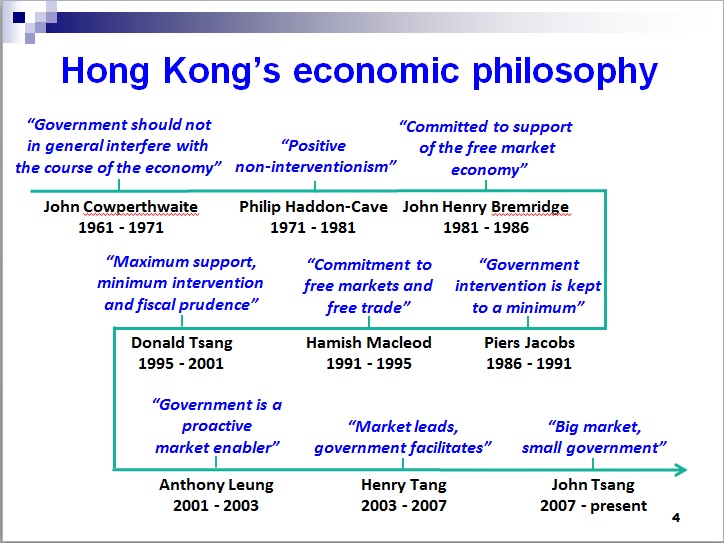
Here is some additional evidence of Hong Kong’s sensible approach. Below is a slide from a presentation by Hong Kong government officials, quoting the current Financial Secretary and all his predecessors, covering both the period of Chinese sovereignty and British sovereignty. As you can see, the one constant theme is free markets and small government.

For additional background, let’s enjoy the insight of one of these men.

In a column for Reason, my Cato Institute colleague Marian Tupy reminisces on his meeting with John Cowperthwaite, one of the British-appointed economic advisers.

…a young Scottish civil servant named John Cowperthwaite arrived in the colony to oversee its economic development. Some 50 years later, I met Cowperthwaite in St Andrews, Scotland, where I was a student and he was enjoying his retirement. As he told me, “I came to Hong Kong and found the economy working just fine. So, I left it that way.” …Of all the policies that we discussed, one stands out in my mind. I asked him to name the one reform that he was most proud of. “I abolished the collection of statistics,” he replied. Cowperthwaite believed that statistics are dangerous, because they enable social engineers of all stripes to justify state intervention in the economy. At some point during our first conversation I managed to irk him by suggesting that he was chiefly known “for doing nothing.” In fact, he pointed out, keeping the British political busy-bodies from interfering in Hong Kong’s economic affairs took up a large portion of his time.

I especially like Cowperthwaite’s insight about the downside risk of letting governments collect a lot of data.

Something that’s worth considering in a world where governments want to engage in massive data collection and data sharing for purposes of imposing and enforcing bad global tax policy.

But let’s not get sidetracked. Economic freedom in Hong Kong is today’s topic. With that in mind, here’s a chart from Marian’s column. It shows that Hong Kong used to be much poorer than the United Kingdom. But after decades of faster growth (thanks to good policy), Hong Kong is now more prosperous than its former colonial master.

In other words, Hong Kong didn’t just converge with one of the world’s richest countries, which by itself would be a remarkable and unusual achievement. It actually became richer.

This is tremendous evidence on the benefits of good policy and the importance of strong, long-run growth.

Let’s close by looking at this issue of growth and development. Here’s a video from Marginal Revolution, narrated by Professor Alex Tabarrok of George Mason University. You should watch it from start to finish, but if you’re pressed for time, make sure to at least watch the first 2:10.

Puzzle of Growth: Rich Countries and Poor Countries

There are two things that are worth emphasizing from the video.

The productivity of workers (and therefore the pay of workers) is dependent on the quantity and quality of capital.

Entrepreneurs play a key role in figuring out the best ways of mixing labor and capital and this innovation boosts productivity.

By the way, there are two sins of omission in the video. If you watch the whole thing, you’ll notice it mentions that strong economic performance is linked to therule of law, property rights, free trade, and sensible regulation.

All that is true. But what about a stable monetary system? And what about areasonable tax regime and a modest burden of government spending?

But I’m nitpicking. Let’s close with another video from Marginal Revolution. You should once again watch the entire video, but for those in a rush, I adjusted the settings so it starts at the most important part.

Growth Rates Are Crucial

The video uses GDP data that is adjusted for both inflation and population, which is a very useful approach. But the key lesson, as Professor Tabarrok explained, is that even small sustained changes in growth have enormous implications for long-run prosperity.

Indeed, that’s why Hong Kong is now richer than the United Kingdom. And it’s also worth noting that Hong Kong (and Singapore) are passing the United States.

Related posts:

FRIEDMAN FRIDAY Milton Friedman’s FREE TO CHOOSE “The Tyranny of Control” Transcript and Video (60 Minutes)

Milton Friedman’s FREE TO CHOOSE “The Tyranny of Control” Transcript and Video (60 Minutes) In 1980 I read the book FREE TO CHOOSE by Milton Friedman and it really enlightened me a tremendous amount.  I suggest checking out these episodes and transcripts of Milton Friedman’s film series FREE TO CHOOSE: “The Failure of Socialism” and […]

FRIEDMAN FRIDAY “The Tyranny of Control” in Milton Friedman’s FREE TO CHOOSE Part 7 of 7 (Transcript and Video) “I’m not pro business, I’m pro free enterprise, which is a very different thing, and the reason I’m pro free enterprise”

In 1980 I read the book FREE TO CHOOSE by Milton Friedman and it really enlightened me a tremendous amount.  I suggest checking out these episodes and transcripts of Milton Friedman’s film series FREE TO CHOOSE: “The Failure of Socialism” and “What is wrong with our schools?”  and “Created Equal”  and  From Cradle to Grave, […]

FRIEDMAN FRIDAY “The Tyranny of Control” in Milton Friedman’s FREE TO CHOOSE Part 6 of 7 (Transcript and Video) “We are the ones who promote freedom, and free enterprise, and individual initiative, And what do we do? We force puny little Hong Kong to impose limits, restrictions on its exports at tariffs, in order to protect our textile workers”

In 1980 I read the book FREE TO CHOOSE by Milton Friedman and it really enlightened me a tremendous amount.  I suggest checking out these episodes and transcripts of Milton Friedman’s film series FREE TO CHOOSE: “The Failure of Socialism” and “What is wrong with our schools?”  and “Created Equal”  and  From Cradle to Grave, […]

FRIEDMAN FRIDAY “The Tyranny of Control” in Milton Friedman’s FREE TO CHOOSE Part 5 of 7 (Transcript and Video) “There is no measure whatsoever that would do more to prevent private monopoly development than complete free trade”

In 1980 I read the book FREE TO CHOOSE by Milton Friedman and it really enlightened me a tremendous amount.  I suggest checking out these episodes and transcripts of Milton Friedman’s film series FREE TO CHOOSE: “The Failure of Socialism” and “What is wrong with our schools?”  and “Created Equal”  and  From Cradle to Grave, […]

FRIEDMAN FRIDAY “The Tyranny of Control” in Milton Friedman’s FREE TO CHOOSE Part 4 of 7 (Transcript and Video) ” What we need are constitutional restraints on the power of government to interfere with free markets in foreign exchange, in foreign trade, and in many other aspects of our lives.”

In 1980 I read the book FREE TO CHOOSE by Milton Friedman and it really enlightened me a tremendous amount.  I suggest checking out these episodes and transcripts of Milton Friedman’s film series FREE TO CHOOSE: “The Failure of Socialism” and “What is wrong with our schools?”  and “Created Equal”  and  From Cradle to Grave, […]

FRIEDMAN FRIDAY “The Tyranny of Control” in Milton Friedman’s FREE TO CHOOSE Part 3 of 7 (Transcript and Video) “When anyone complains about unfair competition, consumers beware, That is really a cry for special privilege always at the expense of the consumer”

In 1980 I read the book FREE TO CHOOSE by Milton Friedman and it really enlightened me a tremendous amount.  I suggest checking out these episodes and transcripts of Milton Friedman’s film series FREE TO CHOOSE: “The Failure of Socialism” and “What is wrong with our schools?”  and “Created Equal”  and  From Cradle to Grave, […]

FRIEDMAN FRIDAY “The Tyranny of Control” in Milton Friedman’s FREE TO CHOOSE Part 2 of 7 (Transcript and Video) “As always, economic freedom promotes human freedom”

In 1980 I read the book FREE TO CHOOSE by Milton Friedman and it really enlightened me a tremendous amount.  I suggest checking out these episodes and transcripts of Milton Friedman’s film series FREE TO CHOOSE: “The Failure of Socialism” and “What is wrong with our schools?”  and “Created Equal”  and  From Cradle to Grave, […]

FRIEDMAN FRIDAY “The Tyranny of Control” Milton Friedman’s FREE TO CHOOSE Part 1 of 7 (Transcript and Video) “Adam Smith’s… key idea was that self-interest could produce an orderly society benefiting everybody, It was as though there were an invisible hand at work”

In 1980 I read the book FREE TO CHOOSE by Milton Friedman and it really enlightened me a tremendous amount.  I suggest checking out these episodes and transcripts of Milton Friedman’s film series FREE TO CHOOSE: “The Failure of Socialism” and “What is wrong with our schools?”  and “Created Equal”  and  From Cradle to Grave, […]

Open letter to President Obama (Part 654) “The Tyranny of Control” in Milton Friedman’s FREE TO CHOOSE Part 7 of 7 (Transcript and Video) “I’m not pro business, I’m pro free enterprise, which is a very different thing, and the reason I’m pro free enterprise”

Open letter to President Obama (Part 654) (Emailed to White House on July 22, 2013) President Obama c/o The White House 1600 Pennsylvania Avenue NW Washington, DC 20500 Dear Mr. President, I know that you receive 20,000 letters a day and that you actually read 10 of them every day. I really do respect you […]

Open letter to President Obama (Part 650) “The Tyranny of Control” in Milton Friedman’s FREE TO CHOOSE Part 6 of 7 (Transcript and Video) “We are the ones who promote freedom, and free enterprise, and individual initiative, And what do we do? We force puny little Hong Kong to impose limits, restrictions on its exports at tariffs, in order to protect our textile workers”

Open letter to President Obama (Part 650) (Emailed to White House on July 22, 2013) President Obama c/o The White House 1600 Pennsylvania Avenue NW Washington, DC 20500 Dear Mr. President, I know that you receive 20,000 letters a day and that you actually read 10 of them every day. I really do respect you […]

_________

FRANCIS SCHAEFFER ANALYZES ART AND CULTURE PART  504 Debating from 2015-2020 Darwin’s great grandson (Horace Barlow) about Francis Schaeffer’s 1968 critique of Darwinism! Part 6 (Darwin: “My judgment often fluctuates . . . In my most extreme fluctuations I have never been an Atheist in the sense of denying the existence of a God. I think that generally, but not always, that an Agnostic would be the more correct description of my state of mind.” FEATURED ARTIST IS Gordon Parks

—-

TRIBUTES PAID TO PROFESSOR HORACE BARLOW

PUBLISHED DATE: July 07, 2020

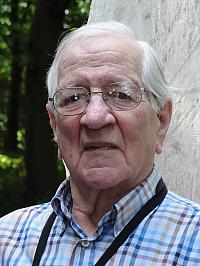
Professor Horace Barlow (8 December 1921 – 5 July 2020) was a neuroscientist and Fellow of Trinity College Cambridge.

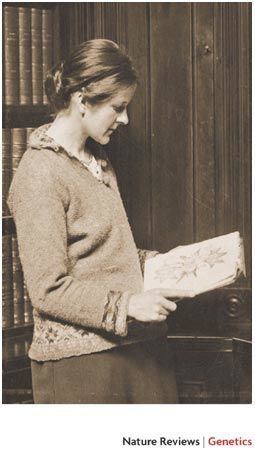
Horace Barlow was born into a scientific family: his mother was Nora Darwin, the granddaughter of Charles Darwin, who worked in the field of genetics with William Bateson at Cambridge and his paternal grandfather was physician to Queen Victoria’s household.

He studied Natural Sciences at Cambridge University and then completed medical training at Harvard Medical School and University College Hospital, London before returning to Cambridge to study neurophysiology under the tutelage of Lord Adrian. He was awarded an Sc.D in 1943.

His research investigated the visual system at the level of single neurons and their interactions in both humans and animals. His emphasis was on understanding the act of seeing through the underlying machinery of vision.

After holding various positions at Cambridge University he became Professor of Physiological Optics and Physiology at the University of California, Berkeley. He later returned to Cambridge, where he was Royal Society Research Professor of Physiology.

Professor Barlow was elected Fellow of the Royal Society in 1969 and was awarded the Society’s Royal Medal in 1993. In the same year (1993) he received the Australia Prize for research into the mechanisms of visual perception. His other awards include Swartz Prize for Theoretical and Computational Neuroscience (2009) and Ken Nakayama Prize from the Vision Sciences Society (2016).

Trinity Fellow, Professor Roger Keynes, of the Department of Physiology, Development and Neuroscience at the University of Cambridge, said:

Horace Barlow made seminal discoveries in brain physiology. After medical qualification he began research in the Cambridge Physiological Laboratory, recording electrical signals from single nerve cells in the frog’s eye. These showed that nerve cells are wired to detect essential features of the frog’s visual world, such as a small moving insect, and its direction. His approach paved the way for major advances in understanding how visual information in mammals is processed and stored in the brain. He also initiated psychophysical studies of human visual perception and wrote cogently on the brain in all its aspects, working in his departmental office and visiting Trinity well into his 90s.

Priyamvada Natarajan, Professor in the Departments of Astronomy and Physics at Yale University, and a Trinity alumna, said:

Deeply sad to hear the news of his passing. I fondly remember many wonderful conversations with Horace Barlow during my time at Trinity as a junior research fellow in 1997-2003. We chatted about science – in particular, about optics, and how the various wavelengths of light revealed disparate aspects of the cosmos and about the achromatic bending of light (gravitational lensing) that I worked on and its analogy to geometric optics. He patiently answered many of my naive questions about neuroscience and we were both ardent fans of Ramon Cajal’s drawings of neurons. Horace was soft-spoken, utterly curious about the natural world, and remarkably insightful –  it was a privilege to know him.

Francis Schaeffer

Below is a portion of my February 11, 2015 letter to Dr. Barlow followed by his response in his November 22, 2017 letter:

Darwin, C. R. to Fordyce, John, 7 May 1879

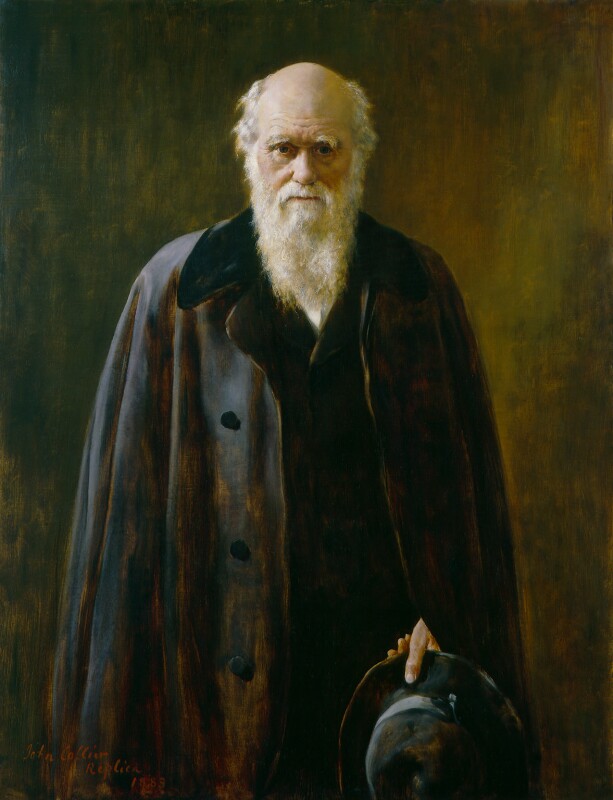
“What my own views may be is a question of no consequence to any one but myself. But, as you ask, I may state that my judgment often fluctuates . . . In my most extreme fluctuations I have never been an Atheist in the sense of denying the existence of a God. I think that generally (and more and more as I grow older), but not always, that an Agnostic would be the more correct description of my state of mind.”

Francis Schaeffer asserted:

What we find now is that he comes to the place in being agnostic, but as we read through this section on religion what we find is in reality his reason leads him against this position, which is interesting but his theory makes him accept the  position of agnosticism. You will notice as we go on, on the basis of his intellect he can’t stand the thought of his own position, of there not being an answer. Nevertheless, he is increasingly forced to this because it wouldn’t conform to his own theory, man being shoved against his own will because of presuppositions. I think what you have in Darwin is a magnificent example, although a sad one of what I lecture on in apologetics,  and that is if a man takes a set of nonchristian presuppositions he is forced eventually to be in a place of tension. The more consistent he is with his own nonchristian presuppositions the more he is away from the real world. When he is closer to the real world then he is more illogical to his own presuppositions. Darwin shows this in his own writings in his own lifetime. So the things in his human nature he is sorry to lose, but he loses them, at the same time he finds that couldn’t explain things on the basis of his reason.  Yet he was driven to certain conclusions which were away from what he himself felt were the real world on the basis of his own presuppositions. He was never satisfied. Just as I very often use Sartre and Camus to point out this dilemma of nonchristian presuppositions, in actuality these sections from Darwin are a perfect example of the same thing.

Darwin’s words:

From Charles Darwin, Autobiography (1876), in The Life and Letters of Charles Darwin, ed. Francis Darwin, vol. 1 (London: John Murray, 1888), pp. 307 to 313.

“Another source of conviction in the existence of God, connected with the reason and not with the feelings, impresses me as having much more weight. This follows from the extreme difficulty or rather impossibility of conceiving this immense and wonderful universe, including man with his capacity of looking far backwards and far into futurity, as the result of blind chance or necessity. When thus reflecting, I feel compelled to look to a First Cause having an intelligent mind in some degree analogous to that of man; and I deserve to be called a Theist. This conclusion was strong in my mind about the time, as far as I can remember, when I wrote the Origin of Species, and it is since that time that it has very gradually, with many fluctuations, become weaker. But then arises the doubt

Francis Schaeffer commented:

On the basis of his reason he has to say there must be an intelligent mind, someone analogous to man. You couldn’t describe the God of the Bible better. That is man is made in God’s image  and therefore, you know a great deal about God when you know something about man. What he is really saying here is that everything in my experience tells me it must be so, and my mind demands it is so. Not just these feelings he talked about earlier but his MIND demands it is so, but now how does he counter this? How does he escape this? Here is how he does it!!!

Darwin’s words:

—can the mind of man, which has, as I fully believe, been developed from a mind as low as that possessed by the lowest animals, be trusted when it draws such grand conclusions?

Francis Schaeffer commented:

So he says my mind can only come to one conclusion, and that is there is a mind behind it all. However, the doubt comes because his mind has come from the lowest form of earthworm, so how can I trust my mind. But this is a joker isn’t it?  Then how can you trust his mind to support such a theory as this? He proved too much. The fact that Darwin found it necessary to take such an escape shows the tremendous weight of Romans 1, that the only escape he can make is to say how can I trust my mind when I come from the lowest animal the earthworm? Obviously think of the grandeur of his concept, I don’t think it is true, but the grandeur of his concept, so what you find is that Darwin is presenting something here that is wrong I feel, but it is not nothing. It is a tremendously grand concept that he has put forward. So he is accepting the dictates of his mind to put forth a grand concept which he later can’t accept in this basic area with his reason, but he rejects what he could accept with his reason on this escape. It really doesn’t make sense. This is a tremendous demonstration of the weakness of his own position.

Darwin clings to agnosticism:

“I cannot pretend to throw the least light on such abstruse problems. The mystery of the beginning of all things is insoluble by us, and I for one must be content to remain an Agnostic.”

Francis Schaeffer commented:

What a stupid reply and I didn’t say wicked. It just seems to me that here is 2 plus 2 equals 36 at this particular place.


Here is Dr. Barlow’s response in his November 22, 2017 letter:

——

Saying you don’t believe in God is a very foolish thing to say as it doesn’t explain why so many people talk about it, there has got to be more to it than that; also I think one has to respect what some godly people say and some of the things they do; I wish one could make more sense of it but I don’t think the godly people have done a very good job;

This reminds me of a story that Adrian Rogers told about his interaction with an agnostic:

Here we must observe that many people don’t want to find the truth just like a thief doesn’t want to find a policeman. I now want to share a portion of the sermon WHO IS JESUS? by Adrian Rogers because this very point is made:

Here is how the story goes:

Years ago Adrian Rogers counseled with a NASA scientist and his severely depressed wife. The wife pointed to her husband and said, “My problem is him.” She went on to explain that her husband was a drinker, a liar, and an adulterer.

Dr. Rogers asked the man if he were a Christian. “No!” the man laughed. “I’m an atheist.” “Really?” Dr. Rogers replied. “That means you’re someone who knows that God does not exist.” “That’s right,” said the man. “Would it be fair to say that you don’t know all there is to know in the universe?” “Of course,” the man admitted. Dr. Rogers asked, “Would it be generous to say you know half of all there is to know?” “Yes!” Then Dr. Rogers inquired,“Wouldn’t it be possible that God’s existence might be in the half you don’t know?” The man acknowledged, “Okay, but I don’t think He exists.” Dr. Rogers replied, “Well then, you’re not an atheist; you’re an agnostic.You’re a doubter.” The man asserted, “Yes, and I’m a big one.” Then Dr. Rogers popped the question, “It doesn’t matter what size you are. I want to know what kind [of doubter] you are.” 

“What kinds are there?”

“There are honest doubters and dishonest doubters. An honest doubter is willing to search out the truth and live by the results; a dishonest doubter doesn’t want to know the truth. He can’t find God for the same reason a thief can’t find a policeman.”

“I want to know the truth.”

“Would you like to prove that God exists?”

“It can’t be done.”

“It can be done. You’ve just been in the wrong laboratory. Jesus said, ‘If any man’s will is to do His will, he will know whether my teaching is from God or whether I am speaking on my own authority’ (John 7:17). I suggest you read one chapter of the book of John each day, but before you do, pray something like this, ‘God, I don’t know if You’re there, I don’t know if the Bible is true, I don’t know if Jesus is Your Son. But if You show me that You are there, that the Bible is true, and that Jesus is Your Son, then I will follow You. My will is to do your will.”

The man agreed. About three weeks later he returned to Dr. Rogers’s office and invited Jesus Christ to be his Savior and Lord.


Another quote from Dr. Barlow’s November 22, 2017 letter:

 After acknowledging that Charles Darwin did lose his aesthetic tastes for art, poetry, and for fine scenery which he attributed to his study of evolution, Dr. Barlow came back and asserted, “Notice, however, that he clearly did not lose his sense of the value of truth, and of the importance of forever searching it out. “ 


Here is some evidence:

—-

Let me quote from my former pastor Adrian Rogers:

Skeptics seem to think that the Bible is full of scientific errors. However, before an individual can make that assertion, they had better make sure they know both science and Scripture. You see, I have heard unbelievers state that the Bible is not a book of science, but a book of religion, which is basically true. It is not written to teach us about science, but to teach us about God. But the God of salvation and the God of creation are the same. Science doesn’t take God by surprise. A close look at Scripture reveals that it is scientifically accurate.

Every now and then science may disagree with the Bible, but usually science just needs time to catch up. For example, in 1861 a French scientific academy printed a brochure offering 51 incontrovertible facts that proved the Bible in error. Today there is not a single reputable scientist who would support those supposed “facts,” because modern science has disproved them all!

The ancients believed the earth was held up by Atlas, or resting on pillars, or even seated on the backs of elephants. But today we know the earth is suspended in space, a fact the Word of God records in Job 26:7: “He . . . hangeth the earth upon nothing.” God revealed the facts of cosmology long before man had any idea of the truth.

For centuries man believed the earth was flat, but now we know the earth is a globe. The prophet Isaiah, writing 750 years before the birth of Christ, revealed that “God sitteth upon the circle of the earth” (Isaiah 40:22). The word translated here as “circle” was more commonly translated “sphere.” In other words, Isaiah explained that the earth was a globe centuries before science discovered it.

When Ptolemy charted the heavens, he counted 1026 stars in the sky. But with the invention of the telescope man discovered millions and millions of stars, something that Jeremiah 33:22 revealed nearly three thousand years ago: “The host of heaven cannot be numbered.” How did these men of God know the truth of science long before the rest of the world discovered it? They were moved by the Holy Spirit to write the truth. God’s Word is not filled with errors. It is filled with facts, even scientific facts.

When the black plague was killing one quarter of Europe’s population in the fourteenth century, it was the church, not science, that helped overcome the dread disease. The leaders in the church noticed the instructions given by the Lord to Moses in Leviticus 13:46: “All the days wherein the plague shall be in him he shall be defiled; he is unclean: he shall dwell alone; without the camp shall his habitation be.” These early believers did not know microbiology or understand what germs were, but they could understand a clear teaching to quarantine someone who was sick. So they followed the Biblical dictum, quarantined those sick with the plague, and stopped it from spreading. The Bible had its science correct even before man discovered the truth! Don’t accept the charge that the Bible is filled with scientific errors. Modern science seems determined to explain God away, and refuses to acknowledge any evidence of the supernatural. But the science of Scripture is one reason to accept the Bible as God’s Word.

Debating from 2015-2020 Darwin’s great grandson (Horace Barlow) about Francis Schaeffer’s 1968 critique of Darwinism!

Image result for Emma Nora Barlow, Lady Barlow

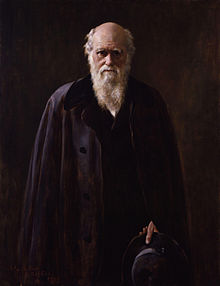
The autobiography of Charles Darwin read by Francis Schaeffer in 1968 was not the same one originally released in 1892 because that one omitted the religious statements of Charles Darwin. 

pictured below with his eldest child William: 

Image result for Horace Barlow charles darwin

Notice this statement below from the Freedom from Religion Foundation: 

(Nora Barlow pictured below)

Charles Darwin wrote the Rev. J. Fordyce on July 7, 1879, that “an agnostic would be the most correct description of my state of mind.” Darwin penned his memoirs between the ages of 67 and 73, finishing the main text in 1876. These memoirs were published posthumously in 1887 by his family under the title Life and Letters of Charles Darwin, with his hardest-hitting views on religion excised. Only in 1958 did Darwin’s granddaughter Nora Barlow publish his Autobiography with original omissions restored  D. 1882.
——-

Charles Robert Darwin  (1809 – 1882) had 10 children and 7 of them survived to adulthood.

Sir Horace DarwinKBEFRS (13 May 1851 – 22 September 1928), the fifth son and ninth child of the British naturalist Charles Darwin and his wife Emma, the youngest of their seven children who survived to adulthood.

(Horace Darwin pictured below)

Horace Darwin.jpg

Emma Nora Barlow, Lady Barlow (née Darwin; 22 December 1885 – 29 May 1989) Nora, as she was known, was the daughter of the civil engineer Sir Horace Darwin and his wife The Hon. Lady Ida Darwin (née Farrer),

Horace Basil Barlow FRS (1921-) Barlow is the son of the civil servant Sir Alan Barlow and his wife Lady Nora (née Darwin). Barlow is the great-grandson of Charles Darwin

XXXXXXXXXXXXXXX

Horace Darwin married Emma Cecilia “Ida” Farrer (1854–1946) pictured below.

Image result for Ida Darwin hoRACE

—-

Image result for francis schaeffer

Francis Schaeffer

Horace Barlow was the son of Nora Barlow. From February 11, 2015 to July 1, 2017, I wrote 7 letters to Dr. Horace Barlow because I wanted to discuss primarily the views of his grandfather Charles Darwin and Francis Schaeffer’s 1968 critique of Darwinism!

Image result for charles darwin

In December of 2017, I received a two page typed letter from Dr. Barlow reacting to several of the points made in the previous letters and emails. Over the next few weeks I will be posting the 32 letters I wrote to Dr. Barlow from February 11, 2015 to April 18, 2020 one per week every Tuesday and below is a list of those letters. Sadly Dr. Barlow passed away on July 5, 2020 at age 98. However, I want to summarize some the issues we discussed in the next few days. 

Image result for francis schaeffer

Franicis Schaeffer

If you wish to hear Francis Schaeffer’s 1968 talk on Darwin’s autobiography then you can access part 1 at this link and part 2 at this link.

—-

—-

—-

Horace Barlow pictured below:

_____________

I found Dr. Barlow to be a true gentleman and he was very kind to take the time to answer the questions that I submitted to him. In the upcoming months I will take time once a week to pay tribute to his life and reveal our correspondence. In the first week I noted:

 Today I am posting my first letter to him in February of 2015 which discussed Charles Darwin lamenting his loss of aesthetic tastes which he blamed on Darwin’s own dedication to the study of evolution. In a later return letter, Dr. Barlow agreed that Darwin did in fact lose his aesthetic tastes at the end of his life.

In the second week I look at the views of Michael Polanyi and share the comments of Francis Schaeffer concerning Polanyi’s views.

In the third week, I look at the life of Brandon Burlsworth in the November 28, 2016 letter and the movie GREATER and the problem of evil which Charles Darwin definitely had a problem with once his daughter died.

On the 4th letter to Dr. Barlow looks at Darwin’s admission that he at times thinks that creation appears to look like the expression of a mind. Francis Schaeffer discusses Darwin’s own words in 1968 sermon at this link.

My Fifth Letter concerning Charles Darwin’s views on MORAL MOTIONS Which was mailed on March 1, 2017. Francis Schaeffer discusses Darwin’s own words concerning moral motions in Schaeffer’s 1968 sermon at this link.

6th letter on May 1, 2017 in which Charles Darwin’s hopes are that someone would find in Pompeii an old manuscript by a distinguished Roman that would show that Christ existed! Francis Schaeffer discusses Darwin’s own words concerning the possible manuscript finds in Schaeffer’s 1968 sermon at this link.

7th letter on Darwin discussing DETERMINISM  dated 7-1-17 . Francis Schaeffer discusses Darwin’s own words concerning determinism in Schaeffer’s 1968 sermon at this link.

Thanks 8th letter responds to Dr. Barlow’s letter to me concerning the Francis Schaeffer discusses Darwin’s own words concerning chance in Schaeffer’s 1968 sermon at this link.

Thanks 9th letter in response to 11-22-17 letter I received from Professor Horace Barlow was mailed on 1-2-18 and included Charles Darwin’s comments on William Paley. Francis Schaeffer discusses Darwin’s own words concerning William Paley in Schaeffer’s 1968 sermon at this link.

10th letter in response to 11-22-17 letter I received from Professor Horace Barlow was mailed on 2-2-18 and includes Darwin’s comments asking for archaeological evidence for the Bible! Francis Schaeffer discusses Darwin’s own words concerning His desire to see archaeological evidence supporting the Bible’s accuracy  in Schaeffer’s 1968 sermon at this link.

11th letter I mailed on 3-2-18  in response to 11-22-17 letter from Barlow that asserted: It is also sometimes asked whether chance, even together with selection, can define a “MORAL CODE,” which the religiously inclined say is defined by their God. I think the answer is “Yes, it certainly can…” Francis Schaeffer discusses Darwin’s own words concerning A MORAL CODE in Schaeffer’s 1968 sermon at this link.

12th letter on March 26, 2018 breaks down song DUST IN THE WIND “All we do, crumbles to the ground though we refuse to see, Dust in the Wind, All we are is dust in the wind, Don’t hang on, Nothing lasts forever but the Earth and Sky, It slips away, And all your money won’t another minute buy.”

In 13th letter I respond to Barlow’s November 22, 2017 letter and assertion “He {Darwin} clearly did not lose his sense of the VALUE of TRUTH, and of the importance of FOREVER SEARCHING it out.”

In 14th letter to Dr. Barlow on 10-2-18, I assert: “Let me demonstrate how the Bible’s view of the origin of life fits better with the evidence we have from archaeology than that of gradual evolution.”In 15th letter in November 2, 2018 to Dr. Barlow I quote his relative Randal Keynes Who in the Richard Dawkins special “The Genius of Darwin” makes this point concerning Darwin, “he was, at different times, enormously confident in it,and at other times, he was utterly uncertain.”In 16th Letter on 12-2-18 to Dr. Barlow I respond to his letter that stated, If I am pressed to say whether I think belief in God helps people to make wise and beneficial decisions I am bound to say (and I fear this will cause you pain) “No, it is often very disastrous, leading to violence, death and vile behaviour…Muslim terrorists…violence within the Christian church itself”17th letter sent on January 2, 2019 shows the great advantage we have over Charles Darwin when examining the archaeological record concerning the accuracy of the Bible!In the 18th letter I respond to the comment by Charles Darwin: “My mind seems to have become a kind of machine for grinding general laws out of large collections of facts, but why this should have caused the atrophy of that part of the brain alone, on which the higher tastes depend, I cannot conceive….The loss of these tastes is a loss of happiness.” Francis Schaeffer discusses Darwin’s own words on his loss of aesthetic tastes  in Schaeffer’s 1968 sermon at this link.In 19th letter on 2-2-19  I discuss Steven Weinberg’s words,  But if language is to be of any use to us, we ought to try to preserve the meanings of words, and “God” historically has not meant the laws of nature. It has meant an interested personality.

In the 20th letter on 3-2-19 I respond to Charles Darwin’s comment, “At the present day the most usual argument for the existence of an intelligent God is drawn from the deep [#1] inward conviction and feelings which are experienced by most persons...Formerly I was led by feelings such as those…to the firm conviction of the existence of God, and of the immortality of the soul. In my Journal I wrote that [#2] whilst standing in the midst of the grandeur of a Brazilian forest, ‘it is not possible to give an adequate idea of the higher feelings of wonder, admiration, and devotion which fill and elevate the mind.’ I well remember my conviction that there is more in man than the mere breath of his body. [#3] But now the grandest scenes would not cause any such convictions and feelings to rise in my mind. It may be truly said that I am like a man who has become colour-blind.” Francis Schaeffer discusses Darwin’s own words concerning his former belief in God in Schaeffer’s 1968 sermon at this link.

In the 21st letter on May 15, 2019 to Dr Barlow I discuss the writings of Francis Schaeffer who passed away the 35 years earlier on May 15, 1985. Francis Schaeffer discusses Darwin’s own words at length in Schaeffer’s 1968 sermon at this link.

In the 22nd letter I respond to Charles Darwin’s words, “I can indeed hardly see how anyone ought to wish Christianity to be true; for if so the plain language of the text seems to show that the men who do not believe…will be everlastingly punished. And this is a damnable doctrine.” Francis Schaeffer discusses Darwin’s own words about hell  in Schaeffer’s 1968 sermon at this link

In 23rd postcard sent on 7-2-19 I asked Dr Barlow if he was a humanist. Sir Julian Huxley, founder of the American Humanist Association noted, “I use the word ‘humanist’ to mean someone who believes that man is just as much a natural phenomenon as an animal or plant; that his body, mind and soul were not supernaturally created but are products of evolution, and that he is not under the control or guidance of any supernatural being.”

In my 24th letter on 8-2-19 I quote Jerry  Bergman who noted Jean Louis Agassiz (1807-1873) is regarded as one of the greatest scientists of the 19th century. A founding father of the modern American scientific establishment, Agassiz was also a lifelong opponent of Charles Darwin’s theory of evolution. Agassiz “ruled in professorial majesty at Harvard’s Museum of Comparative Zoology.”

In my 25th letter on 9-2-19 I respond to Charles Darwin’s assertion,  “This argument would be a valid one if all men of ALL RACES had the SAME INWARD CONVICTION of the existence of one God; but we know that this is very far from being the case.” Francis Schaeffer discusses Darwin’s own words concerning MORAL MOTIONS in Schaeffer’s 1968 sermon at this link.

In my 26th letter on 10-2-19 I quoted Bertrand Russell’s daughter’s statement, “I believe myself that his whole life was a search for God…. Indeed, he had first taken up philosophy in hope of finding proof of the evidence of the existence of God … Somewhere at the back of my father’s mind, at the bottom of his heart, in the depths of his soul  there was an empty space that had once been filled by God, and he never found anything else to put in it”

In my 27th letter on 11-2-19 I disproved Richard Dawkins’ assertion, “Genesis says Abraham owned camels, but archaeological evidence shows that the camel was not domesticated until many centuries after Abraham.” Furthermore, I gave more evidence indicating the Bible is historically accurate.

In my 28th letter on 12-2-19 I respond to Charles Darwin’s statement, “I am glad you were at the Messiah, it is the one thing that I should like to hear again, but I dare say I should find my soul too dried up to appreciate it as in old days; and then I should feel very flat, for it is a horrid bore to feel as I constantly do, that I am a withered leaf for every subject except Science. It sometimes makes me hate Science.” Francis Schaeffer discusses Darwin’s own words concerning MORAL MOTIONS in Schaeffer’s 1968 sermon at this link. 

In my 29th letter on 12-25-19 I responded to Charles Darwin’s statement, “I have said that in one respect my mind has changed during the last twenty or thirty years. Up to the age of thirty, or beyond it, poetry of many kinds…gave me great pleasure, and even as a schoolboy I took intense delight in Shakespeare, especially in the historical plays. I have also said that formerly pictures gave me considerable, and music very great delight. But now for many years I cannot endure to read a line of poetry: I have tried lately to read Shakespeare, and found it so intolerably dullthat it nauseated me…. My mind seems to have become a kind of machine for grinding general laws out of large collections of facts, but why this should have caused the atrophy of that part of the brain alone, on which the higher tastes depend, I cannot conceive… The loss of these tastes is a loss of happiness…” Francis Schaeffer discusses Darwin’s own words concerning his loss of aesthetic tastes in Schaeffer’s 1968 sermon at this link.

In my 30th letter on 2-2-20 I quote Dustin Shramek who asserted, “Without God the universe is the result of a cosmic accident, a chance explosion. There is no reason for which it exist. As for man, he is a freak of nature–a blind product of matter plus time plus chance. Man is just a lump of slime that evolved into rationality. There is no more purpose in life for the human race than for a species of insect; for both are the result of the blind interaction of chance and necessity.”

In my 31st letter on 3-18-20 I quote Francis Schaeffer who noted, “Darwin is saying that he gave up the New Testament because it was connected to the Old Testament. He gave up the Old Testament because it conflicted with his own theory. Did he have a real answer himself and the answer is no. At the end of his life we see that he is dehumanized by his position and on the other side we see that he never comes to the place of intellectual satisfaction for himself that his answers were sufficient.” Francis Schaeffer discusses Darwin’s own words concerning his loss of his Christian faith in Schaeffer’s 1968 sermon at this link.

In my 32nd letter on 4-18-20 quoted H.J. Blackham on where humanism leads On humanist assumptions, life leads to nothing, and every pretense that it does not is a deceit. If there is a bridge over a gorge which spans only half the distance and ends in mid-air, and if the bridge is crowded with human beings pressing on, one after the other they fall into the abyss. The bridge leads nowhere, and those who are pressing forward to cross it are going nowhere….It does not matter where they think they are going, what preparations for the journey they may have made, how much they may be enjoying it all. The objection merely points out objectively that such a situation is a model of futility

TRIBUTE TO HORACE BARLOW:

Paul Linton @LintonVision
Nice (and very informative) obituary of Horace Barlow. Only minor quibble is that it slightly downplays the extent to which the psychophysics of 3D vision (Julesz, 1960) inspired the neuroscience (Barlow et al. 1967; Nikara et al. 1968):


Figure thumbnail gr1
Horace Barlow.View Large ImageDownload Hi-res imageHorace Barlow was one of the truly great neuroscientists of his time, in the Cambridge tradition of quantitative neurophysiology and psychophysics. His fundamental theoretical and empirical contributions to our understanding of brain function have inspired and influenced generations of neurophysiologists, psychologists and computational neuroscientists and are certain to endure for generations to come.Horace Basil Barlow, FRS, was born in 1921 in Chesham Bois, Buckinghamshire, son of Sir Alan Barlow and Lady Nora Barlow (née Darwin). He was educated at Winchester College and studied medicine during the war years, first at Cambridge and then at Harvard Medical School, which awarded him an MD in 1946. He completed medical training at University College Hospital, London, before commencing research in neurophysiology with E.D. Adrian at the Cambridge Physiology Laboratory. After various positions at Cambridge University, he became Professor of Physiological Optics and Physiology at UC Berkeley. In 1974, he returned to Trinity College and the Cambridge Physiology Department to take the Royal Society Research Chair of Physiology, where he continued to make important contributions to neuroscience well after his formal retirement. Horace was elected a Fellow of the Royal Society in 1969 and won their Royal Medal in 1993. He was awarded the Australia Prize in the latter year and several others, including the Ferrier Medal in 1980 and the Ken Nakayama Prize from the Vision Sciences Society in 2016.Many interesting and charismatic people impacted on the young Horace. The first — and arguably most important — was his mother, granddaughter of Charles Darwin. She held no formal degree but worked as a biologist and later, as Darwin’s biographer, founded scholarly research into his life and achievements. Her example, together with his abilities and preference for maths over the humanities, veered Horace towards science. His contemporaries at Winchester College, Christopher Longuet-Higgins, Freeman Dyson and James Lighthill, all of whom became prominent scientists, played an influential role. During his university years there was no shortage of creative minds: his supervisor, the eminent Lord Adrian, and his tutor William Rushton, as well as Pat Merton and Tommy Gold. These latter three were part of the Ratio Club, a London-based club of about 20 carefully selected young neurobiologists, neurologists, psychologists, engineers, mathematicians and physicists, who periodically met in Queen’s Square to discuss cybernetics, information theory and brain function (see group photo). Cybernetics and information theory were central planks in Horace’s conceptual framework throughout his lifetime.Horace started his scientific career early, publishing three papers before he completed his MD: one (in Nature) with Rushton during his Cambridge undergraduate days and two with fellow students at Harvard. His next project, assigned to him by Adrian, was to investigate the proposal of Marshall and Talbot that small scanning eye-movements serve a fundamental role in vision. Horace devised a novel method for measuring eye position precisely (photographing a small spot of mercury placed on the cornea) and found that, between rapid gaze shifts, the eyes were essentially still. He concluded that the fixations rather than scanning eye-movements were fundamental to vision, dismissed Marshall and Talbot’s idea and moved on. However, the importance of the dynamics of perception, including ‘temporal interpolation’ of moving stimuli, remained central to his thinking, emerging clearly in his Ferrier lecture in 1980.Adrian’s supervision style was quite liberal, in the Cambridge tradition, described by Horace as “incisive, but economical, guidance”. Thus, Horace was free to pursue his own scientific curiosities, such as how neurons integrate information. He observed that Sherrington’s classic preparations used artificial stimuli, electric shocks applied to spinal roots, whereas applying light to the retina allows for behaviourally relevant natural stimuli. He developed a preparation for recording spikes from single ganglion cells in frog retina — no mean feat at the time — to study the most basic element of integration, signal summation. Inspired by Rushton, Horace took a quantitative approach and, by measuring thresholds as a function of stimulus area, discovered that integration was not uniform over the receptive field but that there were clear inhibitory surrounds forming separate ‘on’ and ‘off’ regions. More surprisingly, one type of ganglion cell could be a feature detector whose spike discharge anticipates the future position of a fly.This study initiated 30 years of ground-breaking collaborative work on retinal ganglion cells. Horace joined Stephen Kuffler, who had independently described the inhibitory surround in cat retina. Together with Fitzgerald, they discovered that ganglion cells adapt their receptive fields to cover the full range of light levels, switching from cones to rods at low light levels and losing the inhibitory surround. In 1963, Horace and Richard Hill discovered motion-sensitive cells in rabbit retina. Working with the most exacting of retinal physiologists, Bill Levick, Horace revealed further hidden complexities in retinal processing: a motion-sensitive ganglion cell is driven by an array of subunits. Then, in classic experiments, they established the first physiologically informed model of the underlying mechanism: the Barlow and Levick model of elementary motion detection.In 1964, Horace accepted a professorship at the Berkeley School of Optometry, where he continued his neurophysiological experiments, investigating integration by neurons in primary visual cortex (V1). One particularly influential study was conducted with former student Colin Blakemore (in Berkeley on a Harkness Fellowship) and the enthusiastic and charismatic young Australian Jack Pettigrew. Following leads from Jack’s undergraduate work in Sydney, they demonstrated that cells in cat primary visual cortex were selective to binocular disparity, the signals that support binocular depth perception. This was important and unexpected, as stereoscopic depth was thought to be a high-level perceptual property emerging late in processing. However, the results meshed well with Béla Julesz’s demonstrations in the early 1960s of ‘random-dot stereograms’, showing that depth can emerge from point-by-point disparities in otherwise random patterns. The discovery reinforced Horace’s conviction that single sensory neurons coded meaningful information.His work on retinal and cortical neurons brought home to Horace the fundamental realisation that physiological experiments could answer questions of psychological interest. Much of the sensory apparatus for complex behavioural patterns (like detecting and catching flies) may lie in the retina rather than ‘mysterious centres’ too difficult to study by physiological means. Furthermore, the lateral inhibition mechanism that he discovered in frog retina had been postulated by Ernst Mach and others to account for perceptual phenomena, such as simultaneous contrast and Mach Bands. This line of thought culminated in ‘A neural doctrine for perceptual psychology’, published in the fledgling journal Perception in 1972. The provocative formulation of ‘dogmas’ stimulated much important debate, theorising and experimental work, and the central idea of that paper, that perception corresponds to the activity of specific cells, has been hugely influential to physiologists and psychologists alike. Indeed, Horace’s doctrine is still relevant, as it goes far beyond ‘lock and key’ feature detectors. His doctrine incorporates the concepts of statistical inference, efficiency and redundancy that he formulated earlier in his career and suggests the far-reaching idea that he subsequently pursued: single neurons use synaptic plasticity to capture the redundancy that is knowledge.Horace started thinking about signals, noise and perceptual judgements when as an undergraduate he presented a new paper to a discussion group. The landmark study of Hecht, Shlaer and Pirenne demonstrated that the absolute threshold of human vision is limited by noise: quantal fluctuations whose effects can be determined psychophysically by testing the predictions of statistical models. Horace also discussed the problem of signal and noise in the Ratio Club (it was one of their chosen topics), especially with his Cambridge colleague Tommy Gold (later Professor of Astronomy at Cornell University). After his experiments on frog retina, Horace revisited Hecht et al. with a penetrating statistical analysis of published data. He found that the number of quantal events required to reach threshold is elevated by the presence of background noise that he attributed to the thermal activation of visual pigment molecules. This novel conclusion was confirmed a quarter of a century later by recording from rods. His theoretical findings prompted Horace to consider that “thresholds are efficient statistical judgements of constant fallibility”, and he quickly confirmed this more general principle with new psychophysical experiments.Figure thumbnail gr2The young Horace Barlow (bottom right) in May 1952, together with members and guests of the Ratio Club, outside Peterhouse College, Cambridge: Back row (partly obscured): H. Shipton, J. Bates, W.E. Hick, J. Pringle, D. Sholl, J. Westcott and D. Mackay. Middle row: G. Brindley, T. McLardy. W.R. Ashby, T. Gold and A. Uttley. Front row: A. Turing, G. Sutton, W. Rushton, G. Dawson and H. Barlow.View Large ImageDownload Hi-res imageHorace’s scientific approach, to try to understand the principles guiding brain function, was uncommon among physiologists. His 1961 paper on ‘Possible principles underlying the transmission of sensory messages’ (in Sensory Communication, W.D. Keidel, U.O. Keidel, M.E. Wigand and W.A. Rosenblith, eds) opens with, “a wing would be a most mystifying structure if one did not know that birds flew”. Horace argued that we need first to understand the goals of the system to avoid being buried in a mass of irrelevant neurophysiological and neuroanatomical details while missing crucial observations. He reasoned that, because neurons have limited representational capacity, they should economise on impulses by forming efficient representations. According to information theory, this can be achieved by eliminating redundancy using lateral inhibition and adaptation, and because both are observed in retina this must be a goal of early sensory processing. Two decades later, Barlow’s efficient coding hypothesis was validated. This prompted a new round of theory, measurements and experiments, which explained the function of mechanisms in the earlier stages of vision, olfaction and audition. Efficiency and ‘the economy of impulses’ continue to guide our understanding of neural codes at all levels.Horace’s approach was intrinsically interdisciplinary, a popular buzzword in modern grant writing but less usual in his day. He looked for guiding principles of brain function without undue concern whether his supporting data came from psychophysics or physiology, humans or animals, vertebrates or invertebrates. He was always trying — and usually succeeding — to merge detailed observations into the big picture of brain function, following the example of his famous great-grandfather. He was very much a ‘hands-on’ scientist, in the Cambridge mould: he never led a large research group nor took on many graduate students. That was not his style. He led by example, and his example was highly influential. There are very few sensory neuroscientists who would claim not to have been influenced by Horace’s work, one way or the other.Horace never stopped trying to understand the brain. During his own Festschrift in 1987 he gave the most interesting and original talk of the workshop. Following his major theme of how the brain maximises efficiency, he advanced a novel explanation for ‘adaptation’ (the fact that cells reduce firing rate after repeated excitation), suggesting that it is a complex phenomenon serving to ‘decorrelate’ sensory input, reducing inherent redundancy to take full advantage of the limited dynamic range of neurons. This changed the way many people thought about adaptation and again led to new lines of research.The ideas of redundancy and correlated activity of sensory pathways also underlie his highly influential paper on ‘Unsupervised learning’ (Neural Comput. (1989) 1, 295–311). This paper was one of the first to draw attention to the importance of unsupervised learning as opposed to supervised or reinforced learning. Unsupervised learning is about how a nervous system (or indeed artificial intelligence) recognises ‘statistical regularities’, or patterns in its inputs, and is of fundamental importance for understanding the cortex. Horace connected old ideas, such as Tolman’s ‘cognitive maps’ and Craik’s ‘working models’, with modern concepts of entropy, concluding that redundancy in sensory signals provides the knowledge incorporated in those maps. Such knowledge enables unexpected discrepancies to be immediately identified and dealt with. Horace’s information theory-based approach underlies many modern approaches to unsupervised learning in neural networks and Bayesian learning.In the 30-odd years after his formal ‘retirement’, Horace continued to make highly original and creative contributions to the field. He published 56 articles during this period, many as the single author. His interests were very varied, including information redundancy, predictive coding, Bayesian inference, unsupervised learning, development and many others, but all were motivated by the common themes of information theory and neural efficiency. A recent example of his creative thinking was his talk at the symposium on ‘Turing Enduring: Information Processing by Brains and Machines’ (Rockefeller University, December 2012), published in the journal Visual Neuroscience. There, Horace challenged the traditional (and still prevalent) wisdom that orientation-tuned simple and complex cells in primary visual cortex act as ‘edge-detectors’. Looking for more general guiding principles of brain function, he claimed that “the prime role of V1 is to search for regularity or redundancy in the input”, leading to the hypothesis that simple cells perform cross-correlations between the retinal input and internal templates, while complex cells calculate auto-correlations in the retinal input. Characteristically, he did not leave this as a simple hypothesis but provided solid quantitative psychophysical data in favour of his theory.Horace was renowned for his intelligence and quick-wittedness. Neuroscientists presented their research to the Cambridge ‘Craik Club’ with some trepidation. But this was unwarranted, for besides being smart Horace was kind, especially to young researchers. He quickly understood the message of the talk and gave many useful suggestions, absolutely on point, and never intended to humiliate. But his clever quips could also be fun. At a dinner that he gave for a bunch of graduate students, he invited his friend Francis Crick, who held forth on several topics throughout the evening. At one stage, Francis brought up his lineage, lamenting that he could trace it back only to Elizabethan times. With a disarming smile, Horace instantly retorted, “oh yes Francis, and which Elizabeth is that?”Most of Horace’s ideas have survived the test of time, stimulating and motivating generations of neuroscientists and leading to a cascade of advancements far too extensive to summarise here. But if we are to apply his cherished information theory, we know that there is more information in the rare and unexpected event: so did he get anything wrong? Probably not seriously. One idea that clearly evolved over time was his intuition about information redundancy in the image. Initially, he emphasised the role of reducing redundancy for efficient neural coding and economy of neuron numbers as well as impulses, but later he realised the importance of redundancy in identifying structure and statistical regularities in the environment, as sensory redundancy is the main source of knowledge. But this was not a mistake, merely a change of emphasis. If we go right back to the beginning, to his experiments that led him to dismiss the importance of eye drift, perhaps we might say that his assessment was premature, as recent work is showing how the small eye-movements serve an important functional role, conditioning the spatio-temporal frequency spectrum of the image. But while he did not exactly predict this, his intuitions about the importance of temporal dynamics and interpolations, prominent in his Ferrier lecture, were not too far off the mark.The last scientific gathering with Horace was for his 95th birthday, in December 2016. This was a fun occasion for his scientific family, some 100-odd people whose professional lives had been touched by Horace and who had passed the legacy down to their students and students’ students. The celebrations were followed by a workshop, which Horace concluded with a first-rate scientific talk, highlighting the role of information processing in the brain and urging us to consider the importance of information and entropy. His scientific curiosity never escaped him.Horace leaves his wife Miranda, 7 children and 13 grandchildren. His extended scientific family will miss him dearly.Article InfoPublication HistoryPublished online: July 31, 2020


How self-taught photographer Gordon Parks became a master storyteller

FEATURED ARTIST IS Gordon Parks

15 Engrossing Artist Biographies and Memoirs to Read Now

DESIGN & LIVINGANOTHER LIST

Sally Mann memoir

We spotlight a selection of our favourite artists’ autobiographies and biographies, from the empowering to the scandalous, for your summer reading inspiration

AUGUST 10, 2020

TEXTDaisy Woodward

Summer is upon us and this year, more than ever, it feels pertinent to pick holiday reads that will uplift and inspire. Where better to turn to, then, than artists’ memoirs and biographies – filled as they are with tales of overcoming life’s hardships, fights for justice and recognition in and outside of the art world, the quest to forge a legacy through art, and, more often than not, a juicy scandal or two to keep the reader’s interest piqued. Here, we’ve selected 15 of our favourites for your perusal, spanning the empowering, the ephemeral, the political and the downright provocative (Diego Rivera, we’re looking at you

Gordon Parks autobiography
Voices in the Mirror: An Autobiography by Gordon Parks

7. Voices in the Mirror: An Autobiography by Gordon Parks

Gordon Parks’ autobiography Voices in the Mirroris a compelling and empowering read. It traces the American photographer’s difficult early life in Minnesota – where he became homeless, following his mother’s death – through his groundbreaking and meteoric rise as an image-maker (the first Black photographer at Vogueand Life, no less) and thereafter as a Hollywood screenwriter, director and novelist. Parks was a man of great compassion and courageous vision, whose work spanned “intimate portrayals of Ingrid Bergman and Roberto Rossellini; of the Muslim and African American icons Malcolm X, Elijah Muhammad and Muhammad Ali; of the young militants of the civil rights and black power movements; and of the tragic experiences of the less famous, like the Brazilian youngster Flavio”. Suffice to say that incredible stories and words of wisdom abound.

American Gothic, Washington, D.C. – a well-known photograph by Parks

A later photograph in the FSA series, by Parks, shows Ella Watson and her family


Related posts:

Taking on Ark Times Bloggers on various issues Part F “Carl Sagan’s views on how God should try and contact us” includes film “The Basis for Human Dignity”

April 8, 2013 – 7:07 am

I have gone back and forth and back and forth with many liberals on the Arkansas Times Blog on many issues such as abortion, human rights, welfare, poverty, gun control  and issues dealing with popular culture. Here is another exchange I had with them a while back. My username at the Ark Times Blog is Saline […]By Everette Hatcher III | Posted in Francis SchaefferProlife | Edit | Comments (0)

Carl Sagan v. Nancy Pearcey

March 18, 2013 – 9:11 am

On March 17, 2013 at our worship service at Fellowship Bible Church, Ben Parkinson who is one of our teaching pastors spoke on Genesis 1. He spoke about an issue that I was very interested in. Ben started the sermon by reading the following scripture: Genesis 1-2:3 English Standard Version (ESV) The Creation of the […]By Everette Hatcher III | Posted in Adrian RogersAtheists ConfrontedCurrent Events | TaggedBen ParkinsonCarl Sagan | Edit | Comments (0)

Review of Carl Sagan book (Part 4 of series on Evolution)

May 24, 2012 – 1:47 am

Review of Carl Sagan book (Part 4 of series on Evolution) The Long War against God-Henry Morris, part 5 of 6 Uploaded by FLIPWORLDUPSIDEDOWN3 on Aug 30, 2010 http://www.icr.org/ http://store.icr.org/prodinfo.asp?number=BLOWA2http://store.icr.org/prodinfo.asp?number=BLOWASGhttp://www.fliptheworldupsidedown.com/blog _______________________ I got this from a blogger in April of 2008 concerning candidate Obama’s view on evolution: Q: York County was recently in the news […]By Everette Hatcher III | Posted in Atheists ConfrontedCurrent EventsPresident Obama | EditComments (0)

Review of Carl Sagan book (Part 3 of series on Evolution)

May 23, 2012 – 1:43 am

Review of Carl Sagan book (Part 3 of series on Evolution) The Long War against God-Henry Morris, part 4 of 6 Uploaded by FLIPWORLDUPSIDEDOWN3 on Aug 30, 2010 http://www.icr.org/ http://store.icr.org/prodinfo.asp?number=BLOWA2http://store.icr.org/prodinfo.asp?number=BLOWASGhttp://www.fliptheworldupsidedown.com/blog______________________________________ I got this from a blogger in April of 2008 concerning candidate Obama’s view on evolution: Q: York County was recently in the news […]By Everette Hatcher III | Posted in Atheists ConfrontedCurrent EventsPresident Obama | EditComments (0)

Carl Sagan versus RC Sproul

January 9, 2012 – 2:44 pm

At the end of this post is a message by RC Sproul in which he discusses Sagan. Over the years I have confronted many atheists. Here is one story below: I really believe Hebrews 4:12 when it asserts: For the word of God is living and active and sharper than any two-edged sword, and piercing as far as the […]By Everette Hatcher III | Posted in Adrian RogersAtheists ConfrontedCurrent EventsFrancis Schaeffer | Tagged Bill ElliffCarl SaganJodie FosterRC Sproul | Edit | Comments (0)

Review of Carl Sagan book (Part 4 of series on Evolution)jh68

November 8, 2011 – 12:01 am

Review of Carl Sagan book (Part 4 of series on Evolution) The Long War against God-Henry Morris, part 5 of 6 Uploaded by FLIPWORLDUPSIDEDOWN3 on Aug 30, 2010 http://www.icr.org/ http://store.icr.org/prodinfo.asp?number=BLOWA2http://store.icr.org/prodinfo.asp?number=BLOWASGhttp://www.fliptheworldupsidedown.com/blog _______________________ This is a review I did a few years ago. THE DEMON-HAUNTED WORLD: Science as a Candle in the Dark by Carl […]By Everette Hatcher III | Posted in Atheists ConfrontedCurrent Events | Edit | Comments (0)

Review of Carl Sagan book (Part 3 of series on Evolution)

November 4, 2011 – 12:57 am

Review of Carl Sagan book (Part 3 of series on Evolution) The Long War against God-Henry Morris, part 4 of 6 Uploaded by FLIPWORLDUPSIDEDOWN3 on Aug 30, 2010 http://www.icr.org/ http://store.icr.org/prodinfo.asp?number=BLOWA2http://store.icr.org/prodinfo.asp?number=BLOWASGhttp://www.fliptheworldupsidedown.com/blog______________________________________ I was really enjoyed this review of Carl Sagan’s book “Pale Blue Dot.” Carl Sagan’s Pale Blue Dot by Larry Vardiman, Ph.D. […]By Everette Hatcher III | Posted in Atheists ConfrontedCurrent Events | Edit | Comments (0)

Atheists confronted: How I confronted Carl Sagan the year before he died jh47

May 19, 2011 – 10:30 am

In today’s news you will read about Kirk Cameron taking on the atheist Stephen Hawking over some recent assertions he made concerning the existence of heaven. Back in December of 1995 I had the opportunity to correspond with Carl Sagan about a year before his untimely death. Sarah Anne Hughes in her article,”Kirk Cameron criticizes […]By Everette Hatcher III | Posted in Atheists Confronted | Edit | Comments (2)

My correspondence with George Wald and Antony Flew!!!

May 12, 2014 – 1:14 am

January 8, 2015 – 5:23 am

January 1, 2015 – 4:14 am

December 25, 2014 – 5:04 am

FRANCIS SCHAEFFER ANALYZES ART AND CULTURE Part 38 Woody Allen and Albert Camus “There is but one truly serious philosophical problem, and that is suicide” (Feature on artist Hamish Fulton Photographer )

December 18, 2014 – 4:30 am

FRANCIS SCHAEFFER ANALYZES ART AND CULTURE Part 37 Mahatma Gandhi and “Relieving the Tension in the East” (Feature on artist Luc Tuymans)

December 11, 2014 – 4:19 am

FRANCIS SCHAEFFER ANALYZES ART AND CULTURE Part 36 Julian Huxley:”God does not in fact exist, but act as if He does!” (Feature on artist Barry McGee)

December 4, 2014 – 4:10 am

FRANCIS SCHAEFFER ANALYZES ART AND CULTURE Part 35 Robert M. Pirsig (Feature on artist Kerry James Marshall)

November 27, 2014 – 4:43 am

FRANCIS SCHAEFFER ANALYZES ART AND CULTURE Part 34 Aleksandr Solzhenitsyn (Feature on artist Shahzia Sikander)

November 20, 2014 – 4:28 am

FRANCIS SCHAEFFER ANALYZES ART AND CULTURE Part 33 Aldous Huxley (Feature on artist Matthew Barney )

November 13, 2014 – 4:39 am

FRANCIS SCHAEFFER ANALYZES ART AND CULTURE Part 32 Steven Weinberg and Woody Allen and “The Meaningless of All Things” (Feature on photographer Martin Karplus )

November 6, 2014 – 4:42 am

FRANCIS SCHAEFFER ANALYZES ART AND CULTURE Part 31 David Hume and “How do we know we know?” (Feature on artist William Pope L. )

October 30, 2014 – 5:34 am

FRANCIS SCHAEFFER ANALYZES ART AND CULTURE Part 30 Rene Descartes and “How do we know we know?” (Feature on artist Olafur Eliasson)

October 23, 2014 – 5:01 am

FRANCIS SCHAEFFER ANALYZES ART AND CULTURE Part 29 W.H. Thorpe and “The Search for an Adequate World-View: A Question of Method” (Feature on artist Jeff Koons)

October 16, 2014 – 5:06 am

FRANCIS SCHAEFFER ANALYZES ART AND CULTURE Part 28 Woody Allen and “The Mannishness of Man” (Feature on artist Ryan Gander)

October 9, 2014 – 5:10 am

September 25, 2014 – 1:01 pm

September 25, 2014 – 4:00 am

FRANCIS SCHAEFFER ANALYZES ART AND CULTURE Part 25 BOB DYLAN (Part C) Francis Schaeffer comments on Bob Dylan’s song “Ballad of a Thin Man” and the disconnect between the young generation of the 60’s and their parents’ generation (Feature on artist Fred Wilson)

September 18, 2014 – 3:57 am

FRANCIS SCHAEFFER ANALYZES ART AND CULTURE Part 24 BOB DYLAN (Part B) Francis Schaeffer comments on Bob Dylan’s words from HIGHWAY 61 REVISITED!! (Feature on artist Susan Rothenberg)

September 11, 2014 – 4:18 am

FRANCIS SCHAEFFER ANALYZES ART AND CULTURE Part 23 BOB DYLAN (Part A) (Feature on artist Josiah McElheny)Francis Schaeffer on the proper place of rebellion with comments by Bob Dylan and Samuel Rutherford

September 2, 2014 – 8:42 am

FRANCIS SCHAEFFER ANALYZES ART AND CULTURE Part 22 “The School of Athens by Raphael” (Feature on the artist Sally Mann)

August 11, 2014 – 2:19 pm

FRANCIS SCHAEFFER ANALYZES ART AND CULTURE Part 21 William B. Provine (Feature on artist Andrea Zittel)

June 12, 2014 – 2:52 pm

FRANCIS SCHAEFFER ANALYZES ART AND CULTURE Part 20 Woody Allen and Materialistic Humanism: The World-View of Our Era (Feature on artist Ida Applebroog)

May 12, 2014 – 4:35 am

FRANCIS SCHAEFFER ANALYZES ART AND CULTURE Part 19 Movie Director Luis Bunuel (Feature on artist Oliver Herring)

May 1, 2014 – 11:53 am

FRANCIS SCHAEFFER ANALYZES ART AND CULTURE Part 18 “Michelangelo’s DAVID is the statement of what humanistic man saw himself as being tomorrow” (Feature on artist Paul McCarthy)

April 25, 2014 – 8:26 am

FRANCIS SCHAEFFER ANALYZES ART AND CULTURE Part 17 Francis Schaeffer discusses quotes of Andy Warhol from “The Observer June 12, 1966″ Part C (Feature on artist David Hockney plus many pictures of Warhol with famous friends)

April 18, 2014 – 7:37 am

FRANCIS SCHAEFFER ANALYZES ART AND CULTURE Part 16 Francis Schaeffer discusses quotes of Andy Warhol from “The Observer June 12, 1966″ Part B (Feature on artist James Rosenquist plus many pictures of Warhol with famous friends)

April 11, 2014 – 6:14 am

FRANCIS SCHAEFFER ANALYZES ART AND CULTURE Part 15 Francis Schaeffer discusses quotes of Andy Warhol from “The Observer June 12, 1966″ Part A (Feature on artist Robert Indiana plus many pictures of Warhol with famous friends)

April 4, 2014 – 5:58 am

FRANCIS SCHAEFFER ANALYZES ART AND CULTURE Part 14 David Friedrich Strauss (Feature on artist Roni Horn )

March 28, 2014 – 2:50 pm

FRANCIS SCHAEFFER ANALYZES ART AND CULTURE Part 13 Jacob Bronowski and Materialistic Humanism: The World-View of Our Era (Feature on artist Ellen Gallagher )

March 21, 2014 – 7:18 am

FRANCIS SCHAEFFER ANALYZES ART AND CULTURE Part 12 H.J.Blackham and Materialistic Humanism: The World-View of Our Era (Feature on artist Arturo Herrera)

March 14, 2014 – 9:07 am

FRANCIS SCHAEFFER ANALYZES ART AND CULTURE Part 11 Thomas Aquinas and his Effect on Art and HOW SHOULD WE THEN LIVE? Episode 2: THE MIDDLES AGES (Feature on artist Tony Oursler )

March 4, 2014 – 9:04 pm

FRANCIS SCHAEFFER ANALYZES ART AND CULTURE Part 10 David Douglas Duncan (Feature on artist Georges Rouault )

February 28, 2014 – 5:16 am

FRANCIS SCHAEFFER ANALYZES ART AND CULTURE Part 9 Jasper Johns (Feature on artist Cai Guo-Qiang )

February 21, 2014 – 6:51 am

FRANCIS SCHAEFFER ANALYZES ART AND CULTURE Part 8 “The Last Year at Marienbad” by Alain Resnais (Feature on artist Richard Tuttle and his return to the faith of his youth)

February 13, 2014 – 7:59 am

FRANCIS SCHAEFFER ANALYZES ART AND CULTURE Part 7 Jean Paul Sartre (Feature on artist David Hooker )

February 4, 2014 – 2:00 pm

FRANCIS SCHAEFFER ANALYZES ART AND CULTURE Part 6 The Adoration of the Lamb by Jan Van Eyck which was saved by MONUMENT MEN IN WW2 (Feature on artist Makoto Fujimura)

January 31, 2014 – 5:43 am

FRANCIS SCHAEFFER ANALYZES ART AND CULTURE Part 5 John Cage (Feature on artist Gerhard Richter)

January 21, 2014 – 8:07 am

FRANCIS SCHAEFFER ANALYZES ART AND CULTURE Part 4 ( Schaeffer and H.R. Rookmaaker worked together well!!! (Feature on artist Mike Kelley Part B )

January 14, 2014 – 8:52 am

FRANCIS SCHAEFFER ANALYZES ART AND CULTURE Part 3 PAUL GAUGUIN’S 3 QUESTIONS: “Where do we come from? What art we? Where are we going? and his conclusion was a suicide attempt” (Feature on artist Mike Kelley Part A)

January 7, 2014 – 11:06 pm

FRANCIS SCHAEFFER ANALYZES ART AND CULTURE Part 2 “A look at how modern art was born by discussing Monet, Renoir, Pissaro, Sisley, Degas,Cezanne, Van Gogh, Gauguin, Seurat, and Picasso” (Feature on artist Peter Howson)

January 1, 2014 – 4:27 am

FRANCIS SCHAEFFER ANALYZES ART AND CULTURE Part 1 HOW SHOULD WE THEN LIVE? “The Roman Age” (Feature on artist Tracey Emin)

December 10, 2013 – 2:38 pm

RESPONDING TO HARRY KROTO’S BRILLIANT RENOWNED ACADEMICS!! Carl Sagan Part 47 Taking on Carl Sagan and Richard Dawkins on Abortion!

May 1, 2016

Richard Dawkins c/o Richard Dawkins Foundation,

Dear Mr. Dawkins,

I have been writing you since 1994 and today I wanted to comment on your book THE GOD DELUSION on the points of abortion and slavery.

On pages 330-331 of THE GOD DELUSION you asserted:

‘Slippery slope’ arguments can be framed by consequentialists (though I wouldn’t in this case). Maybe embryos don’t suffer, but a culture that tolerates the taking of human life risks going too far: where will it all end? In infanticide? The moment of birth provides a natural Rubicon for defining rules, and one could argue that it is hard to find another one earlier in embryonic development. Slippery slope arguments could therefore lead us to give the moment of birth more significance than utilitarianism, narrowly interpreted, would prefer.

Arguments against euthanasia, too, can be framed in slippery slope terms. Let’s invent an imaginary quotation from a moral philosopher: ‘If you allow doctors to put terminal patients out of their agony, the next thing you know everybody will be bumping off their granny to get her money. We philosophers may have grown out of absolutism, but society needs the discipline of absolute rules such as “THOU SHALT NOT KILL,” otherwise it doesn’t know where to stop. Under some circumstances absolutism might, for all the wrong reasons in a less than ideal world, have better consequences than naive consequentialism! We philosophers might have a hard time prohibiting the eating of people who were already dead and unmourned – say road-killed tramps. But, for slippery slope reasons, the absolutist taboo against cannibalism is too valuable to lose.’

Let me make 3 points here. FIRST, the command THOU SHALT NOT KILL must have a theological base or it is baseless. SECOND, the slippery slope argument takes down the atheist quite often. THIRD,  the unborn baby has all the genetic code at the time of conception that they will have for the rest of their life.

Concerning the first point I know  that you are familiar with the movies of Woody Allen and you have even quoted Allen before in your books. Take time and watch again  his movie CRIMES AND MISDEMEANORS.  Woody Allen has exposed a weakness in his own humanistic view that God is not necessary as a basis for good ethics. There must be an enforcement factor in order to convince Judah not to resort to murder. Otherwise, it is fully to Judah ‘s advantage to remove this troublesome woman from his life.

The Bible tells us, “{God} has also set eternity in the hearts of men…” (Ecclesiastes 3:11 NIV). The secularist calls this an illusion, but the Bible tells us that the idea that we will survive the grave was planted in everyone’s heart by God Himself. Romans 1:19-21 tells us that God has instilled a conscience in everyone that points each of them to Him and tells them what is right and wrong (also Romans 2:14 -15).

It’s no wonder, then, that one of Allen’s fellow humanists would comment, “Certain moral truths — such as do not kill, do not steal, and do not lie — do have a special status of being not just ‘mere opinion’ but bulwarks of humanitarian action. I have no intention of saying, ‘I THINK HITLER WAS WRONG.’ Hitler WAS wrong.” (Gloria Leitner, “A Perspective on Belief,” THE HUMANIST, May/June 1997, pp. 38-39)

Here Leitner is reasoning from her God-given conscience and not from humanist philosophy. It wasn’t long before she received criticism. Humanist Abigail Ann Martin responded, “NEITHER AM I AN ADVOCATE OF HITLER:HOWEVER, BY WHOSE CRITERIA IS HE EVIL?” (THE HUMANIST, September/October 1997, p. 2)

The secularist can only give incomplete answers to these questions: How could you have convinced Judah not to kill? On what basis could you convince Judah it was wrong for him to murder?

As Christians, we would agree with Judah ‘s father that “The eyes of God are always upon us.” Proverbs 5:21 asserts, “For the ways of man are before the eyes of the Lord, and He ponders all his paths.” Revelation 20:12 states, “…And the dead were judged (sentenced) by what they had done (their whole way of feeling and acting, their aims and endeavors) in accordance with what was recorded in the books” (Amplified Version). The Bible is revealed truth from God. It is the basis for our morality. Judah inherited the Jewish ethical values of the Ten Commandments from his father, but, through years of life as a skeptic, his standards had been lowered. Finally, we discover that Judah ‘s secular version of morality does not resemble his father’s biblically-based morality.

Concerning the second point I wanted to mention the correspondence I had with Carl Sagan. On December 5, 1995, I got a letter back from Carl Sagan and in this letter he included a copy of his article “Abortion: Is it Possible to be both “Pro-life” and “Pro-Choice”?”  which also was published in some places under the title “The Question of Abortion: A Search for Answers.” In that article Sagan stated:

Acquiescing in the killing of any living creature, especially one that might later become a baby, is troublesome and painful. But we’ve rejected the extremes of “always” and “never,” and this puts us–like it or not–on the slippery slope. If we are forced to choose a developmental criterion, then this is where we draw the line: when the beginning of characteristically human thinking becomes barely possible.

This article by Sagan was also published in his last bookBILLIONS AND BILLIONS:Thoughts on Life and Death at the Brink of the Millennium and I had the privilege of reviewing that book for the magazine PERSPECTIVES ON SCIENCE AND CHRISTIAN FAITH (Volume 50, Number 3, September 1996). Sagan assumes this takes place in the fetus during the thirtieth week of pregnancy–near the beginning of the third trimester. It is amazing that Sagan can come to this arbitrary and reckless decision after making the following assertions: “If it is impermissible to abort a pregnancy in the ninth month, what about the eighth, seventh, sixth…?” (p. 165). “We recognize that specifying a precise moment will overlook individual differences. Therefore, if we must draw a line, it ought to be drawn conservatively–that is, on the early side” (p. 171). “A morality that depends on, and changes with technology is a fragile morality…” (p. 178).

Lastly Sagan concludes “ROE v WADE is  a good and prudent  decision” (p. 178) and he admits he is “on the slippery slope” (p. 176) but he fails to realize how far that slope goes down. Francis Schaeffer and Dr. C. Everett Koop in their book WHATEVER HAPPENED TO THE HUMAN RACE? noted:

...when the United States Supreme Court made its ruling about abortion on January 22, 1973, Mr. Justice Blackmun delivered the opinion of the court. The first section of his opinion was entitled “Ancient Attitudes.” In it he referred back to pre-Christian law. He said, “Greek and Roman law afforded little protection to the unborn. If abortion was prosecuted in some places, it seems to have been based on a concept of a violation of the father’s right to his offspring. Ancient religion did not bar abortion.” Thus, as his first point, Mr. Justice Blackmun based his opinion on the practice of pre-Christian Greek and Roman law. Most people who read this did not realize the logical result concerning babies after their birth. Roman law permitted not only abortion but also infanticide. As we think this over, we ask ourselves, “Now that this door is open, how long will it be before infanticide is socially accepted and perhaps legalized?”

Harry Blackmun pictured below:

Schaeffer and Koop pictured below:

Concerning the third point lets consider my friend Dr. Kevin Henke who is an atheist and a scientist (btw he is an evolutionist too). Interestingly enough he told me that he was pro-life because the unborn baby has all the genetic code at the time of conception that they will have for the rest of their life. Below are some other comments by other scientists:

Dr. Hymie Gordon (Mayo Clinic): “By all criteria of modern molecular biology, life is present from the moment of conception.”

Dr. Micheline Matthews-Roth (Harvard University Medical School): “It is scientifically correct to say that an individual human life begins at conception.”

Dr. Alfred Bongioanni (University of Pennsylvania): “I have learned from my earliest medical education that human life begins at the time of conception.”

Dr. Jerome LeJeune, “the Father of Modern Genetics” (University of Descartes, Paris): “To accept the fact that after fertilization has taken place a new human has come into being is no longer a matter of taste or opinion . . . it is plain experimental evidence.”…

________

Moving on to page 300 I noticed that you commented, “Slavery,which was taken for granted in the Bible and throughout most of history, was abolished in civilized countries.” This is all true but you must also know the ABOLITION MOVEMENT that brought fourth the freedom of the slaves was a direct result of evangelicals throughout the country taking this political stance to the street in the 1840’s because of their Christian beliefs.

Christ came and laid his life down to die for our sins and there is evidence that indicates the Bible is true!!!!! Some 400 years before crucifixion was invented, both Israel’s King David and the prophet Zechariah described the Messiah’s death in words that perfectly depict that mode of execution. Further, they said that the body would be pierced and that none of the bones would be broken, contrary to customary procedure in cases of crucifixion (Psalm 22 and 34:20; Zechariah 12:10). Again, historians and New Testament writers confirm the fulfillment: Jesus of Nazareth died on a Roman cross, and his extraordinarily quick death eliminated the need for the usual breaking of bones. A spear was thrust into his side to verify that he was, indeed, dead.

Psalm 22 New American Standard Bible (NASB)

A Cry of Anguish and a Song of Praise.

For the choir director; upon [a]Aijeleth Hashshahar. A Psalm of David.

22 My God, my God, why have You forsaken me?
[b]Far from my deliverance are the words of my [c]groaning.
O my God, I cry by day, but You do not answer;
And by night, but [d]I have no rest.
But I am a worm and not a man,

A reproach of men and despised by the people.
7 All who see me [g]sneer at me;
They [h]separate with the lip, they wag the head, saying,
[i]Commit yourself to the Lord; let Him deliver him;
Let Him rescue him, because He delights in him.”

12 Many bulls have surrounded me;
Strong bulls of Bashan have encircled me.
13 They open wide their mouth at me,
As a ravening and a roaring lion.
14 I am poured out like water,
And all my bones are out of joint;
My heart is like wax;
It is melted within [l]me.
15 My strength is dried up like a potsherd,
And my tongue cleaves to my jaws;
And You lay me [m]in the dust of death.
16 For dogs have surrounded me;
[n]A band of evildoers has encompassed me;
[o]They pierced my hands and my feet.
17 I can count all my bones.
They look, they stare at me;
18 They divide my garments among them,
And for my clothing they cast lots.

Francis Schaeffer ended HOW SHOULD WE THEN LIVE? Episode 7 with these words:

When we think of Christ of course we think of his substitutionary death upon the cross when he who claimed to be God died in a substitutionary way and as such his death had infinite value and as we accept  that gift raising the empty hands of faith with no humanistic elements we have that which is real life and that is being in relationship to the infinite personal God who is there and being in a personal relationship to Him. But Christ brings life in another way that is not as often clearly thought about perhaps. He connects himself with what the Bible teaches in his teaching and as such he is a prophet as well as a savior. It is upon the basis of what he taught  and the Bible teaches because he himself wraps these together that we have life instead of death in the sense of having some knowledge that is more than men can have from himself, beginning from himself alone. Both of these elements are the place where Christ gives us life.  


The answer to find meaning in life is found in putting your faith and trust in Jesus Christ. The Bible is true from cover to cover and can be trusted.

Thanks for your time.

Sincerely,

Everette Hatcher, everettehatcher@gmail.com, http://www.thedailyhatch.org, cell ph 501-920-5733, Box 23416, LittleRock, AR 72221

________

Carl Sagan

Kevin Henke is featured in this book below:

Christ on the Cross

__

Carl Sagan pictured below:

I

Carl Sagan pictured below:

Carl Sagan Planetary Society cropped.png

Sagan in 1980
Born
Carl Edward Sagan

November 9, 1934

Brooklyn, New York, U.S.
Died December 20, 1996(aged 62)

Seattle, Washington, U.S.
Resting place Lake View Cemetery (Ithaca, New York)
Alma mater University of Chicago
(BA, BS, MS, PhD)
Known for
Spouse(s)

(m. 1957; div. 1965)​

(m. 1968; div. 1981)​

(m. 1981)​

Children 5, including Sasha, Dorion and Nick
Awards Klumpke-Roberts Award(1974)
NASA Distinguished Public Service Medal(1977)
Pulitzer Prize for General Non-Fiction (1978)
Oersted Medal (1990)
Carl Sagan Award for Public Understanding of Science (1993)
National Academy of Sciences Public Welfare Medal (1994)

On November 21, 2014 I received a letter from Nobel Laureate Harry Kroto and it said:

…Please click on this URL http://vimeo.com/26991975

and you will hear what far smarter people than I have to say on this matter. I agree with them.

Harry Kroto

I have attempted to respond to all of Dr. Kroto’s friends arguments and I have posted my responses one per week for over a year now. Here are some of my earlier posts:

Arif AhmedHaroon Ahmed,  Jim Al-Khalili, Sir David AttenboroughMark Balaguer, Horace Barlow, Michael BateSir Patrick BatesonSimon Blackburn, Colin Blakemore, Ned BlockPascal BoyerPatricia ChurchlandAaron CiechanoverNoam Chomsky, Brian CoxPartha Dasgupta,  Alan Dershowitz, Frank DrakeHubert Dreyfus, John DunnBart Ehrman, Mark ElvinRichard Ernst, Stephan Feuchtwang, Robert FoleyDavid Friend,  Riccardo GiacconiIvar Giaever , Roy GlauberRebecca GoldsteinDavid J. Gross,  Brian Greene, Susan GreenfieldStephen F Gudeman,  Alan Guth, Jonathan HaidtTheodor W. Hänsch, Brian Harrison,  Stephen HawkingHermann Hauser, Robert HindeRoald Hoffmann,  Bruce HoodGerard ‘t HooftCaroline HumphreyNicholas Humphrey,  Herbert Huppert,  Gareth Stedman Jones, Steve JonesShelly KaganMichio Kaku,  Stuart KauffmanMasatoshi Koshiba,  Lawrence KraussHarry Kroto, George Lakoff,  Rodolfo LlinasElizabeth Loftus,  Alan MacfarlaneDan McKenzie,  Mahzarin BanajiPeter MillicanMarvin MinskyLeonard Mlodinow,  P.Z.Myers,   Yujin NagasawaAlva NoeDouglas Osheroff, David Parkin,  Jonathan Parry, Roger Penrose,  Saul PerlmutterHerman Philipse,  Carolyn PorcoRobert M. PriceVS RamachandranLisa RandallLord Martin ReesColin RenfrewAlison Richard,  C.J. van Rijsbergen,  Oliver Sacks, John SearleMarcus du SautoySimon SchafferJ. L. Schellenberg,   Lee Silver Peter Singer,  Walter Sinnott-ArmstrongRonald de Sousa, Victor StengerJohn SulstonBarry Supple,   Leonard Susskind, Raymond TallisMax TegmarkNeil deGrasse Tyson,  Martinus J. G. Veltman, Craig Venter.Alexander Vilenkin, Sir John Walker, James D. WatsonFrank WilczekSteven Weinberg, and  Lewis Wolpert,

In  the 1st video below in the 45th clip in this series are his words and  my response is below them. 

50 Renowned Academics Speaking About God (Part 1)

Another 50 Renowned Academics Speaking About God (Part 2

A Further 50 Renowned Academics Speaking About God (Part 3)

CARL SAGAN interview with Charlie Rose:

“…faith is belief in the absence of evidence. To believe in the absence of evidence, in my opinion, is a mistake. The idea is to hold belief until there is compelling evidence. If the Universe does not comply with our previous propositions, then we have to change…Religion deals with history poetry, great literature, ethics, morals, compassion…where religion gets into trouble is when it pretends to know something about science,”

I would respond that there is evidence that Christianity is true.In 1838 American biblical scholar Edward Robinson shook up the archaeological world by discovering Hezekiah’s Tunnel mentioned in the Bible. There is meaning in life available to anyone who will put their faith in Christ, and peace can’t be found in a Guru. Why not take a few minutes and just read the short chapter of Psalms 22 that was written hundreds of years before the Romans even invented the practice of Crucifixion. 1000 years BC the Jews had the practice of stoning people but we read in this chapter a graphic description of Christ dying on the cross.

Related posts:

FRANCIS SCHAEFFER ANALYZES ART AND CULTURE Part 52 THE BEATLES (Part D, There is evidence that the Beatles may have been exposed to Francis Schaeffer!!!) (Feature on artist Anna Margaret Rose Freeman )

______________   George Harrison Swears & Insults Paul and Yoko Lucy in the Sky with Diamonds- The Beatles The Beatles:   I have dedicated several posts to this series on the Beatles and I don’t know when this series will end because Francis Schaeffer spent a lot of time listening to the Beatles and talking […]

FRANCIS SCHAEFFER ANALYZES ART AND CULTURE Part 51 THE BEATLES (Part C, List of those on cover of Stg.Pepper’s ) (Feature on artist Raqib Shaw )

  The Beatles in a press conference after their Return from the USA Uploaded on Nov 29, 2010 The Beatles in a press conference after their Return from the USA. The Beatles:   I have dedicated several posts to this series on the Beatles and I don’t know when this series will end because Francis […]

FRANCIS SCHAEFFER ANALYZES ART AND CULTURE Part 50 THE BEATLES (Part B, The Psychedelic Music of the Beatles) (Feature on artist Peter Blake )

__________________   Beatles 1966 Last interview I have dedicated several posts to this series on the Beatles and I don’t know when this series will end because Francis Schaeffer spent a lot of time listening to the Beatles and talking and writing about them and their impact on the culture of the 1960’s. In this […]

FRANCIS SCHAEFFER ANALYZES ART AND CULTURE Part 49 THE BEATLES (Part A, The Meaning of Stg. Pepper’s Cover) (Feature on artist Mika Tajima)

_______________ The Beatles documentary || A Long and Winding Road || Episode 5 (This video discusses Stg. Pepper’s creation I have dedicated several posts to this series on the Beatles and I don’t know when this series will end because Francis Schaeffer spent a lot of time listening to the Beatles and talking and writing about […]

FRANCIS SCHAEFFER ANALYZES ART AND CULTURE PART 48 “BLOW UP” by Michelangelo Antonioni makes Philosophic Statement (Feature on artist Nancy Holt)

_______________ Francis Schaeffer pictured below: _____________________ I have included the 27 minute  episode THE AGE OF NONREASON by Francis Schaeffer. In that video Schaeffer noted,  ” Sergeant Pepper’s Lonely Hearts Club Band…for a time it became the rallying cry for young people throughout the world. It expressed the essence of their lives, thoughts and their feelings.” How Should […]

FRANCIS SCHAEFFER ANALYZES ART AND CULTURE Part 47 Woody Allen and Professor Levy and the death of “Optimistic Humanism” from the movie CRIMES AND MISDEMEANORS Plus Charles Darwin’s comments too!!! (Feature on artist Rodney Graham)

Crimes and Misdemeanors: A Discussion: Part 1 ___________________________________ Today I will answer the simple question: IS IT POSSIBLE TO BE AN OPTIMISTIC SECULAR HUMANIST THAT DOES NOT BELIEVE IN GOD OR AN AFTERLIFE? This question has been around for a long time and you can go back to the 19th century and read this same […]

FRANCIS SCHAEFFER ANALYZES ART AND CULTURE PART 46 Friedrich Nietzsche (Featured artist is Thomas Schütte)

____________________________________ Francis Schaeffer pictured below: __________ Francis Schaeffer has written extensively on art and culture spanning the last 2000years and here are some posts I have done on this subject before : Francis Schaeffer’s “How should we then live?” Video and outline of episode 10 “Final Choices” , episode 9 “The Age of Personal Peace and Affluence”, episode 8 […]

FRANCIS SCHAEFFER ANALYZES ART AND CULTURE Part 45 Woody Allen “Reason is Dead” (Feature on artists Allora & Calzadilla )

Love and Death [Woody Allen] – What if there is no God? [PL] ___________ _______________ How Should We then Live Episode 7 small (Age of Nonreason) #02 How Should We Then Live? (Promo Clip) Dr. Francis Schaeffer 10 Worldview and Truth Two Minute Warning: How Then Should We Live?: Francis Schaeffer at 100 Francis Schaeffer […]

FRANCIS SCHAEFFER ANALYZES ART AND CULTURE Part 44 The Book of Genesis (Featured artist is Trey McCarley )

___________________________________ Francis Schaeffer pictured below: ____________________________ Francis Schaeffer “BASIS FOR HUMAN DIGNITY” Whatever…HTTHR Dr. Francis schaeffer – The flow of Materialism(from Part 4 of Whatever happened to human race?) Dr. Francis Schaeffer – The Biblical flow of Truth & History (intro) Francis Schaeffer – The Biblical Flow of History & Truth (1) Dr. Francis Schaeffer […]

__

__

MUSIC MONDAY The Best of Henry Mancini – Henry Mancini Greatest Hits Full Album

The Best of Henry Mancini – Henry Mancini Greatest Hits Full Album


Composer Henry Mancini was born in Cleveland, Ohio on April 16, 1924.

He studied at Carnegie Technical Music School with instructors Mario Castelnuovo-Tedesco, Ernst Krenek and Alfred Sendry. After graduating, he began his career as a pianist in dance orchestras in Pittsburgh, Pennsylvania before entering World War II. Returning to the States in 1945, Mancini worked as the pianist and arranger for the Tex Beneke orchestra and then as the staff composer for Universal film studios from 1951 through 1957.

The Mancini filmography is one of the most extensive and honored in history including scores for films like The Glenn Miller StoryThe Benny Goodman StoryTouch of EvilBreakfast at Tiffany’s (1961 Academy Award for Best Score), High TimeBachelor in ParadiseCharadeMan’s Favorite SportDays of Wine and RosesThe Pink PantherA Shot in the DarkThe Great ImposterMr. Hobbs Takes a VacationHatariExperiment In TerrorSoldier in the RainDear HeartThe Great RaceArabesque and Moment to Moment.

Mancini also wrote the background scores for the television shows Peter Gunn (winning the Grammy award for best score in 1958) and Mr. Lucky.

Collaborating with lyricists Johnny MercerMack DavidRay Evans and Jay Livingston, Mancini produced such hits as “Moon River” (1951 Academy and Grammy awards for best song in a film), “Mr. Lucky” (Grammy Award for best song 1950), “Peter Gunn”, “Bachelor in Paradise”, “Baby Elephant Walk”, “Days of Wine and Roses” (1962 Academy and Grammy awards for best song in a film), “Dreamsville”, “Soft Touch”, “Blue Satin”, “March of the Cue Balls”, “I Love You and Don’t You Forget It”, “Charade”, “A Shot in the Dark”, “The Shadows of Paris”, “How Soon?”, “It Had Better Be Tonight”, “Song About Love”, “Dear Heart”, “Angel in DisguiseÔø?¸ “Make Love to Me”, “I Simply Adore You” and “When You Look in Your Looking Glass.”

Won first Grammy for Album of the Year for “Peter Gunn”; co-wrote 2009 SHOF Towering Song “Moon River”

Henry Mancini Collection of Great Music | The Classic Soundtrack Collection


BIOGRAPHY

Image of Henry drawing

HENRY MANCINI WAS ONE OF THE MOST VERSATILE TALENTS IN CONTEMPORARY MUSIC.

THE MANCINI NAME IS SYNONYMOUS WITH GREAT MOTION PICTURE AND TELEVISION MUSIC, FINE RECORDINGS AND INTERNATIONAL CONCERT PERFORMANCES.

During his lifetime, Mancini was nominated for 72 GRAMMY® Awards, winning 20. He was nominated for 18 Academy Awards® winning four, honored with a Golden Globe® Award and nominated for two Emmy ®Awards.

Mancini created many memorable film scores including ‘Breakfast at Tiffany’s’, ‘The Pink Panther’, ‘Days of Wine and Roses’, ‘Hatari!’, ‘Charade’, ‘Victor/Victoria’, “10,” ‘Darling Lili’, ‘Arabesque’, and ‘The Glass Menagerie’. He also wrote for a number of television films including “The Thorn Birds” and “The Shadow Box,” as well as television themes including “Peter Gunn,” “Mr. Lucky,” “NBC Election Night Theme,” “Newhart,” “Remington Steele” and “Hotel.” Mancini recorded over 90 albums with styles varying from big band to jazz to classical to pop, eight of which were certified gold by The Recording Industry Association of America®.

Born in Cleveland, Ohio on April 16, 1924, Mancini was introduced to music and the flute at the age of eight by his father, Quinto, an avid flutist. The family moved to Aliquippa, Pennsylvania where at age 12 he took up piano, and within a few years became interested in arranging. ;After graduating from high school in 1942 Mancini enrolled in New York’s Juilliard School of Music but his studies were interrupted the next year when he was drafted, leading to overseas service in the Air Force and later in the infantry.

In 1946 Mancini joined The Glenn Miller-Tex Beneke Orchestra as a pianist/arranger. It was there that he met the future Mrs. Henry Mancini, Ginny O’Connor, who was one of the original members of Mel Torme’s Mel-Tones. Ginny and Henry were married in Hollywood the following year.

In 1952 Mancini joined the Universal-International Studios music department. During the next six years he contributed to over 100 films, most notably The Glenn Miller Story (for which he received his first Academy Award® nomination), The Benny Goodman Story and Orson Welles’ Touch of Evil. Mancini left Universal-International in 1958 to work as an independent composer/arranger. Soon after he scored the television series “Peter Gunn” for writer/producer Blake Edwards, the genesis of a close relationship that lasted over 30 years and produced 26 films.

https://cozygallery.addons.business/apousr/glry/41051?shop=henrymancini.myshopify.comu0026amp;width=414u0026amp;iframeid=cz-embed-gallery41051-1

Mancini was an in-demand concert performer conducting over 50 engagements a year, resulting in over 600 symphony performances. Among the symphony orchestras he conducted were the London Symphony Orchestra, the Israel Philharmonic, the Boston Pops, the Los Angeles Philharmonic and the Royal Philharmonic Orchestra.

He appeared in 1966, 1980 and 1984 in command performances for the Royal Family. Mancini collaborated with a number of noted artists such as Sir James Galway, Johnny Mathis, Luciano Pavarotti, Doc Severinsen and Andy Williams.

Henry Mancini wrote two books: ‘Sounds and Scores – A Practical Guide to Professional Orchestration’, which can be found on the shelf of virtually every serious student of music, and his autobiography ‘Did They Mention The Music?’

In 1994 Mancini received UCLA’s most prestigious award, The Distinguished Artist Circle Award. Mancini was also bestowed with four honorary doctorate degrees: Duquesne University of Pennsylvania, Mount Saint Mary’s College in Maryland, Washington and Jefferson College in Pennsylvania, and the California Institute of the Arts in Valencia.

Mancini’s deep love of music and support of young musicians is evident in the scholarships and fellowships he established at top music schools. Many up and coming composers, conductors and arrangers have benefited from Mancini programs at Juilliard School of Music, UCLA, USC and at The American Federation of Music’s “Congress of Strings.”

Henry Mancini died in 1994. His wife, Ginny, and their three children – Chris, Monica and Felice; and two grandchildren -Christopher and Luca, continue the Mancini legacy.

In April 2004, Mancini was honored by the United States Postal Service with a stamp commemorating his lifetime achievements in film music, and to celebrate the 40th anniversary of the film The Pink Panther.

Related posts:

FRANCIS SCHAEFFER ANALYZES ART AND CULTURE Part 63 THE BEATLES (Part O , BECAUSE THE BEATLES LOVED HUMOR IT IS FITTING THAT 6 COMEDIANS MADE IT ON THE COVER OF “SGT. PEPPER’S”!) (Feature on artist H.C. Westermann )

June 10, 2015 – 2:33 pm

__________________ A Funny Press Interview of The Beatles in The US (1964) Funny Pictures of The Beatles Published on Oct 23, 2012 funny moments i took from the beatles movie; A Hard Days Night ___________________ Scene from Help! The Beatles Funny Clips and Outtakes (Part 1) The Beatles * Wildcat* (funny) Uploaded on Mar 20, […]

By Everette Hatcher III | Posted in Francis Schaeffer |Edit|Comments (0)

FRANCIS SCHAEFFER ANALYZES ART AND CULTURE Part 62 THE BEATLES (Part N The last 4 people alive from cover of Stg. Pepper’s and the reason Bob Dylan was put on the cover!) (Feature on artist Larry Bell)

June 4, 2015 – 5:31 am

_____________________ Great article on Dylan and Sergeant Pepper’s Lonely Hearts Club Band Cover: A famous album by the fab four – The Beatles – is “Sergeant peppers lonely hearts club band“. The album itself is one of the must influential albums of all time. New recording techniques and experiments with different styles of music made this […]

By Everette Hatcher III | Posted in Francis Schaeffer | Tagged Bob DylanBobby BreenDionLarry Bell | Edit|Comments (0)

FRANCIS SCHAEFFER ANALYZES ART AND CULTURE Part 61 THE BEATLES (Part M, Why was Karl Marx on the cover of Stg. Pepper’s?) (Feature on artist George Petty)

May 28, 2015 – 4:56 am

__________________________ Beatles 1966 Last interview 69 THE BEATLES TWO OF US As a university student, Karl Marx (1818-1883) joined a movement known as the Young Hegelians, who strongly criticized the political and cultural establishments of the day. He became a journalist, and the radical nature of his writings would eventually get him expelled by the […]

By Everette Hatcher III | Posted in Francis Schaeffer |Edit|Comments (0)

FRANCIS SCHAEFFER ANALYZES ART AND CULTURE Part 60 THE BEATLES (Part L, Why was Aleister Crowley on the cover of Stg. Pepper’s?) (Feature on artist Jann Haworth )

May 21, 2015 – 3:33 am

____________ Aleister Crowley on cover of Stg. Pepper’s: _______________ I have dedicated several posts to this series on the Beatles and I don’t know when this series will end because Francis Schaeffer spent a lot of time listening to the Beatles and talking and writing about them and their impact on the culture of the 1960’s. […]

—-

FRANCIS SCHAEFFER ANALYZES ART AND CULTURE PART  503 Debating from 2015-2020 Darwin’s great grandson (Horace Barlow) about Francis Schaeffer’s 1968 critique of Darwinism! Part 5 (Darwin: “…Nor can I overlook the difficulty from the immense amount of suffering through the world” FEATURED ARTIST IS Diane Arbus

—-

TRIBUTE TO HORACE BARLOW:

Arpan @DrArpan100

Horace Barlow FRS was an extraordinary neuroscientist. His supervisions were always inspirational and he had a gift of being able to infuse curiosity in his students. He has had a massive impact on the field of visual neuroscience. He never stopped questioning and thinking. RIP.

——

Horace seen below in 2017 

Below is a portion of a letter I wrote on 7-1-17 to Dr. Barlow which he responded to in the letter I received in December of 2017. Basically Darwin brings up several issues such as the difficulty of reconciling the existence of a loving God with evil and suffering in the world (this may stem from the loss of his beloved daughter Anne) and also he slips in this curious phrase “but Man can do his duty” which implies that he realizes without God in the picture we may be left with determinism or survival of the fittest as our moral guide which Darwin is disgusted by.

“My mother was very enthusiastic about her grandfather and in those days thought he was rather under-rated, though by the time she died she realized that public opinion had risen almost to the point of matching her own and she thought that [Charles Darwin] was perhaps overrated.”

Just like your mother, I too think that Darwin is not thought of highly enough by some people and he is too esteemed by others. I do respect him to laying his most inner thoughts out there for all to see in the letters he wrote to his friends. One thought he had was on the issue of DETERMINISM, and I read it in the book  Charles Darwin: his life told in an autobiographical chapter, and in a selected series of his published letters.  

In that book he made the statement that MAN MUST DO HIS DUTY, and it is in light of DETERMINISM that had reared its ugly head. 

In this letterI am going to quote some of Charles Darwin’s own words and then include the comments of Francis Schaeffer on those words.

Darwin, C. R. to Doedes, N. D., 2 Apr 1873

I am sure you will excuse my writing at length, when I tell you that I have long been much out of health, and am now staying away from my home for rest.It is impossible to answer your question briefly;and I am not sure that I could do so, even if I wrote at some length. But I may say that the impossibility of conceiving that this grand and wondrous universe, with our conscious selves, arose through chance, seems to me the chief argument for the existence of God; but whether this is an argument of real value, I have never been able to decide…….Nor can I overlook the difficulty from the immense amount of suffering through the world. I am, also, induced to defer to a certain extent to the judgment of the many able men who have fully believed in God; but here again I see how poor an argument this is. The safest conclusion seems to me that the whole subject is beyond the scope of man’s intellect;but man can do his duty.”

Francis Schaeffer commented:

What he is saying is that at this point I have no answer. You find Darwin already in a modern hell. On his own position ruling out an answer but yet not being able to live without an answer.  What he (Darwin) is saying is that at this point I have no answer, but the interesting thing is he puts a semicolon after that and then says, “but man can do his duty.” Darwin understands, he is a brilliant man,  what he has said undercuts all duty and all morals. So he adds as a faith sentence, “but man can do his duty.” It doesn’t fit really, but he adds it because he sees that he must say this because otherwise what happens to man? You can switch on further down the road and Darwin would be appalled to see where his own position has been taken, through Freud and Deterministic psychology. Modern Man has a dilemma because the word “duty” doesn’t have a meaning anymore. (Determinism: The doctrine that human action is not free, but results from such causes as psychological and chemical makeup which render free-will an illusion.)

You will remember the thing I have quoted to you about Richard Speck and the psychologists who would stand in the evolutionary stream of Freud. Let me read to you from Newsweek September 25, 1967, a review of the book by Marvin Ziporyn BORN TO RAISE HELL interestingly enough printed by Groth Press, which is this psychologist’s analysis of Richard Speck in Chicago who killed these nurses in Chicago. It runs like this:

Ziporyn who lost his post at Chicago for publishing his work with Speck, diagnosed his patient as a man unable to control himself as a result of his own medical and emotional past. You weren’t any more responsible for what you did than a man is responsible for sneezing. he said to Speck at one point.  That is Zoporyn’s biggest problem which is convincing Speck there is no difference in a sneeze and eight murders. Ziporyn admits he is a strict determinist and he is an adherent to Freud’s dictum that biology is destiny. He advocates rehabilitation. Determinists strive to change or regulate conditions rather than men but to avoid such tragedies as Richard Speck the scope of change it requires staggers the imagination.

The bigger dilemma is that man disappears. Who is hurt? The eight nurses are hurt, including their pain, terror and their sexual violation and it becomes nothing, zero in this type of analysis. Society has a terrible problem because there is no right and wrong in society, and that will deal with Darwin’s words “but man can do his duty” because those who take Darwin’s theory and extend it have eradicated the possibility of the word “duty.” …Darwin I think senses this but he doesn’t know how to handle it.

Richard Speck

Ladies Richard Speck murdered below:

__

In Chapter 7, “THE MAN WITHOUT THE BIBLE,” of the book DEATH IN THE CITY, Schaeffer writes concerning Richard Speck and “Determinism”: 

This view raises three serious questions. First of all, what about the nurses who were killed, some of them in a very violent fashion? These must then be written off. With this kind of explanation they become zero. Second, what about society? Society and the problems of ordering it also are written off. In such a situation, order in society is merely like a big machine dealing on a machine level with little machines. Third, what about Speck himself? The psychologist’s explanation does the most harm to him, for as a man he disappears. He simply becomes a flow of consciousness. He, too, becomes a zero.

In our generation there is a constant tendency to explain sin lightly and think that such an explanation is more humanitarian. But it is not. It decreases the importance and significance of man. Consequently, we can be glad for the sake of man that the Bible’s explanation is so emphatic.
Paul repeats it in verse 25: “They exchanged the truth about God for a lie and worshipped and served the creature [that which has been created] rather than the Creator.” This is the second of the three repetitions.

Paul was thinking of the gods of silver and stone and also the worship of the universe or any part of it. He says men have made such gods rather than worshipping the living God. Even on the basis of what they know themselves to be, they should have known better. Isaiah said 700 years before, ‘Aren’t you silly to make gods that are less than yourself. You must carry them; they don’t carry you. Now isn’t it silly to make an integration point that is less than you yourself are.’ Paul used precisely the same argument on Mars Hill. Men who refuse to bow before God take the facts concerning the universe and man, push these facts through their own presuppositional grid, fail to carry their thinking to a reasonable conclusion, and so are faced with an overwhelming lie. Idols of stone are obvious lies because they are less than man, but so are non-Christian presuppositions such as the idea of the total uniformity of natural cause and effect in a closed system, the final explanation of the impersonal plus time plus chance, which ultimately makes man only a machine.

__________________

Below is the larger biblical passage of scripture that Schaeffer was referring to in Chapter 7, “THE MAN WITHOUT THE BIBLE,” of the book DEATH IN THE CITY:

Romans 1:18-32New American Standard Bible (NASB)

Unbelief and Its Consequences

18 For the wrath of God is revealed from heaven against all ungodliness and unrighteousness of men who suppress the truth in unrighteousness, 19 becausethat which is known about God is evident within them; for God made it evident to them. 20 For since the creation of the world His invisible attributes, His eternal power and divine nature, have been clearly seen, being understood through what has been made, so that they are without excuse. 21 For even though they knew God, they did not honor Him as God or give thanks, but they became futile in their speculations, and their foolish heart was darkened.22 Professing to be wise, they became fools, 23 and exchanged the glory of the incorruptible God for an image in the form of corruptible man and of birds and four-footed animals and crawling creatures.

24 Therefore God gave them over in the lusts of their hearts to impurity, so that their bodies would be dishonored among them.25 For they exchanged the truth of God for a lie, and worshiped and served the creature rather than the Creator, who is blessed forever. Amen.

26 For this reason God gave them over to degrading passions; for their women exchanged the natural function for that which is unnatural, 27 and in the same way also the men abandoned the natural function of the woman and burned in their desire toward one another, men with men committing indecent acts and receiving in their own persons the due penalty of their error.

28 And just as they did not see fit to acknowledge God any longer, God gave them over to a depraved mind, to do those things which are not proper,29 being filled with all unrighteousness, wickedness, greed, evil; full of envy, murder, strife, deceit, malice; they aregossips, 30 slanderers, haters of God, insolent, arrogant, boastful, inventors of evil, disobedient to parents, 31 without understanding, untrustworthy, unloving, unmerciful; 32 and although they know the ordinance of God, that those who practice such things are worthy of death, they not only do the same, but also give hearty approval to those who practice them.

_____________________________________

Why is determinism dangerous? Francis Schaeffer in his book HOW SHOULD WE THEN LIVE? tells why it is dangerous:

Modern determinists have not presented only abstract theories.  Rather, there have been two practical results.  First, and most important, as their ideas about what people are have been increasingly accepted, people consciously or unconsciously have opened themselves to being treated as machines and treating other people as machines.  Second, each theory of determinism has carried with it a method of manipulation.  So even though many — even most — people may reject the concept that man is totally a product of psychological, sociological, or chemical conditioning, manipulation by these methods is still very much a live possibility.  In fact, these techniques are all at the disposal of of authoritation states, and they are in some degree already being used.

Paul Chopan has rightly noted:

Naturalism takes for granted the following tenets:

  • Nature is all there is.
  • All reality is comprised of or rooted in matter.
  • There is no supernatural—no Creator, no miracles, no souls,
    no angels, no life after death.
  • Science becomes the only (or best) means of knowledge.

__________________

What is the answer to the problem of DETERMINISM? It is found in the Biblical view that the Bible is true and there was a place named THE GARDEN OF EDEN and the fact that God did create this world and it was not created by impersonal chance plus time. 

Francis A. Schaeffer on Human Free WillTHE GOD WHO IS THERE, (DOWNERS GROVE, IL: INTERVARSITY PRESS, 1968), P 131.

(James D. Watson and Francis Crick below)

The historic Christian position is that man’s dilemma has a moral cause. God, being nondetermined, created man as a nondetermined person. This is a difficult idea for anyone thinking in twentieth-century terms because most twentieth-century thinking sees man as determined. He is determined either by chemical factors, as the Marquis de Sade held and Francis Crick is trying to prove,or by psychological factors, as Freud and others have suggested, or by sociological factors, such as B.F. Skinner holds. In these cases, or as a result of a fusion of them, man is considered to be programmed. If this is the case, then man is not the tremendous thing the Bible says he is, made in the image of God as a personality who can make a free first choice. Because God created a true universe outside of himself (or as an extension of his essence), there is a true history which exists, man as created in God’s image is therefore a significant man in a significant history, who can choose to obey the commandments of God and love him, or revolt against him.

(B.F. Skinner)

THE CRUX OF THE ISSUE IS DID MAN HAVE A CHOICE AND IS MAN RESPONSIBLE FOR HIS CHOICES?

Francis Schaeffer

XXXXXXXXXXXXX

Horace Barlow below

Morality has been undercut and that is why Darwin resorts to “Man can do his duty but Dr. Barlow has a different perspective when it comes to a secular morality in the letter I received in December of 2017:

Chance mutations increase the diversity present in the population under consideration, and evolutionists naturally think of this as a “good thing,” for without diversity there can be no evolution. This is not often true for religiously determined moral codes, for most Gods are jealous and demand conformity among their followers, often enforced by persecution and extreme cruelty. As an evolutionist, I regard diversity itself as a desirable asset, and I think this improves my judgment when I hear a proposal that I do not initially agree with.

:

_____________

Here is response from Dr. Barlow on the letter I received in December of 2017 concerning evil in the world and he blames religious people for their part:

On the other hand, if I am pressed to say whether I think belief in God helps people to make wise and beneficial decisions I am bound to say (and I fear this will cause you pain) No, it is often very disastrous, leading to violence, death and vile behaviour, as with the current quarrel with Muslim terrorists, and as has been shown by inter-sectal violence within the Christian Church itself. 

Let me first take on Darwin’s question of evil and suffering and take on Dr. Barlow’s objection to religion next:


(C.S. Lewis pictured above)

How can a good God allow evil and suffering? Here is an explanation from the Evangelism Explosion leader’s guide: Their thinking is that either God is not powerful enough to prevent evil or else God is not good. He is often blamed for tragedy. “Where was God when I went through this, or when that happened.”  God is blamed for natural disasters, Even my insurance company describes them as “acts of God.” How to handle this one-  (O.N.E.)a. Origin of evil— man’s choice- God created a perfect world…b. Nature of God—He forgives, I John 1:9—He uses tragedy to bring us to Himself, C.S. Lewis, “God whispers to us in our pleasures, speaks in our conscience, but shouts in our pains:  it is His megaphone to arouse a deaf world.”c. End of it all—Bible teaches that God will one day put an end to all evil, and pain and death. “God will wipe away every tear from their eyes; there shall be no more death, nor sorrow, nor crying.  There shall be no more pain, for the former things have passed away” (Rev. 21:4).As Christians we have this hope of Heaven and eternity. Share how it has made a tremendous difference in your life and that you know for sure that when you die you are going to spend eternity in Heaven. Ask the person, “May I ask you a question? Do you have this hope? Do you know for certain that when you die you are going to Heaven, or is that something you would say you’re still working on?”How could a loving God send people to Hell?(O.N.E.)a. Origin of hell—never intended for people. Created for Satan and his demons. Jesus said, “Depart from Me, you cursed, into everlasting fire prepared for the devil and his angels” (Matt 25:41). Man chooses to sin and ignore God. The penalty is death (eternal separation from God) and, yes, Hell. But God doesn’t send anyone to Hell, we choose it by refusing or ignoring God in attitude and action. b. Nature of God—“ God is not willing that any should perish, but that all should come to repentance” (2 Peter 3:9). He is so loving that He sent His own Son to die and pay the penalty for our sin so that we could avoid Hell and have the assurance of Heaven. No one in Hell will be able to blame God. He doesn’t send people there, it’s our own choice. We must choose to repent, to stop ignoring God in attitude and action, accepting His salvation and yielding to His leadership.c. End of it all—Bible teaches that God will one day put an end to all evil, pain, death, and penalty of Hell. “God will wipe away every tear from their eyes; there shall be no more death, nor sorrow, nor crying.  There shall be no more pain, for the former things have passed away” (Rev. 21:4).As Christians , we need not worry about Hell. The Bible says, “these things have been written . . . so that you may know you have eternal life” (1 John 5:13).  I have complete confidence that when I die, I’m going to Heaven.  May I ask you a question?___________________________-
(Horace Barlow below)

In response to Dr. Barlow’s letter was this letter below that I mailed to him on December 2, 2018:

Image result for nicolaas bloembergen

Dr. Nicolaas Bloembergen of Harvard

Image result for hitler

Hitler and Mussolini

Image result for hitler  MUSSOLINI

Ravi Zacharias

Image result for ravi zacharias havard

Francis Schaeffer

Image result for francis schaeffer

__

December2, 2018

December 2, 2018

Dr. Horace Barlow, Department of Physiology, Development and Neuroscience, University of Cambridge, Downing Street, Physiological Laboratory, United Kingdom,

Dear Dr. Barlow,

It was a year ago today that I first responded to your letter of November 22, 2017. Every month since then I have written to you on the second of every month. Almost every letter has dealt with the legacy of Charles Darwin your great-grandfather in one way or another.

Let me share with you a correspondence I had with Dr. Nicolaas Bloembergen of Harvard (where you earned your medical degree during WWII) and it is because he had some of the same reservations about Christianity that you have now.

He won the Nobel Prize in Physics in 1981 and was born in Dordrecht, the Netherlands on March 11, 1920. He spent the last two years of World War II hiding from the Nazis. I found his life story very interesting.

In his September 6, 1995 letter to me he wrote:

Less zealotry and more compassion for those who have different concepts of the world from yours would help make this world more livable.

I mention this to you because in your letter of November 22, 2017 you asserted something very similar:

If I am pressed to say whether I think belief in God helps people to make wise and beneficial decisions I am bound to say (and I fear this will cause you pain) “No, it is often very disastrous, leading to violence, death and vile behaviour…Muslim terrorists…violence within the Christian church itself” 

Back in 1995 when I responded to Dr. Bloembergen I quoted something I heard Ravi Zacharias say on an audio cassette tape and it went like this:

Atheists Charge: “What about the thousands who have been killed in the name of religion?”

The emotion-laden question is not nearly as troublesome to answer if the questioner first explains all the killing that has resulted from those who have lived without God, such as HITLER, STALIN, MUSSOLINI, et al. The antitheist is quick to excoriate all religious belief by generically laying the blame at the door of all who claim to be religious, without distinction. By the same measure, why is there not an equal enthusiasm to distribute blame for violence engendered by some of the irreligious?

But the rub goes even deeper than that. The attackers of religion have forgotten that these large-scale slaughters at the hands of antitheists were the logical outworking of their God-denying philosophy. Contrastingly, the violence spawned by those who killed in the name of Christ would never have been sanctioned by the Christ of the Scriptures. Those who killed in the name of God were clearly self-serving politicizers of religion, an amalgam Christ ever resisted in His life and teaching. Their means and their message were in contradiction to the gospel. Atheism, on the other hand, provides the logical basis for an autonomous, domineering will, expelling morality. CHARLES DARWIN himself predicted this slippery slope of violence if evolutionary theory were translated into a philosophy of life. Nietzsche talked of the enshrouding darkness that had fallen over mankind–he saw its ramifications. The Russian novelist Fyodor Dostoevski repeatedly wrote of the hell that is let loose when man comes adrift from his Creators moorings and himself becomes god–he understood the consequences.

On July 3, 2016, I got a call from 96-year-old Dr. Bloembergen who told me he hoped to make 100. You may wonder why the urgency on my part to discuss these matters with you? Dr. Bloembergen died on 9-5-17 at the age of 97.

When my son Wilson was 8 years old his great-grandfather, L.R. “Tom” Sawyer, died just three weeks shy of his 98th birthday. Wilson declared, “I will make it to 100!!” I told him that Mr. Sawyer was the oldest person who ever lived in our family and that it was HIGHLY UNLIKELY that Wilson would outlive Mr. Sawyer in terms of years. I am almost 57 years old myself and many people call that MIDDLE AGED, but who am I kidding because how many 114 year old people do you see walking around?

Let me close by sharing with you a portion of my LAST EMAIL to Dr. Bloembergen:

Dear Dr. Bloembergen,

It was such a privilege to get a telephone call from you on July 1, 2016 because I know your time is very valuable. Since you said writing letters and mailing them was difficult for you I have chosen to email you this time around….Christianity is different than every other religion for two reasons according to Francis Schaeffer:

In every other religion, we have to do something–everything from burning a joss stick to sacrificing our firstborn child to dropping a coin the collection plate–the whole spectrum. But with Christianity we do not do anything; God has done it all: He has created us and He has sent His Son; His Son died and because the Son is infinite, therefore He bears out total guilt. We do not need to bear our guilt, nor do we even have to merit the merit of Christ. He does it all. So in one way, it is the easiest religion in the world….

In the book WHATEVER HAPPENED TO THE HUMAN RACE?, and especially in the extensive notes of fifth chapter [shows] the way the Bible measures up to history. Once we say that, this is very exciting. It is very exciting because other religions are not founded in history, they are “out there” somewhere, or you can think of them as inside your own head–whichever way you are looking at it. On the other hand, the Bible claims to rooted in history. 

Taking a look at the holy books of Islam and Mormonism and you find many historical inaccuracies.  For instance, the Book of Mormon was wrong about horses, cows, steel, the wheel,  honey bees and barley existing in North America 2000 years ago. Furthermore, in 2012 during the Presidential Race Harry Kroto also asked why no one seemed to ask Mitt Romney if he actually believed that Christ visited North America 2000 years ago as the Book of Mormon claimed.

Blaise Pascal asserted, “There is a God-shaped vacuum in the heart of every man which cannot be filled by any created thing, but only by God the Creator, made known through Jesus Christ.”  In other words, the spiritual answers your heart is seeking can be found in putting your faith and trust in Jesus Christ. The Bible is true from cover to cover and can be trusted.

Let me close by talking to you about the ROMAN ROAD TO CHRIST.

  1. Rom. 3:10, “As it is written, ‘There is none righteous, not even one . . . “
  2. Rom. 3:23, “For all have sinned and fall short of the glory of God.”
  3. Rom. 5:12, “Therefore, just as through one man sin entered into the world, and death through sin, and so death spread to all men, because all sinned.”
  4. Rom. 6:23, “For the wages of sin is death, but the free gift of God is eternal life in Christ Jesus our Lord.”
  5. Rom. 5:8, “But God demonstrates His own love toward us, in that while we were yet sinners, Christ died for us.”
  6. Rom. 10:9-10, “if you confess with your mouth Jesus as Lord, and believe in your heart that God raised Him from the dead, you shall be saved; for with the heart man believes, resulting in righteousness, and with the mouth he confesses, resulting in salvation.”
  7. Rom. 10:13, “For whoever will call upon the name of the Lord will be saved.”

Thanks for your time. Again it was such an honor to get to talk to you. I hope you enjoy the CDs on Michael Polanyi. He was a very wise man and his son John is a very outstanding man too.

Sincerely,

Everette Hatcher, everettehatcher@gmail.comhttp://www.thedailyhatch.org, cell ph 501-920-5733, 13900 cottontail lane, Alexander, AR 72002

Nicolaas “Nico” Bloembergen (March 11, 1920 – September 5, 2017) was a Dutch-American physicist and Nobel laureate, recognized for his work in developing driving principles behind nonlinear optics for laser spectroscopy.[1] During his career, he was a professor at both Harvard University and later at the University of Arizona.

Debating from 2015-2020 Darwin’s great grandson (Horace Barlow) about Francis Schaeffer’s 1968 critique of Darwinism!

Image result for Emma Nora Barlow, Lady Barlow

The autobiography of Charles Darwin read by Francis Schaeffer in 1968 was not the same one originally released in 1892 because that one omitted the religious statements of Charles Darwin. 

pictured below with his eldest child William: 

Image result for Horace Barlow charles darwin

Notice this statement below from the Freedom from Religion Foundation: 

(Nora Barlow pictured below)

Charles Darwin wrote the Rev. J. Fordyce on July 7, 1879, that “an agnostic would be the most correct description of my state of mind.” Darwin penned his memoirs between the ages of 67 and 73, finishing the main text in 1876. These memoirs were published posthumously in 1887 by his family under the title Life and Letters of Charles Darwin, with his hardest-hitting views on religion excised. Only in 1958 did Darwin’s granddaughter Nora Barlow publish his Autobiography with original omissions restored  D. 1882.
——-

Charles Robert Darwin  (1809 – 1882) had 10 children and 7 of them survived to adulthood.

Sir Horace DarwinKBEFRS (13 May 1851 – 22 September 1928), the fifth son and ninth child of the British naturalist Charles Darwin and his wife Emma, the youngest of their seven children who survived to adulthood.

(Horace Darwin pictured below)

Horace Darwin.jpg

Emma Nora Barlow, Lady Barlow (née Darwin; 22 December 1885 – 29 May 1989) Nora, as she was known, was the daughter of the civil engineer Sir Horace Darwin and his wife The Hon. Lady Ida Darwin (née Farrer),

Horace Basil Barlow FRS (1921-) Barlow is the son of the civil servant Sir Alan Barlow and his wife Lady Nora (née Darwin). Barlow is the great-grandson of Charles Darwin

XXXXXXXXXXXXXXX

Horace Darwin married Emma Cecilia “Ida” Farrer (1854–1946) pictured below.

Image result for Ida Darwin hoRACE

—-

Image result for francis schaeffer

Francis Schaeffer

Horace Barlow was the son of Nora Barlow. From February 11, 2015 to July 1, 2017, I wrote 7 letters to Dr. Horace Barlow because I wanted to discuss primarily the views of his grandfather Charles Darwin and Francis Schaeffer’s 1968 critique of Darwinism!

Image result for charles darwin

In December of 2017, I received a two page typed letter from Dr. Barlow reacting to several of the points made in the previous letters and emails. Over the next few weeks I will be posting the 32 letters I wrote to Dr. Barlow from February 11, 2015 to April 18, 2020 one per week every Tuesday and below is a list of those letters. Sadly Dr. Barlow passed away on July 5, 2020 at age 98. However, I want to summarize some the issues we discussed in the next few days. 

Image result for francis schaeffer

Franicis Schaeffer

If you wish to hear Francis Schaeffer’s 1968 talk on Darwin’s autobiography then you can access part 1 at this link and part 2 at this link.

—-

—-

—-

Horace Barlow pictured below:

_____________

I found Dr. Barlow to be a true gentleman and he was very kind to take the time to answer the questions that I submitted to him. In the upcoming months I will take time once a week to pay tribute to his life and reveal our correspondence. In the first week I noted:

 Today I am posting my first letter to him in February of 2015 which discussed Charles Darwin lamenting his loss of aesthetic tastes which he blamed on Darwin’s own dedication to the study of evolution. In a later return letter, Dr. Barlow agreed that Darwin did in fact lose his aesthetic tastes at the end of his life.

In the second week I look at the views of Michael Polanyi and share the comments of Francis Schaeffer concerning Polanyi’s views.

In the third week, I look at the life of Brandon Burlsworth in the November 28, 2016 letter and the movie GREATER and the problem of evil which Charles Darwin definitely had a problem with once his daughter died.

On the 4th letter to Dr. Barlow looks at Darwin’s admission that he at times thinks that creation appears to look like the expression of a mind. Francis Schaeffer discusses Darwin’s own words in 1968 sermon at this link.

My Fifth Letter concerning Charles Darwin’s views on MORAL MOTIONS Which was mailed on March 1, 2017. Francis Schaeffer discusses Darwin’s own words concerning moral motions in Schaeffer’s 1968 sermon at this link.

6th letter on May 1, 2017 in which Charles Darwin’s hopes are that someone would find in Pompeii an old manuscript by a distinguished Roman that would show that Christ existed! Francis Schaeffer discusses Darwin’s own words concerning the possible manuscript finds in Schaeffer’s 1968 sermon at this link.

7th letter on Darwin discussing DETERMINISM  dated 7-1-17 . Francis Schaeffer discusses Darwin’s own words concerning determinism in Schaeffer’s 1968 sermon at this link.

Thanks 8th letter responds to Dr. Barlow’s letter to me concerning the Francis Schaeffer discusses Darwin’s own words concerning chance in Schaeffer’s 1968 sermon at this link.

Thanks 9th letter in response to 11-22-17 letter I received from Professor Horace Barlow was mailed on 1-2-18 and included Charles Darwin’s comments on William Paley. Francis Schaeffer discusses Darwin’s own words concerning William Paley in Schaeffer’s 1968 sermon at this link.

10th letter in response to 11-22-17 letter I received from Professor Horace Barlow was mailed on 2-2-18 and includes Darwin’s comments asking for archaeological evidence for the Bible! Francis Schaeffer discusses Darwin’s own words concerning His desire to see archaeological evidence supporting the Bible’s accuracy  in Schaeffer’s 1968 sermon at this link.

11th letter I mailed on 3-2-18  in response to 11-22-17 letter from Barlow that asserted: It is also sometimes asked whether chance, even together with selection, can define a “MORAL CODE,” which the religiously inclined say is defined by their God. I think the answer is “Yes, it certainly can…” Francis Schaeffer discusses Darwin’s own words concerning A MORAL CODE in Schaeffer’s 1968 sermon at this link.

12th letter on March 26, 2018 breaks down song DUST IN THE WIND “All we do, crumbles to the ground though we refuse to see, Dust in the Wind, All we are is dust in the wind, Don’t hang on, Nothing lasts forever but the Earth and Sky, It slips away, And all your money won’t another minute buy.”

In 13th letter I respond to Barlow’s November 22, 2017 letter and assertion “He {Darwin} clearly did not lose his sense of the VALUE of TRUTH, and of the importance of FOREVER SEARCHING it out.”

In 14th letter to Dr. Barlow on 10-2-18, I assert: “Let me demonstrate how the Bible’s view of the origin of life fits better with the evidence we have from archaeology than that of gradual evolution.”In 15th letter in November 2, 2018 to Dr. Barlow I quote his relative Randal Keynes Who in the Richard Dawkins special “The Genius of Darwin” makes this point concerning Darwin, “he was, at different times, enormously confident in it,and at other times, he was utterly uncertain.”In 16th Letter on 12-2-18 to Dr. Barlow I respond to his letter that stated, If I am pressed to say whether I think belief in God helps people to make wise and beneficial decisions I am bound to say (and I fear this will cause you pain) “No, it is often very disastrous, leading to violence, death and vile behaviour…Muslim terrorists…violence within the Christian church itself”17th letter sent on January 2, 2019 shows the great advantage we have over Charles Darwin when examining the archaeological record concerning the accuracy of the Bible!In the 18th letter I respond to the comment by Charles Darwin: “My mind seems to have become a kind of machine for grinding general laws out of large collections of facts, but why this should have caused the atrophy of that part of the brain alone, on which the higher tastes depend, I cannot conceive….The loss of these tastes is a loss of happiness.” Francis Schaeffer discusses Darwin’s own words on his loss of aesthetic tastes  in Schaeffer’s 1968 sermon at this link.In 19th letter on 2-2-19  I discuss Steven Weinberg’s words,  But if language is to be of any use to us, we ought to try to preserve the meanings of words, and “God” historically has not meant the laws of nature. It has meant an interested personality.

In the 20th letter on 3-2-19 I respond to Charles Darwin’s comment, “At the present day the most usual argument for the existence of an intelligent God is drawn from the deep [#1] inward conviction and feelings which are experienced by most persons...Formerly I was led by feelings such as those…to the firm conviction of the existence of God, and of the immortality of the soul. In my Journal I wrote that [#2] whilst standing in the midst of the grandeur of a Brazilian forest, ‘it is not possible to give an adequate idea of the higher feelings of wonder, admiration, and devotion which fill and elevate the mind.’ I well remember my conviction that there is more in man than the mere breath of his body. [#3] But now the grandest scenes would not cause any such convictions and feelings to rise in my mind. It may be truly said that I am like a man who has become colour-blind.” Francis Schaeffer discusses Darwin’s own words concerning his former belief in God in Schaeffer’s 1968 sermon at this link.

In the 21st letter on May 15, 2019 to Dr Barlow I discuss the writings of Francis Schaeffer who passed away the 35 years earlier on May 15, 1985. Francis Schaeffer discusses Darwin’s own words at length in Schaeffer’s 1968 sermon at this link.

In the 22nd letter I respond to Charles Darwin’s words, “I can indeed hardly see how anyone ought to wish Christianity to be true; for if so the plain language of the text seems to show that the men who do not believe…will be everlastingly punished. And this is a damnable doctrine.” Francis Schaeffer discusses Darwin’s own words about hell  in Schaeffer’s 1968 sermon at this link

In 23rd postcard sent on 7-2-19 I asked Dr Barlow if he was a humanist. Sir Julian Huxley, founder of the American Humanist Association noted, “I use the word ‘humanist’ to mean someone who believes that man is just as much a natural phenomenon as an animal or plant; that his body, mind and soul were not supernaturally created but are products of evolution, and that he is not under the control or guidance of any supernatural being.”

In my 24th letter on 8-2-19 I quote Jerry  Bergman who noted Jean Louis Agassiz (1807-1873) is regarded as one of the greatest scientists of the 19th century. A founding father of the modern American scientific establishment, Agassiz was also a lifelong opponent of Charles Darwin’s theory of evolution. Agassiz “ruled in professorial majesty at Harvard’s Museum of Comparative Zoology.”

In my 25th letter on 9-2-19 I respond to Charles Darwin’s assertion,  “This argument would be a valid one if all men of ALL RACES had the SAME INWARD CONVICTION of the existence of one God; but we know that this is very far from being the case.” Francis Schaeffer discusses Darwin’s own words concerning MORAL MOTIONS in Schaeffer’s 1968 sermon at this link.

In my 26th letter on 10-2-19 I quoted Bertrand Russell’s daughter’s statement, “I believe myself that his whole life was a search for God…. Indeed, he had first taken up philosophy in hope of finding proof of the evidence of the existence of God … Somewhere at the back of my father’s mind, at the bottom of his heart, in the depths of his soul  there was an empty space that had once been filled by God, and he never found anything else to put in it”

In my 27th letter on 11-2-19 I disproved Richard Dawkins’ assertion, “Genesis says Abraham owned camels, but archaeological evidence shows that the camel was not domesticated until many centuries after Abraham.” Furthermore, I gave more evidence indicating the Bible is historically accurate.

In my 28th letter on 12-2-19 I respond to Charles Darwin’s statement, “I am glad you were at the Messiah, it is the one thing that I should like to hear again, but I dare say I should find my soul too dried up to appreciate it as in old days; and then I should feel very flat, for it is a horrid bore to feel as I constantly do, that I am a withered leaf for every subject except Science. It sometimes makes me hate Science.” Francis Schaeffer discusses Darwin’s own words concerning MORAL MOTIONS in Schaeffer’s 1968 sermon at this link. 

In my 29th letter on 12-25-19 I responded to Charles Darwin’s statement, “I have said that in one respect my mind has changed during the last twenty or thirty years. Up to the age of thirty, or beyond it, poetry of many kinds…gave me great pleasure, and even as a schoolboy I took intense delight in Shakespeare, especially in the historical plays. I have also said that formerly pictures gave me considerable, and music very great delight. But now for many years I cannot endure to read a line of poetry: I have tried lately to read Shakespeare, and found it so intolerably dullthat it nauseated me…. My mind seems to have become a kind of machine for grinding general laws out of large collections of facts, but why this should have caused the atrophy of that part of the brain alone, on which the higher tastes depend, I cannot conceive… The loss of these tastes is a loss of happiness…” Francis Schaeffer discusses Darwin’s own words concerning his loss of aesthetic tastes in Schaeffer’s 1968 sermon at this link.

In my 30th letter on 2-2-20 I quote Dustin Shramek who asserted, “Without God the universe is the result of a cosmic accident, a chance explosion. There is no reason for which it exist. As for man, he is a freak of nature–a blind product of matter plus time plus chance. Man is just a lump of slime that evolved into rationality. There is no more purpose in life for the human race than for a species of insect; for both are the result of the blind interaction of chance and necessity.”

In my 31st letter on 3-18-20 I quote Francis Schaeffer who noted, “Darwin is saying that he gave up the New Testament because it was connected to the Old Testament. He gave up the Old Testament because it conflicted with his own theory. Did he have a real answer himself and the answer is no. At the end of his life we see that he is dehumanized by his position and on the other side we see that he never comes to the place of intellectual satisfaction for himself that his answers were sufficient.” Francis Schaeffer discusses Darwin’s own words concerning his loss of his Christian faith in Schaeffer’s 1968 sermon at this link.

In my 32nd letter on 4-18-20 quoted H.J. Blackham on where humanism leads On humanist assumptions, life leads to nothing, and every pretense that it does not is a deceit. If there is a bridge over a gorge which spans only half the distance and ends in mid-air, and if the bridge is crowded with human beings pressing on, one after the other they fall into the abyss. The bridge leads nowhere, and those who are pressing forward to cross it are going nowhere….It does not matter where they think they are going, what preparations for the journey they may have made, how much they may be enjoying it all. The objection merely points out objectively that such a situation is a model of futility

Masters of photography – Diane Arbus (documentary, 1972)

FEATURED ARTIST IS  Diane Arbus

15 Engrossing Artist Biographies and Memoirs to Read Now

DESIGN & LIVINGANOTHER LIST

Sally Mann memoir

We spotlight a selection of our favourite artists’ autobiographies and biographies, from the empowering to the scandalous, for your summer reading inspiration

AUGUST 10, 2020

TEXTDaisy Woodward

Summer is upon us and this year, more than ever, it feels pertinent to pick holiday reads that will uplift and inspire. Where better to turn to, then, than artists’ memoirs and biographies – filled as they are with tales of overcoming life’s hardships, fights for justice and recognition in and outside of the art world, the quest to forge a legacy through art, and, more often than not, a juicy scandal or two to keep the reader’s interest piqued. Here, we’ve selected 15 of our favourites for your perusal, spanning the empowering, the ephemeral, the political and the downright provocative (Diego Rivera, we’re looking at you


5. Diane Arbus by Patricia Bosworth

Patricia Bosworth’s fantastic Diane Arbusbiography takes a deep dive into the turbulent life of the seminal American imagemaker, whose unflinching photographs of marginalised groups sought to challenge preconceived notions of “normality” and “abnormality” – with extraordinary results. Through Bosworth’s shrewd investigation, and interviews with Arbus’ friends, colleagues and family members, we learn of the ideas and inspirations that drove her, the fears and anguish that plagued her, her pampered childhood and passionate marriage, and the tragic turn her life took – in spite of growing artistic acclaim – resulting in her suicide in 1971

Diane-Arbus-1949.jpg

Photograph of Arbus by Allan Arbus

Arbus experienced “depressive episodes” during her life, similar to those experienced by her mother; the episodes may have been made worse by symptoms of hepatitis.[10] In 1968, Arbus wrote a letter to a personal friend, Carlotta Marshall, that says: “I go up and down a lot. Maybe I’ve always been like that. Partly what happens though is I get filled with energy and joy and I begin lots of things or think about what I want to do and get all breathless with excitement and then quite suddenly either through tiredness or a disappointment or something more mysterious the energy vanishes, leaving me harassed, swamped, distraught, frightened by the very things I thought I was so eager for! I’m sure this is quite classic.”[62] Her ex-husband once noted that she had “violent changes of mood”. On July 26, 1971, while living at Westbeth Artists Community in New York City, Arbus died by suicide by ingesting barbiturates and cutting her wrists with a razor.[4]She wrote the words “Last Supper” in her diary and placed her appointment book on the stairs leading up to the bathroom. Marvin Israel found her body in the bathtub two days later; she was 48 years old.[4][10] Photographer Joel Meyerowitz told journalist Arthur Lubow, “If she was doing the kind of work she was doing and photography wasn’t enough to keep her alive, what hope did we have?”[25]

Related posts:

Taking on Ark Times Bloggers on various issues Part F “Carl Sagan’s views on how God should try and contact us” includes film “The Basis for Human Dignity”

April 8, 2013 – 7:07 am

I have gone back and forth and back and forth with many liberals on the Arkansas Times Blog on many issues such as abortion, human rights, welfare, poverty, gun control  and issues dealing with popular culture. Here is another exchange I had with them a while back. My username at the Ark Times Blog is Saline […]By Everette Hatcher III | Posted in Francis SchaefferProlife | Edit | Comments (0)

Carl Sagan v. Nancy Pearcey

March 18, 2013 – 9:11 am

On March 17, 2013 at our worship service at Fellowship Bible Church, Ben Parkinson who is one of our teaching pastors spoke on Genesis 1. He spoke about an issue that I was very interested in. Ben started the sermon by reading the following scripture: Genesis 1-2:3 English Standard Version (ESV) The Creation of the […]By Everette Hatcher III | Posted in Adrian RogersAtheists ConfrontedCurrent Events | TaggedBen ParkinsonCarl Sagan | Edit | Comments (0)

Review of Carl Sagan book (Part 4 of series on Evolution)

May 24, 2012 – 1:47 am

Review of Carl Sagan book (Part 4 of series on Evolution) The Long War against God-Henry Morris, part 5 of 6 Uploaded by FLIPWORLDUPSIDEDOWN3 on Aug 30, 2010 http://www.icr.org/ http://store.icr.org/prodinfo.asp?number=BLOWA2http://store.icr.org/prodinfo.asp?number=BLOWASGhttp://www.fliptheworldupsidedown.com/blog _______________________ I got this from a blogger in April of 2008 concerning candidate Obama’s view on evolution: Q: York County was recently in the news […]By Everette Hatcher III | Posted in Atheists ConfrontedCurrent EventsPresident Obama | EditComments (0)

Review of Carl Sagan book (Part 3 of series on Evolution)

May 23, 2012 – 1:43 am

Review of Carl Sagan book (Part 3 of series on Evolution) The Long War against God-Henry Morris, part 4 of 6 Uploaded by FLIPWORLDUPSIDEDOWN3 on Aug 30, 2010 http://www.icr.org/ http://store.icr.org/prodinfo.asp?number=BLOWA2http://store.icr.org/prodinfo.asp?number=BLOWASGhttp://www.fliptheworldupsidedown.com/blog______________________________________ I got this from a blogger in April of 2008 concerning candidate Obama’s view on evolution: Q: York County was recently in the news […]By Everette Hatcher III | Posted in Atheists ConfrontedCurrent EventsPresident Obama | EditComments (0)

Carl Sagan versus RC Sproul

January 9, 2012 – 2:44 pm

At the end of this post is a message by RC Sproul in which he discusses Sagan. Over the years I have confronted many atheists. Here is one story below: I really believe Hebrews 4:12 when it asserts: For the word of God is living and active and sharper than any two-edged sword, and piercing as far as the […]By Everette Hatcher III | Posted in Adrian RogersAtheists ConfrontedCurrent EventsFrancis Schaeffer | Tagged Bill ElliffCarl SaganJodie FosterRC Sproul | Edit | Comments (0)

Review of Carl Sagan book (Part 4 of series on Evolution)jh68

November 8, 2011 – 12:01 am

Review of Carl Sagan book (Part 4 of series on Evolution) The Long War against God-Henry Morris, part 5 of 6 Uploaded by FLIPWORLDUPSIDEDOWN3 on Aug 30, 2010 http://www.icr.org/ http://store.icr.org/prodinfo.asp?number=BLOWA2http://store.icr.org/prodinfo.asp?number=BLOWASGhttp://www.fliptheworldupsidedown.com/blog _______________________ This is a review I did a few years ago. THE DEMON-HAUNTED WORLD: Science as a Candle in the Dark by Carl […]By Everette Hatcher III | Posted in Atheists ConfrontedCurrent Events | Edit | Comments (0)

Review of Carl Sagan book (Part 3 of series on Evolution)

November 4, 2011 – 12:57 am

Review of Carl Sagan book (Part 3 of series on Evolution) The Long War against God-Henry Morris, part 4 of 6 Uploaded by FLIPWORLDUPSIDEDOWN3 on Aug 30, 2010 http://www.icr.org/ http://store.icr.org/prodinfo.asp?number=BLOWA2http://store.icr.org/prodinfo.asp?number=BLOWASGhttp://www.fliptheworldupsidedown.com/blog______________________________________ I was really enjoyed this review of Carl Sagan’s book “Pale Blue Dot.” Carl Sagan’s Pale Blue Dot by Larry Vardiman, Ph.D. […]By Everette Hatcher III | Posted in Atheists ConfrontedCurrent Events | Edit | Comments (0)

Atheists confronted: How I confronted Carl Sagan the year before he died jh47

May 19, 2011 – 10:30 am

In today’s news you will read about Kirk Cameron taking on the atheist Stephen Hawking over some recent assertions he made concerning the existence of heaven. Back in December of 1995 I had the opportunity to correspond with Carl Sagan about a year before his untimely death. Sarah Anne Hughes in her article,”Kirk Cameron criticizes […]By Everette Hatcher III | Posted in Atheists Confronted | Edit | Comments (2)

My correspondence with George Wald and Antony Flew!!!

May 12, 2014 – 1:14 am

January 8, 2015 – 5:23 am

January 1, 2015 – 4:14 am

December 25, 2014 – 5:04 am

FRANCIS SCHAEFFER ANALYZES ART AND CULTURE Part 38 Woody Allen and Albert Camus “There is but one truly serious philosophical problem, and that is suicide” (Feature on artist Hamish Fulton Photographer )

December 18, 2014 – 4:30 am

FRANCIS SCHAEFFER ANALYZES ART AND CULTURE Part 37 Mahatma Gandhi and “Relieving the Tension in the East” (Feature on artist Luc Tuymans)

December 11, 2014 – 4:19 am

FRANCIS SCHAEFFER ANALYZES ART AND CULTURE Part 36 Julian Huxley:”God does not in fact exist, but act as if He does!” (Feature on artist Barry McGee)

December 4, 2014 – 4:10 am

FRANCIS SCHAEFFER ANALYZES ART AND CULTURE Part 35 Robert M. Pirsig (Feature on artist Kerry James Marshall)

November 27, 2014 – 4:43 am

FRANCIS SCHAEFFER ANALYZES ART AND CULTURE Part 34 Aleksandr Solzhenitsyn (Feature on artist Shahzia Sikander)

November 20, 2014 – 4:28 am

FRANCIS SCHAEFFER ANALYZES ART AND CULTURE Part 33 Aldous Huxley (Feature on artist Matthew Barney )

November 13, 2014 – 4:39 am

FRANCIS SCHAEFFER ANALYZES ART AND CULTURE Part 32 Steven Weinberg and Woody Allen and “The Meaningless of All Things” (Feature on photographer Martin Karplus )

November 6, 2014 – 4:42 am

FRANCIS SCHAEFFER ANALYZES ART AND CULTURE Part 31 David Hume and “How do we know we know?” (Feature on artist William Pope L. )

October 30, 2014 – 5:34 am

FRANCIS SCHAEFFER ANALYZES ART AND CULTURE Part 30 Rene Descartes and “How do we know we know?” (Feature on artist Olafur Eliasson)

October 23, 2014 – 5:01 am

FRANCIS SCHAEFFER ANALYZES ART AND CULTURE Part 29 W.H. Thorpe and “The Search for an Adequate World-View: A Question of Method” (Feature on artist Jeff Koons)

October 16, 2014 – 5:06 am

FRANCIS SCHAEFFER ANALYZES ART AND CULTURE Part 28 Woody Allen and “The Mannishness of Man” (Feature on artist Ryan Gander)

October 9, 2014 – 5:10 am

September 25, 2014 – 1:01 pm

September 25, 2014 – 4:00 am

FRANCIS SCHAEFFER ANALYZES ART AND CULTURE Part 25 BOB DYLAN (Part C) Francis Schaeffer comments on Bob Dylan’s song “Ballad of a Thin Man” and the disconnect between the young generation of the 60’s and their parents’ generation (Feature on artist Fred Wilson)

September 18, 2014 – 3:57 am

FRANCIS SCHAEFFER ANALYZES ART AND CULTURE Part 24 BOB DYLAN (Part B) Francis Schaeffer comments on Bob Dylan’s words from HIGHWAY 61 REVISITED!! (Feature on artist Susan Rothenberg)

September 11, 2014 – 4:18 am

FRANCIS SCHAEFFER ANALYZES ART AND CULTURE Part 23 BOB DYLAN (Part A) (Feature on artist Josiah McElheny)Francis Schaeffer on the proper place of rebellion with comments by Bob Dylan and Samuel Rutherford

September 2, 2014 – 8:42 am

FRANCIS SCHAEFFER ANALYZES ART AND CULTURE Part 22 “The School of Athens by Raphael” (Feature on the artist Sally Mann)

August 11, 2014 – 2:19 pm

FRANCIS SCHAEFFER ANALYZES ART AND CULTURE Part 21 William B. Provine (Feature on artist Andrea Zittel)

June 12, 2014 – 2:52 pm

FRANCIS SCHAEFFER ANALYZES ART AND CULTURE Part 20 Woody Allen and Materialistic Humanism: The World-View of Our Era (Feature on artist Ida Applebroog)

May 12, 2014 – 4:35 am

FRANCIS SCHAEFFER ANALYZES ART AND CULTURE Part 19 Movie Director Luis Bunuel (Feature on artist Oliver Herring)

May 1, 2014 – 11:53 am

FRANCIS SCHAEFFER ANALYZES ART AND CULTURE Part 18 “Michelangelo’s DAVID is the statement of what humanistic man saw himself as being tomorrow” (Feature on artist Paul McCarthy)

April 25, 2014 – 8:26 am

FRANCIS SCHAEFFER ANALYZES ART AND CULTURE Part 17 Francis Schaeffer discusses quotes of Andy Warhol from “The Observer June 12, 1966″ Part C (Feature on artist David Hockney plus many pictures of Warhol with famous friends)

April 18, 2014 – 7:37 am

FRANCIS SCHAEFFER ANALYZES ART AND CULTURE Part 16 Francis Schaeffer discusses quotes of Andy Warhol from “The Observer June 12, 1966″ Part B (Feature on artist James Rosenquist plus many pictures of Warhol with famous friends)

April 11, 2014 – 6:14 am

FRANCIS SCHAEFFER ANALYZES ART AND CULTURE Part 15 Francis Schaeffer discusses quotes of Andy Warhol from “The Observer June 12, 1966″ Part A (Feature on artist Robert Indiana plus many pictures of Warhol with famous friends)

April 4, 2014 – 5:58 am

FRANCIS SCHAEFFER ANALYZES ART AND CULTURE Part 14 David Friedrich Strauss (Feature on artist Roni Horn )

March 28, 2014 – 2:50 pm

FRANCIS SCHAEFFER ANALYZES ART AND CULTURE Part 13 Jacob Bronowski and Materialistic Humanism: The World-View of Our Era (Feature on artist Ellen Gallagher )

March 21, 2014 – 7:18 am

FRANCIS SCHAEFFER ANALYZES ART AND CULTURE Part 12 H.J.Blackham and Materialistic Humanism: The World-View of Our Era (Feature on artist Arturo Herrera)

March 14, 2014 – 9:07 am

FRANCIS SCHAEFFER ANALYZES ART AND CULTURE Part 11 Thomas Aquinas and his Effect on Art and HOW SHOULD WE THEN LIVE? Episode 2: THE MIDDLES AGES (Feature on artist Tony Oursler )

March 4, 2014 – 9:04 pm

FRANCIS SCHAEFFER ANALYZES ART AND CULTURE Part 10 David Douglas Duncan (Feature on artist Georges Rouault )

February 28, 2014 – 5:16 am

FRANCIS SCHAEFFER ANALYZES ART AND CULTURE Part 9 Jasper Johns (Feature on artist Cai Guo-Qiang )

February 21, 2014 – 6:51 am

FRANCIS SCHAEFFER ANALYZES ART AND CULTURE Part 8 “The Last Year at Marienbad” by Alain Resnais (Feature on artist Richard Tuttle and his return to the faith of his youth)

February 13, 2014 – 7:59 am

FRANCIS SCHAEFFER ANALYZES ART AND CULTURE Part 7 Jean Paul Sartre (Feature on artist David Hooker )

February 4, 2014 – 2:00 pm

FRANCIS SCHAEFFER ANALYZES ART AND CULTURE Part 6 The Adoration of the Lamb by Jan Van Eyck which was saved by MONUMENT MEN IN WW2 (Feature on artist Makoto Fujimura)

January 31, 2014 – 5:43 am

FRANCIS SCHAEFFER ANALYZES ART AND CULTURE Part 5 John Cage (Feature on artist Gerhard Richter)

January 21, 2014 – 8:07 am

FRANCIS SCHAEFFER ANALYZES ART AND CULTURE Part 4 ( Schaeffer and H.R. Rookmaaker worked together well!!! (Feature on artist Mike Kelley Part B )

January 14, 2014 – 8:52 am

FRANCIS SCHAEFFER ANALYZES ART AND CULTURE Part 3 PAUL GAUGUIN’S 3 QUESTIONS: “Where do we come from? What art we? Where are we going? and his conclusion was a suicide attempt” (Feature on artist Mike Kelley Part A)

January 7, 2014 – 11:06 pm

FRANCIS SCHAEFFER ANALYZES ART AND CULTURE Part 2 “A look at how modern art was born by discussing Monet, Renoir, Pissaro, Sisley, Degas,Cezanne, Van Gogh, Gauguin, Seurat, and Picasso” (Feature on artist Peter Howson)

January 1, 2014 – 4:27 am

FRANCIS SCHAEFFER ANALYZES ART AND CULTURE Part 1 HOW SHOULD WE THEN LIVE? “The Roman Age” (Feature on artist Tracey Emin)

December 10, 2013 – 2:38 pm

RESPONDING TO HARRY KROTO’S BRILLIANT RENOWNED ACADEMICS!! Carl Sagan Part 46 Carl Sagan: “The secrets of evolution are death and time—the deaths of enormous numbers of life forms that were imperfectly adapted to the environment; and time for a long succession of small mutations that were by accident adaptive, time for the slow accumulation of patterns of favorable mutations” 

Evolution and the Wages of Sin

BY JOHN D. MORRIS, PH.D.   |

THURSDAY, NOVEMBER 01, 1990

Share Email Facebook Twitter Pinterest

Dr. E.O. Wilson, Harvard entomology professor and chief spokesperson for the field of evolutionary sociobiology, and bitter enemy of Biblical Christianity, has for decades written insightful articles supporting his viewpoint. Several years ago, he explained his own background and how he came to his present stand.

“As were many persons from Alabama, I was a born-again Christian. When I was fifteen, I entered the Southern Baptist Church with great fervor and interest in the fundamentalist religion, I left at seventeen when I got to the University of Alabama and heard about evolutionary theory.” (E.O. Wilson, “Toward a Humanistic Biology”; The Humanist, September/October, 1982; p. 40).

Interestingly enough, many of the leading anti-Christian voices in this country today come from Christian homes. They know, perhaps better than many Christians, that evolution and Biblical Christianity are incompatible—irreconcilable world views, as has been pointed out many times on these pages. In this article, the point at which evolution and Christianity most seriously conflict will be explored.

Whatever else evolution may be, it requires tremendous lengths of time. According to evolution, single-celled organisms underwent spontaneous generation from non-living chemicals some three billion or more years ago. Multi-cellular life arose about a billion years ago, with fish appearing about 500 million years ago. Dinosaurs flourished from about 230 to 65 million years ago, after which time mammals began to rule the earth. Man descended from ape-like creatures within the last three million years.

But evolution also involved death. Organisms have been living and dying for eons in the “struggle for existence,” with natural selection allowing the “survival of the fittest” while insuring the extinction of the less fit. For instance, it was the extinction of the dinosaurs which allowed the mammals to dominate and eventually lead to man’s emergence. All of this multi-billion-year “history” is recorded in the fossil record, where remains of multiplied trillions of dead things are entombed in rocks supposedly dating from times long before man. As Carl Sagan wrote, “The secrets of evolution are death and time—the deaths of enormous numbers of life forms that were imperfectly adapted to the environment; and time for a long succession of small mutations that were by accident adaptive, time for the slow accumulation of patterns of favorable mutations” Cosmos, 1980, p. 3.

In other words, death plays a prominent part in evolution. In fact, to an evolutionist, death is normal, death is good, death provides the fuel for evolutionary change; death produced man. Charles Darwin, in the very last paragraph of his treatise, Origin of Species, after explaining his proposal of evolution by natural selection, and after championing the concepts of extinction and bloodshed as the mechanism for evolution, wrote his conclusion:

“Thus, from the war of nature, from famine and death, the most exalted object which we are capable of conceiving, namely, the production of the higher animals [i.e. man, ed.] directly follows.”

In other words, death is the natural order of things, and death brought man into existence.

But how does the Christian religion understand death? As recorded in the Bible, just a few thousand years ago God wrote with His finger on a tablet of stone (so we couldn’t misunderstand) to inform us that “in six days the Lord made heaven and earth, the sea, and all that in them is, and rested the seventh day” (Exodus 20:11), thereby providing a model for our work week (the Fourth Commandment). No time is found here for billions of years of evolution (see Impact No. 184), only a rapid, supernatural creation.

Furthermore, things were quite different in the original creation. Evidently, man and all animals possessing true life in the Biblical sense (with the “breath of life,” with blood in which is “the life of the flesh,” with consciousness not present in the plants and perhaps certain of the invertebrate animals) were created to live forever. There was to be no carnivorous activity by man (Genesis 1:29) nor animal, for “to every beast of the earth, and to every fowl of the air, and to everything that creepeth upon the earth, wherein there is life, I have given them every green herb for food: And it was so” (v. 30). No meat eating, no bloodshed, no death for any “living” thing in the original creation.

Mankind, especially, was created to live forever. Adam and Eve were created “in the image of God” (Genesis 1:27), the holy, sinless, eternal, deathless Life-giver. That image is now marred by sin, but originally it was not so, for the Creator called all in that world “very good” (v. 31), and placed in it the Tree of Life (Genesis 2:9). What sort of world could the God of the Bible call “very good”? At the very least, the original world must have been far different from our present one.

God did place in that world an opportunity for both man and woman to prove their obedience to their Creator and return His love. As Creator, He established (and only because He was Creator did He have the authority to establish) the rules for proper conduct, as well as the penalty for disobedience. He declared, “Of the tree of the knowledge of good and evil, thou shalt not eat of it: For in the day that thou eatest thereof thou shalt surely die” (Genesis 2:17).

The lie of Satan, however, has always included the idea that there is no penalty for sin. In tempting Eve to disobey, “the serpent said unto the woman, ye shall not surely die” (Genesis 3:4). As we know, the lie was believed, the penalty for sin denied, and sin entered the world. But even though the authority of the Creator was disputed and ignored, that authority remained, and He acted in His holy justice. The resultant curse on all of creation was the curse of death, and touched not only mankind—”for dust thou art, and unto dust shalt thou return” (Genesis 3:19)—but the animals (v. 14), the plants (v. 18), and even the earth itself (v. 17). At that point, the “creation was made subject to vanity (or futility)”—the “bondage of corruption.” Indeed, “the whole creation groaneth and travaileth in pain together until now” (Romans 8:20,21,22).

Note that it was “by one man sin entered into the world, and death by sin” (Romans 5:12). This death not only entails spiritual death, but also physical death, as is made abundantly clear in the classic passage dealing with the physical resurrection of the dead. “For since by man came death, by Man came also the resurrection of the dead. For as in Adam all die, even so in Christ shall all be made alive” (I Corinthians 15:21-22). If Adam’s sin did not bring physical death, Christ’s resurrection from physical death does not bring eternal life.

It is obvious then, that death is very important to the Christian world view. Death is the result of the entrance of sin into the world. But it is much more than that, for it is also the atonement for sin—the just payment for sin. The first death recorded in Scripture occurred when God, Himself, slaughtered animals to provide a covering for sin—the clothing for Adam and Eve (Genesis 3:21). Later, we see that the system of blood sacrifices for sin had been instituted, for God accepted Abel’s animal sacrifice while rejecting Cain’s bloodless sacrifice (Genesis 4:3-5; Hebrews 4:4). As developed in both Old and New Testaments, “without the shedding of blood there is no forgiveness of sin” (Hebrews 9:22, see also Leviticus 17:11, etc.).

Thus we can see that God was not only acting in His justice in pronouncing the curse of death for sin, but in His grace, as well. For, by establishing the penalty for sin to be death, He made it possible for Him to send His beloved Son to come and die to pay the ultimate penalty for sin as a substitute. The “wages of sin” may be death, but “Christ died for our sins” (I Corinthians 15:4). Only the holy Creator, the righteous Judge, could be the sinless Substitute.

Evolution and the Bible most seriously conflict at this point (their respective views of death, which are central to each viewpoint). If evolution (or even just the concept of an old earth, with death and fossils predating man’s sin) is correct, then death is natural, death is normal, death produced man. Most importantly, in this view, death is not the penalty for sin, for it preceded man and his sin. But if death is not the penalty for sin, then the death of Jesus Christ did not pay that penalty, nor did His resurrection from the dead provide eternal life.

While belief in creation and the young earth may not be essential for salvation (many Christians wrongly believe and do many things the Bible teaches against), if evolution is right, if the earth is old, if fossils date from before man’s sin, then Christianity is wrong! These ideas destroy the foundation for the Gospel and negate the work of Christ on the cross. Evolution and salvation are mutually exclusive concepts.

Many times evolutionists understand this issue better than Christians. In his article, “The Meaning of Evolution,” atheist G. Richard Bozarth claims that “Christianity has fought, still fights and will fight science to the desperate end over evolution, for evolution destroys utterly and finally the very reason Jesus’ earthly life was supposedly made necessary. Destroy Adam and Eve and the original sin, and in the rubble you will find the sorry remains of the son of God. Take away the meaning of his death. If Jesus was not the redeemer who died for our sins, and this is what evolution means, then Christianity is nothing” (American Atheist, September 20, 1979, p. 30).

Thus the issues of death and time reveal the utter incompatibility of evolution, in any form, with Christianity.

But the story doesn’t end there. The Bible reveals not only the origin of death, but how this issue will one day be resolved.

There will come a time when this world, so marred by the effects of sin and death, including fossils and graveyards “shall melt with fervent heat, the earth and the works that are therein shall be burned up…. Nevertheless we, according to His promise, look for new heavens and a new earth, wherein dwelleth righteousness” (II Peter 3:10,13).

The ultimate victory over death will then be realized. “And God shall wipe away all tears from their eyes; and there shall be no more death, neither sorrow, nor crying, neither shall there be any more pain: For the former things are passed away” (Revelation 21:4). In our eternal, deathless home, we will have continual access to “the Tree of Life…. And there shall be no more curse” (Revelation 22:2,3).

This, then, is the message of Creation! Far more than the origin of species and the age of rocks, it is the big picture—the work of Jesus Christ from eternity past to eternity future. As Sovereign Creator, and only because He is Creator, He had the authority to set the rules and the penalty for disobedience, and to judge that disobedience. But as Creator, and only because He is Creator, could He redeem the fallen creation under the guidelines He had established.

And only as the Creator—the Author of Life—could He arise from the dead of His own accord. Then, as Creator, Judge, and victorious Redeemer, He alone is worthy to take the throne of the universe and reign in righteousness.

“Thou are worthy, O Lord, to receive glory and honor and power: For Thou hast created all things” (Revelation 4:11).

* Dr. Morris is the President of ICR.

On November 21, 2014 I received a letter from Nobel Laureate Harry Kroto and it said:

…Please click on this URL http://vimeo.com/26991975

and you will hear what far smarter people than I have to say on this matter. I agree with them.

Harry Kroto

I have attempted to respond to all of Dr. Kroto’s friends arguments and I have posted my responses one per week for over a year now. Here are some of my earlier posts:

Arif AhmedHaroon Ahmed,  Jim Al-Khalili, Sir David AttenboroughMark Balaguer, Horace Barlow, Michael BateSir Patrick BatesonSimon Blackburn, Colin Blakemore, Ned BlockPascal BoyerPatricia ChurchlandAaron CiechanoverNoam Chomsky, Brian CoxPartha Dasgupta,  Alan Dershowitz, Frank DrakeHubert Dreyfus, John DunnBart Ehrman, Mark ElvinRichard Ernst, Stephan Feuchtwang, Robert FoleyDavid Friend,  Riccardo GiacconiIvar Giaever , Roy GlauberRebecca GoldsteinDavid J. Gross,  Brian Greene, Susan GreenfieldStephen F Gudeman,  Alan Guth, Jonathan HaidtTheodor W. Hänsch, Brian Harrison,  Stephen HawkingHermann Hauser, Robert HindeRoald Hoffmann,  Bruce HoodGerard ‘t HooftCaroline HumphreyNicholas Humphrey,  Herbert Huppert,  Gareth Stedman Jones, Steve JonesShelly KaganMichio Kaku,  Stuart KauffmanMasatoshi Koshiba,  Lawrence KraussHarry Kroto, George Lakoff,  Rodolfo LlinasElizabeth Loftus,  Alan MacfarlaneDan McKenzie,  Mahzarin BanajiPeter MillicanMarvin MinskyLeonard Mlodinow,  P.Z.Myers,   Yujin NagasawaAlva NoeDouglas Osheroff, David Parkin,  Jonathan Parry, Roger Penrose,  Saul PerlmutterHerman Philipse,  Carolyn PorcoRobert M. PriceVS RamachandranLisa RandallLord Martin ReesColin RenfrewAlison Richard,  C.J. van Rijsbergen,  Oliver Sacks, John SearleMarcus du SautoySimon SchafferJ. L. Schellenberg,   Lee Silver Peter Singer,  Walter Sinnott-ArmstrongRonald de Sousa, Victor StengerJohn SulstonBarry Supple,   Leonard Susskind, Raymond TallisMax TegmarkNeil deGrasse Tyson,  Martinus J. G. Veltman, Craig Venter.Alexander Vilenkin, Sir John Walker, James D. WatsonFrank WilczekSteven Weinberg, and  Lewis Wolpert,

<a style=”font-style:normal;font-variant-caps:normal;font-weight:normal;letter-spacing:normal;orphans:auto;text-indent:0;text-transform:none;white-space:normal;widows:auto;word-spacing:0;box-sizing:border-box;background-color:transparent;color:#c01823;text-decoration:none;margin:0;padding:0;border:0;font-size:13px;font-family:Lato, ‘Helvetica Neue’, Arial, Verdana, sans-serif;vertical-align:baseline;transition:color 0.2s linear, background 0.1s linear, border-color 0.1s linear;text-align:left;-webkit-text-size-adjust:100%;” title=”Remember when Carl Sagan trashed Star Wars on late-night TV?” href=”https://lithub.com/remember-when-carl-sagan-trashed-star-wars-on-late-night-tv/”&gt;

Carl Sagan

nitially an associate professor at Harvard, Sagan later moved to Cornell where he would spend the majority of his career as the David Duncan Professor of Astronomy and Space Sciences. Sagan published more than 600 scientific papers and articles and was author, co-author or editor of more than 20 books.[5] He wrote many popular science books, such as The Dragons of Eden, Broca’s Brain, Pale Blue Dot and narrated and co-wrote the award-winning 1980 television series Cosmos: A Personal Voyage. The most widely watched series in the history of American public television, Cosmos, has been seen by at least 500 million people in 60 countries.[6] The book Cosmos was published to accompany the series. He also wrote the 1985 science fiction novel Contact, the basis for a 1997 film of the same name. His papers, containing 595,000 items,[7] are archived at The Library of Congress.[8]

Sagan advocated scientific skeptical inquiry and the scientific method, pioneered exobiology and promoted the Search for Extra-Terrestrial Intelligence (SETI). He spent most of his career as a professor of astronomy at Cornell University, where he directed the Laboratory for Planetary Studies. Sagan and his works received numerous awards and honors, including the NASA Distinguished Public Service Medal, the National Academy of SciencesPublic Welfare Medal, the Pulitzer Prize for General Non-Fiction for his book The Dragons of Eden, and, regarding Cosmos: A Personal Voyage, two Emmy Awards, the Peabody Award, and the Hugo Award. He married three times and had five children. After suffering from myelodysplasia, Sagan died of pneumonia at the age of 62, on December 20, 1996.

In  the 1st video below in the 45th clip in this series are his words and  my response is below them. 

50 Renowned Academics Speaking About God (Part 1)

Another 50 Renowned Academics Speaking About God (Part 2

A Further 50 Renowned Academics Speaking About God (Part 3)

CARL SAGAN interview with Charlie Rose:

“…faith is belief in the absence of evidence. To believe in the absence of evidence, in my opinion, is a mistake. The idea is to hold belief until there is compelling evidence. If the Universe does not comply with our previous propositions, then we have to change…Religion deals with history poetry, great literature, ethics, morals, compassion…where religion gets into trouble is when it pretends to know something about science,”

I would respond that there is evidence that Christianity is true. The accuracy of the Bible has been confirmed by archaeology over and over in the past and one of the amazing finds was in 1948 when the Dead Sea Scrolls had copies from every Old Testament Book except Esther! One of the most powerful recent discoveries involved the bones of the high priest Caiaphas who questioned Christ in 30 AD.

Related posts:

FRANCIS SCHAEFFER ANALYZES ART AND CULTURE Part 52 THE BEATLES (Part D, There is evidence that the Beatles may have been exposed to Francis Schaeffer!!!) (Feature on artist Anna Margaret Rose Freeman )

______________   George Harrison Swears & Insults Paul and Yoko Lucy in the Sky with Diamonds- The Beatles The Beatles:   I have dedicated several posts to this series on the Beatles and I don’t know when this series will end because Francis Schaeffer spent a lot of time listening to the Beatles and talking […]

FRANCIS SCHAEFFER ANALYZES ART AND CULTURE Part 51 THE BEATLES (Part C, List of those on cover of Stg.Pepper’s ) (Feature on artist Raqib Shaw )

  The Beatles in a press conference after their Return from the USA Uploaded on Nov 29, 2010 The Beatles in a press conference after their Return from the USA. The Beatles:   I have dedicated several posts to this series on the Beatles and I don’t know when this series will end because Francis […]

FRANCIS SCHAEFFER ANALYZES ART AND CULTURE Part 50 THE BEATLES (Part B, The Psychedelic Music of the Beatles) (Feature on artist Peter Blake )

__________________   Beatles 1966 Last interview I have dedicated several posts to this series on the Beatles and I don’t know when this series will end because Francis Schaeffer spent a lot of time listening to the Beatles and talking and writing about them and their impact on the culture of the 1960’s. In this […]

FRANCIS SCHAEFFER ANALYZES ART AND CULTURE Part 49 THE BEATLES (Part A, The Meaning of Stg. Pepper’s Cover) (Feature on artist Mika Tajima)

_______________ The Beatles documentary || A Long and Winding Road || Episode 5 (This video discusses Stg. Pepper’s creation I have dedicated several posts to this series on the Beatles and I don’t know when this series will end because Francis Schaeffer spent a lot of time listening to the Beatles and talking and writing about […]

FRANCIS SCHAEFFER ANALYZES ART AND CULTURE PART 48 “BLOW UP” by Michelangelo Antonioni makes Philosophic Statement (Feature on artist Nancy Holt)

_______________ Francis Schaeffer pictured below: _____________________ I have included the 27 minute  episode THE AGE OF NONREASON by Francis Schaeffer. In that video Schaeffer noted,  ” Sergeant Pepper’s Lonely Hearts Club Band…for a time it became the rallying cry for young people throughout the world. It expressed the essence of their lives, thoughts and their feelings.” How Should […]

FRANCIS SCHAEFFER ANALYZES ART AND CULTURE Part 47 Woody Allen and Professor Levy and the death of “Optimistic Humanism” from the movie CRIMES AND MISDEMEANORS Plus Charles Darwin’s comments too!!! (Feature on artist Rodney Graham)

Crimes and Misdemeanors: A Discussion: Part 1 ___________________________________ Today I will answer the simple question: IS IT POSSIBLE TO BE AN OPTIMISTIC SECULAR HUMANIST THAT DOES NOT BELIEVE IN GOD OR AN AFTERLIFE? This question has been around for a long time and you can go back to the 19th century and read this same […]

FRANCIS SCHAEFFER ANALYZES ART AND CULTURE PART 46 Friedrich Nietzsche (Featured artist is Thomas Schütte)

____________________________________ Francis Schaeffer pictured below: __________ Francis Schaeffer has written extensively on art and culture spanning the last 2000years and here are some posts I have done on this subject before : Francis Schaeffer’s “How should we then live?” Video and outline of episode 10 “Final Choices” , episode 9 “The Age of Personal Peace and Affluence”, episode 8 […]

FRANCIS SCHAEFFER ANALYZES ART AND CULTURE Part 45 Woody Allen “Reason is Dead” (Feature on artists Allora & Calzadilla )

Love and Death [Woody Allen] – What if there is no God? [PL] ___________ _______________ How Should We then Live Episode 7 small (Age of Nonreason) #02 How Should We Then Live? (Promo Clip) Dr. Francis Schaeffer 10 Worldview and Truth Two Minute Warning: How Then Should We Live?: Francis Schaeffer at 100 Francis Schaeffer […]

FRANCIS SCHAEFFER ANALYZES ART AND CULTURE Part 44 The Book of Genesis (Featured artist is Trey McCarley )

___________________________________ Francis Schaeffer pictured below: ____________________________ Francis Schaeffer “BASIS FOR HUMAN DIGNITY” Whatever…HTTHR Dr. Francis schaeffer – The flow of Materialism(from Part 4 of Whatever happened to human race?) Dr. Francis Schaeffer – The Biblical flow of Truth & History (intro) Francis Schaeffer – The Biblical Flow of History & Truth (1) Dr. Francis Schaeffer […]

__

__

MUSIC MONDAY The Ames Brothers The Naughty Lady of Shady + lyrics

The Ames Brothers The Naughty Lady of Shady + lyrics


The Naughty Lady of Shady Lane

Article Talk

Learn moreThis article needs additional citations for verification.  (April 2019)The Naughty Lady of Shady Lane” is a popularsong written by Sid Tepper and Roy C. Bennett.”The Naughty Lady of Shady Lane”Single by The Ames Brothersfrom the album The Best of the Ames Brothers B-side“Addio”ReleasedNovember 1954Recorded1954GenreTraditional popLength2:49LabelRCA VictorSongwriter(s)Sid TepperRoy C. BennettThe Ames Brothers singles chronology”One More Time” 
(1954)”The Naughty Lady of Shady Lane” 
(1954)”Addio” 
(1954)BackgroundEditThe lyrics suggest that this “naughty lady” driving the whole town crazy is an attractive young woman who “throws those come-hither glances at every Tom, Dick and Joe” and “when offered some liquid refreshment never says no”; but the last line reveals her to be an infant “nine days old”.RecordingsEditPopular versions of the song were the 1954recordings by The Ames Brothers and by Archie Bleyer. The recording by The Ames Brothers was made on September 8, 1954. It was released by RCA Victor Records as catalog number 20-5897.[1] It first reached the Billboard magazine charts on November 20, 1954. On the Disk Jockey chart, it peaked at number 3; on the Best Seller chart, at number 3; on the Juke Box chart, at number 3.[2] This version sold over one million copies in the US, and also peaked at number 6 in the UK Singles Chart in February 1955.[3]The Bleyer version was released by Cadence Records as catalog number 1254.[4] The record first reached the Billboard magazine charts on November 24, 1954 and lasted 5 weeks on the chart, peaking at number 26.[2] A contemporary review in Billboardcompared the two versions by saying: “The Bleyer record has the sound; the Ames disk has the smoothness. Both have style …”[5]Dean MartinAlma Cogan and the McGuire Sisterscovered the song in 1955, as well as Ray Charles in 1964 and the Statler Brothers in the 1990s.In 2004, The Four Lads performed it with Ed Ameson the PBS made for TV special, Magic Moments: The Best of 50s Pop.In 2007, The Roches recorded a version on their album Moonswept.ChartsEditDean MartinChart (1955)Peak
positionUnited Kingdom (NME)5[6]United Kingdom (Record Mirror)1[7]References

Related posts:

FRANCIS SCHAEFFER ANALYZES ART AND CULTURE Part 63 THE BEATLES (Part O , BECAUSE THE BEATLES LOVED HUMOR IT IS FITTING THAT 6 COMEDIANS MADE IT ON THE COVER OF “SGT. PEPPER’S”!) (Feature on artist H.C. Westermann )

June 10, 2015 – 2:33 pm

__________________ A Funny Press Interview of The Beatles in The US (1964) Funny Pictures of The Beatles Published on Oct 23, 2012 funny moments i took from the beatles movie; A Hard Days Night ___________________ Scene from Help! The Beatles Funny Clips and Outtakes (Part 1) The Beatles * Wildcat* (funny) Uploaded on Mar 20, […]

By Everette Hatcher III | Posted in Francis Schaeffer |Edit|Comments (0)

FRANCIS SCHAEFFER ANALYZES ART AND CULTURE Part 62 THE BEATLES (Part N The last 4 people alive from cover of Stg. Pepper’s and the reason Bob Dylan was put on the cover!) (Feature on artist Larry Bell)

June 4, 2015 – 5:31 am

_____________________ Great article on Dylan and Sergeant Pepper’s Lonely Hearts Club Band Cover: A famous album by the fab four – The Beatles – is “Sergeant peppers lonely hearts club band“. The album itself is one of the must influential albums of all time. New recording techniques and experiments with different styles of music made this […]

By Everette Hatcher III | Posted in Francis Schaeffer | Tagged Bob DylanBobby BreenDionLarry Bell | Edit|Comments (0)

FRANCIS SCHAEFFER ANALYZES ART AND CULTURE Part 61 THE BEATLES (Part M, Why was Karl Marx on the cover of Stg. Pepper’s?) (Feature on artist George Petty)

May 28, 2015 – 4:56 am

__________________________ Beatles 1966 Last interview 69 THE BEATLES TWO OF US As a university student, Karl Marx (1818-1883) joined a movement known as the Young Hegelians, who strongly criticized the political and cultural establishments of the day. He became a journalist, and the radical nature of his writings would eventually get him expelled by the […]

By Everette Hatcher III | Posted in Francis Schaeffer |Edit|Comments (0)

FRANCIS SCHAEFFER ANALYZES ART AND CULTURE Part 60 THE BEATLES (Part L, Why was Aleister Crowley on the cover of Stg. Pepper’s?) (Feature on artist Jann Haworth )

May 21, 2015 – 3:33 am

____________ Aleister Crowley on cover of Stg. Pepper’s: _______________ I have dedicated several posts to this series on the Beatles and I don’t know when this series will end because Francis Schaeffer spent a lot of time listening to the Beatles and talking and writing about them and their impact on the culture of the 1960’s. […]

—-

FRANCIS SCHAEFFER ANALYZES ART AND CULTURE PART  502 Debating from 2015-2020 Darwin’s great grandson (Horace Barlow) about Francis Schaeffer’s 1968 critique of Darwinism! Part 4 (Darwin: “But I may say that the impossibility of conceiving that this grand and wondrous universe, with our conscious selves, arose through CHANCE, seems to me the chief argument for the existence of God; but whether this is an argument of real value, I have never been able to decide.” FEATURED ARTIST IS David Wojnarowicz

—-

Francis Schaeffer

Debating from 2015-2020 Darwin’s great grandson (Horace Barlow) about Francis Schaeffer’s 1968 critique of Darwinism!

Image result for Emma Nora Barlow, Lady Barlow


In my February 11, 2015 Letter to Dr. Barlow I made the following points about Charles Darwin and the subject of CHANCE and Dr. Barlow responded to many of these points in his November 22, 2017 letter:

Darwin, C. R. to Doedes, N. D., 2 Apr 1873

It is impossible to answer your question briefly; and I am not sure that I could do so, even if I wrote at some length. But I may say that the impossibility of conceiving that this grand and wondrous universe, with our conscious selves, arose through chance, seems to me the chief argument for the existence of God; but whether this is an argument of real value, I have never been able to decide.”


Francis Schaeffer observed:

So he sees here exactly the same that I would labor and what Paul gives in Romans chapter one, and that is first this tremendous universe [and it’s form] and the second thing, the mannishness of man and the concept of this arising from chance is very difficult for him to come to accept and he is forced to leap into this, his own kind of Kierkegaardian leap, but he is forced to leap into this because of his presuppositions but when in reality the real world troubles him. He sees there is no third alternative. If you do not have the existence of God then you only have chance. In my own lectures I am constantly pointing out there are only two possibilities, either a personal God or this concept of the impersonal plus time plus chance and Darwin understood this . You will notice that he divides it into the same exact two points that Paul does in Romans chapter one into and that Carl Gustav Jung (1875-1961) will in the problem of existence, the external universe, and man and his consciousness. Paul points out there are these two steps that man is confronted with, what I would call two things in the real world. The universe and it’s form and I usually quote Jean Paul Sartre here, and Sartre says the basic philosophic problem is that something is there rather than nothing is there and I then I add at the point the very thing that Darwin feels and that is it isn’t a bare universe that is out there, it is an universe in a specific form. I always bring in Einstein and the uniformity of the form of the universe and that it is constructed as a well formulated word puzzle or you have Carl Gustav Jung who says two things cut across a man’s will that he can not truly be autonomous, the external world and what Carl Gustav Jung would call his “collected unconsciousness.” It is the thing that churns up out of man, the mannishness of man. Darwin understood way back here this is a real problem. So he says “the impossibility of conceiving that this grand and wondrous  universe,” part one, the real world, the external universe, and part two “with our conscious selves arose through chance” and then he goes on and says this is not “an argument of real value.” This only thing he has to put in its place is his faith in his own theory.

______________

Here below is the Romans passage that Schaeffer is referring to and verse 19 refers to what Schaeffer calls “the mannishness of man” and verse 20 refers to Schaeffer’s other point which is  “the universe and it’s form.”Romans 1:18-22Amplified Bible (AMP) 18 For God’s [holy] wrath and indignation are revealed from heaven against all ungodliness and unrighteousness of men, who in their wickedness repress and hinder the truth andmake it inoperative. 19 For that which is known about God is evident to them and made plain in their inner consciousness,because God [Himself] has shown it to them. 20 For ever since the creation of the world His invisible nature and attributes, that is, His eternal power and divinity, have been made intelligible and clearly discernible in and through the things that have been made (His handiworks). So [men] are without excuse [altogether without any defense or justification], 21 Because when they knew and recognized Him as God, they did not honor andglorify Him as God or give Him thanks. But instead they became futile andgodless in their thinking [with vain imaginings, foolish reasoning, and stupid speculations] and their senseless minds were darkened. 22 Claiming to be wise, they became fools [professing to be smart, they made simpletons of themselves].


Francis Schaeffer noted that in Darwin’s 1876 Autobiography that Darwin he is going to set forth two arguments for God in this and again you will find when he comes to the end of this that he is in tremendous tension. Darwin wrote, 

At the present day the most usual argument for the existence of an intelligent God is drawn from the deep inward conviction and feelings which are experienced by most persons.Formerly I was led by feelings such as those just referred to (although I do not think that the religious sentiment was ever strongly developed in me), to the firm conviction of the existence of God and of the immortality of the soul. In my Journal I wrote that whilst standing in the midst of the grandeur of a Brazilian forest, ‘it is not possible to give an adequate idea of the higher feelings of wonder, admiration, and devotion which fill and elevate the mind.’ I well remember my conviction that there is more in man than the mere breath of his body; but now the grandest scenes would not cause any such convictions and feelings to rise in my mind. It may be truly said that I am like a man who has become colour-blind.

Francis Schaeffer remarked:

Now Darwin says when I look back and when I look at nature I came to the conclusion that man can not be just a fly! But now Darwin has moved from being a younger man to an older man and he has allowed his presuppositions to enter in to block his logic. These things at the end of his life he had no intellectual answer for. To block them out in favor of his theory. Remember the letter of his that said he had lost all aesthetic senses when he had got older and he had become a clod himself. Now interesting he says just the same thing, but not in relation to the arts, namely music, pictures, etc, but to nature itself. Darwin said, “But now the grandest scenes would not cause any such convictions  and feelings to rise in my mind. It may be truly said that I am like a man who has become colour-blind…” So now you see that Darwin’s presuppositions have not only robbed him of the beauty of man’s creation in art, but now the universe. He can’t look at it now and see the beauty. The reason he can’t see the beauty is for a very, very , very simple reason: THE BEAUTY DRIVES HIM TO DISTRACTION. THIS IS WHERE MODERN MAN IS AND IT IS HELL. The art is hell because it reminds him of man and how great man is, and where does it fit in his system? It doesn’t. When he looks at nature and it’s beauty he is driven to the same distraction and so consequently you find what has built up inside him is a real death, not  only the beauty of the artistic but the beauty of nature. He has no answer in his logic and he is left in tension.  He dies and has become less than human because these two great things (such as any kind of art and the beauty of  nature) that would make him human  stand against his theory

My Fourth letter dated 2-1-17 was an Email on first cause! And if creation was done by expression of a mind?

When I read the book  Charles Darwin: his life told in an autobiographical chapter, and in a selected series of his published lettersI also read  a commentary on it by Francis Schaeffer and I wanted to both  quote some of Charles Darwin’s own words to you and then include the comments of Francis Schaeffer on those words.

Darwin, C. R. to Doedes, N. D., 2 Apr 1873

“It is impossible to answer your question briefly; and I am not sure that I could do so, even if I wrote at some length. But I may say that the impossibility of conceiving that this grand and wondrous universe, with our conscious selves, arose through chance, seems to me the chief argument for the existence of God; but whether this is an argument of real value, I have never been able to decide…Nor can I overlook the difficulty from the immense amount of suffering through the world. I am aware that if we admit a First Cause, the mind still craves to know whence it came, and how it arose.”

Jan Constantijn Costerus and Nicolaas Dirk Doedes pictured below:

Image result for charles darwin Doedes, N. D., 2 Apr 1873


Francis Schaeffer noted:

What he is saying is if you say there is a first cause, then the mind says, “Where did this come from?” I think this is a bit old fashioned, with some of the modern thinkers, this would not have carry as much weight today as it did when Darwin expressed it. Jean Paul Sartre said it as well as anyone could possibly say it. The philosophic problem is that something is there and not nothing being there. No one has the luxury of beginning with nothing. Nobody I have ever read has put forth that everything came from nothing. I have never met such a person in all my reading,or all my discussion. If you are going to begin with nothing being there, it has to be nothing nothing, and it can’t be something nothing. When someone says they believe nothing is there, in reality they have already built in something there. The only question is do you begin with an impersonal something or a personal something. All human thought is shut up to these two possibilities. Either you begin with an impersonal and then have Darwin’s own dilemma which impersonal plus chance, now he didn’t bring in the amount of time that modern man would though. Modern man has brought in huge amounts of time into the equation as though that would make a difference because I have said many times that time can’t make a qualitative difference but only a quantitative difference. The dilemma is it is either God or chance. Now you find this intriguing thing in Darwin’s own situation, he can’t understand how chance could have produced these two great factors of the universe and its form and the mannishness of man.

From Charles Darwin, Autobiography (1876), in The Life and Letters of Charles Darwin, ed. Francis Darwin, vol. 1 (London: John Murray, 1888), pp. 307 to 313.

“Another source of conviction in the existence of God, connected with the reason and not with the feelings, impresses me as having much more weight. This follows from the extreme difficulty or rather impossibility of conceiving this immense and wonderful universe, including man with his capacity of looking far backwards and far into futurity, as the result of blind chance or necessity. When thus reflecting, I feel compelled to look to a First Cause having an intelligent mind in some degree analogous to that of man; and I deserve to be called a Theist. This conclusion was strong in my mind about the time, as far as I can remember, when I wrote the Origin of Species, and it is since that time that it has very gradually, with many fluctuations, become weaker. But then arises the doubt…”

Image result for charles darwin

Francis Schaeffer commented:

On the basis of his reason he has to say there must be an intelligent mind, someone analogous to man. You couldn’t describe the God of the Bible better. That is man is made in God’s image  and therefore, you know a great deal about God when you know something about man. What he is really saying here is that everything in my experience tells me it must be so, and my mind demands it is so. Not just these feelings he talked about earlier but his MIND demands it is so, but now how does he counter this? How does he escape this? Here is how he does it!!!

Charles Darwin went on to observe:  “—can the mind of man, which has, as I fully believe, been developed from a mind as low as that possessed by the lowest animals, be trusted when it draws such grand conclusions?”

Image result for francis schaeffer

1024 × 682Images may be subject to copyright. Learn More

Francis Schaeffe


Francis Schaeffer asserted:

So he says my mind can only come to one conclusion, and that is there is a mind behind it all. However, the doubt comes because his mind has come from the lowest form of earthworm, so how can I trust my mind. But this is a joker isn’t it?  Then how can you trust his mind to support such a theory as this? He proved too much. The fact that Darwin found it necessary to take such an escape shows the tremendous weight of Romans 1, that the only escape he can make is to say how can I trust my mind when I come from the lowest animal the earthworm? Obviously think of the grandeur of his concept, I don’t think it is true, but the grandeur of his concept, so what you find is that Darwin is presenting something here that is wrong I feel, but it is not nothing. It is a tremendously grand concept that he has put forward. So he is accepting the dictates of his mind to put forth a grand concept which he later can’t accept in this basic area with his reason, but he rejects what he could accept with his reason on this escape. It really doesn’t make sense. This is a tremendous demonstration of the weakness of his own position.

Dr. Barlow responds to the points I made in earlier letters in his November 22, 2017 letter:

You may ask, “What is to take the place of Religious Belief in helping to understand the world around us? It has order and purpose, which cannot be explained by Blind chance as evolution teaches.” I agree it cannot be explained by Blind chance alone, but Darwin did not claim that this happens, and modern evolutionists agree. We say that chance variations (mutations) occur in the substances (called genes nowadays) that control development and cause son and daughter to resemble father and mother. These genes control the development of the offspring, and and influence their success in life, and in particular they influence the types of mutated genes that are passed on to the next generation. Chance, together with “Survival of the fittest,” thus causes the appearance of apparently purposeful adaptations of the population of genes in a species. 


These points made by Dr. Barlow seemed to be contradicted by the following quote from the Nobel Prize winner Jacques Monod:

It necessarily follows that chance alone is at the source of every innovation, and of all creation in the biosphere. Pure chance, absolutely free but blind, at the very root of the stupendous edifice of evolution: this central concept of modern biology is no longer one among many other possible or even conceivable hypotheses. It is today the sole conceivable hypothesis, the only one that squares with observed and tested fact. And nothing warrants the supposition – or the hope – that on this score our position is ever likely to be revised. There is no scientific concept, in any of the sciences, more destructive of anthropocentrism than this one.

Jacques Monod, Chance and Necessity

In my letter to Dr. Barlow on November 2, 2018 I responded to some of Dr. Barlow’s points and I tried to make the point that Darwin never did get comfortable with the idea that chance was responsible for all of the creation and Randal Keynes actually makes the point that Darwin was at times despondent about the possibility that evidence would appear showing that a species had been designed:

Many thanks for your copious and charmingly expressed correspondence about Charles Darwin’s religious views, and about his descriptions of losing his sense of reverence, awe, and beauty in his old age. Notice, however, that he clearly did not lose his sense of the value of truth, and of the importance of forever searching it out.

Darwin may have been searching for truth, but he never did come to a complete satisfaction that he had found it with his theory of evolution. Notice that your relative Randal Keynes makes this very point on Richard Dawkins special “The Genius of Darwin”:

(Richard Dawkins words below)

Back in England at Down Housenow 20 years after his
voyage on the Beagle,Darwin had worked out the answers
to the biggest questions ever asked.But he was strangely reluctant
to go public with his idea.Darwin himself said that he’d
become a kind of machinefor grinding theories out of
huge assemblages of facts.I think that wasn’t really
what it was like at all.He was an extraordinarily
imaginative, deep thinker.He had a prodigiously
curious mind as well.He was drawn to facts
that didn’t fit.He once said,
“I cannot bear to be beaten.”Darwin’s theory explained how
the diversity of life from the planethad evolved spontaneously
without interference from any god.But he was acutely aware
of how upsettingthis flat contradiction of
the religious story would be.He hesitated to publish.Then, in June 1858,
Darwin received a letterfrom a naturalist travelling in the
Far East, Alfred Russel Wallace,which set our similar ideas.Darwin was in despair about
being scooped.He was even ready to drop
his life’s work.But he was persuaded by
Charles Lyell and othersto present his unpublished work
alongside Wallace’s notes,and then complete his masterpiece
for publication.

Dawkins interviews Darwin’s great-great-grandson below.

 I’ve come to meet Randal Keynes,
Darwin’s great-great-grandsonto try to understand
Darwin’s frame of mindas he finished his book.This is a book about
geology by Mr Greenough.It has this wonderful inscription –“Charles Darwin, Buenos Aires,
October 1832.”So he’s on the Beagle,really getting into
his stride as a geologist.This is a scrapbook,
a children’s scrapbookthat belonged to Darwin’s daughter
Annie. ‘Darwin was
no aggressive polemicist.‘He didn’t take to the stage
to publicize his work,‘but sought to influence leading
thinkers behind the scenes,‘by sending them proof copies of the
book with apologetic letters
attached.’He would write things like,
“This vile rag of a theory of mine.”Was that genuine modesty or was there
an element of false modesty about it? It was entirely real, um, and this is
a very strange point about him.Through the years when he was
steeling himself for publication,um, he was, at different times,
enormously confident in it,
and at other times,
he was utterly uncertain.
He had a deep fear, I think,that one species would be discoveredthat had some element of its make-upthat could only have been designed. Doubts may have lingered
in Darwin’s mind,but finally, 150 years ago,
he set out his ideas on evolutionand how it worked
in The Origin Of Species.   

Image result for charles darwin

Charles Darwin (1809-1882) pictured above

Image result for francis darwin

Francis Darwin (1848-1925) pictured above

Image result for francis schaeffer

Francis Schaeffer (1912-1984)

A letter to Sir J. D. Hooker, June 17, 1868, which repeats to some extent what is given in the Autobiography:—

“I am glad you were at the Messiah, it is the one thing that I should like to hear again, but I dare say I should find my soul too dried up to appreciate it as in old days; and then I should feel very flat, for it is a horrid bore to feel as I constantly do, that I am a withered leaf for every subject except Science. It sometimes makes me hate Science, though God knows I ought to be thankful for such a perennial interest, which makes me forget for some hours every day my accursed stomach.’

Francis Schaeffer summarized Darwin’s statement:

So he is glad for science because his stomach bothers him, but on the other hand when I think of what it costs me I almost hate science. You can almost hear young Jean-Jacques Rousseau speaking here, he sees what the machine is going to do and he hates the machine and Darwin is constructing the machine and it leads as we have seen to his own loss of human values in the area of aesthetics, the area of art and also in the area of nature. This is what it has cost him. His theory has led him to this place. When you come to this then it seems to me that you understand man’s dilemma very, very well, to think of the origin of the theory of mechanical evolution bringing  Darwin himself to the place of this titanic tension.

 Schaeffer discusses further Darwin’s doubts about evolution:

Darwin in his autobiography ( Darwin, Francis ed. 1892. Charles Darwin: his life told in an autobiographical chapter, and in a selected series of his published letters [abridged edition]. London: John Murray.  ) and in his letters Darwin showed that all through his life he never really came to a quietness concerning the possibility that chance really explained the situation of the biological world. You will find there is much material on this [from Darwin] extended over many many years that constantly he was wrestling with this problem. Darwin never came to a place of satisfaction. You have philosophically only two possible beginnings. The first would be a personal beginning and the other would be an impersonal beginning plus time plus chance. There is no other possible alternative except the alternative that everything comes out of nothing and that has to be a total nothing and that has to be a total nothing without mass, energy or motion existing. No one holds this last view because it is unthinkable. Darwin understood this and therefore until his death he was uncomfortable with the idea of chance producing the biological variation.

On May 15, 1994, the 10th anniversary of the passing of Francis Schaeffer, I mailed a letter to about 250 of the world top skeptics and I have posted this letter on my blog (  [Part 1Part 2Part 3Part 4] ). In that letter were these quotes:

J.W.Burrow – “Nature, according to Darwin, was the product of blind chance and a blind struggle, and man a lonely, intelligent mutation, scrambling with the brutes for his sustenance. To some the sense of loss was irrevocable; It was as if an umbilical cord had been cut, and men found themselves part of a cold passionless universe.”


William B. Provine in “The End of Ethics?” article in HARD CHOICES (a magazine companion to the television series HARD CHOICES) wrote:Even though it is often asserted that science is fully compatible with our Judeo-Christian tradition, in fact it is not… To be sure, even in antiquity, the mechanistic view of life–that chance was responsible for the shape of the world– had a few adherents. But belief in overarching order was dominant; it can be seen as easily in such scientists as Newton, Harvey, and Einstein as in the theologians Augustine, Luther, and Tillich. But beginning with Darwin, biology has undermined that tradition. Darwin in effect asserted that all living organisms had been created by a combination of CHANCE and necessity–natural selection.In the twentieth century, this view of life has been reinforced by a whole series of discoveries…Mind is the only remaining frontier, but it would be shortsighted to doubt that it can, one day, be duplicated in the form of thinking robots or analyzed in terms of the chemistry and electricity of the brain. The extreme mechanic view of life, which every new discovery in biology tends to confirm, has certain implications. First, God has no role in the physical world…Second, except for the laws of probability and cause and effect, there is no organizing principle in the world, and NO PURPOSE.


Bertrand Russell – “
That Man is the product of causes which had no prevision of the end they were achieving; that his origin, his growth, his hopes and fears, his loves and his beliefs, are but the outcome of accidental collocations of atoms; that no fire, no heroism, no intensity of thought and feeling, can preserve an individual life beyond the grave; that all the labours of the ages, all the devotion, all the inspiration, all the noonday brightness of human genius, are destined to extinction in the vast death of the solar system, and that the whole temple of Man’s achievement must inevitably be buried beneath the débris of a universe in ruins—all these things, if not quite beyond dispute, are yet so nearly certain, that no philosophy which rejects them can hope to stand. Only within the scaffolding of these truths, only on the firm foundation of unyielding despair, can the soul’s habitation henceforth be safely built.”(Bertrand Russell, Free Man’s Worship)

—-

It is either a personal God who created it all or evolution by chance. Take a look at this statement by George Wald:

George Wald 1987.jpg

George Wald in 1987


“When it comes to the origin of life, we have only two possibilities as to how life arose. One is spontaneous generation arising to evolution; the other is a supernatural creative act of God. There is NO THIRD possibility…Spontaneous generation was scientifically disproved one hundred years ago by Louis Pasteur, Spellanzani, Reddy and others. That leads us scientifically to only one possible conclusion — that life arose as a supernatural creative act of God…I will not accept that philosophically because I do not want to believe in God. Therefore, I choose to believe in that which I know is scientifically impossible, spontaneous generationarising to evolution.” – Scientific American, August, 1954.

The Designed CreationBY HENRY M. MORRIS, PH.D.  | FRIDAY, AUGUST 08, 1997

“Understand, ye brutish among the people: and ye fools, when will ye be wise? He that planted the ear, shall He not hear? He that formed the eye, shall He not see?” (Psalm 94:8,9)

The concept of evolution, according to this verse, is nothing but brute-like foolishness. If an automobile presupposes an auto-maker, and a clock implies a clock-maker, surely the infinitely more intricate and complex eyes and ears of living creatures require an ear-maker and an eye-maker! “The hearing ear, and the seeing eye, the LORD hath made even both of them” (Proverbs 20:12).

The most basic of all scientific laws—the law of cause and effect (no effect greater than its cause)—becomes utmost nonsense if the cosmos is the product of chaos and the universe evolved by chance. “The fool hath said in his heart, There is no God” (Psalm 14:1).

Every creature, from the single-celled amoebae to the amazing human body, bears the impress of intricate planning and construction. The notion that such complex structures could evolve by random mutations and natural selection is simply a measure of the audacity of human rebellion and the absurdity of humanistic reasoning. Such things never happen in the real world, and there is no real scientific evidence whatever for “vertical” evolution from one kind to a higher kind. The only genuine evidence for evolution is the fact that the leaders of intellectualism believe it, and the only reason they believe it is their frantic desire to escape God. “Professing themselves to be wise, they became fools” (Romans 1:22).

The ear did not “evolve;” it was planted. The eye did not “happen by chance;” it was formed. Every wise man and woman will say with the psalmist, “I will praise thee; for I am fearfully and wonderfully made: marvelous are thy works; and that my soul knoweth right well” (Psalm 139:14). HMM

——

The autobiography of Charles Darwin read by Francis Schaeffer in 1968 was not the same one originally released in 1892 because that one omitted the religious statements of Charles Darwin. 

pictured below with his eldest child William: 

Image result for Horace Barlow charles darwin

Notice this statement below from the Freedom from Religion Foundation: 

(Nora Barlow pictured below)

Charles Darwin wrote the Rev. J. Fordyce on July 7, 1879, that “an agnostic would be the most correct description of my state of mind.” Darwin penned his memoirs between the ages of 67 and 73, finishing the main text in 1876. These memoirs were published posthumously in 1887 by his family under the title Life and Letters of Charles Darwin, with his hardest-hitting views on religion excised. Only in 1958 did Darwin’s granddaughter Nora Barlow publish his Autobiography with original omissions restored  D. 1882.
——-

Charles Robert Darwin  (1809 – 1882) had 10 children and 7 of them survived to adulthood.

Sir Horace DarwinKBEFRS (13 May 1851 – 22 September 1928), the fifth son and ninth child of the British naturalist Charles Darwin and his wife Emma, the youngest of their seven children who survived to adulthood.

(Horace Darwin pictured below)

Horace Darwin.jpg

Emma Nora Barlow, Lady Barlow (née Darwin; 22 December 1885 – 29 May 1989) Nora, as she was known, was the daughter of the civil engineer Sir Horace Darwin and his wife The Hon. Lady Ida Darwin (née Farrer),

Horace Basil Barlow FRS (1921-) Barlow is the son of the civil servant Sir Alan Barlow and his wife Lady Nora (née Darwin). Barlow is the great-grandson of Charles Darwin

XXXXXXXXXXXXXXX

Horace Darwin married Emma Cecilia “Ida” Farrer (1854–1946) pictured below.

Image result for Ida Darwin hoRACE

—-

Image result for francis schaeffer

Francis Schaeffer

Horace Barlow was the son of Nora Barlow. From February 11, 2015 to July 1, 2017, I wrote 7 letters to Dr. Horace Barlow because I wanted to discuss primarily the views of his grandfather Charles Darwin and Francis Schaeffer’s 1968 critique of Darwinism!

Image result for charles darwin

In December of 2017, I received a two page typed letter from Dr. Barlow reacting to several of the points made in the previous letters and emails. Over the next few weeks I will be posting the 32 letters I wrote to Dr. Barlow from February 11, 2015 to April 18, 2020 one per week every Tuesday and below is a list of those letters. Sadly Dr. Barlow passed away on July 5, 2020 at age 98. However, I want to summarize some the issues we discussed in the next few days. 

Image result for francis schaeffer

Franicis Schaeffer

If you wish to hear Francis Schaeffer’s 1968 talk on Darwin’s autobiography then you can access part 1 at this link and part 2 at this link.

—-

—-

—-

Horace Barlow pictured below:

_____________

I found Dr. Barlow to be a true gentleman and he was very kind to take the time to answer the questions that I submitted to him. In the upcoming months I will take time once a week to pay tribute to his life and reveal our correspondence. In the first week I noted:

 Today I am posting my first letter to him in February of 2015 which discussed Charles Darwin lamenting his loss of aesthetic tastes which he blamed on Darwin’s own dedication to the study of evolution. In a later return letter, Dr. Barlow agreed that Darwin did in fact lose his aesthetic tastes at the end of his life.

In the second week I look at the views of Michael Polanyi and share the comments of Francis Schaeffer concerning Polanyi’s views.

In the third week, I look at the life of Brandon Burlsworth in the November 28, 2016 letter and the movie GREATER and the problem of evil which Charles Darwin definitely had a problem with once his daughter died.

On the 4th letter to Dr. Barlow looks at Darwin’s admission that he at times thinks that creation appears to look like the expression of a mind. Francis Schaeffer discusses Darwin’s own words in 1968 sermon at this link.

My Fifth Letter concerning Charles Darwin’s views on MORAL MOTIONS Which was mailed on March 1, 2017. Francis Schaeffer discusses Darwin’s own words concerning moral motions in Schaeffer’s 1968 sermon at this link.

6th letter on May 1, 2017 in which Charles Darwin’s hopes are that someone would find in Pompeii an old manuscript by a distinguished Roman that would show that Christ existed! Francis Schaeffer discusses Darwin’s own words concerning the possible manuscript finds in Schaeffer’s 1968 sermon at this link.

7th letter on Darwin discussing DETERMINISM  dated 7-1-17 . Francis Schaeffer discusses Darwin’s own words concerning determinism in Schaeffer’s 1968 sermon at this link.

Thanks 8th letter responds to Dr. Barlow’s letter to me concerning the Francis Schaeffer discusses Darwin’s own words concerning chance in Schaeffer’s 1968 sermon at this link.

Thanks 9th letter in response to 11-22-17 letter I received from Professor Horace Barlow was mailed on 1-2-18 and included Charles Darwin’s comments on William Paley. Francis Schaeffer discusses Darwin’s own words concerning William Paley in Schaeffer’s 1968 sermon at this link.

10th letter in response to 11-22-17 letter I received from Professor Horace Barlow was mailed on 2-2-18 and includes Darwin’s comments asking for archaeological evidence for the Bible! Francis Schaeffer discusses Darwin’s own words concerning His desire to see archaeological evidence supporting the Bible’s accuracy  in Schaeffer’s 1968 sermon at this link.

11th letter I mailed on 3-2-18  in response to 11-22-17 letter from Barlow that asserted: It is also sometimes asked whether chance, even together with selection, can define a “MORAL CODE,” which the religiously inclined say is defined by their God. I think the answer is “Yes, it certainly can…” Francis Schaeffer discusses Darwin’s own words concerning A MORAL CODE in Schaeffer’s 1968 sermon at this link.

12th letter on March 26, 2018 breaks down song DUST IN THE WIND “All we do, crumbles to the ground though we refuse to see, Dust in the Wind, All we are is dust in the wind, Don’t hang on, Nothing lasts forever but the Earth and Sky, It slips away, And all your money won’t another minute buy.”

In 13th letter I respond to Barlow’s November 22, 2017 letter and assertion “He {Darwin} clearly did not lose his sense of the VALUE of TRUTH, and of the importance of FOREVER SEARCHING it out.”

In 14th letter to Dr. Barlow on 10-2-18, I assert: “Let me demonstrate how the Bible’s view of the origin of life fits better with the evidence we have from archaeology than that of gradual evolution.”In 15th letter in November 2, 2018 to Dr. Barlow I quote his relative Randal Keynes Who in the Richard Dawkins special “The Genius of Darwin” makes this point concerning Darwin, “he was, at different times, enormously confident in it,and at other times, he was utterly uncertain.”In 16th Letter on 12-2-18 to Dr. Barlow I respond to his letter that stated, If I am pressed to say whether I think belief in God helps people to make wise and beneficial decisions I am bound to say (and I fear this will cause you pain) “No, it is often very disastrous, leading to violence, death and vile behaviour…Muslim terrorists…violence within the Christian church itself”17th letter sent on January 2, 2019 shows the great advantage we have over Charles Darwin when examining the archaeological record concerning the accuracy of the Bible!In the 18th letter I respond to the comment by Charles Darwin: “My mind seems to have become a kind of machine for grinding general laws out of large collections of facts, but why this should have caused the atrophy of that part of the brain alone, on which the higher tastes depend, I cannot conceive….The loss of these tastes is a loss of happiness.” Francis Schaeffer discusses Darwin’s own words on his loss of aesthetic tastes  in Schaeffer’s 1968 sermon at this link.In 19th letter on 2-2-19  I discuss Steven Weinberg’s words,  But if language is to be of any use to us, we ought to try to preserve the meanings of words, and “God” historically has not meant the laws of nature. It has meant an interested personality.

In the 20th letter on 3-2-19 I respond to Charles Darwin’s comment, “At the present day the most usual argument for the existence of an intelligent God is drawn from the deep [#1] inward conviction and feelings which are experienced by most persons...Formerly I was led by feelings such as those…to the firm conviction of the existence of God, and of the immortality of the soul. In my Journal I wrote that [#2] whilst standing in the midst of the grandeur of a Brazilian forest, ‘it is not possible to give an adequate idea of the higher feelings of wonder, admiration, and devotion which fill and elevate the mind.’ I well remember my conviction that there is more in man than the mere breath of his body. [#3] But now the grandest scenes would not cause any such convictions and feelings to rise in my mind. It may be truly said that I am like a man who has become colour-blind.” Francis Schaeffer discusses Darwin’s own words concerning his former belief in God in Schaeffer’s 1968 sermon at this link.

In the 21st letter on May 15, 2019 to Dr Barlow I discuss the writings of Francis Schaeffer who passed away the 35 years earlier on May 15, 1985. Francis Schaeffer discusses Darwin’s own words at length in Schaeffer’s 1968 sermon at this link.

In the 22nd letter I respond to Charles Darwin’s words, “I can indeed hardly see how anyone ought to wish Christianity to be true; for if so the plain language of the text seems to show that the men who do not believe…will be everlastingly punished. And this is a damnable doctrine.” Francis Schaeffer discusses Darwin’s own words about hell  in Schaeffer’s 1968 sermon at this link

In 23rd postcard sent on 7-2-19 I asked Dr Barlow if he was a humanist. Sir Julian Huxley, founder of the American Humanist Association noted, “I use the word ‘humanist’ to mean someone who believes that man is just as much a natural phenomenon as an animal or plant; that his body, mind and soul were not supernaturally created but are products of evolution, and that he is not under the control or guidance of any supernatural being.”

In my 24th letter on 8-2-19 I quote Jerry  Bergman who noted Jean Louis Agassiz (1807-1873) is regarded as one of the greatest scientists of the 19th century. A founding father of the modern American scientific establishment, Agassiz was also a lifelong opponent of Charles Darwin’s theory of evolution. Agassiz “ruled in professorial majesty at Harvard’s Museum of Comparative Zoology.”

In my 25th letter on 9-2-19 I respond to Charles Darwin’s assertion,  “This argument would be a valid one if all men of ALL RACES had the SAME INWARD CONVICTION of the existence of one God; but we know that this is very far from being the case.” Francis Schaeffer discusses Darwin’s own words concerning MORAL MOTIONS in Schaeffer’s 1968 sermon at this link.

In my 26th letter on 10-2-19 I quoted Bertrand Russell’s daughter’s statement, “I believe myself that his whole life was a search for God…. Indeed, he had first taken up philosophy in hope of finding proof of the evidence of the existence of God … Somewhere at the back of my father’s mind, at the bottom of his heart, in the depths of his soul  there was an empty space that had once been filled by God, and he never found anything else to put in it”

In my 27th letter on 11-2-19 I disproved Richard Dawkins’ assertion, “Genesis says Abraham owned camels, but archaeological evidence shows that the camel was not domesticated until many centuries after Abraham.” Furthermore, I gave more evidence indicating the Bible is historically accurate.

In my 28th letter on 12-2-19 I respond to Charles Darwin’s statement, “I am glad you were at the Messiah, it is the one thing that I should like to hear again, but I dare say I should find my soul too dried up to appreciate it as in old days; and then I should feel very flat, for it is a horrid bore to feel as I constantly do, that I am a withered leaf for every subject except Science. It sometimes makes me hate Science.” Francis Schaeffer discusses Darwin’s own words concerning MORAL MOTIONS in Schaeffer’s 1968 sermon at this link. 

In my 29th letter on 12-25-19 I responded to Charles Darwin’s statement, “I have said that in one respect my mind has changed during the last twenty or thirty years. Up to the age of thirty, or beyond it, poetry of many kinds…gave me great pleasure, and even as a schoolboy I took intense delight in Shakespeare, especially in the historical plays. I have also said that formerly pictures gave me considerable, and music very great delight. But now for many years I cannot endure to read a line of poetry: I have tried lately to read Shakespeare, and found it so intolerably dullthat it nauseated me…. My mind seems to have become a kind of machine for grinding general laws out of large collections of facts, but why this should have caused the atrophy of that part of the brain alone, on which the higher tastes depend, I cannot conceive… The loss of these tastes is a loss of happiness…” Francis Schaeffer discusses Darwin’s own words concerning his loss of aesthetic tastes in Schaeffer’s 1968 sermon at this link.

In my 30th letter on 2-2-20 I quote Dustin Shramek who asserted, “Without God the universe is the result of a cosmic accident, a chance explosion. There is no reason for which it exist. As for man, he is a freak of nature–a blind product of matter plus time plus chance. Man is just a lump of slime that evolved into rationality. There is no more purpose in life for the human race than for a species of insect; for both are the result of the blind interaction of chance and necessity.”

In my 31st letter on 3-18-20 I quote Francis Schaeffer who noted, “Darwin is saying that he gave up the New Testament because it was connected to the Old Testament. He gave up the Old Testament because it conflicted with his own theory. Did he have a real answer himself and the answer is no. At the end of his life we see that he is dehumanized by his position and on the other side we see that he never comes to the place of intellectual satisfaction for himself that his answers were sufficient.” Francis Schaeffer discusses Darwin’s own words concerning his loss of his Christian faith in Schaeffer’s 1968 sermon at this link.

In my 32nd letter on 4-18-20 quoted H.J. Blackham on where humanism leads On humanist assumptions, life leads to nothing, and every pretense that it does not is a deceit. If there is a bridge over a gorge which spans only half the distance and ends in mid-air, and if the bridge is crowded with human beings pressing on, one after the other they fall into the abyss. The bridge leads nowhere, and those who are pressing forward to cross it are going nowhere….It does not matter where they think they are going, what preparations for the journey they may have made, how much they may be enjoying it all. The objection merely points out objectively that such a situation is a model of futility

TRIBUTE TO HORACE BARLOW:

Dan Ruderman @DLRuderman
Obituary of my postdoc advisor at Cambridge, Horace Barlow FRS. He was a kind and brilliant man.

Figure thumbnail gr1
Horace Barlow.View Large ImageDownload Hi-res imageHorace Barlow was one of the truly great neuroscientists of his time, in the Cambridge tradition of quantitative neurophysiology and psychophysics. His fundamental theoretical and empirical contributions to our understanding of brain function have inspired and influenced generations of neurophysiologists, psychologists and computational neuroscientists and are certain to endure for generations to come.Horace Basil Barlow, FRS, was born in 1921 in Chesham Bois, Buckinghamshire, son of Sir Alan Barlow and Lady Nora Barlow (née Darwin). He was educated at Winchester College and studied medicine during the war years, first at Cambridge and then at Harvard Medical School, which awarded him an MD in 1946. He completed medical training at University College Hospital, London, before commencing research in neurophysiology with E.D. Adrian at the Cambridge Physiology Laboratory. After various positions at Cambridge University, he became Professor of Physiological Optics and Physiology at UC Berkeley. In 1974, he returned to Trinity College and the Cambridge Physiology Department to take the Royal Society Research Chair of Physiology, where he continued to make important contributions to neuroscience well after his formal retirement. Horace was elected a Fellow of the Royal Society in 1969 and won their Royal Medal in 1993. He was awarded the Australia Prize in the latter year and several others, including the Ferrier Medal in 1980 and the Ken Nakayama Prize from the Vision Sciences Society in 2016.Many interesting and charismatic people impacted on the young Horace. The first — and arguably most important — was his mother, granddaughter of Charles Darwin. She held no formal degree but worked as a biologist and later, as Darwin’s biographer, founded scholarly research into his life and achievements. Her example, together with his abilities and preference for maths over the humanities, veered Horace towards science. His contemporaries at Winchester College, Christopher Longuet-Higgins, Freeman Dyson and James Lighthill, all of whom became prominent scientists, played an influential role. During his university years there was no shortage of creative minds: his supervisor, the eminent Lord Adrian, and his tutor William Rushton, as well as Pat Merton and Tommy Gold. These latter three were part of the Ratio Club, a London-based club of about 20 carefully selected young neurobiologists, neurologists, psychologists, engineers, mathematicians and physicists, who periodically met in Queen’s Square to discuss cybernetics, information theory and brain function (see group photo). Cybernetics and information theory were central planks in Horace’s conceptual framework throughout his lifetime.Horace started his scientific career early, publishing three papers before he completed his MD: one (in Nature) with Rushton during his Cambridge undergraduate days and two with fellow students at Harvard. His next project, assigned to him by Adrian, was to investigate the proposal of Marshall and Talbot that small scanning eye-movements serve a fundamental role in vision. Horace devised a novel method for measuring eye position precisely (photographing a small spot of mercury placed on the cornea) and found that, between rapid gaze shifts, the eyes were essentially still. He concluded that the fixations rather than scanning eye-movements were fundamental to vision, dismissed Marshall and Talbot’s idea and moved on. However, the importance of the dynamics of perception, including ‘temporal interpolation’ of moving stimuli, remained central to his thinking, emerging clearly in his Ferrier lecture in 1980.Adrian’s supervision style was quite liberal, in the Cambridge tradition, described by Horace as “incisive, but economical, guidance”. Thus, Horace was free to pursue his own scientific curiosities, such as how neurons integrate information. He observed that Sherrington’s classic preparations used artificial stimuli, electric shocks applied to spinal roots, whereas applying light to the retina allows for behaviourally relevant natural stimuli. He developed a preparation for recording spikes from single ganglion cells in frog retina — no mean feat at the time — to study the most basic element of integration, signal summation. Inspired by Rushton, Horace took a quantitative approach and, by measuring thresholds as a function of stimulus area, discovered that integration was not uniform over the receptive field but that there were clear inhibitory surrounds forming separate ‘on’ and ‘off’ regions. More surprisingly, one type of ganglion cell could be a feature detector whose spike discharge anticipates the future position of a fly.This study initiated 30 years of ground-breaking collaborative work on retinal ganglion cells. Horace joined Stephen Kuffler, who had independently described the inhibitory surround in cat retina. Together with Fitzgerald, they discovered that ganglion cells adapt their receptive fields to cover the full range of light levels, switching from cones to rods at low light levels and losing the inhibitory surround. In 1963, Horace and Richard Hill discovered motion-sensitive cells in rabbit retina. Working with the most exacting of retinal physiologists, Bill Levick, Horace revealed further hidden complexities in retinal processing: a motion-sensitive ganglion cell is driven by an array of subunits. Then, in classic experiments, they established the first physiologically informed model of the underlying mechanism: the Barlow and Levick model of elementary motion detection.In 1964, Horace accepted a professorship at the Berkeley School of Optometry, where he continued his neurophysiological experiments, investigating integration by neurons in primary visual cortex (V1). One particularly influential study was conducted with former student Colin Blakemore (in Berkeley on a Harkness Fellowship) and the enthusiastic and charismatic young Australian Jack Pettigrew. Following leads from Jack’s undergraduate work in Sydney, they demonstrated that cells in cat primary visual cortex were selective to binocular disparity, the signals that support binocular depth perception. This was important and unexpected, as stereoscopic depth was thought to be a high-level perceptual property emerging late in processing. However, the results meshed well with Béla Julesz’s demonstrations in the early 1960s of ‘random-dot stereograms’, showing that depth can emerge from point-by-point disparities in otherwise random patterns. The discovery reinforced Horace’s conviction that single sensory neurons coded meaningful information.His work on retinal and cortical neurons brought home to Horace the fundamental realisation that physiological experiments could answer questions of psychological interest. Much of the sensory apparatus for complex behavioural patterns (like detecting and catching flies) may lie in the retina rather than ‘mysterious centres’ too difficult to study by physiological means. Furthermore, the lateral inhibition mechanism that he discovered in frog retina had been postulated by Ernst Mach and others to account for perceptual phenomena, such as simultaneous contrast and Mach Bands. This line of thought culminated in ‘A neural doctrine for perceptual psychology’, published in the fledgling journal Perception in 1972. The provocative formulation of ‘dogmas’ stimulated much important debate, theorising and experimental work, and the central idea of that paper, that perception corresponds to the activity of specific cells, has been hugely influential to physiologists and psychologists alike. Indeed, Horace’s doctrine is still relevant, as it goes far beyond ‘lock and key’ feature detectors. His doctrine incorporates the concepts of statistical inference, efficiency and redundancy that he formulated earlier in his career and suggests the far-reaching idea that he subsequently pursued: single neurons use synaptic plasticity to capture the redundancy that is knowledge.Horace started thinking about signals, noise and perceptual judgements when as an undergraduate he presented a new paper to a discussion group. The landmark study of Hecht, Shlaer and Pirenne demonstrated that the absolute threshold of human vision is limited by noise: quantal fluctuations whose effects can be determined psychophysically by testing the predictions of statistical models. Horace also discussed the problem of signal and noise in the Ratio Club (it was one of their chosen topics), especially with his Cambridge colleague Tommy Gold (later Professor of Astronomy at Cornell University). After his experiments on frog retina, Horace revisited Hecht et al. with a penetrating statistical analysis of published data. He found that the number of quantal events required to reach threshold is elevated by the presence of background noise that he attributed to the thermal activation of visual pigment molecules. This novel conclusion was confirmed a quarter of a century later by recording from rods. His theoretical findings prompted Horace to consider that “thresholds are efficient statistical judgements of constant fallibility”, and he quickly confirmed this more general principle with new psychophysical experiments.Figure thumbnail gr2The young Horace Barlow (bottom right) in May 1952, together with members and guests of the Ratio Club, outside Peterhouse College, Cambridge: Back row (partly obscured): H. Shipton, J. Bates, W.E. Hick, J. Pringle, D. Sholl, J. Westcott and D. Mackay. Middle row: G. Brindley, T. McLardy. W.R. Ashby, T. Gold and A. Uttley. Front row: A. Turing, G. Sutton, W. Rushton, G. Dawson and H. Barlow.View Large ImageDownload Hi-res imageHorace’s scientific approach, to try to understand the principles guiding brain function, was uncommon among physiologists. His 1961 paper on ‘Possible principles underlying the transmission of sensory messages’ (in Sensory Communication, W.D. Keidel, U.O. Keidel, M.E. Wigand and W.A. Rosenblith, eds) opens with, “a wing would be a most mystifying structure if one did not know that birds flew”. Horace argued that we need first to understand the goals of the system to avoid being buried in a mass of irrelevant neurophysiological and neuroanatomical details while missing crucial observations. He reasoned that, because neurons have limited representational capacity, they should economise on impulses by forming efficient representations. According to information theory, this can be achieved by eliminating redundancy using lateral inhibition and adaptation, and because both are observed in retina this must be a goal of early sensory processing. Two decades later, Barlow’s efficient coding hypothesis was validated. This prompted a new round of theory, measurements and experiments, which explained the function of mechanisms in the earlier stages of vision, olfaction and audition. Efficiency and ‘the economy of impulses’ continue to guide our understanding of neural codes at all levels.Horace’s approach was intrinsically interdisciplinary, a popular buzzword in modern grant writing but less usual in his day. He looked for guiding principles of brain function without undue concern whether his supporting data came from psychophysics or physiology, humans or animals, vertebrates or invertebrates. He was always trying — and usually succeeding — to merge detailed observations into the big picture of brain function, following the example of his famous great-grandfather. He was very much a ‘hands-on’ scientist, in the Cambridge mould: he never led a large research group nor took on many graduate students. That was not his style. He led by example, and his example was highly influential. There are very few sensory neuroscientists who would claim not to have been influenced by Horace’s work, one way or the other.Horace never stopped trying to understand the brain. During his own Festschrift in 1987 he gave the most interesting and original talk of the workshop. Following his major theme of how the brain maximises efficiency, he advanced a novel explanation for ‘adaptation’ (the fact that cells reduce firing rate after repeated excitation), suggesting that it is a complex phenomenon serving to ‘decorrelate’ sensory input, reducing inherent redundancy to take full advantage of the limited dynamic range of neurons. This changed the way many people thought about adaptation and again led to new lines of research.The ideas of redundancy and correlated activity of sensory pathways also underlie his highly influential paper on ‘Unsupervised learning’ (Neural Comput. (1989) 1, 295–311). This paper was one of the first to draw attention to the importance of unsupervised learning as opposed to supervised or reinforced learning. Unsupervised learning is about how a nervous system (or indeed artificial intelligence) recognises ‘statistical regularities’, or patterns in its inputs, and is of fundamental importance for understanding the cortex. Horace connected old ideas, such as Tolman’s ‘cognitive maps’ and Craik’s ‘working models’, with modern concepts of entropy, concluding that redundancy in sensory signals provides the knowledge incorporated in those maps. Such knowledge enables unexpected discrepancies to be immediately identified and dealt with. Horace’s information theory-based approach underlies many modern approaches to unsupervised learning in neural networks and Bayesian learning.In the 30-odd years after his formal ‘retirement’, Horace continued to make highly original and creative contributions to the field. He published 56 articles during this period, many as the single author. His interests were very varied, including information redundancy, predictive coding, Bayesian inference, unsupervised learning, development and many others, but all were motivated by the common themes of information theory and neural efficiency. A recent example of his creative thinking was his talk at the symposium on ‘Turing Enduring: Information Processing by Brains and Machines’ (Rockefeller University, December 2012), published in the journal Visual Neuroscience. There, Horace challenged the traditional (and still prevalent) wisdom that orientation-tuned simple and complex cells in primary visual cortex act as ‘edge-detectors’. Looking for more general guiding principles of brain function, he claimed that “the prime role of V1 is to search for regularity or redundancy in the input”, leading to the hypothesis that simple cells perform cross-correlations between the retinal input and internal templates, while complex cells calculate auto-correlations in the retinal input. Characteristically, he did not leave this as a simple hypothesis but provided solid quantitative psychophysical data in favour of his theory.Horace was renowned for his intelligence and quick-wittedness. Neuroscientists presented their research to the Cambridge ‘Craik Club’ with some trepidation. But this was unwarranted, for besides being smart Horace was kind, especially to young researchers. He quickly understood the message of the talk and gave many useful suggestions, absolutely on point, and never intended to humiliate. But his clever quips could also be fun. At a dinner that he gave for a bunch of graduate students, he invited his friend Francis Crick, who held forth on several topics throughout the evening. At one stage, Francis brought up his lineage, lamenting that he could trace it back only to Elizabethan times. With a disarming smile, Horace instantly retorted, “oh yes Francis, and which Elizabeth is that?”Most of Horace’s ideas have survived the test of time, stimulating and motivating generations of neuroscientists and leading to a cascade of advancements far too extensive to summarise here. But if we are to apply his cherished information theory, we know that there is more information in the rare and unexpected event: so did he get anything wrong? Probably not seriously. One idea that clearly evolved over time was his intuition about information redundancy in the image. Initially, he emphasised the role of reducing redundancy for efficient neural coding and economy of neuron numbers as well as impulses, but later he realised the importance of redundancy in identifying structure and statistical regularities in the environment, as sensory redundancy is the main source of knowledge. But this was not a mistake, merely a change of emphasis. If we go right back to the beginning, to his experiments that led him to dismiss the importance of eye drift, perhaps we might say that his assessment was premature, as recent work is showing how the small eye-movements serve an important functional role, conditioning the spatio-temporal frequency spectrum of the image. But while he did not exactly predict this, his intuitions about the importance of temporal dynamics and interpolations, prominent in his Ferrier lecture, were not too far off the mark.The last scientific gathering with Horace was for his 95th birthday, in December 2016. This was a fun occasion for his scientific family, some 100-odd people whose professional lives had been touched by Horace and who had passed the legacy down to their students and students’ students. The celebrations were followed by a workshop, which Horace concluded with a first-rate scientific talk, highlighting the role of information processing in the brain and urging us to consider the importance of information and entropy. His scientific curiosity never escaped him.Horace leaves his wife Miranda, 7 children and 13 grandchildren. His extended scientific family will miss him dearly.Article InfoPublication HistoryPublished online: July 31, 2020

——

David Wojnarowicz, Beautiful People | 1 Minute 1 Work | HENI Talks

FEATURED ARTIST IS David Wojnarowicz

15 Engrossing Artist Biographies and Memoirs to Read Now

DESIGN & LIVINGANOTHER LIST

Sally Mann memoir

We spotlight a selection of our favourite artists’ autobiographies and biographies, from the empowering to the scandalous, for your summer reading inspiration

AUGUST 10, 2020

TEXTDaisy Woodward

Summer is upon us and this year, more than ever, it feels pertinent to pick holiday reads that will uplift and inspire. Where better to turn to, then, than artists’ memoirs and biographies – filled as they are with tales of overcoming life’s hardships, fights for justice and recognition in and outside of the art world, the quest to forge a legacy through art, and, more often than not, a juicy scandal or two to keep the reader’s interest piqued. Here, we’ve selected 15 of our favourites for your perusal, spanning the empowering, the ephemeral, the political and the downright provocative (Diego Rivera, we’re looking at you

DavidWojnarowicz
Close to the Knives by David Wojnarowicz

4. Close to the Knives by David Wojnarowicz

David Wojnarowicz’s beloved collection of creative essays, Close to the Knives, remains a vital work – “a scathing, sexy, sublimely humorous and honest personal testimony to the ‘Fear of Diversity in America’” (as per its inside flap). It’s an intensely powerful memoir that guides the reader across the American artist’s life – from his violent suburban childhood through a period of homelessness in New York City to his ascent to fame (and infamy) as one of America’s most provocative creators and queer icons – inciting action and self-examination on every page. In the words of Publishers Weekly: “What Kerouac was to a generation of alienated youth, what Genet was to the gay demimonde in postwar Europe, Wojnarowicz may well be to a new cadre of artists compelled by circumstance to speak out in behalf of personal freedom.”

PHOTO: David Wojnarowicz photographed by Peter Hujar

PHOTO: David Wojnarowicz photographed by Peter Hujar

Related posts:

Taking on Ark Times Bloggers on various issues Part F “Carl Sagan’s views on how God should try and contact us” includes film “The Basis for Human Dignity”

April 8, 2013 – 7:07 am

I have gone back and forth and back and forth with many liberals on the Arkansas Times Blog on many issues such as abortion, human rights, welfare, poverty, gun control  and issues dealing with popular culture. Here is another exchange I had with them a while back. My username at the Ark Times Blog is Saline […]By Everette Hatcher III | Posted in Francis SchaefferProlife | Edit | Comments (0)

Carl Sagan v. Nancy Pearcey

March 18, 2013 – 9:11 am

On March 17, 2013 at our worship service at Fellowship Bible Church, Ben Parkinson who is one of our teaching pastors spoke on Genesis 1. He spoke about an issue that I was very interested in. Ben started the sermon by reading the following scripture: Genesis 1-2:3 English Standard Version (ESV) The Creation of the […]By Everette Hatcher III | Posted in Adrian RogersAtheists ConfrontedCurrent Events | TaggedBen ParkinsonCarl Sagan | Edit | Comments (0)

Review of Carl Sagan book (Part 4 of series on Evolution)

May 24, 2012 – 1:47 am

Review of Carl Sagan book (Part 4 of series on Evolution) The Long War against God-Henry Morris, part 5 of 6 Uploaded by FLIPWORLDUPSIDEDOWN3 on Aug 30, 2010 http://www.icr.org/ http://store.icr.org/prodinfo.asp?number=BLOWA2http://store.icr.org/prodinfo.asp?number=BLOWASGhttp://www.fliptheworldupsidedown.com/blog _______________________ I got this from a blogger in April of 2008 concerning candidate Obama’s view on evolution: Q: York County was recently in the news […]By Everette Hatcher III | Posted in Atheists ConfrontedCurrent EventsPresident Obama | EditComments (0)

Review of Carl Sagan book (Part 3 of series on Evolution)

May 23, 2012 – 1:43 am

Review of Carl Sagan book (Part 3 of series on Evolution) The Long War against God-Henry Morris, part 4 of 6 Uploaded by FLIPWORLDUPSIDEDOWN3 on Aug 30, 2010 http://www.icr.org/ http://store.icr.org/prodinfo.asp?number=BLOWA2http://store.icr.org/prodinfo.asp?number=BLOWASGhttp://www.fliptheworldupsidedown.com/blog______________________________________ I got this from a blogger in April of 2008 concerning candidate Obama’s view on evolution: Q: York County was recently in the news […]By Everette Hatcher III | Posted in Atheists ConfrontedCurrent EventsPresident Obama | EditComments (0)

Carl Sagan versus RC Sproul

January 9, 2012 – 2:44 pm

At the end of this post is a message by RC Sproul in which he discusses Sagan. Over the years I have confronted many atheists. Here is one story below: I really believe Hebrews 4:12 when it asserts: For the word of God is living and active and sharper than any two-edged sword, and piercing as far as the […]By Everette Hatcher III | Posted in Adrian RogersAtheists ConfrontedCurrent EventsFrancis Schaeffer | Tagged Bill ElliffCarl SaganJodie FosterRC Sproul | Edit | Comments (0)

Review of Carl Sagan book (Part 4 of series on Evolution)jh68

November 8, 2011 – 12:01 am

Review of Carl Sagan book (Part 4 of series on Evolution) The Long War against God-Henry Morris, part 5 of 6 Uploaded by FLIPWORLDUPSIDEDOWN3 on Aug 30, 2010 http://www.icr.org/ http://store.icr.org/prodinfo.asp?number=BLOWA2http://store.icr.org/prodinfo.asp?number=BLOWASGhttp://www.fliptheworldupsidedown.com/blog _______________________ This is a review I did a few years ago. THE DEMON-HAUNTED WORLD: Science as a Candle in the Dark by Carl […]By Everette Hatcher III | Posted in Atheists ConfrontedCurrent Events | Edit | Comments (0)

Review of Carl Sagan book (Part 3 of series on Evolution)

November 4, 2011 – 12:57 am

Review of Carl Sagan book (Part 3 of series on Evolution) The Long War against God-Henry Morris, part 4 of 6 Uploaded by FLIPWORLDUPSIDEDOWN3 on Aug 30, 2010 http://www.icr.org/ http://store.icr.org/prodinfo.asp?number=BLOWA2http://store.icr.org/prodinfo.asp?number=BLOWASGhttp://www.fliptheworldupsidedown.com/blog______________________________________ I was really enjoyed this review of Carl Sagan’s book “Pale Blue Dot.” Carl Sagan’s Pale Blue Dot by Larry Vardiman, Ph.D. […]By Everette Hatcher III | Posted in Atheists ConfrontedCurrent Events | Edit | Comments (0)

Atheists confronted: How I confronted Carl Sagan the year before he died jh47

May 19, 2011 – 10:30 am

In today’s news you will read about Kirk Cameron taking on the atheist Stephen Hawking over some recent assertions he made concerning the existence of heaven. Back in December of 1995 I had the opportunity to correspond with Carl Sagan about a year before his untimely death. Sarah Anne Hughes in her article,”Kirk Cameron criticizes […]By Everette Hatcher III | Posted in Atheists Confronted | Edit | Comments (2)

My correspondence with George Wald and Antony Flew!!!

May 12, 2014 – 1:14 am

January 8, 2015 – 5:23 am

January 1, 2015 – 4:14 am

December 25, 2014 – 5:04 am

FRANCIS SCHAEFFER ANALYZES ART AND CULTURE Part 38 Woody Allen and Albert Camus “There is but one truly serious philosophical problem, and that is suicide” (Feature on artist Hamish Fulton Photographer )

December 18, 2014 – 4:30 am

FRANCIS SCHAEFFER ANALYZES ART AND CULTURE Part 37 Mahatma Gandhi and “Relieving the Tension in the East” (Feature on artist Luc Tuymans)

December 11, 2014 – 4:19 am

FRANCIS SCHAEFFER ANALYZES ART AND CULTURE Part 36 Julian Huxley:”God does not in fact exist, but act as if He does!” (Feature on artist Barry McGee)

December 4, 2014 – 4:10 am

FRANCIS SCHAEFFER ANALYZES ART AND CULTURE Part 35 Robert M. Pirsig (Feature on artist Kerry James Marshall)

November 27, 2014 – 4:43 am

FRANCIS SCHAEFFER ANALYZES ART AND CULTURE Part 34 Aleksandr Solzhenitsyn (Feature on artist Shahzia Sikander)

November 20, 2014 – 4:28 am

FRANCIS SCHAEFFER ANALYZES ART AND CULTURE Part 33 Aldous Huxley (Feature on artist Matthew Barney )

November 13, 2014 – 4:39 am

FRANCIS SCHAEFFER ANALYZES ART AND CULTURE Part 32 Steven Weinberg and Woody Allen and “The Meaningless of All Things” (Feature on photographer Martin Karplus )

November 6, 2014 – 4:42 am

FRANCIS SCHAEFFER ANALYZES ART AND CULTURE Part 31 David Hume and “How do we know we know?” (Feature on artist William Pope L. )

October 30, 2014 – 5:34 am

FRANCIS SCHAEFFER ANALYZES ART AND CULTURE Part 30 Rene Descartes and “How do we know we know?” (Feature on artist Olafur Eliasson)

October 23, 2014 – 5:01 am

FRANCIS SCHAEFFER ANALYZES ART AND CULTURE Part 29 W.H. Thorpe and “The Search for an Adequate World-View: A Question of Method” (Feature on artist Jeff Koons)

October 16, 2014 – 5:06 am

FRANCIS SCHAEFFER ANALYZES ART AND CULTURE Part 28 Woody Allen and “The Mannishness of Man” (Feature on artist Ryan Gander)

October 9, 2014 – 5:10 am

September 25, 2014 – 1:01 pm

September 25, 2014 – 4:00 am

FRANCIS SCHAEFFER ANALYZES ART AND CULTURE Part 25 BOB DYLAN (Part C) Francis Schaeffer comments on Bob Dylan’s song “Ballad of a Thin Man” and the disconnect between the young generation of the 60’s and their parents’ generation (Feature on artist Fred Wilson)

September 18, 2014 – 3:57 am

FRANCIS SCHAEFFER ANALYZES ART AND CULTURE Part 24 BOB DYLAN (Part B) Francis Schaeffer comments on Bob Dylan’s words from HIGHWAY 61 REVISITED!! (Feature on artist Susan Rothenberg)

September 11, 2014 – 4:18 am

FRANCIS SCHAEFFER ANALYZES ART AND CULTURE Part 23 BOB DYLAN (Part A) (Feature on artist Josiah McElheny)Francis Schaeffer on the proper place of rebellion with comments by Bob Dylan and Samuel Rutherford

September 2, 2014 – 8:42 am

FRANCIS SCHAEFFER ANALYZES ART AND CULTURE Part 22 “The School of Athens by Raphael” (Feature on the artist Sally Mann)

August 11, 2014 – 2:19 pm

FRANCIS SCHAEFFER ANALYZES ART AND CULTURE Part 21 William B. Provine (Feature on artist Andrea Zittel)

June 12, 2014 – 2:52 pm

FRANCIS SCHAEFFER ANALYZES ART AND CULTURE Part 20 Woody Allen and Materialistic Humanism: The World-View of Our Era (Feature on artist Ida Applebroog)

May 12, 2014 – 4:35 am

FRANCIS SCHAEFFER ANALYZES ART AND CULTURE Part 19 Movie Director Luis Bunuel (Feature on artist Oliver Herring)

May 1, 2014 – 11:53 am

FRANCIS SCHAEFFER ANALYZES ART AND CULTURE Part 18 “Michelangelo’s DAVID is the statement of what humanistic man saw himself as being tomorrow” (Feature on artist Paul McCarthy)

April 25, 2014 – 8:26 am

FRANCIS SCHAEFFER ANALYZES ART AND CULTURE Part 17 Francis Schaeffer discusses quotes of Andy Warhol from “The Observer June 12, 1966″ Part C (Feature on artist David Hockney plus many pictures of Warhol with famous friends)

April 18, 2014 – 7:37 am

FRANCIS SCHAEFFER ANALYZES ART AND CULTURE Part 16 Francis Schaeffer discusses quotes of Andy Warhol from “The Observer June 12, 1966″ Part B (Feature on artist James Rosenquist plus many pictures of Warhol with famous friends)

April 11, 2014 – 6:14 am

FRANCIS SCHAEFFER ANALYZES ART AND CULTURE Part 15 Francis Schaeffer discusses quotes of Andy Warhol from “The Observer June 12, 1966″ Part A (Feature on artist Robert Indiana plus many pictures of Warhol with famous friends)

April 4, 2014 – 5:58 am

FRANCIS SCHAEFFER ANALYZES ART AND CULTURE Part 14 David Friedrich Strauss (Feature on artist Roni Horn )

March 28, 2014 – 2:50 pm

FRANCIS SCHAEFFER ANALYZES ART AND CULTURE Part 13 Jacob Bronowski and Materialistic Humanism: The World-View of Our Era (Feature on artist Ellen Gallagher )

March 21, 2014 – 7:18 am

FRANCIS SCHAEFFER ANALYZES ART AND CULTURE Part 12 H.J.Blackham and Materialistic Humanism: The World-View of Our Era (Feature on artist Arturo Herrera)

March 14, 2014 – 9:07 am

FRANCIS SCHAEFFER ANALYZES ART AND CULTURE Part 11 Thomas Aquinas and his Effect on Art and HOW SHOULD WE THEN LIVE? Episode 2: THE MIDDLES AGES (Feature on artist Tony Oursler )

March 4, 2014 – 9:04 pm

FRANCIS SCHAEFFER ANALYZES ART AND CULTURE Part 10 David Douglas Duncan (Feature on artist Georges Rouault )

February 28, 2014 – 5:16 am

FRANCIS SCHAEFFER ANALYZES ART AND CULTURE Part 9 Jasper Johns (Feature on artist Cai Guo-Qiang )

February 21, 2014 – 6:51 am

FRANCIS SCHAEFFER ANALYZES ART AND CULTURE Part 8 “The Last Year at Marienbad” by Alain Resnais (Feature on artist Richard Tuttle and his return to the faith of his youth)

February 13, 2014 – 7:59 am

FRANCIS SCHAEFFER ANALYZES ART AND CULTURE Part 7 Jean Paul Sartre (Feature on artist David Hooker )

February 4, 2014 – 2:00 pm

FRANCIS SCHAEFFER ANALYZES ART AND CULTURE Part 6 The Adoration of the Lamb by Jan Van Eyck which was saved by MONUMENT MEN IN WW2 (Feature on artist Makoto Fujimura)

January 31, 2014 – 5:43 am

FRANCIS SCHAEFFER ANALYZES ART AND CULTURE Part 5 John Cage (Feature on artist Gerhard Richter)

January 21, 2014 – 8:07 am

FRANCIS SCHAEFFER ANALYZES ART AND CULTURE Part 4 ( Schaeffer and H.R. Rookmaaker worked together well!!! (Feature on artist Mike Kelley Part B )

January 14, 2014 – 8:52 am

FRANCIS SCHAEFFER ANALYZES ART AND CULTURE Part 3 PAUL GAUGUIN’S 3 QUESTIONS: “Where do we come from? What art we? Where are we going? and his conclusion was a suicide attempt” (Feature on artist Mike Kelley Part A)

January 7, 2014 – 11:06 pm

FRANCIS SCHAEFFER ANALYZES ART AND CULTURE Part 2 “A look at how modern art was born by discussing Monet, Renoir, Pissaro, Sisley, Degas,Cezanne, Van Gogh, Gauguin, Seurat, and Picasso” (Feature on artist Peter Howson)

January 1, 2014 – 4:27 am

FRANCIS SCHAEFFER ANALYZES ART AND CULTURE Part 1 HOW SHOULD WE THEN LIVE? “The Roman Age” (Feature on artist Tracey Emin)

December 10, 2013 – 2:38 pm