Monthly Archives: July 2020

Open Letter #88 to Ricky Gervais on comparison of the Tony of AFTER LIFE to the Solomon of ECCLESIASTES, Anne in AFTER LIFE, “We’re not just here for us, we’re here for others.” But what basis does an atheist have for such an assertion? (Ricky Gervais responded to my tweet about this post on 11-1-2020!)

—-

I tweeted on November 1, 2020:

Anne often pronounces moral statements such as:  “We’re not just here for us, we’re here for others.”…But is there a moral basis for an atheist like Anne to base these assertions? https://thedailyhatch.org/2020/07/14/open-letter-88-to-ricky-gervais-on-comparison-of-the-tony-of-after-life-to-the-solomon-of-ecclesiastes-anne-in-after-life-were-not-just-here-for-us-were-here-for-othe/

Ricky Gervais tweeted his response:

Well, I guess our collective, agreed morality comes from a sense of treating others in the same fair way that we ourselves would wish to be treated. The Bible and other Holy books, written by primitive men, doesn’t quite cut the mustard.

I tweeted the response:

Check out Woody Allen’s movie CRIMES & MISDEMEANORS then answer: CAN A HUMANIST THAT DOES NOT BELIEVE IN AN AFTERLIFE GIVE JUDAH ONE REASON WHY HE SHOULDN’T HAVE HIS MISTRESS KILLED? https://thedailyhatch.org/2020/04/12/ricky-gervais-show-afterlife-in-light-of-the-book-of-ecclesiastes-part-1-why-have-integrity-in-godless-darwinian-universe-where-might-makes-right/

After Life #1 Trailer

—-

After Life 2 Trailer

—-

On Saturday April 18, 2020 at 6pm in London and noon in Arkansas, I had a chance to ask Ricky Gervais a question on his Twitter Live broadcast which was  “Is Tony a Nihilist?” At the 20:51 mark Ricky answers my question. Below is the video:

—-

—-

If Death is the end then what is the point Kath asks below:

——

Kath: You are an atheist?

cancer

(Above) Tony and Anne on the bench at the graveyard where their spouses are buried.

July 14, 2020 
Ricky Gervais 


Dear Ricky,  

This is the 88th day in a row that I have written another open letter to you to comment on some of your episodes of AFTER LIFE, and then I wanted to pass along some evidence that indicates the Bible is historically accurate from Francis Schaeffer and Dr. C. Everett Koop Book WHATEVER HAPPENED TO THE HUMAN RACE?

As you know I am writing you a series of letters on Solomon’s efforts to find a meaning and purpose to life. Solomon tried to find a meaning and purpose to life UNDER THE SUN in the Book of Ecclesiastes in all of the 6 “L” words and looked into  learning(1:16-18),laughter, ladies, luxuries,  and liquor (2:1-3, 8, 10, 11), and labor (2:4-6, 18-20). 


—-

On the bench in the graveyard Anne sits everyday with Tony and she often pronounces moral statements such as:  “We’re not just here for us, we’re here for others.”...“Happiness is amazing. It’s so amazing it doesn’t matter if it’s yours or not… A society grows great when old men plant trees the shade of which they know they will never sit in….Good people do things for other people. That’s it. The end.” But is there a moral basis for an atheist like Anne to base these assertions?

Atheist Colin McGinn Comments:

Suppose you take, as a moral principle, it’s wrong to steal.  People say, “Why is that wrong?  Why is it wrong to steal?”  Answer – because God says it’s wrong to steal.  God commanded that you should not steal.  The point that Socrates makes in that dialogue is to say – how can God give this moral rule a foundation?  Either the moral rule is, itself, intrinsically a sound moral rule or it can’t be given soundness and legitimacy from an external command.

Suppose for example we had the rule, “It’s right to murder.”  Somebody said, “That’s not right!  Murder is wrong!”  And somebody replied, “But God SAYS it’s right to murder.”  That doesn’t convince you that it’s right to murder.  If God says that something is right which isn’t right, God’s wrong.

I got this quote from the You Tube series “Renowned Academics talk about God,” and I noticed that this is not the first time that Dr. McGinn had chosen to speak on morality in a large TV platform like this.  Wikipedia noted, “In 2004, Jonathan Miller wrote and presented a TV series on atheism entitled Atheism: A Rough History of Disbelief (more commonly referred to as Jonathan Miller’s Brief History of Disbelief) for BBC Four. I watched that complete series and did not see any reference to Antony Flew (atheist turned theist)  which I thought was strange. But more striking was this statement by McGinn:

There was disappointment. I would like for religion to be true. I would like for it to be true because I would like there to be immortality. I would like there to be rewards for those who have been virtuous, and punishments for those who have not been virtuous, especially those punishments to be good. There is no justice in this world and it would be good if there was some cosmic force that distributed justice in the proper way that it should be. It still is for me a constant source of irritation and pain that wicked people prosper and virtuous people don’t.

Francis Schaffer in his book THE GOD WHO IS THERE addresses these same issues:

“[in Christianity] there is a sufficient basis for morals. Nobody has ever discovered a way of having real “morals” without a moral absolute. If there is no moral absolute, we are left with hedonism (doing what I like) or some form of the social contract theory (what is best for society as a a hole is right). However, neither of these alternative corresponds to the moral motions that men have. Talk to people long enough and deeply enough, and you will find that they consider some things are really right and something are really wrong. Without absolutes, morals as morals cease to exist, and humanistic mean starting from himself is unable to find the absolute he needs. But because the God of the Bible is there, real morals exist. Within this framework I can say one action is right and another wrong, without talking nonsense.” 117

The secular humanist Richard Taylor concludes, “Contemporary writers in ethics, who blithely discourse upon moral right and wrong and moral obligation without any reference to religion, are really just weaving intellectual webs from thin air; which amounts to saying that they discourse without meaning.”3

I got this quote from this thought-provoking debate between William Lane Craig and Richard Taylor.

Is the Basis of Morality Natural or Supernatural?

William Lane Craig vs. Richard Taylor

Union College, Schenectady, New York, United States – October 8, 1993

William Lane Craig – Opening Statement

Over the years I have had many occasions to quote and comment on Prof. Taylor’s work in my own writing, and it’s a distinct honor to be sharing the platform tonight with him.

Now I want to say at the outset that I agree thoroughly with him that the question is not whether we can be good without God. I don’t think that’s a disputed issue tonight. Rather, the important question is the subissue: Is the basis for morality natural or supernatural? And I’m going to defend two basic contentions in tonight’s debate: (I) that supernaturalism provides a sound basis for morality, and (II) that naturalism does not provide a sound basis for morality.

Look with me at that first basic contention, that supernaturalism provides a sound basis for morality. In support of this contention I’d like to make two points:

(1) If God exists, then objective right and wrong exist. God’s own holy and perfectly good nature provides the absolute standard against which all actions and decisions are measured. His commands flow necessarily from His own moral nature and constitute for us our moral duties. In the JudeoChristian tradition, the whole moral duty of man can be summed up in the two great commandments: first, “You shall love the Lord your God with all your strength, with all your soul, with all your heart, and with all your mind,” and second, “You shall love your neighbor as yourself.” On this foundation, we can affirm the objective goodness of love, generosity, selfsacrifice, and equality, and condemn as objectively evil selfishness, hatred, abuse, discrimination, and oppression.

(2) Because, according to supernaturalism, man’s life does not end at the grave, all persons are held morally accountable for their actions. Evil and wrong will be banished, righteousness will be vindicated. Good ultimately triumphs over evil, and we shall see that we do live in a moral universe after all. In the end, the scales of God’s justice will be balanced. Thus, the moral choices that we make in this life are infused with an eternal significance. We can, with consistency, make moral choices which run contrary to our selfinterest and even undertake acts of extreme selfsacrifice, knowing that such decisions are not just empty and meaningless gestures. Rather, our moral lives have a paramount significance.

It’s noteworthy that Professor Taylor, in his writings, agrees that supernaturalism provides a perfectly coherent and sound basis for morality. In his most recent book, Ethics, Faith, and Reason, he writes, “The idea of moral…obligation is clear enough, provided reference to some lawmaker higher…than those of the state is understood. In other words, our moral obligations…can be understood as those imposed by God. This does give a clear sense to the claim that our moral obligations are more binding upon us than our political obligations….”1 Unfortunately, Professor Taylor seems not to believe in God, and so he shuns a supernatural foundation for morality. Nevertheless, he admits that if God exists, then the foundations for morality are secure. Thus I think that we can agree that supernaturalism provides a sound foundation for morality.

What a contrast that—when we turn to naturalism and look at my second major contention—naturalism does not provide a sound foundation for morality. Naturalism does not match supernaturalism in supplying the necessary conditions for successful moral foundations.

(1) If naturalism is true, objective right and wrong do not exist. Again in his writings Professor Taylor agrees with me on this score. He argues that when modern man abandoned God as the foundation of morality, he lost all basis for saying that objective right and wrong exist. Taylor writes,

The modern age, more or less repudiating the idea of a divine lawgiver, has nevertheless tried to retain the ideas of moral right and wrong, not noticing that in casting God aside, they have also abolished the conditions of meaningfulness for moral right and wrong as well…. Thus, even educated persons sometimes declare that such things as war…or the violation of human rights, are ‘morally wrong,’ and they imagine that they have said something true and significant.

Educated people do not need to be told, however, that questions such as these have never been answered outside of religion.2

He concludes, “Contemporary writers in ethics, who blithely discourse upon moral right and wrong and moral obligation without any reference to religion, are really just weaving intellectual webs from thin air; which amounts to saying that they discourse without meaning.”3

I couldn’t agree more. Without God, there is no objective right and wrong. As Professor Taylor says, it’s just conventional. Thus if naturalism is true, it becomes impossible to condemn war, oppression, or crime as morally wrong. Some action, say, incest, may not be biologically or socially advantageous, and so in the course of human evolution it has become taboo. But there is nothing really wrong about raping someone. If, as Professor Taylor states, moral rules are, “nothing but the customs…that this or that culture adopts over the course of time,”4then the nonconformist who chooses to flout the herd morality is doing nothing more morally wrong than being uncultured. Nor, by the same token, can one praise brotherhood, equality, or love as good. It really doesn’t matter what values you choose, for there is no right and wrong. Moral good and evil do not exist.

——

Francis Schaeffer comments on ECCLESIASTES below: 

Relative truth

Solomon plunged in such a scientific procedure finally into the thought of final relative truth.

Ecclesiastes 8:6-7

For there is a time and a way for everything, although man’s trouble lies heavy on him. For he does not know what is to be, for who can tell him how it will be?

In such a setting he is led into misery. Relative truth is also expressed in Ecclesiastes 3:1, “For everything there is a season, and a time for every matter under heaven…” He is not saying this in a positive sense, but it is in a negative sense here. Relative truth in light of Ecclesiastes 8:6-7. When you come to the concept of relative truth only one more step remains and that is that chance rules.

Francis Schaeffer has correctly argued:

The universe was created by an infinite personal God and He brought it into existence by spoken word and made man in His own image. When man tries to reduce [philosophically in a materialistic point of view] himself to less than this [less than being made in the image of God] he will always fail and he will always be willing to make these impossible leaps into the area of nonreason even though they don’t give an answer simply because that isn’t what he is. He himself testifies that this infinite personal God, the God of the Old and New Testament is there. 

Instead of making a leap into the area of nonreason the better choice would be to investigate the claims that the Bible is a historically accurate book and that God created the universe and reached out to humankind with the Bible. Below is a piece of that evidence given by Francis Schaeffer concerning the accuracy of the Bible.

TRUTH AND HISTORY (chapter 5 of WHATEVER HAPPENED TO THE HUMAN RACE?)

—-


If we take another hundred-year step backwards in time, we come to King Solomon, son of David. On his death the Jewish Kingdom was divided into two sections as a result of a civil revolt. Israel to the north with Jeroboam as king and Judah (as it was called subsequently) to the south under Rehoboam, Solomon’s son. In both the Book of Kings and Chronicles in the Bible we read how during Rehoboam’s reign: 25 In the fifth year of King Rehoboam, Shishak king of Egypt came up against Jerusalem. (I Kings 14:25; II Chronicles 12:2), and how Shishak stripped Rehoboam of the wealth accumulated by his able father, Solomon. The reality of this event is confirmed by archaeology to a remarkable degree.

Shishak subdued not only Rehoboam but Jeroboam as well. The proof of this comes first from a fragment in a victory monument erected by Shishak and discovered at Megiddo, a city in the land of Israel. So the Egyptian king’s force swept northwards, subdued the two Jewish kings, and then erected a victory monument to that effect. Traces of the destruction have also been discovered in such cities as Hazor, Gezer, and Megiddo. These confirm what was written in Second Chronicles:

And he took the fortified cities of Judah and came as far as Jerusalem. Then Shemaiah the prophet came to Rehoboam and to the princes of Judah, who had gathered at Jerusalem because of Shishak, and said to them, “Thus says theLord, ‘You abandoned me, so I have abandoned you to the hand of Shishak.’”Then the princes of Israel and the king humbled themselves and said, “TheLord is righteous.” When the Lordsaw that they humbled themselves, the word of the Lord came to Shemaiah: “They have humbled themselves. I will not destroy them, but I will grant them some deliverance, and my wrath shall not be poured out on Jerusalem by the hand of Shishak.Nevertheless, they shall be servants to him, that they may know my service and the service of the kingdoms of the countries.”

So Shishak king of Egypt came up against Jerusalem. He took away the treasures of the house of the Lord and the treasures of the king’s house. He took away everything. He also took away the shields of gold that Solomon had made…( II Chronicles 12:4-9)

Further confirmation comes from the huge victory scene engraved on Shishak’s order at the Temple of Karnak in Egypt. The figure of the king is somewhat obscured, but he is clearly named and he is seen smiting Hebrew captives before the god Amon, and there are symbolic rows of names of conquered towns of Israel and Judah.

Solomon’s is remembered also for his great wealth. The Bible tells us:

14 Now the weight of gold that came to Solomon in one year was 666 talents of gold, 15 besides that which came from the explorers and from the business of the merchants, and from all the kings of the west and from the governors of the land. 16 King Solomon made 200 large shields of beaten gold; 600 shekels[a]of gold went into each shield. 17 And he made 300 shields of beaten gold; three minas[b] of gold went into each shield. And the king put them in the House of the Forest of Lebanon. (I Kings 10:14-17)

This wealth that the Bible speaks of has been challenged. Surely, some have said, these figures are an exaggeration. Excavations, however, have confirmed enormous quantities of precious metals, owned and distributed by kings during this period. For example, Shishak’s son Osorkon I (statuette of Osorkon I, Brooklyn Museum, New York), the one who stood to gain from the booty carried off from Rehoboam’s capital, is reported to have made donations to his god Amon totaling 470 tons of precious metal, gold, and silver, during only the first four years of his reign. This, of course, is much more than Solomon’s 66 talents which equals approximately twenty tons of gold per annum. We also have confirmation of the Bible’s reference to Solomon’s gold as coming from Ophir. The location of Ophir is still unknown, but an ostracon dated a little later than Solomon’s time actually mentions that thirty shekels of gold had come from Ophir for Beth-horon.


The answer to find meaning in life is found in putting your faith and trust in Jesus Christ. The Bible is true from cover to cover and can be trusted.

Thank you again for your time and I know how busy you are.

Sincerely,

Everette Hatcher, everettehatcher@gmail.comhttp://www.thedailyhatch.org, cell ph 501-920-5733, 13900 Cottontail Lane, Alexander, AR 72002

PS: What is the meaning of life? Find it in the end of the open letter I wrote to you on April 23, 2020. 

Below is the workforce of THE TAMBURY GAZETTE 

Seen below is the third episode of AFTERLIFE (season 1) when Matt takes Tony to a comedy club with front row seats to cheer him up but it turns into disaster!!!

——

—-

Part 1 “Why have integrity in Godless Darwinian Universe where Might makes Right?”

Part 2 “My April 14, 2016 Letter to Ricky mentioned Book of Ecclesiastes and the Meaninglessness of Life”

Part 3 Letter about Brandon Burlsworth concerning suffering and pain and evil in the world.  “Why didn’t Jesus save her [from cancer]?” (Tony’s 10 year old nephew George in episode 2)

Part 4 Letter on Solomon on Death Tony in episode one, “It should be everyone’s moral duty to kill themselves.”

Part 5 Letter on subject of Learning in Ecclesiastes “I don’t read books of fiction but mainly science and philosophy”

Part 6 Letter on Luxuries in Ecclesiastes Part 6, The Music of AFTERLIFE (Part A)

Part 7 Letter on Labor in Ecclesiastes My Letter to Ricky on Easter in 2017 concerning Book of Ecclesiastes and the legacy of a person’s life work

Part 8 Letter on Liquor in Ecclesiastes Tony’s late wife Lisa told him, “Don’t get drunk all the time alright? It will only make you feel worse in the log run!”

Part 9 Letter on Laughter in Ecclesiastes , I said of laughter, “It is foolishness;” and of mirth, “What does it accomplish?” Ecclesiastes 2:2

Part 10 Final letter to Ricky on Ladies in Ecclesiastes “I gathered a chorus of singers to entertain me with song, and—most exquisite of all pleasures— voluptuous maidens for my bed…behold, all was vanity and a striving after wind, and there was nothing to be gained under the sun” Ecclesiastes 2:8-11.

Part 11 Letter about Daniel Stanhope and optimistic humanism  “If man has been kicked up out of that which is only impersonal by chance , then those things that make him man-hope of purpose and significance, love, motions of morality and rationality, beauty and verbal communication-are ultimately unfulfillable and thus meaningless.” (Francis Schaeffer)

Part 12 Letter on how pursuit of God is only way to get Satisfaction Dan Jarrell “[In Ecclesiastes] if one seeks satisfaction they will never find it. In fact, every pleasure will be fleeting and can not be sustained, BUT IF ONE SEEKS GOD THEN ONE FINDS SATISFACTION”

Part 13 Letter to Stephen Hawking on Solomon realizing he will die just as a dog will die “For men and animals both breathe the same air, and both die. So mankind has no real advantage over the beasts; what an absurdity!” Ecclesiastes

Part 14 Letter to Stephen Hawking on 3 conclusions of humanism and Bertrand Russell destruction of optimistic humanism. “That Man is the product of causes which had no prevision of the end they were achieving; that his origin, his growth, his hopes and fears, his loves and his beliefs, are but the outcome of accidental collocations of atoms—no philosophy which rejects them can hope to stand. Only within the scaffolding of these truths, only on the firm foundation of unyielding despair, can the soul’s habitation henceforth be safely built.”(Bertrand Russell, Free Man’s Worship)

Part 15 Letter to Stephen Hawking on Leonardo da Vinci and Solomon and Meaningless of life “I hate life. As far as I can see, what happens on earth is a bad business. It’s smoke—and spitting into the wind” Ecclesiastes Book of Ecclesiastes Part 15 “I hate life. As far as I can see, what happens on earth is a bad business. It’s smoke—and spitting into the wind” Ecclesiastes 2:17

Part 16 Letter to Stephen Hawking on Solomon’s longing for death but still fear of death and 5 conclusions of humanism on life UNDER THE SUN. Francis Schaeffer “Life is just a series of continual and unending cycles and man is stuck in the middle of the cycle. Youth, old age, Death. Does Solomon at this point embrace nihilism? Yes!!! He exclaims that the hates life (Ecclesiastes 2:17), he longs for death (4:2-3) Yet he stills has a fear of death (2:14-16)”

Mandeep Dhillon as Sandy on her first assignment in ‘After Life’. (Twitter)

A still from ‘After Life’ that captures the vibe of the Tambury Gazette. (Twitter)

Michael Scott of THE OFFICE (USA) with Ricky Gervais 

After Life on Netflix

After Life on Netflix stars Ricky Gervais as a bereaved husband (Image: Netflix)

—-

Psychiatrist played by Paul Kaye seen below.

The sandy beach walk

Tony Johnson with his dog Brandi seen below:

—-

Related posts:

Taking on Ark Times Bloggers on various issues Part I “Old Testament Bible Prophecy” includes the film TRUTH AND HISTORY and article ” Jane Roe became pro-life”

April 12, 2013 – 5:45 am

I have gone back and forth and back and forth with many liberals on the Arkansas Times Blog on many issues such as abortion, human rights, welfare, poverty, gun control  and issues dealing with popular culture. Here is another exchange I had with them a while back. My username at the Ark Times Blog is Saline […]By Everette Hatcher III | Posted in Biblical ArchaeologyFrancis SchaefferProlife | Edit|Comments (0)

John MacArthur on fulfilled prophecy from the Bible Part 2

August 8, 2013 – 1:28 am

I have posted many of the sermons by John MacArthur. He is a great bible teacher and this sermon below is another great message. His series on the Book of Proverbs was outstanding too.  I also have posted several of the visits MacArthur made to Larry King’s Show. One of two most popular posts I […]By Everette Hatcher III | Posted in Adrian RogersCurrent Events | Edit|Comments (0)

John MacArthur on fulfilled prophecy from the Bible Part 1

August 6, 2013 – 1:24 am

I have posted many of the sermons by John MacArthur. He is a great bible teacher and this sermon below is another great message. His series on the Book of Proverbs was outstanding too.  I also have posted several of the visits MacArthur made to Larry King’s Show. One of two most popular posts I […]By Everette Hatcher III | Posted in Adrian RogersCurrent Events |Tagged Bible Prophecyjohn macarthur | Edit|Comments (0)

John MacArthur: Fulfilled prophecy in the Bible? (Ezekiel 26-28 and the story of Tyre, video clips)

April 5, 2012 – 10:39 am

Prophecy–The Biblical Prophesy About Tyre.mp4 Uploaded by TruthIsLife7 on Dec 5, 2010 A short summary of the prophecy about Tyre and it’s precise fulfillment. Go to this link and watch the whole series for the amazing fulfillment from secular sources. http://www.youtube.com/watch?v=qvt4mDZUefo________________ John MacArthur on the amazing fulfilled prophecy on Tyre and how it was fulfilled […]By Everette Hatcher III | Posted in Biblical Archaeology | Edit|Comments (1)

John MacArthur on the Bible and Science (Part 2)

August 1, 2013 – 12:10 am

John MacArthur on the Bible and Science (Part 2) I have posted many of the sermons by John MacArthur. He is a great bible teacher and this sermon below is another great message. His series on the Book of Proverbs was outstanding too.  I also have posted several of the visits MacArthur made to Larry […]By Everette Hatcher III | Posted in Current Events | Edit|Comments (0)

John MacArthur on the Bible and Science (Part 1)

July 30, 2013 – 1:32 am

John MacArthur on the Bible and Science (Part 1) I have posted many of the sermons by John MacArthur. He is a great bible teacher and this sermon below is another great message. His series on the Book of Proverbs was outstanding too.  I also have posted several of the visits MacArthur made to Larry […]By Everette Hatcher III | Posted in Current Events | Edit|Comments (0)

Adrian Rogers: “Why I believe the Bible is true”

July 9, 2013 – 8:38 am

Adrian Rogers – How you can be certain the Bible is the word of God Great article by Adrian Rogers. What evidence is there that the Bible is in fact God’s Word? I want to give you five reasons to affirm the Bible is the Word of God. First, I believe the Bible is the […]By Everette Hatcher III | Posted in Adrian RogersBiblical Archaeology | Edit|Comments (0)

The Old Testament is Filled with Fulfilled Prophecy by Jim Wallace

June 24, 2013 – 9:47 am

Is there any evidence the Bible is true? Articles By PleaseConvinceMe Apologetics Radio The Old Testament is Filled with Fulfilled Prophecy Jim Wallace A Simple Litmus Test There are many ways to verify the reliability of scripture from both internal evidences of transmission and agreement, to external confirmation through archeology and science. But perhaps the […]By Everette Hatcher III | Posted in Biblical ArchaeologyCurrent Events | Edit|Comments (0)

Taking on Ark Times Bloggers on various issues Part M “Old Testament prophecy fulfilled?”Part 3(includes film DEATH BY SOMEONE’S CHOICE)

April 19, 2013 – 1:52 am

  I have gone back and forth and back and forth with many liberals on the Arkansas Times Blog on many issues such as abortion, human rights, welfare, poverty, gun control  and issues dealing with popular culture. Here is another exchange I had with them a while back. My username at the Ark Times Blog is […]By Everette Hatcher III | Posted in Francis SchaefferProlife | Edit|Comments (0)

Evidence for the Bible

March 27, 2013 – 9:43 pm

Here is some very convincing evidence that points to the view that the Bible is historically accurate. Archaeological and External Evidence for the Bible Archeology consistently confirms the Bible! Archaeology and the Old Testament Ebla tablets—discovered in 1970s in Northern Syria. Documents written on clay tablets from around 2300 B.C. demonstrate that personal and place […]By Everette Hatcher III | Posted in Biblical Archaeology | E

Francis Schaeffer THE AGE of FRAGMENTATION

——-

—-

—-

—-

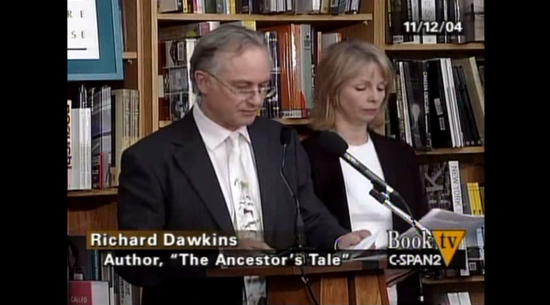
RESPONDING TO HARRY KROTO’S BRILLIANT RENOWNED ACADEMICS!! Part 159 DD “Open letter to Harry Kroto’s friend Richard Dawkins” Page 151 of THE GOD DELUSION: “Many evolutionary transitions are elegantly documented by more or less continuous series of gradually changing intermediate fossils”

Canary Islands 2014: Harold Kroto and Richard Dawkins

Image result for harry kroto richard dawkins

_


September 2, 2011

Richard Dawkins c/o Richard Dawkins Foundation, 
Washington, DC 20005

Dear Mr. Dawkins,

Page 151 of THE GOD DELUSION: “Many evolutionary transitions are elegantly documented by more or less continuous series of gradually changing intermediate fossils”

Adrian Rogers: there are trillions of fossils— in not one instance do we find a transitional form. 

This might interest you that good friend in Little Rock Craig Carney had an uncle named  Warren Carney and Warren was born in 1917 and he was the last living witness of the Scopes Monkey trial but he died in June of 2015. His father took him to the trial every day since they lived in Dayton and it was the biggest happening in the town’s history. Also I attended the funeral of Dr. Robert G. Lee (1886-1978) at Bellevue Baptist in Memphis and he is the minister who presided over William Jennings Bryan’s funeral in 1925. I have posted Dr. Lee’s mostfamous sermon PAYDAY SOME DAY on this blog and it continues to get lots of views everyday.

This next part is from a message by Adrian Rogers on Darwinism:

b. The Fixity of the Species
The second bridge the evolutionist cannot cross is the steadfastness, the fixity, of the species—that is, “the basic categories of life.”

Now, what does the Bible say about the species? Well, Genesis 1, verses 11–12: “And God said, Let the earth bring forth grass, the herb yielding seed, and the fruit tree yielding fruit”—now, listen to this phrase—“after his kind, whose seed is in itself, upon the earth: and it was so. And the earth brought forth grass, and herb yielding seed after his kind, and the tree yielding fruit, whose seed was in itself, after his kind: and God saw that it was good” (Genesis 1:11–12). You continue this passage. Ten times God uses this phrase, “after his kind”—“after his kind,” “after his kind”—because like produces like.

Now, the evolutionist must believe that reproduction does not always come kind after kind. There has to be a mutation—or a transmutation, rather—between species—that you can become a protozoa; and then you can become an un-segmented worm; and then you may become a fish; and then you may become a reptile, and move from one species to another. Now, all of us know there is such a thing as mutation. If you have roses, you can get various varieties of roses. If you have dogs—canines—you can have everything from a poodle to a Great Dane, but they’re still canines; they’re still dogs. The scientists have bombarded fruit flies with gamma rays or some kind of rays to cause mutations, and they get all kinds of strange fruit flies. But, they never get June bugs; they’re still fruit flies.You see, there are variations and adaptations that God has built, but you never have one species turning to another species. You never have a cat turn into a dog that turns to a cow that turns to a horse. You just don’t have that.

Now, men have tried to do that. I heard, one time, about a marine biologist who tried to take one of these beautiful shell creatures called an abalone and cross it with a crocodile. What he got was a crock of baloney. And, anytime anybody tries this, that’s exactly what they come up with.
Now, you say, “Pastor Rogers, why are you so certain about the fixity of the species, the steadfastness of the species?” Number one: because the Bible teaches it, and that’s enough for me. But, let’s move beyond that. We’re not talking about theological reasons now; we’re talking about logical reasons. Friend, if this is true, you would expect to find transitional forms in the fossils. There are billions of fossils; there are trillions of fossils— multiplied fossils. In not one instance—are you listening?—in not one instance do we find a transitional form. None—there are none.

Now, there are some people who will attempt to show you a proof of these, but I can tell you that eminent scientists have proven that these are not true. You would think that if man has evolved for millions and billions of years, and that life has evolved from one-celled life, some amoeba, to what we have today, that, in the fossils in the earth, we would find these transitional forms. But, they’re not there. The people talking about finding the missing link… Friend, the whole chain is missing—the whole chain is missing. Now, you ask them to prove it—that that is not true; and, they cannot come up with evidence. Well, you say, “But Pastor, they seem to have the proof. What about these ape-men? What about these people who lived in caves—these cave dwellers?” We have cave dwellers today. People have lived in caves through the years. “But, what about these things that we see in the museum? What about these creatures in this Time-Life advertisement?” Those are the products of imagination, and artistry, and plaster of Paris.

Adrian Rogers pastor of Bellevue Baptist in Memphis visiting with Ronald Reagan in White House pictured above.

Below Bellevue Baptist pictured in 1975:

Some years ago—in 1925, I believe it was—in Tennessee—Dayton, Tennessee— we had something called The Monkey Trial. Clarence Darrow and William Jennings Bryan were in a court case. A teacher had taught evolution in school, and there were people who sued that evolution should not be taught in school. Now it is reversed— you’re sued if you don’t teach evolution in school. But, there was a great debate, and Clarence Darrow, who was a very brilliant lawyer, was presenting evidence for evolution. Part of the evidence that Clarence Darrowpresented was Nebraska Man, and he had all of these pictures.

Image result for painting A Discussion on the Piltdown Skull

Now, what had happened is there was a man named Harold Cook. And, Harold Cook had found a piece of evidence, and out of that piece of evidence the artist had created this half-man, half-ape—this Nebraska Man. Well, what was it that Clarence Darrow used as evidence that Harold Cook had discovered? It was a tooth. I didn’t say, “teeth”; I said, “tooth.” He had a tooth; and, with that tooth, he had devised a race—male and female.

The answer to find meaning in life is found in putting your faith and trust in Jesus Christ. The Bible is true from cover to cover and can be trusted.

Thank you again for your time and I know how busy you are.

Everette Hatcher, everettehatcher@gmail.comhttp://www.thedailyhatch.org, cell ph 501-920-5733, Box 23416, LittleRock, AR 72221, United States

On November 21, 2014 I received a letter from Nobel Laureate Harry Kroto and it said:

…Please click on this URL http://vimeo.com/26991975

and you will hear what far smarter people than I have to say on this matter. I agree with them.

Harry Kroto

Nick Gathergood, David-Birkett, Harry-Kroto

Image result for harry kroto richard dawkins

I have attempted to respond to all of Dr. Kroto’s friends arguments and I have posted my responses one per week for over a year now. Here are some of my earlier posts:

Arif Ahmed, Sir David AttenboroughMark Balaguer, Horace Barlow, Michael BatePatricia ChurchlandAaron CiechanoverNoam Chomsky,Alan DershowitzHubert DreyfusBart Ehrman, Stephan FeuchtwangDavid Friend,  Riccardo GiacconiIvar Giaever , Roy GlauberRebecca GoldsteinDavid J. Gross Brian Greene, Susan GreenfieldStephen F Gudeman,  Alan Guth, Jonathan HaidtTheodor W. HänschBrian Harrison,  Hermann HauserRoald Hoffmann,  Bruce HoodHerbert Huppert,  Gareth Stedman JonesSteve JonesShelly KaganMichio Kaku,  Stuart Kauffman,  Lawrence KraussHarry KrotoGeorge LakoffElizabeth Loftus,  Alan MacfarlanePeter MillicanMarvin MinskyLeonard Mlodinow Yujin NagasawaAlva NoeDouglas Osheroff,  Jonathan Parry,  Saul PerlmutterHerman PhilipseCarolyn PorcoRobert M. PriceLisa RandallLord Martin Rees,  Oliver SacksJohn SearleMarcus du SautoySimon SchafferJ. L. Schellenberg,   Lee Silver Peter Singer,  Walter Sinnott-ArmstrongRonald de SousaVictor StengerBarry Supple,   Leonard SusskindRaymond TallisNeil deGrasse Tyson,  .Alexander VilenkinSir John WalkerFrank WilczekSteven Weinberg, and  Lewis Wolpert,

In  the second video below in the 67th clip in this series are Richard Dawkins’ words that Harry Kroto wanted me to see. Since then I have read several of Richard Dawkins books and have attempted to respond to the contents of these books directly to Richard Dawkins by mail. In fact, I have been writing Richard Dawkins letters since May 15, 1994 which was the 10th anniversary of the passing of one of my heroes, Francis Schaeffer. Francis Schaeffer spent a lot of time responding to many of Richard Dawkins’ heroes such as Carl Sagan, Jacques Monod, H.J. Blackham, Isaac Newton, Ludwig Wittgenstein, Max Planck, Johann Sebastian Bach, Francis Bacon, Samuel Beckett, Leonardo Da Vinci, Albert Einstein, Michael Faraday, Gerald Horton, Edmund Leach, Louis Pasteur, George Wald, Jacob Bronowski, Steven Weinberg, Charles Darwin, Paul Kurtz, Peter Singer, Jonathan Miller, William B. Provine, Woody Allen, Noam Chomsky, James D. Watson, Francis Crick, Michael Polanyi, The Huxley family, Antony Flew, and Edward O. Wilson (Dawkins has since revised his opinion of Flew and Wilson, but he earlier regarded them very highly). 

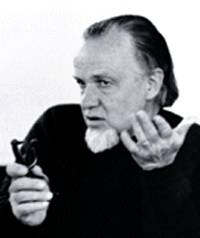
Image result for francis schaeffer
Francis Schaeffer 1911-1984

_

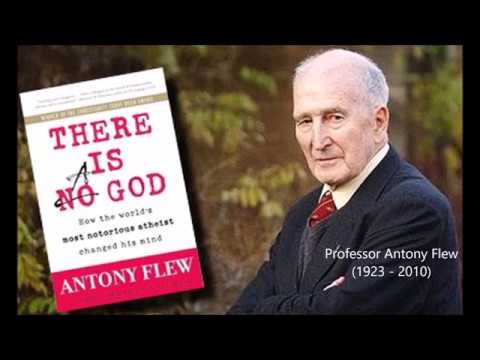
Image result for antony flew

_

Both Francis Schaeffer and Richard Dawkins have talked extensively about the life of Charles Darwin.

Image result for charles darwin

_

Sir Harry Kroto with his high school friend Sir Ian McKellan at the FSU National High Field Magnetic Lab on Tuesday, October 27, 2009.

Image result for harry kroto richard dawkins

50 Renowned Academics Speaking About God (Part 1)

_

Another 50 Renowned Academics Speaking About God (Part 2)

_

_

Edit Post ‹ The Daily Hatch — WordPress

A Further 50 Renowned Academics Speaking About God (Part 3)

_

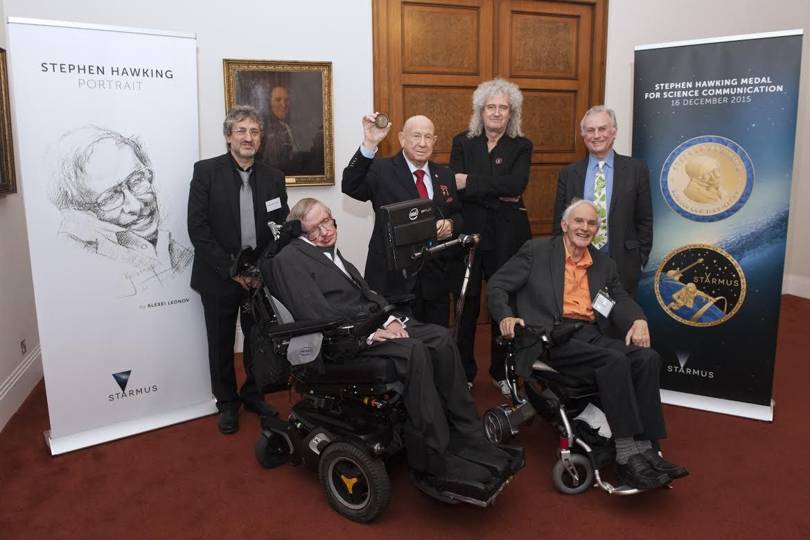
Richard Dawkins Photos Photos – Professor Stephen Hawking Unveils Medal For Science Communication – Zimbio

Professor Stephen Hawking Unveils Medal For Science Communication

Professor Stephen Hawking Unveils Medal For Science Communication In This Photo: Richard Dawkins, Stephen Hawking, Brian May, Harold Kroto, Alexi Leonov, Garik Israelian

__

Richard Dawkins, founder of the Richard Dawkins Foundation for Reason and Science. Credit: Don Arnold Getty Images

16

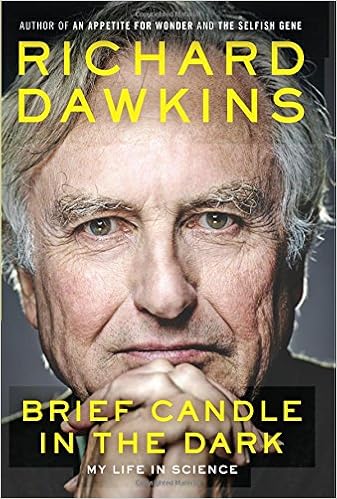
Image result for richard dawkins brief candle in the dark

Garik Israelian, Stephen Hawking, Alexey Leonov, Brian May, Richard Dawkins and Harry Kroto

—-

—-

—-

—-

—-

Related posts:

RESPONDING TO HARRY KROTO’S BRILLIANT RENOWNED ACADEMICS!! Part 48 Nobel Prize Winner and Global Warming Denier Ivar Giaever “I think religion is to blame for a lot of the ills in this world!”

October 20, 2015 – 5:20 am

  On November 21, 2014 I received a letter from Nobel Laureate Harry Kroto and it said: …Please click on this URL http://vimeo.com/26991975 and you will hear what far smarter people than I have to say on this matter. I agree with them. Harry Kroto _________________ Below you have picture of 1996 Chemistry Nobel Prize Winner […]

FRANCIS SCHAEFFER ANALYZES ART AND CULTURE PART 78 THE BEATLES (Breaking down the song TOMORROW NEVER KNOWS) Featured musical artist is Stuart Gerber

September 24, 2015 – 5:42 am

The Beatles were “inspired by the musique concrète of German composer and early electronic music pioneer Karlheinz Stockhausen…”  as SCOTT THILL has asserted. Francis Schaeffer noted that ideas of  “Non-resolution” and “Fragmentation” came down German and French streams with the influence of Beethoven’s last Quartets and then the influence of Debussy and later Schoenberg’s non-resolution which is in total contrast […]

RESPONDING TO HARRY KROTO’S BRILLIANT RENOWNED ACADEMICS!! Part 42 Peter Singer, Professor of Bioethics at Princeton University, THE PROBLEM OF EVIL

September 8, 2015 – 5:10 am

  _______ On November 21, 2014 I received a letter from Nobel Laureate Harry Kroto and it said: …Please click on this URL http://vimeo.com/26991975 and you will hear what far smarter people than I have to say on this matter. I agree with them. Harry Kroto _________________ Below you have picture of 1996 Chemistry Nobel Prize […]

RESPONDING TO HARRY KROTO’S BRILLIANT RENOWNED ACADEMICS!! Bart Ehrman “Why should one think that God performed the miracle of inspiring the words in the first place if He didn’t perform the miracle of preserving the words?”

September 2, 2015 – 8:42 am

On November 21, 2014 I received a letter from Nobel Laureate Harry Kroto and it said: …Please click on this URL http://vimeo.com/26991975 and you will hear what far smarter people than I have to say on this matter. I agree with them. Harry Kroto ____________________ Below you have picture of 1996 Chemistry Nobel Prize Winner Dr. […]

Open Letter #87 to Ricky Gervais on comparison of the Tony of AFTER LIFE to the Solomon of ECCLESIASTES, Solomon “I gathered…most exquisite of all pleasures— voluptuous maidens for my bed… I denied myself nothing my eyes desired…Yet when I surveyed… everything was meaningless, a chasing after the wind; nothing was gained UNDER THE SUN.”

—-

After Life #1 Trailer

—-

After Life 2 Trailer

—-

On Saturday April 18, 2020 at 6pm in London and noon in Arkansas, I had a chance to ask Ricky Gervais a question on his Twitter Live broadcast which was  “Is Tony a Nihilist?” At the 20:51 mark Ricky answers my question. Below is the video:

—-

—-

If Death is the end then what is the point Kath asks below:

——

Kath: You are an atheist?

—-

July 13, 2020 
Ricky Gervais 


Dear Ricky,  

This is the 87th day in a row that I have written another open letter to you to comment on some of your episodes of AFTER LIFE, and then I wanted to pass along some evidence that indicates the Bible is historically accurate.

Tony and his wife Lisa who died 6 months ago of cancer

In season 2 episode 5 there is “A Night of a Thousand Stars” held in Tambury and it starts off with the song THE WANDERER. Here are the lyrics:

Oh well, I’m the type of guy who will never settle down
Where pretty girls are, well you know that I’m around
I kiss ’em and I love ’em cause to me they’re all the same
I hug ’em and I squeeze ’em they don’t even know my nameThey call me the wanderer
Yeah, the wanderer
I roam around, around, around

Ricky Gervais plays bereaved husband Tony Johnson in AFTER LIFE

SOUNDS A LOT LIKE KING SOLOMON IN ECCLESIASTES WHO ACTUALLY HAD OVER 1,000 children!!!
Ricky Gervais

Among his other activities with humanist groups, Gervais has appeared in the Rationalist Association’s Christmas show Nine Lessons and Carols for Godless People.

At school the young Gervais became particularly interested in nature and the sciences, his educational and evidentiary findings further validating his new-found path. On reaching university he intended to study Biology but admits that he opted instead for Philosophy because less study hours were required. It would be 20 more years before the comedian would establish his stand-up career, but anyone who has seen his “Animals”, “Science” or “Politics” tours will surely perceive a rhetorical application of humor firmly rooted in a passion for both philosophy and science. 

You have chosen to be identified with the Humanists so I wanted to ask you if you agree with something asserted by Humanist Manifest 2 concerning sexual freedom.

Humanist Manifesto 2 states: 

SIXTH: In the area of sexuality, we believe that intolerant attitudes, often cultivated by orthodox religions and puritanical cultures, unduly repress sexual conduct. The right to birth control, abortion, and divorce should be recognized. While we do not approve of exploitive, denigrating forms of sexual expression, neither do we wish to prohibit, by law or social sanction, sexual behavior between consenting adults.

Let us take a look at the words in the following Beatles song:

“Why Don’t We Do It In The Road?”Why don’t we do it in the road? Mm
Why don’t we do it in the road? Ah
Why don’t we do it in the road? Mm
No one will be watching us
Why don’t we do it in the road?Why don’t we do it in the road?
Why don’t we do it in the road?
No one will be watching us
Why don’t we do it in the road? OohWhy don’t we do it in the road?
Why don’t we do it in the road?
Why don’t we do it, do it in the road?
Why don’t we do it in the road?
No one will be watching us
Why don’t we do it in the road?

I have written on the Book of Ecclesiastes and the subject of the meaning of our lives on several occasions on this blog of mine. In this series on Ecclesiastes I hope to show how secular humanist man can not hope to find a lasting meaning to his life in a closed system without bringing God back into the picture. This is the same exact case with Solomon in the Book of Ecclesiastes. Three thousand years ago, Solomon took a look at life “under the sun” in his book of Ecclesiastes. Christian scholar Ravi Zacharias has noted, “The key to understanding the Book of Ecclesiastes is the term ‘under the sun.’ What that literally means is you lock God out of a closed system, and you are left with only this world of time plus chance plus matter.” 

HERE BELOW IS SOLOMON’S SEARCH IN THE AREA OF THE 6 “L” WORDS. He looked into  learning (1:16-18), laughter, ladies, luxuries,  and liquor (2:1-3, 8, 10, 11), and labor (2:4-6, 18-20). TODAY WE WANT TO LOOK AT SOLOMON’S SEARCH INTO THE WORD “LADIES.” 

Ecclesiastes 2:8-10The Message (MSG)

I piled up silver and gold,
        loot from kings and kingdoms.
I gathered a chorus of singers to entertain me with song,
    and—most exquisite of all pleasures—
    voluptuous maidens for my bed.

9-10 Oh, how I prospered! I left all my predecessors in Jerusalem far behind, left them behind in the dust. What’s more, I kept a clear head through it all. Everything I wanted I took—I never said no to myself. I gave in to every impulse, held back nothing. I sucked the marrow of pleasure out of every task—my reward to myself for a hard day’s work!

1 Kings 11:1-3 English Standard Version (ESV)

11 Now King Solomon loved many foreign women, along with the daughter of Pharaoh: Moabite, Ammonite, Edomite, Sidonian, and Hittite women, from the nations concerning which the Lord had said to the people of Israel, “You shall not enter into marriage with them, neither shall they with you, for surely they will turn away your heart after their gods.” Solomon clung to these in love. He had 700 wives, who were princesses, and 300 concubines. And his wives turned away his heart.

Francis Schaeffer observed concerning Solomon, “You can not know woman but knowing 1000 women.”

King Solomon in Ecclesiastes 2:11 sums up his search for meaning in the area of the Sexual Revolution with these words, “…behold, all was vanity and a striving after wind, and there was nothing to be gained under the sun.”

How about today’s most well known playboy the late Hugh Hefner?Schaeffer said that Hefner’s goal with the “playboy mentality is just to smash the puritanical ethnic.” About 30 years ago my pastor, Adrian Rogers of Bellevue Baptist Church in Memphis, Tennessee noticed an article where Hugh Hefner said he would be willing to trade all of his riches for the experience of just falling in love with one girl of his dreams and getting married. Rogers went on to say that the playboy lifestyle was bankrupt of lasting satisfaction and that God’s plan of marriage was best. In fact, the Book of Ecclesiastes shows that Solomon came to the conclusion that nothing in life gives true satisfaction without God including knowledge (1:16-18), ladies and liquor (2:1-3, 8, 10, 11), and great building projects (2:4-6, 18-20). You can only find a lasting meaning to your life by looking above the sun and bring God back into the picture.

Solomon’s experiment was a search for meaning to life “under the sun.” Then in last few words in the Book of Ecclesiastes he looks above the sun and brings God back into the picture: “The conclusion, when all has been heard, is: Fear God and keep His commandments, because this applies to every person. For God will bring every act to judgment, everything which is hidden, whether it is good or evil.”

Forbidden Fruit by Paul Kurtz image

Salomons dom.jpg

The Judgment of Solomon, 1617 by Peter Paul Rubens(1577–1640)

Paul Kurtz

Paul Kurtz pictured above.

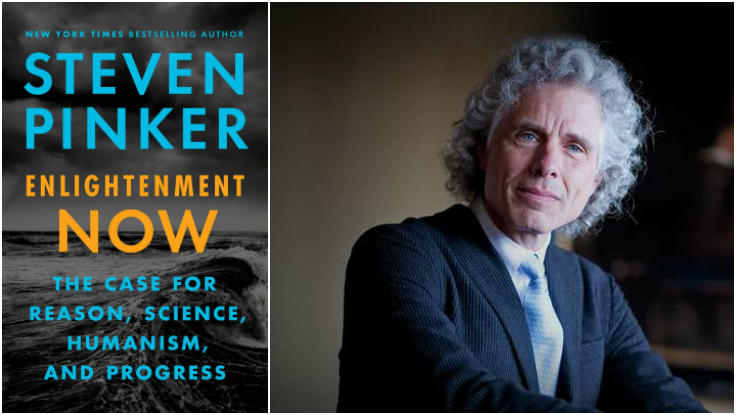
I have had the privilege of corresponding with the humanist psychologist Steven Pinker of Harvard and I have enjoyed reading several of his books and the last one I read was ENLIGHTENMENT NOW: THE CASE FOR REASON, SCIENCE, HUMANISM, AND PROGRESS. In my view it is the best book written from a humanist point of view that discusses morality. Earlier I would given that recognition to Paul Kurtz and his book FORBIDDEN FRUIT: THE ETHICS OF SECULARISM. 

Dr. Pinker asserted:

But theistic morality has two fatal flaws. the first one is that there is no good reaaon to believe that god exists. In a nonfiction appendix to her novel Thirty-Six Arguments for the Existence of God: A Work of Fiction, Rebecca Newberger Goldstein (drawing in part on Plato, Spinoza, Hume, Kant, and Russell) lays out refutations of every one of these arguments. The most common among them—faith, revelation, scripture, authority, tradition, and subjective appeal—are not arguments at all. It’s not just that reason says they cannot be trusted. It’s also that different religions, drawing on these sources, degree mutually incompatible beliefs about how many gods there are, which miracles they wrought, and what they demand of their devotees. Historical scholarship has amply demonstrated that holy scriptures are all-too-human products of their historical eras…” (page 421).

Dr. Pinker brings up two points and they are that the scriptures are not reliable and this goes for several religions. Let’s look at the historical reliability of the Book of Mormon and then compare that to the Bible.

 The Book of Mormon is blindly accepted even though archaeology has disproven many of the facts that are claimed by it. For instance, wheels and chariots did not exist in North America when they said they did and horses were not present either.

Rick Deem wrote the article, “Archaeology/Anthropolocical Problems in the Book of Mormon,” and in it he asserted:

The Book of Mormon claims to be a record of the inhabitants of the Americas during the period from 2000 B.C. to 400 A.D. It makes many claims about the history and anthropology of pre-Columbian American cultures. Unfortunately, the author of the book, Joseph Smith, had little or no knowledge of pre-Columbian American civilizations. Borrowing and adapting many stories from the Old and New Testaments, Joseph Smith was unaware that the earlier Native American peoples were part of stone-age civilizations that were significantly less advanced than Hebrew and other Middle Eastern cultures of biblical times.

The Book of Mormon describes the following animals as living in the pre-Columbian Americas: donkey, cattle, oxen, horse, pig, and elephants. Although horses and mammoths and mastodons (related to elephants) had existed tens of thousands of years ago in the Americas, they had all disappeared by 10,000 years ago. Horses did not reappear on the American continents until the Spanish brought them after the voyage of Columbus. None of these animals existed in North, Central or South America during Book of Mormon times.

The Old and New Testaments present a rich description of biblical peoples, places and cultures. Archeology of the Middle East has revealed the cities, weapons, crops, animals, coins, writings, and references to biblical characters found in the Bible. However, none of the cities mentioned in the Book of Mormon have ever been identified by qualified archeologists. In addition, many Book of Mormon references to metals, weapons, crops, animals, articles of clothing are known to have not been present in the Americas during the time period claimed in the Book of Mormon.

___________________________________

Over the years there have been many criticisms leveled against the Bible concerning its historical reliability. These criticisms are usually based on a lack of evidence from outside sources to confirm the Biblical record. Since the Bible is a religious book, many scholars take the position that it is biased and cannot be trusted unless we have corroborating evidence from extra-Biblical sources. In other words, the Bible is guilty until proven innocent, and a lack of outside evidence places the Biblical account in doubt.

This standard is far different from that applied to other ancient documents, even though many, if not most, have a religious element. They are considered to be accurate, unless there is evidence to show that they are not. Although it is not possible to verify every incident in the Bible, the discoveries of archaeologysince the mid-1800s have demonstrated the reliability and plausibility of the Bible narrative.

Here are some examples:

  • Many thought the Biblical references to Solomon’s wealth were greatly exaggerated. Recovered records from the past show that wealth in antiquity was concentrated with the king and Solomon’s prosperity was entirely feasible.
  • It was once claimed there was no Assyrian king named Sargon as recorded in Isaiah 20:1, because this name was not known in any other record. Then, Sargon’s palace was discovered in Khorsabad, Iraq. The very event mentioned in Isaiah 20, his capture of Ashdod, was recorded on the palace walls. What is more, fragments of a stela memorializing the victory were found at Ashdod itself.
  • Another king who was in doubt was Belshazzar, king of Babylon, named in Daniel 5. The last king of Babylon was Nabonidus according to recorded history. Tablets were found showing that Belshazzar was Nabonidus’ son who served as coregent in Babylon. Thus, Belshazzar could offer to make Daniel “third highest ruler in the kingdom” (Dan. 5:16) for reading the handwriting on the wall, the highest available position. Here we see the “eye-witness” nature of the Biblical record, as is so often brought out by the discoveries of archaeology.

How does archaeology conclusively demonstrate the Bible to be reliable and unique among all the holy books of world religions? Answer

For many more archaeological evidences in support of the Bible, see Archaeology and the Bible


[ If this information has been helpful, please prayerfully consider a donation to help pay the expenses for making this faith-building service available to you and your family! Donations are tax-deductible. ]

Author: Bryant Wood of Associates for Biblical Research

The answer to find meaning in life is found in putting your faith and trust in Jesus Christ. The Bible is true from cover to cover and can be trustedGOD HAS SPOKEN AND HAS NOT BEEN SILENT, BUT YOU CAN’T JUST CONTINUE TO LOOK FOR ANSWERS JUST “UNDER THE SUN.” You want some evidence that indicates that the Bible is true? Here is a good place to start and that is taking a closer look at the archaeology of the Old Testament times. Is the Bible historically accurate? Here are some of the posts I have done in the past on the subject: 1. The Babylonian Chronicleof Nebuchadnezzars Siege of Jerusalem, 2. Hezekiah’s Siloam Tunnel Inscription. 3. Taylor Prism (Sennacherib Hexagonal Prism), 4. Biblical Cities Attested Archaeologically. 5. The Discovery of the Hittites, 6.Shishak Smiting His Captives, 7. Moabite Stone, 8Black Obelisk of Shalmaneser III9A Verification of places in Gospel of John and Book of Acts., 9B Discovery of Ebla Tablets10. Cyrus Cylinder11. Puru “The lot of Yahali” 9th Century B.C.E.12. The Uzziah Tablet Inscription13. The Pilate Inscription14. Caiaphas Ossuary14 B Pontius Pilate Part 214c. Three greatest American Archaeologists moved to accept Bible’s accuracy through archaeology.

—-


The answer to find meaning in life is found in putting your faith and trust in Jesus Christ. The Bible is true from cover to cover and can be trusted.

Thank you again for your time and I know how busy you are.

Sincerely,

Everette Hatcher, everettehatcher@gmail.comhttp://www.thedailyhatch.org, cell ph 501-920-5733, 13900 Cottontail Lane, Alexander, AR 72002

PS: What is the meaning of life? Find it in the end of the open letter I wrote to you on April 23, 2020. 


Below is the workforce of THE TAMBURY GAZETTE 

Seen below is the third episode of AFTERLIFE (season 1) when Matt takes Tony to a comedy club with front row seats to cheer him up but it turns into disaster!!!

——

—-

Part 1 “Why have integrity in Godless Darwinian Universe where Might makes Right?”

Part 2 “My April 14, 2016 Letter to Ricky mentioned Book of Ecclesiastes and the Meaninglessness of Life”

Part 3 Letter about Brandon Burlsworth concerning suffering and pain and evil in the world.  “Why didn’t Jesus save her [from cancer]?” (Tony’s 10 year old nephew George in episode 2)

Part 4 Letter on Solomon on Death Tony in episode one, “It should be everyone’s moral duty to kill themselves.”

Part 5 Letter on subject of Learning in Ecclesiastes “I don’t read books of fiction but mainly science and philosophy”

Part 6 Letter on Luxuries in Ecclesiastes Part 6, The Music of AFTERLIFE (Part A)

Part 7 Letter on Labor in Ecclesiastes My Letter to Ricky on Easter in 2017 concerning Book of Ecclesiastes and the legacy of a person’s life work

Part 8 Letter on Liquor in Ecclesiastes Tony’s late wife Lisa told him, “Don’t get drunk all the time alright? It will only make you feel worse in the log run!”

Part 9 Letter on Laughter in Ecclesiastes , I said of laughter, “It is foolishness;” and of mirth, “What does it accomplish?” Ecclesiastes 2:2

Part 10 Final letter to Ricky on Ladies in Ecclesiastes “I gathered a chorus of singers to entertain me with song, and—most exquisite of all pleasures— voluptuous maidens for my bed…behold, all was vanity and a striving after wind, and there was nothing to be gained under the sun” Ecclesiastes 2:8-11.

Part 11 Letter about Daniel Stanhope and optimistic humanism  “If man has been kicked up out of that which is only impersonal by chance , then those things that make him man-hope of purpose and significance, love, motions of morality and rationality, beauty and verbal communication-are ultimately unfulfillable and thus meaningless.” (Francis Schaeffer)

Part 12 Letter on how pursuit of God is only way to get Satisfaction Dan Jarrell “[In Ecclesiastes] if one seeks satisfaction they will never find it. In fact, every pleasure will be fleeting and can not be sustained, BUT IF ONE SEEKS GOD THEN ONE FINDS SATISFACTION”

Part 13 Letter to Stephen Hawking on Solomon realizing he will die just as a dog will die “For men and animals both breathe the same air, and both die. So mankind has no real advantage over the beasts; what an absurdity!” Ecclesiastes

Part 14 Letter to Stephen Hawking on 3 conclusions of humanism and Bertrand Russell destruction of optimistic humanism. “That Man is the product of causes which had no prevision of the end they were achieving; that his origin, his growth, his hopes and fears, his loves and his beliefs, are but the outcome of accidental collocations of atoms—no philosophy which rejects them can hope to stand. Only within the scaffolding of these truths, only on the firm foundation of unyielding despair, can the soul’s habitation henceforth be safely built.”(Bertrand Russell, Free Man’s Worship)

Part 15 Letter to Stephen Hawking on Leonardo da Vinci and Solomon and Meaningless of life “I hate life. As far as I can see, what happens on earth is a bad business. It’s smoke—and spitting into the wind” Ecclesiastes Book of Ecclesiastes Part 15 “I hate life. As far as I can see, what happens on earth is a bad business. It’s smoke—and spitting into the wind” Ecclesiastes 2:17

Part 16 Letter to Stephen Hawking on Solomon’s longing for death but still fear of death and 5 conclusions of humanism on life UNDER THE SUN. Francis Schaeffer “Life is just a series of continual and unending cycles and man is stuck in the middle of the cycle. Youth, old age, Death. Does Solomon at this point embrace nihilism? Yes!!! He exclaims that the hates life (Ecclesiastes 2:17), he longs for death (4:2-3) Yet he stills has a fear of death (2:14-16)”

Mandeep Dhillon as Sandy on her first assignment in ‘After Life’. (Twitter)

A still from ‘After Life’ that captures the vibe of the Tambury Gazette. (Twitter)

Michael Scott of THE OFFICE (USA) with Ricky Gervais 

After Life on Netflix

After Life on Netflix stars Ricky Gervais as a bereaved husband (Image: Netflix)

—-

Psychiatrist played by Paul Kaye seen below.

The sandy beach walk

Tony Johnson with his dog Brandi seen below:

—-

Related posts:

Taking on Ark Times Bloggers on various issues Part I “Old Testament Bible Prophecy” includes the film TRUTH AND HISTORY and article ” Jane Roe became pro-life”

April 12, 2013 – 5:45 am

I have gone back and forth and back and forth with many liberals on the Arkansas Times Blog on many issues such as abortion, human rights, welfare, poverty, gun control  and issues dealing with popular culture. Here is another exchange I had with them a while back. My username at the Ark Times Blog is Saline […]By Everette Hatcher III | Posted in Biblical ArchaeologyFrancis SchaefferProlife | Edit|Comments (0)

John MacArthur on fulfilled prophecy from the Bible Part 2

August 8, 2013 – 1:28 am

I have posted many of the sermons by John MacArthur. He is a great bible teacher and this sermon below is another great message. His series on the Book of Proverbs was outstanding too.  I also have posted several of the visits MacArthur made to Larry King’s Show. One of two most popular posts I […]By Everette Hatcher III | Posted in Adrian RogersCurrent Events | Edit|Comments (0)

John MacArthur on fulfilled prophecy from the Bible Part 1

August 6, 2013 – 1:24 am

I have posted many of the sermons by John MacArthur. He is a great bible teacher and this sermon below is another great message. His series on the Book of Proverbs was outstanding too.  I also have posted several of the visits MacArthur made to Larry King’s Show. One of two most popular posts I […]By Everette Hatcher III | Posted in Adrian RogersCurrent Events |Tagged Bible Prophecyjohn macarthur | Edit|Comments (0)

John MacArthur: Fulfilled prophecy in the Bible? (Ezekiel 26-28 and the story of Tyre, video clips)

April 5, 2012 – 10:39 am

Prophecy–The Biblical Prophesy About Tyre.mp4 Uploaded by TruthIsLife7 on Dec 5, 2010 A short summary of the prophecy about Tyre and it’s precise fulfillment. Go to this link and watch the whole series for the amazing fulfillment from secular sources. http://www.youtube.com/watch?v=qvt4mDZUefo________________ John MacArthur on the amazing fulfilled prophecy on Tyre and how it was fulfilled […]By Everette Hatcher III | Posted in Biblical Archaeology | Edit|Comments (1)

John MacArthur on the Bible and Science (Part 2)

August 1, 2013 – 12:10 am

John MacArthur on the Bible and Science (Part 2) I have posted many of the sermons by John MacArthur. He is a great bible teacher and this sermon below is another great message. His series on the Book of Proverbs was outstanding too.  I also have posted several of the visits MacArthur made to Larry […]By Everette Hatcher III | Posted in Current Events | Edit|Comments (0)

John MacArthur on the Bible and Science (Part 1)

July 30, 2013 – 1:32 am

John MacArthur on the Bible and Science (Part 1) I have posted many of the sermons by John MacArthur. He is a great bible teacher and this sermon below is another great message. His series on the Book of Proverbs was outstanding too.  I also have posted several of the visits MacArthur made to Larry […]By Everette Hatcher III | Posted in Current Events | Edit|Comments (0)

Adrian Rogers: “Why I believe the Bible is true”

July 9, 2013 – 8:38 am

Adrian Rogers – How you can be certain the Bible is the word of God Great article by Adrian Rogers. What evidence is there that the Bible is in fact God’s Word? I want to give you five reasons to affirm the Bible is the Word of God. First, I believe the Bible is the […]By Everette Hatcher III | Posted in Adrian RogersBiblical Archaeology | Edit|Comments (0)

The Old Testament is Filled with Fulfilled Prophecy by Jim Wallace

June 24, 2013 – 9:47 am

Is there any evidence the Bible is true? Articles By PleaseConvinceMe Apologetics Radio The Old Testament is Filled with Fulfilled Prophecy Jim Wallace A Simple Litmus Test There are many ways to verify the reliability of scripture from both internal evidences of transmission and agreement, to external confirmation through archeology and science. But perhaps the […]By Everette Hatcher III | Posted in Biblical ArchaeologyCurrent Events | Edit|Comments (0)

Taking on Ark Times Bloggers on various issues Part M “Old Testament prophecy fulfilled?”Part 3(includes film DEATH BY SOMEONE’S CHOICE)

April 19, 2013 – 1:52 am

  I have gone back and forth and back and forth with many liberals on the Arkansas Times Blog on many issues such as abortion, human rights, welfare, poverty, gun control  and issues dealing with popular culture. Here is another exchange I had with them a while back. My username at the Ark Times Blog is […]By Everette Hatcher III | Posted in Francis SchaefferProlife | Edit|Comments (0)

Evidence for the Bible

March 27, 2013 – 9:43 pm

Here is some very convincing evidence that points to the view that the Bible is historically accurate. Archaeological and External Evidence for the Bible Archeology consistently confirms the Bible! Archaeology and the Old Testament Ebla tablets—discovered in 1970s in Northern Syria. Documents written on clay tablets from around 2300 B.C. demonstrate that personal and place […]By Everette Hatcher III | Posted in Biblical Archaeology | E

Adrian Rogers on Evolution

—-

Charles Darwin Autobiography

Francis Schaeffer “The Age of NONREASON”

——-

—-

—-

—-

“Music Monday” THE BEATLES (Breaking down the song “Penny Lane”Part A) Featured artist is Marty Balin

https://www.youtube.com/watch?v=pB2-KOvjil8

Francis Schaeffer noted concerning the Beatles:

The Beatles moved through several stages, including the concept of the drug and psychedelic approach. The psychedelic began with their records REVOLVER, STRAWBERRY FIELDS FOREVER, AND PENNY LANE. This was developed with great expertness in their record SERGEANT PEPPER’S LONELY HEARTS CLUB BAND in which psychedelic music, with open statements concerning drug-taking, was knowingly presented as a religious answer. 

https://www.youtube.com/watch?v=PfNjwfbyOLM

The Beatles were looking for lasting satisfaction in their lives and their journey took them down many of the same paths that other young people of the 1960’s were taking. No wonder in the video THE AGE OF NON-REASON Schaeffer noted,  ” Sergeant Pepper’s Lonely Hearts Club Band…for a time it became the rallying cry for young people throughout the world. It expressed the essence of their lives, thoughts and their feelings.” 

How Should We then Live Episode 7 small (Age of Nonreason)

https://www.youtube.com/watch?v=ygzh713TQn8

_

_____________

Lucy in the sky with diamonds is pretty obvious. what are the others?
1 Answer

Jon Pennington

Jon Pennington, I love music, any kind of music…

2.7k Views

Psychedelia is in the ear of the beholder, but telltale signs of psychedelic rock usually include unusual sounds and timbres (e.g., sitars, fuzz tone, mellotron, electronically distorted sounds), upwardly moving melodies that give the sensation of “flight,” oscillating or lurching rhythms, slowed-down rhythms, speeded-up rhythms, abrupt changes in rhythm to signify disorientation, use of musical modes that sound “Oriental” or “Indian,” lyrical references to bright colors, and an inward lyrical focus on the singer’s interior life.  Psychedelic influences start to creep into the Beatles’ work in 1965, but they haven’t necessarily produced any full-fledged psychedelic songs by then.

The songs from 1965 most likely believed to have some psychedelic influence, but probably can’t be classified as fully psychedelic, include:

  • Help! (recorded April 13, 1965; one theory has it that it was inspired by the soul searching that John Lennon did after his coffee was dosed with LSD by George’s dentist in March 1965; not too psychedelic, but supposedly written as a Roy Orbison-style ballad that later became more uptempo)
  • Norwegian Wood (recorded October 12, 21, 1965; except for George’s sitar, it was more inspired by American folk rock than psychedelic drugs per se)
  • Day Tripper (recorded October 16, 1965; uses “trip” as a drug double entendre, but otherwise more influenced by R&B than psychedelia)

The Beatles’ purest psychedelic period doesn’t begin until the band takes three months off after finishing Rubber Soul:

  • Tomorrow Never Knows (recorded April 6-7, 1966; includes Indian tamboura, a melody similar to an Indian raga drone that barely moves out of the key of C, lyrics borrowed from Timothy Leary, swirly vocals modified using a Leslie speaker cabinet, tape loops with unusual sounds at random intervals, drumming from Ringo that sounds like a tape loop but isn’t)
  • Love You To (recorded April 11, 1966; George’s first song written in Indian raga style)
  • Rain (recorded April 14, 16, 1966; included multiple overdubs recorded at slow speed and high speed to fatten up the sound and make the tempo slightly more draggy, includes drone-like textures)
  • I’m Only Sleeping (recorded April 27-May 6, 1966; inspired by how John’s LSD use encouraged his desire to be lazy, use of dreamlike imagery, backward guitar sounds)
  • I Want to Tell You (recorded June 2-3, 1966; lurching and oscillating harmonies, lyrics focusing on internal confusion, sounds of a piano that sounds out of tune)
  • She Said She Said (recorded June 21, 1966; “fattened” vocals similar to “Rain,” lyrics inspired by an encounter John Lennon had with Peter Fonda while taking an LSD trip, tapes of Ringo’s drums may have been manipulated to sound choppier)
  • Strawberry Fields Forever (recorded November 24 thru December 22, 1966; mellotron, George playing an Indian instrument called a svarmandal, two melodies in different keys combined into one song by playing them at slightly different speeds, introspective lyrics focused on self-doubt, insistence that “nothing is real”)
  • Penny Lane (recorded December 29, 1966 thru January 17, 1967; may have been Paul’s first song reacting to LSD, lyrics mention poppies on a tray, use of harmonium and piccolo trumpet, focus on returning to childhood experience)
  • Carnival of Light (recorded January 5, 1967; avant-garde free form piece still not yet released, possibly could be viewed as Paul’s version of Revolution #9)
  • A Day in the Life (recorded January 19, 1967 thru February 22, 1967; disorienting time-shifts between verses written by John and Paul, symphony orchestra crescendos chaotically until ended in a long, droning chord)
  • Only A Northern Song (recorded February 13-20, 1967; ethereal organ, musical instruments speeded up, in-studio chatter)
  • Being for the Benefit of Mr. Kite (recorded February 17, 1967; features tape manipulation and swirly organ sounds to approximate the sound of being in the middle of a circus)
  • Lucy in the Sky with Diamonds (recorded February 28, 1967 thru March 2, 1967; lyrics feature considerable color imagery, atmposhere shifts from slow and dreamy tempo on the verses to more uptempo on the chorus, ethereal vocals)
  • Within You Without You (recorded March 15, 1967 thru April 4, 1967; inspired by both Indian music and philosophy, song rarely moves out of the key of C)
  • Magical Mystery Tour (recorded April 25, 1967 thru May 3, 1967; partially inspired by the LSD-soaked tours of Ken Kesey and his “magic bus” in the mid-1960s, uses “trip” as a double entendre)
  • Baby, You’re A Rich Man (recorded May 11, 1967; not very psychedelic lyrically, but the clavioline keyboard gives the songs a very unusual texture)
  • It’s All Too Much (recorded May 25, 1967-June 2, 1967; distorted guitar, Hammond organ with lots of sustained drones, main melody rarely moves out of key of G)
  • I Am the Walrus (recorded September 5 thru September 29, 1967; surrealistic lyrics, disorienting tempo changes between verses, nonsense chants, random radio noise from a BBC broadcast of King Lear)
  • Blue Jay Way (recorded September 6 thru October 6, 1967; lyrics inspired by the disorientation of being lost in L.A., includes phasing and backward tapes, oscillates between C major and C diminished)
  • The Inner Light (recorded January 12 thru February 8, 1968; Indian influence on melody, lyrics focus on how you can “travel” without leaving your house)
  • Across the Universe (recorded February 4-8, 1968; the original version before it was modified by Phil Spector features floating Lennon vocals with droning noises and unusual wildlife sounds, a child’s voice matching John’s voice also appears in the mix)

Listing the recording dates is instructive here, because some of these songs   would not get released until the Yellow Submarine LP (It’s Only A Northern Song, It’s All Too Much) or the Let It Be LP (Across the Universe in its Phil Spector version), but were definitely made during the period when psychedelic drugs had the biggest effect on the Beatles creative output.  After February 1968, the Beatles went to Rishikesh to commune with the Maharishi, where they were told not to bring any drugs along, because Trascendental Meditation was a more natural high.  Although the Beatles probably did take some marijuana along to Rishikesh, their use of strong hallucinogens ended at that point, except for John, who used LSD a few more times after Rishikesh.

The Beatles celebrate the completion of their album, ‘Sgt Pepper’s Lonely Hearts Club Band’, on May 19th, 1967 in London.

_____________

_____________

I just wanted to point out what an impact that the short 119 page book ESCAPE FROM REASON has had. Below is a story of Paul McGuire who had never been exposed to Christianity until he read that book and it changed his whole worldview.

SEARCHING FOR TRUTH IN THE NEW AGE

By Paul McGuire
My spiritual pilgrimage began at a very young age when the questions, “Who am I? What is my purpose in life?” and “What am I doing here?” haunted me and burned in my mind night and day. While other children were content to play, I was driven to ask questions about the meaning of life. Raised in New York City, I came from a liberal, educated family. Both my parents were teachers, and neither believed in God.

As a young boy, I thought science could give me the answers to my questions about life. Reading every book I could get my hands on about science and the lives of the great scientists, I often devoured ten books a week. I read about men like Albert Einstein, Nicola Tesla, Thomas Edison, Enrico Fermi, Louis Pasteur, and John Oppenheimer. Building a huge laboratory in my bedroom, I undertook amateur experiments on cryogenics and nuclear physics. Soon, however, I realized that these brilliant men did not have the answers I was looking for. Thus, at an early age I discovered the bankruptcy of scientific materialism.

After exhausting science as a means of finding the meaning of life, I next investigated the occult and Eastern religions. Biblical Christianity was not even an option for me. I had never once met a Bible-believing Christian or seen an evangelist on television, and the churches in my neighborhood were steeped in liberal theology or dead orthodoxy.

The only religion we had at home was secular humanism – the belief that there is no God and man is the center of the universe. As a result, I was raised to believe that there was no absolute right or wrong. Around the dinner table, my parents taught me that human evil was due to ignorance and that the concept of a personal God was an archaic belief any educated person should transcend. In addition, they told me that Christians were intellectually pathetic people who were “anti-love,” “anti-joy,” and “anti-sex.” Instead of promoting anything good, Christians were responsible for the crusades and the Inquisition.

One Thanksgiving evening my grandmother asked my father to pray. Instead, he launched into a thunderous tirade about how there was no reason to thank God – everything we had came from man’s hard work.

In the atheistic environment of my home, the spiritual void within me grew deeper, and I plunged headlong into the New Age philosophy and radical politics. Soon after I reached puberty, my parents divorced, ripping my world apart. My spiritual pilgrimage merged with a growing hatred of all authority and society. I was ripe to be seduced by the counterculture and the psychedelic philosophy of the ’60s which has now become the New Age Movement.

Although my mother held a secular humanist worldview, she was always full of loving concern and discipline. She spent thousands of hours reading me books and taking me to museums and libraries. Genuinely concerned about her rebellious son, my mother sent me to a psychotherapist whom she hoped would solve my problems.

I told my therapist that I wanted to know why I was alive, who I was, and what purpose there was for my life. He could not help me and only provided a listening board. In the vain hope of finding answers, I began reading Sigmund Freud, Carl Rogers, and Carl Jung. But all the leading psychological theorists seemed to contradict each other, and I was left more confused than ever.

Then the “hippie” movement with its drugs and “free love” exploded across the nation. I remember the first time I saw Timothy Leary. Wearing a white outfit and grinning like the “Cheshire Cat” from Alice In Wonderland, he said on national television “Tune in, turn on, and drop out.” This psychedelic prophet of LSDwas in distinct contrast to the people involved in organized religion. Then the Beatles recorded “Sgt. Pepper’s Lonely Hearts Club Band,” and the psychedelic invasion of drugs, Eastern religion, and promiscuous sex spread.

At the age of fifteen, I was wearing long hair and boots and demonstrating with Abbie Hoffman in New York City. I organized demonstrations and was even made an honorary member of the Black Panther Party for protesting outside a prison against the arrest of Panther leaders.

Simultaneously, I deepened my activities in Eastern mysticism and was introduced to drugs by an “honor student” in my high school. I read a book by Aldous Huxley titled Heaven and Hell and the Doors of Perception, which describes Huxley’s experimentation with hashish and mescaline as a means to enter a higher state of consciousness. This fellow student, whose father was a doctor, “turned me on” to hashish and mescaline as part of a serious scientific experiment. Together, we passed through the “doors of perception” and entered a higher realm of consciousness.

Fueled by drugs like LSD and mescaline, it was the psychedelic ’60s that ushered in the current New Age Movement. Powerful mind altering drugs like LSD blasted people into the spiritual realm and forced them to acknowledge the presence of a spiritual reality. This opened the door to the occult and the myriad practices of Eastern mysticism that gave birth to the New Age Movement.

In my own life, the use of powerful psychedelic drugs like LSD intensified my plunge into the New Age philosophy and Eastern Mysticism. Thus began an electric pilgrimage into Hinduism, Buddhism, the teachings of Don Juan, yoga, mental telepathy, altered states of consciousness, hypnotherapy, astral projection, reincarnation, the occult, devil’s weed, spirit guides, and a smorgasbord of mystical experiences. I was greatly influenced by men like Baba Ram Dass, Ken Kesey, Timothy Leary, and Stephen Gaskin.

In fact, my major at the University of Missouri was called “Altered States of Consciousness,” a brand-new accredited field within the Department of Psychology. We studied different means of entering higher states of consciousness and engaged in exercises based on Eastern mystical teaching and experiences by men like Carlos Castaneda. It was during this time of intense New Age activity that I developed spiritual powers and “cosmic consciousness.”

My professor at the University of Missouri was a practicing mystic and taught a number of courses on mental illness. He believed, as did popular psychologists like R.D. Laing, that mental illness or madness could be a means of entering higher consciousness. In this theory, insane people are considered spiritual pilgrims caught between two realities.

My professor invited gurus to teach and perform supernatural feats of levitation. Once while my professor was lecturing, I heard a distinct voice within me shout, “Surrender to the dark forces within!” At this point in my life I noticed a growing intensity in the manifestation of strong paranormal experiences. Yet at the same time, I had a growing feeling that things were getting out of control. The more bizarre things became, however, the more I believed I was moving toward “enlightenment.” I became convinced that everything happening was due to my excess “karma” burning off.

As is often the case with people involved in drugs and the occult, I experienced mixed feelings of great elation and depression. I became a kind of mystical “wildman,” hiking into the woods while on psychedelic drugs and communing with what I thought was God. But I was like a comet crashing into the atmosphere, burning more brightly as I moved through the heavens and consuming myself in flames. One evening I broke into my psychology professor’s office and wrote him an anonymous note warning him of the dangers of “the journey.”

Invasion Of The Jesus Movement

In the early ’70s, a strange thing happen at the University of Missouri: The Jesus Movement spread from the West Coast and entered the campus town of Columbia, Missouri. I remember seeing an article on the Jesus Movement in a national magazine. Reading about these Christians, who I thought were going to regress mankind into a new Dark Age with their “primitive blood-stained religion,” made me furious. I hated them because I thought they would stop the “revolution” and the establishment of the new world order based on higher consciousness.

People involved in the New Age Movement hold the very same beliefs, for their goal is to create a one-world government and unify the planet under a spiritual system of higher consciousness. Like many New Agers, I viewed Christians with all their talk of Jesus Christ being the “only way” as an anachronism and a threat to the spiritual/political revolution coming to the planet.

About this time, however, I finally came face to face with genuine Christians who moved in the supernatural flow of the Holy Spirit and had the glory of God shining on their countenances. I encountered Spirit-filled Christians everywhere and thought it was my duty to defend the faith of Eastern mysticism and the religion of “higher consciousness.” Attacking and debating believers in philosophy classes whenever they spoke out about their faith, I delighted in trying to humiliate them and prove them wrong through intellectual arguments.

In addition, I increased my “outrageous” behavior in front of Christians in an attempt to mock and ridicule them. Since I studied film, I made X-rated animation movies with Barbie dolls in an attempt to sneer at Judeo-Christian morality.

Despite my bitter hatred, a couple of true Christians began to zero in on me and share the love of Jesus Christ. Beneath all my bravado was a hurting, frightened individual reaching out for answers. At first, my mind completely rejected everything they were saying. But they continued to love me with a pure, deep, spiritual agape love. Even though I thought what they were saying was complete idiocy, I felt myself being wooed and convicted by the Holy Spirit as they talked.

For the first time in my life, I sensed God’s love for me. All my intellectual arguments were reduced to nothing as I encountered something far more real than anything I had experienced before. This was not some “trip” or mystical high. The purity and love that I felt had to be God.

Empowered by the Holy Spirit, these supernatural Christians opened up their lives to me. They cared about me as a person and loved me. They invited me to their prayer meetings and had me over for dinner. Through their personal ministry to me, I felt the arms of the living God embrace me and hug me like my father never had. As the Lord touched me deep within my heart, the hurt and bruised child locked inside me emerged and responded to His love.

Although I wasn’t yet ready to surrender, the Holy Spirit continued to work in my life. I had all kinds of intellectual questions, so my Christian friends gave me a book by Dr. Francis Schaeffer called ESCAPE FROM REASON. It changed my life. I was shocked to discover that a person could be both intelligent and a Christian. Talking about God, film, art, and philosophy in brilliant and articulate terms, Dr. Schaeffer explained contemporary culture in a way I had never understood.

Still I fought with the Holy Spirit, and the forces of darkness did not want to let me go. As these Christians prayed for me, the Holy Spirit continued to convict me. Sometimes I found myself walking alone by the highway, and, even though I was “stoned,” I would begin sobbing and weeping as Almighty God touched me.

The Hand Of Providence

One afternoon a guy named Tim invited me to a retreat in a wooded area about an hour away from the campus. I had mysteriously met Tim in the hallway of a dormitory, where he sat reading the Bible that he carried with him everywhere. He was in the hallway to meet someone else, but providentially he met me and invited me to this Christian retreat. Tim’s eyes shone with sincerity and the love of God, so I accepted his invitation.

Dressed in boots, blue jeans, and long hair, I arrived at the retreat center. A brief look at the place quickly convinced me that these people didn’t have what I was looking for. They were the kind of Christians I had seen before – religious but lacking the depth and dimension of people who have had a personal encounter with Jesus Christ.

While at the retreat center, I noted vague references to the Bible, but primarily we played games like “spin the bottle.” I was totally disgusted, for these people reinforced my worst preconceptions about Christianity. After spending the night I told Tim during breakfast that I was going to hitchhike back to the university. Tim walked me to the highway and said, “Paul, God will take care of your ride home.” Wondering if he was some kind of religious nut but hoping to humor him, I said, “Yeah, yeah sure.” Then I stuck out my thumb and tried to hitch a ride.

The first person to pick me up was a Pentecostal preacher. He and his wife talked to me about Jesus the entire ride. Stunned, I chalked it up as coincidence; after all, this was the Bible Belt. After they let me out, I stuck out my thumb and was picked up by a Bible salesman with a station wagon filled with Bibles! As we whizzed down the highway, he opened a giant Bible and began reading. With no hands on the wheel, he asked me if I wanted to receive Jesus into my life. I managed to gulp a “yes,” and he pulled off the road.

As we rolled to a stop, the thought raced through my mind, “What have I got myself into? Is this guy some kind of religious psychopath or axe murderer?” Growing up in New York City had taught me to suspect everybody’s motives and not to trust strangers.

The next thing I knew this Bible salesman was leading me in a prayer. With head bowed and hands clasped, I heard myself saying, “Jesus Christ, I ask you to forgive me of my sins. I invite you to come into my life and make me born again. In Jesus’ name. Amen.” I couldn’t believe I had said this prayer. I wasn’t even sure what sin was, although it seemed to me like an archaic concept. But I prayed in faith and meant it.

Hours later, I forgot the incident had even occurred and “partied” the night away with friends. The next day I woke up hung over and decided to visit a Christian girl named Laura. She and her boyfriend, Burgess, had spent a lot of time ministering and witnessing to me about Jesus.

As Laura and I talked, we were walking next to some giant Roman columns in the university quadrangle. I told her about my highway experience, and another girl sitting on the lawn overheard our conversation. It turned out that she was a minister’s daughter wrestling with the question of whether or not Christianity was really true. Looking at me pointblank, she said, “Do you believe that Jesus Christ was the Son of God?”

All of a sudden the words, “Yes, I believe that Jesus Christ is the Son of God!” leapt from deep within me. I was shocked. I had never said anything like that before. As I spoke, I had the most powerful spiritual experience of my life. It seemed that the sky had cracked open, and the presence of God overwhelmed me. A giant veil was lifted from my eyes as I realized God truly did exist.

I understand that I risk losing credibility by relating this experience exactly as it happened. True miracles can be cheapened by relating them in either a glib or a sensational manner. Many Christians carelessly utter the word “miracle” with such arrogance that it loses all its value. In addition, I understand that many people have had quiet but profound experiences with Jesus Christ that have just as much validity as mine.

But for me to minimize or reduce what happened to more logical terms just to make it more plausible would be inaccurate. I felt as if every dream I had ever had within the depths of my soul came true in an instant. Literally caught up in the Holy Spirit, I felt I was floating for weeks. Although I was higher than I had ever been in my entire life, I knew that the experience was genuine and pure.

Everything I had searched for in Eastern mysticism, human relationships, and the New Age Movement, I now found in Jesus Christ. This was not just another higher state of consciousness, an “upper story leap” without rational content, or a mystical trip. Nothing about this was artificial or mystical.

One could easily misconstrue my involvement in the New Age Movement and my encounter with Jesus Christ as the path of someone hopping from experience to experience lacking rational and verifiable content. Let me assure you that when I began my spiritual journey I did so as a scientist and a skeptic.

The contrast between mystical experiences and my encounter with Jesus Christ was as different as night and day. All of the New Age and Eastern mystical experiences I was involved in had an illusory quality no matter how real they seemed at the time. Jesus Christ was not just another “experience.” My newfound relationship with Him conveyed a reality so strong that I knew I had found God.

PAUL’S PERSONAL TESTIMONY ABOUT HOW HE ESCAPED THE NEW AGE MOVEMENT AND HOW JESUS CHRIST RESCUED HIM FROM DECEPTION?

How Should We then Live Episode 7 small (Age of Nonreason)

https://www.youtube.com/watch?v=ygzh713TQn8

Marty Balin. art-50339-Grace-mirror-c

MARTY BALIN – MUSIC OF MY LIFE – A Journey Into His Art & Music

https://www.youtube.com/watch?v=aIfNrydlLqY

MARTY BALIN – JEFFERSON AIRPLANE TAKES OFF

https://www.youtube.com/watch?v=01Mx_rxQ_Z0

Marty Balin. art-50347-Hendrex-montage-c-

MARTY BALIN – JEFFERSON AIRPLANE TAKES OFF – Part2

https://www.youtube.com/watch?v=3GBCFOnA_0U

MARTY BALIN – JEFFERSON AIRPLANE SURREALISTIC PILLOW SONGS

https://www.youtube.com/watch?v=DNJWR80d3Rc

Marty Balin – Hearts

Marty Balin / Jefferson Airplane by mstrychowska Marty Balin / Jefferson Airplane by mstrychowska

Featured artist is Marty Balin

MARTY BALIN – I SPECIALIZE IN LOVE – THE BEGINNING……*

https://www.youtube.com/watch?v=DurqEc_Y1mM

MARTY BALIN “VOLUNTEERS” with Jorma Kaukonen & Jack Casady

Marty Balin – Rock & Roll with a Splash of Color

_

web1DSC_7122

By Ashley Bates
photos SJBuchwald®

It’s not every day that a Rock & Roll Hall of Fame inductee graces downtown St. Augustine, belting out rock hits.
In September, art enthusiasts at the First Friday Art Walk had the chance to see just that when Marty Balin of famed Jefferson Airplane came to town.But when Balin made his appearance at the art walk in September, it was to showcase his art work not his music.

Even though many of us know Balin for his historic rock hits like “Hearts,” “Atlantic Lady” and “Volunteers,” he was a painter long before he began recording hit songs. Actually, Balin got his start painting when he was a child and says painting was his first artistic expression.“I’ve been painting since I was young…selling my artwork in shows. I actually did that before I played music,” said Balin, who has lived in Tampa for the last 20 years.Balin’s full art collection, featuring rock legends many of whom Balin knew personally, can be found at 130 King Fine Art Gallery in downtown St. Augustine.

You wouldn’t be too surprised at what images Balin portrays in his artwork–rock legends from years past including several paintings of the Grateful Dead’s lead singer Jerry Garcia, the queen of rock Janis Joplin, The Door’s Jim Morrison and Elton John, all grace Balin’s canvases. 
Balin said he chooses specific musicians from certain time periods to relive a personal memory. 
“Really it’s a way for me to go back to those memories, like when you see a picture,” said Balin, who has been known to journal while painting to jot down special memories.


web2DSC_4764

When asked what his favorite pieces in his own collection are, Balin explains that the French Le Pétomane pieces are his favorites. 
Le Pétomane was a French entertainer from the Belle Époque era (French for “Beautiful Era”). The famous cabaret, the Moulin Rouge in Paris, also became famous during that time. 
“I just love the idea of the Moulin Rouge, the top hats, the colors,” Balin said. 
The bright, whimsical colors can be seen in his Le Pétomane pieces complete with carousels, elephants and of course the French entertainer Le Pétomane.

The whimsical nature of nature of Balin’s artwork could be attributed to where he was raised as a young boy. Balin was born in Cincinnati but grew up in the San Francisco area, which is where he found his calling to rock music by none other than pop music legend Johnny Mathis. It has been said that Balin was one of the musicians that catapulted San Francisco onto the music scene in the 1960s. Balin formed Jefferson Airplane in the summer of 1965, in San Francisco, as a folk-rock group but the band later came to be known in the psychedelic scene, scoring a gold record with their 1967 second album, “Surrealistic Pillow.” Balin wrote hit songs for the band including “Comin’ Back To Me,” “Plastic Fantastic Lover” and “Share a Little Joke.”

Later, in the early 1970s, Jefferson Starship was formed by several members of the original band Jefferson Airplane.
 Balin and Jefferson Airplane were inducted into the Rock & Roll Hall of Fame in 1996, with the likes of David Bowie, Pink Floyd and Gladys Knight & the Pips, to name a few. “Rock and Roll will never die, good music will always be around,” commented Balin on the evolution of modern rock music.

Balin continues to record his brand of rock ‘n’ roll in the studio and is currently recording an album at the studio in Tampa. “Currently I’m in the studio. (The album) will be Marty Balin music…I haven’t come up with a name for the album just yet.”

Today some of the musicians he says are on his radar are Katy Perry and Madonna. “I guess Katy Perry is pretty good,” he said. “I was watching Madonna’s new tour on TV the other day and she’s still pretty good.”
Even though Balin has enjoyed supreme success in rock ‘n’ roll, he says his greatest accomplishment is “that I’m still here today and alive.”

Jefferson Airplane – Volunteers (Live at Woodstock Music & Art Fair, 1969)

__

Image result for sergent peppers album cover

Francis Schaeffer’s favorite album was SGT. PEPPER”S and he said of the album “Sergeant Pepper’s Lonely Hearts Club Band…for a time it became the rallying cry for young people throughout the world. It expressed the essence of their lives, thoughts and their feelings.”  (at the 14 minute point in episode 7 of HOW SHOULD WE THEN LIVE? ) 

Image result for francis schaeffer how should we then live

How Should We Then Live – Episode Seven – 07 – Portuguese Subtitles

Francis Schaeffer

Image result for francis schaeffer

______

FRANCIS SCHAEFFER ANALYZES ART AND CULTURE PART 202 the BEATLES’ last song FREE AS A BIRD (Featured artist is Susan Weil )

February 15, 2018 – 1:45 am

FRANCIS SCHAEFFER ANALYZES ART AND CULTURE Part 200 George Harrison song HERE ME LORD (Featured artist is Karl Schmidt-Rottluff )

FRANCIS SCHAEFFER ANALYZES ART AND CULTURE PART 184 the BEATLES’ song REAL LOVE (Featured artist is David Hammonds )

FRANCIS SCHAEFFER ANALYZES ART AND CULTURE Part 170 George Harrison and his song MY SWEET LORD (Featured artist is Bruce Herman )

FRANCIS SCHAEFFER ANALYZES ART AND CULTURE Part 168 George Harrison’s song AWAITING ON YOU ALL Part B (Featured artist is Michelle Mackey )

FRANCIS SCHAEFFER ANALYZES ART AND CULTURE Part 167 George Harrison’s song AWAITING ON YOU Part A (Artist featured is Paul Martin)

RESPONDING TO HARRY KROTO’S BRILLIANT RENOWNED ACADEMICS!! Part 133 Louise Antony is UMass, Phil Dept, “Atheists if they commit themselves to justice, peace and the relief of suffering can only be doing so out of love for the good. Atheist have the opportunity to practice perfect piety”

FRANCIS SCHAEFFER ANALYZES ART AND CULTURE Part 166 George Harrison’s song ART OF DYING (Featured artist is Joel Sheesley )

FRANCIS SCHAEFFER ANALYZES ART AND CULTURE Part 165 George Harrison’s view that many roads lead to Heaven (Featured artist is Tim Lowly)

FRANCIS SCHAEFFER ANALYZES ART AND CULTURE Part 164 THE BEATLES Edgar Allan Poe (Featured artist is Christopher Wool)

PART 163 BEATLES Breaking down the song LONG AND WINDING ROAD (Featured artist is Charles Lutyens )

FRANCIS SCHAEFFER ANALYZES ART AND CULTURE PART 162 A look at the BEATLES Breaking down the song ALL WE NEED IS LOVE Part C (Featured artist is Grace Slick)

PART 161 A look at the BEATLES Breaking down the song ALL WE NEED IS LOVE Part B (Featured artist is Francis Hoyland )


FRANCIS SCHAEFFER ANALYZES ART AND CULTURE PART 160 A look at the BEATLES Breaking down the song ALL WE NEED IS LOVE Part A (Featured artist is Shirazeh Houshiary)

FRANCIS SCHAEFFER ANALYZES ART AND CULTURE Part 159 BEATLES, Soccer player Albert Stubbins made it on SGT. PEP’S because he was sport hero (Artist featured is Richard Land)

FRANCIS SCHAEFFER ANALYZES ART AND CULTURE Part 158 THE BEATLES (breaking down the song WHY DON’T WE DO IT IN THE ROAD?) Photographer Bob Gomel featured today!

FRANCIS SCHAEFFER ANALYZES ART AND CULTURE Part 118 THE BEATLES (Why was Tony Curtis on cover of SGT PEP?) (Feature on artist Jeffrey Gibson )

FRANCIS SCHAEFFER ANALYZES ART AND CULTURE Part 117 THE BEATLES, Breaking down the song WITHIN YOU WITHOUT YOU Part B (Featured artist is Emma Amos )

Related posts:

Francis Schaeffer’s “How should we then live?” Video and outline of episode 6 “The Scientific Age” (Schaeffer Sundays)

E P I S O D E 6 How Should We Then Live 6#1 Uploaded by NoMirrorHDDHrorriMoN on Oct 3, 2011 How Should We Then Live? Episode 6 of 12 ________ I am sharing with you a film series that I saw in 1979. In this film Francis Schaeffer asserted that was a shift in […]

Francis Schaeffer’s “How should we then live?” Video and outline of episode 5 “The Revolutionary Age” (Schaeffer Sundays)

E P I S O D E 5 How Should We Then Live? Episode 5: The Revolutionary Age I was impacted by this film series by Francis Schaeffer back in the 1970′s and I wanted to share it with you. Francis Schaeffer noted, “Reformation Did Not Bring Perfection. But gradually on basis of biblical teaching there […]

Francis Schaeffer’s “How should we then live?” Video and outline of episode 4 “The Reformation” (Schaeffer Sundays)

Dr. Francis Schaeffer – Episode IV – The Reformation 27 min I was impacted by this film series by Francis Schaeffer back in the 1970′s and I wanted to share it with you. Schaeffer makes three key points concerning the Reformation: “1. Erasmian Christian humanism rejected by Farel. 2. Bible gives needed answers not only as to […]

“Schaeffer Sundays” Francis Schaeffer’s “How should we then live?” Video and outline of episode 3 “The Renaissance”

Francis Schaeffer’s “How should we then live?” Video and outline of episode 3 “The Renaissance” Francis Schaeffer: “How Should We Then Live?” (Episode 3) THE RENAISSANCE I was impacted by this film series by Francis Schaeffer back in the 1970′s and I wanted to share it with you. Schaeffer really shows why we have so […]

Francis Schaeffer’s “How should we then live?” Video and outline of episode 2 “The Middle Ages” (Schaeffer Sundays)

  Francis Schaeffer: “How Should We Then Live?” (Episode 2) THE MIDDLE AGES I was impacted by this film series by Francis Schaeffer back in the 1970′s and I wanted to share it with you. Schaeffer points out that during this time period unfortunately we have the “Church’s deviation from early church’s teaching in regard […]

Francis Schaeffer’s “How should we then live?” Video and outline of episode 1 “The Roman Age” (Schaeffer Sundays)

Francis Schaeffer: “How Should We Then Live?” (Episode 1) THE ROMAN AGE   Today I am starting a series that really had a big impact on my life back in the 1970′s when I first saw it. There are ten parts and today is the first. Francis Schaeffer takes a look at Rome and why […]

By Everette Hatcher III | Posted in Francis Schaeffer | Edit | Comments (0)

______

Open Letter #86 to Ricky Gervais on comparison of the Tony of AFTER LIFE to the Solomon of ECCLESIASTES, Ricky Twitter live March 21, 2020 [One day in the future] I wake up and say “Hell, I didn’t die and I got to do it again. Nurse!” I will be just eating smoothies mixed with Vodka. That is my future”


Ricky Gervais plays bereaved husband Tony Johnson in AFTER LIFE

Tony and his wife Lisa who died 6 months ago of cancer

(Above) Tony and Anne on the bench at the graveyard where their spouses are buried.

July 12, 2020 
Ricky Gervais 


Dear Ricky,  

This is the 86th day in a row that I have written another open letter to you to comment on some of your episodes of AFTER LIFE.

Tony Johnson in AFTER LIFE asserted, “You never know what’s around the corner, do you? One minute you’re happy and safe and smug about it, the next minute, everything’s taken away from you.” Let me tell you a recent story that illustrates that point. I have been reading the books and listening to the talks of Ravi Zacharias since his visit to Harvard in 1992 (which I heard on cassette tapes.) Then in January it was announced that Ravi was coming in February to Immanuel Baptist in Little Rock where my grandchildren go to church and my son and daughter-in-law invited me to come hear him speak. I also daydreamed of meeting him since back in the 1990’s my sister and her husband had a personal dinner with Ravi when he came in town to speak at Bellevue Baptist (the church I grew up attending.) However, one week before the event at Immanuel Ravi had to post the event because he had to have his bad back examined, and when he did they found cancer. He was sent then to M.D. Anderson Hospital in Houston and when they couldn’t do anything then he was sent home to Atlanta and he died two weeks later. Ravi Zacharias (March 26, 1946- May 19, 2020) was a Christian who knew the Bible well and how Christ could change a life. Ravi Zacharias put his faith in Christ while in a hospital bed after a failed suicide attempt. You can see how this relates to AFTERLIFE and this is why I have purposely put many of his responses to the issues you have raised against the Bible. So much better to read his responses than Kath’s. Also many of the issues that AFTERLIFE brings up can only be dealt with satisfactorily with spiritual answers.

As you know I am writing you a series of letters on Solomon’s efforts to find a meaning and purpose to life. Solomon tried to find a meaning and purpose to life UNDER THE SUN in the Book of Ecclesiastes in all of the 6 “L” words and looked into  learning(1:16-18),laughter, ladies, luxuries,  and liquor (2:1-3, 8, 10, 11), and labor (2:4-6, 18-20). 

After Life has Tony giving his postman a hard time constantly: 

Postman Pat arrives at Tony’s door one morning exactly when Tony opens it:

Pat: Do you still want me to put it through the door?

Tony: Just give it to me.

Pat: Just a postcard from Mike and Beth whoever they are. 

Tony: Friends. What does it say?

Pat: It says they have been having a great time and Mike has been having diarrhea. 

Tony: Good. Let’s hope you are still are my postman when I am blind. 


On your Twitter Live broadcast on March 21, 2020 you commented:

One day I will be too fat and old to do any more. I will look back on my life. It will be just me on a big toilet with wires coming out of me. Just watching [television] and drinking. Just keeping me alive. I wake up and say “Hell, I didn’t die and I got to do it again. Nurse!” I will be just eating smoothies mixed with Vodka. That is my future. 

Skip’s Teachings > Bible from 30,000 Feet, The > Destination: Ecclesiastes 1-12

Skip Heitzig on ECCLESIASTES 12

Now watch this, very vivid description of old age. I have never ever in literature found a more picturesque description of age, than the next few verses.

Ecclesiastes 12:2
While the sun and the light — Verse 2, the moon, and the stars are not darken, and the clouds do not return after the rain; describes the fading mental powers that comes with old age. It is one of the marks of older people, their memory can sometimes — I have to say that, sometimes fade.

Ecclesiastes 12:3
“And the days when the keepers of the house tremble, those would be your arms and your hands that would defend from anybody trying to attack. The keepers of the house tremble, he starts shaking, your body shakes as you get older. And the strong men bow down, that’s your legs, that’s like the supporting pillars give way, you hobble. When the grinder cease, because they are few, what is that? It’s your teeth. Dentistry wasn’t what it is today, and you just lost teeth back in those days. You got two teeth to chew your food, and a meal could take quite some time. And those who look through the window grow dim. What’s that? Your eyesight, fades away, glasses are so thick you can burn ants with them.

I notice this as soon as I got into my 40s, I used to do this, then I was like that. And then pretty soon it’s like this. The elasticity is lost in the eyes, and you can’t focus, so I have always – well, I grew up wearing glasses, then I got contacts, and now as I get older, I have a contact that focuses in for the distance, and then one that focuses for the close, and I have to keep changing them every few years, because this happens. When the doors are shut in the streets, the ancient homes had courtyards, and that gate that led out into the street is what he is speaking about here, but this metaphorically, probably speaks of the face falling inward because you lose your grinders.

Right, make sense? And the sound of grinding is low. Some scholars believe this refers to the digestive system. Enough said, I am not going to describe how that works. Notice what’s next.When one rises up at the sound of a bird, you wake up a lot at night, and usually I have heard older people talk, my mom and dad they are like, how many times did you wake up last night? And start numbering how many times as they get older. And the daughters of music are brought low. What’s that? Your hearing, it’s not as sensitive as it is used to be. Those bones and membrane aren’t sensitive as they used to be in your ear. Everyone, sounds like they are mumbling, speak up.

Also they are afraid of height and terror in the way, fear of falling.When the almond tree blossoms. What’s that? That’s your hair turning white. Almond tree has white flowers in the spring, white blossoms. So, you get older. Of course, again, this was before the days of hair color, but I have got the almond tree happening here on the sides. The grasshopper is a burden, and desire fails, for men goes to his eternal home, and the mourners go about the streets. You know age is funny, and I know we have noticed this. When you are young, you think eternity is spread out before you, will never die, you will never get old, we have all thought that somehow.

But then as you get a little bit older, the years go faster, they clip by, and so you tell the kid, don’t worry we’ll do this next year. What? You might as well say, in the eternity that will happen. Now we say, I will do it next year. Good, and you put that off of two years; put it off a while, because it will happen so quickly.

Verse 13 and we will close, Verse 13 and 14. Let us hear the conclusion of the whole matter. So here is the summary statement made by the searcher, made by the man who observed under the sun. Here is the summary statement, here is the basics. Here is the conclusion of the whole matter. Fear God and keep His Commandments, for this is man’s all. For God will bring every work into judgment, including every secret thing, whether good or bad.

These three things I want you to walk away with, and they are all right here. Here is the summary statement of life from a guy who lived it all.

Number one, fear God. Remember what that means, fear God, when we went through proverbs? Reverential awe that produces loving submission to a Holy God, fear God.

Number two, obey God, keep His Commandments. Don’t just get enthusiastic; enthusiasm is a lot easier than obedience. You get worked up and worship and enthusiastic about Jesus, obedience, though harder than enthusiasm should follow a fear of the Lord, obey Him. Jesus said, “If you love Me, keep My Commandments”.

Number three, prepare to give an account.

Ecclesiastes 12:14
“God will bring every work into judgment, including every secret thing, whether good or bad. Now six times in this course called the Ecclesiastes, Solomon mentions, “One day we are all going to stand before God and give an account for our lives”.

Think of this, think of this. If you are a believer tonight, if you are a believer this earth is the closest you will ever get to hell. Now that’s good news. If you are a believer tonight, no matter how you have suffered, no matter trials, how many losses you have had, as bad as it is that has ever been, you will never ever see hell. You have been saved from that. This is the closest you will ever get to it.

If you are an unbeliever tonight, and you don’t turn to Christ, this earth is the closest you will ever get to heaven. How sad is that? That’s like ultra-sad, that’s like way sad. Yet I hear unbelievers die, I always hear, when they die, I hear their relatives say, yeah, well, they are in heaven, up in the great golf course in the sky right now. No, they are not. This earth was as good as it got for them, if they don’t know Christ. So here’s the sum of it all. Give your life to Jesus Christ, fear God, keep His Commandment, for this is man’s all.

I will give you three summary statements, life is an opportunity, life without God is empty, death without God is a calamity.

Let’s pray, Heavenly Father, I thank You for the struggles and the journal that came from the struggles of Solomon. Thank You that we could learn from it tonight. I pray that these would be abiding lessons that would form our worldview that we wouldn’t just look at life under the S-U-N, but under the SON. As You rule and reign in our lives, things makes sense. I pray if anybody here doesn’t know You, they’ll make their commitment tonight. In Jesus name, Amen!

—-


The answer to find meaning in life is found in putting your faith and trust in Jesus Christ. The Bible is true from cover to cover and can be trusted.

Thank you again for your time and I know how busy you are.

Sincerely,

Everette Hatcher, everettehatcher@gmail.comhttp://www.thedailyhatch.org, cell ph 501-920-5733, 13900 Cottontail Lane, Alexander, AR 72002

PS: What is the meaning of life? Find it in the end of the open letter I wrote to you on April 23, 2020. 

Below is the workforce of THE TAMBURY GAZETTE

Seen below is the third episode of AFTERLIFE (season 1) when Matt takes Tony to a comedy club with front row seats to cheer him up but it turns into disaster!!!

——

—-

Part 1 “Why have integrity in Godless Darwinian Universe where Might makes Right?”

Part 2 “My April 14, 2016 Letter to Ricky mentioned Book of Ecclesiastes and the Meaninglessness of Life”

Part 3 Letter about Brandon Burlsworth concerning suffering and pain and evil in the world.  “Why didn’t Jesus save her [from cancer]?” (Tony’s 10 year old nephew George in episode 2)

Part 4 Letter on Solomon on Death Tony in episode one, “It should be everyone’s moral duty to kill themselves.”

Part 5 Letter on subject of Learning in Ecclesiastes “I don’t read books of fiction but mainly science and philosophy”

Part 6 Letter on Luxuries in Ecclesiastes Part 6, The Music of AFTERLIFE (Part A)

Part 7 Letter on Labor in Ecclesiastes My Letter to Ricky on Easter in 2017 concerning Book of Ecclesiastes and the legacy of a person’s life work

Part 8 Letter on Liquor in Ecclesiastes Tony’s late wife Lisa told him, “Don’t get drunk all the time alright? It will only make you feel worse in the log run!”

Part 9 Letter on Laughter in Ecclesiastes , I said of laughter, “It is foolishness;” and of mirth, “What does it accomplish?” Ecclesiastes 2:2

Part 10 Final letter to Ricky on Ladies in Ecclesiastes “I gathered a chorus of singers to entertain me with song, and—most exquisite of all pleasures— voluptuous maidens for my bed…behold, all was vanity and a striving after wind, and there was nothing to be gained under the sun” Ecclesiastes 2:8-11.

Part 11 Letter about Daniel Stanhope and optimistic humanism  “If man has been kicked up out of that which is only impersonal by chance , then those things that make him man-hope of purpose and significance, love, motions of morality and rationality, beauty and verbal communication-are ultimately unfulfillable and thus meaningless.” (Francis Schaeffer)

Part 12 Letter on how pursuit of God is only way to get Satisfaction Dan Jarrell “[In Ecclesiastes] if one seeks satisfaction they will never find it. In fact, every pleasure will be fleeting and can not be sustained, BUT IF ONE SEEKS GOD THEN ONE FINDS SATISFACTION”

Part 13 Letter to Stephen Hawking on Solomon realizing he will die just as a dog will die “For men and animals both breathe the same air, and both die. So mankind has no real advantage over the beasts; what an absurdity!” Ecclesiastes

Part 14 Letter to Stephen Hawking on 3 conclusions of humanism and Bertrand Russell destruction of optimistic humanism. “That Man is the product of causes which had no prevision of the end they were achieving; that his origin, his growth, his hopes and fears, his loves and his beliefs, are but the outcome of accidental collocations of atoms—no philosophy which rejects them can hope to stand. Only within the scaffolding of these truths, only on the firm foundation of unyielding despair, can the soul’s habitation henceforth be safely built.”(Bertrand Russell, Free Man’s Worship)

Part 15 Letter to Stephen Hawking on Leonardo da Vinci and Solomon and Meaningless of life “I hate life. As far as I can see, what happens on earth is a bad business. It’s smoke—and spitting into the wind” Ecclesiastes Book of Ecclesiastes Part 15 “I hate life. As far as I can see, what happens on earth is a bad business. It’s smoke—and spitting into the wind” Ecclesiastes 2:17

Part 16 Letter to Stephen Hawking on Solomon’s longing for death but still fear of death and 5 conclusions of humanism on life UNDER THE SUN. Francis Schaeffer “Life is just a series of continual and unending cycles and man is stuck in the middle of the cycle. Youth, old age, Death. Does Solomon at this point embrace nihilism? Yes!!! He exclaims that the hates life (Ecclesiastes 2:17), he longs for death (4:2-3) Yet he stills has a fear of death (2:14-16)”

Mandeep Dhillon as Sandy on her first assignment in ‘After Life’. (Twitter)

A still from ‘After Life’ that captures the vibe of the Tambury Gazette. (Twitter)

Michael Scott of THE OFFICE (USA) with Ricky Gervais

After Life on Netflix

After Life on Netflix stars Ricky Gervais as a bereaved husband (Image: Netflix)

—-

Psychiatrist played by Paul Kaye seen below.

The sandy beach walk

Tony Johnson with his dog Brandi seen below:


—-

Related posts:

Taking on Ark Times Bloggers on various issues Part I “Old Testament Bible Prophecy” includes the film TRUTH AND HISTORY and article ” Jane Roe became pro-life”

April 12, 2013 – 5:45 am

I have gone back and forth and back and forth with many liberals on the Arkansas Times Blog on many issues such as abortion, human rights, welfare, poverty, gun control  and issues dealing with popular culture. Here is another exchange I had with them a while back. My username at the Ark Times Blog is Saline […]By Everette Hatcher III | Posted in Biblical ArchaeologyFrancis SchaefferProlife | Edit|Comments (0)

John MacArthur on fulfilled prophecy from the Bible Part 2

August 8, 2013 – 1:28 am

I have posted many of the sermons by John MacArthur. He is a great bible teacher and this sermon below is another great message. His series on the Book of Proverbs was outstanding too.  I also have posted several of the visits MacArthur made to Larry King’s Show. One of two most popular posts I […]By Everette Hatcher III | Posted in Adrian RogersCurrent Events | Edit|Comments (0)

John MacArthur on fulfilled prophecy from the Bible Part 1

August 6, 2013 – 1:24 am

I have posted many of the sermons by John MacArthur. He is a great bible teacher and this sermon below is another great message. His series on the Book of Proverbs was outstanding too.  I also have posted several of the visits MacArthur made to Larry King’s Show. One of two most popular posts I […]By Everette Hatcher III | Posted in Adrian RogersCurrent Events |Tagged Bible Prophecyjohn macarthur | Edit|Comments (0)

John MacArthur: Fulfilled prophecy in the Bible? (Ezekiel 26-28 and the story of Tyre, video clips)

April 5, 2012 – 10:39 am

Prophecy–The Biblical Prophesy About Tyre.mp4 Uploaded by TruthIsLife7 on Dec 5, 2010 A short summary of the prophecy about Tyre and it’s precise fulfillment. Go to this link and watch the whole series for the amazing fulfillment from secular sources. http://www.youtube.com/watch?v=qvt4mDZUefo________________ John MacArthur on the amazing fulfilled prophecy on Tyre and how it was fulfilled […]By Everette Hatcher III | Posted in Biblical Archaeology | Edit|Comments (1)

John MacArthur on the Bible and Science (Part 2)

August 1, 2013 – 12:10 am

John MacArthur on the Bible and Science (Part 2) I have posted many of the sermons by John MacArthur. He is a great bible teacher and this sermon below is another great message. His series on the Book of Proverbs was outstanding too.  I also have posted several of the visits MacArthur made to Larry […]By Everette Hatcher III | Posted in Current Events | Edit|Comments (0)

John MacArthur on the Bible and Science (Part 1)

July 30, 2013 – 1:32 am

John MacArthur on the Bible and Science (Part 1) I have posted many of the sermons by John MacArthur. He is a great bible teacher and this sermon below is another great message. His series on the Book of Proverbs was outstanding too.  I also have posted several of the visits MacArthur made to Larry […]By Everette Hatcher III | Posted in Current Events | Edit|Comments (0)

Adrian Rogers: “Why I believe the Bible is true”

July 9, 2013 – 8:38 am

Adrian Rogers – How you can be certain the Bible is the word of God Great article by Adrian Rogers. What evidence is there that the Bible is in fact God’s Word? I want to give you five reasons to affirm the Bible is the Word of God. First, I believe the Bible is the […]By Everette Hatcher III | Posted in Adrian RogersBiblical Archaeology | Edit|Comments (0)

The Old Testament is Filled with Fulfilled Prophecy by Jim Wallace

June 24, 2013 – 9:47 am

Is there any evidence the Bible is true? Articles By PleaseConvinceMe Apologetics Radio The Old Testament is Filled with Fulfilled Prophecy Jim Wallace A Simple Litmus Test There are many ways to verify the reliability of scripture from both internal evidences of transmission and agreement, to external confirmation through archeology and science. But perhaps the […]By Everette Hatcher III | Posted in Biblical ArchaeologyCurrent Events | Edit|Comments (0)

Taking on Ark Times Bloggers on various issues Part M “Old Testament prophecy fulfilled?”Part 3(includes film DEATH BY SOMEONE’S CHOICE)

April 19, 2013 – 1:52 am

  I have gone back and forth and back and forth with many liberals on the Arkansas Times Blog on many issues such as abortion, human rights, welfare, poverty, gun control  and issues dealing with popular culture. Here is another exchange I had with them a while back. My username at the Ark Times Blog is […]By Everette Hatcher III | Posted in Francis SchaefferProlife | Edit|Comments (0)

Evidence for the Bible

March 27, 2013 – 9:43 pm

Here is some very convincing evidence that points to the view that the Bible is historically accurate. Archaeological and External Evidence for the Bible Archeology consistently confirms the Bible! Archaeology and the Old Testament Ebla tablets—discovered in 1970s in Northern Syria. Documents written on clay tablets from around 2300 B.C. demonstrate that personal and place […]By Everette Hatcher III | Posted in Biblical Archaeology | E

——

Open Letter #85 to Ricky Gervais on comparison of the Tony of AFTER LIFE to the Solomon of ECCLESIASTES, In season 2 episode one Matt invites Tony to the club and he runs into his shrink who is out with his two friends on a pub crawl to see if they get some sex but Tony deserts Matt!

—-

—-


After Life #1 Trailer

—-

I listened to this question and answer session at Harvard in 1992 on cassette tapes and was captivated with Ravi Zacharias. His responses were so much better than Kath’s responses to Tony in AFTER LIFE. I have referenced work by Ravi many times in the past and Especially moving was Ravi’s own spiritual search which started in a hospital bed after a failed suicide attempt. I also want you to check out his talk at Princeton and the question and answer time afterwards which are both on YOU TUBEat these two links: Link for talk, Link for Q/A.

After Life 2 Trailer

—-

On Saturday April 18, 2020 at 6pm in London and noon in Arkansas, I had a chance to ask Ricky Gervais a question on his Twitter Live broadcast which was  “Is Tony a Nihilist?” At the 20:51 mark Ricky answers my question. Below is the video:

—-

—-

If Death is the end then what is the point Kath asks below:

——

Francis Schaeffer passed away on May 15, 1984 and on the 10th anniversary of that date I wrote many skeptics such as Carl Sagan and corresponded with them on the big questions covered by the Book of Ecclesiastes.

(Above) Tony and Anne on the bench at the graveyard where their spouses are buried.

July 11, 2020 
Ricky Gervais 


Dear Ricky,  

This is the 85th day in a row that I have written another open letter to you to comment on some of your episodes of AFTER LIFE, and then I wanted to pass along some evidence that indicates the Bible is historically accurate.

In season 2 episode one Matt invites Tony to the club and he runs into his shrink who is out with his two friends on a pub crawl to see if they get some sex: 

Shrink: I am not on duty! It is free of charge. Bang some beaver for us!

Matt refuses to go with the shrink and his playboy friends but he starts to think about their advice and he tries to hook up and bang some beaver but it doesn’t work out and Tony bails our on him. 

On 2-14-16 our teaching pastor at FELLOWSHIP BIBLE CHURCH Brandon Barnard named his sermon IS THERE VANITY IN PLEASURE? (Valentine’s Day!!!!).If there was one word to describe High Hefner’s life the word PLEASURE is probably that word. 

Here are just a few points from Brandon’s sermon today from Ecclesiastes chapter 2:Solomon said to his heart PURSUE PLEASURE AND DON’T WITHHOLD ANYTHING. This passage talks about LAUGHTER, WINE, GARDENS, ART and all the things he consumed that would bring him pleasure and indeed they did bring pleasure to him for a season, but in the end it was all VANITY, EMPTINESS, and MEANINGLESS. Ecclesiastes 2:1-11 The Message (MSG)

1-3 I said to myself, “Let’s go for it—experiment with pleasure, have a good time!” But there was nothing to it, nothing but smoke.

What do I think of the fun-filled life? Insane! Inane!
    My verdict on the pursuit of happiness? Who needs it?
With the help of a bottle of wine
    and all the wisdom I could muster,
I tried my level best
    to penetrate the absurdity of life.
I wanted to get a handle on anything useful we mortals might do
    during the years we spend on this earth.

I Never Said No to Myself

4-8 Oh, I did great things:

    built houses,
    planted vineyards,
    designed gardens and parks
        and planted a variety of fruit trees in them,
    made pools of water
        to irrigate the groves of trees.
I bought slaves, male and female,
        who had children, giving me even more slaves;
    then I acquired large herds and flocks,
        larger than any before me in Jerusalem.
I piled up silver and gold,
        loot from kings and kingdoms.
I gathered a chorus of singers to entertain me with song,
    and—most exquisite of all pleasures—
    voluptuous maidens for my bed.

9-10 Oh, how I prospered! I left all my predecessors in Jerusalem far behind, left them behind in the dust. What’s more, I kept a clear head through it all. Everything I wanted I took—I never said no to myself. I gave in to every impulse, held back nothing. I sucked the marrow of pleasure out of every task—my reward to myself for a hard day’s work!

I Hate Life

11 Then I took a good look at everything I’d done, looked at all the sweat and hard work. But when I looked, I saw nothing but smoke. Smoke and spitting into the wind. There was nothing to any of it. Nothing.YOU AND I WERE HARDWIRED TO PURSUE OUR OWN PLEASURE. That is interesting because some people in the church feel a little bit guilty about this and they think that our lives should be only about suffering and surrendering when it comes to following Christ, but that statement shouldn’t take you by surprise. Solomon said he didn’t deny himself anything. People are looking for pleasure in their relationships and in food and in their cars, clothes, houses and travel. Pleasure is a gift from God. 1 Corinthians 10:31English Standard Version (ESV)

31 So, whether you eat or drink, or whatever you do, do all to the glory of God.

Whether it is beauty such as gardens or art or if it is sex in the confines of marriage, whether it is hobbies like golf or hunting. Yet if you make these things the point of life and the goal then ultimately it doesn’t lead to joy but to destruction. These are things that are meant to point us to the pleasure of knowing Christ. 

Blaise Pascal said, “All men seek happiness, this without exception. Whatever different means they employ, they all tend to this end.” 

Proverbs 14:13English Standard Version (ESV)

13 Even in laughter the heart may ache,
    and the end of joy may be grief.

If pleasure doesn’t find it’s end in Christ then it will not ultimately satisfy. 

Saint Augustine observed, “Our hearts are restless until they find their rest in Thee.” 

(Below is the young Augustine of Hippo)

__________

Francis Schaeffer took a look at Solomon’s quest to find the meaning of life through pursuing sexual conquests of ladies and he comments below: 

Pursuing Ladies

If one would flee to alcohol, then surely one may choose sexual pursuits to flee to. Solomon looks in this area too.

Ecclesiastes 7:25-28

25 I directed my mind to know, to investigate and to seek wisdom and an explanation, and to know the evil of folly and the foolishness of madness. 26 And I discovered more bitter than death the woman whose heart is snares and nets, whose hands are chains. One who is pleasing to God will escape from her, but the sinner will be captured by her.

27 “Behold, I have discovered this,” says the Preacher, “addingone thing to another to find an explanation, 28 I have looked for other answers but have found none. I found one man in a thousand that I could respect, but not one woman. (Good News Translation on verse 28)

One can understand both Solomon’s expertness in this field and his bitterness.

I Kings 11:1-3 (New American Standard Bible) 

11 Now King Solomon loved many foreign women along with the daughter of Pharaoh: Moabite, Ammonite, Edomite, Sidonian, and Hittite women, from the nations concerning which the Lordhad said to the sons of Israel, “You shall not associate with them, nor shall they associate with you, for they will surely turn your heart away after their gods.” Solomon held fast to these in love. He had seven hundred wives, princesses, and three hundred concubines, and his wives turned his heart away.

An expert but also the reason for his bitterness. Certainly there have been many men over the centuries who have daydreamed of Solomon’s wealth in this area [of women], but at the end it was sorry, not only sorry but nothing and less than nothing. The simple fact is that one can not know woman in the real sense by pursuing 1000 women. It is not possible. Woman is not found this way. All that is left in this setting if one were to pursue the meaning of life in this direction is this most bitter word found in Ecclesiastes 7:28, “I have looked for other answers but have found none. I found one man in a thousand that I could respect, but not one woman.” (Good News Translation on verse 28) He was searching in the wrong way. He was searching for the answer to life in the limited circle of that which is beautiful in itself but not an answer finally in sexual life. More than that he finally tried to find it in variety and he didn’t even touch one woman at the end.

Bruce Metzger, who is a scholar from Princeton, made the comment; he said, ‘After you take the 20,000 lines of the New Testament, it is safe for any scholar to say there’s at least a 99.6% accuracy.’ No ancient document—none—has the kind of documentary support that the Bible has; over 5,000 documents.

Even Time Magazine in ‘88 … Richard Ostling made the comment, ‘One thing we cannot deny the Christians,’ he said, ‘is the documentation that is available across the centuries; nothing in ancient literature matches it.’ Neither Homer, nor Escalus … nor the Gaelic wars of Caesar, whatever.

So, when you’ve got this kind of documentation, this kind of accuracy, that kind of a person in the person of Christ, I think you’ve got pretty compelling evidence to see why it is that we need to take Christ very seriously.

—-


The answer to find meaning in life is found in putting your faith and trust in Jesus Christ. The Bible is true from cover to cover and can be trusted.

Thank you again for your time and I know how busy you are.

Sincerely,

Everette Hatcher, everettehatcher@gmail.comhttp://www.thedailyhatch.org, cell ph 501-920-5733, 13900 Cottontail Lane, Alexander, AR 72002

PS: What is the meaning of life? Find it in the end of the open letter I wrote to you on April 23, 2020. 

Below is the workforce of THE TAMBURY GAZETTE 

Seen below is the third episode of AFTERLIFE (season 1) when Matt takes Tony to a comedy club with front row seats to cheer him up but it turns into disaster!!!

——

—-


Kath: You are an atheist?

—-

Adrian Rogers on Evolution

—-
Ravi Zacharias  (March 26, 1946 – May 19, 2020) 

Francis Schaeffer (January 30, 1912 – May 15, 1984[1]

Francis Schaeffer.jpg


I grew up at Bellevue Baptist Church under the leadership of our pastor Adrian Rogers and I read many books by the Evangelical Philosopher Francis Schaeffer and in 1992 I heard cassette tapes of Ravi Zacharias in all his brilliance in his sessions at Harvard and have had the opportunity to contact many of the evolutionists or humanistic academics that they have mentioned in their works. Many of these scholars have taken the time to respond back to me in the last 20 years and some of the names  included are  Ernest Mayr (1904-2005), George Wald (1906-1997), Carl Sagan (1934-1996),  Robert Shapiro (1935-2011), Nicolaas Bloembergen (1920-),  Brian Charlesworth (1945-),  Francisco J. Ayala (1934-) Elliott Sober (1948-), Kevin Padian (1951-), Matt Cartmill (1943-) , Milton Fingerman (1928-), John J. Shea (1969-), , Michael A. Crawford (1938-), Paul Kurtz (1925-2012), Sol Gordon (1923-2008), Albert Ellis (1913-2007), Barbara Marie Tabler (1915-1996), Renate Vambery (1916-2005), Archie J. Bahm (1907-1996), Aron S “Gil” Martin ( 1910-1997), Matthew I. Spetter (1921-2012), H. J. Eysenck (1916-1997), Robert L. Erdmann (1929-2006), Mary Morain (1911-1999), Lloyd Morain (1917-2010),  Warren Allen Smith (1921-), Bette Chambers (1930-),  Gordon Stein (1941-1996) , Milton Friedman (1912-2006), John Hospers (1918-2011), Michael Martin (1932-).Harry Kroto (1939-), Marty E. Martin (1928-), Richard Rubenstein (1924-), James Terry McCollum (1936-), Edward O. WIlson (1929-), Lewis Wolpert (1929), Gerald Holton(1922-), Martin Rees (1942-), Alan Macfarlane (1941-),  Roald Hoffmann (1937-), Herbert Kroemer (1928-), Thomas H. Jukes(1906-1999) and  Ray T. Cragun (1976-).

 Adrian Rogers (September 12, 1931 – November 15, 2005) 

Adrian Rogers.jpg

Charles Darwin Autobiography


Francis Schaeffer “The Age of NONREASON”

——-

—-


—-

—-

—-


—-

—-

—-


—-

Open Letter #84 to Ricky Gervais on comparison of the Tony of AFTER LIFE to the Solomon of ECCLESIASTES, William Lane Craig – “So what do you say to someone that concludes that we may as well just live for selfinterest, live just as we please, for pleasure?”

—-

After Life #1 Trailer

—-

After Life 2 Trailer

—-

On Saturday April 18, 2020 at 6pm in London and noon in Arkansas, I had a chance to ask Ricky Gervais a question on his Twitter Live broadcast which was  “Is Tony a Nihilist?” At the 20:51 mark Ricky answers my question. Below is the video:

—-

—-

If Death is the end then what is the point Kath asks below:

——

(Above) Tony and Anne on the bench at the graveyard where their spouses are buried.

July 10,, 2020 
Ricky Gervais 


Dear Ricky,  

This is the 84th day in a row that I have written another open letter to you to comment on some of your episodes of AFTER LIFE, and then I wanted to pass along some evidence that indicates the Bible is historically accurate from Francis Schaeffer and Dr. C. Everett Koop Book WHATEVER HAPPENED TO THE HUMAN RACE?

As you know I am writing you a series of letters on Solomon’s efforts to find a meaning and purpose to life. Solomon tried to find a meaning and purpose to life UNDER THE SUN in the Book of Ecclesiastes in all of the 6 “L” words and looked into  learning(1:16-18),laughter, ladies, luxuries,  and liquor (2:1-3, 8, 10, 11), and labor (2:4-6, 18-20). 


When Kath, asks, “If your an atheist, and you don’t believe in heaven and hell and all that, how come you don’t go around raping and murdering as much as you want?” Tony’s answer is, “I do. I do go around raping and murdering as much as I want, which is not at all.” Lenny adds, “Because he [Tony] has conscience.”

I agree that Tony has a God-given conscience as the Bible tells us:

Romans 1:18-19 (Amplified Bible) ” For God’s wrath and indignation are revealed from heaven against all ungodliness and unrighteousness of men, who in their wickedness REPRESS and HINDER the truth and make it inoperative. For that which is KNOWN about God is EVIDENT to them and MADE PLAIN IN THEIR INNER CONSCIOUSNESS, because God  has SHOWN IT TO THEM,”(emphasis mine)


Louise Antony comments:

Piety is doing what is pleasing to the gods, doing good and being good. Surely what is most pleasing of all then is someone who does good because it is good, because he or she understands what the good is and that she values it for itself and not for the prizes it might bring. Atheists if they commit themselves to justice, peace and the relief of suffering can only be doing so out of love for the good. Atheist have the opportunity to practice perfect piety.

Dr. Antony misses the boat here and I would ask her to watch Woody Allen’s film “Crimes and Misdemeanors”  and just tell me one reason that Judah should not eliminate his troublesome mistress who is about to break up his marriage and send him to prison out of spite?

William Lane Craig has rightly noted: 

If life ends at the grave, then it makes no difference whether one has lived as a Stalin or as a saint. As the Russian writer Dostoyevsky rightly said, ” If there is no immortality, then all things are permitted.5 Given the finality of death, it really doesn’t matter how you live. So what do you say to someone that concludes that we may as well just live for selfinterest, live just as we please, for pleasure?

Here is a portion of this thought-provoking debate between William Lane Craig and the secular humanist Richard Taylor.

Is the Basis of Morality Natural or Supernatural?

William Lane Craig vs. Richard Taylor

Union College, Schenectady, New York, United States – October 8, 1993

(2) If naturalism is true, there is no moral accountability for one’s actions. Even if there were objective moral values under naturalism, they’re irrelevant because there is no moral accountability. If life ends at the grave, then it makes no difference whether one has lived as a Stalin or as a saint. As the Russian writer Dostoyevsky rightly said, ” If there is no immortality, then all things are permitted.5 Given the finality of death, it really doesn’t matter how you live. So what do you say to someone that concludes that we may as well just live for selfinterest, live just as we please, for pleasure? Perhaps Professor Taylor would say to him that it’s in his best selfinterest to adopt a moral lifestyle. But clearly that’s not always true. We all know of situations in which morality runs smack in the face of selfinterest. That’s called temptation, right? Moreover, if one is sufficiently powerful, like a Ferdinand Marcos, or a Papa Doc Duvalier, or even a Donald Trump, one can pretty much ignore the dictates of conscience and live in pure selfindulgence. Acts of selfsacrifice become particularly inept in a naturalistic worldview. [tape unintelligible] but pure selfinterest. Sacrifice for another person would just be stupid. Thus the absence of moral accountability in the philosophy of naturalism makes the virtues of compassion and selfsacrifice hollow abstractions. Naturalism therefore fails to match supernaturalism in supplying the elements necessary for any sound moral foundation.

Humanist Roger Penrose Comments:

I tend to call myself an atheist versus agnostic but that doesn’t mean that I don’t have doubts. I don’t think the words convey appropriately the differences. I mean an agnostic is someone who doesn’t know and take the view that some religions could be right. I certainly think it would be highly unlikely that any existing religion in the sense of the stories that go along with it, particularly the Christian religion,  Christ having a particular role in this where as it doesn’t mean that God in a more metaphorical sense couldn’t exist. I don’t like using the term God because it has too much baggage with it, and you might think you could pray to this entity which doesn’t seem to me as necessary…

Francis Schaeffer has correctly argued:

The universe was created by an infinite personal God and He brought it into existence by spoken word and made man in His own image. When man tries to reduce [philosophically in a materialistic point of view] himself to less than this [less than being made in the image of God] he will always fail and he will always be willing to make these impossible leaps into the area of nonreason even though they don’t give an answer simply because that isn’t what he is. He himself testifies that this infinite personal God, the God of the Old and New Testament is there. 

Instead of making a leap into the area of nonreason the better choice would be to investigate the claims that the Bible is a historically accurate book and that God created the universe and reached out to humankind with the Bible. Below is a piece of that evidence given by Francis Schaeffer concerning the accuracy of the Bible.

TRUTH AND HISTORY (chapter 5 of WHATEVER HAPPENED TO THE HUMAN RACE?)


So the story goes on. We have stopped at only a few incidents in the sweep back to the year 1000 B.C. What we hope has emerged from this is a sense of the historical reliability of the Bible’s text. When the Bible refers to historical incidents, it is speaking about the same sort of “history” that historians examine elsewhere in other cultures and periods. This borne out by the fact that some of the incidents, some of the individuals, and some of the places have been confirmed by archaeological discoveries in the past hundred years has swept away the possibility of a naive skepticism about the Bible’s history. And what is particularly striking is that the tide has built up concerning the time before the year 1000 B.C. Our knowledge about the years 2500 B.C. to 1000 B.C. has vastly increased through discoveries sometimes of whole libraries and even of hitherto unknown people and languages.

There was a time, for example, when the Hittite people, referred to in the early parts of the Bible, were treated as fictitious by critical scholars. Then came the discoveries after 1906 at Boghaz Koi (Boghaz-koy) which not only gave us the certainty of their existence but stacks of details from their own archives!


The answer to find meaning in life is found in putting your faith and trust in Jesus Christ. The Bible is true from cover to cover and can be trusted.

Thank you again for your time and I know how busy you are.

Sincerely,

Everette Hatcher, everettehatcher@gmail.comhttp://www.thedailyhatch.org, cell ph 501-920-5733, 13900 Cottontail Lane, Alexander, AR 72002

PS: What is the meaning of life? Find it in the end of the open letter I wrote to you on April 23, 2020. 

Below is the workforce of THE TAMBURY GAZETTE 

Seen below is the third episode of AFTERLIFE (season 1) when Matt takes Tony to a comedy club with front row seats to cheer him up but it turns into disaster!!!

——

—-

Part 1 “Why have integrity in Godless Darwinian Universe where Might makes Right?”

Part 2 “My April 14, 2016 Letter to Ricky mentioned Book of Ecclesiastes and the Meaninglessness of Life”

Part 3 Letter about Brandon Burlsworth concerning suffering and pain and evil in the world.  “Why didn’t Jesus save her [from cancer]?” (Tony’s 10 year old nephew George in episode 2)

Part 4 Letter on Solomon on Death Tony in episode one, “It should be everyone’s moral duty to kill themselves.”

Part 5 Letter on subject of Learning in Ecclesiastes “I don’t read books of fiction but mainly science and philosophy”

Part 6 Letter on Luxuries in Ecclesiastes Part 6, The Music of AFTERLIFE (Part A)

Part 7 Letter on Labor in Ecclesiastes My Letter to Ricky on Easter in 2017 concerning Book of Ecclesiastes and the legacy of a person’s life work

Part 8 Letter on Liquor in Ecclesiastes Tony’s late wife Lisa told him, “Don’t get drunk all the time alright? It will only make you feel worse in the log run!”

Part 9 Letter on Laughter in Ecclesiastes , I said of laughter, “It is foolishness;” and of mirth, “What does it accomplish?” Ecclesiastes 2:2

Part 10 Final letter to Ricky on Ladies in Ecclesiastes “I gathered a chorus of singers to entertain me with song, and—most exquisite of all pleasures— voluptuous maidens for my bed…behold, all was vanity and a striving after wind, and there was nothing to be gained under the sun” Ecclesiastes 2:8-11.

Part 11 Letter about Daniel Stanhope and optimistic humanism  “If man has been kicked up out of that which is only impersonal by chance , then those things that make him man-hope of purpose and significance, love, motions of morality and rationality, beauty and verbal communication-are ultimately unfulfillable and thus meaningless.” (Francis Schaeffer)

Part 12 Letter on how pursuit of God is only way to get Satisfaction Dan Jarrell “[In Ecclesiastes] if one seeks satisfaction they will never find it. In fact, every pleasure will be fleeting and can not be sustained, BUT IF ONE SEEKS GOD THEN ONE FINDS SATISFACTION”

Part 13 Letter to Stephen Hawking on Solomon realizing he will die just as a dog will die “For men and animals both breathe the same air, and both die. So mankind has no real advantage over the beasts; what an absurdity!” Ecclesiastes

Part 14 Letter to Stephen Hawking on 3 conclusions of humanism and Bertrand Russell destruction of optimistic humanism. “That Man is the product of causes which had no prevision of the end they were achieving; that his origin, his growth, his hopes and fears, his loves and his beliefs, are but the outcome of accidental collocations of atoms—no philosophy which rejects them can hope to stand. Only within the scaffolding of these truths, only on the firm foundation of unyielding despair, can the soul’s habitation henceforth be safely built.”(Bertrand Russell, Free Man’s Worship)

Part 15 Letter to Stephen Hawking on Leonardo da Vinci and Solomon and Meaningless of life “I hate life. As far as I can see, what happens on earth is a bad business. It’s smoke—and spitting into the wind” Ecclesiastes Book of Ecclesiastes Part 15 “I hate life. As far as I can see, what happens on earth is a bad business. It’s smoke—and spitting into the wind” Ecclesiastes 2:17

Part 16 Letter to Stephen Hawking on Solomon’s longing for death but still fear of death and 5 conclusions of humanism on life UNDER THE SUN. Francis Schaeffer “Life is just a series of continual and unending cycles and man is stuck in the middle of the cycle. Youth, old age, Death. Does Solomon at this point embrace nihilism? Yes!!! He exclaims that the hates life (Ecclesiastes 2:17), he longs for death (4:2-3) Yet he stills has a fear of death (2:14-16)”

Mandeep Dhillon as Sandy on her first assignment in ‘After Life’. (Twitter)

A still from ‘After Life’ that captures the vibe of the Tambury Gazette. (Twitter)

Michael Scott of THE OFFICE (USA) with Ricky Gervais 

After Life on Netflix

After Life on Netflix stars Ricky Gervais as a bereaved husband (Image: Netflix)

—-

Psychiatrist played by Paul Kaye seen below.

The sandy beach walk

Tony Johnson with his dog Brandi seen below:

—-

Related posts:

Taking on Ark Times Bloggers on various issues Part I “Old Testament Bible Prophecy” includes the film TRUTH AND HISTORY and article ” Jane Roe became pro-life”

April 12, 2013 – 5:45 am

I have gone back and forth and back and forth with many liberals on the Arkansas Times Blog on many issues such as abortion, human rights, welfare, poverty, gun control  and issues dealing with popular culture. Here is another exchange I had with them a while back. My username at the Ark Times Blog is Saline […]By Everette Hatcher III | Posted in Biblical ArchaeologyFrancis SchaefferProlife | Edit|Comments (0)

John MacArthur on fulfilled prophecy from the Bible Part 2

August 8, 2013 – 1:28 am

I have posted many of the sermons by John MacArthur. He is a great bible teacher and this sermon below is another great message. His series on the Book of Proverbs was outstanding too.  I also have posted several of the visits MacArthur made to Larry King’s Show. One of two most popular posts I […]By Everette Hatcher III | Posted in Adrian RogersCurrent Events | Edit|Comments (0)

John MacArthur on fulfilled prophecy from the Bible Part 1

August 6, 2013 – 1:24 am

I have posted many of the sermons by John MacArthur. He is a great bible teacher and this sermon below is another great message. His series on the Book of Proverbs was outstanding too.  I also have posted several of the visits MacArthur made to Larry King’s Show. One of two most popular posts I […]By Everette Hatcher III | Posted in Adrian RogersCurrent Events |Tagged Bible Prophecyjohn macarthur | Edit|Comments (0)

John MacArthur: Fulfilled prophecy in the Bible? (Ezekiel 26-28 and the story of Tyre, video clips)

April 5, 2012 – 10:39 am

Prophecy–The Biblical Prophesy About Tyre.mp4 Uploaded by TruthIsLife7 on Dec 5, 2010 A short summary of the prophecy about Tyre and it’s precise fulfillment. Go to this link and watch the whole series for the amazing fulfillment from secular sources. http://www.youtube.com/watch?v=qvt4mDZUefo________________ John MacArthur on the amazing fulfilled prophecy on Tyre and how it was fulfilled […]By Everette Hatcher III | Posted in Biblical Archaeology | Edit|Comments (1)

John MacArthur on the Bible and Science (Part 2)

August 1, 2013 – 12:10 am

John MacArthur on the Bible and Science (Part 2) I have posted many of the sermons by John MacArthur. He is a great bible teacher and this sermon below is another great message. His series on the Book of Proverbs was outstanding too.  I also have posted several of the visits MacArthur made to Larry […]By Everette Hatcher III | Posted in Current Events | Edit|Comments (0)

John MacArthur on the Bible and Science (Part 1)

July 30, 2013 – 1:32 am

John MacArthur on the Bible and Science (Part 1) I have posted many of the sermons by John MacArthur. He is a great bible teacher and this sermon below is another great message. His series on the Book of Proverbs was outstanding too.  I also have posted several of the visits MacArthur made to Larry […]By Everette Hatcher III | Posted in Current Events | Edit|Comments (0)

Adrian Rogers: “Why I believe the Bible is true”

July 9, 2013 – 8:38 am

Adrian Rogers – How you can be certain the Bible is the word of God Great article by Adrian Rogers. What evidence is there that the Bible is in fact God’s Word? I want to give you five reasons to affirm the Bible is the Word of God. First, I believe the Bible is the […]By Everette Hatcher III | Posted in Adrian RogersBiblical Archaeology | Edit|Comments (0)

The Old Testament is Filled with Fulfilled Prophecy by Jim Wallace

June 24, 2013 – 9:47 am

Is there any evidence the Bible is true? Articles By PleaseConvinceMe Apologetics Radio The Old Testament is Filled with Fulfilled Prophecy Jim Wallace A Simple Litmus Test There are many ways to verify the reliability of scripture from both internal evidences of transmission and agreement, to external confirmation through archeology and science. But perhaps the […]By Everette Hatcher III | Posted in Biblical ArchaeologyCurrent Events | Edit|Comments (0)

Taking on Ark Times Bloggers on various issues Part M “Old Testament prophecy fulfilled?”Part 3(includes film DEATH BY SOMEONE’S CHOICE)

April 19, 2013 – 1:52 am

  I have gone back and forth and back and forth with many liberals on the Arkansas Times Blog on many issues such as abortion, human rights, welfare, poverty, gun control  and issues dealing with popular culture. Here is another exchange I had with them a while back. My username at the Ark Times Blog is […]By Everette Hatcher III | Posted in Francis SchaefferProlife | Edit|Comments (0)

Evidence for the Bible

March 27, 2013 – 9:43 pm

Here is some very convincing evidence that points to the view that the Bible is historically accurate. Archaeological and External Evidence for the Bible Archeology consistently confirms the Bible! Archaeology and the Old Testament Ebla tablets—discovered in 1970s in Northern Syria. Documents written on clay tablets from around 2300 B.C. demonstrate that personal and place […]By Everette Hatcher III | Posted in Biblical Archaeology | E

Kath: You are an atheist?

—-

Adrian Rogers on Evolution

—-

Charles Darwin Autobiography

Francis Schaeffer “The Age of NONREASON”

——-

—-

—-

—-

Open Letter #83 to Ricky Gervais on comparison of the Tony of AFTER LIFE to the Solomon of ECCLESIASTES, William Lane Craig: Sartre is really saying, “Let’s pretend the universe has meaning.” And this is just fooling ourselves! (Tweet announcing this post was liked by Ricky Gervais on 9/5/21)

—-

—-


After Life #1 Trailer

—-

I listened to this question and answer session at Harvard in 1992 on cassette tapes and was captivated with Ravi Zacharias. His responses were so much better than Kath’s responses to Tony in AFTER LIFE. I have referenced work by Ravi many times in the past and Especially moving was Ravi’s own spiritual search which started in a hospital bed after a failed suicide attempt. I also want you to check out his talk at Princeton and the question and answer time afterwards which are both on YOU TUBEat these two links: Link for talk, Link for Q/A.

After Life 2 Trailer

On Saturday April 18, 2020 at 6pm in London and noon in Arkansas, I had a chance to ask Ricky Gervais a question on his Twitter Live broadcast which was  “Is Tony a Nihilist?” At the 20:51 mark Ricky answers my question. Below is the video:

—-

—-

If Death is the end then what is the point Kath asks below:

——

Francis Schaeffer passed away on May 15, 1984 and on the 10th anniversary of that date I wrote many skeptics such as Carl Sagan and corresponded with them on the big questions covered by the Book of Ecclesiastes.

Kath: You are an atheist?

—-

Adrian Rogers on Evolution

—-
Ravi Zacharias  (March 26, 1946 – May 19, 2020) 

Francis Schaeffer (January 30, 1912 – May 15, 1984[1]

Francis Schaeffer.jpg


I grew up at Bellevue Baptist Church under the leadership of our pastor Adrian Rogers and I read many books by the Evangelical Philosopher Francis Schaeffer and in 1992 I heard cassette tapes of Ravi Zacharias in all his brilliance in his sessions at Harvard and have had the opportunity to contact many of the evolutionists or humanistic academics that they have mentioned in their works. Many of these scholars have taken the time to respond back to me in the last 20 years and some of the names  included are  Ernest Mayr (1904-2005), George Wald (1906-1997), Carl Sagan (1934-1996),  Robert Shapiro (1935-2011), Nicolaas Bloembergen (1920-),  Brian Charlesworth (1945-),  Francisco J. Ayala (1934-) Elliott Sober (1948-), Kevin Padian (1951-), Matt Cartmill (1943-) , Milton Fingerman (1928-), John J. Shea (1969-), , Michael A. Crawford (1938-), Paul Kurtz (1925-2012), Sol Gordon (1923-2008), Albert Ellis (1913-2007), Barbara Marie Tabler (1915-1996), Renate Vambery (1916-2005), Archie J. Bahm (1907-1996), Aron S “Gil” Martin ( 1910-1997), Matthew I. Spetter (1921-2012), H. J. Eysenck (1916-1997), Robert L. Erdmann (1929-2006), Mary Morain (1911-1999), Lloyd Morain (1917-2010),  Warren Allen Smith (1921-), Bette Chambers (1930-),  Gordon Stein (1941-1996) , Milton Friedman (1912-2006), John Hospers (1918-2011), Michael Martin (1932-).Harry Kroto (1939-), Marty E. Martin (1928-), Richard Rubenstein (1924-), James Terry McCollum (1936-), Edward O. WIlson (1929-), Lewis Wolpert (1929), Gerald Holton(1922-), Martin Rees (1942-), Alan Macfarlane (1941-),  Roald Hoffmann (1937-), Herbert Kroemer (1928-), Thomas H. Jukes(1906-1999) and  Ray T. Cragun (1976-).

 Adrian Rogers (September 12, 1931 – November 15, 2005) 

Adrian Rogers.jpg

Charles Darwin Autobiography


Francis Schaeffer “The Age of NONREASON”

——-

—-

(Above) Tony and Anne on the bench at the graveyard where their spouses are buried.

July 9, 2020 
Ricky Gervais 


Dear Ricky,  

This is the 83rd day in a row that I have written another open letter to you to comment on some of your episodes of AFTER LIFE, and then I wanted to pass along some evidence that indicates the Bible is historically accurate from Francis Schaeffer and Dr. C. Everett Koop Book WHATEVER HAPPENED TO THE HUMAN RACE?

In the 6th episode of the second season of AFTERLIFE Tony and Lenny interview a 50 year old person who pretends to be a 8 year old little girl when everyone in his family knows this person has been around for 50 years. 

Just pretending something is true does not make it true. This was true too for Jean Paul Sartre. The atheist Sartre said that this Godless universe has no meaning but “Let’s pretend the universe has meaning.” But this is just fooling ourselves. 

Let me share a portion of an article by William Lane Craig with you.

The Absurdity of Life without God

William Lane Craig

SUMMARY

Why on atheism life has no ultimate meaning, value, or purpose, and why this view is unlivable.

Francis Schaeffer has explained this point well. Modern man, says Schaeffer, resides in a two-story universe. In the lower story is the finite world without God; here life is absurd, as we have seen. In the upper story are meaning, value, and purpose. Now modern man lives in the lower story because he believes there is no God. But he cannot live happily in such an absurd world; therefore, he continually makes leaps of faith into the upper story to affirm meaning, value, and purpose, even though he has no right to, since he does not believe in God.

Let’s look again, then, at each of the three areas in which we saw life was absurd without God, to show how man cannot live consistently and happily with his atheism.

Meaning of Life

First, the area of meaning. We saw that without God, life has no meaning. Yet philosophers continue to live as though life does have meaning. For example, Sartre argued that one may create meaning for his life by freely choosing to follow a certain course of action. Sartre himself chose Marxism.

Now this is utterly inconsistent. It is inconsistent to say life is objectively absurd and then to say one may create meaning for his life. If life is really absurd, then man is trapped in the lower story. To try to create meaning in life represents a leap to the upper story. But Sartre has no basis for this leap. Without God, there can be no objective meaning in life. Sartre’s program is actually an exercise in self-delusion. Sartre is really saying, “Let’s pretend the universe has meaning.” And this is just fooling ourselves.

The point is this: if God does not exist, then life is objectively meaningless; but man cannot live consistently and happily knowing that life is meaningless; so in order to be happy he pretends life has meaning. But this is, of course, entirely inconsistent—for without God, man and the universe are without any real significance.

Value of Life

Turn now to the problem of value. Here is where the most blatant inconsistencies occur. First of all, atheistic humanists are totally inconsistent in affirming the traditional values of love and brotherhood. Camus has been rightly criticized for inconsistently holding both to the absurdity of life and the ethics of human love and brotherhood. The two are logically incompatible. Bertrand Russell, too, was inconsistent. For though he was an atheist, he was an outspoken social critic, denouncing war and restrictions on sexual freedom. Russell admitted that he could not live as though ethical values were simply a matter of personal taste, and that he therefore found his own views “incredible.” “I do not know the solution,” he confessed.” [7] The point is that if there is no God, then objective right and wrong cannot exist. As Dostoyevsky said, “All things are permitted.”

But Dostoyevsky also showed that man cannot live this way. He cannot live as though it is perfectly all right for soldiers to slaughter innocent children. He cannot live as though it is all right for dictators like Pol Pot to exterminate millions of their own countrymen. Everything in him cries out to say these acts are wrong—really wrong. But if there is no God, he cannot. So he makes a leap of faith and affirms values anyway. And when he does so, he reveals the inadequacy of a world without God.

The horror of a world devoid of value was brought home to me with new intensity a few years ago as I viewed a BBC television documentary called “The Gathering.” It concerned the reunion of survivors of the Holocaust in Jerusalem, where they rediscovered lost friendships and shared their experiences. One woman prisoner, a nurse, told of how she was made the gynecologist at Auschwitz. She observed that pregnant women were grouped together by the soldiers under the direction of Dr. Mengele and housed in the same barracks. Some time passed, and she noted that she no longer saw any of these women. She made inquiries. “Where are the pregnant women who were housed in that barracks?” “Haven’t you heard?” came the reply. “Dr. Mengele used them for vivisection.”

Another woman told of how Mengele had bound up her breasts so that she could not suckle her infant. The doctor wanted to learn how long an infant could survive without nourishment. Desperately this poor woman tried to keep her baby alive by giving it pieces of bread soaked in coffee, but to no avail. Each day the baby lost weight, a fact that was eagerly monitored by Dr. Mengele. A nurse then came secretly to this woman and told her, “I have arranged a way for you to get out of here, but you cannot take your baby with you. I have brought a morphine injection that you can give to your child to end its life.” When the woman protested, the nurse was insistent: “Look, your baby is going to die anyway. At least save yourself.” And so this mother took the life of her own baby. Dr. Mengele was furious when he learned of it because he had lost his experimental specimen, and he searched among the dead to find the baby’s discarded corpse so that he could have one last weighing.

My heart was torn by these stories. One rabbi who survived the camp summed it up well when he said that at Auschwitz it was as though there existed a world in which all the Ten Commandments were reversed. Mankind had never seen such a hell.

And yet, if God does not exist, then in a sense, our world is Auschwitz: there is no absolute right and wrong; all things are permitted. But no atheist, no agnostic, can live consistently with such a view. Nietzsche himself, who proclaimed the necessity of living beyond good and evil, broke with his mentor Richard Wagner precisely over the issue of the composer’s anti-Semitism and strident German nationalism. Similarly Sartre, writing in the aftermath of the Second World War, condemned anti-Semitism, declaring that a doctrine that leads to extermination is not merely an opinion or matter of personal taste, of equal value with its opposite. [8] In his important essay “Existentialism Is a Humanism,” Sartre struggles vainly to elude the contradiction between his denial of divinely pre-established values and his urgent desire to affirm the value of human persons. Like Russell, he could not live with the implications of his own denial of ethical absolutes.

A second problem is that if God does not exist and there is no immortality, then all the evil acts of men go unpunished and all the sacrifices of good men go unrewarded. But who can live with such a view? Richard Wurmbrand, who has been tortured for his faith in communist prisons, says,

The cruelty of atheism is hard to believe when man has no faith in the reward of good or the punishment of evil. There is no reason to be human. There is no restraint from the depths of evil which is in man. The communist torturers often said, ‘There is no God, no Hereafter, no punishment for evil. We can do what we wish.’ I have heard one torturer even say, ‘I thank God, in whom I don’t believe, that I have lived to this hour when I can express all the evil in my heart.’ He expressed it in unbelievable brutality and torture inflicted on prisoners. [9]

And the same applies to acts of self-sacrifice. A number of years ago, a terrible mid-winter air disaster occurred in which a plane leaving the Washington, D.C., airport smashed into a bridge spanning the Potomac River, plunging its passengers into the icy waters. As the rescue helicopters came, attention was focused on one man who again and again pushed the dangling rope ladder to other passengers rather than be pulled to safety himself. Six times he passed the ladder by. When they came again, he was gone. He had freely given his life that others might live. The whole nation turned its eyes to this man in respect and admiration for the selfless and good act he had performed. And yet, if the atheist is right, that man was not noble—he did the stupidest thing possible. He should have gone for the ladder first, pushed others away if necessary in order to survive. But to die for others he did not even know, to give up all the brief existence he would ever have—what for? For the atheist there can be no reason. And yet the atheist, like the rest of us, instinctively reacts with praise for this man’s selfless action. Indeed, one will probably never find an atheist who lives consistently with his system. For a universe without moral accountability and devoid of value is unimaginably terrible.

The Success of Biblical Christianity

But if atheism fails in this regard, what about biblical Christianity? According to the Christian world view, God does exist, and man’s life does not end at the grave. In the resurrection body man may enjoy eternal life and fellowship with God. Biblical Christianity therefore provides the two conditions necessary for a meaningful, valuable, and purposeful life for man: God and immortality. Because of this, we can live consistently and happily. Thus, biblical Christianity succeeds precisely where atheism breaks down.

Conclusion

Now I want to make it clear that I have not yet shown biblical Christianity to be true. But what I have done is clearly spell out the alternatives. If God does not exist, then life is futile. If the God of the Bible does exist, then life is meaningful. Only the second of these two alternatives enables us to live happily and consistently. Therefore, it seems to me that even if the evidence for these two options were absolutely equal, a rational person ought to choose biblical Christianity. It seems to me positively irrational to prefer death, futility, and destruction to life, meaningfulness, and happiness. As Pascal said, we have nothing to lose and infinity to gain.

  • [1]Kai Nielsen, “Why Should I Be Moral?” American Philosophical Quarterly 21 (1984): 90.
  • [2]Richard Taylor, Ethics, Faith, and Reason (Englewood Cliffs, NJ: Prentice Hall, 1985), 90, 84.
  • [3]H.G. Wells, The Time Machine (New York: Berkeley, 1957), chap. 11.
  • [4]W.E. Hocking, Types of Philosophy (New York: Scribner’s, 1959), 27.
  • [5]Friedrich Nietzsche, “The Gay Science,” in The Portable Nietzsche, ed. and trans. W. Kaufmann (New York: Viking, 1954), 95.
  • [6]Bertrand Russell, “A Free Man’s Worship,” in Why I Am Not a Christian, ed. P. Edwards (New York: Simon & Schuster, 1957), 107.
  • [7]Bertrand Russell, Letter to the Observer, 6 October, 1957.
  • [8]Jean Paul Sartre, “Portrait of the Antisemite,” in Existentialism from Dostoyevsky to Satre, rev. ed., ed. Walter Kaufmann (New York: New Meridian Library, 1975), p. 330.
  • [9]Richard Wurmbrand, Tortured for Christ (London: Hodder & Stoughton, 1967), 34.
  • [10]Ernst Bloch, Das Prinzip Hoffnung, 2d ed., 2 vols. (Frankfurt am Main: Suhrkamp Verlag, 1959), 2:360-1.
  • [11]Loyal D. Rue, “The Saving Grace of Noble Lies,” address to the American Academy for the Advancement of Science, February, 1991.

—-

This reminds me of an illustration from Francis Schaeffer of what existentialism means: 

When we speak of irrationalism or existentialism or the existential methodology, we are pointing to a quite simple idea. It may have been expressed in a variety of complicated ways by philosophers, but it is not a difficult concept.
Imagine that you are at the movies watching a suspense film. As the story unfolds, the tension increases until finally the hero is trapped in some impossible situation and everyone is groaning inwardly, wondering how he is going to get out of the mess. The suspense is heightened by the knowledge (of the audience, not the hero) that help is on the way in the form of the good guys. The only question is: will the good guys arrive in time?
Now imagine for a moment that the audience is slipped the information that there are no good guys, that the situation of the hero is not just desperate, but completely hopeless. Obviously, the first thing that would happen is that the suspense would be gone. You and the entire audience would simply be waiting for the axe to fall.
If the hero faced the end with courage, this would be morally edifying, but the situation itself would be tragic. If, however, the hero acted as if help were around the corner and kept buoying himself up with this thought (“Someone is on the way!” – “Help is at hand!”), all you could feel for him would be pity. It would be a means to keep hope alive within a hopeless situation. The hero’s hope would change nothing on the outside; it would be unable to manufacture, out of nothing, good guys coming to the rescue. All it would achieve would the hero’s own mental state of hopefulness rather than hopelessness.
The hopefulness itself would rest on a lie or an illusion and thus, viewed objectively, would be finally absurd. And if the hero really knew what the situation was, but consciously used the falsehood to buoy up his feelings and go whistling along, we would either say, “Poor guy!” or “He’s a fool.” It is this kind of conscious deceit that someone like Woody Allen has looked full in the face and will have none of.
Now this is what the existential methodology is about. If the universe we are living in is what the materialistic humanists say it is, then with our reason (when we stop to think about it) we could find absolutely no way to have meaning or morality or hope or beauty. This would plunge us into despair. We would have to take seriously the challenge of Albert Camus (1913-1960) in the first sentence of The Myth of Sisyphus: “There is but one truly serious philosophical problem, and that is suicide.”92 Why stay alive in an absurd universe? Ah! But that is not where we stop. We say to ourselves – “There is hope!” (even though there is no help). “We shall overcome!” (even though nothing is more certain than that we shall be destroyed, both individually at death and cosmically with the end of all conscious life). This is what confronts us on all sides today: the modern irrationalism.

Francis Schaeffer has correctly argued:

The universe was created by an infinite personal God and He brought it into existence by spoken word and made man in His own image. When man tries to reduce [philosophically in a materialistic point of view] himself to less than this [less than being made in the image of God] he will always fail and he will always be willing to make these impossible leaps into the area of nonreason even though they don’t give an answer simply because that isn’t what he is. He himself testifies that this infinite personal God, the God of the Old and New Testament is there. 

Instead of making a leap into the area of nonreason the better choice would be to investigate the claims that the Bible is a historically accurate book and that God created the universe and reached out to humankind with the Bible. Below is a piece of that evidence given by Francis Schaeffer concerning the accuracy of the Bible.

TRUTH AND HISTORY (chapter 5 of WHATEVER HAPPENED TO THE HUMAN RACE?)

We now take a jump back in time to the middle of the ninth century before Christ, that is, about 850 B.C. Most people have heard of Jezebel. She was the wife of Ahab, the king of the northern kingdom of Israel. Her wickedness has become so proverbial that we talk about someone as a “Jezebel.” She urged her husband to have Naboth killed, simply because Ahab had expressed his liking for a piece of land owned by Naboth, who would not sell it. The Bible tells us also that she introduced into Israel the worship of her homeland, the Baal worship of Tyre. This led to the opposition of Elijah the Prophet and to the famous conflict on Mount Carmel between Elijah and the priests of Baal.

Here again one finds archaeological confirmations of what the Bible says. Take for example: “As for the other events of Ahab’s reign, including all he did, the palace he built and inlaid with ivory, and the cities he fortified, are they not written in the book of the annals of the kings of Israel?” (I Kings 22:39).

This is a very brief reference in the Bible to events which must have taken a long time: building projects which probably spanned decades. Archaeological excavations at the site of Samaria, the capital, reveal something of the former splendor of the royal citadel. Remnants of the “ivory house” were found and attracted special attention (Palestinian Archaeological Museum, Jerusalem). This appears to have been a treasure pavilion in which the walls and furnishings had been adorned with colored ivory work set with inlays giving a brilliant too, with the denunciations revealed by the prophet Amos:

“I will tear down the winter house along with the summer house; the houses adorned with ivory will be destroyed and the mansions will be demolished,” declares the Lord. (Amos 3:15)

Other archaeological confirmation exists for the time of Ahab. Excavations at Hazor and Megiddo have given evidence of the the extent of fortifications carried out by Ahab. At Megiddo, in particular, Ahab’s works were very extensive including a large series of stables formerly assigned to Solomon’s time.

On the political front, Ahab had to contend with danger from the Aramacaus king of Syria who besieged Samaria, Ahab’s capital. Ben-hadad’s existence is attested by a stela (a column with writing on it) which has been discovered with his name written on it (Melquart Stela, Aleppo Museum, Syria). Again, a detail of history given in the Bible is shown to be correct.

This brings me to the message of Solomon in ECCLESIASTES and below are comments by Francis Schaeffer:

Ecclesiastes 9:7-12

Go, eat your bread with joy, and drink your wine with a merry heart, for God has already approved what you do.

Let your garments be always white. Let not oil be lacking on your head.

Enjoy life with the wife whom you love, (DOES IT SOUND OPTIMISTIC? NOW COMES THE BACKLASH) all the days of your vain life that he has given you under the sun, because that is your portion in life and in your toil at which you toil under the sun. 10 Whatever your hand finds to do, do it with your might, for there is no work or thought or knowledge or wisdom in Sheol, to which you are going.

11 Again I saw that under the sun the race is not to the swift, nor the battle to the strong, nor bread to the wise, nor riches to the intelligent, nor favor to those with knowledge, but time and chance happen to them all. 12 For man does not know his time. Like fish that are taken in an evil net, and like birds that are caught in a snare, so the children of man are snared at an evil time, when it suddenly falls upon them.

Solomon when at work takes off his hat and he stands by the grave of man and he says, “ALAS. ALAS. ALAS.”

But interestingly enough the story of Ecclesiastes does not end its message here because in two places in the New Testament it is picked up and carried along and put in its proper perspective.

Luke 12:16-21

16 And he told them a parable, saying, “The land of a rich man produced plentifully, 17 and he thought to himself, ‘What shall I do, for I have nowhere to store my crops?’ 18 And he said, ‘I will do this: I will tear down my barns and build larger ones, and there I will store all my grain and my goods. 19 And I will say to my soul, “Soul, you have ample goods laid up for many years; relax,eat, drink, be merry.”’ [ALMOST EVERYONE WHO HAS PROCEEDED HERE HAS FELT CERTAINLY THAT JESUS IS DELIBERATELY REFERRING TO SOLOMON’S SOLUTION.]20 But God said to him, ‘Fool! This night your soul is required of you, and the things you have prepared, whose will they be?’ 21 So is the one who lays up treasure for himself and is not rich toward God.”

Christ here points out the reason for the failure of the logic that is involved. He points out why it fails in logic and then why it fails in reality. This view of Solomon must end in failure philosophically and also in emotional desperation.

We are not made to live in the shortened environment of UNDER THE SUN in this life only!!! Neither are we made to live only in the environment of a bare concept of afterlife [ignoring trying to make this life better]. We are made to live in the environment of a God who exists and who is the judge. This is the difference and that is what Jesus is setting forth here.

I Corinthians 15:32

32 What do I gain if, humanly speaking, I fought with beasts at Ephesus? If the dead are not raised, “Let us eat and drink, for tomorrow we die.

There is no doubt here he is reaching back to Solomon again and he is just saying if there isn’t a resurrection of the dead then let’s just follow Solomon and let’s just eat and drink for tomorrow we die!!!! If there isn’t this full structure [including the resurrection of the dead] then just have the courage to follow Solomon and we can eat and drink because tomorrow we die and that is all we have. If the full structure isn’t there then pick up the cup and drink it dry! You can say it a different way in the 20th century: If the full structure is not there then go ahead and be an EXISTENTIALIST, but don’t cheat. Drink the cup to the end. Drink it dry! That is what Paul says. Paul  the educated man. Paul the man who knew his Greek philosophy. Paul the man who understood Solomon and the dilemma. Paul said it one way or the other. There is no room for a middle ground. IF CHRISTIANS AREN’T RAISED FROM THE DEAD THEN SOLOMON IS RIGHT IN ECCLESIASTES, BUT ONLY THEN. But if he is right then you should accept all of Solomon’s despair and his conclusions. 


The answer to find meaning in life is found in putting your faith and trust in Jesus Christ. The Bible is true from cover to cover and can be trusted.

Thank you again for your time and I know how busy you are.

Sincerely,

Everette Hatcher, everettehatcher@gmail.comhttp://www.thedailyhatch.org, cell ph 501-920-5733, 13900 Cottontail Lane, Alexander, AR 72002

PS: What is the meaning of life? Find it in the end of the open letter I wrote to you on April 23, 2020. 

Below is the workforce of THE TAMBURY GAZETTE 

Seen below is the third episode of AFTERLIFE (season 1) when Matt takes Tony to a comedy club with front row seats to cheer him up but it turns into disaster!!!

——

—-

Part 1 “Why have integrity in Godless Darwinian Universe where Might makes Right?”

Part 2 “My April 14, 2016 Letter to Ricky mentioned Book of Ecclesiastes and the Meaninglessness of Life”

Part 3 Letter about Brandon Burlsworth concerning suffering and pain and evil in the world.  “Why didn’t Jesus save her [from cancer]?” (Tony’s 10 year old nephew George in episode 2)

Part 4 Letter on Solomon on Death Tony in episode one, “It should be everyone’s moral duty to kill themselves.”

Part 5 Letter on subject of Learning in Ecclesiastes “I don’t read books of fiction but mainly science and philosophy”

Part 6 Letter on Luxuries in Ecclesiastes Part 6, The Music of AFTERLIFE (Part A)

Part 7 Letter on Labor in Ecclesiastes My Letter to Ricky on Easter in 2017 concerning Book of Ecclesiastes and the legacy of a person’s life work

Part 8 Letter on Liquor in Ecclesiastes Tony’s late wife Lisa told him, “Don’t get drunk all the time alright? It will only make you feel worse in the log run!”

Part 9 Letter on Laughter in Ecclesiastes , I said of laughter, “It is foolishness;” and of mirth, “What does it accomplish?” Ecclesiastes 2:2

Part 10 Final letter to Ricky on Ladies in Ecclesiastes “I gathered a chorus of singers to entertain me with song, and—most exquisite of all pleasures— voluptuous maidens for my bed…behold, all was vanity and a striving after wind, and there was nothing to be gained under the sun” Ecclesiastes 2:8-11.

Part 11 Letter about Daniel Stanhope and optimistic humanism  “If man has been kicked up out of that which is only impersonal by chance , then those things that make him man-hope of purpose and significance, love, motions of morality and rationality, beauty and verbal communication-are ultimately unfulfillable and thus meaningless.” (Francis Schaeffer)

Part 12 Letter on how pursuit of God is only way to get Satisfaction Dan Jarrell “[In Ecclesiastes] if one seeks satisfaction they will never find it. In fact, every pleasure will be fleeting and can not be sustained, BUT IF ONE SEEKS GOD THEN ONE FINDS SATISFACTION”

Part 13 Letter to Stephen Hawking on Solomon realizing he will die just as a dog will die “For men and animals both breathe the same air, and both die. So mankind has no real advantage over the beasts; what an absurdity!” Ecclesiastes

Part 14 Letter to Stephen Hawking on 3 conclusions of humanism and Bertrand Russell destruction of optimistic humanism. “That Man is the product of causes which had no prevision of the end they were achieving; that his origin, his growth, his hopes and fears, his loves and his beliefs, are but the outcome of accidental collocations of atoms—no philosophy which rejects them can hope to stand. Only within the scaffolding of these truths, only on the firm foundation of unyielding despair, can the soul’s habitation henceforth be safely built.”(Bertrand Russell, Free Man’s Worship)

Part 15 Letter to Stephen Hawking on Leonardo da Vinci and Solomon and Meaningless of life “I hate life. As far as I can see, what happens on earth is a bad business. It’s smoke—and spitting into the wind” Ecclesiastes Book of Ecclesiastes Part 15 “I hate life. As far as I can see, what happens on earth is a bad business. It’s smoke—and spitting into the wind” Ecclesiastes 2:17

Part 16 Letter to Stephen Hawking on Solomon’s longing for death but still fear of death and 5 conclusions of humanism on life UNDER THE SUN. Francis Schaeffer “Life is just a series of continual and unending cycles and man is stuck in the middle of the cycle. Youth, old age, Death. Does Solomon at this point embrace nihilism? Yes!!! He exclaims that the hates life (Ecclesiastes 2:17), he longs for death (4:2-3) Yet he stills has a fear of death (2:14-16)”

Mandeep Dhillon as Sandy on her first assignment in ‘After Life’. (Twitter)

A still from ‘After Life’ that captures the vibe of the Tambury Gazette. (Twitter)

Michael Scott of THE OFFICE (USA) with Ricky Gervais 

After Life on Netflix

After Life on Netflix stars Ricky Gervais as a bereaved husband (Image: Netflix)

—-

Psychiatrist played by Paul Kaye seen below.

The sandy beach walk

Tony Johnson with his dog Brandi seen below:

—-

Related posts:

Taking on Ark Times Bloggers on various issues Part I “Old Testament Bible Prophecy” includes the film TRUTH AND HISTORY and article ” Jane Roe became pro-life”

April 12, 2013 – 5:45 am

I have gone back and forth and back and forth with many liberals on the Arkansas Times Blog on many issues such as abortion, human rights, welfare, poverty, gun control  and issues dealing with popular culture. Here is another exchange I had with them a while back. My username at the Ark Times Blog is Saline […]By Everette Hatcher III | Posted in Biblical ArchaeologyFrancis SchaefferProlife | Edit|Comments (0)

John MacArthur on fulfilled prophecy from the Bible Part 2

August 8, 2013 – 1:28 am

I have posted many of the sermons by John MacArthur. He is a great bible teacher and this sermon below is another great message. His series on the Book of Proverbs was outstanding too.  I also have posted several of the visits MacArthur made to Larry King’s Show. One of two most popular posts I […]By Everette Hatcher III | Posted in Adrian RogersCurrent Events | Edit|Comments (0)

John MacArthur on fulfilled prophecy from the Bible Part 1

August 6, 2013 – 1:24 am

I have posted many of the sermons by John MacArthur. He is a great bible teacher and this sermon below is another great message. His series on the Book of Proverbs was outstanding too.  I also have posted several of the visits MacArthur made to Larry King’s Show. One of two most popular posts I […]By Everette Hatcher III | Posted in Adrian RogersCurrent Events |Tagged Bible Prophecyjohn macarthur | Edit|Comments (0)

John MacArthur: Fulfilled prophecy in the Bible? (Ezekiel 26-28 and the story of Tyre, video clips)

April 5, 2012 – 10:39 am

Prophecy–The Biblical Prophesy About Tyre.mp4 Uploaded by TruthIsLife7 on Dec 5, 2010 A short summary of the prophecy about Tyre and it’s precise fulfillment. Go to this link and watch the whole series for the amazing fulfillment from secular sources. http://www.youtube.com/watch?v=qvt4mDZUefo________________ John MacArthur on the amazing fulfilled prophecy on Tyre and how it was fulfilled […]By Everette Hatcher III | Posted in Biblical Archaeology | Edit|Comments (1)

John MacArthur on the Bible and Science (Part 2)

August 1, 2013 – 12:10 am

John MacArthur on the Bible and Science (Part 2) I have posted many of the sermons by John MacArthur. He is a great bible teacher and this sermon below is another great message. His series on the Book of Proverbs was outstanding too.  I also have posted several of the visits MacArthur made to Larry […]By Everette Hatcher III | Posted in Current Events | Edit|Comments (0)

John MacArthur on the Bible and Science (Part 1)

July 30, 2013 – 1:32 am

John MacArthur on the Bible and Science (Part 1) I have posted many of the sermons by John MacArthur. He is a great bible teacher and this sermon below is another great message. His series on the Book of Proverbs was outstanding too.  I also have posted several of the visits MacArthur made to Larry […]By Everette Hatcher III | Posted in Current Events | Edit|Comments (0)

Adrian Rogers: “Why I believe the Bible is true”

July 9, 2013 – 8:38 am

Adrian Rogers – How you can be certain the Bible is the word of God Great article by Adrian Rogers. What evidence is there that the Bible is in fact God’s Word? I want to give you five reasons to affirm the Bible is the Word of God. First, I believe the Bible is the […]By Everette Hatcher III | Posted in Adrian RogersBiblical Archaeology | Edit|Comments (0)

The Old Testament is Filled with Fulfilled Prophecy by Jim Wallace

June 24, 2013 – 9:47 am

Is there any evidence the Bible is true? Articles By PleaseConvinceMe Apologetics Radio The Old Testament is Filled with Fulfilled Prophecy Jim Wallace A Simple Litmus Test There are many ways to verify the reliability of scripture from both internal evidences of transmission and agreement, to external confirmation through archeology and science. But perhaps the […]By Everette Hatcher III | Posted in Biblical ArchaeologyCurrent Events | Edit|Comments (0)

Taking on Ark Times Bloggers on various issues Part M “Old Testament prophecy fulfilled?”Part 3(includes film DEATH BY SOMEONE’S CHOICE)

April 19, 2013 – 1:52 am

  I have gone back and forth and back and forth with many liberals on the Arkansas Times Blog on many issues such as abortion, human rights, welfare, poverty, gun control  and issues dealing with popular culture. Here is another exchange I had with them a while back. My username at the Ark Times Blog is […]By Everette Hatcher III | Posted in Francis SchaefferProlife | Edit|Comments (0)

Evidence for the Bible

March 27, 2013 – 9:43 pm

Here is some very convincing evidence that points to the view that the Bible is historically accurate. Archaeological and External Evidence for the Bible Archeology consistently confirms the Bible! Archaeology and the Old Testament Ebla tablets—discovered in 1970s in Northern Syria. Documents written on clay tablets from around 2300 B.C. demonstrate that personal and place […]By Everette Hatcher III | Posted in Biblical Archaeology | E

——

—-


—-

—-

—-


—-

—-

—-


—-

FRANCIS SCHAEFFER ANALYZES ART AND CULTURE Part 327 Letter to Richard Dawkins about H.J. Blackham quote “On humanist assumptions, life leads to nothing, and every pretense that it does not is a deceit” Featured Artist is Andy Warhol

_

Image result for richard dawkins outgrowing god

_

Image result for richard dawkins outgrowing god

Richard Dawkins and Ricky Gervais

Image result for richard dawkins ricky gervais london

_

Francis Schaeffer below:

Image result for richard dawkins francis schaeffer

Richard Dawkins vs John Lennox | The God Delusion Debate

Ben Stein vs. Richard Dawkins Interview


XXXX Peter Singer – The Genius of Darwin: The Uncut Interviews – Richard Dawkins

XXXXXXX

__

Image result for richard dawkins peter singer

__

Science Confirms the Bible with Ken Ham

__

Image result for richard dawkins young

Schaeffer with his wife Edith in Switzerland.


Image result for john lennox and richard dawkins

Richard Dawkins and John Lennox

_

DawkinsWard

_

Francis and Edith Schaeffer seen below:

Image result for francis schaeffer

__

Image result for francis schaeffer c. everett koop whatever happened to human race?

_

Dawkins, Hitchens, Dennett, Harris 

Image result for four horsemen richard dawkins

Canary Islands 2014: Harold Kroto and Richard Dawkins

Image result for harry kroto richard dawkins

__

September 18, 2019

Richard Dawkins c/o Richard Dawkins Foundation, 
Washington, DC 20005

Dear Mr. Dawkins,

i have enjoyed reading about a dozen of your books and some of the most intriguing were The God DelusionAn Appetite for Wonder: The Making of a Scientist, and Brief Candle in the Dark: My Life in Science.

I am looking forward to reading Outgrowing God which is your latest book, and I have been reading several reviews of it. The best interviewer is Krishnan Guru-Murthy in my opinion. He did a great job of asking you some very insightful questions, and I thought your answers gave the audience a good feel for what is in the book.

On September 14, 2019 you tweeted out:

The Clergy Project provides support, community, and hope to clergy who have lost their faith and no longer believe in God. I’m proud of my role in its history: bit.ly/2lVgPRa

I responded by tweeting out:

In a 1994 debate with Phillip Johnson, the late William Provine insisted: “No ultimate foundations for ethics exist, no ultimate meaning in life exists, and free will is merely a human myth. These are all conclusions to which Darwin came quite clearly.”thedailyhatch.org/2016/08/25/


In a 1994 debate with Phillip Johnson, a leading figure in the intelligent design movement, the late evolutionary biologist William Provine insisted: “No ultimate foundations for ethics exist, no ultimate meaning in life exists, and free will is merely a human myth. These are all conclusions to which Darwin came quite clearly.”

Darwinism, the Meaninglessness of Life, and of Death

Richard Weikart April 8, 2016 4:31 AM | Permalinkhttp://www.facebook.com/plugins/like.php?href=http://www.evolutionnews.org/2016/04/darwinism_the_m102757.html&layout=button_count&show_faces=true&width=300&action=like&font=trebuchet+ms&colorscheme=light&height=21

Starry_Night_at_La_Silla.jpg

In a video on YouTube, University of Chicago evolutionary biologist Jerry Coyne states that science has demonstrated that

the universe and life are pointless….Pointless in the sense that there is no externally imposed purpose or point in the universe. As atheists this is something that is manifestly true to us. We make our own meaning and purpose.

He went on:

Evolution is the greatest killer of belief that has ever happened on this planet because it showed that some of the best evidence for God, which was the design of animals and plants that so wonderfully matched their environment could be the result of this naturalistic, blind materialistic process of natural selection.

Coyne is by no means alone in claiming Darwinism, with its insistence that all organisms have arisen through chance events (mutations) without plan or purpose, leads logically to the position that human life has no meaning or purpose. In my book The Death of Humanity: And the Case for Life, I provide many examples of evolutionary biologists and other intellectuals who argue Darwinism sweeps away the benighted notion that human life has meaning.

DeathofHumanity3D.jpg

In a 1994 debate with Phillip Johnson, a leading figure in the intelligent design movement, the late evolutionary biologist William Provine insisted: “No ultimate foundations for ethics exist, no ultimate meaning in life exists, and free will is merely a human myth. These are all conclusions to which Darwin came quite clearly.”

However, as I also explain in detail in my new book, many Darwinists are unable to really live in accord with their own philosophy. For instance, Coyne has stated that evolution “says that there is no special purpose for your life, because it is a naturalistic philosophy. We have no more extrinsic purpose than a squirrel or an armadillo.” But, in a different blog post, Coyne waxed indignant at those who have blamed mass shootings, such as those at Columbine, on Darwinism. (Coyne will likely be enraged that I explain Eric Harris’s Darwinian motivations in The Death of Humanity.) But why does Coyne care about these people, whose lives — according to his philosophy — have no meaning or purpose? He evidently recognizes that the lives of those teenagers gunned down at Columbine did have some point or purpose after all, greater than squirrels or armadillos.

Duke University philosophy professor Alex Rosenberg shows the same inconsistency. He co-authored an article in 2003, “Darwin’s Nihilistic Idea: Evolution and the Meaninglessness of Life,” in which he dismissed morality as an illusion. However, Rosenberg assured us that we have nothing to fear, because nihilism has no effect on our behavior, since “Most of us just couldn’t persistently be mean, even if we tried.” Rosenberg needs to take some of my history courses — or just read the news — if he doesn’t think many people could be mean to each other.

In a 2013 debate with William Lane Craig, Rosenberg objected to some of Craig’s arguments as “morally offensive,” because some of his relatives were murdered in the Holocaust. But if life is meaningless and morality is an illusion, why does it matter if Hitler killed millions? That would be just another meaningless event in the meaningless flow of history. Rosenberg apparently knows better.

Despite what they may say, many Darwinists are fully aware that human lives have meaning and purpose, no matter how loudly they deny it.

Dr. Weikart is professor of history at California State University, Stanislaus, and Senior Fellow with Discovery Institute’s Center for Science & Culture; his new book, The Death of Humanity: And the Case for Life, has just been released.

Photo credit: ESO/H. Dahle [CC BY 4.0], via Wikimedia Commons.

I have spent alot of time talking about Woody Allen films on my blog and looking at his worldview. He has a hopelessmeaningless, nihilistic worldview that believes we are going to turn to dust and there is no afterlife. Even though he has this view he has taken the opportunity to look at the weaknesses of his own secular view. I salute him for doing that. That is why I have returned to his work over and over and presented my own Christian worldview as an alternative.

My interest in Woody Allen is so great that I have a “Woody Wednesday” on my blog www.thedailyhatch.org every week. Also I have done over 30 posts on the historical characters mentioned in his film “Midnight in Paris.” (Salvador DaliErnest Hemingway,T.S.Elliot,  Cole Porter,Paul Gauguin,  Luis Bunuel, and Pablo Picassowere just a few of the characters.) Francis Schaeffer also discussed Woody Allen several times in his writings on modern culture. Here is a section that again mentions the nihilistic conclusions that Schaeffer says that Woody Allen has come to and Schaeffer salutes Allen for being consistent with his Godless worldview unlike many of the optimistic humanists that I have encountered.

Materialistic Humanism: The World-View of Our Era
What has produced the inhumanity we have been considering in the previous chapters is that society in the West has adopted a world-view which says that all reality is made up only of matter. This view is sometimes referred to as philosophic materialism, because it holds that only matter exists; sometimes it is called naturalism, because it says that no supernatural exists. Humanism which begins from man alone and makes man the measure of all things usually is materialistic in its philosophy. Whatever the label, this is the underlying world-view of our society today. In this view the universe did not get here because it was created by a “supernatural” God. Rather, the universe has existed forever in some form, and its present form just happened as a result of chance events way back in time.
Society in the West has largely rested on the base that God exists and that the Bible is true. In all sorts of ways this view affected the society. The materialistic or naturalistic or humanistic world-view almost always takes a superior attitude toward Christianity. Those who hold such a view have argued that Christianity is unscientific, that it cannot be proved, that it belongs simply to the realm of “faith.” Christianity, they say, rests only on faith, while humanism rests on facts.
Professor Edmund R. Leach of Cambridge University expressed this view clearly:
Our idea of God is a product of history. What I now believe about the supernatural is derived from what I was taught by my parents, and what they taught me was derived from what they were taught, and so on. But such beliefs are justified by faith alone, never by reason, and the true believer is expected to go on reaffirming his faith in the same verbal formula even if the passage of history and the growth of scientific knowledge should have turned the words into plain nonsense.78
So some humanists act as if they have a great advantage over Christians. They act as if the advance of science and technology and a better understanding of history (through such concepts as the evolutionary theory) have all made the idea of God and Creation quite ridiculous.
This superior attitude, however, is strange because one of the most striking developments in the last half-century is the growth of a profound pessimism among both the well-educated and less-educated people. The thinkers in our society have been admitting for a long time that they have no final answers at all.

_________________________________________________________________________
Take Woody Allen, for example. Most people know his as a comedian, but he has thought through where mankind stands after the “religious answers” have been abandoned. In an article in Esquire (May 1977), he says that man is left with:
… alienation, loneliness [and] emptiness verging on madness…. The fundamental thing behind all motivation and all activity is the constant struggle against annihilation and against death. It’s absolutely stupefying in its terror, and it renders anyone’s accomplishments meaningless. As Camus wrote, it’s not only that he (the individual) dies, or that man (as a whole) dies, but that you struggle to do a work of art that will last and then you realize that the universe itself is not going to exist after a period of time. Until those issues are resolved within each person – religiously or psychologically or existentially – the social and political issues will never be resolved, except in a slapdash way.
Allen sums up his view in his film Annie Hall with these words: “Life is divided into the horrible and the miserable.”
Many would like to dismiss this sort of statement as coming from one who is merely a pessimist by temperament, one who sees life without the benefit of a sense of humor. Woody Allen does not allow us that luxury. He speaks as a human being who has simply looked life in the face and has the courage to say what he sees. If there is no personal God, nothing beyond what our eyes can see and our hands can touch, thenWoody Allen is right: life is both meaningless and terrifying. As the famous artist Paul Gauguin wrote on his last painting shortly before he tried to commit suicide: “Whence come we? What are we? Whither do we go?” The answers are nowhere, nothing, and nowhere.

___________________________________________________________________________

The humanist H. J. Blackham has expressed this with a dramatic illustration:
On humanist assumptions, life leads to nothing, and every pretense that it does not is a deceit. If there is a bridge over a gorge which spans only half the distance and ends in mid-air, and if the bridge is crowded with human beings pressing on, one after the other they fall into the abyss. The bridge leads nowhere, and those who are pressing forward to cross it are going nowhere….It does not matter where they think they are going, what preparations for the journey they may have made, how much they may be enjoying it all. The objection merely points out objectively that such a situation is a model of futility.79
One does not have to be highly educated to understand this. It follows directly from the starting point of the humanists’ position, namely, that everything is just matter. That is, that which has existed forever and ever is only some form of matter or energy, and everything in our world now is this and only this in a more or less complex form. Thus, Jacob Bronowskisays in The Identity of Man (1965): “Man is a part of nature, in the same sense that a stone is, or a cactus, or a camel.” In this view, men and women are by chance more complex, but not unique.
Within this world-view there is no room for believing that a human being has any final distinct value above that of an animal or of nonliving matter. People are merely a different arrangement of molecules. There are two points, therefore, that need to be made about the humanist world-view. First, the superior attitude toward Christianity – as if Christianity had all the problems and humanism had all the answers – is quite unjustified. The humanists of the Enlightenment two centuries ago thought they were going to find all the answers, but as time has passed, this optimistic hope has been proved wrong. It is their own descendants, those who share their materialistic world-view, who have been saying louder and louder as the years have passed, “There are no final answers.”
Second, this humanist world-view has also brought us to the present devaluation of human life – not technology and not overcrowding, although these have played a part. And this same world-view has given us no limits to prevent us from sliding into an even worse devaluation of human life in the future.
So it is naive and irresponsible to imagine that this world-view will reverse the direction in the future. A well-meaning commitment to “do what is right” will not be sufficient. Without a firm set of principles that flows out of a world-view that gives adequate reason for a unique value to all human life, there cannot be and will not be any substantial resistance to the present evil brought on by the low view of human life we have been considering in previous chapters. It was the materialistic world-view that brought in the inhumanity; it must be a different world-view that drives it out.
An emotional uneasiness about abortion, infanticide, euthanasia, and the abuse of genetic knowledge is not enough. To stand against the present devaluation of human life, a significant percentage of people within our society must adopt and live by a world-view which not only hopes or intends to give a basis for human dignity but which really does. The radical movements of the sixties were right to hope for a better world; they were right to protest against the shallowness and falseness of our plastic society. But their radicalness lasted only during the life span of the adolescence of their members. Although these movements claimed to be radical, they lacked a sufficient root. Their world-view was incapable of giving life to the aspirations of its adherents. Why? Because it, too – like the society they were condemning – had no sufficient base. So protests are not enough. Having the right ideals is not enough. Even those with a very short memory, those who can look back only to the sixties, can see that there must be more than that. A truly radical alternative has to be found.
But where? And how?

______________

Francis Schaeffer in Art and the Bible noted, “Many modern artists, it seems to me, have forgotten the value that art has in itself. Much modern art is far too intellectual to be great art. Many modern artists seem not to see the distinction between man and non-man, and it is a part of the lostness of modern man that they no longer see value in the work of art as a work of art.” 

Many modern artists are left in this point of desperation that Schaeffer points out and it reminds me of the despair that Solomon speaks of in Ecclesiastes.  Christian scholar Ravi Zacharias has noted, “The key to understanding the Book of Ecclesiastes is the term ‘under the sun.’ What that literally means is you lock God out of a closed system, and you are left with only this world of time plus chance plus matter.” THIS IS EXACT POINT SCHAEFFER SAYS SECULAR ARTISTS ARE PAINTING FROM TODAY BECAUSE THEY BELIEVED ARE A RESULT OF MINDLESS CHANCE.

The answer to find meaning in life is found in putting your faith and trust in Jesus Christ. The Bible is true from cover to cover and can be trusted.

Thank you again for your time and I know how busy you are.

Everette Hatcher, everettehatcher@gmail.comhttp://www.thedailyhatch.org, cell ph 501-920-5733, Box 23416, LittleRock, AR 72221, United States

Francis Schaeffer pictured below:

Image result for francis schaeffer

The Basis of Human Dignity by Francis Schaeffer

Richard Dawkins, founder of the Richard Dawkins Foundation for Reason and Science. Credit: Don Arnold Getty Images

Francis Schaeffer in 1984

Christian Manifesto by Francis Schaeffer

Francis Schaeffer in 1982

—-

Whatever Happened to the Human Race? Episode 1

Image result for richard dawkins brief candle in the dark

Garik Israelian, Stephen Hawking, Alexey Leonov, Brian May, Richard Dawkins and Harry Kroto

—-

—-

—-

Dark History of Evolution-Henry Morris, Ph.D.

—-

Featured artist is Andy Warhol

Warhol’s 32 Campbell’s Soup Cans and the Decline of Connoisseurship

mmm.. soup

Above: A 2007 visitor to MoMA in New York City takes in Andy Warhol’s 1962 set of 20 by 16 inch canvasses depicting 32 varieties of Campbell’s soup.

On June 29th I published a blog titled “Robert Hughes and the Warhol Faultline: Where Do You Stand?” In that blog, I included the following personal observation about Andy Warhol:

“I don’t think Warhol was stupid — I think he was a genius as a social observer and marketeer — but I also think he did genuine damage to the field of art.”

A week later I learned that MOCA Los Angeles will be exhibiting the complete set of Warhol’s 32 Campbell’s Soup can paintings through September 7th. I’ll use the opportunity — and the soup cans — to say about more about just what I think the damage was.

Before I get started, I need to offer a disclaimer. What I am about to say comes only from my intuitions, and not from any rigorous or reasonable study of Warhol or his works. I am going to take advantage of the wide latitude available to me as a blogger to let my own biases, personal issues and art world conspiracy theories guide my commentary.

I think of Andy Warhol’s soup cans as a statement about the decline and increasing irrelevance of connoisseurship. The word connoisseur comes from the French term conoistre which means roughly “to know” or “to know intimately.” The dictionary tells us that a connoisseur is “a person with expert knowledge or training, especially in the fine arts,” or “a person of informed and discriminating taste.” By bringing a representation of mundane consumer choices into an art context I feel that Warhol was saying “In the future you will be choosing art the same way you shop for groceries.”

To choose between Golden Mushroom and Scotch Broth doesn’t take much effort, and Campbell’s is and was an established brand. Warhol, who became one of the art world’s leading brands not long after he exhibited his soup cans, was becoming clear in his mind that if he could become famous collectors wouldn’t need to make fine distinctions in choosing his works. Warhol, who had absorbed much of what the sociologist and media theorist Marshall McLuhan had to say, was convinced that fame, and its cousin — the name brand — would increasingly subvert our decision-making faculties.

The soup can series stands for the situation of all consumers in a modern, capitalist, industrial society. We get to “choose” from groups of factory produced items whose packaging and labeling attempt to convince us that we are indeed choosing items of quality. I must be a bit Marxist in my views of this, as I do believe that the main goal of modern marketing is to give us the illusion of choices to screen out the mundane origins and the lack of variety in the products that dominate our markets and our lives as consumers.

Warhol correctly prophesied, and perhaps contributed to, the McDonaldization of aesthetic culture. According to sociologist Georger Ritzer, McDonaldization is characterized by culture moving away from the traditional motivations of morality, custom and emotion and becomes more interested in efficiency and rational thought. It is the kind of culture you get in a society consumed by thinking about money, production, marketing and consumption.

Although the soup cans images were not created using photo-silkscreening, as were many of his later works, they were executed in what have been characterized as “semi-mechanical” methods. I call the soup can series “works” because I just can’t bear to call them paintings. If anything, they are an open-casket funeral for the traditional of painting. Just as the factory made object wiped out hand work and decoration in the late 19th century, Warhol’s aesthetics did away with the connection between the hand and the sensory imagination. Morality — which other modernists had also tended by bypass — was totally gone.

The soup cans, seen together, can be seen as a still-life. The tradition of the still life, so full of symbols and moral suggestions comes to a dead end in Warhol. The viewer of a still-life used to be invited to participate by pondering plentitude, gluttony, or vanity. In Warhol, all that is left is for the viewer, if inclined, to reach out, choose a soup and grab the can opener. Choices, in Warhol, are innocent and amoral.

Anyone who has taken a course in modern art has heard all the various proclamations about the moment painting “died,” but I think Warhol out-did Malevich and all the others who tried to assassinate painting. The way he drained the sensuality and nuance right out of it, replaced it with a mechanical approach and used appropriated subject matter is devastating. If you think Warhol was great — and believe me, I know that many, many people do — I would think that it was his effective attack on painting that you might consider one of his greatest accomplishments. No doubt about it: he changed things.

Honestly, I could make the 2 hour drive to LA to see the soup cans at Warhol, but Warhol’s works are among the very least interesting works in terms of being seen in person. They do well in reproduction, which isn’t surprising since Warhol’s key works tend to bereproductions.

The things about the tradition of painting that I so love are the human elements: touch, the connection between the hand and the mind, discovery, spontaneity, surprise, difference, eccentricity, transcendence, nuance, these are the things that Warhol felt he could do without. They, and a billion other things that there are no words for, are the qualities that Warhol’s rubber-stamp approach were meant to expunge. These tangible and intangible qualities also represent much of what connoisseurs, critics, afficianados and experts have traditionally done the work of trying to discern and discuss.

If you were to argue that Warhols work does have the qualities above, I would tell you that his work tends to quote or even parody those qualities. In his aesthetic the mechanical and the dispassionate were elevated, while the human and the passionate were extinguished. As a result, the set of faculties that a person uses in appreciating a Warhol is remarkably sparse. Warhol designed his works for a very, very broad demographic: everyone.

Believe me, I am not saying that Warhol didn’t leave some things to be written about. Case in point: I am writing about him now. Art dealer Irving Blum, who first showed the soup cans in his Los Angeles gallery has stated that spending time with the works convinced them that they are “complicated” and I agree with that. However, I think the complications are intellectual, sociological and philosophical. Warhol made painfully boring objects, and that is the interesting part, the complicated part.

In an insightful article that appeared in the LA Times on July 10th, critic Christopher Knight argues that the genius of Pop Art was that it provided an “acute critique of high culture’s supercilious conceits.” I like Knight’s thinking, and perhaps my real quarrel with Warhol and his soup cans is that we have a profound disagreement over what matters in artistic culture and who it is meant to address.

If you go to LA, see the Warhol soup cans and find them fascinating, more power to you. I do think that they may have what you could call a “relic” fascination, and by that I mean that they are historic objects and that they can evoke a direct physical connection to an era and a place. Yes, they were made in Andy Warhol’s silver factory studio while the beautiful people were around, and you may want to connect with that.

By the way, am I the only super-serious one who thinks that by naming his working studio “The Factory” Warhol in fact mocked the situation of workers in real factories? In retrospect, just how cool was that whole scene?

After you leave MOCA, get on the Pasadena freeway and head up to the Huntington Museum and Gardens, and there you will find a single Warhol soup can: “Small Crushed Campbell’s Soup Can (Beef Noodle)” from 1962. You may find it dull, as I did, but hanging on the opposite wall was Richard Diebenkorn’s 1954 “Berkeley #24,” on loan from the Norton Simon Museum. Compared to the Warhol it looked refreshingly uncertain in its attempts to balance representation and abstraction.

In the age of Wal-Mart, where simply “liking things” seems increasingly sinister, I’m hungry for painting and all of its rich human traces and connections. Maybe we live in a world where “Rembrandt” is a toothpaste, but every educated person should know who Rembrandt was before he was a brand. Warhol is a brand name too, but not one that I will be buying anytime soon. I don’t have the cash, or the appetite for what he served up.

Andy Warhol Campbell’s Soup Cans
July 9-September 7, 2011
MOCA Los Angeles, Grand Avenuue

—-

Related posts:

RESPONDING TO HARRY KROTO’S BRILLIANT RENOWNED ACADEMICS!! Part 48 Nobel Prize Winner and Global Warming Denier Ivar Giaever “I think religion is to blame for a lot of the ills in this world!”

October 20, 2015 – 5:20 am

  On November 21, 2014 I received a letter from Nobel Laureate Harry Kroto and it said: …Please click on this URL http://vimeo.com/26991975 and you will hear what far smarter people than I have to say on this matter. I agree with them. Harry Kroto _________________ Below you have picture of 1996 Chemistry Nobel Prize Winner […]

FRANCIS SCHAEFFER ANALYZES ART AND CULTURE PART 78 THE BEATLES (Breaking down the song TOMORROW NEVER KNOWS) Featured musical artist is Stuart Gerber

September 24, 2015 – 5:42 am

The Beatles were “inspired by the musique concrète of German composer and early electronic music pioneer Karlheinz Stockhausen…”  as SCOTT THILL has asserted. Francis Schaeffer noted that ideas of  “Non-resolution” and “Fragmentation” came down German and French streams with the influence of Beethoven’s last Quartets and then the influence of Debussy and later Schoenberg’s non-resolution which is in total contrast […]

RESPONDING TO HARRY KROTO’S BRILLIANT RENOWNED ACADEMICS!! Part 42 Peter Singer, Professor of Bioethics at Princeton University, THE PROBLEM OF EVIL

September 8, 2015 – 5:10 am

  _______ On November 21, 2014 I received a letter from Nobel Laureate Harry Kroto and it said: …Please click on this URL http://vimeo.com/26991975 and you will hear what far smarter people than I have to say on this matter. I agree with them. Harry Kroto _________________ Below you have picture of 1996 Chemistry Nobel Prize […]

RESPONDING TO HARRY KROTO’S BRILLIANT RENOWNED ACADEMICS!! Bart Ehrman “Why should one think that God performed the miracle of inspiring the words in the first place if He didn’t perform the miracle of preserving the words?”

September 2, 2015 – 8:42 am

On November 21, 2014 I received a letter from Nobel Laureate Harry Kroto and it said: …Please click on this URL http://vimeo.com/26991975 and you will hear what far smarter people than I have to say on this matter. I agree with them. Harry Kroto ____________________ Below you have picture of 1996 Chemistry Nobel Prize Winner Dr. […]

Open Letter #82 to Ricky Gervais on comparison of the Tony of AFTER LIFE to the Solomon of ECCLESIASTES, Hugh Hefner “You know, in the next ten years I would rather meet a girl and fall in love and have her fall in love with me than to make another one hundred million dollars”

—-

—-

After Life #1 Trailer

—-

I listened to this question and answer session at Harvard in 1992 on cassette tapes and was captivated with Ravi Zacharias. His responses were so much better than Kath’s responses to Tony in AFTER LIFE. I have referenced work by Ravi many times in the past and Especially moving was Ravi’s own spiritual search which started in a hospital bed after a failed suicide attempt. I also want you to check out his talk at Princeton and the question and answer time afterwards which are both on YOU TUBEat these two links: Link for talk, Link for Q/A.

After Life 2 Trailer

—-

On Saturday April 18, 2020 at 6pm in London and noon in Arkansas, I had a chance to ask Ricky Gervais a question on his Twitter Live broadcast which was  “Is Tony a Nihilist?” At the 20:51 mark Ricky answers my question. Below is the video:

—-

—-

If Death is the end then what is the point Kath asks below:

——

Francis Schaeffer passed away on May 15, 1984 and on the 10th anniversary of that date I wrote many skeptics such as Carl Sagan and corresponded with them on the big questions covered by the Book of Ecclesiastes.

Kath: You are an atheist?

—-

Adrian Rogers on Evolution

—-
Ravi Zacharias  (March 26, 1946 – May 19, 2020) 

Francis Schaeffer (January 30, 1912 – May 15, 1984[1]

Francis Schaeffer.jpg


I grew up at Bellevue Baptist Church under the leadership of our pastor Adrian Rogers and I read many books by the Evangelical Philosopher Francis Schaeffer and in 1992 I heard cassette tapes of Ravi Zacharias in all his brilliance in his sessions at Harvard and have had the opportunity to contact many of the evolutionists or humanistic academics that they have mentioned in their works. Many of these scholars have taken the time to respond back to me in the last 20 years and some of the names  included are  Ernest Mayr (1904-2005), George Wald (1906-1997), Carl Sagan (1934-1996),  Robert Shapiro (1935-2011), Nicolaas Bloembergen (1920-),  Brian Charlesworth (1945-),  Francisco J. Ayala (1934-) Elliott Sober (1948-), Kevin Padian (1951-), Matt Cartmill (1943-) , Milton Fingerman (1928-), John J. Shea (1969-), , Michael A. Crawford (1938-), Paul Kurtz (1925-2012), Sol Gordon (1923-2008), Albert Ellis (1913-2007), Barbara Marie Tabler (1915-1996), Renate Vambery (1916-2005), Archie J. Bahm (1907-1996), Aron S “Gil” Martin ( 1910-1997), Matthew I. Spetter (1921-2012), H. J. Eysenck (1916-1997), Robert L. Erdmann (1929-2006), Mary Morain (1911-1999), Lloyd Morain (1917-2010),  Warren Allen Smith (1921-), Bette Chambers (1930-),  Gordon Stein (1941-1996) , Milton Friedman (1912-2006), John Hospers (1918-2011), Michael Martin (1932-).Harry Kroto (1939-), Marty E. Martin (1928-), Richard Rubenstein (1924-), James Terry McCollum (1936-), Edward O. WIlson (1929-), Lewis Wolpert (1929), Gerald Holton(1922-), Martin Rees (1942-), Alan Macfarlane (1941-),  Roald Hoffmann (1937-), Herbert Kroemer (1928-), Thomas H. Jukes(1906-1999) and  Ray T. Cragun (1976-).

 Adrian Rogers (September 12, 1931 – November 15, 2005) 

Adrian Rogers.jpg

Charles Darwin Autobiography


(Above) Tony and Anne on the bench at the graveyard where their spouses are buried.

July 8, 2020 
Ricky Gervais 


Dear Ricky,  

This is the 82nd day in a row that I have written another open letter to you to comment on some of your episodes of AFTER LIFE, and then I wanted to pass along some evidence that indicates the Bible is historically accurate.

In season 2 and episode 3 of AFTERLIFE Daphne the prostitute and Pat the Postman go on a date that Tony sets up and it turns out great. Pat treats Daphne like a lady should be treated and not like she usually gets treated by men who just want sex.


In 1984 Adrian Rogers said in sermon, “Playboy’s Payday,” these words:

(The text for this sermon was the whole chapter of Proverbs 5)

I’m telling you the Word of God here today.  You’re going to blow it, and when you come to the end of it, you’re going to miss the best of life.  Do you know what Hugh Hefner said on another occasion? He was reminiscing. Here is this guy who has all of these girls around  him, all of this booze, all of these casinos and presumably can have any   sensual pleasure he wants. He said, You know, in the next ten years I would rather meet a girl and fall in love and have her fall in love with me than to make another one hundred million dollars.   But I fear the man doesn’t know what love is.  I feel that he’s missed it.  What he’s saying is, I’ve got it all, but I don’t have satisfaction!  There’s something that’s worth more than a hundred million dollars to me, and I don’t have it!

Marilyn Monroe, the sex goddess who took her own life, said, “I hate sex.”  Everybody says, “Oh, look at the pleasure that she’s having.”  In Sweden, Sweden’s a liberated country, they have open pornography, open prostitution, free love in Sweden.  It’s all accepted. That’s supposed to be the liberated country in the Western world.  The Swedes! Do you know what nation has the highest divorce rate of any nation?  Sweden. .  “God is not mocked.”  I’m telling you there is a disappointment in sin.  The cup of sin is sweet, but the dregs are bitter indeed.

They did an in-depth study at Stanford University. These are not a bunch of preachers, and their conclusion of the in-depth study was this:  that the more promiscuous people were before marriage, the less chance for happiness after marriage.   The try-it-before-you-marry-it idea may sound cute, but it’s not in the Word of God, dear friend.  This idea of living together to see if you’re compatible, the more promiscuous people were before marriage, the less chance of opportunity for satisfaction after marriage. Young people, many of them right now are on the beaches of Fort Lauderdale, many of them have gone down there attempting to make it with some girl, to make it with some boy, to jump in bed with somebody. They think that’s the way.   And our young people are being told that so much that they think there’s absolutely nothing wrong with it!

__________

Francis Schaeffer took a look at Solomon’s quest to find the meaning of life through pursuing sexual conquests of ladies and he comments below: 

Pursuing Ladies

If one would flee to alcohol, then surely one may choose sexual pursuits to flee to. Solomon looks in this area too.

Ecclesiastes 7:25-28

25 I directed my mind to know, to investigate and to seek wisdom and an explanation, and to know the evil of folly and the foolishness of madness. 26 And I discovered more bitter than death the woman whose heart is snares and nets, whose hands are chains. One who is pleasing to God will escape from her, but the sinner will be captured by her.

27 “Behold, I have discovered this,” says the Preacher, “addingone thing to another to find an explanation, 28 I have looked for other answers but have found none. I found one man in a thousand that I could respect, but not one woman. (Good News Translation on verse 28)

One can understand both Solomon’s expertness in this field and his bitterness.

I Kings 11:1-3 (New American Standard Bible) 

11 Now King Solomon loved many foreign women along with the daughter of Pharaoh: Moabite, Ammonite, Edomite, Sidonian, and Hittite women, from the nations concerning which the Lordhad said to the sons of Israel, “You shall not associate with them, nor shall they associate with you, for they will surely turn your heart away after their gods.” Solomon held fast to these in love. He had seven hundred wives, princesses, and three hundred concubines, and his wives turned his heart away.

An expert but also the reason for his bitterness. Certainly there have been many men over the centuries who have daydreamed of Solomon’s wealth in this area [of women], but at the end it was sorry, not only sorry but nothing and less than nothing. The simple fact is that one can not know woman in the real sense by pursuing 1000 women. It is not possible. Woman is not found this way. All that is left in this setting if one were to pursue the meaning of life in this direction is this most bitter word found in Ecclesiastes 7:28, “I have looked for other answers but have found none. I found one man in a thousand that I could respect, but not one woman.” (Good News Translation on verse 28) He was searching in the wrong way. He was searching for the answer to life in the limited circle of that which is beautiful in itself but not an answer finally in sexual life. More than that he finally tried to find it in variety and he didn’t even touch one woman at the end.

THE FIRST STEP TO FINDING OUT IF THE BIBLE IS TRUE IS TO  INVESTIGATE ITS HISTORICAL CLAIMS. God created the universe and reached out to humankind with the Bible. Below is a piece of that evidence given by Francis Schaeffer and Dr. C. Everett Koop in their book WHATEVER HAPPENED TO THE HUMAN RACE? Chapter 5 concerning the accuracy of the Bible:

In the previous chapter we saw that the Bible gives us the explanation for the existence of the universe and its form and for the mannishness of man. Or, to reverse this, we came to see that the universe and its form and the mannishness of man are a testimony to the truth of the Bible. In this chapter we will consider a third testimony: the Bible’s openness to verification by historical study.

Christianity involves history. To say only that is already to have said something remarkable, because it separates the Judeo-Christian world-view from almost all other religious thought. It is rooted in history.

The Bible tells us how God communicated with man in history. For example, God revealed Himself to Abraham at a point in time and at a particular geographical place. He did likewise with Moses, David, Isaiah, Daniel and so on. The implications of this are extremely important to us. Because the truth God communicated in the Bible is so tied up with the flow of human events, it is possible by historical study to confirm some of the historical details.

It is remarkable that this possibility exists. Compare the information we have from other continents of that period. We know comparatively little about what happened in Africa or South America or China or Russia or even Europe. We see beautiful remains of temples and burial places, cult figures, utensils, and so forth, but there is not much actual “history” that can be reconstructed, at least not much when compared to that which is possible in the Middle East.

When we look at the material which has been discovered from the Nile to the Euphrates that derives from the 2500-year span before Christ, we are in a completely different situation from that in regard to South America or Asia. The kings of Egypt and Assyria built thousands of monuments commemorating their victories and recounting their different exploits. Whole libraries have been discovered from places like Nuzu and Mari and most recently at Elba, which give hundreds of thousands of texts relating to the historical details of their time. It is within this geographical area that the Bible is set. So it is possible to find material which bears upon what the Bible tells us.

The Bible purports to give us information on history. Is the history accurate? The more we understand about the Middle East between 2500 B.C. and A.D. 100, the more confident we can be that the information in the Bible is reliable, even when it speaks about the simple things of time and place.

The site of the biblical city called Lachish is about thirty miles southwest of Jerusalem. This city is referred to on a number of occasions in the Old Testament. Imagine a busy city with high walls surrounding it, and a gate in front that is the only entrance to the city. We know so much about Lachish from archaeological studies that a reconstruction of the whole city has been made in detail. This can be seen at the British Museum in the Lachish Room in the Assyrian section.

There is also a picture made by artists in the eighth century before Christ, the Lachish Relief, which was discovered in the city of Nineveh in the ancient Assyria. In this picture we can see the Jewish inhabitants of Lachish surrendering to Sennacherib, the king of Assyria. The details in the picture and the Assyrian writing on it give the Assyrian side of what the Bible tells us in Second Kings:

2 Kings 18:13-16

New American Standard Bible (NASB)

13 Now in the fourteenth year of King Hezekiah, Sennacherib king of Assyria came up against all the fortified cities of Judah and seized them. 14 Then Hezekiah king of Judah sent to the king of Assyria at Lachish, saying, “I have done wrong. Withdraw from me; whatever you impose on me I will bear.” So the king of Assyria required of Hezekiah king of Judah three hundred talents of silver and thirty talents of gold. 15 Hezekiah gave him all the silver which was found in the house of the Lord, and in the treasuries of the king’s house. 16 At that time Hezekiah cut off the gold from the doors of the temple of the Lord, and from the doorposts which Hezekiah king of Judah had overlaid, and gave it to the king of Assyria.

________

We should notice two things about this. First, this is a real-life situation–a real siege of a real city with real people on both sides of the war–and it happened at a particular date in history, near the turn of the eighth century B.C. Second, the two accounts of this incident in 701 B.C. (the account from the Bible and the Assyrian account from Nineveh) do not contradict, but rather confirm each other. The history of Lachish itself is not so important for us, but some of its smaller historical details.

Archaeological Discoveries

Jewish Captives from Lachish

assyrian-jews-captivity.jpg

Isaiah 36:1-2

Now it came to pass in the fourteenth year of King Hezekiah that Sennacherib king of Assyria came up against all the fortified cities of Judah and took them.

This sculptured wall excavated at ancient Nineveh illustrates the fall of Lachish by the army of king Sennacherib and the inhabitants being driven into captivity. Before Sennacherib was routed at Jerusalem by the Angel of the Lord, he had captured 36 cities. British Museum

Sennacherib Exiles Lachish of Judah

sennacherib_exiles_lachish_relief.jpg

Sennacherib’s Clay Prism

sennacherib_hex_prism.jpg

This beautifully preserved six-sided hexagonal prism of baked clay, commonly known as the Taylor Prism, was discovered among the ruins of Nineveh, the ancient capital of the Assyrian Empire. It contains the victories of Sennacherib himself, the Assyrian king who had besieged Jerusalem in 701 BC during the reign of king Hezekiah, it never mentions any defeats. On the prism Sennacherib boasts that he shut up “Hezekiah the Judahite” within Jerusalem his own royal city “like a caged bird.” This prism is among the three accounts discovered so far which have been left by the Assyrian king Sennacherib of his campaign against Israel and Judah. Oriental Institute Chicago, Illinois

Interesting note: Egyptian sources make mention of Sennacherib’s defeat in the conflict with Judah, but gives the credit for the victory to an Egyptian god who sent field mice into the camp of the Assyrians to eat their bowstrings and thus they fled from battle.

(See 2 Kings 192 Chronicles 32 and Isaiah 37)

____________

—-


The answer to find meaning in life is found in putting your faith and trust in Jesus Christ. The Bible is true from cover to cover and can be trusted.

Thank you again for your time and I know how busy you are.

Sincerely,

Everette Hatcher, everettehatcher@gmail.comhttp://www.thedailyhatch.org, cell ph 501-920-5733, 13900 Cottontail Lane, Alexander, AR 72002

PS: What is the meaning of life? Find it in the end of the open letter I wrote to you on April 23, 2020. 

Below is the workforce of THE TAMBURY GAZETTE 

Seen below is the third episode of AFTERLIFE (season 1) when Matt takes Tony to a comedy club with front row seats to cheer him up but it turns into disaster!!!

——

Francis Schaeffer “The Age of NONREASON”

——-

—-


—-

—-

—-


—-

—-

—-


—-