Libertarians and others are often torn about school choice. They may wish to see the government schooling monopoly weakened, but they may resist supporting choice mechanisms, like vouchers and education savings accounts, because they don’t go far enough. Indeed, most current choice programs continue to rely on taxpayer funding of education and don’t address the underlying compulsory nature of elementary and secondary schooling.
Skeptics may also have legitimate fears that taxpayer-funded education choice programs will lead to over-regulation of previously independent and parochial schooling options, making all schooling mirror compulsory mass schooling, with no substantive variation.
Friedman Challenged Compulsory Schooling Laws
Milton Friedman had these same concerns. The Nobel prize-winning economist is widely considered to be the one to popularize the idea of vouchers and school choice beginning with his 1955 paper, “The Role of Government in Education.” His vision continues to be realized through the important work of EdChoice, formerly the Friedman Foundation for Education Choice, that Friedman and his economist wife, Rose, founded in 1996.
July 31 is Milton Friedman’s birthday. He died in 2006 at the age of 94, but his ideas continue to have an impact, particularly in education policy.
Friedman saw vouchers and other choice programs as half-measures. He recognized the larger problems of taxpayer funding and compulsion, but saw vouchers as an important starting point in allowing parents to regain control of their children’s education. In their popular book, Free To Choose, first published in 1980, the Friedmans wrote:
We regard the voucher plan as a partial solution because it affects neither the financing of schooling nor the compulsory attendance laws. We favor going much farther. (p.161)
They continued:
The compulsory attendance laws are the justification for government control over the standards of private schools. But it is far from clear that there is any justification for the compulsory attendance laws themselves. (p. 162)
The Friedmans admitted that their “own views on this have changed over time,” as they realized that “compulsory attendance at schools is not necessary to achieve that minimum standard of literacy and knowledge,” and that “schooling was well-nigh universal in the United States before either compulsory attendance or government financing of schooling existed. Like most laws, compulsory attendance laws have costs as well as benefits. We no longer believe the benefits justify the costs.” (pp. 162-3)
Still, they felt that vouchers would be the essential starting point toward chipping away at monopoly mass schooling by putting parents back in charge. School choice, in other words, would be a necessary but not sufficient policy approach toward addressing the underlying issue of government control of education.
Vouchers as a First Step
In their book, the Friedmans presented the potential outcomes of their proposed voucher plan, which would give parents access to some or all of the average per-pupil expenditures of a child enrolled in public school. They believed that vouchers would help create a more competitive education market, encouraging education entrepreneurship. They felt that parents would be more empowered with greater control over their children’s education and have a stronger desire to contribute some of their own money toward education. They asserted that in many places “the public school has fostered residential stratification, by tying the kind and cost of schooling to residential location” and suggested that voucher programs would lead to increased integration and heterogeneity. (pp. 166-7)
To the critics who said, and still say, that school choice programs would destroy the public schools, the Friedmans replied that these critics fail to
explain why, if the public school system is doing such a splendid job, it needs to fear competition from nongovernmental, competitive schools or, if it isn’t, why anyone should object to its “destruction.” (p. 170)
What I appreciate most about the Friedmans discussion of vouchers and the promise of school choice is their unrelenting support of parents. They believed that parents, not government bureaucrats and intellectuals, know what is best for their children’s education and well-being and are fully capable of choosing wisely for their children—when they have the opportunity to do so.
They wrote:
Parents generally have both greater interest in their children’s schooling and more intimate knowledge of their capacities and needs than anyone else. Social reformers, and educational reformers in particular, often self-righteously take for granted that parents, especially those who are poor and have little education themselves, have little interest in their children’s education and no competence to choose for them. That is a gratuitous insult. Such parents have frequently had limited opportunity to choose. However, U.S. history has demonstrated that, given the opportunity, they have often been willing to sacrifice a great deal, and have done so wisely, for their children’s welfare. (p. 160).
Today, school voucher programs exist in 15 states plus the District of Columbia. These programs have consistently shown that when parents are given the choice to opt-out of an assigned district school, many will take advantage of the opportunity. In Washington, D.C., low-income parents who win a voucher lottery send their children to private schools.
The most recent three-year federal evaluationof voucher program participants found that while student academic achievement was comparable to achievement for non-voucher students remaining in public schools, there were statistically significant improvements in other important areas. For instance, voucher participants had lower rates of chronic absenteeism than the control groups, as well as higher student satisfaction scores. There were also tremendous cost-savings.
In Wisconsin, the Milwaukee Parental Choice Program has served over 28,000 low-income students attending 129 participating private schools.
According to Corey DeAngelis, Director of School Choice at the Reason Foundation and a prolific researcher on the topic, the recent analysis of the D.C. voucher program “reveals that private schools produce the same academic outcomes for only a third of the cost of the public schools. In other words, school choice is a great investment.”
In Wisconsin, the Milwaukee Parental Choice Program was created in 1990 and is the nation’s oldest voucher program. It currently serves over 28,000 low-income students attending 129 participating private schools. Like the D.C. voucher program, data on test scores of Milwaukee voucher students show similar results to public school students, but non-academic results are promising.
Increased Access and Decreased Crime
Recent research found voucher recipients had lower crime rates and lower incidences of unplanned pregnancies in young adulthood. On his birthday, let’s celebrate Milton Friedman’s vision of enabling parents, not government, to be in control of a child’s education.
According to Howard Fuller, an education professor at Marquette University, founder of the Black Alliance for Educational Options, and one of the developers of the Milwaukee voucher program, the key is parent empowerment—particularly for low-income minority families.
In an interview with NPR, Fuller said: “What I’m saying to you is that there are thousands of black children whose lives are much better today because of the Milwaukee parental choice program,” he says. “They were able to access better schools than they would have without a voucher.”
Putting parents back in charge of their child’s education through school choice measures was Milton Friedman’s goal. It was not his ultimate goal, as it would not fully address the funding and compulsion components of government schooling; but it was, and remains, an important first step. As the Friedmans wrote in Free To Choose:
The strong American tradition of voluntary action has provided many excellent examples that demonstrate what can be done when parents have greater choice. (p. 159).
On his birthday, let’s celebrate Milton Friedman’s vision of enabling parents, not government, to be in control of a child’s education.
Michael Harrington: If you don’t have the expertise, the knowledge technology today, you’re out of the debate. And I think that we have to democratize information and government as well as the economy and society. FRIEDMAN: I am sorry to say Michael Harrington’s solution is not a solution to it. He wants minority rule, I […]
By Everette Hatcher III | Posted in Current Events, Milton Friedman | Edit | Comments (0)
PETERSON: Well, let me ask you how you would cope with this problem, Dr. Friedman. The people decided that they wanted cool air, and there was tremendous need, and so we built a huge industry, the air conditioning industry, hundreds of thousands of jobs, tremendous earnings opportunities and nearly all of us now have air […]
By Everette Hatcher III | Posted in Current Events, Milton Friedman | Edit | Comments (0)
Part 5 Milton Friedman: I do not believe it’s proper to put the situation in terms of industrialist versus government. On the contrary, one of the reasons why I am in favor of less government is because when you have more government industrialists take it over, and the two together form a coalition against the ordinary […]
By Everette Hatcher III | Posted in Current Events, Milton Friedman | Edit | Comments (0)
The fundamental principal of the free society is voluntary cooperation. The economic market, buying and selling, is one example. But it’s only one example. Voluntary cooperation is far broader than that. To take an example that at first sight seems about as far away as you can get __ the language we speak; the words […]
By Everette Hatcher III | Posted in Current Events, Milton Friedman | Edit | Comments (0)
_________________________ Pt3 Nowadays there’s a considerable amount of traffic at this border. People cross a little more freely than they use to. Many people from Hong Kong trade in China and the market has helped bring the two countries closer together, but the barriers between them are still very real. On this side […]
By Everette Hatcher III | Posted in Current Events, Milton Friedman | Edit | Comments (0)
Aside from its harbor, the only other important resource of Hong Kong is people __ over 4_ million of them. Like America a century ago, Hong Kong in the past few decades has been a haven for people who sought the freedom to make the most of their own abilities. Many of them are […]
By Everette Hatcher III | Posted in Current Events, Milton Friedman | Edit | Comments (0)
“FREE TO CHOOSE” 1: The Power of the Market (Milton Friedman) Free to Choose ^ | 1980 | Milton Friedman Posted on Monday, July 17, 2006 4:20:46 PM by Choose Ye This Day FREE TO CHOOSE: The Power of the Market Friedman: Once all of this was a swamp, covered with forest. The Canarce Indians […]
If you would like to see the first three episodes on inflation in Milton Friedman’s film series “Free to Choose” then go to a previous post I did. Ep. 9 – How to Cure Inflation [4/7]. Milton Friedman’s Free to Choose (1980) Uploaded by investbligurucom on Jun 16, 2010 While many people have a fairly […]
Charlie Rose interview of Milton Friedman My favorite economist: Milton Friedman : A Great Champion of Liberty by V. Sundaram Milton Friedman, the Nobel Prize-winning economist who advocated an unfettered free market and had the ear of three US Presidents – Nixon, Ford and Reagan – died last Thursday (16 November, 2006 ) in San Francisco […]
By Everette Hatcher III | Posted in Milton Friedman | Edit | Comments (0)
Stearns Speaks on House Floor in Support of Balanced Budget Amendment Uploaded by RepCliffStearns on Nov 18, 2011 Speaking on House floor in support of Balanced Budget Resolution, 11/18/2011 ___________ Below are some of the main proposals of Milton Friedman. I highly respected his work. David J. Theroux said this about Milton Friedman’s view concerning […]
By Everette Hatcher III | Posted in Milton Friedman | Edit | Comments (0)
Milton Friedman: Free To Choose – The Failure Of Socialism With Ronald Reagan (Full) Published on Mar 19, 2012 by NoNationalityNeeded Milton Friedman’s writings affected me greatly when I first discovered them and I wanted to share with you. We must not head down the path of socialism like Greece has done. Abstract: Ronald Reagan […]
By Everette Hatcher III | Posted in Milton Friedman, President Obama | Edit | Comments (1)
What a great defense of Milton Friedman!!!! Defaming Milton Friedman by Johan Norberg This article appeared in Reason Online on September 26, 2008 PRINT PAGE CITE THIS Sans Serif Serif Share with your friends: ShareThis In the future, if you tell a student or a journalist that you favor free markets and limited government, there is […]
Hugh Hefner Playboy Mansion 10236 Charing Cross Road Los Angeles, CA 90024-1815
Dear Mr. Hefner,
In this eighth letter I am not going to mention that sermon THE PLAYBOY’S PAYDAY in today’s letter other to say that I am not going to even touch on that subject. Today is Thanksgiving and we both have so much to be thankful for. Just last night I looked up in the sky at the stars and felt blessed to be a part of this grand universe that God has made. It seems that you have also thought long and hard about this same subject. I did notice that in 1974 in an interview with R. Couri Hay you noted:
I have no idea what we are doing here, but we are here and that wasn’t just man’s invention. I mean there is something beyond all of this and whether it has a purpose or a point, grander plan. I don’t know.
Evidently you do believe there possibly a personal God that created this whole world. That is what I wanted to talk you about today. You may think that your beliefs have been with you so long that there is no chance you would ever change them, but in my experience I have learned that one’s world can be turned upside down if they truly take time to look at the other side with an open mind. Let me give you an example using an experience I had in 1995.
HUGH, AFTER READING A FEW OF MY PREVIOUS LETTER YOU KNOW WHAT WORLDVIEW THAT I COME FROM. SO THE FOLLOWING STORY YOU MIGHT FIND VERY FANTASTIC BUT IT ACTUALLY IS JUST AN EDITED VERSION OF A PAPER I WROTE FOR THE Freedom Writer | May/June 1997 ISSUE:
As an evangelical Christian and a member of the Christian Coalition, I felt obliged to expose a misquote of John Adams’ I found in an article entitled “America’s Unchristian Beginnings” (Los Angeles Times, August 3, 1995, p.B-9) by the self-avowed atheist Dr. Steven Morris. However, what happened next changed my focus to the use of misquotes, unconfirmed quotes, and misleading attributions by the religious right.
In the process of attempting to correct Morris, I was guilty of using several misquotes myself. Dr John George coauthor (with Paul Boller Jr.) of the book They Never Said It! (Oxford University Press, 1989) set me straight. George pointed out that George Washington never said, “It is impossible to rightly govern the world without God and the Bible.” (They Never Said It! pp. 126-127). I had cited page 18 of the 1927 edition of Halley’s Bible Handbook. This quote was probably generated by a similar statement that appears in A Life of Washington (New York: Harper and Brothers, 1835) by James Paulding. Sadly, no one has been able to verify any of the quotes in Paulding’s book since no footnotes were offered.
After reading They Never Said It! I had a better understanding of how widespread the problem of misquotes is. Furthermore, I discovered that many of these had been used by the leaders of the religious right. I decided to confront over three dozen leaders in my own religious right political movement concerning their misquotes. WallBuilders, the publisher of David Barton’s The Myth of Separation (published in 1989), helped me further by providing me with their “Questionable Quote” list (now called UNCONFIRMED QUOTES LIST). The list contained a dozen quotes of the founders that Barton could only confirm with secondary sources.
The first was the reaction that I expected. Several thanked me for bringing these corrections to their attention. They agreed that it is wrong to use disputed quotes as if they were authentic.
The second, which was the most common response, was to claim that their critics were biased skeptics who find the truth offensive. The premise of this argument is, “We know our critics are 100% wrong all the time, so who cares what they have to say anyway. We are the only unbiased ones.”
And the third response was from one who defended his method of research and his method of confirming sources. Furthermore, he said that he pursued his graduate education in order to improve his level of scholarship. Nevertheless, that respondent never provided me with his original sources.
David Barton has tried to raise the level of scholarship in the debate concerning the founders by committing to use only quotes that have been confirmed by primary sources. Dr. John George has commented, “While not agreeing with Bartonconcerning separation of church and state, I must say he has done everyone a service by circulating the ‘Questionable Quote List.’ Especially gratifying is his encouraging those in his own Religious Right camp to cite only primary sources for the quotes they utilize. Unfortunately, a sizable minority will ignore the advice.”
Many separationists like Dr. George praised Barton for challenging others to a higher level of scholarship concerning these unconfirmed quotes.
_________
HUGH, DO YOU SEE HOW SOMEONE LIKE YOU AND ME NEED TO TAKE TIME AND LOOK AT THE FACTS AND NOT JUST RELY ON OLD STEREOTYPES TO GUIDE US? WHO WOULD HAVE GUESSED THAT A RELIGIOUS RIGHT GUY LIKE ME WOULD HAVE CONFRONTED OVER THREE DOZEN LEADERS IN MY OWN CAMP?
It is true that you are a prominent public figure and that you are known for your views on the sexual revolution. I want to talk to you about probably the most well known academic in the area of atheistic philosophy and my interaction with him over the last few decades.
I have more articles posted on my blog about the last few yearsof Antony Flew’s life than any other website in the world probably. The reason is very simple. I had the opportunity to correspond with Antony Flew back in the middle 90’s and he said that he had the opportunity to listen to several of the cassette tapes that I sent him with messages from Adrian Rogers and he also responded to several of the points I put in my letters that I got from Francis Schaeffer’s materials. The ironic thing was that I purchased the sermon IS THE BIBLE TRUE? originally from the Bellevue Baptist Church Bookstore in 1992 and in the same bookstore in 2008 I bought the book THERE IS A GOD by Antony Flew. Back in 1993 I decided to contact some of the top secular thinkers of our time and I got my initial list of individuals from those scholars that were mentioned in the works of both Francis Schaeffer and Adrian Rogers. Schaeffer had quoted Flew in his book ESCAPE FROM REASON. It was my opinion after reviewing the evidence that Antony Flew was the most influential atheistic philosopher of the 20th century.
__________
The Fine Tuning Argument for the Existence of God fromAntony Flew!
Imagine entering a hotel room on your next vacation. The CD player on the bedside table is softly playing a track from your favorite recording. The framed print over the bed is identical to the image that hangs over the fireplace at home. The room is scented with your favorite fragrance…You step over to the minibar, open the door, and stare in wonder at the contents. Your favorite beverage. Your favorite cookies and candy. Even the brand of bottled water you prefer…You notice the book on the desk: it’s the latest volume by your favorite author…
Chances are, with each new discovery about your hospitable new environment, you would be less inclined to think it has all a mere coincidence, right? You might wonder how the hotel managers acquired such detailed information about you. You might marvel at their meticulous preparation. You might even double-check what all this is going to cost you. But you would certainly be inclined to believe that someone knew you were coming. There Is A God (2007) p.113-4
HUGH AGAIN I COME BACK TO YOUR OWN WORDS: “I have no idea what we are doing here, but we are here and that wasn’t just man’s invention. I mean there is something beyond all of this and whether it has a purpose or a point, grander plan. I don’t know.”
The question now becomes do you want to know if there is a God or not? Are you willing to examine the same evidence that I provided to the world’s leading atheistic philosopher in 1994 (Antony Flew) and take time to listen to this short CD I have enclosed?
Below is a piece of that evidence given by Francis Schaeffer and Dr. C. Everett Koop in their book WHATEVER HAPPENED TO THE HUMAN RACE? Chapter 5 concerning the accuracy of the Bible:
Ahab’s line did not last long and was brutally overthrown by a man called Jehu. As one walks toward the Assyrian section in the British Museum, one of the first exhibits to be seen is the famous Black Obelisk. This stands about six feet high and was discovered at Nimrud (Calah) near the Assyrian capital at Nineveh. It describes how King Shalmeneser III compelled Jehu to submit to his authority and to pay him tribute. Here one can see a representation of the kneeling figure of either Jehu or his envoy before the Assyrian king. The inscription tells of Jehu’s submission: “The tribute of Jehu, son of Omri: I received from him silver, gold, a golden bowl, a golden vase with pointed bottom, golden tumblers, golden buckets, tin, a staff for a king and purukhti fruits.”
Jehu is referred to by the Assyrian records as a son of Omri, not because he was literally his son, but because he was on the throne which had been occupied previously by the house of Omri. This event took place about 841 B.C.
Putting them all together, these archaeological records show not only the existence historically of the people and events recorded in the Bible but the great accuracy of the details involved.
The Black Obelisk of Shalmaneser
“He will raise a signal for a nation from afar off, and whistle for it from the ends of the earth; and lo, swiftly, speedily it comes.” Isaiah 5:26
What is The Black Obelisk of Shalmaneser?
The Black Obelisk of Shalmaneser III is a four-sided monument or pillar made of black limestone. It stands about 6 1/2 feet tall. It was discovered in 1846 by A.H. Layard in the Central Palace of Shalmaneser III at the ruins of Nimrud, known in the Bible as Calah, and known in ancient Assyrian inscriptions as Kalhu. It is now on display in the British Museum.
The Obelisk contains 5 rows of bas-relief (carved) panels on each of the 4 sides, 20 panels in all. Directly above each panel are cuneiform inscriptions describing tribute offered by submissive kings during Shalmaneser’s war campaigns with Syria and the West.
The “Jehu Relief” is the most significant panel because it reveals a bearded Semite in royal attire bowing with his face to the ground before king Shalmaneser III, with Hebrew servants standing behind him bearing gifts. The cuneiform text around it reveals the tribute bearer and his gifts, it says:
“The tribute of Jehu, son of Omri: I received from him silver, gold, a golden bowl, a golden vase with pointed bottom, golden tumblers, golden buckets, tin, a staff for a king [and] spears.”
The Assyrians referred to a northern Israel king as a “son of Omri”, whether they were a direct son of Omri or not. Other Assyrian inscriptions reveal Israel’s southern kings from Judah, as recorded on Sennacherib’s Clay Prism (also known as the Taylor Prism) which reads “Hezekiah the Judahite”.
The Black Obelisk has been precisely dated to 841 BC, due to the accurate Assyrian dating methods. One modern scholar refers to the accuracy of Assyrian records:
“Assyrian records were carefully kept. The Assyrians coordinated their records with the solar year. They adopted a system of assigning to each year the name of an official, who was known as the “limmu.” In addition, notation was made of outstanding political events in each year, and in some cases reference was made to an eclipse of the sun which astronomers calculate occured on June 15, 763 B.C. Assyriologists have been able to compile a list of these named years, which they designate “eponyms,” and which cover 244 years (892-648 B.C.). These records are highly dependable and have been used by Old Testament scholars to establish dates in Hebrew History, particularly during the period of the monarchy.”
Walter G. Williams, “Archaeology in Biblical Research” (Nashville, Tennessee: Abingdon Press, 1965) p. 121.
______
Thank you again for your time and I know how busy you are.
PS: I plan to write you again and will be responding to your past statements like I did today. THE MESSAGE “Is the Bible True” by Adrian Rogers THAT I SENT TO ANTONY FLEW OVER 20 YEARS AGO IS ON THE CD THAT I ENCLOSED FOR YOU TO LISTEN TO. TAKE A CHANCE AND IT MAY GIVE YOU SOME HOPE AND TURN YOUR WHOLE WORLD UPSIDE LIKE IT DID TO THE FAMOUS ATHEIST ANTONY FLEW!!!!
__
Arlene Shechet: Pentimento in Paper | ART21 “Exclusive”
Published on Jun 26, 2015
Episode #224: From the Dieu Donné papermaking studio in New York City, artist Arlene Shechet creates a series of cast paper reliefs. Most known for her ceramic sculptures, Shechet describes herself as being restless in her desire to investigate through various media. “The thing about working with paper is the immediacy of that entire process,” says the artist. “I love seeing the thing and responding.” By layering sheets of paper over rubber molds, which are made in her ceramics studio, Shechet directly links the two practices. The molds transfer the texture of glazed clay, firebricks, and tool markings into the paper pulp. “One other way that this is similar to working in ceramics is that it never looks as good as it looks when it’s wet,” says Shechet. “What I’m always pining for is the wet. It’s closer to the aliveness of the actual experience.” Finished paper works are shown at the Institute of Contemporary Art (ICA) in Boston as part of Shechet’s twenty-year survey, “All at Once,” which is on view until September 7, 2015.
Arlene Shechet likens her studio to both farm and factory. Employing an experimental approach to ceramic sculpture, she tests the limits of gravity, color, and texture by pushing against the boundary of classical techniques, sometimes fusing her kiln-fired creations with complex plinths formed of wood, steel, and concrete. Considering herself an installation artist who happens to make objects, Shechet focuses intently on ensuring that the display, sight lines, and relationships of the objects in her exhibitions change with every view while maintaining formal equilibrium.
CREDITS: Producer: Ian Forster. Consulting Producer: Wesley Miller & Nick Ravich. Interview: Ian Forster & Wesley Miller. Camera: Ian Forster, Rafael Salazar, Joel Shapiro & Ava Wiland. Sound: Wesley Miller, Roger Phenix & Ava Wiland. Editor: Morgan Riles. Artwork Courtesy: Arlene Shechet & Sikkema Jenkins & Co. Special Thanks: Dieu Donné & ICA Boston. Theme Music: Peter Foley.
ART21 “Exclusive” is supported, in part, by the New York City Department of Cultural Affairs in partnership with the City Council; 21c Museum Hotel, and by individual contributors.
Shechet’s early work was influenced by Buddhism, evident in the way it exhibited states of transformation and Buddhist subject matter.[1] In the early ’90s, Shechet made a series of plaster sculptures. The lumpy works, supported by industrial and found objects, and incorporating Buddhist iconography, evolved into a family of Buddhas. In 1996 Shechet was invited to work at the Dieu Donné Papermill in New York. During her residency she created handmade, paper blueprints of stupas as well as paper vessels.[2][3]
Shechet continues to work with paper, implementing a hybrid approach by manipulating paper pulp in a similar fashion to clay.[4] Her recent body of colorful paper works, completed in 2012, reveal her commitment to materials and the mold.[4]
Her fascination with materials extends to clay, for which she is primarily know and has received wide recognition. Over the last decade, Shechet has worked prolifically with clay, creating an impressive body of work[5] and pushing the boundaries of the material. From 2012 to 2013, Shechet held a residency at the Meissen Porcelain Manufactory in Germany, where she made experimental sculptures alongside factory employees making traditional porcelain work.[6] Her time there yielded a new body of work which was installed by Shechet at the RISD Museum, Providence in 2014.
In 2013 for The New York Times, Roberta Smith described Shechet’s work as combining painting and sculpture “with exuberant polymorphous, often comic results”, and noted the variety of glazed surfaces on the vessels in her exhibition Slip, at Sikkema Jenkins & Co.[7] A New Yorker capsule review compared the work in this same exhibition to those of the ceramic artist and printmaker Ken Price.[8] Shechet has also cited references as diverse as Elie Nadelman, Sophie Taeuber-Arp, Jim Nutt, and Umberto Boccioni.[9]
Shechet is represented by Sikkema Jenkins & Co. in New York.[10]
Shechet has received numerous awards, including a John Simon Guggenheim Memorial Foundation Fellowship Award in 2004, a Joan Mitchell Foundation Painters and Sculptors Grant in 2010, an American Arts and Letters Award in 2011, and three New York Foundation for the Arts awards.
Ecclesiastes 2-3 Published on Sep 19, 2012 Calvary Chapel Spring Valley | Sunday Evening | September 16, 2012 | Derek Neider _____________________________ I have written on the Book of Ecclesiastes and the subject of the meaning of our lives on several occasions on this blog. In this series on Ecclesiastes I hope to show how secular […] By Everette Hatcher III | Posted in Current Events | Edit | Comments (0)
Is Love All You Need? Jesus v. Lennon Posted on January 19, 2011 by Jovan Payes 0 On June 25, 1967, the Beatles participated in the first worldwide TV special called “Our World”. During this special, the Beatles introduced “All You Need is Love”; one of their most famous and recognizable songs. In it, John Lennon […] By Everette Hatcher III | Posted in Francis Schaeffer | Edit | Comments (0)
___________________ Something happened to the Beatles in their journey through the 1960’s and although they started off wanting only to hold their girlfriend’s hand it later evolved into wanting to smash all previous sexual standards. The Beatles: Why Don’t We Do It in the Road? _______ Beatle Ringo Starr, and his girlfriend, later his wife, […] By Everette Hatcher III | Posted in Current Events | Edit | Comments (0)
__________ Marvin Minsky __ I was sorry recently to learn of the passing of one of the great scholars of our generation. I have written about Marvin Minsky several times before in this series and today I again look at a letter I wrote to him in the last couple of years. It is my […] By Everette Hatcher III | Posted in Adrian Rogers, Francis Schaeffer | Edit | Comments (0)
Why was Tony Curtis on the cover of SGT PEPPERS? I have no idea but if I had to hazard a guess I would say that probably it was because he was in the smash hit SOME LIKE IT HOT. Above from the movie SOME LIKE IT HOT __ __ Jojo was a man who […] By Everette Hatcher III | Posted in Current Events | Edit | Comments (0)
God’s eyes are always on us!!! You talk about this a great deal in your film Crimes and Misdemeanors!!!
Francis Schaeffer once wrote, “If there is no absolute beyond man’s ideas, then there is no final appeal to judge between individuals and groups whose moral judgments conflict. We are merely left with conflicting opinions.”__
Should we DO WANT WANT TO AS IF THERE IS FINAL JUDGE? That would lead to MIGHT MAKES RIGHT!!!!
Let me challenge those who doubt that logical conclusion to watch your film CRIMES AND MISDEMEANORS. But let me make an observation about the movie. It is your firm conviction that faith in God’s word, the Bible, is really blind faith with no facts to back it up.
Aunt May’s foil in the film is Ben (Sam Waterston), a pious rabbi who says that he couldn’t go on living “if I didn’t feel with all my heart a moral structure with real meaning and forgiveness and some kind of higher power. Otherwise there’s no basis to live…. Without the law, it’s all darkness.” Allen reveals his attitude toward the rabbi by subjecting him to a progressive loss of vision that ends in total blindness by the conclusion of the film — a blunt metaphor for the darkness induced by his own moral and religious faith.
We know that this was Allen’s intent because he’s said so. Ben, according to Allen, “doesn’t really understand the reality of life… and that’s why I wanted to make him blind. I feel that his faith is blind. It will work, but it requires closing your eyes to reality.” And what is reality? That “at best the universe is indifferent” to our lives and our various ways of construing right and wrong. This indifference is so awful that many of us feel driven to “create a fake world for ourselves, and we exist within that fake world.”
—-
Let me challenge you to take a closer look at the Bible and it’s accuracy.
Adrian Rogers noted:
The Bible is not primarily a history book, but it records history, and all the things we believe as Christians are historical fact. Historians have criticized the Bible as being filled with errors, but in our lifetime we have seen the history of the Scriptures proven right time after time. For example, linguists rejected the fact that Moses authored the Pentateuch, claiming that people didn’t know how to write during Moses’ day. But then the Tel Elarmona tablets were discovered in northern Egypt, containing business transactions of people in Palestine centuries before Moses was born. It turns out the Bible was correct–the people of Moses’ day did have a written language.
For years historians claimed Daniel’s story of King Belshazzar was a fake, that there was no record of that Babylonian king. They claimed the last Babylonian king was named Nabinitus, and that Belshazzar never existed. Then one day an archeologist uncovered a clay tablet describing the rule of Belshazzar, who was co-regent with his father, King Nabinitus. The Bible had been right all along.
Historians and archaeologists have dug into the history of both the Old and New Testaments, and each time the historical accuracy of Scripture has been upheld. That is one of the reasons we can trust the Bible.
—
In your film Crimes and Misdemeanors you constantly have the phrase “The eyes of God are always upon you!!
The Bible claims this is the case!!! As Christians, we would agree with Judah ‘s father that “The eyes of God are always upon us.” Proverbs 5:21 asserts, “For the ways of man are before the eyes of the Lord, and He ponders all his paths.” Revelation 20:12 states, “…And the dead were judged (sentenced) by what they had done (their whole way of feeling and acting, their aims and endeavors) in accordance with what was recorded in the books” (Amplified Version). The Bible is revealed truth from God. It is the basis for our morality. Judah inherited the Jewish ethical values of the Ten Commandments from his father, but, through years of life as a skeptic, his standards had been lowered. Finally, we discover that Judah ‘s secular version of morality does not resemble his father’s biblically-based morality.
Is there evidence that the Bible is true? We have seen this kind of evidence earlier in this letter.
There must be an enforcement factor in order to convince Judah not to resort to murder. Otherwise, it is fully to Judah ‘s advantage to remove this troublesome woman from his life.
The Bible tells us, “{God} has also set eternity in the hearts of men…” (Ecclesiastes 3:11 NIV). The secularist calls this an illusion, but the Bible tells us that the idea that we will survive the grave was planted in everyone’s heart by God Himself. Romans 1:19-21 tells us that God has instilled a conscience in everyone that points each of them to Him and tells them what is right and wrong (also Romans 2:14 -15).
It’s no wonder, then, that one of Allen’s fellow humanists would comment, “Certain moral truths — such as do not kill, do not steal, and do not lie — do have a special status of being not just ‘mere opinion’ but bulwarks of humanitarian action. I have no intention of saying, ‘I think Hitler was wrong.’ Hitler WAS wrong.” (Gloria Leitner, “A Perspective on Belief,” THE HUMANIST, May/June 1997, pp. 38-39)
Here Leitner is reasoning from her God-given conscience and not from humanist philosophy. It wasn’t long before she received criticism. Humanist Abigail Ann Martin responded, “Neither am I an advocate of Hitler; however, by whose criteria is he evil?” (THE HUMANIST, September/October 1997, p. 2)
Not a believer. (Pascal Le Segretain/Getty Images)February 4, 2014
I don’t know what did or did not happen between Woody Allen and Dylan Farrow more than 20 years ago, and neither does Nicholas Kristof. What I do know is that Allen is a moral nihilist. This should not be taken as evidence that he sexually molested Mia Farrow’s adopted daughter when she was 7 years old, or taken as a sign that he’d condone such behavior. But it does mean he espouses a philosophical outlook that renders him powerless to condemn it.
Let me be clear about two things right off the bat. First, I’m a great admirer of Allen’s filmmaking — and like Andrew Sullivan and Rod Dreher, I think the artistry of his films can and should be judged apart from his (perhaps substantial) moral failings. Second, I consider nihilism to be a viable, albeit false and ultimately chilling, philosophical and existential position. In describing Allen as a nihilist, I am not issuing an indictment — simply describing an outlook that he has elaborated in several films and interviews over the years.
Allen’s most thorough cinematic treatment of nihilism and its moral implications can be found in what may be his greatest film, Crimes and Misdemeanors (1989). The movie tells the story of an ophthalmologist named Judah Rosenthal (played by Martin Landau) who decides to kill off his lover Dolores (Angelica Houston) when she threatens to divulge their affair to Judah’s wife. (Allen’s Match Point (2005), an inferior film in almost every way, explores many similar themes.)
At first wracked with guilt over the murder, Judah eventually gets over his moral qualms. (As another character quips in the film, “comedy is tragedy plus time.”) In a shocking subversion of Hollywood-style happy endings as well as Dostoevsky’s Crime and Punishment — in which the character Raskolnikov is driven by unremitting guilt to confess a pair of murders to the authorities — the film ends with Judah seemingly at complete peace with himself and thriving in every way: Happy, wealthy, successful, adored by a beautiful wife and daughter, with the latter soon to be married.
The viewer is left to conclude that Judah got away with his crime scot-free — and that such an outcome is possible for anyone courageous enough to violate accepted moral customs and lucky or clever enough to avoid getting caught by the legal authorities.
The theme and its broader implications are reinforced throughout the film. In one of its most powerful scenes, Judah observes and interacts with a memory from his youth in which members of his family debate morality, God, and the Holocaust. Espousing the view endorsed by the film, Judah’s atheist aunt May (whom Judah’s religiously observant father dubs a “nihilist”) remarks that if National Socialist Germany had won World War II, then Hitler’s actions would have ended up being “right.” After all, in such a nightmarish, counterfactual world, the Nazis would be empowered to set and enforce the reigning moral standard — and there simply is no higher moral authority to appeal to against such a standard. In a nihilistic universe, the overarching moral truth is that might makes right.
The movie MIDNIGHT IN PARISoffers many of the same themes we see in Ecclesiastes. The second postlooked at the question: WAS THERE EVER A GOLDEN AGE AND DID THE MOST TALENTED UNIVERSAL MEN OF THAT TIME FIND TRUE SATISFACTION DURING IT?
In the third post in this series we discover in Ecclesiastes that man UNDER THE SUN finds himself caught in the never ending cycle of birth and death. The SURREALISTS make a leap into the area of nonreason in order to get out of this cycle and that is why the scene in MIDNIGHT IN PARIS with Salvador Dali, Man Ray, and Luis Bunuel works so well!!!! These surrealists look to the area of their dreams to find a meaning for their lives and their break with reality is only because they know that they can’t find a rational meaning in life without God in the picture.
The fourth post looks at the solution of WINE, WOMEN AND SONG and the fifthandsixth posts look at the solution T.S.Eliotfound in the Christian Faith and how he left his fragmented message of pessimism behind. In theseventh post the SURREALISTS say that time and chance is all we have but how can that explain love or art and the hunger for God? The eighth post looks at the subject of DEATH both in Ecclesiastes and MIDNIGHT IN PARIS. In the ninth post we look at the nihilistic worldview of Woody Allen and why he keeps putting suicides into his films.
In the tenth post I show how Woody Allen pokes fun at the brilliant thinkers of this world and how King Solomon did the same thing 3000 years ago. In theeleventh postI point out how many of Woody Allen’s liberal political views come a lack of understanding of the sinful nature of man and where it originated. In thetwelfth post I look at the mannishness of man and vacuum in his heart that can only be satisfied by a relationship with God.
In the thirteenth postwe look at the life of Ernest Hemingway as pictured in MIDNIGHT AND PARIS and relate it to the change of outlook he had on life as the years passed. In the fourteenth post we look at Hemingway’s idea of Paris being a movable feast. The fifteenth andsixteenth posts both compare Hemingway’s statement, “Happiness in intelligent people is the rarest thing I know…” with Ecclesiastes 2:18 “For in much wisdom is much vexation, and he who increases knowledge increases sorrow.” The seventeenth post looks at these words Woody Allen put into Hemingway’s mouth, “We fear death because we feel that we haven’t loved well enough or loved at all.”
In MIDNIGHT IN PARIS Hemingway and Gil Pender talk about their literary idol Mark Twain and the eighteenth post is summed up nicely by Kris Hemphill‘swords, “Both Twain and [King Solomon in the Book of Ecclesiastes] voice questions our souls long to have answered: Where does one find enduring meaning, life purpose, and sustainable joy, and why do so few seem to find it? The nineteenth postlooks at the tension felt both in the life of Gil Pender (written by Woody Allen) in the movie MIDNIGHT IN PARIS and in Mark Twain’s life and that is when an atheist says he wants to scoff at the idea THAT WE WERE PUT HERE FOR A PURPOSE but he must stay face the reality of Ecclesiastes 3:11 that says “God has planted eternity in the heart of men…” and THAT CHANGES EVERYTHING! Therefore, the secular view that there is no such thing as love or purpose looks implausible. The twentieth post examines how Mark Twain discovered just like King Solomon in the Book of Ecclesiastes that there is no explanation for the suffering and injustice that occurs in life UNDER THE SUN. Solomon actually brought God back into the picture in the last chapter and he looked ABOVE THE SUN for the books to be balanced and for the tears to be wiped away.
The twenty-first post looks at the words of King Solomon, Woody Allen and Mark Twain that without God in the picture our lives UNDER THE SUN will accomplish nothing that lasts. Thetwenty-second postlooks at King Solomon’s experiment 3000 years that proved that luxuries can’t bring satisfaction to one’s life but we have seen this proven over and over through the ages. Mark Twain lampooned the rich in his book “The Gilded Age” and he discussed get rich quick fever, but Sam Clemens loved money and the comfort and luxuries it could buy. Likewise Scott Fitzgerald was very successful in the 1920’s after his publication of THE GREAT GATSBY and lived a lavish lifestyle until his death in 1940 as a result of alcoholism.
In the twenty-third postwe look at Mark Twain’s statement that people should either commit suicide or stay drunk if they are “demonstrably wise” and want to “keep their reasoning faculties.” We actually see this play out in the film MIDNIGHT IN PARIS with the character Zelda Fitzgerald. In the twenty-fourth, twenty-fifth and twenty-sixth posts I look at Mark Twain and the issue of racism. In MIDNIGHT IN PARIS we see the difference between the attitudes concerning race in 1925 Paris and the rest of the world.
The twenty-seventh and twenty-eighth posts are summing up Mark Twain. In the 29th post we ask did MIDNIGHT IN PARIS accurately portray Hemingway’s personality and outlook on life? and in the 30th postthe life and views of Hemingway are summed up.
In the 31st post we will observe that just like Solomon Picasso slept with many women. Solomon actually slept with over 1000 women ( Eccl 2:8, I Kings 11:3), and both men ended their lives bitter against all women and in the 32nd post we look at what happened to these former lovers of Picasso. In the 33rd post we see that Picasso deliberately painted his secular worldview of fragmentation on his canvas but he could not live with the loss of humanness and he reverted back at crucial points and painted those he loved with all his genius and with all their humanness!!! In the 34th post we notice that both Solomon in Ecclesiastes and Picasso in his painting had an obsession with the issue of their impending death!!!
Woody Allen believes that we live in a cold, violent and meaningless universe and it seems that his main character (Gil Pender, played by Owen Wilson) in the movie MIDNIGHT IN PARIS shares that view. Pender’s meeting with the Surrealists is by far the best scene in the movie because they are ones who can […]
In the last post I pointed out how King Solomon in Ecclesiastes painted a dismal situation for modern man in life UNDER THE SUN and that Bertrand Russell, and T.S. Eliot and other modern writers had agreed with Solomon’s view. However, T.S. Eliot had found a solution to this problem and put his faith in […]
In MIDNIGHT IN PARIS Gil Pender ponders the advice he gets from his literary heroes from the 1920’s. King Solomon in Ecclesiastes painted a dismal situation for modern man in life UNDER THE SUN and many modern artists, poets, and philosophers have agreed. In the 1920’s T.S.Eliot and his house guest Bertrand Russell were two of […]
The 11-part podcast will be available on AbsolutelyMental.com from May 10, and will feature the comedian in conversation with his friend, neuroscientist Sam Harris.
___
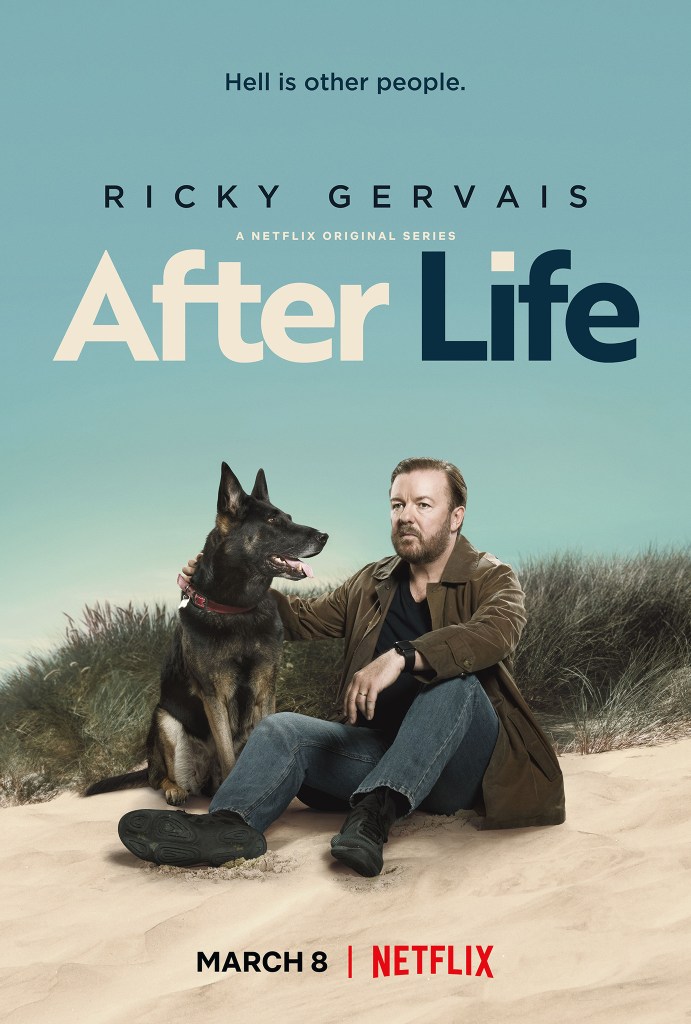
Ricky Gervais plays Tony Johnson in AFTER LIFE.
—
—
In the podcast series ABSOLUTELY MENTAL Sam Harris answers questions from Ricky Gervais and many of these same questions are covered by the issues brought up in After Life. How are we different than machines? Why do humans think there is any afterlife? Is there any point to life? Many of these issues were also covered 3,000 years ago in the Book of Ecclesiastes by Solomon.
In the past I have done over 100 blog posts on the Netflix series AFTER LIFE written by Ricky Gervais and staring Ricky as Tony Johnson. I respect both Ricky and his character Tony for being people who demand evidence and they refuse to accept anything with a blind faith. That is part of the reason I started writing letters to Ricky several years ago with historical evidence from archaeology and ancient cultures on the Bible’s claims. I personally think his latest series AFTER LIFE is his best by far and it does a great job of examining Ricky’s humanist worldview and the natural conclusions that come from this time plus chance view of the world.
Just like Solomon in The Book of Ecclesiastes, Ricky in AFTER LIFE is examining life under the sun, which is life between birth and death without God in the picture. The key to understanding the Book of Ecclesiastes is the term UNDER THE SUN — What that literally means is you lock God out of a closed system and you are left with only this world of Time plus Chance plus matter. In fact, the phrase under the sun appears 29 times in Ecclesiastes.
Francis Schaeffer indicated Ecclesiastes is truly the book of modern man because modern humanist man’s philosophy has brought him to the nihilistic conclusion that all is vanity and meaninglessness. This appears to be the place that the atheist Tony Johnson has landed and many of the characters around Tony have come to pessimistic conclusions about life too, though they have searched for satisfaction and meaning in life by pursuing ladies, luxuries, learning, labor, liquor, and laughter.
In Podcast Series ABSOLUTELY MENTAL episode 8 WHY DO WE FEAR DEATH? is this following exchange:
Sam Harris “The physicist David Deutsch who has influenced a lot of people recently (I think I have mentioned him to you before), He has a very different picture of this which is which is when you look at the power of knowledge in both its demonstrated power and its potential power and given the fact that we are the only species we know of in the universe currently that can accumulate knowledge in this Seemly unbounded way, the sky is the limit in what we might do here. Us playing our game correctly potentially has cosmic significance because it is the difference between our descendants having billions of years of future ahead of them to populate the galaxy or being canceled by some stupid mishap that we failed to navigate in the next few decades here.”
Ricky: “Yeah but I could still say SO WHAT? because most species last 250,000 years maybe. You are right our descendants could be different species and they could go on for millions of years but so what? Life has been around 3.5 billion years with 8 millions species with mostly invertebrates tiny creatures but 8 million species with 2 million we have named and that is 1% of all the species that have ever lived and most things go extinct. So even when something carries on SO WHAT?”
Sam: “So what is that blank space is some unimaginably impressive things can be put potentially. Just to give you a little picture of David Deutsch of the power of Knowledge, this is his argument, basically anything that is compatible with the laws of physics can be achieved with the requisite knowledge otherwise it is not compatible with the laws of physics. His cartoon version of this is with the right knowledge beings like ourselves can go to an empty region of space sweep up stray hydrogen atoms fuse them together into heavier elements and build from those elements the smallest possible machine that is capable of building all other machines. He calls these universal constructors and then build beings vestry more intelligent than ourselves Atom by atom and all the civilizational things that would follow and it is a picture of unbounded possibility just given the assumption we don’t annihilate ourselves in the meantime and cancel the future of our descendants.”
Ricky: “Yeah that is impressive. You have won me over with a machine built somewhat cleverer than me, but I was already sold. I think life is amazing. I think from the beginning of time everything is incredible. When you got infinite space and 3 1/2 billion years things happen... I am already in awe of the truths of the universe. It blows my mind, but I can still [say about] your mate’s [David Deutsch] thing about we can go to another planet and forge elements that build a thing that build clever humans, I can still say like a child SO WHAT?”
Sam: “I get it from the other side because I am kinda agnostic about what happens after death. I am sure the religious pictures are wrong. There is no way there is a heaven and a hell of the sort that is imagined by monatheoistic religion, but given that we don’t actually know what reality is. We don’t actually know the distinction between mind and matter, it is still spooky right? We just don’t know how mind relates to the base layer of reality, but I have no expectations of my personally in terms of maintaining the memories of my life will persist. But I just don’t know what consciousness is in the end.”
Ricky Gervaisresponds “But we are all agnostic by definition because it deals with knowledge.”
Sam notes, “ I am pretty sure that I know that rivers of milk and honey don’t exist.”
Ricky states, Are you saying you think there might be other than nothingness in terms of experience? I can’t believe you think that. Based on what?”
Sam responds, “Based on strange experiences both on psychedelics and in mediation where the mind seems to be...”
Ricky observes, “Yeah but you are off your head. You are f$&@ng thinking nonsense!”
In episode 2 of the second season of AFTER LIFE is the following discussion: Tony: I drink in times of trouble. I can’t help it the world is filled with trouble. It is a horrible place. Everyone is screwed up in someway. Everyone has worries like money or health or famine, war. We are chimps with brains the size of planets. No wonder we get drunk and try to kill each other. It is mental.
Matt: Always good to talk.
Tony: I was just explaining my new plan is to drink myself to death till I eventually implode in on my own evolution. Kath: Do you believe in all that? Tony: What? The proven fact that there is evolution? Yeah
—
On Saturday April 18, 2020 at 6pm in London and noon in Arkansas, I had a chance to ask Ricky Gervais on his Twitter Live broadcast “Is Tony a Nihilist?” At the 20:51 mark Ricky answers my question with the following comments:
—-
Not, I mean he [Tony] dabbles with it [nihilism] but a lot of this stuff is like he is being provocative and he is trying to sort of hurt people. No, It is difficult to say. I don’t. The one thing he wants he can’t have so he is angry. He has to compromise. He had the perfect marriage and he doesn’t know how to act or feel anymore. He is confused. He is in pain. He is ill. He is probably ill you know. If you are not right in your [mind] then you are ill, and you can’t just step out of it. You know. You even know you are not normal or well, but what can you do? You don’t feel good. That will do. Did we get serious then? That won’t happen again!
Ecclesiastes is about the meaningless of LIFE UNDER THE SUN.
The key to understanding the Book of Ecclesiastes is the term UNDER THE SUN — What that literally means is you lock God out of a closed system and you are left with only this world of Time plus Chance plus matter.”
In the first episode of AFTER LIFE in the first season Tony Johnson has embraced nihilism. He is rude to a gentleman in the park who points out that Tony’s dog Brandi is supposed to be on a leash and then he is abrupt with Pat the postman. In the next scene he curses at a little kid and then when he sees the headline that a 93 year old had been mugged he replies to a bystander that the lady wasn’t scarred for life because most of her life had already been lived.
While entering the office Kath said “You are late.” Tony replies, “You are boring.” His boss Matt calls him into his office and Tony tells Matt, “If I become an a***hole, and I do and say what the f*** I want, for as long as I want, and then when it all gets too much, I can always kill myself. It’s like a superpower.” Matt replies that is the worst super power he had ever heard about.
Matt tells Tony to tell the new girl Sandy all about the paper business and he turns to her and asserts, “Here’s what’s what, humanity is a plague. We’re a disgusting, narcissistic, selfish parasite, and the world would be a better place without us. It should be everyone’s moral duty to kill themselves. I could do it now. Quite happily just go upstairs, jump off the roof, and make sure I landed on some c**t from accounts.”
Next Tony turns to Lenny and asks, “Do you want any more Donuts Fat Boy?” Next we hear that Tony is faithful to go see his aging father everyday and when he gets there he tells the nurse concerning his father, “If it was a dog we would put it down,” and this angers her.
This is how the first episode opens up, but there is an abrupt change when Tony interviews an older man for the paper and he learns the man has just lost his wife. Tony wishes him a happy birthday and tells him that his interview will be in next week’s newspaper.
In the beginning of episode 2 Tony encounters Anne who visits the gravesite of her husband Stanley every day and Tony strikes up a close friendship with her.
Tony is a nihilist that has accepted the position that there is no point to living out his life because the world is an evil place that he only put up with when his beloved wife Lisa was here to help him through.
R.C. Sproul:Nihilism has two traditional enemies–Theism and Naive Humanism. The theist contradicts the nihilist because the existence of God guarantees that ultimate meaning and significance of personal life and history. Naive Humanism is considered naive by the nihilist because it rhapsodizes–with no rational foundation–the dignity and significance of human life. The humanist declares that man is a cosmic accident whose origin was fortuitous and entrenched in meaningless insignificance. Yet in between the humanist mindlessly crusades for, defends, and celebrates the chimera of human dignity…Herein is the dilemma: Nihilism declares that nothing really matters ultimately…In my judgment, no philosophical treatise has ever surpassed or equaled the penetrating analysis of the ultimate question of meaning versus vanity that is found in the Book of Ecclesiastes.
The humanist H. J. Blackham was the founder of the British Humanist Association and he asserted: “On humanist assumptions, life leads to nothing, and every pretense that it does not is a deceit. If there is a bridge over a gorge which spans only half the distance and ends in mid-air, and if the bridge is crowded with human beings pressing on, one after the other they fall into the abyss. The bridge leads nowhere, and those who are pressing forward to cross it are going nowhere….It does not matter where they think they are going, what preparations for the journey they may have made, how much they may be enjoying it all. The objection merely points out objectively that such a situation is a model of futility“( H. J. Blackham, et al., Objections to Humanism (Riverside, Connecticut: Greenwood Press, 1967). Francis Schaeffer comments concerning Blackham’s assertion, “One does not have to be highly educated to understand this. It follows directly from the starting point of the humanists’ position, namely, that everything is just matter. That is, that which has exited forever and in ever is only some form of matter or energy, and everything in our world now is this and only this in a more or less complex form.”
Let’s get back to evolution and looking at life UNDER THE SUN without God in the picture.
Ecclesiastes 9:7-12
7 Go, eat your bread with joy, and drink your wine with a merry heart, for God has already approved what you do.
8 Let your garments be always white. Let not oil be lacking on your head.
9 Enjoy life with the wife whom you love, (DOES IT SOUND OPTIMISTIC? NOW COMES THE BACKLASH) all the days of your vain life that he has given you under the sun, because that is your portion in life and in your toil at which you toil under the sun.10 Whatever your hand finds to do, do it with your might, for there is no work or thought or knowledge or wisdom in Sheol, to which you are going.
11 Again I saw that under the sun the race is not to the swift, nor the battle to the strong, nor bread to the wise, nor riches to the intelligent, nor favor to those with knowledge, but time and chance happen to them all.12 For man does not know his time. Like fish that are taken in an evil net, and like birds that are caught in a snare, so the children of man are snared at an evil time, when it suddenly falls upon them.
Solomon when at work takes off his hat and he stands by the grave of man and he says, “ALAS. ALAS. ALAS.”
I just finished reading the online addition of the book Darwin, Francis ed. 1892. Charles Darwin: his life told in an autobiographical chapter, and in a selected series of his published letters [abridged edition]. London: John Murray. There are several points that Charles Darwin makes in this book that were very wise, honest, logical, shocking and some that were not so wise. The Christian Philosopher Francis Schaeffer once said of Darwin’s writings, “Darwin in his autobiography and in his letters showed that all through his life he never really came to a quietness concerning the possibility that chance really explained the situation of the biological world. You will find there is much material on this [from Darwin] extended over many many years that constantly he was wrestling with this problem.”
“But I was very unwilling to give up my belief; I feel sure of this, for I can well remember often and often inventing day-dreams of old letters between distinguished Romans, and manuscripts being discovered at Pompeii or elsewhere, which confirmed in the most striking manner all that was written in the Gospels.
Francis Schaeffer commented:
This is very sad. He lies on his bunk and the Beagle tosses and turns and he makes daydreams, and his dreams and hopes are that someone would find in Pompeii or some place like this, an old manuscript by a distinguished Roman that would put his stamp of authority on it, which would be able to show that Christ existed. This is undoubtedly what he is talking about. Darwin gave up this hope with great difficulty. I think he didn’t want to come to the position where his accepted presuppositions were driving him. He didn’t want to give it up, just as an older man he understood where it would lead and “man can do his duty.” Instinctively this of brains understood where this whole thing was going to eventually go…
SINCE CHARLES DARWIN’S DEATH WE NOW HAVE LOTS OF HISTORICAL RECORDS AND MUCH EVIDENCE FROM THE FIELD OF ARCHAEOLOGY THAT SHOW THE BIBLE IS HISTORICALLY ACCURATE.
“…it is an intolerable thought that he and all other sentient beings are doomed to complete annihilation after such long-continued slow progress. To those who fully admit the immortality of the human soul, the destruction of our world will not appear so dreadful.”
Francis Schaeffer commented:
Here you feel Marcel Proust and the dust of death is on everything today because the dust of death is on everything tomorrow. Here you have the dilemma of Nevil Shute’s ON THE BEACH. If it is true that all we have left is biological continuity and increased biological complexity, which is all we have left in Darwinism here, or with many of the modern philosophers, then you can’t stand Shute’s ON THE BEACH. Maybe tomorrow at noon human life may be wiped out. Darwin already feels the tension, because if human life is going to be wiped out tomorrow, what is it worth today? Darwin can’t stand the thought of death of all men. Charlie Chaplin when he heard there was no life on Mars said, “I’m lonely.”
You think of the Swedish Opera (ANIARA) that is pictured inside a spaceship. There was a group of men and women going into outer space and they had come to another planet and the singing inside the spaceship was normal opera music. Suddenly there was a big explosion and the world had blown up and these were the last people left, the only conscious people left, and the last scene is the spaceship is off course and it will never land, but will just sail out into outer space and that is the end of the plot. They say when it was shown in Stockholm the first time, the tough Swedes with all their modern mannishness, came out (after the opera was over) with hardly a word said, just complete silence.
Darwin already with his own position says he CAN’T STAND IT!! You can say, “Why can’t you stand it?” We would say to Darwin, “You were not made for this kind of thing. Man was made in the image of God. Your CAN’T- STAND- IT- NESS is screaming at you that your position is wrong. Why can’t you listen to yourself?”
You find all he is left here is biological continuity, and thus his feeling as well as his reason now is against his own theory, yet he holds it against the conclusions of his reason. Reason doesn’t make it hard to be a Christian. Darwin shows us the other way. He is holding his position against his reason.
____________
These words of Darwin ring in my ear, “…it is an intolerable thought that he and all other sentient beings are doomed to complete annihilation after such long-continued slow progress…” . Schaeffer rightly noted, “Maybe tomorrow at noon human life may be wiped out. Darwin already feels the tension, because if human life is going to be wiped out tomorrow, what is it worth today? Darwin can’t stand the thought of death of all men.” IN OTHER WORDS ALL WE ARE IS DUST IN THE WIND. I sent you a CD that starts off with the song DUST IN THE WIND by Kerry Livgren of the group KANSAS which was a hit song in 1978 when it rose to #6 on the charts because so many people connected with the message of the song. It included these words, “All we do, crumbles to the ground though we refuse to see, Dust in the Wind, All we are is dust in the wind, Don’t hang on, Nothing lasts forever but the Earth and Sky, It slips away, And all your money won’t another minute buy.”
Kerry Livgren himself said that he wrote the song because he saw where man was without a personal God in the picture. Solomon pointed out in the Book of Ecclesiastes that those who believe that God doesn’t exist must accept three things. FIRST, death is the end and SECOND, chance and time are the only guiding forces in this life. FINALLY, power reigns in this life and the scales are never balanced. The Christian can face death and also confront the world knowing that it is not determined by chance and time alone and finally there is a judge who will balance the scales.
Both Kerry Livgren and the bass player Dave Hope of Kansas became Christians eventually. Kerry Livgrenfirst tried Eastern Religions and Dave Hope had to come out of a heavy drug addiction. I was shocked and elated to see their personal testimony on The 700 Club in 1981 and that same interview can be seen on You Tube today. Livgren lives in Topeka, Kansas today where he teaches “Diggers,” a Sunday school class at Topeka Bible Church. DAVE HOPE is the head of Worship, Evangelism and Outreach at Immanuel Anglican Church in Destin, Florida.
I have gone back and forth and back and forth with many liberals on the Arkansas Times Blog on many issues such as abortion, human rights, welfare, poverty, gun control and issues dealing with popular culture. Here is another exchange I had with them a while back. My username at the Ark Times Blog is Saline […]By Everette Hatcher III | Posted in Biblical Archaeology, Francis Schaeffer, Prolife | Edit|Comments (0)
I have posted many of the sermons by John MacArthur. He is a great bible teacher and this sermon below is another great message. His series on the Book of Proverbs was outstanding too. I also have posted several of the visits MacArthur made to Larry King’s Show. One of two most popular posts I […]By Everette Hatcher III | Posted in Adrian Rogers, Current Events | Edit|Comments (0)
I have posted many of the sermons by John MacArthur. He is a great bible teacher and this sermon below is another great message. His series on the Book of Proverbs was outstanding too. I also have posted several of the visits MacArthur made to Larry King’s Show. One of two most popular posts I […]By Everette Hatcher III | Posted in Adrian Rogers, Current Events |Tagged Bible Prophecy, john macarthur | Edit|Comments (0)
Prophecy–The Biblical Prophesy About Tyre.mp4 Uploaded by TruthIsLife7 on Dec 5, 2010 A short summary of the prophecy about Tyre and it’s precise fulfillment. Go to this link and watch the whole series for the amazing fulfillment from secular sources. http://www.youtube.com/watch?v=qvt4mDZUefo________________ John MacArthur on the amazing fulfilled prophecy on Tyre and how it was fulfilled […]By Everette Hatcher III | Posted in Biblical Archaeology | Edit|Comments (1)
John MacArthur on the Bible and Science (Part 2) I have posted many of the sermons by John MacArthur. He is a great bible teacher and this sermon below is another great message. His series on the Book of Proverbs was outstanding too. I also have posted several of the visits MacArthur made to Larry […]By Everette Hatcher III | Posted in Current Events | Edit|Comments (0)
John MacArthur on the Bible and Science (Part 1) I have posted many of the sermons by John MacArthur. He is a great bible teacher and this sermon below is another great message. His series on the Book of Proverbs was outstanding too. I also have posted several of the visits MacArthur made to Larry […]By Everette Hatcher III | Posted in Current Events | Edit|Comments (0)
Adrian Rogers – How you can be certain the Bible is the word of God Great article by Adrian Rogers. What evidence is there that the Bible is in fact God’s Word? I want to give you five reasons to affirm the Bible is the Word of God. First, I believe the Bible is the […]By Everette Hatcher III | Posted in Adrian Rogers, Biblical Archaeology | Edit|Comments (0)
Is there any evidence the Bible is true? Articles By PleaseConvinceMe Apologetics Radio The Old Testament is Filled with Fulfilled Prophecy Jim Wallace A Simple Litmus Test There are many ways to verify the reliability of scripture from both internal evidences of transmission and agreement, to external confirmation through archeology and science. But perhaps the […]By Everette Hatcher III | Posted in Biblical Archaeology, Current Events | Edit|Comments (0)
I have gone back and forth and back and forth with many liberals on the Arkansas Times Blog on many issues such as abortion, human rights, welfare, poverty, gun control and issues dealing with popular culture. Here is another exchange I had with them a while back. My username at the Ark Times Blog is […]By Everette Hatcher III | Posted in Francis Schaeffer, Prolife | Edit|Comments (0)
Here is some very convincing evidence that points to the view that the Bible is historically accurate. Archaeological and External Evidence for the Bible Archeology consistently confirms the Bible! Archaeology and the Old Testament Ebla tablets—discovered in 1970s in Northern Syria. Documents written on clay tablets from around 2300 B.C. demonstrate that personal and place […]By Everette Hatcher III | Posted in Biblical Archaeology | E
Mandeep Dhillon as Sandy on her first assignment in ‘After Life’. (Twitter)
A still from ‘After Life’ that captures the vibe of the Tambury Gazette. (Twitter)
Michael Scott of THE OFFICE (USA) with Ricky Gervais
After Life on Netflix stars Ricky Gervais as a bereaved husband (Image: Netflix)
Our third item also pokes fun at the logic (or lack thereof) of our leftist friends.
Next, the clever folks at Babylon Beeexplain various home-defense strategies for a gun-free world.
Guns are on their way out. And thank goodness! We can’t wait to return to the utopian paradise we lost when guns were invented…Still, once in a great while, you might need to defend yourself against a ne’er-do-well. When those ruffians come kicking your door down, you need to be ready. Here are seven great ways to defend your home against an armed burglar when your guns have all been confiscated.
Here are a few of those options.
Option #3 surely is the best, just as demonstrated in this video.
Yet never forget that there are people who think gun-free zonesare a real answer.
So here are some additions to our collection of communism humor.
I’m among the small minority of people who have never watched Game of Thrones, so I don’t know the backstory on these characters, but this meme has a very appropriate message about the nuclear-level naivete needed to believe Marx’s nonsense.
Though maybe the first frame should say “Readers of Teen Vogue.”
It’s bad news that we’re suffering from a coronavirus that has killed several million people globally, but there’s another virus that has butchered 100 million people.
This next image reminds me of the joke about communism and electricity.
Per my tradition, here’s my favorite item from today’s collection.
I’m always very impressed by the people who are clever enough to create these Venn diagrams, and this one is better than most.
Though I’m tempted to ask who is worse, the soulless Marxist who rambles and can’t be reasoned with, or the people who rationalize, glorify, and justify Marxism?
—-
November 24, 2020
Office of Barack and Michelle Obama P.O. Box 91000 Washington, DC 20066
Dear President Obama,
I wrote you over 700 letters while you were President and I mailed them to the White House and also published them on my blog http://www.thedailyhatch.org .I received several letters back from your staff and I wanted to thank you for those letters.
I have been reading your autobiography A PROMISED LAND and I have been enjoying it.
Let me make a few comments on it, and here is the first quote of yours I want to comment on: Looking back, it’s embarrassing to recognize the degree to which my intellectual curiosity those first two years of college paralleled the interests of various women I was attempting to get to know: Marx and Marcuse so I had something to say to the long-legged socialist who lived in my dorm,”
I noticed you mentioned Herbert Marcuse, and I have read of his influence in Francis Schaeffer’s book How should we then live?:
At Berkeley the Free Speech Movement arose simultaneously with the hippie world of drugs. … but rather a call for the freedom to express any political views on Sproul Plaza. … followed the teaching of Herbert Marcuse (1898-). Marcuse was a German professor of philosophy related to the neo-Marxist.
Moral Support: “One Dimensional Man” author Herbert Marcuse accompanies Bettina Aptheker, center, and Angela Davis’ mother, Sallye Davis, to Angela Davis’ 1972 trial in San Jose. Associated Press
_
______________Francis Schaeffer is a hero of mine and I have posted many times in the past using his material. This post below is a result of his material..Communism catches the attention of the young at heart but it has always brought repression wherever it is tried. TrueCommunism has never been tried is something I was told just a few months ago by a well meaning young person who was impressed with the ideas of Karl Marx. I responded that there are only 5 communist countries in the world today and they lack political, economic and religious freedom.WHY DOES COMMUNISM FAIL?Communism has always failed because of its materialist base. Francis Schaeffer does a great job of showing that in this clip below. Also Schaeffer shows that there were lots of similar things about the basis for both the French and Russia revolutions and he exposes the materialist and humanist basis of both revolutions.
Schaeffer compares communism with French Revolution and Napoleon.
1. Lenin took charge in Russia much as Napoleon took charge in France – when people get desperate enough, they’ll take a dictator.
Other examples: Hitler, Julius Caesar. It could happen again.
2. Communism is very repressive, stifling political and artistic freedom. Even allies have to be coerced. (Poland).
Communists say repression is temporary until utopia can be reached – yet there is no evidence of progress in that direction. Dictatorship appears to be permanent.
3. No ultimate basis for morality (right and wrong) – materialist base of communism is just as humanistic as French. Only have “arbitrary absolutes” no final basis for right and wrong.
How is Christianity different from both French Revolution and Communism?
Contrast N.T. Christianity – very positive government reform and great strides against injustice. (especially under Wesleyan revival).
Bible gives absolutes – standards of right and wrong. It shows the problems and why they exist (man’s fall and rebellion against God).
WHY DOES THE IDEA OF COMMUNISM CATCH THE ATTENTION OF SO MANY IDEALISTIC YOUNG PEOPLE? The reason is very simple.
In HOW SHOULD WE THEN LIVE? The Rise and Decline of Western Thought and Culture, the late Francis A. Schaeffer wrote:
Materialism, the philosophic base for Marxist-Leninism, gives no basis for the dignity or rights of man. Where Marxist-Leninism is not in power it attracts and converts by talking much of dignity and rights, but its materialistic base gives no basis for the dignity or rights of man. Yet is attracts by its constant talk of idealism.
To understand this phenomenon we must understand that Marx reached over to that for which Christianity does give a base–the dignity of man–and took the words as words of his own. The only understanding of idealistic sounding Marxist-Leninism is that it is (in this sense) a Christian heresy. Not having the Christian base, until it comes to power it uses the words for which Christianity does give a base. But wherever Marxist-Leninism has had power, it has at no place in history shown where it has not brought forth oppression. As soon as they have had the power, the desire of the majority has become a concept without meaning.
Let me share with you the story of Paul Robeson and it demonstrates that he had to lie about how cruel communism was and the killing of his friend Itzik Feffer.
Paul Leroy Robeson (/ˈroʊbsən/ROHB-sən;[2][3] April 9, 1898 – January 23, 1976) was an American bass baritone concert artist and stage and film actor who became famous both for his cultural accomplishments and for his political activism
Robeson traveled to Moscow in June, and tried to find Itzik Feffer. He let Soviet authorities know that he wanted to see him.[207] Reluctant to lose Robeson as a propagandist for the Soviet Union,[208] the Soviets brought Feffer from prison to him. Feffer told him that Mikhoels had been murdered, and he would be summarily executed.[209] To protect the Soviet Union’s reputation,[210] and to keep the right wing of the United States from gaining the moral high ground, Robeson denied that any persecution existed in the Soviet Union,[211] and kept the meeting secret for the rest of his life, except from his son.[210]
DANIEL J. FLYNN tells a few details in this sad story: Why Did ESPN Showcase a Stalinist on Monday NightFootball?Stalin Peace Prize laureate Paul Robeson lauded on America’s No. 1 sports network. In 1949, Robeson again traveled to the Soviet Union, where he had sent his namesake to school during the 1930s. Robeson had met poet Itzik Feffer and actor Solomon Mikhoels at a Polo Grounds rally of 50,000 people — the largest pro-Soviet event in the history of the United States — that welcomed their Jewish Anti-Fascist Committee in 1943. But by 1949 Stalin wished to kill Jews rather than use them for propaganda purposes. He murdered Mikhoels and later Feffer — but not before Robeson could visit his old friend the poet one last time.
David Horowitz describes this meeting in Radical Son:
In America, the question “What happened to Itzik Feffer?” entered the currency of political debate. There was talk in intellectual circles that Jews were being killed in a new Soviet purge and that Feffer was one of them. It was to quell such rumors that Robeson asked to see his old friend, but he was told by Soviet officials that he would have to wait. Eventually, he was informed that the poet was vacationing in the Crimea and would see him as soon as he returned. The reality was that Feffer had already been in prison for three years, and his Soviet captors did not want to bring him to Robeson immediately because he had become emaciated from lack of food. While Robeson waited in Moscow, Stalin’s police brought Feffer out of prison, put him the care of doctors, and began fattening him up for the interview. When he looked sufficiently healthy, he was brought to Moscow. The two men met in a room that was under secret surveillance. Feffer knew he could not speak freely. When Robeson asked how he was, he drew his finger nervously across his throat and motioned with his eyes and lips to his American comrade. “They’re going to kill us,” he said. “When you return to America you must speak out and save us.”
Instead, Robeson, who later confessed what happened to his son, spoke out in praise of his friends’ murderer.
“Yes, through his deep humanity, by his wise understanding, he leaves us a rich and monumental heritage,” Robeson recalled of Stalin. “Most importantly — he has charted the direction of our present and future struggles. He has pointed the way to peace — to friendly co-existence — to the exchange of mutual scientific and cultural contributions — to the end of war and destruction. How consistently, how patiently, he labored for peace and ever increasing abundance, with what deep kindliness and wisdom. He leaves tens of millions all over the earth bowed in heart-aching grief.”
Sincerely,
Everette Hatcher III, 13900 Cottontail Lane, Alexander, AR 72002, ph 501-920-5733 everettehatcher@gmail.com
President Obama c/o The White House 1600 Pennsylvania Avenue NW Washington, DC 20500 Dear Mr. President, I know that you receive 20,000 letters a day and that you actually read 10 of them every day. I really do respect you for trying to get a pulse on what is going on out here. There have […]By Everette Hatcher III | Posted in David Barton, Founding Fathers, President Obama | Edit |Comments (0)
There have been many articles written by evangelicals like me who fear that our founding fathers would not recognize our country today because secular humanism has rid our nation of spiritual roots. I am deeply troubled by the secular agenda of those who are at war with religion in our public life. Lillian Kwon quoted somebody […]By Everette Hatcher III | Posted in David Barton, Founding Fathers | Edit | Comments (0)
There have been many articles written by evangelicals like me who fear that our founding fathers would not recognize our country today because secular humanism has rid our nation of spiritual roots. I am deeply troubled by the secular agenda of those who are at war with religion in our public life. Lillian Kwon quoted somebody […]By Everette Hatcher III | Posted in David Barton, Founding Fathers | Edit | Comments (0)
There have been many articles written by evangelicals like me who fear that our founding fathers would not recognize our country today because secular humanism has rid our nation of spiritual roots. I am deeply troubled by the secular agenda of those who are at war with religion in our public life. Lillian Kwon quoted somebody […]By Everette Hatcher III | Posted in David Barton, Founding Fathers | Edit | Comments (0)
There have been many articles written by evangelicals like me who fear that our founding fathers would not recognize our country today because secular humanism has rid our nation of spiritual roots. I am deeply troubled by the secular agenda of those who are at war with religion in our public life. Lillian Kwon quoted somebody […]By Everette Hatcher III | Posted in David Barton, Founding Fathers | Edit | Comments (0)
There have been many articles written by evangelicals like me who fear that our founding fathers would not recognize our country today because secular humanism has rid our nation of spiritual roots. I am deeply troubled by the secular agenda of those who are at war with religion in our public life. Lillian Kwon quoted somebody […]By Everette Hatcher III | Posted in Founding Fathers | Edit | Comments (0)
President Obama Speaks at The Ohio State University Commencement Ceremony Published on May 5, 2013 President Obama delivers the commencement address at The Ohio State University. May 5, 2013. You can learn a lot about what President Obama thinks the founding fathers were all about from his recent speech at Ohio State. May 7, 2013, […]By Everette Hatcher III | Posted in Founding Fathers, President Obama | Edit | Comments (0)
Dr. C. Everett Koop with Bill Graham. Francis Schaeffer: “Whatever Happened to the Human Race” (Episode 4) THE BASIS FOR HUMAN DIGNITY Published on Oct 7, 2012 by AdamMetropolis The 45 minute video above is from the film series created from Francis Schaeffer’s book “Whatever Happened to the Human Race?” with Dr. C. Everett Koop. This […]By Everette Hatcher III | Posted in Founding Fathers, Francis Schaeffer, Prolife | Edit |Comments (1)
America’s Founding Fathers Deist or Christian? – David Barton 4/6 There have been many articles written by evangelicals like me who fear that our founding fathers would not recognize our country today because secular humanism has rid our nation of spiritual roots. I am deeply troubled by the secular agenda of those who are at […]By Everette Hatcher III | Posted in David Barton, Founding Fathers | Tagged governor of connecticut, john witherspoon, jonathan trumbull | Edit | Comments (1)
3 Of 5 / The Bible’s Influence In America / American Heritage Series / David Barton There were 55 gentlemen who put together the constitution and their church affliation is of public record. Greg Koukl notes: Members of the Constitutional Convention, the most influential group of men shaping the political foundations of our nation, were […]By Everette Hatcher III | Posted in Founding Fathers | Edit | Comments (0)
I do not think that John Quincy Adams was a founding father in the same sense that his father was. However, I do think he was involved in the early days of our government working with many of the founding fathers. Michele Bachmann got into another history-related tussle on ABC’s “Good Morning America” today, standing […]By Everette Hatcher III | Posted in David Barton, Founding Fathers | Edit | Comments (0)
I have gone back and forth and back and forth with many liberals on the Arkansas Times Blog on many issues such as abortion, human rights, welfare, poverty, gun control and issues dealing with popular culture. Here is another exchange I had with them a while back. My username at the Ark Times Blog is Saline […]By Everette Hatcher III | Posted in Arkansas Times, Francis Schaeffer, Prolife | Edit |Comments (0)
I truly believe that many of the problems we have today in the USA are due to the advancement of humanism in the last few decades in our society. Ronald Reagan appointed the evangelical Dr. C. Everett Koop to the position of Surgeon General in his administration. He partnered with Dr. Francis Schaeffer in making the […]By Everette Hatcher III | Posted in Adrian Rogers, Francis Schaeffer | Edit | Comments (0)
Francis Schaeffer: “Whatever Happened to the Human Race” (Episode 4) THE BASIS FOR HUMAN DIGNITY Published on Oct 7, 2012 by AdamMetropolis ____________ The 45 minute video above is from the film series created from Francis Schaeffer’s book “Whatever Happened to the Human Race?” with Dr. C. Everett Koop. This book really helped develop my political […]By Everette Hatcher III | Posted in Francis Schaeffer | Edit | Comments (0)
The 11-part podcast will be available on AbsolutelyMental.com from May 10, and will feature the comedian in conversation with his friend, neuroscientist Sam Harris.
___
Ricky Gervais plays Tony Johnson in AFTER LIFE.
—
—
In the podcast series ABSOLUTELY MENTAL Sam Harris answers questions from Ricky Gervais and many of these same questions are covered by the issues brought up in After Life. How are we different than machines? Why do humans think there is any afterlife? Is there any point to life? Many of these issues were also covered 3,000 years ago in the Book of Ecclesiastes by Solomon.
In the past I have done over 100 blog posts on the Netflix series AFTER LIFE written by Ricky Gervais and staring Ricky as Tony Johnson. I respect both Ricky and his character Tony for being people who demand evidence and they refuse to accept anything with a blind faith. That is part of the reason I started writing letters to Ricky several years ago with historical evidence from archaeology and ancient cultures on the Bible’s claims. I personally think his latest series AFTER LIFE is his best by far and it does a great job of examining Ricky’s humanist worldview and the natural conclusions that come from this time plus chance view of the world.
Just like Solomon in The Book of Ecclesiastes, Ricky in AFTER LIFE is examining life under the sun, which is life between birth and death without God in the picture. The key to understanding the Book of Ecclesiastes is the term UNDER THE SUN — What that literally means is you lock God out of a closed system and you are left with only this world of Time plus Chance plus matter. In fact, the phrase under the sun appears 29 times in Ecclesiastes.
Francis Schaeffer indicated Ecclesiastes is truly the book of modern man because modern humanist man’s philosophy has brought him to the nihilistic conclusion that all is vanity and meaninglessness. This appears to be the place that the atheist Tony Johnson has landed and many of the characters around Tony have come to pessimistic conclusions about life too, though they have searched for satisfaction and meaning in life by pursuing ladies, luxuries, learning, labor, liquor, and laughter.
My 2nd question tweeted to Ricky on Twitter Live on May 29, 2020:
Have you read ECCLESIASTES cause Tony seeks meaning UNDER THE SUN in learning(1:16-18),laughter, ladies, and liquor (2:1-3, 8, 10, 11), and labor (2:4-6, 18-20). Matt asked Tony to throw himself into work, go to pub and comedy club, and a blind date.
My question was not selected but another question came in from another Christian. On Twitter Live on Friday May 29, 2020 you said:
Have I ever explored Christianity? (Question from Tom Peaks) Yes I have. I was brought up Christian. I was born into Christianity like most people are born into their religion. I always assumed there was a God and a Santa. I think I stopped believing in God the same year I stopped believing in Santa Claus. I think God beat Santa to it. Although I kept quiet about Santa longer because I knew my presents were from my dad but if I expose that will I still get presents? So I kept quiet. You know you are surrounded by it. My mom wasn’t very religious. She was a working class woman and Jesus is an unpaid babysitter. It just helps they think. “If I am not watching you then Jesus is.” It is to curb bad behavior. Traditionally religion is associated with good behavior, but that is a random relationship. Actually there is not a relationship to good behavior whatsoever. You are either a moral person or you are not. No religion owns or invented morality. I read the Bible obviously as a Christian kid. I read the New Testament and I was fascinated with the Old Testament as well. I have no problem with spirituality or with people praying because it doesn’t affect me. Religion is something else…Then religion I know God and he wants you to give me money so you can go to heaven. That is religion.You don’t have to read the Old Testament to see it was written by men of the time. It really did favor the men who wrote it. But yes I have explored it. I explore it everyday since I am surrounded by it. When I stopped believing I started studying science. You are in society so you have to question it and question rules. I studied philosophy and everything in religion is using like philosophy logical thinking from the ancient Greeks to Bertrand Russell have pondered why do people believe this and what is the evidence. So the short answer is yes I have explored Christianity.
No one is born into a personal relationship with Christ. At the end of this letter I will share with you what is all about.
In episode 5 of ABSOLUTELY MENTAL we have this question from Ricky Gervais around the 3 minute mark.
“If there is no afterlife what is the point of having this experience if it ends?”
Kath asks the same question in AFTERLIFE.
—-
When Kath, asks, “If your an atheist, and you don’t believe in heaven and hell and all that, how come you don’t go around raping and murdering as much as you want?” Tony’s answer is, “I do. I do go around raping and murdering as much as I want, which is not at all.”
Kath: If death is just the end then what is the point? Tony: What is the point in what? Kath: What is the point in living? Why don’t you just kill yourself?
Tony: So if you are watching a movie and you are really enjoying it. Maybe a movie with Kevin Hart in it. Then someone points out there is an end eventually. Do you just say “Forget it. What’s the point and you turn it off?” Kath: No because you can watch it again. Tony: Well, I think Life is precious because you can’t watch it again. I mean you can believe in an afterlife if it makes you feel better, but it doesn’t mean it is true. But once you realize you are not going to be around forever I think that is what makes it magical. One day you will eat your last meal, smell a flower, and hug your friend for the last time. You might not know it is the last time, but that is why you should do everything you love with passion. Treasure the few years you got because you know that is all there is. — On his Twitter Live broadcast of April 13, 2020 Ricky Gervais seemed to contradict his argument with Kath. He asserted, “Your favorite meal? What if it was your final meal? Couldn’t really enjoy that. Would they rush you as well. You don’t have time for pudding because you are being executed at 2 pm. Brings the whole meal [mood] down. I am not enjoying this. I am not enjoying this sticky toffee pudding. The priest is looking at his watch.”
—-
You contradict yourself with this example the death row inmate not getting to enjoy the meal because he knows that the 2pm execution is coming very soon! Let me give you an example from Woody Allen.
There’s an old joke – um… two elderly women are at a Catskill mountain resort, and one of ’em says, “Boy, the food at this place is really terrible.” The other one says, “Yeah, I know; and such small portions.” Well, that’s essentially how I feel about life – full of loneliness, and misery, and suffering, and unhappiness, and it’s all over much too quickly.
Is there a relationship in those who believe in God and good behavior? . I noticed in Woody Allen’s film “Crimes and Misdemeanors” you can see how Allen’s agnostic worldview permits him to allow the lead character to have his mistress killed when she threatens to call the cops. Judah noted, “God is a luxery I can not afford.” Earlier in the film Judah is terrified when he thinks there is a living God that will punish him in an afterlife, but only after he convinces himself there is no God is he at peace with his decision to have this troublesome lady killed. Check out this movie on Netflix and you will see what I mean about this potential moral problem that atheists can not answer. (I have looked this question many times in my previous posts.)
I know how much you and Richard Dawkins hold Bertrand Russell in high esteem. Let me quote from the article below. For though Bertrand Russell was an atheist, he was an outspoken social critic, denouncing war and restrictions on sexual freedom. Russell admitted that he could not live as though ethical values were simply a matter of personal taste, and that he therefore found his own views “incredible.” “I do not know the solution,” he confessed.” [7]
Let me share a portion of an article by William Lane Craig with you.
Why on atheism life has no ultimate meaning, value, or purpose, and why this view is unlivable.
Francis Schaeffer has explained this point well. Modern man, says Schaeffer, resides in a two-story universe. In the lower story is the finite world without God; here life is absurd, as we have seen. In the upper story are meaning, value, and purpose. Now modern man lives in the lower story because he believes there is no God. But he cannot live happily in such an absurd world; therefore, he continually makes leaps of faith into the upper story to affirm meaning, value, and purpose, even though he has no right to, since he does not believe in God.
Let’s look again, then, at each of the three areas in which we saw life was absurd without God, to show how man cannot live consistently and happily with his atheism.
Meaning of Life
First, the area of meaning. We saw that without God, life has no meaning. Yet philosophers continue to live as though life does have meaning. For example, Sartre argued that one may create meaning for his life by freely choosing to follow a certain course of action. Sartre himself chose Marxism.
Now this is utterly inconsistent. It is inconsistent to say life is objectively absurd and then to say one may create meaning for his life. If life is really absurd, then man is trapped in the lower story. To try to create meaning in life represents a leap to the upper story. But Sartre has no basis for this leap. Without God, there can be no objective meaning in life. Sartre’s program is actually an exercise in self-delusion. Sartre is really saying, “Let’s pretend the universe has meaning.” And this is just fooling ourselves.
The point is this: if God does not exist, then life is objectively meaningless; but man cannot live consistently and happily knowing that life is meaningless; so in order to be happy he pretends life has meaning. But this is, of course, entirely inconsistent—for without God, man and the universe are without any real significance.
Value of Life
Turn now to the problem of value. Here is where the most blatant inconsistencies occur. First of all, atheistic humanists are totally inconsistent in affirming the traditional values of love and brotherhood. Camus has been rightly criticized for inconsistently holding both to the absurdity of life and the ethics of human love and brotherhood. The two are logically incompatible. Bertrand Russell, too, was inconsistent. For though he was an atheist, he was an outspoken social critic, denouncing war and restrictions on sexual freedom. Russell admitted that he could not live as though ethical values were simply a matter of personal taste, and that he therefore found his own views “incredible.” “I do not know the solution,” he confessed.” [7] The point is that if there is no God, then objective right and wrong cannot exist. As Dostoyevsky said, “All things are permitted.”
But Dostoyevsky also showed that man cannot live this way. He cannot live as though it is perfectly all right for soldiers to slaughter innocent children. He cannot live as though it is all right for dictators like Pol Pot to exterminate millions of their own countrymen. Everything in him cries out to say these acts are wrong—really wrong. But if there is no God, he cannot. So he makes a leap of faith and affirms values anyway. And when he does so, he reveals the inadequacy of a world without God.
Back to Woody Allen’s CRIMES AND MISDEMEANORS and the issue of MIGHT MAKES RIGHT and I encourage you to watch that film and answer the question “How could I convince Judah not to eliminate his troublesome mistress when he has every reason to do so?”
Francis Schaeffer (January 30, 1912 – May 15, 1984[1])
This issue also was covered by Solomon in ECCLESIASTES.Below Francis Schaeffer discusses ECCLESIASTES.
Ecclesiastes 4:1
Then I looked again at all the acts of oppression which were being done under the sun. And behold I saw the tears of the oppressed and that they had no one to comfort them; and on the side of their oppressors was power, but they had no one to comfort them.
Between birth and death power rules. Solomon looked over his kingdom and also around the world and proclaimed that right does not rule but power rules.
Ecclesiastes 7:14-15
14 In the day of prosperity be happy, but in the day of adversity consider—God has made the one as well as the other so that man will not discover anything that will be after him.
15 I have seen everything during my lifetime of futility; there is a righteous man who perishes in his righteousness and there is a wicked man who prolongs his life in his wickedness.
Ecclesiastes 8:14
14 There is futility which is done on the earth, that is, there are righteous men to whom it happens according to the deeds of the wicked. On the other hand, there are evil men to whom it happens according to the deeds of the righteous. I say that this too is futility.
We could say it in 20th century language, “The books are not balanced in this life.”
—
Now let’s look at what it means to have a relationship with Christ according to the scriptures.
the physical universe, so are there spiritual laws that govern your relationship with God.
God loves you and offers a wonderful plan for your life.
God’s Love “God so loved the world that He gave His one and only Son, that whoever believes in Him shall not perish but have eternal life” (John 3:16, NIV).
God’s Plan [Christ speaking] “I came that they might have life, and might have it abundantly” [that it might be full and meaningful] (John 10:10).
Why is it that most people are not experiencing that abundant life?
Because…
Man is sinful and separated from God. Therefore, he cannot know and experience God’s love and plan for his life.
Man is Sinful “All have sinned and fall short of the glory of God” (Romans 3:23).
Man was created to have fellowship with God; but, because of his own stubborn self-will, he chose to go his own independent way and fellowship with God was broken. This self-will, characterized by an attitude of active rebellion or passive indifference, is an evidence of what the Bible calls sin.
Man Is Separated “The wages of sin is death” [spiritual separation from God] (Romans 6:23).
Jesus Christ is God’s only provision for man’s sin. Through Him you can know and experience God’s love and plan for your life.
He Died In Our Place “God demonstrates His own love toward us, in that while we were yet sinners, Christ died for us” (Romans 5:8).
He Rose from the Dead “Christ died for our sins… He was buried… He was raised on the third day, according to the Scriptures… He appeared to Peter, then to the twelve. After that He appeared to more than five hundred…” (1 Corinthians 15:3-6).
He Is the Only Way to God “Jesus said to him, ‘I am the way, and the truth, and the life, no one comes to the Father but through Me’” (John 14:6).
We must individually receive Jesus Christ as Savior and Lord; then we can know and experience God’s love and plan for our lives.
We Must Receive Christ “As many as received Him, to them He gave the right to become children of God, even to those who believe in His name” (John 1:12).
We Receive Christ Through Faith “By grace you have been saved through faith; and that not of yourselves, it is the gift of God; not as result of works that no one should boast” (Ephesians 2:8,9).
When We Receive Christ, We Experience a New Birth (Read John 3:1-8.)
We Receive Christ Through Personal Invitation [Christ speaking] “Behold, I stand at the door and knock; if any one hears My voice and opens the door, I will come in to him” (Revelation 3:20).
Receiving Christ involves turning to God from self (repentance) and trusting Christ to come into our lives to forgive our sins and to make us what He wants us to be. Just to agree intellectually that Jesus Christ is the Son of God and that He died on the cross for our sins is not enough. Nor is it enough to have an emotional experience. We receive Jesus Christ by faith, as an act of the will.
These two circles represent two kinds of lives:
Which circle best represents your life? Which circle would you like to have represent your life?
The following explains how you can receive Christ:
You Can Receive Christ Right Now by Faith Through Prayer (Prayer is talking with God)
God knows your heart and is not so concerned with your words as He is with the attitude of your heart. The following is a suggested prayer:
Lord Jesus, I need You. Thank You for dying on the cross for my sins. I open the door of my life and receive You as my Savior and Lord. Thank You for forgiving my sins and giving me eternal life. Take control of the throne of my life. Make me the kind of person You want me to be.
Does this prayer express the desire of your heart? If it does, I invite you to pray this prayer right now, and Christ will come into your life, as He promised.
I have gone back and forth and back and forth with many liberals on the Arkansas Times Blog on many issues such as abortion, human rights, welfare, poverty, gun control and issues dealing with popular culture. Here is another exchange I had with them a while back. My username at the Ark Times Blog is Saline […]By Everette Hatcher III | Posted in Biblical Archaeology, Francis Schaeffer, Prolife | Edit|Comments (0)
I have posted many of the sermons by John MacArthur. He is a great bible teacher and this sermon below is another great message. His series on the Book of Proverbs was outstanding too. I also have posted several of the visits MacArthur made to Larry King’s Show. One of two most popular posts I […]By Everette Hatcher III | Posted in Adrian Rogers, Current Events | Edit|Comments (0)
I have posted many of the sermons by John MacArthur. He is a great bible teacher and this sermon below is another great message. His series on the Book of Proverbs was outstanding too. I also have posted several of the visits MacArthur made to Larry King’s Show. One of two most popular posts I […]By Everette Hatcher III | Posted in Adrian Rogers, Current Events |Tagged Bible Prophecy, john macarthur | Edit|Comments (0)
Prophecy–The Biblical Prophesy About Tyre.mp4 Uploaded by TruthIsLife7 on Dec 5, 2010 A short summary of the prophecy about Tyre and it’s precise fulfillment. Go to this link and watch the whole series for the amazing fulfillment from secular sources. http://www.youtube.com/watch?v=qvt4mDZUefo________________ John MacArthur on the amazing fulfilled prophecy on Tyre and how it was fulfilled […]By Everette Hatcher III | Posted in Biblical Archaeology | Edit|Comments (1)
John MacArthur on the Bible and Science (Part 2) I have posted many of the sermons by John MacArthur. He is a great bible teacher and this sermon below is another great message. His series on the Book of Proverbs was outstanding too. I also have posted several of the visits MacArthur made to Larry […]By Everette Hatcher III | Posted in Current Events | Edit|Comments (0)
John MacArthur on the Bible and Science (Part 1) I have posted many of the sermons by John MacArthur. He is a great bible teacher and this sermon below is another great message. His series on the Book of Proverbs was outstanding too. I also have posted several of the visits MacArthur made to Larry […]By Everette Hatcher III | Posted in Current Events | Edit|Comments (0)
Adrian Rogers – How you can be certain the Bible is the word of God Great article by Adrian Rogers. What evidence is there that the Bible is in fact God’s Word? I want to give you five reasons to affirm the Bible is the Word of God. First, I believe the Bible is the […]By Everette Hatcher III | Posted in Adrian Rogers, Biblical Archaeology | Edit|Comments (0)
Is there any evidence the Bible is true? Articles By PleaseConvinceMe Apologetics Radio The Old Testament is Filled with Fulfilled Prophecy Jim Wallace A Simple Litmus Test There are many ways to verify the reliability of scripture from both internal evidences of transmission and agreement, to external confirmation through archeology and science. But perhaps the […]By Everette Hatcher III | Posted in Biblical Archaeology, Current Events | Edit|Comments (0)
I have gone back and forth and back and forth with many liberals on the Arkansas Times Blog on many issues such as abortion, human rights, welfare, poverty, gun control and issues dealing with popular culture. Here is another exchange I had with them a while back. My username at the Ark Times Blog is […]By Everette Hatcher III | Posted in Francis Schaeffer, Prolife | Edit|Comments (0)
Here is some very convincing evidence that points to the view that the Bible is historically accurate. Archaeological and External Evidence for the Bible Archeology consistently confirms the Bible! Archaeology and the Old Testament Ebla tablets—discovered in 1970s in Northern Syria. Documents written on clay tablets from around 2300 B.C. demonstrate that personal and place […]By Everette Hatcher III | Posted in Biblical Archaeology | E
WalkerWords4 years agoAdvertisementshttps://d-20789260203582880250.ampproject.net/2102200206006/frame.html
Writer Steve Turner must have one of the best jobs in the world.
He gets to be creative every day, writing about things and people that interest him. He has the platform to put out his view of the world in poetry. He has had a film made about him. He gets to work with musicians he holds in high regard (and vice versa – in a Guardian article in 2006, his daughter wrote that Bono once gave her a hug and said, “I’m a big fan of your Dad”).
That gives a clue to one of Turner’s greatest attributes: he is respected by the best, because he tries to be the best. And he tries to be first class in the public arena, because he wants to write christianly.
His latest book Beatles ’66: The Revolutionary Yearcontinues that approach. Having already written two books about the band’s lyrics and spirituality, is the fiftieth anniversary handle just a marketing tool that gives him an excuse to write more about them?
Turner explains that his reasons go deeper than that.
“1966 was a crucial year between Beatlemania and the more artistic, studio-based Beatles. You get both sides represented in that year, because it’s their final tour; it’s the year that John met Yoko; the ‘more-popular-than-Jesus’ controversy; George meeting Ravi Shankar and going to India. I thought, if you slowed the action down – a chapter per month – you’d really get an insight into who the Beatles were.”
But writing about it to celebrate the 50th anniversary of the events, could he be writing with memory honeyed by nostalgia and accuracy misted by time?
No. Turner considers this an ideal time, because, via the internet we can, “for example, access huge libraries of American Newspapers; university archives are online. Stuff that would have taken me a long, long time to do, you can now do at the touch of a button. A lot more books come out, so different people tell their stories. Even minor people who are in minor groups suddenly write their book and you get one good detail in there.”
“If I were to sit down and talk to Paul McCartney, I don’t think I’d get more out of him than I’ve got from talking to about fifty other people, because he’s told the stories so many times. He often gets things confused: he dates things wrongly and attributes things wrongly – which is to be expected really, because he’s been in that high pressure space for most of his life. As a writer, I’ve got time to reflect and digest stuff.
“I try talking to people who were around; for example, a woman called Erica, whose father was the Prime Minister of Trinidad and Tobago.
“Ringo and John went out there for a holiday and she met them. They went on a tour and had a meal. For her, that was a significant event, because she was young, at school, and they were the Beatles. But John and Ringo probably wouldn’t have remembered that in such detail because it was just another day in their mad life.
“It’s often the people standing at the back of the room with their eyes and ears open that you get the best stories from, rather than the person who’s in the centre of the action.”
As a teenager, Turner would travel by train from Northamptonshire to London to buy shirts in the boutiques where the Beatles bought theirs and to buy the books that they were reading. He knew the smell of the joss sticks and the clothes. “I was kind of imbibing this stuff,” he recalls, “and when Revolvercame out it was like the aural equivalent of all this stuff that I was experiencing, all these changes.”
You have to wonder what he would have thought at the time, had someone told him that he would one day interview both John Lennon and Paul McCartney. (He has never interviewed George Harrison, “regrettably, because with my interests, he would have been an interesting person to do.”)
Although he found Lennon to be, “What you would expect,” the conversation was more surprising.
“We talked about Christianity specifically when I interviewed him. The conversation just turned in that direction, because he picked up a Jesus People newspaper, which had an open letter to John in the centre pages. He read it out to me and said, ‘What do you think of that?’ I presume he expected me to say, ‘Oh, what a load of rubbish.’ I picked up on it and said, ‘What do you think?’”
While Turner did not say whether the conversation happened after the famous 1966 comment about The Beatles being more famous than Jesus, Lennon explained his way of thinking to the writer.
Referring to the attention that he band received, with hysteria following them wherever they went in public, Lennon wondered whether (in Turner’s paraphrase), “There was all this kind of mythology around him, which built up over the years, just as this mythology about The Beatles built up over the years.”
Turner (right) with Eric Clapton. Source: Steve Turner.
Writing about an iconic band doesn’t just come from nowhere. It is a right to be earned, and he began that journey in the ‘sixties with his book Conversations with Eric Clapton. At the time, the guitarist was reclusive and did not give interviews. Although their original meeting was accidental, Clapton felt he could trust Turner, who was friends with the doctor who was treating his heroin addiction, Dr. Meg Patterson, and her husband George.
Turner popped round to their flat, to find Clapton sitting there. They chatted and Clapton opened up about his addiction and the state of his band Cream, and Turner was amazed at how candid he was being.
“I couldn’t believe what I was hearing really! I think he was in the early stages of euphoria after coming off the drug. His whole life changed. The girlfriend he was with then left and he linked up with Patti. He told me all this stuff and then he said, ‘If you want to quote me on any of this stuff, then feel free.’ I said, ‘Rather than quoting you from memory, wouldn’t it be better that we do a question-and-answer thing for Rolling Stone.’ He said, ‘Fine.’
“So a couple of days later, I started to interview him. We sat on George and Meg’s bed, then he came round to my flat in the West End and then I went down to his home in Surrey, and probably got half of what ended up as the book. But primarily, it became a front cover Rolling Stone interview.”
The interview eventually expanded to become a book. It was a huge coup, and one that set up his career, but not necessarily the most rewarding of his books to write.
“They were all satisfying in their own way. My biography of Cliff Richard was, because I’d never written anything that long. I interviewed over 300 people. I’d never done anything on that scale before. It was satisfying a) to do it and b) that it was a best-seller. It went into the Sunday Times top ten, sold 60-70,000 as hardback.
“I’m very satisfied with The Gospel According to the Beatles, because it really says everything I wanted to say about what The Beatles represented, but also about what rock and roll represents and what ‘60s culture was all about.
“And Beatles ’66, I’ve got a copy of it at my desk and I keep picking it up, looking at it, and feeling it.
“One guy, Steve Stockman, said, ‘I’ve always looked at The Beatles vertically, looking down with binoculars, if you like, but Steve’s given me a horizontal view.’ So I think he means, ‘He’s put me in the midst of what was going on’ – the midst of the period, the group, the culture – and that is one of the things I wanted to do. He put it in a way that I hadn’t thought about.”
Thinking partly of his kids, who often select music track-by-track, rather than buying whole albums, he adds, “There comes a point when they want to get a perspective on it and say, ‘Was “She Loves You” before “Let It Be” or after?’ They want to get it chronologically right, then look at the albums and the cohesion of the albums.
“With the book, I keep trying to bring in ‘This was on the cover of Time Magazine that week’ or ‘This was a law just being passed’. People forget that we only had a few motorways in 1966. Mostly when bands travelled, it was along A roads and you stopped at ‘greasy spoon’ transport cafes. I’m trying to evoke the period for a lot of people who didn’t live through it.
“I grew up with people, who, when we talk about Revolver, all know what we’re talking about, because we all had the same experience in the same year. But as you get older, you realise that there are generations who didn’t go through the same things and you’ve got to put it in perspective and give them a flavour, like when I used to ask my parents about the war.
“You can tell the story of the war by saying, ‘1943 this happened, 1944…’ but from your parents, you get the smells, the fears and the old letters, and all that stuff, which gives you more of the feel of the era.”
Turner is clearly hungry for detail, and he slips so much detail into his answers. It is as if he is offering me what he hopes his interviewees give him when researching. It is harder to guess whether the accuracy he strives for are an intrinsic part of him, or from the culture of excellence that he caught when a part of the same Arts Centre Group (ACG) that fed Cliff Richard in his early days of reconciling faith and arts.
It was the same group that led to him being filmed. A mentor there suggested sharing a flat with film director Norman Stone, who was then a student at the Royal College of Art. Stone’s idea of doing a film about Turner became his end-of-course project. Called Support your Local Poet, it was shown on TV.
To display his talent, Stone mixed film and cartoons, as well as using actors to voice some of the poems.
Turner recalls, “We had Vivian Stansall from the Bonzo Dog Band read one of them and Caroline Munro, who was a Bond girl, she acted one of the sequences. We had Deryck Guyler, who was an actor, read one. I think we approached Laurence Olivier, or somebody of that stature, who was up for it, but he wasn’t around. Because Norman was a student, a lot of people helped him out, who would not have helped him out if he was working for the Beeb or had some obvious money behind him.”
Turner began writing poetry in 1965, four years before his first article, but there were points where the two connect.
“I identified more with songwriters than poets at the time,” he says, “So I was more interested to talk to John Lennon, Pete Townshend 0r David Bowie about how they wrote their songs. I could identify with their method of writing, because it was so similar to the way I’d write my poems. I would perform my poems and I could relate that to how they performed on stage and the decisions they made.”
While his adult performance poetry gave way somewhat to children’s poetry as his family grew, that in turn took second place to his books.
Maybe reflecting a Lennon influence, Imagine (used in American colleges and just updated for America in January) is his vision for Christians in the arts. Readers of this book have written to Turner, telling him how the book articulates their own feelings or has affected their choice of career.
Of the more recent Popcultured, which encourages ordinary Christians to treat the culture around them with discernment, Turner says, “again, a lot of people found it helpful. But also, writing the book helps me think it through myself, because often life’s coming at you so fast you don’t have the time to think where something’s coming from. It can be a bit of a hard job, but you don’t want to just turn the TV on and let programme after programme wash over you and not think, ‘Where’s this coming from? Who’s involved? Who’s talking to me?’
“David Porter, who was a Christian who was good at writing about the media said, ‘Having a TV in your room is like having some partially-reformed alcoholic from up the street come in and sit in your living room every night. Sometimes they can be entertaining and another night, they might vomit on your carpet and swear.’ I think TV is a bit like that.”
Porter was another ACG member, and the group was highly influenced by the writings of work of Christian thinkers like Francis Schaeffer and Hans Rookmaaker. Much of their approach to working as a Christian in the arts is clearly seen in Popcultured, which includes chapters on cinema, TV, games, celebrity culture, fashion, comedy and journalism, and how to critique them biblically.
But in summing up his approach to writing as a Christian, Turner paraphrases C.S. Lewis: “We don’t need more Christians to write more tracts, we need more Christians to write about Philosophy or Geology or Medieval History, or whatever. I’m looking forward to the day when the best book on Physics is by a Christian, the best book on Medievalism is by a Christian.”
So it is as a comment on outworking his faith, rather than immodesty, when he adds, “Hopefully, some of the best books about the Beatles have been written by me.”
Beatles ’66: The Revolutionary Years is published in Hardback by Ecco. PopCultured is published in paperback by IVP.
This is the Director’s Cut of separate interviews that appeared in The Church of England Newspaper in December 2016 and The Phantom Tollbooth e-zine in February 2017.
“Sergeant Pepper’s Lonely Hearts Club Band, became the rallying cry for young people throughout the world. It expressed the essence of their lives, thoughts and their feelings…” Francis Schaeffer (1912-1984). We take a look today at how the Beatles were featured in Schaeffer’s film. How Should We then Live Episode 7 small On You Tube […]By Everette Hatcher III | Posted in Francis Schaeffer | Tagged peter max | Edit|Comments (0)
Woody Allen believes that we live in a cold, violent and meaningless universe and it seems that his main character (Gil Pender, played by Owen Wilson) in the movie MIDNIGHT IN PARIS shares that view. Pender’s meeting with the Surrealists is by far the best scene in the movie because they are ones who can […]By Everette Hatcher III | Posted in Francis Schaeffer, Woody Allen | Edit|Comments (0)
In the last post I pointed out how King Solomon in Ecclesiastes painted a dismal situation for modern man in life UNDER THE SUN and that Bertrand Russell, and T.S. Eliot and other modern writers had agreed with Solomon’s view. However, T.S. Eliot had found a solution to this problem and put his faith in […]By Everette Hatcher III | Posted in Francis Schaeffer, Woody Allen | Edit|Comments (0)
In MIDNIGHT IN PARIS Gil Pender ponders the advice he gets from his literary heroes from the 1920’s. King Solomon in Ecclesiastes painted a dismal situation for modern man in life UNDER THE SUN and many modern artists, poets, and philosophers have agreed. In the 1920’s T.S.Eliot and his house guest Bertrand Russell were two of […]By Everette Hatcher III | Posted in Woody Allen | Edit|Comments (0)
Ernest Hemingway and Scott Fitzgerald left the prohibitionist America for wet Paris in the 1920’s and they both drank a lot. WINE, WOMEN AND SONG was their motto and I am afraid ultimately wine got the best of Fitzgerald and shortened his career. Woody Allen pictures this culture in the first few clips in the […]By Everette Hatcher III | Posted in Woody Allen | Edit|Comments (0)
In the film MIDNIGHT IN PARIS Woody Allen the best scene of the movie is when Gil Pender encounters the SURREALISTS!!! This series deals with the Book of Ecclesiastes and Woody Allen films. The first post dealt with MAGIC IN THE MOONLIGHT and it dealt with the fact that in the Book of Ecclesiastes Solomon does contend […]By Everette Hatcher III | Posted in Woody Allen | Edit|Comments (0)
In the film MIDNIGHT IN PARIS Woody Allen is really looking at one main question through the pursuits of his main character GIL PENDER. That question is WAS THERE EVER A GOLDEN AGE AND DID THE MOST TALENTED UNIVERSAL MEN OF THAT TIME FIND TRUE SATISFACTION DURING IT? This is the second post I have […]By Everette Hatcher III | Posted in Woody Allen | Edit|Comments (0)
I am starting a series of posts called ECCLESIASTES AND WOODY ALLEN’S FILMS: SOLOMON “WOULD GOT ALONG WELL WITH WOODY!” The quote from the title is actually taken from the film MAGIC IN THE MOONLIGHT where Stanley derides the belief that life has meaning, saying it’s instead “nasty, brutish, and short. Is that Hobbes? I would have […]By Everette Hatcher III | Posted in Atheists Confronted, Woody Allen | Edit|Comments (0)
The 11-part podcast will be available on AbsolutelyMental.com from May 10, and will feature the comedian in conversation with his friend, neuroscientist Sam Harris.
___
Ricky Gervais plays Tony Johnson in AFTER LIFE.
—
—
In the podcast series ABSOLUTELY MENTAL Sam Harris answers questions from Ricky Gervais and many of these same questions are covered by the issues brought up in After Life. How are we different than machines? Why do humans think there is any afterlife? Is there any point to life? Many of these issues were also covered 3,000 years ago in the Book of Ecclesiastes by Solomon.
In the past I have done over 100 blog posts on the Netflix series AFTER LIFE written by Ricky Gervais and staring Ricky as Tony Johnson. I respect both Ricky and his character Tony for being people who demand evidence and they refuse to accept anything with a blind faith. That is part of the reason I started writing letters to Ricky several years ago with historical evidence from archaeology and ancient cultures on the Bible’s claims. I personally think his latest series AFTER LIFE is his best by far and it does a great job of examining Ricky’s humanist worldview and the natural conclusions that come from this time plus chance view of the world.
Just like Solomon in The Book of Ecclesiastes, Ricky in AFTER LIFE is examining life under the sun, which is life between birth and death without God in the picture. The key to understanding the Book of Ecclesiastes is the term UNDER THE SUN — What that literally means is you lock God out of a closed system and you are left with only this world of Time plus Chance plus matter. In fact, the phrase under the sun appears 29 times in Ecclesiastes.
Francis Schaeffer indicated Ecclesiastes is truly the book of modern man because modern humanist man’s philosophy has brought him to the nihilistic conclusion that all is vanity and meaninglessness. This appears to be the place that the atheist Tony Johnson has landed and many of the characters around Tony have come to pessimistic conclusions about life too, though they have searched for satisfaction and meaning in life by pursuing ladies, luxuries, learning, labor, liquor, and laughter.
In Podcast Series ABSOLUTELY MENTAL episode 8 WHY DO WE FEAR DEATH? is this following exchange:
Sam Harris “I get it from the other side because I am kinda agnostic about what happens after death. I am sure the religious pictures are wrong. There is no way there is a heaven and a hell of the sort that is imagined by monatheoistic religion, but given that we don’t actually know what reality is. We don’t actually know the distinction between mind and matter, it is still spooky right? We just don’t know how mind relates to the base layer of reality, but I have no expectations of my personally in terms of maintaining the memories of my life will persist. But I just don’t know what CONSCIOUSNESS is in the end.”Ricky Gervais responds “But we are all agnostic by definition because it deals with knowledge.” Sam notes, “ I am pretty sure that I know that rivers of milk and honey don’t exist.” Ricky states, Are you saying you think there might be other than nothingness in terms of experience? I can’t believe you think that. Based on what?” Sam responds, “Based on strange experiences both on psychedelics and in mediation where the mind seems to be…” Ricky observes, “Yeah but you are off your head. You are f$&@ng thinking nonsense!”
—-
This reminds me of Henry Miller who could not live with his secular view and had to embrace some sort of vague pantheism to give himself a leap into the dark irrational and come out of it with a nonsense belief that there is really a future somehow after death while clinging to his secular view.
Francis Schaeffer noted in THE GOD WHO IS THERE:
Mysticism in Literature — Henry Miller
In the writing of his earlier books, Miller (1891-1980) had not just set forth something which is dirty in a trivial sense, but he had succeeded in murdering everything which is meaningful, including sexual things. In these books he expressed his antilaw position, in every sense. However, Miller is another man who could not stand by his own position. Many others have been destroyed in their inner lives by his books, but he was not able to be so tough-fibered. So he joins the growing list of modern men who have accepted the new mysticism. In his later life Miller held to a pantheistic view of the world.
(PAGE 80)
His later views are very cogently and consistently expressed in the Preface which he wrote to the French edition of Elie Favre’s History of Art. He calls his preface, “A Sense of Wonder.”4 This is an important title, for it implies that he is going to contrast the “sense of wonder” with the intellect. And this in fact is what he does. For example, he says, “Above all, he [Elie Favre] was a devout worshipper of the creative spirit in man. His approach, like our own Walt Whitman’s, was nothing less than cosmic.” This already has a pantheistic ring about it. Later on he continues, “What impact his work may have today, particularly on the young who are almost immune to wonder and mystery because of all the knowledge which has been crammed into their heads, I do not know.” This is a significant sentence because he has set the intellect and knowledge against the sense of wonder. One’s intellect would lead one only to the lower story of rationality and logic where there is no meaning in life, only machines. But in contrast to this one has a sense of wonder which bypasses the rational, and this sense is very much related to the use of the word awe that is so much in vogue today. The intellect is divorced and rejected.
It must be plain that the later Henry Miller cannot in any sense be called a Christian. He is doing the same as Salvador Dali and the new theologians are doing—namely, using Christian symbols to give an illusion of meaning to an impersonal world which has no real place for man.
This is Henry Miller, the writer of The Tropics, who in this preface takes up basically the same position as the new theologians. We have ample warning not to accept the “god words” of many modern theologians without being certain that they, like Henry Miller, are not using these words to give an illusion of meaning.
In the 5th episode of the 2nd season we have the NIGHT OF THE 1000 STARS presentation by the TAMBURY PLAYERS and James becomes a central figure in this episode. We learn that his father left his mother because of James’ hyperactivity and later in the town show James ruins a poem that Rebecca was giving because of a fart that makes the stage STINK! This does make the episode come full circle as the first scene has Tony visiting an elderly gentleman who never washes up because it is not worth it since he has no one to love. Take a look at this review of the episode.
Episode 205 of Netflix’s After Life is awkward entertainment.
In After Life 205, Tony (Ricky Gervais) must still face the eccentricities of his job. This time, he and Lenny (Tony Way) interview a man (Steve Speirs) who’s been erroneously putting his mail in a dog waste bun, due to his bad eyesight.
It gets sadder and weirder when he admits he thought the stench came from himself. He also mentions he never had any relationships due to low self-esteem, knowing that any woman would leave him.
In preparation for his Revue performance, James (Ethan Lawrence) “limbers up” his leg on a desk, annoying Valerie the receptionist (Michelle Greenidge).
We also learn that, due to his hyperactivity, James’ father gave June (Jo Hartley) an ultimatum: Either James goes or he will.
On the bright side, the character of James seems to like being at The Gazette. In fact, Tony and Sandy (Mandeep Dhillon) consistently seem more down in the dumps.
Revue host Ken (Colin Hoult) does a rousing rendition of Dion’s “The Wanderer,” then June and James perform Elton John’s “Don’t Go Breaking My Heart.” James also wards off Rebecca (Tracy Ann Oberman) with a fart, essentially thwarting her poem.
The other big event
After Life has obviously hinged on Tony’s reaction to the death of his wife (Kerry Godliman). This episode offers another sad event: Tony’s dad dies. It gives us a chance to hear another side of the character. Tony tells Emma his father never hit him as a child, choosing instead to say he’s disappointed. On the surface, Tomy takes the news with aplomb, but we’ve seen how he can struggle to cope with loss before.
What’s the theme of the episode?
This episode can easily be considered clumsy, blending themes of a talent show with a tragic death. However, one possible message is that life is sort of RANDOM like that. It does NOT necessarily have a coherent message. Life can be a bunch of semi-random events, then you die.
Joker- Send in the Clowns by Frank Sinatra
—
—
—
—
—
Tony’s character seems to reflect the idea that life itself is almost nihilistic. It throws endless pitches at us, with many of them being curveballs. In that sense (if I may stick to the baseball analogy), this episode perhaps knocks it out of the park. Even if it’s nobody’s favorite, it is definitely a hodgepodge of events highlighting the random nature of human experience.
The last song of the show James dances to the song SEND IN THE CLOWNS. This song seems to support the idea that Tony is surrounded by fools. I agree with the reviewer that Ricky Gervais believes:
Life can be a bunch of semi-random events, then you die.Tony’s character seems to reflect the idea that life itself is almost nihilistic.
The “clowns” in the title do not refer to circus clowns. Instead, they symbolize fools, as Sondheim explained in a 1990 interview:
I get a lot of letters over the years asking what the title means and what the song’s about; I never thought it would be in any way esoteric. I wanted to use theatrical imagery in the song, because she’s an actress,but it’s not supposed to be a circus […] [I]t’s a theater reference meaning “if the show isn’t going well, let’s send in the clowns”; in other words, “let’s do the jokes.” I always want to know, when I’m writing a song, what the end is going to be, so “Send in the Clowns” didn’t settle in until I got the notion, “Don’t bother, they’re here”, which means that “We are the fools.”[2]
In a 2008 interview, Sondheim further clarified:
As I think of it now, the song could have been called “Send in the Fools”. I knew I was writing a song in which Desirée is saying, “aren’t we foolish” or “aren’t we fools?” Well, a synonym for fools is clowns, but “Send in the Fools” doesn’t have the same ring to it.[3]
_
Ricky Gervais is member of the British Humanist Association and an atheist. Therefore, it is logical that he thinks life is a result of TIME and CHANCE!
In episode 2 of the second season of AFTER LIFE is the following discussion: Tony: I drink in times of trouble. I can’t help it the world is filled with trouble. It is a horrible place. Everyone is screwed up in someway. Everyone has worries like money or health or famine, war. We are chimps with brains the size of planets. No wonder we get drunk and try to kill each other. It is mental.
Matt: Always good to talk.
Tony: I was just explaining my new plan is to drink myself to death till I eventually implode in on my own evolution.
In his interview with Russell Brand Ricky Gervais asserted, “We are machines. We are machines trying to understand ourselves and that is hard. Will there one day be a computer suffering from anxiety? I reckon so. We are chimps with brains the size of the planet….I don’t understand CONSCIOUSNESS…”
Francis Schaeffer noted:
Modern man resides in a two-story universe. In the lower story is the finite world without God; here life is absurd, as we have seen. In the upper story are meaning, value, and purpose. Now modern man lives in the lower story because he believes there is no God.But he cannot live happily in such an absurd world; therefore, he continually makes leaps of faith into the upper story to affirm meaning, value, and purpose, even though he has no right to, since he does not believe in God. Modern man is totally inconsistent when he makes this leap, because these values cannot exist without God, and man in his lower story does not have God.
This ties in well with what Schaeffer said in describing Andy Warhol’s art:
THE OBSERVER June 12, 1966 does a big spread on Warhol. Andy is a mass communicator. Someone has described pop art as Dada plus Madison Avenue or commercialism and I think that is a good definition. Dada was started in Zurich and came along in modern art. Dada means nothing. The word “Dada” means rocking horse, but it was chosen by chance. The whole concept Dada is everything means nothing. Pop Art has been said to be the Dada concept put forth in modern commercialization. Everything in his work is being leveled down to an universal monotony which he can always sell for $8000.00.
ANDY WARHOL says, “It stops you thinking about things. I wish I were a machine. I don’t want to be heard. I don’t want human emotions. I have never been touched by a painting. I don’t want to think. The world would be easier to live in if we all were machines.It is nothing in the end anyway.”
Ricky’s atheistic humanism makes his selection of the song SILENCE by Dave Thomas Jr. perfect for AFTER LIFE because there has been no revelation from above which brings me to this discussion below.
Francis Schaeffer when he was discussing the artwork of Francis Baconthen he skips over to Paul Klee, Jackson Pollock, and John Cage and compares them to Bacon in their view that possibly that a message break forth from the impersonal chance universe:
I have an essay on Francis Bacon by John Russell. Methuan published it in London in 1964.
Bacon goes on, “In my case all painting–and the older I get, the more it becomes so–is an accident.” Now this is very important and to think of Jackson Pollock putting on his paint as a pure accident and you may remember my lecture on Paul Klee.
Paul Klee (1879-1940) speaks of some of his paintings as though they were a kind of Ouija board. Klee thinks that the universe can speak through his paintings. Not because he believes there are spirits there to speak, but because he hopes that the universe will push through and cause a kind of automatic writing, this time in painting. It is an automatic writing with no one there, as far as anyone knows, but the hope that the “universe” will speak.We think of John Cage with the universe speaking though chance.
Now Bacon continues and he says something very similar to what Pollock, Cage and Klee believed, “I foresee it and yet I hardly ever carry it out as I foresee it. It transforms itself by the actual paint. I don’t in fact know very often what the paint will do, and it does many things that are very much better than I could make it do. Perhaps one could say it’s not an accident, because it becomes a selective process what part of the accident one chooses to preserve.”
Now here from Francis Bacon’s own viewpoint. An absurd universe in a total sense and in some element of the paint taking on its own personality and a message may come through from impersonal source.
Ecclesiastes 9:11
11 Again I saw that under the sun the race is not to the swift, nor the battle to the strong, nor bread to the wise, nor riches to the intelligent, nor favor to those with knowledge, but time and chance happen to them all.
Chance rules. If a man starts out only from himself and works outward it must eventually if he is consistent seem so that only chance rules and naturally in such a setting you can not expect him to have anything else but finally a hate of life.
I like Francis Schaeffer‘s term “Mannishness” of man. He defines it as those aspects of man, such as significance, love, rationality and the fear of non being, which mark him off from animals and machines and give evidence of his being created in the image of a personal God.
(Francis Schaeffer pictured)
The scientist Blaise Pascal is quoted by Sagan and then Sagan notes, “Most of the philosophers adjudged great in the history of western thought held that humans are fundamentally different from other animals…”
As you know Pascal was the inventor of the barometer and he lived from 1623 to 1662. Pascal also observed, “There is a God-shaped vacuum in the heart of every man,and only God can fill it.”
What is the solution? “For God so loved the world that He gave his one and only Son, that whoever believes in him should not perish but have eternal life” (John 3:16). The scriptural directive is not for us to work harder to achieve God’s favor (Romans 3:20), but to accept God’s mercy through our repentance and receiving Christ as a free gift (Ephesians 2:8-10).
In his interview with Russell Brand Ricky Gervais asserted, “I don’t understand CONSCIOUSNESS…”
Both Ricky and Sam admit that they can’t begin to understand consciousness yet Ricky is upset with Sam for admitting this is the basis for his being agnostic about what happens after death!
I have gone back and forth and back and forth with many liberals on the Arkansas Times Blog on many issues such as abortion, human rights, welfare, poverty, gun control and issues dealing with popular culture. Here is another exchange I had with them a while back. My username at the Ark Times Blog is Saline […]By Everette Hatcher III | Posted in Biblical Archaeology, Francis Schaeffer, Prolife | Edit|Comments (0)
I have posted many of the sermons by John MacArthur. He is a great bible teacher and this sermon below is another great message. His series on the Book of Proverbs was outstanding too. I also have posted several of the visits MacArthur made to Larry King’s Show. One of two most popular posts I […]By Everette Hatcher III | Posted in Adrian Rogers, Current Events | Edit|Comments (0)
I have posted many of the sermons by John MacArthur. He is a great bible teacher and this sermon below is another great message. His series on the Book of Proverbs was outstanding too. I also have posted several of the visits MacArthur made to Larry King’s Show. One of two most popular posts I […]By Everette Hatcher III | Posted in Adrian Rogers, Current Events |Tagged Bible Prophecy, john macarthur | Edit|Comments (0)
Prophecy–The Biblical Prophesy About Tyre.mp4 Uploaded by TruthIsLife7 on Dec 5, 2010 A short summary of the prophecy about Tyre and it’s precise fulfillment. Go to this link and watch the whole series for the amazing fulfillment from secular sources. http://www.youtube.com/watch?v=qvt4mDZUefo________________ John MacArthur on the amazing fulfilled prophecy on Tyre and how it was fulfilled […]By Everette Hatcher III | Posted in Biblical Archaeology | Edit|Comments (1)
John MacArthur on the Bible and Science (Part 2) I have posted many of the sermons by John MacArthur. He is a great bible teacher and this sermon below is another great message. His series on the Book of Proverbs was outstanding too. I also have posted several of the visits MacArthur made to Larry […]By Everette Hatcher III | Posted in Current Events | Edit|Comments (0)
John MacArthur on the Bible and Science (Part 1) I have posted many of the sermons by John MacArthur. He is a great bible teacher and this sermon below is another great message. His series on the Book of Proverbs was outstanding too. I also have posted several of the visits MacArthur made to Larry […]By Everette Hatcher III | Posted in Current Events | Edit|Comments (0)
Adrian Rogers – How you can be certain the Bible is the word of God Great article by Adrian Rogers. What evidence is there that the Bible is in fact God’s Word? I want to give you five reasons to affirm the Bible is the Word of God. First, I believe the Bible is the […]By Everette Hatcher III | Posted in Adrian Rogers, Biblical Archaeology | Edit|Comments (0)
Is there any evidence the Bible is true? Articles By PleaseConvinceMe Apologetics Radio The Old Testament is Filled with Fulfilled Prophecy Jim Wallace A Simple Litmus Test There are many ways to verify the reliability of scripture from both internal evidences of transmission and agreement, to external confirmation through archeology and science. But perhaps the […]By Everette Hatcher III | Posted in Biblical Archaeology, Current Events | Edit|Comments (0)
I have gone back and forth and back and forth with many liberals on the Arkansas Times Blog on many issues such as abortion, human rights, welfare, poverty, gun control and issues dealing with popular culture. Here is another exchange I had with them a while back. My username at the Ark Times Blog is […]By Everette Hatcher III | Posted in Francis Schaeffer, Prolife | Edit|Comments (0)
Here is some very convincing evidence that points to the view that the Bible is historically accurate. Archaeological and External Evidence for the Bible Archeology consistently confirms the Bible! Archaeology and the Old Testament Ebla tablets—discovered in 1970s in Northern Syria. Documents written on clay tablets from around 2300 B.C. demonstrate that personal and place […]By Everette Hatcher III | Posted in Biblical Archaeology | E
When I debate public policy with leftists, I frequently stump themby asking for an example of a country where their ideas have worked.
They get flummoxed for the simple reason that no nation has ever become rich with big government.
There are some rich nations that have big governments, to be sure, but they all became rich in the 1800s and early 1900s, back when government was a tiny burden (and there often were no income taxes).
It’s also worth noting that places that have become rich in the modern era, such as Hong Kong and Singapore, have small governments and low tax burdens.
I’m making these points because Jim Tankersley of the New York Times has a thorough article on the Biden Administration’s budgetary philosophy.
And that philosophy is based on a completely different perspective. Indeed, the headline and subtitle are a very good summary of the entire article.
Here are some passages that further capture the Biden approach.
President Biden’s $6 trillion budget bets on the power of government to propel workers, families and businesses to new heights of prosperity…by redistributing income and wealth from high earners and corporations to grow the middle class. …it sets the nation on a new and higher spending path, with total federal outlays rising to $8.2 trillion by 2031… That spending represents an attempt to expand the size and scope of federal engagement in Americans’ daily lives… Mr. Biden also seeks to expand the government safety net in an effort to help Americans — particularly women of all races and men of color — work and earn more, rather than relying on corporate America to funnel higher wages to workers. …Mr. Biden is pushing what amounts to a permanent increase in the size of the federal footprint on the U.S. economy. Since 1980, annual federal spending has been, on average, about one-fifth the size of the nation’s economic output; under Mr. Biden’s plans, that would grow to close to one-fourth.
The article is definitely correct about one thing. As I wrote yesterday, Biden wants a big expansion of government spending.
But is he correct about the consequences? Will bigger government “help Americans” and allow more of them to “enjoy prosperity”?
If the evidence from Europe is any indication, adopting bigger welfare states is not a recipe for more prosperity.
For instance, OECD data on “actual individual consumption” show that people in the United States enjoy much higher living standards than their counterparts on the other side of the Atlantic Ocean.
There’s also very powerful data showing that poor Americans (those at the 20th percentile) have higher living standards than most middle-class Europeans.
There’s even data showing that very poor Americans (those at the 10th percentile) have living standards equal to most middle-class Europeans.
But some of our friends on the left think it is bad news that the United States isn’t more like Europe.
They want more redistribution in America and they may get their wish if Congress approves Biden’s so-called American Families Plan.
The Economist has an article about Biden’s radical proposal, which would, as they correctly note, “Europeanise the American welfare state.”
President Joe Biden is proposing an ambitious reweaving of the American safety-net, which the White House says will cost $1.8trn. The American Families Plan has bits of the European welfare state that have long been missing in the country—a child allowance, paid family leave, universal pre-school, subsidised child care and free community college—but contains no reference to work requirements. …So how did Democrats go from Clintonism—which implicitly conceded the Reaganite critique that too much governmental assistance is a very bad thing—to its present-day unconcern about (even relish for) deficit-financed expansions of the safety-net?
This would bring America more in line with the rest of the developed world: the average government spending on benefits such as child allowances, family leave and early education is 2.1% of GDP in the OECD club of mostly rich countries. In America, it is just 0.6%. …A generous child allowance is the main anti-poverty tool in most rich countries—and also one that America lacks. One such scheme was created this year as part of the covid-19 relief bill that the president signed in March. It will pay most families $3,000 per year per child ($3,600 for young children)… The president’s plan proposes to extend these payments until 2025. Some Democrats think they should simply be made permanent.
The Wall Street Journalopined about Biden’s plan last month.
It’s more accurate to call this the plan to make the middle class dependent on government from cradle to grave. The government will tell you sometime later, after you’re hooked to the state, how it will force you to pay for it. We’d call the price tag breathtaking, but by now what’s another $2 trillion?…But the cost, while staggering, isn’t the only or even the biggest problem. The destructive part is the way the plan seeks to insinuate government cash and the rules that go with it into all of the major decisions of family life. The goal is to expand the entitlement state to make Americans rely on government and the political class for everything they don’t already provide. …This is now about mainlining benefits to middle-class families so they become addicted to government—and to the Democratic Party that has become the promoting agent of government.
For my contribution to this discussion, I want to make two points about the practical implications of Biden’s plan to “Europeanise” the United States.
First, it is impossible to have a European-sized government without massive tax increases. And since there aren’t enough rich people to finance big government, that inevitably means low-income and middle-class taxpayers will have to be hit with much bigger fiscal burdens. Which is exactly what has happened in Europe (and lots of honest people on the left openly admit a bigger welfare state would requiresimilar policies in the United States).
Second, it is impossible to have a European-sized government and still maintaina big economic advantage over Europe. Higher spending and higher taxes will combine to reduce work, saving, investment, and entrepreneurship. Simply stated, European fiscal policy will lead to European economic results, and that will be very bad news for ordinary Americans since living standards are 30 percent-40 percent lower on the other side of the Atlantic Ocean.
Today, we’re going to venture into “consolation humor.” At least that’s the best term I can think of for the following two memes, both of which show what happens when leftists suddenly grasp reality.
For what it’s worth, I buy t-shirts that already have the right message.
Here’s a hotel employee giving a much-needed wake-up call.
Our next item features a sensible observation from Elizabeth Warren, followed by an equally sensible observation from Dan Gannon.
Next, we have an example of the “slippery slope” in action.
By the way, the above image is real. The United Kingdom has some of the world’s silliest anti-gun policies, which were the gateway drug for absurd anti-knife laws (and even – I’m not joking – anti-teaspoon laws).
I’ve saved the best for last, as usual.
Here’s “Fauxcahontas” getting a clever response from Meme Cat.
From an economic perspective, one major goal is to change the cost-benefit analysis for criminals. If bad guys have to worry that good guys may be armed, that significantly increases the potential cost of illegal behavior.
A well-functioning system of law enforcement can help, of course, but that’s not a description of how things work in some communities – even in normal times, much less when there’s civil unrest.
But all this evidence and analysis doesn’t seem to matter for Joe Biden. A look at his campaign website shows support for a wide range of gun-control laws from the soon-to-be Democratic nominee.
…gun violence is a public health epidemic. …In 1994, Biden – along with Senator Dianne Feinstein – secured the passage of 10-year bans on assault weapons and high-capacity magazines. As president, Joe Biden will defeat the NRA again. …As president, Biden will: …Ban the manufacture and sale of assault weapons and high-capacity magazines. …Regulate possession of existing assault weapons under the National Firearms Act. …Biden supports legislation restricting the number of firearms an individual may purchase per month to one. …End the online sale of firearms and ammunitions. …Give states incentives to set up gun licensing programs.
What’s especially discouraging is that Biden apparently hasn’t learned anything about so-called assault weapons since 1994.
In a 2019 column for Reason, Jacob Sullum dissected Biden’s incoherent views on the topic.
Joe Biden…is still proud of the ban on “assault weapons”… Biden argues that it made mass shootings less common…, citing a study reported in The Journal of Trauma and Acute Care Surgery last January. But that is not what the researchers, led by New York University epidemiologist Charles DiMaggio, actually found.…The study…looked not at the number of mass shootings, as Biden claims, but the number of mass-shooting deaths as a share of all firearm homicides. The difference in total fatalities during the period when the ban was in effect amounted to 15 fewer deaths over a decade, or 1.5 a year on average, including mass shootings that did not involve weapons covered by the ban. …The causal mechanism imagined by Biden is even harder to figure out. He describes “assault weapons” as “military-style firearms designed to fire rapidly.” But they do not fire any faster than any other semi-automatic. …Under the 1994 ban, removing “military-style” features such as folding stocks, flash suppressors, or bayonet mounts transformed forbidden “assault weapons” into legal firearms, even though the compliant models fired the same ammunition at the same rate with the same muzzle velocity as the ones targeted by the law.
I wonder if Biden understands the policy he’s advocating.
Does he think that “assault weapons” are actual machine guns, capable of firing multiple rounds with one pull on the trigger (a remarkably common misconception among gun-control advocates)?
Or, if he understands that a so-called assault weapon is just like any other gun (firing one round each time the trigger is pulled), then why would he think anything would be achieved by banning some guns and leaving others (that work the same way) legal?
The bottom line is that people are “voting with their dollars” for gun ownership for the simple reason that they know it’s unwise to trust government (either to protect them from crime or to respect their rights).
But that doesn’t mean their constitutional freedoms will be secure if Biden wins the 2020 election.
But the main goal of that column was to explain that the internal revenue code already is heavily weighted against investors, entrepreneurs, business owners and other upper-income taxpayers.
And to underscore that point, I shared two charts from Brian Riedl’s chartbook to show that the “rich” are now paying a much larger share of the tax burden – notwithstanding the Reagan tax cuts, Bush tax cuts, and Trump tax cuts – than they were 40 years ago.
Not only that, but the United States has a tax system that is more “progressive” than all other developed nations (all of whom also impose heavy tax burdens on upper-income taxpayers, but differ from the United States in that they also pillage lower-income and middle-class residents).
In other words, Biden’s class-warfare tax plan is bad policy.
Today’s column, by contrast, will point out that his tax increases are impractical. Simply stated, they won’t collect much revenue because people change their behavior when incentives to earn and report income are altered.
This is especially true when looking at upper-income taxpayers who – compared to the rest of us – have much greater ability to change the timing, level, and composition of their income.
This helps to explain why rich people paid five times as much tax to the IRS during the 1980s when Reagan slashed the top tax rate from 70 percent to 28 percent.
When writing about this topic, I normally use the Laffer Curve to help people understand why simplistic assumptions about tax policy are wrong (that you can double tax revenue by doubling tax rates, for instance). And I point out that even folks way on the left, such as Paul Krugman, agree with this common-sense view (though it’s also worth noting that some people on the right discredit the concept by making silly assertions that “all tax cuts pay for themselves”).
But instead of showing the curve again, I want to go back to Brian Riedl’s chartbook and review his data on of revenue changes during the eight years of the Obama Administration.
It shows that Obama technically cut taxes by $822 billion (as further explained in the postscript, most of that occurred when some of the Bush tax cuts were made permanent by the “fiscal cliff” deal in 2012) and raised taxes by $1.32 trillion (most of that occurred as a result of the Obamacare legislation).
If we do the math, that means Obama imposed a cumulative net tax increase of about $510 billion during his eight years in office
But, if you look at the red bar on the chart, you’ll see that the government didn’t wind up with more money because of what the number crunchers refer to as “economic and technical reestimates.”
Indeed, those reestimates resulted in more than $3.1 trillion of lost revenue during the Obama years.
I don’t want the politicians and bureaucrats in Washington to have more tax revenue, but I obviously don’t like it when tax revenues shrink simply because the economy is stagnant and people have less taxable income.
Yet that’s precisely what we got during the Obama years.
To be sure, it would be inaccurate to assert that revenues declined solely because of Obama’s tax increase. There were many other bad policies that also contributed to taxable income falling short of projections.
Heck, maybe there was simply some bad luck as well.
But even if we add lots of caveats, the inescapable conclusion is that it’s not a good idea to adopt policies – such as class-warfare tax rates – that discourage people from earning and reporting taxable income.
The bottom line is that we should hope Biden’s proposed tax increases die a quick death.
P.S. The “fiscal cliff” was the term used to describe the scheduled expiration of the 2001 and 2003 Bush tax cuts. According to the way budget data is measured in Washington, extending some of those provisions counted as a tax cut even though the practical impact was to protect people from a tax increase.
P.P.S. Even though Biden absurdly asserted that paying higher taxes is “patriotic,” it’s worth pointing out that he engaged in very aggressive tax avoidance to protect his family’s money.
The good news, as I wrote earlier this year, is that he probably isn’t serious about some of his worst ideas.
Biden is a statist, but not overly ideological. His support for bigger government is largely a strategy of catering to the various interest groups that dominate the Democratic Party. The good news is that he’s an incrementalist and won’t aggressively push for a horrifying FDR-style agenda if he gets to the White House.
But what if Joe Biden’s health deteriorates and Kamala Harris – sooner or later – winds up in charge?
And it doesn’t appear that being Biden’s choice for Vice President has led her to moderate her views. Consider this campaign ad, where she openly asserted that “equitable treatment means we all end up at the same place.”
The notion that we should strive for equality of outcomes rather than equality of opportunity is horrifying.
For all intents and purposes,Harris has embraced a harsh version of redistributionism where everyone above average is punished and everyone below average is rewarded.
This goes way beyond a safety net and it’s definitely a recipe for economic misery since people on both sides of the equationhave less incentive to be productive.
I’m not the only one to be taken aback by Harris’ dogmatic leftism.
Robby Soave, writing for Reason, is very critical of her radical outlook.
Harris gives voice to a leftist-progressive narrative about the importance of equity—equal outcomes—rather than mere equality before the law. …Harris contrasted equal treatment—all people getting the same thing—with equitable treatment,which means “we all end up at the same place.” …This may seem like a trivial difference, but when it comes to public policy, the difference matters. A government shouldbe obligated to treat all citizens equally, giving them the same access to civil rights and liberties like voting, marriage, religious freedom, and gun ownership. …A mandate to foster equity, though, would give the government power to violate these rights in order to achieve identical social results for all people.
And, in a column for National Review, Brad Polumbo expresses similar reservations about her views.
Whether she embraces the label “socialist” or not, Harris’s stated agenda and Senate record both reveal her to be positioned a long way to the left on matters of economic policy. From health care to the environment to housing, Harris thinks the answer to almost every problem we face is simply more government and more taxpayer money — raising taxes and further indebting future generations in the process.…Harris…supports an astounding $40 trillion in new spending over the next decade. In a sign of just how far left the Democratic Party has shifted on economics, Harris backs more than 20 times as much spending as Hillary Clinton proposed in 2016. …And this is not just a matter of spending. During her failed presidential campaign, Harris supported a federal-government takeover of health care… The senator jumped on the “Green New Deal” bandwagon as well. She co-sponsored the Green New Deal resolution in the Senate that called for a “new national, social, industrial, and economic mobilization on a scale not seen since World War II and the New Deal era.” …she supports enacting price controls on housing across the country. …The left-wing group Progressive Punch analyzed Harris’s voting record and found that she is the fourth-most liberal senator, more liberal even than Massachusetts senator Elizabeth Warren. Similarly, the nonpartisan organization GovTrack.us deemed Harris the furthest-left member of the Senate for the 2019 legislative year. (Spoiler alert: If your voting record is to the left of Bernie Sanders, you might be a socialist.)
To be fair, Harris is simply a politician, so we have no idea what she really believes. Her hard-left agenda might simply be her way of appealing to Democratic voters, much as Republicans who run for president suddenly decide they support big tax cuts and sweeping tax reform.
But whether she’s sincere or insincere, it’s troubling that she actually says it’s the role of government to make sure we all “end up at the same place.”
Let’s close with a video clip from Milton Friedman. At the risk of understatement, he has a different perspective than Ms. Harris.
Since we highlighted Harris’ key quote, let’s also highlight the key quote from Friedman.
Amen.
P.S. It appears Republicans will hold the Senate, which presumably (hopefully?) means that any radical proposals would be dead on arrival, regardless of whether they’re proposed by Biden or Harris.
After Barack Obama took office (and especially after he was reelected), there was a big uptick in the number of rich people who chose to emigrate from the United States.
There are many reasons wealthy people choose to move from one nation to another, but Obama’s embrace of class-warfare tax policy (including FATCA) was seen as a big factor.
Joe Biden’s tax agenda is significantly more punitive than Obama’s, so we may see something similar happen if he wins the 2020 election.
Given the economic importance of innovators, entrepreneurs, and inventors, this would be not be good news for the American economy.
The New York Timesreported late last year that the United States could be shooting itself in the foot by discouraging wealthy residents.
…a different group of Americans say they are considering leaving — people of both parties who would be hit by the wealth tax… Wealthy Americans often leave high-tax states like New York and California for lower-tax ones like Florida and Texas. But renouncing citizenship is a far more permanent, costly and complicated proposition. …“America’s the most attractive destination for capital, entrepreneurs and people wanting to get a great education,” said Reaz H. Jafri, a partner and head of the immigration practice at Withers, an international law firm. “But in today’s world, when you have other economic centers of excellence — like Singapore, Switzerland and London — people don’t view the U.S. as the only place to be.” …now, the price may be right to leave. While the cost of expatriating varies depending on a person’s assets, the wealthiest are betting that if a Democrat wins…, leaving now means a lower exit tax. …The wealthy who are considering renouncing their citizenship fear a wealth tax less than the possibility that the tax on capital gains could be raised to the ordinary income tax rate, effectively doubling what a wealthy person would pay… When Eduardo Saverin, a founder of Facebook…renounced his United States citizenship shortly before the social network went public, …several estimates said that renouncing his citizenship…saved him $700 million in taxes.
Here are some excerpts from a 2017 Bloomberg story.
Australia is luring increasing numbers of global millionaires, helping make it one of the fastest growing wealthy nations in the world… Over the past decade, total wealth held in Australia has risen by 85 percent compared to 30 percent in the U.S. and 28 percent in the U.K… As a result, the average Australian is now significantly wealthier than the average American or Briton. …Given its relatively small population, Australia also makes an appearance on a list of average wealth per person. This one is, however, dominated by small tax havens.
Here’s one of the charts from the story.
As you can see, Australia is doing very well, though the small tax havens like Monaco are world leaders.
I’m mystified, however, that the Cayman Islands isn’t listed.
But I’m digressing.
Let’s get back to our main topic. It’s worth noting that even Greece is seeking to attract rich foreigners.
The new tax law is aimed at attracting fresh revenues into the country’s state coffers – mainly from foreigners as well as Greeks who are taxed abroad – by relocating their tax domicile to Greece, as it tries to woo “high-net-worth individuals” to the Greek tax register.The non-dom model provides for revenues obtained abroad to be taxed at a flat amount… Having these foreigners stay in Greece for at least 183 days a year, as the law requires, will also entail expenditure on accommodation and everyday costs that will be added to the Greek economy. …most eligible foreigners will be able to considerably lighten their tax burden if they relocate to Greece…nevertheless, the amount of 500,000 euros’ worth of investment in Greece required of foreigners and the annual flat tax of 100,000 euros demanded (plus 20,000 euros per family member) may keep many of them away.
The system is too restrictive, but it will make the beleaguered nation an attractive destination for some rich people. After all, they don’t even have to pay a flat tax, just a flat fee.
Italy has enjoyed some success with a similar regime to entice millionaires.
Last but not least, an article published last year has some fascinating details on the where rich people move and why they move.
The world’s wealthiest people are also the most mobile. High net worth individuals (HNWIs) – persons with wealth over US$1 million – may decide to pick up and move for a number of reasons. In some cases they are attracted by jurisdictions with more favorable tax laws… Unlike the middle class, wealthy citizens have the means to pick up and leave when things start to sideways in their home country. An uptick in HNWI migration from a country can often be a signal of negative economic or societal factors influencing a country. …Time-honored locations – such as Switzerland and the Cayman Islands – continue to attract the world’s wealthy, but no country is experiencing HNWI inflows quite like Australia. …The country has a robust economy, and is perceived as being a safe place to raise a family. Even better, Australia has no inheritance tax
Here’s a map from the article.
The good news is that the United States is attracting more millionaires than it’s losing (perhaps because of the EB-5 program).
The bad news is that this ratio could flip after the election. Indeed, it may already be happening even though recent data on expatriation paints a rosy picture.
The bottom line is that the United States should be competing to attract millionaires, not repel them. Assuming, of course, politicians care about jobs and prosperity for the rest of the population.
P.S. American politicians, copying laws normally imposed by the world’s most loathsome regimes, have imposed an “exit tax” so they can grab extra cash from rich people who choose to become citizens elsewhere.
P.P.S. I’ve argued that Australia is a good place to emigrate even for those of us who aren’t rich.
While acknowledging that Social Security and Medicare also are in desperate need of modernization, I wrote that Medicaid reformshould be the first priority.
But I’d be happy if we made progress on any type of entitlement reform, so I don’t think there are right or wrong answers to this kind of question.
We have the same type of question this week. A reader sent an email to ask “Which federal department should be abolished first?”
I guess this is what is meant when people talk about a target-rich environment. We have an abundance of candidates:
Simply stated, there is no legitimate argument for HUD. And I think there would be the least political resistance.
As with the answer to the question about entitlements, this is a judgment call. I’d be happy to be proven wrong if it meant that politicians were aggressively going after another department. Anything that reduces the burden of government spending is a step in the right direction
I identified four heroes from the “Battle of Ideas” video I shared in late August – Friedrich Hayek, Milton Friedman, Ronald Reagan, and Margaret Thatcher. Here’s one of those heroes, Milton Friedman, explaining what’s needed to control big government.
Libertarians and others are often torn about school choice. They may wish to see the government schooling monopoly weakened, but they may resist supporting choice mechanisms, like vouchers and education savings accounts, because they don’t go far enough. Indeed, most current choice programs continue to rely on taxpayer funding of education and don’t address the underlying compulsory nature of elementary and secondary schooling.
Skeptics may also have legitimate fears that taxpayer-funded education choice programs will lead to over-regulation of previously independent and parochial schooling options, making all schooling mirror compulsory mass schooling, with no substantive variation.
Friedman Challenged Compulsory Schooling Laws
Milton Friedman had these same concerns. The Nobel prize-winning economist is widely considered to be the one to popularize the idea of vouchers and school choice beginning with his 1955 paper, “The Role of Government in Education.” His vision continues to be realized through the important work of EdChoice, formerly the Friedman Foundation for Education Choice, that Friedman and his economist wife, Rose, founded in 1996.
July 31 is Milton Friedman’s birthday. He died in 2006 at the age of 94, but his ideas continue to have an impact, particularly in education policy.
Friedman saw vouchers and other choice programs as half-measures. He recognized the larger problems of taxpayer funding and compulsion, but saw vouchers as an important starting point in allowing parents to regain control of their children’s education. In their popular book, Free To Choose, first published in 1980, the Friedmans wrote:
We regard the voucher plan as a partial solution because it affects neither the financing of schooling nor the compulsory attendance laws. We favor going much farther. (p.161)
They continued:
The compulsory attendance laws are the justification for government control over the standards of private schools. But it is far from clear that there is any justification for the compulsory attendance laws themselves. (p. 162)
The Friedmans admitted that their “own views on this have changed over time,” as they realized that “compulsory attendance at schools is not necessary to achieve that minimum standard of literacy and knowledge,” and that “schooling was well-nigh universal in the United States before either compulsory attendance or government financing of schooling existed. Like most laws, compulsory attendance laws have costs as well as benefits. We no longer believe the benefits justify the costs.” (pp. 162-3)
Still, they felt that vouchers would be the essential starting point toward chipping away at monopoly mass schooling by putting parents back in charge. School choice, in other words, would be a necessary but not sufficient policy approach toward addressing the underlying issue of government control of education.
Vouchers as a First Step
In their book, the Friedmans presented the potential outcomes of their proposed voucher plan, which would give parents access to some or all of the average per-pupil expenditures of a child enrolled in public school. They believed that vouchers would help create a more competitive education market, encouraging education entrepreneurship. They felt that parents would be more empowered with greater control over their children’s education and have a stronger desire to contribute some of their own money toward education. They asserted that in many places “the public school has fostered residential stratification, by tying the kind and cost of schooling to residential location” and suggested that voucher programs would lead to increased integration and heterogeneity. (pp. 166-7)
To the critics who said, and still say, that school choice programs would destroy the public schools, the Friedmans replied that these critics fail to
explain why, if the public school system is doing such a splendid job, it needs to fear competition from nongovernmental, competitive schools or, if it isn’t, why anyone should object to its “destruction.” (p. 170)
What I appreciate most about the Friedmans discussion of vouchers and the promise of school choice is their unrelenting support of parents. They believed that parents, not government bureaucrats and intellectuals, know what is best for their children’s education and well-being and are fully capable of choosing wisely for their children—when they have the opportunity to do so.
They wrote:
Parents generally have both greater interest in their children’s schooling and more intimate knowledge of their capacities and needs than anyone else. Social reformers, and educational reformers in particular, often self-righteously take for granted that parents, especially those who are poor and have little education themselves, have little interest in their children’s education and no competence to choose for them. That is a gratuitous insult. Such parents have frequently had limited opportunity to choose. However, U.S. history has demonstrated that, given the opportunity, they have often been willing to sacrifice a great deal, and have done so wisely, for their children’s welfare. (p. 160).
Today, school voucher programs exist in 15 states plus the District of Columbia. These programs have consistently shown that when parents are given the choice to opt-out of an assigned district school, many will take advantage of the opportunity. In Washington, D.C., low-income parents who win a voucher lottery send their children to private schools.
The most recent three-year federal evaluationof voucher program participants found that while student academic achievement was comparable to achievement for non-voucher students remaining in public schools, there were statistically significant improvements in other important areas. For instance, voucher participants had lower rates of chronic absenteeism than the control groups, as well as higher student satisfaction scores. There were also tremendous cost-savings.
In Wisconsin, the Milwaukee Parental Choice Program has served over 28,000 low-income students attending 129 participating private schools.
According to Corey DeAngelis, Director of School Choice at the Reason Foundation and a prolific researcher on the topic, the recent analysis of the D.C. voucher program “reveals that private schools produce the same academic outcomes for only a third of the cost of the public schools. In other words, school choice is a great investment.”
In Wisconsin, the Milwaukee Parental Choice Program was created in 1990 and is the nation’s oldest voucher program. It currently serves over 28,000 low-income students attending 129 participating private schools. Like the D.C. voucher program, data on test scores of Milwaukee voucher students show similar results to public school students, but non-academic results are promising.
Increased Access and Decreased Crime
Recent research found voucher recipients had lower crime rates and lower incidences of unplanned pregnancies in young adulthood. On his birthday, let’s celebrate Milton Friedman’s vision of enabling parents, not government, to be in control of a child’s education.
According to Howard Fuller, an education professor at Marquette University, founder of the Black Alliance for Educational Options, and one of the developers of the Milwaukee voucher program, the key is parent empowerment—particularly for low-income minority families.
In an interview with NPR, Fuller said: “What I’m saying to you is that there are thousands of black children whose lives are much better today because of the Milwaukee parental choice program,” he says. “They were able to access better schools than they would have without a voucher.”
Putting parents back in charge of their child’s education through school choice measures was Milton Friedman’s goal. It was not his ultimate goal, as it would not fully address the funding and compulsion components of government schooling; but it was, and remains, an important first step. As the Friedmans wrote in Free To Choose:
The strong American tradition of voluntary action has provided many excellent examples that demonstrate what can be done when parents have greater choice. (p. 159).
On his birthday, let’s celebrate Milton Friedman’s vision of enabling parents, not government, to be in control of a child’s education.
Michael Harrington: If you don’t have the expertise, the knowledge technology today, you’re out of the debate. And I think that we have to democratize information and government as well as the economy and society. FRIEDMAN: I am sorry to say Michael Harrington’s solution is not a solution to it. He wants minority rule, I […]
By Everette Hatcher III | Posted in Current Events, Milton Friedman | Edit | Comments (0)
PETERSON: Well, let me ask you how you would cope with this problem, Dr. Friedman. The people decided that they wanted cool air, and there was tremendous need, and so we built a huge industry, the air conditioning industry, hundreds of thousands of jobs, tremendous earnings opportunities and nearly all of us now have air […]
By Everette Hatcher III | Posted in Current Events, Milton Friedman | Edit | Comments (0)
Part 5 Milton Friedman: I do not believe it’s proper to put the situation in terms of industrialist versus government. On the contrary, one of the reasons why I am in favor of less government is because when you have more government industrialists take it over, and the two together form a coalition against the ordinary […]
By Everette Hatcher III | Posted in Current Events, Milton Friedman | Edit | Comments (0)
The fundamental principal of the free society is voluntary cooperation. The economic market, buying and selling, is one example. But it’s only one example. Voluntary cooperation is far broader than that. To take an example that at first sight seems about as far away as you can get __ the language we speak; the words […]
By Everette Hatcher III | Posted in Current Events, Milton Friedman | Edit | Comments (0)
_________________________ Pt3 Nowadays there’s a considerable amount of traffic at this border. People cross a little more freely than they use to. Many people from Hong Kong trade in China and the market has helped bring the two countries closer together, but the barriers between them are still very real. On this side […]
By Everette Hatcher III | Posted in Current Events, Milton Friedman | Edit | Comments (0)
Aside from its harbor, the only other important resource of Hong Kong is people __ over 4_ million of them. Like America a century ago, Hong Kong in the past few decades has been a haven for people who sought the freedom to make the most of their own abilities. Many of them are […]
By Everette Hatcher III | Posted in Current Events, Milton Friedman | Edit | Comments (0)
“FREE TO CHOOSE” 1: The Power of the Market (Milton Friedman) Free to Choose ^ | 1980 | Milton Friedman Posted on Monday, July 17, 2006 4:20:46 PM by Choose Ye This Day FREE TO CHOOSE: The Power of the Market Friedman: Once all of this was a swamp, covered with forest. The Canarce Indians […]
If you would like to see the first three episodes on inflation in Milton Friedman’s film series “Free to Choose” then go to a previous post I did. Ep. 9 – How to Cure Inflation [4/7]. Milton Friedman’s Free to Choose (1980) Uploaded by investbligurucom on Jun 16, 2010 While many people have a fairly […]
Charlie Rose interview of Milton Friedman My favorite economist: Milton Friedman : A Great Champion of Liberty by V. Sundaram Milton Friedman, the Nobel Prize-winning economist who advocated an unfettered free market and had the ear of three US Presidents – Nixon, Ford and Reagan – died last Thursday (16 November, 2006 ) in San Francisco […]
By Everette Hatcher III | Posted in Milton Friedman | Edit | Comments (0)
Stearns Speaks on House Floor in Support of Balanced Budget Amendment Uploaded by RepCliffStearns on Nov 18, 2011 Speaking on House floor in support of Balanced Budget Resolution, 11/18/2011 ___________ Below are some of the main proposals of Milton Friedman. I highly respected his work. David J. Theroux said this about Milton Friedman’s view concerning […]
By Everette Hatcher III | Posted in Milton Friedman | Edit | Comments (0)
Milton Friedman: Free To Choose – The Failure Of Socialism With Ronald Reagan (Full) Published on Mar 19, 2012 by NoNationalityNeeded Milton Friedman’s writings affected me greatly when I first discovered them and I wanted to share with you. We must not head down the path of socialism like Greece has done. Abstract: Ronald Reagan […]
By Everette Hatcher III | Posted in Milton Friedman, President Obama | Edit | Comments (1)
What a great defense of Milton Friedman!!!! Defaming Milton Friedman by Johan Norberg This article appeared in Reason Online on September 26, 2008 PRINT PAGE CITE THIS Sans Serif Serif Share with your friends: ShareThis In the future, if you tell a student or a journalist that you favor free markets and limited government, there is […]
The 11-part podcast will be available on AbsolutelyMental.com from May 10, and will feature the comedian in conversation with his friend, neuroscientist Sam Harris.
___
Simone de Beauvoir made some revealing comments on death!
—
Simone de Beauvoir Her Life and Philosophy
A Very Easy Death – Simone de Beauvoir
—
Ricky Gervais plays Tony Johnson in AFTER LIFE.
—
—
In the podcast series ABSOLUTELY MENTAL Sam Harris answers questions from Ricky Gervais and many of these same questions are covered by the issues brought up in After Life. How are we different than machines? Why do humans think there is any afterlife? Is there any point to life? Many of these issues were also covered 3,000 years ago in the Book of Ecclesiastes by Solomon.
In the past I have done over 100 blog posts on the Netflix series AFTER LIFE written by Ricky Gervais and staring Ricky as Tony Johnson. I respect both Ricky and his character Tony for being people who demand evidence and they refuse to accept anything with a blind faith. That is part of the reason I started writing letters to Ricky several years ago with historical evidence from archaeology and ancient cultures on the Bible’s claims. I personally think his latest series AFTER LIFE is his best by far and it does a great job of examining Ricky’s humanist worldview and the natural conclusions that come from this time plus chance view of the world.
Just like Solomon in The Book of Ecclesiastes, Ricky in AFTER LIFE is examining life under the sun, which is life between birth and death without God in the picture. The key to understanding the Book of Ecclesiastes is the term UNDER THE SUN — What that literally means is you lock God out of a closed system and you are left with only this world of Time plus Chance plus matter. In fact, the phrase under the sun appears 29 times in Ecclesiastes.
Francis Schaeffer indicated Ecclesiastes is truly the book of modern man because modern humanist man’s philosophy has brought him to the nihilistic conclusion that all is vanity and meaninglessness. This appears to be the place that the atheist Tony Johnson has landed and many of the characters around Tony have come to pessimistic conclusions about life too, though they have searched for satisfaction and meaning in life by pursuing ladies, luxuries, learning, labor, liquor, and laughter.
In episode 8 (WHY DO WE FEAR DEATH?) Ricky asks: “Even I know what death is. It is not existing. I still think there is a hint of what a shame…Really I will never exist (again). No one eventually will ever remember me. Who cares about my legacy? It is unthinkable. This seems so amazing…We don’t want to come to terms with our insignificance [or that] life is chance or that we are one of billions of individuals of different species that are no more important than another one. We are an insignificant rock going around the sun in an infinite sun”
In episode 2 of the second season of AFTER LIFE is the following discussion: Tony: I drink in times of trouble. I can’t help it the world is filled with trouble. It is a horrible place. Everyone is screwed up in someway. Everyone has worries like money or health or famine, war. We are chimps with brains the size of planets. No wonder we get drunk and try to kill each other. It is mental.
Matt: Always good to talk.
Tony: I was just explaining my new plan is to drink myself to death till I eventually implode in on my own evolution.
Ricky Gervais plays bereaved husband Tony Johnson in AFTER LIFE
This reminds me of the words of Francis Bacon because reduces us to just animals.
Of course, we are meat. We are potential carcasses. —Francis Bacon (The nihilistic painter)
Ecclesiastes is a book that is truly a picture of how modern secular man looks at the world. The key to understanding the Book of Ecclesiastes is the term UNDER THE SUN — What that literally means is you lock God out of a closed system and you are left with only this world of Time plus Chance plus matter.
Below Francis Schaeffer comments on ECCLESIASTES:
Ecclesiastes 9:11
11 Again I saw that under the sun the race is not to the swift, nor the battle to the strong, nor bread to the wise, nor riches to the intelligent, nor favor to those with knowledge, but time and chance happen to them all.
Chance rules. If a man starts out only from himself and works outward it must eventually if he is consistent seem so that only chance rules and naturally in such a setting you can not expect him to have anything else but finally a hate of life.
Ecclesiastes 2:17-18a
17 So I hated life, because what is done under the sun was grievous to me, for all is vanity and a striving after wind. 18 I hated all my toil in which I toil under the sun…
That first great cry “So I hated life.” Naturally if you hate life you long for death and you find him saying this in Ecclesiastes 4:2-3:
2 And I thought the dead who are already dead more fortunate than the living who are still alive. 3 But better than both is he who has not yet been and has not seen the evil deeds that are doneunder the sun.
He lays down an order. It is best never have to been. It is better to be dead, and worse to be alive. But like all men and one could think of the face of Vincent Van Gogh in his final paintings as he came to hate life and you watch something die in his self portraits, the dilemma is double because as one is consistent and one sees life as a game of chance, one must come in a way to hate life. Yet at the same time men never get beyond the fear to die. Solomon didn’t either. So you find him in saying this.
Ecclesiastes 2:14-15
14 The wise person has his eyes in his head, but the fool walks in darkness. And yet I perceived that the same event happens to all of them. 15 Then I said in my heart, “What happens to the fool will happen to me also. Why then have I been so very wise?” And I said in my heart that this also is vanity.
The Hebrew is stronger than this and it says “it happens EVEN TO ME,” Solomon on the throne, Solomon the universal man. EVEN TO ME, even to Solomon.
COMMENTS FROM 1966 FROM FRANCIS SCHAEFFER:
(Francis Schaeffer pictured below)
The book A VERY EASY DEATH, 106 pages $3.95, was written by Simone de Beauvoir, who I have a real admiration for in a certain way because she has courage to play the game pretty far along and in this sense and for her clear brilliance, I also have admiration, for you must remember that Sartre and she when they graduated from the Sorbonne, Sartre was first in the class and he was 2nd and she has been his mistress for years.
I think this very recent book A VERY EASY DEATH touches me as much as anything, because in it she tells her reactions to the death of her mother. Her mother died in a hospital and I have a review here from NEWSWEEK, May 16, 1966 on this book:
To the professionals, the doctors and nurses going about their routine tasks this was only another death in the endless procession. Indeed, as these things go it was almost exemplary, relatively quick, relatively painless. The nurse could hardly understand the sobbing [of Simone].
One might wish that she had the right person to meet her at that particular moment. I long that for these people. One wonders if a Christian who has comprehension had stood by her side, I wonder if Simone de Beauvoir would have become a Christian.
A nurse could hardly understand the sobbing. “But Madam,” she said, a bit perplexed, “I assure you it was a very easy death.” The hospital was cozy and the attendants first rate. Not everyone could have afforded such [good] care.
In the end Madam de Beauvoir is not reconciled to death, her mother’s or anyone else’s
Simone de Beauvoir wrote, “You do not die from being born, nor from having lived, nor from old age. You die from something.”
How right she is. She senses the abnormality of physical death. She senses here that you talk theoretically about absurdity as she and Sartre and the others have endlessly at the cafe tables but it looks different when someone you love dies. Now absurdity becomes sharp and becomes overwhelming. She is quite right you die of something. She understands that death is really abnormal.
Simone de Beauvoir writes, “There is no such thing as a natural death: nothing that happens to a man is ever natural, since his presence calls the world into question. All men must die: but for every man his death is an accident and, even if he knows it and consents to it, an unjustifiable violation” De Beauvoir,1 pp 105–6).
This is a totally Christian way to look at death. This is a Christian way to look at death. Death is an enemy, and that is what the Bible says. Simone de Beauvoir realizes here is an enemy to which we all lose. It becomes almost a symbol of total absurdity. The life that is lived and then has died can be seen in its abnormality in death as a sign board of the absurdity of man. Up to that point it could be a Christian statement as well as an existential one.
—
In Francis Schaeffer’s book ESCAPE FROM REASON he tells why we live in an abnormal world:
“the True Christian position is that, in space and time and history, there was an unprogrammed man who made a choice, and actually rebelled against God…without Christianity’s answer that God made a significant man in a significant history with evil being the result of Satan’s and then man’s historic space-time revolt, there is no answer but to accept Baudelaire’s answer [‘If there is a God, He is the devil’] with tears. Once the historic Christian answer is put away, all we can do is to leap upstairs and say that against all reason God is good.”(pg. 81)
As God speaks to the parties involved at this moment of history, we find four steps in his judgment of their action. First, he speaks to the serpent who has been used by Satan: “And the LORD God said unto the serpent, Because thou hast done this, thou art cursed above [from among] all cattle, and above [from among] every beast of the field; upon thy belly shalt thou go, and dust shalt thou eat all the days of thy life” (v. 14). As we shall see, all nature becomes abnormal yet the serpent is singled out in a special way “from among all cattle.’”
Second, in verse 15 he speaks to Satan; we will return to that.
Third, he speaks to the woman: “Unto the woman he said, I will greatly multiply thy pain [this is more accurate than the King James word sorrow] and thy conception; in pain thou shalt bring forth children; and thy desire shall be to thy husband, and he shall rule over thee.” There are two parts here: the first relates to the womanness of the woman-the bearing of children-and the second to her relationship to her husband. In regard to the former, God says that he will multiply two things-not just the pain but also the conception. It seems clear that if man had not rebelled there would not have been as many children born.
In regard to the relationship to her husband, he says, “And thy desire shall be to thy husband, and he shall rule over thee.” This one sentence puts an end to any pure democracy. In a fallen world pure democracy is not possible. Rather, God brings structure into the primary relationship of man-the man-woman relationship. In a fallen world (in every kind of society-big and smalland in every relationship) structure is needed for order. God himself here imposes it on the basic human relationship. Form is given and without such form freedom would only be chaos.
It is not simply because man is stronger that he is to have dominion (that’s the argument of the Marquis de Sade). But rather he is to have dominion because God gives this as structure in the midst of a fallen world. The Bible makes plain that this relationship is not to be without love. As the New Testament puts it, the husband is to love his wife as Christ loved the church (Eph. 5:23). In a fallen world it is not surprising to find that men have turned this structure into a kind of slavery. It is not meant to be a slavery. In fact, it is in cultures where the Bible has been influential that the balance has been substantially restored. The Bible balances the structure and the love.
Nevertheless, it is still true: Since the Fall what God. says in verse 16 is to be the structure or the form of the basic human relationship-the man-woman relationship. It is right that a woman should feel a need for freedom, a feeling of being a “human being” in the world. But when she tries to smash the structure of this basic relationship, finally what she does is to hurt herself. It is like unravelling the knot that holds the string of human relationships together. All other things flow from it-the loss of her own children’s obedience and the crumbling of society about her. In a fallen world we need structure in every social relationship.
The Abnormal Universe
Fourth, God speaks to the man: “And unto Adam he said, Because thou hast hearkened unto the voice of thy wife, and hast eaten of the tree, of which I commanded thee, saying, Thou shalt not eat of it: cursed is the ground for thy sake; in toil [the word sorrow in the King James is inaccurate] shalt thou eat of it all the days of thy life” (v. 17). In other words, at this point the external world is changed.
It is interesting that almost all of the results of God’s judgment because of man’s rebellion relate in some way to the external world. They are not just bound up in man’s thought life; they are not merely psychological. Profound changes make the external, objective world abnormal. In the phrase for thy sake God is relating these external abnormalities to what Adam has done in the Fall.
All of these changes came about by fiat. Creation, as we have already seen, came by fiat. And, though we have come to the conclusion of creation with the creation of Eve, yet fiat has not ceased. The abnormality of the external world was brought about by fiat. Putting it into twentieth-century terminology, we can say this: The universe does not display a uniformity of cause and effect in a closed system; God speaks and something changes. We are reminded here of the long arguments that date back to the time of Lyell and Darwin concerning whether there could be such a thing as catastrophe-something that cut across the uniformity of cause and effect. Scripture answers this plainly: Yes, God spoke and that which he had created was changed.
So now the earth itself is abnormal. We read, for example, in Genesis 5:29, which speaks of the world before the flood: “And he [Noah’s father] called his name Noah, saying, This same shall comfort us concerning our work and toil of our hands, because of the ground which the LORD hath cursed.” The name Noah itself simply means rest or comfort. The Scripture says that at this point in the flow of biblical history men knew very well that the toil of their hands was a result of God’s having changed the earth.
Why is it like this? Because, one might say, you, O unprogrammed and significant Adam, have revolted. Nature has been under your dominion (in this sense it is as an extension of himself, as a king’s empire is an extension of himself). Therefore, when you changed, God changed the objective, external world. It as well as you is now abnormal.
It is interesting that in each of the steps of God’s judgment toil is involved: The serpent goes upon his belly; the woman has pain in childbirth; the man has toil in his work.
Verse 18 continues: “Thorns also and thistles shall it bring forth to thee.” The word thistles here means luxuriously-growing but useless plants. The phrase it shall bring forth to thee has in the Hebrew the sense of “it shall be caused to bud.” This phrase, therefore, suggests that here, too, the change was wrought by fiat. Furthermore, the phrase suggests the modern biological term mutation, a non-sterile sport. That is, the plants had been one kind of thing and were reproducing likewise, and then God spoke and the plants began to bring forth something else and continue to reproduce in that new and different form.
The introduction of toil does not mean the introduction of work, because in Genesis 2:15, as we have seen, God took man and put him in the Garden of Eden “to dress it and to keep it.” There was work before the Fall, but certainly we can see the force of the distinction before and after the Fall, in the language of Genesis 5:29, where labor is called the “toil of our hands, because of the ground which the LORD hath cursed.” Since the whole structure of the external world has changed, the meaning of work has changed. Thus Genesis 3:19 says: “In the sweat of thy face shalt thou eat bread, till [the concept of “until” is important here] thou return unto the ground; for out of it was thou taken: for dust thou art, and unto dust shalt thou return.”
The results are twofold. First, man shall have his food (and all else) by the sweat of his brow. Second, there is an end to this-an end that is not a release. The end is the greatest abnormality in the external world-the dissolution of the total man. A time will come at the end of each man’s life when he physically dies and the unity of man the unity of body and soul-is torn asunder. Christianity is not platonic; the soul is not considered all-important. Rather, at physical death that unity which man is meant to be is fractured. This is the second kind of death brought about by the Fall, the first being immediate separation from fellowship with God and the third being eternal death as men are judged in their rebellion and separated from God forever.
Christianity as a system does not begin with Christ as Savior, but with the infinite-personal God who created the world in the beginning and who made man significant in the flow of history. And man’s significant act in revolt has made the world abnormal. Thus there is not a total unbroken continuity back to the way the world originally was. Non-Christian philosophers almost universally agree in seeing everything as normal, assuming things are as they have always been. The Christian sees things now as not the way they have always been. And, of course, this is very important to the explanation of evil in the world. But it is not only that. It is one way to understand the distinction between the naturalistic, non-Christian answers (whether spoken in philosophic, scientific or even religious language) and the Christian answer. The distinction is that as I look about me I know I live in an abnormal world
Most Christians – and even many non-believers – know that the Fall brought death to mankind and the earth. But as Francis Schaeffer explains in his book Genesis in Space and Time, there were actually four kinds of death introduced into creation at the Fall. As a result, we all face and are crippled by them:
Death between man and God. Man and God are no longer intimate. This alienation is what the rest of God’s story is about – the consequences of it and God’s seemingly unending work to make things right, to make a way for us back to Him through His unending grace.
Death between man and himself. We all have fear. We are insecure. We doubt ourselves and feel shame about who we are and what we do. We often don’t think we are worth loving, either by ourselves or by others. Much of the psychosis that humans suffer is due to their inability to come to terms with and live with themselves. The Fall has created a great chasm there. In fact, the great Christian thinker Blaise Pascal said the primary trouble with man is that he cannot live quietly within himself. He is not comfortable there. He seeks to avoid this with busyness and diversions of every kind.
Death with others. Schaeffer calls this the “sociological separation.” We do not relate with others as we were intended to. We mistrust, we are shy, we use others. These are things the virtuous person must always be mindful of, for they are more natural to us than their opposites.
Death between man and the earth. Being banished from the garden, man’s relationship with the earth and nature now shows the signs of decay. We must struggle with and against it to get what we need and what had originally been designed to come naturally. We harvest by the sweat of our brow and ache in our shoulders, arms and backs. Our relationship to God’s physical creation is deeply marred
Schaeffer beautifully states, “The simple fact is that in wanting to be what man as a creature could not be, man lost what he could be.
But it will not remain this way. The good news of where God’s story is going and His “fix” is found in Revelation 21:5.
.
Glenn Stanton is the director of global family formation studies at Focus on the Family, and the co-author/co-creator of The Family Project, as well as the co-author (w/Leon Wirth) of The Family Projectbook.
From the account in Genesis, we discover that death is something that is abnormal – it was never God’s original intention or design. Death came as a result of the choice of the first human pair to commit sin. Humans were created to live, not to die. Death came as a result of judgment for sin.
Summary
1. In the original creation of God there was no death. Everything was perfect.
2. God warned Adam and Eve that disobedience to His commandment would result in their death.
3. Satan, the tempter, enticed Eve to eat the forbidden fruit.
4. After Adam and Eve ate the forbidden fruit God pronounced judgment upon them. This judgment included death.
5. Death was passed on to all humans as a judgment for the sin of Adam and Eve.
6. Death, therefore, is something abnormal. God created humans to live, not die.
I have gone back and forth and back and forth with many liberals on the Arkansas Times Blog on many issues such as abortion, human rights, welfare, poverty, gun control and issues dealing with popular culture. Here is another exchange I had with them a while back. My username at the Ark Times Blog is Saline […]By Everette Hatcher III | Posted in Biblical Archaeology, Francis Schaeffer, Prolife | Edit|Comments (0)
I have posted many of the sermons by John MacArthur. He is a great bible teacher and this sermon below is another great message. His series on the Book of Proverbs was outstanding too. I also have posted several of the visits MacArthur made to Larry King’s Show. One of two most popular posts I […]By Everette Hatcher III | Posted in Adrian Rogers, Current Events | Edit|Comments (0)
I have posted many of the sermons by John MacArthur. He is a great bible teacher and this sermon below is another great message. His series on the Book of Proverbs was outstanding too. I also have posted several of the visits MacArthur made to Larry King’s Show. One of two most popular posts I […]By Everette Hatcher III | Posted in Adrian Rogers, Current Events |Tagged Bible Prophecy, john macarthur | Edit|Comments (0)
Prophecy–The Biblical Prophesy About Tyre.mp4 Uploaded by TruthIsLife7 on Dec 5, 2010 A short summary of the prophecy about Tyre and it’s precise fulfillment. Go to this link and watch the whole series for the amazing fulfillment from secular sources. http://www.youtube.com/watch?v=qvt4mDZUefo________________ John MacArthur on the amazing fulfilled prophecy on Tyre and how it was fulfilled […]By Everette Hatcher III | Posted in Biblical Archaeology | Edit|Comments (1)
John MacArthur on the Bible and Science (Part 2) I have posted many of the sermons by John MacArthur. He is a great bible teacher and this sermon below is another great message. His series on the Book of Proverbs was outstanding too. I also have posted several of the visits MacArthur made to Larry […]By Everette Hatcher III | Posted in Current Events | Edit|Comments (0)
John MacArthur on the Bible and Science (Part 1) I have posted many of the sermons by John MacArthur. He is a great bible teacher and this sermon below is another great message. His series on the Book of Proverbs was outstanding too. I also have posted several of the visits MacArthur made to Larry […]By Everette Hatcher III | Posted in Current Events | Edit|Comments (0)
Adrian Rogers – How you can be certain the Bible is the word of God Great article by Adrian Rogers. What evidence is there that the Bible is in fact God’s Word? I want to give you five reasons to affirm the Bible is the Word of God. First, I believe the Bible is the […]By Everette Hatcher III | Posted in Adrian Rogers, Biblical Archaeology | Edit|Comments (0)
Is there any evidence the Bible is true? Articles By PleaseConvinceMe Apologetics Radio The Old Testament is Filled with Fulfilled Prophecy Jim Wallace A Simple Litmus Test There are many ways to verify the reliability of scripture from both internal evidences of transmission and agreement, to external confirmation through archeology and science. But perhaps the […]By Everette Hatcher III | Posted in Biblical Archaeology, Current Events | Edit|Comments (0)
I have gone back and forth and back and forth with many liberals on the Arkansas Times Blog on many issues such as abortion, human rights, welfare, poverty, gun control and issues dealing with popular culture. Here is another exchange I had with them a while back. My username at the Ark Times Blog is […]By Everette Hatcher III | Posted in Francis Schaeffer, Prolife | Edit|Comments (0)
Here is some very convincing evidence that points to the view that the Bible is historically accurate. Archaeological and External Evidence for the Bible Archeology consistently confirms the Bible! Archaeology and the Old Testament Ebla tablets—discovered in 1970s in Northern Syria. Documents written on clay tablets from around 2300 B.C. demonstrate that personal and place […]By Everette Hatcher III | Posted in Biblical Archaeology | E





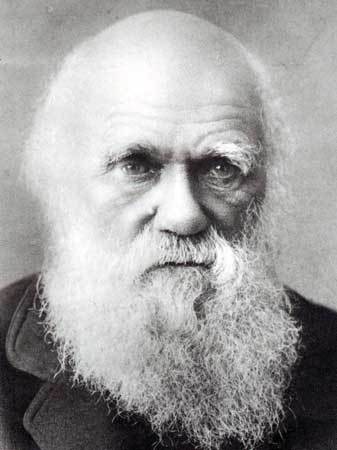





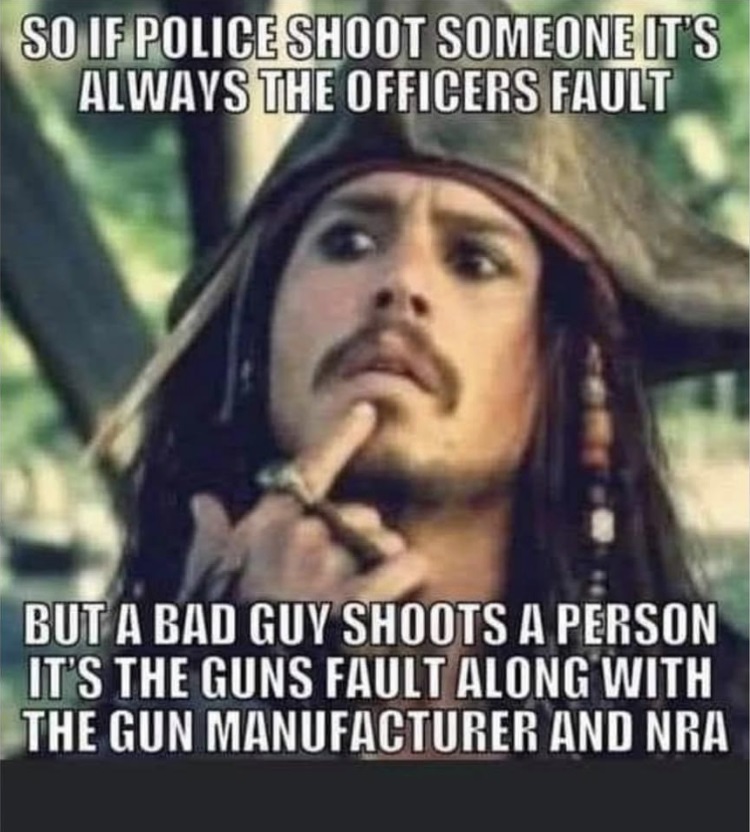



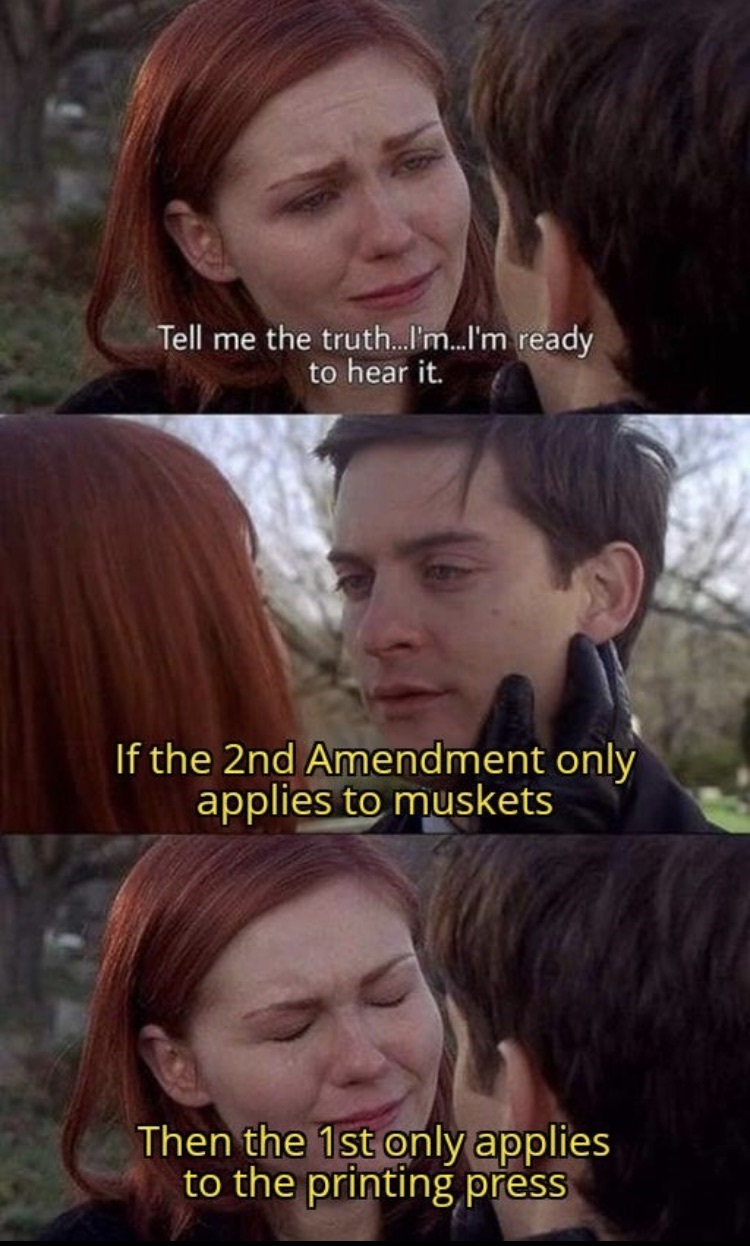

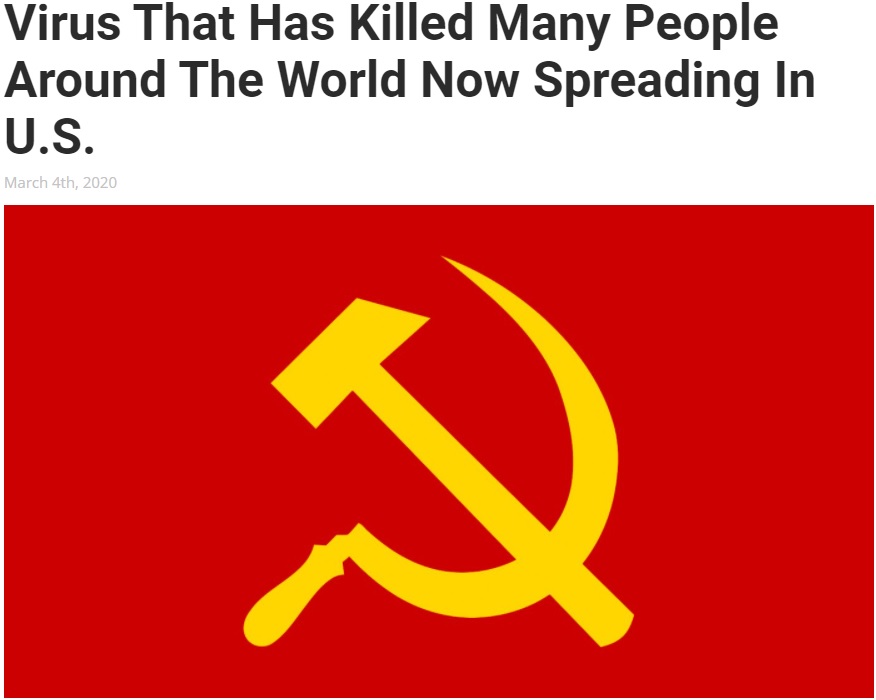

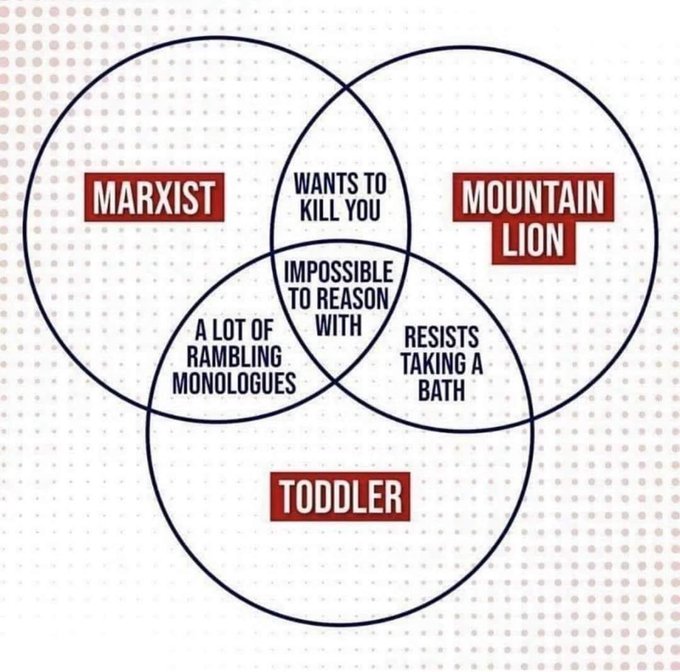




 WalkerWords4 years agoAdvertisementshttps://d-20789260203582880250.ampproject.net/2102200206006/frame.html
 Writer Steve Turner must have one of the best jobs in the world.
 “And Beatles ’66, I’ve got a copy of it at my desk and I keep picking it up, looking at it, and feeling it.

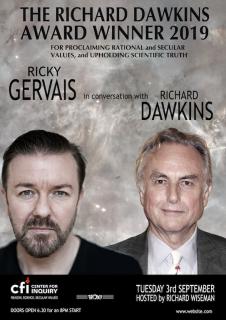


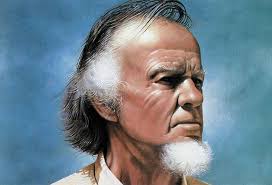




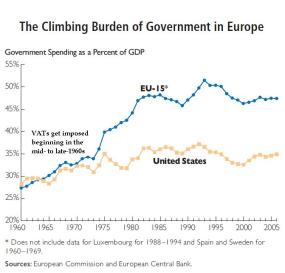




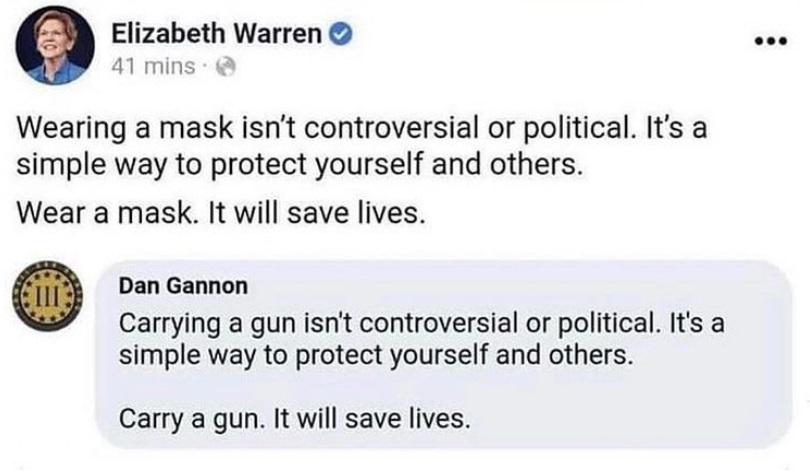


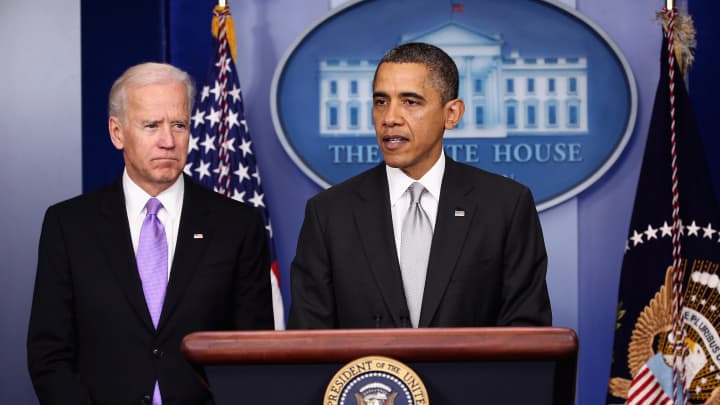 President Barack Obama announces the creation of an interagency task force for guns as as Vice President Joseph Biden listens on.Getty Images