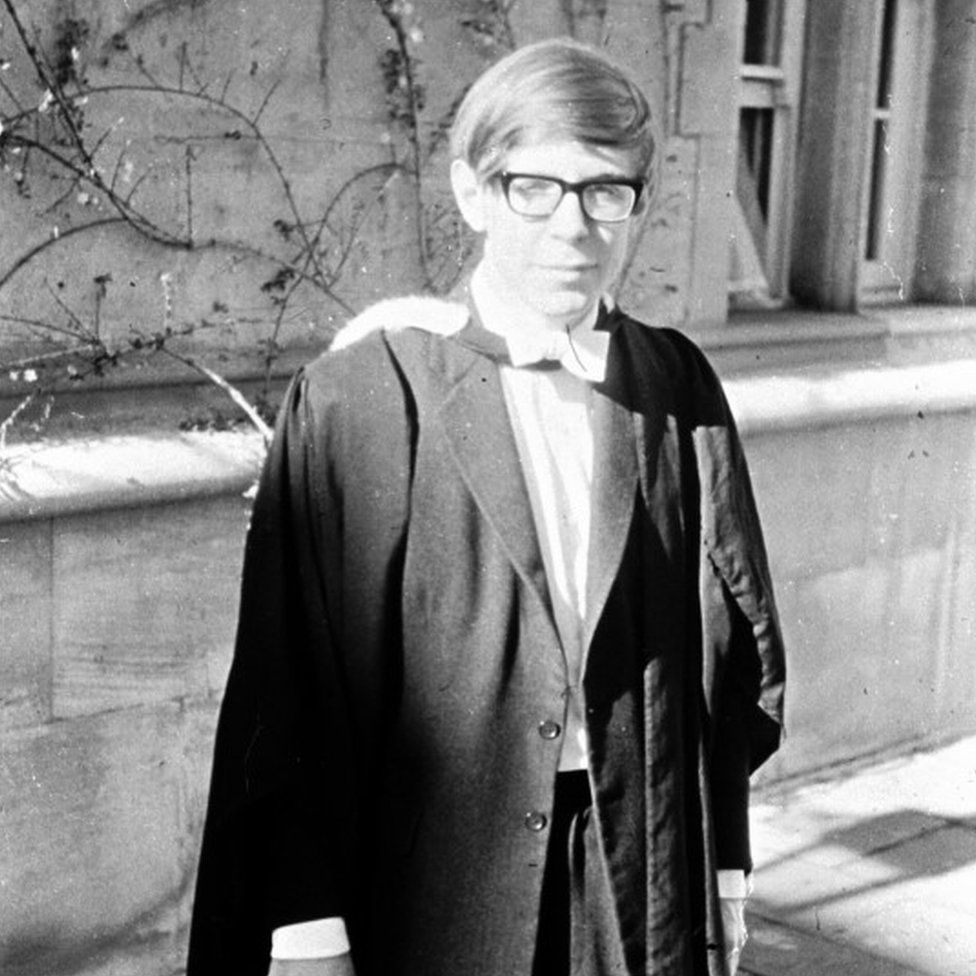
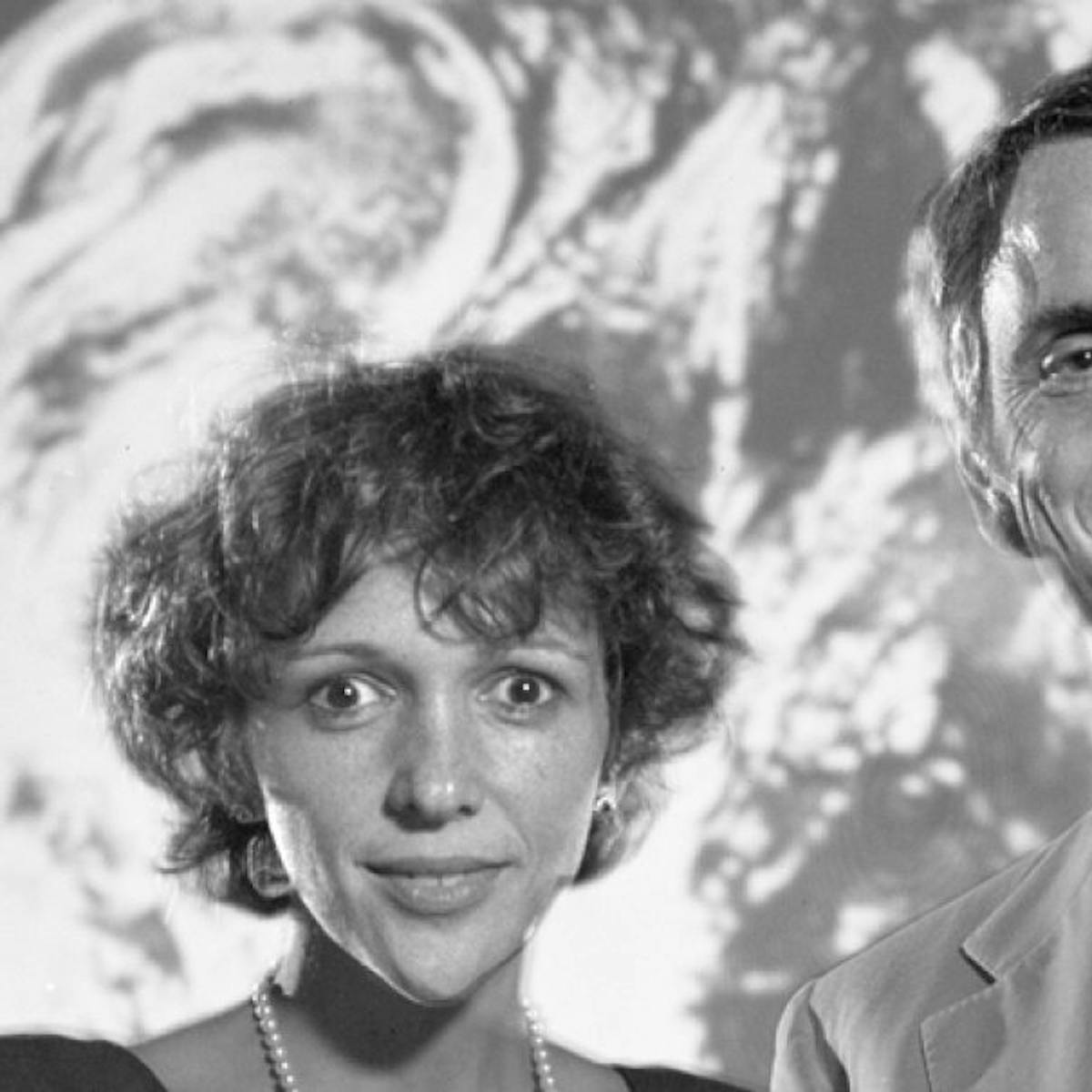
and you will hear what far smarter people than I have to say on this matter. I agree with them.
Harry Kroto
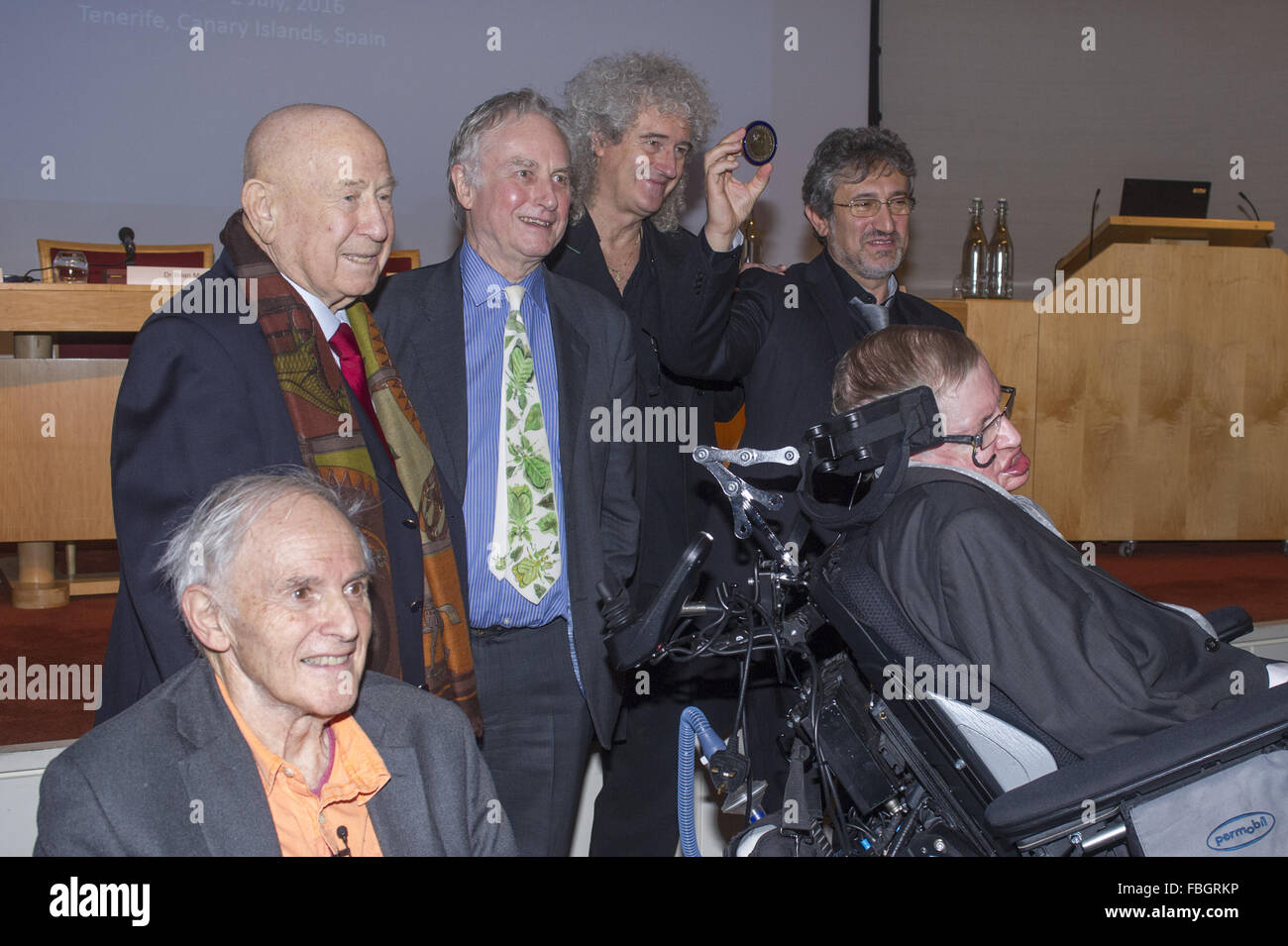
Nick Gathergood, David-Birkett, Harry-Kroto
I have attempted to respond to all of Dr. Kroto’s friends arguments and I have posted my responses one per week for over a year now. Here are some of my earlier posts:
In the first video below in the 15th clip in this series are his words and my response is below them.
50 Renowned Academics Speaking About God (Part 1)
Another 50 Renowned Academics Speaking About God (Part 2)
A Further 50 Renowned Academics Speaking About God (Part 3)
_________________________________
In the popular You Tube video “Renowned Academics Speaking About God” you made the following statement:
“M-Theory doesn’t disprove God, but it does make him unnecessary. It predicts that the universe will be spontaneously created out of nothing without the need for a creator.” –Stephen Hawking, Cambridge theoretical physicist
I confronted D. James Kennedy about some of the UNCONFIRMED QUOTES that he was using concerning the FOUNDING FATHERS and he wrote me back explaining why he thought it was alright to use these quotes.
Letter # dated 1-29-17
Richard Dawkins & Daniel Dennett vs. Francis Collins & Benjamin Carson – Evolution Debate
__
Bach
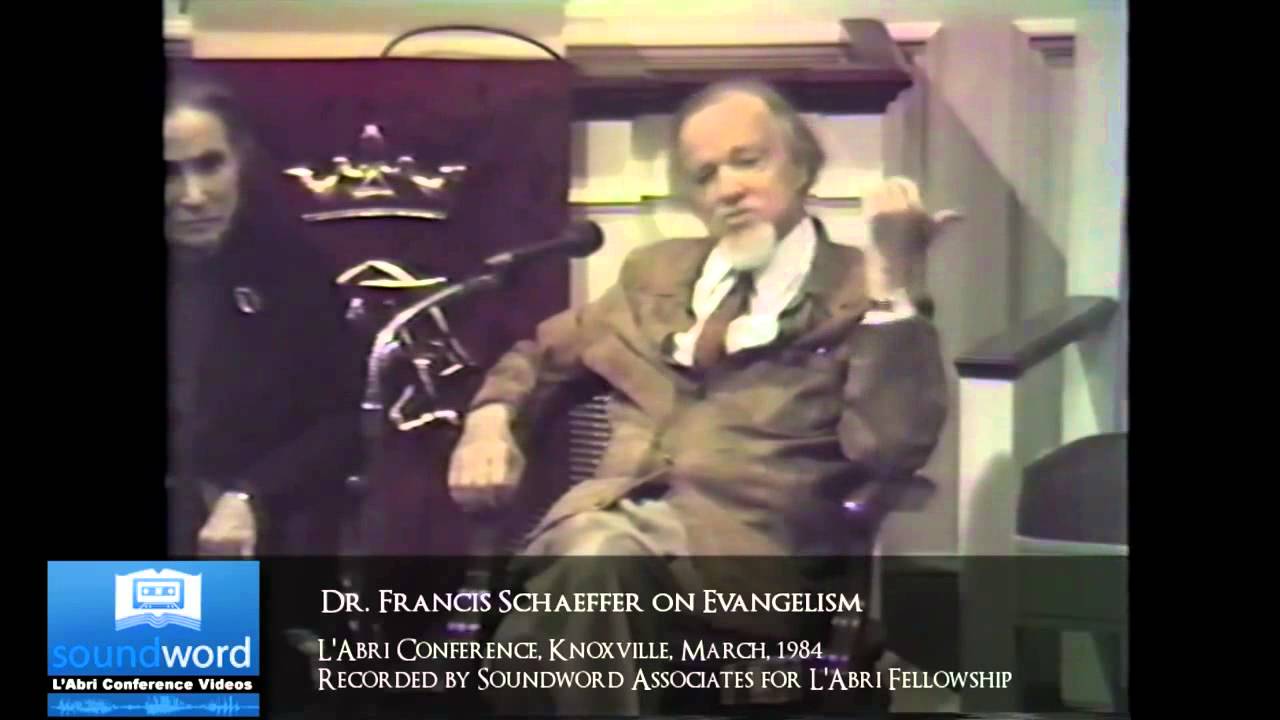
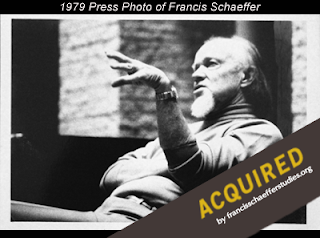
Francis Schaeffer
__
Charles Darwin photograph by Herbert Rose Barraud, 1881
Mark Henry, teaching pastor of Fellowship Bible Church
Isaac Newton
Louis Pasteur below
Michael Faraday
Henri Fabre
Blaise Pascal
____
January 29, 2017
Dr. Stephen Hawking, c/o Centre for Theoretical Cosmology Department of Applied Mathematics and Theoretical Physics Centre for Mathematical Sciences Wilberforce Road, Cambridge CB3 0WA, UK
Dear Dr. Hawking,
Something was said in the sermon today that made me think of something you wrote in one of your books. I have now finished your book THE GRAND DESIGN and I wanted to comment on it. Here is quote from your book THE GRAND DESIGN:
But if one takes the biblical view, then God
not only created the laws but can be appealed to by
prayer to make exceptions— to heal the terminally
ill, to bring premature ends to droughts, or to
reinstate croquet as an Olympic sport. In
opposition to Des cartes' s view, almost all Christian
thinkers maintained that God must be able to
suspend the laws to accomplish miracles.
You may not be able to see a miracle performed right before your eyes but as a student of history can’t you see all the unbelievable good results that Christianity has brought to the world? You might wonder what our sermon had to do with what you said. The answer is that because of Christianity there has been an enormous amount of good done through the centuries since Christ left this earth and sent his Holy Spirit. Actually our teaching pastor Mark Henry of FELLOWSHIP BIBLE CHURCH in Little Rock, Arkansas, pointed out that the Holy Spirit has empowered many Christians over the centuries to empty their hearts of their own worldly desires and to serve God through their actions. That is why I also wrote Richard Dawkins about the same subject. Instead of repeating everything I said to Richard I will just include his letter.
The reason that I have taken the time to read your book is that I am an evangelical Christian and I have enjoyed developing relationships with skeptics and humanists over the years. Back in 1996 I took my two sons who were 8 and 10 yrs old back then to New York, Washington, Philadelphia, Delaware, and New Jersey and we had dinner one night with Herbert A. Tonne, who was one of the signers of the Humanist Manifesto II. The Late Professor John Georgewho has written books for Prometheus Press was my good friend during the last 10 years of his life. We often ate together and were constantly talking on the phone and writing letters to one another.
It is a funny story how I met Dr. George. As an evangelical Christian and a member of the Christian Coalition, I felt obliged to expose a misquote of John Adams’ I found in an article entitled “America’s Unchristian Beginnings” by the self-avowed atheist Dr. Steven Morris. However, what happened next changed my focus to the use of misquotes, unconfirmed quotes, and misleading attributions by the religious right.
In the process of attempting to correct Morris, I was guilty of using several misquotes myself. Professor John George of the University of Central Oklahoma political science department and coauthor (with Paul Boller Jr.) of the book THEY NEVER SAID IT! set me straight. George pointed out that George Washingtonnever said, “It is impossible to rightly govern the world without God and the Bible.“ I had cited page 18 of the 1927 edition of HALLEY’S BIBLE HANDBOOK. This quote was probably generated by a similar statement that appears in A LIFE OF WASHINGTON by James Paulding. Sadly, no one has been able to verify any of the quotes in Paulding’s book since no footnotes were offered.
After reading THEY NEVER SAID IT! I had a better understanding of how widespread the problem of misquotes is. Furthermore, I discovered that many of these had been used by the leaders of the religious right. I decided to confront some individuals concerning their misquotes. WallBuilders, the publisher of David Barton’s THE MYTH OF SEPARATION, responded by providing me with their “unconfirmed quote” list which contained a dozen quotes widely used by the religious right.
Sadly some of the top leaders of my own religious right have failed to take my encouragement to stop using these quotesand they have either claimed that their critics were biased skeptics who find the truth offensive or they defended their own method of research and claimed the secondary sources were adequate. Even though I have quoted extensively from D. James Kennedy’s book What if Jesus Had Never Been Born, Kennedy was one of the leaders who failed to remove his quotes even though I gave him evidence that they were UNCONFIRMED QUOTES.
Richard Dawkins c/o Richard Dawkins Foundation, 1012 14th Street NW, Suite 209 Washington, DC 20005
Dear Mr. Dawkins,
I know that you are good friends with Daniel Dennett and I have noticed how many times he quotes you in his books. He was kind enough to send me a very thoughtful response on January 12, 2017, and it just so happens that I am in the middle of reading his book DARWIN’S DANGEROUS IDEA. Of course, I have read several of your books such as The God Delusion, An Appetite for Wonder: The Making of a Scientist, and Brief Candle in the Dark: My Life in Science.
I also recently enjoyed watching both you and Dr. Dennett on Jonathan Miller’s BBC program Atheism: A Rough History of Disbelief. Francis Schaeffer used to quote Jonathan Miller back in the 1960’s during his teachings at L ‘Abri.
I once was the guest of the week on a British radio show called Desert Island Discs. You have to choose the eight records you would take with you if marooned on a desert island. Among my choices was ‘Mache dich mein Herze rein’ from Bach’s St Matthew Passion. The interviewer was unable to understand how I could choose religious music without being religious. You might as well say, how can you enjoy Wuthering Heights when you know perfectly well that Cathy and Heathcliff never really existed?
But there is an additional point that I might have made, and which needs to be made whenever religion is given credit for, say, the Sistine Chapel or Raphael’s Annunciation. Even great artists have to earn a living, and they will take commissions where they are to be had. I have no reason to doubt that Raphael and Michelangelo were Christians – it was pretty much the only option in their time – but the fact is almost incidental. Its enormous wealth had made the Church the dominant patron of the arts. If history had worked out differently, and Michelangelo had been commissioned to paint a ceiling for a giant Museum of Science, mightn’t he have produced something at least as inspirational as the Sistine Chapel? How sad that we shall never hear Beethoven’s Mesozoic Symphony, or Mozart’s opera The Expanding Universe.
I thought of that quote from you today when I was in church. Our teaching pastor Mark Henry of FELLOWSHIP BIBLE CHURCH in Little Rock, Arkansas, pointed out that the Holy Spirit has empowered many Christians over the centuries to empty their hearts of their own worldly desires and to serve God through their actions.
2 RESPONSES TO YOUR ASSERTION THAT AN EARLIER ACCEPTANCE OF EVOLUTION WOULD HAVE ENRICHED MUSIC AND THE ARTS.
First, we have the testimony of Charles Darwin himself concerning this.
Second, we have the actual result of what Christianity’s impact on the world was.
I have said that in one respect my mind has changed during the last twenty or thirty years. Up to the age of thirty, or beyond it, poetry of many kinds, such as the works of Milton, Gray, Byron, Wordsworth, Coleridge, and Shelley, gave me great pleasure, and even as a schoolboy I took intense delight in Shakespeare, especially in the historical plays. I have also said that formerly pictures gave me considerable, and music very great delight. But now for many years I cannot endure to read a line of poetry: I have tried lately to read Shakespeare, and found it so intolerably dull that it nauseated me. I have also almost lost my taste for pictures or music. Music generally sets me thinking too energetically on what I have been at work on, instead of giving me pleasure. I retain some taste for fine scenery, but it does not cause me the exquisite delight which it formerly did…
This curious and lamentable loss of the higher æsthetic tastes is all the odder, as books on history, biographies, and travels (independently of any scientific facts which they may contain), and essays on all sorts of subjects interest me as much as ever they did. My mind seems to have become a kind of machine for grinding general laws out of large collections of facts, but why this should have caused the atrophy of that part of the brain alone, on which the higher tastes depend, I cannot conceive. A man with a mind more highly organised or better constituted than mine, would not, I suppose, have thus suffered; and if I had to live my life again, I would have made a rule to read some poetry and listen to some music at least once every week; for perhaps the parts of my brain now atrophied would thus have been kept active through use. The loss of these tastes is a loss of happiness, and may possibly be injurious to the intellect, and more probably to the moral character, by enfeebling the emotional part of our nature.
Francis Schaeffer commented:
This is the old man Darwin writing at the end of his life. What he is saying here is the further he has gone on with his studies the more he has seen himself reduced to a machine as far as aesthetic things are concerned. I think this is crucial because as we go through this we find that his struggles and my sincere conviction is that he never came to the logical conclusion of his own position, but he nevertheless in the death of the higher qualities as he calls them, art, music, poetry, and so on, what he had happen to him was his own theory was producing this in his own self just as his theories a hundred years later have produced this in our culture. I don’t think you can hold the evolutionary position as he held it without becoming a machine. What has happened to Darwin personally is merely a forerunner to what occurred to the whole culture as it has fallen in this world of pure material, pure chance and later determinism. Here he is in a situation where his mannishness has suffered in the midst of his own position.
Let’s take a closer look at the music by Bach that you call your favorite.
From Francis Schaeffer’s How Should We Then Live? (p. 92):
Johann Sebastian Bach (1685 – 1750) was certainly the zenith of the composers coming out of the Reformation. His music was a direct result of the Reformation culture and the biblical Christianity of the time, which was so much a part of Bach himself. There would have been no Bach had there been no Luther. Bach wrote on his score initials representing such phrases as: “With the help of Jesus” – “To God alone be the glory” – “In the name of Jesus.” It was appropriate that the last thing Bach the Christian wrote was “Before Thy Throne I Now Appear.” Bach consciously related both the form and the words of his music to biblical truth. Out of the biblical context came a rich combination of music and words and a diversity of unity. This rested on the fact that the Bible gives unity to the universal and the particulars, and therefore the particulars have meaning. Expressed musically, there can be endless variety and diversity without chaos. There is variety yet resolution.
And this is why I love Bach.
IF JESUS WAS IN FACT A REAL MAN AND THE HOLY SPIRIT DID UPON HIS DISCIPLES THEN YOU WOULD EXPECT THE WORLD TO BE CHANGED.
___What if Jesus Had Never Been Bornby D. James Kennedy This book documents the positive impact Jesus Christ and the Christian Church has made on the world in nearly every conceivable area – morality, health, sex, hospitals, art, music, charity, economics, government, science, education and the founding of America. Some critics believe that all these advances would have happened sooner or later, but there is little evidence to support this other then hopeful conjecture. Despite excesses by self proclaimed Christians over the ages, the problems have not been due to Jesus’ teachings, rather the failure to follow those teachings. Even with imperfect people, Christianity has had a much more positive impact on the world than any other religion. This book is desperately needed to counter the constant attacks on the Christian faith.We need to understand that the changes made by Christianity did not happen overnight. Many people – most couldn’t read or write – became Christian without examining or having the ability to examine current belief systems. At a time when books were only available to a select group of people – and then in limited number, it took decades for changes in morality to take hold of society as a whole. It certainly is true that Christianity has had shortcomings. However, the sins of the Church were no worse then the pagan world. Christianity at its worst was far better then Paganism at its best. Whereas the pagan world could never advance morally, the shortcomings of the Christian church were an aberration that were corrected by itself over time. Excerpts from the book: “Jesus Christ, the greatest man who ever lived, has changed virtually every aspect of human life – and most people don’t know it.” “Despite its humble origins, the Church has made more changes on earth for the good than any other movement or force in history. To get an overview of some of the positive contributions Christianity has made through the centuries, here are a fewhighlights:• Hospitals, which essentially began during the Middle Ages.• Universities, which also began during the Middle Ages. In addition, most of the world’s greatest universities were started by Christians for Christian purposes.• Literacy and education for the masses.• Capitalism and free-enterprise.• Representative government, particularly as it has been seen in the American experiment.• The separation of political powers.• Civil liberties.• The abolition of slavery, both in antiquity and in more modern times.• Modem science.• The discovery of the New World by Columbus.• The elevation of women.• Benevolence and charity; the good Samaritan ethic.• Higher standards of justice.• The elevation of the common man.• The condemnation of adultery, homosexuality, and other sexual perversions. This has helped to preserve the human race, and it has spared many from heartache.• High regard for human life.• The civilizing of many barbarian and primitive cultures.• The codifying and setting to writing of many of the world’s languages.• Greater development of art and music. The inspiration for the greatest works of art.• The countless changed lives transformed from liabilities into assets to society because of the gospel. • The eternal salvation of countless souls! The last one mentioned, the salvation of souls, is the primary goal of the spread of Christianity. All the other benefits listed are basically just by-products of what Christianity has often brought when applied to daily living. When Jesus Christ took upon Himself the form of man, He imbued mankind with a dignity and inherent value that had never been dreamed of before. Whatever Jesus touched or whatever He did transformed that aspect of human life. Many people will read about the innumerable small incidents in the life of Christ while never dreaming that those casually mentioned “little” things were to transform the history of humankind. Christ’s influence on the world is immeasurable. The purpose of this book is to glimpse what we can measure, to see those numerous areas of life where Christ’s influence can be concretely traced. Not all have been happy about Jesus Christ’s coming into the world. Friederich Nietzsche, the nineteenth-century atheist philosopher who coined the phrase “God is dead,” likened Christianity to poison that has infected the whole world. Nietzsche said that history is the battle between Rome (the pagans) and Israel (the Jews and the Christians); and he be-moaned the fact that Israel (through Christianity) was winning and that the cross “has by now triumphed over all other, nobler virtues.” In his book,The Antichrist, Nietzsche wrote: I condemn Christianity; I bring against the Christian Church the most terrible of all the accusations that an accuser has ever had in his mouth. It is, to me, the greatest of all imaginable corruption; it seeks to work the ultimate corruption, the worst possible corruption. The Christian Church has left nothing untouched by its depravity; it has turned every value into worthlessness, and every truth into a lie, and every integrity into baseness of soul. Nietzsche held up as heroes a “herd of blond beasts of prey, a race of conquerors and masters.” According to Nietzsche, and later Hitler, by whom or what were these Teutonic warriors corrupted? Answer: Christianity. “This splendid ruling stock was corrupted, first by the Catholic laudation of feminine virtues, secondly by the Puritan and plebeian ideals of the Reformation, and thirdly by intermarriage with inferior stock.” Had Jesus never come, wailed Nietzsche, we would never have had the corruption of “slave morals” into the human race. Many of the ideas of Nietzsche were put into practice by his philosophical disciple, Hitler, and about 16 million died as a result. In Mein Kampf, Hitler blamed the Church for perpetuating the ideas and laws of the Jews. Hitler wanted to completely uproot Christianity once he had finished uprooting the Jews. In a private conversation “shortly after the National Socialists’ rise to power,” recorded by Herman Rauschning, Hitler said: Historically speaking, the Christian religion is nothing but a Jewish sect…. After the destruction of Judaism, the extinction of Christian slave morals must follow logically… . I shall know the moment when to confront, for the sake of the German people and the world, their Asiatic slave morals with our picture of the free man, the godlike man…. It is not merely a question of Christianity and Judaism. We are fighting against the most ancient curse that humanity has brought upon itself. We are fighting against the perversion of our soundest instincts. Ah, the God of the deserts, that crazed, stupid, vengeful Asiatic despot with his powers to make laws! … That poison with which both Jews and Christians have spoiled and soiled the free, wonderful instincts of man and lowered them to the level of doglike fright. Both Nietzsche and Hitler wished that Christ had never been born. Others share this sentiment. For example, Charles Lam Markmann, who wrote a favorable book on the history of the ACLU, entitled The Noblest Cry, said: “If the otherwise admirably civilized pagans of Greece and their Roman successors had had the wit to laugh Judaism into desuetude, the world would have been spared the 2000-year sickness of Christendom.”… the point of this book is to say to Nietzsche, Freud, Hitler, Robert Ingersoll, Lenin, Stalin, Mao, Madalyn Murray O’Hare, Phil Donahue, the ACLU, and other leading anti-Christians of the past and present, that the overwhelming impact of Christ’s life on Planet Earth has been positive, not negative. What these people refuse to acknowledge is that civil liberties have been bequeathed by Christianity and not by atheism or humanism. Prior to the coming of Christ, human life on this planet was exceedingly cheap. Life was expendable prior to Christianity’s influence. Even today, in parts of the world where the gospel of Christ or Christianity has not penetrated, life is exceedingly cheap. But Jesus Christ … gave mankind a new perspective on the value of human life. Furthermore, Christianity bridged the gap between the Jews – who first received the divine revelation that man was made in God’s image – and the pagans, who attributed little value to human life. Meanwhile, as we in the post-Christian West abandon our Judeo-Christian heritage, life is becoming cheap once again. Children:In the ancient world, child sacrifice was a common phenomenon. Only about half of the children born lived beyond the age of eight, in part because of widespread infanticide, with famine and illness also being factors. Infanticide was not only legal, it was applauded…it was commonly held in Rome that killing one’s own children could be an act of beauty. But then Jesus came. Since that time, Christians have cherished life as sacred, even the life of the unborn. In ancient Rome, Christians saved many of these babies and brought them up in the faith. Abortion disappeared in the early church. Infanticide and abandonment disappeared. Foundling homes, orphanages, and nursery homes were started to house the children. These new practices, based on this higher view of life, helped to create a foundation in western civilization for an ethic of human life that persists to this day – although it is currently under severe attack. And it all goes back to Jesus Christ. If He had never been born, we would never have seen this change in the value of human life. Women:Prior to Christian influence, a woman’s life was also very cheap. In ancient cultures, the wife was the property of her husband. Prior to the Christian influences in India, widows were voluntarily or involuntarily burned on the husbands funeral pyres – a grisly practice known as suttee. Furthermore, infanticide – particularly for girls – was common in India, prior to the great missionary William Carey. These centuries-old practices, suttee and infanticide, were finally stopped only in the early nineteenth century… In other areas of the globe where the gospel of Christ has not penetrated, the value of woman’s lives is cheap. How ironic that feminists today do not give any credit to Christ or Christianity. Slavery:Half of the population of the Roman Empire was slaves. Three fourths of the population of Athens was slaves. The life of a slave could be taken at the whim of the master. Over the centuries, Christianity abolished slavery, first in the ancient world and then later in the nineteenth century, largely through the efforts of the strong evangelical William Wilberforce. It didn’t happen over night, and certainly there have been dedicated Christians who were slaveowners. Nonetheless, the end of slavery, which has plagued mankind for thousands of years, has come primarily through the efforts of Christians. “Once the gospel did spread, the seeds were sown for the eventual dissolution of slavery. Thus by reforming the heart, Christianity, in time, reformed the social order! “Robert E. Lee, who freed the slaves he had inherited by marriage, once wrote that the War between the States was needless bloodshed in terms of ending slavery, for he believed the evil institution would have eventually withered away because of Christianity.” Compassion and Mercy:The world before Christianity was like the Russian tundra – quite cold and inhospitable. One scholar, Dr. Martineau, exhaustively searched through historical documents and concluded that antiquity has left no trace of any organized charitable effort. Disinterested benevolence was unknown. When Christ and the Bible became known, charity and benevolence flourished. While poverty has always been a part of life on earth, the Church of Jesus Christ has done more – and often still does more – than any other institution in history to alleviate poverty. Furthermore, it has set the pattern for relief that is copied worldwide. All charity points back to Jesus Christ, whether people recognize it or not. Capitalism:“If Jesus had never been born, it is unlikely that capitalism and the free enterprise system – which has brought unparalleled prosperity to billions of people – would ever have developed. In this chapter, I will trace the links between the Christian faith and the prosperity enjoyed in the West, particularly in the United States.” Science:“Hasn’t religion always been the enemy of science? No! Furthermore, many scholars agree that the scientific revolution that gained great momentum in the seventeenth century was birthed for the most part by Reformed Christianity.” Here is a list of some of the outstanding bible-believing scientists who founded the following branches of science:Antiseptic surgery, Joseph ListerBacteriology, Louis PasteurCalculus, Isaac NewtonCelestial Mechanics, Johannes keplerChemistry, Robert BoyleComparative Anatomy, Georges CuvierComputer Science, Charles BabbageDimensional Analysis, Lord RayleighDynamics, Isaac NewtonElectronics, John flemingElectrodynamics, James MaxwellElectromagnetics, Michael FaradayEnergetics, Lord kelvinEntomology of Living Insects, Henri FabreFluid Mechanics, George StokesGas Dynamics, Robert BoyleGenetics, Gregor mendelGynecology, James SimpsonHydrostatics, Blaise PascalNatural History, John Ray.When Christian Morals are removed from society: “During one of the darkest periods of World War II, after the collapse of France and before American involvement, Churchill wrote that the question in the minds of friends and foes was: ‘Will Britain surrender too?’ At that time he made a speech that contained this sentence: ‘I expect that the Battle of Britain is about to begin. Upon this battle depends the survival of Christian civilization’ The great statesman recognized the link between Christianity and civility, in contrast with new-paganism and tyranny. Providentially, Christian civilization won. But where it has lost, all manner of terrors have been unleashed.” “No century has been like ours in terms of man killing his fellow man. About 130 million . . . died because of atheistic ideology” – Hitler, Stalin and Mao of China. When a person denies the existence of God, you only have the material world. You’ve killed the spiritual world. “The frightening thing about a humanist and atheistic state is that there is nothing beyond man to which one can make an appeal. The founders of this country said that men have been created equal and have been endowed by their Creator with certain inalienable rights. We have an appeal beyond man, beyond the State, to God Himself, whereas in the humanist state there is nothing but man. The humanist state inevitably leads to tyranny and despotism. As Dostoevsky said, ‘If God is dead, then all things are permissible.’” “With atheism there are no objective moral standards. This is not to say that all atheists are immoral people. In reality, there are many nice people who are atheists, but their niceness isborrowed capital from Christianity; it is not because of their atheism, but despite it.” If the atheist had been raised in an atheistic society, they would be very different people, while the Christian would be the same. The Christian who is unloving, is unloving despite of his professed Christianity, not because of it. Historian Will Durant, who is a humanist, said in the February 1977 issue of the Humanist Magazine: There is no significant example in history, before our time, of a society successfully maintaining moral life without the aid of religion. Boston College professor William Kilpatrick has written a book on the subject of morality in public schools. In Why Johnny Can’t Tell Right from Wrong (1992) he writes: “Youngsters are forced to question values and virtues they’ve never acquired in the first place or upon which they have only a tenuous hold.” “When you devalue God, you devalue human life. How could Hitler ruthlessly exterminate six million Jews and millions of other? How could the Communists kill and torture over a hundred million people? How could they do that to other human beings?” “The answer you give to the question ‘What is a human being?’ will determine precisely what you can do to one.” “. . .when the restraining influence of Christianity is removed from a country or culture, unmitigated disaster will naturally follow.” “One of our Supreme Court Justices, Oliver Wendell Holmes said: ‘I see no reason for attributing to man a significant difference in kind from that which belongs to a grain of sand.’” “And yet we sometimes hear the statement that ‘more people have been killed in the name of Christ than in any other name.’” This is simply a lie. Where do we go from here?Is secularism inevitable? From Harvard University to the YMCA, so many of the institutions we discussed in this book were started by Christians for Christian purposes, often at great sacrifice and expense; and then eventually they drifted away from their original [intent]. Is this trend unavoidable? “Religion begat prosperity, but the daughter hath consumed the mother.” Cotton Mather made this observation toward the end of the seventeenth century after the Christianity of the Pilgrims and Puritans had begun to wane. They had only been in the New World for three or four generations, and they were already beginning to allow the prosperity they enjoyed to crowd out the cause of that prosperity; Christianity. “Many of the good things we enjoy today grew out of the religion of Jesus Christ, but He is often denied the credit” The proof of this denial is in nearly every history book in public schools in America. Source:1. http://www.access.gpo.gov/congress/senate/farewell/sd106-21.pdf
The John Lennon and the Beatles really were on a long search for meaning and fulfillment in their lives just like King Solomon did in the Book of Ecclesiastes. Solomon looked into learning (1:12-18, 2:12-17), laughter, ladies, luxuries, and liquor (2:1-2, 8, 10, 11), and labor (2:4-6, 18-20). He fount that without God in the picture all […]
By Everette Hatcher III | Posted in Current Events, Francis Schaeffer | Edit | Comments (0)
__________________ Beatles 1966 Last interview I have dedicated several posts to this series on the Beatles and I don’t know when this series will end because Francis Schaeffer spent a lot of time listening to the Beatles and talking and writing about them and their impact on the culture of the 1960’s. In this […]
By Everette Hatcher III | Posted in Francis Schaeffer | Tagged George Harrison, John Lennon, Paul MacCartney, Peter Blake, Ringo Starr | Edit | Comments (1)
In this flow there was also the period of psychedelic rock, an attempt to find this experience without drugs, by the use of a certain type of music. This was the period of the Beatles’ Revolver (1966) and Strawberry Fields Forever (1967). In the same period and in the same direction was Blonde on Blond (1966) by Bob Dylan….No great illustration could be found of the way these concepts were carried to the masses than “pop” music and especially the work of the BEATLES. The Beatles moved through several stages, including the concept of the drug and psychedelic approach. The psychedelic began with their records REVOLVER, STRAWBERRY FIELDS FOREVER, AND PENNY LANE. This was developed with great expertness in their record SERGEANT PEPPER’S LONELY HEARTS CLUB BAND in which psychedelic music, with open statements concerning drug-taking, was knowingly presented as a religious answer.
Top 30 Psychedelic Beatles Songs
The Beatles Strawberry Fields Forever
________
Originally the song STRAWBERRY FIELDS FOREVER was on Sergeant Pepper’s but was later moved to MAGICAL MYSTERY TOUR.
The Beatles celebrate the completion of their album, ‘Sgt Pepper’s Lonely Hearts Club Band’, on May 19th, 1967 in London.
_____________
_____________
_____________
Previously unseen footage of The Beatles shot during the making of a documentary about the Fab Four’s Magical Mystery Tour film has been made available .
The Beatles are featured in this episode below by Francis Schaeffer:
The Beatles were looking for lasting satisfaction in their lives and their journey took them down many of the same paths that other young people of the 1960’s were taking INCLUDING THE PATH OF PSYCHEDELIC MUSIC AND FRAGMENTATION. No wonder in the video THE AGE OF NON-REASON Schaeffer noted, ” Sergeant Pepper’s Lonely Hearts Club Band…for a time it became the rallying cry for young people throughout the world. It expressed the essence of their lives, thoughts and their feelings.”
How Should We then Live Episode 7 small (Age of Nonreason)
(Francis Schaeffer pictured below)
Today we take a look at the psychedelic music of the Beatles. In the book THE GOD WHO IS THERE, Francis Schaeffer noted:
In this flow there was also the period of psychedelic rock, an attempt to find this experience without drugs, by the use of a certain type of music. This was the period of the Beatles’ Revolver (1966) and Strawberry Fields Forever (1967). In the same period and in the same direction was Blonde on Blond (1966) by Bob Dylan….No great illustration could be found of the way these concepts were carried to the masses than “pop” music and especially the work of the BEATLES. The Beatles moved through several stages, including the concept of the drug and psychedelic approach. The psychedelic began with their records REVOLVER, STRAWBERRY FIELDS FOREVER, AND PENNY LANE. This was developed with great expertness in their record SERGEANT PEPPER’S LONELY HEARTS CLUB BAND in which psychedelic music, with open statements concerning drug-taking, was knowingly presented as a religious answer. The religious form was the same vague pantheism which predominates much of the new mystical thought today. One indeed does not have to understand in a clear way the modern monolithic thought in order to be infiltrated by it. SERGEANT PEPPER’S LONELY HEARTS CLUB BAND was an ideal example of the manipulating power of the new forms of “total art.” This concept of total art increases the infiltrating power of the message involved.
Here is an excerpt of a fine article about Schaeffer’s take on the 1960’s music:
Aldous Huxley(1894-1963) proposed drugs to give the high experience and wrote several books about it. He also used LSD. Hallucinogenic drugs brought with it many rock groups including Cream, Jefferson Airplane, Grateful Dead, Incredible Sting Band, Pink Floyd, and Jimi Hendrix. Some of the Beatles work also fit here. As a whole, the music was a vehicle to carry the drug culture and the mentality which went with it across frontiers which were impassible by other means. There is the culture of psychedelic rock fostered by the Beatles and Bob Dylan. The next area of religious experience was Hinduism and Buddhism where there is a grasping of non-rational meaning to life. These eastern religions grew popular as Goethe and Wagner had recommended this thinking with vague pantheism. These seek truth inside one’s own head by meditation, but negate reason.
In the article, “Soli Deo Gloria,” 1-8-14, Stephen Feinstein pointed out:
The psychedelic music of the Beatles were a deliberate attempt to destroy antithesis, promote relativism, undermined the truths of Christianity, and promote New Age Spirituality and drug use. The musicians that followed them simply brought more of the wickedness. Since the message was set to catchy tunes and directed toward drug-battered minds, an entire generation bought into the counterculture movement of the 1960s, and we are still living in the ramifications of it today. Music has only become more relative and meaningless. It has only promoted more drug use, violence, and sexual promiscuity…
This all stems from the fact that fallen man rejects absolute truth because they reject the God of the Bible. In the past, they clung to idolatry so that they could appeal to some authority other than God in order to account for their absolute standards. But when the chief thinkers rejected any purpose or meaning to things, and instead insisted upon an atheistic existence, absolute standards were rejected. The philosophers wrote and articulated it, the artists painted it on canvas, the musicians promoted it with their new styles, and the general culture (literature, poetry, drama, cinema, TV, and pop music) unwittingly accepted it. Now this is the default mode of thinking for the people of Western Civilization. People reject absolutes even if they don’t know why. Most people would not call themselves atheists, but their entire view of truth and reality stems from an atheist worldview. It is amazing how the absurd ideas of a few philosophers were able to change the way of thought for the entire modern world.
So Christian, what is your view on truth? In a world where antithesis is rejected, we need to push the antithesis again and again until the culture understands they cannot escape it. There are ways to do this, and perhaps they will be shared in later posts. We know that it is impossible to live without absolutes. We know the universe does have meaning. Therefore we are not hypocritical or inconsistent when we live as such. But the culture is hypocritical and inconsistent when it rejects God’s absolutes and yet forms its own, while with the same breath claiming such absolutes do not really exist. We need to confront them with God’s absolute truth, which is the only absolute truth that exists.
The song was the first track recorded during the sessions for the Beatles’ Sgt. Pepper’s Lonely Hearts Club Band (1967),[4] and was intended for inclusion on the album. Instead, with the group under record-company pressure to release a single, it was issued in February 1967 as a double A-side with “Penny Lane“. The combination reached number two in Britain, breaking the band’s four-year run of chart-topping singles there, while “Strawberry Fields Forever” peaked at number eight on the Billboard Hot 100 in America.
Numerous music critics consider it to be one of the group’s best and most adventurous recordings.[5][6] Among the breakthroughs it established in studio techniques of the time, for a single release, the track incorporates reverse-recorded instrumentation and tape loops, and was created from the editing together of two separate versions of the song – each one entirely different in tempo, mood and musical key. The song was later included on the US Magical Mystery Tour LP (although not on the British double EP package of the same name).
“Strawberry Fields Forever” is one of the defining works of the psychedelic rock genre and has been covered by many artists.[1] The Beatles made a promotional film clip for the song that is similarly recognised for its influence in the medium of music video. The Strawberry Fields memorial in New York’s Central Park is named after the song.[7][8]
The gatepost to Strawberry Field, which is now a popular tourist attraction in Liverpool
Strawberry Field was the name of a Salvation Army children’s home just around the corner from Lennon’s childhood home in Woolton, a suburb of Liverpool.[9] Lennon and his childhood friends Pete Shotton, Nigel Walley, and Ivan Vaughan used to play in the wooded garden behind the home.[10][11] One of Lennon’s childhood treats was the garden party held each summer in Calderstones Park, near the home, where aSalvation Army band played.[12] Lennon’s aunt Mimi Smith recalled: “As soon as we could hear the Salvation Army band starting, John would jump up and down shouting, ‘Mimi, come on. We’re going to be late.'”[11][13]
Lennon’s “Strawberry Fields Forever” and McCartney’s “Penny Lane” shared the theme of nostalgia for their early years in Liverpool. Although both referred to actual locations, the two songs also had strong surrealistic and psychedelic overtones.[14] Producer George Martin said that when he first heard “Strawberry Fields Forever”, he thought it conjured up a “hazy, impressionistic dreamworld”.[15]
The Beatles had just retired from touring after one of the most difficult periods of their career,[16] including the “more popular than Jesus” controversy and the band’s unintentional snubbing of Philippines First Lady Imelda Marcos.[17][18] Lennon talked about the song in 1980: “I was different all my life. The second verse goes, ‘No one I think is in my tree.’ Well, I was too shy and self-doubting. Nobody seems to be as hip as me is what I was saying. Therefore, I must be crazy or a genius – ‘I mean it must be high or low’ “,[19] and explaining that the song was “psycho-analysis set to music”.[15]
Lennon began writing the song in Almería, Spain, during the filming of Richard Lester‘s How I Won the War in September–October 1966.[20][21] The earliest demo of the song, recorded in Almería, had no refrain and only one verse: “There’s no one on my wavelength / I mean, it’s either too high or too low / That is you can’t you know tune in but it’s all right / I mean it’s not too bad”. He revised the words to this verse to make them more obscure, then wrote the melody and part of the lyrics to the refrain (which then functioned as a bridge and did not yet include a reference to Strawberry Fields). He then added another verse and the mention of Strawberry Fields.[22] The first verse on the released version was the last to be written, close to the time of the song’s recording. For the refrain, Lennon was again inspired by his childhood memories: the words “nothing to get hung about” were inspired by Aunt Mimi’s strict order not to play in the grounds of Strawberry Field, to which Lennon replied, “They can’t hang you for it.”[23] The first verse Lennon wrote became the second in the released version, and the second verse Lennon wrote became the last in the release.
The song was originally written on acoustic guitar in the key of C major. The recorded version is approximately in B-flat major; owing to manipulation of the recording speed, the finished version is not in standard pitch (some, for instance consider that the tonic is A).[24] The introduction was played by McCartney on a Mellotron,[16] and involves a I–ii–I– ♭VII–IV progression.[25] The vocals enter with the refrain instead of a verse.[5] In fact we are not “taken down” to the tonic key, but to “non-diatonic chords and secondary dominants” combining with “chromatic melodic tension intensified through outrageous harmonisation and root movement”.[26] The phrase “to Strawberry” for example begins with a somewhat dissonant G melody note against a prevailing F minor key, then uses the semi-tone dissonance B♭ and B notes (the natural and sharpened 11th degrees against the Fm chord) until the consonant F note is reached on “Fields”. The same series of mostly dissonant melody notes cover the phrase “nothing is real” against the prevailing F#7 chord (in A key).[26]
A half-measure complicates the meter of the verses, as well as the fact that the vocals begin in the middle of the first measure. The first verse comes after the refrain, and is eight measures long. The verse (for example “Always, no sometimes …”) starts with an F major chord in the key of B♭ (or E chord in the key of A) (V), which progresses to G minor, the submediant, a deceptive cadence. According to Alan Pollack, the “approach-avoidance tactic” (i.e., the deceptive cadence) is encountered in the verse, as the leading-tone, A, appearing on the words “Always know”, “I know when” “I think a No” and “I think I disagree”, never resolves into a I chord (A in A key) directly as expected.[27] Instead, at the end of the verse, the leading note, harmonized as part of the dominant chord, resolves to the prevailing tonic (B♭) at the end of the verse, after tonicizing the subdominant (IV) E♭ chord, on “disagree“.[24]
In the middle of the second chorus, the “funereal brass” is introduced, stressing the ominous lyrics.[5] After three verses and four choruses, the line “Strawberry Fields Forever” is repeated three times, and the song fades out with guitar, cello, and swarmandal instrumentation. The song fades back in after a few seconds into the “nightmarish” ending, with the Mellotron playing in a haunting tone – one achieved by recording the Mellotron “Swinging Flutes” setting in reverse[28] – scattered drumming, and Lennon murmuring, after which the song completes.[5][27]
The working title was “It’s Not Too Bad”,[29] and Geoff Emerick, the sound engineer, remembered it being “just a great, great song, that was apparent from the first time John sang it for all of us, playing an acoustic guitar.”[16]Recording began on 24 November 1966, in Abbey Road’s Studio Two on a 4-track machine.[30] It took 45 hours to record, spread over five weeks.[31][32][33] The song was meant to be on the band’s 1967 album Sgt. Pepper’s Lonely Hearts Club Band, but was released as a single instead.[34]
A 1960s-era Mellotron, similar to that used on the Beatles recording
The band recorded three distinct versions of the song. After Lennon played the song for the other Beatles on his acoustic guitar, the band recorded the first take. Lennon played anEpiphone Casino; McCartney played a Mellotron, a new home instrument purchased by Lennon on 12 August 1965 (with another model hired in after encouragement from Mike Pinder ofThe Moody Blues);[35]George Harrison played electric guitar, and Ringo Starr played drums.[36] The first recorded take began with the verse, “Living is easy …”, instead of the chorus, “Let me take you down”, which starts the released version. The first verse also led directly to the second, with no chorus between. Lennon’s vocals were automatically double-tracked from the words “Strawberry Fields Forever” through the end of the last verse. The last verse, beginning “Always, no sometimes”, has three-part harmonies, with McCartney and Harrison singing “dreamy background vocals”.[22][37] This version was soon abandoned and went unreleased until the Anthology 2 compilation in 1996.
Four days later the band reassembled to try a different arrangement. The second version of the song featured McCartney’s Mellotron introduction followed by the refrain. They recorded five takes of the basic tracks for this arrangement (two of which were false starts) with the last being chosen as best and subjected to further overdubs. Lennon’s final vocal was recorded with the tape running fast so that when played back at normal speed the tonality would be altered, giving his voice a slurred sound. This version was used for the first minute of the released recording.
After recording the second version of the song, Lennon wanted to do something different with it, as Martin remembered: “He’d wanted it as a gentle dreaming song, but he said it had come out too raucous. He asked me if I could write him a new line-up with the strings. So I wrote a new score[38] (with four trumpets and three cellos) and we recorded that, but he didn’t like it.”[30] Meanwhile, on 8 and 9 December, another basic track was recorded, using a Mellotron, electric guitar, piano, backwards-recorded cymbals, and the swarmandel (or swordmandel), an Indian version of the zither.[39][40] After reviewing the tapes of Martin’s version and the original, Lennon told Martin that he liked both versions,[41] although Martin had to tell Lennon that the orchestral score was at a faster tempo and in a higher key (B major) than the first version (A major).[27] Lennon said, “You can fix it, George”, giving Martin and Emerick the difficult task of joining the two takes together.[42][43] With only a pair of editing scissors, two tape machines, and a vari-speed control, Emerick compensated for the differences in key and speed by increasing the speed of the first version and decreasing the speed of the second.[16] He then spliced the versions together,[41] starting the orchestral score in the middle of the second chorus.[42](Since the first version did not include a chorus after the first verse, he also spliced in the first seven words of the chorus from elsewhere in the first version.) The pitch-shifting in joining the versions gave Lennon’s lead vocal a slightly other-worldly “swimming” quality.[44]
Some vocalising by Lennon is faintly audible at the end of the song, picked up as leakage onto one of the drum microphones (close listening shows Lennon making other comments to Ringo). In the “Paul is Dead” hoax these were taken to be Lennon saying “I buried Paul.”[45] In 1974, McCartney said, “That wasn’t ‘I buried Paul’ at all – that was John saying ‘cranberry sauce’ … That’s John’s humour … If you don’t realise that John’s apt to say cranberry sauce when he feels like it, then you start to hear a funny little word there, and you think, ‘Aha!'”[46] Shortly before his death in 1980, Lennon expressed dissatisfaction with the final version of the song, saying it was “badly recorded” and accusing McCartney of subconsciously sabotaging the recording.[47]
When manager Brian Epstein pressed Martin for a new Beatles’ single, Martin told Epstein that the group had recorded “Strawberry Fields Forever” and “Penny Lane”, which in Martin’s opinion were their two finest songs to date.[48] Epstein said they would issue the songs as a double A-side single, as they had done with their previous single, “Yellow Submarine“/”Eleanor Rigby“. The single was released in the US on 13 February 1967, and in the United Kingdom on 17 February 1967.[48] Following the Beatles’ usual philosophy that songs released on a single should not appear on new albums, which wasn’t always the case, both songs were ultimately left off Sgt. Pepper’s Lonely Hearts Club Band. Martin later admitted that this was a “dreadful mistake”,[49] even though both were given a belated album appearance on side two of the LP of “Magical Mystery Tour“, which released as a double EP in the UK, but in the USA, the LP had the whole soundtrack on side one with the 1967 singles released on side two; however, the US LP version is now the CD version.
For the first time since “Love Me Do” in 1962, a single by the Beatles failed to reach number one in the UK charts. It was held at number two by Engelbert Humperdinck‘s “Release Me“. In a radio interview at the time, McCartney said he was not upset because Humperdinck’s song was a “completely different type of thing”.[50] Starr said later that it was “a relief” because “it took the pressure off”.[51][nb 1] “Penny Lane” reached number one in the US, while “Strawberry Fields Forever” peaked at number eight. In the US, both songs were included on the Magical Mystery Tour LP, which was released as a six-track double-EP in the UK.[53]
The song was the opening track of the compilation album 1967–1970, released in 1973,[54] and also appears on the Imagine soundtrack issued in 1988.[55] In 1996, three previously unreleased versions of the song were included on the Anthology 2 album: Lennon’s original home demo, an altered version of the first studio take, and the complete take seven, of which only the first minute was heard in the master version.[56] In 2006, a newly mixed version of the song was included on the album Love.[16] This version builds from an acoustic demo (which was run at the actual recorded speed) and incorporates elements of “Hello, Goodbye“, “In My Life“, “Sgt. Pepper’s Lonely Hearts Club Band“, “Penny Lane” and “Piggies“.[57]
The Beatles (McCartney, Harrison, Starr and Lennon) pouring paint over a piano in the video for the song
The Beatles produced a promotional film clip for “Strawberry Fields Forever”, which served as an early example of what became known as a music video.[58] It was filmed on 30 and 31 January 1967 at Knole Park in Sevenoaks, Kent. The clip was directed by Peter Goldmann,[59] a Swedish television director who had been recommended to the Beatles by their mutual friend Klaus Voormann.[60]
One of the band’s assistants, Tony Bramwell, served as producer. Bramwell recalls that, inspired by Voormann’s comment on hearing “Strawberry Fields Forever” – that “the whole thing sounded like it was played on a strange instrument” – he spent two days dressing up a large tree in the park to resemble “a piano and harp combined, with strings”. Writing for Mojomagazine in 2007, John Harris remarked that Bramwell’s set design reflected the “collision of serenity and almost gothic eeriness” behind the finished song.[61]
The film features reverse film effects, stop motion animation, jump-cuts from daytime to night-time, and the Beatles playing and later pouring paint over the upright piano.[62] During the same visit to Knole Park, the band shot part of the promotional film for “Penny Lane”.[63][nb 2]
Among initial reviews of the single, the NME ’s Derek Johnson confessed to being both fascinated and confused by “Strawberry Fields Forever”, writing: “Certainly the most unusual and way-out single The Beatles have yet produced – both in lyrical content and scoring. Quite honestly, I don’t really know what to make of it.”[65]Time magazine hailed the song as “the latest sample of the Beatles’ astonishing inventiveness”.[66]
“Strawberry Fields Forever” has continued to receive acclaim from music critics. Richie Unterberger of AllMusic describes the song as “one of The Beatles’ peak achievements and one of the finest Lennon-McCartney songs”.[5]Ian MacDonald wrote in Revolution in the Head that it “shows expression of a high order … few if any [contemporary composers] are capable of displaying feeling and fantasy so direct, spontaneous, and original.”[67] In 2004, this song was ranked number 76 on Rolling Stone ’s list of “The 500 Greatest Songs of All Time“.[6]
In 2010, Rolling Stone placed it at number three on the 100 Greatest Beatles Songs.[68][69] “Strawberry Fields Forever” was ranked as the second-best Beatles song by Mojo, after “A Day in the Life“.[70] The song is ranked as the 8th greatest of all time by Acclaimed Music.[71]XFM radio placed the song 73rd in their list of the 100 Best British Songs and 176th in their Top 1000 Songs of All Time list.[72][73]
Paul Revere & the Raiders were among the most successful US groups during 1966 and 1967, having their own Dick Clark-produced television show, Where the Action Is. Mark Lindsay (singer/saxophonist) heard the song on the radio, bought it, and then listened to it at home with his producer at the time, Terry Melcher. When the song ended Lindsay said, “Now what the fuck are we gonna do?” later saying, “With that single, the Beatles raised the ante as to what a pop record should be”.[74]
It has been written by Steven Gaines in the biography Heroes and Villains that Brian Wilson of the Beach Boys heard the single while he was underway with his legendary unfinished album, Smile.[75] Later, the event was claimed by Gaines to have been one of many factors that accelerated Wilson’s already plummeting emotional state and the project’s imminent collapse, as Wilson could not find a way to complete the album to his satisfaction,[75] and by the Beach Boys’ former manager Jack Rieley‘s account, feared that what he had accomplished over the last several months of recording would sound dated to contemporary rock audiences.[76][nb 3] In 2014, Wilson stated that he thought “Strawberry Fields Forever” was “a weird record”, but denied that it had “weakened” him.[79]
The promotional films for “Strawberry Fields Forever” and “Penny Lane” were selected by New York‘s MoMA as two of the most influential music videos of the late 1960s.[80] Both were originally broadcast in the US on 25 February 1967, on the variety show The Hollywood Palace, with actor Van Johnson as host.[81]The Ed Sullivan Show and other variety shows soon dropped their time constraints to allow for psychedelic music performances.
A cartoon based on the song was the final episode produced for The Beatles animated television series.[82] “Strawberry Fields Forever” figures prominently in the award-winning Spanish film Living Is Easy with Eyes Closed, in which a fictional story is told of Lennon’s true, original development of the song in 1966 in Spain.
The song returned to the charts 23 years later when British dance groupCandy Flip released an electronic version of the song. The song was generally well-received, AllMusic describing it as “funkier and more club-happy than the Beatles’ original”[90] and was a commercial success on both sides of the Atlantic, reaching number three in the UK pop charts[91] and number eleven on the US Modern Rock Tracks chart.[92]
Ahh, psychedelia…that warm fuzzy glow of surrealism that drips over — and then into –one’s head. Though it’s debatable as to who invented the musical form, the Beatles were certainly one of the first architects to lend a hand, and mind’s eye, to the proceedings. Whether from the wellspring of hallucinized minds, or just a natural occurrence of the utterly creative, it’s a trip for the listener that carries on nearly 50 years later. So tune in, turn on and rock out as we give you our Top 10 Beatles Psychedelic Songs.
10
‘She Said, She Said’
From: ‘Revolver’ (1966)
With a biting guitar riff kicking things off, this beauty form ‘Revolver,’ oozes and throbs in technicolor glory. Written by John Lennon (obviously the most psychedelically inclined of the four) after an incident at an L.A. acid party. “Peter Fonda came in when we were on acid and he kept coming up to me and sitting next to me and whispering, ‘I know what it’s like to be dead” Lennon told Journalist David Sheff in 1980. “He was describing an acid trip he’d been on. We didn’t want to hear about that! We were on an acid trip and the sun was shining and the girls were dancing and the whole thing was beautiful.” In all of its two-and-a-half minutes of glory, it manages not only genuine psychedelia but pristine pop of the highest order as well.
9
‘It’s All Too Much’
From: ‘Yellow Submarine’ (1969)
This George Harrison-penned tune is one of the band’s most captivating works from the psychedelic era, and one of the Beatles’ great lost songs. The song was originally written in the later half of 1967 and was considered for inclusion as part of ‘Magical Mystery Tour,’ but ultimately shelved. It finally found a home on the ‘Yellow Submarine’ soundtrack in early-1969. Clocking in at just under seven minutes, it’s an unrestrained ride for a good portion complete with guitar feedback, trumpets, bass clarinet and general merriment.
8. ‘A Day In The Life’
From: ‘Sgt. Pepper’s Lonely Hearts Club Band’ (1967)
It’s easy to forget 46 years later, but the entire ‘Sgt. Pepper’s Lonely Hearts Club Band’ album was truly groundbreaking stuff on all levels, songwriting, production, presentation and spirit. The finale of the LP, ‘A Day In The Life,’ is a piece of day-glo pop art in 4/4 time and still remains a breathtaking adventure. From the unassuming intro of acoustic guitar, piano and vocal, the song twists and turns as it adds color and flavor along the way, until its mid song chaotic climax explodes and suddenly becomes a totally different song. The perfect example of one of Lennon’s ideas and one of Paul McCartney‘s woven together seamlessly into a totally unique creature. We return to the Lennon theme and once again crescendo out-of-bounds at songs end. Recorded on a four-track machine under the impossible-to-understate guidance of Sir George Martin. No Pro Tools were harmed in the making of this record.
7. ‘Within You Without You’
From: ‘Sgt. Pepper’s Lonely Hearts Club Band’ (1967)
“We were talking about the space between us,” so begins this heady masterpiece of ethereal drone from the ‘Sgt. Pepper’s Lonely Hearts Club Band‘ LP. The pure bliss of 1967 is in full bloom on this Harrison-penned beauty. Sitars and strings wow and flutter, as tabla instigates the rhythm that flows like an Eastern river into previously uncharted pop group waters, while George delivers some suitably intriguing lyrics. Though in many ways a Harrison solo track, it was an important piece of the ‘Sgt. Pepper’ puzzle and totally of the moment in time that was the ‘Summer of Love.’
6. ‘I’m Only Sleeping’
From: ‘Revolver’ (1966)
One of John Lennon’s most haunting songs, and of course, that’s saying a lot. ‘I’m Only Sleeping’ first appeared in the U.S. on the hodgepodge LP ‘Yesterday And Today’ in June 1996. It would appear in a different mix on the U.K. ‘Revolver’ album a couple months later. With Lennon’s droning vocal sitting atop a lazy, shuffle rhythm, the song creeps along with a certain acidic nonchalance complete with some tasty backwards guitar lines throughout. The spot-on backing vocals and McCartney’s always splendid bass lines drive it onward.
5. ‘Strawberry Fields Forever’
From: ‘Magical Mystery Tour’ (1967)
As the Beatles began recording in early-1967, it was obvious a different approach was at play. The first song recorded during the sessions that would ultimately create ‘Sgt. Pepper’s Lonely Hearts Club Band,’ it was unlike anything anyone had ever heard from a pop group before. The final record of ‘Strawberry Fields Forever’ was famously made up of two totally different takes, with producer George Martin slightly speeding up one version, while slightly slowing down the other, then splicing them together to create one of the most unique records ever made. The lyrical imagery, the variety of instruments used and the overall vibe of the recording were all miles away from ‘I Want To Hold Your Hand.’ Miles away indeed, but in reality, it had been just three years between the two. The rate of change and growth in such a short time still boggles the mind.
4. ‘Lucy In The Sky With Diamonds’
From: ‘Sgt. Pepper’s Lonely Hearts Club Band’ (1967)
Although John Lennon always maintained that the lyrics were inspired by a painting his son Julian created, no one was buying it. It just so happened that the letters L, S and D feature so prominently in the title of a colorfully blazing pop song circa 1967? well, believe what you like, it lead to such other preposterous gems like ‘Albert Common Is Dead‘ and ‘Love Seems Doomed‘ (both by the Blues Magoos by the way!) Ultimately, that’s neither here nor there, it’s this song we are concerned with and what a song it is! Three-and-a-half minutes of pure lysergic bliss, full of picturesque and surreal lyrics set to one of the Beatles’ most trippy songs. Trippy yes, but surging skyward at the same time, especially on the dynamic chorus. The inventive bass playing of Paul McCartney kept getting more crucial to the band’s sound, and it is in full flight here. Later covered successfully by Elton John, and brilliantly by William Shatner.
3. ‘Only A Northern Song’
From: ‘Yellow Submarine’ (1969)
Though it was recorded during the ‘Sgt. Pepper’ sessions, ‘Only A Northern Song’ wouldn’t see the light of day until it was used on the ‘Yellow Submarine’ soundtrack in early-1969, nearly two years after it was originally put to tape. The song creeps in slowly and builds as it moves along. A variety of wild tape loops, harsh trumpets and percussion are used to create a slightly disorienting effect. Lyrically, it was Harrison’ jab at the Beatles publishing arrangement. “Only A Northern Song was a joke relating to Liverpool,” Harrison said in Anthology. “In addition, the song was copyrighted Northern Songs Ltd, which I don’t own, so: ‘It doesn’t really matter what chords I play… as it’s only a Northern Song.'” Would ‘Sgt. Pepper’ have been even greater had this mind-melter been included in favor of, say ‘When I’m Sixty Four?’ All signs point to a positive affirmation.
2. ‘I Am The Walrus’
From: ‘Magical Mystery Tour’ (1967)
‘I Am The Walrus’ is, without question, one of John Lennon’s finest creations and a 100% psychedelic adventure. The song appeared on the ‘Magical Mystery Tour’ LP as well as the flip of ‘Hello Goodbye.’ The LSD-inspired lyrics mesh with lyrics that Lennon himself called nonsense. “The first line was written on one acid trip one weekend. The second line was written on the next acid trip the next weekend” Lennon told interviewer David Sheff in 1980, “I was writing obscurely, a la Dylan, in those days.” The percussive use of strings is brilliant and adds an ominous touch to the journey, while the end of song chaos that erupts is a mind-blower unto itself. ‘I Am The Walrus’ is pure genius all the way!
1.’Tomorrow Never Knows’
From: ‘Revolver’ (1966)
The be-all and end-all of psychedelic rock and roll, ‘Tomorrow Never Knows’ has no equal. The final song on the landmark ‘Revolver’ album is one of the most mesmerizing slices of rock and roll ever recorded. Written by Lennon, the song’s shape was helped immeasurably by Paul McCartney who suggested the insistent drum pattern and also contributes the backwards guitar solo here. Though not much of a psychedelic-styled writer himself, Sir Paul certainly knew how to decorate the tree. The surging beat pushes the song into the clouds and beyond. The sitar drone, chanting, and tape loops all brew together in this psychedlic stew. The unconventional lyric was inspired by the Timothy Leary book ‘The Psychedelic Experience: A Manual Based on the Tibetan Book of the Dead.’ Lennon said he wanted it to sound like “a group of Tibetan monks chanting on a mountain top.” A truly unique record that still amazes 47 years on.
My absolute favorite albums are Rubber Soul and Revolver. On both records you can hear references to other music — R&B, Dylan, psychedelia — but it’s not done in a way that is obvious or dates the records. When you picked up Revolver, you knew it was something different. Heck, they are wearing sunglasses indoors in the picture on the back of the cover and not even looking at the camera . . . and the music was so strange and yet so vivid. If I had to pick a favorite song from those albums, it would be “And Your Bird Can Sing” . . . no, “Girl” . . . no, “For No One” . . . and so on, and so on. . . .
Their breakup album, Let It Be, contains songs both gorgeous and jagged. I suppose ambition and human frailty creeps into every group, but they delivered some incredible performances. I remember going to Leicester Square and seeing the film of Let It Be in 1970. I left with a melancholy feeling.
35
‘Paperback Writer’
Harry Benson/Getty Images
Main Writer: McCartney Recorded: April 13 and 14, 1966 Released: May 30, 1966 10 weeks; no. 1
‘They were great vocalists — they knew instinctively what harmonies to pitch,” said George Martin. But in the sumptuous intro to “Paperback Writer,” Lennon, McCartney and Harrison went beyond mere formation singing. The trio transformed the title lyric into a medieval chorale that sounded like “She Loves You” dipped in acid. Fastened to a roaring pop song, that sleet of harmonies — combined with the paisley haze of the record’s B side, “Rain” — formally announced the Beatles’ immersion into psychedelia.
“The way the song itself is shaped and the slow, contrapuntal statements from the backing voices — no one had really done that before,” Martin claimed. The producer acknowledged that the Beach Boys were “a great inspiration” to the Beatles, but insisted that his charges had already perfected their vocal craft back when they were playing their club residencies in Hamburg, Germany: “Every night they’d be singing — they’d listen to American R&B records and imitate them,” he said.
McCartney came up with the song’s unusual structure on the long drive out to Lennon’s house, where the duo frequently spent their afternoons writing songs. “I would often start thinking away and writing on my way out, and I developed the whole idea in the car,” he said. “I came in, had my bowl of cornflakes and said, ‘How’s about if we write a letter: “Dear Sir or Madam,” next line, next paragraph, etc.?'” (Some have suggested that the lyric about an aspiring hack was a jab at Lennon, who had published two books of cheeky surrealism, In His Own Write and A Spaniard in the Works.) Lennon later described “Paperback Writer” as the “son of ‘Day Tripper’ — meaning a rock & roll song with a guitar lick on a fuzzy, loud guitar.”
To engineer Geoff Emerick, the secret ingredient was the propulsive boom he got out of Starr’s bass drum. “No one, as far as I remember on record,” said Emerick, “had a bass drum sounding like that. We had the front skin off the bass drum and stuffed it with sweaters.” Emerick also placed a microphone within an inch of the drum, for which he was reprimanded by EMI studio executives: “You couldn’t go nearer than two feet to the bass drum, because the air pressure would damage the microphone.”
The success of “Paperback Writer” forced a revision of that policy. “I got a letter from EMI allowing me to do that,” Emerick said, “but only on Beatles sessions.”
After the Sept. 11 attacks, the painter Jamie Wyeth drove around the Brandywine River Valley between Chadds Ford, Pennsylvania, and Wilmington, Delaware. And he spotted a white barn with a giant American flag painted on its broadside sitting atop the curve of a green hill. A pond in front reflected its red, white and blue. He decided to paint it with an end of day mood.
“I felt I had to record this stirring image,” he’s quoted saying in his retrospective exhibition “Jamie Wyeth” at Boston’s Museum of Fine Arts through Dec. 28. The museum describes this 2001 watercolor “Patriot’s Barn” as “speaking to the feeling of vulnerability so pervasive in the nation at the time.”
“I look at myself as just a recorder,” Wyeth is quoted saying in a video screening in the exhibition. “I’m doing a diary.”
But that’s not really true—or, at most, only describes part of what he’s up to. Wyeth is an expert painter of handsome, realist portraits and landscapes in honeyed earth tones, but his ultimate goal is to describe an authentic America, what some might call the real America. It’s a celebration—in vivid fact slathered with plenty of myth-making fantasy—of an East Coast Yankee vision of a Marlboro Man United States.
That mythologizing extends to Jamie Wyeth’s own place in one of the most storied creative American families. “Wyeth was born in 1946 to a family of artists famous for their distinctive and imaginative realism,” the first lines of the first sign of the exhibit read. Wyeth’s grandfather N.C. (Newell Convers) Wyeth (1882-1945) was a top illustrator who painted swashbuckling pirates, noble Plymouth Pilgrims, and cowboys and Indians of the Wild West. His father Andrew Wyeth (1917-2009) was renowned for painting flinty scenes, frequently seasoned with a dash of surrealism, depicting hardscrabble life in rural Pennsylvania and coastal Maine, people and places that seemed sandpapered down by the elements.
Jamie Wyeth learned the family trade from an aunt and his father. His 1963 oil “Portrait of Shorty” depicts a worn down Chadds Ford, Pennsylvania, neighbor with a stubbly chin and wearing a grimy tank top. Painted when Wyeth was just 17, this vividly realistic picture reads as a masterpiece in the old sense of the term—works crafted by apprentices to prove they had achieved the skill of master artists.
Wyeth’s obvious talents, family connections and his 1968 marriage to the Du Pont descendent Phyllis Mills, opened doors to the top of American society—portraits of the Kennedys and involvement in NASA’s 1969 “Eyewitness to Space” art program aimed at bolstering support for moon voyages (when polls showed a majority of Americans opposed space spending). The exhibit includes a little 2005 ink sketch of President George W. Bush’s dogs and cat on White House stationary—with a curatorial note explaining that Wyeth has painted Christmas cards for presidents Ronald Reagan, George H.W. Bush and Bill Clinton.
Professionally, Jamie Wyeth has stuck close to the family’s stomping grounds of coastal Maine and the Brandywine River Valley. In Maine, he has studios on Monhegan Island, which he purchased at age 22 with earnings from his first solo art exhibition, and in a lighthouse on Southern Island, off the coast of Tenants Harbor near Rockland, which he’s used since 1991. At these places, he paints landscapes in a closely observed realist style close to his father’s work, which describes both their charm and points to the difficulty he’s had in emerging from his dad’s giant shadow.
Jamie Wyeth arrived on the scene decades after realism had gone out of style in favor of various abstractions. His father’s conservative approach was so rigorous that it read as crotchety, lived-in, gravitas. But Jamie has just seemed conservative—even as contemporaries like David Hockney, Chuck Close and other artists at the top of the fine art game began to make realism cool again in the 1960s and ‘70s. The “Richard Estes’ Realism” retrospective exhibition at the Portland Museum of Art in Maine through Sept. 7 is another example. Those paintings look like time capsules today because these artists so faithfully reproduced the fashions and technologies of their era. A celebrated exception to this style among realists who emerged in that era is Lucian Freud, who ensconced himself in his studio to dissect the meat of his nude models with brushwork so rich and a gaze so intense that it read as soul.
The subjects of Jamie Wyeth’s Maine paintings are stacks of firewood, lobster traps, lighthouses, gulls, white clapboard churches, a curly-haired ram, a whale jawbone, a giant propeller left over from a shipwreck. In Pennsylvania, he paints chickens, hay bales, pigs, goats, angus cattle, horses, barns. He paints his wife—a “champion equestrian” before she was crippled in an auto accident when she was 21—standing in doorways brooding or sitting on benches dressed in prim 19th century dresses (or perhaps 1970s hippie prairie gowns?) or driving carriages pulled by white Welsh ponies through the dark woods of the Brandywine Valley.
There’s always been a bit of showiness in Jamie’s painting that’s become more pronounced as he’s aged. This sweet tooth for fantasy can lead him astray—as in his Maine cornball idea to portray the “Seven Deadly Sins” using seagulls, including “Pride” represented by a bird with a red lobster in its beak.
“The danger with Maine is that it is so anecdotal and emblematic in terms of pretty houses, pretty lobster traps—‘quaint’ things,” Wyeth has said. “Maine is not that way. Maine has a lot of edge, a lot of angst.”
Wyeth’s landscapes are all rustic Americana, a cozy, misty-eyed vision of some imagined respectable, pastoral 19th century U.S. golden age. In that, his paintings stand as a sort of counter to the urban, industrial, diverse America that his images so carefully ignore.
Well, that he ignores except for time he spent in New York City in the 1960s and ‘70s hobnobbing with the top of the 1970s gay New York art world—though the MFA can’t bring itself to mention any sexuality here. One room of the show offers portraits of critic and ballet impresario Lincoln Kirstein, ballet dancer Rudolf Nureyev, and pop artist Andy Warhol.
MFA curator Elliot Bostwick Davis, who organized the exhibition, reports in the catalogue that Wyeth painted the full frontal nude here of the star dancer in 1977 “in an effort to become even closer to Nureyev.” Warhol, the MFA winkingly notes, appreciated Wyeth’s talent, artistic lineage and “cuteness.”
The male eroticism continues in a shirtless 1969 self-portrait, a 1977 rendering of a topless Arnold Schwarzenegger flexing his body builder bicep, and a 1990 full-body nude of a Maine teenage boy sitting on a chest, discreetly observed from the side, emphasizing his slender adolescent frame. The MFA exhibition makes no comment about how this engagement with part of contemporary America contrasts with the old time, “traditional” ways of life represented in Wyeth’s better-known landscapes.
Perhaps acknowledging it would distract from Wyeth’s main subject—alluring nostalgia for some imagined American past. In his signature Northeast landscapes, nobody is seen farming or fishing. The trappings of these invisible labors become picturesque background decor for rural estates and seaside summer cottages. The grinding work has been tidied away. Wyeth paints so beautifully, so seductively that it’s easy to not notice that he’s painting clichés—Maine and Pennsylvania as old timey, rustic “vacation land.”
Greg Cook is co-founder of ARTery. Follow him on Twitter @AestheticResear and be his friend on Facebook.
James Wyeth is the second child of Andrew and Betsy Wyeth, born three years after brother Nicholas, his only sibling. He was raised on his parents’ farm “The Mill” in Chadds Ford, Pennsylvania, in much the same way as his father had been brought up, and with much the same influences. He demonstrated the same remarkable skills in drawing as his father had done at comparable ages. He attended public school for six years and then, at his request was privately tutored at home, so he could concentrate on art. His brother Nicholas would later become an art dealer.[1]
At age 12, Jamie studied with his aunt Carolyn Wyeth, a well-known artist in her own right, and the resident at that time of the N. C. Wyeth House and Studio, filled with the art work and props of his grandfather. In the morning he studied English and history at his home, and in the afternoon joined other students at the studio, learning fundamentals of drawing and composition. He stated later, “She was very restrictive. It wasn’t interesting, but it was important.” Through his aunt, Jamie developed an interest in working with oil painting, a medium he enjoyed at a sensory level: the look, smell and feel of it. Carolyn Wyeth and Howard Pyle were his greatest early influences in developing his technique in working with oil paint. While Jamie’s work in watercolor was similar to his father’s, his colors were more vivid.[1][2]
As a boy, Jamie was exposed to art in many ways: the works of his talented family members, art books, attendance at exhibitions, meeting with collectors, and becoming acquainted with art historians.[1] He also developed an offbeat sense of humor, sometimes veering to the macabre.[2]
For at least three years in the early 1960s, when Wyeth was in his middle to late teens, Wyeth painted with his father. Of their close relationship, Wyeth has said: “Quite simply, Andrew Wyeth is my closest friend—and the painter whose work I most admire. The father/son relationship goes out the window when we talk about one another’s work. We are completely frank—as we have nothing to gain by being nice.”[3] At age 19 [about 1965] he traveled toNew York City, to better study the artistic resources of the city and to learn human anatomy by visiting the city morgue.[4]
Tenants Harbor Lighthouse, Maine prior to construction of a new house and reconstruction of the tower
In 1968, Wyeth married Phyllis Mills, daughter of Alice du Pont Mills and James P. Mills[5] and one of his models. Although she had earlier been permanently crippled in a car accident and must use crutches (and later a motorized chair)[5] to get around, Wyeth finds her a very strong, determined woman whose elusive nature means that he continually discovers something new about her. Mills is the subject of many of his paintings (which usually depict her seated) including And Then into the Deep Gorge (1975), Wicker (1979), and Whale (1978), as well as, by implication, his painting of Phyllis’ hat in Wolfbane (1984).[6]
Phyllis had worked for John F. Kennedy when he was a senator and president.
Portrait of Andy Warhol Jamie Wyeth (American, born in 1946) 1976
________
Jamie Wyeth, Bianca Jagger, Larry Rivers, Andy Warhol, New York, 1977
________
________________
Artists Jamie Wyeth, left, and his father, Andrew, who died in 2009
______________
–
Francis Schaeffer’s favorite album was SGT. PEPPER”S and he said of the album “Sergeant Pepper’s Lonely Hearts Club Band…for a time it became the rallying cry for young people throughout the world. It expressed the essence of their lives, thoughts and their feelings.” (at the 14 minute point in episode 7 of HOW SHOULD WE THEN LIVE? )
How Should We Then Live – Episode Seven – 07 – Portuguese Subtitles
“Sergeant Pepper’s Lonely Hearts Club Band, became the rallying cry for young people throughout the world. It expressed the essence of their lives, thoughts and their feelings…” Francis Schaeffer (1912-1984). We take a look today at how the Beatles were featured in Schaeffer’s film. How Should We then Live Episode 7 small On You Tube […]
E P I S O D E 1 0 Dr. Francis Schaeffer – Episode X – Final Choices 27 min FINAL CHOICES I. Authoritarianism the Only Humanistic Social Option One man or an elite giving authoritative arbitrary absolutes. A. Society is sole absolute in absence of other absolutes. B. But society has to be […]
E P I S O D E 9 Dr. Francis Schaeffer – Episode IX – The Age of Personal Peace and Affluence 27 min T h e Age of Personal Peace and Afflunce I. By the Early 1960s People Were Bombarded From Every Side by Modern Man’s Humanistic Thought II. Modern Form of Humanistic Thought Leads […]
E P I S O D E 8 Dr. Francis Schaeffer – Episode VIII – The Age of Fragmentation 27 min I saw this film series in 1979 and it had a major impact on me. T h e Age of FRAGMENTATION I. Art As a Vehicle Of Modern Thought A. Impressionism (Monet, Renoir, Pissarro, Sisley, […]
E P I S O D E 7 Dr. Francis Schaeffer – Episode VII – The Age of Non Reason I am thrilled to get this film series with you. I saw it first in 1979 and it had such a big impact on me. Today’s episode is where we see modern humanist man act […]
E P I S O D E 6 How Should We Then Live 6#1 Uploaded by NoMirrorHDDHrorriMoN on Oct 3, 2011 How Should We Then Live? Episode 6 of 12 ________ I am sharing with you a film series that I saw in 1979. In this film Francis Schaeffer asserted that was a shift in […]
E P I S O D E 5 How Should We Then Live? Episode 5: The Revolutionary Age I was impacted by this film series by Francis Schaeffer back in the 1970′s and I wanted to share it with you. Francis Schaeffer noted, “Reformation Did Not Bring Perfection. But gradually on basis of biblical teaching there […]
Dr. Francis Schaeffer – Episode IV – The Reformation 27 min I was impacted by this film series by Francis Schaeffer back in the 1970′s and I wanted to share it with you. Schaeffer makes three key points concerning the Reformation: “1. Erasmian Christian humanism rejected by Farel. 2. Bible gives needed answers not only as to […]
Francis Schaeffer’s “How should we then live?” Video and outline of episode 3 “The Renaissance” Francis Schaeffer: “How Should We Then Live?” (Episode 3) THE RENAISSANCE I was impacted by this film series by Francis Schaeffer back in the 1970′s and I wanted to share it with you. Schaeffer really shows why we have so […]
Francis Schaeffer: “How Should We Then Live?” (Episode 2) THE MIDDLE AGES I was impacted by this film series by Francis Schaeffer back in the 1970′s and I wanted to share it with you. Schaeffer points out that during this time period unfortunately we have the “Church’s deviation from early church’s teaching in regard […]
Francis Schaeffer: “How Should We Then Live?” (Episode 1) THE ROMAN AGE Today I am starting a series that really had a big impact on my life back in the 1970′s when I first saw it. There are ten parts and today is the first. Francis Schaeffer takes a look at Rome and why […]
Today would be Nobel Prize winning economist Milton Friedman’s 100th birthday.
To celebrate what would have been a century of Milton Friedman, here are some of Friedman’s best quotes.
If you put the federal government in charge of the Sahara Desert, in 5 years there’d be a shortage of sand. – Think Exist
The Great Depression, like most other periods of severe unemployment, was produced by government mismanagement rather than by any inherent instability of the private economy. – Capitalism and Freedom
Governments never learn. Only people learn. – Think Exist
There is no such thing as a free lunch. – Book Title
When everybody owns something, nobody owns it, and nobody has a direct interest in maintaining or improving its condition. That is why buildings in the Soviet Union — like public housing in the United states — look decrepit within a year or two of their construction. – Free to Choose: A Personal Statement.
One of the great mistakes is to judge policies and programs by their intentions rather than their results. –Interview With Richard Heffner
Nothing is so permanent as a temporary government program. – Good Reads
I’m in favor of legalizing drugs. According to my values, if people want to kill themselves, they have every right to do so. Most of the harm that comes from drugs is because they are illegal. – Interview With Randy Paige
Milton Friedman on Hayek’s “Road to Serfdom” 1994 Interview 2 of 2 Uploaded by PenguinProseMedia on Oct 26, 2011 2nd half of 1994 interview. ________________ I have a lot of respect for the Friedmans.Two Lucky People by Milton and Rose Friedman reviewed by David Frum — October 1998. However, I liked this review below better. It […]
By Everette Hatcher III | Posted in Current Events, Milton Friedman | Edit | Comments (0)
Milton Friedman on Hayek’s “Road to Serfdom” 1994 Interview 1 of 2 Uploaded by PenguinProseMedia on Oct 25, 2011 Says Federal Reserve should be abolished, criticizes Keynes. One of Friedman’s best interviews, discussion spans Friedman’s career and his view of numerous political figures and public policy issues. ___________________ Here is a review of “Two Lucky People.” […]
By Everette Hatcher III | Posted in Milton Friedman | Edit | Comments (0)
Charlie Rose interview of Milton Friedman My favorite economist: Milton Friedman : A Great Champion of Liberty by V. Sundaram Milton Friedman, the Nobel Prize-winning economist who advocated an unfettered free market and had the ear of three US Presidents – Nixon, Ford and Reagan – died last Thursday (16 November, 2006 ) in San Francisco […]
By Everette Hatcher III | Posted in Milton Friedman | Edit | Comments (0)
Milton Friedman: Free To Choose – The Failure Of Socialism With Ronald Reagan (Full) Published on Mar 19, 2012 by NoNationalityNeeded Milton Friedman’s writings affected me greatly when I first discovered them and I wanted to share with you. We must not head down the path of socialism like Greece has done. Abstract: Ronald Reagan […]
By Everette Hatcher III | Posted in Milton Friedman, Ronald Reagan | Edit | Comments (0)
3200 × 1680Images may be subject to copyright. Learn More
__
Over and over I have read that Hugh Hefner was a modern day King Solomon and Hefner’s search for satisfaction was attempted by adding to the number of his sexual experiences. Greg Laurie noted:
He was a young man who loved God – yet he became a hedonist extraordinaire, a playboy who made Hugh Hefner look like a lightweight. He was highly educated, yet went on unbelievable drinking binges. He was an architectural genius, masterminding the building of incredible structures, and yet chased after women like there was no tomorrow. And he was worth billions.
King Solomon lived thousands of years ago, yet the lessons and experiences of his life are as current as tomorrow’s newspaper. It was he who coined the phrase, “There’s nothing new under the sun.”
Solomon became the king of Israel after his father David’s death. No one, not even David, had such incredible potential to be a great king. He had a godly heritage from his dad, was given wisdom on a scale that had never been known up to that point and wealth beyond anyone’s most fevered imagination. As a result, he had virtually unlimited power to do good.
Solomon started his reign beautifully. But the joy and beauty began to fade all too soon, as he turned away from the Lord who had so richly blessed him. By the time he came to the end of himself in his later years, he had thrown away a life with unbelievable potential. Here’s how he began his memoirs in the book of the Bible called Ecclesiastes:
These are the words of the Teacher, King David’s son, who ruled in Jerusalem.
“Everything is meaningless,” says the Teacher, “utterly meaningless!”
Solomon liked the word “meaningless,” using it again and again as he wrote about life. In the original language, the word meant emptiness, futility, a wisp of a vapor, a hollow, empty ring, nothingness, a bubble that bursts.
Ecclesiastes tells us that nothing on this earth will satisfy us completely. No thing, no pleasure, no relationship, no accomplishment will bring enduring value in life. It’s like riding one of those stationary bikes. You peddle and peddle but never really go anywhere. You get off in the very same place where you started.
In Ecclesiastes, Solomon was looking back on a life lived without God. He was reflecting on man’s attempt to meet the deepest needs of human life, while leaving God out of the equation.
Initially, Solomon followed the Lord and his father’s good example. But as time passed, the young king forgot this commitment, allowing his heart to become at first divided, and then hardened. He began to love both the Lord and the world. According to Scripture, however, that will never wash. And in this rebellion against God, much like the prodigal son, Solomon broke away from his roots, his foundation, and decided to take a crash course in sin.
Did he ever! And he had the resources to do it! Unlimited sex, gallons of booze, non-stop partying, unrestrained materialism – not to mention the finest education, entertainment and art collecting. You name it, Solomon tried it. He actually did what most people only dream of. But in the end, it all turned into a nightmare.
And then, after many wasted years, Solomon finally came to his senses. He had learned the bitter lessons of life the hard way, but he really had no one to blame but himself. Among other things, he deeply regretted wasting his youth, warning others not to make the same mistake. He wrote: “Don’t let the excitement of youth cause you to forget your Creator. Honor him in your youth before you grow old and no longer enjoy living” (Ecclesiastes 12:1, NLT).
Solomon wraps up his book, saying, “Look, take it from a seasoned pro. Believe me, I know what I’m talking about here! If you leave God out of the picture – no matter what else you may have going – your life will be empty, meaningless and futile. Do you want to have a full life, a more abundant life? Do you truly want to live out your life as a whole woman, a whole man? Well, here’s your answer: Fear God and keep His commandments.”
Many of the sermons that I heard or read that inspired me to write Hugh Hefner were from this list of gentlemen: Daniel Akin, Brandon Barnard,Matt Chandler, George Critchley, Darryl Dash, Steve DeWitt, Steve Gaines, Norman L. Geisler, Greg Gillbert, Billy Graham, Mark Henry, Dan Jarrell, Walter C. Kaiser, Jr., R. G. Lee, Chris Lewis, Kerry Livgren, Robert Lewis, Bill Parkinson, Ben Parkinson,Vance Pitman, Nelson Price, Adrian Rogers, Philip Graham Ryken, Francis Schaeffer, Lee Strobel, Bill Wellons, Kirk Wetsell, Ken Whitten, Ed Young , Ravi Zacharias, Tom Zobrist, and Richard Zowie.
My letter below is based primarily on a sermon by Chris Lewis (pictured below).
I also quoted Ravi Zacharias when I wrote, “The key to understanding the Book of Ecclesiastes is the term UNDER THE SUN — What that literally means is you lock God out of a closed system and you are left with only this world of Time plus Chance plus matter.”
February 2, 2016
Hugh Hefner Playboy Mansion 10236 Charing Cross Road Los Angeles, CA 90024-1815
Dear Mr. Hefner,
Today it is GROUNDHOG DAY and that is the reason I am going to quote extensively from Chris Lewis pastor of Foothill Church in Glendora, CA and his sermon GROUNDHOG DAY. He got the title from the experience that Solomon pictures in the first 11 verses in Ecclesiastes. You will notice that the theme is CYCLE and how this cycle repeats over and over again just like the cycle that Bill Murray is caught in as portrayed in the movie GROUNDHOG DAY where is character is caught repeating the same events over and over and over again.
“Ned, I would love to stand here and talk with you… but I’m not going to.”
“What if there is no tomorrow? There wasn’t one today.”
Bill Murray punching clock groundhog day alarm
“This is pitiful. A thousand people freezing their butts off waiting to worship a rat. What a hype.”
“Chance of departure today, one hundred percent.”
“Well, it’s Groundhog Day… again…”
“There is no way this winter is ever going to end, as long as this groundhog keeps seeing his shadow. I don’t see any other way out. He’s got to be stopped. And I have to stop him.”
_
1 The words of the Preacher, the son of David, king in Jerusalem.
2 Vanity of vanities, says the Preacher, vanity of vanities! All is vanity. 3 What does man gain by all the toil at which he toils under the sun?
4 A generation goes, and a generation comes, but the earth remains forever. 5 The sun rises, and the sun goes down, and hastens to the place where it rises. 6 The wind blows to the south and goes around to the north; around and around goes the wind, and on its circuits the wind returns. 7 All streams run to the sea, but the sea is not full; to the place where the streams flow, there they flow again. 8 All things are full of weariness; a man cannot utter it; the eye is not satisfied with seeing, nor the ear filled with hearing.
9 What has been is what will be, and what has been done is what will be done, and there is nothing new under the sun. 10 Is there a thing of which it is said, “See, this is new”? It has been already in the ages before us. 11 There is no remembrance of former things, nor will there be any remembrance of later things yet to be among those who come after.
Notice this phrase UNDER THE SUN since it appears about 30 times in Ecclesiastes. Francis Schaeffer noted that Solomon took a look at the meaning of life on the basis of human life standing alone between birth and death “under the sun.” This phrase UNDER THE SUN appears over and over in Ecclesiastes. The Christian Scholar Ravi Zacharias noted, “The key to understanding the Book of Ecclesiastes is the term UNDER THE SUN — What that literally means is you lock God out of a closed system and you are left with only this world of Time plus Chance plus matter.”
As you know I have been writing you regularly for several months now and I have looking at statements you have made about your life and your philosophy. Many times I have compared them to the active searching that Solomon was doing in the BOOK OF ECCLESIASTES. Today I am going to do that same and it will be about your views on working and what can be gained from it.
Looking back over his 87 years – 60 of which have been defined by his creation, Playboy – Hugh Hefner admits it took being a workaholic during his media empire’s formative years to transform him into an icon of sexual liberation and sophisticated indulgence.
“I had been really consumed the first few years on the magazine – I had this phenomenal success on my hands,” Hefner remembers. “And I didn’t want to miss the party that I had created.”
You did not want to miss out on the success of your magazine and you worked hard to see the rewards that would come from that. HUGH NOW LOOKING BACK WHAT LASTING PROFIT OR GAIN DID YOU GET FROM ALL YOUR HARD WORK? There are two ways to look at it. FIRST, what lasting meaning will there be from it UNDER THE SUN (a phrase Solomon uses over and over). SECOND, once you die what value will it have to you?
Chris Lewis pastor of Foothill Church in Glendora, CA in his sermon GROUNDHOG DAY about Ecclesiastes noted:Because of the wisdom, wealth and power that God gave to Solomon, Solomon is probably the smartest, richest, most brilliant, powerful, good looking man that ever walked the face of the earth. He was like Albert Einstein, Bill Gates, Hugh Hefner, Brad Pitt and George Clooney all rolled into one. It is incredible the gifts that God gave him.God is looking for people who don’t take their direction from the Bible and not the culture. Solomon does follow God early on but later he abandons his God….In the USA we spend 8.5 hours a day working and that is more than every other country except Japan. What are we working so hard for? What are we chasing?Mary Bell of Houston has counseled many high level executives. Achievement, Bell begins, is the alcohol of our time. These days, the best people don’t abuse alcohol. They abuse their lives. “You’re successful, so good things happen,” Bell says. “You complete a project, and you feel dynamite, so you move up to euphoria. That feeling doesn’t last forever, and you slide back to normal.But you love the feeling of euphoria, so you’ve got to have it again. The problem is, you can’t stay on that high. The highs don’t seem quite so high. You may win a deal that’s even bigger than the one that got away, but somehow that deal doesn’t take you to euphoria. .”An “achievement addict” is no different from any other kind of addict, Bell suggests.ECCLESIASTES chapter 1.
1 The words of the Preacher,[a] the son of David, king in Jerusalem.
2 VANITY of vanities, says the Preacher, vanity of vanities! All is vanity. 3 What does man gain by all the toil at which he toils UNDER THE SUN?The word “VANITY” means a vapor or breath. If it is a cold night you can go outside and you watch your breath and you see it for a moment and then it is gone. Solomon is saying that everything disappears. Time just flies by. LOOK AT HOW FAST YOUR KIDS GREW UP!!!!This also can be translated MEANINGLESS. It’s not just that life is brief but also that nothing has meaning. Your career is meaningless [UNDER THE SUN]. The clothes you have bought recently will someday be at Goodwill. Everything will end up in the junkyard.Verse 3 says, “What does man gain by all the toil at which he toils UNDER THE SUN?” In the end for all our hard work we gain NOTHING. What is the profit? Profit is what you have to show for all your hard work. Solomon says the answer UNDER THE SUN to that question is NOTHING. UNDER THE SUN is a vital phrase. This is what Solomon means by UNDER THE SUN (used 29 times in Ecclesiastes) and that is life through the lense of a Godless world. It is seeing what can only be seen by natural eyes. It is a horizontal view that can not even look up and see that God has something to do with us.What gain or profit is left after I have lived in life UNDER THE SUN apart from God and Solomon says there is NOTHING and it is MEANINGLESS.Jesus in Matthew 16:26 asks a similar question: “For what will it profit a man if he gains the whole world and forfeits his soul? Or what shall a man give in return for his soul?”The answer to Jesus’ question is also NOTHING. So if you decide that this life is all there is and you just see this life UNDER THE SUN without reference to God then you end up with NOTHING. All your success is not irrelevant. All your toil is for NOTHING. All the years you put in at work you leave NOTHING to show for it.The wisest man who ever lived said life is FUTILE if you only look at life UNDER THE SUN. Solomon saw that people were crooked, bent and broken, but he couldn’t straighten them out…Solomon knew the problem. Everybody in the world knows something is wrong with the world. You do whether you are a Christian or not. Just go to a bookstore and look at the thousands of SELF HELP books that are selling in the millions. Jesus came to answer every frustration that Solomon had [in the Book of Ecclesiastes about life UNDER THE SUN]. When Adam and Eve sinned and they rebelled the earth became frustrated. Who will give us the answer to this? Christ said, “The queen of the south shall rise up in the judgment with this generation, and shall condemn it: for she came from the uttermost parts of the earth to hear the wisdom of Solomon; and, behold, a greater than Solomon is here”(Matthew 12:42).Why is Jesus greater than Solomon? It is because Jesus is God.I Corinthians 15:58 says, “Therefore, my beloved brothers, be steadfast, immovable, always abounding in the work of the Lord, knowing that in the Lord your labor is not in vain.”Philippians 1:21 (English Standard Version) “For to me to live is Christ, and to die is gain.”(International Standard Version) “For to me, to go on living is the Messiah, and to die is gain.”Jesus came not to just inform us but to transform us. Jesus came not to only share our grief but to conquer our sin. So Jesus died in our place for our sin. He became our sin for us so we might become the righteousness of God. Anyone who is in Christ is a new creature, and one day we will hear Christ say, “I am making everything new” (Revelation 21:5).
Thank you again for your time and I know how busy you are.
Everette Hatcher, everettehatcher@gmail.com, http://www.thedailyhatch.org, cell ph 501-920-5733, Box 23416, LittleRock, AR 72221
PS: This is the 16th letter I have written to you and I have tried in almost every letter to take your own words and then quote them back to you. Also since so many people have compared your life to the life of King Solomon in the Bible I have often used Solomon’s book Ecclesiastes because it is there where Solomon takes a long look back over his life UNDER THE SUN. Just like you Solomon was a workaholic and I will return to this subject again in a future letter.
Groundhog Day – Ecclesiastes: The Meaning Of Life Part 1
Published on Oct 22, 2013
Sermon preached on Saturday, October 12th, 2013 by Pastor Chris Lewis at Foothill Church in Glendora, CA. Sermon text is Ecclesiastes 1.1-11. For more information please visit http://www.foothillchurch.net.
Elliott Hundley was born in 1975 in Greensboro, North Carolina. Hundley draws inspiration for his paintings from diverse sources, but especially from his Southern heritage, steeped in family history. Many of his works also contain references to Greek tragedy and classical mythology, and to Japanese woodblock prints. He also stages improvisational photo shoots to generate imagery for his multi-panel tableaus, casting friends and family in roles from antiquity and various other sources.
With these and other images anchored by thousands of pins to bulletin-board-like surfaces, his shallow reliefs form a palimpsest that teems with humble materials such as cut-up magazines, string, plastic, gold leaf, and other ephemera. He frequently recycles leftover scraps from one work to the next and uses images of completed paintings as substructures for new projects, creating continuity between old and new.
Elliot Hundley received a BFA from the Rhode Island School of Design (1997), an MFA from UCLA (2005), and has been awarded residencies at Fine Arts Work Center (2001), Vermont Studio Center (2002), Skowhegan School of Painting and Sculpture (2002), and the Bemis Center for Contemporary Art (2003). His work has appeared in major exhibitions at Nasher Sculpture Center (2012); Wexner Center for the Arts (2011); and the Hammer Museum (2006); and has been included in exhibitions at the ICP Triennial (2013); Pérez Art Museum Miami (2013); Museum of Contemporary Art, Los Angeles (2011); LACMA (2011); SFMOMA (2010); New Museum (2010); Louisiana Museum of Modern Art, Denmark (2009); Las Vegas Art Museum (2009); Guggenheim Museum (2007); DESTE Foundation for Contemporary Art (2007); Saatchi Gallery (2006); and ICA, Philadelphia (2003). Elliott Hundley lives and works in Los Angeles, California.
I started this series on my letters and postcards to Hugh Hefner back in September when I read of the passing of Mr. Hefner. There are many more to come. It is my view that he may have taken time to look at glance at one or two of them since these postcards were short and from one of Hef’s favorite […]
By Everette Hatcher III | Posted in Atheists Confronted | Edit | Comments (0)
I started this series on my letters and postcards to Hugh Hefner back in September when I read of the passing of Mr. Hefner. There are many more to come. It is my view that he may have taken time to look at glance at one or two of them since these postcards were short and from one of Hef’s favorite […]
By Everette Hatcher III | Posted in Atheists Confronted | Edit | Comments (0)
I started this series on my letters and postcards to Hugh Hefner back in September when I read of the passing of Mr. Hefner. There are many more to come. It is my view that he may have taken time to look at glance at one or two of them since these postcards were short and from one of Hef’s favorite […]
By Everette Hatcher III | Posted in Atheists Confronted | Edit | Comments (0)
I started this series on my letters and postcards to Hugh Hefner back in September when I read of the passing of Mr. Hefner. There are many more to come. It is my view that he may have taken time to look at glance at one or two of them since these postcards were short and from one of Hef’s […]
By Everette Hatcher III | Posted in Francis Schaeffer | Edit | Comments (0)
_ I started this series on my letters and postcards to Hugh Hefner back in September when I read of the passing of Mr. Hefner. There are many more to come. It is my view that he may have taken time to look at glance at one or two of them since these postcards were short and from one of […]
By Everette Hatcher III | Posted in Atheists Confronted | Edit | Comments (0)
_____ I started this series on my letters and postcards to Hugh Hefner back in September when I read of the passing of Mr. Hefner. There are many more to come. It is my view that he may have taken time to look at glance at one or two of them since these postcards were short and from one of Hef’s […]
By Everette Hatcher III | Posted in Atheists Confronted | Edit | Comments (0)
_____ I started this series on my letters and postcards to Hugh Hefner back in September when I read of the passing of Mr. Hefner. There are many more to come. It is my view that he may have taken time to look at glance at one or two of them since these postcards were […]
By Everette Hatcher III | Posted in Atheists Confronted | Edit | Comments (0)
_____ I started this series on my letters and postcards to Hugh Hefner back in September when I read of the passing of Mr. Hefner. There are many more to come. It is my view that he may have taken time to look at glance at one or two of them since these postcards were […]
By Everette Hatcher III | Posted in Adrian Rogers, Atheists Confronted | Edit | Comments (0)
|I saw this on the internet on June 20, 2017 _ Playboy’s Hugh Hefner on board a boat with Barbi Benton and friends sporting a striped navy shirt and a pipe in mouth and a real catch in hand during the 70s. ____________________________________ Below is the last letter I ever wrote to Hugh Hefner. […]
By Everette Hatcher III | Posted in Adrian Rogers, Atheists Confronted, Francis Schaeffer | Edit |Comments (0)
I learned yesterday that Hugh Hefner had passed away. Just last year I visited Chicago and drove by his Chicago Playboy Mansion pictured below. ___ Playboy after dark filmed in Chicago Playboy Mansion During the 1990′s I actually made it a practice to write famous atheists and scientists that were mentioned by Adrian […]
By Everette Hatcher III | Posted in Atheists Confronted, Francis Schaeffer, Milton Friedman | Edit| Comments (0)
CRIMES AND MISDEMEANORS was written and directed by Woody Allen
Judah has his mistress eliminated through his brother’s underworld connections
Anjelica Huston
__
__
.
__________
_______________
May 15, 2016
Letty Aronson, c/o New York, New York 10001
Dear Mrs. Aronson,
In the movie IRRATIONAL MAN, Joaquin Phoenix‘s character Abe Lucas references Simone de Beauvoir, Jean-Paul Sartre, Martin Heidegger, Søren Kierkegaard, and Immanuel Kant. I read about all of these writers or philosophers for the first time when I read the works of Francis Schaeffer.
Thirty two years ago today my philosophical hero Francis Schaeffer died. It was on May 15, 1994 (the 10th anniversary of that date) that I made a concerted effort to write hundreds of secular scholars that he had mentioned in his books and films that he produced since the 1960’s. Not only did Schaeffer mention Woody in several of his books but about a year ago a video was posted on You Tube that showed that Schaeffer mentioned Woody in his last public speech. If you go to You Tube and type in FRANCIS SCHAEFFER KNOXVILLE then you can watch this special Q&A time with Francis and Edith Schaeffer at the 1984 L’Abri conference in Knoxville, filmed two months before Dr. Schaeffer’s passing (May 15, 1984). There is one portion of this question and answer time that I have put in a letter in December of 2015 and sent to about 100 prominent atheistic scholars who consider themselves OPTIMISTIC HUMANISTS and I challenge them to watch the movie CRIMES AND MISDEMEANORS and that portion is below:
XXXXXXXXXXXXXXXXXXX
H. J. Blackham was the founder of the BRITISH HUMANIST ASSOCIATION and he asserted:
“On humanist assumptions, life leads to nothing, and every pretense that it does not is a deceit. If there is a bridge over a gorge which spans only half the distance and ends in mid-air, and if the bridge is crowded with human beings pressing on, one after the other they fall into the abyss. The bridge leads nowhere, and those who are pressing forward to cross it are going nowhere….It does not matter where they think they are going, what preparations for the journey they may have made, how much they may be enjoying it all. The objection merely points out objectively that such a situation is a model of futility“( H. J. Blackham, et al., Objections to Humanism (Riverside, Connecticut: Greenwood Press, 1967).
With that in mind I wanted to ask you what does the AMERICAN or BRITISH HUMANIST ASSOCIATION have to offer in the area of meaning and values? Francis Schaeffer two months before he died said if he was talking to a gentleman he was sitting next to on an airplane about Christ he wouldn’t start off quoting Bible verses. Schaeffer asserted:
I would go back rather to their dilemma if they hold the modern worldview of the final reality only being energy, etc., I would start with that. I would begin as I stress in the book THE GOD WHO IS THERE about their own [humanist] prophets who really show where their view goes. For instance, Jacques Monod, Nobel Prize winner from France, in his book NECESSITY AND CHANCE said there is no way to tell the OUGHT from the IS. In other words, you live in a totally silent universe.
The men like Monod and Sartre or whoever the man might know that is his [humanist] prophet and they point out quite properly and conclusively what life is like, not just that there is no meaningfulness in life but everyone according to modern man is just living out some kind of game plan. It may be knocking 1/10th of a second off a downhill ski run or making one more million dollars. But all you are doing is making a game plan within the mix of a meaningless situation. WOODY ALLEN exploits this very strongly in his films. He really lives it. I feel for that man, and he has expressed it so thoroughly in ANNIE HALL and MANHATTAN and so on.
According to the Humanist worldview Jacques Monod the universe is silent about values and therefore his good friendWoody Allendemonstrated this very fact so well in his 1989 movieCRIMES AND MISDEMEANORS. In other words, if we can’t get our values from the Bible then the answer is MIGHT MAKES RIGHT!!!!
I CHALLENGE YOU TO TAKE 90 MINUTES AND WATCH THE MOVIE “CRIMES AND MISDEMEANORS” AND THEN ANSWER THE QUESTION: “What reason is there that Judah should not have his mistress eliminated if there is no God and afterlife of judgment and rewards?”
XXXXXXXXXXXXXXXXXXXXXXX
Many of these humanists are familiar with Woody’s films and I hope some at least are willing to take on my challenge. In fact, I have been writing letters with this message for over 20 years now, and one of the first humanist scholars had the opportunity to correspond with was the famous atheist Antony Flew. Since then I have more articles posted on my blog about the last few years of Antony Flew’s life than any other website in the world probably. The reason is very simple. I had the opportunity to correspond with Antony Flew back in the middle 90’s and he said that he had the opportunity to listen to several of the cassette tapes that I sent him with messages from Adrian Rogers and he also responded to several of the points I put in my letters that I got from Francis Schaeffer’s materials. The ironic thing was that I purchased the sermon IS THE BIBLE TRUE? originally from the Bellevue Baptist Church Bookstore in 1992 and in the same bookstore in 2008 I bought the book THERE IS A GOD by Antony Flew. Back in 1993 I decided to contact some of the top secular thinkers of our time and I got my initial list of individuals from those scholars that were mentioned in the works of both Francis Schaeffer and Adrian Rogers. Schaeffer had quoted Flew in his book ESCAPE FROM REASON. It was my opinion after reviewing the evidence that Antony Flew was the most influential atheistic philosopher of the 20th century.
Woody in his famous satirical articleSPEECH TO THE GRADUATES wrote, “My good friend Jacques Monod spoke often of the randomness of the cosmos. He believed everything in existence occurred by pure chance with the possible exception of his breakfast, which he felt certain was made by his housekeeper.” Wouldn’t it be more logical to believe that we were put here for a purpose and that universe was fine tuned for us?
The Fine Tuning Argument for the Existence of God fromAntony Flew!
Imagine entering a hotel room on your next vacation. The CD player on the bedside table is softly playing a track from your favorite recording. The framed print over the bed is identical to the image that hangs over the fireplace at home. The room is scented with your favorite fragrance…You step over to the minibar, open the door, and stare in wonder at the contents. Your favorite beverage. Your favorite cookies and candy. Even the brand of bottled water you prefer…You notice the book on the desk: it’s the latest volume by your favorite author…
Chances are, with each new discovery about your hospitable new environment, you would be less inclined to think it has all a mere coincidence, right? You might wonder how the hotel managers acquired such detailed information about you. You might marvel at their meticulous preparation. You might even double-check what all this is going to cost you. But you would certainly be inclined to believe that someone knew you were coming. There Is A God (2007) p.113-4
The question now becomes do you want to know if there is a God or not? Are you willing to examine the same evidence that I provided to the world’s leading atheistic philosopher in 1994 (Antony Flew) and take time to listen to this short CD I have enclosed?
Below is a piece of that evidence given by Francis Schaeffer and Dr. C. Everett Koop in their book WHATEVER HAPPENED TO THE HUMAN RACE? Chapter 5 concerning the accuracy of the Bible:
Ahab’s line did not last long and was brutally overthrown by a man called Jehu. As one walks toward the Assyrian section in the British Museum, one of the first exhibits to be seen is the famous Black Obelisk. This stands about six feet high and was discovered at Nimrud (Calah) near the Assyrian capital at Nineveh. It describes how King Shalmeneser III compelled Jehu to submit to his authority and to pay him tribute. Here one can see a representation of the kneeling figure of either Jehu or his envoy before the Assyrian king. The inscription tells of Jehu’s submission: “The tribute of Jehu, son of Omri: I received from him silver, gold, a golden bowl, a golden vase with pointed bottom, golden tumblers, golden buckets, tin, a staff for a king and purukhti fruits.”
Jehu is referred to by the Assyrian records as a son of Omri, not because he was literally his son, but because he was on the throne which had been occupied previously by the house of Omri. This event took place about 841 B.C.
Putting them all together, these archaeological records show not only the existence historically of the people and events recorded in the Bible but the great accuracy of the details involved.
The mass media turned Picasso into a celebrity, and the public deprived him of privacy and wanted to know his every step, but his later art was given very little attention and was regarded as no more than the hobby of an aging genius who could do nothing but talk about himself in his pictures. Picasso’s late works are an expression of his final refusal to fit into categories. He did whatever he wanted in art and did not arouse a word of criticism.
With his adaptation of “Las Meninas” by Velászquez and his experiments with Manet’s Luncheon on the Grass, was Picasso still trying to discover something new, or was he just laughing at the public, its stupidity and its inability to see the obvious.
A number of elements had become characteristic in his art of this period: Picasso’s use of simplified imagery, the way he let the unpainted canvas shine through, his emphatic use of lines, and the vagueness of the subject. In 1956, the artist would comment, referring to some schoolchildren: “When I was as old as these children, I could draw like Raphael, but it took me a lifetime to learn to draw like them.”
In the last years of his life, painting became an obsession with Picasso, and he would date each picture with absolute precision, thus creating a vast amount of similar paintings — as if attempting to crystallize individual moments of time, but knowing that, in the end, everything would be in vain.
The movie MIDNIGHT IN PARISoffers many of the same themes we see in Ecclesiastes. The second postlooked at the question: WAS THERE EVER A GOLDEN AGE AND DID THE MOST TALENTED UNIVERSAL MEN OF THAT TIME FIND TRUE SATISFACTION DURING IT?
In the third post in this series we discover in Ecclesiastes that man UNDER THE SUN finds himself caught in the never ending cycle of birth and death. The SURREALISTS make a leap into the area of nonreason in order to get out of this cycle and that is why the scene in MIDNIGHT IN PARIS with Salvador Dali, Man Ray, and Luis Bunuel works so well!!!! These surrealists look to the area of their dreams to find a meaning for their lives and their break with reality is only because they know that they can’t find a rational meaning in life without God in the picture.
The fourth post looks at the solution of WINE, WOMEN AND SONG and the fifthandsixth posts look at the solution T.S.Eliotfound in the Christian Faith and how he left his fragmented message of pessimism behind. In theseventh post the SURREALISTS say that time and chance is all we have but how can that explain love or art and the hunger for God? The eighth post looks at the subject of DEATH both in Ecclesiastes and MIDNIGHT IN PARIS. In the ninth post we look at the nihilistic worldview of Woody Allen and why he keeps putting suicides into his films.
In the tenth post I show how Woody Allen pokes fun at the brilliant thinkers of this world and how King Solomon did the same thing 3000 years ago. In theeleventh postI point out how many of Woody Allen’s liberal political views come a lack of understanding of the sinful nature of man and where it originated. In thetwelfth post I look at the mannishness of man and vacuum in his heart that can only be satisfied by a relationship with God.
In the thirteenth postwe look at the life of Ernest Hemingway as pictured in MIDNIGHT AND PARIS and relate it to the change of outlook he had on life as the years passed. In the fourteenth post we look at Hemingway’s idea of Paris being a movable feast. The fifteenth andsixteenth posts both compare Hemingway’s statement, “Happiness in intelligent people is the rarest thing I know…” with Ecclesiastes 2:18 “For in much wisdom is much vexation, and he who increases knowledge increases sorrow.” The seventeenth post looks at these words Woody Allen put into Hemingway’s mouth, “We fear death because we feel that we haven’t loved well enough or loved at all.”
In MIDNIGHT IN PARIS Hemingway and Gil Pender talk about their literary idol Mark Twain and the eighteenth post is summed up nicely by Kris Hemphill‘swords, “Both Twain and [King Solomon in the Book of Ecclesiastes] voice questions our souls long to have answered: Where does one find enduring meaning, life purpose, and sustainable joy, and why do so few seem to find it? The nineteenth postlooks at the tension felt both in the life of Gil Pender (written by Woody Allen) in the movie MIDNIGHT IN PARIS and in Mark Twain’s life and that is when an atheist says he wants to scoff at the idea THAT WE WERE PUT HERE FOR A PURPOSE but he must stay face the reality of Ecclesiastes 3:11 that says “God has planted eternity in the heart of men…” and THAT CHANGES EVERYTHING! Therefore, the secular view that there is no such thing as love or purpose looks implausible. The twentieth post examines how Mark Twain discovered just like King Solomon in the Book of Ecclesiastes that there is no explanation for the suffering and injustice that occurs in life UNDER THE SUN. Solomon actually brought God back into the picture in the last chapter and he looked ABOVE THE SUN for the books to be balanced and for the tears to be wiped away.
The twenty-first post looks at the words of King Solomon, Woody Allen and Mark Twain that without God in the picture our lives UNDER THE SUN will accomplish nothing that lasts. Thetwenty-second postlooks at King Solomon’s experiment 3000 years that proved that luxuries can’t bring satisfaction to one’s life but we have seen this proven over and over through the ages. Mark Twain lampooned the rich in his book “The Gilded Age” and he discussed get rich quick fever, but Sam Clemens loved money and the comfort and luxuries it could buy. Likewise Scott Fitzgerald was very successful in the 1920’s after his publication of THE GREAT GATSBY and lived a lavish lifestyle until his death in 1940 as a result of alcoholism.
In the twenty-third postwe look at Mark Twain’s statement that people should either commit suicide or stay drunk if they are “demonstrably wise” and want to “keep their reasoning faculties.” We actually see this play out in the film MIDNIGHT IN PARIS with the character Zelda Fitzgerald. In the twenty-fourth, twenty-fifth and twenty-sixth posts I look at Mark Twain and the issue of racism. In MIDNIGHT IN PARIS we see the difference between the attitudes concerning race in 1925 Paris and the rest of the world.
The twenty-seventh and twenty-eighth posts are summing up Mark Twain. In the 29th post we ask did MIDNIGHT IN PARIS accurately portray Hemingway’s personality and outlook on life? and in the 30th postthe life and views of Hemingway are summed up.
In the 31st post we will observe that just like Solomon Picasso slept with many women. Solomon actually slept with over 1000 women ( Eccl 2:8, I Kings 11:3), and both men ended their lives bitter against all women and in the 32nd post we look at what happened to these former lovers of Picasso. In the 33rd post we see that Picasso deliberately painted his secular worldview of fragmentation on his canvas but he could not live with the loss of humanness and he reverted back at crucial points and painted those he loved with all his genius and with all their humanness!!! In the 34th post we notice that both Solomon in Ecclesiastes and Picasso in his painting had an obsession with the issue of their impending death!!!
Woody Allen believes that we live in a cold, violent and meaningless universe and it seems that his main character (Gil Pender, played by Owen Wilson) in the movie MIDNIGHT IN PARIS shares that view. Pender’s meeting with the Surrealists is by far the best scene in the movie because they are ones who can […]
In the last post I pointed out how King Solomon in Ecclesiastes painted a dismal situation for modern man in life UNDER THE SUN and that Bertrand Russell, and T.S. Eliot and other modern writers had agreed with Solomon’s view. However, T.S. Eliot had found a solution to this problem and put his faith in […]
In MIDNIGHT IN PARIS Gil Pender ponders the advice he gets from his literary heroes from the 1920’s. King Solomon in Ecclesiastes painted a dismal situation for modern man in life UNDER THE SUN and many modern artists, poets, and philosophers have agreed. In the 1920’s T.S.Eliot and his house guest Bertrand Russell were two of […]
STARMUS panel announces ground-breaking Stephen Hawking Medals for Science Communication at the The Royal Society Featuring: Professor Sir Harry Kroto, Alexei Leonov, Dr Richard Dawkins, Dr Brian May, Professor Stephen Hawking, Professor Garik Israelian
and you will hear what far smarter people than I have to say on this matter. I agree with them.
Harry Kroto
Nick Gathergood, David-Birkett, Harry-Kroto
I have attempted to respond to all of Dr. Kroto’s friends arguments and I have posted my responses one per week for over a year now. Here are some of my earlier posts:
In the first video below in the 15th clip in this series are his words and my response is below them.
50 Renowned Academics Speaking About God (Part 1)
Another 50 Renowned Academics Speaking About God (Part 2)
A Further 50 Renowned Academics Speaking About God (Part 3)
_________________________________
In the popular You Tube video “Renowned Academics Speaking About God” you made the following statement:
“M-Theory doesn’t disprove God, but it does make him unnecessary. It predicts that the universe will be spontaneously created out of nothing without the need for a creator.” –Stephen Hawking, Cambridge theoretical physicist
As a theoretical physicist based in Cambridge, I have lived my life in an extraordinarily privileged bubble. Cambridge is an unusual town, centred around one of the world’s great universities. Within that town, the scientific community that I became part of in my 20s is even more rarefied.
And within that scientific community, the small group of international theoretical physicists with whom I have spent my working life might sometimes be tempted to regard themselves as the pinnacle. In addition to this, with the celebrity that has come with my books, and the isolation imposed by my illness, I feel as though my ivory tower is getting taller.
So the recent apparent rejection of the elites in both America and Britain is surely aimed at me, as much as anyone. Whatever we might think about the decision by the British electorate to reject membership of the European Union and by the American public to embrace Donald Trump as their next president, there is no doubt in the minds of commentators that this was a cry of anger by people who felt they had been abandoned by their leaders.
It was, everyone seems to agree, the moment when the forgotten spoke, finding their voices to reject the advice and guidance of experts and the elite everywhere.
What matters now, far more than the victories by Brexit and Trump, is how the elites react
I am no exception to this rule. I warned before the Brexit vote that it would damage scientific research in Britain, that a vote to leave would be a step backward, and the electorate – or at least a sufficiently significant proportion of it – took no more notice of me than any of the other political leaders, trade unionists, artists, scientists, businessmen and celebrities who all gave the same unheeded advice to the rest of the country.
What matters now, far more than the choices made by these two electorates, is how the elites react. Should we, in turn, reject these votes as outpourings of crude populism that fail to take account of the facts, and attempt to circumvent or circumscribe the choices that they represent? I would argue that this would be a terrible mistake.Advertisement
The concerns underlying these votes about the economic consequences of globalisation and accelerating technological change are absolutely understandable. The automation of factories has already decimated jobs in traditional manufacturing, and the rise of artificial intelligence is likely to extend this job destruction deep into the middle classes, with only the most caring, creative or supervisory roles remaining.
This in turn will accelerate the already widening economic inequality around the world. The internet and the platforms that it makes possible allow very small groups of individuals to make enormous profits while employing very few people. This is inevitable, it is progress, but it is also socially destructive.
We need to put this alongside the financial crash, which brought home to people that a very few individuals working in the financial sector can accrue huge rewards and that the rest of us underwrite that success and pick up the bill when their greed leads us astray. So taken together we are living in a world of widening, not diminishing, financial inequality, in which many people can see not just their standard of living, but their ability to earn a living at all, disappearing. It is no wonder then that they are searching for a new deal, which Trump and Brexit might have appeared to represent.
‘In sub-Saharan Africa there are more people with a telephone than access to clean water.’ Photograph: Andy Hall for the Observer
It is also the case that another unintended consequence of the global spread of the internet and social media is that the stark nature of these inequalities is far more apparent than it has been in the past. For me, the ability to use technology to communicate has been a liberating and positive experience. Without it, I would not have been able to continue working these many years past.
But it also means that the lives of the richest people in the most prosperous parts of the world are agonisingly visible to anyone, however poor, who has access to a phone. And since there are now more people with a telephone than access to clean water in sub-Saharan Africa, this will shortly mean nearly everyone on our increasingly crowded planet will not be able to escape the inequality.
The consequences of this are plain to see: the rural poor flock to cities, to shanty towns, driven by hope. And then often, finding that the Instagram nirvana is not available there, they seek it overseas, joining the ever greater numbers of economic migrants in search of a better life. These migrants in turn place new demands on the infrastructures and economies of the countries in which they arrive, undermining tolerance and further fuelling political populism.
For me, the really concerning aspect of this is that now, more than at any time in our history, our species needs to work together. We face awesome environmental challenges: climate change, food production, overpopulation, the decimation of other species, epidemic disease, acidification of the oceans.
Together, they are a reminder that we are at the most dangerous moment in the development of humanity. We now have the technology to destroy the planet on which we live, but have not yet developed the ability to escape it. Perhaps in a few hundred years, we will have established human colonies amid the stars, but right now we only have one planet, and we need to work together to protect it.
To do that, we need to break down, not build up, barriers within and between nations. If we are to stand a chance of doing that, the world’s leaders need to acknowledge that they have failed and are failing the many. With resources increasingly concentrated in the hands of a few, we are going to have to learn to share far more than at present.
With not only jobs but entire industries disappearing, we must help people to retrain for a new world and support them financially while they do so. If communities and economies cannot cope with current levels of migration, we must do more to encourage global development, as that is the only way that the migratory millions will be persuaded to seek their future at home.
We can do this, I am an enormous optimist for my species; but it will require the elites, from London to Harvard, from Cambridge to Hollywood, to learn the lessons of the past year. To learn above all a measure of humility.
To Steven Hawking, Concerning my personal interaction with Clinton, election of Trump (which has been compared to your BREXIT VOTE in the UK) and a movie recommendation, From Everette Hatcher of Little Rock on 11-28-16
I am currently the JUSTICE OF THE PEACE for District 2 of Saline County which is the 6th largest county in Arkansas and I just finished going through my 3rd election. I won my first election by 4 1/2% and my last two elections by double digit margins in probably the most Democratic leaning district in the whole county even though I am a Republican.
At the age of 21 in January of 1983 I moved from Memphis to Little Rock and I had never seen a politician in person. I suppose it was because Memphis is a large city and I lived in a suburb outside it. However, the first week I was in Little Rock I got to meet Governor Bill Clinton and I ran into both of our U.S. Senators and our Congressman in downtown Little Rock when I was dropping off a deposit at Worthen Bank and attending a meeting in a small meeting room at the State House Convention Center. In fact, I ran into them again and again often at restaurants, movie theaters and ballgames around town. After a while I didn’t really take notice anymore since it was so common. My uncle explained to me that Little Rock was a capitol city and since we worked downtown we could often run into politicians.
Our plant location was on 300 Industrial Road which is right next to the Arkansas River within a few hundred feet from where the Clinton Library stands today. In 1985 we moved to another part of Little Rock.
A quick couple of stories about my personal interaction with Bill Clinton. One of the first times I spoke with him was at the 1983 ARKANSAS INDEPENDENT GROCERY WHOLESALER MEETING and he came into our meeting tardy because he said there was a big emergency at the Capitol and that was Hillary wanted a private meeting with him. The amazing thing that day was that I noticed that he personally greeted the dozen or so elderly men that owned these grocery wholesale businesses and called them all by their first names. Since then the Krogers and large supermarkets of the world have completely run these wholesalers out of business in Arkansas.
A year later I was at a relative’s wedding and I was seated on the aisle and when the father of the bride began to escort her down the aisle I noticed that Bill Clinton was in the seat directly behind me. Being a politician he couldn’t resist shaking the father’s hand and Hillary promptly elbowed Bill and his face turned red. I am sure she has had to elbow him a few times since 1984!!!
I am an evangelical conservative so even though I was very upset that Donald Trump was the Republican Nominee, I did hold my noise and vote for him over Hillary Clinton. However, I DIDN’T HAVE A GOOD EXPLANATION WHY CLINTON LOST UNTIL I READ THESE WORDS A FEW DAYS AGO in the DAILY MAIL:
In the waning days of the presidential campaign, Bill and Hillary Clinton had a knock-down, drag-out fight about her effort to blame FBI Director James Comey for her slump in the polls and looming danger of defeat….[Bill Clinton] got so angry that he threw his phone off the roof of his penthouse apartment and toward the Arkansas River.’
Bill has a luxurious penthouse apartment with an outdoor garden at the Clinton Presidential Library and Museum in Little Rock.
During the campaign, Bill Clinton felt that he was ignored by Hillary’s top advisers when he urged them to make the economy the centerpiece of her campaign.
He repeatedly urged them to connect with the people who had been left behind by the revolutions in technology and globalization.
_________
Are you buying Bill’s explanation?
I just saw the movie GREATER about the life of Brandon Burlsworth and there was a secularist farmer played by Nick Searcy that reminded me of you and when the DVD is released on 12-20-16 I would like to send you a free one.
Yesterday while in my attic I ran across a cassette tape labeled “April 1999” and it has the recording of my 12 year old son calling into a local radio show where he got to talk to Brandon Burlsworth who had just been drafted by the Indianapolis Colts to play in the NFL. Just a few days later Burlsworth was on his way to his Harrison, Ark., home from Fayetteville, where he received an SEC West title ring along with the rest of the 1998 Razorbacks on April 28, 1999. Every Wednesday, he returned to take his mom, Barbara, to church. The drive was supposed to take about 90 minutes.
He never made it.
The 22-year-old Burlsworth, who had been drafted by the Colts 11 days earlier after earning first-team All-America honors as a fifth-year senior, was involved in a head-on crash with a tractor-trailer about 15 miles outside Harrison and was killed. He was in the prime of his life and football career, and then he was gone.
There’s a great deal of Christian content in this film. It can perhaps best be summarized by saying that Brandon’s unwavering faith deeply informs everything he does, while his brother’s faltering faith after Brandon’s death is something he grapples with mightily.
Brandon has deep trust in God. At every step along his journey, when naysayers rise up to tell him that he’s being unrealistic, Brandon keeps moving forward in faith. Marty is more pragmatic, asking his brother things like, “You think God would give you D I [Division 1] dreams and a D III (Division III) body?” To Marty, the answer to that rhetorical, spiritual question is self-evident. Brandon, however, soldiers on, refusing to give up. “Have faith, Marty,” he says elsewhere. “This is my road.”
For his part, Marty struggles to cling to his faith in the wake of his brother’s death. That internal battle is depicted in a dramatic way through ongoing dialogue with a doubter named the Farmer. Marty’s trying to summon the courage to go into Brandon’s memorial service at Harrison High School. And the Farmer (played by Nick Searcy), depicted very nearly as a Satan-like tempter, repeatedly delivers soliloquies about the utter foolishness of faith. In one scene, the man (who’s whittling a portrait of Marty into a block of wood, almost as if he’s creating a voodoo doll) says, “Brandon did have faith. He believed if he worked hard and did everything he was supposed to do, God would make everything turn out for the best. Did everything turn out for the best, Marty?”
Elsewhere, the Farmer taunts, “There is no loving God, Marty. That’s ridiculous. There’s just a howling void. And a real man, an honest man, doesn’t get down on his knees to pray to it for his mercy. He stands up to it, and he looks it right in his face and he howls right back.”
But Marty also talks with his godly mother about how to process the randomness of Brandon’s death. She tells him that it’s only random when looked at from an earthly perspective. “If you assume this is all there is, you’d have a point, Marty. But that’s not true. This life is a drop in the ocean. One tick of eternity’s clock, and we’ll all be together again, Marty. And every trouble we had here will recede away like a dream.”
__
It has been a pleasure to send you these letters in the past and I hope you take me up on this offer to see this inspirational true story about Brandon Burlsworth who was truly one of the greatest rags to richest stories in sports history. Also I would encourage you to google FRANCIS SCHAEFFER THE PROBLEM OF EVIL.
The John Lennon and the Beatles really were on a long search for meaning and fulfillment in their lives just like King Solomon did in the Book of Ecclesiastes. Solomon looked into learning (1:12-18, 2:12-17), laughter, ladies, luxuries, and liquor (2:1-2, 8, 10, 11), and labor (2:4-6, 18-20). He fount that without God in the picture all […]
By Everette Hatcher III | Posted in Current Events, Francis Schaeffer | Edit | Comments (0)
__________________ Beatles 1966 Last interview I have dedicated several posts to this series on the Beatles and I don’t know when this series will end because Francis Schaeffer spent a lot of time listening to the Beatles and talking and writing about them and their impact on the culture of the 1960’s. In this […]
By Everette Hatcher III | Posted in Francis Schaeffer | Tagged George Harrison, John Lennon, Paul MacCartney, Peter Blake, Ringo Starr | Edit | Comments (1)
NEW YORK, NY – OCTOBER 21: (L-R) Billie Joe Armstrong, Tre Cool, Mike Dirnt and Jason White of Green Day attend the “Little Steven’s Underground Garage” 500th show celebration at the Hard Rock Cafe New York on October 21, 2011 in New York City. (Photo by Cindy Ord/Getty Images)
Summer has come and passed The innocent can never last Wake me up when September endsLike my fathers come to pass Seven years has gone so fast Wake me up when September endsHere comes the rain again Falling from the stars Drenched in my pain again Becoming who we areAs my memory rests But never forgets what I lost Wake me up when September endsSummer has come and passed The innocent can never last Wake me up when September endsRing out the bells again Like we did when spring began Wake me up when September endsHere comes the rain again Falling from the stars Drenched in my pain again Becoming who we areAs my memory rests But never… Source: LyricFind
–
—-
I walk a lonely road The only one that I have ever known Don’t know where it goes But it’s only me, and I walk aloneI walk this empty street On the boulevard of broken dreams Where the city sleeps And I’m the only one, and I walk aloneI walk alone, I walk alone I walk alone and I walk aMy shadow’s the only one that walks beside me My shallow heart’s the only thing that’s beating Sometimes I wish someone out there will find me Till then I walk aloneAh ah ah ah ah Ah ah ah ah ahI’m walking down the line That divides me somewhere in my mind On the border line of the edge And where I walk aloneRead between the lines What’s fucked up and every thing’s all right Check my vital signs to know I’m still alive And I walk aloneI walk alone, I walk alone I walk alone and I walk aMy shadow’s the only one that walks beside me My shallow heart’s the only thing that’s beating Sometimes I wish someone out there will find me Till then I walk aloneAh ah ah ah ah Ah ah ah ah ahI walk alone, I walk aI walk this empty street On the boulevard of broken dreams Where the city sleeps And I’m the only one, and I walk aloneMy shadow’s the only one that walks beside me My shallow heart’s the only thing that’s beating Sometimes I wish someone out there will find me Till then I walk aloneSource: LyricFindSongwriters: Michael Pritchard / Frank E. / Iii Wright / Billie Joe Armstrong
I’m the son of rage and love The Jesus of Suburbia The bible of none of the above On a steady diet of Soda Pop and Ritalin No one ever died for my Sins in hell As far as I can tell At least the ones that I got away withAnd there’s nothing wrong with me This is how I’m supposed to be In a land of make believe That don’t believe in meGet my television fix Sitting on my crucifix The living room in my private womb While the Moms and brats are away To fall in love and fall in debt To alcohol and cigarettes And Mary Jane To keep me insane Doing someone else’s cocaineAnd there’s nothing wrong with me This is how I’m supposed to be In a land of make believe That don’t believe in meAt the center of the earth In the parking lot Of the 7-11 where I was taught The motto was just a lieIt says home is where your heart is But what a shame Cause everyone’s heart Doesn’t beat the same It’s beating out of timeCity of the dead At the end of another lost highway Signs misleading to nowhere City of the damned Lost children with dirty faces today No one really seems to careI read the graffiti In the bathroom stall Like the holy scriptures of a shopping mall And so it seemed to confessIt didn’t say much But it only confirmed that The center of the earth Is the end of the world And I could really care lessCity of the dead At the end of another lost highway Signs misleading to nowhere City of the damned Lost children with dirty faces today No one really seems to careI don’t care if you don’t I don’t care if you don’t I don’t care if you don’t careI don’t careEveryone’s so full of $&@t Born and raised by hypocrites Hearts recycled but never saved From the cradle to the grave We are the kids of war and peace From Anaheim to the Middle East We are the stories and disciples of The Jesus of suburbiaLand of make believe And it don’t believe in me Land of make believe And I don’t believe And I don’t care!Dearly beloved are you listening? I can’t remember a word that you were saying Are we demented or am I disturbed? The space that’s in between insane and insecureOh therapy, can you please fill the void? Am I retarded or am I just overjoyed Nobody’s perfect and I stand accused For lack of a better word, and that’s my best excuseTo live, and not to breathe Is to die, in tragedy To run, to run away To find, what you believeAnd I leave behind This hurricane of fucking lies I lost my faith to this This town that don’t exist So I run, I run away To the lights of masochistsAnd I, leave behind This hurricane of &@$&ing lies
American Idiot is the best Green Day album Says Ian Winwood Kerrang! Writer
For Green Day, 2019 is a year of significant anniversaries. February 1 marks the 25th birthday of Dookie, the album that first brought them to international attention and which, for the first time, smashed the glass ceiling that separated American punk rock from the mainstream.
The second significant anniversary comes in the autumn, when American Idiot, the Oakland trio’s seventh LP, celebrates its 15th year of release. For the genre that Green Day represent, and have represented since they first appeared onstage at the Holy Site of 924 Gilman Street under the name Sweet Children in 1987, it is the first of these occasions that is the most significant. But in terms of the group’s own music, it is the second that towers.
To understand why American Idiot is Green Day’s finest work, one must also consider Dookie. Only an arch contrarian, or an idiot, would deny that the band’s blockbusting third album is anything less than a peach. It has effervescence, it has fizz, and it is teeming with caffeinated pop songs that enter the ear without an exit plan. But it is adolescent music made by three young men themselves not long out of adolescence. American Idiot, on the other hand, is an adult album, and one of such quality that, at least in parts, it’s difficult to believe that it was made by the same band.
For a start, it is much more punk than Dookie. The exquisite She’s A Rebel makes its point in exactly two minutes, and with the kind of efficiency that would surprise even their younger selves. Letterbomb, multi-layered and deceptively sophisticated, believed by Billie Joe Armstrong to be the finest song to which he has placed his name, surges along with the kind of propulsion normally utilised by Wile E Coyote, clinging to a rocket manufactured by A Company that Makes Everything, in pursuit of the Roadrunner. On St Jimmy, the album’s most barnstorming set piece, the band cutely channels the Ramones, as drummer Tré Cool announces the song’s tempo with a count of ‘1, 2, 3, 4!’
St Jimmy himself carries with him ‘cigarettes and ramen and a little bag of dope’, and identifies as ‘the son of a bitch and Edgar Allen Poe’. It is lines such as this, sewn like grass-seed throughout the album, that allow Billie Joe to emerge, here for the first time, as a consistently world class lyricist. American Idiot’s status as a political album may be overstated, but when the singer does address the state of the union he does so with poetry and precision. ‘There’s a flag wrapped around a score of men’, he announces on Holiday, a song that understands that the conflation of conflict and country is good for business, but it’s nothing more than ‘a gag, a plastic bag on a monument’.
In 1977 Johnny Rotten, singer with the Sex Pistols, laid down punk’s founding principle in the lines ‘Don’t ask us to attend ’cause we’re not all there / Don’t pretend / ’Cause I don’t care’. This nihilism burned through the genre in its original form, and promptly razed it to the ground. As representatives of punk rock’s second wave, Green Day are not the first in the class to make music that is better than that with which they originally emerged. But they are unique in having bloomed so spectacularly, and so unexpectedly, well into their third decade. Such was the album’s nuanced brilliance that on Homecoming, one of the two nine-minute tracks that cantilever the entire set, Billie Joe Armstrong was able to subvert punk’s first amendment. As if in response to Rotten, he asks, ‘does anyone care if nobody cares?’
In 2004 listeners responded to American Idiot with mouths like paella pans, and they were right to. They still are. Whether it’s the beautiful and resigned sigh of Whastername, the album’s closing track, or the masterful mission statement that is the title-track itself, this is a record that rarely places a foot wrong on its long journey across the wide expanse of its own ambition.
A punk rock album to equal the Pistols’ Never Mind The Bollocks, and an epitaph to an age when an album could serve as a unifying force to no fewer than 14 million people, American Idiot is Green Day’s finest hour.
—-
They have gone to the end of this logically and they are not living in a romantic setting. They can’t find any meaning to life. It’s the meaning of the black plays. It’s the meaning of all this. It’s the meaning of the words “punk rock.”
Francis Schaeffer pictured
—-
—
“They are the natural outcome of a change from a Christian World View to a Humanistic one… The result is a relativistic value system. A lack of a final meaning to life — that’s first. Why does human life have any value at all, if that is all that reality is? Not only are you going to die individually, but the whole human race is going to die, someday. It may not take the falling of the atom bombs, but someday the world will grow too hot, too cold. That’s what we are told on this other final reality, and someday all you people not only will be individually dead, but the whole conscious life on this world will be dead, and nobody will see the birds fly. And there’s no meaning to life.
As you know, I don’t speak academically, shut off in some scholastic cubicle, as it were. I have lots of young people and older ones come to us from the ends of the earth. And as they come to us, they have gone to the end of this logically and they are not living in a romantic setting. They realize what the situation is. They can’t find any meaning to life. It’s the meaning to the black poetry. It’s the meaning of the black plays. It’s the meaning of all this. It’s the meaning of the words “punk rock.” And I must say, that on the basis of what they are being taught in school, that the final reality is only this material thing, they are not wrong. They’re right! On this other basis there is no meaning to life and not only is there no meaning to life, but there is no value system that is fixed, and we find that the law is based then only on a relativistic basis and that law becomes purely arbitrary.
—-
Francis Schaeffer also observed:
The peak of the drug culture of the hippie movement was well symbolized by the movie Woodstock.Woodstock was a rock festival held in northeastern United States in the summer of 1969. The movie about that rock festival was released in the spring of 1970. Many young people thought that Woodstock was the beginning of a newand wonderful age.
Jimi Hendrix (1942–1970) himself was soon to become a symbol of the end. Black, extremely talented, inhumanly exploited, he overdosed in September 1970 and drowned in his own vomit, soon after the claim that the culture of which he was a symbol was a new beginning. In the late sixties the ideological hopes based on drug-taking died.
After Woodstock two events “ended the age of innocence,” to use the expression of Rolling Stone magazine. The first occurred at Altamont, California, where the Rolling Stones put on a festival and hired the Hell’s Angels (for several barrels of beer) to police the grounds. Instead, the Hell’s Angels killed people without any cause, and it was a bad scene indeed. But people thought maybe this was a fluke, maybe it was just California! It took a second event to be convincing. On the Isle of Wight, 450,000 people assembled, and it was totally ugly. A number of people from L’Abri were there, and I know a man closely associated with the rock world who knows the organizer of this festival. Everyone agrees that the situation was just plain hideous.
In his book HOW SHOULD WE THEN LIVE? Francis Schaeffer noted:
This emphasis on hallucinogenic drugs brought with it many rock groups–for example, Cream, Jefferson Airplane, Grateful Dead, Incredible String Band, Pink Floyd, and Jimi Hendrix. Most of their work was from 1965-1958. The Beatles’Sergeant Pepper’s Lonely Hearts Club Band (1967) also fits here. This disc is a total unity, not just an isolated series of individual songs, and for a time it became the rallying cry for young people throughout the world. As a whole, this music was the vehicle to carry the drug culture and the mentality which went with it across frontiers which were almost impassible by other means of communication.
Together with the advent of the “drug Age” was the increased interest in the West in the religious experience of Hinduism and Buddhism. Schaeffer tells us that: “This grasping for a nonrational meaning to life and values is the central reason that these Eastern religions are so popular in the West today.” Drugs and Eastern religions came like a flood into the Western world. They became the way that people chose to find meaning and values in life. By themselves or together, drugs and Eastern religion became the way that people searched inside themselves for ultimate truth.
Along with drugs and Eastern religions there has been a remarkable increase “of the occult appearing as an upper-story hope.” As modern man searches for answers it “many moderns would rather have demons than be left with the idea that everything in the universe is only one big machine.” For many people having the “occult in the upper story of nonreason in the hope of having meaning” is better than leaving the upper story of nonreason empty. For them horror or the macabre are more acceptable than the idea that they are just a machine.
Francis Schaeffer has correctly argued:
The universe was created by an infinite personal God and He brought it into existence by spoken word and made man in His own image. When man tries to reduce [philosophically in a materialistic point of view] himself to less than this [less than being made in the image of God] he will always fail and he will always be willing to make these impossible leaps into the area of nonreason even though they don’t give an answer simply because that isn’t what he is. He himself testifies that this infinite personal God, the God of the Old and New Testament is there.
Green Day wrote:
No one ever died for my Sins in hell As far as I can tell At least the ones that I got away withAnd there’s nothing wrong with me This is how I’m supposed to be In a land of make believe
Instead of making a leap into the area of nonreason the better choice would be to investigate the claims that the Bible is a historically accurate book and that God created the universe and reached out to humankind with the Bible. Below is a piece of that evidence given by Francis Schaeffer concerning the accuracy of the Bible.
TRUTH AND HISTORY (chapter 5 of WHATEVER HAPPENED TO THE HUMAN RACE?, under footnotes #97 and #98)
A common assumption among liberal scholars is that because the Gospels are theologically motivated writings–which they are–they cannot also be historically accurate. In other words, because Luke, say (when he wrote the Book of Luke and the Book of Acts), was convinced of the deity of Christ, this influenced his work to the point where it ceased to be reliable as a historical account. The assumption that a writing cannot be both historical and theological is false.
The experience of the famous classical archaeologist Sir William Ramsay illustrates this well. When he began his pioneer work of exploration in Asia Minor, he accepted the view then current among the Tubingen scholars of his day that the Book of Acts was written long after the events in Paul’s life and was therefore historically inaccurate. However, his travels and discoveries increasingly forced upon his mind a totally different picture, and he became convinced that Acts was minutely accurate in many details which could be checked.
What is even more interesting is the way “liberal” modern scholars today deal with Ramsay’s discoveries and others like them. In the NEW TESTAMENT : THE HISTORY OF THE INVESTIGATION OF ITS PROBLEMS, the German scholar Werner G. Kummel made no reference at all to Ramsay. This provoked a protest from British and American scholars, whereupon in a subsequent edition Kummel responded. His response was revealing. He made it clear that it was his deliberate intention to leave Ramsay out of his work, since “Ramsay’s apologetic analysis of archaeology [in other words, relating it to the New Testament in a positive way] signified no methodologically essential advance for New Testament research.” This is a quite amazing assertion. Statements like these reveal the philosophic assumptions involved in much liberal scholarship.
A modern classical scholar, A.N.Sherwin-White, says about the Book of Acts: “For Acts the confirmation of historicity is overwhelming…Any attempt to reject its basic historicity, even in matters of detail, must not appear absurd. Roman historians have long taken this for granted.”
When we consider the pages of the New Testament, therefore, we must remember what it is we are looking at. The New Testament writers themselves make abundantly clear that they are giving an account of objectively true events.
(Under footnote #98)
Acts is a fairly full account of Paul’s journeys, starting in Pisidian Antioch and ending in Rome itself. The record is quite evidently that of an eyewitness of the events, in part at least. Throughout, however, it is the report of a meticulous historian. The narrative in the Book of Acts takes us back behind the missionary journeys to Paul’s famous conversion on the Damascus Road, and back further through the Day of Pentecost to the time when Jesus finally left His disciples and ascended to be with the Father.
But we must understand that the story begins earlier still, for Acts is quite explicitly the second part of a continuous narrative by the same author, Luke, which reaches back to the birth of Jesus.
Luke 2:1-7 New American Standard Bible (NASB)
2 Now in those days a decree went out from Caesar Augustus, that a census be taken of all [a]the inhabited earth. 2 [b]This was the first census taken while[c]Quirinius was governor of Syria. 3 And everyone was on his way to register for the census, each to his own city. 4 Joseph also went up from Galilee, from the city of Nazareth, to Judea, to the city of David which is called Bethlehem, because he was of the house and family of David, 5 in order to register along with Mary, who was engaged to him, and was with child. 6 While they were there, the days were completed for her to give birth. 7 And she gave birth to her firstborn son; and she wrapped Him in cloths, and laid Him in a [d]manger, because there was no room for them in the inn.
In the opening sentences of his Gospel, Luke states his reason for writing:
Luke 1:1-4 New American Standard Bible (NASB)
1 Inasmuch as many have undertaken to compile an account of the things[a]accomplished among us, 2 just as they were handed down to us by those whofrom the beginning [b]were eyewitnesses and [c]servants of the [d]word, 3 it seemed fitting for me as well, having [e]investigated everything carefully from the beginning, to write it out for you in consecutive order, most excellentTheophilus; 4 so that you may know the exact truth about the things you have been[f]taught.
In Luke and Acts, therefore, we have something which purports to be an adequate history, something which Theophilus (or anyone) can rely on as its pages are read. This is not the language of “myths and fables,” and archaeological discoveries serve only to confirm this.
For example, it is now known that Luke’s references to the titles of officials encountered along the way are uniformly accurate. This was no mean achievement in those days, for they varied from place to place and from time to time in the same place. They were proconsuls in Corinth and Cyprus, asiarchs at Ephesus, politarchesat Thessalonica, and protosor “first man” in Malta. Back in Palestine, Luke was careful to give Herod Antipas the correct title of tetrarch of Galilee. And so one. The details are precise.
The mention of Pontius Pilate as Roman governor of Judea has been confirmed recently by an inscription discovered at Caesarea, which was the Roman capital of that part of the Roman Empire. Although Pilate’s existence has been well known for the past 2000 years by those who have read the Bible, now his governorship has been clearly attested outside the Bible.
Carl Sagan asserted, “Is it wrong to abort a pregnancy? Always? Sometimes?”
Carl Sagan has to depend on his own humanistic relativism.
Francis Schaeffer observed, “There is no possible way to heal the relativistic thinking of our own day, if indeed all there is is a universe out there that is silent about any values.”
We are now losing those freedoms and we can expect to continue to lose them if this other world view continues to take increased force and power in our county. We can be sure of this. I would say it again — inevitably, mathematically, all of these things will come forth. There is no possible way to heal the relativistic thinking of our own day, if indeed all there is is a universe out there that is silent about any values. None, whatsoever! It is not possible. It is a loss of values and it is a loss of freedom which we may be sure will continually grow.
A good illustration is in the public schools. This view is taught in our public schools exclusively — by law. There is no other view that can be taught. I’ll mention it a bit later, but by law there is no other view that can be taught. By law, in the public schools, the United States of America in 1982, legally there is only one view of reality that can be taught. I’ll mention it a bit later, but there is only one view of reality that can be taught, and that is that the final reality is only material or energy shaped by pure chance.
It is the same with the television programs. Public television gives us many things that many of us like culturally, but is also completely committed to a propaganda position that the last reality is only material / energy shaped by pure chance. Clark’s Civilization, Brunowski, The Ascent of Man, Carl Sagan’s Cosmos — they all say it. There is only one final view of reality that’s possible and that is that the final reality is material or energy shaped by pure chance.
It is about us on every side, and especially the government and the courts have become the vehicle to force this anti-God view on the total population. It’s exactly where we are.
The abortion ruling is a very clear one. The abortion ruling, of course, is also a natural result of this other world view because with this other world view, human life — your individual life — has no intrinsic value. You are a wart upon the face of an absolutely impersonal universe. Your aspirations have no fulfillment in the “what-isness” of what is. Your aspirations damn you. Many of the young people who come to us understand this very well because their aspirations as Humanists have no fulfillment, if indeed the final reality is only material or energy shaped by pure chance.
The universe cannot fulfill anything that you say when you say, “It is beautiful”; “I love”; “It is right”; “It is wrong.” These words are meaningless words against the backdrop of this other world view. So what we find is that the abortion case should not have been a surprise because it boiled up out of, quite naturally, (I would use the word again) mathematically, this other world view. In this case, human life has no distinct value whatsoever, and we find this Supreme Court in one ruling overthrew the abortion laws of all 50 states, and they made this form of killing human life (because that’s what it is) the law. The law declared that this form of killing human life was to be accepted, and for many people, because they had no set ethic, when the Supreme Court said that it was legal, in the intervening years, it has become ethical.
The courts of this country have forced this view and its results on the total population. What we find is that as the courts have done this, without any longer that which the founding fathers comprehended of law (A man like Blackstone, with his Commentaries, understood, and the other lawgivers in this country in the beginning): That there is a law of God which gives foundation. It becomes quite natural then, that they would also cut themselves loose from a strict constructionism concerning the Constitution.
Everything is relative. So as you cut yourself loose from the Law of God, in any concept whatsoever, you also soon are cutting yourself loose from a strict constructionism and each ruling is to be seen as an arbitrary choice by a group of people as to what they may honestly think is for the sociological good of the community, of the country, for the given moment.
Now, along with that is the fact that the courts are increasingly making law and thus we find that the legislatures’ powers are increasingly diminished in relationship to the power of the courts. Now the pro-abortion people have been very wise about this in the last, say, 10 years, and Christians very silly. I wonder sometimes where we’ve been because the pro-abortion people have used the courts for their end rather than the legislatures — because the courts are not subject to the people’s thinking, nor their will, either by election nor by a re-election. Consequently, the courts have been the vehicle used to bring this whole view and to force it on our total population. It has not been largely the legislatures. It has been rather, the courts.
The result is a relativistic value system. A lack of a final meaning to life — that’s first. Why does human life have any value at all, if that is all that reality is? Not only are you going to die individually, but the whole human race is going to die, someday. It may not take the falling of the atom bombs, but someday the world will grow too hot, too cold. That’s what we are told on this other final reality, and someday all you people not only will be individually dead, but the whole conscious life on this world will be dead, and nobody will see the birds fly. And there’s no meaning to life.
As you know, I don’t speak academically, shut off in some scholastic cubicle, as it were. I have lots of young people and older ones come to us from the ends of the earth. And as they come to us, they have gone to the end of this logically and they are not living in a romantic setting. They realize what the situation is. They can’t find any meaning to life. It’s the meaning to the black poetry. It’s the meaning of the black plays. It’s the meaning of all this. It’s the meaning of the words “punk rock.” And I must say, that on the basis of what they are being taught in school, that the final reality is only this material thing, they are not wrong. They’re right! On this other basis there is no meaning to life and not only is there no meaning to life, but there is no value system that is fixed, and we find that the law is based then only on a relativistic basis and that law becomes purely arbitrary.
And this is brought to bear, specifically, and perhaps most clearly, in the public schools (I’ll come to that now) in this country. In the courts of this country, they are saying that it’s absolutely illegal, from the lowest grades up through university, for the public schools of this country to teach any other world view except this world view of final material or energy. Now this is done, no matter what the parents may wish. This is done regardless of what those who pay the taxes for their schools may wish. I’m giving you an illustration, as well as making a point. The way the courts force their view, and this false view of reality on the total population, no matter what the total population wants.
We find that in the January 18 — just recently — Time magazine, there was an article that said there was a poll that pointed out that about 76% of the people in this country thought it would be a good idea to have both creation and evolution taught in the public schools. I don’t know if the poll was accurate, but assuming that the poll was accurate, what does it mean? It means that your public schools are told by the courts that they cannot teach this, even though 76% of the people in the United States want it taught. I’ll give you a word. It’s TYRANNY. There is no other word that fits at such a point.
And at the same time we find the medical profession has radically changed. Dr. Koop, in our seminars for Whatever Happened to the Human Race, often said that (speaking for himself), “When I graduated from medical school, the idea was ‘how can I save this life?’ But for a great number of the medical students now, it’s not, ‘How can I save this life?’, but ‘Should I save this life?’”
Believe me, it’s everywhere. It isn’t just abortion. It’s infanticide. It’s allowing the babies to starve to death after they are born. If they do not come up to some doctor’s concept of a quality of life worth living. I’ll just say in passing — and never forget it – it takes about 15 days, often, for these babies to starve to death. And I’d say something else that we haven’t stressed enough. In abortion itself, there is no abortion method that is not painful to the child — just as painful that month before birth as the baby you see a month after birth in one of these cribs down here that I passed — just as painful.
So what we find then, is that the medical profession has largely changed — not all doctors. I’m sure there are doctors here in the audience who feel very, very differently, who feel indeed that human life is important and you wouldn’t take it, easily, wantonly. But, in general, we must say (and all you have to do is look at the TV programs), all you have to do is hear about the increased talk about allowing the Mongoloid child — the child with Down’s Syndrome — to starve to death if it’s born this way. Increasingly, we find on every side the medical profession has changed its views. The view now is, “Is this life worth saving?”
I look at you… You’re an older congregation than I am usually used to speaking to. You’d better think, because — this — means — you! It does not stop with abortion and infanticide. It stops at the question, “What about the old person? Is he worth hanging on to?” Should we, as they are doing in England in this awful organization, EXIT, teach older people to commit suicide? Should we help them get rid of them because they are an economic burden, a nuisance? I want to tell you, once you begin chipping away the medical profession… The intrinsic value of the human life is founded upon the Judeo-Christian concept that man is unique because he is made in the image of God, and not because he is well, strong, a consumer, a sex object or any other thing. That is where whatever compassion this country has is, and certainly it is far from perfect and has never been perfect. Nor out of the Reformation has there been a Golden Age, but whatever compassion there has ever been, it is rooted in the fact that our culture knows that man is unique, is made in the image of God. Take it away, and I just say gently, the stopper is out of the bathtub for all human life.
Pt 1 of 2 Listen to this Important Message by Francis Schaeffer
Published on Sep 30, 2013
This message “A Christian Manifesto” was given in 1982 by the late Christian Philosopher Francis Schaeffer when he was age 70 at D. James Kennedy’s Corral Ridge Presbyterian Church. Listen to this important message where Dr. Schaeffer says it is the duty of Christians to disobey the government when it comes in conflict with God’s laws. So many have misinterpreted Romans 13 to mean unconditional obedience to the state. When the state promotes an evil agenda and anti-Christian statues we must obey God rather than men. Acts I use to watch James Kennedy preach from his TV pulpit with great delight in the 1980’s. Both of these men are gone to be with the Lord now. We need new Christian leaders to rise up in their stead. To view Part 2 See Francis Schaeffer Lecture- Christian Manifesto Pt 2 of 2 video The religious and political freedom’s we enjoy as Americans was based on the Bible and the legacy of the Reformation according to Francis Schaeffer. These freedoms will continue to diminish as we cast off the authority of Holy Scripture. In public schools there is no other view of reality but that final reality is shaped by chance. Likewise, public television gives us many things that we like culturally but so much of it is mere propaganda shaped by a humanistic world and life view.
_____________________________ I was able to watch Francis Schaeffer deliver a speech on a book he wrote called “A Christian Manifesto” and I heard him in several interviews on it in 1981 and 1982. I listened with great interest since I also read that book over and over again. Below is a portion of one of Schaeffer’s talks on a crucial subject that is very important today too.
A Christian Manifesto by Dr. Francis A. Schaeffer The following address was delivered by the late Dr. Schaeffer in 1982 at the Coral Ridge Presbyterian Church, Fort Lauderdale, Florida. It is based on one of his books, which bears the same title.
Christians, in the last 80 years or so, have only been seeing things as bits and pieces which have gradually begun to trouble them and others, instead of understanding that they are the natural outcome of a change from a Christian World View to a Humanistic one; things such as over permissiveness, pornography, the problem of the public schools, the breakdown of the family, abortion, infanticide (the killing of newborn babies), increased emphasis upon the euthanasia of the old and many, many other things.
All of these things and many more are only the results. We may be troubled with the individual thing, but in reality we are missing the whole thing if we do not see each of these things and many more as only symptoms of the deeper problem. And that is the change in our society, a change in our country, a change in the Western world from a Judeo-Christian consensus to a Humanistic one. That is, instead of the final reality that exists being the infinite creator God; instead of that which is the basis of all reality being such a creator God, now largely, all else is seen as only material or energy which has existed forever in some form, shaped into its present complex form only by pure chance.
I want to say to you, those of you who are Christians or even if you are not a Christian and you are troubled about the direction that our society is going in, that we must not concentrate merely on the bits and pieces. But we must understand that all of these dilemmas come on the basis of moving from the Judeo-Christian world view — that the final reality is an infinite creator God — over into this other reality which is that the final reality is only energy or material in some mixture or form which has existed forever and which has taken its present shape by pure chance.
The word Humanism should be carefully defined. We should not just use it as a flag, or what younger people might call a “buzz” word. We must understand what we are talking about when we use the word Humanism. Humanism means that the man is the measure of all things. Man is the measure of all things. If this other final reality of material or energy shaped by pure chance is the final reality, it gives no meaning to life. It gives no value system. It gives no basis for law, and therefore, in this case, man must be the measure of all things. So, Humanism properly defined, in contrast, let us say, to the humanities or humanitarianism, (which is something entirely different and which Christians should be in favor of) being the measure of all things, comes naturally, mathematically, inevitably, certainly. If indeed the final reality is silent about these values, then man must generate them from himself.
So, Humanism is the absolute certain result, if we choose this other final reality and say that is what it is. You must realize that when we speak of man being the measure of all things under the Humanist label, the first thing is that man has only knowledge from himself. That he, being finite, limited, very faulty in his observation of many things, yet nevertheless, has no possible source of knowledge except what man, beginning from himself, can find out from his own observation. Specifically, in this view, there is no place for any knowledge from God.
But it is not only that man must start from himself in the area of knowledge and learning, but any value system must come arbitrarily from man himself by arbitrary choice. More frightening still, in our country, at our own moment of history, is the fact that any basis of law then becomes arbitrary — merely certain people making decisions as to what is for the good of society at the given moment.
Now this is the real reason for the breakdown in morals in our country. It’s the real reason for the breakdown in values in our country, and it is the reason that our Supreme Court now functions so thoroughly upon the fact of arbitrary law. They have no basis for law that is fixed, therefore, like the young person who decides to live hedonistically upon their own chosen arbitrary values, society is now doing the same thing legally. Certain few people come together and decide what they arbitrarily believe is for the good of society at the given moment, and that becomes law.
The world view that the final reality is only material or energy shaped by pure chance, inevitably, (that’s the next word I would bring to you ) mathematically — with mathematical certainty — brings forth all these other results which are in our country and in our society which have led to the breakdown in the country — in society — and which are its present sorrows. So, if you hold this other world view, you must realize that it is inevitable that we will come to the very sorrows of relativity and all these other things that are so represented in our country at this moment of history.
It should be noticed that this new dominant world view is a view which is exactly opposite from that of the founding fathers of this country. Now, not all the founding fathers were individually, personally, Christians. That certainly is true. But, nevertheless, they founded the country on the base that there is a God who is the Creator (now I come to the next central phrase) who gave the inalienable rights.
We must understand something very thoroughly. If society — if the state gives the rights, it can take them away — they’re not inalienable. If the states give the rights, they can change them and manipulate them. But this was not the view of the founding fathers of this country. They believed, although not all of them were individual Christians, that there was a Creator and that this Creator gave the inalienable rights — this upon which our country was founded and which has given us the freedoms which we still have — even the freedoms which are being used now to destroy the freedoms.
The reason that these freedoms were there is because they believed there was somebody who gave the inalienable rights. But if we have the view that the final reality is material or energy which has existed forever in some form, we must understand that this view never, never, never would have given the rights which we now know and which, unhappily, I say to you (those of you who are Christians) that too often you take all too much for granted. You forget that the freedoms which we have in northern Europe after the Reformation (and the United States is an extension of that, as would be Australia or Canada, New Zealand, etc.) are absolutely unique in the world.
Occasionally, some of you who have gone to universities have been taught that these freedoms are rooted in the Greek city-states. That is not the truth. All you have to do is read Plato’s Republic and you understand that the Greek city-states never had any concept of the freedoms that we have. Go back into history. The freedoms which we have (the form / freedom balance of government) are unique in history and they are also unique in the world at this day.
A fairly recent poll of the 150 some countries that now constitute the world shows that only 25 of these countries have any freedoms at all. What we have, and take so poorly for granted, is unique. It was brought forth by a specific world view and that specific world view was the Judeo-Christian world view especially as it was refined in the Reformation, putting the authority indeed at a central point — not in the Church and the state and the Word of God, but rather the Word of God alone. All the benefits which we know — I would repeat — which we have taken so easily and so much for granted, are unique. They have been grounded on the certain world view that there was a Creator there to give inalienable rights. And this other view over here, which has become increasingly dominant, of the material-energy final world view (shaped by pure chance) never would have, could not, has, no basis of values, in order to give such a balance of freedom that we have known so easily and which we unhappily, if we are not careful, take so for granted.
We are now losing those freedoms and we can expect to continue to lose them if this other world view continues to take increased force and power in our county. We can be sure of this. I would say it again — inevitably, mathematically, all of these things will come forth. There is no possible way to heal the relativistic thinking of our own day, if indeed all there is is a universe out there that is silent about any values. None, whatsoever! It is not possible. It is a loss of values and it is a loss of freedom which we may be sure will continually grow.
A good illustration is in the public schools. This view is taught in our public schools exclusively — by law. There is no other view that can be taught. I’ll mention it a bit later, but by law there is no other view that can be taught. By law, in the public schools, the United States of America in 1982, legally there is only one view of reality that can be taught. I’ll mention it a bit later, but there is only one view of reality that can be taught, and that is that the final reality is only material or energy shaped by pure chance.
It is the same with the television programs. Public television gives us many things that many of us like culturally, but is also completely committed to a propaganda position that the last reality is only material / energy shaped by pure chance. Clark’s Civilization, Brunowski, The Ascent of Man, Carl Sagan’s Cosmos — they all say it. There is only one final view of reality that’s possible and that is that the final reality is material or energy shaped by pure chance.
It is about us on every side, and especially the government and the courts have become the vehicle to force this anti-God view on the total population. It’s exactly where we are.
The abortion ruling is a very clear one. The abortion ruling, of course, is also a natural result of this other world view because with this other world view, human life — your individual life — has no intrinsic value. You are a wart upon the face of an absolutely impersonal universe. Your aspirations have no fulfillment in the “what-isness” of what is. Your aspirations damn you. Many of the young people who come to us understand this very well because their aspirations as Humanists have no fulfillment, if indeed the final reality is only material or energy shaped by pure chance.
The universe cannot fulfill anything that you say when you say, “It is beautiful”; “I love”; “It is right”; “It is wrong.” These words are meaningless words against the backdrop of this other world view. So what we find is that the abortion case should not have been a surprise because it boiled up out of, quite naturally, (I would use the word again) mathematically, this other world view. In this case, human life has no distinct value whatsoever, and we find this Supreme Court in one ruling overthrew the abortion laws of all 50 states, and they made this form of killing human life (because that’s what it is) the law. The law declared that this form of killing human life was to be accepted, and for many people, because they had no set ethic, when the Supreme Court said that it was legal, in the intervening years, it has become ethical.
The courts of this country have forced this view and its results on the total population. What we find is that as the courts have done this, without any longer that which the founding fathers comprehended of law (A man like Blackstone, with his Commentaries, understood, and the other lawgivers in this country in the beginning): That there is a law of God which gives foundation. It becomes quite natural then, that they would also cut themselves loose from a strict constructionism concerning the Constitution.
Everything is relative. So as you cut yourself loose from the Law of God, in any concept whatsoever, you also soon are cutting yourself loose from a strict constructionism and each ruling is to be seen as an arbitrary choice by a group of people as to what they may honestly think is for the sociological good of the community, of the country, for the given moment.
Now, along with that is the fact that the courts are increasingly making law and thus we find that the legislatures’ powers are increasingly diminished in relationship to the power of the courts. Now the pro-abortion people have been very wise about this in the last, say, 10 years, and Christians very silly. I wonder sometimes where we’ve been because the pro-abortion people have used the courts for their end rather than the legislatures — because the courts are not subject to the people’s thinking, nor their will, either by election nor by a re-election. Consequently, the courts have been the vehicle used to bring this whole view and to force it on our total population. It has not been largely the legislatures. It has been rather, the courts.
The result is a relativistic value system. A lack of a final meaning to life — that’s first. Why does human life have any value at all, if that is all that reality is? Not only are you going to die individually, but the whole human race is going to die, someday. It may not take the falling of the atom bombs, but someday the world will grow too hot, too cold. That’s what we are told on this other final reality, and someday all you people not only will be individually dead, but the whole conscious life on this world will be dead, and nobody will see the birds fly. And there’s no meaning to life.
As you know, I don’t speak academically, shut off in some scholastic cubicle, as it were. I have lots of young people and older ones come to us from the ends of the earth. And as they come to us, they have gone to the end of this logically and they are not living in a romantic setting. They realize what the situation is. They can’t find any meaning to life. It’s the meaning to the black poetry. It’s the meaning of the black plays. It’s the meaning of all this. It’s the meaning of the words “punk rock.” And I must say, that on the basis of what they are being taught in school, that the final reality is only this material thing, they are not wrong. They’re right! On this other basis there is no meaning to life and not only is there no meaning to life, but there is no value system that is fixed, and we find that the law is based then only on a relativistic basis and that law becomes purely arbitrary.
And this is brought to bear, specifically, and perhaps most clearly, in the public schools (I’ll come to that now) in this country. In the courts of this country, they are saying that it’s absolutely illegal, from the lowest grades up through university, for the public schools of this country to teach any other world view except this world view of final material or energy. Now this is done, no matter what the parents may wish. This is done regardless of what those who pay the taxes for their schools may wish. I’m giving you an illustration, as well as making a point. The way the courts force their view, and this false view of reality on the total population, no matter what the total population wants.
We find that in the January 18 — just recently — Time magazine, there was an article that said there was a poll that pointed out that about 76% of the people in this country thought it would be a good idea to have both creation and evolution taught in the public schools. I don’t know if the poll was accurate, but assuming that the poll was accurate, what does it mean? It means that your public schools are told by the courts that they cannot teach this, even though 76% of the people in the United States want it taught. I’ll give you a word. It’s TYRANNY. There is no other word that fits at such a point.
And at the same time we find the medical profession has radically changed. Dr. Koop, in our seminars for Whatever Happened to the Human Race, often said that (speaking for himself), “When I graduated from medical school, the idea was ‘how can I save this life?’ But for a great number of the medical students now, it’s not, ‘How can I save this life?’, but ‘Should I save this life?’”
Believe me, it’s everywhere. It isn’t just abortion. It’s infanticide. It’s allowing the babies to starve to death after they are born. If they do not come up to some doctor’s concept of a quality of life worth living. I’ll just say in passing — and never forget it – it takes about 15 days, often, for these babies to starve to death. And I’d say something else that we haven’t stressed enough. In abortion itself, there is no abortion method that is not painful to the child — just as painful that month before birth as the baby you see a month after birth in one of these cribs down here that I passed — just as painful.
So what we find then, is that the medical profession has largely changed — not all doctors. I’m sure there are doctors here in the audience who feel very, very differently, who feel indeed that human life is important and you wouldn’t take it, easily, wantonly. But, in general, we must say (and all you have to do is look at the TV programs), all you have to do is hear about the increased talk about allowing the Mongoloid child — the child with Down’s Syndrome — to starve to death if it’s born this way. Increasingly, we find on every side the medical profession has changed its views. The view now is, “Is this life worth saving?”
I look at you… You’re an older congregation than I am usually used to speaking to. You’d better think, because — this — means — you! It does not stop with abortion and infanticide. It stops at the question, “What about the old person? Is he worth hanging on to?” Should we, as they are doing in England in this awful organization, EXIT, teach older people to commit suicide? Should we help them get rid of them because they are an economic burden, a nuisance? I want to tell you, once you begin chipping away the medical profession… The intrinsic value of the human life is founded upon the Judeo-Christian concept that man is unique because he is made in the image of God, and not because he is well, strong, a consumer, a sex object or any other thing. That is where whatever compassion this country has is, and certainly it is far from perfect and has never been perfect. Nor out of the Reformation has there been a Golden Age, but whatever compassion there has ever been, it is rooted in the fact that our culture knows that man is unique, is made in the image of God. Take it away, and I just say gently, the stopper is out of the bathtub for all human life.
The January 11 Newsweek has an article about the baby in the womb. The first 5 or 6 pages are marvelous. If you haven’t seen it, you should see if you can get that issue. It’s January 11 and about the first 5 or 6 pages show conclusively what every biologist has known all along, and that is that human life begins at conception. There is no other time for human life to begin, except at conception. Monkey life begins at conception. Donkey life begins at conception. And human life begins at conception. Biologically, there is no discussion — never should have been — from a scientific viewpoint. I am not speaking of religion now. And this 5 or 6 pages very carefully goes into the fact that human life begins at conception. But you flip the page and there is this big black headline, “But is it a person?” And I’ll read the last sentence, “The problem is not determining when actual human life begins, but when the value of that life begins to out weigh other considerations, such as the health or even the happiness of the mother.”
We are not just talking about the health of the mother (it’s a propaganda line), or even the happiness of the mother. Listen! Spell that out! It means that the mother, for her own hedonistic happiness — selfish happiness — can take human life by her choice, by law. Do you understand what I have said? By law, on the basis of her individual choice of what makes her happy. She can take what has been declared to be, in the first five pages [of the article], without any question, human life. In other words, they acknowledge that human life is there, but it is an open question as to whether it is not right to kill that human life if it makes the mother happy.
And basically that is no different than Stalin, Mao, or Hitler, killing who they killed for what they conceived to be the good of society. There is absolutely no line between the two statements — no absolute line, whatsoever. One follows along: Once that it is acknowledged that it is human life that is involved (and as I said, this issue of Newsweek shows conclusively that it is) the acceptance of death of human life in babies born or unborn, opens the door to the arbitrary taking of any human life. From then on, it’s purely arbitrary.
It was this view that opened the door to all that followed in Germany prior to Hitler. It’s an interesting fact here that the only Supreme Court in the Western World that has ruled against easy abortion is the West German Court. The reason they did it is because they knew, and it’s clear history, that this view of human life in the medical profession and the legal profession combined, before Hitler came on the scene, is what opened the way for everything that happened in Hitler’s Germany. And so, the German Supreme Court has voted against easy abortion because they know — they know very well where it leads.
I want to say something tonight. Not many of you are black in this audience. I can’t tell if you are Puerto Rican. But if I were in the minority group in this country, tonight, I would be afraid. I’ve had big gorgeous blacks stand up in our seminars and ask, “Sir, do you think there is a racial twist to all this?” And I have to say, “Right on! You’ve hit it right on the head!” Once this door is opened, there is something to be afraid of. Christians should be deeply concerned, and I cannot understand why the liberal lawyer of the Civil Liberties Union is not scared to death by this open door towards human life. Everyone ought to be frightened who knows anything about history — anything about the history of law, anything about the history of medicine. This is a terrifying door that is open.
Abortion itself would be worth spending much of our lifetimes to fight against, because it is the killing of human life, but it’s only a symptom of the total. What we are facing is Humanism: Man, the measure of all things — viewing final reality being only material or energy shaped by chance — therefore, human life having no intrinsic value — therefore, the keeping of any individual life or any groups of human life, being purely an arbitrary choice by society at the given moment.
The flood doors are wide open. I fear both they, and too often the Christians, do not have just relativistic values (because, unhappily, Christians can live with relativistic values) but, I fear, that often such people as the liberal lawyers of the Civil Liberties Union and Christians, are just plain stupid in regard to the lessons of history. Nobody who knows his history could fail to be shaken at the corner we have turned in our culture. Remember why: because of the shift in the concept of the basic reality!
Now, we cannot be at all surprised when the liberal theologians support these things, because liberal theology is only Humanism using theological terms, and that’s all it ever was, all the way back into Germany right after the Enlightenment. So when they come down on the side of easy abortion and infanticide, as some of these liberal denominations as well as theologians are doing, we shouldn’t be surprised. It follows as night after day.
I have a question to ask you, and that is: Where have the Bible-believing Christians been in the last 40 years? All of this that I am talking about has only come in the last 80 years (I’m 70… I just had my birthday, so just 10 years older than I am). None of this was true in the United States. None of it! And the climax has all come within the last 40 years, which falls within the intelligent scope of many of you sitting in this room. Where have the Bible-believing Christians been? We shouldn’t be surprised the liberal theologians have been no help — but where have we been as we have changed to this other consensus and all the horrors and stupidity of the present moment has come down on out culture? We must recognize that this country is close to being lost. Not, first of all , because of the Humanist conspiracy — I believe that there are those who conspire, but that is not the reason this country is almost lost. This country is almost lost because the Bible-believing Christians, in the last 40 years, who have said that they know that the final reality is this infinite-personal God who is the Creator and all the rest, have done nothing about it as the consensus has changed. There has been a vast silence!
Christians of this country have simply been silent. Much of the Evangelical leadership has not raised a voice. As a matter of fact, it was almost like sticking pins into the Evangelical constituency in most places to get them interested in the issue of human life while Dr. Koop and Franky and I worked on Whatever Happened to the Human Race, a vast, vast silence.
I wonder what God has to say to us? All these freedoms we have. All the secondary blessings we’ve had out of the preaching of the Gospel and we have let it slip through our fingers in the lifetime of most of you here. Not a hundred years ago — it has been in our lifetime in the last 40 years that these things have happened.
It’s not only the Christian leaders. Where have the Christian lawyers been? Why haven’t they been challenging this change in the view of what the First Amendment means, which I’ll deal with in a second. Where have the Christian doctors been — speaking out against the rise of the abortion clinics and all the other things? Where have the Christian businessmen been — to put their lives and their work on the line concerning these things which they would say as Christians are central to them? Where have the Christian educators been — as we have lost our educational system? Where have we been? Where have each of you been? What’s happened in the last 40 years?
This country was founded on a Christian base with all its freedom for everybody. Let me stress that. This country was founded on a Christian base with all its freedom for everybody, not just Christians, but all its freedom for everyone. And now, this is being largely lost. We live not ten years from now, but tonight, in a Humanistic culture and we are rapidly moving at express train speed into a totally Humanistic culture. We’re close to it. We are in a Humanistic culture, as I point out in the public schools and these other things, but we are moving toward a TOTALLY Humanistic culture and moving very quickly.
I would repeat at this place about our public schools because it’s worth saying. Most people don’t realize something. Communism, you know, is not basically an economic theory. It’s materialistic communism, which means that at the very heart of the Marx, Engels, Lenin kind of communism (because you have to put all three together to really understand) is the materialistic concept of the final reality. That is the base for all that occurs in the communist countries.
I am wearing a Solidarity pin — in case you wonder what this is on my lapel. We had two young men from L’Abri take in an 8 ton truck of food into Poland — very bad weather — they almost were killed on the roads. They got in just three days before the crackdown. We, of L’Abri, have taken care of small numbers of each successive wave of Europeans who have been persecuted in the communist nations, the Hungarians, Czechoslovakians, now the Poles. A dear wonderful Christian schoolteacher that we love very much (she’s a wonderful, wonderful Christian young woman, brilliant as brilliant, and she studied at L’Abri for a long time and she was one of the contact points for the destination of the food) — thought that the crackdown might come. So she sent me out this Solidarity pin. This wasn’t made in Newark! This came from Poland. I have a hope. I hope I can wear it until I can hand it back to her and she can wear it again in Poland. That’s my hope! But all the oppression you have ever heard of in Mao’s China, Stalin’s day, Poland, Czechoslovakia — any place that you can name it — Afghanistan — all the oppression is the automatic, the mechanical certainty, that comes from having this other world view of the final reality only being material or energy shaped by pure chance. That’s where it comes from.
And what about our schools? I think I should stress again! By law, you are no more allowed to teach religious values and religious views in our public schools than you are in the schools of Russia tonight. We don’t teach Marxism over here in most of our schools, but as far as all religious teaching (except the religion of Humanism, which is a different kind of a thing) it is just as banned by law from our schools, and our schools are just as secular as the schools in Soviet Russia — just exactly! Not ten years from now. Tonight!
Congress opens with prayer. Why? Because Congress always is opened with prayer. Back there, the founding fathers didn’t consider the 13 provincial congresses that sent representatives to form our country in Philadelphia really open until there was prayer. The Congress in Washington, where Edith and I have just been, speaking to various men in political areas and circles — that Congress is not open until there is prayer. It’s illegal, in many places, for youngsters to merely meet and pray on the geographical location of the public schools. I would repeat, we are not only immoral, we’re stupid. I mean that. I don’t know which is the worst: being immoral or stupid on such an issue. We are not only immoral, we are stupid for the place we have allowed ourselves to come to without noticing.
I would now repeat again the word I used before. There is no other word we can use for our present situation that I have just been describing, except the word TYRANNY! TYRANNY! That’s what we face! We face a world view which never would have given us our freedoms. It has been forced upon us by the courts and the government — the men holding this other world view, whether we want it or not, even though it’s destroying the very freedoms which give the freedoms for the excesses and for the things which are wrong.
We, who are Christians, and others who love liberty, should be acting in our day as the founding fathers acted in their day. Those who founded this country believed that they were facing tyranny. All you have to do is read their writings. That’s why the war was fought. That’s why this country was founded. They believed that God never, never, never wanted people to be under tyrannical governments. They did it not as a pragmatic or economic thing, though that was involved too, I guess, but for principle. They were against tyranny, and if the founding fathers stood against tyranny, we ought to recognize, in this year 1982, if they were back here and one of them was standing right here, he would say the same thing — what you are facing is tyranny. The very kind of tyranny we fought, he would say, in order that we might escape.
And we face a very hidden censorship. Every once in a while, as soon as we begin to talk about the need of re-entering Christian values into the discussion, someone shouts “Khomeni.” Someone says that what you are after is theocracy. Absolutely not! We must make absolutely plain, we are not in favor of theocracy, in name or in fact. But, having said that, nevertheless, we must realize that we already face a hidden censorship — a hidden censorship in which it is impossible to get the other world view presented in something like public television. It’s absolutely impossible.
I could give you a couple of examples. I’ll give you one because it’s so close to me. And that is, that after we made Whatever Happened to the Human Race, Franky made an 80 minute cutting for TV of the first 3 episodes (and people who know television say that it’s one of the best television films they have ever seen technically, so that’s not a problem). Their representative presented it to a director of public television, and as soon as she heard (It happened to be a woman. I’m sure that’s incidental.) that it was against abortion, she said, “We can’t show that. We only shoe things that give both sides.” And, at exactly the same time, they were showing that abominable Hard Choices, which is just straight propaganda for abortion. As I point out, the study guide that went with it (as I quote it in Christian Manifesto [the book] with a long quote) was even worse. It was saying that the only possible view of reality was this material thing — this material reality. They spelled it out in that study guide more clearly than I have tonight as to what the issue is. They said, “that’s it!” What do you call that? That’s hidden censorship.
Dr. Koop, one of the great surgeons of the world, when he was nominated as Surgeon General, much of the press (printed) great swelling things against him — a lot of them not true, a lot of them twisted. Certainly though, lots of space was made for trying to not get his nomination accepted. When it was accepted though, I looked like mad in some of the papers, and in most of them what I found was about one inch on the third page that said that Dr. Koop had been accepted. What do you call that? Just one thing: hidden censorship.
You must realize that this other view is totally intolerant. It is totally intolerant. I do not think we are going to get another opportunity if we do not take it now in this country. I would repeat, we are a long way down the road. I do not think we are going to get another opportunity. If the Christians, specifically, but others also, who love liberty, do not do something about it now, I don’t believe your grandchildren are going to get a chance. In the present so-called conservative swing in the last election, we have an opportunity, but we must remember this, and I would really brand this into your thinking: A conservative Humanism is no better than a liberal Humanism. It’s the Humanism that is wrong, not merely the coloration. And therefore, at the present moment, what we must insist on, to people in our government who represent us, is that we do not just end with words. We must see, at the present opportunity, if it continues, a real change. We mustn’t allow it to just drift off into mere words.
Now I want to say something with great force, right here. What I have been talking about, whether you know it or not, is true spirituality. This is true spirituality. Spirituality, after you are a Christian and have accepted Christ as your Savior, means that Christ is the Lord of ALL your life — not just your religious life, and if you make a dichotomy in these things, you are denying your Lord His proper place. I don’t care how many butterflies you have in your stomach, you are poor spiritually. True spirituality means that the Lord Jesus Christ is the Lord of all of life, and except for the things that He has specifically told us in the Bible are sinful and we’ve set them aside — all of life is spiritual and all of life is equally spiritual. That includes (as our forefathers did) standing for these things of freedom and standing for these things of human life and all these other matters that are so crucial, if indeed, this living God does exist as we know that He does exist.
We have forgotten our heritage. A lot of the evangelical complex like to talk about the old revivals and they tell us we ought to have another revival. We nee[d] another revival — you and I need revival. We need another revival in our hearts. But they have forgotten something. Most of the Christians have forgotten and most of the pastors have forgotten something. That is the factor that every single revival that has ever been a real revival, whether it was the great awakening before the American Revolution; whether it was the great revivals of Scandinavia; whether it was Wesley and Whitefield; wherever you have found a great revival, it’s always had three parts. First, it has called for the individual to accept Christ as Savior, and thankfully, in all of these that I have named, thousands have been saved. Then, it has called upon the Christians to bow their hearts to God and really let the Holy Spirit have His place in fullness in their life. But there has always been, in every revival, a third element. It has always brought SOCIAL CHANGE!
Cambridge historians who aren’t Christians would tell you that if it wasn’t for the Wesley revival and the social change that Wesley’s revival had brought, England would have had its own form of the French Revolution. It was Wesley saying people must be treated correctly and dealing down into the social needs of the day that made it possible for England to have its bloodless revolution in contrast to France’s bloody revolution.
The Wall Street Journal, not too long ago, and I quote it again in A Christian Manifesto, pointed out that it was the Great Awakening, that great revival prior to the founding of the United States, that opened the way and prepared for the founding of the United States. Every one of the great revivals had tremendous social implications. What I am saying is, that I am afraid that we have forgotten our heritage, and we must go on even when the cost is high.
I think the Church has failed to meet its obligation in these last 40 years for two specific reasons. The first is this false, truncated view of spirituality that doesn’t see true spirituality touching all of life. The other thing is that too many Christians, whether they are doctors, lawyers, pastors, evangelists — whatever they are — too many of them are afraid to really speak out because they did not want to rock the boat for their own project. I am convinced that these two reasons, both of which are a tragedy and really horrible for the Christian, are an explanation of why we have walked the road we have walked in the last 40 years.
We must understand, it’s going to cost you to take a stand on these things. There are doctors who are going to get kicked out of hospitals because they refuse to perform abortions; there are nurses that see a little sign on a crib that says, “Do not feed,” and they feed and they are fired. There’s a cost, but I’d ask you, what is loyalty to Christ worth to you? How much do you believe this is true? Why are you a Christian? Are you a Christian for some lesser reason, or are you a Christian because you know that this is the truth of reality? And then, how much do you love the Lord Jesus Christ? How much are you willing to pay the price for loyalty to the Lord Jesus?
We must absolutely set out to smash the lie of the new and novel concept of the separation of religion from the state which most people now hold and which Christians have just bought a bill of goods. This is new and this is novel. It has no relationship to the meaning of the First Amendment. The First Amendment was that the state would never interfere with religion. THAT’S ALL THE MEANING THERE WAS TO THE FIRST AMENDMENT. Just read Madison and the Spectator Papers if you don’t think so. That’s all it was!
Now we have turned it over and we have put it on its head and what we must do is absolutely insist that we return to what the First Amendment meant in the first place — not that religion can’t have an influence into society and into the state — not that. But we must insist that there’s a freedom that the First Amendment really gave. Now with this we must emphasize, and I said it, but let me say it again, we do not want a theocracy! I personally am opposed to a theocracy. On this side of the New Testament I do not believe there is a place for a theocracy ’till Jesus the King comes back. But that’s a very different thing while saying clearly we are not in favor of a theocracy in name or in fact, from where we are now, where all religious influence is shut out of the processes of the state and the public schools. We are only asking for one thing. We are asking for the freedom that the First Amendment guaranteed. That’s what we should be standing for. All we ask for is what the founding fathers of this country stood and fought and died for, and at the same time, very crucial in all this is standing absolutely for a high view of human life against the snowballing low view of human life of which I have been talking. This thing has been presented under the hypocritical name of choice. What does choice equal? Choice, as I have already shown, means the right to kill for your own selfish desires. To kill human life! That’s what the choice is that we’re being presented with on this other basis.
Now, I come toward the close, and that is that we must recognize something from the Scriptures, and that’s why I had that Scripture read that I had read tonight. When the government negates the law of God, it abrogates its authority. God has given certain offices to restrain chaos in this fallen world, but it does not mean that these offices are autonomous, and when a government commands that which is contrary to the Law of God, it abrogates its authority.
Throughout the whole history of the Christian Church, (and again I wish people knew their history. In A Christian Manifesto I stress what happened in the Reformation in reference to all this) at a certain point, it is not only the privilege but it is the duty of the Christian to disobey the government. Now that’s what the founding fathers did when they founded this country. That’s what the early Church did. That’s what Peter said. You heard it from the Scripture: “Should we obey man?… rather than God?” That’s what the early Christians did.
Occasionally — no, often, people say to me, “But the early Church didn’t practice civil disobedience.” Didn’t they? You don’t know your history again. When those Christians that we all talk about so much allowed themselves to be thrown into the arena, when they did that, from their view it was a religious thing. They would not worship anything except the living God. But you must recognize from the side of the Roman state, there was nothing religious about it at all — it was purely civil. The Roman Empire had disintegrated until the only unity it had was its worship of Caesar. You could be an atheist; you could worship the Zoroastrian religion… You could do anything. They didn’t care. It was a civil matter, and when those Christians stood up there and refused to worship Caesar, from the side of the state, they were rebels. They were in civil disobedience and they were thrown to the beasts. They were involved in civil disobedience, as much as your brothers and sisters in the Soviet Union are. When the Soviet Union says that, by law, they cannot tell their children, even in their home about Jesus Christ, they must disobey and they get sent off to the mental ward or to Siberia. It’s exactly the same kind of civil disobedience that’s represented in a very real way by the thing I am wearing on my lapel tonight.
Every appropriate legal and political governmental means must be used. “The final bottom line”– I have invented this term in A Christian Manifesto. I hope the Christians across this country and across the world will really understand what the Bible truly teaches: The final bottom line! The early Christians, every one of the reformers (and again, I’ll say in A Christian Manifesto I go through country after country and show that there was not a single place with the possible exception of England, where the Reformation was successful, where there wasn’t civil disobedience and disobedience to the state), the people of the Reformation, the founding fathers of this country, faced and acted in the realization that if there is no place for disobeying the government, that government has been put in the place of the living God. In such a case, the government has been made a false god. If there is no place for disobeying a human government, [t]hat government has been made GOD.
Caesar, under some name, thinking of the early Church, has been put upon the final throne. The Bible’s answer is NO! Caesar is not to be put in the place of God and we as Christians, in the name of the Lordship of Christ, and all of life, must so think and act on the appropriate level. It should always be on the appropriate level. We have lots of room to move yet with our court cases, with the people we elect — all the things that we can do in this country. If, unhappily, we come to that place, the appropriate level must also include a disobedience to the state.
If you are not doing that, you haven’t thought it through. Jesus is not really on the throne. God is not central. You have made a false god central. Christ must be the final Lord and not society and not Caesar.
May I repeat the final sentence again? CHRIST MUST BE THE FINAL LORD AND NOT CAESAR AND NOT SOCIETY.
May we pray together?
Our heavenly Father, we come together, and we have no illusions that these things are serious, but have no illusions, either, that they were serious to the early Church when they watched their loved ones dragged off and thrown to their death when all they had to do was say that they worshipped Caesar.
We have no illusions that it was easy for Peter to stand and say that he would obey God rather than the Sanhedrin. We have no illusion that for our Reformation forefathers who won the liberties that we have, not only in the church but in state, that it was easy for them in those hard and difficult days.
And, our heavenly Father, we would ask tonight that you will forgive the Christians of the United States. May we be repentant for the silence of the last forty years, when we have denied what we say we believe by our silence.
We ask Thee, that you will stir the Church of the Lord Jesus, across this country, across northern Europe, across other places. Give us that which, our heavenly Father, Wesley really understood, and Finney, the evangelist that most people know in this country and Whitefield and many of the others. A call for the individual to accept Christ as Savior and come under the shed blood of Christ and pass from death to life. A call for those of us who are Christians, oh God, to bow our hearts more completely and not let other things get in the way — to let the Holy Spirit have His place under the teaching of Scripture and within the circle of the teaching of Scripture, and then, Heavenly Father, to realize that everything belongs to the Lord Jesus. That He died not only to take our souls to heaven — but that our bodies will be raised one day from the dead.
The one day, as Peter said, just right after His ascension, “He’s going to heaven until He comes back to restore all things.” That His death there on Calvary’s cross is for us individually, but it’s not egotistically individualistic. Our individual salvation will one day be a portion of the restoration of all things. It is our calling until He comes back again that happy day, to do all we can — while it won’t be perfect as when He comes back — to see substantial healing in every area that He will then perfectly heal, and that Wesley did understand. Finney understood. Men like Blanchard, who founded Wheaton College, understood that if there is a true preaching of the Gospel, it carries with it then an action out into the social life around us into the world. That the Church is to preach the Gospel, but it is also to live the Good News — that there are answers to these horrendous questions, and that we might see a turning back from the absolute tragedy and tyranny which we face in our Western culture and in this country tonight. Help us! Forgive us! Use us!
And Father, as we just think of the number of people sitting here from so many backgrounds and different churches and different levels of life: If only these things were carried out into something in the power of the Holy Spirit… into the totality of life, as salt and light… that we might make a change and save this country from utter tragedy. Help Thou us, so we ask, and we ask it in no lesser name than the Lord Jesus Christ, our Lamb and our God.
(Carl Sagan (President and founder of The Planetary Society), Raúl Colomb (former director of the Instituto Argentino de Radioastronomía) and Paul Horowitz (Harvard University) during The Planetary Society SETI Conference, held in Toronto in October 7-8, 1988, where the agreement for the construction of META II was established.)
850 × 667Images may be subject to copyright. Learn More
Francis Schaeffer talked quite a lot about the works of Carl Sagan and that is why I think Carl Sagan took the time to write me back.
Carl Sagan on C-Span
_
_
_
_
Carl Sagan and other participants of SETI conference in 1971
503 × 336Images may be subject to copyright. Learn More
(Conference on Extraterrestrial Civilizations and Problems of Contact with Them, held on September 6-11, 1971, in Byurakan, Armenia, Ed. Carl Sagan,)
Thanks for your recent letter about evolution and abortion. The correlation is hardly one to one; there are evolutionists who are anti-abortion and anti-evolutionists who are pro-abortion.You argue that God exists because otherwise we could not understand the world in our consciousness. But if you think God is necessary to understand the world, then why do you not ask the next question of where God came from? And if you say “God was always here,” why not say that the universe was always here? On abortion, my views are contained in the enclosed article (Sagan, Carl and Ann Druyan {1990}, “The Question of Abortion,” Parade Magazine, April 22.)
898 × 324Images may be subject to copyright. Learn More
I mentioned earlier that I was blessed with the opportunity to correspond with Dr. Sagan. In his December 5, 1995 letter Dr. Sagan went on to tell me that he was enclosing his article “The Question of Abortion: A Search for Answers”by Carl Sagan and Ann Druyan. I am going to respond to several points made in that article. Here is a portion of Sagan’s article (here is a link to the whole article):
Carl Sagan and Ann Druyan pictured above
Astronomer Carl Sagan Speaks at a news conference where NASA made available the last pictures taken by Voyager 1, which show the solar system as viewed from the outside.
For the complete text, including illustrations, introductory quote, footnotes, and commentary on the reaction to the originally published article see Billions and Billions.
The issue had been decided years ago. The court had chosen the middle ground. You’d think the fight was over. Instead, there are mass rallies, bombings and intimidation, murders of workers at abortion clinics, arrests, intense lobbying, legislative drama, Congressional hearings, Supreme Court decisions, major political parties almost defining themselves on the issue, and clerics threatening politicians with perdition. Partisans fling accusations of hypocrisy and murder. The intent of the Constitution and the will of God are equally invoked. Doubtful arguments are trotted out as certitudes. The contending factions call on science to bolster their positions. Families are divided, husbands and wives agree not to discuss it, old friends are no longer speaking. Politicians check the latest polls to discover the dictates of their consciences. Amid all the shouting, it is hard for the adversaries to hear one another. Opinions are polarized. Minds are closed.
Is it wrong to abort a pregnancy? Always? Sometimes? Never? How do we decide? We wrote this article to understand better what the contending views are and to see if we ourselves could find a position that would satisfy us both. Is there no middle ground? We had to weigh the arguments of both sides for consistency and to pose test cases, some of which are purely hypothetical. If in some of these tests we seem to go too far, we ask the reader to be patient with us–we’re trying to stress the various positions to the breaking point to see their weaknesses and where they fail.
In contemplative moments, nearly everyone recognizes that the issue is not wholly one-sided. Many partisans of differing views, we find, feel some disquiet, some unease when confronting what’s behind the opposing arguments. (This is partly why such confrontations are avoided.) And the issue surely touches on deep questions: What are our responses to one another? Should we permit the state to intrude into the most intimate and personal aspects of our lives? Where are the boundaries of freedom? What does it mean to be human?
Of the many actual points of view, it is widely held–especially in the media, which rarely have the time or the inclination to make fine distinctions–that there are only two: “pro-choice” and “pro-life.” This is what the two principal warring camps like to call themselves, and that’s what we’ll call them here. In the simplest characterization, a pro-choicer would hold that the decision to abort a pregnancy is to be made only by the woman; the state has no right to interfere. And a pro-lifer would hold that, from the moment of conception, the embryo or fetus is alive; that this life imposes on us a moral obligation to preserve it; and that abortion is tantamount to murder. Both names–pro-choice and pro-life–were picked with an eye toward influencing those whose minds are not yet made up: Few people wish to be counted either as being against freedom of choice or as opposed to life. Indeed, freedom and life are two of our most cherished values, and here they seem to be in fundamental conflict.
Let’s consider these two absolutist positions in turn. A newborn baby is surely the same being it was just before birth. There ‘s good evidence that a late-term fetus responds to sound–including music, but especially its mother’s voice. It can suck its thumb or do a somersault. Occasionally, it generates adult brain-wave patterns. Some people claim to remember being born, or even the uterine environment. Perhaps there is thought in the womb. It’s hard to maintain that a transformation to full personhood happens abruptly at the moment of birth. Why, then, should it be murder to kill an infant the day after it was born but not the day before?
As a practical matter, this isn’t very important: Less than 1 percent of all tabulated abortions in the United States are listed in the last three months of pregnancy (and, on closer investigation, most such reports turn out to be due to miscarriage or miscalculation). But third-trimester abortions provide a test of the limits of the pro-choice point of view. Does a woman’s “innate right to control her own body” encompass the right to kill a near-term fetus who is, for all intents and purposes, identical to a newborn child?
We believe that many supporters of reproductive freedom are troubled at least occasionally by this question. But they are reluctant to raise it because it is the beginning of a slippery slope. If it is impermissible to abort a pregnancy in the ninth month, what about the eighth, seventh, sixth … ? Once we acknowledge that the state can interfere at any time in the pregnancy, doesn’t it follow that the state can interfere at all times?
Abortion and the slippery slope argument above
This conjures up the specter of predominantly male, predominantly affluent legislators telling poor women they must bear and raise alone children they cannot afford to bring up; forcing teenagers to bear children they are not emotionally prepared to deal with; saying to women who wish for a career that they must give up their dreams, stay home, and bring up babies; and, worst of all, condemning victims of rape and incest to carry and nurture the offspring of their assailants. Legislative prohibitions on abortion arouse the suspicion that their real intent is to control the independence and sexuality of women…
And yet, by consensus, all of us think it proper that there be prohibitions against, and penalties exacted for, murder. It would be a flimsy defense if the murderer pleads that this is just between him and his victim and none of the government’s business. If killing a fetus is truly killing a human being, is it not the duty of the state to prevent it? Indeed, one of the chief functions of government is to protect the weak from the strong.
If we do not oppose abortion at some stage of pregnancy, is there not a danger of dismissing an entire category of human beings as unworthy of our protection and respect? And isn’t that dismissal the hallmark of sexism, racism, nationalism, and religious fanaticism? Shouldn’t those dedicated to fighting such injustices be scrupulously careful not to embrace another?
(Adrian Rogers pictured above in his youth)
Adrian Rogers’ sermon on animal rights refutes Sagan here
There is no right to life in any society on Earth today, nor has there been at any former time… : We raise farm animals for slaughter; destroy forests; pollute rivers and lakes until no fish can live there; kill deer and elk for sport, leopards for the pelts, and whales for fertilizer; entrap dolphins, gasping and writhing, in great tuna nets; club seal pups to death; and render a species extinct every day. All these beasts and vegetables are as alive as we. What is (allegedly) protected is not life, but human life.
Genesis 3 defines being human
And even with that protection, casual murder is an urban commonplace, and we wage “conventional” wars with tolls so terrible that we are, most of us, afraid to consider them very deeply… That protection, that right to life, eludes the 40,000 children under five who die on our planet each day from preventable starvation, dehydration, disease, and neglect.
Those who assert a “right to life” are for (at most) not just any kind of life, but for–particularly and uniquely—human life. So they too, like pro-choicers, must decide what distinguishes a human being from other animals and when, during gestation, the uniquely human qualities–whatever they are–emerge.
The Bible talks about the differences between humans and animals
Despite many claims to the contrary, life does not begin at conception: It is an unbroken chain that stretches back nearly to the origin of the Earth, 4.6 billion years ago. Nor does human life begin at conception: It is an unbroken chain dating back to the origin of our species, hundreds of thousands of years ago. Every human sperm and egg is, beyond the shadow of a doubt, alive. They are not human beings, of course. However, it could be argued that neither is a fertilized egg.
In some animals, an egg develops into a healthy adult without benefit of a sperm cell. But not, so far as we know, among humans. A sperm and an unfertilized egg jointly comprise the full genetic blueprint for a human being. Under certain circumstances, after fertilization, they can develop into a baby. But most fertilized eggs are spontaneously miscarried. Development into a baby is by no means guaranteed. Neither a sperm and egg separately, nor a fertilized egg, is more than a potential baby or a potential adult. So if a sperm and egg are as human as the fertilized egg produced by their union, and if it is murder to destroy a fertilized egg–despite the fact that it’s only potentially a baby–why isn’t it murder to destroy a sperm or an egg?
Hundreds of millions of sperm cells (top speed with tails lashing: five inches per hour) are produced in an average human ejaculation. A healthy young man can produce in a week or two enough spermatozoa to double the human population of the Earth. So is masturbation mass murder? How about nocturnal emissions or just plain sex? When the unfertilized egg is expelled each month, has someone died? Should we mourn all those spontaneous miscarriages? Many lower animals can be grown in a laboratory from a single body cell. Human cells can be cloned… In light of such cloning technology, would we be committing mass murder by destroying any potentially clonable cells? By shedding a drop of blood?
All human sperm and eggs are genetic halves of “potential” human beings. Should heroic efforts be made to save and preserve all of them, everywhere, because of this “potential”? Is failure to do so immoral or criminal? Of course, there’s a difference between taking a life and failing to save it. And there’s a big difference between the probability of survival of a sperm cell and that of a fertilized egg. But the absurdity of a corps of high-minded semen-preservers moves us to wonder whether a fertilized egg’s mere “potential” to become a baby really does make destroying it murder.
Opponents of abortion worry that, once abortion is permissible immediately after conception, no argument will restrict it at any later time in the pregnancy. Then, they fear, one day it will be permissible to murder a fetus that is unambiguously a human being. Both pro-choicers and pro-lifers (at least some of them) are pushed toward absolutist positions by parallel fears of the slippery slope.
(Gerard Kuiper and Carl Sagan)
Another slippery slope is reached by those pro-lifers who are willing to make an exception in the agonizing case of a pregnancy resulting from rape or incest. But why should the right to live depend on the circumstances of conception? If the same child were to result, can the state ordain life for the offspring of a lawful union but death for one conceived by force or coercion? How can this be just? And if exceptions are extended to such a fetus, why should they be withheld from any other fetus? This is part of the reason some pro-lifers adopt what many others consider the outrageous posture of opposing abortions under any and all circumstances–only excepting, perhaps, when the life of the mother is in danger.
By far the most common reason for abortion worldwide is birth control. So shouldn’t opponents of abortion be handing out contraceptives and teaching school children how to use them? That would be an effective way to reduce the number of abortions. Instead, the United States is far behind other nations in the development of safe and effective methods of birth control–and, in many cases, opposition to such research (and to sex education) has come from the same people who oppose abortions.continue on to Part 3
(Carl Sagan on set filming a documentary about Mars for NASA)
850 × 682Images may be subject to copyright.Learn More
For the complete text, including illustrations, introductory quote, footnotes, and commentary on the reaction to the originally published article see Billions and Billions.
The attempt to find an ethically sound and unambiguous judgment on when, if ever, abortion is permissible has deep historical roots. Often, especially in Christian tradition, such attempts were connected with the question of when the soul enters the body–a matter not readily amenable to scientific investigation and an issue of controversy even among learned theologians. Ensoulment has been asserted to occur in the sperm before conception, at conception, at the time of “quickening” (when the mother is first able to feel the fetus stirring within her), and at birth. Or even later.
Different religions have different teachings. Among hunter-gatherers, there are usually no prohibitions against abortion, and it was common in ancient Greece and Rome. In contrast, the more severe Assyrians impaled women on stakes for attempting abortion. The Jewish Talmud teaches that the fetus is not a person and has no rights. The Old and New Testaments–rich in astonishingly detailed prohibitions on dress, diet, and permissible words–contain not a word specifically prohibiting abortion. The only passage that’s remotely relevant (Exodus 21:22) decrees that if there’s a fight and a woman bystander should accidentally be injured and made to miscarry, the assailant must pay a fine.
Neither St. Augustine nor St. Thomas Aquinas considered early-term abortion to be homicide (the latter on the grounds that the embryo doesn’t look human). This view was embraced by the Church in the Council of Vienne in 1312, and has never been repudiated. The Catholic Church’s first and long-standing collection of canon law (according to the leading historian of the Church’s teaching on abortion, John Connery, S.J.) held that abortion was homicide only after the fetus was already “formed”–roughly, the end of the first trimester.
But when sperm cells were examined in the seventeenth century by the first microscopes, they were thought to show a fully formed human being. An old idea of the homunculus was resuscitated–in which within each sperm cell was a fully formed tiny human, within whose testes were innumerable other homunculi, etc., ad infinitum. In part through this misinterpretation of scientific data, in 1869 abortion at any time for any reason became grounds for excommunication. It is surprising to most Catholics and others to discover that the date was not much earlier.
(Here is a previously unpublished photo that shows Carl Sagan, Ray Bradbury, and a third person (whose name is unknown to me, but is, I believe, a network reporter) at a press conference on the occasion of the Viking Mars Landing in July 1976. The original 35 mm Ektachrome image was taken by Mr. Richard A. Sweetsir, a gifted teacher and science writer in his own right.)
800 × 543Images may be subject to copyright.Learn More
From colonial times to the nineteenth century, the choice in the United States was the woman’s until “quickening.” An abortion in the first or even second trimester was at worst a misdemeanor. Convictions were rarely sought and almost impossible to obtain, because they depended entirely on the woman’s own testimony of whether she had felt quickening, and because of the jury’s distaste for prosecuting a woman for exercising her right to choose. In 1800 there was not, so far as is known, a single statute in the United States concerning abortion. Advertisements for drugs to induce abortion could be found in virtually every newspaper and even in many church publications–although the language used was suitably euphemistic, if widely understood.
But by 1900, abortion had been banned at any time in pregnancy by every state in the Union, except when necessary to save the woman’s life. What happened to bring about so striking a reversal? Religion had little to do with it.Drastic economic and social conversions were turning this country from an agrarian to an urban-industrial society. America was in the process of changing from having one of the highest birthrates in the world to one of the lowest. Abortion certainly played a role and stimulated forces to suppress it.
One of the most significant of these forces was the medical profession. Up to the mid-nineteenth century, medicine was an uncertified, unsupervised business. Anyone could hang up a shingle and call himself (or herself) a doctor. With the rise of a new, university-educated medical elite, anxious to enhance the status and influence of physicians, the American Medical Association was formed. In its first decade, the AMA began lobbying against abortions performed by anyone except licensed physicians. New knowledge of embryology, the physicians said, had shown the fetus to be human even before quickening.
Their assault on abortion was motivated not by concern for the health of the woman but, they claimed, for the welfare of the fetus. You had to be a physician to know when abortion was morally justified, because the question depended on scientific and medical facts understood only by physicians. At the same time, women were effectively excluded from the medical schools, where such arcane knowledge could be acquired. So, as things worked out, women had almost nothing to say about terminating their own pregnancies. It was also up to the physician to decide if the pregnancy posed a threat to the woman, and it was entirely at his discretion to determine what was and was not a threat. For the rich woman, the threat might be a threat to her emotional tranquillity or even to her lifestyle. The poor woman was often forced to resort to the back alley or the coathanger.
This was the law until the 1960s, when a coalition of individuals and organizations, the AMA now among them, sought to overturn it and to reinstate the more traditional values that were to be embodied in Roe v. Wade.continue on to Part 4
If you deliberately kill a human being, it’s called murder. If you deliberately kill a chimpanzee–biologically, our closest relative, sharing 99.6 percent of our active genes–whatever else it is, it’s not murder. To date, murder uniquely applies to killing human beings. Therefore, the question of when personhood (or, if we like, ensoulment) arises is key to the abortion debate. When does the fetus become human? When do distinct and characteristic human qualities emerge?
Section 8 Sperm journey to becoming Human
We recognize that specifying a precise moment will overlook individual differences. Therefore, if we must draw a line, it ought to be drawn conservatively–that is, on the early side. There are people who object to having to set some numerical limit, and we share their disquiet; but if there is to be a law on this matter, and it is to effect some useful compromise between the two absolutist positions, it must specify, at least roughly, a time of transition to personhood.
Every one of us began from a dot. A fertilized egg is roughly the size of the period at the end of this sentence. The momentous meeting of sperm and egg generally occurs in one of the two fallopian tubes. One cell becomes two, two become four, and so on—an exponentiation of base-2 arithmetic. By the tenth day the fertilized egg has become a kind of hollow sphere wandering off to another realm: the womb. It destroys tissue in its path. It sucks blood from capillaries. It bathes itself in maternal blood, from which it extracts oxygen and nutrients. It establishes itself as a kind of parasite on the walls of the uterus.By the third week, around the time of the first missed menstrual period, the forming embryo is about 2 millimeters long and is developing various body parts. Only at this stage does it begin to be dependent on a rudimentary placenta. It looks a little like a segmented worm.By the end of the fourth week, it’s about 5 millimeters (about 1/5 inch) long. It’s recognizable now as a vertebrate, its tube-shaped heart is beginning to beat, something like the gill arches of a fish or an amphibian become conspicuous, and there is a pronounced tail. It looks rather like a newt or a tadpole. This is the end of the first month after conception.By the fifth week, the gross divisions of the brain can be distinguished. What will later develop into eyes are apparent, and little buds appear—on their way to becoming arms and legs.By the sixth week, the embryo is 13 millimeteres (about ½ inch) long. The eyes are still on the side of the head, as in most animals, and the reptilian face has connected slits where the mouth and nose eventually will be.By the end of the seventh week, the tail is almost gone, and sexual characteristics can be discerned (although both sexes look female). The face is mammalian but somewhat piglike.By the end of the eighth week, the face resembles that of a primate but is still not quite human. Most of the human body parts are present in their essentials. Some lower brain anatomy is well-developed. The fetus shows some reflex response to delicate stimulation.By the tenth week, the face has an unmistakably human cast. It is beginning to be possible to distinguish males from females. Nails and major bone structures are not apparent until the third month.By the fourth month, you can tell the face of one fetus from that of another. Quickening is most commonly felt in the fifth month. The bronchioles of the lungs do not begin developing until approximately the sixth month, the alveoli still later.
So, if only a person can be murdered, when does the fetus attain personhood? When its face becomes distinctly human, near the end of the first trimester? When the fetus becomes responsive to stimuli–again, at the end of the first trimester? When it becomes active enough to be felt as quickening, typically in the middle of the second trimester? When the lungs have reached a stage of development sufficient that the fetus might, just conceivably, be able to breathe on its own in the outside air?
The trouble with these particular developmental milestones is not just that they’re arbitrary. More troubling is the fact that none of them involves uniquely humancharacteristics–apart from the superficial matter of facial appearance. All animals respond to stimuli and move of their own volition. Large numbers are able to breathe. But that doesn’t stop us from slaughtering them by the billions. Reflexes and motion are not what make us human.
Sagan’s conclusion based on arbitrary choice of the presence of thought by unborn baby
Other animals have advantages over us–in speed, strength, endurance, climbing or burrowing skills, camouflage, sight or smell or hearing, mastery of the air or water. Our one great advantage, the secret of our success, is thought–characteristically human thought. We are able to think things through, imagine events yet to occur, figure things out. That’s how we invented agriculture and civilization. Thought is our blessing and our curse, and it makes us who we are.
Thinking occurs, of course, in the brain–principally in the top layers of the convoluted “gray matter” called the cerebral cortex. The roughly 100 billion neurons in the brain constitute the material basis of thought. The neurons are connected to each other, and their linkups play a major role in what we experience as thinking. But large-scale linking up of neurons doesn’t begin until the 24th to 27th week of pregnancy–the sixth month.
By placing harmless electrodes on a subject’s head, scientists can measure the electrical activity produced by the network of neurons inside the skull. Different kinds of mental activity show different kinds of brain waves. But brain waves with regular patterns typical of adult human brains do not appear in the fetus until about the 30th week of pregnancy–near the beginning of the third trimester. Fetuses younger than this–however alive and active they may be–lack the necessary brain architecture. They cannot yet think.
Acquiescing in the killing of any living creature, especially one that might later become a baby, is troublesome and painful. But we’ve rejected the extremes of “always” and “never,” and this puts us–like it or not–on the slippery slope. If we are forced to choose a developmental criterion, then this is where we draw the line: when the beginning of characteristically human thinking becomes barely possible.
It is, in fact, a very conservative definition: Regular brain waves are rarely found in fetuses. More research would help… If we wanted to make the criterion still more stringent, to allow for occasional precocious fetal brain development, we might draw the line at six months. This, it so happens, is where the Supreme Court drew it in 1973–although for completely different reasons.
Its decision in the case of Roe v. Wade changed American law on abortion. It permits abortion at the request of the woman without restriction in the first trimester and, with some restrictions intended to protect her health, in the second trimester. It allows states to forbid abortion in the third trimester, except when there’s a serious threat to the life or health of the woman. In the 1989 Webster decision, the Supreme Court declined explicitly to overturn Roe v. Wade but in effect invited the 50 state legislatures to decide for themselves.
What was the reasoning in Roe v. Wade? There was no legal weight given to what happens to the children once they are born, or to the family. Instead, a woman’s right to reproductive freedom is protected, the court ruled, by constitutional guarantees of privacy. But that right is not unqualified. The woman’s guarantee of privacy and the fetus’s right to life must be weighed–and when the court did the weighing’ priority was given to privacy in the first trimester and to life in the third. The transition was decided not from any of the considerations we have been dealing with so far…–not when “ensoulment” occurs, not when the fetus takes on sufficient human characteristics to be protected by laws against murder. Instead, the criterion adopted was whether the fetus could live outside the mother. This is called “viability” and depends in part on the ability to breathe. The lungs are simply not developed, and the fetus cannot breathe–no matter how advanced an artificial lung it might be placed in—until about the 24th week, near the start of the sixth month. This is why Roe v. Wade permits the states to prohibit abortions in the last trimester. It’s a very pragmatic criterion.
If the fetus at a certain stage of gestation would be viable outside the womb, the argument goes, then the right of the fetus to life overrides the right of the woman to privacy. But just what does “viable” mean? Even a full-term newborn is not viable without a great deal of care and love. There was a time before incubators, only a few decades ago, when babies in their seventh month were unlikely to be viable. Would aborting in the seventh month have been permissible then? After the invention of incubators, did aborting pregnancies in the seventh month suddenly become immoral? What happens if, in the future, a new technology develops so that an artificial womb can sustain a fetus even before the sixth month by delivering oxygen and nutrients through the blood–as the mother does through the placenta and into the fetal blood system? We grant that this technology is unlikely to be developed soon or become available to many. But if it were available, does it then become immoral to abort earlier than the sixth month, when previously it was moral? A morality that depends on, and changes with, technology is a fragile morality; for some, it is also an unacceptable morality.
And why, exactly, should breathing (or kidney function, or the ability to resist disease) justify legal protection? If a fetus can be shown to think and feel but not be able to breathe, would it be all right to kill it? Do we value breathing more than thinking and feeling? Viability arguments cannot, it seems to us, coherently determine when abortions are permissible. Some other criterion is needed. Again, we offer for consideration the earliest onset of human thinking as that criterion.
Since, on average, fetal thinking occurs even later than fetal lung development, we find Roe v. Wade to be a good and prudent decision addressing a complex and difficult issue. With prohibitions on abortion in the last trimester–except in cases of grave medical necessity–it strikes a fair balance between the conflicting claims of freedom and life.What do you think? What have others said about Carl Sagan’s thoughts on
END OF SAGAN’S ARTICLE
Carl Sagan with his wife Ann in the 1990’s
I grew up in Memphis as a member of Bellevue Baptist Church under our pastor Adrian Rogers and attended ECS High School where the books and films of Francis Schaeffer were taught. Both men dealt with current issues in the culture such as the film series COSMOS by Carl Sagan. I personally read several of Sagan’s books. (Francis and Edith Schaeffer pictured below in their home at L’ Abri in Switzerland where Francis taught students for 3 decades.
630 × 414Images may be subject to copyright.
Xxxxxxxxxxxxx
576 × 576Images may be subject to copyright.Learn More
I have gone back and forth and back and forth with many liberals on the Arkansas Times Blog on many issues such as abortion, human rights, welfare, poverty, gun control and issues dealing with popular culture. Here is another exchange I had with them a while back. My username at the Ark Times Blog is Saline […] By Everette Hatcher III | Posted in Francis Schaeffer, Prolife | Edit | Comments (0)
On March 17, 2013 at our worship service at Fellowship Bible Church, Ben Parkinson who is one of our teaching pastors spoke on Genesis 1. He spoke about an issue that I was very interested in. Ben started the sermon by reading the following scripture: Genesis 1-2:3 English Standard Version (ESV) The Creation of the […] By Everette Hatcher III | Posted in Adrian Rogers, Atheists Confronted, Current Events | TaggedBen Parkinson, Carl Sagan | Edit | Comments (0)
Carl Sagan stated, “So if a sperm and egg are as human as the fertilized egg produced by their union, and if it is murder to destroy a fertilized egg–despite the fact that it’s only potentially a baby–why isn’t it murder to destroy a sperm or an egg?”
Newsweek answered the question life begins long ago (see below).
This address was delivered by the late Dr. Schaeffer in 1982 at the Coral Ridge Presbyterian Church, Fort Lauderdale, Florida. It is based on one of his books, which bears the same title.
Dr. C. Everett Koop, in our seminars for Whatever Happened to the Human Race, often said that (speaking for himself), “When I graduated from medical school, the idea was ‘how can I save this life?’ But for a great number of the medical students now, it’s not, ‘How can I save this life?’, but ‘Should I save this life?’”
Believe me, it’s everywhere. It isn’t just abortion. It’s infanticide. It’s allowing the babies to starve to death after they are born. If they do not come up to some doctor’s concept of a quality of life worth living. I’ll just say in passing — and never forget it – it takes about 15 days, often, for these babies to starve to death. And I’d say something else that we haven’t stressed enough. In abortion itself, there is no abortion method that is not painful to the child — just as painful that month before birth as the baby you see a month after birth in one of these cribs down here that I passed — just as painful…
The January 11 Newsweek has an article about the baby in the womb. The first 5 or 6 pages are marvelous. If you haven’t seen it, you should see if you can get that issue. It’s January 11 and about the first 5 or 6 pages show conclusively what every biologist has known all along, and that is that human life begins at conception. There is no other time for human life to begin, except at conception. Monkey life begins at conception. Donkey life begins at conception. And human life begins at conception. Biologically, there is no discussion — never should have been — from a scientific viewpoint. I am not speaking of religion now. And this 5 or 6 pages very carefully goes into the fact that human life begins at conception. But you flip the page and there is this big black headline, “But is it a person?” And I’ll read the last sentence, “The problem is not determining when actual human life begins, but when the value of that life begins to out weigh other considerations, such as the health or even the happiness of the mother.”
We are not just talking about the health of the mother (it’s a propaganda line), or even the happiness of the mother. Listen! Spell that out! It means that the mother, FOR HER OWN HENDONISTIC HAPPINESS — selfish happiness — can take human life by her choice, by law. Do you understand what I have said? By law, on the basis of her individual choice of what makes her happy. She can take what has been declared to be, in the first five pages [of the article], without any question, human life. In other words, they acknowledge that human life is there, but it is an open question as to whether it is not right to kill that human life if it makes the mother happy.
And basically that is no different than Stalin, Mao, or Hitler, killing who they killed for what they conceived to be the good of society. There is absolutely no line between the two statements — no absolute line, whatsoever. One follows along: Once that it is acknowledged that it is human life that is involved (and as I said, this issue of Newsweek shows conclusively that it is) the acceptance of death of human life in babies born or unborn, opens the door to the arbitrary taking of any human life. From then on, it’s purely arbitrary.
I understand many humanists support financially NARAL.Did you know that the founder of NARAL left the abortion business because as technology advanced he discovered that the unborn baby experienced pain? Here is a little more about Dr. Bernard Nathanson:
In 1985, Nathanson employed the new fetal imaging technology to produce a documentary film, “The Silent Scream,” which energized the pro-life movement and threw the pro-choice side onto the defensive by showing in graphic detail the killing of a twelve-week-old fetus in a suction abortion. Nathanson used the footage to describe the facts of fetal development and to make the case for the humanity and dignity of the child in the womb. At one point, viewers see the child draw back from the surgical instrument and open his mouth: “This,” Nathanson says in the narration, “is the silent scream of a child threatened imminently with extinction.”
Publicity for “The Silent Scream” was provided by no less a figure than President Ronald Reagan, who showed the film in the White House and touted it in speeches. Like Nathanson, Reagan, who had signed one of the first abortion-legalization bills when he was Governor of California, was a zealous convert to the pro-life cause. During his term as president, Reagan wrote and published a powerful pro-life book entitled Abortion and the Conscience of the Nation—a book that Nathanson praised for telling the truth about the life of the child in the womb and the injustice of abortion.
My last question to you today is WHAT ABOUT UNBORN WOMAN’S RIGHTS? Don’t little baby girls who are just months away from being born have the right to life? This letter has been about politics but the spiritual answers your heart is seeking can be found in putting your faith and trust in Jesus Christ. The Bible is true from cover to cover and can be trusted. Without the Bible then we are left with Schaeffer’s final conclusion,“If there are no absolutes by which to judge society, then society is absolute.”
Pt 1 of 2 Listen to this Important Message by Francis Schaeffer
Published on Sep 30, 2013
This message “A Christian Manifesto” was given in 1982 by the late Christian Philosopher Francis Schaeffer when he was age 70 at D. James Kennedy’s Corral Ridge Presbyterian Church. Listen to this important message where Dr. Schaeffer says it is the duty of Christians to disobey the government when it comes in conflict with God’s laws. So many have misinterpreted Romans 13 to mean unconditional obedience to the state. When the state promotes an evil agenda and anti-Christian statues we must obey God rather than men. Acts I use to watch James Kennedy preach from his TV pulpit with great delight in the 1980’s. Both of these men are gone to be with the Lord now. We need new Christian leaders to rise up in their stead. To view Part 2 See Francis Schaeffer Lecture- Christian Manifesto Pt 2 of 2 video The religious and political freedom’s we enjoy as Americans was based on the Bible and the legacy of the Reformation according to Francis Schaeffer. These freedoms will continue to diminish as we cast off the authority of Holy Scripture. In public schools there is no other view of reality but that final reality is shaped by chance. Likewise, public television gives us many things that we like culturally but so much of it is mere propaganda shaped by a humanistic world and life view.
_____________________________ I was able to watch Francis Schaeffer deliver a speech on a book he wrote called “A Christian Manifesto” and I heard him in several interviews on it in 1981 and 1982. I listened with great interest since I also read that book over and over again. Below is a portion of one of Schaeffer’s talks on a crucial subject that is very important today too.
A Christian Manifesto by Dr. Francis A. Schaeffer The following address was delivered by the late Dr. Schaeffer in 1982 at the Coral Ridge Presbyterian Church, Fort Lauderdale, Florida. It is based on one of his books, which bears the same title.
Christians, in the last 80 years or so, have only been seeing things as bits and pieces which have gradually begun to trouble them and others, instead of understanding that they are the natural outcome of a change from a Christian World View to a Humanistic one; things such as over permissiveness, pornography, the problem of the public schools, the breakdown of the family, abortion, infanticide (the killing of newborn babies), increased emphasis upon the euthanasia of the old and many, many other things.
All of these things and many more are only the results. We may be troubled with the individual thing, but in reality we are missing the whole thing if we do not see each of these things and many more as only symptoms of the deeper problem. And that is the change in our society, a change in our country, a change in the Western world from a Judeo-Christian consensus to a Humanistic one. That is, instead of the final reality that exists being the infinite creator God; instead of that which is the basis of all reality being such a creator God, now largely, all else is seen as only material or energy which has existed forever in some form, shaped into its present complex form only by pure chance.
I want to say to you, those of you who are Christians or even if you are not a Christian and you are troubled about the direction that our society is going in, that we must not concentrate merely on the bits and pieces. But we must understand that all of these dilemmas come on the basis of moving from the Judeo-Christian world view — that the final reality is an infinite creator God — over into this other reality which is that the final reality is only energy or material in some mixture or form which has existed forever and which has taken its present shape by pure chance.
The word Humanism should be carefully defined. We should not just use it as a flag, or what younger people might call a “buzz” word. We must understand what we are talking about when we use the word Humanism. Humanism means that the man is the measure of all things. Man is the measure of all things. If this other final reality of material or energy shaped by pure chance is the final reality, it gives no meaning to life. It gives no value system. It gives no basis for law, and therefore, in this case, man must be the measure of all things. So, Humanism properly defined, in contrast, let us say, to the humanities or humanitarianism, (which is something entirely different and which Christians should be in favor of) being the measure of all things, comes naturally, mathematically, inevitably, certainly. If indeed the final reality is silent about these values, then man must generate them from himself.
So, Humanism is the absolute certain result, if we choose this other final reality and say that is what it is. You must realize that when we speak of man being the measure of all things under the Humanist label, the first thing is that man has only knowledge from himself. That he, being finite, limited, very faulty in his observation of many things, yet nevertheless, has no possible source of knowledge except what man, beginning from himself, can find out from his own observation. Specifically, in this view, there is no place for any knowledge from God.
But it is not only that man must start from himself in the area of knowledge and learning, but any value system must come arbitrarily from man himself by arbitrary choice. More frightening still, in our country, at our own moment of history, is the fact that any basis of law then becomes arbitrary — merely certain people making decisions as to what is for the good of society at the given moment.
Now this is the real reason for the breakdown in morals in our country. It’s the real reason for the breakdown in values in our country, and it is the reason that our Supreme Court now functions so thoroughly upon the fact of arbitrary law. They have no basis for law that is fixed, therefore, like the young person who decides to live hedonistically upon their own chosen arbitrary values, society is now doing the same thing legally. Certain few people come together and decide what they arbitrarily believe is for the good of society at the given moment, and that becomes law.
The world view that the final reality is only material or energy shaped by pure chance, inevitably, (that’s the next word I would bring to you ) mathematically — with mathematical certainty — brings forth all these other results which are in our country and in our society which have led to the breakdown in the country — in society — and which are its present sorrows. So, if you hold this other world view, you must realize that it is inevitable that we will come to the very sorrows of relativity and all these other things that are so represented in our country at this moment of history.
It should be noticed that this new dominant world view is a view which is exactly opposite from that of the founding fathers of this country. Now, not all the founding fathers were individually, personally, Christians. That certainly is true. But, nevertheless, they founded the country on the base that there is a God who is the Creator (now I come to the next central phrase) who gave the inalienable rights.
We must understand something very thoroughly. If society — if the state gives the rights, it can take them away — they’re not inalienable. If the states give the rights, they can change them and manipulate them. But this was not the view of the founding fathers of this country. They believed, although not all of them were individual Christians, that there was a Creator and that this Creator gave the inalienable rights — this upon which our country was founded and which has given us the freedoms which we still have — even the freedoms which are being used now to destroy the freedoms.
The reason that these freedoms were there is because they believed there was somebody who gave the inalienable rights. But if we have the view that the final reality is material or energy which has existed forever in some form, we must understand that this view never, never, never would have given the rights which we now know and which, unhappily, I say to you (those of you who are Christians) that too often you take all too much for granted. You forget that the freedoms which we have in northern Europe after the Reformation (and the United States is an extension of that, as would be Australia or Canada, New Zealand, etc.) are absolutely unique in the world.
Occasionally, some of you who have gone to universities have been taught that these freedoms are rooted in the Greek city-states. That is not the truth. All you have to do is read Plato’s Republic and you understand that the Greek city-states never had any concept of the freedoms that we have. Go back into history. The freedoms which we have (the form / freedom balance of government) are unique in history and they are also unique in the world at this day.
A fairly recent poll of the 150 some countries that now constitute the world shows that only 25 of these countries have any freedoms at all. What we have, and take so poorly for granted, is unique. It was brought forth by a specific world view and that specific world view was the Judeo-Christian world view especially as it was refined in the Reformation, putting the authority indeed at a central point — not in the Church and the state and the Word of God, but rather the Word of God alone. All the benefits which we know — I would repeat — which we have taken so easily and so much for granted, are unique. They have been grounded on the certain world view that there was a Creator there to give inalienable rights. And this other view over here, which has become increasingly dominant, of the material-energy final world view (shaped by pure chance) never would have, could not, has, no basis of values, in order to give such a balance of freedom that we have known so easily and which we unhappily, if we are not careful, take so for granted.
We are now losing those freedoms and we can expect to continue to lose them if this other world view continues to take increased force and power in our county. We can be sure of this. I would say it again — inevitably, mathematically, all of these things will come forth. There is no possible way to heal the relativistic thinking of our own day, if indeed all there is is a universe out there that is silent about any values. None, whatsoever! It is not possible. It is a loss of values and it is a loss of freedom which we may be sure will continually grow.
A good illustration is in the public schools. This view is taught in our public schools exclusively — by law. There is no other view that can be taught. I’ll mention it a bit later, but by law there is no other view that can be taught. By law, in the public schools, the United States of America in 1982, legally there is only one view of reality that can be taught. I’ll mention it a bit later, but there is only one view of reality that can be taught, and that is that the final reality is only material or energy shaped by pure chance.
It is the same with the television programs. Public television gives us many things that many of us like culturally, but is also completely committed to a propaganda position that the last reality is only material / energy shaped by pure chance. Clark’s Civilization, Brunowski, The Ascent of Man, Carl Sagan’s Cosmos — they all say it. There is only one final view of reality that’s possible and that is that the final reality is material or energy shaped by pure chance.
It is about us on every side, and especially the government and the courts have become the vehicle to force this anti-God view on the total population. It’s exactly where we are.
The abortion ruling is a very clear one. The abortion ruling, of course, is also a natural result of this other world view because with this other world view, human life — your individual life — has no intrinsic value. You are a wart upon the face of an absolutely impersonal universe. Your aspirations have no fulfillment in the “what-isness” of what is. Your aspirations damn you. Many of the young people who come to us understand this very well because their aspirations as Humanists have no fulfillment, if indeed the final reality is only material or energy shaped by pure chance.
The universe cannot fulfill anything that you say when you say, “It is beautiful”; “I love”; “It is right”; “It is wrong.” These words are meaningless words against the backdrop of this other world view. So what we find is that the abortion case should not have been a surprise because it boiled up out of, quite naturally, (I would use the word again) mathematically, this other world view. In this case, human life has no distinct value whatsoever, and we find this Supreme Court in one ruling overthrew the abortion laws of all 50 states, and they made this form of killing human life (because that’s what it is) the law. The law declared that this form of killing human life was to be accepted, and for many people, because they had no set ethic, when the Supreme Court said that it was legal, in the intervening years, it has become ethical.
The courts of this country have forced this view and its results on the total population. What we find is that as the courts have done this, without any longer that which the founding fathers comprehended of law (A man like Blackstone, with his Commentaries, understood, and the other lawgivers in this country in the beginning): That there is a law of God which gives foundation. It becomes quite natural then, that they would also cut themselves loose from a strict constructionism concerning the Constitution.
Everything is relative. So as you cut yourself loose from the Law of God, in any concept whatsoever, you also soon are cutting yourself loose from a strict constructionism and each ruling is to be seen as an arbitrary choice by a group of people as to what they may honestly think is for the sociological good of the community, of the country, for the given moment.
Now, along with that is the fact that the courts are increasingly making law and thus we find that the legislatures’ powers are increasingly diminished in relationship to the power of the courts. Now the pro-abortion people have been very wise about this in the last, say, 10 years, and Christians very silly. I wonder sometimes where we’ve been because the pro-abortion people have used the courts for their end rather than the legislatures — because the courts are not subject to the people’s thinking, nor their will, either by election nor by a re-election. Consequently, the courts have been the vehicle used to bring this whole view and to force it on our total population. It has not been largely the legislatures. It has been rather, the courts.
The result is a relativistic value system. A lack of a final meaning to life — that’s first. Why does human life have any value at all, if that is all that reality is? Not only are you going to die individually, but the whole human race is going to die, someday. It may not take the falling of the atom bombs, but someday the world will grow too hot, too cold. That’s what we are told on this other final reality, and someday all you people not only will be individually dead, but the whole conscious life on this world will be dead, and nobody will see the birds fly. And there’s no meaning to life.
As you know, I don’t speak academically, shut off in some scholastic cubicle, as it were. I have lots of young people and older ones come to us from the ends of the earth. And as they come to us, they have gone to the end of this logically and they are not living in a romantic setting. They realize what the situation is. They can’t find any meaning to life. It’s the meaning to the black poetry. It’s the meaning of the black plays. It’s the meaning of all this. It’s the meaning of the words “punk rock.” And I must say, that on the basis of what they are being taught in school, that the final reality is only this material thing, they are not wrong. They’re right! On this other basis there is no meaning to life and not only is there no meaning to life, but there is no value system that is fixed, and we find that the law is based then only on a relativistic basis and that law becomes purely arbitrary.
And this is brought to bear, specifically, and perhaps most clearly, in the public schools (I’ll come to that now) in this country. In the courts of this country, they are saying that it’s absolutely illegal, from the lowest grades up through university, for the public schools of this country to teach any other world view except this world view of final material or energy. Now this is done, no matter what the parents may wish. This is done regardless of what those who pay the taxes for their schools may wish. I’m giving you an illustration, as well as making a point. The way the courts force their view, and this false view of reality on the total population, no matter what the total population wants.
We find that in the January 18 — just recently — Time magazine, there was an article that said there was a poll that pointed out that about 76% of the people in this country thought it would be a good idea to have both creation and evolution taught in the public schools. I don’t know if the poll was accurate, but assuming that the poll was accurate, what does it mean? It means that your public schools are told by the courts that they cannot teach this, even though 76% of the people in the United States want it taught. I’ll give you a word. It’s TYRANNY. There is no other word that fits at such a point.
And at the same time we find the medical profession has radically changed. Dr. Koop, in our seminars for Whatever Happened to the Human Race, often said that (speaking for himself), “When I graduated from medical school, the idea was ‘how can I save this life?’ But for a great number of the medical students now, it’s not, ‘How can I save this life?’, but ‘Should I save this life?’”
Believe me, it’s everywhere. It isn’t just abortion. It’s infanticide. It’s allowing the babies to starve to death after they are born. If they do not come up to some doctor’s concept of a quality of life worth living. I’ll just say in passing — and never forget it – it takes about 15 days, often, for these babies to starve to death. And I’d say something else that we haven’t stressed enough. In abortion itself, there is no abortion method that is not painful to the child — just as painful that month before birth as the baby you see a month after birth in one of these cribs down here that I passed — just as painful.
So what we find then, is that the medical profession has largely changed — not all doctors. I’m sure there are doctors here in the audience who feel very, very differently, who feel indeed that human life is important and you wouldn’t take it, easily, wantonly. But, in general, we must say (and all you have to do is look at the TV programs), all you have to do is hear about the increased talk about allowing the Mongoloid child — the child with Down’s Syndrome — to starve to death if it’s born this way. Increasingly, we find on every side the medical profession has changed its views. The view now is, “Is this life worth saving?”
I look at you… You’re an older congregation than I am usually used to speaking to. You’d better think, because — this — means — you! It does not stop with abortion and infanticide. It stops at the question, “What about the old person? Is he worth hanging on to?” Should we, as they are doing in England in this awful organization, EXIT, teach older people to commit suicide? Should we help them get rid of them because they are an economic burden, a nuisance? I want to tell you, once you begin chipping away the medical profession… The intrinsic value of the human life is founded upon the Judeo-Christian concept that man is unique because he is made in the image of God, and not because he is well, strong, a consumer, a sex object or any other thing. That is where whatever compassion this country has is, and certainly it is far from perfect and has never been perfect. Nor out of the Reformation has there been a Golden Age, but whatever compassion there has ever been, it is rooted in the fact that our culture knows that man is unique, is made in the image of God. Take it away, and I just say gently, the stopper is out of the bathtub for all human life.
The January 11 Newsweek has an article about the baby in the womb. The first 5 or 6 pages are marvelous. If you haven’t seen it, you should see if you can get that issue. It’s January 11 and about the first 5 or 6 pages show conclusively what every biologist has known all along, and that is that human life begins at conception. There is no other time for human life to begin, except at conception. Monkey life begins at conception. Donkey life begins at conception. And human life begins at conception. Biologically, there is no discussion — never should have been — from a scientific viewpoint. I am not speaking of religion now. And this 5 or 6 pages very carefully goes into the fact that human life begins at conception. But you flip the page and there is this big black headline, “But is it a person?” And I’ll read the last sentence, “The problem is not determining when actual human life begins, but when the value of that life begins to out weigh other considerations, such as the health or even the happiness of the mother.”
We are not just talking about the health of the mother (it’s a propaganda line), or even the happiness of the mother. Listen! Spell that out! It means that the mother, for her own hedonistic happiness — selfish happiness — can take human life by her choice, by law. Do you understand what I have said? By law, on the basis of her individual choice of what makes her happy. She can take what has been declared to be, in the first five pages [of the article], without any question, human life. In other words, they acknowledge that human life is there, but it is an open question as to whether it is not right to kill that human life if it makes the mother happy.
And basically that is no different than Stalin, Mao, or Hitler, killing who they killed for what they conceived to be the good of society. There is absolutely no line between the two statements — no absolute line, whatsoever. One follows along: Once that it is acknowledged that it is human life that is involved (and as I said, this issue of Newsweek shows conclusively that it is) the acceptance of death of human life in babies born or unborn, opens the door to the arbitrary taking of any human life. From then on, it’s purely arbitrary.
It was this view that opened the door to all that followed in Germany prior to Hitler. It’s an interesting fact here that the only Supreme Court in the Western World that has ruled against easy abortion is the West German Court. The reason they did it is because they knew, and it’s clear history, that this view of human life in the medical profession and the legal profession combined, before Hitler came on the scene, is what opened the way for everything that happened in Hitler’s Germany. And so, the German Supreme Court has voted against easy abortion because they know — they know very well where it leads.
I want to say something tonight. Not many of you are black in this audience. I can’t tell if you are Puerto Rican. But if I were in the minority group in this country, tonight, I would be afraid. I’ve had big gorgeous blacks stand up in our seminars and ask, “Sir, do you think there is a racial twist to all this?” And I have to say, “Right on! You’ve hit it right on the head!” Once this door is opened, there is something to be afraid of. Christians should be deeply concerned, and I cannot understand why the liberal lawyer of the Civil Liberties Union is not scared to death by this open door towards human life. Everyone ought to be frightened who knows anything about history — anything about the history of law, anything about the history of medicine. This is a terrifying door that is open.
Abortion itself would be worth spending much of our lifetimes to fight against, because it is the killing of human life, but it’s only a symptom of the total. What we are facing is Humanism: Man, the measure of all things — viewing final reality being only material or energy shaped by chance — therefore, human life having no intrinsic value — therefore, the keeping of any individual life or any groups of human life, being purely an arbitrary choice by society at the given moment.
The flood doors are wide open. I fear both they, and too often the Christians, do not have just relativistic values (because, unhappily, Christians can live with relativistic values) but, I fear, that often such people as the liberal lawyers of the Civil Liberties Union and Christians, are just plain stupid in regard to the lessons of history. Nobody who knows his history could fail to be shaken at the corner we have turned in our culture. Remember why: because of the shift in the concept of the basic reality!
Now, we cannot be at all surprised when the liberal theologians support these things, because liberal theology is only Humanism using theological terms, and that’s all it ever was, all the way back into Germany right after the Enlightenment. So when they come down on the side of easy abortion and infanticide, as some of these liberal denominations as well as theologians are doing, we shouldn’t be surprised. It follows as night after day.
I have a question to ask you, and that is: Where have the Bible-believing Christians been in the last 40 years? All of this that I am talking about has only come in the last 80 years (I’m 70… I just had my birthday, so just 10 years older than I am). None of this was true in the United States. None of it! And the climax has all come within the last 40 years, which falls within the intelligent scope of many of you sitting in this room. Where have the Bible-believing Christians been? We shouldn’t be surprised the liberal theologians have been no help — but where have we been as we have changed to this other consensus and all the horrors and stupidity of the present moment has come down on out culture? We must recognize that this country is close to being lost. Not, first of all , because of the Humanist conspiracy — I believe that there are those who conspire, but that is not the reason this country is almost lost. This country is almost lost because the Bible-believing Christians, in the last 40 years, who have said that they know that the final reality is this infinite-personal God who is the Creator and all the rest, have done nothing about it as the consensus has changed. There has been a vast silence!
Christians of this country have simply been silent. Much of the Evangelical leadership has not raised a voice. As a matter of fact, it was almost like sticking pins into the Evangelical constituency in most places to get them interested in the issue of human life while Dr. Koop and Franky and I worked on Whatever Happened to the Human Race, a vast, vast silence.
I wonder what God has to say to us? All these freedoms we have. All the secondary blessings we’ve had out of the preaching of the Gospel and we have let it slip through our fingers in the lifetime of most of you here. Not a hundred years ago — it has been in our lifetime in the last 40 years that these things have happened.
It’s not only the Christian leaders. Where have the Christian lawyers been? Why haven’t they been challenging this change in the view of what the First Amendment means, which I’ll deal with in a second. Where have the Christian doctors been — speaking out against the rise of the abortion clinics and all the other things? Where have the Christian businessmen been — to put their lives and their work on the line concerning these things which they would say as Christians are central to them? Where have the Christian educators been — as we have lost our educational system? Where have we been? Where have each of you been? What’s happened in the last 40 years?
This country was founded on a Christian base with all its freedom for everybody. Let me stress that. This country was founded on a Christian base with all its freedom for everybody, not just Christians, but all its freedom for everyone. And now, this is being largely lost. We live not ten years from now, but tonight, in a Humanistic culture and we are rapidly moving at express train speed into a totally Humanistic culture. We’re close to it. We are in a Humanistic culture, as I point out in the public schools and these other things, but we are moving toward a TOTALLY Humanistic culture and moving very quickly.
I would repeat at this place about our public schools because it’s worth saying. Most people don’t realize something. Communism, you know, is not basically an economic theory. It’s materialistic communism, which means that at the very heart of the Marx, Engels, Lenin kind of communism (because you have to put all three together to really understand) is the materialistic concept of the final reality. That is the base for all that occurs in the communist countries.
I am wearing a Solidarity pin — in case you wonder what this is on my lapel. We had two young men from L’Abri take in an 8 ton truck of food into Poland — very bad weather — they almost were killed on the roads. They got in just three days before the crackdown. We, of L’Abri, have taken care of small numbers of each successive wave of Europeans who have been persecuted in the communist nations, the Hungarians, Czechoslovakians, now the Poles. A dear wonderful Christian schoolteacher that we love very much (she’s a wonderful, wonderful Christian young woman, brilliant as brilliant, and she studied at L’Abri for a long time and she was one of the contact points for the destination of the food) — thought that the crackdown might come. So she sent me out this Solidarity pin. This wasn’t made in Newark! This came from Poland. I have a hope. I hope I can wear it until I can hand it back to her and she can wear it again in Poland. That’s my hope! But all the oppression you have ever heard of in Mao’s China, Stalin’s day, Poland, Czechoslovakia — any place that you can name it — Afghanistan — all the oppression is the automatic, the mechanical certainty, that comes from having this other world view of the final reality only being material or energy shaped by pure chance. That’s where it comes from.
And what about our schools? I think I should stress again! By law, you are no more allowed to teach religious values and religious views in our public schools than you are in the schools of Russia tonight. We don’t teach Marxism over here in most of our schools, but as far as all religious teaching (except the religion of Humanism, which is a different kind of a thing) it is just as banned by law from our schools, and our schools are just as secular as the schools in Soviet Russia — just exactly! Not ten years from now. Tonight!
Congress opens with prayer. Why? Because Congress always is opened with prayer. Back there, the founding fathers didn’t consider the 13 provincial congresses that sent representatives to form our country in Philadelphia really open until there was prayer. The Congress in Washington, where Edith and I have just been, speaking to various men in political areas and circles — that Congress is not open until there is prayer. It’s illegal, in many places, for youngsters to merely meet and pray on the geographical location of the public schools. I would repeat, we are not only immoral, we’re stupid. I mean that. I don’t know which is the worst: being immoral or stupid on such an issue. We are not only immoral, we are stupid for the place we have allowed ourselves to come to without noticing.
I would now repeat again the word I used before. There is no other word we can use for our present situation that I have just been describing, except the word TYRANNY! TYRANNY! That’s what we face! We face a world view which never would have given us our freedoms. It has been forced upon us by the courts and the government — the men holding this other world view, whether we want it or not, even though it’s destroying the very freedoms which give the freedoms for the excesses and for the things which are wrong.
We, who are Christians, and others who love liberty, should be acting in our day as the founding fathers acted in their day. Those who founded this country believed that they were facing tyranny. All you have to do is read their writings. That’s why the war was fought. That’s why this country was founded. They believed that God never, never, never wanted people to be under tyrannical governments. They did it not as a pragmatic or economic thing, though that was involved too, I guess, but for principle. They were against tyranny, and if the founding fathers stood against tyranny, we ought to recognize, in this year 1982, if they were back here and one of them was standing right here, he would say the same thing — what you are facing is tyranny. The very kind of tyranny we fought, he would say, in order that we might escape.
And we face a very hidden censorship. Every once in a while, as soon as we begin to talk about the need of re-entering Christian values into the discussion, someone shouts “Khomeni.” Someone says that what you are after is theocracy. Absolutely not! We must make absolutely plain, we are not in favor of theocracy, in name or in fact. But, having said that, nevertheless, we must realize that we already face a hidden censorship — a hidden censorship in which it is impossible to get the other world view presented in something like public television. It’s absolutely impossible.
I could give you a couple of examples. I’ll give you one because it’s so close to me. And that is, that after we made Whatever Happened to the Human Race, Franky made an 80 minute cutting for TV of the first 3 episodes (and people who know television say that it’s one of the best television films they have ever seen technically, so that’s not a problem). Their representative presented it to a director of public television, and as soon as she heard (It happened to be a woman. I’m sure that’s incidental.) that it was against abortion, she said, “We can’t show that. We only shoe things that give both sides.” And, at exactly the same time, they were showing that abominable Hard Choices, which is just straight propaganda for abortion. As I point out, the study guide that went with it (as I quote it in Christian Manifesto [the book] with a long quote) was even worse. It was saying that the only possible view of reality was this material thing — this material reality. They spelled it out in that study guide more clearly than I have tonight as to what the issue is. They said, “that’s it!” What do you call that? That’s hidden censorship.
Dr. Koop, one of the great surgeons of the world, when he was nominated as Surgeon General, much of the press (printed) great swelling things against him — a lot of them not true, a lot of them twisted. Certainly though, lots of space was made for trying to not get his nomination accepted. When it was accepted though, I looked like mad in some of the papers, and in most of them what I found was about one inch on the third page that said that Dr. Koop had been accepted. What do you call that? Just one thing: hidden censorship.
You must realize that this other view is totally intolerant. It is totally intolerant. I do not think we are going to get another opportunity if we do not take it now in this country. I would repeat, we are a long way down the road. I do not think we are going to get another opportunity. If the Christians, specifically, but others also, who love liberty, do not do something about it now, I don’t believe your grandchildren are going to get a chance. In the present so-called conservative swing in the last election, we have an opportunity, but we must remember this, and I would really brand this into your thinking: A conservative Humanism is no better than a liberal Humanism. It’s the Humanism that is wrong, not merely the coloration. And therefore, at the present moment, what we must insist on, to people in our government who represent us, is that we do not just end with words. We must see, at the present opportunity, if it continues, a real change. We mustn’t allow it to just drift off into mere words.
Now I want to say something with great force, right here. What I have been talking about, whether you know it or not, is true spirituality. This is true spirituality. Spirituality, after you are a Christian and have accepted Christ as your Savior, means that Christ is the Lord of ALL your life — not just your religious life, and if you make a dichotomy in these things, you are denying your Lord His proper place. I don’t care how many butterflies you have in your stomach, you are poor spiritually. True spirituality means that the Lord Jesus Christ is the Lord of all of life, and except for the things that He has specifically told us in the Bible are sinful and we’ve set them aside — all of life is spiritual and all of life is equally spiritual. That includes (as our forefathers did) standing for these things of freedom and standing for these things of human life and all these other matters that are so crucial, if indeed, this living God does exist as we know that He does exist.
We have forgotten our heritage. A lot of the evangelical complex like to talk about the old revivals and they tell us we ought to have another revival. We nee[d] another revival — you and I need revival. We need another revival in our hearts. But they have forgotten something. Most of the Christians have forgotten and most of the pastors have forgotten something. That is the factor that every single revival that has ever been a real revival, whether it was the great awakening before the American Revolution; whether it was the great revivals of Scandinavia; whether it was Wesley and Whitefield; wherever you have found a great revival, it’s always had three parts. First, it has called for the individual to accept Christ as Savior, and thankfully, in all of these that I have named, thousands have been saved. Then, it has called upon the Christians to bow their hearts to God and really let the Holy Spirit have His place in fullness in their life. But there has always been, in every revival, a third element. It has always brought SOCIAL CHANGE!
Cambridge historians who aren’t Christians would tell you that if it wasn’t for the Wesley revival and the social change that Wesley’s revival had brought, England would have had its own form of the French Revolution. It was Wesley saying people must be treated correctly and dealing down into the social needs of the day that made it possible for England to have its bloodless revolution in contrast to France’s bloody revolution.
The Wall Street Journal, not too long ago, and I quote it again in A Christian Manifesto, pointed out that it was the Great Awakening, that great revival prior to the founding of the United States, that opened the way and prepared for the founding of the United States. Every one of the great revivals had tremendous social implications. What I am saying is, that I am afraid that we have forgotten our heritage, and we must go on even when the cost is high.
I think the Church has failed to meet its obligation in these last 40 years for two specific reasons. The first is this false, truncated view of spirituality that doesn’t see true spirituality touching all of life. The other thing is that too many Christians, whether they are doctors, lawyers, pastors, evangelists — whatever they are — too many of them are afraid to really speak out because they did not want to rock the boat for their own project. I am convinced that these two reasons, both of which are a tragedy and really horrible for the Christian, are an explanation of why we have walked the road we have walked in the last 40 years.
We must understand, it’s going to cost you to take a stand on these things. There are doctors who are going to get kicked out of hospitals because they refuse to perform abortions; there are nurses that see a little sign on a crib that says, “Do not feed,” and they feed and they are fired. There’s a cost, but I’d ask you, what is loyalty to Christ worth to you? How much do you believe this is true? Why are you a Christian? Are you a Christian for some lesser reason, or are you a Christian because you know that this is the truth of reality? And then, how much do you love the Lord Jesus Christ? How much are you willing to pay the price for loyalty to the Lord Jesus?
We must absolutely set out to smash the lie of the new and novel concept of the separation of religion from the state which most people now hold and which Christians have just bought a bill of goods. This is new and this is novel. It has no relationship to the meaning of the First Amendment. The First Amendment was that the state would never interfere with religion. THAT’S ALL THE MEANING THERE WAS TO THE FIRST AMENDMENT. Just read Madison and the Spectator Papers if you don’t think so. That’s all it was!
Now we have turned it over and we have put it on its head and what we must do is absolutely insist that we return to what the First Amendment meant in the first place — not that religion can’t have an influence into society and into the state — not that. But we must insist that there’s a freedom that the First Amendment really gave. Now with this we must emphasize, and I said it, but let me say it again, we do not want a theocracy! I personally am opposed to a theocracy. On this side of the New Testament I do not believe there is a place for a theocracy ’till Jesus the King comes back. But that’s a very different thing while saying clearly we are not in favor of a theocracy in name or in fact, from where we are now, where all religious influence is shut out of the processes of the state and the public schools. We are only asking for one thing. We are asking for the freedom that the First Amendment guaranteed. That’s what we should be standing for. All we ask for is what the founding fathers of this country stood and fought and died for, and at the same time, very crucial in all this is standing absolutely for a high view of human life against the snowballing low view of human life of which I have been talking. This thing has been presented under the hypocritical name of choice. What does choice equal? Choice, as I have already shown, means the right to kill for your own selfish desires. To kill human life! That’s what the choice is that we’re being presented with on this other basis.
Now, I come toward the close, and that is that we must recognize something from the Scriptures, and that’s why I had that Scripture read that I had read tonight. When the government negates the law of God, it abrogates its authority. God has given certain offices to restrain chaos in this fallen world, but it does not mean that these offices are autonomous, and when a government commands that which is contrary to the Law of God, it abrogates its authority.
Throughout the whole history of the Christian Church, (and again I wish people knew their history. In A Christian Manifesto I stress what happened in the Reformation in reference to all this) at a certain point, it is not only the privilege but it is the duty of the Christian to disobey the government. Now that’s what the founding fathers did when they founded this country. That’s what the early Church did. That’s what Peter said. You heard it from the Scripture: “Should we obey man?… rather than God?” That’s what the early Christians did.
Occasionally — no, often, people say to me, “But the early Church didn’t practice civil disobedience.” Didn’t they? You don’t know your history again. When those Christians that we all talk about so much allowed themselves to be thrown into the arena, when they did that, from their view it was a religious thing. They would not worship anything except the living God. But you must recognize from the side of the Roman state, there was nothing religious about it at all — it was purely civil. The Roman Empire had disintegrated until the only unity it had was its worship of Caesar. You could be an atheist; you could worship the Zoroastrian religion… You could do anything. They didn’t care. It was a civil matter, and when those Christians stood up there and refused to worship Caesar, from the side of the state, they were rebels. They were in civil disobedience and they were thrown to the beasts. They were involved in civil disobedience, as much as your brothers and sisters in the Soviet Union are. When the Soviet Union says that, by law, they cannot tell their children, even in their home about Jesus Christ, they must disobey and they get sent off to the mental ward or to Siberia. It’s exactly the same kind of civil disobedience that’s represented in a very real way by the thing I am wearing on my lapel tonight.
Every appropriate legal and political governmental means must be used. “The final bottom line”– I have invented this term in A Christian Manifesto. I hope the Christians across this country and across the world will really understand what the Bible truly teaches: The final bottom line! The early Christians, every one of the reformers (and again, I’ll say in A Christian Manifesto I go through country after country and show that there was not a single place with the possible exception of England, where the Reformation was successful, where there wasn’t civil disobedience and disobedience to the state), the people of the Reformation, the founding fathers of this country, faced and acted in the realization that if there is no place for disobeying the government, that government has been put in the place of the living God. In such a case, the government has been made a false god. If there is no place for disobeying a human government, [t]hat government has been made GOD.
Caesar, under some name, thinking of the early Church, has been put upon the final throne. The Bible’s answer is NO! Caesar is not to be put in the place of God and we as Christians, in the name of the Lordship of Christ, and all of life, must so think and act on the appropriate level. It should always be on the appropriate level. We have lots of room to move yet with our court cases, with the people we elect — all the things that we can do in this country. If, unhappily, we come to that place, the appropriate level must also include a disobedience to the state.
If you are not doing that, you haven’t thought it through. Jesus is not really on the throne. God is not central. You have made a false god central. Christ must be the final Lord and not society and not Caesar.
May I repeat the final sentence again? CHRIST MUST BE THE FINAL LORD AND NOT CAESAR AND NOT SOCIETY.
May we pray together?
Our heavenly Father, we come together, and we have no illusions that these things are serious, but have no illusions, either, that they were serious to the early Church when they watched their loved ones dragged off and thrown to their death when all they had to do was say that they worshipped Caesar.
We have no illusions that it was easy for Peter to stand and say that he would obey God rather than the Sanhedrin. We have no illusion that for our Reformation forefathers who won the liberties that we have, not only in the church but in state, that it was easy for them in those hard and difficult days.
And, our heavenly Father, we would ask tonight that you will forgive the Christians of the United States. May we be repentant for the silence of the last forty years, when we have denied what we say we believe by our silence.
We ask Thee, that you will stir the Church of the Lord Jesus, across this country, across northern Europe, across other places. Give us that which, our heavenly Father, Wesley really understood, and Finney, the evangelist that most people know in this country and Whitefield and many of the others. A call for the individual to accept Christ as Savior and come under the shed blood of Christ and pass from death to life. A call for those of us who are Christians, oh God, to bow our hearts more completely and not let other things get in the way — to let the Holy Spirit have His place under the teaching of Scripture and within the circle of the teaching of Scripture, and then, Heavenly Father, to realize that everything belongs to the Lord Jesus. That He died not only to take our souls to heaven — but that our bodies will be raised one day from the dead.
The one day, as Peter said, just right after His ascension, “He’s going to heaven until He comes back to restore all things.” That His death there on Calvary’s cross is for us individually, but it’s not egotistically individualistic. Our individual salvation will one day be a portion of the restoration of all things. It is our calling until He comes back again that happy day, to do all we can — while it won’t be perfect as when He comes back — to see substantial healing in every area that He will then perfectly heal, and that Wesley did understand. Finney understood. Men like Blanchard, who founded Wheaton College, understood that if there is a true preaching of the Gospel, it carries with it then an action out into the social life around us into the world. That the Church is to preach the Gospel, but it is also to live the Good News — that there are answers to these horrendous questions, and that we might see a turning back from the absolute tragedy and tyranny which we face in our Western culture and in this country tonight. Help us! Forgive us! Use us!
And Father, as we just think of the number of people sitting here from so many backgrounds and different churches and different levels of life: If only these things were carried out into something in the power of the Holy Spirit… into the totality of life, as salt and light… that we might make a change and save this country from utter tragedy. Help Thou us, so we ask, and we ask it in no lesser name than the Lord Jesus Christ, our Lamb and our God.
(Carl Sagan (President and founder of The Planetary Society), Raúl Colomb (former director of the Instituto Argentino de Radioastronomía) and Paul Horowitz (Harvard University) during The Planetary Society SETI Conference, held in Toronto in October 7-8, 1988, where the agreement for the construction of META II was established.)
850 × 667Images may be subject to copyright. Learn More
Francis Schaeffer talked quite a lot about the works of Carl Sagan and that is why I think Carl Sagan took the time to write me back.
Carl Sagan on C-Span
_
_
_
_
Carl Sagan and other participants of SETI conference in 1971
503 × 336Images may be subject to copyright. Learn More
(Conference on Extraterrestrial Civilizations and Problems of Contact with Them, held on September 6-11, 1971, in Byurakan, Armenia, Ed. Carl Sagan,)
Thanks for your recent letter about evolution and abortion. The correlation is hardly one to one; there are evolutionists who are anti-abortion and anti-evolutionists who are pro-abortion.You argue that God exists because otherwise we could not understand the world in our consciousness. But if you think God is necessary to understand the world, then why do you not ask the next question of where God came from? And if you say “God was always here,” why not say that the universe was always here? On abortion, my views are contained in the enclosed article (Sagan, Carl and Ann Druyan {1990}, “The Question of Abortion,” Parade Magazine, April 22.)
898 × 324Images may be subject to copyright. Learn More
I mentioned earlier that I was blessed with the opportunity to correspond with Dr. Sagan. In his December 5, 1995 letter Dr. Sagan went on to tell me that he was enclosing his article “The Question of Abortion: A Search for Answers”by Carl Sagan and Ann Druyan. I am going to respond to several points made in that article. Here is a portion of Sagan’s article (here is a link to the whole article):
Carl Sagan and Ann Druyan pictured above
Astronomer Carl Sagan Speaks at a news conference where NASA made available the last pictures taken by Voyager 1, which show the solar system as viewed from the outside.
For the complete text, including illustrations, introductory quote, footnotes, and commentary on the reaction to the originally published article see Billions and Billions.
The issue had been decided years ago. The court had chosen the middle ground. You’d think the fight was over. Instead, there are mass rallies, bombings and intimidation, murders of workers at abortion clinics, arrests, intense lobbying, legislative drama, Congressional hearings, Supreme Court decisions, major political parties almost defining themselves on the issue, and clerics threatening politicians with perdition. Partisans fling accusations of hypocrisy and murder. The intent of the Constitution and the will of God are equally invoked. Doubtful arguments are trotted out as certitudes. The contending factions call on science to bolster their positions. Families are divided, husbands and wives agree not to discuss it, old friends are no longer speaking. Politicians check the latest polls to discover the dictates of their consciences. Amid all the shouting, it is hard for the adversaries to hear one another. Opinions are polarized. Minds are closed.
Is it wrong to abort a pregnancy? Always? Sometimes? Never? How do we decide? We wrote this article to understand better what the contending views are and to see if we ourselves could find a position that would satisfy us both. Is there no middle ground? We had to weigh the arguments of both sides for consistency and to pose test cases, some of which are purely hypothetical. If in some of these tests we seem to go too far, we ask the reader to be patient with us–we’re trying to stress the various positions to the breaking point to see their weaknesses and where they fail.
In contemplative moments, nearly everyone recognizes that the issue is not wholly one-sided. Many partisans of differing views, we find, feel some disquiet, some unease when confronting what’s behind the opposing arguments. (This is partly why such confrontations are avoided.) And the issue surely touches on deep questions: What are our responses to one another? Should we permit the state to intrude into the most intimate and personal aspects of our lives? Where are the boundaries of freedom? What does it mean to be human?
Of the many actual points of view, it is widely held–especially in the media, which rarely have the time or the inclination to make fine distinctions–that there are only two: “pro-choice” and “pro-life.” This is what the two principal warring camps like to call themselves, and that’s what we’ll call them here. In the simplest characterization, a pro-choicer would hold that the decision to abort a pregnancy is to be made only by the woman; the state has no right to interfere. And a pro-lifer would hold that, from the moment of conception, the embryo or fetus is alive; that this life imposes on us a moral obligation to preserve it; and that abortion is tantamount to murder. Both names–pro-choice and pro-life–were picked with an eye toward influencing those whose minds are not yet made up: Few people wish to be counted either as being against freedom of choice or as opposed to life. Indeed, freedom and life are two of our most cherished values, and here they seem to be in fundamental conflict.
Let’s consider these two absolutist positions in turn. A newborn baby is surely the same being it was just before birth. There ‘s good evidence that a late-term fetus responds to sound–including music, but especially its mother’s voice. It can suck its thumb or do a somersault. Occasionally, it generates adult brain-wave patterns. Some people claim to remember being born, or even the uterine environment. Perhaps there is thought in the womb. It’s hard to maintain that a transformation to full personhood happens abruptly at the moment of birth. Why, then, should it be murder to kill an infant the day after it was born but not the day before?
As a practical matter, this isn’t very important: Less than 1 percent of all tabulated abortions in the United States are listed in the last three months of pregnancy (and, on closer investigation, most such reports turn out to be due to miscarriage or miscalculation). But third-trimester abortions provide a test of the limits of the pro-choice point of view. Does a woman’s “innate right to control her own body” encompass the right to kill a near-term fetus who is, for all intents and purposes, identical to a newborn child?
We believe that many supporters of reproductive freedom are troubled at least occasionally by this question. But they are reluctant to raise it because it is the beginning of a slippery slope. If it is impermissible to abort a pregnancy in the ninth month, what about the eighth, seventh, sixth … ? Once we acknowledge that the state can interfere at any time in the pregnancy, doesn’t it follow that the state can interfere at all times?
Abortion and the slippery slope argument above
This conjures up the specter of predominantly male, predominantly affluent legislators telling poor women they must bear and raise alone children they cannot afford to bring up; forcing teenagers to bear children they are not emotionally prepared to deal with; saying to women who wish for a career that they must give up their dreams, stay home, and bring up babies; and, worst of all, condemning victims of rape and incest to carry and nurture the offspring of their assailants. Legislative prohibitions on abortion arouse the suspicion that their real intent is to control the independence and sexuality of women…
And yet, by consensus, all of us think it proper that there be prohibitions against, and penalties exacted for, murder. It would be a flimsy defense if the murderer pleads that this is just between him and his victim and none of the government’s business. If killing a fetus is truly killing a human being, is it not the duty of the state to prevent it? Indeed, one of the chief functions of government is to protect the weak from the strong.
If we do not oppose abortion at some stage of pregnancy, is there not a danger of dismissing an entire category of human beings as unworthy of our protection and respect? And isn’t that dismissal the hallmark of sexism, racism, nationalism, and religious fanaticism? Shouldn’t those dedicated to fighting such injustices be scrupulously careful not to embrace another?
(Adrian Rogers pictured above in his youth)
Adrian Rogers’ sermon on animal rights refutes Sagan here
There is no right to life in any society on Earth today, nor has there been at any former time… : We raise farm animals for slaughter; destroy forests; pollute rivers and lakes until no fish can live there; kill deer and elk for sport, leopards for the pelts, and whales for fertilizer; entrap dolphins, gasping and writhing, in great tuna nets; club seal pups to death; and render a species extinct every day. All these beasts and vegetables are as alive as we. What is (allegedly) protected is not life, but human life.
Genesis 3 defines being human
And even with that protection, casual murder is an urban commonplace, and we wage “conventional” wars with tolls so terrible that we are, most of us, afraid to consider them very deeply… That protection, that right to life, eludes the 40,000 children under five who die on our planet each day from preventable starvation, dehydration, disease, and neglect.
Those who assert a “right to life” are for (at most) not just any kind of life, but for–particularly and uniquely—human life. So they too, like pro-choicers, must decide what distinguishes a human being from other animals and when, during gestation, the uniquely human qualities–whatever they are–emerge.
The Bible talks about the differences between humans and animals
Despite many claims to the contrary, life does not begin at conception: It is an unbroken chain that stretches back nearly to the origin of the Earth, 4.6 billion years ago. Nor does human life begin at conception: It is an unbroken chain dating back to the origin of our species, hundreds of thousands of years ago. Every human sperm and egg is, beyond the shadow of a doubt, alive. They are not human beings, of course. However, it could be argued that neither is a fertilized egg.
In some animals, an egg develops into a healthy adult without benefit of a sperm cell. But not, so far as we know, among humans. A sperm and an unfertilized egg jointly comprise the full genetic blueprint for a human being. Under certain circumstances, after fertilization, they can develop into a baby. But most fertilized eggs are spontaneously miscarried. Development into a baby is by no means guaranteed. Neither a sperm and egg separately, nor a fertilized egg, is more than a potential baby or a potential adult. So if a sperm and egg are as human as the fertilized egg produced by their union, and if it is murder to destroy a fertilized egg–despite the fact that it’s only potentially a baby–why isn’t it murder to destroy a sperm or an egg?
Hundreds of millions of sperm cells (top speed with tails lashing: five inches per hour) are produced in an average human ejaculation. A healthy young man can produce in a week or two enough spermatozoa to double the human population of the Earth. So is masturbation mass murder? How about nocturnal emissions or just plain sex? When the unfertilized egg is expelled each month, has someone died? Should we mourn all those spontaneous miscarriages? Many lower animals can be grown in a laboratory from a single body cell. Human cells can be cloned… In light of such cloning technology, would we be committing mass murder by destroying any potentially clonable cells? By shedding a drop of blood?
All human sperm and eggs are genetic halves of “potential” human beings. Should heroic efforts be made to save and preserve all of them, everywhere, because of this “potential”? Is failure to do so immoral or criminal? Of course, there’s a difference between taking a life and failing to save it. And there’s a big difference between the probability of survival of a sperm cell and that of a fertilized egg. But the absurdity of a corps of high-minded semen-preservers moves us to wonder whether a fertilized egg’s mere “potential” to become a baby really does make destroying it murder.
Opponents of abortion worry that, once abortion is permissible immediately after conception, no argument will restrict it at any later time in the pregnancy. Then, they fear, one day it will be permissible to murder a fetus that is unambiguously a human being. Both pro-choicers and pro-lifers (at least some of them) are pushed toward absolutist positions by parallel fears of the slippery slope.
(Gerard Kuiper and Carl Sagan)
Another slippery slope is reached by those pro-lifers who are willing to make an exception in the agonizing case of a pregnancy resulting from rape or incest. But why should the right to live depend on the circumstances of conception? If the same child were to result, can the state ordain life for the offspring of a lawful union but death for one conceived by force or coercion? How can this be just? And if exceptions are extended to such a fetus, why should they be withheld from any other fetus? This is part of the reason some pro-lifers adopt what many others consider the outrageous posture of opposing abortions under any and all circumstances–only excepting, perhaps, when the life of the mother is in danger.
By far the most common reason for abortion worldwide is birth control. So shouldn’t opponents of abortion be handing out contraceptives and teaching school children how to use them? That would be an effective way to reduce the number of abortions. Instead, the United States is far behind other nations in the development of safe and effective methods of birth control–and, in many cases, opposition to such research (and to sex education) has come from the same people who oppose abortions.continue on to Part 3
(Carl Sagan on set filming a documentary about Mars for NASA)
850 × 682Images may be subject to copyright.Learn More
For the complete text, including illustrations, introductory quote, footnotes, and commentary on the reaction to the originally published article see Billions and Billions.
The attempt to find an ethically sound and unambiguous judgment on when, if ever, abortion is permissible has deep historical roots. Often, especially in Christian tradition, such attempts were connected with the question of when the soul enters the body–a matter not readily amenable to scientific investigation and an issue of controversy even among learned theologians. Ensoulment has been asserted to occur in the sperm before conception, at conception, at the time of “quickening” (when the mother is first able to feel the fetus stirring within her), and at birth. Or even later.
Different religions have different teachings. Among hunter-gatherers, there are usually no prohibitions against abortion, and it was common in ancient Greece and Rome. In contrast, the more severe Assyrians impaled women on stakes for attempting abortion. The Jewish Talmud teaches that the fetus is not a person and has no rights. The Old and New Testaments–rich in astonishingly detailed prohibitions on dress, diet, and permissible words–contain not a word specifically prohibiting abortion. The only passage that’s remotely relevant (Exodus 21:22) decrees that if there’s a fight and a woman bystander should accidentally be injured and made to miscarry, the assailant must pay a fine.
Neither St. Augustine nor St. Thomas Aquinas considered early-term abortion to be homicide (the latter on the grounds that the embryo doesn’t look human). This view was embraced by the Church in the Council of Vienne in 1312, and has never been repudiated. The Catholic Church’s first and long-standing collection of canon law (according to the leading historian of the Church’s teaching on abortion, John Connery, S.J.) held that abortion was homicide only after the fetus was already “formed”–roughly, the end of the first trimester.
But when sperm cells were examined in the seventeenth century by the first microscopes, they were thought to show a fully formed human being. An old idea of the homunculus was resuscitated–in which within each sperm cell was a fully formed tiny human, within whose testes were innumerable other homunculi, etc., ad infinitum. In part through this misinterpretation of scientific data, in 1869 abortion at any time for any reason became grounds for excommunication. It is surprising to most Catholics and others to discover that the date was not much earlier.
(Here is a previously unpublished photo that shows Carl Sagan, Ray Bradbury, and a third person (whose name is unknown to me, but is, I believe, a network reporter) at a press conference on the occasion of the Viking Mars Landing in July 1976. The original 35 mm Ektachrome image was taken by Mr. Richard A. Sweetsir, a gifted teacher and science writer in his own right.)
800 × 543Images may be subject to copyright.Learn More
From colonial times to the nineteenth century, the choice in the United States was the woman’s until “quickening.” An abortion in the first or even second trimester was at worst a misdemeanor. Convictions were rarely sought and almost impossible to obtain, because they depended entirely on the woman’s own testimony of whether she had felt quickening, and because of the jury’s distaste for prosecuting a woman for exercising her right to choose. In 1800 there was not, so far as is known, a single statute in the United States concerning abortion. Advertisements for drugs to induce abortion could be found in virtually every newspaper and even in many church publications–although the language used was suitably euphemistic, if widely understood.
But by 1900, abortion had been banned at any time in pregnancy by every state in the Union, except when necessary to save the woman’s life. What happened to bring about so striking a reversal? Religion had little to do with it.Drastic economic and social conversions were turning this country from an agrarian to an urban-industrial society. America was in the process of changing from having one of the highest birthrates in the world to one of the lowest. Abortion certainly played a role and stimulated forces to suppress it.
One of the most significant of these forces was the medical profession. Up to the mid-nineteenth century, medicine was an uncertified, unsupervised business. Anyone could hang up a shingle and call himself (or herself) a doctor. With the rise of a new, university-educated medical elite, anxious to enhance the status and influence of physicians, the American Medical Association was formed. In its first decade, the AMA began lobbying against abortions performed by anyone except licensed physicians. New knowledge of embryology, the physicians said, had shown the fetus to be human even before quickening.
Their assault on abortion was motivated not by concern for the health of the woman but, they claimed, for the welfare of the fetus. You had to be a physician to know when abortion was morally justified, because the question depended on scientific and medical facts understood only by physicians. At the same time, women were effectively excluded from the medical schools, where such arcane knowledge could be acquired. So, as things worked out, women had almost nothing to say about terminating their own pregnancies. It was also up to the physician to decide if the pregnancy posed a threat to the woman, and it was entirely at his discretion to determine what was and was not a threat. For the rich woman, the threat might be a threat to her emotional tranquillity or even to her lifestyle. The poor woman was often forced to resort to the back alley or the coathanger.
This was the law until the 1960s, when a coalition of individuals and organizations, the AMA now among them, sought to overturn it and to reinstate the more traditional values that were to be embodied in Roe v. Wade.continue on to Part 4
If you deliberately kill a human being, it’s called murder. If you deliberately kill a chimpanzee–biologically, our closest relative, sharing 99.6 percent of our active genes–whatever else it is, it’s not murder. To date, murder uniquely applies to killing human beings. Therefore, the question of when personhood (or, if we like, ensoulment) arises is key to the abortion debate. When does the fetus become human? When do distinct and characteristic human qualities emerge?
Section 8 Sperm journey to becoming Human
We recognize that specifying a precise moment will overlook individual differences. Therefore, if we must draw a line, it ought to be drawn conservatively–that is, on the early side. There are people who object to having to set some numerical limit, and we share their disquiet; but if there is to be a law on this matter, and it is to effect some useful compromise between the two absolutist positions, it must specify, at least roughly, a time of transition to personhood.
Every one of us began from a dot. A fertilized egg is roughly the size of the period at the end of this sentence. The momentous meeting of sperm and egg generally occurs in one of the two fallopian tubes. One cell becomes two, two become four, and so on—an exponentiation of base-2 arithmetic. By the tenth day the fertilized egg has become a kind of hollow sphere wandering off to another realm: the womb. It destroys tissue in its path. It sucks blood from capillaries. It bathes itself in maternal blood, from which it extracts oxygen and nutrients. It establishes itself as a kind of parasite on the walls of the uterus.By the third week, around the time of the first missed menstrual period, the forming embryo is about 2 millimeters long and is developing various body parts. Only at this stage does it begin to be dependent on a rudimentary placenta. It looks a little like a segmented worm.By the end of the fourth week, it’s about 5 millimeters (about 1/5 inch) long. It’s recognizable now as a vertebrate, its tube-shaped heart is beginning to beat, something like the gill arches of a fish or an amphibian become conspicuous, and there is a pronounced tail. It looks rather like a newt or a tadpole. This is the end of the first month after conception.By the fifth week, the gross divisions of the brain can be distinguished. What will later develop into eyes are apparent, and little buds appear—on their way to becoming arms and legs.By the sixth week, the embryo is 13 millimeteres (about ½ inch) long. The eyes are still on the side of the head, as in most animals, and the reptilian face has connected slits where the mouth and nose eventually will be.By the end of the seventh week, the tail is almost gone, and sexual characteristics can be discerned (although both sexes look female). The face is mammalian but somewhat piglike.By the end of the eighth week, the face resembles that of a primate but is still not quite human. Most of the human body parts are present in their essentials. Some lower brain anatomy is well-developed. The fetus shows some reflex response to delicate stimulation.By the tenth week, the face has an unmistakably human cast. It is beginning to be possible to distinguish males from females. Nails and major bone structures are not apparent until the third month.By the fourth month, you can tell the face of one fetus from that of another. Quickening is most commonly felt in the fifth month. The bronchioles of the lungs do not begin developing until approximately the sixth month, the alveoli still later.
So, if only a person can be murdered, when does the fetus attain personhood? When its face becomes distinctly human, near the end of the first trimester? When the fetus becomes responsive to stimuli–again, at the end of the first trimester? When it becomes active enough to be felt as quickening, typically in the middle of the second trimester? When the lungs have reached a stage of development sufficient that the fetus might, just conceivably, be able to breathe on its own in the outside air?
The trouble with these particular developmental milestones is not just that they’re arbitrary. More troubling is the fact that none of them involves uniquely humancharacteristics–apart from the superficial matter of facial appearance. All animals respond to stimuli and move of their own volition. Large numbers are able to breathe. But that doesn’t stop us from slaughtering them by the billions. Reflexes and motion are not what make us human.
Sagan’s conclusion based on arbitrary choice of the presence of thought by unborn baby
Other animals have advantages over us–in speed, strength, endurance, climbing or burrowing skills, camouflage, sight or smell or hearing, mastery of the air or water. Our one great advantage, the secret of our success, is thought–characteristically human thought. We are able to think things through, imagine events yet to occur, figure things out. That’s how we invented agriculture and civilization. Thought is our blessing and our curse, and it makes us who we are.
Thinking occurs, of course, in the brain–principally in the top layers of the convoluted “gray matter” called the cerebral cortex. The roughly 100 billion neurons in the brain constitute the material basis of thought. The neurons are connected to each other, and their linkups play a major role in what we experience as thinking. But large-scale linking up of neurons doesn’t begin until the 24th to 27th week of pregnancy–the sixth month.
By placing harmless electrodes on a subject’s head, scientists can measure the electrical activity produced by the network of neurons inside the skull. Different kinds of mental activity show different kinds of brain waves. But brain waves with regular patterns typical of adult human brains do not appear in the fetus until about the 30th week of pregnancy–near the beginning of the third trimester. Fetuses younger than this–however alive and active they may be–lack the necessary brain architecture. They cannot yet think.
Acquiescing in the killing of any living creature, especially one that might later become a baby, is troublesome and painful. But we’ve rejected the extremes of “always” and “never,” and this puts us–like it or not–on the slippery slope. If we are forced to choose a developmental criterion, then this is where we draw the line: when the beginning of characteristically human thinking becomes barely possible.
It is, in fact, a very conservative definition: Regular brain waves are rarely found in fetuses. More research would help… If we wanted to make the criterion still more stringent, to allow for occasional precocious fetal brain development, we might draw the line at six months. This, it so happens, is where the Supreme Court drew it in 1973–although for completely different reasons.
Its decision in the case of Roe v. Wade changed American law on abortion. It permits abortion at the request of the woman without restriction in the first trimester and, with some restrictions intended to protect her health, in the second trimester. It allows states to forbid abortion in the third trimester, except when there’s a serious threat to the life or health of the woman. In the 1989 Webster decision, the Supreme Court declined explicitly to overturn Roe v. Wade but in effect invited the 50 state legislatures to decide for themselves.
What was the reasoning in Roe v. Wade? There was no legal weight given to what happens to the children once they are born, or to the family. Instead, a woman’s right to reproductive freedom is protected, the court ruled, by constitutional guarantees of privacy. But that right is not unqualified. The woman’s guarantee of privacy and the fetus’s right to life must be weighed–and when the court did the weighing’ priority was given to privacy in the first trimester and to life in the third. The transition was decided not from any of the considerations we have been dealing with so far…–not when “ensoulment” occurs, not when the fetus takes on sufficient human characteristics to be protected by laws against murder. Instead, the criterion adopted was whether the fetus could live outside the mother. This is called “viability” and depends in part on the ability to breathe. The lungs are simply not developed, and the fetus cannot breathe–no matter how advanced an artificial lung it might be placed in—until about the 24th week, near the start of the sixth month. This is why Roe v. Wade permits the states to prohibit abortions in the last trimester. It’s a very pragmatic criterion.
If the fetus at a certain stage of gestation would be viable outside the womb, the argument goes, then the right of the fetus to life overrides the right of the woman to privacy. But just what does “viable” mean? Even a full-term newborn is not viable without a great deal of care and love. There was a time before incubators, only a few decades ago, when babies in their seventh month were unlikely to be viable. Would aborting in the seventh month have been permissible then? After the invention of incubators, did aborting pregnancies in the seventh month suddenly become immoral? What happens if, in the future, a new technology develops so that an artificial womb can sustain a fetus even before the sixth month by delivering oxygen and nutrients through the blood–as the mother does through the placenta and into the fetal blood system? We grant that this technology is unlikely to be developed soon or become available to many. But if it were available, does it then become immoral to abort earlier than the sixth month, when previously it was moral? A morality that depends on, and changes with, technology is a fragile morality; for some, it is also an unacceptable morality.
And why, exactly, should breathing (or kidney function, or the ability to resist disease) justify legal protection? If a fetus can be shown to think and feel but not be able to breathe, would it be all right to kill it? Do we value breathing more than thinking and feeling? Viability arguments cannot, it seems to us, coherently determine when abortions are permissible. Some other criterion is needed. Again, we offer for consideration the earliest onset of human thinking as that criterion.
Since, on average, fetal thinking occurs even later than fetal lung development, we find Roe v. Wade to be a good and prudent decision addressing a complex and difficult issue. With prohibitions on abortion in the last trimester–except in cases of grave medical necessity–it strikes a fair balance between the conflicting claims of freedom and life.What do you think? What have others said about Carl Sagan’s thoughts on
END OF SAGAN’S ARTICLE
Carl Sagan with his wife Ann in the 1990’s
I grew up in Memphis as a member of Bellevue Baptist Church under our pastor Adrian Rogers and attended ECS High School where the books and films of Francis Schaeffer were taught. Both men dealt with current issues in the culture such as the film series COSMOS by Carl Sagan. I personally read several of Sagan’s books. (Francis and Edith Schaeffer pictured below in their home at L’ Abri in Switzerland where Francis taught students for 3 decades.
630 × 414Images may be subject to copyright.
Xxxxxxxxxxxxx
576 × 576Images may be subject to copyright.Learn More
I have gone back and forth and back and forth with many liberals on the Arkansas Times Blog on many issues such as abortion, human rights, welfare, poverty, gun control and issues dealing with popular culture. Here is another exchange I had with them a while back. My username at the Ark Times Blog is Saline […] By Everette Hatcher III | Posted in Francis Schaeffer, Prolife | Edit | Comments (0)
On March 17, 2013 at our worship service at Fellowship Bible Church, Ben Parkinson who is one of our teaching pastors spoke on Genesis 1. He spoke about an issue that I was very interested in. Ben started the sermon by reading the following scripture: Genesis 1-2:3 English Standard Version (ESV) The Creation of the […] By Everette Hatcher III | Posted in Adrian Rogers, Atheists Confronted, Current Events | TaggedBen Parkinson, Carl Sagan | Edit | Comments (0)
Carl Sagan stated, “The intent of the Constitution and the will of God are equally invoked. …Politicians check the latest polls to discover the dictates of their consciences.”
Hat did the founding fathers believe? It certainly wasn’t atheistic humanism!!!!
Carl Sagan was the Humanist of the year in 1981.
Francis Schaeffer noted:
.Founding fathers believed God gave us inalienable rights———-It should be noticed that this new dominant world view is a view which is exactly opposite from that of the founding fathers of this country. Now, not all the founding fathers were individually, personally, Christians. That certainly is true. But, nevertheless, they founded the country on the base that there is a God who is the Creator (now I come to the next central phrase) who gave the inalienable rights.We must understand something very thoroughly. If society — if the state gives the rights, it can take them away — they’re not inalienable. If the states give the rights, they can change them and manipulate them. But this was not the view of the founding fathers of this country. They believed, although not all of them were individual Christians, that there was a Creator and that this Creator gave the inalienable rights — this upon which our country was founded and which has given us the freedoms which we still have — even the freedoms which are being used now to destroy the freedoms.The reason that these freedoms were there is because they believed there was somebody who gave the inalienable rights. But if we have the view that the final reality is material or energy which has existed forever in some form, we must understand that this view never, never, never would have given the rights which we now know and which, unhappily, I say to you (those of you who are Christians) that too often you take all too much for granted. You forget that the freedoms which we have in northern Europe after the Reformation (and the United States is an extension of that, as would be Australia or Canada, New Zealand, etc.) are absolutely unique in the world.Occasionally, some of you who have gone to universities have been taught that these freedoms are rooted in the Greek city-states. That is not the truth. All you have to do is read Plato’s Republic and you understand that the Greek city-states never had any concept of the freedoms that we have. Go back into history. The freedoms which we have (the form / freedom balance of government) are unique in history and they are also unique in the world at this day.A fairly recent poll of the 150 some countries that now constitute the world shows that only 25 of these countries have any freedoms at all. What we have, and take so poorly for granted, is unique. It was brought forth by a specific world view and that specific world view was the Judeo-Christian world view especially as it was refined in the Reformation, putting the authority indeed at a central point — not in the Church and the state and the Word of God, but rather the Word of God alone. All the benefits which we know — I would repeat — which we have taken so easily and so much for granted, are unique. They have been grounded on the certain world view that there was a Creator there to give inalienable rights. And this other view over here, which has become increasingly dominant, of the material-energy final world view (shaped by pure chance) never would have, could not, has, no basis of values, in order to give such a balance of freedom that we have known so easily and which we unhappily, if we are not careful, take so for granted.
Pt 1 of 2 Listen to this Important Message by Francis Schaeffer
Published on Sep 30, 2013
This message “A Christian Manifesto” was given in 1982 by the late Christian Philosopher Francis Schaeffer when he was age 70 at D. James Kennedy’s Corral Ridge Presbyterian Church. Listen to this important message where Dr. Schaeffer says it is the duty of Christians to disobey the government when it comes in conflict with God’s laws. So many have misinterpreted Romans 13 to mean unconditional obedience to the state. When the state promotes an evil agenda and anti-Christian statues we must obey God rather than men. Acts I use to watch James Kennedy preach from his TV pulpit with great delight in the 1980’s. Both of these men are gone to be with the Lord now. We need new Christian leaders to rise up in their stead. To view Part 2 See Francis Schaeffer Lecture- Christian Manifesto Pt 2 of 2 video The religious and political freedom’s we enjoy as Americans was based on the Bible and the legacy of the Reformation according to Francis Schaeffer. These freedoms will continue to diminish as we cast off the authority of Holy Scripture. In public schools there is no other view of reality but that final reality is shaped by chance. Likewise, public television gives us many things that we like culturally but so much of it is mere propaganda shaped by a humanistic world and life view.
_____________________________ I was able to watch Francis Schaeffer deliver a speech on a book he wrote called “A Christian Manifesto” and I heard him in several interviews on it in 1981 and 1982. I listened with great interest since I also read that book over and over again. Below is a portion of one of Schaeffer’s talks on a crucial subject that is very important today too.
A Christian Manifesto by Dr. Francis A. Schaeffer The following address was delivered by the late Dr. Schaeffer in 1982 at the Coral Ridge Presbyterian Church, Fort Lauderdale, Florida. It is based on one of his books, which bears the same title.
Christians, in the last 80 years or so, have only been seeing things as bits and pieces which have gradually begun to trouble them and others, instead of understanding that they are the natural outcome of a change from a Christian World View to a Humanistic one; things such as over permissiveness, pornography, the problem of the public schools, the breakdown of the family, abortion, infanticide (the killing of newborn babies), increased emphasis upon the euthanasia of the old and many, many other things.
All of these things and many more are only the results. We may be troubled with the individual thing, but in reality we are missing the whole thing if we do not see each of these things and many more as only symptoms of the deeper problem. And that is the change in our society, a change in our country, a change in the Western world from a Judeo-Christian consensus to a Humanistic one. That is, instead of the final reality that exists being the infinite creator God; instead of that which is the basis of all reality being such a creator God, now largely, all else is seen as only material or energy which has existed forever in some form, shaped into its present complex form only by pure chance.
I want to say to you, those of you who are Christians or even if you are not a Christian and you are troubled about the direction that our society is going in, that we must not concentrate merely on the bits and pieces. But we must understand that all of these dilemmas come on the basis of moving from the Judeo-Christian world view — that the final reality is an infinite creator God — over into this other reality which is that the final reality is only energy or material in some mixture or form which has existed forever and which has taken its present shape by pure chance.
The word Humanism should be carefully defined. We should not just use it as a flag, or what younger people might call a “buzz” word. We must understand what we are talking about when we use the word Humanism. Humanism means that the man is the measure of all things. Man is the measure of all things. If this other final reality of material or energy shaped by pure chance is the final reality, it gives no meaning to life. It gives no value system. It gives no basis for law, and therefore, in this case, man must be the measure of all things. So, Humanism properly defined, in contrast, let us say, to the humanities or humanitarianism, (which is something entirely different and which Christians should be in favor of) being the measure of all things, comes naturally, mathematically, inevitably, certainly. If indeed the final reality is silent about these values, then man must generate them from himself.
So, Humanism is the absolute certain result, if we choose this other final reality and say that is what it is. You must realize that when we speak of man being the measure of all things under the Humanist label, the first thing is that man has only knowledge from himself. That he, being finite, limited, very faulty in his observation of many things, yet nevertheless, has no possible source of knowledge except what man, beginning from himself, can find out from his own observation. Specifically, in this view, there is no place for any knowledge from God.
But it is not only that man must start from himself in the area of knowledge and learning, but any value system must come arbitrarily from man himself by arbitrary choice. More frightening still, in our country, at our own moment of history, is the fact that any basis of law then becomes arbitrary — merely certain people making decisions as to what is for the good of society at the given moment.
Now this is the real reason for the breakdown in morals in our country. It’s the real reason for the breakdown in values in our country, and it is the reason that our Supreme Court now functions so thoroughly upon the fact of arbitrary law. They have no basis for law that is fixed, therefore, like the young person who decides to live hedonistically upon their own chosen arbitrary values, society is now doing the same thing legally. Certain few people come together and decide what they arbitrarily believe is for the good of society at the given moment, and that becomes law.
The world view that the final reality is only material or energy shaped by pure chance, inevitably, (that’s the next word I would bring to you ) mathematically — with mathematical certainty — brings forth all these other results which are in our country and in our society which have led to the breakdown in the country — in society — and which are its present sorrows. So, if you hold this other world view, you must realize that it is inevitable that we will come to the very sorrows of relativity and all these other things that are so represented in our country at this moment of history.
It should be noticed that this new dominant world view is a view which is exactly opposite from that of the founding fathers of this country. Now, not all the founding fathers were individually, personally, Christians. That certainly is true. But, nevertheless, they founded the country on the base that there is a God who is the Creator (now I come to the next central phrase) who gave the inalienable rights.
We must understand something very thoroughly. If society — if the state gives the rights, it can take them away — they’re not inalienable. If the states give the rights, they can change them and manipulate them. But this was not the view of the founding fathers of this country. They believed, although not all of them were individual Christians, that there was a Creator and that this Creator gave the inalienable rights — this upon which our country was founded and which has given us the freedoms which we still have — even the freedoms which are being used now to destroy the freedoms.
The reason that these freedoms were there is because they believed there was somebody who gave the inalienable rights. But if we have the view that the final reality is material or energy which has existed forever in some form, we must understand that this view never, never, never would have given the rights which we now know and which, unhappily, I say to you (those of you who are Christians) that too often you take all too much for granted. You forget that the freedoms which we have in northern Europe after the Reformation (and the United States is an extension of that, as would be Australia or Canada, New Zealand, etc.) are absolutely unique in the world.
Occasionally, some of you who have gone to universities have been taught that these freedoms are rooted in the Greek city-states. That is not the truth. All you have to do is read Plato’s Republic and you understand that the Greek city-states never had any concept of the freedoms that we have. Go back into history. The freedoms which we have (the form / freedom balance of government) are unique in history and they are also unique in the world at this day.
A fairly recent poll of the 150 some countries that now constitute the world shows that only 25 of these countries have any freedoms at all. What we have, and take so poorly for granted, is unique. It was brought forth by a specific world view and that specific world view was the Judeo-Christian world view especially as it was refined in the Reformation, putting the authority indeed at a central point — not in the Church and the state and the Word of God, but rather the Word of God alone. All the benefits which we know — I would repeat — which we have taken so easily and so much for granted, are unique. They have been grounded on the certain world view that there was a Creator there to give inalienable rights. And this other view over here, which has become increasingly dominant, of the material-energy final world view (shaped by pure chance) never would have, could not, has, no basis of values, in order to give such a balance of freedom that we have known so easily and which we unhappily, if we are not careful, take so for granted.
We are now losing those freedoms and we can expect to continue to lose them if this other world view continues to take increased force and power in our county. We can be sure of this. I would say it again — inevitably, mathematically, all of these things will come forth. There is no possible way to heal the relativistic thinking of our own day, if indeed all there is is a universe out there that is silent about any values. None, whatsoever! It is not possible. It is a loss of values and it is a loss of freedom which we may be sure will continually grow.
A good illustration is in the public schools. This view is taught in our public schools exclusively — by law. There is no other view that can be taught. I’ll mention it a bit later, but by law there is no other view that can be taught. By law, in the public schools, the United States of America in 1982, legally there is only one view of reality that can be taught. I’ll mention it a bit later, but there is only one view of reality that can be taught, and that is that the final reality is only material or energy shaped by pure chance.
It is the same with the television programs. Public television gives us many things that many of us like culturally, but is also completely committed to a propaganda position that the last reality is only material / energy shaped by pure chance. Clark’s Civilization, Brunowski, The Ascent of Man, Carl Sagan’s Cosmos — they all say it. There is only one final view of reality that’s possible and that is that the final reality is material or energy shaped by pure chance.
It is about us on every side, and especially the government and the courts have become the vehicle to force this anti-God view on the total population. It’s exactly where we are.
The abortion ruling is a very clear one. The abortion ruling, of course, is also a natural result of this other world view because with this other world view, human life — your individual life — has no intrinsic value. You are a wart upon the face of an absolutely impersonal universe. Your aspirations have no fulfillment in the “what-isness” of what is. Your aspirations damn you. Many of the young people who come to us understand this very well because their aspirations as Humanists have no fulfillment, if indeed the final reality is only material or energy shaped by pure chance.
The universe cannot fulfill anything that you say when you say, “It is beautiful”; “I love”; “It is right”; “It is wrong.” These words are meaningless words against the backdrop of this other world view. So what we find is that the abortion case should not have been a surprise because it boiled up out of, quite naturally, (I would use the word again) mathematically, this other world view. In this case, human life has no distinct value whatsoever, and we find this Supreme Court in one ruling overthrew the abortion laws of all 50 states, and they made this form of killing human life (because that’s what it is) the law. The law declared that this form of killing human life was to be accepted, and for many people, because they had no set ethic, when the Supreme Court said that it was legal, in the intervening years, it has become ethical.
The courts of this country have forced this view and its results on the total population. What we find is that as the courts have done this, without any longer that which the founding fathers comprehended of law (A man like Blackstone, with his Commentaries, understood, and the other lawgivers in this country in the beginning): That there is a law of God which gives foundation. It becomes quite natural then, that they would also cut themselves loose from a strict constructionism concerning the Constitution.
Everything is relative. So as you cut yourself loose from the Law of God, in any concept whatsoever, you also soon are cutting yourself loose from a strict constructionism and each ruling is to be seen as an arbitrary choice by a group of people as to what they may honestly think is for the sociological good of the community, of the country, for the given moment.
Now, along with that is the fact that the courts are increasingly making law and thus we find that the legislatures’ powers are increasingly diminished in relationship to the power of the courts. Now the pro-abortion people have been very wise about this in the last, say, 10 years, and Christians very silly. I wonder sometimes where we’ve been because the pro-abortion people have used the courts for their end rather than the legislatures — because the courts are not subject to the people’s thinking, nor their will, either by election nor by a re-election. Consequently, the courts have been the vehicle used to bring this whole view and to force it on our total population. It has not been largely the legislatures. It has been rather, the courts.
The result is a relativistic value system. A lack of a final meaning to life — that’s first. Why does human life have any value at all, if that is all that reality is? Not only are you going to die individually, but the whole human race is going to die, someday. It may not take the falling of the atom bombs, but someday the world will grow too hot, too cold. That’s what we are told on this other final reality, and someday all you people not only will be individually dead, but the whole conscious life on this world will be dead, and nobody will see the birds fly. And there’s no meaning to life.
As you know, I don’t speak academically, shut off in some scholastic cubicle, as it were. I have lots of young people and older ones come to us from the ends of the earth. And as they come to us, they have gone to the end of this logically and they are not living in a romantic setting. They realize what the situation is. They can’t find any meaning to life. It’s the meaning to the black poetry. It’s the meaning of the black plays. It’s the meaning of all this. It’s the meaning of the words “punk rock.” And I must say, that on the basis of what they are being taught in school, that the final reality is only this material thing, they are not wrong. They’re right! On this other basis there is no meaning to life and not only is there no meaning to life, but there is no value system that is fixed, and we find that the law is based then only on a relativistic basis and that law becomes purely arbitrary.
And this is brought to bear, specifically, and perhaps most clearly, in the public schools (I’ll come to that now) in this country. In the courts of this country, they are saying that it’s absolutely illegal, from the lowest grades up through university, for the public schools of this country to teach any other world view except this world view of final material or energy. Now this is done, no matter what the parents may wish. This is done regardless of what those who pay the taxes for their schools may wish. I’m giving you an illustration, as well as making a point. The way the courts force their view, and this false view of reality on the total population, no matter what the total population wants.
We find that in the January 18 — just recently — Time magazine, there was an article that said there was a poll that pointed out that about 76% of the people in this country thought it would be a good idea to have both creation and evolution taught in the public schools. I don’t know if the poll was accurate, but assuming that the poll was accurate, what does it mean? It means that your public schools are told by the courts that they cannot teach this, even though 76% of the people in the United States want it taught. I’ll give you a word. It’s TYRANNY. There is no other word that fits at such a point.
And at the same time we find the medical profession has radically changed. Dr. Koop, in our seminars for Whatever Happened to the Human Race, often said that (speaking for himself), “When I graduated from medical school, the idea was ‘how can I save this life?’ But for a great number of the medical students now, it’s not, ‘How can I save this life?’, but ‘Should I save this life?’”
Believe me, it’s everywhere. It isn’t just abortion. It’s infanticide. It’s allowing the babies to starve to death after they are born. If they do not come up to some doctor’s concept of a quality of life worth living. I’ll just say in passing — and never forget it – it takes about 15 days, often, for these babies to starve to death. And I’d say something else that we haven’t stressed enough. In abortion itself, there is no abortion method that is not painful to the child — just as painful that month before birth as the baby you see a month after birth in one of these cribs down here that I passed — just as painful.
So what we find then, is that the medical profession has largely changed — not all doctors. I’m sure there are doctors here in the audience who feel very, very differently, who feel indeed that human life is important and you wouldn’t take it, easily, wantonly. But, in general, we must say (and all you have to do is look at the TV programs), all you have to do is hear about the increased talk about allowing the Mongoloid child — the child with Down’s Syndrome — to starve to death if it’s born this way. Increasingly, we find on every side the medical profession has changed its views. The view now is, “Is this life worth saving?”
I look at you… You’re an older congregation than I am usually used to speaking to. You’d better think, because — this — means — you! It does not stop with abortion and infanticide. It stops at the question, “What about the old person? Is he worth hanging on to?” Should we, as they are doing in England in this awful organization, EXIT, teach older people to commit suicide? Should we help them get rid of them because they are an economic burden, a nuisance? I want to tell you, once you begin chipping away the medical profession… The intrinsic value of the human life is founded upon the Judeo-Christian concept that man is unique because he is made in the image of God, and not because he is well, strong, a consumer, a sex object or any other thing. That is where whatever compassion this country has is, and certainly it is far from perfect and has never been perfect. Nor out of the Reformation has there been a Golden Age, but whatever compassion there has ever been, it is rooted in the fact that our culture knows that man is unique, is made in the image of God. Take it away, and I just say gently, the stopper is out of the bathtub for all human life.
The January 11 Newsweek has an article about the baby in the womb. The first 5 or 6 pages are marvelous. If you haven’t seen it, you should see if you can get that issue. It’s January 11 and about the first 5 or 6 pages show conclusively what every biologist has known all along, and that is that human life begins at conception. There is no other time for human life to begin, except at conception. Monkey life begins at conception. Donkey life begins at conception. And human life begins at conception. Biologically, there is no discussion — never should have been — from a scientific viewpoint. I am not speaking of religion now. And this 5 or 6 pages very carefully goes into the fact that human life begins at conception. But you flip the page and there is this big black headline, “But is it a person?” And I’ll read the last sentence, “The problem is not determining when actual human life begins, but when the value of that life begins to out weigh other considerations, such as the health or even the happiness of the mother.”
We are not just talking about the health of the mother (it’s a propaganda line), or even the happiness of the mother. Listen! Spell that out! It means that the mother, for her own hedonistic happiness — selfish happiness — can take human life by her choice, by law. Do you understand what I have said? By law, on the basis of her individual choice of what makes her happy. She can take what has been declared to be, in the first five pages [of the article], without any question, human life. In other words, they acknowledge that human life is there, but it is an open question as to whether it is not right to kill that human life if it makes the mother happy.
And basically that is no different than Stalin, Mao, or Hitler, killing who they killed for what they conceived to be the good of society. There is absolutely no line between the two statements — no absolute line, whatsoever. One follows along: Once that it is acknowledged that it is human life that is involved (and as I said, this issue of Newsweek shows conclusively that it is) the acceptance of death of human life in babies born or unborn, opens the door to the arbitrary taking of any human life. From then on, it’s purely arbitrary.
It was this view that opened the door to all that followed in Germany prior to Hitler. It’s an interesting fact here that the only Supreme Court in the Western World that has ruled against easy abortion is the West German Court. The reason they did it is because they knew, and it’s clear history, that this view of human life in the medical profession and the legal profession combined, before Hitler came on the scene, is what opened the way for everything that happened in Hitler’s Germany. And so, the German Supreme Court has voted against easy abortion because they know — they know very well where it leads.
I want to say something tonight. Not many of you are black in this audience. I can’t tell if you are Puerto Rican. But if I were in the minority group in this country, tonight, I would be afraid. I’ve had big gorgeous blacks stand up in our seminars and ask, “Sir, do you think there is a racial twist to all this?” And I have to say, “Right on! You’ve hit it right on the head!” Once this door is opened, there is something to be afraid of. Christians should be deeply concerned, and I cannot understand why the liberal lawyer of the Civil Liberties Union is not scared to death by this open door towards human life. Everyone ought to be frightened who knows anything about history — anything about the history of law, anything about the history of medicine. This is a terrifying door that is open.
Abortion itself would be worth spending much of our lifetimes to fight against, because it is the killing of human life, but it’s only a symptom of the total. What we are facing is Humanism: Man, the measure of all things — viewing final reality being only material or energy shaped by chance — therefore, human life having no intrinsic value — therefore, the keeping of any individual life or any groups of human life, being purely an arbitrary choice by society at the given moment.
The flood doors are wide open. I fear both they, and too often the Christians, do not have just relativistic values (because, unhappily, Christians can live with relativistic values) but, I fear, that often such people as the liberal lawyers of the Civil Liberties Union and Christians, are just plain stupid in regard to the lessons of history. Nobody who knows his history could fail to be shaken at the corner we have turned in our culture. Remember why: because of the shift in the concept of the basic reality!
Now, we cannot be at all surprised when the liberal theologians support these things, because liberal theology is only Humanism using theological terms, and that’s all it ever was, all the way back into Germany right after the Enlightenment. So when they come down on the side of easy abortion and infanticide, as some of these liberal denominations as well as theologians are doing, we shouldn’t be surprised. It follows as night after day.
I have a question to ask you, and that is: Where have the Bible-believing Christians been in the last 40 years? All of this that I am talking about has only come in the last 80 years (I’m 70… I just had my birthday, so just 10 years older than I am). None of this was true in the United States. None of it! And the climax has all come within the last 40 years, which falls within the intelligent scope of many of you sitting in this room. Where have the Bible-believing Christians been? We shouldn’t be surprised the liberal theologians have been no help — but where have we been as we have changed to this other consensus and all the horrors and stupidity of the present moment has come down on out culture? We must recognize that this country is close to being lost. Not, first of all , because of the Humanist conspiracy — I believe that there are those who conspire, but that is not the reason this country is almost lost. This country is almost lost because the Bible-believing Christians, in the last 40 years, who have said that they know that the final reality is this infinite-personal God who is the Creator and all the rest, have done nothing about it as the consensus has changed. There has been a vast silence!
Christians of this country have simply been silent. Much of the Evangelical leadership has not raised a voice. As a matter of fact, it was almost like sticking pins into the Evangelical constituency in most places to get them interested in the issue of human life while Dr. Koop and Franky and I worked on Whatever Happened to the Human Race, a vast, vast silence.
I wonder what God has to say to us? All these freedoms we have. All the secondary blessings we’ve had out of the preaching of the Gospel and we have let it slip through our fingers in the lifetime of most of you here. Not a hundred years ago — it has been in our lifetime in the last 40 years that these things have happened.
It’s not only the Christian leaders. Where have the Christian lawyers been? Why haven’t they been challenging this change in the view of what the First Amendment means, which I’ll deal with in a second. Where have the Christian doctors been — speaking out against the rise of the abortion clinics and all the other things? Where have the Christian businessmen been — to put their lives and their work on the line concerning these things which they would say as Christians are central to them? Where have the Christian educators been — as we have lost our educational system? Where have we been? Where have each of you been? What’s happened in the last 40 years?
This country was founded on a Christian base with all its freedom for everybody. Let me stress that. This country was founded on a Christian base with all its freedom for everybody, not just Christians, but all its freedom for everyone. And now, this is being largely lost. We live not ten years from now, but tonight, in a Humanistic culture and we are rapidly moving at express train speed into a totally Humanistic culture. We’re close to it. We are in a Humanistic culture, as I point out in the public schools and these other things, but we are moving toward a TOTALLY Humanistic culture and moving very quickly.
I would repeat at this place about our public schools because it’s worth saying. Most people don’t realize something. Communism, you know, is not basically an economic theory. It’s materialistic communism, which means that at the very heart of the Marx, Engels, Lenin kind of communism (because you have to put all three together to really understand) is the materialistic concept of the final reality. That is the base for all that occurs in the communist countries.
I am wearing a Solidarity pin — in case you wonder what this is on my lapel. We had two young men from L’Abri take in an 8 ton truck of food into Poland — very bad weather — they almost were killed on the roads. They got in just three days before the crackdown. We, of L’Abri, have taken care of small numbers of each successive wave of Europeans who have been persecuted in the communist nations, the Hungarians, Czechoslovakians, now the Poles. A dear wonderful Christian schoolteacher that we love very much (she’s a wonderful, wonderful Christian young woman, brilliant as brilliant, and she studied at L’Abri for a long time and she was one of the contact points for the destination of the food) — thought that the crackdown might come. So she sent me out this Solidarity pin. This wasn’t made in Newark! This came from Poland. I have a hope. I hope I can wear it until I can hand it back to her and she can wear it again in Poland. That’s my hope! But all the oppression you have ever heard of in Mao’s China, Stalin’s day, Poland, Czechoslovakia — any place that you can name it — Afghanistan — all the oppression is the automatic, the mechanical certainty, that comes from having this other world view of the final reality only being material or energy shaped by pure chance. That’s where it comes from.
And what about our schools? I think I should stress again! By law, you are no more allowed to teach religious values and religious views in our public schools than you are in the schools of Russia tonight. We don’t teach Marxism over here in most of our schools, but as far as all religious teaching (except the religion of Humanism, which is a different kind of a thing) it is just as banned by law from our schools, and our schools are just as secular as the schools in Soviet Russia — just exactly! Not ten years from now. Tonight!
Congress opens with prayer. Why? Because Congress always is opened with prayer. Back there, the founding fathers didn’t consider the 13 provincial congresses that sent representatives to form our country in Philadelphia really open until there was prayer. The Congress in Washington, where Edith and I have just been, speaking to various men in political areas and circles — that Congress is not open until there is prayer. It’s illegal, in many places, for youngsters to merely meet and pray on the geographical location of the public schools. I would repeat, we are not only immoral, we’re stupid. I mean that. I don’t know which is the worst: being immoral or stupid on such an issue. We are not only immoral, we are stupid for the place we have allowed ourselves to come to without noticing.
I would now repeat again the word I used before. There is no other word we can use for our present situation that I have just been describing, except the word TYRANNY! TYRANNY! That’s what we face! We face a world view which never would have given us our freedoms. It has been forced upon us by the courts and the government — the men holding this other world view, whether we want it or not, even though it’s destroying the very freedoms which give the freedoms for the excesses and for the things which are wrong.
We, who are Christians, and others who love liberty, should be acting in our day as the founding fathers acted in their day. Those who founded this country believed that they were facing tyranny. All you have to do is read their writings. That’s why the war was fought. That’s why this country was founded. They believed that God never, never, never wanted people to be under tyrannical governments. They did it not as a pragmatic or economic thing, though that was involved too, I guess, but for principle. They were against tyranny, and if the founding fathers stood against tyranny, we ought to recognize, in this year 1982, if they were back here and one of them was standing right here, he would say the same thing — what you are facing is tyranny. The very kind of tyranny we fought, he would say, in order that we might escape.
And we face a very hidden censorship. Every once in a while, as soon as we begin to talk about the need of re-entering Christian values into the discussion, someone shouts “Khomeni.” Someone says that what you are after is theocracy. Absolutely not! We must make absolutely plain, we are not in favor of theocracy, in name or in fact. But, having said that, nevertheless, we must realize that we already face a hidden censorship — a hidden censorship in which it is impossible to get the other world view presented in something like public television. It’s absolutely impossible.
I could give you a couple of examples. I’ll give you one because it’s so close to me. And that is, that after we made Whatever Happened to the Human Race, Franky made an 80 minute cutting for TV of the first 3 episodes (and people who know television say that it’s one of the best television films they have ever seen technically, so that’s not a problem). Their representative presented it to a director of public television, and as soon as she heard (It happened to be a woman. I’m sure that’s incidental.) that it was against abortion, she said, “We can’t show that. We only shoe things that give both sides.” And, at exactly the same time, they were showing that abominable Hard Choices, which is just straight propaganda for abortion. As I point out, the study guide that went with it (as I quote it in Christian Manifesto [the book] with a long quote) was even worse. It was saying that the only possible view of reality was this material thing — this material reality. They spelled it out in that study guide more clearly than I have tonight as to what the issue is. They said, “that’s it!” What do you call that? That’s hidden censorship.
Dr. Koop, one of the great surgeons of the world, when he was nominated as Surgeon General, much of the press (printed) great swelling things against him — a lot of them not true, a lot of them twisted. Certainly though, lots of space was made for trying to not get his nomination accepted. When it was accepted though, I looked like mad in some of the papers, and in most of them what I found was about one inch on the third page that said that Dr. Koop had been accepted. What do you call that? Just one thing: hidden censorship.
You must realize that this other view is totally intolerant. It is totally intolerant. I do not think we are going to get another opportunity if we do not take it now in this country. I would repeat, we are a long way down the road. I do not think we are going to get another opportunity. If the Christians, specifically, but others also, who love liberty, do not do something about it now, I don’t believe your grandchildren are going to get a chance. In the present so-called conservative swing in the last election, we have an opportunity, but we must remember this, and I would really brand this into your thinking: A conservative Humanism is no better than a liberal Humanism. It’s the Humanism that is wrong, not merely the coloration. And therefore, at the present moment, what we must insist on, to people in our government who represent us, is that we do not just end with words. We must see, at the present opportunity, if it continues, a real change. We mustn’t allow it to just drift off into mere words.
Now I want to say something with great force, right here. What I have been talking about, whether you know it or not, is true spirituality. This is true spirituality. Spirituality, after you are a Christian and have accepted Christ as your Savior, means that Christ is the Lord of ALL your life — not just your religious life, and if you make a dichotomy in these things, you are denying your Lord His proper place. I don’t care how many butterflies you have in your stomach, you are poor spiritually. True spirituality means that the Lord Jesus Christ is the Lord of all of life, and except for the things that He has specifically told us in the Bible are sinful and we’ve set them aside — all of life is spiritual and all of life is equally spiritual. That includes (as our forefathers did) standing for these things of freedom and standing for these things of human life and all these other matters that are so crucial, if indeed, this living God does exist as we know that He does exist.
We have forgotten our heritage. A lot of the evangelical complex like to talk about the old revivals and they tell us we ought to have another revival. We nee[d] another revival — you and I need revival. We need another revival in our hearts. But they have forgotten something. Most of the Christians have forgotten and most of the pastors have forgotten something. That is the factor that every single revival that has ever been a real revival, whether it was the great awakening before the American Revolution; whether it was the great revivals of Scandinavia; whether it was Wesley and Whitefield; wherever you have found a great revival, it’s always had three parts. First, it has called for the individual to accept Christ as Savior, and thankfully, in all of these that I have named, thousands have been saved. Then, it has called upon the Christians to bow their hearts to God and really let the Holy Spirit have His place in fullness in their life. But there has always been, in every revival, a third element. It has always brought SOCIAL CHANGE!
Cambridge historians who aren’t Christians would tell you that if it wasn’t for the Wesley revival and the social change that Wesley’s revival had brought, England would have had its own form of the French Revolution. It was Wesley saying people must be treated correctly and dealing down into the social needs of the day that made it possible for England to have its bloodless revolution in contrast to France’s bloody revolution.
The Wall Street Journal, not too long ago, and I quote it again in A Christian Manifesto, pointed out that it was the Great Awakening, that great revival prior to the founding of the United States, that opened the way and prepared for the founding of the United States. Every one of the great revivals had tremendous social implications. What I am saying is, that I am afraid that we have forgotten our heritage, and we must go on even when the cost is high.
I think the Church has failed to meet its obligation in these last 40 years for two specific reasons. The first is this false, truncated view of spirituality that doesn’t see true spirituality touching all of life. The other thing is that too many Christians, whether they are doctors, lawyers, pastors, evangelists — whatever they are — too many of them are afraid to really speak out because they did not want to rock the boat for their own project. I am convinced that these two reasons, both of which are a tragedy and really horrible for the Christian, are an explanation of why we have walked the road we have walked in the last 40 years.
We must understand, it’s going to cost you to take a stand on these things. There are doctors who are going to get kicked out of hospitals because they refuse to perform abortions; there are nurses that see a little sign on a crib that says, “Do not feed,” and they feed and they are fired. There’s a cost, but I’d ask you, what is loyalty to Christ worth to you? How much do you believe this is true? Why are you a Christian? Are you a Christian for some lesser reason, or are you a Christian because you know that this is the truth of reality? And then, how much do you love the Lord Jesus Christ? How much are you willing to pay the price for loyalty to the Lord Jesus?
We must absolutely set out to smash the lie of the new and novel concept of the separation of religion from the state which most people now hold and which Christians have just bought a bill of goods. This is new and this is novel. It has no relationship to the meaning of the First Amendment. The First Amendment was that the state would never interfere with religion. THAT’S ALL THE MEANING THERE WAS TO THE FIRST AMENDMENT. Just read Madison and the Spectator Papers if you don’t think so. That’s all it was!
Now we have turned it over and we have put it on its head and what we must do is absolutely insist that we return to what the First Amendment meant in the first place — not that religion can’t have an influence into society and into the state — not that. But we must insist that there’s a freedom that the First Amendment really gave. Now with this we must emphasize, and I said it, but let me say it again, we do not want a theocracy! I personally am opposed to a theocracy. On this side of the New Testament I do not believe there is a place for a theocracy ’till Jesus the King comes back. But that’s a very different thing while saying clearly we are not in favor of a theocracy in name or in fact, from where we are now, where all religious influence is shut out of the processes of the state and the public schools. We are only asking for one thing. We are asking for the freedom that the First Amendment guaranteed. That’s what we should be standing for. All we ask for is what the founding fathers of this country stood and fought and died for, and at the same time, very crucial in all this is standing absolutely for a high view of human life against the snowballing low view of human life of which I have been talking. This thing has been presented under the hypocritical name of choice. What does choice equal? Choice, as I have already shown, means the right to kill for your own selfish desires. To kill human life! That’s what the choice is that we’re being presented with on this other basis.
Now, I come toward the close, and that is that we must recognize something from the Scriptures, and that’s why I had that Scripture read that I had read tonight. When the government negates the law of God, it abrogates its authority. God has given certain offices to restrain chaos in this fallen world, but it does not mean that these offices are autonomous, and when a government commands that which is contrary to the Law of God, it abrogates its authority.
Throughout the whole history of the Christian Church, (and again I wish people knew their history. In A Christian Manifesto I stress what happened in the Reformation in reference to all this) at a certain point, it is not only the privilege but it is the duty of the Christian to disobey the government. Now that’s what the founding fathers did when they founded this country. That’s what the early Church did. That’s what Peter said. You heard it from the Scripture: “Should we obey man?… rather than God?” That’s what the early Christians did.
Occasionally — no, often, people say to me, “But the early Church didn’t practice civil disobedience.” Didn’t they? You don’t know your history again. When those Christians that we all talk about so much allowed themselves to be thrown into the arena, when they did that, from their view it was a religious thing. They would not worship anything except the living God. But you must recognize from the side of the Roman state, there was nothing religious about it at all — it was purely civil. The Roman Empire had disintegrated until the only unity it had was its worship of Caesar. You could be an atheist; you could worship the Zoroastrian religion… You could do anything. They didn’t care. It was a civil matter, and when those Christians stood up there and refused to worship Caesar, from the side of the state, they were rebels. They were in civil disobedience and they were thrown to the beasts. They were involved in civil disobedience, as much as your brothers and sisters in the Soviet Union are. When the Soviet Union says that, by law, they cannot tell their children, even in their home about Jesus Christ, they must disobey and they get sent off to the mental ward or to Siberia. It’s exactly the same kind of civil disobedience that’s represented in a very real way by the thing I am wearing on my lapel tonight.
Every appropriate legal and political governmental means must be used. “The final bottom line”– I have invented this term in A Christian Manifesto. I hope the Christians across this country and across the world will really understand what the Bible truly teaches: The final bottom line! The early Christians, every one of the reformers (and again, I’ll say in A Christian Manifesto I go through country after country and show that there was not a single place with the possible exception of England, where the Reformation was successful, where there wasn’t civil disobedience and disobedience to the state), the people of the Reformation, the founding fathers of this country, faced and acted in the realization that if there is no place for disobeying the government, that government has been put in the place of the living God. In such a case, the government has been made a false god. If there is no place for disobeying a human government, [t]hat government has been made GOD.
Caesar, under some name, thinking of the early Church, has been put upon the final throne. The Bible’s answer is NO! Caesar is not to be put in the place of God and we as Christians, in the name of the Lordship of Christ, and all of life, must so think and act on the appropriate level. It should always be on the appropriate level. We have lots of room to move yet with our court cases, with the people we elect — all the things that we can do in this country. If, unhappily, we come to that place, the appropriate level must also include a disobedience to the state.
If you are not doing that, you haven’t thought it through. Jesus is not really on the throne. God is not central. You have made a false god central. Christ must be the final Lord and not society and not Caesar.
May I repeat the final sentence again? CHRIST MUST BE THE FINAL LORD AND NOT CAESAR AND NOT SOCIETY.
May we pray together?
Our heavenly Father, we come together, and we have no illusions that these things are serious, but have no illusions, either, that they were serious to the early Church when they watched their loved ones dragged off and thrown to their death when all they had to do was say that they worshipped Caesar.
We have no illusions that it was easy for Peter to stand and say that he would obey God rather than the Sanhedrin. We have no illusion that for our Reformation forefathers who won the liberties that we have, not only in the church but in state, that it was easy for them in those hard and difficult days.
And, our heavenly Father, we would ask tonight that you will forgive the Christians of the United States. May we be repentant for the silence of the last forty years, when we have denied what we say we believe by our silence.
We ask Thee, that you will stir the Church of the Lord Jesus, across this country, across northern Europe, across other places. Give us that which, our heavenly Father, Wesley really understood, and Finney, the evangelist that most people know in this country and Whitefield and many of the others. A call for the individual to accept Christ as Savior and come under the shed blood of Christ and pass from death to life. A call for those of us who are Christians, oh God, to bow our hearts more completely and not let other things get in the way — to let the Holy Spirit have His place under the teaching of Scripture and within the circle of the teaching of Scripture, and then, Heavenly Father, to realize that everything belongs to the Lord Jesus. That He died not only to take our souls to heaven — but that our bodies will be raised one day from the dead.
The one day, as Peter said, just right after His ascension, “He’s going to heaven until He comes back to restore all things.” That His death there on Calvary’s cross is for us individually, but it’s not egotistically individualistic. Our individual salvation will one day be a portion of the restoration of all things. It is our calling until He comes back again that happy day, to do all we can — while it won’t be perfect as when He comes back — to see substantial healing in every area that He will then perfectly heal, and that Wesley did understand. Finney understood. Men like Blanchard, who founded Wheaton College, understood that if there is a true preaching of the Gospel, it carries with it then an action out into the social life around us into the world. That the Church is to preach the Gospel, but it is also to live the Good News — that there are answers to these horrendous questions, and that we might see a turning back from the absolute tragedy and tyranny which we face in our Western culture and in this country tonight. Help us! Forgive us! Use us!
And Father, as we just think of the number of people sitting here from so many backgrounds and different churches and different levels of life: If only these things were carried out into something in the power of the Holy Spirit… into the totality of life, as salt and light… that we might make a change and save this country from utter tragedy. Help Thou us, so we ask, and we ask it in no lesser name than the Lord Jesus Christ, our Lamb and our God.
(Carl Sagan (President and founder of The Planetary Society), Raúl Colomb (former director of the Instituto Argentino de Radioastronomía) and Paul Horowitz (Harvard University) during The Planetary Society SETI Conference, held in Toronto in October 7-8, 1988, where the agreement for the construction of META II was established.)
850 × 667Images may be subject to copyright. Learn More
Francis Schaeffer talked quite a lot about the works of Carl Sagan and that is why I think Carl Sagan took the time to write me back.
Carl Sagan on C-Span
_
_
_
_
Carl Sagan and other participants of SETI conference in 1971
503 × 336Images may be subject to copyright. Learn More
(Conference on Extraterrestrial Civilizations and Problems of Contact with Them, held on September 6-11, 1971, in Byurakan, Armenia, Ed. Carl Sagan,)
Thanks for your recent letter about evolution and abortion. The correlation is hardly one to one; there are evolutionists who are anti-abortion and anti-evolutionists who are pro-abortion.You argue that God exists because otherwise we could not understand the world in our consciousness. But if you think God is necessary to understand the world, then why do you not ask the next question of where God came from? And if you say “God was always here,” why not say that the universe was always here? On abortion, my views are contained in the enclosed article (Sagan, Carl and Ann Druyan {1990}, “The Question of Abortion,” Parade Magazine, April 22.)
898 × 324Images may be subject to copyright. Learn More
I mentioned earlier that I was blessed with the opportunity to correspond with Dr. Sagan. In his December 5, 1995 letter Dr. Sagan went on to tell me that he was enclosing his article “The Question of Abortion: A Search for Answers”by Carl Sagan and Ann Druyan. I am going to respond to several points made in that article. Here is a portion of Sagan’s article (here is a link to the whole article):
Carl Sagan and Ann Druyan pictured above
Astronomer Carl Sagan Speaks at a news conference where NASA made available the last pictures taken by Voyager 1, which show the solar system as viewed from the outside.
For the complete text, including illustrations, introductory quote, footnotes, and commentary on the reaction to the originally published article see Billions and Billions.
The issue had been decided years ago. The court had chosen the middle ground. You’d think the fight was over. Instead, there are mass rallies, bombings and intimidation, murders of workers at abortion clinics, arrests, intense lobbying, legislative drama, Congressional hearings, Supreme Court decisions, major political parties almost defining themselves on the issue, and clerics threatening politicians with perdition. Partisans fling accusations of hypocrisy and murder. The intent of the Constitution and the will of God are equally invoked. Doubtful arguments are trotted out as certitudes. The contending factions call on science to bolster their positions. Families are divided, husbands and wives agree not to discuss it, old friends are no longer speaking. Politicians check the latest polls to discover the dictates of their consciences. Amid all the shouting, it is hard for the adversaries to hear one another. Opinions are polarized. Minds are closed.
Is it wrong to abort a pregnancy? Always? Sometimes? Never? How do we decide? We wrote this article to understand better what the contending views are and to see if we ourselves could find a position that would satisfy us both. Is there no middle ground? We had to weigh the arguments of both sides for consistency and to pose test cases, some of which are purely hypothetical. If in some of these tests we seem to go too far, we ask the reader to be patient with us–we’re trying to stress the various positions to the breaking point to see their weaknesses and where they fail.
In contemplative moments, nearly everyone recognizes that the issue is not wholly one-sided. Many partisans of differing views, we find, feel some disquiet, some unease when confronting what’s behind the opposing arguments. (This is partly why such confrontations are avoided.) And the issue surely touches on deep questions: What are our responses to one another? Should we permit the state to intrude into the most intimate and personal aspects of our lives? Where are the boundaries of freedom? What does it mean to be human?
Of the many actual points of view, it is widely held–especially in the media, which rarely have the time or the inclination to make fine distinctions–that there are only two: “pro-choice” and “pro-life.” This is what the two principal warring camps like to call themselves, and that’s what we’ll call them here. In the simplest characterization, a pro-choicer would hold that the decision to abort a pregnancy is to be made only by the woman; the state has no right to interfere. And a pro-lifer would hold that, from the moment of conception, the embryo or fetus is alive; that this life imposes on us a moral obligation to preserve it; and that abortion is tantamount to murder. Both names–pro-choice and pro-life–were picked with an eye toward influencing those whose minds are not yet made up: Few people wish to be counted either as being against freedom of choice or as opposed to life. Indeed, freedom and life are two of our most cherished values, and here they seem to be in fundamental conflict.
Let’s consider these two absolutist positions in turn. A newborn baby is surely the same being it was just before birth. There ‘s good evidence that a late-term fetus responds to sound–including music, but especially its mother’s voice. It can suck its thumb or do a somersault. Occasionally, it generates adult brain-wave patterns. Some people claim to remember being born, or even the uterine environment. Perhaps there is thought in the womb. It’s hard to maintain that a transformation to full personhood happens abruptly at the moment of birth. Why, then, should it be murder to kill an infant the day after it was born but not the day before?
As a practical matter, this isn’t very important: Less than 1 percent of all tabulated abortions in the United States are listed in the last three months of pregnancy (and, on closer investigation, most such reports turn out to be due to miscarriage or miscalculation). But third-trimester abortions provide a test of the limits of the pro-choice point of view. Does a woman’s “innate right to control her own body” encompass the right to kill a near-term fetus who is, for all intents and purposes, identical to a newborn child?
We believe that many supporters of reproductive freedom are troubled at least occasionally by this question. But they are reluctant to raise it because it is the beginning of a slippery slope. If it is impermissible to abort a pregnancy in the ninth month, what about the eighth, seventh, sixth … ? Once we acknowledge that the state can interfere at any time in the pregnancy, doesn’t it follow that the state can interfere at all times?
Abortion and the slippery slope argument above
This conjures up the specter of predominantly male, predominantly affluent legislators telling poor women they must bear and raise alone children they cannot afford to bring up; forcing teenagers to bear children they are not emotionally prepared to deal with; saying to women who wish for a career that they must give up their dreams, stay home, and bring up babies; and, worst of all, condemning victims of rape and incest to carry and nurture the offspring of their assailants. Legislative prohibitions on abortion arouse the suspicion that their real intent is to control the independence and sexuality of women…
And yet, by consensus, all of us think it proper that there be prohibitions against, and penalties exacted for, murder. It would be a flimsy defense if the murderer pleads that this is just between him and his victim and none of the government’s business. If killing a fetus is truly killing a human being, is it not the duty of the state to prevent it? Indeed, one of the chief functions of government is to protect the weak from the strong.
If we do not oppose abortion at some stage of pregnancy, is there not a danger of dismissing an entire category of human beings as unworthy of our protection and respect? And isn’t that dismissal the hallmark of sexism, racism, nationalism, and religious fanaticism? Shouldn’t those dedicated to fighting such injustices be scrupulously careful not to embrace another?
(Adrian Rogers pictured above in his youth)
Adrian Rogers’ sermon on animal rights refutes Sagan here
There is no right to life in any society on Earth today, nor has there been at any former time… : We raise farm animals for slaughter; destroy forests; pollute rivers and lakes until no fish can live there; kill deer and elk for sport, leopards for the pelts, and whales for fertilizer; entrap dolphins, gasping and writhing, in great tuna nets; club seal pups to death; and render a species extinct every day. All these beasts and vegetables are as alive as we. What is (allegedly) protected is not life, but human life.
Genesis 3 defines being human
And even with that protection, casual murder is an urban commonplace, and we wage “conventional” wars with tolls so terrible that we are, most of us, afraid to consider them very deeply… That protection, that right to life, eludes the 40,000 children under five who die on our planet each day from preventable starvation, dehydration, disease, and neglect.
Those who assert a “right to life” are for (at most) not just any kind of life, but for–particularly and uniquely—human life. So they too, like pro-choicers, must decide what distinguishes a human being from other animals and when, during gestation, the uniquely human qualities–whatever they are–emerge.
The Bible talks about the differences between humans and animals
Despite many claims to the contrary, life does not begin at conception: It is an unbroken chain that stretches back nearly to the origin of the Earth, 4.6 billion years ago. Nor does human life begin at conception: It is an unbroken chain dating back to the origin of our species, hundreds of thousands of years ago. Every human sperm and egg is, beyond the shadow of a doubt, alive. They are not human beings, of course. However, it could be argued that neither is a fertilized egg.
In some animals, an egg develops into a healthy adult without benefit of a sperm cell. But not, so far as we know, among humans. A sperm and an unfertilized egg jointly comprise the full genetic blueprint for a human being. Under certain circumstances, after fertilization, they can develop into a baby. But most fertilized eggs are spontaneously miscarried. Development into a baby is by no means guaranteed. Neither a sperm and egg separately, nor a fertilized egg, is more than a potential baby or a potential adult. So if a sperm and egg are as human as the fertilized egg produced by their union, and if it is murder to destroy a fertilized egg–despite the fact that it’s only potentially a baby–why isn’t it murder to destroy a sperm or an egg?
Hundreds of millions of sperm cells (top speed with tails lashing: five inches per hour) are produced in an average human ejaculation. A healthy young man can produce in a week or two enough spermatozoa to double the human population of the Earth. So is masturbation mass murder? How about nocturnal emissions or just plain sex? When the unfertilized egg is expelled each month, has someone died? Should we mourn all those spontaneous miscarriages? Many lower animals can be grown in a laboratory from a single body cell. Human cells can be cloned… In light of such cloning technology, would we be committing mass murder by destroying any potentially clonable cells? By shedding a drop of blood?
All human sperm and eggs are genetic halves of “potential” human beings. Should heroic efforts be made to save and preserve all of them, everywhere, because of this “potential”? Is failure to do so immoral or criminal? Of course, there’s a difference between taking a life and failing to save it. And there’s a big difference between the probability of survival of a sperm cell and that of a fertilized egg. But the absurdity of a corps of high-minded semen-preservers moves us to wonder whether a fertilized egg’s mere “potential” to become a baby really does make destroying it murder.
Opponents of abortion worry that, once abortion is permissible immediately after conception, no argument will restrict it at any later time in the pregnancy. Then, they fear, one day it will be permissible to murder a fetus that is unambiguously a human being. Both pro-choicers and pro-lifers (at least some of them) are pushed toward absolutist positions by parallel fears of the slippery slope.
(Gerard Kuiper and Carl Sagan)
Another slippery slope is reached by those pro-lifers who are willing to make an exception in the agonizing case of a pregnancy resulting from rape or incest. But why should the right to live depend on the circumstances of conception? If the same child were to result, can the state ordain life for the offspring of a lawful union but death for one conceived by force or coercion? How can this be just? And if exceptions are extended to such a fetus, why should they be withheld from any other fetus? This is part of the reason some pro-lifers adopt what many others consider the outrageous posture of opposing abortions under any and all circumstances–only excepting, perhaps, when the life of the mother is in danger.
By far the most common reason for abortion worldwide is birth control. So shouldn’t opponents of abortion be handing out contraceptives and teaching school children how to use them? That would be an effective way to reduce the number of abortions. Instead, the United States is far behind other nations in the development of safe and effective methods of birth control–and, in many cases, opposition to such research (and to sex education) has come from the same people who oppose abortions.continue on to Part 3
(Carl Sagan on set filming a documentary about Mars for NASA)
850 × 682Images may be subject to copyright.Learn More
For the complete text, including illustrations, introductory quote, footnotes, and commentary on the reaction to the originally published article see Billions and Billions.
The attempt to find an ethically sound and unambiguous judgment on when, if ever, abortion is permissible has deep historical roots. Often, especially in Christian tradition, such attempts were connected with the question of when the soul enters the body–a matter not readily amenable to scientific investigation and an issue of controversy even among learned theologians. Ensoulment has been asserted to occur in the sperm before conception, at conception, at the time of “quickening” (when the mother is first able to feel the fetus stirring within her), and at birth. Or even later.
Different religions have different teachings. Among hunter-gatherers, there are usually no prohibitions against abortion, and it was common in ancient Greece and Rome. In contrast, the more severe Assyrians impaled women on stakes for attempting abortion. The Jewish Talmud teaches that the fetus is not a person and has no rights. The Old and New Testaments–rich in astonishingly detailed prohibitions on dress, diet, and permissible words–contain not a word specifically prohibiting abortion. The only passage that’s remotely relevant (Exodus 21:22) decrees that if there’s a fight and a woman bystander should accidentally be injured and made to miscarry, the assailant must pay a fine.
Neither St. Augustine nor St. Thomas Aquinas considered early-term abortion to be homicide (the latter on the grounds that the embryo doesn’t look human). This view was embraced by the Church in the Council of Vienne in 1312, and has never been repudiated. The Catholic Church’s first and long-standing collection of canon law (according to the leading historian of the Church’s teaching on abortion, John Connery, S.J.) held that abortion was homicide only after the fetus was already “formed”–roughly, the end of the first trimester.
But when sperm cells were examined in the seventeenth century by the first microscopes, they were thought to show a fully formed human being. An old idea of the homunculus was resuscitated–in which within each sperm cell was a fully formed tiny human, within whose testes were innumerable other homunculi, etc., ad infinitum. In part through this misinterpretation of scientific data, in 1869 abortion at any time for any reason became grounds for excommunication. It is surprising to most Catholics and others to discover that the date was not much earlier.
(Here is a previously unpublished photo that shows Carl Sagan, Ray Bradbury, and a third person (whose name is unknown to me, but is, I believe, a network reporter) at a press conference on the occasion of the Viking Mars Landing in July 1976. The original 35 mm Ektachrome image was taken by Mr. Richard A. Sweetsir, a gifted teacher and science writer in his own right.)
800 × 543Images may be subject to copyright.Learn More
From colonial times to the nineteenth century, the choice in the United States was the woman’s until “quickening.” An abortion in the first or even second trimester was at worst a misdemeanor. Convictions were rarely sought and almost impossible to obtain, because they depended entirely on the woman’s own testimony of whether she had felt quickening, and because of the jury’s distaste for prosecuting a woman for exercising her right to choose. In 1800 there was not, so far as is known, a single statute in the United States concerning abortion. Advertisements for drugs to induce abortion could be found in virtually every newspaper and even in many church publications–although the language used was suitably euphemistic, if widely understood.
But by 1900, abortion had been banned at any time in pregnancy by every state in the Union, except when necessary to save the woman’s life. What happened to bring about so striking a reversal? Religion had little to do with it.Drastic economic and social conversions were turning this country from an agrarian to an urban-industrial society. America was in the process of changing from having one of the highest birthrates in the world to one of the lowest. Abortion certainly played a role and stimulated forces to suppress it.
One of the most significant of these forces was the medical profession. Up to the mid-nineteenth century, medicine was an uncertified, unsupervised business. Anyone could hang up a shingle and call himself (or herself) a doctor. With the rise of a new, university-educated medical elite, anxious to enhance the status and influence of physicians, the American Medical Association was formed. In its first decade, the AMA began lobbying against abortions performed by anyone except licensed physicians. New knowledge of embryology, the physicians said, had shown the fetus to be human even before quickening.
Their assault on abortion was motivated not by concern for the health of the woman but, they claimed, for the welfare of the fetus. You had to be a physician to know when abortion was morally justified, because the question depended on scientific and medical facts understood only by physicians. At the same time, women were effectively excluded from the medical schools, where such arcane knowledge could be acquired. So, as things worked out, women had almost nothing to say about terminating their own pregnancies. It was also up to the physician to decide if the pregnancy posed a threat to the woman, and it was entirely at his discretion to determine what was and was not a threat. For the rich woman, the threat might be a threat to her emotional tranquillity or even to her lifestyle. The poor woman was often forced to resort to the back alley or the coathanger.
This was the law until the 1960s, when a coalition of individuals and organizations, the AMA now among them, sought to overturn it and to reinstate the more traditional values that were to be embodied in Roe v. Wade.continue on to Part 4
If you deliberately kill a human being, it’s called murder. If you deliberately kill a chimpanzee–biologically, our closest relative, sharing 99.6 percent of our active genes–whatever else it is, it’s not murder. To date, murder uniquely applies to killing human beings. Therefore, the question of when personhood (or, if we like, ensoulment) arises is key to the abortion debate. When does the fetus become human? When do distinct and characteristic human qualities emerge?
Section 8 Sperm journey to becoming Human
We recognize that specifying a precise moment will overlook individual differences. Therefore, if we must draw a line, it ought to be drawn conservatively–that is, on the early side. There are people who object to having to set some numerical limit, and we share their disquiet; but if there is to be a law on this matter, and it is to effect some useful compromise between the two absolutist positions, it must specify, at least roughly, a time of transition to personhood.
Every one of us began from a dot. A fertilized egg is roughly the size of the period at the end of this sentence. The momentous meeting of sperm and egg generally occurs in one of the two fallopian tubes. One cell becomes two, two become four, and so on—an exponentiation of base-2 arithmetic. By the tenth day the fertilized egg has become a kind of hollow sphere wandering off to another realm: the womb. It destroys tissue in its path. It sucks blood from capillaries. It bathes itself in maternal blood, from which it extracts oxygen and nutrients. It establishes itself as a kind of parasite on the walls of the uterus.By the third week, around the time of the first missed menstrual period, the forming embryo is about 2 millimeters long and is developing various body parts. Only at this stage does it begin to be dependent on a rudimentary placenta. It looks a little like a segmented worm.By the end of the fourth week, it’s about 5 millimeters (about 1/5 inch) long. It’s recognizable now as a vertebrate, its tube-shaped heart is beginning to beat, something like the gill arches of a fish or an amphibian become conspicuous, and there is a pronounced tail. It looks rather like a newt or a tadpole. This is the end of the first month after conception.By the fifth week, the gross divisions of the brain can be distinguished. What will later develop into eyes are apparent, and little buds appear—on their way to becoming arms and legs.By the sixth week, the embryo is 13 millimeteres (about ½ inch) long. The eyes are still on the side of the head, as in most animals, and the reptilian face has connected slits where the mouth and nose eventually will be.By the end of the seventh week, the tail is almost gone, and sexual characteristics can be discerned (although both sexes look female). The face is mammalian but somewhat piglike.By the end of the eighth week, the face resembles that of a primate but is still not quite human. Most of the human body parts are present in their essentials. Some lower brain anatomy is well-developed. The fetus shows some reflex response to delicate stimulation.By the tenth week, the face has an unmistakably human cast. It is beginning to be possible to distinguish males from females. Nails and major bone structures are not apparent until the third month.By the fourth month, you can tell the face of one fetus from that of another. Quickening is most commonly felt in the fifth month. The bronchioles of the lungs do not begin developing until approximately the sixth month, the alveoli still later.
So, if only a person can be murdered, when does the fetus attain personhood? When its face becomes distinctly human, near the end of the first trimester? When the fetus becomes responsive to stimuli–again, at the end of the first trimester? When it becomes active enough to be felt as quickening, typically in the middle of the second trimester? When the lungs have reached a stage of development sufficient that the fetus might, just conceivably, be able to breathe on its own in the outside air?
The trouble with these particular developmental milestones is not just that they’re arbitrary. More troubling is the fact that none of them involves uniquely humancharacteristics–apart from the superficial matter of facial appearance. All animals respond to stimuli and move of their own volition. Large numbers are able to breathe. But that doesn’t stop us from slaughtering them by the billions. Reflexes and motion are not what make us human.
Sagan’s conclusion based on arbitrary choice of the presence of thought by unborn baby
Other animals have advantages over us–in speed, strength, endurance, climbing or burrowing skills, camouflage, sight or smell or hearing, mastery of the air or water. Our one great advantage, the secret of our success, is thought–characteristically human thought. We are able to think things through, imagine events yet to occur, figure things out. That’s how we invented agriculture and civilization. Thought is our blessing and our curse, and it makes us who we are.
Thinking occurs, of course, in the brain–principally in the top layers of the convoluted “gray matter” called the cerebral cortex. The roughly 100 billion neurons in the brain constitute the material basis of thought. The neurons are connected to each other, and their linkups play a major role in what we experience as thinking. But large-scale linking up of neurons doesn’t begin until the 24th to 27th week of pregnancy–the sixth month.
By placing harmless electrodes on a subject’s head, scientists can measure the electrical activity produced by the network of neurons inside the skull. Different kinds of mental activity show different kinds of brain waves. But brain waves with regular patterns typical of adult human brains do not appear in the fetus until about the 30th week of pregnancy–near the beginning of the third trimester. Fetuses younger than this–however alive and active they may be–lack the necessary brain architecture. They cannot yet think.
Acquiescing in the killing of any living creature, especially one that might later become a baby, is troublesome and painful. But we’ve rejected the extremes of “always” and “never,” and this puts us–like it or not–on the slippery slope. If we are forced to choose a developmental criterion, then this is where we draw the line: when the beginning of characteristically human thinking becomes barely possible.
It is, in fact, a very conservative definition: Regular brain waves are rarely found in fetuses. More research would help… If we wanted to make the criterion still more stringent, to allow for occasional precocious fetal brain development, we might draw the line at six months. This, it so happens, is where the Supreme Court drew it in 1973–although for completely different reasons.
Its decision in the case of Roe v. Wade changed American law on abortion. It permits abortion at the request of the woman without restriction in the first trimester and, with some restrictions intended to protect her health, in the second trimester. It allows states to forbid abortion in the third trimester, except when there’s a serious threat to the life or health of the woman. In the 1989 Webster decision, the Supreme Court declined explicitly to overturn Roe v. Wade but in effect invited the 50 state legislatures to decide for themselves.
What was the reasoning in Roe v. Wade? There was no legal weight given to what happens to the children once they are born, or to the family. Instead, a woman’s right to reproductive freedom is protected, the court ruled, by constitutional guarantees of privacy. But that right is not unqualified. The woman’s guarantee of privacy and the fetus’s right to life must be weighed–and when the court did the weighing’ priority was given to privacy in the first trimester and to life in the third. The transition was decided not from any of the considerations we have been dealing with so far…–not when “ensoulment” occurs, not when the fetus takes on sufficient human characteristics to be protected by laws against murder. Instead, the criterion adopted was whether the fetus could live outside the mother. This is called “viability” and depends in part on the ability to breathe. The lungs are simply not developed, and the fetus cannot breathe–no matter how advanced an artificial lung it might be placed in—until about the 24th week, near the start of the sixth month. This is why Roe v. Wade permits the states to prohibit abortions in the last trimester. It’s a very pragmatic criterion.
If the fetus at a certain stage of gestation would be viable outside the womb, the argument goes, then the right of the fetus to life overrides the right of the woman to privacy. But just what does “viable” mean? Even a full-term newborn is not viable without a great deal of care and love. There was a time before incubators, only a few decades ago, when babies in their seventh month were unlikely to be viable. Would aborting in the seventh month have been permissible then? After the invention of incubators, did aborting pregnancies in the seventh month suddenly become immoral? What happens if, in the future, a new technology develops so that an artificial womb can sustain a fetus even before the sixth month by delivering oxygen and nutrients through the blood–as the mother does through the placenta and into the fetal blood system? We grant that this technology is unlikely to be developed soon or become available to many. But if it were available, does it then become immoral to abort earlier than the sixth month, when previously it was moral? A morality that depends on, and changes with, technology is a fragile morality; for some, it is also an unacceptable morality.
And why, exactly, should breathing (or kidney function, or the ability to resist disease) justify legal protection? If a fetus can be shown to think and feel but not be able to breathe, would it be all right to kill it? Do we value breathing more than thinking and feeling? Viability arguments cannot, it seems to us, coherently determine when abortions are permissible. Some other criterion is needed. Again, we offer for consideration the earliest onset of human thinking as that criterion.
Since, on average, fetal thinking occurs even later than fetal lung development, we find Roe v. Wade to be a good and prudent decision addressing a complex and difficult issue. With prohibitions on abortion in the last trimester–except in cases of grave medical necessity–it strikes a fair balance between the conflicting claims of freedom and life.What do you think? What have others said about Carl Sagan’s thoughts on
END OF SAGAN’S ARTICLE
Carl Sagan with his wife Ann in the 1990’s
I grew up in Memphis as a member of Bellevue Baptist Church under our pastor Adrian Rogers and attended ECS High School where the books and films of Francis Schaeffer were taught. Both men dealt with current issues in the culture such as the film series COSMOS by Carl Sagan. I personally read several of Sagan’s books. (Francis and Edith Schaeffer pictured below in their home at L’ Abri in Switzerland where Francis taught students for 3 decades.
630 × 414Images may be subject to copyright.
Xxxxxxxxxxxxx
576 × 576Images may be subject to copyright.Learn More
I have gone back and forth and back and forth with many liberals on the Arkansas Times Blog on many issues such as abortion, human rights, welfare, poverty, gun control and issues dealing with popular culture. Here is another exchange I had with them a while back. My username at the Ark Times Blog is Saline […] By Everette Hatcher III | Posted in Francis Schaeffer, Prolife | Edit | Comments (0)
On March 17, 2013 at our worship service at Fellowship Bible Church, Ben Parkinson who is one of our teaching pastors spoke on Genesis 1. He spoke about an issue that I was very interested in. Ben started the sermon by reading the following scripture: Genesis 1-2:3 English Standard Version (ESV) The Creation of the […] By Everette Hatcher III | Posted in Adrian Rogers, Atheists Confronted, Current Events | TaggedBen Parkinson, Carl Sagan | Edit | Comments (0)