A commentary below notes: “They were all prepared or desiring to move in different directions; they all really kind of wanted their own thing. A fitting, if depressing ending song. It’s about selfishness…” That is my analysis too of the following song:
Lyrics
All through the day
I me mine, I me mine, I me mine
All through the night
I me mine, I me mine, I me mine
Now they’re frightened of leaving it
Everyone’s weaving it
Coming on strong all the time
All through the day
I me mine
I me me mine
I me me mine
I me me mine
I me me mine
All I can hear
I me mine, I me mine, I me mine
Even those tears
I me mine, I me mine, I me mine
No-one’s frightened of playing it
Everyone’s saying it
Flowing more freely than wine
All through the day
I me mine
I me me mine
I me me mine
I me me mine
I me me mine
All I can hear
I me mine, I me mine, I me mine
Even those tears
I me mine, I me mine, I me mine
No-one’s frightened of playing it
Everyone’s saying it
Flowing more freely than wine
All through your life
I me mine
General CommentI think it’s commentary on the breaking up of the band more than anything. Sure, it applies to Paul, but it really applies to each of them. They were all prepared or desiring to move in different directions; they all really kind of wanted their own thing. A fitting, if depressing ending song. It’s about selfishness and how it can build things (Desire for wealth and fame makes many bands) but destroys them just as well (Major fame makes them think each is the reason they rock, so they want their own gigs).
For George Harrison’s autobiography, see I, Me, Mine.
“I Me Mine” is a song by the English rock band the Beatles from their 1970 album Let It Be. Written by George Harrison, it was the last new track recorded by the band before their break-up in April 1970. The song originated from their January 1969 rehearsals at Twickenham Film Studios when they were considering making a return to live performance. Written at a time of acrimony within the group, the lyrics lament humankind’s propensity for self-centredness and serve as a comment on the discord that led to Harrison temporarily leaving the Beatles. The musical arrangement alternates between waltz-time verses and choruses played in the hard rockstyle.
The song reflects Harrison’s absorption in Hindu texts such as the Bhagavad Gita and their denouncement of ego in favour of universal consciousness. When Harrison presented “I Me Mine” at Twickenham, John Lennon showed little interest and instead waltzed with Yoko Ono while the other Beatles rehearsed the song. Footage of the couple dancing was included in the Let It Bedocumentary film. In January 1970, by which point Lennon had privately left the group, the three remaining members formally recorded the song at EMI Studios in London for the Let It Be album. When preparing the album for release, producer Phil Spector extended the track by repeating the chorus and second verse, in addition to adding orchestration and a female choir.
Among music critics, several writers have identified “I Me Mine” as a powerful final performance by the Beatles and an apt statement from Harrison. The song has been referenced by some religious scholars in their commentary on egoism. Harrison titled his 1980 autobiography I, Me, Mine after the track. The original recording, lasting just 1:34, appeared on the Beatles’ 1996 outtakes compilation Anthology 3, introduced by a mock announcement from Harrison referring to Lennon’s departure.
I kept coming across the words I, me and mine in books about yoga and stuff … [about the difference between] the real you and the you that people mistake their identity to be … I, me and mine is all ego orientation. But it is something which is used all the time … “No one’s frightened of saying it, everyone’s playing it, coming on strong all the time. All through your life, I me mine.”[1]
– George Harrison, 1997
George Harrison wrote “I Me Mine” on 7 January 1969, during the second week of the Beatles‘ filmed rehearsals at Twickenham Film Studios in west London.[2] The film project – which became known as Get Back and eventually Let It Be[3][4] – formed part of the Beatles’ proposed return to live performance for the first time since 1966.[5]Harrison recalled that after spending two months in the United States in late 1968, he was “quite optimistic” about the new project, but the situation within the group “was just the same as it had been when we were last in the studio … There was a lot of trivia and games being played.”[6] For Harrison, the power struggle between John Lennon and Paul McCartney, and the constant presence of Lennon’s girlfriend, avant-garde artist Yoko Ono,[7] created an atmosphere that contrasted sharply with the creative freedom and camaraderie he had recently enjoyed with Bob Dylan and the Band in upstate New York.[8]
When writing the song, Harrison drew inspiration from the divisive atmosphere in the band.[2] The 7 January rehearsal was marked by acrimony, as the Beatles argued over the direction of the project.[9]Hours were given over to rehearsing McCartney’s “Maxwell’s Silver Hammer” with little improvement,[10] and McCartney confronted Lennon over his lack of new songs, drawing a sarcastic response from Lennon.[11][nb 1] Since the start of the project, Harrison had presented several new songs for consideration,[16][17] only to see them given laborious treatment by the band or overlooked entirely.[18] That day, he confronted his bandmates about their attitude to his songs;[19] he later complained that due to their greater experience as songwriters, Lennon and McCartney viewed their own material as the priority and “I’d have to wait through ten of their songs before they’d even listen to one of mine.”[20] In their study of the tapes from the Get Back project, authors Doug Sulpy and Ray Schweighardt write that Lennon and McCartney regularly overlooked Harrison’s compositions, even when his songs were “far better than their own”.[7]
The song’s message was partly inspired by the teachings of Hindu monk Swami Vivekananda.
When discussing “I Me Mine”, Harrison said he was addressing the “eternal problem” of egoism[21][22]and that his perspective was informed by his past experiences with the hallucinogenic drug LSD.[1][23]He said the concept was in keeping with Swami Vivekananda‘s teaching that an individual’s goal in life was to realise their divine qualities by transcending ego concerns, which Harrison called “the little ‘i'”, and seeing themselves as part of “the big ‘I’; i.e. OM, the complete whole, universal consciousness that is devoid of duality and ego”.[21]Author Jonathan Gould describes the song as a “commentary on the selfishness” of Lennon and McCartney,[24] while musicologist Walter Everettsays that after Harrison had written “Not Guilty” in 1968 as a “defense against the tyranny of his songwriting comrades”, “I Me Mine” was his “mocking complaint about their stifling egos”.[25]Harrison wrote the song at home that night.[26] The melody was inspired by the incidental music on a BBC television programme he watched, Europa – The Titled and the Untitled,[19] played by an Austrian brass band.[25]
The verses of “I Me Mine” are in the key of A minorwhile the chorus is in A major.[27] This technique of parallel minor/major contrast is common in the Beatles’ songwriting and had been employed by Harrison in his 1968 songs “While My Guitar Gently Weeps“[27] and “Savoy Truffle“.[28][nb 2] Everett likens the melody of the verses to the European folk music typified by Mary Hopkin‘s debut single for the Beatles’ Apple record label, “Those Were the Days“.[25] He views this folk aspect as “well suited” to Harrison’s use of the same “F-against-E7 sound” he first adopted in “I Want to Tell You“.[25][nb 3] The composition originally included a flamenco-style instrumental passage[30] but Harrison subsequently replaced this section with a chorus repeating the line “I me-me mine”.[31] In its final form, the structure comprises an intro, two combinations of verse and chorus, followed by a verse.[32] The verse and chorus are also differentiated by their time signature: the former is in 3/4 time while the latter is in 4/4.[32]
Musicologist Alan Pollack describes the song as “an interesting folk/blues stylistic hybrid with more than just a touch of the hard rocking waltz beat”.[32] The verse begins with two repeated phrases, each consisting of a shift from the i minor (Am) chord to a IV (D7), emphasising the Dorian mode,[33] followed by ♭VII (G), V7 (E7) and i minor chords.[32] The verse continues with a minor iv (Dm) chord for two bars[32]before shifting to V7 (E7), after which a ♭9 (F natural) melody note results in what musicologist Dominic Pedler terms the “dark drama” of an E7♭9 chord and an example of the Beatles’ employment of an “exotic intensifier”.[34] There then follows a chromatically descending bass line over the i minor chord, leading to VI (F7) and the transition into the 4/4 chorus.[32] The latter presents as a heavy rock[35]12-bar blues but is abbreviated to 10 bars since the V chord functions as a re-transition to the verse.[32] Pedler also comments on the unusual aspect of the song concluding on an ♭VI (Fmaj7) chord in A minor key.[36]
The set of pronouns that form the song’s title are a conventional way of referring to the ego in Hinduand Buddhist philosophy.[37] The lyrics reference the Bhagavad Gita 2:71-72,[38] part of which advocates a life “devoid of any sense of mineness or egotism”.[39][nb 4] According to spiritual biographer Gary Tillery, the song targets McCartney and Lennon “for being so fixated on their own interests” but also laments all of humankind’s propensity for egocentricity.[8] The lyrics state that this self-centredness is constant and in all actions and desires.[41] Tillery says that the message is both ironic and tragic from a Hindu perspective, which contends that ego is merely an illusion; egocentricity is therefore akin to a single drop of water focusing on its own course at the expense of the ocean surrounding it.[8]
—
(Francis Schaeffer pictured below spent a lot of time in the 1960’s analyzing the Beatles’ words and music and below he sums up the Beatles search for meaning and values in a letter that I mailed to Paul McCartney on March 20, 2016.)
March 20, 2016
Paul McCartney
Dear Paul,
I love the song THE LONG AND WINDING ROAD for several reasons. I hope you put it in your set list for Little Rock on April 30, 2016. Wikipedia noted:
“The Long and Winding Road” is a ballad written by Paul McCartney (credited to Lennon–McCartney) from the Beatles‘ album Let It Be. It became the group’s 20th and last number-one song in the United States in June 1970,[1] and was the last single released by the quartet.
While the released version of the song was very successful, the post-production modifications by producer Phil Spector angered McCartney to the point that when he made his case in court for breaking up the Beatles as a legal entity, he cited the treatment of “The Long and Winding Road” as one of six reasons for doing so. New versions of the song with simpler instrumentation were subsequently released by both the Beatles and McCartney.
In 2011, Rolling Stone ranked “The Long and Winding Road” number 90 on their list of 100 greatest Beatles songs of all time.[2]
During your time in the Beatles you obviously were searching for satisfaction in several different places and it seemed you returned to the romantic vision of love providing the big answers to life.
The long and winding road that leads to your door
Will never disappear
I’ve seen that road before it always leads me here Leads me to your door
The wild and windy night that the rain washed away
Has left a pool of tears crying for the day
Why leave me standing here, let me know the way
Many times I’ve been alone and many times I’ve cried Anyway you’ll never know the many ways I’ve tried
And still they lead me back to the long and winding road
Francis Schaeffer (1912-1984) was a Christian and a philosopher who also took a deep interest in the trends in culture in the 1960’s and he spent a lot of time analyzing the Beatles search for meaning and values in life. Here is a summary statement he had on the Beatles:
The Beatles have showed us what has occurred [in the last years of the 1960’s in the culture.] The Beatles with Sergeant Pepper’s Lonely Hearts Club Band which incidentally was a very good piece of total art in the sense that it was an unit, they had many songs on this album but the songs all made one message and the whole album was an unit, and the way the songs were arranged. It all formed an unit of infiltration of the message of modern man and of the drug culture. In fact, it could be said the drug culture and the mentality that went with it had it’s own vehicle that crossed the frontiers of the world which were otherwise almost impassible by other means of communication. This record, Sergeant Pepper’s Lonely Hearts Club Band, became the rallying cry for young people throughout the world. It expressed the essence of their lives, thoughts and their feelings.
(Below Francis Schaeffer holding up Sergeant Pepper’s Lonely Hearts Club Band Album in his film HOW SHOULD WE THEN LIVE? Episode 7 which can be seen on Vimeo:
Francis Schaeffer – How Should We then Live – 07.The Age of Non Reason
Later came psychedelic rock, an attempt to find this experience without drugs.The younger people and the older ones tried drug taking but then turned to the eastern religions.Both drugs and the eastern religions seek truth inside one’s own head, a negation of reason. The central reason of the popularity of eastern religions in the west is a hope for a nonrational meaning to life and values….
Beatles in India
Then the Beatles gradually came home. The last thing we find them doing is the YELLOW SUBMARINE. I am sure a lot of parents thought this is much better than the old hard rock, but I thought it was a very sad thing because it really wasn’t a children’s story at all, but what it was in fact was a romantic statement and the fact is that is all there is. Just the same as [Ingmar] Bergman after he makes the movie SILENCE [1963] then he makes a comedy [ALL THESE WOMEN in 1964]. It is the same as Picasso when he pictures his child as a clown [Paul in a Clown Suit, 1924]. So we find the Beatles making the YELLOW SUBMARINE, but there is something more to it than this because Erich Segal made his reputation by writing the script for the movie version of YELLOW SUBMARINE and then he went on and wrote LOVE STORY. So what we have done is we have come around in a big circle. There was the destruction of the romantic. Students in the 1960’s said we are tired of the romantic of giving us optimistic statements with no sufficient base.
So the Beatles destroyed that and then they went through these various trips into non-reason but when they came out they had nothing left but the romantic. This is the tragedy of the young people starting with Berkeley in 1964. How right they were in saying we have largely a plastic culture. This is something the church should have been saying. These students said give us reality. Then the students tried those trips and they weren’t trips based on reality but they were separated from reason. It was trying to find answers in one’s own head whether it was the drug trip or the Eastern Religion trip. Then they came around in a big circle and what do we find–we end up with Segal’s LOVE STORY, just the romantic thing as one can imagine but with no adequate base at all, yet giving us a lovely romantic answer, which just like the YELLOW SUBMARINE is very, very sad because the Beatles and young people were giving up the search and just accepting something like this.
(Joan Baez sings at Free Speech Movement rally in Berkeley. November 20, 1964)
YELLOW SUBMARINE
If we are going to understand the line of despair we must understand that it is an unit saying that reason is not going to take us anywhere. After Jean-Jacques Rousseau, Søren Kierkegaard and the German philosophers Georg Wilhelm Friedrich Hegel, and Immanuel Kant there was an unity that bound all these fields of expressions together. First, it was the philosopher expressing this. Second, it was the artist.Third, it was the musician and lastly it was expressed in general culture. The giving up of hope that on the basis of reason one is going to have optimistic answers is the mark of our age. Any kind of answers to the purpose in life, love morals have nothing to do with reason for modern man. It can be expressed in John Cage’s music or in certain forms of rock music.
Chance is the king of our age and John Cage’s music best demonstrates where chance has brought us
You scientists out there who say man is only the atom but a big more complex then you come home to your wife and you say, “I love you.” You want something more than merely sex. Those of you who look to your children with some tenderness and those of you who believe in some morals but you have never settled your score with Marquis de Sade who said it so well WHAT IS IS RIGHT.
Modern man lives in a dichotomy. Downstairs there is reason which leads to man only being a machine and upstairs there is a some kind of hope against all reason. That great high boast coming out of the Enlightenment that man beginning from himself would gather enough particulars to make his own universal to give adequate answers for life, but it has failed.
de Sade portrayed in recent movie
Karl Popper seen below
Alfred Kinsey seen below
Rationalism fails because man is finite and limited.Karl Popper in England can falsify a few things but he can’t verify anything. Alfred Kinsey tells us that all sexual behavior just comes down to sociological statistics. There is not going to be an answer for modern man unless there is something more than modern man beginning from himself, namely that there is a God there and He is not silent.
In another place Francis Schaeffer has correctly argued:
The universe was created by an infinite personal God and He brought it into existence by spoken word and made man in His own image. When man tries to reduce [philosophically in a materialistic point of view] himself to less than this [less than being made in the image of God] he will always fail and he will always be willing to make these impossible leaps into the area of nonreason even though they don’t give an answer simply because that isn’t what he is. He himself testifies that this infinite personal God, the God of the Old and New Testament is there.
Instead of making a leap into the area of nonreason the better choice would be to investigate the claims that the Bible is a historically accurate book and that God created the universe and reached out to humankind with the Bible. Below is a piece of that evidence given by Francis Schaeffer concerning the accuracy of the Bible.
TRUTH AND HISTORY (chapter 5 of WHATEVER HAPPENED TO THE HUMAN RACE?, under footnote #94)
Consider, too, the threat in the entire Middle East from the power of Assyria. In 853 B.C. King Shalmaneser III of Assyria came west from the region of the Euphrates River, only to be successfully repulsed by a determined alliance of all the states in that area of the Battle of Qarqar. Shalmaneser’s record gives details of the alliance. In these he includes Ahab, who he tells us put 2000 chariots and 10,000 infantry into the battle. However, after Ahab’s death, Samaria was no longer strong enough to retain control, and Moab under King Mesha declared its independence, as II Kings 3:4,5 makes clear:
4 Now Mesha king of Moab was a sheep breeder, and he had to deliver to the king of Israel 100,000 lambs and the wool of 100,000 rams.5 But when Ahab died, the king of Moab rebelled against the king of Israel.
The famous Moabite (Mesha) Stone, now in the Louvre, bears an inscription which testifies to Mesha’s reality and of his success in throwing off the yoke of Israel. This is an inscribed black basalt stela, about four feet high, two feet wide, and several inches thick.
Contemporary Christian Art – The Rt Revd Lord Harries of Pentregarth
__
Published on Apr 10, 2012
Contrary to much opinion, the current scene of faith-related art is very much alive. There are new commissions for churches and cathedrals, a number of artists pursue their work on the basis of a deeply convinced faith, and other artists often resonate with traditional Christian themes, albeit in a highly untraditional way. The challenge for the artist, stated in the introduction to the course of lectures above, is still very much there: how to retain artistic integrity whilst doing justice to received themes.
This lecture is part of Lord Harries’ series on ‘Christian Faith and Modern Art’. The last century has seen changes in artistic style that have been both rapid and radical. This has presented a particular problem to artists who have wished to express Christian themes.
Gresham College has been giving free public lectures since 1597. This tradition continues today with all of our five or so public lectures a week being made available for free download from our website. http://www.gresham.ac.uk
_________________________
Charles Lutyens, 1933
Fire Angel Mosaic, 1968
Charles Lutyens studied at the Chelsea, Slade, St Martin’s and CentralSchools of Art in London and later in Paris. Though mainly a painter he has worked in a range of media and has exhibited widely. From 1963 to 1968 he worked on a commission to produce a mosaic mural of “Angels of the Heavenly Host” on the four long panels high above and surrounding the congregation and altar of St Paul’s Bow, with light flooding down from the large lantern on top. At 800 square feet it is almost certainly the largest contemporary mural in the British Isles. Lutyens was commissioned by the architects of the church because they thought his work consistently revealed “a feeling for states of mind or spirit.” They thought that as we do not know what angels look like it was important that the work be not to too representational and as they put it, they thought the work had achieved just the right balance “between the figurative and the abstract, between severity and empathy, between assertiveness and recession.”[1] Mainly a portrait and landscape painter, Lutyens has turned to Christian themes from time to time as in this recently exhibited The Mocking, 1968. What is interesting about this is the way the tormentors hide behind a great sheet as though they do not want to see what they are doing.
Outraged Christ
The highlight of a recent exhibition, however, was a work which has also just been completed and was on view for the first time. This is the much larger than life, in fact 15’ Outraged Christ, made of carved and recycled timber shaped in the form of slats. The first Christians liked to show Christ victorious on the cross. The Mediaeval period focussed on his suffering for the sins of the world. The 20th century too focussed almost exclusively on the suffering of Christ but more often than not as a paradigm of the suffering of a terrible century with its innumerable victims.
The Outraged Christ.
The depiction of an outraged Christ is, so far as I know, a fresh addition to Christian iconography. It is a moving, impressive work. Instead of Christ being shown battered or anguished, it depicts him with mouth open, slightly to one side, with his knees pushing forward from the cross, in rage. But here is rage, indeed fury, not just at what is being inflicted on him but at what we humans do to one another.
[1] Charles Lutyens: Being in the World, paintings, drawings, sculptures, mosaic info@charleslutyens.co.uk, 2011,p.64
Born in 1933, Charles Lutyens has been an artist all his life. He grew up during the war living in Berkshire and discovered his enjoyment to paint when he was seven years old whilst at school in Shropshire. During his time at Bryanston School in Dorset he realised his commitment to being an artist and would use his academic assignment periods to work in the art room. Through later training at the Slade, St. Martin’s and Central Schools of Art, he developed his skills in oil painting and sculpture.
Lutyens’ work is diverse and has always taken an individual direction using a variety of materials including clay, wood, stone, mosaic, as well as drawn and painted images on paper, board and canvas. His images emerge out of his own experience of life, looking inwardly, with a focus on the condition of “Man’s being in the World”.
Between 1958 and 1964, Lutyens lived in London working in his Fulham studio developing his own personal approach to painting. A body of images then painted were exhibited at the Wildenstein Gallery in New York, where critics compared his work to expressionists, Munch and Ensor.
From 1963 to 1968, Lutyens worked on a commission to produce a tesserae mosaic mural of “Angels of the Heavenly Host” at the newly consecrated church of St. Paul’s, Bow Common, E3.
Charles moved to Oxford with his family in 1978, where together with other commitments, teaching and running related workshops he continued to explore his studio painting and sculpting as well as his landscape work.
Throughout his artistic life he has exhibited in his studio, partaken in mixed exhibitions and has held one-man shows at St. Martin’s Gallery in London and Hollerhaus Gallery, near Munich.
His work is in private collections in England, Germany, Austria, France, Ireland, Spain and USA.
He has recently moved with his wife to Hampshire and is currently working on a 15ft wooden sculpture, a Crucifixion of an “Outraged Christ”.
Related posts:
–
Francis Schaeffer’s favorite album was SGT. PEPPER”S and he said of the album “Sergeant Pepper’s Lonely Hearts Club Band…for a time it became the rallying cry for young people throughout the world. It expressed the essence of their lives, thoughts and their feelings.” (at the 14 minute point in episode 7 of HOW SHOULD WE THEN LIVE? )
How Should We Then Live – Episode Seven – 07 – Portuguese Subtitles
“Sergeant Pepper’s Lonely Hearts Club Band, became the rallying cry for young people throughout the world. It expressed the essence of their lives, thoughts and their feelings…” Francis Schaeffer (1912-1984). We take a look today at how the Beatles were featured in Schaeffer’s film. How Should We then Live Episode 7 small On You Tube […]
Today I am going to look at Paramhansa Yogananda who appeared on the cover of SGT. PEPPERS because the Beatles were at the time interested in what Eastern Religions had to offer. One of the problems with Hinduism is that has no way to explain the existence of evil in the world today. However, Christianity explains […]
_ The song ELEANOR RIGBY was a huge hit because it connected so well with “all the lonely people.” The line that probably best summed up how many people felt was: “All the lonely people, Where do they all come from? All the lonely people, Where do they all belong?” Francis Schaeffer believed in engaging the secular […]
No one remembered Eleanor Rigby enough to come to her funeral. It is sad but Francis Schaeffer points out King Solomon’s words on death from 3000 years ago and they seem similar to the song’s conclusion. Eleanor Rigby – PAUL McCARTNEY The Beatles Cartoon – Eleanor Rigby. Uploaded on Feb 21, 2012 Ah, look at […]
The Beatles went through their Eastern Religion phase and it happened to be when the album SERGEANT PEPPER’S LONELY HEARTS CLUB BAND album came out. Today we will take a look at the article “The Gurus of Sergeant Pepper,” by Richard Salva and then look at some of the thoughts of Francis Schaeffer on this topic. I […]
In 1967 the Beatles had honored Stockhausen by putting his photo on the cover of their Sergeant Pepper [sic] album. When John Lennon was murdered in December 1980, Stockhausen said in a telephone interview: “Lennon often used to phone me. He was particularly fond of my Hymnen and Gesang der Jünglinge, and got many things […]
Have you ever had the chance to contrast the music of Bach with that of the song Revolution 9 by the Beatles? Francis Schaeffer pointed out, “Bach as a Christian believed that there was resolution for the individual and for history. As the music that came out of the Biblical teaching of the Reformation was […]
Last time we looked at the hedonistic lifestyle of H.G.Wells who appeared on the cover of SGT PEPPERS but today we will look at some of his philosophic views that shaped the atmosphere of the 1960’s. Wells had been born 100 years before the release of SGT PEPPERS but many of his ideas influenced […]
Why was H.G.Wells chosen to be on the cover of SGT PEPPERS? Like many of the Beatles he had been raised in Christianity but had later rejected it in favor of an atheistic, hedonistic lifestyle that many people in the 1960’s moved towards. Wells had been born 100 years before the release of SGT PEPPERS […]
Since racial tensions were extremely high in the 1960’s I am adding a part two to my last post. I grew up in Memphis and was a resident when MLK Jr. was unfortunately assassinated. Just two months later Paul McCartney wrote the song BLACKBIRD because of this assassination. Francis Schaeffer also spoke out strongly against […]
He’s certainly not a full-blown supporter of the Second Amendment.
And I don’t think he realizes that many of the first gun control laws had racist motivations.
But I’m not going to nit pick. I welcome converts, even half-hearted ones.
Which is why today’s column will cheer another newcomer to the cause.
In a column for the Washington Post, Danielle King describes her decision to become a gun owner.
I never thought I’d own a gun. But there I was, in Hazard, Ky., in the middle of a pandemic on a Saturday, buying a .38 snub-nosed revolver. I’m not your stereotypical gun owner…as a Black woman, I am a statistical rarity… But I had come to believe that I had two choices: take steps to protect myself, or become a victim. I decided I needed to be armed.…it wasn’t until one night last April at my Kentucky home that I decided to become a gun owner myself. The brightness of the living room light startled me from my sleep. …The rustling sounds confirmed that we had an intruder. …The invader eventually made his way to the bedroom door. …The intruder slammed against the door like a battering ram in an attempt to take it down. He nearly succeeded, shattering the frame, but my husband held the rest of the door shut while I hid on the balcony and called the police.It took officers more than 45 minutes to arrive… I realized we needed protection. …Three days after the break-in, with my husband’s encouragement, I went to the gun store and purchased my revolver and some hollow-point bullets.
Ms. King notes that many other blacks are joining her and becoming gun owners.
The National Shooting Sports Foundation reported a 58 percent surge in gun purchases by Black men and women in the first six months of 2020 compared with the same period in 2019, citing a survey of gun retailers. Of all purchasers, 5.4 percent were Black women. I strongly support private gun ownership and the Second Amendment… To be honest, I am still afraid of having guns in my home — and even of having one in my possession. But we are products of a violent nation, and ultimately, I don’t feel like the police can or want to protect me. …My first practice shot was a couple of feet from my backyard, bordering the woods. My husband created a target for me to practice on. …Terrified, my hands trembling, drenched in sweat, I anxiously grasped the revolver’s handle while searching for the trigger. Then, lining up the target while calming my breath, I pressed the trigger to hear a POP. Now, I thought, we are protected.
By the way, I hope what she wrote about the police isn’t true. I’d like to think they want to protect her and her family.
But Ms. King is definitely correct to fear that the police may not have the ability to protect her. Just consider the fact that it took 45 minutes for cops to arrive when her family was threatened by an intruder.
If you read Ms. King’s full column, it’s clear that she hasn’t embraced the full libertarian view on gun ownership. But just as was the case with Charles Blow, I welcome her shift in the correct direction.
P.S. Here are the other columns celebrating folks on the left who have had epiphanies on gun rights.
In 2012, I shared some important observations from Jeffrey Goldberg, a left-leaning writer for The Atlantic. In his column, he basically admitted his side was wrong about gun control.
Then, in 2013, I wrote about a column by Justin Cronin in the New York Times. He self-identified as a liberal, but explained how real-world events have led him to become a supporter of private gun ownership.
In 2015, I shared a column by Jamelle Bouie in Slate, who addressed the left’s fixation on trying to ban so-called assault weapons and explains that such policies are meaningless.
More recently, in 2017, Leah Libresco wrote in the Washington Post that advocates of gun control are driven by emotion rather empirical research and evidence.
Last but not least, Alex Kingsbury in 2019 acknowledged the futility of gun control in a column for the New York Times.
To address that question, let’s start with this video from Prager University, which is narrated by Professor Paul Kengor of Grove City College.
At the risk of understatement, the video is a damning indictment of Marx’s legacy.
His political ideas provided the justification for the genocides of dictators such as Stalin, Mao, and Pol Pot.
His economic ideas led to policies that produced mass deprivation, starvation, and immense human suffering.
Now let’s take a closer look at Marx rather than just his ideas.
Was he a good person who simply had some horribly misguided ideals?
Hardly. Everything we know suggests he was a sickeningly despicable excuse for a human being.
Professor Richard Ebeling has some of the sordid details in an article for Intellectual Takeout.
Karl Marx was born on May 5, 1818, in the Rhineland town of Trier. …he was generally a lazy and good-for-nothing student. …Marx’s only real jobs during his lifetime were as occasional reporters for or editors of newspapers and journals most of which usually closed in a short period of time…He had sex enough times with the family maid that she bore him an illegitimate son… He often used racial slurs and insulting words to describe the mannerisms or appearance of his opponents in the socialist movement. …In Marx’s mind, the Jew in bourgeois society encapsulated the essence of everything he considered despicable in the capitalist system… Marx’s caricaturing description of the asserted “Jewish mindset” rings amazingly similar to those that were later written by the Nazi “race-scientists” of the 1930s.
All told, it appears that Marx lacked a single redeeming feature. He was a very bad person with very bad ideas.
P.S. For those seeking more economic analysis, Marx advocated for the pure version of socialism, meaning government ownership of the means of production (state factories, collective farms, etc).
P.P.S. It’s disgusting that there’s a statue of Marx in his birth city and it’s equally disgusting that the former President of the European Commission went there to celebrate the 200th anniversary of his birth.
P.P.P.S. Marx gets featured frequently in my collection of jokes mocking communism.
The Beatles were good friends of Allen Ginsberg and Terry Southern and many others who were involved in the FREE SPEECH MOVEMENT in Berkeley in the 1960’s. The movement started off just being about FREE SPEECH, but then it turned quickly to the New Left and the Marxist-Leninist point of view. It was in this atmosphere in the mid-sixties that caused KARL MARX to be a logical choice to be on the cover of Sgt. Pepper’s.
Beatles 1966 Last interview
69 THE BEATLES TWO OF US
As a university student, Karl Marx (1818-1883) joined a movement known as the Young Hegelians, who strongly criticized the political and cultural establishments of the day. He became a journalist, and the radical nature of his writings would eventually get him expelled by the governments of Germany, France and Belgium. In 1848, Marx and fellow German thinker Friedrich Engels published “The Communist Manifesto,” which introduced their concept of socialism as a natural result of the conflicts inherent in the capitalist system. Marx later moved to London, where he would live for the rest of his life. In 1867, he published the first volume of “Capital” (Das Kapital), in which he laid out his vision of capitalism and its inevitable tendencies toward self-destruction, and took part in a growing international workers’ movement based on his revolutionary theories.
#02 How Should We Then Live? (Promo Clip) Dr. Francis Schaeffer
1. Sri Yukteswar (Indian Guru)
2. Aleister Crowley (black magician)
3. Mae West
4. Lenny Bruce
5. Stockhausen (modern German composer)
6. W.C. Fields
7. Carl Jung (psychologist)
8. Edgar Allen Poe
9. Fred Astaire
10. Merkin (American artist)
12. Huntz Hall (Bowery Boy)
13. Simon Rodia (creater of Watts Towers)
14. Bob Dylan
15. Aubrey Beardsly (Victorian artist)
16. Sir Robert Peel (Police pioneer)
17. Aldous Huxley (philosopher)
18. Dylan Thomas (Welsh poet)
19. Terry Southern (author)
20. Dion (American pop singer)
21. Tony Curtis
22. Wallace Berman (Los Angeles artist)
23. Tommy Handley (wartime comedian)
24. Marilyn Monroe
25. William Buroughs (author)
26. Mahavatar Babaji (Indian Guru)
27. Stan Laurel
28. Richard Lindner (New York artist)
29. Oliver Hardy 30. Karl Marx
31. H.G. Wells
32. Paramhansa Yogananda (Indian Guru)
33. Stuart Sutcliffe
35. Max Muller
37. Marlon Brando
38. Tom Mix (cowboy film star)
39. Oscar Wilde
40. Tyrone Power
41. Larry Bell (modern painter)
42. Dr. Livingstone
43. Johnny Weissmuller (Tarzan)
44. Stephen Crane (American writer)
45. Issy Bonn (comedian)
46. George Bernard Shaw
47. Albert Stubbins (Liverpool footballer)
49. Lahiri Mahasaya (Indian Guru)
50. Lewis Carol
51. Sonny Liston (boxer)
52 – 55. The Beatles (in wax)
57. Marlene Dietrich
58. Diana Dors
59. Shirley Temple
60. Bobby Breen (singing prodigy)
61. T.E. Lawrence (Lawrence of Arabia)
In these pics from alternate shots of the cover photo, you can still see Leo Gorcey, who was removed because he requested a fee, next to his fellow Bowery Boy pal Huntz Hal, and Ghandi, who was removed because EMI felt his inclusion might offend record buyers in India. http://www.beatlesagain.com/btsgtppr.html
1969 was the year that John & Yoko intensified their long running campaign for World Peace.
They approached the task with the same entrepreneurial expertise as an advertising agency selling a brand of soap powder to the masses. John & Yoko’s product however was PEACE, not soft soap, and they were determined to use any slogan, event and gimmick in order to persuade the World to buy it.
BED PEACE (directed by Yoko & John and filmed by Nic Knowland) is a document of the Montreal events and features John & Yoko in conversation with, amongst others, The World Press, satirist Al Capp, activist Dick Gregory, comedian Tommy Smothers,
Featured songs are Plastic Ono Band’s GIVE PEACE A CHANCE & INSTANT KARMA, Yoko’s REMEMBER LOVE & WHO HAS SEEN THE WIND & John’s acoustic version of BECAUSE.
WHY WAS KARL MARX ON THE COVER? The answer is very simple. Back in Berkeley in 1964 there were the riots that broke out and the Free Speech Movement and this movement was encouraged later by John Lennon and Yoko as they spoke with the protesters by phone in the above video. Also Allen Ginsberg and Terry Southern were good friends with Paul McCartney and they were involved in the Free Speech Movement. The movement started off just being about FREE SPEECH, but then it turned quickly to the New Left and the Marxist-Leninist point of view. It was in this atmosphere in the mid-sixties that caused Karl Marx to be a logical choice to be on the cover.
Jean Genet, Allen Ginsberg, William Burroughs, Terry Southern
Chicago, 1968
_______________
John Lennon with Allen Ginsberg below:
Paul and Linda McCartney with Allen Ginsberg below:
___________
Francis Schaeffer asserted:
In some places the Marxist-Leninist line or the Maoist line took over…But the Marxist-Leninism is another leap into the area of nonreason-as idealistic as drug-taking was in the early days. The young followed Marxism in spite of clear evidence that oppression was not an excess of Stalin, but was and is an integral part of the system of communism.
First, the area of meaning. We saw that without God, life has no meaning. Yet philosophers continue to live as though life does have meaning. For example, Sartre argued that one may create meaning for his life by freely choosing to follow a certain course of action. Sartre himself chose Marxism.
Now this is utterly inconsistent. It is inconsistent to say that life is objectively absurd and then to say that one may create meaning for his life. If life is really absurd, then man is trapped in the lower story. To try to create meaning in life represents a leap to the upper story. But Sartre has no basis for this leap. Without God, there can be no objective meaning in life. Sartre’s program is actually an exercise in self-delusion. For the universe does not really acquire meaning just because I happen to give it one. This is easy to see: for suppose I give the universe one meaning, and you give it another. Who is right? The answer, of course, is neither one. For the universe without God remains objectively meaningless, no matter how we regard it. Sartre is really saying, “Let’s pretend the universe has meaning.” And this is just fooling ourselves.
The point is this: if God does not exist, then life is objectively meaningless; but man cannot live consistently and happily knowing that life is meaningless; so in order to be happy he pretends that life has meaning. But this is, of course, entirely inconsistent—for without God, man and the universe are without any real significance.
Sartre’s worldview is discussed in the film series “How should we then live?” by Francis Schaeffer below.
Transcript from “How Should we then live?”:
Humanist man beginning only from himself has concluded that he is only a machine. Humanist man has no place for a personal God, but there is also no place for man’s significance as man and no place for love, no place for freedom.
Man is only a machine, but the men who hold this position could not and can not live like machines. If they could then modern man would not have his tensions either in his intellectual position or in his life, but he can’t. So they leap away from reason to try to find something that gives meaning to their lives, to life itself, even though to do so they deny their reason.
Once this is done any type of thing could be put there. Because in the area of nonreason, reason gives no basis for a choice. This is the hallmark of modern man. How did it happen? It happened because proud humanist man, though he was finite, insisted in beginning only from himself and only from what he could learn and not from other knowledge, he did not succeed. Perhaps the best known of existentialist philosophers was Jean Paul Sartre. He used to spend much of his time here in Paris at the Les Deux Magots.
Sartre’s position is in the area of reason everything is absurd, but one can authenticate himself, that is give validity to his existence by an act of the will. In Sartre’s position one could equally help an old woman across the street or run her down.
Reason was not involved, and there was nothing to show the direction this authentication by an act of the will should take. But Sartre himself could live consistantly with his own position. At a certain point he signed the Algerian Manifesto which declared that the Algerian war was a dirty war. This action meant that man could use his reason to decide that some things were right and some things were wrong and so he destroyed his own system.
Berkeley’s Campus Free Speech Movement at 50
The Free Speech Movement: civil disobedience in Berkeley 1964
Mario Savio, leader of the Free Speech Movement at UC Berkeley (1964) – from THE EDUCATION ARCHIVE
I have dedicated several posts to this series on the Beatles and I don’t know when this series will end because Francis Schaeffer spent a lot of time listening to the Beatles and talking and writing about them and their impact on the culture of the 1960’s. In this series we have looked at several areas in life where the Beatles looked for meaning and hope but also we have examined some of the lives of those writers, artists, poets, painters, scientists, athletes, models, actors, religious leaders, musicians, comedians, and philosophers that were put on the cover of Sergeant Pepper’s Lonely Hearts Club Band album. We have discovered that many of these individuals on the cover have even taken a Kierkegaardian leap into the area of nonreason in order to find meaning for their lives and that is the reason I have included the 27 minute episode THE AGE OF NONREASON by Francis Schaeffer. In that video Schaeffer noted, ” Sergeant Pepper’s Lonely Hearts Club Band…for a time it became the rallying cry for young people throughout the world. It expressed the essence of their lives, thoughts and their feelings.”
Sergeant Pepper’s Lonely Hearts Club Band Albumreally did look at every potential answer to meaning in life and to as many people as the Beatles could imagine had the answers to life’s big questions. One of the persons on the cover did have access to those answers and I am saving that person for last in this series on the Beatles.
During this long series on the Beatles it has become quite evident that there were reasons why certain writers, artists, poets, painters, scientists, athletes, models, actors, religious leaders, musicians, comedians, and philosophers were put on the cover of Sergeant Pepper’s Lonely Hearts Club Band and that is the Beatles had made it to the top of the world but they were still searching for purpose and lasting meaning for their lives. They felt they were in the same boat as those pictured on the cover and so they called it appropriately Sergeant Pepper’s Lonely Hearts Club Band. In his article “Philosophy and its Effect on Society Robert A. Sungenis, notes that all these individuals “are all viewing the burial scene of the Beatles, which, in the framework we are using here, represents the passing of idealistic innocence and the failure to find a rational answer and meaning to life, an answer to love, purpose, significance and morals. They instead were leaping into the irrational, whether it was by drugs, the occult, suicide, or the bizarre.”
Communism catches the attention of the young at heart but it has always brought repression wherever it is tried. “True Communism has never been tried” is something I was told just a few months ago by a well meaning young person who was impressed with the ideas of Karl Marx. I responded that there are only 5 communist countries in the world today and they lack political, economic and religious freedom.
Hope in Marxism-Leninism is a leap in the area of nonreason. From the Russian Revolution until 1959 a total of 66 million prisoners died. This was deemed acceptable to the leaders because internal security was to be gained at any cost. The ends justified the means. The materialism of Marxism gives no basis for human dignity or rights. These hold to their philosophy against all reason and close their eyes to the oppression of the system.
WHY DOES COMMUNISM FAIL?
Communism has always failed because of its materialist base. Francis Schaeffer does a great job of showing that in this clip below. Also Schaeffer shows that there were lots of similar things about the basis for both the French and Russia revolutions and he exposes the materialist and humanist basis of both revolutions.
Schaeffer compares communism with French Revolution and Napoleon.
1. Lenin took charge in Russia much as Napoleon took charge in France – when people get desperate enough, they’ll take a dictator.
Other examples: Hitler, Julius Caesar. It could happen again.
2. Communism is very repressive, stifling political and artistic freedom. Even allies have to be coerced. (Poland).
Communists say repression is temporary until utopia can be reached – yet there is no evidence of progress in that direction. Dictatorship appears to be permanent.
3. No ultimate basis for morality (right and wrong) – materialist base of communism is just as humanistic as French. Only have “arbitrary absolutes” no final basis for right and wrong.
How is Christianity different from both French Revolution and Communism?
Contrast N.T. Christianity – very positive government reform and great strides against injustice. (especially under Wesleyan revival).
Bible gives absolutes – standards of right and wrong. It shows the problems and why they exist (man’s fall and rebellion against God).
WHY DOES THE IDEA OF COMMUNISM CATCH THE ATTENTION OF SO MANY IDEALISTIC YOUNG PEOPLE? The reason is very simple.
In HOW SHOULD WE THEN LIVE? The Rise and Decline of Western Thought and Culture, the late Francis A. Schaeffer wrote:
Materialism, the philosophic base for Marxist-Leninism, gives no basis for the dignity or rights of man. Where Marxist-Leninism is not in power it attracts and converts by talking much of dignity and rights, but its materialistic base gives no basis for the dignity or rights of man. Yet is attracts by its constant talk of idealism.
To understand this phenomenon we must understand that Marx reached over to that for which Christianity does give a base–the dignity of man–and took the words as words of his own. The only understanding of idealistic sounding Marxist-Leninism is that it is (in this sense) a Christian heresy. Not having the Christian base, until it comes to power it uses the words for which Christianity does give a base. But wherever Marxist-Leninism has had power, it has at no place in history shown where it has not brought forth oppression. As soon as they have had the power, the desire of the majority has become a concept without meaning.
Is Christianity at all like Communism?
Sometimes Communism sounds very “Christian” – desirable goals of equality, justice, etc but these terms are just borrowed from the New Testament. Schaeffer elsewhere explains by saying Marxism is a Christian heresy.
Below is a great article. Free-lance columnist Bradley R. Gitz, who lives and teaches in Batesville, received his Ph.D. in political science from the University of Illinois.
This article was published January 30, 2011 at 2:28 a.m. Here is a portion of that article below:
A final advantage is the mutation of socialism into so many variants over the past century or so. Precisely because Karl Marx was unclear as to how it would work in practice, socialism has always been something of an empty vessel into which would be revolutionaries seeking personal meaning and utopian causes to support can pour pretty much anything.
A desire to increase state power, soak the rich and expand the welfare state is about all that is left of the original vision. Socialism for young lefties these days means “social justice” and compassion for the poor, not the gulag and the NKVD.
In the end, the one argument that will never wash is that communismcan’t be said to have failed because it was never actually tried. This is a transparent intellectual dodge that ignores the fact that “people’s democracies” were established all over the place in the first three decades after World War II.
Such sophistry is resorted to only because communism in all of those places produced hell on earth rather than heaven.
That the attempts to build communism in a remarkable variety of different geographical regions led to only tyranny and mass bloodshed tells us only that it was never feasible in the first place, and that societies built on the socialist principle ironically suffer from the kind of “inner contradictions” that Marx mistakenly predicted would destroy capitalism.
Yes, all economies are mixed in nature, and one could plausibly argue that the socialist impulse took the rough edges off of capitalism by sponsoring the creation of welfare-state programs that command considerable public support.
But the fact remains that no society in history has been able to achieve sustained prosperity without respect for private property and market forces of supply and demand. Nations, therefore, retain their economic dynamism only to the extent that they resist the temptation to travel too far down the socialist road.
Francis Schaeffer notes:
At Berkeley the Free Speech Movement arose simultaneously with the hippie world of drugs. At first it was politically neither left nor right, but rather a call for the freedom to express any political views on Sproul Plaza. Then soon the Free Speech Movement became the Dirty Speech Movement, in which freedom was seen as shouting four-letter words into a mike. Soon after, it became the platform for the political New Left which followed the teaching of Herbert Marcuse. Marcuse was a German professor of philosophy related to the neo-Marxist teaching of the “Frankfurt School,” along with...Jurgen Habermas (1929-).
Herbert Marcuse, “Liberation from the Affluent Society” (1967)
Brannon Howse talks some about the Frankfurt School in some of his publications too.
During the 1960’s many young people were turning to the New Left fueled by Marcuse and Habermas but something happened to slow many young people’s enthusiasm for that movement.
1970 bombing took away righteous standing of Anti-War movement
Francis Schaeffer mentioned the 1970 bombing in his film series “How should we then live?” and I wanted to give some more history on it. Schaeffer asserted:
In the United States the New Left also slowly ground down,losing favor because of the excesses of the bombings, especially in the bombing of the University of Wisconsin lab in 1970, where a graduate student was killed. This was not the last bomb that was or will be planted in the United States. Hard-core groups of radicals still remain and are active, and could become more active, but the violence which the New Left produced as its natural heritage (as it also had in Europe) caused the majority of young people in the United States no longer to see it as a hope. So some young people began in 1964 to challenge the false values of personal peace and affluence, and we must admire them for this. Humanism, man beginning only from himself, had destroyed the old basis of values, and could find no way to generate with certainty any new values. In the resulting vacuum the impoverished values of personal peace and affluence had comes to stand supreme. And now, for the majority of the young people, after the passing of the false hopes of drugs as an ideology and the fading of the New Left, what remained? Only apathy was left. In the United States by the beginning of the seventies, apathy was almost complete. In contrast to the political activists of the sixties, not many of the young even went to the polls to vote, even though the national voting age was lowered to eighteen. Hope was gone.
After the turmoil of the sixties, many people thought that it was so much the better when the universities quieted down in the early seventies. I could have wept. The young people had been right in their analysis, though wrong in their solutions. How much worse when many gave up hope and simply accepted the same values as their parents–personal peace and affluence. (How Should We Then Live, pp. 209-210
Aug. 24 marked the 41st anniversary of the Sterling Hall bombing on the University of Wisconsin-Madison campus.
Four men planned the bomb at the height of the student protests over the Vietnam War. Back then, current Madison Mayor Paul Soglin was one of the leaders of those student protests in the capitol city. This weekend, Soglin recalled the unrest felt by UW-Madison students.
“The anti-war movement adopted a lot of its tactics and strategies from the civil rights movement which was about ten years older,” said Soglin. “It was one of picketing, demonstration, and passive resistance.”
The four men who planned the bombing focused on the Army Mathematics Research Center housed in Sterling Hall because it was funded by the U.S. Department of Defense and therefore, worked on weapons technology. Karl Armstrong was one of the four men and he recently spoke with CBS News in his first television interview detailing the moments right before the bomb was set off.
“He asked me, he says, ‘Should we go ahead? Are we gonna do this?’ I think I made a comment to him about something like, ‘Now, I know what war is about,'” remembered Armstrong. “And I told him to light it.”
The bomb killed one researcher and father of three, 33-year-old Robert Fassnacht, although Armstrong maintains they planned the attack thinking no one would get hurt. The four men heard about the death as they were in their getaway car after the bomb went off.
“I felt good about doing the bombing, the bombing per se, but not taking someone’s life,” recalled Armstrong.
The researcher’s wife told CBS News that she harbors no ill will toward Armstrong and the other bombers. Three of the four men were captured and served time in prison. Armstrong served eight years of a 23-year sentence.
The fourth man, Leo Burt, was last seen in the fall of 1970 in Ontario and is to this day, still wanted by the FBI, with a $150,000 reward for his capture.
E P I S O D E 9
T h e Age of Personal Peace and Affluence
I. By the Early 1960s People Were Bombarded From Every Side by Modern Man’s Humanistic Thought
II. Modern Form of Humanistic Thought Leads to Pessimism
Regarding a Meaning for Life and for Fixed Values
A. General acceptance of selfish values (personal peace and affluence) accompanied rejection of Christian consensus.
1. Personal peace means: I want to be left alone, and I don’t care what happens to the man across the street or across the world. I want my own life-style to be undisturbed regardless of what it will mean — even to my own children and grandchildren.
2. Affluence means things, things, things, always more things — and success is seen as an abundance of things.
B. Students wish to escape meaninglessness of much of adult society.
1. Watershed was Berkeley in 1964.
2. Drug Taking as an ideology: “turning on” the world.
3. Free Speech Movement on Sproul Plaza.
a) At first neither Left nor Right.
b) Soon became the New Left.
(1) Followed Marcuse and Habermas.
(2) Paris riots.
4. Student analysis of problem was right, but solution wrong.
5. Woodstock, Altamont, and the end of innocence.
6. Drug taking survives the death of ideology but as an escape.
7. Demise of New Left: radical bombings.
8. Apathy supreme. The young accept values of the older generation: their own idea of personal peace and affluence, even though adopting a different life-style.
C. Marxism and Maoism as pseudo-ideals.
1. Vogue for idealistic communism which is another form of leap into the area of non-reason.
2. Solzhenitsyn: violence and expediency as norms of communism.
3. Communist repression in Hungary and Czechoslovakia.
4. Communism has neither philosophic nor historic base for freedom. There is no base for “Communism with a human face.”
5. Utopian Marxism steals its talk of human dignity from Christianity.
6. But when it comes to power, the desire of majority has no meaning.
7. Two streams of communism.
a) Those who hold it as an idealistic leap.
b) Old-line communists who hold orthodox communist ideology and bureaucratic structure as it exists in Russia.
8. Many in West might accept communism if it seemed to give peace and affluence.
III. Legal and Political Results of Attempted Human Autonomy
A. Relativistic law.
1. Base for nonarbitrary law gone; only inertia allows a few principles to survive.
2. Holmes and sociological (variable) law.
3. Sociological law comes from failure of natural law (see evolution of existential from rationalistic theology).
4. Courts are now generating law.
5. Medical, legal, and historical arbitrariness of Supreme Court ruling on abortion and current abortion practice.
B. Sociological law opens door to racism, abrogation of freedoms, euthanasia, and so on.
IV. Social Alternatives After Death of Christian Consensus
A. Hedonism? But might is right when pleasures conflict.
B. Without external absolute, majority vote is absolute. But this justifies a Hitler.
V. Conclusion
A. If there is no absolute by which to judge society, then society is absolute.
B. Humanist thinking—making the individual and mankind the center of all things (autonomous) — has led to death in our culture and in our political life.
Note: Social alternatives after the death of Christian consensus are continued in Episode Ten.
Questions
1. What was the basic cause of campus unrest in the sixties? What has happened to the campus scene since, and why?
2. What elements — in the life and thought of the communist and noncommunist world alike — suggest a possible base for world agreement?
3. “To prophesy doom about Western society is premature. We are, like all others who have lived in times of great change, too close to the details to see the broader picture. One thing we do know:
Society has always gone on, and the most wonderful epochs have followed the greatest depressions. To suggest that our day is the exception says more about our headache than it does about our head.” Debate.
4. As Dr. Schaeffer shows, many apparently isolated events and options gain new meaning when seen in the context of the whole. How far does your own involvement in business, law, financing, and so on reveal an acquiescence to current values?
Key Events and Persons
Oliver Wendell Holmes: 1841-1935
Herbert Marcuse: 1898-1979
Jurgen Habermas 1929-
Alexander Solzhenitsyn: 1917-
Hungarian Revolution: 1956
Free Speech Movement: 1964
Czechoslovakian repression: 1968
Woodstock and Altamont: 1969
Radical bombings: 1970
Supreme Court abortion ruling: 1973
Solzhenitsyn’s The Gulag Archipelago: 1973-74
Further Study
Keeping one’s eyes and ears open is the most useful study project: the prevalence of pornographic films and books, more and more suggestive advertising and TV shows, and signs of arbitrary absolutes.
The following books will repay careful reading, and Solzhenitsyn, though long and horrifying, should not be skipped.
Os Guinness, The Dust of Death (1973).
Alexander Solzhenitsyn, The Gulag Archipelago: Parts I-II (1973), Parts III-IV (1974).
_____________
A Christian Manifesto Francis Schaeffer
Published on Dec 18, 2012
A video important to today. The man was very wise in the ways of God. And of government. Hope you enjoy a good solis teaching from the past. The truth never gets old.
The Roots of the Emergent Church by Francis Schaeffer
#02 How Should We Then Live? (Promo Clip) Dr. Francis Schaeffer
10 Worldview and Truth
Two Minute Warning: How Then Should We Live?: Francis Schaeffer at 100
Francis Schaeffer “BASIS FOR HUMAN DIGNITY” Whatever…HTTHR
_______________________
Karl Marx’s most important work was THE COMMUNIST MANIFESTO and ironically Francis Schaeffer’s most popular book was A CHRISTIAN MANIFESTO in 1981 and A.T.Coates in a review noted:
It’s more than a catchy title: A Christian Manifesto. On a flyleaf, Schaeffer names his book’s predecessors to mark his as a Christian political document: “The Communist Manifesto, 1848/ Humanist Manifesto I, 1933/ Humanist Manifesto II, 1973.” Keeping in mind that this book came out in 1981, it’s clear that this move serves two purposes: 1) it places Schaeffer’s book both in the tradition of and in opposition to these other manifestos, and 2) it posits a genealogical connection between communism and humanism—even in the capitalist world, Schaeffer implies, “humanism” springs from Marxism. For Schaeffer, Christianity and “humanism” are mutually incompatible “world views.” A “world view” describes “the overall way people think and view the world and life as a whole” (17). According to Schaeffer, humanism considers ultimate reality to be a random flux of energy and matter, our world to be nothing but the result of pure chance. In the period from 1933-1973, this world view took over American culture, which was founded on “Judeo-Christian” values (55).
_______
EARLIER IN THIS POST I NOTED THAT Francis Schaeffer asserted:
In some places the Marxist-Leninist line or the Maoist line took over…But the Marxist-Leninism is another leap into the area of nonreason-as idealistic as drug-taking was in the early days. The young followed Marxism in spite of clear evidence that oppression was not an excess of Stalin, but was and is an integral part of the system of communism….
The universe was created by an infinite personal God and He brought it into existence by spoken word and made man in His own image. When man tries to reduce [philosophically in a materialistic point of view] himself to less than this [less than being made in the image of God] he will always fail and he will always be willing to make these impossible leaps into the area of nonreason even though they don’t give an answer simply because that isn’t what he is. He himself testifies that this infinite personal God, the God of the Old and New Testament is there.
Instead of making a leap into the area of nonreason the better choice would be to investigate the claims that the Bible is a historically accurate book and that God created the universe and reached out to humankind with the Bible. Below is a piece of that evidence given by Francis Schaeffer concerning the accuracy of the Bible.
The Bible and Archaeology – Is the Bible from God? (Kyle Butt 42 min)
TRUTH AND HISTORY (chapter 5 of WHATEVER HAPPENED TO THE HUMAN RACE?, under footnote #94)
There is also a confirmation of what the Bible says concerning the Egyptian King Tirhakah who came up to oppose the Assyrians. Confirmation of his reality is typified by a sphinx-ram in the British Museum (British Museum Ref. B.B.1779). The small figure between the legs of the ram is a representation of King Tirhakah. The Bible says that when Sennacherib heard that Tirhakah, king of Eqypt, was coming to fight against him, he sent messengers to tell Hezekiah that help from Egypt would be of no use to him.
2 Kings 19:9, 109 Now the king heard concerning Tirhakah king of Cush, “Behold, he has set out to fight against you.” So he sent messengers again to Hezekiah, saying,10 “Thus shall you speak to Hezekiah king of Judah: ‘Do not let your God in whom you trust deceive you by promising that Jerusalem will not be given into the hand of the king of Assyria. (Isaiah 37:9-10 also says about the same thing.)
The date of Sennacherib’s campaign in Palestine is 701 B.C., and something which has often puzzled historians is the role of Tirhakah, who was not king of Egypt and Ethiopia until 690 B.C. But the solution to this problem is simple. In 701 B.C. Tirhakah was only a prince at the side of his military brother, the new Pharaoh Shebitku, who sent Tirhakah with an army to help Hezekiah fend off the Assyrian advance. But the story in Kings and Isaiah does not end in 701 B.C. It carries right through to the death of Sennacherib in 681 B.C., which is nine years after Tirhakah had become king of Egypt and Ethiopia. In other words, the biblical narrative, from the standpoint of 681 B.C., mentions Tirhakah by the title he bore at that time (that is, 681 B.C.), not as he was in 701 B.C. This is still done today, using a man’s title as he is known at the time of writing even it one is speaking of a previous time in his personal history.
Unaware of the the importance of these facts, and falling into wrong interpretations of some of Tirhakah’s inscriptions, some Old Testament scholars have stumbled over each in their eagerness to diagnose historical errors in the Books of the Kings and Isaiah. But as the archaeological confirmation shows, they were quite mistaken. What is striking about these archaeological finds is the way they often converge; there is often not just one line of evidence but several in which the biblical account is confirmed. We do not have confirmation of every single detail in the biblical account, by any means. Nor do we need such total confirmation in view of the amount of evidence there is. To insist on confirmation at every point would be to treat the Bible in a prejudiced way, simply because it is the Bible. The fact that is a religious book does not mean that it cannot also be true when it deals with history.
Not all archaeological finds have a convergence of many different interrelated lines like these around the life of Hezekiah, but they are no less striking. For example, take the “ration tablets” discovered in the ruins of Bablyon. The Bible tells us that after the Assyrians had destroyed the nothern kingdom of Samaria (around 721 B.C.), the southern kingdom, Judah, survived for almost another 150 years until approximately 586 B.C. By this time Assyria, one of the greatest military powers of the ancient world, had been defeated by Bablyon, a neighboring state to the east. That was in 609 B.C. Four years later the Babylonian general, Nebuchadnezzar–then the crown prince–came west and completely defeated Necho II, king of Egypt, at the battle of Carchemish. As a result of this victory he laid claim to Judah, which had previously been in the sphere of influence of Egypt. King Jehoiakim of Judah thus now paid tribute to the Babylonians. The Bible tells us that Jehoiakim rebelled three years later: “During Jehoiakim’s reign Nebuchadnezzar king of Bablyon invaded the land, and Jehoiakim became his vassal for three years. But then he changed his mind and rebelled against Nebuchnezzar” (II Kings 24:1).
The political background for this step can be understood from the Babylonian Chronicles (British Museum, Ref. 21946, records events from 597 B.C. down to 594). These were a compressed chronological summary of the principal events from the Babylonian court. There had been a crucial battle in 601 B.C. between the Egyptians and the Babylonians. This had left both sides weakened, and Jehoiakim took this opportunity to declare his independence of the Babylonian king. His independence, or rather Judah’s independence, did not last long, for Jehoiakim himself died in 598 B.C., leaving his throne and the crisis to his son, Jehoiachin. Second Kings (II Kings 24:10-12, 17) tells us what happened:
10 At that time the servants of Nebuchadnezzar king of Babylon came up to Jerusalem, and the city was besieged.11 And Nebuchadnezzar king of Babylon came to the city while his servants were besieging it,12 and Jehoiachin the king of Judah gave himself up to the king of Babylon, himself and his mother and his servants and his officials and his palace officials. The king of Babylon took him prisoner in the eighth year of his reign. 17 And the king of Babylon made Mattaniah, Jehoiachin’s uncle, king in his place, and changed his name to Zedekiah.
The story of Jehoiachin does not end there, however. The royal family were kept at the court of Nebuchadnezzar, and the Bible says that they , like other royal captives, were provided for by the king with rations of grain and oil (II Kings 25:27-30):
27 And in the thirty-seventh year of the exile of Jehoiachin king of Judah, in the twelfth month, on the twenty-seventh day of the month, Evil-merodach king of Babylon, in the year that he began to reign, graciously freed[a] Jehoiachin king of Judah from prison.28 And he spoke kindly to him and gave him a seat above the seats of the kings who were with him in Babylon.29 So Jehoiachin put off his prison garments. And every day of his life he dined regularly at the king’s table,30 and for his allowance, a regular allowance was given him by the king, according to his daily needs, as long as he lived.
The records of these allowances referred to in the Bible were unearthed in excavations in Babylon in basement storerooms of the royal palace (in Staat-Liches Museum, East Berlin, Vorderas Abteilung; Babylon 28122 and 28126). These are known as the “ration tablets” and they record who received such “rations.” In these, Jehoiachin is mentioned by name.
We also have confirmation of the Babylonian advance towards Judah in Nebuchadezzar’s first campaign. Among the ruins of Lachish were discovered a number of ostraca. Ostraca are broken pieces of earthenware called postherds, which were used for writing on in ink. (The Lachish ostraca are in the Palestinian Archaeological Museum, Jerusalem.) These brief letters reveal the increasing tensions within the growing state of Judah and tie in well with the picture given in the Bible by the Book of Jeremiah the Prophet. In Ostracon VI, the princes are accused of “weakening our hands” (that is, discouraging the writers), which is the very phraseology used in the Bible by the Judean princes against Jeremiah. Also, the use of fire beacons for signaling is found in both Ostracon IV and Jeremiah 6:1, each using the same terminology.
These events took place around the year 600 B.C. Events we considered earlier in relation to the capture of Lachish by Sennacherib during the reign of Hezekiah were around the year 700 B.C.
Owen Jarus reports in The Independent the discovery of a massive statue of Pharaoh Taharqa [English Bible: Tirhakah] deep in Sudan.
No statue of a pharaoh has ever been found further south of Egypt than this one. At the height of his reign, King Taharqa controlled an empire stretching from Sudan to the Levant.
A massive, one ton, statue of Taharqa that was found deep in Sudan. Taharqa was a pharaoh of the 25th dynasty of Egypt and came to power ca. 690 BC, controlling an empire stretching from Sudan to the Levant. The pharaohs of this dynasty were from Nubia – a territory located in modern day Sudan and southern Egypt.
The Nubian pharaohs tried to incorporate Egyptian culture into their own. They built pyramids in Sudan – even though pyramid building in Egypt hadn’t been practised in nearly 800 years. Taharqa’s rule was a high water mark for the 25th dynasty. By the end of his reign a conflict with the Assyrians had forced him to retreat south, back into Nubia – where he died in 664 BC. Egypt became an Assyrian vassal – eventually gaining independence during the 26th dynasty. Taharqa’s successors were never able to retake Egypt.
In addition to Taharqa’s statue, those of two of his successors – Senkamanisken and Aspelta – were found alongside. These two rulers controlled territory in Sudan, but not Egypt.
. . .
While this is the furthest south that a pharaoh’s statue has been found, it doesn’t necessarily mean that Dangeil is the southern border of Taharqa’s empire. It’s possible that he controlled territory further up the Nile.
The statue of Taharqa is truly monumental. “It’s a symbol of royal power,” said Dr. Anderson, an indicator that Dangeil was an “important royal city.”
It’s made of granite and weighs more than one ton. It stood about 2.6 meters (8.5 feet) when it had its head. In ancient times it was smashed into several pieces on purpose. This was also done to the two other statues. It’s not known who did this or why. It happened “a long time after Taharqa,” said Anderson.
. . .
The largest piece of Taharqa’s statue is the torso and base. This part of the statue is so heavy that the archaeological team had to use 18 men to move it onto a truck.
“We had trouble moving him a couple hundred meters,” said Anderson. The move was “extremely well planned,” with the team spending eight to nine days figuring out how to accomplish it without the statue (or the movers) getting damaged.
The full account from The Independent may be read here. A longer article by Jarus, with several photos, may be found in Heritage Key.
After the Assyrian king Sennacherib captured Lachish, he headed for Jerusalem. On the way he heard that King Tirhakah of Ethiopia (Cush) had come out to fight against him.
The king heard that King Tirhakah of Ethiopia was marching out to fight him. He again sent messengers to Hezekiah, ordering them: “Tell King Hezekiah of Judah this: ‘Don’t let your God in whom you trust mislead you when he says, “Jerusalem will not be handed over to the king of Assyria.” Certainly you have heard how the kings of Assyria have annihilated all lands. Do you really think you will be rescued? (2 Kings 19:9-11 NET; cf. Isaiah 37:9)
Hezekiah was king of Judah from 716/15 – 687/86 B.C. (Thiele). The events recorded in the Bible took place shortly before 700 B.C. Tirhakah evidently came to power before 690 B.C., was already a leading commander of the army, or there may be another solution to the problem.
My absolute favorite albums are Rubber Soul and Revolver. On both records you can hear references to other music — R&B, Dylan, psychedelia — but it’s not done in a way that is obvious or dates the records. When you picked up Revolver, you knew it was something different. Heck, they are wearing sunglasses indoors in the picture on the back of the cover and not even looking at the camera . . . and the music was so strange and yet so vivid. If I had to pick a favorite song from those albums, it would be “And Your Bird Can Sing” . . . no, “Girl” . . . no, “For No One” . . . and so on, and so on. . . .
Their breakup album, Let It Be, contains songs both gorgeous and jagged. I suppose ambition and human frailty creeps into every group, but they delivered some incredible performances. I remember going to Leicester Square and seeing the film of Let It Be in 1970. I left with a melancholy feeling.
PAUL McCARTNEY & WINGS – LIVE 1976 – “Lady Madonna”
86
‘Lady Madonna’
Michael Ochs Archives/Getty Images
Main Writer: McCartney Recorded: February 3 and 6, 1968 Released: March 18, 1968 11 weeks; No. 4
Like many of McCartney’s finest songs, “Lady Madonna” is a tribute to working-class womanhood, expressed through Irish-Catholic imagery. “‘Lady Madonna’ started off as the Virgin Mary, then it was a working-class woman, of which obviously there’s millions in Liverpool,” he later said. “There are a lot of Catholics in Liverpool because of the Irish connection.” The Madonna of the song is a long-suffering but indestructible matriarch, as tough as the title character of “Eleanor Rigby,” yet as comforting as Mother Mary from “Let It Be.”
Musically, “Lady Madonna” has an earthier inspiration: the New Orleans piano boogie of Fats Domino. McCartney called it “a Fats Domino impression,” composed while trying to play something bluesy on the piano. The recorded version is a full-on tribute to the New Orleans R&B sound, with tootling saxophones. Domino must have taken it as a compliment. A few months after the song came out, he released his own cover version, which became the last Top 100 hit of his career.
Appears On:Past Masters
Paul McCartney — Back In The USSR (Live in Kiev 2008)
Uploaded on Jun 15, 2008
Paul McCartney’s “Back In The USSR” in Kiev’s historic Independence Square
14.06.2008
Main Writer: McCartney Recorded: August 22 and 23, 1968 Released: November 25, 1968 Not released as a single
The witty opening track to the White Album got a helping hand from one of the American rock stars it parodied: In February 1968, McCartney played his variation on Chuck Berry’s “Back in the U.S.A.” for Beach Boys vocalist Mike Love while the two were visiting India. Love suggested that McCartney add a “California Girls”-style section about the women of the Soviet Union. McCartney then recorded a loose, jovial demo of the song in May.
By the time they started work on the album version on August 22nd, though, the Beatles were at each other’s throats. When McCartney criticized Starr’s drumming on “USSR,” Starr announced he was quitting the band, walked out and headed off for a Mediterranean vacation. The other three Beatles got back to work, recording the basic track with McCartney on drums and Lennon playing six-string bass. They finished it the next day with jet-airplane noise from a sound-effects collection. When Starr returned two weeks later, they covered his drum kit in flowers to welcome him back.
George Petty is most famous for his pin-up drawings that appeared in Esquire magazine in the 1930’s and the covers for many Ice Capades programs. There is an excellent 1997 book on him, Petty – The Classic Pin-Up Art of George Petty. It’s worth getting and I hereby credit it as my main source of information on Petty.
Petty was born in 1894 in Louisiana, the son of a photographer, also named George, who moved his family to the potentially more prosperous Chicago around 1900. George survived traditional schooling, though he thrived at evening classes at the Chicago Art Institute. He spent a great deal of time in his father’s photography studio where he mastered the airbrush, a tool invented around 1889 and used solely to retouch photographs (or their negatives). Petty would help change that.
Prior to World War I, study in Europe was de rigueur for the aspiring artist. After his graduation from high school, Petty’s mother took George and his sister to Paris where he was enrolled at the Académie Julian. This art school was quite famous and had such illustrious alumni as John Singer Sargent, Alfonse Mucha, Matisse, and, most significant to Petty, J.C. Leyendecker. George studied in Paris until 1916, then returned to Chicago. At the age of 18, he should have been prime fodder for the War, but shortly after Petty’s return from Europe, his father died, leaving George the head of the family and so exempt from service.
Not wanting to be a photographer or a photo-retoucher, he closed his father’s studio and went to work for an ad agency, where his first published work was a stylish ice skater on the cover of the 1920 Marshall Field catalog (at right). Ice skaters were to figure prominently in his future. At the agencies, Petty excelled at retouching and his skill with the airbrush was prodigious. He did lots and lots of retouching, all the while focusing his efforts on breaking into the illustration market. There were plenty of advertisements, but his few covers and magazine assignments led nowhere. He began using the airbrush in his drawings, not a common medium at the time, but the results were stunning, like the poster at left that won Petty first prize in the 1933 Chicago World’s Fair poster contest.
In the early Thirties, George opened his own studio and started to get more and more work that relied on pretty women. His daughter Marjorie Jule, born in 1919, was modeling for him and her body topped with an endless variety of faces would appear in many of these ads. In 1933, the depths of the depression, Esquire Magazine was started. At a time when The Saturday Evening Post was a nickel, The Ladies Home Journal a dime, and Good Housekeeping and Cosmopolitan a quarter, Esquiredebuted at 50 cents. Only Fortune, started in 1930, just three months after the stock market crash, was priced higher at $1. And just as Fortune had confounded the prophets by being successful, Esquire‘s first issue sold out – even with a print run of 100,000.
Petty’s work was in that first issue, a cartoon. He wasn’t a cartoonist, but that’s what the magazine needed and they were willing to supply him with situations and gags. The drawings he submitted were printed full page on good paper and the magazine’s 10″x14″ format was perfect for the slick, well-rendered images George was capable of. With his command of the airbrush, a strong foundation in drawing, plenty of practice drawing lissome women, and a willing model, Petty had assembled the components of a meteoric career. His cartoons appeared in seven of the first dozen issues and were thinly disguised excuses for rendering the female body. Even when they were fully clothed, his women looked like, if you’ll pardon the expression, their clothes were airbrushed on.Witness the “cartoon” at above right from a 1935 issue and also issued as part of a spiral-bound portfolio of Petty cartoons from 1937 titled aptly enough, Petty – A Portfolio. Click for larger image.
The exposure brought Petty to the attention of national ad agencies and within two years George was doing monthly ads for Old Gold Cigarettes and Jantzen Swim Wear as well as others, many of which appeared in the same issues of Esquire as his cartoons.The cartoons were a huge success. Quickly dubbed The Petty Girl, the public clamored for more of her and Esquire was more than happy to oblige. With its high production values, the magazine was able to add fold-outs as a design feature. In the Christmas, 1939 issue, one (of four) of these was devoted to the largest Petty Girl yet seen. That’s about 1/2 of her at the right. Fully 30″ long, the modern pin-up was born and Esquire‘s circulation soared yet again.
It’s rather difficult to convey just how famous Petty became – and how fast! This rather obscure Chicago commercial artist was suddenly thrust upon the national stage, literally, overnight. His signature was prominently displayed in all of his advertising work. Jantzen created the “Petty Girl” swimsuit in 1940. Old Gold offered prints of the Petty Girls in their ads. His hands, a brush, and Petty Girl appeared in a watch ad. He was given highly publicized commissions to paint posters for films. The aforementioned portfolio was released. In 1942, when 3700 Chicago high school art students cast their votes for most important artist from their three years of art studies, Petty won first place – as a write-in. He did a cover for Time in 1942 as well as the first in a line of covers for the annual Ice Capades revue. And it would be incorrect to attribute all the fame to the Esquire pin-ups. If anything, it was his national advertising images that got him the most attention – and money.
It was money that finally severed the Esquire relationship. The money Esquire paid bought less and less of Petty’s time as his advertising career soared. Alberto Vargas had been brought in as a replacement during negotiations and in 1942, after a year of uneasy coexistence, the Petty Girl made way for the Varga Girl in Esquire, anyway. Petty continued his high-profile commercial art and spent the war years doing ads and posters (see “It’s for YOU…” below). In 1945, he began a three year alliance with little-known True Magazine and helped them double their circulation. While many of the images still retained his trademark telephone, he was beginning to branch out into more lively poses as the True page above left and “The Panther Girl” (at right) done for the 1946 Ziegfield Follies clearly show.
Petty had always been a sharp businessman and insisted on retaining all secondary rights to his images as well as the return of his original paintings. He licensed their use on playing cards, on drinking glasses, and elsewhere. At left is from an ad I just found in a 1943 issue of The American Weeklywherein for $2 sent directly to Petty, you’d get a set of four 12″x18″ posters printed in six colors!
And he never ceased working. He did a calendar for Ridge Tools in 1953. He returned to Esquire with a 1955 calendar, designed the hood ornaments for the 1954 and 1955 Nash automobiles and in the early Sixties was back doing paintings for The Ice Capades. Petty died in 1975 after witnessing a minor revival of his work, including a new pin-up for the 40th anniversary issue of Esquire.
George Brown Petty IV (April 27, 1894 – July 21, 1975) was an American pin-up artist. His pin-up art appeared primarily in Esquire and Fawcett Publications’s True but was also in calendars marketed by Esquire,True and Ridgid Tool Company. Petty’s Esquire gatefolds originated and popularized the magazine device of centerfold spreads. Reproductions of his work were widely rendered by military artists as nose artdecorating warplanes during the Second World War, including the Memphis Belle, known as “Petty Girls”.
George Petty was born in Abbeville, the seat of Vermilion Parish in south Louisiana to George Brown Petty III and his wife, Sarah. George, IV, was the couple’s second child; his sister Elizabeth had been born in 1891. The Petty family moved to Chicago, Illinois, just before the turn of the century, where George, III, a photographer of some note, enjoyed considerable success with images of young women, madonnas, and nudes.
Petty was not a particularly good student in high school, spending a great deal of time on extracurricular activities instead of schoolwork. His artistic bent first became obvious in high school, where he was the staff artist for the school newspaper.
During his high school years, he enrolled in evening classes at Chicago Academy of Fine Arts under the tutoring of Ruth VanSickle Ford, where he taught his own art course, charging classmates $5.00 per session. He also worked in his father’s photo shop where he learned how to use an airbrush. Petty studied art at the Académie Julian with Jean-Paul Laurens and others until 1916, when World War I caused Joseph P. Herrick, ambassador at that time, to order all Americans to return home.
Petty returned to Chicago, and worked as an airbrush retoucher for a local printing company. He was able to establish himself as a freelance artist, painting calendar girls and magazine covers for The Household. By 1926, he was able to open his own studio.
George Petty never discussed in detail those artists who influenced him, other than J. C. Leyendecker (an artist for The Saturday Evening Post during George’s high school days) for his interpretation of men, Coles Phillips for his technique, and Maxfield Parrish for his use of light. However, it can be inferred from his later work that other influences included artists who were extremely popular in Paris at the time, such as Alfons Mucha, George Barbier and, in particular, the watercolor technique of England’sWilliam Russell Flint.
Petty is especially known for “the Petty Girl”, a series of pin-up paintings of women done for Esquire from the autumn of 1933 until 1956. Petty frequently depicted these women with the relative lengths of their legs being longer—and the relative sizes of their heads being smaller—than those of his actual models.
Petty appeared as a guest on the popular TV program What’s My Line.
Robert Cummings portrayed George Petty in the imaginary musical comedy The Petty Girl (Columbia, 1950), directed by Henry Levin and featuring the film debut of Tippi Hedren as one of the Petty Girls. Nat Perrin‘s screenplay was based on a story by Mary McCarthy. The film is also notable for several lilting, lighthearted songs composed by Harold Arlen (music) and Johnny Mercer (lyrics), including “Fancy Free” and “I Loves Ya”. The large production number at the finale is “The Petty Girl” by Arlen and Mercer, performed by Joan Caulfield (dubbed by Carole Richards), the Petty Girls and a male quartet.
Reid Stewart Austin (The Best of Gil Elvgren) examined the life and art of George Petty in the 192-page Petty: The Classic Pin-Up Art of George Petty. Published by Gramercy in 1997, the lavish volume features a foreword by Hugh Hefner and an introductory essay by Petty’s daughter, Marjorie Petty, who was his main model. In The New York Times Book Review, famed designer George Lois praised this collection of Petty’s creations, commenting:
Just as the cool, unapproachable Gibson Girl was the feminine ideal of young men at the turn of the century, the voluptuous Petty Girl became the ideal of their wide-eyed sons. I’m going on the record to swear that George Brown Petty IV consistently created better-designed women than God, and now I’ve got a big beautiful book to prove it.
Horace remains a huge inspiration. He was an unparalleled mind in Neuroscience – a deep and clear thinker. He was generous, gracious and kind, and even took me (a noname PhD student) to the pub when I visited Cambridge 20 years ago. A life well lived. RIP Horace. This is a great interview with Horace Barlow and evokes a time when science was much more of an intellectual than a managerial endeavour.users.sussex.ac.uk/~philh/pubs/BA…
—-
March 18, 2020
Dr. Horace Barlow, Cambridge CB3 9AX, England
Dear Dr. Barlow,
I wanted to recommend a book to you that I thought you would really enjoy. It is the book “Why Darwin Matters” by the skeptic Michael Shermer. Let me share a portion of it with you:
In June of 2004, Frank Sulloway and I began a month-long expedition to retrace Charles Darwin’s footsteps in the Galapagos Islands. It turned out to be one of the most physically grueling experiences of my life, and having raced a bicycle across America five times that is saying something special about what the young British naturalist was able to accomplish there in 1835. Charles Darwin was not only one sagacious scientist; he was also one tenacious explorer.1
I fully appreciated Darwin’s doggedness when we hit the stark and barren lava fields on the island of San Cristóbal, the first place Darwin explored in the archipelago. With a sweltering equatorial sun and almost no fresh water, it isn’t long before 70-pound water-loaded packs begin to buckle knees and strain backs. Add hours of daily bushwacking through dense, scratchy vegetation and the romance of fieldwork quickly fades. At the end of one three-day excursion my water supply was so dangerously low that Frank and I collected the dew from the tents that had accumulated the night before. One day I sliced my left shin on a chunk of a’a lava, whose edges are like broken glass. Another day I was stung by a wasp that caused my face to nearly double in size. At the end of one particularly grueling climb through a moonscape-like area Darwin called the “craterized district,” we collapsed in utter exhaustion, muscles quivering and sweat pouring off our hands and faces, after which we read from Darwin’s diary, in which the naturalist described a similar excursion as “a long walk.”
Death permeates these islands. Animal carcasses are scattered hither and yon. The vegetation is coarse and scrappy. Dried and shriveled cacti trunks dot the bleak lava landscape that is so broken with razor sharp edges that moving across it is glacially slow. Many people have died there, from stranded sailors of centuries past to wanderlust tourists of recent years. Within days I had a deep sense of isolation and fragility. Without the protective blanket of civilization none of us are far from death. With precious little water and even less eatable foliage, organisms eek out a precarious living, their adaptations to this harsh environment selected over millions of years. A lifelong observer of and participant in the evolution-creation controversy, I was struck by how clear it is in these islands: creation by intelligent design is absurd. Why, then, did Darwin depart the Galápagos a creationist?
This is the question that Sulloway went there to answer. A historian of science and Darwin scholar, Frank has spent a lifetime reconstructing how Darwin pieced together the theory of evolution. The iconic myth is that Darwin became an evolutionist in the Galápagos when he discovered natural selection operating on finch beaks and tortoise carapaces, each species uniquely adapted by food type or island ecology. The legend endures, Sulloway notes, because of its elegant fit into a Joseph Campbell-like tripartite myth of the hero who
leaves home on a great adventure (Darwin’s five-year voyage on the Beagle),
endures immeasurable hardship in the quest for noble truths (Darwin suffered seasickness and other maladies), and
returns to deliver a deep message (evolution).
The myth is ubiquitous, appearing in everything from biology textbooks to travel brochures, the latter of which inveigle potential customers to come walk in the footsteps of Darwin.
The Darwin Galápagos legend is emblematic of a broader myth that science proceeds by select eureka discoveries followed by sudden revolutionary revelations, where old theories fall before new facts. Not quite. Paradigms power percepts. Nine months after departing the Galápagos, Sulloway discovered, Darwin made the following entry in his ornithological catalogue about his mockingbird collection: “When I see these Islands in sight of each other, & possessed of but a scanty stock of animals, tenanted by these birds, but slightly differing in structure & filling the same place in Nature, I must suspect they are only varieties.” Similar varieties of fixed kinds, not evolution of separate species. Darwin was still a creationist! This explains why Darwin did not even bother to record the island locations of the few finches he collected (and in some cases mislabeled), and why these now-famous birds were never specifically mentioned in the Origin of Species.2
Through careful analysis of Darwin’s notes and journals, Sulloway dates Darwin’s acceptance of evolution to the second week of March, 1837, after a meeting Darwin had with the eminent ornithologist John Gould, who had been studying his Galápagos bird specimens. With access to museum ornithological collections from areas of South America that Darwin had not visited, Gould corrected a number of taxonomic errors Darwin had made (such as labeling two finch species a “Wren” and “Icterus”), and pointed out to him that although the land birds in the Galápagos were endemic to the islands, they were notably South American in character.
Darwin left the meeting with Gould, Sulloway concludes, convinced “beyond a doubt that transmutation must be responsible for the presence of similar but distinct species on the different islands of the Galápagos group. The supposedly immutable ‘species barrier’ had finally been broken, at least in Darwin’s own mind.” That July, 1837, Darwin opened his first notebook on Transmutation of Species. By 1844 he was confident enough write in a letter to his botanist friend and colleague Joseph Hooker: “I was so struck with distribution of Galapagos organisms &c &c, & with the character of the American fossil mammifers &c &c, that I determined to collect blindly every sort of fact which cd bear any way on what are species.” Five years at sea and nine years at home pouring through “heaps” of books led Darwin to admit: “At last gleams of light have come, & I am almost convinced, (quite contrary to opinion I started with) that species are not (it is like confessing a murder) immutable.”3
Like confessing a murder. Dramatic words for something as seemingly innocuous as a technical problem in biology: the immutability of species. But it doesn’t take a rocket scientist — or an English naturalist — to understand why the theory on the origin of species by means of natural selection would be so controversial: if new species are created naturally — not supernaturally — what place, then, for God? No wonder Darwin waited twenty years before publishing his theory.4
From the time of Plato and Aristotle in ancient Greece to the time of Darwin and Wallace in the nineteenth century, nearly everyone believed that a species retained a fixed and immutable “essence.” A species, in fact, was defined by its very essence — the characteristics that made it like no other species. The theory of evolution by means of natural selection, then, is the theory of how kinds can become other kinds, and that upset not only the scientific cart, but the cultural horse pulling it. The great Harvard evolutionary biologist, Ernst Mayr, stressed just how radical was Darwin’s theory: “The fixed, essentialistic species was the fortress to be stormed and destroyed; once this had been accomplished, evolutionary thinking rushed through the breach like a flood through a break in a dike.”5
The dike, however, was slow to crumble. Darwin’s close friend, the geologist Charles Lyell, withheld his support for a full nine years, and even then hinted at a providential design behind the whole scheme. The astronomer John Herschel called natural selection the “law of higgledy-piggledy.” And Adam Sedgwick, a geologist and Anglican cleric, proclaimed that natural selection was a moral outrage, and penned this ripping harangue to Darwin:
There is a moral or metaphysical part of nature as well as a physical. A man who denies this is deep in the mire of folly. You have ignored this link; and, if I do not mistake your meaning, you have done your best in one or two cases to break it. Were it possible (which thank God it is not) to break it, humanity, in my mind, would suffer a damage that might brutalize it, and sink the human race into a lower grade of degradation than any into which it has fallen since its written records tell us of its history.
….Like Confessing a murder. Like Darwin, that is precisely how I felt when I realized that my creationist beliefs were wrong and that evolution actually happened. I was a creationist from the time I became a born-again Christian in high school in 1971, through graduate school in 1977.9 The evangelical movement was just gathering momentum in the 1970s, and one of the central dogmas I took from it was that the biblical story of creation was to be taken literally; ergo, the theory of evolution had to be wrong.
Knowing next to nothing about evolution other than what I gleaned from reading creationist literature, I absorbed the arguments against the theory and practiced them on my undergraduate science and philosophy teachers. At Glendale College, where I attended for the first two years for General Education requirements, my debating skills were honed as my creationist arguments were met with firm evolutionist counterarguments. At Pepperdine University, a Church of Christ institution where I finished my undergraduate degree, evolution was a nonentity as I witnessed for Christ and studied the theological underpinnings of the Christian faith. When I arrived at Pepperdine, in fact, I considered theology as a profession, but when I discovered that a doctorate required proficiency in Hebrew, Greek, Latin, and Aramaic, and knowing that foreign languages were not my strong suit (I struggled through two years of high school Spanish), I switched to psychology and mastered one of the languages of science: statistics. By the time I matriculated at the California State University at Fullerton for graduate training in experimental psychology, I was ensconced in the ways of science.
Why does evolution matter? The influence of the theory of evolution on the general culture is so pervasive it can be summed up in a single observation: we live in the age of Darwin…
In the memorable observation by Theodosius Dobzhansky: Nothing in biology makes sense except in the light of evolution.11
Darwin matters, not only because his theory changed the world and reconfigured our position in the cosmos, but because he was such a brilliant, creative, and thoughtful man. As Shakespeare wrote of another giant from another era (in Julius Caesar):
The elements So mix’d in him,
that Nature might stand up
And say to all the world,
“this was a man!”
__(End of quote from WHY DARWIN MATTERS)–
In the above passage you can see that Charles Darwin did not leave his creationist views behind while on his 5 year voyage on the Beagle, but he did a few years later. Francis Schaeffer said that he never totally came to peace with the idea that chance was responsible for it all, and he left his creationist views partly because they conflicted with his new theory. Below are some comments by Charles Darwin followed by commentary by Francis Schaeffer:
Charles Darwin:
“I am much engaged, an old man, and out of health, and I cannot spare time to answer your questions fully,—nor indeed can they be answered. Science has nothing to do with Christ, except in so far as the habit of scientific research makes a man cautious in admitting evidence. For myself, I do not believe that there ever has been any revelation.“
Charles Darwin (1809-1882) pictured above
Francis Darwin (1848-1925) pictured above
Francis Schaeffer (1912-1984)
30:45 mark
Francis Schaeffer commented:
So he has come to the place as an old man that he doesn’t believe there has been any revelation. In his younger years he held a different position. He lost his position not on the basis of reason but simply that it disagreed with his theory and his presuppositions and he was forced to give it up.
“During these two years* (ft note *October 1836 to January 1839.) I was led to think much about ([page] 58) religion. Whilst on board the Beagle I was quite orthodox, and I remember being heartily laughed at by several of the officers (though themselves orthodox) for quoting the Bible as an unanswerable authority on some point of morality.
Francis Schaeffer commented:
So you find that as a younger man he did accept the Bible. As an older man he has given up revelation but he is not satisfied with his own answers. He is caught in the tension that modern man is caught in. He is a prefiguration of the modern man and he himself contributed to. Then Darwin goes on and tells us why he gave up the Bible.
GAVE UP ON HISTORICITY of OLD TESTAMENT
I suppose it was the novelty of the argument that amused them. But I had gradually come by this time, i.e. 1836 to 1836, to see that the Old Testament was no more to be trusted than the sacred books of the Hindoos. The question then continually rose before my mind and would not be banished,—is it credible that if God were now to make a revelation to the Hindoos, he would permit it to be connected with the belief in Vishnu, Siva, &c., as Christianity is connected with the Old Testament? This appeared to me utterly incredible.
Francis Schaeffer notes:
Darwin is saying that he gave up the New Testament because it was connected to the Old Testament. He gave up the Old Testament because it conflicted with his own theory. Did he have a real answer himself and the answer is no. At the end of his life we see that he is dehumanized by his position and on the other side we see that he never comes to the place of intellectual satisfaction for himself that his answers were sufficient.
PS: I hope you are doing well during this Coronavirus outbreak!!! My parents are in their 80’s and I have been encouraging them to stay inside!!! We just got our 37th case in Arkansas today and just a week ago we had our first case in the whole state!!! I see that the United Kingdom is up to 2,644 cases so far. I hope the trend lines are going down for the UK but the trend lines are going up for USA now I am told.
Xxxxx
I found Dr. Barlow to be a true gentleman and he was very kind to take the time to answer the questions that I submitted to him. In the upcoming months I will take time once a week to pay tribute to his life and reveal our correspondence. In the first week I noted:
Today I am posting my first letter to him in February of 2015 which discussed Charles Darwin lamenting his loss of aesthetic tastes which he blamed on Darwin’s own dedication to the study of evolution. In a later return letter, Dr. Barlow agreed that Darwin did in fact lose his aesthetic tastes at the end of his life.
In the third week, I look at the life of Brandon Burlsworth in the November 28, 2016 letter and the movie GREATER and the problem of evil which Charles Darwin definitely had a problem with once his daughter died.
On the 4th letter to Dr. Barlow looks at Darwin’s admission that he at times thinks that creation appears to look like the expression of a mind. Francis Schaeffer discusses Darwin’s own words in 1968 sermon at this link.
My Fifth Letter concerning Charles Darwin’s views on MORAL MOTIONS Which was mailed on March 1, 2017. Francis Schaeffer discusses Darwin’s own words concerning moral motions in Schaeffer’s 1968 sermon at this link.
6th letter on May 1, 2017 in which Charles Darwin’s hopes are that someone would find in Pompeii an old manuscript by a distinguished Roman that would show that Christ existed! Francis Schaeffer discusses Darwin’s own words concerning the possible manuscript finds in Schaeffer’s 1968 sermon at this link
7th letter on Darwin discussing DETERMINISM dated 7-1-17 . Francis Schaeffer discusses Darwin’s own words concerning determinism in Schaeffer’s 1968 sermon at this link.
8th letter responds to Dr. Barlow’s letter to me concerning Francis Schaeffer discussing Darwin’s own words concerning chance in Schaeffer’s 1968 sermon at this link.
9th letter in response to 11-22-17 letter I received from Professor Horace Barlow was mailed on 1-2-18 and included Charles Darwin’s comments on William Paley. Francis Schaeffer discusses Darwin’s own words concerning William Paley in Schaeffer’s 1968 sermon at this link.
10th letter in response to 11-22-17 letter I received from Professor Horace Barlow was mailed on 2-2-18 and includes Darwin’s comments asking for archaeological evidence for the Bible! Francis Schaeffer discusses Darwin’s own words concerning His desire to see archaeological evidence supporting the Bible’s accuracy in Schaeffer’s 1968 sermon at this link.
11th letterI mailed on 3-2-18 in response to 11-22-17 letter from Barlow that asserted: It is also sometimes asked whether chance, even together with selection, can define a “MORAL CODE,” which the religiously inclined say is defined by their God. I think the answer is “Yes, it certainly can…” Francis Schaeffer discusses Darwin’s own words concerning A MORAL CODE in Schaeffer’s 1968 sermon at this link.
12th letter on March 26, 2018 breaks down song DUST IN THE WIND “All we do, crumbles to the ground though we refuse to see, Dust in the Wind, All we are is dust in the wind, Don’t hang on, Nothing lasts forever but the Earth and Sky, It slips away, And all your money won’t another minute buy.”
In 13th letter I respond to Barlow’s November 22, 2017 letter and assertion “He {Darwin} clearly did not lose his sense of the VALUE of TRUTH, and of the importance of FOREVER SEARCHING it out.”
In 14th letter to Dr. Barlow on 10-2-18, I assert: “Let me demonstrate how the Bible’s view of the origin of life fits better with the evidence we have from archaeology than that of gradual evolution.”
In 15th letter in November 2, 2018 to Dr. Barlow I quote his relative Randal Keynes Who in the Richard Dawkins special “The Genius of Darwin” makes this point concerning Darwin, “he was, at different times, enormously confident in it,
and at other times, he was utterly uncertain.”
In 16th Letter on 12-2-18 to Dr. Barlow I respond to his letter that stated, If I am pressed to say whether I think belief in God helps people to make wise and beneficial decisions I am bound to say (and I fear this will cause you pain) “No, it is often very disastrous, leading to violence, death and vile behaviour…Muslim terrorists…violence within the Christian church itself”
17th letter sent on January 2, 2019 shows the great advantage we have over Charles Darwin when examining the archaeological record concerning the accuracy of the Bible
In the 18th letter I respond to the comment by Charles Darwin: “My mind seems to have become a kind of machine for grinding general laws out of large collections of facts, but why this should have caused the atrophy of that part of the brain alone, on which the higher tastes depend, I cannot conceive….The loss of these tastes is a loss of happiness.” Francis Schaeffer discusses Darwin’s own words on his loss of aesthetic tastes in Schaeffer’s 1968 sermon at this link.
In 19th letter on 2-2-19 I discuss Steven Weinberg’s words, But if language is to be of any use to us, we ought to try to preserve the meanings of words, and “God” historically has not meant the laws of nature. It has meant an interested personality.
In the 20th letter on 3-2-19 I respond to Charles Darwin’s comment, “At the present day the most usual argument for the existence of an intelligent God is drawn from the deep [#1] inward conviction and feelings which are experienced by most persons...Formerly I was led by feelings such as those…to the firm conviction of the existence of God, and of the immortality of the soul. In my Journal I wrote that [#2] whilst standing in the midst of the grandeur of a Brazilian forest, ‘it is not possible to give an adequate idea of the higher feelings of wonder, admiration, and devotion which fill and elevate the mind.’ I well remember my conviction that there is more in man than the mere breath of his body. [#3] But now the grandest scenes would not cause any such convictions and feelings to rise in my mind. It may be truly said that I am like a man who has become colour-blind.” Francis Schaeffer discusses Darwin’s own words concerning his former belief in God in Schaeffer’s 1968 sermon at this link.
In the 21st letter on May 15, 2019 to Dr Barlow I discuss the writings of Francis Schaeffer who passed away the 35 years earlier on May 15, 1985. Francis Schaeffer discusses Darwin’s own words at length in Schaeffer’s 1968 sermon at this link.
In the 22nd letter I respond to Charles Darwin’s words, “I can indeed hardly see how anyone ought to wish Christianity to be true; for if so the plain language of the text seems to show that the men who do not believe…will be everlastingly punished. And this is a damnable doctrine.” Francis Schaeffer discusses Darwin’s own words about hell in Schaeffer’s 1968 sermon at this link.
In 23rd postcard sent on 7-2-19 I asked Dr Barlow if he was a humanist. Sir Julian Huxley, founder of the American Humanist Association noted, “I use the word ‘humanist’ to mean someone who believes that man is just as much a natural phenomenon as an animal or plant; that his body, mind and soul were not supernaturally created but are products of evolution, and that he is not under the control or guidance of any supernatural being.”
In my 24th letter on 8-2-19 I quote Jerry Bergman who noted Jean Louis Agassiz (1807-1873) is regarded as one of the greatest scientists of the 19th century. A founding father of the modern American scientific establishment, Agassiz was also a lifelong opponent of Charles Darwin’s theory of evolution. Agassiz “ruled in professorial majesty at Harvard’s Museum of Comparative Zoology.”
In my 25th letter on 9-2-19 I respond to Charles Darwin’s assertion, “This argument would be a valid one if all men of ALL RACES had the SAME INWARD CONVICTION of the existence of one God; but we know that this is very far from being the case.” Francis Schaeffer discusses Darwin’s own words concerning MORAL MOTIONS in Schaeffer’s 1968 sermon at this link.
In my 26th letteron 10-2-19 I quoted Bertrand Russell’s daughter’s statement, “I believe myself that his whole life was a search for God…. Indeed, he had first taken up philosophy in hope of finding proof of the evidence of the existence of God … Somewhere at the back of my father’s mind, at the bottom of his heart, in the depths of his soul there was an empty space that had once been filled by God, and he never found anything else to put in it”
In my 27th letter on 11-2-19 I disproved Richard Dawkins’ assertion, “Genesis says Abraham owned camels, but archaeological evidence shows that the camel was not domesticated until many centuries after Abraham.” Furthermore, I gave more evidence indicating the Bible is historically accurate.
In my 28th letter on 12-2-19 I respond to Charles Darwin’s statement, “I am glad you were at the Messiah, it is the one thing that I should like to hear again, but I dare say I should find my soul too dried up to appreciate it as in old days; and then I should feel very flat, for it is a horrid bore to feel as I constantly do, that I am a withered leaf for every subject except Science. It sometimes makes me hate Science.” Francis Schaeffer discusses Darwin’s own words concerning MORAL MOTIONS in Schaeffer’s 1968 sermon at this link.
In my 29th letter on 12-25-19 I responded to Charles Darwin’s statement, “I have said that in one respect my mind has changed during the last twenty or thirty years. Up to the age of thirty, or beyond it, poetry of many kinds…gave me great pleasure, and even as a schoolboy I took intense delight in Shakespeare, especially in the historical plays. I have also said that formerly pictures gave me considerable, and music very great delight. But now for many years I cannot endure to read a line of poetry: I have tried lately to read Shakespeare, and found it so intolerably dullthat it nauseated me…. My mind seems to have become a kind of machine for grinding general laws out of large collections of facts, but why this should have caused the atrophy of that part of the brain alone, on which the higher tastes depend, I cannot conceive… The loss of these tastes is a loss of happiness…” Francis Schaeffer discusses Darwin’s own words concerning his loss of aesthetic tastes in Schaeffer’s 1968 sermon at this link.
In my 30th letter on 2-2-20 I quote Dustin Shramek who asserted, “Without God the universe is the result of a cosmic accident, a chance explosion. There is no reason for which it exist. As for man, he is a freak of nature–a blind product of matter plus time plus chance. Man is just a lump of slime that evolved into rationality. There is no more purpose in life for the human race than for a species of insect; for both are the result of the blind interaction of chance and necessity.”
IIn my 31st letter on 3-18-20 I quote Francis Schaeffer who noted, “Darwin is saying that he gave up the New Testament because it was connected to the Old Testament. He gave up the Old Testament because it conflicted with his own theory. Did he have a real answer himself and the answer is no. At the end of his life we see that he is dehumanized by his position and on the other side we see that he never comes to the place of intellectual satisfaction for himself that his answers were sufficient.” Francis Schaeffer discusses Darwin’s own words concerning his loss of his Christian faith in Schaeffer’s 1968 sermon at this link.
and you will hear what far smarter people than I have to say on this matter. I agree with them.
Harry Kroto
__________________________
There are 3 videos in this series and they have statements by 150 academics and scientists and I hope to respond to all of them. Wikipedia notes Horace Basil BarlowFRS was a British visual neuroscientist.
In 1953 Barlow discovered that the frog brain has neurons which fire in response to specific visual stimuli. This was a precursor to the work of Hubel and Wiesel on visual receptive fields in the visual cortex. He has made a long study of visual inhibition, the process whereby a neuron firing in response to one group of retinal cells can inhibit the firing of another neuron; this allows perception of relative contrast.
In 1961 Barlow wrote a seminal article where he asked what the computational aims of the visual system are. He concluded that one of the main aims of visual processing is the reduction of redundancy. While the brightnesses of neighbouring points in images are usually very similar, the retina reduces this redundancy. His work thus was central to the field of statistics of natural scenes that relates the statistics of images of real world scenes to the properties of the nervous system.
Barlow and his co-workers also did substantial work in the field of factorial codes. The goal was to encode images with statistically redundant components or pixels such that the code components are statistically independent. Such codes are hard to find but highly useful for purposes of image classification etc.
His comments can be found on the 3rd video and the 128th clip in this series. Below the videos you will find his words.
50 Renowned Academics Speaking About God (Part 1)
Another 50 Renowned Academics Speaking About God (Part 2)
A Further 50 Renowned Academics Speaking About God (Part 3)
_______________
Interview of Horace Barlow – part 1
Published on Jun 18, 2014
Interviewed and filmed by Alan Macfarlane on 5 March 2012
______________________
Interview of Horace Barlow – part 2
Horace Barlow’s quote taken from interview with Alan Macfarlane:
HAS RELIGION EVER BEEN IMPORTANT TO YOU? IS IT IMPORTANT TO YOU? No, it is not important to me. Saying you don’t believe in God is a very foolish thing to say as it doesn’t explain why so many people talk about it, there has got to be more to it than that; also I think one has to respect what some godly people say and some of the things they do; I wish one could make more sense of it but I don’t think the godly people have done a very good job; I was never baptized or confirmed so have never been a practitioner, and I don’t miss it; DO YOU THINK THAT SCIENCE HAS DIS-PROVEN RELIGION AS DAWKINS ARGUES? I think it [science] provides some hope of acting rationally to handle the social and political problems we have to deal with on a personal level and one a worldwide level. Religion is a way of perpetuating a way of thought that might have otherwise been lost, and I imagine that is fine.
Dr. Barlow’s only three solid claims in this response to Alan Macfarlane is that science is #1 the best help today with our social problems,(which is in the original clip), #2 Saying you don’t believe in God (position of atheism) is foolish, and #3 we need an explanation for why so many people talk about [God.]
My response to #1 is to look at how the secular humanists have messed up so many things in the past and I include Barlow’s personal family friend Margaret Mead in that. My responses to #2 and #3 were both covered in my earlier response to Roald Hoffmann.
(Roald Hoffmann is a Nobel Prize winner who I have had the honor of corresponding with in the past. Pictured below)
(This July 1933 photo shows [left to right] anthropologist Gregory Bateson with Margaret Mead)
Horace Barlow’s words from interview conducted by Alan Macfarlane:
I don’t ever remember going to Bateson’s house in Granchester as a child; William Bateson’s wife was a friend of my mother’s; when Gregory Bateson was out in Bali he met Margaret Mead; Beatrice Bateson, his mother, felt she was too old to go out and inspect her so she sent my mother instead; she flew off in an Imperial Airlines plane and we saw her off from Hendon; that must have been 1937-8; my mother got on very well with Margaret Mead – she was not altogether convinced by her, but very impressed by her breadth of knowledge and energy; she came and stayed with us many times; I was even more sceptical than my mother and thought she was a very impressive person; Gregory was born 1904 and my mother, in 1886, so there was quite a big age difference between them; I never got on close intellectual terms with Gregory even though we were to some extent interested in the same sort of thing, both in cybernetics and psychology, and his ideas were always interesting; however, my model of a scientist was taken from my mother and not from Gregory; my mother was interested in genetics and the paper for which she was famous was on the reproductive system in plants like cowslips; my mother reasoned like a scientist whereas Gregory was a guru – he liked to think things out for himself; he obviously influenced many others too; I saw him once or twice when I went to Berkeley
Postscript:
I was sad to see that Jon Stewart is stepping down from the DAILY SHOW so I wanted to include one of the best clips I have ever seen on his show and it is a short debate between the brilliant scientists Edward J. Larson (an evolutionist), William A. Dembski (an Intelligent Design Proponent), and then he threw in a nutball in for laughs, Ellie Crystal (a metaphysical theorist). Dembski gives several great examples of design and it reminded me of many of the words of Darwin show above in my letter to Horace Barlow.
William Dembski on The Jon Stewart Show
Uploaded on Nov 15, 2010
Wednesday September 14, 2005 – Jon Stewart’s “Evolution, Schmevolution” segment with panelists Edward J. Larson (an evolutionist), William A. Dembski (an Intelligent Design Proponent), and Ellie Crystal (a metaphysical theorist).
I have gone back and forth and back and forth with many liberals on the Arkansas Times Blog on many issues such as abortion, human rights, welfare, poverty, gun control and issues dealing with popular culture. Here is another exchange I had with them a while back. My username at the Ark Times Blog is Saline […]
On March 17, 2013 at our worship service at Fellowship Bible Church, Ben Parkinson who is one of our teaching pastors spoke on Genesis 1. He spoke about an issue that I was very interested in. Ben started the sermon by reading the following scripture: Genesis 1-2:3 English Standard Version (ESV) The Creation of the […]
At the end of this post is a message by RC Sproul in which he discusses Sagan. Over the years I have confronted many atheists. Here is one story below: I really believe Hebrews 4:12 when it asserts: For the word of God is living and active and sharper than any two-edged sword, and piercing as far as the […]
In today’s news you will read about Kirk Cameron taking on the atheist Stephen Hawking over some recent assertions he made concerning the existence of heaven. Back in December of 1995 I had the opportunity to correspond with Carl Sagan about a year before his untimely death. Sarah Anne Hughes in her article,”Kirk Cameron criticizes […]
An Israeli sapper checks a damaged apartment in the southern Israeli city of Ashkelon on May 11, 2021, after rockets were fired by the Hamas movement from the Gaza Strip toward Israel overnight. (Photo: Jack Guez/AFP/Getty Images)
If you’ve seen videos of recent attacks on Jews in New York City, Los Angeles, London, and elsewhere, you may have missed a very revealing aspect of those attacks. They were almost always—as they have been for decades—accompanied by curses such as, “F— the Jews.”
Now, given that the perpetrators are almost always Muslims—whether immigrants or children of immigrants from an Arab or other Muslim country—two questions present themselves:
Why attack American or French or British Jews? And why curse “the Jews”? In other words, given that the recent wars have been between Hamas and Israel, why aren’t these attacks outside of Israel on Israelis and Israeli institutions? And why level curses at “the Jews”?
The answer is this: The Muslims who seek Israel’s destruction do so because Israel is Jewish, not because Israel occupies the West Bank or Gaza.
Want to keep up with the 24/7 news cycle? Want to know the most important stories of the day for conservatives? Need news you can trust? Subscribe to The Daily Signal’s email newsletter. Learn more >>
First, the Muslim world sought Israel’s destruction from the day Israel was established in May 1948, before it occupied a centimeter of the West Bank or Gaza.
Second, Israel does not occupy Gaza. Israel withdrew completely from Gaza 16 years ago.
Third, the Palestinians rejected a state of their own five times:
Rejection No. 1: In 1937, the British Peel Commission offered the Arabs 80% of the geographical area known as Palestine. The Jews were offered 20%. The Arabs rejected it.
Rejection No. 2: In 1947, the Arabs rejected the United Nations partition plan.
Rejection No. 3: In 1967, in the course of defeating the attempt by Egypt, Syria, and Jordan to destroy Israel, Israel conquered the West Bank from Jordan, Gaza from Egypt, and the Golan Heights from Syria. Most Israelis had no interest in retaining Gaza or almost any part of the West Bank except for East Jerusalem, the Jewish city in which Jews have lived for 3,000 years, from 1,400 years before Muhammad was born. The Palestinians, as the Arabs of Palestine came to be known, and all the Arab states rejected partition and peace.
Rejection No. 4: In 2000, at Camp David, Israeli Prime Minister Ehud Barak offered Palestinian leader Yasser Arafat a Palestinian state in all of Gaza and 94% of the West Bank with East Jerusalem as its capital. But Arafat rejected the offer. In the words of U.S. President Bill Clinton, Arafat was “here 14 days and said no to everything.”
Rejection No. 5: In 2008, Israel tried again. Prime Minister Ehud Olmert went even further than Ehud Barak had, expanding the peace offer to include additional land to sweeten the deal. The Palestinians said no, again.
The reason for all these Palestinian/Arab rejections of a state of their own was that it meant a Jewish state in the Middle East still existed.
The Middle East dispute has never been about land. Israel is the size of New Jersey. It is slightly larger than El Salvador. If it were the size of Manhattan, the Palestinians and many Muslim states would still seek its destruction. There are 22 Arab states in the Middle East, but there is no room for one Jewish state. There is even a state with a Palestinian majority: Jordan. The issue is not land. The issue is religion.
Why is Iran wholly preoccupied with destroying Israel? It has nothing to do with Muslim solidarity; the Iranians don’t give a damn about Palestinians. It is entirely about hatred of Jews and the Jewish state.
If the Iranians cared about fellow Muslims, they would be targeting China, which is accused by the United States and other Western countries of committing genocide against the Uighurs—a predominately Muslim ethnic group that lives in China—a charge that includes forced sterilization of Uighur women.
Westerners want to believe it is about land—in part because they are secular and think in secular terms. And in part because they need to believe that the dispute is about land. Only then can they blame Israel. If it were about a Muslim desire to destroy the Jewish state, they could no longer blame Israel. Even worse: They would have to blame Islamist fanaticism.
In my December 22, 2014 letter to Elie Wiesel I made a few observations about Irving Kristol and Daniel Bell who I was very fascinated with because of some of their comments in the 1990′s. First, isn’t it worth noting that the Old Testament predicted that the Jews would regather from all over the world and form a new reborn nation of Israel.Second, it was also predicted that the nation of Israel would become a stumbling block to the whole world. Third, it was predicted that the Hebrew language would be used again as the Jews first language even though we know in 1948 that Hebrew at that time was a dead language!!!Fourth, it was predicted that the Jews would never again be removed from their land.
A God Who Remembers by Elie Wiesel
Uploaded on Mar 1, 2010
This is a short essay written and read by the author and Holocaust survivor, Elie Wiesel. “A God Who Remembers” was written for the NPR program “This I Believe” and aired April 7, 2008.
Along with writing, he was a professor of the humanities at Boston University, which created the Elie Wiesel Center for Jewish Studies in his honor. He was involved with Jewish causes, and helped establish the United States Holocaust Memorial Museum in Washington, D.C. In his political activities he also campaigned for victims of oppression in places like South Africa and Nicaragua and genocide in Sudan. He publicly condemned the 1915 Armenian genocide and remained a strong defender of human rights during his lifetime. He had been described as “the most important Jew in America” by the Los Angeles Times.[4]
Wiesel was awarded the Nobel Peace Prize in 1986, at which time the Norwegian Nobel Committee called him a “messenger to mankind,” stating that through his struggle to come to terms with “his own personal experience of total humiliation and of the utter contempt for humanity shown in Hitler‘s death camps”, as well as his “practical work in the cause of peace”, Wiesel had delivered a message “of peace, atonement and human dignity” to humanity.[5] He was a founding board member of the New York Human Rights Foundation and remained active throughout his life.[6][7]
Early life
The house in which Wiesel was born
Elie Wiesel was born in Sighet (now Sighetu Marmației), Maramureș in the Carpathian Mountains in Romania.[8] His parents were Sarah Feig and Shlomo Wiesel. At home, Wiesel’s family spoke Yiddish most of the time, but also German, Hungarian, and Romanian.[9][10] Wiesel’s mother, Sarah, was the daughter of Dodye Feig, a celebrated VizhnitzHasid and farmer from a nearby village. Dodye was active and trusted within the community.
Wiesel’s father, Shlomo, instilled a strong sense of humanism in his son, encouraging him to learn Hebrew and to read literature, whereas his mother encouraged him to study the Torah. Wiesel has said his father represented reason while his mother Sarah promoted faith.[11]
Wiesel had three siblings – older sisters Beatrice and Hilda, and younger sister Tzipora. Beatrice and Hilda survived the war and were reunited with Wiesel at a French orphanage. They eventually emigrated to North America, with Beatrice moving to Montreal, Quebec, Canada. Tzipora, Shlomo, and Sarah did not survive the Holocaust.
Imprisoned and orphaned during the Holocaust
Buchenwald concentration camp, photo taken April 16, 1945, five days after liberation of the camp. Wiesel is in the second row from the bottom, seventh from the left, next to the bunk post.[12]
In March 1944, Germany occupied Hungary which extended the Holocaust into that country.[a] Wiesel was 15, and he with his family, along with the rest of the town’s Jewish population, were placed in one of the two confinement ghettos set up in Máramarossziget (Sighet), the town where he had been born and raised. In May 1944, the Hungarian authorities, under German pressure, began to deport the Jewish community to the Auschwitz concentration camp, where up to 90% of the people were exterminated on arrival.[13]
After they were sent to Auschwitz, his mother and his younger sister were killed.[13] Wiesel and his father were later deported to the concentration camp at Buchenwald. Until that transfer, he admitted to Oprah Winfrey, his primary motivation for trying to survive Auschwitz was knowing that his father was still alive: “I knew that if I died, he would die.”[14] After they were taken to Buchenwald, however, his father only survived for eight months, dying just a few weeks before the camp was liberated.[13] In Night, Wiesel recalled the shame he felt when he heard his father being beaten and was unable to help.[13][15]
Wiesel was tattooed with inmate number “A-7713” on his left arm.[16][17] The camp was liberated by the U.S. Third Army on April 11, 1945.[18]
Elie Wiesel on What Happens When We Die | Super Soul Sunday | Oprah Winfrey Network
_____________________________
December 22, 2014
Professor Elie Wiesel, c/o Boston University Arts & Sciences Elie Wiesel Center for Judaic Studies,
Dear Dr Wiesel,
I have been to your fair town of Boston several times and on August 21, 2009 I got to see a Red Sox game against the Yankees. The Yankees had 23 hits and the Red Sox had 12 in a 20–11 Yankees victory where the total runs scored (31) is the most runs collected by both teams in the history of their rivalry.[288] I was pulling against the Yankees that day but there were two Yankee fans seated next to me and they were so loud that I thought some of the Red Sox fans were going to beer on their heads!!! THAT WAS THE ONLY PROFESSIONAL BASEBALL GAME I HAVE EVER ATTENDED AND IT TURNED OUT TO BE A HISTORICAL GAME!!!! I also got to attend the famous Park Street Church downtown and meet their wonderful pastor Gordon Hugenberger. The song “My Country, ‘Tis of Thee“, was first written and performed there in 1832!!!!
I have watched the movie GOD ON TRIAL over and over again and I found it very thought provoking.
On November 21, 2014 I received a letter from Nobel Laureate Harry Kroto who I have been corresponding with and it said:
and you will hear what far smarter people than I have to say on this matter. I agree with them.
Harry Kroto
__________________________
There are 3 videos in this series and they have statements by 150 academics and scientists and I saw that many of your friends were featured in this film series. I have been responding to some of the statements concerning God.
Today I am writing you for two reasons. First, I wanted to appeal to your Jewish Heritage and ask you to take a closer look at some Old Testament scriptures dealing with the land of Israel. Second, I wanted to point out some scientific evidence that caused Antony Flew to switch from an atheist (as you are now) to a theist. Twenty years I had the opportunity to correspond with two individuals that were regarded as two of the most famous atheists of the 20th Century, Antony Flew and Carl Sagan. (I have enclosed some of those letters between us.) I had read the books and seen the films of the Christian philosopher Francis Schaefferand he had discussed the works of both of these men. I sent both of these gentlemen philosophical arguments from Schaeffer in these letters and in the first letter I sent a cassette tape of my pastor’s sermon IS THE BIBLE TRUE? (CD is enclosed also.) You may have noticed in the news a few years that Antony Flew actually became a theist in 2004 and remained one until his death in 2010. Carl Sagan remained a skeptic until his dying day in 1996.
You will notice in the enclosed letter from June 1, 1994 that Dr. Flew commented, “Thank you for sending me the IS THE BIBLE TRUE? tape to which I have just listened with great interest and, I trust, profit.” It would be a great honor for me if you would take time and drop me a note and let me know what your reaction is to this same message.
Robert Lewis noted that many orthodox Jews believed through the centuries that God would honor the ancient prophecies that predicted that the Jews would be restored to the land of Israel, but then I notice the latest film series on the Jews done by an orthodox Jew seemed to ignore many of these scriptures. Recently I watched the 5 part PBS series Simon Schama’s THE STORY OF THE JEWS, and in the last episode Schama calls Israel “a miracle” but he is hoping that Israel can get along with the non-Jews in the area. Schama noted, “I’ve always thought that Israel is the consummation of some of the highest ethical values of Jewish traditional history, but creating a place of safety and defending it has sometimes challenged those same ethics and values”. There is an ancient book that sheds light on Israel’s plight today, and it is very clear about the struggles between the Jews and their cousins that surround them. It all comes down to what the Book of Genesis had to say concerning Abraham’s son by Hagar.
Genesis 16:11-12 (NIV)
11 The angel of the Lord also said to her:
“You are now pregnant and you will give birth to a son. You shall name him Ishmael, for the Lord has heard of your misery. 12 He will be a wild donkey of a man; his hand will be against everyone and everyone’s hand against him, and he will live in hostility toward all his brothers.”
The first 90 seconds of episode 5 opened though by allowing us all to experience the sirens and silence of that day in Spring, each year, when Israel halts to mark the Holocaust and I actually wept while I thought of those who had died. Schama noted, “”Today around half the Jews in the world live here in Israel. 6 million people. 6 million defeats for the Nazi program of total extermination.”
After World War II Schama tells about the events leading up to the re-birth of Israel. Here again Schama although a practicing Jewish believer did not bring in scripture to shed light on the issue. David O. Dykes who is pastor of Green Acres Baptist Church in Tyler, Texas has done just that:
The nation of Israel was destroyed in 70 A.D…Beginning in the early 20th century Jews started trickling back into Palestine at the risk of their lives. Then after World War II, the British government was given authority over Palestine and in 1948, Israel became a nation again through the action of the United Nations…This should not have come as a surprise to any Bible scholar, because this regathering of Israel is predicted many times in scripture. The prophet Amos wrote in Chapter 9:
14 And I will bring back the exiles of My people Israel, and they shall build the waste cities and inhabit them; and they shall plant vineyards and drink the wine from them; they shall also make gardens and eat the fruit of them.
15 And I will plant them upon their land, and they shall no more be torn up out of their land which I gave them, says the Lord your God.
Some people think the Amos prophecy was referring to the return of Israel after their Babylonian captitvity in 586 B.C. But the nation was uprooted in 70 A.D. And notice God said they would “NEVER AGAIN TO BE UPROOTED.”
Even the preservation of their language is a miracle. For centuries, Hebrew was a dead language spoken nowhere in the world. But within the last century, this dead language has been resurrected and now millions of Israelis speak Hebrew...Have you noticed how often Israel is in the news? They are only a small nation about the size of New Jersey.
I have checked out some of the details that David O. Dykes has provided and they check out. Philip Lieberman is a cognitive scientist at Brown University, and in a letter dated in 1995 he told me that only a few other languages besides Hebrew have ever been revived including some American Indian ones along with Celtic.
Also Zechariah 12:3 also verifies the newsworthiness of Israel now: And in that day I will make Jerusalem a burdensome stone for all peoples; all who lift it or burden themselves with it shall be sorely wounded. And all the nations of the earth shall come and gather together against it.
I do think that Isaiah also predicted the Jews would come from all over the earth back to their homeland Israel. Isaiah 11:11-12 states, “And in that day the Lord shall again lift up His hand a second time to recover (acquire and deliver) the remnant of His people which is left, from Assyria, from Lower Egypt, from Pathros, from Ethiopia, from Elam [in Persia], from Shinar [Babylonia], from Hamath [in Upper Syria], and from the countries ordering on the [Mediterranean] Sea. And He will raise up a signal for the nations and will assemble the outcasts of Israel and will gather together the dispersed of Judah from the four corners of the earth. (Amplified Bible)
I was reading THE BOOK OF DANIEL COMMENTARY (CambridgeUniversity Press, 1900) by the Bible critic SamuelRolles Driver, and on page 100 Dr. Driver commented that the country of Israel is obviously a thing of the past and has no place in prophecy in the future and the prophet Daniel was definitely wrong about that. I wonder what Dr. Driver would say if he lived to see the newspapers today?
In fact, my former pastor Robert Lewis at Fellowship Bible Church in his sermon “Let the Prophets Speak” on 1-31-99 noted that even the great Princeton Theologian Charles Hodge erred in 1871 when he stated:
The argument from the ancient prophecies is proved to be invalid because it would prove too much. If those prophecies foretell a literal restoration, they foretell that the temple is to be rebuilt, the priesthood restored, sacrifices again offered, and that the whole Mosaic ritual is to be observed in all its details, (Systematic Theology. [New York: Charles Scribner & Sons, 1871; reprint Grand Rapids, Michigan: Eerdman’s Publishing Co., 1949], 3:807).__
Robert Lewis went on to point out that the prophet Amos 2700 years ago predicted the destruction of Aram, Philistia, Tyre, Edom, Ammon, Moab and Israel, but at the end of the Book he said Israel would one day be returned to their land and never removed. We saw from Isaiah 11:11-12 that the Lord “will assemble the outcasts of Israel and will gather together the dispersed of Judah from the four corners of the earth.” And that certainly did happen after World War II. I corresponded with some secular Jewish Scholars on this back in the 1990’s such as Irving Kristol and Daniel Bell but they dismissed these type of Old Testament prophecies. In his letter of September 23, 1995, Daniel Bell wrote, “As to the survival of the Jewish people, I think of the remark of Samuel Johnson that there is nothing stronger than the knowledge that one may be hanged the next day to concentrate the mind–or the will.”
Daniel Bell and Irving Kristol
Daniel Bell
After looking at the accuracy of Old Testament, I want to turn my attention to the accuracy of the New Testament. Recently I was reading the book GOD’S NOT DEAD by Rick Broocks and in it he quotes Sir William Ramsay who was a scholar who originally went to Palestine to disprove the Book of Luke. Below is some background info on Ramsay followed by his story.
Sir William Mitchell Ramsay (15 March 1851, Glasgow –20 April 1939) was a Scottisharchaeologist and New Testament scholar. By his death in 1939 he had become the foremost authority of his day on the history of Asia Minor and a leading scholar in the study of the New Testament. From the post of Professor of Classical Art and Architecture at Oxford, he was appointed Regius Professor of Humanity (the Latin Professorship) at Aberdeen. Knighted in 1906 to mark his distinguished service to the world of scholarship, Ramsay also gained three honorary fellowships from Oxford colleges, nine honorary doctorates from British, Continental and North American universities and became an honorary member of almost every association devoted to archaeology and historical research. He was one of the original members of the British Academy, was awarded the Gold Medal of Pope Leo XIII in 1893 and the Victorian Medal of the Royal Geographical Society in 1906.
William Mitchell Ramsay was born on March 15, 1851 in Glasgow, Scotland. His father was a lawyer, but died when William was just six. Through the hard work of other family members, William attended the University of Aberdeen, achieving honors. Through means of a scholarship, he was then able to go to Oxford University and attend the college there named for St. John. His family resource also allowed him to study abroad, notably in Germany. It was under one of his professors that his love of history began. After receiving a new scholarship from another college at Oxford, he traveled to Asia Minor.
William, however, is most noted for beliefs pertaining to the Bible, not his early life. Originally, he labeled it as a ‘Book of Fables,’ having only third-hand knowledge. He neither read nor studied it, skeptically believing it to be of fiction and not historical fact. His interest in history would lead him on a search that would radically redefine his thoughts on that Ancient Book…
Some argue that Ramsay was originally just a product of his time. For example, the general consensus on the Acts of the Apostles (and its alleged writer Luke) was almost humouress:
“… [A]bout 1880 to 1890 the book of the Acts was regarded as the weakest part of the New Testament. No one that had any regard for his reputation as a scholar cared to say a word in its defence. The most conservative of theological scholars, as a rule, thought the wisest plan of defence for the New Testament as a whole was to say as little as possible about the Acts.”[1]
It was his dislike for Acts that launched him into a Mid-East adventure. With Bible-in-hand, he made a trip to the Holy Land. What William found, however, was not what he expected…
As it turns out, ‘ole Willy’ changed his mind. After his extensive study he concluded that Luke was one of the world’s greatest historians:
The more I have studied the narrative of the Acts, and the more I have learned year after year about Graeco-Roman society and thoughts and fashions, and organization in those provinces, the more I admire and the better I understand. I set out to look for truth on the borderland where Greece and Asia meet, and found it here [in the Book of Acts—KB]. You may press the words of Luke in a degree beyond any other historian’s, and they stand the keenest scrutiny and the hardest treatment, provided always that the critic knows the subject and does not go beyond the limits of science and of justice.[2]
Skeptics were strikingly shocked. In ‘Evidence that Demands a Verdict’ Josh Mcdowell writes,
“The book caused a furor of dismay among the skeptics of the world. Its attitude was utterly unexpected because it was contrary to the announced intention of the author years before…. for twenty years more, book after book from the same author came from the press, each filled with additional evidence of the exact, minute truthfulness of the whole New Testament as tested by the spade on the spot. The evidence was so overwhelming that many infidels announced their repudiation of their former unbelief and accepted Christianity. And these books have stood the test of time, not one having been refuted, nor have I found even any attempt to refute them.”[3]
The Bible has always stood the test of time. Renowned archaeologist Nelson Glueck put it like this:
“It may be stated categorically that no archaeological discovery has ever controverted a Biblical reference. Scores of archaeological findings have been made which conform in clear outline or exact detail historical statements in the Bible.”[4]
1) The Bearing of Recent Discovery on the Trustworthiness of the New Testament (1915) 2) Ibid 3) See page 366 4) See page 31 of: Rivers in the Desert: A History of the Negev (1959)
Thank you again for your time and I know how busy you are.
Gianfranco Gorgoni, Francesco Clemente and detail of General Animal (1984), Courtesy Thomas Ammann Fine Art AG, Zurich
The work of Italian contemporary artist Francesco Clemente is as diverse in style and influence as the life of its creator. Transcending traditional borders of culture, artistic movements, intellectual spheres and even medium, Clemente has developed a sense of decentered lexicality; his work standing as a testament to the synthesis of his personal travels and influences – among them, the artists he met and collaborated with in New York City in the 1980s. Portraits of the 1980s, currently on display in the Thomas Ammann Fine Art Gallery in Zurich until September 27, chronicles this engagement with New York’s intellectual and social community through a series of portraits, speaking to the friendships which both redefined Clemente’s own style and thrust him into the limelight of the international art scene.
Francesco Clemente, Name (1983), Courtesy Thomas Ammann Fine Art AG, Zurich
Born in Naples, Italy, in 1952, Clemente briefly studied architecture at the Università degli Studi di Roma, La Sapienza, before ultimately leaving the program to focus on art. His early works fluctuated between photography, drawing, watercolor, printmaking and painting, and he quickly gained attention during in the late 1970s early 1980s as part of the Neo-Expressionist movements (known as the “Transavanguardia” in Italy) of that time. Many have read Clemente’s work during this period as reacting against the conceptual and minimal art of the 1970s, and credit Clemente as being among one of the most recognized artists involved with revitalizing figurative painting, as well as reintroducing emotional heft to painting and drawing, particularly through his signature focus on the human form and special interest in identity and sexuality. Clemente himself has resisted specific labels, however, and his work seems to speak less to a conceptual rupture or defined statement, than to a potent fusion of a variety of influences.
Francesco Clemente, Everybody’s Child (1990), Courtesy Thomas Ammann Fine Art AG, Zurich
Often hailed as “nomadic”, Clemente spent many years of his career traveling and immersing himself in new cultures and experiences. In 1972, the artist traveled with Alighiero e Boetti to Afghanistan, and spent the next several years of his life making frequent visits to India – studying at Madras’s Theosophical Society in the late 1970s, and developing a strong interest in Hindu spirituality and Indian imagery – influences of which can be found in his forms and sensuous palette. During the 1980s, Clemente also traveled to Italy, the American Southwest, Jamaica, and a variety of other locations around the globe. Combining a unique enthusiasm for non-Western symbols and mythology, while steeping himself in studies of Romanticism and the Italian Renaissance, Clemente’s world is one of permeable boundaries – as vivid as it is dreamlike.
Gianfranco Gorgoni, Francesco and wife Alba (1983), Courtesy Thomas Ammann Fine Art AG, Zurich
When he moved with his family to a loft in New York City in 1981, Clemente began collaborative projects with a number of New York artists. Simultaneously developing a series of large oil paintings and working on several book projects, Clemente also worked closely with Andy Warholand Jean-Michel Basquiat during this time, and created images to accompany the works of many modern American poets, including Gregory Corso, Robert Creeley, as well as three unique pieces created with beat poet Allen Ginsberg. Clemente chronicled these collaborations, and documented the famous faces which visited his studio both in photographs and in portraiture. Bizarre shapes and distorted physicality combine in these portraits, with carefully chosen color schemes in oil on wood to articulate the characteristic sense of expanded consciousness many ascribe to Clemente’s work. Thirty of these works appear in the back room of Ammann’s gallery space, who, along with his sister Doris, has been among the most important collectors of Clemente over the years.
Gianfranco Gorgoni, Broadway Studio (1980s), Courtesy Thomas Ammann Fine Art AG, Zurich
Francesco Clemente (born in Naples March 23, 1952) is an Italian contemporary artist. Influenced by thinkers as diverse as Gregory Bateson, William Blake, Allen Ginsberg, and J Krishnamurti, the art of Francesco Clemente is inclusive and nomadic, crossing many borders, intellectual and geographical. Dividing his time between New York and Varanasi, in India, he has adopted for his paintings a vast variety of supports and mediums, exploring, discarding, and returning to oil paint, watercolor, pastel, and printmaking. His work develops in a non linear mode, expanding and contracting in a fragmentary way, not defined by a style, but rather by his recording of the fluctuations of the self, as he experiences it. The goal is to embrace an expanded consciousness, and to witness, playfully, the survival of the ecstatic experience in a materialistic society.
Clemente is a painter whose work spans four decades. His work is stylistically varied, inclusive, erotic and nomadic. It embraces diverse mediums and diverse cultures as well, aiming at finding wholeness through fragmentation and witnessing the survival of contemplation and pleasure in our mechanical age.
Clemente’s work is rooted in political utopia and expresses an anti materialistic stance. In the 1970s he moved from photography to drawing and anticipated the return to painting of the 1980s.
Clemente’s work is nomadic. In the 1980s he divided his time between India and New York. While briefly associated with Neo Expressionism he took an interest in collaborative works both with Indian craftsmen and with painters like Basquiat and Warhol, and poets like Creeley and Ginsberg in New York. In an interview with The Brooklyn Rail, Clemente commented “these poets had been looking at the East for inspiration and I was also anxious to evade the materialism of the West.”[1]
In the 1990s Clemente’s work explored intensely erotic imagery, inspired by the Tantric traditions both of India and Tibet, and turning contemporary preoccupations with identity and sexuality into an occasion to ask questions about the nature of the self.
In the 2000s Clemente’s work went through a darker and grotesque phase, returning in the last years to luminous images of repose and transformation.
Since the 1980s until today Clemente also chronicled New York intellectual and social life through a great number of portraits, contributing to the revival of a genre until then somehow discredited.
Clemente’s art has been presented in solo and group shows internationally.
Major retrospectives have been held in the 1990s at the Philadelphia Museum of Art, at The Royal Academy in London, at the Centre Pompidou, Paris and at the Sezon Museum of Art, Tokyo.
In 1999-2000 at the Solomon R Guggenheim Museum, New York and at the Guggenheim Museum, Bilbao.
In the 2000s at the Irish Museum of Modern Art in Dublin, at the Museo MADRE, Naples and at the Schirn Kunsthalle, Frankfurt.
An exhibition of selfportraits and of Clemente’s own version of the Tarot Cards was held at the Uffizi Gallery, Florence in 2011.
Francesco Clemente is a member of the American Academy of Arts and Letters. He lives and works in New York and Varanasi, India.
In the 2000s Clemente showed at the Irish Museum of Modern Art in Dublin, at the Museo MADRE in Naples, the Schirn Kunsthalle in Frankfurt, Uffizi Gallery in Florence and at Yale Museum of Art in 2013.
The artist is currently represented by Bruno Bischofberger in Switzerland and BlainSouthern in London and Mary Boone Gallery in New York.
Major retrospective 1999/2000, the Solomon R. Guggenheim Museum in New York and in Bilbao; Irish Museum of Modern Art, Dublin (2004); the Rose Art Museum, Massachusetts (2004); Museo Maxxi, Rome (2006), Museo Madre, Naples (2009), Schirn Kunsthalle, Frankfurt (2011), Uffizi Gallery, Florence (2011) and Yale University (2013).
Seidel, Max. Francesco Clemente: The Tarots. Hirmer Publishers. February 15, 2012. AmazonISBN 9783777445212
Clemente,Francesco; Hollein, Max and Walcott, Derek. Francesco Clemente: Palimpsest. Moderne Kunst Nürnberg. March 31, 2012. Barnes and NobleISBN 9783869842257
Clemente, Francesco. Francesco Clemte: Fifty One Days at Mount Abu. D’Offay, Anthony Gallery. April 2, 1999. Barnes and NobleISBN 9780947564773
Fischl, Eric; Ammann, Jean-Christophe; Young, Goeffrey; Clemente, Francesco. Eric Fischl: It’s Where I look…It’s How I See… Their World, My World, The World. Mary Boone Gallery/ Jablonka Gallery. February 1, 2009. Barnes and NobleISBN 9783931354329
Walcott, Derek. A Conversion.[4] Exhibition catalogue Deitch Projects, New York, Edizioni Charta, Milano 2009.
Rushdie, Salman. Being Francesco Clemente.[5] This essay was originally published as Salman Rushdie, “Being Francesco Clemente,” in Francesco Clemente: Self Portraits, exh. cat. (New York: Gagosian Gallery, 2006), pp. 5–10.
Kramrisch, Stella. The Twenty-Four Indian Miniatures.[6] This essay was originally published as Stella Kramrisch, “The Twenty-four Indian Miniatures,” in Francesco Clemente: Three Worlds, by Ann Percy and Raymond Foye, exh. cat (Philadelphia: Philadelphia Museum of Art, 1990), pp. 88–109.
Interviews
Kort, Pamela. Francesco Clemente in Conversation with Pamela Kort.[5] New York, March 26, 2011 (Published in Francesco Clemente, Palimpsest, exhibition catalogue Schirn Kunsthalle, Frankfurt, 2011)
Rose, Charlie. A conversation with artist Francesco Clemente.[7] New York, August 20, 2008
Why was Tony Curtis on the cover of SGT PEPPERS? I have no idea but if I had to hazard a guess I would say that probably it was because he was in the smash hit SOME LIKE IT HOT. Above from the movie SOME LIKE IT HOT __ __ Jojo was a man who […]
The Beatles were searching hard for meaning in life and one of their stops along the way was Eastern Religion. Here is a good review of the episode 016 HSWTL The Age of Non-Reason of HOW SHOULD WE THEN LIVE?, December 23, 2007: Together with the advent of the “drug Age” was the increased interest in the […]
George Harrison is the only member of the Beatles who stuck with Hinduism while the other three abandoned it shortly after their one trip to India. Francis Schaeffer noted, ” The younger people and the older ones tried drug taking but then turned to the eastern religions. Both drugs and the eastern religions seek truth inside […]
When I think of oppression in the history of the USA the institution of slavery comes to mind first, and also the Civil Rights fight of the 1960’s. During the 60’s the Beatles took on this subject with their song BLACKBIRD. Concerning OPPRESSION King Solomon many years ago in the Book of Ecclesiastes said that […]
_ The Beatles are featured in this episode below by Francis Schaeffer: The Beatles were looking for lasting satisfaction in their lives and their journey took them down many of the same paths that other young people of the 1960’s were taking INCLUDING THE PATH OF PSYCHEDELIC MUSIC AND FRAGMENTATION. No wonder in the video […]
__ ___ “Because” Aaaaaahhhhhh… Because the world is round it turns me on Because the world is round…aaaaaahhhhhhBecause the wind is high it blows my mind Because the wind is high…aaaaaaaahhhhLove is old, love is new Love is all, love is you Because the sky is blue, it makes me cry Because the sky […]
The Beatles spent the whole decade of the 1960’s searching for meaning in life and they tried several possible solutions but what areas did they probe in and what solutions if any did they come up with? Francis Schaeffer studied Beatles’ lives and music extensively and he weighs in on this. _ Francis Schaeffer […]
Although MAXWELL’S SILVER HAMMER was just a comical song about a person that was going around killing people with his hammer, it did bring up an interesting question that many in the 1960’s were starting to focus on: DOES MIGHT MAKE RIGHT? Science was being taken over by the SURVIVAL OF THE FITTEST mentality and […]
Above is John Lennon and Yoko Ono’s 1969 Christmas card to Karlheinz Stockhausen. Do you see the contrast between these 2 Beatles songs? One has the fragmented message brought to us by pessimistic modern man and the other an unified message filled with resolution. _ I know that John Lennon and Paul knew Karlheinz Stockhausen […]
_ Communication at the The Royal Society Featuring: Professor Sir Harry Kroto, Alexei Leonov, Dr Richard Dawkins, Dr Brian May, Professor Stephen Hawking, It is with sadness that I write this post having learned of the death of Sir Harold Kroto on April 30, 2016 at the age of 76. He was a scientist of […]
On November 21, 2014 I received a letter from Nobel Laureate Harry Kroto and it said: …Please click on this URL http://vimeo.com/26991975 and you will hear what far smarter people than I have to say on this matter. I agree with them. Harry Kroto Nick Gathergood, David-Birkett, Harry-Kroto I have attempted to respond to all of […]
On November 21, 2014 I received a letter from Nobel Laureate Harry Kroto and it said: …Please click on this URL http://vimeo.com/26991975 and you will hear what far smarter people than I have to say on this matter. I agree with them. Harry Kroto Nick Gathergood, David-Birkett, Harry-Kroto I have attempted to respond to all of […]
Given the tendency of politicians to buy votes with other people’s money, I’m especially impressed by his frugality. He followed my Golden Rule about 90 years before I ever proposed the concept.
Let’s further investigate his performance.
Larry Reed of the Foundation for Economic Education has two must-read articles about Coolidge’s track record.
First, to illustrate Coolidge’s admirable philosophy of fiscal restraint, he shares these key passages from his 1925 inauguration.
I favor the policy of economy, not because I wish to save money, but because I wish to save people. The men and women of this country who toil are the ones who bear the cost of the Government. Every dollar that we carelessly waste means that their life will be so much the more meager. Every dollar that we prudently save means that their life will be so much the more abundant. Economy is idealism in its most practical form.…The wisest and soundest method of solving our tax problem is through economy…The collection of any taxes which are not absolutely required, which do not beyond reasonable doubt contribute to the public welfare, is only a species of legalized larceny. …They do not support any privileged class; they do not need to maintain great military forces; they ought not to be burdened with a great array of public employees…. I am opposed to extremely high rates, because they produce little or no revenue, because they are bad for the country, and, finally, because they are wrong. …The wise and correct course to follow in taxation and all other economic legislation is not to destroy those who have already secured success but to create conditions under which everyone will have a better chance to be successful.
Magnificent.
And you should also see what he said in 1926, when celebrating the 150th anniversary of America’s independence.
Larry Reed also debunked the silly notion that Coolidge was responsible for the Great Depression of the 1930s.
So-called “progressives” tell us that Calvin Coolidge was a bad president because the Great Depression started just months after he left office. …Should Coolidge get any of the blame for the Great Depression? The Federal Reserve’s expansion of money and credit in the 1920s certainly set the country up for at least a mild fall, but that wasn’t Coolidge’s fault.He saw the Fed as the “independent” entity it was supposed to be and didn’t meddle with it. At least once he expressed concern that the Fed might be fostering a bubble but he otherwise didn’t make a stink about it. “Not my bailiwick,” he believed. We can legitimately say that Coolidge should have criticized the Fed’s easy money policy more loudly. …In any event, far worse than the Fed’s inflation was its deflation, which didn’t begin in earnest until the final weeks of the Coolidge administration. …Every good economist concedes that erratic monetary policy at the Fed was at least a minor cause of the 1920s boom and surely a major cause of the 1930s bust. You can’t blame that on Coolidge.
If you want more information about the Fed’s role in causing economic turmoil, I recommend this video presentation from George Selgin.
Larry’s column points out that both Herbert Hoover and Franklin Roosevelt then imposed policies that lengthened and deepened the downturn.
Markets were, in fact, making a comeback in the spring of 1930 and unemployment had not yet hit double digits. Not until June 1930, when Congress and President Hoover raised tariffs and triggered an international trade war, did recession cascade into depression. Two years later, they flattened just about everybody who was still standing by doubling the income tax. …Franklin Roosevelt…then delivered…absurd interventions kept the economy in depression for another seven years.
What especially tragic about the Great Depression is that Warren Harding showed, just a decade earlier, how to quickly put an end to a deep downturn.
I’ll close with by emphasizing this quote from Coolidge’s inaugural address. Every supporter of limited government should withhold support from any politician who is unable to echo this sentiment today.
National Affairs Campaign Address on Religious Liberty (Abridged)
delivered 22 August 1980, Dallas, Texas
______________
RonaldReagan
National Affairs Campaign Address on Religious Liberty (Abridged)
delivered 22 August 1980, Dallas, Texas
[AUTHENTICITY CERTIFIED: Text version below transcribed directly from audio]
Our two good governors who are here; Dr. Criswell, Reverend Chairman, and ladies and gentlemen here on the platform; and you, ladies and gentlemen:
You know, a few days ago, I addressed a group in Chicago and received their endorsement for my candidacy. Now, I know this is a non-partisan gathering, and so I know that you can’t endorse me, but I only brought that up because I want you to know that I endorse you and what you’re doing.
Since the start of my presidential campaign, I and many others have felt a new vitality in American politics — a fresh sense of purpose, a deeper feeling of commitment is giving new energy and new direction to our public life. You are the reason. Religious America is awakening perhaps just in time for our country’s sake. I’ve seen the impact of your dedication. I know the sincerity of your intent, and I’m deeply honored to be with you here tonight. You know, I’m told that throughout history, man has adopted about four billion laws. It’s always seemed to me, however, that in all that time and with all those laws, we haven’t improved by one iota on the Ten Commandments.
Today, you and I are meeting at a time when traditional Judeo-Christian values based on the moral teaching of religion are undergoing what is perhaps their most serious challenge in our nation’s history. Nowhere is the challenge to traditional values more pronounced or more dangerous than in the area of public policy debate. So it’s fitting that the topic of our meeting should be national affairs, for it is precisely in the affairs of our nation where the challenge to those values is the greatest.
In recent years, we’ve seen a new and cynical attack on the part of those who would seek to remove from our public policy debate the voice of traditional morality. This tactic seeks not only to discredit traditional moral teachings, but also to exclude them from public debate by intimidation and name-calling, as we were so eloquently told a short time ago.1 We have all heard a charge that whenever those with traditional religious values seek to contribute to public policy, they’re attempting to impose their views on others. We’re told that any public policy approach incorporating traditional values is out of bounds.
This is a matter that transcends partisan politics. It demands the attention of every American regardless of party. If we have come to a time in the United States when the attempt to see traditional moral values reflected in public policy leaves one open to irresponsible charges, then the structure of our free society is under attack and the foundation of our freedom is threatened.
Under the pretense of separation of Church and State, religious beliefs cannot be advocated in many of our public institutions — but atheism can. You know, I’ve often had a fantasy: I’ve thought of serving an atheist a delicious gourmet dinner and then asking he or she whether they believed there was a cook.
When I hear the First Amendment used as a reason to keep traditional moral values away from policy making, I’m shocked. The First Amendment was written not to protect the people and their laws from religious values, but to protect those values from government tyranny. This is what Madison meantwhen he drafted the Constitution and that precious First Amendment. This is what the state legislatures meant when they ratified it. And this is what a long line of Supreme Court decisions have meant. But over the last two or three decades, the federal government seems to have forgotten both that old time religion and that old time Constitution.
[At at this juncture, video editing truncates a substantial amount of content; see Research Note #1 below for additional speech content as prepared for delivery.]
In our own country, we can get our house back in order. The drugs that ravage the young, the street crimes that terrorize the elderly, these are not necessary parts of life. Despite some — Despite some intolerable court decisions, we do not have to forever tolerate the pornography that defaces our neighborhoods, or — or the permissiveness that permeates our schools. We can break the yolk of poverty by unleashing America’s economic power for growth and expansion, not by making anyone the perpetual ward of the State. We can cherish our aged, helping families to care for one another rather than driving their members into impersonal dependence upon government programs and government institutions.
When I made the decision to seek the presidency, I quoted one of those early colonists who landed on the Massachusetts shore, telling the little band with him that the eyes of all mankind were on them and that they could be as a shining “city upon a hill.” Well the eyes of all mankind are still upon us, pleading with us to keep our rendezvous with destiny, to give hope to all who yearn for freedom and cherish human dignity. We have God’s promise that if we turn to him and ask his help, we shall have it. With his help, we can still become that shining city upon a hill.
I’ve always believed that every b[l]essing brings with it a responsibility, a responsibility to use that blessing wisely, to share it generously, and to preserve it for those who come after us. If we believe God has blessed America with liberty, then we have not just a right to vote, but a duty to vote. We — We have not just the freedom to work in campaigns and run for office and comment on public affairs, we have a responsibility as you’ve already been told — again, so eloquently tonight — to do so. That is the only way to preserve our blessings – extend them to others and hand them on to our children.
If you do not speak your mind and cast your ballots, then who will speak and work for the ideals we cherish? Who will vote to protect the American family and respect its interest in the formulation of public policy? Who, if not you and millions more like you, will vote to defend the defenseless and the weak, the very young, the poor, and the very old? When you stand up for your values, when you assert your civil rights to vote and to participate fully in government, you’re defending our true heritage of religious liberty. You’re standing in the tradition of Roger Williams, Isaac Backus, and all the other dissenters who established for us the rights of religious conscience.
Much has changed since the Constitution guaranteed all Americans their religious liberty, but some things must never change. The perils our country faces today and will face in the 1980s seem unprecedented in their scope and consequences; but our response to them can be the response of men and women in any era who seek divine guidance in the policies of their government and the promulgation of their laws. When the Israelites were about to enter the Promised Land, they were told that their government and laws must be models to other nations, showing to the world the wisdom and mercy of their God. To us, as to the ancient People of The Promise, there is given an opportunity: a chance to make our laws and government not only a model to mankind, but a testament to the wisdom and mercy of God. Let it be said of us — Let it be said of us, surely this great nation is a wise and understanding people.
May I close on a personal note? I was asked once in a press interview what book I would choose if I were shipwrecked on an island and could have only one book for the rest of my life. I replied that I knew of only one book that could be read and re-read and continue to be a challenge: The Bible, The Old and New Testaments. I can only add to that, my friends, that I continue to look to the Scriptures today for fulfillment and for guidance. And indeed, it is an incontrovertible fact that all the complex and horrendous questions confronting us at home and worldwide have their answer in that single Book.
I — But I just take just one more moment of your time. And maybe here I’m telling a little story that you perhaps have already seen. I don’t know how it is being circulated. I only know that it came into my hands by way of a friend. It was a card, a single paragraph on that card, author unknown.
But the author was telling the story of a dream the author had had, a dream of walking on the beach beside the Lord, while all the scenes of his lifetime flashed in the heavens above, leaving the two pairs of footprints in the sand. And then as the final scene of his life was on the sky, he turned around and looked back at the path on the beach. And he saw that every once in a while, there was only one set of footprints. And he said that every time the one set of footprints came at the time when the scene in the sky was of — of a terribly troublesome and despairing time in his life.
And he said,
Lord, you said that if I would follow you you would walk beside me; that I would always have your help. Why is it that in the times I needed you most, you left me and I see only one set of footprints?
And the Lord said,
My precious child, I would never leave you in your time of trouble. When you see only one set of footprints, it was then that I carried you.
Thank you very much. Thank you.
1 James Robison delivered an address at this gathering immediately prior to Mr. Reagan. Video of that address may be found here.
Research Note 2: Special thanks to Joseph Slife for suggesting this speech and for timely assistance in locating source materials for the transcript above.
Page Updated: 2/2/20
Whatever Happened To The Human Race? | Episode 2 | Slaughter of the Inno…
Whatever Happened To The Human Race? | Episode 1 | Abortion of the Human…
Francis and Edith Schaeffer pictured below:
_____________
Milton and Rose Friedman pictured with Ronald Reagan:
My heroes in 1980 were the economist Milton Friedman, the doctor C. Everett Koop, the politician Ronald Reagan, the Christian philosopher Francis Schaeffer, the evangelist Billy Graham, and my pastor Adrian Rogers. I have been amazed at how many of these men knew each other.
I only had once chance to correspond with Milton Friedman and he quickly answered my letter. It was a question concerning my favorite christian philosopher Francis Schaeffer. I had read inthe 1981 printing of The Tapestry: the Life and Times of Francis and Edith Schaeffer on page 644 that Edith mentioned “that the KUP SHOW (ran byIrv Kupcinet ) in Chicago, a talk show Francis was on twice, once with the economist Milton Friedman, whith whom he still has a good correspondence.” I asked in a letter in the late 1990’s if Friedman remembered the content of any of that correspondence and he said he did not. Although I had an immense appreciation for Milton Friedman’s economic views sadly he took his agnostic views with him till his death in 2004.
JUDY GARLAND IRV KUPCINET Kup’s Show 1967
Published on Dec 3, 2013
1969 edit of Judy Garland’s 1967 appearance on Chicago based “Kup’s Show.”
_________________________________
The closest connection I have had to Francis Schaeffer personally was that my mother once met his good friend Audrey W. Johnson (1907-84) who was the founder of BIBLE STUDY FELLOWSHIP. My mother worked for Maryann Frazier who was the longtime Bible Study Fellowship teacher in Memphis.
Miss Johnson showed Mrs Frazier a picture of her hugging Francis and Edith Schaeffer and since she was taller than both of them she called them “my two small friends.”
__________
Dr. C. Everett Koop was picked by Ronald Reagan to be Surgeon General (pictured below)
___________
__________________
After being elected President of the Southern Baptist Convention in 1979, Adrian Rogers met with Presidents Jimmy Carter and Ronald Reagan.
____
________________
This was the average sanctuary crowd when I was growing up at Bellevue Baptist in Memphis. Now take what you see and multiply it by three, because they had three morning services. This photo was taken sometime in the early 1980’s
___________________
On 3-16-15 I found the first linkbetween my spiritual heroes: Adrian Rogers and Francis Schaeffer!!!!! In this article below I read these words:
“If Schaeffer had still been alive, we would have had him come,” Richard Land said. He noted that Schaeffer was “close” to Adrian Rogers and “admired” by Bailey Smith, two conservative SBC presidents. Edith Schaeffer and Patterson’s wife Dorothy were close friends and travelled together in the early 1980s speaking on the importance of the home.
My family joined Bellevue Baptist in 1975 and every summer our pastor Adrian Rogers would come back from the annual Southern Baptist Convention meeting in June and he would share on the following Wednesday night about some of the troubling things that were happening in the Southern Baptist Seminaries because of the leftward swing in the theology. I knew that this was a big issue with him and I knew that Francis Schaeffer had fought the same battle in his seminary days 40 years earlier. HOWEVER, I DID NOT KNOW THAT THEY KNEW IT EACH OTHER AT THIS TIME IN THE 1970’S!!!!!!!
The same time in the 1970’s and 1980’s that I was a member of Bellevue Baptist in Memphis where Adrian Rogers was pastor, I also was a student at Evangelical Christian School from the 5th grade to the 12th grade where I was introduced to the books and films of Francis Schaeffer. At ECS my favorite teacher was Mark Brink who actually played both film series to us (WHATEVER HAPPENED TO THE HUMAN RACE? and HOW SHOULD WE THEN LIVE?) during our senior year and believe it or not after I graduated I would come back and join some of his future classes when the film was playing again because I couldn’t get enough of Schaeffer’s film series!!!!
During this time I was amazed at how many prominent figures in the world found their way into the works of both Adrian Rogers and Francis Schaeffer and I wondered what it would be like if these individuals were exposed to the Bible and the gospel. Therefore, over 20 years ago I began sending the messages of Adrian Rogers and portions of the works of Francis Schaeffer to many of the secular figures that they mentioned in their works. Let me give you some examples and tell you about some lessons that I have learned.
I have learned several things about atheists in the last 20 years while I have been corresponding with them. FIRST, they know in their hearts that God exists and they can’t live as if God doesn’t exist, but they will still search in some way in their life for a greater meaning. SECOND, many atheists will take time out of their busy lives to examine the evidence that I present to them. THIRD, there is hope that they will change their views.
Let’s go over again a few points I made at the first of this post. My FIRST point is backed up by Romans 1:18-19 (Amplified Bible) ” For God’s wrath and indignation are revealed from heaven against all ungodliness and unrighteousness of men, who in their wickedness REPRESS and HINDER the truth and make it inoperative. For that which is KNOWN about God is EVIDENT to them and MADE PLAIN IN THEIR INNER CONSCIOUSNESS, because God has SHOWN IT TO THEM,”(emphasis mine). I have discussed this many times on my blog and even have interacted with many atheists from CSICOP in the past. (I first heard this from my pastor Adrian Rogers back in the 1980’s.)
My SECOND point is that many atheists will take the time to consider the evidence that I have presented to them and will respond. The late Adrian Rogers was my pastor at Bellevue Baptist when I grew up and I sent his sermon on evolution and another on the accuracy of the Bible to many atheists to listen to and many of them did. I also sent many of the arguments from Francis Schaeffer also.
Many of these scholars have taken the time to respond back to me in the last 20 years and some of the names included are Ernest Mayr (1904-2005), George Wald (1906-1997), Carl Sagan (1934-1996), Robert Shapiro (1935-2011), Nicolaas Bloembergen (1920-), Brian Charlesworth (1945-), Francisco J. Ayala (1934-) Elliott Sober (1948-), Kevin Padian (1951-), Matt Cartmill (1943-) , Milton Fingerman (1928-), John J. Shea (1969-), , Michael A. Crawford (1938-), (Paul Kurtz (1925-2012), Sol Gordon (1923-2008), Albert Ellis (1913-2007), Barbara Marie Tabler (1915-1996), Renate Vambery (1916-2005), Archie J. Bahm (1907-1996), Aron S “Gil” Martin ( 1910-1997), Matthew I. Spetter (1921-2012), H. J. Eysenck (1916-1997), Robert L. Erdmann (1929-2006), Mary Morain (1911-1999), Lloyd Morain (1917-2010), Warren Allen Smith (1921-), Bette Chambers (1930-), Gordon Stein (1941-1996) , Milton Friedman (1912-2006), John Hospers (1918-2011), and Michael Martin (1932-).
THIRD, there is hope that an atheist will reconsider his or her position after examining more evidence. Twenty years I had the opportunity to correspond with two individuals that were regarded as two of the most famous atheists of the 20th Century, Antony Flew and Carl Sagan. I had read the books and seen the films of the Christian philosopher Francis Schaeffer and he had discussed the works of both of these men. I sent both of these gentlemen philosophical arguments from Schaeffer in these letters and in the first letter I sent a cassette tape of my pastor’s sermon IS THE BIBLE TRUE? You may have noticed in the news a few years that Antony Flew actually became a theist in 2004 and remained one until his death in 2010. Carl Sagan remained a skeptic until his dying day in 1996.Antony Flew wrote me back several times and in the June 1, 1994 letter he commented, “Thank you for sending me the IS THE BIBLE TRUE? tape to which I have just listened with great interest and, I trust, profit.” I later sent him Adrian Rogers’ sermon on evolution too. The ironic thing is back in 2008 I visited the Bellevue Baptist Book Store and bought the book There Is A God – How the World’s Most Notorious Atheist Changed His Mind, by Antony Flew, and it is in this same store that I bought the message by Adrian Rogers in 1994 that I sent to Antony Flew. Although Antony Flew did not make a public profession of faith he did admit that the evidence for God’s existence was overwhelming to him in the last decade of his life. His experience has been used in a powerful way to tell others about Christ. Let me point out that while on airplane when I was reading this book a gentleman asked me about the book. I was glad to tell him the whole story about Adrian Rogers’ two messages that I sent to Dr. Flew and I gave him CD’s of the messages which I carry with me always. Then at McDonald’s at the Airport, a worker at McDonald’s asked me about the book and I gave him the same two messages from Adrian Rogers too.
Francis Schaeffer’s words would be quoted in many of these letters that I would send to famous skeptics and I would always include audio messages from Adrian Rogers. Perhaps Schaeffer’s most effective argument was concerning Romans 1 and how a person could say that he didn’t believe that the world had a purpose or meaning but he could not live that way in the world that God created and with the conscience that every person is born with.
Google “Adrian Rogers Francis Schaeffer” and the first 8 things that come up will be my blog posts concerning effort to reach these atheists. These two great men proved that the scriptures Hebrews 4:12 and Isaiah 55:11 are true, “For the word of God is alive and active. Sharper than any double-edged sword, it penetrates even to dividing soul and spirit, joints and marrow; it judges the thoughts and attitudes of the heart.” and “so is my word that goes out from my mouth: It will not return to me empty, but will accomplish what I desire and achieve the purpose for which I sent it.”
I noticed from audio tapes in the 1960’s that Francis Schaeffer was a close friends with former Southern Baptist Seminary Professor Clark Pinnock from New Orleans. My friend Sherwood Haisty actually got to hear Clark Pinnock speak in 1999 although Dr. Pinnock did take a liberal shift later in his life.
NASHVILLE (BP) — The late Francis Schaeffer was known to pick up the phone during the early years of the Southern Baptist Convention’s conservative resurgence. Paige Patterson knew to expect a call from Schaeffer around Christmas with the question, “You’re not growing weary in well-doing are you?”
Francis Schaeffer & the SBC
Patterson, a leader in the movement to return the SBC to a high view of Scripture, would reply, “No, Dr. Schaeffer. I’m under fire, but I’m doing fine. And I’m trusting the Lord and proceeding on.”
To some it may seem strange that an international Presbyterian apologist and analyst of pop culture would take such interest in a Baptist controversy over biblical inerrancy.
But to Schaeffer it made perfect sense.
He believed churches were acquiescing to the world, abandoning their belief that the Bible is without error in everything it said. A watered-down theology left the SBC with decreased power to battle cultural evils. To Schaeffer the convention was the last major American denomination with hope for reversing this “great evangelical disaster,” as he put it.
Thirty years after Schaeffer’s death, Baptist leaders still remember how he took time from his speaking, writing and filmmaking schedule to quietly encourage Patterson; Paul Pressler, a judge from Texas with whom Patterson worked closely during the conservative resurgence; Adrian Rogers, a Memphis pastor who served three terms SBC president; and others.
By the early 1990s, conservatives had elected an unbroken string of convention presidents and moved in position to shift the balance of power on all convention boards and committees from the theologically moderate establishment. But at the time of Schaeffer’s annual calls, the outcome of the controversy was still in doubt.
“I strongly suspect that he was afraid I would not hold strong,” Patterson, now president of Southwestern Baptist Theological Seminary in Texas, told Baptist Press. “He had seen so many people fold up under pressure that he assumed we probably would too. So he would call and ask for a report.”
A worldwide ministry
Schaeffer was born in 1912 in Germantown, Pa., and was saved at age 18 through a combination of personal Bible reading and attending a tent revival meeting. Within months of his conversion he felt called to vocational ministry and eventually enrolled at Westminster Theological Seminary in Philadelphia, where he studied New Testament under J. Gresham Machen and apologetics under Cornelius Val Til.
Schaeffer withdrew from Westminster before he graduated to attend the more fundamentalist-leaning Faith Theological Seminary in Wilmington, Del. In keeping with early 20th-century fundamentalism, Schaeffer emphasized separation from the world and personal holiness. Among the practices he opposed were theater attendance and dancing. Schaeffer retained his fundamentalist commitments through 10 years of pastoring in the U.S. and then service as a Presbyterian missionary in Europe.
In the early 1950s, however, a crisis of faith led Schaeffer and his wife Edith to begin engaging culture with the Gospel rather than shunning it. They founded a retreat center in Switzerland called L’Abri — French for “the shelter” — where he studied culture from a Christian perspective and engaged young people with the claims of Christ.
L’Abri grew and was featured in TIME magazine in 1960. Soon Schaeffer emerged as a popular author and speaker, explaining how western civilization had departed from a Judeo-Christian worldview and setting forth Christianity as the only solution to societal ills.
Schaeffer “wakened the cultural consciousness of the evangelical community,” Bruce Little, director of the Francis Schaeffer Collection at Southeastern Baptist Theological Seminary, told BP. The Schaeffer Collection includes all of the apologist’s personal papers and has been digitized by the North Carolina seminary.
“He thought that man’s dilemma was that man was fighting against the evil of the day, but he wasn’t winning,” Little, who also serves as senior professor of philosophy at Southeastern, said. “Schaeffer thought the answer to this is found in the Scriptures.”
From a Christian worldview perspective, Schaeffer wrote and spoke about such topics as the environment, abortion, art, literature, music, intellectual history and denominational decline. In the 1970s and 1980s, audiences packed auditoriums across America to hear him speak. He died of cancer in 1984.
Southern Baptist connections
Schaeffer’s interest in engaging culture made him particularly appealing to Southern Baptist conservatives. He helped provide them with a “battle plan” to fight cultural evils and what they perceived as theological drift in their denomination, Richard Land, president of Southern Evangelical Seminary, told BP.
“The one thing I heard growing up in Southern Baptist churches that was just plain wrong went something like this,” Land, former president of the Ethics & Religious Liberty Commission, said. “We’re Southern Baptist. That means we don’t get involved in anything controversial. We just preach the Gospel.”
As a corrective to that notion, Schaeffer “made it very clear to us that the Bible is true seven days a week, 24 hours a day and its truth is to be applied to every area of life,” Land said.
Along with theologian Carl F.H. Henry, Schaeffer was the key intellectual influence on leaders of the conservative resurgence, Land said. When conservatives started to be elected as the executives of Baptist institutions, Henry spoke at Land’s inauguration at the Christian Life Commission (the ERLC’s precursor), R. Albert Mohler Jr.’s at Southern Baptist Theological Seminary in Kentucky and Timothy George’s at Beeson Divinity School in Alabama.
“If Schaeffer had still been alive, we would have had him come,” Land said. He noted that Schaeffer was “close” to Rogers and “admired” by Bailey Smith, two conservative SBC presidents. Edith Schaeffer and Patterson’s wife Dorothy were close friends and travelled together in the early 1980s speaking on the importance of the home.
Clark Pinnock, a former New Orleans Baptist Theological Seminary professor who mentored conservative resurgence leaders before taking a leftward theological turn in his own thinking, served on Schaeffer’s staff at L’Abri.
Another Southern Baptist to feel Schaeffer’s personal influence was James Parker, professor of worldview and culture at Southern Seminary. After reading works by Schaeffer and spending two months at L’Abri during his doctoral studies at Basel University in Switzerland, Parker decided he wanted to open a center for evangelism and discipleship like Schaeffer’s.
In 1992 Parker founded the Trinity Institute, a nonprofit study and retreat center near Waco, Texas, where he tutors individuals in the Christian faith and hosts conferences exploring the integration of Christianity to all areas of life.
Schaeffer was “a paradigm for the engagement of the mind for the faith, and so that was quite inspirational and encouraging to me,” Parker told BP.
Pro-life issues
The pro-life cause was one area in which Schaeffer strongly influenced evangelicals, including Southern Baptists. With his book and accompanying film series “Whatever Happened to the Human Race?” — coauthored with C. Everett Koop, who went on to become U.S. surgeon general — Schaeffer helped convince Southern Baptists that they had to protest abortion.
In a 1979 interview with BP editor Art Toalston, then-religion editor of the Jackson Daily News in Mississippi, Schaeffer said the Supreme Court’s 1973 Roe v. Wade ruling legalizing abortion was “completely arbitrary medically” in its assumption that “a human being is a person at one moment and not another.”
He added that the ruling “doesn’t conform to past rulings at all. It invalidated the abortion laws of almost every state in the union. In all these states, the people as a whole felt that abortion was wrong. But the Supreme Court says it’s right.
“Not having a Christian absolute that says the Supreme Court’s ruling is wrong because it breaks the ethic God has revealed, people took what the law says to be right,” Schaeffer said.
Prominent Southern Baptist conservatives, including W.A. Criswell of First Baptist Church in Dallas and Carl Henry, were not always pro-life, Land explained, but shifted their views as they saw the massive loss of life caused by abortion — a tragedy that Schaeffer highlighted.
Whatever Happened to the Human Race? was and is “devastating” to the abortion movement, Land said. “How anybody can read that book and not be motivated to take part in pro-life marches is beyond me.”
Finishing well
Little of Southeastern Seminary understands firsthand why Schaeffer was so influential. He remembers listening to him speak at Liberty University in April 1984, the month before he died. By that time Schaeffer was so weak that he was living on milkshakes and sometimes had to be carried to speaking engagements on a stretcher.
During a question-and-answer session, one student “stood to his feet and said, ‘Dr. Schaeffer, it seems to me that the church is in the 10th round. It’s bloody. It’s beaten. It’s on its knees. Is there any hope we can win?'” Little recounted.
“I can see Schaeffer now,” Little continued. “He leaned forward, brought the mic to his mouth and said, ‘Son, if you do it to win, you’ve lost already.'” Whether they win or lose, Christians fight the culture wars, Schaeffer said, “because our risen Lord has commanded us.”
___________ What a blessing to be a member of Bellevue Baptist from 1975 to 1983 and participate in many of those years in the Bellevue Baptist Singing Christmas Tree. Jim Whitmire always did a great job of planning and directing and Adrian Rogers always did a super job with the short concise presentation of the […]
_______________________________ Adrian Rogers pictured below: __________________ I sent William Provine a letter several months ago with a CD of the following message by Adrian Rogers and in the letter were several arguments from Schaeffer. Adrian Rogers – How you can be certain the Bible is the word of God Today I am sending out another […]
__________ Adrian Rogers – How you can be certain the Bible is the word of God In the 1970’s and 1980’s I was a member of Bellevue Baptist in Memphis where Adrian Rogers was pastor and was a student at ECS from the 5th grade to the 12th grade where I was introduced to […]
In today’s news you will read about Kirk Cameron taking on the atheist Stephen Hawking over some recent assertions he made concerning the existence of heaven. Back in December of 1995 I had the opportunity to correspond with Carl Sagan about a year before his untimely death. Sarah Anne Hughes in her article,”Kirk Cameron criticizes […]
Many thanks for your copious and charmingly expressed correspondence about Charles Darwin’s religious views, and about his descriptions of losing his sense of reverence, awe, and beauty in his old age.
Notice, however, that he clearly did not lose his sense of the value of truth, and of the importance of forever searching it out.
One reason I am interested in this topic is the selfish one that I have never been able to decide how to describe my own religious beliefs. If I declare my an atheist, I cannot help asking myself “Who am I to set at naught a concept that has guided the life of so many people, some of whom I hold the very deepest respect?”
On the other hand, if I am pressed to say whether I think belief in God helps people to make wise and beneficial decisions I am bound to say (and I fear this will cause you pain) No, it is often very disastrous, leading to violence, death and vile behaviour, as with the current quarrel with Muslim terrorists, and as has been shown by inter-sectal violence within the Christian Church itself. Furthermore, I feel that many religious doctrines, such as Papal Infallibility, are absolutely appalling, and the same goes for many political policies supported by many different religions.
You may ask, “What is to take the place of Religious Belief in helping to understand the world around us? It has order and purpose, which cannot be explained by Blind chance as evolution teaches.” I agree it cannot be explained by Blind chance alone, but Darwin did not claim that this happens, and modern evolutionists agree. We say that chance variations (mutations) occur in the substances (called genes nowadays) that control development and cause son and daughter to resemble father and mother. These genes control the development of the offspring, and and influence their success in life, and in particular they influence the types of mutated genes that are passed on to the next generation. Chance, together with “Survival of the fittest,” thus causes the appearance of apparently purposeful adaptations of the population of genes in a species.
It is also sometimes asked whether chance, even together with selection, can define a “MORAL CODE,” which the religiously inclined say is defined by their God. I think the answer is “Yes, it certainly can…”
Chance mutations increase the diversity present in the population under consideration, and evolutionists naturally think of this as a “good thing,” for without diversity there can be no evolution. This is not often true for religiously determined moral codes, for most Gods are jealous and demand conformity among their followers, often enforced by persecution and extreme cruelty. As an evolutionist, I regard diversity itself as a desirable asset, and I think this improves my judgment when I hear a proposal that I do not initially agree with.
When I have time to spare, I look forward to spending some of it with “Dust, Darwin and Disbelief,” so many thanks for sending me a copy.
With my very best wishes,
Horace Barlow
Tribute to Horace Barlow
Michael J. Prouix @MichaelProuix
Horace Barlow was a giant in the field — his single neuron doctrine will continue to have a big impact on how we try to understand brain function and perception.
And I had no idea he was a great-grandson of Darwin!
—-
February 2, 2020
Dr. Horace Barlow, Cambridge CB3 9AX, England
Dear Dr. Barlow,
Richard Dawkins has asserted, “Darwin made it possible to be an intellectually fulfilled atheist.”
What are the consequences of that?
Francis Schaeffer noted:
I have lots of young people and older ones come to us from the ends of the earth. And as they come to us, they have gone to the end of this logically and they are not living in a romantic setting. They realize what the situation is. They can’t find any meaning to life. It’s the meaning to the black poetry. It’s the meaning of the black plays. It’s the meaning of all this. It’s the meaning of the words “punk rock.”
Listen to the words of the song FINAL SOLUTION by the Punk Band PERE UBU:
Buy me a ticket to a sonic reduction
Guitars gonna sound like a nuclear destruction Seems I’m a victim of natural selection
Meet me on the other side, another directionDon’t need a cure
Don’t need a cure
Don’t need a cure
Need a final solutionDon’t need a cure
Don’t need a cure
Don’t need a cure
Need a final solution
It appears to me that this punk band considers themselves a “victim of natural selection” which really means that there is no God who created us for a purpose!!!
Dustin Shramek noted:
If one’s destiny is the grave, what ultimate purpose is their for life? The same is true of the universe. If it is doomed to become a forever expanding pile of useless debris, what purpose is there for the universe? To what end is the world or man in existence? There can be no hope, no purpose.
What is true of mankind is true of individuals as well. So there can be no purpose in any individual’s life. My life wouldn’t be qualitatively different than the life of a dog. This thought is expressed by the writer of Ecclesiastes, “The fate of the sons of men and the fate of beasts is the same. As one dies so dies the other; indeed, they all have the same breath and there is no advantage for man over beast, for all is vanity. All go to the same place. All come from the dust and all return to the dust” (Ecc 3:19-20).
The universe and man are cosmic accidents. There is no reason for our existence. Man is a cosmic orphan.
Without God the universe is the result of a cosmic accident, a chance explosion. There is no reason for which it exist. As for man, he is a freak of nature–a blind product of matter plus time plus chance. Man is just a lump of slime that evolved into rationality. There is no more purpose in life for the human race than for a species of insect; for both are the result of the blind interaction of chance and necessity.[4]
If we are only cosmic accidents, how can there be any meaning in our lives? If this is true, which it is in an atheistic world view, our lives are for nothing. It would not matter in the slightest bit if I ever existed. This is why the atheist, if honest and consistent, must face death with despair. Their life is for nothing. Once they are gone, they are gone forever.
God put Solomon’s story in Ecclesiastes in the Bible with the sole purpose of telling people like you that without God in the picture you will find out the emptiness one feels when possessions are trying to fill the void that God can only fill.
Then in the last chapter of Ecclesiastes Solomon returns to looking above the sun and he says that obeying the Lord is the proper way to live your life. The answer to find meaning in life is found in putting your faith and trust in Jesus Christ. The Bible is true from cover to cover and can be trusted. If you need more evidence then go to You Tube and watch the short videos “Francis Schaeffer – The Biblical Flow of History & Truth (1),“(3 min, 5 sec) and “Dr. Francis Schaeffer – The Biblical Flow of Truth & History (part 2),” (10 min, 46 sec).
I found Dr. Barlow to be a true gentleman and he was very kind to take the time to answer the questions that I submitted to him. In the upcoming months I will take time once a week to pay tribute to his life and reveal our correspondence. In the first week I noted:
Today I am posting my first letter to him in February of 2015 which discussed Charles Darwin lamenting his loss of aesthetic tastes which he blamed on Darwin’s own dedication to the study of evolution. In a later return letter, Dr. Barlow agreed that Darwin did in fact lose his aesthetic tastes at the end of his life.
In the third week, I look at the life of Brandon Burlsworth in the November 28, 2016 letter and the movie GREATER and the problem of evil which Charles Darwin definitely had a problem with once his daughter died.
On the 4th letter to Dr. Barlow looks at Darwin’s admission that he at times thinks that creation appears to look like the expression of a mind. Francis Schaeffer discusses Darwin’s own words in 1968 sermon at this link.
My Fifth Letter concerning Charles Darwin’s views on MORAL MOTIONS Which was mailed on March 1, 2017. Francis Schaeffer discusses Darwin’s own words concerning moral motions in Schaeffer’s 1968 sermon at this link.
6th letter on May 1, 2017 in which Charles Darwin’s hopes are that someone would find in Pompeii an old manuscript by a distinguished Roman that would show that Christ existed! Francis Schaeffer discusses Darwin’s own words concerning the possible manuscript finds in Schaeffer’s 1968 sermon at this link
7th letter on Darwin discussing DETERMINISM dated 7-1-17 . Francis Schaeffer discusses Darwin’s own words concerning determinism in Schaeffer’s 1968 sermon at this link.
8th letter responds to Dr. Barlow’s letter to me concerning Francis Schaeffer discussing Darwin’s own words concerning chance in Schaeffer’s 1968 sermon at this link.
9th letter in response to 11-22-17 letter I received from Professor Horace Barlow was mailed on 1-2-18 and included Charles Darwin’s comments on William Paley. Francis Schaeffer discusses Darwin’s own words concerning William Paley in Schaeffer’s 1968 sermon at this link.
10th letter in response to 11-22-17 letter I received from Professor Horace Barlow was mailed on 2-2-18 and includes Darwin’s comments asking for archaeological evidence for the Bible! Francis Schaeffer discusses Darwin’s own words concerning His desire to see archaeological evidence supporting the Bible’s accuracy in Schaeffer’s 1968 sermon at this link.
11th letterI mailed on 3-2-18 in response to 11-22-17 letter from Barlow that asserted: It is also sometimes asked whether chance, even together with selection, can define a “MORAL CODE,” which the religiously inclined say is defined by their God. I think the answer is “Yes, it certainly can…” Francis Schaeffer discusses Darwin’s own words concerning A MORAL CODE in Schaeffer’s 1968 sermon at this link.
12th letter on March 26, 2018 breaks down song DUST IN THE WIND “All we do, crumbles to the ground though we refuse to see, Dust in the Wind, All we are is dust in the wind, Don’t hang on, Nothing lasts forever but the Earth and Sky, It slips away, And all your money won’t another minute buy.”
In 13th letter I respond to Barlow’s November 22, 2017 letter and assertion “He {Darwin} clearly did not lose his sense of the VALUE of TRUTH, and of the importance of FOREVER SEARCHING it out.”
In 14th letter to Dr. Barlow on 10-2-18, I assert: “Let me demonstrate how the Bible’s view of the origin of life fits better with the evidence we have from archaeology than that of gradual evolution.”
In 15th letter in November 2, 2018 to Dr. Barlow I quote his relative Randal Keynes Who in the Richard Dawkins special “The Genius of Darwin” makes this point concerning Darwin, “he was, at different times, enormously confident in it,
and at other times, he was utterly uncertain.”
In 16th Letter on 12-2-18 to Dr. Barlow I respond to his letter that stated, If I am pressed to say whether I think belief in God helps people to make wise and beneficial decisions I am bound to say (and I fear this will cause you pain) “No, it is often very disastrous, leading to violence, death and vile behaviour…Muslim terrorists…violence within the Christian church itself”
17th letter sent on January 2, 2019 shows the great advantage we have over Charles Darwin when examining the archaeological record concerning the accuracy of the Bible
In the 18th letter I respond to the comment by Charles Darwin: “My mind seems to have become a kind of machine for grinding general laws out of large collections of facts, but why this should have caused the atrophy of that part of the brain alone, on which the higher tastes depend, I cannot conceive….The loss of these tastes is a loss of happiness.” Francis Schaeffer discusses Darwin’s own words on his loss of aesthetic tastes in Schaeffer’s 1968 sermon at this link.
In 19th letter on 2-2-19 I discuss Steven Weinberg’s words, But if language is to be of any use to us, we ought to try to preserve the meanings of words, and “God” historically has not meant the laws of nature. It has meant an interested personality
In the 20th letter on 3-2-19 I respond to Charles Darwin’s comment, “At the present day the most usual argument for the existence of an intelligent God is drawn from the deep [#1] inward conviction and feelings which are experienced by most persons...Formerly I was led by feelings such as those…to the firm conviction of the existence of God, and of the immortality of the soul. In my Journal I wrote that [#2] whilst standing in the midst of the grandeur of a Brazilian forest, ‘it is not possible to give an adequate idea of the higher feelings of wonder, admiration, and devotion which fill and elevate the mind.’ I well remember my conviction that there is more in man than the mere breath of his body. [#3] But now the grandest scenes would not cause any such convictions and feelings to rise in my mind. It may be truly said that I am like a man who has become colour-blind.” Francis Schaeffer discusses Darwin’s own words concerning his former belief in God in Schaeffer’s 1968 sermon at this link.
In the 21st letter on May 15, 2019 to Dr Barlow I discuss the writings of Francis Schaeffer who passed away the 35 years earlier on May 15, 1985. Francis Schaeffer discusses Darwin’s own words at length in Schaeffer’s 1968 sermon at this link.
In the 22nd letter I respond to Charles Darwin’s words, “I can indeed hardly see how anyone ought to wish Christianity to be true; for if so the plain language of the text seems to show that the men who do not believe…will be everlastingly punished. And this is a damnable doctrine.” Francis Schaeffer discusses Darwin’s own words about hell in Schaeffer’s 1968 sermon at this link.
In 23rd postcard sent on 7-2-19 I asked Dr Barlow if he was a humanist. Sir Julian Huxley, founder of the American Humanist Association noted, “I use the word ‘humanist’ to mean someone who believes that man is just as much a natural phenomenon as an animal or plant; that his body, mind and soul were not supernaturally created but are products of evolution, and that he is not under the control or guidance of any supernatural being.”
In my 24th letter on 8-2-19 I quote Jerry Bergman who noted Jean Louis Agassiz (1807-1873) is regarded as one of the greatest scientists of the 19th century. A founding father of the modern American scientific establishment, Agassiz was also a lifelong opponent of Charles Darwin’s theory of evolution. Agassiz “ruled in professorial majesty at Harvard’s Museum of Comparative Zoology.”
In my 25th letter on 9-2-19 I respond to Charles Darwin’s assertion, “This argument would be a valid one if all men of ALL RACES had the SAME INWARD CONVICTION of the existence of one God; but we know that this is very far from being the case.” Francis Schaeffer discusses Darwin’s own words concerning MORAL MOTIONS in Schaeffer’s 1968 sermon at this link.
In my 26th letteron 10-2-19 I quoted Bertrand Russell’s daughter’s statement, “I believe myself that his whole life was a search for God…. Indeed, he had first taken up philosophy in hope of finding proof of the evidence of the existence of God … Somewhere at the back of my father’s mind, at the bottom of his heart, in the depths of his soul there was an empty space that had once been filled by God, and he never found anything else to put in it”
In my 27th letter on 11-2-19 I disproved Richard Dawkins’ assertion, “Genesis says Abraham owned camels, but archaeological evidence shows that the camel was not domesticated until many centuries after Abraham.” Furthermore, I gave more evidence indicating the Bible is historically accurate.
In my 28th letter on 12-2-19 I respond to Charles Darwin’s statement, “I am glad you were at the Messiah, it is the one thing that I should like to hear again, but I dare say I should find my soul too dried up to appreciate it as in old days; and then I should feel very flat, for it is a horrid bore to feel as I constantly do, that I am a withered leaf for every subject except Science. It sometimes makes me hate Science.” Francis Schaeffer discusses Darwin’s own words concerning MORAL MOTIONS in Schaeffer’s 1968 sermon at this link.
In my 29th letter on 12-25-19 I responded to Charles Darwin’s statement, “I have said that in one respect my mind has changed during the last twenty or thirty years. Up to the age of thirty, or beyond it, poetry of many kinds…gave me great pleasure, and even as a schoolboy I took intense delight in Shakespeare, especially in the historical plays. I have also said that formerly pictures gave me considerable, and music very great delight. But now for many years I cannot endure to read a line of poetry: I have tried lately to read Shakespeare, and found it so intolerably dullthat it nauseated me…. My mind seems to have become a kind of machine for grinding general laws out of large collections of facts, but why this should have caused the atrophy of that part of the brain alone, on which the higher tastes depend, I cannot conceive… The loss of these tastes is a loss of happiness…” Francis Schaeffer discusses Darwin’s own words concerning his loss of aesthetic tastes in Schaeffer’s 1968 sermon at this link.
In my 30th letter on 2-2-20 I quote Dustin Shramek who asserted, “Without God the universe is the result of a cosmic accident, a chance explosion. There is no reason for which it exist. As for man, he is a freak of nature–a blind product of matter plus time plus chance. Man is just a lump of slime that evolved into rationality. There is no more purpose in life for the human race than for a species of insect; for both are the result of the blind interaction of chance and necessity.”
and you will hear what far smarter people than I have to say on this matter. I agree with them.
Harry Kroto
__________________________
There are 3 videos in this series and they have statements by 150 academics and scientists and I hope to respond to all of them. Wikipedia notes Horace Basil BarlowFRS was a British visual neuroscientist.
In 1953 Barlow discovered that the frog brain has neurons which fire in response to specific visual stimuli. This was a precursor to the work of Hubel and Wiesel on visual receptive fields in the visual cortex. He has made a long study of visual inhibition, the process whereby a neuron firing in response to one group of retinal cells can inhibit the firing of another neuron; this allows perception of relative contrast.
In 1961 Barlow wrote a seminal article where he asked what the computational aims of the visual system are. He concluded that one of the main aims of visual processing is the reduction of redundancy. While the brightnesses of neighbouring points in images are usually very similar, the retina reduces this redundancy. His work thus was central to the field of statistics of natural scenes that relates the statistics of images of real world scenes to the properties of the nervous system.
Barlow and his co-workers also did substantial work in the field of factorial codes. The goal was to encode images with statistically redundant components or pixels such that the code components are statistically independent. Such codes are hard to find but highly useful for purposes of image classification etc.
His comments can be found on the 3rd video and the 128th clip in this series. Below the videos you will find his words.
50 Renowned Academics Speaking About God (Part 1)
Another 50 Renowned Academics Speaking About God (Part 2)
A Further 50 Renowned Academics Speaking About God (Part 3)
_______________
Interview of Horace Barlow – part 1
Published on Jun 18, 2014
Interviewed and filmed by Alan Macfarlane on 5 March 2012
______________________
Interview of Horace Barlow – part 2
Horace Barlow’s quote taken from interview with Alan Macfarlane:
HAS RELIGION EVER BEEN IMPORTANT TO YOU? IS IT IMPORTANT TO YOU? No, it is not important to me. Saying you don’t believe in God is a very foolish thing to say as it doesn’t explain why so many people talk about it, there has got to be more to it than that; also I think one has to respect what some godly people say and some of the things they do; I wish one could make more sense of it but I don’t think the godly people have done a very good job; I was never baptized or confirmed so have never been a practitioner, and I don’t miss it; DO YOU THINK THAT SCIENCE HAS DIS-PROVEN RELIGION AS DAWKINS ARGUES? I think it [science] provides some hope of acting rationally to handle the social and political problems we have to deal with on a personal level and one a worldwide level. Religion is a way of perpetuating a way of thought that might have otherwise been lost, and I imagine that is fine.
Dr. Barlow’s only three solid claims in this response to Alan Macfarlane is that science is #1 the best help today with our social problems,(which is in the original clip), #2 Saying you don’t believe in God (position of atheism) is foolish, and #3 we need an explanation for why so many people talk about [God.]
My response to #1 is to look at how the secular humanists have messed up so many things in the past and I include Barlow’s personal family friend Margaret Mead in that. My responses to #2 and #3 were both covered in my earlier response to Roald Hoffmann.
(Roald Hoffmann is a Nobel Prize winner who I have had the honor of corresponding with in the past. Pictured below)
(This July 1933 photo shows [left to right] anthropologist Gregory Bateson with Margaret Mead)
Horace Barlow’s words from interview conducted by Alan Macfarlane:
I don’t ever remember going to Bateson’s house in Granchester as a child; William Bateson’s wife was a friend of my mother’s; when Gregory Bateson was out in Bali he met Margaret Mead; Beatrice Bateson, his mother, felt she was too old to go out and inspect her so she sent my mother instead; she flew off in an Imperial Airlines plane and we saw her off from Hendon; that must have been 1937-8; my mother got on very well with Margaret Mead – she was not altogether convinced by her, but very impressed by her breadth of knowledge and energy; she came and stayed with us many times; I was even more sceptical than my mother and thought she was a very impressive person; Gregory was born 1904 and my mother, in 1886, so there was quite a big age difference between them; I never got on close intellectual terms with Gregory even though we were to some extent interested in the same sort of thing, both in cybernetics and psychology, and his ideas were always interesting; however, my model of a scientist was taken from my mother and not from Gregory; my mother was interested in genetics and the paper for which she was famous was on the reproductive system in plants like cowslips; my mother reasoned like a scientist whereas Gregory was a guru – he liked to think things out for himself; he obviously influenced many others too; I saw him once or twice when I went to Berkeley
Postscript:
I was sad to see that Jon Stewart is stepping down from the DAILY SHOW so I wanted to include one of the best clips I have ever seen on his show and it is a short debate between the brilliant scientists Edward J. Larson (an evolutionist), William A. Dembski (an Intelligent Design Proponent), and then he threw in a nutball in for laughs, Ellie Crystal (a metaphysical theorist). Dembski gives several great examples of design and it reminded me of many of the words of Darwin show above in my letter to Horace Barlow.
William Dembski on The Jon Stewart Show
Uploaded on Nov 15, 2010
Wednesday September 14, 2005 – Jon Stewart’s “Evolution, Schmevolution” segment with panelists Edward J. Larson (an evolutionist), William A. Dembski (an Intelligent Design Proponent), and Ellie Crystal (a metaphysical theorist).
I have gone back and forth and back and forth with many liberals on the Arkansas Times Blog on many issues such as abortion, human rights, welfare, poverty, gun control and issues dealing with popular culture. Here is another exchange I had with them a while back. My username at the Ark Times Blog is Saline […]
On March 17, 2013 at our worship service at Fellowship Bible Church, Ben Parkinson who is one of our teaching pastors spoke on Genesis 1. He spoke about an issue that I was very interested in. Ben started the sermon by reading the following scripture: Genesis 1-2:3 English Standard Version (ESV) The Creation of the […]
At the end of this post is a message by RC Sproul in which he discusses Sagan. Over the years I have confronted many atheists. Here is one story below: I really believe Hebrews 4:12 when it asserts: For the word of God is living and active and sharper than any two-edged sword, and piercing as far as the […]
In today’s news you will read about Kirk Cameron taking on the atheist Stephen Hawking over some recent assertions he made concerning the existence of heaven. Back in December of 1995 I had the opportunity to correspond with Carl Sagan about a year before his untimely death. Sarah Anne Hughes in her article,”Kirk Cameron criticizes […]
Tommy Finnegan is an actor, known for After Life (2019), Hard Sun (2018) and Danny Boy (2021).
After walking past a school and waving to his nephew, George (Tommy Finnegan), another kid yells “Pedo” at him. Tony layers on the meanness in his quick reply (Hint: It’s not for sensitive ears).
After Life on Netflix stars Ricky Gervais as a bereaved husband (Image: Netflix)
Episode # 2 of AFTERLIFE:
Below is a discussion between Tony and his ten year old nephew George concerning the passing of Tony’s wife Lisa.
George: Daddy says you are sad since Aunt Lisa died.
Tony: Yep.
George: I am sad too. I dream about her sometime.
Tony: Me too.
George: Why didn’t the doctors make her better?
Tony: They tried.
George: Why didn’t Jesus save her?
Tony: Because Jesus is a &@$@$&! Don’t tell your Mum and Dad I said that.
George: I won’t.
On Twitter on May 23, 2013 Ricky Gervais wrote:
God doesn’t prevent terrible things because: A) He can’t B) He doesn’t want to C) He causes them D) He doesn’t exist PLEASE VOTE NOW.
——-
This objection to God’s existence has been stated many different ways through the years:
“tsunami just killed up you know i think that numbers higher up two hundred thousand people flood twenty none of this is a sign that there’s a benevolent anything out there and this ninety percent is shipping nine nine percent of his earlier noted that’s uh… uh…” Neil deGrasse Tyson
Peter Singer is a gentleman that I have had the opportunity to correspond with and he wrote in an article in FREE INQUIRY:
I argued that while I cannot
disprove the existence of every possible kind of deity, we can be sure that we do
not live in a world that was created by a god who is all-powerful, all-knowing,
and all good. Christians, of course, think we do live in such a world. Yet a
powerful reason for doubting this confronts us every day: the world contains a
vast amount of pain and suffering. If god is all-knowing, he knows how much
suffering there is. If he is all-powerful, he could have created a world without so
much suffering. If he is all-good, he surely would have created a world without
so much suffering.
3,000 years ago Solomon looked at the issue of the existence of pain and suffering in his Book of Ecclesiastes.
Ecclesiastes 4:1
Then I looked again at all the acts of oppression which were being done under the sun. And behold I saw the tears of the oppressed and that they had no one to comfort them; and on the side of their oppressors was power, but they had no one to comfort them.
Francis Schaeffer: Between birth and death power rules. Solomon looked over his kingdom and also around the world and proclaimed that right does not rule but power rules.
Ecclesiastes 7:14-15
14 In the day of prosperity be happy, but in the day of adversity consider—God has made the one as well as the other so that man will not discover anything that will be after him.
15 I have seen everything during my lifetime of futility; there is a righteous man who perishes in his righteousness and there is a wicked man who prolongs his life in his wickedness.
Ecclesiastes 8:14
14 There is futility which is done on the earth, that is, there are righteous men to whom it happens according to the deeds of the wicked. On the other hand, there are evil men to whom it happens according to the deeds of the righteous. I say that this too is futility.
Francis Schaeffer: We could say it in 20th century language, “The books are not balanced in this life.”
Francis Schaeffer: There is only one reason that viewing life UNDER THE SUN from birth to death causes despair and that is because we live in an abnormal world [since the fall in Genesis 3 when sin entered the world because of rebellion]. It is a legitimate despair if viewed only in the context of UNDER THE SUN,but it is an abnormal despair if it is seen in its proper setting.
—
In September of 2016 I wrote the following letter to Ricky Gervais in the subject of suffering and pain in the world and it centered around the movie GREATER about the life of Brandon Burlsworth and for some reason thousands of people have visited the post I did on it.
__________
Neal McDonough who starred in BAND OF BROTHERS takes center stage in the film GREATER as Brandon‘s older brother Marty Burlsworth
________
“If that boy is sittin’ on that couch eatin’ chips and cheesecake again, I’m gonna explode!”
Brandon’s brother Marty is hounded at the funeral service by a SECULARIST FARMER WHO QUESTIONS IF BELIEF IN GOD IS WARRENTED. And the Farmer (played by Nick Searcy), repeatedly delivers soliloquies about the utter foolishness of faith. In one scene, the farmer says, “Brandon did have faith. He believed if he worked hard and did everything he was supposed to do, God would make everything turn out for the best. Did everything turn out for the best, Marty?”
Elsewhere, the Farmer taunts, “There is no loving God, Marty. That’s ridiculous. There’s just a howling void. And a real man, an honest man, doesn’t get down on his knees to pray to it for his mercy. He stands up to it, and he looks it right in his face and he howls right back.”
__
___
______
__________
Brandon below with his brother Marty and his two nephews
God doesn’t prevent terrible things because: A) He can’t B) He doesn’t want to C) He causes them D) He doesn’t exist PLEASE VOTE NOW
I just saw the movie GREATER about the life of Brandon Burlsworth and there was a secularist farmer played by Nick Searcy that reminded me of you and when the DVD is released on 12-20-16 I would like to send you a free one.
Yesterday while in my attic I ran across a cassette tape labeled“April 1999” and it has the recording of my 12 year old son calling into a local radio show where he got to talk to Brandon Burlsworth who had just been drafted by the Indianapolis Colts to play in the NFL. Just a few days later Burlsworth was on his way to his Harrison, Ark., home from Fayetteville, where he received an SEC West title ring along with the rest of the 1998 Razorbacks on April 28, 1999. Every Wednesday, he returned to take his mom, Barbara, to church. The drive was supposed to take about 90 minutes.
He never made it.
The 22-year-old Burlsworth, who had been drafted by the Colts 11 days earlier after earning first-team All-America honors as a fifth-year senior, was involved in a head-on crash with a tractor-trailer about 15 miles outside Harrison and was killed. He was in the prime of his life and football career, and then he was gone.
There’s a great deal of Christian content in this film. It can perhaps best be summarized by saying that Brandon’s unwavering faith deeply informs everything he does, while his brother’s faltering faith after Brandon’s death is something he grapples with mightily.
Brandon has deep trust in God. At every step along his journey, when naysayers rise up to tell him that he’s being unrealistic, Brandon keeps moving forward in faith. Marty is more pragmatic, asking his brother things like, “You think God would give you D I [Division 1] dreams and a D III (Division III) body?” To Marty, the answer to that rhetorical, spiritual question is self-evident. Brandon, however, soldiers on, refusing to give up. “Have faith, Marty,” he says elsewhere. “This is my road.”
For his part, Marty struggles to cling to his faith in the wake of his brother’s death. That internal battle is depicted in a dramatic way through ongoing dialogue with a doubter named the Farmer. Marty’s trying to summon the courage to go into Brandon’s memorial service at Harrison High School. And the Farmer (played by Nick Searcy), depicted very nearly as a Satan-like tempter, repeatedly delivers soliloquies about the utter foolishness of faith. In one scene, the man (who’s whittling a portrait of Marty into a block of wood, almost as if he’s creating a voodoo doll) says, “Brandon did have faith. He believed if he worked hard and did everything he was supposed to do, God would make everything turn out for the best. Did everything turn out for the best, Marty?”
Elsewhere, the Farmer taunts, “There is no loving God, Marty. That’s ridiculous. There’s just a howling void. And a real man, an honest man, doesn’t get down on his knees to pray to it for his mercy. He stands up to it, and he looks it right in his face and he howls right back.”
But Marty also talks with his godly mother about how to process the randomness of Brandon’s death. She tells him that it’s only random when looked at from an earthly perspective. “If you assume this is all there is, you’d have a point, Marty. But that’s not true. This life is a drop in the ocean. One tick of eternity’s clock, and we’ll all be together again, Marty. And every trouble we had here will recede away like a dream.”
__
It has been a pleasure to send you these letters in the past and I hope you take me up on this offer to see this inspirational true story about Brandon Burlsworth who was truly one of the greatest rags to richest stories in sports history. Also I would encourage you to google FRANCIS SCHAEFFER THE PROBLEM OF EVIL.
Josh Wilson – Before The Morning (Official Music Video)
One of my favorite songs is called “Before the Morning” and it is by the Christian singer Josh Wilson. The lyrics start out: “Why do you have to feel the things that hurt you? If there’s a God who loves you where is He now?” Over the years I have corresponded with several atheists and many times they confront me on this very issue such as this letter did from Dr. Brian Charlesworth, Dept of Ecology and Evolution, University of Chicago in letter dated May 10, 1994:
Thank you for your various communications. I am afraid that I formed the view many years ago that there is no foundation for any belief in a benevolent creator of the world. For me, there is too much suffering in the world to be compatible with the existence of such a being.
Let me make three points concerning the problem of evil and suffering. First, the problem of evil and suffering hit this world in a big way because of Adam and what happened in Genesis Chapter 3. Second, if there is no God then there is no way to distinguish good from evil and there will be no ultimate punishment for Hitler and Josef Mengele. Third. Christ came and suffered and will destroy all evil from this world eventually forever.
Recently I went to see the movie GOD’S NOT DEAD in a local theater and that prompted me to read the book of the same name by Rice Broocks. In the movie the problem of evil and suffering is discussed just like it is in the book and would love to interact further with anyone who would like to see the film is a big hit in theaters this year. On page 5 on the book you will find these words:
Atheists claim that the universe isn’t what you would expect
if a supernatural God existed. All this death and suffering, they say,
are plain evidence that a loving, intelligent God could not be behind
it all. The truth is that God has created a world where free moral
agents are able to have real choices to do good or evil. If God had
created a world without that fundamental choice and option to do
evil, then we wouldn’t be having this discussion. God made a world
where choices are real and humanity is affected by the choices of
other humans. Drunk drivers kill innocent people. Some murder
and steal from their fellow men. Though God gave clear com-
mandments to humanity, we have for the most part ignored these
directives. The mess that results is not God’s fault. It’s ours.
We are called to follow God and love Him with all our hearts
and minds. This means we have to think and investigate. Truth
is another word for reality. When something is true it’s true
everywhere. The multiplication tables are just as true in China
as they are in America. Gravity works in Africa the way it does
in Asia. The fact that there are moral truths that are true every-
where points to a transcendent morality that we did not invent
and from which we cannot escape (C.S.Lewis, MERE CHRISTIANITY,[1952:
New York: Harper Collins, 2001], p. 35).
As Creator, God has placed not only natural laws in the earth
but also spiritual laws. For instance, lying is wrong everywhere.
So is stealing. Cruelty to children is wrong regardless of what
culture you’re in or country you’re from. When these laws are
broken, people are broken. Not only does violating these spiritual
laws separate us from God, but it causes pain in our lives and
in the lives of those around us. The big question becomes, what
can be done about our condition? When we break these spiritual
laws, whom can we call for help? How can we be reconciled to
God as well as break free from this cycle of pain and dysfunction?
“the True Christian position is that, in space and time and history, there was an unprogrammed man who made a choice, and actually rebelled against God…without Christianity’s answer that God made a significant man in a significant history with evil being the result of Satan’s and then man’s historic space-time revolt, there is no answer but to accept Baudelaire’s answer [‘If there is a God, He is the devil’] with tears. Once the historic Christian answer is put away, all we can do is to leap upstairs and say that against all reason God is good.”(pg. 81)
Someone I knew in 1985 grew up in Germany and was part of the Hitler Youth Program, Was he wrong in his beliefs?
On what basis does the atheist have to say “Hitler was wrong!!!”
Early in his career Hitler was popular and many of the German people bought into his anti-semetic views. Does the atheist have an intellectual basis to condemn Hitler’s actions?
____________________________________
My friend who grew up in Germany believed until his dying day that Hitler was right. I had a basis for knowing that Hitler was wrong and here it is below.
It is my view that according the Bible all men are created by God and are valuable. However, the atheist has no basis for coming to this same conclusion. Francis Schaeffer put it this way:
We cannot deal with people like human beings, we cannot deal with them on the high level of true humanity, unless we really know their origin—who they are. God tells man who he is. God tells us that He created man in His image. So man is some- thing wonderful.
In 1972 Schaeffer wrote the book “He is There and He is Not Silent.” Here is the statement that sums up that book:
One of philosophy’s biggest problems is that anything exists at all and has the form that it does. Another is that man exists as a personal being and makes true choices and has moral responsibility. The Bible gives sufficient answers to these problems. In fact, the only sufficient answer is that the infinite-personal triune God is there and He is not silent. He has spoken to man in the Bible.
In the movie CRIMES AND MISDEMEANORS the basic question Woody Allen is presenting to his own agnostic humanistic worldview is: If you really believe there is no God there to punish you in an afterlife, then why not murder if you can get away with it? The secular humanist worldview that modern man has adopted does not work in the real world that God has created. God “has planted eternity in the human heart…” (Ecclesiastes 3:11). This is a direct result of our God-given conscience. The apostle Paul said it best in Romans 1:19, “For that which is known about God is evident to them and made plain in their inner consciousness, because God has shown it to them” (Amplified Version).
It’s no wonder, then, that one of Allen’s fellow humanists would comment, “Certain moral truths — such as do not kill, do not steal, and do not lie — do have a special status of being not just ‘mere opinion’ but bulwarks of humanitarian action. I have no intention of saying, ‘I think Hitler was wrong.’ Hitler WAS wrong.” (Gloria Leitner, “A Perspective on Belief,” The Humanist, May/June 1997, pp.38-39). Here Leitner is reasoning from her God-given conscience and not from humanist philosophy. It wasn’t long before she received criticism.
Humanist Abigail Ann Martin responded, “Neither am I an advocate of Hitler; however, by whose criteria is he evil?” (The Humanist, September/October 1997, p. 2.). Humanists don’t really have an intellectual basis for saying that Hitler was wrong, but their God-given conscience tells them that they are wrong on this issue.
Here is fine film by Francis Schaeffer and Dr. C. Everett Koop that makes the case for human dignity.
Francis Schaeffer “BASIS FOR HUMAN DIGNITY” Whatever…HTTHR
Also here is the link for another fine article on this same issue by Chuck Colson.
Let us take a close look at how you are going to come up with morality as an atheist. When you think about it there is no way around the final conclusion that it is just your opinion against mine concerning morality. There is no final answers. However, if God does exist and he has imparted final answers to us then everything changes.
What doesn’t make sense is to look at the existence of evil and question the existence of God. The reason is that atheism turns out being a self-defeating philosophic solution to this problem of evil. Think of what evil is for a minute when we make this kind of objection. Evil is a value judgment that must be measured against a morally perfect standard in order to be meaningful. In other words, something is evil in that it departs from a perfect standard of good. C.S. Lewis made the point, “My argument against God was that the universe seemed so cruel and unjust. But how had I got this idea of just and unjust? A man does not call something crooked unless he has some idea of a straight line.”[ 1 ] He also goes on to point out that a portrait is a good or a bad likeness depending on how it compares with the “perfect” original. So to talk about evil, which is a departure from good, actually presumes something that exists that is absolutely good. If there is no God there’s no perfect standard, no absolute right or wrong, and therefore no departure from that standard. So if there is no God, there can’t be any evil, only personal likes and dislikes–what I prefer morally and what I don’t prefer morally.
This is the big problem with moral relativism as a moral point of view when talking about the problem of evil. If morality is ultimately a matter of personal taste–that’s what most people hold nowadays–then it’s just your opinion what’s good or bad, but it might not be my opinion. Everybody has their own view of morality and if it’s just a matter of personal taste–like preferring steak over broccoli or Brussels sprouts–the objection against the existence of God based on evil actually vanishes because the objection depends on the fact that some things are intrinsically evil–that evil isn’t just a matter of my personal taste, my personal definition. But that evil has absolute existence and the problem for most people today is that there is no thing that is absolutely wrong. Premarital sex? If it’s right for you. Abortion? It’s an individual choice. Killing? It depends on the circumstances. Stealing? Not if it’s from a corporation.
The fact is that most people are drowning in a sea of moral relativism. If everything is allowed then nothing is disallowed. Then nothing is wrong. Then nothing is ultimately evil. What I’m saying is that if moral relativism is true, which it seems like most people seem to believe–even those that object against evil in the world, then the talk of objective evil as a philosophical problem is nonsense. To put it another way, if there is no God, then morals are all relative. And if moral relativism is true, then something like true moral evil can’t exist because evil becomes a relative thing.
An excellent illustration of this point comes from the movie The Quarrel . In this movie, a rabbi and a Jewish secularist meet again after the Second World War after they had been separated. They had gotten into a quarrel as young men, separated on bad terms, and then had their village and their family and everything destroyed through the Second World War, both thinking the other was dead. They meet serendipitously in Toronto, Canada in a park and renew their friendship and renew their old quarrel.
Rabbi Hersch says to the secularist Jew Chiam, “If a person does not have the Almighty to turn to, if there’s nothing in the universe that’s higher than human beings, then what’s morality? Well, it’s a matter of opinion. I like milk; you like meat. Hitler likes to kill people; I like to save them. Who’s to say which is better? Do you begin to see the horror of this? If there is no Master of the universe then who’s to say that Hitler did anything wrong? If there is no God then the people that murdered your wife and kids did nothing wrong.”
That is a very, very compelling point coming from the rabbi. In other words, to argue against the existence of God based on the existence of evil forces us into saying something like this: Evil exists, therefore there is no God. If there is no God then good and evil are relative and not absolute, so true evil doesn’t exist, contradicting the first point. Simply put, there cannot be a world in which it makes any sense to say that evil is real and at the same time say that God doesn’t exist. If there is no God then nothing is ultimately bad, deplorable, tragic or worthy of blame. The converse, by the way, is also true. This is the other hard part about this, it cuts both ways. Nothing is ultimately good, honorable, noble or worthy of praise. Everything is ultimately lost in a twilight zone of moral nothingness. To paraphrase the late Dr. Francis Schaeffer, the person who argues against the existence of God based on the existence of evil in the world has both feet firmly planted in mid-air.
_____________
Ricky Gervais in a You Tube clip from the show Piers Morgan Tonight on 1-20-2011 said that he embraced the golden rule because it made sense to him to be good to others so they would be good to you. However, how would that work if there is no ultimate lawmaker that also is our final judge? Rabbi Hersch’s argument to the secularist Jew Chiam seems to point out that without God in the picture it really does come to : “If a person does not have the Almighty to turn to, if there’s nothing in the universe that’s higher than human beings, then what’s morality? Well, it’s a matter of opinion. I like milk; you like meat. Hitler likes to kill people; I like to save them. Who’s to say which is better?”
Francis Schaeffer pictured above.
_______
The Bible and Archaeology (1/5)
The Bible and Archaeology (2/5)
God Is A Luxury I Can’t Afford – From Crimes And Misdemeanors
______ 115. Filosofia: Richard Dawkins Vs Alister McGrath Published on Dec 21, 2012 Neste vídeo: Richard Dawkins Vs Alister McGrath Curta nossa página no facebook: https://www.facebook.com/multiversosp… ____________________ At the 40 minute mark Richard Dawkins and Alister McGrath discuss Deena Burnett’s assertion that her husband Tom was an instrument carrying out God’s will in stopping the plane […]
I have written on the Book of Ecclesiastes and the subject of the meaning of our lives on several occasions on this blog. In this series on Ecclesiastes I hope to show how secular humanist man can not hope to find a lasting meaning to his life in a closed system without bringing God back […]
The Fruits of Atheism (Part 4) Uploaded on Apr 10, 2009 Examining the Creation/Evolution Controversy in Light of Reason and Revelation Evolutionary Hoaxes (Part 1/4) Uploaded on Apr 10, 2009 Examining the Creation/Evolution Controversy in Light of Reason and Revelation ___________________ Evolutionary Hoaxes (Part 2/4) Uploaded on Apr 10, 2009 Examining the Creation/Evolution Controversy in Light of Reason […]
Below are several never released before pictures of Hitler’s bunker. These are the sights that Hitler took in last before entering hell. How do I know he entered hell? Read below and you will see why I can say that with confidence. LIFE: Hitler’s Bunker On Monday, April 30, on the anniversary of the day […]
______________ Does God Exist? Thomas Warren vs. Antony Flew Published on Jan 2, 2014 Date: September 20-23, 1976 Location: North Texas State University Christian debater: Thomas B. Warren Atheist debater: Antony G.N. Flew For Thomas Warren: http://www.warrenapologeticscenter.org/ ______________________ Antony Flew and his conversion to theism Uploaded on Aug 12, 2011 Antony Flew, a well known spokesperson […]
______________ William Lane Craig versus Eddie Tabash Debate Uploaded on Feb 6, 2012 Secular Humanism versus Christianity, Lawyer versus Theologian. Evangelical Christian apologist William Lane Craig debates humanist atheist lawyer Eddie Tabash at Pepperdine University, February 8, 1999. Visithttp://www.Infidels.org and http://www.WilliamLaneCraig.com ________________ Antony Flew on God and Atheism Published on Feb 11, 2013 Lee Strobel […]
_______________________ Discussion (1 of 3): Antony Flew, N.T. Wright, and Gary Habermas Uploaded on Sep 22, 2010 A discussion with Antony Flew, N.T. Wright, and Gary Habermas. This was held at Westminster Chapel March, 2008 Debate – William Lane Craig vs Christopher Hitchens – Does God Exist? Uploaded on Jan 27, 2011 April 4, 2009 – Craig […]
_________________ Antony Flew – World’s Most Famous Atheist Accepts Existence of God Uploaded on Nov 28, 2008 Has Science Discovered God? A half-century ago, in 1955, Professor Antony Flew set the agenda for modern atheism with his Theology and Falsification, a paper presented in a debate with C.S. Lewis. This work became the most widely […]
_____________ Antony Flew on God and Atheism Published on Feb 11, 2013 Lee Strobel interviews philosopher and scholar Antony Flew on his conversion from atheism to deism. Much of it has to do with intelligent design. Flew was considered one of the most influential and important thinker for atheism during his time before his […]
___________________ This is the finest article yet I have read that traces Antony Flew’s long path from atheism to theism. How Anthony Flew – Flew to God Among the world’s atheists there was hardly any with the intellectual stature of Anthony Flew. He was a contemporary with C.S. Lewis and has been a thorn in […]
Making Sense of Faith and Science Uploaded on May 16, 2008 Dr. H. Fritz Schaefer confronts the assertion that one cannot believe in God and be a credible scientist. He explains that the theistic world view of Bacon, Kepler, Pascal, Boyle, Newton, Faraday and Maxwell was instrumental in the rise of modern science itself. Presented […]
Discussion (2 of 3): Antony Flew, N.T. Wright, and Gary Habermas ______________ Atheist Lawrence Krauss loses debate to wiser Christian Published on Sep 13, 2013 http://www.reasonablefaith.org More of this here The Bible and Science (Part 02) The Kalam Cosmological Argument (Scientific Evidence) (Henry Schaefer, PhD) Published on Jun 11, 2012 Scientist Dr. Henry “Fritz” Schaefer gives a lecture […]
Conversation with John Barrow Published on Jun 16, 2012 Templeton Prize 2006, Gifford Lectures 1988 British Academy, 1 June 2012 _______ Many Christians are involved in science and John D. Barrow is one of the leaders of science today. Here is his bio: John D Barrow John D. Barrow was born in London in […]
____________ Discussion (1 of 3): Antony Flew, N.T. Wright, and Gary Habermas Uploaded on Sep 22, 2010 A discussion with Antony Flew, N.T. Wright, and Gary Habermas. This was held at Westminster Chapel March, 2008 ___________ __________ Antony Flew, “I was particularly impressed with Gerry Schroeder’s point-by-point refutation of what I call the MONKEY […]
Judeo-Christian values are essentially another term for biblical values. Judaism and Christianity are both based on the Old Testament—its God, its Ten Commandments, its admonition to love one’s neighbor as oneself, to love God, to lead a holy life, etc. (Photo: Tetra Images/Getty Images)
Conservatives often speak of Judeo-Christian values and how the current civil war in the United States and the rest of the West is essentially a battle between those values and the left, which rejects Judeo-Christian values.
They are right.
But they rarely explain what Judeo-Christian values are. Yet, without an explanation, mentioning Judeo-Christian values is useless.
So, let me do that now.
Want to keep up with the 24/7 news cycle? Want to know the most important stories of the day for conservatives? Need news you can trust? Subscribe to The Daily Signal’s email newsletter. Learn more >>
First, a word about the term. Some Jews and Christians find the term confusing, if not objectionable, since Judaism and Christianity have different theologies. But no one speaks of Judeo-Christian theology, only of Judeo-Christian values.
Judeo-Christian values are essentially another term for biblical values. Judaism and Christianity are both based on the Old Testament—its God, its Ten Commandments, its admonition to love one’s neighbor as oneself, to love God, to lead a holy life, etc.
Christians also believe in the New Testament, but only an opponent of Christianity would argue that the New Testament negates the values of the Old.
Here they are:
1. Objective moral standards come from God. As I have written and spoken about in a PragerU videoand elsewhere, if there is no God who declares murder wrong, murder can be subjectively wrong but not objectively wrong.
So, while there can certainly be nonbelievers who hold murder, stealing, and other actions wrong, without God, those are opinions, not moral facts. Without the God of the Bible, there are no moral facts.
2. God judges our behavior, and we are therefore accountable to God for our behavior. Outside of a religious worldview, there is no higher being to whom we are morally accountable.
3. Just as morality derives from God, so do rights. All men “are endowed by their Creator with certain unalienable Rights,” declares the Declaration of Independence.
4. The human being is uniquely precious. While the Bible repeatedly forbids cruel behavior to animals (cutting or tearing off the limb of a living animal to eat it as a means of preserving the rest of the animal, not allowing an animal a day of rest, not allowing an animal to eat while working in the field), only human beings are created in God’s image.
5. The world is based on a divine order, meaning divinely ordained distinctions. Among these divine distinctions are: God and man, man and woman, human and animal, good and evil, and nature and God.
6. Human beings are not basically good. Therefore, the most important moral endeavor is making good people. Religious Jews and Christians understand that the greatest battle in life is with one’s nature. For the opponents of Judeo-Christian values, the greatest moral battle is not with one’s nature; it is with society (specifically, American society).
7. Precisely because we are not basically good, we must not trust our hearts to lead us to proper behavior. The road to hell is paved with good hearts. Feelings make us human, but they cannot direct our lives. This alone divides the Bible-based from those on the left.
8. All human beings are created in God’s image. Therefore, race is of no significance. We all emanate from Adam and Eve, whose race is never mentioned. That many religious people held racist views only testifies to the almost infinite ability of people to distort what is good.
9. Fear God, not man. Fear of God is a foundation of morality. In the Book of Exodus, Egyptian midwives were ordered by the Pharaoh to kill all newborn Hebrew boys. They disobeyed the divine king of Egypt. Why? Because “the midwives feared God.” In America today, more people fear the print, electronic, and social media than fear God.
10. Human beings have free will. In the secular world, there is no free will because all human behavior is attributed to genes and environment. Only a religious worldview, which posits the existence of a divine soul—something independent of genes and environment—allows for free will.
11. Liberty. America was founded on the belief that God wants us to be free. On the Liberty Bell is inscribed just one thing (aside from the name of the company that manufactured the bell). It is a verse from the Bible: “Proclaim Liberty Throughout All the Land Unto All the Inhabitants thereof.”
The current assaults on personal liberty—unprecedented in American history—emanate from those who reject the Bible as their moral guide (including more than a few Jews and Christians who have joined the assault, having been indoctrinated with anti-religious views in high school and college).
When Judeo-Christian principles are abandoned, evil eventually ensues. One doesn’t have to be a believer to acknowledge this. Many secular conservatives recognize that the end of religion in the West leads to moral chaos—which is exactly what we are witnessing today and exactly what we witnessed in Europe last century.
When Christianity died in Europe, we got communism, fascism, and Nazism. What will we get in America if Christianity and Judeo-Christian values die?
COPYRIGHT 2021 CREATORS.COM
Dr. C. Everett Koop with Bill Graham.
Pt 1 of 2 Listen to this Important Message by Francis Schaeffer
Published on Sep 30, 2013
This message “A Christian Manifesto” was given in 1982 by the late Christian Philosopher Francis Schaeffer when he was age 70 at D. James Kennedy’s Corral Ridge Presbyterian Church.
Listen to this important message where Dr. Schaeffer says it is the duty of Christians to disobey the government when it comes in conflict with God’s laws. So many have misinterpreted Romans 13 to mean unconditional obedience to the state. When the state promotes an evil agenda and anti-Christian statues we must obey God rather than men. Acts
I use to watch James Kennedy preach from his TV pulpit with great delight in the 1980’s. Both of these men are gone to be with the Lord now. We need new Christian leaders to rise up in their stead.
To view Part 2 See Francis Schaeffer Lecture- Christian Manifesto Pt 2 of 2 video
The religious and political freedom’s we enjoy as Americans was based on the Bible and the legacy of the Reformation according to Francis Schaeffer. These freedoms will continue to diminish as we cast off the authority of Holy Scripture.
In public schools there is no other view of reality but that final reality is shaped by chance.
Likewise, public television gives us many things that we like culturally but so much of it is mere propaganda shaped by a humanistic world and life view.
_____________________________
I was able to watch Francis Schaeffer deliver a speech on a book he wrote called “A Christian Manifesto” and I heard him in several interviews on it in 1981 and 1982. I listened with great interest since I also read that book over and over again. Below is a portion of one of Schaeffer’s talks on a crucial subject that is very important today too.
This address was delivered by the late Dr. Schaeffer in 1982 at the Coral Ridge Presbyterian Church, Fort Lauderdale, Florida. It is based on one of his books, which bears the same title.
Founding fathers believed gave us inalienable rights
———-
It should be noticed that this new dominant world view is a view which is exactly opposite from that of the founding fathers of this country. Now, not all the founding fathers were individually, personally, Christians. That certainly is true. But, nevertheless, they founded the country on the base that there is a God who is the Creator (now I come to the next central phrase) who gave the inalienable rights.
We must understand something very thoroughly. If society — if the state gives the rights, it can take them away — they’re not inalienable. If the states give the rights, they can change them and manipulate them. But this was not the view of the founding fathers of this country. They believed, although not all of them were individual Christians, that there was a Creator and that this Creator gave the inalienable rights — this upon which our country was founded and which has given us the freedoms which we still have — even the freedoms which are being used now to destroy the freedoms.
The reason that these freedoms were there is because they believed there was somebody who gave the inalienable rights. But if we have the view that the final reality is material or energy which has existed forever in some form, we must understand that this view never, never, never would have given the rights which we now know and which, unhappily, I say to you (those of you who are Christians) that too often you take all too much for granted. You forget that the freedoms which we have in northern Europe after the Reformation (and the United States is an extension of that, as would be Australia or Canada, New Zealand, etc.) are absolutely unique in the world.
Occasionally, some of you who have gone to universities have been taught that these freedoms are rooted in the Greek city-states. That is not the truth. All you have to do is read Plato’s Republic and you understand that the Greek city-states never had any concept of the freedoms that we have. Go back into history. The freedoms which we have (the form / freedom balance of government) are unique in history and they are also unique in the world at this day.
A fairly recent poll of the 150 some countries that now constitute the world shows that only 25 of these countries have any freedoms at all. What we have, and take so poorly for granted, is unique. It was brought forth by a specific world view and that specific world view was the Judeo-Christian world view especially as it was refined in the Reformation, putting the authority indeed at a central point — not in the Church and the state and the Word of God, but rather the Word of God alone. All the benefits which we know — I would repeat — which we have taken so easily and so much for granted, are unique. They have been grounded on the certain world view that there was a Creator there to give inalienable rights. And this other view over here, which has become increasingly dominant, of the material-energy final world view (shaped by pure chance) never would have, could not, has, no basis of values, in order to give such a balance of freedom that we have known so easily and which we unhappily, if we are not careful, take so for granted.
Francis Schaeffer: “Whatever Happened to the Human Race” (Episode 1) ABORTION OF THE HUMAN RACE Published on Oct 6, 2012 by AdamMetropolis The 45 minute video above is from the film series created from Francis Schaeffer’s book “Whatever Happened to the Human Race?” with Dr. C. Everett Koop. This book really helped develop my political views […]
E P I S O D E 1 0 Dr. Francis Schaeffer – Episode X – Final Choices 27 min FINAL CHOICES I. Authoritarianism the Only Humanistic Social Option One man or an elite giving authoritative arbitrary absolutes. A. Society is sole absolute in absence of other absolutes. B. But society has to be […]
E P I S O D E 9 Dr. Francis Schaeffer – Episode IX – The Age of Personal Peace and Affluence 27 min T h e Age of Personal Peace and Afflunce I. By the Early 1960s People Were Bombarded From Every Side by Modern Man’s Humanistic Thought II. Modern Form of Humanistic Thought Leads […]
E P I S O D E 8 Dr. Francis Schaeffer – Episode VIII – The Age of Fragmentation 27 min I saw this film series in 1979 and it had a major impact on me. T h e Age of FRAGMENTATION I. Art As a Vehicle Of Modern Thought A. Impressionism (Monet, Renoir, Pissarro, Sisley, […]
E P I S O D E 7 Dr. Francis Schaeffer – Episode VII – The Age of Non Reason I am thrilled to get this film series with you. I saw it first in 1979 and it had such a big impact on me. Today’s episode is where we see modern humanist man act […]
E P I S O D E 6 How Should We Then Live 6#1 Uploaded by NoMirrorHDDHrorriMoN on Oct 3, 2011 How Should We Then Live? Episode 6 of 12 ________ I am sharing with you a film series that I saw in 1979. In this film Francis Schaeffer asserted that was a shift in […]
E P I S O D E 5 How Should We Then Live? Episode 5: The Revolutionary Age I was impacted by this film series by Francis Schaeffer back in the 1970′s and I wanted to share it with you. Francis Schaeffer noted, “Reformation Did Not Bring Perfection. But gradually on basis of biblical teaching there […]
Dr. Francis Schaeffer – Episode IV – The Reformation 27 min I was impacted by this film series by Francis Schaeffer back in the 1970′s and I wanted to share it with you. Schaeffer makes three key points concerning the Reformation: “1. Erasmian Christian humanism rejected by Farel. 2. Bible gives needed answers not only as to […]
Francis Schaeffer’s “How should we then live?” Video and outline of episode 3 “The Renaissance” Francis Schaeffer: “How Should We Then Live?” (Episode 3) THE RENAISSANCE I was impacted by this film series by Francis Schaeffer back in the 1970′s and I wanted to share it with you. Schaeffer really shows why we have so […]
Francis Schaeffer: “How Should We Then Live?” (Episode 2) THE MIDDLE AGES I was impacted by this film series by Francis Schaeffer back in the 1970′s and I wanted to share it with you. Schaeffer points out that during this time period unfortunately we have the “Church’s deviation from early church’s teaching in regard […]
Francis Schaeffer: “How Should We Then Live?” (Episode 1) THE ROMAN AGE Today I am starting a series that really had a big impact on my life back in the 1970′s when I first saw it. There are ten parts and today is the first. Francis Schaeffer takes a look at Rome and why […]
Francis Schaeffer: “Whatever Happened to the Human Race” (Episode 5) TRUTH AND HISTORY Published on Oct 7, 2012 by AdamMetropolis This crucial series is narrated by the late Dr. Francis Schaeffer and former Surgeon General Dr. C. Everett Koop. Today, choices are being made that undermine human rights at their most basic level. Practices once […]
The opening song at the beginning of this episode is very insightful. Francis Schaeffer: “Whatever Happened to the Human Race” (Episode 4) THE BASIS FOR HUMAN DIGNITY Published on Oct 7, 2012 by AdamMetropolis This crucial series is narrated by the late Dr. Francis Schaeffer and former Surgeon General Dr. C. Everett Koop. Today, choices […]
Francis Schaeffer: “Whatever Happened to the Human Race” (Episode 3) DEATH BY SOMEONE’S CHOICE Published on Oct 6, 2012 by AdamMetropolis This crucial series is narrated by the late Dr. Francis Schaeffer and former Surgeon General Dr. C. Everett Koop. Today, choices are being made that undermine human rights at their most basic level. Practices […]
Francis Schaeffer: “Whatever Happened to the Human Race?” (Episode 2) SLAUGHTER OF THE INNOCENTS Published on Oct 6, 2012 by AdamMetropolis This crucial series is narrated by the late Dr. Francis Schaeffer and former Surgeon General Dr. C. Everett Koop. Today, choices are being made that undermine human rights at their most basic level. Practices […]
It is not possible to know where the pro-life evangelicals are coming from unless you look at the work of the person who inspired them the most. That person was Francis Schaeffer. I do care about economic issues but the pro-life issue is the most important to me. Several years ago Adrian Rogers (past president of […]
This essay below is worth the read. Schaeffer, Francis – “Francis Schaeffer and the Pro-Life Movement” [How Should We Then Live?, Whatever Happened to the Human Race?, A Christian Manifesto] Editor note: <p> </p> [The following essay explores the role that Francis Schaeffer played in the rise of the pro-life movement. It examines the place of […]
Great article on Schaeffer. Who was Dr. Francis A. Schaeffer? By Francis Schaeffer The unique contribution of Dr. Francis Schaeffer on a whole generation was the ability to communicate the truth of historic Biblical Christianity in a way that combined intellectual integrity with practical, loving care. This grew out of his extensive understanding of the Bible […]
To address that question, let’s start with this video from Prager University, which is narrated by Professor Paul Kengor of Grove City College.
At the risk of understatement, the video is a damning indictment of Marx’s legacy.
His political ideas provided the justification for the genocides of dictators such as Stalin, Mao, and Pol Pot.
His economic ideas led to policies that produced mass deprivation, starvation, and immense human suffering.
Now let’s take a closer look at Marx rather than just his ideas.
Was he a good person who simply had some horribly misguided ideals?
Hardly. Everything we know suggests he was a sickeningly despicable excuse for a human being.
Professor Richard Ebeling has some of the sordid details in an article for Intellectual Takeout.
Karl Marx was born on May 5, 1818, in the Rhineland town of Trier. …he was generally a lazy and good-for-nothing student. …Marx’s only real jobs during his lifetime were as occasional reporters for or editors of newspapers and journals most of which usually closed in a short period of time…He had sex enough times with the family maid that she bore him an illegitimate son… He often used racial slurs and insulting words to describe the mannerisms or appearance of his opponents in the socialist movement. …In Marx’s mind, the Jew in bourgeois society encapsulated the essence of everything he considered despicable in the capitalist system… Marx’s caricaturing description of the asserted “Jewish mindset” rings amazingly similar to those that were later written by the Nazi “race-scientists” of the 1930s.
All told, it appears that Marx lacked a single redeeming feature. He was a very bad person with very bad ideas.
P.S. For those seeking more economic analysis, Marx advocated for the pure version of socialism, meaning government ownership of the means of production (state factories, collective farms, etc).
P.P.S. It’s disgusting that there’s a statue of Marx in his birth city and it’s equally disgusting that the former President of the European Commission went there to celebrate the 200th anniversary of his birth.
P.P.P.S. Marx gets featured frequently in my collection of jokes mocking communism.
The Beatles were good friends of Allen Ginsberg and Terry Southern and many others who were involved in the FREE SPEECH MOVEMENT in Berkeley in the 1960’s. The movement started off just being about FREE SPEECH, but then it turned quickly to the New Left and the Marxist-Leninist point of view. It was in this atmosphere in the mid-sixties that caused KARL MARX to be a logical choice to be on the cover of Sgt. Pepper’s.
Beatles 1966 Last interview
69 THE BEATLES TWO OF US
As a university student, Karl Marx (1818-1883) joined a movement known as the Young Hegelians, who strongly criticized the political and cultural establishments of the day. He became a journalist, and the radical nature of his writings would eventually get him expelled by the governments of Germany, France and Belgium. In 1848, Marx and fellow German thinker Friedrich Engels published “The Communist Manifesto,” which introduced their concept of socialism as a natural result of the conflicts inherent in the capitalist system. Marx later moved to London, where he would live for the rest of his life. In 1867, he published the first volume of “Capital” (Das Kapital), in which he laid out his vision of capitalism and its inevitable tendencies toward self-destruction, and took part in a growing international workers’ movement based on his revolutionary theories.
#02 How Should We Then Live? (Promo Clip) Dr. Francis Schaeffer
1. Sri Yukteswar (Indian Guru)
2. Aleister Crowley (black magician)
3. Mae West
4. Lenny Bruce
5. Stockhausen (modern German composer)
6. W.C. Fields
7. Carl Jung (psychologist)
8. Edgar Allen Poe
9. Fred Astaire
10. Merkin (American artist)
12. Huntz Hall (Bowery Boy)
13. Simon Rodia (creater of Watts Towers)
14. Bob Dylan
15. Aubrey Beardsly (Victorian artist)
16. Sir Robert Peel (Police pioneer)
17. Aldous Huxley (philosopher)
18. Dylan Thomas (Welsh poet)
19. Terry Southern (author)
20. Dion (American pop singer)
21. Tony Curtis
22. Wallace Berman (Los Angeles artist)
23. Tommy Handley (wartime comedian)
24. Marilyn Monroe
25. William Buroughs (author)
26. Mahavatar Babaji (Indian Guru)
27. Stan Laurel
28. Richard Lindner (New York artist)
29. Oliver Hardy 30. Karl Marx
31. H.G. Wells
32. Paramhansa Yogananda (Indian Guru)
33. Stuart Sutcliffe
35. Max Muller
37. Marlon Brando
38. Tom Mix (cowboy film star)
39. Oscar Wilde
40. Tyrone Power
41. Larry Bell (modern painter)
42. Dr. Livingstone
43. Johnny Weissmuller (Tarzan)
44. Stephen Crane (American writer)
45. Issy Bonn (comedian)
46. George Bernard Shaw
47. Albert Stubbins (Liverpool footballer)
49. Lahiri Mahasaya (Indian Guru)
50. Lewis Carol
51. Sonny Liston (boxer)
52 – 55. The Beatles (in wax)
57. Marlene Dietrich
58. Diana Dors
59. Shirley Temple
60. Bobby Breen (singing prodigy)
61. T.E. Lawrence (Lawrence of Arabia)
In these pics from alternate shots of the cover photo, you can still see Leo Gorcey, who was removed because he requested a fee, next to his fellow Bowery Boy pal Huntz Hal, and Ghandi, who was removed because EMI felt his inclusion might offend record buyers in India. http://www.beatlesagain.com/btsgtppr.html
1969 was the year that John & Yoko intensified their long running campaign for World Peace.
They approached the task with the same entrepreneurial expertise as an advertising agency selling a brand of soap powder to the masses. John & Yoko’s product however was PEACE, not soft soap, and they were determined to use any slogan, event and gimmick in order to persuade the World to buy it.
BED PEACE (directed by Yoko & John and filmed by Nic Knowland) is a document of the Montreal events and features John & Yoko in conversation with, amongst others, The World Press, satirist Al Capp, activist Dick Gregory, comedian Tommy Smothers,
Featured songs are Plastic Ono Band’s GIVE PEACE A CHANCE & INSTANT KARMA, Yoko’s REMEMBER LOVE & WHO HAS SEEN THE WIND & John’s acoustic version of BECAUSE.
WHY WAS KARL MARX ON THE COVER? The answer is very simple. Back in Berkeley in 1964 there were the riots that broke out and the Free Speech Movement and this movement was encouraged later by John Lennon and Yoko as they spoke with the protesters by phone in the above video. Also Allen Ginsberg and Terry Southern were good friends with Paul McCartney and they were involved in the Free Speech Movement. The movement started off just being about FREE SPEECH, but then it turned quickly to the New Left and the Marxist-Leninist point of view. It was in this atmosphere in the mid-sixties that caused Karl Marx to be a logical choice to be on the cover.
Jean Genet, Allen Ginsberg, William Burroughs, Terry Southern
Chicago, 1968
_______________
John Lennon with Allen Ginsberg below:
Paul and Linda McCartney with Allen Ginsberg below:
___________
Francis Schaeffer asserted:
In some places the Marxist-Leninist line or the Maoist line took over…But the Marxist-Leninism is another leap into the area of nonreason-as idealistic as drug-taking was in the early days. The young followed Marxism in spite of clear evidence that oppression was not an excess of Stalin, but was and is an integral part of the system of communism.
First, the area of meaning. We saw that without God, life has no meaning. Yet philosophers continue to live as though life does have meaning. For example, Sartre argued that one may create meaning for his life by freely choosing to follow a certain course of action. Sartre himself chose Marxism.
Now this is utterly inconsistent. It is inconsistent to say that life is objectively absurd and then to say that one may create meaning for his life. If life is really absurd, then man is trapped in the lower story. To try to create meaning in life represents a leap to the upper story. But Sartre has no basis for this leap. Without God, there can be no objective meaning in life. Sartre’s program is actually an exercise in self-delusion. For the universe does not really acquire meaning just because I happen to give it one. This is easy to see: for suppose I give the universe one meaning, and you give it another. Who is right? The answer, of course, is neither one. For the universe without God remains objectively meaningless, no matter how we regard it. Sartre is really saying, “Let’s pretend the universe has meaning.” And this is just fooling ourselves.
The point is this: if God does not exist, then life is objectively meaningless; but man cannot live consistently and happily knowing that life is meaningless; so in order to be happy he pretends that life has meaning. But this is, of course, entirely inconsistent—for without God, man and the universe are without any real significance.
Sartre’s worldview is discussed in the film series “How should we then live?” by Francis Schaeffer below.
Transcript from “How Should we then live?”:
Humanist man beginning only from himself has concluded that he is only a machine. Humanist man has no place for a personal God, but there is also no place for man’s significance as man and no place for love, no place for freedom.
Man is only a machine, but the men who hold this position could not and can not live like machines. If they could then modern man would not have his tensions either in his intellectual position or in his life, but he can’t. So they leap away from reason to try to find something that gives meaning to their lives, to life itself, even though to do so they deny their reason.
Once this is done any type of thing could be put there. Because in the area of nonreason, reason gives no basis for a choice. This is the hallmark of modern man. How did it happen? It happened because proud humanist man, though he was finite, insisted in beginning only from himself and only from what he could learn and not from other knowledge, he did not succeed. Perhaps the best known of existentialist philosophers was Jean Paul Sartre. He used to spend much of his time here in Paris at the Les Deux Magots.
Sartre’s position is in the area of reason everything is absurd, but one can authenticate himself, that is give validity to his existence by an act of the will. In Sartre’s position one could equally help an old woman across the street or run her down.
Reason was not involved, and there was nothing to show the direction this authentication by an act of the will should take. But Sartre himself could live consistantly with his own position. At a certain point he signed the Algerian Manifesto which declared that the Algerian war was a dirty war. This action meant that man could use his reason to decide that some things were right and some things were wrong and so he destroyed his own system.
Berkeley’s Campus Free Speech Movement at 50
The Free Speech Movement: civil disobedience in Berkeley 1964
Mario Savio, leader of the Free Speech Movement at UC Berkeley (1964) – from THE EDUCATION ARCHIVE
I have dedicated several posts to this series on the Beatles and I don’t know when this series will end because Francis Schaeffer spent a lot of time listening to the Beatles and talking and writing about them and their impact on the culture of the 1960’s. In this series we have looked at several areas in life where the Beatles looked for meaning and hope but also we have examined some of the lives of those writers, artists, poets, painters, scientists, athletes, models, actors, religious leaders, musicians, comedians, and philosophers that were put on the cover of Sergeant Pepper’s Lonely Hearts Club Band album. We have discovered that many of these individuals on the cover have even taken a Kierkegaardian leap into the area of nonreason in order to find meaning for their lives and that is the reason I have included the 27 minute episode THE AGE OF NONREASON by Francis Schaeffer. In that video Schaeffer noted, ” Sergeant Pepper’s Lonely Hearts Club Band…for a time it became the rallying cry for young people throughout the world. It expressed the essence of their lives, thoughts and their feelings.”
Sergeant Pepper’s Lonely Hearts Club Band Albumreally did look at every potential answer to meaning in life and to as many people as the Beatles could imagine had the answers to life’s big questions. One of the persons on the cover did have access to those answers and I am saving that person for last in this series on the Beatles.
During this long series on the Beatles it has become quite evident that there were reasons why certain writers, artists, poets, painters, scientists, athletes, models, actors, religious leaders, musicians, comedians, and philosophers were put on the cover of Sergeant Pepper’s Lonely Hearts Club Band and that is the Beatles had made it to the top of the world but they were still searching for purpose and lasting meaning for their lives. They felt they were in the same boat as those pictured on the cover and so they called it appropriately Sergeant Pepper’s Lonely Hearts Club Band. In his article “Philosophy and its Effect on Society Robert A. Sungenis, notes that all these individuals “are all viewing the burial scene of the Beatles, which, in the framework we are using here, represents the passing of idealistic innocence and the failure to find a rational answer and meaning to life, an answer to love, purpose, significance and morals. They instead were leaping into the irrational, whether it was by drugs, the occult, suicide, or the bizarre.”
Communism catches the attention of the young at heart but it has always brought repression wherever it is tried. “True Communism has never been tried” is something I was told just a few months ago by a well meaning young person who was impressed with the ideas of Karl Marx. I responded that there are only 5 communist countries in the world today and they lack political, economic and religious freedom.
Hope in Marxism-Leninism is a leap in the area of nonreason. From the Russian Revolution until 1959 a total of 66 million prisoners died. This was deemed acceptable to the leaders because internal security was to be gained at any cost. The ends justified the means. The materialism of Marxism gives no basis for human dignity or rights. These hold to their philosophy against all reason and close their eyes to the oppression of the system.
WHY DOES COMMUNISM FAIL?
Communism has always failed because of its materialist base. Francis Schaeffer does a great job of showing that in this clip below. Also Schaeffer shows that there were lots of similar things about the basis for both the French and Russia revolutions and he exposes the materialist and humanist basis of both revolutions.
Schaeffer compares communism with French Revolution and Napoleon.
1. Lenin took charge in Russia much as Napoleon took charge in France – when people get desperate enough, they’ll take a dictator.
Other examples: Hitler, Julius Caesar. It could happen again.
2. Communism is very repressive, stifling political and artistic freedom. Even allies have to be coerced. (Poland).
Communists say repression is temporary until utopia can be reached – yet there is no evidence of progress in that direction. Dictatorship appears to be permanent.
3. No ultimate basis for morality (right and wrong) – materialist base of communism is just as humanistic as French. Only have “arbitrary absolutes” no final basis for right and wrong.
How is Christianity different from both French Revolution and Communism?
Contrast N.T. Christianity – very positive government reform and great strides against injustice. (especially under Wesleyan revival).
Bible gives absolutes – standards of right and wrong. It shows the problems and why they exist (man’s fall and rebellion against God).
WHY DOES THE IDEA OF COMMUNISM CATCH THE ATTENTION OF SO MANY IDEALISTIC YOUNG PEOPLE? The reason is very simple.
In HOW SHOULD WE THEN LIVE? The Rise and Decline of Western Thought and Culture, the late Francis A. Schaeffer wrote:
Materialism, the philosophic base for Marxist-Leninism, gives no basis for the dignity or rights of man. Where Marxist-Leninism is not in power it attracts and converts by talking much of dignity and rights, but its materialistic base gives no basis for the dignity or rights of man. Yet is attracts by its constant talk of idealism.
To understand this phenomenon we must understand that Marx reached over to that for which Christianity does give a base–the dignity of man–and took the words as words of his own. The only understanding of idealistic sounding Marxist-Leninism is that it is (in this sense) a Christian heresy. Not having the Christian base, until it comes to power it uses the words for which Christianity does give a base. But wherever Marxist-Leninism has had power, it has at no place in history shown where it has not brought forth oppression. As soon as they have had the power, the desire of the majority has become a concept without meaning.
Is Christianity at all like Communism?
Sometimes Communism sounds very “Christian” – desirable goals of equality, justice, etc but these terms are just borrowed from the New Testament. Schaeffer elsewhere explains by saying Marxism is a Christian heresy.
Below is a great article. Free-lance columnist Bradley R. Gitz, who lives and teaches in Batesville, received his Ph.D. in political science from the University of Illinois.
This article was published January 30, 2011 at 2:28 a.m. Here is a portion of that article below:
A final advantage is the mutation of socialism into so many variants over the past century or so. Precisely because Karl Marx was unclear as to how it would work in practice, socialism has always been something of an empty vessel into which would be revolutionaries seeking personal meaning and utopian causes to support can pour pretty much anything.
A desire to increase state power, soak the rich and expand the welfare state is about all that is left of the original vision. Socialism for young lefties these days means “social justice” and compassion for the poor, not the gulag and the NKVD.
In the end, the one argument that will never wash is that communismcan’t be said to have failed because it was never actually tried. This is a transparent intellectual dodge that ignores the fact that “people’s democracies” were established all over the place in the first three decades after World War II.
Such sophistry is resorted to only because communism in all of those places produced hell on earth rather than heaven.
That the attempts to build communism in a remarkable variety of different geographical regions led to only tyranny and mass bloodshed tells us only that it was never feasible in the first place, and that societies built on the socialist principle ironically suffer from the kind of “inner contradictions” that Marx mistakenly predicted would destroy capitalism.
Yes, all economies are mixed in nature, and one could plausibly argue that the socialist impulse took the rough edges off of capitalism by sponsoring the creation of welfare-state programs that command considerable public support.
But the fact remains that no society in history has been able to achieve sustained prosperity without respect for private property and market forces of supply and demand. Nations, therefore, retain their economic dynamism only to the extent that they resist the temptation to travel too far down the socialist road.
Francis Schaeffer notes:
At Berkeley the Free Speech Movement arose simultaneously with the hippie world of drugs. At first it was politically neither left nor right, but rather a call for the freedom to express any political views on Sproul Plaza. Then soon the Free Speech Movement became the Dirty Speech Movement, in which freedom was seen as shouting four-letter words into a mike. Soon after, it became the platform for the political New Left which followed the teaching of Herbert Marcuse. Marcuse was a German professor of philosophy related to the neo-Marxist teaching of the “Frankfurt School,” along with...Jurgen Habermas (1929-).
Herbert Marcuse, “Liberation from the Affluent Society” (1967)
Brannon Howse talks some about the Frankfurt School in some of his publications too.
During the 1960’s many young people were turning to the New Left fueled by Marcuse and Habermas but something happened to slow many young people’s enthusiasm for that movement.
1970 bombing took away righteous standing of Anti-War movement
Francis Schaeffer mentioned the 1970 bombing in his film series “How should we then live?” and I wanted to give some more history on it. Schaeffer asserted:
In the United States the New Left also slowly ground down,losing favor because of the excesses of the bombings, especially in the bombing of the University of Wisconsin lab in 1970, where a graduate student was killed. This was not the last bomb that was or will be planted in the United States. Hard-core groups of radicals still remain and are active, and could become more active, but the violence which the New Left produced as its natural heritage (as it also had in Europe) caused the majority of young people in the United States no longer to see it as a hope. So some young people began in 1964 to challenge the false values of personal peace and affluence, and we must admire them for this. Humanism, man beginning only from himself, had destroyed the old basis of values, and could find no way to generate with certainty any new values. In the resulting vacuum the impoverished values of personal peace and affluence had comes to stand supreme. And now, for the majority of the young people, after the passing of the false hopes of drugs as an ideology and the fading of the New Left, what remained? Only apathy was left. In the United States by the beginning of the seventies, apathy was almost complete. In contrast to the political activists of the sixties, not many of the young even went to the polls to vote, even though the national voting age was lowered to eighteen. Hope was gone.
After the turmoil of the sixties, many people thought that it was so much the better when the universities quieted down in the early seventies. I could have wept. The young people had been right in their analysis, though wrong in their solutions. How much worse when many gave up hope and simply accepted the same values as their parents–personal peace and affluence. (How Should We Then Live, pp. 209-210
Aug. 24 marked the 41st anniversary of the Sterling Hall bombing on the University of Wisconsin-Madison campus.
Four men planned the bomb at the height of the student protests over the Vietnam War. Back then, current Madison Mayor Paul Soglin was one of the leaders of those student protests in the capitol city. This weekend, Soglin recalled the unrest felt by UW-Madison students.
“The anti-war movement adopted a lot of its tactics and strategies from the civil rights movement which was about ten years older,” said Soglin. “It was one of picketing, demonstration, and passive resistance.”
The four men who planned the bombing focused on the Army Mathematics Research Center housed in Sterling Hall because it was funded by the U.S. Department of Defense and therefore, worked on weapons technology. Karl Armstrong was one of the four men and he recently spoke with CBS News in his first television interview detailing the moments right before the bomb was set off.
“He asked me, he says, ‘Should we go ahead? Are we gonna do this?’ I think I made a comment to him about something like, ‘Now, I know what war is about,'” remembered Armstrong. “And I told him to light it.”
The bomb killed one researcher and father of three, 33-year-old Robert Fassnacht, although Armstrong maintains they planned the attack thinking no one would get hurt. The four men heard about the death as they were in their getaway car after the bomb went off.
“I felt good about doing the bombing, the bombing per se, but not taking someone’s life,” recalled Armstrong.
The researcher’s wife told CBS News that she harbors no ill will toward Armstrong and the other bombers. Three of the four men were captured and served time in prison. Armstrong served eight years of a 23-year sentence.
The fourth man, Leo Burt, was last seen in the fall of 1970 in Ontario and is to this day, still wanted by the FBI, with a $150,000 reward for his capture.
E P I S O D E 9
T h e Age of Personal Peace and Affluence
I. By the Early 1960s People Were Bombarded From Every Side by Modern Man’s Humanistic Thought
II. Modern Form of Humanistic Thought Leads to Pessimism
Regarding a Meaning for Life and for Fixed Values
A. General acceptance of selfish values (personal peace and affluence) accompanied rejection of Christian consensus.
1. Personal peace means: I want to be left alone, and I don’t care what happens to the man across the street or across the world. I want my own life-style to be undisturbed regardless of what it will mean — even to my own children and grandchildren.
2. Affluence means things, things, things, always more things — and success is seen as an abundance of things.
B. Students wish to escape meaninglessness of much of adult society.
1. Watershed was Berkeley in 1964.
2. Drug Taking as an ideology: “turning on” the world.
3. Free Speech Movement on Sproul Plaza.
a) At first neither Left nor Right.
b) Soon became the New Left.
(1) Followed Marcuse and Habermas.
(2) Paris riots.
4. Student analysis of problem was right, but solution wrong.
5. Woodstock, Altamont, and the end of innocence.
6. Drug taking survives the death of ideology but as an escape.
7. Demise of New Left: radical bombings.
8. Apathy supreme. The young accept values of the older generation: their own idea of personal peace and affluence, even though adopting a different life-style.
C. Marxism and Maoism as pseudo-ideals.
1. Vogue for idealistic communism which is another form of leap into the area of non-reason.
2. Solzhenitsyn: violence and expediency as norms of communism.
3. Communist repression in Hungary and Czechoslovakia.
4. Communism has neither philosophic nor historic base for freedom. There is no base for “Communism with a human face.”
5. Utopian Marxism steals its talk of human dignity from Christianity.
6. But when it comes to power, the desire of majority has no meaning.
7. Two streams of communism.
a) Those who hold it as an idealistic leap.
b) Old-line communists who hold orthodox communist ideology and bureaucratic structure as it exists in Russia.
8. Many in West might accept communism if it seemed to give peace and affluence.
III. Legal and Political Results of Attempted Human Autonomy
A. Relativistic law.
1. Base for nonarbitrary law gone; only inertia allows a few principles to survive.
2. Holmes and sociological (variable) law.
3. Sociological law comes from failure of natural law (see evolution of existential from rationalistic theology).
4. Courts are now generating law.
5. Medical, legal, and historical arbitrariness of Supreme Court ruling on abortion and current abortion practice.
B. Sociological law opens door to racism, abrogation of freedoms, euthanasia, and so on.
IV. Social Alternatives After Death of Christian Consensus
A. Hedonism? But might is right when pleasures conflict.
B. Without external absolute, majority vote is absolute. But this justifies a Hitler.
V. Conclusion
A. If there is no absolute by which to judge society, then society is absolute.
B. Humanist thinking—making the individual and mankind the center of all things (autonomous) — has led to death in our culture and in our political life.
Note: Social alternatives after the death of Christian consensus are continued in Episode Ten.
Questions
1. What was the basic cause of campus unrest in the sixties? What has happened to the campus scene since, and why?
2. What elements — in the life and thought of the communist and noncommunist world alike — suggest a possible base for world agreement?
3. “To prophesy doom about Western society is premature. We are, like all others who have lived in times of great change, too close to the details to see the broader picture. One thing we do know:
Society has always gone on, and the most wonderful epochs have followed the greatest depressions. To suggest that our day is the exception says more about our headache than it does about our head.” Debate.
4. As Dr. Schaeffer shows, many apparently isolated events and options gain new meaning when seen in the context of the whole. How far does your own involvement in business, law, financing, and so on reveal an acquiescence to current values?
Key Events and Persons
Oliver Wendell Holmes: 1841-1935
Herbert Marcuse: 1898-1979
Jurgen Habermas 1929-
Alexander Solzhenitsyn: 1917-
Hungarian Revolution: 1956
Free Speech Movement: 1964
Czechoslovakian repression: 1968
Woodstock and Altamont: 1969
Radical bombings: 1970
Supreme Court abortion ruling: 1973
Solzhenitsyn’s The Gulag Archipelago: 1973-74
Further Study
Keeping one’s eyes and ears open is the most useful study project: the prevalence of pornographic films and books, more and more suggestive advertising and TV shows, and signs of arbitrary absolutes.
The following books will repay careful reading, and Solzhenitsyn, though long and horrifying, should not be skipped.
Os Guinness, The Dust of Death (1973).
Alexander Solzhenitsyn, The Gulag Archipelago: Parts I-II (1973), Parts III-IV (1974).
_____________
A Christian Manifesto Francis Schaeffer
Published on Dec 18, 2012
A video important to today. The man was very wise in the ways of God. And of government. Hope you enjoy a good solis teaching from the past. The truth never gets old.
The Roots of the Emergent Church by Francis Schaeffer
#02 How Should We Then Live? (Promo Clip) Dr. Francis Schaeffer
10 Worldview and Truth
Two Minute Warning: How Then Should We Live?: Francis Schaeffer at 100
Francis Schaeffer “BASIS FOR HUMAN DIGNITY” Whatever…HTTHR
_______________________
Karl Marx’s most important work was THE COMMUNIST MANIFESTO and ironically Francis Schaeffer’s most popular book was A CHRISTIAN MANIFESTO in 1981 and A.T.Coates in a review noted:
It’s more than a catchy title: A Christian Manifesto. On a flyleaf, Schaeffer names his book’s predecessors to mark his as a Christian political document: “The Communist Manifesto, 1848/ Humanist Manifesto I, 1933/ Humanist Manifesto II, 1973.” Keeping in mind that this book came out in 1981, it’s clear that this move serves two purposes: 1) it places Schaeffer’s book both in the tradition of and in opposition to these other manifestos, and 2) it posits a genealogical connection between communism and humanism—even in the capitalist world, Schaeffer implies, “humanism” springs from Marxism. For Schaeffer, Christianity and “humanism” are mutually incompatible “world views.” A “world view” describes “the overall way people think and view the world and life as a whole” (17). According to Schaeffer, humanism considers ultimate reality to be a random flux of energy and matter, our world to be nothing but the result of pure chance. In the period from 1933-1973, this world view took over American culture, which was founded on “Judeo-Christian” values (55).
_______
EARLIER IN THIS POST I NOTED THAT Francis Schaeffer asserted:
In some places the Marxist-Leninist line or the Maoist line took over…But the Marxist-Leninism is another leap into the area of nonreason-as idealistic as drug-taking was in the early days. The young followed Marxism in spite of clear evidence that oppression was not an excess of Stalin, but was and is an integral part of the system of communism….
The universe was created by an infinite personal God and He brought it into existence by spoken word and made man in His own image. When man tries to reduce [philosophically in a materialistic point of view] himself to less than this [less than being made in the image of God] he will always fail and he will always be willing to make these impossible leaps into the area of nonreason even though they don’t give an answer simply because that isn’t what he is. He himself testifies that this infinite personal God, the God of the Old and New Testament is there.
Instead of making a leap into the area of nonreason the better choice would be to investigate the claims that the Bible is a historically accurate book and that God created the universe and reached out to humankind with the Bible. Below is a piece of that evidence given by Francis Schaeffer concerning the accuracy of the Bible.
The Bible and Archaeology – Is the Bible from God? (Kyle Butt 42 min)
TRUTH AND HISTORY (chapter 5 of WHATEVER HAPPENED TO THE HUMAN RACE?, under footnote #94)
There is also a confirmation of what the Bible says concerning the Egyptian King Tirhakah who came up to oppose the Assyrians. Confirmation of his reality is typified by a sphinx-ram in the British Museum (British Museum Ref. B.B.1779). The small figure between the legs of the ram is a representation of King Tirhakah. The Bible says that when Sennacherib heard that Tirhakah, king of Eqypt, was coming to fight against him, he sent messengers to tell Hezekiah that help from Egypt would be of no use to him.
2 Kings 19:9, 109 Now the king heard concerning Tirhakah king of Cush, “Behold, he has set out to fight against you.” So he sent messengers again to Hezekiah, saying,10 “Thus shall you speak to Hezekiah king of Judah: ‘Do not let your God in whom you trust deceive you by promising that Jerusalem will not be given into the hand of the king of Assyria. (Isaiah 37:9-10 also says about the same thing.)
The date of Sennacherib’s campaign in Palestine is 701 B.C., and something which has often puzzled historians is the role of Tirhakah, who was not king of Egypt and Ethiopia until 690 B.C. But the solution to this problem is simple. In 701 B.C. Tirhakah was only a prince at the side of his military brother, the new Pharaoh Shebitku, who sent Tirhakah with an army to help Hezekiah fend off the Assyrian advance. But the story in Kings and Isaiah does not end in 701 B.C. It carries right through to the death of Sennacherib in 681 B.C., which is nine years after Tirhakah had become king of Egypt and Ethiopia. In other words, the biblical narrative, from the standpoint of 681 B.C., mentions Tirhakah by the title he bore at that time (that is, 681 B.C.), not as he was in 701 B.C. This is still done today, using a man’s title as he is known at the time of writing even it one is speaking of a previous time in his personal history.
Unaware of the the importance of these facts, and falling into wrong interpretations of some of Tirhakah’s inscriptions, some Old Testament scholars have stumbled over each in their eagerness to diagnose historical errors in the Books of the Kings and Isaiah. But as the archaeological confirmation shows, they were quite mistaken. What is striking about these archaeological finds is the way they often converge; there is often not just one line of evidence but several in which the biblical account is confirmed. We do not have confirmation of every single detail in the biblical account, by any means. Nor do we need such total confirmation in view of the amount of evidence there is. To insist on confirmation at every point would be to treat the Bible in a prejudiced way, simply because it is the Bible. The fact that is a religious book does not mean that it cannot also be true when it deals with history.
Not all archaeological finds have a convergence of many different interrelated lines like these around the life of Hezekiah, but they are no less striking. For example, take the “ration tablets” discovered in the ruins of Bablyon. The Bible tells us that after the Assyrians had destroyed the nothern kingdom of Samaria (around 721 B.C.), the southern kingdom, Judah, survived for almost another 150 years until approximately 586 B.C. By this time Assyria, one of the greatest military powers of the ancient world, had been defeated by Bablyon, a neighboring state to the east. That was in 609 B.C. Four years later the Babylonian general, Nebuchadnezzar–then the crown prince–came west and completely defeated Necho II, king of Egypt, at the battle of Carchemish. As a result of this victory he laid claim to Judah, which had previously been in the sphere of influence of Egypt. King Jehoiakim of Judah thus now paid tribute to the Babylonians. The Bible tells us that Jehoiakim rebelled three years later: “During Jehoiakim’s reign Nebuchadnezzar king of Bablyon invaded the land, and Jehoiakim became his vassal for three years. But then he changed his mind and rebelled against Nebuchnezzar” (II Kings 24:1).
The political background for this step can be understood from the Babylonian Chronicles (British Museum, Ref. 21946, records events from 597 B.C. down to 594). These were a compressed chronological summary of the principal events from the Babylonian court. There had been a crucial battle in 601 B.C. between the Egyptians and the Babylonians. This had left both sides weakened, and Jehoiakim took this opportunity to declare his independence of the Babylonian king. His independence, or rather Judah’s independence, did not last long, for Jehoiakim himself died in 598 B.C., leaving his throne and the crisis to his son, Jehoiachin. Second Kings (II Kings 24:10-12, 17) tells us what happened:
10 At that time the servants of Nebuchadnezzar king of Babylon came up to Jerusalem, and the city was besieged.11 And Nebuchadnezzar king of Babylon came to the city while his servants were besieging it,12 and Jehoiachin the king of Judah gave himself up to the king of Babylon, himself and his mother and his servants and his officials and his palace officials. The king of Babylon took him prisoner in the eighth year of his reign. 17 And the king of Babylon made Mattaniah, Jehoiachin’s uncle, king in his place, and changed his name to Zedekiah.
The story of Jehoiachin does not end there, however. The royal family were kept at the court of Nebuchadnezzar, and the Bible says that they , like other royal captives, were provided for by the king with rations of grain and oil (II Kings 25:27-30):
27 And in the thirty-seventh year of the exile of Jehoiachin king of Judah, in the twelfth month, on the twenty-seventh day of the month, Evil-merodach king of Babylon, in the year that he began to reign, graciously freed[a] Jehoiachin king of Judah from prison.28 And he spoke kindly to him and gave him a seat above the seats of the kings who were with him in Babylon.29 So Jehoiachin put off his prison garments. And every day of his life he dined regularly at the king’s table,30 and for his allowance, a regular allowance was given him by the king, according to his daily needs, as long as he lived.
The records of these allowances referred to in the Bible were unearthed in excavations in Babylon in basement storerooms of the royal palace (in Staat-Liches Museum, East Berlin, Vorderas Abteilung; Babylon 28122 and 28126). These are known as the “ration tablets” and they record who received such “rations.” In these, Jehoiachin is mentioned by name.
We also have confirmation of the Babylonian advance towards Judah in Nebuchadezzar’s first campaign. Among the ruins of Lachish were discovered a number of ostraca. Ostraca are broken pieces of earthenware called postherds, which were used for writing on in ink. (The Lachish ostraca are in the Palestinian Archaeological Museum, Jerusalem.) These brief letters reveal the increasing tensions within the growing state of Judah and tie in well with the picture given in the Bible by the Book of Jeremiah the Prophet. In Ostracon VI, the princes are accused of “weakening our hands” (that is, discouraging the writers), which is the very phraseology used in the Bible by the Judean princes against Jeremiah. Also, the use of fire beacons for signaling is found in both Ostracon IV and Jeremiah 6:1, each using the same terminology.
These events took place around the year 600 B.C. Events we considered earlier in relation to the capture of Lachish by Sennacherib during the reign of Hezekiah were around the year 700 B.C.
Owen Jarus reports in The Independent the discovery of a massive statue of Pharaoh Taharqa [English Bible: Tirhakah] deep in Sudan.
No statue of a pharaoh has ever been found further south of Egypt than this one. At the height of his reign, King Taharqa controlled an empire stretching from Sudan to the Levant.
A massive, one ton, statue of Taharqa that was found deep in Sudan. Taharqa was a pharaoh of the 25th dynasty of Egypt and came to power ca. 690 BC, controlling an empire stretching from Sudan to the Levant. The pharaohs of this dynasty were from Nubia – a territory located in modern day Sudan and southern Egypt.
The Nubian pharaohs tried to incorporate Egyptian culture into their own. They built pyramids in Sudan – even though pyramid building in Egypt hadn’t been practised in nearly 800 years. Taharqa’s rule was a high water mark for the 25th dynasty. By the end of his reign a conflict with the Assyrians had forced him to retreat south, back into Nubia – where he died in 664 BC. Egypt became an Assyrian vassal – eventually gaining independence during the 26th dynasty. Taharqa’s successors were never able to retake Egypt.
In addition to Taharqa’s statue, those of two of his successors – Senkamanisken and Aspelta – were found alongside. These two rulers controlled territory in Sudan, but not Egypt.
. . .
While this is the furthest south that a pharaoh’s statue has been found, it doesn’t necessarily mean that Dangeil is the southern border of Taharqa’s empire. It’s possible that he controlled territory further up the Nile.
The statue of Taharqa is truly monumental. “It’s a symbol of royal power,” said Dr. Anderson, an indicator that Dangeil was an “important royal city.”
It’s made of granite and weighs more than one ton. It stood about 2.6 meters (8.5 feet) when it had its head. In ancient times it was smashed into several pieces on purpose. This was also done to the two other statues. It’s not known who did this or why. It happened “a long time after Taharqa,” said Anderson.
. . .
The largest piece of Taharqa’s statue is the torso and base. This part of the statue is so heavy that the archaeological team had to use 18 men to move it onto a truck.
“We had trouble moving him a couple hundred meters,” said Anderson. The move was “extremely well planned,” with the team spending eight to nine days figuring out how to accomplish it without the statue (or the movers) getting damaged.
The full account from The Independent may be read here. A longer article by Jarus, with several photos, may be found in Heritage Key.
After the Assyrian king Sennacherib captured Lachish, he headed for Jerusalem. On the way he heard that King Tirhakah of Ethiopia (Cush) had come out to fight against him.
The king heard that King Tirhakah of Ethiopia was marching out to fight him. He again sent messengers to Hezekiah, ordering them: “Tell King Hezekiah of Judah this: ‘Don’t let your God in whom you trust mislead you when he says, “Jerusalem will not be handed over to the king of Assyria.” Certainly you have heard how the kings of Assyria have annihilated all lands. Do you really think you will be rescued? (2 Kings 19:9-11 NET; cf. Isaiah 37:9)
Hezekiah was king of Judah from 716/15 – 687/86 B.C. (Thiele). The events recorded in the Bible took place shortly before 700 B.C. Tirhakah evidently came to power before 690 B.C., was already a leading commander of the army, or there may be another solution to the problem.
My absolute favorite albums are Rubber Soul and Revolver. On both records you can hear references to other music — R&B, Dylan, psychedelia — but it’s not done in a way that is obvious or dates the records. When you picked up Revolver, you knew it was something different. Heck, they are wearing sunglasses indoors in the picture on the back of the cover and not even looking at the camera . . . and the music was so strange and yet so vivid. If I had to pick a favorite song from those albums, it would be “And Your Bird Can Sing” . . . no, “Girl” . . . no, “For No One” . . . and so on, and so on. . . .
Their breakup album, Let It Be, contains songs both gorgeous and jagged. I suppose ambition and human frailty creeps into every group, but they delivered some incredible performances. I remember going to Leicester Square and seeing the film of Let It Be in 1970. I left with a melancholy feeling.
PAUL McCARTNEY & WINGS – LIVE 1976 – “Lady Madonna”
86
‘Lady Madonna’
Michael Ochs Archives/Getty Images
Main Writer: McCartney Recorded: February 3 and 6, 1968 Released: March 18, 1968 11 weeks; No. 4
Like many of McCartney’s finest songs, “Lady Madonna” is a tribute to working-class womanhood, expressed through Irish-Catholic imagery. “‘Lady Madonna’ started off as the Virgin Mary, then it was a working-class woman, of which obviously there’s millions in Liverpool,” he later said. “There are a lot of Catholics in Liverpool because of the Irish connection.” The Madonna of the song is a long-suffering but indestructible matriarch, as tough as the title character of “Eleanor Rigby,” yet as comforting as Mother Mary from “Let It Be.”
Musically, “Lady Madonna” has an earthier inspiration: the New Orleans piano boogie of Fats Domino. McCartney called it “a Fats Domino impression,” composed while trying to play something bluesy on the piano. The recorded version is a full-on tribute to the New Orleans R&B sound, with tootling saxophones. Domino must have taken it as a compliment. A few months after the song came out, he released his own cover version, which became the last Top 100 hit of his career.
Appears On:Past Masters
Paul McCartney — Back In The USSR (Live in Kiev 2008)
Uploaded on Jun 15, 2008
Paul McCartney’s “Back In The USSR” in Kiev’s historic Independence Square
14.06.2008
Main Writer: McCartney Recorded: August 22 and 23, 1968 Released: November 25, 1968 Not released as a single
The witty opening track to the White Album got a helping hand from one of the American rock stars it parodied: In February 1968, McCartney played his variation on Chuck Berry’s “Back in the U.S.A.” for Beach Boys vocalist Mike Love while the two were visiting India. Love suggested that McCartney add a “California Girls”-style section about the women of the Soviet Union. McCartney then recorded a loose, jovial demo of the song in May.
By the time they started work on the album version on August 22nd, though, the Beatles were at each other’s throats. When McCartney criticized Starr’s drumming on “USSR,” Starr announced he was quitting the band, walked out and headed off for a Mediterranean vacation. The other three Beatles got back to work, recording the basic track with McCartney on drums and Lennon playing six-string bass. They finished it the next day with jet-airplane noise from a sound-effects collection. When Starr returned two weeks later, they covered his drum kit in flowers to welcome him back.
George Petty is most famous for his pin-up drawings that appeared in Esquire magazine in the 1930’s and the covers for many Ice Capades programs. There is an excellent 1997 book on him, Petty – The Classic Pin-Up Art of George Petty. It’s worth getting and I hereby credit it as my main source of information on Petty.
Petty was born in 1894 in Louisiana, the son of a photographer, also named George, who moved his family to the potentially more prosperous Chicago around 1900. George survived traditional schooling, though he thrived at evening classes at the Chicago Art Institute. He spent a great deal of time in his father’s photography studio where he mastered the airbrush, a tool invented around 1889 and used solely to retouch photographs (or their negatives). Petty would help change that.
Prior to World War I, study in Europe was de rigueur for the aspiring artist. After his graduation from high school, Petty’s mother took George and his sister to Paris where he was enrolled at the Académie Julian. This art school was quite famous and had such illustrious alumni as John Singer Sargent, Alfonse Mucha, Matisse, and, most significant to Petty, J.C. Leyendecker. George studied in Paris until 1916, then returned to Chicago. At the age of 18, he should have been prime fodder for the War, but shortly after Petty’s return from Europe, his father died, leaving George the head of the family and so exempt from service.
Not wanting to be a photographer or a photo-retoucher, he closed his father’s studio and went to work for an ad agency, where his first published work was a stylish ice skater on the cover of the 1920 Marshall Field catalog (at right). Ice skaters were to figure prominently in his future. At the agencies, Petty excelled at retouching and his skill with the airbrush was prodigious. He did lots and lots of retouching, all the while focusing his efforts on breaking into the illustration market. There were plenty of advertisements, but his few covers and magazine assignments led nowhere. He began using the airbrush in his drawings, not a common medium at the time, but the results were stunning, like the poster at left that won Petty first prize in the 1933 Chicago World’s Fair poster contest.
In the early Thirties, George opened his own studio and started to get more and more work that relied on pretty women. His daughter Marjorie Jule, born in 1919, was modeling for him and her body topped with an endless variety of faces would appear in many of these ads. In 1933, the depths of the depression, Esquire Magazine was started. At a time when The Saturday Evening Post was a nickel, The Ladies Home Journal a dime, and Good Housekeeping and Cosmopolitan a quarter, Esquiredebuted at 50 cents. Only Fortune, started in 1930, just three months after the stock market crash, was priced higher at $1. And just as Fortune had confounded the prophets by being successful, Esquire‘s first issue sold out – even with a print run of 100,000.
Petty’s work was in that first issue, a cartoon. He wasn’t a cartoonist, but that’s what the magazine needed and they were willing to supply him with situations and gags. The drawings he submitted were printed full page on good paper and the magazine’s 10″x14″ format was perfect for the slick, well-rendered images George was capable of. With his command of the airbrush, a strong foundation in drawing, plenty of practice drawing lissome women, and a willing model, Petty had assembled the components of a meteoric career. His cartoons appeared in seven of the first dozen issues and were thinly disguised excuses for rendering the female body. Even when they were fully clothed, his women looked like, if you’ll pardon the expression, their clothes were airbrushed on.Witness the “cartoon” at above right from a 1935 issue and also issued as part of a spiral-bound portfolio of Petty cartoons from 1937 titled aptly enough, Petty – A Portfolio. Click for larger image.
The exposure brought Petty to the attention of national ad agencies and within two years George was doing monthly ads for Old Gold Cigarettes and Jantzen Swim Wear as well as others, many of which appeared in the same issues of Esquire as his cartoons.The cartoons were a huge success. Quickly dubbed The Petty Girl, the public clamored for more of her and Esquire was more than happy to oblige. With its high production values, the magazine was able to add fold-outs as a design feature. In the Christmas, 1939 issue, one (of four) of these was devoted to the largest Petty Girl yet seen. That’s about 1/2 of her at the right. Fully 30″ long, the modern pin-up was born and Esquire‘s circulation soared yet again.
It’s rather difficult to convey just how famous Petty became – and how fast! This rather obscure Chicago commercial artist was suddenly thrust upon the national stage, literally, overnight. His signature was prominently displayed in all of his advertising work. Jantzen created the “Petty Girl” swimsuit in 1940. Old Gold offered prints of the Petty Girls in their ads. His hands, a brush, and Petty Girl appeared in a watch ad. He was given highly publicized commissions to paint posters for films. The aforementioned portfolio was released. In 1942, when 3700 Chicago high school art students cast their votes for most important artist from their three years of art studies, Petty won first place – as a write-in. He did a cover for Time in 1942 as well as the first in a line of covers for the annual Ice Capades revue. And it would be incorrect to attribute all the fame to the Esquire pin-ups. If anything, it was his national advertising images that got him the most attention – and money.
It was money that finally severed the Esquire relationship. The money Esquire paid bought less and less of Petty’s time as his advertising career soared. Alberto Vargas had been brought in as a replacement during negotiations and in 1942, after a year of uneasy coexistence, the Petty Girl made way for the Varga Girl in Esquire, anyway. Petty continued his high-profile commercial art and spent the war years doing ads and posters (see “It’s for YOU…” below). In 1945, he began a three year alliance with little-known True Magazine and helped them double their circulation. While many of the images still retained his trademark telephone, he was beginning to branch out into more lively poses as the True page above left and “The Panther Girl” (at right) done for the 1946 Ziegfield Follies clearly show.
Petty had always been a sharp businessman and insisted on retaining all secondary rights to his images as well as the return of his original paintings. He licensed their use on playing cards, on drinking glasses, and elsewhere. At left is from an ad I just found in a 1943 issue of The American Weeklywherein for $2 sent directly to Petty, you’d get a set of four 12″x18″ posters printed in six colors!
And he never ceased working. He did a calendar for Ridge Tools in 1953. He returned to Esquire with a 1955 calendar, designed the hood ornaments for the 1954 and 1955 Nash automobiles and in the early Sixties was back doing paintings for The Ice Capades. Petty died in 1975 after witnessing a minor revival of his work, including a new pin-up for the 40th anniversary issue of Esquire.
George Brown Petty IV (April 27, 1894 – July 21, 1975) was an American pin-up artist. His pin-up art appeared primarily in Esquire and Fawcett Publications’s True but was also in calendars marketed by Esquire,True and Ridgid Tool Company. Petty’s Esquire gatefolds originated and popularized the magazine device of centerfold spreads. Reproductions of his work were widely rendered by military artists as nose artdecorating warplanes during the Second World War, including the Memphis Belle, known as “Petty Girls”.
George Petty was born in Abbeville, the seat of Vermilion Parish in south Louisiana to George Brown Petty III and his wife, Sarah. George, IV, was the couple’s second child; his sister Elizabeth had been born in 1891. The Petty family moved to Chicago, Illinois, just before the turn of the century, where George, III, a photographer of some note, enjoyed considerable success with images of young women, madonnas, and nudes.
Petty was not a particularly good student in high school, spending a great deal of time on extracurricular activities instead of schoolwork. His artistic bent first became obvious in high school, where he was the staff artist for the school newspaper.
During his high school years, he enrolled in evening classes at Chicago Academy of Fine Arts under the tutoring of Ruth VanSickle Ford, where he taught his own art course, charging classmates $5.00 per session. He also worked in his father’s photo shop where he learned how to use an airbrush. Petty studied art at the Académie Julian with Jean-Paul Laurens and others until 1916, when World War I caused Joseph P. Herrick, ambassador at that time, to order all Americans to return home.
Petty returned to Chicago, and worked as an airbrush retoucher for a local printing company. He was able to establish himself as a freelance artist, painting calendar girls and magazine covers for The Household. By 1926, he was able to open his own studio.
George Petty never discussed in detail those artists who influenced him, other than J. C. Leyendecker (an artist for The Saturday Evening Post during George’s high school days) for his interpretation of men, Coles Phillips for his technique, and Maxfield Parrish for his use of light. However, it can be inferred from his later work that other influences included artists who were extremely popular in Paris at the time, such as Alfons Mucha, George Barbier and, in particular, the watercolor technique of England’sWilliam Russell Flint.
Petty is especially known for “the Petty Girl”, a series of pin-up paintings of women done for Esquire from the autumn of 1933 until 1956. Petty frequently depicted these women with the relative lengths of their legs being longer—and the relative sizes of their heads being smaller—than those of his actual models.
Petty appeared as a guest on the popular TV program What’s My Line.
Robert Cummings portrayed George Petty in the imaginary musical comedy The Petty Girl (Columbia, 1950), directed by Henry Levin and featuring the film debut of Tippi Hedren as one of the Petty Girls. Nat Perrin‘s screenplay was based on a story by Mary McCarthy. The film is also notable for several lilting, lighthearted songs composed by Harold Arlen (music) and Johnny Mercer (lyrics), including “Fancy Free” and “I Loves Ya”. The large production number at the finale is “The Petty Girl” by Arlen and Mercer, performed by Joan Caulfield (dubbed by Carole Richards), the Petty Girls and a male quartet.
Reid Stewart Austin (The Best of Gil Elvgren) examined the life and art of George Petty in the 192-page Petty: The Classic Pin-Up Art of George Petty. Published by Gramercy in 1997, the lavish volume features a foreword by Hugh Hefner and an introductory essay by Petty’s daughter, Marjorie Petty, who was his main model. In The New York Times Book Review, famed designer George Lois praised this collection of Petty’s creations, commenting:
Just as the cool, unapproachable Gibson Girl was the feminine ideal of young men at the turn of the century, the voluptuous Petty Girl became the ideal of their wide-eyed sons. I’m going on the record to swear that George Brown Petty IV consistently created better-designed women than God, and now I’ve got a big beautiful book to prove it.
Reading Horace Barlow’s papers today, decades after being written, and still so actual. “Why have multiple cortical areas?” is a paper that I keep re-reading just for the joy of it. Indeed one of the great thinkers in neuroscience and a major inspiration for all of us.
—
Horace seen below in 2017
December 20, 2019
Dr Barlow,
Merry Christmas and thank you for taking time to read this short note in my Christmas card.
I would love to have your insights on these two passages written by Charles Darwin concerning his lamentable loss of his aesthetic tastes for paintings, poetry, plays and fine scenery which he blamed on his consuming interest in evolution. What do you make of these letters?
I have said that in one respect my mind has changed during the last twenty or thirty years. Up to the age of thirty, or beyond it, poetry of many kinds…gave me great pleasure, and even as a schoolboy I took intense delight in Shakespeare, especially in the historical plays. I have also said that formerly pictures gave me considerable, and music very great delight. But now for many years I cannot endure to read a line of poetry: I have tried lately to read Shakespeare, and found it so intolerably dullthat it nauseated me. I have also almost lost my taste for pictures or music…This curious and lamentable loss of the higher æsthetic tastes is all the odder, as books on history, biographies, and travels (independently of any scientific facts which they may contain), and essays on all sorts of subjects interest me as much as ever they did. My mind seems to have become a kind of machine for grinding general laws out of large collections of facts, but why this should have caused the atrophy of that part of the brain alone, on which the higher tastes depend, I cannot conceive… The loss of these tastes is a loss of happiness…
“I am glad you were at the Messiah, it is the one thing that I should like to hear again, but I dare say I should find my soul too dried up to appreciate it as in old days; and then I should feel very flat, for it is a horrid bore to feel as I constantly do, that I am a withered leaf for every subject except Science. It sometimes makes me hate Science…
Francis Schaeffer summarized:
So he is glad for science because his stomach bothers him, but on the other hand when I think of what it costs me I almost hate science. You can almost hear young Jean-Jacques Rousseau speaking here, he sees what the machine is going to do and he hates the machine and Darwin is constructing the machine and it leads as we have seen to his own loss of human values in the area of aesthetics, the area of art and also in the area of nature. This is what it has cost him. His theory has led him to this place. When you come to this then it seems to me that you understand man’s dilemma very, very well, to think of the origin of the theory of mechanical evolution bringing Darwin himself to the place of this titanic tension.
I found Dr. Barlow to be a true gentleman and he was very kind to take the time to answer the questions that I submitted to him. In the upcoming months I will take time once a week to pay tribute to his life and reveal our correspondence. In the first week I noted:
Today I am posting my first letter to him in February of 2015 which discussed Charles Darwin lamenting his loss of aesthetic tastes which he blamed on Darwin’s own dedication to the study of evolution. In a later return letter, Dr. Barlow agreed that Darwin did in fact lose his aesthetic tastes at the end of his life.
In the third week, I look at the life of Brandon Burlsworth in the November 28, 2016 letter and the movie GREATER and the problem of evil which Charles Darwin definitely had a problem with once his daughter died.
On the 4th letter to Dr. Barlow looks at Darwin’s admission that he at times thinks that creation appears to look like the expression of a mind. Francis Schaeffer discusses Darwin’s own words in 1968 sermon at this link.
My Fifth Letter concerning Charles Darwin’s views on MORAL MOTIONS Which was mailed on March 1, 2017. Francis Schaeffer discusses Darwin’s own words concerning moral motions in Schaeffer’s 1968 sermon at this link.
6th letter on May 1, 2017 in which Charles Darwin’s hopes are that someone would find in Pompeii an old manuscript by a distinguished Roman that would show that Christ existed! Francis Schaeffer discusses Darwin’s own words concerning the possible manuscript finds in Schaeffer’s 1968 sermon at this link
7th letter on Darwin discussing DETERMINISM dated 7-1-17 . Francis Schaeffer discusses Darwin’s own words concerning determinism in Schaeffer’s 1968 sermon at this link.
8th letter responds to Dr. Barlow’s letter to me concerning Francis Schaeffer discussing Darwin’s own words concerning chance in Schaeffer’s 1968 sermon at this link.
9th letter in response to 11-22-17 letter I received from Professor Horace Barlow was mailed on 1-2-18 and included Charles Darwin’s comments on William Paley. Francis Schaeffer discusses Darwin’s own words concerning William Paley in Schaeffer’s 1968 sermon at this link.
10th letter in response to 11-22-17 letter I received from Professor Horace Barlow was mailed on 2-2-18 and includes Darwin’s comments asking for archaeological evidence for the Bible! Francis Schaeffer discusses Darwin’s own words concerning His desire to see archaeological evidence supporting the Bible’s accuracy in Schaeffer’s 1968 sermon at this link.
11th letterI mailed on 3-2-18 in response to 11-22-17 letter from Barlow that asserted: It is also sometimes asked whether chance, even together with selection, can define a “MORAL CODE,” which the religiously inclined say is defined by their God. I think the answer is “Yes, it certainly can…” Francis Schaeffer discusses Darwin’s own words concerning A MORAL CODE in Schaeffer’s 1968 sermon at this link.
12th letter on March 26, 2018 breaks down song DUST IN THE WIND “All we do, crumbles to the ground though we refuse to see, Dust in the Wind, All we are is dust in the wind, Don’t hang on, Nothing lasts forever but the Earth and Sky, It slips away, And all your money won’t another minute buy.”
In 13th letter I respond to Barlow’s November 22, 2017 letter and assertion “He {Darwin} clearly did not lose his sense of the VALUE of TRUTH, and of the importance of FOREVER SEARCHING it out.”
In 14th letter to Dr. Barlow on 10-2-18, I assert: “Let me demonstrate how the Bible’s view of the origin of life fits better with the evidence we have from archaeology than that of gradual evolution.”
In 15th letter in November 2, 2018 to Dr. Barlow I quote his relative Randal Keynes Who in the Richard Dawkins special “The Genius of Darwin” makes this point concerning Darwin, “he was, at different times, enormously confident in it,
and at other times, he was utterly uncertain.”
In 16th Letter on 12-2-18 to Dr. Barlow I respond to his letter that stated, If I am pressed to say whether I think belief in God helps people to make wise and beneficial decisions I am bound to say (and I fear this will cause you pain) “No, it is often very disastrous, leading to violence, death and vile behaviour…Muslim terrorists…violence within the Christian church itself”
17th letter sent on January 2, 2019 shows the great advantage we have over Charles Darwin when examining the archaeological record concerning the accuracy of the Bible
In the 18th letter I respond to the comment by Charles Darwin: “My mind seems to have become a kind of machine for grinding general laws out of large collections of facts, but why this should have caused the atrophy of that part of the brain alone, on which the higher tastes depend, I cannot conceive….The loss of these tastes is a loss of happiness.” Francis Schaeffer discusses Darwin’s own words on his loss of aesthetic tastes in Schaeffer’s 1968 sermon at this link.
In 19th letter on 2-2-19 I discuss Steven Weinberg’s words, But if language is to be of any use to us, we ought to try to preserve the meanings of words, and “God” historically has not meant the laws of nature. It has meant an interested personality
In the 20th letter on 3-2-19 I respond to Charles Darwin’s comment, “At the present day the most usual argument for the existence of an intelligent God is drawn from the deep [#1] inward conviction and feelings which are experienced by most persons...Formerly I was led by feelings such as those…to the firm conviction of the existence of God, and of the immortality of the soul. In my Journal I wrote that [#2] whilst standing in the midst of the grandeur of a Brazilian forest, ‘it is not possible to give an adequate idea of the higher feelings of wonder, admiration, and devotion which fill and elevate the mind.’ I well remember my conviction that there is more in man than the mere breath of his body. [#3] But now the grandest scenes would not cause any such convictions and feelings to rise in my mind. It may be truly said that I am like a man who has become colour-blind.” Francis Schaeffer discusses Darwin’s own words concerning his former belief in God in Schaeffer’s 1968 sermon at this link.
In the 21st letter on May 15, 2019 to Dr Barlow I discuss the writings of Francis Schaeffer who passed away the 35 years earlier on May 15, 1985. Francis Schaeffer discusses Darwin’s own words at length in Schaeffer’s 1968 sermon at this link.
In the 22nd letter I respond to Charles Darwin’s words, “I can indeed hardly see how anyone ought to wish Christianity to be true; for if so the plain language of the text seems to show that the men who do not believe…will be everlastingly punished. And this is a damnable doctrine.” Francis Schaeffer discusses Darwin’s own words about hell in Schaeffer’s 1968 sermon at this link.
In 23rd postcard sent on 7-2-19 I asked Dr Barlow if he was a humanist. Sir Julian Huxley, founder of the American Humanist Association noted, “I use the word ‘humanist’ to mean someone who believes that man is just as much a natural phenomenon as an animal or plant; that his body, mind and soul were not supernaturally created but are products of evolution, and that he is not under the control or guidance of any supernatural being.”
In my 24th letter on 8-2-19 I quote Jerry Bergman who noted Jean Louis Agassiz (1807-1873) is regarded as one of the greatest scientists of the 19th century. A founding father of the modern American scientific establishment, Agassiz was also a lifelong opponent of Charles Darwin’s theory of evolution. Agassiz “ruled in professorial majesty at Harvard’s Museum of Comparative Zoology.”
In my 25th letter on 9-2-19 I respond to Charles Darwin’s assertion, “This argument would be a valid one if all men of ALL RACES had the SAME INWARD CONVICTION of the existence of one God; but we know that this is very far from being the case.” Francis Schaeffer discusses Darwin’s own words concerning MORAL MOTIONS in Schaeffer’s 1968 sermon at this link.
In my 26th letteron 10-2-19 I quoted Bertrand Russell’s daughter’s statement, “I believe myself that his whole life was a search for God…. Indeed, he had first taken up philosophy in hope of finding proof of the evidence of the existence of God … Somewhere at the back of my father’s mind, at the bottom of his heart, in the depths of his soul there was an empty space that had once been filled by God, and he never found anything else to put in it”
In my 27th letter on 11-2-19 I disproved Richard Dawkins’ assertion, “Genesis says Abraham owned camels, but archaeological evidence shows that the camel was not domesticated until many centuries after Abraham.” Furthermore, I gave more evidence indicating the Bible is historically accurate.
In my 28th letter on 12-2-19 I respond to Charles Darwin’s statement, “I am glad you were at the Messiah, it is the one thing that I should like to hear again, but I dare say I should find my soul too dried up to appreciate it as in old days; and then I should feel very flat, for it is a horrid bore to feel as I constantly do, that I am a withered leaf for every subject except Science. It sometimes makes me hate Science.” Francis Schaeffer discusses Darwin’s own words concerning MORAL MOTIONS in Schaeffer’s 1968 sermon at this link.
In my 29th letter on 12-25-19 I responded to Charles Darwin’s statement, “I have said that in one respect my mind has changed during the last twenty or thirty years. Up to the age of thirty, or beyond it, poetry of many kinds…gave me great pleasure, and even as a schoolboy I took intense delight in Shakespeare, especially in the historical plays. I have also said that formerly pictures gave me considerable, and music very great delight. But now for many years I cannot endure to read a line of poetry: I have tried lately to read Shakespeare, and found it so intolerably dullthat it nauseated me…. My mind seems to have become a kind of machine for grinding general laws out of large collections of facts, but why this should have caused the atrophy of that part of the brain alone, on which the higher tastes depend, I cannot conceive… The loss of these tastes is a loss of happiness…” Francis Schaeffer discusses Darwin’s own words concerning his loss of aesthetic tastes in Schaeffer’s 1968 sermon at this link.
and you will hear what far smarter people than I have to say on this matter. I agree with them.
Harry Kroto
__________________________
There are 3 videos in this series and they have statements by 150 academics and scientists and I hope to respond to all of them. Wikipedia notes Horace Basil BarlowFRS was a British visual neuroscientist.
In 1953 Barlow discovered that the frog brain has neurons which fire in response to specific visual stimuli. This was a precursor to the work of Hubel and Wiesel on visual receptive fields in the visual cortex. He has made a long study of visual inhibition, the process whereby a neuron firing in response to one group of retinal cells can inhibit the firing of another neuron; this allows perception of relative contrast.
In 1961 Barlow wrote a seminal article where he asked what the computational aims of the visual system are. He concluded that one of the main aims of visual processing is the reduction of redundancy. While the brightnesses of neighbouring points in images are usually very similar, the retina reduces this redundancy. His work thus was central to the field of statistics of natural scenes that relates the statistics of images of real world scenes to the properties of the nervous system.
Barlow and his co-workers also did substantial work in the field of factorial codes. The goal was to encode images with statistically redundant components or pixels such that the code components are statistically independent. Such codes are hard to find but highly useful for purposes of image classification etc.
His comments can be found on the 3rd video and the 128th clip in this series. Below the videos you will find his words.
50 Renowned Academics Speaking About God (Part 1)
Another 50 Renowned Academics Speaking About God (Part 2)
A Further 50 Renowned Academics Speaking About God (Part 3)
_______________
Interview of Horace Barlow – part 1
Published on Jun 18, 2014
Interviewed and filmed by Alan Macfarlane on 5 March 2012
______________________
Interview of Horace Barlow – part 2
Horace Barlow’s quote taken from interview with Alan Macfarlane:
HAS RELIGION EVER BEEN IMPORTANT TO YOU? IS IT IMPORTANT TO YOU? No, it is not important to me. Saying you don’t believe in God is a very foolish thing to say as it doesn’t explain why so many people talk about it, there has got to be more to it than that; also I think one has to respect what some godly people say and some of the things they do; I wish one could make more sense of it but I don’t think the godly people have done a very good job; I was never baptized or confirmed so have never been a practitioner, and I don’t miss it; DO YOU THINK THAT SCIENCE HAS DIS-PROVEN RELIGION AS DAWKINS ARGUES? I think it [science] provides some hope of acting rationally to handle the social and political problems we have to deal with on a personal level and one a worldwide level. Religion is a way of perpetuating a way of thought that might have otherwise been lost, and I imagine that is fine.
Dr. Barlow’s only three solid claims in this response to Alan Macfarlane is that science is #1 the best help today with our social problems,(which is in the original clip), #2 Saying you don’t believe in God (position of atheism) is foolish, and #3 we need an explanation for why so many people talk about [God.]
My response to #1 is to look at how the secular humanists have messed up so many things in the past and I include Barlow’s personal family friend Margaret Mead in that. My responses to #2 and #3 were both covered in my earlier response to Roald Hoffmann.
(Roald Hoffmann is a Nobel Prize winner who I have had the honor of corresponding with in the past. Pictured below)
(This July 1933 photo shows [left to right] anthropologist Gregory Bateson with Margaret Mead)
Horace Barlow’s words from interview conducted by Alan Macfarlane:
I don’t ever remember going to Bateson’s house in Granchester as a child; William Bateson’s wife was a friend of my mother’s; when Gregory Bateson was out in Bali he met Margaret Mead; Beatrice Bateson, his mother, felt she was too old to go out and inspect her so she sent my mother instead; she flew off in an Imperial Airlines plane and we saw her off from Hendon; that must have been 1937-8; my mother got on very well with Margaret Mead – she was not altogether convinced by her, but very impressed by her breadth of knowledge and energy; she came and stayed with us many times; I was even more sceptical than my mother and thought she was a very impressive person; Gregory was born 1904 and my mother, in 1886, so there was quite a big age difference between them; I never got on close intellectual terms with Gregory even though we were to some extent interested in the same sort of thing, both in cybernetics and psychology, and his ideas were always interesting; however, my model of a scientist was taken from my mother and not from Gregory; my mother was interested in genetics and the paper for which she was famous was on the reproductive system in plants like cowslips; my mother reasoned like a scientist whereas Gregory was a guru – he liked to think things out for himself; he obviously influenced many others too; I saw him once or twice when I went to Berkeley
Postscript:
I was sad to see that Jon Stewart is stepping down from the DAILY SHOW so I wanted to include one of the best clips I have ever seen on his show and it is a short debate between the brilliant scientists Edward J. Larson (an evolutionist), William A. Dembski (an Intelligent Design Proponent), and then he threw in a nutball in for laughs, Ellie Crystal (a metaphysical theorist). Dembski gives several great examples of design and it reminded me of many of the words of Darwin show above in my letter to Horace Barlow.
William Dembski on The Jon Stewart Show
Uploaded on Nov 15, 2010
Wednesday September 14, 2005 – Jon Stewart’s “Evolution, Schmevolution” segment with panelists Edward J. Larson (an evolutionist), William A. Dembski (an Intelligent Design Proponent), and Ellie Crystal (a metaphysical theorist).
I have gone back and forth and back and forth with many liberals on the Arkansas Times Blog on many issues such as abortion, human rights, welfare, poverty, gun control and issues dealing with popular culture. Here is another exchange I had with them a while back. My username at the Ark Times Blog is Saline […]
On March 17, 2013 at our worship service at Fellowship Bible Church, Ben Parkinson who is one of our teaching pastors spoke on Genesis 1. He spoke about an issue that I was very interested in. Ben started the sermon by reading the following scripture: Genesis 1-2:3 English Standard Version (ESV) The Creation of the […]
At the end of this post is a message by RC Sproul in which he discusses Sagan. Over the years I have confronted many atheists. Here is one story below: I really believe Hebrews 4:12 when it asserts: For the word of God is living and active and sharper than any two-edged sword, and piercing as far as the […]
In today’s news you will read about Kirk Cameron taking on the atheist Stephen Hawking over some recent assertions he made concerning the existence of heaven. Back in December of 1995 I had the opportunity to correspond with Carl Sagan about a year before his untimely death. Sarah Anne Hughes in her article,”Kirk Cameron criticizes […]


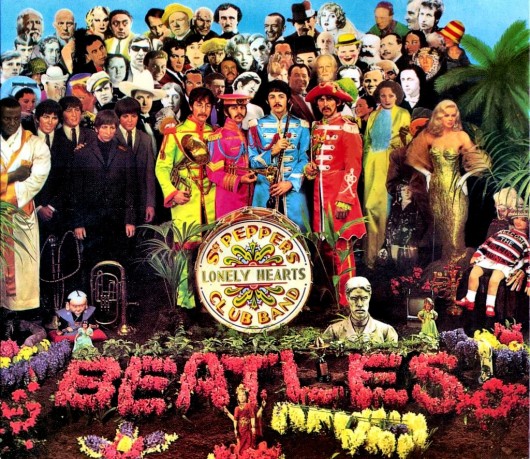





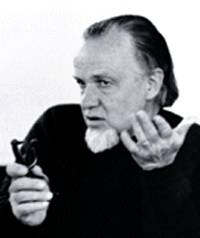


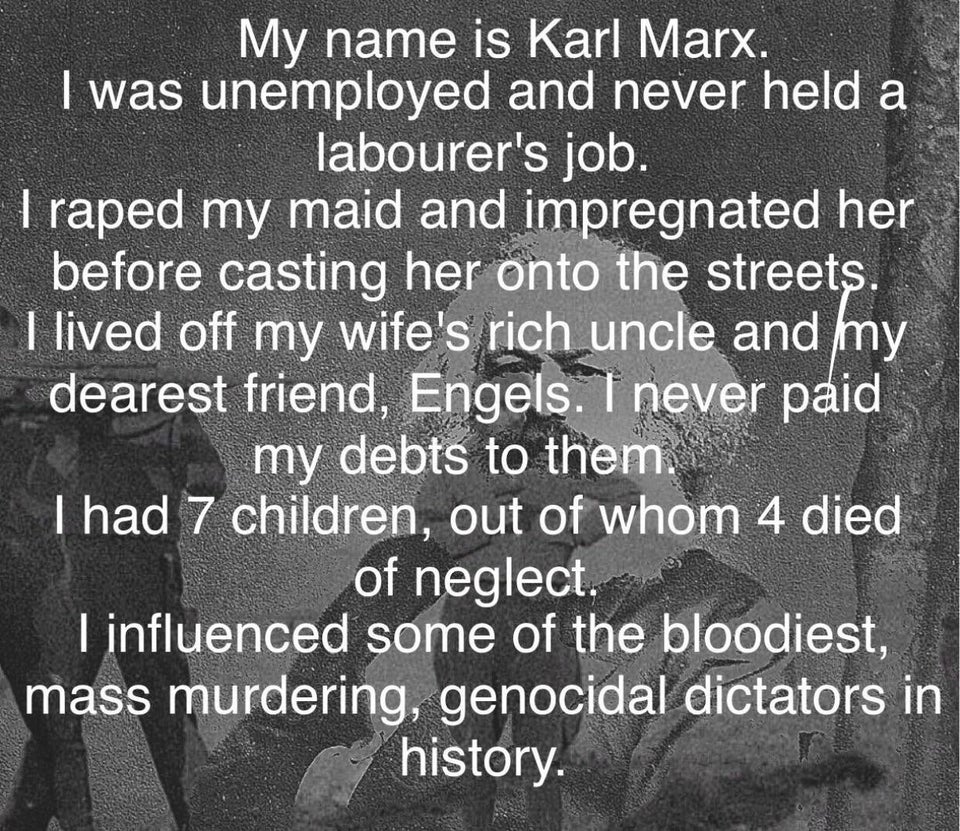











 It’s rather difficult to convey just how famous Petty became – and how fast! This rather obscure Chicago commercial artist was suddenly thrust upon the national stage, literally, overnight. His signature was prominently displayed in all of his advertising work. Jantzen created the “Petty Girl” swimsuit in 1940. Old Gold offered prints of the Petty Girls in their ads. His hands, a brush, and Petty Girl appeared in a watch ad. He was given highly publicized commissions to paint posters for films. The aforementioned portfolio was released. In 1942, when 3700 Chicago high school art students cast their votes for most important artist from their three years of art studies, Petty won first place – as a write-in. He did a cover for Time in 1942 as well as the first in a line of covers for the annual Ice Capades revue. And it would be incorrect to attribute all the fame to the Esquire pin-ups. If anything, it was his national advertising images that got him the most attention – and money.
 It was money that finally severed the Esquire relationship. The money Esquire paid bought less and less of Petty’s time as his advertising career soared.
  Petty had always been a sharp businessman and insisted on retaining all secondary rights to his images as well as the return of his original paintings. He licensed their use on playing cards, on drinking glasses, and elsewhere. At left is from an ad I just found in a 1943 issue of

/https://public-media.smithsonianmag.com/filer/Charles-Darwin-1880-631.jpg)









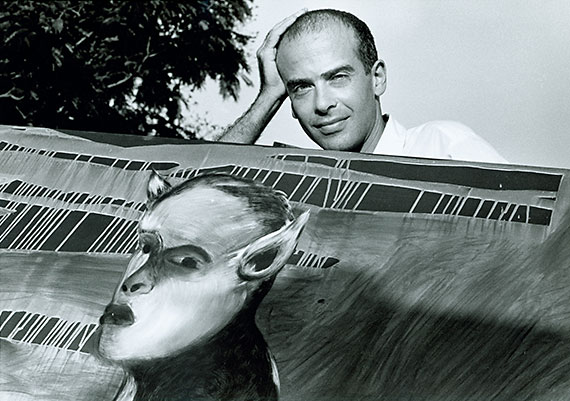





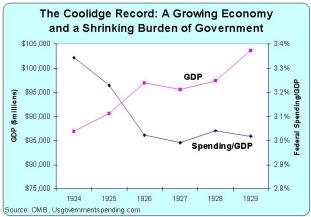


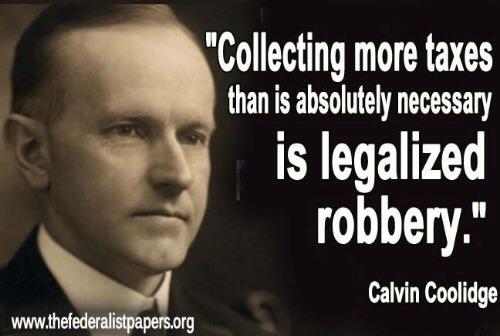













 The Daily Hatch