The song’s lyrics seem to describe a troubled romantic relationship (often cited as Cathy Smith), with the narrator recounting an affair with a “hard-loving woman [who’s] got me feeling mean”.
In a 2008 interview, Lightfoot said:
I think my girlfriend was out with her friends one night at a bar while I was at home writing songs. I thought, ‘I wonder what she’s doing with her friends at that bar!’ It’s that kind of a feeling. ‘Where is my true love tonight? What is my true love doing?’[3]
This section needs additional citations for verification. (January 2018)Weekly chartsEditChart (1974)Peak positionAustralian (Kent Music Report)[4]4Canadian RPM Top Singles1Canadian RPM Adult Contemporary2Canadian RPM Country Tracks4German Singles Chart30Irish Singles Chart14Netherlands[5]16New Zealand (Listener)[6]2South Africa (Springbok Radio)[7]1UK Singles Chart33US Billboard Hot 1001US Billboard Easy Listening1US Billboard Hot Country Singles13Yugoslavian Singles Chart2Year-end chartsEditChart (1974)RankTop 100 Songs of 1974[8]14Australia (Kent Music Report)[9]35Canadian RPM Top Singles[10]3South Africa[11]4U.S. Billboard Hot 100[12]27U.S. Cashbox Top 10032Other versionsEditScott Walker covered the song on his 1974 album We Had It All.Nana Mouskouri recorded a French version, “L’Amour, c’est comme l’été”, on her 1974 album Que Je Sois Un Ange.Lill Lindfors recorded a Swedish version, “Fritt fram”, on her 1975 album Fritt fram.Los Angeles alternative hard rock band Claw Hammer covered the song on its 1990 self-titled album.The musical project/collaboration of singer-songwriters Elwood covered the song in 2000. This version peaked at No. 33 on the BillboardModern Rock Tracks chart on July 8, 2000.[13]American country music singer Deryl Dodd‘s version of the song peaked at #59 on Billboard‘s Hot Country Singles & Tracks chart in 1999. It was later included on his album, Pearl Snaps (2002).American-Canadian country artist Jesse Winchester covered this on Beautiful: A Tribute to Gordon Lightfoot (2003).Country singer Toby Keith included a live cover version on the deluxe edition of his album Bullets in the Gun (2010).Canadian rock musician Luke Doucet covered it on the album Steel City Trawler (2010).French singing duo Marie-Ève Janvier and Jean-François Breau covered the song in French as “L’amour c’est comme l’été”, on the compilation album Quand le country dit bonjour… (2012).Ed Kuepper covered the song, including it on his greatest hits album.Depeche Mode covered the song, performing it alongside the BBC Concert Orchestra on the Radio 2 “Piano Room” in 2023.PersonnelEditEngineered by Lee Herschberg Recorded at Eastern Sound Studios, Toronto, Ontario, Canada.Gordon Lightfoot: Lead and background vocals, 12-string guitarRed Shea: Lead electric guitarTerry Clements: Lead acoustic guitarJohn Stockfish: BassJim Gordon: DrumsIn other mediaEdit“Sundown” is featured in the movies Knives Outand The Beach Bum.”Sundown” is featured in the Mission Hill episode “Unemployment Part 1 (or Brother’s Big Boner)”.”Sundown” is the ending song of The Blacklistseason 1, episode 13: “The Cyprus Agency (No. 64)” (January 27, 2014).[14] It also appears in the season 4 episode, “Philomena.”The song entered the Amazon UK chart at number 97 on 18 March 2014, after The Blacklist episode, “The Cypress Agency (No. 64)” was shown on UK television.[citation needed]“Sundown” is featured after the opening credits of Supernatural Season 10, Episode 5 “Fan Fiction” (November 11, 2014).The lyrics of “Sundown” were referenced in the Strong Bad Email episode “army” where, after unsuccessfully trying to enlist Strong Bad in the Homestarmy, Homestar Runner remarks “we’ll see if those trees you’re always hugging save you when Gordon Lightfoot’s creeping round your back stair.”[15][16]
__________________ A Funny Press Interview of The Beatles in The US (1964) Funny Pictures of The Beatles Published on Oct 23, 2012 funny moments i took from the beatles movie; A Hard Days Night ___________________ Scene from Help! The Beatles Funny Clips and Outtakes (Part 1) The Beatles * Wildcat* (funny) Uploaded on Mar 20, […]
_____________________ Great article on Dylan and Sergeant Pepper’s Lonely Hearts Club Band Cover: A famous album by the fab four – The Beatles – is “Sergeant peppers lonely hearts club band“. The album itself is one of the must influential albums of all time. New recording techniques and experiments with different styles of music made this […]
__________________________ Beatles 1966 Last interview 69 THE BEATLES TWO OF US As a university student, Karl Marx (1818-1883) joined a movement known as the Young Hegelians, who strongly criticized the political and cultural establishments of the day. He became a journalist, and the radical nature of his writings would eventually get him expelled by the […]
____________ Aleister Crowley on cover of Stg. Pepper’s: _______________ I have dedicated several posts to this series on the Beatles and I don’t know when this series will end because Francis Schaeffer spent a lot of time listening to the Beatles and talking and writing about them and their impact on the culture of the 1960’s. […]
“If You Could Read My Mind” is a song by Canadian singer-songwriter Gordon Lightfoot. Lightfoot wrote the lyrics while he was reflecting on his own divorce. It reached No. 1 on the Canadian Singles Chart on commercial release in 1970 and charted in several other countries on international release in 1971.[1]
Lightfoot has cited his divorce for inspiring the lyrics,[2] saying they came to him as he was sitting in a vacant Toronto house one summer.[3] At the request of his daughter Ingrid, he performs the lyrics with a slight change: The line “I’m just trying to understand the feelings that you lack” is altered to “I’m just trying to understand the feelings that we lack.” He has said in an interview that the difficulty with writing songs inspired by personal stories is that there is not always the emotional distance and clarity to make lyrical improvements such as the one his daughter suggested.[4]
Gordon Lightfoot (pictured in 2009) wrote and originally recorded the song.
The song was produced by Lenny Waronker and Joe Wissert at Sunwest Recording Studios in Los Angeles, California,[5] with strings arranged by Nick DeCaro.[6] The song is analyzed in detail by music producer Rick Beato in a YouTube video entitled “What Makes this Song Great? Ep. 94”
This song first appeared on Lightfoot’s 1970 album Sit Down Young Stranger, later renamed If You Could Read My Mind following the song’s success.[citation needed]
On release, the song reached No. 1 on the Canadian Singles Chart and was his first recording to appear in the U.S., reaching No. 5 on the Billboard Hot 100singles chart in February 1971. Later in the year, it reached No. 27 on the Australian singles chart and No. 30 on the United Kingdom’s singles chart. The song also reached No. 1 for one week on the BillboardEasy Listening chart,[1] and was the first of four Lightfoot releases to reach No. 1.
In 1987, Lightfoot filed a lawsuit against Michael Masser, the composer of Whitney Houston‘s hit “The Greatest Love of All“, alleging plagiarism of 24 bars of “If You Could Read My Mind”; the transitional section that begins “I decided long ago never to walk in anyone’s shadow” of the Masser song has the same melody as “I never thought I could act this way and I got to say that I just don’t get it; I don’t know where we went wrong but the feeling’s gone and I just can’t get it back” of Lightfoot’s song.
Lightfoot stated that he dropped the lawsuit when he felt it was having a negative effect on the singer Houston because the lawsuit was about the writer and not her.[8] He also said that he did not want people to think that he had stolen his melody from Masser.[9] The case was settled out of court, and Masser issued a public apology.[10]
__________________ A Funny Press Interview of The Beatles in The US (1964) Funny Pictures of The Beatles Published on Oct 23, 2012 funny moments i took from the beatles movie; A Hard Days Night ___________________ Scene from Help! The Beatles Funny Clips and Outtakes (Part 1) The Beatles * Wildcat* (funny) Uploaded on Mar 20, […]
_____________________ Great article on Dylan and Sergeant Pepper’s Lonely Hearts Club Band Cover: A famous album by the fab four – The Beatles – is “Sergeant peppers lonely hearts club band“. The album itself is one of the must influential albums of all time. New recording techniques and experiments with different styles of music made this […]
__________________________ Beatles 1966 Last interview 69 THE BEATLES TWO OF US As a university student, Karl Marx (1818-1883) joined a movement known as the Young Hegelians, who strongly criticized the political and cultural establishments of the day. He became a journalist, and the radical nature of his writings would eventually get him expelled by the […]
____________ Aleister Crowley on cover of Stg. Pepper’s: _______________ I have dedicated several posts to this series on the Beatles and I don’t know when this series will end because Francis Schaeffer spent a lot of time listening to the Beatles and talking and writing about them and their impact on the culture of the 1960’s. […]
Francis Schaeffer mentioned Edward O. Wilson in his book WHATEVER HAPPENED TO THE HUMAN RACE? co-authored by C.Everett Koop on pages 289-291 (ft note 6 0n page 504). That was when I was first introduced to Dr. Wilson’s work. Wikipedia notes, Edward Osborne Wilson (June 10, 1929 – December 26, 2021) was an American biologist, naturalist, and writer. His specialty was myrmecology, the study of ants, on which he was called the world’s leading expert,[3][4] and he was nicknamed Ant Man.[5][6][7][8]
I was honored to correspond with Dr. Wilson from 1994 to 2021!!
—
How Did Writer & Biologist EO Wilson Die | The Life and Sad Ending Edwar…
Edward O Wilson has passed away 💔|| his last moment before death so touc…
Remembering the life of renowned biologist and Alabama native E.O. Wilson
—
How Should We Then Live (1977) | Full Movie | Francis Schaeffer | Edith …
This is the third portion of my 5-15-94 letter to Edward O. Wilson and last week I posted the second portion and next week I will post the fourth portion.
SECTION #2 If there is no Afterlife, how can there be any lasting meaning to our lives?Should people be asking themselves these types of Questions???
Albert Camus:The fundamental question about life is meaning, anything else is secondary and until that question of meaning is dealt with I really cannot for what the answers are for the other queries.George H. Smith – Religions are successful, not because they provide the correct answers, but because they ask important questions—Questions that concern every human being. What is the nature of the universe? Is there a purpose, or plan, to human existence? …PESSIMISM FROM AGNOSTICS?Nathaniel Brandon: But twentieth-century philosophy has almost totally backed off from the responsibility of offering such a vision or addressing itself to the kind of questions human beings struggle with in the course of their existence. Twentieth-century philosophy typically scorns system building. The problems to which it addresses itself grow smaller and smaller and more and more remote from human experience. At their philosophical conferences and conventions, philosophers explicitly acknowledge that they have nothing of practical value to offer anyone. This is not my accusation; they announce it themselves.During the same period of history, the twentieth century, orthodox religion has lost more and more of its hold over people’s minds and lives. It is perceived as more and more irrelevant. Its demise as a cultural force really began with the Renaissance and has been declining ever since.But the need for answers persists. The need for values by which to guide our lives remains unabated. The hunger for intelligibility is as strong as it ever was. The world around us is more and more confusing, more and more frightening; the need to understand it cries out in anguish.The ENCYCLPEDIA OF PHILOSOPHY on page 471 “When Fred Hoyle in his book THE NATURE OF THE UNIVERSE turns to what he calls ‘the deeper issues’ and remarks that we find ourselves in a ‘dreadful situation’ in which there is ‘scarcely a clue as to whether our existence has ourselves in a ‘dreadful situation’ in which there is ‘scarcely a clue as to whether our existence has any real significance.’ He is using the word ‘significance’ in this comic sense.”
On Sunday April 11, 1920 in Chicago there was a debate on this question: Has life any meaning? The following 3 quotes were taken from that meeting:Percy Ward -How can life have any meaning at all, when all living things, along with the world on which they live, are doomed to destruction? What meaning can there be to life, when its dominant law is age-long and world-wide struggle for existence? What possible meaning can there be to life, when the chief experience of living things is suffering and pain? Percy Ward – “To what end is comic evolution moving? All this life which rises, step by step, from moneron to main is impotent effort; the road to nowhere. Imagine an artist devoting his entire life to the painting of a wonderful picture; and then, when his picture is completed, tearing it to ribbons, what could be the meaning of such a painter’s behavior? Arthur J. Balfour – “Man, so far as natural science by itself is able to teach us, is no longer the final cause of the universe, the heaven-descended heir of all the ages. His very existence is an accident, history a brief and transitory episode in the life of one of the meanest of the planets…Man will go down into the pit, and all his thoughts will perish, the uneasy consciousness, which in this obscure corner has for a long space broken the contented silence of the universe, will be at rest. Matter will know itself no longer. Imperishable monuments and immortal deeds, death itself, will be as though they had never been.”SHOULD TRUE HUMANISTS BE OPTIMISTS OR NIHILISTS?????????Paul Kurtz –
220 × 323Images may be subject to copyright. Learn More
“The universe is neutral, indifferent to man’s existential yearnings. But we instinctively discover life, experience its throb, its excitement, its attraction. Life is here to be lived, enjoyed, suffered, and endured…Again–one cannot ‘prove’ this normative principle to everyone’s satisfaction. Living beings tend instinctively to maintain themselves and to reproduce beyond ultimate justification. It is a brute fact of our contingent natures; It is an instinctive desire to live.”
220 × 330Images may be subject to copyright. Learn More
J.P. Moreland – “2 Objections to optimistic humanism: #1 There is no rational justification for choosing it over nihilism. As far as rationality is concerned, it has nothing to offer over nihilism. Therefore, optimistic humanism suffers from some of the same objections we raised against nihilism. Kurtz himself admits that the ultimate values of humanism are incapable of rational justification!!!!!! #2 Optimistic Humanism really answers the question of the meaning of life in the negative, just as nihilism does. For the optimistic humanist life has no objective value or purpose; It offers only subjective satisfaction, one should think long and hard before embracing such a horrible view. If there is a decent case that life has objective value and purpose, then such a case should be given as good a hearing as possible.
R.C. Sproul:Nihilism has two traditional enemies–Theism and Naive Humanism. The theist contradicts the nihilist because the existence of God guarantees that ultimate meaning and significance of personal life and history. Naive Humanism is considered naive by the nihilist because it rhapsodizes–with no rational foundation–the dignity and significance of human life. The humanist declares that man is a cosmic accident whose origin was fortuitous and entrenched in meaningless insignificance. Yet in between the humanist mindlessly crusades for, defends, and celebrates the chimera of human dignity…Herein is the dilemma: Nihilism declares that nothing really matters ultimately…In my judgment, no philosophical treatise has ever surpassed or equaled the penetrating analysis of the ultimate question of meaning versus vanity that is found in the Book of Ecclesiastes
PAGE 4
J. Kerby Anderson– “The cynicism and skepticism in the arts, politics, commerce, and the media all testify to the futility of trying to find wisdom and meaning in a world without wisdom based on ‘the Fear of the Lord’ is folly.
1200 × 628Images may be subject to copyright. Learn More
Ravi Zacharias – “Having killed God, the atheist is left with no reason for being, no morality to espouse, no meaning to life and no hope beyond the grave.”Arthur Ashe – (born in 1943, won U.S.Open in 1968, and Wimbledon in 1975) “If I am just remembered as an exceptional tennis player then my life really was not much.”The next two quotes by Kai Nielson and the next quote by J.P. Moreland were taken from a debate held at Ole Miss on March 24, 1988. This debate was later published by Prometheus Books by the title DOES GOD EXIST? Does death ultimately take away the love we feel for others?Kai Nielson – “If you love someone, whether there is a God or not, that love can go on. It remains intact. It might even be more intact, because if death ends it all, the love relationships between people in life are all the more precious because that is all there is in that respect. So that’s perfectly intact, God or no God. Indeed, as I have just argued, it may even become more important.”
220 × 305Images may be subject to copyright. Learn More
Clarence Darrow – “I love my friends, but they all must come to a tragic end. Death is more terrible the more one is attached to things in the world.” Do we need a lasting purpose to our lives?Kai Nielson – “There are all those intentions, purposes, goals, and the like that you can figure out and can have. They are what John Rawls called life plans. You can have all these purposes in life even though there is no purpose to life. So life doesn’t become meaningless and pointless if you were not made for a purpose.”
200 × 238Images may be subject to copyright. Learn More
Francis Schaeffer – “The struggle for modern man is to begin with himself and find a meaning in life. Not just plans in life. It is nothing to have plans in life. Anybody can find plans in life. A child can fill up his time with plans of building tomorrow’s sand castle when today’s have been washed away. There is a difference between finding plans in life and purpose.”J.P.Moreland – “James Rachels says that we don’t need purpose in the sense of an over arching objective purpose to life, but we can have purpose in life, as Nielson says. And he means by that ‘subjective satisfaction,’ things that we find worthwhile to us. Now if this is true, what’s the difference, let’s say between becoming a doctor and feeding the poor and sitting around pinching heads off rats or being a Sisyphus and pushing a rock up and down a hill, or giving your time to flipping tiddlywinks? There is no difference since each of these options could be satisfying and worthwhile to someone.”Marvin Kohl – (Taken from an article in FREE INQUIRY, Spring 81 issue, article entitled, “The Meaning of Life and belief in God” ) “….Belief in beneficent providence is untrue. It is untrue because there is no evidence to warrant the claim that there is a benevolent force behind nature. Not only does the secular humanist deny that we have knowledge about a friend behind the universe; He also denies that we have knowledge about divine or cosmic purpose. The argument in its essential form is simple and, I believe, decisive. Purposes can only be correctly assigned to sentient beings; And since man does not have knowledge that God or other sentient beings govern the universe, He cannot on a cognitive level maintain that the universe has any purpose…The facts also indicate that many, like lady Katharine (Bertrand Russell’s Christian daughter who was quoted earlier in the article), are given insight about the meaning of life, about the chief end of human living, when they believe God makes a disclosure about his own nature and purpose and gently embraces them in his absolute love. In short, it appears to be true that belief in God has had and still has the power to give comfort and consolation to millions of devout believers. Largely because of this, two important claims cannot be easily, if at all, dismissed. They are: (1) that in addition to other basic human needs, there is a need for psychological security, which includes the need to believe in God, or at least believe that the cosmos is guided by a loving purpose; and (2) that this need is often successfully met if a man genuinely recognizes that his goal for living is in, and given to him by, God.”Aldous Huxley – “Science does not retain the sovereignty over metaphysical pronouncements…Science does not have the right to give to me my reason for being and my definition for existence, but I am going to take science’s view because I want this world not to have meaning because it frees me to my own erotic and political desires.”
—-
WANT MORE EVIDENCE?
—
Featured Artist is BRAQUE
GEORGES BRAQUE (1882-1963)
Along with Picasso and Juan Gris, the main figure of Cubism, the most important of the avant-gardes of the 20th century Art.
I have gone back and forth and back and forth with many liberals on the Arkansas Times Blog on many issues such as abortion, human rights, welfare, poverty, gun control and issues dealing with popular culture. Here is another exchange I had with them a while back. My username at the Ark Times Blog is Saline […]
On March 17, 2013 at our worship service at Fellowship Bible Church, Ben Parkinson who is one of our teaching pastors spoke on Genesis 1. He spoke about an issue that I was very interested in. Ben started the sermon by reading the following scripture: Genesis 1-2:3 English Standard Version (ESV) The Creation of the […]
At the end of this post is a message by RC Sproul in which he discusses Sagan. Over the years I have confronted many atheists. Here is one story below: I really believe Hebrews 4:12 when it asserts: For the word of God is living and active and sharper than any two-edged sword, and piercing as far as the […]
In today’s news you will read about Kirk Cameron taking on the atheist Stephen Hawking over some recent assertions he made concerning the existence of heaven. Back in December of 1995 I had the opportunity to correspond with Carl Sagan about a year before his untimely death. Sarah Anne Hughes in her article,”Kirk Cameron criticizes […]
By William Haupt III | The Center Square contributor
Mar 14, 2022
–
“It’s a disgrace that there is more illiteracy today than there was 100 years ago.” – Milton Friedman
For decades after the American Revolution, our parents were the drivers of how and where their children were educated. Parents chose from home schools and private schools to educate their children. The first state public-funded schools appeared in the 1840s. But it was not until the 1900s during the Progressive Era that government gained control of funding and regulating education.
As government took more control of education, parents became subordinate to central education manipulation. Government dictated everything in every classroom. When Jimmy Carter married the National Teachers Union with the Department of Education in 1979, government and unions took ownership of education. If parents did not like local education, they had to pay for private schools.
Milton Friedman was an economist that rejected Keynesianism, the theory that government could control the economy better than free markets. Friedman’s view was based on the concept of free markets and “rational expectations.” Friedman theorized that free market competition is the most powerful tool in our nation to surpass any and all expectations we can expect from government.
Following the second Great War in the 1950s, Communists in Eastern Europe proved what a dangerous tool education was in the hands of government. A young economist, Milton Friedman did not want to see that in America and penned his thesis, defining “The Role of Government in Education.”
“A student’s education should not be determined by government but their parents.” – Milton Friedman
Friedman felt it was necessary for government to fund education, but it had no right to administer it. He believed monopolized government control of public education empowered the government to indoctrinate young minds into thinking the way politicians want students to think, not their parents. He blamed federal and union control of education for stagnant and declining student test scores.
Pointing to the economic success of market consumer choice and competition, Friedman blamed the lack of consumer choice on our inferior education system.
“It is unjustified for any government to have absolute monopolistic control over any commodity in the free markets.” – Milton Friedman
Milton Friedman said lack of competition in a nation built and dependent on free market principles produces inferior products. If we apply these economic principles to a non-responsive government-administered education program, competition for education dollars would vastly improve education.
According to Friedman, to improve education we must find better methods to administer it and to finance it. He insisted, instead of government making the decisions how and where children are educated, they should provide education vouchers to parents to use for schools of their choice.
Friedman believed giving parents education vouchers would empower them to “improve education” though free market competition, which in turn would force the government’s inferior public school system to improve. As more and more parents choose private and chartered schools over failing public schools, the public-school systems would be responsive to parental concerns and improve.
“Most arguments against the free market is a lack of belief in freedom itself.” – Milton Friedman
Six decades later, we have living proof that Friedman’s “The Role of Government in Education” is the logical foundation of the modern American school-choice movement. People isolated from the academic world are seldom exposed to innovative ideas and concepts. So Friedman’s article went largely unnoticed in the public. But once those seeds were planted, over time they have blossomed.
In 1989, Wisconsin put Friedman’s ideas into practice when it approved the first voucher program allowing students to use vouchers to pay tuition at private schools. Shortly after, 18 states passed similar voucher programs. Vouchers remain the most attractive private school choice programs.
In 2003 during an education symposium, Friedman suggested there are many alternatives to public education. He cited education savings accounts would allow parents to use taxpayer funds to pay for tuition and other education expenses. In 2011, Arizona implemented the nation’s first education savings account option. Florida, Tennessee, Mississippi and North Carolina soon followed them.
A charter school is a tuition-free contract school, publicly funded, but independent from the public system. Friedman believed parents would support such a system. And this has come to fruition in over 40 states. According to the National Alliance for Public Charter Schools, many of the best-known charter school networks are run by nonprofit charter management organizations, or CMOs.
Private religious school choice was ruled constitutional when the Supreme Court ruled it was legal for Ohio’s Pilot Project Scholarship Program to provide vouchers for students to attend nonreligious and religious schools. The court held that the program neither advances nor inhibits religion at any school and that publicly funded school vouchers go to the parents rather than the private schools.
Milton Friedman and wife Rose founded the Friedman Foundation for Educational Choice in 1996 to promote freedom of choice in education. Today, it is simply called EdChoice. Although the name has changed, the mission lives on. There were only five education choice programs when it opened. Twenty years later, more than 400,000 students participate in 61 programs in 30 states.
Milton Friedman said, “Our mistake is to judge programs by their intentions not their results.” Our founders promised a quality education for every youth in the nation. But by the time this system was in place it was run by politicians not parents. A century later the system was in such disrepair Milton Friedman realized that the only way to repair it was to make it competitive in the free market.
The discussion of school choice stimulated by Friedman’s “The Role of Government in Education” has grown and has penetrated the broad public. Most parents and citizens now believe that more choice is needed and less government and union control. Giving parents the information about the deficiencies in public education and other education choices will result in better educated students.
The greatest flaw in public education is union run government schools. Proposed federal education reforms are the same as those that failed. They propose doing more of what we’ve already done: More money, smaller classes, increased teacher pay and benefits, more schools and expanded central control. “To the public union school system, school choice is a threat, not an improvement.”
“If we are really concerned that our children receive a quality education, we must empower parents and their children to have equal access to appropriate educational opportunities.” – Milton Friedman
Man protesting in front of the Minnesota Department of Education to stop the masking and vaccines for the children going to school, St. Paul, Minnesota. November 3, 2021. (Photo: Michael Siluk/Universal Images Group/Getty Images)
Jason Bedrick is a research fellow with The Heritage Foundation’s Center for Education Policy.
Education choice is on the march.
So far this year, four states have enacted education choice policies that will be available to all K-12 students. Arkansas, Florida, Iowa, and Utah have now joined Arizona and West Virginia in making every child eligible for education savings accounts (ESAs) or ESA-like policies that allow families to choose the learning environments that align with their values and work best for their children.
The education choice movement has already made more progress this year than ever before—and the year is far from over. Late last week, three state legislatures gave final approval to bills that would create new education choice policies or significantly expand existing ones.
States With Newly Passed Bills
Indiana
The final budget deal struck by the Republican majorities in both chambers of the Indiana state legislature will expand eligibility for the state’s school voucher program to nearly every K-12 student.
The bill increases the income eligibility threshold from 300% of the free-and-reduced-price lunch program’s income limit to 400%, which means that more than 95% of K-12 students in Indiana will now be eligible.
The budget will also expand eligibility for Indiana’s two other education choice programs, a tax-credit scholarship and an education savings account policy. Gov. Eric Holcomb, a Republican, said that he would “gladly sign” the budget, which passed along party lines.
Montana
The Montana legislature sent the Students with Special Needs Equal Opportunity Act to Republican Gov. Greg Gianforte’s desk. The bill would create an ESA for students with special needs worth between $5,000 and $8,000.
“Every parent knows each child is unique,” said Gianforte during his State of the State address in February, “Let’s ensure each child’s education best meets his or her individual needs.”
Gianforte is expected to sign the bill.
South Carolina
The South Carolina legislature sent Republican Gov. Henry McMaster a bill to create the Education Scholarship Trust Fund, which will make ESAs available to low- and middle-income families.
By year three, families earning up to 400% of the federal poverty line (currently $120,000 for a family of four) will be eligible for ESAs worth up to $6,000 that they can use for a wide variety of education expenses, including private school tuition, tutoring, textbooks, homeschool curriculum, online learning, and more. McMaster is expected to sign the legislation.
“It gives the parent an option,” said the bill’s sponsor, Republican Sen. Larry Grooms, “It lets the parent decide what is best for their child instead of the government deciding what is best for a child based on the zip code in which you happen to live.”
States Where Progress Is Being Made
Several other states are also making progress toward enacting new education choice policies or significantly expanding existing ones, including:
The bill will need to clear one additional legislative hurdle before heading to the desk of Gov. Jim Pillen, a Republican, who said that the Opportunity Scholarships Act would “give parents, who have kids with the greatest needs, the means to choose a school that serves them best and allows them to thrive.”
New Hampshire
The New Hampshire House of Representatives passed a bill raising the income eligibility threshold for the state’s Education Freedom Accounts from 300% of the federal poverty line to 350%.
The bill is expected to pass the state senate and has the support of Republican Gov. Chris Sununu, who declared in his state of the state address in February that the accounts are “finally ensuring that the system works for families and that the system meets the needs of the child — not the other way around.”
North Carolina
On Wednesday, the North Carolina Senate Education Committee passed a bill that would expand the state’s ESA policy to all K-12 students.
“This legislation is about kids first, about families being able to make the best decisions for their child,” declared the bill’s primary sponsor, Rep. Tricia Cotham, who recently switched her party registration from Democrat to Republican.
Democratic Gov. Roy Cooper has threated to veto the ESA bill, but all of the North Carolina General Assembly’s Republicans have signed onto the bill—enough to override a veto.
If enacted, North Carolina would become the seventh state to make education choice available to the families of all K-12 students.
Oklahoma
After months of negotiations, amendments, and not infrequent recriminations, on Wednesday the Oklahoma House of Representatives passedRepublican Gov. Kevin Stitt’s compromise education plan.
The plan includes a refundable personal-use tax credit worth $5,000 per student in the first year, with priority going to families earning less than $250,000 per year.
A total of up to $200 million in tax credits would be available. By year thee, the tax credits would be worth $6,500 per pupil and the caps on income and total tax credits available would be eliminated. As a part of the deal, the state would spend about $600 million more on public schools, including funds earmarked for teacher pay raises.
Once again, the Oklahoma Senate responded with their own plan. On Thursday, the senate passed a similar proposal that would give larger tax credits (up to $7,500) to lower-income families, which are reduced as income rises to $5,000 per pupil, with a household income cap of $250,000.
In an effort to pressure the legislature to reach a compromise, Stitt has vetoed 20 unrelated bills. In a veto message, Stitt explained his reasoning:
[U]ntil the people of Oklahoma have a tax cut, until every teacher in the state gets the pay raise they deserve, until parents get a tax credit to send their child to the school of their choice, I am vetoing this unrelated policy and will continue to veto any and all legislation authored by Senators who have not stood with the people of Oklahoma and supported this plan.
Previously, the school choice movement almost exclusively made its case in terms that appealed to libertarians (freedom, markets, competition, etc.) or liberals (equity, expanding opportunity for the most disadvantaged, etc.), but avoided making values-based arguments that appealed to conservatives out of a fear of alienating potential allies on the left.
However, the teachers’ unions’ lock on the Democratic party prevented the school choice movement from garnering meaningful support from Democratic legislators. In years past, Democratic support for choice legislation has rarely been decisive. Moreover, attempting to appeal to the Democrats came at a significant policy cost as it often entailed proposing relatively small school choice programs targeted toward low-income families or other disadvantaged groups.
Meanwhile, the school choice movement was not doing enough to appeal to conservative rural Republicans who were skeptical of school choice. As my colleague Jay P. Greene and I observed recently in National Review, “the best prospects for additional universal programs this year are all in states with Republican governors and legislatures.”
As we explained, the school choice movement could not afford to continue ignoring conservatives:
The main opposition to these programs in Republican-dominated states has come from rural superintendents, who remind their representatives that the local public school is often the largest employer in small towns. They threaten that anything that undermines the biggest industry in their district is politically dangerous for rural legislators.
The solution to this political challenge is to help inform and organize families in suburban and rural areas who are concerned about the kinds of values their children are being taught in public schools. Radical academic content and school practices are not confined to large urban school districts on the coasts. Even in small towns across America’s heartland, public-school staffs have become emboldened to impose values on students that are strongly at odds with those preferred by parents.
Highlighting the ways in which public schools are pushing values and ideas that are anathema to the median red-state parent has increased public support for policies that allow all families to choose the learning environments that align with their values and have public education funding follow their child.
The greater GOP voter intensity in support of education choice has translated into the most massive wave of choice victories ever.
As in years past, nearly all the bills passed in any legislative chamber this year have been with strong Republican support and few if any Democrats. The difference is that there is now sufficient Republican support to pass robust education choice legislation.
Have an opinion about this article? To sound off, please email letters@DailySignal.com and we’ll consider publishing your edited remarks in our regular “We Hear You” feature. Remember to include the url or headline of the article plus your name and town and/or state.
Back in 2013, I shared some research showing how school choice produced good results. Not just in terms of student achievement, but also benefits for taxpayers as well.
It seems that some lawmakers have learned the right lessons from these studies. Over the past three years, statewide school choice has been enacted in West Virginia, Arizona, Iowa, Utah, Arkansas, and Florida.
In his Wall Street Journal column, Bill McGurn celebrates this wave of victories.
It’s been a good year for Milton Friedman. The Nobel Prize-winning economist has been dead for nearly two decades. But the moment has come for the idea that may prove his greatest legacy: Parents should decide where the public funds for educating their children go. Already this year, four states have adopted school choice for everyone—and it’s only April.…Florida is the most populous state to embrace full school choice. It follows Iowa, Utah and Arkansas, which passed their own legislation this year. These were preceded by West Virginia in 2021 and Arizona in 2022. More may be coming. Four other states—Oklahoma, Ohio, Wyoming and Texas—have legislation pending. …Corey DeAngelis, a senior fellow with the American Federation for Children, says the mood has shifted. …“I wish Milton Friedman were alive today to see his ideas finally come to fruition,” Mr. DeAngelis says. “The dominos are falling and there’s nothing Randi Weingarten and the teachers unions can do about it.”
My fingers are crossed that Texas approves school choice in the few days, but rest assured I’ll celebrate if Oklahoma, Ohio, or Wyoming is the next domino.
P.S. I’m writing today about school choice in part because I’m in Europe as part of the Free Market Road Show and one of the other speakers is Admir Čavalić, who is both an academic and a member of parliament from Bosnia and Herzegovina. Along with two other scholars, Damir Bećirović, and Amela Bešlagić, he did research on support for school choice in the Balkans. Here are some of the responses from parents.
It’s very encouraging to find Serbs, Croats, and Bosnians agreeing on an issue. Maybe their governments eventually will adopt school choice, thus joining Sweden, Chile, Canada, and the Netherlands.
A massive expansion of Florida’s school-choice programs that would make all students eligible for taxpayer-backed vouchers is headed to Gov. Ron DeSantis… DeSantis already has pledged to sign the proposal, which includes removing income-eligibility requirements that are part of current voucher programs. …Under the bill, students would be eligible to receive vouchers if they are “a resident of this state” and “eligible to enroll in kindergarten through grade 12” in a public school.
The Florida Senate gave final approval Thursday to a bill creating universal school vouchers… Republican state lawmakers, who hold a supermajority in the Legislature, want to open state voucher programsthat currently provide scholarships to more than 252,000 children with disabilities or from low-income families to all of the 2.9 million school-age children in Florida… The bill would give any parent the choice to receive a voucher for their child to be used for private school tuition or homeschooling services and supplies — as long as that student was not enrolled in public school. DeSantis has been a supporter of the programs.
Let’s conclude with some excerpts from a Wall Street Journaleditorial.
Florida has long been a leader on K-12 choice, vying with Arizona to offer the most expansive options in the nation. On Thursday Florida caught up with Arizona’s universal education savings account program by making its existing school choice offerings available to any student in the state.…The legislation…would remove income eligibility limits on the state’s current school voucher programs. It would also expand the eligible uses for the roughly $7,500 accounts to include tutoring, instructional materials and other education expenses, making these true ESAs rather than simply tuition vouchers. The bill prioritizes lower-income families and provides for home-schooled students to receive funds. Gov. Ron DeSantis, who has greatly advanced school choice in his state, is expected to sign.
By the way, the WSJ notes that Georgia may fall short in the battle to give families better educational options. As a rabid Georgia Bulldog who likes nothing better than stomping on the Florida Gators, it galls me that a handful of bad Republican legislators in the Peach State are standing in the proverbial schoolhouse door.
I’ll close by noting that there already are many reasons for Americans to migrate to Florida, such as no state income tax.
Assuming courts are doing their job, it doesn’t matterif 90 percent of voters support restrictions on free speech.
Assuming courts are doing their job, it doesn’t matter if 90 percent of voters support gun confiscation.
Assuming courts are doing their job, it doesn’t matter if 90 percent of voters support warrantless searches.
That being said, a constitutional republic is a democratic form of government. And if government is staying within proper boundaries, political decisions should be based on majority rule, as expressed through elections.
In some cases, that will lead to decisions I don’t like. For instance, the (tragic) 16th Amendment gives the federal government the authority to impose an income tax and voters repeatedly have elected politicians who have opted to exercise that authority.
Needless to say, I will continue my efforts to educate voters and lawmakers in hopes that eventually there will be majorities that choose a different approach. That’s how things should work in a properly functioning democracy.
But not everyone agrees.
A report in the New York Times, authored by Elizabeth Harris and Alexandra Alter, discusses the controversy over which books should be in the libraries of government schools.
The Keller Independent School District, just outside of Dallas, passed a new rule in November: It banned books from its libraries that include the concept of gender fluidity. …recently, the issue has been supercharged by a rapidly growing and increasingly influential constellation of conservative groups.The organizations frequently describe themselves as defending parental rights. …“This is not about banning books, it’s about protecting the innocence of our children,” said Keith Flaugh, one of the founders of Florida Citizens Alliance, a conservative group focused on education… The restrictions, said Emerson Sykes, a First Amendment litigator for the American Civil Liberties Union, infringe on students’ “right to access a broad range of material without political censorship.” …In Florida, parents who oppose book banning formed the Freedom to Read Project.
As indicated by the excerpt, some people are very sloppy with language.
If a school decides not to buy a certain book for its library, that is not a “book ban.” Censorship only exists when the government uses coercion to prevent people from buying books with their own money.
As I wrote earlier this year, “The fight is not over which books to ban. It’s about which books to buy.”
And this brings us back to the issue of democracy.
School libraries obviously don’t have the space or funds to stock every book ever published, so somebody has to make choices. And voters have the ultimate power to make those choices since they elect school boards.
I’ll close by noting that democracy does not please everyone. Left-leaning parents in Alabama probably don’t always like the decisions of their school boards,just like right-leaning parents in Vermont presumably don’t always like the decisions of their school boards.
And the same thing happens with other contentious issues, such as teaching critical race theory.
Which is why school choice is the best outcome. Then, regardless of ideology, parents can choose schools that have the curriculum (and books) that they think will be best for their children.
P.S. If you want to peruse a genuine example of censorship, click here.
In a study published by the National Bureau of Economic Research, Professors David N. Figlio, Cassandra M.D. Hart & Krzysztof Karbownikfound that school choice led to benefits even for kids who remained stuck in government schools.
They enjoyed better academic outcomes, which is somewhat surprising, but even I was pleasantly shocked to see improved behavioral outcomes as well.
School choice programs have been growing in the United States and worldwide over the past two decades, and thus there is considerable interest in how these policies affect students remaining in public schools. …the evidence on the effects of these programs as they scale up is virtually non-existent. Here, we investigate this question using data from the state of Florida where, over the course of our sample period, the voucher program participation increased nearly seven-fold.We find consistent evidence that as the program grows in size, students in public schools that faced higher competitive pressure levels see greater gains from the program expansion than do those in locations with less competitive pressure. Importantly, we find that these positive externalities extend to behavioral outcomes— absenteeism and suspensions—that have not been well-explored in prior literature on school choice from either voucher or charter programs. Our preferred competition measure, the Competitive Pressure Index, produces estimates implying that a 10 percent increase in the number of students participating in the voucher program increases test scores by 0.3 to 0.7 percent of a standard deviation and reduces behavioral problems by 0.6 to 0.9 percent. …Finally, we find that public school students who are most positively affected come from comparatively lower socioeconomic background, which is the set of students that schools should be most concerned about losing under the Florida Tax Credit Scholarship program.
It’s good news that competition from the private sector produces better results in government schools.
But it’s great news that those from disadvantaged backgrounds disproportionately benefit when there is more school choice.
Wonkier readers will enjoy Figure A2, which shows the benefits to regular kids on the right and disadvantaged kids on the left.
Since the study looked at results in Florida, I’ll close by observing that Florida is ranked #1 for education freedom and ranked #3 for school choice.
P.S. Here’s a video explaining the benefits of school choice.
P.P.S. There’s international evidence from Sweden, Chile, Canada, and the Netherlands, all of which shows superior results when competition replaces government education monopolies.
———-
Milton Friedman chose the emphasis on school choice and school vouchers as his greatest legacy and hopefully the Supreme Court will help that dream see a chance!
Monopoly government school systems cost a lot of moneyand do a bad job.The interests of the education bureaucracy rank higherthan the educational needs of kids. Poor families are especially disadvantaged.
But 2022 may be a good year as well. That’s because the Supreme Court is considering whether to strike down state laws that restrict choice by discriminating against religious schools.
Michael Bindas of the Institute for Justice and Walter Womack of the Southern Christian Leadership Conference make the case for a level playing field in a column for the New York Times.
In 2002, the Supreme Court held that the Constitution allows school choice programs to include schools that provide religious instruction, so long as the voucher program also offers secular options. The question now before the court is whether a state may nevertheless exclude schools that provide religious instruction. The case, Carson v. Makin, …concerns Maine’s tuition assistance program. In that large and sparsely populated state, over half of the school districts have no public high schools. If a student lives in such a district, and it does not contract with another high school to educate its students, then the district must pay tuition for the student to attend the school of her or his parents’ choice. …But one type of school is off limits: a school that provides religious instruction. That may seem unconstitutional, and we argue that it is. Only last year, the Supreme Court, citing the free exercise clause of the Constitution, held that states cannot bar students in a school choice program from selecting religious schools when it allows them to choose other private schools. …The outcome will be enormously consequential for families in public schools that are failing them and will go a long way toward determining whether the most disadvantaged families can exercise the same control over the education of their children as wealthier citizens.
The Wall Street Journaleditorialized on this issue earlier this week.
Maine has one of the country’s oldest educational choice systems, a tuition program for students who live in areas that don’t run schools of their own. Instead these families get to pick a school, and public funds go toward enrollment. Religious schools are excluded, however, and on Wednesday the Supreme Court will hear from parents who have closely read the First Amendment.…Maine argues it isn’t denying funds based on the religious “status” of any school… The state claims, rather, that it is merely refusing to allocate money for a “religious use,” specifically, “an education designed to proselytize and inculcate children with a particular faith.” In practice, this distinction between “status” and “use” falls apart. Think about it: Maine is happy to fund tuition at an evangelical school, as long as nothing evangelical is taught. Hmmm. …A state can’t subsidize tuition only for private schools with government-approved values, and trying to define the product as “secular education” gives away the game. …America’s Founders knew what they were doing when they wrote the First Amendment to protect religious “free exercise.”
What does the other side say?
Rachel Laser, head of Americans United for Separation of Church and State, doesn’t want religious schools to be treated equally under school choice programs.
…two sets of parents in Maine claim that the Constitution’s promise of religious freedom actually requires the state to fund religious education at private schools with taxpayer dollars — as a substitute for public education. This interpretation flips the meaning of religious freedom on its head and threatens both true religious freedom and public education.…The problem here is even bigger than public funds paying for praying, as wrong as that is. Unlike public schools, private religious schools often do not honor civil rights protections, especially for LGBTQ people, women, students with disabilities, religious minorities and the nonreligious. …If the court were to agree with the parents, it would also be rejecting the will of three-quarters of the states, which long ago enacted clauses in their state constitutions and passed statutes specifically prohibiting public funding of religious education. …It is up to parents and religious communities to educate their children in their faith. Publicly funded schools should never serve that purpose.
These arguments are not persuasive.
The fact that many state constitutions include so-called Blaine amendments actually undermines her argument since those provisions were motivated by a desire to discriminate against parochial schools that provided education to Catholic immigrants.
And it’s definitely not clear why school choice shouldn’t include religious schools that follow religious teachings, unless she also wants to argue that student grants and loans shouldn’t go to students at Notre Dame, Brigham Young, Liberty, and other religiously affiliated colleges.
The good news is that Ms. Laser’s arguments don’t seem to be winning. Based on this report from yesterday’s Washington Post, authored by Robert Barnes, there are reasons to believe the Justices will make the right decision.
Conservatives on the Supreme Court seemed…critical of a Maine tuition program that does not allow public funds to go to schools that promote religious instruction. The case involves an unusual program in a small state that affects only a few thousand students. But it could have greater implications… The oral argument went on for nearly two hours and featured an array of hypotheticals. …But the session ended as most suspected it would, with the three liberal justices expressing support for Maine and the six conservatives skeptical that it protected religious parents from unconstitutional discrimination.
I can’t resist sharing this additional excerpt about President Biden deciding to side with teacher unions instead of students.
The Justice Department switched its position in the case after President Biden was inaugurated and now supports Maine.
Instead, let’s close with some uplifting thoughts about what might happen if we get a good decision from the Supreme Court when decisions are announced next year.
Maybe I’m overly optimistic, but I think we’re getting close to a tipping point. As more and more states and communities shift to choice, we will have more and more evidence that it’s a win-win for both families and taxpayers.
Which will lead to more choice programs, which will produce more helpful data.
Libertarians and others are often torn about school choice. They may wish to see the government schooling monopoly weakened, but they may resist supporting choice mechanisms, like vouchers and education savings accounts, because they don’t go far enough. Indeed, most current choice programs continue to rely on taxpayer funding of education and don’t address the underlying compulsory nature of elementary and secondary schooling.
Skeptics may also have legitimate fears that taxpayer-funded education choice programs will lead to over-regulation of previously independent and parochial schooling options, making all schooling mirror compulsory mass schooling, with no substantive variation.
Friedman Challenged Compulsory Schooling Laws
Milton Friedman had these same concerns. The Nobel prize-winning economist is widely considered to be the one to popularize the idea of vouchers and school choice beginning with his 1955 paper, “The Role of Government in Education.” His vision continues to be realized through the important work of EdChoice, formerly the Friedman Foundation for Education Choice, that Friedman and his economist wife, Rose, founded in 1996.
July 31 is Milton Friedman’s birthday. He died in 2006 at the age of 94, but his ideas continue to have an impact, particularly in education policy.
Friedman saw vouchers and other choice programs as half-measures. He recognized the larger problems of taxpayer funding and compulsion, but saw vouchers as an important starting point in allowing parents to regain control of their children’s education. In their popular book, Free To Choose, first published in 1980, the Friedmans wrote:
We regard the voucher plan as a partial solution because it affects neither the financing of schooling nor the compulsory attendance laws. We favor going much farther. (p.161)
They continued:
The compulsory attendance laws are the justification for government control over the standards of private schools. But it is far from clear that there is any justification for the compulsory attendance laws themselves. (p. 162)
The Friedmans admitted that their “own views on this have changed over time,” as they realized that “compulsory attendance at schools is not necessary to achieve that minimum standard of literacy and knowledge,” and that “schooling was well-nigh universal in the United States before either compulsory attendance or government financing of schooling existed. Like most laws, compulsory attendance laws have costs as well as benefits. We no longer believe the benefits justify the costs.” (pp. 162-3)
Still, they felt that vouchers would be the essential starting point toward chipping away at monopoly mass schooling by putting parents back in charge. School choice, in other words, would be a necessary but not sufficient policy approach toward addressing the underlying issue of government control of education.
Vouchers as a First Step
In their book, the Friedmans presented the potential outcomes of their proposed voucher plan, which would give parents access to some or all of the average per-pupil expenditures of a child enrolled in public school. They believed that vouchers would help create a more competitive education market, encouraging education entrepreneurship. They felt that parents would be more empowered with greater control over their children’s education and have a stronger desire to contribute some of their own money toward education. They asserted that in many places “the public school has fostered residential stratification, by tying the kind and cost of schooling to residential location” and suggested that voucher programs would lead to increased integration and heterogeneity. (pp. 166-7)
To the critics who said, and still say, that school choice programs would destroy the public schools, the Friedmans replied that these critics fail to
explain why, if the public school system is doing such a splendid job, it needs to fear competition from nongovernmental, competitive schools or, if it isn’t, why anyone should object to its “destruction.” (p. 170)
What I appreciate most about the Friedmans discussion of vouchers and the promise of school choice is their unrelenting support of parents. They believed that parents, not government bureaucrats and intellectuals, know what is best for their children’s education and well-being and are fully capable of choosing wisely for their children—when they have the opportunity to do so.
They wrote:
Parents generally have both greater interest in their children’s schooling and more intimate knowledge of their capacities and needs than anyone else. Social reformers, and educational reformers in particular, often self-righteously take for granted that parents, especially those who are poor and have little education themselves, have little interest in their children’s education and no competence to choose for them. That is a gratuitous insult. Such parents have frequently had limited opportunity to choose. However, U.S. history has demonstrated that, given the opportunity, they have often been willing to sacrifice a great deal, and have done so wisely, for their children’s welfare. (p. 160).
Today, school voucher programs exist in 15 states plus the District of Columbia. These programs have consistently shown that when parents are given the choice to opt-out of an assigned district school, many will take advantage of the opportunity. In Washington, D.C., low-income parents who win a voucher lottery send their children to private schools.
The most recent three-year federal evaluationof voucher program participants found that while student academic achievement was comparable to achievement for non-voucher students remaining in public schools, there were statistically significant improvements in other important areas. For instance, voucher participants had lower rates of chronic absenteeism than the control groups, as well as higher student satisfaction scores. There were also tremendous cost-savings.
In Wisconsin, the Milwaukee Parental Choice Program has served over 28,000 low-income students attending 129 participating private schools.
According to Corey DeAngelis, Director of School Choice at the Reason Foundation and a prolific researcher on the topic, the recent analysis of the D.C. voucher program “reveals that private schools produce the same academic outcomes for only a third of the cost of the public schools. In other words, school choice is a great investment.”
In Wisconsin, the Milwaukee Parental Choice Program was created in 1990 and is the nation’s oldest voucher program. It currently serves over 28,000 low-income students attending 129 participating private schools. Like the D.C. voucher program, data on test scores of Milwaukee voucher students show similar results to public school students, but non-academic results are promising.
Increased Access and Decreased Crime
Recent research found voucher recipients had lower crime rates and lower incidences of unplanned pregnancies in young adulthood. On his birthday, let’s celebrate Milton Friedman’s vision of enabling parents, not government, to be in control of a child’s education.
According to Howard Fuller, an education professor at Marquette University, founder of the Black Alliance for Educational Options, and one of the developers of the Milwaukee voucher program, the key is parent empowerment—particularly for low-income minority families.
In an interview with NPR, Fuller said: “What I’m saying to you is that there are thousands of black children whose lives are much better today because of the Milwaukee parental choice program,” he says. “They were able to access better schools than they would have without a voucher.”
Putting parents back in charge of their child’s education through school choice measures was Milton Friedman’s goal. It was not his ultimate goal, as it would not fully address the funding and compulsion components of government schooling; but it was, and remains, an important first step. As the Friedmans wrote in Free To Choose:
The strong American tradition of voluntary action has provided many excellent examples that demonstrate what can be done when parents have greater choice. (p. 159).
On his birthday, let’s celebrate Milton Friedman’s vision of enabling parents, not government, to be in control of a child’s education.
Michael Harrington: If you don’t have the expertise, the knowledge technology today, you’re out of the debate. And I think that we have to democratize information and government as well as the economy and society. FRIEDMAN: I am sorry to say Michael Harrington’s solution is not a solution to it. He wants minority rule, I […]
By Everette Hatcher III | Posted in Current Events, Milton Friedman | Edit | Comments (0)
PETERSON: Well, let me ask you how you would cope with this problem, Dr. Friedman. The people decided that they wanted cool air, and there was tremendous need, and so we built a huge industry, the air conditioning industry, hundreds of thousands of jobs, tremendous earnings opportunities and nearly all of us now have air […]
By Everette Hatcher III | Posted in Current Events, Milton Friedman | Edit | Comments (0)
Part 5 Milton Friedman: I do not believe it’s proper to put the situation in terms of industrialist versus government. On the contrary, one of the reasons why I am in favor of less government is because when you have more government industrialists take it over, and the two together form a coalition against the ordinary […]
By Everette Hatcher III | Posted in Current Events, Milton Friedman | Edit | Comments (0)
The fundamental principal of the free society is voluntary cooperation. The economic market, buying and selling, is one example. But it’s only one example. Voluntary cooperation is far broader than that. To take an example that at first sight seems about as far away as you can get __ the language we speak; the words […]
By Everette Hatcher III | Posted in Current Events, Milton Friedman | Edit | Comments (0)
_________________________ Pt3 Nowadays there’s a considerable amount of traffic at this border. People cross a little more freely than they use to. Many people from Hong Kong trade in China and the market has helped bring the two countries closer together, but the barriers between them are still very real. On this side […]
By Everette Hatcher III | Posted in Current Events, Milton Friedman | Edit | Comments (0)
Aside from its harbor, the only other important resource of Hong Kong is people __ over 4_ million of them. Like America a century ago, Hong Kong in the past few decades has been a haven for people who sought the freedom to make the most of their own abilities. Many of them are […]
By Everette Hatcher III | Posted in Current Events, Milton Friedman | Edit | Comments (0)
“FREE TO CHOOSE” 1: The Power of the Market (Milton Friedman) Free to Choose ^ | 1980 | Milton Friedman Posted on Monday, July 17, 2006 4:20:46 PM by Choose Ye This Day FREE TO CHOOSE: The Power of the Market Friedman: Once all of this was a swamp, covered with forest. The Canarce Indians […]
If you would like to see the first three episodes on inflation in Milton Friedman’s film series “Free to Choose” then go to a previous post I did. Ep. 9 – How to Cure Inflation [4/7]. Milton Friedman’s Free to Choose (1980) Uploaded by investbligurucom on Jun 16, 2010 While many people have a fairly […]
Charlie Rose interview of Milton Friedman My favorite economist: Milton Friedman : A Great Champion of Liberty by V. Sundaram Milton Friedman, the Nobel Prize-winning economist who advocated an unfettered free market and had the ear of three US Presidents – Nixon, Ford and Reagan – died last Thursday (16 November, 2006 ) in San Francisco […]
By Everette Hatcher III | Posted in Milton Friedman | Edit | Comments (0)
Stearns Speaks on House Floor in Support of Balanced Budget Amendment Uploaded by RepCliffStearns on Nov 18, 2011 Speaking on House floor in support of Balanced Budget Resolution, 11/18/2011 ___________ Below are some of the main proposals of Milton Friedman. I highly respected his work. David J. Theroux said this about Milton Friedman’s view concerning […]
By Everette Hatcher III | Posted in Milton Friedman | Edit | Comments (0)
Milton Friedman: Free To Choose – The Failure Of Socialism With Ronald Reagan (Full) Published on Mar 19, 2012 by NoNationalityNeeded Milton Friedman’s writings affected me greatly when I first discovered them and I wanted to share with you. We must not head down the path of socialism like Greece has done. Abstract: Ronald Reagan […]
By Everette Hatcher III | Posted in Milton Friedman, President Obama | Edit | Comments (1)
What a great defense of Milton Friedman!!!! Defaming Milton Friedman by Johan Norberg This article appeared in Reason Online on September 26, 2008 PRINT PAGE CITE THIS Sans Serif Serif Share with your friends: ShareThis In the future, if you tell a student or a journalist that you favor free markets and limited government, there is […]
From Milton Friedman (1962/1982), Capitalism and Freedom (Chicago, IL: University of Chicago Press); earlier version (1955) in Robert A. Solo (Ed.), Economics and the Public Interest, pp. 123-144 (New Brunswick, NJ: Rutgers University Press).
The general trend in our times toward increasing intervention by the state in economic affairs has led to a concentration of attention and dispute on the areas where new intervention is proposed and to an acceptance of whatever intervention has so far occurred as natural and unchangeable. The current pause, perhaps reversal, in the trend toward collectivism offers an opportunity to re-examine the existing activities of government and to make a fresh assessment of the activities that are and those that are not justified. This paper attempts such a re-examination for education.
Education is today largely paid for and almost entirely administered by governmental bodies or non-profit institutions. This situation has developed gradually and is now taken so much for granted that little explicit attention is any longer directed to the reasons for the special treatment of education even in countries that are predominantly free enterprise in organization and philosophy. The result has been an indiscriminate extension of governmental responsibility.
The role assigned to government in any particular field depends, of course, on the principles accepted for the organization of society in general. In what follows, I shall assume a society that takes freedom of the individual, or more realistically the family, as its ultimate objective, and seeks to further this objective by relying primarily on voluntary exchange among individuals for the organization of economic activity. In such a free private enterprise exchange economy, government’s primary role is to preserve the rules of the game by enforcing contracts, preventing coercion, and keeping markets free. Beyond this, there are only three major grounds on which government intervention is to be justified. One is “natural monopoly” or similar market imperfection which makes effective competition (and therefore thoroughly voluntary exchange) impossible. A second is the existence of substantial “neighborhood effects,” i.e., the action of one individual imposes significant costs on other individuals for which it is not feasible to make him compensate them or yields significant gains to them for which it is not feasible to make them compensate him — circumstances that again make voluntary exchange impossible. The third derives from an ambiguity in the ultimate objective rather than from the difficulty of achieving it by voluntary exchange, namely, paternalistic concern for children and other irresponsible individuals. The belief in freedom is for “responsible” units, among whom we include neither children nor insane people. In general, this problem is avoided by regarding the family as the basic unit and therefore parents as responsible for their children; in considerable measure, however, such a procedure rests on expediency rather than principle. The problem of drawing a reasonable line between action justified on these paternalistic grounds and action that conflicts with the freedom of responsible individuals is clearly one to which no satisfactory answer can be given.
In applying these general principles to education, we shall find it helpful to deal separately with (1) general education for citizenship, and (2) specialized vocational education, although it may be difficult to draw a sharp line between them in practice. The grounds for government intervention are widely different in these two areas and justify very different types of action.
General Education for Citizenship
A stable and democratic society is impossible without widespread acceptance of some common set of values and without a minimum degree of literacy and knowledge on the part of most citizens. Education contributes to both. In consequence, the gain from the education of a child accrues not only to the child or to his parents but to other members of the society; the education of my child contributes to other people’s welfare by promoting a stable and democratic society. Yet it is not feasible to identify the particular individuals (or families) benefited or the money value of the benefit and so to charge for the services rendered. There is therefore a significant “neighborhood effect.”
What kind of governmental action is justified by this particular neighborhood effect? The most obvious is to require that each child receive a minimum amount of education of a specified kind. Such a requirement could be imposed upon the parents without further government action, just as owners of buildings, and frequently of automobiles, are required to adhere to specified standards to protect the safety of others. There is, however, a difference between the two cases. In the latter, individuals who cannot pay the costs of meeting the required standards can generally divest themselves of the property in question by selling it to others who can, so the requirement can readily be enforced without government subsidy — though even here, if the cost of making the property safe exceeds its market value, and the owner is without resources, the government may be driven to paying for the demolition of a dangerous building or the disposal of an abandoned automobile. The separation of a child from a parent who cannot pay for the minimum required education is clearly inconsistent with our reliance on the family as the basic social unit and our belief in the freedom of the individual.
Yet, even so, if the financial burden imposed by such an educational requirement could readily be met by the great bulk of the families in a community, it might be both feasible and desirable to require the parents to meet the cost directly.
Extreme cases could be handled by special provisions in much the same way as is done now for housing and automobiles. An even closer analogy is provided by present arrangements for children who are mistreated by their parents. The advantage of imposing the costs on the parents is that it would tend to equalize the social and private costs of having children and so promote a better distribution of families by size.1
Differences among families in resources and in number of children — both a reason for and a result of the different policy that has been followed — plus the imposition of a standard of education involving very sizable costs have, however, made such a policy hardly feasible. Instead, government has assumed the financial costs of providing the education. In doing so, it has paid not only for the minimum amount of education required of all but also for additional education at higher levels available to youngsters but not required of them — as for example in State and municipal colleges and universities. Both steps can be justified by the “neighborhood effect” discussed above — the payment of the costs as the only feasible means of enforcing the required minimum; and the financing of additional education, on the grounds that other people benefit from the education of those of greater ability and interest since this is a way of providing better social and political leadership.
Government subsidy of only certain kinds of education can be justified on these grounds. To anticipate, they do not justify subsidizing purely vocational education which increases the economic productivity of the student but does not train him for either citizenship or leadership. It is clearly extremely difficult to draw a sharp line between these two types of education. Most general education adds to the economic value of the student — indeed it is only in modern times and in a few countries that literacy has ceased to have a marketable value. And much vocational education broadens the student’s outlook. Yet it is equally clear that the distinction is a meaningful one. For example, subsidizing the training of veterinarians, beauticians, dentists, and a host of other specialized skills — as is widely done in the United States in governmentally supported educational institutions — cannot be justified on the same grounds as subsidizing elementary education or, at a higher level, liberal education. Whether it can be justified on quite different grounds is a question that will be discussed later in this paper.
The qualitative argument from the “neighborhood effect” does not, of course, determine the specific kids of education that should be subsidized or by how much they should be subsidized. The social gain from education is presumably greatest for the very lowest levels of education, where there is the nearest approach to unanimity about the content of the education, and declines continuously as the level of education rises. But even this statement cannot be taken completely for granted — many governments subsidized universities long before they subsidized lower education. What forms of education have the greatest social advantage and how much of the community’s limited resources should be spent on them are questions to be decided by the judgment of the community expressed through its accepted political channels. The role of an economist is not to decide these questions for the community but rather to clarify the issues to be judged by the community in making a choice, in particular, whether the choice is one that it is appropriate or necessary to make on a communal rather than individual basis.
We have seen that both the imposition of a minimum required level of education and the financing of education by the state can be justified by the “neighborhood effects” of education. It is more difficult to justify in these terms a third step that has generally been taken, namely, the actual administration of educational institutions by the government, the “nationalization,” as it were, of the bulk of the “education industry.” The desirability of such nationalization has seldom been faced explicitly because governments have in the main financed education by paying directly the costs of running educational institutions, so that this step has seemed required by the decision to subsidize education. Yet the two steps could readily be separated. Governments could require a minimum level of education which they could finance by giving parents vouchers redeemable for a specified maximum sum per child per year if spent on “approved” educational services.
Parents would then be free to spend this sum and any additional sum on purchasing educational services from an “approved” institution of their own choice. The educational services could be rendered by private enterprises operated for profit, or by non-profit institutions of various kinds. The role of the government would be limited to assuring that the schools met certain minimum standards such as the inclusion of a minimum common content in their programs, much as it now inspects restaurants to assure that they maintain minimum sanitary standards. An excellent example of a program of this sort is the United States educational program for veterans after World War II. Each veteran who qualified was given a maximum sum per year that could be spent at any institution of his choice, provided it met certain minimum standards. A more limited example is the provision in Britain whereby local authorities pay the fees of some students attending nonstate schools (the so-called “public schools”). Another is the arrangement in France whereby the state pays part of the costs for students attending non-state schools.
One argument from the “neighborhood effect” for nationalizing education is that it might otherwise be impossible to provide the common core of values deemed requisite for social stability. The imposition of minimum standards on privately conducted schools, as suggested above, might not be enough to achieve this result. The issue can be illustrated concretely in terms of schools run by religious groups. Schools run by different religious groups will, it can be argued, instill sets of values that are inconsistent with one another and with those instilled in other schools; in this way they convert education into a divisive rather than a unifying force.
Carried to its extreme, this argument would call not only for governmentally administered schools, but also for compulsory attendance at such schools. Existing arrangements in the United States and most other Western countries are a halfway house. Governmentally administered schools are available but not required. However, the link between the financing of education and its administration places other schools at a disadvantage: they get the benefit of little or none of the governmental funds spent on education — a situation that has been the source of much political dispute, particularly, of course, in France. The elimination of this disadvantage might, it is feared, greatly strengthen the parochial schools and so render the problem of achieving a common core of values even more difficult.
This argument has considerable force. But it is by no means clear either that it is valid or that the denationalizing of education would have the effects suggested. On grounds of principle, it conflicts with the preservation of freedom itself; indeed, this conflict was a major factor retarding the development of state education in England. How draw a line between providing for the common social values required for a stable society on the one hand, and indoctrination inhibiting freedom of thought and belief on the other? Here is another of those vague boundaries that it is easier to mention than to define.
In terms of effects, the denationalization of education would widen the range of choice available to parents. Given, as at present, that parents can send their children to government schools without special payment, very few can or will send them to other schools unless they too are subsidized.
Parochial schools are at a disadvantage in not getting any of the public funds devoted to education; but they have the compensating advantage of being funded by institutions that are willing to subsidize them and can raise funds to do so, whereas there are few other sources of subsidies for schools.
Let the subsidy be made available to parents regardless where they send their children — provided only that it be to schools that satisfy specified minimum standards — and a wide variety of schools will spring up to meet the demand. Parents could express their views about schools directly, by withdrawing their children from one school and sending them to another, to a much greater extent than is now possible. In general, they can now take this step only by simultaneously changing their place of residence.
For the rest, they can express their views only through cumbrous political channels. Perhaps a somewhat greater degree of freedom to choose schools could be made available also in a governmentally administered system, but it is hard to see how it could be carried very far in view of the obligation to provide every child with a place. Here, as in other fields, competitive private enterprise is likely to be far more efficient in meeting consumer demands than either nationalized enterprises or enterprises run to serve other purposes. The final result may therefore well be less rather than more parochial education.
Another special case of the argument that governmentally conducted schools are necessary to keep education a unifying force is that private schools would tend to exacerbate class distinctions. Given greater freedom about where to send their children, parents of a kind would flock together and so prevent a healthy intermingling of children from decidedly different backgrounds. Again, whether or not this argument is valid in principle, it is not at all clear that the stated results would follow. Under present arrangements, particular schools tend to be peopled by children with similar backgrounds thanks to the stratification of residential areas. In addition, parents are not now prevented from sending their children to private schools. Only a highly limited class can or does do so, parochial schools aside, in the process producing further stratification. The widening of the range of choice under a private system would operate to reduce both kinds of stratification.
Another argument for nationalizing education is “natural monopoly.” In small communities and rural areas, the number of children may be too small to justify more than one school of reasonable size, so that competition cannot be relied on to protect the interests of parents and children. As in other cases of natural monopoly, the alternatives are unrestricted private monopoly, state-controlled private monopoly, and public operation — a choice among evils. This argument is clearly valid and significant, although its force has been greatly weakened in recent decades by improvements in transportation and increasing concentration of the population in urban communities.
The arrangement that perhaps comes closest to being justified by these considerations — at least for primary and secondary education — is a mixed one under which governments would continue to administer some schools but parents who chose to send their children to other schools would be paid a sum equal to the estimated cost of educating a child in a government school, provided that at least this sum was spent on education in an approved school. This arrangement would meet the valid features of the “natural monopoly” argument, while at the same time it would permit competition to develop where it could. It would meet the just complaints of parents that if they send their children to private nonsubsidized schools they are required to pay twice for education — once in the form of general taxes and once directly — and in this way stimulate the development and improvement of such schools. The interjection of competition would do much to promote a healthy variety of schools. It would do much, also, to introduce flexibility into school systems. Not least of its benefits would be to make the salaries of school teachers responsive to market forces. It would thereby give governmental educational authorities an independent standard against which to judge salary scales and promote a more rapid adjustment to changes in conditions of demand or supply.2
Why is it that our educational system has not developed along these lines? A full answer would require a much more detailed knowledge of educational history than I possess, and the most I can do is to offer a conjecture. For one thing, the “natural monopoly” argument was much stronger at an earlier date. But I suspect that a much more important factor was the combination of the general disrepute of cash grants to individuals (“handouts”) with the absence of an efficient administrative machinery to handle the distribution of vouchers and to check their use. The development of such machinery is a phenomenon of modern times that has come to full flower only with the enormous extension of personal taxation and of social security programs. In its absence, the administration of schools was regarded as the only possible way to finance education. Of course, as some of the examples cited above suggest, some features of the proposed arrangements are present in existing educational systems. And there has been strong and I believe increasing pressure for arrangements of this general kind in most Western countries, which is perhaps to be explained by the modern developments in governmental administrative machinery that facilitate such arrangements.
Many detailed administrative problems would arise in changing over from the present to the proposed system and in administering the proposed system. But these seem neither insoluble nor unique. As in the denationalization of other activities, existing premises and equipment could be sold to private enterprises that wanted to enter the field, so there would be no waste of capital in the transition. The fact that governmental units, at least in some areas, were going to continue to administer schools would permit a gradual and easy transition. The localized administration of education in the United States and some other countries would similarly facilitate the transition, since it would encourage experimentation on a small scale and with alternative methods of handling both these and other problems.
Difficulties would doubtless arise in determining eligibility for grants from a particular governmental unit, but this is identical with the existing problem of determining which unit is obligated to provide educational facilities for a particular child. Differences in size of grants would make one area more attractive than another just as differences in the quality of education now have the same effect.
The only additional complication is a possibly greater opportunity for abuse because of the greater freedom to decide where to educate children. Supposed difficulty of administration is a standard defense of the status quo against any proposed changes; in this particular case, it is an even weaker defense than usual because existing arrangements must master not only the major problems raised by the proposed arrangements but also the additional problems raised by the administration of the schools as a governmental function.
The preceding discussion is concerned mostly with primary and secondary education. For higher education, the case for nationalization on grounds either of neighborhood effects or of natural monopoly is even weaker than for primary and secondary education. For the lowest levels of education, there is considerable agreement, approximating unanimity, on the appropriate content of an educational program for citizens of a democracy — the three R’s cover most of the ground. At successively higher levels of education, there is less and less agreement. Surely, well below the level of the American college, one can expect insufficient agreement to justify imposing the views of a majority, much less a plurality, on all. The lack of agreement may, indeed, extend so far as to cast doubts on the appropriateness of even subsidizing education at this level; it surely goes far enough to undermine any case for nationalization on the grounds of providing a common core of values. Similarly, there can hardly be any question of “natural monopoly” at this level, in view of the distances that individuals can and do go to attend institutions of higher learning.
Governmental institutions in fact play a smaller role in the United States in higher education than at lower levels. Yet they grew greatly in importance until at least the 1920’s and now account for more than half the students attending colleges and universities.3 One of the main reasons for their growth was their relative cheapness: most State and municipal colleges and universities charge much lower tuition fees than private universities can afford to. Private universities have in consequence had serious financial problems, and have quite properly complained of “unfair” competition. They have wanted to maintain their independence from government, yet at the same time have felt driven by financial pressure to seek government aid.
The preceding analysis suggests the lines along which a satisfactory solution can be found. Public expenditure on higher education can be justified as a means of training youngsters for citizenship and for community leadership — though I hasten to add that the large fraction of current expenditure that goes for strictly vocational training cannot be justified in this way or, indeed, as we shall see, in any other. Restricting the subsidy to education obtained at a state-administered institution cannot be justified on these grounds, or on any other that I can derive from the basic principles outlined at the outset. Any subsidy should be granted to individuals to be spent at institutions of their own choosing, provided only that the education is of a kind that it is desired to subsidize. Any government schools that are retained should charge fees covering the cost of educating students and so compete on an equal level with non-government-supported schools. The retention of state schools themselves would, however, have to be justified on grounds other than those we have so far considered.4The resulting system would follow in its broad outlines the arrangements adopted in the United States after World War II for financing the education of veterans, except that the funds would presumably come from the States rather than the Federal government.
The adoption of such arrangements would make for more effective competition among various types of schools and for a more efficient utilization of their resources. It would eliminate the pressure for direct government assistance to private colleges and universities and thus preserve their full independence and diversity at the same time that it enabled them to grow relatively to State institutions. It might also have the ancillary advantage of causing a closer scrutiny of the purposes for which subsidies are granted. The subsidization of institutions rather than of people has led to an indiscriminate subsidization of whatever activities it is appropriate for such institutions to undertake, rather than of the activities it is appropriate for the state to subsidize. Even cursory examination suggests that while the two classes of activities overlap, they are far from identical.
Vocational or Professional Education
As noted above, vocational or professional education has no neighborhood effects of the kind attributed above to general education. It is a form of investment in human capital precisely analogous to investment in machinery, buildings, or other forms of nonhuman capital. Its function is to raise the economic productivity of the human being. If it does so, the individual is rewarded in a free enterprise society by receiving a higher return for his services than he would otherwise be able to command.5This difference is the economic incentive to acquire the specialized training, just as the extra return that can be obtained with an extra machine is the economic incentive to invest capital in the machine. In both cases, extra returns must be balanced against the costs of acquiring them. For vocational education, the major costs are the income foregone during the period of training, interest lost by postponing the beginning of the earning period, and special expenses of acquiring the training such as tuition fees and expenditures on books and equipment. For physical capital, the major costs are the expenses of constructing the capital equipment and the interest during construction.
In both cases, an individual presumably regards the investment as desirable if the extra returns, as he views them, exceed the extra costs, as he views them.6 In both cases, if the individual undertakes the investment and if the state neither subsidizes the investment nor taxes the return, the individual (or his parent, sponsor, or benefactor) in general bears all the extra cost and receives all the extra returns: there are no obvious unborne costs or unappropriable returns that tend to make private incentives diverge systematically from those that are socially appropriate. If capital were as readily available for investment in human beings as for investment in physical assets, whether through the market or through direct investment by the individuals concerned or their parents or benefactors, the rate of return on capital would tend to be roughly equal in the two fields: if it were higher on non-human capital, parents would have an incentive to buy such capital for their children instead of investing a corresponding sum in vocational training, and conversely. In fact, however, there is considerable empirical evidence that the rate of return on investment in training is very much higher than the rate of return on investment in physical capital.
According to estimates that Simon Kuznets and I have made elsewhere, professionally trained workers in the United States would have had to earn during the 1930s at most 70 percent more than other workers to cover the extra costs of their training, including interest at roughly the market rate on non-human capital. In fact, they earned on the average between two and three times as much.7
Some part of this difference may well be attributable to greater natural ability on the part of those who entered the professions: it may be that they would have earned more than the average non-professional worker if they had not gone into the professions. Kuznets and I concluded, however, that such differences in ability could not explain anything like the whole of the extra return of the professional workers.8Apparently, there was sizable underinvestment in human beings. The postwar period has doubtless brought changes in the relative earnings in different occupations.
It seems extremely doubtful, however, that they have been sufficiently great to reverse this conclusion. It is not certain at what level this underinvestment sets in. It clearly applies to professions requiring a long period of training, such as medicine, law, dentistry, and the like and probably to all occupations requiring a college training. At one time, it almost certainly extended to many occupations requiring much less training but probably no longer does, although the opposite has sometimes been maintained.9
This underinvestment in human capital presumably reflects an imperfection in the capital market: investment in human beings cannot be financed on the same terms or with the same ease as investment in physical capital. It is easy to see why there would be such a difference. If a fixed money loan is made to finance investment in physical capital, the lender can get some security for his loan in the form of a mortgage or residual claim to the physical asset itself, and he can count on realizing at least part of his investment in case of necessity by selling the physical asset. If he makes a comparable loan to increase the earning power of a human being, he clearly cannot get any comparable security; in a non-slave state, the individual embodying the investment cannot be bought and sold. But even if he could, the security would not be comparable. The productivity of the physical capital does not — or at least generally does not — depend on the co-operativeness of the original borrower. The productivity of the human capital quite obviously does — which is, of course, why, all ethical considerations aside, slavery is economically inefficient. A loan to finance the training of an individual who has no security to offer other than his future earnings is therefore a much less attractive proposition than a loan to finance, say, the erection of a building: the security is less, and the cost of subsequent collection of interest and principal is very much greater.
A further complication is introduced by the inappropriateness of fixed money loans to finance investment in training. Such an investment necessarily involves much risk. The average expected return may be high, but there is wide variation about the average. Death or physical incapacity is one obvious source of variation but is probably much less important than differences in ability, energy, and good fortune. The result is that if fixed money loans were made, and were secured only by expected future earnings, a considerable fraction would never be repaid. In order to make such loans attractive to lenders, the nominal interest rate charged on all loans would have to be sufficiently high to compensate for the capital losses on the defaulted loans. The high nominal interest rate would both conflict with usury laws and make the loans unattractive to borrowers, especially to borrowers who have or expect to have other assets on which they cannot currently borrow but which they might have to realize or dispose of to pay the interest and principal of the loan.10 The device adopted to meet the corresponding problem for other risky investments is equity investment plus limited liability on the part of shareholders. The counterpart for education would be to “buy” a share in an individual’s earning prospects: to advance him the funds needed to finance his training on condition that he agree to pay the lender a specified fraction of his future earnings. In this way, a lender would get back more than his initial investment from relatively successful individuals, which would compensate for the failure to recoup his original investment from the unsuccessful.
There seems no legal obstacle to private contracts of this kind, even though they are economically equivalent to the purchase of a share in an individual’s earning capacity and thus to partial slavery. One reason why such contracts have not become common, despite their potential profitability to both lenders and borrowers, is presumably the high costs of administering them, given the freedom of individuals to move from one place to another, the need for getting accurate income statements, and the long period over which the contracts would run. These costs would presumably be particularly high for investment on a small scale with a resultant wide geographical spread of the individuals financed in this way. Such costs may well be the primary reason why this type of investment has never developed under private auspices. But I have never been able to persuade myself that a major role has not also been played by the cumulative effect of such factors as the novelty of the idea, the reluctance to think of investment in human beings as strictly comparable to investment in physical assets, the resultant likelihood of irrational public condemnation of such contracts, even if voluntarily entered into, and legal and conventional limitation on the kind of investments that may be made by the financial intermediaries that would be best suited to engage in such investments, namely, life insurance companies. The potential gains, particularly to early entrants, are so great that it would be worth incurring extremely heavy administrative costs.11
But whatever the reason, there is clearly here an imperfection of the market that has led to underinvestment in human capital and that justifies government intervention on grounds both of “natural monopoly,” insofar as the obstacle to the development of such investment has been administrative costs, and of improving the operation of the market, insofar as it has been simply market frictions and rigidities.
What form should government intervention take? One obvious form, and the only form that it has so far taken, is outright government subsidy of vocational or professional education financed out of general revenues. Yet this form seems clearly inappropriate. Investment should be carried to the point at which the extra return repays the investment and yields the market rate of interest on it. If the investment is in a human being, the extra return takes the form of a higher payment for the individual’s services than he could otherwise command. In a private market economy, the individual would get this return as his personal income, yet if the investment were subsidized, he would have borne none of the costs. In consequence, if subsidies were given to all who wished to get the training, and could meet minimum quality standards, there would tend to be overinvestment in human beings, for individuals would have an incentive to get the training so long as it yielded any extra return over private costs, even if the return were insufficient to repay the capital invested, let alone yield any interest on it. To avoid such overinvestment, government would have to restrict the subsidies. Even apart from the difficulty of calculating the “correct” amount of investment, this would involve rationing in some essentially arbitrary way the limited amount of investment among more claimants than could be financed, and would mean that those fortunate enough to get their training subsidized would receive all the returns from the investment whereas the costs would be borne by the taxpayers in general. This seems an entirely arbitrary, if not perverse, redistribution of income.
The desideratum is not to redistribute income but to make capital available for investment in human beings on terms comparable to those on which it is available for physical investment. Individuals should bear the costs of investment in themselves and receive the rewards, and they should not be prevented by market imperfections from making the investment when they are willing to bear the costs. One way to do this is to have government engage in equity investment in human beings of the kind described above.
A governmental body could offer to finance or help finance the training of any individual who could meet minimum quality standards by making available not more than a limited sum per year for not more than a specified number of years, provided it was spent on securing training at a recognized institution. The individual would agree in return to pay to the government in each future year x percent of his earnings in excess of y dollars for each $1,000 that he gets in this way. This payment could easily be combined with payment of income tax and so involve a minimum of additional administrative expense. The base sum, $y, should be set equal to estimated average — or perhaps modal — earnings without the specialized training; the fraction of earnings paid, x , should be calculated so as to make the whole project self-financing. In this way the individuals who received the training would in effect bear the whole cost. The amount invested could then be left to be determined by individual choice. Provided this was the only way in which government financed vocational or professional training, and provided the calculated earnings reflected all relevant returns and costs, the free choice of individuals would tend to produce the optimum amount of investment. The second proviso is unfortunately not likely to be fully satisfied. In practice, therefore, investment under the plan would still be somewhat too small and would not be distributed in the optimum manner. To illustrate the point at issue, suppose that a particular skill acquired by education can be used in two different ways; for example, medical skill in research or in private practice. Suppose that, if money earnings were the same, individuals would generally prefer research. The non-pecuniary advantages of research would then tend to be offset by higher money earnings in private practice. These higher earnings would be included in the sum to which the fraction x was applied whereas the monetary equivalent of the non-pecuniary advantages of research would not be. In consequence, the earnings differential would have to be higher under the plan than if individuals could finance themselves, since it is the net monetary differential, not the gross, that individuals would balance against the non-pecuniary advantages of research in deciding how to use their skill. This result would be produced by a larger than optimum fraction of individuals going into research necessitating a higher value of x to make the scheme self-financing than if the value of the non-pecuniary advantages could be included in calculated earnings. The inappropriate use of human capital financed under the plan would in this way lead to a less than optimum incentive to invest and so to a less than optimum amount of investment.12
Estimation of the values of x and y clearly offers considerable difficulties, especially in the early years of operation of the plan, and the danger would always be present that they would become political footballs. Information on existing earnings in various occupations is relevant but would hardly permit anything more than a rough approximation to the values that would render the project self-financing. In addition, the values should in principle vary from individual to individual in accordance with any differences in expected earning capacity that can be predicted in advance — the problem is similar to that of varying life insurance premia among groups that have different life expectancy. For such reasons as these it would be preferable if similar arrangements could be developed on a private basis by financial institutions in search of outlets for investing their funds, non-profit institutions such as private foundations, or individual universities and colleges.
Insofar as administrative expense is the obstacle to the development of such arrangements on a private basis, the appropriate unit of government to make funds available is the Federal government in the United States rather than smaller units. Any one State would have the same costs as an insurance company, say, in keeping track of the people whom it had financed. These would be minimized for the Federal government. Even so, they would not be completely eliminated. An individual who migrated to another country, for example, might still be legally or morally obligated to pay the agreed-on share of his earnings, yet it might be difficult and expensive to enforce the obligation. Highly successful people might therefore have an incentive to migrate. A similar problem arises, of course, also under the income tax, and to a very much greater extent. This and other administrative problems of conducting the scheme on a Federal level, while doubtless troublesome in detail, do not seem serious. The really serious problem is the political one already mentioned: how to prevent the scheme from becoming a political football and in the process being converted from a self-financing project to a means of subsidizing vocational education.
But if the danger is real, so is the opportunity. Existing imperfections in the capital market tend to restrict the more expensive vocational and professional training to individuals whose parents or benefactors can finance the training required. They make such individuals a “non-competing” group sheltered from competition by the unavailability of the necessary capital to many individuals, among whom must be large numbers with equal ability. The result is to perpetuate inequalities in wealth and status. The development of arrangements such as those outlined above would make capital more widely available and would thereby do much to make equality of opportunity a reality, to “diminish inequalities of income and wealth, and to promote the full use of our human resources. And it would do so not, like the outright redistribution of income, by impeding competition, destroying incentive, and dealing with symptoms, but by strengthening competition, making incentives effective, and eliminating the causes of inequality.
Conclusion
This re-examination of the role of government in education suggests that the growth of governmental responsibility in this area has been unbalanced. Government has appropriately financed general education for citizenship, but in the process it has been led also to administer most of the schools that provide such education. Yet, as we have seen, the administration of schools is neither required by the financing of education, nor justifiable in its own right in a predominantly free enterprise society. Government has appropriately been concerned with widening the opportunity of young men and women to get professional and technical training, but it has sought to further this objective by the inappropriate means of subsidizing such education, largely in the form of making it available free or at a low price at governmentally operated schools.
The lack of balance in governmental activity reflects primarily the failure to separate sharply the question what activities it is appropriate for government to finance from the question what activities it is appropriate for government to administer — a distinction that is important in other areas of government activity as well. Because the financing of general education by government is widely accepted, the provision of general education directly by governmental bodies has also been accepted. But institutions that provide general education are especially well suited also to provide some kinds of vocational and professional education, so the acceptance of direct government provision of general education has led to the direct provision of vocational education. To complete the circle, the provision of vocational education has, in turn, meant that it too was financed by government, since financing has been predominantly of educational institutions not of particular kinds of educational services.
The alternative arrangements whose broad outlines are sketched in this paper distinguish sharply between the financing of education and the operation of educational institutions, and between education for citizenship or leadership and for greater economic productivity. Throughout, they center attention on the person rather than the institution. Government, preferably local governmental units, would give each child, through his parents, a specified sum to be used solely in paying for his general education; the parents would be free to spend this sum at a school of their own choice, provided it met certain minimum standards laid down by the appropriate governmental unit. Such schools would be conducted under a variety of auspices: by private enterprises operated for profit, nonprofit institutions established by private endowment, religious bodies, and some even by governmental units.
For vocational education, the government, this time however the central government, might likewise deal directly with the individual seeking such education. If it did so, it would make funds available to him to finance his education, not as a subsidy but as “equity” capital. In return, he would obligate himself to pay the state a specified fraction of his earnings above some minimum, the fraction and minimum being determined to make the program self-financing. Such a program would eliminate existing imperfections in the capital market and so widen the opportunity of individuals to make productive investments in themselves while at the same time assuring that the costs are borne by those who benefit most directly rather than by the population at large.
An alternative, and a highly desirable one if it is feasible, is to stimulate private arrangements directed toward the same end. The result of these measures would be a sizable reduction in the direct activities of government, yet a great widening in the educational opportunities open to our children. They would bring a healthy increase in the variety of educational institutions available and in competition among them. Private initiative and enterprise would quicken the pace of progress in this area as it has in so many others. Government would serve its proper function of improving the operation of the invisible hand without substituting the dead hand of bureaucracy.
Note: I am indebted to P. T. Bauer, A. R. Prest, and H. G. Johnson for helpful comments on an earlier draft of this paper.
Notes
1. It is by no means so fantastic as may at first appear that such a step would noticeably affect the size of families. For example. one explanation of the lower birth rate among higher than among lower socio-economic groups may well be that children are relatively more expensive to the former, thanks in considerable measure to the higher standards of education they maintain and the costs of which they bear.
2. Essentially this proposal — public financing but private operation of education has recently been suggested in several southern states as a means of evading the Supreme Court ruling against segregation. This fact came to my attention after this paper was essentially in its present form. My initial reaction — and I venture to predict, that of most readers — was that this possible use of the proposal was a count against it, that it was a particularly striking case of the possible defect — the exacerbating of class distinctions — referred to in the second paragraph preceding the one to which this note is attached.
Further thought has led me to reverse my initial reaction. Principles can be tested most clearly by extreme cases. Willingness to permit free speech to people with whom one agrees is hardly evidence of devotion to the principle of free speech; the relevant test is willingness to permit free speech to people with whom one thoroughly disagrees. Similarly, the relevant test of the belief in individual freedom is the willingness to oppose state intervention even when it is designed to prevent individual activity of a kind one thoroughly dislikes. I deplore segregation and racial prejudice; pursuant to the principles set forth at the outset of the paper, it is clearly an appropriate function of the state to prevent the use of violence and physical coercion by one group on another; equally clearly, it is not an appropriate function of the state to try to force individuals to act in accordance with my — or anyone else’s views, whether about racial prejudice or the party to vote for, so long as the action of anyone individual affects mostly himself. These are the grounds on which I oppose the proposed Fair Employment Practices Commissions; and they lead me equally to oppose forced nonsegregation. However, the same grounds also lead me to oppose forced segregation. Yet, so long as the schools are publicly operated, the only choice is between forced nonsegregation and forced segregation; and if I must choose between these evils, I would choose the former as the lesser.
The fact that I must make this choice is a reflection of the basic weakness of a publicly operated school system. Privately conducted schools can resolve the dilemma. They make unnecessary either choice. Under such a system, there can develop exclusively white schools, exclusively colored schools, and mixed schools. Parents can choose which to send their children to. The appropriate activity for those who oppose segregation and racial prejudice is to try to persuade others of their views; if and as they succeed, the mixed schools will grow at the expense of the nonmixed, and a gradual transition will take place. So long as the school system is publicly operated, only drastic change is possible; one must go from one extreme to the other; it is a great virtue of the private arrangement that it permits a gradual transition.
An example that comes to mind as illustrating the preceding argument is summer camps for children. Is there any objection to the simultaneous existence of some camps that are wholly Jewish, some wholly non-Jewish, and some mixed? One can — though many who would react quite differently to negro-white segregation — would not explore the existence of attitudes that lead to the three types; one can seek to propagate views that would tend to the growth of the mixed school at the expense of the extremes; but is it an appropriate function of the state to prohibit the unmixed camps?
The establishment of private schools does not of itself guarantee the desirable freedom of choice on the part of parents. The public funds could be made available subject to the condition that parents use them solely in segregated schools; and it may be that some such condition is contained in the proposals now under consideration by southern states. Similarly, the public funds could be made available for use solely in nonsegregated schools. The proposed plan is not therefore inconsistent with either forced segregation or forced nonsegregation. The point is that it makes available a third alternative.
3. See George J. Stigler. Employment and Compensation in Education, (National Bureau of Economic Research, Occasional Paper 1111, 1950). p. 1111.
4. The subsidizing of basic research for example. I have interpreted education narrowly so as to exclude considerations of this type which would open up an unduly wide field.
5. The increased return may be only partly in a monetary form; it may also consist of non-pecuniary advantages attached to the occupation for which the vocational training fits the individual. Similarly, the occupation may have nonpecuniary disadvantages, which would have to be reckoned among the costs of the investment.
6. For a more detailed and precise statement of the considerations entering into the choice of an occupation, see Milton Friedman and Simon Kuznets, Income from Independent Professional Practice, (National Bureau of Economic Research, N.Y., 1945). pp. 81-94, 118-37.
7. Ibid., pp. 68-69. 84. 148-51.
8. Ibid., pp. 88-94.
9. Education and Economic Well-Being in American Democracy , (Educational Policies Commission, National Education Association of United States and American Association of School Administrators, 1940).
10. Despite these obstacles to fixed money loans, I am told that they have been a very common means of financing university education in Sweden, where they have apparently been available at moderate rates of interest. Presumably a proximate explanation is a smaller dispersion of income among university graduates than in the United States. But this is no ultimate explanation and may not be the only or major reason for the difference in practice. Further study of Swedish and similar experience is highly desirable to test whether the reasons given above are adequate to explain the absence in the United States and other countries of a highly developed market in loans to finance vocational education, or whether there may not be other obstacles that could be removed more easily.
11. It is amusing to speculate on how the business could be done and on some ancillary methods of profiting from it. The initial entrants would be able to choose the very best investments, by imposing very high quality standards on the individuals they were willing to finance. If they did so, they could increase the profitability of their investment by getting public recognition of the superior quality of the individuals they financed: the legend, “Training financed by XYZ Insurance Company” could be made into an assurance of quality (like “Approved by Good Housekeeping”) that would attract custom. All sorts of other common services might be rendered by the XYZ company to “its” physicians, lawyers, dentists, and so on.
12. The point in question is familiar in connection with the disincentive effects of income taxation. An example that perhaps makes this clearer than the example in the text is to suppose that the individual can earn $5, say, by some extra work and would just be willing to do so if he could keep the whole $5 — that is, he values the non-pecuniary costs of the extra worth at just under $5. If x is say 0.10, he only keeps $4.50 and this will not be enough to induce him to do the extra work. It should be noted that a plan involving fixed money loans to individuals might be less seriously affected by differences among various uses of skills in non-pecuniary returns and costs than the plan for equity investment under consideration. It would not however be unaffected by them; such differences would tend to produce different frequencies of default depending on the use made of the skill and so unduly favor uses yielding relatively high non-pecuniary returns or involving relatively low non-pecuniary costs. I am indebted to Harry G. Johnson and Paul W. Cook, Jr., for suggesting the inclusion of this qualification. For a fuller discussion of the role of non-pecuniary advantages and disadvantages in determining earnings in different pursuits. See Friedman and Kuznets, loc. cit.
ADVICE FOR PRESIDENT TRUMP:Free to Choose Part 6: What’s Wrong With Our Schools Featuring Milton Friedman
Charlie Rose interview of Milton Friedman My favorite economist: Milton Friedman : A Great Champion of Liberty by V. Sundaram Milton Friedman, the Nobel Prize-winning economist who advocated an unfettered free market and had the ear of three US Presidents – Nixon, Ford and Reagan – died last Thursday (16 November, 2006 ) in San Francisco […]
Stearns Speaks on House Floor in Support of Balanced Budget Amendment Uploaded by RepCliffStearns on Nov 18, 2011 Speaking on House floor in support of Balanced Budget Resolution, 11/18/2011 ___________ Below are some of the main proposals of Milton Friedman. I highly respected his work. David J. Theroux said this about Milton Friedman’s view concerning […]
Milton Friedman: Free To Choose – The Failure Of Socialism With Ronald Reagan (Full) Published on Mar 19, 2012 by NoNationalityNeeded Milton Friedman’s writings affected me greatly when I first discovered them and I wanted to share with you. We must not head down the path of socialism like Greece has done. Abstract: Ronald Reagan […]
What a great defense of Milton Friedman!!!! Defaming Milton Friedman by Johan Norberg This article appeared in Reason Online on September 26, 2008 PRINT PAGE CITE THIS Sans Serif Serif Share with your friends: ShareThis In the future, if you tell a student or a journalist that you favor free markets and limited government, there is […]
Milton Friedman on Hayek’s “Road to Serfdom” 1994 Interview 2 of 2 Uploaded by PenguinProseMedia on Oct 26, 2011 2nd half of 1994 interview. ________________ I have a lot of respect for the Friedmans.Two Lucky People by Milton and Rose Friedman reviewed by David Frum — October 1998. However, I liked this review below better. It […]
Milton Friedman on Hayek’s “Road to Serfdom” 1994 Interview 1 of 2 Uploaded by PenguinProseMedia on Oct 25, 2011 Says Federal Reserve should be abolished, criticizes Keynes. One of Friedman’s best interviews, discussion spans Friedman’s career and his view of numerous political figures and public policy issues. ___________________ Here is a review of “Two Lucky People.” […]
Charlie Rose interview of Milton Friedman My favorite economist: Milton Friedman : A Great Champion of Liberty by V. Sundaram Milton Friedman, the Nobel Prize-winning economist who advocated an unfettered free market and had the ear of three US Presidents – Nixon, Ford and Reagan – died last Thursday (16 November, 2006 ) in San Francisco […]
Milton Friedman: Free To Choose – The Failure Of Socialism With Ronald Reagan (Full) Published on Mar 19, 2012 by NoNationalityNeeded Milton Friedman’s writings affected me greatly when I first discovered them and I wanted to share with you. We must not head down the path of socialism like Greece has done. Abstract: Ronald Reagan […]
Re: the article by Gary North in the February 1993 Freeman on “Educational Vouchers,” may I call the attention of your readers to the following quotation from my wife’s and my book Free to Choose (pp. 161-163):
This plan [the voucher plan we propose] would relieve no one of the burden of taxation to pay for schooling. It would simply give parents a wider choice as to the form in which their children get the schooling that the community has obligated itself to provide. The plan would also not affect the present standards imposed on private schools in order for attendance at them to satisfy the compulsory attendance laws.
We regard the voucher plan as a partial solution because it affects neither the financing of schooling nor the compulsory attendance laws . . . .
The compulsory attendance laws are the justification for government control over the standards of private schools. But it is far from clear that there is any justification for the compulsory attendance laws themselves. Our own views on this have changed over time. When we first wrote extensively a quarter of a century ago on this subject, we accepted the need for such laws on the ground that “a stable democratic society is impossible without a minimum degree of literacy and knowledge on the part of most citizens” [Capitalism and Freedom, p. 86]. We continue to believe that, but research that has been done in the interim on the history of schooling in the United States, the United Kingdom, and other countries has persuaded us that compulsory attendance at schools is not necessary to achieve that minimum standard of literacy and knowledge. As already noted, such research has shown that schooling was well-nigh universal in the United States before attendance was required. In the United Kingdom, schooling was well-nigh universal before either compulsory attendance or government financing of schooling existed. Like most laws, compulsory attendance laws have costs as well as benefits. We no longer believe the benefits justify the costs.
The danger North raises that a parental choice scheme that made vouchers available for both government and private schools would lead to efforts to control the curriculum of private schools is very real, but it is present now because of compulsory attendance laws. Moreover, in a well-drawn voucher initiative, such as the one that will be on the California ballot at the next general election, provision can be made for avoiding that outcome. To quote from the California Parental Choice Initiative:
Private schools shall be accorded maximum flexibility to educate their students and shall be free from unnecessary, burdensome, or onerous regulation. No regulation of private schools, scholarship-redeeming or not, beyond that required by this Section and that which applied to private schools on October 1, 1991, shall be issued or enacted, unless approved by a three-fourths vote of the legislature or, alternatively, as to any regulation pertaining to health, safety or land use imposed by any county, city, district, or subdivision of the State, a majority vote of qualified electors within the affected jurisdiction. In any local proceeding challenging such a regulation it shall have the burden of establishing that the regulation: (A) is essential to assure the health, safety, or education of students; (B) does not unduly burden private schools or the parents of students therein; and (C) will not harass, impede, injure, or suppress private schools.
My ultimate objective is precisely the same as Gary North’s, but I do not believe that we can get there from here without a transitional measure. That is what the voucher proposal is intended to provide.
—Milton Friedman
Senior Research Fellow
Hoover Institution, Stanford, California
Dr. North replies:
In his letter, Dr. Friedman cites his 1980 book, Free to Choose: “This plan would relieve no one of the burden of taxation for schooling.” This is the heart (and soul) of the problem with vouchers. The problem is not primarily one of economic efficiency; it is a problem far more fundamental: the locus of judicial authority over education. He who pays for schooling is asserting this authority.
Here is the crucial question: Who is responsible before God for the education of children, their parents or the state? I contend that it is the parents. I therefore reject educational vouchers on principle. But more to the point, I reject them even as a transitional tactic, for vouchers will reduce the freedom of sectarian parents to choose by reducing the supply of sellers who will supply sectarian education.
When I wrote the first version of my essay “Educational Vouchers: The Double Tax” in 1976, I had Dr. Friedman’s Capitalism and Freedom (1962) in hand. That book has become a classic in the literature of free market economics. But it has a flaw. It promotes educational vouchers (chapter 6), while denying the efficiency and the necessity of occupational licensing (chapter 9).
What I argued in my essay is that state-funded vouchers are part of a program of state licensing. For the state to establish mandatory standards of performance in any profession is to proclaim its authority over that profession. Licensing involves the creation of legal barriers to entry against those who cannot meet the state’s standards and also those who work in terms of rival standards. Similarly, for the state to establish subsidies for any profession is to proclaim its authority over that profession. Subsidies involve the creation of legal barriers to economic survival against those who cannot meet the state’s standards and also those who work in terms of rival standards. So, I conclude, if there is no legitimate reason to license a profession, there is no legitimate reason for the state to create a voucher system to fund it.
There can be no state subsidies apart from criteria that restrict access to the subsidies; otherwise, there would be greater demand for the “free” money than supply of the “free” money. The state uses regulations to ration access to the “free” money. In Dr. Friedman’s proposed system, all parents (“buyers”) will have access to the state’s “free” money (vouchers). I contend that all schools (“sellers”) will not. Those schools that deny the legitimacy of the state’s standards will be denied legal access to the money. Why? Because the money used to subsidize some schools at the expense of others does not belong to the parents; it belongs to the state.
An educational voucher program enlists the parents as the state’s agents in a program of judicial discrimination against those schools that proclaim state-disapproved standards. Vouchers are, in the vernacular, “hush money.” Teachers are bribed with tax money to keep silent on certain topics, most notably the topic of God and his sovereignty over history . . . .
Here is our problem: Modern education rests on the myth of religious neutrality. Modern education asserts: “By means of a religiously neutral methodology, teachers and students can come to an accurate understanding of cause and effect.” Any discussion of cause and effect which appeals to God’s sovereignty over history is dismissed as “religious,” and is thereby barred by the U.S. Supreme Court from any tax-funded classroom. Only a methodology which systematically ignores the question of God has legal access to a tax-funded classroom or educational program . . . .
Thus, it is irrelevant that the language of a California voucher proposal appears to protect the authority of parents to choose any school they desire for their children. The U.S. Supreme Court has determined what curriculum standard must apply in state-funded education: a compelling secular purpose (see Lemon v. Kurtzman and Hunt v. McNair, 1971). Parents will be free to choose when they use the state’s money, but their choices will be limited to state-approved schools. They will be free to choose only what the state approves.
I learned all this from Capitalism and Freedom—excluding chapter 6.
Man protesting in front of the Minnesota Department of Education to stop the masking and vaccines for the children going to school, St. Paul, Minnesota. November 3, 2021. (Photo: Michael Siluk/Universal Images Group/Getty Images)
Jason Bedrick is a research fellow with The Heritage Foundation’s Center for Education Policy.
Education choice is on the march.
So far this year, four states have enacted education choice policies that will be available to all K-12 students. Arkansas, Florida, Iowa, and Utah have now joined Arizona and West Virginia in making every child eligible for education savings accounts (ESAs) or ESA-like policies that allow families to choose the learning environments that align with their values and work best for their children.
The education choice movement has already made more progress this year than ever before—and the year is far from over. Late last week, three state legislatures gave final approval to bills that would create new education choice policies or significantly expand existing ones.
States With Newly Passed Bills
Indiana
The final budget deal struck by the Republican majorities in both chambers of the Indiana state legislature will expand eligibility for the state’s school voucher program to nearly every K-12 student.
The bill increases the income eligibility threshold from 300% of the free-and-reduced-price lunch program’s income limit to 400%, which means that more than 95% of K-12 students in Indiana will now be eligible.
The budget will also expand eligibility for Indiana’s two other education choice programs, a tax-credit scholarship and an education savings account policy. Gov. Eric Holcomb, a Republican, said that he would “gladly sign” the budget, which passed along party lines.
Montana
The Montana legislature sent the Students with Special Needs Equal Opportunity Act to Republican Gov. Greg Gianforte’s desk. The bill would create an ESA for students with special needs worth between $5,000 and $8,000.
“Every parent knows each child is unique,” said Gianforte during his State of the State address in February, “Let’s ensure each child’s education best meets his or her individual needs.”
Gianforte is expected to sign the bill.
South Carolina
The South Carolina legislature sent Republican Gov. Henry McMaster a bill to create the Education Scholarship Trust Fund, which will make ESAs available to low- and middle-income families.
By year three, families earning up to 400% of the federal poverty line (currently $120,000 for a family of four) will be eligible for ESAs worth up to $6,000 that they can use for a wide variety of education expenses, including private school tuition, tutoring, textbooks, homeschool curriculum, online learning, and more. McMaster is expected to sign the legislation.
“It gives the parent an option,” said the bill’s sponsor, Republican Sen. Larry Grooms, “It lets the parent decide what is best for their child instead of the government deciding what is best for a child based on the zip code in which you happen to live.”
States Where Progress Is Being Made
Several other states are also making progress toward enacting new education choice policies or significantly expanding existing ones, including:
The bill will need to clear one additional legislative hurdle before heading to the desk of Gov. Jim Pillen, a Republican, who said that the Opportunity Scholarships Act would “give parents, who have kids with the greatest needs, the means to choose a school that serves them best and allows them to thrive.”
New Hampshire
The New Hampshire House of Representatives passed a bill raising the income eligibility threshold for the state’s Education Freedom Accounts from 300% of the federal poverty line to 350%.
The bill is expected to pass the state senate and has the support of Republican Gov. Chris Sununu, who declared in his state of the state address in February that the accounts are “finally ensuring that the system works for families and that the system meets the needs of the child — not the other way around.”
North Carolina
On Wednesday, the North Carolina Senate Education Committee passed a bill that would expand the state’s ESA policy to all K-12 students.
“This legislation is about kids first, about families being able to make the best decisions for their child,” declared the bill’s primary sponsor, Rep. Tricia Cotham, who recently switched her party registration from Democrat to Republican.
Democratic Gov. Roy Cooper has threated to veto the ESA bill, but all of the North Carolina General Assembly’s Republicans have signed onto the bill—enough to override a veto.
If enacted, North Carolina would become the seventh state to make education choice available to the families of all K-12 students.
Oklahoma
After months of negotiations, amendments, and not infrequent recriminations, on Wednesday the Oklahoma House of Representatives passedRepublican Gov. Kevin Stitt’s compromise education plan.
The plan includes a refundable personal-use tax credit worth $5,000 per student in the first year, with priority going to families earning less than $250,000 per year.
A total of up to $200 million in tax credits would be available. By year thee, the tax credits would be worth $6,500 per pupil and the caps on income and total tax credits available would be eliminated. As a part of the deal, the state would spend about $600 million more on public schools, including funds earmarked for teacher pay raises.
Once again, the Oklahoma Senate responded with their own plan. On Thursday, the senate passed a similar proposal that would give larger tax credits (up to $7,500) to lower-income families, which are reduced as income rises to $5,000 per pupil, with a household income cap of $250,000.
In an effort to pressure the legislature to reach a compromise, Stitt has vetoed 20 unrelated bills. In a veto message, Stitt explained his reasoning:
[U]ntil the people of Oklahoma have a tax cut, until every teacher in the state gets the pay raise they deserve, until parents get a tax credit to send their child to the school of their choice, I am vetoing this unrelated policy and will continue to veto any and all legislation authored by Senators who have not stood with the people of Oklahoma and supported this plan.
Previously, the school choice movement almost exclusively made its case in terms that appealed to libertarians (freedom, markets, competition, etc.) or liberals (equity, expanding opportunity for the most disadvantaged, etc.), but avoided making values-based arguments that appealed to conservatives out of a fear of alienating potential allies on the left.
However, the teachers’ unions’ lock on the Democratic party prevented the school choice movement from garnering meaningful support from Democratic legislators. In years past, Democratic support for choice legislation has rarely been decisive. Moreover, attempting to appeal to the Democrats came at a significant policy cost as it often entailed proposing relatively small school choice programs targeted toward low-income families or other disadvantaged groups.
Meanwhile, the school choice movement was not doing enough to appeal to conservative rural Republicans who were skeptical of school choice. As my colleague Jay P. Greene and I observed recently in National Review, “the best prospects for additional universal programs this year are all in states with Republican governors and legislatures.”
As we explained, the school choice movement could not afford to continue ignoring conservatives:
The main opposition to these programs in Republican-dominated states has come from rural superintendents, who remind their representatives that the local public school is often the largest employer in small towns. They threaten that anything that undermines the biggest industry in their district is politically dangerous for rural legislators.
The solution to this political challenge is to help inform and organize families in suburban and rural areas who are concerned about the kinds of values their children are being taught in public schools. Radical academic content and school practices are not confined to large urban school districts on the coasts. Even in small towns across America’s heartland, public-school staffs have become emboldened to impose values on students that are strongly at odds with those preferred by parents.
Highlighting the ways in which public schools are pushing values and ideas that are anathema to the median red-state parent has increased public support for policies that allow all families to choose the learning environments that align with their values and have public education funding follow their child.
The greater GOP voter intensity in support of education choice has translated into the most massive wave of choice victories ever.
As in years past, nearly all the bills passed in any legislative chamber this year have been with strong Republican support and few if any Democrats. The difference is that there is now sufficient Republican support to pass robust education choice legislation.
Have an opinion about this article? To sound off, please email letters@DailySignal.com and we’ll consider publishing your edited remarks in our regular “We Hear You” feature. Remember to include the url or headline of the article plus your name and town and/or state.
Back in 2013, I shared some research showing how school choice produced good results. Not just in terms of student achievement, but also benefits for taxpayers as well.
It seems that some lawmakers have learned the right lessons from these studies. Over the past three years, statewide school choice has been enacted in West Virginia, Arizona, Iowa, Utah, Arkansas, and Florida.
In his Wall Street Journal column, Bill McGurn celebrates this wave of victories.
It’s been a good year for Milton Friedman. The Nobel Prize-winning economist has been dead for nearly two decades. But the moment has come for the idea that may prove his greatest legacy: Parents should decide where the public funds for educating their children go. Already this year, four states have adopted school choice for everyone—and it’s only April.…Florida is the most populous state to embrace full school choice. It follows Iowa, Utah and Arkansas, which passed their own legislation this year. These were preceded by West Virginia in 2021 and Arizona in 2022. More may be coming. Four other states—Oklahoma, Ohio, Wyoming and Texas—have legislation pending. …Corey DeAngelis, a senior fellow with the American Federation for Children, says the mood has shifted. …“I wish Milton Friedman were alive today to see his ideas finally come to fruition,” Mr. DeAngelis says. “The dominos are falling and there’s nothing Randi Weingarten and the teachers unions can do about it.”
My fingers are crossed that Texas approves school choice in the few days, but rest assured I’ll celebrate if Oklahoma, Ohio, or Wyoming is the next domino.
P.S. I’m writing today about school choice in part because I’m in Europe as part of the Free Market Road Show and one of the other speakers is Admir Čavalić, who is both an academic and a member of parliament from Bosnia and Herzegovina. Along with two other scholars, Damir Bećirović, and Amela Bešlagić, he did research on support for school choice in the Balkans. Here are some of the responses from parents.
It’s very encouraging to find Serbs, Croats, and Bosnians agreeing on an issue. Maybe their governments eventually will adopt school choice, thus joining Sweden, Chile, Canada, and the Netherlands.
A massive expansion of Florida’s school-choice programs that would make all students eligible for taxpayer-backed vouchers is headed to Gov. Ron DeSantis… DeSantis already has pledged to sign the proposal, which includes removing income-eligibility requirements that are part of current voucher programs. …Under the bill, students would be eligible to receive vouchers if they are “a resident of this state” and “eligible to enroll in kindergarten through grade 12” in a public school.
The Florida Senate gave final approval Thursday to a bill creating universal school vouchers… Republican state lawmakers, who hold a supermajority in the Legislature, want to open state voucher programsthat currently provide scholarships to more than 252,000 children with disabilities or from low-income families to all of the 2.9 million school-age children in Florida… The bill would give any parent the choice to receive a voucher for their child to be used for private school tuition or homeschooling services and supplies — as long as that student was not enrolled in public school. DeSantis has been a supporter of the programs.
Let’s conclude with some excerpts from a Wall Street Journaleditorial.
Florida has long been a leader on K-12 choice, vying with Arizona to offer the most expansive options in the nation. On Thursday Florida caught up with Arizona’s universal education savings account program by making its existing school choice offerings available to any student in the state.…The legislation…would remove income eligibility limits on the state’s current school voucher programs. It would also expand the eligible uses for the roughly $7,500 accounts to include tutoring, instructional materials and other education expenses, making these true ESAs rather than simply tuition vouchers. The bill prioritizes lower-income families and provides for home-schooled students to receive funds. Gov. Ron DeSantis, who has greatly advanced school choice in his state, is expected to sign.
By the way, the WSJ notes that Georgia may fall short in the battle to give families better educational options. As a rabid Georgia Bulldog who likes nothing better than stomping on the Florida Gators, it galls me that a handful of bad Republican legislators in the Peach State are standing in the proverbial schoolhouse door.
I’ll close by noting that there already are many reasons for Americans to migrate to Florida, such as no state income tax.
Assuming courts are doing their job, it doesn’t matterif 90 percent of voters support restrictions on free speech.
Assuming courts are doing their job, it doesn’t matter if 90 percent of voters support gun confiscation.
Assuming courts are doing their job, it doesn’t matter if 90 percent of voters support warrantless searches.
That being said, a constitutional republic is a democratic form of government. And if government is staying within proper boundaries, political decisions should be based on majority rule, as expressed through elections.
In some cases, that will lead to decisions I don’t like. For instance, the (tragic) 16th Amendment gives the federal government the authority to impose an income tax and voters repeatedly have elected politicians who have opted to exercise that authority.
Needless to say, I will continue my efforts to educate voters and lawmakers in hopes that eventually there will be majorities that choose a different approach. That’s how things should work in a properly functioning democracy.
But not everyone agrees.
A report in the New York Times, authored by Elizabeth Harris and Alexandra Alter, discusses the controversy over which books should be in the libraries of government schools.
The Keller Independent School District, just outside of Dallas, passed a new rule in November: It banned books from its libraries that include the concept of gender fluidity. …recently, the issue has been supercharged by a rapidly growing and increasingly influential constellation of conservative groups.The organizations frequently describe themselves as defending parental rights. …“This is not about banning books, it’s about protecting the innocence of our children,” said Keith Flaugh, one of the founders of Florida Citizens Alliance, a conservative group focused on education… The restrictions, said Emerson Sykes, a First Amendment litigator for the American Civil Liberties Union, infringe on students’ “right to access a broad range of material without political censorship.” …In Florida, parents who oppose book banning formed the Freedom to Read Project.
As indicated by the excerpt, some people are very sloppy with language.
If a school decides not to buy a certain book for its library, that is not a “book ban.” Censorship only exists when the government uses coercion to prevent people from buying books with their own money.
As I wrote earlier this year, “The fight is not over which books to ban. It’s about which books to buy.”
And this brings us back to the issue of democracy.
School libraries obviously don’t have the space or funds to stock every book ever published, so somebody has to make choices. And voters have the ultimate power to make those choices since they elect school boards.
I’ll close by noting that democracy does not please everyone. Left-leaning parents in Alabama probably don’t always like the decisions of their school boards,just like right-leaning parents in Vermont presumably don’t always like the decisions of their school boards.
And the same thing happens with other contentious issues, such as teaching critical race theory.
Which is why school choice is the best outcome. Then, regardless of ideology, parents can choose schools that have the curriculum (and books) that they think will be best for their children.
P.S. If you want to peruse a genuine example of censorship, click here.
In a study published by the National Bureau of Economic Research, Professors David N. Figlio, Cassandra M.D. Hart & Krzysztof Karbownikfound that school choice led to benefits even for kids who remained stuck in government schools.
They enjoyed better academic outcomes, which is somewhat surprising, but even I was pleasantly shocked to see improved behavioral outcomes as well.
School choice programs have been growing in the United States and worldwide over the past two decades, and thus there is considerable interest in how these policies affect students remaining in public schools. …the evidence on the effects of these programs as they scale up is virtually non-existent. Here, we investigate this question using data from the state of Florida where, over the course of our sample period, the voucher program participation increased nearly seven-fold.We find consistent evidence that as the program grows in size, students in public schools that faced higher competitive pressure levels see greater gains from the program expansion than do those in locations with less competitive pressure. Importantly, we find that these positive externalities extend to behavioral outcomes— absenteeism and suspensions—that have not been well-explored in prior literature on school choice from either voucher or charter programs. Our preferred competition measure, the Competitive Pressure Index, produces estimates implying that a 10 percent increase in the number of students participating in the voucher program increases test scores by 0.3 to 0.7 percent of a standard deviation and reduces behavioral problems by 0.6 to 0.9 percent. …Finally, we find that public school students who are most positively affected come from comparatively lower socioeconomic background, which is the set of students that schools should be most concerned about losing under the Florida Tax Credit Scholarship program.
It’s good news that competition from the private sector produces better results in government schools.
But it’s great news that those from disadvantaged backgrounds disproportionately benefit when there is more school choice.
Wonkier readers will enjoy Figure A2, which shows the benefits to regular kids on the right and disadvantaged kids on the left.
Since the study looked at results in Florida, I’ll close by observing that Florida is ranked #1 for education freedom and ranked #3 for school choice.
P.S. Here’s a video explaining the benefits of school choice.
P.P.S. There’s international evidence from Sweden, Chile, Canada, and the Netherlands, all of which shows superior results when competition replaces government education monopolies.
———-
Milton Friedman chose the emphasis on school choice and school vouchers as his greatest legacy and hopefully the Supreme Court will help that dream see a chance!
Monopoly government school systems cost a lot of moneyand do a bad job.The interests of the education bureaucracy rank higherthan the educational needs of kids. Poor families are especially disadvantaged.
But 2022 may be a good year as well. That’s because the Supreme Court is considering whether to strike down state laws that restrict choice by discriminating against religious schools.
Michael Bindas of the Institute for Justice and Walter Womack of the Southern Christian Leadership Conference make the case for a level playing field in a column for the New York Times.
In 2002, the Supreme Court held that the Constitution allows school choice programs to include schools that provide religious instruction, so long as the voucher program also offers secular options. The question now before the court is whether a state may nevertheless exclude schools that provide religious instruction. The case, Carson v. Makin, …concerns Maine’s tuition assistance program. In that large and sparsely populated state, over half of the school districts have no public high schools. If a student lives in such a district, and it does not contract with another high school to educate its students, then the district must pay tuition for the student to attend the school of her or his parents’ choice. …But one type of school is off limits: a school that provides religious instruction. That may seem unconstitutional, and we argue that it is. Only last year, the Supreme Court, citing the free exercise clause of the Constitution, held that states cannot bar students in a school choice program from selecting religious schools when it allows them to choose other private schools. …The outcome will be enormously consequential for families in public schools that are failing them and will go a long way toward determining whether the most disadvantaged families can exercise the same control over the education of their children as wealthier citizens.
The Wall Street Journaleditorialized on this issue earlier this week.
Maine has one of the country’s oldest educational choice systems, a tuition program for students who live in areas that don’t run schools of their own. Instead these families get to pick a school, and public funds go toward enrollment. Religious schools are excluded, however, and on Wednesday the Supreme Court will hear from parents who have closely read the First Amendment.…Maine argues it isn’t denying funds based on the religious “status” of any school… The state claims, rather, that it is merely refusing to allocate money for a “religious use,” specifically, “an education designed to proselytize and inculcate children with a particular faith.” In practice, this distinction between “status” and “use” falls apart. Think about it: Maine is happy to fund tuition at an evangelical school, as long as nothing evangelical is taught. Hmmm. …A state can’t subsidize tuition only for private schools with government-approved values, and trying to define the product as “secular education” gives away the game. …America’s Founders knew what they were doing when they wrote the First Amendment to protect religious “free exercise.”
What does the other side say?
Rachel Laser, head of Americans United for Separation of Church and State, doesn’t want religious schools to be treated equally under school choice programs.
…two sets of parents in Maine claim that the Constitution’s promise of religious freedom actually requires the state to fund religious education at private schools with taxpayer dollars — as a substitute for public education. This interpretation flips the meaning of religious freedom on its head and threatens both true religious freedom and public education.…The problem here is even bigger than public funds paying for praying, as wrong as that is. Unlike public schools, private religious schools often do not honor civil rights protections, especially for LGBTQ people, women, students with disabilities, religious minorities and the nonreligious. …If the court were to agree with the parents, it would also be rejecting the will of three-quarters of the states, which long ago enacted clauses in their state constitutions and passed statutes specifically prohibiting public funding of religious education. …It is up to parents and religious communities to educate their children in their faith. Publicly funded schools should never serve that purpose.
These arguments are not persuasive.
The fact that many state constitutions include so-called Blaine amendments actually undermines her argument since those provisions were motivated by a desire to discriminate against parochial schools that provided education to Catholic immigrants.
And it’s definitely not clear why school choice shouldn’t include religious schools that follow religious teachings, unless she also wants to argue that student grants and loans shouldn’t go to students at Notre Dame, Brigham Young, Liberty, and other religiously affiliated colleges.
The good news is that Ms. Laser’s arguments don’t seem to be winning. Based on this report from yesterday’s Washington Post, authored by Robert Barnes, there are reasons to believe the Justices will make the right decision.
Conservatives on the Supreme Court seemed…critical of a Maine tuition program that does not allow public funds to go to schools that promote religious instruction. The case involves an unusual program in a small state that affects only a few thousand students. But it could have greater implications… The oral argument went on for nearly two hours and featured an array of hypotheticals. …But the session ended as most suspected it would, with the three liberal justices expressing support for Maine and the six conservatives skeptical that it protected religious parents from unconstitutional discrimination.
I can’t resist sharing this additional excerpt about President Biden deciding to side with teacher unions instead of students.
The Justice Department switched its position in the case after President Biden was inaugurated and now supports Maine.
Instead, let’s close with some uplifting thoughts about what might happen if we get a good decision from the Supreme Court when decisions are announced next year.
Maybe I’m overly optimistic, but I think we’re getting close to a tipping point. As more and more states and communities shift to choice, we will have more and more evidence that it’s a win-win for both families and taxpayers.
Which will lead to more choice programs, which will produce more helpful data.
Libertarians and others are often torn about school choice. They may wish to see the government schooling monopoly weakened, but they may resist supporting choice mechanisms, like vouchers and education savings accounts, because they don’t go far enough. Indeed, most current choice programs continue to rely on taxpayer funding of education and don’t address the underlying compulsory nature of elementary and secondary schooling.
Skeptics may also have legitimate fears that taxpayer-funded education choice programs will lead to over-regulation of previously independent and parochial schooling options, making all schooling mirror compulsory mass schooling, with no substantive variation.
Friedman Challenged Compulsory Schooling Laws
Milton Friedman had these same concerns. The Nobel prize-winning economist is widely considered to be the one to popularize the idea of vouchers and school choice beginning with his 1955 paper, “The Role of Government in Education.” His vision continues to be realized through the important work of EdChoice, formerly the Friedman Foundation for Education Choice, that Friedman and his economist wife, Rose, founded in 1996.
July 31 is Milton Friedman’s birthday. He died in 2006 at the age of 94, but his ideas continue to have an impact, particularly in education policy.
Friedman saw vouchers and other choice programs as half-measures. He recognized the larger problems of taxpayer funding and compulsion, but saw vouchers as an important starting point in allowing parents to regain control of their children’s education. In their popular book, Free To Choose, first published in 1980, the Friedmans wrote:
We regard the voucher plan as a partial solution because it affects neither the financing of schooling nor the compulsory attendance laws. We favor going much farther. (p.161)
They continued:
The compulsory attendance laws are the justification for government control over the standards of private schools. But it is far from clear that there is any justification for the compulsory attendance laws themselves. (p. 162)
The Friedmans admitted that their “own views on this have changed over time,” as they realized that “compulsory attendance at schools is not necessary to achieve that minimum standard of literacy and knowledge,” and that “schooling was well-nigh universal in the United States before either compulsory attendance or government financing of schooling existed. Like most laws, compulsory attendance laws have costs as well as benefits. We no longer believe the benefits justify the costs.” (pp. 162-3)
Still, they felt that vouchers would be the essential starting point toward chipping away at monopoly mass schooling by putting parents back in charge. School choice, in other words, would be a necessary but not sufficient policy approach toward addressing the underlying issue of government control of education.
Vouchers as a First Step
In their book, the Friedmans presented the potential outcomes of their proposed voucher plan, which would give parents access to some or all of the average per-pupil expenditures of a child enrolled in public school. They believed that vouchers would help create a more competitive education market, encouraging education entrepreneurship. They felt that parents would be more empowered with greater control over their children’s education and have a stronger desire to contribute some of their own money toward education. They asserted that in many places “the public school has fostered residential stratification, by tying the kind and cost of schooling to residential location” and suggested that voucher programs would lead to increased integration and heterogeneity. (pp. 166-7)
To the critics who said, and still say, that school choice programs would destroy the public schools, the Friedmans replied that these critics fail to
explain why, if the public school system is doing such a splendid job, it needs to fear competition from nongovernmental, competitive schools or, if it isn’t, why anyone should object to its “destruction.” (p. 170)
What I appreciate most about the Friedmans discussion of vouchers and the promise of school choice is their unrelenting support of parents. They believed that parents, not government bureaucrats and intellectuals, know what is best for their children’s education and well-being and are fully capable of choosing wisely for their children—when they have the opportunity to do so.
They wrote:
Parents generally have both greater interest in their children’s schooling and more intimate knowledge of their capacities and needs than anyone else. Social reformers, and educational reformers in particular, often self-righteously take for granted that parents, especially those who are poor and have little education themselves, have little interest in their children’s education and no competence to choose for them. That is a gratuitous insult. Such parents have frequently had limited opportunity to choose. However, U.S. history has demonstrated that, given the opportunity, they have often been willing to sacrifice a great deal, and have done so wisely, for their children’s welfare. (p. 160).
Today, school voucher programs exist in 15 states plus the District of Columbia. These programs have consistently shown that when parents are given the choice to opt-out of an assigned district school, many will take advantage of the opportunity. In Washington, D.C., low-income parents who win a voucher lottery send their children to private schools.
The most recent three-year federal evaluationof voucher program participants found that while student academic achievement was comparable to achievement for non-voucher students remaining in public schools, there were statistically significant improvements in other important areas. For instance, voucher participants had lower rates of chronic absenteeism than the control groups, as well as higher student satisfaction scores. There were also tremendous cost-savings.
In Wisconsin, the Milwaukee Parental Choice Program has served over 28,000 low-income students attending 129 participating private schools.
According to Corey DeAngelis, Director of School Choice at the Reason Foundation and a prolific researcher on the topic, the recent analysis of the D.C. voucher program “reveals that private schools produce the same academic outcomes for only a third of the cost of the public schools. In other words, school choice is a great investment.”
In Wisconsin, the Milwaukee Parental Choice Program was created in 1990 and is the nation’s oldest voucher program. It currently serves over 28,000 low-income students attending 129 participating private schools. Like the D.C. voucher program, data on test scores of Milwaukee voucher students show similar results to public school students, but non-academic results are promising.
Increased Access and Decreased Crime
Recent research found voucher recipients had lower crime rates and lower incidences of unplanned pregnancies in young adulthood. On his birthday, let’s celebrate Milton Friedman’s vision of enabling parents, not government, to be in control of a child’s education.
According to Howard Fuller, an education professor at Marquette University, founder of the Black Alliance for Educational Options, and one of the developers of the Milwaukee voucher program, the key is parent empowerment—particularly for low-income minority families.
In an interview with NPR, Fuller said: “What I’m saying to you is that there are thousands of black children whose lives are much better today because of the Milwaukee parental choice program,” he says. “They were able to access better schools than they would have without a voucher.”
Putting parents back in charge of their child’s education through school choice measures was Milton Friedman’s goal. It was not his ultimate goal, as it would not fully address the funding and compulsion components of government schooling; but it was, and remains, an important first step. As the Friedmans wrote in Free To Choose:
The strong American tradition of voluntary action has provided many excellent examples that demonstrate what can be done when parents have greater choice. (p. 159).
On his birthday, let’s celebrate Milton Friedman’s vision of enabling parents, not government, to be in control of a child’s education.
Michael Harrington: If you don’t have the expertise, the knowledge technology today, you’re out of the debate. And I think that we have to democratize information and government as well as the economy and society. FRIEDMAN: I am sorry to say Michael Harrington’s solution is not a solution to it. He wants minority rule, I […]
By Everette Hatcher III | Posted in Current Events, Milton Friedman | Edit | Comments (0)
PETERSON: Well, let me ask you how you would cope with this problem, Dr. Friedman. The people decided that they wanted cool air, and there was tremendous need, and so we built a huge industry, the air conditioning industry, hundreds of thousands of jobs, tremendous earnings opportunities and nearly all of us now have air […]
By Everette Hatcher III | Posted in Current Events, Milton Friedman | Edit | Comments (0)
Part 5 Milton Friedman: I do not believe it’s proper to put the situation in terms of industrialist versus government. On the contrary, one of the reasons why I am in favor of less government is because when you have more government industrialists take it over, and the two together form a coalition against the ordinary […]
By Everette Hatcher III | Posted in Current Events, Milton Friedman | Edit | Comments (0)
The fundamental principal of the free society is voluntary cooperation. The economic market, buying and selling, is one example. But it’s only one example. Voluntary cooperation is far broader than that. To take an example that at first sight seems about as far away as you can get __ the language we speak; the words […]
By Everette Hatcher III | Posted in Current Events, Milton Friedman | Edit | Comments (0)
_________________________ Pt3 Nowadays there’s a considerable amount of traffic at this border. People cross a little more freely than they use to. Many people from Hong Kong trade in China and the market has helped bring the two countries closer together, but the barriers between them are still very real. On this side […]
By Everette Hatcher III | Posted in Current Events, Milton Friedman | Edit | Comments (0)
Aside from its harbor, the only other important resource of Hong Kong is people __ over 4_ million of them. Like America a century ago, Hong Kong in the past few decades has been a haven for people who sought the freedom to make the most of their own abilities. Many of them are […]
By Everette Hatcher III | Posted in Current Events, Milton Friedman | Edit | Comments (0)
“FREE TO CHOOSE” 1: The Power of the Market (Milton Friedman) Free to Choose ^ | 1980 | Milton Friedman Posted on Monday, July 17, 2006 4:20:46 PM by Choose Ye This Day FREE TO CHOOSE: The Power of the Market Friedman: Once all of this was a swamp, covered with forest. The Canarce Indians […]
If you would like to see the first three episodes on inflation in Milton Friedman’s film series “Free to Choose” then go to a previous post I did. Ep. 9 – How to Cure Inflation [4/7]. Milton Friedman’s Free to Choose (1980) Uploaded by investbligurucom on Jun 16, 2010 While many people have a fairly […]
Charlie Rose interview of Milton Friedman My favorite economist: Milton Friedman : A Great Champion of Liberty by V. Sundaram Milton Friedman, the Nobel Prize-winning economist who advocated an unfettered free market and had the ear of three US Presidents – Nixon, Ford and Reagan – died last Thursday (16 November, 2006 ) in San Francisco […]
By Everette Hatcher III | Posted in Milton Friedman | Edit | Comments (0)
Stearns Speaks on House Floor in Support of Balanced Budget Amendment Uploaded by RepCliffStearns on Nov 18, 2011 Speaking on House floor in support of Balanced Budget Resolution, 11/18/2011 ___________ Below are some of the main proposals of Milton Friedman. I highly respected his work. David J. Theroux said this about Milton Friedman’s view concerning […]
By Everette Hatcher III | Posted in Milton Friedman | Edit | Comments (0)
Milton Friedman: Free To Choose – The Failure Of Socialism With Ronald Reagan (Full) Published on Mar 19, 2012 by NoNationalityNeeded Milton Friedman’s writings affected me greatly when I first discovered them and I wanted to share with you. We must not head down the path of socialism like Greece has done. Abstract: Ronald Reagan […]
By Everette Hatcher III | Posted in Milton Friedman, President Obama | Edit | Comments (1)
What a great defense of Milton Friedman!!!! Defaming Milton Friedman by Johan Norberg This article appeared in Reason Online on September 26, 2008 PRINT PAGE CITE THIS Sans Serif Serif Share with your friends: ShareThis In the future, if you tell a student or a journalist that you favor free markets and limited government, there is […]
Two prominent rock stars are voicing their opposition to the activist push to normalize and transition children who say they identify as transgender.
“There is a BIG difference between teaching acceptance and normalizing and even encouraging participation in a lifestyle that confuses young children into questioning their sexual identification as though some sort of game and then parents in some cases allow it,” Paul Stanley, lead singer and co-founder of the band Kiss, said in a statement posted on Twitter.
“There ARE individuals who as adults may decide reassignment is their needed choice but turning this into a game or parents normalizing it as some sort of natural alternative or believing that because a little boy likes to play dress up in his sister’s clothes or a girl in her brother’s, we should lead them steps further down a path that’s far from the innocence of what they are doing,” he continued.
Stanley emphasized that some adults are “mistakenly” confusing “teaching acceptance with normalizing and encouraging a situation that has been a struggle for those truly affected and have turned it into a sad and dangerous fad.”
Stanley’s remarks quickly sparked criticism on Twitter as proponents of transitioning childrenaccused him of making an “extremely bad take.” But rock star Dee Snider was quick to support him.
“You know what? there was a time where I ‘felt pretty’ too,” tweeted Snider, the lead singer and songwriter of the heavy metal band Twisted Sister. “Glad my parents didn’t jump to any rash conclusions!”
“Well said,” he added of Stanley’s statement.
Paul Stanley of Kiss performs at Arena di Verona on July 11, 2022, in Verona, Italy. (Photo: Francesco Prandoni/Getty Images)
It’s unclear whether the rock stars had discussed the push to normalize trans-identifying kidsprivately. But advocates, who want children to grow up before they make life-altering decisions, believe the denouncements may open the door for more public dissent.
Media outlets were quick to portray Stanley and Snider in a negative light. “KISS and Twisted Sister Rock Legends Go Full-on Transphobic,” claimed The Advocate. “Kiss’ Paul Stanley Has ‘Thoughts’ About Parents Who Support Kids’ Gender Identities,” said Rolling Stone. Billboard accused Stanley of forwarding “anti-trans talking points when it comes to minors.”
Activist LGBTQ groups, lawmakers, and President Joe Biden’s administration have insisted that “gender-affirming care” is crucial to the well-being of youth who say they identify as transgender. These activists use the phrase “gender-affirming care” to mask the grisly realities of transitioning—hormones, puberty blockers, and surgeries to remove or “create” breasts, remove or “create” a penis, facial feminization, and more.
But as activists push this rhetoric, more and more detransitioners are coming forward and condemning the school systems, therapists, activists, and surgeons who permanently altered their lives. These individuals, and others who speak out against the ideological movement, face intense criticism and hatred from online activists, who insist that trans-identifying individuals must be affirmed.
In 2021 alone, about 42,000 children and teens across the U.S. received a gender dysphoria diagnosis, according to data compiled by Komodo for Reuters. That is almost double the number of gender dysphoria diagnoses from 2020 (24,847). Between 2017 and 2021, that analysis found that at least 121,882 children between the ages of 6 and 17 were diagnosed with gender dysphoria.
Those numbers arguably undercount the children who have undergone experimental interventions because they don’t include treatment that wasn’t covered by insurance and they don’t include patients who were not diagnosed with gender dysphoria.
Have an opinion about this article? To sound off, please email letters@DailySignal.com and we’ll consider publishing your edited remarks in our regular “We Hear You” feature. Remember to include the url or headline of the article plus your name and town and/or state.
“You’re calling it that, but how do you know it’s that?” Todd pressed Ramaswamy.
“Again, how do you know? Are you confident that you know that gender is as binary as you’re describing it? Are you confident?”
“I am,” Ramaswamy replied.
“That there isn’t a spectrum?” Todd asked.
Chuck Todd, moderator of NBC’s “Meet the Press,” said on Sunday that “gender is a spectrum.”NBC News
Ramaswamy answered: “I am.”
“Do you know this as a scientist?” Todd asked.
“Well, there’s two X chromosomes if you’re a woman, and an X and a Y that means you’re a man…,” Ramaswamy said.
The two men talk over each other before Todd says: “There is a lot of scientific research that says gender is a spectrum.”
“Chuck, I respectfully disagree,” Ramaswamy said.
The GOP candidate said gender dysphoria — which is characterized by the American Psychiatric Association as “clinically significant distress or impairment related to gender incongruence” — “has been characterized as a mental health disorder and I don’t think it’s compassionate to affirm that.”
<img class=”i-amphtml-intrinsic-sizer” role=”presentation” src=”data:;base64,” alt=”” aria-hidden=”true” />Todd made the remark during an interview with GOP presidential hopeful Vivek Ramaswamy.NBC News
“I think that’s cruelty,” Ramaswamy said.
“When a kid is crying out for help … you’ve got to ask the question of what else is going wrong at home,” the GOP hopeful said.
“What else is going wrong at school, let’s be compassionate and get to the heart of that rather than playing this game as though we’re actually changing our medical understanding for the last hundred years.”
Todd conceded that “the last thing [parents] want to do is consider something like [gender affirming treatments]” for their children.
<img class=”i-amphtml-intrinsic-sizer” role=”presentation” src=”data:;base64,” alt=”” aria-hidden=”true” />“Are you confident that you know that gender is as binary as you’re describing it?” Todd asked Ramaswamy.NBC News
“But if that is what they think could help their child pursue happiness or not to kill themselves … why take away that option?” Todd asked.
“Again, why shouldn’t it be up to the parent?”
Ramaswamy replied that “we’ve created a culture that teaches parents that they’re being bigoted or that they’re bad people if they don’t actually take those steps.”
“Gender dysphoria for the rare few people who’ve suffered it, is a condition of suffering,” he added.
“My question is why on Earth are we going out of our way to create even more of it?”
<img class=”i-amphtml-intrinsic-sizer” role=”presentation” src=”data:;base64,” alt=”” aria-hidden=”true” />Ramaswamy has urged a ban on gender affirming treatments for people under the age of 18.NBC News
Todd’s comments sparked reaction on Twitter.
“Didn’t you know? Cable news pundits became the best TV scientists and physicians during COVID. The government talking points made them experts,” one Twitter user wrote.
Another Twitter user commented: “There is literally no real science suggesting there are more than 2 sex chromosomes.”
“This is very simple to resolve. Show us what the non-male and non-female chromosomes look like on these ‘gender spectrums’,” a Twitter user wrote.
Others on Twitter supported Todd’s assertion, citing a 2018 article by Scientific American which claimed that biologists “now think there is a larger spectrum than just binary female and male.”
Jennifer Lahl’s documentary “The Detransition Diaries,” released Monday, tracks the stories of three female detransitioners, including Helena Kerschner. (Photo: The Center for Bioethics and Culture Network)
A documentary, released Monday, unveils the stories of three women who previously identified as transgender in a futile attempt to escape depression and suicidal thoughts.
Jennifer Lahl, a former pediatric nurse and current president of The Center for Bioethics and Culture Network, produced her most recent documentary, “The Detransition Diaries,” after a series of films highlighting bioethical issues.
Her film tracks the stories of Helena Kerschner, Grace Lidinsky-Smith, and Cat Cattinson, three women who believed their mental and emotional trauma would be solved by transitioning to the opposite sex. Each woman underwent hormone treatment and one had her breasts removed as well.
“We are following the news and the studies, and the evidence that shows this uptick in rapid-onset gender dysphoria [is something] young girls are particularly prone to,” Lahl told The Daily Signal in a phone call. Gender dysphoria refers to the condition of persistently and painfully identifying as the gender opposite one’s biological sex. “Young girls are getting sucked into this.”
Rapid-onset gender dysphoria is a recent phenomenon in which children and adolescents are suddenly, and without prior indication, identifying as the opposite sex.
Lahl found that her previous documentary “Trans Mission: What’s the Rush to Reassign Gender?” struck a chord with a broad audience. Firsthand accounts of men and women who “believed they were born in the wrong body” and thought gender transition “was the solution to all their problems” resonated with thousands of people, Lahl explained.
“As documentary filmmakers, we made the editorial decision that we are going to focus on women, realizing that this applies to men too,” she remarked on her most recent film.
“The Detransition Diaries” cover. (Photo: The Center for Bioethics and Culture Network)
Helena Kerschner, one of the detransitioners featured in Lahl’s film, says she struggled with depression, isolation, self-harm, an eating disorder, and suicidal thoughts as an early teen. She was introduced to the transgender belief system through Tumblr culture at 13.
Tumblr’s message was: “If you don’t like your body, that’s a sign you’re trans,” she notes.
After she came out as transgender, teachers and adults who never noticed her struggles before suddenly “bent over backward” to accommodate her new-found identity.
She did everything to make herself appear masculine. Eventually, Kerschner was prescribed testosterone at 18 after a single consultation at Planned Parenthood.
After a few weeks, she noticed how irritable she had become. “I couldn’t control myself,” Kerschner recalls in the documentary. When she got angry, she felt she needed to hurt someone—so she hurt herself. She eventually resorted to the emergency room, where staff directed her to the psych unit. Doctors diagnosed her with borderline personality disorder and psychosis, and sent her home with prescriptions for four different medications. She wound up in the hospital a few weeks later.
“My life became a total disaster,” she says. “I wasn’t functioning, I couldn’t hold a job, I wasn’t going to school—I felt like a monster.”
Seventeen months later, she stopped taking testosterone. Her negative symptoms vanished. During this time, not a single medical professional suggested that her hormone treatment was causing these symptoms, she remarks in the film.
Grace Lidinsky-Smith, another detransitioner featured in the film, noted that she felt a rush of energy when she first started testosterone treatment. Though she had some underlying anxiety, she told herself this was “internalized transphobia,” she says to the filmmakers.
Grace Lidinsky-Smith in “The Detransition Diaries.” (Photo: The Center for Bioethics and Culture Network)
Cat Cattinson describes a similar euphoric feeling when she first went on testosterone. It was “one of the better antidepressants I had taken,” she recalls.
Cat Cattinson in “The Detransition Diaries.” (Photo: The Center for Bioethics and Culture Network)
Lidinsky-Smith, unlike the other two women, went forward with a double mastectomy. Looking back, she believed she would feel better “because she’d be in a body that fit her better.” After her breasts were removed, she recalls, she looked down at the gashes on her chest. “I had the most awful feeling.”
She found others online also had an “intense, suicidal despair after surgery … and then got over it and felt better.” But the experience planted a seed of doubt, she explains. She found a testimony of another person who had transitioned from female to male. As the person described, a desire for “a small amount of masculinization” led to full-out body dysphoria.
At that point, Lidinsky-Smith stopped testosterone and slowly reversed course, eventually growing comfortable enough to use her birth name. “It became important to just accept myself as myself,” she explains.
Kershner and Cattinson described similar breaking points. Kershner realized: “This is not what I thought it would be,” adding that she believed “once I’m a boy, my confidence is gonna come out.” Instead, as she describes, she became dysfunctional.
As Cattinson explains, three months into her testosterone treatment, she found a dramatic drop in her voice. “Nothing was coming out except air and squeaks,” she describes. She stopped going to social events and performing live.
Like the other women, she found an online community of detransitioners and doctors who revealed the hidden underbelly of the trans movement.
She began questioning the basis of transgender ideology: the “idea that we should define a woman based on what’s in a person’s head,” as she describes it. Does “what you believe in your head … really trump the biological reality of being an adult female?” she wondered.
As the documentary concludes, Lidinsky-Smith notes that she is worried about those who continue to get sucked into gender transition treatment, when they can find the answer to their problems elsewhere.
All three women interviewed suffered from suicidal ideation and depression. Each believed that changing her name, pronouns, appearance, and hormones would solve her problems, yet each found her emotional state dramatically worsened as a result.
“I think the fallout will be severe,” Lidinsky-Smith notes. Remarking on the growing community of detransitioners, she adds, “Our voices can no longer be denied.”
Have an opinion about this article? To sound off, please email letters@DailySignal.com and we’ll consider publishing your edited remarks in our regular “We Hear You” feature. Remember to include the url or headline of the article plus your name and town and/or state.
The Woke Zone Trilogy
John Stossel takes up for Babylon Bee and notes “Even a few left-leaning comedians like Ricky Gervais and Dave Chappelle are mocking the intolerant left!”
Late night hosts like Stephen Colbert, seen speaking during the Montclair Film Festival on Oct. 23, passionately defend leftists to the point of lecturing, rather than providing comedic relief. (Photo: Manny Carabel/Getty Images)
A woman tells the cop who stopped her in a carpool lane she’s allowed to drive there because her pronouns are “they” and “them.”
That’s from a video by a conservative Christian satire site called the Babylon Bee. Their humor gets millions of views.
“Christian conservatives used to … be very dour and self-serious,” says Bee editor-in-chief Kyle Mann in my new video.
Today, he says, it’s the left who are self-serious. “They’re the ones that have trouble laughing at themselves.”
For example, late night hosts like Jimmy Kimmel and Stephen Colbert passionately defend COVID-19 vaccines.
“It is a lecture,” complains Mann.
“The left used to be anti-establishment,” adds Bee actress Chandler Juliet. Now, she says, ‘They’ve become the blob. … We’re super happy to be leading the comedic conversation on the right.”
One Babylon Bee video, “The Woke Zone,” makes fun of the way the media ignored violence and arson during the George Floyd protests.
“Do you ever feel gratitude to the left that they give you so much material?” I ask.
“We have to write things that are funnier than things they’re actually doing,” Mann responds. “That makes our job very difficult.”
One Bee sketch portrays its writers struggling to find new material.
“John Kerry warns that the war in Ukraine might distract from climate change!” suggests one.
Can’t do it, explains another. “It actually happened.” Yes, Kerry really did say that.
“Cosmo magazine features a morbidly obese woman on the cover as the picture of health” and, “Math professor says ‘two plus two equals four’ is racist!” are among other ideas that can’t be used as jokes.
“A math professor really said two plus two equals four is racist?” I ask.
It’s “a colonialist, white supremacist idea,” explains Mann.
Today the Bee reaches more people than The Onion. The establishment doesn’t like that, so some people actually sic so-called fact checkers on the Bee.
One article fact-checked by Snopes was titled, “Bernie Sanders Vows To Round Up Remaining ISIS Members, Allow Them To Vote.”
“Does Snopes not understand that you’re making jokes?” I ask.
“I think that they know what our intention is,” answers Juliet. “They just don’t like us.”
Recently, Twitter banned the Bee. Their offense was tweeting an article that named Assistant Secretary of Health Rachel Levine “Babylon Bee’s Man of the Year.”
Levine is a transgender woman. Calling her the man of the year is a joke I wouldn’t make. But it doesn’t need to be censored.
Twitter says they’ll allow the Bee back on the platform only if they delete the tweet. Mann says he won’t.
“Twitter has the capability to just delete the tweet themselves. They want us to bend the knee and be the ones to click, ‘Yes, we acknowledge hateful conduct.’ We’re not going to do that.”
Today, a lot of comedians attract sizable audiences by mocking the left. Some I found funny are JP Sears, Ryan Long and FreedomToons.
The culture is changing.
The highest rating late-night comic these days is often not Colbert, Kimmel or Fallon, but Greg Gutfeld of Fox.
Even a few left-leaning comedians like Ricky Gervais and Dave Chappelle are mocking the intolerant left.
“I talk about AIDS, famine, cancer, the Holocaust, rape, pedophilia … the one thing you mustn’t joke about is identity politics,” says Gervais in his recent Netflix special.
Professional media critics trashed him for that. But the special was hugely popular with the public.
The Rotten Tomatoes ratings are revealing. Critics gave Gervais’ special a 29% rating, calling it “terribly unfunny” and “a detestable combination of smug and obtuse.”
Viewers gave it a 92% rating.
The same is true of Chapelle’s latest special, “The Closer.” Critics give it just 40%. The audience gives it 95%.
Clearly, many people are tired of smug, condescending humor.
I’m glad the Babylon Bee, and others, give us an alternative.
COPYRIGHT 2022 BY JFS PRODUCTIONS INC.
The Daily Signal publishes a variety of perspectives. Nothing written here is to be construed as representing the views of The Heritage Foundation.
Have an opinion about this article? To sound off, please email letters@DailySignal.com and we’ll consider publishing your edited remarks in our regular “We Hear You” feature. Remember to include the url or headline of the article plus your name and town and/or state.
After Life 2 – Man identifies as an 8 year old girl
—-
——
Before I get into the fine article by Brendan O’Neill which I present in its entirety, I wanted to quote Francis Schaeffer who spent his life examining the humanism that now Ricky Gervais embraces!
All humans have moral motions and that is why Ricky Gervais knows it is wrong to let biological men use ladies’ bathrooms!!!!!!
“[in Christianity] there is a sufficient basis for morals. Nobody has ever discovered a way of having real “morals” without a moral absolute. If there is no moral absolute, we are left with hedonism (doing what I like) or some form of the social contract theory (what is best for society as a a hole is right). However, neither of these alternative corresponds to the moral motions that men have. Talk to people long enough and deeply enough, and you will find that they consider some things are really right and something are really wrong. Without absolutes, morals as morals cease to exist, and humanistic mean starting from himself is unable to find the absolute he needs. But because the God of the Bible is there, real morals exist. Within this framework I can say one action is right and another wrong, without talking nonsense.” 117
Francis Schaeffer in the film WHATEVER HAPPENED TO THE HUMAN RACE?
He has mocked identity politics – the god of our times
I have long thought that if Life of Brian came out today, it wouldn’t be Christians kicking up a fuss about it — it would be trans activists.
When Monty Python’s classic tale of a man mistaken for a Messiah came to cinemas in 1979, people of faith weren’t happy. They saw it as taking the mick out of Christ and they aired their displeasure noisily. Nuns in New York picketed cinemas. In Ireland the film was banned for eight years.
In 2022 I reckon it would be a very different story. It wouldn’t be Monty Python’s ribbing of the gospels that would outrage the chattering classes — it would be their mockery of trans people.
Life of Brian was way ahead of time. It was Terf before Terf was even a thing. There is a brilliantly observed scene in which Stan of the People’s Front of Judea — or is it the Judean People’s Front? — says he wants to become Loretta.
‘I want to be a woman. From now on, I want you all to call me Loretta’, says Stan, played by Eric Idle. When the others push back and say he can’t just become a woman, he says: ‘It’s my right as a man.’ Which was remarkably perspicacious.
‘I want to have babies’, says Stan / Loretta. ‘You can’t have babies! You haven’t got a womb!’, barks John Cleese’s Reg. Transphobic or what? To calm things down, Francis (Michael Palin) says they should accept Stan’s desire to be Loretta as being ‘symbolic of our struggle against oppression’. ‘Symbolic of his struggle against reality…’ Reg mutters.
——
Imagine if a film or TV show did something like that today. Showed an aspiring ‘trans woman’ being mocked for not having the right body parts to be a woman. Showed a man who wants to be a woman being told — for laughs, remember — that the only thing he’s struggling against is reality.
The cancel-culture mob would kick into action. There’d be a Change.org petition, maybe even a physical protest outside the offices of the production company or streaming service that was foolish enough to broadcast such trans-poking humour. ‘Jokes kill!’, we would be told, day and night.
Hell, JK Rowling can’t even very politely say ‘men aren’t women’ without being subjected to weeks of hatred and violent threats — so heaven help the film company that tried to air a Stan / Loretta skit in these febrile times.
This week, my theory about Life of Brianin 2022 was kind of proven right. For we had the pretty extraordinary sight of Ricky Gervais getting a very free ride for his God-mocking while being dragged into the Twitter stocks for his gags about trans issues.
In his new Netflix special SuperNature, Gervais vents his atheistic spleen. The Christian God is cruel and perverted, he says. Those Christian fundamentalists who believe Aids is the Almighty’s way of punishing gay sex clearly believe in a God who’s up in heaven thinking, ‘I’m sick of all this bumming’. And so just as God once said ‘Let there be light’, according to Gervais in the 1980s He said, ‘Let there be Aids’. What a rotter.
This isn’t the first time Gervais has made fun of God and those who believe in him. He’s famously an atheist. He talks about it all the time. (Rather too much, in my view.) But God-bashing is fine these days. Cool, even. Christians tend to take it in their stride. Believers have mostly kept their counsel following Gervais’s latest mockery of their wicked, ridiculous God.
The same cannot be said of trans activists and their allies. Not even remotely. They have responded with fury to Gervais’s blasphemy against the new god of genderfluidity.
He’s been called all the usual names. Transphobe, Terf, bigot. His crime? Choosing not to adhere to the ideology of transgenderism, daring to dissent from that pseudo-religious mantra we are all now pressured into saying: ‘Trans women are women.’
What’s funny about this spittle-flecked response to Gervais’s trans jokes is that he was really only saying what trans activists themselves have said. He had a bit on ‘old-fashioned women’ — ‘you know, the ones with wombs’ — complaining about born males using their bathrooms. ‘What if he rapes me?’, these women say. To which Gervais, playing the trans activist, responds: ‘What if she rapes you, you… Terf whore.’
Cutting, yes. But also incredibly accurate. Some police forces and courts do indeed refer to rapists as ‘she’ and ‘her’, if that’s how they identify. And, as feminists have pointed out, this results in rape victims being pressured to refer to their rapist with female pronouns. As for the language, anyone who has spent more than five minutes online in recent years will know that that kind of thing is said to gender-critical women all the time.
Like all great blasphemous comics, Gervais is merely shining a light on things that really are said, and things which really do happen, and inviting us, his audience, to laugh and say: ‘Yeah, that is kind of ridiculous.’ Much as Monty Python did with the Bible, in fact.
But, say Gervais’s humourless critics, while the likes of Monty Python were punching up — against God, no less — Gervais is punching down, against vulnerable, marginalised trans people. I don’t buy this at all. Gervais has made it clear that he fully supports rights for trans people. His issue is with the excesses of trans activism and the authoritarianism of identity politics more broadly.
‘I talk about Aids, famine, cancer, the Holocaust, rape, paedophilia’, he says in SuperNature. ‘But no, the one thing you mustn’t joke about is identity politics.’
Absolutely. And that’s because identitarianism is the god of our times. It’s the new religion of the elites, their means of controlling and reprimanding the masses. Ridiculing identity politics is to the 21st century what questioning the authority of God was to the 15th. The woke rage against Gervais really does echo earlier outbursts of intolerant religious fury against anyone who dared to dissent from the Word of God.
—
–
—-
I was referred this subject by a tweet by Daniel Dennett which referenced a fine article by Robyn E. Blumner in defense of her boss at the RICHARD DAWKINS FOUNDATION and you can read my response at this link.
Ricky Gervais is a secular humanist just like his good friend Richard Dawkins and it is the humanists who have bought into this trans-identity politics and as a result the AMERICAN HUMANIST ASSOCIATION has stripped Dawkins of his 1996 HUMANIST OF THE YEAR award.
As an evangelical I have had the opportunity to correspond with more more secular humanists that have signed the Humanist Manifestos than any other evangelical alive (at least that has been one of my goals since reading Francis Schaeffer’s books and watching his films since 1979).
Let me make a few points about Ricky personally and then a few about this comedy routine by the secular humanist Ricky Gervais.
Notice below in AFTER LIFE how he suspects Anne of being a Christian when she tells him “We are not just here for us. We are here for others,“
Ricky Gervais and Penelope Wilton in ‘After Life’ (CREDIT: Netflix)
(Above) Tony (played by Ricky) and Anne on the bench at the graveyard where their spouses are buried.
In the fourth episode of season 1 of AFTER LIFE is the following discussion between Anne and Tony:
Tony: My brother-in-law wants me to try dating again.
Anne: Oh excellent! You need some tips.
Tony: why would I need some tips?
Anne: I imagine you are awful with women…Well all men are awful with women but grumpy selfish ones are the worst.
Tony: Let me take notes. This is dynamite.
Tony: I would just be honest. Tell them my situation and tell them what I am going through. Be honest up front.
Anne: So it is all about you then?
Tony: I can’t win can I? I don’t want to date again. I don’t want to live without Lisa.
Anne: But is not just about you is it? That is what I am saying. What if a nice date made her feel good? That might feel nice right? We are just here for us. We are here for others.
Tony: I don’t do the whole God thing I am afraid.
Anne: Neither do I. It is a load of rubbish. All we got is each other. We have to help each other struggle until we die then we are done. No point in felling sorry for ourselves and making everyone else unhappy too. Might as [kill] yourself if you feel that bad.
Tony: Are you sure you want to work for the Samaritans?
—
Christ came to this world and his followers have changed this world for the better more than any other group that ever existed. When Anne makes the assertions, “But is not just about you is it? That is what I am saying. What if a nice date made her feel good? That might feel nice right? We are not just here for us. We are here for others,” Tony assumes she is a Christian.
If you found yourself in a dark alley late at night, with a group of rough-looking, burly young men walking swiftly toward you, would you feel better knowing they were coming from a Bible study?
If we are only cosmic accidents, how can there be any meaning in our lives? If this is true, which it is in an atheistic world view, our lives are for nothing. It would not matter in the slightest bit if I ever existed. This is why the atheist, if honest and consistent, must face death with despair. Their life is for nothing. Once they are gone, they are gone forever.
I highly recommend Ricky Gervais series AFTER LIFE which is running on NETFLIX because it reminds me of King Solomon trying to find meaning in life UNDER THE SUN without God in the picture!!!
God put Solomon’s story in Ecclesiastes in the Bible with the sole purpose of telling people like Ricky that without God in the picture you will find out the emptiness one feels when possessions are trying to fill the void that God can only fill.
‘I want to have babies’, says Stan / Loretta. ‘You can’t have babies! You haven’t got a womb!’, barks John Cleese’s Reg. Transphobic or what? To calm things down, Francis (Michael Palin) says they should accept Stan’s desire to be Loretta as being ‘symbolic of our struggle against oppression’. ‘Symbolic of his struggle against reality…’ Reg mutters….
He’s been called all the usual names. Transphobe, Terf, bigot. His crime? Choosing not to adhere to the ideology of transgenderism, daring to dissent from that pseudo-religious mantra we are all now pressured into saying: ‘Trans women are women.’
What’s funny about this spittle-flecked response to Gervais’s trans jokes is that he was really only saying what trans activists themselves have said. He had a bit on ‘old-fashioned women’ — ‘you know, the ones with wombs’ — complaining about born males using their bathrooms. ‘What if he rapes me?’, these women say. To which Gervais, playing the trans activist, responds: ‘What if she rapes you, you… Terf whore.’
Ricky is trying to use common sense (through sarcasm) on people that “GOD GAVE…OVER to depraved [minds]. Romans 1 states:
26 For this reason (M)GOD GAVE THEM OVER to degrading passions; for their women exchanged the natural function for that which is unnatural…
28 And just as they did not see fit to acknowledge God any longer, GOD GAVE THEM OVER to a depraved mind, to do those things which are not proper, 29 being filled with all unrighteousness, wickedness, greed, evil; full of envy, murder, strife, deceit, malice; they are…inventors of evil,
—
—-
Francis Schaeffer later in this blog post discusses what the unbelievers in Romans 1 were rejecting, but first John MacArthur discusses what the unbelievers in the Democratic Party today are affirming and how these same activities were condemned 2000 years ago in Romans 1.
Christians Cannot And MUST Not Vote Democrat – John MacArthur
–
A Democrat witness testifying before the HouseJudiciary Committee on abortion rights Thursday declared that men can get pregnant and have abortions. This reminds of Romans chapter 1 and also John MacArthur’s commentary on the 2022 Agenda of the Democratic Party:
25 For they exchanged the truth of God for a lie and worshiped and served the creature rather than the Creator…26 For this reason (M)GOD GAVE THEM OVER to degrading passions; for their women exchanged the natural function for that which is unnatural, 27 and in the same way also the men abandoned the natural function of the woman and burned in their desire toward one another, men with men committing indecent acts and receiving in their own persons the due penalty of their error.28 And just as they did not see fit to acknowledge God any longer, GOD GAVE THEM OVER to a depraved mind, to do those things which are not proper, 29 being filled with all unrighteousness, wickedness, greed, evil; full of envy, murder, strife, deceit, malice; they are…inventors of evil, disobedient to parents, 31 without understanding, untrustworthy, unloving, unmerciful; 32 but also give hearty approval to those who practice them.
Now, all of a sudden, not only is this characteristic of our nation, but we now promote it. One of the parties, the Democratic Party, has now made Romans 1, the sins of Romans 1, their agenda. What God condemns, they affirm.
I know from last week’s message that there was some response from people who said, “Why are you getting political?”
Romans 1 is not politics. This has to do with speaking the Word of God through the culture in which we live….it’s about iniquity and judgment. And why do we say this? Because this must be recognized for what it is–sin, serious sin, damning sin, destructive sin.
Dem witness tells House committee men can get pregnant, have abortions
‘I believe that everyone can identify for themselves,’ Aimee Arrambide tells House Judiciary Committee
A Democrat witness testifying before the HouseJudiciary Committee on abortion rights Thursday declared that men can get pregnant and have abortions.
Aimee Arrambide, the executive director of the abortion rights nonprofit Avow Texas, was asked by Rep. Dan Bishop, R-N.C., to define what “a woman is,” to which she responded, “I believe that everyone can identify for themselves.”
“Do you believe that men can become pregnant and have abortions?” Bishop asked.
“Yes,” Arrambide replied.
The remarks from Arrambide followed a tense exchange between Bishop and Dr. Yashica Robinson, another Democrat witness, after he similarly asked her to define “woman.”
Aimee Arrambide testifies before the House Judiciary Committee on May 11, 2020. (YouTube screenshot) (Screenshot/ House Committee on the Judiciary)
“Dr. Robinson, I noticed in your written testimony you said that you use she/her pronouns. You’re a medical doctor – what is a woman?” Bishop asked Robinson, an OBGYN and board member with Physicians for Reproductive Health.
“I think it’s important that we educate people like you about why we’re doing the things that we do,” Robinson responded. “And so the reason that I use she and her pronouns is because I understand that there are people who become pregnant that may not identify that way. And I think it is discriminatory to speak to people or to call them in such a way as they desire not to be called.”
“Are you going to answer my question? Can you answer the question, what’s a woman?” Bishop asked.
Donna Howard and Aimee Arrambide speaks at Making Virtual Storytelling and Activism Personal during the 2022 SXSW Conference and Festivals at Austin Convention Center on March 14, 2022 in Austin, Texas. (Photo by Hubert Vestil/Getty Images for SXSW)
“I’m a woman, and I will ask you which pronouns do you use?” Robinson replied. “If you tell me that you use she and her pronouns … I’m going to respect you for how you want me to address you.”
“So you gave me an example of a woman, you say that you are a woman, can you tell me otherwise what a woman is?” Bishop asked.
“Yes, I’m telling you, I’m a woman,” Robinson responded.
“Is that as comprehensive a definition as you can give me?” Bishop asked.
“That’s as comprehensive a definition as I will give you today,” Robinson said. “Because I think that it’s important that we focus on what we’re here for, and it’s to talk about access to abortion.”
“So you’re not interested in answering the question that I asked unless it’s part of a message you want to deliver…” Bishop fired back.
Wednesday’s hearing, titled, “Revoking your Rights,” addressed the threat to abortion rights after the leaked Supreme Court draft opinion signaled the high court is poised to soon strike down Roe v. Wade.
John MacArthur explains God’s Wrath on unrighteousness from Romans Chapt…
18 For (A)the wrath of God is revealed from heaven against all ungodliness and unrighteousness of men who (B)suppress the truth [a]in unrighteousness, 19 because (C)that which is known about God is evident [b]within them; for God made it evident to them. 20 For (D)since the creation of the world His invisible attributes, His eternal power and divine nature, have been clearly seen, (E)being understood through what has been made, so that they are without excuse. 21 For even though they knew God, they did not [c]honor Him as God or give thanks, but they became (F)futile in their speculations, and their foolish heart was darkened. 22 (G)Professing to be wise, they became fools, 23 and (H)exchanged the glory of the incorruptible God for an image in the form of corruptible man and of birds and four-footed animals and [d]crawling creatures.
24 Therefore (I)God gave them over in the lusts of their hearts to impurity, so that their bodies would be (J)dishonored among them. 25 For they exchanged the truth of God for [e]a (K)lie, and worshiped and served the creature rather than the Creator, (L)who is blessed [f]forever. Amen.
26 For this reason (M)God gave them over to (N)degrading passions; for their women exchanged the natural function for that which is [g]unnatural, 27 and in the same way also the men abandoned the natural function of the woman and burned in their desire toward one another, (O)men with men committing [h]indecent acts and receiving in [i]their own persons the due penalty of their error.
28 And just as they did not see fit [j]to acknowledge God any longer, (P)God gave them over to a depraved mind, to do those things which are not proper, 29 being filled with all unrighteousness, wickedness, greed, evil; full of envy, murder, strife, deceit, malice; they are(Q)gossips, 30 slanderers, [k](R)haters of God, insolent, arrogant, boastful, inventors of evil, (S)disobedient to parents, 31 without understanding, untrustworthy, (T)unloving, unmerciful; 32 and although they know the ordinance of God, that those who practice such things are worthy of (U)death, they not only do the same, but also (V)give hearty approval to those who practice them.
Now, all of a sudden, not only is this characteristic of our nation, but we now promote it. One of the parties, the Democratic Party, has now made Romans 1, the sins of Romans 1, their agenda. What God condemns, they affirm. What God punishes, they exalt. Shocking, really. The Democratic Party has become the anti-God party, the sin-promoting party. By the way, there are seventy-two million registered Democrats in this country who have identified themselves with that party and maybe they need to rethink that identification.
I know from last week’s message that there was some response from people who said, “Why are you getting political?”
Romans 1 is not politics. The Bible is not politics. This has nothing to do with politics. This has to do with speaking the Word of God through the culture in which we live. It has nothing to do with politics. It’s not about personalities; it’s about iniquity and judgment. And why do we say this? Because this must be recognized for what it is–sin, serious sin, damning sin, destructive sin.
WHAT HAS THE DEMOCRATIC PARTY REJECTED? THE ANSWER IS THE GOD WHO HAS REVEALED HIM SELF THROUGH THE BOOK OF NATURE AND THE BOOK OF SCRIPTURE!
God Is There And He Is Not Silent
Psalm 19
Intro. 1) Francis Schaeffer lived from 1912-1984. He was one of the Christian
intellectual giants of the 20th century. He taught us that you could be a Christian and not abandon the mind. One of the books he wrote was entitled He Is There And He Is Not Silent. In that work he makes a crucial and thought provoking statement, “The infinite- personal God is there, but also he is not silent; that changes the whole world…He is there and is not a silent, nor far-off God.” (Works of F.S., Vol 1, 276).
2) God is there and He is not silent. In fact He has revealed Himself to us in 2 books: the book of nature and the book of Scripture. Francis Bacon, a 15th century scientist who is credited by many with developing the scientific method said it this way: “There are 2 books laid before us to study, to prevent us from falling into error: first the volume to the Scriptures, which reveal the will of God; then the volume of the creation, which expresses His power.”
3) Psalm 19 addresses both of God’s books, the book of nature in vs 1-6 and the book of Scripture in vs. 7-14. Described as a wisdom Psalm, its beauty, poetry and splendor led C.S. Lewis to say, “I take this to be the greatest poem in the Psalter and one of the greatest lyrics in the world” (Reflections on the Psalms, 63).
Trans. God is there and He is not silent. How should we hear and listen to the God who talks?
I. Listen To God Speak Through Nature 19:1-6
God has revealed himself to ever rational human on the earth in two ways: 1) nature and 2) conscience. We call this natural or general revelation. In vs. 1-6 David addresses the wonder of nature and creation.
Whatever Happened To The Human Race? | Episode 5 | Truth and History
First is what Romans says: Romans 1:18-32 New American Standard Bible (NASB) Unbelief and Its Consequences 18 For (A)the wrath of God is revealed from heaven against all ungodliness and unrighteousness of men who (B)suppress the truth [a]in unrighteousness, 19 because (C)that which is known about God is evident [b]within them; for God made it evident to […]
Abortion and the Campaign for Immorality (Selected Scriptures) John MacArthur Published on Sep 30, 2012 by JohnMacArthurGTY http://www.gty.org/resources/sermons/90-448 What a privilege and joy it is to worship the Lord here at Grace Church. Patricia and I miss it when we’re not here. There’s no place like this. Our hearts are full to overflowing to be […]
Prophecy–The Biblical Prophesy About Tyre.mp4 Uploaded by TruthIsLife7 on Dec 5, 2010 A short summary of the prophecy about Tyre and it’s precise fulfillment. Go to this link and watch the whole series for the amazing fulfillment from secular sources. http://www.youtube.com/watch?v=qvt4mDZUefo ________________ John MacArthur on the amazing fulfilled prophecy on Tyre and how it was fulfilled […]
1 John 5:14-17 New American Standard Bible (NASB) 14 This is (A)the confidence which we have [a]before Him, that, (B)if we ask anything according to His will, He hears us. 15 And if we know that He hears us in whatever we ask, (C)we know that we have the requests which we have asked from […]
Carl Sagan, in full Carl Edward Sagan, (born November 9, 1934, Brooklyn, New York, U.S.—died December 20, 1996, Seattle, Washington), American astronomer and science writer. A popular and influential figure in the United States, he was controversial in scientific, political, and religious circles for his views on extraterrestrial intelligence, nuclear weapons, and religion. Sagan wrote the article “life” for the 1970 printing of the 14th edition of the Encyclopædia Britannica (1929–73).
Sagan attended the University of Chicago, where he earned a bachelor’s and a master’s degree in physics in 1955 and 1956, respectively, and a doctorate in astronomy and astrophysics in 1960. From 1960 to 1962 he was a fellow in astronomy at the University of California, Berkeley, and from 1962 to 1968 he worked at Harvard University and the Smithsonian Astrophysical Observatory. His early work focused on the physical conditions of the planets, especially the atmospheres of Venus and Jupiter. During that time he became interested in the possibility of lifebeyond Earth and the search for extraterrestrial intelligence (SETI), a controversial research field he did much to advance. For example, building on earlier work by American chemists Stanley Miller and Harold Urey, he demonstrated that amino acids and nucleic acids—the building blocks of life—could be produced by exposing a mixture of simple chemicals to ultraviolet radiation. Some scientists criticized Sagan’s work, arguing that it was unreasonable to use resources for SETI, a fantasy project that was almost certainly doomed to failure.
and you will hear what far smarter people than I have to say on this matter. I agree with them.
Harry Kroto
I have attempted to respond to all of Dr. Kroto’s friends arguments and I have posted my responses one per week for over a year now. Here are some of my earlier posts:
In the 1st video below in the 45th clip in this series are his words and my response is below them.
50 Renowned Academics Speaking About God (Part 1)
Another 50 Renowned Academics Speaking About God (Part 2
A Further 50 Renowned Academics Speaking About God (Part 3)
–
CARL SAGAN interview with Charlie Rose:
“…faith is belief in the absence of evidence. To believe in the absence of evidence, in my opinion, is a mistake. The idea is to hold belief until there is compelling evidence. If the Universe does not comply with our previous propositions, then we have to change…Religion deals with history poetry, great literature, ethics, morals, compassion…where religion gets into trouble is when it pretends to know something about science,”
______________ George Harrison Swears & Insults Paul and Yoko Lucy in the Sky with Diamonds- The Beatles The Beatles: I have dedicated several posts to this series on the Beatles and I don’t know when this series will end because Francis Schaeffer spent a lot of time listening to the Beatles and talking […]
The Beatles in a press conference after their Return from the USA Uploaded on Nov 29, 2010 The Beatles in a press conference after their Return from the USA. The Beatles: I have dedicated several posts to this series on the Beatles and I don’t know when this series will end because Francis […]
__________________ Beatles 1966 Last interview I have dedicated several posts to this series on the Beatles and I don’t know when this series will end because Francis Schaeffer spent a lot of time listening to the Beatles and talking and writing about them and their impact on the culture of the 1960’s. In this […]
_______________ The Beatles documentary || A Long and Winding Road || Episode 5 (This video discusses Stg. Pepper’s creation I have dedicated several posts to this series on the Beatles and I don’t know when this series will end because Francis Schaeffer spent a lot of time listening to the Beatles and talking and writing about […]
_______________ Francis Schaeffer pictured below: _____________________ I have included the 27 minute episode THE AGE OF NONREASON by Francis Schaeffer. In that video Schaeffer noted, ” Sergeant Pepper’s Lonely Hearts Club Band…for a time it became the rallying cry for young people throughout the world. It expressed the essence of their lives, thoughts and their feelings.” How Should […]
Crimes and Misdemeanors: A Discussion: Part 1 ___________________________________ Today I will answer the simple question: IS IT POSSIBLE TO BE AN OPTIMISTIC SECULAR HUMANIST THAT DOES NOT BELIEVE IN GOD OR AN AFTERLIFE? This question has been around for a long time and you can go back to the 19th century and read this same […]
____________________________________ Francis Schaeffer pictured below: __________ Francis Schaeffer has written extensively on art and culture spanning the last 2000years and here are some posts I have done on this subject before : Francis Schaeffer’s “How should we then live?” Video and outline of episode 10 “Final Choices” , episode 9 “The Age of Personal Peace and Affluence”, episode 8 […]
Love and Death [Woody Allen] – What if there is no God? [PL] ___________ _______________ How Should We then Live Episode 7 small (Age of Nonreason) #02 How Should We Then Live? (Promo Clip) Dr. Francis Schaeffer 10 Worldview and Truth Two Minute Warning: How Then Should We Live?: Francis Schaeffer at 100 Francis Schaeffer […]
___________________________________ Francis Schaeffer pictured below: ____________________________ Francis Schaeffer “BASIS FOR HUMAN DIGNITY” Whatever…HTTHR Dr. Francis schaeffer – The flow of Materialism(from Part 4 of Whatever happened to human race?) Dr. Francis Schaeffer – The Biblical flow of Truth & History (intro) Francis Schaeffer – The Biblical Flow of History & Truth (1) Dr. Francis Schaeffer […]
BATESVILLE, Ark. – The attorneys for Lunden Roberts, an ex-stripper and the mother of Hunter Biden’s unacknowledged four-year-old daughter born out of wedlock, spoke to members of the media Monday following a court hearing in the open child support case between the two parents.
“We feel like it went well, and we appreciate Judge Meyer and her impartiality and her directness,” attorney Clint Lancaster said when asked how he thought the proceedings went.
The team of lawyers remained tight-lipped for most of the media’s questions, refusing to comment on certain aspects of the case, including the $20,000-per-month payments Biden’s attorney said during the hearing her client is paying Roberts in child support.
Clint Lancaster exits Independence County Courthouse in Batesville, Arkansas on Monday, May 1, 2023. (Mega for Fox News Digital)
When asked what question he would first ask Biden during the planned June deposition of all parties in the case, Lancaster simply said, “I’ll have to think about that.”
Roberts and Biden reached an agreement in 2020 for the child’s paternity and child support payments, but the case was reopened when Biden requested to reduce the payments. In December, Roberts’s lawyers filed a motion to have the girl’s last name changed to Biden.
President Joe Biden and his son, Hunter Biden, step off Air Force One, Saturday, Feb. 4, 2023, at Hancock Field Air National Guard Base in Syracuse, N.Y. (AP Photo/Patrick Semansky)
Biden was subsequently ordered to appear in person for Monday’s hearing, but ignored media questions pertaining to the hearing and President Joe Biden’srefusal to acknowledge his granddaughter born of his son and Roberts.
Independence County Circuit Judge Holly Meyer set deadlines for attorneys to submit discovery and begin depositions.
Lunden Roberts arrives at the Independence County Courthouse in Batesville, Arkansas on Monday, May 1, 2023. (Mega for Fox News Digital)
During the hearing, Biden appeared to blankly stare ahead and had no interaction with Roberts, while Roberts’ family sat behind her along with Garrett Ziegler, whom Biden’s other attorney, Brent Langdon, described during a hearing last week as a potential expert witness in the case involving the contents of Biden’s laptop.
Fox News’ Danielle Wallace and David Spunt contributed to this report.
———
Clinton Lancaster, an attorney for Lunden Roberts, ripped the 53-year-old Hunter in a 12-page discovery motion filed Thursday in Independence County, Arkansas.Lunden Roberts/Facebook
Hunter Biden appeared in person in an Arkansas courtroom Monday for a hearing in the child support case of his unclaimed 4-year-old daughter born out of wedlock.
Lunden Roberts, the mother of 4-year-old Navy Joan Roberts, had reached an agreement with Hunter Biden in 2020 regarding the child’s paternity and child support payments.
The case was reopened when Biden requested adjustments to the child support payments. In December, Roberts’s lawyers filed a motion to have the girl’s last name changed to Biden.
During Monday’s hearing, Biden’s new attorney, Abbe Lowell, said the president’s son is paying $20,000 a month to the plaintiff.
Independence County Circuit Judge Holly Meyer set deadlines for attorneys to submit discovery and begin depositions.
“I expect this case to move,” she said. “So get it done.”
In court, Biden appeared to blankly stare ahead and had no interaction with Roberts.
Hunter Biden must appear in person for an Arkansas paternity case.(Getty images)
Roberts’ family sat behind her along with Garrett Ziegler, whom Biden’s other attorney, Brent Langdon, described during a hearing last week as a potential expert witness in the case involving the contents of Biden’s laptop, which reportedly includes some income-tax records.
The judge on Monday said the ability to redact information is “being abused” by the Biden team.
Langdon cited last week’s Daily Mail article on the case, claiming it included redacted information in violation of a protective order in exposing income-tax records. Meyer disagreed and said what the press comes up with is out of her control, remarking, “I can’t gag the whole world.”
Roberts’ attorney, Clint Lancaster, told the court he has not talked to Daily Mail, explaining to Ziegler the doom and gloom that would come on him if he discussed the case.
From the Biden team, Lancaster requested information on the value of Biden’s art, the president son’s salary/employment for past 5 years, estates/funds from foreign persons/domestic persons/family members, flight/hotel payments, the reason for a promissory note from top Hollywood lawyer, Kevin Morris, and documents on business done with a Chinese firm.
In response, Langdon claimed his team has already turned over more than 490 documents. Biden’s attorney also requested Roberts’ tax returns, information on “fringe benefits” from her employer father, bank statements and Ziegler’s witness statements.
The deadline for discovery was set for May 12 at 5 p.m.
Ziegler’s deposition is to take place on May 22 at Lancaster’s office in Little Rock.
A status conference hearing will be held on May 23 to address discovery requests, any contempt filings, and a potential request to push back trial date. Deposition for both parties and witnesses will take place from June 13-16 at Lancaster’s office.
As of now, the trial start date is still set for July 24.
Last week, the judge ruled that Biden and Roberts must be present for every future hearing in the case.
“The Biden name is now synonymous with being well-educated, successful, financially acute, and politically powerful,” Roberts’ attorneys wrote in the December name-change motion.
In rebuttal, Biden’s attorney demanded “strict proof thereof that such request is in the best interest of the child.”
In a January 2020 order, Meyer declared “with near scientific certainty” that Biden is the father of the girl, referred to in court documents as “Baby Doe,” following a DNA test.
The girl was born in August 2018, and a paternity suit was initially filed in May 2019.
President Biden has refused to acknowledge the granddaughter born out of wedlock. Last Christmas season, first lady Jill Biden hung stockings for six of their grandchildren at the White House, excluding Navy. Those recognized were Naomi, 27, Finnegan, 21, Maisy, 20, Natalie, 17, Robert Hunter Biden II, 15, and little Beau, 1.
Fox News’ Lindsey Reese contributed to this report.
Danielle Wallace is a reporter for Fox News Digital covering politics, crime, police and more. Story tips can be sent to danielle.wallace@fox.com and on Twitter: @danimwallace.
“I think retaliatory conduct against whistleblowers is unacceptable. They serve a very, very important role in our system,” FBI Director Christopher Wray testifies Thursday during a Senate Judiciary Committee hearing on Capitol Hill. (Photo: Alex Wong/Getty Images)
FBI Director Christopher Wray referred to “malign foreign influence with, potentially, public corruption” during a Senate committee hearing Thursday where participants described Hunter Biden’s alleged misconduct in overseas business dealings in a hypothetical manner.
When asked specifically about the case of President Joe Biden’s son, Wray described it as an “ongoing investigation that I expect our folks to pursue aggressively.”
Sen. Charles Grassley, R-Iowa, ranking member of the Senate Judiciary Committee, raised the Hunter Biden issue early in the hearing by talking about efforts—reported by FBI whistleblowers—to close down an investigation into the president’s son ahead of the 2020 presidential election.
“In August 2020, the FBI supervisory intelligence analysts opened an assessment. This August 2020 assessment served as a vehicle by which the FBI headquarters team falsely labeled Hunter Biden information as you-know-what disinformation,” Grassley said, referring to partisan Democrats’ claim of Russian interference in the election.
“In October 2020, an avenue of reporting on Hunter Biden was ordered closed,” the Iowa Republican added. “That Hunter Biden information related to potential criminal activity. According to whistleblowers, the reporting was either verified or verifiable, via criminal search warrants. But it was shut down on the basis of it being at risk of disinformation.”
Grassley asked Wray about “politically exposed” individuals involved with allegedly improper or illegal foreign financial transactions.
“I’m not asking about a case here. … If the FBI received information that foreign persons had evidence of improper or unlawful financial payments paid to elected officials or other politically exposed persons, would that pose a national security concern?” Grassley asked the FBI director.
Wray stressed that it would depend on the facts and circumstances of the individual case.
“The kind of conduct you’re describing is typically something we would look at very closely through our efforts at malign foreign influence. It starts to shade into a blend of what we call malign foreign influence with, potentially, public corruption, and it’s something we take seriously,” Wray said.
The hearing came a week after Grassley wrote a letter to Wray and his boss, Attorney General Merrick Garland, about reports from whistleblowers who reported on politicized efforts by the FBI to suppress a probe of Hunter Biden, and falsely characterize anything negative about the president’s son as “Russian disinformation.”
U.S. Attorney for Delaware David Weiss is leading an investigation into Hunter Biden’s foreign business deals, conducted both while his father was vice president and afterward. Federal prosecutors are looking at possible charges over taxes and lying to investigators, according to recent news reports.
“What steps should the FBI take to vet or more fully investigate evidence of improper or unlawful financial payment paid to elected officials and other politically exposed persons?” Grassley asked.
Wray replied: “There could be an assessment. There could be an investigation. There could be any number of steps that would be taken to make sure that there is not a national security risk.”
To date, the younger Biden has not been charged with anything.
During the question-and-answer session between Grassley and Wray, both seemed to support protecting whistleblowers.
“Do you agree that any retaliatory conduct against whistleblowers must be disciplined?” the Iowa lawmaker said.
Wray responded: “I think retaliatory conduct against whistleblowers is unacceptable. They serve a very, very important role in our system.”
After information about Hunter Biden’s foreign business activities in Ukraine, Russia, China, and other countries surfaced in 2019, two Senate committee chairmen at the time—Sen. Ron Johnson, R-Wis., on the Homeland Security and Governmental Affairs Committee and Grassley on Judiciary—opened an investigation in 2020.
“In August 2020, Sen. Johnson and I received an unsolicited and unnecessary briefing from the FBI. This briefing reportedly was related to our [Hunter] Biden investigation. In the end, the briefing had nothing to do with it,” Grassley said, adding:
The briefing was instituted after the FBI received pressure from my Democrat colleagues to do just that. The content of that briefing [was] later leaked in order to falsely paint the Grassley-Johnson investigation as advancing you-know-what Russian disinformation.
That briefing was held the very same month the FBI opened the assessment that was used to label Hunter Biden’s information as you-know-what disinformation. Considering the timing of events, the timing draws very serious concern. The FBI’s credibility is on the line.
By contrast, Grassley said, the FBI greenlighted a long investigation into then-President Donald Trump and “Russian collusion” with his presidential campaign based on scant evidence. Yet the bureau closed down a probe of Hunter Biden, he said.
Later in the hearing, Sen. Marsha Blackburn, R-Tenn., asked about the two cases.
“Americans look at what they perceive to be, and I think rightly so, a ton of money that was wasted on the Russia collusion investigation. So, do you agree that the allegation of secret collusion between President Trump and Russia was a hoax?”
Wray responded, “I don’t think that’s the terminology I would use.”
Blackburn then asked, “Do you agree that the Hunter Biden laptop was not Russia disinformation?”
Wray replied: “Now you are asking about an ongoing investigation that I expect our folks to pursue aggressively, and I can’t comment on that.”
Have an opinion about this article? To sound off, please email letters@DailySignal.com and we’ll consider publishing your edited remarks in our regular “We Hear You” feature. Remember to include the url or headline of the article plus your name and town and/or state.
The left praises democracy when elected but claims the right will destroy democracy when it loses. Pictured: Former presidential candidate Hillary Clinton discusses the 2016 election during her 2017 book tour. (Photo: Bastiaan Slabbers, NurPhoto/Getty Images)
Recently, Democrats have been despondent over President Joe Biden’s sinking poll numbers. His policies on the economy, energy, foreign policy, the border, and COVID-19 all have lost majority support.
As a result, the left now variously alleges that either in 2022, when it expects to lose the Congress, or in 2024, when it fears losing the presidency, Republicans will “destroy democracy” or stage a coup.
A cynic might suggest that those on the left praise democracy when they get elected, only to claim it is broken when they lose. Or they hope to avoid their defeat by trying to terrify the electorate. Or they mask their own revolutionary propensities by projecting them onto their opponents.
After all, who is trying to federalize election laws in national elections contrary to the spirit of the Constitution? Who wishes to repeal or circumvent the Electoral College? Who wishes to destroy the more than 180-year-old Senate filibuster, the over 150-year-old nine-justice Supreme Court, and the more than 60-year-old 50-state union?
Who is attacking the founding constitutional idea of two senators per state?
The Constitution also clearly states that “When the President of the United States is tried, the Chief Justice shall preside.” Who slammed through the impeachment of former President Donald Trump without a presiding chief justice?
Never had a president been either impeached twice or tried in the Senate as a private citizen. Who did both?
The left further broke prior precedent by impeaching Trump without a special counsel’s report, formal hearings, witnesses, and cross-examinations.
Who exactly is violating federal civil rights legislation?
New York City’s Department of Health and Mental Hygiene in December decided to ration new potentially lifesaving COVID-19 medicines, partially on the basis of race, in the name of “equity.”
The agency also allegedly used racial preferences to determine who would be first tested for COVID-19. Yet such racial discrimination seems in direct violation of various title clauses of the 1964 Civil Rights Act.
That law makes it clear that no public agency can use race to deny “equal utilization of any public facility which is owned, operated, or managed by or on behalf of any State or subdivision thereof.” Who is behind the new racial discrimination?
In summer 2020, many local- and state-mandated quarantines and bans on public assemblies were simply ignored with impunity—if demonstrators were associated with Black Lives Matter or protesting the police.
Currently, the Biden administration is also flagrantly embracing the neo-Confederate idea of nullifying federal law.
The Biden administration has allowed nearly 2 million foreign nationals to enter the United States illegally across the southern border—in hopes they will soon be loyal constituents.
The administration has not asked illegal entrants either to be tested for or vaccinated against COVID-19. Yet all U.S. citizens in the military and employed by the federal government are threatened with dismissal if they fail to become vaccinated.
Such selective exemption of lawbreaking non-U.S. citizens, but not millions of U.S. citizens, seems in conflict with the equal protection clause of the 14th Amendment.
After entering the United States illegally, millions of immigrants are protected by some 550 “sanctuary city” jurisdictions. These revolutionary areas all brazenly nullify immigration law by refusing to allow federal immigration authorities to deport illegal immigrant lawbreakers.
At various times in our nation’s history—1832, 1861-65, and 1961-63—America was either racked by internal violence or fought a civil war over similar state nullification of federal laws.
In the last five years, we have indeed seen many internal threats to democracy.
Hillary Clinton hired a foreign national to concoct a dossier of dirt against her presidential opponent. She disguised her own role by projecting her efforts to use Russian sources onto Trump. She used her contacts in government and media to seed the dossier to create a national hysteria about “Russian collusion.” Clinton urged Biden not to accept the 2020 result if he lost, and herself claimed Trump was not a legitimately elected president.
The chairman of the Joint Chiefs of Staff has violated laws governing the chain of command. Some retired officers violated Article 88 of the Uniform Code of Military Justice by slandering their commander in chief. Others publicly were on record calling for the military to intervene to remove an elected president.
Some of the nation’s top officials in the FBI and intelligence committee have misled or lied under oath either to federal investigators or the U.S. Congress, again, mostly with impunity.
All these sustained revolutionary activities were justified as necessary to achieve the supposedly noble ends of removing Trump.
The result is Third World-like jurisprudence in America aimed at rewarding friends and punishing enemies, masked by service to social justice.
We are in a dangerous revolutionary cycle. But the threat is not so much from loud, buffoonish, one-day rioters on Jan. 6. Such clownish characters did not for 120 days loot, burn, attack courthouses and police precincts, cause over 30 deaths, injure 2,000 policemen, and destroy at least $2 billion in property—all under the banner of revolutionary justice.
Even more ominously, stone-cold sober elites are systematically waging an insidious revolution in the shadows that seeks to dismantle America’s institutions and the rule of law as we have known them.
(C)2022 Tribune Content Agency, LLC.
The Daily Signal publishes a variety of perspectives. Nothing written here is to be construed as representing the views of The Heritage Foundation.
Have an opinion about this article? To sound off, please email letters@DailySignal.com and we’ll consider publishing your edited remarks in our regular “We Hear You” feature. Remember to include the URL or headline of the article plus your name and town and/or state.
The Honorable Representative Adam Kinzinger of Illinois, Washington D.C.
Dear Representative Adam Kinzinger,
I noticed that you are a pro-life representative that has a long record of standing up for unborn babies! It was in the 1970’s when I was first introduced to the works of Francis Schaeffer and Dr. C. Everett Koop and I wanted to commend their writings and films to you.
Washington, DC – Today, Congressman Adam Kinzinger (IL-16) joined his House Republican colleagues in a press conference urging Democratic leadership to allow a vote on the Born Alive protections. The proposal would protect babies who survive abortion and provide them with the same medical care that any other premature baby would receive. Yesterday, the Democrats blocked the proposed legislation—for the 17th time—from coming before the House for a vote.
Joining the Congressman and House Republican leaders at the press conference this morning was Jill Stanek, an Illinois nurse and pro-life advocate who has witnessed the devastating realities of these pro-abortion laws. The Illinois legislature is currently debating two abortion bills, similar to the extreme pro-abortion agendas in New York and Virginia.
It seems you have a grudge against President Trump while our freedoms under President Biden are being taken away. I recommend to you the article below:
Roger Kimball Editor and Publisher, The New Criterion
Mr. Kimball concludes his article with these words:
That’s one melancholy lesson of the January 6 insurrection hoax: that America is fast mutating from a republic, in which individual liberty is paramount, into an oligarchy, in which conformity is increasingly demanded and enforced.
Another lesson was perfectly expressed by Donald Trump when he reflected on the unremitting tsunami of hostility that he faced as President. “They’re after you,” he more than once told his supporters. “I’m just in the way.”
There were a few Republicans Thursday who surprised observers when they voted in support of holding former Trump adviser Steve Bannon in contempt of Congress and referring him to the Justice Department for criminal prosecution.
Prior to the vote, four Republicans were considered a lock to approve the criminal referral, according to Capitol Hill sources: Reps. Liz Cheney of Wyoming, Adam Kinzinger of Illinois, Fred Upton of Michigan and Anthony Gonzalez of Ohio.
Cheney and Kinzinger are on the House select committee investigating the Jan. 6 insurrection at the U.S. Capitol, and have for months stood alone as the only two House Republicans willing to speak out against former President Donald Trump’s continued lies about the 2020 election. They were the only two House Republicans to vote for the formation of the select committee on June 30.
House Speaker Nancy Pelosi formed the select committee after Republicans rejected a bipartisan commission that would have been evenly split between five Democrats and five Republicans. Only 35 Republicans voted for that measure when itpassed the House of Representatives, and it was defeated by a GOP filibuster in the Senate.
From left: Reps. Jamie Raskin of Maryland, a Democrat, and Liz Cheney of Wyoming and Adam Kinzinger of Illinois arrive for the House Select Committee hearing investigating the Jan. 6 attack on the U.S. Capitol. (Drew Angerer/Getty Images)
More
Upton has served in the House for more than three decades, since 1987, and will face a primary challenge next year because of his willingness to stand up to Trump.
Gonzalez is retiring from Congress next year, after only four years in the House. “While my desire to build a fuller family life is at the heart of my decision, it is also true that the current state of our politics, especially many of the toxic dynamics inside our own party, is a significant factor in my decision,” Gonzalez said in September when heannounced he would not seek another term.
The remaining five Republicans included three who voted for impeachment — Peter Meijer of Michigan, John Katko of New York and Jaime Herrera Beutler of Washington — and two House Republicans who did not vote to impeach Trump: Nancy Mace of South Carolina and Brian Fitzpatrick of Pennsylvania.
Trump seems never to have discerned what a viper’s nest our politics has become for anyone who is not a paid-up member of The Club.
Maybe Trump understands this now. I have no insight into that question. I am pretty confident, though, that the 74 plus million people who voted for him understand it deeply. It’s another reason that The Club should be wary of celebrating its victory too expansively.
Friedrich Hayek took one of the two epigraphs for his book, The Road to Serfdom, from the philosopher David Hume. “It is seldom,” Hume wrote, “that liberty of any kind is lost all at once.” Much as I admire Hume, I wonder whether he got this quite right. Sometimes, I would argue, liberty is erased almost instantaneously.
I’d be willing to wager that Joseph Hackett, confronted with Hume’s observation, would express similar doubts. I would be happy to ask Mr. Hackett myself, but he is inaccessible. If the ironically titled “Department of Justice” has its way, he will be inaccessible for a long, long time—perhaps as long as 20 years.
Joseph Hackett, you see, is a 51-year-old Trump supporter and member of an organization called the Oath Keepers, a group whose members have pledged to “defend the Constitution against all enemies foreign and domestic.” The FBI does not like the Oath Keepers—agents arrested its leader in January and have picked up many other members in the months since. Hackett traveled to Washington from his home in Florida to join the January 6 rally. According to court documents, he entered the Capitol at 2:45 that afternoon and left some nine minutes later, at 2:54. The next day, he went home. On May 28, he was apprehended by the FBI and indicted on a long list of charges, including conspiracy, obstruction of an official proceeding, destruction of government property, and illegally entering a restricted building.
As far as I have been able to determine, no evidence of Hackett destroying property has come to light. According to his wife, it is not even clear that he entered the Capitol. But he certainly was in the environs. He was a member of the Oath Keepers. He was a supporter of Donald Trump. Therefore, he must be neutralized.
Joseph Hackett is only one of hundreds of citizens who have beenbranded as “domestic terrorists” trying to “overthrow the government” and who are now languishing, in appalling conditions, jailed as political prisoners of an angry state apparat.
Let me recommend that you read this letter below from Senator Ron Johnson and his colleagues:
WASHINGTON — U.S. Sen. Ron Johnson (R-Wis.), along with senators Tommy Tuberville (R-Ala.), Mike Lee (R-Utah), Rick Scott (R-Fla.), and Ted Cruz (R-Texas), sent a letter on Monday to Attorney General Merrick Garland requesting information on the unequal application of justice between the individuals who breached the Capitol on Jan. 6, and those involved in the unrest during the spring and summer of 2020. The senators sent 18 questions to the attorney general on what steps the DOJ has taken to prosecute individuals who committed crimes during both events, and requested a response by June 21.
“Americans have the constitutional right to peaceably assemble and petition the government for a redress of grievances,” the senators wrote. “This constitutional right should be cherished and protected. Violence, property damage, and vandalism of any kind should not be tolerated and individuals that break the law should be prosecuted. However, the potential unequal administration of justice with respect to certain protestors is particularly concerning.”
The full text of the letter can be found here and below.
June 7, 2021
The Honorable Merrick B. Garland
Attorney General
U.S. Department of Justice
950 Pennsylvania Avenue, NW
Washington, DC 20530
Dear Attorney General Garland:
The U.S. Department of Justice (DOJ) is currently dedicating enormous resources and manpower to investigating and prosecuting the criminals who breached the U.S. Capitol on January 6, 2021. We fully support and appreciate the efforts by the DOJ and its federal, state and local law enforcement partners to hold those responsible fully accountable.
We join all Americans in the expectation that the DOJ’s response to the events of January 6 will result in rightful criminal prosecutions and accountability. As you are aware, the mission of the DOJ is, among other things, to ensure fair and impartial administration of justice for all Americans. Today, we write to request information about our concerns regarding potential unequal justice administered in response to other recent instances of mass unrest, destruction, and loss of life throughout the United States.
During the spring and summer of 2020, individuals used peaceful protests across the country to engage in rioting and other crimes that resulted in loss of life, injuries to law enforcement officers, and significant property damage.[1] A federal court house in Portland, Oregon, has been effectively under siege for months.[2] Property destruction stemming from the 2020 social justice protests throughout the country will reportedly result in at least $1 billion to $2 billion in paid insurance claims.[3]
In June 2020, the DOJ reportedly compiled the following information regarding last year’s unrest:
“One federal officer [was] killed, 147 federal officers [were] injured and 600 local officers [were] injured around the country during the protests, frequently from projectiles.”[4]
According to the Bureau of Alcohol, Tobacco, Firearms and Explosives (ATF), “since the start of the unrest there has been 81 Federal Firearms License burglaries of an estimated loss of 1,116 firearms; 876 reported arsons; 76 explosive incidents; and 46 ATF arrests[.]”[5]
Despite these numerous examples of violence occurring during these protests, it appears that individuals charged with committing crimes at these events may benefit from infrequent prosecutions and minimal, if any, penalties. According to a recent article, “prosecutors have approved deals in at least half a dozen federal felony cases arising from clashes between protesters and law enforcement in Oregon last summer. The arrangements — known as deferred resolution agreements — will leave the defendants with a clean criminal record if they stay out of trouble for a period of time and complete a modest amount of community service, according to defense attorneys and court records.”[6]
DOJ’s apparent unwillingness to punish these individuals who allegedly committed crimes during the spring and summer 2020 protests stands in stark contrast to the harsher treatment of the individuals charged in connection with the January 6, 2021 breach of the U.S. Capitol Building in Washington, D.C. To date, DOJ has charged 510 individuals stemming from Capitol breach.[7] DOJ maintains and updates a webpage that lists the defendants charged with crimes committed at the Capitol. This database includes information such as the defendant’s name, charge(s), case number, case documents, location of arrest, case status, and informs readers when the entry was last updated.[8] No such database exists for alleged perpetrators of crimes associated with the spring and summer 2020 protests. It is unclear whether any defendants charged with crimes in connection with the Capitol breach have received deferred resolution agreements.
Americans have the constitutional right to peaceably assemble and petition the government for a redress of grievances. This constitutional right should be cherished and protected. Violence, property damage, and vandalism of any kind should not be tolerated and individuals that break the law should be prosecuted. However, the potential unequal administration of justice with respect to certain protestors is particularly concerning. In order to assist Congress in conducting its oversight work, we respectfully request answers to the following questions by June 21, 2021:
Spring and Summer 2020 Unrest:
Did federal law enforcement utilize geolocation data from defendants’ cell phones to track protestors associated with the unrest in the spring and summer of 2020? If so, how many times and for which locations/riots?
How many individuals who may have committed crimes associated with protests in the spring and summer of 2020 were arrested by law enforcement using pre-dawn raids and SWAT teams?
How many individuals were incarcerated for allegedly committing crimes associated with protests in the spring and summer of 2020?
How many of these individuals are or were placed in solitary confinement? What was the average amount of consecutive days such individuals were in solitary confinement?
How many of these individuals have been released on bail?
How many of these individuals were released on their own recognizance or without being required to post bond?
How many of these individuals were offered deferred resolution agreements?[9]
How many DOJ prosecutors were assigned to work on cases involving defendants who allegedly committed crimes associated with protests in the spring and summer of 2020?
How many FBI personnel were assigned to work on cases involving defendants who allegedly committed crimes associated with protests in the spring and summer of 2020?
January 6, 2021 U.S. Capitol Breach:
Did federal law enforcement utilize geolocation data from defendants’ cell phones to track protestors associated with the January 6, 2021 protests and Capitol breach? If so, how many times and how many additional arrests resulted from law enforcement utilizing geolocation information?
How many individuals who may have committed crimes associated with the Capitol breach were arrested by law enforcement using pre-dawn raids and SWAT teams?
How many individuals are incarcerated for allegedly committing crimes associated with the Capitol breach?
How many of these individuals are or were placed in solitary confinement? What was the average amount of consecutive days such individuals were in solitary confinement?
How many of these individuals have been released on bail?
How many of these individuals have been released on their own recognizance or without being required to post bond?
How many of these individuals were offered deferred resolution agreements?
How many DOJ prosecutors have been assigned to work on cases involving defendants who allegedly committed crimes associated with the Capitol breach?
How many FBI personnel were assigned to work on cases involving defendants who allegedly committed crimes associated with the Capitol breach?
I want to recommend to you a video on YOU TUBE that runs 28 minutes and 39 seconds by Francis Schaeffer entitled because it discusses the founding of our nation and what the FOUNDERS believed:
Edith Schaeffer with her husband, Francis Schaeffer, in 1970 in Switzerland, where they founded L’Abri, a Christian commune.
________________
______________________
March 23, 2021
President Biden c/o The White House 1600 Pennsylvania Avenue NW Washington, DC 20500
Dear Mr. President,
I really do respect you for trying to get a pulse on what is going on out here. I know that you don’t agree with my pro-life views but I wanted to challenge you as a fellow Christian to re-examine your pro-choice view. Although we are both Christians and have the Bible as the basis for our moral views, I did want you to take a close look at the views of the pro-life atheist Nat Hentoff too. Hentoff became convinced of the pro-life view because of secular evidence that shows that the unborn child is human. I would ask you to consider his evidence and then of course reverse your views on abortion.
___________________
The pro-life atheist Nat Hentoff wrote a fine article below I wanted to share with you.
Nat Hentoff is an atheist, but he became a pro-life activist because of the scientific evidence that shows that the unborn child is a distinct and separate human being and even has a separate DNA. His perspective is a very intriguing one that I thought you would be interested in. I have shared before many cases (Bernard Nathanson, Donald Trump, Paul Greenberg, Kathy Ireland) when other high profile pro-choice leaders have changed their views and this is just another case like those. I have contacted the White House over and over concerning this issue and have even received responses. I am hopeful that people will stop and look even in a secular way (if they are not believers) at this abortion debate and see that the unborn child is deserving of our protection.That is why the writings of Nat Hentoff of the Cato Institute are so crucial.
I truly believe that many of the problems we have today in the USA are due to the advancement of humanism in the last few decades in our society. Ronald Reagan appointed the evangelical Dr. C. Everett Koop to the position of Surgeon General in his administration. He partnered with Dr. Francis Schaeffer in making the video below. It is very valuable information for Christians to have. Actually I have included a video below that includes comments from him on this subject.
Francis Schaeffer Whatever Happened to the Human Race (Episode 1) ABORTION
_____________________________________
Dr. Francis schaeffer – from Part 5 of Whatever happened to human race?) Whatever Happened To The Human Race? | Episode 5 | Truth and History
Dr. Francis Schaeffer – A Christian Manifesto – Dr. Francis Schaeffer Lecture
Francis Schaeffer – A 700 Club Special! ~ Francis Schaeffer 1982
Dr. Francis Schaeffer – 1984 SOUNDWORD LABRI CONFERENCE VIDEO – Q&A With Francis & Edith Schaeffer
http://www.NewsandOpinion.com | A longtime friend of mine is married to a doctor who also performs abortions. At the dinner table one recent evening, their 9-year-old son — having heard a word whose meaning he didn’t know — asked, “What is an abortion?” His mother, choosing her words carefully, described the procedure in simple terms.
“But,” said her son, “that means killing the baby.” The mother then explained that there are certain months during which an abortion cannot be performed, with very few exceptions. The 9-year-old shook his head. “But,” he said, “it doesn’t matter what month. It still means killing the babies.”
Hearing the story, I wished it could be repeated to the justices of the Supreme Court, in the hope that at least five of them might act on this 9-year-old’s clarity of thought and vision.
The boy’s spontaneous insistence on the primacy of life also reminded me of a powerful pro-life speaker and writer who, many years ago, helped me become a pro-lifer. He was a preacher, a black preacher. He said: “There are those who argue that the right to privacy is of a higher order than the right to life.
“That,” he continued, “was the premise of slavery. You could not protest the existence or treatment of slaves on the plantation because that was private and therefore out of your right to be concerned.”
This passionate reverend used to warn: “Don’t let the pro-choicers convince you that a fetus isn’t a human being. That’s how the whites dehumanized us … The first step was to distort the image of us as human beings in order to justify what they wanted to do — and not even feel they’d done anything wrong.”
That preacher was Jesse Jackson. Later, he decided to run for the presidency — and it was a credible campaign that many found inspiring in its focus on what still had to be done on civil rights. But Jackson had by now become “pro-choice” — much to the appreciation of most of those in the liberal base.
The last time I saw Jackson was years later, on a train from Washington to New York. I told him of a man nominated, but not yet confirmed, to a seat on a federal circuit court of appeals. This candidate was a strong supporter of capital punishment — which both the Rev. Jackson and I oppose, since it involves the irreversible taking of a human life by the state.
I asked Jackson if he would hold a press conference in Washington, criticizing the nomination, and he said he would. The reverend was true to his word; the press conference took place; but that nominee was confirmed to the federal circuit court. However, I appreciated Jackson’s effort.
On that train, I also told Jackson that I’d been quoting — in articles, and in talks with various groups — from his compelling pro-life statements. I asked him if he’d had any second thoughts on his reversal of those views.
Usually quick to respond to any challenge that he is not consistent in his positions, Jackson paused, and seemed somewhat disquieted at my question. Then he said to me, “I’ll get back to you on that.” I still patiently await what he has to say.
As time goes on, my deepening concern with the consequences of abortion is that its validation by the Supreme Court, as a constitutional practice, helps support the convictions of those who, in other controversies — euthanasia, assisted suicide and the “futility doctrine” by certain hospital ethics committees — believe that there are lives not worth continuing.
Around the time of my conversation with Jackson on the train, I attended a conference on euthanasia at Clark College in Worcester, Mass. There, I met Derek Humphry, the founder of the Hemlock Society, and already known internationally as a key proponent of the “death with dignity” movement.
He told me that for some years in this country, he had considerable difficulty getting his views about assisted suicide and, as he sees it, compassionate euthanasia into the American press.
“But then,” Humphry told me, “a wonderful thing happened. It opened all the doors for me.”
“What was that wonderful thing?” I asked.
“Roe v. Wade,” he answered.
The devaluing of human life — as the 9-year-old at the dinner table put it more vividly — did not end with making abortion legal, and therefore, to some people, moral. The word “baby” does not appear in Roe v. Wade — let alone the word “killing.”
And so, the termination of “lives not worth living” goes on.
______________________
Thank you so much for your time. I know how valuable it is. I also appreciate the fine family that you have and your commitment as a father and a husband. Now after presenting the secular approach of Nat Hentoff I wanted to make some comments concerning our shared Christian faith. I respect you for putting your faith in Christ for your eternal life. I am pleading to you on the basis of the Bible to please review your religious views concerning abortion. It was the Bible that caused the abolition movement of the 1800’s and it also was the basis for Martin Luther King’s movement for civil rights and it also is the basis for recognizing the unborn children.
Sincerely,
Everette Hatcher III, 13900 Cottontail Lane, Alexander, AR 72002, ph 501-920-5733,
Francis Schaeffer: “Whatever Happened to the Human Race” (Episode 1) ABORTION OF THE HUMAN RACE Published on Oct 6, 2012 by AdamMetropolis ________________ Picture of Francis Schaeffer and his wife Edith from the 1930′s above. I was sad to read about Edith passing away on Easter weekend in 2013. I wanted to pass along this fine […]
I have gone back and forth and back and forth with many liberals on the Arkansas Times Blog on many issues such as abortion, human rights, welfare, poverty, gun control and issues dealing with popular culture. Here is another exchange I had with them a while back. My username at the Ark Times Blog is Saline […]
I have gone back and forth and back and forth with many liberals on the Arkansas Times Blog on many issues such as abortion, human rights, welfare, poverty, gun control and issues dealing with popular culture. Here is another exchange I had with them a while back. My username at the Ark Times Blog is Saline […]
It is truly sad to me that liberals will lie in order to attack good Christian people like state senator Jason Rapert of Conway, Arkansas because he headed a group of pro-life senators that got a pro-life bill through the Arkansas State Senate the last week of January in 2013. I have gone back and […]
I have gone back and forth and back and forth with many liberals on the Arkansas Times Blog on many issues such as abortion, human rights, welfare, poverty, gun control and issues dealing with popular culture. Here is another exchange I had with them a while back. My username at the Ark Times Blog is Saline […]
I have gone back and forth and back and forth with many liberals on the Arkansas Times Blog on many issues such as abortion, human rights, welfare, poverty, gun control and issues dealing with popular culture. Here is another exchange I had with them a while back. My username at the Ark Times Blog is Saline […]
I have gone back and forth and back and forth with many liberals on the Arkansas Times Blog on many issues such as abortion, human rights, welfare, poverty, gun control and issues dealing with popular culture. Here is another exchange I had with them a while back. My username at the Ark Times Blog is Saline […]
Sometimes you can see evidences in someone’s life of how content they really are. I saw something like that on 2-8-13 when I confronted a blogger that goes by the name “AngryOldWoman” on the Arkansas Times Blog. See below. Leadership Crisis in America Published on Jul 11, 2012 Picture of Adrian Rogers above from 1970′s […]
In the film series “WHATEVER HAPPENED TO THE HUMAN RACE?” the arguments are presented against abortion (Episode 1), infanticide (Episode 2), euthenasia (Episode 3), and then there is a discussion of the Christian versus Humanist worldview concerning the issue of “the basis for human dignity” in Episode 4 and then in the last episode a close […]
I have gone back and forth and back and forth with many liberals on the Arkansas Times Blog on many issues such as abortion, human rights, welfare, poverty, gun control and issues dealing with popular culture. Here is another exchange I had with them a while back. My username at the Ark Times Blog is Saline […]
I have gone back and forth and back and forth with many liberals on the Arkansas Times Blog on many issues such as abortion, human rights, welfare, poverty, gun control and issues dealing with popular culture. Here is another exchange I had with them a while back. My username at the Ark Times Blog is Saline […]
I have gone back and forth and back and forth with many liberals on the Arkansas Times Blog on many issues such as abortion, human rights, welfare, poverty, gun control and issues dealing with popular culture. Here is another exchange I had with them a while back. My username at the Ark Times Blog is Saline […]
E P I S O D E 1 0 Dr. Francis Schaeffer – Episode X – Final Choices 27 min FINAL CHOICES I. Authoritarianism the Only Humanistic Social Option One man or an elite giving authoritative arbitrary absolutes. A. Society is sole absolute in absence of other absolutes. B. But society has to be […]
E P I S O D E 9 Dr. Francis Schaeffer – Episode IX – The Age of Personal Peace and Affluence 27 min T h e Age of Personal Peace and Afflunce I. By the Early 1960s People Were Bombarded From Every Side by Modern Man’s Humanistic Thought II. Modern Form of Humanistic Thought Leads […]
E P I S O D E 8 Dr. Francis Schaeffer – Episode VIII – The Age of Fragmentation 27 min I saw this film series in 1979 and it had a major impact on me. T h e Age of FRAGMENTATION I. Art As a Vehicle Of Modern Thought A. Impressionism (Monet, Renoir, Pissarro, Sisley, […]
E P I S O D E 7 Dr. Francis Schaeffer – Episode VII – The Age of Non Reason I am thrilled to get this film series with you. I saw it first in 1979 and it had such a big impact on me. Today’s episode is where we see modern humanist man act […]
E P I S O D E 6 How Should We Then Live 6#1 Uploaded by NoMirrorHDDHrorriMoN on Oct 3, 2011 How Should We Then Live? Episode 6 of 12 ________ I am sharing with you a film series that I saw in 1979. In this film Francis Schaeffer asserted that was a shift in […]
E P I S O D E 5 How Should We Then Live? Episode 5: The Revolutionary Age I was impacted by this film series by Francis Schaeffer back in the 1970′s and I wanted to share it with you. Francis Schaeffer noted, “Reformation Did Not Bring Perfection. But gradually on basis of biblical teaching there […]
Dr. Francis Schaeffer – Episode IV – The Reformation 27 min I was impacted by this film series by Francis Schaeffer back in the 1970′s and I wanted to share it with you. Schaeffer makes three key points concerning the Reformation: “1. Erasmian Christian humanism rejected by Farel. 2. Bible gives needed answers not only as to […]
Francis Schaeffer’s “How should we then live?” Video and outline of episode 3 “The Renaissance” Francis Schaeffer: “How Should We Then Live?” (Episode 3) THE RENAISSANCE I was impacted by this film series by Francis Schaeffer back in the 1970′s and I wanted to share it with you. Schaeffer really shows why we have so […]
Francis Schaeffer: “How Should We Then Live?” (Episode 2) THE MIDDLE AGES I was impacted by this film series by Francis Schaeffer back in the 1970′s and I wanted to share it with you. Schaeffer points out that during this time period unfortunately we have the “Church’s deviation from early church’s teaching in regard […]
Francis Schaeffer: “How Should We Then Live?” (Episode 1) THE ROMAN AGE Today I am starting a series that really had a big impact on my life back in the 1970′s when I first saw it. There are ten parts and today is the first. Francis Schaeffer takes a look at Rome and why […]
“You’re calling it that, but how do you know it’s that?” Todd pressed Ramaswamy.
“Again, how do you know? Are you confident that you know that gender is as binary as you’re describing it? Are you confident?”
“I am,” Ramaswamy replied.
“That there isn’t a spectrum?” Todd asked.
Chuck Todd, moderator of NBC’s “Meet the Press,” said on Sunday that “gender is a spectrum.”NBC News
Ramaswamy answered: “I am.”
“Do you know this as a scientist?” Todd asked.
“Well, there’s two X chromosomes if you’re a woman, and an X and a Y that means you’re a man…,” Ramaswamy said.
The two men talk over each other before Todd says: “There is a lot of scientific research that says gender is a spectrum.”
“Chuck, I respectfully disagree,” Ramaswamy said.
The GOP candidate said gender dysphoria — which is characterized by the American Psychiatric Association as “clinically significant distress or impairment related to gender incongruence” — “has been characterized as a mental health disorder and I don’t think it’s compassionate to affirm that.”
<img class=”i-amphtml-intrinsic-sizer” role=”presentation” src=”data:;base64,” alt=”” aria-hidden=”true” />Todd made the remark during an interview with GOP presidential hopeful Vivek Ramaswamy.NBC News
“I think that’s cruelty,” Ramaswamy said.
“When a kid is crying out for help … you’ve got to ask the question of what else is going wrong at home,” the GOP hopeful said.
“What else is going wrong at school, let’s be compassionate and get to the heart of that rather than playing this game as though we’re actually changing our medical understanding for the last hundred years.”
Todd conceded that “the last thing [parents] want to do is consider something like [gender affirming treatments]” for their children.
<img class=”i-amphtml-intrinsic-sizer” role=”presentation” src=”data:;base64,” alt=”” aria-hidden=”true” />“Are you confident that you know that gender is as binary as you’re describing it?” Todd asked Ramaswamy.NBC News
“But if that is what they think could help their child pursue happiness or not to kill themselves … why take away that option?” Todd asked.
“Again, why shouldn’t it be up to the parent?”
Ramaswamy replied that “we’ve created a culture that teaches parents that they’re being bigoted or that they’re bad people if they don’t actually take those steps.”
“Gender dysphoria for the rare few people who’ve suffered it, is a condition of suffering,” he added.
“My question is why on Earth are we going out of our way to create even more of it?”
<img class=”i-amphtml-intrinsic-sizer” role=”presentation” src=”data:;base64,” alt=”” aria-hidden=”true” />Ramaswamy has urged a ban on gender affirming treatments for people under the age of 18.NBC News
Todd’s comments sparked reaction on Twitter.
“Didn’t you know? Cable news pundits became the best TV scientists and physicians during COVID. The government talking points made them experts,” one Twitter user wrote.
Another Twitter user commented: “There is literally no real science suggesting there are more than 2 sex chromosomes.”
“This is very simple to resolve. Show us what the non-male and non-female chromosomes look like on these ‘gender spectrums’,” a Twitter user wrote.
Others on Twitter supported Todd’s assertion, citing a 2018 article by Scientific American which claimed that biologists “now think there is a larger spectrum than just binary female and male.”
Jennifer Lahl’s documentary “The Detransition Diaries,” released Monday, tracks the stories of three female detransitioners, including Helena Kerschner. (Photo: The Center for Bioethics and Culture Network)
A documentary, released Monday, unveils the stories of three women who previously identified as transgender in a futile attempt to escape depression and suicidal thoughts.
Jennifer Lahl, a former pediatric nurse and current president of The Center for Bioethics and Culture Network, produced her most recent documentary, “The Detransition Diaries,” after a series of films highlighting bioethical issues.
Her film tracks the stories of Helena Kerschner, Grace Lidinsky-Smith, and Cat Cattinson, three women who believed their mental and emotional trauma would be solved by transitioning to the opposite sex. Each woman underwent hormone treatment and one had her breasts removed as well.
“We are following the news and the studies, and the evidence that shows this uptick in rapid-onset gender dysphoria [is something] young girls are particularly prone to,” Lahl told The Daily Signal in a phone call. Gender dysphoria refers to the condition of persistently and painfully identifying as the gender opposite one’s biological sex. “Young girls are getting sucked into this.”
Rapid-onset gender dysphoria is a recent phenomenon in which children and adolescents are suddenly, and without prior indication, identifying as the opposite sex.
Lahl found that her previous documentary “Trans Mission: What’s the Rush to Reassign Gender?” struck a chord with a broad audience. Firsthand accounts of men and women who “believed they were born in the wrong body” and thought gender transition “was the solution to all their problems” resonated with thousands of people, Lahl explained.
“As documentary filmmakers, we made the editorial decision that we are going to focus on women, realizing that this applies to men too,” she remarked on her most recent film.
“The Detransition Diaries” cover. (Photo: The Center for Bioethics and Culture Network)
Helena Kerschner, one of the detransitioners featured in Lahl’s film, says she struggled with depression, isolation, self-harm, an eating disorder, and suicidal thoughts as an early teen. She was introduced to the transgender belief system through Tumblr culture at 13.
Tumblr’s message was: “If you don’t like your body, that’s a sign you’re trans,” she notes.
After she came out as transgender, teachers and adults who never noticed her struggles before suddenly “bent over backward” to accommodate her new-found identity.
She did everything to make herself appear masculine. Eventually, Kerschner was prescribed testosterone at 18 after a single consultation at Planned Parenthood.
After a few weeks, she noticed how irritable she had become. “I couldn’t control myself,” Kerschner recalls in the documentary. When she got angry, she felt she needed to hurt someone—so she hurt herself. She eventually resorted to the emergency room, where staff directed her to the psych unit. Doctors diagnosed her with borderline personality disorder and psychosis, and sent her home with prescriptions for four different medications. She wound up in the hospital a few weeks later.
“My life became a total disaster,” she says. “I wasn’t functioning, I couldn’t hold a job, I wasn’t going to school—I felt like a monster.”
Seventeen months later, she stopped taking testosterone. Her negative symptoms vanished. During this time, not a single medical professional suggested that her hormone treatment was causing these symptoms, she remarks in the film.
Grace Lidinsky-Smith, another detransitioner featured in the film, noted that she felt a rush of energy when she first started testosterone treatment. Though she had some underlying anxiety, she told herself this was “internalized transphobia,” she says to the filmmakers.
Grace Lidinsky-Smith in “The Detransition Diaries.” (Photo: The Center for Bioethics and Culture Network)
Cat Cattinson describes a similar euphoric feeling when she first went on testosterone. It was “one of the better antidepressants I had taken,” she recalls.
Cat Cattinson in “The Detransition Diaries.” (Photo: The Center for Bioethics and Culture Network)
Lidinsky-Smith, unlike the other two women, went forward with a double mastectomy. Looking back, she believed she would feel better “because she’d be in a body that fit her better.” After her breasts were removed, she recalls, she looked down at the gashes on her chest. “I had the most awful feeling.”
She found others online also had an “intense, suicidal despair after surgery … and then got over it and felt better.” But the experience planted a seed of doubt, she explains. She found a testimony of another person who had transitioned from female to male. As the person described, a desire for “a small amount of masculinization” led to full-out body dysphoria.
At that point, Lidinsky-Smith stopped testosterone and slowly reversed course, eventually growing comfortable enough to use her birth name. “It became important to just accept myself as myself,” she explains.
Kershner and Cattinson described similar breaking points. Kershner realized: “This is not what I thought it would be,” adding that she believed “once I’m a boy, my confidence is gonna come out.” Instead, as she describes, she became dysfunctional.
As Cattinson explains, three months into her testosterone treatment, she found a dramatic drop in her voice. “Nothing was coming out except air and squeaks,” she describes. She stopped going to social events and performing live.
Like the other women, she found an online community of detransitioners and doctors who revealed the hidden underbelly of the trans movement.
She began questioning the basis of transgender ideology: the “idea that we should define a woman based on what’s in a person’s head,” as she describes it. Does “what you believe in your head … really trump the biological reality of being an adult female?” she wondered.
As the documentary concludes, Lidinsky-Smith notes that she is worried about those who continue to get sucked into gender transition treatment, when they can find the answer to their problems elsewhere.
All three women interviewed suffered from suicidal ideation and depression. Each believed that changing her name, pronouns, appearance, and hormones would solve her problems, yet each found her emotional state dramatically worsened as a result.
“I think the fallout will be severe,” Lidinsky-Smith notes. Remarking on the growing community of detransitioners, she adds, “Our voices can no longer be denied.”
Have an opinion about this article? To sound off, please email letters@DailySignal.com and we’ll consider publishing your edited remarks in our regular “We Hear You” feature. Remember to include the url or headline of the article plus your name and town and/or state.
The Woke Zone Trilogy
John Stossel takes up for Babylon Bee and notes “Even a few left-leaning comedians like Ricky Gervais and Dave Chappelle are mocking the intolerant left!”
Late night hosts like Stephen Colbert, seen speaking during the Montclair Film Festival on Oct. 23, passionately defend leftists to the point of lecturing, rather than providing comedic relief. (Photo: Manny Carabel/Getty Images)
A woman tells the cop who stopped her in a carpool lane she’s allowed to drive there because her pronouns are “they” and “them.”
That’s from a video by a conservative Christian satire site called the Babylon Bee. Their humor gets millions of views.
“Christian conservatives used to … be very dour and self-serious,” says Bee editor-in-chief Kyle Mann in my new video.
Today, he says, it’s the left who are self-serious. “They’re the ones that have trouble laughing at themselves.”
For example, late night hosts like Jimmy Kimmel and Stephen Colbert passionately defend COVID-19 vaccines.
“It is a lecture,” complains Mann.
“The left used to be anti-establishment,” adds Bee actress Chandler Juliet. Now, she says, ‘They’ve become the blob. … We’re super happy to be leading the comedic conversation on the right.”
One Babylon Bee video, “The Woke Zone,” makes fun of the way the media ignored violence and arson during the George Floyd protests.
“Do you ever feel gratitude to the left that they give you so much material?” I ask.
“We have to write things that are funnier than things they’re actually doing,” Mann responds. “That makes our job very difficult.”
One Bee sketch portrays its writers struggling to find new material.
“John Kerry warns that the war in Ukraine might distract from climate change!” suggests one.
Can’t do it, explains another. “It actually happened.” Yes, Kerry really did say that.
“Cosmo magazine features a morbidly obese woman on the cover as the picture of health” and, “Math professor says ‘two plus two equals four’ is racist!” are among other ideas that can’t be used as jokes.
“A math professor really said two plus two equals four is racist?” I ask.
It’s “a colonialist, white supremacist idea,” explains Mann.
Today the Bee reaches more people than The Onion. The establishment doesn’t like that, so some people actually sic so-called fact checkers on the Bee.
One article fact-checked by Snopes was titled, “Bernie Sanders Vows To Round Up Remaining ISIS Members, Allow Them To Vote.”
“Does Snopes not understand that you’re making jokes?” I ask.
“I think that they know what our intention is,” answers Juliet. “They just don’t like us.”
Recently, Twitter banned the Bee. Their offense was tweeting an article that named Assistant Secretary of Health Rachel Levine “Babylon Bee’s Man of the Year.”
Levine is a transgender woman. Calling her the man of the year is a joke I wouldn’t make. But it doesn’t need to be censored.
Twitter says they’ll allow the Bee back on the platform only if they delete the tweet. Mann says he won’t.
“Twitter has the capability to just delete the tweet themselves. They want us to bend the knee and be the ones to click, ‘Yes, we acknowledge hateful conduct.’ We’re not going to do that.”
Today, a lot of comedians attract sizable audiences by mocking the left. Some I found funny are JP Sears, Ryan Long and FreedomToons.
The culture is changing.
The highest rating late-night comic these days is often not Colbert, Kimmel or Fallon, but Greg Gutfeld of Fox.
Even a few left-leaning comedians like Ricky Gervais and Dave Chappelle are mocking the intolerant left.
“I talk about AIDS, famine, cancer, the Holocaust, rape, pedophilia … the one thing you mustn’t joke about is identity politics,” says Gervais in his recent Netflix special.
Professional media critics trashed him for that. But the special was hugely popular with the public.
The Rotten Tomatoes ratings are revealing. Critics gave Gervais’ special a 29% rating, calling it “terribly unfunny” and “a detestable combination of smug and obtuse.”
Viewers gave it a 92% rating.
The same is true of Chapelle’s latest special, “The Closer.” Critics give it just 40%. The audience gives it 95%.
Clearly, many people are tired of smug, condescending humor.
I’m glad the Babylon Bee, and others, give us an alternative.
COPYRIGHT 2022 BY JFS PRODUCTIONS INC.
The Daily Signal publishes a variety of perspectives. Nothing written here is to be construed as representing the views of The Heritage Foundation.
Have an opinion about this article? To sound off, please email letters@DailySignal.com and we’ll consider publishing your edited remarks in our regular “We Hear You” feature. Remember to include the url or headline of the article plus your name and town and/or state.
After Life 2 – Man identifies as an 8 year old girl
—-
——
Before I get into the fine article by Brendan O’Neill which I present in its entirety, I wanted to quote Francis Schaeffer who spent his life examining the humanism that now Ricky Gervais embraces!
All humans have moral motions and that is why Ricky Gervais knows it is wrong to let biological men use ladies’ bathrooms!!!!!!
“[in Christianity] there is a sufficient basis for morals. Nobody has ever discovered a way of having real “morals” without a moral absolute. If there is no moral absolute, we are left with hedonism (doing what I like) or some form of the social contract theory (what is best for society as a a hole is right). However, neither of these alternative corresponds to the moral motions that men have. Talk to people long enough and deeply enough, and you will find that they consider some things are really right and something are really wrong. Without absolutes, morals as morals cease to exist, and humanistic mean starting from himself is unable to find the absolute he needs. But because the God of the Bible is there, real morals exist. Within this framework I can say one action is right and another wrong, without talking nonsense.” 117
Francis Schaeffer in the film WHATEVER HAPPENED TO THE HUMAN RACE?
He has mocked identity politics – the god of our times
I have long thought that if Life of Brian came out today, it wouldn’t be Christians kicking up a fuss about it — it would be trans activists.
When Monty Python’s classic tale of a man mistaken for a Messiah came to cinemas in 1979, people of faith weren’t happy. They saw it as taking the mick out of Christ and they aired their displeasure noisily. Nuns in New York picketed cinemas. In Ireland the film was banned for eight years.
In 2022 I reckon it would be a very different story. It wouldn’t be Monty Python’s ribbing of the gospels that would outrage the chattering classes — it would be their mockery of trans people.
Life of Brian was way ahead of time. It was Terf before Terf was even a thing. There is a brilliantly observed scene in which Stan of the People’s Front of Judea — or is it the Judean People’s Front? — says he wants to become Loretta.
‘I want to be a woman. From now on, I want you all to call me Loretta’, says Stan, played by Eric Idle. When the others push back and say he can’t just become a woman, he says: ‘It’s my right as a man.’ Which was remarkably perspicacious.
‘I want to have babies’, says Stan / Loretta. ‘You can’t have babies! You haven’t got a womb!’, barks John Cleese’s Reg. Transphobic or what? To calm things down, Francis (Michael Palin) says they should accept Stan’s desire to be Loretta as being ‘symbolic of our struggle against oppression’. ‘Symbolic of his struggle against reality…’ Reg mutters.
——
Imagine if a film or TV show did something like that today. Showed an aspiring ‘trans woman’ being mocked for not having the right body parts to be a woman. Showed a man who wants to be a woman being told — for laughs, remember — that the only thing he’s struggling against is reality.
The cancel-culture mob would kick into action. There’d be a Change.org petition, maybe even a physical protest outside the offices of the production company or streaming service that was foolish enough to broadcast such trans-poking humour. ‘Jokes kill!’, we would be told, day and night.
Hell, JK Rowling can’t even very politely say ‘men aren’t women’ without being subjected to weeks of hatred and violent threats — so heaven help the film company that tried to air a Stan / Loretta skit in these febrile times.
This week, my theory about Life of Brianin 2022 was kind of proven right. For we had the pretty extraordinary sight of Ricky Gervais getting a very free ride for his God-mocking while being dragged into the Twitter stocks for his gags about trans issues.
In his new Netflix special SuperNature, Gervais vents his atheistic spleen. The Christian God is cruel and perverted, he says. Those Christian fundamentalists who believe Aids is the Almighty’s way of punishing gay sex clearly believe in a God who’s up in heaven thinking, ‘I’m sick of all this bumming’. And so just as God once said ‘Let there be light’, according to Gervais in the 1980s He said, ‘Let there be Aids’. What a rotter.
This isn’t the first time Gervais has made fun of God and those who believe in him. He’s famously an atheist. He talks about it all the time. (Rather too much, in my view.) But God-bashing is fine these days. Cool, even. Christians tend to take it in their stride. Believers have mostly kept their counsel following Gervais’s latest mockery of their wicked, ridiculous God.
The same cannot be said of trans activists and their allies. Not even remotely. They have responded with fury to Gervais’s blasphemy against the new god of genderfluidity.
He’s been called all the usual names. Transphobe, Terf, bigot. His crime? Choosing not to adhere to the ideology of transgenderism, daring to dissent from that pseudo-religious mantra we are all now pressured into saying: ‘Trans women are women.’
What’s funny about this spittle-flecked response to Gervais’s trans jokes is that he was really only saying what trans activists themselves have said. He had a bit on ‘old-fashioned women’ — ‘you know, the ones with wombs’ — complaining about born males using their bathrooms. ‘What if he rapes me?’, these women say. To which Gervais, playing the trans activist, responds: ‘What if she rapes you, you… Terf whore.’
Cutting, yes. But also incredibly accurate. Some police forces and courts do indeed refer to rapists as ‘she’ and ‘her’, if that’s how they identify. And, as feminists have pointed out, this results in rape victims being pressured to refer to their rapist with female pronouns. As for the language, anyone who has spent more than five minutes online in recent years will know that that kind of thing is said to gender-critical women all the time.
Like all great blasphemous comics, Gervais is merely shining a light on things that really are said, and things which really do happen, and inviting us, his audience, to laugh and say: ‘Yeah, that is kind of ridiculous.’ Much as Monty Python did with the Bible, in fact.
But, say Gervais’s humourless critics, while the likes of Monty Python were punching up — against God, no less — Gervais is punching down, against vulnerable, marginalised trans people. I don’t buy this at all. Gervais has made it clear that he fully supports rights for trans people. His issue is with the excesses of trans activism and the authoritarianism of identity politics more broadly.
‘I talk about Aids, famine, cancer, the Holocaust, rape, paedophilia’, he says in SuperNature. ‘But no, the one thing you mustn’t joke about is identity politics.’
Absolutely. And that’s because identitarianism is the god of our times. It’s the new religion of the elites, their means of controlling and reprimanding the masses. Ridiculing identity politics is to the 21st century what questioning the authority of God was to the 15th. The woke rage against Gervais really does echo earlier outbursts of intolerant religious fury against anyone who dared to dissent from the Word of God.
—
–
—-
I was referred this subject by a tweet by Daniel Dennett which referenced a fine article by Robyn E. Blumner in defense of her boss at the RICHARD DAWKINS FOUNDATION and you can read my response at this link.
Ricky Gervais is a secular humanist just like his good friend Richard Dawkins and it is the humanists who have bought into this trans-identity politics and as a result the AMERICAN HUMANIST ASSOCIATION has stripped Dawkins of his 1996 HUMANIST OF THE YEAR award.
As an evangelical I have had the opportunity to correspond with more more secular humanists that have signed the Humanist Manifestos than any other evangelical alive (at least that has been one of my goals since reading Francis Schaeffer’s books and watching his films since 1979).
Let me make a few points about Ricky personally and then a few about this comedy routine by the secular humanist Ricky Gervais.
Notice below in AFTER LIFE how he suspects Anne of being a Christian when she tells him “We are not just here for us. We are here for others,“
Ricky Gervais and Penelope Wilton in ‘After Life’ (CREDIT: Netflix)
(Above) Tony (played by Ricky) and Anne on the bench at the graveyard where their spouses are buried.
In the fourth episode of season 1 of AFTER LIFE is the following discussion between Anne and Tony:
Tony: My brother-in-law wants me to try dating again.
Anne: Oh excellent! You need some tips.
Tony: why would I need some tips?
Anne: I imagine you are awful with women…Well all men are awful with women but grumpy selfish ones are the worst.
Tony: Let me take notes. This is dynamite.
Tony: I would just be honest. Tell them my situation and tell them what I am going through. Be honest up front.
Anne: So it is all about you then?
Tony: I can’t win can I? I don’t want to date again. I don’t want to live without Lisa.
Anne: But is not just about you is it? That is what I am saying. What if a nice date made her feel good? That might feel nice right? We are just here for us. We are here for others.
Tony: I don’t do the whole God thing I am afraid.
Anne: Neither do I. It is a load of rubbish. All we got is each other. We have to help each other struggle until we die then we are done. No point in felling sorry for ourselves and making everyone else unhappy too. Might as [kill] yourself if you feel that bad.
Tony: Are you sure you want to work for the Samaritans?
—
Christ came to this world and his followers have changed this world for the better more than any other group that ever existed. When Anne makes the assertions, “But is not just about you is it? That is what I am saying. What if a nice date made her feel good? That might feel nice right? We are not just here for us. We are here for others,” Tony assumes she is a Christian.
If you found yourself in a dark alley late at night, with a group of rough-looking, burly young men walking swiftly toward you, would you feel better knowing they were coming from a Bible study?
If we are only cosmic accidents, how can there be any meaning in our lives? If this is true, which it is in an atheistic world view, our lives are for nothing. It would not matter in the slightest bit if I ever existed. This is why the atheist, if honest and consistent, must face death with despair. Their life is for nothing. Once they are gone, they are gone forever.
I highly recommend Ricky Gervais series AFTER LIFE which is running on NETFLIX because it reminds me of King Solomon trying to find meaning in life UNDER THE SUN without God in the picture!!!
God put Solomon’s story in Ecclesiastes in the Bible with the sole purpose of telling people like Ricky that without God in the picture you will find out the emptiness one feels when possessions are trying to fill the void that God can only fill.
‘I want to have babies’, says Stan / Loretta. ‘You can’t have babies! You haven’t got a womb!’, barks John Cleese’s Reg. Transphobic or what? To calm things down, Francis (Michael Palin) says they should accept Stan’s desire to be Loretta as being ‘symbolic of our struggle against oppression’. ‘Symbolic of his struggle against reality…’ Reg mutters….
He’s been called all the usual names. Transphobe, Terf, bigot. His crime? Choosing not to adhere to the ideology of transgenderism, daring to dissent from that pseudo-religious mantra we are all now pressured into saying: ‘Trans women are women.’
What’s funny about this spittle-flecked response to Gervais’s trans jokes is that he was really only saying what trans activists themselves have said. He had a bit on ‘old-fashioned women’ — ‘you know, the ones with wombs’ — complaining about born males using their bathrooms. ‘What if he rapes me?’, these women say. To which Gervais, playing the trans activist, responds: ‘What if she rapes you, you… Terf whore.’
Ricky is trying to use common sense (through sarcasm) on people that “GOD GAVE…OVER to depraved [minds]. Romans 1 states:
26 For this reason (M)GOD GAVE THEM OVER to degrading passions; for their women exchanged the natural function for that which is unnatural…
28 And just as they did not see fit to acknowledge God any longer, GOD GAVE THEM OVER to a depraved mind, to do those things which are not proper, 29 being filled with all unrighteousness, wickedness, greed, evil; full of envy, murder, strife, deceit, malice; they are…inventors of evil,
—
—-
Francis Schaeffer later in this blog post discusses what the unbelievers in Romans 1 were rejecting, but first John MacArthur discusses what the unbelievers in the Democratic Party today are affirming and how these same activities were condemned 2000 years ago in Romans 1.
Christians Cannot And MUST Not Vote Democrat – John MacArthur
–
A Democrat witness testifying before the HouseJudiciary Committee on abortion rights Thursday declared that men can get pregnant and have abortions. This reminds of Romans chapter 1 and also John MacArthur’s commentary on the 2022 Agenda of the Democratic Party:
25 For they exchanged the truth of God for a lie and worshiped and served the creature rather than the Creator…26 For this reason (M)GOD GAVE THEM OVER to degrading passions; for their women exchanged the natural function for that which is unnatural, 27 and in the same way also the men abandoned the natural function of the woman and burned in their desire toward one another, men with men committing indecent acts and receiving in their own persons the due penalty of their error.28 And just as they did not see fit to acknowledge God any longer, GOD GAVE THEM OVER to a depraved mind, to do those things which are not proper, 29 being filled with all unrighteousness, wickedness, greed, evil; full of envy, murder, strife, deceit, malice; they are…inventors of evil, disobedient to parents, 31 without understanding, untrustworthy, unloving, unmerciful; 32 but also give hearty approval to those who practice them.
Now, all of a sudden, not only is this characteristic of our nation, but we now promote it. One of the parties, the Democratic Party, has now made Romans 1, the sins of Romans 1, their agenda. What God condemns, they affirm.
I know from last week’s message that there was some response from people who said, “Why are you getting political?”
Romans 1 is not politics. This has to do with speaking the Word of God through the culture in which we live….it’s about iniquity and judgment. And why do we say this? Because this must be recognized for what it is–sin, serious sin, damning sin, destructive sin.
Dem witness tells House committee men can get pregnant, have abortions
‘I believe that everyone can identify for themselves,’ Aimee Arrambide tells House Judiciary Committee
A Democrat witness testifying before the HouseJudiciary Committee on abortion rights Thursday declared that men can get pregnant and have abortions.
Aimee Arrambide, the executive director of the abortion rights nonprofit Avow Texas, was asked by Rep. Dan Bishop, R-N.C., to define what “a woman is,” to which she responded, “I believe that everyone can identify for themselves.”
“Do you believe that men can become pregnant and have abortions?” Bishop asked.
“Yes,” Arrambide replied.
The remarks from Arrambide followed a tense exchange between Bishop and Dr. Yashica Robinson, another Democrat witness, after he similarly asked her to define “woman.”
Aimee Arrambide testifies before the House Judiciary Committee on May 11, 2020. (YouTube screenshot) (Screenshot/ House Committee on the Judiciary)
“Dr. Robinson, I noticed in your written testimony you said that you use she/her pronouns. You’re a medical doctor – what is a woman?” Bishop asked Robinson, an OBGYN and board member with Physicians for Reproductive Health.
“I think it’s important that we educate people like you about why we’re doing the things that we do,” Robinson responded. “And so the reason that I use she and her pronouns is because I understand that there are people who become pregnant that may not identify that way. And I think it is discriminatory to speak to people or to call them in such a way as they desire not to be called.”
“Are you going to answer my question? Can you answer the question, what’s a woman?” Bishop asked.
Donna Howard and Aimee Arrambide speaks at Making Virtual Storytelling and Activism Personal during the 2022 SXSW Conference and Festivals at Austin Convention Center on March 14, 2022 in Austin, Texas. (Photo by Hubert Vestil/Getty Images for SXSW)
“I’m a woman, and I will ask you which pronouns do you use?” Robinson replied. “If you tell me that you use she and her pronouns … I’m going to respect you for how you want me to address you.”
“So you gave me an example of a woman, you say that you are a woman, can you tell me otherwise what a woman is?” Bishop asked.
“Yes, I’m telling you, I’m a woman,” Robinson responded.
“Is that as comprehensive a definition as you can give me?” Bishop asked.
“That’s as comprehensive a definition as I will give you today,” Robinson said. “Because I think that it’s important that we focus on what we’re here for, and it’s to talk about access to abortion.”
“So you’re not interested in answering the question that I asked unless it’s part of a message you want to deliver…” Bishop fired back.
Wednesday’s hearing, titled, “Revoking your Rights,” addressed the threat to abortion rights after the leaked Supreme Court draft opinion signaled the high court is poised to soon strike down Roe v. Wade.
John MacArthur explains God’s Wrath on unrighteousness from Romans Chapt…
18 For (A)the wrath of God is revealed from heaven against all ungodliness and unrighteousness of men who (B)suppress the truth [a]in unrighteousness, 19 because (C)that which is known about God is evident [b]within them; for God made it evident to them. 20 For (D)since the creation of the world His invisible attributes, His eternal power and divine nature, have been clearly seen, (E)being understood through what has been made, so that they are without excuse. 21 For even though they knew God, they did not [c]honor Him as God or give thanks, but they became (F)futile in their speculations, and their foolish heart was darkened. 22 (G)Professing to be wise, they became fools, 23 and (H)exchanged the glory of the incorruptible God for an image in the form of corruptible man and of birds and four-footed animals and [d]crawling creatures.
24 Therefore (I)God gave them over in the lusts of their hearts to impurity, so that their bodies would be (J)dishonored among them. 25 For they exchanged the truth of God for [e]a (K)lie, and worshiped and served the creature rather than the Creator, (L)who is blessed [f]forever. Amen.
26 For this reason (M)God gave them over to (N)degrading passions; for their women exchanged the natural function for that which is [g]unnatural, 27 and in the same way also the men abandoned the natural function of the woman and burned in their desire toward one another, (O)men with men committing [h]indecent acts and receiving in [i]their own persons the due penalty of their error.
28 And just as they did not see fit [j]to acknowledge God any longer, (P)God gave them over to a depraved mind, to do those things which are not proper, 29 being filled with all unrighteousness, wickedness, greed, evil; full of envy, murder, strife, deceit, malice; they are(Q)gossips, 30 slanderers, [k](R)haters of God, insolent, arrogant, boastful, inventors of evil, (S)disobedient to parents, 31 without understanding, untrustworthy, (T)unloving, unmerciful; 32 and although they know the ordinance of God, that those who practice such things are worthy of (U)death, they not only do the same, but also (V)give hearty approval to those who practice them.
Now, all of a sudden, not only is this characteristic of our nation, but we now promote it. One of the parties, the Democratic Party, has now made Romans 1, the sins of Romans 1, their agenda. What God condemns, they affirm. What God punishes, they exalt. Shocking, really. The Democratic Party has become the anti-God party, the sin-promoting party. By the way, there are seventy-two million registered Democrats in this country who have identified themselves with that party and maybe they need to rethink that identification.
I know from last week’s message that there was some response from people who said, “Why are you getting political?”
Romans 1 is not politics. The Bible is not politics. This has nothing to do with politics. This has to do with speaking the Word of God through the culture in which we live. It has nothing to do with politics. It’s not about personalities; it’s about iniquity and judgment. And why do we say this? Because this must be recognized for what it is–sin, serious sin, damning sin, destructive sin.
WHAT HAS THE DEMOCRATIC PARTY REJECTED? THE ANSWER IS THE GOD WHO HAS REVEALED HIM SELF THROUGH THE BOOK OF NATURE AND THE BOOK OF SCRIPTURE!
God Is There And He Is Not Silent
Psalm 19
Intro. 1) Francis Schaeffer lived from 1912-1984. He was one of the Christian
intellectual giants of the 20th century. He taught us that you could be a Christian and not abandon the mind. One of the books he wrote was entitled He Is There And He Is Not Silent. In that work he makes a crucial and thought provoking statement, “The infinite- personal God is there, but also he is not silent; that changes the whole world…He is there and is not a silent, nor far-off God.” (Works of F.S., Vol 1, 276).
2) God is there and He is not silent. In fact He has revealed Himself to us in 2 books: the book of nature and the book of Scripture. Francis Bacon, a 15th century scientist who is credited by many with developing the scientific method said it this way: “There are 2 books laid before us to study, to prevent us from falling into error: first the volume to the Scriptures, which reveal the will of God; then the volume of the creation, which expresses His power.”
3) Psalm 19 addresses both of God’s books, the book of nature in vs 1-6 and the book of Scripture in vs. 7-14. Described as a wisdom Psalm, its beauty, poetry and splendor led C.S. Lewis to say, “I take this to be the greatest poem in the Psalter and one of the greatest lyrics in the world” (Reflections on the Psalms, 63).
Trans. God is there and He is not silent. How should we hear and listen to the God who talks?
I. Listen To God Speak Through Nature 19:1-6
God has revealed himself to ever rational human on the earth in two ways: 1) nature and 2) conscience. We call this natural or general revelation. In vs. 1-6 David addresses the wonder of nature and creation.
Whatever Happened To The Human Race? | Episode 5 | Truth and History
First is what Romans says: Romans 1:18-32 New American Standard Bible (NASB) Unbelief and Its Consequences 18 For (A)the wrath of God is revealed from heaven against all ungodliness and unrighteousness of men who (B)suppress the truth [a]in unrighteousness, 19 because (C)that which is known about God is evident [b]within them; for God made it evident to […]
Abortion and the Campaign for Immorality (Selected Scriptures) John MacArthur Published on Sep 30, 2012 by JohnMacArthurGTY http://www.gty.org/resources/sermons/90-448 What a privilege and joy it is to worship the Lord here at Grace Church. Patricia and I miss it when we’re not here. There’s no place like this. Our hearts are full to overflowing to be […]
Prophecy–The Biblical Prophesy About Tyre.mp4 Uploaded by TruthIsLife7 on Dec 5, 2010 A short summary of the prophecy about Tyre and it’s precise fulfillment. Go to this link and watch the whole series for the amazing fulfillment from secular sources. http://www.youtube.com/watch?v=qvt4mDZUefo ________________ John MacArthur on the amazing fulfilled prophecy on Tyre and how it was fulfilled […]
1 John 5:14-17 New American Standard Bible (NASB) 14 This is (A)the confidence which we have [a]before Him, that, (B)if we ask anything according to His will, He hears us. 15 And if we know that He hears us in whatever we ask, (C)we know that we have the requests which we have asked from […]

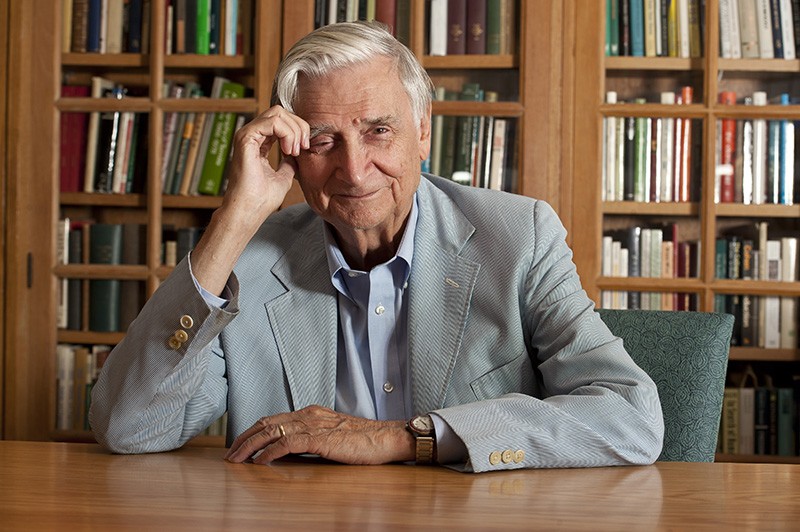








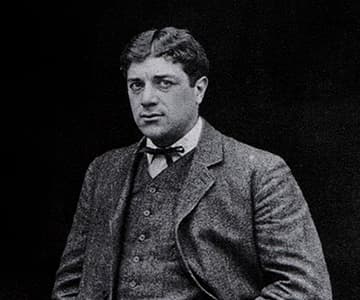



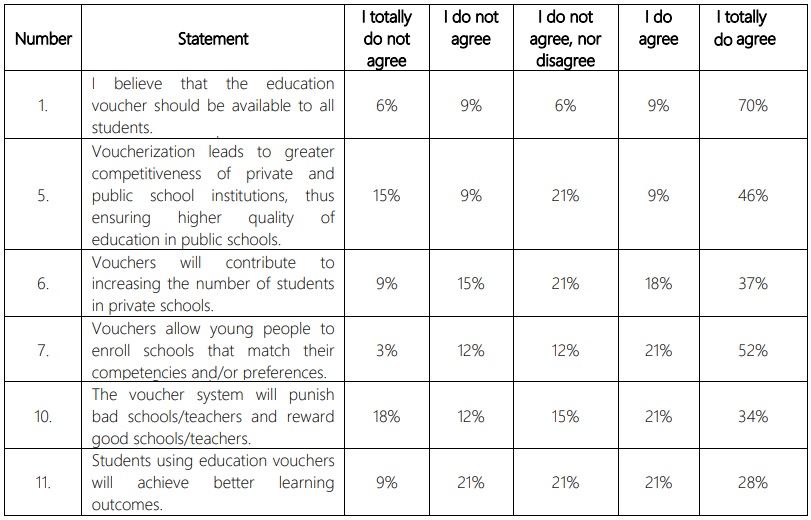



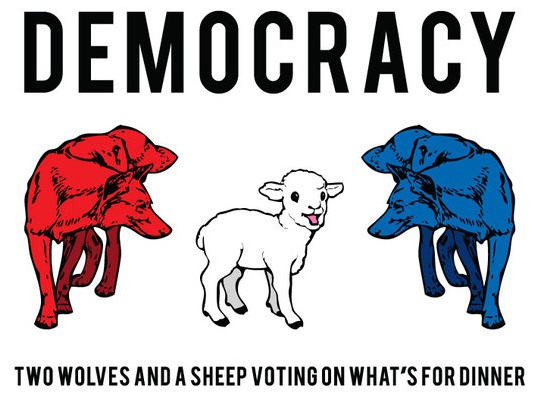
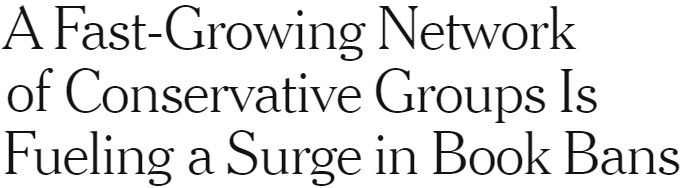


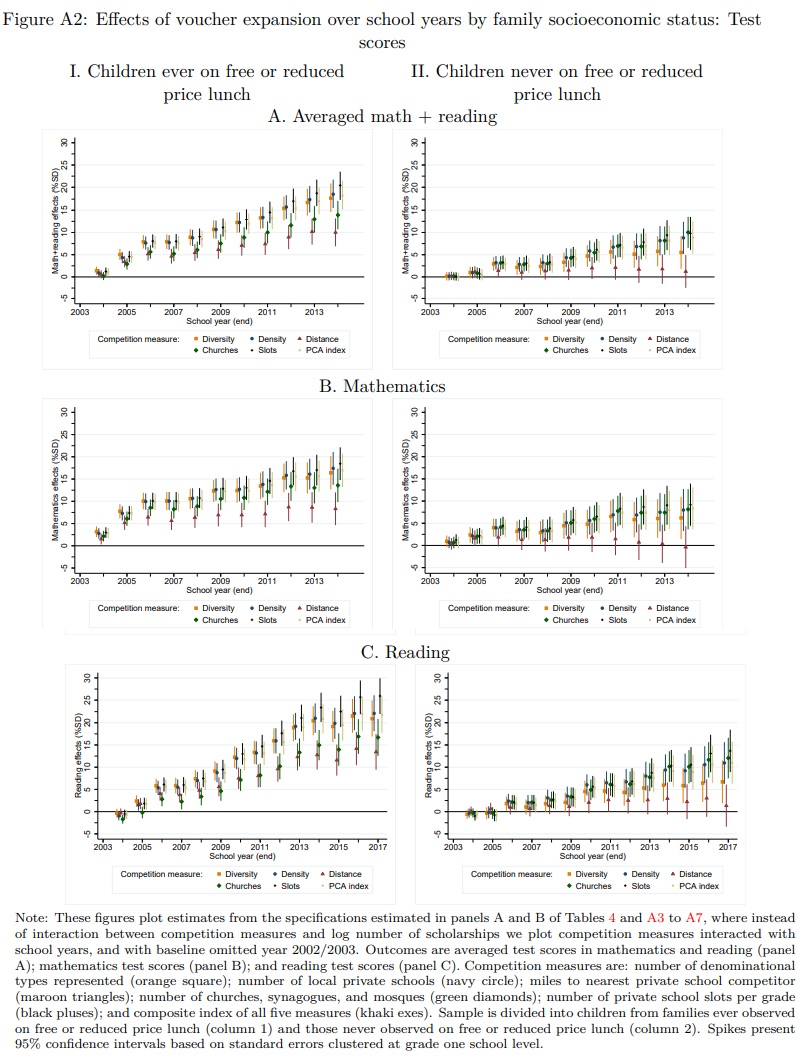

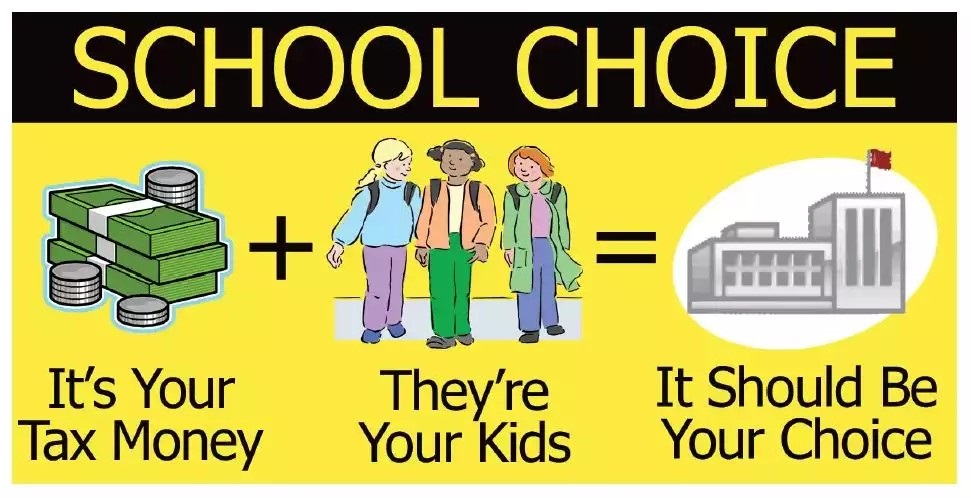



 –
–











 Ricky Gervais and Penelope Wilton in ‘After Life’ (CREDIT: Netflix)



 Clinton Lancaster, an attorney for Lunden Roberts, ripped the 53-year-old Hunter in a 12-page discovery motion filed Thursday in Independence County, Arkansas.


 The Daily Hatch


.png)
