I hit a home run when I did a series on Woody Allen’s movie MIDNIGHT IN PARIS. Basically I researched all the historical characters mentioned that in that movie. This theme has been a tremendous success. Let me share with you a list of the most viewed with the links:
Moving WOODY WEDNESDAY to first Wednesday of the Month!!!!
I am moving the WOODY WEDNESDAY to a monthly feature on http://www.thedailyhatch.org. My passion has been in recent years to emphasize the works of Francis Schaeffer in my apologetic efforts and most of those posts are either on Tuesdays or Thursdays. If you would like to visit some of my past blog posts on WOODY ALLEN then click on some of the links below.
Woody Allen believes that we live in a cold, violent and meaningless universe and it seems that his main character (Gil Pender, played by Owen Wilson) in the movie MIDNIGHT IN PARIS shares that view. Pender’s meeting with the Surrealists is by far the best scene in the movie because they are ones who can […]
In the last post I pointed out how King Solomon in Ecclesiastes painted a dismal situation for modern man in life UNDER THE SUN and that Bertrand Russell, and T.S. Eliot and other modern writers had agreed with Solomon’s view. However, T.S. Eliot had found a solution to this problem and put his faith in […]
In MIDNIGHT IN PARIS Gil Pender ponders the advice he gets from his literary heroes from the 1920’s. King Solomon in Ecclesiastes painted a dismal situation for modern man in life UNDER THE SUN and many modern artists, poets, and philosophers have agreed. In the 1920’s T.S.Eliot and his house guest Bertrand Russell were two of […]
Ernest Hemingway and Scott Fitzgerald left the prohibitionist America for wet Paris in the 1920’s and they both drank a lot. WINE, WOMEN AND SONG was their motto and I am afraid ultimately wine got the best of Fitzgerald and shortened his career. Woody Allen pictures this culture in the first few clips in the […]
In the film MIDNIGHT IN PARIS Woody Allen the best scene of the movie is when Gil Pender encounters the SURREALISTS!!! This series deals with the Book of Ecclesiastes and Woody Allen films. The first post dealt with MAGIC IN THE MOONLIGHT and it dealt with the fact that in the Book of Ecclesiastes Solomon does contend […]
In the film MIDNIGHT IN PARIS Woody Allen is really looking at one main question through the pursuits of his main character GIL PENDER. That question is WAS THERE EVER A GOLDEN AGE AND DID THE MOST TALENTED UNIVERSAL MEN OF THAT TIME FIND TRUE SATISFACTION DURING IT? This is the second post I have […]
I am starting a series of posts called ECCLESIASTES AND WOODY ALLEN’S FILMS: SOLOMON “WOULD GOT ALONG WELL WITH WOODY!” The quote from the title is actually taken from the film MAGIC IN THE MOONLIGHT where Stanley derides the belief that life has meaning, saying it’s instead “nasty, brutish, and short. Is that Hobbes? I would have […]
and you will hear what far smarter people than I have to say on this matter. I agree with them.
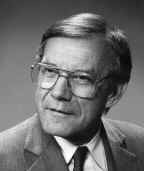
Harry Kroto
__
Harold W. Kroto (left) receives the Nobel Prize in chemistry from Swedish King Carl XVI Gustaf in Stockholm, in 1996.
Soren Andersson/AP
__
I have attempted to respond to all of Dr. Kroto’s friends arguments and I have posted my responses one per week for over a year now. Here are some of my earlier posts:
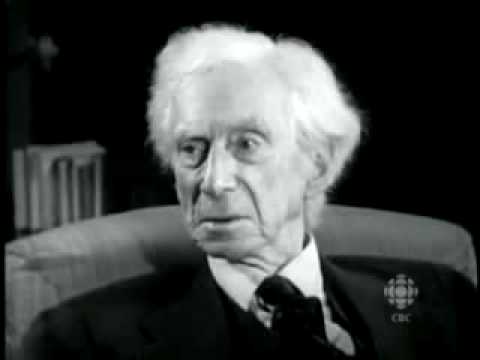
Bertrand Arthur William Russell was born at Trelleck on 18th May, 1872. His parents were Viscount Amberley and Katherine, daughter of 2nd Baron Stanley of Alderley. At the age of three he was left an orphan. His father had wished him to be brought up as an agnostic; to avoid this he was made a ward of Court, and brought up by his grandmother. Instead of being sent to school he was taught by governesses and tutors, and thus acquired a perfect knowledge of French and German. In 1890 he went into residence at Trinity College, Cambridge, and after being a very high Wrangler and obtaining a First Class with distinction in philosophy he was elected a fellow of his college in 1895. But he had already left Cambridge in the summer of 1894 and for some months was attaché at the British embassy at Paris.
In December 1894 he married Miss Alys Pearsall Smith. After spending some months in Berlin studying social democracy, they went to live near Haslemere, where he devoted his time to the study of philosophy. In 1900 he visited the Mathematical Congress at Paris. He was impressed with the ability of the Italian mathematician Peano and his pupils, and immediately studied Peano’s works. In 1903 he wrote his first important book, The Principles of Mathematics, and with his friend Dr. Alfred Whitehead proceeded to develop and extend the mathematical logic of Peano and Frege. From time to time he abandoned philosophy for politics. In 1910 he was appointed lecturer at Trinity College. After the first World War broke out, he took an active part in the No Conscription fellowship and was fined £ 100 as the author of a leaflet criticizing a sentence of two years on a conscientious objector. His college deprived him of his lectureship in 1916. He was offered a post at Harvard university, but was refused a passport. He intended to give a course of lectures (afterwards published in America as Political Ideals, 1918) but was prevented by the military authorities. In 1918 he was sentenced to six months’ imprisonment for a pacifistic article he had written in the Tribunal. His Introduction to Mathematical Philosophy (1919) was written in prison. His Analysis of Mind (1921) was the outcome of some lectures he gave in London, which were organized by a few friends who got up a subscription for the purpose.
In 1920 Russell had paid a short visit to Russia to study the conditions of Bolshevism on the spot. In the autumn of the same year he went to China to lecture on philosophy at the Peking university. On his return in Sept. 1921, having been divorced by his first wife, he married Miss Dora Black. They lived for six years in Chelsea during the winter months and spent the summers near Lands End. In 1927 he and his wife started a school for young children, which they carried on until 1932. He succeeded to the earldom in 1931. He was divorced by his second wife in 1935 and the following year married Patricia Helen Spence. In 1938 he went to the United States and during the next years taught at many of the country’s leading universities. In 1940 he was involved in legal proceedings when his right to teach philosophy at the College of the City of New York was questioned because of his views on morality. When his appointment to the college faculty was cancelled, he accepted a five-year contract as a lecturer for the Barnes foundation, Merion, Pa., but the cancellation of this contract was announced in Jan. 1943 by Albert C. Barnes, director of the foundation.
Russell was elected a fellow of the Royal Society in 1908, and re-elected a fellow of Trinity College in 1944. He was awarded the Sylvester medal of the Royal Society, 1934, the de Morgan medal of the London Mathematical Society in the same year, the Nobel Prize for Literature, 1950.
In a paper “Logical Atomism” (Contemporary British Philosophy. Personal Statements, First series. Lond. 1924) Russell exposed his views on his philosophy, preceded by a few words on historical development.1
Principal publications
German Social Democracy, 1896
Foundations of Geometry, 1897
A Critical Exposition of the Philosophy of Leibniz, 1900
Principles of Mathematics, vol. 1, 1903
Philosophical Essays, 1910
(with Dr. A. N. Whitehead) Principia mathematica, 3 vols, 1910-13
The Problems of Philosophy, 1912
Our Knowledge of the External World as a Field for Scientific Method in Philosophy, 1944
Principles of Social Reconstruction, 1916
Mysticism and Logic and Other Essays, 1918
Roads to Freedom: Socialism, Anarchism and Syndicalism, 1918
Introduction to Mathematical Philosophy, 1919
The Practice and Theory of Bolshevism, 1920
The Analysis of Mind, 1921
The Problem of China, 1922
The ABC of Atoms, 1923
(with Dora Russell) The Prospects of Industrial Civilisation, 1923
Logical Atomism, 1924
The ABC of Relativity, 1925
On Education, 1926
The Analysis of Matter, 1927
An Outline of Philosophy, 1927
Sceptical Essays, 1928
Marriage and Morals, 1929
The Conquest of Happiness, 1930
The Freedom and Organisation 1814-1914, 1934
In Praise of Idleness, 1935
Which Way to Peace?, 1936
(with Patricia Russell editor of) The Amberley Papers, 2 vols, 1937
Power: a new Social Introduction to its Study, 1938
An Inquiry into Meaning and Truth, 1941
History of Western Philosophy, 1946
Human Knowledge, its Scope and Limits, 1948
Authority and the Individual, 1949
Unpopular Essays, 1950
1) The matter for this sketch is taken from general English reference books.
From Les Prix Nobel en 1950, Editor Arne Holmberg, [Nobel Foundation], Stockholm, 1951
This autobiography/biography was written at the time of the award and later published in the book series Les Prix Nobel/Nobel Lectures/The Nobel Prizes. The information is sometimes updated with an addendum submitted by the Laureate.
For more updated biographical information, see:
Russell, Bertrand, The Autobiography of Bertrand Russell. (3 vols.) Allen & Unwin: London, 1967-1969.
Bertrand Russell died on February 2, 1970.
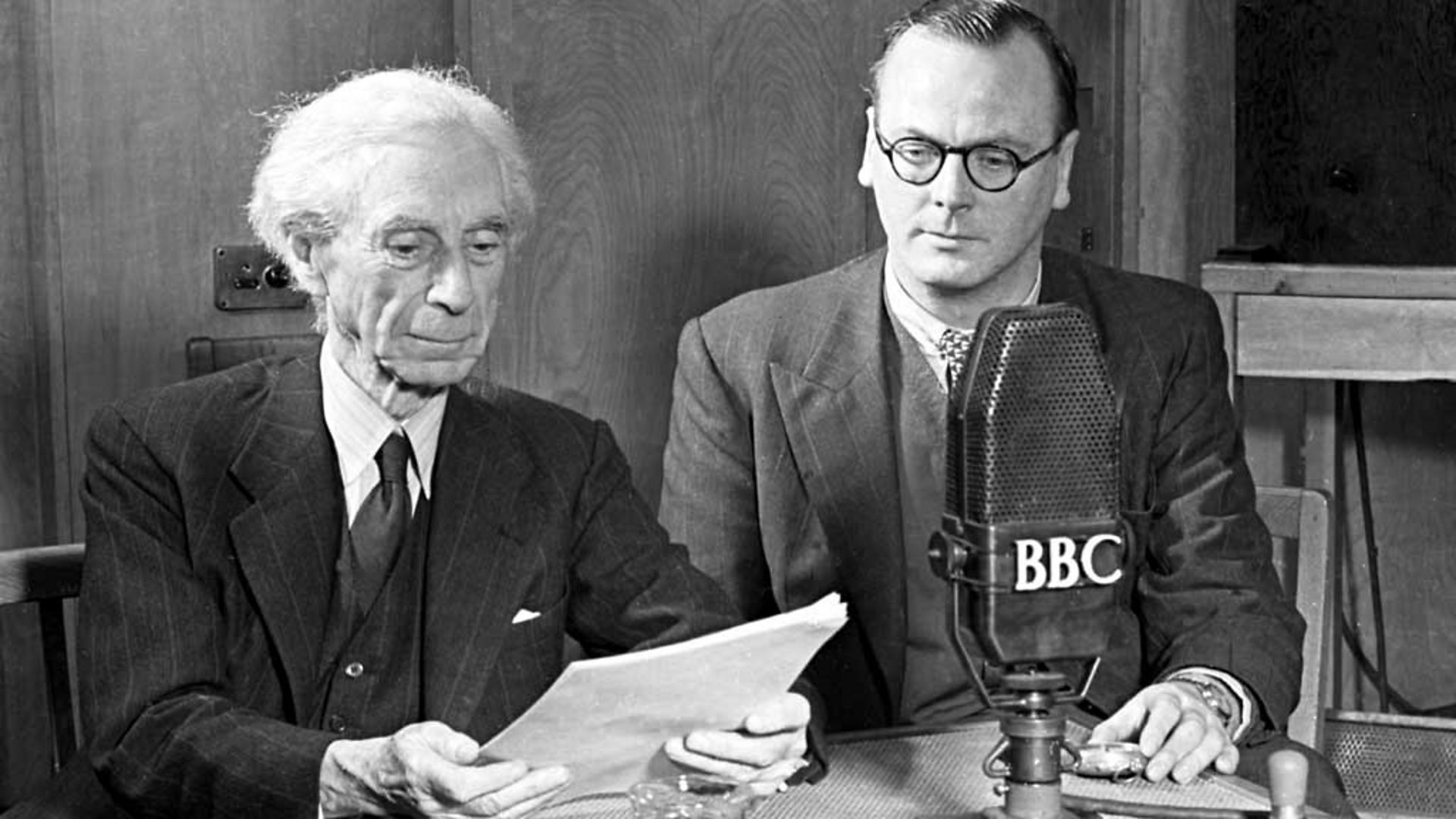
In the first video below in the 14th clip in this series are his words and I will be responding to them in the next few weeks since Sir Bertrand Russell is probably the most quoted skeptic of our time, unless it was someone like Carl Sagan or Antony Flew.
50 Renowned Academics Speaking About God (Part 1)
Another 50 Renowned Academics Speaking About God (Part 2)
A Further 50 Renowned Academics Speaking About God (Part 3)
__
Quote from Bertrand Russell:
Q: Why are you not a Christian?
Russell: Because I see no evidence whatever for any of the Christian dogmas. I’ve examined all the stock arguments in favor of the existence of God, and none of them seem to me to be logically valid.
Q: Do you think there’s a practical reason for having a religious belief, for many people?
Russell: Well, there can’t be a practical reason for believing what isn’t true. That’s quite… at least, I rule it out as impossible. Either the thing is true, or it isn’t. If it is true, you should believe it, and if it isn’t, you shouldn’t. And if you can’t find out whether it’s true or whether it isn’t, you should suspend judgment. But you can’t… it seems to me a fundamental dishonesty and a fundamental treachery to intellectual integrity to hold a belief because you think it’s useful, and not because you think it’s true._
ISSUES IN PERSPECTIVE Dr. James P. Eckman, President Emeritus Grace University, Omaha, Nebraska
October 1, 2016
Note to Evangelicals: “Let’s Start Talking About Our Theology, Not
Politics”
Although American civilization manifests a radical pluralism when it comes to worldview
choices, secularism is the preferred face of this culture. As a culture, we respect the right of a
person to choose, but we do not like to discuss the nature of those religious choices. Instead of
engaging in the implications and the consistency of a worldview choice, our culture prefers
silence. When worldview choices are discussed, it quickly drifts to politics, not theology. The
end result is that the public square in indeed naked (to use the late John Neuhaus’s words.) As
a Christian, I find all of this especially disturbing. My fellow evangelicals seem more prone to
talk about the virtues of Donald Trump than the uniqueness of the Christian worldview.
Columnist E.J. Dionne, Jr. has noted this in a recent column when he observed the following:
• “Religion has been subsumed by politics.
• Many liberals have accepted the view that religion now lives almost entirely on the right
end of politics.
• The popular media tend to focus on the most extreme and outlandish examples of
religion rather than the more thoughtful kind.
• The quieter forms of religious expression—left, right and center—rarely win notice on
covers of magazines or anywhere else.”
The politicization of religion is obvious in our culture today, for, when it is discussed, rarely do
we talk about the nature of God or how to contemplate the Exodus or the Resurrection.
Immediately, we focus on culture war issues (e.g., abortion, same-sex marriage or whom you
will vote for as president). It is not that these matters are unimportant; they are important.
But the unintended result is the cultivation of superficiality and shallowness when it comes to
religious conviction. For some, the test of whether someone is really a Christian is that person’s
view on these culture war issues or on a particular candidate in the upcoming election. Dionne
quotes Berkeley historian, David Hollinger: “The absence of sustained, public scrutiny of
religious ideas in our time has created a vacuum filled with easy God talk.” For the secular wing
of American culture, genuine Christianity is the promotion of right-wing extremism or
conservative politics.
Consider two examples of how genuine, biblical Christianity is about more than conservative
politics:
1. One of the most famous atheists of the last two decades was Christopher Hitchens. He
died of esophageal cancer in 2011. Larry Taunton, of the Fixed Point Foundation and a
devout Christian intellectual, organizes debates between Christians and atheists. In 2010,
he organized a series of debates in various parts of America and, for some of these debates,
he actually drove Hitchens to these events. That means they had hours to talk and reflect
on their respective worldviews. In a recent book by Taunton, he summarizes details of
those drives. In one, Hitchens was reading from the Gospel of John out loud and asking
what was “the precise reason Jesus wept at the death of Lazarus.” He asked Taunton,
“where is grace in the Old Testament?,” which resulted in a discussion about God’s
covenant with Abraham. Taunton offers no evidence that Hitchens ever made a decision of
faith, but these long conversations between Hitchens and Taunton were not about politics
or culture war issues. They were about Jesus, His miracles and key theological ideas in
Scripture. Taunton demonstrated real affection for Hitchens as a man and a willingness to
engage him not at the level of the superficial but at a level that challenged Hitchens’s
worldview.
2. The other example gives focus to one of the most famous atheists of the 20th century—
Bertrand Russell. Along with A.N. Whitehead, Russell was the founder of analytic
philosophy. He stressed the absolute nature of impersonal, physical matter. There is no
God, only matter; He advocated for the eternality of the material universe. The result was a
bleak view of human life, its meaning and its purpose. Consider this extended quotation:
That man is the product of causes which had no prevision of the end they were
achieving; that his origin, his growth, his hopes and fears, his loves and his
beliefs, are but the outcome of accidental collocations of atoms; that no fire,
no heroism, no intensity of thought and feeling, can preserve an individual life
beyond the grave; that all the labors of the ages, all the devotion, all the
inspiration, all the noonday brightness of human genius, are destined to
extinction in the vast death of the solar system, and that the whole temple of
man’s achievement must inevitably be buried beneath the debris of the
universe in ruins. . . . Only within the scaffolding of these truths, only on the
firm foundation of unyielding despair, can the soul’s habitation henceforth be
safely built (Why I Am Not a Christian, editor Paul Edwards [New York: Simon
and Schuster, 1957], p. 107).
There are several interesting observations about Russell’s “world which science built for our
belief.”
1. To Russell, humans are “accidental collocations of atoms.” Yet, Russell uses terms not
associated with accidents: “loves,” “beliefs,” “despair” and “soul.” These words do not
fit with his worldview. As John Piper argues, he borrows these terms from another
worldview. He is using language beyond physical matter, an odd thing for a materialist
to do.
2. Piper asks, did Russell live “his philosophy?” How did he talk to his three children about
their hurts, their pains, their sorrows, for after all his three children were merely “an
accidental collocation of atoms.” How did he talk with his three wives? Did he speak of
them or to them as “accidental collocations of atoms?” Could he, did he, tell them he
loved them? As a rabid materialist, what did love actually mean to him?
3. Russell’s self-annihilating worldview concludes that “only on the firm foundation of
unyielding despair can the soul’s habitation henceforth be safely built.” In other words,
the soul’s habitation is built upon nothing, for humanity can only look forward to
“extinction in the vast death of the solar system.”
The Bible affirms the reality of death, sorrow and despair, but it identifies the cause—sin. And
it identifies the solution to this cause, namely the death, burial and resurrection of Jesus.
Easter Sunday is the triumph over the tragic, desperate, unfounded worldview of ardent secular
materialists such as Bertrand Russell. 1 Corinthians 15:17-20 makes the strong case for hope
not despair, for triumph not defeat and for a foundation that cannot be shaken:
17 And if Christ has not been raised, your faith is futile and you are still in your sins. 18 Then
those also who have fallen asleep in Christ have perished. 19 If in Christ we have hope in this
life only, we are of all people most to be pitied.
20 But in fact Christ has been raised from the dead. . . . [ESV]
As we move forward in this confusing culture, we who love the Lord and love His Word, let’s
make a vow: Let’s covenant together to start talking more about what we believe than about
politics. Let’s start talking more about the sound doctrine that produces godly living than the
political culture. Let’s watch less Fox News and read more of the Bible. When someone asks
about our beliefs, let’s direct the conversation to Jesus, who He is and what He has done. Let’s
disassociate ourselves from the political illusion and embrace and proclaim Jesus as the solution
to the challenges of the human condition.
See E.J. Dionne, Jr., “A Secular Society Needs a Little Religion . . .” in the Omaha World Herald
(28 August 2016); Mark Oppenheimer’s article on Christopher Hitchens and Larry Taunton in
the New York Times (14 May 2016); and John Piper, “Strange Collocation” in World (24 October
2009), p. 46.
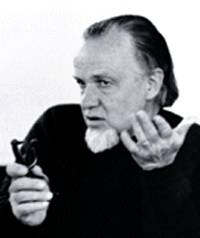
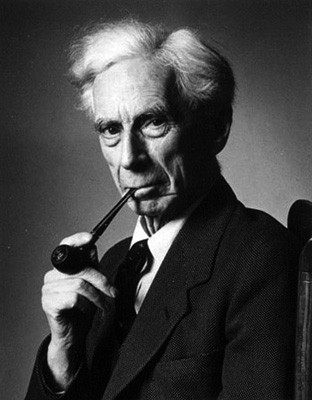
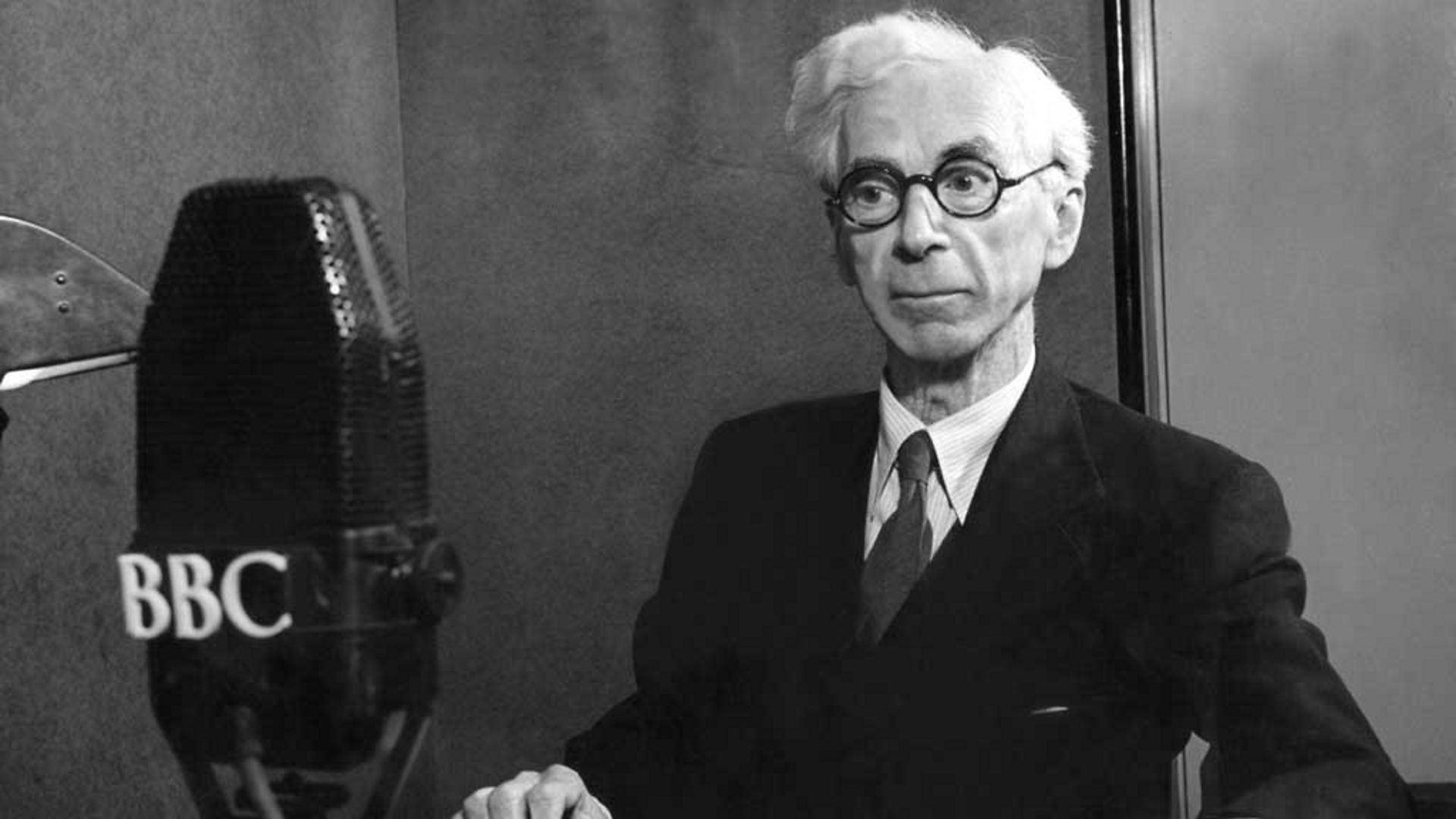
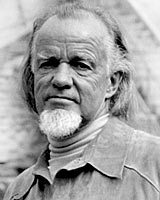
Bertrand Russell pictured above and Francis Schaeffer below:
Francis Schaeffer noted in his book HOW SHOULD WE THEN LIVE? (p. 182 in Vol 5 of Complete Works) in the chapter The Breakdown in Philosophy and Science:
In his lecture at Acapulco, George Wald finished with only one final value. It was the same one with which English philosopher Bertrand Russell (1872-1970) was left. For Wald and Russell and for many other modern thinkers, the final value is the biological continuity of the human race. If this is the only final value, one is left wondering why this then has importance.
Now having traveled from the pride of man in the High Renaissance and the Enlightenment down to the present despair, we can understand where modern people are. They have no place for a personal God. But equally they have no place for man as man, or for love, or for freedom, or for significance. This brings a crucial problem. Beginning only from man himself, people affirm that man is only a machine. But those who hold this position cannot live like machines! If they could, there would have been no tensions in their intellectual position or in their lives. But even people who believe they are machines cannot live like machines, and thus they must “leap upstairs” against their reason and try to find something which gives meaning to life, even though to do so they have to deny their reason.
Francis Schaeffer in another place worded it like this:
The universe was created by an infinite personal God and He brought it into existence by spoken word and made man in His own image. When man tries to reduce [philosophically in a materialistic point of view] himself to less than this [less than being made in the image of God] he will always fail and he will always be willing to make these impossible leaps into the area of nonreason even though they don’t give an answer simply because that isn’t what he is. He himself testifies that this infinite personal God, the God of the Old and New Testament is there.
Instead of making a leap into the area of nonreason the better choice would be to investigate the claims that the Bible is a historically accurate book and that God created the universe and reached out to humankind with the Bible. Below is a piece of that evidence given by Francis Schaeffer concerning the accuracy of the Bible.
TRUTH AND HISTORY (chapter 5 of WHATEVER HAPPENED TO THE HUMAN RACE?)
Two things should be mentioned about the time of Moses in Old Testament history.
First, consider the archaeological evidence that relates to the period. True, it is not of the same explicitness that we have found, say, in relation to the existence of Ahab or Jehu or Jehoiakim. We have no inscription from Egypt which refers to Moses being taken out of the bulrushes and removed from the waterproof basket his mother had made him. But this does not mean that the Book of Exodus is a fictitious account, as some critics has suggested. Some say it is simply an idealized reading-back into history by the Jews under the later monarchy. There is not a reason why these “books of Moses,” as they are called, should not be treated as history, just as we have been forced to treat the Books of Kings and Chronicles dating 500 years later.
There is ample evidence about the building projects of the Egyptian kings, and the evidence we have fits well with Exodus. There are scenes of brick-making (for example, Theban Tomb 100 of Rekhmire). Contemporary parchments and papyri tell of production targets which had to be met. One speaks of a satisfied official report of his men as “making their quota of bricks daily” (Papyrus Anastasi III vso, p.3, in the British Museum. Also Louvre Leather Roll in the Louvre, Paris, col ii, mentions quotes of bricks and “taskmasters”). Actual bricks found show signs of straw which had to be mixed in with the clay, just as Exodus says. This matter of bricks and straw is further affirmed by the record that one despairing official complained, “There are no men to make bricks nor straw in my area.”
We know from contemporary discoveries that Semites were found at all levels of Egypt’s cosmopolitan society. (Brooklyn Museum, New York, no. 35, 1446. Papyrus Brooklyn). There is nothing strange therefore about Joseph’s becoming so important in the pharaoh’s court.
The store cities of Pithom and Raamses (Rameses) mentioned in Exodus 1:11 are well known in Egyptian inscriptions. Raamses was actually in the east-Delta capital, Pi-Ramses (near Goshen), where the Israelites would have had ample experience of agriculture. Thus, the references to agriculture found in the law of Moses would not have been strange to the Israelites even though they were in the desert at the time the law was given. Certainly there is no reason to say, as some critics do, that these sections on agriculture were an indication of a reading-back from a latter period when the Jews were settled in Canaan.
The form of the covenant made at Sinai has remarkable parallels with the covenant forms of other people at that time. (On covenants and parties to a treaty, the Louvre; and Treaty Tablet from Boghaz Koi (i.e., Hittite) in Turkey, Museum of Archaeology in Istanbul.) The covenant form at Sinai resembles just as the forms of letter writings of the first century after Christ (the types of introductions and greetings) are reflected in the letters of the apostles in the New Testament, it is not surprising to find the covenant form of the second millennium before Christ reflected in what occurred at Mount Sinai. God has always spoken to people within the culture of their time, which does not mean that God’s communication is limited by that culture. It is God’s communication but within the forms appropriate to the time.
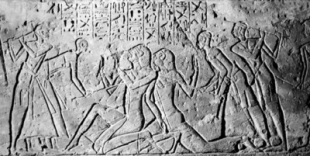
The Pentateuch tells us that Moses led the Israelites up the east side of the Dead Sea after their long stay in the desert. There they encountered the hostile kingdom of Moab. We have firsthand evidence for the existence of this kingdom of Moab–contrary to what has been said by critical scholars who have denied the existence of Moab at this time. It can be found in a war scene from a temple at Luxor (Al Uqsor). This commemorates a victory by Ramses II over the Moabite nation at Batora (Luxor Temple, Egypt).
Also the definite presence of the Israelites in west Palestine (Canaan) no later than the end of the thirteenth century B.C. is attested by a victory stela of Pharaoh Merenptah (son and successor of Ramses II) to commemorate his victory over Libya (Israel Stela, Cairo Museum, no. 34025). In it he mentions his previous success in Canaan against Aschalon, Gize, Yenom, and Israel; hence there can be no doubt the nation of Israel was in existence at the latest by this time of approximately 1220 B.C. This is not to say it could not have been earlier, but it cannot be later than this date.
Today we look at the 3rd letter in the Kroto correspondence and his admiration of Bertrand Russell. (Below The Nobel chemistry laureates Harold Kroto, Robert Curl and Richard Smalley) It is with sadness that I write this post having learned of the death of Sir Harold Kroto on April 30, 2016 at the age of […]
On November 21, 2014 I received a letter from Nobel Laureate Harry Kroto and it said: …Please click on this URL http://vimeo.com/26991975 and you will hear what far smarter people than I have to say on this matter. I agree with them. Harry Kroto _________________ Below you have picture of Dr. Harry Kroto: Gareth Stedman […]
Top 10 Woody Allen Movies __________ John Piippo makes the case that Bertrand Russell would have loved Woody Allen because they both were atheists who don’t deny the ramifications of atheism!!! Monday, August 06, 2012 (More On) Woody Allen’s Atheism As I wrote in a previous post, I like Woody Allen. I have long admired his […]
______ Top 10 Woody Allen Movies PBS American Masters – Woody Allen A Documentary 01 PBS American Masters – Woody Allen A Documentary 02 __________ John Piippo makes the case that Bertrand Russell would have loved Woody Allen because they both were two atheists who don’t deny the ramifications of atheism!!! Monday, August 06, 2012 […]
THE MORAL ARGUMENT BERTRAND RUSSELL But aren’t you now saying in effect, I mean by God whatever is good or the sum total of what is good — the system of what is good, and, therefore, when a young man loves anything that is good he is loving God. Is that what you’re […]
Great debate Fr. Frederick C. Copleston vs Bertrand Russell – Part 1 Uploaded by riversonthemoon on Jul 15, 2009 BBC Radio Third Programme Recording January 28, 1948. BBC Recording number T7324W. This is an excerpt from the full broadcast from cassette tape A303/5 Open University Course, Problems of Philosophy Units 7-8. Older than 50 years, […]
Uploaded by riversonthemoon on Jul 15, 2009 BBC Radio Third Programme Recording January 28, 1948. BBC Recording number T7324W. This is an excerpt from the full broadcast from cassette tape A303/5 Open University Course, Problems of Philosophy Units 7-8. Older than 50 years, out of UK/BBC copyright. Pardon the hissy audio. It was recorded 51 […]
Fr. Frederick C. Copleston vs Bertrand Russell – Part 1 Uploaded by riversonthemoon on Jul 15, 2009 BBC Radio Third Programme Recording January 28, 1948. BBC Recording number T7324W. This is an excerpt from the full broadcast from cassette tape A303/5 Open University Course, Problems of Philosophy Units 7-8. Older than 50 years, out of […]
THE MORAL ARGUMENT BERTRAND RUSSELL But aren’t you now saying in effect, I mean by God whatever is good or the sum total of what is good — the system of what is good, and, therefore, when a young man loves anything that is good he is loving God. Is that what you’re […]
Fr. Frederick C. Copleston vs Bertrand Russell – Part 1 Uploaded by riversonthemoon on Jul 15, 2009 BBC Radio Third Programme Recording January 28, 1948. BBC Recording number T7324W. This is an excerpt from the full broadcast from cassette tape A303/5 Open University Course, Problems of Philosophy Units 7-8. Older than 50 years, out of […]
I am moving the MUSIC MONDAY to a monthly feature on http://www.thedailyhatch.org. My passion has been in the recent years to emphasize the works of Francis Schaeffer in my apologetic efforts and most of those posts are either on Tuesdays or Thursdays.
Dion — Abraham, Martin and John — Smothers Brothers Comedy Hour.
Published on Dec 16, 2014
Remembering heroes of the past, wondering about today’s role models.
Each of the first three verses features one of the men named in the song’s title, for example:
Anybody here, seen my old friend Abraham —
Can you tell me where he’s gone?
He freed a lot of people, but it seems they good die young
But I just looked around and he’s gone.
After a bridge, the fourth and final verse mentions Robert “Bobby” Kennedy, and ends with a description of him walking over a hill with the other three men.
The original version, recorded by Dion, featured a gentle folk rock production from Phil Gernhard and arrangement from John Abbott. The feeling of the song is set with a gentle oboe and violin opening then featuring harp flourishes at multiple points, including the instrumental conclusion. The song also features a flugelhorn, an electric organ, bass, and drums. Dion felt during post production that the song needed more depth and added a track featuring him playing classical guitar notably at the bridge, lead ins and the close.
Although it was quite unlike the rock sound that Dion had become famous for in the early 1960s, and even more unlike Holler and Gernhard’s previous collaboration in the 1966 novelty smash “Snoopy Vs. The Red Baron“, “Abraham, Martin and John” nonetheless was a major American hit single in late 1968. It reached #4 on the U.S. pop singles chart and was awarded an RIAAgold record for selling a million copies. In Canada, it topped the charts, reaching #1 in the RPM 100 on November 25, 1968.[1] In 2001 this recording would be ranked number 248 on the RIAA‘s Songs of the Century list. The record was also popular with adult listeners, reaching #8 on Billboard’s Easy Listening survey. The personnel on the original recording included Vinnie Bell and Ralph Casale on guitar, Nick DeCaro on organ and David Robinson on drums.
Marvin Gaye, whose cover became a top-ten hit (#9) in the United Kingdom in 1970 (Gaye’s version was never released in the U.S. as a single but was featured on his 1970 album, That’s the Way Love Is, and was one of his first experiments with social messages in his music which would culminate in his 1971 album, What’s Going On.)
Comedian Moms Mabley performed a version that hit the U.S. Top 40, reaching #35 in 1969[9] and #18 on the R&B charts[10] and earning her the distinction of being the oldest living person to appear on a Hot 100 top 40 hit, aged 75, a record that still stands.[citation needed] This version was featured on the soundtrack of Braziliansoap operaBeto Rockfeller (1968–1969).[citation needed]
Ray Charles released a version of the song on his A Message from the People album in 1972.
Emmylou Harris and the Nash Ramblers recorded a live version of the song on the Live at the Ryman album in 1992.
Bluesman Seasick Steve released a single version of the song in 2016.
The song is also featured on Tom Clay‘s 1971 “What the World Needs Now Is Love/Abraham, Martin, and John”, a medley combining Dion’s recording with Jackie DeShannon‘s recording of Burt Bacharach‘s “What the World Needs Now Is Love“, along with vocals by The Blackberries. Clay’s recording features narration (an adult asking a child to define several words associated with social unrest), sound bites from speeches given by President John F. Kennedy, Robert Kennedy, and Martin Luther King, Jr., along with sound bites from the live press coverage of Robert Kennedy’s assassination, and his eulogy by his brother Edward M. Kennedy. It reached No. 8 on the Billboard Hot 100 chart[11] on August 14, 1971 and #32 on the R&B charts.[12] In 1997, Whitney Houston sang a rendition of “Abraham, Martin and John” that aired on VH1 and HBO: Whitney Houston: Live Washington DC.
I wrote Dr. Bloembergen several letters that included quotes from Francis Schaeffer and this letter from him in 1995 was prompted by one of those letters.
I was saddened to learn of the passing of Dr. Nicolaas Bloembergen. Today I will be looking back at some of my interaction with him and I will continue this in a few more posts in future weeks.
In the first video below in the 9th clip in this series are his words and will be responding to them in the next few weeks.
50 Renowned Academics Speaking About God (Part 1)
Another 50 Renowned Academics Speaking About God (Part 2)
A Further 50 Renowned Academics Speaking About God (Part 3)
_
Died at 97 Dutch American physicist Nicolaas Bloembergen
Published on Sep 8, 2017
Nicolaas “Nico” Bloembergen was born on March 11, 1920 and died on September 5, 2017. He was a Dutch-American physicist and Nobel laureate, recognized for his work in developing driving principles behind nonlinear optics for laser spectroscopy.During his career, he was a professor at both Harvard University and later at the University of Arizona.
___________
I wanted to share with you a correspondence I had with Dr. Nicolaas Bloembergen of Harvard. He won the Nobel Prize in Physics in 1981 and was born in Dordrecht, the Netherlands on March 11, 1920. He spent the last two years of World War II hiding from the Nazis. I found his story very interesting.
In his September 6, 1995 letter to me he wrote:
Less zealotry and more compassion for those who have different concepts of the world from yours would help make this world more livable.
__________
(I sent him a document from April 10, 1994 which has been updated below)
Is it legitimate to condemn religion for historical atrocities? First we had better examine the facts.I got a call from a gentleman from San Francisco who was exorcised about Christian missionaries going into foreign lands. Then he started talking about not only the destruction of indigenous beliefs, but also the destruction of missionaries. That’s what he wanted to see happen. He also said that Christians and religious groups are responsible for the greatest massacres of history. It turns out he was quite supportive of Wicca and indigenous religions which worship the Mother Earth force, Gaia. This is essentially the basic foundation for witchcraft and I made a comment then that this was basically what he was talking about.
But a couple of the things that he said were a challenge to me. Not only did he assert that historically missionaries have destroyed cultures and indigenous religions at the point of a gun, but also Christian and religion were responsible for most of the bloodshed in the world, or the great majority of it. I’ve heard this claim before. I wanted to respond with more detail because I’m sure you’ve heard these things as well.
I have a tactic that I employ in situations like this that is called “Just the Facts, Ma’am.” In other words, there are times when you’re faced with objections to Christianity or your point of view that really fail with an accurate assessment of the facts. There are people who make accusations and assertions that are empirically false. This is one of them.
The assertion is that religion has caused most of the killing and bloodshed in the world. The greatest atrocities committed against man were done in the name of God.
Before I get to the particular facts, there is more than just a factual problem here. There is a theoretical problem as well and I tried to make the point that we must distinguish between what an individual or group of people do and what the code that they allegedly follow actually asserts. The fact is that there are people who do things consistently that are inconsistent with the code that they allegedly follow. But often times when that happens, especially where religion is concerned, the finger is pointed not at the individual who is choosing to do something barbaric, but at the code he claims to represent. The only time it’s legitimate to point to the code as the source of barbarism is if the code is, in fact, the source of barbarism. People object to a religion that used barbaric means to spread the faith. But one can only use that as an objection against the religion if it’s the religion itself that asserts that one must do it this way, as opposed to people who try to promote the spread of the religion in a forceful fashion in contradiction to what the religion actually teaches.
It’s my understanding that much of Islam has been spread by the edge of the sword. That isn’t because Muslim advocates were particularly violent. It’s because their religion actually advocates this kind of thing. The difference between that and Christianity is that when Christianity was spread by the edge of the sword it was done so in contradistinction to the actually teachings of Christianity. This is when individual people who claim to be Christians actually did things that were inconsistent with their faith.
I’ve had some people that have told me when I’ve brought this up, “That’s not a fair defense. You can’t simply say that those people who committed the Crusades or the Inquisition or the witch burnings weren’t real Christians. That’s illegitimate.” My response is, why? We know what a real Christian is. A real Christian is someone who believes particular things and lives a particular kind of lifestyle. John makes it clear that those who consistently live unrighteously are ipso facto by definition not part of the faith. So why is it illegitimate for me to look at people who claim to be Christians, yet live unrighteous lives, and promote genocide to say that these people aren’t living consistently with the text, therefore you can’t really call them Christians. I think that’s legitimate.
For example, no one would fault the Hippocratic Oath, which is a very rigid standard of conduct for physicians, just because there are doctors who don’t keep it. We wouldn’t say there’s something wrong with the oath, the code that they allegedly follow. We’d say there was something wrong with the individuals who don’t live up to the ideals of that code. That is the case frequently where people waving the Bible in one hand are also waving a bloody sword in the other. The two are inconsistent. So it’s not fair or reasonable to fault the Bible when the person who’s waving the sword is doing things that are contradictory to what the Bible teaches ought to be done.
So that’s the first important thing to remember when you face an objection like this. Distinguish between what a person does and what the code they claim to follow actually asserts. Christianity is one thing, and if we’re going to fault Christianity we must fault its teachings and not fault it because there are people who say they are Christians but then live a life that is totally morally divergent from what Christianity actually teaches.
As I said earlier, this kind of objection falls when you employ a tactic I call “Just the Facts, Ma’am,” and I’d like to give you some of those facts. My assertion as I responded to the gentleman who called last week was simply this, it is true that there are Christians who do evil things. Even take people’s lives. This is an indication that these people aren’t truly Christians, but it may be true also that people with the right heart, but the wrong head do things that are inappropriate, like I think might have been the case in the Salem Witch Trials.
My basic case is that religion doesn’t promote this kind of thing; it’s the exception to the rule. The rule actually is that when we remove God from the equation, when we act and live as if we have no one to answer to but ourselves, and if there is not God, then the rule of law is social Darwinism–the strong rule the weak. We’ll find that, quite to the contrary, it is not Christianity and the belief in the God of the Bible that results in carnage and genocide. But it’s when people reject the God of the Bible that we are most vulnerable to those kinds of things that we see in history that are the radical and gross destruction of human lives.
Now for the facts.
Let’s take the Salem Witchcraft Trials. Apparently, between June and September of 1692 five men and fourteen women were eventually convicted and hanged because English law called for the death penalty for witchcraft (which, incidentally, was the same as the Old Testament). During this time there were over 150 others that were imprisoned. Things finally ended in September 1692 when Governor William Phipps dissolved the court because his wife had been accused. He said enough of this insanity. It was the colony’s leading minister, by the way, who finally ended the witch hunt in 1693 and those that remained in prison were released. The judge that was presiding over the trials publicly confessed his guilt in 1697. By the way , it’s interesting to note that this particular judge was very concerned about the plight of the American Indian and was opposed to slavery. These are views that don’t sit well with the common caricature of the radical Puritans in the witch hunt. In 1711 the colonies legislatures made reparation to the heirs of the victims. They annulled the convictions.
I guess the point is that there was a witch hunt. It was based on theological reasons, but it wasn’t to the extent that is usually claimed. I think last week the caller said it was millions and millions that were burned at the stake as witches. It certainly wasn’t the case in this country. It seemed that the witch hunt was a result of theological misapplication and the people who were involved were penitent. The whole witch hunt lasted only a year. Sixteen people were hanged in New England for witchcraft prior to 1692. In the 1692 witch hunt nineteen were executed. So you’ve got thirty-five people. One hundred fifty imprisoned. This is not at all to diminish or minimize the impact of the American witch hunts which resulted in thirty-five deaths. But thirty-five is not millions. It is not hundreds of thousands. It’s not even hundreds. It’s thirty-five. This was not genocide.
Now in Europe it was a little different. Joan of Arc was burned at the stake for practicing witchcraft in 1431. Over a period of 300 years, from 1484 to 1782, the Christian church put to death 300,000 women accused of witchcraft, about 1000 per year. Again, I don’t want to minimize the impact of 1000 lives lost a year, but here we’re talking about a much, much smaller number over a long period of time than what has been claimed in the past.
In America we’re talking thirty-five people. In Europe over 300 years, we’re talking about 300,000. Not millions. The sources here are World Book Encyclopedia and Encyclopedia Americana. You can also read in Newsweek, August 31, 1992. I was accused of being a liar last week. I’m trying to give you the facts from reputable sources that show that the accusations from last week aren’t accurate.
There were two Inquisitions. One of them began right around the end of the first millennium in 1017. It began as an attempt to root out heretics and occurred chiefly in France, Germany, Italy and Spain. The Spanish Inquisition followed in the fourteenth century and was much bloodier. It began as a feudal aristocracy which forced religious values on society. Jews were caught in the middle of this and many of them were killed. About 2000 executions took place. The Inquisition that took place at the turn of the millennium, less than that. So we’re talking about thousands of people, not millions.
There were actually seven different Crusades and tens of thousands died in them. Most of them were a misdirected attempt to free the Holy Land. Some weren’t quite like that. There were some positive aspects to them, but they were basically an atrocity over a couple hundred years. The worst was the Children’s Crusade. All of the children who went to fight died along the way. Some were shipwrecked and the rest were taken into slavery in Egypt.
A blight on Christianity? Certainty. Something wrong? Dismally wrong. A tragedy? Of course. Millions and millions of people killed? No. The numbers are tragic, but pale in comparison to the statistics of what non-religion criminals have committed.
My point is not that Christians or religions people aren’t to vulnerable to terrible crimes. Certainly they are. But it is not religion that produces these things; it is the denial of Biblical religion that generally leads to this kind of things. The statistics that are the result of irreligious genocide stagger the imagination.
My source is The Guinness Book of World Records. Look up the category “Judicial” and under the subject of “Crimes: Mass Killings,” the greatest massacre ever imputed by the government of one sovereign against the government of another is 26.3 million Chinese during the regime of Mao Tse Tung between the years of 1949 and May 1965. The Walker Report published by the U.S. Senate Committee of the Judiciary in July 1971 placed the parameters of the total death toll in China since 1949 between 32 and 61.7 million people. An estimate of 63.7 million was published by Figaro magazine on November 5, 1978.
In the U.S.S.R. the Nobel Prize winner, Alexander Solzhenitsyn estimates the loss of life from state repression and terrorism from October 1917 to December 1959 under Lenin and Stalin and Khrushchev at 66.7 million.
Finally, in Cambodia (and this was close to me because I lived in Thailand in 1982 working with the broken pieces of the Cambodian holocaust from 1975 to 1979) “as a percentage of a nation’s total population, the worst genocide appears to be that in Cambodia, formerly Kampuchea. According to the Khmer Rouge foreign minister, more than one third of the eight million Khmer were killed between April 17, 1975 and January 1979. One third of the entire country was put to death under the rule of Pol Pott, the founder of the Communist Part of Kampuchea. During that time towns, money and property were abolished. Economic execution by bayonet and club introduced for such offenses as falling asleep during the day, asking to too many questions, playing non-communist music, being old and feeble, being the offspring of an undesirable, or being too well educated. In fact, deaths in the Tuol Sleng interrogation center in Pnom Penh, which is the capitol of Kampuchea, reached 582 in a day.”
Then in Chinese history of the thirteenth to seventeenth centuries there were three periods of wholesale massacre. The numbers of victims attributed to these events are assertions rather than reliable estimates. The figures put on the Mongolian invasion of northern China form 1210 to 1219 and from 1311 to 1340 are both on the order of 35 million people. While the number of victims of bandit leader Chang Hsien-chung, known as the Yellow Tiger, from 1643 to 1647 in the Siechuan province has been put at 40 million people.
China under Mao Tse Tung, 26.3 million Chinese. According the Walker Report, 63.7 million over the whole period of time of the Communist revolution in China. Solzhenitsyn says the Soviet Union put to death 66.7 million people. Kampuchea destroyed one third of their entire population of eight million Cambodians. The Chinese at two different times in medieval history, somewhere in the vicinity of 35 million and 40 million people. Ladies and gentlemen, make note that these deaths were the result of organizations or points of view or ideologies that had left God out of the equation. None of these involve religion. And all but the very last actually assert atheism.
It seems to me that my colleague Dennis Prager’s illustration cannot be improved upon to show the self-evident capability of Biblical religion to restrain evil. He asks this in this illustration. If you were walking down a dark street at night in the center of Los Angeles and you saw ten young men walking towards you, would you feel more comfortable if you knew that they had just come from a Bible class? Of course, the answer is certainly you would. That demonstrates that religion, and Biblical religion in particular, is a mitigator of evil in the world.
It is true that it’s possible that religion can produce evil, and generally when we look closer at the detail it produces evil because the individual people are actually living in a rejection of the tenants of Christianity and a rejection of the God that they are supposed to be following. So it can produce it, but the historical fact is that outright rejection of God and institutionalizing of atheism actually does produce evil on incredible levels. We’re talking about tens of millions of people a result of the rejection of God.
Diana Al-Hadid was born in 1981 in Aleppo, Syria. She was raised in Cleveland, Ohio, and currently lives and works in New York. Al-Hadid’s large-scale sculptures and wall hangings are the outcome of process-based investigations into materials, including fiberglass, polymer, steel, and plaster.
Exploiting the innate tension between mass and gravity, Al-Hadid is particularly interested in the point at which her works are fixed to the ground, often seeking to create what she describes as “something that seems improbable.” Making drawings since her adolescent years with her grandmother, Al-Hadid creates meticulous renderings driven by a fascination with the depiction of space and perspective. While critics often cite Al-Hadid’s Syrian background as influential to her ornate works, the artist is just as likely to reference to ancient Rome, the Renaissance, or Mannerist painting.
The John Lennon and the Beatles really were on a long search for meaning and fulfillment in their lives just like King Solomon did in the Book of Ecclesiastes. Solomon looked into learning (1:12-18, 2:12-17), laughter, ladies, luxuries, and liquor (2:1-2, 8, 10, 11), and labor (2:4-6, 18-20). He fount that without God in the picture all […]
______________ George Harrison Swears & Insults Paul and Yoko Lucy in the Sky with Diamonds- The Beatles The Beatles: I have dedicated several posts to this series on the Beatles and I don’t know when this series will end because Francis Schaeffer spent a lot of time listening to the Beatles and talking […]
The Beatles in a press conference after their Return from the USA Uploaded on Nov 29, 2010 The Beatles in a press conference after their Return from the USA. The Beatles: I have dedicated several posts to this series on the Beatles and I don’t know when this series will end because Francis […]
__________________ Beatles 1966 Last interview I have dedicated several posts to this series on the Beatles and I don’t know when this series will end because Francis Schaeffer spent a lot of time listening to the Beatles and talking and writing about them and their impact on the culture of the 1960’s. In this […]
_______________ The Beatles documentary || A Long and Winding Road || Episode 5 (This video discusses Stg. Pepper’s creation I have dedicated several posts to this series on the Beatles and I don’t know when this series will end because Francis Schaeffer spent a lot of time listening to the Beatles and talking and writing about […]
_______________ Francis Schaeffer pictured below: _____________________ I have included the 27 minute episode THE AGE OF NONREASON by Francis Schaeffer. In that video Schaeffer noted, ” Sergeant Pepper’s Lonely Hearts Club Band…for a time it became the rallying cry for young people throughout the world. It expressed the essence of their lives, thoughts and their feelings.” How Should […]
Crimes and Misdemeanors: A Discussion: Part 1 ___________________________________ Today I will answer the simple question: IS IT POSSIBLE TO BE AN OPTIMISTIC SECULAR HUMANIST THAT DOES NOT BELIEVE IN GOD OR AN AFTERLIFE? This question has been around for a long time and you can go back to the 19th century and read this same […]
____________________________________ Francis Schaeffer pictured below: __________ Francis Schaeffer has written extensively on art and culture spanning the last 2000years and here are some posts I have done on this subject before : Francis Schaeffer’s “How should we then live?” Video and outline of episode 10 “Final Choices” , episode 9 “The Age of Personal Peace and Affluence”, episode 8 […]
Love and Death [Woody Allen] – What if there is no God? [PL] ___________ _______________ How Should We then Live Episode 7 small (Age of Nonreason) #02 How Should We Then Live? (Promo Clip) Dr. Francis Schaeffer 10 Worldview and Truth Two Minute Warning: How Then Should We Live?: Francis Schaeffer at 100 Francis Schaeffer […]
___________________________________ Francis Schaeffer pictured below: ____________________________ Francis Schaeffer “BASIS FOR HUMAN DIGNITY” Whatever…HTTHR Dr. Francis schaeffer – The flow of Materialism(from Part 4 of Whatever happened to human race?) Dr. Francis Schaeffer – The Biblical flow of Truth & History (intro) Francis Schaeffer – The Biblical Flow of History & Truth (1) Dr. Francis Schaeffer […]
I hit a home run when I did a series on Woody Allen’s movie MIDNIGHT IN PARIS. Basically I researched all the historical characters mentioned that in that movie. This theme has been a tremendous success. Let me share with you a list of the most viewed with the links:
Moving WOODY WEDNESDAY to first Wednesday of the Month!!!!
I am moving the WOODY WEDNESDAY to a monthly feature on http://www.thedailyhatch.org. My passion has been in recent years to emphasize the works of Francis Schaeffer in my apologetic efforts and most of those posts are either on Tuesdays or Thursdays. If you would like to visit some of my past blog posts on WOODY ALLEN then click on some of the links below.
Woody Allen believes that we live in a cold, violent and meaningless universe and it seems that his main character (Gil Pender, played by Owen Wilson) in the movie MIDNIGHT IN PARIS shares that view. Pender’s meeting with the Surrealists is by far the best scene in the movie because they are ones who can […]
In the last post I pointed out how King Solomon in Ecclesiastes painted a dismal situation for modern man in life UNDER THE SUN and that Bertrand Russell, and T.S. Eliot and other modern writers had agreed with Solomon’s view. However, T.S. Eliot had found a solution to this problem and put his faith in […]
In MIDNIGHT IN PARIS Gil Pender ponders the advice he gets from his literary heroes from the 1920’s. King Solomon in Ecclesiastes painted a dismal situation for modern man in life UNDER THE SUN and many modern artists, poets, and philosophers have agreed. In the 1920’s T.S.Eliot and his house guest Bertrand Russell were two of […]
Ernest Hemingway and Scott Fitzgerald left the prohibitionist America for wet Paris in the 1920’s and they both drank a lot. WINE, WOMEN AND SONG was their motto and I am afraid ultimately wine got the best of Fitzgerald and shortened his career. Woody Allen pictures this culture in the first few clips in the […]
In the film MIDNIGHT IN PARIS Woody Allen the best scene of the movie is when Gil Pender encounters the SURREALISTS!!! This series deals with the Book of Ecclesiastes and Woody Allen films. The first post dealt with MAGIC IN THE MOONLIGHT and it dealt with the fact that in the Book of Ecclesiastes Solomon does contend […]
In the film MIDNIGHT IN PARIS Woody Allen is really looking at one main question through the pursuits of his main character GIL PENDER. That question is WAS THERE EVER A GOLDEN AGE AND DID THE MOST TALENTED UNIVERSAL MEN OF THAT TIME FIND TRUE SATISFACTION DURING IT? This is the second post I have […]
I am starting a series of posts called ECCLESIASTES AND WOODY ALLEN’S FILMS: SOLOMON “WOULD GOT ALONG WELL WITH WOODY!” The quote from the title is actually taken from the film MAGIC IN THE MOONLIGHT where Stanley derides the belief that life has meaning, saying it’s instead “nasty, brutish, and short. Is that Hobbes? I would have […]
and you will hear what far smarter people than I have to say on this matter. I agree with them.
Harry Kroto
Nick Gathergood, David-Birkett, Harry-Kroto
I have attempted to respond to all of Dr. Kroto’s friends arguments and I have posted my responses one per week for over a year now. Here are some of my earlier posts:
Bertrand Russell was a British philosopher, mathematician, logician, social activist, writer, critic, pacifist, and intellectual. He owned a huge fame for his works on analytical philosophy, mathematical logic, linguistics, anti-imperialism, human rights and so on. In the academic fields of mathematics and logic, he is famous for his great works including ‘Principia Mathematica’.
Bertrand Russell born on May 18, 1872, in Monmouthshire, UK. He got an influential and intellectual family by birth. His parents, Lord and Lady Amberly supported Birth control when many people thought it as blasphemous. Lord Amberly was an atheist, which influenced child Russell very much. Russell lost his parents at childhood. After that, his grandmother started to look after Russell and his two siblings; Frank and Rachel. Russell’s education started at home with the help of his brother, Frank and some tutors. Frank taught him euclidean geometry, which changed his life.
Bertrand Russell
Russell went to Trinity College of Cambridge University in 1890. In 1895, he became wrangler and obtained a first class with distinction in philosophy. The college authority elected him as a fellow. After leaving college, he worked as an attache in the British embassy in France. Later he worked as an academician and lecturer in different Universities in Europe. He also America including Cambridge and Harvard.
Russell’s early works began with his affection on mathematics and logic. Although his outlook towards social and political theories led him to publish ‘German Social Democracy’. He wrote many articles on logic and foundation of mathematics, such as ‘An Essay on the foundations of Geometry’, ‘The Principles of Mathematics’, ‘An introduction to the Mathematical Philosophy’, ‘Mysticism and logic’, ‘Our Knowledge about External World’ and so on. His later works were on political and social activism, which led him to swim against the current of traditional belief systems. ‘Marriage and Morals’, ‘Why I am not a Christian’, ‘war crimes in Vietnam’, ‘Unarmed Victory’, ‘Religion and Science’, ‘Theory and Practice of Bolshevism in Russia’, ‘Problems of China’ are his renowned works. He also achieved Nobel prize in literature in 1950.
Read Biography of: Elon Musk
Russell married four times. His first wife was Alys Pearsall Smith. Dora Russell, Patricia Spence, and Edith Finch Russell were his wives in his later part of life. Bertrand Russell died on February 2 in 1970. The present world still recognizes him as one of the greatest thinkers of the modern time.
Profile
Family
External Links
Born: May 18, 1872, Trellech, United Kingdom
Died: February 2, 1970, Penrhyndeudraeth, United Kingdom
Influenced: Sidney Hook, Noam Chomsky, Isaac Asimov, More
In the first video below in the 14th clip in this series are his words and I will be responding to them in the next few weeks since Sir Bertrand Russell is probably the most quoted skeptic of our time, unless it was someone like Carl Sagan or Antony Flew.
50 Renowned Academics Speaking About God (Part 1)
Another 50 Renowned Academics Speaking About God (Part 2)
A Further 50 Renowned Academics Speaking About God (Part 3)
__
Quote from Bertrand Russell:
Q: Why are you not a Christian?
Russell: Because I see no evidence whatever for any of the Christian dogmas. I’ve examined all the stock arguments in favor of the existence of God, and none of them seem to me to be logically valid.
Q: Do you think there’s a practical reason for having a religious belief, for many people?
Russell: Well, there can’t be a practical reason for believing what isn’t true. That’s quite… at least, I rule it out as impossible. Either the thing is true, or it isn’t. If it is true, you should believe it, and if it isn’t, you shouldn’t. And if you can’t find out whether it’s true or whether it isn’t, you should suspend judgment. But you can’t… it seems to me a fundamental dishonesty and a fundamental treachery to intellectual integrity to hold a belief because you think it’s useful, and not because you think it’s true.
‘The secular humanist outlook… is committed to… scepticism of a theistic God… for it finds insufficient evidence…’ – Paul Kurtz[1]
(Lewis Wolpert pictured above)
Cell biologist Lewis Wolpert has recently attained a measure of notoriety with the British public, primarily through the publication of his book Six Impossible Things Before Breakfast: The Evolutionary Origins of Belief (Faber, 2006) and through his participation in a public debate on the existence of God with Christian philosopher William Lane Craig; a debate held on 27th February 2007 at Westminster Central Hall in London, hosted by the well-known journalist John Humphrys and reported by him in a major article for the DailyTelegraph.[2] Professor Wolpert, who is a vice president of the British Humanist Association, admits that he ‘stopped believing in God when I was 15 or 16 because he didn’t give me what I asked for’[3]; but he has subsequently and repeatedly justified his atheism by asserting that: ‘There is absolutely no evidence for the existence of God.’[4]
Problems with the Presumption of Atheism
Reliance upon the ‘Insufficient Evidence’ objection is a risky gambit for the atheist, for as philosopher William Rowe observes: ‘To fail to provide any arguments for the non-existence of God is… to virtually concede the debate to the person who at least gives some arguments, however weak, in behalf of the position that God exists.’[5] Atheism put forward on the basis that there is insufficient evidence for belief in God (and that in the absence of such evidence it is atheism that should be given the benefit of the doubt rather than theism or agnosticism) stands before the constant possibility that new evidence, or a better formulation and appreciation of old evidence, might turn up. Such atheism cannot afford to be dogmatic, for: ‘even if the theist could not muster good arguments for God’s existence, atheism still would not be shown to be true.’[6] As atheist philosopher Kai Nielsen admits: ‘To show that an argument is invalid or unsound is not to show that the conclusion of the argument is false…. All the proofs of God’s existence may fail, but it still may be the case that God exists.’[7]
According to Robert A. Harris: ‘a common sense look at the world, with all its beauty, apparent design, meaning, and vibrancy, would seem to predispose a neutral observer to presume that God exists unless good evidence for his non-existence could be brought to bear… The fact that materialists often struggle with this issue, working to explain away the design of the creation, for example, would seem to back up this claim.’[8] Nevertheless, British humanist Richard Norman asserts that: ‘the onus is on those who believe in a god to provide reasons for that belief. If they cannot come up with good reasons, then we should reject the belief.’[9] It was another British philosopher, Antony Flew (who recently became a theist[10]), who most famously urged that the ‘onus of proof must lie upon the theist’,[11] and that unless compelling reasons for God’s existence could be given there should be a ‘presumption of atheism.’ However, by ‘atheism’ Flew meant merely ‘non-theism’, a non-standard definition of ‘atheism’ that includes agnosticism but excludes atheism as commonly understood. The presumption of atheism is therefore not particularly interesting unless (as with Richard Norman explicitly and Lewis Wolpert implicitly) it really is the presumption of atheism rather than the presumption of agnosticism. However, the former is far harder to defend than the latter:
the ‘presumption of atheism’ demonstrates a rigging of the rules of philosophical debate in order to play into the hands of the atheist, who himself makes a truth claim. Alvin Plantinga correctly argues that the atheist does not treat the statements ‘God exists’ and ‘God does not exist’ in the same manner. The atheist assumes that if one has no evidence for God’s existence, then one is obligated to believe that God does not exist – whether or not one has evidence againstGod’s existence. What the atheist fails to see is that atheism is just as much a claim to know something (‘God does not exist’) as theism (‘God exists’). Therefore, the atheist’s denial of God’s existence needs just as much substantiation as does the theist’s claim; the atheist must give plausible reasons for rejecting God’s existence… in the absence of evidence for God’s existence, agnosticism, not atheism, is the logical presumption. Even if arguments for God’s existence do not persuade, atheism should not be presumed because atheism is not neutral; pure agnosticism is. Atheism is justified only if there is sufficient evidence against God’s existence.[12]
As Scott Shalkowski writes: ‘suffice it to say that if there were no evidence at all for belief in God, this would [at best] legitimize merely agnosticism unless there is evidence against the existence of God.’[13] Steven Lovell similarly points out that, to avoid a double standard, the atheist cannot use the ‘Insufficient Evidence’ argument alone, but must combine it with one or more of the other objections to belief:
Time and again I’ve heard people say that they don’t believe in God because they think there is insufficient evidence for His existence. If the person saying this is an atheist (one who thinks that God doesn’t exist, that ‘God exists’ is a false statement), then they imply that they do have enough evidence for their atheism. Clearly, if we reject belief in God due to (alleged) insufficient evidence, then we would be irrational to accept atheism, if the evidence for God’s non-existence were similarly insufficient. It would be a radical inconsistency. If theistic belief requires evidence, so must atheistic belief. If we have no evidence either way, then the logical conclusion would be agnosticism.[14]
There are, then, a number of serious problems with using the claim that there is insufficient evidence to justify belief in God to justify a default ‘presumption of atheism’ as Wolpert does.
A Popular Objection to Theism
Despite these problems, the ‘Insufficient Evidence’ objection to theism is widely used by contemporary atheists. A 1998 survey of 1,700 American skeptics conducted by Skeptics Society director Michael Shermer and MIT social scientist Frank Sulloway showed that 37.9% of non-theistic skeptics said they didn’t believe in God because there is no proof. The 2005 Dare to Engage Questionnaire, which surveyed nearly five hundred 15-18 years old students, found that among self-designated atheists (20% of respondents) who took the opportunity to give an explanation of their disbelief, the third most popular response (given by 13% of those giving a reason for their atheism) was that there is a pervasive lack of evidence for God.
The ‘Insufficient Evidence’ objection can be traced back to Bertrand Russell. Asked what he would say if he found himself standing before God on the judgement day being asked, ‘Why didn’t you believe in me?,’ Russell replied: ‘I’d say, “Not enough evidence, God! Not enough evidence!”’ Richard Dawkins says that in the same situation: ‘I’d quote Bertrand Russell: “Not enough evidence, God, not enough evidence.”’[15] (There is an interesting difference in attitude on this point between Russell et alon the one hand, and H.L. Mencken on the other hand, who answered essentially the same question by saying: ‘If I do fetch up with the twelve apostles, I shall say, “Gentlemen, I was wrong”.’[16] In this context we should not shy away from the fact that atheists may – and note that I say may rather than will – fail to appreciate genuine evidence for theism due to non-rational factors. As Piers Benn acknowledges: ‘since some theistic religions teach that sin can impair our thinking, we risk begging the question against those religions if we assume that if we can see no good reason for believing them, then they are almost certainly false.’[17])
According to Richard Dawkins’ latest book, The God Delusion[18], if one examines natural theology: ‘the arguments turn out to be spectacularly weak.’[19] He actually goes so far as to say that: ‘there is no evidence in favour of the God Hypothesis.’[20]This is an astonishing claim for Dawkins to make, since he once defined biology as ‘the study of complicated things that give the appearance of having been designed for a purpose.’[21] There is, then, according to Dawkins himself, at the very least, prima facie evidence for the God hypothesis. The Humanist Manifesto II, drafted by Paul Kurtz and Edwin H. Wilson, declares with more caution than Dawkins, or Wolpert, that: ‘We find insufficient evidence for belief in the existence of a supernatural… theism… is an unproven and outmoded faith.’[22] (The term ‘outmoded’ here is a fine example of what C.S. Lewis called ‘chronological snobbery’.[23])
Taking a historical view on the same objection, Kai Nielson states that:
Starting with the early Enlightenment figures, finding acute and more fully developed critiques in Hume and Kant, and carried through by their contemporary rational reconstructers (e.g., Mackie, and Martin), the various arguments for the existence of God have been so thoroughly refuted that few would try to defend them today and even those few who do, do so in increasingly attenuated forms.[24]
Professor Wolpert likewise praises David Hume’s scepticism, stating: ‘Hume is the only philosopher I take seriously…[25] However, such claims are surprisingly out of touch with the reality of contemporary practice in the philosophy of religion. What William Lane Craig calls ‘the obsolete, 18th century objections of Hume and Kant’[26] have received substantial replies from contemporary philosophers.[27] David Hume, in particular, is widely regarded as an over-rated thinker who inspires much unnecessary kow-towing.[28] According to James F. Sennett and Douglas Groothuis: ‘Natural theology is alive and well in contemporary philosophy; the supposed Humean refutation of the enterprise is a myth whose exposure is long overdue.’[29]
Many contemporary philosophers give their endorsement to the project of natural theology, and while individual arguments for God may often be defended in more rigorously cautious terms than was the norm in medieval scholasticism, today’s natural theology can hardly be called ‘attenuated’ when philosophers like Robert C. Koons are prepared to say that: ‘the evidence for theism has never been so clear and so strong as it is now.’[30]
However, questioning the claim that there is insufficient evidence for God’s existence is not the only way of responding to Wolpert’s ‘Insufficient Evidence’ objection. Many philosophers question the assumption that it is necessarily irrational to believe in God in the absence of evidential justification. After all, there are plenty of other beliefs about reality that appear to be rational to hold in the complete absence of evidential justification (e.g. the belief that the world is not a computer simulation as in the film The Matrix), and the demand for evidence can neither be fulfilled ad infinitum (i.e. it is impossible to justify all our beliefs) nor be consistently applied to itself (what evidential justification is there for the belief that all beliefs must have evidential justification in order to be rational?).
Questioning the Demand for Evidence
‘A truth can come into the mind in two ways, namely as known in itself, and as known through another. What is known in itself is like a principle, and is perceived immediately by the mind….’ – Thomas Aquinas [31]
Sam Harris is another prominent atheist who, like Wolpert, condemns theists for adhering to a belief without any evidential basis: ‘While believing strongly, without evidence, is considered a mark of madness or stupidity in any other area of our lives, faith in God still holds immense prestige in our society.’[32] Harris makes two mistakes in the space of this sentence. On the one hand, few theists would concede Harris’ assumption that their belief in God is predicated upon an absence of evidence. On the other hand, evidence is not always necessary for rational belief. Contra Harris, believing strongly without evidence is in fact considered a mark of rationality and common sense in many areas of life. For example, seriously doubting that the universe is older than five minutes old would rightly be considered a mark of madness or stupidity by most people; but the belief that the universe is older than this, rather than having been created five minutes ago complete with every empirical appearance of greater age (a belief held by Harris), must by the very nature of the case be accepted without evidential support. Hence ‘being rational’ and ‘having evidential support’ cannot be one and the same thing. It is all well and good to demand that people hold all their beliefs rationally(for example, we shouldn’t pick our beliefs at random and we shouldn’t hold them in the face of overwhelming counter-evidence), but there is little sense in demanding that people hold all their beliefs on the basis of evidence.
Harris writes that ‘An atheist is simply a person who believes that [theists] should be obliged to present evidence for [God’s] existence…’,[33] but the fact that the demand that every belief be justified with evidence is self-defeating (on the one hand, what is the evidence for this claim? On the other hand, how would one ever satisfy this demand?) means that the basic ‘not enough evidence’ argument deployed by Dawkins, Harris, Wolpert and other atheists is unsound because it is built upon a false premise. As philosopher John O’Leary-Hawthorne points out: ‘The basic argument from no evidence relies on the idea that in order to rationally believe something we need evidence for it. But from the perspective of many philosophers, the latter claim represents a gross oversimplification.’[34]
For example, we often find ourselves with perceptual beliefs (e.g. ‘I see a tree’) not because we have argued our way to the belief in question, but simply because our cognitive faculties lead us to hold that belief. Then again, I simply remember drinking coffee with friends yesterday; I don’t argue my way to the conclusion that I had coffee with friends yesterday based upon the available evidence. Despite the fact that my memory has proven unreliable on some occasions (something I only know through memory), there is no need for me to obtain independent evidence as to whether or not I drank coffee with friends yesterday in order for my belief in this matter to be rational, a belief that I am within my epistemic rights to accept as an item of knowledge on my part. The veridical nature of my memory in this matter is one of my ‘basic’ beliefs. Fundamental moral beliefs are likewise basic beliefs: ‘Somewhere in one’s moral reasoning one reaches a set of beliefs that are bearers of intrinsic value; they are not valued as a means to some other end or for some extrinsic reason. At this level one reaches one’s basic moral beliefs.’[35] There are in point of fact: ‘A whole host of other kinds of beliefs are also typically basic. There are, for example, elementary truths of logic… There are certain mathematical beliefs. And there are certain framework or fundamental beliefs such as belief in an external world, belief in the self, etc. These are foundational beliefs that we typically reason from and not to…’[36] Indeed, the existence of some basic beliefs in our web of beliefs is an epistemic necessity, for as Roy Clouser points out:
it is impossible that the only beliefs we have the right to be certain about are the ones that we have proven… First, if everything needed to be proven, then the premises of every proof would also need to be proven. But if you need to prove the premises of every proof, you would then need a proof for your proof, and a proof for the proof of your proof, and so on – forever. Thus it makes no sense to demand that everything be proven because an infinite regress of proofs is impossible. So when the premises of an argument are themselves in need of proof, the series of arguments needed to prove its premises must eventually end with an argument whose premises are all ‘basic’, that is, not in need of proof… not all beliefs need proof, and proving anything depends on having beliefs that don’t need it… A second reason why not every belief needs proof is that the rules for drawing inferences correctly, the truths of logic and mathematics, cannot themselves have proofs because they are the very rules we must use in order to prove anything. If we were to use them to construct proofs of themselves, the proofs would already be assuming the truth of the very rules we were trying to prove! So proofs need belief in unproven rules as well as premises that we can know without proof…[37]
Without rejecting the claim that there are good arguments for belief in God, it can be cogently argued that belief in God can be rational without being based upon arguments for his existence. As Alan G. Padgett writes: ‘belief in God can be and often is perfectly legitimate and proper without any philosophical arguments. In other words, Christian faith does not depend upon the practice of philosophy (specifically natural theology) but rather upon more direct, immediate, and spiritual sources of the knowledge of God.’[38] Such ‘properly basic’ belief in God is not a matter of ‘blind faith’, since it is not the result of simply picking a belief out of the air and since it remains sensitive to the need to defend belief against evidential challenges.
William Lane Craig attempted to point out this defect in the ‘Insufficient Evidence’ argument to Professor Wolpert before their recent debate on the existence of God in London, but without success…
Craig vs. Wolpert – a mini-debate from Radio 4
In a mini debate between William Lane Craig and Lewis Wolpert held on BBC Radio 4 prior to their lengthier public encounter on the subject of God’s existence, Wolpert simply failed to understand Craig’s philosophical points about the ‘Insufficient Evidence’ objection. Having said that he thinks there is evidence for God (Craig mentions the Kalam cosmological argument, the moral argument and the fine tuning design argument), Craig challenged Wolpert’s assumption that one must have evidence for God in order to rationally believe in God. Craig points to the existence of so-called ‘properly basic beliefs’, that is, beliefs that are rational to hold but which are not justified on the basis of other beliefs. If there were no properly basic beliefs humans could not rationally believe anything, because we would have to have an infinite regress of evidence for all our beliefs, which is impossible. Despite having had this explained to him with the use of several analogies, Wolpert revealed that he just didn’t get the point by simply repeating the same ‘Insufficient Evidence’ objection.
Far from incidentally, the same point about infinite regress and explanation came into play when Craig answered Wolpert’s use of the ‘Who designed the designer?’ objection to the design argument (an objection beloved by Richard Dawkins in The God Delusion). Craig pointed out that for an explanation of some set of data to be rational, one need not have an explanation of the explanation – if one did have to do that then explanation would be impossible because to explain anything would invoke an infinite regress, in which case science would be impossible. Hence Wolpert’s use of the ‘explain that explanation’ demand is rather ironic!
Philosopher Tom Price has provided a concise summary of the public debate between Craig and Wolpert following their Radio 4 encounter, a debate which showed Wolpert failing to learn the lesson of his mini-debate with Craig:
Craig: God exists, here is the evidence. Wolpert: God doesn’t exist, there is no evidence. Craig: God exists, here is the evidence. Wolpert: God doesn’t exist, who made God? Craig: God does exist, he is an uncaused eternal being. Here is the evidence. Wolpert: God doesn’t exist. He hasn’t done anything in the last 2,000 years. Craig: That’s chronological snobbery. You don’t tell the time with an argument, you don’t tell if an argument is true or false, of if evidence is good or bad with a watch. Wolpert: God doesn’t exist. We believe because we have a notion of cause and effect, this leads to toolmaking, and also to belief in God. Craig: That’s the genetic fallacy. To confuse the origin of a belief with its truth or falsity. You need to deal with the arguments and evidence that I have presented. Wolpert: God doesn’t exist. There is no evidence. Who made God? Craig: Here is the evidence. God is an uncaused being. God does exist. Wolpert: God doesn’t exist. There is no evidence. Craig: God does exist. Here is the evidence.[39]
Or as John Humphrys, who chaired the debate, reports:
you might assume that a debate between someone like Craig and someone like Wolpert – a Jew who lost his faith when he was 15 – would produce a riveting intellectual knockabout at least and a profound discussion of whether God is delusion or reality at best. Sadly it didn’t work out like that. They might as well have been talking in different languages.
Here’s the essence of Craig’s case:
God created the universe. The proof lies in the premise that whatever begins to exist has a cause. The universe began to exist; therefore it has a cause. It was brought into existence by something which is greater than (and beyond) it. And that something was a ‘personal being’.
God ‘fine tunes’ the universe… There is no other logical explanation for the way things operate.
Without God there can be no set of [objective] moral values.
The ‘historical facts’ of the life of Jesus prove the basis for Christianity.
God can be known and experienced [in a properly basic manner].
And here’s the essence of Wolpert’s rebuttal: its all bunkum. Every bit of it.[40]
Wolpert’s defence of atheism consisted of a few irrelevant, invalid arguments against the rationality of belief in God’s existence on the one hand (instances of chronological snobbery and the genetic fallacy respectively) and a total failure to interact with the purported evidence for God on the other hand, apparently on the grounds ‘that there is no evidence’ with which to interact! Given Craig’s use of the Kalam cosmological argument, it is interesting to note that Wolpert candidly admits he has no alternative explanation for the Big Bang: ‘And then, of course, there’s the whole problem of where the universe itself came from. And that is a great mystery. Big bang, big schmang! How did that all happen? I haven’t got a clue.’[41] How can someone who makes such repeated use of the ‘Insufficient Evidence’ objection fail so totally to even ‘deal with the argument and evidence’ presented by Craig? The answer to this question recently became clear in an interview between Wolpert and another Christian philosopher…
Wolpert’s Question-Begging Obscurantism
In the hands of Lewis Wolpert, the ‘insufficient evidence’ objection is not at all what it seems. Wolpert says that atheism is justified because: ‘There is absolutely no evidence for the existence of God.’[42] However, this assertion amounts to a magician-worthy piece of misdirection, a philosophical slight-of-hand. Professor Keith Ward of Oxford University had the following revealing exchange with Wolpert concerning his ‘Insufficient Evidence’ justification in the course of an interview for the March 2007 edition of Third Way magazine:
Ward: What sort of evidence would count for you? Would it have to be scientific evidence of some sort? Wolpet: Well, no… I think I read somewhere: If he turned the pond on Hamstead Heath into good champagne, it would be quite impressive… Ward: A miracle would be sufficient? Wolpert: But then you have to remember what David Hume said, that you wouldn’t believe in a reported miracle unless ‘the falsehood of [the] testimony would be more miraculous than the event which [it] relates.’ Ward: Its one of his worst arguments, in my view. Wolpert: Hume is the only philosopher I take seriously. I’m big against philosophy…[43]
Wolpert justifies his atheism by complaining that there is no evidence for the existence of God. So what sort of evidence would he accept? Would he accept scientific evidence? On Humean grounds (grounds that are widely accepted by contemporary philosophers to be defunct), he would not. Later in the same interview Ward asked Wolpert whether (in principle) there could be evidence of providence in history? Wolpert replied that there ‘absolutely [could] not’[44] be any such evidence. Wolpert seems to include the evidence of religious experience among purported scientific evidence for God, because having provided a standard explanation of such experience in terms of evolutionary psychology (and despite admitting ‘I don’t have a good explanation, to be quite honest’[45] for why he himself has escaped the evolutionary pressure to believe), Wolpert feels that he can dismiss all such experiences as delusional (an unsurprising move for someone who is a self-confessed ‘reductionist and a materialist’[46]). If Wolpert rules out scientific evidence for theism, will he accept philosophical evidence? He will not, because he is ‘big against philosophy’ (although he will embrace a double standard in order to allow Hume into the fold, to shore it up against scientific evidence for deity).
Having excluded a priori the very possibility of there being any evidence for God it is perhaps unsurprising that Wolpert can find none, or that he would fail to engage with purported evidence for God offered to him by Professor Craig. What is surprising is that having excluded a priori the possibility of there being any evidence for God, Wolpert should shirk the task of showing why Craig’s evidence is insufficient (where exactly do Craig’s arguments for God go wrong? Do they have false premises? Do they have invalid logic? Wolpert does not say) whilst continuing to justify his atheism primarily by repeating that ‘the evidence for God is not very good from my point of view.’[47]
Wolpert’s complaint is ultimately not that there is insufficient evidence for theism. Rather it is that since the possibility of there being sound evidence for theism would require materialism to be false, and since materialism is true, there can’t possibly be any sound evidence for theism. In other words Wolpert doesn’t merely think that there isn’t any evidence for God, he thinks that there can’t be any evidence for God. These are significantly different claims, and so it is non-trivial when Wolpert substitutes one for the other. There would be nothing wrong with taking this approach if Wolpert provided arguments purporting to show that materialism is true (or at least that theism is false), if he was prepared to enter into philosophical debate concerning the soundness of those arguments, and if he was prepared to extend the same courtesy to the theistic arguments of academics like Craig or Ward. Unfortunately Wolpert does not appear to be interested in fulfilling any of these conditions. Wolpert simply repeats the mantra that there is no evidence for God. Like doubting Thomas Lewis Wolpert says ‘I will not believe unless I see’; but unlike Thomas he keeps his eyes resolutely shut.
Wolpert and the Origin of Life
For example, during his interview with Keith Ward, Wolpert commented that:
How the cell came about is just… Wow! It’s absolutely mind-blowing. It’s truly miraculous – almost in a religious sense. I think we understand quite a lot about evolution – although even in later evolution there are problems for which we don’t have good explanations – but the origin of life itself, the origin of the cell itself, that’s not solved at all.[48]
Having heard such an interesting admission of scientific ignorance Ward asked Wolpert whether he was happy to be described as a neo-Darwinian, and the following revealing exchange followed:
Wolpert: I’m afraid I would have to say that, yes. Ward: So, even though you find it ‘miraculous’, you think we must account for the emergence of life purely in terms of random mutation and natural selection? Wolpert: That’s the line we must pursue, yes. Ward: Why ‘must’? Wolpert: Because there really is no other way. Otherwise, you can only invoke God.[49]
In other words, Wolpert believes that the inherent capacities of the natural world (putting aside the cosmological question of why there is a natural world in the first place) must account for – and therefore must be capable of accounting for – both the origin and diverse nature of life on Earth because this conclusion is philosophically deduced (not because it is scientifically inferred) from the assumption that God could not possibly feature in the true account of these matters – presumably because, as a materialist, Wolpert believes that there is no God to feature in the true account of these matters. Once again Wolpert closes his eyes to the possibility of evidence pointing towards God’s existence by simply assuming that God does not exist! Once again, Wolpert’s use of the ‘Insufficient Evidence’ objection to belief in God is exposed as a rhetorical façade hiding a circular argument.
Conclusion
‘I am going to confront you with evidence before the Lord’ (1 Samuel 12:7)
Atheists, agnostics and theists alike should avoid Lewis Wolpert’s narrow-minded approach to the question of God’s existence, an approach that amounts to saying ‘My mind is made up, don’t confuse me with the evidence.’ We all have our own personal default position on the subject of God’s existence, but we owe it to each-other and to ourselves (and perhaps we even owe it to God) to take the alternatives seriously enough to decry blind faith.
[5] William Rowe ‘Reflections on the Craig-Flew Debate’ in Stan W. Wallace (ed.), Does God Exist? The Craig-Flew Debate, (London: Ashgate, 2003), p. 70-71.
[13] Scott A. Shalkowski, ‘Atheological Apologetics’ in R. Douglas Geivett & Brendan Sweetman (ed.’s), Contemporary Perspectives on Religious Epistemology, (Oxford, 1992), p. 63.
[16] H.L. Mencken, quoted by Alistair Cooke in Clifton Fadiman (ed.), p. 123.
[17] Piers Benn, ‘Is Atheism A Faith Position?’, Think, issue thirteen, summer 2006, p. 27.
[18] On The God Delusion, cf: Terry Eagleton, ‘Lunging, Flailing, Mispunching’, London Review of Books Vol. 28 No. 20, 19 October 2006 @ www.lrb.co.uk/v28/n20/eagl01_.html;
[27] On Kant, cf. Norman L. Geisler, Christian Apologetics, (Baker, 1976)
[28] cf: R. Douglas Geivett & Gary R. Habermas (ed.’s), In Defence of Miracles, (Apollos, 1997); James F. Sennett & Douglas Groothuis (ed.’s), In Defence of Natural Theology: A Post-Humean Assessment, (Downers Grove: IVP, 2005); Richard Swinburne, ‘The Argument from Design’ in R. Douglas Geivett & Brendan Sweetman (ed.’s), Contemporary Perspectives on Religious Epistemology, (Oxford University Press, 1992); Charles Taliaferro & Anders Hendrickson, ‘Hume’s Racism and His Case Against the Miraculous’, Philosophia Christi, Volume 4, Number 2, 2002; Peter S. Williams, ‘Design and the Humean Touchstone’ @ www.arn.org/docs/williams/pw_humeantouchstone.htm
[29] James F. Sennett & Douglas Groothuis, editors of In Defence of Natural Theology: A Post-Humean Assessment, (IVP, 2005), p. 15.
[30] Robert C. Koons, ‘Science and Theism: Concord, not Conflict’, in Paul Copan & Paul K. Moser (ed.’s), The Rationality of Theism, (London: Routledge, 2003), p. 73.
[31] Thomas Aquinas, Summa Theologica, (Benzinger Brothers, 1911) Ia., Q84, a2, quoted in Louis P. Pojman, What Can We Know? An Introduction to a Theory of Knowledge, (Belmont, CA: Wadsworth, 1995), p. 89.
[32] Sam Harris, Letter to a Christian Nation, (Bantam, 2007), p. 67.
Francis Schaeffer on pages 178 to 179 of volume 1 THE GOD WHO IS THERE asserted:
I do not believe that there is a leap of faith needed; there are good and sufficient reasons to know why Christianity is true–and more than that, that is the Bible’s insistence. The Bible’s emphasis is that there are good and sufficient reasons to know Christianity is true, so much so that we are disobedient and guilty if we do not believe it.
The Christian system (what is taught in the whole Bible) is a unity of thought. Christianity is not just a lot of bits and pieces–there is a beginning and an end, a whole system of truth, and this system is the only system that will stand up to all the questions that are presented to us as we face the reality of existence. Some of the other systems answer some of the questions but leave others unanswered. I believe it is only Christianity that gives the answers to all the crucial questions.
What are those questions? The questions are those which are presented to us as we face the reality of existence. God shuts us up to reality. We cannot escape the reality of what is, no matter what we say we believe or think.
This reality of which I speak falls into two parts: the fact that the universe truly exists and it has form, and then what I would call the “mannishness” of man–which is my own term for meaning that man is unique. People have certain qualities that must be explained.
God has shut up all people to these things, and I always like to go back to the statement of Jean-Paul Sartre, though he had no answer for his own statement, and that is that the basic philosophic question is that something is there. Things do exist, and this demands an explanation for their existence. I would then go beyond Sartre’s statement to one by Albert Einstein. Einstein said that the most amazing thing about the universe is that we can know something truly about it.In other words, it has a form that is comprehensible, even though we cannot exhaust it. And then I would say beyond that–no matter what people say they are, they are what they are, that is, man is unique as made in the image of God. Any system of thought, to be taken seriously, has to at least try to explain these two great phenomena of the universe and man. In other words, we are talking about objective truth related to reality and not just something within our own heads.
Now I would like to add a corollary to this: in WHATEVER HAPPENED TO THE HUMAN RACE?, and especially the extensive notes of the fifth chapter, there is a third thing and that is the way the Bible measures up to history. Once we say that, this is very exciting. It is very exciting because other religions are not founded in history, they are “out there” somewhere, or you can think of them as inside of your own head–whichever way you are looking at it. On the other hand, the Bible claims to be rooted in history. Whether we are considering the history of the Old Testament, whether we are considering the history of Christ, including the resurrection, or Paul’s journeys, it is insisted on as real history. So now we have three interwoven parts. Usually I have dealt with the twentieth-century person, but the third is also there. We have to face the reality of the universe and its having an existence and having a form. We have to face the reality in the uniqueness of man. We are able to discuss the fact that the Bible is rooted in history.
____
Schaeffer then points to the historical accuracy of the Bible:
The Bible and Archaeology – Is the Bible from God? (Kyle Butt 42 min)
Today we look at the 3rd letter in the Kroto correspondence and his admiration of Bertrand Russell. (Below The Nobel chemistry laureates Harold Kroto, Robert Curl and Richard Smalley) It is with sadness that I write this post having learned of the death of Sir Harold Kroto on April 30, 2016 at the age of […]
On November 21, 2014 I received a letter from Nobel Laureate Harry Kroto and it said: …Please click on this URL http://vimeo.com/26991975 and you will hear what far smarter people than I have to say on this matter. I agree with them. Harry Kroto _________________ Below you have picture of Dr. Harry Kroto: Gareth Stedman […]
Top 10 Woody Allen Movies __________ John Piippo makes the case that Bertrand Russell would have loved Woody Allen because they both were atheists who don’t deny the ramifications of atheism!!! Monday, August 06, 2012 (More On) Woody Allen’s Atheism As I wrote in a previous post, I like Woody Allen. I have long admired his […]
______ Top 10 Woody Allen Movies PBS American Masters – Woody Allen A Documentary 01 PBS American Masters – Woody Allen A Documentary 02 __________ John Piippo makes the case that Bertrand Russell would have loved Woody Allen because they both were two atheists who don’t deny the ramifications of atheism!!! Monday, August 06, 2012 […]
THE MORAL ARGUMENT BERTRAND RUSSELL But aren’t you now saying in effect, I mean by God whatever is good or the sum total of what is good — the system of what is good, and, therefore, when a young man loves anything that is good he is loving God. Is that what you’re […]
Great debate Fr. Frederick C. Copleston vs Bertrand Russell – Part 1 Uploaded by riversonthemoon on Jul 15, 2009 BBC Radio Third Programme Recording January 28, 1948. BBC Recording number T7324W. This is an excerpt from the full broadcast from cassette tape A303/5 Open University Course, Problems of Philosophy Units 7-8. Older than 50 years, […]
Uploaded by riversonthemoon on Jul 15, 2009 BBC Radio Third Programme Recording January 28, 1948. BBC Recording number T7324W. This is an excerpt from the full broadcast from cassette tape A303/5 Open University Course, Problems of Philosophy Units 7-8. Older than 50 years, out of UK/BBC copyright. Pardon the hissy audio. It was recorded 51 […]
Fr. Frederick C. Copleston vs Bertrand Russell – Part 1 Uploaded by riversonthemoon on Jul 15, 2009 BBC Radio Third Programme Recording January 28, 1948. BBC Recording number T7324W. This is an excerpt from the full broadcast from cassette tape A303/5 Open University Course, Problems of Philosophy Units 7-8. Older than 50 years, out of […]
THE MORAL ARGUMENT BERTRAND RUSSELL But aren’t you now saying in effect, I mean by God whatever is good or the sum total of what is good — the system of what is good, and, therefore, when a young man loves anything that is good he is loving God. Is that what you’re […]
Fr. Frederick C. Copleston vs Bertrand Russell – Part 1 Uploaded by riversonthemoon on Jul 15, 2009 BBC Radio Third Programme Recording January 28, 1948. BBC Recording number T7324W. This is an excerpt from the full broadcast from cassette tape A303/5 Open University Course, Problems of Philosophy Units 7-8. Older than 50 years, out of […]
I am moving the MUSIC MONDAY to a monthly feature on http://www.thedailyhatch.org. My passion has been in the recent years to emphasize the works of Francis Schaeffer in my apologetic efforts and most of those posts are either on Tuesdays or Thursdays.
Remembering Dan Peek of AMERICA – Lonely People (Christian version)
This is for all the lonely people
Thinkin’ that life has passed them by
Don’t give up until you drink from the silver cup
And give your heart to Jesus Christ
This is for all the single people
Thinkin’ that love has left them dry
Don’t give up until you drink from the silver cup
And give your heart to Jesus Christ
Well, He’s on his way
He’s coming back someday
He’s coming back to take us home
This is for all the lonely people
Thinkin’ that life has passed them by
Don’t give up until you drink from the silver cup
He’ll never take you down or He’ll never give you up
But you’ll never know until you try
B.J. Thomas – Home Where I Belong ( 1976 ) Uploaded on Sep 27, 2011 B.J. Thomas – Home Where I Belong ( 1976 ) ______________ B.J. Thomas – Testimony (1980) B.J. Thomas – Softly and Tenderly (1982) Related posts: Christian music from the 1970′s and 80′s May 7, 2013 – 2:32 pm Keith Green – Asleep In […]
Evie Tornquist – It Only Takes A Spark † Pass It On ( 1976 ) Uploaded on Sep 25, 2011 Evie Tornquist – It Only Takes A Spark † Pass It On ( 1976 ) ____________ Evie Tornquist Karlsson on Billy Graham Crusade singing her hit song Born Again EvieComeOnRingBells.avi EVIE MY TRIBUTE CROUCH Evie – […]
I saw Petra in concert in North Little Rock in the 1980’s. Here is the link for the bio. Classic Petra – 2011 – DVD Documentary Uploaded on Sep 17, 2011 The videos published here are for pure enjoyment, these videos are very inferior quality to the quality of the original DVD, please let us bless […]
I got to hear Andrae Crouch at the Billy Graham crusade in Memphis in 1978 and also a full concert at Memphis State University in 1981. The concert in 1981 was in front of a crowd of around 800 in a small room and I was on the 3rd row. The Billy Graham crusade was […]
I got to hear Andrae Crouch at the Billy Graham crusade in Memphis in 1978 and also a full concert at Memphis State University in 1981. The concert in 1981 was in front of a crowd of around 800 in a small room and I was on the 3rd row. The Billy Graham crusade was […]
I got to hear Andrae Crouch at the Billy Graham crusade in Memphis in 1978 and also a full concert at Memphis State University in 1981. The concert in 1981 was in front of a crowd of around 800 in a small room and I was on the 3rd row. The Billy Graham crusade was […]
I saw Amy Grant perform in Little Rock around 1991 in Barton arena with Kim Hill opening. Actually I went to high school at ECS in Memphis with Kim Hill and we were on the same track team. In fact, both the boys and girls track teams won conference championships several times while we were […]
I saw Amy Grant perform in Little Rock around 1991 in Barton arena with Kim Hill opening. Actually I went to high school at ECS in Memphis with Kim Hill and we were on the same track team. In fact, both the boys and girls track teams won conference championships several times while we were […]
Michael W. Smith & Amy Grant – El Shaddai – (Live) Uploaded on Feb 15, 2011 MICHAEL W. SMITH with AMY GRANT – EL SHADDAI – (LIVE) — From the album “LIVE IN CONCERT – A 20 YEAR CELEBRATION 2004” — AMY GRANT tekstovi 800 x 533 | 127KB | tekstovi-pesama.com The View Chatting with Amy Grant in […]
Francis Schaeffer’s favorite album was SGT. PEPPER”S and he said of the album “Sergeant Pepper’s Lonely Hearts Club Band…for a time it became the rallying cry for young people throughout the world. It expressed the essence of their lives, thoughts and their feelings.” (at the 14 minute point in episode 7 of HOW SHOULD WE THEN LIVE? )
How Should We Then Live – Episode Seven – 07 – Portuguese Subtitles
_________________ The Beatles – Free As A Bird Published on Apr 5, 2016 The Beatles Now Streaming. Listen to the Come Together Playlist here: http://smarturl.it/BeatlesCT Download Anthology: http://smarturl.it/AnthologyBeatlesBuy Anthology: http://smarturl.it/AnthologyPhys The Beatles Anthology project was a huge undertaking and to complement the historical and archival material that was made available both on CD and […]
_ If you listen to the song HEAR ME LORD you make think it is a great Christian song but actually in the context of Eastern Mysticism the words do not reach out to a personal God. Francis Schaeffer said concerning Harrison’s Eastern Mysticism,”Modern humanistic materialism is an impersonal system. The East is no different. […]
______ The Beatles – Real Love _______ The Beatles are featured in this episode below and Schaeffer noted, ” Sergeant Pepper’s Lonely Hearts Club Band…for a time it became the rallying cry for young people throughout the world.” How Should We then Live Episode 7 The Beatles: Real Love (Beatles song) From Wikipedia, the free encyclopedia […]
__ George Harrison’s song MY SWEET LORD and what the word GOD actually means according to Francis Schaeffer George Harrison is the only member of the Beatles who stuck with Hinduism while the other three abandoned it shortly after their one trip to India. Francis Schaeffer noted, ” The younger people and the older ones tried […]
George Harrison – Awaiting On You All (Backing Track – Early Take) George Harrison – ‘Awaiting On You All’ – Original Audio Francis Schaeffer in his book HOW SHOULD WE THEN LIVE? gives us some insight into a possible answer to that question WHY WAS DRUG-TAKING AND EASTERN RELIGIONS SO POPULAR IN THE 1960’s […]
George Harrison – ‘Awaiting On You All’ – Original Audio George Harrison – Awaiting On You All – Lyrics ___ Awaiting on You All George Harrison You don’t need no love in You don’t need no bed pan You don’t need a horoscope or a microscope The see the mess that you’re in If […]
George Harrison – Art Of Dying – Lyrics Francis Schaeffer pictured below: George Harrison is the only member of the Beatles who stuck with Hinduism while the other three abandoned it shortly after their one trip to India. Francis Schaeffer noted, ” The younger people and the older ones tried drug taking but then turned to […]
George Harrison – “Dehra Dun” Uploaded on Mar 21, 2011 George Harrison “Dehra Dun” Dehra dehra dun, dehra dun dun Dehra dehra dun, dehra dun dun Dehra dehra dun, dehra dun dun Dehra dehra dun… Many roads can take you there, many different ways One direction takes you years, another takes you days Dehra dehra […]
________ The Beatles – I Am The Walrus Recording Session 1967 __________ In the song I AM THE WALRUS John Lennon wrote the words, “Seen them kicking Edgar Allan Poe.” Poe died in 1949 as a drunk. As a drunk he probably got kicked around the street as others tried to rob him of […]
_ (Francis Schaeffer pictured below spent a lot of time in the 1960’s analyzing the Beatles’ words and music and below he sums up the Beatles search for meaning and values in a letter that I mailed to Paul McCartney on March 20, 2016.) March 20, 2016 Paul McCartney Dear Paul, I love the […]
Is Love All You Need? Jesus v. Lennon Posted on January 19, 2011 by Jovan Payes 0 On June 25, 1967, the Beatles participated in the first worldwide TV special called “Our World”. During this special, the Beatles introduced “All You Need is Love”; one of their most famous and recognizable songs. In it, John Lennon […]
Francis Schaeffer noted, “This record, Sergeant Pepper’s Lonely Hearts Club Band, became the rallying cry for young people throughout the world. It expressed the essence of their lives, thoughts and their feelings.” Not only did the Beatles do that with the album Sergeant Pepper’s Lonely Hearts Club Band but they also tapped into the anti-war mood of […]
Francis Schaeffer pictured below Francis Schaeffer wrote, “The Beatles moved through several stages, including the concept of the drug and PSYCHEDELIC APPROACH. The PSYCHEDELIC began with their records REVOLVER, STRAWBERRY FIELDS FOREVER, AND PENNY LANE. This was developed with great expertness in their record SERGEANT PEPPER’S LONELY HEARTS CLUB BAND in which psychedelic music, with […]
SGT. PEP’S was put together to look at what the lonely people hung their hopes on and athletes were one of those hopes. As little kids in Liverpool the Beatles all were soccer fans and the League Championship returned to Liverpool after a 24 year absence in 1947 with the leadership of the player Albert […]
___________________ Something happened to the Beatles in their journey through the 1960’s and although they started off wanting only to hold their girlfriend’s hand it later evolved into wanting to smash all previous sexual standards. The Beatles: Why Don’t We Do It in the Road? _______ Beatle Ringo Starr, and his girlfriend, later his wife, […]
Why was Tony Curtis on the cover of SGT PEPPERS? I have no idea but if I had to hazard a guess I would say that probably it was because he was in the smash hit SOME LIKE IT HOT. Above from the movie SOME LIKE IT HOT __ __ Jojo was a man who […]
The Beatles were searching hard for meaning in life and one of their stops along the way was Eastern Religion. Here is a good review of the episode 016 HSWTL The Age of Non-Reason of HOW SHOULD WE THEN LIVE?, December 23, 2007: Together with the advent of the “drug Age” was the increased interest in the […]
George Harrison is the only member of the Beatles who stuck with Hinduism while the other three abandoned it shortly after their one trip to India. Francis Schaeffer noted, ” The younger people and the older ones tried drug taking but then turned to the eastern religions. Both drugs and the eastern religions seek truth inside […]
When I think of oppression in the history of the USA the institution of slavery comes to mind first, and also the Civil Rights fight of the 1960’s. During the 60’s the Beatles took on this subject with their song BLACKBIRD. Concerning OPPRESSION King Solomon many years ago in the Book of Ecclesiastes said that […]
_ The Beatles are featured in this episode below by Francis Schaeffer: The Beatles were looking for lasting satisfaction in their lives and their journey took them down many of the same paths that other young people of the 1960’s were taking INCLUDING THE PATH OF PSYCHEDELIC MUSIC AND FRAGMENTATION. No wonder in the video […]
__ ___ “Because” Aaaaaahhhhhh… Because the world is round it turns me on Because the world is round…aaaaaahhhhhhBecause the wind is high it blows my mind Because the wind is high…aaaaaaaahhhhLove is old, love is new Love is all, love is you Because the sky is blue, it makes me cry Because the sky […]
The Beatles spent the whole decade of the 1960’s searching for meaning in life and they tried several possible solutions but what areas did they probe in and what solutions if any did they come up with? Francis Schaeffer studied Beatles’ lives and music extensively and he weighs in on this. _ Francis Schaeffer […]
Although MAXWELL’S SILVER HAMMER was just a comical song about a person that was going around killing people with his hammer, it did bring up an interesting question that many in the 1960’s were starting to focus on: DOES MIGHT MAKE RIGHT? Science was being taken over by the SURVIVAL OF THE FITTEST mentality and […]
Above is John Lennon and Yoko Ono’s 1969 Christmas card to Karlheinz Stockhausen. Do you see the contrast between these 2 Beatles songs? One has the fragmented message brought to us by pessimistic modern man and the other an unified message filled with resolution. _ I know that John Lennon and Paul knew Karlheinz Stockhausen […]
Seeking freedom and fun the generation of the 1960’s rebelled against their parents’ generation of materialism and that is pictured in the Beatles’ song SHE’S LEAVING HOME. However, was the true answer FREEDOM and FUN and did it bring satisfaction? On SGT PEP’S we have the song SHE’S LEAVING HOME that ends with the […]
According to Elvis Costello and many others A DAY IN THE LIFE was the greatest song from the greatest album. It was drug induced song about a drug induced crash that included the solution of escaping into drug trips (Francis Schaeffer pictured below) Francis Schaeffer noted that King Solomon took a long look at life […]
On the cover of Sergeant Pepper’s Lonely Hearts Club Band Album there were many individuals that were historical figures that changed history. Many of these individuals had died before the release June 1, 1967 of the album. Aldous Huxley was a major figure in the drug culture and he had died on November 22, 1963. Aleister […]
_ The Beatles broke up on April 10, 1970 and just a few weeks later in May of 1970 John Lennon finished up his song IMAGINE. That song summed up the GOD IS DEAD movement of the 1960’s with the words “Imagine there’s no heaven, It’s easy if you try.” In the film HOW SHOULD WE […]
Communism is based on materialism but it captures the youth by talking a lot of the rights of the individual but when it comes to power the rights of the individual disappears and it rules by force. Many followers of the Beatles got caught up by the NEW LEFT in the 1960’s. Paul McCartney — […]
Sadly the Beatles were involved in a liberal church that had left historic Biblical truth behind and as a result they were left searching for meaning and values and this can be seen clearly throughout their lives and music. (John Lennon as a child below) Wikipedia asserts, “Lennon attended St. Peter’s Anglican church. He […]
“Sergeant Pepper’s Lonely Hearts Club Band, became the rallying cry for young people throughout the world. It expressed the essence of their lives, thoughts and their feelings…” Francis Schaeffer (1912-1984). We take a look today at how the Beatles were featured in Schaeffer’s film. How Should We then Live Episode 7 small On You Tube […]
SGT. PEPPER’S had a lot of sad stories on it and many of the stories including people addicted to drugs and alcohol. Who are the alcoholics on the cover of Sgt. Pepper’s Lonely Hearts Club Band Album cover? James Joyce, W.C. Fields, and Tony Curtis are three we can start off with.
SGT. PEPPER’S had a lot of sad stories on it and many of the stories including people addicted to drugs and alcohol. Who are the alcoholics on the cover of Sgt. Pepper’s Lonely Hearts Club Band Album cover? James Joyce, W.C. Fields, and Tony Curtis are three we can start off with. W.C.Fields’ said, “I only have […]
__ Francis Schaeffer did not shy away from appreciating the Beatles. In fact, SERGEANT PEPPER’S LONELY HEARTS CLUB BAND album was his favorite and he listened to it over and over. I am a big fan of Francis Schaeffer but there are detractors that attack him because he did not have all the degrees that they […]
__ Alistair Begg is critical of Christians in the 1960’s who rejected the Beatles without looking deeper into their music. However, Francis Schaeffer did not shy away from the Beatles music but actually studied up on it. Nancy Pearcey noted, “This small, intense man from the Swiss mountains delivered a message unlike any heard in […]
In the book THE GOD WHO IS THERE, Francis Schaeffer noted: In this flow there was also the period of psychedelic rock, an attempt to find this experience without drugs, by the use of a certain type of music. This was the period of the Beatles’ Revolver (1966) and Strawberry Fields Forever (1967). In the same […]
Francis Schaeffer noted concerning the Beatles: The Beatles moved through several stages, including the concept of the drug and psychedelic approach. The psychedelic began with their records REVOLVER, STRAWBERRY FIELDS FOREVER, AND PENNY LANE. This was developed with great expertness in their record SERGEANT PEPPER’S LONELY HEARTS CLUB BAND in which psychedelic music, with open […]
Today I am going to look at Paramhansa Yogananda who appeared on the cover of SGT. PEPPERS because the Beatles were at the time interested in what Eastern Religions had to offer. One of the problems with Hinduism is that has no way to explain the existence of evil in the world today. However, Christianity explains […]
_ The song ELEANOR RIGBY was a huge hit because it connected so well with “all the lonely people.” The line that probably best summed up how many people felt was: “All the lonely people, Where do they all come from? All the lonely people, Where do they all belong?” Francis Schaeffer believed in engaging the secular […]
Eleanor Rigby-The Beatles No one remembered Eleanor Rigby enough to come to her funeral. It is sad but Francis Schaeffer points out King Solomon’s words on death from 3000 years ago and they seem similar to the song’s conclusion. Eleanor Rigby – PAUL McCARTNEY The Beatles Cartoon – Eleanor Rigby. Uploaded on Feb 21, 2012 […]
The Beatles went through their Eastern Religion phase and it happened to be when the album SERGEANT PEPPER’S LONELY HEARTS CLUB BAND album came out. Today we will take a look at the article “The Gurus of Sergeant Pepper,” by Richard Salva and then look at some of the thoughts of Francis Schaeffer on this topic. I […]
In 1967 the Beatles had honored Stockhausen by putting his photo on the cover of their Sergeant Pepper [sic] album. When John Lennon was murdered in December 1980, Stockhausen said in a telephone interview: “Lennon often used to phone me. He was particularly fond of my Hymnen and Gesang der Jünglinge, and got many things […]
Have you ever had the chance to contrast the music of Bach with that of the song Revolution 9 by the Beatles? Francis Schaeffer pointed out, “Bach as a Christian believed that there was resolution for the individual and for history. As the music that came out of the Biblical teaching of the Reformation was […]
Last time we looked at the hedonistic lifestyle of H.G.Wells who appeared on the cover of SGT PEPPERS but today we will look at some of his philosophic views that shaped the atmosphere of the 1960’s. Wells had been born 100 years before the release of SGT PEPPERS but many of his ideas influenced […]
Why was H.G.Wells chosen to be on the cover of SGT PEPPERS? Like many of the Beatles he had been raised in Christianity but had later rejected it in favor of an atheistic, hedonistic lifestyle that many people in the 1960’s moved towards. Wells had been born 100 years before the release of SGT PEPPERS […]
Since racial tensions were extremely high in the 1960’s I am adding a part two to my last post. I grew up in Memphis and was a resident when MLK Jr. was unfortunately assassinated. Just two months later Paul McCartney wrote the song BLACKBIRD because of this assassination. Francis Schaeffer also spoke out strongly against […]
The Beatles in their song BLACKBIRD were taking notice of the plight of the Blacks and their civil rights struggles in the USA in the 1960’s. The song reminds me of U2’s song PRIDE and Dion’s song ABRAHAM, MARTIN AND JOHN. Obviously Martin Luther King was the central leader of the Civil Rights Movement at […]
In my last post I demonstrated that George Bernard Shaw was a vocal communist and that probably had a lot to do with his inclusion on the cover of SGT PEPPER’S but today I will look more into more this great playwright’s views. Did you know that Shaw wrote the play that MY FAIR LADY […]
One would think that the young people of the 1960’s thought little of death but is that true? The most successful song on the SGT PEPPER’S album was about the sudden death of a close friend and the album cover was pictured in front of a burial scene. Francis Schaeffer’s favorite album was SGT. […]
_________ I think it is revolutionary for a 18 year old Paul McCartney to write a song about an old person nearing death. This demonstrates that the Beatles did really think about the process of life and its challenges from birth to day in a complete way and the possible answer. Solomon does that too […]
_____________ Karlheinz Stockhausen was friends with both Lennon and McCartney and he influenced some of their music. Today we will take a close look at his music and his views and at some of the songs of the Beatles that he influenced. Dr. Francis Schaeffer: How Should We Then Live? Episode 9 (Promo Clip) […]
Mia and Prudence Farrow both joined the Beatles in their trip to India to check out Eastern Religions. Francis Schaeffer noted, ” The younger people and the older ones tried drug taking but then turned to the eastern religions. Both drugs and the eastern religions seek truth inside one’s own head, a negation of reason. […]
Dylan Thomas was included on SGT PEPPER’S cover because of words like this, “Too proud to cry, too frail to check the tears, And caught between two nights, blindness and death.” Francis Schaeffer noted: This is sensitivity crying out in darkness. But it is not mere emotion; the problem is not on this […]
John Lennon was writing about a drug trip when he wrote the song LUCY IN THE SKY WITH DIAMONDS and Paul later confirmed that many years later. Francis Schaeffer correctly noted that the Beatles’ album Sgt. Pepper’s brought the message of drugs and Eastern Religion to the masses like no other means of communication could. Today […]
______________ Why was William S. Burroughs put on the cover of Sgt. Pepper’s Lonely Hearts Club Band? Burroughs was challenging the norms of the 1960’s but at the same time he was like the Beatles in that he was also searching for values and he never found the solution. (In the last post in this […]
The Beatles were “inspired by the musique concrète of German composer and early electronic music pioneer Karlheinz Stockhausen…” as SCOTT THILL has asserted. Francis Schaeffer noted that ideas of “Non-resolution” and “Fragmentation” came down German and French streams with the influence of Beethoven’s last Quartets and then the influence of Debussy and later Schoenberg’s non-resolution which is in total contrast […]
It was the famous atheist Bertrand Russell who pointed out to Paul McCartney early on that the Beatles needed to bring more attention to the Vietnam war protests and Paul promptly went back to the group and reported Russell’s advice. We will take a closer look at some of Russell’s views and break them down […]
Francis Schaeffer correctly noted: In this flow there was also the period of psychedelic rock, an attempt to find this experience without drugs, by the use of a certain type of music. This was the period of the Beatles’ Revolver (1966) and Strawberry Fields Forever (1967). In the same period and in the same direction […]
Why did John Lennon submit Hitler as one of his selections to appear on the cover of Sgt. Pepper’s Album? It may have been the same reason that TIME MAGAZINE picked Hitler as the MAN OF THE YEAR in 1938 and that is they thought Hitler’s presence should not be ignored. Francis Schaeffer holding up […]
_ John Lennon wrote this song as a satirical attempt to damage the gun industry and it is truly ironic that this post which was scheduled weeks ago comes out less than 24 hours after the shooting on air of two journalists in Virginia that has sparked a national debate on guns.(I personally find gun […]
The reason Einstein was on SGT. PEP. cover was because he was the most brilliant man of the 20th century and everyone knew it too!!!! The Beatles had searched for meaning in so many areas of life up until this point and had not found it. Maybe they had missed out by not concentrating more […]
Francis Schaeffer noted the Beatles were searching in many areas for meaning and eventually they turned to eastern mysticism. THE SONG “THE WALRUS” DOES A GREAT JOB OF PRESENTING HINDUISM TO THE WORLD IN THE OPENING LINE “I am he as you are he as you are me and we are all together.” “I Am The […]
Who are the alcoholics on the cover of Sgt. Pepper’s Lonely Hearts Club Band Album cover? James Joyce, W.C. Fields, and Tony Curtis are three we can start off with. Ronald Fields, W.C.Fields’ grandson, in the video clip below at the 17:40 noted that his grandfather said, “I only have one regret. I wonder what it […]
________________________ The Beatles at Apple Studios, Savile Row, London on Thursday 30 January 1969 This is not the first time I have written about Timothy Leary but I wanted to point out his connection with the Beatles in this post. What did Timothy Leary have to do with one of the songs on ABBEY ROAD […]
I was saddened to learn of the passing of Dr. Nicolaas Bloembergen and this is the third post showing my interaction with Dr. B. over the last 3 decades.
In the first video below in the 9th clip in this series are his words.
50 Renowned Academics Speaking About God (Part 1)
Another 50 Renowned Academics Speaking About God (Part 2)
A Further 50 Renowned Academics Speaking About God (Part 3)
_
An excerpt from phone call I received from Dr. Nicolaas Bloembergen on July 1, 2016 went something like this:
Dr. B said, I wanted to call you since it is so hard to write letters. I fell and broke my hip 6 months ago. I responded, “I very humbled that you took the time to call me. It is a real honor to speak with you.” Dr. B said Thank you for writing me….Next I pointed out that we corresponded way back on September 6, 1995 on the subject of abortion and religious wars but even though he didn’t doubt that it happened, Dr. B had no memory of that….
Back in 1995 I had the opportunity to correspond with Nobel Prize Winner Nicolaas Bloembergen concerning the issue of abortion.
ABC network has rejected [an]… ad… sponsored by the Caring Outreach, [which] has nothing to do with politics but is a 30-second television ad that features information on fetal development.
I wanted to share with you a correspondence I had with Dr. Nicolaas Bloembergen of Harvard. He won the Nobel Prize in Physics in 1981 and was born in Dordrecht, the Netherlands on March 11, 1920. He spent the last two years of World War II hiding from the Nazis. I found his story very interesting.
In his September 6, 1995 letter to me he wrote:
I respect your anti-abortion views, but do not attempt to impose your views on others. It is more important to be concerned with the fate of already born children than that of the unborn.
Less zealotry and more compassion for those who have different concepts of the world from yours would help make this world more livable.
I wrote him back on October 24, 1995 that I read a work by Professor J. Beckwith, Dept of Philosophy, Univ of Nevada, Las Vegas that seemed to address the issue he brought up in his letter. Here is what Dr. Beckwith wrote:
Some abortion-rights advocates, in response to pro-life arguments, emote such bumper-sticker slogans as: “Pro-choice, but personally opposed,” or “Abortion is against my beliefs, but I would never dream of imposing my beliefs on others.” These slogans attempt to articulate in a simple way a common avenue taken by politicians and others who want to avoid the slings and arrows that naturally follow a firm position on abortion. It is an attempt to find “a compromise” or “a middle ground”; it’s a way to avoid being labeled “an extremist” of either camp.
During the 1984 presidential campaign — when questions of Geraldine Ferraro’s Catholicism and its apparent conflict with her abortion-rights stance were prominent in the media — New York Governor Mario Cuomo, in a lecture delivered at the University of Notre Dame, attempted to give this “middle ground” intellectual respectability. He tried to provide a philosophical foundation for his friend’s position, but failed miserably. For one cannot appeal to the fact that we live in a pluralistic society (characterized by moral pluralism/relativism) when the very question of who is part of that society (that is, whether it includes unborn children) is itself the point under dispute. Cuomo begged the question and lost the argument.
The pro-abortionist’s unargued assumption of moral relativism to solve the abortion debate reveals a tremendous ignorance of the pro-life position. For the fact is that if one believes that the unborn are fully human (persons), then the unborn carried in the wombs of pro-choice women are just as human as those carried in the wombs of pro-life women. For the pro-lifer, an unborn child is no less a human person simply because the child happens to be living inside Whoopi Goldberg or Cybil Shepherd. Ideology does not change identity.
Pro-choicers ought to put at least some effort into understanding the pro-life position. When they tell pro-lifers (as they often do) that they have a right to believe what they want to believe, they are unwittingly promoting the radical tactics of Operation Rescue (OR). Think about it. If you believed that a class of persons were being murdered by methods that include dismemberment, suffocation, and burning — resulting in excruciating pain in many cases — wouldn’t you be perplexed if someone tried to ease your outrage by telling you that you didn’t have to participate in the murders if you didn’t want to? That is exactly what pro-lifers hear when abortion-rights supporters tell them, “Don’t like abortion, don’t have one,” or “I’m pro-choice, but personally opposed.” In the mind of the pro-lifer, this is like telling an abolitionist, “Don’t like slavery, don’t own one,” or telling Dietrich Bonhoffer, “Don’t like the holocaust, don’t kill a Jew.” Consequently, to request that pro-lifers “shouldn’t force their pro-life belief on others” while at the same time claiming that “they have a right to believe what they want to believe” is to reveal an incredible ignorance of their position.
Contrary to popular belief, the so-called “pro-choice” position is not neutral. The abortion-rights activist’s claim that women should have the “right to choose” to kill their unborn fetuses amounts to denying the pro-life position that the unborn are worthy of protection. And the pro-lifer’s affirmation that the unborn are fully human with a “right to life” amounts to denying the abortion-rights position that women have a fundamental right to terminate their pregnancies, since such a termination would result in a homicide. It seems, then, that appealing to moral relativism (or moral pluralism ala Mario Cuomo) to “solve” the abortion debate is an intellectual impossibility and solves nothing.
____________________________________
We can say that we want a society where no one forces their view on others, but if we are discussing who is a part of that society (that is, whether it includes unborn children) then we have to settle that question first.
Ai Weiwei was born in Beijing, China in 1957. An outspoken human rights activist, Ai was arrested by Chinese authorities in April 2011 and held incommunicado for three months. Upon his release, he was prohibited from traveling abroad, engaging in public speech, and was subjected to continued government surveillance. Ai’s position as a provocateur and dissident artist informs the tenor and reception of much of his recent work.
He infuses his sculptures, photographs, and public artworks with political conviction and personal poetry, often making use of recognizable and historic Chinese art forms in critical examinations of a host of contemporary Chinese political and social issues. In his sculptural works he often uses reclaimed materials—ancient pottery and wood from destroyed temples—in a conceptual gesture that connects tradition with contemporary social concerns. He also employs sarcasm, juxtaposition, and repetition to reinvigorate the potency and symbolism of traditional images and to reframe the familiar with minimal means. A writer and curator, Ai extends his practice across multiple disciplines and through social media to communicate with a global public and to engage fellow artists with projects on a massive scale.
Ai Weiwei attended the Beijing Film Academy and the Parsons School of Design in New York. He has received an honorary doctorate from the Faculty of Politics and Social Science, University of Ghent, Belgium (2010), as well as many awards, including the Skowhegan Medal (2011) and the Chinese Contemporary Art Award (2008). His work has appeared in major exhibitions at Kunsthaus Bregenz (2011); the Victoria & Albert Museum, London (2011); Asia Society Museum, New York (2011); Tate Modern, London (2010); São Paulo Bienal (2010); Haus der Kunst, Munich (2009); Mori Art Museum, Tokyo (2009); and Documenta XII (2007). Ai Weiwei lives and works in Beijing, China.
The John Lennon and the Beatles really were on a long search for meaning and fulfillment in their lives just like King Solomon did in the Book of Ecclesiastes. Solomon looked into learning (1:12-18, 2:12-17), laughter, ladies, luxuries, and liquor (2:1-2, 8, 10, 11), and labor (2:4-6, 18-20). He fount that without God in the picture all […]
______________ George Harrison Swears & Insults Paul and Yoko Lucy in the Sky with Diamonds- The Beatles The Beatles: I have dedicated several posts to this series on the Beatles and I don’t know when this series will end because Francis Schaeffer spent a lot of time listening to the Beatles and talking […]
The Beatles in a press conference after their Return from the USA Uploaded on Nov 29, 2010 The Beatles in a press conference after their Return from the USA. The Beatles: I have dedicated several posts to this series on the Beatles and I don’t know when this series will end because Francis […]
__________________ Beatles 1966 Last interview I have dedicated several posts to this series on the Beatles and I don’t know when this series will end because Francis Schaeffer spent a lot of time listening to the Beatles and talking and writing about them and their impact on the culture of the 1960’s. In this […]
_______________ The Beatles documentary || A Long and Winding Road || Episode 5 (This video discusses Stg. Pepper’s creation I have dedicated several posts to this series on the Beatles and I don’t know when this series will end because Francis Schaeffer spent a lot of time listening to the Beatles and talking and writing about […]
_______________ Francis Schaeffer pictured below: _____________________ I have included the 27 minute episode THE AGE OF NONREASON by Francis Schaeffer. In that video Schaeffer noted, ” Sergeant Pepper’s Lonely Hearts Club Band…for a time it became the rallying cry for young people throughout the world. It expressed the essence of their lives, thoughts and their feelings.” How Should […]
Crimes and Misdemeanors: A Discussion: Part 1 ___________________________________ Today I will answer the simple question: IS IT POSSIBLE TO BE AN OPTIMISTIC SECULAR HUMANIST THAT DOES NOT BELIEVE IN GOD OR AN AFTERLIFE? This question has been around for a long time and you can go back to the 19th century and read this same […]
____________________________________ Francis Schaeffer pictured below: __________ Francis Schaeffer has written extensively on art and culture spanning the last 2000years and here are some posts I have done on this subject before : Francis Schaeffer’s “How should we then live?” Video and outline of episode 10 “Final Choices” , episode 9 “The Age of Personal Peace and Affluence”, episode 8 […]
Love and Death [Woody Allen] – What if there is no God? [PL] ___________ _______________ How Should We then Live Episode 7 small (Age of Nonreason) #02 How Should We Then Live? (Promo Clip) Dr. Francis Schaeffer 10 Worldview and Truth Two Minute Warning: How Then Should We Live?: Francis Schaeffer at 100 Francis Schaeffer […]
___________________________________ Francis Schaeffer pictured below: ____________________________ Francis Schaeffer “BASIS FOR HUMAN DIGNITY” Whatever…HTTHR Dr. Francis schaeffer – The flow of Materialism(from Part 4 of Whatever happened to human race?) Dr. Francis Schaeffer – The Biblical flow of Truth & History (intro) Francis Schaeffer – The Biblical Flow of History & Truth (1) Dr. Francis Schaeffer […]
I have attempted to respond to all of Dr. Kroto’s friends arguments and I have posted my responses one per week for over a year now. Here are some of my earlier posts:
As a philosopher, mathematician, educator, social critic and political activist, Bertrand Russell authored over 70 books and thousands of essays and letters addressing a myriad of topics. Awarded the Nobel Prize in Literature in 1950, Russell was a fine literary stylist, one of the foremost logicians ever, and a gadfly for improving the lives of men and women.Born in 1872 into the British aristocracy and educated at Cambridge University, Russell gave away much of his inherited wealth. But in 1931 he inherited and kept an earldom. His multifaceted career centered on work as a philosophy professor, writer, and public lecturer.(Here is a detailed chronology of Russell’s life, an overview of his analytic philosophy, and a complete bibliography of all his publications.)
Russell was an author of diverse scope. His first books were German Social Democracy, An Essay on the Foundations of Geometry, and A Critical Exposition of the Philosophy of Leibniz. His last books were War Crimes in Vietnam and The Autobiography of Bertrand Russell. Other noteworthy books include Principles of Mathematics, Principia Mathematica (with A.N. Whitehead), Anti-Suffragist Anxieties, The Problems of Philosophy, Introduction to Mathematical Philosophy, Sceptical Essays, Why I Am Not a Christian, and A History of Western Philosophy.
He was arguably the greatest philosopher of the 20th century and the greatest logician since Aristotle. Analytic philosophy, the dominant philosophy of the twentieth century, owes its existence more to Russell than to any other philosopher. And the system of logic developed by Russell and A.N. Whitehead, based on earlier work by Dedekind, Cantor, Frege, and Peano, broke logic out of its Aristotelian straitjacket. He was also one of the century’s leading public intellectuals and won the Nobel Prize for Literature in 1950 “in recognition of his varied and significant writings in which he champions humanitarian ideals and freedom of thought.”
Russell was involved, often passionately, in numerous social and political controversies of his time. For example, he supported suffragists, free thought in religion and morals, and world government; he opposed World War I and the Vietnam War, nationalism, and political persecution. He was jailed in 1918 for anti-war views and in 1961 for his anti-nuclear weapons stance.
He was married 4 times and had 3 children. With Dora Russell, he founded the experimental Beacon Hill School. He knew or worked with many of the most prominent figures in late 19th and 20th century philosophy, mathematics, science, literature, and politics.
Active as a political and social critic until his end, Russell died in 1970 at the age of 97.
In the first video below in the 14th clip in this series are his words and I will be responding to them in the next few weeks since Sir Bertrand Russell is probably the most quoted skeptic of our time, unless it was someone like Carl Sagan or Antony Flew.
50 Renowned Academics Speaking About God (Part 1)
Another 50 Renowned Academics Speaking About God (Part 2)
A Further 50 Renowned Academics Speaking About God (Part 3)
__
Quote from Bertrand Russell:
Q: Why are you not a Christian?
Russell: Because I see no evidence whatever for any of the Christian dogmas. I’ve examined all the stock arguments in favor of the existence of God, and none of them seem to me to be logically valid.
Q: Do you think there’s a practical reason for having a religious belief, for many people?
Russell: Well, there can’t be a practical reason for believing what isn’t true. That’s quite… at least, I rule it out as impossible. Either the thing is true, or it isn’t. If it is true, you should believe it, and if it isn’t, you shouldn’t. And if you can’t find out whether it’s true or whether it isn’t, you should suspend judgment. But you can’t… it seems to me a fundamental dishonesty and a fundamental treachery to intellectual integrity to hold a belief because you think it’s useful, and not because you think it’s true._
‘For I know that my Redeemer lives and at the last he will stand upon the earth. And after my skin has been thus destroyed, yet in my flesh I shall see God, whom I shall see for myself, and my eyes shall behold, and not another’ (Job 19.25-27).
‘I believe that when I die I shall rot and nothing of my ego shall survive’ (Bertrand Russell).
The only characteristic these two well-known statements share is their expression of certainty. The nature of that certainty is, of course, in each case, massively different.
Bertrand Russell regarded death as the means by which both body and ego were extinguished forever. For him, this was not a matter of conjecture, but certainty. Theology was rejected as ‘a dogmatic belief that we have knowledge where in fact we have ignorance’ (see his History of Western Philosophy). Life’s questions were to be addressed against the background of ‘the terror of cosmic loneliness’. In other words, no divine source of information exists which can reveal answers to mankind’s deepest questions, or offer certainty in an uncertain universe. Wisdom in this world is to be found within the realm of philosophy. Beyond that are merely the bleak certainties of a Creator-less universe and the finality of an unavoidable death of body, ego and all conscious existence: ‘….when I die I shall rot…’
Continuing influence
Of course, one of the remarkable things about Russell’s brand of humanistic philosophy is that it continues to shape the thinking of many people, notwithstanding his death over 40 years ago. We live in a world dominated by temporal preoccupations and the arrogance of human intellect, dismissive of God, divine revelation and matters of eternal destiny.
We just have to do our best to make sense of the world around us, in the cold certainty that there is nothing else to cling to. That is the basic point, according to this perspective.
Stark contrast
In stark contrast, however, stands the Book of Job, offering us certainty and hope amidst the many sufferings and uncertainties of this life. Indeed, the certainty and hope articulated in the verses above provide a model for Christian faith.
First, there is the certainty that ‘my Redeemer’ lives. Job’s Redeemer God is a living God and, in Christ, he supplies the way of redemption from sin for fallen mankind and conquers death. For the Christian, the resurrection is a foundation stone. This is clear from the logic of 1 Corinthians 15.17-19 (‘And if Christ is not risen, your faith is futile; you are still in your sins! …If in this life only we have hope in Christ, we are of all men the most pitiable’). Bertrand Russell would have regarded any notion of resurrection as pure fantasy, but for the Christian, his own resurrection is founded entirely upon the historical fact of Christ’s resurrection.
Second, there is the certainty of the future completion of God’s salvation plan with the return of the Lord Jesus Christ. In the Book of Job, this is prefigured in Job’s realisation that ‘…at the last he will stand upon the earth’. Job’s living Redeemer — the Christian’s Redeemer too — will one day present himself ‘upon the earth’ as Lord of all things and supreme judge, at the end of the present age.
Third, Job has assurance that physical death does not bring annihilation, but a transformed relationship with the living God: ‘…yet in my flesh I shall see God, whom I shall see for myself and my eyes shall behold, and not another’. Job’s relationship with his Redeemer is the basis of this assurance, enabling him to look beyond his own death to the remarkable prospect of seeing God face to face. Confidence of this kind also lies within the Christian’s grasp. ‘Beloved, now we are children of God; and it has not yet been revealed what we shall be, but we know that when he is revealed, we shall be like him, for we shall see him as he is’ (1 John 3.2). ‘They shall see his face, and his name shall be on their foreheads’ (Revelation 22.4).
Our response?
These great truths do not simply form the bedrock of our future hope; they call for a response now. We should be spurred on in the Christian life, knowing that eternity can be embraced with confidence. The despair of Russell’s ‘cosmic loneliness’ is dispelled by the firm assurance of an everlasting relationship with the Lord. That should lead to a life of resolute Christian obedience in this world.
1 Corinthians 15 concludes with the following exhortation: ‘Therefore, my beloved brethren, be steadfast, immovable, always abounding in the work of the Lord, knowing that your labour is not in vain in the Lord’. In other words, confident of the knowledge of an assured future, in which, like Job, the Christian will see his all-powerful, holy, Redeemer God face to face, the Christian should not waver or give up, but should persist in the Lord’s work, knowing that it is purposeful and will lead to the eventual privilege and glory of seeing the Lord.
Our world
We live in a world full of conflict and social unrest, family breakdown, economic uncertainty and moral and spiritual confusion. Indeed, these are the hallmarks of its fallen state. As biblical truth seems to be pushed ever further from our country’s understanding of itself, the Christian is called to stand firm and be steadfast in the work of the Lord, knowing that a certain future has been secured: ‘…yet in my flesh I shall see God, whom I shall see for myself and my eyes shall behold and not another’.
As evangelical Christians, we should pray that we are spurred on by these truths to live for Christ in opposition to the lies and emptiness of humanistic philosophy. We should also pray that the Church of England will once again be captivated by them too, for our nation’s sake.
James Crabtree, Chairman of the Church Society Council
This article was first published in Church Society’s CrossWay magazine, and is published with permission.
(This article was first published in the April 2012 issue of Evangelicals Now. For more news, artciles or reviews, subscribe to EN or contact us for more information. www.e-n.org.uk 0845 225 0057)
Bertrand Russell pictured above and Francis Schaeffer below:
Francis Schaeffer noted in his book HOW SHOULD WE THEN LIVE? (p. 182 in Vol 5 of Complete Works) in the chapter The Breakdown in Philosophy and Science:
In his lecture at Acapulco, George Wald finished with only one final value. It was the same one with which English philosopher Bertrand Russell (1872-1970) was left. For Wald and Russell and for many other modern thinkers, the final value is the biological continuity of the human race. If this is the only final value, one is left wondering why this then has importance.
Now having traveled from the pride of man in the High Renaissance and the Enlightenment down to the present despair, we can understand where modern people are. They have no place for a personal God. But equally they have no place for man as man, or for love, or for freedom, or for significance. This brings a crucial problem. Beginning only from man himself, people affirm that man is only a machine. But those who hold this position cannot live like machines! If they could, there would have been no tensions in their intellectual position or in their lives. But even people who believe they are machines cannot live like machines, and thus they must “leap upstairs” against their reason and try to find something which gives meaning to life, even though to do so they have to deny their reason.
Francis Schaeffer in another place worded it like this:
The universe was created by an infinite personal God and He brought it into existence by spoken word and made man in His own image. When man tries to reduce [philosophically in a materialistic point of view] himself to less than this [less than being made in the image of God] he will always fail and he will always be willing to make these impossible leaps into the area of nonreason even though they don’t give an answer simply because that isn’t what he is. He himself testifies that this infinite personal God, the God of the Old and New Testament is there.
Instead of making a leap into the area of nonreason the better choice would be to investigate the claims that the Bible is a historically accurate book and that God created the universe and reached out to humankind with the Bible. Below is a piece of that evidence given by Francis Schaeffer concerning the accuracy of the Bible.
TRUTH AND HISTORY (chapter 5 of WHATEVER HAPPENED TO THE HUMAN RACE?)
So the story goes on. We have stopped at only a few incidents in the sweep back to the year 1000 B.C. What we hope has emerged from this is a sense of the historical reliability of the Bible’s text. When the Bible refers to historical incidents, it is speaking about the same sort of “history” that historians examine elsewhere in other cultures and periods. This borne out by the fact that some of the incidents, some of the individuals, and some of the places have been confirmed by archaeological discoveries in the past hundred years has swept away the possibility of a naive skepticism about the Bible’s history. And what is particularly striking is that the tide has built up concerning the time before the year 1000 B.C. Our knowledge about the years 2500 B.C. to 1000 B.C. has vastly increased through discoveries sometimes of whole libraries and even of hitherto unknown people and languages.
There was a time, for example, when the Hittite people, referred to in the early parts of the Bible, were treated as fictitious by critical scholars. Then came the discoveries after 1906 at Boghaz Koi (Boghaz-koy) which not only gave us the certainty of their existence but stacks of details from their own archives!
Egyptian temple complex of Abu Simbel, Southern Egypt. (Photograph by David S. Boyer, Courtesy – National Geographic). Click for larger photograph.
Ramesses-II goes to war
1301 BC. An Egyptian land army, numbering more than 20,000, (divided in 4 divisions), set out on a campaign, lead by Pharoah Ramesses-II of the XIX Dynasty.
Ramesses-II is known in history for the construction during his reign. Most notably, the Temple Of Abu Simbel, Temple Of Nefertari. How would Abu Simbel read in Sanskrit – ‘abu’ is elephant, ‘simba’ is sinh i.e. lion and ‘bal’ is strength.
Cause of War Of Kadesh
Of the two warring sides, one was the Egyptian Pharoah RamessesII (1279-1212 BCE). With a land army of 20,000, and a naval Egyptian force set sail, in ships, to reach Byblos and squeeze the Hittites in the world’s first pincer movement. Ramesses-II set out to punish a small kingdom. Of Hittites, for trying to lure the Amurrus, Egyptian vassals, to the Hittite side.
Bedouin Slaves Being Beaten – Battle Of Kadesh
A lesser known (to modern history) element, were the Hittites led by Muwutalli-II, who had cobbled an alliance of small kingdoms.
Both these kingdoms were interested in the Syria and Palestine areas through which trade was carried out with India. Syriac and Palestinian lands were controlled by the Amurru – who were Egyptian vassals. The Hittites were a liberalising element in the Middle East /West Asia and possibly the Amurrus had defected to protect their political identity.
The campaign
During the march, leading to the Kadesh battle, the Egyptian army captured two Bedouin “spies”. These “spies”, after being sufficiently beaten, “revealed” to the Pharoah important information – giving confidence to the Pharoah that the Hittites feared the approaching Egyptian army. The truth was the opposite.
The awaiting Hittites ambushed the Egyptian army. These spies, in fact, were Hittites – sent to misinform the Egyptians!! An estimated 2500 Hittite (Ramesses’ estimate) chariots saw action. For two days the battle of Kadesh raged. Fought on the banks of the Orontes River in Syria.
The Egyptian king was saved at the last minute by the appearance of his reserve troops.
The Historic Treaty
After this battle, the Egyptians and the Hittites sat down and wrote their versions of this battle – which makes it rather unique. One of the few times in ancient history, where we get both versions of the battle. Two copies of the treaty were made. One, in Egyptian hieroglyphics and the other, in Hittite-Akaddian, and both survived. Only one difference in both the copies – the Egyptian version (recorded on a silver plaque) states that the Hittite king who wanted peace. In the Hittite copy, it was Ramesses-II who sent emissaries.
Queen Nefertari (Photograph by Kenneth Garrett 1997, NGM, From Treasures of Egypt, 2003.).
The two queens – critical factor
Peace broke when the queens of Hatti and Egypt, Puduhepa and Nefertari, sent one another congratulatory gifts and letters. Over the next 15 years, they arrived at modus vivendi and drafted a peace treaty. Puduhepa continued to be an active diplomat, co-signatory to the treaty of Ulmi-Teshub treaty.
This peace treaty is the first in recorded history. A replica of this peace pact, in cuneiform tablet, found at Hattusas, Boghazkoi, hangs above the Security Council Chamber, United Nations, in New York, – a demonstration to modern nations the power of peace through international treaties. At Boghazkoi other Hiitite treaties have been found.
Another Treaty
The second discovery in the West Asian history, is the Treaty between the Mitannis and Hittites. In 1450 BC, Suppiluliuma I of the Hittitesentered into a treaty with the Mitannis. The Mittanis of the Amarna Tablets fame were linked to the significant power in the region – Egypt. As already outlined, the Mittanis were the closely associated with the Egyptian Pharaohs by marriage. And the Mittanis were also Indo-Aryans.
What Is Special About This Treaty
In this treaty, Vedic Gods like Indra, Varuna, The Ashwini twins were invoked to bless and witness the treaty. The Hittites who had become past masters at treaties did not invoke these Gods with any other kingdom – except the Mitannis. Hittites and Mitannis were Indo- Aryan kingdoms – in full presence, with their Vedic Gods and culture.
The Zannanzas Puzzle
The 3rd interesting link between the Mitannis and the Hittites was the Zannanzas affair. After the death of Tutankhamen, (The Boy King) the XVIIIth Dynasty of Egypt was without a ruler. Tutankhamen’s queen, Ankhesenamun, a princess of Mitanni descent, needed a husband to continue the dynasty and protect the throne. She sent some urgent missives to the Hittite King, Suppiluliuma – asking him to send his son, to her as a husband, and become the King Of Egypt. The suspicious Hittite king ignored the missive. A second missive followed – and then a young prince was sent to Thebes (the capital was moved from Amarna back to Thebes).
The young prince never reached Egypt. He was possibly killed en route. And Tutankhamen’s Queen? Never been heard of since then.
How Do We Know All This
In 1906-07, an Turkish archeologist , Theodore Makridi-Bey, started excavations at Boghazkoi, (now identified as the ancient city of Hattusas) in Cappadocia, 150-200 kms from Ankara, Turkey. The name of the Hittite city, Hattusas, is possibly derived from the Sanskrit word, hutashan, हुताशन meaning ‘”sacred sacrificial fire.”
He was joined by Hugo Winckler, a German archaeologist, specialising in Assyria. They unearthed more than 10,000 clay tablets which proved to be of tremendous interest. A Czech cryptographer, born in Poland, working in Germany, Friedrich (or Bedrich) Hrozny, working in Germany cracked this code over the next 15 years – and that set off a furore amongst archaeologists.
What do the Boghaz koi tablets show
Deciphered cuneiform tablets show Hittite worship of Varuna, Mitra and Indra – Gods worshipped by Indo-Aryans. Rulers and Kings had names likes Shutruk (Shatrughna), Tushrutta meaning “of splendid chariots” (similar to Dashratha; Master of Ten Chariots) Rama-Sin (Assyrian Moon Good was Sin; in Hindi Ramachandra), Warad (Bharat). One of the Hittite allies against Ramesses II was Rimisharrinaa, रामशरण the King of Aleppo. (One of my grand uncles is also named as रामशरण – a common Indian name 4000 years later, 4000 kilometers apart).
These Hittites ruled immediately before and after Hammurabi – the much proclaimed western world’s first law giver. Hammurabi’s legal concepts of vengeful laws and retributive justice are the basis of laws in the 3 ‘desert religions.’
Some archaeologists await the discovery of tombs to establish the identity of kings. They may never find them. In Vedic cultures, there are no tombs – like the Pyramids, or the Catacombs, or Mausoluems. Vedic Indo Aryans cremate their dead. They do not build memorials or mausoluems.
Religious freedom
The Hittite kingdom came to be known as the “kingdom of thousands of gods.” Like the Mittani, the Hittites too, added the gods of the conquered people to their own list of gods – instead of imposing the Hittite religion on the conquered peoples.
Why does this sound familiar?
This is significant as the Western concept of slavery was to deprive the captured of their religions (for instance, The Wends and their religion). This is another display of slave reform by Indics 3000 years ago.
Valued 3000 years later
These inscriptions were held sacred by the locals, 3000 years later and William Wright, an European investigator, had difficulty in noting these inscriptions. In 1870 The Hittites were named, by William Wright and Oxford University linguist A. H. Saycebased on Biblical short references, as one of the tribes of Palestine in the first millennium BC. It was a “son of Heth—a Hittite—who sold the Prophet Abraham the land to bury his much-loved wife, Sarah”. Modern view is Hattusas-Hittites (Yazilikaya/Boghazkoi/Carchemish) have nothing to do with the Biblical Hittites.
The Boghazkoi tablets changed modern history. From a completely Greco-Roman (read Euro-centric) history, the pendulum had swung to the other end. Boghazkoi showed Indian presence in the thick of West Asia in the year 2000BC with their culture and technology. This has pushed Indian history back by at least by 2000 years – to 4000 BC.
The Amarna letters and the Boghazkoi tablets have given archaeological proof of the Indo Aryan spread. Earlier, theories were retro-fitted, based on Biblical dates (Max Mueller’s, (specialist in “Compartive Theology”); main aim – “save” Indian pagans; make them see “the light” of Christian belief), colonial propaganda (Max Mueller, though a German, was a British employee) and racism. Hazy systems like philology, linguistics, comparative linguistics were used to define history. Now hard archaeological proof shows something else. Written texts, deciphered and decrpyted give us a new theory.
These discoveries and their implications have been buried under a mound of silence. Although well known in academic circles, these discoveries have not been used to update popular history. In the next (and last instalment of this series) I will trace how DNA testing is the third major tool used to reveal history!
PS – One of the big hits in Japan is the manga comic series “Red River” by Chie Shinohara. The entire series is based on this interaction between the Hittites and The Egyptians. The Red River is a work of fiction – so it cannot be taken as history – but the intrigue, silence, drama obviously inspired the author.
Today we look at the 3rd letter in the Kroto correspondence and his admiration of Bertrand Russell. (Below The Nobel chemistry laureates Harold Kroto, Robert Curl and Richard Smalley) It is with sadness that I write this post having learned of the death of Sir Harold Kroto on April 30, 2016 at the age of […]
On November 21, 2014 I received a letter from Nobel Laureate Harry Kroto and it said: …Please click on this URL http://vimeo.com/26991975 and you will hear what far smarter people than I have to say on this matter. I agree with them. Harry Kroto _________________ Below you have picture of Dr. Harry Kroto: Gareth Stedman […]
Top 10 Woody Allen Movies __________ John Piippo makes the case that Bertrand Russell would have loved Woody Allen because they both were atheists who don’t deny the ramifications of atheism!!! Monday, August 06, 2012 (More On) Woody Allen’s Atheism As I wrote in a previous post, I like Woody Allen. I have long admired his […]
______ Top 10 Woody Allen Movies PBS American Masters – Woody Allen A Documentary 01 PBS American Masters – Woody Allen A Documentary 02 __________ John Piippo makes the case that Bertrand Russell would have loved Woody Allen because they both were two atheists who don’t deny the ramifications of atheism!!! Monday, August 06, 2012 […]
THE MORAL ARGUMENT BERTRAND RUSSELL But aren’t you now saying in effect, I mean by God whatever is good or the sum total of what is good — the system of what is good, and, therefore, when a young man loves anything that is good he is loving God. Is that what you’re […]
Great debate Fr. Frederick C. Copleston vs Bertrand Russell – Part 1 Uploaded by riversonthemoon on Jul 15, 2009 BBC Radio Third Programme Recording January 28, 1948. BBC Recording number T7324W. This is an excerpt from the full broadcast from cassette tape A303/5 Open University Course, Problems of Philosophy Units 7-8. Older than 50 years, […]
Uploaded by riversonthemoon on Jul 15, 2009 BBC Radio Third Programme Recording January 28, 1948. BBC Recording number T7324W. This is an excerpt from the full broadcast from cassette tape A303/5 Open University Course, Problems of Philosophy Units 7-8. Older than 50 years, out of UK/BBC copyright. Pardon the hissy audio. It was recorded 51 […]
Fr. Frederick C. Copleston vs Bertrand Russell – Part 1 Uploaded by riversonthemoon on Jul 15, 2009 BBC Radio Third Programme Recording January 28, 1948. BBC Recording number T7324W. This is an excerpt from the full broadcast from cassette tape A303/5 Open University Course, Problems of Philosophy Units 7-8. Older than 50 years, out of […]
THE MORAL ARGUMENT BERTRAND RUSSELL But aren’t you now saying in effect, I mean by God whatever is good or the sum total of what is good — the system of what is good, and, therefore, when a young man loves anything that is good he is loving God. Is that what you’re […]
Fr. Frederick C. Copleston vs Bertrand Russell – Part 1 Uploaded by riversonthemoon on Jul 15, 2009 BBC Radio Third Programme Recording January 28, 1948. BBC Recording number T7324W. This is an excerpt from the full broadcast from cassette tape A303/5 Open University Course, Problems of Philosophy Units 7-8. Older than 50 years, out of […]


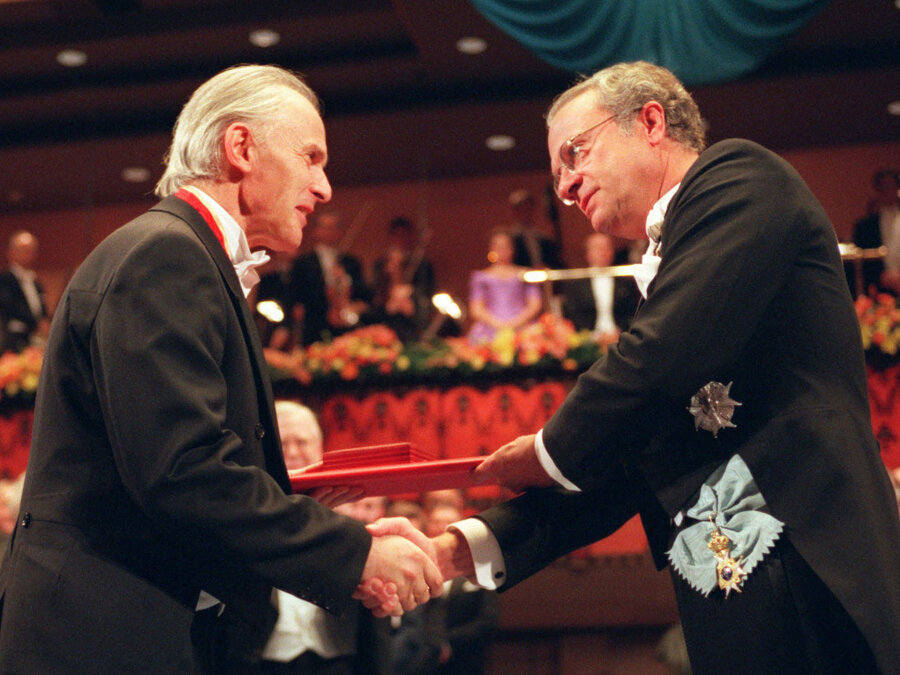
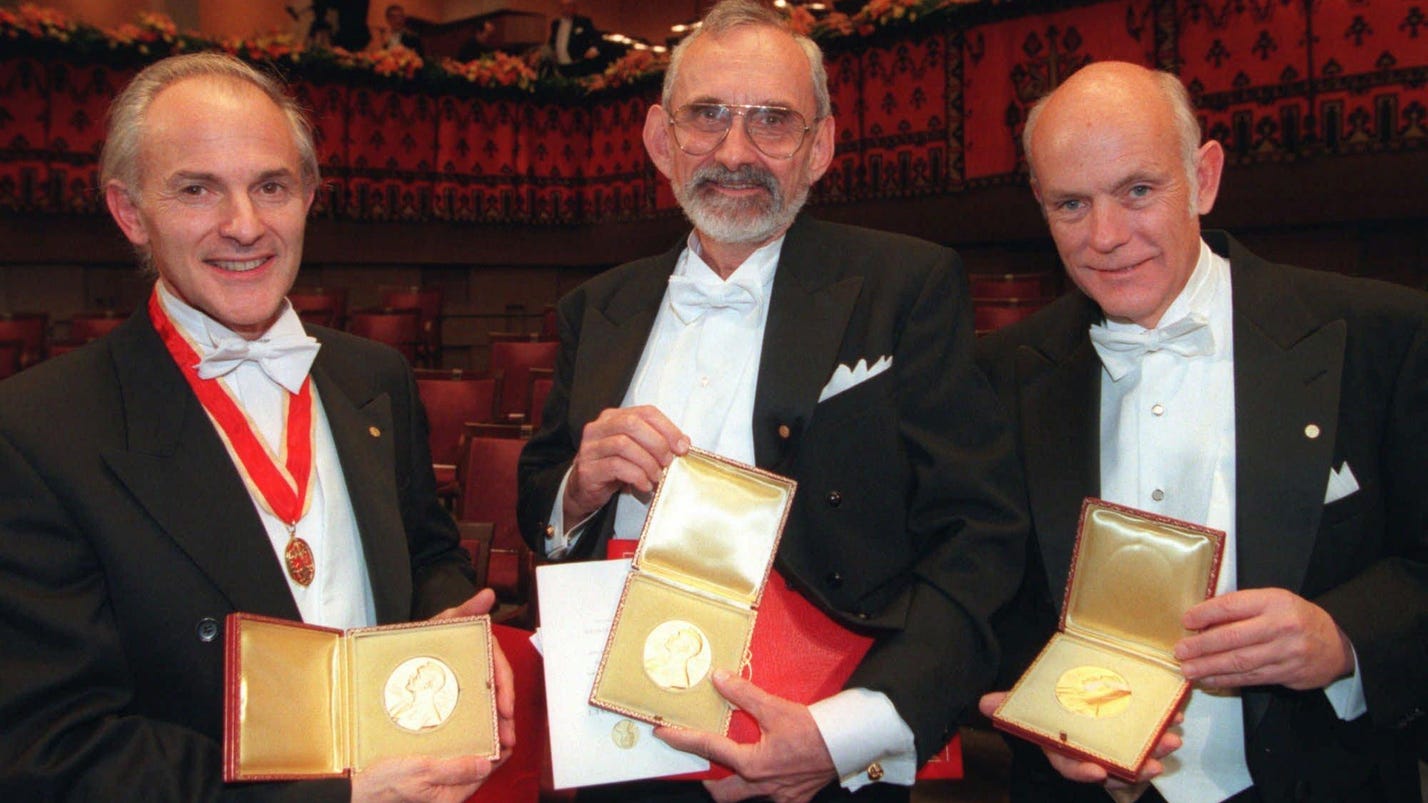
 Bertrand Arthur William Russell was born at Trelleck on 18th May, 1872. His parents were Viscount Amberley and Katherine, daughter of 2nd Baron Stanley of Alderley. At the age of three he was left an orphan. His father had wished him to be brought up as an agnostic; to avoid this he was made a ward of Court, and brought up by his grandmother. Instead of being sent to school he was taught by governesses and tutors, and thus acquired a perfect knowledge of French and German. In 1890 he went into residence at Trinity College, Cambridge, and after being a very high Wrangler and obtaining a First Class with distinction in philosophy he was elected a fellow of his college in 1895. But he had already left Cambridge in the summer of 1894 and for some months was attaché at the British embassy at Paris.