Few Christians realize the extent to which the evolutionary world view conflicts with the Biblical world view. While many attempt to keep a foot in each camp, acknowledging Christ as Savior yet holding evolution to be a fact of history, Christianity and evolution cannot both be true. Evolution is, at its very essence, an atheistic explanation of the world around us. Not all adherents of evolution are atheists, but certainly the leading proponents of evolution recognize that the concept leaves no room for the workings of God in nature.
Consider the following oft-repeated quote from Sir Julian Huxley, who, until his recent death, was perhaps the world’s leading spokesperson for evolution and who, from his position as head of UNESCO at the United Nations, did much to unite the world under an evolutionary, humanistic banner.
Darwin pointed out that no supernatural designer was needed; since natural selection could account for any known form of life, there was no room for a supernatural agency in its evolution … we can dismiss entirely all ideas of a supernatural overriding mind being responsible for the evolutionary process.[1]
On the other hand, Scripture, in many places and in many ways, identifies God as Creator, and claims that His creation was an act of forethought, of planning, of design. Supernatural processes were used to accomplish this design, not just natural processes. “The heavens declare the glory of God, and the firmament showeth His handiwork” (Psalm 19:1). “Thou art worthy, O Lord, to receive glory and honor and power; for thou hast created all things, and for thy pleasure they are and were created” (Revelation 4:11).
These two concepts, supernatural design versus natural processes operating by chance, represent the two views of origins, and are opposite. They cannot both be true. Nobel Prize-winning zoologist Jacques Monod said it this way:
” … it necessarily follows that chance alone is at the source of every innovation…. Pure chance, absolutely free but blind, at the very root of the stupendous edifice of evolution.”[2]
The recent edition of the authoritative Encyclopaedia Britannica informs us that:
Darwin did two things: He showed that evolution was a fact contradicting literal interpretations of Scriptural legends of creation and that its cause, natural selection, was automatic with no room for divine guidance or design.[3]
Many Christians believe in evolution, but they must come to realize that the evolutionary way of thinking, conflicting as it does with the facts of science, is a logical necessity, if, and only if, there has been no supernatural input in nature.
Furthermore, if evolution is true, the entire Christian faith is a sham. Dr. William Provine, Professor of History and Biology at Cornell University and author of many anti-creation articles, wrote recently that Darwin recognized:
… if natural selection explained adaptations, and evolution by descent were true, then the argument from design was dead and all that went with it, namely: 1) the existence of a personal God, 2) free will, 3) life after death, 4) immutable moral laws, and 5) ultimate meaning in life.[4]
But evolution is not a fact! Evolution is not even in a category of things that could ever be a scientific fact! It is a world view about the past — an historical reconstruction. It is a way to interpret scientific data, such as rocks, fossils, and complex living systems which exist in the present. It is a potential answer to the question, “What happened in the unobserved past to make the present get to be this way?”
As we have seen, this answer encompasses far more than merely a scientific proposal. As currently understood by leading evolutionists, it embraces strict naturalism, an anti-God philosophy, and results in a denial of the major doctrines of Scripture.
Darwin, in his writings, letters, and memoirs, promoted natural selection as a means by which the incredible design obvious in every living system could be derived through purely mechanistic, naturalistic processes. He devoted great energy to refuting the writings of William Paley, in which Paley reasoned that one can infer from the functional complexity of a system that intelligence was necessary in its formation. Just as a complex watch necessarily implies a watchmaker, so living systems, much more complex than a watch, demand that a Creator was involved in their origin. His position was eminently logical, but necessarily implied a Creator-God.
And this helps explain why Darwin and his modern disciples combat the concept of design with such vigor. If such a Creator exists, He has the authority to set the rules for His creation, and the authority to set the rules for breaking His rules. Accountability for our actions to a holy, Creator-God is not easily accepted by the natural man.
Jesus told Nicodemus, “And this is the condemnation, that light is come into the world, and men loved darkness rather than light, because their deeds were evil” (John 3:19).
If no supernatural agency has been at work throughout history, then creation is dead. But if evolutionists even allow a spark of supernatural design in history, then evolution is dead, for evolution necessarily relies on solely natural processes.
But design in living things is obvious. Even the single-celled organism is complex beyond the ability of scientists to understand, let alone duplicate. All of life is governed by the marvelously complex genetic code, which contains not only design and order, but what is equivalent to written information. This DNA code must not only be written correctly, the rest of the cell must be able to read it and follow its instructions, if the cell is to metabolize its food, carry out the myriad of enzyme reactions, and, especially, to reproduce. This code had to be present at the origin of life. How could it have written itself? And how could all the various organelles learn how to read and obey it?
Carl Sagan, the modern-day evolutionary spokesperson has admitted:
The information content of a simple cell has been established as around 1012 bits, comparable to about a hundred million pages of the Encyclopaedia Britannica.[5]
And yet he believes the code wrote itself, by purely random, natural processes, as non-living chemicals sprang to life!
Is this view really credible? Is it really scientific to ascribe to natural processes functions and products which clearly are the result of intelligent design? The Bible tells us that even “the invisible things of Him from the creation of the world are clearly seen, being understood by the things that are made, even His eternal power and Godhead; so that they are without excuse” (Romans 1:20).
A favorite example of obvious design has always been the human eye. With its many functioning parts — the lens, cornea, iris, etc., the controlling muscles, the sensitive rods and cones which translate light energy into chemical signals, the optic nerve which speeds these signals to a decoding center in the brain — and on and on. The eye was unquestionably designed by an incredibly intelligent Designer who had a complete grasp of optical physics.
Darwin was frustrated by the eye’s complexity, even though he knew only a fraction of what scientists have now discovered about the eye. In his book, Origin of Species, he included a section entitled, “Organs of Extreme Perfection and Complication,” in which he declared:
To suppose that the eye, with all its inimitable contrivances for adjusting the focus to different amounts of light, and for the correction of spherical and chromatic aberration, could have been formed by natural selection, seems, I freely confess, absurd in the highest degree.[6]
Yet in the next several pages, he discussed how he thought it might have happened.
One may wonder why Darwin was forced to adopt and defend what he admitted was an absurd conclusion. His reasoning is made plain in the following quote. Keep in mind that Darwin was raised in a nominally religious home, but whose extended family had a well-established anti-Christian perspective. Darwin, himself, studied for the ministry, as was common in those days for individuals of a scholarly bent, but eventually rejected the Christian faith.
In a May 22, 1860 letter to Professor Asa Gray of Harvard, propagator of evolution on the American continent, Darwin wrote, evidently to answer Gray’s advocacy of “theistic” evolution:
I had no intention to write atheistically. But I own that I cannot see as plainly as others do, and as I should wish to do, evidence of design and beneficence (or goodness) on all sides of us. There seems to me to be too much misery in the world. I cannot persuade myself that a beneficent and omnipotent God would have designedly created the ichneumonidae (parasites) with the express intention of their feeding within the living bodies of caterpillars, or that a cat should play with mice. Not believing this, I see no necessity in the belief that the eye was expressly designed [parenthesis added].
Notice that Darwin was not looking at the eye and concluding an evolutionary origin. He looked at the pain, suffering, misery, and death in the world, and concluded that there must not be a God as revealed in the Bible. If there was such a God, He wouldn’t have created the world as we encounter it.
You see, Darwin had a theological problem. He had rejected the Biblical doctrine of the entrance of death into the world as the result of sin. Adam and Eve had rebelled against the Creator’s authority, resulting in the distortion of God’s original, deathless, “very good” creation. Darwin rejected the doctrine that the Creator had, Himself, died to pay sin’s penalty, and had conquered death by rising from the dead, one day to abolish pain and suffering and misery and death forever.
Having rejected the God of the Bible and the possibility of supernatural input into the universe, all Darwin had to work with were natural processes. These led to admittedly absurd conclusions, but if there is no God, there remains no other choice.
The existence of suffering and death has led many to abandon the concept of God. But to one who accepts the Bible’s teachings on these foundational issues, there is no need to embrace solely natural processes as creator.— References —
1] Julian Huxley, in Issues in Evolution, Sol Tax, ed. (University of Chicago Press, 1960) p. 45.
2] Jacques Monod, Chance and Necessity (New York: Alfred A. Knopf, 1971), pp. 112-113.
[3] The New Encyclopaedia Britannica, 15th Edition, “The Theory of Evolution,” 1986, Vol. 18, p. 996.
[4] William Provine, in First Things, (“Responses to Phillip Johnson’s article, `Evolution as Dogma: The Establishment of Naturalism,’” October 1990), p. 23.
[5] Carl Sagan, The New Encyclopaedia Britannica, 15th Edition, “Life,” 1986, Vol. 22, p. 987.
[6] Charles Darwin, Origin of Species, 1859 (Sixth Edition, 1872) (New York, Mentor Books, 1958), p. 133.
* Dr. Morris is President of the Institute for Creation Research.
Carl Sagan, in full Carl Edward Sagan, (born November 9, 1934, Brooklyn, New York, U.S.—died December 20, 1996, Seattle, Washington), American astronomer and science writer. A popular and influential figure in the United States, he was controversial in scientific, political, and religious circles for his views on extraterrestrial intelligence, nuclear weapons, and religion. Sagan wrote the article “life” for the 1970 printing of the 14th edition of the Encyclopædia Britannica (1929–73).
Sagan attended the University of Chicago, where he earned a bachelor’s and a master’s degree in physics in 1955 and 1956, respectively, and a doctorate in astronomy and astrophysics in 1960. From 1960 to 1962 he was a fellow in astronomy at the University of California, Berkeley, and from 1962 to 1968 he worked at Harvard University and the Smithsonian Astrophysical Observatory. His early work focused on the physical conditions of the planets, especially the atmospheres of Venus and Jupiter. During that time he became interested in the possibility of lifebeyond Earth and the search for extraterrestrial intelligence (SETI), a controversial research field he did much to advance. For example, building on earlier work by American chemists Stanley Miller and Harold Urey, he demonstrated that amino acids and nucleic acids—the building blocks of life—could be produced by exposing a mixture of simple chemicals to ultraviolet radiation. Some scientists criticized Sagan’s work, arguing that it was unreasonable to use resources for SETI, a fantasy project that was almost certainly doomed to failure.
and you will hear what far smarter people than I have to say on this matter. I agree with them.
Harry Kroto
I have attempted to respond to all of Dr. Kroto’s friends arguments and I have posted my responses one per week for over a year now. Here are some of my earlier posts:
In the 1st video below in the 45th clip in this series are his words and my response is below them.
50 Renowned Academics Speaking About God (Part 1)
Another 50 Renowned Academics Speaking About God (Part 2
A Further 50 Renowned Academics Speaking About God (Part 3)
–
CARL SAGAN interview with Charlie Rose:
“…faith is belief in the absence of evidence. To believe in the absence of evidence, in my opinion, is a mistake. The idea is to hold belief until there is compelling evidence. If the Universe does not comply with our previous propositions, then we have to change…Religion deals with history poetry, great literature, ethics, morals, compassion…where religion gets into trouble is when it pretends to know something about science,”
______________ George Harrison Swears & Insults Paul and Yoko Lucy in the Sky with Diamonds- The Beatles The Beatles: I have dedicated several posts to this series on the Beatles and I don’t know when this series will end because Francis Schaeffer spent a lot of time listening to the Beatles and talking […]
The Beatles in a press conference after their Return from the USA Uploaded on Nov 29, 2010 The Beatles in a press conference after their Return from the USA. The Beatles: I have dedicated several posts to this series on the Beatles and I don’t know when this series will end because Francis […]
__________________ Beatles 1966 Last interview I have dedicated several posts to this series on the Beatles and I don’t know when this series will end because Francis Schaeffer spent a lot of time listening to the Beatles and talking and writing about them and their impact on the culture of the 1960’s. In this […]
_______________ The Beatles documentary || A Long and Winding Road || Episode 5 (This video discusses Stg. Pepper’s creation I have dedicated several posts to this series on the Beatles and I don’t know when this series will end because Francis Schaeffer spent a lot of time listening to the Beatles and talking and writing about […]
_______________ Francis Schaeffer pictured below: _____________________ I have included the 27 minute episode THE AGE OF NONREASON by Francis Schaeffer. In that video Schaeffer noted, ” Sergeant Pepper’s Lonely Hearts Club Band…for a time it became the rallying cry for young people throughout the world. It expressed the essence of their lives, thoughts and their feelings.” How Should […]
Crimes and Misdemeanors: A Discussion: Part 1 ___________________________________ Today I will answer the simple question: IS IT POSSIBLE TO BE AN OPTIMISTIC SECULAR HUMANIST THAT DOES NOT BELIEVE IN GOD OR AN AFTERLIFE? This question has been around for a long time and you can go back to the 19th century and read this same […]
____________________________________ Francis Schaeffer pictured below: __________ Francis Schaeffer has written extensively on art and culture spanning the last 2000years and here are some posts I have done on this subject before : Francis Schaeffer’s “How should we then live?” Video and outline of episode 10 “Final Choices” , episode 9 “The Age of Personal Peace and Affluence”, episode 8 […]
Love and Death [Woody Allen] – What if there is no God? [PL] ___________ _______________ How Should We then Live Episode 7 small (Age of Nonreason) #02 How Should We Then Live? (Promo Clip) Dr. Francis Schaeffer 10 Worldview and Truth Two Minute Warning: How Then Should We Live?: Francis Schaeffer at 100 Francis Schaeffer […]
___________________________________ Francis Schaeffer pictured below: ____________________________ Francis Schaeffer “BASIS FOR HUMAN DIGNITY” Whatever…HTTHR Dr. Francis schaeffer – The flow of Materialism(from Part 4 of Whatever happened to human race?) Dr. Francis Schaeffer – The Biblical flow of Truth & History (intro) Francis Schaeffer – The Biblical Flow of History & Truth (1) Dr. Francis Schaeffer […]
FREUD’S LAST SESSION Movie Review **SPOILER ALERT**
Lewis: We’ve been talking this long and this is the first mention of sex.
Freud: Your definition is too narrow. I apply the term “sexual” to all interactions that bring pleasurable feelings. Genital contact, an infant sucking at its mother’s breast, my cigar. Sexuality is the font of all happiness.
Lewis: There’s much more to happiness than that. Sex is only one of many God given pleasures and not the most lasting.
Freud: Extraordinary. It took you less than a minute to bring God into sex. Still, despite church propaganda, we have made great progress overcoming our repressions.
Lewis: Progress? We’ve gone from sex being the subject never spoken of to our being unable to talk about anything else. It’s as if we invented it.
Was Freud right that Sex is the key to everything. King Solomon put that theory to the test in ECCLESIASTES:
COMMENTS BELOW BY FRANCIS SCHAEFFER:
If one would flee to alcohol, then surely one may choose sexual pursuits to flee to. Solomon looks in this area too.
Ecclesiastes 7:25-28
25 I directed my mind to know, to investigate and to seek wisdom and an explanation, and to know the evil of folly and the foolishness of madness.26 And I discovered more bitter than death the woman whose heart is snares and nets, whose hands are chains. One who is pleasing to God will escape from her, but the sinner will be captured by her.
27 “Behold, I have discovered this,” says the Preacher, “adding one thing to another to find an explanation,28 I have looked for other answers but have found none. I found one man in a thousand that I could respect, but not one woman. (Good News Translation on verse 28)
One can understand both Solomon’s expertness in this field and his bitterness.
I Kings 11:1-3 (New American Standard Bible)
11 Now King Solomon loved many foreign women along with the daughter of Pharaoh: Moabite, Ammonite, Edomite, Sidonian, and Hittite women,2 from the nations concerning which the Lord had said to the sons of Israel, “You shall not associate with them, nor shall they associate with you, for they will surely turn your heart away after their gods.” Solomon held fast to these in love.3 He had seven hundred wives, princesses, and three hundred concubines, and his wives turned his heart away.
An expert but also the reason for his bitterness. Certainly there have been many men over the centuries who have daydreamed of Solomon’s wealth in this area [of women], but at the end it was sorry, not only sorry but nothing and less than nothing. The simple fact is that one can not know woman in the real sense by pursuing 1000 women. It is not possible. Woman is not found this way. All that is left in this setting if one were to pursue the meaning of life in this direction is this most bitter word found in Ecclesiastes 7:28, “I have looked for other answers but have found none. I found one man in a thousand that I could respect, but not one woman.” (Good News Translation on verse 28) He was searching in the wrong way. He was searching for the answer to life in the limited circle of that which is beautiful in itself but not an answer finally in sexual life. More than that he finally tried to find it in variety and he didn’t even touch one woman at the end.
Playboy magazine founder Hugh Hefner poses for a portrait at his Playboy mansion in Los Angeles, California, July 27, 2010. | (Photo: REUTERS/Lucy Nicholson)
Blondie grew up with punk, which began in the mid‐70’s as a loose movement of bands wanting to recycle the raw, high‐powered energy of 50’s and early 60’s rock‐and‐roll. They were reacting against the overproduced, too‐slick sound of most pop music — the mindless, repetitive rhythms of disco and the bland creaminess of studio‐created pop, both of which monopolized the airwaves.
Bands like the Ramones toured England, where their punk attitude — they behaved onstage like truculent street toughs — was adopted by English pub bands as a vehicle for the political outrage expressed by the theater’s “Angry Young Men” two decades earlier. Punk music was minimalist, some said chaotic; its lyrics emphasized alternating currents of nihilism and sentimentality. When more musicianly and cerebral groups, such as Talking Heads, came onto the scene, English music writers invented the umbrella term “new wave” to encompass all late‐70’s groups, however disparate, which were aiming to restore gut feeling to rock‐and‐roll.
—
Lyrics
Color me your color, baby
Color me your car
Color me your color, darling
I know who you are
Come up off your color chart
I know where you’re comin’ from
Call me (call me) on the line
Call me, call me any, anytime
Call me (call me) my love
You can call me any day or night
Call me
Cover me with kisses, baby
Cover me with love
Roll me in designer sheets
I’ll never get enough
Emotions come, I don’t know why
Cover up love’s alibi
Call me (call me) on the line
Call me, call me any, anytime
Call me (call me) oh love
When you’re ready we can share the wine
Call me
Oh, oh, oh, oh, oh, he speaks the languages of love
Oh, oh, oh, oh, oh, amore, chiamami, chiamami
Oh, oh, oh, oh, oh, appelle-moi mon cherie, appelle-moi
Anytime, anyplace, anywhere, any way
Anytime, anyplace, anywhere, any day-ay
Call me (call me) my love
Call me, call me any, anytime
Call me (call me) for a ride
Call me, call me for some overtime
Call me (call me) my love
Call me, call me in a sweet design
Call me (call me), call me for your lover’s lover’s alibi
Call me (call me) on the line
Call me, call me any, anytime
Call me (call me)
Oh, call me, oh, oh, ah
Call me (call me) my love
Call me, call me any, anytime
“Call Me” is a song by the American new wave band Blondie and the theme to the 1980 film American Gigolo. Released in the US in early 1980 as a single, “Call Me” was No. 1 for six consecutive weeks on the Billboard Hot 100 chart, where it became the band’s biggest single and second No. 1.[1] It also hit No. 1 in the UK and Canada, where it became their fourth and second chart-topper, respectively. In the year-end chart of 1980, it was Billboard‘s No. 1 single and RPM magazine’s No. 3 in Canada.[4][5]
“Call Me” was the main theme song of the 1980 film American Gigolo. It is played in the key of D minor. Italian disco producer Giorgio Moroder originally asked Stevie Nicks from Fleetwood Mac to help compose and perform a song for the soundtrack, but she declined as a recently signed contract with Modern Records prevented her from working with Moroder. It was at this time that Moroder turned to Debbie Harry and Blondie. Moroder presented Harry with a rough instrumental track called “Man Machine”. Harry was asked to write the lyrics and melody, a process that Harry states took a mere few hours.[6] The lyrics were written from the perspective of the main character in the film, a male prostitute.[7] Harry said the lyrics were inspired by her visual impressions from watching the film and that “When I was writing it, I pictured the opening scene, driving on the coast of California.”[8] The completed song was then recorded by the band, with Moroder producing. The bridge of the original English-language version also includes Harry singing “Call me, my darling” in Italian (“Amore, chiamami”) (Love, call me) and in French (“Appelle-moi, mon chéri”) (Call me, my darling).
In the US, the song was released by three record companies: the longest version (at 8:06) on the soundtrack album by Polydor, the 7″ and 12″ on Blondie’s label Chrysalis, and a Spanish-language 12″ version, with lyrics by Buddy and Mary McCluskey, on the disco label Salsoul Records. The Spanish version, titled “Llámame”, was meant for release in Mexico and some South American countries. This version was also released in the US and the UK and had its CD debut on Chrysalis/EMI‘s rarities compilation Blonde and Beyond (1993). In 1988, a remixed version by Ben Liebrand taken from the Blondie remix album Once More into the Bleachwas issued as a single in the UK. In 2001, the “original long version” appeared as a bonus track on the Autoamerican album re-issue.
Harry recorded an abbreviated version of the song that was backed by the Muppet Band for her guest appearance on The Muppet Show in August 1980. It was first broadcast in January 1981.
The single was released in the United States in February 1980. It peaked at No. 1 and remained there for six consecutive weeks until it was knocked off by Lipps, Inc.‘s worldwide smash hit “Funkytown” and was certified Gold (for one million copies sold) by the RIAA. It also spent four weeks at No. 2 on the US dance chart. The single was also No. 1 on Billboard magazine’s 1980 year-end chart. The song lists at No. 57 on Billboard’s All Time Top 100.[9] It was released in the UK two months later, where it became Blondie’s fourth UK No. 1 single in little over a year. The song was also played on a British Telecom advert in the 1980s. 25 years after its original release, “Call Me” was ranked at No. 283 on the list of Rolling Stone’s 500 Greatest Songs of All Time. In 1981, the Village Voice ranked “Call Me” as the third-best song of the year 1980 on its annual year-end critics’ poll, Pazz & Jop.[10]
In 1981, the song was nominated for a Grammy Award for Best Rock Performance by a Duo or Group with Vocal, as well as for a Golden Globe for Best Original Song.
Blondie has now been a band for over 40 years. The punk-inspired New Wave group came together in New York City in 1974, founded by singer Debbie Harry and guitarist Chris Stein, and has since become known around the world for their music and, importantly, their style. The band will embark on a lengthy North American tour this spring, which kicks off June 27 in Manhattan’s Madison Square Garden. Stein also recently unveiled an exhibition of his photographs at Paul Smith in Los Angeles in celebration of the band’s 40th anniversary (the exhibition runs until May 24). Harry and Stein, who are just as cool as ever, recounted some of Blondie’s most memorable moments for Esquire during an interview at the Hollywood Roosevelt hotel in LA, reminding us just how impressive the band’s career has been.
1. Blondie’s First Ever Show
CHRIS STEIN: “Somehow I have a photograph of the first show. It was at one of those places on Third Avenue. It was right near where they shot Taxi Driver. My memory is enhanced by the photograph. For some weird reason I would give my camera to people in the audience so I have one frame of us playing, which was that first show with Gary and Clem.”
DEBBIE HARRY: “Back then I was always nervous. We were winging it a lot. We didn’t know what was going to happen, whether it was crap. It was all new and it was pretty exciting so we would just go for it.”
CS: “It took me 40 years to get rid of the nerves.”
2. First Radio Hit
CS: “I first heard one of our songs on the radio on 17th Street. It was one of our first singles.”
DH: “One time that really stuck out in my mind was when somebody went by in a car and ‘Rip Her to Shreds’ was on. I didn’t know exactly what it was at first but I really liked it. And then I realized it was ‘Rip Her to Shreds.’ I thought, ‘Well, gee, that sounds really good.'”
Related Story
Blondie Photos: The New Wave Years
Chris Stein/Negative, Rizzoli New York
3. How Their Best Songs Came About
CS: “When I first started ‘Maria’ I knew that was going to be successful, even though we had been on this long hiatus. I really thought ‘Tide Is High’ was going to be a hit. We had already had hits and been in that position, but I knew with that one before we even recorded it that it had the potential. I like to think I’m inspired all the time.”
DH: “I can tell over time in a period of years that there have been moments where something will be so synchronistic. You’re working with other people and all of a sudden it all just comes together. That’s a very exciting moment. There have been several. One was ‘Heart of Glass.’ It was a moment like that initially. Also ‘X Offender’ happened like that. It’s kind of amazing and everybody knows it when it’s happening. ‘Heart of Glass’ came from Chris noodling with the guitar. We’d be sitting around and he’d be noodling with the guitar. I remember him repeating that phrase.”
CS: “There’s one bit that’s on the demo version that didn’t make it into the final version. We did a lot of [the song] in an apartment on First Avenue with a little multitrack tape recorder.”
4. Their Beatlemania Moment
CS: “It was all very fast. It was quick and a lot of things happened so there wasn’t one moment [where we felt successful]. When ‘Heart of Glass’ was No. 1 in the U.S. that was a big deal. Then we did this in-store appearance in London and all these kids showed up and traffic was stopped. It was incredible. It was a total Beatlemania thing.”
DH: “One of the early times that happened was a CBGB show. We were just about to go out on the road and they oversold the club. It was so crowded. You couldn’t walk from one end to the other. If you got in there, you stood there. Somebody called the fire department and they came. We were playing and all of sudden we saw these helmets trying to wade through this crowd. It was pretty funny.”
CS: “I always thought it was Rod Swenson [who called the fire department] because he was filming and it just made for good footage. I’ve always suspected that.”
Debbie Harry with David Bowie.
Chris Stein/Negative, Rizzoli New York
“Bowie was very charmed by the New Wave stuff.”
5. Hanging Out with David Bowie and Iggy Pop
CS: “It happens all the time that you meet your idols. It still goes on. I just met RuPaul and that was totally exciting. But when we did the Idiot Tour [in 1977] with Iggy [Pop] and David Bowie that was a real big deal for us. We had been playing around and we heard that they wanted us to open for them on the tour. It was really exciting. I remember we did a show in the city at Max’s and we got into this really shitty RV and drove to Canada. I think it was Montreal. Everybody was very tired and we staggered out into the hall and the two of them were just waiting for us in the hallway. It was mind-boggling.”
DH: “[Bowie] was in his more natural sort of period. He had his natural hair color. He was very low-key.”
CS: “He was very charmed by the New Wave stuff. I remember he talked about Tom Verlaine’s hairdo a lot.”
DH: “They were really interested in having a dynamic show. [Bowie] gave me advice on working the stage. I moved around but it was about delivery as an actor. Inevitably you have to take the advice. If he’d said ‘Get out of town’ I probably would have done that too.”
6. Traveling Around the Globe
DH: “Initially Bangkok was the coolest place we went. It was very primitive. Where we were staying there were open sewers and lepers on the street begging and stuff like that. The curfew from the Vietnam War was still in place. The atmosphere was much, much different then.”
CS: “We played there on New Year’s Eve in 1977, into 1978, and they lifted the curfew and everyone went crazy. That was exciting. We played in the Ambassador Hotel.”
DH: “That was also a very interesting experience because they had a magnificent PA and soundboard but they had never set it up before. They had hundreds of guys and they didn’t have any of the cables marked for their compatible ports where they were supposed to go. So every time they would run a cable they would have to go through every test to see where it went. It took them like three days to set up the PA. It sounded okay.”
CS: “It sounded fine. They had a gigantic flower arrangement that said ‘Blondie’ in the font from the first record, too. We did several more shows there later.”
7. Near-Death Experiences
CS: “There was this great moment where we were in the U.K. city of Dunstable and a huge bunch of skinheads jumped up onstage. They were doing this Dawn of the Dead dance. I remember physically dragging [Debbie] offstage while they were there. I don’t know how scary it was, but it was incredible and did stop the show.”
DH: “One time that was scary was in Belgium and they had this old system of electricity. It didn’t really have a ground so we couldn’t touch anything. You couldn’t touch the microphone stand. Everything was live. It was very funny because there’s only two places in the world where this kind of system existed and one was in Belgium and one was in Thailand. We had been through both. You don’t touch anything.”
CS: “There were a couple people who had been electrocuted. Most famously the guy from a band called Stone the Crows, who had been electrocuted dead onstage.”
“When all the guys are beating the shit out of each other, we play better.”
8. Best Performances
DH: “I liked that one we did recently where we got the iPhones.”
CS: “iTunes Festival. That was a good one. I liked Riot Fest in Chicago. Wherever there’s a mosh pit. We don’t usually get mosh pits, but occasionally, when we do, it’s inspiring. When all the guys are beating the shit out of each other, we play better. When we first started there was no rock dance in New York at all. It just didn’t exist.”
DH: “That was one of our goals: to bring dancing back into music.”
CS: “Going to the U.K. and doing our very first show there, which was a warmup show in Bristol. Everybody was going crazy physically. That was a great moment. There’s a tribal element in concerts, even now, even if you go to see Skrillex. There’s a tribal element going on there.”
Chris Stein/Negative, Rizzoli New York
9. How They Invented a Look
CS: “The boys always embraced the British mod sensibility. We liked that, even more than the punk, ripped-up aesthetic. We never went much into the torn shirts and stuff. I don’t know how calculated it was—it was just what we liked doing. We certainly never had a stylist.”
DH: “It was what was available to us. If everybody could agree on it and we felt like it was cool and it was affordable and we could lay our hands on it, that was pretty much what we did. It was a real amalgamation of some leather jackets, tee-shirts, and the peg-leg pants. Somebody showed up with this bright blue suit once and said, ‘Oh yeah, they’re up there on 14th Street for $5. You’ve got to go up there. They have all different colors.’ That kind of thing would happen.”
CS: “When we first came to Melrose [in Los Angeles] there were about three stores.”
DH: “There was a junk store way down on Sunset that was good. I found my motorcycle jacket out here on Melrose. Up until then all the motorcycle jackets were so big and so heavy so it was a child’s motorcycle jacket.”
CS: “It was a couple hundred bucks! It was expensive. I remember debating with you because it was so expensive. There were no designer motorcycle jackets at the time.”
“We were part of the great tradition of rock and roll.”
10. Rock and Roll Hall of Fame Induction
DH: “I couldn’t believe that it was true. I had always been scoffing the whole thing. I thought ‘Who cares about that?’ But I think it made a lot of difference for us becoming credible in a lot of people’s minds. We were credible to a small degree, but I think it launched us into being considered a real part of the shift in music. When music took a directional change and that put us there and we became identified with that and more legitimate. For a long time that music was considered a joke and not to be taken seriously, but in a way we were part of the great tradition of rock and roll in that the best aspects of it have always been counterculture.”
EMILY ZEMLEREmily Zemler is a freelance writer based in London.
Francis Schaeffer noted:
I have lots of young people and older ones come to us from the ends of the earth. And as they come to us, they have gone to the end of this logically and they are not living in a romantic setting. They realize what the situation is. They can’t find any meaning to life. It’s the meaning to the black poetry. It’s the meaning of the black plays. It’s the meaning of all this. It’s the meaning of the words “punk rock.”
–
“They are the natural outcome of a change from a Christian World View to a Humanistic one…
The result is a relativistic value system. A lack of a final meaning to life — that’s first. Why does human life have any value at all, if that is all that reality is? Not only are you going to die individually, but the whole human race is going to die, someday. It may not take the falling of the atom bombs, but someday the world will grow too hot, too cold. That’s what we are told on this other final reality, and someday all you people not only will be individually dead, but the whole conscious life on this world will be dead, and nobody will see the birds fly. And there’s no meaning to life.
As you know, I don’t speak academically, shut off in some scholastic cubicle, as it were. I have lots of young people and older ones come to us from the ends of the earth. And as they come to us, they have gone to the end of this logically and they are not living in a romantic setting. They realize what the situation is. They can’t find any meaning to life. It’s the meaning to the black poetry. It’s the meaning of the black plays. It’s the meaning of all this. It’s the meaning of the words “punk rock.” And I must say, that on the basis of what they are being taught in school, that the final reality is only this material thing, they are not wrong. They’re right! On this other basis there is no meaning to life and not only is there no meaning to life, but there is no value system that is fixed, and we find that the law is based then only on a relativistic basis and that law becomes purely arbitrary.
—
OUTLINE OF ECCLESIATES BY SCHAEFFER
_______
William Lane Craig on Man’s predicament if God doesn’t exist
Read Waiting for Godot by Samuel Beckett. During this entire play two men carry on trivial conversation while waiting for a third man to arrive, who never does. Our lives are like that, Beckett is saying; we just kill time waiting—for what, we don’t know.
Thus, if there is no God, then life itself becomes meaningless. Man and the universe are without ultimate significance.
Francis Schaeffer looks at Nihilism of Solomon and the causes of it!!!
Notes on Ecclesiastes by Francis Schaeffer
Solomon is the author of Ecclesiastes and he is truly an universal man like Leonardo da Vinci.
Two men of the Renaissance stand above all others –Michelangelo and Leonardo da Vinci and it is in them that one can perhaps grasp a view of the ultimate conclusion of humanism for man. Michelangelo was unequaled as a sculptor in the Renaissance and arguably no one has ever matched his talents.
The other giant of the Renaissance period was Leonardo da Vinci – the perfect Renaissance Man, the man who could do almost anything and does it better than most anyone else. As an inventor, an engineer, an anatomist, an architect, an artist, a chemist, a mathematician, he was almost without equal. It was perhaps his mathematics that lead da Vinci to come to his understanding of the ultimate meaning of Humanism. Leonardo is generally accepted as the first modern mathematician. He not only knew mathematics abstractly but applied it in his Notebooks to all manner of engineering problems. He was one of the unique geniuses of history, and in his brilliance he perceived that beginning humanistically with mathematics one only had particulars. He understood that man beginning from himself would never be able to come to meaning on the basis of mathematics. And he knew that having only individual things, particulars, one never could come to universals or meaning and thus one only ends with mechanics. In this he saw ahead to where our generation has come: everything, including man, is the machine.
Leonardo da Vinci compares well to Solomon and they both were universal men searching for the meaning in life. Solomon was searching for a meaning in the midst of the details of life.His struggle was to find the meaning of life. Not just plans in life.Anybody can find plans in life. A child can fill up his time with plans of building tomorrow’s sand castle when today’s has been washed away. There is a difference between finding plans in life and purpose in life. Humanism since the Renaissance and onward has never found it and it has never found it since. Modern man has not found it and it has always got worse and darker in a very real way.
We have here the declaration of Solomon’s universality:
1 Kings 4:30-34
English Standard Version (ESV)
30 so that Solomon’s wisdom surpassed the wisdom of all the people of the east and all the wisdom of Egypt.31 For he was wiser than all other men, wiser than Ethan the Ezrahite, and Heman, Calcol, and Darda, the sons of Mahol, and his fame was in all the surrounding nations.32 He also spoke 3,000 proverbs, and his songs were 1,005.33 He spoke of trees, from the cedar that is in Lebanon to the hyssop that grows out of the wall. He spoke also of beasts, and of birds, and of reptiles, and of fish.34 And people of all nations came to hear the wisdom of Solomon, and from all the kings of the earth, who had heard of his wisdom.
_________________________
Here is the universal man and his genius. Solomon is the universal man with a empire at his disposal. Solomon had it all.
Ecclesiastes 1:3
English Standard Version (ESV)
3 What does man gain by all the toil at which he toils under the sun?
Schaeffer noted that Solomon took a look at the meaning of life on the basis of human life standing alone between birth and death “under the sun.” This phrase UNDER THE SUN appears over and over in Ecclesiastes.
(Added by me:The Christian Scholar Ravi Zacharias noted, “The key to understanding the Book of Ecclesiastes is the term UNDER THE SUN — What that literally means is you lock God out of a closed system and you are left with only this world of Time plus Chance plus matter.” )
Man is caught in the cycle
Ecclesiastes 1:1-7
English Standard Version (ESV)
All Is Vanity
1 The words of the Preacher, the son of David, king in Jerusalem.
2 Vanity of vanities, says the Preacher, vanity of vanities! All is vanity. 3 What does man gain by all the toil at which he toils under the sun? 4 A generation goes, and a generation comes, but the earth remains forever. 5 The sun rises, and the sun goes down, and hastens to the place where it rises. 6 The wind blows to the south and goes around to the north; around and around goes the wind, and on its circuits the wind returns. 7 All streams run to the sea, but the sea is not full; to the place where the streams flow, there they flow again.
8 All things are full of weariness; a man cannot utter it; the eye is not satisfied with seeing, nor the ear filled with hearing. 9 What has been is what will be, and what has been done is what will be done, and there is nothing new under the sun. 10 Is there a thing of which it is said, “See, this is new”? It has been already in the ages before us.
_____________
Solomon is showing a high degree of comprehension of evaporation and the results of it. Seeing also in reality nothing changes. There is change but always in a set framework and that is cycle. You can relate this to the concepts of modern man. Ecclesiastes is the only pessimistic book in the Bible and that is because of the place where Solomon limits himself. He limits himself to the question of human life, life under the sun between birth and death and the answers this would give.
Ecclesiastes 1:4
English Standard Version (ESV)
4 A generation goes, and a generation comes, but the earth remains forever.
___________________
Ecclesiastes 4:16
English Standard Version (ESV)
16 There was no end of all the people, all of whom he led. Yet those who come later will not rejoice in him. Surely this also is vanity and a striving after wind.
__________________________
In verses 1:4 and 4:16 Solomon places man in the cycle. He doesn’t place man outside of the cycle. Man doesn’t escape the cycle. Man is only cycle. Birth and death and youth and old age. With this in mind Solomon makes this statement.
Ecclesiastes 6:12
12 For who knows what is good for a man during his lifetime, during the few years of his futile life? He will spend them like a shadow. For who can tell a man what will be after him under the sun?
____________________
There is no doubt in my mind that Solomon had the same experience in his life that I had as a younger man. I remember standing by the sea and the moon arose and it was copper and beauty. Then the moon did not look like a flat dish but a globe or a sphere since it was close to the horizon. One could feel the global shape of the earth too. Then it occurred to me that I could contemplate the interplay of the spheres and I was exalted because I thought I can look upon them with all their power, might, and size, but they could contempt nothing and I felt as man as God. Then came upon me a horror of great darkness because it suddenly occurred to me that although I could contemplate them and they could contemplate nothing yet they would continue to turn in ongoing cycles when I saw no more forever and I was crushed.
THIS IS SOLOMON’S FEELING TOO. The universal man, Solomon, beyond our intelligence with an empire at his disposal with the opportunity of observation so he could recite these words here in Ecclesiastes 6:12, “For who knows what is good for a man during his lifetime, during the few years of his futile life? He will spend them like a shadow. For who can tell a man what will be after him under the sun?”
Lack of Satisfaction in life
In Ecclesiastes 1:8 he drives this home when he states, “All things are wearisome; Man is not able to tell it. The eye is not satisfied with seeing, Nor is the ear filled with hearing.” Solomon is stating here the fact that there is no final satisfaction because you don’t get to the end of the thing. THERE IS NO FINAL SATISFACTION. This is related to Leonardo da Vinci’s similar search for universals and then meaning in life.
In Ecclesiastes 5:11 Solomon again pursues this theme, “When good things increase, those who consume them increase. So what is the advantage to their owners except to look on?” Doesn’t that sound modern? It is as modern as this evening. Solomon here is stating the fact there is no reaching completion in anything and this is the reason there is no final satisfaction. There is simply no place to stop. It is impossible when laying up wealth for oneself when to stop. It is impossible to have the satisfaction of completion.
Pursuing Learning
Now let us look down the details of his searching.
In Ecclesiastes 1: 13a we have the details of the universal man’s procedure. “And I set my mind to seek and explore by wisdom concerning all that has been done under heaven.”
So like any sensible man the instrument that is used is INTELLECT, and RAITIONALITY, and LOGIC. It is to be noted that even men who despise these in their theories begin and use them or they could not speak. There is no other way to begin except in the way they which man is and that is rational and intellectual with movements of that is logical within him. As a Christian I must say gently in passing that is the way God made him.
So we find first of all Solomon turned to WISDOM and logic. Wisdom is not to be confused with knowledge. A man may have great knowledge and no wisdom. Wisdom is the use of rationality and logic. A man can be very wise and have limited knowledge. Here he turns to wisdom in all that implies and the total rationality of man.
Works of Men done Under the Sun
After wisdom Solomon comes to the great WORKS of men. Ecclesiastes 1:14, “I have seen all the works which have been done under the sun, and behold, all is [p]vanity and striving after wind.” Solomon is the man with an empire at this disposal that speaks. This is the man who has the copper refineries in Ezion-geber. This is the man who made the stables across his empire. This is the man who built the temple in Jerusalem. This is the man who stands on the world trade routes. He is not a provincial. He knew what was happening on the Phonetician coast and he knew what was happening in Egypt. There is no doubt he already knew something of building. This is Solomon and he pursues the greatness of his own construction and his conclusion is VANITY AND VEXATION OF SPIRIT.
Ecclesiastes 2:18-20
18 Thus I hated all the fruit of my labor for which I had labored under the sun, for I must leave it to the man who will come after me.19 And who knows whether he will be a wise man or a fool? Yet he will have control over all the fruit of my labor for which I have labored by acting wisely under the sun. This too is vanity.20 Therefore I completely despaired of all the fruit of my labor for which I had labored under the sun.
He looked at the works of his hands, great and multiplied by his wealth and his position and he shrugged his shoulders.
Ecclesiastes 2:22-23
22 For what does a man get in all his labor and in his striving with which he labors under the sun?23 Because all his days his task is painful and grievous; even at night his mind does not rest. This too is vanity.
Man can not rest and yet he is never done and yet the things which he builds will out live him. If one wants an ironical three phrases these are they. There is a Dutch saying, “The tailor makes many suits but one day he will make a suit that will outlast the tailor.”
God has put eternity in our hearts but we can not know the beginning or the end of the thing from a vantage point of UNDER THE SUN
Ecclesiastes 1:16-18
16 I said to myself, “Behold, I have magnified and increased wisdom more than all who were over Jerusalem before me; and my mind has observed a wealth of wisdom and knowledge.”17 And I set my mind to know wisdom and to know madness and folly; I realized that this also is striving after wind.18 Because in much wisdom there is much grief, and increasing knowledge results in increasing pain.
Solomon points out that you can not know the beginnings or what follows:
Ecclesiastes 3:11
11 He has made everything appropriate in its time. He has also set eternity in their heart, yet so that man will not find out the work which God has done from the beginning even to the end.
Ecclesiastes 1:11
11 There is no remembrance of earlier things; And also of the later things which will occur, There will be for them no remembrance among those who will come later still.
Ecclesiastes 2:16
16 For there is no lasting remembrance of the wise man as with the fool, inasmuch as in the coming days all will be forgotten. And how the wise man and the fool alike die!
You bring together here the factor of the beginning and you can’t know what immediately follows after your death and of course you can’t know the final ends. What do you do and the answer is to get drunk and this was not thought of in the RUBAIYAT OF OMAR KAHAYYAM:
Ecclesiastes 2:1-3
I said to myself, “Come now, I will test you with pleasure. So enjoy yourself.” And behold, it too was futility.2 I said of laughter, “It is madness,” and of pleasure, “What does it accomplish?”3 I explored with my mind how to stimulate my body with wine while my mind was guiding me wisely, and how to take hold of folly, until I could see what good there is for the sons of men to do under heaven the few years of their lives.
You know, my Friends, with what a brave Carouse
I made a Second Marriage in my house;
Divorced old barren Reason from my Bed,
And took the Daughter of the Vine to Spouse.
from the Rubaiyat of Omar Khayyam (Translation by Edward Fitzgerald)
A perfectly good philosophy coming out of Islam, but Solomon is not the first man that thought of it nor the last. In light of what has been presented by Solomon is the solution just to get intoxicated and black the think out? So many people have taken to alcohol and the dope which so often follows in our day. This approach is incomplete, temporary and immature. Papa Hemingway can find the champagne of Paris sufficient for a time, but one he left his youth he never found it sufficient again. He had a lifetime spent looking back to Paris and that champagne and never finding it enough. It is no solution and Solomon says so too.
Ecclesiastes 2:4-11
4 I enlarged my works: I built houses for myself, I planted vineyards for myself;5 I made gardens and parks for myself and I planted in them all kinds of fruit trees;6 I made ponds of water for myself from which to irrigate a forest of growing trees.7 I bought male and female slaves and I had homeborn slaves. Also I possessed flocks and herds larger than all who preceded me in Jerusalem.8 Also, I collected for myself silver and gold and the treasure of kings and provinces. I provided for myself MALE AND FEMALE SINGERS AND THE PLEASURES OF MEN–MANY CONCUBINES.
9 Then I became great and increased more than all who preceded me in Jerusalem. My wisdom also stood by me.10 All that my eyes desired I did not refuse them. I did not withhold my heart from any pleasure, for my heart was pleased because of all my labor and this was my reward for all my labor.11 Thus I considered all my activities which my hands had done and the labor which I had exerted, and behold all was vanity and striving after wind and there was no profit under the sun.
He doesn’t mean there is no temporary profit but there is no real profit. Nothing that lasts. The walls crumble if they are as old as the Pyramids. You only see a shell of the Pyramids and not the glory that they were. This is what Solomon is saying. Look upon Solomon’s wonder and consider the Cedars of Lebanon which were not in his domain but at his disposal.
Ecclesiastes 6:2
2 a man to whom God has given riches and wealth and honor so that his soul lacks nothing of all that he desires; yet God has not empowered him to eat from them, for a foreigner enjoys them. This is vanity and a severe affliction.
Can someone stuff himself with food he can’t digest? Solomon came to this place of strife and confusion when he went on in his search for meaning.
Oppressed have no comforter
Ecclesiastes 4:1
Then I looked again at all the acts of oppression which were being done under the sun. And behold I saw the tears of the oppressed and that they had no one to comfort them; and on the side of their oppressors was power, but they had no one to comfort them.
Between birth and death power rules. Solomon looked over his kingdom and also around the world and proclaimed that right does not rule but power rules.
Ecclesiastes 7:14-15
14 In the day of prosperity be happy, but in the day of adversity consider—God has made the one as well as the other so that man will not discover anything that will be after him.
15 I have seen everything during my lifetime of futility; there is a righteous man who perishes in his righteousness and there is a wicked man who prolongs his life in his wickedness.
Ecclesiastes 8:14
14 There is futility which is done on the earth, that is, there are righteous men to whom it happens according to the deeds of the wicked. On the other hand, there are evil men to whom it happens according to the deeds of the righteous. I say that this too is futility.
We could say it in 20th century language, “The books are not balanced in this life.”
Pursuing Ladies
If one would flee to alcohol, then surely one may choose sexual pursuits to flee to. Solomon looks in this area too.
Ecclesiastes 7:25-28
25 I directed my mind to know, to investigate and to seek wisdom and an explanation, and to know the evil of folly and the foolishness of madness.26 And I discovered more bitter than death the woman whose heart is snares and nets, whose hands are chains. One who is pleasing to God will escape from her, but the sinner will be captured by her.
27 “Behold, I have discovered this,” says the Preacher, “adding one thing to another to find an explanation,28 I have looked for other answers but have found none. I found one man in a thousand that I could respect, but not one woman. (Good News Translation on verse 28)
One can understand both Solomon’s expertness in this field and his bitterness.
I Kings 11:1-3 (New American Standard Bible)
11 Now King Solomon loved many foreign women along with the daughter of Pharaoh: Moabite, Ammonite, Edomite, Sidonian, and Hittite women,2 from the nations concerning which the Lord had said to the sons of Israel, “You shall not associate with them, nor shall they associate with you, for they will surely turn your heart away after their gods.” Solomon held fast to these in love.3 He had seven hundred wives, princesses, and three hundred concubines, and his wives turned his heart away.
An expert but also the reason for his bitterness. Certainly there have been many men over the centuries who have daydreamed of Solomon’s wealth in this area [of women], but at the end it was sorry, not only sorry but nothing and less than nothing. The simple fact is that one can not know woman in the real sense by pursuing 1000 women. It is not possible. Woman is not found this way. All that is left in this setting if one were to pursue the meaning of life in this direction is this most bitter word found in Ecclesiastes 7:28, “I have looked for other answers but have found none. I found one man in a thousand that I could respect, but not one woman.” (Good News Translation on verse 28) He was searching in the wrong way. He was searching for the answer to life in the limited circle of that which is beautiful in itself but not an answer finally in sexual life. More than that he finally tried to find it in variety and he didn’t even touch one woman at the end.
—-
Last letter I wrote to Hugh Hefner seen below:
Larry Joe Speaks (August 20, 1947 to April 7, 2017)
I started these series of letters on the meaning of it all on April 7, 2017 when my good friend Larry Speaks died. Larry’s favorite sermon was WHO IS JESUS? by Adrian Rogers and he gave hundreds of CD copies of that sermon away. I actually ran the copies off for him and since the sermon was only 37 minutes long and the CD went 60 minutes, I also put on there another sermon by Bill Elliff too called WHAT WILL HAPPEN AT THE END OF TIME? Later in this letter I want to share a portion of that message with you. All of these letters I have written you have dealt with what Solomon had to say concerning the search for satisfaction in life UNDER THE SUN (without God in the picture.) Probably his most disappointing discovery was that being a ladies man left him unsatisfied.
Ecclesiastes 2:8-10The Message (MSG)
I piled up silver and gold,
loot from kings and kingdoms.
I gathered a chorus of singers to entertain me with song,
and—most exquisite of all pleasures— voluptuous maidens for my bed.
9-10 Oh, how I prospered! I left all my predecessors in Jerusalem far behind, left them behind in the dust. What’s more, I kept a clear head through it all. Everything I wanted I took—I never said no to myself. I gave in to every impulse, held back nothing. I sucked the marrow of pleasure out of every task—my reward to myself for a hard day’s work!
1 Kings 11:1-3 English Standard Version (ESV)
11 Now King Solomon loved many foreign women, along with the daughter of Pharaoh: Moabite, Ammonite, Edomite, Sidonian, and Hittite women, 2 from the nations concerning which the Lord had said to the people of Israel, “You shall not enter into marriage with them, neither shall they with you, for surely they will turn away your heart after their gods.” Solomon clung to these in love. 3 He had 700 wives, who were princesses, and 300 concubines. And his wives turned away his heart.
Francis Schaeffer observed concerning Solomon, “You can not know woman but knowing 1000 women.”
King Solomon in Ecclesiastes 2:11 sums up his search for meaning in the area of the Sexual Revolution with these words, “…behold, all was vanity and a striving after wind, and there was nothing to be gained under the sun.”
__
In fact, the Book of Ecclesiastes shows that Solomon came to the conclusion that NOTHING in life gives true satisfaction without God including knowledge (1:16-18), LADIES and liquor (2:1-3, 8, 10, 11), and great building projects (2:4-6, 18-20). You can only find a lasting meaning to your life by looking above the sun and bring God back into the picture.
Solomon’s experiment was a search for meaning to life “under the sun.” Then in last few words in the Book of Ecclesiastes he looks above the sun and brings God back into the picture: “The conclusion, when all has been heard, is: Fear God and keep His commandments, because this applies to every person. For God will bring every act to judgment, everything which is hidden, whether it is good or evil.”
Keith Hefner and Hugh Hefner
According to the Bible God will bring every act to judgment!!! Below is a portion of Bill Elliff’s message that deals with this:
WHAT WILL HAPPEN AT THE END OF TIME? I want to look at this picture of what will happen to everyone of us at the end of time. Let’s read our scripture passage.
Luke 12:1-10 English Standard Version (ESV)
Beware of the Leaven of the Pharisees
12 In the meantime, when so many thousands of the people had gathered together that they were trampling one another, he began to say to his disciples first, “Beware of the leaven of the Pharisees, which is hypocrisy. 2 Nothing is covered up that will not be revealed, or hidden that will not be known. 3 Therefore whatever you have said in the dark shall be heard in the light, and what you have whispered in private rooms shall be proclaimed on the housetops.
Have No Fear
4 “I tell you, my friends, do not fear those who kill the body, and after that have nothing more that they can do. 5 But I will warn you whom to fear: fear him who, after he has killed, has authority to cast into hell. Yes, I tell you, fear him! 6 Are not five sparrows sold for two pennies?[b]And not one of them is forgotten before God. 7 Why, even the hairs of your head are all numbered. Fear not; you are of more value than many sparrows.
Acknowledge Christ Before Men
8 “And I tell you, everyone who acknowledges me before men, the Son of Man also will acknowledge before the angels of God, 9 but the one who denies me before men will be denied before the angels of God. 10 And everyone who speaks a word against the Son of Man will be forgiven, but the one who blasphemes against the Holy Spirit will not be forgiven.
___________
What will happen at the end of time?
FIRST OF ALL, Jesus says it will be a time of the revelation of the secrets of your life.
A great time of revealing and uncovering, when unknown things to some become known to all. There is coming a day when what you really are will be revealed.
There is something inside us that thinks we can hide things from each other and hide things from God. Have you ever played HIDE AND SEEK with a group of young children? They will hide in plain view but in their mind they are hidden. My smallest children will put their hands over their eyes and they think that since they can’t see me that they are hidden from my sight. But the truth of the matter is that I can see them so clearly and sometimes we think that because we can’t see God that He can’t see us. Last week we read Hebrews 4:13 that says, “And not a creature exists that is concealed from His sight, but all things are open and exposed, and revealed to the eyes of Him with whom we have to give account.” One day the secrets of our heart will be revealed. In the brief days of our life, 20, 30, 40, 50, 60, 70 years that God may give you, or maybe a few years beyond that, we may do a good job of hiding those secrets, but one day the secrets of our lives will be revealed before God.
NEXT after the revelation of the secrets of your life there will be a great revelation of God’s authority.
Do you know what a sovereign is? A sovereign is one who has complete authority. He has the authority and he has the authority to carry it out.
There are 3 kinds of authority. First, voluntary authority such as you choosing to work for an employer. Second,seized authority like a murderer. Third, God is an absolute authority and He is the sovereign and He is over everything. It is right for Him to be over everything because He made everything. He is a God of perfect love, a God of perfect mercy, a God of perfect grace, a God of perfect compassion, but He is a God of perfect righteousness. If He was any less than that then He wouldn’t be God. He is a God of perfect holiness and authority. He has wooed us and called us and given us every opportunity to come, but He is a God who one day who will reveal. He has absolute authority over your life.
Look again at verses 4 and 5:
4 “I tell you, my friends, do not fear those who kill the body, and after that have nothing more that they can do. 5 But I will warn you whom to fear: fear him who, after he has killed, has authority to cast into hell. Yes, I tell you, fear him!
God has the authority to do that. There is coming a day when there will be a great separation and a great dividing. It is all over the scriptures. God has given us the moment of grace to come and trust in Him and give our lives to Him, but one day the door will be closed and then the division will come. He will say to some come into my kingdom that I have prepared for you and he will say to others you are headed to an eternity separated. You have chosen your fate for all eternity. There will permanent separation from God in hell.
FINALLY, it will be a day of the revelation of the substance of your relationship to God.
Look at verses 8 and 9:8 “And I tell you, everyone who acknowledges me before men, the Son of Man also will acknowledge before the angels of God, 9 but the one who denies me before men will be denied before the angels of God.
The Pharisees said they had a relationship with God but they were hypocrites and there was no substance to their relationship. Jesus is saying that when the secrets of your heart are revealed God will determine the substance of your relationship to God and whether it is real or not.
In 1978 I heard the song “Dust in the Wind” by Kansas when it rose to #6 on the charts. That song told me thatKerry Livgren the writer of that song and a member of Kansas had come to the same conclusion that Solomon had. I remember mentioning to my friends at church that we may soon see some members of Kansas become Christians because their search for the meaning of life had obviously come up empty even though they had risen from being an unknown band to the top of the music business and had all the wealth and fame that came with that. Furthermore, like Solomon and Coldplay, they realized death comes to everyone and “there must be something more.”
Livgren wrote:
“All we do, crumbles to the ground though we refuse to see, Dust in the Wind, All we are is dust in the wind, Don’t hang on, Nothing lasts forever but the Earth and Sky, It slips away, And all your money won’t another minute buy.”
Both Kerry Livgren and Dave Hope of Kansas became Christians eventually. Kerry Livgren first tried Eastern Religions and Dave Hope had to come out of a heavy drug addiction. I was shocked and elated to see their personal testimony on The 700 Club in 1981 and that same interview can be seen on youtube today. Livgren lives in Topeka, Kansas today where he teaches “Diggers,” a Sunday school class at Topeka Bible Church. Hope is the head of Worship, Evangelism and Outreach at Immanuel Anglican Church in Destin, Florida.
The movie maker Woody Allen has embraced the nihilistic message of the song “Dust in the Wind” by Kansas. David Segal in his article, “Things are Looking Up for the Director Woody Allen. No?” (Washington Post, July 26, 2006), wrote, “Allen is evangelically passionate about a few subjects. None more so than the chilling emptiness of life…The 70-year-old writer and director has been musing about life, sex, work, death and his generally futile search for hope…the world according to Woody is so bereft of meaning, so godless and absurd, that the only proper response is to curl up on a sofa and howl for your mommy.”
The song “Dust in the Wind” recommends, “Don’t hang on.” Allen himself says, “It’s just an awful thing and in that context you’ve got to find an answer to the question: ‘Why go on?’ ” It is ironic that Chris Martin the leader of Coldplay regards Woody Allen as his favorite director.
Lets sum up the final conclusions of these gentlemen: Coldplay is still searching for that “something more.” Woody Allen has concluded the search is futile. Livgren and Hope of Kansas have become Christians and are involved in fulltime ministry. Solomon’s experiment was a search for meaning to life “under the sun.” Then in last few words in the Book of Ecclesiastes he looks above the sun and brings God back into the picture: “The conclusion, when all has been heard, is: Fear God and keep His commandments, because this applies to every person. For God will bring every act to judgment, everything which is hidden, whether it is good or evil.”
You can hear Kerry Livgren’s story from this youtube link:
(part 1 ten minutes)
(part 2 ten minutes)
Kansas – Dust In The Wind
Ecclesiastes 1
Published on Sep 4, 2012
Calvary Chapel Spring Valley | Sunday Evening | September 2, 2012 | Pastor Derek Neider
Anthony Hopkins as Sigmund Freud (left) and Sigmund Freud. SABRINA LANTOS/SONY PICTURES CLASSICS; HANS CASPARIUS/HULTON ARCHIVE/GETTY IMAGES
Freud’s Last Session — Christian Movie Review | C. S. Lewis
———
_
Lewis: My idea of God, it constantly changes. He shatters it again and again. Still, I feel the world is crowded with him. He is everywhere. Incognito. And His incognito – it’s so hard to penetrate. The real struggle is to keep trying. To come awake. And stay awake.
FREUD One of us is a fool. If you are right, you will be able to tell me so. If I am right, neither of us will ever know. Death is as unfair as life. Goodbye, Professor. We will meet again, perhaps. Lewis takes Freud’s outstretched hand.
LEWIS God willing.
XXXX Is there evidence available now that shows the Bible is historically accurate?
–
Is the Bible historically accurate? Here are some of the posts I have done in the past on the subject:
This clay tablet is a Babylonian chronicle recording events from 605-594BC. It was first translated in 1956 and is now in the British Museum. The cuneiform text on this clay tablet tells, among other things, 3 main events: 1. The Battle of Carchemish (famous battle for world supremacy where Nebuchadnezzar of Babylon defeated Pharoah Necho of Egypt, 605 BC.), 2. The accession to the throne of Nebuchadnezzar II, the Chaldean, and 3. The capture of Jerusalem on the 16th of March, 598 BC.
King Hezekiah of Judah ruled from 721 to 686 BC. Fearing a siege by the Assyrian king, Sennacherib, Hezekiah preserved Jerusalem’s water supply by cutting a tunnel through 1,750 feet of solid rock from the Gihon Spring to the Pool of Siloam inside the city walls (2 Kings 20; 2 Chron. 32). At the Siloam end of the tunnel, an inscription, presently in the archaeological museum at Istanbul, Turkey, celebrates this remarkable accomplishment.
It contains the victories of Sennacherib himself, the Assyrian king who had besieged Jerusalem in 701 BC during the reign of king Hezekiah, it never mentions any defeats. On the prism Sennacherib boasts that he shut up “Hezekiah the Judahite” within Jerusalem his own royal city “like a caged bird.” This prism is among the three accounts discovered so far which have been left by the Assyrian king Sennacherib of his campaign against Israel and Judah.
In addition to Jericho, places such as Haran, Hazor, Dan, Megiddo, Shechem, Samaria, Shiloh, Gezer, Gibeah, Beth Shemesh, Beth Shean, Beersheba, Lachish, and many other urban sites have been excavated, quite apart from such larger and obvious locations as Jerusalem or Babylon. Such geographical markers are extremely significant in demonstrating that fact, not fantasy, is intended in the Old Testament historical narratives;
Most doubting scholars back then said that the Hittites were just a “mythical people that are only mentioned in the Bible.” Some skeptics pointed to the fact that the Bible pictures the Hittites as a very big nation that was worthy of being coalition partners with Egypt (II Kings 7:6), and these bible critics would assert that surely we would have found records of this great nation of Hittites. The ironic thing is that when the Hittite nation was discovered, a vast amount of Hittite documents were found. Among those documents was the treaty between Ramesses II and the Hittite King.
The Bible mentions that Shishak marched his troops into the land of Judah and plundered a host of cities including Jerusalem, this has been confirmed by archaeologists. Shishak’s own record of his campaign is inscribed on the south wall of the Great Temple of Amon at Karnak in Egypt. In his campaign he presents 156 cities of Judea to his god Amon.
The Moabite Stone also known as the Mesha Stele is an interesting story. The Bible says in 2 Kings 3:5 that Mesha the king of Moab stopped paying tribute to Israel and rebelled and fought against Israel and later he recorded this event. This record from Mesha has been discovered.
The tribute of Jehu, son of Omri, silver, gold, bowls of gold, chalices of gold, cups of gold, vases of gold, lead, a sceptre for the king, and spear-shafts, I have received.”
Sir William Ramsay, famed archaeologist, began a study of Asia Minor with little regard for the book of Acts. He later wrote:
I found myself brought into contact with the Book of Acts as an authority for the topography, antiquities and society of Asia Minor. It was gradually borne upon me that in various details the narrative showed marvelous truth.
9B Discovery of Ebla Tablets. When I think of discoveries like the Ebla Tablets that verify names like Adam, Eve, Ishmael, David and Saul were in common usage when the Bible said they were, it makes me think of what amazing confirmation that is of the historical accuracy of the Bible.
This cube is inscribed with the name and titles of Yahali and a prayer: “In his year assigned to him by lot (puru) may the harvest of the land of Assyria prosper and thrive, in front of the gods Assur and Adad may his lot (puru) fall.” It provides a prototype (the only one ever recovered) for the lots (purim) cast by Haman to fix a date for the destruction of the Jews of the Persian Empire, ostensibly in the fifth century B.C.E. (Esther 3:7; cf. 9:26).
The Bible mentions Uzziah or Azariah as the king of the southern kingdom of Judah in 2 Kings 15. The Uzziah Tablet Inscription is a stone tablet (35 cm high x 34 cm wide x 6 cm deep) with letters inscribed in ancient Hebrew text with an Aramaic style of writing, which dates to around 30-70 AD. The text reveals the burial site of Uzziah of Judah, who died in 747 BC.
The Pilate Inscription is the only known occurrence of the name Pontius Pilate in any ancient inscription. Visitors to the Caesarea theater today see a replica, the original is in the Israel Museum in Jerusalem. There have been a few bronze coins found that were struck form 29-32 AD by Pontius Pilate
This beautifully decorated ossuary found in the ruins of Jerusalem, contained the bones of Caiaphas, the first century AD. high priest during the time of Jesus.
In June 1961 Italian archaeologists led by Dr. Frova were excavating an ancient Roman amphitheatre near Caesarea-on-the-Sea (Maritima) and uncovered this interesting limestone block. On the face is a monumental inscription which is part of a larger dedication to Tiberius Caesar which clearly says that it was from “Pontius Pilate, Prefect of Judea.”
Despite their liberal training, it was archaeological research that bolstered their confidence in the biblical text:Albright said of himself, “I must admit that I tried to be rational and empirical in my approach [but] we all have presuppositions of a philosophical order.” The same statement could be applied as easily to Gleuck and Wright, for all three were deeply imbued with the theological perceptions which infused their work.
November 1, 2019
Richard Dawkins c/o Richard Dawkins Foundation, Washington, DC 20005
I enjoyed reading Outgrowing God which is your latest book, and I wanted to respond to something you said on page 36. You quote the gospel of Thomas where it says that Jesus made 12 sparrows from clay. Then you note: “A sparrow is made of more than 100 billion cells…Nobody knew those details in Jesus’s time.”
My first response is the Gospel of Thomas is not part of the Bible. Secondly, the Bible does have some amazing scientific and medical information in it that you need to check out!!!
While it is the case that the Bible does not present itself as a scientific or medical textbook, it is only reasonable that if God truly did inspire the books that compose the Bible, they would be completely accurate in every scientific or medical detail found among their pages. Furthermore, if the omniscient Ruler of the Universe actually did inspire these books, scientific and medical errors that fill the pages of other ancient, non-inspired texts should be entirely absent from the biblical record. Is the Bible infallible when it speaks about scientific fields of discipline, or does it contain the errors that one would expect to find in the writings of fallible men in ancient times?
That the first five books of the Old Testament are a product of Moses is a matter of historical record (Lyons and Staff, 2003). Furthermore, the story of Moses’ education among the Egyptian culture was well understood. In fact, even those Jews who did not convert to Christianity were so familiar with the historic fact that Moses was educated in “all the wisdom of the Egyptians” (Acts 7:22), that Stephen’s statement to that effect went completely undisputed. Moses had been trained under the most advanced Egyptian educational system of his day. With such training, it would have been only natural for Moses to include some of the Egyptian “wisdom” in his writings if he were composing the Pentateuch by using his own prowess and mental faculties.
A look into the medical practices from ancient Egypt and those found in the Pentateuch, however, reveals that Moses did not necessarily rely on “wisdom” of the Egyptians (which, in many cases, consisted of life-threatening malpractice). While some medical practices in the Pentateuch are similar to those found in ancient Egyptian documents, the Pentateuch exhibits a conspicuous absence of those harmful malpractices that plague the writings of the Egyptians. Moses penned the most advanced, flawless medical prescriptions that had ever been recorded. Furthermore, every statement that pertained to the health and medical well-being of the Israelite nation recorded by Moses could theoretically still be implemented and be completely in accord with every fact modern medicine has learned in regard to germ spreading, epidemic disease control, communal sanitation, and a host of other medical and scientific discoveries.
It is the case that the ancient Egyptians were renowned in the ancient world for their progress in the field of medicine. Dr. Massengill noted that “Egypt was the medical center of the ancient world” (1943, p. 13). During the days of in the Medo-Persian Empire, the ancient historian Herodotus recorded that it was king Darius’ practice “to keep in attendance certain Egyptian doctors, who had a reputation for the highest eminence in their profession” (3.129). Thus, while the medical practices of the Bible could be equally compared to those of other ancient cultures and found to be flawlessly superior, comparing them to that of the eminent Egyptian culture should suffice to manifest the Bible’s supernatural superiority in the field.
It Will Cure You—If It Doesn’t Kill You First
Among the ancient documents that detail much of the Egyptian medicinal knowledge, the Ebers Papyrus ranks as one of the foremost sources. This papyrus was discovered in 1872 by a German Egyptologist named Georg Ebers (the name from which the papyrus acquired its moniker) (Ancient Egyptian…, 1930, p. 1). It consists of a host of medical remedies purported to heal, enhance, and prevent. “Altogether 811 prescriptions are set forth in the Papyrus, and they take the form of salves, plasters, and poultices; snuffs, inhalations, and gargles; draughts, confections, and pills; fumigations, suppositories, and enemata” (p. 15). Among the hundreds of prescriptions, disgusting treatments that caused much more harm than good can be found. For instance, under a section titled “What to do to draw out splinters in the flesh,” a remedy is prescribed consisting of worm blood, mole, and donkey dung” (p. 73). [Doctors S.I. McMillen and David Stern note that dung “is loaded with tetanus spores” and “a simple splinter often resulted in a gruesome death from lockjaw (2000, p. 10).] Remedies to help heal skin diseases included such prescriptions as: “A hog’s tooth, cat’s dung, dog’s dung, aau-of-samu-oil, berries-of-the-xet-plant, pound and apply as poultice” (Ancient Egyptian…, 1930, p. 92). Various other ingredients for the plethora of remedies concocted included “dried excrement of a child” (p. 98), “hog dung” (p. 115), and “a farmer’s urine” (p. 131). One recipe to prevent hair growth included lizard dung and the blood from a cow, donkey, pig, dog, and stag (p. 102). While it must be noted that some of the Egyptian medicine actually did include prescriptions and remedies that could be helpful, the harmful remedies and ingredients cast a sickening shadow of untrustworthiness over the entire Egyptian endeavor as viewed by the modern reader.
As medical doctor S.E. Massengill stated:
The early Egyptian physicians made considerable use of drugs. Their drugs were of the kind usually found in early civilizations; a few effective remedies lost in a mass of substances of purely superstitious origin. They used opium, squill, and other vegetable substances, but also excrement and urine. It is said that the urine of a faithful wife was with them effective in the treatment of sore eyes (1943, p. 15).
In addition, it seems that the Egyptians were among the first to present the idea of “good and laudable pus” (McMillen and Stern, 2000, p. 10). Due to the idea that infection was good and the pus that resulted from it was a welcomed effect, “well-meaning doctors killed millions by deliberately infecting their wounds” (p. 10). Needless to say, the modern-day reader would not want to be a patient in an ancient Egyptian clinic!
PRESCRIPTIONS IN THE PENTATEUCH
The first five books of the Old Testament, admittedly, are not devoted entirely to the enumeration of medical prescriptions. They are not ancient medical textbooks. These books do, however, contain numerous regulations for sanitation, quarantine, and other medical procedures that were to govern the daily lives of the Israelite nation. Missing entirely from the pages of these writings are the harmful remedies and ingredients prescribed by other ancient civilizations. In fact, the Pentateuch exhibits an understanding of germs and disease that much “modern” medicine did not grasp for 3,500 years after the books were written.
Blood: The Liquid of Life
Blood always has been a curious substance whose vast mysteries and capabilities have yet to be fully explored. Doctors in the twenty-first century transfuse it, draw it, separate it, package it, store it, ship it, and sell it. And, although modern-day scientists have not uncovered completely all of the wonders of blood, they have discovered that it is the key to life. Without this “liquid of life,” humans and animals would have no way to circulate the necessary oxygen and proteins that their bodies need in order to survive and reproduce. Hemoglobin found in the red blood cells carries oxygen to the brain, which in turn uses that oxygen to control the entire body. A brain without oxygen is like a car without gas or a computer without electricity. Blood makes all of the functions in the body possible.
In the past, ignorance of blood’s value caused some “learned” men to do tragic things. For instance, during the middle ages, and even until the nineteenth century, doctors believed that harmful “vapors” entered the blood and caused sickness. For this reason, leeches were applied to victims of fever and other illnesses in an attempt to draw out blood containing these vapors. Also, the veins and arteries located just above the elbow were opened, and the patient’s arms were bled to expunge the contaminated blood. George Washington, the first President of the United States, died because of such misplaced medical zeal. An eyewitness account of Washington’s death relates that he came down with a chill, and in an effort to cure him, those who attended him resorted to bleeding; “a vein was opened, but no relief afforded” (“The Death of George Washington,” 2001).
Thousands of years before the lethal practice of bloodletting was conceived, mankind had been informed by God that blood was indeed the key to life. In Leviticus 17:11, Moses wrote: “For the life of the flesh is in the blood.”
Today, we understand completely the truthfulness of Moses’ statement that “the life of the flesh is in the blood.” But how did an ancient shepherd like Moses come to know such information? Just a lucky guess? How could Moses have known almost 3,500 years ago that life was in the blood, while it took the rest of the scientific and medical community thousands of years (and thousands of lives!) to grasp this truth? The Old Testament’s conspicuous failure to institute improper medical procedures as they related to blood speaks loudly of its medical accuracy.
Germs, Labor Fever, and Biblical Sanitation
In their book, None of These Diseases, physicians S.I. McMillen and David Stern discussed how many of the hygienic rules established by God for the children of Israel still are applicable today. To illustrate their point, they recounted the story of Ignaz Semmelweis.
In 1847, an obstetrician named Ignaz Semmelweis was the director of a hospital ward in Vienna, Austria. Many pregnant women checked into his ward, but 18% of them never checked out. One out of every six that received treatment in Semmelweis’ ward died of labor fever (Nuland, 2003, p. 31). Autopsies revealed pus under their skin, in their chest cavities, in their eye sockets, etc. Semmelweis was distraught over the mortality rate in his ward, and other hospital wards like it all over Europe. Nuland noted that Australia, the Americas, Britain, Ireland, and practically every other nation that had established a hospital suffered a similar mortality rate (2003, pp. 41-43). If a woman delivered a baby using a midwife, then the death fell to only about 3%. Yet if she chose to use the most advanced medical knowledge and facilities of the day, her chance of dying skyrocketed immensely!
Semmelweis tried everything to curb the carnage. He turned all the women on their sides in hopes that the death rate would drop, but with no results. He thought maybe the bell that the priest rang late in the evenings scared the women, so he made the priest enter silently, yet without any drop in death rates.
As he contemplated his dilemma, he watched young medical students perform their routine tasks. Each day the students would perform autopsies on the dead mothers. Then they would rinse their hands in a bowl of bloody water, wipe them off on a common, shared towel, and immediately begin internal examinations of the still-living women. Nuland commented concerning the practice: “Because there seemed no reason for them to wash their hands, except superficially, or change their clothing before coming to the First Division, they did neither” (2003, p. 100). As a twenty-first-century observer, one is appalled to think that such practices actually took place in institutes of what was at the time “modern technology.” What doctor in his right mind would touch a dead person and then perform examinations on living patients—without first employing some sort of minimal hygienic practices intended to kill germs? But to Europeans in the middle-nineteenth-century, germs were virtually a foreign concept. They never had seen a germ, much less been able to predict its destructive potential. According to many of their most prevalent theories, disease was caused by “atmospheric conditions” or “cosmic telluric influences.”
Semmelweis ordered everyone in his ward to wash his or her hands thoroughly in a chlorine solution after every examination. In three months, the death rate fell from 18% to 1%. Semmelweis had made an amazing discovery. On the inside cover-flap of the book about Semmelweis, written by medical doctor and historian Sherwin Nuland, the text reads:
Ignác Semmelweis is remembered for the now-commonplace notion that doctors must wash their hands before examining patients. In mid-nineteenth-century Vienna, this was a subversive idea. With deaths from childbed fever exploding, Semmelweis discovered that doctors themselves were spreading the disease (2003, inside cover flap).
Had Semmeliweis made a groundbreaking discovery, or is it possible that he simply “rediscovered” what had been known in some circles for many years? Almost 3,300 years before Semmelweis lived, Moses had written: “He who touches the dead body of anyone shall be unclean seven days. He shall purify himself with the water on the third day and on the seventh day; then he will be clean. But if he does not purify himself on the third day and on the seventh day, he will not be clean.” Germs were no new discovery in 1847; the biblical text recorded measures to check their spread as far back as approximately 1500 B.C.
The Water of Purification
Also germane to this discussion is the composition of the “water of purification” listed in Numbers 19. When Old Testament instructions are compared to the New Testament explanations for those actions, it becomes clear that some of the ancient injunctions were primarily symbolic in nature. For instance, when the Passover Lamb was eaten, none of its bones was to be broken. This symbolized the sacrifice of Christ, Whose side was pierced, yet even in death escaped the usual practice of having His legs broken (John 19:31-37).
With the presence of such symbolism in the Old Testament, it is important that we do not overlook the Old Testament instructions that were pragmatic in value and that testify to a Master Mind behind the writing of the Law. One such directive is found in Numbers 19, where the Israelites were instructed to prepare the “water of purification” that was to be used to wash any person who had touched a dead body.
At first glance, the water of purification sounds like a hodge-podge of superstitious potion-making that included the ashes of a red heifer, hyssop, cedar wood, and scarlet. But this formula was the farthest thing from a symbolic potion intended to “ward off evil spirits.” On the contrary, the recipe for the water of purification stands today as a wonderful example of the Bible’s brilliance, since the recipe is nothing less than a procedure to produce an antibacterial soap.
When we look at the ingredients individually, we begin to see the value of each. First, consider the ashes of a red heifer and cedar. As most school children know, the pioneers in this country could not go to the nearest supermarket and buy their favorite personal hygiene products. If they needed soap or shampoo, they made it themselves. Under such situations, they concocted various recipes for soap. One of the most oft’-produced types of soap was lye soap. Practically anyone today can easily obtain a recipe for lye soap via a quick search of the Internet (see “Soapmaking,” n.d.). The various lye-soap recipes reveal that, to obtain lye, water often is poured through ashes. The water retrieved from pouring it through the ashes contains a concentration of lye. Lye, in high concentrations, is very caustic and irritating to the skin. It is, in fact, one of the main ingredients in many modern chemical mixtures used to unclog drains. In more diluted concentrations, it can be used as an excellent exfoliant and cleansing agent. Many companies today still produce lye soaps. Amazingly, Moses instructed the Israelites to prepare a mixture that would have included lye mixed in a diluted solution.
Furthermore, consider that hyssop was also added to the “water of purification.” Hyssop contains the antiseptic thymol, the same ingredient that we find today in some brands of mouthwash (McMillen and Stern, 2000, p. 24). Hyssop oil continues to be a popular “healing oil,” and actually is quite expensive. In listing the benefits of hyssop, one Web site noted: “Once used for purifying temples and cleansing lepers, the leaves contain an antiseptic, antiviral oil. A mold that produces penicillin grows on the leaves. An infusion is taken as a sedative expectorant for flue, bronchitis, and phlegm” (see “Hyssop”).
Other ingredients in the “water of purification” also stand out as having beneficial properties. The oil from the cedar wood in the mixture most likely maintained numerous salutary properties. A Web site dealing with various essential oils noted: “Cedar wood has long been used for storage cabinets because of its ability to repel insects and prevent decay. In oil form, applied to humans, it is an antiseptic, astringent, expectorant (removes mucus from respiratory system), anti-fungal, sedative and insecticide” (“Spa Essential Oils,” 2005). Another site, more specifically dealing with the beneficial properties of cedar, explained:
Cedar leaves and twigs are in fact rich in vitamin C, and it was their effectiveness in preventing or treating scurvy that led to the tree’s being called arbor vitae or tree of life. In addition, recent research has shown that extracts prepared from either Thujaoccidentalis or Thujaplicata [types of oriental cedar—KB] do in fact have antiviral, anti-inflammatory, and antibacterial properties. A group of German researchers reported in 2002 that an extract prepared from cedar leaf, alcohol, and water inhibits the reproduction of influenza virus type A, while a team of researchers in Japan found that an extract of Western red cedar was effective in treating eczema (Frey, n.d).
It is interesting to note that this information about the beneficial properties of the ingredients such as cedar, hyssop, and lye in the water of purification is not coming from Bible-based sources. Most of it is simply coming from studies that have been done through cosmetic and therapeutic research.
Finally, the Israelites were instructed to toss into the mix “scarlet,” which most likely was scarlet wool (see Hebrews 9:19). Adding wool fibers to the concoction would have made the mixture the “ancient equivalent of Lava® soap” (McMillen and Stern, 2000, p. 25).
Thousands of years before any formal studies were done to see what type of cleaning methods were the most effective; millennia before American pioneers concocted their lye solutions; and ages before our most advanced medical students knew a thing about germ theory, Moses instructed the Israelites to concoct an amazingly effective recipe for soap, that, if used properly in medical facilities like hospitals in Vienna, would literally have saved thousands of lives.
Quarantine
Moses detailed measures to prevent the spread of germs from dead bodies to living humans long before such was understood and prescribed in modern medicine. But the Old Testament record added another extremely beneficial practice to the field of medicine in its detailed descriptions of maladies for which living individuals should be quarantined. The book of Leviticus lists a plethora of diseases and ways in which an Israelite would come in contact with germs. Those with such diseases as leprosy were instructed to “dwell alone” “outside the camp” (Leviticus 13:46). If and when a diseased individual did get close to those who were not diseased, he was instructed to “cover his mustache, and cry, ‘Unclean! Unclean!” (13:45). It is of interest that the covering of ones mustache would prevent spit and spray from the mouth of the individual to pass freely through the air, much like the covering of one’s mouth during a cough.
Concerning such quarantine practices, S.E. Massengill wrote in his book A Sketch of Medicine and Pharmacy:
In the prevention of disease, however, the ancient Hebrews made real progress. The teachings of Moses, as embodied in the Priestly Code of the Old Testament, contain two clear conceptions of modern sanitation—the importance of cleanliness and the possibility of controlling epidemic disease by isolation and quarantine (1943, p. 252).
In regard to the understanding of contagion implied in the quarantine rules in the Old Testament, McGrew noted in the Encyclopedia of Medical History: “The idea of contagion was foreign to the classic medical tradition and found no place in the voluminous Hippocratic writings. The Old Testament, however, is a rich source for contagionist sentiment, especially in regard to leprosy and venereal disease” (1985, pp.77-78). Here again, the Old Testament exhibits amazingly accurate medical knowledge that surpasses any known human ingenuity available at the time of its writing.
LAWS OF FOOD CONSUMPTION
Food regulations enumerated in the first five books of the Old Testament have been scrutinized by credentialed professionals in the fields of dietary and pathological research. The regulations have proven to coincide with modern science’s understanding of various aspects of health and disease prevention.
In 1953, an extensive study, performed by David I. Macht and published in the Bulletin of the History of Medicine (a publication of the American Association of the History of Medicine and of The Johns Hopkins Institute of the History of Medicine), tested the toxicity of the meat of animals listed in Leviticus 11 and Deuteronomy 14. Macht’s technique was to place a certain seedling (Lupinusalbus) in fresh muscle juices of the various animals noted as clean and unclean in the biblical text. This method was used at the time to study the blood of normal human patients as compared to the blood of cancerous patients (1953, p. 444). Macht noted that his results revealed “data which are of considerable interest not only to the medical investigator but also to the students of ancient Biblical literature” (p. 445).
Some of his results were indeed of interest. For instance, he would take a control group of seedlings that grew in normal solutions and compare that group to seedlings placed in the various meat juices. He would then record the percent of seeds that grew in the meat juices as compared to those that grew under normal circumstances. For example, when placing the seedlings in meat juices from the Ox, the seeds grew 91% as often as they would if placed in a regular growing solution. Seeds in sheep juices grew 94% as often as those in the control group in regular solution. Seedlings in meat juice from a calf—82%; from a goat—90%; and from a deer 90%. Since these animals chew the cud and have a divided hoof, they were listed as clean in Leviticus 11 and Deuteronomy 14:
Now the Lord spoke to Moses and Aaron, saying to them, “Speak to the children of Israel, saying, ‘These are the animals which you may eat among all the animals that are on the earth: Among the animals, whatever divides the hoof, having cloven hooves and chewing the cud—that you may eat’” (Leviticus 11:1-3).
When several unclean animals were studied, however, they showed significantly higher levels of toxicity and much lower levels of seedling growth. Seedlings in meat juice from pigs grew only 54% as often as the control group under normal growing conditions; rabbit—49%; camel—41%; and horse—39%. These results for larger mammals suggested that the biblical division between clean and unclean could have been related to the toxicity of the juices of such animals.
Macht did similar research on birds, in which he found that extracts from biblical clean birds such as the pigeon and quail grew his seedlings 93% and 89%, while those from unclean birds such as the Red-tail hawk (36%) and owl (62%) were much more toxic. As Moses said: “And these you shall regard as an abomination among the birds; they shall not be eaten, they are an abomination: the eagle, the vulture, the buzzard, the kite, and the falcon after its kind; every raven after its kind, the ostrich, the short-eared owl, the sea gull, and the hawk after its kind” (Leviticus 11:13-19). Other studies included several different kinds of fish. The biblical regulation for eating fish was that the Israelites could eat any fish that had fins and scales (Deuteronomy 14:9). Those water-living creatures that did not possess fins and scales were not to be eaten (14:10). In regard to his study on the toxicity of fish, Macht wrote:
Of special interest were experiments made with muscle juices and also blood solutions obtained from many species of fishes. Fifty-four species of fishes were so far studied in regard to toxicity of meat extracts. It was found that the muscle extracts of those fishes which possess scales and fins were practically non-toxic [Herring—100%; Pike—98%; Shad—100%—KB], while muscle extracts from fishes without scales and fins were highly toxic for the growth of Lupinus albus seedlings (pp. 446-448).
Macht’s study, even after more than five decades, continues to remain of great interest. His rigorous research led him to conclude:
The observations described above corroborate the impression repeatedly made on the author in investigations as a physician (M.D. Johns Hopkins, 1906), as an experimental biologist (Member of Society for Experimental Biology and Medicine), and as Doctor of Hebrew Literature (Yeshiva University, 1928) that all allusions of the Book of Books, to nature, natural phenomena, and natural history, whether in the form of factual statements or in the form of metaphors, similes, parables, allegories, or other tropes are correct either literally or figuratively…. Such being the extraordinary concordance between the data of the Scriptures and many of the modern and even most recent discoveries in both the biological and physico-chemical sciences, every serious student of the Bible will, I believe, endorse the assertion of Sir Isaac Newton, that “The Scriptures of God are the most sublime philosophy. I find more such marks of authenticity in the Bible than in profane history anywhere” (p. 449).
Some, however, have questioned Macht’s results. Prior research done by Macht in 1936 and 1949 produced discordant results from his research in 1953. But there are several compelling reasons for accepting Macht’s 1953 research. First, it could be the case that Macht’s 1953 research simply was more refined and the procedure better understood. As one would expect in the scientific field, research generally tends to improve with time. Second, Macht was a high-profile doctor with copious credentials. His research in 1936 and 1949 had been published and was easily accessible. Yet even though his previous research was available, the Johns Hopkins Institute considered it acceptable to publish his 1953 research, which would suggest that the 1953 research included additional methods and/or information that would override the earlier research. Third, Macht’s procedure as described in the 1953 paper was fairly simple and easily reproducible. But those who question the work have failed to produce experimental data after 1953 that would negate Macht’s study. If his 1953 procedures were fraught with error, a few simple experiments could be done to prove that. No such experimental data refuting Macht has been produced.
For these reasons, the findings of Dr. Macht aid in the defense of the Bible’s inspiration and remarkably accurate medical procedures as far back as the time of Moses. But the validity of Old Testament food consumption laws certainly does not rely solely on Macht’s 1953 research. Additional confirmation of the beneficial, protective nature of Mosaic food consumption laws is readily available.
Fins and Scales
As was previously mentioned, the Mosaic criteria for eating water-living creatures was that the creatures have scales and fins (Leviticus 11:12). This injunction was extremely beneficial, since a multitude of problems surround many sea creatures that do not have scales and fins.
The Blowfish
The blowfish has fins but does not have scales. Thus, it would not have been edible under the Old Testament laws—fortunately for the Israelites. The blowfish can contain toxin in its ovaries, liver, and other organs that is highly potent and deadly. This toxin, called tetrodotoxin, is thought to be “1250 times more deadly than cyanide” and 160,000 times more potent than cocaine. A tiny amount of it can kill 30 grown adults (Dilion, 2005). As odd as it sounds, blowfish is served as a delicacy all over the world, especially in Japan and other far eastern countries. As a delicacy, it is called fugu, and is prepared by certified, licensed chefs. The toxins can be removed successfully, making the food edible, but the procedure often goes awry. Some who have researched fugu say that it is a food connoisseur’s version of Russian roulette. Due to the extreme danger involved in eating fugu, it is illegal to serve it to the Emperor of Japan! The Mosaic instructions concerning edible fish would have helped the Israelites avoid the dangerous blowfish, as well as danger posed by eating other toxic sea creatures such as certain jelly fish, sea anemones, and octopi.
Shellfish
Although shellfish are edible today, there are inherent dangers in eating ill-prepared types such as oysters. The U.S. Food and Drug Administration has produced a twelve-page tract warning people about the dangers of eating raw or partially cooked oysters (“Carlos’ Tragic…,” 2003). In the tract, the FDA warns that some raw oysters contain the bacteria Vibriovulnificus. In regard to this dangerous bacteria, the tract states:
Oysters are sometimes contaminated with the naturally occurring bacteria Vibriovulnificus. Oysters contaminated with Vibriovulnificus can’t be detected by smell or sight; they look like other oysters. Eating raw oysters containing Vibriovulnificus is very dangerous for those with pre-existing medical conditions such as liver disease, diabetes, hepatitis, cancer and HIV…. 50 percent of people who are infected with Vibriovulnificus as a result of eating raw contaminated oysters die (2003).
Eating oysters if they are not cooked properly can be potentially fatal, says the FDA. Thus, the wisdom of the Mosaic prohibition is evident to an honest observer. In a time when proper handling and preparation procedures were difficult to achieve, the best course of action simply would have been to avoid the risk of eating potentially contaminated foods, especially since the contamination cannot be detected by smell or sight.
Reptiles and Salmonella
In Leviticus 11, Moses included reptiles in the list of unclean animals. Obviously, they are not cud-chewers that walk on cloven hooves, so they would not classify as clean, edible animals according to Leviticus 11:3. But to make sure that the Israelites understood, Moses specifically mentioned reptiles such as the large lizard, gecko, monitor lizard, sand reptile, sand lizard, and chameleon (Leviticus 11:29-31). Immediately following this listing of reptiles, the text states: “Whoever touches them when they are dead shall be unclean until evening” (11:31).
Interestingly, reptiles have a much higher rate of carrying Salmonella bacteria than do most mammals, especially those listed as clean in the Old Law. The Center for Disease Control has repeatedly warned people about the possibility of being infected with Salmonella passed through reptiles. In summarizing the CDC’s 2003 report, Lianne McLeod noted that the CDC estimates over 70,000 cases of human Salmonella infection a year are related to the handling of reptiles and amphibians (2007). The CDC recommends that homes with children under five should not have reptiles as pets. Furthermore, while other animals such as cats and dogs can pass Salmonella, McLeod noted:
As high as 90% of reptiles are natural carriers of Salmonella bacteria, harboring strains specific to reptiles without any symptoms of disease in the reptile. While it is true that many pets can carry Salmonella, the problem with reptiles (and apparently amphibians) is that they carry Salmonellawith such high frequency. It is prudent to assume that all reptiles and amphibians can be a potential source of Salmonella (2007, emp. added).
In light of such evidence, the prudence of the Mosaic prohibition to eat or handle reptile carcasses is clearly evident.
Of further interest is the fact that reptilian Salmonella contamination can occur without even touching a reptile. If a person touches something that has touched a reptile the bacteria can spread. The ARAV (Association of Reptilian and Amphibian Veterinarians) made this statement: “Salmonella bacteria are easily spread from reptiles to humans. Humans may become infected when they place their hands on objects, including food items, that have been in contact with the stool of reptiles, in their mouths” (“Salmonella Bacteria…,” 2007).
When this statement by the ARAV is compared with the injunctions in Leviticus 11:32-47, the astounding accuracy of the Old Testament regulation is again confirmed.
Anything on which any of them falls, when they are dead shall be unclean, whether it is any item of wood or clothing or skin or sack, whatever item it is, in which any work is done, it must be put in water. And it shall be unclean until evening; then it shall be clean. Any earthen vessel into which any of them falls you shall break; and whatever is in it shall be unclean: in such a vessel, any edible food upon which water falls becomes unclean, and any drink that may be drunk from it becomes unclean (Leviticus 11:32-34).
After reading Leviticus 11:32-34, it seems as though a microbiologist was present with Moses to explain the perfect procedures to avoid spreading Salmonella and other bacteria from reptiles to humans. How could Moses have accurately laid down such precise regulations that belie a superior understanding of bacteria? An honest reader must conclude that he had divine assistance.
Bats and Rabies
Moses specifically forbade the Israelites to eat bats (Leviticus 11:19). The wisdom of this instruction is demonstrated by the fact that bats often carry rabies. While it is true that many animals are susceptible to rabies, bats are especially so. The American College of Emergency Physicians documented that between 1992 and 2002, rabies passed from bats caused 24 of the 26 human deaths from rabies in the United States (“Human Rabies…,” 2002). In the Science Daily article describing this research, “Robert V. Gibbons, MD, MPH, of Walter Reed Army Institute of Research in Silver Spring, MD, reviewed the 24 cases of humans with bat rabies.” From his research, he advised “the public to seek emergency care for preventive treatment for rabies if direct contact with a bat occurs” (“Human Rabies…,” 2002). Moses’ instruction to avoid bats coincides perfectly with modern research. Once again, the super-human wisdom imparted through Moses by God cannot be denied by the conscientious student of the Old Testament. As the eminent archaeologist, W.F. Albright, in comparing the list of clean and unclean animals detailed in the Pentateuch, noted that in other ancient civilizations, “we find no classifications as logical as this in any of the elaborate cuneiform list of fauna or ritual taboos” (1968, p. 180).
Case in Point: Pork Consumption
One of the most well-known Old Testament food regulations is the prohibition of pork consumption (Leviticus 11:7). Under close scrutiny, this prohibition exemplifies the value of the biblical laws regarding clean and unclean animals. During the days of Moses, proper food preparation and cooking conditions did not always exist. In fact, the general knowledge of the need to separate certain uncooked foods, especially meats, during preparation from other foods was virtually non-existent. Certain meats, if contacted raw or under-cooked, have greater potential to carry parasites and other harmful bacteria that can infect the end consumer (in this case, humans).
Due to the fact that pigs are scavengers, and will eat practically anything, they often consume parasites and bacteria when they eat the carcasses of other dead animals. These parasites and bacteria can, and often do, take up residence in the pigs’ muscle tissue. Fully cooking the meat can kill these harmful organisms, but failure to cook the meat completely can cause numerous detrimental effects. R.K. Harrison listed several diseases or other health maladies that can occur due to the ingestion of improperly cooked pork. He noted that pigs often are the host of the tapeworm Taeniasolium. Infection by this parasite can cause small tumors to arise throughout the body, including on the skin, eyes, and muscles. Furthermore, these tumors can affect the brain and cause epileptic convulsions. Additionally, humans can develop trichaniasis (trichinosis) infestation from eating undercooked, as well as tape worm known as Echiococcusgranulosusfrom water polluted by pigs. Further, pigs can pass on the microorganisms that cause toxoplamosis, a disease affecting the nervous system (Harrison, 1982, p. 644).
Due to a much more exhaustive body of knowledge concerning parasites and pathogens, modern readers are increasingly attune to the dangers of consuming raw or undercooked pork. In fact, most pork bought in grocery stores contains nitrates and nitrites that have been injected into the meat to hinder the growth of harmful microorganisms. But Moses and the Israelites did not have access to such modern knowledge. How is it that the food regulations recorded by Moses over 3,000 years ago contain such an accurate understanding of disease control? Albright noted along these lines, “thanks to the dietary and hygienic regulations of Mosaic law…subsequent history has been marked by a tremendous advantage in this respect held by Jews over all other comparable ethnic and religious groups” (1968, p. 181).
Circumcision
In the book of Genesis, the text relates that God chose Abraham and his descendants to be a “special” people who were set apart from all other nations. The covenant that God made with Abraham included a physical “sign” that was to be implemented in all future generations of Abraham’s descendants. According to the text, God said:
He who is eight days old among you shall be circumcised, every male child in your generations, he who is born in your house or bought with money from any foreigner who is not your descendant. He who is born in your house and he who is bought with your money must be circumcised, and My covenant shall be in your flesh for an everlasting covenant. And the uncircumcised male child, who is not circumcised in the flesh of his foreskin, that person shall be cut off from his people; he has broken My covenant (Genesis 17:12-14).
Thus, the covenant with Abraham and his offspring was to be indelibly marked in the flesh of every male child.
The inclusion of this medical, surgical practice provides another excellent example of the medical acumen of the biblical text. Two significant aspects of biblical circumcision need to be noted. First, from what modern medicine has been able to gather, circumcision can lessen the chances of getting certain diseases and infections. Pediatrician, Dorothy Greenbaum noted in regard to the health benefits of circumcision: “Medically, circumcision is healthful because it substantially reduces the incidence of urinary tract infection in boys, especially those under one year of age. Some studies cited in the pediatric policy statement report 10 to 20 times more urinary tract infection in uncircumcised compared with circumcised boys.” She further noted that sexually transmitted diseases are passed more readily among men who have not been circumcised (2006). In addition, circumcision virtually eliminates the chance of penile cancer. In an article titled “Benefits of Circumcision,” the text stated: “Neonatal circumcision virtually abolishes the risk [of penile cancer—KB]” and “penile cancer occurs almost entirely in uncircumcised men” (Morris, 2006). [NOTE: Morris’ work is of particular interest due to the fact that it has an evolutionary bias and was in no way written to buttress belief in the biblical record.]
Not only can a litany of health benefits be amassed to encourage the practice of infant circumcision, but the day on which the biblical record commands the practice to be implemented is of extreme importance as well. The encyclopedic work Holt Pediatrics remains today one of the most influential works ever written about child care, pediatric disease, and other health concerns as they relate to children. First written in 1896 by L. Emmet Holt, Jr. and going through several revisions until the year 1953, the nearly 1,500-page work is a master compilation of the “modern” medicine of its day. One section, starting on page 125 of the twelfth edition, is titled “Hemorrhagic Disease of the Newborn.” The information included in the section details the occurrence of occasional spontaneous bleeding among newborns that can sometimes cause severe damage to major organs such as the brain, and even death. In the discussion pertaining to the reasons for such bleeding, the authors note that the excessive bleeding is primarily caused by a decreased level of prothrombin, which in turn is caused by insufficient levels of vitamin K. The text also notes that children’s susceptibility is “peculiar” (meaning “higher”) “between the second and fifth days of life” (1953, p. 126).
In chart form, Holt Pediatrics illustrates that the percent of available prothrombin in a newborn dips from about 90% of normal on its day of birth to about 35% on its third day of life outside the womb. After the third day, the available prothrombin begins to climb. By the eighth day of the child’s life, the available prothrombin level is approximately 110% of normal, about 20% higher than it was on the first day, and about 10% more than it will be during of the child’s life. Such data prove that the eighth day is the perfect day on which to perform a major surgery such as circumcision.
How did Moses know such detailed data about newborn hemorrhaging? Some have suggested that the early Hebrews carried out extensive observations on newborns to determine the perfect day for surgery. But such an idea has little merit. McMillen and Stern noted:
Modern medical textbooks sometimes suggest that the Hebrews conducted careful observations of bleeding tendencies. Yet what is the evidence? Severe bleeding occurs at most in only 1 out of 200 babies. Determining the safest day for circumcision would have required careful experiments, observing thousands of circumcisions. Could Abraham (a primitive, desert-dwelling nomad) have done that (2000, p. 84)?
In fact, such amazing medical accuracy cannot be accounted for on the basis of human ingenuity in the ancient world. If circumcision was the only example of such accuracy, and the Hebrew writings were laced with incorrect, detrimental medical prescriptions, such an explanation might be plausible. But the fact that the entire Old Testament contains medical practices that would still be useful in third world countries, without a hint of error in regard to a single prescription; divine oversight remains the only reasonable answer.
CONCLUSION
In reality, entire books could be written on the Old Testament’s amazing medical accuracy. Medical doctors McMillen and Stern have done just that in their extremely interesting volume None of These Diseases. Many physicians who have compared Moses’ medical instructions to effective modern methods have come to realize the astonishing value and insight of the Old Testament text. As Dr. Macht once wrote: “Every word in the Hebrew Scriptures is well chosen and carries valuable knowledge and deep significance” (Macht, 1953, p. 450). Such is certainly the case in regard to the medical practices listed in its pages. Indeed, the accurate medical practices prescribed thousands of years before their significance was completely understood provide excellent evidence for the divine inspiration of the Bible.
REFERENCES
Albright, W.F. (1968), Yahweh and the Gods of Canaan (Garden City, NY: Doubleday).
“Carlos’ Tragic and Mysterious Illness: How Carlos Almost Died by Eating Contaminated Raw Oysters” (2003), U.S. Food and Drug Administration, [On-line], URL: http://www.cfsan.fda.gov/~acrobat/vvfoto.pdf.
Harrison, R.K. (1982), “Heal,” International Standard Bible Encyclopedia, ed. Geoffrey W. Bromiley (Grand Rapids, MI: Eerdmans), revised edition.
Herodotus, (1972 reprint), The Histories, trans. Aubrey De Sẻlincourt (London: Penguin).
“Historical Chronology of Significant Medical and Sanitary Engineering Discoveries” (no date), from Gerald Friedland and Meyer Friedman (1998), Medicine’s Ten Greatest Discoveries (New Haven, CT: Yale University Press), [On-line], URL: http://bridge.ecn.purdue.edu/~piwc/w3-history/discoveries/med-env-eng-discoveries.html.
Holt, L.E. and R. McIntosh (1953), Holt Pediatrics(New York: Appleton-Century-Crofts), twelfth edition.
Macht, David I. (1953), “An Experimental Pharmacological Appreciation of Leviticus XI and Deuteronomy XIV,” Bulletin of the History of Medicine, 27[5]:444-450, September-October.
Massengill, S.E. (1943), ASketch of Medicine and Pharmacy (Bristol, TN: S.E. Massengill).
McGrew, Roderick (1985), Encyclopedia of Medical History (London: Macmillan).
The universe was created by an infinite personal God and He brought it into existence by spoken word and made man in His own image. When man tries to reduce [philosophically in a materialistic point of view] himself to less than this [less than being made in the image of God] he will always fail and he will always be willing to make these impossible leaps into the area of nonreason even though they don’t give an answer simply because that isn’t what he is. He himself testifies that this infinite personal God, the God of the Old and New Testament is there.
Instead of making a leap into the area of nonreason the better choice would be to investigate the claims that the Bible is a historically accurate book and that God created the universe and reached out to humankind with the Bible. Below is a piece of that evidence given by Francis Schaeffer concerning the accuracy of the Bible.
TRUTH AND HISTORY (chapter 5 of WHATEVER HAPPENED TO THE HUMAN RACE?, under footnote #94)
If we take another hundred-year step backwards in time, we come to King Solomon, son of David. On his death the Jewish Kingdom was divided into two sections as a result of a civil revolt. Israel to the north with Jeroboam as king and Judah (as it was called subsequently) to the south under Rehoboam, Solomon’s son. In both the Book of Kings and Chronicles in the Bible we read how during Rehoboam’s reign: 25 In the fifth year of King Rehoboam, Shishak king of Egypt came up against Jerusalem. (I Kings 14:25; II Chronicles 12:2), and how Shishak stripped Rehoboam of the wealth accumulated by his able father, Solomon. The reality of this event is confirmed by archaeology to a remarkable degree.
Shishak subdued not only Rehoboam but Jeroboam as well. The proof of this comes first from a fragment in a victory monument erected by Shishak and discovered at Megiddo, a city in the land of Israel. So the Egyptian king’s force swept northwards, subdued the two Jewish kings, and then erected a victory monument to that effect. Traces of the destruction have also been discovered in such cities as Hazor, Gezer, and Megiddo. These confirm what was written in Second Chronicles:
4 And he took the fortified cities of Judah and came as far as Jerusalem. 5 Then Shemaiah the prophet came to Rehoboam and to the princes of Judah, who had gathered at Jerusalem because of Shishak, and said to them, “Thus says theLord, ‘You abandoned me, so I have abandoned you to the hand of Shishak.’”6 Then the princes of Israel and the king humbled themselves and said, “TheLord is righteous.” 7 When the Lordsaw that they humbled themselves, the word of the Lord came to Shemaiah: “They have humbled themselves. I will not destroy them, but I will grant them some deliverance, and my wrath shall not be poured out on Jerusalem by the hand of Shishak.8 Nevertheless, they shall be servants to him, that they may know my service and the service of the kingdoms of the countries.”
9 So Shishak king of Egypt came up against Jerusalem. He took away the treasures of the house of the Lord and the treasures of the king’s house. He took away everything. He also took away the shields of gold that Solomon had made…( II Chronicles 12:4-9)
Further confirmation comes from the huge victory scene engraved on Shishak’s order at the Temple of Karnak in Egypt. The figure of the king is somewhat obscured, but he is clearly named and he is seen smiting Hebrew captives before the god Amon, and there are symbolic rows of names of conquered towns of Israel and Judah.
Solomon’s is remembered also for his great wealth. The Bible tells us:
14 Now the weight of gold that came to Solomon in one year was 666 talents of gold, 15 besides that which came from the explorers and from the business of the merchants, and from all the kings of the west and from the governors of the land. 16 King Solomon made 200 large shields of beaten gold; 600 shekels[a]of gold went into each shield. 17 And he made 300 shields of beaten gold; three minas[b] of gold went into each shield. And the king put them in the House of the Forest of Lebanon. (I Kings 10:14-17)
This wealth that the Bible speaks of has been challenged. Surely, some have said, these figures are an exaggeration. Excavations, however, have confirmed enormous quantities of precious metals, owned and distributed by kings during this period. For example, Shishak’s son Osorkon I (statuette of Osorkon I, Brooklyn Museum, New York), the one who stood to gain from the booty carried off from Rehoboam’s capital, is reported to have made donations to his god Amon totaling 470 tons of precious metal, gold, and silver, during only the first four years of his reign. This, of course, is much more than Solomon’s 66 talents which equals approximately twenty tons of gold per annum. We also have confirmation of the Bible’s reference to Solomon’s gold as coming from Ophir. The location of Ophir is still unknown, but an ostracon dated a little later than Solomon’s time actually mentions that thirty shekels of gold had come from Ophir for Beth-horon.
Tate Modern, September 2008 – February 2009by Nigel Halliday
It is difficult to see these monumental, brooding images without being conscious that they are the product of a large, brooding personality who at the end of the decade would take his own life. And perhaps we should not try to see them in any other way. Walking through this exhibition, you know you are in the presence of something very serious: a profound pondering of the meaning of being and the enticements of not-being. Rothko described his works as being amenable to both sacred and profane readings: they seem to meditate on the mystery of human existence, but offer no metaphysical way out.
Monolithic forms hang in space. They are abstract shapes, so cannot be identified with specific objects in the physical world. And even their identity as forms is deliberately blurred by their rough edges, and they are often painted in a colour so close to the background that it is difficult to distinguish one from another. This is true of the red-on-maroon paintings of the late 1950s, and even more the wonderfully sombre black paintings of 1964.
The story at the heart of this exhibition is Rothko’s commission in 1958 for a series of paintings to decorate the Four Seasons restaurant on the ground-floor of the Seagram Building, New York’s latest modernist icon designed by Mies van der Rohe and Philip Johnson. The following year, however, before the paintings had been installed, he and his wife visited the restaurant and were appalled by its gaudiness. Rothko promptly withdrew from the commission and repaid the advance.
He had already created more than thirty paintings in the series, although the restaurant needed less than ten. These have never been exhibited together, although nine were given to the Tate shortly before the artist’s death and have hung together ever since in the Rothko Room. More have been added from across the world for this show, as well as examples of subsequent series of paintings that he produced.
It is easy to mock Rothko’s work, as if it is simple in its simplicity. But as parts of this exhibition helpfully demonstrate, the works are carefully planned in miniature, and are then built up in layers of mixed media. When you look at them close up, you can how one layer will bleed out under another, how rough the brushstrokes sometimes are, how splashy the paint.
Looking at the works in the subdued, but sadly reflective, lighting of the Tate, you can easily see how inappropriate they would be to a bustling New York restaurant, dedicated to the passing pleasures of the palate and social gossip. A room of Rothkos is quiet and meditative, partly because there is not much in them to talk about, but also because the images seem to direct you towards the silence of nothingness. The indistinctness of the separation between form and background seems to question the very idea of individuation: why do things exist separately from one another?
As with Kandinsky and Mondrian, you don’t have to agree with the theory and worldview to recognise that here are beautiful but weighty meditations on life and meaning. But to me this exhibition highlighted the deep significance of the Christian doctrine of the Trinity. Rothko seems to seek the essence of reality, and the answer to the questions of being, in an undifferentiated oneness, or the nothingness of Nirvana. But the Christian gospel celebrates individuation. In the Trinity, we know that at the heart of reality is plurality: not one person divided into three, but three persons, eternally distinct. In the same way, creation is marked by a series of separations, light from dark, water from land, one species from another species, which God calls ‘good’. Without separation, there is no existence, or at least no self-consciousness. And according to the Creator, individuality and the multiplicity of created things is intrinsically good.
But with the suffering of the world in rebellion against its Creator, we cannot but ache with pity for those who sense the enticements of not-being, grieve with Rothko as he pours out his wordless yearnings on these canvases, and feel the weight of the world in these beautiful, weighty abstract images.
Published in Third Waywww.nigelhalliday.org/rothko-at-tate-modern-2009
On November 21, 2014 I received a letter from Nobel Laureate Harry Kroto and it said: …Please click on this URL http://vimeo.com/26991975 and you will hear what far smarter people than I have to say on this matter. I agree with them. Harry Kroto _________________ Below you have picture of 1996 Chemistry Nobel Prize Winner […]
The Beatles were “inspired by the musique concrète of German composer and early electronic music pioneer Karlheinz Stockhausen…” as SCOTT THILL has asserted. Francis Schaeffer noted that ideas of “Non-resolution” and “Fragmentation” came down German and French streams with the influence of Beethoven’s last Quartets and then the influence of Debussy and later Schoenberg’s non-resolution which is in total contrast […]
_______ On November 21, 2014 I received a letter from Nobel Laureate Harry Kroto and it said: …Please click on this URL http://vimeo.com/26991975 and you will hear what far smarter people than I have to say on this matter. I agree with them. Harry Kroto _________________ Below you have picture of 1996 Chemistry Nobel Prize […]
On November 21, 2014 I received a letter from Nobel Laureate Harry Kroto and it said: …Please click on this URL http://vimeo.com/26991975 and you will hear what far smarter people than I have to say on this matter. I agree with them. Harry Kroto ____________________ Below you have picture of 1996 Chemistry Nobel Prize Winner Dr. […]
I have been in a hospital bed from January 10-19, 2024 with a gallbladder that almost killed me about 7 days ago. Today is January 20th and I thought it was a good time to start finishing up on my review of Matthew Perry’s autobiography. ESPECIALLY SINCE I HAVE BEEN ON MY BACK THE LAST 10 DAYS IN A HOSPITAL BED WATCHING EPISODES OF “FRIENDS.”
I read Matthew Perry’s autobiography and finished it in in early October of 2023. I was walking 3 miles a day and considered my prospects at age 62 very good to live for many more years, but that all changed from October 27-30, and I was spending my time on my back at a local hospital learning that I have cancer.
Got some bad news on 11-17-23 that my PET SCAN found a lot of cancer in my liver too which puts me in stage 4 pancreatic cancer and a life expectancy of 6 months and with possible success from chemotherapy treatments my life may be extended up to 2 years with 5% chance of 5 years. Need all the prayer partners I can get so feel free to tell others!!!
I really enjoyed reading this autobiography of Matthew Perry, and it reminded me of the character Ricky Gervais plays in AFTERLIFE named Tony. I wish Matthew had read the Book of Ecclesiastes because many of the things he thought would bring his life satisfaction are the same empty pursuits that Solomonexplored 3,000 years ago.
74% NEVER TOUCHED INE WOMAN
I came out of Cirque Lodge thin and happy and ready to take on the world, and ready to be with my girlfriend forever. But my then-girlfriend didn’t like this new Matty very much—I got the sense that she didn’t appreciate it that I needed her less than before. Perhaps my problems had created a sense of security for her. This guy will never leave me, not while he is so wrapped up in his own problems. She didn’t like that I was better. And that unfortunate truth was our final downfall. After trying hard to make the various pieces fit, we admitted defeat and broke up. It was very sad all around. She was my favorite person on the face of the planet, but it was not meant to be. It was the right thing, but that didn’t mean it wasn’t sad. Now what, yet again?
__
Many people when they get older realize what true love is all about and it is commitment!!! Matthew Perry never learned that lesson.
I have read over 40 autobiographies by ROCKERS and it seems to me that almost every one of those books can be reduced to 4 points. Once fame hit me then I became hooked on drugs. Next I became an alcoholic (or may have been hooked on both at same time). Thirdly, I chased the skirts and thought happiness would be found through more sex with more women. Finally, in my old age I have found being faithful to my wife and getting over addictions has led to happiness like I never knew before. (Almost every autobiography I have read from rockers has these points in it although Steven Tyler is still chasing the skirts!!).
Neil Young’s autobiography WAGING HEAVY PEACE is one of the best I have ever read. I especially appreciate the time he took talking about his relationship with his father. The day his father died, Neil cried like a baby. The relationship we have with our father is a very important one indeed.
___
___
___
__
Dan Jarrell Change Point Church (seen below)
DAN JARRELL
Kerry Livgren
240 × 240Images may be subject to copyright. Learn More
Kansas
380 × 280Images may be subject to copyright. Learn More
August 16, 2018
Neil Young,
Dear Mr. Young,
I read your autobiography WAGING HEAVY PEACE and I enjoyed it very much. Let me quote from a passage:
David Briggs used to say, “Life is a sh*t sandwich. Eat it or starve.” David was my producer. He worked on all of my good records, as he used to say. His records were the ones that invoked the memories of the artistry created by Roy Orbison. He always mentioned Roy to me at critical times, knowing I admired him and his unique voice and songs, his willingness to be different. David was hard to work with for many of us, but we all loved him because he was the best. “Be great or be gone” was another one of his favorite expressions. I could go on and on about each session I had with David, the drugs, the women, the booze, the rock and roll, the fights, the laughs—but not yet. I am sure this will all come out eventually as I meander through my experiences in this walk through life.
I know that you have been searching your whole life for the meaning of life and the secret of satisfaction and with the help of King Solomon and Kerry Livgren of the rock group KANSAS I wanted to pass along their conclusions.
I thought of you recently when I listened to a cassette tape of a sermon by Dan Jarrell of FELLOWSHIP BIBLE CHURCH in Little Rock entitled THE PLEASURE IS MINE on ECCLESIASTES 2:1-26 (4-21-96). It was hard for me to obtain a cassette tape player but I searched through my attic and found one hidden away.
As you know the Book of Ecclesiastes was written by King Solomon at the end of his life and he was discussing LIFE UNDER THE SUN. I think it is easy to compare your life to Solomon since you both are pursuing satisfaction in this life UNDER THE SUN without God in the picture.
Francis Schaeffer noted that Solomon took a look at the meaning of life on the basis of human life standing alone between birth and death “under the sun.” This phrase UNDER THE SUN appears over and over in Ecclesiastes. The Christian Scholar Ravi Zacharias noted, “The key to understanding the Book of Ecclesiastes is the term UNDER THE SUN — What that literally means is you lock God out of a closed system and you are left with only this world of Time plus Chance plus matter.”
Here is a portion of the sermon by Dan Jarrell below:
You and I grew up with Mick Jagger singing “I CAN’T GET NO SATISFACTION.” You think of the lyrics of that song and what Jagger and the ROLLING STONES did. They summarized this philosophy that no matter how hard I tried, no matter how hard I seek it, no matter what I attempt to do, no matter which avenue I go down, there is no personal satisfaction in it for me. Personal satisfaction eludes me because I try and I try and I try but I can’t get no, no, no, no, hey, hey , hey. I just can’t get no satisfaction.
That is the idea Mick Jagger and the rest of the ROLLING STONES and an entire generation that cut it’s teeth on rock and roll never got past the frustration of that song. We tried, and we tried and we tried. We tried DRUGS, and ALCOHOL. We tried SEX in a permissive moral society. We tried EDUCATION. We tried CORPORATE ACHIEVEMENT. We tried MATERIAL DECADENCE. We tried EMPIRE BUILDING. We have even tried HUMANISTIC SPIRITUALITY. We tried anything that would move us toward satisfaction, but the result of it all is no lasting satisfaction. Even our greatest pleasures lose their luster. Life is a vapor!!!! GONE WITH THE WIND!!!
I suppose the wisdom of ECCLESIASTES could have been the inspiration for the ROLLING STONES song that marked our generation if it were not for one significant detail. You see Solomon tried and he tried and he tried but the conclusion of his song was I FOUND THE KEY TO SATISFACTION. All the things he tried didn’t get him there but those experiences led him full circle to a conclusion that he began his reign with and apparently he ended with as well.
I really believe if MICK JAGGER or if any of us for that matter would listen to Solomon’s wisdom he will teach us a different song to sing, a new chorus that will mark a new generation. Solomon will show us the key to satisfaction and he warns us of counterfeits. This is the way to go but beware of this that the vapors of life are there and pursue that and you will be CHASING THE WIND.
WHAT WAS SOLOMON’S ANSWER? Ecclesiastes chapter 2 gives us that answer. This chapter is a discussion of life’s frustrations. Let me start with the conclusion of chapter 2 and then we will go back and look at life’s frustrating moves toward that conclusion.
Ecclesiastes 2:24-25 New American Standard Bible (NASB)
24 There is nothing better for a man than to eat and drink and tell himself that his labor is good. This also I have seen that it is from the hand of God. 25 For who can eat and who can have enjoyment without Him?
There is some disagreement on the translation of this particular phrase “There is nothing better for a man” The NEW AMERICAN STANDARD BIBLE translates it as a comparison. The idea is if you think of all the good things that a man could enjoy there is nothing better for a man or a woman than to eat or to drink and tell themselves their labor is good. In other words, it is good for us.
The Hebrew seems to indicate we may want to translate it this way. “There is nothing in a man to eat and drink and tell himself his labor is good.” In other words, IT IS IMPOSSIBLE FOR US, FOR THAT IS FROM THE HAND OF GOD. In other words, it is either a comparison or a simple statement. Either way this is the sense of the passage.
Either way you translate it, it says nothing is so good for us other than a satisfied life but nothing is as impossible for us because it is not in us to be satisfied for who can eat and enjoy life without him? The answer is NOBODY CAN!!!! So you come down to the idea that if one seeks satisfaction they will never find it. In fact, every pleasure will be fleeting and can not be sustained, BUT IF ONE SEEKS GOD THEN ONE FINDS SATISFACTION. That is my sermon in a nutshell. That is the conclusion.
__
Just like Dan Jarrell I also loved the song I CAN’T GET NO SATISFACTION by the Rolling Stones. Then in 1978 I heard the song “Dust in the Wind” by Kansas when it rose to #6 on the charts. That song told me that Kerry Livgren the writer of that song and a member of Kansas had come to the same conclusion that both Solomon and the ROLLING STONES had. I remember mentioning to my friends at church that we may soon see some members of Kansas become Christians because their search for the meaning of life had obviously come up empty even though they had risen from being an unknown band to the top of the music business and had all the wealth and fame that came with that. Furthermore, Solomon realized death comes to everyone and there must be something more.
Livgren wrote:
“All we do, crumbles to the ground though we refuse to see, Dust in the Wind, All we are is dust in the wind, Don’t hang on, Nothing lasts forever but the Earth and Sky, It slips away, And all your money won’t another minute buy.”
Take a minute and compare Kerry Livgren’s words to that of the late British humanist H.J. Blackham:
“On humanist assumptions, life leads to nothing, and every pretense that it does not is a deceit. If there is a bridge over a gorge which spans only half the distance and ends in mid-air, and if the bridge is crowded with human beings pressing on, one after the other they fall into the abyss. The bridge leads nowhere, and those who are pressing forward to cross it are going nowhere….It does not matter where they think they are going, what preparations for the journey they may have made, how much they may be enjoying it all. The objection merely points out objectively that such a situation is a model of futility“( H. J. Blackham, et al., Objections to Humanism (Riverside, Connecticut: Greenwood Press, 1967).
_____________________________________
Both Kerry Livgren and the bass player DAVE HOPE of Kansas became Christians eventually. Kerry Livgren first tried Eastern Religions and DAVE HOPE had to come out of a heavy drug addiction. I was shocked and elated to see their personal testimony on The 700 Club in 1981 and that same interview can be seen on youtube today. Livgren lives in Topeka, Kansas today where he teaches “Diggers,” a Sunday school class at Topeka Bible Church. DAVE HOPE is the head of Worship, Evangelism and Outreach at Immanuel Anglican Church in Destin, Florida.
Those who reject God must accept three realities of their life UNDER THE SUN according to Solomon. FIRST, death is the end and SECOND, chance and time are the only guiding forces in this life. FINALLY, power reigns in this life and the scales are never balanced. In contrast, Dave Hope and Kerry Livgren believe death is not the end and the Christian can face death and also confront the world knowing that it is not determined by chance and time alone and finally there is a judge who will balance the scales.
Solomon’s experiment was a search for meaning to life “UNDER THE SUN.” Then in last few words in the Book of Ecclesiastes he looks above the sun and brings God back into the picture: “The conclusion, when all has been heard, is: Fear God and keep His commandments, because this applies to every person. For God will bring every act to judgment, everything which is hidden, whether it is good or evil.”
I have been in a hospital bed from January 10-19, 2024 with a gallbladder that almost killed me about 7 days ago. Today is January 20th and I thought it was a good time to start finishing up on my review of Matthew Perry’s autobiography. ESPECIALLY SINCE I HAVE BEEN ON MY BACK THE LAST 10 DAYS IN A HOSPITAL BED WATCHING EPISODES OF “FRIENDS.”
I read Matthew Perry’s autobiography and finished it in in early October of 2023. I was walking 3 miles a day and considered my prospects at age 62 very good to live for many more years, but that all changed from October 27-30, and I was spending my time on my back at a local hospital learning that I have cancer.
Got some bad news on 11-17-23 that my PET SCAN found a lot of cancer in my liver too which puts me in stage 4 pancreatic cancer and a life expectancy of 6 months and with possible success from chemotherapy treatments my life may be extended up to 2 years with 5% chance of 5 years. Need all the prayer partners I can get so feel free to tell others!!!
I really enjoyed reading this autobiography of Matthew Perry, and it reminded me of the character Ricky Gervais plays in AFTERLIFE named Tony. I wish Matthew had read the Book of Ecclesiastes because many of the things he thought would bring his life satisfaction are the same empty pursuits that Solomonexplored 3,000 years ago.
73%. Drugs hadn’t given me what I needed in a long time, yet I kept going back to them and risking my life in order to … what? Escape? Escape from what? The worst thing I had to run away from was my alcoholism and addiction, so using drink and drugs to do so … well, you can see the logical impossibility. None of it made sense, not even in the slightest. I was smart enough to see that; doing something about it, though … that was another
—
—
On Saturday April 18, 2020 at 6pm in London and noon in Arkansas, I had a chance to ask Ricky Gervais a question on his Twitter Live broadcast which was “Is Tony a Nihilist?” At the 20:51 mark Ricky answers my question. Below is the video:
—
—
—
April 24, 2020 Ricky Gervais Dear Ricky,
This is the 7th day in a row that I have written another open letter to you to comment on some of your episodes in season one of AFTER LIFE, but actually today I got to see AFTER LIFE season 2. I had to get up at 2am in the morning to do it, but it was well worth it. So just like before I wanted to make some comments on episodes and then to pass along some evidence that indicates the Bible is historically accurate.
First, let me review. Here are letters to Ricky Gervais since Ricky answered my question about Tony being a nihilist on his Twitter Live broadcast that tuned into at noon on Saturday April 18, 2020:
The new emphasis in the beginning of season 2 is the paranormal. Episode 1 in season two starts off with Tony going to a yoga session with Matt and it turns out to be a disaster. Next at a person wants to tell the newspaper how he got raped by the spirit of Liberace. Of course, we can’t leave our Kath who brings up the paranormal and the idea that she can tell when an angel enters a room.
Why do so many people throughout the world believe in God and an afterlife? Ecclesiastes 3:11 “God has planted eternity in the heart of men…” (Living Bible).
Even Tony seems to feel this in episode 4 of the first season of AFTER LIFE when Tony talks about being with his wife in the future.
Matt: Tony that doesn’t even make sense. You are a rational man. You don’t even believe in an afterlife.
Tony: I know she is nowhere. Alright. But get this through your head. I would rather be no where with her then somewhere without her.
ironically, Charles Darwin even noted:
At the present day the most usual argument for the existence of an intelligent God is drawn from the deep [#1] inward conviction and feelings which are experienced by most persons...Formerly I was led by feelings such as those…to the firm conviction of the existence of God, and of the immortality of the soul. In my Journal I wrote that [#2] whilst standing in the midst of the grandeur of a Brazilian forest, ‘it is not possible to give an adequate idea of the higher feelings of wonder, admiration, and devotion which fill and elevate the mind.’ I well remember my conviction that there is more in man than the mere breath of his body. [#3] But now the grandest scenes would not cause any such convictions and feelings to rise in my mind. It may be truly said that I am like a man who has become colour-blind…(Life and Letters of Charles Darwin, D. Appleton and Co., New York, 1911, Vol. a, page 29).
The emphasis on the paranormal in season two of AFTERLIFE reminds me of when I noticed in 1979 while going door to door telling people about Christ that many people who were involved in SPIRITUALISM and they thought they could talk to the dead. I totally reject that view. Arthur Conan Doyle in a famous 1927 tells of his firm belief in spiritualism.
Sir Arthur Conan Doyle talks about Spirits and Spiritualism 1927
Actually I spent a whole summer in England in 1979 and it was a very interesting experience for several reasons. I was part of the organization OPERATION MOBILIZATION and we were an Christian Evangelical group that in that summer went to the homes of Muslims and Hindus and shared the gospel with them in the Manchester area. I also spent some time and London and got to attend All Souls Church, Langham Place, and hear the famous John Stott preach and I got to meet Michael Baughen who was the pastor (or Rector as you would say in England) at the time. Three noteworthy events during that time and one was attending a MANCHESTER UNITED soccer game. Secondly, I met several people who had recently visited with Cat Stevens and they told me he had recently converted to Islam and changed with name to Yusuf Islam.Cat Stevens had performed the song “Morning Has Broken” a few years earlier and it was one of my favorite songs. Thirdly, I got depressed in August because the sun only came out about 4 or 5 times that whole summer in England.
Now back to the paranormal and I must say that I totally agree with not accepting anything without evidence. This is a review I did a few years ago.THE DEMON-HAUNTED WORLD: Science as a Candle in the Dark by Carl Sagan. New York: Random House, 1995. 457 pages, extensive references, index. Hardcover; $25.95. PSCF 48 (December 1996): 263.Sagan is the David Duncan Professor of Astronomy and Space Sciences at Cornell University. He is author of many best sellers, including Cosmos, which became the most widely read science book ever published in the English language.In this book Sagan discusses the claims of the paranormal and fringe-science. For instance, he examines closely such issues as astrology (p. 303), crop circles (p. 75), channelers (pp. 203-206), UFO abductees (pp. 185-186), faith-healing fakes (p. 229), and witch-hunting (p. 119). Readers of The Skeptical Inquirer will notice that Sagan’s approach is very similar.Sagan writes:The Committee for the Scientific Investigation of Claims of the Paranormal is an organization of scientists, academics, magicians, and others dedicated to skeptical scrutiny of emerging or full-blown pseudo-sciences. It was founded by the University of Buffalo philosopher Paul Kurtz in 1976. I’ve been affiliated with it since its beginning. Its acronym, CSICOP, is pronounced Asci-cop C as if it’s an organization of scientists performing a police function Y CSICOP publishes a bimonthly periodical called AThe Skeptical Inquirer. On the day it arrives, I take it home from the office and pore through its pages, wondering what new misunderstandings will be revealed (p. 299).Sagan points out that in 1991 two pranksters in England admitted that they had been making crop figures for 15 years. They flattened the wheat with a heavy steel bar. Later on they used planks and ropes, but the media paid brief attention to the confession of these hoaxers. Why? Sagan concludes, ’Demons sell; hoaxers are boring and in bad taste’ (p. 76).Christians must admire Sagan’s commitment to critical thinking, logic, and freedom of thought. He takes on many subjects in this book, and the vast majority of his analysis is exceptional. However, his opinions on religious matters are affected by his devotion to scientism. Sagan believes only that which can be proved by science is true. He disputes psychologist Charles Tart’s assertion that scientism is ’dehumanizing, despiritualizing’ (p. 267). Sagan comments, ’There is very little doubt that, in the everyday world, matter (and energy) exist. The evidence is all around us. In contrast, as I’ve mentioned earlier the evidence for something non-material called `spirit’ or `soul’ is very much in doubt’ (p. 267).Science can only prove things about the physical world, and it cannot prove anything about the spiritual world. Does that mean that the mind and soul don’t exist? Of course not! First, we must realize that science is not the only way to truth. Even Sagan must admit that he must justify values like ’be objective’ or ’report data honestly’. Where do those values come from? They came from outside science, but they must be in place for science to work.Sagan gives an illustration that contrasts physics and metaphysics. He shows that the physicist’s idea will have to be discarded if tests fail in the laboratory. Therefore, the main difference between physics and metaphysics is that the metaphysicist has no laboratory. This is a cute story, but can science answer the basic questions that underline all knowledge? Metaphysics is necessary for science to take place. It is not true that science is superior to metaphysics like Sagan would have us believe. The presuppositions of science can only be validated by philosophy. J. P. Moreland has correctly said, ’The validation of science is a philosophical issue, not a scientific one, and any claim to the contrary will be a self-refuting philosophical claim’ (Scaling the Secular City, p. 197).Second, the absence of scientific evidence for the soul does not mean the soul does not exist. Sagan himself states,’Absence of evidence is not evidence of absence’ (p. 213).I was impressed with the way Sagan put his inner thoughts on the table. For instance, he comments, ’Plainly, there’s something within me that’s ready to believe in life after death…If some good evidence for life after death was announced, I’d be eager to examine it; but it would have to be real scientific data, not mere anecdote’ (pp. 203-204). What kind of evidence is Sagan looking for? It certainly is not vague prophecies. He states, ’Think of how many religions attempt to validate themselves with prophecy…Think of how many people rely on these prophecies, however vague, however unfulfilled, to support or prop up their beliefs…Yet has there ever been a religion with the prophetic accuracy and reliability of science? (p. 30). The answer to that question is yes. Christianity can point to very clear passages such as Isaiah 53 and Daniel 11 written hundreds of years before the events occurred.While comparing science to religion, Sagan comments, ’Science is far from a perfect instrument of knowledge. It’s just the best we have (pp. 27-28). Here Sagan is only half right. Science is imperfect, but it is not better than the Bible.’The Demon-Haunted World is a thought-provoking book that I thoroughly enjoyed. Some of Sagan’s anti-Christian views come through, but on the whole, this book uses critical thinking and logic and applies them to the claims of the paranormal and fringe-science of our day.Reviewed by Everette Hatcher III, P.O. Box 23416, Little Rock, AR 72221.
Francis Schaeffer in Art and the Bible noted, “Many modern artists, it seems to me, have forgotten the value that art has in itself. Much modern art is far too intellectual to be great art. Many modern artists seem not to see the distinction between man and non-man, and it is a part of the lostness of modern man that they no longer see value in the work of art as a work of art.”
Many modern artists are left in this point of desperation that Schaeffer points out and it reminds me of the despair that Solomon speaks of in Ecclesiastes. Christian scholar Ravi Zacharias has noted, “The key to understanding the Book of Ecclesiastes is the term ‘under the sun.’ What that literally means is you lock God out of a closed system, and you are left with only this world of time plus chance plus matter.” THIS IS EXACT POINT SCHAEFFER SAYSSECULAR ARTISTS ARE PAINTING FROM TODAY BECAUSE THEY BELIEVED ARE A RESULT OF MINDLESS CHANCE.
Francis Schaeffer in his book HE IS THERE AND HE IS NOT SILENT (Chapter 4) asserts:
Because men have lost the objective basis for certainty of knowledge in the areas in which they are working, more and more we are going to find them manipulating science according to their own sociological or political desires rather than standing upon concrete objectivity. We are going to find increasingly what I would call sociological science, where men manipulate the scientific facts. Carl Sagan (1934-1996),professor of astronomy and space science at Cornell University, demonstrates that the concept of a manipulated science is not far-fetched. He mixes science and science fiction constantly. He is a true follower of Edgar Rice Burroughs (1875-1950). The media gives him much TV prime time and much space in the press and magazine coverage, and the United State Government spent millions of dollars in the special equipment which was included in the equipment of the Mars probe–at his instigation, to give support to his obsessive certainty that life would be found on Mars, or that even large-sized life would be found there. With Carl Sagan the line concerning objective science is blurred, and the media spreads his mixture of science and science fiction out to the public as exciting fact.
This mixing of science and science fiction had a purpose behind it. James Hubner enlightens us. James Hubner in his book LIGHT UP THE DARKNESS (pages 18-19) wrote:
Carl Sagan said this about extraterrestrial creatures, “When we know who they are, we will know who we are.” That is a remarkable statement, a remarkable religious statement. Why is it significant to know our identity? Why do humans desire to know who they are? …By asking these questions, Sagan exposed his own image-bearing soul while being completely unaware of it.
I have written a lot in the past about Carl Sagan on my blog and over and over again these posts have been some of my most popular because I believe Carl Sagan did a great job of articulating the naturalistic view that the world is a result of nothing more than impersonal matter, time and chance. Christians like me have to challenge those who hold this view and that is why I took it upon myself to read many of Sagan’s books and to watch his film series Cosmos.
On December 5, 1995, I got a letter back from Carl Sagan and I was very impressed that he took time to answer several of my questions and to respond to some of the points that I had made in my previous letters. I had been reading lots of his books and watching him on TV since 1980 and my writing today is a result of that correspondence. It is my conclusion that Carl Sagan died an unfulfilled man on December 20, 1996 with many of the big questions he had going unanswered.
Much of Carl Sagan’s aspirations and thoughts were revealed to a mass audience of movie goers just a few months after his death. The movie “CONTACT” with Jodie Foster and Matthew McConaughey is a fictional story written by Sagan about the SEARCH FOR EXTRATERRESTRIAL INTELLIGENCE (SETI).Sagan visited the set while it was filming and it was released on July 11, 1997 after his unfortunate death.
The movie CONTACT got me thinking about Sagan’s life long hope to find a higher life form out in the universe and I was reminded of Dr. Donald E. Tarter of NASA who wrote me in a letter a year or so earlier and stated, “I am not a theist. I simply and honestly do not know the answer to the great questions…This brings me to why I am interested in the SEARCH FOR EXTRATERRESTRIAL INTELLIGENCE (SETI)…Let me assure you, one of the first questions I would want to ask another intelligence if one were discovered is, DO YOU BELIEVE IN OR HAVE EVIDENCE OF A SUPREME INTELLIGENCE?”
Was Sagan ever satisfied with the answers he came up with in his life? It is my view that true peace and satisfaction can come from a personal relationship with Christ and only in the Bible can we find absolute answers that touch this world we live in. The Apostle Paul was totally content when he wrote the book of Philippians from a jail in Rome right before he was beheaded (according to tradition). Paul observed, “Not that I am speaking of being in need, for I have learned in whatever situation I am to be content. I know how to be brought low, and I know how to abound. In any and every circumstance, I have learned the secret of facing plenty and hunger, abundance and need. I can do all things through him (Christ) who strengthens me” (Philippians 4:11-13). On March 11, 2012 my pastor Brandon Bernard at Fellowship Church Little Rock read that scripture and then commented:
Paul is reminding us that in every circumstance and in everything he has gone through that his satisfaction is found deeply in Christ. You think about this guy who is writing from prison. He is in this prison cell and it is a hardship in his life, but him of all people is saying that “I am writing to you but I am content and I am satisfied.” That is a statement you don’t hear from a lot of people these days… A lot of people are discontent and dissatisfied… Think about the poets from your generation or the generation before us. How about the deep theologians called “The Rolling Stones.” Remember them. They wrote this song “I can’t get no satisfaction.” And you know what they say after that phrase? “And I try and I try and I try.” I am not sure how deep most of their lyrics are, but they voice the cry of many people. “I can’t get no satisfaction and I try and I am trying and I am trying.”
What about one of those other poets by the name of Bono who wrote a song called, “I still haven’t found what I am looking for.” It is interesting. “I still haven’t found what I am looking for.” It has a nice melody to it but there is probably a reason why it is so popular because there is a lot of people deep down in their soul feel like they haven’t found what they are looking for.
It is true. What is so funny to me is that what is so desired is so elusive.
Rice Broocks in his book GOD’S NOT DEAD noted:
Astronomer Carl Sagan was a prolific writer and trustee of the SETI Institute (Search for Extraterrestrial Intelligence) founded in 1984 to scan the universe for any signs of life beyond earth. Sagan’s best-selling work COSMOS also became an award-winning television series explaining the wonders of the universe and exporting the belief not in an intelligent Creator but in potential intelligent aliens. He believed somehow that by knowing who they are, we would discover who we as humans really are. “The very thought of there being other beings different from all of us can have a very useful cohering role for the human species” (quoted from you tube clip “Carl Sagan appears on CBC to discuss the importance of SETI [Carl Sagan Archives]” at the 7 minute mark, Oct 1988 ). Sagan reasoning? If aliens could have contacted us, knowing how impossible it is for us to reach them, they would have the answers we seek to our ultimate questions. This thought process shows the desperate need we have as humans for answers to the great questions of our existence. Does life have any ultimate meaning and purpose? Do we as humans have any more value than the other animals? Is there a purpose to the universe, or more specifically, to our individual lives?
____________
Carl Sagan had to live in the world that God made with the conscience that God gave him. This created a tension. As you know the movie CONTACT was written by Carl Sagan and it was about Dr. Arroway’s SEARCH FOR EXTRATERRESTRIAL INTELLIGENCE (SETI) program and her desire to make contact with aliens and ask them questions. It is my view that Sagan should have examined more closely the accuracy of the Bible and it’s fulfilled prophecies from the Old Testament in particular before chasing after aliens from other planets for answers. Sagan himself had written,”Plainly, there’s something within me that’s ready to believe in life after death…If some good evidence for life after death was announced, I’d be eager to examine it; but it would have to be real scientific data, not mere antedote”(pp 203-204, The DemonHaunted World, 1995).
Sagan said he had taken a look at Old Testament prophecy and it did not impress him because it was too vague. He had taken a look at Christ’s life in the gospels, but said it was unrealistic for God to send a man to communicate for God. Instead, Sagan suggested that God could have written a mathematical formula in the Bible or put a cross in the sky. However, what happens at the conclusion of the movie CONTACT? This is Sagan’s last message to the world in the form of the movie that appeared shortly after his death. Dr Arroway (Jodie Foster) who is a young atheistic scientist who meets with an alien and this alien takes the form of Dr. Arroway’s father. The alien tells her that they thought this would make it easier for her. In fact, he meets her on a beach that resembles a beach that she grew up near so she would also be comfortable with the surroundings. Carl Sagan when writing this script chose to put the alien in human form so Dr. Arroway could relate to the alien.Christ chose to take our form and come into our world too and still many make up excuses for not believing.
Lastly, Carl Sagan could not rid himself of the “mannishness of man.” Those who have read Francis Schaeffer’s many books know exactly what I am talking about. We are made in God’s image and we are living in God’s world. Therefore, we can not totally suppress the objective truths of our unique humanity. In my letter of Jan 10, 1996 to Dr. Sagan, I really camped out on this point a long time because I had read Sagan’s book SHADOWS OF FORGOTTON ANCESTORS and in it Sagan attempts to totally debunk the idea that we are any way special. However, what does Dr. Sagan have Dr. Arroway say at the end of the movie CONTACT when she is testifying before Congress about the alien that communicated with her? See if you can pick out the one illogical word in her statement: “I was given a vision how tiny, insignificant, rare and precious we all are. We belong to something that is greater than ourselves and none of us are alone.”
Dr Sagan deep down knows that we are special so he could not avoid putting the word “precious” in there. Francis Schaeffersaid unbelievers are put in a place of tension when they have to live in the world that God has made because deep down they know they are special because God has put that knowledge in their hearts.We are not the result of survival of the fittest and headed back to the dirt forevermore. This is what Schaeffer calls “taking the roof off” of the unbeliever’s worldview and showing the inconsistency that exists.
In several of my letters to Sagan I quoted this passage below:
Romans 1:17-22 (Amplified Bible)
17For in the Gospel a righteousness which God ascribes is revealed, both springing from faith and leading to faith [disclosed through the way of faith that arouses to more faith]. As it is written, The man who through faith is just and upright shall live and shall live by faith.(A)
18For God’s [holy] wrath and indignation are revealed from heaven against all ungodliness and unrighteousness of men, who in their wickedness repress and hinder the truth and make it inoperative.
19For that which is known about God is evident to them and made plain in their inner consciousness, because God [Himself] has shown it to them.
20For ever since the creation of the world His invisible nature and attributes, that is, His eternal power and divinity, have been made intelligible and clearly discernible in and through the things that have been made (His handiworks). So [men] are without excuse [altogether without any defense or justification],(B)
21Because when they knew and recognized Him as God, they did not honor and glorify Him as God or give Him thanks. But instead they became futile and [a]godless in their thinking [with vain imaginings, foolish reasoning, and stupid speculations] and their senseless minds were darkened.
22Claiming to be wise, they became fools [professing to be smart, they made simpletons of themselves].
__________________________________________
Can a man or a woman find lasting meaning without God? Three thousand years ago, Solomon took a look at life “under the sun” in his book of Ecclesiastes. Christian scholar Ravi Zacharias has noted, “The key to understanding the Book of Ecclesiastes is the term ‘under the sun.’ What that literally means is you lock God out of a closed system, and you are left with only this world of time plus chance plus matter.”
Let me show you some inescapable conclusions if you choose to live without God in the picture. Solomon came to these same conclusions when he looked at life “under the sun.”
Death is the great equalizer (Eccl 3:20, “All go to the same place; all come from dust, and to dust all return.”)
Chance and time have determined the past, and they will determine the future. (Ecclesiastes 9:11-13 “I have seen something else under the sun: The race is not to the swift or the battle to the strong, nor does food come to the wise or wealth to the brilliant or favor to the learned; but time and chance happen to them all. Moreover, no one knows when their hour will come: As fish are caught in a cruel net, or birds are taken in a snare, so people are trapped by evil times that fall unexpectedly upon them.”)
Power reigns in this life, and the scales are not balanced(Eccl 4:1; “Again I looked and saw all the oppression that was taking place under the sun: I saw the tears of the oppressed— and they have no comforter; power was on the side of their oppressors— and they have no comforter.” 7:15 “In this meaningless life of mine I have seen both of these: the righteous perishing in their righteousness, and the wicked living long in their wickedness. ).
Nothing in life gives true satisfaction without God including knowledge (1:16-18), ladies and liquor (2:1-3, 8, 10, 11), and great building projects (2:4-6, 18-20).
There is no ultimate lasting meaning in life. (1:2)
By the way, the final chapter of Ecclesiastes finishes with Solomon emphasizing that serving God is the only proper response of man. Solomon looks above the sun and brings God back into the picture in the final chapter of the book in Ecclesiastes 12:13-14:
13 Now all has been heard; here is the conclusion of the matter: Fear God and keep his commandments, for this is the whole duty of man.
14 For God will bring every deed into judgment, including every hidden thing, whether it is good or evil
In 1978 I heard the song “Dust in the Wind” by Kansas when it rose to #6 on the charts. That song told me that Kerry Livgren the writer of that song and a member of Kansas had come to the same conclusion that Solomon had and that “all was meaningless.” I remember mentioning to my friends at church that we may soon see some members of Kansas become Christians because their search for the meaning of life had obviously come up empty even though they had risen from being an unknown band to the top of the music business and had all the wealth and fame that came with that.
Livgren wrote:
“All we do, crumbles to the ground though we refuse to see, Dust in the Wind, All we are is dust in the wind, Don’t hang on, Nothing lasts forever but the Earth and Sky, It slips away, And all your money won’t another minute buy.”
Both Kerry Livgren and Dave Hope of Kansas became Christians eventually. Kerry Livgren first tried Eastern Religions and Dave Hope had to come out of a heavy drug addiction. I was shocked and elated to see their personal testimony on The 700 Club in 1981 and that same interview can be seen on youtube today. Livgren lives in Topeka, Kansas today where he teaches “Diggers,” a Sunday school class at Topeka Bible Church. Hope is the head of Worship, Evangelism and Outreach at Immanuel Anglican Church in Destin, Florida.
You can hear Kerry Livgren’s story from this youtube link:
—
—
—
—
Solomon wisely noted in Ecclesiastes 3:11 “God has planted eternity in the heart of men…” (Living Bible). No wonder Bertrand Russell wrote in his autobiography, “It is odd, isn’t it? I feel passionately for this world and many things and people in it, and yet…what is it all? There must be something more important, one feels, though I don’t believe there is. I am haunted. Some ghosts, for some extra mundane regions, seem always trying to tell me something that I am to repeat to the world, but I cannot understand that message.”
“I believe in a principle that was enunciated rather well by Bertrand Russell which is that you should try to keep away from having irrational beliefs. You should believe things for which you can find some evidence, apart from commitment to principles – like equality, freedom, and justice.”
The simple question I will answer immediately is that about a personal God and that I don’t believe, a God that concerns himself with human affairs. We don’t have much evidence for that. As for a more abstract God some people suggest the level of abstraction that makes the concept pointless. If we identify God with the laws of nature I don’t see why we need another term for the laws of nature.
”I think the question, Is there a God falls into the category of a physical empirical question. God is supposed to be somebody who created the world. Is there a person who created the world, that’s a perfectly clear question with a right answer and I think it needs to be handled in the way we handle other questions about the physical world, namely by looking for evidence. So I don’t think that’s a factually empty question, It could turn out…
For years I have been quoting a book by Peter Stoner called Science Speaks. I like to use a remarkable illustration from it to show how Bible prophecy proves that Jesus was truly God in the flesh.
I decided that I would try to find a copy of the book so that I could discover all that it had to say about Bible prophecy. The book was first published in 1958 by Moody Press. After considerable searching on the Internet, I was finally able to find a revised edition published in 1976.
Peter Stoner was chairman of the mathematics and astronomy departments at Pasadena City College until 1953 when he moved to Westmont College in Santa Barbara, California. There he served as chairman of the science division. At the time he wrote this book, he was professor emeritus of science at Westmont.
In the edition I purchased, there was a foreword by Dr. Harold Hartzler, an officer of the American Scientific Affiliation. He wrote that the manuscript had been carefully reviewed by a committee of his organization and that “the mathematical analysis included is based upon principles of probability which are thoroughly sound.” He further stated that in the opinion of the Affiliation, Professor Stoner “has applied these principles in a proper and convincing way.”
The book is divided into three sections. Two relate directly to Bible prophecy. The first section deals with the scientific validity of the Genesis account of creation.
Part One: The Genesis Record
Stoner begins with a very interesting observation. He points out that his copy of Young’s General Astronomy, published in 1898, is full of errors. Yet, the Bible, written over 2,000 years ago is devoid of scientific error. For example, the shape of the earth is mentioned in Isaiah 40:22. Gravity can be found in Job 26:7. Ecclesiastes 1:6mentions atmospheric circulation. A reference to ocean currents can be found in Psalm 8:8, and the hydraulic cycle is described in Ecclesiastes 1:7 and Isaiah 55:10. The second law of thermodynamics is outlined in Psalm 102:25-27 and Romans 8:21. And these are only a few examples of scientific truths written in the Scriptures long before they were “discovered” by scientists.
Stoner proceeds to present scientific evidence in behalf of special creation. For example, he points out that science had previously taught that special creation was impossible because matter could not be destroyed or created. He then points out that atomic physics had now proved that energy can be turned into matter and matter into energy.
He then considers the order of creation as presented in Genesis 1:1-13. He presents argument after argument from a scientific viewpoint to sustain the order which Genesis chronicles. He then asks, “What chance did Moses have when writing the first chapter [of Genesis] of getting thirteen items all accurate and in satisfactory order?” His calculations conclude it would be one chance in 31,135,104,000,000,000,000,000 (1 in 31 x 1021). He concludes, “Perhaps God wrote such an account in Genesis so that in these latter days, when science has greatly developed, we would be able to verify His account and know for a certainty that God created this planet and the life on it.”
The only disappointing thing about Stoner’s book is that he spiritualizes the reference to days in Genesis, concluding that they refer to periods of time of indefinite length. Accordingly, he concludes that the earth is approximately 4 billion years old. In his defense, keep in mind that he wrote this book before the foundation of the modern Creation Science Movement which was founded in the 1960’s by Dr. Henry Morris. That movement has since produced many convincing scientific arguments in behalf of a young earth with an age of only 6,000 years.
Peter Stoner’s Calculations Regarding Messianic Prophecy
Peter Stoner calculated the probability of just 8 Messianic prophecies being fulfilled in the life of Jesus. As you read through these prophecies, you will see that all estimates were calculated as conservatively as possible.
The Messiah will be born in Bethlehem (Micah 5:2). The average population of Bethlehem from the time of Micah to the present (1958) divided by the average population of the earth during the same period = 7,150/2,000,000,000 or 2.8×10⁵.
A messenger will prepare the way for the Messiah (Malachi 3:1). One man in how many, the world over, has had a forerunner (in this case, John the Baptist) to prepare his way? Estimate: 1 in 1,000 or 1×10³.
The Messiah will enter Jerusalem as a king riding on a donkey (Zechariah 9:9). One man in how many, who has entered Jerusalem as a ruler, has entered riding on a donkey? Estimate: 1 in 100 or 1×10².
The Messiah will be betrayed by a friend and suffer wounds in His hands (Zechariah 13:6). One man in how many, the world over, has been betrayed by a friend, resulting in wounds in his hands? Estimate: 1 in 1,000 or 1×10³.
The Messiah will be betrayed for 30 pieces of silver (Zechariah 11:12). Of the people who have been betrayed, one in how many has been betrayed for exactly 30 pieces of silver? Estimate: 1 in 1,000 or 1×10³.
The betrayal money will be used to purchase a potter’s field (Zechariah 11:13). One man in how many, after receiving a bribe for the betrayal of a friend, has returned the money, had it refused, and then experienced it being used to buy a potter’s field? Estimate: 1 in 100,000 or 1×10⁵.
The Messiah will remain silent while He is afflicted (Isaiah 53:7). One man in how many, when he is oppressed and afflicted, though innocent, will make no defense of himself? Estimate: 1 in 1,000 or 1×10³.
The Messiah will die by having His hands and feet pierced (Psalm 22:16). One man in how many, since the time of David, has been crucified? Estimate: 1 in 10,000 or 1×10⁴.
Multiplying all these probabilities together produces a number (rounded off) of 1×1028. Dividing this number by an estimate of the number of people who have lived since the time of these prophecies (88 billion) produces a probability of all 8 prophecies being fulfilled accidently in the life of one person. That probability is 1in 1017 or 1 in 100,000,000,000,000,000. That’s one in one hundred quadrillion!
Part Two: The Accuracy of Prophecy
The second section of Stoner’s book, is entitled “Prophetic Accuracy.” This is where the book becomes absolutely fascinating. One by one, he takes major Bible prophecies concerning cities and nations and calculates the odds of their being fulfilled. The first is a prophecy in Ezekiel 26 concerning the city of Tyre. Seven prophecies are contained in this chapter which was written in 590 BC:
Nebuchadnezzar shall conquer the city (vs. 7-11).
Other nations will assist Nebuchadnezzar (v. 3).
The city will be made like a bare rock (vs. 4 & 14).
It will become a place for the spreading of fishing nets (vs. 5 & 14).
Its stones and timbers will be thrown into the sea (v. 12).
Other cities will fear greatly at the fall of Tyre (v. 16).
The old city of Tyre will never be rebuilt (v. 14).
Four years after this prophecy was given, Nebuchadnezzar laid siege to Tyre. The siege lasted 13 years. When the city finally fell in 573 BC, it was discovered that everything of value had been moved to a nearby island.
Two hundred and forty-one years later Alexander the Great arrived on the scene. Fearing that the fleet of Tyre might be used against his homeland, he decided to take the island where the city had been moved to. He accomplished this goal by building a causeway from the mainland to the island, and he did that by using all the building materials from the ruins of the old city. Neighboring cities were so frightened by Alexander’s conquest that they immediately opened their gates to him. Ever since that time, Tyre has remained in ruins and is a place where fishermen spread their nets.
Thus, every detail of the prophecy was fulfilled exactly as predicted. Stoner calculated the odds of such a prophecy being fulfilled by chance as being 1 in 75,000,000, or 1 in 7.5×10⁷. (The exponent 7 indicates that the decimal is to be moved to the right seven places.)
Stoner proceeds to calculate the probabilities of the prophecies concerning Samaria, Gaza and Ashkelon, Jericho, Palestine, Moab and Ammon, Edom, and Babylon. He also calculates the odds of prophecies being fulfilled that predicted the closing of the Eastern Gate (Ezekiel 44:1-3), the plowing of Mount Zion (Micah 3:12), and the enlargement of Jerusalem according to a prescribed pattern (Jeremiah 31:38-40).
Combining all these prophecies, he concludes that “the probability of these 11 prophecies coming true, if written in human wisdom, is… 1 in 5.76×1059. Needless to say, this is a number beyond the realm of possibility.
Part Three: Messianic Prophecy
The third and most famous section of Stoner’s book concerns Messianic prophecy. His theme verse for this section is John 5:39 — “Search the Scriptures because… it is these that bear witness of Me.”
Stoner proceeds to select eight of the best known prophecies about the Messiah and calculates the odds of their accidental fulfillment in one person as being 1 in 1017.
I love the way Stoner illustrated the meaning of this number. He asked the reader to imagine filling the State of Texas knee deep in silver dollars. Include in this huge number one silver dollar with a black check mark on it. Then, turn a blindfolded person loose in this sea of silver dollars. The odds that the first coin he would pick up would be the one with the black check mark are the same as 8 prophecies being fulfilled accidentally in the life of Jesus.
The point, of course, is that when people say that the fulfillment of prophecy in the life of Jesus was accidental, they do not know what they are talking about. Keep in mind that Jesus did not just fulfill 8 prophecies, He fulfilled 108. The chances of fulfilling 16 is 1 in 1045. When you get to a total of 48, the odds increase to 1 in 10157. Accidental fulfillment of these prophecies is simply beyond the realm of possibility.
When confronted with these statistics, skeptics will often fall back on the argument that Jesus purposefully fulfilled the prophecies. There is no doubt that Jesus was aware of the prophecies and His fulfillment of them. For example, when He got ready to enter Jerusalem the last time, He told His disciples to find Him a donkey to ride so that the prophecy of Zechariah could be fulfilled which said,“Behold, your King is coming to you, gentle, and mounted on a donkey” (Matthew 21:1-5 andZechariah 9:9).
But many of the prophecies concerning the Messiah could not be purposefully fulfilled — such as the town of His birth (Micah 5:2) or the nature of His betrayal (Psalm 41:9), or the manner of His death (Zechariah 13:6 and Psalm 22:16).
One of the most remarkable Messianic prophecies in the Hebrew Scriptures is the one that precisely states that the Messiah will die by crucifixion. It is found in Psalm 22 where David prophesied the Messiah would die by having His hands and feet pierced (Psalm 22:16). That prophecy was written 1,000 years before Jesus was born. When it was written, the Jewish method of execution was by stoning. The prophecy was also written many years before the Romans perfected crucifixion as a method of execution.
Even when Jesus was killed, the Jews still relied on stoning as their method of execution, but they had lost the power to implement the death penalty due to Roman occupation. That is why they were forced to take Jesus to Pilate, the Roman governor, and that’s how Jesus ended up being crucified, in fulfillment of David’s prophecy.
The bottom line is that the fulfillment of Bible prophecy in the life of Jesus proves conclusively that He truly was God in the flesh. It also proves that the Bible is supernatural in origin.
Note: A detailed listing of all 108 prophecies fulfilled by Jesus is contained in Dr. Reagan’s book,Christ in Prophecy Study Guide. It also contains an analytical listing of all the Messianic prophecies in the Bible — both Old and New Testaments — concerning both the First and Second comings of the Messiah.
For creation science resources see the following websites:
I have been in a hospital bed from January 10-19, 2024 with a gallbladder that almost killed me about 7 days ago. Today is January 20th and I thought it was a good time to start finishing up on my review of Matthew Perry’s autobiography. ESPECIALLY SINCE I HAVE BEEN ON MY BACK THE LAST 10 DAYS IN A HOSPITAL BED WATCHING EPISODES OF “FRIENDS.”
I read Matthew Perry’s autobiography and finished it in in early October of 2023. I was walking 3 miles a day and considered my prospects at age 62 very good to live for many more years, but that all changed from October 27-30, and I was spending my time on my back at a local hospital learning that I have cancer.
Got some bad news on 11-17-23 that my PET SCAN found a lot of cancer in my liver too which puts me in stage 4 pancreatic cancer and a life expectancy of 6 months and with possible success from chemotherapy treatments my life may be extended up to 2 years with 5% chance of 5 years. Need all the prayer partners I can get so feel free to tell others!!!
I really enjoyed reading this autobiography of Matthew Perry, and it reminded me of the character Ricky Gervais plays in AFTERLIFE named Tony. I wish Matthew had read the Book of Ecclesiastes because many of the things he thought would bring his life satisfaction are the same empty pursuits that Solomonexplored 3,000 years ago.
WANTING TO SLEEP WITH LOTS OF WOMEN
55% 4 hours and 5 min
So, to be clear: in order to adequately pay sweet, wonderful Jamie back for two years of giving up huge portions of her own very busy and important life by basically being my nurse, I ended our relationship. Jamie Tarses was one of the most magical, beautiful, smart … oh so smart. I loved the way her mind worked. And I broke up with her. Proving that getting sober didn’t make me any smarter—in fact it may have made me a colossal idiot. Jamie was probably the most amazing person I had ever met, and she loved me. But I wasn’t ready for that. What I said to Jamie that day was all bullshit, of course. I was newly sober, I was a huge star, and I wanted to sleep with every single girl in Southern California. And, I did. [Insert cartoon anvil landing on my head here.] Because of this huge star thing, I had no problem getting dates. And this is how I opened each and every one of them. “Hi, sorry I’m late.
XXXXXXXXXXX
4 hours left 56%
USE WITH SOLOMON NEVER TOUCHED ONE WOMAN or A COUPLE IN PARIS KNOW THERE IS MORE TO LIFE BECAUSE THEY FELL IN LOVE
“Hey Natasha! How are you?” I said. It was so lovely to hear from her. “What’s going on with you?” Perhaps, if she was calling me, there was a chance that we…? “I’m a mother!” she announced. “I just had a baby girl. Clover!” “Oh…,” I said, then quickly recovered, or thought I did. “That’s fantastic news, babe. I love that name, too!” We talked for a little while longer, then we got off the phone. And then, out of nowhere, the fuck-you-everybody car was pulling over—because I was pulling it over—and I lurched to a stop on the verge. The sun was still high, the surfers were up on their boards, but I was utterly thunderstruck with emotion. The giant wave everyone was looking for was happening in my head. “She could have had that child with me,” I said, to no one, as I sobbed like a newborn myself. I was so sad and alone. I cried for about forty-five minutes until, gradually, a new thought came, like clouds across the sky above an ocean: Jesus, this is quite a reaction.… It behooved me to work out why I’d broken down so hard. I sat there, wondering, and wondering, until I finally realized what the fuck had I been doing: I’d been looking for an hour or two of pleasure with every woman ever invented when there was so much life I was missing. Is this why I got sober? To sleep with women? Surely God had something better in store for me than that. I would need to find out, and fast. Natasha’s life was blossoming while mine was turning into one huge mistake.
FRANCIS SCHAEFFER:
“…lovers on the left bank of the Seine in Paris…fall in love and yet cry because they do not believe love exists. If I met any of these, I would put my hand gently on their shoulders and say, ‘You are separated from God if you do not accept Christ as your Savior, but at this moment you understand something real about the universe. Though your system may say love does not exist, your own experience shows that it does.’ They have not touched the personal God who exists, but for a fleeting moment they have touched the existence of true personality in their love.”
~ Dr. Francis Schaeffer, The God Who is There
__
_
__
Over and over I have read that Hugh Hefner was a modern day King Solomon and Hefner’s search for satisfaction was attempted by adding to the number of his sexual experiences.
Have you made any New Year’s resolutions to lose weight and get into shape? Many Americans have great intentions at the start of a new year. Perhaps you have already purchased a gym membership or a piece of exercise equipment. If so, good for you! It’s important to get in shape and be healthy. I own a recumbent bike…and I love it. I work out on it nearly every day. I cycle miles on this bike and burn calories and increase my heart rate. The cool thing is: I don’t even have to leave my house…and in the rainy Pacific Northwest, this is a blessing. But if I am honest, it is a terribly boring and tedious way to exercise. When I look down at the odometer and it says I’ve cycled five miles, I’ve actually gone nowhere. I work up a sweat and ride until I am weary, yet I know that I am going to have to hop back on the bike all over again tomorrow. It is rather depressing!
Life is like riding on a recumbent bike. It is a boring, tedious, and repetitive ride. A thoughtful person will ask, “What is the purpose in life?” Have you ever asked this question? Most people have. For some of us, this question has plagued us over the course of our lives…even our Christian lives. A few years ago, scientists at John Hopkins University surveyed nearly 8,000 college students at forty-eight universities and asked what they considered “very important” to them. What do you think these college students said? Make a lot of money? Get married? Get a job? Buy a home? I can tell you this: only 16 percent answered “making a lot of money.” But a whopping 75 percent said that their first goal was “finding a purpose and meaning to my life.”3 This is a staggering piece of research, isn’t it?
In this New Year, maybe you are seeking to discover a purpose and meaning to your life. If so, the book of Ecclesiastes will guide you in this endeavor…but not in the way you might think.4Ecclesiastes has been dubbed, “the strangest book in the cannon [Bible].”5 It is an enigma for many Christians, for the bulk of this book is the memoirs of a man that is sharing his observations about what is wrong with life. In Eccl 1:1-11, we learn that life is fleeting and disappointing.
1. Life is fleeting (1:1-7).
In this first section, we will come to grips with the temporary nature of life. Inthe first three verses, the author introduces himself and his theme. Verse 1 begins: “The words6 of the Preacher,7 the son of David, king in Jerusalem.”8Although our author chooses not to identify himself, his titles or pen names give him away as Solomon.9 Solomon’s story is recorded for us in the first eleven chapters of 1 Kings. Although King David had many sons, it was his son Solomon who was chosen to be heir to the throne. God so favored Solomon that He appeared to him in a dream offering Solomon whatever blessing he desired. Solomon astutely asked God for wisdom to lead the nation well. He asked for wisdom instead of riches and fame. God honored Solomon’s request, granting him not just unparalleled wisdom, but wealth and recognition as well.
Solomon wrote three books of the Bible: Proverbs, Song of Solomon, and Ecclesiastes. He is considered the wisest and perhaps richest man that has ever lived. He had a fleet of ships that would bring gold to him every day from far off lands. Tragically, Solomon married a foreign woman, which was forbidden by God because of the temptation to be led astray spiritually. Ironically, it was this unwise decision to gain favor from different nations by taking foreign wives that diverted Solomon’s eyes from the one true God. Scripture records that he had 700 wives and 300 concubines. Truly, this diverted Solomon’s devotion, so that it is often said of him that he had a divided heart.
If we were to depict Solomon as someone more modern, he might be considered a mix between Albert Einstein, Bill Gates, HUGH HEFNER, and Brad Pitt. In Ecclesiastes, what philosophical conclusions does this rich powerful genius come to after living a life with everything at his fingertips? We would expect Solomon’s sermon to be entitled “Seven Habits of Highly Successful Kings.”10 In 1:2, Solomon gives the theme of his book.
“‘Vanity of vanities,’ says the Preacher, ‘Vanity of vanities! All is vanity.’”
[Solomon has argued that life is fleeting. In 1:8-11, he shares a second problem with life.]
2. Life is Disappointing (1:8-11).
In these next four verses, Solomon demonstrates that everything and everyone in life will ultimately disappoint us. There are three basic reasons for this: There is no satisfaction under the sun, there is nothing new under the sun, and no one is remembered under the sun.
No satisfaction under the sun (1:8). Solomon states that nothing is truly fulfilling. He writes, “All things are wearisome; man is not able to tell it. The eye is not satisfied with seeing, nor is the ear filled with hearing.”27The Rolling Stones made famous the song, “I Can’t Get No Satisfaction.” Sadly, this song could have been written by Solomon himself. Just like Mick Jagger and the rest of the Stones, Solomon had it all…and then some, yet everything was wearisome to him since one can never say, see, or hear enough. Man just can’t get NO satisfaction! Have you seen a good movie? Read a good book? Listened to a great song? Enjoyed a restful vacation? Delighted in a special experience? It is never enough. It never satisfies, for ultimately you want MORE.
__
Many of the sermons that I heard or read that inspired me to write Hugh Hefner were from this list of gentlemen: Daniel Akin, Brandon Barnard,Matt Chandler, George Critchley, Darryl Dash, Steve DeWitt, Steve Gaines, Norman L. Geisler, Greg Gillbert, Billy Graham, Mark Henry, Dan Jarrell, Walter C. Kaiser, Jr., R. G. Lee, Chris Lewis, Kerry Livgren, Robert Lewis, Bill Parkinson, Ben Parkinson,Vance Pitman, Nelson Price, Adrian Rogers, Philip Graham Ryken, Francis Schaeffer, Lee Strobel, Bill Wellons, Kirk Wetsell, Ken Whitten, Ed Young , Ravi Zacharias, Tom Zobrist, and Richard Zowie.
In the letter I base most of what I had to Mr. Hefner on a sermon I heard from Ken Whitten. I also quoted Francis Schaeffer too.
April 18, 2016
Hugh Hefner Playboy Mansion 10236 Charing Cross Road Los Angeles, CA 90024-1815
Dear Mr. Hefner,
Over and over again I have written you and compared your life to that of King Solomon the writer of the Book of Ecclesiastes and today I am at it again. If there was one word to describe your life the word PLEASURE is probably that word. As you know I have written you every week since October of 2015 in the hope that you will be willing to reflect back on your life of pleasure UNDER THE SUN like King Solomon did and see what proper reflections your life has rendered. Francis Schaeffer has rightly noted concerning you that your goal with the “playboy mentality is just to smash the puritanical ethnic.” In fact, in your own personal life you definitely have gone the opposite direction of Puritanism.
King Solomon
___
Today we will look at the last chapter of the Book of Ecclesiastes and also look at the sermon on that chapter by Ken Whitten of Idlewild Baptist Church in Tampa, Florida. The sermon today is very appropriate for you since you are approaching your deathbed. In the article, “Hugh Hefner: 10 Truths Behind the Playboy Legend, 6:22 PM PDT 9/21/2011 by THR Staff the article notes:
8. HEFNER DOESN’T TALK ABOUT DEATH
He hardly ever talks about death, a close colleague says: “Even when [a longtime assistant] died, after the memorial, he never mentioned her again.” Is he afraid of the prospect? “No,” insists Hefner, an agnostic who professes no faith in any afterlife. “My mother lived to 101.”
Below is a portion of the Ecclesiastes sermon by Ken Whitten delivered in December 1998:
The conclusion of the whole matter. Solomon has been a philosopher instead of a preacher. God had called him as a preacher but even preachers can get to the place where they think they are smarter than God. Solomon has left his first love. Solomon is the Old Testament prodigal. Solomon is the preacher who we get to gain from his mistakes. He has chased all the pretty bubbles in life. He has tried to find his life in wisdom and education but found it not. He tried to find his wealth and he thought like the world thinks and like Madison Ave teaches that if you get more than you are more, and if you are more then you will be more, and he tried that but came up empty. He tried women. He tried lust. He had some many wives and so many concubines that even the beautiful gift that God gives to a husband and wife, he lost the treasure of that.
(Hugh you gave up your family to chase the skirts)
One by one he checks off his life and says “That’s not, that’s not, that’s not and he is coming back to God and Solomon wants us to understand as he remembers his life previously and where he is now. He goes back to the beginning of his life and he starts out by saying in Chapter 12:
Remember God in Your Youth
12 Remember [thoughtfully] also your Creator in the days of your youth [for you are not your own, but His], before the evil days come or the years draw near when you will say [of physical pleasures], “I have no enjoyment and delight in them”; 2 before the sun and the light, and the moon and the stars are darkened [by impaired vision], and the clouds [of depression] return after the rain [of tears]; 3 in the day when the keepers of the house (hands, arms) tremble, and the strong men (feet, knees) bow themselves, and the grinders (molar teeth) cease because they are few, and those (eyes) who look through the windows grow dim;4 when the doors (lips) are shut in the streets and the sound of the grinding [of the teeth] is low, and one rises at the sound of a bird andthe crowing of a rooster, and all the daughters of music (voice, ears) sing softly. 5 Furthermore, they are afraid of a high place and of dangers on the road; the almond tree (hair) blossoms [white], and the grasshopper (a little thing) is a burden, and the [a]caperberry (desire, appetite) fails. For man goes to his eternal home and the mourners go about the streets and market places. 6 Earnestly remember your Creatorbefore the silver cord [of life] is broken, or the golden bowl is crushed, or the pitcher at the fountain is shattered and the wheel at the cistern is crushed; 7 then the dust [out of which God made man’s body] will return to the earth as it was, and the spirit will return to God who gave it.8 “Vanity of vanities,” says the Preacher. “All [that is done without God’s guidance] is vanity (futility).”
Purpose of the Preacher
9 Furthermore, because the Preacher was wise, he still taught the people knowledge; and he pondered and searched out and arranged many proverbs. 10 The Preacher sought to find delightful words, even to write correctly words of truth.
11 The words of the wise are like [prodding] goads, and these collected sayings are [firmly fixed in the mind] like well-driven nails; [b]they are given by one Shepherd. 12 But beyond this my son, [about going further than the words given by one Shepherd], be warned: the writing of many books is endless [so do not believe everything you read], and excessive study and devotion to books is wearying to the body.
13 When all has been heard, the end of the matter is: fear God [worship Him with awe-filled reverence, knowing that He is almighty God] and keep His commandments, for this applies to every person. 14 For God will bring every act to judgment, every hidden and secret thing, whether it is good or evil.
Life is moving forward not backward. You are heading somewhere. Give attention to your salvation is what Solomon is saying here. FEAR GOD is the Old Testament way of saying BELIEVE ON THE LORD JESUS CHRIST AND BE SAVED. You are come to the place where you face God and make sure of your salvation. FEAR GOD AND KEEP HIS COMMANDMENTS. The word of God is a road map to our life. The word of God says FEAR GOD AND KEEP HIS COMMANDMENTS this is the whole of man. The word DUTY is in italics and this means the whole of man. Our whole what? Our whole body our whole soul, our whole body, our whole spirit.
The word of God has something to say to your body, your soul to your spirit. To your health, to your holiness, to your happiness. Fear God and keep his commandments. You know what I think Solomon is saying. If I had to do it over again I would have a little more fun, a little more faith and a little more fear in life. I would have feared God more and Ecclesiastes 12:14 “For God will bring every act to judgment, every hidden and secret thing, whether it is good or evil.” All of us have secrets in our life that we probably would be ashamed of if you knew what we were thinking.
Someone asked John Quincy Adams how he is doing. “John Quincy Adams is quite well. But the house where he lives is becoming dilapidated. It is tottering. Time and the seasons have nearly destroyed it, and it is becoming quite uninhabitable. I shall have to move out soon. But John Quincy Adams is quite well, thank you.”
John Quincy Adams
Stuart Hamblen wrote:
It is no secret what God can do What He’s done for others, He’ll do for you With arms wide open, He’ll pardon you It is no secret what God can do
There is no night for in His light You never walk alone Always feel at home Wherever you may go
There is no power can conquer you While God is on your side Take Him at His promise Don’t run away and hide
Stuart Hamblen
___
Stuart Hamblen also wrote another song called THIS OLD HOUSE:
This ole house is a-gettin’ shaky This ole house is a-gettin’ old This ole house lets in the rain This ole house lets in the cold On my knees I’m gettin’ chilly But I feel no fear or pain ‘Cause I see an angel peekin’ Through a broken window pane
Stuart Hamblen is talking about our body.
If you take 24 hour day and compare the minutes to a life’s span then when you are 15 years old it is 8:51am and when when you are 20 yrs old then it is 11:05am and 30 yrs old 1:25 pm and when you are 40 yrs old and it is 4:16pm and when you are 60 it is 10:11 pm and when you are 70 yrs old it is near midnight.
Solomon closes his Book of Ecclesiastes after saying to fear God is the final conclusion. ARE YOU READY TO MEET GOD TONITE?
Let me share with you the gospel according to the Book of Romans. Here is how it goes:
Because of our sin, we are separated from God. For all have sinned and fall short of the glory of God. (Romans 3:23)
The Penalty for our sin is death. For the wages of sin is death, but the gift of God is eternal life in Jesus Christ our Lord.(Romans 6:23)
The penalty for our sin was paid by Jesus Christ! But God demonstrates His own love toward us, in that while we were yet sinners, Christ died for us. (Romans 5:8)
If we repent of our sin, then confess and trust Jesus Christ as our Lord and Savior, we will be saved from our sins! For whoever calls on the name of the Lord shall be saved. (Romans 10:13) …if you confess with your mouth the Lord Jesus and believe in your heart that God has raised Him from the dead, you will be saved. For with the heart one believes unto righteousness, and with the mouth confession is made unto salvation. (Romans 10:9,10)
PS:This was the 31st letter that I have written to you and many of those letters have been on the Book of Ecclesiastes. Again it today is was responding to a quote from you.
Basim Magdy was born in 1977 in Assiut, Egypt. He now lives in Basel and Cairo. His interest in the unconscious and memory is at the root of his often-surreal works on paper, film, photography, and installation.
Growing up with an artist father, Magdy was influenced by such artists as Joan Miró, Paul Klee, and Marc Chagall, as well as Hamid Nada, Abdel Hadi El-Gazzar, and Ragheb Ayad. Magdy has produced work that deals with both the imagined future as envisioned in the 1960s and the reality that ensued, exploring the space between reality and fiction and the role that media systematically plays in filling up that space. Since reading Samuel Beckett, Eugène Ionesco, and Jean Paul Sartre as a teenager, the artist has honed his use of absurdity to make visually arresting works.
I started this series on my letters and postcards to Hugh Hefner back in September when I read of the passing of Mr. Hefner. There are many more to come. It is my view that he may have taken time to look at glance at one or two of them since these postcards were short and from one of Hef’s favorite […]
By Everette Hatcher III | Posted in Atheists Confronted | Edit | Comments (0)
I started this series on my letters and postcards to Hugh Hefner back in September when I read of the passing of Mr. Hefner. There are many more to come. It is my view that he may have taken time to look at glance at one or two of them since these postcards were short and from one of Hef’s favorite […]
By Everette Hatcher III | Posted in Atheists Confronted | Edit | Comments (0)
I started this series on my letters and postcards to Hugh Hefner back in September when I read of the passing of Mr. Hefner. There are many more to come. It is my view that he may have taken time to look at glance at one or two of them since these postcards were short and from one of Hef’s favorite […]
By Everette Hatcher III | Posted in Atheists Confronted | Edit | Comments (0)
I started this series on my letters and postcards to Hugh Hefner back in September when I read of the passing of Mr. Hefner. There are many more to come. It is my view that he may have taken time to look at glance at one or two of them since these postcards were short and from one of Hef’s […]
By Everette Hatcher III | Posted in Francis Schaeffer | Edit | Comments (0)
_ I started this series on my letters and postcards to Hugh Hefner back in September when I read of the passing of Mr. Hefner. There are many more to come. It is my view that he may have taken time to look at glance at one or two of them since these postcards were short and from one of […]
By Everette Hatcher III | Posted in Atheists Confronted | Edit | Comments (0)
_____ I started this series on my letters and postcards to Hugh Hefner back in September when I read of the passing of Mr. Hefner. There are many more to come. It is my view that he may have taken time to look at glance at one or two of them since these postcards were short and from one of Hef’s […]
By Everette Hatcher III | Posted in Atheists Confronted | Edit | Comments (0)
_____ I started this series on my letters and postcards to Hugh Hefner back in September when I read of the passing of Mr. Hefner. There are many more to come. It is my view that he may have taken time to look at glance at one or two of them since these postcards were […]
By Everette Hatcher III | Posted in Atheists Confronted | Edit | Comments (0)
_____ I started this series on my letters and postcards to Hugh Hefner back in September when I read of the passing of Mr. Hefner. There are many more to come. It is my view that he may have taken time to look at glance at one or two of them since these postcards were […]
By Everette Hatcher III | Posted in Adrian Rogers, Atheists Confronted | Edit | Comments (0)
|I saw this on the internet on June 20, 2017 _ Playboy’s Hugh Hefner on board a boat with Barbi Benton and friends sporting a striped navy shirt and a pipe in mouth and a real catch in hand during the 70s. ____________________________________ Below is the last letter I ever wrote to Hugh Hefner. […]
By Everette Hatcher III | Posted in Adrian Rogers, Atheists Confronted, Francis Schaeffer | Edit |Comments (0)
I learned yesterday that Hugh Hefner had passed away. Just last year I visited Chicago and drove by his Chicago Playboy Mansion pictured below. ___ Playboy after dark filmed in Chicago Playboy Mansion During the 1990′s I actually made it a practice to write famous atheists and scientists that were mentioned by Adrian […]
By Everette Hatcher III | Posted in Atheists Confronted, Francis Schaeffer, Milton Friedman | Edit| Comments (0)
I have been in a hospital bed from January 10-19, 2024 with a gallbladder that almost killed me about 7 days ago. Today is January 20th and I thought it was a good time to start finishing up on my review of Matthew Perry’s autobiography. ESPECIALLY SINCE I HAVE BEEN ON MY BACK THE LAST 10 DAYS IN A HOSPITAL BED WATCHING EPISODES OF “FRIENDS.”
I read Matthew Perry’s autobiography and finished it in in early October of 2023. I was walking 3 miles a day and considered my prospects at age 62 very good to live for many more years, but that all changed from October 27-30, and I was spending my time on my back at a local hospital learning that I have cancer.
Got some bad news on 11-17-23 that my PET SCAN found a lot of cancer in my liver too which puts me in stage 4 pancreatic cancer and a life expectancy of 6 months and with possible success from chemotherapy treatments my life may be extended up to 2 years with 5% chance of 5 years. Need all the prayer partners I can get so feel free to tell others!!!
I really enjoyed reading this autobiography of Matthew Perry, and it reminded me of the character Ricky Gervais plays in AFTERLIFE named Tony. I wish Matthew had read the Book of Ecclesiastes because many of the things he thought would bring his life satisfaction are the same empty pursuits that Solomonexplored 3,000 years ago.
CHAPTER 9 THREE RUINS EVERYTHING
first paragraph
FAITH IN GOD AND STILL SEEKING AND SEARCHING
And then she dumped me. She had never promised me anything. I was drinking like a maniac, too, and I don’t blame her. I had to see her at a play reading a couple of years ago—she played my wife. “How are you?” she said before the reading, and I pretended I was fine, but I was in hell. Get out of there, do not engage, I thought, just pretend everything’s OK. “I have a couple of kids with my partner now,” she said, “and life is good. Are you with anybody?” “No,” I said, “I’m still looking.” I wish I hadn’t said that because it made it sound like I was still looking ever since she dumped me.But it’s true. I’m still looking. Then the play reading ended, and she was no longer my wife, and I got the hell out of there, and she still looked exactly the same. These days, I have faith in God, but too often that faith seems, well, blocked. But then, everything is blocked by the medication I’m on. These days, too, I ask this question: Am I blocking my relationship with a higher power by taking Suboxone?
Perry was found dead at his home in the Pacific Palisades neighborhood of Los Angeles Saturday, after an apparent drowning, according to FOX News. According to TMZ, emergency personnel first responded to a call reporting cardiac arrest at the house.
Perry detailed his lengthy history of drug and alcohol abuse, including during his time on iconic ’90s sitcom, but TMZ reported that no drugs or alcohol were reportedly found at the home.
The LA County Medical Examiner listed Perry’s cause of death as “deferred” Sunday, which according to the office means that an autopsy has been completed, but an official cause of death has yet to be determined. That determination could hang on impending test results like, for example, a toxicology report.
Perry appeared in every episode during “Friends'” 10-season run from 1994-2004, making him one of Hollywood’s most recognizable actors, starring opposite Jennifer Aniston, Courteney Cox, Matt LeBlanc, Lisa Kudrow and David Schwimmer.
Friends and family shared heartfelt messages about Perry on social media. In a statement to People Magazine, Perry’s family said, “We are heartbroken by the tragic loss of our beloved son and brother. Matthew brought so much joy to the world, both as an actor and a friend. You all meant so much to him and we appreciate the tremendous outpouring of love.”
Warner Bros. Television group called Perry “an incredibly gifted actor and an indelible part of the Warner Bros. Television Group family.”
According to People, Perry is survived by his father, actor John Bennett Perry, his mother, journalist Suzanne Morrison, his stepfather, “Dateline” correspondent Keith Morrison, and five siblings — Caitlin Morrison, Emily Morrison, Will Morrison, Madeline Morrison and Maria Perry.
E. O. Wilson | The Meaning of Human Existence
E.O. Wilson: Science, Not Philosophy, Will Explain the Meaning of Existence
The Social Conquest of Earth | Edward O. Wilson
Edward O. Wilson The Meaning of Human Existence Audiobook
Harvard University Professor E.O. Wilson in his office at Harvard University in Cambridge, MA. USACredit: Rick Friedman/Corbis via Getty.
Francis Schaeffer mentioned Edward O. Wilson in his book WHATEVER HAPPENED TO THE HUMAN RACE? co-authored by C.Everett Koop on pages 289-291 (ft note 6 0n page 504). That was when I was first introduced to Dr. Wilson’s work. Wikipedia notes, Edward Osborne Wilson (June 10, 1929 – December 26, 2021) was an American biologist, naturalist, and writer. His specialty was myrmecology, the study of ants, on which he was called the world’s leading expert,[3][4] and he was nicknamed Ant Man.[5][6][7][8]
I was honored to correspond with Dr. Wilson from 1994 to 2021!!
Here is what Dr. Wilson wrote on May 30, 2014:
Dear Mr. Hatcher,
Thank you for the correspondence and personal commentary you recently sent me. I’d like to join the colloquy, and can think of no better way than to refer you to my most recent books, THE SOCIAL CONQUEST OF EARTH (2013) and TGE MEANING OF HUMAN EXISTENCE (October 2014).
With warm regards,
Edward O.Wilson
——
Dr. Edward O. Wilson, Museum of Comparative Zoology Faculty Emeritus Pellegrino University Professor, Emeritus c/o Museum of Comparative Zoology Harvard University 26 Oxford Street Cambridge, MA 02138
September 24, 2015
Dear Dr. Wilson,
It was a little over a year ago that I wrote you last and you were so kind to write me back and recommend reading your book THE MEANING OF HUMAN EXISTENCE. I took you up on your advice and I really enjoyed the book. I marked up it with my yellow highlighter and wrote down many notes too. Instead of going through all those notes I just wanted to pick out what I thought was probably the most important passage and comment on that.
On page 173 you made 4 points:
(1) We were created not by a supernatural intelligence but by chance and necessity as one species out of millions of species in Earth’s biosphere.
(2) Hope and wish for otherwise as we will, there is no evidence of an external grace shinning down upon us, no demonstrable destiny or purpose assigned us, no second life vouchsafed us for the end of the present one.
(3) We are, it seems, completely alone. And that is my opinion is a very good thing. It means we are completely free….
(4) They empower us to address with more confidence the greatest goal of all time, the unity of the human race.
___________
Let me respond to #2 first. Is “there is no evidence of an external grace shinning down upon us, no demonstrable destiny?” Dr. Wilson, do you agree that if I could demonstrate through historical evidence that the Bible is true then that would qualify as evidence that is demonstrable and maybe you could return to the faith you were brought up in Alabama so many years ago?
CAN EVOLUTION BE PROVED WITH “LOGICALLY COHERENT EVIDENCE” LIKE THAT?
Your point #3 is that since we are alone that “is a very good thing. It means we are completely free.” Are you saying that you find the idea of being created by the personal God of the Bible unacceptable merely on philosophical grounds or do you prefer to think of not being responsible to a creator God? In the article, “WHY ACADEMICS EMBRACE EVOLUTION,” on 2-12-09 Marylou Barry assembled these quotes from evolutionists:
“… Not because it can be proved by LOGICALLY COHERENT EVIDENCE to be true but because the only alternative, special creation, is clearly incredible,” wrote the late D.M.S. Watson, chair of evolution at the University of London.
“… Materialism is an absolute, for we cannot allow a Divine Foot in the door,” wrote Richard Lewontin, former professor of genetics at Harvard University.
“We objected to the morality because it interfered with our sexual freedom,” the late author Aldous Huxley.
“I want atheism to be true,” New York University philosophy professor Thomas Nagel elaborated, “and am made uneasy by the fact that some of the most intelligent and well-informed people I know are religious believers. It isn’t just that I don’t believe in God and, naturally, hope that I’m right in my belief. It’s that I hope there is not God! I don’t want there to be a God; I don’t want the universe to be like that.”
________
Your point #4 is that “our greatest goal of all time, (should be) the unity of the human race.” WHY DOES THE UNITY OF THE HUMAN RACE EVEN MATTER ULTIMATELY? If your assumptions about the meaningless of the universe are true then let me respond first with the words of Woody Allenfollowed by Bertrand Russell:
With no God, our true situation is hopeless. Why? Because “nothing does last.” “The sun will burn out.” “The universe is falling apart.” “At some point there won’t be anything at all.”
Your stuff, your little creations, are not going to last.
When you die, not only will there be no “you,” but no one or nothing is going to care (relatively speaking, in a massive sense).
“Such, in outline, but even more purposeless, more void of meaning, is the world which Science presents for our belief. Amid such a world, if anywhere, our ideals henceforward must find a home. That man is the product of causes which had no prevision of the end they were achieving; that his origin, his growth, his hopes and fears, his loves and his beliefs, are but the outcome of accidental collocations of atoms; that no fire, no heroism, no intensity of thought and feeling, can preserve an individual life beyond the grave; that all the labours of the ages, all the devotion, all the inspiration, all the noonday brightness of human genius, are destined to extinction in the vast death of the solar system, and that the whole temple of Man’s achievement must inevitably be buried beneath the debris of a universe in ruins — all these things, if not quite beyond dispute, are yet so nearly certain, that no philosophy which rejects them can hope to stand. Only within the scaffolding of these truths, only on the firm foundation of unyielding despair, can the soul’s habitation henceforth be safely built.”
__________
Your point #1 is “We were created not by a supernatural intelligence but by chance and necessity as one species out of millions of species in Earth’s biosphere.”
I have thought long and hard on how to respond to that and basically I have concluded that I would like to send you a CD concerning a very interesting article by Michael Polanyi,LIFE TRANSCENDING PHYSICS AND CHEMISTRY, in the magazine CHEMICAL AND ENGINEERING NEWS, August 21, 1967. This CD is a 1968 talk by Francis Schaeffer based on this article. Polanyi’s son John actually won the 1986 Nobel Prize for Chemistry. This article by Michael Polanyi concerns Francis Crick and James Watson and their discovery of DNA in 1953. Polanyi noted:
Mechanisms, whether man-made or morphological, are boundary conditions harnessing the laws of in animate nature, being themselves irreducible to those laws. The pattern of organic bases in DNA which functions as a genetic code is a boundary condition irreducible to physics and chemistry. Further controlling principles of life may be represented as a hierarchy of boundary conditions extending, in the case of man, to consciousness and responsibility.
LET ME KNOW IF YOU WOULD LIKE TO RECEIVE A CD COPY OF THIS TALK. It includes references to not only (YOUR GOOD FRIEND) James D. Watson, and Francis Crick but also Maurice Wilkins, Erwin Schrodinger, J.S. Haldane (his son was the famous J.B.S. Haldane), Peter Medawar, and Barry Commoner. I WONDER IF YOU EVER HAD THE OPPORTUNITY TO RUN ACROSS THESE MEN (BESIDES WATSON) OR ANY OF THEIR FORMER STUDENTS?
Below is a portion of the transcript from the CD and Michael Polanyi’s words are in italics while Francis Schaeffer’s words are not:
During the past 15 years, I have worked on these questions, achieving gradually stages of the argument presented in this paper. These are:
Machines are not formed by physical and chemical equilibration.
The functional terms needed for characterizing a machine cannot for defined in terms of physics and chemistry.
3. No physical chemical topography will tell us that we have a machine before us and what its functions are.
In other words, if you only know the chemicals and the physics you don’t know if you have a machine. It may just be junk. So nobody in the world could tell if it was a machine from merely the “physical chemical-topography.” You have to look at the machineness of the machine to say it is a machine. You could take an automobile and smash it into a small piece of metal with a giant press and it would have the same properties of the automobile, but the automobile would have disappeared. The automobile-ness of the automobile is something else than the physical chemical-topography.
4. Such a topography can completely identify one particular specimen of a machine, but can tell us nothing about a class of machines.
5. And if we are asked how the same solid system can be subject to control by two independent principles, the answer is: The boundary conditions of the system are free of control by physics and can be controlled therefore by nonphysical, purely technical, principles.
In other words you have to explain the engineering by something other than merely physical principles and of course it is. You can’t explain the watchness of the watch merely by this. You can explain it on the basis of engineering principles in which the human mind conceives of a use for the machine and produces the machine. But notice where Polanyi is and that is in our argument of a need of personality in the universethough Polanyi doesn’t draw this final conclusion, though I thought that is the only explanation.
If you look at the watch a man has made it for the purpose of telling time. When you see the automobile a man has made it for the purpose of locomotion and the explanation of the difference is not in the chemical and physical properties but in the personality of a man to make these two different machines for two different purposes out of the same material. So what you are left here is the need of personality in the universe.
Turn next to living things. Of the points that apply to machines the first point fails to apply to living beings. For it is not obviously clear that living things are not formed by mere physical-chemical equilibration.
I would say “it is not obviously clear” but you don’t have any explanation. Polanyi is left without an argument of origin just as much as Crick and Watson at this point. Simply because Polanyi hasn’t taken the next logical step from his own argument. I’m sure if the apostle Paul was standing here talking to Polanyi he would cheer as against Crick and Watson and then he would say to Polanyi, “Why do you hold the truth in unrighteousness. Why don’t you carry it to it’s logical conclusion?” But never-mind in the argument with Crick and Madawar Polanyi’s argument cuts just as deeply even though he doesn’t take it to its logical conclusion.
And at this point, strangely enough, the discovery of DNA, which is so widely thought to prove that life is mere chemistry, provides the missing link for proving the contrary.
When Crick and Watson turned up DNA they said now we have the winning piece but in reality Polanyi tips his hat and says no, thank you very much you have provided me the winning piece.
The theory of Crick and Watson, that four alternative substituents lining a DNA chain convey an amount of information approximating that of the total number of such possible configurations, amounts to saying that the particular alignment present in a DNA molecule is not determined by chemical forces.
The fact that it is an information chain just shows that the chemical and physical properties of the DNA molecule chain does not explain it, because all these other factors Polanyi has mentioned enter in.
And the additional theory, that the information of a DNA molecule is embodied in the morphology of the corresponding offspring, assures us of the fact that this morphology is not the product of a chemical equililbration, but is designed by other than chemical forces. This is the step that my present paper adds to my earlier arguments.
And you notice what he does here and it is intriguing. Polanyi uses the words “is designed by.” As soon as you do that you enter the note of personality. It is the same kind of thing as people suddenly slipping over and speaking of “nature producing” and nature doing this. In other words, personifying nature. This is another form of what I would call semantic mysticism. By using the words “designed by,” even though he hasn’t come to the conclusion of it all, of the personal beginning, yet nevertheless, the interesting thing is he is using personalized language. So in reality you have Polanyi himself with his great brain slipping over to semantic mysticism to remove the pressure on himself because “designed by” relates it to the engineering principle of the man making a machine, but who designed nature? This is left as a complete vacuum in Polanyi’s argument.
Turning back in the article and you will see Polanyi has done this a couple of times at important points. Back on page 57 we find Polanyi saying “They do not come into being by physical-chemical equilibration, but are shaped by man. They are shaped and designed for a specific purpose.” He is talking about the making of a machine and he right of course. You look at a watch and you know a man has made this watch in distinction to making the automobile with the same chemical and physical properties.
So that in reality if you are going to use “designed by” it carries back to the mentality that it is true when you look at the watch then why should you stop when you look at the total?
Again on page 64 he uses this type of terminology when he speaks of chance: “The question is whether or not the logical range of random mutations includes the formation of novel principles not definable in terms of physics and chemistry. It seems very unlikely that it does include it.”
In other words, he says chance can’t. Then we come back to this thing on the computer by Murray Eden of MIT and it brings us back to the first lecture on CHANCE AND EVOLUTION in this series of two lectures and to Darwin himself who said, can I really believe that chance produced this? To the end of his life he kept on saying I can’t really accept it. I really can’t live with it even though it’s in my system and theory of evolution. Then Polanyi comes all around here and when he is done what he leaves you with is “designed by” and it is a semantic mysticism because who is doing the designing in this system? Who starts the whole thing if you can’t explain it by chemical and physical properties and chance?
If you can’t accept the impersonal plus time plus chance as producing it then what you are left with is a beginning with personality, just as you look at the watchness of the watch.
Polanyi has completely smashed Crick and Watson’s argument concerning DNA, but it still leaves Polanyi without a satisfactory answer and for that you would have to come to the Christian answer.
____
I really think that many of the Bible lessons you learned as a child are still with you today. I noted that you opened up your book with these words:
With our own eyes we can see through the dark glass, fulfilling Paul’s prophecy, “Now I know in part; then I shall know fully, even as I am fully known.” …Let’s talk about that, let us reason together.
You know that besides quoting Paul from the New Testament you also quoted Isaiah 1:18. Here is that complete verse:
18 “Come now, and let us reason together,” Says the Lord, “Though your sins are as scarlet, They will be as white as snow; Though they are red like crimson, They will be like wool. _______
Let me thank you again for taking the time to read my last letter and respond to it. That was very gracious of you. I did not only enjoy your book but I recently was intrigued by the points you made on your TED TALK. By the way John Polanyi (Michael’s son) also gave a TED TALK. I hope to see you again on CHARLIE ROSE SHOW. He does the best interviews!!!!
After Kandinsky, the great figure of the Expressionist group “The Blue Rider” and one of the most important expressionist painters ever. He died at the height of his artistic powers, when his use of color was even anticipating the later abstraction.
—
My Homage to the Late Harvard Biologist EO Wilson (THE SAAD TRUTH_1351)
How Should We Then Live | Season 1 | Episode 6 | The Scientific Age
How Did Writer & Biologist EO Wilson Die | The Life and Sad Ending Edwar…
Edward O Wilson has passed away 💔|| his last moment before death so touc…
Remembering the life of renowned biologist and Alabama native E.O. Wilson
—
How Should We Then Live (1977) | Full Movie | Francis Schaeffer | Edith …
–
A Tribute to E. O. Wilson: A Life in Nature
–
How Should We Then Live | Season 1 | Episode 9 | The Age of Personal Pea…
I have gone back and forth and back and forth with many liberals on the Arkansas Times Blog on many issues such as abortion, human rights, welfare, poverty, gun control and issues dealing with popular culture. Here is another exchange I had with them a while back. My username at the Ark Times Blog is Saline […]
On March 17, 2013 at our worship service at Fellowship Bible Church, Ben Parkinson who is one of our teaching pastors spoke on Genesis 1. He spoke about an issue that I was very interested in. Ben started the sermon by reading the following scripture: Genesis 1-2:3 English Standard Version (ESV) The Creation of the […]
At the end of this post is a message by RC Sproul in which he discusses Sagan. Over the years I have confronted many atheists. Here is one story below: I really believe Hebrews 4:12 when it asserts: For the word of God is living and active and sharper than any two-edged sword, and piercing as far as the […]
In today’s news you will read about Kirk Cameron taking on the atheist Stephen Hawking over some recent assertions he made concerning the existence of heaven. Back in December of 1995 I had the opportunity to correspond with Carl Sagan about a year before his untimely death. Sarah Anne Hughes in her article,”Kirk Cameron criticizes […]
I have been in a hospital bed from January 10-19, 2024 with a gallbladder that almost killed me about 7 days ago. Today is January 20th and I thought it was a good time to start finishing up on my review of Matthew Perry’s autobiography. ESPECIALLY SINCE I HAVE BEEN ON MY BACK THE LAST 10 DAYS IN A HOSPITAL BED WATCHING EPISODES OF “FRIENDS.”
I read Matthew Perry’s autobiography and finished it in in early October of 2023. I was walking 3 miles a day and considered my prospects at age 62 very good to live for many more years, but that all changed from October 27-30, and I was spending my time on my back at a local hospital learning that I have cancer.
Got some bad news on 11-17-23 that my PET SCAN found a lot of cancer in my liver too which puts me in stage 4 pancreatic cancer and a life expectancy of 6 months and with possible success from chemotherapy treatments my life may be extended up to 2 years with 5% chance of 5 years. Need all the prayer partners I can get so feel free to tell others!!!
I really enjoyed reading this autobiography of Matthew Perry, and it reminded me of the character Ricky Gervais plays in AFTERLIFE named Tony. I wish Matthew had read the Book of Ecclesiastes because many of the things he thought would bring his life satisfaction are the same empty pursuits that Solomonexplored 3,000 years ago.
BEING NUMBER ONE IN EVERYTHING LIKE SOLOMON I remember realizing when I was in ninth grade in Ottawa that Michael J. Fox had both the number one movie and the number one TV show at the same time, and even then, at the age of fourteen, steam came out of my ears with envy. Later, I told The New York Times, “You want the attention, you want the bucks, and you want the best seat in the restaurant.” Fast-forward to the hiatus between seasons five and six of Friends and I found myself filming The Whole Nine Yards, and sure enough, when it came out in early 2000, I had the number one TV show and the number one movie. Me? I was taking so many pills that I couldn’t leave my bedroom. So, in a moment when you’d think Matthew Perry would be celebrating and being the toast of the town, I was just handling drug dealers and living in dark rooms and misery.
What Matthew Perry said about prayer and religion
Matthew Perry prayed to be famous. When he gained fame and struggled with addiction, a ‘higher power’ helped him cope
Matthew Perry arrives at the 64th Primetime Emmy Awards at the Nokia Theatre on Sunday, Sept. 23, 2012, in Los Angeles.
Matthew Perry, who was found dead Saturday at age 54, did not speak about faith often, but the stories he did share highlighted religion’s pivotal role in his life and career.
Last year, as he promoted his memoir, “Friends, Lovers, and the Big Terrible Thing,” Perry told Bill Maher, the host of “Real Time with Bill Maher” on HBO, that his “very close relationship” with a higher power helped him through his addiction recovery.
“I believe there is a higher power,” Perry said, according to The Christian Post. “I have a very close relationship with Him that’s helped me a lot.”
———
Over and over I have read that Hugh Hefner was a modern day King Solomon and Hefner’s search for satisfaction was attempted by adding to the number of his sexual experiences.
Besides Jesus (of course), King Solomon is my favorite character in Scripture. It’s the train-wreck I can’t look away from. No person in history, including Jesus, had been handed a bigger platform. The new kingdom was all his.
After Solomon was given the throne, God decides to personally visit Solomon one night and says, “Ask from me anything.”
Anything. God gave Solomon the biggest blank check in history. For one night, God was Solomon’s genie.
“Wisdom to lead your great people” was his immediate response.
God was so pleased with Solomon’s answer, he gave him more wisdom than anyone ever, and even gave him what he didn’t ask for: riches, long life, and peace with his enemies. (Driscoll rightly said, “Solomon was smarter than Albert Einstein, had more money than Bill Gates, and more women than Hugh Hefner.”)
With all Solomon had and the wisdom he possessed, he set the course for Israel’s unfaithfulness and eventual fall. His vast wisdom wasn’t enough. He drifted from the God who’d given him everything.
This troubles me because I love the subject and pursuit of wisdom. It may be my favorite prayer request. (Don’t forget, God was very pleased with Solomon’s answer.)
Wisdom wasn’t enough for Solomon, and that’s a lesson for me. There is no reason to think that wisdom is enough for me either, though I want it to be.
But what is? What if God came to me, and asked, “Ryan, ask anything from me.” What would I ask for? What would you ask for?
This puzzled me for months. I had no idea. Friends and colleagues would ask me, “Ryan, how can I pray for you?” and I would honestly respond with, “I don’t know.”
Has this ever bothered you? Have you ever wondered, “If God is really going to answer my prayer for me, what should I ask for?”
Maybe you think I’m being dramatic. You’re probably right, but this was a real issue for me. As a husband, father, and leader in a church, I’ve committed to wrestling with God in prayer so I can be of better service. Solomon’s downfall has been serving me as a warning since I first read it.
So, I started asking around. I reminded people of Solomon’s story, then asked, “What’s the greatest prayer request? What’s the best thing you can ask for yourself?”
I felt like a dunce.We, like King Solomon, have been invited to ask for anything. Within that generous invitation we’re specifically encouraged to ask for more of God. He is not our genie, nor does he want to be. He’s more. He wants to be our dad who gives us good things.
More than just an invitation to ask for things, we’re invited to be in relationship with Solomon’s Genie. We can know him. We can talk with him.
To keep with the Genie metaphor, he’s so much more than a granter of wishes. He wishes for us. He’s committed to intercede for me, while the Holy Spirit is asking for things I don’t even know to ask for. That means two-thirds of the Trinity is praying for me right now. He makes up for where I’m lacking, filling in the crevices of my weaknesses. This is true for you too, of course.
One of the lessons from this story is that wisdom isn’t everything. Perhaps another is that Solomon’s downfall was that after the fantastic answer he gave to God, he quit pursuing him.
Two things are certain, though.
God loves to give wisdom, so ask for it.
Wisdom is not enough, but he is.
______
Ryan Ervin is the Married Life Pastor at CTK Bellingham. He’s married to Nicole, and together they’re raising their 3 children, Hannah, Tess, and Finn.
Many of the sermons that I heard or read that inspired me to write Hugh Hefner were from this list of gentlemen: Daniel Akin, Brandon Barnard, Alistair Begg, Matt Chandler, George Critchley, Darryl Dash, Steve DeWitt, Steve Gaines, Norman L. Geisler, Greg Gillbert, Billy Graham, Mark Henry, Dan Jarrell, Walter C. Kaiser, Jr., R. G. Lee, C.S. Lewis Chris Lewis, Kerry Livgren, Robert Lewis, Bill Parkinson, Ben Parkinson,Vance Pitman, Nelson Price, Ethan Renoe, Adrian Rogers, Philip Graham Ryken, Francis Schaeffer, Lee Strobel, Bill Wellons, Kirk Wetsell, Ken Whitten, Ed Young , Ravi Zacharias, Tom Zobrist, and Richard Zowie.
In this post today and several posts that follow this will be based on a sermon series I heard at FELLOWSHIP BIBLE CHURCH in Little Rock in 1996 on the Book of Ecclesiastes. The pastors back then were Robert Lewis, Bill Wellons, Bill Parkinson and Dan Jarrell. Below is the letter I wrote based both on Dan Jarrell’s sermon from the same series.
Dan Jarrell pictured below:
DAN JARRELL
________
__
Robert Lewis pictured below:
Bill Wellons pictured below:
Bill Parkinson pictured below
_
I also quoted Ravi Zacharias when I wrote, “The key to understanding the Book of Ecclesiastes is the term UNDER THE SUN — What that literally means is you lock God out of a closed system and you are left with only this world of Time plus Chance plus matter.”
____________
July 25, 2016
Hugh Hefner Playboy Mansion 10236 Charing Cross Road Los Angeles, CA 90024-1815
Dear Mr. Hefner,
Everytime I come to Chicago I love to visit the comedy club THE SECOND CITY. It is an interesting fact how many have got their start there and went on to have great careers on SATURDAY NIGHT LIVE. In fact, when I saw you host the 10-15-77 SNL show there starring with you were SECOND CITY ALUMNI John Belushi (1971), Bill Murray (1973), Dan Aykroyd (1974) and Gilda Radner (1974).
_
___
___
_____________
__________
2. Monologue (2:57)
Hef sports the bathrobe and pipe of course and seemingly takes a rather straight-forward approach to his monologue while cracking a couple of jokes here and there. However, he quickly segueways into a somewhat-creepy rendition of “Thank Heaven For Little Girls” while some text scrolls by on the screen describing Hefner’s fascination with girls in general. Not bad. C+
4. Planet of the Men vs. Planet of the Women (4:14) -Hefner, Aykroyd, Belushi, Curtin, Morris, Newman, Radner
Well, this kind of sketch was expected. In the distant future, Captain Macho (Hefner), Corporal Hardin (Aykroyd), Lieutenant Testosterone (Belushi), and another corporal (Morris) take aim when they plan to collide with the ship containg the planet of the women and Captain Estrogena (Curtin), Lieutenant Areola (Newman), and Corporal Fellopia (Radner) . I guess this is just a guilty pleasure sketch. B+
13. The Story Of H (3:05) -Hefner
Our host narrates his life story through a quick succession of pictures and clips from his child and adulthood. The tone of it is playful and it seems like Hefner is being a bit sarcastic with his “woe is me” type comments. It’s a well-made piece and the style of which that is never seen on the show. B+
14. The Playboy Philosophy (3:09) -Hefner, Belushi, Morris
Hef is thrust into a scene from over a thousand years ago as several philosophers ask him of his theories on life. This sketch drags more than the 3 R’s sketch despite its short runtime. It’s just a series of questions that set up some very obvious jokes. D
17. The Farbers at the Playboy Club (4:47) -Hefner, Aykroyd, Belushi, Newman, Radner
America’s favourite conservative couple, Bobbi (Radner) and Larry Farber (Belushi) meet with a keyholder (Aykroyd) at the Playboy Club in the hopes to meet the founder of Playboy itself. Despite how uncomfortable Bobbi gets, Larry is only too anxious to pile on the questions for their inside guy, who offers incredulous answers. Of course, Hugh eventually shows up and in an ironic twist, he ends up courting Bobbi and walking her out of the club. It’s another amusing piece from the Farbers. B+
One of my favorite comedians on SNL was John Belushi. Sadly after reaching the top of his profession Belushi was still searching for something that would satisfy him. He turned to drugs and they killed him as he went further and further down that road. When the subject of satisfaction comes up in sermons across this country your name is referenced quite often along with all those others who have sought in vain to achieve satisfaction by pursuing things UNDER THE SUN without God in the picture.
I thought of you recently when I listened to a cassette tape of a sermon by Dan Jarrell of FELLOWSHIP BIBLE CHURCH in Little Rock entitled THE PLEASURE IS MINE on ECCLESIASTES 2:1-26 (4-21-96). It was hard for me to obtain a cassette tape player but I searched through my attic and found one hidden away.
As you know the Book of Ecclesiastes was written by King Solomon at the end of his life and he was discussing LIFE UNDER THE SUN. I think it is easy to compare your life to Solomon since you both are pursuing satisfaction in this life UNDER THE SUN without God in the picture.
Francis Schaeffer noted that Solomon took a look at the meaning of life on the basis of human life standing alone between birth and death “under the sun.” This phrase UNDER THE SUN appears over and over in Ecclesiastes. The Christian Scholar Ravi Zacharias noted, “The key to understanding the Book of Ecclesiastes is the term UNDER THE SUN — What that literally means is you lock God out of a closed system and you are left with only this world of Time plus Chance plus matter.”
Here is a portion of the sermon by Dan Jarrell below:
You and I grew up with Mick Jagger singing “I CAN’T GET NO SATISFACTION.” You think of the lyrics of that song and what Jagger and the ROLLING STONES did. They summarized this philosophy that no matter how hard I tried, no matter how hard I seek it, no matter what I attempt to do, no matter which avenue I go down, there is no personal satisfaction in it for me. Personal satisfaction eludes me because I try and I try and I try but I can’t get no, no, no, no, hey, hey , hey. I just can’t get no satisfaction.
That is the idea Mick Jagger and the rest of the ROLLING STONES and an entire generation that cut it’s teeth on rock and roll never got past the frustration of that song. We tried, and we tried and we tried. We tried DRUGS, and ALCOHOL. We tried SEX in a permissive moral society. We tried EDUCATION. We tried CORPORATE ACHIEVEMENT. We tried MATERIAL DECADENCE. We tried EMPIRE BUILDING. We have even tried HUMANISTIC SPIRITUALITY. We tried anything that would move us toward satisfaction, but the result of it all is no lasting satisfaction. Even our greatest pleasures lose their luster. Life is a vapor!!!! GONE WITH THE WIND!!!
I suppose the wisdom of ECCLESIASTES could have been the inspiration for the ROLLING STONES song that marked our generation if it were not for one significant detail. You see Solomon tried and he tried and he tried but the conclusion of his song was I FOUND THE KEY TO SATISFACTION. All the things he tried didn’t get him there but those experiences led him full circle to a conclusion that he began his reign with and apparently he ended with as well.
I really believe if MICK JAGGER or if any of us for that matter would listen to Solomon’s wisdom he will teach us a different song to sing, a new chorus that will mark a new generation. Solomon will show us the key to satisfaction and he warns us of counterfeits. This is the way to go but beware of this that the vapors of life are there and pursue that and you will be CHASING THE WIND.
WHAT WAS SOLOMON’S ANSWER? Ecclesiastes chapter 2 gives us that answer. This chapter is a discussion of life’s frustrations. Let me start with the conclusion of chapter 2 and then we will go back and look at life’s frustrating moves toward that conclusion.
Ecclesiastes 2:24-25 New American Standard Bible (NASB)
24 There is nothing better for a man than to eat and drink and tell himself that his labor is good. This also I have seen that it is from the hand of God. 25 For who can eat and who can have enjoyment without Him?
There is some disagreement on the translation of this particular phrase “There is nothing better for a man” The NEW AMERICAN STANDARD BIBLE translates it as a comparison. The idea is if you think of all the good things that a man could enjoy there is nothing better for a man or a woman than to eat or to drink and tell themselves their labor is good. In other words, it is good for us.
The Hebrew seems to indicate we may want to translate it this way. “There is nothing in a man to eat and drink and tell himself his labor is good.” In other words, IT IS IMPOSSIBLE FOR US, FOR THAT IS FROM THE HAND OF GOD. In other words, it is either a comparison or a simple statement. Either way this is the sense of the passage.
Either way you translate it, it says nothing is so good for us other than a satisfied life but nothing is as impossible for us because it is not in us to be satisfied for who can eat and enjoy life without him? The answer is NOBODY CAN!!!! So you come down to the idea that if one seeks satisfaction they will never find it. In fact, every pleasure will be fleeting and can not be sustained, BUT IF ONE SEEKS GOD THEN ONE FINDS SATISFACTION. That is my sermon in a nutshell. That is the conclusion.
__
Just like Dan Jarrell I also loved the song I CAN’T GET NO SATISFACTION by the Rolling Stones. Then in 1978 I heard the song “Dust in the Wind” by Kansas when it rose to #6 on the charts. That song told me that Kerry Livgren the writer of that song and a member of Kansas had come to the same conclusion that both Solomon and the ROLLING STONES had. I remember mentioning to my friends at church that we may soon see some members of Kansas become Christians because their search for the meaning of life had obviously come up empty even though they had risen from being an unknown band to the top of the music business and had all the wealth and fame that came with that. Furthermore, Solomon realized death comes to everyone and there must be something more.
Livgren wrote:
“All we do, crumbles to the ground though we refuse to see, Dust in the Wind, All we are is dust in the wind, Don’t hang on, Nothing lasts forever but the Earth and Sky, It slips away, And all your money won’t another minute buy.”
Take a minute and compare Kerry Livgren’s words to that of the late British humanist H.J. Blackham:
“On humanist assumptions, life leads to nothing, and every pretense that it does not is a deceit. If there is a bridge over a gorge which spans only half the distance and ends in mid-air, and if the bridge is crowded with human beings pressing on, one after the other they fall into the abyss. The bridge leads nowhere, and those who are pressing forward to cross it are going nowhere….It does not matter where they think they are going, what preparations for the journey they may have made, how much they may be enjoying it all. The objection merely points out objectively that such a situation is a model of futility“( H. J. Blackham, et al., Objections to Humanism (Riverside, Connecticut: Greenwood Press, 1967).
_____________________________________
Both Kerry Livgren and the bass player DAVE HOPE of Kansas became Christians eventually. Kerry Livgren first tried Eastern Religions and DAVE HOPE had to come out of a heavy drug addiction. I was shocked and elated to see their personal testimony on The 700 Club in 1981 and that same interview can be seen on youtube today. Livgren lives in Topeka, Kansas today where he teaches “Diggers,” a Sunday school class at Topeka Bible Church. DAVE HOPE is the head of Worship, Evangelism and Outreach at Immanuel Anglican Church in Destin, Florida.
Those who reject God must accept three realities of their life UNDER THE SUN according to Solomon. FIRST, death is the end and SECOND, chance and time are the only guiding forces in this life. FINALLY, power reigns in this life and the scales are never balanced. In contrast, Dave Hope and Kerry Livgren believe death is not the end and the Christian can face death and also confront the world knowing that it is not determined by chance and time alone and finally there is a judge who will balance the scales.
Solomon’s experiment was a search for meaning to life “UNDER THE SUN.” Then in last few words in the Book of Ecclesiastes he looks above the sun and brings God back into the picture: “The conclusion, when all has been heard, is: Fear God and keep His commandments, because this applies to every person. For God will bring every act to judgment, everything which is hidden, whether it is good or evil.”
PS: This is the 50th letter I have written to you and again I have taken an aspect of your life and responded with what the Bible has to say on that subject.
Mark Manders
Mark Manders was born in 1968 in Volkel, the Netherlands. He now lives and works in Ronse, Belgium. Manders’ works in sculpture and installation are often described as surreal, haunting, and enigmatic.
A highly conceptual artist, Manders has been developing his Self-portrait as a Building since 1986. The work—a fictional building plan filled with objects representing a fictional artist named “Mark Manders,” who is similar to but distinct from the actual Manders—is constantly shifting, with new elements regularly conceived and added while others are removed. Manders startedSelf-portrait as a Building as a literary undertaking and transitioned to making it a sculpture, to be free of the constraints of chronology inherent to language.
For his monumental sculptures, Manders employs an intensive process that begins with research and drawings; he then uses an ancient lost-wax technique to cast the works in bronze before they undergo seven stages of painting, after which they appear like clay.
I started this series on my letters and postcards to Hugh Hefner back in September when I read of the passing of Mr. Hefner. There are many more to come. It is my view that he may have taken time to look at glance at one or two of them since these postcards were short and from one of Hef’s favorite […]
By Everette Hatcher III | Posted in Atheists Confronted | Edit | Comments (0)
I started this series on my letters and postcards to Hugh Hefner back in September when I read of the passing of Mr. Hefner. There are many more to come. It is my view that he may have taken time to look at glance at one or two of them since these postcards were short and from one of Hef’s favorite […]
By Everette Hatcher III | Posted in Atheists Confronted | Edit | Comments (0)
I started this series on my letters and postcards to Hugh Hefner back in September when I read of the passing of Mr. Hefner. There are many more to come. It is my view that he may have taken time to look at glance at one or two of them since these postcards were short and from one of Hef’s favorite […]
By Everette Hatcher III | Posted in Atheists Confronted | Edit | Comments (0)
I started this series on my letters and postcards to Hugh Hefner back in September when I read of the passing of Mr. Hefner. There are many more to come. It is my view that he may have taken time to look at glance at one or two of them since these postcards were short and from one of Hef’s […]
By Everette Hatcher III | Posted in Francis Schaeffer | Edit | Comments (0)
_ I started this series on my letters and postcards to Hugh Hefner back in September when I read of the passing of Mr. Hefner. There are many more to come. It is my view that he may have taken time to look at glance at one or two of them since these postcards were short and from one of […]
By Everette Hatcher III | Posted in Atheists Confronted | Edit | Comments (0)
_____ I started this series on my letters and postcards to Hugh Hefner back in September when I read of the passing of Mr. Hefner. There are many more to come. It is my view that he may have taken time to look at glance at one or two of them since these postcards were short and from one of Hef’s […]
By Everette Hatcher III | Posted in Atheists Confronted | Edit | Comments (0)
_____ I started this series on my letters and postcards to Hugh Hefner back in September when I read of the passing of Mr. Hefner. There are many more to come. It is my view that he may have taken time to look at glance at one or two of them since these postcards were […]
By Everette Hatcher III | Posted in Atheists Confronted | Edit | Comments (0)
_____ I started this series on my letters and postcards to Hugh Hefner back in September when I read of the passing of Mr. Hefner. There are many more to come. It is my view that he may have taken time to look at glance at one or two of them since these postcards were […]
By Everette Hatcher III | Posted in Adrian Rogers, Atheists Confronted | Edit | Comments (0)
|I saw this on the internet on June 20, 2017 _ Playboy’s Hugh Hefner on board a boat with Barbi Benton and friends sporting a striped navy shirt and a pipe in mouth and a real catch in hand during the 70s. ____________________________________ Below is the last letter I ever wrote to Hugh Hefner. […]
By Everette Hatcher III | Posted in Adrian Rogers, Atheists Confronted, Francis Schaeffer | Edit |Comments (0)
I learned yesterday that Hugh Hefner had passed away. Just last year I visited Chicago and drove by his Chicago Playboy Mansion pictured below. ___ Playboy after dark filmed in Chicago Playboy Mansion During the 1990′s I actually made it a practice to write famous atheists and scientists that were mentioned by Adrian […]
By Everette Hatcher III | Posted in Atheists Confronted, Francis Schaeffer, Milton Friedman | Edit| Comments (0)
I was influenced by Francis Schaeffer’s books and films and Adrian Rogers’ sermons when I grew up. I want to make the point that no one influenced the pro-life movement more than Francis Schaeffer!!! Schaeffer energized the movement and that is why it is appropriate that on May 15, 1994, ten years the anniversary of Francis Schaeffer’s passing I would mail a letter to Carl Sagan that get him to ultimately respond to Schaeffer’s views on abortion which I included 3 letters that followed.
Francis Schaeffer and Adrian Rogers
On August 30, 1995, in my letter to Carl Sagan I included my published letter to the editor in that very day’s Arkansas Democrat-Gazette and it appeared under the title THE HUMANIST WORLD VIEW. This got Sagan’s notice and in his letter of December 5, 1995, Sagan disagreed with me concerning the close relationship between atheistic evolutionists and the abortion movement. Actually I wrote: Adrian Rogers, a former president of the Southern Baptist Convention, has rightly said, “Secular Humanism and so-called abortion rights are inseparably linked together.”
In another letter I noted that Nelson Price in THE EMMANUEL FACTOR (1987) tells the story about Brown Trucking Company in Georgia who used to give polygraph tests to their job applicants. However, in part of the test the operator asked, “Do you believe in God?” In every instance when a professing atheist answered “No,” the test showed the person to be lying. My pastor Adrian Rogers used to tell this same story to illustrate Romans 1:19 and it was his conclusion that “there is no such thing anywhere on earth as a true atheist. If a man says he doesn’t believe in God, then he is lying. God has put his moral consciousness into every man’s heart, and a man has to try to kick his conscience to death to say he doesn’t believe in God.” Sagan’s December 5, 1995 letter to me included the sentence “You argue that God exists because otherwise we could not understand the world in our consciousness,” and this may have been his short to this story above possibly.
I disagree with his assertion that there is a widespread ”Problem of Radicals Killing Abortion Doctors.” I know that Sagan included a radical evangelical killer in his book CONTACT, but in reality those are hard to find and I have provided a more detailed response in a past post. Let me briefly respond today with a picture:
—-
Sagan rightly noted, “New knowledge of embryology, the physicians said, had shown the fetus to be human even before quickening.” This brings me to Bernard Nathanson’s powerful testimony on why he gave up his abortion activities and spent the rest of his life in the pro-life promoting his film THE SILENT SCREAM because of the technology of ultrasound and how, for the first time ever, we could actually see inside the womb.
On January 10, 1996, I wrote my response letter to Carl Sagan and I included an additional insert from Francis Schaeffer that showed The humanist base leads to meaningless and The Bible is God’s revealed truth and it tells us about our origin.
The first portion of my 5-15-94 letter to Carl Sagan and next week I will have the second part.
On May 15, 1994 on the 10th anniversary of the passing of Francis Schaeffer I mailed the following letter to Carl Sagan and to 250 other scientists!!! Sagan actually answered 4 of my letters on December 5, 1995.
Could you take 3 minutes and attempt to refute the nihilistic message of the song (DUST IN THE WIND) which appears at the beginning of the enclosed audio tape followed by Adrian Rogers sermon FOUR BRIDGES THE EVOLUTIONIST CAN NOT CROSS.
Back in 1980 I watched the series COSMOS and on May 5, 1994 I again sat down to watch it again. In this letter today I will tell you of 3 GENTLEMEN who contemplated the world around them. The first one is an evolutionist by the name of Carl Sagan. Mr. Sagan is what I would call a humanist full of optimism.
The second man also sought to contemplate the world around him and this man was King Solomon of Israel. In the Book of Ecclesiastes, Solomon limits himself to the question of human life lived “under the sun” between birth and death and what answers this would give (that is exactly what Mr. Sagan has done in COSMOS).It is this belief that life is only between birth and death that eventually causes Solomon to embrace nihilism. In the first few words of Ecclesiastes he observes the continual cycles of the earth and makes some very interesting conclusions”…to search for understanding about everything in the universe.”
The third man I want to mention is Francis Schaeffer who I believe was the greatest Christian philosopher of the 20th century. However, when he was a young agnostic many years ago he also had an experience similar to King Solomon’s when he contemplated the world and universe around him.contemplated the world and the universe around him.CARLSAGAN:”Our contemplations of the Cosmos stir us. There is a tingling in the spine, a catch in the voice, a faint sensation as if a distant memory of falling from a great height. We know we are approaching the grandest of mysteries.”KING SOLOMON: Ecclesiastes 1:2-11;3:18-19 (Living Bible): 2 In my opinion, nothing is worthwhile; everything is futile. 3-7 For what does a man get for all his hard work?Generations come and go, but it makes no difference.[b] The sun rises and sets and hurries around to rise again. The wind blows south and north, here and there, twisting back and forth, getting nowhere.* The rivers run into the sea, but the sea is never full, and the water returns again to the rivers and flows again to the sea . .everything is unutterably weary and tiresome. No matter how much we see, we are never satisfied; no matter how much we hear, we are not content. History merely repeats itself…For men and animals both breathe the same air, and both die. So mankind has no real advantage over the beasts; what an absurdity!—-What Solomon said ties into this following statement by evolutionist Douglas Futuyma – “Whether people are explicitly religious or not they tend to imagine that humans are in some sense the center of the universe. And what evolution does is to remove humans from the center of the universe. We are just one product of a very long historical process that has given rise to an enormous amount of organisms, and we are just one of them. So in one sense there is nothing special about us.”
———-FRANCIS SCHAEFFER: There is no doubt in my mind that Solomon had the same experience in his life that I had as a younger man (at the age of 18 in 1930). I remember standing by the sea and the moon arose and it was copper and beauty. Then the moon did not look like a flat dish but a globe or a sphere since it was close to the horizon. One could feel the global shape of the earth too. Then it occurred to me that I could contemplate the interplay of the spheres and I was exalted because I thought I can look upon them with all their power, might, and size, but they could contempt nothing. Then came upon me a horror of great darkness because it suddenly occurred to me that although I could contemplate them and they could contemplate nothing yet they would continue to turn in ongoing cycles when I saw no more forever and I was crushed.
__________________PAGE 1 B
Solomon died 3000 years ago and Francis Schaeffer passed away on May 15, 1984 exactly 10 years ago.I firmly believe Solomon was correct when he said in Ecclesiastes 7:2 “It is better to spend your time at funerals than at festivals. For you are going to die, and it is a good thing to think about it while there is time.”Suppose that you to learn that you only had just one year to live—the number of your days would be 365. What would you do with the precious few days that remained to you? With death stalking you, you would have little interest in trivial subjects and would instead be concerned with essentials. I know that is what I did when I was bed ridden in a hospital in Memphis at age 15. I was told that I may not live. My thoughts turned to spiritual things. Thank you for your time.Sincerely,Everette Hatcher III, 13900 Cottontail lane, ALEXANDER, AR 72002, TIME MAGAZINE May 28, 1984:DIED, Francis Schaeffer, 72. Christian theologian and a leading scholar of evangelical Protestantism; of cancer; in Rochester, Minn. Schaeffer, a Philadelphia-born Presbyterian, and his wife in 1955 founded L’Abri (French for ‘the shelter’), a chalet in the Swiss Alps known among students and intellectuals for a reasoned rather than emotional approach to religious counseling. His 23 philosophical books include the bestseller How Should We Then Live? (1976).” (January 30, 1912-May 15, 1985)
Adrian Rogers is pictured below and Francis Schaeffer above.
Watching the film HOW SHOULD WE THEN LIVE? in 1979 impacted my life greatly
Francis Schaeffer in the film WHATEVER HAPPENED TO THE HUMAN RACE?
Francis and Edith Schaeffer
Sagan discusses FAITH when there is no evodence
Carl Sagan on Religion
—
The Bible and Archaeology – Is the Bible from God? (Kyle Butt)
Richard Dawkins on Carl Sagan, Einstein and Religion | A How To Academy …
—
Francis Schaeffer the Founder of the L’Abri community
The Cosmos Is All That Is
Francis Schaeffer wrote in 1981 in CHRISTIAN MANIFESTO chapter 3 The Destruction of Faith and Freedom:
Then there was a shift into materialistic science based on a philosophic change to the materialistic concept of final reality. This shift was based on no addition to the facts known. It was a choice, in faith, to see things that way. No clearer expression of this could be given than Carl Sagan’s arrogant statement on public television–made without any scientific proof for the statement–to 140 million viewers: “The cosmos is all that is or ever was or ever was or ever will be.” He opened the series, COSMOS, with this essentially creedal declaration and went on to build every subsequent conclusion upon it.
How Should We Then Live | Season 1 | Episode 6 | The Scientific Age
FEATURED ARTIST IS EL GRECO
DOMENIKOS THEOTOKOPOULOS · EL GRECO(1541-1614)
One of the most original and fascinating artists of his era, with a very personal technique that was admired, three centuries later, by the impressionist painters. A true innovator in the broadest sense of the word.
I have gone back and forth and back and forth with many liberals on the Arkansas Times Blog on many issues such as abortion, human rights, welfare, poverty, gun control and issues dealing with popular culture. Here is another exchange I had with them a while back. My username at the Ark Times Blog is Saline […]
On March 17, 2013 at our worship service at Fellowship Bible Church, Ben Parkinson who is one of our teaching pastors spoke on Genesis 1. He spoke about an issue that I was very interested in. Ben started the sermon by reading the following scripture: Genesis 1-2:3 English Standard Version (ESV) The Creation of the […]
At the end of this post is a message by RC Sproul in which he discusses Sagan. Over the years I have confronted many atheists. Here is one story below: I really believe Hebrews 4:12 when it asserts: For the word of God is living and active and sharper than any two-edged sword, and piercing as far as the […]
In today’s news you will read about Kirk Cameron taking on the atheist Stephen Hawking over some recent assertions he made concerning the existence of heaven. Back in December of 1995 I had the opportunity to correspond with Carl Sagan about a year before his untimely death. Sarah Anne Hughes in her article,”Kirk Cameron criticizes […]
In this post we are going to see that through the years humanist thought has encouraged artists like Michelangelo to think that the future was extremely bright versus the place today where many artist who hold the humanist and secular worldview are very pessimistic. In contrast to Michelangelo’s DAVID when humanist man thought he […]
_________ Antony Flew on God and Atheism Published on Feb 11, 2013 Lee Strobel interviews philosopher and scholar Antony Flew on his conversion from atheism to deism. Much of it has to do with intelligent design. Flew was considered one of the most influential and important thinker for atheism during his time before his death […]
Francis Schaeffer wrote in 1981 in CHRISTIAN MANIFESTO chapter 3 The Destruction of Faith and Freedom:
Then there was a shift into materialistic science based on a philosophic change to the materialistic concept of final reality. This shift was based on no addition to the facts known. It was a choice, in faith, to see things that way. No clearer expression of this could be given than Carl Sagan’s arrogant statement on public television–made without any scientific proof for the statement–to 140 million viewers: “The cosmos is all that is or ever was or ever was or ever will be.” He opened the series, COSMOS, with this essentially creedal declaration and went on to build every subsequent conclusion upon it.
Many people today do not seem to realize that the same poisonous philosophy (evolutionism) that justified killing under Hitler 1 has also infected the American abortion mentality.
According to documents released as recently as February 10, 1992, “Joseph Mengele, the Auschwitz death-camp doctor known as the ‘Angel of Death’ for his experiments on inmates, practiced medicine in Buenos Aires for several years in the 1950s. He ‘had a reputation as a specialist in abortions,’ which were illegal.” 2 It should not be surprising that one who extinguished life at Auschwitz would practice a similar grisly crusade on life in the womb.
Humans Emerging From Embryos?
Carl Sagan encourages the fiction that life in the womb traces an evolutionary history. We “must decide,” he writes, “what distinguishes a human being from other animals and when, during gestation, the uniquely human qualities—whatever they are—emerge.” 3 He compared the appearance of the developing embryo to “a segmented worm” and added that “something like the gill arches of a fish or an amphibian . . . become conspicuous, and there is a pronounced tail.” The face becomes “reptilian. . . (then) somewhat pig-like.” Eventually, it “resembles a primate’s but is still not quite human.”
In the article, evolutionary thinking offers yet again “justification” for extinguishing life thought to be subhuman. This, of course, is pseudo-science and nonsense. The science of genetics has confirmed that the embryo is identifiably human from the moment of conception.
Sanger — “Babies in the Womb”!
Another insidious development occurred earlier in the century (about the time Hitler himself was forming his ideas). It involved Margaret Sanger (1879-1966), the founder of Planned Parenthood (a major promoter of abortions in America today). She has been given the unusual title, “Father of Modern Society.” 4 Her evolutionary mentality will be documented below, but first there should be a consideration of her views relating to abortion.
In her Woman and the New Race, Sanger offered a conflicting message about this issue. On the one hand she wrote, “I assert that the hundreds of thousands of abortions performed in America each year are a disgrace to civilization.” 5 Pro-lifers would heartily agree! She even referred to “babies” in the womb—not using the now “politically correct” term, fetuses: “There will be no killing of babies in the womb by abortion.” 5
Her message was inconsistent, however. Not only did Linda Gordon, author of Woman’s Body, Woman’s Right—a major work dealing with the history of birth control in America—indicate that Margaret Sanger “defended women’s rights to abortion,” 6 Sanger herself, in the very volume denouncing abortion already cited, wrote, “The most merciful thing that the large family does to one of its infant members is to kill it.” 5 This hardly sounds pro-life.
Whatever may be said of Sanger’s confused views, her legacy is an organization that certainly encourages and participates in the killing of thousands and even millions of, to use her phrase, America’s “infant members.” What was it about her philosophy that allowed for this?
“Defectives,” “Dependents,” and “Morons”!
Hitler’s link to evolution has already been documented.1 He put survival of-the-fittest into action, and millions of “unfit” people died as a result.
Many Americans believe that something comparable to what happened under the leadership of Hitler is happening now in America. “Babies in the womb,” most of them healthy and fit, have been slaughtered by the tens of millions in the United States of America — 4,000 every day!
What some may not realize is that the same poisonous philosophy that infected Hitler also influenced Margaret Sanger. She said Charles Darwin observed “that we do not permit helpless human beings to die off, but we create philanthropies and charities, build asylums and hospitals and keep the medical profession busy preserving those who could not otherwise survive.” Her view was that such philanthropies and charities were “ameliorative” at best, and that some so-called benevolences were “positively injurious to the community and the future of the race.”
Her following words (content-wise) sound like they could have been spoken by Adolf Hitler himself: “The most serious charge that can be brought against modern ‘benevolence’ is that it encourages the perpetuation of defectives, delinquents and dependents. These are the most dangerous elements in the world community, the most devastating curse on human progress and expression.”
One wonders how far Sanger would like to have taken her eugenics. She reported a study of the United States Army and concluded that “nearly half—47.3 percent—of the population had the mentality of twelve-year-old children or less—in other words, that they were morons.” 7
On the racial dimension, Linda Gordon (cf. above) quotes from a letter written by Margaret Sanger to Clarence Gamble on October 19, 1939: “We do not want word to go out that we want to exterminate the Negro population and the minister is the man who can straighten out the idea if it ever occurs to any of their more rebellious members.” 6 Many years prior, Sanger said, “Whether or not the white races will be ultimately wiped off the face of the earth depends, to my mind, largely upon the conduct and behavior of the white people themselves. (Applause.)” 8
Birth control for Sanger was “nothing more or less than the facilitation of the process of weeding out the unfit.” A eugenist, she defined the field as “the attempt to solve the problem from the biological and evolutionary point of view.” She wanted to change things “to the construction and evolution of humanity itself.” 8 She advocated applying “a stem and rigid policy of sterilization and segregation to that grade of population whose progeny is already tainted, or whose inheritance is such that objectionable traits may be transmitted to offspring.” 9 Revealing pro-choice tendencies, she went on to promote the notion of giving “certain dysgenic groups in our population their choice of segregation or sterilizations.” 9
Ms. Sanger assumed “the evolutionary process of man” 10 and argued that the “intelligence of a people is of slow evolutional development” 5 She hoped for a motherhood that would refuse “to bring forth weaklings.”5 Such a motherhood “withholds the unfit brings forth the fit.” 5 She wrote of “woman’s upward struggle” 5 and described the “lack of balance between the birth rate of the ‘unfit’ and the ‘fit’” as “the greatest present menace to civilization.” 7
Rejection of Only Solution!
The Lord Jesus Christ sanctified life in the womb by living there Himself for nine months (Isaiah 49:5, cf. Luke 1:35). He also created every womb that was ever made (John 1:3). As the promised “seed” of the woman (Genesis 3:15), He came to rescue daughters (like those for whom Margaret Sanger expressed concern throughout her writings) from their burdens of pain, suffering, sin, and death. He came to set them free (John 9:36), and many women would testify that they have indeed been set free and will be set free even from death.
Margaret Sanger, however, wrote of a different Jesus—”a Jesus who (would) not die upon the cross.” 5 In place of the real Jesus who understands suffering intimately, she chose the hollow shell of evolutionary “science.” Sadly, she wrote, “Interest in the vague sentimental fantasies of extra-mundane existence, in pathological or hysterical flights from the realities of our earthiness, will have through atrophy disappeared, for in that dawn men and women will have come to the realization . . . that here close at hand is our paradise, our everlasting abode, our Heaven and our eternity.” 7 But how is Margaret Sanger qualified to make such pronouncements?
Her present bodily “abode” is very undesirable (coffin? charred remains?), but Jesus is alive with a resurrected body in heaven! After He was resurrected, He proclaimed, “I am He that liveth, and was dead; and, behold, I am alive for evermore, Amen; and have the keys of hell and of death” (Revelation 1:18).
Jesus’ teachings about the future, contrary to Margaret Sanger’s preachings, were neither “vague sentimental fantasies” nor “pathological,” and they will never “atrophy.” Heaven and earth may pass—but His words will never pass away (Matthew 24:35). He emphatically said, “I am the resurrection, and the life: he that believeth in me, though he were dead, yet shall he live: And whosoever liveth and believeth in me shall never die” (John 11:25,26).
Conclusion
The evolutionary mentality behind abortion is bad science and leads to bad ethics. On the positive side, Margaret Sanger did encourage attention to a very important subject—to what she called “the titanic strength of the sexual instinct.” 7 Indirectly, she was affirming the Scriptural truth that “love is strong as death; jealousy is cruel as the grave . . . . Many waters cannot quench love, neither can the floods drown it: if a man would give all the substance of his house for love, it would utterly be condemned” (Song of Solomon 8:6,7).
She sought to promote birth control. The ultimate need, however, is for Holy Spirit control. The Lord Jesus Christ, after receiving from the Father the promise of the Holy Spirit, shed Him forth upon the earth for the benefit of His followers (Acts 2:33). The only way an unbeliever can experience this loving presence and control is to bow the heart in repentance and faith before the Sovereign Creator-Savior, Jesus Christ.References
[1] Paul G. Humber, “The Ascent of Racism,” Impact (Institute for Creation Research, February 1987).
[2] Nathaniel C. Nash, “Mengele an Abortionist, Argentine Files Suggest,” The New York Times, February 11, 1992, p. A8.
[3] Carl Sagan and Ann Druyan, “Is It Possible To Be Pro-Life And Pro-Choice?” Parade Magazine, April 22, 1990, pp. 5,7.
[4] Elasah Drogin, Margaret Sanger: Father of Modern Society (New Hope, Ky: CUL Publications, 1989).
[5] Margaret Sanger, Woman and the New Race (New York: Brentano’s Publishers, 1920), pp. 44,45,63,126,159,226,229,232,234.
[6] Linda Gordon, Woman’s Body, Woman’s Right (New York: Grossman Pub., 1976), pp. 223,332-333.
[7] Margaret Sanger, The Pivot of Civilization (New York: Brentano’s Publishers, 1922), pp. 8,25,103,113,123,170- 171,263,275-276.
[8] Raymond Pierpoint, Editor, Report of the Fifth International Neo-Malthusian and Birth Control Conference (London: William Heinemann [Medical Books] Ltd., 1922), pp. 31,199.
[9] Margaret Sanger, “A Plan for Peace,” Birth Control Review, April, 1932, pp. 107,108. 10. Margaret Sanger, Editor, “Self Preservation,” The Woman Rebel, April 1914, p. 16.
[10] Margaret Sanger, Editor, ” Birth Control Review,” April 1914, p. 16.
* Mr. Humber, A.B., M.S., B.D., is a schoolmaster at The Haverford School, Haverford, PA.
and you will hear what far smarter people than I have to say on this matter. I agree with them.
Harry Kroto
I have attempted to respond to all of Dr. Kroto’s friends arguments and I have posted my responses one per week for over a year now. Here are some of my earlier posts:
Another 50 Renowned Academics Speaking About God (Part 2
A Further 50 Renowned Academics Speaking About God (Part 3)
–
CARL SAGAN interview with Charlie Rose:
“…faith is belief in the absence of evidence. To believe in the absence of evidence, in my opinion, is a mistake. The idea is to hold belief until there is compelling evidence. If the Universe does not comply with our previous propositions, then we have to change…Religion deals with history poetry, great literature, ethics, morals, compassion…where religion gets into trouble is when it pretends to know something about science,”
______________ George Harrison Swears & Insults Paul and Yoko Lucy in the Sky with Diamonds- The Beatles The Beatles: I have dedicated several posts to this series on the Beatles and I don’t know when this series will end because Francis Schaeffer spent a lot of time listening to the Beatles and talking […]
The Beatles in a press conference after their Return from the USA Uploaded on Nov 29, 2010 The Beatles in a press conference after their Return from the USA. The Beatles: I have dedicated several posts to this series on the Beatles and I don’t know when this series will end because Francis […]
__________________ Beatles 1966 Last interview I have dedicated several posts to this series on the Beatles and I don’t know when this series will end because Francis Schaeffer spent a lot of time listening to the Beatles and talking and writing about them and their impact on the culture of the 1960’s. In this […]
_______________ The Beatles documentary || A Long and Winding Road || Episode 5 (This video discusses Stg. Pepper’s creation I have dedicated several posts to this series on the Beatles and I don’t know when this series will end because Francis Schaeffer spent a lot of time listening to the Beatles and talking and writing about […]
_______________ Francis Schaeffer pictured below: _____________________ I have included the 27 minute episode THE AGE OF NONREASON by Francis Schaeffer. In that video Schaeffer noted, ” Sergeant Pepper’s Lonely Hearts Club Band…for a time it became the rallying cry for young people throughout the world. It expressed the essence of their lives, thoughts and their feelings.” How Should […]
Crimes and Misdemeanors: A Discussion: Part 1 ___________________________________ Today I will answer the simple question: IS IT POSSIBLE TO BE AN OPTIMISTIC SECULAR HUMANIST THAT DOES NOT BELIEVE IN GOD OR AN AFTERLIFE? This question has been around for a long time and you can go back to the 19th century and read this same […]
____________________________________ Francis Schaeffer pictured below: __________ Francis Schaeffer has written extensively on art and culture spanning the last 2000years and here are some posts I have done on this subject before : Francis Schaeffer’s “How should we then live?” Video and outline of episode 10 “Final Choices” , episode 9 “The Age of Personal Peace and Affluence”, episode 8 […]
Love and Death [Woody Allen] – What if there is no God? [PL] ___________ _______________ How Should We then Live Episode 7 small (Age of Nonreason) #02 How Should We Then Live? (Promo Clip) Dr. Francis Schaeffer 10 Worldview and Truth Two Minute Warning: How Then Should We Live?: Francis Schaeffer at 100 Francis Schaeffer […]
___________________________________ Francis Schaeffer pictured below: ____________________________ Francis Schaeffer “BASIS FOR HUMAN DIGNITY” Whatever…HTTHR Dr. Francis schaeffer – The flow of Materialism(from Part 4 of Whatever happened to human race?) Dr. Francis Schaeffer – The Biblical flow of Truth & History (intro) Francis Schaeffer – The Biblical Flow of History & Truth (1) Dr. Francis Schaeffer […]

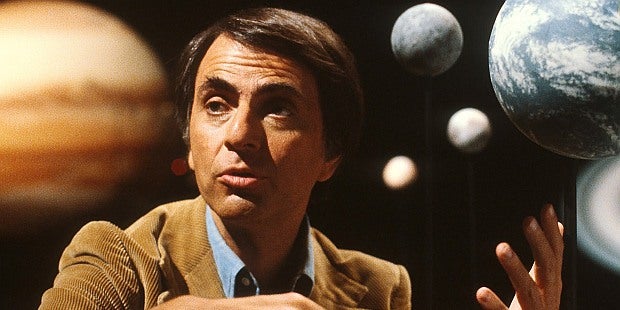





.jpg)










:max_bytes(150000):strip_icc():format(webp)/Freuds-Last-Session-102423-2-a5f03709b8fe43fa90762362947a6618.jpg)









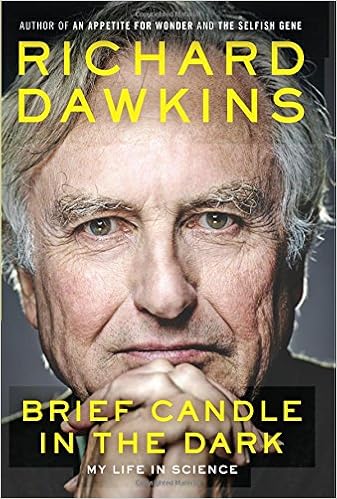
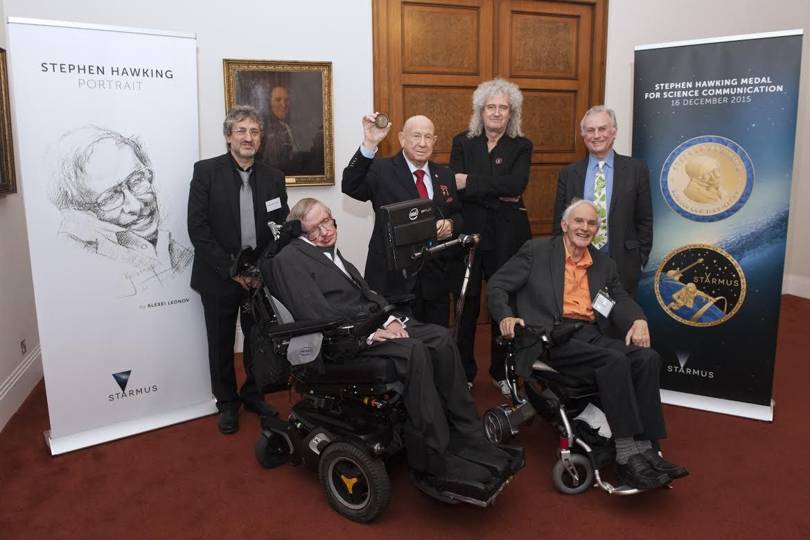





















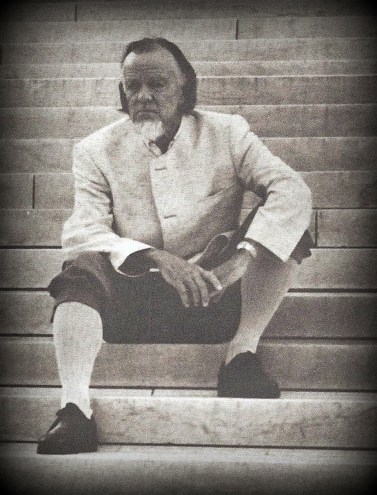



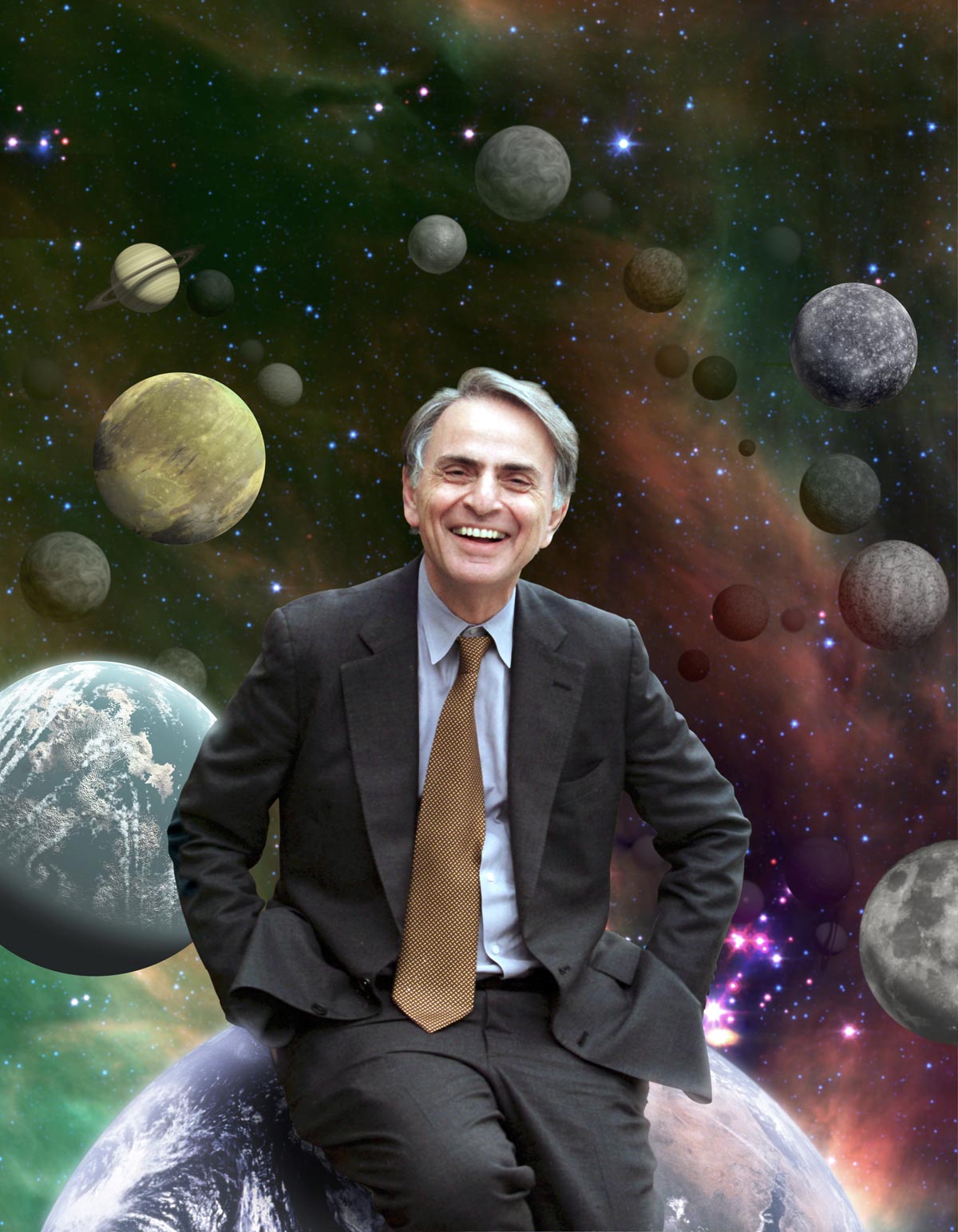 Carl Sagan. Credit: NASA


 The Daily Hatch
