This crucial series is narrated by the late Dr. Francis Schaeffer and former Surgeon General Dr. C. Everett Koop. Today, choices are being made that undermine human rights at their most basic level. Practices once considered unthinkable are now acceptable – abortion, infanticide and euthanasia. The destruction of human life, young and old, is being sanctioned on an ever-increasing scale by the medical profession, by the courts, by parents and by silent Christians. The five episodes in this series examine the sanctity of life as a social, moral and spiritual issue which the Christian must not ignore. The conclusion presents the Christian alternative as the only real solution to man’s problems.
_____________________________
I have gone back and forth with Ark Times liberal bloggers on the issue of abortion, but I am going to try something new. I am going to respond with logical and rational reasons the pro-life view is true. All of this material is from a paper by Scott Klusendorf called FIVE BAD WAYS TO ARGUE ABOUT ABORTION .
You have the Saline idiocy which is life begins at conception. Well, on one level, that is true, but it is not a life, it is not a human so there is a point where, morally, abortion is not a problem.
Then there are the idiots and murderers who claim that a fetus is not a baby. If it is not a baby, it is not a Life worthy of consideration. To some of them, an elective abortion at the 8th month is no moral problem, which is a giant and repugnant LIE.
To say life begins at conception is a lie.
To say a fetus, even though eight months old, is not a life is another lie, too.
Steven E, you have written some very wise things on this blog many times before but I have differ with you on one short point from what you just said. These are your exact words:
“You have the Saline idiocy which is life begins at conception. Well, on one level, that is true, but it is not a life, it is not a human so there is a point where, morally, abortion is not a problem.”
Pro-life advocates contend that elective abortion unjustly takes the life of a defenseless human being. This simplifies the abortion controversy by focusing public attention on just one question: Is the unborn a member of the human family? If so, killing him or her to benefit others is a serious moral wrong. Conversely, if the unborn are not human, elective abortion requires no more justification than having a tooth pulled.
Scientifically, we know that from the earliest stages of development, the unborn are distinct, living, and whole human beings. Leading embryology textbooks confirm this.1 Prior to advocating elective abortion, former Planned Parenthood President Dr. Alan Guttmacher was perplexed that anyone, much less a medical doctor, would question these basic scientific facts. “This all seems so simple and evident that it is difficult to picture a time when it wasn’t part of the common knowledge,” he wrote in his bookLife in the Making.2
Philosophically, there is no morally significant difference between the embryo you once were and the adult you are today. Differences of size, level of development, environment, and degree of dependency are not relevant in the way that abortion advocates need them to be. The simple acronymSLEDcan be used to illustrate these non-essential differences:3
Size: True, embryos are smaller than newborns and adults, but why is that relevant? Do we really want to say that large people are more valuable than small ones? Men are generally larger than women, but that doesn’t mean they deserve more rights. Size doesn’t equal value.
Level of development: True, embryos and fetuses are less developed than you and I. But again, why is this relevant? Four year-old girls are less developed than 14 year-old ones. Should older children have more rights than their younger siblings? Some people say that the immediate capacity for self-awareness and a desire to go on living makes one valuable. But if that is true, newborns do not qualify as valuable human beings. Infants do not acquire distinct self-awareness and memory until several monthsafter birth.4(Best case scenario, infants acquire limited self-awareness three months after birth, when the synapse connections increase from 56 trillion to 1,000 trillion.) As abortion advocate and philosopher Dean Stretton writes, “Any plausible pro-choice theory will have to deny newborns a full right to life. That’s counterintuitive.”5
Environment: Where you are has no bearing onwhoyou are. Does your value change when you cross the street or roll over in bed? If not, how can a journey of eight inches down the birth-canal suddenly change the essential nature of the unborn from non-human to human? If the unborn are not already valuable human beings, merely changing their location can’t make them so.
Degree of Dependency: If viability bestows human value, then all those who depend on insulin or kidney medication are not valuable and we may kill them. Conjoined twins who share blood type and bodily systems also have no right to life.
In short, although humans differ immensely with respect to talents, accomplishments, and degrees of development, they are nonetheless equal (and valuable) because they all have the same human nature.
FOOTNOTES:
1 See T.W. Sadler, Langman’s Embryology, 5th ed. (Philadelphia: W.B. Saunders, 1993) p. 3; Keith L. Moore, The Developing Human: Clinically Oriented Embryology (Toronto: B.C. Decker, 1988) p. 2; O’Rahilly, Ronand and Muller, Pabiola, Human Embryology and Teratology, 2nd ed. (New York: Wiley-Liss, 1996) pp. 8, 29. See also Maureen L. Condic, “Life: Defining the Beginning by the End,” First Things, May 2003.
2 A. Guttmacher, Life in the Making: the Story of Human Procreation (New York: Viking Press, 1933) p. 3
3 SLED test initially developed by Stephen Schwarz but modified significantly and explained here by Scott Klusendorf. Stephen Schwarz, The Moral Question of Abortion (Chicago: Loyola University Press, 1990) pp. 17-18.
4 Conor Liston & Jerome Kagan, “Brain Development: Memory Enhancement in Early Childhood,” Nature 419, 896 (2002). See also O’Rahilly, Ronand and Muller, Pabiola, Human Embryology and Teratology, 2nd ed. (New York: Wiley-Liss, 1996) p. 8.
Saline, I appreciate the very informative answer, but the beginning stages of the embryo, even these decorated folks have to admit, cannot live outside the uterine wall. You can have a 3 month premature birth survive because it is, undeniably, a living person.
That undeniable scientific line kind of defeats the extremes of both sides.
I make no mistake. There is a time when the choice belongs exclusively to the pregnant woman. There is also a time when a contentious woman knows that she is killing a living being and should give it proper thought, rather than dismissing this living human life as ‘just’ a fetus.
Yes the unborn baby that is only 3 months along can not live outside the womb because this child must depend on the mother for food. Steven E you are correct about that but what about that logic being used on the 3 month old baby that is dependent on the mother and father to provide food? What if a child requires insulin to live? Should we say the child is not worthy of life because of the dependence on a drug to live?
Yes the younger unborn baby is smaller at 13 weeks than 39 weeks but is a 4 year old young girl not a child worthy of life because she is not mature in every way like a 18 year old girl is?
I have gone back and forth and back and forth with many liberals on the Arkansas Times Blog on many issues such as abortion, human rights, welfare, poverty, gun control and issues dealing with popular culture. Here is another exchange I had with them a while back. My username at the Ark Times Blog is Saline […]
I have gone back and forth and back and forth with many liberals on the Arkansas Times Blog on many issues such as abortion, human rights, welfare, poverty, gun control and issues dealing with popular culture. Here is another exchange I had with them a while back. My username at the Ark Times Blog is Saline […]
I have gone back and forth and back and forth with many liberals on the Arkansas Times Blog on many issues such as abortion, human rights, welfare, poverty, gun control and issues dealing with popular culture. Here is another exchange I had with them a while back. My username at the Ark Times Blog is Saline […]
I have gone back and forth and back and forth with many liberals on the Arkansas Times Blog on many issues such as abortion, human rights, welfare, poverty, gun control and issues dealing with popular culture. Here is another exchange I had with them a while back. My username at the Ark Times Blog is […]
I have gone back and forth and back and forth with many liberals on the Arkansas Times Blog on many issues such as abortion, human rights, welfare, poverty, gun control and issues dealing with popular culture. Here is another exchange I had with them a while back. My username at the Ark Times Blog is Saline […]
I have gone back and forth and back and forth with many liberals on the Arkansas Times Blog on many issues such as abortion, human rights, welfare, poverty, gun control and issues dealing with popular culture. Here is another exchange I had with them a while back. My username at the Ark Times Blog is Saline […]
I have gone back and forth and back and forth with many liberals on the Arkansas Times Blog on many issues such as abortion, human rights, welfare, poverty, gun control and issues dealing with popular culture. Here is another exchange I had with them a while back. My username at the Ark Times Blog is Saline […]
I have gone back and forth and back and forth with many liberals on the Arkansas Times Blog on many issues such as abortion, human rights, welfare, poverty, gun control and issues dealing with popular culture. Here is another exchange I had with them a while back. My username at the Ark Times Blog is […]
I have gone back and forth and back and forth with many liberals on the Arkansas Times Blog on many issues such as abortion, human rights, welfare, poverty, gun control and issues dealing with popular culture. Here is another exchange I had with them a while back. My username at the Ark Times Blog is Saline […]
I have gone back and forth and back and forth with many liberals on the Arkansas Times Blog on many issues such as abortion, human rights, welfare, poverty, gun control and issues dealing with popular culture. Here is another exchange I had with them a while back. My username at the Ark Times Blog is Saline […]
I have gone back and forth and back and forth with many liberals on the Arkansas Times Blog on many issues such as abortion, human rights, welfare, poverty, gun control and issues dealing with popular culture. Here is another exchange I had with them a while back. My username at the Ark Times Blog is Saline […]
I have gone back and forth and back and forth with many liberals on the Arkansas Times Blog on many issues such as abortion, human rights, welfare, poverty, gun control and issues dealing with popular culture. Here is another exchange I had with them a while back. My username at the Ark Times Blog is Saline […]
I have gone back and forth and back and forth with many liberals on the Arkansas Times Blog on many issues such as abortion, human rights, welfare, poverty, gun control and issues dealing with popular culture. Here is another exchange I had with them a while back. My username at the Ark Times Blog is Saline […]
I have gone back and forth and back and forth with many liberals on the Arkansas Times Blog on many issues such as abortion, human rights, welfare, poverty, gun control and issues dealing with popular culture. Here is another exchange I had with them a while back. My username at the Ark Times Blog is Saline […]
I have gone back and forth and back and forth with many liberals on the Arkansas Times Blog on many issues such as abortion, human rights, welfare, poverty, gun control and issues dealing with popular culture. Here is another exchange I had with them a while back. My username at the Ark Times Blog is Saline […]
I have gone back and forth and back and forth with many liberals on the Arkansas Times Blog on many issues such as abortion, human rights, welfare, poverty, gun control and issues dealing with popular culture. Here is another exchange I had with them a while back. My username at the Ark Times Blog is Saline […]
I have gone back and forth and back and forth with many liberals on the Arkansas Times Blog on many issues such as abortion, human rights, welfare, poverty, gun control and issues dealing with popular culture. Here is another exchange I had with them a while back. My username at the Ark Times Blog is Saline […]
I have gone back and forth and back and forth with many liberals on the Arkansas Times Blog on many issues such as abortion, human rights, welfare, poverty, gun control and issues dealing with popular culture. Here is another exchange I had with them a while back. My username at the Ark Times Blog is Saline […]
I have gone back and forth and back and forth with many liberals on the Arkansas Times Blog on many issues such as abortion, human rights, welfare, poverty, gun control and issues dealing with popular culture. Here is another exchange I had with them a while back. My username at the Ark Times Blog is Saline […]
I have gone back and forth and back and forth with many liberals on the Arkansas Times Blog on many issues such as abortion, human rights, welfare, poverty, gun control and issues dealing with popular culture. Here is another exchange I had with them a while back. My username at the Ark Times Blog is Saline […]
Max Brantley of the Arkansas Times Blog reprinted a story of a 38 year old later telling her story. She got an abortion when she was 23 for just selfish reasons. The lady identified herself as a Christian. As a response to this I posted the following on 2-8-13 on the Arkansas Times Blog: You […]
Dr Richard Land discusses abortion and slavery – 10/14/2004 – part 3 The best pro-life film I have ever seen below by Francis Schaeffer and Dr. C. Everett Koop “Whatever happened to the human race?” Over the years I have taken on the Ark Times liberal bloggers over and over and over concerning the issue […]
The best pro-life film I have ever seen below by Francis Schaeffer and Dr. C. Everett Koop “Whatever happened to the human race?” Francis Schaeffer pictured above._________ The 45 minute video above is from the film series created from Francis Schaeffer’s book “Whatever Happened to the Human Race?” with Dr. C. Everett Koop. This book really […]
The best pro-life film I have ever seen below by Francis Schaeffer and Dr. C. Everett Koop “Whatever happened to the human race?” Over the years I have taken on the Ark Times liberal bloggers over and over and over concerning the issue of abortion. I asked over and over again for one liberal blogger […]
Francis Schaeffer pictured above._________ The best pro-life film I have ever seen below by Francis Schaeffer and Dr. C. Everett Koop “Whatever happened to the human race?” Over the years I have taken on the Ark Times liberal bloggers over and over and over concerning the issue of abortion. I asked over and over again […]
The best pro-life film I have ever seen below by Francis Schaeffer and Dr. C. Everett Koop “Whatever happened to the human race?” On 1-24-13 I took on the child abuse argument put forth by Ark Times Blogger “Deathbyinches,” and the day before I pointed out that because the unborn baby has all the genetic code […]
PHOTO BY STATON BREIDENTHAL from Pro-life march in Little Rock on 1-20-13. Tim Tebow on pro-life super bowl commercial. Over the years I have taken on the Ark Times liberal bloggers over and over and over concerning the issue of abortion. Here is another encounter below. On January 22, 2013 (on the 40th anniversary of the […]
Dr Richard Land discusses abortion and slavery – 10/14/2004 – part 3 The best pro-life film I have ever seen below by Francis Schaeffer and Dr. C. Everett Koop “Whatever happened to the human race?” Over the years I have taken on the Ark Times liberal bloggers over and over and over concerning the issue […]
The Arkansas Times blogger going by the username “Sound Policy” asserted, “…you do know there is a slight difference between fetal tissue and babies, don’t you? Don’t you?” My response was taken from the material below: Science Matters: Former supermodel Kathy Ireland tells Mike Huckabee about how she became pro-life after reading what the science books […]
I wrote a response to an article on abortion on the Arkansas Times Blog and it generated more hate than enlightenment from the liberals on the blog. However, there was a few thoughtful responses. One is from spunkrat who really did identify the real issue. WHEN DOES A HUMAN LIFE BEGIN? _______________________________________ Posted by spunkrat […]
Superbowl commercial with Tim Tebow and Mom. The Arkansas Times article, “Putting the fetus first: Pro-lifers keep up attack on access, but pro-choice advocates fend off the end to abortion right” by Leslie Newell Peacock is very lengthy but I want to deal with all of it in this new series. click to enlarge ROSE MIMMS: […]
The Arkansas Times article, “Putting the fetus first: Pro-lifers keep up attack on access, but pro-choice advocates fend off the end to abortion right” by Leslie Newell Peacock is very lengthy but I want to deal with all of it in this new series. click to enlarge ROSE MIMMS: Arkansas Right to Life director unswayed by […]
I have gone back and forth with Ark Times liberal bloggers on the issue of abortion, but I am going to try something new. I am going to respond with logical and rational reasons the pro-life view is true. All of this material is from a paper by Scott Klusendorf called FIVE BAD WAYS TO ARGUE ABOUT ABORTION .
On 2-8-13 on the Ark Times Blog the person using the username “Venessa,” wrote, ” Well, Saline, I am NOT A CHRISTIAN and you don’t get to force your beliefs on me.”
Francis Schaeffer predicted July 21, 2015 would come when the video “Second Planned Parenthood Senior Executive Haggles Over Baby Parts Prices, Changes Abortion Methods” would be released!!!!
“We stand today on the edge of a great abyss,” they wrote. “At this crucial moment choices are being made and thrust on us that will for many years to come affect the way people are treated. We want to try to help tip the scales on the side of those who believe that individuals are unique and special and have great dignity.”
This year marks the 25th anniversary of “Whatever Happened to the Human Race?” by Francis Schaeffer and C. Everett Koop. The anniversary serves to remind us just how unaware and unawake most evangelicals really were 25 years ago — and how prophetic the voices of Schaeffer and Koop were.
Whatever Happened to the Human Race? was both a book project and a film series, the fruit of an unusual collaboration between Francis Schaeffer, one of the truly significant figures of 20th-century evangelicalism, and C. Everett Koop, one of the nation’s most illustrious pediatric surgeons. They were an odd couple of sorts, but on the crucial issues of human dignity and the threat of what would later be called the “Culture of Death,” they were absolutely united.
Francis Schaeffer, who died in 1984, was nothing less than a 20th-century prophet. He was a genuine eccentric, given to wearing leather breeches and sporting a goatee — then quite unusual for anyone in the evangelical establishment. Then again, Schaeffer was never really a member of any establishment, and that is partly why a generation of questioning young people made their way to his Swiss study center known as L’Abri.
Big ideas were Schaeffer’s business — and the Christian worldview was his consistent framework. Long before most evangelicals even knew they had a worldview, Schaeffer was taking alternative worldviews apart and inculcating in his students a love for the architecture of Christian truth and the dignity of ideas.
Key figures on the evangelical left wrote Schaeffer off as a crank, and he returned the favor by denying that they were evangelicals at all. They complained that he did not follow their rules for scholarly publication. He pointed out that people actually read his books — and young people frustrated with cultural Christianity read his books by the thousands. They were looking for someone with ideas big enough for the age, relevant for the questions of the times, and based without compromise in Christian truth. Francis Schaeffer — knee pants and all — became a prophet for the age.
Dr. C. Everett Koop, on the other hand, is a paragon of the American establishment — a former surgeon-in-chief at the Children’s Hospital in Philadelphia and later surgeon general of the United States under President Reagan. In 1974 Koop catapulted to international attention by performing the first successful surgical separation of conjoined twins. A Presbyterian layman, Koop lives in quasi-retirement in Pennsylvania. His surgical procedures remain textbook cases for medical students today.
Whatever Happened to the Human Race? awakened American evangelicals to the anti-human technologies and ideologies that then threatened human dignity. Most urgently, the project put abortion unquestionably on the front burner of evangelical concern. The tenor of the times is seen in the fact that Schaeffer and Koop had to argue to evangelicals in the late 1970s that abortion was not just a “Catholic” issue.They taught many evangelicals a new and urgently needed vocabulary about embryo ethics, euthanasia and infanticide. They knew they were running out of time.
“Each era faces its own unique blend of problems,” they argued. “Our time is no exception. Those who regard individuals as expendable raw material — to be molded, exploited, and then discarded — do battle on many fronts with those who see each person as unique and special, worthwhile, and irreplaceable.”
Every age is marked by both the “thinkable” and the “unthinkable,” they asserted — and the “thinkable” of late-20th-century Western cultures was dangerously anti-human. The lessons of the century — with the Holocaust at its center — should be sufficient to drive the point home. The problem, as illustrated by those who worked in Hitler’s death camps, was the inevitable result of a loss of conscience and moral truth. They were “people just like all of us,” Koop and Schaeffer reminded. “We seem to be in danger of forgetting our seemingly unlimited capacities for evil, once boundaries to certain behavior are removed.”
By the last quarter of the century, life and death were treated as mere matters of choice. “The schizophrenic nature of our society became further evident as it became common practice for pediatricians to provide the maximum of resuscitative and supportive care in newborn intensive-care nurseries where premature infants were under their care — while obstetricians in the same medical centers were routinely destroying enormous numbers of unborn babies who were normal and frequently of larger size. Minors who could not legally purchase liquor and cigarettes could have an abortion-on-demand and without parental consent or knowledge.”
Schaeffer and Koop pointed to other examples of moral schizophrenia. Disabled persons were given new access to facilities and services in the name of human rights, while preborn infants diagnosed with the same disabilities were often aborted — with the advice that it would be “wrong” to bring such a baby into the world.
Long before the discovery of stem cells and calls for the use of human embryos for such experimentation, Schaeffer and Koop warned of attacks upon human life at its earliest stage. “Embryos ‘created’ in the biologist’s laboratory raise special questions because they have the potential for growth and development if planted in the womb. The disposal of these live embryos is a cause for ethical and moral concern.”
They also saw the specter of infanticide and euthanasia. Infanticide, including what is now called “partial-birth abortion,” is murder, they argued. “Infanticide is being practiced right now in this country, and the saddest thing about this is that it is being carried on by the very segment of the medical profession which has always stood in the role of advocate for the lives of children.” Long before the formal acceptance of euthanasia in countries like the Netherlands, Koop and Schaeffer saw the rise of a “duty to die” argument used against the old, the very sick and the unproductive. They rejected euthanasia in the case of a “so-called vegetative existence” and warned all humanity that disaster awaited a society that lusted for a “beautiful death.”
“Abortion, infanticide, and euthanasia are not only questions for women and other relatives directly involved — nor are they the prerogatives of a few people who have thought through the wider ramifications,” they declared. “They are life-and-death issues that concern the whole human race equally and should be addressed as such.”
How did this happen? This embrace of an anti-human “humanism” could only be explained by the rejection of the Christian worldview. “Judeo-Christian teaching was never perfectly applied,” they acknowledged, “but it did lay a foundation for a high view of human life in concept and practice.” Through the inculcation of biblical values, “people viewed human life as unique — to be protected and loved — because each individual is made in the image of God.”
Two great enemies of truth were blamed for this loss of biblical truth — modern secularism and theological liberalism. The secularists insist on the imposition of a “humanism” that defines humanity in terms of productivity, arbitrary standards of beauty and health, and an inverted system of value. Theological liberalism, denying the truthfulness of the Bible, robs the church and the society of any solid authority. The biblical concept of humanity made in the image of God is treated as poetry rather than as truth. But, “if people are not made in the image of God, the pessimistic, realistic humanist is right: The human race is indeed an abnormal wart on the smooth face of a silent and meaningless universe.”
Everything else simply follows. “In this setting, abortion, infanticide, and euthanasia … are completely logical. Any person can be obliterated for what society at one moment thinks of as its own social or economic good.” Once human life and human dignity are devalued to this degree, recovery is extremely difficult — if not impossible.
The past 25 years has been a period of even more rapid technological and moral change. We now face threats to human dignity unimaginable just a quarter-century ago. We must now deal with the ethical challenges of embryo research, human cloning, the Human Genome Project and the rise of transhuman technologies. Even with many Christians aware and active on these issues, we are losing ground.
Francis Schaeffer and Everett Koop ended their book with a call for action. “If, in this last part of the twentieth century, the Christian community does not take a prolonged and vocal stand for the dignity of the individual and each person’s right to life — for the right of each person to be treated as created in the image of God, rather than as a collection of molecules with no unique value — we feel that as Christians we have failed the greatest moral test to be put before us in this century.”
In this new century, that warning is even more threatening and more urgent. The challenges of the 21st century are even greater than those faced in the century before. This should make us even more thankful for the prophetic witness of Francis Schaeffer and C. Everett Koop — and even more determined to contend for life. Humanity still stands on the brink of that abyss. –30– Adapted from the Crosswalk.com weblog of R. Albert Mohler Jr., president of Southern Baptist Theological Seminary in Louisville, Ky.
2nd video July 21, 2015
Second Planned Parenthood Senior Executive Haggles Over Baby Parts Prices, Changes Abortion Methods
#PPSellsBabyParts SECOND PLANNED PARENTHOOD SENIOR EXECUTIVE HAGGLES OVER BABY PARTS PRICES, CHANGES ABORTION METHODS
President of PPFA Medical Directors’ Council Mary Gatter Doesn’t Want to “Lowball” Price, Suggests “Less Crunchy” Technique, Says She Wants a Lamborghini
Contact: David Daleiden, david@centerformedicalprogress.org, 949.734.0859
LOS ANGELES, July 21—A second undercover video shows Planned Parenthood Federation of America’s Medical Directors’ Council President, Dr. Mary Gatter, haggling over payments for intact fetal specimens and offering to use a “less crunchy technique” to get more intact body parts.
It is similar to last week’s viral video showing PPFA Senior Director of Medical Services Dr. Deborah Nucatola admitting to using partial-birth abortions to get intact parts and suggesting a price range of $30 to $100 per specimen.
Gatter is a senior official within Planned Parenthood and is President of the Medical Directors’ Council, the central committee of all Planned Parenthood affiliate medical directors.
Actors posing as buyers ask Gatter, “What would you expect for intact [fetal] tissue?”
“Well, why don’t you start by telling me what you’re used to paying!” Gatter replies.
Gatter continues: “You know, in negotiations whoever throws out the figure first is at a loss, right?” She explains, “I just don’t want to lowball,” before suggesting, “$75 a specimen.”
Gatter twice recites Planned Parenthood messaging on fetal tissue collection, “We’re not in it for the money,” and “The money is not the important thing,” but she immediately qualifies each statement with, respectively, “But what were you thinking of?” and, “But it has to be big enough that it’s worthwhile for me.”
Gatter also admits that in prior fetal tissue deals, Planned Parenthood received payment in spite of incurring no cost: “It was logistically very easy for us, we didn’t have to do anything. So there was compensation for this.” She accepts a higher price of $100 per specimen understanding that it will be only for high-quality fetal organs: “Now, this is for tissue that you actually take, not just tissue that someone volunteers and you can’t find anything, right?”
By the lunch’s end, Gatter suggests $100 per specimen is not enough and concludes, “Let me just figure out what others are getting, and if this is in the ballpark, then it’s fine, if it’s still low, then we can bump it up. I want a Lamborghini.”
The sale or purchase of human fetal tissue is a federal felony punishable by up to 10 years in prison or a fine of up to $500,000 (42 U.S.C. 289g-2).
Gatter also suggests modifying the abortion procedure to get more intact fetuses: “I wouldn’t object to asking Ian, who’s our surgeon who does the cases, to use an IPAS [manual vacuum aspirator] at that gestational age in order to increase the odds that he’s going to get an intact specimen.”
Gatter seems aware this violates rules governing tissue collection, but disregards them: “To me, that’s kind of a specious little argument.” Federal law requires that no alteration in the timing or method of abortion be done for the purposes of fetal tissue collection (42 U.S.C. 289g-1).
The video, like last week’s featuring Dr. Nucatola, was produced by The Center for Medical Progress and is part of CMP’s nearly 3-year-long investigative journalism study, “Human Capital.”
CMP’s Project Lead David Daleiden notes, “Planned Parenthood’s top leadership admits they harvest aborted baby parts and receive payments for this. Planned Parenthood’s only denial is that they make money off of baby parts, but that is a desperate lie that becomes more and more untenable as CMP reveals Planned Parenthood’s business operations and statements that prove otherwise.”
Seven State Governments have opened investigations into Planned Parenthood’s sale of aborted fetal body parts, as have three Congressional Committees. The House Energy and Commerce Committee has called PPFA’s Senior Director of Medical Services to testify this month about the organization’s fetal tissue harvesting.
For more information on the Human Capital project, visit centerformedicalprogress.org.
The Center for Medical Progress is a 501(c)3 non-profit dedicated to monitoring and reporting on medical ethics and advances.
I truly believe that many of the problems we have today in the USA are due to the advancement of humanism in the last few decades in our society. Ronald Reagan appointed the evangelical Dr. C. Everett Koop to the position of Surgeon General in his administration. He partnered with Dr. Francis Schaeffer in making the video below. It is very valuable information for Christians to have. Actually I have included a video below that includes comments from him on this subject.
Francis Schaeffer “BASIS FOR HUMAN DIGNITY” Whatever…HTTHR
Dr. Francis Schaeffer: Whatever Happened to the Human Race Episode 1 ABORTION
Dr. Francis schaeffer – The flow of Materialism(from Part 4 of Whatever happened to human race?)
Dr. Francis Schaeffer – The Biblical flow of Truth & History (intro)
Francis Schaeffer – The Biblical Flow of History & Truth (1)
Dr. Francis Schaeffer – The Biblical Flow of Truth & History (part 2)
__________
Dr. Francis Schaeffer: Whatever Happened to the Human Race Episode 1 ABORTION
Dr Richard Land discusses abortion and slavery – 10/14/2004 – part 3 The best pro-life film I have ever seen below by Francis Schaeffer and Dr. C. Everett Koop “Whatever happened to the human race?” Over the years I have taken on the Ark Times liberal bloggers over and over and over concerning the issue […]
The best pro-life film I have ever seen below by Francis Schaeffer and Dr. C. Everett Koop “Whatever happened to the human race?” Francis Schaeffer pictured above._________ The 45 minute video above is from the film series created from Francis Schaeffer’s book “Whatever Happened to the Human Race?” with Dr. C. Everett Koop. This book really […]
The best pro-life film I have ever seen below by Francis Schaeffer and Dr. C. Everett Koop “Whatever happened to the human race?” Over the years I have taken on the Ark Times liberal bloggers over and over and over concerning the issue of abortion. I asked over and over again for one liberal blogger […]
Francis Schaeffer pictured above._________ The best pro-life film I have ever seen below by Francis Schaeffer and Dr. C. Everett Koop “Whatever happened to the human race?” Over the years I have taken on the Ark Times liberal bloggers over and over and over concerning the issue of abortion. I asked over and over again […]
The best pro-life film I have ever seen below by Francis Schaeffer and Dr. C. Everett Koop “Whatever happened to the human race?” On 1-24-13 I took on the child abuse argument put forth by Ark Times Blogger “Deathbyinches,” and the day before I pointed out that because the unborn baby has all the genetic code […]
PHOTO BY STATON BREIDENTHAL from Pro-life march in Little Rock on 1-20-13. Tim Tebow on pro-life super bowl commercial. Over the years I have taken on the Ark Times liberal bloggers over and over and over concerning the issue of abortion. Here is another encounter below. On January 22, 2013 (on the 40th anniversary of the […]
Dr Richard Land discusses abortion and slavery – 10/14/2004 – part 3 The best pro-life film I have ever seen below by Francis Schaeffer and Dr. C. Everett Koop “Whatever happened to the human race?” Over the years I have taken on the Ark Times liberal bloggers over and over and over concerning the issue […]
Francis Schaeffer noted the Beatles were searching in many areas for meaning and eventually they turned to eastern mysticism. THE SONG “THE WALRUS” DOES A GREAT JOB OF PRESENTING HINDUISM TO THE WORLD IN THE OPENING LINE “I am he as you are he as you are me and we are all together.”
“I Am The Walrus”
I am he as you are he as you are me And we are all together
See how they run like pigs from a gun see how they fly
I’m cryingSitting on a cornflake waiting for the van to come
Corporation tee shirt, stupid bloody Tuesday
Man you been a naughty boy. You let your face grow long
I am the eggman, they are the eggmen
I am the walrus, goo goo g’ joobMister City Policeman sitting, pretty little policemen in a row
See how they fly like Lucy in the sky, see how they run
I’m crying, I’m crying
I’m crying, I’m crying
Yellow matter custard dripping from a dead dog’s eye
Crabalocker fishwife pornographic priestess
Boy you been a naughty girl, you let your knickers down
I am the eggman, they are the eggmen
I am the walrus, goo goo g’ joob
Sitting in an English garden waiting for the sun
If the sun don’t come
You get a tan from standing in the English rain
I am the eggman, they are the eggmen
I am the walrus, goo goo g’ joob goo goo goo g’ joob
Expert texpert choking smokers
Don’t you think the joker laughs at you? (Ho ho ho! He he he! Ha ha ha!)
See how they smile like pigs in a sty, see how they snied
I’m crying
Semolina pilchard climbing up the Eiffel Tower
Elementary penguin singing Hare Krishna
Man you should have seen them kicking Edgar Allan Poe
I am the eggman, they are the eggmen
I am the walrus, goo goo g’ joob goo goo g’ joob
Goo goo g’ joob goo goo g’ joob
Goo gooooooooooo jooba jooba jooba jooba jooba jooba
Jooba jooba
Jooba jooba
Jooba jooba
(Edgar Allan Poe below)
The Beatles – I Am The Walrus
LYRIC BREAKDOWN – THE BEATLES – I AM THE WALRUS (REACT)
_____________
Jim Carrey and I Am The Walrus with George Martin – The Beatles
______________
Oasis – I am the Walrus (live, Berlin 2002)
___________
The Beatles were looking for lasting satisfaction in their lives and their journey took them down many of the same paths that other young people of the 1960’s were taking. No wonder in the video THE AGE OF NON-REASON Schaeffer noted, ” Sergeant Pepper’s Lonely Hearts Club Band…for a time it became the rallying cry for young people throughout the world. It expressed the essence of their lives, thoughts and their feelings.”
How Should We then Live Episode 7 small (Age of Nonreason)
Man must take a leap of “nonreasonable faith” in the monistic worldview of Eastern mysticism. What makes Eastern mysticism the choice of a new generation of religious seekers, and how does it fulfill man’s spiritual hunger?
1. Eastern mysticism is nonrational and borders on the irrational. In Zen Buddhism, for example, one’s intuition is pitted against one’s reason. The Hindus consider the mind to have all the stability and perception of a “drunken monkey” while the Hare Krishnas refer to the mind as a “garbage pail.” All this might seem contradictory to the Western mind, and it is. But remember that the West has given up on rational explanations for the way the world works. Maybe East is best. If man is nothing more than a machine, why would we hold rationality in such high regard anyway? Western rationalism has failed.
Perhaps another reason behind the popular abandonment of rationalism in the West is its inability to provide spiritual satisfaction. As Zen master D.T. Suzuki explains, “Zen has come to the definite conclusion that the ordinary logical process of reasoning is powerless to give final satisfaction to our deepest spiritual needs.“1
We are often confused by the incessant chanting and the intellectual void associated with meditation on a mandala or some other fixed image. But these are simply the ways of the East. Much of Eastern thought is without intellectual content and meaning. The goal is to transcend the world of things and to reach a spiritual world beyond. The point is not to understand but only to do. This is the appeal of the East.
The Western reliance on rationalism has failed. In the West, the law of non-contradiction reigned (A is not non-A). The East knows nothing of such distinctions. In Western rationalist terms, “to know reality is to distinguish one thing from another, label it, catalog it, recognize its subtle relation to other objects in the cosmos. In the East to ‘know’ reality is to pass beyond distinction, to ‘realize’ the oneness of all being one with the all.“2
2. Eastern mysticism is monistic. The Christian believes in a personal God Who is separate from His creation. We have called this the Creator/creature distinction. God did not create the world out of Himself, using the “stuff” of His own being to bring the universe and man into existence.3 “By faith we understand that the worlds were prepared by the word of God, so that what is seen was not made out of the things which are visible” (Hebrews 11:3; cf. Genesis 1:1-2).
Eastern thought makes no distinction between man and cosmos. The name for this is monism. Monism “is the belief that all that is, is one. All is interrelated, interdependent and interpenetrating. Ultimately there is no difference between God, a person, a carrot or a rock.“4
Consider the ethical implications of such a view. The way you treat a person and the way you treat an animal are to be no different. This is why many advocates of monism are vegetarian. An animal is sacred; therefore, it cannot be killed for food. All is one. God and evil transcend the world of forms and plurality. God does not overcome evil. There is no value judgment in “good” and “evil.” Ultimate reality is beyond good and evil. These rational and Christian concepts must be jettisoned in favor of an undifferentiated oneness.
The entertainment business has been quick to pick up on monism. In the Star Wars series, monism is quite evident in “the Force,” a benign entity that neither condones the good nor suppresses the evil. The music industry was invaded in the early sixties by the Beatles, who held a monistic worldview.
In 1967, the Beatles made their now-famous link-up with a then-unknown guru, Maharishi Yogi and his occult-sounding product, Transcendental Meditation. In the same year Paul McCartney and John Lennon wrote “I am the Walrus” which opened with the pantheistic declaration:
I am he as you are he as you are me And we are all together
“Instant Karma” followed in 1970, and the next year saw the release of George Harrison’s “My Sweet Lord” with its alternating chorus of “Hallelujah” and “Hare Krishna.“5
Charles Manson adopted the monistic worldview of the Beatles,and at the LaBianca murder scene in 1969, he scrawled in blood on the refrigerator door the misspelled “He[a]lter Skelter,” a song title from the Beatles’ “White Album.” The ambiguity of right and wrong became a reality for Manson. In Manson’s words, “If God is One, what is bad?”
3. All is god. It follows from monism that if there is god, then all is god. Pantheism (pan means all; theos means god) is the theology of the East. There is no personal God who stands above creation. In fact, there is no creation as such. To speak of a creation would mean to postulate a Creator, someone distinct from the cosmos. Thus, the pantheist agrees with the naturalist that there is just one level of reality, although the naturalist would not consider it to be “spiritual” or “divine.” In pantheism, there is no God who is “out there.” God and the material world are one and the same. The word god should be used to refer to the sum total of reality rather than to some being distinct from the rest of reality.
In Christianity, God is distinct from creation. God is certainly present with His creation, but He is in no way a part of creation. To destroy the created order would in no way affect God. “The Creator God is not an impersonal force, energy or consciousness, but a living, personal Being of infinite intelligence, power and purity. God is not an amoral entity, but a moral agent who says ‘Thou shalt not’ and calls people to repentance and faith.“6
4. We are god. The consistency of monism brings us to one of its most bizarre features. If all is god, then man is god in some form. “Swami Muktananda – a great influence on Werner Erhard, founder of est and Forum – pulls no pantheistic punches when he says: ‘Kneel to your own self. Honor and worship your own being. God dwells within you as You!’“7
Eastern mysticism teaches some form of “chain of being” or “continuity of being,“8 the idea that man and God are one essence, and that in time, through an evolutionary process or a series of reincarnations, man becomes divine. Ray Sutton writes: “Life according to this system is a continuum. At the top is the purest form of deity. At the very bottom is the least pure. They only differ in degree, not in kind. God is a part of creation. Man, who is somewhere in the middle of the continuum, is god in another ‘form.’ In other words, god is just a ‘super’ man, and man is not a god … yet!“9
Of course, Christianity teaches that there is only one God: “And you are My witnesses. Is there any God besides Me, or is there any other Rock? I know of none” (Isaiah 44:8). Man’s first sin was the attempt to “be like God,” determining good and evil for himself (Genesis 3:5).
5. There is no death. Eastern mysticism makes its “leap of being” from mere man to god through raising the state of consciousness, evolutionary development, reincarnation, or some combination of the three. Death is simply the final stage of growth; it is an illusion. Human beings, because they are of a “divine essence,” are immortal. Ultimately, death does not exist. For death to exist would mean the extinction of part of the One.
Reincarnation is a fundamental pillar of New Age thinking. It “solves” the puzzle of death. Reincarnation has been popularized over the years through the writings of Edgar Cayce10 and most recently, Shirley MacLaine. The Eastern variety of reincarnation would have never been accepted in the Christian West if it had not been stripped of the hideous concept of the “transmigration of the soul.”
Reincarnation, as it is usually understood in Hinduism, states that all life is essentially one (monism): plant, animal, and human life are so interrelated that souls are capable of “transmigrating” from one form of life to another. A person could have been an animal, plant, or mineral in some previous existence. However, this version is unpalatable to American tastes, so in the newer version the movement of human souls is limited to human bodies.11
Modern proponents of reincarnation have cleaned up the Eastern variety. You don’t hear Shirley MacLaine telling people that she was a rock or a slug in a former life. The typical reincarnationist usually believes that he was once some exotic personality. This is not true reincarnationism. This is “I’ve always been a star” reincarnationism.
6 Monism has spawned the New Age movement. John Naisbitt of Megatrends12 fame sees a new age dawning at the corporation level. Old industrial structures must be dismantled to compete in the information society of the future. “Look at how far we have already come. The industrial society transformed workers into consumers; the information society is transforming employees into capitalists. But remember this: Both capitalism and socialism were industrial structures. And the companies re-inventing themselves are already evolving toward that new reality.“13 But there’s more!
Mark Satin has described a New Age Politics14 that will “heal self and society.”
Fritjof Capra, author of The Turning Point,15 sees changes in science that will affect society and culture.
Marilyn Ferguson, whose The Aquarian Conspiracy16 is considered by many to be the manifesto of the New Age movement, describes “a new mind – a turnabout in consciousness, a network powerful enough to bring about radical change in our culture.”
Much of this literature is rooted in Eastern and occult philosophy, which emphasize oneness (monism): the unity and interdependence of all things. There is a clever mix between Eastern religious philosophy and Western religious forms. The sixties counterculture brought the esoteric music and religious ideology of the East into the West.
The Beatles made Eastern music popular on their “Rubber Soul” album when George Harrison introduced the Indian sitar music of Ravi Shankar.17 Transcendental Meditation was also popularized by the Beatles. Some of those in the ecology movement base their concern for the environment on the inherent “oneness” of the universe.18 Man and nature are one in essence. Man is not much different from the animals. He is only higher on the great scale of being. The environment should be protected, not as a stewardship under God, but because we are all god, nature included.
The advance of Eastern thought was gradual, but layer by layer it gained acceptance. As Christianity steadily lost its hold on the heart and mind of the nation, softer forms of religious beliefs were more easily embraced. Christianity’s drift into an emphasis on experience over objective, written revelation has made it easy prey for the pure subjectivism of Eastern thought.
Robert J.L. Burrows, publications editor of the evangelical Spiritual Counterfeits Project in Berkeley, California, writes: “Humans are essentially religious creatures, and they don’t rest until they have some sort of answer to the fundamental questions. Rationalism and secularism don’t answer those questions. But you can see the rise of the New Age as a barometer of the disintegration of American culture. Dostoevsky said anything is permissible if there is no God. But anything is also permissible if everything is God. There is no way of making any distinction between good and evil.“19
Os Guinness wrote about the meeting of East and West in 1973, in what has become a standard Christian critique of the decline of secular humanism, The Dust of Death. He tells us that the “swing to the East has come at a time when Christianity is weak at just those points where it would need to be strong to withstand the East.“20 He goes on to show the three basic weaknesses within the Church that open it up to Eastern influences.
“The first is its compromised, deficient understanding of revelation. Without biblical historicity and veracity behind the Word of God, theology can only grow closer to Hinduism. Second, the modern Christian is drastically weak in an unmediated, personal, experiential knowledge of God. Often what passes for religious experience is a communal emotion felt in church services, in meetings, in singing or contrived fellowship. Few Christians would know God on their own. Third, the modern church is often pathetically feeble in the expression of its focal principle of community. It has become the local social club, preaching shop or minister-dominated group. With these weaknesses, modern Christianity cannot hope to understand why people have turned to the East, let alone stand against the trend and offer an alternative.“21
Western Christians have a faith that is “extremely blurred at the edges.“22 This opens them up to any and all spiritual counterfeits.
New Age humanism is anti-Christian to the core. It is a utopian dream built on a flawed understanding of man’s nature and a devotion to a westernized Eastern philosophy in which God is nothing more than a cosmic idea. The copy on the dust jacket to Ferguson’s The Aquarian Conspiracy shows that the Christian’s fears are justified: “A leaderless but powerful network is working to bring about radical change in the United States. Its members have broken with certain key elements of Western thought, and they may even have broken with history.”
With all its seemingly “good” emphasis, the New Age movement is at heart humanistic (man is the center of the universe), materialistic (self-actualization is all-important), and anti-God (the God of the Bible is dismissed in favor of self-deification). The American public, with its inability to distinguish biblical truth from anti-Christian religious subtleties, is easily sucked in by the seemingly harmless religious and cultural goals of New Age humanism.
The college campus is a breeding ground for New Age concepts. New Age ideas are upbeat, optimistic, and seemingly life-transforming. At a time when you are most susceptible to change and influence, the New Age movement can be a dangerous “friend.” Keep far from it.23
1 Pat Means, The Mystical Maze (San Bernardino, CA: Campus Crusade for Christ, 1976), p. 39.
2 James W. Sire, The Universe Next Door: A Basic World View Catalog (Downers Grove, IL: InterVarsity Press, 1976), p. 133.
3 Pagan creation myths abound with this notion. According to one Babylonian account, Marduk, the great stone god, “killed the dragon Tiamat and split her body in half. The upper half was made into the sky, and the lower half the earth.” John J. Davis, Paradise to Prison: Studies in Genesis (Grand Rapids, MI: Baker Book House, 1975), p. 69.
4 Douglas R. Groothuis, Unmasking the New Age: Is There a New Religious Movement Trying to Transform Society? (Downers Grove, IL: InterVarsity Press, 1986), p. 18.
5 Means, The Mystical Maze, p. 21.
6 Groothuis, Unmasking the New Age, p. 21.
7 Idem.
8 Avrum Stroll and Richard H. Popkin, Introduction to Philosophy 2nd ed.; (New York: Holt, Rhinehart and Winston, 1972), pp. 100-101.
9 Ray Sutton, That You May Prosper: Dominion By Covenant (Tyler, TX: Dominion Press, 1987), p. 37.
10 For an insightful analysis and critique of Cayce’s views see: Gary North, Unholy Spirits: Occultism and New Age Humanism (Ft. Worth, TX: Dominion Press, 1986), pp. 193-225.
11 John Snyder, Reincarnation vs. Resurrection (Chicago, IL: Moody Press, 1984), p. 19.
12 John Naisbitt, Megatrends: Ten New Directions Transforming OurLives (New York: Warner Books, 1982).
13 John Naisbitt and Patricia Aburdene, Re-inventing the Corporation (New York: Warner Books, 1985), p. 252.
14 New York: Dell 1979.
15 New York: Simon and Schuster, 1982.
16 Los Angeles, CA: J.P. Tarcher, Inc., 1980.
17 North, Unholy Spirits, p. 6.
18 Schaeffer, The Complete Works of Francis A. Schaeffer, 5 vols.: Pollution and the Death of Man: The Christian View of Ecology, vol. 5, pp. 3-76.
19 “New Age Harmonies,” Time (December 7, 1987), p. 72.
20 Os Guinness, The Dust of Death: A Critique of the Establishment and the Counter Culture – and a Proposal for a Third Way (Downers Grove, IL: InterVarsity Press, 1973), p. 209.
21 Idem.
22 Idem.
23 For helpful and balanced treatments of the New Age movement see: Gary DeMar and Peter J. Leithart, The Reduction of Christianity: Dave Hunt’s Theology of Cultural Surrender (Ft. Worth, TX: Dominion Press, 1988); Karen Hoyt, ed., The New Age Rage: A Probing Analysis of The Newest Religious Craze (Old Tappan, NJ: Fleming II, Revell Company, 1987); Douglas R. Groothuis, Unmasking the New Age: Is There a New Religious Movement Trying to Transform Society? (Downers Grove, IL: InterVarsity Press, 1986).
If you enjoyed this article, you can write and receive a free, one-year subscription to Gary DeMar’s Biblical Worldview Newsletter. Write: American Vision, P.O. Box 720515, Atlanta, GA 30328.
“I Am the Walrus” is a song by The Beatles that was released in November 1967. It was featured in the Beatles’ television filmMagical Mystery Tour in December of that year, as a track on the associated British double EP of the same name and its American counterpart LP, and was the B-side to the number 1 hit single “Hello, Goodbye“. Since the single and the double EP held at one time in December 1967 the top two slots on the British singles chart, the song had the distinction of being at number 1 and number 2 simultaneously.
The lyrics came from three song ideas that Lennon had been working on, the first of which was inspired by hearing a police siren at his home in Weybridge; Lennon wrote the lines “Mis-ter cit-y police-man” to the rhythm and melody of the siren. The second idea was a short rhyme about Lennon sitting in his garden, while the third was a nonsense lyric about sitting on a corn flake. Unable to finish the three different songs, he combined them into one. The lyrics also included the phrase “Lucy in the sky,” a reference to the Beatles’ earlier song “Lucy in the Sky with Diamonds.”
The final piece of the song came together when Lennon’s friend and former fellow member of the Quarrymen, Peter Shotton, visited and Lennon asked him about a playground nursery rhyme they sang as children. Shotton recalled the rhyme as follows:
Then wash it all down with a cup of cold sick.”[2]
Lennon borrowed a couple of images from the first two lines. Shotton was also responsible for suggesting to Lennon to change the lyric “waiting for the man to come” to “waiting for the van to come.” The Beatles’ official biographer Hunter Davies was present while the song was being written and wrote an account in his 1968 biography of the Beatles. According to this biography, Lennon remarked to Shotton, “Let the fuckers work that one out.”
Lennon claimed he wrote the first two lines on separate acid trips; he explained much of the song to Playboy in 1980:[3]
“The first line was written on one acid trip one weekend. The second line was written on the next acid trip the next weekend, and it was filled in after I met Yoko… I’d seen Allen Ginsberg and some other people who liked Dylan and Jesus going on about Hare Krishna. It was Ginsberg, in particular, I was referring to. The words ‘Element’ry penguin’ meant that it’s naïve to just go around chanting Hare Krishna or putting all your faith in one idol. In those days I was writing obscurely, à la Dylan.”
“It never dawned on me that Lewis Carroll was commenting on the capitalist system. I never went into that bit about what he really meant, like people are doing with the Beatles’ work. Later, I went back and looked at it and realized that the walrus was the bad guy in the story and the carpenter was the good guy. I thought…I picked the wrong guy. I should have said, ‘I am the carpenter.’ But that wouldn’t have been the same, would it? [Sings, laughing] ‘I am the carpenter….'”
Although it has been reported that Lennon wrote “I Am the Walrus” to confuse those who tried to interpret his songs, there have been many attempts to analyse the meaning of the lyrics.[20][21]
Seen in the Magical Mystery Tour film singing the song, Lennon, apparently, is the walrus; on the track-list of the accompanying soundtrack EP/LP however, underneath “I Am the Walrus” are printed the words ‘ “No you’re not!” said Little Nicola’ (in the film, Nicola is a little girl who keeps contradicting everything the other characters say). Lennon returned to the subject in the lyrics of three of his subsequent songs: in the 1968 Beatles song “Glass Onion” he sings, “I told you ’bout the walrus and me, man/You know that we’re as close as can be, man/Well here’s another clue for you all/The walrus was Paul”;[22] in the third verse of “Come Together” he sings the line “he bag production, he got walrus gumboot”; and in his 1970 solo song “God“, admits “I was the walrus, but now I’m John.”
Eric Burdon, lead singer of the Animals, claims to be the ‘Eggman’ mentioned in the song’s lyric. Burdon was known as ‘Eggs’ to his friends, the nickname originating from his fondness for breaking eggs over naked women’s bodies. Burdon’s biography mentions such an affair taking place in the presence of John Lennon, who shouted “Go on, go get it, Eggman…”[23]
My absolute favorite albums are Rubber Soul and Revolver. On both records you can hear references to other music — R&B, Dylan, psychedelia — but it’s not done in a way that is obvious or dates the records. When you picked up Revolver, you knew it was something different. Heck, they are wearing sunglasses indoors in the picture on the back of the cover and not even looking at the camera . . . and the music was so strange and yet so vivid. If I had to pick a favorite song from those albums, it would be “And Your Bird Can Sing” . . . no, “Girl” . . . no, “For No One” . . . and so on, and so on. . . .
Their breakup album, Let It Be, contains songs both gorgeous and jagged. I suppose ambition and human frailty creeps into every group, but they delivered some incredible performances. I remember going to Leicester Square and seeing the film of Let It Be in 1970. I left with a melancholy feeling.
34
‘Eight Days a Week’
Keystone-France/Gamma-Keystone via Getty Images
Writers: McCartney-Lennon Recorded: October 6 and 18, 1964 Released: February 15, 1965 10 weeks; no. 1
The title of “Eight Days a Week” came from a chance remark by a driver chauffeuring McCartney out to Lennon’s house. McCartney casually asked the driver if he’d been busy. “Busy?” he replied. “I’ve been working eight days a week.” “Neither of us had heard that expression before,” said McCartney. “It was like a little blessing from the gods. I didn’t have any idea for it other than the title, and we just knocked it off together, just filling in from the title.”
Although McCartney claimed the rest of the song “came quickly,” it lacked a beginning, a middle eight and an ending when he and Lennon brought it into the studio. The Beatles tried a variety of approaches, including a wordless harmony for the intro, but stumbled repeatedly getting the melody right. “We struggled to record it and struggled to make it into a song,” Lennon recalled. “But it was lousy anyway.”
The Beatles were working at least nine days a week in late 1964, which may account for Lennon’s sour take on the song. They’d been touring constantly, had just released A Hard Day’s Night in June and were rushed back into a recording studio the week after they returned from America to record a new album and single in time for Christmas. “They were rather war-weary,” George Martin said. “They’d been battered like mad throughout 1964, and much of 1963. Success is a wonderful thing, but it is very, very tiring.” With little time to write original songs, almost half of the Beatles for Sale LP consisted of covers the group had been playing onstage for years. The same day the Beatles finished “Eight Days a Week,” they knocked out seven complete tracks.
Twelve days later, they settled on the final arrangement, with its innovative instrumental fade-in that gives the song the warm, jubilant “feel[ing] like you’ve heard it before,” as Ray Davies of the Kinks told Rolling Stone in 2001.
Beatles for Sale was released in the U.K. in December 1964. Beatles ’65, its U.S. counterpart, did not include “Eight Days a Week.” The song was released as a single in the U.S. two months later, and it went to Number One. But the Beatles continued to disregard it. It was never a single in the U.K., and in their subsequent two years of radio performances and touring, they never played it live. Despite its popularity, Lennon believes it “was never a good song.”
Appears On:Beatles for Sale
33
‘I Am the Walrus’
John Pratt/Keystone/Getty Images
Main Writer: Lennon Recorded: September 5, 6, 27, 28 and 29, 1967 Released: November 27, 1967 4 weeks; no. 56 (B side)
After Brian Epstein died on August 27th, 1967, the Beatles were hardly in the mood to be creative. But when the shellshocked band gathered a few days later, McCartney convinced them there was one sure way to handle their grief: by getting back into the studio. When they did, on September 5th, Lennon brought along an eccentric new song inspired by a report that British school kids were studying Beatles lyrics to discern their hidden meanings. Lennon played a solo acoustic version of “I Am the Walrus,” and, as engineer Geoff Emerick recalled, “Everyone seemed bewildered. The melody consisted largely of just two notes, and the lyrics were pretty much just nonsense.” Taking off from the Lewis Carroll poem “The Walrus and the Carpenter,” the words were a series of non sequiturs about “pigs from a gun,” Hare Krishna and Edgar Allan Poe, winding up with a head-scratching “goo-goo-g’joob!” hook.
“What the hell do you expect me to do with that?” George Martin said. Nonetheless, everyone went to work on the track. Lennon vamped on a simple electric-piano figure, and McCartney switched to tambourine to make sure Starr kept on the beat. (McCartney’s diligence in keeping the band focused, Emerick later said, was “one of Paul’s finest moments.”)
The track sprung to vivid, woozy life in post-production. Despite his initial revulsion, Martin composed a masterful orchestral arrangement that felt like vertigo. Lennon asked for as much distortion on his voice as possible — he wanted it to sound as if it were coming from the moon.
“The words don’t mean a lot,” Lennon said. “People draw so many conclusions, and it’s ridiculous. What does it really mean, ‘I am the Eggman?’ It could have been the pudding basin for all I care.” The lyrics contained plenty of inside jokes: “Semolina pilchard” referred to Norman Pilcher, the London drug-squad cop who’d busted rock stars like Mick Jagger and Keith Richards, and “The Eggman” was a reference to both Carroll’s Humpty Dumpty and a story Lennon heard from Eric Burdon about the time a girl cracked an egg onto the Animals frontman during sex. On the following year’s White Album, Lennon alluded to the song in “Glass Onion” with the line “The walrus was Paul” — his way of thanking McCartney for helping to hold the group together after Epstein’s death.
Together with the advent of the “drug Age” was the increased interest in the West in the religious experience of Hinduism and Buddhism. Schaeffer tells us that: “This grasping for a nonrational meaning to life and values is the central reason that these Eastern religions are so popular in the West today.” Drugs and Eastern religions came like a flood into the Western world. They became the way that people chose to find meaning and values in life. By themselves or together, drugs and Eastern religion became the way that people searched inside themselves for ultimate truth.
Along with drugs and Eastern religions there has been a remarkable increase “of the occult appearing as an upper-story hope.” As modern man searches for answers it “many moderns would rather have demons than be left with the idea that everything in the universe is only one big machine.” For many people having the “occult in the upper story of nonreason in the hope of having meaning” is better than leaving the upper story of nonreason empty. For them horror or the macabre are more acceptable than the idea that they are just a machine.
Francis Schaeffer in his book HOW SHOULD WE THEN LIVE? gives us some insight into a possible answer to that question:
The younger people and the older ones tried drug taking but then turned to the eastern religions. Both drugs and the eastern religions seek truth inside one’s own head, a negation of reason. The central reason of the popularity of eastern religions in the west is a hope for a nonrational meaning to life and values. The reason the young people turn to eastern religion is simply the fact as we have said and that is that man having moved into the area of nonreason could put anything up there and the heart of the eastern religions is a denial of reason just exactly as the idealistic drug taking was. So the turning to the eastern religions today fits exactly into the modern existential methodology, the existential thinking of modern man, of trying to find some optimistic hope in the area of nonreason when he has given up hope on a humanistic basis of finding any kind of unifying answer to life, any meaning to life in the answer of reason.
——–
About the only solution the atheist can offer is that we face the absurdity of life and live bravely. Bertrand Russell, for example, wrote that we must build our lives upon “the firm foundation of unyielding despair.”16 Only by recognizing that the world really is a terrible place can we successfully come to terms with life. Camus said that we should honestly recognize life’s absurdity and then live in love for one another.
The fundamental problem with this solution, however, is that it is impossible to live consistently and happily within such a worldview. If one lives consistently, he will not be happy; if one lives happily, it is only because he is not consistent. Francis Schaeffer has explained this point well. Modern man, says Schaeffer, resides in a two-story universe. In the lower story is the finite world without God; here life is absurd, as we have seen. In the upper story are meaning, value, and purpose. Now modern man lives in the lower story because he believes there is no God. But he cannot live happily in such an absurd world; therefore, he continually makes leaps of faith into the upper story to affirm meaning, value, and purpose, even though he has no right to, since he does not believe in God. Modern man is totally inconsistent when he makes this leap, because these values cannot exist without God, and man in his lower story does not have God.
___________
Francis Schaeffer has correctly argued:
The universe was created by an infinite personal God and He brought it into existence by spoken word and made man in His own image. When man tries to reduce [philosophically in a materialistic point of view] himself to less than this [less than being made in the image of God] he will always fail and he will always be willing to make these impossible leaps into the area of nonreason even though they don’t give an answer simply because that isn’t what he is. He himself testifies that this infinite personal God, the God of the Old and New Testament is there.
Instead of making a leap into the area of nonreason the better choice would be to investigate the claims that the Bible is a historically accurate book and that God created the universe and reached out to humankind with the Bible. Below is a piece of that evidence given by Francis Schaeffer concerning the accuracy of the Bible.
TRUTH AND HISTORY (chapter 5 of WHATEVER HAPPENED TO THE HUMAN RACE?, under footnote #94)
Consider, too, the threat in the entire Middle East from the power of Assyria. In 853 B.C. King Shalmaneser III of Assyria came west from the region of the Euphrates River, only to be successfully repulsed by a determined alliance of all the states in that area of the Battle of Qarqar. Shalmaneser’s record gives details of the alliance. In these he includes Ahab, who he tells us put 2000 chariots and 10,000 infantry into the battle. However, after Ahab’s death, Samaria was no longer strong enough to retain control, and Moab under King Mesha declared its independence, as II Kings 3:4,5 makes clear:
4 Now Mesha king of Moab was a sheep breeder, and he had to deliver to the king of Israel 100,000 lambs and the wool of 100,000 rams.5 But when Ahab died, the king of Moab rebelled against the king of Israel.
The famous Moabite (Mesha) Stone, now in the Louvre, bears an inscription which testifies to Mesha’s reality and of his success in throwing off the yoke of Israel. This is an inscribed black basalt stela, about four feet high, two feet wide, and several inches thick.
Ahab’s line did not last long and was brutally overthrown by a man called Jehu. As one walks toward the Assyrian section in the British Museum, one of the first exhibits to be seen is the famous Black Obelisk. This stands about six feet high and was discovered at Nimrud (Calah) near the Assyrian capital at Nineveh. It describes how King Shalmeneser III compelled Jehu to submit to his authority and to pay him tribute. Here one can see a representation of the kneeling figure of either Jehu or his envoy before the Assyrian king. The inscription tells of Jehu’s submission: “The tribute of Jehu, son of Omri: I received from him silver, gold, a golden bowl, a golden vase with pointed bottom, golden tumblers, golden buckets, tin, a staff for a king and purukhti fruits.”
Jehu is referred to by the Assyrian records as a son of Omri, not because he was literally his son, but because he was on the throne which had been occupied previously by the house of Omri. This event took place about 841 B.C.
Putting them all together, these archaeological records show not only the existence historically of the people and events recorded in the Bible but the great accuracy of the details involved.
We at Watchmen Bible Study Group hope that you found these articles informative. As a courtesy we supply the following information from the original author of these articles: Light on Archaeology is a special edition of the Light Magazine. To receive a FREE bi-monthly illustrated copy of the Light Magazine contact: E-mail: bibletruth@biblelight.org
MOAB:The Moabite stone was discovered in 1868. It was found in the land of Moab and was carved with an inscription which its finder, a man named Klein, recognized as being important. He had insufficient funds to purchase the stone and had to go to Europe to raise them. While he was away, the Arabs broke the stone into pieces, so they could make more money out of the deal. (They did the same thing with some of the Dead Sea Scrolls.) Fortunately, a Frenchman, M. Clermont-Ganneau had the good sense to take an impression, so that they were able to piece the stone together correctly and decipher its message.
The language in which the inscription is written is very similar to Biblical Hebrew, and the events it records supplement most remarkably the record from I Kings chapter 16 to 2 Kings chapter 3. Both tell how that during the reigns of Omri and Ahab, Moab was tributary to Israel, but that after the death of Ahab, Mesha King of Moab rebelled. Mesha records on this stone that after this time, he was unable to defeat Jehoram in several battles and rid the land of him. The actual words are:
‘Now the men of God had always dwelt in the land of Ataroth, and the King of Israel had built Ataroth for them: but I fought against the town and took it and slew all the people of the town as satiation for Chemosh and Moab’.
Moab’s fortresses and her cities were restored and made stronger. Her earlier defeats were explained as being due to the anger of her gods.
The stone records the name of Israel’s God, Yahweh. The inscription does contain one error. It boasts that as a result of Moab’s victories ‘Israel perished for ever’. Many a nation has wished for the destruction of Israel as a nation, but it is a wish that will never be fulfilled. The proof of this is a marvelous story indeed and a separate study.
If we compare the events related on the stone with the Bible record, we see again the truth of the Word of God. It is all the more important when we realise that our knowledge of Moab is so small and yet one of the few incidents recorded about her can be proved in this way.
Brenda Bury, 23 – year – old painter who once protested to Sir Winston Churchill about pretty French girls taking part in an English university rag, has received the British painter’s top honour. One of her paintings – of Mrs Julian Amery, wife of the Tory MP for Preston North – is to be hung at this year’s Royal Academy summer exhibition in London. Said Brenda’s mother, Mrs Mabel Bury, of Barnsley Road Brierley, near Barnsley, last night: “Of course she was much younger when she went to Downing – Street. She is more grown up now.” At the time Brenda was studying at Reading University. Rag organisers invited three French girls from Paris to join the procession because they said, “local girls lack glamour.” Brenda and her friends thought differently. To prove their point they made their protest march to Downing – street in bathing suits and fancy dress. Brenda may be this year’s youngest exhibiter. She had three pictures selected last year but none hung. When only seven she won a National Savings painting competition. Five years later she won a youth club painting competition. After an honour degree at Reading she thought of being a teacher but changed her mind. Then began her painting career. Now she intends specialising in the painting of children. Her latest work? She hopes Sir John Barbirolli, Halle Orchestra conductor, will sit for her.
FOOTNOTE May 2006: Brenda now lives in Toronto Canada and is married to scientist John Polanyi. She now works on both sides of the Atlantic from her base in Toronto. Read more about Brenda at www.brendabury.com
1. Brenda Bury.
Thomas H.B. Symons / 1989
Toronto-based artist Brenda Bury specializes in portraits of prominent Canadian and British government and non-government personalities. Regarding her work, Bury says that she needs to keep a keen eye on world affairs, and that political clashes and social upheavals are the products and destroyers of the subjects she paints. She explains that her interest in human rights, for example, has helped her to develop an understanding of how people relate to their society. Her goal, she says, is to express and record that relationship through the stroke of her paintbrush. Her portrait Thomas H.B. Symons was commissioned by Trent University in 1989.
Brenda Bury was born, educated, and trained in England. She took an Honours Degree in Fine Art at the University of Reading in order to study with Anthony Betts, himself a pupil and friend of Sargent, Whistler and Sickert. The influences of these painters are evident in her work. Brenda began her professional life by painting Lord and Lady St. Oswald at their estate, Nostell Priory in Yorkshire. Throughout their lives, these, her first sitters, were her friends and patrons. With their encouragement, she painted members of the Royal Family, the aristocracy and the British Government.
Brenda Bury took a studio in London’s Chelsea, but before doing this, she went to Canada for just over a year, where she painted portraits, beginning with the then Prime Minister Mr. Diefenbaker. She left reluctantly, but felt that she could better improve her skills as a painter in England, a country with a strong tradition for portraiture. In 1964, she painted Lord Mountbatten of Burma at his house, Broadlands. He became an enthusiastic supporter of her work, and it was he who was able to arrange for her to paint the Queen. The Queen was amiable and friendly, as were her courtiers. Most important, the artist’s mother lived long enough to tell absolutely everybody in their Yorkshire village that her daughter was at Buckingham Palace painting the Queen.
In the 1980s, Brenda Bury felt she was ready to return to Canada, and took a studio. She had hardly unpacked before she found herself back in England for a visit to number 10 Downing Street to paint a life-size group portrait of Prime Minister Thatcher and her advisors in the Falklands conflict. This led to other interesting commissions. She now works on both sides of the Atlantic from her base in Toronto where she lives with her husband, scientist John Polanyi.
Francis Schaeffer’s favorite album was SGT. PEPPER”S and he said of the album “Sergeant Pepper’s Lonely Hearts Club Band…for a time it became the rallying cry for young people throughout the world. It expressed the essence of their lives, thoughts and their feelings.” (at the 14 minute point in episode 7 of HOW SHOULD WE THEN LIVE? )
How Should We Then Live – Episode Seven – 07 – Portuguese Subtitles
“Sergeant Pepper’s Lonely Hearts Club Band, became the rallying cry for young people throughout the world. It expressed the essence of their lives, thoughts and their feelings…” Francis Schaeffer (1912-1984). We take a look today at how the Beatles were featured in Schaeffer’s film. How Should We then Live Episode 7 small On You Tube […]
The Bible and Archaeology – Is the Bible from God? (Kyle Butt 42 min)
Does God Have to Be Good or Are Things Good Just Because God Says So?
Published onAug 24, 2012
Dr William Lane Craig was invited by the School of Oriental and African Studies (SOAS) Christian Union, London to give a lecture titled “Can we be good without God?” In this video Dr Craig answers a question about the Euthyphro Dilemma.
The lecture formed part of the Reasonable Faith Tour in October 2011. The Tour was sponsored by Damaris Trust, UCCF and Premier Christian Radio.
I have discussed many subjects with my liberal friends over at the Ark Times Blog in the past and I have taken them on now on the subject of the absurdity of life without God in the picture. Most of my responses included quotes fromWilliam Lane Craig’sbookTHE ABSURDITY OF LIFE WITHOUT GOD. Here is the result of one ofthose encounters from June of 2013:
Hackett wrote, “I’m quite content with the reality of life as it is and have no need of faith and belief in any invisible being.”
____________
You have to base your morality on God’s revealed word or what are your left with? Reason is the answer most atheists give but where will that lead? Maybe to another Hitler? I have challenged those on this blog before to rent the movie “Crimes and Misdemeanors” through Net Flix and look at the valid attacks that Woody Allen makes on the morality that atheists are proposing and what the end result of that will be.
William Lane Craig has noted:
If life ends at the grave, then it makes no difference whether one has lived as a Stalin or as a saint. Since one’s destiny is ultimately unrelated to one’s behavior, you may as well just live as you please. As Dostoyevsky put it: “If there is no immortality, then all things are permitted.” On this basis, a writer like Ayn Rand is absolutely correct to praise the virtues of selfishness. Live totally for self; no one holds you accountable! Indeed, it would be foolish to do anything else, for life is too short to jeopardize it by acting out of anything but pure self-interest. Sacrifice for another person would be stupid. Kai Nielsen, an atheist philosopher who attempts to defend the viability of ethics without God, in the end admits,
We have not been able to show that reason requires the moral point of view, or that all really rational persons, unhoodwinked by myth or ideology, need not be individual egoists or classical amoralists. Reason doesn’t decide here. The picture I have painted for you is not a pleasant one. Reflection on it depresses me…. Pure practical reason, even with a good knowledge of the facts, will not take you to morality.8
But the problem becomes even worse. For, regardless of immortality, if there is no God, then any basis for objective standards of right and wrong seems to have evaporated. All we are confronted with is, in Jean-Paul Sartre’s words, the bare, valueless fact of existence. Moral values are either just expressions of personal taste or the by-products of socio-biological evolution and conditioning. In the words of one humanist philosopher, “The moral principles that govern our behavior are rooted in habit and custom, feeling and fashion.”9 In a world without God, who is to say which actions are right and which are wrong? Who is to judge that the values of Adolf Hitler are inferior to those of a saint? The concept of morality loses all meaning in a universe without God. As one contemporary atheistic ethicist points out, “To say that something is wrong because … it is forbidden by God, is … perfectly understandable to anyone who believes in a law-giving God. But to say that something is wrong … even though no God exists to forbid it, is not understandable….” “The concept of moral obligation [is] unintelligible apart from the idea of God. The words remain but their meaning is gone.”10 In a world without a divine lawgiver, there can be no objective right and wrong, only our culturally and personally relative, subjective judgments. This means that it is impossible to condemn war, oppression, or crime as evil. Nor can one praise brotherhood, equality, and love as good. For in a universe without God, good and evil do not exist—there is only the bare valueless fact of existence, and there is no one to say that you are right and I am wrong.
E P I S O D E 1 0 Dr. Francis Schaeffer – Episode X – Final Choices 27 min FINAL CHOICES I. Authoritarianism the Only Humanistic Social Option One man or an elite giving authoritative arbitrary absolutes. A. Society is sole absolute in absence of other absolutes. B. But society has to be […]
E P I S O D E 9 Dr. Francis Schaeffer – Episode IX – The Age of Personal Peace and Affluence 27 min T h e Age of Personal Peace and Afflunce I. By the Early 1960s People Were Bombarded From Every Side by Modern Man’s Humanistic Thought II. Modern Form of Humanistic Thought Leads […]
E P I S O D E 8 Dr. Francis Schaeffer – Episode VIII – The Age of Fragmentation 27 min I saw this film series in 1979 and it had a major impact on me. T h e Age of FRAGMENTATION I. Art As a Vehicle Of Modern Thought A. Impressionism (Monet, Renoir, Pissarro, Sisley, […]
E P I S O D E 7 Dr. Francis Schaeffer – Episode VII – The Age of Non Reason I am thrilled to get this film series with you. I saw it first in 1979 and it had such a big impact on me. Today’s episode is where we see modern humanist man act […]
E P I S O D E 6 How Should We Then Live 6#1 Uploaded by NoMirrorHDDHrorriMoN on Oct 3, 2011 How Should We Then Live? Episode 6 of 12 ________ I am sharing with you a film series that I saw in 1979. In this film Francis Schaeffer asserted that was a shift in […]
E P I S O D E 5 How Should We Then Live? Episode 5: The Revolutionary Age I was impacted by this film series by Francis Schaeffer back in the 1970′s and I wanted to share it with you. Francis Schaeffer noted, “Reformation Did Not Bring Perfection. But gradually on basis of biblical teaching there […]
Dr. Francis Schaeffer – Episode IV – The Reformation 27 min I was impacted by this film series by Francis Schaeffer back in the 1970′s and I wanted to share it with you. Schaeffer makes three key points concerning the Reformation: “1. Erasmian Christian humanism rejected by Farel. 2. Bible gives needed answers not only as to […]
Francis Schaeffer’s “How should we then live?” Video and outline of episode 3 “The Renaissance” Francis Schaeffer: “How Should We Then Live?” (Episode 3) THE RENAISSANCE I was impacted by this film series by Francis Schaeffer back in the 1970′s and I wanted to share it with you. Schaeffer really shows why we have so […]
Francis Schaeffer: “How Should We Then Live?” (Episode 2) THE MIDDLE AGES I was impacted by this film series by Francis Schaeffer back in the 1970′s and I wanted to share it with you. Schaeffer points out that during this time period unfortunately we have the “Church’s deviation from early church’s teaching in regard […]
Francis Schaeffer: “How Should We Then Live?” (Episode 1) THE ROMAN AGE Today I am starting a series that really had a big impact on my life back in the 1970′s when I first saw it. There are ten parts and today is the first. Francis Schaeffer takes a look at Rome and why […]
Francis Schaeffer: “Whatever Happened to the Human Race” (Episode 5) TRUTH AND HISTORY Published on Oct 7, 2012 by AdamMetropolis This crucial series is narrated by the late Dr. Francis Schaeffer and former Surgeon General Dr. C. Everett Koop. Today, choices are being made that undermine human rights at their most basic level. Practices once […]
The opening song at the beginning of this episode is very insightful. Francis Schaeffer: “Whatever Happened to the Human Race” (Episode 4) THE BASIS FOR HUMAN DIGNITY Published on Oct 7, 2012 by AdamMetropolis This crucial series is narrated by the late Dr. Francis Schaeffer and former Surgeon General Dr. C. Everett Koop. Today, choices […]
Francis Schaeffer: “Whatever Happened to the Human Race” (Episode 3) DEATH BY SOMEONE’S CHOICE Published on Oct 6, 2012 by AdamMetropolis This crucial series is narrated by the late Dr. Francis Schaeffer and former Surgeon General Dr. C. Everett Koop. Today, choices are being made that undermine human rights at their most basic level. Practices […]
Francis Schaeffer: “Whatever Happened to the Human Race?” (Episode 2) SLAUGHTER OF THE INNOCENTS Published on Oct 6, 2012 by AdamMetropolis This crucial series is narrated by the late Dr. Francis Schaeffer and former Surgeon General Dr. C. Everett Koop. Today, choices are being made that undermine human rights at their most basic level. Practices […]
It is not possible to know where the pro-life evangelicals are coming from unless you look at the work of the person who inspired them the most. That person was Francis Schaeffer. I do care about economic issues but the pro-life issue is the most important to me. Several years ago Adrian Rogers (past president of […]
Ecclesiastes 2-3 Published on Sep 19, 2012 Calvary Chapel Spring Valley | Sunday Evening | September 16, 2012 | Derek Neider _____________________________ I have written on the Book of Ecclesiastes and the subject of the meaning of our lives on several occasions on this blog. In this series on Ecclesiastes I hope to show how secular […]
Ecclesiastes 1 Published on Sep 4, 2012 Calvary Chapel Spring Valley | Sunday Evening | September 2, 2012 | Pastor Derek Neider _____________________ I have written on the Book of Ecclesiastes and the subject of the meaning of our lives on several occasions on this blog. In this series on Ecclesiastes I hope to show how […]
Ecclesiastes 8-10 | Still Searching After All These Years Published on Oct 9, 2012 Calvary Chapel Spring Valley | Sunday Evening | October 7, 2012 | Pastor Derek Neider _______________________ Ecclesiastes 11-12 | Solomon Finds His Way Published on Oct 30, 2012 Calvary Chapel Spring Valley | Sunday Evening | October 28, 2012 | Pastor Derek Neider […]
Ecclesiastes 6-8 | Solomon Turns Over a New Leaf Published on Oct 2, 2012 Calvary Chapel Spring Valley | Sunday Evening | September 30, 2012 | Pastor Derek Neider _____________________ I have written on the Book of Ecclesiastes and the subject of the meaning of our lives on several occasions on this blog. In this series […]
Ecclesiastes 4-6 | Solomon’s Dissatisfaction Published on Sep 24, 2012 Calvary Chapel Spring Valley | Sunday Evening | September 23, 2012 | Pastor Derek Neider ___________________ I have written on the Book of Ecclesiastes and the subject of the meaning of our lives on several occasions on this blog. In this series on Ecclesiastes I hope […]
Overview of the Book of Ecclesiastes Overview of the Book of EcclesiastesAuthor: Solomon or an unknown sage in the royal courtPurpose: To demonstrate that life viewed merely from a realistic human perspective must result in pessimism, and to offer hope through humble obedience and faithfulness to God until the final judgment.Date: 930-586 B.C. Ecclesiastes 2-3 Published on Sep 19, […]
Ecclesiastes 1 Published on Sep 4, 2012 Calvary Chapel Spring Valley | Sunday Evening | September 2, 2012 | Pastor Derek Neider _____________________ I have written on the Book of Ecclesiastes and the subject of the meaning of our lives on several occasions on this blog. In this series on Ecclesiastes I hope to show how […]
Ecclesiastes 8-10 | Still Searching After All These Years Published on Oct 9, 2012 Calvary Chapel Spring Valley | Sunday Evening | October 7, 2012 | Pastor Derek Neider _______________________ Ecclesiastes 11-12 | Solomon Finds His Way Published on Oct 30, 2012 Calvary Chapel Spring Valley | Sunday Evening | October 28, 2012 | Pastor Derek Neider […]
Rand Paul on Planned Parenthood | “The Glenn Beck Program”
Francis Schaeffer predicted July 30, 2015 would come when the video “Planned Parenthood VP Says Fetuses May Come Out Intact, Agrees Payments Specific to the Specimen” would be released!!!!
4th video July 30, 2015
Planned Parenthood VP Says Fetuses May Come Out Intact, Agrees Payments Specific to the Specimen
Published on Jul 30, 2015
FOR IMMEDIATE RELEASE
#PPSellsBabyParts PLANNED PARENTHOOD VP SAYS FETUSES MAY COME OUT INTACT, AGREES PAYMENTS SPECIFIC TO THE SPECIMEN
Planned Parenthood Rocky Mountains VP & Medical Director Savita Ginde Discusses Contract Details, Aborted Body Parts Pricing, and How to Not “Get Caught”
Contact: Peter Robbio, probbio@crcpublicrelations.com, 703.683.5004
DENVER, July 30–New undercover footage shows Planned Parenthood of the Rocky Mountains’ Vice President and Medical Director, Dr. Savita Ginde, negotiating a fetal body parts deal, agreeing multiple times to illicit pricing per body part harvested, and suggesting ways to avoid legal consequences.
Planned Parenthood of the Rocky Mountains (PPRM) is a wealthy, multi-state Planned Parenthood affiliate that does over 10,000 abortions per year. PPRM has a contract to supply aborted fetal tissue to Colorado State University in Fort Collins.
In the video, actors posing as representatives from a human biologics company meet with Ginde at the abortion-clinic headquarters of PPRM in Denver to discuss a potential partnership to harvest fetal organs. When the actors request intact fetal specimens, Ginde reveals that in PPRM’s abortion practice, “Sometimes, if we get, if someone delivers before we get to see them for a procedure, then we are intact.”
Since PPRM does not use digoxin or other feticide in its 2nd trimester procedures, any intact deliveries before an abortion are potentially born-alive infants under federal law (1 USC 8).
“We’d have to do a little bit of training with the providers or something to make sure that they don’t crush” fetal organs during 2nd trimester abortions, says Ginde, brainstorming ways to ensure the abortion doctors at PPRM provide usable fetal organs.
When the buyers ask Ginde if “compensation could be specific to the specimen?” Ginde agrees, “Okay.” Later on in the abortion clinic’s pathological laboratory, standing over an aborted fetus, Ginde responds to the buyer’s suggestion of paying per body part harvested, rather than a standard flat fee for the entire case: “I think a per-item thing works a little better, just because we can see how much we can get out of it.”
The sale or purchase of human fetal tissue is a federal felony punishable by up to 10 years in prison or a fine of up to $500,000 (42 U.S.C. 289g-2). Federal law also requires that no alteration in the timing or method of abortion be done for the purposes of fetal tissue collection (42 U.S.C. 289g-1).
Ginde also suggests ways for Planned Parenthood to cover-up its criminal and public relations liability for the sale of aborted body parts. “Putting it under ‘research’ gives us a little bit of an overhang over the whole thing,” Ginde remarks. “If you have someone in a really anti state who’s going to be doing this for you, they’re probably going to get caught.”
Ginde implies that PPRM’s lawyer, Kevin Paul, is helping the affiliate skirt the fetal tissue law: “He’s got it figured out that he knows that even if, because we talked to him in the beginning, you know, we were like, ‘We don’t want to get called on,’ you know, ‘selling fetal parts across states.’” The buyers ask, “And you feel confident that they’re building those layers?” to which Ginde replies, “I’m confident that our Legal will make sure we’re not put in that situation.”
As the buyers and Planned Parenthood workers identify body parts from last fetus in the path lab, a Planned Parenthood medical assistant announces: “Another boy!”
The video is the latest by The Center for Medical Progress documenting Planned Parenthood’s sale of aborted fetal parts. Project Lead David Daleiden notes: “Elected officials need to listen to the public outcry for an immediate moratorium on Planned Parenthood’s taxpayer funding while the 10 state investigations and 3 Congressional committees determine the full extent of Planned Parenthood’s sale of baby parts.” Daleiden continues, “Planned Parenthood’s recent call for the NIH to convene an expert panel to ‘study’ fetal experimentation is absurd after suggestions from Planned Parenthood’s Dr. Ginde that ‘research’ can be used as a catch-all to cover-up baby parts sales. The biggest problem is bad actors like Planned Parenthood who hold themselves above the law in order to harvest and make money off of aborted fetal brains, hearts, and livers.”
For more information on the Human Capital project, visit centerformedicalprogress.org.
The Center for Medical Progress is a 501(c)3 non-profit dedicated to monitoring and reporting on medical ethics and advances.
Dr. Francis Schaeffer: Whatever Happened to the Human Race Episode 1 ABORTION
Some have argued whenever anyone cries “Nazi” this is a good reason to reject their whole point of view because nothing could really compare. Nothing in our country could be properly characterized by that kind of comparison. Well, I don’t know. You be the judge.
I have a piece here that I would like to read to you. It’s not ordinary that I read a piece in its entirety, but in this particular case I think it is critical. It’s not only a critical issue, but it is said so well and so effectively that I just want to pass on what columnist Mona Charen has written November 9 in a piece that is simply entitled “Harvesting Part for Sale.”
If you have not heard anything about this, I suggest that you sit down. If you have younger children around the radio, they don’t need to hear this. You’re going to have a hard time hearing what I am about to read, to think that this is possible in our country.
Oftentimes we talk about causal slippery slopes and how one thing leads to another. I have talked and written in the past about moral velocitizing, the idea that when you take another step in moral decay for a few months or years it seems radical because it is such a change from what things have been like. Then we get used to it and it seems like normal. It’s like when you go out on the freeway and you accelerate to 60 mph. You’re moving pretty good until you get used to 60 mph and then it just seems like it’s not fast enough. Then you accelerate to 80 mph and that’s fast until you get used to it, and then it is just regular and you need to accelerate even faster. So you go faster, and faster, and faster at deadly speeds. It seems like you’re safe.
Morally, we have become velocitized because every time we take another step for just a few moments we feel uncomfortable. Then we get used to it and it is ordinary. As FrancIs Schaeffer has said, “What is unthinkable yesterday is thinkable today, and ordinary and commonplace tomorrow.”
We are witnessing a moral velocitizing in our culture. We have been witnessing it for some time. I have argued that one of the things that has contributed to this is the increasing death of humanness. The idea of being a human being is not something that makes one valuable or worthwhile in itself. We have been chipping away at the essential, inherent value of human beings, and we have been doing it with abortion, infanticide, doctor-assisted suicide. All of these things have chipped away.
In fact, twenty years ago when Dr. Francis Schaeffer and C. Everett Koop produced material that basically asked, What has happened to the human race, they warned that it would come to this. Everybody thought these people were like Chicken Little crying about the world coming to an end. But their sober warnings have come to pass as little by little we can see human dignity being chipped away, such that the unique value of humanness is dying.
And so, in 1973 when men of the Supreme Court consigned 1.3 million unborn human beings to the grave every year through the Roe v. Wade decision, it set aggressively in course a way of thinking about humanity that says, There is a life that is not worthy to be lived.”
This, by the way, was a motto of the Third Reich. A few years back, I wrote a piece called “Nazi Doctors” and I talked about having read the book by Robert J. Lifton by the same title. He asked himself the question, How is it that a culture could have come to this point and had doctors committed to caring for life and saving lives actually participate in one of the greatest killing machines the world has ever seen? A part of the answer was in the first 90 pages of the book, which is all that I read. I didn’t read the whole psychoanalytic position that he espoused and developed about how doctors get schizophrenic.
I read the first 90 pages that was really the sociological effort of the Nazi regime to encourage people to find this whole approach palatable. Ergo the slogan, there is a life that’s not worthy of being lived. This is the pro-choice position, actually, in many ways. And we see the same thing happening now.
But you know when I use the term Nazi here, many people are offended because it is easy to conjure up the image of the Third Reich, this malevolent image, to kind of color your argument. All you have to do is cry “Nazi” and people will immediately be influenced in your favor because of this powerful term.
Some have argued whenever anyone cries “Nazi” this is a good reason to reject their whole point of view because nothing could really compare. Nothing in our country could be properly characterized by that kind of comparison. Well, I don’t know. You be the judge. I’ve been to Auschwitz. I’ve been to Majdaneck. I’ve been to some of these camps where you see blankets made of human hair, the lampshades made of human skin, and the piles of teeth that have been busted out for the gold that was in them, where human beings became a cash crop. I’ve seen it.
That is all a backdrop to what I am about to read to you, published here in the Daily News in Southern California, Thursday, November 11, 1999, by Mona Charen. She is a syndicated columnist with the Creators Syndicate and therefore, her piece is read nationwide. You might have read it in another publication. But let me just read it.
“Kelly” (a pseudonym) was a medical technician working for a firm that trafficked in baby body parts. This is not a bad joke. Nor is it the hysterical propaganda of an interest group. It was reported in the American Enterprise magazine–the intelligent, thought-provoking, and utterly trustworthy publication of the American Enterprise Institute.
The firm Kelly worked for collected fetuses from clinics that performed late-term abortions. She would dissect the aborted fetuses in order to obtain ‘high-quality” parts for sale. They were interested in blood, eyes, livers, brains, and the thymuses, among other things.
“What we did was to have a contract with an abortion clinic that would allow us to go there on certain days. We would get a generated list each day to tell us what tissue researchers, pharmaceutical companies, and universities were looking for. Then we would examine the patient charts. We only wanted the most perfect specimens.’ That didn’t turn out to be difficult. Of the hundreds of late-term fetuses Kelly saw on a weekly basis, only about 2 percent had abnormalities. About 30 to 40 babies per week were around 30 weeks old–well past the point of viability.
Is this legal? Federal law makes it illegal to buy and sell human body parts. But there are loopholes in the law. Here’s how one body parts company–Opening Lines Inc.–disguised the trade in a brochure for abortionists: “Turn your patient’s decision into something wonderful.”
For its buyers, Opening Lines offers “the highest quality, most affordable, freshest tissue prepared to your specifications and delivered in the quantities you need, when you need it.” Eyes and ears go for $75, and brains for $999. An “intact trunk” fetches $500, a whole liver $150. To evade the law’s prohibition, body-parts dealers like Opening Lines offer to lease space in the abortion clinic to “perform the harvesting,” as well as to “offset the clinic’s overhead.” Opening Lines further boasted, “Our daily average case volume exceeds 1,500 and we serve clinics across the United States.”
Kelly kept at her grisly task until something made her reconsider. One day, “a set of twins at 24 weeks gestation was brought to us in a pan. They were both alive. The doctor came back and said, ‘Got you some good specimens–twins.’ I looked at him and said: ‘There’s something wrong here. They are moving. I can’t do this. This is not in my contract.’ I told him I would not be part of taking their lives. So he took a bottle of sterile water and poured it in the pan until the fluid came up over their mouths and noses, letting them drown. I left the room because I could not watch this.”
But she did go back and dissect them later. The twins were only the beginning. “It happened again and again. At 16 weeks, all the way up to sometimes even 30 weeks, we had live births come back to us. Then the doctor would either break the neck or take a pair of tongs and beat the fetus until it was dead.”
American Enterprise asked Kelly if abortion procedures were ever altered to provide specific body parts. “Yes. Before the procedures they would want to see the list of what we wanted to procure. The (abortionist) would get us the most complete intact specimens that he could. They would be delivered to us completely intact. Sometimes the fetus appeared to be dead, but when we opened up the chest cavity, the heart was still beating.”
The magazine pressed Kelly again. Was the type of abortion ever altered to provide an intact specimen, even if it meant producing a live baby? “Yes, that was so we could sell better tissue. At the end of the year, they would give the clinic back more money because we got good specimens.”
Some practical souls will probably swallow hard and insist that, well, if these babies are going to be aborted anyway, isn’t it better that medical research should benefit? No. This isn’t like voluntary organ donation. This reduces human beings to the level of commodities. And it creates of doctors who swore an oath never to kill, the kind of people who can beat a breathing child to death with tongs.
That is the end of the article.
This ghastly practice is getting more press. One wonders why it isn’t on the front page of every newspaper in this country. There is a massive industry for human body parts coming from unborn children whose lives are being taken, sometimes after they are delivered, so that we can have “the highest quality, most affordable, freshest tissue prepared to your specifications and delivered in the quantities you need, when you need it.”
This kind of news absolutely boggles the imagination.
As I mentioned earlier, when you raise the issue of Nazi Germany, people scoff. That’s just inflammatory rhetoric.
Well, how would you describe this?
Let’s forget about Nazi Germany for just a moment. Let’s just look at what we have come to. Again, it’s hard to know how to respond because if people can read this and say, Well, I don’t know what the problem is, then I don’t know what to say to them. If this is not obviously barbaric, I don’t know what to say. If you can’t see it for yourself, then I say that you are desperately morally velocitized and the spirit of the age has overtaken you.
Sometimes there is what can be called “unbelievable unbelief.” You know, in John 11 when Lazarus was raised from the dead, and those who were aware of the resurrection of Lazarus were so incensed at the powerful miracle that was done that was good evidence that Jesus was the Messiah, as He claimed, that they purposed to destroy Lazarus, as well as Jesus. They would kill Jesus, he was the troublemaker. But the problem was the proof was still walking around–Lazarus. They’d have to kill him too.
It’s kind of wild. You think, Wake up, folks! You only want to kill this man because he is proof against your view. But they didn’t get it. Sometimes people are so rebellious against authority that they can’t see what is so obvious.
Matt Drudge recently lost his job on the Fox News Channel. As I understand it, the reason was that he had footage he wanted to show on the air that was about a quite amazing medical procedure. It was a procedure that allowed doctors to rectify pre-natal problems by doing surgery on the unborn before it was delivered. They could actually go in and do spina bifida surgery to rectify this problem. To be more precise, they didn’t exactly go in, they brought the baby out. That is, they incised the mother’s abdomen and moved her uterus out in a sense onto her belly, opened her uterus just enough to do the surgery, did the microsurgery on the little developing child inside, repaired the problem, sewed up the uterus, replaced it inside the woman, stitched her up, and then she continued with a normal pregnancy.
That is pretty amazing. What a story!
But you see, it is not just a story about technology, is it? It is also a story about little precious unborn human persons. There is also a problem with showing this on T.V. because it gives a much more graphic window into the womb. But there’s more in this particular case because, not only was this a remarkable medical feat that obviously and visibly bore testimony to the humanity of the unborn, but in the course of these films being taken, that little baby that was being operated on while it was being filmed, reached up its little hand, and took hold of the finger of the surgeon. That was on film. Don’t you wish you could have seen that?
Well, you can’t because it won’t be aired.
The powers that be on that station told Matt Drudge he could not air that segment. Why not? It is a case that they never show gore on T.V.? It is the case they never show medical procedures on T.V.?
It is because in this particular medical procedure there was a powerful, factual, and emotionally compelling representation of the true and genuine humanity of the unborn, such that anyone watching it would realize that abortion destroys a precious unborn human person.
They wouldn’t let him show it. He was so incensed he walked off the set and, having walked off the set and not completing his show, he was in violation of his contract and so they fired him.
That’s unbelievable unbelief. You know why? Because those very people could see that very hand reach out of that mom and grab the finger of the surgeon. That little life, that little human person grabbing hold. It should have been obvious to them, as much as it would be obvious to anyone else watching, that there was a human being in there. But they didn’t want anybody else to see it. They just wanted it to be shut down so that abortion could go on.
Unbelievable unbelief.
I have the same feeling here about the harvesting of body parts at abortion clinics. There are some people who will read this and say, It doesn’t bother me, man. It’s okay. We’re killing them anyway. What’s the big deal? Might as well make some use out of it.
These folks would have fit in well at the killing camps peddling lampshades of human skin and blankets made of human hair.
I truly believe that many of the problems we have today in the USA are due to the advancement of humanism in the last few decades in our society. Ronald Reagan appointed the evangelical Dr. C. Everett Koop to the position of Surgeon General in his administration. He partnered with Dr. Francis Schaeffer in making the video below. It is very valuable information for Christians to have. Actually I have included a video below that includes comments from him on this subject.
Francis Schaeffer “BASIS FOR HUMAN DIGNITY” Whatever…HTTHR
Dr. Francis schaeffer – The flow of Materialism(from Part 4 of Whatever happened to human race?)
Dr. Francis Schaeffer – The Biblical flow of Truth & History (intro)
Francis Schaeffer – The Biblical Flow of History & Truth (1)
Dr. Francis Schaeffer – The Biblical Flow of Truth & History (part 2)
__________
Dr. Francis Schaeffer: Whatever Happened to the Human Race Episode 1 ABORTION
Dr Richard Land discusses abortion and slavery – 10/14/2004 – part 3 The best pro-life film I have ever seen below by Francis Schaeffer and Dr. C. Everett Koop “Whatever happened to the human race?” Over the years I have taken on the Ark Times liberal bloggers over and over and over concerning the issue […]
The best pro-life film I have ever seen below by Francis Schaeffer and Dr. C. Everett Koop “Whatever happened to the human race?” Francis Schaeffer pictured above._________ The 45 minute video above is from the film series created from Francis Schaeffer’s book “Whatever Happened to the Human Race?” with Dr. C. Everett Koop. This book really […]
The best pro-life film I have ever seen below by Francis Schaeffer and Dr. C. Everett Koop “Whatever happened to the human race?” Over the years I have taken on the Ark Times liberal bloggers over and over and over concerning the issue of abortion. I asked over and over again for one liberal blogger […]
Francis Schaeffer pictured above._________ The best pro-life film I have ever seen below by Francis Schaeffer and Dr. C. Everett Koop “Whatever happened to the human race?” Over the years I have taken on the Ark Times liberal bloggers over and over and over concerning the issue of abortion. I asked over and over again […]
The best pro-life film I have ever seen below by Francis Schaeffer and Dr. C. Everett Koop “Whatever happened to the human race?” On 1-24-13 I took on the child abuse argument put forth by Ark Times Blogger “Deathbyinches,” and the day before I pointed out that because the unborn baby has all the genetic code […]
PHOTO BY STATON BREIDENTHAL from Pro-life march in Little Rock on 1-20-13. Tim Tebow on pro-life super bowl commercial. Over the years I have taken on the Ark Times liberal bloggers over and over and over concerning the issue of abortion. Here is another encounter below. On January 22, 2013 (on the 40th anniversary of the […]
Dr Richard Land discusses abortion and slavery – 10/14/2004 – part 3 The best pro-life film I have ever seen below by Francis Schaeffer and Dr. C. Everett Koop “Whatever happened to the human race?” Over the years I have taken on the Ark Times liberal bloggers over and over and over concerning the issue […]
I just wanted to note that I have spoken on the phone several times and corresponded with Dr. Paul D. Simmons who is very much pro-choice. (He is quoted in the article below.) He actually helped me write an article to submit to Americans United for the Separation of Church and State back in the 1996 when Rob Boston had stepped over the linewith his“poetic license.” Boston later admitted to me on the phone he did not think that David Barton had fabricated quotes and then attributed them to the founders although his article “Consumer Alert” did imply that Bartondid. In “Consumer Alert,” these words appeared in bold print: “Mything in action: David Barton’s ‘Questionable Quotes.'”Professor Fritz Detweiler of Adrian College’s religion and philosophy department respondedto this controversy in his weekly column stating that Barton “made up quotes and attributed them to James Madison, Patrick Henry, George Washington, Benjamin Franklin, and other leading Americans…. Barton’s fabricating quotes to serve his purpose is particularly disturbing on two fronts. First, Barton was not content to let the record speak for itself because it didn’t say quite what he wanted it to say. Second, the fraudulent construction of quotes poses a particular problem for [historians] seeking to verify their accuracy.”I greatly appreciated the help that Dr. Paul D. Simmons gave me in trying to set the record straight even though he does not agree with me on various other subjects such as abortion.
Anti Abortion Pro-Life Training Video by Scott Klusendorf Part 4 of 4
How Should We then Live Episode 7 small (Age of Nonreason)
#02 How Should We Then Live? (Promo Clip) Dr. Francis Schaeffer
The clip above is from episode 9 THE AGE OF PERSONAL PEACE AND AFFLUENCE
10 Worldview and Truth
In above clip Schaeffer quotes Paul’s speech in Greece from Romans 1 (from Episode FINAL CHOICES)
Two Minute Warning: How Then Should We Live?: Francis Schaeffer at 100
A Christian Manifesto Francis Schaeffer
Francis Schaeffer “BASIS FOR HUMAN DIGNITY” Whatever…HTTHR
Dr Francis Schaeffer – Whatever Happened to the Human Race – Episode 1
__________
This crucial series is narrated by the late Dr. Francis Schaeffer and former Surgeon General Dr. C. Everett Koop. Today, choices are being made that undermine human rights at their most basic level. Practices once considered unthinkable are now acceptable – abortion, infanticide and euthanasia. The destruction of human life, young and old, is being sanctioned on an ever-increasing scale by the medical profession, by the courts, by parents and by silent Christians. The five episodes in this series examine the sanctity of life as a social, moral and spiritual issue which the Christian must not ignore. The conclusion presents the Christian alternative as the only real solution to man’s problems.
_____________________________
I have gone back and forth with Ark Times liberal bloggers on the issue of abortion, but I am going to try something new. I am going to respond with logical and rational reasons the pro-life view is true. All of this material is from a paper by Scott Klusendorf called FIVE BAD WAYS TO ARGUE ABOUT ABORTION .
On 2-8-13 on the Ark Times Blog the person using the username “Venessa,” wrote, ” Well, Saline, I am NOT A CHRISTIAN and you don’t get to force your beliefs on me.”
A student at a Southern California college said this to me after I made a case for the pro-life position in her sociology class. She was in effect saying, “Morality is relative; it’s up to me to decide what is right and wrong.” We call thismoral relativism, the belief that there are no objective standards of right and wrong, only personal preferences. Therefore, we should tolerate other views as being equal to our own.
But as Greg Koukl and Francis Beckwith point out, relativism is seriously flawed for at least three reasons.8First, it is self-refuting. That is to say, it cannot live by its own rules. Second, relativists cannot reasonably say that anything is wrong, including intolerance. Third, it is impossible to live as a relativist.
1) Relativism is self-refuting—it commits intellectual suicide. The student said it was wrong for me to force my views on others, but she could not live with her own rule. Although our dialogue was pleasant, she clearly tried to force her views on me.9
Student:You made some good points in your talk, but you shouldn’t force your morality on me or anyone else who wants an abortion. It’s our choice, isn’t it?
Me:Are you saying I’m wrong?
Student:I’m not sure. What do you mean?
Me:Well, you think I’m wrong, don’t you? If not, why are you correcting me? And if so, then you’re forcing your morality on me, aren’t you?
Student:No, I just want to know why you are telling people what they can and cannot do with their lives.
Me:Are you saying I shouldn’t do that? That it’s wrong? If so, then why are you telling me what I can and cannot do? Why are you forcing your morality on me?
Student(regrouping):I’m confused. Look, the simple fact is that pro-choicers are not forcing women to have abortions, but you want to force women to be mothers. If you don’t like abortion, don’t have one. But you shouldn’t force your beliefs on others. All I am saying is that pro-life people should be tolerant of other views.
Me:Is that your view?
Student:Yes.
Me:Why are you forcing it on me? That’s not very tolerant, is it?
Student:What do you mean? I think women should have a choice and you don’t. It’s your view that’s intolerant, wouldn’t you say?
Me:Okay, so you think I’m wrong. What is it you want pro-lifers like me to do?
Student:You should let women decide for themselves and tolerate other views.
Me:Tell me, what exactly do pro-choicers believe?
Student:We believe everyone should decide for themselves and tolerate other views.
Me:So you are demanding that pro-lifers become pro-choicers?
Student:What? No way.
Me:With all due respect, here’s what I hear you saying. Unless I agree with you, you will not tolerate my view. Privately, you’ll let me think whatever I want, but you don’t want me to act as if my view is true. It seems you think tolerance is a virtueif and only if people agree with you.
Put succinctly, her argument for tolerance was in fact a patronizing form of intolerance. She spoke of moral neutrality, but tried to force her own views on me.
I once read an editorial in theToronto Starthat was similarly intolerant of pro-life advocates. While decrying the “single-minded moral supremacism” of those who call abortion killing, journalist Michele Landsberg writes:
Will no priest or minister publicly resolve to stop the indoctrination of youth to view abortion as murder? Is none ashamed of the blood-drenched holocaust vocabulary used so cynically (and anti-semitically) to whip up fervor for the crusade? Where are the outspoken cries of conscience by bishops and cardinals who should be appalled by the evidence of links between anti-abortion fanatics and far-right militias, neo Nazis, and white supremacists? Is there no religious leader who regrets his church’s role in feeding this blind frenzy? Will none of them repent of their excesses, will none call a halt to their sickeningly manipulative campaigns of “precious little feet,” their fake “documentaries” about screaming fetuses? You’d think that the world had enough lessons in the dangers of hate speech.
Like hers? It doesn’t seem to trouble Ms. Landsberg that her own vitriolic rhetoric could incite abortion advocates to commit acts of violence against pro-lifers. She continues:
It was the unbridled hate speech of fundamentalist fanatics in Israel who spurred on the “devout” murder of then-Prime Minister Yitzhak Rabin….We’ve seen how homophobic rantings from right-wing American leaders, notably the Senate republican leader, led to escalating gay bashings, culminating in the heart- wrenching death of Matthew Shepherd in Wyoming….Denominational schools [should] begin to teach respect for the laws of our pluralistic society, rather than preaching single-minded moral supremacism.10
Again, like her own?
Notice what is going on here. She decries “moral supremacism,” but says that anyone who disagrees with her view on abortion is an indoctrinator of youth, a fanatic, an anti-Semite, a neo-Nazi, a white supremacist, a manipulator of facts, a purveyor of hate speech, homophobic, a gay-basher, a religious bully, responsible for the death of Matthew Shepherd, and finally, a fundamentalist fanatic like those who murdered Yitzhak Rabin.
One can hardly imagine a finer piece of self-refuting rhetoric—all, of course, in the name of tolerance.
Sometimes the demand for tolerance is laughable. While driving my sons to a baseball game at Dodger Stadium, a young woman in a white pickup truck began tailgating me. Visibly angered by a pro-life sticker on my rear window, she stayed on my bumper for a mile or so. Finally, she pulled beside me and extended a certain part of her anatomy skyward as she passed. She then cut in front of me. At that moment, I noticed a bumper sticker on her truck. It said, “Celebrate Diversity.” The message was clear: In a pluralistic society, we should tolerate other views. Ironically, the driver saw no contradiction between her unwillingness to tolerate (or celebrate)mypoint of view and her bumper sticker that said we should tolerateallpoints of view. That is what I mean when I say that relativism is self-refuting.
Are pro-choice claims for moral neutrality self-refuting?
On a more sophisticated level, we often hear that society should confer a large degree of liberty by not legislating on controversial moral issues for which there is no consensus, especially if those issues incite deep division. Abortion, the argument goes, is a divisive and controversial issue. Therefore, it should be left to personal choice. But this view is itself controversial. Do we have a consensus that we should not legislate on controversial matters? Moreover, slavery and racism were controversial and divisive issues. Are we to conclude that it was wrong to legislate against them? The fact that people disagree is no reason to suppose that nobody is correct.
Paul D. Simmons,meanwhile, writes that pro-lifers are guilty of “speculative metaphysics” whenever they claim that the unborn are persons from conception. (Metaphysics has to do with the ultimate grounding or reality of things such as, What makes humans valuable in the first place? And where do rights come from?) For Simmons, metaphysical claims for the pro-life view are ultimately “religious” in nature and for that reason, they have no place in public policy. If you think the early fetus is a subject of rights, you are entitled to your own religious view, but you can’t force that speculative opinion on others who disagree. When it comes to religion and metaphysics, the state should remain neutral and allow abortion until the fetus acquires viability (i.e., the ability to live independent of the mother).
Simmons’s view, however, is self-refuting. As Beckwith points out, the nature of the abortion debate is such that all positions on abortion presuppose a metaphysical view of human value, and for this reason, the pro-choice position Simmons defends is not entitled to a privileged philosophical standing in our legal framework.11At issue is not which view of abortion has metaphysical underpinnings and which does not, but which metaphysical view of human value is correct, pro-life or abortion-choice?
The pro-life view is that humans are intrinsically valuable in virtue of the kind of thing they are. True, they differ immensely with respect to talents, accomplishments, and degrees of development, but they are nonetheless equal because they all have the same human nature. Their right to life comes to be when they come to be (conception). Simmons’s own abortion-choice view is that humans have value (and hence, rights) not in virtue of the kind of thing they are, but only because of an acquired property such as self-awareness or viability.12 Because the early fetus lacks the immediate capacity for these things, it is not a person with rights. Notice that Simmons is doing the abstract work of metaphysics. That is, he is using philosophical reflection to defend a disputed view of human persons.13 Hence, Simmons’s attempt to disqualify the pro-life view from public policy based on its alleged metaphysical underpinnings works equally well to disqualify his own view.
2) It is impossible for a moral relativist to say that anything is wrong, including intolerance. If morals are relative, then who are you to say that I should be tolerant? Perhaps my individual morality says intolerance is just fine. Why, then, should I allow anyone to force tolerance on me as a virtue if my preference is intolerance?
The truth is, a moral relativist cannot legitimately say that anything is wrong or truly evil. My colleague Greg Koukl once challenged a relativist with this question. “Do you think it is wrong to torture babies for fun?” She paused, then replied, “Well, I wouldn’t want to do that to my baby.” Greg responded, “That’s not what I asked you. I didn’t ask if youlikedtorturing babies for fun, I asked if it waswrongto torture babies for fun.” The relativist was caught and she knew it. She chuckled and went on to another subject.
If it is up to us to decide right and wrong, then there is no difference between Mother Theresa and Adolph Hitler. They just had different preferences. Mother Theresa liked to help people and Hitler liked to kill them. Who are we to judge?
3) It is impossible to live as a moral relativist. As C.S. Lewis points out, a person who claims there is no objective morality will complain if you break a promise or cut in line.14 And if you steal his stereo, he will protest loudly. If I were a crook, I would reply to the relativist, “Do you think stealing stereos is wrong? Well, that’s just your view. My morality says it’s perfectly acceptable. Who are you to force your views on me?” Simply put, moral relativists inevitably make moral judgements. They espouse a view they cannot live with.
I think you are starting to get the picture. Relativism is not tolerant of other views. In fact, it tries to suppress them. To cite one more example, during the 2001 winter semester, pro-life students at the University of North Carolina displayed 20 large panels (each 6 feet by 13 feet) depicting the grisly reality of abortion. Known as the Genocide Awareness Project (GAP—see http://www.abortionno.org), these pictures have been displayed at over 100 universities nationwide. Though invited to do so, pro-abortion students at UNC refused to participate in a structured public debate, but demanded instead that campus police forcibly remove the display. One pro-abortion student, Marcus Harvey, insisted the display was intolerant, ignorant, and must be removed.
I wrote a reply to Mr. Harvey that was posted (in part) onThe Daily Tar Heelwebsite:15
Marcus Harvey’s comments about the Genocide Awareness Project are typical of today’s so-called pro-choicers. Instead of refuting the pro-life argument that it’s wrong to kill members of the human family simply because they are in the way and cannot defend themselves, he chastises the campus police for not suppressing ideas that he personally disagrees with. This is very intolerant of him. His message couldn’t be clearer: Agree with me or else. Unfortunately, Mr. Harvey has no clue about the true meaning of tolerance. Classical tolerance means that I defend your right to speak even if I disagree with your argument. In fact, the very concept of tolerance presupposes that I think you are wrong. Otherwise, I am not tolerating you; I am agreeing with you! For Mr. Harvey, tolerance means something very different. It means this: Agree with me or I will call upon the police power of the state to suppress your ideas. There is a name this and it’s not tolerance: It’s called fascism. Thankfully, the university knew better and the pro-life display went forward despite attempts to censor it. Hey, Mr. Harvey: Please don’t force your morality on the rest of us.
Moral relativism is expressed one other way: “I’m personally opposed to abortion, but I still think it should be legal.” When people say this, I ask a simple question to clarify things. I askwhythey personally oppose abortion.16Invariably they reply: “We oppose it because it kills a human baby.” At that point, I merely repeat back their words. “Let me see if I got this straight. You oppose abortion because it kills babies, but you think it should be legal to kill babies?” Would these same people argue that while they personally opposed slavery, they would not protest if a neighbor wanted to own one? This was precisely what Stephen Douglas did during his debates with Abraham Lincoln.17 That argument did not work with slavery and it will not work with abortion.
Greg Koukl suggests this tactic: The next time somebody says that “you shouldn’t force your morality on me,” respond with only two words: “Why not?” Any answer given will be an example of that person forcing his morality on you!18
1 See T.W. Sadler,Langman’s Embryology, 5th ed. (Philadelphia: W.B. Saunders, 1993) p. 3; Keith L. Moore,The Developing Human: Clinically Oriented Embryology(Toronto: B.C. Decker, 1988) p. 2; O’Rahilly, Ronand and Muller, Pabiola,Human Embryology and Teratology,2nd ed. (New York: Wiley-Liss, 1996) pp. 8, 29. See also Maureen L. Condic, “Life: Defining the Beginning by the End,”First Things, May 2003.
2 A. Guttmacher,Life in the Making: the Story of Human Procreation(New York: Viking Press, 1933) p. 3
3 SLED test initially developed by Stephen Schwarz but modified significantly and explained here by Scott Klusendorf. Stephen Schwarz,The Moral Question of Abortion(Chicago: Loyola University Press, 1990) pp. 17-18.
4 Conor Liston & Jerome Kagan, “Brain Development: Memory Enhancement in Early Childhood,”Nature419, 896 (2002). See also O’Rahilly, Ronand and Muller, Pabiola,Human Embryology and Teratology,2nd ed. (New York: Wiley-Liss, 1996) p. 8.
5 Correspondence between Scott Klusendorf and Dean Stretton, October 2002. While I do not share Stretton’s views, I admire his candor. Stretton goes on to argue that the pro-life view that zygotes have a right to life is equally counterintuitive. I disagree. While it’s counterintuitive at first pass, it’s really a naive intuition that easily changes when informed with the facts (like the scientific and philosophic ones noted above). This isn’t on par with the counterintuitiveness of killing a newborn.
6Gregory Koukl,Ten Bad Arguments against Religion(audio cassette). Order at 1-800-2-REASON.
7 Illustration is taken from Koukl, “Bad Arguments Against Religion.” www.str.org
8 For a full refutation of relativism, see Greg Koukl and Francis Beckwith,Relativism: Feet Firmly Planted in Mid-Air (Grand Rapids: Baker, 1998). The authors discuss relativism’s seven fatal flaws.
9 In this dialogue, I used language and questioning techniques taught by Koukl and Beckwith inRelativism. Note: The tone you set for these types of exchanges should be polite and calm, never combative.
16 Greg Koukl teaches this kind of questioning inTactics in Defending the Faith(1-800-2-REASON)
17The Lincoln Douglas Debates,ed. R.W. Johannsen (New York: Oxford University Press, 1965) p. 27. See alsoThe Collected Works of Abraham Lincoln,ed. Roy P. Basler (New Brunswick: Rutgers University Press, 1953), vol. III, pp. 256-7. Cited in Hadley Arkes,First Things: An Inquiry into the First Principles of Morals and Justice(Princeton: Princeton University Press, 1986) p. 24.
18 Francis J. Beckwith and Gregory Koukl develop several tactics like this in,Relativism: Feet Firmly Planted in Mid-Air(Grand Rapids: Baker, 1998). See also Koukl’s “Tactics in Defending the Faith” available from Stand to Reason.
I have gone back and forth and back and forth with many liberals on the Arkansas Times Blog on many issues such as abortion, human rights, welfare, poverty, gun control and issues dealing with popular culture. Here is another exchange I had with them a while back. My username at the Ark Times Blog is Saline […]
I have gone back and forth and back and forth with many liberals on the Arkansas Times Blog on many issues such as abortion, human rights, welfare, poverty, gun control and issues dealing with popular culture. Here is another exchange I had with them a while back. My username at the Ark Times Blog is Saline […]
I have gone back and forth and back and forth with many liberals on the Arkansas Times Blog on many issues such as abortion, human rights, welfare, poverty, gun control and issues dealing with popular culture. Here is another exchange I had with them a while back. My username at the Ark Times Blog is Saline […]
I have gone back and forth and back and forth with many liberals on the Arkansas Times Blog on many issues such as abortion, human rights, welfare, poverty, gun control and issues dealing with popular culture. Here is another exchange I had with them a while back. My username at the Ark Times Blog is […]
I have gone back and forth and back and forth with many liberals on the Arkansas Times Blog on many issues such as abortion, human rights, welfare, poverty, gun control and issues dealing with popular culture. Here is another exchange I had with them a while back. My username at the Ark Times Blog is Saline […]
I have gone back and forth and back and forth with many liberals on the Arkansas Times Blog on many issues such as abortion, human rights, welfare, poverty, gun control and issues dealing with popular culture. Here is another exchange I had with them a while back. My username at the Ark Times Blog is Saline […]
I have gone back and forth and back and forth with many liberals on the Arkansas Times Blog on many issues such as abortion, human rights, welfare, poverty, gun control and issues dealing with popular culture. Here is another exchange I had with them a while back. My username at the Ark Times Blog is Saline […]
I have gone back and forth and back and forth with many liberals on the Arkansas Times Blog on many issues such as abortion, human rights, welfare, poverty, gun control and issues dealing with popular culture. Here is another exchange I had with them a while back. My username at the Ark Times Blog is […]
I have gone back and forth and back and forth with many liberals on the Arkansas Times Blog on many issues such as abortion, human rights, welfare, poverty, gun control and issues dealing with popular culture. Here is another exchange I had with them a while back. My username at the Ark Times Blog is Saline […]
I have gone back and forth and back and forth with many liberals on the Arkansas Times Blog on many issues such as abortion, human rights, welfare, poverty, gun control and issues dealing with popular culture. Here is another exchange I had with them a while back. My username at the Ark Times Blog is Saline […]
I have gone back and forth and back and forth with many liberals on the Arkansas Times Blog on many issues such as abortion, human rights, welfare, poverty, gun control and issues dealing with popular culture. Here is another exchange I had with them a while back. My username at the Ark Times Blog is Saline […]
I have gone back and forth and back and forth with many liberals on the Arkansas Times Blog on many issues such as abortion, human rights, welfare, poverty, gun control and issues dealing with popular culture. Here is another exchange I had with them a while back. My username at the Ark Times Blog is Saline […]
I have gone back and forth and back and forth with many liberals on the Arkansas Times Blog on many issues such as abortion, human rights, welfare, poverty, gun control and issues dealing with popular culture. Here is another exchange I had with them a while back. My username at the Ark Times Blog is Saline […]
I have gone back and forth and back and forth with many liberals on the Arkansas Times Blog on many issues such as abortion, human rights, welfare, poverty, gun control and issues dealing with popular culture. Here is another exchange I had with them a while back. My username at the Ark Times Blog is Saline […]
I have gone back and forth and back and forth with many liberals on the Arkansas Times Blog on many issues such as abortion, human rights, welfare, poverty, gun control and issues dealing with popular culture. Here is another exchange I had with them a while back. My username at the Ark Times Blog is Saline […]
I have gone back and forth and back and forth with many liberals on the Arkansas Times Blog on many issues such as abortion, human rights, welfare, poverty, gun control and issues dealing with popular culture. Here is another exchange I had with them a while back. My username at the Ark Times Blog is Saline […]
I have gone back and forth and back and forth with many liberals on the Arkansas Times Blog on many issues such as abortion, human rights, welfare, poverty, gun control and issues dealing with popular culture. Here is another exchange I had with them a while back. My username at the Ark Times Blog is Saline […]
I have gone back and forth and back and forth with many liberals on the Arkansas Times Blog on many issues such as abortion, human rights, welfare, poverty, gun control and issues dealing with popular culture. Here is another exchange I had with them a while back. My username at the Ark Times Blog is Saline […]
I have gone back and forth and back and forth with many liberals on the Arkansas Times Blog on many issues such as abortion, human rights, welfare, poverty, gun control and issues dealing with popular culture. Here is another exchange I had with them a while back. My username at the Ark Times Blog is Saline […]
I have gone back and forth and back and forth with many liberals on the Arkansas Times Blog on many issues such as abortion, human rights, welfare, poverty, gun control and issues dealing with popular culture. Here is another exchange I had with them a while back. My username at the Ark Times Blog is Saline […]
Max Brantley of the Arkansas Times Blog reprinted a story of a 38 year old later telling her story. She got an abortion when she was 23 for just selfish reasons. The lady identified herself as a Christian. As a response to this I posted the following on 2-8-13 on the Arkansas Times Blog: You […]
Dr Richard Land discusses abortion and slavery – 10/14/2004 – part 3 The best pro-life film I have ever seen below by Francis Schaeffer and Dr. C. Everett Koop “Whatever happened to the human race?” Over the years I have taken on the Ark Times liberal bloggers over and over and over concerning the issue […]
The best pro-life film I have ever seen below by Francis Schaeffer and Dr. C. Everett Koop “Whatever happened to the human race?” Francis Schaeffer pictured above._________ The 45 minute video above is from the film series created from Francis Schaeffer’s book “Whatever Happened to the Human Race?” with Dr. C. Everett Koop. This book really […]
The best pro-life film I have ever seen below by Francis Schaeffer and Dr. C. Everett Koop “Whatever happened to the human race?” Over the years I have taken on the Ark Times liberal bloggers over and over and over concerning the issue of abortion. I asked over and over again for one liberal blogger […]
Francis Schaeffer pictured above._________ The best pro-life film I have ever seen below by Francis Schaeffer and Dr. C. Everett Koop “Whatever happened to the human race?” Over the years I have taken on the Ark Times liberal bloggers over and over and over concerning the issue of abortion. I asked over and over again […]
The best pro-life film I have ever seen below by Francis Schaeffer and Dr. C. Everett Koop “Whatever happened to the human race?” On 1-24-13 I took on the child abuse argument put forth by Ark Times Blogger “Deathbyinches,” and the day before I pointed out that because the unborn baby has all the genetic code […]
PHOTO BY STATON BREIDENTHAL from Pro-life march in Little Rock on 1-20-13. Tim Tebow on pro-life super bowl commercial. Over the years I have taken on the Ark Times liberal bloggers over and over and over concerning the issue of abortion. Here is another encounter below. On January 22, 2013 (on the 40th anniversary of the […]
Dr Richard Land discusses abortion and slavery – 10/14/2004 – part 3 The best pro-life film I have ever seen below by Francis Schaeffer and Dr. C. Everett Koop “Whatever happened to the human race?” Over the years I have taken on the Ark Times liberal bloggers over and over and over concerning the issue […]
The Arkansas Times blogger going by the username “Sound Policy” asserted, “…you do know there is a slight difference between fetal tissue and babies, don’t you? Don’t you?” My response was taken from the material below: Science Matters: Former supermodel Kathy Ireland tells Mike Huckabee about how she became pro-life after reading what the science books […]
I wrote a response to an article on abortion on the Arkansas Times Blog and it generated more hate than enlightenment from the liberals on the blog. However, there was a few thoughtful responses. One is from spunkrat who really did identify the real issue. WHEN DOES A HUMAN LIFE BEGIN? _______________________________________ Posted by spunkrat […]
Superbowl commercial with Tim Tebow and Mom. The Arkansas Times article, “Putting the fetus first: Pro-lifers keep up attack on access, but pro-choice advocates fend off the end to abortion right” by Leslie Newell Peacock is very lengthy but I want to deal with all of it in this new series. click to enlarge ROSE MIMMS: […]
The Arkansas Times article, “Putting the fetus first: Pro-lifers keep up attack on access, but pro-choice advocates fend off the end to abortion right” by Leslie Newell Peacock is very lengthy but I want to deal with all of it in this new series. click to enlarge ROSE MIMMS: Arkansas Right to Life director unswayed by […]
Francis Schaeffer predicted July 14, 2015 would come when the video “Planned Parenthood Uses Partial-Birth Abortions to Sell Baby Parts” would be released!!!!
Mark Heard in his article in March of 1997 in Christianity Today sums up Francis Schaeffer’s view of the world and how it held true 13 years after Schaeffer’s 1984 death:
some critics have recently allowed that his big picture has proven durable. The conceptual centerpiece of Schaeffer’s historical view is the triumph of relativism in the modern post-Christian world: “Modern men, in the absence of absolutes, have polluted all aspects of morality, making standards completely hedonistic and relativistic.” He would not have been surprised by the advent of“postmodern” thought, which has built countless altars to relativism across the intellectual landscape. Nor would he have been surprised by the resultant moral vacuum that characterizes much contemporary academic thinking. In a recent issue of the Chronicle of Higher Education, anthropologist Carolyn Fluehr-Lobban agonized over the fact that her discipline’s prime directive—cultural relativism—left her with no rationale for opposing rape or racial genocide in other cultures. One can almost hear Francis Schaeffer saying, “I told you so.”
In particular, he appears to have been prescient on the issue of human life. In 1976 he observed that “in regard to the fetus, the courts have arbitrarily separated ‘aliveness’ from ‘personhood,’ and if this is so, why not arbitrarily do the same with the aged? So the steps move along, and euthanasia may well become increasingly acceptable. And if so, why not keep alive the bodies of … persons in whom the brain wave is flat to harvest from them body parts and blood?” Schaeffer’s bleak vision is now daily news. “Cadaver Jack” Kevorkian has already killed more people than Ted Bundy, but the state of Michigan cannot muster the political will to stop him. A federal court has forbidden the state of Washington to pass laws preventing doctors from killing their patients, while the University of Washington is permitted to scavenge and sell the body parts of thousands of aborted children every year.
I truly believe that many of the problems we have today in the USA are due to the advancement of humanism in the last few decades in our society. Ronald Reagan appointed the evangelical Dr. C. Everett Koop to the position of Surgeon General in his administration. He partnered with Dr. Francis Schaeffer in making the video below. It is very valuable information for Christians to have. Actually I have included a video below that includes comments from him on this subject.
Francis Schaeffer “BASIS FOR HUMAN DIGNITY” Whatever…HTTHR
Dr. Francis Schaeffer: Whatever Happened to the Human Race Episode 1 ABORTION
______________
1st video July 14, 2015
Planned Parenthood Uses Partial-Birth Abortions to Sell Baby Parts
Published on Jul 14, 2015
EMBARGOED UNTIL 8:00 A.M. ET, 14 JULY 2015
#PPSellsBabyParts PLANNED PARENTHOOD’S TOP DOCTOR, PRAISED BY CEO, USES PARTIAL-BIRTH ABORTIONS TO SELL BABY PARTS
PPFA Senior Director of Medical Services Deborah Nucatola, Other Planned Parenthood Leadership Documented Selling Aborted Baby Parts in 3-Year Investigative Journalism Study
Contact: David Daleiden, media@centerformedicalprogress.org, 949.734.0859
LOS ANGELES, July 14—New undercover footage shows Planned Parenthood Federation of America’s Senior Director of Medical Services, Dr. Deborah Nucatola, describing how Planned Parenthood sells the body parts of aborted fetuses, and admitting she uses partial-birth abortions to supply intact body parts.
In the video, Nucatola is at a business lunch with actors posing as buyers from a human biologics company. As head of PPFA’s Medical Services department, Nucatola has overseen medical practice at all Planned Parenthood locations since 2009. She also trains new Planned Parenthood abortion doctors and performs abortions herself at Planned Parenthood Los Angeles up to 24 weeks.
The buyers ask Nucatola, “How much of a difference can that actually make, if you know kind of what’s expected, or what we need?”
“It makes a huge difference,” Nucatola replies. “I’d say a lot of people want liver. And for that reason, most providers will do this case under ultrasound guidance, so they’ll know where they’re putting their forceps. The kind of rate-limiting step of the procedure is calvarium. Calvarium—the head—is basically the biggest part.”
Nucatola explains, “We’ve been very good at getting heart, lung, liver, because we know that, so I’m not gonna crush that part, I’m gonna basically crush below, I’m gonna crush above, and I’m gonna see if I can get it all intact.”
“And with the calvarium, in general, some people will actually try to change the presentation so that it’s not vertex,” she continues. “So if you do it starting from the breech presentation, there’s dilation that happens as the case goes on, and often, the last step, you can evacuate an intact calvarium at the end.”
Using ultrasound guidance to manipulate the fetus from vertex to breech orientation before intact extraction is the hallmark of the illegal partial-birth abortion procedure (18 U.S.C. 1531).
Nucatola also reveals that Planned Parenthood’s national office is concerned about their liability for the sale of fetal parts: “At the national office, we have a Litigation and Law Department which just really doesn’t want us to be the middle people for this issue right now,” she says. “But I will tell you that behind closed doors these conversations are happening with the affiliates.”
The sale or purchase of human fetal tissue is a federal felony punishable by up to 10 years in prison and a fine of up to $500,000 (42 U.S.C. 289g-2).
A separate clip shows Planned Parenthood President and CEO Cecile Richards praising Nucatola’s work to facilitate connections for fetal tissue collection. “Oh good,” Richards says when told about Nucatola’s support for fetal tissue collection at Planned Parenthood, “Great. She’s amazing.”
The video is the first by The Center for Medical Progress in its “Human Capital” series, a nearly 3-year-long investigative journalism study of Planned Parenthood’s illegal trafficking of aborted fetal parts. Project Lead David Daleiden notes: “Planned Parenthood’s criminal conspiracy to make money off of aborted baby parts reaches to the very highest levels of their organization. Elected officials must listen to the public outcry for Planned Parenthood to be held accountable to the law and for our tax dollars to stop underwriting this barbaric abortion business.”
For more information on the Human Capital project, visit centerformedicalprogress.org.
The Center for Medical Progress is a 501(c)3 non-profit dedicated to monitoring and reporting on medical ethics and advances.
Dr. Francis schaeffer – The flow of Materialism(from Part 4 of Whatever happened to human race?)
Dr. Francis Schaeffer – The Biblical flow of Truth & History (intro)
Francis Schaeffer – The Biblical Flow of History & Truth (1)
Dr. Francis Schaeffer – The Biblical Flow of Truth & History (part 2)
__________
Dr. Francis Schaeffer: Whatever Happened to the Human Race Episode 1 ABORTION
Dr Richard Land discusses abortion and slavery – 10/14/2004 – part 3 The best pro-life film I have ever seen below by Francis Schaeffer and Dr. C. Everett Koop “Whatever happened to the human race?” Over the years I have taken on the Ark Times liberal bloggers over and over and over concerning the issue […]
The best pro-life film I have ever seen below by Francis Schaeffer and Dr. C. Everett Koop “Whatever happened to the human race?” Francis Schaeffer pictured above._________ The 45 minute video above is from the film series created from Francis Schaeffer’s book “Whatever Happened to the Human Race?” with Dr. C. Everett Koop. This book really […]
The best pro-life film I have ever seen below by Francis Schaeffer and Dr. C. Everett Koop “Whatever happened to the human race?” Over the years I have taken on the Ark Times liberal bloggers over and over and over concerning the issue of abortion. I asked over and over again for one liberal blogger […]
Francis Schaeffer pictured above._________ The best pro-life film I have ever seen below by Francis Schaeffer and Dr. C. Everett Koop “Whatever happened to the human race?” Over the years I have taken on the Ark Times liberal bloggers over and over and over concerning the issue of abortion. I asked over and over again […]
The best pro-life film I have ever seen below by Francis Schaeffer and Dr. C. Everett Koop “Whatever happened to the human race?” On 1-24-13 I took on the child abuse argument put forth by Ark Times Blogger “Deathbyinches,” and the day before I pointed out that because the unborn baby has all the genetic code […]
PHOTO BY STATON BREIDENTHAL from Pro-life march in Little Rock on 1-20-13. Tim Tebow on pro-life super bowl commercial. Over the years I have taken on the Ark Times liberal bloggers over and over and over concerning the issue of abortion. Here is another encounter below. On January 22, 2013 (on the 40th anniversary of the […]
Dr Richard Land discusses abortion and slavery – 10/14/2004 – part 3 The best pro-life film I have ever seen below by Francis Schaeffer and Dr. C. Everett Koop “Whatever happened to the human race?” Over the years I have taken on the Ark Times liberal bloggers over and over and over concerning the issue […]
Francis Schaeffer predicted July 28, 2015 would come when the video “Human Capital – Episode 1: Planned Parenthood’s Black Market in Baby Parts ” would be released!!!!
3rd video July 28, 2015
Human Capital – Episode 1: Planned Parenthood’s Black Market in Baby Parts
#PPSellsBabyParts EX-CLINIC WORKER REVEALS PROFIT MOTIVE IN PLANNED PARENTHOOD BABY PARTS SALES, VP MEDICAL DIRECTOR PRICES BODY PARTS “PER ITEM”
“We Can See How Much We Can Get Out of It,” says Planned Parenthood Affiliate VP; Whistleblower Who Harvested Aborted Baby Parts Details Traumatic Job in Planned Parenthood Clinics in New Documentary Web Series
Contact: Peter Robbio, probbio@crcpublicrelations.com, 703.683.5004
LOS ANGELES, July 28–The first episode in a new documentary web series features a woman who once worked in Planned Parenthood clinics describing the profit motive involved in Planned Parenthood’s sale of aborted fetal body parts, and includes new admissions from top-level Planned Parenthood leadership about the illicit pricing structure.
The “Human Capital” documentary web series is produced by The Center for Medical Progress and integrates expert interviews, eyewitness accounts, and real-life undercover interactions to tell the story of Planned Parenthood’s commercial exploitation of aborted fetal tissue. Episode 1, “Planned Parenthood’s Black Market in Baby Parts,” launches today at: https://www.youtube.com/watch?v=Xw2xi…
Episode 1 introduces Holly O’Donnell, a licensed phlebotomist who unsuspectingly took a job as a “procurement technician” at the fetal tissue company and biotech start-up StemExpress in late 2012. “I thought I was going to be just drawing blood, not procuring tissue from aborted fetuses,” says O’Donnell, who fainted in shock on her first day of work in a Planned Parenthood clinic when suddenly asked to dissect a freshly-aborted fetus during her on-the-job training.
For 6 months, O’Donnell’s job was to identify pregnant women at Planned Parenthood who met criteria for fetal tissue orders and to harvest the fetal body parts after their abortions. O’Donnell describes the financial benefit Planned Parenthood received from StemExpress: “For whatever we could procure, they would get a certain percentage. The main nurse was always trying to make sure we got our specimens. No one else really cared, but the main nurse did because she knew that Planned Parenthood was getting compensated.”
Episode 1 also shows undercover video featuring the Vice President and Medical Director of Planned Parenthood of the Rocky Mountains (PPRM) in Denver, CO, Dr. Savita Ginde. PPRM is one of the largest and wealthiest Planned Parenthood affiliates and operates clinics in Colorado, New Mexico, Wyoming, and Nevada. Standing in the Planned Parenthood abortion clinic pathology laboratory, where fetuses are brought after abortions, Ginde concludes that payment per organ removed from a fetus will be the most beneficial to Planned Parenthood: “I think a per-item thing works a little better, just because we can see how much we can get out of it.”
The sale or purchase of human fetal tissue is a federal felony punishable by up to 10 years in prison or a fine of up to $500,000 (42 U.S.C. 289g-2).
Dr. Katherine Sheehan, Medical Director emerita of Planned Parenthood of the Pacific Southwest in San Diego, describes her affiliate’s long-time relationship with Advanced Bioscience Resources, a middleman company that has been providing aborted fetal organs since 1989: “We’ve been using them for over 10 years, really a long time, you know, just kind of renegotiated the contract. They’re doing the big government-level collections and things like that.”
“Planned Parenthood’s sale of aborted baby parts is an offensive and horrifying reality that is widespread enough for many people to be available to give first-person testimony about it,” notes David Daleiden, Project Lead for The Center for Medical Progress. “CMP’s investigative journalism work will continue to surface more compelling eyewitness accounts and primary source evidence of Planned Parenthood’s trafficking and selling baby parts for profit. There should be an immediate moratorium on Planned Parenthood’s taxpayer funding while Congress and the states determine the full extent of the organization’s lawbreaking.”
For more information on the Human Capital project, visit centerformedicalprogress.org.
The Center for Medical Progress is a 501(c)3 non-profit dedicated to monitoring and reporting on medical ethics and advances.
In 1979 I saw the film series “Whatever happened to the human race?” by Francis Schaeffer and Dr. C. Everett Koop. I was so impacted by that film series that I asked my high school teacher Mr. Mark Brink to allow me to return to see that series again while I was in college. He did allow me to do that and Mr. Brink would inform his high school students, “Here is Everette Hatcher who is in college now, but he has returned to see this film series again because he knows how important it is!!!”
A true prophet is one who has the capacity to look into the future and accurately predict what will occur. Twenty years ago I was introduced to a number of true prophets such as essayist Malcolm Muggeridge, theologian Francis Schaeffer and physician C. Everett Koop. I became acquainted with these prophets at a seminar entitled “Whatever Happened to the Human Race?” conducted in Seattle Washington.
At that time the United States Supreme Court decision to legalize abortion in all 50 states was only six years old. However, these prophets were already warning the public about the slippery slope from abortion to euthanasia. Personally, I had never really made the connection between abortion and putting to death a person suffering from an incurable and painful disease.
Today because of the actions of Jack Kevorkian we see the accuracy of these prophets’ predictions. This morning I want us to trace what happens to a society that embraces abortion and thereby devalues human life.
I. The Slippery Slope From Abortion To Euthanasia.
On January 23, 1973 the United States Supreme Court decided in Roe v. Wade to legalize abortion in all 50 states during all nine months of pregnancy, for any reason-medical, social, or otherwise. This fateful decision pronounced that the fetus forming in the mother’s womb was not viable – capable of living, under normal conditions, outside the womb. This man-made ruling has had a devastating impact upon unborn children forming in the womb. Here are some of the consequences we face in 1999:
1. There is an abortion for every two live births.
2. This year thousands will hear boyfriends, school counselors, physicians, friends and even parents give advice that will lead to over 1,300,000 unborn children losing their lives.
3. Since 1973 Americans have aborted 36.5 million babies. This figure equals the population of Colorado, Idaho, Indiana, Kansas, Minnesota, Nevada, North Dakota, South Dakota, Utah, and Wyoming – 13 states in all.
Infanticide
Along with the terrible loss of life, there has been a devaluation of the sanctity of human life in American society. This devaluation of human life has given birth to increased infanticide-the killing of an infant. For example, in the November 12th, 1973 issue of Newsweek Magazine, in the medicine section, there appeared an article titled “Shall this child die?” It was about the work of doctors Raymond Duff and A.G.M. Campbell at the Yale-New Haven Hospital of Yale University. The article reported that these doctors were permitting babies born with birth defects to die by deliberately withholding vital medical treatments: the doctors were convincing the parents of these children that they would be a financial burden; that they had “little or no hope of achieving meaningful “humanhood.” “The doctors recognized that they were breaking the law by doing away with these ‘vegetables’ as they chose to call these children, but they felt that the law should be changed to make it legal to let these children die.
Dr. C. Everett Koop, former Surgeon General of the United States documented the case of Baby Doe and Baby Jane Doe who had complex physical handicaps and were allowed to die even though he felt their lives could have been saved. In his book, Koop-the Memoirs of America’s Family Doctor, he declares, “From the Baby Doe saga… I hope Americans learned about the pernicious practice of infanticide, which has been growing unnoticed in hospital nurseries across the country.”
Euthanasia
The next step in the slippery slope leads us to euthanasia. Listen to the prophetic words of Malcolm Muggeridge written in 1979. ” Of course, it would be quite wrong to think that the offensive which is being mounted on our Christian way of life will stop at abortion, and already there are the rumblings of a new, strong push in the direction of euthanasia. I have absolutely no doubt that this will be the next great controversy that will arise. The fact is that because it’s so costly in money and personnel to keep alive people about whom the medical opinion is that their lives are worthless, the temptation to get rid of the burden by killing them off will be even greater, and this disposing of them will of course be dressed up in humanitarian terms as an act of humanity and compassion. Almost all of the things that have been done in the world in the last decades have been done in the name of justice, equality, compassion, etc.”
Physician Assisted Suicide. Do you know what PAS stands for? PAS is the title for physician-assisted suicide. Advocates of PAS have succeeded in only one state: Oregon. Already at least two assisted suicides have been performed there, but the explicit goal of PAS advocates is to go national, making the Oregon experiment the American way of Life.
Progressive euthanasia is on the horizon. It looks like this:
1. Dr. Jack Kevorkian has assisted 130 people who were suffering from incurable and painful diseases to commit suicide.
2. Dr. Jack Kevorkian killed a person suffering from a painful and incurable disease and recorded it on video to spark a national debate about the merits of “mercy killing.”
3. Those languishing in long tem commas are put to death.
4. Because the drastically handicapped have little or no hope of achieving meaningful ‘humanhood’ they are put to death.
5. The mentally ill are euthanized so the families don’t have to suffer any longer.
6. The old and senile are put to death in a humane way so limited money and resources can be used for others.
If you think this analysis is overblown, then you have not been reading the signs of the times! And it all started when we devaluated life before birth and now that devaluation of the sanctity of human life is seen from the preborn to the people suffering incurable diseases.
Is there an answer to this moral insanity? Yes there is and it is found in the Bible.
II Life Is Sacred Because God Created It.
Here are some of the passages that speak of the sanctity of human life.
Genesis 1:27 “So God created man in his own image, in the image of God he created him; male and female he created them.”
Psalms 139:13-18 “For you created my inmost being; you knit me together in my mother’s womb. “I praise you because I am fearfully and wonderfully made; your works are wonderful, I know that full well. My frame was not hidden from you when I was made in the secret place. When I was woven together in the depths of the earth, our eyes saw my unformed body. All the days ordained for me were written in your book before one of them came to be. How precious to me are your thoughts, O God! How vast is the sum of them! Were I to count them, they would outnumber the grains of sand. When I awake, I am still with you.”
Isaiah 46:3 “Listen to me, O house of Jacob, all you who remain of the house of Israel, you whom I have upheld since you were conceived, and have carried since your birth. Even to your old age and gray hairs I am he, I am he who will sustain you. I have made you and I will carry you; I will sustain you and I will rescue you.”
Jeremiah 1:4 “The word of the LORD came to me, saying, ‘Before I formed you in the womb I knew you, before you were born I set you apart; I appointed you as a prophet to the nations.’”
Because God created human life, it is sacred and we must do everything we can to safeguard life.
Conclusion. The Irish statesman Edmund Burke once said, “all it takes for evil to prevail is for good men to do nothing.” I am afraid that many disciple of Jesus Christ are guilty of this indictment. But now that you know that the acceptance of abortion leads to active euthanasia, I pray you will stand to your feet and fight for the sanctity of human life from the unborn to the physically and mentally handicapped to the aged and infirm.
Let me illustrate how one “vegetable” fought back. Do you remember the Newsweek Magazine article that highlighted the two doctors who were permitting babies born with birth defects to die because they had no hope of achieving “meaningful humanhood?”
Here is a letter to the editor of Newsweek magazine by Sandra Diamond who suffers from cerebral palsy.
“I’ll wager my entire root system and as much fertilizer as it would take to fill Yale University that you have never received a letter from a vegetable before this one, but, much as I resent the term, I must confess that I fit the description of a ‘vegetable’ as defined in the article “Shall This Child Die?” (Medicine, Nov. 12)
“Due to severe brain damage incurred at birth, I am unable to dress myself, toilet myself, or write; my secretary is typing this letter. Many thousands of dollars had to be spent on my rehabilitation and education in order for me to reach my present professional status as a Counseling Psychologist. My parents were also told, 35 years ago, that there was “little or no hope of achieving meaningful ‘humanhood’” for their daughter. Have I reached ‘humanhood’? Compared with Doctors Duff and Campbell I believe I have surpassed it!
“Instead of changing the law to make it legal to week out us ‘vegetables,’ let us change the laws so that we may receive quality medical care, education, and freedom to live as full and productive lives as our potentials allow.”
I truly believe that many of the problems we have today in the USA are due to the advancement of humanism in the last few decades in our society. Ronald Reagan appointed the evangelical Dr. C. Everett Koop to the position of Surgeon General in his administration. He partnered with Dr. Francis Schaeffer in making the video below. It is very valuable information for Christians to have. Actually I have included a video below that includes comments from him on this subject.
Francis Schaeffer “BASIS FOR HUMAN DIGNITY” Whatever…HTTHR
Dr. Francis Schaeffer: Whatever Happened to the Human Race Episode 1 ABORTION
Dr. Francis schaeffer – The flow of Materialism(from Part 4 of Whatever happened to human race?)
Dr. Francis Schaeffer – The Biblical flow of Truth & History (intro)
Francis Schaeffer – The Biblical Flow of History & Truth (1)
Dr. Francis Schaeffer – The Biblical Flow of Truth & History (part 2)
__________
Dr. Francis Schaeffer: Whatever Happened to the Human Race Episode 1 ABORTION
Dr Richard Land discusses abortion and slavery – 10/14/2004 – part 3 The best pro-life film I have ever seen below by Francis Schaeffer and Dr. C. Everett Koop “Whatever happened to the human race?” Over the years I have taken on the Ark Times liberal bloggers over and over and over concerning the issue […]
The best pro-life film I have ever seen below by Francis Schaeffer and Dr. C. Everett Koop “Whatever happened to the human race?” Francis Schaeffer pictured above._________ The 45 minute video above is from the film series created from Francis Schaeffer’s book “Whatever Happened to the Human Race?” with Dr. C. Everett Koop. This book really […]
The best pro-life film I have ever seen below by Francis Schaeffer and Dr. C. Everett Koop “Whatever happened to the human race?” Over the years I have taken on the Ark Times liberal bloggers over and over and over concerning the issue of abortion. I asked over and over again for one liberal blogger […]
Francis Schaeffer pictured above._________ The best pro-life film I have ever seen below by Francis Schaeffer and Dr. C. Everett Koop “Whatever happened to the human race?” Over the years I have taken on the Ark Times liberal bloggers over and over and over concerning the issue of abortion. I asked over and over again […]
The best pro-life film I have ever seen below by Francis Schaeffer and Dr. C. Everett Koop “Whatever happened to the human race?” On 1-24-13 I took on the child abuse argument put forth by Ark Times Blogger “Deathbyinches,” and the day before I pointed out that because the unborn baby has all the genetic code […]
PHOTO BY STATON BREIDENTHAL from Pro-life march in Little Rock on 1-20-13. Tim Tebow on pro-life super bowl commercial. Over the years I have taken on the Ark Times liberal bloggers over and over and over concerning the issue of abortion. Here is another encounter below. On January 22, 2013 (on the 40th anniversary of the […]
Dr Richard Land discusses abortion and slavery – 10/14/2004 – part 3 The best pro-life film I have ever seen below by Francis Schaeffer and Dr. C. Everett Koop “Whatever happened to the human race?” Over the years I have taken on the Ark Times liberal bloggers over and over and over concerning the issue […]
Who are the alcoholics on the cover of Sgt. Pepper’s Lonely Hearts Club Band Album cover? James Joyce, W.C. Fields, and Tony Curtis are three we can start off with. Ronald Fields, W.C.Fields’ grandson, in the video clip below at the 17:40 noted that his grandfather said, “I only have one regret. I wonder what it would have been like without alcohol.” Next we have to think about four other people who died prematurely in part because of alcohol and they were Lenny Bruce, Edgar Allan Poe, Dylan Thomas, and Marilyn Monroe.
A report in The New York Times said that the number of suicides in New York a week after MARILYN MONROE’S death hit a record high of 12 in one day. One suicide victim left a note saying, “If the most wonderful, beautiful thing in the world has nothing to live for, then neither must I.”
Marilyn Monroe and Joe DiMaggioCredit: Reuters/The Estate of John Vachon/Dover Publications
W.C. Fields: Behind The Laughter (Part 2/2)
The Beatles at the Morecambe & Wise Show – 02/12/63
The Beatles “Strawberry Fields Forever” (Music Video 1967)
Beatles – “Don’t Let Me Down” (1969) HQ
Rolling Stone, April 25th, 1974 John Lennon was already drunk .
On August 3, 1966, a bearded Lenny Bruce was found dead in the bathroom of his Hollywood Hills home at 8825 W. Hollywood Blvd.[47] The official photo, taken at the scene, showed Bruce lying naked on the floor, a syringe and burned bottle cap nearby, along with various other narcotics paraphernalia.
Dylan Thomas liked to boast about his drinking and said:“An alcoholic is someone you don’t like, who drinks as much as you do.” Thomas’ health rapidly began to deteriorate as a result of his drinking; he was warned by his doctor to give up alcohol but he carried on regardless.
Actor and Hollywood legend Tony Curtis has passed away. He was among the actors and famous people that the Beatles admired that were pictured on the cover of the Sgt. Pepper’s Lonely Hearts Club Band album in 1967.
Curtis, himself, was a big Beatles fan. In March, 2009, Tony Curtis visited Las Vegas to sign autographs for fans to celebrate the release of his book, “American Prince – A Memoir.” Curtis showed up to the event wearing a t-shirt bearing the picture of the Sgt. Pepper’s cover in which he appears.
Tony Curtis in 2009
Known for comedic roles like Some Like it Hot and serious movies like Spartacus, Curtis died on Wednesday of cardiac arrest in his Nevada home. He was 85.
EXCERPT FROM ‘SOME LIKE IT HOT”
INSIGNIFICANCE Trailer (1985) – The Criterion Collection
Cannes, France – “How’s the Cannes Film Festival? I’ll tell you one thing, pal. It’s a whole lot better than a kick in the ass. I got my ticket paid for, I’m staying in a first-class hotel, I’m wearing expensive boa-constrictor cowboy boots, and I’m not drinking and I’m not taking drugs. How could life be better?”
Tony Curtis was in an expansive mood. He’s a naturally exuberant man, but this time he seemed happier and a little calmer than the last time I caught him at Cannes — the time he interrupted our interview to lean out the window and try to pick up a girl who was walking in front of his hotel.
“You know how hard it is to get boa-constrictor boots? One guy holds down the snake, and the other two guys pull off his boots.” Curtis is going to be 60 on his next birthday, June 6. He has made at least 140 movies. He has been a famous movie star for 38 years, and there is only one place where he wants to set the record straight.
“I never said Yonder lies dah castle of my faddah. That line has become part of the folklore. You go to see the movie, listen for yourself. What I said was, clear as day, father. See, I was born Bernie Schwartz. I’m a Hungarian Jew from Brooklyn. So they thought I had to pronounce it faddah, because it fit the stereotype. Lawrence Olivier was in the same picture, but nobody thinks he ever mispronounced anything in his whole life.”
It was a rainy Saturday at the Cannes festival, and we were sitting in a little lounge hidden off the lobby of the Carlton Hotel. A few hours ago they’d held the press screening for Curtis’s new movie, “Insignificance,” a truly odd tragicomedy by Nicholas Roeg, about a long night spent together byMarilyn Monroe, Albert Einstein, Joe DiMaggio and Sen. Joe McCarthy.
Curtis played McCarthy as a boozy charmer who kicks the hooker out of his bed so he can go deliver an ultimatum to Einstein: Talk before the Senate loyalty committee, or else. When he gets to Einstein’s hotel room, he finds Monroe in the professor’s bed, and DiMaggio pounding on the door. None of the movie’s characters are referred to by name, but there is no doubt who they’re meant to be.
Curtis, of course, co-starred with Monroe in perhaps her best movie, “Some Like It Hot.” In “Insignificance,” the blond sex symbol is played by Theresa Russell, and at the press conference after the screening, Curtis was asked if it brought back any memories when he walked on the set and saw her blond wig and white-pleated dress.
“Naw, I never was in drag in a blond wig or a white dress,” Curtis joked. “In that picture, I was a brunet.”
Later, though, he told me it did seem a little strange to be playing opposite a Marilyn figure.
“Theresa doesn’t look like Marilyn to me, but I’d catch a glimpse of her out of the corner of my eye, and it would bring back so many memories. You see, when we were making that picture, she was suffering from the same disease that I have — alcoholism and drug addiction. Only we didn’t know it. You deny you have a problem. Everybody tries to work around it.
“The director, Billy Wilder, told Jack Lemmon and me that Marilyn might go 40 takes before she got something right, but when she got it right, that would be the take he would use — so we better have our acts together, and not have our fingers up our noses.
“I remember one day, Marilyn was drinking champagne, and by 5:30 in the afternoon she couldn’t work anymore. And I saw Arthur Miller, who was then her husband, drive onto the set in a limousine and take her arm and just yank her into the car, like she was a drunk, which of course she was, except that not Miller or nobody else thought of it as a disease, and they just treated her like a drunk, and she never got the help she needed.”
But you finally did get help?
“Jeez, it took me a long time. I’m in recovery now. I’m like a pregnant woman — in the recovery room. Drugs and booze were a terrible ordeal for me for years, and I was in mid-life before I realized it. I was losing control, I was powerless over the stuff, my life was unmanageable, my personality would change in weird ways, I finally knew something was very wrong. I was unable to work. I was difficult for me to work with, forget about anybody else. I had been denying it. Monroe had the line in ‘Some Like It Hot,’ She said it to me: ‘I can quit anytime I want to, only I don’t want to.’
“As for all the publicity about how I went into Betty Ford Center, that’s the tail wagging the dog. The center isn’t the big thing. It’s admitting you got a problem, pal, and you need help. Whether it’s Betty Ford or your local AA meeting down the street, what difference does it make? Today I don’t have to hide in the closet. The only treatment for substance abuse is complete abstinence, and to talk about it, like in AA. I’m gonna be 60 soon, and I’ve learned so much, I feel like I spent 59 years of my life between my 59th and 60th birthdays.
Curtis said he went to Hungary right before he came to Cannes, to visit the village where his father was born.
“I wanted to look on the same hills his eyes looked on. I’m trying to figure out this thing called life. I’m trying to understand what happened to me. Let me tell you a story, sort of a parable. One day in 1948 I went to Hollywood. My name was Bernie Schwartz. I signed a contract at Universal, and I bought a house in the hills. It had a swimming pool. Unheated, but it had water in it. One night I came home late, I jumped in the pool, I swam a few laps, I got out, I dried myself off, I put on my clothes, and I walked directly into this room and sat down and started to talk to you. Do you see what I’m saying? Thirty-eight years, I don’t know where they went. Gone like that.”
He shook his head, slowly. “Yesterday, I jumped in that pool,” he said. “Jeez, the water was cold.”
______________________________
Both Paul McCartney and John Lennon had their dark times when they were almost captured by alcoholism after the break up of the Beatles. At the beginning of the video below Paul McCartney noted:
It really hit me. Very insecure, very paranoid, very out of work, very useless and I was going crazy. I wouldn’t get up in the morning and when I did get up I wouldn’t shave or bother with anything and I would reach for the whisky. I was going downhill. I would read the newspaper and it would say, “McCartney broke up the Beatles!!” That would send me off on another bout. If I was doing it on my own, I am not sure if I would have got out of it, but very luckily Linda was there and she said, “You don’t need to do this and there is a way you can do your music.” She started to steer me in a good direction, and I started to feel much better about myself.
Paul McCartney (3/9) – Wingspan
Just like Paul who fell into the liquor trap, John Lennon also had his bout with liquor (described in above video, LENNONYC, starting at 40 min mark) but it seems that John’s was for a longer period of time. At the 53 min mark in the above video, LENNONYC, the photographer Bob Gruen said of Lennon’s time in Los Angeles, “You don’t get drunk every night if you are happy. You don’t take drugs if you are happy.” In the autumn of 1973 John had what he called his lost weekend which lasted 14 months. In the article, “When Harry met… John, Paul, George and Ringo: The American Beatle’s 18-month ‘lost weekend’ with Lennon,” by ALYN SHIPTON, August 3, 2013, we read these words:
(Harry) Nilsson was back in Los Angeles by the time of John Lennon’s arrival in the city in the autumn of 1973.
Ever since their time together at Lennon’s home, there had been a strong bond of friendship between the two of them.
However, unlike the camaraderie he enjoyed with Ringo, Nilsson always slightly hero-worshipped Lennon, and there was a shared love of the outrageous. This could, and often did, prove to be a destructive force.
Lennon was at a crossroads. His album MIND GAMES would be released in October to indifferent reviews, and in June he had split from Yoko. He and Ono’s former personal assistant, May Pang, eloped to the West Coast, where Lennon planned to make an album of rock classics, to be produced by Phil Spector.
Lennon’s drinking was under control in New York, but in Los Angeles, away from Yoko, it increased dramatically as he began socialising with Nilsson.
As she watched Lennon match Nilsson’s intake of brandy and cocaine, May Pang felt powerless: ‘(Nilsson) had charm. We loved him. But he went to extremes.’
Harry Nilsson – Everybody’s Talkin’ (1969)
Left to right: John Lennon, Anne Murray, Harry Nilsson, Alice Cooper, Micky Dolenz.
PUBLISHED: 16:00 EST, 3 August 2013 | UPDATED: 16:27 EST, 3 August 2013
Mike Nesmith & John Lennon
Harry Nilsson – Without You 1972 (HD)
HARRY NILSSON Pussy Cats Mini-Documentary JOHN LENNON NSFW
Epic brandy binges. Guns in the studio. The famous ‘Lost Weekend’. How Harry Nilsson, the hellraising singer of Without You, befriended and bewitched the Fab Four – and drove himself into an early grave
One long party: During the infamous ‘lost weekend’ Harry Nilsson with John Lennon and May Pang. Nilsson always slightly hero-worshipped Lennon, and there was a shared love of the outrageous
Somewhere between three and four o’clock on a Monday morning in April 1968, the telephone rang in the little office at RCA Records in Los Angeles where an obscure singer-songwriter named Harry Nilsson was keeping his usual nocturnal hours.
‘I was half asleep,’ Nilsson recalled. ‘A voice says: “Hello, Harry. This is John. Man you’re too f***ing much, you’re just great. We’ve got to get together and do something.”
‘I said, “Who is this?”
‘“John Lennon.”
‘I said: “Yeah, right, who is this?”
‘“It’s John Lennon. I’m just trying to say you’re fantastic. Have a good night’s sleep. Speak to you soon. Goodbye.”
‘I thought, “Was that a dream?”’ Not a dream, but the start of an association that would change Nilsson’s life.
The year before, Nilsson recorded The Beatles’ You Can’t Do That, cleverly using quotes from 14 other Beatles songs.
That had led to an invitation to a party at George Harrison’s rented house in the Hollywood Hills.
Harry recalled that the Beatle, ‘in a white windblown robe with a beard and long hair, looking like Christ with a camcorder’, had listened to his songs and been ‘very complimentary’.
John Lennon – Woman
Nilsson was described as ‘the finest white male singer on the planet’, and was an accomplished songwriter who happened to have huge hits with two songs he did not write: Everybody’s Talkin’ and Without You
Harrison took Nilsson’s demos away and played them to the other Beatles, who were now calling Harry in the middle of the night.
The Monday after Lennon’s call, Paul McCartney rang. ‘Hello, Harry. Yeah, this is Paul. Just wanted to say you’re great, man! John gave me the album. It’s great; you’re terrific. Look forward to seeing you.’
The next Monday, Nilsson dressed and waited for a four o’clock call from Ringo. It didn’t come. But on May 14, Lennon and McCartney appeared at a press conference in New York.
Asked to name their favourite American artist, Lennon replied ‘Nilsson’. The two gave the same response when asked their favourite group.
Later that day, when a journalist wondered what they thought about American music, Lennon replied, ‘Nilsson! Nilsson for president!’
A unique relationship would form between Nilsson and The Beatles. He would write a song for McCartney, make films and party through the 1970s with Ringo Starr, and record and raise hell with Lennon in the notorious 18-month ‘lost weekend’ period in 1973 and 1974, when John left Yoko Ono for a wild life in Los Angeles.
There was, it should be said, much more to Nilsson than his Beatles associations.
He was described by his producer Richard Perry as ‘the finest white male singer on the planet’, and was an accomplished songwriter who happened to have huge hits with two songs he did not write: Everybody’s Talkin’ and Without You.
Not long after Lennon and McCartney returned from New York, Derek Taylor, The Beatles’ press officer at Apple, made a call to Harry.
‘Derek says: “The lads, the boys, the Fabs would like you to come over and join them at a session,”’ Nilsson remembered. ‘“They’re recording at Abbey Road. They’re dying to see you.”’
Nilsson with Ringo Starr and Lynsey de Paul. ‘When he got to make records with John Lennon and be friends with Ringo Starr, his life was complete,’ said legendary songwriter Jimmy Webb
John Lennon – Watching the Wheels
Within a few days, Nilsson was sitting on a plane crossing the Atlantic.
Arriving at Heathrow, he found that Ringo had kindly left his Daimler limousine at the airport for him.
Suddenly famous, having been endorsed by the world’s biggest band, Nilsson went straight to a reception for his own record, where the other three Beatles were the stars of a guest list that included everybody who was anybody in swinging London.
That afternoon, another limo arrived to take Harry out to Lennon’s home in the Surrey commuter belt.
Nilsson was greeted warmly by Lennon, and a single look between them was the start of a lifelong friendship.
‘We spent the entire night talking until dawn,’ said Nilsson.
‘Yoko ended up like a kitten at John’s feet, curled up. And John and I are on about marriage, life, death, divorce, women. And I’m thinking, “This is it! This is truthful. This is good. This is honest. This is exciting. It’s inspirational.”’
Lennon gave Nilsson an Indian gold braided jacket with fur trim lining he had worn in Magical Mystery Tour.
The following day McCartney announced he was coming over to Nilsson’s hotel, and he ran through rough versions of several of his newly written songs.
Nilsson sent down for a bottle or two of the best wine on the hotel’s room service list, and they carried on singing songs for one another into the small hours, until there was a thunderous banging on the door from the occupants of the room next door: ‘What the hell do you people think you’re doing? Don’t you know some people work for a living? Some people have to get up in the morning!’
Nilsson calmly introduced them to his visitors, and Paul gently apologised. The neighbours were impressed to find that the disturbance had been created by so famous a guest and made no further complaints. The evening ended with McCartney driving Nilsson around London in his Aston Martin.
It laid the groundwork for future collaborations between Nilsson and all four members of the group.
The song Everybody’s Talkin’ had made Nilsson a star in his own right by the time his friendship with Ringo – soon to be one of the cornerstones of Nilsson’s life – blossomed in the early 1970s.
‘Ringo and I spent a thousand hours laughing,’ said Nilsson.
Lennon and Nilsson are thrown out of the Troubador in LA on March 13, 1974, for heckling
Ringo, often sporting mirrored sunglasses that disguised the effects of the night before, was at the heart of a social set that enjoyed late nights, exclusive bars, nightclubs and brandy.
Along with Nilsson and Ringo, there would be Marc Bolan of T Rex, Keith Moon, and Graham Chapman of Monty Python.
When in London, they would meet in the afternoon, drinking brandy and swapping yarns, each new arrival dropping in with the catchphrase: ‘I hope I’m not interrupting anything?’
‘We would drink until 9pm,’ Nilsson recalled. ‘That’s six hours of brandy. Then between 9 and 10, we would usually end up at Tramp, the most uproarious, exclusive disco-restaurant in the world.
‘Royalty, movie stars, world champions all frequented the place. It was a ride, meeting luminaries and having blow-outs every night.’
Nilsson was back in Los Angeles by the time of John Lennon’s arrival in the city in the autumn of 1973.
Ever since their time together at Lennon’s home, there had been a strong bond of friendship between the two of them.
However, unlike the camaraderie he enjoyed with Ringo, Nilsson always slightly hero-worshipped Lennon, and there was a shared love of the outrageous. This could, and often did, prove to be a destructive force.
Lennon was at a crossroads. His album Mind Games would be released in October to indifferent reviews, and in June he had split from Yoko. He and Ono’s former personal assistant, May Pang, eloped to the West Coast, where Lennon planned to make an album of rock classics, to be produced by Phil Spector.
Lennon’s drinking was under control in New York, but in Los Angeles, away from Yoko, it increased dramatically as he began socialising with Nilsson.
As she watched Lennon match Nilsson’s intake of brandy and cocaine, May Pang felt powerless: ‘(Nilsson) had charm. We loved him. But he went to extremes.’
Nilsson and Micky Dolenz at the Rainbow
According to Spector, Nilsson was a hindrance to the sessions, and one of his more extreme pranks involved suggesting holding up a 7-Eleven store.Spector was no less outrageous.
He started arriving at the studio dressed up in various costumes, first as a doctor, then a karate instructor, and finally a cowboy, complete with loaded revolver.
Trying to assert his authority, Spector fired the gun into the air.
Covering his ears, Lennon quipped, ‘Listen Phil, if you’re going to kill me, kill me. But don’t f*** with me ears – I need ’em.’
The sessions broke down, leaving Lennon to spend more time with Nilsson, who introduced him to all his nocturnal haunts.
These included the Rainbow Bar and Grill in Hollywood, where the upstairs room still has a plaque on the wall commemorating their late-night drinking club, ‘the Hollywood Vampires’, which included Micky Dolenz of The Monkees, Keith Moon and Alice Cooper.
On March 13, 1974, Nilsson took his friend to see comedians the Smothers Brothers at the Troubadour club. Lennon proceeded to get seriously drunk on Brandy Alexanders.
The press the next day reported: ‘Customers in the jammed nightclub complained Lennon made sarcastic comments and shouted obscenities during the show.
Said the Smothers’ manager, Ken Fritz: ‘I went over and asked Harry to try to shut up Lennon. Harry said: “I’m trying – don’t blame me!”
‘When Lennon continued, I told him to keep quiet. He swung and hit me in the jaw.’
The bouncers had Lennon out in seconds.
Photographer Brenda Mary Perkins tried to snap him, but the enraged Lennon took a swing and his fist allegedly hit her right eye.
The Nixon administration had tried to have Lennon returned to Britain because of an ancient drug charge. When Perkins filed charges at the sheriff’s office, a Nilsson cover-up and charm campaign quelled an investigation that could have got Lennon deported.
Lennon and Nilsson agreed they had to do something more positive than going out on wild benders. John announced his intention of producing an album for Nilsson, and they decided they and the musicians should rent a beach house close to Santa Monica.
The sessions yielded the disappointing Pussy Cats, but were notable for a rare reunion of the principal Beatles.
Round midnight on the first night, McCartney appeared with Stevie Wonder. Lennon was passing cocaine around, and his offer of a ‘toot’ to Stevie gave the subsequent bootleg album its title: A Toot And A Snore In ’74. It was the last time the two ex-Beatles would ever play together in a studio.
On December 8, 1980, Nilsson was in the studio when he heard Lennon had been shot – it brought his professional life to a complete stop.
He would never make another completed studio album of his own. But by the early 1990s, his weight, his drinking, and the years of cocaine intake had taken a serious toll on his wellbeing.
A business venture resulted in bankruptcy, and Ringo had to step in to provide Harry and his family with a house and spending money. Beset by ill health, Nilsson died on January 15, 1994, aged 52.
In most obituaries, Nilsson’s career was summed up by his two Grammy-winning records, with the suggestion that the rest was an inexorable downturn into self-destruction.
Nilsson seemed to agree: ‘Being relegated to Everybody’s Talkin’ and Without You ain’t exactly what I set out to do.’
‘When he got to make records with John Lennon and be friends with Ringo Starr, his life was complete,’ said close friend and legendary songwriter Jimmy Webb.
‘That’s all he ever wanted. He wanted to know those people, to be admired by them. Everything else was the small print.’
From ‘Nilsson’ by Alyn Shipton, published by OUP USA, £18.99.
To order at a special price of £14.99 with free p&p, please call the Mail Book Shop on 0844 472 4157 or visit mailbookshop.co.uk
During their first four years together as a couple, John Lennon and Yoko Ono spent virtually every minute of every day together.
Though they continued to exhilarate each other on a creative level, their physical relationship inevitably lost some of its initial blaze.
John’s sexual drive remained as intense as ever, but Yoko was finding herself less able, or inclined, to deal with it.
She was an increasingly unresponsive lover and John taunted her that she was like a Victorian wife – ‘you just lie there and think of England’.
More than friends: John Lennon with his assistant May Pang at the end of the Seventies
They often discussed the raging sexual hunger that had been so easy to indulge when he was on the road with The Beatles.
He had expected it to go away when he hooked up with Yoko, but it hadn’t.
‘I don’t understand it,’ he would tell her. ‘I’m madly in love with you, but why do I still keep looking at girls in the street?’
He wasn’t just looking. In New York, where they lived, they were invited to a party at the home of a Left-wing activist on the night of Richard Nixon’s re- election to the White House in 1972.
Upset at Nixon winning again, John was totally out of his head on drugs, pills and drink.
Yoko recalls a girl there, ‘not the kind you’d ever think John would be attracted to. She didn’t come on to him at all, but he just pulled her and went into the next room’.
As the grunts and groans of her husband having sex with another woman came through the wall, somebody put on a Bob Dylan record to try to drown the noise and spare Yoko’s blushes ‘but we heard it anyway’.
She tried to stay calm, and asked one of her assistants to go in with a flower for John and tell him she still loved him.
The assistant, understandably, refused, and Yoko was left with much to think about.
‘That situation really woke me up,’ said Yoko.
She and John had sacrificed a lot to be together and it was worth it because they were so much in love.
Re-united: John and Yoko Ono in 1980
Though eager to accept the sexual freedom Yoko was offering, John felt squeamish about doing anything under her nose in New York.
Inseparable: With Yoko at a news conference in New York in 1973
‘So then I suggested Los Angeles,’ she remembers, ‘and he just lit up.’
The problem was that, since his earliest days as a Beatle, he had never travelled anywhere alone or had to fend for himself.
Somebody would have to go with him. Yoko looked over the various young females in their circle and chose May Pang, a 22-year-old Chinese American who worked as an assistant to both of them.
She was good at her job, and extremely pretty.
‘I said to John: “What about May?” He said: “Oh no, not May!” – but it was like he doth protest too much. I went to May and said: “You have to accompany John to LA because I have things to do here.”‘
‘I didn’t say: “Do it” or anything like that. It was just to be an assistant, to go there. But I knew what might happen, because he was never without somebody, never on his own.’
John was to call the next 14 months his Lost Weekend, borrowing the title of Billy Wilder’s film about alcoholism and urban loneliness.
Like that film, alcohol certainly loomed large in John’s West Coast odyssey, as did loneliness and self-loathing.
‘I hadn’t been a bachelor since I was 20 or something, and I thought, Whoopee!’ he would recall. But the reality of life without Yoko was ‘god-awful’.
Fab Four: But John’s increasingly crazed actions in LA were a disappointment for Beatles fans
May Pang’s precise role in the scenario would never be clear, least of all to May herself.
In the book she subsequently wrote, called Loving John, she portrayed herself as a young woman of strong Catholic scruples who was at first scandalised by the suggestion that she become John’s mistress – even though, by her own account, they had already had a surreptitious fling in New York…
Another of John’s friends, photographer Bob Gruen, said: ‘It wasn’t like he left his wife for the mistress. He left his wife for wild times that his secretary oversaw.’
May was indisputably John’s only public female companion during the Lost Weekend.
But privately, Gruen reckons, there were dozens of other women, who thereafter ‘would really treasure that hour, that ten minutes, that night with John Lennon’.
Let off the lead, John ‘hit the bottle like I was 19 or 20’. Los Angeles provided lots of dangerous drinking companions, such as the singer Harry Nilsson and The Who drummer Keith Moon.
Inspirational: The pair in 1968, when their relationship provided artistic ideas both used in their work
And as ever with John, just a couple of drinks changed him in an instant from irresistible charmer and jokester to surly, venom-tongued, trouble-seeking and often violent drunk.
‘When he was in that state and a fan spotted him and came over for an autograph, it was pitiful,’ Mintz remembers.
‘This was the Beatle who had lifted us onto a higher plane of consciousness with his lyrics, and here he was spilling drink on his trousers and not able to form a coherent sentence.
‘The look of letdown on people’s faces was terrible.’
He even drank in the recording studio, a flagon of vodka at his feet, something he’d never done during his whole career as a Beatle.
John was now working with the legendary Motown record producer Phil Spector, who would arrive at the studio ostentatiously flashing a pistol in a shoulder holster.
Yoko, meanwhile, was happily adjusting to single life. She was producing art and music with her usual energy.
Give peace a chance: The world-famous protest
• Abridged extract from JOHN LENNON: THE LIFE by Philip Norman, published by HarperCollins at £25. Copyright Philip Norman 2008.
In April 1974 the press jumped on John Lennon’s public misdemeanours, as he shouted obscenities at the Smothers Brothers and was chucked out of the Troubadour amid rumours his marriage was breaking down. Here are two reports from April and June – lifted from Rock’s Backpages
Sanitary Lennon – Jacob Atlas, Circus, April 1974
After years of the Dylans, the Tim Hardins, the jazz aficionados and the Elton Johns, almost nothing could shock either the people or the environment at LA’s Troubadour. Yet none other than John Lennon tried for that dubious big prize in the sky.
On Sunday evening, for Al Wilson and Ann Peebles’s last performance, John showed up, entourage in tow (including a very beautiful, very young Oriental woman – not Yoko) with a sanitary napkin tied around his head. Making a supreme fuss at the ticket counter, Lennon was granted a free tab on Bell Records. He was seated on the dais, a special raised area considered the “best” in the house by spiffy people, and proceeded to order round after round of drinks. The waitress for the area has been around Hollywood and the Troubadour long enough not to be impressed even by the Second Coming. She dutifully brought drink after drink, waiting patiently, at first, for the tip that never came. Finally, when the evening was just about closing, she asked Lennon if he planned to tip her. Lennon reportedly peered into her face and said, “Don’t you know who I am?” The waitress peered back and said, flatly, “You’re some jerk with a Kotex around his head,” and walked off. Lennon, outraged, did not leave a tip.
Meanwhile Yoko is living in New York, giving more and more credence to reports that the Lennon marriage is about to dissolve. George Harrison hasn’t been having much more luck in the marriage arena either; the fact that Patti Harrison is living openly with Ron Wood of the Faces has become common knowledge, even making it into the Hollywood gossip columns. However, in neither Beatle household is a divorce imminent. Meanwhile that possible Beatle tour looks even more possible as reports filter about that all four of the Liverpool lads could use the ready cash flow such a tour would precipitate.
Lurching Lennon: Beatle bounced – Jacoba Atlas, Circus, June 1974
What is happening to John Lennon? Last month it was the infamous Kotex caper. Recently the former Beatle with the mellow voice was at it again. This time he shouted obscenities at the Smothers Brothers and was thrown bodily out of the Troubadour.
The opening at the club for the return of the Smothers Brothers was aglitter with stars, rhinestones and flashbulbs. With no opening act, the comic Brothers took centre-stage in front of such notables as Paul Newman, Joanne Woodward, Helen Reddy, Cliff Robertson and Lily Tomlin. And John Lennon.
Lennon, accompanied by his constant companion of the last few months, May Pang, and by Harry Nilsson, took excellent seats on the dais where he proceeded with his vocal antics. All around the room, people shouted at Lennon to keep his mouth shut, but to no avail.
Finally, the Smothers Brothers’ manager, Ken Fritz, came over and asked Lennon to leave. The ex-Beatle took a swing at Fritz but missed. Fritz swung back. Then Lennon took a glass and threw it at the manager: he missed Fritz but hit a waitress. By this time the bouncers had zeroed in, and Lennon was thrown bodily off the premises, but not before knocking over several tables, trashing several patrons’ dinners. But all was not yet over for the Beatle. On the way out, a 51-year-old Hollywood matron attempted to take his picture. Lennon, she reports, hit her and she filed suit with the Hollywood sheriff’s department; the charge is battery.
Although Harry Nilsson was not directly involved in the incident, those sitting closest to the Beatle’s table state that it was Nilsson who egged Lennon on, demanding that he get ever more outrageous. Apparently both men had been drinking quite a bit. Meanwhile in New York, Yoko Ono continues to see her own friends just as Lennon is seeing his here in Los Angeles. But she isn’t causing any riots. Both refuse to talk about divorce and do not claim to be separated except by miles.
Why did so many of these individuals on the cover of SGT. PEPPER’S turn to liquor?
Maybe they had the same issues that King Solomon did 3000 years ago when he wrote these words below in Ecclesiastes 2:1-23:
2 I said in my mind, Come now, I will prove you with mirth and test you with pleasure; so have a good time [enjoy pleasure]. But this also was vanity (emptiness, falsity, and futility)!
2 I said of laughter, It is mad, and of pleasure, What does it accomplish?
3 I searched in my mind how to cheer my body with wine—yet at the same time having my mind hold its course and guide me with [human] wisdom—and how to lay hold of folly, till I might see what was good for the sons of men to do under heaven all the days of their lives.
4 I made great works; I built myself houses, I planted vineyards.
5 I made for myself gardens and orchards and I planted in them all kinds of fruit trees.
6 I made for myself pools of water from which to water the forest and make the trees bud.
7 I bought menservants and maidservants and had servants born in my house. Also I had great possessions of herds and flocks, more than any who had been before me in Jerusalem.
8 I also gathered for myself silver and gold and the treasure of kings and of the provinces. I got for myself men singers and women singers, and the delights of the sons of men—[a]concubines very many.
9 So I became great and increased more than all who were before me in Jerusalem. Also my wisdom remained with me and stood by me.
10 And whatever my eyes desired I kept not from them; I withheld not my heart from any pleasure, for my heart rejoiced in all my labor, and this was my portion and reward for all my toil.
11 Then I looked on all that my hands had done and the labor I had spent in doing it, and behold, all was vanity and a striving after the wind and a feeding on it, and there was no profit under the sun.
12 So I turned to consider [human] wisdom and madness and folly; for what can the man do who succeeds the king? Nothing but what has been done already.
13 Then I saw that even [human] wisdom [that brings sorrow] is better than [the pleasures of] folly as far as light is better than darkness.
14 The wise man’s eyes are in his head, but the fool walks in darkness; and yet I perceived that [in the end] one event happens to them both.
15 Then said I in my heart, As it happens to the fool, so it will happen even to me. And of what use is it then for me to be more wise? Then I said in my heart, This also is vanity (emptiness, vainglory, and futility)!
16 For of the wise man, the same as of the fool, there is no permanent remembrance, since in the days to come all will be long forgotten. And how does the wise man die? Even as the fool!
17So I hated life, because what is done under the sun was grievous to me; for all is vanity and a striving after the windand a feeding on it.
18 And I hated all my labor in which I had toiled under the sun, seeing that I must leave it to the man who will succeed me.
19 And who knows whether he will be a wise man or a fool? Yet he will have dominion over all my labor in which I have toiled and in which I have shown myself wise under the sun. This is also vanity (emptiness, falsity, and futility)!
20 So I turned around and gave my heart up to despair over all the labor of my efforts under the sun.
21 For here is a man whose labor is with wisdom and knowledge and skill; yet to a man who has not toiled for it he must leave it all as his portion. This also is vanity (emptiness, falsity, and futility) and a great evil!
22 For what has a man left from all his labor and from the striving and vexation of his heart in which he has toiled under the sun?
23 For all his days are but pain and sorrow, and his work is a vexation and grief; his mind takes no rest even at night. This is also vanity (emptiness, falsity, and futility)!
The Beatles were looking for lasting satisfaction in their lives and their journey took them down many of the same paths that other young people of the 1960’s were taking. No wonder in the video THE AGE OF NON-REASON Schaeffer noted, ” Sergeant Pepper’s Lonely Hearts Club Band…for a time it became the rallying cry for young people throughout the world. It expressed the essence of their lives, thoughts and their feelings.”
(Francis Schaeffer pictured below)
Let’s breakdown Solomon’s issues. Francis Schaeffer noted that Solomon in the Book of Ecclesiastes took a look at the meaning of life on the basis of human life standing alone between birth and death “under the sun.” This phrase UNDER THE SUN appears over and over in Ecclesiastes. The Christian Scholar Ravi Zacharias noted, “The key to understanding the Book of Ecclesiastes is the term UNDER THE SUN — What that literally means is you lock God out of a closed system and you are left with only this world of Time plus Chance plus matter.”
If you are an atheist then you have a naturalistic materialistic worldview, and this short book of Ecclesiastes should interest you because the wisest man who ever lived in the position of King of Israel came to THREE CONCLUSIONS that will affect you.
FIRST, chance and time have determined the past, and they will determine the future. (Ecclesiastes 9:11-13)
These two verses below take the 3 elements mentioned in a naturalistic materialistic worldview (time, chance and matter) and so that is all the unbeliever can find “under the sun” without God in the picture. You will notice that these are the three elements that evolutionists point to also.
Ecclesiastes 9:11-12 is following: I have seen something else under the sun: The race is not to the swift or the battle to the strong, nor does food come to the wise or wealth to the brilliant or favor to the learned; but time and chance happen to them all. Moreover, no one knows when their hour will come: As fish are caught in a cruel net, or birds are taken in a snare, so people are trapped by evil times that fall unexpectedly upon them.
SECOND, Death is the great equalizer (Eccl 3:20, “All go to the same place; all come from dust, and to dust all return.”)
THIRD, Power reigns in this life, and the scales are not balanced(Eccl 4:1, 8:15)
Ecclesiastes 4:1-2: “Next I turned my attention to all the outrageous violence that takes place on this planet—the tears of the victims, no one to comfort them; the iron grip of oppressors, no one to rescue the victims from them.” Ecclesiastes 8:14; “Here’s something that happens all the time and makes no sense at all: Good people get what’s coming to the wicked, and bad people get what’s coming to the good. I tell you, this makes no sense. It’s smoke.”
Solomon had all the resources (and luxuries) in the world and he found himself still searching for meaning in life and trying to come up with answers concerning the afterlife. However, it seems every door he tries to open is locked. Today men try to find satisfaction in learning, liquor, ladies, luxuries, laughter, and labor and that is exactly what Solomon tried to do too. None of those were able to “fill the God-sized vacuum in his heart” (quote from famous mathematician and philosopher Blaise Pascal). You have to wait to the last chapter in Ecclesiastes to find what Solomon’s final conclusion is.
In 1978 I heard the song “Dust in the Wind” by Kansas when it rose to #6 on the charts. That song told me that Kerry Livgren the writer of that song and a member of Kansas had come to the same conclusion that Solomon had. I remember mentioning to my friends at church that we may soon see some members of Kansas become Christians because their search for the meaning of life had obviously come up empty even though they had risen from being an unknown band to the top of the music business and had all the wealth and fame that came with that. Furthermore, Solomon realized death comes to everyone and there must be something more.
Livgren wrote:
“All we do, crumbles to the ground though we refuse to see, Dust in the Wind, All we are is dust in the wind, Don’t hang on, Nothing lasts forever but the Earth and Sky, It slips away, And all your money won’t another minute buy.”
Take a minute and compare Kerry Livgren’s words to that of the late British humanist H.J. Blackham:
“On humanist assumptions, life leads to nothing, and every pretense that it does not is a deceit. If there is a bridge over a gorge which spans only half the distance and ends in mid-air, and if the bridge is crowded with human beings pressing on, one after the other they fall into the abyss. The bridge leads nowhere, and those who are pressing forward to cross it are going nowhere….It does not matter where they think they are going, what preparations for the journey they may have made, how much they may be enjoying it all. The objection merely points out objectively that such a situation is a model of futility“( H. J. Blackham, et al., Objections to Humanism (Riverside, Connecticut: Greenwood Press, 1967).
_____________________________________
Both Kerry Livgren and the bass player DAVE HOPE of Kansas became Christians eventually. Kerry Livgren first tried Eastern Religions and DAVE HOPE had to come out of a heavy drug addiction. I was shocked and elated to see their personal testimony on The 700 Club in 1981 and that same interview can be seen on youtube today. Livgren lives in Topeka, Kansas today where he teaches “Diggers,” a Sunday school class at Topeka Bible Church. DAVE HOPE is the head of Worship, Evangelism and Outreach at Immanuel Anglican Church in Destin, Florida.
Those who reject God must accept three realities of their life UNDER THE SUN. FIRST, death is the end and SECOND, chance and time are the only guiding forces in this life. FINALLY, power reigns in this life and the scales are never balanced. In contrast, Dave Hope and Kerry Livgren believe death is not the end and the Christian can face death and also confront the world knowing that it is not determined by chance and time alone and finally there is a judge who will balance the scales.
Solomon’s experiment was a search for meaning to life “under the sun.” Then in last few words in the Book of Ecclesiastes he looks above the sun and brings God back into the picture: “The conclusion, when all has been heard, is: Fear God and keep His commandments, because this applies to every person. For God will bring every act to judgment, everything which is hidden, whether it is good or evil.”
Kansas, circa 1973 (Phil Ehart, Kerry Livgren, Steve Walsh, Rich Williams, Robby Steinhardt, Dave Hope) (photo credit: DON HUNSTEIN)
____________
You can hear DAVE HOPE and Kerry Livgren’s stories from this youtube link:
The Beatles were also caught in this predicament because they were looking for lasting meaning in their lives and they were doing it in the same 6 areas that King Solomon did in what I call the 6 big L words. He looked into learning (1:16-18), laughter, ladies,luxuries, and liquor (2:1-3, 8, 10, 11), and labor (2:4-6, 18-20).
John Lennon also was personally going through about half the list of L words in 1968 when he wrote the song “I’m so Tired.” He was staying with the Maharishi and was not allowed liquor, and luxuries and his mistress Yoko Ono was not invited to travel with him to India.
I am he as you are he as you are me and we are all together.
See how they run like pigs from a gun, see how they fly.
I’m crying.Sitting on a cornflake, waiting for the van to come.
Corporation tee-shirt, stupid bloody Tuesday.
Man, you been a naughty boy, you let your face grow long.
I am the egg man, they are the egg men.
I am the walrus, goo goo g’joob.Mister City Policeman sitting
Pretty little policemen in a row.
See how they fly like Lucy in the Sky, see how they run.
I’m crying, I’m crying.
I’m crying, I’m crying.Yellow matter custard, dripping from a dead dog’s eye.
Crabalocker fishwife, pornographic priestess,
Boy, you been a naughty girl you let your knickers down.
I am the eggman, they are the eggmen.
I am the walrus, goo goo g’joob.Sitting in an English garden waiting for the sun.
If the sun don’t come, you get a tan
From standing in the English rain.
I am the egg man, they are the egg men.
I am the walrus, goo goo g’joob g’goo goo g’joob.Expert text pert choking smokers,
Don’t you think the joker laughs at you?
See how they smile like pigs in a sty,
See how they snide.
I’m crying.Semolina pilchard, climbing up the Eiffel Tower.
Elementary penguin singing Hari Krishna.
Man, you should have seen them kicking Edgar Allan Poe.
I am the egg man, they are the egg men.
I am the walrus, goo goo g’joob g’goo goo g’joob.
Goo goo g’joob g’goo goo g’joob g’goo.
Songwriters: LENNON, JOHN WINSTON / MCCARTNEY, PAUL JAMES
Excessive alcohol consumption is one of the leading preventable causes of death in the United States; according to the Centers for Disease Control and Prevention in 2012, 80,000 people lose their lives to it each year. Apart from the health problems alcohol addiction can create, it can also greatly affect the families of alcoholics, whose children may be neglected or develop poor self-image as a result. The disorder affects people from all walks of life, including the ten writers below, all of whom battled alcoholism during their careers and who sometimes had a family history of addiction. Yet they were often able to produce some classic works of literature, poetry and journalism despite their affliction.
William Faulkner is arguably one of American literature’s greatest writers and was crowned with both the Nobel Prize in Literature and the Pulitzer Prize for Fiction (twice). However, the novelist and short story writer, who was born in New Albany, Mississippi in 1897, had one very specific tool that he used when creating classics such as The Sound and the Fury and As I Lay Dying: alcohol. Faulkner once baffled his French translator with a sentence he may well have composed while under the influence, admitting to him, “I have absolutely no idea of what I meant. You see, I usually write at night. I always keep my whiskey within reach.” That said, his heaviest drinking binges usually took place in between novels and could go on for up to weeks at a time. Yet even so, the writer remained productive until his death of a heart attack in 1962 at the age of 64.
Born in Quincy, Massachusetts in 1912, John Cheever saw the effects of alcohol abuse firsthand from an early age, as his father Frederick fell into heavy drinking after losing most of the family’s money. The writer himself had a 20-year addiction to alcohol – possibly intensified by struggles over his bisexuality – and tackled the subject in his 1962 short story Reunion, about a boy who meets with his estranged, alcoholic father in New York City. The so-called “Chekhov of the suburbs” continued to drink even after a near-fatal pulmonary edema attributable to his alcoholism. However, in 1975, after he found himself being picked up by the police for vagrancy while sharing liquor with some homeless people, Cheever was checked into New York’s Smithers Alcoholism Treatment and Training Center. He remained sober until his death of cancer seven years later at the age of 70.
Dorothy Parker is arguably as much famed for her biting, often self-deprecating witticisms as she is for her writing and criticism. However, the Algonquin Roundtable founder – born Dorothy Rothschild in Long Branch, New Jersey in 1893 – battled with both severe depression and alcohol addiction during her career. It is reported that at one New York speakeasy she frequented, a bartender asked her, “What are you having?” – to which Parker replied, “Not much fun.” Upon commitment to a sanatorium, the writer apparently even said to one doctor that the room was fine but that she would need to leave around every hour to have a drink. Her marriages were also blighted by alcoholic tendencies in both parties. Parker continued to write for a number of outlets, though, including for radio, until her death from a heart attack in 1967. She was 73.
Edgar Allan Poe is renowned for work that blends the macabre and the mysterious and has been widely credited as the pioneer of the fictional detective genre. However, his own life, which began in January 1809 in Boston, saw him turn to alcohol in reputedly large quantities, most notably after the tragic death of his wife Virginia from tuberculosis. He went on to find a new love, the poet Sarah Helen Whitman, who said that she would only take his hand in marriage if he abandoned his drinking; Poe did not, however, and the engagement was broken. One psychologist has since proposed that he was a dipsomaniac. Poe’s death at the early age of 40 in 1849 remains clouded in mystery: it has been said that alcohol may have been the cause, but potentially also cholera, heart disease or tuberculosis, amongst other factors.
Born Truman Streckfus Persons in New Orleans in 1924, Truman Capote overcame a difficult childhood blighted by the divorce of his parents, a lengthy separation from his mother and various upheavals to produce literary landmarks such as Breakfast at Tiffany’s and In Cold Blood. Capote’s drinking in later life is said to have had a precedent in his own mother’s struggle with alcohol. He apparently repeatedly attempted to quit drinking – and was sometimes successful for a few months – before again falling off the wagon. Capote also battled an addiction to tranquilizers, to which he initially resorted after the release of In Cold Blood in order to calm his nerves. In 1984 Capote succumbed to liver cancer at the age of 59; “phlebitis and multiple drug intoxication” were also cited as contributing factors.
Like John Cheever, James Joyce – who was born in suburban Dublin, Ireland in 1882 and was one of the pioneering modernist writers of the 20th century – had a father who was prone to drinking. As we now know that those with family members who have abused alcohol are more at risk of becoming alcoholics themselves, this might go some way to explaining Joyce’s own predilection for drink, as well as his son’s eventual alcoholism. It is suggested that his landmark 1922 novel Ulysses was written under the influence and that Joyce himself believed that he could not write as effectively without alcohol. He is also alleged to have used booze as a crutch to deal with misfortune. Yet despite all this, as an apparent “functional alcoholic,” Joyce continued to produce work that has been acclaimed as some of the best of the 20th century, until his death from peritonitis in 1941. He was 58.
To say that author and “Gonzo journalism” practitioner Hunter S. Thompson – born in Louisville, Kentucky in 1937 – liked a drink would be an understatement. At a young age, he stunned his New York publishers upon their first meeting by downing 20 double Wild Turkeys in about three hours, then leaving apparently unaffected. Whiskey was a mainstay throughout his life, but other spirits, cocktails and beer were on the menu too. During the presidential election trails he covered, he’d alarm his fellow journalists by getting stuck into a Heineken six-pack and a bottle of gin at the beginning of the day. However, Thompson was unapologetic about his penchant for drinking, as well as his other vices, famously stating, “I hate to advocate drugs, alcohol, violence, or insanity to anyone, but they’ve always worked for me.” His journalism and commentary continued to be published until his suicide in 2005 at the age of 67.
Carson McCullers wrote her acclaimed, bestselling novel The Heart is a Lonely Hunter when she was just 23, and she went on to forge a career portraying the lives of the lost and the downtrodden in the American South. However, McCullers – born in Columbus, Georgia in 1917 as Lula Carson Smith – is said to have worked consistently with alcohol by her side: a morning beer, followed by a steady stream of sherry; she then poured herself a martini before dinner and continued to imbibe throughout the night at parties. McCullers also explored alcoholism and its effects in her short story “A Domestic Dilemma,” published in her 1951 collection The Ballad of the Sad Café, which told the tale of a family afflicted by drinking issues. The writer herself was plagued by health problems throughout her life, and she died in 1967 from a brain hemorrhage at the age of 50.
Charles Bukowski – born Heinrich Karl Bukowski in Andernach, Germany in 1920 – liked alcohol so much that he once called it “one of the greatest things to arrive upon the earth,” along with himself. Being introduced to booze in his early teens began for Bukowski a lifelong love affair with the substance, chronicled in his novels and poetry. It also proved the inspiration for the 1987 biopicBarfly, which Bukowski wrote himself and which saw Mickey Rourke play the writer’s soused alter-ego Henry Chinaski. A several-year hiatus in his writing career was not due to a lack of inspiration but – as depicted in the movie – simply a result of the fact that he was drunk during that period. However, it has been claimed that Bukowski’s prodigious drinking helped with his natural tendency towards shyness and introversion, with the writer himself suggesting that it gave him a reason to live. Bukowski died in 1994 from leukemia. He was 73.
Nobel Prize in Literature winner Ernest Hemingway had a unique take on tourism: he once said, “If you want to know about a culture, spend a night in its bars.” Hemingway himself was no stranger to a tavern or two and was a famed patron of Key West, Florida joint Sloppy Joe’s. The writer, who was born in Oak Park, Illinois in 1899, admitted to drinking since he was 15 years of age. During the final two decades his life, the author of modern classics like The Old Man and the Sea and A Farewell to Arms was reputedly putting away a quart of whiskey a day – although he claimed he abstained from drinking while working. Perhaps surprisingly, he often seemed relatively sober after his feats of boozing, although the alcohol reportedly took a toll on his health. In 1961, at the age of 61, Hemingway committed suicide, after suffering a period of depression.
“When I first me Linda she was already working as a photographer. It was later when she came to take pictures of The Beatles that our friendship blossomed into romance … the difference between Linda and many of her contemporaries was that she knew what she was photographing …” writes Paul McCartney.
“I like a little twinkle in the eye if I can get it, a little touch of humour and surrealism.” – Linda McCartney.
Linda McCartney (née Eastman) was born in New York in 1941. In 1966, during a brief stint as a receptionist for Town and Country magazine, Linda Eastman snagged a press pass to a very exclusive promotional event for the Rolling Stones aboard a yacht on the Hudson River; her fresh, candid photographs of the band were far superior to the formal shots made by the band’s official photographer, and she was instantly on the way to making a name for herself as a top rock ’n’ roll photographer. In May 1968, with her portrait of Eric Clapton, she entered the record books as the first female photographer to have her work featured on the cover of Rolling Stone. During her tenure as the leading photographer of the late 1960s’ musical scene, she captured many of rock’s most important musicians on film, including Aretha Franklin, Jimi Hendrix, Bob Dylan, Janis Joplin, Simon & Garfunkel, The Who, The Doors, and the Grateful Dead. In 1967, Linda went to London to document the “Swinging Sixties,” where she met Paul McCartney at the Bag ’O Nails club and subsequently photographed The Beatles during a launch event for the Sgt. Pepper’s Lonely Hearts Club Band album. Paul and Linda fell in love, and were married on March 12, 1969. For the next three decades, until her untimely death by breath cancer, she devoted herself to her family, vegetarianism, animal rights, and photography.
From her early rock ’n’ roll portraits, through the final years of The Beatles, via touring with Wings to raising four children with Paul, Linda captured her whole world on film. Her shots range from spontaneous family pictures to studio sessions with Stevie Wonder and Michael Jackson, as well as artists Willem de Kooning and Gilbert and George. Always unassuming and fresh, her work displays a warmth and feeling for the precise moment that captures the essence of any subject. Whether photographing her children, celebrities, animals, or a fleeting moment of everyday life, she did so without pretension or artifice.
This heavy weight retrospective volume—selected from her archive of over 200,000 images—is produced in close collaboration with Paul McCartney and their children. Included are forewords by Paul, Stella, and Mary McCartney. As such, it is a moving personal journal and a lasting testament to Linda’s talent.
Her laid back documentary style is sure a matter of fact that Linda McCartney was at the right time at right place. See and learn from the world of Linda McCartney’s Life in Photographs, a glorious celebration in large format printing by Taschen, ISBN: 978-3-8365-2728-6, € 49.99. ❚
Paul, Stella and James, Scotland, 1982
Stallion, Scotland, 1993
The Beatles, London, 1968
Paul McCartney, John Lennon
Paul and Martha, Londres, 1968
Janis Joplin, Yoko Ono
Stella McCartney
Paul McCartney with John Lennon
Paul McCartney with his daughter Heather
Brian Jones and Mick Jagger in New York in 1966.
Ray Charles, Paul McCartney
Paul McCartney
Paul McCartney, Jimi Hendrix
Paul McCartney
Paul McCartney
Paul, Heather and Mary McCartney
Paul McCartney
Paul McCartney with his daughters Heather and Mary
The Grateful Dead
Jimi Hendrix Experience in London, 1967
Spencer Dryden and Grace Slick, Twiggy
Twiggy
Janis Joplin
Paul McCartney and John Lennon
Jimi Hendrix
Pete Townshend and unknown
Paul McCartney with his stepdaughter Heather
Heather and Mary(left), Paul and Mary(right)
Paul’s feet
Paul and Heather in the flowers, 1970
Heather, Mary and Paul McCartney
Paul with his daughter Mary
Paul with his daughter Mary
Stella McCartney, Montserrat, 1981
Heather, Stella, and Paul
Johnny Depp with Kate Moss
Linda McCartney with her husband Paul and daughters Heather and Mary by Alain DeJean
Francis Schaeffer predicted July 21, 2015 would come when the video “Second Planned Parenthood Senior Executive Haggles Over Baby Parts Prices, Changes Abortion Methods” would be released!!!!
“We stand today on the edge of a great abyss,” they wrote. “At this crucial moment choices are being made and thrust on us that will for many years to come affect the way people are treated. We want to try to help tip the scales on the side of those who believe that individuals are unique and special and have great dignity.”
This year marks the 25th anniversary of “Whatever Happened to the Human Race?” by Francis Schaeffer and C. Everett Koop. The anniversary serves to remind us just how unaware and unawake most evangelicals really were 25 years ago — and how prophetic the voices of Schaeffer and Koop were.
Whatever Happened to the Human Race? was both a book project and a film series, the fruit of an unusual collaboration between Francis Schaeffer, one of the truly significant figures of 20th-century evangelicalism, and C. Everett Koop, one of the nation’s most illustrious pediatric surgeons. They were an odd couple of sorts, but on the crucial issues of human dignity and the threat of what would later be called the “Culture of Death,” they were absolutely united.
Francis Schaeffer, who died in 1984, was nothing less than a 20th-century prophet. He was a genuine eccentric, given to wearing leather breeches and sporting a goatee — then quite unusual for anyone in the evangelical establishment. Then again, Schaeffer was never really a member of any establishment, and that is partly why a generation of questioning young people made their way to his Swiss study center known as L’Abri.
Big ideas were Schaeffer’s business — and the Christian worldview was his consistent framework. Long before most evangelicals even knew they had a worldview, Schaeffer was taking alternative worldviews apart and inculcating in his students a love for the architecture of Christian truth and the dignity of ideas.
Key figures on the evangelical left wrote Schaeffer off as a crank, and he returned the favor by denying that they were evangelicals at all. They complained that he did not follow their rules for scholarly publication. He pointed out that people actually read his books — and young people frustrated with cultural Christianity read his books by the thousands. They were looking for someone with ideas big enough for the age, relevant for the questions of the times, and based without compromise in Christian truth. Francis Schaeffer — knee pants and all — became a prophet for the age.
Dr. C. Everett Koop, on the other hand, is a paragon of the American establishment — a former surgeon-in-chief at the Children’s Hospital in Philadelphia and later surgeon general of the United States under President Reagan. In 1974 Koop catapulted to international attention by performing the first successful surgical separation of conjoined twins. A Presbyterian layman, Koop lives in quasi-retirement in Pennsylvania. His surgical procedures remain textbook cases for medical students today.
Whatever Happened to the Human Race? awakened American evangelicals to the anti-human technologies and ideologies that then threatened human dignity. Most urgently, the project put abortion unquestionably on the front burner of evangelical concern. The tenor of the times is seen in the fact that Schaeffer and Koop had to argue to evangelicals in the late 1970s that abortion was not just a “Catholic” issue.They taught many evangelicals a new and urgently needed vocabulary about embryo ethics, euthanasia and infanticide. They knew they were running out of time.
“Each era faces its own unique blend of problems,” they argued. “Our time is no exception. Those who regard individuals as expendable raw material — to be molded, exploited, and then discarded — do battle on many fronts with those who see each person as unique and special, worthwhile, and irreplaceable.”
Every age is marked by both the “thinkable” and the “unthinkable,” they asserted — and the “thinkable” of late-20th-century Western cultures was dangerously anti-human. The lessons of the century — with the Holocaust at its center — should be sufficient to drive the point home. The problem, as illustrated by those who worked in Hitler’s death camps, was the inevitable result of a loss of conscience and moral truth. They were “people just like all of us,” Koop and Schaeffer reminded. “We seem to be in danger of forgetting our seemingly unlimited capacities for evil, once boundaries to certain behavior are removed.”
By the last quarter of the century, life and death were treated as mere matters of choice. “The schizophrenic nature of our society became further evident as it became common practice for pediatricians to provide the maximum of resuscitative and supportive care in newborn intensive-care nurseries where premature infants were under their care — while obstetricians in the same medical centers were routinely destroying enormous numbers of unborn babies who were normal and frequently of larger size. Minors who could not legally purchase liquor and cigarettes could have an abortion-on-demand and without parental consent or knowledge.”
Schaeffer and Koop pointed to other examples of moral schizophrenia. Disabled persons were given new access to facilities and services in the name of human rights, while preborn infants diagnosed with the same disabilities were often aborted — with the advice that it would be “wrong” to bring such a baby into the world.
Long before the discovery of stem cells and calls for the use of human embryos for such experimentation, Schaeffer and Koop warned of attacks upon human life at its earliest stage. “Embryos ‘created’ in the biologist’s laboratory raise special questions because they have the potential for growth and development if planted in the womb. The disposal of these live embryos is a cause for ethical and moral concern.”
They also saw the specter of infanticide and euthanasia. Infanticide, including what is now called “partial-birth abortion,” is murder, they argued. “Infanticide is being practiced right now in this country, and the saddest thing about this is that it is being carried on by the very segment of the medical profession which has always stood in the role of advocate for the lives of children.” Long before the formal acceptance of euthanasia in countries like the Netherlands, Koop and Schaeffer saw the rise of a “duty to die” argument used against the old, the very sick and the unproductive. They rejected euthanasia in the case of a “so-called vegetative existence” and warned all humanity that disaster awaited a society that lusted for a “beautiful death.”
“Abortion, infanticide, and euthanasia are not only questions for women and other relatives directly involved — nor are they the prerogatives of a few people who have thought through the wider ramifications,” they declared. “They are life-and-death issues that concern the whole human race equally and should be addressed as such.”
How did this happen? This embrace of an anti-human “humanism” could only be explained by the rejection of the Christian worldview. “Judeo-Christian teaching was never perfectly applied,” they acknowledged, “but it did lay a foundation for a high view of human life in concept and practice.” Through the inculcation of biblical values, “people viewed human life as unique — to be protected and loved — because each individual is made in the image of God.”
Two great enemies of truth were blamed for this loss of biblical truth — modern secularism and theological liberalism. The secularists insist on the imposition of a “humanism” that defines humanity in terms of productivity, arbitrary standards of beauty and health, and an inverted system of value. Theological liberalism, denying the truthfulness of the Bible, robs the church and the society of any solid authority. The biblical concept of humanity made in the image of God is treated as poetry rather than as truth. But, “if people are not made in the image of God, the pessimistic, realistic humanist is right: The human race is indeed an abnormal wart on the smooth face of a silent and meaningless universe.”
Everything else simply follows. “In this setting, abortion, infanticide, and euthanasia … are completely logical. Any person can be obliterated for what society at one moment thinks of as its own social or economic good.” Once human life and human dignity are devalued to this degree, recovery is extremely difficult — if not impossible.
The past 25 years has been a period of even more rapid technological and moral change. We now face threats to human dignity unimaginable just a quarter-century ago. We must now deal with the ethical challenges of embryo research, human cloning, the Human Genome Project and the rise of transhuman technologies. Even with many Christians aware and active on these issues, we are losing ground.
Francis Schaeffer and Everett Koop ended their book with a call for action. “If, in this last part of the twentieth century, the Christian community does not take a prolonged and vocal stand for the dignity of the individual and each person’s right to life — for the right of each person to be treated as created in the image of God, rather than as a collection of molecules with no unique value — we feel that as Christians we have failed the greatest moral test to be put before us in this century.”
In this new century, that warning is even more threatening and more urgent. The challenges of the 21st century are even greater than those faced in the century before. This should make us even more thankful for the prophetic witness of Francis Schaeffer and C. Everett Koop — and even more determined to contend for life. Humanity still stands on the brink of that abyss. –30– Adapted from the Crosswalk.com weblog of R. Albert Mohler Jr., president of Southern Baptist Theological Seminary in Louisville, Ky.
2nd video July 21, 2015
Second Planned Parenthood Senior Executive Haggles Over Baby Parts Prices, Changes Abortion Methods
#PPSellsBabyParts SECOND PLANNED PARENTHOOD SENIOR EXECUTIVE HAGGLES OVER BABY PARTS PRICES, CHANGES ABORTION METHODS
President of PPFA Medical Directors’ Council Mary Gatter Doesn’t Want to “Lowball” Price, Suggests “Less Crunchy” Technique, Says She Wants a Lamborghini
Contact: David Daleiden, david@centerformedicalprogress.org, 949.734.0859
LOS ANGELES, July 21—A second undercover video shows Planned Parenthood Federation of America’s Medical Directors’ Council President, Dr. Mary Gatter, haggling over payments for intact fetal specimens and offering to use a “less crunchy technique” to get more intact body parts.
It is similar to last week’s viral video showing PPFA Senior Director of Medical Services Dr. Deborah Nucatola admitting to using partial-birth abortions to get intact parts and suggesting a price range of $30 to $100 per specimen.
Gatter is a senior official within Planned Parenthood and is President of the Medical Directors’ Council, the central committee of all Planned Parenthood affiliate medical directors.
Actors posing as buyers ask Gatter, “What would you expect for intact [fetal] tissue?”
“Well, why don’t you start by telling me what you’re used to paying!” Gatter replies.
Gatter continues: “You know, in negotiations whoever throws out the figure first is at a loss, right?” She explains, “I just don’t want to lowball,” before suggesting, “$75 a specimen.”
Gatter twice recites Planned Parenthood messaging on fetal tissue collection, “We’re not in it for the money,” and “The money is not the important thing,” but she immediately qualifies each statement with, respectively, “But what were you thinking of?” and, “But it has to be big enough that it’s worthwhile for me.”
Gatter also admits that in prior fetal tissue deals, Planned Parenthood received payment in spite of incurring no cost: “It was logistically very easy for us, we didn’t have to do anything. So there was compensation for this.” She accepts a higher price of $100 per specimen understanding that it will be only for high-quality fetal organs: “Now, this is for tissue that you actually take, not just tissue that someone volunteers and you can’t find anything, right?”
By the lunch’s end, Gatter suggests $100 per specimen is not enough and concludes, “Let me just figure out what others are getting, and if this is in the ballpark, then it’s fine, if it’s still low, then we can bump it up. I want a Lamborghini.”
The sale or purchase of human fetal tissue is a federal felony punishable by up to 10 years in prison or a fine of up to $500,000 (42 U.S.C. 289g-2).
Gatter also suggests modifying the abortion procedure to get more intact fetuses: “I wouldn’t object to asking Ian, who’s our surgeon who does the cases, to use an IPAS [manual vacuum aspirator] at that gestational age in order to increase the odds that he’s going to get an intact specimen.”
Gatter seems aware this violates rules governing tissue collection, but disregards them: “To me, that’s kind of a specious little argument.” Federal law requires that no alteration in the timing or method of abortion be done for the purposes of fetal tissue collection (42 U.S.C. 289g-1).
The video, like last week’s featuring Dr. Nucatola, was produced by The Center for Medical Progress and is part of CMP’s nearly 3-year-long investigative journalism study, “Human Capital.”
CMP’s Project Lead David Daleiden notes, “Planned Parenthood’s top leadership admits they harvest aborted baby parts and receive payments for this. Planned Parenthood’s only denial is that they make money off of baby parts, but that is a desperate lie that becomes more and more untenable as CMP reveals Planned Parenthood’s business operations and statements that prove otherwise.”
Seven State Governments have opened investigations into Planned Parenthood’s sale of aborted fetal body parts, as have three Congressional Committees. The House Energy and Commerce Committee has called PPFA’s Senior Director of Medical Services to testify this month about the organization’s fetal tissue harvesting.
For more information on the Human Capital project, visit centerformedicalprogress.org.
The Center for Medical Progress is a 501(c)3 non-profit dedicated to monitoring and reporting on medical ethics and advances.
I truly believe that many of the problems we have today in the USA are due to the advancement of humanism in the last few decades in our society. Ronald Reagan appointed the evangelical Dr. C. Everett Koop to the position of Surgeon General in his administration. He partnered with Dr. Francis Schaeffer in making the video below. It is very valuable information for Christians to have. Actually I have included a video below that includes comments from him on this subject.
Francis Schaeffer “BASIS FOR HUMAN DIGNITY” Whatever…HTTHR
Dr. Francis Schaeffer: Whatever Happened to the Human Race Episode 1 ABORTION
Dr. Francis schaeffer – The flow of Materialism(from Part 4 of Whatever happened to human race?)
Dr. Francis Schaeffer – The Biblical flow of Truth & History (intro)
Francis Schaeffer – The Biblical Flow of History & Truth (1)
Dr. Francis Schaeffer – The Biblical Flow of Truth & History (part 2)
__________
Dr. Francis Schaeffer: Whatever Happened to the Human Race Episode 1 ABORTION
Dr Richard Land discusses abortion and slavery – 10/14/2004 – part 3 The best pro-life film I have ever seen below by Francis Schaeffer and Dr. C. Everett Koop “Whatever happened to the human race?” Over the years I have taken on the Ark Times liberal bloggers over and over and over concerning the issue […]
The best pro-life film I have ever seen below by Francis Schaeffer and Dr. C. Everett Koop “Whatever happened to the human race?” Francis Schaeffer pictured above._________ The 45 minute video above is from the film series created from Francis Schaeffer’s book “Whatever Happened to the Human Race?” with Dr. C. Everett Koop. This book really […]
The best pro-life film I have ever seen below by Francis Schaeffer and Dr. C. Everett Koop “Whatever happened to the human race?” Over the years I have taken on the Ark Times liberal bloggers over and over and over concerning the issue of abortion. I asked over and over again for one liberal blogger […]
Francis Schaeffer pictured above._________ The best pro-life film I have ever seen below by Francis Schaeffer and Dr. C. Everett Koop “Whatever happened to the human race?” Over the years I have taken on the Ark Times liberal bloggers over and over and over concerning the issue of abortion. I asked over and over again […]
The best pro-life film I have ever seen below by Francis Schaeffer and Dr. C. Everett Koop “Whatever happened to the human race?” On 1-24-13 I took on the child abuse argument put forth by Ark Times Blogger “Deathbyinches,” and the day before I pointed out that because the unborn baby has all the genetic code […]
PHOTO BY STATON BREIDENTHAL from Pro-life march in Little Rock on 1-20-13. Tim Tebow on pro-life super bowl commercial. Over the years I have taken on the Ark Times liberal bloggers over and over and over concerning the issue of abortion. Here is another encounter below. On January 22, 2013 (on the 40th anniversary of the […]
Dr Richard Land discusses abortion and slavery – 10/14/2004 – part 3 The best pro-life film I have ever seen below by Francis Schaeffer and Dr. C. Everett Koop “Whatever happened to the human race?” Over the years I have taken on the Ark Times liberal bloggers over and over and over concerning the issue […]


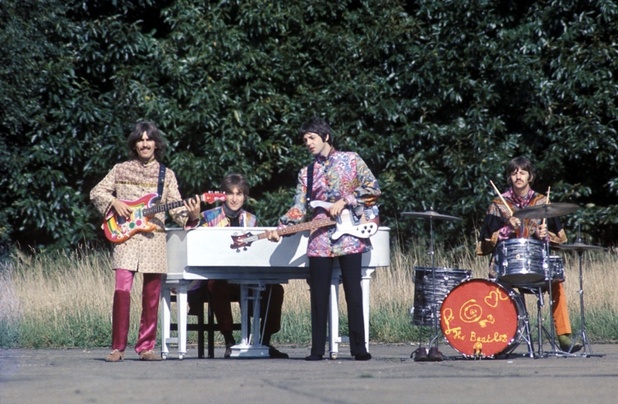





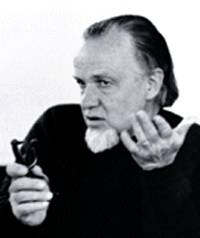


 The Daily Hatch