Category Archives: Francis Schaeffer

FRANCIS SCHAEFFER ANALYZES ART AND CULTURE Part 117 THE BEATLES, Breaking down the song WITHIN YOU WITHOUT YOU Part B (Featured artist is Emma Amos )


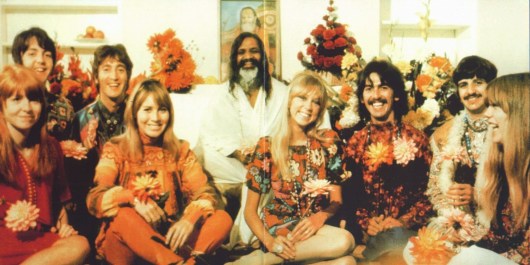
The Beatles were searching hard for meaning in life and one of their stops along the way was Eastern Religion.

Here is a good review of the episode 016 HSWTL The Age of Non-Reason of HOW SHOULD WE THEN LIVE?, December 23, 2007:

Together with the advent of the “drug Age” was the increased interest in the West in  the religious experience of Hinduism and Buddhism. Schaeffer tells us that: “This grasping for a nonrational meaning to life and values is the central reason that these Eastern religions are so popular in the West today.”  Drugs and Eastern religions came like a flood into the Western world.  They became the way that people chose to find meaning and values in life.  By themselves or together, drugs and Eastern religion became the way that people searched inside themselves for ultimate truth.

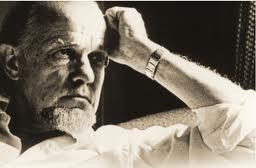
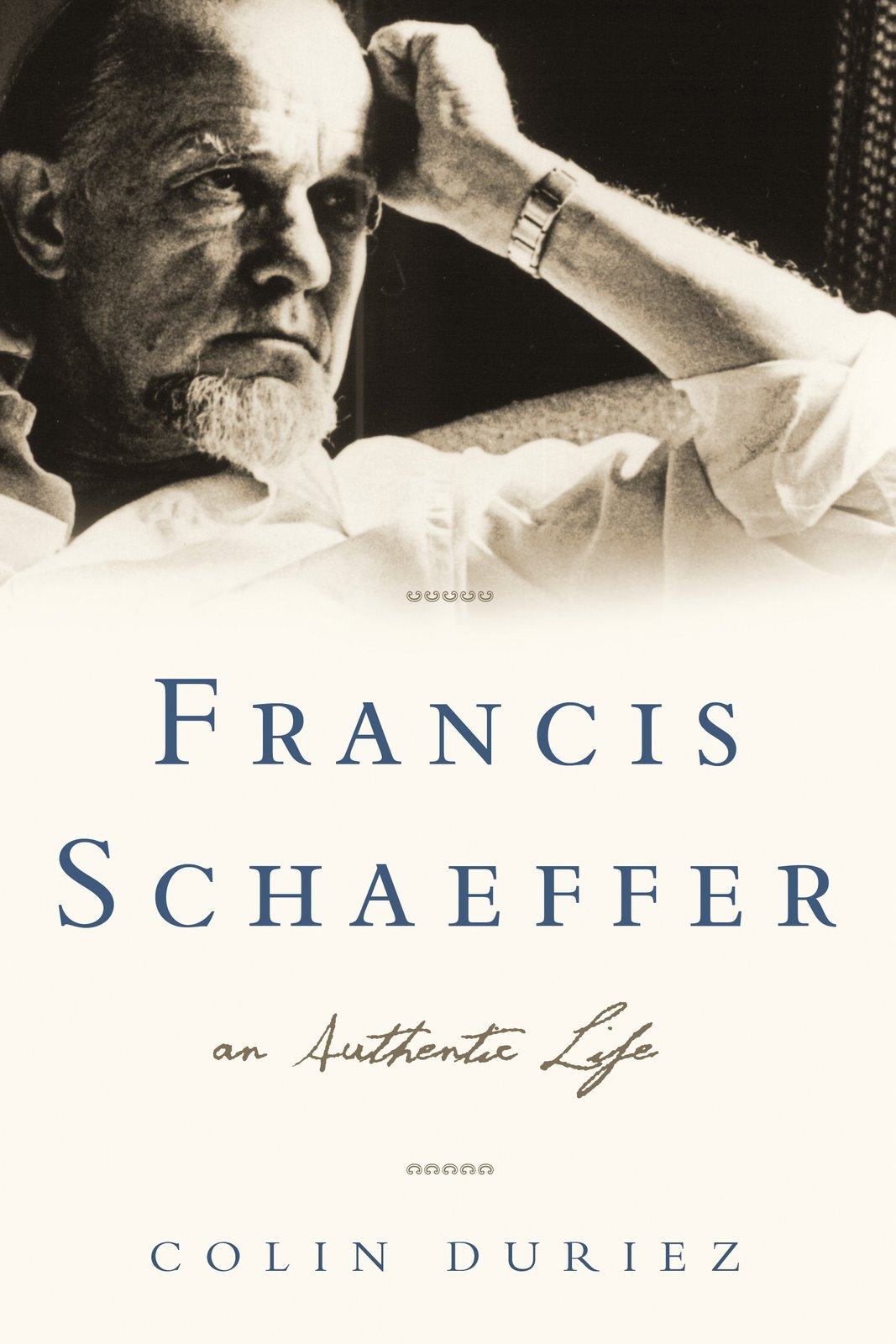
(Francis Schaeffer pictured below)

Along with drugs and Eastern religions there has been a remarkable increase “of the occult appearing as an upper-story hope.”  As modern man searches for answers it “many moderns would rather have demons than be left with the idea that everything in the universe is only one big machine.”  For many people having the “occult in the upper story of nonreason in the hope of having meaning” is better than leaving the upper story of nonreason empty. For them horror or the macabre are more acceptable than the idea that they are just a machine.

Oasis – Within You Without You [HD]


Francis Schaeffer in his book HOW SHOULD WE THEN LIVE? gives us some insight into a possible answer to that question:

The younger people and the older ones tried drug taking but then turned to the eastern religions. Both drugs and the eastern religions seek truth inside one’s own head, a negation of reason. The central reason of the popularity of eastern religions in the west is a hope for a nonrational meaning to life and values. The reason the young people turn to eastern religion is simply the fact as we have said and that is that man having moved into the area of nonreason could put anything up there and the heart of the eastern religions  is a denial of reason just exactly as the idealistic drug taking was. So the turning to the eastern religions today fits exactly into the modern existential  methodology, the existential thinking of modern man, of trying to find some optimistic hope in the area of nonreason when he has given up hope on a humanistic basis of finding any kind of unifying answer to life, any meaning to life in the answer of reason. 

An article calledHoly Wars” was based on Francis Schaeffer’s writings primarily and it noted:

Then came the Beatles. John Lennon had declared that his group was more popular than Jesus. But they weren’t willing to stop there. They sought to supplant the true God with everything false. After the rock icons returned from India they brought with them not only the music of the Hindu guru Ravi Shankar, but also his religion as taught by the Maharishi Mahesh Yogi. They were so impressed with that guru’s Transcendental Meditation woo woo that they just had to convert the whole Western World to it. The counterculturalists took it all in, hook line and sinker.


“Within You Without You”

We were talking about the space between us all
And the people who hide themselves behind a wall of illusion
Never glimpse the truth, then it’s far too late, when they pass away
We were talking about the love we all could share
When we find it, to try our best to hold it there with our love
With our love, we could save the world, if they only knewTry to realise it’s all within yourself
No one else can make you change
And to see you’re really only very small
And life flows on within you and without youWe were talking about the love that’s gone so cold
And the people who gain the world and lose their soul
They don’t know, they can’t see, are you one of them?When you’ve seen beyond yourself then you may find
Peace of mind is waiting there
And the time will come when you see we’re all one
And life flows on within you and without you

Francis Schaeffer has correctly argued:

The universe was created by an infinite personal God and He brought it into existence by spoken word and made man in His own image. When man tries to reduce [philosophically in a materialistic point of view] himself to less than this [less than being made in the image of God] he will always fail and he will always be willing to make these impossible leaps into the area of nonreason even though they don’t give an answer simply because that isn’t what he is. He himself testifies that this infinite personal God, the God of the Old and New Testament is there. 

Instead of making a leap into the area of nonreason the better choice would be to investigate the claims that the Bible is a historically accurate book and that God created the universe and reached out to humankind with the Bible. Below is a piece of that evidence given by Francis Schaeffer concerning the accuracy of the Bible.

Below is a piece of that evidence given by Francis Schaeffer concerning the accuracy of the Bible.

TRUTH AND HISTORY (chapter 5 of WHATEVER HAPPENED TO THE HUMAN RACE?, under footnote #96)

Now we should Now we should turn to one of the most spectacular of modern archaeological discoveries, Ebla. While digging on an extensive mound forty-four miles south of Aleppo in Syria in 1974/75, an Italian archaeological expedition came across another of the vast libraries to which we referred earlier. A small room within the palace suddenly yielded up a thousand tablets and fragments, while another not far away a further fourteen thousand. There lay row upon row, just where they had fallen from the burning wooden shelves when the palace was destroyed about 2250 B.C.

What secrets did these tablets reveal? Without wishing to seem unnecessarily repetitive, we can say immediately that Ebla represents yet another discovery from the ancient past which does not make it harder for us to believe the Bible, but quite the opposite. And remember, these tablets date from well before the time of Abraham. The implications of this discovery will not be exhausted by even the turn of this century. The translation and publication of such a vast number of tablets will take years and years. It is important to understand that the information we now have from Ebla does not bear directly upon the Bible. As far as has been discovered, there is no certain reference to individuals mentioned in the Bible, though many names are similar, for example, Ishmael, Israel, and so forth. Biblical place names like Megiddo, Hazor, Lachish are also referred to. What is clear, however, is that certain individuals outside the Bible who previously had been considered fictitious by the critical scholars, simply because of their antiquity, are now quite definitely historic characters.

For example, the Assyrian King Tudiya (approximately 2500 B.C.) had already been known from the Assyrian king list composed about 1000 B.C. His name appeared at the head of the list, but his reality was dismissed by many scholars as “free invention, or a corruption.”  In fact, he was very much a real king of Ebla. Thus, the genealogical tradition of the earlier parts of the Assyrian king list has been vindicated. It preserves faithfully, over a period of 1,500 years, the memory of real, early people who were Assyrian rulers. What we must learn from this is that when we find similar material in the Old Testament, such as the genealogical list in Genesis 7 or the patriarchal stories, we should be careful not to reject them out of hand, as the scholars have so often done. We must remember that these ancient cultures were just as capable of recording their histories as we are.

The most important aspect of the Ebla discoveries is undoubtedly their language. This has been found to be ancient West-Semitic language to which such languages as Hebrew, Canaanite, Ugaritic, Aramaic, and Moabite are related. Thus we have now, for the first time, the whole “tradition” of West-Semitic language stretching over 2,500 years–something which was previously true only of Egyptian and Akkadian, to which Babylonian and Assyrian belong.

Up until quite recently, therefore, this meant that scholars could argue that many words which appeared in the Hebrew Old Testament were what they called “late.” What they meant by this was that these words indicated a much later authorship than the time stated by the text itself. It would be as if one of us pretended to write a sixteenth-century  book using such modern words as AUTOMOBILE and COMPUTER. In the case of the Pentateuch, for example, this was one of the arguments which led some scholars to suggest that it was not Moses who wrote these books, as the Bible says, but anonymous scribes from approximately 1,000 years later. The discoveries at Ebla have shown that many of these words were not late, but very early. Here is yet another example of a claimed “scientific” approach that merely reflects the philosophical prejudices of the scholars involved.

The Bible and Archaeology – Is the Bible from God? (Kyle Butt 42 min)

 
Archaeology Confirms The Biblical Account

        Oftentimes people are not told about the archaeological discoveries that document the truths written in the Bible. We are told that science and the Bible disagree. But as is really the case: True science and the Bible do not contradict each other. We supply many short articles which show that archaeology confirms God’s Written Word, The Bible.

        The below articles are excerpted from various Archaeological trade journals and publications including Light on Archaeology magazine, and Associates for Biblical Research.

Archaeology: The study of human antiquities – usually as
discovered by excavation.  (Chambers English Dictionary)

Below we supply articles from the Associates for Biblical Research and Light on Archaeology to point the reader to the wealth of information that has literally been unearthed by the spades of patient, dedicated people which helps to confirm the historical accuracy of the Bible – God’s Word. Many sights exist in the lands mentioned in the Bible where artifacts of many kinds reveal the life and customs of the people who lived there many centuries earlier.

The Bible has been ridiculed and dismissed in recent times as inaccurate and unreliable. However, students of Biblical Archaeology have found that as the science of archaeology becomes more sophisticated, much more evidence is coming to light regularly that says just the opposite! Finds have been made that show us how historically accurate God’s Word really is.

For those of us who have been privileged to visit Israel – God’s Land, it is thrilling to look down and examine the shaft that Joab climbed up to take the city of Jebus (later Jerusalem) for King David.[2 Sam 5.7-9 : 1 Chron 11.5-7] It is exciting to wade through King Hezekiah’s tunnel, from the spring of Gihon to the pool of Siloam (Silwan). [2 Kings 20.20] It is fascinating to examine the actual scrolls found at Qumram by the Dead Sea and to walk around the Citadel of Jerusalem; the remains of Herod’s fortress palace where Christ was paraded, mocked and then condemned by Pilate.[ Luke 23.1-25] All of these places give us visible evidence of the accuracy of the Biblical record.

The following series of articles are only a small sample of the information available, but, hopefully, the object will be achieved to direct the reader to further studies of the deeper truths revealed in the Bible.

So with your Bible in hand, you are invited to examine the evidence to see whether the work of the archaeologist confirms or denies God’s Word.

NOTE:  We supply the below articles with the gracious permission of Bible Archeology.  They also provide a free magazine as well, the address for signing up for that is supplied at the end of this study.

TEL MARDIKH: Have you heard of the Empire of Ebla? It is not surprising if you have not – for modern history text books make no references to this kingdom, which existed from approximately 2,300 B.C. to 1,700 B.C.

In fact, only students of ancient Middle East history are likely to have come across the name of Ebla, and even then, only in passing – not realizing the extent and power of this empire which stretched around the shores of the eastern Mediterranean for nearly 600 years. Now the re-writing of our history books will again be necessary to fill the gaps in our knowledge of the past; for there has been a remarkable archaeological discovery in Syria between Aleppo and Damascus, on the site of Tel Mardikh.

On this site of a 4,000 year old fortification, perhaps the most remarkable ‘find’ of the century has been uncovered – 18,000 fired clay and rock tablets relating to the economy, administration and international dealings of this once great empire of Ebla.

Popular history of the third millennium B.C. is taught with little regard for the Biblical account of the customs, manners, social behavior and level of education of the people of this period.

Now for the first time it appears that there exists a record contemporary with the Biblical account of the times, and so different is the picture it reveals from that of accepted historical suppositions, that the linguist in charge of the tablets, Dr Pettinato, has claimed that this discovery calls for a fundamental revision of third millennium B.C. culture and history.

The tablets were discovered in some out-buildings of a palace situated within the vast fortifications around the top of the tel. Many of the buildings, due to their solid roofs of some two feet in thickness, are intact and free of debris. Most of the walls are plastered a gray-green color, with murals in good condition. The two rooms in which the tablets were discovered had been shelved with wood but, due to time and the weight of the tablets, this shelving had collapsed with some breakages; but the tablets, many containing 3,000 lines of cuneiform writing, are in readable condition.

The tablets tell of an ’empire’ and names many areas under the control of Ebla, such as Sinai, Assyria, Lebanon, Cyprus, Carchemish, Lachish, Gaza, Hazor and others. Bible students will readily recognize that many of these names appear in the Old Testament record and it is interesting to note that of the three languages of the tablets, an hitherto unknown tongue, closely resembling Hebrew is prevalent and many common names recorded by the people of Ebla are easily recognizable to Bible readers.

  • AB-RA-MU – (ABRAM)
  • E-SA-UM – (ESAU)
  • IS-MA-EL – (ISHMAEL)
  • IS-RA-EL – (ISRAEL)
  • MI-KA-EL – (MICHAEL)
  • MI-KA-YAH – (MICAIAH)
  • YE-RU-SA-LU-UM – (JERUSALEM)

Further, many common Ebla words are the same as Hebrew, such as ‘and’ (WA), ‘perfect’ (TAMMIN), ‘fall’ (NAPAL) and ‘good’ (TOB).

But perhaps most interesting of all are the quite extensive descriptions of the Creation and of the Flood, so often derided by modern historians.

The tablets are being translated and published and their contents will be invaluable in enlarging our understanding of the world of 2,000 BC; for they reveal a sophisticated system of international and civil law, including treaties of trade between Ebla and her neighbors within the framework of political agreements. These have been likened to the present-day Treaty of Rome between the EC members.

In addition, long lists of zoological, geographic and mathematical material have been found and there are weather forecasts in some meteorological texts. Records were made of visiting Mesopotamian scribes and mathematicians.

Proverbs and literary works are also preserved, including a set of bilingual tablets for the purpose of teaching translation, besides thousands of matching words. There seems no doubt that the tablets of Tel Mardikh contain the worlds oldest vocabulary lists – a source of no little consternation to students of ancient languages; for it is widely held that Biblical Hebrew is an evolved language, used during the first millennium BC Isaiah, the Hebrew prophet however, had indicated that his language was ‘the language of Canaan’, [Isaiah 19v18] and the Tel Mardikh tablets now support the Biblical reference – Hebrew has now to be recognized as one of the world’s oldest languages (and perhaps the language spoken by Noah, Canaan being the grandson of Noah through Ham). [ Genesis 10v6]

Interesting for Bible students is the fact that the Bible records that Abram, together with his father Terah, left the city of Ur in southern Mesopotamia to go into Canaan. They traveled as far as Haran and dwelt there. [Genesis 11v31,32] Haran was some 300 miles north east from the site at Tell Mardikh and appears to be named after Haran, Abram’s brother. [ Genesis 11v27 ] On his journey to Canaan, Abram in all probability, passed through Tel Mardikh, the then centre of trade and commerce, and of course, the language of Abram would be that of Ebla and of Canaan.

The other two languages written in cuneiform and discovered at Tel Mardikh are Sumerian and Akkadian. It had previously been assumed that the earliest cuneiform languages, were these two languages, developed in east and south Mesopotamia and the possibility that Syrian and Canaanite communications existed in cuneiform had been ruled out (with the exception of Ugaritic texts). But the Tel Mardikh tablets now reveal Sumerian scripts pre-dating those found in eastern Mesopotamia – throwing accepted theories of language origins to the winds. The Akkadian scripts found at Tel Mardikh refer mainly to the later period of the history of Ebla. One of the deities worshipped at Mardikh was Marduk or the Merodak of the Bible. It appears to be basically the same name as Nimrod, the ‘mighty hunter before the Lord’ mentioned in Genesis 10v9 Nimrod, who founded the city of Babel, appears to have been deified and the cult continued long after Ebla had ceased. The main consonants of Nimrod are M R D, hence:

  • N i M R o D
  • M a R D ikh
  • M e R o D ak

Tel Mardikh was then the place of worship for Mardikh.

The finds of Tel Mardikh and the Empire of Ebla, so far have only revealed confirmation of the scriptural narrative.


From Hinduism to Christianity

Article ID: DH121 | By: Dr. Mahendra P. Singhal

Growing up in an orthodox Hindu home is to enjoy limited freedoms — spiritually speaking. It was more than true in my case. I was raised in a rigidly structured and despotically ruled Hindu home with well-preserved traditions, well developed customs, and well-formulated expectations, along with, of course, a great deal of love, understanding, and exhortation. In spite of all the outward appearances of “peace” in our home, I used to sense tension and dissatisfaction with situations as they used to erupt from time to time. Each new episode was a note of despair in the chorus of our miserable lives. Each chord echoed with an air of helplessness which used to permeate every phase of our lives in our simple home. I distinctly remember being told, over and over again, that all our unhappiness was because of our karma coupled with the wrath of the gods against our family. I could not understand what we had done to deserve this and what could be done to change it, and my father would not allow me to speak of it. We went through the usual visits to the temples of various gods on set days in the year. I remember walking, sometimes riding a tonga (horse-driven vehicle), a long way to reach a particular temple of Shiva, one of the three primary Hindu gods. The idol of Shiva was frightening to behold. He was shown sitting on top of the world, holding human skulls in his hands, with water running from his hair and his eyes staring at you with a dreadful message: Worship me or you will be destroyed. The idol, decked with flowers, was always smeared with oil and red color. The total effect was to create a feeling of foreboding and fear. You came away from the temple fearing what the future might hold and wishing, without any substantive hope, that all will be well and that he — Shiva — would be content with you. I was never comfortable in the temple. The picture of Shiva used to haunt me for days after the pilgrimage. There was another god who was worshipped once a year in our home.

This was Ganesha, the god with the head of an elephant and the body of a man. This god is supposed to be extremely beneficial. A son of Shiva, he is reverenced for averting dangers. We used to buy a new clay model of the god each year, and worship him on the appointed day, according to the family’s traditions. It was on one of Ganesha’s celebrations that I became very disturbed about our gods and our obeisance to them. I distinctly recall the occasion. Sweets had been offered to Ganesha. We had been asked to close our eyes and pray for his blessings upon the home. I do not know why but I could not close my eyes. I was horrified to see a small mouse descend upon the offerings which had been placed before the god and Ganesha was unable to control this tiny creature. “If he cannot protect himself,” I said to myself, “how can he protect this house?” I lost faith in that god on that day; and I believe that my journey to discover the true God began at that event. Two events occurred in rapid succession soon after that experience. One, my father insisted on my receiving training in the Hindu scriptures, especially the Bhagavad Gita, the Vedas, and the others. Secondly, an ad in the local newspaper about a Bible correspondence course led me to begin a study of the Bible. The Vedas and the other books were interesting, but they were decidedly speculative. There were no definite answers.

The Bible, on the other hand, pointed to definite answers. God loves people. God made His love known to people, of His own initiative, when He sent Jesus Christ to the world. A God pleading for me was a mind-boggling mystery. While I was struggling to understand religions and religious ideas, my school work was moving, as it were, along regular channels. After receiving my masters degrees in mathematics and education, I was hired to teach in a Christian boarding school in Mussoorie, India. The school was run by Christian missionary societies to propagate Christian truths to the students who were not necessarily Christians. People attended this school because of its emphasis on academic excellence and because the medium of instruction was English. Proper language was taught, encouraged, and developed. The school needed a mathematics instructor, and the principal, an Australian missionary, was, as he later told me, led to offer me the position in spite of the fact that I was not a Christian. He (and I am grateful for his willingness to listen to the Lord) responded to the leading of the Lord not only in hiring me to teach in that school, but also in witnessing to me — in words, in his separated living, and in his priorities. One of the staff at the school mentioned the sacrificial death of Jesus Christ on the cross to me. “He died,” he stated, “for man to be free from his bondage to sin and to enjoy victorious life forever.” That sounded wonderfully peaceful and achievable, but I dismissed the witness, because, in my opinion, it was too simple. There has to be much more to life than just simple faith in Christ’s death on the cross.

I had been trained to believe, in the words of the Upanishads: “He truly knows Brahman who knows him as beyond knowledge; he who thinks that he knows, knows not.” I had been led to believe in searching for answers, and I had been taught that such a search could take many, many lives. Sages had attempted to discover the truth and the reality of Brahman for centuries, but without any success. I was under the conviction that real truth is found within oneself. God and man are essentially one. Separation comes from being born in this illusory world which catches man in its embrace and entices him away from finding the true meaning of life and existence. Deliverance is impossible unless one renounces the allurements of this world. I had been trained to believe that God is unknowable, and therefore, beyond the reach of man. And here was Jesus Christ, hanging on the cross, bleeding to death at the hands of Roman soldiers, declaring his forgiveness for their crass brutalities — God searching for man and not man looking for God within himself. There was another dimension to my dilemma. Coming from the family I did, my acceptance of Jesus Christ would make my parents lose their social respect and position in the whole community. My brothers and sister would suffer disgrace. That, too, was unthinkable. Even though I was working away from home in a different environment, I did not really feel free to make my own decisions. I tried to talk to some of the missionaries about my predicaments. They could not understand the heavy cultural factors.

They felt that one should simply make a decision to follow Jesus Christ and that is all that really matters. Some missionaries were totally ignorant of Hindu traditions and the social implications which they impose on people. They dismissed my arguments as inconsequential. I was not ready to buy the argument that we live, and therefore die, only for ourselves, by ourselves. The endless debate would have continued, I am sure, if I had not met Major Ian Thomas of the Torchbearers of England, who was holding meetings in a church in Mussoorie. He took the time to listen to my hesitations, my arguments, and my analysis. He, with great sensitivity and keen insight, explained the claims of Jesus Christ on my life. “Jesus Christ,” he explained, “will enable you to solve your dilemmas after you accept Him. He will be on your side.” Major Thomas did not lead me to the final surrender but he prepared me for the final outcome. I knew, after spending almost five hours with him, what I had to do. There was no denying the fact that Christ had been calling me to accept Him as my personal Savior and to follow Him — irrespective of the cost. The call was extremely personal and urgent. I mused about the possibilities for a few more days.

However, I could not get rid of pressures which were continuing to increase. I could sense that a decision had to be made. I turned to Jesus Christ on July 16, 1963 at 2:00 a.m. in my bedroom — all by myself. He became my Savior. Praise His wonderful name!! I had not counted on the cost which was to be paid for the decision, however. I expected rejection and humiliation from my friends and relatives. I even expected some mockery from some of them, but I was not ready for what came my way after my conversion: my own family disowned me. I was no longer a part of the biological family in which I had been born. My friends shunned me. They began to avoid me as if I had contracted some dreadful contagious disease. With all the pains and burdens, with all the loneliness, and with all the struggles, I am nonetheless determined to follow the Lord. He is my answer, my salvation, my friend. As Major Thomas assured me, He has never failed me; He has always been there — to help, to direct. I am not following an idea, a creed, or a philosophy; I am not searching for an inner revelation; I am not working for a final deliverance. No, I am following Jesus Christ, who is the final revelation, the total deliverance.

Dr. Singhal is the chairman of Hinduism International Ministries, Post Office Box 602, Zion, IL 60099-060

_

Image result for beatles

The Beatles – In my Life

Published on Feb 25, 2011

Image result for beatles

Here Comes The Sun – The Beatles Tribute

Not sung by George but good nonetheless!!

Image result for beatles

The Beatles – Revolution

Published on Oct 20, 2015
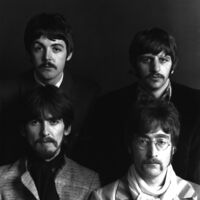
Image result for beatles
_

Today’s featured artist is Emma Amos

Emma Amos: Action Lines

Biography

Painter, printmaker, and weaver Emma Amos was born in 1938 and grew up in Atlanta, Georgia, where her parents owned a drugstore. She began painting and drawing when she was six. At age sixteen, after attending segregated public schools in Atlanta, she entered the five-year program at Antioch University in Yellow Springs, Ohio. She spent her fourth year abroad at the London Central School of Art, studying printmaking, painting, and weaving. After receiving a BA from Antioch, she returned to the Central School to earn a diploma in etching in 1959.

Amos’s first solo exhibition was in an Atlanta gallery in 1960. In that same year she moved to New York, where she taught as an assistant at the Dalton School and continued her work as an artist by making prints. In 1961 she was hired by Dorothy Liebes as a designer/weaver, creating rugs for a major textile manufacturer. In 1964 she entered a master’s program in Art Education at New York University. During this time Hale Woodruff invited her to become a member of Spiral, a group of black artists that included Romare Bearden, Norman Lewis, and Charles Alston. She was the group’s youngest and only female member.

She married Bobby Levine in 1965 and received her MA in 1966. She had a son, Nicholas, in 1967, and her daughter, India, followed three years later. While the children were small, Amos focused on sewing, weaving, quilting, and doing illustrations forSesame Street magazine. In 1974 she began teaching at the Newark School of Fine and Industrial Arts, and in 1977 she developed and cohosted (with Beth Gutcheon)Show of Hands, a crafts show for WGBH Educational TV in Boston, which ran for two years.

In 1980, Amos was hired as an assistant professor at the Mason Gross School of Art, Rutgers University. She earned tenure in 1992, was later promoted to Professor II, and served as chair of the department from 2005 to 2007. She continued teaching there until she retired in June 2008.

Amos’s work has been exhibited internationally and is included in the collections of the Museum of Modern Art, the Wadsworth Atheneum, the New Jersey and Minnesota state museums, and the Dade County and Newark museums. She has won prestigious awards and grants.

She continues to create work in her studio in NoHo, New York City. She lectures and participates in symposiums, and shows the work nationally. Emma Amos also serves on the Board of Governors of Skowhegan and in the National Academy Museum.

Related posts:

Image result for sergent peppers album cover

Francis Schaeffer’s favorite album was SGT. PEPPER”S and he said of the album “Sergeant Pepper’s Lonely Hearts Club Band…for a time it became the rallying cry for young people throughout the world. It expressed the essence of their lives, thoughts and their feelings.”  (at the 14 minute point in episode 7 of HOW SHOULD WE THEN LIVE? ) 

Image result for francis schaeffer how should we then live

How Should We Then Live – Episode Seven – 07 – Portuguese Subtitles

Francis Schaeffer
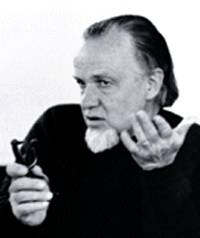
Image result for francis schaeffer

______

FRANCIS SCHAEFFER ANALYZES ART AND CULTURE PART 202 the BEATLES’ last song FREE AS A BIRD (Featured artist is Susan Weil )

February 15, 2018 – 1:45 am

FRANCIS SCHAEFFER ANALYZES ART AND CULTURE Part 200 George Harrison song HERE ME LORD (Featured artist is Karl Schmidt-Rottluff )

FRANCIS SCHAEFFER ANALYZES ART AND CULTURE PART 184 the BEATLES’ song REAL LOVE (Featured artist is David Hammonds )

FRANCIS SCHAEFFER ANALYZES ART AND CULTURE Part 170 George Harrison and his song MY SWEET LORD (Featured artist is Bruce Herman )

FRANCIS SCHAEFFER ANALYZES ART AND CULTURE Part 168 George Harrison’s song AWAITING ON YOU ALL Part B (Featured artist is Michelle Mackey )

FRANCIS SCHAEFFER ANALYZES ART AND CULTURE Part 167 George Harrison’s song AWAITING ON YOU Part A (Artist featured is Paul Martin)

RESPONDING TO HARRY KROTO’S BRILLIANT RENOWNED ACADEMICS!! Part 133 Louise Antony is UMass, Phil Dept, “Atheists if they commit themselves to justice, peace and the relief of suffering can only be doing so out of love for the good. Atheist have the opportunity to practice perfect piety”

FRANCIS SCHAEFFER ANALYZES ART AND CULTURE Part 166 George Harrison’s song ART OF DYING (Featured artist is Joel Sheesley )

FRANCIS SCHAEFFER ANALYZES ART AND CULTURE Part 165 George Harrison’s view that many roads lead to Heaven (Featured artist is Tim Lowly)

FRANCIS SCHAEFFER ANALYZES ART AND CULTURE Part 164 THE BEATLES Edgar Allan Poe (Featured artist is Christopher Wool)

PART 163 BEATLES Breaking down the song LONG AND WINDING ROAD (Featured artist is Charles Lutyens )

FRANCIS SCHAEFFER ANALYZES ART AND CULTURE PART 162 A look at the BEATLES Breaking down the song ALL WE NEED IS LOVE Part C (Featured artist is Grace Slick)

PART 161 A look at the BEATLES Breaking down the song ALL WE NEED IS LOVE Part B (Featured artist is Francis Hoyland )


FRANCIS SCHAEFFER ANALYZES ART AND CULTURE PART 160 A look at the BEATLES Breaking down the song ALL WE NEED IS LOVE Part A (Featured artist is Shirazeh Houshiary)

FRANCIS SCHAEFFER ANALYZES ART AND CULTURE Part 159 BEATLES, Soccer player Albert Stubbins made it on SGT. PEP’S because he was sport hero (Artist featured is Richard Land)

FRANCIS SCHAEFFER ANALYZES ART AND CULTURE Part 158 THE BEATLES (breaking down the song WHY DON’T WE DO IT IN THE ROAD?) Photographer Bob Gomel featured today!

FRANCIS SCHAEFFER ANALYZES ART AND CULTURE Part 118 THE BEATLES (Why was Tony Curtis on cover of SGT PEP?) (Feature on artist Jeffrey Gibson )

FRANCIS SCHAEFFER ANALYZES ART AND CULTURE Part 117 THE BEATLES, Breaking down the song WITHIN YOU WITHOUT YOU Part B (Featured artist is Emma Amos )

FRANCIS SCHAEFFER ANALYZES ART AND CULTURE Part 67 THE BEATLES (Part Q, RICHES AND LUXURIES NEVER SATISFIED THE BEATLES! ) (Feature on artist Derek Boshier )

_____________ The Beatles were looking for lasting satisfaction in their lives and their journey took them down many of the same paths that other young people of the 1960’s were taking. No wonder in the video THE AGE OF NON-REASON Schaeffer noted,  ” Sergeant Pepper’s Lonely Hearts Club Band…for a time it became the rallying cry for young people throughout […]

FRANCIS SCHAEFFER ANALYZES ART AND CULTURE Part 66 THE BEATLES (Part P, The Beatles’ best song ever is A DAY IN THE LIFE which in on Sgt Pepper’s!) (Feature on artist and clothes designer Manuel Cuevas )

  SGT. PEPPER’S LONELY HEARTS CLUB BAND ALBUM was the Beatles’ finest work and in my view it had their best song of all-time in it. The revolutionary song was A DAY IN THE LIFE which both showed the common place part of everyday life and also the sudden unexpected side of life.  The shocking […]

FRANCIS SCHAEFFER ANALYZES ART AND CULTURE Part 65 THE BEATLES (Part O, The 1960’s SEXUAL REVOLUTION was on the cover of Sgt. Pepper’s!) (Featured artist is Pauline Boty)

_ The Beatles wrote a lot about girls!!!!!! The Beatles – I Want To Hold your Hand [HD] The Beatles – ‘You got to hide your love away’ music video Uploaded on Nov 6, 2007 The Beatles – ‘You got to hide your love away’ music video. The Beatles – Twist and Shout [live] THE […]

FRANCIS SCHAEFFER ANALYZES ART AND CULTURE Part 64 THE BEATLES (Part P The Meaning of Stg. Pepper’s song SHE’S LEAVING HOME according to Schaeffer!!!!) (Featured artist Stuart Sutcliffe)

__________ Melanie Coe – She’s Leaving Home – The Beatles Uploaded on Nov 25, 2010 Melanie Coe ran away from home in 1967 when she was 15. Paul McCartney read about her in the papers and wrote ‘She’s Leaving Home’ for Sgt.Pepper’s. Melanie didn’t know Paul’s song was about her, but actually, the two did […]

FRANCIS SCHAEFFER ANALYZES ART AND CULTURE Part 63 THE BEATLES (Part O , BECAUSE THE BEATLES LOVED HUMOR IT IS FITTING THAT 6 COMEDIANS MADE IT ON THE COVER OF “SGT. PEPPER’S”!) (Feature on artist H.C. Westermann )

__________________ A Funny Press Interview of The Beatles in The US (1964) Funny Pictures of The Beatles Published on Oct 23, 2012 funny moments i took from the beatles movie; A Hard Days Night ___________________ Scene from Help! The Beatles Funny Clips and Outtakes (Part 1) The Beatles * Wildcat* (funny) Uploaded on Mar 20, […]

FRANCIS SCHAEFFER ANALYZES ART AND CULTURE Part 62 THE BEATLES (Part N The last 4 people alive from cover of Stg. Pepper’s and the reason Bob Dylan was put on the cover!) (Feature on artist Larry Bell)

_____________________ Great article on Dylan and Sergeant Pepper’s Lonely Hearts Club Band Cover: A famous album by the fab four – The Beatles – is “Sergeant peppers lonely hearts club band“. The album itself is one of the must influential albums of all time. New recording techniques and experiments with different styles of music made this […]

FRANCIS SCHAEFFER ANALYZES ART AND CULTURE Part 61 THE BEATLES (Part M, Why was Karl Marx on the cover of Stg. Pepper’s?) (Feature on artist George Petty)

__________________________ Beatles 1966 Last interview 69 THE BEATLES TWO OF US As a university student, Karl Marx (1818-1883) joined a movement known as the Young Hegelians, who strongly criticized the political and cultural establishments of the day. He became a journalist, and the radical nature of his writings would eventually get him expelled by the […]

FRANCIS SCHAEFFER ANALYZES ART AND CULTURE Part 60 THE BEATLES (Part L, Why was Aleister Crowley on the cover of Stg. Pepper’s?) (Feature on artist Jann Haworth )

____________ Aleister Crowley on cover of Stg. Pepper’s: _______________ I have dedicated several posts to this series on the Beatles and I don’t know when this series will end because Francis Schaeffer spent a lot of time listening to the Beatles and talking and writing about them and their impact on the culture of the 1960’s. […]

FRANCIS SCHAEFFER ANALYZES ART AND CULTURE Part 59 THE BEATLES (Part K, Advocating drugs was reason Aldous Huxley was on cover of Stg. Pepper’s) (Feature on artist Aubrey Beardsley)

(HD) Paul McCartney & Ringo Starr – With a Little Help From My Friends (Live) John Lennon The Final Interview BBC Radio 1 December 6th 1980 A young Aldous Huxley pictured below: _______   Much attention in this post is given to the songs LUCY IN THE SKY WITH DIAMONDS and TOMORROW NEVER KNOWS which […]

FRANCIS SCHAEFFER ANALYZES ART AND CULTURE Part 58 THE BEATLES (Part J, Why was Carl Gustav Jung on the cover of Stg. Pepper’s?) (Feature on artist Richard Merkin)

___


______

“Woody Wednesday” ECCLESIASTES AND WOODY ALLEN’S FILMS: SOLOMON “WOULD GOT ALONG WELL WITH WOODY!” (Part 33 MIDNIGHT IN PARIS Picasso painted his worldview but he couldn’t stand the loss of humanness!!! )

Picasso was a genius as a painter but he deliberately painted his secular  worldview of fragmentation on his canvas but he could not live with the loss of humanness and he reverted back at crucial points and painted those he loved with all his genius and with all their humanness!!!

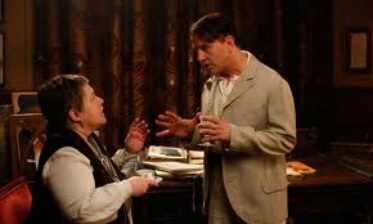
Gertrude Stein (Kathy Bates) and Marical e Fonzo Bo (Picasso) in ‘Midnight in Paris’.

Gertrude Stein painting by Pablo Picasso in Midnight in Paris movie
Gertrude Stein, Pablo Picasso
Movie: Midnight in Paris
added by MG


The Lost Generation A&E Biography. I DO NOT OWN THIS MATERIAL.

Francis Schaeffer pictured below:

How Should We Then Live – Episode 8 – The Age of Fragmentation

File:Monet Poplars on the River Epte.jpg

Francis Schaeffer in the episode, “The Age of Fragmentation,” Episode 8 of HOW SHOULD WE THEN  LIVE? noted:

Monet, Renoir, Camille Pissarro, SisleyDegas were following nature as it has been called in their painting they were impressionists.They painted only what their eyes brought them. But was there reality behind the light waves reaching their eyes? After 1885 Monet carried this to its conclusion and reality tended to become a dream. With impressionism the door was open for art to become the vehicle for modern thought. As reality became a dream, impressionism began to fall apart. These men Cezanne, Van Gogh, Gauguin, Seurat, all great post Impressionists felt the problem, felt the loss of meaning. They set out to solve the problem, to find the way back to reality, to the absolute behind the individual things, behind the particulars, ultimately they failed.
I am not saying that these painters were always consciously painting their philosophy of life, but rather in their work as a whole their worldview was often reflected. Cezanne reduced nature to what he considered its basic geometric forms. In this he was searching for an universal which would tie all kinds of individual things in nature together, but this gave a broken fragmented appearance to his pictures.
File:Paul Cézanne 047.jpg
Les Grandes Baigneuses, 1898–1905: the triumph of Poussinesque stability and geometric balance.
________________________________
In his bathers there is much freshness, much vitality. An absolute wonder in the balance of the picture as a whole, but he portrayed not only nature but also man himself in fragmented form. 
I want to stress that I am not minimizing these men as men. To read van Gogh’s letters is to weep for the pain of this sensitive man. Nor do I minimize their talent as painters. Their work often has great beauty indeed. But their art did become the vehicle of modern man’s view of fractured truth and light. As philosophy had moved from unity to fragmentation so did painting. In 1912 Kaczynski wrote an article saying that in so far as the old harmony, that is an unity of knowledge have been lost, that only two possibilities remained: extreme abstraction or extreme naturalism, both he said were equal.
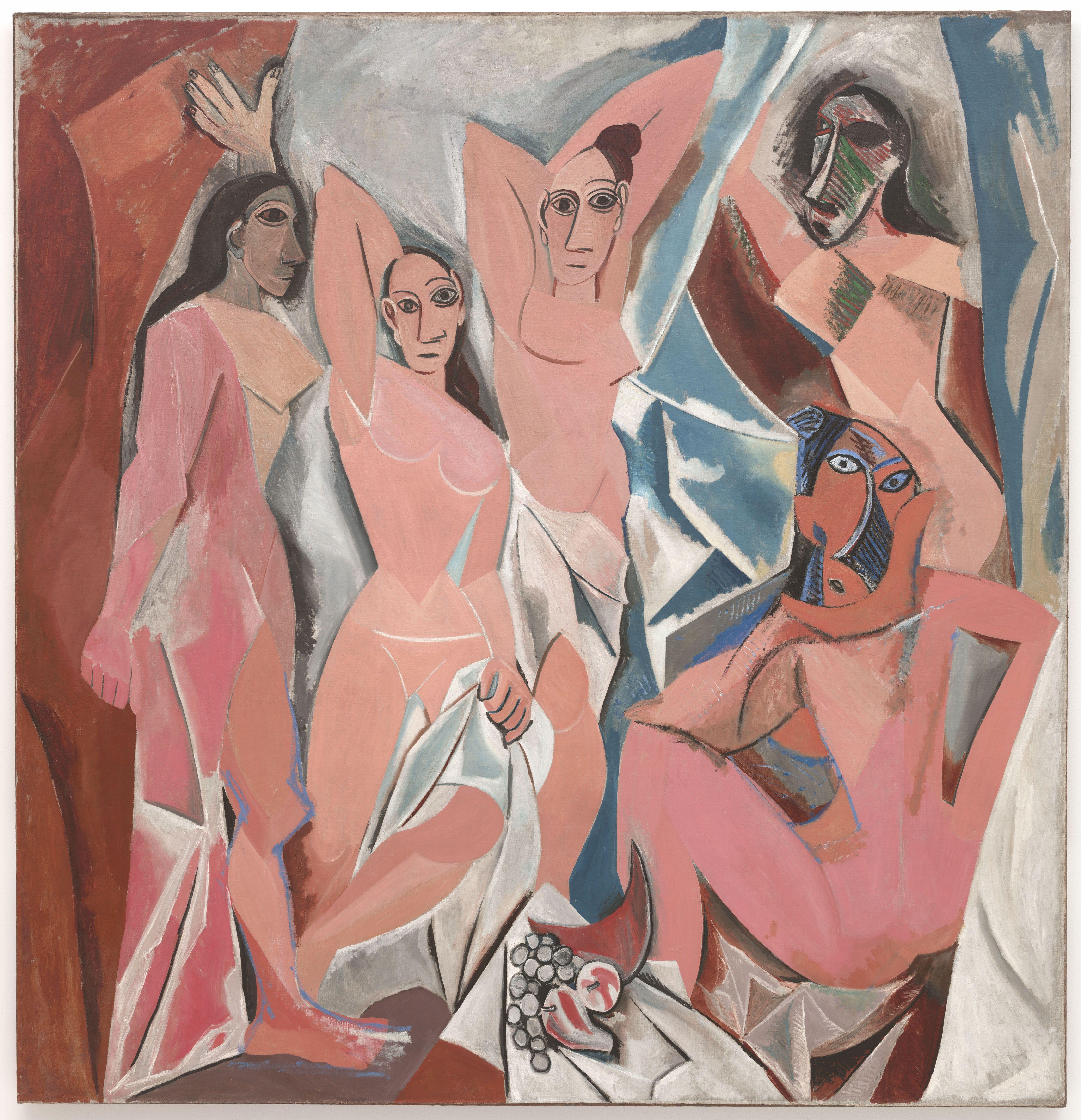
File:Les Demoiselles d'Avignon.jpg
With this painting modern art was born. Picasso painted it in 1907 and called it Les Demoiselles d’Avignon. It unites Cezzanne’s fragmentation with Gauguin’s concept of the noble savage using the form of the African mask which was popular with Parisian art circle of that time. In great art technique is united with worldview and the technique of fragmentation works well with the worldview of modern man. A view of a fragmented world and a fragmented man and a complete break with the art of the Renaissance which was founded on man’s humanist hopes.
Here man is made to be less than man. Humanity is lost. Speaking of a part of Picasso’s private collection of his own works David Douglas Duncan says “Of course, not one of these pictures  was actually a portrait, but his prophecy of a ruined world.”
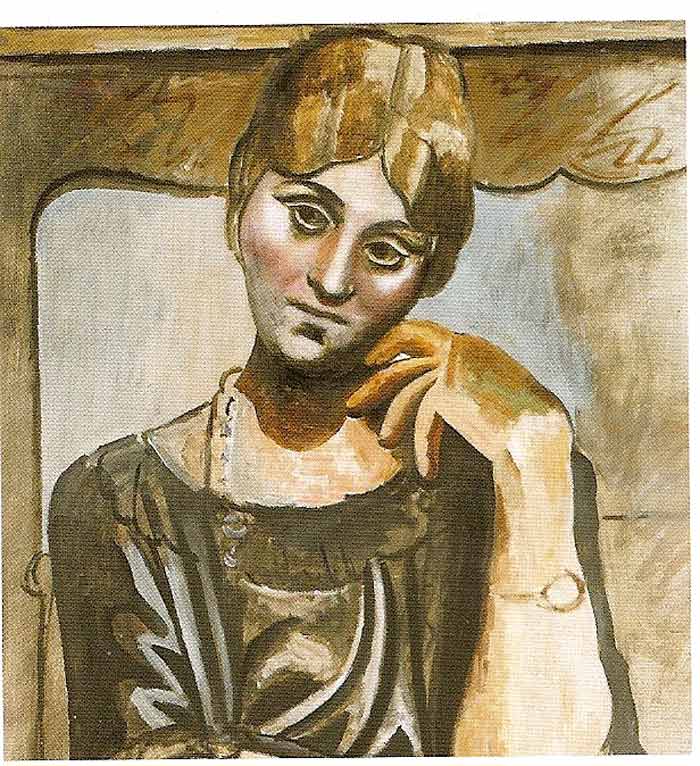
But Picasso himself could not  live  with this loss of the human. When he was in love with Olga and later Jacqueline he did not consistently paint them in a fragmented way. At crucial  points of their relationship he painted them as they really were with all his genius, with all their humanity. When he was painting his own young children he did not use fragmented techniques and presentation. Picasso had many mistresses, but these were the two women he married. It is interesting that Jacqueline kept one of these paintings in her private sitting room. Duncan says of this lovely picture, “Hanging precariously on an old nail driven high on one of La Californie’s (Picasso and Jacqueline’s home) second floor sitting room walls, a portrait of Jacqueline Picasso reigns supreme. The room is her  domain…Painted in oil with charcoal, the picture has been at her side since shortly after she and the maestro met…She loves it and wants in nearby.” 
I want you to understand that I am not saying that gentleness and humanness is not present in modern art, but as the techniques of modern art advanced, humanity was increasingly fragmented–as we shall see, for example, with Marcel Duchamp….The opposite of fragmentation would be unity, and the old philosophic thinkers thought they could bring forth this unity from  the humanist base and then they gave this up.
The modern thinking has accepted fragmentation as a defeat really, a defeat that human mentality beginning from itself can’t bring forth an unity of thought and of life. By unity what we mean is that which would include all of thought and all of life. It can achieved if indeed God has spoken and has not been silent, and in giving us the facts that man could not find for himself, there is an unity inside of which all that marvelous diversity then man can study, has an unified place whether it is knowledge, or in values, and in life.
_______________

Picasso and Olga Khokhlova

Their son Paulo (Paul) was born in 1921 (and died in 1975), influencing Picasso’s imagery to turn to mother and child themes.  Paul’s three children are Pablito (1949-1973), Marina (born in 1951), and Bernard (1959).  Some of the Picassos in this Saper Galleries exhibition are from Marina and Bernard’s  personal Picasso collection.

Pablo Picasso. Portrait of Paul Picasso as a Child.

Portrait of Paul Picasso as a Child. 1923. Oil on canvas.
Collection of Paul Picasso, Paris, France.

In 1917 ballerina Olga Khokhlova (1891-1955) met Picasso while the artist was designing the ballet “Parade” in Rome, to be performed by the Ballet Russe.  They married in the Russian Orthodox church in Paris in 1918 and lived a life of conflict.  She was of high society and enjoyed formal events while Picasso was more bohemian in his interests and pursuits.  Their son Paulo (Paul) was born in 1921 (and died in 1975), influencing Picasso’s imagery to turn to mother and child themes.  Paul’s three children are Pablito (1949-1973), Marina (born in 1951), and Bernard (1959).  Some of the Picassos in this Saper Galleries exhibition are from Marina and Bernard’s  personal Picasso collection.

https://i0.wp.com/www.sapergalleries.com/PicassoOlga.jpg

https://i0.wp.com/www.sapergalleries.com/PicassoOlgaPhoto.jpg

__________

A charming Picasso family portrait:

Picasso’s drawing, Portrait of Francoise, from 1946:

PICASSO COULD NOT LIVE WITH THE LOSS OF HUMANNESS AND HE REVERTED BACK ON OCCASION TO  PAINT THOSE HE LOVED WITH ALL HIS GENIUS AND WITH ALL THEIR HUMANNESS!!!!
 The answer to find meaning in life is found in putting your faith and trust in Jesus Christ. The Bible is true from cover to cover and can be trusted. GOD HAS SPOKEN AND HAS NOT BEEN SILENT, BUT YOU CAN’T JUST CONTINUE TO LOOK FOR ANSWERS JUST “UNDER THE SUN.” 

Q&A: John Richardson on Picasso’s “Uncontrollable” Sex Drive

APRIL 5, 2011 12:00 AM

Right. You can see what sort of look like straps around her body in the painting [which is shown on the opening spread of “Picasso’s Erotic Code”].

Exactly. So his relationships with these women were very different. Take Francoise Gilot, the mother of Claude and Paloma Picasso, who was the mistress from 1944 until 1952. She came from a rich family and was extremely intelligent. When asked why her relationship with Picasso, which had started off so well, had fizzled out, she replied, “Je ne suis pas une femme soumise”—I’m not a submissive woman.

Why do you think he preferred to paint women rather than men? Did he simply find women more interesting as subjects and enjoy their company more as models?

I think it’s way beyond that. Women were all important in his life because he was always apt to associate sex with art: the procreative act with the creative act. Hence the Artist and Model series in which he makes great play with the phallic brush the artist wields on his model as well as in paint on canvas in real life. As for the men in his work, most of them turn out to be self-portraits in one form or another. Time and again he appears as a painter—old or young, bearded or clean-shaven, art student or old master, Renaissance master or contemporary hack. He frequently envisages himself in the bullring as a picador or torero, as well as the bull. He even identifies with Christ. But he identifies above all with the Minotaur, this mythological creature who was half bull and half man, to whom maidens had to be sacrificed. However, Picasso’s Minotaur is not always a monster; on the contrary, he is a poignant creature, a victim like himself of misfortune and tragedy—blinded by fate and love for the little girl—Marie-Thérèse, of course—who leads him around.

Photo taken in 1944 after a reading of Picasso’s play El deseo pillado por la cola: Standing from left to right: Jacques Lacan, Cécile  Éluard, Pierre Reverdy, Louise Leiris, Pablo Picasso, Zanie de Campan, Valentine Hugo, Simone de Beauvoir, Brassaï. Sitting, from left to right: Jean-Paul Sartre, Albert Camus, Michel Leiris, Jean Aubier. Photo by Brassaï. –

Gil Pender in the movie MIDNIGHT IN PARIS regards these gentlemen of the 1920’s as geniuses and they could be compared to what Francis Schaeffer calls the “universal man” of many talents. Francis Schaeffer explains:

Solomon is the author of Ecclesiastes and he is truly an universal man like Leonardo da Vinci.

Two men of the Renaissance stand above all others – Michelangelo and Leonardo da Vinci and it is in them that one can perhaps grasp a view of the ultimate conclusion of humanism for man. Michelangelo was unequaled as a sculptor in the Renaissance and arguably no one has ever matched his talents.

The other giant of the Renaissance period was Leonardo da Vinci – the perfect Renaissance Man, the man who could do almost anything and does it better than most anyone else. As an inventor, an engineer, an anatomist, an architect, an artist, a chemist, a mathematician, he was almost without equal. It was perhaps his mathematics that lead da Vinci to come to his understanding of the ultimate meaning of Humanism. Leonardo is generally accepted as the first modern mathematician. He not only knew mathematics abstractly but applied it in his Notebooks to all manner of engineering problems. He was one of the unique geniuses of history, and in his brilliance he perceived that beginning humanistically with mathematics one only had particulars. He understood that man beginning from himself would never be able to come to meaning on the basis of mathematics. And he knew that having only individual things, particulars, one never could come to universals or meaning and thus one only ends with mechanics. In this he saw ahead to where our generation has come: everything, including man, is the machine.

Leonardo da Vinci compares well to Solomon and they  both were universal men searching for the meaning in life. Solomon was searching for a meaning in the midst of the details of life. His struggle was to find the meaning of life. Not just plans in life. Anybody can find plans in life. A child can fill up his time with plans of building tomorrow’s sand castle when today’s has been washed away. There is  a difference between finding plans in life and purpose in life. Humanism since the Renaissance and onward has never found it and it has never found it. Modern man has not found it and it has always got worse and darker in a very real way.

We have here the declaration of Solomon’s universality in I Kings 4:34, “ And people of all nations came to hear the wisdom of Solomon, and from all the kings of the earth, who had heard of his wisdom.” 

Here is the universal man and his genius. Solomon is the universal man with a empire at his disposal. Solomon had it all.

Ecclesiastes 1:3

English Standard Version (ESV)

What does man gain by all the toil
    at which he toils under the sun?

Schaeffer noted that Solomon took a look at the meaning of life on the basis of human life standing alone between birth and death “under the sun.” This phrase UNDER THE SUN appears over and over in Ecclesiastes. The Christian Scholar Ravi Zacharias noted, “The key to understanding the Book of Ecclesiastes is the term UNDER THE SUN — What that literally means is you lock God out of a closed system and you are left with only this world of Time plus Chance plus matter.” 

Francis Schaeffer asserted:

The universal man, Solomon, beyond our intelligence with an empire at his disposal with the opportunity of observation so he could recite these words here in Ecclesiastes 6:12, “For who knows what is good for a man during his lifetime, during the few years of his futile life? He will spend them like a shadow. For who can tell a man what will be after him under the sun?”

In Ecclesiastes 1:8 he drives this home when he states, “All things are wearisome; Man is not able to tell it. The eye is not satisfied with seeing, Nor is the ear filled with hearing.” Solomon is stating here the fact that there is no final satisfaction because you don’t get to the end of the thing. THERE IS NO FINAL SATISFACTION. This is related to Leonardo da Vinci’s similar search for universals and then meaning in life. 

In the film MIDNIGHT IN PARIS we have Gil meeting Gertrude Stein in her studio where at separate times both Pablo Picasso, and Henri Matisse are present in the 1920’s and in this same film we meet the great artists from the 1880’s such as Henri de Toulouse-LautrecPaul Gauguin, and Edgar Degas, but no matter how brilliant you are there is no escaping the fact that no one can find satisfaction UNDER THE SUN but you have to look ABOVE THE SUN.

By the way, the final chapter of Ecclesiastes finishes with Solomon emphasizing that serving God is the only proper response of man. Solomon looks above the sun and brings God back into the picture (Ecclesiastes 12:13-14).

The movie MIDNIGHT IN PARIS offers many of the same themes we see in Ecclesiastes. The second post looked at the question: WAS THERE EVER A GOLDEN AGE AND DID THE MOST TALENTED UNIVERSAL MEN OF THAT TIME FIND TRUE SATISFACTION DURING IT?

In the third post in this series we discover in Ecclesiastes that man UNDER THE SUN finds himself caught in the never ending cycle of birth and death. The SURREALISTS make a leap into the area of nonreason in order to get out of this cycle and that is why the scene in MIDNIGHT IN PARIS with Salvador Dali, Man Ray, and Luis Bunuel works so well!!!! These surrealists look to the area of their dreams to find a meaning for their lives and their break with reality is  only because they know that they can’t find a rational meaning in life without God in the picture.

The fourth post looks at the solution of WINE, WOMEN AND SONG and the fifth and sixth posts look at the solution T.S.Eliot found in the Christian Faith and how he left his fragmented message of pessimism behind. In the seventh post the SURREALISTS say that time and chance is all we have but how can that explain love or art and the hunger for God? The eighth  post looks at the subject of DEATH both in Ecclesiastes and MIDNIGHT IN PARIS. In the ninth post we look at the nihilistic worldview of Woody Allen and why he keeps putting suicides into his films.

In the tenth post I show how Woody Allen pokes fun at the brilliant thinkers of this world and how King Solomon did the same thing 3000 years ago. In the eleventh post I point out how many of Woody Allen’s liberal political views come a lack of understanding of the sinful nature of man and where it originated. In the twelfth post I look at the mannishness of man and vacuum in his heart that can only be satisfied by a relationship with God.

In the thirteenth post we look at the life of Ernest Hemingway as pictured in MIDNIGHT AND PARIS and relate it to the change of outlook he had on life as the years passed. In the fourteenth post we look at Hemingway’s idea of Paris being a movable  feast. The fifteenth and sixteenth posts both compare Hemingway’s statement, “Happiness in intelligent people is the rarest thing I know…”  with Ecclesiastes 2:18 “For in much wisdom is much vexation, and he who increases knowledge increases sorrow.” The seventeenth post looks at these words Woody Allen put into Hemingway’s mouth,  “We fear death because we feel that we haven’t loved well enough or loved at all.”

In MIDNIGHT IN PARIS Hemingway and Gil Pender talk about their literary idol Mark Twain and the eighteenth post is summed up nicely by Kris Hemphill‘swords, “Both Twain and [King Solomon in the Book of Ecclesiastes] voice questions our souls long to have answered: Where does one find enduring meaning, life purpose, and sustainable joy, and why do so few seem to find it? The nineteenth post looks at the tension felt both in the life of Gil Pender (written by Woody Allen) in the movie MIDNIGHT IN PARIS and in Mark Twain’s life and that is when an atheist says he wants to scoff at the idea THAT WE WERE PUT HERE FOR A PURPOSE but he must stay face the reality of  Ecclesiastes 3:11 that says “God has planted eternity in the heart of men…” and  THAT CHANGES EVERYTHING! Therefore, the secular view that there is no such thing as love or purpose looks implausible. The twentieth post examines how Mark Twain discovered just like King Solomon in the Book of Ecclesiastes that there is no explanation  for the suffering and injustice that occurs in life UNDER THE SUN. Solomon actually brought God back into the picture in the last chapter and he looked  ABOVE THE SUN for the books to be balanced and for the tears to be wiped away.

The twenty-first post looks at the words of King Solomon, Woody Allen and Mark Twain that without God in the picture our lives UNDER THE SUN will accomplish nothing that lasts. The twenty-second post looks at King Solomon’s experiment 3000 years that proved that luxuries can’t bring satisfaction to one’s life but we have seen this proven over and over through the ages. Mark Twain lampooned the rich in his book “The Gilded Age” and he discussed  get rich quick fever, but Sam Clemens loved money and the comfort and luxuries it could buy. Likewise Scott Fitzgerald  was very successful in the 1920’s after his publication of THE GREAT GATSBY and lived a lavish lifestyle until his death in 1940 as a result of alcoholism.

In the twenty-third post we look at Mark Twain’s statement that people should either commit suicide or stay drunk if they are “demonstrably wise” and want to “keep their reasoning faculties.” We actually see this play out in the film MIDNIGHT IN PARIS with the character Zelda Fitzgerald. In the twenty-fourth, twenty-fifth and twenty-sixth posts I look at Mark Twain and the issue of racism. In MIDNIGHT IN PARIS we see the difference between the attitudes concerning race in 1925 Paris and the rest of the world.

The twenty-seventh and twenty-eighth posts are summing up Mark Twain. In the 29th post we ask did MIDNIGHT IN PARIS accurately portray Hemingway’s personality and outlook on life? and in the 30th post the life and views of Hemingway are summed up.

In the 31st post we will observe that just like Solomon Picasso slept with many women. Solomon actually slept with  over 1000 women ( Eccl 2:8, I Kings 11:3), and both men ended their lives bitter against all women and in the 32nd post we look at what happened to these former lovers of Picasso. In the 33rd post we see that Picasso  deliberately painted his secular  worldview of fragmentation on his canvas but he could not live with the loss of humanness and he reverted back at crucial points and painted those he loved with all his genius and with all their humanness!!! In the 34th post  we notice that both Solomon in Ecclesiastes and Picasso in his painting had an obsession with the issue of their impending death!!!

Related posts:

___________

“Truth Tuesday” Is the Bible accurate or not?

Is the Bible true truth as Francis Schaeffer contended?

Is It Biblically Proper to Seek Evidence for Creation?

by John D. Morris, Ph.D.

The Institute for Creation Research has become known for its attention to research. It’s important to recognize that we don’t try to “prove the Bible.” The Bible doesn’t need our help. Whether or not there is evidence, the Bible is true! In our research we assume the Bible, and conduct our investigations in that framework. We interpret all historical data within the model of true history given in Scripture.

For instance, we do a lot of research in Grand Canyon, a huge scar in the earth gouged out by moving water. We go there with the firm conviction that the world-restructuring flood of Noah’s day covered Arizona, and that its processes and aftereffects would have left their mark. We interpret the data in that light.

This is not a naïve stance. Everyone has a perspective. Evolutionary naturalism has become such a worldview and is unquestioningly used by its adherents in their interpretation of data. We feel that of the two broad viewpoints of history, creation is the better choice. The Bible and its teachings have proven to be trustworthy, and a solid foundation for our faith. It handles the data better, with no inconsistencies or contradictions.

Since the Bible is the inerrant Word of God, there is no need to fear putting it to the test (I Thessalonians 5:21). Francis Schaeffer used to declare the Bible to be “true Truth.” It is absolutely accurate in all matters on which it touches, and the worldview it presents is applicable in all areas. Research can fill in the gaps in our knowledge, for the Bible doesn’t give all the details. Furthermore, in the Dominion Mandate of Genesis 1:28, we (i.e., all representatives of mankind) are commanded to study creation, in order to use it wisely for man’s good and God’s glory. The Creator instructed Adam to “subdue [the earth]: and have dominion over [it].” Furthermore, He is pleased when we learn more of Him through research into what He has done and give Him the glory. Research can answer questions which might have arisen in the minds of Christians, remove obstacles to salvation in the path of non-Christians, and show the superiority of the Biblical way of thinking. It can and should do all these things.

Nevertheless, some Christians think otherwise. They feel that the Bible is beyond such investigation, and doesn’t even need to be supported. They are offended that we attempt to demonstrate its accuracy, and chastise us for trying. While this may sound “spiritual,” it differs from Christ’s example.

After His resurrection, He appeared to His disciples in the upper room, but Thomas was not present (John 20:24). When told by the others that they had seen the risen Lord, Thomas insisted that he needed to see the evidence. “Except I shall see in His hands the print of the nails . . . I will not believe” (v.25). A few days later He again appeared. This time Thomas was present. Did Jesus upbraid him for his need for evidence? Not at all. He graciously invited Thomas to come and see the scars. The evidence was there, and his faith was well placed. Throughout Scripture we find God revealing Himself and validating the truth with evidence. Still, He requires faith, but that faith is a reasonable faith, based soundly on demonstrable fact.

* Dr. John Morris is President of ICR.

___________________________

I love the works of Francis Schaeffer and I have been on the internet reading several blogs that talk about Schaeffer’s work and the work below was really helpful. Schaeffer’s film series “How should we then live?  Wikipedia notes, “According to Schaeffer, How Should We Then Live traces Western history from Ancient Rome until the time of writing (1976) along three lines: the philosophic, scientific, and religious.[3] He also makes extensive references to art and architecture as a means of showing how these movements reflected changing patterns of thought through time. Schaeffer’s central premise is: when we base society on the Bible, on the infinite-personal God who is there and has spoken,[4] this provides an absolute by which we can conduct our lives and by which we can judge society.  Here are some posts I have done on this series: Francis Schaeffer’s “How should we then live?” Video and outline of episode 10 “Final Choices” episode 9 “The Age of Personal Peace and Affluence”episode 8 “The Age of Fragmentation”episode 7 “The Age of Non-Reason” episode 6 “The Scientific Age”  episode 5 “The Revolutionary Age” episode 4 “The Reformation” episode 3 “The Renaissance”episode 2 “The Middle Ages,”, and  episode 1 “The Roman Age,” .

In the film series “WHATEVER HAPPENED TO THE HUMAN RACE?” the arguments are presented  against abortion (Episode 1),  infanticide (Episode 2),   euthanasia (Episode 3), and then there is a discussion of the Christian versus Humanist worldview concerning the issue of “the basis for human dignity” in Episode 4 and then in the last episode a close look at the truth claims of the Bible.

Francis Schaeffer

__________________________

I truly believe that many of the problems we have today in the USA are due to the advancement of humanism in the last few decades in our society. Ronald Reagan appointed the evangelical Dr. C. Everett Koop to the position of Surgeon General in his administration. He partnered with Dr. Francis Schaeffer in making the video below. It is very valuable information for Christians to have.  Actually I have included a video below that includes comments from him on this subject.

Francis Schaeffer

Francis Schaeffer: “Whatever Happened to the Human Race” (Episode 5) TRUTH AND HISTORY

Published on Oct 7, 2012 by 

The 45 minute video above is from the film series created from Francis Schaeffer’s book “Whatever Happened to the Human Race?” with Dr. C. Everett Koop. This book  really helped develop my political views concerning abortion, infanticide, and youth euthanasia, and it gave me a good understanding of those issues.

Related posts:

Francis Schaeffer’s “How should we then live?” Video and outline of episode 10 “Final Choices” (Schaeffer Sundays)

E P I S O D E 1 0   Dr. Francis Schaeffer – Episode X – Final Choices 27 min FINAL CHOICES I. Authoritarianism the Only Humanistic Social Option One man or an elite giving authoritative arbitrary absolutes. A. Society is sole absolute in absence of other absolutes. B. But society has to be […]

Francis Schaeffer’s “How should we then live?” Video and outline of episode 9 “The Age of Personal Peace and Affluence” (Schaeffer Sundays)

E P I S O D E 9 Dr. Francis Schaeffer – Episode IX – The Age of Personal Peace and Affluence 27 min T h e Age of Personal Peace and Afflunce I. By the Early 1960s People Were Bombarded From Every Side by Modern Man’s Humanistic Thought II. Modern Form of Humanistic Thought Leads […]

Francis Schaeffer’s “How should we then live?” Video and outline of episode 8 “The Age of Fragmentation” (Schaeffer Sundays)

E P I S O D E 8 Dr. Francis Schaeffer – Episode VIII – The Age of Fragmentation 27 min I saw this film series in 1979 and it had a major impact on me. T h e Age of FRAGMENTATION I. Art As a Vehicle Of Modern Thought A. Impressionism (Monet, Renoir, Pissarro, Sisley, […]

Francis Schaeffer’s “How should we then live?” Video and outline of episode 7 “The Age of Non-Reason” (Schaeffer Sundays)

E P I S O D E 7 Dr. Francis Schaeffer – Episode VII – The Age of Non Reason I am thrilled to get this film series with you. I saw it first in 1979 and it had such a big impact on me. Today’s episode is where we see modern humanist man act […]

Francis Schaeffer’s “How should we then live?” Video and outline of episode 6 “The Scientific Age” (Schaeffer Sundays)

E P I S O D E 6 How Should We Then Live 6#1 Uploaded by NoMirrorHDDHrorriMoN on Oct 3, 2011 How Should We Then Live? Episode 6 of 12 ________ I am sharing with you a film series that I saw in 1979. In this film Francis Schaeffer asserted that was a shift in […]

Francis Schaeffer’s “How should we then live?” Video and outline of episode 5 “The Revolutionary Age” (Schaeffer Sundays)

E P I S O D E 5 How Should We Then Live? Episode 5: The Revolutionary Age I was impacted by this film series by Francis Schaeffer back in the 1970′s and I wanted to share it with you. Francis Schaeffer noted, “Reformation Did Not Bring Perfection. But gradually on basis of biblical teaching there […]

Francis Schaeffer’s “How should we then live?” Video and outline of episode 4 “The Reformation” (Schaeffer Sundays)

Dr. Francis Schaeffer – Episode IV – The Reformation 27 min I was impacted by this film series by Francis Schaeffer back in the 1970′s and I wanted to share it with you. Schaeffer makes three key points concerning the Reformation: “1. Erasmian Christian humanism rejected by Farel. 2. Bible gives needed answers not only as to […]

“Schaeffer Sundays” Francis Schaeffer’s “How should we then live?” Video and outline of episode 3 “The Renaissance”

Francis Schaeffer’s “How should we then live?” Video and outline of episode 3 “The Renaissance” Francis Schaeffer: “How Should We Then Live?” (Episode 3) THE RENAISSANCE I was impacted by this film series by Francis Schaeffer back in the 1970′s and I wanted to share it with you. Schaeffer really shows why we have so […]

Francis Schaeffer’s “How should we then live?” Video and outline of episode 2 “The Middle Ages” (Schaeffer Sundays)

  Francis Schaeffer: “How Should We Then Live?” (Episode 2) THE MIDDLE AGES I was impacted by this film series by Francis Schaeffer back in the 1970′s and I wanted to share it with you. Schaeffer points out that during this time period unfortunately we have the “Church’s deviation from early church’s teaching in regard […]

Francis Schaeffer’s “How should we then live?” Video and outline of episode 1 “The Roman Age” (Schaeffer Sundays)

Francis Schaeffer: “How Should We Then Live?” (Episode 1) THE ROMAN AGE   Today I am starting a series that really had a big impact on my life back in the 1970′s when I first saw it. There are ten parts and today is the first. Francis Schaeffer takes a look at Rome and why […]

Francis Schaeffer: “Whatever Happened to the Human Race” (Episode 5) TRUTH AND HISTORY

Francis Schaeffer: “Whatever Happened to the Human Race” (Episode 5) TRUTH AND HISTORY Published on Oct 7, 2012 by AdamMetropolis This crucial series is narrated by the late Dr. Francis Schaeffer and former Surgeon General Dr. C. Everett Koop. Today, choices are being made that undermine human rights at their most basic level. Practices once […]

Francis Schaeffer: “Whatever Happened to the Human Race” (Episode 4) THE BASIS FOR HUMAN DIGNITY

The opening song at the beginning of this episode is very insightful. Francis Schaeffer: “Whatever Happened to the Human Race” (Episode 4) THE BASIS FOR HUMAN DIGNITY Published on Oct 7, 2012 by AdamMetropolis This crucial series is narrated by the late Dr. Francis Schaeffer and former Surgeon General Dr. C. Everett Koop. Today, choices […]

Francis Schaeffer: “Whatever Happened to the Human Race” (Episode 3) DEATH BY SOMEONE’S CHOICE

Francis Schaeffer: “Whatever Happened to the Human Race” (Episode 3) DEATH BY SOMEONE’S CHOICE Published on Oct 6, 2012 by AdamMetropolis This crucial series is narrated by the late Dr. Francis Schaeffer and former Surgeon General Dr. C. Everett Koop. Today, choices are being made that undermine human rights at their most basic level. Practices […]

Francis Schaeffer: “Whatever Happened to the Human Race?” (Episode 2) SLAUGHTER OF THE INNOCENTS

Francis Schaeffer: “Whatever Happened to the Human Race?” (Episode 2) SLAUGHTER OF THE INNOCENTS Published on Oct 6, 2012 by AdamMetropolis This crucial series is narrated by the late Dr. Francis Schaeffer and former Surgeon General Dr. C. Everett Koop. Today, choices are being made that undermine human rights at their most basic level. Practices […]

Francis Schaeffer: “Whatever Happened to the Human Race” (Episode 1) ABORTION OF THE HUMAN RACE

It is not possible to know where the pro-life evangelicals are coming from unless you look at the work of the person who inspired them the most. That person was Francis Schaeffer.  I do care about economic issues but the pro-life issue is the most important to me. Several years ago Adrian Rogers (past president of […]

The following essay explores the role that Francis Schaeffer played in the rise of the pro-life movement. It examines the place of How Should We Then Live?, Whatever Happened to the Human Race?, and A Christian Manifesto in that process.

This essay below is worth the read. Schaeffer, Francis – “Francis Schaeffer and the Pro-Life Movement” [How Should We Then Live?, Whatever Happened to the Human Race?, A Christian Manifesto] Editor note: <p> </p> [The following essay explores the role that Francis Schaeffer played in the rise of the pro-life movement.  It examines the place of […]

By Everette Hatcher III | Posted in Francis Schaeffer | Edit | Comments (0)

FRANCIS SCHAEFFER ANALYZES ART AND CULTURE Part 116 THE BEATLES, Breaking down the song WITHIN YOU WITHOUT YOU Part A (Featured artist is Faith Ringgold)

George Harrison is the only member of the Beatles who stuck with Hinduism while the other three abandoned it shortly after their one trip to India.  Francis Schaeffer noted, ” The younger people and the older ones tried drug taking but then turned to the eastern religions. Both drugs and the eastern religions seek truth inside one’s own head, a negation of reason. The central reason of the popularity of eastern religions in the west is a hope for a nonrational meaning to life and values. The reason the young people turn to eastern religion is simply the fact as we have said and that is that man having moved into the area of nonreason could put anything up there and the heart of the eastern religions  is a denial of reason just exactly as the idealistic drug taking was.”

Patti Smith Within You Without You

__________

The Beatles – Within you without you (speed up)

_________________


_

Within You Without You

From Wikipedia, the free encyclopedia
“Within You Without You”
1971 "Within You Without You" Mexican EP cover.jpg

1971 Within You Without You Mexican EP cover
Song by the Beatles from the album Sgt. Pepper’s Lonely Hearts Club Band
Published Northern Songs
Released 1 June 1967
Recorded 15 and 22 March, 3 April 1967,
EMI Studios, London
Genre Indian classical, raga rock
Length 5:05
Label Parlophone
Writer George Harrison
Producer George Martin

Within You Without You” is a song written by George Harrison and released on the Beatles‘ 1967 album Sgt. Pepper’s Lonely Hearts Club Band. It was Harrison’s second composition in the Indian classical style, after “Love You To“, and was inspired by his six-week stay in India with his mentor and sitar teacher, Ravi Shankar, over September–October 1966. Recorded in London without the other Beatles, the song features Indian instrumentation such as sitar, dilruba and tabla, and was performed by Harrison and members of the Asian Music Circle. The recording marked a significant departure from the Beatles’ previous work; musically, it evokes the Indian devotional tradition, while the overtly spiritual quality of the lyrics reflects Harrison’s absorption in Hindu philosophy and the teachings of the Vedas. Although the song was his only composition on Sgt. Pepper, Harrison’s endorsement of Indian culture was further reflected in the inclusion of yogis such as Paramahansa Yogananda among the crowd depicted on the album cover.

With the worldwide success of the album, “Within You Without You” presented Indian classical music to a new audience in the West and contributed to the genre’s peak in international popularity. It also influenced the philosophical direction of many of Harrison’s peers during an era of utopian idealism marked by the Summer of Love. The song has traditionally received a varied response from music critics, some of whom find it lacklustre and pretentious, while others admire its musical authenticity and consider the message to be the most meaningful on Sgt. Pepper. Writing for Rolling Stone, David Fricke described the track as being “at once beautiful and severe, a magnetic sermon about materialism and communal responsibility in the middle of a record devoted to gentle Technicolor anarchy”.[1]

On the Beatles’ 2006 remix album Love, the song was mixed with the John Lennon-written “Tomorrow Never Knows“, creating what some reviewers consider to be that project’s most successfulmashup. Sonic Youth, Rainer Ptacek, Oasis, Patti Smith, Cheap Trick and the Flaming Lips are among the artists who have covered “Within You Without You”.

Background and inspiration[edit]

George Harrison began writing “Within You Without You” in early 1967[2] while at the house of musician and artist Klaus Voormann,[3] in the north London suburb of Hampstead.[4] Harrison’s immediate inspiration for the song came from a conversation they had shared over dinner, regarding the metaphysical space that prevents individuals from recognising the natural forces uniting the world.[5][6] Following this discussion, Harrison worked out the song’s melody on a harmoniumand came up with the opening line: “We were talking about the space between us all“.[7]

Dal Lake in Kashmir – part of the “pure essence of India” that Harrison said he experienced in 1966[8] and inspired the song

The song was Harrison’s second composition to be explicitly influenced by Indian classical music, after “Love You To“, which featured Indian instruments such as sitar, tabla and tambura.[9] Since recording the latter track for the BeatlesRevolver album in April 1966, Harrison had continued to look outside of his role as the band’s lead guitarist, further immersing himself in studying the sitar, partly under the tutelage of master sitarist Ravi Shankar.[10][11] Harrison later said that the tune for “Within You Without You” came about through his regularly performing musical exercises known assargam, which use the same scales as those found in Indian ragas.[12]

“Within You Without You” is the first of many songs in which Harrison espouses Hindu spiritual concepts in his lyrics.[13][14] Having incorporated elements of Eastern philosophy in “Love You To”,[15]Harrison became fascinated by ancient Hindu teachings[16][17] after he and his wife, Pattie Boyd, visited Shankar in India over September–October 1966.[18][19] Intent on mastering the sitar, Harrison first joined other students of Shankar’s in Bombay,[20] until local fans and the press learned of his arrival.[21][nb 1] Harrison, Boyd, Shankar and the latter’s partner, Kamala Chakravarty, then relocated to a houseboat on Dal Lake[26] in Srinagar, Kashmir.[23][27] There, Harrison received personal tuition from Shankar while absorbing religious texts such as Paramahansa Yogananda‘s Autobiography of a Yogi and Swami Vivekananda‘s Raja Yoga.[28][29] This period coincided with his introduction to meditation[7] and, during their visit to Vrindavan, he witnessed communal chanting for the first time.[30]

The education he received in India, particularly regarding the illusory nature of the material world, resonated with Harrison following his experiences with the hallucinogenic drug LSD (commonly known as “acid”)[31] and informed his lyrics to “Within You Without You”.[32] Having considered leaving the Beatles after the completion of their third US tour, on 29 August 1966,[33] he also gained a philosophical perspective on the effects of the band’s international fame.[34][35] He later attributed “Within You Without You” to his having “fallen under the spell of the country”[36] after experiencing the “pure essence of India” through Shankar’s guidance.[37]

Composition[edit]

Music[edit]

“Within You Without You” was a song that I wrote based upon a piece of music of Ravi [Shankar]’s that he’d recorded for All-India Radio. It was a very long piece – maybe thirty or forty minutes … I wrote a mini version of it, using sounds similar to those I’d discovered on his piece.[36]

George Harrison discussing the composition in 2000

The song follows the pitches of Khamaj thaat, the Indian equivalent of Mixolydian mode.[12] Written and performed in the tonic key of C (but subsequently sped up to C# on the official recording), it features what musicologist Dominic Pedler terms an “exotic” melody over a constant C-G “root-fifth” drone, which is neither obviously major nor minor in scale.[38] Based on a musical piece that Shankar had written for All India Radio,[39] the structure of the composition adheres to the Hindustani musical tradition[12] and demonstrates Harrison’s advances in the Indian classical genre since “Love You To”.[40]

Following a brief alap, which serves to introduce the song’s main musical themes, “Within You Without You” comprises three distinct sections: two verses and a chorus; an extended instrumental passage; and a final verse and chorus.[41] The alap consists of tambura drone, over which the main melody is outlined on dilruba,[39] a bow-played string instrument that Boyd began learning in India.[42][43] Throughout the vocal section of the song – the gat, in traditional Indian composition – the rhythm is a 16-beat tintal inmadhya laya (medium tempo). The vocal line is supported throughout by dilruba, in the manner of a sarangi echoing the melody in a khyal piece.[12][39] The first three words of each verse (“We were talking“) have a tritone interval (E to B), which, in Pedler’s view, enhances the spiritual dissonance that Harrison expresses in his lyrics.[44]

Over the instrumental passage, the tabla rhythm switches to a 10-beat jhaptal cycle. A musical dialogue ensues in 5/4 time, first between the dilruba and sitar, then between a Western string section and sitar, resolving in melodic unison and together stating a rhythmic cadence, known as a tihai, to close the middle segment. After this, the drone is again prominent as the rhythm returns to 16-beat tintal for the final verse and chorus. On the finished recording, the tonal and spiritual tension is relieved by the inclusion of muted canned laughter.[45]

In his book Indian Music and the West, Gerry Farrell writes of “Within You Without You”: “The overall effect is of several disparate strands of Indian music being woven together to create a new form. It is a quintessential fusion of pop and Indian music.”[46] Peter Lavezzoli, author of The Dawn of Indian Music in the West, describes the song as “a survey of Indian classical and semiclassical styles” in which “the diverse elements … are skillfully woven together into an interesting hybrid. If anything, the closest comparison that might be made is to the Hindu devotional song form known as bhajan.”[39]

Lyrics[edit]

Harrison (pictured in the Hindu holy city ofVrindavan in 1996) drew from Vedanta philosophy for the first time in his lyrics to “Within You Without You”.

According to Religion News Service writer Steve Rabey, “Within You Without You” “contrast[s] Western individualism with Eastern monism“.[47] The lyrics convey basic tenets of Vedanta philosophy, particularly in Harrison’s reference to the concept of maya (the illusory nature of existence),[48] in the lines “And the people who hide themselves behind a wall of illusion / Never glimpse the truth“.[39] Author Joshua Greene paraphrases the song-wide message as: “A wall of illusion separates us from each other … which only turns our love for one another cold. Peace will come when we learn to see past the illusion of differences and come to know that we are one …”[49] The solution espoused by Harrison is for individuals to see beyond the self and each seek change within,[50] further to Vivekananda’s contention in Raja Yoga that “Each soul is potentially divine. The goal is to manifest that divinity …”[51]

At times in the song, Harrison distances himself from those who live in ignorance of these apparent truths – saying, “If they only knew” and asking the listener, “Are you one of them?[52] In the final verse,[53] he quotes from the gospels of St Matthew and St Mark, lamenting those who “gain the world and lose their soul“.[54] Author Ian MacDonald defends the “accusatory finger” behind such statements, saying: “this is a token of what was then felt to be a revolution in progress: an inner revolution against materialism.”[55]

In the context of 1967, the transcendental theme of Harrison’s lyrics aligned with the philosophy behind the Summer of Love – namely, the search for universality and an ego-less existence.[56] Author Ian Inglis considers the line “With our love we could save the world” to be a “cogent reflection” of the Summer of Love ethos, anticipating the utopian message of Harrison’s composition “It’s All Too Much” and the John Lennon-written “All You Need Is Love“.[57] He adds, with reference to the chorus: “The lyrics are given greater depth by the double meaning of without – ‘in the absence of’ and ‘outside’ – each of which is perfectly applicable to the song’s sentiments.”[58]

Production[edit]

Recording[edit]

Harrison recorded “Within You Without You” for the Beatles’ Sgt. Pepper’s Lonely Hearts Club Band, an album based around Paul McCartney‘s vision of a fictitious band that would serve as the Beatles’ alter egos, after their decision to quit touring.[59] Harrison had little interest in McCartney’s concept;[60] he later admitted that, following his return from India, “my heart was still out there”, and working with the Beatles again “felt like going backwards”.[61] After it was decided to omit “Only a Northern Song” from the album, the song became Harrison’s sole composition on Sgt. Pepper.[62][56]

George has done a great Indian one. We came along one night and he had about 400 Indian fellas playing there … it was a great swinging evening, as they say.[36]

John Lennon recalling the recording of “Within You Without You”, 1967

The recording features musical contributions from only Harrison, Beatles aide Neil Aspinall, and a group of uncredited Indian musicians.[4][55] As with his Indian accompanists on “Love You To”, Harrison sourced these musicians through the Asian Music Circle in north London.[63] According to author Alan Clayson, Harrison missed a Beatles recording session to attend one of Shankar’s London concerts, an absence that served as “fieldwork” for “Within You Without You”.[5]

MacDonald describes the song as “Stylistically … the most distant departure from the staple Beatles sound in their discography”.[64][nb 2] The basic track was recorded on 15 March 1967 at EMI‘s Abbey Road studio 2 in London.[2] The participants sat on a carpet in the studio, which was decorated with Indian tapestries on the walls,[45] with the lights turned low and incense burning.[65] Harrison and Aspinall each played a tambura, while the Indian musicians contributed on tabla, dilruba, tambura and swarmandal.[2][nb 3] A type of zither, the swarmandal provided the glissando flourishes that introduce the tabla during the alap[12] and signal the return to 16-beat tintal before the final verse.[67]

The session was also attended by Lennon,[36] artist Peter Blake,[68] and John Barham, an English classical pianist and student of Shankar who shared Harrison’s desire to promote Indian music to Western audiences.[69] In Barham’s recollection, Harrison “had the entire structure of the song mapped out in his head” and sung the melody that he wanted the dilruba player to follow.[70] The twin hand-drums of the tabla were close-miked by recording engineer Geoff Emerick,[45] in order to capture what he later described as “the texture and the lovely low resonances” of the instrument.[2]

Release[edit]

Harrison’s Māyan discourse [in “Within You Without You”] establishes the firmament for the Beatles’ utopian sentiments that ultimately propel the Summer of Love into being: “With our love we could save the world,” Harrison sings.[81]

Kenneth Womack, 2014

Sgt. Pepper’s Lonely Hearts Club Band was released on 1 June 1967,[82] with “Within You Without You” sequenced as the opening track on side two of the LP.[83] Greene notes that for many listeners at the time, the song provided their “first meaningful contact with meditative sound”.[84] In his 1977 book The Beatles Forever, Nicholas Schaffner likened “Within You Without You” to Hermann Hesse‘s Siddhartha – an influential novel among the emerging counterculture during the Summer of Love – in terms of the song’s evocation of Hesse’s “idealization of individuality” and “vision of a mysterious East”.[85] Eager to separate the song’s message from the LSD experience at a time when the drug had grown in popularity and influence, Harrison told an interviewer: “It’s nothing to do with pills … It’s just in your own head, the realisation.”[56]

Although Harrison later spoke dismissively of the Sgt. Pepper project and its legacy,[nb 5] he conceded that he had enjoyed working on the record’s iconic cover.[87][88] For this, he asked Blake to include pictures of Indian yogis and religious leaders – including Yogananda, Mahavatar Babaji, Lahiri Mahasaya and Sri Yukteswar[89] – to feature beside images of the Beatles.[90] Among the song’s lyrics, printed on the back cover, the positioning of the words “Without You” behind McCartney’s head served as a clue in the Paul Is Dead rumour,[80] which grew in the United States partly as a result of the Beatles’ failure to perform live after 1966.[91]

In 1971 the song was issued as the title track of an EP release in Mexico.[80] Part of a series of Beatles releases sequenced by Lennon, the EP also included the Harrison-written tracks “Love You To”, “The Inner Light” and “I Want to Tell You“.[92] In 1978 “Within You Without You” appeared as the B-side to the “Sgt. Pepper’s Lonely Hearts Club Band“/”With a Little Help from My Friends” medley, on singles released in West Germany and some other European countries.[93] An instrumental version of the track, at the original speed and in the key of C, appeared on the Beatles’ 1996 outtakes compilation Anthology 2.[94]

Cultural influence and legacy[edit]

Sgt. Peppers “Within You, Without You” exemplified the transformation – a transfusion of Indian melody and instrumentation that captured the zeitgeist of millions of freaky young ‘uns sitting around discussing consciousness. Needless to say, sitar sales skyrocketed, as did the demand for gurus.[119]

– Michael Simmons, Mojo, 2011

According to Mikal Gilmore of Rolling Stone, Harrison’s interest in Indian culture “spread like wildfire” among his peers as well as their audience.[120] Author Simon Leng writes that “[‘Within You Without You’], and Harrison’s leadership of the Beatles into Vedic philosophy, sparked the entire fashion for Indian music and a million backpackers’ pilgrimages to Kashmir …”[70] Juan Mascaró, a professor in Sanskrit studies at Cambridge University, wrote to Harrison after the song’s release,[121] saying: “it is a moving song, and may it move the souls of millions. And there is more to come, as you are only beginning on the great journey.”[122][nb 8]

Aided by the Beatles’ song, the sitar, and Indian classical music generally, reached its peak in popularity in the West in 1967.

In the opinion of New Yorker journalist Mark Hertsgaard, the lyrics to “Within You Without You” “contained the album’s most overt expression of the Beatles’ shared belief in spiritual awareness and social change”.[126] Harrison’s espousal of Eastern philosophy dominated the band’s extracurricular activities by mid 1967,[127] such that, author Peter Doggett writes, with Harrison’s “emerge[ence] as the champion of all things Indian … his power within the group increased”.[128] This in turn led to the Beatles’ endorsement of Transcendental Meditation[129][130] and their highly publicised attendance at Maharishi Mahesh Yogi‘s spiritual retreat in Rishikesh, India, early the following year.[47]

Music journalist Rip Rense cites the lyrics to “Within You Without You” as an example of how, in comparison to Lennon and McCartney, “Harrison was deliberately, forthrightly trying to say something [in his songwriting], and often something vast …”[131] Among other contemporary rock musicians, Stephen Stills was so taken with the song that he had its lyrics carved on a stone monument in his yard.[6] Lennon also admired the track,[45]saying of Harrison: “His mind and his music are clear. There is his innate talent, he brought that sound together.”[36][nb 9] David Crosby – whom Harrison acknowledged as having introduced him to Shankar’s music – described Harrison’s fusion of ideas as “utterly brilliant”, adding: “He did it beautifully and tastefully … He did it at absolutely the highest level that he could, and I was extremely proud of him for that.”[134] Music critic Ken Hunt describes the song as an “early landmark” in Harrison’s championing of Shankar, and Indian classical music generally, which gained “real global attention” for the first time through the Beatle’s commitment.[135][nb 10]Peter Lavezzoli also highlights the effect of Sgt. Pepper and its “spiritual centerpiece [‘Within You Without You’]” on Shankar’s popularity, during a year that served as “the annus mirabilis” for Indian music and “a watershed moment in the West when the search for higher consciousness and an alternative world view had reached critical mass”.[138] Musicologist Walter Everett lists Spirit‘s “Mechanical World” and the Incredible String Band‘s “Maya”, both released in 1968, and much of the Moody Blues‘ 1969 album To Our Children’s Children’s Children as works that were directly influenced by the Beatles’ song.[139]

American musician Gary Wright recalls listening to “Within You Without You” “over and over” in the summer of 1967 while touring Europe for the first time, and he says: “I was transported to another place of consciousness. I’d never heard such sound textures before.”[140] Writing in the “100 Rock Icons” issue of Classic Rock, in 2006, singer Paul Rodgers cited the track to support Harrison’s standing as what the magazine called “the Beatles’ musical medicine man”. Rodgers said: “He introduced me and a generation of people worldwide to the wisdom of the East. His thought-provoking ‘Within You Without You’ – with sitars, tablas and deep lyrics – was something completely different, even in a world full of unique music.”[141]

Cover versions[edit]

Big Jim Sullivan, a British session guitarist who became proficient on the sitar,[153] included “Within You Without You” on his album of Indian music-style recordings,[154] titled Sitar Beat and first released in 1967.[155] In the same year, the Soulful Strings recorded the song for their album Groovin’ with the Soulful Strings,[156] a version that also appeared on the B-side of their most successful single, “Burning Spear”.[157]

A 1988 cover version by Sonic Youth (pictured performing in 2005) transformed “Within You Without You” into a rock song, complete with guitarfeedback.[158]

In 1988 Sonic Youth recorded “Within You Without You” for the NMEs multi-artist tribute Sgt. Pepper Knew My Father.[158] Fricke highlights this recording as an example of how, regardless of its Indian origins, the composition can be interpreted on electric guitar effectively and “with transportive force”.[159] Big Daddy covered the song on their 1992 Sgt. Pepper tribute album, a release that Moore recognises as “the most audacious” of the many interpretations of the Beatles’ 1967 LP, with “Within You Without You” serving as “the cleverest pastiche”, performed in a free jazz style reminiscent ofOrnette Coleman or Don Cherry.[160] Other acts who have covered it for Sgt. Pepper tributes include Oasis, on a BBC Radio 2 project celebrating the album’s 40th anniversary (2007);[81] Easy Star All-Stars(featuring Matisyahu), on Easy Star’s Lonely Hearts Dub Band (2009);[161] and Cheap Trick, on their Sgt. Pepper Live DVD (2009).[162] In 2014, the Flaming Lips, with featured guests Birdflower and Morgan Delt, recorded it for their Sgt. Pepper tribute, With a Little Help from My Fwends.[163]

Guitarist Rainer Ptacek opened his 1994 album Nocturnes with what AllMusic critic Bob Gottlieb describes as a “stunning instrumental” reading of the song,[164] recorded live in a chapel in Tucson.[165] A version by Angels of Venice appeared on their self-titled album, released in 1999,[166] and Big Head Todd and the Monsters contributed a recording for Songs from the Material World: A Tribute to George Harrison in 2003.[167] The following year, Thievery Corporation covered the track on their album The Outernational Sound.[168] Patti Smith included it on her 2007 covers album Twelve,[169] a version that, according to BBC music critic Chris Jones, “sounds like [the song] could have been written for her”.[170] Peter Knight and his Orchestra, Firefall, Glenn Mercer, R. Stevie Moore and Les Fradkin are among the other artists who have recorded the song.[80]

Dead Can Dance‘s 1996 album Spiritchaser includes the track “Indus”,[171] the melody of which was found to be very similar to that of “Within You Without You”.[172] The duo’s singer, Lisa Gerrard, told The Boston Globe that they had subsequently obtained Harrison’s blessing but “the [record company] pushed it”, with the result that they were forced to give the former Beatle a partial songwriting credit.[172] In 1978, the Rutles parodied “Within You Without You” on the track “Nevertheless”, performed by Rikki Fataar.[173]

Personnel[edit]

According to Ian MacDonald:[174]

Notes[edit]


___

___

George Harrison My Sweet Lord


Francis Schaeffer in his book HOW SHOULD WE THEN LIVE? (page 191 Vol 5) asserted:

But this finally brings them to the place where the word GOD merely becomes the word GOD, and no certain content can be put into it. In this many of the established theologians are in the same position as George Harrison (1943-) (the former Beatles guitarist) when he wrote MY SWEET LORD (1970). Many people thought he had come to Christianity. But listen to the words in the background: “Krishna, Krishna, Krishna.” Krishna is one Hindu name for God. This song expressed  no content, just a feeling of religious experience. To Harrison, the words were equal: Christ or Krishna. Actually, neither the word used nor its content was of importance. 

This problem has been around for a long time because people need to clarify what they mean when they say the word GOD. Many years ago Charles Darwin even had to clarify this same issue when he responded to different letters. Recently I read the online book  Charles Darwin: his life told in an autobiographical chapter, and in a selected series of his published letters, and in it I noticed that Francis Darwin wrote In 1879 Charles Darwin was applied to by a German student, in a similar manner. The letter was answered by a member of my father’s family, who wrote:–

“Mr. Darwin…considers that the theory of Evolution is quite compatible with the belief in a God; but that you must remember that different persons have different definitions of what they mean by God.” 

Francis Schaeffer commented:

You find a great confusion in Darwin’s writings although there is a general structure in them. Here he says the word “God” is alright but you find later what he doesn’t take is a personal God. Of course, what you open is the whole modern linguistics concerning the word “God.” is God a pantheistic God? What kind of God is God? Darwin says there is nothing incompatible with the word “God.”

(Francis Schaeffer pictured below)

“My Sweet Lord”

I really want to know you
Really want to go with you
Really want to show you lord
That it won’t take long, my lord (hallelujah)
Hm, my lord (hallelujah)
My, my, my lord (hare krishna)
My sweet lord (hare krishna)
My sweet lord (krishna krishna)
My lord (hare hare)
Hm, hm (Gurur Brahma)
Hm, hm (Gurur Vishnu)
Hm, hm (Gurur Devo)
Hm, hm (Maheshwara)
My sweet lord (Gurur Sakshaat)
My sweet lord (Parabrahma)
My, my, my lord (Tasmayi Shree)
My, my, my, my lord (Guruve Namah)
My sweet lord (Hare Rama)Look at the first two lines above, “I really want to know you, Really want to go with you.” Is this just a mumbo jumbo kind of talk or did krishna, Gurur Brahma, Vishnu,  Devo, Maheshwara, Parabrahma, Tasmayi Shree, Namah and Rama all speak of a historical faith rooted in history that can be researched?

Thought Snack: What Christian Faith Really Is

“Suppose we are climbing in the Alps and are very high on the bare rock, and suddenly the fog shuts down. The guide turns to us and says that the ice is forming and there is no hope; before morning we will all freeze to death here on the shoulder of the mountain. Simply to keep warm the guide keeps us moving in the dense fog further out on the shoulder until none of us have any idea where we are. After an hour or so, someone says to the guide, ‘Suppose I dropped and hit a ledge ten feet down in the fog. What would happen then?’ The guide would say that you might make it until the morning and thus live. So, with absolutely no knowledge or any reason to support his action, one of the group hangs and drops into the fog. This would be one kind of faith, a leap of faith.Suppose, however, after we have worked out on the shoulder in the midst of the fog and the growing ice on the rock, we had stopped and we heard a voice which said, ‘You cannot see me, but I know exactly where you are from your voices. I am on another ridge. I have lived in these mountains, man and boy, for over sixty years and I know every foot of them. I assure you that ten feet below you there is a ledge. If you hang and drop, you can make it through the night and I will get you in the morning.’I would not hang and drop at once, but would ask questions to try to ascertain if the man knew what he was talking about and if he was not my enemy. In the Alps, for example, I would ask him his name. If the name he gave me was the name of a family from that part of the mountains, it would count a great deal to me. In the Swiss Alps there are certain family names that indicate mountain families of that area. In my desperate situation, even though time would be running out, I would ask him what to me would be the adequate and sufficient questions, and when I became convinced by his answers, then I would hang and drop.This is faith, but obviously it has no relationship to the other use of the word. As a matter of fact, if one of these is called faith, the other should not be designated by the same word. The historic Christian faith is not a leap of faith in the post-Kierkegaardian sense because [God] is not silent, and I am invited to ask the adequate and sufficient questions, not only in regard to details, but also in regard to the existence of the universe and its complexity and in regard to the existence of man. I am invited to ask adequate and sufficient questions and then believe Him and bow before Him metaphysically in knowing that I exist because He made man, and bow before Him morally as needing His provision for me in the substitutionary, propitiatory death of Christ.” – Francis Schaeffer, Francis A. Schaeffer Trilogy: The God Who Is There, Escape From Reason, He Is There and He Is Not Silent__________________________In the 1960’s when so many young people from the USA jumped into eastern religions Francis Schaeffer called it a leap into non-reason and Schaeffer also asserted:

The universe was created by an infinite personal God and He brought it into existence by spoken word and made man in His own image. When man tries to reduce [philosophically in a materialistic point of view] himself to less than this [less than being made in the image of God] he will always fail and he will always be willing to make these impossible leaps into the area of nonreason even though they don’t give an answer simply because that isn’t what he is. He himself testifies that this infinite personal God, the God of the Old and New Testament is there. 

Instead of making a leap into the area of non-reason the better choice would be to investigate the claims that the Bible is a historically accurate book and that God created the universe and reached out to humankind with the Bible. Below is a piece of that evidence given by Francis Schaeffer concerning the accuracy of the Bible.

TRUTH AND HISTORY (chapter 5 of WHATEVER HAPPENED TO THE HUMAN RACE?, under footnote #95)

Two things should be mentioned about the time of Moses in Old Testament history.

The form of the covenant made at Sinai has remarkable parallels with the covenant forms of other people at that time. (On covenants and parties to a treaty, the Louvre; and Treaty Tablet from Boghaz Koi (i.e., Hittite) in Turkey, Museum of Archaeology in Istanbul.) The covenant form at Sinai resembles just as the forms of letter writings of the first century after Christ (the types of introductions and greetings) are reflected in the letters of the apostles in the New Testament, it is not surprising to find the covenant form of the second millennium before Christ reflected in what occurred at Mount Sinai. God has always spoken to people within the culture of their time, which does not mean that God’s communication is limited by that culture. It is God’s communication but within the forms appropriate to the time.

The Pentateuch tells us that Moses led the Israelites up the east side of the Dead Sea after their long stay in the desert. There they encountered the hostile kingdom of Moab. We have firsthand evidence for the existence of this kingdom of Moab–contrary to what has been said by critical scholars who have denied the existence of Moab at this time. It can be found in a war scene from a temple at Luxor (Al Uqsor). This commemorates a victory by Ramses II over the Moabite nation at Batora (Luxor Temple, Egypt).

Also the definite presence of the Israelites in west Palestine (Canaan) no later than the end of the thirteenth century B.C. is attested by a victory stela of Pharaoh Merenptah (son and successor of Ramses II) to commemorate his victory over Libya (Israel Stela, Cairo Museum, no. 34025). In it he mentions his previous success in Canaan against Aschalon, Gize, Yenom, and Israel; hence there can be no doubt the nation of Israel was in existence at the latest by this time of approximately 1220 B.C. This is not to say it could not have been earlier, but it cannot be later than this date.

Merneptah Stele, Israel 1200 BC

____


Faith Ringgold is today’s featured artist

Eldridge & Co.: Faith Ringgold, Artist

Faith Ringgold: Paints Crown Heights DVD/VHS Tape

Faith Ringgold

Faith Ringgold
Welcome to the web site of artist and writer, Faith Ringgold. If you are an artist, writer, teacher, or a kid of any age who loves art and stories you may just be in the right place. So check me out and let me know what you think. Email me at ringgoldfaith@aol.com. Visit my blog at http://faithringgold.blogspot.com/.

______

Biography:
Portrait of Faith RinggoldFaith Ringgold, painter, writer, speaker, mixed media sculptor and performance artist lives and works in Englewood, New Jersey. Ms Ringgold is professor emeritus at the University of California, San Diego where she taught art from 1987 until 2002. Professor Ringgold is the recipient of more than 75 awards including 22 Honorary Doctor of Fine Arts Degrees. She has received fellowships and grants that include the National Endowment For the Arts Award for sculpture (1978) and for painting (1989); The La Napoule Foundation Award for painting in France (1990); The John Simon Guggenheim Memorial Foundation Fellowship for painting (1987); The New York Foundation For the Arts Award for painting (1988); The American Association of University Women for travel to Africa (1976); The Creative Artists Public Service Award for painting (1971). Ringgold’s art has been exhibited in museums and galleries in the USA, Canada, Europe, Asia, South America, the Middle East, and Africa. Her art is included in many private and public art collections including The Metropolitan Museum of Art, The National Museum of American Art, The Museum of Modern Art, The Solomon R. Guggenheim Museum, The Boston Museum of Fine Art, The Chase Manhattan Bank Collection, The Baltimore Museum, Williams College Museum of Art, The High Museum of Fine Art, The Newark Museum, The Phillip Morris Collection, The St. Louis Art Museum and The Spencer Museum. Ms. Ringgold is represented by ACA Gallery in New York City. Ringgold’s public commissions include; People Portraits, 52 mosaics installed in the Los Angeles, California, Civic center subway station (2010); Flying Home: Harlem Heroes and Heroines, two 25 foot mosaic murals installed in the 125th street Subway station in New York City in 1996; The Crown Heights Children’s Story Quilt featuring folklore from the 12 major cultures that settled Crown Heights is installed in the library at PS 90 in Crown Heights, Brooklyn and Eugenio Maria de Hostos: A Man and His Dream, (1994) A mural celebrating the life of Eugenio Maria de Hostos for De Hostos Community College in the Bronx is installed in the atrium of the college. Ringgold’s first published book, the award winning, Tar Beach, “a book for children of all ages”, was published by Random House in 1991 and has won more than 30 awards including, a Caldecott Honor and the Coretta Scott King award for the best illustrated children’s book of 1991. The book, Tar Beach, is based on the story quilt Tar Beach, from Ringgold’s The Woman On A Bridge Series of 1988 and is in the permanent collection of the Guggenheim Museum in New York City. HBO included an animated version of Tar Beach in “Good Night Moon and Other Sleepy Time Lullabies.” This program runs periodically on HBO and has been released as a DVD. Ringgold has completed sixteen children’s books including the above mentioned Tar Beach, Aunt Harriet’s Underground Railroad In The Sky, My Dream of Martin Luther King and Talking to Faith Ringgold, (an autobiographical interactive art book for children of all ages), The Invisible Princess, an original African American Fairy Tale based on the quilt Born in a Cotton Field all published by Random House. If a Bus Could Talk; The Story of Ms. Rosa Parks won the NAACP’s Image Award 2000 and is available from Simon and Schuster. O Holy Night and The Three Witches, and Bronzeville Boys and Girls are from Harper Collins. Faith Ringgold’s latest children’s book is Henry O. Tanner: His Boyhood Dream Comes True published by Bunker Hill Publishing. We Flew Over the Bridge: The Memoirs of Faith Ringgold, Ringgold’s first adult book was published by Little, Brown in 1995 and has been re-released by Duke University Press.

New! To find out more about Faith, download Faith Ringgold’s Chronology, available in Portable Document Format (PDF). PDF documents may be viewed or printed using Adobe Acrobat. A free version of the Acrobat Reader is available from Adobe.

Faith Ringgold

From Wikipedia, the free encyclopedia
Faith Ringgold
Born Faith Willi Jones
October 8, 1930 (age 85)
Harlem, New York City
Education City College of New York
Known for Painting
Textile arts

Faith Ringgold (born October 8, 1930, in Harlem,[1] New York City) is an African-American artist, best known for her narrative quilts.

Early life[edit]

Faith Ringgold was born the youngest of three children on October 8, 1930 in Harlem Hospital, New York City.[2]:24 Her parents, Andrew Louis Jones and Willie Posey Jones, descended from working class families displaced by the Great Migration.[2]:24 Because her mother was a fashion designer and father an avid storyteller, Ringgold was exposed to creativity from an early age. After the Harlem Renaissance, Ringgold’s childhood home in Harlem was left with a vibrant and thriving arts scene. Figures like Duke Ellington and Langston Hughes lived just around the corner from her home.[2]:27 Her childhood friend, Sonny Rollins, who would later become a prominent jazz musician, often visited her family and practiced his saxophone at their parties.[2]:28 Because of her chronic asthma, Ringold explored visual art as a major pastime through the support of her mother, often experimenting with crayons as a young girl.[2]:24 In a statement she later made about her youth, she said, “I grew up in Harlem during the Great Depression. This did not mean I was poor and oppressed. We were protected from oppression and surrounded by a loving family.”.[2]:24 With all of these influences combined, Ringgold’s future artwork was greatly affected by the people, poetry, and music she experienced in her childhood, as well as the racism, sexism, and segregation she dealt with in her everyday life.[2]:9

In 1950, due to pressure from her family, Ringgold enrolled at the City College of New York to major in art, but was forced to major in art education instead because art was thought to be an exclusively male profession.[3]:134 The same year, she also married a jazz pianist named Robert Earl Wallace and had two children (Michele Faith Wallace and Barbara Faith Wallace). However, because of his heroin addiction, they separated four years later.[4]:54 In the meantime, she studied with artists Robert Gwathmey, Yasuo Kuniyoshi, and was introduced to printmaker Robert Blackburn, with whom she would collaborate on a series of prints 30 years later.[2]:29

In 1955, Ringgold received her bachelor’s degree from City College and soon afterward taught in the New York City public school system.[5] In 1959, she received her master’s degree from City College and left with her mother and daughters on her first trip to Europe.[5] While travelling abroad in Paris, Florence, and Rome, Ringgold visited many museums, including the Louvre. This museum in particular inspired her future series of quilt paintings known as the French Collection. This trip was abruptly cut short, however, due to the untimely death of her brother in 1961. Faith Ringgold, her mother, and her daughters all returned to the US for his funeral.[4]:141

Ringold also traveled to West Africa in 1976 and 1977. These two trips would later have a profound influence on her mask making, doll painting and sculptures.

Artwork[edit]

Ringgold’s artistic practice was extremely broad and diverse, and included media from painting to quilts, from sculptures and performance art to children’s books. She was an educator who taught in the New York city Public school system and on the college level. In 1973 she quit teaching public school to devote herself to creating art full time.

Painting[edit]

Ringgold began her painting career in the 1950’s after marrying her husband Burdette Ringgold.[5] She took inspiration from the writings of James Baldwin and Amiri Baraka, African art, Impressionism and Cubism to create the works she made in the 1960s. Her early work is composed with flat figures and shapes. Though she received a great deal of attention with these images, galleries and collectors were uncomfortable with them and she sold very little work.[2]:41 This is because many of her early paintings focused on the underlying racism in everyday activities.[6] These works were also politically based and reflected her experiences growing up during the Harlem Renaissance. These themes grew into maturity during the Civil Rights and Women’s movements.[7]:8

Taking inspiration from artist Jacob Lawrence and writer James Baldwin, Ringgold painted her first political collection named the American People Series in 1963. It portrays the American lifestyle in relation to the Civil Rights movement and illustrates these racial interactions from a woman’s point of view. This collection asks the question “why?” about some basic racial issues in American society.[4]:145 Oil paintings like For Members Only, Neighbors, Watching and Waiting, andThe Civil Rights Triangle also embody these themes.

Around the opening of her show for American People, Ringgold also worked on her collection called America Black, also called the Black Light Series, in which she experimented with darker colors. This was spurred by her observation that “white western art was focused around the color white and light/contrast/chiaroscuro, while African cultures in general used darker colors and emphasized color rather than tonality to create contrast.” Because of this, she was “in pursuit of a more affirmative black aesthetic“.[4]:162-164 She also created larger than life murals such as The Flag Is Bleeding, U.S. Postage Stamp Commemorating the Advent of Black Power People, and Die, concluding her American People series. These murals helped her approach her future artwork in a new way.

In the French Collection, Ringgold explored a different solution to overcome the rough historical legacy of women and men of African descent. Ringgold made this multi-paneled series that touches on the truths and mythologies of modernism. As France was the home of modern art at the time, it also became the source for African American artists to find their own “modern” identity.[7]:2

Quilts[edit]

Ringgold went to Europe in the summer of 1972 with her daughter Michele. While Michele went to visit her friends in Spain, Ringgold continued onto Germany and the Netherlands. In Amsterdam, she visited the Rijksmuseum, which became one of the most influential experiences affecting her mature work, and subsequently, lead to the development of her quilt paintings. In the museum, Ringgold encountered a collection of 14th and 15th century Nepali paintings that were framed with cloth brocades. These thangkas inspired her to produce fabric borders around her own work, so when she returned to the US, a new painting series was born: The Slave Rape Series. In these works, Ringgold imagined what it would have been like to be an African woman captured and sold into slavery. She invited her mother to collaborate on this project, since she was a popular Harlem clothing designer and seamstress during the 1950’s. This collaboration eventually lead to the making of their first quilt, Echoes of Harlem, in 1980.[2]:44-45

She quilted her stories in order to be heard, since at the time no one would publish the autobiography she’d been working on. Her first quilt story Who’s Afraid of Aunt Jemima? (1983) depicts the story of Aunt Jemima as a matriarch restaurateur. Another piece, titled Change: Faith Ringgold’s Over 100 Pounds Weight Loss Performance Story Quilt (1986), engages the topic of “a woman who wants to feel good about herself, struggling to [the] cultural norms of beauty, a person whose intelligence and political sensitivity allows her to see the inherent contradictions in her position, and someone who gets inspired to take the whole dilemma into an artwork”.[7]:9

The series of story quilts from Ringgold’s French Collection deals with historical African American women who dedicated themselves to change the world (The Sunflowers Quilting Bee at Arles), the redirection of the male gaze, and the immersion of historical fantasy and childlike imaginative storytelling. Many of her quilts went on to inspire the children books that she later made, such as Dinner at Aunt Connie’s House (1993) published by Hyperion Books, based on The Dinner Quilt (1988).

Sculpture[edit]

In 1973, Ringgold began experimenting with sculpture as a new medium to document her local community and national events. Her sculptures range from costumed masks to hanging and freestanding soft sculptures, representing both real and fictional characters from her past and present. She began making mixed-media costumed masks after hearing her students express their surprise that she did not already include masks in her artistic practice.[4]:198 The masks were pieces of linen canvas that were painted, beaded and woven with raffia for hair, and rectangular pieces of cloth for dresses with painted gourds to represent breasts. She eventually made a series of 11 mask costumes, called the Witch Mask Series, in collaboration with her mother. These costumes could also be worn, but would give the wearer feminine features like breasts, bellies and hips. In her memoir We Flew Over the Bridge, Ringgold also notes that in traditional African rituals, the masks would have feminine features though the wearers were almost always men.[4]:200 In this series she wanted the masks to have both a “spiritual and sculptural identity”,[4]:199 emphasizing the fact that the masks could be worn and were not merely objects to be hung and displayed.

After the Witch Mask Series, she moved onto another series of 31 masks, the Family of Woman Mask Series in 1973, which commemorated women and children whom she had known as a child. She later began making dolls with painted gourd heads and costumes (also made by her mother, which subsequently lead her to life-sized soft sculptures). The first of this series was her piece, Wilt, a 7’3” portrait sculpture of basketball player Wilt Chamberlain. She began with Wilt as a response to some negative comments that Chamberlain made on African American women in his autobiography. Wilt features three figures, the basketball player with a white wife and a mixed daughter, both fictional characters. The sculptures had baked and painted coconuts shell heads, and anatomically-correct foam and rubber bodies covered in clothing. They also hung from the ceiling on invisible fishing lines. Her soft sculptures later evolved even further into life sized “portrait masks,” representing characters from her life and society, from unknown Harlem denizens to Martin Luther King Jr. She carved foam faces into likenesses that were then spray-painted—however, in her memoir she describes how the faces later began to deteriorate and had to be restored. She did this by covering the faces in cloth, molding them carefully to preserve the likeness.

Performance Art[edit]

As many of Ringgold’s mask sculptures could also be worn as costumes, her transition from mask making to performance art was a self-described “natural progression”.[4]:206 Though art performance pieces were abundant in the 1960’s and 70’s, Ringgold was instead inspired by the African tradition of combining storytelling, dance, music, costumes and masks into one production.[4]:238 Her first piece involving these masks was The Wake and Resurrection of the Bicentennial Negro. She described it as a narrative of the dynamics of racism and the oppression of drug addiction, in response to the American Bicentennial celebrations of 1976. She wished to voice the opinion of many other African Americans that there was “no reason to celebrate two hundred years of American Independence…for almost half of that time we had been in slavery”.[4]:205 The piece was performed in mime with music and lasted thirty minutes, and incorporated many of her past paintings, sculptures and installations. She later moved on to produce many other performance pieces including a solo autobiographical performance piece called Being My Own Woman: An Autobiographical Masked Performance Piece, a masked story performance set during the Harlem Renaissance called The Bitter Nest (1985), and a piece to celebrate her weight loss called Change: Faith Ringgold’s Over 100 Pound Weight Loss Performance Story Quilt (1986). Each of these pieces were multidisciplinary, involving masks, costumes, quilts, paintings, storytelling, song and dance. Many of these performances were also interactive, as Ringgold encouraged her audience to sing and dance with her. She describes in her autobiography, We Flew Over the Bridge, that her performance pieces were not meant to shock, confuse or anger, but rather “simply another way to tell my story”.[4]:238

Publications[edit]

Ringgold has written and illustrated seventeen children’s books.[8] Her first was Tar Beach, published by Crown in 1991, based on her quilt story of the same name.[9] For that work she won the Ezra Jack Keats New Writer Award [10] and theCoretta Scott King Award for Illustration.[11] She was also the runner-up for the Caldecott Medal, the premier American Library Association award for picture book illustration.[9]

Activism[edit]

Ringgold has been an activist since the 1970s, participating in several feminist and anti-racist organizations. In 1968, fellow artist Poppy Johnson, and art critic Lucy Lippard, founded the Ad Hoc Women’s Art Committee with Ringgold and protested a major modernist art exhibition at the Whitney Museum of American Art. Members of the committee demanded that women artists account for fifty percent of the exhibitors and created disturbances at the museum by singing, blowing whistles, chanting about their exclusion, and leaving raw eggs and sanitary napkins on the ground. Not only were women artists excluded from this show, but no African American artists were represented either. Even Jacob Lawrence, an artist in the museum’s permanent collection, was excluded.[2]:41 After participating in more protest activity, Ringgold was arrested on November 13, 1970.[2]:41

Ringgold and Lippard also worked together during their participation in the group Women Artists in Revolution (WAR). That same year, Ringgold and her daughter Michele Wallace founded Women Students and Artists for Black Art Liberation (WSABAL). Around 1974, Ringgold and Wallace were founding members of the National Black Feminist Organization. Ringgold was also a founding member of the “Where We At” Black Women Artists, a New York-based women’s art collective associated with the Black Arts Movement. The inaugural show of “Where We At” featured soul food rather than traditional cocktails, exhibiting an embrace of cultural roots. The show was first presented in 1971 with eight artists and had expanded to twenty by 1976.[12]

In a statement about black representation in the arts, she said:

“When I was in elementary school I used to see reproductions of Horace Pippin’s 1942 painting called John Brown Going to His Hanging in my textbooks. I didn’t know Pippin was a black person. No one ever told me that. I was much, much older before I found out that there was at least one black artist in my history books. Only one. Now that didn’t help me. That wasn’t good enough for me. How come I didn’t have that source of power? It is important. That’s why I am a black artist. It is exactly why I say who I am.” [2]:62

Later life[edit]

In 1995, Ringgold published her first autobiography titled We Flew Over the Bridge. The book is a memoir detailing her journey as an artist and life events, from her childhood in Harlem and Sugar Hill, to her marriages and children, to her professional career and accomplishments as an artist. Two years later she received two honorary Doctorates, one for Education from Wheelock College in Boston, and the second for Philosophy from Molloy College in New York.[5]

Ringgold currently resides with her husband Burdette “Birdie” Ringgold on a ranch in Englewood, New Jersey, where she has lived and maintained a steady studio practice since 1992.


d posts:

Image result for sergent peppers album cover

Francis Schaeffer’s favorite album was SGT. PEPPER”S and he said of the album “Sergeant Pepper’s Lonely Hearts Club Band…for a time it became the rallying cry for young people throughout the world. It expressed the essence of their lives, thoughts and their feelings.”  (at the 14 minute point in episode 7 of HOW SHOULD WE THEN LIVE? ) 

Image result for francis schaeffer how should we then live

How Should We Then Live – Episode Seven – 07 – Portuguese Subtitles

Francis Schaeffer

Image result for francis schaeffer

______
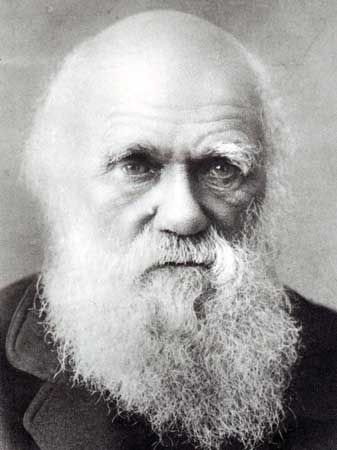
FRANCIS SCHAEFFER ANALYZES ART AND CULTURE PART 202 the BEATLES’ last song FREE AS A BIRD (Featured artist is Susan Weil )

February 15, 2018 – 1:45 am

FRANCIS SCHAEFFER ANALYZES ART AND CULTURE Part 200 George Harrison song HERE ME LORD (Featured artist is Karl Schmidt-Rottluff )

FRANCIS SCHAEFFER ANALYZES ART AND CULTURE PART 184 the BEATLES’ song REAL LOVE (Featured artist is David Hammonds )

FRANCIS SCHAEFFER ANALYZES ART AND CULTURE Part 170 George Harrison and his song MY SWEET LORD (Featured artist is Bruce Herman )

FRANCIS SCHAEFFER ANALYZES ART AND CULTURE Part 168 George Harrison’s song AWAITING ON YOU ALL Part B (Featured artist is Michelle Mackey )

FRANCIS SCHAEFFER ANALYZES ART AND CULTURE Part 167 George Harrison’s song AWAITING ON YOU Part A (Artist featured is Paul Martin)

RESPONDING TO HARRY KROTO’S BRILLIANT RENOWNED ACADEMICS!! Part 133 Louise Antony is UMass, Phil Dept, “Atheists if they commit themselves to justice, peace and the relief of suffering can only be doing so out of love for the good. Atheist have the opportunity to practice perfect piety”

FRANCIS SCHAEFFER ANALYZES ART AND CULTURE Part 166 George Harrison’s song ART OF DYING (Featured artist is Joel Sheesley )

FRANCIS SCHAEFFER ANALYZES ART AND CULTURE Part 165 George Harrison’s view that many roads lead to Heaven (Featured artist is Tim Lowly)

FRANCIS SCHAEFFER ANALYZES ART AND CULTURE Part 164 THE BEATLES Edgar Allan Poe (Featured artist is Christopher Wool)

PART 163 BEATLES Breaking down the song LONG AND WINDING ROAD (Featured artist is Charles Lutyens )

FRANCIS SCHAEFFER ANALYZES ART AND CULTURE PART 162 A look at the BEATLES Breaking down the song ALL WE NEED IS LOVE Part C (Featured artist is Grace Slick)

PART 161 A look at the BEATLES Breaking down the song ALL WE NEED IS LOVE Part B (Featured artist is Francis Hoyland )


FRANCIS SCHAEFFER ANALYZES ART AND CULTURE PART 160 A look at the BEATLES Breaking down the song ALL WE NEED IS LOVE Part A (Featured artist is Shirazeh Houshiary)

FRANCIS SCHAEFFER ANALYZES ART AND CULTURE Part 159 BEATLES, Soccer player Albert Stubbins made it on SGT. PEP’S because he was sport hero (Artist featured is Richard Land)

FRANCIS SCHAEFFER ANALYZES ART AND CULTURE Part 158 THE BEATLES (breaking down the song WHY DON’T WE DO IT IN THE ROAD?) Photographer Bob Gomel featured today!

FRANCIS SCHAEFFER ANALYZES ART AND CULTURE Part 118 THE BEATLES (Why was Tony Curtis on cover of SGT PEP?) (Feature on artist Jeffrey Gibson )

FRANCIS SCHAEFFER ANALYZES ART AND CULTURE Part 117 THE BEATLES, Breaking down the song WITHIN YOU WITHOUT YOU Part B (Featured artist is Emma Amos )

FRANCIS SCHAEFFER ANALYZES ART AND CULTURE Part 67 THE BEATLES (Part Q, RICHES AND LUXURIES NEVER SATISFIED THE BEATLES! ) (Feature on artist Derek Boshier )

_____________ The Beatles were looking for lasting satisfaction in their lives and their journey took them down many of the same paths that other young people of the 1960’s were taking. No wonder in the video THE AGE OF NON-REASON Schaeffer noted,  ” Sergeant Pepper’s Lonely Hearts Club Band…for a time it became the rallying cry for young people throughout […]

FRANCIS SCHAEFFER ANALYZES ART AND CULTURE Part 66 THE BEATLES (Part P, The Beatles’ best song ever is A DAY IN THE LIFE which in on Sgt Pepper’s!) (Feature on artist and clothes designer Manuel Cuevas )

  SGT. PEPPER’S LONELY HEARTS CLUB BAND ALBUM was the Beatles’ finest work and in my view it had their best song of all-time in it. The revolutionary song was A DAY IN THE LIFE which both showed the common place part of everyday life and also the sudden unexpected side of life.  The shocking […]

FRANCIS SCHAEFFER ANALYZES ART AND CULTURE Part 65 THE BEATLES (Part O, The 1960’s SEXUAL REVOLUTION was on the cover of Sgt. Pepper’s!) (Featured artist is Pauline Boty)

_ The Beatles wrote a lot about girls!!!!!! The Beatles – I Want To Hold your Hand [HD] The Beatles – ‘You got to hide your love away’ music video Uploaded on Nov 6, 2007 The Beatles – ‘You got to hide your love away’ music video. The Beatles – Twist and Shout [live] THE […]

FRANCIS SCHAEFFER ANALYZES ART AND CULTURE Part 64 THE BEATLES (Part P The Meaning of Stg. Pepper’s song SHE’S LEAVING HOME according to Schaeffer!!!!) (Featured artist Stuart Sutcliffe)

__________ Melanie Coe – She’s Leaving Home – The Beatles Uploaded on Nov 25, 2010 Melanie Coe ran away from home in 1967 when she was 15. Paul McCartney read about her in the papers and wrote ‘She’s Leaving Home’ for Sgt.Pepper’s. Melanie didn’t know Paul’s song was about her, but actually, the two did […]

FRANCIS SCHAEFFER ANALYZES ART AND CULTURE Part 63 THE BEATLES (Part O , BECAUSE THE BEATLES LOVED HUMOR IT IS FITTING THAT 6 COMEDIANS MADE IT ON THE COVER OF “SGT. PEPPER’S”!) (Feature on artist H.C. Westermann )

__________________ A Funny Press Interview of The Beatles in The US (1964) Funny Pictures of The Beatles Published on Oct 23, 2012 funny moments i took from the beatles movie; A Hard Days Night ___________________ Scene from Help! The Beatles Funny Clips and Outtakes (Part 1) The Beatles * Wildcat* (funny) Uploaded on Mar 20, […]

FRANCIS SCHAEFFER ANALYZES ART AND CULTURE Part 62 THE BEATLES (Part N The last 4 people alive from cover of Stg. Pepper’s and the reason Bob Dylan was put on the cover!) (Feature on artist Larry Bell)

_____________________ Great article on Dylan and Sergeant Pepper’s Lonely Hearts Club Band Cover: A famous album by the fab four – The Beatles – is “Sergeant peppers lonely hearts club band“. The album itself is one of the must influential albums of all time. New recording techniques and experiments with different styles of music made this […]

FRANCIS SCHAEFFER ANALYZES ART AND CULTURE Part 61 THE BEATLES (Part M, Why was Karl Marx on the cover of Stg. Pepper’s?) (Feature on artist George Petty)

__________________________ Beatles 1966 Last interview 69 THE BEATLES TWO OF US As a university student, Karl Marx (1818-1883) joined a movement known as the Young Hegelians, who strongly criticized the political and cultural establishments of the day. He became a journalist, and the radical nature of his writings would eventually get him expelled by the […]

FRANCIS SCHAEFFER ANALYZES ART AND CULTURE Part 60 THE BEATLES (Part L, Why was Aleister Crowley on the cover of Stg. Pepper’s?) (Feature on artist Jann Haworth )

____________ Aleister Crowley on cover of Stg. Pepper’s: _______________ I have dedicated several posts to this series on the Beatles and I don’t know when this series will end because Francis Schaeffer spent a lot of time listening to the Beatles and talking and writing about them and their impact on the culture of the 1960’s. […]

FRANCIS SCHAEFFER ANALYZES ART AND CULTURE Part 59 THE BEATLES (Part K, Advocating drugs was reason Aldous Huxley was on cover of Stg. Pepper’s) (Feature on artist Aubrey Beardsley)

(HD) Paul McCartney & Ringo Starr – With a Little Help From My Friends (Live) John Lennon The Final Interview BBC Radio 1 December 6th 1980 A young Aldous Huxley pictured below: _______   Much attention in this post is given to the songs LUCY IN THE SKY WITH DIAMONDS and TOMORROW NEVER KNOWS which […]

FRANCIS SCHAEFFER ANALYZES ART AND CULTURE Part 58 THE BEATLES (Part J, Why was Carl Gustav Jung on the cover of Stg. Pepper’s?) (Feature on artist Richard Merkin)

___

“Woody Wednesday” ECCLESIASTES AND WOODY ALLEN’S FILMS: SOLOMON “WOULD GOT ALONG WELL WITH WOODY!” (Part 32 MIDNIGHT IN PARIS Just like Solomon in Ecclesiastes Picasso’s women mostly considered suicide or accepted nihilism )

Just like Solomon in Ecclesiastes Picasso’s women mostly considered suicide or accepted nihilism and  Woody Allen alludes to this in MIDNIGHT IN PARIS when Adriana tells her own story:

GIL PENDER: No, you do! How long have you been dating Picasso?My God, did I just say that?Pardon?I don’t mean to…I didn’t meanto pry…. Were you born in Paris?


ADRIANA: .I…came here to study with Coco Chanel,and I fell in love with Paris,and also,a very dark-eyed, haunted Jewish-Italian painter.And I knew Amedeo had another woman, but still, I couldn’t resist moving into his apartment when he asked,and it was a beautiful six months.

GIL PENDER: M..M…Modigliani?You lived with… You lived with Modigliani?

ADRIANA: You asked me, so I’m telling you my sad story.With Braque, though, there was another woman.Many.And now,with Pablo.I mean, he’s married, but…every day, it’son-again, off-again.I don’t know how any woman can stay with him. He’s so difficult.

GIL PENDER: My God, you take “art groupie” to a whole new level!-


HEMINGWAY:This is Gil Pender, Miss Stein.He’s a young American writer. I thought you two should know each other.

GERTRUDE STEIN:I’m glad you’re here.You can help decide which of usis right, and which of us is wrong.I was just telling Pablo that thisportrait doesn’t capture Adriana.It has a universality,but no objectivity.

PICASSO: Non, non, non. Vous ne le comprenez pas correctement.(No, no ,no. You don’t understand correctly.)Connaisez pas Adriana. Regardez…(You don’t know Adriana. Look…)Regardez le mouvement, le tableau.(Look at the motion, the painting.)C’est exactement ce qu’elle représente!(It’s exactly what she represents!)Non. Tu n’as pas raison.(No. You’rewrong.)

GERTRUDE STEIN: Look how he’s done her:dripping with sexual innuendo,carnal to the point of smoldering,and, yes, she’s beautiful, butit’s a subtle beauty;an implied sensuality.I mean, what is your firstimpression of Adriana?Exceptionally lovely.Belle, mais trop subtile. Plus implicite, Pablo!(Beautiful, but too subtle. More defined, Pablo!)Yes, you’re right, MissStein. ‘Course…uh…you can see why he’slost all objectivity.He’s made a creature of Place Pigalle.A whore with volcanic appetites.Non, non! C’est ce qu’elle vraiment si vous laconnaissez! (No, no! It’s true if you know her!)Yes, avec toi, au privé,(Yes, with you, in private,)because she’s your lover, butwe don’t know her that way!So you make a petit-bourgeois judgmentand turn her into an object of pleasure.- It’s more like a still-life than a portrait. – Non.Non. Non. Je ne suis pasd’accord. (No. No. I do not agree.)And what’s this book of yours I’ve been hearing about? Is this it?-

GIL PENDER: Yeah, this is…uh…-

GERTRUDE STEIN: I’ll take a look.Have you read it, Hemingway?

HEMINGWAY:No, this I leave to you. You’ve always been a fine judge of my work.”

GERTRUDE STEIN:”Out of the Past” was the name of the store,””and its products consisted of memories.””What was prosaic and even vulgar to one generation,””had been transmuted by the mere passing of years””to a status at once magical and also camp.

ADRIANA:I love it.I’m already hooked. Hooked!

GERTRUDE STEIN: I’ll start it tonight,but first, you and I have something to talk about.I’ve been waiting for two months for a reply from that editor.I sent him the piece you andI looked at, plus four others,plus four shorter pieces. And this guy, I gave him a copy of the…- Nevertheless, two months: nary a word.-

GIL PENDER: Right.So were you really hooked with those opening lines?

ADRIANA: Oh, the past has always had a great charisma for me.Oh, me, too. Great charisma for me.I always say that I was born too late.Mmm. Moi aussi. (Mmm. Me, too.)For me, la Belle ÉpoqueParis would have been perfect.-

GIL PENDER: Really? Better than now?-

ADRIANA: Yes.Another whole sensibility,the street lamps, the kiosques,the…horse and carriages,and Maxim’s then.

GIL PENDER:You speak very good English.-

ADRIANA:No, not really.-

GIL PENDER: No, you do! How long have you been dating Picasso?My God, did I just say that?Pardon?I don’t mean to…I didn’t mean to pry…. Were you born in Paris?

ADRIANA:I was born in Bordeaux.I moved here to study fashion.But you don’t want to hear all this.

GIL PENDER: Yes, I do.Yes, continue.You moved here to study fashion..

ADRIANA: .I…came here to study with Coco Chanel,and I fell in love with Paris,and also,a very dark-eyed, haunted Jewish-Italian painter.And I knew Amedeo had another woman, but still, I couldn’t resist moving into his apartment when he asked,and it was a beautiful six months.

GIL PENDER: M..M…Modigliani?You lived with… Youlived with Modigliani?

ADRIANA: You asked me, so I’mtelling you my sad story.With Braque, though,there was another woman.Many.And now,with Pablo.I mean, he’s married, but…every day, it’son-again, off-again.I don’t know how any woman canstay with him. He’s so difficult.

GIL PENDER: My God, you take “art groupie” to a whole new level!-

ADRIANA:Pardon?-

GIL PENDER: Nothing. I was just saying that…

ADRIANA: But tell me about yourself.-

GIL PENDER: What? Well, what can I say…-

ADRIANA: So, have you come to Paris to write?Because, you know,these days, so many Americansfeel the need to move here.Isn’t Hemingway attractive?I love his writing.

GIL PENDER: I know. Actually, I’m just here visiting.

ADRIANA: Oh, you must stay here.-

GIL PENDER:  Really?-

ADRIANA: Yeah. It’s a wonderful city, for- writers, artists.-

GIL PENDER: M I know. I’d like to, but it’s not that easy.

ADRIANA: And,I didn’t fall in love madly with your book…-

GIL PENDER: Really?-

ADRIANA: …so I want to hear the rest of it.-

GIL PENDER: You really like? Because I’m still kind of tinkering…

HEMINGWAY: – Pender?-

GIL PENDER: Yeah,

HEMINGWAY: let’s go up to Montmartre. Let’s get a drink, OK?

GIL PENDER: – Uh…yeah.

GERTRUDE STEIN: I’ll discuss your book with you as soon as I’ve finished it. Where can I reach you?

GIL PENDER: Why don’t I drop back by, instead of you trying to find me, if that’s all right?-

GERTRUDE STEIN: We run an open house.-

HEMINGWAY: Are you coming with us?

GIL PENDER: I wish that I could. I cant, but hopefully I’ll see you again eventually.

ADRIANA: That would be nice.-

HEMINGWAY: Let’s go!- One of these days, I plan to steal you away from this genius who’s great, but he’s no Joan Miró

Pablo Picasso: women are either goddesses or doormats


'Nude Woman in a Red Armchair' by Pablo Picasso, on display at Tate Britain in 2012
‘Nude Woman in a Red Armchair’ by Pablo Picasso, on display at Tate Britain in 2012CREDIT: REX FEATURES

Pablo Picasso, who was born on October 25, 1881, died on April 8, 1973, aged 91. The artist had a complicated relationship with women. This article by Mark Hudson was first published in 2009 to mark the National Gallery exhibition ‘Picasso: Challenging the Past’.


“Women are machines for suffering,” Picasso told his mistress Françoise Gilot in 1943. Indeed, as they embarked on their nine-year affair, the 61-year-old artist warned the 21-year-old student: “For me there are only two kinds of women, goddesses and doormats”.

From Rembrandt and Goya to Bonnard and Stanley Spencer, male artists have drawn obsessively and immensely productively on the faces and bodies of their wives and lovers. But no one used and abused his women quite like the greatest artist of the 20th century, Pablo Picasso.

Looking at the extraordinary images in a new Picasso exhibition that opens later this month at the National Gallery in London, you feel that Picasso eviscerates his women in the service of his art. Here, alongside images of exquisite tenderness, are women pulled and gouged into tortured shapes, women cut in bits and reconfigured on the canvas. Yet harrowing as these images are, they are nothing beside the real life dramas that led to their creation.

Of the seven most important women in Picasso’s life, two killed themselves and two went mad. Another died of natural causes only four years into their relationship. Yet while Picasso had affairs with dozens, perhaps hundreds of women, and was true to none of them – except possibly the last – each of these seven women shines out as a crucial catalyst in his development as an artist. Each stands for a different period in his career, representing a complementary or opposing ideal that inspired the evolution of a new visual language. Just as they became obsessively involved with him, so he was dependent on them.

'Portrait of Dora Maar' by Pablo Picasso
‘Portrait of Dora Maar’ by Pablo Picasso CREDIT: REX FEATURES


Loyal, generous and affectionate when it suited him, Picasso could be astoundingly brutal, to friends, lovers, even complete strangers. Yet he felt real, often anguished passion for each of these women – a passion he explored in tens of thousands of paintings, drawings and prints, in which he attempted to capture not just the way these women looked, but the totality of his feelings towards them.  Fernande Olivier, the first great love of the Spanish artist’s life whom he met in 1904, was far from a pushover.

Incorrigibly lazy and promiscuous, but with a lively and independent mind, this statuesque redhead was a popular artist’s model, a kind of “it” girl of the Parisian avant-garde. To the young Picasso, who had arrived in Paris from Barcelona only two years before – and whose experience of women was limited largely to prostitutes and the pious Catholic women who raised him – Olivier must have seemed an intoxicating challenge.

Physically obsessed with her languid, bemused presence, Picasso moved from the poetic romanticism of his Rose Period to a new way of working inspired both by the dynamism of modern Paris and by the enduring values of Mediterranean culture on which he was to draw all his life.

In 1906, Olivier accompanied him to the village of Gosol in the Spanish Pyrenees, where the cubistic traditional architecture and her strong, sensual features were endlessly analysed in a vast body of drawings that led to the most influential painting of the 20th century – Demoiselles d’Avignon.  As Picasso worked on this definitive canvas in the suffocating heat of his Montmartre studio, he was consumed with jealousy and anger towards Olivier who had temporarily walked out on him – this emotional violence feeding into a work that blasted the Renaissance idea of fixed perspective out of the window and changed the course of Western art.

Pablo Picasso
Pablo Picasso CREDIT: REX FEATURES


When Olivier took up with a minor Italian artist in 1912 in an attempt to pique his jealousy, Picasso began seeing her close friend, Eva Gouel, the most elusive of the seven women. Frail and slender, she appears in only two photographs and her personality remains an enigma.

Picasso’s time with her coincided with the moment of synthetic cubism, in which observational elements were synthesised into semi-abstract compositions, often including collage or text. While Picasso never painted Gouel, he paid homage to her in several of these paintings, by including the words Ma Jolie – my pretty one – which is perhaps the most overtly affectionate artistic gesture he made to any of his women.

See our gallery of unknown Picasso paintings

While he was apparently devastated by her death from tuberculosis in 1916, this didn’t stop him carrying on a simultaneous affair with one Gaby Depeyre.  Picasso’s marriage to the Russian dancer Olga Khokhlova in 1915 coincided with a complete reversal in his artistic direction – from world-changing abstraction to relatively conservative neoclassicism. His portraits of Khokhlova have a restraint and serenity inspired by the 19th-century master Jean Auguste Dominique Ingres.

Yet just as Picasso’s artistic restlessness couldn’t be contained for more than a few hours, so the desire of the socially ambitious Khokhlova to tame the now wealthy artist soon began to suffocate him. As their relationship disintegrated and she became increasingly delusional, his depictions of her and women in general grew ever more hateful – tortured masses of teeth, limbs and vaginas.

Jacqueline and Pablo Picasso at a bullfight in France in 1954
Jacqueline and Pablo Picasso at a bullfight in France in 1954 CREDIT: REX FEATURES


While Picasso’s sense that he could do what he liked with absolutely anyone increased as his fame and wealth grew, he stayed with Khokhlova out of a residual desire for bourgeois respectability and the deeply ingrained Spanish idea that however unfaithful, a man doesn’t leave his wife.

Picasso kept his relationship with the youthful Marie-Thérèse Walter – just 17 when he met her – secret from Khokhlova for eight years. Blonde, of equable temperament and athletic physique – but completely ignorant of art – Walter was immortalised in images of melting, idyllic eroticism in which we feel her guiltless enjoyment of her own sensuality and the artist’s complete satisfaction in regarding it.

If Walter offered Picasso little on an intellectual level, his next great muse was the one who came closest to challenging him on his own terms – an artist and photographer closely involved with the Surrealists. He first encountered the mesmerising, raven-haired Dora Maar across the tables of the Café aux Deux Magots, stabbing a knife between her fingers till she drew blood.

Picasso asked to keep her bloodstained gloves. When Maar and Walter later met in his studio, the ensuing argument degenerated into an all-out catfight between the two women, an incident Picasso later described as one of his “choicest memories”.

Maar was Picasso’s partner during the period of his greatest political engagement, her inner turmoil standing in for Spain’s agony during the Civil War in Tate’s iconic Crying Woman. She made a photographic record of Picasso’s work on the monumental masterpiece Guernica, and her unmistakable features appear in the banshee-like head swooping into the painting. But in Picasso’s most telling images of Maar, her features are disturbingly reconfigured – growing out of each other in all the wrong places – as though she is literally breaking down in front of us.

When Picasso threw her over for the much younger Françoise Gilot in 1943, Maar suffered a complete mental collapse, followed by nun-like seclusion.  “After Picasso,” she famously declared, “only God.” Lest it should be thought that Picasso had things entirely his own way, the case of Gilot is instructive. This young aspiring artist – just 21 when they met – seems to have handled Picasso’s cruelties and perversities with amazing deftness, and was the only woman to leave him entirely voluntarily, with her dignity more or less intact. She bore him two children, with whom they lived a relatively normal family life for nine years.

Jacqueline Roque 
Picasso’s painting of Jacqueline Roque CREDIT: REX FEATURES


But was this domestic stability good for Picasso’s art?

While he captured Gilot’s features in a series of radiant drawings and etchings, this was the period of his greatest fame, when his millionaire life on the Cote d’Azur was cut off from external reality, and it was all too easy for the artist to “play Picasso” in art and life.  The last of Picasso’s great loves was, on the face of it, the one most in control. Picasso created more than 400 portraits of the demure Jacqueline Roque, who he married in 1961.

The most memorable imbue her sharp features with a watchful, almost classical stillness that harks back to his Blue period paintings of nearly 70 years before. Roque, you feel, was the one who finally got Picasso to behave, and created a tranquil base for his last years.  Yet even her story ended in tragedy. In 1986 she killed herself, 13 years after Picasso’s death. Like the other six women, she had collaborated in what is arguably the greatest artistic oeuvre of all time. Whether it was worth the pain, only she would be able to say.

Picasso's muses: Fernande Olivier (clockwise from top left), Olga Khoklova, Marie-Thérèse Walter, Dora Maar, Françoise Gilot and Jacqueline Roque
Picasso’s muses: Fernande Olivier (clockwise from top left), Olga Khoklova, Marie-Thérèse Walter, Dora Maar, Françoise Gilot and Jacqueline Roque


Picasso’s female muses


Fernande Olivier  (1881-1966; with Picasso 1904-1911)  

After an abusive childhood and a violent teenage marriage, Olivier escaped into Paris’s bohemia, and took up with Picasso during his most revolutionary phase – though she never saw the point of cubism. Picasso failed to suppress her lively memoir Picasso et ses Amis, but paid her a small pension provided the second volume didn’t appear till after his death.

Eva Gouel  (1885-1915; with Picasso 1911-1915)  

Born as Marcelle Humbert, she was the girlfriend of fellow artist Louis Marcoussis when Picasso became involved with her in 1911. Little is known of the frail Eva. While Picasso later claimed he knew greater contentment with her than anyone else, he carried on an affair as Eva lay dying of tuberculosis in 1915.

Olga Khokhlova  (1891-1954; with Picasso 1917-1935)  

Picasso’s Ukrainian first wife, and the mother of his eldest child Paulo, was a dancer with Diaghilev’s Ballets Russes, and one of the few people of either sex to stand up to the artist. After their separation in 1935, she bombarded him with hate mail. But since Picasso refused to divide his assets with her, as required by French law, they never divorced.

Marie-Thérèse Walter  (1909-1977; with Picasso 1927-1936)  

Picasso met the blonde 17 year-old outside the Galeries Lafayette department store in Paris in 1927, but kept their affair secret for eight years. She gave him a daughter, Maia, in 1935, at about the time she was supplanted in Picasso’s affections by Dora Maar. She hanged herself in 1977.

Dora Maar  (1907-1997; with Picasso 1936-1944)

Born Henriette Theodora Markovitch, of Croatian and French descent. A talented artist and photographer, this Surrealist icon – powerfully portrayed by Man Ray – had a tragic air, caused, Picasso believed, by her inability to have children. She ended her days surrounded by dust-encrusted relics of her time with Picasso.

Françoise Gilot  (b.1921; with Picasso 1944-1953)  

This level-headed law student abandoned her studies in favour of art and began an affair with Picasso at 21. She gave him two children, Claude and Paloma, and recalled their nine-year relationship in the best-selling Life with Picasso. Later married to American vaccine pioneer Jonas Salk, she still paints.

 Jacqueline Roque  (1927-1986; with Picasso 1954-1993)

A sales assistant in the Madoura Pottery Studio in Vallauris, where Picasso created his ceramics, Jacqueline met Picasso in 1954, when she was 27, and became his second wife in 1961. While she quarrelled with his children over the division of his estate, they collaborated in the creation of the Musée Picasso. She shot herself in 1986.

See: Picasso’s palettes were a work of art

Q&A: John Richardson on Picasso’s “Uncontrollable” Sex Drive

APRIL 5, 2011 12:00 AM

Speaking of Picasso’s vampiric quality, SEVERAL OF HIS WOMEN CAME TO UNFORTUNATE ENDS—his first wife, Olga, would sometimes need to be institutionalized, and both Marie-Thérèse and Jacqueline, his second wife, committed suicide. Was it due in part to the draining emotional toll of their relationships with Picasso?

Totally. I think he obsessed them. Dora Maar did not commit suicide but, after being cooped up with Picasso for most of World War II, suffered a total nervous collapse. Both Marie-Thérèse and Jacqueline were evidently prepared to sacrifice themselves on the altar of his art.

As you’ve written, for all his tenderness, Picasso could be quite cruel to the women in his life.

He could on occasion be cruel; bear in mind, however, that whatever you say about Picasso, the reverse is also apt to be true. In life, as in art, he could be one of the kindest and one of the unkindest people I have ever known. And then remember that whereas Dora was masochistic by nature, Marie-Thérèse was submissive, and throughout her relationship with Picasso she did what she was told. And because she was insanely in love with him, she was happy to do so. Her rival, Dora, was more sophisticated. She had lived previously with Georges Bataille, a great thinker and a disciple of the Marquis de Sade. Like most of the Surrealist women, she knew what she was in for. Remember too, that Man Ray, the greatest of Surrealist photographers, was a close friend of Picasso’s. I didn’t realize how close until a friend discovered that the painting that fetched $106 million last year [Nude, Green Leaves and Bust] was in fact based on a bondage photograph taken by Man Ray. In the catalogue of our Marie-Thérèse show, we’re placing the photograph and the painting side by side.

Man Ray photograph of  -paul eluard and picasso in 1936

Tom Cordier as Man Ray with Oscar Winner Adrian Brody as Salvador Dali


Not to be too crude about it, but do you think that, in terms of the sheer number of his conquests, he was on par with, say, a Warren Beatty or Wilt Chamberlain?

I think it would be rash to speculate about that, but we have to take into account how different life was a century ago, when Picasso was coming of age. He was brought up in Spain, where there was a whole brothel culture. In Malaga, where he grew up, his father was famous for going to the brothels. It was kind of a feather in his cap. The men would go to Mass on Sunday, and afterward they’d all go to the brothel. Then they’d go to the café, where they’d drink and discuss politics, sports, and sex—whether the new brunette in the whorehouse was better than the old one, for instance.

This was acceptable for people in that social class? Church and then the brothel?

Absolutely. It was standard in the south of Spain—standard. Picasso was going to brothels by the age of 13. It was an accepted part of Spanish and French culture in the first half of the 20th century.

When you knew Picasso, in the 1950s and 60s, was he still on the prowl, despite being in his late 70s and early 80s?

Oh, yes. He was uncontrollably horny. I’ll give you an example of a very naughty thing he did: he made gold figurines of a little man with a huge phallus, like the ones they sell in the back streets of Naples. And he would give them to women he had seduced or was trying to seduce—right in front of Jacqueline, his wife. He’d give the woman one of these gold figures, and immediately everyone knew what was going on, and the result was that that woman would never be allowed back into the house.

In the film MIDNIGHT IN PARIS Gertrude Stein tells Gil Pender what she thinks about his book, “Now, about your book,it’s very unusual, indeed.I mean, in a way, it’s almost like science fiction.We all fear death, and question our place in the universe.The artist’s job is not to succumb to despair,but to find an antidote for the emptiness of existence.You have a clear and lively voice. Don’t be such a defeatist.”

Three thousand years ago, Solomon took a look at life “under the sun” in his book of Ecclesiastes. Christian scholar Ravi Zacharias has noted, “The key to understanding the Book of Ecclesiastes is the term ‘under the sun.’ What that literally means is you lock God out of a closed system, and you are left with only this world of time plus chance plus matter.”


Let me show you some inescapable conclusions if you choose to live without God in the picture. Solomon came to these same conclusions when he looked at life “under the sun.”

  1. Death is the great equalizer (Eccl 3:20, “All go to the same place; all come from dust, and to dust all return.”)
  2. Chance and time have determined the past, and they will determine the future.  (Ecclesiastes 9:11-13 “I have seen something else under the sun:  The race is not to the swift
    or the battle to the strong, nor does food come to the wise
    or wealth to the brilliant  or favor to the learned; but time and chance happen to them all.  Moreover, no one knows when their hour will come: As fish are caught in a cruel net,
    or birds are taken in a snare, so people are trapped by evil times  that fall unexpectedly upon them.”)

_______

Francis Schaeffer comments on the Book of Ecclesiastes and the subject of death:

Ecclesiastes 9:11

11 Again I saw that under the sun the race is not to the swift, nor the battle to the strong, nor bread to the wise, nor riches to the intelligent, nor favor to those with knowledge, but time and chance happen to them all.

Chance rules. If a man starts out only from himself and works outward it must eventually if he is consistent seem so that only chance rules and naturally in such a setting you can not expect him to have anything else but finally a hate of life.

Ecclesiastes 2:17-18a

17 So I hated life, because what is done under the sun was grievous to me, for all is vanity and a striving after wind. 18 I hated all my toil in which I toil under the sun…

That first great cry “So I hated life.” Naturally if you hate life you long for death and you find him saying this in Ecclesiastes 4:2-3:

And I thought the dead who are already dead more fortunate than the living who are still alive. But better than both is he who has not yet been and has not seen the evil deeds that are done under the sun.

He lays down an order. It is best never have to been. It is better to be dead, and worse to be alive. But like all men and one could think of the face of Vincent Van Gogh in his final paintings as he came to hate life and you watch something die in his self portraits, the dilemma is double because as one is consistent and one sees life as a game of chance, one must come in a way to hate life. Yet at the same time men never get beyond the fear to die. 

________________

By the way, the final chapter of Ecclesiastes finishes with Solomon emphasizing that serving God is the only proper response of man. Solomon looks above the sun and brings God back into the picture.  I am hoping that Woody Allen will also come to that same conclusion that Solomon came to concerning the meaning of life and man’s proper place in the universe in Ecclesiastes 12:13-14:
13 Now all has been heard;
here is the conclusion of the matter:
Fear God and keep his commandments,
for this is the whole duty of man.

14 For God will bring every deed into judgment,
including every hidden thing,
whether it is good or evil

Picasso’s Widow, 60, Kills Herself at Chateau on Riviera, Police Say

October 16, 1986|United Press International

CANNES, France — Jacqueline Picasso, the widow of Pablo Picasso, committed suicide Wednesday at the chateau on the French Riviera where the giant of modern art died in 1973, police said.

Picasso, 60, was found dead in her bed at 9 a.m. by her maid. An automatic pistol was at her side. Police said the single gunshot wound to the head appeared to have been self-inflicted.

The death occurred at Notre Dame de Vie, French for Our Lady of Life, a medieval mountaintop castle at Mougins, a village overlooking Cannes. She and Picasso lived there until his death in April 8, 1973, at age 92. The castle is virtually a museum filled with some of Picasso’s greatest works.

Stormy Relationship

Jacqueline Picasso was the painter’s second wife, and though their relationship was often stormy, with separations and reconciliations, she remained loyal to him until the end.

Friends said Jacqueline never was able to get over her grief after the death of the Spanish-born Picasso, who in 60 years created about 10,000 paintings and other artworks.

She first came to know the painter as his model in 1953 when she was a 28-year-old divorcee and Picasso was 72. His first wife, Russian ballerina Olga Khokhlova, died in 1955, and he married Jacqueline Roque in 1961.

A doctor said “the state of her health was very serious,” police reported. The nature of her illness was not disclosed.

Her depression was said to have increased in recent months, and she reportedly confided to a close friend recently that she intended to commit suicide because “I would prefer to die than to continue like this.”

‘He Lives Always’

Jacqueline Picasso once told a photographer: “I am not the widow of Picasso. He lives always.”

She spent her last years organizing exhibitions of his work for worldwide tours. A Picasso retrospective she was planning is scheduled to open in Madrid on Oct. 25.

Her body will be buried alongside her husband at the Chateau de Vauvenargues, near Aix-en-Provence in southern France.

This series deals with the Book of Ecclesiastes and Woody Allen films.  The first post  dealt with MAGIC IN THE MOONLIGHT and it dealt with the fact that in the Book of Ecclesiastes Solomon does contend like Hobbes  and Stanley that life is “nasty, brutish and short” and as a result has no meaning UNDER THE SUN.

The movie MIDNIGHT IN PARIS offers many of the same themes we see in Ecclesiastes. The second post looked at the question: WAS THERE EVER A GOLDEN AGE AND DID THE MOST TALENTED UNIVERSAL MEN OF THAT TIME FIND TRUE SATISFACTION DURING IT?

In the third post in this series we discover in Ecclesiastes that man UNDER THE SUN finds himself caught in the never ending cycle of birth and death. The SURREALISTS make a leap into the area of nonreason in order to get out of this cycle and that is why the scene in MIDNIGHT IN PARIS with Salvador Dali, Man Ray, and Luis Bunuel works so well!!!! These surrealists look to the area of their dreams to find a meaning for their lives and their break with reality is  only because they know that they can’t find a rational meaning in life without God in the picture.

The fourth post looks at the solution of WINE, WOMEN AND SONG and the fifth and sixth posts look at the solution T.S.Eliot found in the Christian Faith and how he left his fragmented message of pessimism behind. In the seventh post the SURREALISTS say that time and chance is all we have but how can that explain love or art and the hunger for God? The eighth  post looks at the subject of DEATH both in Ecclesiastes and MIDNIGHT IN PARIS. In the ninth post we look at the nihilistic worldview of Woody Allen and why he keeps putting suicides into his films.

In the tenth post I show how Woody Allen pokes fun at the brilliant thinkers of this world and how King Solomon did the same thing 3000 years ago. In the eleventh post I point out how many of Woody Allen’s liberal political views come a lack of understanding of the sinful nature of man and where it originated. In the twelfth post I look at the mannishness of man and vacuum in his heart that can only be satisfied by a relationship with God.

In the thirteenth post we look at the life of Ernest Hemingway as pictured in MIDNIGHT AND PARIS and relate it to the change of outlook he had on life as the years passed. In the fourteenth post we look at Hemingway’s idea of Paris being a movable  feast. The fifteenth and sixteenth posts both compare Hemingway’s statement, “Happiness in intelligent people is the rarest thing I know…”  with Ecclesiastes 2:18 “For in much wisdom is much vexation, and he who increases knowledge increases sorrow.” The seventeenth post looks at these words Woody Allen put into Hemingway’s mouth,  “We fear death because we feel that we haven’t loved well enough or loved at all.”

In MIDNIGHT IN PARIS Hemingway and Gil Pender talk about their literary idol Mark Twain and the eighteenth post is summed up nicely by Kris Hemphill‘swords, “Both Twain and [King Solomon in the Book of Ecclesiastes] voice questions our souls long to have answered: Where does one find enduring meaning, life purpose, and sustainable joy, and why do so few seem to find it? The nineteenth post looks at the tension felt both in the life of Gil Pender (written by Woody Allen) in the movie MIDNIGHT IN PARIS and in Mark Twain’s life and that is when an atheist says he wants to scoff at the idea THAT WE WERE PUT HERE FOR A PURPOSE but he must stay face the reality of  Ecclesiastes 3:11 that says “God has planted eternity in the heart of men…” and  THAT CHANGES EVERYTHING! Therefore, the secular view that there is no such thing as love or purpose looks implausible. The twentieth post examines how Mark Twain discovered just like King Solomon in the Book of Ecclesiastes that there is no explanation  for the suffering and injustice that occurs in life UNDER THE SUN. Solomon actually brought God back into the picture in the last chapter and he looked  ABOVE THE SUN for the books to be balanced and for the tears to be wiped away.

The twenty-first post looks at the words of King Solomon, Woody Allen and Mark Twain that without God in the picture our lives UNDER THE SUN will accomplish nothing that lasts. The twenty-second post looks at King Solomon’s experiment 3000 years that proved that luxuries can’t bring satisfaction to one’s life but we have seen this proven over and over through the ages. Mark Twain lampooned the rich in his book “The Gilded Age” and he discussed  get rich quick fever, but Sam Clemens loved money and the comfort and luxuries it could buy. Likewise Scott Fitzgerald  was very successful in the 1920’s after his publication of THE GREAT GATSBY and lived a lavish lifestyle until his death in 1940 as a result of alcoholism.

In the twenty-third post we look at Mark Twain’s statement that people should either commit suicide or stay drunk if they are “demonstrably wise” and want to “keep their reasoning faculties.” We actually see this play out in the film MIDNIGHT IN PARIS with the character Zelda Fitzgerald. In the twenty-fourth, twenty-fifth and twenty-sixth posts I look at Mark Twain and the issue of racism. In MIDNIGHT IN PARIS we see the difference between the attitudes concerning race in 1925 Paris and the rest of the world.

The twenty-seventh and twenty-eighth posts are summing up Mark Twain. In the 29th post we ask did MIDNIGHT IN PARIS accurately portray Hemingway’s personality and outlook on life? and in the 30th post the life and views of Hemingway are summed up.

In the 31st post we will observe that just like Solomon Picasso slept with many women. Solomon actually slept with  over 1000 women ( Eccl 2:8, I Kings 11:3), and both men ended their lives bitter against all women and in the 32nd post we look at what happened to these former lovers of Picasso. In the 33rd post we see that Picasso  deliberately painted his secular  worldview of fragmentation on his canvas but he could not live with the loss of humanness and he reverted back at crucial points and painted those he loved with all his genius and with all their humanness!!! In the 34th post  we notice that both Solomon in Ecclesiastes and Picasso in his painting had an obsession with the issue of their impending death!!!

Related posts:

_____________

__

“Truth Tuesday” Antony Flew’s journey from Atheism to Theism

During the 1990′s I actually made it a practice to write famous atheists and scientists that were mentioned by Adrian Rogers and Francis Schaeffer and challenge them with the evidence for the Bible’s historicity and the claims of the gospel. Usually I would send them a cassette tape of Adrian Rogers’ messages “6 reasons I know the Bible is True,” “The Final Judgement,” “Who is Jesus?” and the message by Bill Elliff, “How to get a pure heart.” I would also send them printed material from the works of Francis Schaeffer and a personal apologetic letter from me addressing some of the issues in their work.

The famous atheist Antony Flew was actually took the time to listen to several of these messages and he wrote me back in the mid 1990′s several times.

Discussion (1 of 3): Antony Flew, N.T. Wright, and Gary Habermas

Uploaded on Sep 22, 2010

A discussion with Antony Flew, N.T. Wright, and Gary Habermas. This was held at Westminster Chapel March, 2008

______________________

Sunday, January 13, 2013

Atheism to Theism | Antony Flew

A Discussion between Antony Flew and Gary HabermasFrom the E.P.S.Antony Flew
Department of Philosophy
University of Reading
Reading, England

Gary Habermas
Department of Philosophy and Theology
Liberty University
Lynchburg, Virginia

Antony Flew and Gary Habermas met in February 1985 in Dallas, Texas. The occasion was a series of debates between atheists and theists, featuring many influential philosophers, scientists, and other scholars.1

A short time later, in May 1985, Flew and Habermas debated at Liberty University before a large audience. The topic that night was the resurrection of Jesus.2 Although Flew was arguably the world’s foremost philosophical atheist, he had intriguingly also earned the distinction of being one of the chief philosophical commentators on the topic of miracles.3 Habermas specialized on the subject of Jesus’ resurrection.4 Thus, the ensuing dialogue on the historical evidence for the central Christian claim was a natural outgrowth of their research.

Over the next 20 years, Flew and Habermas developed a friendship, writing dozens of letters, talking often, and dialoguing twice more on the resurrection. In April, 2000 they participated in a live debate on the Inspiration Television Network, moderated by John Ankerberg.5 In January, 2003 they again dialogued on the resurrection atCalifornia Polytechnic State University – San Luis Obispo.6

During a couple of telephone discussions shortly after their last dialogue, Flew explained to Habermas that he was considering becoming a theist. While Flew did not change his position at that time, he concluded that certain philosophical and scientific considerations were causing him to do some serious rethinking. He characterized his position as that of atheism standing in tension with several huge question marks.

Then, a year later, in January 2004, Flew informed Habermas that he had indeed become a theist. While still rejecting the concept of special revelation, whether Christian, Jewish or Islamic, nonetheless he had concluded that theism was true. In Flew’s words, he simply “had to go where the evidence leads.”7

The following interview took place in early 2004… This nontechnical discussion sought to engage Flew over the course of several topics that reflect his move from atheism to theism.8 The chief purpose was not to pursue the details of any particular issue, so we bypassed many avenues that would have presented a plethora of other intriguing questions and responses. These were often tantalizingly ignored, left to ripen for another discussion. Neither did we try to persuade each another of alternate positions.

Our singular purpose was simply to explore and report Flew’s new position, allowing him to explain various aspects of his pilgrimage. We thought that this in itself was a worthy goal. Along the way, an additional benefit emerged, as Flew reminisced about various moments from his childhood, graduate studies, and career.

Habermas: Tony, you recently told me that you have come to believe in the existence of God. Would you comment on that?

Flew: Well, I don’t believe in the God of any revelatory system, although I am open to that. But it seems to me that the case for an Aristotelian God who has the characteristics of power and also intelligence, is now much stronger than it ever was before. And it was from Aristotle that Aquinas drew the materials for producing his Five Ways of, hopefully, proving the existence of his God. Aquinas took them, reasonably enough, to prove, if they proved anything, the existence of the God of the Christian Revelation. But Aristotle himself never produced a definition of the word “God,” which is a curious fact. But this concept still led to the basic outline of the Five Ways. It seems to me, that from the existence of Aristotle’s God, you can’t infer anything about human behaviour. So what Aristotle had to say about justice (justice, of course, as conceived by the Founding Fathers of the American Republic as opposed to the “social” justice of John Rawls9) was very much a human idea, and he thought that this idea of justice was what ought to govern the behaviour of individual human beings in their relations with others.

Habermas: Once you mentioned to me that your view might be called Deism. Do you think that would be a fair designation?

Flew: Yes, absolutely right. What Deists, such as the Mr. Jefferson who drafted the American Declaration of Independence, believed was that, while Reason, mainly in the form of Arguments to Design, assures us that there is a God, there is no room either for any supernatural revelation of that God or for any transactions between that God and individual human beings.

Habermas: Then, would you comment on your “openness” to the notion of theistic revelation?

Flew: Yes. I am open to it, but not enthusiastic about potential revelation from God. On the positive side, for example, I am very much impressed with physicist Gerald Schroeder’s comments on Genesis 1.10 That this biblical account might be scientifically accurate raises the possibility that it is revelation.

Habermas: You very kindly noted that our debates and discussions had influenced your move in the direction of theism.11 You mentioned that this initial influence contributed in part to your comment that naturalistic efforts have never succeeded in producing “a plausible conjecture as to how any of these complex molecules might have evolved from simple entities.”12 Then in your recently rewritten introduction to the forthcoming edition of your classic volume God and Philosophy, you say that the original version of that book is now obsolete. You mention a number of trends in theistic argumentation that you find convincing, like Big Bang Cosmology, Fine Tuning, and Intelligent Design arguments. Which arguments for God’s existence did you find most persuasive?

Flew: I think that the most impressive arguments for God’s existence are those that are supported by recent scientific discoveries. I’ve never been much impressed by the Kalam cosmological argument, and I don’t think it has gotten any stronger recently. However, I think the argument to Intelligent Design is enormously stronger than it was when I first met it.

Habermas: So you like arguments such as those that proceed from Big Bang Cosmology and Fine Tuning Arguments?

Flew: Yes.

Discussion (2 of 3): Antony Flew, N.T. Wright, and Gary Habermas

Habermas: So, take C. S. Lewis’s argument for morality as presented in Mere Christianity.13 You didn’t find that to be very impressive?

Flew: No, I didn’t. Perhaps I should mention that, when I was in college, I attended fairly regularly the weekly meetings of C. S. Lewis’s Socratic Club. In all my time at Oxford these meetings were chaired by Lewis. I think he was by far the most powerful of Christian apologists for the sixty or more years following his founding of that club. As late as the 1970s, I used to find that, in the USA, in at least half of the campus bookstores of the universities and liberal art colleges which I visited, there was at least one long shelf devoted to his very various published works.

Habermas: Although you disagreed with him, did you find him to be a very reasonable sort of fellow?

Flew: Oh yes, very much so, an eminently reasonable man.

Habermas: So of the major theistic arguments, such as the Cosmological, Teleological, Moral, and Ontological, the only really impressive ones that you take to be decisive are the scientific forms of teleology?

Flew: Absolutely. It seems to me that Richard Dawkins constantly overlooks the fact that Darwin himself, in the fourteenth chapter of The Origin of Species, pointed out that his whole argument began with a being which already possessed reproductive powers. This is the creature the evolution of which a truly comprehensive theory of evolution must give some account. Darwin himself was well aware that he had not produced such an account. It now seems to me that the findings of more than fifty years of DNA research have provided materials for a new and enormously powerful argument to Design.

Habermas: As I recall, you also refer to this in the new introduction to your God and Philosophy.
Flew: Yes, I do; or, since the book has not yet been published, I will!

Habermas: Since you affirm Aristotle’s concept of God, do you think we can also affirm Aristotle’s implications that the First Cause hence knows all things?
Flew: I suppose we should say this. I’m not at all sure what one should think concerning some of these very fundamental issues. There does seem to be a reason for a First Cause, but I’m not at all sure how much we have to explain here. What idea of God is necessary to provide an explanation of the existence of the Universe and all which is in it?

Habermas: If God is the First Cause, what about omniscience, or omnipotence?

Flew: Well, the First Cause, if there was a First Cause, has very clearly produced everything that is going on. I suppose that does imply creation “in the beginning.”

Habermas: What role might your love for the writings of David Hume play in a discussion about the existence of God? Do you have any new insights on Hume, given your new belief in God?

Flew: No, not really.

Habermas: Do you think Hume ever answers the question of God?

Flew: I think of him as, shall we say, an unbeliever. But it’s interesting to note that he himself was perfectly willing to accept one of the conditions of his appointment, if he had been appointed to a chair of philosophy at the University of Edinburgh. That condition was, roughly speaking, to provide some sort of support and encouragement for people performing prayers and executing other acts of worship. I believe that Hume thought that the institution of religious belief could be, and in his day and place was, socially beneficial.16

I, too, having been brought up as a Methodist, have always been aware of this possible and in many times and places actual benefit of objective religious instruction. It is now several decades since I first tried to draw attention to the danger of relying on a modest amount of compulsory religious instruction in schools to meet the need for moral education, especially in a period of relentlessly declining religious belief. But all such warnings by individuals were, of course, ignored. So we now have in the UK a situation in which any mandatory requirements to instruct pupils in state funded schools in the teachings of the established or any other religion are widely ignored. The only official attempt to construct a secular substitute was vitiated by the inability of the moral philosopher on the relevant government committee to recognize the fundamental difference between justice without prefix or suffix and the “social” justice of John Rawls’s A Theory of Justice.

I must some time send you a copy of the final chapter of my latest and presumably last book, in which I offer a syllabus and a program for moral education in secular schools.17 This is relevant and important for both the US and the UK. To the US because the Supreme Court has utterly misinterpreted the clause in the Constitution about not establishing a religion: misunderstanding it as imposing a ban on all official reference to religion. In the UK any effective program of moral education has to be secular because unbelief is now very widespread.

Habermas: You’ve told me that you have a very high regard for John and Charles Wesley and their traditions. What accounts for your appreciation?

Flew: The greatest thing is their tremendous achievement of creating the Methodist movement mainly among the working class. Methodism made it impossible to build a really substantial Communist Party in Britain and provided the country with a generous supply of men and women of sterling moral character from mainly working class families. Its decline is a substantial part of the explosions both of unwanted motherhood and of crime in recent decades. There is also the tremendous determination shown by John Wesley in spending year after year riding for miles every day, preaching more than seven sermons a week and so on. I have only recently been told of John Wesley’s great controversy against predestination and in favor of the Arminian alternative. Certainly John Wesley was one of my country’s many great sons and daughters. One at least of the others was raised in a Methodist home with a father who was a local preacher.

Habermas: Don’t you attribute some of your appreciations for the Wesleys to your father’s ministry? Haven’t you said that your father was the first non-Anglican to get a doctorate in theology from Oxford University?

Flew: Yes to both questions. Of course it was because my family’s background was that of Methodism. Yes, my father was also President of the Methodist Conference for the usual single year term and he was the Methodist representative of one or two other organizations. He was also concerned for the World Council of Churches. Had my father lived to be active into the early 1970s he would have wanted at least to consider the question of whether the Methodist Church ought not to withdraw from the World Council of Churches. That had by that time apparently been captured by agents of the USSR.36

Habermas: What do you think that Bertrand Russell, J. L. Mackie, and A. J. Ayer would have thought about these theistic developments, had they still been alive today?

Flew: I think Russell certainly would have had to notice these things. I’m sure Mackie would have been interested, too. I never knew Ayer very well, beyond meeting him once or twice.

Habermas: Do you think any of them would have been impressed in the direction of theism? I’m thinking here, for instance, about Russell’s famous comments that God hasn’t produced sufficientevidence of his existence.37

Flew: Consistent with Russell’s comments that you mention, Russell would have regarded these developments as evidence. I think we can be sure that Russell would have been impressed too, precisely because of his comments to which you refer. This would have produced an interesting second dialogue between him and that distinguished Catholic philosopher, Frederick Copleston.

Habermas: In recent years you’ve been called the world’s most influential philosophical atheist. Do you think Russell, Mackie, or Ayer would have been bothered or even angered by your conversion to theism? Or do you think that they would have at least understood your reasons for changing your mind?

Flew: I’m not sure how much any of them knew about Aristotle. But I am almost certain that they never had in mind the idea of a God who was not the God of any revealed religion. But we can be sure that they would have examined these new scientific arguments.

Habermas: C. S. Lewis explained in his autobiography that he moved first from atheism to theism and only later from theism to Christianity. Given your great respect for Christianity, do you think that there is any chance that you might in the end move from theism to Christianity?

Flew: I think it’s very unlikely, due to the problem of evil. But, if it did happen, I think it would be in some eccentric fit and doubtfully orthodox form: regular religious practice perhaps but without belief. If I wanted any sort of future life I should become a Jehovah’s Witness. But some things I am completely confident about. I would never regard Islam with anything but horror and fear because it is fundamentally committed to conquering the world for Islam. It was because the whole of Palestine was part of the Land of Islam that Muslim Arab armies moved in to try to destroy Israel at birth, and why the struggle for the return of the still surviving refugees and their numerous descendents continue to this day.

Habermas: I ask this last question with a smile, Tony. But just think what would happen if one day you were pleasantly disposed toward Christianity and all of a sudden the resurrection of Jesus looked pretty good to you?

Flew: Well, one thing I’ll say in this comparison is that, for goodness sake, Jesus is an enormously attractive charismatic figure, which the Prophet of Islam most emphatically is not.

Discussion (3 of 3): Antony Flew, N.T. Wright, and Gary Habermas

“Truth Tuesday” Was modern science born out of the Christian World view?


I love the works of Francis Schaeffer and I have been on the internet reading several blogs that talk about Schaeffer’s work and the work below was really helpful. Schaeffer’s film series “How should we then live?  Wikipedia notes, “According to Schaeffer, How Should We Then Live traces Western history from Ancient Rome until the time of writing (1976) along three lines: the philosophic, scientific, and religious.[3] He also makes extensive references to art and architecture as a means of showing how these movements reflected changing patterns of thought through time. Schaeffer’s central premise is: when we base society on the Bible, on the infinite-personal God who is there and has spoken,[4] this provides an absolute by which we can conduct our lives and by which we can judge society.  Here are some posts I have done on this series: Francis Schaeffer’s “How should we then live?” Video and outline of episode 10 “Final Choices” episode 9 “The Age of Personal Peace and Affluence”episode 8 “The Age of Fragmentation”episode 7 “The Age of Non-Reason” episode 6 “The Scientific Age”  episode 5 “The Revolutionary Age” episode 4 “The Reformation” episode 3 “The Renaissance”episode 2 “The Middle Ages,”, and  episode 1 “The Roman Age,” .

Francis Schaeffer in his book “How should we then live?” stated that according to Alfred North Whitehead and J. Robert Oppenheimer, both renowned philosophers and scientists of our era (but not Christians themselves), modern science was born out of the Christian world view. Whitehead said that Christianity is the “mother of science” because of the insistence on the rationality of God.

Christianity and Technological Advance – The Astonishing Connection

by T. V. Varughese, Ph.D

Without question, “technology” has now become the new magic word in place of the word “science.” Since technology represents the practical applications of science, it is clearly consumer-oriented. Herein is bright economic promise to all who can provide technology.

In terms of technology, our present world can be divided into at least three groups: countries that are strong providers of technology, both original and improved; countries that are mass producers because of cheaper labor; and countries that are mostly consumers. Without a doubt, being in the position of “originating” superior technology should be a goal for any major country. The difficult question, however, is “how.”

An obvious place to start suggests itself. Why not begin with the countries that have established themselves as strong originators of technology and see if there is a common thread between them? The western nations, after the Renaissance and the Reformation of the 16th century, offer a ready example. Any book on the history of inventions, such as the Guinness Book of Answers, will reveal that the vast majority of scientific inventions have originated in Europe (including Britain) and the USA since the dawn of the 17th century. What led to the fast technological advances in the European countries and North America around that time?

The answer is that something happened which set the stage for science and technology to emerge with full force. Strange as it may seem, that event was the return to Biblical Christianity in these countries.

The Epistemological Foundation of Technology

According to Alfred North Whitehead and J. Robert Oppenheimer, both renowned philosophers and scientists of our era (but not Christians themselves), modern science was born out of the Christian world view. Whitehead said that Christianity is the “mother of science” because of the insistence on the rationality of God.[1] Entomologist Stanley Beck,though not a Christian himself, acknowledged the corner-stone premises of science which the Judeo-Christian world view offers: “The first of the unprovable premises on which science has been based is the belief that the world is real and the human mind is capable of knowing its real nature. The second and best-known postulate underlying the structure of scientific knowledge is that of cause and effect. The third basic scientific premise is that nature is unified.”[2] In other words, the epistemological foundation of technology has been the Judeo-Christian world view presented in the Bible.

This may sound incredible to some because of the popular feeling that science and religion don’t mix. Didn’t Christianity vehemently oppose Galileo and Copernicus when they proposed the modern models for the solar system?

The truth, however, is that the real conflict was not between Christianity, as presented in the Bible, and science. In fact, the true conflict was not between science and religion at all, but between the existing scientific view and a new scientific view. The geocentric world view held at that time was not based on the Bible but on the Ptolemaic system which was rooted in the views of Plato and Aristotle.

Historians have observed that the foundations for modern science were laid as early as the thirteenth century when scholars like Roger Bacon showed that Aristotle made certain mistakes about natural phenomena. Medieval science was based on authority — primarily of Aristotle — rather than observation. It developed through logic, rather than experimentation.[3] Both Copernicus and Galileo challenged Aristotle’s authority, using experimentation in the spirit of modern science. The Biblical emphasis of the Reformation, just prior to this, had already paved the way for dropping Aristotle’s authority; it also encouraged the rational investigation of our world.

Perhaps the most obvious affirmation that Biblical Christianity and science are friends and not foes comes from the fact that most of the early scientists after the Renaissance were also strong believers in the Bible as the authoritative source of knowledge concerning the origin of the universe and man’s place in it.[4] The book of Genesis, the opening book of the Bible, presents the distinctly Judeo-Christian world view of a personal Creator God behind the origin and sustenance of the universe (Genesis 1:1; Colossians 1:17; etc.).

Among the early scientists of note who held the Biblical creationist world view are Blaise Pascal (1623-1662), Sir Isaac Newton (1642-1727), and Samuel Morse (1791-1872) – what motivated them was a confidence in the “rationality” behind the universe and the “goodness” of the material world. The creation account in Genesis presents an intelligent, purposeful Creator, who, after completing the creation work, declared it to be very good (Genesis 1:31). That assures us that the physical universe operates under reliable laws which may be discovered by the intelligent mind and used in practical applications. The confidence in the divinely pronounced goodness of the material world removed any reluctance concerning the development of material things for the betterment of life in this world. The spiritual world and the material world can work together in harmony.

Genesis also gives another important motivation for the investigation of the laws of nature and application of it to technology. That is the divine mandate given to man to subdue the earth (Genesis 1:26-28). Obviously, the discovery of the laws of nature is the key to harnessing the powers of nature for man’s use and control. Herein is the key to the motivation for developing technology. Genesis 4 records the earliest technological developments by man (4:21-22).

The world view held in many cultures, however, is different from the Biblical creationist view. Religions influenced by dualistic philosophies view the material world with suspicion and hostility. The material world is considered evil, while the spiritual world is considered good and noble. Renouncing this world became the mark of holiness. Equally detrimental to the development of science were world views that did not have a concept of a supreme personal Creator God. Some of the ancient civilizations, for example, which did develop some mathematics and technologies, did not develop general scientific theories, because of the absence of a creationist perspective that gives confidence in the existence of rational laws in nature. This clearly explains the lack of interest on the part of these cultures in scientific research and technology. It also shows how the Reformation, with its return to Biblical Christianity, spurred a phenomenal interest in fundamental research and technology. The great scientific advances and the industrial revolution that followed bear this out.
The Ethical Foundation of Technology

The rise of North America to dominance in technology is related to the Judeo-Christian foundation with which it started. The founding fathers of the United States of America were theists who believed in a Creator who gave moral rules by which to live. The work ethic they practiced also contributed to the rapid progress of the country. In this ethic, all honest work was regarded as dignified, not just the “white collar” jobs. This also has Christian roots. Jesus, the founder of Christianity, Himself chose the profession of a carpenter prior to His ministry. Along with this work ethic, there was also the right climate for initiating research. The free-enterprise system allowed individuals and private groups to carry on research and to develop technology.

There is no question that technology has given us untold blessings. But technology has also been used for monstrous destruction and human misery. This should alert us to the fact that technology, by itself, is not the means of salvation. Releasing the technology genie has caused our world to go out of control. The apocalyptic vision of some superdictator controlling humanity, using the incredible power of the computer or the atom, is no longer a laughing matter. The potential for deception through technology, coupled with the illegal use of technology, has also become a serious concern.

How can we hold in check the wrong use of technology? Here again, Christianity offers its powerful contribution. Jesus summed up the right law to live by in human relationships thus: “Love your neighbor as yourself.” a powerful principle, indeed. It allows no justification for using technology to bring harm to others. On the positive side, this law encourages us to develop that which serves humanity. The ethical standards of Biblical Christianity also include the practice of honesty and integrity. The need for these in the handling of technology is being increasingly recognized.

The rise of evolutionist philosophy in the 19th century has led to the erosion of the epistemological and ethical foundations of sound technological advance. The collapse of moral absolutes resulting from it sets the stage for selfish and harmful use of technology. This poses a threat to the economic welfare of countries where easy credit is available and the appetite for more and more technological gadgets is insatiable.

There are hopeful signs, however. Evolution theory itself has now collapsed under scientific scrutiny. Further, the foundations have not been totally abandoned by scientists. They have been carrying on their research as usual, as if they believe in the design and orderly laws of the universe — a belief that has its roots in the Judeo-Christian world view. The gospel of Christ cannot only hold in check the destructive use of technology by its emphasis on loving others as ourselves, but also provides the antidote for selfish greed, which is behind our runaway buying habits. Jesus emphasized that the abundance of things does not produce happiness.

Back in 1832, Darwin, during his famous trip on the “Beagle,” visited Tierra del Fuego, the southern coastal region of South America inhabited by savage barbarians and observed man at his worst. Their depravity was shocking to him. Darwin swore that the Fuegian savages were untamable. Within a few years, however, the Fuegian savages were converted, through the efforts of a missionary sent by the South American Missionary Society who brought the gospel to these people. They were radically transformed into a rational and civilized people. Darwin was very impressed by the success of the Missionary Society. Keen to spread the blessings of civilization, Darwin sent donations to the mission for several years. Thirty-five years after his visit to Tierra del Fuego, he proudly accepted the invitation from the South American Missionary Society to become its honorary member.[5]

That power to transform individuals and nations is still available. The “Good News” Jesus brought is that the power to love others as ourselves is available to all, from the Creator. When we have that love, technology will be a blessing to all.

— References —

  1. Francis A. Schaeffer: How Should We Then Live (Revell, 1976), p. 132.
  2. Henry M. Morris, Biblical Basis for Modern Science (Baker, 1991), p. 30.
  3. Schaeffer, p. 131.
  4. Henry M. Morris, Men of Science, Men of God (Master Books, CA, 1988), 107 pp.
  5. Adrian Desmond & James Moore, Darwin (Warner Books, 1991), pp. 574,575.

* At time of publication, Dr. Varughese was Associate Professor of Computer Science in the School of Management and Technology, National University, Irvine, California, and adjunct professor of Physics at ICR.

Cite this article: Varughese, T. V. 1993. Christianity and Technological Advance – The Astonishing Connection. Acts & Facts. 22 (11).

Related posts:

Francis Schaeffer’s “How should we then live?” Video and outline of episode 10 “Final Choices” (Schaeffer Sundays)

E P I S O D E 1 0   Dr. Francis Schaeffer – Episode X – Final Choices 27 min FINAL CHOICES I. Authoritarianism the Only Humanistic Social Option One man or an elite giving authoritative arbitrary absolutes. A. Society is sole absolute in absence of other absolutes. B. But society has to be […]

Francis Schaeffer’s “How should we then live?” Video and outline of episode 9 “The Age of Personal Peace and Affluence” (Schaeffer Sundays)

E P I S O D E 9 Dr. Francis Schaeffer – Episode IX – The Age of Personal Peace and Affluence 27 min T h e Age of Personal Peace and Afflunce I. By the Early 1960s People Were Bombarded From Every Side by Modern Man’s Humanistic Thought II. Modern Form of Humanistic Thought Leads […]

Francis Schaeffer’s “How should we then live?” Video and outline of episode 8 “The Age of Fragmentation” (Schaeffer Sundays)

E P I S O D E 8 Dr. Francis Schaeffer – Episode VIII – The Age of Fragmentation 27 min I saw this film series in 1979 and it had a major impact on me. T h e Age of FRAGMENTATION I. Art As a Vehicle Of Modern Thought A. Impressionism (Monet, Renoir, Pissarro, Sisley, […]

Francis Schaeffer’s “How should we then live?” Video and outline of episode 7 “The Age of Non-Reason” (Schaeffer Sundays)

E P I S O D E 7 Dr. Francis Schaeffer – Episode VII – The Age of Non Reason I am thrilled to get this film series with you. I saw it first in 1979 and it had such a big impact on me. Today’s episode is where we see modern humanist man act […]

Francis Schaeffer’s “How should we then live?” Video and outline of episode 6 “The Scientific Age” (Schaeffer Sundays)

E P I S O D E 6 How Should We Then Live 6#1 Uploaded by NoMirrorHDDHrorriMoN on Oct 3, 2011 How Should We Then Live? Episode 6 of 12 ________ I am sharing with you a film series that I saw in 1979. In this film Francis Schaeffer asserted that was a shift in […]

Francis Schaeffer’s “How should we then live?” Video and outline of episode 5 “The Revolutionary Age” (Schaeffer Sundays)

E P I S O D E 5 How Should We Then Live? Episode 5: The Revolutionary Age I was impacted by this film series by Francis Schaeffer back in the 1970′s and I wanted to share it with you. Francis Schaeffer noted, “Reformation Did Not Bring Perfection. But gradually on basis of biblical teaching there […]

Francis Schaeffer’s “How should we then live?” Video and outline of episode 4 “The Reformation” (Schaeffer Sundays)

Dr. Francis Schaeffer – Episode IV – The Reformation 27 min I was impacted by this film series by Francis Schaeffer back in the 1970′s and I wanted to share it with you. Schaeffer makes three key points concerning the Reformation: “1. Erasmian Christian humanism rejected by Farel. 2. Bible gives needed answers not only as to […]

“Schaeffer Sundays” Francis Schaeffer’s “How should we then live?” Video and outline of episode 3 “The Renaissance”

Francis Schaeffer’s “How should we then live?” Video and outline of episode 3 “The Renaissance” Francis Schaeffer: “How Should We Then Live?” (Episode 3) THE RENAISSANCE I was impacted by this film series by Francis Schaeffer back in the 1970′s and I wanted to share it with you. Schaeffer really shows why we have so […]

Francis Schaeffer’s “How should we then live?” Video and outline of episode 2 “The Middle Ages” (Schaeffer Sundays)

  Francis Schaeffer: “How Should We Then Live?” (Episode 2) THE MIDDLE AGES I was impacted by this film series by Francis Schaeffer back in the 1970′s and I wanted to share it with you. Schaeffer points out that during this time period unfortunately we have the “Church’s deviation from early church’s teaching in regard […]

Francis Schaeffer’s “How should we then live?” Video and outline of episode 1 “The Roman Age” (Schaeffer Sundays)

Francis Schaeffer: “How Should We Then Live?” (Episode 1) THE ROMAN AGE   Today I am starting a series that really had a big impact on my life back in the 1970′s when I first saw it. There are ten parts and today is the first. Francis Schaeffer takes a look at Rome and why […]

Francis Schaeffer: “Whatever Happened to the Human Race” (Episode 5) TRUTH AND HISTORY

Francis Schaeffer: “Whatever Happened to the Human Race” (Episode 5) TRUTH AND HISTORY Published on Oct 7, 2012 by AdamMetropolis This crucial series is narrated by the late Dr. Francis Schaeffer and former Surgeon General Dr. C. Everett Koop. Today, choices are being made that undermine human rights at their most basic level. Practices once […]

Francis Schaeffer: “Whatever Happened to the Human Race” (Episode 4) THE BASIS FOR HUMAN DIGNITY

The opening song at the beginning of this episode is very insightful. Francis Schaeffer: “Whatever Happened to the Human Race” (Episode 4) THE BASIS FOR HUMAN DIGNITY Published on Oct 7, 2012 by AdamMetropolis This crucial series is narrated by the late Dr. Francis Schaeffer and former Surgeon General Dr. C. Everett Koop. Today, choices […]

Francis Schaeffer: “Whatever Happened to the Human Race” (Episode 3) DEATH BY SOMEONE’S CHOICE

Francis Schaeffer: “Whatever Happened to the Human Race” (Episode 3) DEATH BY SOMEONE’S CHOICE Published on Oct 6, 2012 by AdamMetropolis This crucial series is narrated by the late Dr. Francis Schaeffer and former Surgeon General Dr. C. Everett Koop. Today, choices are being made that undermine human rights at their most basic level. Practices […]

Francis Schaeffer: “Whatever Happened to the Human Race?” (Episode 2) SLAUGHTER OF THE INNOCENTS

Francis Schaeffer: “Whatever Happened to the Human Race?” (Episode 2) SLAUGHTER OF THE INNOCENTS Published on Oct 6, 2012 by AdamMetropolis This crucial series is narrated by the late Dr. Francis Schaeffer and former Surgeon General Dr. C. Everett Koop. Today, choices are being made that undermine human rights at their most basic level. Practices […]

Francis Schaeffer: “Whatever Happened to the Human Race” (Episode 1) ABORTION OF THE HUMAN RACE

It is not possible to know where the pro-life evangelicals are coming from unless you look at the work of the person who inspired them the most. That person was Francis Schaeffer.  I do care about economic issues but the pro-life issue is the most important to me. Several years ago Adrian Rogers (past president of […]

The following essay explores the role that Francis Schaeffer played in the rise of the pro-life movement. It examines the place of How Should We Then Live?, Whatever Happened to the Human Race?, and A Christian Manifesto in that process.

This essay below is worth the read. Schaeffer, Francis – “Francis Schaeffer and the Pro-Life Movement” [How Should We Then Live?, Whatever Happened to the Human Race?, A Christian Manifesto] Editor note: <p> </p> [The following essay explores the role that Francis Schaeffer played in the rise of the pro-life movement.  It examines the place of […]

By Everette Hatcher III | Posted in Francis

RESPONDING TO HARRY KROTO’S BRILLIANT RENOWNED ACADEMICS!! Pausing to take a look at the life of HARRY KROTO Part A (with lots of pictures of Harry plus Memorial by Richard Dawkins for Dr. Kroto)

Communication at the The Royal Society Featuring: Professor Sir Harry Kroto, Alexei Leonov, Dr Richard Dawkins, Dr Brian May, Professor Stephen Hawking


It is with sadness that I write this post having learned of the death of Sir Harold Kroto on April 30, 2016 at the age of 76. He was a scientist of remarkable abilities and a man of great humor too. In this series today I posted the Memorial by Richard Dawkins for Dr. Kroto below and I also looked at Kroto’s membership in CSICOP and his admiration for Bertrand Russell and his 2 emails he sent to me on 9-18-14.  Peter Coles, Head of the School of Mathematical and Physical Sciences at the University of Sussex gave an excellent tribute Dr. Kroto which I posted too.

I did not know Harry Kroto personally but I did have the opportunity to correspond with him in 2014. I sent him a letter in the spring and two in the summer and he responded with an email on 9-18-14  and I thanked him for responding in an email and then he emailed me again and even sent me a letter on 11-21-14. In that 11-21-14 letter he referred me to the You Tube film series Renowned Academics Speaking About God which has over 300,000 views on You Tube and that prompted me on 11-29-14 to start my blog series RESPONDING TO HARRY KROTO’S BRILLIANT RENOWNED ACADEMICS!! Below are the links to the posts I have already done on previous Tuesdays in this series:

Arif AhmedHaroon Ahmed,Sir David AttenboroughMark Balaguer, Horace Barlow, Michael BateSir Patrick Bateson,Patricia ChurchlandAaron CiechanoverNoam Chomsky,Alan DershowitzHubert Dreyfus, Bart Ehrman, Stephan FeuchtwangDavid Friend,  Riccardo GiacconiIvar Giaever , Roy GlauberRebecca GoldsteinDavid J. Gross,  Brian Greene, Susan GreenfieldStephen F Gudeman,  Alan Guth, Jonathan HaidtTheodor W. Hänsch, Brian Harrison,  Hermann HauserRoald Hoffmann,  Bruce HoodHerbert Huppert,  Gareth Stedman Jones, Steve JonesShelly KaganMichio Kaku,  Stuart Kauffman,  Lawrence KraussHarry Kroto, George LakoffElizabeth Loftus,  Alan MacfarlanePeter MillicanMarvin MinskyLeonard Mlodinow,  Yujin NagasawaAlva NoeDouglas Osheroff,  Jonathan Parry,  Saul PerlmutterHerman Philipse,  Carolyn PorcoRobert M. PriceLisa RandallLord Martin ReesAlison Richard,  Oliver Sacks, John SearleMarcus du SautoySimon SchafferJ. L. Schellenberg,   Lee Silver Peter Singer,  Walter Sinnott-ArmstrongRonald de Sousa, Victor StengerJohn SulstonBarry Supple,   Leonard Susskind, Raymond TallisNeil deGrasse Tyson,  C.J. van RijsbergenAlexander Vilenkin, Sir John WalkerFrank WilczekSteven Weinberg, and  Lewis Wolpert,

At the 5:45 mark in the video below Dr. Kroto makes the statement that 92% of the top scientists are not believers in God.

Answer: As a scientist, do you see a relationship between religion and science?

Uploaded on Sep 23, 2010

Sir Harry Kroto, Nobel Laureate in Chemistry 1996, has answered a selection of your video and text questions from YouTube, Facebook and Twitter, sharing his thoughts on the discovery of C60 in space, science and religion, tennis racquets and the future of carbon chemistry.

My first letter to Dr. Kroto

Harry Kroto,  c/o Florida State Univ, Tallahassee, FL

May 15, 2014 (66th anniversary of the old/new State of Israel in its modern form!)

Dear Dr. Kroto,

I wanted to challenge you on a couple of points you have made concerning the existence of God. First, you observed that 92% of the top scientists are free-thinkers and secondly you noted that you need evidence and that religion doesn’t have any.

I saw that in 2001, you won the Royal Society’s prestigious Michael Faraday Award. That reminds me of the  Adrian Rogers’ quote: “Many of the greatest scientists who’ve ever lived in the past were creationists. Let me name some of them. This is the “Hall of Fame” in science: Michael Faraday, Lord Kelvin, Joseph Lister, Louis Pasteur, Isaac Newton, Johannes Kepler, Sir William Ramsey, Lord Francis Bacon, Samuel Morris. And, we could name others. All of these men were great scientists, and all of them were creationists.”

You want evidence indicating that God exists then take a look at this evidence I have enclosed some evidence that indicates that God has made some predictions thousands of years ago and they have taken place in history.

Today I am writing you for two reasons. First, I wanted to appeal to your Jewish Heritage and ask you to take a closer look at some Old Testament scriptures dealing with the land of Israel. Second, I wanted to point out some scientific evidence that caused Antony Flew to switch from an atheist (as you are now) to a theist.  Twenty years I had the opportunity to correspond with two individuals that were regarded as two of the most famous atheists of the 20th Century, Antony Flew and Carl Sagan. (I have enclosed some of those letters between us.) I had read the books and seen the films of the Christian philosopher Francis Schaeffer and he had discussed the works of both of these men. I sent both of these gentlemen philosophical arguments from Schaeffer in these letters and in the first letter I sent a cassette tape of my pastor’s sermon IS THE BIBLE TRUE? (CD is enclosed also.) You may have noticed in the news a few years that Antony Flew actually became a theist in 2004 and remained one until his death in 2010. Carl Sagan remained a skeptic until his dying day in 1996.

You will notice in the enclosed letter from June 1, 1994 that Dr. Flew commented, “Thank you for sending me the IS THE BIBLE TRUE? tape to which I have just listened with great interest and, I trust, profit.” It would be a great honor for me if you would take time and drop me a note and let me know what your reaction is to this same message.

Robert Lewis noted that many orthodox Jews believed through the centuries that God would honor the ancient prophecies that predicted that the Jews would be restored to the land of Israel, but then I notice the latest film series on the Jews done by an orthodox Jew seemed to ignore many of these scriptures. Recently I watched the 5 part PBS series Simon Schama’s THE STORY OF THE JEWS, and in the last episode Schama calls Israel “a miracle” but he is hoping that Israel can get along with the non-Jews in the area. Schama noted, “I’ve always thought that Israel is the consummation of some of the highest ethical values of Jewish traditional history, but creating a place of safety and defending it has sometimes challenged those same ethics and values”. There is an ancient book that sheds light on Israel’s plight today, and it is very clear about the struggles between the Jews and their cousins that surround them. It all comes down to what the Book of Genesis had to say concerning Abraham’s son by Hagar.  

Genesis 16:11-12  (NIV)

11 The angel of the Lord also said to her:

“You are now pregnant
    and you will give birth to a son.
You shall name him Ishmael,
    for the Lord has heard of your misery.
12 He will be a wild donkey of a man;
    his hand will be against everyone
    and everyone’s hand against him,
and he will live in hostility
    toward all his brothers.”

The first 90 seconds of episode 5 opened though by allowing us all to experience the sirens and silence of that day in Spring, each year, when Israel halts to mark the Holocaust and I actually wept while I thought of those who had died. Schama noted, “”Today around half the Jews in the world live here in Israel. 6 million people. 6 million defeats for the Nazi program of total extermination.”
After World War II Schama tells about the events leading up to the re-birth of Israel.  Here again Schama although a practicing Jewish believer did not bring in scripture to shed light on the issue. David O. Dykes who is pastor of Green Acres Baptist Church in Tyler, Texas has done just that:
The nation of Israel was destroyed in 70 A.D…Beginning in the early 20th century Jews started trickling back into Palestine at the risk of their lives. Then after World War II, the British government was given authority over Palestine and in 1948, Israel became a nation again through the action of the United Nations…This should not have come as a surprise to any Bible scholar, because this regathering of Israel is predicted many times in scripture. The prophet Amos wrote in Chapter 9:

14 And I will bring back the exiles of My people Israel, and they shall build the waste cities and inhabit them; and they shall plant vineyards and drink the wine from them; they shall also make gardens and eat the fruit of them.

15 And I will plant them upon their land, and they shall no more be torn up out of their land which I gave them, says the Lord your God.

Some people think the Amos prophecy was referring to the return of Israel after their Babylonian captitvity in 586 B.C. But the nation was uprooted in 70 A.D. And notice God said they would “NEVER AGAIN TO BE UPROOTED.”

Even the preservation of their language is a miracle. For centuries, Hebrew was a dead language spoken nowhere in the world. But within the last century, this dead language has been resurrected and now millions of Israelis speak Hebrew...Have you noticed how often Israel is in the news? They are only a small nation about the size of New Jersey.

I have checked out some of the details that David O. Dykes has provided and they check out. Philip Lieberman is a cognitive scientist at Brown University, and in a letter dated in 1995 he told me that only a few other languages besides Hebrew have ever been revived including some American Indian ones along with Celtic.

Also Zechariah 12:3 also verifies the newsworthiness of Israel now:  And in that day I will make Jerusalem a burdensome stone for all peoples; all who lift it or burden themselves with it shall be sorely wounded. And all the nations of the earth shall come and gather together against it.

I do think that Isaiah also predicted the Jews would come from all over the earth back to their homeland Israel. Isaiah 11:11-12 states, “And in that day the Lord shall again lift up His hand a second time to recover (acquire and deliver) the remnant of His people which is left, from Assyria, from Lower Egypt, from Pathros, from Ethiopia, from Elam [in Persia], from Shinar [Babylonia], from Hamath [in Upper Syria], and from the countries ordering on the [Mediterranean] Sea.  And He will raise up a signal for the nations and will assemble the outcasts of Israel and will gather together the dispersed of Judah from the four corners of the earth. (Amplified Bible)

 I was reading  THE BOOK OF DANIEL COMMENTARY (Cambridge University Press, 1900) by the Bible critic  Samuel Rolles Driver, and on page 100 Dr. Driver commented that the country of Israel is obviously a thing of the past and has no place in prophecy in the future and the prophet Daniel was definitely wrong about that.  I wonder what Dr. Driver would say if he lived to see the newspapers today?

In fact, my former pastor Robert Lewis at Fellowship Bible Church in his sermon “Let the Prophets Speak” on 1-31-99 noted that even the great Princeton Theologian Charles Hodge erred in 1871 when he stated:

The argument from the ancient prophecies is proved to be invalid because it would prove too much. If those prophecies foretell a literal restoration, they foretell that the temple is to be rebuilt, the priesthood restored, sacrifices again offered, and that the whole Mosaic ritual is to be observed in all its details, (Systematic Theology. [New York: Charles Scribner & Sons, 1871; reprint Grand Rapids, Michigan: Eerdman’s Publishing Co., 1949], 3:807).__

Robert Lewis went on to point out that the prophet Amos 2700 years ago predicted the destruction of Aram, Philistia, Tyre, Edom, Ammon, Moab and Israel, but at the end of the Book he said Israel would one day be returned to their land and never removed. We saw from Isaiah 11:11-12 that the Lord “will assemble the outcasts of Israel and will gather together the dispersed of Judah from the four corners of the earth.” And that certainly did happen after World War II.  I corresponded with some secular Jewish Scholars on this back in the 1990’s such as Irving Kristol and Daniel Bell but they dismissed these type of Old Testament prophecies. In his letter of September 23, 1995, Daniel Bell wrote, “As to the survival of the Jewish people, I think of the remark of Samuel Johnson that there is nothing stronger than the knowledge that one may be hanged the next day to concentrate the mind–or the will.”

After looking at the accuracy of Old Testament, I want to turn my attention to the accuracy of the New Testament. Recently I was reading the book GOD’S NOT DEAD by Rick Broocks and in it he quotes Sir William Ramsay who was a scholar who originally went to Palestine to disprove the Book of Luke. Below is some background info on Ramsay followed by his story.

From Wikipedia:

Sir William Mitchell Ramsay (15 March 1851, Glasgow –20 April 1939) was a Scottish archaeologist and New Testament scholar. By his death in 1939 he had become the foremost authority of his day on the history of Asia Minor and a leading scholar in the study of the New Testament. From the post of Professor of Classical Art and Architecture at Oxford, he was appointed Regius Professor of Humanity (the Latin Professorship) at Aberdeen. Knighted in 1906 to mark his distinguished service to the world of scholarship, Ramsay also gained three honorary fellowships from Oxford colleges, nine honorary doctorates from British, Continental and North American universities and became an honorary member of almost every association devoted to archaeology and historical research. He was one of the original members of the British Academy, was awarded the Gold Medal of Pope Leo XIII in 1893 and the Victorian Medal of the Royal Geographical Society in 1906. 

Sir William Ramsay

William Mitchell Ramsay was born on March 15, 1851 in Glasgow, Scotland. His father was a lawyer, but died when William was just six. Through the hard work of other family members, William attended the University of Aberdeen, achieving honors. Through means of a scholarship, he was then able to go to Oxford University and attend the college there named for St. John. His family resource also allowed him to study abroad, notably in Germany. It was under one of his professors that his love of history began. After receiving a new scholarship from another college at Oxford, he traveled to Asia Minor.

William, however, is most noted for beliefs pertaining to the Bible, not his early life. Originally, he labeled it as a ‘Book of Fables,’ having only third-hand knowledge. He neither read nor studied it, skeptically believing it to be of fiction and not historical fact. His interest in history would lead him on a search that would radically redefine his thoughts on that Ancient Book…

Some argue that Ramsay was originally just a product of his time. For example, the general consensus on the Acts of the Apostles (and its alleged writer Luke) was almost humouress:

“… [A]bout 1880 to 1890 the book of the Acts was regarded as the weakest part of the New Testament. No one that had any regard for his reputation as a scholar cared to say a word in its defence. The most conservative of theological scholars, as a rule, thought the wisest plan of defence for the New Testament as a whole was to say as little as possible about the Acts.”[1]

It was his dislike for Acts that launched him into a Mid-East adventure. With Bible-in-hand, he made a trip to the Holy Land. What William found, however, was not what he expected…

As it turns out, ‘ole Willy’ changed his mind. After his extensive study he concluded that Luke was one of the world’s greatest historians:

The more I have studied the narrative of the Acts, and the more I have learned year after year about Graeco-Roman society and thoughts and fashions, and organization in those provinces, the more I admire and the better I understand. I set out to look for truth on the borderland where Greece and Asia meet, and found it here [in the Book of Acts—KB]. You may press the words of Luke in a degree beyond any other historian’s, and they stand the keenest scrutiny and the hardest treatment, provided always that the critic knows the subject and does not go beyond the limits of science and of justice.[2]

Skeptics were strikingly shocked. In ‘Evidence that Demands a Verdict’ Josh Mcdowell writes,

“The book caused a furor of dismay among the skeptics of the world. Its attitude was utterly unexpected because it was contrary to the announced intention of the author years before…. for twenty years more, book after book from the same author came from the press, each filled with additional evidence of the exact, minute truthfulness of the whole New Testament as tested by the spade on the spot. The evidence was so overwhelming that many infidels announced their repudiation of their former unbelief and accepted Christianity. And these books have stood the test of time, not one having been refuted, nor have I found even any attempt to refute them.”[3]

The Bible has always stood the test of time. Renowned archaeologist Nelson Glueck put it like this:

“It may be stated categorically that no archaeological discovery has ever controverted a Biblical reference. Scores of archaeological findings have been made which conform in clear outline or exact detail historical statements in the Bible.”[4]

1) The Bearing of Recent Discovery on the Trustworthiness of the New Testament (1915)
2) Ibid
3) See page 366
4) See page 31 of: Rivers in the Desert: A History of the Negev (1959)

 Thank you again for your time and I know how busy you are.

Everette Hatcher, everettehatcher@gmail.com, http://www.thedailyhatch.org, cell ph 501-920-5733, Box 23416, LittleRock, AR 72221

by Richard Dawkins


Harry Kroto is dead. One of the most distinguished scientists of our time, Sir Harry shared the 1996 Nobel Prize for Chemistry with his co-discoverers of Buckminsterfullerene, the astonishing C60 molecule which has become known by his informal coining, “Buckyballs”.

I didn’t know him particularly well, but we spent time together at the 2014 STARMUS Festival in Tenerife. We were thrown together by his confiding in me, on the first day of the conference, that he had just been diagnosed with Motor Neurone Disease. I think I was one of few people there who knew, and we had many conversations, touching on this shadow hanging over him but mostly about science and his passionate hatred of religion, as we walked the grounds and had meals together during the course of the conference. Among other things he convinced me that, however alien and strange life elsewhere in the universe might be, we can be confident that it must be carbon based. No other atom has what it takes. No other atom can link arms, and do the chemical equivalent of Tinkertoy which complex biochemistry demands  – a property which, incidentally, is carried to its purest form by Buckyballs.

Harry’s own lecture was the star turn of the meeting. Mostly because of his personal charm coupled with shining intelligence. But also he was the most ingenious user of PowerPoint I ever heard. He exploited the fact that PowerPoint (but, lamentably, not  the otherwise preferable Keynote) has hyperlinks with what amount to subroutine jumps. Harry realised what this could do, and he exploited its power to great effect. Any lecturer re-uses many of the same slides, in different permutations in different lectures. This leads to massive wastage of disk space, with duplicates of the same slides lurking in different parts of many presentations. The solution is to keep a library of slides and combinations of slides. Each slide is represented only once. Each lecture consists of a series of “calls” to the library. Harry was adept at manipulating these “calls” as he lectured. Not only does his method economise on storage. It also helps the lecturer keep a coherent grip on his material. Rather than being faced with a bewildering flood of slides, the lecturer sees what amounts to a series of main headings and subheadings, his “library calls”, representing the high-level logical structure of his talk. At the same time the audience is treated to a dazzling visual display. Lecturing technique may seem relatively trivial but the same combination of logical, systematic organization, flowering into imaginative visualisation, surely underlies the thought processes of a great scientist.

I first appreciated his technique when I invited Harry to Oxford to give the 2006 Charles Simonyi Lecture. His arresting title was “Can the Internet Save the Enlightenment?” The lecture included a splendid, thundering broadside against the Templeton Foundation and its well-heeled, soft-soap mission to subvert science. Notwithstanding my reputation for hostility to religion, I would never have dared aspire to such outspoken invective, and I was silently cheering him on while feeling a little apprehensive as the sponsor of the lecture. Was he going too far? But Harry had the eminence, and the charm, to get away with it.

His hatred of religion was matched by – I think largely inspired by – his equally passionate love of science and his commitment to sharing his enthusiasm. He set up the Vega Science Trust (http://www.vega.org.uk) , a charity devoted to producing films to teach science, including a series of short vignettes in which he encouraged scientists, including many Nobel prizewinners, to communicate their love of science to young people.

Harry Kroto had a childlike quality, in the best sense of the word. It’s often been said that scientists need the curiosity of a child. Harry had that, in spades, together with the childlike imagination of an artist – and he was indeed an accomplished creative artist who won many awards for his graphic designs. But he also had the rebelliousness of youth which never left him, the unstuffy instinct to defy convention which led to his being seen as something of a maverick figure, not quite trusted by the scientific establishment.  A little like his fellow Yorkshireman Fred Hoyle, but with none of Hoyle’s tendency to the rebarbative.  And Harry had a matured version of the charm of childhood, which I think is epitomised in the photograph which heads my lament.

__________

dadnmeinboat jpg

Related posts:

RESPONDING TO HARRY KROTO’S BRILLIANT RENOWNED ACADEMICS!! John Dunn, political theorist, Cambridge, “I am interested in how religious belief works and what it has meant but it is not [my] belief”

On November 21, 2014 I received a letter from Nobel Laureate Harry Kroto and it said: …Please click on this URL http://vimeo.com/26991975 and you will hear what far smarter people than I have to say on this matter. I agree with them. Harry Kroto I have attempted to respond to all of Dr. Kroto’s friends arguments […]

RESPONDING TO HARRY KROTO’S BRILLIANT RENOWNED ACADEMICS!! Pausing to take a look at the life of HARRY KROTO Part A

Communication at the The Royal Society Featuring: Professor Sir Harry Kroto, Alexei Leonov, Dr Richard Dawkins, Dr Brian May, Professor Stephen Hawking   It is with sadness that I write this post having learned of the death of Sir Harold Kroto on April 30, 2016 at the age of 76. He was a scientist of […]

RESPONDING TO HARRY KROTO’S BRILLIANT RENOWNED ACADEMICS!! Haroon Ahmed, Physics Dept, Cambridge “I decided then as a thinking child that religion was not good for one”

On November 21, 2014 I received a letter from Nobel Laureate Harry Kroto and it said: …Please click on this URL http://vimeo.com/26991975 and you will hear what far smarter people than I have to say on this matter. I agree with them. Harry Kroto Nick Gathergood, David-Birkett, Harry-Kroto I have attempted to respond to all of […]

(The Nobel chemistry laureates Harold Kroto, Robert Curl and Richard Smalley)

RESPONDING TO HARRY KROTO’S RENOWNED ACADEMICS!! C.J. van Rijsbergen, Dept of Computing Science, University of Glasgow, “Martin Rees said, ‘I am a non-believing Christian.’ I thought yeah that is exactly quite close to what I am. In other words, I understand and I accept the culture that we have has come out of Christianity, but just because I accept it and go along with it and admire it actually, doesn’t mean to say that I have to also believe in God”  

On November 21, 2014 I received a letter from Nobel Laureate Harry Kroto and it said: …Please click on this URL http://vimeo.com/26991975 and you will hear what far smarter people than I have to say on this matter. I agree with them. Harry Kroto I have attempted to respond to all of Dr. Kroto’s friends arguments […]

RESPONDING TO HARRY KROTO’S BRILLIANT RENOWNED ACADEMICS!! Part 80 Alison Richard, Yale University, Professor of Anthropology, “I would classify myself as an agnostic. You can not  know enough to know that there is nothing you don’t understand…To sign up to a fully elaborated religious system of beliefs is something I can’t do.” 

On November 21, 2014 I received a letter from Nobel Laureate Harry Kroto and it said: …Please click on this URL http://vimeo.com/26991975 and you will hear what far smarter people than I have to say on this matter. I agree with them. Harry Kroto I have attempted to respond to all of Dr. Kroto’s friends arguments […]

(Kroto and his wife, Margaret)

RESPONDING TO HARRY KROTO’S BRILLIANT RENOWNED ACADEMICS!! Part 79 Sir Patrick Bateson, biologist and science writer, emeritus professor of ethology at Cambridge “Darwin’s response when he was asked whether he was an atheist was …I think agnostic, I’m actually an atheist when all is said and done, I really don’t believe in a God!”

On November 21, 2014 I received a letter from Nobel Laureate Harry Kroto and it said: …Please click on this URL http://vimeo.com/26991975 and you will hear what far smarter people than I have to say on this matter. I agree with them. Harry Kroto Nick Gathergood, David-Birkett, Harry-Kroto I have attempted to respond to all of […]

RESPONDING TO HARRY KROTO’S BRILLIANT RENOWNED ACADEMICS!! Part 78 John Sulston, University of Manchester, “All the religions are in conflict with each other”

On November 21, 2014 I received a letter from Nobel Laureate Harry Kroto and it said: …Please click on this URL http://vimeo.com/26991975 and you will hear what far smarter people than I have to say on this matter. I agree with them. Harry Kroto I have attempted to respond to all of Dr. Kroto’s friends arguments […]

(Margaret and Harry Kroto with students at Lindau 2005)

RESPONDING TO HARRY KROTO’S BRILLIANT RENOWNED ACADEMICS!! Part 77 Gareth Stedman Jones, Centre for History and Economics, Magdalene College, “I quite like the rituals of the Church of England, but I don’t believe in God and all that; my position was reinforced by reading Hegel, at school I did read Bertrand Russell’s explanation of why he was not a Christian”

On November 21, 2014 I received a letter from Nobel Laureate Harry Kroto and it said: …Please click on this URL http://vimeo.com/26991975 and you will hear what far smarter people than I have to say on this matter. I agree with them. Harry Kroto Nick Gathergood, David-Birkett, Harry-Kroto I have attempted to respond to all of […]

RESPONDING TO HARRY KROTO’S BRILLIANT RENOWNED ACADEMICS!! Part 76 Lisa Jardine, Historian, University of London, “I received no religious training of any sort from my family… we are a secular family…”

On November 21, 2014 I received a letter from Nobel Laureate Harry Kroto and it said: …Please click on this URL http://vimeo.com/26991975 and you will hear what far smarter people than I have to say on this matter. I agree with them. Harry Kroto Nick Gathergood, David-Birkett, Harry-Kroto I have attempted to respond to all of […]

RESPONDING TO HARRY KROTO’S BRILLIANT RENOWNED ACADEMICS!! Part 75 Roger Penrose, Oxford University, mathematical physicist, “I tend to call myself an atheist versus agnostic but that doesn’t mean that I don’t have doubts…[though I don’t think religions are correct]…particularly the Christian religion”

On November 21, 2014 I received a letter from Nobel Laureate Harry Kroto and it said: …Please click on this URL http://vimeo.com/26991975 and you will hear what far smarter people than I have to say on this matter. I agree with them. Harry Kroto I have attempted to respond to all of Dr. Kroto’s friends arguments […]

RESPONDING TO HARRY KROTO’S BRILLIANT RENOWNED ACADEMICS!! Steven Pinker, Professor of Psychology, Harvard, and proponent of DETERMINISM, “THE MIND IS THE PRODUCT OF THE BRAIN, THE BRAIN IS THE PRODUCT OF EVOLUTION, THERE IS NO NEED TO INVOKE AN IMMATERIAL SOUL in understanding how the mind works”

On November 21, 2014 I received a letter from Nobel Laureate Harry Kroto and it said: …Please click on this URL http://vimeo.com/26991975 and you will hear what far smarter people than I have to say on this matter. I agree with them. Harry Kroto I have attempted to respond to all of Dr. Kroto’s friends arguments […]

(With his son Stephen in Joshua Tree)

DSC00653

RESPONDING TO HARRY KROTO’S BRILLIANT RENOWNED ACADEMICS!! John Sulston, University of Manchester, “All the religions are in conflict with each other”

__ On November 21, 2014 I received a letter from Nobel Laureate Harry Kroto and it said: …Please click on this URL http://vimeo.com/26991975 and you will hear what far smarter people than I have to say on this matter. I agree with them. Harry Kroto I have attempted to respond to all of Dr. Kroto’s friends […]

RESPONDING TO HARRY KROTO’S BRILLIANT RENOWNED ACADEMICS!! Part 74 VS Ramachandran, neuroscientist UC San Diego, “Things like creativity may go up to a certain point in explaining (the brain) or you have to start saying the divine sparkle or something that we scientists don’t believe in, eventually the answer is yes, we are going to explain many different aspects by brain function”

  On November 21, 2014 I received a letter from Nobel Laureate Harry Kroto and it said: …Please click on this URL http://vimeo.com/26991975 and you will hear what far smarter people than I have to say on this matter. I agree with them. Harry Kroto Sir Harry Kroto, FSU’s Francis Eppes Professor of Chemistry   I […]

(Marg Kroto with two sons Stephen and David)

Marg and Steve and David

RESPONDING TO HARRY KROTO’S BRILLIANT RENOWNED ACADEMICS!! Roger Penrose, Oxford University, mathematical physicist, “I tend to call myself an atheist versus agnostic but that doesn’t mean that I don’t have doubts…[though I don’t think religions are correct]…particularly the Christian religion”

On November 21, 2014 I received a letter from Nobel Laureate Harry Kroto and it said: …Please click on this URL http://vimeo.com/26991975 and you will hear what far smarter people than I have to say on this matter. I agree with them. Harry Kroto I have attempted to respond to all of Dr. Kroto’s friends arguments […]

RESPONDING TO HARRY KROTO’S BRILLIANT RENOWNED ACADEMICS!! Part 73 Mahzarin Banaji, Harvard, “I was born into a Zoroastrian family, and I stopped believing roughly around the age of 8!”

On November 21, 2014 I received a letter from Nobel Laureate Harry Kroto and it said: …Please click on this URL http://vimeo.com/26991975 and you will hear what far smarter people than I have to say on this matter. I agree with them. Harry Kroto Wikipedia notes: Mahzarin Banaji From Wikipedia, the free encyclopedia [hide]This article has […]

(With Marg in 1964)

Image21 (2)

RESPONDING TO HARRY KROTO’S BRILLIANT RENOWNED ACADEMICS!! A.C.Grayling, Philosopher, “If you think that the reasons you have for believing in fairies are very poor reasons; that it is irrational to think that there are such things, then the belief in supernatural agencies in general is equally as irrational”

On November 21, 2014 I received a letter from Nobel Laureate Harry Kroto and it said: …Please click on this URL http://vimeo.com/26991975 and you will hear what far smarter people than I have to say on this matter. I agree with them. Harry Kroto Wikipedia notes: Anthony Clifford “A. C.” Grayling (/ˈɡreɪlɪŋ/; born 3 April 1949) […]

RESPONDING TO HARRY KROTO’S BRILLIANT RENOWNED ACADEMICS!! Part 72 Riccardo Giacconi, Nobel Prize-winning astrophysicist, Johns Hopkins University. ” Irrational thinking of any kind is very dangerous”

On November 21, 2014 I received a letter from Nobel Laureate Harry Kroto and it said: …Please click on this URL http://vimeo.com/26991975 and you will hear what far smarter people than I have to say on this matter. I agree with them. Harry Kroto _________________ Below you have picture of Dr. Harry Kroto: ______________ I have […]

RESPONDING TO HARRY KROTO’S BRILLIANT RENOWNED ACADEMICS!! Part 71 David Friend, Physics Dept, Cambridge, “If you believe that the truth lies in strange scrolls dug up from somewhere or another written by someone then there is no logical counter to that”

  On November 21, 2014 I received a letter from Nobel Laureate Harry Kroto and it said: …Please click on this URL http://vimeo.com/26991975 and you will hear what far smarter people than I have to say on this matter. I agree with them. Harry Kroto _________________ Below you have picture of Dr. Harry Kroto: ______________ I […]

RESPONDING TO HARRY KROTO’S BRILLIANT RENOWNED ACADEMICS!! Part 70 John Searle, Phil Dept, Berkeley, “I think religion is here to stay because it does satisfy [our] needs, but intellectually I don’t think you can justify it!”

  On November 21, 2014 I received a letter from Nobel Laureate Harry Kroto and it said: …Please click on this URL http://vimeo.com/26991975 and you will hear what far smarter people than I have to say on this matter. I agree with them. Harry Kroto _________________ Below you have picture of Dr. Harry Kroto: ______________ I […]

RESPONDING TO HARRY KROTO’S BRILLIANT RENOWNED ACADEMICS!! Part 69 George Lakoff, Cognitive Linguist, Berkeley, “So the soul doesn’t see, doesn’t think, doesn’t hear, doesn’t have emotions, or a personality. Okay, whose soul is it and what good is it?”

_____ RESPONDING TO HARRY KROTO’S BRILLIANT RENOWNED ACADEMICS!! Part 69 On November 21, 2014 I received a letter from Nobel Laureate Harry Kroto and it said: …Please click on this URLhttp://vimeo.com/26991975 and you will hear what far smarter people than I have to say on this matter. I agree with them. Harry Kroto _________________ Below […]

RESPONDING TO HARRY KROTO’S BRILLIANT RENOWNED ACADEMICS!! Part 68 Stephen F Gudeman, Anthropologist, MN “I say I am an agnostic…I don’t know how the universe started period!”

_____ RESPONDING TO HARRY KROTO’S BRILLIANT RENOWNED ACADEMICS!! Part 68 On November 21, 2014 I received a letter from Nobel Laureate Harry Kroto and it said: …Please click on this URLhttp://vimeo.com/26991975 and you will hear what far smarter people than I have to say on this matter. I agree with them. Harry Kroto _________________ Below […]

RESPONDING TO HARRY KROTO’S BRILLIANT RENOWNED ACADEMICS!! Part 67 Michio Kaku, Physics Dept, City College of New York, “Remarkable claims require remarkable proof”

___ On November 21, 2014 I received a letter from Nobel Laureate Harry Kroto and it said: …Please click on this URL http://vimeo.com/26991975 and you will hear what far smarter people than I have to say on this matter. I agree with them. Harry Kroto _________________ Below you have picture of Dr. Harry Kroto: ______________ I […]

RESPONDING TO HARRY KROTO’S BRILLIANT RENOWNED ACADEMICS!! Part 66 Stephan Feuchtwang, London School of Economics, “I am deeply respectful, as well as utterly sceptical, of what people say they have as their spiritual experience including what they say about God”

_______ On November 21, 2014 I received a letter from Nobel Laureate Harry Kroto and it said: …Please click on this URL http://vimeo.com/26991975 and you will hear what far smarter people than I have to say on this matter. I agree with them. Harry Kroto _________________ Below you have picture of Dr. Harry Kroto: Professor Stephan […]

RESPONDING TO HARRY KROTO’S BRILLIANT RENOWNED ACADEMICS!! Part 65 Alva Noe, Phil Dept, Berkeley, “It is certainly true that there is nothing that science is teaching us about how we are that supports different religious fables”

___ On November 21, 2014 I received a letter from Nobel Laureate Harry Kroto and it said: …Please click on this URL http://vimeo.com/26991975 and you will hear what far smarter people than I have to say on this matter. I agree with them. Harry Kroto _________________ Below you have picture of Dr. Harry Kroto: ______________ I […]

RESPONDING TO HARRY KROTO’S BRILLIANT RENOWNED ACADEMICS!! Part 64 Arif Ahmed Cambridge, “There are other examples in life where committing oneself means staking your life like flying on a plane to France tomorrow…These are precisely not cases where you should make a leap in the absence of evidence!”

__ On November 21, 2014 I received a letter from Nobel Laureate Harry Kroto and it said: …Please click on this URL http://vimeo.com/26991975 and you will hear what far smarter people than I have to say on this matter. I agree with them. Harry Kroto _________________ Below you have picture of Dr. Harry Kroto: I have […]

RESPONDING TO HARRY KROTO’S BRILLIANT RENOWNED ACADEMICS!! Part 63 Robert M. Price “The burden of proof is on the person who says that there was [a historical Jesus]”

  On November 21, 2014 I received a letter from Nobel Laureate Harry Kroto and it said: …Please click on this URL http://vimeo.com/26991975 and you will hear what far smarter people than I have to say on this matter. I agree with them. Harry Kroto _________________ Below you have picture of Dr. Harry Kroto: ______________ I […]

RESPONDING TO HARRY KROTO’S BRILLIANT RENOWNED ACADEMICS!! Part 62 Dr.Yujin Nagasawa of Birmingham “…why we don’t live in this kind of environment where we are not tempted to perform morally wrong?”

  On November 21, 2014 I received a letter from Nobel Laureate Harry Kroto and it said: …Please click on this URL http://vimeo.com/26991975 and you will hear what far smarter people than I have to say on this matter. I agree with them. Harry Kroto _________________ Below you have picture of Dr. Harry Kroto: ______________ Yujin […]

RESPONDING TO HARRY KROTO’S BRILLIANT RENOWNED ACADEMICS!! Riccardo Giacconi, Nobel Prize-winning astrophysicist, Johns Hopkins University. ” Irrational thinking of any kind is very dangerous”

On November 21, 2014 I received a letter from Nobel Laureate Harry Kroto and it said: …Please click on this URL http://vimeo.com/26991975 and you will hear what far smarter people than I have to say on this matter. I agree with them. Harry Kroto _________________ Below you have picture of Dr. Harry Kroto: ______________ I have […]

RESPONDING TO HARRY KROTO’S BRILLIANT RENOWNED ACADEMICS!! David Friend, Physics Dept, Cambridge, “If you believe that the truth lies in strange scrolls dug up from somewhere or another written by someone then there is no logical counter to that”

On November 21, 2014 I received a letter from Nobel Laureate Harry Kroto and it said: …Please click on this URL http://vimeo.com/26991975 and you will hear what far smarter people than I have to say on this matter. I agree with them. Harry Kroto _________________ Below you have picture of Dr. Harry Kroto: ______________ I have […]

RESPONDING TO HARRY KROTO’S BRILLIANT RENOWNED ACADEMICS!! John Searle, Phil Dept, Berkeley, “I think religion is here to stay because it does satisfy [our] needs, but intellectually I don’t think you can justify it!”

On November 21, 2014 I received a letter from Nobel Laureate Harry Kroto and it said: …Please click on this URL http://vimeo.com/26991975 and you will hear what far smarter people than I have to say on this matter. I agree with them. Harry Kroto _________________ Below you have picture of Dr. Harry Kroto: ______________ I have […]

__________

FRANCIS SCHAEFFER ANALYZES ART AND CULTURE PART 114 BEATLES (Breaking down the psychedelic song BECAUSE, The composition of the song) (Featured artist is John Baldessari )

_

The Beatles are featured in this episode below by Francis Schaeffer:

The Beatles were looking for lasting satisfaction in their lives and their journey took them down many of the same paths that other young people of the 1960’s were taking INCLUDING THE PATH OF PSYCHEDELIC MUSIC AND FRAGMENTATION. No wonder in the video THE AGE OF NON-REASON Schaeffer noted,  ” Sergeant Pepper’s Lonely Hearts Club Band…for a time it became the rallying cry for young people throughout the world. It expressed the essence of their lives, thoughts and their feelings.” 

_____

Francis Schaeffer correctly noted:

In this flow there was also the period of psychedelic rock, an attempt to find this experience without drugs, by the use of a certain type of music. This was the period of the Beatles’ Revolver (1966) and Strawberry Fields Forever (1967). In the same period and in the same direction was Blonde on Blond (1966) by Bob Dylan….No great illustration could be found of the way these concepts were carried to the masses than “pop” music and especially the work of the BEATLES. The Beatles moved through several stages, including the concept of the drug and psychedelic approach. The psychedelic began with their records REVOLVER, STRAWBERRY FIELDS FOREVER, AND PENNY LANE. This was developed with great expertness in their record SERGEANT PEPPER’S LONELY HEARTS CLUB BAND in which psychedelic music, with open statements concerning drug-taking, was knowingly presented as a religious answer. 

Top 30 Psychedelic Beatles Songs

Because (Beatles song)

From Wikipedia, the free encyclopedia

“Because”
Song by the Beatles from the album Abbey Road
Released 26 September 1969
Recorded 1–5 August 1969,
EMI Studios, London
Genre Psychedelic rock, progressive rock
Length 2:45
Label Apple Records
Writer Lennon–McCartney
Producer George Martin
Music sample
MENU
0:00

Because” is a song written by John Lennon[1] (credited to Lennon–McCartney) and recorded by the Beatles in 1969. It features a prominent three-part vocal harmony by Lennon, Paul McCartney, and George Harrison, overdubbed twice to make nine voices in all. It first appeared on Abbey Road (1969), immediately preceding the extended medley on side two of the record.

Composition[edit]

An electric harpsichord similar to the one used for “Because”

The song begins with a distinctive electric harpsichord intro played by producer George Martin. The harpsichord is joined by Lennon’s guitar (mimicking the harpsichord line) played through a Leslie speaker. Then vocals and bass guitar enter.

“Because” was one of few Beatles recordings to feature a Moog synthesiser, played by George Harrison. It appears in what Alan Pollack refers to as the “mini-bridge”,[2] and then again at the end of the song.

According to Lennon, the song’s close musical resemblance to the first movement of Ludwig van Beethoven‘s Moonlight Sonata was no coincidence: “Yoko was playing Beethoven’s ‘Moonlight Sonata’ on the piano … I said, ‘Can you play those chords backwards?’, and wrote ‘Because’ around them. The lyrics speak for themselves … No imagery, no obscure references.”[1][3]

Musical structure[edit]

With regard to the controversy Lennon initiated by citing Beethoven’s “Moonlight Sonata” as an inspiration, musicologist Walter Everett notes that “both arpeggiate triads and seventh chords in C♯ minorin the baritone range of a keyboard instrument at a slow tempo, move through the submediant to ♭II and approach vii dim7/IV via a common tone.”[4] But while acknowledging the unusual shared harmonies, Dominic Pedler notes that the relationship is not the result of reversing the order of the chords as Lennon suggested.[5]

“Because” concludes with a vocal fade-out on D dim, which keeps listeners in suspense as they wait for the return to the home key of C♯ minor. Mellers states that: “causality is released and there is no before and no after: because that flat supertonic is a moment of revelation, it needs no resolution.”[6] The D dim chord (and its accompanying melodic F♮) lingers until they resolve into the opening Am7 chord of “You Never Give Me Your Money“.

Recording[edit]

George Martin on “Because”:[7]

Between us, we also created a backing track with John playing a riff on guitar, me duplicating every note on an electronic harpsichord, and Paul playing bass. Each note between the guitar and harpsichord had to be exactly together, and as I’m not the world’s greatest player in terms of timing, I would make more mistakes than John did, so we had Ringo playing a regular beat on hi-hat to us through our headphones.

The main recording session for “Because” was on 1 August 1969, with vocal overdubs on 4 August, and a double-tracked Moog synthesiser overdub by Harrison on 5 August.[8] As a result, this was the last song on the album to be committed to tape, although there were still overdubs for other incomplete songs. This approach took extensive rehearsal, and more than five hours of extremely focused recording, to capture correctly. McCartney and Harrison both said it was their favourite track on Abbey Road. “They knew they were doing something special,” said engineer Geoff Emerick, “and they were determined to get it right.” [9] Versions of the song without instrumentation can be found on 1996’s Anthology 3 and 2006’s Love. Both versions highlight the three-part harmony by Lennon, McCartney and Harrison, though the Love version is lengthened and includes overdubbed birdsong from “Across the Universe“.

Personnel[edit]

Personnel per Ian MacDonald[10]

Cover versions[edit]

Year Artist Release Notes
1969 Gary McFarland Today
1971 John Williams Changes
1976 Lynsey De Paul All This and World War II
1977 Devo The Truth About De-Evolution (soundtrack) The song is performed (and distorted highly) during the film’s closing credits.
1978 Alice Cooper & The Bee Gees Sgt. Pepper’s Lonely Hearts Club Band (soundtrack)
1981 Shampoo In Naples 1980–81 Lyrics rewritten in Neapolitan.
1982 Pedro Aznar Pedro Aznar
1987 Mike Marshall Gator Strut
1994 The Nylons The Nylons
1998 Vanessa-Mae George Martin‘s In My Life She performed the song on a solo violin with a background choir singing the lyrics.
1999 Elliott Smith American Beauty (soundtrack)
2004 Alejandro Dolina Tangos del Bar del Infierno Also used as the opening theme for his radio show La Venganza Será Terrible.
2005 George Clinton How Late Do U Have 2BB4UR Absent?
2005 Negativland No Business A complete deconstruction of the song on “Old is New” and “New is Old”, adding voice effects and additional track overlaying
2005 Ná Ozzetti & André Mehmari Piano e Voz
2007 Solveig Slettahjell Domestic Songs
2007 Various artists Across the Universe The six main characters and three minor characters in the film combined to perform the nine vocal parts.
2009 Nyoy Volante
2009 Martin John Henry Abbey Road Now!
2009 Gerry Rafferty Life Goes On
2013 Al Di Meola All Your Life
2013 Rachel Zeffira

External links[edit]

______

_____________

Previously unseen footage of The Beatles shot during the making of a documentary about the Fab Four’s Magical Mystery Tour film has been made available .

___________

Magical Mystery Tour beatles on bus

______________

_

Image result for beatles

The Beatles – In my Life

Published on Feb 25, 2011

Image result for beatles

Here Comes The Sun – The Beatles Tribute

Not sung by George but good nonetheless!!

Francis Schaeffer’s favorite album was SGT. PEPPER”S and he said of the album “Sergeant Pepper’s Lonely Hearts Club Band…for a time it became the rallying cry for young people throughout the world. It expressed the essence of their lives, thoughts and their feelings.”  (at the 14 minute point in episode 7 of HOW SHOULD WE THEN LIVE? ) 

Image result for francis schaeffer how should we then live

How Should We Then Live – Episode Seven – 07 – Portuguese Subtitles

Francis Schaeffer

Image result for francis schaeffer

_

_

Image result for beatles

The Beatles – Revolution

Published on Oct 20, 2015

Image result for beatles
_

Today’s featured artist is John Baldessari

Happy Birthday John Baldessari

John Baldessari, b. 1931 &quot;Beethoven's Trumpet (with Ear) Opus #132&quot;, 2007 Foam, resin, aluminum, cold bronze, and electronics

John Baldessari, b. 1931
“Beethoven’s Trumpet (with Ear) Opus #132”, 2007
Foam, resin, aluminum, cold bronze, and electronics

John Baldessari’s Beethoven’s Trumpet (with Ear) Opus #132, 2007 is currently on view in Crystal Bridges’ 1940s to Now gallery. A popular artwork with children, the sculpture plays Beethoven when you clap or speak into the large ear-trumpet.  Baldessari has created a huge body of work in many media over his career.

Today is Baldessari’s birthday; he was born June 17, 1931.  I could write a pithy post about John Baldessari’s work and career, but I just don’t think there’s any better overview than the short video below, narrated by the inimitable Tom Waits.

Watch carefully and you’ll see Beethoven’s Trumpet (with Ear) Opus #132 in this video, as well as Baldessari’s cool Still Life app, which we are currently using in our interactive gallery adjacent to the American Encounters: The Simple Pleasures of Still Life exhibition.

John Baldessari

American Collagist, Painter and Photographer

Movements: Conceptual Art, The Pictures Generation

Born: June 17, 1931 – National City, California

QUOTES

1 of 8
“If I saw the art around me that I liked, then I wouldn’t do art.”
John Baldessari

“I guess a lot of it’s just lashing out, because I didn’t know how to be an artist, and all this time spent alone in the dark in these studios and importing my culture and constant questions. I’d say, ‘Well, why is this art? Why isn’t that art?'”

Synopsis

John Baldessari is renowned as a leading Californian Conceptual artist. Painting was important to his early work: when he emerged, in the early 1960s, he was working in a gestural style. But by the end of the decade he had begun to introduce text and pre-existing images, often doing so to create riddles that highlighted some of the unspoken assumptions of contemporary painting – as he once said, “I think when I’m doing art, I’m questioning how to do it.” And in the 1970s he abandoned painting altogether and made in a diverse range of media, though his interests generally centered on the photographic image. Conceptual art has shaped his interest in exploring how photographic images communicate, yet his work has little of the austerity usually associated with that style; instead he works with light humor, and with materials and motifs that also reflect the influence of Pop art. Baldessari has also been a famously influential teacher. His ideas, and his relaxed and innovative approach to teaching, have made an important impact on many, most notably the so-called Pictures Generation, whose blend of Pop and Conceptual art was prominent in the 1980s.

Key Ideas

Baldessari first began to move away from gestural painting when he started to work with materials from billboard posters. It prompted him to analyze how these very popular, public means of communication functioned, and it could be argued that his work ever since has done the same. He invariably works with pre-existing images, often arranging them in such a way as to suggest a narrative, yet the various means he employs to distort them – from cropping the images, to collaging them with unrelated images, to blocking out faces and objects with colored dots – all force us to ask how and what the image is communicating.
A crucial development in Baldessari’s work was the introduction of text to his paintings. It marked, for him, the realization that images and texts behave in similar ways – both using codes to convey their messages. Text began to disappear from his work in the early 1970s, and since then he has generally relied on collage, but his work has continued to operate with the same understanding of the coded character of images. Typically, he collages together apparently unrelated categories of image or motif, yet the result is to force us to recognize that those images often communicate similar messages.
On a visit to the Metropolitan Museum in New York in 1965, Baldessari was struck by the use of unpainted plaster to fill in missing shards of Greek vases. This prompted his interest in how images are effected by having portions removed or blotted out, and he has continued to explore this ever since. Often, the result of his alterations to photographs is to render them generic, suggesting to us that rather than capturing a special moment, or unusual event, photographs often communicate very standardized messages.

Most Important Art

I Am Making Art (1971)
In this video piece, Baldessari makes several arm movements, reciting the phrase, “I am making art,” after each gesture. Baldessari has always been conscious of the power of choice in artistic practice – like choosing to paint something red rather than blue, for example. Here, he carefully associates the choice of arm movements with the artistic choices that a painter or sculptor may make, concluding that choice is a form of art in itself. But he also confronts one of the fascinating problems that unpinned the work of many early Conceptual artists: how much can art be reduced and simplified before it stops being art at all? Baldessari offers no definitive answer, but he suggests that the gap between art and the ordinary, between art and life, may be imperceptible.
Performance video. © John Baldessari

More Art Works

By submitting above you agree to the ArtStory privacy policy.

"Cutting Ribbon, Man In Wheelchair, Paintings (Version #2), 1988" shows John Baldessari's signature technique, faces covered with colorful circles. The practice had its genesis when the artist idly stuck a price sticker on the face of someone pictured in a newspaper clipping.

“Cutting Ribbon, Man In Wheelchair, Paintings (Version #2), 1988” shows John Baldessari’s signature technique, faces covered with colorful circles. The practice had its genesis when the artist idly stuck a price sticker on the face of someone pictured in a newspaper clipping.

Courtesy the artist/John Baldessari Studio

There are certain creations that have defined beauty for generations: Renoir’s pudgy, pink nude; Rothko’s brilliant blocks of color that seem to vibrate; Michelangelo’s naked young man in marble, with a slingshot on his shoulder.

In Venice, Calif., 81-year-old artist John Baldessari respects these definitions — and then turns them upside down. Baldessari is an icon in some art circles, especially in Southern California. Six-foot-seven, with long white hair and a beard, he’s been called “a towering figure.” Thoughtful and provocative, he has burned his own paintings, put colored dots over faces in photographs, and covered floors at the Los Angeles County Museum with a carpet of blue sky and puffy white clouds.

Lots of times, a Baldessari makes you smile, then go … “Huh?” In his sunny studio, the artist says he’s trying to slow us down, to look in new ways.

“You know, when you’re sitting in a dentist office or doctor’s office, and you look in a magazine and, and you go, ‘What was that?’ I would like people to have that feeling, you know, that, ‘Wait, what did I just see?’ ” Baldessari says with a laugh.

Like with the colored dots pasted onto photographs — they’re actually price stickers. Over the years he’d been collecting black-and-white news images — pictures of people at various civic occasions.

“I just got so tired of looking at these faces,” Baldessari says — faces of mayors shaking hands with firefighters, faces of local officials at ribbon-cutting ceremonies.

In 1985, in a fit of pique, Baldessari covered the faces with colored dots.

In 1970, John Baldessari burned everything he had painted between 1953 and 1966. “I said … ‘I don’t really need them.’ So I decided I’ll just destroy them.” After that, Baldessari turned to photography and sculpture.

Hedi Slimane/Courtesy the artist

“If you can’t see their face, you’re going to look at how they’re dressed, maybe their stance, their surroundings,” he explains. “You really do see that handshake. You know, it’s not about those guys, it’s about that handshake. It’s about cutting that ribbon.”

But aren’t the human faces the most interesting part? Why leave a viewer with only mundane objects — scissors and a piece of ribbon?

“Why do I leave it? Because I — I think you really sort of dig beneath the surface and you can see what that photograph is really about, what’s going on,” says Baldessari.

Michael Govan, director of the Los Angeles County Museum of Art (LACMA), understands.

“If you obliterate the face, then you begin to see the hands and the ribbon as full of meaning,” Govan says, “because no two ribbons, no two hands, no two ceremonies are the same.”

In Govan’s mind, that specific device — the colored dots — speaks to Baldessari’s technique more generally: “Sometimes he takes away the thing that’s most obvious in the center of your vision, forces you to look at everything else, almost for the first time, to make new sense of what you’re seeing.”

Govan calls Baldessari “one of the most influential artists working today,” a pioneer of “conceptual art,” where it’s the idea that counts — the idea in the artist’s head that becomes art in the heads of viewers as they try to puzzle it out.

LACMA curator Leslie Jones says Baldessari chews up the familiar and spits it out into something else.

“I’ve often thought of Baldessari’s work as kind of a surrealism for the media age, if that makes sense,” Jones says, “because he’s taking pre-existing imagery and reconfiguring it and creating new realities, or surrealities … from them.”

In 1970, Baldessari was painting in San Diego and, he says, getting nowhere. He had no gallery, no audience and no buyers for his pictures.

“And so I said, ‘Well, I’m just going to stop. I have them in my head. I don’t really need them,’ ” he says. “So I decided I’ll just destroy them.”

He took everything he’d painted from 1953 to 1966, found a mortuary and cremated all of it. Burned his body of work. Nine-and-a-half boxes of ashes later, he still has no regrets about losing any of them. It was a ritual act of purification. A farewell to the tradition of painting. And a rebirth for him. He turned to photography as his main medium of expression and communication — the modern medium, Baldessari believes.

"Pure Beauty," shown here at the Metropolitan Museum of Art in New York in 2010, is one of John Baldessari's many provocative "text paintings."

“Pure Beauty,” shown here at the Metropolitan Museum of Art in New York in 2010, is one of John Baldessari’s many provocative “text paintings.”

Timothy A. Clary/AFP/Getty

He did save some “text paintings,” though. He was experimenting with using words in his work, and “Pure Beauty” is one example. Those two words, in black capital letters, on a painted white canvas. Jones, who curated a Baldessari show called “Pure Beauty,” says he was, again, trying to get us to think.

“What is pure beauty? And ultimately, pure beauty is a very subjective experience,” says Jones. “You know, it could be a painting by Rothko. It could be about color, it could be about a beautiful landscape. But ultimately, everyone’s notion of pure beauty is different. So, for me, this work is conveying that very idea, is that pure beauty is whatever you want to envision in your head.”

Govan says that from childhood on, we’re taught certain standards of beauty.

“You know something’s beautiful because somebody’s told you it’s beautiful, and so you’ll use that as the definition,” he says. “John’s trying to unmake that simple reference, that it’s beautiful because somebody else says it’s beautiful, and wants you to think about it. What are the constructs of beauty?”

So, just two simple words on a canvas … that can be pure beauty. It’s funny, this stuff. Makes you laugh — at first.

“I would say that John’s work possesses something like deep humor,” Govan reflects. “It’s funny, but … it leads you somewhere. It’s never a one-liner that ends there. It’s always based on some deep philosophy, consideration, reconsideration, way of seeing. It’s never just funny for the sake of being funny.”

Baldessari finds humor — in his work and in this world. Awhile ago, one of his text paintings sold for $4.4 million.

“You just have to laugh,” he says. “It’s my life. It’s what I do. … I suspect it’s, you know, by keeping my mind active, it’s keeping me, you know, alive.”

A smile, a farewell handshake, and John Baldessari gets back to work.

Related posts:

Image result for sergent peppers album cover

Francis Schaeffer’s favorite album was SGT. PEPPER”S and he said of the album “Sergeant Pepper’s Lonely Hearts Club Band…for a time it became the rallying cry for young people throughout the world. It expressed the essence of their lives, thoughts and their feelings.”  (at the 14 minute point in episode 7 of HOW SHOULD WE THEN LIVE? ) 

Image result for francis schaeffer how should we then live

How Should We Then Live – Episode Seven – 07 – Portuguese Subtitles

Francis Schaeffer

Image result for francis schaeffer

______

FRANCIS SCHAEFFER ANALYZES ART AND CULTURE PART 202 the BEATLES’ last song FREE AS A BIRD (Featured artist is Susan Weil )

February 15, 2018 – 1:45 am

FRANCIS SCHAEFFER ANALYZES ART AND CULTURE Part 200 George Harrison song HERE ME LORD (Featured artist is Karl Schmidt-Rottluff )

FRANCIS SCHAEFFER ANALYZES ART AND CULTURE PART 184 the BEATLES’ song REAL LOVE (Featured artist is David Hammonds )

FRANCIS SCHAEFFER ANALYZES ART AND CULTURE Part 170 George Harrison and his song MY SWEET LORD (Featured artist is Bruce Herman )

FRANCIS SCHAEFFER ANALYZES ART AND CULTURE Part 168 George Harrison’s song AWAITING ON YOU ALL Part B (Featured artist is Michelle Mackey )

FRANCIS SCHAEFFER ANALYZES ART AND CULTURE Part 167 George Harrison’s song AWAITING ON YOU Part A (Artist featured is Paul Martin)

RESPONDING TO HARRY KROTO’S BRILLIANT RENOWNED ACADEMICS!! Part 133 Louise Antony is UMass, Phil Dept, “Atheists if they commit themselves to justice, peace and the relief of suffering can only be doing so out of love for the good. Atheist have the opportunity to practice perfect piety”

FRANCIS SCHAEFFER ANALYZES ART AND CULTURE Part 166 George Harrison’s song ART OF DYING (Featured artist is Joel Sheesley )

FRANCIS SCHAEFFER ANALYZES ART AND CULTURE Part 165 George Harrison’s view that many roads lead to Heaven (Featured artist is Tim Lowly)

FRANCIS SCHAEFFER ANALYZES ART AND CULTURE Part 164 THE BEATLES Edgar Allan Poe (Featured artist is Christopher Wool)

PART 163 BEATLES Breaking down the song LONG AND WINDING ROAD (Featured artist is Charles Lutyens )

FRANCIS SCHAEFFER ANALYZES ART AND CULTURE PART 162 A look at the BEATLES Breaking down the song ALL WE NEED IS LOVE Part C (Featured artist is Grace Slick)

PART 161 A look at the BEATLES Breaking down the song ALL WE NEED IS LOVE Part B (Featured artist is Francis Hoyland )


FRANCIS SCHAEFFER ANALYZES ART AND CULTURE PART 160 A look at the BEATLES Breaking down the song ALL WE NEED IS LOVE Part A (Featured artist is Shirazeh Houshiary)

FRANCIS SCHAEFFER ANALYZES ART AND CULTURE Part 159 BEATLES, Soccer player Albert Stubbins made it on SGT. PEP’S because he was sport hero (Artist featured is Richard Land)

FRANCIS SCHAEFFER ANALYZES ART AND CULTURE Part 158 THE BEATLES (breaking down the song WHY DON’T WE DO IT IN THE ROAD?) Photographer Bob Gomel featured today!

FRANCIS SCHAEFFER ANALYZES ART AND CULTURE Part 118 THE BEATLES (Why was Tony Curtis on cover of SGT PEP?) (Feature on artist Jeffrey Gibson )

FRANCIS SCHAEFFER ANALYZES ART AND CULTURE Part 117 THE BEATLES, Breaking down the song WITHIN YOU WITHOUT YOU Part B (Featured artist is Emma Amos )

Francis Schaeffer’s “How should we then live?” Video and outline of episode 10 “Final Choices” (Schaeffer Sundays)

E P I S O D E 1 0   Dr. Francis Schaeffer – Episode X – Final Choices 27 min FINAL CHOICES I. Authoritarianism the Only Humanistic Social Option One man or an elite giving authoritative arbitrary absolutes. A. Society is sole absolute in absence of other absolutes. B. But society has to be […]

Francis Schaeffer’s “How should we then live?” Video and outline of episode 9 “The Age of Personal Peace and Affluence” (Schaeffer Sundays)

E P I S O D E 9 Dr. Francis Schaeffer – Episode IX – The Age of Personal Peace and Affluence 27 min T h e Age of Personal Peace and Afflunce I. By the Early 1960s People Were Bombarded From Every Side by Modern Man’s Humanistic Thought II. Modern Form of Humanistic Thought Leads […]

Francis Schaeffer’s “How should we then live?” Video and outline of episode 8 “The Age of Fragmentation” (Schaeffer Sundays)

E P I S O D E 8 Dr. Francis Schaeffer – Episode VIII – The Age of Fragmentation 27 min I saw this film series in 1979 and it had a major impact on me. T h e Age of FRAGMENTATION I. Art As a Vehicle Of Modern Thought A. Impressionism (Monet, Renoir, Pissarro, Sisley, […]

Francis Schaeffer’s “How should we then live?” Video and outline of episode 7 “The Age of Non-Reason” (Schaeffer Sundays)

E P I S O D E 7 Dr. Francis Schaeffer – Episode VII – The Age of Non Reason I am thrilled to get this film series with you. I saw it first in 1979 and it had such a big impact on me. Today’s episode is where we see modern humanist man act […]

Francis Schaeffer’s “How should we then live?” Video and outline of episode 6 “The Scientific Age” (Schaeffer Sundays)

E P I S O D E 6 How Should We Then Live 6#1 Uploaded by NoMirrorHDDHrorriMoN on Oct 3, 2011 How Should We Then Live? Episode 6 of 12 ________ I am sharing with you a film series that I saw in 1979. In this film Francis Schaeffer asserted that was a shift in […]

Francis Schaeffer’s “How should we then live?” Video and outline of episode 5 “The Revolutionary Age” (Schaeffer Sundays)

E P I S O D E 5 How Should We Then Live? Episode 5: The Revolutionary Age I was impacted by this film series by Francis Schaeffer back in the 1970′s and I wanted to share it with you. Francis Schaeffer noted, “Reformation Did Not Bring Perfection. But gradually on basis of biblical teaching there […]

Francis Schaeffer’s “How should we then live?” Video and outline of episode 4 “The Reformation” (Schaeffer Sundays)

Dr. Francis Schaeffer – Episode IV – The Reformation 27 min I was impacted by this film series by Francis Schaeffer back in the 1970′s and I wanted to share it with you. Schaeffer makes three key points concerning the Reformation: “1. Erasmian Christian humanism rejected by Farel. 2. Bible gives needed answers not only as to […]

“Schaeffer Sundays” Francis Schaeffer’s “How should we then live?” Video and outline of episode 3 “The Renaissance”

Francis Schaeffer’s “How should we then live?” Video and outline of episode 3 “The Renaissance” Francis Schaeffer: “How Should We Then Live?” (Episode 3) THE RENAISSANCE I was impacted by this film series by Francis Schaeffer back in the 1970′s and I wanted to share it with you. Schaeffer really shows why we have so […]

Francis Schaeffer’s “How should we then live?” Video and outline of episode 2 “The Middle Ages” (Schaeffer Sundays)

  Francis Schaeffer: “How Should We Then Live?” (Episode 2) THE MIDDLE AGES I was impacted by this film series by Francis Schaeffer back in the 1970′s and I wanted to share it with you. Schaeffer points out that during this time period unfortunately we have the “Church’s deviation from early church’s teaching in regard […]


__

FRANCIS SCHAEFFER ANALYZES ART AND CULTURE PART 113 BEATLES (Breaking down the psychedelic song BECAUSE, what is the meaning of the song?) (Featured artist is Julian Stanczak )

__

___


“Because”

Aaaaaahhhhhh…
Because the world is round it turns me on
Because the world is round…aaaaaahhhhhhBecause the wind is high it blows my mind
Because the wind is high…aaaaaaaahhhhLove is old, love is new
Love is all, love is you Because the sky is blue, it makes me cry
Because the sky is blue…aaaaaaaahhhhAaaaahhhhhhhhhh…
Aaaaahhhhhhhhhh…
Aaaaahhhhhhhhhh…

BECAUSE(Lennon/McCartney)JOHN 1969: “I’ve just written a song called ‘Because.’ Yoko was playing some classical bit, and I said ‘Play that backwards,’ and we had a tune. We’ll probably write a lot more in the future.
PAUL 1969: “I like John’s ‘Because’ on the second side. To say, ‘Because the world is round it turns me on’ is great. And ‘Because the wind is high it blows my mind.'”
GEORGE 1969: “‘Because’ is one of the most beautiful tunes. It’s three-part harmony, John, Paul and George all sing it together. John wrote this tune. The backing is a bit like Beethoven. And three-part harmony right throughout. Paul usually writes the sweeter tunes, and John writes the, sort of, more the rave-up things, or the freakier things. But John’s getting to where he doesn’t want to. He just wants to write twelve-bars. But you can’t deny it, I think this is possibly my favorite one on the album. The lyrics are so simple. The harmony was pretty difficult to sing. We had to really learn it. But I think that’s one of the tunes that will impress most people. It’s really good.”
JOHN 1980: “I was lying on the sofa in our house, listening to Yoko play Beethoven’s ‘Moonlight Sonata’ on the piano. Suddenly, I said, ‘Can you play those chords backward?’ She did, and I wrote ‘Because’ around them. The song sounds like ‘Moonlight Sonata,’ too. The lyrics are clear, no bullshit, no imagery, no obscure references.”

anonymous

Feb 11th, 2015 

While this song is pretty nuanced, there are some hints to help us understand its meaning. This song is about the fact that “there is nothing new under the Sun,” and a person coming to terms with it.
The first indication of this is the airiness of the vocals, combined with the specific placement of the word ‘because’ so that the phrases tie in to each other, i.e. “because the wind is high, it blows my mind, because the wind is high.” The other indication of this is that all three verses cover an element of nature that doesn’t change; the Earth, the wind and the sky are all here to stay. But how do we know the message isn’t so straightforward? We know from the line “because the sky is blue, it makes me cry.” This indicates that the speaker wants the sky to be another color, a common literary metaphor for one’s hope for an alternate reality that is all but impossible. The repeated emphasis on causality provided by the repetition of the title cements this idea. The melody is rather melancholic, but as mentioned earlier, the song is not one-sided, and the chorus points to love as one of the constants we’d rather not change.

__

This was the last song the Beatles worked on as a group and I think that was at the end of their searching process as a group and they were searching for satisfaction UNDER THE SUN just like Solomon was in the Book of Ecclesiastes.

 “There Is Nothing New Under The Sun”

 Ecclesiastes  1:4-11

A generation goes, and a generation comes,
but the earth remains forever.
The sun rises, and the sun goes down,
and hastens to the place where it rises.The wind blows to the south
and goes around to the north;
around and around goes the wind,
and on its circuits the wind returns.All streams run to the sea,
but the sea is not full;
to the place where the streams flow,
there they flow again.All things are full of weariness;
a man cannot utter it;
the eye is not satisfied with seeing,
nor the ear filled with hearing.What has been is what will be,
and what has been done is what will be done,
and there is nothing new under the sun.Is there a thing of which it is said,
“See, this is new”?
It has been already
in the ages before us.There is no remembrance of former things,
nor will there be any remembrance
of later things yet to be among those who come after.Reading and navigating Ecclesiastes can be confusing and perplexing, if we neglect this simple working premise: Solomon is dramatically describing life here on earth, and the folly of that existence when God is left out. No matter how exciting life may seem to be “under the sun,” ultimately, it has no value without God.In the above section, there is really a simple thought reported by the writer: When life here on earth is lived without God, it is really soon to become very boring. This is a poetic expression that says, for all of man’s efforts against the reality of God, he gains nothing; earthly activities are repetitive and unfulfilling.“A generation goes, and a generation comes, but the earth remains forever.” There is a transience about human existence on earth, that really fails to bring us in touch with something that is absolutely new. If, therefore, we root our hope in the next generation or time, we are setting ourselves up for disappointment. It will simply not be that different. Nothing ever really changes except for the faces, the names, the methods and perhaps the social/political dynamics. In fact, history repeats itself and no great thing emerges from “under the sun” that changes the essence of our existence here. We are born. We live and die. Others are born, etc. The world is a very repetitive place. Nothing ever changes. So, any search for real meaning and lasting profit cannot come from under the sun.Examples are given from nature (sun, wind and water). In the natural world, there is a cycle that is simply repeated over and over, taking the objective observer to the conclusion, “there is nothing new under the sun.” {This text, “The sun rises, and the sun goes down, and hasten to the place where it rises,” verse 5 – was the inspiration for the EARNEST HEMINGWAY title, “THE SUN ALSO RISES,” (1926).}

It is a weary and hopeless existence, to wait for the earth or the human race to come up with something perfectly revolutionary. Solomon wants us to know, “that ain’t happenin!” Tremper Longman III wrote: “After all, the sun seems to be constantly moving around the earth, but the pattern is the same each and every day. Even if one observes changes in the sun’s course over a year, it always stays within the same limits.” And, “The second illustration from nature is the wind. Once again, the idea of sameness within apparent change is illustrated: the wind gives the appearance of great commotion, but, when analyzed closely, is just going in circles. Nothing is changing at all. It is just more of the same,” {THE BOOK OF ECCLESIASTES, by Tremper Longman III, p.#68,69, The New International Commentary on the Old Testament.]

“All things are full of weariness; a man cannot utter it; the eye is not satisfied with seeing, nor the ear filled with hearing.” People here “under the sun” are always looking and listening, attempting to be satisfied, but always want more! We never seem to find what other generations missed.

“This is especially true now in the information age. Every day we see an endless procession of visual images: Comcast, YouTube, BlackBerry, Netflix. We can also listen to an endless stream of sounds: iPod, iPhone, iTunes, TVs, CDs, and mp3s. Yet, even after all our looking and listening, our eyes and our ears are not satisfied. We still want to see and hear more. Soon we are back to take in more of the endless procession of sounds and images. We can never get enough. There is always one more show to watch, one more game to play, one more song to which to listen. So we keep text-messaging, webcasting, Facebooking, Twittering, and Flickring. But what have we gained? What have we accomplished? Is there any profit?” {ECCLESIASTES, Preaching The Word, Philip Graham Ryken, Crossway}.

What does all this mean? “Under the sun” there is no answer, no ultimate fulfillment, no meaning. Most people are trying to get what they really need from “under the sun” instead of from the Maker of the Sun!

What has been is what will be,
and what has been done is what will be done,
and there is nothing new under the sun.

Solomon doesn’t intend to merely express gloom. He wants us to learn from his book (as early as possible) what he finally learned late in life. If we are waiting for some new thing to excite our interests or fill our lives, it is futile. Life is far more boring than modern man admits. Political empires arise and fall. There are periods of war, followed by periods of peace, then other wars follow. The famous American philosopher Yogi Berra may have said it well: “déjà vu all over again!”

What really changes? Communication or just the methods and speed? Illness, or just the diagnostics and treatment protocals? (Do we envision that someday there will be no need for doctors and hospitals here on earth?) Does money really change, or just the form, the use and the systems of exchange? Relationships, Politics, Sin? Do not confuse methods with essence. The essence of our existence here on earth doesn’t really change. It is what it is. Whatever seems to be new “has been already in the ages before us.”

Conclusion: there is nothing new under the sun! Here, at ground level, everything is pretty much the same generation after generation. But, there is a God in heaven who rules over the sun! Meaning can be found in relation to Him, thus making life here tolerable, even delightful, and making ultimate perfect existence possible, through Jesus Christ. All those things that make life here so weary and boring can have new meaning, when you understand who God is, what Christ did and you connect yourself to the genuineness of being a child of God. “Fear God and keep his commandments, for this is the whole duty of man,” (Eccl. 12:13).


The Beatles celebrate the completion of their album, ‘Sgt Pepper’s Lonely Hearts Club Band’, on May 19th, 1967 in London.

_____________

_______

________________


___________


Great Album

The Beatles are featured in this episode below by Francis Schaeffer:

The Beatles were looking for lasting satisfaction in their lives and their journey took them down many of the same paths that other young people of the 1960’s were taking INCLUDING THE PATH OF PSYCHEDELIC MUSIC AND FRAGMENTATION. No wonder in the video THE AGE OF NON-REASON Schaeffer noted,  ” Sergeant Pepper’s Lonely Hearts Club Band…for a time it became the rallying cry for young people throughout the world. It expressed the essence of their lives, thoughts and their feelings.” 

How Should We then Live Episode 7 small (Age of Nonreason)

(Francis Schaeffer pictured below)

 Today we take a look at the psychedelic music of the Beatles. In the book THE GOD WHO IS THERE, Francis Schaeffer noted:

In this flow there was also the period of psychedelic rock, an attempt to find this experience without drugs, by the use of a certain type of music. This was the period of the Beatles’ Revolver (1966) and Strawberry Fields Forever (1967). In the same period and in the same direction was Blonde on Blond (1966) by Bob Dylan….No great illustration could be found of the way these concepts were carried to the masses than “pop” music and especially the work of the BEATLES. The Beatles moved through several stages, including the concept of the drug and psychedelic approach. The psychedelic began with their records REVOLVER, STRAWBERRY FIELDS FOREVER, AND PENNY LANE. This was developed with great expertness in their record SERGEANT PEPPER’S LONELY HEARTS CLUB BAND in which psychedelic music, with open statements concerning drug-taking, was knowingly presented as a religious answer. The religious form was the same vague pantheism which predominates much of the new mystical thought today. One indeed does not have to understand in a clear way the modern monolithic thought in order to be infiltrated by it. SERGEANT PEPPER’S LONELY HEARTS CLUB BAND was an ideal example of the manipulating power of the new forms of “total art.” This concept of total art increases the infiltrating power of the message involved.

Here is an excerpt of a fine article about Schaeffer’s take on the 1960’s music:

Aldous Huxley(1894-1963) proposed drugs to give the high experience and wrote several books about it. He also used LSD.   Hallucinogenic drugs brought with it many rock groups including Cream, Jefferson Airplane, Grateful Dead, Incredible Sting Band, Pink Floyd, and Jimi Hendrix.  Some of the Beatles work also fit here.  As a whole, the music was a vehicle to carry the drug culture and the mentality which went with it across frontiers which were impassible by other means. There is the culture of psychedelic rock fostered by the Beatles and Bob Dylan. The next area of religious experience was Hinduism and Buddhism where there is a grasping of non-rational meaning to life. These eastern religions grew popular as Goethe and Wagner had recommended this thinking with vague pantheism. These seek truth inside one’s own head by meditation, but negate reason.

In the article, “Soli Deo Gloria,” 1-8-14, Stephen Feinstein pointed out:

The psychedelic music of the Beatles were a deliberate attempt to destroy antithesis, promote relativism, undermined the truths of Christianity, and promote New Age Spirituality and drug use. The musicians that followed them simply brought more of the wickedness. Since the message was set to catchy tunes and directed toward drug-battered minds, an entire generation bought into the counterculture movement of the 1960s, and we are still living in the ramifications of it today. Music has only become more relative and meaningless. It has only promoted more drug use, violence, and sexual promiscuity…

This all stems from the fact that fallen man rejects absolute truth because they reject the God of the Bible. In the past, they clung to idolatry so that they could appeal to some authority other than God in order to account for their absolute standards. But when the chief thinkers rejected any purpose or meaning to things, and instead insisted upon an atheistic existence, absolute standards were rejected. The philosophers wrote and articulated it, the artists painted it on canvas, the musicians promoted it with their new styles, and the general culture (literature, poetry, drama, cinema, TV, and pop music) unwittingly accepted it. Now this is the default mode of thinking for the people of Western Civilization. People reject absolutes even if they don’t know why. Most people would not call themselves atheists, but their entire view of truth and reality stems from an atheist worldview. It is amazing how the absurd ideas of a few philosophers were able to change the way of thought for the entire modern world.

So Christian, what is your view on truth? In a world where antithesis is rejected, we need to push the antithesis again and again until the culture understands they cannot escape it. There are ways to do this, and perhaps they will be shared in later posts. We know that it is impossible to live without absolutes. We know the universe does have meaning. Therefore we are not hypocritical or inconsistent when we live as such. But the culture is hypocritical and inconsistent when it rejects God’s absolutes and yet forms its own, while with the same breath claiming such absolutes do not really exist. We need to confront them with God’s absolute truth, which is the only absolute truth that exists.

____

Top 10 Beatles Psychedelic Songs

Keystone/Hulton Archive, Getty Images

Ahh, psychedelia…that warm fuzzy glow of surrealism that drips over — and then into –one’s head. Though it’s debatable as to who invented the musical form, the Beatles were certainly one of the first architects to lend a hand, and mind’s eye, to the proceedings. Whether from the wellspring of hallucinized minds, or just a natural occurrence of the utterly creative, it’s a trip for the listener that carries on nearly 50 years later. So tune in, turn on and rock out as we give you our Top 10 Beatles Psychedelic Songs.

10

‘She Said, She Said’

From: ‘Revolver’ (1966)

With a biting guitar riff kicking things off, this beauty form ‘Revolver,’ oozes and throbs in technicolor glory. Written by John Lennon (obviously the most psychedelically inclined of the four) after an incident at an L.A. acid party. “Peter Fonda came in when we were on acid and he kept coming up to me and sitting next to me and whispering, ‘I know what it’s like to be dead” Lennon told Journalist David Sheff in 1980. “He was describing an acid trip he’d been on. We didn’t want to hear about that! We were on an acid trip and the sun was shining and the girls were dancing and the whole thing was beautiful.” In all of its two-and-a-half minutes of glory, it manages not only genuine psychedelia but pristine pop of the highest order as well.

9

‘It’s All Too Much’

From: ‘Yellow Submarine’ (1969)

This George Harrison-penned tune is one of the band’s most captivating works from the psychedelic era, and one of the Beatles’ great lost songs. The song was originally written in the later half of 1967 and was considered for inclusion as part of ‘Magical Mystery Tour,’ but ultimately shelved. It finally found a home on the ‘Yellow Submarine’ soundtrack in early-1969. Clocking in at just under seven minutes, it’s an unrestrained ride for a good portion complete with guitar feedback, trumpets, bass clarinet and general merriment.

8. ‘A Day In The Life’

From: ‘Sgt. Pepper’s Lonely Hearts Club Band’ (1967)

It’s easy to forget 46 years later, but the entire ‘Sgt. Pepper’s Lonely Hearts Club Band’ album was truly groundbreaking stuff on all levels, songwriting, production, presentation and spirit. The finale of the LP, ‘A Day In The Life,’ is a piece of day-glo pop art in 4/4 time and still remains a breathtaking adventure. From the unassuming intro of acoustic guitar, piano and vocal, the song twists and turns as it adds color and flavor along the way, until its mid song chaotic climax explodes and suddenly becomes a totally different song. The perfect example of one of Lennon’s ideas and one of Paul McCartney‘s woven together seamlessly into a totally unique creature. We return to the Lennon theme and once again crescendo out-of-bounds at songs end. Recorded on a four-track machine under the impossible-to-understate guidance of Sir George Martin. No Pro Tools were harmed in the making of this record.

7. ‘Within You Without You’

From: ‘Sgt. Pepper’s Lonely Hearts Club Band’ (1967)

“We were talking about the space between us,” so begins this heady masterpiece of ethereal drone from the ‘Sgt. Pepper’s Lonely Hearts Club Band‘ LP. The pure bliss of 1967 is in full bloom on this Harrison-penned beauty. Sitars and strings wow and flutter, as tabla instigates the rhythm that flows like an Eastern river into previously uncharted pop group waters, while George delivers some suitably intriguing lyrics. Though in many ways a Harrison solo track, it was an important piece of the ‘Sgt. Pepper’ puzzle and totally of the moment in time that was the ‘Summer of Love.’

6. ‘I’m Only Sleeping’

From: ‘Revolver’ (1966)

One of John Lennon’s most haunting songs, and of course, that’s saying a lot. ‘I’m Only Sleeping’ first appeared in the U.S. on the hodgepodge LP ‘Yesterday And Today’ in June 1996. It would appear in a different mix on the U.K. ‘Revolver’ album a couple months later. With Lennon’s droning vocal sitting atop a lazy, shuffle rhythm, the song creeps along with a certain acidic nonchalance complete with some tasty backwards guitar lines throughout. The spot-on backing vocals and McCartney’s always splendid bass lines drive it onward.

5. ‘Strawberry Fields Forever’

From: ‘Magical Mystery Tour’ (1967)

As the Beatles began recording in early-1967, it was obvious a different approach was at play. The first song recorded during the sessions that would ultimately create ‘Sgt. Pepper’s Lonely Hearts Club Band,’ it was unlike anything anyone had ever heard from a pop group before. The final record of ‘Strawberry Fields Forever’ was famously made up of two totally different takes, with producer George Martin slightly speeding up one version, while slightly slowing down the other, then splicing them together to create one of the most unique records ever made. The lyrical imagery, the variety of instruments used and the overall vibe of the recording were all miles away from ‘I Want To Hold Your Hand.’ Miles away indeed, but in reality, it had been just three years between the two. The rate of change and growth in such a short time still boggles the mind.

4. ‘Lucy In The Sky With Diamonds’

From: ‘Sgt. Pepper’s Lonely Hearts Club Band’ (1967)

Although John Lennon always maintained that the lyrics were inspired by a painting his son Julian created, no one was buying it. It just so happened that the letters L, S and D feature so prominently in the title of a colorfully blazing pop song circa 1967? well, believe what you like, it lead to such other preposterous gems like ‘Albert Common Is Dead‘ and ‘Love Seems Doomed‘ (both by the Blues Magoos by the way!) Ultimately, that’s neither here nor there, it’s this song we are concerned with and what a song it is!  Three-and-a-half minutes of pure lysergic bliss, full of picturesque and surreal lyrics set to one of the Beatles’ most trippy songs. Trippy yes, but surging skyward at the same time, especially on the dynamic chorus. The inventive bass playing of Paul McCartney kept getting more crucial to the band’s sound, and it is in full flight here. Later covered successfully by Elton John, and brilliantly by William Shatner.

3. ‘Only A Northern Song’

From: ‘Yellow Submarine’ (1969)

Though it was recorded during the ‘Sgt. Pepper’ sessions, ‘Only A Northern Song’ wouldn’t see the light of day until it was used on the ‘Yellow Submarine’ soundtrack in early-1969, nearly two years after it was originally put to tape. The song creeps in slowly and builds as it moves along. A variety of wild tape loops, harsh trumpets and percussion are used to create a slightly disorienting effect. Lyrically, it was Harrison’ jab at the Beatles publishing arrangement. “Only A Northern Song was a joke relating to Liverpool,” Harrison said in Anthology. “In addition, the song was copyrighted Northern Songs Ltd, which I don’t own, so: ‘It doesn’t really matter what chords I play… as it’s only a Northern Song.'” Would ‘Sgt. Pepper’ have been even greater had this mind-melter been included in favor of, say ‘When I’m Sixty Four?’ All signs point to a positive affirmation.

2. ‘I Am The Walrus’

From: ‘Magical Mystery Tour’ (1967)

‘I Am The Walrus’ is, without question, one of John Lennon’s finest creations and a 100% psychedelic adventure. The song appeared on the ‘Magical Mystery Tour’ LP as well as the flip of ‘Hello Goodbye.’ The LSD-inspired lyrics mesh with lyrics that Lennon himself called nonsense. “The first line was written on one acid trip one weekend. The second line was written on the next acid trip the next weekend” Lennon told interviewer David Sheff in 1980,  “I was writing obscurely, a la Dylan, in those days.” The percussive use of strings is brilliant and adds an ominous touch to the journey, while the end of song chaos that erupts is a mind-blower unto itself. ‘I Am The Walrus’ is pure genius all the way!

1.’Tomorrow Never Knows’

From: ‘Revolver’ (1966)

The be-all and end-all of psychedelic rock and roll, ‘Tomorrow Never Knows’ has no equal. The final song on the landmark ‘Revolver’ album is one of the most mesmerizing slices of rock and roll ever recorded. Written by Lennon, the song’s shape was helped immeasurably by Paul McCartney who suggested the insistent drum pattern and also contributes the backwards guitar solo here. Though not much of a psychedelic-styled writer himself, Sir Paul certainly knew how to decorate the tree. The surging beat pushes the song into the clouds and beyond. The sitar drone, chanting, and tape loops all brew together in this psychedlic stew. The unconventional lyric was inspired by the Timothy Leary book ‘The Psychedelic Experience: A Manual Based on the Tibetan Book of the Dead.’ Lennon said he wanted it to sound like “a group of Tibetan monks chanting on a mountain top.” A truly unique record that still amazes 47 years on.

_

Image result for beatles

The Beatles – In my Life

Published on Feb 25, 2011

Image result for beatles

Here Comes The Sun – The Beatles Tribute

Not sung by George but good nonetheless!!

Francis Schaeffer’s favorite album was SGT. PEPPER”S and he said of the album “Sergeant Pepper’s Lonely Hearts Club Band…for a time it became the rallying cry for young people throughout the world. It expressed the essence of their lives, thoughts and their feelings.”  (at the 14 minute point in episode 7 of HOW SHOULD WE THEN LIVE? ) 

Image result for francis schaeffer how should we then live

How Should We Then Live – Episode Seven – 07 – Portuguese Subtitles

Francis Schaeffer

Image result for francis schaeffer

_

_

Image result for beatles

The Beatles – Revolution

Published on Oct 20, 2015

Image result for beatles
_

Today’s featured artist is Julian Stanczak

Interview with Julian Stanczak, The Perceptive Eye

An Interview with Artist Julian Stanczak

May, 2012

Julian Stanczak was born in Borownica, Poland in 1928. He attended the Borough Polytechnic Institute in London from 1949-50. He received a BFA in 1954 from the Cleveland Institute of Art in Cleveland, Ohio, and an MFA in 1956 from Yale University in New Haven, Connecticut where he studied with Josef Albers and Conrad Marca-Relli. In 1963 he married artist, Barbara M. Meerpohl. From 1957-64 Stanczak taught at the Art Academy of Cincinnati and the University of Cincinnati, Cincinnati, Ohio. From 1964-95 he held the position of Professor of Painting at the Cleveland Institute of Art. He retired in 1995 after 38 years of teaching. Stanczak has exhibited his work across the United States as well as in Japan, Canada, the UK, Kenya, Poland, and Spain. He has had over 100 solo exhibitions. His work is found in more than 90 museum collections, including: in New York City, the Metropolitan Museum of Art and the Museum of Modern Art; in Washington, D.C., the National Gallery of Art and Sculpture Garden (Smithsonian Institution), the Smithsonian American Art Museum, the Corcoran Gallery of Art, and the Hirshhorn Museum; the Butler Museum of American Art, Youngstown, Ohio; the Albright-Knox Art Gallery, Buffalo, New York; the Cleveland Museum of Art, Cleveland, Ohio; the Detroit Institute of Art, Detroit, Michigan; the Los Angeles County Museum of Art, Los Angeles, California; the Museum of Fine Arts, Boston, Massachusetts; the RISD Museum, Providence, Rhode Island; the San Francisco Museum of Modern Art, San Francisco, California; the Victoria and Albert Museum, London, UK, and many others across the US. Stanczak is represented internationally by Mitchell-Innes & Nash of New York City. He lives and works in Seven Hills, Ohio with his wife, the sculptor Barbara Stanczak.

Julie Karabenick: You have often said that color is the central concern of your art making.

Proportional Mixing
Proportional Mixing, acrylic on 30 panels, each 41 x 41 cm (16 x 16 in), 2011
(Unless otherwise noted, all images courtesy of Julian Stanczak and
Danese, New York City, NY)

Julian Stanczak: Yes, my primary interest is color—the energy of the different wavelengths of light and their juxtapositions.

Kitra's Light
Kitra’s Light, acrylic on canvas, 178 x 178 cm (70 x 70 in), 1988

The primary drive of colors is to give birth to light. But light always changes; it is evasive. I use the energy of this flux because it offers me great plasticity of action on the canvas.

Line Up
Line Up, acrylic on canvas, 127 x 178 cm (50 x 70 in), 1978

To capture the metamorphoses—the continuous changing of form and circumstance—is the eternal challenge and, when achieved, it offers a sense of totality, order, and repose.

Rites of Spring
Rites of Spring, acrylic on canvas, 5 panels, each 203 x 112 cm (80 x 44 in), 1988

Color is abstract, universal—yet personal and private in experience. It primarily affects us emotionally, not logically as do tangible things.

Spring Green Woods, Evening Light
Spring Green, acrylic on panel,
61 x 61 cm (24 x 24 in), 2009
Woods, Evening Light, acrylic on panel,
61 x 61 cm (24 x 24 in), 2009

Color is non-referential. By itself, it cannot easily be measured or quantified.

A Blush for Krzys
A Blush for Krzys, acrylic on canvas, 127 x 244 cm (50 x 96 in), 1999

For our sense of order and self-preservation, we grasp for measurements, fixed entities, and control in order to formulate our relationship with our environment.

Lineal Formation, Blue
Lineal Formation, Blue, acrylic on canvas,
152 x 152 cm (60 x 60 in), 1989

Sizes and locations are scrupulously observed and remembered to satisfy the logic of the brain, which inquires, “What is it that I am looking at?” and “Where is it in space?”

Forming in Space A Forming in Space B
Forming in Space A, acrylic on canvas,
152 x 127 cm (60 x 50 in), 1988
Forming in Space B, acrylic on canvas,
152 x 127 cm (60 x 50 in), 1988

So I ask, “How can I dish out colors—colors that create beautiful melodies—without forms that will contain them?” As a colorist, I have to have the means to measure the density of the actions of one color against another. I must have form.

Procession in Pale Light
Procession in Pale Light, acrylic on canvas, 127 x 152 cm (50 x 60 in), 1987

Yet in the end, I do not want form for form’s sake. I want to shout or whisper through colorants acting against each other and create experiences that are more than they are factually. That is how visual poetry can be achieved.

Environmental
Environmental, acrylic on canvas, 127 x 112 cm (50 x 44 in), 1987

JK: How have you arrived at your preferred forms?

JS: I have looked both inward and outward for shapes and defining boundaries. I have searched for the correct containers for my colors and for interactive relationships where one shape does not dominate another in order to fine-tune a particular psychic response for the viewer.

Shared Center
Shared Center, acrylic on canvas, 127 x 127 cm (50 x 50 in), 1983-99

I freely explore shapes and boundaries as carriers for transformed memories and situations and give them new meanings in the pursuit of the color experiences I envision.

Zip Me Up Please
Zip Me Up Please, acrylic on canvas,
178 x 127 cm (70 x 50 in), 1995

Thus in my work, known formal facts—shapes and boundaries—debate with emotional or psychological energies—colors—on the canvas as they do in life.

Constellation in Green
Constellation in Green, acrylic on 36 panels,
each 41 x 41 cm (16 x 16 in), 2003

JK: What sort of color experience do you wish to create for the viewer?

JS: I want to fuse many colorants and their gradations into a single color experience—a “color meltdown,” as I call it.

Mystical Seven
Mystical Seven, acrylic on canvas, 203 x 178 cm (80 x 70 in), 1985

I am interested in the glow of colors as they interact and intermix, as they give to each other. And there are many factors I must consider to achieve the desired meltdown.

Sharing Yellow
Sharing Yellow, acrylic on 3 panels, each 41 x 41 cm (16 x 16 in), 2003

For example, I must ask, “How many containers do I need?” “How many opposing wavelengths must I use?” “What should their relative proportions be?” “Can I control a fused glow or color radiance toward the desired experience?”

Lumina, Cool Red
Lumina, Cool Red, acrylic on canvas,
241 x 178 cm (95 x 70 in), 1991

So whether I am dealing with the individual containers and their multiplication into grids, or if I am employing straight or curved lines and their repetition, the aim is the same —an interactive fusion. In this fusion, multiple parts unite in a singular action.

Fire Dance, acrylic on canvas, 152 x 229 cm (60 x 90 in), 1999

Of course any interactive process involves change. In the process of change, visual elements lose their individuality for the sake of the totality.

Accumulating Chroma I
Accumulating Chroma I, acrylic on canvas,
142 x 142 cm (56 x 56 in), 1986

And, as you know, unlimited actions are continuously entering our eyes. I am trying to find a way in this confusion of actions—this tsunami—to bring about order.

Spatial Description
Spatial Description, acrylic on canvas, 198 x 198 cm (78 x 78 in), 1968

JK: What types of forms or boundaries best allow you to achieve order?

JS: Anything that possesses order appears to us to be controlled. Geometry, the primary color wavelengths and the primordial action of line and edge all play important roles in this ordering.

The compositions of artists from all different backgrounds and times have utilized geometry to obtain visual order, an order reinforced by the drive for simplicity of reading. I use geometry because of the clarity of its visual notes and divisions.

Submissive to Green Submissive to Green detail
Submissive to Green, acrylic on canvas,
152 x 152 cm (60 x 60 in), 1982-83
Submissive to Green detail

Any referential aspect of the shapes or lines is totally secondary to me. I am not painting them for that kind of information. Rather, I am interested in how I feel about and respond to these shapes and boundaries as a visual person. If their order is clear, it offers a clear response.

Offering, Purple
Offering, Purple, acrylic on panel, 41 x 41 cm (16 x 16 in), 2004

Lines and edges can form shapes with astonishing simplicity. And fewer elements and groupings combine for a more singular expression as can be seen, for example, in Color Field painting and Minimalism. The key is to be as economical as possible, as minimal, with the utmost clarity.

Uninterrupted Blue-Green
Uninterrupted Blue-Green, acrylic on panel,
41 x 41 cm (16 x 16 in), 2005

To be selective is the problem. How much is enough? What is too much? When do the divisions and elements melt down into a homogeneous experience? These are the questions!

Tidal
Tidal, acrylic on canvas, 244 x 183 cm (96 x 72 in), 1972

As you know, Nature conceals its order, which under the microscope is mathematical or geometrical. In the process of change— transformation, permutation—Nature produces new physical forms. I try to melt geometry down and make it sing. I love the order inherent in all the sciences, and I admire the human capabilities involved, but that is not art to me. It is science for science’s sake first, while art should reflect the human spirit and responsiveness first.

Relief
Relief, acrylic on canvas, 127 x 127 cm (50 x 50 in), 1973-74

I want to touch the real truth. Consider Malevich and his Suprematism. Why did he paint a black square and hang it in the corner of a room? Think about it. He took the balanced forces of the vertical and horizontal that define the measure of a field; it is monumental because of its reference to the totality of the world. By putting a square in the corner with its diagonals, he is forcing the horizontal and vertical to a standstill. But they are not dead, not dead at all! They are in momentary repose, going but not going.

Or take Mondrian. He would say that the relationship between the vertical and horizontal—not a curve or an organic wiggle, but these utmost energies of up and down—are colliding against one another, creating myriad variants of our life experiences.

JK: You, too, make abundant use of verticals and horizontals in your work.

JS: To find my own way, I had to pay attention to the physical world around me. For example, what makes me stand vertically? How can I lift my leg and still retain my balance? All these physical forces and their syntheses have preoccupied me.

Intercession Intercession detail
Intercession, acrylic on canvas,
203 x 127 cm (80 x 50 in), 1984
Intercession detail

I love the vertical line, perhaps because it brings me closer to my own experience in life, which is being erect. Understanding the dynamics of experience confirms the poignancy and power of the vertical. It affirms a position or placement: “I am here.” It compares itself with the left and right and right and left; it measures the interval.

And the vertical invites the horizontal—active looks for passive—in order to establish equilibrium. The vertical is “here”, the horizontal is “there”; the vertical is “now”, the horizontal is “later.”

Structural
Structural, acrylic on canvas, 71 x 86 cm (28 x 34 in), 1969

JK: Quite often you cross verticals and horizontals to form a great variety of grids.

Rhythmic Overlay Rhythmic Overlay detail
Rhythmic Overlay, acrylic on canvas,
145 x 94 cm (57 x 37 in), 1987
Rhythmic Overlay detail

JS: The meeting of vertical and horizontal forces offers a standstill at the intersections. Because of this principle, I use the grid—the “hold/stop” in time.

Echo II
Echo II, acrylic on canvas, 127 x 127 cm (50 x 50 in), 2010

And if the gridlines are unconnected or broken, we close them up visually—again for the sake of simplicity of reading and for identification, for the sense of “I know what it is.”

Homage
Homage, acrylic on canvas, 76 x 61 cm (30 x 24 in), 1990

JK: So you seek a hold or stop in time, but certainly nothing static, given your fascination with transformation and permutation.

Spring Color—Light
Spring Color, Light, acrylic on canvas,
127 x 112 cm (50 x 44 in), 1983

JS: Yes. And movement is there because of the way our visual apparatus functions. Make a dot on an empty piece of paper: it does not stand still, it moves. Knowing this and ascribing units with their stops and closures, then repeating them over and over, we are forced to compare them. This comparison can be very fast like a staccato and establishes a sense of movement within a particular framework.

Cool Light Offering Red
Cool Light, acrylic on panel, 41 x 41 cm (16 x 16 in), 2005 Offering Red, acrylic on panel, 41 x 41 cm (16 x 16 in), 2005

JK: For many years, you’ve established rhythms across the canvas using repeating vertical lines.

Structured
Structured, acrylic on canvas, 127 x 178 cm (50 x 70 in), 1978

JS: Again, how do you arrive at a unified color experience—a color meltdown as I’ve called it? I can achieve this by using the rhythmic aspect—our heartbeat. Both grids and intervals provide this. We grasp the structure immediately through repetition and symmetry.

Soft Light
Soft Light, acrylic on canvas, 127 x 203 cm (50 x 80 in), 1984-85

The repetition of similar actions offers a rhythmic effect, which we might call movement or vacillation. In any visually active, complex situation, we pick up the simplest element—it could be a line, position or shape—and immediately we look for similarities to the other elements. For the viewer, the drive for simplicity of actions is primordial. In the search for totality and mental satisfaction, we group and re-group pictorial elements, trying to order them.

Side Step
Side Step, acrylic on panel, 61 x 61 cm (24 x 24 in), 2008

We are compelled to enjoy repetitive action, the beat. It parallels the life around us; it is the heartbeat of our actions. And the power of repetition offers the viewer the awareness of time. Time and the registration of interval echo our involvement with Nature, our actions like walking or talking.

Suspended in Grays
Suspended in Grays, acrylic on canvas, 178 x 239 cm (70 x 90 in), 1975
(Collection of the Smithsonian American Art Museum, Washington, D.C.)

I like to compare this sensation of repetitive action to the Baroque music of Vivaldi, Bach, or Scarlatti—again, it is our heartbeat. Whether listening to a Bach cantata or a tam-tam drum in the jungle, repetition is in time and over time, and, as in perception, we human beings are drawn to it.

Crystalloid Green
Crystalloid Green, acrylic on canvas, 122 x 122 cm (48 x 48 in), 1973

In order to evoke the comparison of lines and their colorants, I multiply them, and again, you get caught up in the staccato rhythm. Now you might compare this sensation to listening to a quartet, where one instrument—or colorant—gives itself up and becomes part of the other voices—or wavelengths. I am fascinated by this behavior, and I use the term “metamorphoses of actions”—elements fusing or changing their identities.

Related posts:

Image result for sergent peppers album cover

Francis Schaeffer’s favorite album was SGT. PEPPER”S and he said of the album “Sergeant Pepper’s Lonely Hearts Club Band…for a time it became the rallying cry for young people throughout the world. It expressed the essence of their lives, thoughts and their feelings.”  (at the 14 minute point in episode 7 of HOW SHOULD WE THEN LIVE? ) 

Image result for francis schaeffer how should we then live

How Should We Then Live – Episode Seven – 07 – Portuguese Subtitles

Francis Schaeffer

Image result for francis schaeffer

______

FRANCIS SCHAEFFER ANALYZES ART AND CULTURE PART 202 the BEATLES’ last song FREE AS A BIRD (Featured artist is Susan Weil )

February 15, 2018 – 1:45 am

FRANCIS SCHAEFFER ANALYZES ART AND CULTURE Part 200 George Harrison song HERE ME LORD (Featured artist is Karl Schmidt-Rottluff )

FRANCIS SCHAEFFER ANALYZES ART AND CULTURE PART 184 the BEATLES’ song REAL LOVE (Featured artist is David Hammonds )

FRANCIS SCHAEFFER ANALYZES ART AND CULTURE Part 170 George Harrison and his song MY SWEET LORD (Featured artist is Bruce Herman )

FRANCIS SCHAEFFER ANALYZES ART AND CULTURE Part 168 George Harrison’s song AWAITING ON YOU ALL Part B (Featured artist is Michelle Mackey )

FRANCIS SCHAEFFER ANALYZES ART AND CULTURE Part 167 George Harrison’s song AWAITING ON YOU Part A (Artist featured is Paul Martin)

RESPONDING TO HARRY KROTO’S BRILLIANT RENOWNED ACADEMICS!! Part 133 Louise Antony is UMass, Phil Dept, “Atheists if they commit themselves to justice, peace and the relief of suffering can only be doing so out of love for the good. Atheist have the opportunity to practice perfect piety”

FRANCIS SCHAEFFER ANALYZES ART AND CULTURE Part 166 George Harrison’s song ART OF DYING (Featured artist is Joel Sheesley )

FRANCIS SCHAEFFER ANALYZES ART AND CULTURE Part 165 George Harrison’s view that many roads lead to Heaven (Featured artist is Tim Lowly)

FRANCIS SCHAEFFER ANALYZES ART AND CULTURE Part 164 THE BEATLES Edgar Allan Poe (Featured artist is Christopher Wool)

PART 163 BEATLES Breaking down the song LONG AND WINDING ROAD (Featured artist is Charles Lutyens )

FRANCIS SCHAEFFER ANALYZES ART AND CULTURE PART 162 A look at the BEATLES Breaking down the song ALL WE NEED IS LOVE Part C (Featured artist is Grace Slick)

PART 161 A look at the BEATLES Breaking down the song ALL WE NEED IS LOVE Part B (Featured artist is Francis Hoyland )


FRANCIS SCHAEFFER ANALYZES ART AND CULTURE PART 160 A look at the BEATLES Breaking down the song ALL WE NEED IS LOVE Part A (Featured artist is Shirazeh Houshiary)

FRANCIS SCHAEFFER ANALYZES ART AND CULTURE Part 159 BEATLES, Soccer player Albert Stubbins made it on SGT. PEP’S because he was sport hero (Artist featured is Richard Land)

FRANCIS SCHAEFFER ANALYZES ART AND CULTURE Part 158 THE BEATLES (breaking down the song WHY DON’T WE DO IT IN THE ROAD?) Photographer Bob Gomel featured today!

FRANCIS SCHAEFFER ANALYZES ART AND CULTURE Part 118 THE BEATLES (Why was Tony Curtis on cover of SGT PEP?) (Feature on artist Jeffrey Gibson )

FRANCIS SCHAEFFER ANALYZES ART AND CULTURE Part 117 THE BEATLES, Breaking down the song WITHIN YOU WITHOUT YOU Part B (Featured artist is Emma Amos )

Francis Schaeffer’s “How should we then live?” Video and outline of episode 10 “Final Choices” (Schaeffer Sundays)

E P I S O D E 1 0   Dr. Francis Schaeffer – Episode X – Final Choices 27 min FINAL CHOICES I. Authoritarianism the Only Humanistic Social Option One man or an elite giving authoritative arbitrary absolutes. A. Society is sole absolute in absence of other absolutes. B. But society has to be […]

Francis Schaeffer’s “How should we then live?” Video and outline of episode 9 “The Age of Personal Peace and Affluence” (Schaeffer Sundays)

E P I S O D E 9 Dr. Francis Schaeffer – Episode IX – The Age of Personal Peace and Affluence 27 min T h e Age of Personal Peace and Afflunce I. By the Early 1960s People Were Bombarded From Every Side by Modern Man’s Humanistic Thought II. Modern Form of Humanistic Thought Leads […]

Francis Schaeffer’s “How should we then live?” Video and outline of episode 8 “The Age of Fragmentation” (Schaeffer Sundays)

E P I S O D E 8 Dr. Francis Schaeffer – Episode VIII – The Age of Fragmentation 27 min I saw this film series in 1979 and it had a major impact on me. T h e Age of FRAGMENTATION I. Art As a Vehicle Of Modern Thought A. Impressionism (Monet, Renoir, Pissarro, Sisley, […]

Francis Schaeffer’s “How should we then live?” Video and outline of episode 7 “The Age of Non-Reason” (Schaeffer Sundays)

E P I S O D E 7 Dr. Francis Schaeffer – Episode VII – The Age of Non Reason I am thrilled to get this film series with you. I saw it first in 1979 and it had such a big impact on me. Today’s episode is where we see modern humanist man act […]

Francis Schaeffer’s “How should we then live?” Video and outline of episode 6 “The Scientific Age” (Schaeffer Sundays)

E P I S O D E 6 How Should We Then Live 6#1 Uploaded by NoMirrorHDDHrorriMoN on Oct 3, 2011 How Should We Then Live? Episode 6 of 12 ________ I am sharing with you a film series that I saw in 1979. In this film Francis Schaeffer asserted that was a shift in […]

Francis Schaeffer’s “How should we then live?” Video and outline of episode 5 “The Revolutionary Age” (Schaeffer Sundays)

E P I S O D E 5 How Should We Then Live? Episode 5: The Revolutionary Age I was impacted by this film series by Francis Schaeffer back in the 1970′s and I wanted to share it with you. Francis Schaeffer noted, “Reformation Did Not Bring Perfection. But gradually on basis of biblical teaching there […]

Francis Schaeffer’s “How should we then live?” Video and outline of episode 4 “The Reformation” (Schaeffer Sundays)

Dr. Francis Schaeffer – Episode IV – The Reformation 27 min I was impacted by this film series by Francis Schaeffer back in the 1970′s and I wanted to share it with you. Schaeffer makes three key points concerning the Reformation: “1. Erasmian Christian humanism rejected by Farel. 2. Bible gives needed answers not only as to […]

“Schaeffer Sundays” Francis Schaeffer’s “How should we then live?” Video and outline of episode 3 “The Renaissance”

Francis Schaeffer’s “How should we then live?” Video and outline of episode 3 “The Renaissance” Francis Schaeffer: “How Should We Then Live?” (Episode 3) THE RENAISSANCE I was impacted by this film series by Francis Schaeffer back in the 1970′s and I wanted to share it with you. Schaeffer really shows why we have so […]

Francis Schaeffer’s “How should we then live?” Video and outline of episode 2 “The Middle Ages” (Schaeffer Sundays)

  Francis Schaeffer: “How Should We Then Live?” (Episode 2) THE MIDDLE AGES I was impacted by this film series by Francis Schaeffer back in the 1970′s and I wanted to share it with you. Schaeffer points out that during this time period unfortunately we have the “Church’s deviation from early church’s teaching in regard […]

Francis Schaeffer’s “How should we then live?” Video and outline of episode 1 “The Roman Age” (Schaeffer Sundays)

Francis Schaeffer: “How Should We Then Live?” (Episode 1) THE ROMAN AGE   Today I am starting a series that really had a big impact on my life back in the 1970′s when I first saw it. There are ten parts and today is the first. Francis Schaeffer takes a look at Rome and why […]

By Everette Hatcher III | Posted in Francis Schaeffer | Edit | Comments (0)

____________