icon The Daily Hatch

www.TheDailyHatch.org with Everette Hatcher

Monthly Archives: January 2024

« Older posts

RESPONDING TO HARRY KROTO’S BRILLIANT RENOWNED ACADEMICS!! Carl Sagan Part 56 Carl Sagan   “Is it wrong to abort a pregnancy? What does it mean to be human?” (My 1995 correspondence with Sagan)

January 30, 2024 – 1:05 am

—

Carl Sagan asserted, “Is it wrong to abort a pregnancy? What does it mean to be human?” Sagan May not always have the correct conclusions but he did ask some very perceptive questions!

Mandatory Credit: Photo by Anonymous/AP/REX/Shutterstock (6543198a) Sagan Astronomer Carl Sagan is seen in 1986 Carl Sagan 1986, USA

The Shifting Focus in the Abortion Debate: Does The Humanity of the Unborn Matter Anymore?

Article ID: DA017

By: Francis J. Beckwith

This article first appeared in the Volume 17 / Number 3 Winter 1995 issue of the Christian Research Journal. For further information or to subscribe to the Christian Research Journal go to: http://www.equip.org

Pro-lifers in the United States have always assumed that if they could demonstrate beyond a reasonable doubt that the fetus is a human person, then it would be only a matter of time before the courts and legislatures would declare nontherapeutic abortion — the willful destruction of a living fetus — unjustified homicide. Thus the pro-life view would be vindicated and nontherapeutic abortion would once again be illegal.

Even pro-abortion Supreme Court Justice Harry Blackmun, who wrote the majority opinion in Roe v. Wade (1973), agrees with this assumption: “If the suggestion of personhood [of the unborn] is established, the appellant’s case, of course, collapses, for the fetus’ right to life is then guaranteed specifically by the [Fourteenth Amendment].”2 The scholarly and popular literature produced by evangelicals on the issue of abortion seems to make this assumption as well.3

In 1985, however, evangelical philosopher Robert Wennberg4 defended a moderate pro-choice position employing an argument first presented in 1971 by M.I.T. philosopher Judith Jarvis Thomson. Thomson argued that even if the fetus is a human person, abortion — at least in the early months of pregnancy — is still morally justified.5 Unfortunately, nearly all the books published by evangelical opponents of abortion since the release of Wennberg’s6 — with the exception of recent works by John and Paul Feinberg,7 Keith J. Pavlischek,8 and this writer9 — have failed to address this important argument. This is so despite the fact that this argument — though nearly a quarter of a century old — is now being suggested by a number of legal scholars as a way to circumvent the problems of fetal personhood which they believe were mishandled in Roe v. Wade.

THOS PERSONHOOD DOES NOT MATTER

In her 1971 article, which by 1986 had become “the most widely reprinted essay in all of contemporary philosophy,”10 Professor Thomson argued that even if the fetus is fully a human person with a right to life, this does not mean a woman must be forced to use her bodily organs to sustain its life. It is much the same, we are told, as the case in which one does not have a right to use another’s kidney if one’s kidney has failed. Consequently, a pregnant woman’s removal of a fetus from her body, even though it will probably result in its death, is no more immoral than an ordinary person’s refusal to donate his or her kidney to another in need of one, even though this refusal will probably result in the death of the prospective recipient. Thomson illustrates her position with the following story:

You wake up in the morning and find yourself back to back in bed with an unconscious violinist. A famous unconscious violinist. He has been found to have a fatal kidney ailment, and the Society of Music Lovers has canvassed all the available medical records and found that you alone have the right blood type to help. They have therefore kidnapped you, and last night the violinist’s circulatory system was plugged into yours, so that your kidneys can be used to extract poisons from his blood as well as your own. The director of the hospital now tells you, “Look we’re sorry the Society of Music Lovers did this to you — we would never have permitted it if we had known. But still, they did it, and the violinist now is plugged into you. To unplug you would be to kill him. But never mind, it’s only for nine months. By then he will have recovered from his ailment, and can safely be unplugged from you.” Is it morally incumbent on you to accede to this situation? No doubt it would be very nice of you if you did, a great kindness. But do you have to accede to it? What if it were not nine months, but nine years? Or still longer? What if the director of the hospital says, “Tough luck, I agree, but you’ve now got to stay in bed, with the violinist plugged into you, for the rest of your life. Because remember this. All persons have a right to life, and violinists are persons. Granted you have a right to decide what happens in and to your body, but a person’s right to life outweighs your right to decide what happens in and to your body. So you cannot ever be unplugged from him.” I imagine that you would regard this as outrageous…(emphasis in original)11

Thomson’s argument makes some very important observations that have gone virtually unnoticed. She is asking, “What happens if, for the sake of argument, we allow the premise [that the unborn are fully human or persons]? How, precisely, are we supposed to get from there to the conclusion that abortion is morally impermissible?”12 That is to say, from the fact that a certain living organism is fully a human person, how does it logically follow that it is never permissible to kill that person?

Although a near unanimous number of ethicists maintain that it is prima facie wrong to kill an innocent human person, a vast majority agree that there may be some circumstances in which taking a human life or letting a human being die is justified, such as in the event of a just war, capital punishment, self-defense, or withdrawing medical treatment. Thomson’s argument, however, includes abortion as one of these justified circumstances. She maintains that, since pregnancy constitutes an infringement by the fetus on the pregnant woman’s personal bodily autonomy, the ordinary abortion — though it results in the death of an innocent human person — is not prima facie wrong.

One can immediately appreciate the appeal of this argument, especially in light of what is arguably the most quoted passage from Roe: “We need not resolve the difficult question of when life begins. When those trained in the respective disciplines of medicine, philosophy, and theology are unable to arrive at any consensus, the judiciary, at this point in the development of man’s knowledge, is not in a position to speculate.”13 The Court, however, did not choose to employ Thomson’s argument, though there is little doubt that it was brought to its attention. Consequently, the Roe Court assumed the major premise of the pro-life position: If the fetus is a person, then abortion in almost every case is unjustified homicide. This, according to a growing number of scholars, was a fatal mistake — a mistake that energized the right-to-life movement.

It appears that the first leading legal scholar to have recommended Thomson’s argument to the judiciary was Michigan Law School professor, Donald Regan, in a law review article that appeared in 1979.14 More recently, Professor Laurence Tribe of Harvard Law School, whose influence on the Court’s liberal wing is well-known, suggested in a 1990 book on abortion that the Court should have seriously considered Thomson’s argument. Tribe writes: “Perhaps the Supreme Court’s opinion in Roe, by gratuitously insisting that the fetus cannot be deemed a ‘person,’ needlessly insulted and alienated those for whom the view that the fetus is a person represents a fundamental article of faith or a bedrock personal commitment…The Court could instead have said: Even if the fetus is a person, our Constitution forbids compelling a woman to carry it for nine months and become a mother” (emphasis in original).15

In his highly acclaimed book, The Culture of Disbelief (1993), Stephen Carter of Yale Law School also recommended Thoinstead of an approach that denies that humanity under cover of the pretense that the definition is none of the state’s business. The conclusion of fetal humanity by no means ends the argument; it simply forces the striking of a balance….My point is that the only fair way around a successful legislative effort to define the fetus as human — the only option that does not deride religiously based moral judgments as inferior to secular ones — is to argue for a right to abortion despite it. And an argument of that kind does not require an attack on the religious motivations of any abortion opponents. (emphasis in original)16

In addition to what has already been mentioned, a subtle philosophical shift seems to have occurred on the Supreme Court as well as society at large, which would indicate an openness to Thomson’s argument. First, in a 1985 article Justice Ruth Bader Ginsburg, recent Clinton appointee to the Supreme Court, chided the Court for appealing to the right to privacy rather than the equal protection clause in its grounding of abortion rights. She argued that since women are unique in their ability to be burdened by pregnancy — giving men a distinct advantage in social and political advancement — women should have the right to abortion based on the constitutional principle that all people, regardless of gender, deserve equal protection under the law. Thus, Ginsburg argued, by permitting women to undergo abortions on the basis of the equal protection clause, the Court would have made a clear stand for gender equity on firm constitutional grounds rather than basing its decision on the controversial and constitutionally vague right to privacy.17

Second, consider the recent physician-assisted suicide cases in Washington state and Michigan, in which a judge in the first case and a jury in the latter acquitted physicians who had killed consenting patients by appealing to an almost absolute principle of personal autonomy. The judge in Washington claimed she could find this principle in the 14th Amendment, the same place Justice Blackmun found the right to privacy in order to constitutionally ground Roe.

Third, in the 1992 case that upheld Roe as precedent, Casey v. Planned Parenthood, the Court asserted the following about the meaning of the 14th Amendment:

Our law affords constitutional protection to personal decisions relating to marriage, procreation, family relationships, child rearing, and education….These matters, involving the most intimate and personal choices a person may make in a lifetime, choices central to personal dignity and autonomy, are central to the liberty protected by the Fourteenth Amendment. At the heart of liberty is the right to define one’s own concept of existence, of meaning, of the universe, and of the mystery of human life. Beliefs about these matters could not define the attributes of personhood were they formed under compulsion by the State.18

Evidently the Supreme Court has chosen to abandon a rigorous defense of philosophical argument in the free marketplace of ideas only to replace it with a New Age mantra (“define your own reality”) in the convenience store of slogans.

In any event, there is little doubt that a shift is occurring in the abortion debate. This shift should be addressed by those who oppose abortion as well as those who, regardless of their stand on abortion, see Thomson’s argument as a threat to the moral force of parental obligations. Let us, therefore, take a critical look at Professor Thomson’s argument.

WHY FETAL PERSONHOOD MATTERS

Although there are a number of problems with Thomson’s argument, the following five are sufficient for the judiciary to reject it from consideration.

(1) Thomson assumes that all moral obligations are voluntary. By using the violinist story as a paradigm for all relationships, Thompson implies that moral obligations must be voluntarily accepted in order to have moral force. Thus she mistakenly infers that all true moral obligations to one’s offspring are voluntary.

Consider the following story. Suppose a couple has a sexual encounter that is fully protected by several forms of birth control short of abortion (condom, the Pill, IUD, and so forth), but nevertheless results in conception. Instead of getting an abortion, the mother of the conceptus decides to bring it to term, although the father is unaware of this decision. After the birth of the child the mother pleads with the father for child support. Because he refuses, she seeks legal action and takes him to court. Although he took every precaution to avoid fatherhood — thus showing that he did not wish to accept such a status — according to nearly all child support laws in the United States he would still be obligated to pay support precisely because of his relationship to this child.19

As Michael Levin points out, “All child-support laws make the parental body an indirect resource for the child. If the father is a construction worker, the state will intervene unless some of his calories he extends lifting equipment go to providing food for his children.”20

For this reason, Keith Pavlischek argues that “given the logic of” Thomson’s argument, “the most reasonable course to follow would be to surrender the defense of paternal support laws for those children whose fathers would rather have had their children aborted.” This “will lend some credence not only to the pro-life insistence on the corollary — that an intimate connection exists between the way we collectively relate to the unborn and the way we relate to our children after birth — but also to the claim made by pro-life feminists that the abortion mentality simply reaffirms the worst historical failings, neglect, and chauvinism ofmales.”21

(2) A case can be made that the unborn does have a prima facie right to her mother’s body. Assuming there is such a thing as a special obligation to one’s children that does not have to be voluntarily accepted to have moral force, it is not obvious that the unborn entity in ordinary circumstances (that is, with the exception of significant life-endangerment to the mother) does not have a natural prima facie claim to her mother’s body. There are several reasons to suppose that the unborn entity does have such a natural claim.

First, unlike Thomson’s violinist, who is artificially attached to another person in order to save his life and is therefore not naturally dependent on any particular human being, the unborn entity is a human being who is by her very nature dependent on her mother. This is how human beings are at this stage of their development.

Second, this period of a human being’s natural development occurs in the womb. This is the journey we all must take and is a necessary condition for any human being’s post-uterine existence. And this fact alone brings out the most glaring disanalogy between the violinist and the unborn: the womb is the unborn’s natural environment whereas being artificially hooked-up to a stranger is not the natural environment for the violinist. It would seem, then, that the unborn has a prima facie natural claim upon its mother’s body.

Third, this same entity, when it becomes a newborn, has a natural claim upon her parents to care for her, regardless of whether her parents “wanted” her (see the above story of the irresponsible father). This is why we prosecute child abusers, people who throw their babies in trashcans, and parents who abandon their children.

Although it should not be ignored that pregnancy and childbirth entail certain emotional, physical, and financial sacrifices on the part of the pregnant woman, these sacrifices are also endemic of parenthood in general (which ordinarily lasts much longer than nine months). And these sacrifices do not justify the execution of troublesome infants and younger children whose existence entails a natural claim to certain financial and bodily goods that are under the ownership of their parents. If the unborn entity is fully human, as Thomson is willing to grant, why should the unborn’s natural prima facie claim to her parents’ goods differ before birth from what it will be after departing her mother’s womb?

Of course, a court will not force a parent to donate a kidney to her dying offspring. But, as in the case of the unconscious violinist, this sort of dependence on another’s body is highly unusual and is not part of the ordinary parental obligations associated with the natural process of human development.

Professor Stephen Schwarz points out that “the very thing that makes it plausible to say that the person in bed with the violinist has no duty to sustain him; namely, that he is a stranger unnaturally hooked up to him, is precisely what is absent in the case of the mother and her child.” That is to say, the mother “does have an obligation to take care of her child, to sustain her, to protect her, and especially, to let her live in the only place where she can now be protected, nourished, and allowed to grow, namely the womb.”22

It is evident that Thomson’s violinist illustration undermines the deep natural bond between mother and child by making it seem no different than two strangers artificially hooked-up to each other so that one can “steal” the service of the other’s kidneys. Rarely if ever has something so human, so natural, so beautiful, and so wonderfully demanding of our human creativity and love been reduced to such a brutal caricature.

This is not to say that the unborn entity has an absolute natural claim to her mother’s body, but simply that she has a prima facie natural claim. For one can easily imagine a situation in which this natural claim is outweighed by other important prima facie values, such as when a pregnancy significantly endangers the mother’s life.

(3) Thomson ignores the fact that abortion is indeed killing and not merely the withholding of treatment. Thomson makes an excellent point in her use of the violinist story; namely, there are times when withholding and/or withdrawing medical treatment is morally justified. For instance, one is not morally obligated to donate his kidney to Fred (one’s next-door neighbor) simply because Fred needs a kidney in order to live. In other words, one is not obligated to risk his life so that Fred may live a few years longer. Fred should not expect that. If, however, one donates a kidney to Fred, one will have acted above and beyond the call of duty, since he will have performed a supererogatory moral act. But this case is not analogous to pregnancy and abortion.

Levin argues that there is an essential disanalogy between abortion and the unplugging of the violinist. In the case of the violinist (as well as one’s relationship to Fred’s welfare), “the person who withdraws [or withholds] his assistance is not completely responsible for the dependency on him of the person who is about to die, while the mother is completely responsible for the dependency of her fetus on her. When one is completely responsible for dependence, refusal to continue to aid is indeed killing.”

For example, “if a woman brings a newborn home from the hospital, puts it in its crib and refuses to feed it until it has starved to death, it would be absurd to say that she simply refused to assist it and had done nothing for which she should be criminally liable.”23 Just as the withholding of food kills the child after birth, in the case of abortion it is the abortion that kills the child. In neither case is there any ailment from which the child suffers and for which highly invasive medical treatment (with the cooperation of another’s bodily organs) is necessary in order to cure this ailment and save the child’s life.

Or consider the case of a person who returns home after work to find a baby at his doorstep (as was the case in the film Three Men and a Baby, starring Tom Selleck, Ted Danson, and Steve Guttenberg). Suppose that no one else is able to care for the child, but this person only has to care for the child for nine months. (After that time a couple will adopt the child.) If we assume with Thomson that the fetus is as much a person as you or me, would “withholding treatment” (i.e., nourishment and protection) from this child and its subsequent death be justified on the basis that the homeowner was only “withholding treatment” from a child who could not benefit him, and for whom he did not ask? Is any person, born or unborn, obligated to sacrifice his life because his death would benefit another person?

Is it accurate to think of abortion as the withholding of support or treatment? Professors Schwarz and R. K. Tacelli make the important point that although “a woman who has an abortion is indeed ‘withholding support’ from her unborn child….abortion is far more than that. It is the active killing of a human person — by burning him, by crushing him, by dis­membering him.”24 Euphemistically calling abortion the “withholding of support or treatment” makes about as much sense as calling suffocating someone with a pillow the withdrawing of oxygen.

(4) Thomson’s argument ignores family law. Thomson’s argument is inconsistent with the body of well-established family law, which presupposes parental responsibility of a child’s welfare. And, of course, assuming as Thomson does that the unborn are fully human, this body of law would also apply to parents’ responsibility for their unborn children. According to legal scholars Dennis J. Horan and Burke J. Balche, “All 50 states, the District of Columbia, American Samoa, Guam, and the U.S. Virgin Islands have child abuse and neglect statutes which provide for the protection of a child who does not receive needed medical care.” They further state that “a review of cases makes it clear that these statutes are properly applied to secure emergency medical treatment and sustenance (food or water, whether given orally or through intravenous or nasogastic tube) for children when parents, with or without the acquiescence of physicians, refuse to provide it.”25 Evidently, “pulling the plug” on a perfectly healthy fetus, assuming that it is a human person, would clearly violate these statutes.

In a case in New York, for example, the court ruled that the parents’ actions constituted neglect when they failed to provide medical care to a child with leukemia: “The parent…may not deprive a child of lifesaving treatment, however well-intentioned. Even when the parents’ decision to decline necessary treatment is based on constitutional grounds, such as religious beliefs, it must yield to the State’s interests, as parens patriae, in protecting the health and welfare of the child.”26 The fact is that the “courts have uniformly held that a parent has the legal responsibility of furnishing his dependent child with adequate food and medical care.”27

It is evident, then, that child-protection laws reflect our deepest moral intuitions about parental and community responsibility and the utter helplessness of infants and small children. These moral scruples are undoubtedly undermined by “brave new notions” of a socially contracted “voluntaristic” family (Thomson’s view). Without such scruples the protection of children and the natural bonds and filial obligations that undergird family life (and, through it, society itself) will become a thing of the past. This seems too high a price to pay for “bodily autonomy.”

(5) Thomson’s argument implies a “macho” view of bodily control, which is inconsistent with true feminism. Some pro-life feminists have pointed out that Thomson’s argument and/or the reasoning behind it, which is supposed to be consistent with feminism, is actually quite anti-feminist.28 In response to a similar argument from a woman’s right to control her own body, one feminist publication asked the question, “What kind of control are we talking about? A control that allows for violence against another human being is a macho, oppressive kind of control. Women rightly object when others try to have that kind of control over them, and the movement for women’s rights asserts the moral right of women to be free from the control of others.” After all, “abortion involves violence against a small, weak and dependent child. It is macho control, the very kind the feminist movement most eloquently opposes in other contexts.”29

Professor Celia Wolf-Devine makes the observation that “abortion has something…in common with the behavior ecofeminists and pacifist feminists take to be characteristically masculine; it shows a willingness to use violence in order to take control. The fetus is destroyed by being pulled apart by suction, cut in pieces, or poisoned.” Wolf-Devine goes on to point out that in terms of social thought…it is the masculine models which are most frequently employed in thinking about abortion. If masculine thought is naturally hierarchical and oriented toward power and control, then the interests of the fetus (who has no power) would naturally be suppressed in favor of the interests of the mother. But to the extent that feminist social thought is egalitarian, the question must be raised of why the mother’s interests should prevail over the child’s….Feminist thought about abortion has…been deeply pervaded by the individualism which they so ardently criticize.30

Despite the recent suggestion in legal scholarship that fetal personhood ought not be the question that determines the morality of abortion, we have seen that if such a move is carried out by the courts the result would be morally and legally disastrous. For this reason, opponents of abortion ought to master the contents of this article and be prepared to engage this old philosophical, though new legal, challenge to human dignity.

Francis J. Beckwith, Ph.D. is Lecturer in Philosophy at the University of Nevada, Las Vegas, as well as Professor at Large, Simon Greenleaf University (Anaheim, CA) and Senior Research Fellow, Nevada Policy Research Institute. He is the author of Politically Correct Death: Answering the Arguments for Abortion Rights (Baker) and co-editor of The Abortion Controversy: A Reader (Jones & Bartlett). He is on the North American editorial board of the journal Ethics and Medicine.

NOTES

1This article, under a different title, was presented at the conference, “The Christian Stake in Bioethics” (May 19-21, 1994), at Trinity Evangelical Divinity School, Deerfield, Illinois. Another version of this article (titled “From Personhood to Bodily Autonomy: The Shifting Legal Focus in the Abortion Debate”) will be published in Bioethics and the Future of Medicine, ed. Nigel Cameron, David Schiedermayer, and John Kilner (Cumbria, UK: The Pasternoster Press, 1995).

2Justice Harry Blackmun, “The 1973 Supreme Court Decisions on State Abortion Laws: Excerpts from Opinion in Roe v. Wade,” in The Problem of Abortion, 2d ed., ed. Joel Feinberg (Belmont, CA: Wadsworth, 1984), 195.

3See, for example, Harold O.J. Brown, Death Before Birth(Nashville: Thomas Nelson, 1977); Francis A. Schaeffer and C. Everett Koop, Whatever Happened to the Human Race? (Old Tappan, NJ: Revell, 1979); and John Warwick Montgomery, Slaughter of the Innocents: Abortion, Birth Control, and Divorce in the Light of Science, Law, and Theology (Westchester, IL: Crossway Books, 1981).

4Robert Wennberg, Life in the Balance: Exploring the Abortion Controversy (Grand Rapids: Eerdmans, 1985).

5Judith Jarvis Thomson, “A Defense of Abortion,” in The Problem of Abortion, 173-87. This article was originally published in Philosophy and Public Affairs 1 (1971): 47-66. All references to Thomson’s article in this article are from the Feinberg book.

6See, for example, R.C. Sproul, Abortion: A Rational Look at an Emotional Issue (Colorado Springs: NavPress, 1990); Randy Alcorn, Pro Life Answers to Pro Choice Questions (Portland, OR: Multnomah, 1992); and F. LaGard Smith, When Choice Becomes God (Eugene, OR: Harvest House, 1990).

7John S. Feinberg and Paul D. Feinberg, Ethics in a Brave New World (Wheaton, IL: Crossway Books, 1993), 66-69.

8Keith J. Pavlischek, “Abortion Logic and Paternal Responsibilities: One More Look at Judith Thomson’s ‘A Defense of Abortion,’” Public Affairs Quarterly 7 (October 1993):341-61.

9Francis J. Beckwith, Politically Correct Death: Answering the Arguments for Abortion Rights (Grand Rapids: Baker Book House, 1993), chapter 7.

10According to her editor, William Parent, in Judith Jarvis Thomson, Rights, Restitution, and Risk (Cambridge: Harvard University Press, 1986), vii.

11Thomson, “A Defense of Abortion,” 174-75.

12Ibid., 174.

13Blackmun, 195.

14Donald Regan, “Rewriting Roe v. Wade,” Michigan Law Review 77 (1979).

15Laurence Tribe, Abortion: The Clash of Absolutes (New York: W. W. Norton, 1990), 135.

16Stephen L. Carter, The Culture of Disbelief: How American Law and Politics Trivialize Religious Devotion (New York: HarperCollins, 1993), 257-58.

17Ruth Bader Ginsburg, “Some Thoughts on Autonomy and Equality in Relation to Roe v. Wade,” University of North Carolina Law Review (1985).

18Justice O’Connor, Justice Kennedy, and Justice Souter in “Planned Parenthood v. Casey (1992),” in The Abortion Controversy: A Reader, eds. Louis P. Pojman and Francis J. Beckwith (Boston: Jones & Bartlett, 1994), 54.

19See In the Best Interest of the Child: A Guide to State Child Support and Paternity Laws, eds. Carolyn Royce Kastner and Lawrence R. Young (n.p.: Child Support Enforcement Beneficial Laws Project, National Conference of State Legislatures, 1981).

20Michael Levin, review of Life in the Balance by Robert Wennberg, Constitutional Commentary 3 (Summer 1986):511.

21Pavlischek, 343.

22Stephen D. Schwarz, The Moral Question of Abortion (Chicago: Loyola University Press, 1990), 118.

23Michael Levin, Feminism and Freedom (New Brunswick: Transaction Books, 1987), 288-89.

24Stephen D. Schwarz and R. K. Tacelli, “Abortion and Some Philosophers: A Critical Examination,” Public Affairs Quarterly 3 (April 1989), 85.

25Dennis J. Horan and Burke J. Balch, Infant Doe and Baby Jane Doe: Medical Treatment of the Handicapped Newborn, Studies in Law and Medicine Series (Chicago: Americans United for Life, 1985), 2.

26In re Storar, 53 N>Y> 2d 363, 380-81, 420 N.E. 2d 64, 73, 438 N.Y.S. 2d 266, 275 (1981), as quoted in ibid., 2-3.

27Horan and Balch, 3-4.

28Although not dealing exclusively with Thomson’s argument, Celia Wolf-Devine’s article is quite helpful. “Abortion and the ‘Feminine Voice,’” Public Affairs Quarterly 3 (July 1989). See also Sidney Callahan, “Abortion and the Sexual Agenda,” Commonweal 113 (25 April 1986); and Janet Smith “Abortion as a Feminist Concern,” in The Zero People, ed. Jeff Lane Hensley (Ann Arbor: Servant, 1983).

29N.a., Sound Advice for All Pro-life Activists and Candidates Who Wish to Include a Concern for Women’s Rights in Their Pro-life Advocacy: Feminists for Life Debate Handbook (Kansas City, MO: Feminists for Life, n.d.), 15-16.

30Wolf-Devine, 86-87.

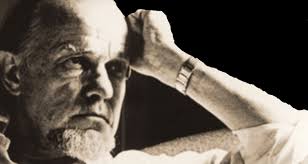
Image result for carl sagan

223 × 373Images may be subject to copyright. Learn More

Recently I have been revisiting my correspondence in 1995 with the famous astronomer Carl Sagan who I had the privilege to correspond with in 1994, 1995 and 1996. In 1996 I had a chance to respond to his December 5, 1995letter on January 10, 1996 and I never heard back from him again since his cancer returned and he passed away later in 1996. Below is what Carl Sagan wrote to me in his December 5, 1995 letter:

Thanks for your recent letter about evolution and abortion. The correlation is hardly one to one; there are evolutionists who are anti-abortion and anti-evolutionists who are pro-abortion.You argue that God exists because otherwise we could not understand the world in our consciousness. But if you think God is necessary to understand the world, then why do you not ask the next question of where God came from? And if you say “God was always here,” why not say that the universe was always here? On abortion, my views are contained in the enclosed article (Sagan, Carl and Ann Druyan {1990}, “The Question of Abortion,” Parade Magazine, April 22.)

I was introduced to when reading a book by Francis Schaeffer called HE IS THERE AND HE IS NOT SILENT written in 1968.

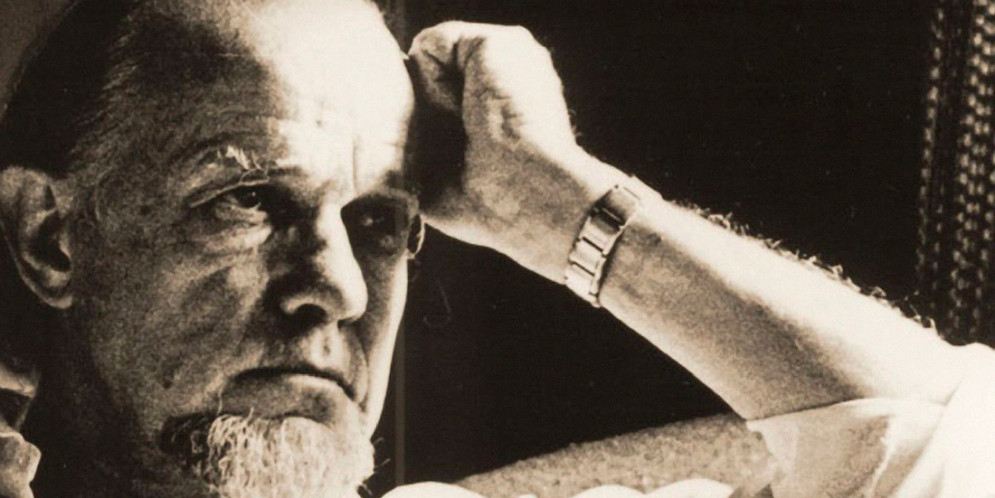
Image result for francis schaeffer

Francis Schaeffer when he was a young pastor in St. Louis pictured above.
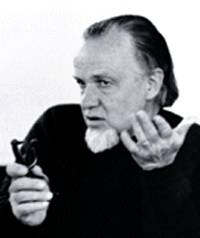
Image result for francis schaeffer

Francis Schaeffer and Adrian Rogers

Image result for adrian rogers

(both Adrian Rogers and Francis Schaeffer mentioned Carl Sagan in their books and that prompted me to write Sagan and expose him to their views.

Carl Sagan pictured below:

Image result for carl sagan

_________

Image result for francis schaeffer

Francis Schaeffer

I mentioned earlier that I was blessed with the opportunity to correspond with Dr. Sagan. In his December 5, 1995 letter Dr. Sagan went on to tell me that he was enclosing his article “The Question of Abortion: A Search for Answers”by Carl Sagan and Ann Druyan. I am going to respond to several points made in that article. Here is a portion of Sagan’s article (here is a link to the whole article):

Image result for carl sagan and ann druyan

Carl Sagan and Ann Druyan pictured above

 “The Question of Abortion: A Search for Answers”

by Carl Sagan and Ann Druyan

For the complete text, including illustrations, introductory quote, footnotes, and commentary on the reaction to the originally published article see Billions and Billions.

The issue had been decided years ago. The court had chosen the middle ground. You’d think the fight was over. Instead, there are mass rallies, bombings and intimidation, murders of workers at abortion clinics, arrests, intense lobbying, legislative drama, Congressional hearings, Supreme Court decisions, major political parties almost defining themselves on the issue, and clerics threatening politicians with perdition. Partisans fling accusations of hypocrisy and murder. The intent of the Constitution and the will of God are equally invoked. Doubtful arguments are trotted out as certitudes. The contending factions call on science to bolster their positions. Families are divided, husbands and wives agree not to discuss it, old friends are no longer speaking. Politicians check the latest polls to discover the dictates of their consciences. Amid all the shouting, it is hard for the adversaries to hear one another. Opinions are polarized. Minds are closed.

Is it wrong to abort a pregnancy? Always? Sometimes? Never? How do we decide? We wrote this article to understand better what the contending views are and to see if we ourselves could find a position that would satisfy us both. Is there no middle ground? We had to weigh the arguments of both sides for consistency and to pose test cases, some of which are purely hypothetical. If in some of these tests we seem to go too far, we ask the reader to be patient with us–we’re trying to stress the various positions to the breaking point to see their weaknesses and where they fail.

In contemplative moments, nearly everyone recognizes that the issue is not wholly one-sided. Many partisans of differing views, we find, feel some disquiet, some unease when confronting what’s behind the opposing arguments. (This is partly why such confrontations are avoided.) And the issue surely touches on deep questions: What are our responses to one another? Should we permit the state to intrude into the most intimate and personal aspects of our lives? Where are the boundaries of freedom? What does it mean to be human?

Of the many actual points of view, it is widely held–especially in the media, which rarely have the time or the inclination to make fine distinctions–that there are only two: “pro-choice” and “pro-life.” This is what the two principal warring camps like to call themselves, and that’s what we’ll call them here. In the simplest characterization, a pro-choicer would hold that the decision to abort a pregnancy is to be made only by the woman; the state has no right to interfere. And a pro-lifer would hold that, from the moment of conception, the embryo or fetus is alive; that this life imposes on us a moral obligation to preserve it; and that abortion is tantamount to murder. Both names–pro-choice and pro-life–were picked with an eye toward influencing those whose minds are not yet made up: Few people wish to be counted either as being against freedom of choice or as opposed to life. Indeed, freedom and life are two of our most cherished values, and here they seem to be in fundamental conflict.

Let’s consider these two absolutist positions in turn. A newborn baby is surely the same being it was just before birth. There ‘s good evidence that a late-term fetus responds to sound–including music, but especially its mother’s voice. It can suck its thumb or do a somersault. Occasionally, it generates adult brain-wave patterns. Some people claim to remember being born, or even the uterine environment. Perhaps there is thought in the womb. It’s hard to maintain that a transformation to full personhood happens abruptly at the moment of birth. Why, then, should it be murder to kill an infant the day after it was born but not the day before?

As a practical matter, this isn’t very important: Less than 1 percent of all tabulated abortions in the United States are listed in the last three months of pregnancy (and, on closer investigation, most such reports turn out to be due to miscarriage or miscalculation). But third-trimester abortions provide a test of the limits of the pro-choice point of view. Does a woman’s “innate right to control her own body” encompass the right to kill a near-term fetus who is, for all intents and purposes, identical to a newborn child?

We believe that many supporters of reproductive freedom are troubled at least occasionally by this question. But they are reluctant to raise it because it is the beginning of a slippery slope. If it is impermissible to abort a pregnancy in the ninth month, what about the eighth, seventh, sixth … ? Once we acknowledge that the state can interfere at any time in the pregnancy, doesn’t it follow that the state can interfere at all times?

Abortion and the slippery slope argument above

This conjures up the specter of predominantly male, predominantly affluent legislators telling poor women they must bear and raise alone children they cannot afford to bring up; forcing teenagers to bear children they are not emotionally prepared to deal with; saying to women who wish for a career that they must give up their dreams, stay home, and bring up babies; and, worst of all, condemning victims of rape and incest to carry and nurture the offspring of their assailants. Legislative prohibitions on abortion arouse the suspicion that their real intent is to control the independence and sexuality of women…

And yet, by consensus, all of us think it proper that there be prohibitions against, and penalties exacted for, murder. It would be a flimsy defense if the murderer pleads that this is just between him and his victim and none of the government’s business. If killing a fetus is truly killing a human being, is it not the duty of the state to prevent it? Indeed, one of the chief functions of government is to protect the weak from the strong.

If we do not oppose abortion at some stage of pregnancy, is there not a danger of dismissing an entire category of human beings as unworthy of our protection and respect? And isn’t that dismissal the hallmark of sexism, racism, nationalism, and religious fanaticism? Shouldn’t those dedicated to fighting such injustices be scrupulously careful not to embrace another?

Adrian Rogers’ sermon on animal rights refutes Sagan here

There is no right to life in any society on Earth today, nor has there been at any former time… : We raise farm animals for slaughter; destroy forests; pollute rivers and lakes until no fish can live there; kill deer and elk for sport, leopards for the pelts, and whales for fertilizer; entrap dolphins, gasping and writhing, in great tuna nets; club seal pups to death; and render a species extinct every day. All these beasts and vegetables are as alive as we. What is (allegedly) protected is not life, but human life.

Genesis 3 defines being human

And even with that protection, casual murder is an urban commonplace, and we wage “conventional” wars with tolls so terrible that we are, most of us, afraid to consider them very deeply… That protection, that right to life, eludes the 40,000 children under five who die on our planet each day from preventable starvation, dehydration, disease, and neglect.

Those who assert a “right to life” are for (at most) not just any kind of life, but for–particularly and uniquely—human life. So they too, like pro-choicers, must decide what distinguishes a human being from other animals and when, during gestation, the uniquely human qualities–whatever they are–emerge.

The Bible talks about the differences between humans and animals

Despite many claims to the contrary, life does not begin at conception: It is an unbroken chain that stretches back nearly to the origin of the Earth, 4.6 billion years ago. Nor does human life begin at conception: It is an unbroken chain dating back to the origin of our species, hundreds of thousands of years ago. Every human sperm and egg is, beyond the shadow of a doubt, alive. They are not human beings, of course. However, it could be argued that neither is a fertilized egg.

In some animals, an egg develops into a healthy adult without benefit of a sperm cell. But not, so far as we know, among humans. A sperm and an unfertilized egg jointly comprise the full genetic blueprint for a human being. Under certain circumstances, after fertilization, they can develop into a baby. But most fertilized eggs are spontaneously miscarried. Development into a baby is by no means guaranteed. Neither a sperm and egg separately, nor a fertilized egg, is more than a potential baby or a potential adult. So if a sperm and egg are as human as the fertilized egg produced by their union, and if it is murder to destroy a fertilized egg–despite the fact that it’s only potentially a baby–why isn’t it murder to destroy a sperm or an egg?

Hundreds of millions of sperm cells (top speed with tails lashing: five inches per hour) are produced in an average human ejaculation. A healthy young man can produce in a week or two enough spermatozoa to double the human population of the Earth. So is masturbation mass murder? How about nocturnal emissions or just plain sex? When the unfertilized egg is expelled each month, has someone died? Should we mourn all those spontaneous miscarriages? Many lower animals can be grown in a laboratory from a single body cell. Human cells can be cloned… In light of such cloning technology, would we be committing mass murder by destroying any potentially clonable cells? By shedding a drop of blood?

All human sperm and eggs are genetic halves of “potential” human beings. Should heroic efforts be made to save and preserve all of them, everywhere, because of this “potential”? Is failure to do so immoral or criminal? Of course, there’s a difference between taking a life and failing to save it. And there’s a big difference between the probability of survival of a sperm cell and that of a fertilized egg. But the absurdity of a corps of high-minded semen-preservers moves us to wonder whether a fertilized egg’s mere “potential” to become a baby really does make destroying it murder.

Opponents of abortion worry that, once abortion is permissible immediately after conception, no argument will restrict it at any later time in the pregnancy. Then, they fear, one day it will be permissible to murder a fetus that is unambiguously a human being. Both pro-choicers and pro-lifers (at least some of them) are pushed toward absolutist positions by parallel fears of the slippery slope.

Another slippery slope is reached by those pro-lifers who are willing to make an exception in the agonizing case of a pregnancy resulting from rape or incest. But why should the right to live depend on the circumstances of conception? If the same child were to result, can the state ordain life for the offspring of a lawful union but death for one conceived by force or coercion? How can this be just? And if exceptions are extended to such a fetus, why should they be withheld from any other fetus? This is part of the reason some pro-lifers adopt what many others consider the outrageous posture of opposing abortions under any and all circumstances–only excepting, perhaps, when the life of the mother is in danger.

By far the most common reason for abortion worldwide is birth control. So shouldn’t opponents of abortion be handing out contraceptives and teaching school children how to use them? That would be an effective way to reduce the number of abortions. Instead, the United States is far behind other nations in the development of safe and effective methods of birth control–and, in many cases, opposition to such research (and to sex education) has come from the same people who oppose abortions.continue on to Part 3

For the complete text, including illustrations, introductory quote, footnotes, and commentary on the reaction to the originally published article see Billions and Billions.

The attempt to find an ethically sound and unambiguous judgment on when, if ever, abortion is permissible has deep historical roots. Often, especially in Christian tradition, such attempts were connected with the question of when the soul enters the body–a matter not readily amenable to scientific investigation and an issue of controversy even among learned theologians. Ensoulment has been asserted to occur in the sperm before conception, at conception, at the time of “quickening” (when the mother is first able to feel the fetus stirring within her), and at birth. Or even later.

Different religions have different teachings. Among hunter-gatherers, there are usually no prohibitions against abortion, and it was common in ancient Greece and Rome. In contrast, the more severe Assyrians impaled women on stakes for attempting abortion. The Jewish Talmud teaches that the fetus is not a person and has no rights. The Old and New Testaments–rich in astonishingly detailed prohibitions on dress, diet, and permissible words–contain not a word specifically prohibiting abortion. The only passage that’s remotely relevant (Exodus 21:22) decrees that if there’s a fight and a woman bystander should accidentally be injured and made to miscarry, the assailant must pay a fine.

Neither St. Augustine nor St. Thomas Aquinas considered early-term abortion to be homicide (the latter on the grounds that the embryo doesn’t look human). This view was embraced by the Church in the Council of Vienne in 1312, and has never been repudiated. The Catholic Church’s first and long-standing collection of canon law (according to the leading historian of the Church’s teaching on abortion, John Connery, S.J.) held that abortion was homicide only after the fetus was already “formed”–roughly, the end of the first trimester.

But when sperm cells were examined in the seventeenth century by the first microscopes, they were thought to show a fully formed human being. An old idea of the homunculus was resuscitated–in which within each sperm cell was a fully formed tiny human, within whose testes were innumerable other homunculi, etc., ad infinitum. In part through this misinterpretation of scientific data, in 1869 abortion at any time for any reason became grounds for excommunication. It is surprising to most Catholics and others to discover that the date was not much earlier.

From colonial times to the nineteenth century, the choice in the United States was the woman’s until “quickening.” An abortion in the first or even second trimester was at worst a misdemeanor. Convictions were rarely sought and almost impossible to obtain, because they depended entirely on the woman’s own testimony of whether she had felt quickening, and because of the jury’s distaste for prosecuting a woman for exercising her right to choose. In 1800 there was not, so far as is known, a single statute in the United States concerning abortion. Advertisements for drugs to induce abortion could be found in virtually every newspaper and even in many church publications–although the language used was suitably euphemistic, if widely understood.

But by 1900, abortion had been banned at any time in pregnancy by every state in the Union, except when necessary to save the woman’s life. What happened to bring about so striking a reversal? Religion had little to do with it.Drastic economic and social conversions were turning this country from an agrarian to an urban-industrial society. America was in the process of changing from having one of the highest birthrates in the world to one of the lowest. Abortion certainly played a role and stimulated forces to suppress it.

One of the most significant of these forces was the medical profession. Up to the mid-nineteenth century, medicine was an uncertified, unsupervised business. Anyone could hang up a shingle and call himself (or herself) a doctor. With the rise of a new, university-educated medical elite, anxious to enhance the status and influence of physicians, the American Medical Association was formed. In its first decade, the AMA began lobbying against abortions performed by anyone except licensed physicians. New knowledge of embryology, the physicians said, had shown the fetus to be human even before quickening.

Their assault on abortion was motivated not by concern for the health of the woman but, they claimed, for the welfare of the fetus. You had to be a physician to know when abortion was morally justified, because the question depended on scientific and medical facts understood only by physicians. At the same time, women were effectively excluded from the medical schools, where such arcane knowledge could be acquired. So, as things worked out, women had almost nothing to say about terminating their own pregnancies. It was also up to the physician to decide if the pregnancy posed a threat to the woman, and it was entirely at his discretion to determine what was and was not a threat. For the rich woman, the threat might be a threat to her emotional tranquillity or even to her lifestyle. The poor woman was often forced to resort to the back alley or the coat hanger.

This was the law until the 1960s, when a coalition of individuals and organizations, the AMA now among them, sought to overturn it and to reinstate the more traditional values that were to be embodied in Roe v. Wade.continue on to Part 4

If you deliberately kill a human being, it’s called murder. If you deliberately kill a chimpanzee–biologically, our closest relative, sharing 99.6 percent of our active genes–whatever else it is, it’s not murder. To date, murder uniquely applies to killing human beings. Therefore, the question of when personhood (or, if we like, ensoulment) arises is key to the abortion debate. When does the fetus become human? When do distinct and characteristic human qualities emerge?

Section 8 Sperm journey to becoming Human

We recognize that specifying a precise moment will overlook individual differences. Therefore, if we must draw a line, it ought to be drawn conservatively–that is, on the early side. There are people who object to having to set some numerical limit, and we share their disquiet; but if there is to be a law on this matter, and it is to effect some useful compromise between the two absolutist positions, it must specify, at least roughly, a time of transition to personhood.

Every one of us began from a dot. A fertilized egg is roughly the size of the period at the end of this sentence. The momentous meeting of sperm and egg generally occurs in one of the two fallopian tubes. One cell becomes two, two become four, and so on—an exponentiation of base-2 arithmetic. By the tenth day the fertilized egg has become a kind of hollow sphere wandering off to another realm: the womb. It destroys tissue in its path. It sucks blood from capillaries. It bathes itself in maternal blood, from which it extracts oxygen and nutrients. It establishes itself as a kind of parasite on the walls of the uterus.By the third week, around the time of the first missed menstrual period, the forming embryo is about 2 millimeters long and is developing various body parts. Only at this stage does it begin to be dependent on a rudimentary placenta. It looks a little like a segmented worm.By the end of the fourth week, it’s about 5 millimeters (about 1/5 inch) long. It’s recognizable now as a vertebrate, its tube-shaped heart is beginning to beat, something like the gill arches of a fish or an amphibian become conspicuous, and there is a pronounced tail. It looks rather like a newt or a tadpole. This is the end of the first month after conception.By the fifth week, the gross divisions of the brain can be distinguished. What will later develop into eyes are apparent, and little buds appear—on their way to becoming arms and legs.By the sixth week, the embryo is 13 millimeteres (about ½ inch) long. The eyes are still on the side of the head, as in most animals, and the reptilian face has connected slits where the mouth and nose eventually will be.By the end of the seventh week, the tail is almost gone, and sexual characteristics can be discerned (although both sexes look female). The face is mammalian but somewhat piglike.By the end of the eighth week, the face resembles that of a primate but is still not quite human. Most of the human body parts are present in their essentials. Some lower brain anatomy is well-developed. The fetus shows some reflex response to delicate stimulation.By the tenth week, the face has an unmistakably human cast. It is beginning to be possible to distinguish males from females. Nails and major bone structures are not apparent until the third month.By the fourth month, you can tell the face of one fetus from that of another. Quickening is most commonly felt in the fifth month. The bronchioles of the lungs do not begin developing until approximately the sixth month, the alveoli still later.

So, if only a person can be murdered, when does the fetus attain personhood? When its face becomes distinctly human, near the end of the first trimester? When the fetus becomes responsive to stimuli–again, at the end of the first trimester? When it becomes active enough to be felt as quickening, typically in the middle of the second trimester? When the lungs have reached a stage of development sufficient that the fetus might, just conceivably, be able to breathe on its own in the outside air?

The trouble with these particular developmental milestones is not just that they’re arbitrary. More troubling is the fact that none of them involves uniquely humancharacteristics–apart from the superficial matter of facial appearance. All animals respond to stimuli and move of their own volition. Large numbers are able to breathe. But that doesn’t stop us from slaughtering them by the billions. Reflexes and motion are not what make us human.

Sagan’s conclusion based on arbitrary choice of the presence of thought by unborn baby

Other animals have advantages over us–in speed, strength, endurance, climbing or burrowing skills, camouflage, sight or smell or hearing, mastery of the air or water. Our one great advantage, the secret of our success, is thought–characteristically human thought. We are able to think things through, imagine events yet to occur, figure things out. That’s how we invented agriculture and civilization. Thought is our blessing and our curse, and it makes us who we are.

Thinking occurs, of course, in the brain–principally in the top layers of the convoluted “gray matter” called the cerebral cortex. The roughly 100 billion neurons in the brain constitute the material basis of thought. The neurons are connected to each other, and their linkups play a major role in what we experience as thinking. But large-scale linking up of neurons doesn’t begin until the 24th to 27th week of pregnancy–the sixth month.

By placing harmless electrodes on a subject’s head, scientists can measure the electrical activity produced by the network of neurons inside the skull. Different kinds of mental activity show different kinds of brain waves. But brain waves with regular patterns typical of adult human brains do not appear in the fetus until about the 30th week of pregnancy–near the beginning of the third trimester. Fetuses younger than this–however alive and active they may be–lack the necessary brain architecture. They cannot yet think.

Acquiescing in the killing of any living creature, especially one that might later become a baby, is troublesome and painful. But we’ve rejected the extremes of “always” and “never,” and this puts us–like it or not–on the slippery slope. If we are forced to choose a developmental criterion, then this is where we draw the line: when the beginning of characteristically human thinking becomes barely possible.

It is, in fact, a very conservative definition: Regular brain waves are rarely found in fetuses. More research would help… If we wanted to make the criterion still more stringent, to allow for occasional precocious fetal brain development, we might draw the line at six months. This, it so happens, is where the Supreme Court drew it in 1973–although for completely different reasons.

Its decision in the case of Roe v. Wade changed American law on abortion. It permits abortion at the request of the woman without restriction in the first trimester and, with some restrictions intended to protect her health, in the second trimester. It allows states to forbid abortion in the third trimester, except when there’s a serious threat to the life or health of the woman. In the 1989 Webster decision, the Supreme Court declined explicitly to overturn Roe v. Wade but in effect invited the 50 state legislatures to decide for themselves.

What was the reasoning in Roe v. Wade? There was no legal weight given to what happens to the children once they are born, or to the family. Instead, a woman’s right to reproductive freedom is protected, the court ruled, by constitutional guarantees of privacy. But that right is not unqualified. The woman’s guarantee of privacy and the fetus’s right to life must be weighed–and when the court did the weighing’ priority was given to privacy in the first trimester and to life in the third. The transition was decided not from any of the considerations we have been dealing with so far…–not when “ensoulment” occurs, not when the fetus takes on sufficient human characteristics to be protected by laws against murder. Instead, the criterion adopted was whether the fetus could live outside the mother. This is called “viability” and depends in part on the ability to breathe. The lungs are simply not developed, and the fetus cannot breathe–no matter how advanced an artificial lung it might be placed in—until about the 24th week, near the start of the sixth month. This is why Roe v. Wade permits the states to prohibit abortions in the last trimester. It’s a very pragmatic criterion.

If the fetus at a certain stage of gestation would be viable outside the womb, the argument goes, then the right of the fetus to life overrides the right of the woman to privacy. But just what does “viable” mean? Even a full-term newborn is not viable without a great deal of care and love. There was a time before incubators, only a few decades ago, when babies in their seventh month were unlikely to be viable. Would aborting in the seventh month have been permissible then? After the invention of incubators, did aborting pregnancies in the seventh month suddenly become immoral? What happens if, in the future, a new technology develops so that an artificial womb can sustain a fetus even before the sixth month by delivering oxygen and nutrients through the blood–as the mother does through the placenta and into the fetal blood system? We grant that this technology is unlikely to be developed soon or become available to many. But if it were available, does it then become immoral to abort earlier than the sixth month, when previously it was moral? A morality that depends on, and changes with, technology is a fragile morality; for some, it is also an unacceptable morality.

And why, exactly, should breathing (or kidney function, or the ability to resist disease) justify legal protection? If a fetus can be shown to think and feel but not be able to breathe, would it be all right to kill it? Do we value breathing more than thinking and feeling? Viability arguments cannot, it seems to us, coherently determine when abortions are permissible. Some other criterion is needed. Again, we offer for consideration the earliest onset of human thinking as that criterion.

Since, on average, fetal thinking occurs even later than fetal lung development, we find Roe v. Wade to be a good and prudent decision addressing a complex and difficult issue. With prohibitions on abortion in the last trimester–except in cases of grave medical necessity–it strikes a fair balance between the conflicting claims of freedom and life.What do you think? What have others said about Carl Sagan’s thoughts on 

END OF SAGAN’S ARTICLE

Image result for carl sagan and ann druyan
Carl Sagan with his wife Ann in the 1990’s
Image result for adrian rogers francis schaeffer
I grew up in Memphis as a member of Bellevue Baptist Church under our pastor Adrian Rogers and attended ECS High School where the books and films of Francis Schaeffer were taught. Both men dealt with current issues in the culture such as the film series COSMOS by Carl Sagan. I personally read several of Sagan’s books.  (Francis and Edith Schaeffer pictured below in their home at L’ Abri in Switzerland where Francis  taught students for 3 decades.
Image result for francis schaeffer
630 × 414Images may be subject to copyright.

Xxxxxxxxxxxxx

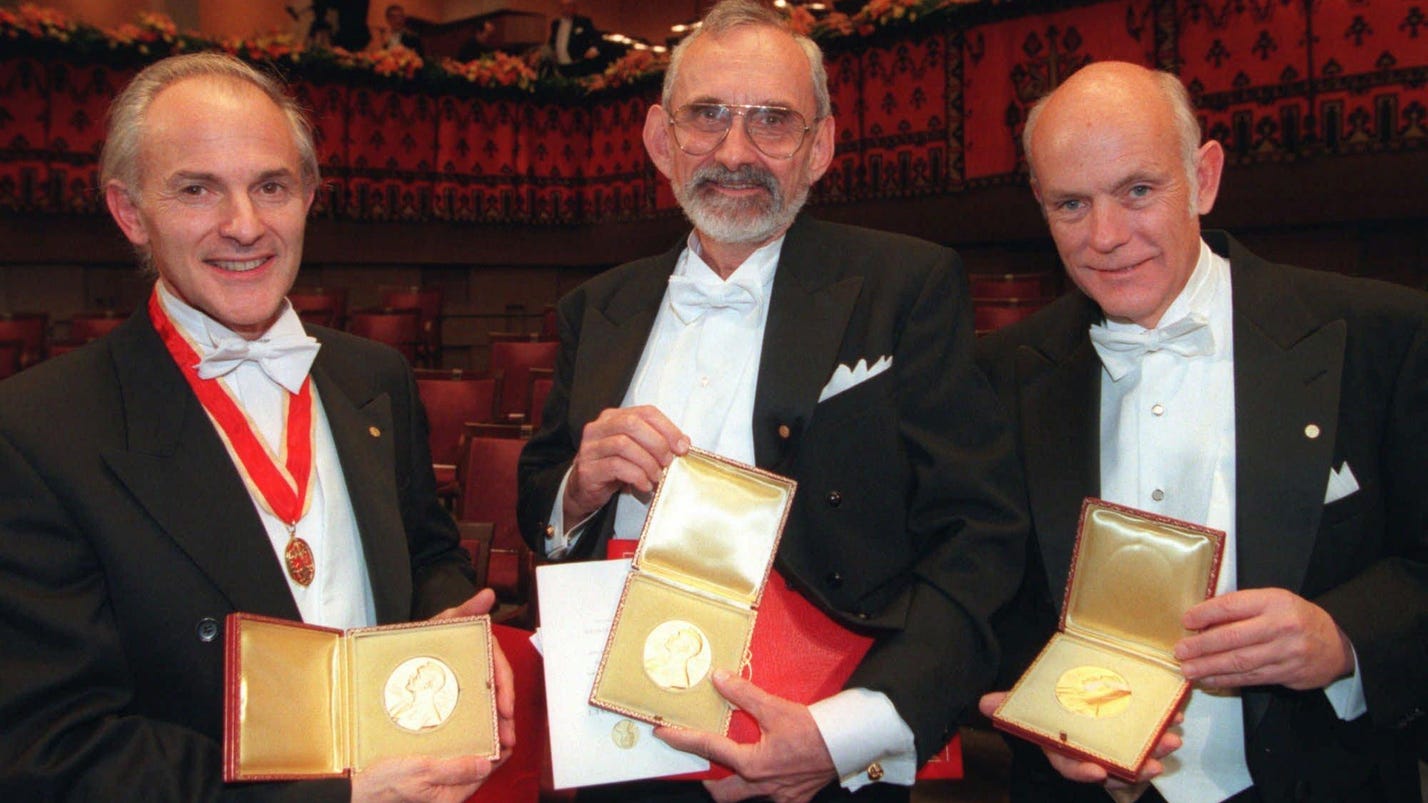
On November 21, 2014 I received a letter from Nobel Laureate Harry Kroto and it said:

…Please click on this URL http://vimeo.com/26991975

and you will hear what far smarter people than I have to say on this matter. I agree with them.

Harry Kroto

I have attempted to respond to all of Dr. Kroto’s friends arguments and I have posted my responses one per week for over a year now. Here are some of my earlier posts:

Arif Ahmed, Haroon Ahmed,  Jim Al-Khalili, Sir David Attenborough, Mark Balaguer, Horace Barlow, Michael Bate, Sir Patrick Bateson, Simon Blackburn, Colin Blakemore, Ned Block, Pascal Boyer, Patricia Churchland, Aaron Ciechanover, Noam Chomsky, Brian Cox, Partha Dasgupta,  Alan Dershowitz, Frank Drake, Hubert Dreyfus, John Dunn, Bart Ehrman, Mark Elvin, Richard Ernst, Stephan Feuchtwang, Robert Foley, David Friend,  Riccardo Giacconi, Ivar Giaever , Roy Glauber, Rebecca Goldstein, David J. Gross,  Brian Greene, Susan Greenfield, Stephen F Gudeman,  Alan Guth, Jonathan Haidt, Theodor W. Hänsch, Brian Harrison,  Stephen Hawking, Hermann Hauser, Robert Hinde, Roald Hoffmann,  Bruce Hood, Gerard ‘t Hooft, Caroline Humphrey, Nicholas Humphrey,  Herbert Huppert,  Gareth Stedman Jones, Steve Jones, Shelly Kagan, Michio Kaku,  Stuart Kauffman, Masatoshi Koshiba,  Lawrence Krauss, Harry Kroto, George Lakoff,  Rodolfo Llinas, Elizabeth Loftus,  Alan Macfarlane, Dan McKenzie,  Mahzarin Banaji, Peter Millican, Marvin Minsky, Leonard Mlodinow,  P.Z.Myers,   Yujin Nagasawa, Alva Noe, Douglas Osheroff, David Parkin,  Jonathan Parry, Roger Penrose,  Saul Perlmutter, Herman Philipse,  Carolyn Porco, Robert M. Price, VS Ramachandran, Lisa Randall, Lord Martin Rees, Colin Renfrew, Alison Richard,  C.J. van Rijsbergen,  Oliver Sacks, John Searle, Marcus du Sautoy, Simon Schaffer, J. L. Schellenberg,   Lee Silver,  Peter Singer,  Walter Sinnott-Armstrong, Ronald de Sousa, Victor Stenger, John Sulston, Barry Supple,   Leonard Susskind, Raymond Tallis, Max Tegmark, Neil deGrasse Tyson,  Martinus J. G. Veltman, Craig Venter, .Alexander Vilenkin, Sir John Walker, James D. Watson, Frank Wilczek, Steven Weinberg, and  Lewis Wolpert,

<a style=”font-style:normal;font-variant-caps:normal;font-weight:normal;letter-spacing:normal;orphans:auto;text-indent:0;text-transform:none;white-space:normal;widows:auto;word-spacing:0;box-sizing:border-box;background-color:transparent;color:#c01823;text-decoration:none;margin:0;padding:0;border:0;font-size:13px;font-family:Lato, ‘Helvetica Neue’, Arial, Verdana, sans-serif;vertical-align:baseline;transition:color 0.2s linear, background 0.1s linear, border-color 0.1s linear;text-align:left;-webkit-text-size-adjust:100%;” title=”Remember when Carl Sagan trashed Star Wars on late-night TV?” href=”https://lithub.com/remember-when-carl-sagan-trashed-star-wars-on-late-night-tv/”&gt;

Carl Sagan

nitially an associate professor at Harvard, Sagan later moved to Cornell where he would spend the majority of his career as the David Duncan Professor of Astronomy and Space Sciences. Sagan published more than 600 scientific papers and articles and was author, co-author or editor of more than 20 books.[5] He wrote many popular science books, such as The Dragons of Eden, Broca’s Brain, Pale Blue Dot and narrated and co-wrote the award-winning 1980 television series Cosmos: A Personal Voyage. The most widely watched series in the history of American public television, Cosmos, has been seen by at least 500 million people in 60 countries.[6] The book Cosmos was published to accompany the series. He also wrote the 1985 science fiction novel Contact, the basis for a 1997 film of the same name. His papers, containing 595,000 items,[7] are archived at The Library of Congress.[8]

Sagan advocated scientific skeptical inquiry and the scientific method, pioneered exobiology and promoted the Search for Extra-Terrestrial Intelligence (SETI). He spent most of his career as a professor of astronomy at Cornell University, where he directed the Laboratory for Planetary Studies. Sagan and his works received numerous awards and honors, including the NASA Distinguished Public Service Medal, the National Academy of SciencesPublic Welfare Medal, the Pulitzer Prize for General Non-Fiction for his book The Dragons of Eden, and, regarding Cosmos: A Personal Voyage, two Emmy Awards, the Peabody Award, and the Hugo Award. He married three times and had five children. After suffering from myelodysplasia, Sagan died of pneumonia at the age of 62, on December 20, 1996.

In  the 1st video below in the 45th clip in this series are his words and  my response is below them. 

50 Renowned Academics Speaking About God (Part 1)

Another 50 Renowned Academics Speaking About God (Part 2

A Further 50 Renowned Academics Speaking About God (Part 3)

–

CARL SAGAN interview with Charlie Rose:

“…faith is belief in the absence of evidence. To believe in the absence of evidence, in my opinion, is a mistake. The idea is to hold belief until there is compelling evidence. If the Universe does not comply with our previous propositions, then we have to change…Religion deals with history poetry, great literature, ethics, morals, compassion…where religion gets into trouble is when it pretends to know something about science,”

I would respond that there is evidence that Christianity is true. The accuracy of the Bible has been confirmed by archaeology over and over in the past and one of the amazing finds was in 1948 when the Dead Sea Scrolls had copies from every Old Testament Book except Esther! One of the most powerful recent discoveries involved the bones of the high priest Caiaphas who questioned Christ in 30 AD.

Related posts:

FRANCIS SCHAEFFER ANALYZES ART AND CULTURE Part 52 THE BEATLES (Part D, There is evidence that the Beatles may have been exposed to Francis Schaeffer!!!) (Feature on artist Anna Margaret Rose Freeman )

March 22, 2015 – 12:30 am

______________   George Harrison Swears & Insults Paul and Yoko Lucy in the Sky with Diamonds- The Beatles The Beatles:   I have dedicated several posts to this series on the Beatles and I don’t know when this series will end because Francis Schaeffer spent a lot of time listening to the Beatles and talking […]

By Everette Hatcher III | Posted in Francis Schaeffer | Tagged Anna Margaret Rose Freeman, George Harrison, John Lennon, Paul MacCartney, Ringo Starr, Stg. Pepper’s Lonely Hearts Club Band | Edit| Comments (0)

FRANCIS SCHAEFFER ANALYZES ART AND CULTURE Part 51 THE BEATLES (Part C, List of those on cover of Stg.Pepper’s ) (Feature on artist Raqib Shaw )

March 19, 2015 – 12:21 am

  The Beatles in a press conference after their Return from the USA Uploaded on Nov 29, 2010 The Beatles in a press conference after their Return from the USA. The Beatles:   I have dedicated several posts to this series on the Beatles and I don’t know when this series will end because Francis […]

By Everette Hatcher III | Posted in Francis Schaeffer | Tagged George Harrison, John Lennon, Paul MacCartney, Raqib Shaw, Ringo Starr | Edit | Comments (0)

FRANCIS SCHAEFFER ANALYZES ART AND CULTURE Part 50 THE BEATLES (Part B, The Psychedelic Music of the Beatles) (Feature on artist Peter Blake )

March 12, 2015 – 12:16 am

__________________   Beatles 1966 Last interview I have dedicated several posts to this series on the Beatles and I don’t know when this series will end because Francis Schaeffer spent a lot of time listening to the Beatles and talking and writing about them and their impact on the culture of the 1960’s. In this […]

By Everette Hatcher III | Posted in Francis Schaeffer | Tagged George Harrison, John Lennon, Paul MacCartney, Peter Blake, Ringo Starr | Edit | Comments (1)

FRANCIS SCHAEFFER ANALYZES ART AND CULTURE Part 49 THE BEATLES (Part A, The Meaning of Stg. Pepper’s Cover) (Feature on artist Mika Tajima)

March 5, 2015 – 4:47 am

_______________ The Beatles documentary || A Long and Winding Road || Episode 5 (This video discusses Stg. Pepper’s creation I have dedicated several posts to this series on the Beatles and I don’t know when this series will end because Francis Schaeffer spent a lot of time listening to the Beatles and talking and writing about […]

By Everette Hatcher III | Posted in Francis Schaeffer | Tagged Beatles, Mika Tajima | Edit |Comments (0)

FRANCIS SCHAEFFER ANALYZES ART AND CULTURE PART 48 “BLOW UP” by Michelangelo Antonioni makes Philosophic Statement (Feature on artist Nancy Holt)

February 26, 2015 – 4:57 am

_______________ Francis Schaeffer pictured below: _____________________ I have included the 27 minute  episode THE AGE OF NONREASON by Francis Schaeffer. In that video Schaeffer noted,  ” Sergeant Pepper’s Lonely Hearts Club Band…for a time it became the rallying cry for young people throughout the world. It expressed the essence of their lives, thoughts and their feelings.” How Should […]

By Everette Hatcher III | Posted in Francis Schaeffer | Tagged Blow Up, David Hemmings,Michelangelo Antonioni, Nancy Holt, Sarah Miles., Vanessa Redgrave | Edit | Comments (0)

FRANCIS SCHAEFFER ANALYZES ART AND CULTURE Part 47 Woody Allen and Professor Levy and the death of “Optimistic Humanism” from the movie CRIMES AND MISDEMEANORS Plus Charles Darwin’s comments too!!! (Feature on artist Rodney Graham)

February 19, 2015 – 5:33 am

Crimes and Misdemeanors: A Discussion: Part 1 ___________________________________ Today I will answer the simple question: IS IT POSSIBLE TO BE AN OPTIMISTIC SECULAR HUMANIST THAT DOES NOT BELIEVE IN GOD OR AN AFTERLIFE? This question has been around for a long time and you can go back to the 19th century and read this same […]

By Everette Hatcher III | Posted in Francis Schaeffer, Woody Allen | Tagged alan alda, Anjelica Huston, mia farrow, Sam Waterston | Edit | Comments (0)

FRANCIS SCHAEFFER ANALYZES ART AND CULTURE PART 46 Friedrich Nietzsche (Featured artist is Thomas Schütte)

February 12, 2015 – 5:00 am

____________________________________ Francis Schaeffer pictured below: __________ Francis Schaeffer has written extensively on art and culture spanning the last 2000years and here are some posts I have done on this subject before : Francis Schaeffer’s “How should we then live?” Video and outline of episode 10 “Final Choices” , episode 9 “The Age of Personal Peace and Affluence”, episode 8 […]

By Everette Hatcher III | Posted in Francis Schaeffer | Tagged Bertrand Russell, Friedrich Nietzsche,H.G. Wells, jean paul sartre, Kai Nielsen, Richard Taylor, Richard Wurmbrand, Thomas Schütte | Edit| Comments (0)

FRANCIS SCHAEFFER ANALYZES ART AND CULTURE Part 45 Woody Allen “Reason is Dead” (Feature on artists Allora & Calzadilla )

February 5, 2015 – 4:31 am

Love and Death [Woody Allen] – What if there is no God? [PL] ___________ _______________ How Should We then Live Episode 7 small (Age of Nonreason) #02 How Should We Then Live? (Promo Clip) Dr. Francis Schaeffer 10 Worldview and Truth Two Minute Warning: How Then Should We Live?: Francis Schaeffer at 100 Francis Schaeffer […]

By Everette Hatcher III | Posted in Francis Schaeffer, Woody Allen | Tagged Allora & Calzadilla | Edit| Comments (0)

FRANCIS SCHAEFFER ANALYZES ART AND CULTURE Part 44 The Book of Genesis (Featured artist is Trey McCarley )

January 29, 2015 – 5:01 am

___________________________________ Francis Schaeffer pictured below: ____________________________ Francis Schaeffer “BASIS FOR HUMAN DIGNITY” Whatever…HTTHR Dr. Francis schaeffer – The flow of Materialism(from Part 4 of Whatever happened to human race?) Dr. Francis Schaeffer – The Biblical flow of Truth & History (intro) Francis Schaeffer – The Biblical Flow of History & Truth (1) Dr. Francis Schaeffer […]

By Everette Hatcher III | Posted in Francis Schaeffer | Tagged Trey McCarley | Edit | Comments (0)

__

__
By Everette Hatcher III | Posted in Uncategorized | Tagged .Alexander Vilenkin, Aaron Ciechanover, Alan Dershowitz, Alan Guth, Alan Macfarlane, Alison Richard, Alva Noe, Arif Ahmed, Barry Supple, Bart Ehrman, Brian Cox, Brian Greene, Brian Harrison, Bruce Hood, C.J. van Rijsbergen, Caroline Humphrey, Carolyn Porco, Colin Blakemore, Colin Renfrew, Craig Venter, Dan McKenzie, David Friend, David J. Gross, David Parkin, Douglas Osheroff, Elizabeth Loftus, Frank Drake, Frank Wilczek, Gareth Stedman Jones, George Lakoff, Gerard ‘t Hooft, Haroon Ahmed, Harry Kroto, Herbert Huppert, Herman Philipse, Hermann Hauser, Horace Barlow, Hubert Dreyfus, Ivar Giaever, J. L. Schellenberg, James D. Watson, Jim Al-Khalili, John Dunn, John Searle, John Sulston, Jonathan Haidt, Jonathan Parry, Lawrence Krauss, Lee Silver, Leonard Mlodinow, Leonard Susskind, Lewis Wolpert, Lisa Randall, Lord Martin Rees, Mahzarin Banaji, Marcus du Sautoy, Mark Balaguer, Mark Elvin, Martinus J. G. Veltman, Marvin Minsky, Masatoshi Koshiba, Max Tegmark, Michael Bate, Michio Kaku, Ned Block, Neil deGrasse Tyson, Nicholas Humphrey, Noam Chomsky, Oliver Sacks, P.Z.Myers, Partha Dasgupta, Pascal Boyer, Patricia Churchland, Peter Millican, Peter Singer, Raymond Tallis, Rebecca Goldstein, Riccardo Giacconi, Richard Ernst, Roald Hoffmann, Robert Foley, Robert Hinde, Robert M. Price, Rodolfo Llinas, Roger Penrose, Ronald de Sousa, Roy Glauber, Saul Perlmutter, Shelly Kagan, Simon Blackburn, Simon Schaffer, Sir David Attenborough, Sir John Walker, Sir Patrick Bateson, Stephan Feuchtwang, Stephen F Gudeman, Stephen Hawking, Steve Jones, Steven Weinberg, Stuart Kauffman, Susan Greenfield, Theodor W. Hänsch, Victor Stenger, VS Ramachandran, Walter Sinnott-Armstrong, Yujin Nagasawa | Comments (0)

MUSIC MONDAY Punk Rock Group BAD BRAINS and their song “I Against I”

January 29, 2024 – 2:12 am

__

__

Francis Schaeffer noted:

I have lots of young people and older ones come to us from the ends of the earth. And as they come to us, they have gone to the end of this logically and they are not living in a romantic setting. They realize what the situation is. They can’t find any meaning to life. It’s the meaning to the black poetry. It’s the meaning of the black plays. It’s the meaning of all this. It’s the meaning of the words “punk rock.”

–

“They are the natural outcome of a change from a Christian World View to a Humanistic one…
The result is a relativistic value system. A lack of a final meaning to life — that’s first. Why does human life have any value at all, if that is all that reality is? Not only are you going to die individually, but the whole human race is going to die, someday. It may not take the falling of the atom bombs, but someday the world will grow too hot, too cold. That’s what we are told on this other final reality, and someday all you people not only will be individually dead, but the whole conscious life on this world will be dead, and nobody will see the birds fly. And there’s no meaning to life.

As you know, I don’t speak academically, shut off in some scholastic cubicle, as it were. I have lots of young people and older ones come to us from the ends of the earth. And as they come to us, they have gone to the end of this logically and they are not living in a romantic setting. They realize what the situation is. They can’t find any meaning to life. It’s the meaning to the black poetry. It’s the meaning of the black plays. It’s the meaning of all this. It’s the meaning of the words “punk rock.” And I must say, that on the basis of what they are being taught in school, that the final reality is only this material thing, they are not wrong. They’re right! On this other basis there is no meaning to life and not only is there no meaning to life, but there is no value system that is fixed, and we find that the law is based then only on a relativistic basis and that law becomes purely arbitrary.

–

Bad Brains

  • Language
  • Watch
  • Edit
Bad Brains are an American rock band formed in Washington, D.C. in 1977. They are widely regarded as among the pioneers of hardcore punk,[1][2][3]though the band’s members have objected to this term to describe their music.[4] They are also an adept reggae band, while later recordings featured elements of other genres like funk,[5] heavy metal,[1]hip hop and soul.[5] Bad Brains are followers of the Rastafari movement.[5]

Bad Brains
BadBrains.png

Bad Brains performing in Baltimore in 2007
Background information
Also known as
  • Mind Power
  • Soul Brains
Origin Washington, D.C., United States
Genres
  • Hardcore punk
  • alternative metal
  • punk rock
  • reggae
Years active
  • 1977–1995
  • 1998–present
Labels
  • ROIR
  • Caroline
  • SST
  • Epic
  • Mundane
  • SME
  • Maverick
  • Warner Bros.
  • Megaforce
Associated acts
  • Beastie Boys
  • Saudade
Website www.badbrains.com
Members
  • H.R.
  • Dr. Know
  • Darryl Jenifer
  • Earl Hudson
Past members
  • Sid McCray
  • Mackie Jayson
  • Taj Singleton
  • Chuck Mosley
  • Israel Joseph I
  • Chuck Treece

Originally formed as a jazz fusion ensemble under the name Mind Power,[5] Bad Brains developed a very fast and intense punk rock sound which came to be labeled “hardcore”, and was often played faster and more emphatically than many of their peers. The unique factor of the band’s music was the fact that they played more complex rhythms than other hardcore punk bands, also adapting non-punk style guitar riffs and solos into their songs.

Bad Brains have released nine studio albums (one of which is entirely composed of instrumental versions of their early material). The band broke up and reformed several times over the years, sometimes with different singers or drummers. Since 1994, the “classic” lineup of singer H.R. (Human Rights), guitarist Dr. Know, bassist Darryl Jenifer, and drummer Earl Hudson has reunited, albeit performing sporadically. In 2013 keyboardist Jamie Saft was recruited to play with the band, fulfilling both live and studio roles. Chogyi Lama performed with the group live 2016–17.

HistoryEdit

From fusion to hardcore (1976–1985)Edit

Bad Brains at 9:30 Club, Washington, D.C., 1983

The band was first founded in 1976 as a jazz fusionensemble called Mind Power[5] in the mold of bands such as Chick Corea‘s Return to Forever and John McLaughlin‘s Mahavishnu Orchestra as well as R&Bmusician Stevie Wonder. In 1977, their friend Sid McCray introduced the band, who were already interested in bands such as Black Sabbath, to punk rock, including the Dickies, the Dead Boys, and the Sex Pistols. Mind Power became obsessed with punk rock and changed their name to “Bad Brains”,[5] after the Ramones song “Bad Brain.”[5]Despite their burgeoning punk sound, the early Bad Brains, after seeing Bob Marley in concert, also delved deep into reggae music and the Rastafari movement.[6] Sid McCray became their first singer but left in the early days of the group’s hardcore punk era, and guitarist H.R. became the band’s new singer.[7]

“I Against I”
Sample of “I Against I” by the Bad Brains from I Against I (1986).

Problems playing this file? See media help.

The band developed an early reputation in Washington D.C., due in part to the relative novelty of an entirely black band playing punk rock at the time, but also due to their high-energy performances and undeniable talent.[6]

In 1979, Bad Brains found themselves the subject of an unofficial ban among Washington D.C. area clubs and performance venues (later addressed in their song, “Banned in D.C.”). The band subsequently relocated to New York City, where they would serve as a catalyst for that city’s burgeoning hardcore scene. At first, the Brains stayed with their NYC friends in the bands The Mad and The Stimulators.[6][8]

Their self-titled debut album was released on Neil Cooper‘s ROIR on “cassette only” on February 5, 1982, followed in 1983 by Rock for Light, produced by Ric Ocasek of The Cars.

In 1985, Bad Brains’ song “Pay to Cum” was featured in Martin Scorsese‘s film After Hours.

New sounds (1986–1989)Edit

In 1986, Bad Brains signed with SST Records and released I Against I,[1] which, in addition to their hardcore punk and reggae sounds, introduced a heavy metal/funk hybrid sound. H.R. provided the vocals for “Sacred Love” over the phone from the Lorton Reformatory while doing a bid for a cannabis charge. Also critically praised was H.R.’s performance: Rick Anderson wrote on AllMusic that, “[HR] digs deep into his bag of voices and pulls them all out, one by one: the frightening nasal falsetto that was his signature in the band’s hardcore days, an almost bel canto baritone, and a declamatory speed-rap chatter that spews lyrics with the mechanical precision of a machine gun”.[9]The title track’s video was shown on MTV’s then-new 120 Minutes program, for which the band appeared in promotional footage.

Despite the success of I Against I, H.R. quit the band again, taking his brother Earl with him after spending most of 1987 touring. 1988 dates for the I Against Itour were done with Taj Singleton on vocals and Mackie Jayson on drums. In 1988, Bad Brains signed with Caroline Records, who released their fourth album Quickness the following year. Since vocalist H.R. and his brother, drummer Earl Hudson were unavailable for the recording sessions, Quicknesswas originally recorded with Taj Singleton on vocals and Mackie Jayson on drums but before Quicknesswas ready for mastering, H.R. returned, rewrote the lyrics and overdubbed the vocals for Quicknessreplacing Taj Singleton’s recorded lyrics and vocals.

—

–

–

in the quest for the test to fulfill an achievement
everybody’s only in it for themselves
when the fact of the matter is they just don’t care
to extend a helping hand to anyone else
so tell me why, did you have to lie
and try to make me all confused about the U.S.A.
when the fact of the matter is you just don’t care
to comprehend or understand a single word I say
I don’t want to have I go against I
oh let me tell you
the same old story, no factual glory
I against I against I against I
and I say I don’t like it, and I know I don’t want it
I against I against I against I
almighty watching, almighty watching
I against I against I against I
and I say I don’t like it, and I know I don’t want it
I against I against I against I
I said who’s gonna tell the youth about the drugs
about the drugs, mugs, bugs, and the police thugs
about the rotten stinkin’ rackets and the fantasies
around the nation, around the nations
oh baby what you gonna do
I tell you the truth is looking straight at you
I got a brass continental with a 300 Z
two color t.v.s,now a video too
I got a rest home in Jamaica for my fantasty, for my family
around the nation
around the nations
what you gonna do.

–

Notice all the possessions and luxuries mentioned at the end of “I Against I” but the song ends with the words “What you gonna do.” Sounds like they know that is not the answer!!!

In Ecclesiastes 5:11 Solomon again pursues this theme, “When good things increase, those who consume them increase. So what is the advantage to their owners except to look on?”  Francis Schaeffer noted: Doesn’t that sound modern? It is as modern as this evening. Solomon here is stating the fact there is no reaching completion in anything and this is the reason there is no final satisfaction. There is simply no place to stop. It is impossible when laying up wealth for oneself when to stop. It is impossible to have the satisfaction of completion. 

–

OUTLINE OF ECCLESIATES BY SCHAEFFER

_______

William Lane Craig on Man’s predicament if God doesn’t exist

Read Waiting for Godot by Samuel Beckett. During this entire play two men carry on trivial conversation while waiting for a third man to arrive, who never does. Our lives are like that, Beckett is saying; we just kill time waiting—for what, we don’t know.

Thus, if there is no God, then life itself becomes meaningless. Man and the universe are without ultimate significance.

Francis Schaeffer looks at Nihilism of Solomon and the causes of it!!!

Notes on Ecclesiastes by Francis Schaeffer

Solomon is the author of Ecclesiastes and he is truly an universal man like Leonardo da Vinci.

Two men of the Renaissance stand above all others – Michelangelo and Leonardo da Vinci and it is in them that one can perhaps grasp a view of the ultimate conclusion of humanism for man. Michelangelo was unequaled as a sculptor in the Renaissance and arguably no one has ever matched his talents.

The other giant of the Renaissance period was Leonardo da Vinci – the perfect Renaissance Man, the man who could do almost anything and does it better than most anyone else. As an inventor, an engineer, an anatomist, an architect, an artist, a chemist, a mathematician, he was almost without equal. It was perhaps his mathematics that lead da Vinci to come to his understanding of the ultimate meaning of Humanism. Leonardo is generally accepted as the first modern mathematician. He not only knew mathematics abstractly but applied it in his Notebooks to all manner of engineering problems. He was one of the unique geniuses of history, and in his brilliance he perceived that beginning humanistically with mathematics one only had particulars. He understood that man beginning from himself would never be able to come to meaning on the basis of mathematics. And he knew that having only individual things, particulars, one never could come to universals or meaning and thus one only ends with mechanics. In this he saw ahead to where our generation has come: everything, including man, is the machine.

Leonardo da Vinci compares well to Solomon and they  both were universal men searching for the meaning in life. Solomon was searching for a meaning in the midst of the details of life. His struggle was to find the meaning of life. Not just plans in life. Anybody can find plans in life. A child can fill up his time with plans of building tomorrow’s sand castle when today’s has been washed away. There is  a difference between finding plans in life and purpose in life. Humanism since the Renaissance and onward has never found it and it has never found it since. Modern man has not found it and it has always got worse and darker in a very real way.

We have here the declaration of Solomon’s universality:

1 Kings 4:30-34

English Standard Version (ESV)

30 so that Solomon’s wisdom surpassed the wisdom of all the people of the east and all the wisdom of Egypt. 31 For he was wiser than all other men, wiser than Ethan the Ezrahite, and Heman, Calcol, and Darda, the sons of Mahol, and his fame was in all the surrounding nations. 32 He also spoke 3,000 proverbs, and his songs were 1,005. 33 He spoke of trees, from the cedar that is in Lebanon to the hyssop that grows out of the wall. He spoke also of beasts, and of birds, and of reptiles, and of fish. 34 And people of all nations came to hear the wisdom of Solomon, and from all the kings of the earth, who had heard of his wisdom.

_________________________

Here is the universal man and his genius. Solomon is the universal man with a empire at his disposal. Solomon had it all.

Ecclesiastes 1:3

English Standard Version (ESV)

3 What does man gain by all the toil
    at which he toils under the sun?

Schaeffer noted that Solomon took a look at the meaning of life on the basis of human life standing alone between birth and death “under the sun.” This phrase UNDER THE SUN appears over and over in Ecclesiastes.

(Added by me:The Christian Scholar Ravi Zacharias noted, “The key to understanding the Book of Ecclesiastes is the term UNDER THE SUN — What that literally means is you lock God out of a closed system and you are left with only this world of Time plus Chance plus matter.” )

Man is caught in the cycle

Ecclesiastes 1:1-7

English Standard Version (ESV)

All Is Vanity

1 The words of the Preacher, the son of David, king in Jerusalem.

2 Vanity of vanities, says the Preacher,
    vanity of vanities! All is vanity.
3 What does man gain by all the toil
    at which he toils under the sun?
4 A generation goes, and a generation comes,
    but the earth remains forever.
5 The sun rises, and the sun goes down,
    and hastens to the place where it rises.
6 The wind blows to the south
    and goes around to the north;
around and around goes the wind,
    and on its circuits the wind returns.
7 All streams run to the sea,
    but the sea is not full;
to the place where the streams flow,
    there they flow again.

8 All things are full of weariness;
    a man cannot utter it;
the eye is not satisfied with seeing,
    nor the ear filled with hearing.
9 What has been is what will be,
    and what has been done is what will be done,
    and there is nothing new under the sun.
10 Is there a thing of which it is said,
    “See, this is new”?
It has been already
    in the ages before us.

_____________

Solomon is showing a high degree of comprehension of evaporation and the results of it. Seeing also in reality nothing changes. There is change but always in a set framework and that is cycle. You can relate this to the concepts of modern man. Ecclesiastes is the only pessimistic book in the Bible and that is because of the place where Solomon limits himself. He limits himself to the question of human life, life under the sun between birth and death and the answers this would give.

Ecclesiastes 1:4

English Standard Version (ESV)

4 A generation goes, and a generation comes,
    but the earth remains forever.

___________________

Ecclesiastes 4:16

English Standard Version (ESV)

16 There was no end of all the people, all of whom he led. Yet those who come later will not rejoice in him. Surely this also is vanity and a striving after wind.

__________________________

In verses 1:4 and 4:16 Solomon places man in the cycle. He doesn’t place man outside of the cycle. Man doesn’t escape the cycle. Man is only cycle. Birth and death and youth and old age. With this in mind Solomon makes this statement.

Ecclesiastes 6:12

12 For who knows what is good for a man during his lifetime, during the few years of his futile life? He will spend them like a shadow. For who can tell a man what will be after him under the sun?

____________________

There is no doubt in my mind that Solomon had the same experience in his life that I had as a younger man. I remember standing by the sea and the moon arose and it was copper and beauty. Then the moon did not look like a flat dish but a globe or a sphere since it was close to the horizon. One could feel the global shape of the earth too. Then it occurred to me that I could contemplate the interplay of the spheres and I was exalted because I thought I can look upon them with all their power, might, and size, but they could contempt nothing and I felt as man as God. Then came upon me a horror of great darkness because it suddenly occurred to me that although I could contemplate them and they could contemplate nothing yet they would continue to turn in ongoing cycles when I saw no more forever and I was crushed.

THIS IS SOLOMON’S FEELING TOO. The universal man, Solomon, beyond our intelligence with an empire at his disposal with the opportunity of observation so he could recite these words here in Ecclesiastes 6:12, “For who knows what is good for a man during his lifetime, during the few years of his futile life? He will spend them like a shadow. For who can tell a man what will be after him under the sun?”

Lack of Satisfaction in life

In Ecclesiastes 1:8 he drives this home when he states, “All things are wearisome; Man is not able to tell it. The eye is not satisfied with seeing, Nor is the ear filled with hearing.” Solomon is stating here the fact that there is no final satisfaction because you don’t get to the end of the thing. THERE IS NO FINAL SATISFACTION. This is related to Leonardo da Vinci’s similar search for universals and then meaning in life. 

In Ecclesiastes 5:11 Solomon again pursues this theme, “When good things increase, those who consume them increase. So what is the advantage to their owners except to look on?”  Doesn’t that sound modern? It is as modern as this evening. Solomon here is stating the fact there is no reaching completion in anything and this is the reason there is no final satisfaction. There is simply no place to stop. It is impossible when laying up wealth for oneself when to stop. It is impossible to have the satisfaction of completion. 

Pursuing Learning

Now let us look down the details of his searching.

In Ecclesiastes 1: 13a we have the details of the universal man’s procedure. “And I set my mind to seek and explore by wisdom concerning all that has been done under heaven.”

So like any sensible man the instrument that is used is INTELLECT, and RAITIONALITY, and LOGIC. It is to be noted that even men who despise these in their theories begin and use them or they could not speak. There is no other way to begin except in the way they which man is and that is rational and intellectual with movements of that is logical within him. As a Christian I must say gently in passing that is the way God made him.

So we find first of all Solomon turned to WISDOM and logic. Wisdom is not to be confused with knowledge. A man may have great knowledge and no wisdom. Wisdom is the use of rationality and logic. A man can be very wise and have limited knowledge. Here he turns to wisdom in all that implies and the total rationality of man.

Works of Men done Under the Sun. A look at Solomon’s labor and his luxuries

After wisdom Solomon comes to the great WORKS of men. Ecclesiastes 1:14,  “I have seen all the works which have been done under the sun, and behold, all is [p]vanity and striving after wind.” Solomon is the man with an empire at this disposal that speaks. This is the man who has the copper refineries in Ezion-geber. This is the man who made the stables across his empire. This is the man who built the temple in Jerusalem. This is the man who stands on the world trade routes. He is not a provincial. He knew what was happening on the Phonetician coast and he knew what was happening in Egypt. There is no doubt he already knew something of building. This is Solomon and he pursues the greatness of his own construction and his conclusion is VANITY AND VEXATION OF SPIRIT.

Ecclesiastes 2:18-20

18 Thus I hated all the fruit of my labor for which I had labored under the sun, for I must leave it to the man who will come after me. 19 And who knows whether he will be a wise man or a fool? Yet he will have control over all the fruit of my labor for which I have labored by acting wisely under the sun. This too is vanity. 20 Therefore I completely despaired of all the fruit of my labor for which I had labored under the sun.

He looked at the works of his hands, great and multiplied by his wealth and his position and he shrugged his shoulders.

Ecclesiastes 2:22-23

22 For what does a man get in all his labor and in his striving with which he labors under the sun? 23 Because all his days his task is painful and grievous; even at night his mind does not rest. This too is vanity.

Man can not rest and yet he is never done and yet the things which he builds will out live him. If one wants an ironical three phrases these are they. There is a Dutch saying, “The tailor makes many suits but one day he will make a suit that will outlast the tailor.”

God has put eternity in our hearts but we can not know the beginning or the end of the thing from a vantage point of UNDER THE SUN

Ecclesiastes 1:16-18

16 I said to myself, “Behold, I have magnified and increased wisdom more than all who were over Jerusalem before me; and my mind has observed a wealth of wisdom and knowledge.” 17 And I set my mind to know wisdom and to know madness and folly; I realized that this also is striving after wind.18 Because in much wisdom there is much grief, and increasing knowledge results in increasing pain.

Solomon points out that you can not know the beginnings or what follows:

Ecclesiastes 3:11

11 He has made everything  appropriate in its time. He has also set eternity in their heart, yet so that man will not find out the work which God has done from the beginning even to the end.

Ecclesiastes 1:11

11 There is no remembrance of earlier things; And also of the later things which will occur, There will be for them no remembrance among those who will come later still.

Ecclesiastes 2:16

16 For there is no lasting remembrance of the wise man as with the fool, inasmuch as in the coming days all will be forgotten. And how the wise man and the fool alike die!

You bring together here the factor of the beginning and you can’t know what immediately follows after your death and of course you can’t know the final ends. What do you do and the answer is to get drunk and this was not thought of in the RUBAIYAT OF OMAR KAHAYYAM:

Ecclesiastes 2:1-3

I said to myself, “Come now, I will test you with pleasure. So enjoy yourself.” And behold, it too was futility. 2 I said of laughter, “It is madness,” and of pleasure, “What does it accomplish?” 3 I explored with my mind how to stimulate my body with wine while my mind was guiding me wisely, and how to take hold of folly, until I could see what good there is for the sons of men to do under heaven the few years of their lives.

The Daughter of the Vine:

You know, my Friends, with what a brave Carouse
I made a Second Marriage in my house;
Divorced old barren Reason from my Bed,
And took the Daughter of the Vine to Spouse.

from the Rubaiyat of Omar Khayyam (Translation by Edward Fitzgerald)

A perfectly good philosophy coming out of Islam, but Solomon is not the first man that thought of it nor the last. In light of what has been presented by Solomon is the solution just to get intoxicated and black the think out? So many people have taken to alcohol and the dope which so often follows in our day. This approach is incomplete, temporary and immature. Papa Hemingway can find the champagne of Paris sufficient for a time, but one he left his youth he never found it sufficient again. He had a lifetime spent looking back to Paris and that champagne and never finding it enough. It is no solution and Solomon says so too.

——————

In 1978 I heard the song “Dust in the Wind” by Kansas when it rose to #6 on the charts. That song told me thatKerry Livgren the writer of that song and a member of Kansas had come to the same conclusion that Solomon had. I remember mentioning to my friends at church that we may soon see some members of Kansas become Christians because their search for the meaning of life had obviously come up empty even though they had risen from being an unknown band to the top of the music business and had all the wealth and fame that came with that. Furthermore, like Solomon and Coldplay, they realized death comes to everyone and “there must be something more.”

Livgren wrote:

“All we do, crumbles to the ground though we refuse to see, Dust in the Wind, All we are is dust in the wind, Don’t hang on, Nothing lasts forever but the Earth and Sky, It slips away, And all your money won’t another minute buy.”

Both Kerry Livgren and Dave Hope of Kansas became Christians eventually. Kerry Livgren first tried Eastern Religions and Dave Hope had to come out of a heavy drug addiction. I was shocked and elated to see their personal testimony on The 700 Club in 1981 and that same  interview can be seen on youtube today. Livgren lives in Topeka, Kansas today where he teaches “Diggers,” a Sunday school class at Topeka Bible Church. Hope is the head of Worship, Evangelism and Outreach at Immanuel Anglican Church in Destin, Florida.

The movie maker Woody Allen has embraced the nihilistic message of the song “Dust in the Wind” by Kansas. David Segal in his article, “Things are Looking Up for the Director Woody Allen. No?” (Washington Post, July 26, 2006), wrote, “Allen is evangelically passionate about a few subjects. None more so than the chilling emptiness of life…The 70-year-old writer and director has been musing about life, sex, work, death and his generally futile search for hope…the world according to Woody is so bereft of meaning, so godless and absurd, that the only proper response is to curl up on a sofa and howl for your mommy.”

The song “Dust in the Wind” recommends, “Don’t hang on.” Allen himself says, “It’s just an awful thing and in that context you’ve got to find an answer to the question: ‘Why go on?’ ”  It is ironic that Chris Martin the leader of Coldplay regards Woody Allen as his favorite director.

Lets sum up the final conclusions of these gentlemen:  Coldplay is still searching for that “something more.” Woody Allen has concluded the search is futile. Livgren and Hope of Kansas have become Christians and are involved in fulltime ministry. Solomon’s experiment was a search for meaning to life “under the sun.” Then in last few words in the Book of Ecclesiastes he looks above the sun and brings God back into the picture: “The conclusion, when all has been heard, is: Fear God and keep His commandments, because this applies to every person. For God will bring every act to judgment, everything which is hidden, whether it is good or evil.”

You can hear Kerry Livgren’s story from this youtube link:

(part 1 ten minutes)

(part 2 ten minutes)

Kansas – Dust In The Wind

Ecclesiastes 1

Published on Sep 4, 2012

Calvary Chapel Spring Valley | Sunday Evening | September 2, 2012 | Pastor Derek Neider

_____________________

Related posts

  • ments (0)
  • Johnny Cash a Christian?May 23, 2012 – 10:32 amI got to see Johnny Cash perform in Memphis in 1978 and I actually knew his nephew very well. He was an outspoken Christian and evangelical. Here is an article that discusses this. Johnny Cash’s Complicated Faith Dave Urbanski <!– var fbShare = { google_analytics: ‘true’, } tweetmeme_source = ‘RELEVANTMag’; –> Unwrapping the enigma of […]By Everette Hatcher III | Posted in Current Events | Edit | Comments (0)Johnny Cash (Part 3)December 23, 2011 – 12:57 amI got to hear Johnny Cash sing in person back in 1978.  Here is a portion of an article about his Christian Testimony. The Man Came Around   A Walking Contradiction Cash’s daughter, singer-songwriter Rosanne Cash, once pointed out that “my father was raised a Baptist, but he has the soul of a mystic. He’s […]By Everette Hatcher III | Posted in Current Events | Tagged christian testimony, prayer of thanksgiving, seven deadly sins, spiritual element, walking contradiction | Edit | Comments (0)Johnny Cash (Part 2)December 22, 2011 – 12:55 amI got to hear Johnny Cash sing in person back in 1978 at a Billy Graham Crusade in Memphis. Here is a portion of an article about his Christian Testimony. The Man Came Around Cash also made major headlines when he shared his faith on The Johnny Cash Show, a popular variety program on ABC […]By Everette Hatcher III | Posted in Current Events | Tagged billy graham crusade, christian testimony, evangelist billy graham, folsom prison blues, kris kristofferson | Edit | Comments (0)Johnny Cash (Part 1)December 21, 2011 – 12:51 amI got to hear Johnny Cash sing in person back in 1978. Here is a portion of an article about his Christian Testimony. The Man Came Around Johnny Cash was not ashamed of his Christian faith—though it was sometimes a messy faith—and even got some encouragement from Billy Graham along the way. Dave Urbanski | […]By Everette Hatcher III | Posted in Current Events | Tagged conservative bible, dave urbanski, jesus of nazareth, nickel and dime, true vine | Edit | Comments (0)
  • People in the Johnny Cash video “God’s Gonna Cut You Down”May 11, 2012 – 12:10 pmWikipedia noted: Johnny Cash recorded a version of “God’s Gonna Cut You Down” on American V: A Hundred Highways in 2003, with an arrangement quite different from most known gospel versions of the song. A music video, directed by Tony Kaye,[1] was made for this version in late 2006. It featured a number of celebrities, […]By Everette Hatcher III | Posted in Current Events | Tagged Amy Lee, chris martin | Edit | Comments (0)

_________

__
By Everette Hatcher III | Posted in Uncategorized | Comments (0)

“There’s no such thing as a free lunch” used to be American folk wisdom (and inspired a book by economist Milton Friedman). The greatest trick the American Left has played on young people is to convince them that free stuff is actually free. In fact, tax credits, student debt “relief,” COVID-19 stimulus, rent control, and other giveaways simply redistribute existing wealth or borrow money that must be repaid by taxpayers.

January 28, 2024 – 3:25 am

—

No Such Thing as a Free Lunch: The Cost of Unchecked Illegal Immigration on Americans—The BorderLine

Simon Hankinson  / January 26, 2024

Five doctors and nurses working on a patient in the emergency room

Biden’s border policies are burdening taxpayers everywhere but especially in big cities. Costs are rising for housing, education, and health care. And how long can America keep providing “free” services to more and more illegal aliens? (Photo: Ariel Skelley/Getty Images)

COMMENTARY BY

Simon Hankinson

Simon Hankinson, a former foreign service officer with the State Department, is a senior research fellow in The Heritage Foundation’s Border Security and Immigration Center.

The BorderLine is a weekly Daily Signal feature examining everything from the unprecedented illegal immigration crisis at the border to immigration’s impact on cities and states throughout the land. We will also shed light on other critical border-related issues like human trafficking, drug smuggling, terrorism, and more.

———————————————————

“There’s no such thing as a free lunch” used to be American folk wisdom (and inspired a book by economist Milton Friedman). The greatest trick the American Left has played on young people is to convince them that free stuff is actually free. In fact, tax credits, student debt “relief,” COVID-19 stimulus, rent control, and other giveaways simply redistribute existing wealth or borrow money that must be repaid by taxpayers.

Relative to illegal immigration, it doesn’t matter how much you put aside for a rainy day if the rain never stops. Biden’s policies have locked in an unlimited flow of illegal immigration at the border. Many of those coming now have no U.S. relatives or employment waiting for them. They will continue to head for “sanctuary” megacities that offer free housing and benefits. Local authorities there seem to only now begin to understand the scale of demand with which they are dealing. Our open borders have resulted in housing shortages, closed schools, commandeered public spaces, and hospitals catering to patients no one voted to admit into the country while everyday taxpaying Americans wait in line.

It’s not as if all Americans are rich and can absorb the costs of paying for these people who aren’t paying for themselves—particularly in the places where illegal aliens are amassing.

At James Madison High School, which New York City closed down to house illegal immigrants for a few days due to bad weather, “73% of students are economically disadvantaged.” And as schools in New York and across the country absorb thousands more “limited English proficiency” students, they must hire more specialist teachers at additional cost.

Only a few months ago, New York Mayor Eric Adams was talking about a mere $4 billion to cope with illegal immigrants over the next couple years. Now, he says it will be more like $10 billion. Gov. Kathy Hochul included $2.4 billion in the state budget to help, but it will never be enough.

In announcing her budget, Hochul said she would focus on “fighting crime, fixing our mental health system, and protecting New Yorkers’ hard-earned money.” And yet, she plans to spend as much on supporting illegal immigrants as on mental health programs for the entire state.

Already, 39% of New York state’s population is eligible for Medicaid, which is jointly funded by the state and the federal government. The state also offers free or subsidized health care to some illegal immigrants, and starting this year, will allow those who are older than 65 to enroll in Medicaid. Far from “protecting” her taxpayers’ hard-earned money, Hochul seems to be locking them into rising costs.

The city of Philadelphia is best known as the place the Founding Fathers signed the Declaration of Independence in 1776. Today, its Kensingtonneighborhood was described by a French news site as “devastated by opioids.” Philly is also known for notoriously bad public schools and far-left activism.

Continuing its activism trend, the city council just voted to end “medical deportations,” banning hospitals from sending illegal immigrants to their home countries “without consent, consideration of health insurance eligibility, or consideration of health risks to the patient.” What does this mean for residents? If they pay health insurance premiums, they may pay more. If they rely on various free government programs, they will wait longer in line for services, as illegal aliens often consume them first and for free.

According to local public radio station WHYY, “Hospitals will have clearly defined guidelines to prevent deportation and ensure immigrant patients and their families are informed of all possible choices.” One of those choices is to remain in the U.S., regardless of their ability to pay, and even if there is free health care available in their home country.

“Advocates,” WHYY tells us, believe that illegal immigrants “deserve … basic human rights, which includes long-term health care.” Unilaterally declaring that health care is a “basic human right” is a breathtaking arrogation of other people’s money that the city of Philadelphia, states like Illinois and California, and the federal government will come to regret. Without a dedicated revenue source to pay for it and some kind of limit on new entrants, programs promising universal, lifetime, free care will slowly become bad checks that can’t be cashed.

Health care for American citizens and legal residents will become collateral damage. As a consular officer in Ghana 20 years ago, I received a visa application from a man who had returned home for a funeral and wanted to go back to New York, where he had lived illegally for many years. While evaluating his case, I discovered that he had received over a million dollars in free health care from the city and state of New York—after arriving on a tourist visa. Of course, he wanted to go back, but allowing unlimited access to our expensive health care system to people who did not pay into it doesn’t add up.

In Brunswick, Maine, the state government is renting 60 apartments for two years to house illegal aliens while they await immigration court decisions, which will take a lot longer than that—should they even bother to apply for asylum or fight the deportation process into which the Department of Homeland Security placed them when they were released after illegally entering the country.

The director of the state’s subsidized housing program said “We have thousands of folks coming … who want to make Maine home. We’re doing everything we can to help that situation.” He has no idea of the worldwide demand for free housing, even in frosty Maine.

Meanwhile in Illinois, Gov. J.B. Pritzker wrote to Texas Gov. Greg Abbott to “plead for mercy” and ask that illegal aliens not be bused to Chicago during storms because of lack of shelters to put them in. “While action is pending at the federal level,” he wrote, “please … do not send more people to our state.”

Pritzker’s claim that “action is pending at the federal level” is a stretch. Serious immigration reform hasn’t been legislated since 1996. If Abbott took the bait and suspended busing illegal aliens to Illinois until Washington produced a consensus, he might wait forever.

Education, housing, and health care cost money. Every service has a price, and there’s no such thing as a free lunch.

Read Other BorderLine Columns:

Concerns About Proposed Senate Border Security Compromise

Biden’s Border Madness Has Cheapened What It Means to Be an American

Nazi Name-Calling Is the Last Refuge of the Progressive

Chicago Mayor Lashes Out as Illegal Aliens Flood His Sanctuary City

Biden’s Border Chaos—Crime Soars as Punishment Vanishes

Have an opinion about this article? To sound off, please email letters@DailySignal.com, and we’ll consider publishing your edited remarks in our regular “We Hear You” feature. Remember to include the URL or headline of the article plus your name and town and/or state.

Immigration, Part II: Turning America into a Welfare Magnet

In Part I of this series, I explained why it’s absurd to think illegal immigration can be stopped by sending foreign aid to less-developed countries, such as many of those in Central America.

Simply stated, government-to-government handouts have never been a successful strategy for turning poor nations into rich nations. Indeed, aid actually discourages countries from following the recipe that does deliver prosperity.

In today’s column, let’s address Milton Friedman’s famous dilemma about the incompatibility of open borders and welfare.

Like most libertarians, I want to solve the problem by getting rid of the welfare state.

Immigrants are a big net plus so long as they are coming to work and be productive.

Indeed, because of their entrepreneurial skills and work ethic, immigrants from many nations wind up earning more than native-born Americans.

That’s something to celebrate. The American Dream in action!

But will that story of success continue if the welfare state is expanded?

Two advocates of increased immigration are worried. First, Jason Riley of the Wall Street Journal recently explained that Biden’s agenda is a recipe for immigrant dependency.

…it is a growing belief on the political left that people should be allowed to enter the U.S. on their terms rather than ours, and that it is our collective responsibility to take care of them if they can’t take care of themselves. Milton Friedman said that open immigration and large welfare states are incompatible, and today’s progressives in Congress and the White House are eager to test that proposition.…Another concern is the left’s determination to sever any connection between work and benefits, something all the more worrisome since it is occurring while destitute foreign nationals with little education are being lured here en masse. …Earlier this month, the Biden administration quietly announced that it would no longer enforce a policy that limited the admission of immigrants who were deemed likely to become overly dependent on government benefits. What could go wrong? …In countries like Italy and France, generous aid programs have attracted poor migrants who are more likely than natives to be heavy users of welfare and less likely to be working. It’s a mistake to think it can’t happen here.

In a column last year for Reason, Shikha Dalmia warned that welfare programs undermine support for immigration.

…economists Alberto Alesina, Armando Miano, and Stefanie Stantcheva…administered online questionnaires to 24,000 respondents in six countries: U.S., U.K., France, Germany, Italy, and Sweden. The explicit aim was to study attitudes toward legal, not illegal, immigration. …restrictionists have succeeded most spectacularly is in depicting immigrants as welfare queens. …In America, over 25 percent of respondents said the person with the  ..immigrant-sounding name would pay less in taxes than he collected in welfare… The study’s findings pose a particular dilemma for Democrats like Sen. Elizabeth Warren (D–Mass.), who wants to combine grandiose welfare schemes like free health care, pre-K, and college for everyone with generous immigration policies, because the mere mention of immigration reduces support for such schemes. Respondents who were asked about immigration became less concerned about inequality and less supportive of soak-the-rich schemes. …as long as immigrants are seen as succeeding through their own grit, natives may have no real objection to them. What is most likely to sour the public on immigration are the grandiose universal freebies… Immigrants should be wary of Democrats bearing gifts.

Both Riley and Dalmia raise good points.

My modest contribution to this discussion is to provide a practical example.

In his so-called American Rescue Plan, Joe Biden included a huge giveaway program that will shower $3,000-$3,600 to non-rich households for every kid they have.

This is a one-year, one-time handout, but many Democrats (and some Republicans!) want to make these enormous per-child payments a permanent part of America’s welfare state.

If that happens, the incentive to move to the United States almost surely will skyrocket.

Here’s a map I made, showing the annual handout for two children in the United States and the average per-capita incomein some nearby nations.

At the risk of stating the obvious, there will be a huge incentive to migrate to America – but not for the right reasons. And my little example doesn’t include the value of any of the dozens of other redistribution programs in Washington.

The bottom line is that we shouldn’t have a welfare system that rewards dependency, whether for people in the country legally or illegally.

And if you like immigration in theory, you should be especially opposed to handouts that will undermine public support for newcomers in practice.

P.S. It’s much better to have immigration policies such as the ones proposed by former Congressman Jared Polis and current George Mason University Professor Tyler Cowen.

Milton Friedman in 2004

Portrait of Milton Friedman.jpg

Power of the Market – Immigration

MILTON FRIEDMAN ON IMMIGRATION

MILTON FRIEDMAN ON IMMIGRATION PART 2

March 18, 2021

Office of Barack and Michelle Obama
P.O. Box 91000
Washington, DC 20066

Dear President Obama,

I wrote you over 700 letters while you were President and I mailed them to the White House and also published them on my blog http://www.thedailyhatch.org .I received several letters back from your staff and I wanted to thank you for those letters. 

There are several issues raised in your book that I would like to discuss with you such as the minimum wage law, the liberal press, the cause of 2007 financial meltdown, and especially your pro-choice (what I call pro-abortion) view which I strongly object to on both religious and scientific grounds, Two of the most impressive things in your book were your dedication to both the National Prayer Breakfast (which spoke at 8 times and your many visits to the sides of wounded warriors!!

I have been reading your autobiography A PROMISED LAND and I have been enjoying it. 

Let me make a few comments on it, and here is the first quote of yours I want to comment on:

WHEN IT CAME to immigration, everyone agreed that the system was broken. The process of immigrating legally to the United States could take a decade or longer, often depending on what country you were coming from and how much money you had.Meanwhile, the economic gulf between us and our southern neighbors drove hundreds of thousands of people to illegally cross the 1,933-mile U.S.-Mexico border each year, searching for work and a better life. Congress had spent billions to harden the border, with fencing, cameras, drones, and an expanded and increasingly militarized border patrol. But rather than stop the flow of immigrants, these steps had spurred an industry of smugglers—coyotes—who made big money transporting human cargo in barbaric and sometimes deadly fashion. And although border crossings by poor Mexican and Central American migrants received most of the attention from politicians and the press, about 40 percent of America’s unauthorized immigrants arrived through airports or other legal ports of entry and then overstayed their visas.
By 2010, an estimated eleven million undocumented persons were living in the United States, in large part thoroughly woven into the fabric of American life.Many were longtime residents, with children who either were U.S. citizens by virtue of having been born on American soil or had been brought to the United States at such an early age that they were American in every respect except for a piece of paper. Entire sectors of the U.S. economy relied on their labor, as undocumented immigrants were often willing to do the toughest, dirtiest work for meager pay—picking the fruits and vegetables that stocked our grocery stores, mopping the floors of offices, washing dishes at restaurants, and providing care to the elderly. But although American consumers benefited from this invisible workforce, many feared that immigrants were taking jobs from citizens, burdening social services programs, and changing the nation’s racial and cultural makeup, which led to demands for the government to crack down on illegal immigration. This sentiment was strongest among Republican constituencies, egged on by an increasingly nativist right-wing press. However, the politics didn’t fall neatly along partisan lines: The traditionally Democratic trade union rank and file, for example, saw the growing presence of undocumented workers on co
    nstruction sites as threatening their livelihoods, while Republican-leaning business groups interested in maintaining a steady supply of cheap labor (or, in the case of Silicon Valley, foreign-born computer programmers and engineers) often took pro-immigration positions.

     Back in 2007, the maverick version of John McCain, along with his sidekick Lindsey Graham, had actually joined Ted Kennedy to put together a comprehensive reform bill that offered citizenship to millions of undocumented immigrants while more tightly securing our borders. Despite strong support from President Bush, it had failed to clear the Senate. The bill did, however, receive twelve Republican votes, indicating the real possibility of a future bipartisan accord. I’d pledged during the campaign to resurrect similar legislation once elected, and I’d appointed former Arizona governor Janet Napolitano as head of the Department of Homeland Security—the agency that oversaw U.S. Immigration and Customs Enforcement (ICE) and U.S. Customs and Border Protection—partly because of her knowledge of border issues and her reputation for having previously managed immigration in a way that was both compassionate and tough.
My hopes for a bill had thus far been dashed. With the economy in crisis and Americans losing jobs,few in Congress had any appetite to take on a hot-button issue like immigration. Kennedy was gone. McCain, having been criticized by the right flank for his relatively moderate immigration stance, showed little interest in taking up the banner again. Worse yet, my administration was deporting undocumented workers at an accelerating rate. This wasn’t a result of any directive from me, but rather it stemmed from a 2008 congressional mandate that both expanded ICE’s budget and increased collaboration between ICE and local law enforcement departments in an effort to deport more undocumented immigrants with criminal records. My team and I had made a strategic choice not to immediately try to reverse the policies we’d inherited in large part because we didn’t want to provide ammunition to critics who claimed that Democrats weren’t willing to enforce existing immigration laws—a perception that we thought could torpedo our chances of passing a future reform bill. But by 2010, immigrant-rights and Latino advocacy groups were criticizing our lack of progress..And although I continued to urge Congress to pass immigration reform, I had no realistic path for delivering a new comprehensive law before the midterms.

Milton Friedman wisely noted,  “It’s just obvious you can’t have free immigration and a welfare state,” 
Is it prudent to allow illegal immigrants (60 percent of whom are high-school dropouts) access to Social Security, Medicare, and, over time, to 60 federal means-tested welfare programs? I don’t think so either!


FREE TO CHOOSE “Who protects the worker?” Video and Transcript Part 

In 1980 I read the book FREE TO CHOOSE by Milton Friedman and it really enlightened me a tremendous amount.  I suggest checking out these episodes and transcripts of Milton Friedman’s film series FREE TO CHOOSE: “The Failure of Socialism” and “What is wrong with our schools?”  and “Created Equal”  and  From Cradle to Grave, and – Power of the Market. Milton Friedman shows in this episode how the worker is best protected and it is not by the government!!!!!!!

The essence of what Milton Friedman is saying in this episode is found in this statement:

“The situation of immigration restrictions really has to do with the question of a welfare state. As I say in the film, I would favor completely free immigration in a society which does not have a welfare system. With a welfare system of the kind we have, you have the problem that people immigrate in order to get welfare, not in order to get employment. You know, it’s a very interesting thing, if you would ask anybody before 1914 the U.S. had no immigration restrictions whatsoever, I’m exaggerating a little bit, there were some immigration restrictions on orientals, but it was essentially, mainly free. If you ask anybody, any American economic historian was that a good thing for America, everybody will say yes it was a wonderful thing for America that we had free immigration. If you ask anybody today, should we have free immigration today, everybody will __ almost everybody will say no. What’s the difference? I think there’s only one difference and that is that when we had free immigration it was immigration of jobs in which everybody benefited. The people who were already here benefited because they got complementary workers, workers who could work with them, make their productivity better, enable them to develop and use the resources of the country better, but today, if you have a system under which you have essentially a governmental guarantee of relief in case of distress, you have a very, very real problem.”

L. WILLIAMS: Dr. Friedman and Walter Williams go back in history and they take a look at a situation where America was empty, where we didn’t have anything like the sophisticated industrial economy we have today, but had a much more agricultural and rural kind of economy and of course when the __ when the impoverished peasants of Europe, my ancestors and most of our ancestors, except for the slaves, which is another situation, but when these people came from Europe and came to a wide open continent with the most fertile soil then available to anyone in the world, naturally there was progress; and I or any of us would be mad to deny progress. But as that developed and as population increased and as we moved into a much more sophisticated industrial economy, we moved then into the situation in the 1930s, or earlier than that , at the end of the century. As some of the more skilled jobs came along, the labor movement didn’t happen by accident. Didn’t happen because there wasn’t a need there. The results of this development, even with all the wealth available in America, the results of this development was that many working people were not having anything like, by standards of civilization or whatever, anything like their fair share in this progress.

MCKENZIE: Now you’re arguing that in a free market, for labor, everyone benefits. Does that mean that you would favor abolition of all immigration restrictions?

FRIEDMAN: The situation of immigration restrictions really has to do with the question of a welfare state. As I say in the film, I would favor completely free immigration in a society which does not have a welfare system. With a welfare system of the kind we have, you have the problem that people immigrate in order to get welfare, not in order to get employment. You know, it’s a very interesting thing, if you would ask anybody before 1914 the U.S. had no immigration restrictions whatsoever, I’m exaggerating a little bit, there were some immigration restrictions on orientals, but it was essentially, mainly free. If you ask anybody, any American economic historian was that a good thing for America, everybody will say yes it was a wonderful thing for America that we had free immigration. If you ask anybody today, should we have free immigration today, everybody will __ almost everybody will say no. What’s the difference? I think there’s only one difference and that is that when we had free immigration it was immigration of jobs in which everybody benefited. The people who were already here benefited because they got complementary workers, workers who could work with them, make their productivity better, enable them to develop and use the resources of the country better, but today, if you have a system under which you have essentially a governmental guarantee of relief in case of distress, you have a very, very real problem.

MCKENZIE: But this is true of every western industrialized country.

FRIEDMAN: That’s right and that’s why today __

MCKENZIE: Yeah.

FRIEDMAN: __ under current circumstances you cannot, unfortunately have free immigration. Not because there’s anything wrong with free immigration, but because we have other policies which make it impossible to adopt free immigration.

MCKENZIE: Well I’d like other reactions. Is it at all feasible to open the door of the labor market internationally now? Bill Brady?

BRADY: I would __ I would say yes providing they open the door to us. I think that the door to not only the labor market, the door to all markets should be __ should be open. That is the product markets.

W. WILLIAMS: My feelings about the undocumented workers of Mexican-Americans are inscribed at the foot of the Statue of Liberty. I think that the people should have the right to come to this country. Now, those who would say, you know, I hear a number of people saying that, well the immigrants are contributing to our unemployment problem. And I point this out to some people, I said, “look, you know, this is the same rhetoric that the Irish used when the blacks were coming up from the north, ” you know, they’re using blacks as scapegoats. They’re saying, “get those people back where they came from so that our members can get jobs, ” you know. Unions were as well doing this, you know, they called them scabs, strikebreakers, etcetera, etcetera. So I do not wish for Mexican-Americans to become the new scapegoats of our particular national problems. They are not the problem, and our nation benefits to the extent that these people come here and work. And to that extent __ to that extent__ so it’s kind of good for them to remain illegal aliens as opposed to being legal aliens where they’re subject to our welfare programs, so that we don’t want them to come here to __

(Several people talking at once.)

GREEN: I think that this country cannot have a group of workers to remain outside the framework of our laws and our protection. And as long as we have workers who are attracted to the United States because of the standards of living; and I think minimum wages play a part in that as part of that attraction. But it seems to me to have undocumented workers without providing either a means of protection for them and it seems to me that we’ve got to go to the question of providing the amnesty for those generations of workers who have come here over a period of time, now two, three, maybe four generations. We have to see that they have the same rights and protection of all other workers. And as it stands now, large numbers of them live outside the framework of the laws and statutes that we have on the __ on our books.

MCKENZIE: Comment Milton.

FRIEDMAN: They do and the tragedy of the situation, as what Walter Williams point out, that as long as they are undocumented and illegal they are a clear net gain, the nation benefits and they benefit. They wouldn’t be here if they didn’t. The tragedy is that we’ve adopted all these other policies so that if we convert them into legal residents it’s no longer clear that we benefit. They may benefit, but it’s no longer clear that we do. What Lynn Williams said before is again a travesty on what was actually going on. The real boost to the trade union movement came after the Great Depression of the 1930s; that Great Depression was not a failure of capitalism; it was not a failure of the private market system as we pointed out in another one of the programs in this series; it was a failure of government. It was not the case that somehow or other there was a decline in the conditions of the working class that produced a great surge of unionism. On the contrary __ unions have never accounted for more than one out of four or one out of five of American workers. The American worker benefited not out of unions, he benefited in spite of unions. He benefited because there was greater opportunity because there were people who were willing to invest their money because there was an opportunity for people to work, to save, to invest. That’s still the case today. You say, we have to provide them with something or other Ernest. Who are the “we”?

Sincerely,

Everette Hatcher III, 13900 Cottontail Lane, Alexander, AR 72002, ph 501-920-5733 everettehatcher@gmail.com

Related posts:

Open letter to President Obama (Part 293) (Founding Fathers’ view on Christianity, Elbridge Gerry of MA)

April 10, 2013 – 7:02 am

President Obama c/o The White House 1600 Pennsylvania Avenue NW Washington, DC 20500 Dear Mr. President, I know that you receive 20,000 letters a day and that you actually read 10 of them every day. I really do respect you for trying to get a pulse on what is going on out here. There have […]By Everette Hatcher III | Posted in David Barton, Founding Fathers, President Obama | Edit |Comments (0)

The Founding Fathers views concerning Jesus, Christianity and the Bible (Part 5, John Hancock)

May 8, 2012 – 1:48 am

There have been many articles written by evangelicals like me who fear that our founding fathers would not recognize our country today because secular humanism has rid our nation of spiritual roots. I am deeply troubled by the secular agenda of those who are at war with religion in our public life. Lillian Kwon quoted somebody […]By Everette Hatcher III | Posted in David Barton, Founding Fathers | Edit | Comments (0)

The Founding Fathers views concerning Jesus, Christianity and the Bible (Part 4, Elbridge Gerry)

May 7, 2012 – 1:46 am

There have been many articles written by evangelicals like me who fear that our founding fathers would not recognize our country today because secular humanism has rid our nation of spiritual roots. I am deeply troubled by the secular agenda of those who are at war with religion in our public life. Lillian Kwon quoted somebody […]By Everette Hatcher III | Posted in David Barton, Founding Fathers | Edit | Comments (0)

The Founding Fathers views concerning Jesus, Christianity and the Bible (Part 3, Samuel Adams)

May 4, 2012 – 1:45 am

There have been many articles written by evangelicals like me who fear that our founding fathers would not recognize our country today because secular humanism has rid our nation of spiritual roots. I am deeply troubled by the secular agenda of those who are at war with religion in our public life. Lillian Kwon quoted somebody […]By Everette Hatcher III | Posted in David Barton, Founding Fathers | Edit | Comments (0)

The Founding Fathers views concerning Jesus, Christianity and the Bible (Part 2, John Quincy Adams)

May 3, 2012 – 1:42 am

There have been many articles written by evangelicals like me who fear that our founding fathers would not recognize our country today because secular humanism has rid our nation of spiritual roots. I am deeply troubled by the secular agenda of those who are at war with religion in our public life. Lillian Kwon quoted somebody […]By Everette Hatcher III | Posted in David Barton, Founding Fathers | Edit | Comments (0)

The Founding Fathers views concerning Jesus, Christianity and the Bible (Part 1, John Adams)

May 2, 2012 – 1:13 am

There have been many articles written by evangelicals like me who fear that our founding fathers would not recognize our country today because secular humanism has rid our nation of spiritual roots. I am deeply troubled by the secular agenda of those who are at war with religion in our public life. Lillian Kwon quoted somebody […]By Everette Hatcher III | Posted in Founding Fathers | Edit | Comments (0)

President Obama and the Founding Fathers

May 8, 2013 – 9:20 am

President Obama Speaks at The Ohio State University Commencement Ceremony Published on May 5, 2013 President Obama delivers the commencement address at The Ohio State University. May 5, 2013. You can learn a lot about what President Obama thinks the founding fathers were all about from his recent speech at Ohio State. May 7, 2013, […]By Everette Hatcher III | Posted in Founding Fathers, President Obama | Edit | Comments (0)

Francis Schaeffer’s own words concerning the founding fathers and their belief in inalienable rights

December 5, 2012 – 12:38 am

Dr. C. Everett Koop with Bill Graham. Francis Schaeffer: “Whatever Happened to the Human Race” (Episode 4) THE BASIS FOR HUMAN DIGNITY Published on Oct 7, 2012 by AdamMetropolis The 45 minute video above is from the film series created from Francis Schaeffer’s book “Whatever Happened to the Human Race?” with Dr. C. Everett Koop. This […]By Everette Hatcher III | Posted in Founding Fathers, Francis Schaeffer, Prolife | Edit |Comments (1)

David Barton: In their words, did the Founding Fathers put their faith in Christ? (Part 4)

May 30, 2012 – 1:35 am

America’s Founding Fathers Deist or Christian? – David Barton 4/6 There have been many articles written by evangelicals like me who fear that our founding fathers would not recognize our country today because secular humanism has rid our nation of spiritual roots. I am deeply troubled by the secular agenda of those who are at […]By Everette Hatcher III | Posted in David Barton, Founding Fathers | Tagged governor of connecticut, john witherspoon, jonathan trumbull | Edit | Comments (1)

Were the founding fathers christian?

May 23, 2012 – 7:04 am

3 Of 5 / The Bible’s Influence In America / American Heritage Series / David Barton There were 55 gentlemen who put together the constitution and their church affliation is of public record. Greg Koukl notes: Members of the Constitutional Convention, the most influential group of men shaping the political foundations of our nation, were […]By Everette Hatcher III | Posted in Founding Fathers | Edit | Comments (0)

John Quincy Adams a founding father?

June 29, 2011 – 3:58 pm

I do  not think that John Quincy Adams was a founding father in the same sense that his  father was. However, I do think he was involved in the  early days of our government working with many of the founding fathers. Michele Bachmann got into another history-related tussle on ABC’s “Good  Morning America” today, standing […]By Everette Hatcher III | Posted in David Barton, Founding Fathers | Edit | Comments (0)

“Sanctity of Life Saturday” Taking on Ark Times Bloggers on various issues Part E “Moral absolutes and abortion” Francis Schaeffer Quotes part 5(includes the film SLAUGHTER OF THE INNOCENTS) (editorial cartoon)

July 6, 2013 – 1:26 am

I have gone back and forth and back and forth with many liberals on the Arkansas Times Blog on many issues such as abortion, human rights, welfare, poverty, gun control  and issues dealing with popular culture. Here is another exchange I had with them a while back. My username at the Ark Times Blog is Saline […]By Everette Hatcher III | Posted in Arkansas Times, Francis Schaeffer, Prolife | Edit |Comments (0)

Article from Adrian Rogers, “Bring back the glory”

June 11, 2013 – 12:34 am

I truly believe that many of the problems we have today in the USA are due to the advancement of humanism in the last few decades in our society. Ronald Reagan appointed the evangelical Dr. C. Everett Koop to the position of Surgeon General in his administration. He partnered with Dr. Francis Schaeffer in making the […]By Everette Hatcher III | Posted in Adrian Rogers, Francis Schaeffer | Edit | Comments (0)

“Schaeffer Sundays” Francis Schaeffer’s own words concerning the possibility that minorities may be mistreated under 51% rule

June 9, 2013 – 1:21 am

Francis Schaeffer: “Whatever Happened to the Human Race” (Episode 4) THE BASIS FOR HUMAN DIGNITY Published on Oct 7, 2012 by AdamMetropolis ____________ The 45 minute video above is from the film series created from Francis Schaeffer’s book “Whatever Happened to the Human Race?” with Dr. C. Everett Koop. This book  really helped develop my political […]By Everette Hatcher III | Posted in Francis Schaeffer | Edit | Comments (0)

—-

—

By Everette Hatcher III | Posted in Uncategorized | Comments (0)

Arguments between SIGMUND FREUD and C.S. LEWIS from movie “Freud’s Last Session” Part 15 SUMMING UP FREUD’S ARGUMENTS AGAINST CHRISTIANITY!!!

January 28, 2024 – 2:39 am


WE ARE ALL TERRIFIED AT DEATH!!! (This hits me especially hard since I was recently given 6 months to live with 4th stage pancreatic cancer!!!)

Arguments between SIGMUND FREUD and C.S. LEWIS from movie “Freud’s Last Session” Part 12 (FREUD: We all are {terrified}!!!!! And you?! When the siren sounded earlier you didn’t behave like a man who “took comfort” this was his last day.  WHERE IS YOUR GREAT FAITH?  Your precious “Joy” in meeting your maker? It disappears, because you know under all your self-protective lies he does not exist! YOU BURY YOUR DOUBTS AS YOU DO YOUR MEMORIES OF THE WAR, BECAUSE AT YOUR CORE YOU ARE NOTHING MORE THAN A COWARD!)


Freud had 3 arguments against God about the origin of evil and suffering:

Arguments between SIGMUND FREUD and C.S. LEWIS from movie “Freud’s Last Session” Part 13 ( BBC ANNOUNCER …”with the destruction of the entire Polish Air force by the Luftwaffe. Military and civilian casualties are already estimated to be over 20,000, a number certain to rise as German bombing continues. “ LEWIS (shaken) “Twenty thousand killed in two days. It’s nearly impossible to take in.” FREUD: More of God’s “Mysterious Ways.  I wonder what would your “Inklings” say to that?

–

Arguments between SIGMUND FREUD and C.S. LEWIS from movie “Freud’s Last Session” Part 8 (FREUD You “don’t know?!”My Daughter Sophie died of Spanish Flu at Twenty-Seven! A Wife, a Mother!  Tuberculosis killed my Grandson at five years old! Freud, furious, is now in Lewis’ face. FREUD: FIVE! What a brilliant plan of God’s to murder him! I wish cancer had attacked my brain, instead.  Then, perhaps, I could hallucinate there is a God and seek vengeance.)

Arguments between SIGMUND FREUD and C.S. LEWIS from movie “Freud’s Last Session” Part 2 ( LEWIS: “God gave Lucifer free will, which is the only thing that makes goodness possible. A world filled with choice-less creatures is a world of machines.” FREUD: “Is that your excuse for pain and suffering? Did I bring about my own cancer? Or is killing me God’s revenge?”)

CHRISTIANITY IS SO ILLOGICAL THAT IT TAKES A CHILD’S FAITH TO ENTER HEAVEN!!!!

Arguments between SIGMUND FREUD and C.S. LEWIS from movie “Freud’s Last Session” Part 10 (FREUD: “Turn the other cheek? Should Poland turn the other cheek to Hitler?  Should they love their neighbors as German tanks crush their homes? Do you think it coincidence that Jesus demands his followers must be like children to enter Heaven? It’s because man has never matured enough to face that he is alone in the universe and religion makes the world his nursery! I have two words for you, GROW UP!”)

HISTORICAL ACCURACY OF BIBLE AND CHRIST’S CLAIMS DOUBTED!!!

Arguments between SIGMUND FREUD and C.S. LEWIS from movie “Freud’s Last Session” Part 9 (FREUD: “That Christ was a man I don’t argue. The same as Mohammed or Buddha…Why should I take Christ’s claim to be God more seriously than the dozen patients I’ve treated who claim to be Christ?”)

FREUD QUESTIONS HOW INTELLIGENT MAN CAN BEIEVE BIBLE TO BE TRUE?

Arguments between SIGMUND FREUD and C.S. LEWIS from movie “Freud’s Last Session” Part 3 ( Freud: “One of us is a fool. If you are right, you will be able to tell me so. If I am right, neither of us will ever know.”)  

Arguments between SIGMUND FREUD and C.S. LEWIS from movie “Freud’s Last Session” Part 6 (FREUD “For one reason. I want to learn why a man of your supreme intellect could suddenly abandon truth and embrace an insidious lie.”)

CORDIAL ARGUMENTS OVER IMPORTANT PHILOSOPHICAL ISSUES CAN BE DONE WITH RESPECT!!!

Arguments between SIGMUND FREUD and C.S. LEWIS from movie “Freud’s Last Session” Part 11 (FREUD: “What were we thinking? It was madness to think we could solve the greatest mystery of all time.” LEWIS: “There’s a greater madness. Not to think of it at all.”)

Arguments between SIGMUND FREUD and C.S. LEWIS from movie “Freud’s Last Session” Part 14 ANNA FREUD: “I’m so glad you were here. It looks like you survived your visit.”LEWIS (quoting “Invictus”) “In the fell clutch of circumstance I have not winced nor cried aloud. Under the bludgeonings of chance, My head is bloody, but unbowed.” ANNA FREUD:(surprises him continuing) “Beyond this place of wrath and tears, Looms but the Horror of the shade, And yet the menace of the years Finds, and shall find, me unafraid” LEWIS (impressed) Cheers to us both.

My sons Wilson and Hunter are now climbing a mountain in the LA area. However, they will be helping Sherwood tonight at Santa Monica Promenade. Sherwood preaches and has question and answer sessions. Below  a former muslim turned atheist debates Sherwood on the issue of evolution.

My sons will be attending church on Sunday at Grace Community Church where John MacArthur will be preaching. Here is a clip of him from “Larry King Live.”

In the Arkansas Times Blog today there is a post by “mudturtle” that goes like this:

Genesis is filled with Creation myths, myths that appear in one form or another and virtually every culture. Do you want your kid’s teacher talking about the myth of “Adam and Eve”? Leviticus is down right scary, but it is a good place to point out the inconsistencies in Bible and how contrary they are to our common life.

The Gospels? Like 5 blind men describing an elephant. What were Matthew, Mark, Luke and John thinking?

_______________________

I understand how skeptics love to take pot shots at the Bible, but let us take a look at some of the facts.

Craig L. Blomberg records a number of archaeological finds that coincide with events recorded in the gospel according to John:

Archaeologists have unearthed the five porticoes of the pool of Bethesda by the Sheep Gate (John 5:2), the pool of Siloam (9:1-7), Jacob’s well at Sychar (4:5), the ‘Pavement’ (Gabbatha) where Pilate tried Jesus (19:13), and Solomon’s porch in the temple precincts (10:22-23)… Since then, discovery of an ossuary (bone-box) of a crucified man named Johanan from first-century Palestine confirms that nails were driven in his ankles, as in Christ’s; previously some skeptics thought that the Romans used only ropes to affix the legs of condemned men to their crosses. And less than five years ago, in 1990, the burial grounds of Caiaphas, the Jewish high priest, and his family were uncovered in Jerusalem. These and numerous other details create a favorable impression of the Gospel’s trustworthiness in the areas in which they can be tested.

Sir William Ramsay, famed archaeologist, began a study of Asia Minor with little regard for the book of Acts. He later wrote:

I may fairly claim to have entered on this investigation without prejudice in favor of the conclusion which I shall now seek to justify to the reader. On the contrary, I began with a mind unfavorable to it,… It did not then lie in my line of life to investigate the subject minutely; but more recently I found myself brought into contact with the Book of Acts as an authority for the topography, antiquities and society of Asia Minor. It was gradually borne upon me that in various details the narrative showed marvelous truth.

________________________________________

I wrote the famous atheist Anthony Flew a series of letters during the 1990’s and he was kind to answer several of them. I also sent him several cassette tapes and video tapes of Adrian Rogers messages. I will start a new series on this subject and post his responses. Below is a video clip filmed close to end of Dr Flew’s life.

Adrian Rogers:

pastor_wfl

By Everette Hatcher III | Posted in Adrian Rogers, Atheists Confronted, Biblical Archaeology | Comments (0)

Arguments between SIGMUND FREUD and C.S. LEWIS from movie “Freud’s Last Session” Part 14 ANNA FREUD: “I’m so glad you were here. It looks like you survived your visit.”LEWIS (quoting “Invictus”) “In the fell clutch of circumstance I have not winced nor cried aloud. Under the bludgeonings of chance, My head is bloody, but unbowed.” ANNA FREUD:(surprises him continuing) “Beyond this place of wrath and tears, Looms but the Horror of the shade, And yet the menace of the years Finds, and shall find, me unafraid” LEWIS (impressed) Cheers to us both.

January 28, 2024 – 1:47 am

How can I know the Bible is the Word of God? by Adrian Rogers

_______________

_________

Lewis sees Anna rushing toward him. Exhausted, agitated.
LEWIS Miss Freud? Are you all right?
ANNA I have his medicine. I came as fast as I could
LEWIS (concerned) He’s waiting for you, but he’s fine. Really. No need to worry.
ANNA I’m so glad you were here. It looks like you survived your visit.
LEWIS (quoting “Invictus”) “In the fell clutch of circumstance I have not winced nor cried aloud. Under the bludgeonings of chance, My head is bloody, but unbowed.”
ANNA (surprises him continuing) “Beyond this place of wrath and tears, Looms but the Horror of the shade, And yet the menace of the years Finds, and shall find, me unafraid”
LEWIS (impressed) Cheers to us both.

Adrian Rogers: The Word of God (1948)

_______________________________________

How can I know the Bible is the Word of God?

How Can I Know the Bible is the Word of God?
By Dr. Adrian Rogers

Overview

The historical, scientific, and prophetic accuracy of Scripture, along with its life-changing qualities, offer evidence that the Bible is the revealed Word of God.

Introduction

Scripture Passage: Revelation 22:18-19

It is absolutely imperative that you are certain of God’s Word. You will never get much of anything else settled until you are sure of the Bible. Your salvation depends on it, since the Bible says you are born again by “the Word of God” (1 Peter 1:23). Your sanctification depends upon it, because Jesus said, “Sanctify them through thy truth. Thy Word is truth” (John 17:17). Your usefulness depends on it, for the Scriptures say, “These things have I written unto you that believe on the name of the Son of God that you might know that you have eternal life” (1 John 5:13). If you want to be sure of your faith; if you want to be an exclamation pointrather than a question mark, then you need to be certain that the Bible is the Word of God.

Discussion

“For I testify unto every man that heareth the words of the prophecy of this book, If any man shall add unto these things, God shall add unto him the plagues that are written in this book: and if any man shall take away from the words of the book of this prophecy, God shall take away his part out of the book of life, and out of the holy city, and from the things which are written in this book” (Rev. 22:18-19).

God makes it very clear that we are to believe and revere our Bibles, but there is in our world a war over the Word; a battle over the Bible. There are those who despise it; they are against all that we Christians stand for. There are those who deny it; they simply refuse to believe the Bible is the Word of God. There are those who distort it; they twist the words of the Bible to their own destruction. There are those who dissect it, treating Scripture more like a math text than a love story. There are those who disregard it, claiming it unimportant and irrelevant. They want to focus on the here-and-now, so they spend their energies making this world abetter place from which to go to hell. There are those who claim to believe it, giving lip service to the Bible as God’s Word, but they do not know it, nor do they live by it. There is dust on their Bibles and drought in their hearts. Finally, there are those who believe it. They know the Bible is the inspired, inerrant, infallible, authentic Word of God, and they trust it for the daily guidance of their lives. We can have a firm assurance that the Bible is the Word of God. There is an abundance of evidence to support the fact.

Scientific Evidence

Skeptics seem to think that the Bible is full of scientific errors. However, before an individual can make that assertion, they had better make sure they know both science and Scripture. You see, I have heard unbelievers state that the Bible is not a book of science, but a book of religion, which is basically true. It is not written to teach us about science, but to teach us about God. But the God of salvation and the God of creation are the same. Science doesn’t take God by surprise. A close look at Scripture reveals that it is scientifically accurate.

Every now and then science may disagree with the Bible, but usually science just needs time to catch up. For example, in 1861 a French scientific academy printed a brochure offering 51 incontrovertible facts that proved the Bible in error. Today there is not a single reputable scientist who would support those supposed “facts,” because modern science has disproved them all!

The ancients believed the earth was held up by Atlas, or resting on pillars, or even seated on the backs of elephants. But today we know the earth is suspended in space, a fact the Word of God records in Job 26:7: “He . . . hangeth the earth upon nothing.” God revealed the facts of cosmology long before man had any idea of the truth.

For centuries man believed the earth was flat, but now we know the earth is a globe. The prophet Isaiah, writing 750 years before the birth of Christ, revealed that “God sitteth upon the circle of the earth” (Isaiah 40:22). The word translated here as “circle” was more commonly translated “sphere.” In other words, Isaiah explained that the earth was a globe centuries before science discovered it.

When Ptolemy charted the heavens, he counted 1026 stars in the sky. But with the invention of the telescope man discovered millions and millions of stars, something that Jeremiah 33:22 revealed nearly three thousand years ago: “The host of heaven cannot be numbered.” How did these men of God know the truth of science long before the rest of the world discovered it? They were moved by the Holy Spirit to write the truth. God’s Word is not filled with errors. It is filled with facts, even scientific facts.

When the black plague was killing one quarter of Europe’s population in the fourteenth century, it was the church, not science, that helped overcome the dread disease. The leaders in the church noticed the instructions given by the Lord to Moses in Leviticus 13:46: “All the days wherein the plague shall be in him he shall be defiled; he is unclean: he shall dwell alone; without the camp shall his habitation be.” These early believers did not know microbiology or understand what germs were, but they could understand a clear teaching to quarantine someone who was sick. So they followed the Biblical dictum, quarantined those sick with the plague, and stopped it from spreading. The Bible had its science correct even before man discovered the truth! Don’t accept the charge that the Bible is filled with scientific errors. Modern science seems determined to explain God away, and refuses to acknowledge any evidence of the supernatural. But the science of Scripture is one reason to accept the Bible as God’s Word.

Historical Evidence

The Bible is not primarily a history book, but it records history, and all the things we believe as Christians are historical fact. Historians have criticized the Bible as being filled with errors, but in our lifetime we have seen the history of the Scriptures proven right time after time. For example, linguists rejected the fact that Moses authored the Pentateuch, claiming that people didn’t know how to write during Moses’ day. But then the Tel Elarmona tablets were discovered in northern Egypt, containing business transactions of people in Palestine centuries before Moses was born. It turns out the Bible was correct–the people of Moses’ day did have a written language.

For years historians claimed Daniel’s story of King Belshazzar was a fake, that there was no record of that Babylonian king. They claimed the last Babylonian king was named Nabinitus, and that Belshazzar never existed. Then one day an archeologist uncovered a clay tablet describing the rule of Belshazzar, who was co-regent with his father, King Nabinitus. The Bible had been right all along.

Historians and archaeologists have dug into the history of both the Old and New Testaments, and each time the historical accuracy of Scripture has been upheld. That is one of the reasons we can trust the Bible.

Wonderful Unity

Another reason to trust the Scripture as the Word of God is that it offers a unique unity. Here is one unified book, yet it is really 66 books put together. Those books were written by at least forty different authors over a period of sixteen hundred years. They were written in thirteen countries, on three continents, by people of all different backgrounds. Some were shepherds, others were kings; some were soldiers, others were scholars; some were learned historians, others were unschooled fishermen. They wrote on different subjects, at different times, in at least three different languages. Yet on all subjects they came together to create one unified book that reveals the story of God and His people. From Genesis to Revelation, it reads as one book. What incredible unity! I’ve been studying this book for forty years, and the more I study the more unified I find it. There are no hidden flaws, only hidden beauties. The Bible has but one theme: salvation. It has one hero: Jesus. It has one villain: Satan. It has one purpose: to glorify God. How could this incredible book be written apart from divine intervention? There was clearly a Master Architect who designed this book, giving it a wonderful unity. That’s why I believe it.

Fulfilled Prophecy

Another reason we can believe the Bible is because of the fulfilled prophecies contained in it. It is the only book of its kind with so many accurate prophecies. For example, there are over 300 Old Testament prophecies dealing with Jesus Christ that are fulfilled in the New Testament. Statisticians tell us that to suggest they are merely fulfilled by chance is an impossibility. A skeptic might say that Jesus, as a student of the Old Testament, simply arranged to fulfill these prophecies. But how could He arrange to be born in Bethlehem, fulfilling the prophecy of Micah? How could He arrange to be born of a virgin? How could He arrange for the prophet Isaiah to write all kinds of intricate details of the Lord centuries before He was born? And could He have arranged for the psalmist to describe His death by crucifixion long before that style of punishment was first used? Could He have arranged for the Roman government to crucify Him upon a cross, or for Judas to betray Him for exactly thirty pieces of silver, as the Old Testament prophesied? Finally, could He have arranged His own resurrection from the dead three days after His burial?

Well, in a sense the Lord Jesus did arrange all of that. As God, He revealed it to the Old Testament authors, who wrote the prophecies that Jesus fulfilled. And so convinced were those who saw Jesus, that they were willing to lay down their lives for the truth. No one lays down their life for a lie. The early Christians knew that Jesus was who He claimed to be. There is no way to explain fulfilled prophecy apart from divine inspiration.

The Ever-Living Quality of Scripture

Another reason we can trust the Bible is that it is always alive. No book has endured as much opposition. Men have laughed at it, scorned it, burned it, and made laws against it. At times it has been illegal to even own a Bible. Men have preached its funeral. But the corpse has outlived its pallbearers. The Bible has survived. Despite all the attempts to bury the Bible, it has continued to endure. No other book can make that claim. The ancient religious manuscripts of the pagans have disappeared, but the Bible continues. The wisdom of great men is often forgotten by succeeding generations, but the wisdom of God remains intact and available. The Word of the Lord endureth forever. That unique quality makes me believe that this is a special book–God’s book–and He intends for man to have it.

The Life-Changing Quality of Scripture

The Bible is not like any other book. It is alive and powerful. It describes itself as a sword and as dynamite. It has power to change lives and power to save sinners. No other book, no other power can take men’s guilt away except the Bible. It sanctifies those who believe. It brings truth and maturity to the saints. You will never grow spiritually strong until you begin to feed on the milk of the Word. It offers sufficiency to the sufferer. Many times I have seen people hurting or in torment, and they have found comfort in the Bible which they could find nowhere else. It brings satisfaction to the scholar. You can study it for a lifetime and still not fathom its depths. It is a book so deep you can swim forever and never touch bottom, yet so peaceful that even a child can take a drink without fear of drowning. You can never move on in your faith until you come to see the Bible for what it is: God’s precious gift to us, given so that we may know Him and find eternal life in Him. You can be certain that the Bible is the Word of God.

About Dr. Adrian Rogers

Dr. Adrian Rogers was the Pastor Emeritus of Bellevue Baptist Church and one of America’s most respected Bible preachers. Under his pastoral leadership, Bellevue Baptist Church in Memphis, Tennessee, grew from 9,000 members in 1972 to more than 29,000. A staunch defender of Biblical inerrancy, Pastor Rogers was called upon to serve three times as President of the 14-million member Southern Baptist Convention. Adrian Rogers has written numerous books: Mastering Your Emotions; God’s Way to Health, Wealth and Wisdom; The Power of His Presence; and Ten Secrets for a Successful Family; Kingdom Authority, Believe in Miracles but Trust in Jesus; Standing for Light and Truth; God’s Wisdom is Better Than Gold; plus many others.

Dr. Rogers was also the pastor/teacher of Love Worth Finding, a ministry which extends the message of Dr. Rogers far beyond the congregation, proving to be a blessing to listeners around the nation every day. This radio and television ministry takes Dr. Rogers’ message in four languages to more than 14,000 television outlets and 1,100 radio outlets in the United States and in 150 other countries including all of Europe, Latin America, China, Australia, Africa, India, and beyond. Tapes and other resources from Dr. Rogers are available through Love Worth Finding Ministries, P.O. Box 38300, Memphis, TN 38183-0300, 1-800-274-LOVE (5683).

Dr. Rogers went to be with Jesus on November 15, 2005.

– See more at: http://www.fbcmd.org/message.php?messageID=3033&#sthash.KrRcF92Y.dpuf

Is the Bible historically accurate? Here are some of the posts I have done in the past on the subject: 1. The Babylonian Chronicle, of Nebuchadnezzars Siege of Jerusalem, 2. Hezekiah’s Siloam Tunnel Inscription. 3. Taylor Prism (Sennacherib Hexagonal Prism), 4. Biblical Cities Attested Archaeologically. 5. The Discovery of the Hittites, 6.Shishak Smiting His Captives, 7. Moabite Stone, 8. Black Obelisk of Shalmaneser III, 9A Verification of places in Gospel of John and Book of Acts., 9B Discovery of Ebla Tablets. 10. Cyrus Cylinder, 11. Puru “The lot of Yahali” 9th Century B.C.E., 12. The Uzziah Tablet Inscription, 13. The Pilate Inscription, 14. Caiaphas Ossuary, 14 B Pontius Pilate Part 2, 14c. Three greatest American Archaeologists moved to accept Bible’s accuracy through archaeology., 

 The Bible and Archaeology – Is the Bible from God? (Kyle Butt)

______________________

1) INTRODUCTION
a) Revelation 22 is the golden clasp that God puts upon His Word.
b) It is absolutely imperative that we be certain about the Bible.
i) We will never get much of anything else settled until we get that settled.
ii) Our salvation depends upon it because the Bible says that we are born again by the Word of God.
(1) 1 Peter 1:23
iii) Our sanctification depends upon it.
(1) John 17:17
iv) Our usefulness depends upon it.
(1) 2 Timothy 2:15
v) Our assurance depends upon it.
(1) 1 John 5:13
c) Revelation 22:18-19
d) There is a war over the Word; a battle for the Bible.
i) There are those who despise it.
(1) They are against all that we, as Christians, stand for.
ii) There are those who deny it.
iii) There are those who distort it.
(1) They twist the Bible to their own destruction.
iv) There are those who dissect it.
(1) They come to the Bible with their measuring rod, scalpel and test tube, and they treat the Bible more like a math book rather than a love story.
(2) They are ever learning, but they are never able to come to the knowledge of the truth.
v) There are those who disregard it.
(1) They say that it’s not relevant or important.
(2) They say that it’s outdated.
(3) They claim that we need to forget this religious stuff and do something about the social situation.
(a) So, they spend their energy trying to make the world a better place to go to Hell from.
(b) They are thinking of themselves.
(c) They are not thinking of the future but of right now.
vi) Perhaps the greatest enemy of the Word of God is found in churches and places of worship where there are those who say that they believe the Bible, but they only give lip service to the fact that the Bible is the inspired, inerrant, infallible and authentic Word of God.
(1) They don’t study it.
(2) They don’t know it.
(3) They don’t live by it.
(4) They don’t assimilate it.
(5) They don’t stand on it.
e) Especially in these days in which we’re living, we must be able to say that we know that the Bible is the Word of God.
i) There is nothing on which the devil can disturb us if we can stand on the Bible.
f) Today’s message will provide several reasons why we know that the Bible is the Word of God.
2) WE KNOW THE BIBLE IS THE WORD OF GOD BECAUSE OF ITS SCIENTIFIC ACCURACY
a) Skeptics, atheists and liberals claim that the Bible has scientific errors in it.
i) Before anyone can claim this, they better make certain that they know two things:
(1) That they know science.
(2) That they know the Bible.
ii) They claim that the Bible is not a book of science but a book of religion.
(1) It is true that the Bible is not a scientific textbook written to teach us science.
(a) It is written to teach us God.
(i) The Bible was not written to tell us how the heavens go but how to go to Heaven.
iii) But the God of creation and the God of salvation are the same God.
(1) Science doesn’t take God by surprise.
b) The Bible is scientifically accurate.
i) There are times when science may disagree with the Bible.
(1) Given time, the scientists may catch up.
(a) For instance, in 1861, a French academy of science gave fifty-one scientific facts that they said proved the Bible is in error.
(b) Today, not one reputable scientist believes in these fifty-one “facts.”
ii) It isn’t the Bible that has changed; it is science that is catching up with the Word of God.
(1) Today, we take for granted that the Earth is suspended in space.
(a) We came to know this because we stand upon the knowledge of other people.
(b) We would not have known this back in Job’s day, however.
(i) The book of Job is the oldest piece of literature known to man.
(ii) In ancient times, men theorized, incorrectly, that the Earth was supported on five pillars, or on the back of a great giant, etc.
(c) But the book of Job gives us the answer.
(i) Job 26:7
1. How did Job know this before the age of modern astronomy and space travel?
a. Holy men of God spoke as they were moved by the Holy Ghost.
(2) Today, we take for granted that the Earth is round.
(a) In ancient times, men thought the Earth was flat.
(i) In 1492, Columbus’ voyage proved to the satisfaction of many that the Earth is a sphere, a globe.
(b) The book of Isaiah was written about 750 years before Christ.
(i) The scientists in Isaiah’s day did not know that the Earth is a sphere.
(ii) But Isaiah said by divine inspiration that God sits upon the circle of the Earth.
1. Isaiah 40:22
a. The word for “circle” here is the word for “sphere” or “globe.”
iii) Job knew that the Earth was suspended in space, and Isaiah knew that the Earth is a globe by divine inspiration.
iv) Hipparchus, Ptolemy and Galileo tried to count the stars.
(1) In 150 B.C., Hipparchus said that there were 1,022 stars.
(a) This was science for 250 years.
(2) Ptolemy then charted the heavens and counted 1,026 stars.
(3) 1,300 years later, Galileo invented his first crude telescope and saw millions and millions of uncounted stars.
(4) Today, our great telescopes can see billions and billions of stars and other galaxies.
(5) Had these early scientists and astronomers learned what the Word of God said, they could have laid down their pencils.
(a) Jeremiah 33:22
(i) No one will ever be able to count the stars.
c) The Bible speaks to biology.
i) Psalm 139:14
(1) The Bible says that we are fearfully and wonderfully made.
ii) It wasn’t until 1615 that William Harvey discovered that the blood circulates through the human body.
(1) In past times, doctors would “bleed” their patients in hopes of making them well.
(a) If they had gone to the Word of God, they would have understood that the life of the flesh is in the blood.
(i) Leviticus 17:14
iii) In the fourteenth century, the black plague desolated the population.
(1) It was not the scientists of the day who brought the plague to an end; it was the church.
(a) They learned from the Word of God the principle of quarantining.
(i) Leviticus 13:46
iv) Dr. Semmelweis, a physician in Vienna, discovered the importance of hand washing prior to patient examinations and between each examination.
(1) Numbers 19:14-16, 19
(a) The Bible teaches about the importance of sanitation:  running water, quarantining, the setting aside, the change of clothes, etc.
(i) There is a time interval for bacteria to die.
(2) They did not understand about germs, but germs did not take God by surprise.
3) WE KNOW THE BIBLE IS THE WORD OF GOD BECAUSE OF ITS HISTORICAL ACCURACY
a) The Bible is not primarily a book of history, but it records history.
b) The first five books of the Bible are called the Pentateuch.
i) Genesis, Exodus, Leviticus, Numbers and Deuteronomy.
ii) Moses wrote the Pentateuch.
(1) At one time, some scholars said that it was impossible for Moses to have written the Pentateuch because people didn’t know how to write at the time Moses was on Earth.
(2) Then, the Tell el-Amarna tablets were discovered.
(a) These were letters and business transactions from people in Egypt to people in Palestine and vice versa.
(b) These were written centuries before Moses was born.
(i) Not only did they know how to write, but they also had a postal system.
c) Daniel 5
i) Belshazzar was having a feast when suddenly a hand without an arm appeared and began writing on the wall.
(1) The writing said that his kingdom was divided and that Belshazzar was weighed in the balances and found wanting.
ii) Historians have said that this incident never happened.
(1) They state that the Babylonian records tell us that the last king of Babylon was not Belshazzar but Nabonidus.
iii) As archeologists continued to work, they one day uncovered a clay tablet, a cylinder, with Belshazzar’s name on it.
(1) Nabonidus and Belshazzar were both kings.
(a) They were father and son.
iv) The archeologists continued to unearth evidence that showed that Nabonidus and Belshazzar were co-regents.
(1) Nabonidus traveled while Belshazzar stayed home to run the kingdom.
v) If the archeologists had not uncovered this tablet, it would not have made the Bible any less true or changed the truth of God’s Word.
(1) Romans 3:4
vi) Daniel 5:16
(1) Belshazzar told Daniel that he would make Daniel the third ruler in the kingdom if he could read the handwriting on the wall.
(a) There were already two rulers:  Belshazzar and Nabonidus.
4) WE KNOW THE BIBLE IS THE WORD OF GOD BECAUSE OF ITS UNITY
a) The Bible is one book, yet, in a sense, it is sixty-six books.
i) There are thirty-nine books in the Old Testament and twenty-seven books in the New Testament.
ii) These different books were written by at least forty different authors over a period of about 1,600 years.
iii) They were written in about thirteen different countries and on three different continents.
iv) They were written by people from all different backgrounds.
(1) Some were shepherds, others were kings, some were soldiers, princes, priests, fishermen, scholars, historians, businessmen, and others were common laborers.
v) These books were written on many different subjects and in at least three different languages.
vi) Yet, these books come together, from Genesis to Revelation, and they read as one book.
b) There is an incredible unity to the Bible.
i) The Bible is like a garment in that you can pull a thread here, and it wrinkles way down there.
ii) The Bible has but one theme, and that is salvation.
iii) The Bible has one hero, and His name is Jesus.
iv) The Bible has one villain, and he is the devil.
v) The Bible has one purpose, and that is to glorify God.
c) John 10:35
i) Not one jot, not one tittle will fail from the law; it will all be fulfilled.
d) It is impossible for the Bible to have been written apart from divine inspiration.
5) WE KNOW THE BIBLE IS THE WORD OF GOD BECAUSE OF ITS FULFILLED PROPHECY
a) The Bible is the only book in the world that has accurate prophecy.
b) There are over three hundred precise prophecies in the Old Testament that deal with the Lord Jesus Christ that are fulfilled in the New Testament.
i) Statisticians tells us that it is an astronomical impossibility that these prophecies were fulfilled by chance.
c) Micah 5:2
i) Tells of Jesus being born in Bethlehem.
d) The prophet Isaiah wrote many intricate details of the Lord Jesus 750 years before He was born.
e) Psalm 22
i) The Lord Jesus arranged that the Psalmist would write about a death by crucifixion before a crucifixion was ever known as a form of capital punishment.
ii) The Roman government would later crucify the Lord Jesus on the cross.
f) The Old Testament prophesied that Judas would betray the Lord Jesus for exactly thirty pieces of silver.
i) Zechariah 11:12-13
g) The greatest arrangement and prophecy of all is that the Lord Jesus would come out of the grave on the third day.
i) He was seen of 500 people.
(1) These 500 were so convinced that He rose from the dead that many of them paid for that truth with their lives.
h) Most of these prophecies were not fulfilled by Jesus’friends but by His enemies.
i) His enemies had the most to gain by seeing that the prophecies would not be fulfilled.
i) These prophecies were not fulfilled by just one person but by many people.
j) Not just one prophecy was fulfilled but many prophecies.
k) There is no way to explain fulfilled prophecy apart from divine inspiration.
6) WE KNOW THE BIBLE IS THE WORD OF GOD BECAUSE OF ITS EVER-LIVING QUALITIES
a) The Bible is not the book of the month but the book of the ages.
b) No book has ever had so much opposition as the Bible.
i) Men have laughed at it, scorned it, ridiculed it, made laws against it and burned it.
ii) There was a time in Scottish history when to own the Bible was a crime worthy of death.
c) Many times, man has preached a funeral for the Bible.
i) But people pass away.
ii) Here in the twenty-first century, the Bible has survived.
d) The Bible is applicable and up-to-date.
i) We can open the Word of God and know more about what’s going on in the world today than all of the intelligentsia and governments combined.
e) 1 Peter 1:25
f) Psalm 119:89
7) WE KNOW THE BIBLE IS THE WORD OF GOD BECAUSE OF ITS LIFE-CHANGING POWER
a) We read other books; this book reads us.
b) Hebrews 4:12
i) The word “quick” in this passage means “alive.”
ii) It is full of power.
iii) The Word of God is like a sword.
c) Romans 1:16
i) The Gospel is the dynamite of God.
d) The Word of God is like a hammer that breaks the rock in pieces.
i) Jeremiah 23:29
ii) The hardest rock will break.
e) The Word of God has power.
i) It’s saving for the sinner.
(1) No one is saved apart from the Word of God.
(2) 1 Peter 1:23
(3) The Gospel of Christ is the dynamite of God that saves.
ii) It’s sanctifying to the saint.
(1) What keeps us going is not what we feel but what we know.
(2) John 17:17
(3) We will never grow or be strong until we begin to feed on God’s Word.
(a) 1 Peter 2:2
iii) It’s sufficient for the sufferer.
(1) We can find comfort in the Word of God that we can’t find in any other place or in any other way.
(2) There is power and there are promises in the Word of God.
iv) It’s satisfying to the scholar.
(1) No matter how much we study the Bible, we will never fathom its depths.
(2) Romans 11:34
(3) Someone has said that the Bible is so deep that scholars could swim in it and never touch bottom, yet so wonderful that a little child could come get a drinkwithout fear of drowning.
8) CONCLUSION
a) The Bible tells us that Jesus loves us.
b) The Bible tells us that Jesus left Heaven, came to this Earth, suffered, bled and died for our sins.
i) Then, God raised Him from the dead, and Jesus ascended to Heaven.
c) Salvation is a gift of God’s grace.
i) If you will trust the Lord Jesus and believe on Him, then He will save you and keep you.
d) Do you know Jesus personally? If not, you can pray to Him today by asking Him to come into your life.
e) Call upon Jesus today. Repent (turn) from your sins, and turn to Jesus. Ask Him to forgive you of your sins, and acknowledge Him as Lord of your life.
i) Romans 3:23
ii) Romans 10:9-10
iii) Romans 10:13
iv) Acts 16:31
v) John 3:16

PO Box 38300  |  Memphis TN 38183-0300  |  (901) 382-7900​lwf.org

Related posts:

Atheist says “It’s not about having a purpose in life..” (Arkansas Atheist, Part 1)jh69

August 16, 2011 – 10:31 pm

The Bible and Archaeology (1/5) The Bible maintains several characteristics that prove it is from God. One of those is the fact that the Bible is accurate in every one of its details. The field of archaeology brings to light this amazing accuracy. _________________________- I want to make two points today. 1. There is no […]

By Everette Hatcher III | Also posted in John Brummett | Tagged bible and archaeology, book of mormon, core belief., different faiths, human morality | Edit | Comments (0)

Book of Mormon is not historically accurate, but Bible is (Part 32) (What are the Dead Sea Scrolls?)

June 23, 2011 – 5:13 am

The Book of Mormon vs The Bible, Part 6 of an indepth study of Latter Day Saints Archeology The Book of Mormon verses The Bible, Part 6 of an indepth study With the great vast amounts of evidence we find in the Bible through archeology, why is there no evidence for anything writte in the Book […]

By Everette Hatcher III | Also posted in Gene Lyons, John Brummett, Max Brantley | Edit | Comments (1)

Book of Mormon is not historically accurate, but Bible is (Part 31)

June 22, 2011 – 5:11 am

The Book of Mormon vs The Bible, Part 5 of an indepth study of Latter Day Saints Archeology The Book of Mormon verses The Bible, Part 5 of an indepth study With the great vast amounts of evidence we find in the Bible through archeology, why is there no evidence for anything writte in the […]

By Everette Hatcher III | Also posted in Gene Lyons, John Brummett, Max Brantley | Edit | Comments (0)

Book of Mormon is not historically accurate, but Bible is (Part 29)

June 17, 2011 – 5:01 am

The Book of Mormon vs The Bible, Part 3 of an indepth study of Latter Day Saints Archeology The Book of Mormon verses The Bible, Part 1 of an indepth study With the great vast amounts of evidence we find in the Bible through archeology, why is there no evidence for anything writte in the […]

By Everette Hatcher III | Also posted in Gene Lyons, John Brummett, Max Brantley | Edit | Comments (0)

Book of Mormon is not historically accurate, but Bible is (Part 28)

June 15, 2011 – 5:48 am

The Book of Mormon vs The Bible, Part 2 of an indepth study of Latter Day Saints Archeology The Book of Mormon verses The Bible, Part 2 of an indepth study With the great vast amounts of evidence we find in the Bible through archeology, why is there no evidence for anything writte in the […]

By Everette Hatcher III | Also posted in Gene Lyons, John Brummett, Max Brantley | Edit | Comments (0)

Easter Morning April 24, 2011,List of posts on series: Is the Bible historically accurate? (Updated 1 through 14C)

April 24, 2011 – 11:09 am

“In Christ Alone” music video featuring scenes from “The Passion of the Christ”. It is sung by Lou Fellingham of Phatfish and the writer of the hymn is Stuart Townend. On this Easter Morning April 24, 2011 there is no other better time to take a look at the truth and accuracy of the Bible.  […]

By Everette Hatcher III | Edit | Comments (0)

Is the Bible historically accurate?(Part 14C)(The Conspirator Part 7)

April 20, 2011 – 3:31 pm

Critics – Part 1 By Dr In my ongoing debate with other bloggers on the Arkansas Times Blog, I had an interesting response from Dobert: You can’t have it both ways. If the Gospel writers were allowed to adapt their message to a particular audience then it can’t be claimed that God literally took their […]

By Everette Hatcher III | Edit | Comments (0)

Is the Bible historically accurate?(Part 14B)(The Conspirator Part 5)

April 20, 2011 – 7:50 am

The Institute for Creation Research equips believers with evidences of the Bible’s accuracy and authority through scientific research, educational programs, and media presentations, all conducted within a thoroughly biblical framework. info@icr.org http://www.icr.org Last night I had the opportunity to go back and forth with a couple of bloggers on the Arkansas Times Blog and this […]

By Everette Hatcher III | Edit | Comments (0)

Is the Bible historically accurate? (part 14)(The Conspirator part 3)

April 19, 2011 – 11:31 pm

This is a quick summary of the Bible’s reliability by a famous and well-respected former atheist. Please check out his website (http://www.leestrobel.com) for hundreds of FREE high quality videos investigating the critical aspects of our faith. Todd Tyszka http://www.toddtyszka.com On April 19, 2011 on the Arkansas Blog an entry of mine got this response from […]

By Everette Hatcher III | Edit | Comments (0)

Is the Bible historically accurate? (Part 13)

April 11, 2011 – 8:26 am

Many Kings and important people in the Bible are also verified by secular documents. From time to time you will read articles in the Arkansas press by  such writers as  John Brummett, Max Brantley and Gene Lyons that poke fun at those that actually believe the Bible is historically accurate when in fact the Bible […]

By Everette Hatcher III | Also posted in Adrian Rogers, Gene Lyons, John Brummett, Max Brantley | Edit | Comments (0)

Is the Bible historically accurate? (Part 12)(Johnny Cash, Famous Arkansan pt C)

April 9, 2011 – 9:52 am

Dr Price, who directs excavations at the Qumran plateau in Israel, the site of the community that produced the dead sea scrolls some 2,000 years ago, expertly guides you through the latest archaeological finds that have changed the way we understand the world of the bible. (Part 6 of 6 in the film series The Stones […]

By Everette Hatcher III | Also posted in Famous Arkansans, Gene Lyons, John Brummett, Max Brantley | Edit | Comments (0)

Is the Bible historically accurate? (Part 11)

April 3, 2011 – 7:03 am

My sons Wilson  and Hunter  went to California and visited Yosemite National Park with our friend Sherwood Haisty Jr. (Sherwood on left) March 21-27. Here you can see all the snow they had to deal with. Dr Price, who directs excavations at the Qumran plateau in Israel, the site of the community that produced the […]

By Everette Hatcher III | Also posted in Gene Lyons, John Brummett, Max Brantley | Edit | Comments (0)

Is the Bible historically accurate? (Part 10)

April 1, 2011 – 9:29 am

Dr Price, who directs excavations at the Qumran plateau in Israel, the site of the community that produced the dead sea scrolls some 2,000 years ago, expertly guides you through the latest archaeological finds that have changed the way we understand the world of the bible. (Part 4 of 6 in the film series The Stones […]

By Everette Hatcher III | Also posted in Gene Lyons, John Brummett, Max Brantley | Edit | Comments (0)

_______________

By Everette Hatcher III | Posted in Adrian Rogers | Comments (0)

Arguments between SIGMUND FREUD and C.S. LEWIS from movie “Freud’s Last Session” Part 13 ( BBC ANNOUNCER …”with the destruction of the entire Polish Air force by the Luftwaffe. Military and civilian casualties are already estimated to be over 20,000, a number certain to rise as German bombing continues. “ LEWIS (shaken) “Twenty thousand killed in two days. It’s nearly impossible to take in.” FREUD: More of God’s “Mysterious Ways.  I wonder what would your “Inklings” say to that? 

January 28, 2024 – 1:38 am


HOW CAN GOD ALLOW 20,000 Polish soldiers did in 2 days?

BBC ANNOUNCER …with the destruction of the entire Polish Air force by the Luftwaffe. Military and civilian casualties are already estimated to be over 20,000, a number certain to rise as German bombing continues. King George will address the Commonwealth from Buckingham Palace within the hour. Until then, we return to our musical program. The BBC Orchestra begins to play. Freud shuts the music off.

 LEWIS (shaken) Twenty thousand killed in two days. It’s nearly impossible to take in. Freud, in pain, seething from his doctor’s delay, paces. 

FREUD More of God’s “Mysterious Ways.  I wonder what would your “Inklings” say to that? 

LEWIS A hundred things.  Simultaneously.

Life Driven Purpose: How an Atheist Finds Meaning

I have read articles for years from Dan Barker, but recently I just finished the book Barker wrote entitled LIFE DRIVEN PURPOSE which was prompted by Rick Warren’s book PURPOSE DRIVEN LIFE which I also read several years ago.

Dan Barker is the  Co-President of the Freedom From Religion Foundation, And co-host of Freethought Radio and co-founder of The Clergy Project.

On March 19, 2022, I got an email back from Dan Barker that said:

Thanks for the insights.

Have you read my book Life Driven Purpose? To say there is no purpose OF life is not to say there is no purpose IN life. Life is immensely meaningful when you stop looking for external purpose.

Ukraine … we’ll, we can no longer blame Russian aggression on “godless communism.” The Russian church, as far as I know, has not denounced the war.

db

—

In the next few weeks I will be discussing the book LIFE DRIVEN PURPOSE which I did enjoy reading. Here is an assertion that Barker makes that I want to discuss:

A universe with a god is more complicated than one without it. In order to fix all the bugs in the God task—the absence of evidence, the problem of evil, the lack of agreement among believers, the lack of a coherent definition, the uncertainty of the interpretation of unreliable holy books, the oppression of women and minorities and heretics, the failure of prayer (flag not being reset?), the dangers of sectarian divisiveness, and so on—believers need to cobble together inelegant Rube Goldberg kluges, apologetics, theologies, and theodicies to keep it clunking along. But if we can excise the God task and simply say, “No thanks, I’ll handle it myself,”

—

Humanist Manifesto 2 lists the Wards as signers: Ward Tabler, Visiting Professor, Starr King School
Barbara M. Tabler. I had the privilege of corresponding with them and they brought up this issue of the problem of evil shortly after the Oklahoma Bombing by Timothy McVey.

Mrs. Tabler’s obituary in 1996 noted:

Six years ago, Mrs. Tabler and her husband, Ward, a retired University of California at Berkeley professor, left the Bay Area for Santa Barbara to be closer to their two sons and their families.

Mrs. Tabler was born Barbara Marie Carteron Halloween in Oakland in 1915. She studied speech, English and music at UC Berkeley.

Besides singing, Mrs. Tabler was deeply committed to various social and political issues. She was a longtime advocate for Planned Parenthood. She served as president, vice president and a board member for the Alameda-San Francisco chapter.

—

On October 16, 1995 I sent a letter to Ward and Barbara Tabler concerning the problem of evil which I had been corresponding with them about. Here is a portion of my letter: 

Dear Tablers, 

Thank you for sending me the article by Kaz Dziamka which appeared in the July/August 1995 Issue of the FREE MIND. You stated that this article properly represented your views. I would agree with James W. Sire who said this issue concerning the problem of evil is the toughest question thoughtful Christians ever have to answer. 
Kaz Dziamka starts off by saying, “If I were a Christian  I would like to believe in a god of mercy, of love, of compassion — of compassion, in particular. If I were a Christian, I would be left dubfounded, paralyzed, speechless by the horro of the Oklahoma City bomb explosion.”
Kaz Dziamka puts forth the classical argument that if God is absolutely powerful and ultimately good, He would deal with evil now and not allow the mad bombers of the world to exist. I also feel the pain as I watch those tragic scenes on T.V. . in fact, my pastor’s brother performed 3 funerals for children in his church who died in that blast. However, Kaz Dziamk is incorrect in the assumption that just because evil is not destroyed now that it will never be destroyed. God is all=good therefore He will destroy evil one day in the future. 
Romans 5:12 sheds some light on this issue of evil. It states, “Wherefore as by one man (Adam) sin entered into the world, and death by in, and so death passed upon all men, for that all have sinned.”  Maybe Kaz Dziamka doesn’t believe in sin. May humanists believe man is born in a state of moral neutrality. R.C. Sproul asks, How then can we account for the universality of human imperfection? Surely some percentage of persons would be able to make it through life without sinning. There would be no reason why anyone would ever sin, not to mention the majority or, worse yet, everybody. How did society become corrupt in the first place? Why are there no morally perfect societies or even societies where half of the peoples are perfect? Diagenes” quest for the honest man continues to this day. If the Bible never mentioned original sin, we could easily postulate it from a study of history and human society.” 
Francis Schaeffer has rightly said, “Christianity’s answer (to the problem of evil) rests in the historic, spacetime, real and complete Fall. “the True Christian position is that, in space and time and history, there was an unprogrammed man who made a choice, and actually rebelled against God…without Christianity’s answer that God made a significant man in a significant history with evil being the result of Satan’s and then man’s historic space-time revolt, there is no answer but to accept Baudelaire’s answer [‘If there is a God, He is the devil’] with tears.”
Evidently kaz Dziamka sees Christianity’s answer as lacking because the recommendation given in the last paragraph is to just that– cry!!!! Kaz Dziamka states, “If I were a Christian, I would never say to a mother whose little girl had just been blown to pieces that Jesus loves her and that god knows what he is doing. If I were a Christian, I would be ashamed of my god. I would shut up, walk away, and cry.” (Notice that Kaz Dziamka fails to substitute an adequate humanist reply because there is no future hope in the humanist worldview like there is in the Christian worldview.)
Maybe Kaz Dziamka doesn’t fully understand that God, the Creator, did not begin the population of planet earth with a suffering human race. He created a perfect man and woman, and placed them in a perfect paradise, the Garden of Eden (Genesis 1:26-31; 2:7-9). It was like heaven on earth; with no sin, no pain, no sorrow, no suffering, and no death. But man sinned and his paradise was lost. Not only did the first man (Adam) sin, but all men have ratified that rebellion by their own actions (Romans 5:12). Before the fall, God’s universe was without suffering. Therefore, God is not the cause of these things, they are the result of man’s fall into sin, affecting the whole universe. Does Kaz Dziamk disagree with the idea of man’s Freewill? We shouldn’t blame God for the existence of evil, and we should be comforted to know that He will eventually destroy evil. 
My God takes evil seriously. He will judge sin (evil). Exodus 34:7 states, “God does not leave the guilty unpunished.” (That includes those like O.J. that think they have got off unpunished. The books will be balanced one day.) Yet Romans 5:8 tells us that “God demonstrates His own love for us in this: While we were yet sinners, Christ died for us.” Jesus took our place on that cross. John 3:16 makes it clear that “God so loved the world that He gave his one and only Son, that whoever believes in him shall not perish but have eternal life.” My God is merciful. He has provided a way to avoid judgment. He is a God of love and compassion also!!! Revelation 21″3-4 states, “God Himself will be with them and be their God. he will wipe every tear from their eyes. There will be no more death or mourning or crying or pain, for the old order of things has passed away.” Yes, Christians do have an answer to this question of evil, but there is an even tougher question for the naturalist to answer. James W. Sire has said, “Naturalists who deny the existence of any transcendent, personal God cannot successfully solve the problem of good. They can not explain why there is a difference between right and wrong.”—-
AT THIS POINT I WANT TO SHARE  AN ARTICLE FROM GREG KOUKL:

Bosnia, Rape and the Problem of Evil

Greg Koukl responds to a letter to the editor of the L.A. Times in which the writer’s pain causes him to ask the age-old question of why God allows evil to exist.

I was reading the L.A. Times today in the letters to the editor section and there was a letter written by a gentleman in Newport Beach that was a response to a tragic story that the Times had carried a few days ago. Maybe some of you had seen that story or have read about it in the local papers about not just the rank and file tragedy in Bosnia-Herzegovena, not about the general tragedy of war. The article was about the problems of the refugees and also of women being victimized by soldiers.

This respondent writes, “Glancing at your April 10 paper my eyes fell upon the tragic story ‘Ordeals Put Off Bosnia Rape Victim’s Healing.’ My heart ached for Amira, the 35 year old Muslim woman, mother of two children, suffering the loss of her husband, wandering about the countryside begging to survive. Placed in a detention camp, raped repeatedly by Serb soldiers acting as animal pigs rather than humans, the woman became another tragic victim of human wickedness. Where is mankind headed? My thoughts turn to God and ask, ‘Why, God? Why did you create such monsters? God, are you for real?’ If this is God’s way of teaching or testing my faith”, he continues, “then my beliefs and faith are being shattered with contempt instead. Having just lost my wife to cancer, maybe my feelings are more prone and fragile to be torn apart and my feelings turn more intensely to those who are suffering also.” It’s signed Victor Jashinski in Newport Beach.

… work from the known to the unknown.

There’s probably hardly a person listening to this account that does not feel the same emotion with him. First of all, we feel the sense of horror as we read about the kinds of things that other people do to each other. Just a couple of days ago was the last of a five part series of ‘The Holocaust’ that was on the Family Channel which was re-aired for the first time in fifteen years. But in any event, seeing again in vivid portrayal what man is capable of doing, our hearts and our minds are taken with this situation. Not only that, but we are also touched by evil in the world ourselves as we look at circumstances and we’re horrified. We also look at pains in our own life as this man has reflected and we say, “Why, God? Why me? Why this pain? Why this difficulty?” And this is really one of the most thorny problems and one of the most complex problems that anyone, regardless of their philosophical avocations or persuasions, has to address.

There is no way that I’m going to resolve this in ten minutes because this problem in its fullness, in its entirety resists a thorough resolution. I think there’s some good responses, but for the most part it is something that we kind of have to live with. But I would like to give some thoughts that may provide a few guidelines for you in dealing with this yourself and people like this gentleman as they face these circumstances both outside of their life and inside of their life.

My policy in dealing with a difficult, tricky problem that defies a thorough-going solution is to work from the known to the unknown. There are some things I think we can know about this issue. We can draw some conclusions that will at least clear the deck a bit and help us to focus on those things that are less clear and less resolvable, and maybe demystify the question for us, and maybe make our hearts feel a little better about the issue.

One of the things I need to say at the outset, by the way, is that’s it’s very important to distinguish between the issue of evil and suffering as a philosophic problem and the problem of evil from a pastoral perspective. Actually, both were raised in this letter. Why does God allow evil in the world such that a female Bosnian refugee might be subjected to repeated rape by Serbian soldiers? Why does the problem happen out there (which is the philosophic question) but why does evil hurt me? That’s a different kind of question because that’s an emotional response. Even people who have resolved the issue of evil philosophically still shudder under its impact when it hits them. Even though their mind may have answers their heart still asks ‘Why?’ when they become victimized by evil in the world. So we see both kinds here.

I’m going to start out by trying to deal with the philosophic problem and then make a comment about the pastoral problem. They are distinct questions.

if there is no God, there can’t be any evil, only personal likes and dislikes

By the way, when someone comes to you with the pastoral issue, you can’t resolve that by giving them a philosophic answer. It just doesn’t work. That’s not their need. Their need isn’t their mind at that point or their intellect; their need is their heart, the grief they are going through. There’s a different kind of approach there. I’m actually better at the first than the second. I’m better at the intellectual part than the pastoral part. That’s why I’m a radio talk show host and not a church shepherd as many pastors are. My gifts are different. In any event, let me try to deal with the philosophic problem first and then briefly address the pastoral issue.

One thing to note, by the way, is that this man presumes that God made man this way (“Why, God, why did you create such monsters?”). Now if you are thinking from a Biblical perspective, you know that that is not the case. The Bible does not teach that God created monsters. It teaches that He created human beings that were not monsters at all but were good. They didn’t have this propensity and proclivity for evil. He didn’t make man with that. But He did make man with the possibility of going wrong and the writer’s response here is really a response questioning the character of God. “How could You do this? What kind of God are you? Are you for real?” are other questions which show the approach that most people usually take when struggling with evil. In other words, when they see this kind of thing they don’t question the character of man, which in my point of view would be a sensible response. (You’ll understand why I say that in just a moment.) Instead they attack the existence of God. In other words, they say since there is evil in the world then God can’t exist. This is not a reasonable response. It is not a rational response. It is not a fruitful answer to the philosophic problem of evil and I’m going to tell you why that just can’t work.

What doesn’t make sense is to look at the existence of evil and question the existence of God. The reason is that atheism turns out being a self-defeating philosophic solution to this problem of evil. Think of what evil is for a minute when we make this kind of objection. Evil is a value judgment that must be measured against a morally perfect standard in order to be meaningful. In other words, something is evil in that it departs from a perfect standard of good. C.S. Lewis made the point, “My argument against God was that the universe seemed so cruel and unjust. But how had I got this idea of just and unjust? A man does not call something crooked unless he has some idea of a straight line.”[1] He also goes on to point out that a portrait is a good or a bad likeness depending on how it compares with the ‘perfect’ original. So to talk about evil, which is a departure from good, actually presumes something that exists that is absolutely good. If there is no God there’s no perfect standard, no absolute right or wrong, and therefore no departure from that standard. So if there is no God, there can’t be any evil, only personal likes and dislikes – what I prefer morally and what I don’t prefer morally.

This is the big problem with moral relativism as a moral point of view when talking about the problem of evil. If morality is ultimately a matter of personal taste – that’s what most people hold nowadays – then it’s just your opinion what’s good or bad, but it might not be my opinion. Everybody has their own view of morality and if it’s just a matter of personal taste – like preferring steak over broccoli or Brussels sprouts – the objection against the existence of God based on evil actually vanishes because the objection depends on the fact that some things are intrinsically evil – that evil isn’t just a matter of my personal taste, my personal definition. But that evil has absolute existence and the problem for most people today is that there is no thing that is absolutely wrong. Premarital sex? If it’s right for you. Abortion? It’s an individual choice. Killing? It depends on the circumstances. Stealing? Not if it’s from a corporation.

The fact is that most people are drowning in a sea of moral relativism. If everything is allowed then nothing is disallowed. Then nothing is wrong. Then nothing is ultimately evil. What I’m saying is that if moral relativism is true, which it seems like most people seem to believe – even those that object against evil in the world, then the talk of objective evil as a philosophical problem is nonsense. To put it another way, if there is no God, then morals are all relative. And if moral relativism is true, then something like true moral evil can’t exist because evil becomes a relative thing.

An excellent illustration of this point comes from the movie The Quarrel . In this movie, a rabbi and a Jewish secularist meet again after the Second World War after they had been separated. They had gotten into a quarrel as young men, separated on bad terms, and then had their village and their family and everything destroyed through the Second World War, both thinking the other was dead. They meet serendipitously in Toronto, Canada in a park and renew their friendship and renew their old quarrel.

Rabbi Hersch says to the secularist Jew Chiam, “If a person does not have the Almighty to turn to, if there’s nothing in the universe that’s higher than human beings, then what’s morality? Well, it’s a matter of opinion. I like milk; you like meat. Hitler likes to kill people; I like to save them. Who’s to say which is better? Do you begin to see the horror of this? If there is no Master of the universe then who’s to say that Hitler did anything wrong? If there is no God then the people that murdered your wife and kids did nothing wrong.”

If God wiped out all the evil in the world tonight at midnight, where would you and I be at 12:01?

That is a very, very compelling point coming from the rabbi. In other words, to argue against the existence of God based on the existence of evil forces us into saying something like this: Evil exists, therefore there is no God. If there is no God then good and evil are relative and not absolute, so true evil doesn’t exist, contradicting the first point. Simply put, there cannot be a world in which it makes any sense to say that evil is real and at the same time say that God doesn’t exist. If there is no God then nothing is ultimately bad, deplorable, tragic or worthy of blame. The converse, by the way, is also true. This is the other hard part about this, it cuts both ways. Nothing is ultimately good, honorable, noble or worthy of praise. Everything is ultimately lost in a twilight zone of moral nothingness. To paraphrase the late Dr. Francis Schaeffer, the person who argues against the existence of God based on the existence of evil in the world has both feet firmly planted in mid-air.

No, the existence of the problem forces us into some kind of theistic solution. This is a good thing, which brings me to my third point. If atheism is a self-defeating philosophic solution to the problem, and some kind of theism is necessary, then it seems to me that theism is one of the only satisfying pastoral solutions to the problem.

Let’s say for example that you are suffering with some kind of pain and evil in your life and you come to the conclusion that there is no God. What is the solution to the problem of your personal pain? The only solution I can think of is that your personal pain and suffering are meaningless. They are useless. They are helpless. And, in fact, it reminds me of Os Guiness in his fine book The Dust of Death , which has just been re-released, where he makes the point in regards to eastern religion that many eastern religions hold that the world is just an illusion – Hinduism characteristically. He quotes from a poet of the Eastern tradition who had just experienced tremendous tragedy in his life. He went to his avatar to get some comfort from his religious leader after his wife and children had been killed. His religious leader simply said to him in the face of this terrible anguish, “The world is dew.” His point was that it’s all an illusion anyway. The poet went back and he wrote this poem, a simple poem, only four lines: “The world is dew. The world is dew. And yet…. And yet….” In other words the religious answer of his religious leader was that the evil simply didn’t exist. But he knew personally that it wasn’t dew, that it wasn’t an illusion. It was there. It was real and it was impacting his life. But what comfort was there in that – nothing whatsoever.

If there is no God then there is no answer to the pastoral question of personal suffering and evil. It’s not there – your suffering is meaningless. But if there is a God, and if that God is the God of the Bible, then at least we have the potential of an answer. There’s some kind of comfort there. God is ultimately good and just, and one day the accounts will be perfectly balanced. We can place ourselves in the hands of a powerful Creator who, by all other evidence, loves us, cares for us and comforts the afflicted. One Who will not break off a bent reed and Who will not put out a smoldering wick. One Who will hold us close to Himself. There is at least the possibility that this suffering and pain can make sense because God can use it for good in our lives.

We might ask ourselves the question, Why does God put up with this kind of evil in the world? The rapes, the war in Bosnia-Herzegovena, for example? My response is that God puts up with that kind of evil for the same reason he puts up with your evil and with my evil for the time being. I’m not going to try to explain what that reason is now. The point I’m making is that this justice issue cuts both ways.

If God wiped out all the evil in the world tonight at midnight, where would you and I be at 12:01? See, the fact is that God’s going to do a complete job when he finally deals with evil. C.S. Lewis makes the point when he says, “I wonder whether people who ask God to interfere openly and directly in our world quite realize what it will be like when He does … When the author walks on the stage the play is over.”[2] Evil deeds can never be isolated from the evil doer. Our prints, yours and mine, are on the smoking gun.

What’s curious to me in dealing with this issue is that no one raises the issue of whether one ought to continue to believe in the goodness of man after these kinds of tragedies. We see things like the Holocaust, the crime level, the innocent suffering at the hands of other human beings more often than not, and instead of shaking our fists at humankind who perpetrate the action we shake our fists at God. I don’t get it.

Dennis Prager says, “Whenever I meet someone who claims to find faith in God impossible, but who persists in believing in the essential goodness of humanity, I know that I have met a person for whom evidence is irrelevant.” (Ultimate Issues , July- September, 1989) I like that. I think that hits the nail on the head.

The last thought I will offer is just another curious one from my perspective as I hear these kinds of responses. We live our lives in rebellion to God, constantly disobeying Him, constantly disregarding him, refusing to live according to His precepts and according to His rules, and then we wonder where He is when things go wrong.

Let that one sink in a little bit.

References:

[1] C.S. Lewis, Mere Christianity.
[2] Ibid.

—

Francis Schaeffer

Image result for francis schaeffer roman bridge

How Should We Then Live | Season 1 | Episode 7 | The Age of Non-Reason


How Should We Then Live | Season 1 | Episode 8 | The Age of Fragmentation

Whatever Happened To The Human Race? | Episode 1 | Abortion of the Human…

Whatever Happened To The Human Race? | Episode 4 | The Basis for Human D…

1984 SOUNDWORD LABRI CONFERENCE VIDEO – Q&A With Francis & Edith Schaefer

—

GORKY

Arshile Gorky - 1904-1948

ARSHILLE GORKY (1905-1948)

Armenian-born American painter, Gorky was a surrealist painter and also one of the leaders of abstract expressionism. He was called “the Ingres of the unconscious”.


Related posts:

Taking on Ark Times Bloggers on various issues Part F “Carl Sagan’s views on how God should try and contact us” includes film “The Basis for Human Dignity”

April 8, 2013 – 7:07 am

I have gone back and forth and back and forth with many liberals on the Arkansas Times Blog on many issues such as abortion, human rights, welfare, poverty, gun control  and issues dealing with popular culture. Here is another exchange I had with them a while back. My username at the Ark Times Blog is Saline […]

By Everette Hatcher III|Posted in Francis Schaeffer, Prolife|Edit|Comments (0)

Carl Sagan v. Nancy Pearcey

March 18, 2013 – 9:11 am

On March 17, 2013 at our worship service at Fellowship Bible Church, Ben Parkinson who is one of our teaching pastors spoke on Genesis 1. He spoke about an issue that I was very interested in. Ben started the sermon by reading the following scripture: Genesis 1-2:3 English Standard Version (ESV) The Creation of the […]

By Everette Hatcher III|Posted in Adrian Rogers, Atheists Confronted, Current Events|TaggedBen Parkinson, Carl Sagan|Edit|Comments (0)

Review of Carl Sagan book (Part 4 of series on Evolution)

May 24, 2012 – 1:47 am

Review of Carl Sagan book (Part 4 of series on Evolution) The Long War against God-Henry Morris, part 5 of 6 Uploaded by FLIPWORLDUPSIDEDOWN3 on Aug 30, 2010 http://www.icr.org/ http://store.icr.org/prodinfo.asp?number=BLOWA2http://store.icr.org/prodinfo.asp?number=BLOWASGhttp://www.fliptheworldupsidedown.com/blog _______________________ I got this from a blogger in April of 2008 concerning candidate Obama’s view on evolution: Q: York County was recently in the news […]

By Everette Hatcher III|Posted in Atheists Confronted, Current Events, President Obama|Edit|Comments (0)

Review of Carl Sagan book (Part 3 of series on Evolution)

May 23, 2012 – 1:43 am

Review of Carl Sagan book (Part 3 of series on Evolution) The Long War against God-Henry Morris, part 4 of 6 Uploaded by FLIPWORLDUPSIDEDOWN3 on Aug 30, 2010 http://www.icr.org/ http://store.icr.org/prodinfo.asp?number=BLOWA2http://store.icr.org/prodinfo.asp?number=BLOWASGhttp://www.fliptheworldupsidedown.com/blog______________________________________ I got this from a blogger in April of 2008 concerning candidate Obama’s view on evolution: Q: York County was recently in the news […]

By Everette Hatcher III|Posted in Atheists Confronted, Current Events, President Obama|Edit|Comments (0)

Carl Sagan versus RC Sproul

January 9, 2012 – 2:44 pm

At the end of this post is a message by RC Sproul in which he discusses Sagan. Over the years I have confronted many atheists. Here is one story below: I really believe Hebrews 4:12 when it asserts: For the word of God is living and active and sharper than any two-edged sword, and piercing as far as the […]

By Everette Hatcher III|Posted in Adrian Rogers, Atheists Confronted, Current Events, Francis Schaeffer|Tagged Bill Elliff, Carl Sagan, Jodie Foster, RC Sproul|Edit|Comments (0)

Review of Carl Sagan book (Part 4 of series on Evolution)jh68

November 8, 2011 – 12:01 am

Review of Carl Sagan book (Part 4 of series on Evolution) The Long War against God-Henry Morris, part 5 of 6 Uploaded by FLIPWORLDUPSIDEDOWN3 on Aug 30, 2010 http://www.icr.org/ http://store.icr.org/prodinfo.asp?number=BLOWA2http://store.icr.org/prodinfo.asp?number=BLOWASGhttp://www.fliptheworldupsidedown.com/blog _______________________ This is a review I did a few years ago. THE DEMON-HAUNTED WORLD: Science as a Candle in the Dark by Carl […]

By Everette Hatcher III|Posted in Atheists Confronted, Current Events|Edit|Comments (0)

Review of Carl Sagan book (Part 3 of series on Evolution)

November 4, 2011 – 12:57 am

Review of Carl Sagan book (Part 3 of series on Evolution) The Long War against God-Henry Morris, part 4 of 6 Uploaded by FLIPWORLDUPSIDEDOWN3 on Aug 30, 2010 http://www.icr.org/ http://store.icr.org/prodinfo.asp?number=BLOWA2http://store.icr.org/prodinfo.asp?number=BLOWASGhttp://www.fliptheworldupsidedown.com/blog______________________________________ I was really enjoyed this review of Carl Sagan’s book “Pale Blue Dot.” Carl Sagan’s Pale Blue Dot by Larry Vardiman, Ph.D. […]

By Everette Hatcher III|Posted in Atheists Confronted, Current Events|Edit|Comments (0)

Atheists confronted: How I confronted Carl Sagan the year before he died jh47

May 19, 2011 – 10:30 am

In today’s news you will read about Kirk Cameron taking on the atheist Stephen Hawking over some recent assertions he made concerning the existence of heaven. Back in December of 1995 I had the opportunity to correspond with Carl Sagan about a year before his untimely death. Sarah Anne Hughes in her article,”Kirk Cameron criticizes […]

By Everette Hatcher III|Posted in Atheists Confronted|Edit|Comments (2)

FRANCIS SCHAEFFER ANALYZES ART AND CULTURE Part 18 “Michelangelo’s DAVID is the statement of what humanistic man saw himself as being tomorrow” (Feature on artist Paul McCarthy)

April 25, 2014 – 8:26 am

In this post we are going to see that through the years  humanist thought has encouraged artists like Michelangelo to think that the future was extremely bright versus the place today where many artist who hold the humanist and secular worldview are very pessimistic.   In contrast to Michelangelo’s DAVID when humanist man thought he […]

By Everette Hatcher III|Posted in Francis Schaeffer|Tagged David Leeds, J.I.PACKER, Joe Carter, Massimiliano Gioni, Michelangelo, Michelangelo’s DAVID, Michelangelo’s Florence Pietà, Paul McCarthy, Renaissance, Rick Pearcey, Rush Limbaugh, Tony Bartolucci|Edit|Comments (0)

Was Antony Flew the most prominent atheist of the 20th century?

April 25, 2014 – 1:59 am

_________ Antony Flew on God and Atheism Published on Feb 11, 2013 Lee Strobel interviews philosopher and scholar Antony Flew on his conversion from atheism to deism. Much of it has to do with intelligent design. Flew was considered one of the most influential and important thinker for atheism during his time before his death […]

By Everette Hatcher III|Posted in Current

By Everette Hatcher III | Posted in Uncategorized | Comments (0)

Arguments between SIGMUND FREUD and C.S. LEWIS from movie “Freud’s Last Session” Part 12 (FREUD: We all are {terrified}!!!!! And you?! When the siren sounded earlier you didn’t behave like a man who “took comfort” this was his last day.  WHERE IS YOUR GREAT FAITH?  Your precious “Joy” in meeting your maker? It disappears, because you know under all your self-protective lies he does not exist! YOU BURY YOUR DOUBTS AS YOU DO YOUR MEMORIES OF THE WAR, BECAUSE AT YOUR CORE YOU ARE NOTHING MORE THAN A COWARD!)

January 27, 2024 – 10:29 am

—-

After Life #1 Trailer

—-

After Life 2 Trailer

—-

On Saturday April 18, 2020 at 6pm in London and noon in Arkansas, I had a chance to ask Ricky Gervais a question on his Twitter Live broadcast which was  “Is Tony a Nihilist?” At the 20:51 mark Ricky answers my question. Below is the video:

—-

—-

If Death is the end then what is the point Kath asks below:

——

Kath: You are an atheist?

—

(Above) Tony and Anne on the bench at the graveyard where their spouses are buried.

—

Freud’s Last Session — Christian Movie Review | C. S. Lewis

FREUD We all are {terrified}!!!!! And you?! When the siren sounded earlier you didn’t behave like a man who “took comfort” this was his last day.  WHERE IS YOUR GREAT FAITH?  Your precious “Joy” in meeting your maker? It disappears, because you know under all your self-protective lies he does not exist! YOU BURY YOUR DOUBTS AS YOU DO YOUR MEMORIES OF THE WAR, BECAUSE AT YOUR CORE YOU ARE NOTHING MORE THAN A COWARD!

June 22, 2020 
Ricky Gervais 


Dear Ricky,  

This is the 66th day in a row that I have written another open letter to you to comment on some of your episodes of AFTER LIFE. 

As you know I am writing you a series of letters on Solomon’s efforts to find a meaning and purpose to life. Solomon tried to find a meaning and purpose to life UNDER THE SUN in the Book of Ecclesiastes in all of the 6 “L” words and looked into  learning(1:16-18),laughter, ladies, luxuries,  and liquor (2:1-3, 8, 10, 11), and labor (2:4-6, 18-20). 

Tony and his wife Lisa who died 6 months ago of cancer

The new emphasis in the beginning of season 2 is the paranormal. Episode 1 in season two starts off with Tony going to a yoga session with Matt and it turns out to be a disaster. Next at a person wants to tell the newspaper how he got raped by the spirit of Liberace. Of course, we can’t leave our Kath who brings up the paranormal and the idea that she can tell when an angel enters a room.  

Why do so many people throughout the world believe in God and an afterlife? Ecclesiastes 3:11 “God has planted eternity in the heart of men…” (Living Bible). 

Even Tony seems to feel this in episode 4 of the first season of AFTER LIFE when Tony talks about being with his wife in the future.

Matt: Tony that doesn’t even make sense. You are a rational man. You don’t even believe in an afterlife. 

Tony: I know she is nowhere. Alright. But get this through your head. I would rather be no where with her then somewhere without her. 

Ricky Gervais plays bereaved husband Tony Johnson in AFTER LIFE


—

Tony’s whole world collapsed when his wife died and it is admirable that Tony has such a good marriage, but if your self image is wrapped up in someone else then your world will self-destruct if that person dies. Take a look at Tim Keller’s story below comparing JIM and SAM: 

—

A New Motivation

This is neither the traditional nor the modern way with the self. Ordinary moralistic religion operates on this principle:
“I live a good and moral life; therefore God accepts me.” Gospel Christianity operates in the opposite way: “God accepts me
unconditionally in Jesus Christ; therefore I live a good and moral life.” In the first case you live a good life out of the hope of a reward, with all the insecurity and self-doubts that go with it.
Will you ever be good enough for the reward? How will you
know if you are, and how will you keep it up even if you are? In
the Christian approach the motivation is one not of fear but of
grateful joy. You live to please and resemble the one who saved
you at infinite cost to himself by going to the cross. You serve him not in order to coerce him to love you but because he already does.
Now, for example, you pursue your career not to get a
self and achieve self-worth. You do it to serve God and the
common good.
 Your work is still part of your identity, as are your family, your nationality, and so on. But they are all relieved
of the terrible burden of being the ultimate source of your self and value. 
They no longer can distort your life as they do when
they are forced into that role. They are, as it were, demoted to
being just good things. Work is no longer something you use
desperately to feel good about yourself. It becomes just another
good gift from God that you can use to serve others. The internal
psychological and motivational dynamics of the personality are
profoundly transformed by faith in Christ.
Some years ago there were two young men attending my
church, exploring Christianity and also trying to make it in
acting. I’ll call them Sam and Jim. Sam was moving toward faith
in Christ while Jim was moving away. 
As Jesus became more real
to Sam, he stopped looking to his stage career as the measure of
his worth. Then Sam and Jim found themselves auditioning for
the same role.
 It was a very big part in a very big production. If 

either of them had gotten the job, it would have propelled him to
great heights.
So they performed at the audition, but neither of them
was chosen. They both were turned down. Jim, the one whom
most people would have considered the more self-confident,
was simply devastated, while Sam was just disappointed. Sam
went out and got a job in business, and after that he kept one
foot in acting. 
Over the years he became very active in the
church and was reasonably successful in business.
Opportunities for stage or screen acting occurred occasionally,
but he engaged in them only as an avocation. His life thrived.
Jim, however, went into a tailspin. He was angry at himself and
the industry and left acting altogether, but he hated any other
job he took. He seldom remained in a job for more than a year,
drifting from place to place.
What happened? Originally, both men had acting as the
core of their identity. It was the main factor in their self-regard.
But then Sam had an identity shift. Acting became a good thing
but not an ultimate thing. 
His love of the stage was not evicted
from his life, but its stranglehold on his self-image and worth
was broken. It became part of who he was but not the essence of
who he was. That’s why the rejection of not getting the role
could not get at his identity. It was safe, impervious, hidden in
Jesus Christ (Colossians 3: 1–3). Jim, however, had a highly
vulnerable modern identity. His failure was an ax blow to his
psychological tree. The rejection went right to the root of what
made him feel he counted, what made him significant.

If you believe the Gospel and all its remarkable claims
about Jesus and what he has done for you and who you are in
him, then nothing that happens in this world can actually get at
your identity. 
Imagine, for a moment, what it would be like to
believe this. Consider what a sweeping difference it would make.

—-

Francis Schaeffer comments on ECCLESIASTES below:

Ecclesiastes 9:7-12

7 Go, eat your bread with joy, and drink your wine with a merry heart, for God has already approved what you do.

8 Let your garments be always white. Let not oil be lacking on your head.

9 Enjoy life with the wife whom you love, (DOES IT SOUND OPTIMISTIC? NOW COMES THE BACKLASH) all the days of your vain life that he has given you under the sun, because that is your portion in life and in your toil at which you toil under the sun. 10 Whatever your hand finds to do, do it with your might, for there is no work or thought or knowledge or wisdom in Sheol, to which you are going.

11 Again I saw that under the sun the race is not to the swift, nor the battle to the strong, nor bread to the wise, nor riches to the intelligent, nor favor to those with knowledge, but time and chance happen to them all. 12 For man does not know his time. Like fish that are taken in an evil net, and like birds that are caught in a snare, so the children of man are snared at an evil time, when it suddenly falls upon them.

Solomon when at work takes off his hat and he stands by the grave of man and he says, “ALAS. ALAS. ALAS.”

But interestingly enough the story of Ecclesiastes does not end its message here because in two places in the New Testament it is picked up and carried along and put in its proper perspective.

Luke 12:16-21

16 And he told them a parable, saying, “The land of a rich man produced plentifully, 17 and he thought to himself, ‘What shall I do, for I have nowhere to store my crops?’ 18 And he said, ‘I will do this: I will tear down my barns and build larger ones, and there I will store all my grain and my goods. 19 And I will say to my soul, “Soul, you have ample goods laid up for many years; relax,eat, drink, be merry.”’ [ALMOST EVERYONE WHO HAS PROCEEDED HERE HAS FELT CERTAINLY THAT JESUS IS DELIBERATELY REFERRING TO SOLOMON’S SOLUTION.]20 But God said to him, ‘Fool! This night your soul is required of you, and the things you have prepared, whose will they be?’ 21 So is the one who lays up treasure for himself and is not rich toward God.”

Christ here points out the reason for the failure of the logic that is involved. He points out why it fails in logic and then why it fails in reality. This view of Solomon must end in failure philosophically and also in emotional desperation.

We are not made to live in the shortened environment of UNDER THE SUN in this life only!!! Neither are we made to live only in the environment of a bare concept of afterlife [ignoring trying to make this life better]. We are made to live in the environment of a God who exists and who is the judge. This is the difference and that is what Jesus is setting forth here.

I Corinthians 15:32

32 What do I gain if, humanly speaking, I fought with beasts at Ephesus? If the dead are not raised, “Let us eat and drink, for tomorrow we die.”

There is no doubt here he is reaching back to Solomon again and he is just saying if there isn’t a resurrection of the dead then let’s just follow Solomon and let’s just eat and drink for tomorrow we die!!!! If there isn’t this full structure [including the resurrection of the dead] then just have the courage to follow Solomon and we can eat and drink because tomorrow we die and that is all we have. If the full structure isn’t there then pick up the cup and drink it dry! You can say it a different way in the 20th century: If the full structure is not there then go ahead and be an EXISTENTIALIST, but don’t cheat. Drink the cup to the end. Drink it dry! That is what Paul says. Paul  the educated man. Paul the man who knew his Greek philosophy. Paul the man who understood Solomon and the dilemma. Paul said it one way or the other. There is no room for a middle ground. IF CHRISTIANS AREN’T RAISED FROM THE DEAD THEN SOLOMON IS RIGHT IN ECCLESIASTES, BUT ONLY THEN. But if he is right then you should accept all of Solomon’s despair and his conclusions. 


The answer to find meaning in life is found in putting your faith and trust in Jesus Christ. The Bible is true from cover to cover and can be trusted.

Thank you again for your time and I know how busy you are.

Sincerely,

Everette Hatcher, everettehatcher@gmail.com, http://www.thedailyhatch.org, cell ph 501-920-5733, 13900 Cottontail Lane, Alexander, AR 72002

PS: What is the meaning of life? Find it in the end of the open letter I wrote to you on April 23, 2020. 

—

Below is the workforce of THE TAMBURY GAZETTE 

—

Seen below is the third episode of AFTERLIFE (season 1) when Matt takes Tony to a comedy club with front row seats to cheer him up but it turns into disaster!!!

——

—-

—

Part 1 “Why have integrity in Godless Darwinian Universe where Might makes Right?”

Part 2 “My April 14, 2016 Letter to Ricky mentioned Book of Ecclesiastes and the Meaninglessness of Life”

Part 3 Letter about Brandon Burlsworth concerning suffering and pain and evil in the world.  “Why didn’t Jesus save her [from cancer]?” (Tony’s 10 year old nephew George in episode 2)

Part 4 Letter on Solomon on Death Tony in episode one, “It should be everyone’s moral duty to kill themselves.”

Part 5 Letter on subject of Learning in Ecclesiastes “I don’t read books of fiction but mainly science and philosophy”

Part 6 Letter on Luxuries in Ecclesiastes Part 6, The Music of AFTERLIFE (Part A)

Part 7 Letter on Labor in Ecclesiastes My Letter to Ricky on Easter in 2017 concerning Book of Ecclesiastes and the legacy of a person’s life work

Part 8 Letter on Liquor in Ecclesiastes Tony’s late wife Lisa told him, “Don’t get drunk all the time alright? It will only make you feel worse in the log run!”

Part 9 Letter on Laughter in Ecclesiastes , I said of laughter, “It is foolishness;” and of mirth, “What does it accomplish?” Ecclesiastes 2:2

Part 10 Final letter to Ricky on Ladies in Ecclesiastes “I gathered a chorus of singers to entertain me with song, and—most exquisite of all pleasures— voluptuous maidens for my bed…behold, all was vanity and a striving after wind, and there was nothing to be gained under the sun” Ecclesiastes 2:8-11.

Part 11 Letter about Daniel Stanhope and optimistic humanism  “If man has been kicked up out of that which is only impersonal by chance , then those things that make him man-hope of purpose and significance, love, motions of morality and rationality, beauty and verbal communication-are ultimately unfulfillable and thus meaningless.” (Francis Schaeffer)

Part 12 Letter on how pursuit of God is only way to get Satisfaction Dan Jarrell “[In Ecclesiastes] if one seeks satisfaction they will never find it. In fact, every pleasure will be fleeting and can not be sustained, BUT IF ONE SEEKS GOD THEN ONE FINDS SATISFACTION”

Part 13 Letter to Stephen Hawking on Solomon realizing he will die just as a dog will die “For men and animals both breathe the same air, and both die. So mankind has no real advantage over the beasts; what an absurdity!” Ecclesiastes

Part 14 Letter to Stephen Hawking on 3 conclusions of humanism and Bertrand Russell destruction of optimistic humanism. “That Man is the product of causes which had no prevision of the end they were achieving; that his origin, his growth, his hopes and fears, his loves and his beliefs, are but the outcome of accidental collocations of atoms—no philosophy which rejects them can hope to stand. Only within the scaffolding of these truths, only on the firm foundation of unyielding despair, can the soul’s habitation henceforth be safely built.”(Bertrand Russell, Free Man’s Worship)

Part 15 Letter to Stephen Hawking on Leonardo da Vinci and Solomon and Meaningless of life “I hate life. As far as I can see, what happens on earth is a bad business. It’s smoke—and spitting into the wind” Ecclesiastes Book of Ecclesiastes Part 15 “I hate life. As far as I can see, what happens on earth is a bad business. It’s smoke—and spitting into the wind” Ecclesiastes 2:17

Part 16 Letter to Stephen Hawking on Solomon’s longing for death but still fear of death and 5 conclusions of humanism on life UNDER THE SUN. Francis Schaeffer “Life is just a series of continual and unending cycles and man is stuck in the middle of the cycle. Youth, old age, Death. Does Solomon at this point embrace nihilism? Yes!!! He exclaims that the hates life (Ecclesiastes 2:17), he longs for death (4:2-3) Yet he stills has a fear of death (2:14-16)”

—

Mandeep Dhillon as Sandy on her first assignment in ‘After Life’. (Twitter)

A still from ‘After Life’ that captures the vibe of the Tambury Gazette. (Twitter)

Michael Scott of THE OFFICE (USA) with Ricky Gervais 

After Life on Netflix

After Life on Netflix stars Ricky Gervais as a bereaved husband (Image: Netflix)

—-

Psychiatrist played by Paul Kaye seen below.

The sandy beach walk

—

Tony Johnson with his dog Brandi seen below:

—-

Related posts:

Taking on Ark Times Bloggers on various issues Part I “Old Testament Bible Prophecy” includes the film TRUTH AND HISTORY and article ” Jane Roe became pro-life”

April 12, 2013 – 5:45 am

I have gone back and forth and back and forth with many liberals on the Arkansas Times Blog on many issues such as abortion, human rights, welfare, poverty, gun control  and issues dealing with popular culture. Here is another exchange I had with them a while back. My username at the Ark Times Blog is Saline […]By Everette Hatcher III | Posted in Biblical Archaeology, Francis Schaeffer, Prolife | Edit|Comments (0)

John MacArthur on fulfilled prophecy from the Bible Part 2

August 8, 2013 – 1:28 am

I have posted many of the sermons by John MacArthur. He is a great bible teacher and this sermon below is another great message. His series on the Book of Proverbs was outstanding too.  I also have posted several of the visits MacArthur made to Larry King’s Show. One of two most popular posts I […]By Everette Hatcher III | Posted in Adrian Rogers, Current Events | Edit|Comments (0)

John MacArthur on fulfilled prophecy from the Bible Part 1

August 6, 2013 – 1:24 am

I have posted many of the sermons by John MacArthur. He is a great bible teacher and this sermon below is another great message. His series on the Book of Proverbs was outstanding too.  I also have posted several of the visits MacArthur made to Larry King’s Show. One of two most popular posts I […]By Everette Hatcher III | Posted in Adrian Rogers, Current Events |Tagged Bible Prophecy, john macarthur | Edit|Comments (0)

John MacArthur: Fulfilled prophecy in the Bible? (Ezekiel 26-28 and the story of Tyre, video clips)

April 5, 2012 – 10:39 am

Prophecy–The Biblical Prophesy About Tyre.mp4 Uploaded by TruthIsLife7 on Dec 5, 2010 A short summary of the prophecy about Tyre and it’s precise fulfillment. Go to this link and watch the whole series for the amazing fulfillment from secular sources. http://www.youtube.com/watch?v=qvt4mDZUefo________________ John MacArthur on the amazing fulfilled prophecy on Tyre and how it was fulfilled […]By Everette Hatcher III | Posted in Biblical Archaeology | Edit|Comments (1)

John MacArthur on the Bible and Science (Part 2)

August 1, 2013 – 12:10 am

John MacArthur on the Bible and Science (Part 2) I have posted many of the sermons by John MacArthur. He is a great bible teacher and this sermon below is another great message. His series on the Book of Proverbs was outstanding too.  I also have posted several of the visits MacArthur made to Larry […]By Everette Hatcher III | Posted in Current Events | Edit|Comments (0)

John MacArthur on the Bible and Science (Part 1)

July 30, 2013 – 1:32 am

John MacArthur on the Bible and Science (Part 1) I have posted many of the sermons by John MacArthur. He is a great bible teacher and this sermon below is another great message. His series on the Book of Proverbs was outstanding too.  I also have posted several of the visits MacArthur made to Larry […]By Everette Hatcher III | Posted in Current Events | Edit|Comments (0)

Adrian Rogers: “Why I believe the Bible is true”

July 9, 2013 – 8:38 am

Adrian Rogers – How you can be certain the Bible is the word of God Great article by Adrian Rogers. What evidence is there that the Bible is in fact God’s Word? I want to give you five reasons to affirm the Bible is the Word of God. First, I believe the Bible is the […]By Everette Hatcher III | Posted in Adrian Rogers, Biblical Archaeology | Edit|Comments (0)

The Old Testament is Filled with Fulfilled Prophecy by Jim Wallace

June 24, 2013 – 9:47 am

Is there any evidence the Bible is true? Articles By PleaseConvinceMe Apologetics Radio The Old Testament is Filled with Fulfilled Prophecy Jim Wallace A Simple Litmus Test There are many ways to verify the reliability of scripture from both internal evidences of transmission and agreement, to external confirmation through archeology and science. But perhaps the […]By Everette Hatcher III | Posted in Biblical Archaeology, Current Events | Edit|Comments (0)

Taking on Ark Times Bloggers on various issues Part M “Old Testament prophecy fulfilled?”Part 3(includes film DEATH BY SOMEONE’S CHOICE)

April 19, 2013 – 1:52 am

  I have gone back and forth and back and forth with many liberals on the Arkansas Times Blog on many issues such as abortion, human rights, welfare, poverty, gun control  and issues dealing with popular culture. Here is another exchange I had with them a while back. My username at the Ark Times Blog is […]By Everette Hatcher III | Posted in Francis Schaeffer, Prolife | Edit|Comments (0)

Evidence for the Bible

March 27, 2013 – 9:43 pm

Here is some very convincing evidence that points to the view that the Bible is historically accurate. Archaeological and External Evidence for the Bible Archeology consistently confirms the Bible! Archaeology and the Old Testament Ebla tablets—discovered in 1970s in Northern Syria. Documents written on clay tablets from around 2300 B.C. demonstrate that personal and place […]By Everette Hatcher III | Posted in Biblical Archaeology | E

—-

Francis Schaeffer THE AGE of FRAGMENTATION

——-

—-

—-

—-

By Everette Hatcher III | Posted in Uncategorized | Comments (0)

Arguments between SIGMUND FREUD and C.S. LEWIS from movie “Freud’s Last Session” Part 11 (FREUD: “What were we thinking? It was madness to think we could solve the greatest mystery of all time.” LEWIS: “There’s a greater madness. Not to think of it at all.”)

January 27, 2024 – 10:19 am

—

(PICTURED BELOW in AFTER LIFE Tony Johnson talks regularly with Anne on the bench at the graveyard next to their spouse head-stones)

Francis Schaeffer pictured below: 

Image result for francis schaeffer

(King Solomon the author of ECCLESIASTES pictured below)

Image result for king solomon


.

Billy Graham on Woody Allen Show 1969

Dick Cavett and Woody 

12 questions for woody 
https://youtu.be/hpniYxRjX3o

Woody scene in STARDUST MEMORIES 

Scarlet thinks Woody is innocent 

https://youtu.be/WIX8hunX-KM
—
Discussion of Woody’s autobiography 

—Lazy boy
https://youtu.be/WLHoiauGdVc
Heroes 
https://youtu.be/RTUmrAfrRYc
Born Louse
https://youtu.be/jPai4z-rC-E
—Woody interview on death
https://youtu.be/Uhjg1dKkBRM

Hannah and her sisters FAVORITE SCENES 


—Woody wording about brain tumor


Dick Cavett show 1971 with Woody 

–

FREUD’S LAST SESSION | Official Trailer (2023)

129 129 Lewis watches with relief. INT. FREUD’S STUDY – CONT. 130 130 Freud watches Lewis step back inside. 

LEWIS Transport planes. Ours. Freud takes this in.

 FREUD I was afraid. 

LEWIS So was I. 

FREUD What were we thinking? It was madness to think we could solve the greatest mystery of all time. 

LEWIS There’s a greater madness. Not to think of it at all.

Letter May 4 Letter (Part#5 ) woody distraction / Schaeffer Distraction/ Ricky /Lenny Distraction / Solomon /Cycle

May 4, 2020 

Woody Allen c/o Skyhorse Publishing, Inc.
307 West 36th Street, 11th Floor
New York, NY 10018

Dear Woody, 

You got to take the time to watch the film series AFTERLIFE on Netflix since Ricky Gervais, you and Solomon in ECCLESIASTES talk about so many of the same nihilistic themes on life!!!

On page 390 of your autobiography you assert: 

For students of cinema, I have nothing of value to offer. My filming habits are lazy, undisciplined, the technique of a failed, ejected film major. As for writing, for those interested, I rise and after breakfast, work in longhand on yellow pads lying across my bed. I work all day and usually work at least part of every day of the week. This is not because I am a workaholic but because work keeps me from facing the world, one of my least favorite venues.

Woody you are saying that there is nothing left with this Godless, meaningless universe but to only DISTRACT ourselves. 
(Francis Schaeffer shown below)

Francis Schaeffer two months before he died made the following comments in Knoxville, TN in 1984:

If you take away the biblical view of who God is and man being made in his image then there is no basis for a distinction between human life and other forms of life…
(L’Abri in Switzerland pictured below)

What I’m saying is without the Bible it isn’t just that you don’t know how to go to heaven, but without the Bible you don’t know who people are and you don’t know what this world is. When you watch the birds fly across the sky  if you really don’t have the Bible to tell you who created this world and what the world is even the birds flying across the sky is very different. We have many people that come to L’Abri that have thought this out to the very end properly and that is there is no meaning to life, no meaning to life, no meaning to human life. They are not wrong. They are right.

The younger generation who grab the needle and shoot it up because they can’t find any meaning to life, they are not wrong. They are right. if you take the Bible away it is not just that people are lost for eternity, but they are lost now. They have no meaning to life…. If I was talking to a gentleman I was sitting next  to on an airplane about Christ I wouldn’t necessarily start off quoting Bible verses. I would go back rather to their dilemma if they hold the modern worldview of the final reality only being energy, etc., I would start with that. I would begin as I stress in the book THE GOD WHO IS THERE about their own [humanist] prophets who really show where their view goes. For instance, Jacques Monod, Nobel Prize winner from France, in his book NECESSITY AND CHANCE said there is no way to tell the OUGHT from the IS. In other words, you live in a TOTALLY SILENT  universe.

The men like Monod and Sartre or whoever the man might know that is his [humanist] prophet and they point out quite properly and conclusively what life is like, not just that there is no meaningfulness in life but everyone according to modern man is just living out some kind of game plan. It may be knocking 1/10th of a second off a downhill ski run or making one more million dollars. But all you are doing is making a game plan within the mix of a meaningless situation. WOODY ALLEN exploits this very strongly in his films. He really lives it. I feel for that man, and he has expressed it so thoroughly in ANNIE HALL and MANHATTAN and so on.

—

—

(Seen above: Ricky Gervais plays bereaved husband Tony Johnson in AFTER LIFE)


What does a person who holds to the nihilist point of view have to do with useless life but to try and distract himself?

In the first episode of season one of AFTERLIFE is the following conversation:

Matt: Tony this is Sandy’s day. Could you take her under your wing and show her what’s what?

Tony: Here’s what’s what, humanity is a plague. We’re a disgusting, narcissistic, selfish parasite, and the world would be a better place without us. It should be everyone’s moral duty to kill themselves. I could do it now. Quite happily just go upstairs, jump off the roof, and make sure I landed on some c**t from accounts. 

Matt: Lenny could you do it?

Lenny: Sure.

Tony: Let me guess the bullet points: Get in and eat in front of the computer. Go to the pub and eat in front of the quiz machine. Go home and eat in front of the Television. Go to bed and I assume you eat in bed?

Lenny: There are emergency snacks around. 
(Tony gets up to leave.) Tony: Do you want anymore donuts fat boy?

Lenny: Yes please. 
Sandy: Do you mind him talking to him like that? 
Lenny: He is a mate. It distracts him.

In another place Tony says he drinks all night to fill up the time! The goal is to just pass the time. In Solomon’s day he saw man caught in endless cycles and not making any progress but just chasing after the wind!! 

Francis Schaeffer discusses King Solomon’s words in ECCLESIASTES below: 

 Solomon is the universal man with a empire at his disposal. Solomon had it all.

Ecclesiastes 1:3

English Standard Version (ESV)

3 What does man gain by all the toil
    at which he toils under the sun?

Schaeffer noted that Solomon took a look at the meaning of life on the basis of human life standing alone between birth and death “under the sun.” This phrase UNDER THE SUN appears over and over in Ecclesiastes.

(Added by me:The Christian Scholar Ravi Zacharias noted, “The key to understanding the Book of Ecclesiastes is the term UNDER THE SUN — What that literally means is you lock God out of a closed system and you are left with only this world of Time plus Chance plus matter.” )

Man is caught in the cycle

Ecclesiastes 1:1-7

English Standard Version (ESV)

All Is Vanity

1 The words of the Preacher, the son of David, king in Jerusalem.

2 Vanity of vanities, says the Preacher,
    vanity of vanities! All is vanity.
3 What does man gain by all the toil
    at which he toils under the sun?
4 A generation goes, and a generation comes,
    but the earth remains forever.
5 The sun rises, and the sun goes down,
    and hastens to the place where it rises.
6 The wind blows to the south
    and goes around to the north;
around and around goes the wind,
    and on its circuits the wind returns.
7 All streams run to the sea,
    but the sea is not full;
to the place where the streams flow,
    there they flow again.

8 All things are full of weariness;
    a man cannot utter it;
the eye is not satisfied with seeing,
    nor the ear filled with hearing.
9 What has been is what will be,
    and what has been done is what will be done,
    and there is nothing new under the sun.
10 Is there a thing of which it is said,
    “See, this is new”?
It has been already
    in the ages before us.

_____________

Solomon is showing a high degree of comprehension of evaporation and the results of it. Seeing also in reality nothing changes. There is change but always in a set framework and that is cycle. You can relate this to the concepts of modern man. Ecclesiastes is the only pessimistic book in the Bible and that is because of the place where Solomon limits himself.He limits himself to the question of human life, life under the sunbetween birth and death and the answers this would give.

Ecclesiastes 1:4

English Standard Version (ESV)

4 A generation goes, and a generation comes,
    but the earth remains forever.

___________________

Ecclesiastes 4:16

English Standard Version (ESV)

16 There was no end of all the people, all of whom he led. Yet those who come later will not rejoice in him. Surely this also is vanity and a striving after wind.

__________________________

In verses 1:4 and 4:16 Solomon places man in the cycle. He doesn’t place man outside of the cycle. Man doesn’t escape the cycle. Man is only cycle. Birth and death and youth and old age. With this in mind Solomon makes this statement.

Ecclesiastes 6:12

12 For who knows what is good for a man during his lifetime, during the few years of his futile life? He will spend them like a shadow. For who can tell a man what will be after him under the sun?

____________________

There is no doubt in my mind that Solomon had the same experience in his life that I had as a younger man. I remember standing by the sea and the moon arose and it was copper and beauty. Then the moon did not look like a flat dish but a globe or a sphere since it was close to the horizon. One could feel the global shape of the earth too. Then it occurred to me that I could contemplate the interplay of the spheres and I was exalted because I thought I can look upon them with all their power, might, and size, but they could contempt nothing and I felt as man as God. Then came upon me a horror of great darkness because it suddenly occurred to me that although I could contemplate them and they could contemplate nothing yet they would continue to turn in ongoing cycles when I saw no more forever and I was crushed.

THIS IS SOLOMON’S FEELING TOO. The universal man, Solomon, beyond our intelligence with an empire at his disposal with the opportunity of observation so he could recite these words here in Ecclesiastes 6:12, “For who knows what is good for a man during his lifetime, during the few years of his futile life? He will spend them like a shadow. For who can tell a man what will be after him under the sun?”

Woody, the common theme between you, Ricky and Solomon is you all are looking for the big answers to life in a limited area and that is restricted to life UNDER THE SUN. Let me another suggestion: 

  1. Rom. 3:10, “As it is written, ‘There is none righteous, not even one . . . “
  2. Rom. 3:23, “For all have sinned and fall short of the glory of God.”
  3. Rom. 5:12, “Therefore, just as through one man sin entered into the world, and death through sin, and so death spread to all men, because all sinned.”
  4. Rom. 6:23, “For the wages of sin is death, but the free gift of God is eternal life in Christ Jesus our Lord.”
  5. Rom. 5:8, “But God demonstrates His own love toward us, in that while we were yet sinners, Christ died for us.”
  6. Rom. 10:9-10, “if you confess with your mouth Jesus as Lord, and believe in your heart that God raised Him from the dead, you shall be saved; for with the heart man believes, resulting in righteousness, and with the mouth he confesses, resulting in salvation.”
  7. Rom. 10:13, “For whoever will call upon the name of the Lord will be saved.”


The answer to find meaning in life is found in putting your faith and trust in Jesus Christ. The Bible is true from cover to cover and can be trusted.

Thank you again for your time and I know how busy you are.

Sincerely,

Everette Hatcher, everettehatcher@gmail.com, http://www.thedailyhatch.org, cell ph 501-920-5733, 13900 Cottontail Lane, Alexander, AR 72002

PS: What is the meaning of life? Find it in the end of the open letter I wrote to Ricky Gervais on April 23, 2020 and it was published on my blog under the title Open Letter #6 to Ricky Gervais on comparison of the Tony of AFTER LIFE to the Solomon of ECCLESIASTES, Both are searching for answers UNDER THE SUN but are coming up empty!.

Francis Schaeffer in the film WHATEVER HAPPENED TO THE HUMAN RACE?

Francis and Edith Schaeffer

—-

—

Ricky Gervais plays bereaved husband Tony Johnson in AFTER LIFE 

Tony and his wife Lisa who died 6 months ago of cancer

(Above) Tony and Anne on the bench at the graveyard where their spouses are burie

—

Mandeep Dhillon as Sandy on her first assignment in ‘After Life’. (Twitter)

A still from ‘After Life’ that captures the vibe of the Tambury Gazette. (Twitter)

Michael Scott of THE OFFICE (USA) with Ricky Gervais 

After Life on Netflix

After Life on Netflix stars Ricky Gervais as a bereaved husband (Image: Netflix)

—-

Psychiatrist played by Paul Kaye seen below.

The sandy beach walk

—

Big time director Woody Allen and wife Soon-Yi Previn along with daughters Bechet and Manzie Tio were at the Beverly Wilshire hotel in Beverly Hills, CA on June 15th, 2012

Woody, Soon-Yi and their children

Woody, Soon-Yi and their children

Woody Allen y Soon-Yi Previn: la relación más extraña de la farándula

Woody Allen y Soon-Yi Previn: la relación más extraña de la farándula

Review%3A+New+DVD+of+%22Midnight+in+Paris%22+worth+another+round+of+movie+watching

From left to right: Marion Cotillard, Alison Pill, Owen Wilson, and Woody Allen. “Midnight in Paris” will be available on DVD starting Dec. 20.

—-

Woody Allen directs Rachel McAdams and Owen Wilson in

CREDIT: SONY PICTURES CLASSICS

Above: Woody Allen directs Rachel McAdams and Owen Wilson in “Midnight in Paris.”

undefined

undefinedFacebookTwitterPinterest ShowRoger Arpajou © 2011 Mediapro, Versatil Cinema & Gravier Productions/Courtesy of Sony Pictures Classics

On the Set

Woody Allen (left) and Owen Wilson discuss a scene during one of the film’s many night shoots.

—

undefined

Kindred Spirits

Marion Cotillard and Owen Wilson are offered suggestions by director Woody Allen.

Says Cotillard: “Woody Allen in a way found his kind of spiritual son. It was like it was meant to be. Owen fits so perfectly in Woody’s universe, it was really organic and made total sense.”

—-

CRIMES AND MISDEMEANORS
Crimes and misdemeanors2.jpg

—

WOODY ALLEN, MIA FARROW, CRIMES AND MISDEMEANORS, 1989 

– Image ID: BPD7JK 

WOODY ALLEN, MIA FARROW, CRIMES AND MISDEMEANORS, 1989 Stock Photo

—

Everything You Always Wanted To Know About Sex* (*But Were Afraid To Ask)

Everything You Always Wanted To Know About Sex

—

Everything You Always Wanted To Know About Sex* (*But Were Afraid To Ask)

—

Everything You Always Wanted To Know About Sex* (*But Were Afraid To Ask)

—-

(Cliff learns that Professor Levy has committed suicide)

—

Woody directing CRIMES AND MISDEMEANORS below

Crimes-1

—-

p02y3g15

—

—

JONATHAN RHYS MEYERS, WOODY ALLEN, MATCH POINT, 2005 

– Image ID: BPP133 

JONATHAN RHYS MEYERS, WOODY ALLEN, MATCH POINT, 2005 Stock Photo

—

LOS ANGELES, CA. December 08, 2005: LtoR: JONATHAN RHYS-MEYERS, SCARLETT JOHANSSON, WOODY ALLEN & EMILY MORTIMER at the Los Angeles premiere of their new movie Match Point. © 2005 Paul Smith / Featureflash 

– Image ID: T5557A 

LOS ANGELES, CA. December 08, 2005: LtoR: JONATHAN RHYS-MEYERS, SCARLETT JOHANSSON, WOODY ALLEN & EMILY MORTIMER at the Los Angeles premiere of their new movie Match Point. © 2005 Paul Smith / Featureflash Stock Photo

—

Cannes Film Festival 2005 – ‘Match Point’ Photocall – Palais des Festival 

– Image ID: G8853G 

Cannes Film Festival 2005 - 'Match Point' Photocall - Palais des Festival Stock Photo

(Match point) 

—-

a-midsummer-nights-sex-comedy

—-

Woody Allen as Andrew in A MIDSUMMER NIGHT’S SEX COMEDY

—-

—

Hannah and her sisters 

(Annie Hall below)

Love And Death

—

—-

—

Was wird er als nächstes hervorzaubern? Der Magier Sid Waterman (Woody Allen) kümmert sich väterlich um die junge Amerikanerin Sondra Pransky (Scarlett Johansson)

—-

Woody Allen and Meryl Streep / Actors / Black and White Photography Woody Allen, Love Movie, I Movie, Movie Stars, Movie List, Meryl Streep Movies, Meryl Streep Young, Movies Quotes, Carl Zeiss Jena

Woody Allen in Manhattan 

Woody Allen and Mariel Hemingway in “Manhattan.” The film has taken on new meaning in recent months.

Woody Allen and Mariel Hemingway in “Manhattan.” The film has taken on new meaning in recent months.Credit…Getty Images

Manhattan opens in breathtaking style: we are immediately blessed with shots of the finest sights of New York- the city skyline, the Queensboro bridge, the interior of the Guggenheim. A

Isaac and Tracy looking at groceries in a store

Manhattan 

—

Irrational Man

WASP_DAY_12-032.CR2

—-

Woody Allen on the set of Blue Jasmine.

Woody Allen on the set of Blue Jasmine.Woody Allen on the set of Blue Jasmine. Photograph: Warner Bros

Woody Allen wrote the lead in Blue Jasmine with Cate Blanchett in mind


Woody Allen wrote the lead in Blue Jasmine with Cate Blanchett in mind

Woody Allen, Blue Jasmine

—-

LOVE AND DEATH (1975) WOODY ALLEN (DIR) LADT 001 VS 

– Image ID: BKDHRK 

LOVE AND DEATH (1975) WOODY ALLEN (DIR) LADT 001 VS Stock Photo


—

Love And Death

Love And Death

The 5th film written and directed by Woody Allen

—-

wasp2015_day_01-0213.CR2

(Cafe Society)

—

You-Will-Meet-a-Tall-Dark-Stranger-movie-image

—-

Deconstructing Harry

Deconstructing Harry

‘Deconstructing Harry‘ is the 27th film written and directed by Woody Allen.

—

By Everette Hatcher III | Posted in Uncategorized | Comments (0)

Arguments between SIGMUND FREUD and C.S. LEWIS from movie “Freud’s Last Session” Part 10 (FREUD: “Turn the other cheek? Should Poland turn the other cheek to Hitler?  Should they love their neighbors as German tanks crush their homes? Do you think it coincidence that Jesus demands his followers must be like children to enter Heaven? It’s because man has never matured enough to face that he is alone in the universe and religion makes the world his nursery! I have two words for you, GROW UP!”) “What Christian Faith Really Is“ according to FRANCIS SCHAEFFER

January 27, 2024 – 9:33 am

__

FREUD’S LAST SESSION | Film Threat Reviews

FREUD Battling Bibles. Love our neighbors as ourselves? You heard the radio, it’s a simple minded impossibility. 
LEWIS I disagree
FREUD Of course you do! Your faith collapses otherwise! Freud grows more and more irate. He takes out his handkerchief, sometimes raising it to wipe his lips. FREUD (CONT.) (CONT’D) Turn the other cheek? Should Poland turn the other cheek to Hitler?  Should they love their neighbors as German tanks crush their homes? His speech becomes slurred, his pain obvious. FREUD (CONT.) (CONT’D) Do you think it coincidence that Jesus demands his followers must be like children to enter Heaven? It’s because man has never matured enough to face that he is alone in the universe and religion makes the world his nursery! I have two words for you, GROW UP!
—-

George Harrison’s song MY SWEET LORD and what the word GOD actually means according to Francis Schaeffer

Image result for beatles in india

George Harrison is the only member of the Beatles who stuck with Hinduism while the other three abandoned it shortly after their one trip to India.  Francis Schaeffer noted, ” The younger people and the older ones tried drug taking but then turned to the eastern religions. Both drugs and the eastern religions seek truth inside one’s own head, a negation of reason. The central reason of the popularity of eastern religions in the west is a hope for a nonrational meaning to life and values. The reason the young people turn to eastern religion is simply the fact as we have said and that is that man having moved into the area of nonreason could put anything up there and the heart of the eastern religions  is a denial of reason just exactly as the idealistic drug taking was.”

_

George Harrison My Sweet Lord
–

George Harrison – My Sweet Lord

Francis Schaeffer in his book HOW SHOULD WE THEN LIVE? (page 191 Vol 5) asserted:

But this finally brings them to the place where the word GOD merely becomes the word GOD, and no certain content can be put into it. In this many of the established theologians are in the same position as George Harrison (1943-) (the former Beatles guitarist) when he wrote MY SWEET LORD (1970). Many people thought he had come to Christianity. But listen to the words in the background: “Krishna, Krishna, Krishna.” Krishna is one Hindu name for God. This song expressed  no content, just a feeling of religious experience. To Harrison, the words were equal: Christ or Krishna. Actually, neither the word used nor its content was of importance. 

This problem has been around for a long time because people need to clarify what they mean when they say the word GOD. Many years ago Charles Darwin even had to clarify this same issue when he responded to different letters. Recently I read the online book  Charles Darwin: his life told in an autobiographical chapter, and in a selected series of his published letters, and in it I noticed that Francis Darwin wrote In 1879 Charles Darwin was applied to by a German student, in a similar manner. The letter was answered by a member of my father’s family, who wrote:–

“Mr. Darwin…considers that the theory of Evolution is quite compatible with the belief in a God; but that you must remember that different persons have different definitions of what they mean by God.” 

Francis Schaeffer commented:

You find a great confusion in Darwin’s writings although there is a general structure in them. Here he says the word “God” is alright but you find later what he doesn’t take is a personal God. Of course, what you open is the whole modern linguistics concerning the word “God.” is God a pantheistic God? What kind of God is God? Darwin says there is nothing incompatible with the word “God.”

(Francis Schaeffer pictured below)

“My Sweet Lord”

I really want to know you
Really want to go with you
Really want to show you lord
That it won’t take long, my lord (hallelujah)
Hm, my lord (hallelujah)
My, my, my lord (hare krishna)
My sweet lord (hare krishna)
My sweet lord (krishna krishna)
My lord (hare hare)
Hm, hm (Gurur Brahma)
Hm, hm (Gurur Vishnu)
Hm, hm (Gurur Devo)
Hm, hm (Maheshwara)
My sweet lord (Gurur Sakshaat)
My sweet lord (Parabrahma)
My, my, my lord (Tasmayi Shree)
My, my, my, my lord (Guruve Namah)
My sweet lord (Hare Rama)Look at the first two lines above, “I really want to know you, Really want to go with you.” Is this just a mumbo jumbo kind of talk or did krishna, Gurur Brahma, Vishnu,  Devo, Maheshwara, Parabrahma, Tasmayi Shree, Namah and Rama all speak of a historical faith rooted in history that can be researched?

Thought Snack: What Christian Faith Really Is

BY NATE SALA ON APRIL 11, 2016 • ( LEAVE A COMMENT )
“Suppose we are climbing in the Alps and are very high on the bare rock, and suddenly the fog shuts down. The guide turns to us and says that the ice is forming and there is no hope; before morning we will all freeze to death here on the shoulder of the mountain. Simply to keep warm the guide keeps us moving in the dense fog further out on the shoulder until none of us have any idea where we are. After an hour or so, someone says to the guide, ‘Suppose I dropped and hit a ledge ten feet down in the fog. What would happen then?’ The guide would say that you might make it until the morning and thus live. So, with absolutely no knowledge or any reason to support his action, one of the group hangs and drops into the fog. This would be one kind of faith, a leap of faith.Suppose, however, after we have worked out on the shoulder in the midst of the fog and the growing ice on the rock, we had stopped and we heard a voice which said, ‘You cannot see me, but I know exactly where you are from your voices. I am on another ridge. I have lived in these mountains, man and boy, for over sixty years and I know every foot of them. I assure you that ten feet below you there is a ledge. If you hang and drop, you can make it through the night and I will get you in the morning.’I would not hang and drop at once, but would ask questions to try to ascertain if the man knew what he was talking about and if he was not my enemy. In the Alps, for example, I would ask him his name. If the name he gave me was the name of a family from that part of the mountains, it would count a great deal to me. In the Swiss Alps there are certain family names that indicate mountain families of that area. In my desperate situation, even though time would be running out, I would ask him what to me would be the adequate and sufficient questions, and when I became convinced by his answers, then I would hang and drop.This is faith, but obviously it has no relationship to the other use of the word. As a matter of fact, if one of these is called faith, the other should not be designated by the same word. The historic Christian faith is not a leap of faith in the post-Kierkegaardian sense because [God] is not silent, and I am invited to ask the adequate and sufficient questions, not only in regard to details, but also in regard to the existence of the universe and its complexity and in regard to the existence of man. I am invited to ask adequate and sufficient questions and then believe Him and bow before Him metaphysically in knowing that I exist because He made man, and bow before Him morally as needing His provision for me in the substitutionary, propitiatory death of Christ.” – Francis Schaeffer, Francis A. Schaeffer Trilogy: The God Who Is There, Escape From Reason, He Is There and He Is Not Silent__________________________In the 1960’s when so many young people from the USA jumped into eastern religions Francis Schaeffer called it a leap into non-reason and Schaeffer also asserted:The universe was created by an infinite personal God and He brought it into existence by spoken word and made man in His own image. When man tries to reduce [philosophically in a materialistic point of view] himself to less than this [less than being made in the image of God] he will always fail and he will always be willing to make these impossible leaps into the area of nonreason even though they don’t give an answer simply because that isn’t what he is. He himself testifies that this infinite personal God, the God of the Old and New Testament is there. Instead of making a leap into the area of non-reason the better choice would be to investigate the claims that the Bible is a historically accurate book and that God created the universe and reached out to humankind with the Bible. Below is a piece of that evidence given by Francis Schaeffer concerning the accuracy of the Bible.
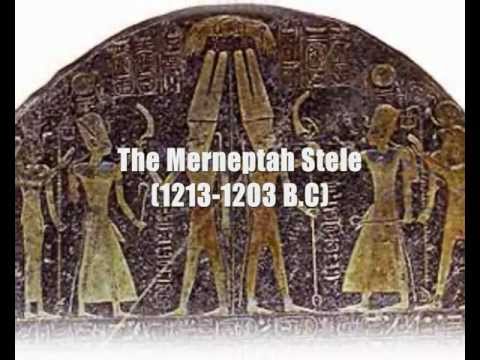
TRUTH AND HISTORY (chapter 5 of WHATEVER HAPPENED TO THE HUMAN RACE?, under footnote #95)

Two things should be mentioned about the time of Moses in Old Testament history.

The form of the covenant made at Sinai has remarkable parallels with the covenant forms of other people at that time. (On covenants and parties to a treaty, the Louvre; and Treaty Tablet from Boghaz Koi (i.e., Hittite) in Turkey, Museum of Archaeology in Istanbul.) The covenant form at Sinai resembles just as the forms of letter writings of the first century after Christ (the types of introductions and greetings) are reflected in the letters of the apostles in the New Testament, it is not surprising to find the covenant form of the second millennium before Christ reflected in what occurred at Mount Sinai. God has always spoken to people within the culture of their time, which does not mean that God’s communication is limited by that culture. It is God’s communication but within the forms appropriate to the time.

The Pentateuch tells us that Moses led the Israelites up the east side of the Dead Sea after their long stay in the desert. There they encountered the hostile kingdom of Moab. We have firsthand evidence for the existence of this kingdom of Moab–contrary to what has been said by critical scholars who have denied the existence of Moab at this time. It can be found in a war scene from a temple at Luxor (Al Uqsor). This commemorates a victory by Ramses II over the Moabite nation at Batora (Luxor Temple, Egypt).

Also the definite presence of the Israelites in west Palestine (Canaan) no later than the end of the thirteenth century B.C. is attested by a victory stela of Pharaoh Merenptah (son and successor of Ramses II) to commemorate his victory over Libya (Israel Stela, Cairo Museum, no. 34025). In it he mentions his previous success in Canaan against Aschalon, Gize, Yenom, and Israel; hence there can be no doubt the nation of Israel was in existence at the latest by this time of approximately 1220 B.C. This is not to say it could not have been earlier, but it cannot be later than this date.

Merneptah Stele, Israel 1200 BC

____

___

Artist Profile: Bruce Herman

https://www.youtube.com/watch?v=OTVyNENUTC4

Published on Mar 29, 2012

Profile of Gloucester, MA artist Bruce Herman.

Featured artist Bruce Herman

A Conversation with Makoto Fujimura and Bruce Herman about “QU4RTETS”

Published on Jun 11, 2014

This spring, Cairn University hosted an exhibition of QU4RTETS, a collaborative response to T.S. Eliot’s “Four Quartets” in word, image, and music, by Jeremy Begbie, Makoto Fujimura, Bruce Herman, and Christopher Theofanidis.

On April 28, artists Fujimura and Herman visited campus to present a gallery talk about their paintings. Dr. Jonathan Master, Cairn University’s Dean of the School of Divinity and Director of the Center for University Studies, was able to sit down with the two artists for a conversation about the QU4RTETS project.

Courtesia: Bruce Herman, Artist in Residence

By

Bruce Herman

– 25/09/2013Posted in: Artists, Painters

detail Spring

(detail) QU4RTETS No. 1 (Spring) ©Bruce Herman, 2012; oils with gold, silver, and moongold leaf on wood; 97 x 60″

Editor’s Note: This is the first post in our new Artists in Residence series, a series intended to draw working artists like Bruce Herman, Alfonse Borysewicz and Makoto Fujimura into the theology/arts conversation here on Transpositions. 

In his book Real Presences, George Steiner begins half-jokingly by imagining a country where no “secondary” art criticism is allowed; where the only critique of a painting is another painting, the only analysis of a symphony is another symphony. Of course the joke is that this country exists everywhere and always has, and the primary “criticism” of art-commenting-on-art has always been around–but the secondary form of criticism has overtaken it in the past hundred years or more. Analysis has nearly replaced making-as-commentary, verbal critique has eclipsed the traditional means of elaborating or evolving a style. In former centuries an artist or poet assumed that she or he must first master the tradition personally before “commenting” on it by producing a better or more complex or different and developed style or content or form. That tradition might be called the “long apprenticeship.” And a central part of that tradition was courtesy––the welcome and gracious admission of the younger artist by the master into the conversation of art.

In Real Presences Steiner spends a full third of his book elaborating this concept of courtesia, the intellectual welcome that is required of the artist as well as the beholder, writer as well as reader, composer as well as audience. Without this elemental trust and gracious welcome the apprentice never learns. Without this open door to enter the world of the novel or symphony the reader or audience member never experiences the beauty and mystery of the story or music. It is the nature of genuine courtesy to create a space of freedom and ease, a place of warm welcome where those lacking confidence and status can experience and participate. In one sense, all hospitality is like this: the stranger, the needy treated as the honored guest, just as in Jesus’ parable of the wedding feast. And art is meant to be a feast open to all.

In the past three years I’ve had the blessing of collaborating with two close friends on projects that model the reality of artistic courtesy. In the first instance, the co-authoring of a book, Through Your Eyes (Grand Rapids: Eerdmans), in the second, a touring exhibition entitled QU4RTETS (read the Transpositions review of the latter here). In both cases the whole became greater than the sum of the parts. The synergy created in the conversation, the constant dialogue required to produce these collaborative projects, was ennobling and stretching and helped to propel me into a creative space I hadn’t known on my own. In effect, the hospitality and courtesy required to collaborate is the very thing that generated the work of art.

My co-author, Walter Hansen, was the common link in both the book and the touring exhibit–and it was his literal hospitality that created the space for both of these successful projects. Walter invited Mako Fujimura and me to dinner and served us great food, great wine, and great conversation. It was that evening, during the meal that we discovered that the three of us shared a common influential text, T. S. Eliot’s Four Quartets. Eliot’s masterpiece became our touchstone. Since then, Yale composer Christopher Theofanidis has written an astonishing piece of music to accompany the touring show. At the Still Point harmonizes the entire project and extends our artistic vocabulary.

The other project, Through Your Eyes, contains in its title the very heart of what I am laboring to express: it is through the eyes of the other, through their ears, imagination, intellect and heart that the work of art comes into being. The courtesy and risk of hospitality, the welcoming of the other across the threshold into one’s intimate place of being––this basic risk is what brings the work of art into the world. Without this kind of trust between artist and beholder, between artist and artist, the work of art remains dormant or dead. The hospitality of collaboration and the courtesy of welcoming the other into our deepest conversations are the hallmarks of great art. And the greatest artists are accessible to all audiences.

Why is this? Because accessibility is not mediocrity, but a sign of courtesy.

Bruce Herman is an artist and educator, serving as Lothlorien Distinguished Chair in Fine Arts at Gordon College (http://www.gordon.edu/). His art has been published and exhibited widely, both in the States and abroad in Italy, Japan, Israel, England, and Canada – and his work is housed in many public and private collections, including the Vatican Museums in Rome, the Armand Hammer Grunewald Collection in LA, the Cincinnati Museum of Art, the DeCordova Museum, and many others. For more information visit http://bruceherman.com.

___

Bruce Herman

Bruce Herman is living proof that not all visual artists have a hard time with words! As a teacher, gallery director, and leading figure in the organization Christians in the Visual Arts, Herman brings an invigorating intellectual energy and articulateness to all his projects. One of our finest painters of the human figure, Herman always places his figures in a larger context of meaning—involving a profound understanding of Western history, philosophy, and culture. His paintings can be taken in at a glance with pleasure but they also repay careful attention. We at Image are delighted to announce that Bruce will be heading up the visual arts course at the 2001 Glen Workshop. For more information on the Glen Workshop, click here.

Some of Herman’s work is featured in Image issue 7 and issue 62. Read a conversation with Herman here.

Biography

Bruce Herman is Professor of Art and Chair of the Visual Arts Department at Gordon College in Wenham, Massachusetts. He recieved his Master of Fine Arts degree at Boston University where he studied under Philip Guston and James Weeks. His paintings have been exibited in seven major cities (including Boston, Los Angeles, and NewYork) and four countries outside of the United States. His work is housed in many public and private collections including the Vatican Museum of Modern Religious Art in Rome, the DeCordova Museum in Lincoln, Massachusetts, and the Armand Hammer Museum at the University of California in Los Angeles.

Second Adam (Detail of Younger Virgin Mary). Oil on. Oil. 2005-2009.

To see more of Herman’s work, visit his website. Some of his most recent paintings are featured in the collection A Broken Beauty (available from Eerdmans), and will be exhibited in Laguna Art Museum this fall.

Memory & Origins. Oil and gold leaf on wood. 2005. 49 x 36 inches.

Current Projects
November 2000

“I began a series of paintings entitled Building in Ruins about eight months after a devasting house fire (September 1997) that consumed some twenty years of my work as an artist. Of course, the phrase ‘building in ruins’ can be read both ways—using the term ‘building’ as a noun or as a verb. The neat correspondence between my personal disaster and the themes I was beginning to address in my work before the fire has helped me to focus on a fairly coherent series of new images. Let me explain.

“It’s my conviction that the whole enterprise of Western culture (or any culture for that matter) is based upon the notion of ‘building’—that is to say, making objects, making a mark in time, making meaning. The Psalmist says, ‘Unless the Lord builds the house/they labor in vain who build it.’ The fundamental human act is to build—yet the possibility of our work lasting, marking time and causing remembrance is predicated upon the idea that we mean something by what we do—and upon the genuine possibility of communicating that meaning to others. This ability to make meaning is underwritten by God—the Logos which speaks the Creation into being and undergirds all speech, all art, all building of meaning.”

“Another conviction I have come to in recent years is that the Tower of Babel story is emblematic of the human condition par excellence—i.e., that our attempts to build are fraught with all sorts of problems (and the deconstructionists have been helpful in pointing out some of those problems for us in recent decades). Simply stated, my recent work—Building in Ruins—addresses the problem of making visual meaning in a post-literate, post-GOD human universe.

“For example the painting entitled ‘Pieta’ shows a worker/building shouldering a large wooden beam which is draped with a hoisting rope that dangles somewhat limply off the end. He is quietly gazing at a partially effaced religious painting on a facing wall—(specifically a reference to Bougereaus’s ‘Pieta,’ but the fact that it is a Bougereau is less important than the fact that it is a pieta). The word ‘pieta’ is Italian for pity, or grief. The workman’s grief can be seen as both specifically religious—and in more general cultural terms a grieving over the failed enterprise of Western culture. This failure is not, to my way of thinking, a final or crippling failure—rather I see it as one of that species of failure that is related to the apparent failure of Jesus on the Cross (cf. 1 Corinthians 1:18 ff). The brokenness of the body is the fertile ground for hope—as opposed to the nostalgia that seems to show itself everywhere in our present-day culture.”

Bruce Herman

From Wikipedia, the free encyclopedia
Bruce Herman
Born 1953 (age 63–64)
Montclair, New Jersey, USA
Nationality American
Education B.F.A. and M.F.A. Boston University: School for the Arts under Philip Guston, James Weeks, David Aronson, Reed Kay, and Arthur Polonsky.[1]
Movement Figurative Painting
Spouse(s) Meg Matthews
Website www.bruceherman.com

Bruce Herman (born 1953) is an artist who holds the Lothlórien Distinguished Chair in the art department of Gordon College. He achieved both a Bachelor of Fine Arts, and a Master of Fine Arts from the School for the Arts at Boston University, where he studied under Philip Guston, James Weeks, David Aronson, Reed Kay, and Arthur Polonsky.[1] He joined the faculty at Gordon College in 1984 and was awarded various chairs and positions until he was awarded the aforementioned position.[2] His work has been exhibited around the world, and has paintings housed in the Vatican Museum of Modern Religious Art, the Cincinnati Museum of Fine Arts, and the DeCordova Museum.[1] Between 1983 and 2011 he has been a part of more than 50 exhibitions, and has been invited to do nearly 50 lecture series.[3] He is working on a series of paintings for an artistic, literary, and theological tour in response to T.S. Eliot’s set of four poems known as the Four Quartets.[4]

Notes[edit]

  1. ^ Jump up to:a b c bruceherman.com 2010
  2. Jump up^ Gordon-College 2010
  3. Jump up^ Herman 2011
  4. Jump up^ Herman (2012) discussed this upcoming tour in a presentation given at Gordon-Conwell Theological Seminary in South Hamilton, Massachusetts on 26 April 2012.

References[edit]

  • bruceherman.com (2010), Bruce Herman – Artist Info, retrieved 2012-10-28
  • Herman, Bruce (2011), Bruce Herman curriculum vitae (PDF), retrieved 2012-10-28
  • Herman, Bruce (2012), Presentation for Systematic Theology II, Spring 2012 (Lecture), Gordon-Conwell Theological Seminary, South Hamilton, MA
  • Gordon-College (2010), Bruce Herman Publications and Exhibitions – Gordon College, retrieved 2012-10-28

External links[edit]

  • Bruceherman.com

Categories:

  • 1953 births
  • American artists
  • Gordon College (Massachusetts) faculty
  • Living people

__________

Related posts:

MUSIC MONDAY Rolling Stones New Album Part 8 Blue & Lonesome is the album any Rolling Stones fan would have wished for – review Neil McCormick, music critic

January 23, 2017 – 12:05 am

MUSIC MONDAY Rolling Stones New Album Part 8 Rolling Stones – Hoo Doo Blues Blue & Lonesome is the album any Rolling Stones fan would have wished for – review 9 Comments Evergreen: The Rolling Stones perform in Cuba earlier this year CREDIT: REX FEATURES Neil McCormick, music critic 22 NOVEMBER 2016 • 12:19PM The Rolling […]

By Everette Hatcher III | Posted in Current Events | Edit | Comments (0)

MUSIC MONDAY Rolling Stones New Album Part 7 The Rolling Stones Alexis Petridis’s album of the week The Rolling Stones: Blue & Lonesome review – more alive than they’ve sounded for years

January 16, 2017 – 12:01 am

MUSIC MONDAY Rolling Stones New Album Part 7 Rolling Stones – Everybody Knows About My Good Thing The Rolling Stones Alexis Petridis’s album of the week The Rolling Stones: Blue & Lonesome review – more alive than they’ve sounded for years 4/5stars Mick Jagger’s voice and harmonica drive an album of blues covers that returns […]

By Everette Hatcher III | Posted in Current Events | Edit | Comments (0)

MUSIC MONDAY Rolling Stones New Album Part 6 Music Review: ‘Blue & Lonesome’ by the Rolling Stones By Gregory Katz | AP November 29

January 9, 2017 – 12:59 am

MUSIC MONDAY Rolling Stones New Album Part 6 Rolling Stones – Just Like I Treat You   Music Review: ‘Blue & Lonesome’ by the Rolling Stones By Gregory Katz | AP November 29 The Rolling Stones, “Blue & Lonesome” (Interscope) It shouldn’t be a surprise, really, but still it’s a bit startling to hear just how well […]

By Everette Hatcher III | Posted in Current Events | Edit | Comments (0)

MUSIC MONDAY Rolling Stones New Album Part 5 Review: The Rolling Stones make blues magic on ‘Blue & Lonesome’ Maeve McDermott , USATODAY6:07 p.m. EST November 30, 2016

January 2, 2017 – 12:56 am

MUSIC MONDAY Rolling Stones New Album Part 5 Rolling Stones – Everybody Knows About My Good Thing Review: The Rolling Stones make blues magic on ‘Blue & Lonesome’ Maeve McDermott , USATODAY6:07 p.m. EST November 30, 2016 (Photo: Frazer Harrison, Getty Images) Before the Rolling Stones were rock icons, before its members turned into sex […]

By Everette Hatcher III | Posted in Current Events | Edit | Comments (0)

MUSIC MONDAY Rolling Stones New Album Part 4 Rolling Stones, ‘Blue & Lonesome’: Album Review By Michael Gallucci November 30, 2016 1:34 PM

December 26, 2016 – 12:51 am

MUSIC MONDAY Rolling Stones New Album Part 4 Rolling Stones – Little Rain       Rolling Stones, ‘Blue & Lonesome’: Album Review By Michael Gallucci November 30, 2016 1:34 PM Read More: Rolling Stones, ‘Blue & Lonesome’: Album Review | http://ultimateclassicrock.com/rolling-stones-blue-lonesome-review/?trackback=tsmclip The Rolling Stones were never really a thinking band. A shrewd one, for sure, […]

By Everette Hatcher III | Posted in Current Events | Edit | Comments (0)

MUSIC MONDAY Rolling Stones New Album Part 3 Rolling Stones – ‘Blue & Lonesome’ Review Barry Nicolson 12:52 pm – Dec 2, 2016

December 19, 2016 – 12:48 am

MUSIC MONDAY Rolling Stones New Album Part 3 The Rolling Stones Mick Jagger chats about new album “Blue & Lonesome” on BBC Breakfast 02 Dec 2016 Rolling Stones – I Gotta Go     Rolling Stones – ‘Blue & Lonesome’ Review Barry Nicolson 12:52 pm – Dec 2, 2016 57shares The Stones sound their youngest […]

By Everette Hatcher III | Posted in Current Events | Edit | Comments (0)

MUSIC MONDAY Rolling Stones New Album Part 2 Review The Rolling Stones’ new blues album is an amplified death wheeze. And it rules

December 12, 2016 – 12:45 am
By Everette Hatcher III | Posted in Current Events | Edit | Comments (0)

MUSIC MONDAY Rolling Stones New Album Part 1 Review: The Rolling Stones Reinvigorate the Blues on ‘Blue and Lonesome’ Our take on rock legends’ first LP since 2005

December 5, 2016 – 12:36 am

MUSIC MONDAY Rolling Stones New Album Part 1 The Rolling Stones – Ride ‘Em On Down Published on Dec 1, 2016 Taken from Blue & Lonesome, the brand new album out now. Buy it at http://www.rollingstones.com/blueandl&#8230;. Directed by François Rousselet http://www.riffrafffilms.tv/video/dir&#8230; Produced by Natalie Arnett Riff Raff Films http://www.riffrafffilms.tv http://www.rollingstones.com/http://www.facebook.com/therollingstones http://twitter.com/RollingStoneshttp://www.rollingstones.com/newsletter Rolling Stones […]

By Everette Hatcher III | Posted in Current Events | Edit | Comments (0)

MUSIC MONDAY Karen Carpenter’s tragic story

November 28, 2016 – 12:16 am

_____________ Carpenters Close To You Karen Carpenter’s tragic story Karen Carpenter’s velvet voice charmed millions in the 70s… but behind the wholesome image she was in turmoil. Desperate to look slim on stage – and above all desperate to please the domineering mother who preferred her brother – she became the first celebrity victim of […]

By Everette Hatcher III | Posted in Current Events | Edit | Comments (0)

MUSIC MONDAY The Carpenters!!!

November 21, 2016 – 6:29 am

carpenters -We’ve Only Just Begun The Carpenters – Yesterday Once More (INCLUDES LYRICS) The Carpenters – There’s a kind of hush The Carpenters – Greatest Hits Related posts: MUSIC MONDAY Paul McCartney Mull Of Kintyre November 13, 2016 – 10:29 am Paul McCartney Mull Of Kintyre-Original Video-HQ Uploaded on Nov 25, 2011 Paul McCartney Mull Of […]

By Everette Hatcher III | Posted in Current Events | Edit | Comments (0)
By Everette Hatcher III | Posted in Francis Schaeffer | Comments (0)

Arguments between SIGMUND FREUD and C.S. LEWIS from movie “Freud’s Last Session” Part 9 (FREUD: “That Christ was a man I don’t argue. The same as Mohammed or Buddha…Why should I take Christ’s claim to be God more seriously than the dozen patients I’ve treated who claim to be Christ?”)

January 27, 2024 – 9:05 am

—-

Christian C.S Lewis Meets Freud in New Film

CHRIST WAS A HISTORICAL PERSON WHO CLAIMED TO BE THE MESSIAH, BUT WHY SHOULD WE TAKE THAT CLAIM SERIOUSLY?
LEWIS Critically, as a literary historian, I’m perfectly convinced that whatever the Gospels are, they aren’t myths. They aren’t artistic enough.  They’re clumsy. Most of the life of Jesus is left totally unknown to us, and writer’s building a legend wouldn’t allow that to happen.
 37.Amused, Freud leans forward over his desk. FREUD You are convinced of Christ’s existence because of bad storytelling?
LEWIS Christ’s existence isn’t in doubt, only who he was. The man was chronicled by his contemporaries and historians. Even H.G. Wells, whose skepticism rivaled my own, admitted “Here was a man. This part of the tale could not have been invented.’ 
FREUD That Christ was a man I don’t argue. The same as Mohammed or Buddha.
LEWIS But only Christ made the appalling claim to be the Messiah. He also claimed the power to forgive sins; how absurd is that?
FREUD I’m convinced. Christ was a lunatic. Freud rises from his seat and goes over to the bathroom. INT. FREUD’S BATHROOM /FREUD’S STUDY – MOMENTS LATER 55 55 Freud stands before an open medicine cabinet, takes out a small bottle. He hesitates, picks up a tiny onyx pill box. FREUD (CONT.) (loudly, to be heard) Why should I take Christ’s claim to be God more seriously than the dozen patients I’ve treated who claim to be Christ?
LEWIS And did you find a single person whose concept of reality was otherwise sound? INT. BATHROOM – SAME 57 57
Freud, agitated, stands at the sink, considering.   FREUD (reluctantly) No. Freud stares at himself in the mirror, he looks old.  He can see his own physical pain reflected in his face. INT.  FREUD’S STUDY – CONT. 58 58 Freud goes back to sit behind his desk, opens the top drawer and puts the small box inside. Closes the drawer.
LEWIS So if Christ was not a lunatic it forced me to consider the only choice I was left with.
—
Francis Schaeffer wrote in 1980 in the book WHATEVER HAPPENED TO THE HUMAN RACE? (Co-authored by Dr C. Everett Koop):

A common assumption among liberal scholars is that because the Gospels are theologically motivated writings–which they are–they cannot also be historically accurate. In other words, because Luke, say (when he wrote the Book of Luke and the Book of Acts), was convinced of the deity of Christ, this influenced his work to the point where it ceased to be reliable as a historical account. The assumption that a writing cannot be both historical and theological is false.

The experience of the famous classical archaeologist Sir William Ramsay illustrates this well. When he began his pioneer work of exploration in Asia Minor, he accepted the view then current among the Tubingen scholars of his day that the Book of Acts was written long after the events in Paul’s life and was therefore historically inaccurate. However, his travels and discoveries increasingly forced upon his mind a totally different picture, and he became convinced that Acts was minutely accurate in many details which could be checked.

—-

I recently read the book “I don’t have enough faith to be an atheist,” by Norman Geisler. I think of the title of that book when I think about what Francis Schaeffer said about the nature of Bertrand Russell’s faith discussed later in this blog post.

(William Ramsay pictured below and more about him later in this post)

Image result for william mitchell ramsay

__

_

Image result for bertrand russell

On November 21, 2014 I received a letter from Nobel Laureate Harry Kroto and it said:

…Please click on this URL http://vimeo.com/26991975

and you will hear what far smarter people than I have to say on this matter. I agree with them.

Harry Kroto

__

Harold W. Kroto (left) receives the Nobel Prize in chemistry from Swedish King Carl XVI Gustaf in Stockholm, in 1996.

Soren Andersson/AP

Image result for harry kroto nobel prize

__

Image result for harry kroto

I have attempted to respond to all of Dr. Kroto’s friends arguments and I have posted my responses one per week for over a year now. Here are some of my earlier posts:

Arif Ahmed, Sir David Attenborough, Mark Balaguer, Horace Barlow, Michael Bate, Patricia Churchland, Aaron Ciechanover, Noam Chomsky,Alan Dershowitz, Hubert Dreyfus, Bart Ehrman, Stephan Feuchtwang, David Friend,  Riccardo Giacconi, Ivar Giaever , Roy Glauber, Rebecca Goldstein, David J. Gross,  Brian Greene, Susan Greenfield, Stephen F Gudeman,  Alan Guth, Jonathan Haidt, Theodor W. Hänsch, Brian Harrison,  Hermann Hauser, Roald Hoffmann,  Bruce Hood, Herbert Huppert,  Gareth Stedman Jones, Steve Jones, Shelly Kagan, Michio Kaku,  Stuart Kauffman,  Lawrence Krauss, Harry Kroto, George Lakoff, Elizabeth Loftus,  Alan Macfarlane, Peter Millican, Marvin Minsky, Leonard Mlodinow,  Yujin Nagasawa, Alva Noe, Douglas Osheroff,  Jonathan Parry,  Saul Perlmutter, Herman Philipse,  Carolyn Porco, Robert M. Price, Lisa Randall, Lord Martin Rees,  Oliver Sacks, John Searle, Marcus du Sautoy, Simon Schaffer, J. L. Schellenberg,   Lee Silver,  Peter Singer,  Walter Sinnott-Armstrong, Ronald de Sousa, Victor Stenger, Barry Supple,   Leonard Susskind, Raymond Tallis, Neil deGrasse Tyson,  .Alexander Vilenkin, Sir John Walker, Frank Wilczek, Steven Weinberg, and  Lewis Wolpert,

_

In  the first video below in the 14th clip in this series are his words and I will be responding to them in the next few weeks since Sir Bertrand Russell is probably the most quoted skeptic of our time, unless it was someone like Carl Sagan or Antony Flew.  

50 Renowned Academics Speaking About God (Part 1)

Another 50 Renowned Academics Speaking About God (Part 2)

A Further 50 Renowned Academics Speaking About God (Part 3)

__

Quote from Bertrand Russell:

Q: Why are you not a Christian?

Russell: Because I see no evidence whatever for any of the Christian dogmas. I’ve examined all the stock arguments in favor of the existence of God, and none of them seem to me to be logically valid.

Q: Do you think there’s a practical reason for having a religious belief, for many people?

Russell: Well, there can’t be a practical reason for believing what isn’t true. That’s quite… at least, I rule it out as impossible. Either the thing is true, or it isn’t. If it is true, you should believe it, and if it isn’t, you shouldn’t. And if you can’t find out whether it’s true or whether it isn’t, you should suspend judgment. But you can’t… it seems to me a fundamental dishonesty and a fundamental treachery to intellectual integrity to hold a belief because you think it’s useful, and not because you think it’s true._

Image result for bertrand russell

Bertrand Russell pictured above and Francis Schaeffer below:

Image result for francis schaeffer

Francis Schaeffer noted concerning the IMPLICIT FAITH of Bertrand Russell:

I was lecturing at the University of St. Andrews one night and someone put forth the question, “If Christianity is so clear and reasonable then why doesn’t Bertrand Russell then become a Christian? Is it because he hasn’t discovered theology?”

It wasn’t a matter of studying theology that was involved but rather that he had too much faith. I was surrounded by humanists and you could hear the gasps. Bertrand Russell and faith; Isn’t this the man of reason? I pointed out that this is a man of high orthodoxy who will hold his IMPLICIT FAITH on the basis of his presuppositions no matter how many times he has to zig and zag because it doesn’t conform to the facts.

You must understand what the term IMPLICIT FAITH  means. In the old Roman Catholic Church when someone who became a Roman Catholic they had to promise implicit faith. That meant that you not only had to believe everything that Roman Catholic Church taught then but also everything it would teach in the future. It seems to me this is the kind of faith that these people have in the uniformity of natural causes in a closed system and they have accepted it no matter what it leads them into. 

I think that these men are men of a high level of IMPLICIT FAITH in their own set of presuppositions. Paul said (in Romans Chapter One) they won’t carry it to it’s logical conclusion even though they hold a great deal of the truth and they have revolted and they have set up a series of universals in themselves which they won’t transgress no matter if they conform to the facts or not.

Here below is the Romans passage that Schaeffer is referring to and verse 19 refers to what Schaeffer calls “the mannishness of man” and verse 20 refers to Schaeffer’s other point which is “the universe and it’s form.”

Romans 1:18-20 Amplified Bible :

18 For God’s [holy] wrath and indignation are revealed from heaven against all ungodliness and unrighteousness of men, who in their wickedness repress and hinder the truth and make it inoperative. 19 For that which is known about God is evident to them and made plain in their inner consciousness, because God [Himself] has shown it to them. 20 For ever since the creation of the world His invisible nature and attributes, that is, His eternal power and divinity, have been made intelligible and clearly discernible in and through the things that have been made (His handiworks). So [men] are without excuse [altogether without any defense or justification].

We can actually see the two points makes playing themselves out in Bertrand Russell’s own life.

Image result for bertrand russell

[From a letter dated August 11, 1918 to Miss Rinder when Russell was 46]

It is so with all who spend their lives in the quest of something elusive, and yet omnipresent, and at once subtle and infinite. One seeks it in music, and the sea, and sunsets; at times I have seemed very near it in crowds when I have been feeling strongly what they were feeling; one seeks it in love above all. But if one lets oneself imagine one has found it, some cruel irony is sure to come and show one that it is not really found.
The outcome is that one is a ghost, floating through the world without any real contact. Even when one feels nearest to other people, something in one seems obstinately to belong to God and to refuse to enter into any earthly communion—at least that is how I should express it if I thought there was a God. It is odd isn’t it? I care passionately for this world, and many things and people in it, and yet…what is it all? There must be something more important, one feels, though I don’t believe there is. I am haunted—some ghost, from some extra-mundane region, seems always trying to tell me something that I am to repeat to the world, but I cannot understand the message. 

There was evidence during Bertrand Russell’s own life that indicated that the Bible was true and could be trusted.

There was an archaeologist by the name of William Mitchell Ramsay and he had written extensively about the accuracy of the Bible. These books were available to Russell.  Francis Schaeffer discusses William Ramsay’s life below:

TRUTH AND HISTORY (chapter 5 of WHATEVER HAPPENED TO THE HUMAN RACE?, under footnotes #97 and #98)

A common assumption among liberal scholars is that because the Gospels are theologically motivated writings–which they are–they cannot also be historically accurate. In other words, because Luke, say (when he wrote the Book of Luke and the Book of Acts), was convinced of the deity of Christ, this influenced his work to the point where it ceased to be reliable as a historical account. The assumption that a writing cannot be both historical and theological is false.

The experience of the famous classical archaeologist Sir William Ramsay illustrates this well. When he began his pioneer work of exploration in Asia Minor, he accepted the view then current among the Tubingen scholars of his day that the Book of Acts was written long after the events in Paul’s life and was therefore historically inaccurate. However, his travels and discoveries increasingly forced upon his mind a totally different picture, and he became convinced that Acts was minutely accurate in many details which could be checked.

(Under footnote #98)

Acts is a fairly full account of Paul’s journeys, starting in Pisidian Antioch and ending in Rome itself. The record is quite evidently that of an eyewitness of the events, in part at least. Throughout, however, it is the report of a meticulous historian. The narrative in the Book of Acts takes us back behind the missionary journeys to Paul’s famous conversion on the Damascus Road, and back further through the Day of Pentecost to the time when Jesus finally left His disciples and ascended to be with the Father.

But we must understand that the story begins earlier still, for Acts is quite explicitly the second part of a continuous narrative by the same author, Luke, which reaches back to the birth of Jesus.

Luke 2:1-7 New American Standard Bible (NASB)

2 Now in those days a decree went out from Caesar Augustus, that a census be taken of all [a]the inhabited earth. 2 [b]This was the first census taken while[c]Quirinius was governor of Syria. 3 And everyone was on his way to register for the census, each to his own city. 4 Joseph also went up from Galilee, from the city of Nazareth, to Judea, to the city of David which is called Bethlehem, because he was of the house and family of David, 5 in order to register along with Mary, who was engaged to him, and was with child. 6 While they were there, the days were completed for her to give birth. 7 And she gave birth to her firstborn son; and she wrapped Him in cloths, and laid Him in a [d]manger, because there was no room for them in the inn.

In the opening sentences of his Gospel, Luke states his reason for writing:

Luke 1:1-4 New American Standard Bible (NASB)

1 Inasmuch as many have undertaken to compile an account of the things[a]accomplished among us, 2 just as they were handed down to us by those whofrom the beginning [b]were eyewitnesses and [c]servants of the [d]word, 3 it seemed fitting for me as well, having [e]investigated everything carefully from the beginning, to write it out for you in consecutive order, most excellentTheophilus; 4 so that you may know the exact truth about the things you have been [f]taught.

In Luke and Acts, therefore, we have something which purports to be an adequate history, something which Theophilus (or anyone) can rely on as its pages are read. This is not the language of “myths and fables,” and archaeological discoveries serve only to confirm this.

For example, it is now known that Luke’s references to the titles of officials encountered along the way are uniformly accurate. This was no mean achievement in those days, for they varied from place to place and from time to time in the same place. They were proconsuls in Corinth and Cyprus, asiarchs at Ephesus, politarches at Thessalonica, and protos or “first man” in Malta. Back in Palestine, Luke was careful to give Herod Antipas the correct title of tetrarch of Galilee. And so one. The details are precise.

Image result for william mitchell ramsay

W.M. Ramsay

British archaeologist and New Testament scholar

Biography

William Mitchell Ramsay was born on the 15th of March 1851. He was educated at the universities of Aberdden, Oxford and Gottingen, and was a fellow of Exeter College, Oxford (1882; honorary fellow 1898), and Lincoln College (1885; honorary 1899). In 1885 he was elected professor of classical art at Oxford, and in the next year professor of humanity at Aberdeen. From 1880 onwards he traveled widely in Asia Minor and rapidly became the recognized authority on all matters relating to the districts associated with St Paul’s missionary journeys and on Christianity in the early Roman Empire.

He received the honorary degrees of D.C.L. Oxford, LL.D. St Andrews and Glasgow, D.D. Edinburgh, and was knighted in 1906. He was elected a member of learned societies in Europe and America, and has been awarded medals by the Royal Geographical Society, the Royal Scottish Geographical Society and the University of Pennsylvania.

His numerous publications include: The Historical Geography of Asia Minor (1890); The Church in the Roman Empire (1893); The Cities and Bishoprics of Phrygia (2 vols., 1895, 1897); St Paul the Traveler and the Roman Citizen (1895; Germ. trans., 1898); Impressions of Turkey (1897); Was Christ born at Bethlehem? (1898); Historical Commentary on Galatians (1899); The Education of. Christ (1902); The Letters to the Seven Churches of Asia (1905); Pauline and other Studies in Early Christian History (1906); Studies in the History and Art of the Eastern Provinces of the Roman Empire (1906); The Cities of St Paul (1907); Lucan and Pauline Studies (1908); The Thousand and One Churches (with Miss Gertrude L. Bell, 1909); and articles in learned periodicals and the 9th, 10th and 11th editions of the Encyclopaedia Britannica. His wife, Lady Ramsay, granddaughter of Dr Andrew Marshall of Kirkintilloch, accompanied him in many of his journeys and is the author of Everyday Life Turkey (1897) and The Romance of Elisavet (1899) .

Works by W.M. Ramsay

Search:

Filter:

Only CCEL
CCEL + External
Cover art
Title / Description ▲
Popularity ▲

Letters to the Seven Churches of Asia

In the Book of Revelation, we find John’s letters to the seven churches of first century Asia Minor, written during the era of the Roman Empire. The seven churches correspond to the seven congregations found in these cities: Ephesus, City of Change; Smyrna, City of Life; Pergamum, City of Authority; Thyatira, City of Weakness Made Strong; Sardis, City of Death; Philadelphia, Missionary City; and Laodicea, City of Compromise. William Ramsay presents these letters to help readers better understand their content as well as the historical context surrounding their authorship.Letters to the Seven Churches of Asia is filled with facts regarding the general importance of letter writing in the Early Church, the mobility of letters during this time period, John’s intentions in writing the Seven Letters, and the influence of religion in the development of first century cities. John’s letters provide historical insight into Greco-Roman culture and geography. They also serve to guide Christians in their spiritual development. Ramsay’s book brings John’s letters into a useful contemporary light.

St. Paul the Traveler and the Roman Citizen

Ramsay wrote this book to tell the story of Paul’s life as it was documented in the Book of Acts. Before Ramsay begins his study of Paul’s life, he discusses the date, composition, and authorship of Acts. “The first and the essential quality of the great historian is truth,” says Ramsay. Of the four types of historical writing, namely, romance, legend, second rate history, and first rate history, Ramsay classifies the Book of Acts as first rate historical writing. The characterization of Paul found in Acts contains such individualized detail that the author could not have gathered this information by any means other than personal acquaintances and original sources. As such, Ramsay believes that the author of Acts has attained a superior mark of historical accuracy and literary trustworthiness.St. Paul the Traveler and the Roman Citizen contains an excellent study of the Book of Acts as well as of Paul’s life and travels in first century Asia, Greece, and Rome.

Was Christ Born in Bethlehem?

In 19th century schools of theology in Continental Europe, it had become fashionable to be skeptical about any traditional doctrine about the Bible. Many academic theologians denied the divinity of Christ, and others claimed that Paul’s letters were forgeries. Ramsay, while he used some of the same critical methods as his academic peers, was nevertheless able to counter their arguments effectively. Having spent years in Asia Minor studying the missionary journeys of Paul and the Apostles, Ramsay had become an expert on the New Testament’s historical documents. He argues that Luke, the author of the Acts of the Apostles and the Gospel of Luke, was as reliable an historian as any other in the first century. Thus in answer to the question, “Was Christ born in Bethlehem?” Ramsay answers: “Yes. We can trust Luke’s Gospel.”

Francis Schaeffer noted in his book HOW SHOULD WE THEN LIVE? (p. 182 in Vol 5 of Complete Works) in the chapter The Breakdown in Philosophy and Science:

In his lecture at Acapulco, George Wald finished with only one final value. It was the same one with which English philosopher Bertrand Russell (1872-1970) was left. For Wald and Russell and for many other modern thinkers, the final value is the biological continuity of the human race. If this is the only final value, one is left wondering why this then has importance. 

Now having traveled from the pride of man in the High Renaissance and the Enlightenment down to the present despair, we can understand where modern people are. They have no place for a personal God. But equally they have no place for man as man, or for love, or for freedom, or for significance. This brings a crucial problem. Beginning only from man himself, people affirm that man is only a machine. But those who hold this position cannot live like machines! If they could, there would have been no tensions in their intellectual position or in their lives. But even people who believe they are machines cannot live like machines, and thus they must “leap upstairs” against their reason and try to find something which gives meaning to life, even though to do so they have to deny their reason. 

Francis Schaeffer in another place worded it like this:

The universe was created by an infinite personal God and He brought it into existence by spoken word and made man in His own image. When man tries to reduce [philosophically in a materialistic point of view] himself to less than this [less than being made in the image of God] he will always fail and he will always be willing to make these impossible leaps into the area of nonreason even though they don’t give an answer simply because that isn’t what he is. He himself testifies that this infinite personal God, the God of the Old and New Testament is there. 

We all know deep down that God exists and even atheists have to grapple with that knowledge.

Solomon wisely noted in Ecclesiastes 3:11 “God has planted eternity in the heart of men…” (Living Bible). No wonder Bertrand Russell wrote in his autobiography, “It is odd, isn’t it? I feel passionately for this world and many things and people in it, and yet…what is it all? There must be something more important, one feels, though I don’t believe there is. I am haunted. Some ghosts, for some extra mundane regions, seem always trying to tell me something that I am to repeat to the world, but I cannot understand that message.”

Take a look at this 7th episode from Schaeffer’s series “HOW SHOULD WE THEN LIVE? The Age of Nonreason”:

How Should We Then Live – Episode Seven – 07 – Portuguese Subtitles

_

Instead of making a leap into the area of nonreason the better choice would be to investigate the claims that the Bible is a historically accurate book and that God created the universe and reached out to humankind with the Bible.

Schaeffer then points to the historical accuracy of the Bible in Chapter 5 of the book WHATEVER HAPPENED TO THE HUMAN RACE?

The Bible and Archaeology – Is the Bible from God? (Kyle Butt 42 min)

You want some evidence that indicates that the Bible is true? Here is a good place to start and that is taking a closer look at the archaeology of the Old Testament times. Is the Bible historically accurate? Here are some of the posts I have done in the past on the subject: 1. The Babylonian Chronicle, of Nebuchadnezzars Siege of Jerusalem, 2. Hezekiah’s Siloam Tunnel Inscription. 3. Taylor Prism (Sennacherib Hexagonal Prism), 4. Biblical Cities Attested Archaeologically. 5. The Discovery of the Hittites, 6.Shishak Smiting His Captives, 7. Moabite Stone, 8. Black Obelisk of Shalmaneser III, 9A Verification of places in Gospel of John and Book of Acts., 9B Discovery of Ebla Tablets. 10. Cyrus Cylinder, 11. Puru “The lot of Yahali” 9th Century B.C.E., 12. The Uzziah Tablet Inscription, 13. The Pilate Inscription, 14. Caiaphas Ossuary, 14 B Pontius Pilate Part 2, 14c. Three greatest American Archaeologists moved to accept Bible’s accuracy through archaeology., 

____

Related posts:

RESPONDING TO HARRY KROTO’S BRILLIANT RENOWNED ACADEMICS!! Pausing to take a look at the life of HARRY KROTO Part C (Kroto’s admiration of Bertrand Russell examined)

June 21, 2016 – 1:12 am

Today we look at the 3rd letter in the Kroto correspondence and his admiration of Bertrand Russell. (Below The Nobel chemistry laureates Harold Kroto, Robert Curl and Richard Smalley) It is with sadness that I write this post having learned of the death of Sir Harold Kroto on April 30, 2016 at the age of […]

By Everette Hatcher III | Posted in Atheists Confronted | Tagged .Alexander Vilenkin, Aaron Ciechanover, Alan Dershowitz, Alan Guth, Alan Macfarlane, Alison Richard, Alva Noe, Arif Ahmed, Barry Supple, Bart Ehrman, Brian Greene, Brian Harrison, Bruce Hood, C.J. van Rijsbergen, Carolyn Porco, David Friend, David J. Gross, Douglas Osheroff, Elizabeth Loftus, Frank Wilczek, Gareth Stedman Jones, George Lakoff, Haroon Ahmed, Harry Kroto, Herbert Huppert, Herman Philipse, Hermann Hauser, Horace Barlow, Hubert Dreyfus, Ivar Giaever, J. L. Schellenberg, John Searle, John Sulston, Jonathan Haidt, Jonathan Parry, Lawrence Krauss, Lee Silver, Leonard Mlodinow, Leonard Susskind, Lewis Wolpert, Lisa Randall, Lord Martin Rees, Marcus du Sautoy, Mark Balaguer, Marvin Minsky, Michael Bate, Michio Kaku, Neil deGrasse Tyson, Noam Chomsky, Oliver Sacks, Patricia Churchland, Peter Millican, Peter Singer, Raymond Tallis, Rebecca Goldstein, Riccardo Giacconi, Roald Hoffmann, Robert M. Price, Ronald de Sousa, Roy Glauber, Saul Perlmutter, Shelly Kagan, Simon Schaffer, Sir David Attenborough, Sir John Walker, Sir Patrick Bateson, Stephan Feuchtwang, Stephen F Gudeman, Steve Jones, Steven Weinberg, Stuart Kauffman, Susan Greenfield, Theodor W. Hänsch, Victor Stenger, Walter Sinnott-Armstrong, Yujin Nagasawa | Edit | Comments (0)

RESPONDING TO HARRY KROTO’S BRILLIANT RENOWNED ACADEMICS!! Part 52 The views of Hegel and Bertrand Russell influenced Gareth Stedman Jones of Cambridge!!

November 17, 2015 – 5:37 am

On November 21, 2014 I received a letter from Nobel Laureate Harry Kroto and it said: …Please click on this URL http://vimeo.com/26991975 and you will hear what far smarter people than I have to say on this matter. I agree with them. Harry Kroto _________________ Below you have picture of Dr. Harry Kroto:   Gareth Stedman […]

By Everette Hatcher III | Posted in Atheists Confronted | Tagged (Paul Kurtz (1925-2012), Alan Macfarlane (1941-), Albert Ellis (1913-2007), Archie J. Bahm (1907-1996), Aron S “Gil” Martin ( 1910-1997), Barbara Marie Tabler (1915-1996), Bette Chambers (1930-), Brian Charlesworth (1945-), Carl Sagan (1934-1996), Christopher C. French (1956-) Walter R. Rowe, Edward O. WIlson (1929-), Ernest Mayr (1904-2005), Francisco J. Ayala (1934-) Elliott Sober (1948-), Geoff Harcourt (1931-), George Wald (1906-1997), Gerald Holton (1922-), Glenn Branch, Gordon Stein (1941-1996), H. J. Eysenck (1916-1997), Harry Kroto (1939-), Herbert Kroemer (1928-), James Terry McCollum (1936-), John Hospers (1918-2011), John J. Shea (1969-), John R. Cole (1942-), Kevin Padian (1951-), Lewis Wolpert (1929), Lloyd Morain (1917-2010), Martin Rees (1942-), Marty E. Martin (1928-), Mary Morain (1911-1999), Matt Cartmill (1943-), Matthew I. Spetter (1921-2012), Michael A. Crawford (1938-), Michael Martin (1932-)., Milton Fingerman (1928-), Milton Friedman (1912-2006), Nicolaas Bloembergen (1920-), Paul Quincey, Ray T. Cragun (1976-)., Renate Vambery (1916-2005), Richard Rubenstein (1924-), Roald Hoffmann (1937-), Robert L. Erdmann (1929-2006), Robert Shapiro (1935-2011), Sol Gordon (1923-2008), Susan Blackmore (1951-), Thomas Gilovich (1954-), Thomas H. Jukes (1906-1999), Warren Allen Smith (1921-), Wolf Roder |Edit | Comments (0)

WOODY WEDNESDAY John Piippo makes the case that Bertrand Russell would have loved Woody Allen because they both were atheists who don’t deny the ramifications of atheism!!!

October 28, 2015 – 12:00 am

Top 10 Woody Allen Movies __________ John Piippo makes the case that Bertrand Russell would have loved Woody Allen because they both were  atheists who don’t deny the ramifications of atheism!!! Monday, August 06, 2012 (More On) Woody Allen’s Atheism As I wrote in a previous post, I like Woody Allen. I have long admired his […]

By Everette Hatcher III | Posted in Atheists Confronted, Woody Allen | Edit | Comments (0)

John Piippo makes the case that Bertrand Russell would have loved Woody Allen because they both were two atheists who don’t deny the ramifications of atheism!!!

September 24, 2015 – 12:55 am

______ Top 10 Woody Allen Movies PBS American Masters – Woody Allen A Documentary 01 PBS American Masters – Woody Allen A Documentary 02 __________ John Piippo makes the case that Bertrand Russell would have loved Woody Allen because they both were two atheists who don’t deny the ramifications of atheism!!! Monday, August 06, 2012 […]

By Everette Hatcher III | Posted in Woody Allen | Edit | Comments (0)

Bertrand Russell v. Frederick Copleston debate transcript (Part 4)

January 7, 2013 – 4:55 am

THE MORAL ARGUMENT     BERTRAND RUSSELL But aren’t you now saying in effect, I mean by God whatever is good or the sum total of what is good — the system of what is good, and, therefore, when a young man loves anything that is good he is loving God. Is that what you’re […]

By Everette Hatcher III | Posted in Current Events | Edit | Comments (0)

Bertrand Russell v. Frederick Copleston debate transcript (Part 3)

January 5, 2013 – 4:52 am

Great debate Fr. Frederick C. Copleston vs Bertrand Russell – Part 1 Uploaded by riversonthemoon on Jul 15, 2009 BBC Radio Third Programme Recording January 28, 1948. BBC Recording number T7324W. This is an excerpt from the full broadcast from cassette tape A303/5 Open University Course, Problems of Philosophy Units 7-8. Older than 50 years, […]

By Everette Hatcher III | Posted in Atheists Confronted, Current Events | Edit | Comments (0)

Bertrand Russell v. Frederick Copleston debate transcript and audio (Part 2)

January 3, 2013 – 4:48 am

Uploaded by riversonthemoon on Jul 15, 2009 BBC Radio Third Programme Recording January 28, 1948. BBC Recording number T7324W. This is an excerpt from the full broadcast from cassette tape A303/5 Open University Course, Problems of Philosophy Units 7-8. Older than 50 years, out of UK/BBC copyright. Pardon the hissy audio. It was recorded 51 […]

By Everette Hatcher III | Posted in Atheists Confronted, Current Events | Edit | Comments (0)

Bertrand Russell v. Frederick Copleston debate transcript and audio (Part 1)

January 1, 2013 – 4:43 am

Fr. Frederick C. Copleston vs Bertrand Russell – Part 1 Uploaded by riversonthemoon on Jul 15, 2009 BBC Radio Third Programme Recording January 28, 1948. BBC Recording number T7324W. This is an excerpt from the full broadcast from cassette tape A303/5 Open University Course, Problems of Philosophy Units 7-8. Older than 50 years, out of […]

By Everette Hatcher III | Posted in Atheists Confronted, Current Events | Edit | Comments (0)

Bertrand Russell v. Frederick Copleston debate transcript (Part 4)

June 21, 2012 – 7:12 am

THE MORAL ARGUMENT     BERTRAND RUSSELL But aren’t you now saying in effect, I mean by God whatever is good or the sum total of what is good — the system of what is good, and, therefore, when a young man loves anything that is good he is loving God. Is that what you’re […]

By Everette Hatcher III | Posted in Atheists Confronted, Current Events | Edit | Comments (0)

Bertrand Russell v. Frederick Copleston debate transcript (Part 3)

June 20, 2012 – 6:48 am

Fr. Frederick C. Copleston vs Bertrand Russell – Part 1 Uploaded by riversonthemoon on Jul 15, 2009 BBC Radio Third Programme Recording January 28, 1948. BBC Recording number T7324W. This is an excerpt from the full broadcast from cassette tape A303/5 Open University Course, Problems of Philosophy Units 7-8. Older than 50 years, out of […]

By Everette Hatcher III | Posted in Atheists Confronted, Current Events | Edit | Comments (0)
By Everette Hatcher III | Posted in Atheists Confronted | Tagged .Alexander Vilenkin, Aaron Ciechanover, Alan Dershowitz, Alan Guth, Alan Macfarlane, Alva Noe, and Lewis Wolpert, Arif Ahmed, Barry Supple, Bart Ehrman, Brian Greene, Brian Harrison, Bruce Hood, Carolyn Porco, David Friend, David J. Gross, Douglas Osheroff, Elizabeth Loftus, Frank Wilczek, Gareth Stedman Jones, George Lakoff, Harry Kroto, Herbert Huppert, Herman Philipse, Hermann Hauser, Horace Barlow, Hubert Dreyfus, Ivar Giaever, J. L. Schellenberg, John Searle, Jonathan Haidt, Jonathan Parry, Lawrence Krauss, Lee Silver, Leonard Mlodinow, Leonard Susskind, Lisa Randall, Lord Martin Rees, Marcus du Sautoy, Mark Balaguer, Marvin Minsky, Michael Bate, Michio Kaku, Neil deGrasse Tyson, Noam Chomsky, Oliver Sacks, Patricia Churchland, Peter Millican, Peter Singer, Raymond Tallis, Rebecca Goldstein, Riccardo Giacconi, Roald Hoffmann, Robert M. Price, Ronald de Sousa, Roy Glauber, Saul Perlmutter, Shelly Kagan, Simon Schaffer, Sir David Attenborough, Sir John Walker, Stephan Feuchtwang, Stephen F Gudeman, Steve Jones, Steven Weinberg, Stuart Kauffman, Susan Greenfield, Theodor W. Hänsch, Victor Stenger, Walter Sinnott-Armstrong, Yujin Nagasawa | Comments (0)
« Older posts
  • Recent Posts

    • FRIEDMAN FRIDAY Dan Mitchell: Milton Friedman was advocating what is sometimes referred to as “shareholder capitalism,” which is the notion that a company should strive to earn honest profits for its owners!
    • FRANCIS SCHAEFFER ANALYZES ART AND CULTURE Part 557 My March 13, 2016 Letter to Hugh Hefner with quote from Ben Parkinson: There are only two things worth putting your time and life into and that is the WORD OF GOD and the SOULS OF PEOPLE. (Featured artist is Debo Eilers)
    • FRANCIS SCHAEFFER ANALYZES ART AND CULTURE Part 556 Third letter I wrote to HUGH HEFNER (Where do we get our morals from?) Featured Artist is Stephanie Syjuco
    • FRANCIS SCHAEFFER ANALYZES ART AND CULTURE Part 555 LETTER TO HUGH HEFNER “What does it all mean — if it has any meaning at all? But how can it all exist if it doesn’t have some kind of meaning?” Featured Artist is Assume Vivid Astro Focus
    • FRANCIS SCHAEFFER ANALYZES ART AND CULTURE PART 554 My Correspondence with Edward O.Wilson from 1994 to 2021 My 4/21/17 letter to Dr.Wilson I quoted Francis Schaeffer: “Ecclesiastes is the only pessimistic book in the Bible and that is because of the place where Solomon limits himself.He limits himself to the question of human life, life UNDER THE SUN between birth and death and the answers this would give” FEATURED ARTIST IS DALÍ
  • Recent Comments

    SLIMJIM's avatarSLIMJIM on FRANCIS SCHAEFFER ANALYZES ART…
    mosckerr's avatarmosckerr on RFK Jr: “If Trump is kep…
    mosckerr's avatarmosckerr on “Now whether the 14th Am…
    Everette Hatcher III's avatarEverette Hatcher III on “Now whether the 14th Am…
    Everette Hatcher III's avatarEverette Hatcher III on RFK Jr: “If Trump is kep…
  • Archives

    • December 2024
    • November 2024
    • October 2024
    • September 2024
    • August 2024
    • July 2024
    • June 2024
    • May 2024
    • April 2024
    • March 2024
    • February 2024
    • January 2024
    • December 2023
    • November 2023
    • October 2023
    • September 2023
    • August 2023
    • July 2023
    • June 2023
    • May 2023
    • April 2023
    • March 2023
    • February 2023
    • January 2023
    • December 2022
    • November 2022
    • October 2022
    • September 2022
    • August 2022
    • July 2022
    • June 2022
    • May 2022
    • April 2022
    • March 2022
    • February 2022
    • January 2022
    • December 2021
    • November 2021
    • October 2021
    • September 2021
    • August 2021
    • July 2021
    • June 2021
    • May 2021
    • April 2021
    • March 2021
    • February 2021
    • January 2021
    • December 2020
    • November 2020
    • October 2020
    • September 2020
    • August 2020
    • July 2020
    • June 2020
    • May 2020
    • April 2020
    • March 2020
    • February 2020
    • January 2020
    • December 2019
    • November 2019
    • October 2019
    • September 2019
    • August 2019
    • July 2019
    • June 2019
    • May 2019
    • April 2019
    • March 2019
    • February 2019
    • January 2019
    • December 2018
    • November 2018
    • October 2018
    • September 2018
    • August 2018
    • July 2018
    • June 2018
    • May 2018
    • April 2018
    • March 2018
    • February 2018
    • January 2018
    • December 2017
    • November 2017
    • October 2017
    • September 2017
    • August 2017
    • July 2017
    • June 2017
    • May 2017
    • April 2017
    • March 2017
    • February 2017
    • January 2017
    • December 2016
    • November 2016
    • October 2016
    • September 2016
    • August 2016
    • July 2016
    • June 2016
    • May 2016
    • April 2016
    • March 2016
    • February 2016
    • January 2016
    • December 2015
    • November 2015
    • October 2015
    • September 2015
    • August 2015
    • July 2015
    • June 2015
    • May 2015
    • April 2015
    • March 2015
    • February 2015
    • January 2015
    • December 2014
    • November 2014
    • October 2014
    • September 2014
    • August 2014
    • July 2014
    • June 2014
    • May 2014
    • April 2014
    • March 2014
    • February 2014
    • January 2014
    • December 2013
    • November 2013
    • October 2013
    • September 2013
    • August 2013
    • July 2013
    • June 2013
    • May 2013
    • April 2013
    • March 2013
    • February 2013
    • January 2013
    • December 2012
    • November 2012
    • October 2012
    • September 2012
    • August 2012
    • July 2012
    • June 2012
    • May 2012
    • April 2012
    • March 2012
    • February 2012
    • January 2012
    • December 2011
    • November 2011
    • October 2011
    • September 2011
    • August 2011
    • July 2011
    • June 2011
    • May 2011
    • April 2011
    • March 2011
    • February 2011
    • January 2011
    • December 2010
  • Categories

    • Adrian Rogers
    • Atheists Confronted
    • Biblical Archaeology
    • Bill Clinton
    • Capital Punishment
    • Cato Institute
    • Current Events
    • David Barton
    • Economist Dan Mitchell
    • Famous Arkansans
    • Founding Fathers
    • Francis Schaeffer
    • Gun Control
    • Healthcare
    • Hillary Clinton
    • Jason Tolbert
    • Mike Huckabee
    • Milton Friedman
    • President Donald J. Trump
    • President Donald Trump
    • President Obama
    • Prolife
    • Ronald Reagan
    • Social Security
    • spending out of control
    • Taxes
    • Uncategorized
    • Unconfirmed Quotes of Founders
    • Vouchers
    • War Heroes
    • Woody Allen
  • Meta

    • Create account
    • Log in
    • Entries feed
    • Comments feed
    • WordPress.com
Create a free website or blog at WordPress.com. | .
Privacy & Cookies: This site uses cookies. By continuing to use this website, you agree to their use.
To find out more, including how to control cookies, see here: Cookie Policy
  • Subscribe Subscribed
    • The Daily Hatch
    • Join 613 other subscribers
    • Already have a WordPress.com account? Log in now.
    • The Daily Hatch
    • Subscribe Subscribed
    • Sign up
    • Log in
    • Report this content
    • View site in Reader
    • Manage subscriptions
    • Collapse this bar
 

Loading Comments...