Monthly Archives: December 2023

FRANCIS SCHAEFFER ANALYZES ART AND CULTURE PART  505 Debating from 2015-2020 Darwin’s great grandson (Horace Barlow) about Francis Schaeffer’s 1968 critique of Darwinism! Part 7 (“Mr. Darwin begs me to say that he receives so many letters, that he cannot answer them all. He considers that the theory of Evolution is quite compatible with the belief in a God; but that you must remember that different persons have different definitions of what they mean by God.”) FEATURED ARTIST IS Ai Weiwei 

—-

TRIBUTE TO HORACE BARLOW:


Priyamvada Natarajan @SheerPriya

Very sad news – I met him 20 years ago when I was a fellow at @TrinCollCam Wow! had many wonderful conversations with him about optics, achromaticity of light bending in the universe (gravitational lensing, my field), learnt a lot about cones and rods and neurons from him, fond memories. Actually, the entire Huxley-Darwin clan was wonderfully warm to me
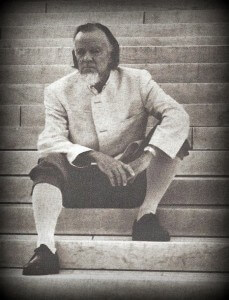
Francis Schaeffer

Darwin.

—-
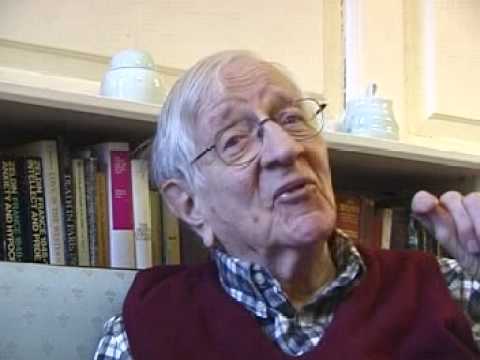
In his letter on November 22, 2017 Dr. Barlow asserted:

One reason I am interested in this topic is the selfish one that I have never been able to decide how to describe my own religious beliefs. If I declare my an atheist, I cannot help asking myself “Who am I to set at naught a concept that has guided the life of so many people, some of whom I hold the very deepest respect?”

On the other hand, if I am pressed to say whether I think belief in God helps people to make wise and beneficial decisions I am bound to say (and I fear this will cause you pain) No, it is often very disastrous, leading to violence, death and vile behaviour, as with the current quarrel with Muslim terrorists, and as has been shown by inter-sectal violence within the Christian Church itself. Furthermore, I feel that many religious doctrines, such as Papal Infallibility, are absolutely appalling, and the same goes for many political policies supported by many different religions. 

This prompted later to send Dr. Barlow this letter below on March 2, 2019, (Steven Weinberg, what is meant by God?)

Charles Darwin
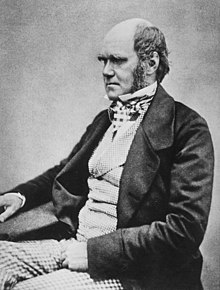
Image result for Charle Darwin

220 × 289Images may be subject to copyright. Learn More

Steven Weinberg
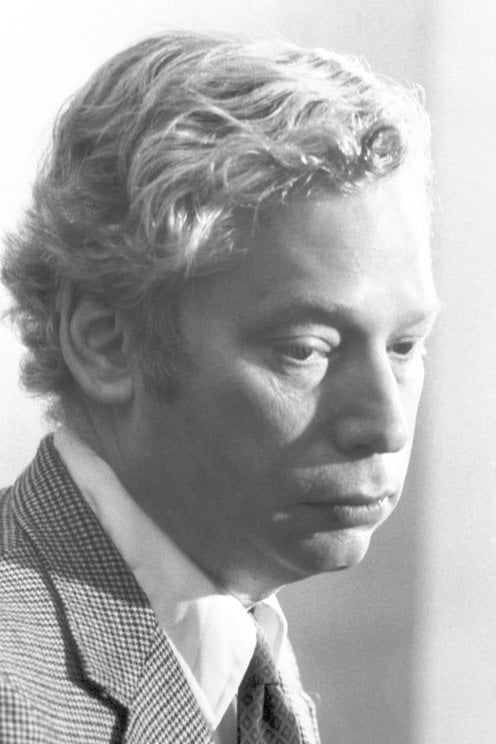
Image result for steven weinberg

496 × 744Images may be subject to copyright. Learn MoreFrancis Schaeffer
Image result for Francis Schaeffer

200 × 238Images may be subject to copyright. Learn More

_____________________

March 2, 2019

Dr. Horace Barlow, Department of Physiology, Development and Neuroscience, University of Cambridge, Downing Street,Physiological Laboratory, Cambridge United Kingdom,

Dear Dr. Barlow,

Have you wondered why so many people throw out the word “God” so much? Your great grandfather Charles Darwin saw it as silly too. So many people were using the word God to mean something much different than the traditional Biblical view.In Steven Weinberg’s book  DREAMS OF A FINAL THEORY he asserted:

And coming to that point which I think we will come to, some would say, well, then the explanation is God made it so. And I suppose that’s a natural reaction to this dilemma. Unfortunately to me it seems quite unsatisfactory. Either by God you mean something definite or you don’t mean something definite. If by God you mean a personality who is concerned about human beings, who did all this out of love for human beings, who watches us and who intervenes, then I would have to say in the first place how do you know, what makes you think so?And in the second place, is that really an explanation? If that’s true, what explains that? Why is there such a God? It isn’t the end of the chain of whys, it just is another step, and you have to take the step beyond that.I think much more often, however, when a physicist says, “Well, then the explanation is God,” they don’t mean anything particular by it. That’s just the word they apply. Einstein said that he didn’t believe in a God who was concerned with human affairs, who intervenes in human life, but a God who was simply an abstract principle of harmony and order.

And so then I rather grieve that they use the word “God,” because I do think one should have some loyalty to the way words are used historically, and that’s not what people have historically meant by “God” – not an abstract principle of harmony and order. If that’s all you mean by it, if God is practically synonymous with the laws of nature, then we don’t need the word. Why not just say the laws of nature? It isn’t that it’s wrong, because after all G-O-D is just a set of letters of the alphabet, and you can let it mean anything you like. But if language is to be of any use to us, we ought to try to preserve the meanings of words, and “God” historically has not meant the laws of nature. It has meant an interested personality. And that’s not something we’re finding scientifically. It’s not something for which I see any evidence.

I totally agree with you that these scientists have twisted the word GOD unfairly. It reminds of what Charles Darwin had to say about this issue.

Again in 1879 he was applied to by a German student, in a similar manner. The letter was answered by a member of my father’s family, who wrote:–

Image result for charles darwin

Charles Darwin (1809-1882) pictured above

Image result for francis darwin

Francis Darwin (1848-1925) pictured above

Image result for francis schaeffer

Francis Schaeffer (1912-1984)

“Mr. Darwin begs me to say that he receives so many letters, that he cannot answer them all.

“He considers that the theory of Evolution is quite compatible with the belief in a God; but that you must remember that different persons have different definitions of what they mean by God.”

Francis Schaeffer commented on Darwin’s autobiography:

You find a great confusion in his writings although there is a general structure in them. Here he says the word “God” is alright but you find later what he doesn’t take is a personal God. Of course, what you open is the whole modern linguistics concerning the word “God.” is God a pantheistic God? What kind of God is God? Darwin says there is nothing incompatible with the word “God.”

Steven Weinberg said of the the personal God of the Bible, “It’s not something for which I see any evidence.” Let me give you some.

TRUTH AND HISTORY (chapter 5 of WHATEVER HAPPENED TO THE HUMAN RACE?)

In the previous chapter we saw that the Bible gives us the explanation for the existence of the universe and its form and for the mannishness of man. Or, to reverse this, we came to see that the universe and its form and the mannishness of man are a testimony to the truth of the Bible. In this chapter we will consider a third testimony: the Bible’s openness to verification by historical study.

Christianity involves history. To say only that is already to have said something remarkable, because it separates the Judeo-Christian world-view from almost all other religious thought. It is rooted in history.

The Bible tells us how God communicated with man in history. For example, God revealed Himself to Abraham at a point in time and at a particular geographical place. He did likewise with Moses, David, Isaiah, Daniel and so on. The implications of this are extremely important to us. Because the truth God communicated in the Bible is so tied up with the flow of human events, it is possible by historical study to confirm some of the historical details.

It is remarkable that this possibility exists. Compare the information we have from other continents of that period. We know comparatively little about what happened in Africa or South America or China or Russia or even Europe. We see beautiful remains of temples and burial places, cult figures, utensils, and so forth, but there is not much actual “history” that can be reconstructed, at least not much when compared to that which is possible in the Middle East.

When we look at the material which has been discovered from the Nile to the Euphrates that derives from the 2500-year span before Christ, we are in a completely different situation from that in regard to South America or Asia. The kings of Egypt and Assyria built thousands of monuments commemorating their victories and recounting their different exploits. Whole libraries have been discovered from places like Nuzu and Mari and most recently at Elba, which give hundreds of thousands of texts relating to the historical details of their time. It is within this geographical area that the Bible is set. So it is possible to find material which bears upon what the Bible tells us.

The Bible purports to give us information on history. Is the history accurate? The more we understand about the Middle East between 2500 B.C. and A.D. 100, the more confident we can be that the information in the Bible is reliable, even when it speaks about the simple things of time and place.

Sincerely,

Everette Hatcher, everettehatcher@gmail.comhttp://www.thedailyhatch.org, cell ph 501-920-5733 13900 cottontail lane,  Alexander, AR 72002, United States

Debating from 2015-2020 Darwin’s great grandson (Horace Barlow) about Francis Schaeffer’s 1968 critique of Darwinism!

Image result for Emma Nora Barlow, Lady Barlow

The autobiography of Charles Darwin read by Francis Schaeffer in 1968 was not the same one originally released in 1892 because that one omitted the religious statements of Charles Darwin. 

pictured below with his eldest child William: 

Image result for Horace Barlow charles darwin

Notice this statement below from the Freedom from Religion Foundation: 

(Nora Barlow pictured below)
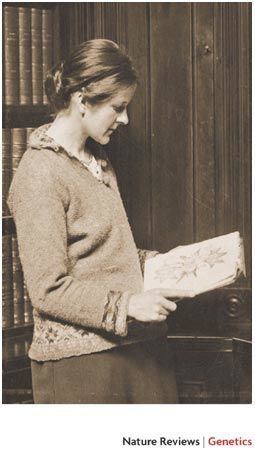
Charles Darwin wrote the Rev. J. Fordyce on July 7, 1879, that “an agnostic would be the most correct description of my state of mind.” Darwin penned his memoirs between the ages of 67 and 73, finishing the main text in 1876. These memoirs were published posthumously in 1887 by his family under the title Life and Letters of Charles Darwin, with his hardest-hitting views on religion excised. Only in 1958 did Darwin’s granddaughter Nora Barlow publish his Autobiography with original omissions restored  D. 1882.
——-

Charles Robert Darwin  (1809 – 1882) had 10 children and 7 of them survived to adulthood.

Sir Horace DarwinKBEFRS (13 May 1851 – 22 September 1928), the fifth son and ninth child of the British naturalist Charles Darwin and his wife Emma, the youngest of their seven children who survived to adulthood.

(Horace Darwin pictured below)

Horace Darwin.jpg

Emma Nora Barlow, Lady Barlow (née Darwin; 22 December 1885 – 29 May 1989) Nora, as she was known, was the daughter of the civil engineer Sir Horace Darwin and his wife The Hon. Lady Ida Darwin (née Farrer),

Horace Basil Barlow FRS (1921-) Barlow is the son of the civil servant Sir Alan Barlow and his wife Lady Nora (née Darwin). Barlow is the great-grandson of Charles Darwin

XXXXXXXXXXXXXXX

Horace Darwin married Emma Cecilia “Ida” Farrer (1854–1946) pictured below.

Image result for Ida Darwin hoRACE

—-

Image result for francis schaeffer

Francis Schaeffer

Horace Barlow was the son of Nora Barlow. From February 11, 2015 to July 1, 2017, I wrote 7 letters to Dr. Horace Barlow because I wanted to discuss primarily the views of his grandfather Charles Darwin and Francis Schaeffer’s 1968 critique of Darwinism!
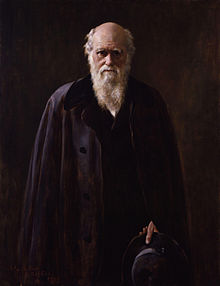
Image result for charles darwin

In December of 2017, I received a two page typed letter from Dr. Barlow reacting to several of the points made in the previous letters and emails. Over the next few weeks I will be posting the 32 letters I wrote to Dr. Barlow from February 11, 2015 to April 18, 2020 one per week every Tuesday and below is a list of those letters. Sadly Dr. Barlow passed away on July 5, 2020 at age 98. However, I want to summarize some the issues we discussed in the next few days. 

Image result for francis schaeffer

Franicis Schaeffer

If you wish to hear Francis Schaeffer’s 1968 talk on Darwin’s autobiography then you can access part 1 at this link and part 2 at this link.

—-

—-

—-

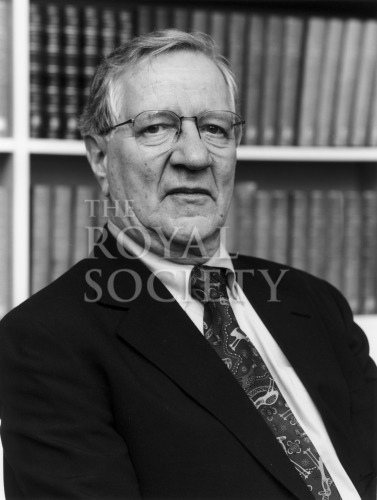
Horace Barlow pictured below:

_____________

I found Dr. Barlow to be a true gentleman and he was very kind to take the time to answer the questions that I submitted to him. In the upcoming months I will take time once a week to pay tribute to his life and reveal our correspondence. In the first week I noted:

 Today I am posting my first letter to him in February of 2015 which discussed Charles Darwin lamenting his loss of aesthetic tastes which he blamed on Darwin’s own dedication to the study of evolution. In a later return letter, Dr. Barlow agreed that Darwin did in fact lose his aesthetic tastes at the end of his life.

In the second week I look at the views of Michael Polanyi and share the comments of Francis Schaeffer concerning Polanyi’s views.

In the third week, I look at the life of Brandon Burlsworth in the November 28, 2016 letter and the movie GREATER and the problem of evil which Charles Darwin definitely had a problem with once his daughter died.

On the 4th letter to Dr. Barlow looks at Darwin’s admission that he at times thinks that creation appears to look like the expression of a mind. Francis Schaeffer discusses Darwin’s own words in 1968 sermon at this link.

My Fifth Letter concerning Charles Darwin’s views on MORAL MOTIONS Which was mailed on March 1, 2017. Francis Schaeffer discusses Darwin’s own words concerning moral motions in Schaeffer’s 1968 sermon at this link.

6th letter on May 1, 2017 in which Charles Darwin’s hopes are that someone would find in Pompeii an old manuscript by a distinguished Roman that would show that Christ existed! Francis Schaeffer discusses Darwin’s own words concerning the possible manuscript finds in Schaeffer’s 1968 sermon at this link.

7th letter on Darwin discussing DETERMINISM  dated 7-1-17 . Francis Schaeffer discusses Darwin’s own words concerning determinism in Schaeffer’s 1968 sermon at this link.

Thanks 8th letter responds to Dr. Barlow’s letter to me concerning the Francis Schaeffer discusses Darwin’s own words concerning chance in Schaeffer’s 1968 sermon at this link.

Thanks 9th letter in response to 11-22-17 letter I received from Professor Horace Barlow was mailed on 1-2-18 and included Charles Darwin’s comments on William Paley. Francis Schaeffer discusses Darwin’s own words concerning William Paley in Schaeffer’s 1968 sermon at this link.

10th letter in response to 11-22-17 letter I received from Professor Horace Barlow was mailed on 2-2-18 and includes Darwin’s comments asking for archaeological evidence for the Bible! Francis Schaeffer discusses Darwin’s own words concerning His desire to see archaeological evidence supporting the Bible’s accuracy  in Schaeffer’s 1968 sermon at this link.

11th letter I mailed on 3-2-18  in response to 11-22-17 letter from Barlow that asserted: It is also sometimes asked whether chance, even together with selection, can define a “MORAL CODE,” which the religiously inclined say is defined by their God. I think the answer is “Yes, it certainly can…” Francis Schaeffer discusses Darwin’s own words concerning A MORAL CODE in Schaeffer’s 1968 sermon at this link.

12th letter on March 26, 2018 breaks down song DUST IN THE WIND “All we do, crumbles to the ground though we refuse to see, Dust in the Wind, All we are is dust in the wind, Don’t hang on, Nothing lasts forever but the Earth and Sky, It slips away, And all your money won’t another minute buy.”

In 13th letter I respond to Barlow’s November 22, 2017 letter and assertion “He {Darwin} clearly did not lose his sense of the VALUE of TRUTH, and of the importance of FOREVER SEARCHING it out.”

In 14th letter to Dr. Barlow on 10-2-18, I assert: “Let me demonstrate how the Bible’s view of the origin of life fits better with the evidence we have from archaeology than that of gradual evolution.”In 15th letter in November 2, 2018 to Dr. Barlow I quote his relative Randal Keynes Who in the Richard Dawkins special “The Genius of Darwin” makes this point concerning Darwin, “he was, at different times, enormously confident in it,and at other times, he was utterly uncertain.”In 16th Letter on 12-2-18 to Dr. Barlow I respond to his letter that stated, If I am pressed to say whether I think belief in God helps people to make wise and beneficial decisions I am bound to say (and I fear this will cause you pain) “No, it is often very disastrous, leading to violence, death and vile behaviour…Muslim terrorists…violence within the Christian church itself”17th letter sent on January 2, 2019 shows the great advantage we have over Charles Darwin when examining the archaeological record concerning the accuracy of the Bible!In the 18th letter I respond to the comment by Charles Darwin: “My mind seems to have become a kind of machine for grinding general laws out of large collections of facts, but why this should have caused the atrophy of that part of the brain alone, on which the higher tastes depend, I cannot conceive….The loss of these tastes is a loss of happiness.” Francis Schaeffer discusses Darwin’s own words on his loss of aesthetic tastes  in Schaeffer’s 1968 sermon at this link.In 19th letter on 2-2-19  I discuss Steven Weinberg’s words,  But if language is to be of any use to us, we ought to try to preserve the meanings of words, and “God” historically has not meant the laws of nature. It has meant an interested personality.

In the 20th letter on 3-2-19 I respond to Charles Darwin’s comment, “At the present day the most usual argument for the existence of an intelligent God is drawn from the deep [#1] inward conviction and feelings which are experienced by most persons...Formerly I was led by feelings such as those…to the firm conviction of the existence of God, and of the immortality of the soul. In my Journal I wrote that [#2] whilst standing in the midst of the grandeur of a Brazilian forest, ‘it is not possible to give an adequate idea of the higher feelings of wonder, admiration, and devotion which fill and elevate the mind.’ I well remember my conviction that there is more in man than the mere breath of his body. [#3] But now the grandest scenes would not cause any such convictions and feelings to rise in my mind. It may be truly said that I am like a man who has become colour-blind.” Francis Schaeffer discusses Darwin’s own words concerning his former belief in God in Schaeffer’s 1968 sermon at this link.

In the 21st letter on May 15, 2019 to Dr Barlow I discuss the writings of Francis Schaeffer who passed away the 35 years earlier on May 15, 1985. Francis Schaeffer discusses Darwin’s own words at length in Schaeffer’s 1968 sermon at this link.

In the 22nd letter I respond to Charles Darwin’s words, “I can indeed hardly see how anyone ought to wish Christianity to be true; for if so the plain language of the text seems to show that the men who do not believe…will be everlastingly punished. And this is a damnable doctrine.” Francis Schaeffer discusses Darwin’s own words about hell  in Schaeffer’s 1968 sermon at this link

In 23rd postcard sent on 7-2-19 I asked Dr Barlow if he was a humanist. Sir Julian Huxley, founder of the American Humanist Association noted, “I use the word ‘humanist’ to mean someone who believes that man is just as much a natural phenomenon as an animal or plant; that his body, mind and soul were not supernaturally created but are products of evolution, and that he is not under the control or guidance of any supernatural being.”

In my 24th letter on 8-2-19 I quote Jerry  Bergman who noted Jean Louis Agassiz (1807-1873) is regarded as one of the greatest scientists of the 19th century. A founding father of the modern American scientific establishment, Agassiz was also a lifelong opponent of Charles Darwin’s theory of evolution. Agassiz “ruled in professorial majesty at Harvard’s Museum of Comparative Zoology.”

In my 25th letter on 9-2-19 I respond to Charles Darwin’s assertion,  “This argument would be a valid one if all men of ALL RACES had the SAME INWARD CONVICTION of the existence of one God; but we know that this is very far from being the case.” Francis Schaeffer discusses Darwin’s own words concerning MORAL MOTIONS in Schaeffer’s 1968 sermon at this link.

In my 26th letter on 10-2-19 I quoted Bertrand Russell’s daughter’s statement, “I believe myself that his whole life was a search for God…. Indeed, he had first taken up philosophy in hope of finding proof of the evidence of the existence of God … Somewhere at the back of my father’s mind, at the bottom of his heart, in the depths of his soul  there was an empty space that had once been filled by God, and he never found anything else to put in it”

In my 27th letter on 11-2-19 I disproved Richard Dawkins’ assertion, “Genesis says Abraham owned camels, but archaeological evidence shows that the camel was not domesticated until many centuries after Abraham.” Furthermore, I gave more evidence indicating the Bible is historically accurate.

In my 28th letter on 12-2-19 I respond to Charles Darwin’s statement, “I am glad you were at the Messiah, it is the one thing that I should like to hear again, but I dare say I should find my soul too dried up to appreciate it as in old days; and then I should feel very flat, for it is a horrid bore to feel as I constantly do, that I am a withered leaf for every subject except Science. It sometimes makes me hate Science.” Francis Schaeffer discusses Darwin’s own words concerning MORAL MOTIONS in Schaeffer’s 1968 sermon at this link. 

In my 29th letter on 12-25-19 I responded to Charles Darwin’s statement, “I have said that in one respect my mind has changed during the last twenty or thirty years. Up to the age of thirty, or beyond it, poetry of many kinds…gave me great pleasure, and even as a schoolboy I took intense delight in Shakespeare, especially in the historical plays. I have also said that formerly pictures gave me considerable, and music very great delight. But now for many years I cannot endure to read a line of poetry: I have tried lately to read Shakespeare, and found it so intolerably dullthat it nauseated me…. My mind seems to have become a kind of machine for grinding general laws out of large collections of facts, but why this should have caused the atrophy of that part of the brain alone, on which the higher tastes depend, I cannot conceive… The loss of these tastes is a loss of happiness…” Francis Schaeffer discusses Darwin’s own words concerning his loss of aesthetic tastes in Schaeffer’s 1968 sermon at this link.

In my 30th letter on 2-2-20 I quote Dustin Shramek who asserted, “Without God the universe is the result of a cosmic accident, a chance explosion. There is no reason for which it exist. As for man, he is a freak of nature–a blind product of matter plus time plus chance. Man is just a lump of slime that evolved into rationality. There is no more purpose in life for the human race than for a species of insect; for both are the result of the blind interaction of chance and necessity.”

In my 31st letter on 3-18-20 I quote Francis Schaeffer who noted, “Darwin is saying that he gave up the New Testament because it was connected to the Old Testament. He gave up the Old Testament because it conflicted with his own theory. Did he have a real answer himself and the answer is no. At the end of his life we see that he is dehumanized by his position and on the other side we see that he never comes to the place of intellectual satisfaction for himself that his answers were sufficient.” Francis Schaeffer discusses Darwin’s own words concerning his loss of his Christian faith in Schaeffer’s 1968 sermon at this link.

In my 32nd letter on 4-18-20 quoted H.J. Blackham on where humanism leads On humanist assumptions, life leads to nothing, and every pretense that it does not is a deceit. If there is a bridge over a gorge which spans only half the distance and ends in mid-air, and if the bridge is crowded with human beings pressing on, one after the other they fall into the abyss. The bridge leads nowhere, and those who are pressing forward to cross it are going nowhere….It does not matter where they think they are going, what preparations for the journey they may have made, how much they may be enjoying it all. The objection merely points out objectively that such a situation is a model of futility

The Case for Ai Weiwei | The Art Assignment | PBS Digital Studios

FEATURED ARTIST IS Ai Weiwei 

15 Engrossing Artist Biographies and Memoirs to Read Now

DESIGN & LIVINGANOTHER LIST

Sally Mann memoir

We spotlight a selection of our favourite artists’ autobiographies and biographies, from the empowering to the scandalous, for your summer reading inspiration

AUGUST 10, 2020

TEXTDaisy Woodward

Summer is upon us and this year, more than ever, it feels pertinent to pick holiday reads that will uplift and inspire. Where better to turn to, then, than artists’ memoirs and biographies – filled as they are with tales of overcoming life’s hardships, fights for justice and recognition in and outside of the art world, the quest to forge a legacy through art, and, more often than not, a juicy scandal or two to keep the reader’s interest piqued. Here, we’ve selected 15 of our favourites for your perusal, spanning the empowering, the ephemeral, the political and the downright provocative (Diego Rivera, we’re looking at you

8. Hanging Man: The Arrest of Ai Weiwei by Barnaby Martin

Ai Weiwei has spent his entire career creating very beautiful, deeply political works that challenge and confront his country’s totalitarian regime – to global acclaim. But rising the ranks to become China’s most famous living artist and activist has come at a price. In April of 2011, just six months after his vast, thought-provoking sculpture Sunflower Seeds was installed in Tate Modern’s Turbine Hall, Weiwei was arrested at the Beijing Capital International Airport and detained illegally for over two months in dire conditions. Shortly after his release, Barnaby Martin travelled to Beijing to interview the artist about his imprisonment and to discover more about “what is really going on behind the scenes in the upper echelons of the Chinese Communist Party”. Hanging Man is the result – a highly informative and stirring account of “Weiwei’s life, art, and activism”, as well as “a meditation on the creative process, and on the history of art in modern China”.

Cube light from 2008, during exhibition so sorryin Munich

Related posts:

Taking on Ark Times Bloggers on various issues Part F “Carl Sagan’s views on how God should try and contact us” includes film “The Basis for Human Dignity”

April 8, 2013 – 7:07 am

I have gone back and forth and back and forth with many liberals on the Arkansas Times Blog on many issues such as abortion, human rights, welfare, poverty, gun control  and issues dealing with popular culture. Here is another exchange I had with them a while back. My username at the Ark Times Blog is Saline […]By Everette Hatcher III | Posted in Francis SchaefferProlife | Edit | Comments (0)

Carl Sagan v. Nancy Pearcey

March 18, 2013 – 9:11 am

On March 17, 2013 at our worship service at Fellowship Bible Church, Ben Parkinson who is one of our teaching pastors spoke on Genesis 1. He spoke about an issue that I was very interested in. Ben started the sermon by reading the following scripture: Genesis 1-2:3 English Standard Version (ESV) The Creation of the […]By Everette Hatcher III | Posted in Adrian RogersAtheists ConfrontedCurrent Events | TaggedBen ParkinsonCarl Sagan | Edit | Comments (0)

Review of Carl Sagan book (Part 4 of series on Evolution)

May 24, 2012 – 1:47 am

Review of Carl Sagan book (Part 4 of series on Evolution) The Long War against God-Henry Morris, part 5 of 6 Uploaded by FLIPWORLDUPSIDEDOWN3 on Aug 30, 2010 http://www.icr.org/ http://store.icr.org/prodinfo.asp?number=BLOWA2http://store.icr.org/prodinfo.asp?number=BLOWASGhttp://www.fliptheworldupsidedown.com/blog _______________________ I got this from a blogger in April of 2008 concerning candidate Obama’s view on evolution: Q: York County was recently in the news […]By Everette Hatcher III | Posted in Atheists ConfrontedCurrent EventsPresident Obama | EditComments (0)

Review of Carl Sagan book (Part 3 of series on Evolution)

May 23, 2012 – 1:43 am

Review of Carl Sagan book (Part 3 of series on Evolution) The Long War against God-Henry Morris, part 4 of 6 Uploaded by FLIPWORLDUPSIDEDOWN3 on Aug 30, 2010 http://www.icr.org/ http://store.icr.org/prodinfo.asp?number=BLOWA2http://store.icr.org/prodinfo.asp?number=BLOWASGhttp://www.fliptheworldupsidedown.com/blog______________________________________ I got this from a blogger in April of 2008 concerning candidate Obama’s view on evolution: Q: York County was recently in the news […]By Everette Hatcher III | Posted in Atheists ConfrontedCurrent EventsPresident Obama | EditComments (0)

Carl Sagan versus RC Sproul

January 9, 2012 – 2:44 pm

At the end of this post is a message by RC Sproul in which he discusses Sagan. Over the years I have confronted many atheists. Here is one story below: I really believe Hebrews 4:12 when it asserts: For the word of God is living and active and sharper than any two-edged sword, and piercing as far as the […]By Everette Hatcher III | Posted in Adrian RogersAtheists ConfrontedCurrent EventsFrancis Schaeffer | Tagged Bill ElliffCarl SaganJodie FosterRC Sproul | Edit | Comments (0)

Review of Carl Sagan book (Part 4 of series on Evolution)jh68

November 8, 2011 – 12:01 am

Review of Carl Sagan book (Part 4 of series on Evolution) The Long War against God-Henry Morris, part 5 of 6 Uploaded by FLIPWORLDUPSIDEDOWN3 on Aug 30, 2010 http://www.icr.org/ http://store.icr.org/prodinfo.asp?number=BLOWA2http://store.icr.org/prodinfo.asp?number=BLOWASGhttp://www.fliptheworldupsidedown.com/blog _______________________ This is a review I did a few years ago. THE DEMON-HAUNTED WORLD: Science as a Candle in the Dark by Carl […]By Everette Hatcher III | Posted in Atheists ConfrontedCurrent Events | Edit | Comments (0)

Review of Carl Sagan book (Part 3 of series on Evolution)

November 4, 2011 – 12:57 am

Review of Carl Sagan book (Part 3 of series on Evolution) The Long War against God-Henry Morris, part 4 of 6 Uploaded by FLIPWORLDUPSIDEDOWN3 on Aug 30, 2010 http://www.icr.org/ http://store.icr.org/prodinfo.asp?number=BLOWA2http://store.icr.org/prodinfo.asp?number=BLOWASGhttp://www.fliptheworldupsidedown.com/blog______________________________________ I was really enjoyed this review of Carl Sagan’s book “Pale Blue Dot.” Carl Sagan’s Pale Blue Dot by Larry Vardiman, Ph.D. […]By Everette Hatcher III | Posted in Atheists ConfrontedCurrent Events | Edit | Comments (0)

Atheists confronted: How I confronted Carl Sagan the year before he died jh47

May 19, 2011 – 10:30 am

In today’s news you will read about Kirk Cameron taking on the atheist Stephen Hawking over some recent assertions he made concerning the existence of heaven. Back in December of 1995 I had the opportunity to correspond with Carl Sagan about a year before his untimely death. Sarah Anne Hughes in her article,”Kirk Cameron criticizes […]By Everette Hatcher III | Posted in Atheists Confronted | Edit | Comments (2)

My correspondence with George Wald and Antony Flew!!!

May 12, 2014 – 1:14 am

January 8, 2015 – 5:23 am

January 1, 2015 – 4:14 am

December 25, 2014 – 5:04 am

FRANCIS SCHAEFFER ANALYZES ART AND CULTURE Part 38 Woody Allen and Albert Camus “There is but one truly serious philosophical problem, and that is suicide” (Feature on artist Hamish Fulton Photographer )

December 18, 2014 – 4:30 am

FRANCIS SCHAEFFER ANALYZES ART AND CULTURE Part 37 Mahatma Gandhi and “Relieving the Tension in the East” (Feature on artist Luc Tuymans)

December 11, 2014 – 4:19 am

FRANCIS SCHAEFFER ANALYZES ART AND CULTURE Part 36 Julian Huxley:”God does not in fact exist, but act as if He does!” (Feature on artist Barry McGee)

December 4, 2014 – 4:10 am

FRANCIS SCHAEFFER ANALYZES ART AND CULTURE Part 35 Robert M. Pirsig (Feature on artist Kerry James Marshall)

November 27, 2014 – 4:43 am

FRANCIS SCHAEFFER ANALYZES ART AND CULTURE Part 34 Aleksandr Solzhenitsyn (Feature on artist Shahzia Sikander)

November 20, 2014 – 4:28 am

FRANCIS SCHAEFFER ANALYZES ART AND CULTURE Part 33 Aldous Huxley (Feature on artist Matthew Barney )

November 13, 2014 – 4:39 am

FRANCIS SCHAEFFER ANALYZES ART AND CULTURE Part 32 Steven Weinberg and Woody Allen and “The Meaningless of All Things” (Feature on photographer Martin Karplus )

November 6, 2014 – 4:42 am

FRANCIS SCHAEFFER ANALYZES ART AND CULTURE Part 31 David Hume and “How do we know we know?” (Feature on artist William Pope L. )

October 30, 2014 – 5:34 am

FRANCIS SCHAEFFER ANALYZES ART AND CULTURE Part 30 Rene Descartes and “How do we know we know?” (Feature on artist Olafur Eliasson)

October 23, 2014 – 5:01 am

FRANCIS SCHAEFFER ANALYZES ART AND CULTURE Part 29 W.H. Thorpe and “The Search for an Adequate World-View: A Question of Method” (Feature on artist Jeff Koons)

October 16, 2014 – 5:06 am

FRANCIS SCHAEFFER ANALYZES ART AND CULTURE Part 28 Woody Allen and “The Mannishness of Man” (Feature on artist Ryan Gander)

October 9, 2014 – 5:10 am

September 25, 2014 – 1:01 pm

September 25, 2014 – 4:00 am

FRANCIS SCHAEFFER ANALYZES ART AND CULTURE Part 25 BOB DYLAN (Part C) Francis Schaeffer comments on Bob Dylan’s song “Ballad of a Thin Man” and the disconnect between the young generation of the 60’s and their parents’ generation (Feature on artist Fred Wilson)

September 18, 2014 – 3:57 am

FRANCIS SCHAEFFER ANALYZES ART AND CULTURE Part 24 BOB DYLAN (Part B) Francis Schaeffer comments on Bob Dylan’s words from HIGHWAY 61 REVISITED!! (Feature on artist Susan Rothenberg)

September 11, 2014 – 4:18 am

FRANCIS SCHAEFFER ANALYZES ART AND CULTURE Part 23 BOB DYLAN (Part A) (Feature on artist Josiah McElheny)Francis Schaeffer on the proper place of rebellion with comments by Bob Dylan and Samuel Rutherford

September 2, 2014 – 8:42 am

FRANCIS SCHAEFFER ANALYZES ART AND CULTURE Part 22 “The School of Athens by Raphael” (Feature on the artist Sally Mann)

August 11, 2014 – 2:19 pm

FRANCIS SCHAEFFER ANALYZES ART AND CULTURE Part 21 William B. Provine (Feature on artist Andrea Zittel)

June 12, 2014 – 2:52 pm

FRANCIS SCHAEFFER ANALYZES ART AND CULTURE Part 20 Woody Allen and Materialistic Humanism: The World-View of Our Era (Feature on artist Ida Applebroog)

May 12, 2014 – 4:35 am

FRANCIS SCHAEFFER ANALYZES ART AND CULTURE Part 19 Movie Director Luis Bunuel (Feature on artist Oliver Herring)

May 1, 2014 – 11:53 am

FRANCIS SCHAEFFER ANALYZES ART AND CULTURE Part 18 “Michelangelo’s DAVID is the statement of what humanistic man saw himself as being tomorrow” (Feature on artist Paul McCarthy)

April 25, 2014 – 8:26 am

FRANCIS SCHAEFFER ANALYZES ART AND CULTURE Part 17 Francis Schaeffer discusses quotes of Andy Warhol from “The Observer June 12, 1966″ Part C (Feature on artist David Hockney plus many pictures of Warhol with famous friends)

April 18, 2014 – 7:37 am

FRANCIS SCHAEFFER ANALYZES ART AND CULTURE Part 16 Francis Schaeffer discusses quotes of Andy Warhol from “The Observer June 12, 1966″ Part B (Feature on artist James Rosenquist plus many pictures of Warhol with famous friends)

April 11, 2014 – 6:14 am

FRANCIS SCHAEFFER ANALYZES ART AND CULTURE Part 15 Francis Schaeffer discusses quotes of Andy Warhol from “The Observer June 12, 1966″ Part A (Feature on artist Robert Indiana plus many pictures of Warhol with famous friends)

April 4, 2014 – 5:58 am

FRANCIS SCHAEFFER ANALYZES ART AND CULTURE Part 14 David Friedrich Strauss (Feature on artist Roni Horn )

March 28, 2014 – 2:50 pm

FRANCIS SCHAEFFER ANALYZES ART AND CULTURE Part 13 Jacob Bronowski and Materialistic Humanism: The World-View of Our Era (Feature on artist Ellen Gallagher )

March 21, 2014 – 7:18 am

FRANCIS SCHAEFFER ANALYZES ART AND CULTURE Part 12 H.J.Blackham and Materialistic Humanism: The World-View of Our Era (Feature on artist Arturo Herrera)

March 14, 2014 – 9:07 am

FRANCIS SCHAEFFER ANALYZES ART AND CULTURE Part 11 Thomas Aquinas and his Effect on Art and HOW SHOULD WE THEN LIVE? Episode 2: THE MIDDLES AGES (Feature on artist Tony Oursler )

March 4, 2014 – 9:04 pm

FRANCIS SCHAEFFER ANALYZES ART AND CULTURE Part 10 David Douglas Duncan (Feature on artist Georges Rouault )

February 28, 2014 – 5:16 am

FRANCIS SCHAEFFER ANALYZES ART AND CULTURE Part 9 Jasper Johns (Feature on artist Cai Guo-Qiang )

February 21, 2014 – 6:51 am

FRANCIS SCHAEFFER ANALYZES ART AND CULTURE Part 8 “The Last Year at Marienbad” by Alain Resnais (Feature on artist Richard Tuttle and his return to the faith of his youth)

February 13, 2014 – 7:59 am

FRANCIS SCHAEFFER ANALYZES ART AND CULTURE Part 7 Jean Paul Sartre (Feature on artist David Hooker )

February 4, 2014 – 2:00 pm

FRANCIS SCHAEFFER ANALYZES ART AND CULTURE Part 6 The Adoration of the Lamb by Jan Van Eyck which was saved by MONUMENT MEN IN WW2 (Feature on artist Makoto Fujimura)

January 31, 2014 – 5:43 am

FRANCIS SCHAEFFER ANALYZES ART AND CULTURE Part 5 John Cage (Feature on artist Gerhard Richter)

January 21, 2014 – 8:07 am

FRANCIS SCHAEFFER ANALYZES ART AND CULTURE Part 4 ( Schaeffer and H.R. Rookmaaker worked together well!!! (Feature on artist Mike Kelley Part B )

January 14, 2014 – 8:52 am

FRANCIS SCHAEFFER ANALYZES ART AND CULTURE Part 3 PAUL GAUGUIN’S 3 QUESTIONS: “Where do we come from? What art we? Where are we going? and his conclusion was a suicide attempt” (Feature on artist Mike Kelley Part A)

January 7, 2014 – 11:06 pm

FRANCIS SCHAEFFER ANALYZES ART AND CULTURE Part 2 “A look at how modern art was born by discussing Monet, Renoir, Pissaro, Sisley, Degas,Cezanne, Van Gogh, Gauguin, Seurat, and Picasso” (Feature on artist Peter Howson)

January 1, 2014 – 4:27 am

FRANCIS SCHAEFFER ANALYZES ART AND CULTURE Part 1 HOW SHOULD WE THEN LIVE? “The Roman Age” (Feature on artist Tracey Emin)

December 10, 2013 – 2:38 pm

RESPONDING TO HARRY KROTO’S BRILLIANT RENOWNED ACADEMICS!! Carl Sagan Part 48 FRANCIS SCHAEFFER, ”Public television gives us many things that many of us like culturally, but is also completely committed to a propaganda position that the last reality is only material / energy shaped by pure chance. Clark’s Civilization, Brunowski, The Ascent of Man, Carl Sagan’s Cosmos — they all say it. There is only one final view of reality that’s possible and that is that the final reality is material or energy shaped by pure chance!”

Francis Schaeffer has written extensively on art and culturespanning the last 2000years and here are some posts I have done on this subject before : Francis Schaeffer’s “How should we then live?” Video and outline of episode 10 “Final Choices” episode 9 “The Age of Personal Peace and Affluence”episode 8 “The Age of Fragmentation”episode 7 “The Age of Non-Reason” episode 6 “The Scientific Age” , episode 5 “The Revolutionary Age” episode 4 “The Reformation” episode 3 “The Renaissance”episode 2 “The Middle Ages,”, and  episode 1 “The Roman Age,” . My favorite episodes are number 7 and 8 since they deal with modern art and culture primarily.(Joe Carter rightly noted,Schaefferwho always claimed to be an evangelist and notaphilosopher—was often criticized for the way his work oversimplifiedintellectual history and philosophy.” To thosecritics I say take a chill pillbecause Schaeffer was introducing millions into the fields of art andculture!!!! !!! More people need to read his works and blog aboutthembecause they show how people’s worldviews affecttheir lives!

J.I.PACKER WROTE OF SCHAEFFER, “His communicativestyle was not that of acautious academic who labors for exhaustive coverage and dispassionate objectivity. It was rather that of an impassioned thinker who paints his vision of eternal truth in bold strokes and stark contrasts.Yet it is a fact thatMANY YOUNG THINKERS AND ARTISTS…HAVE FOUND SCHAEFFER’S ANALYSES A LIFELINE TO SANITY WITHOUT WHICH THEY COULD NOT HAVE GONE ON LIVING.”

Francis Schaeffer’s works  are the basis for a large portion of myblog posts andthey have stood the test of time. In fact, manypeople would say that many of the things he wrote in the 1960’s  were right on  in the sense he saw where ourwestern society was heading and he knew that abortion, infanticide and youthenthansia were  moral boundaries we would be crossing  in the coming decadesbecause of humanism and these are the discussions we are having now!)

There is evidence that points to the fact that the Bible is historically true asSchaeffer pointed out in episode 5 of WHATEVER HAPPENED TO THE HUMAN RACE? There is abasis then for faith in Christ alone for our eternal hope. Thislinkshows how to do that.

Francis Schaeffer in Art and the Bible noted, “Many modern artists, it seems to me, have forgotten the value that art has in itself. Much modern art is far too intellectual to be great art. Many modern artists seem not to see the distinction between man and non-man, and it is a part of the lostness of modern man that they no longer see value in the work of art as a work of art.” 

Many modern artists are left in this point of desperation that Schaeffer points out and it reminds me of the despair that Solomon speaks of in Ecclesiastes.  Christian scholar Ravi Zacharias has noted, “The key to understanding the Book of Ecclesiastes is the term ‘under the sun.’ What that literally means is you lock God out of a closed system, and you are left with only this world of time plus chance plus matter.” THIS IS EXACT POINT SCHAEFFER SAYS SECULAR ARTISTSARE PAINTING FROM TODAY BECAUSE THEY BELIEVED ARE A RESULTOF MINDLESS CHANCE.

Francis Schaeffer pictured below:

_____________

Francis Schaeffer at International Congress of World Evangelism, Lausanne, Switzerland, July 1974

https://www.youtube.com/watch?v=wMYEH435os0

A Christian Manifesto
by Dr. Francis A. Schaeffer

This address was delivered by the late Dr. Schaeffer in 1982 at the Coral Ridge Presbyterian Church, Fort Lauderdale, Florida. It is based on one of his books, which bears the same title.

Christians, in the last 80 years or so, have only been seeing things as bits and pieces which have gradually begun to trouble them and others, instead of understanding that they are the natural outcome of a change from aChristian World View to a Humanistic one; things such as overpermissiveness, pornography, the problem of the public schools, the breakdown of the family, abortion, infanticide (the killing of newborn babies), increased emphasis upon the euthanasia of the old and many, many other things.

All of these things and many more are only the results. We may be troubled with the individual thing, but in reality we are missing the whole thing if we do not see each of these things and many more as only symptoms of the deeper problem. And that is the change in our society, a change in our country, a change in the Western world from a Judeo-Christian consensus to a Humanistic one. That is, instead of the final reality that exists being the infinite creator God; instead of that which is the basis of all reality being such a creator God, now largely, all else is seen as only material or energy which has existed forever in some form, shaped into its present complex form only by pure chance.

I want to say to you, those of you who are Christians or even if you are not a Christian and you are troubled about the direction that our society is going in, that we must not concentrate merely on the bits and pieces. But we must understand that all of these dilemmas come on the basis of moving from the Judeo-Christian world view — that the final reality is an infinite creator God — over into this other reality which is that the final reality is only energy or material in some mixture or form which has existed forever and which has taken its present shape by pure chance.

The word Humanism should be carefully defined. We should not just use it as a flag, or what younger people might call a “buzz” word. We must understand what we are talking about when we use the word Humanism. Humanism means that the man is the measure of all things. Man is the measure of all things. If this other final reality of material or energy shaped by pure chance is the final reality, it gives no meaning to life. It gives no value system. It gives no basis for law, and therefore, in this case, man must be the measure of all things. So, Humanism properly defined, in contrast, let us say, to the humanities or humanitarianism, (which is something entirely different and which Christians should be in favor of) being the measure of all things, comes naturally, mathematically, inevitably, certainly. If indeed the final reality is silent about these values, then man must generate them from himself.

So, Humanism is the absolute certain result, if we choose this other final reality and say that is what it is. You must realize that when we speak of man being the measure of all things under the Humanist label, the first thing is that man has only knowledge from himself. That he, being finite, limited, very faulty in his observation of many things, yet nevertheless, has no possible source of knowledge except what man, beginning from himself, can find out from his own observation. Specifically, in this view, there is no place for any knowledge from God.

But it is not only that man must start from himself in the area of knowledge and learning, but any value system must come arbitrarily from man himself by arbitrary choice. More frightening still, in our country, at our own moment of history, is the fact that any basis of law then becomes arbitrary — merely certain people making decisions as to what is for the good of society at the given moment.

Now this is the real reason for the breakdown in morals in our country. It’s the real reason for the breakdown in values in our country, and it is the reason that our Supreme Court now functions so thoroughly upon the fact of arbitrary law. They have no basis for law that is fixed, therefore, like the young person who decides to live hedonistically upon their own chosen arbitrary values, society is now doing the same thing legally. Certain few people come together and decide what they arbitrarily believe is for the good of society at the given moment, and that becomes law.

The world view that the final reality is only material or energy shaped by pure chance, inevitably, (that’s the next word I would bring to you ) mathematically — with mathematical certainty — brings forth all these other results which are in our country and in our society which have led to the breakdown in the country — in society — and which are its present sorrows. So, if you hold this other world view, you must realize that it is inevitable that we will come to the very sorrows of relativity and all these other things that are so represented in our country at this moment of history.

It should be noticed that this new dominant world view is a view which is exactly opposite from that of the founding fathers of this country. Now, not all the founding fathers were individually, personally, Christians.

(PART 2 of speech from above video)

That certainly is true. But, nevertheless, they founded the country on the base that there is a God who is the Creator (now I come to the next central phrase) who gave the inalienable rights.

We must understand something very thoroughly. If society — if the state gives the rights, it can take them away — they’re not inalienable. If the states give the rights, they can change them and manipulate them. But this was not the view of the founding fathers of this country. They believed, although not all of them were individual Christians, that there was a Creator and that this Creator gave the inalienable rights — this upon which our country was founded and which has given us the freedoms which we still have — even the freedoms which are being used now to destroy the freedoms.

The reason that these freedoms were there is because they believed there was somebody who gave the inalienable rights. But if we have the view that the final reality is material or energy which has existed forever in some form, we must understand that this view never, never, never would have given the rights which we now know and which, unhappily, I say to you (those of you who are Christians) that too often you take all too much for granted. You forget that the freedoms which we have in northern Europe after the Reformation (and the United States is an extension of that, as would be Australia or Canada, New Zealand, etc.) are absolutely unique in the world.

Occasionally, some of you who have gone to universities have been taught that these freedoms are rooted in the Greek city-states. That is not the truth. All you have to do is read Plato’s Republic and you understand that the Greek city-states never had any concept of the freedoms that we have. Go back into history. The freedoms which we have (the form / freedom balance of government) are unique in history and they are also unique in the world at this day.

A fairly recent poll of the 150 some countries that now constitute the world shows that only 25 of these countries have any freedoms at all. What we have, and take so poorly for granted, is unique. It was brought forth by a specific world view and that specific world view was the Judeo-Christian world view especially as it was refined in the Reformation, putting the authority indeed at a central point — not in the Church and the state and the Word of God, but rather the Word of God alone. All the benefits which we know — I would repeat — which we have taken so easily and so much for granted, are unique. They have been grounded on the certain world view that there was a Creator there to give inalienable rights. And this other view over here, which has become increasingly dominant, of the material-energy final world view (shaped by pure chance) never would have, could not, has, no basis of values, in order to give such a balance of freedom that we have known so easily and which we unhappily, if we are not careful, take so for granted.

We are now losing those freedoms and we can expect to continue to lose them if this other world view continues to take increased force and power in our county. We can be sure of this. I would say it again — inevitably, mathematically, all of these things will come forth. There is no possible way to heal the relativistic thinking of our own day, if indeed all there is is a universe out there that is silent about any values. None, whatsoever! It is not possible. It is a loss of values and it is a loss of freedom which we may be sure will continually grow.

A good illustration is in the public schools. This view is taught in our public schools exclusively — by law. There is no other view that can be taught. I‘ll mention it a bit later, but by law there is no other view that can be taught. By law, in the public schools, the United States of America in 1982, legally there is only one view of reality that can be taught. I’ll mention it a bit later, but there is only one view of reality that can be taught, and that is that the final reality is only material or energy shaped by pure chance.

It is the same with the television programs. Public television gives us many things that many of us like culturally, but is also completely committed to a propaganda position that the last reality is only material / energy shaped by pure chance. Clark’s Civilization, Brunowski, The Ascent of ManCarl Sagan’s Cosmos — they all say it. There is only one final view of reality that’s possible and that is that the final reality is material or energy shaped by pure chance.

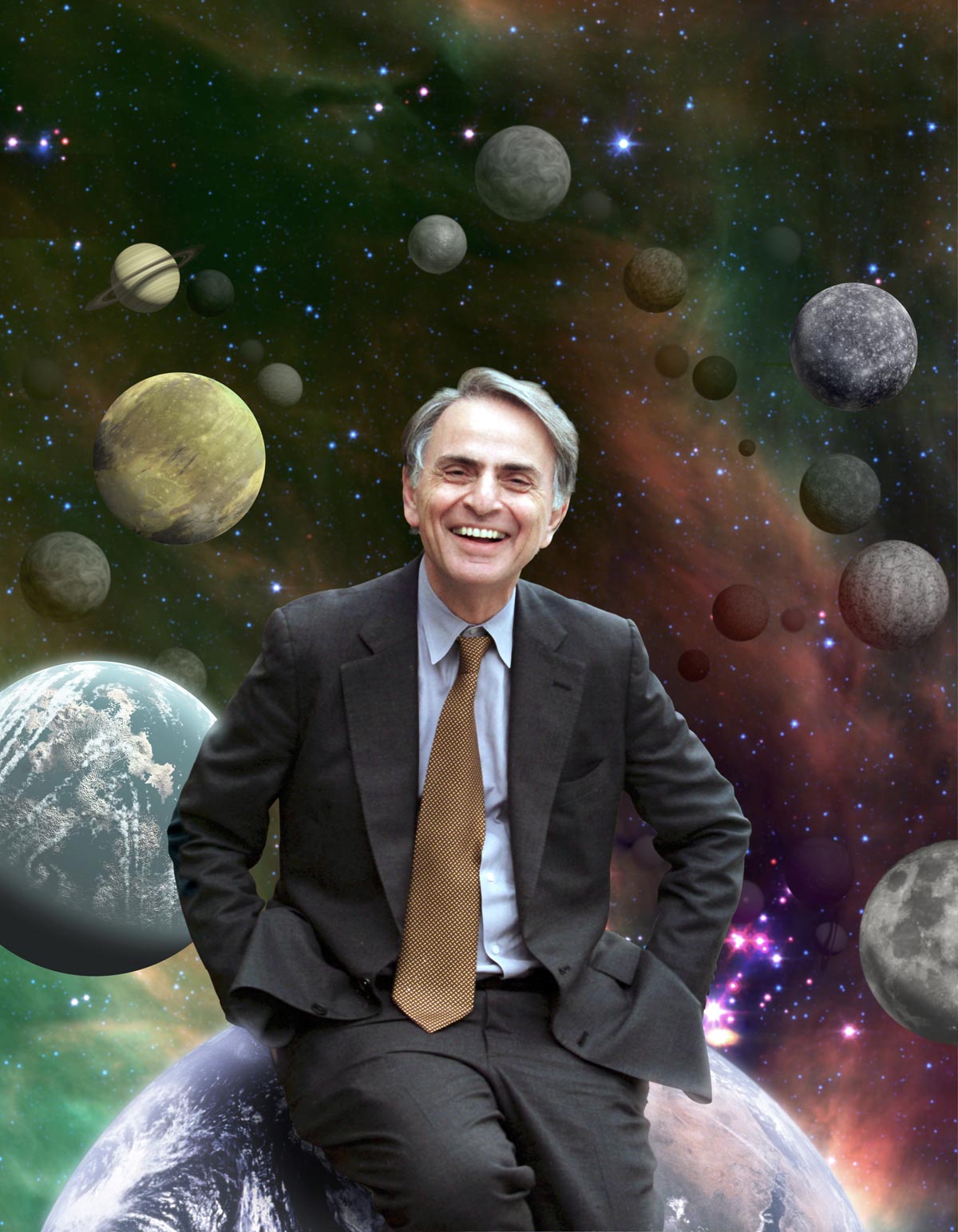
Carl Sagan pictured in 1954:

have written a lot in the past about Carl Sagan on my blog and over and over again these posts have been some of my most popular because I believe Carl Sagan did a great job of articulating the naturalistic view that the world is a result of nothing more than impersonal matter, time and chance. Christians like me have to challenge those who hold this view and that is why I took it upon myself to read many of Sagan’s books and to watch his film series Cosmos.

Dec 10

The Dragons of Materialism

In his book The Dragons of Eden, the late Carl Sagan writes,“The reason we prohibit the killing of human beings must be because of some quality human beings possess, a quality we especially prize, that few or no other organisms on earth enjoy.”1  When I first read this, my heart started to beat a little faster.  A dogmatic atheist, a dyed-in-the-wool materialist, was essentially agreeing with Christians that humans are more than molecules in motion!  I wasn’t expecting him to go as far as to say that we are “special”, but he was dangerously close.  However, I was quite disappointed as I read what Dr. Sagan thought this quality was: “This essential human quality, I believe, can only be our intelligence.”  How could someone get so close to the truth yet end up so far from it?  If we want to address this question, we must first examine why Sagan even thought that human life is valuable or worth protecting.  We must ask why he thought that humans possess something that “few or no other organisms on earth enjoy.”Francis Schaeffer insightfully observed that the more a non-Christian stays consistent with his own presuppositions, the further he is from the real world; conversely,  the closer he is to the real world, the more inconsistent he is with his own presuppositions.  It’s quite a predicament for the unbeliever.  Schaeffer says that “in reality no one can live logically according to his own non-Christian presuppositions, and consequently, because he is faced with the real world and himself, in practice you will find a place where you can talk.”2  This is a bold claim, but I find it to be the case with every God-substitute out there: materialism, naturalism, nihilism, communism, paganism, pantheism, and any “ism” you can name.  Sagan and his atheistic materialism certainly fall into this arena.  If we take Schaeffer’s claim (and the Bible) to be correct, then we know two things:  first, that materialism is false and will prove itself illogical if held consistently; second, that we can find common ground with those held captive by this worldview.  Many people who grew up during the 70s were influenced by Sagan’s Cosmos series, and many prominent scientists today point to him as an inspiration.  Finding the issue with Sagan’s specific statement, as well as his broader worldview, can help us persuade those held captive to materialism.In essence, materialists or naturalists hold that the material universe is all that there is:  everything can be explained in terms of matter and physical processes.  Did you catch that keyword?  Everything.  This categorical statement, comprising the basis of materialism, is logically invalid since it requires the proof through only material that only material exists. When clearly stated, the circular argument shows that materialists are using unproven and unprovable assumptions about the nature of reality to justify their worldview.  I would argue that you can’t use materialism to prove materialism unless you are inconsistent with materialism.  You must be able to step outside, or transcend materialism if you are to evaluate it.  This, then, is the problem with Sagan’s statement: his worldview is unsupportable. Sagan looked to his worldview–materialism, or the “box of things” Nancy Pearcey described–to explain his intuitive understanding that there is something special and unique about humans.  Unfortunately for him, the answer was not in the box of things.  Still, Sagan and other dedicated materialists are committed to this box and will not look elsewhere. Therefore, we need to gently and respectfully push them to accept the consequences of their beliefs or turn to the gospel.A consistently held materialist worldview claims that human rationality comes from non-rationality: all of humanity’s ability to reason comes from an irrational process.  Sagan actually affirms this concept later in the same book when he states that “only through the deaths of an immense number of slightly maladapted organisms are we, brains and all, here today. [T]he accidents and errors and lucky happenstances of the past powerfully prefigure the present.”3  Why trust your conclusions or beliefs if they are rooted in luck?  In God’s Undertaker: Has Science Buried God? Dr. John Lennox observes that “either human intelligence ultimately owes its origin to mindless matter; or there is a Creator.  It is strange that some people claim that it is their intelligence that leads them to prefer the first to the second.”4   Indeed, it is strange!  Trusting such convictions is not only irrational, but also requires a leap of faith.  To make sense of life, logically consistent materialists have no choice but to step outside the confines of their worldview.  Sagan could not understand why human life is special because the foundations of his worldview indicate that no molecule is more or less important than another molecule.  Giving any sort of value to a particular atom or force would be completely arbitrary; matter is matter.  Any belief to the contrary is a departure from the logically necessary tenets of materialism.  Ironically, departing from materialism is also a step in the right direction–a step Sagan took when he realized that humans are different from other animals.  Considering the limited set of explanations in the box of things for the “quality we especially prize,” he selected intelligence.  Can this be falsified or proven scientifically?  It cannot, because it is simply an arbitrary guess.  Why not instead select our ability to walk upright, or our ability to lie?  Consider, too, the consequences of holding to such an arbitrary decision.  Do people of lower intelligence have less worth?  What level of intelligence constitutes personhood? Who determines the threshold? Are we able to move that line around as we please?  Once we accept such an arbitrary answer, the door is open to redefine what it means to be human, causing consequent redefinitions of sin, morality and all that constitutes life as we know it.  I doubt that the materialist can live with such consequences.  The box of things leaves us without a satisfactory answer for the uniqueness and specialness of humanity and robs life of any ultimate meaning.  The Gospel, on the other hand, provides answers that are consistent with human experience and can satisfy both the heart and the mind.The Bible affirms that man is different in kind from animals because God created humans in His image.  Genesis 1:26-27 tells us that we are made in His likeness; while there has been much debate over the centuries on the extent and nature of this Godlikeness, most would agree that this means we are spiritual, rational, and moral creatures.  If the Biblical account is correct, we should expect to see evidence that humans are different from animals in both degree and kind.  The materialist must argue that humans and animals are simply different in degree.  Who is right?  Obviously, there are similarities between humans and animals, and we should expect such similarities since we have a common Creator.  Still, the differences will be significant if we truly are made in the likeness of a personal Creator. In A World of Difference, Ken Samples lists seven ways in which humans are drastically different from animals, revealing that the biblical Imago Dei, or image of God, better corresponds to and explains reality than the materialist worldview: 5

  1. Human beings have an inherent spiritual and religious nature.
  2. Human beings possess unique intellectual, cultural, and communicative abilities.
  3. Human beings are conscious of time, reality and truth.
  4. Human beings possess a conscience, identity a value system, and legislate moral laws for society.
  5. Human beings are uniquely inventive and technological.
  6. Human beings possess an intense curiosity to explore and understand the entire created realm.
  7. Human beings possess aesthetic taste and appreciation for more than just practical purposes.

Sagan and materialism stand in direct opposition to the Bible.  Materialism is incapable of placing any value on human life despite attempts to arbitrarily elevate some human characteristic as a source for humanity’s intuitively observed uniqueness.  However, since materialists bear the image of God, they cannot help seeking some explanation for their intuitive understanding of humanity’s inherent value.  If we hold to Sagan’s and materialism’s tenet that everything is merely atoms of one form or another, then his words would have been no more valuable than the sound of the wind in the trees.  His worldview would require him to deny the significance of human life as well as the ability of reason to determine truth, undermining his reason-dependent worldview at its most basic level.  Sagan couldn’t stop wondering how the universe works and trying to explain life and reality – he was made in the image of God and knew that there was ultimate meaning to be found.  On the other hand, the Bible tells us that human reason comes from ultimate reason and humanity is unique and valuable because it bears the image of God.  The question of the uniqueness of humanity gives us a place to start a conversation.  As Schaeffer put it, “Christian apologetics do not start somewhere beyond the stars.  They begin with man and what he knows about himself.”6   The materialist knows in his heart that man is indeed special.  He may not admit it, but he has no choice but to live it.

1. Carl Sagan, The Dragons of Eden (New York: Random House, 1977), 197
2. Francis Schaeffer, Francis A. Schaeffer Trilogy (Crossway, 1990), 137
3. Carl Sagan, The Dragons of Eden (New York: Random House, 1977), 6
4. John Lennox, God’s Undertaker: Has Science Buried God? (Lion Hudson, 2009)
5. Kenneth Samples, A World of Difference (Grand Rapids: Baker Books, 2007), 182-185
6. Francis Schaeffer, Francis A. Schaeffer Trilogy (Crossway, 1990), 133

______________

When I confronted Carl Sagan about his moral views concerning abortion and also about his views of the origin of the universe he responded with a letter, but the more important response came after his death when I viewed his movie CONTACT.  He wanted to say there was no afterlife and we were all products of chance but then he wanted to jump back and grab words like “precious” to describe us as if we could attain lasting meaning to our lives without God in the picture.

Carl Sagan had no valid basis for his morality. He was borrowing from a Judeo-Christian basis.

I will give agnostics credit when they realize that without God in the picture everything is left to chance. I posted earlier. Neo-Darwinist Richard Dawkins recognized the purposelessness of such a system:

In a universe of blind physical forces and genetic replication some people are going to get hurt, other people are going to get lucky, and you won’t find any rhyme or reason in it, nor any justice. The universe we observe has precisely the properties we should expect if there is, at bottom, no design, no purpose, no evil and no good, nothing but blind, pitiless indifference.22

Without God in the picture life is meaningless ultimately.  Also without God providing punishment in the afterlife for evil then there is no reason to do good without an enforcement factor.

I would love to hear from any atheist that would present a case for lasting meaning in life apart from God. It seems to me that H. J. Blackham was right in his accessment of the predictament that atheists face:

On humanist assumptions [the assumption that there is no God and life has evolved by time and chance alone], life leads to nothing, and every pretense that it does not is a deceit. If there is a bridge over a gorge which spans only half the distance and ends in mid-air, and if the bridge is crowded with human beings pressing on, one after another they fall into the abyss. The bridge leads to nowhere, and those who are pressing forward to cross it are going nowhere. . . It does not matter where they think they are going, what preparations for the journey they may have made, how much they may be enjoying it all . . . such a situation is a model of futility (H. J. Blackham et al., Objections to Humanism (Riverside, Connecticut: Greenwood Press, 1967).)

I do not accept evolution at all. Adrian Rogers noted three problems with evolution:

1. The fossil record. Not only is the so-called missing link still missing, all of the transitional life forms so crucial to evolutionary theory are missing from the fossil record. There are thousands of missing links, not one!
2. The second law of thermodynamics. This law states that energy is winding down and that matter left to itself tends toward chaos and randomness, not greater organization and complexity. Evolution demands exactly the opposite process, which is observed nowhere in nature.
3. The origin of life. Evolution offers no answers to the origin of life. It simply pushes the question farther back in time, back to some primordial event in space or an act of spontaneous generation in which life simply sprang from nothing.

__________

The answer to find meaning in life is found in putting your faith and trust in Jesus Christ. The Bible is true from cover to cover and can be trusted.

Solomon is said to be the wisest man who ever lived.Solomon went to the extreme in his searching in the Book of Ecclesiastes for this something more,  but he did not find any satisfaction in pleasure (2:1), education (2:3), work (2:4), wealth (2:8) or fame (2:9). All of his accomplishments would not be remembered (1:11) and who is to say that they had not already been done before by others (1:10)?   Also Solomon’s upcoming death depressed him because both people and animals alike “go to the same place — they came from dust and they return to dust” (3:20).

In 1978 I heard the song “Dust in the Wind” by Kansas when it rose to #6 on the charts. That song told me thatKerry Livgren the writer of that song and a member of Kansas had come to the same conclusion that Solomon had. I remember mentioning to my friends at church that we may soon see some members of Kansas become Christians because their search for the meaning of life had obviously come up empty even though they had risen from being an unknown band to the top of the music business and had all the wealth and fame that came with that. Furthermore, Solomon realized death comes to everyone and there must be something more.

Livgren wrote:

“All we do, crumbles to the ground though we refuse to see, Dust in the Wind, All we are is dust in the wind, Don’t hang on, Nothing lasts forever but the Earth and Sky, It slips away, And all your money won’t another minute buy.”

Both Kerry Livgren and Dave Hope of Kansas became Christians eventually. Kerry Livgren first tried Eastern Religions and Dave Hope had to come out of a heavy drug addiction. I was shocked and elated to see their personal testimony on The 700 Club in 1981 and that same  interview can be seen on youtube today. Livgren lives in Topeka, Kansas today where he teaches “Diggers,” a Sunday school class at Topeka Bible Church. Hope is the head of Worship, Evangelism and Outreach at Immanuel Anglican Church in Destin, Florida.

Solomon’s experiment was a search for meaning to life “under the sun.” Then in last few words in the Book of Ecclesiastes he looks above the sun and brings God back into the picture: “The conclusion, when all has been heard, is: Fear God and keep His commandments, because this applies to every person. For God will bring every act to judgment, everything which is hidden, whether it is good or evil.”

On November 21, 2014 I received a letter from Nobel Laureate Harry Kroto and it said:

…Please click on this URL http://vimeo.com/26991975

and you will hear what far smarter people than I have to say on this matter. I agree with them.

Harry Kroto

I have attempted to respond to all of Dr. Kroto’s friends arguments and I have posted my responses one per week for over a year now. Here are some of my earlier posts:

Arif AhmedHaroon Ahmed,  Jim Al-Khalili, Sir David AttenboroughMark Balaguer, Horace Barlow, Michael BateSir Patrick BatesonSimon Blackburn, Colin Blakemore, Ned BlockPascal BoyerPatricia ChurchlandAaron CiechanoverNoam Chomsky, Brian CoxPartha Dasgupta,  Alan Dershowitz, Frank DrakeHubert Dreyfus, John DunnBart Ehrman, Mark ElvinRichard Ernst, Stephan Feuchtwang, Robert FoleyDavid Friend,  Riccardo GiacconiIvar Giaever , Roy GlauberRebecca GoldsteinDavid J. Gross,  Brian Greene, Susan GreenfieldStephen F Gudeman,  Alan Guth, Jonathan HaidtTheodor W. Hänsch, Brian Harrison,  Stephen HawkingHermann Hauser, Robert HindeRoald Hoffmann,  Bruce HoodGerard ‘t HooftCaroline HumphreyNicholas Humphrey,  Herbert Huppert,  Gareth Stedman Jones, Steve JonesShelly KaganMichio Kaku,  Stuart KauffmanMasatoshi Koshiba,  Lawrence KraussHarry Kroto, George Lakoff,  Rodolfo LlinasElizabeth Loftus,  Alan MacfarlaneDan McKenzie,  Mahzarin BanajiPeter MillicanMarvin MinskyLeonard Mlodinow,  P.Z.Myers,   Yujin NagasawaAlva NoeDouglas Osheroff, David Parkin,  Jonathan Parry, Roger Penrose,  Saul PerlmutterHerman Philipse,  Carolyn PorcoRobert M. PriceVS RamachandranLisa RandallLord Martin ReesColin RenfrewAlison Richard,  C.J. van Rijsbergen,  Oliver Sacks, John SearleMarcus du SautoySimon SchafferJ. L. Schellenberg,   Lee Silver Peter Singer,  Walter Sinnott-ArmstrongRonald de Sousa, Victor StengerJohn SulstonBarry Supple,   Leonard Susskind, Raymond TallisMax TegmarkNeil deGrasse Tyson,  Martinus J. G. Veltman, Craig Venter.Alexander Vilenkin, Sir John Walker, James D. WatsonFrank WilczekSteven Weinberg, and  Lewis Wolpert,

In  the 1st video below in the 45th clip in this series are his words and  my response is below them.
Carl Sagan. Credit: NASA


Carl Edward Sagan (/ˈsɡən/; SAY-gən; November 9, 1934 – December 20, 1996) was an American astronomer, planetary scientist, cosmologist, astrophysicist, astrobiologist, author, and science communicator. His best known scientific contribution is research on extraterrestrial life, including experimental demonstration of the production of amino acids from basic chemicals by radiation. Sagan assembled the first physical messages sent into space, the Pioneer plaque and the Voyager Golden Record, universal messages that could potentially be understood by any extraterrestrial intelligence that might find them. Sagan argued the hypothesis, accepted since, that the high surface temperatures of Venus can be attributed to, and calculated using, the greenhouse effect.[3]

50 Renowned Academics Speaking About God (Part 1)

Another 50 Renowned Academics Speaking About God (Part 2

A Further 50 Renowned Academics Speaking About God (Part 3)

CARL SAGAN interview with Charlie Rose:

“…faith is belief in the absence of evidence. To believe in the absence of evidence, in my opinion, is a mistake. The idea is to hold belief until there is compelling evidence. If the Universe does not comply with our previous propositions, then we have to change…Religion deals with history poetry, great literature, ethics, morals, compassion…where religion gets into trouble is when it pretends to know something about science,”

I would respond that there is evidence that Christianity is true. Biblical Archaeology is Silencing the critics! Significantly, even liberal theologians, secular academics, and critics generally cannot deny that archaeology has confirmed thebiblical record at many points. Rationalistic detractors of the Bible can attack it all day long, but they cannot dispute archaeological facts.

Related posts:

FRANCIS SCHAEFFER ANALYZES ART AND CULTURE Part 52 THE BEATLES (Part D, There is evidence that the Beatles may have been exposed to Francis Schaeffer!!!) (Feature on artist Anna Margaret Rose Freeman )

______________   George Harrison Swears & Insults Paul and Yoko Lucy in the Sky with Diamonds- The Beatles The Beatles:   I have dedicated several posts to this series on the Beatles and I don’t know when this series will end because Francis Schaeffer spent a lot of time listening to the Beatles and talking […]

FRANCIS SCHAEFFER ANALYZES ART AND CULTURE Part 51 THE BEATLES (Part C, List of those on cover of Stg.Pepper’s ) (Feature on artist Raqib Shaw )

  The Beatles in a press conference after their Return from the USA Uploaded on Nov 29, 2010 The Beatles in a press conference after their Return from the USA. The Beatles:   I have dedicated several posts to this series on the Beatles and I don’t know when this series will end because Francis […]

FRANCIS SCHAEFFER ANALYZES ART AND CULTURE Part 50 THE BEATLES (Part B, The Psychedelic Music of the Beatles) (Feature on artist Peter Blake )

__________________   Beatles 1966 Last interview I have dedicated several posts to this series on the Beatles and I don’t know when this series will end because Francis Schaeffer spent a lot of time listening to the Beatles and talking and writing about them and their impact on the culture of the 1960’s. In this […]

FRANCIS SCHAEFFER ANALYZES ART AND CULTURE Part 49 THE BEATLES (Part A, The Meaning of Stg. Pepper’s Cover) (Feature on artist Mika Tajima)

_______________ The Beatles documentary || A Long and Winding Road || Episode 5 (This video discusses Stg. Pepper’s creation I have dedicated several posts to this series on the Beatles and I don’t know when this series will end because Francis Schaeffer spent a lot of time listening to the Beatles and talking and writing about […]

FRANCIS SCHAEFFER ANALYZES ART AND CULTURE PART 48 “BLOW UP” by Michelangelo Antonioni makes Philosophic Statement (Feature on artist Nancy Holt)

_______________ Francis Schaeffer pictured below: _____________________ I have included the 27 minute  episode THE AGE OF NONREASON by Francis Schaeffer. In that video Schaeffer noted,  ” Sergeant Pepper’s Lonely Hearts Club Band…for a time it became the rallying cry for young people throughout the world. It expressed the essence of their lives, thoughts and their feelings.” How Should […]

FRANCIS SCHAEFFER ANALYZES ART AND CULTURE Part 47 Woody Allen and Professor Levy and the death of “Optimistic Humanism” from the movie CRIMES AND MISDEMEANORS Plus Charles Darwin’s comments too!!! (Feature on artist Rodney Graham)

Crimes and Misdemeanors: A Discussion: Part 1 ___________________________________ Today I will answer the simple question: IS IT POSSIBLE TO BE AN OPTIMISTIC SECULAR HUMANIST THAT DOES NOT BELIEVE IN GOD OR AN AFTERLIFE? This question has been around for a long time and you can go back to the 19th century and read this same […]

FRANCIS SCHAEFFER ANALYZES ART AND CULTURE PART 46 Friedrich Nietzsche (Featured artist is Thomas Schütte)

____________________________________ Francis Schaeffer pictured below: __________ Francis Schaeffer has written extensively on art and culture spanning the last 2000years and here are some posts I have done on this subject before : Francis Schaeffer’s “How should we then live?” Video and outline of episode 10 “Final Choices” , episode 9 “The Age of Personal Peace and Affluence”, episode 8 […]

FRANCIS SCHAEFFER ANALYZES ART AND CULTURE Part 45 Woody Allen “Reason is Dead” (Feature on artists Allora & Calzadilla )

Love and Death [Woody Allen] – What if there is no God? [PL] ___________ _______________ How Should We then Live Episode 7 small (Age of Nonreason) #02 How Should We Then Live? (Promo Clip) Dr. Francis Schaeffer 10 Worldview and Truth Two Minute Warning: How Then Should We Live?: Francis Schaeffer at 100 Francis Schaeffer […]

FRANCIS SCHAEFFER ANALYZES ART AND CULTURE Part 44 The Book of Genesis (Featured artist is Trey McCarley )

___________________________________ Francis Schaeffer pictured below: ____________________________ Francis Schaeffer “BASIS FOR HUMAN DIGNITY” Whatever…HTTHR Dr. Francis schaeffer – The flow of Materialism(from Part 4 of Whatever happened to human race?) Dr. Francis Schaeffer – The Biblical flow of Truth & History (intro) Francis Schaeffer – The Biblical Flow of History & Truth (1) Dr. Francis Schaeffer […]

__

__

MUSIC MONDAY Henry Mancini Collection of Great Music | The Classic Soundtrack Collection

Henry Mancini Collection of Great Music | The Classic Soundtrack Collection


BIOGRAPHY

Image of Henry drawing

HENRY MANCINI WAS ONE OF THE MOST VERSATILE TALENTS IN CONTEMPORARY MUSIC.

THE MANCINI NAME IS SYNONYMOUS WITH GREAT MOTION PICTURE AND TELEVISION MUSIC, FINE RECORDINGS AND INTERNATIONAL CONCERT PERFORMANCES.

During his lifetime, Mancini was nominated for 72 GRAMMY® Awards, winning 20. He was nominated for 18 Academy Awards® winning four, honored with a Golden Globe® Award and nominated for two Emmy ®Awards.

Mancini created many memorable film scores including ‘Breakfast at Tiffany’s’, ‘The Pink Panther’, ‘Days of Wine and Roses’, ‘Hatari!’, ‘Charade’, ‘Victor/Victoria’, “10,” ‘Darling Lili’, ‘Arabesque’, and ‘The Glass Menagerie’. He also wrote for a number of television films including “The Thorn Birds” and “The Shadow Box,” as well as television themes including “Peter Gunn,” “Mr. Lucky,” “NBC Election Night Theme,” “Newhart,” “Remington Steele” and “Hotel.” Mancini recorded over 90 albums with styles varying from big band to jazz to classical to pop, eight of which were certified gold by The Recording Industry Association of America®.

Born in Cleveland, Ohio on April 16, 1924, Mancini was introduced to music and the flute at the age of eight by his father, Quinto, an avid flutist. The family moved to Aliquippa, Pennsylvania where at age 12 he took up piano, and within a few years became interested in arranging. ;After graduating from high school in 1942 Mancini enrolled in New York’s Juilliard School of Music but his studies were interrupted the next year when he was drafted, leading to overseas service in the Air Force and later in the infantry.

In 1946 Mancini joined The Glenn Miller-Tex Beneke Orchestra as a pianist/arranger. It was there that he met the future Mrs. Henry Mancini, Ginny O’Connor, who was one of the original members of Mel Torme’s Mel-Tones. Ginny and Henry were married in Hollywood the following year.

In 1952 Mancini joined the Universal-International Studios music department. During the next six years he contributed to over 100 films, most notably The Glenn Miller Story (for which he received his first Academy Award® nomination), The Benny Goodman Story and Orson Welles’ Touch of Evil. Mancini left Universal-International in 1958 to work as an independent composer/arranger. Soon after he scored the television series “Peter Gunn” for writer/producer Blake Edwards, the genesis of a close relationship that lasted over 30 years and produced 26 films.

Mancini was an in-demand concert performer conducting over 50 engagements a year, resulting in over 600 symphony performances. Among the symphony orchestras he conducted were the London Symphony Orchestra, the Israel Philharmonic, the Boston Pops, the Los Angeles Philharmonic and the Royal Philharmonic Orchestra.

He appeared in 1966, 1980 and 1984 in command performances for the Royal Family. Mancini collaborated with a number of noted artists such as Sir James Galway, Johnny Mathis, Luciano Pavarotti, Doc Severinsen and Andy Williams.

Henry Mancini wrote two books: ‘Sounds and Scores – A Practical Guide to Professional Orchestration’, which can be found on the shelf of virtually every serious student of music, and his autobiography ‘Did They Mention The Music?’

In 1994 Mancini received UCLA’s most prestigious award, The Distinguished Artist Circle Award. Mancini was also bestowed with four honorary doctorate degrees: Duquesne University of Pennsylvania, Mount Saint Mary’s College in Maryland, Washington and Jefferson College in Pennsylvania, and the California Institute of the Arts in Valencia.

Mancini’s deep love of music and support of young musicians is evident in the scholarships and fellowships he established at top music schools. Many up and coming composers, conductors and arrangers have benefited from Mancini programs at Juilliard School of Music, UCLA, USC and at The American Federation of Music’s “Congress of Strings.”

Henry Mancini died in 1994. His wife, Ginny, and their three children – Chris, Monica and Felice; and two grandchildren -Christopher and Luca, continue the Mancini legacy.

In April 2004, Mancini was honored by the United States Postal Service with a stamp commemorating his lifetime achievements in film music, and to celebrate the 40th anniversary of the film The Pink Panther.

Related posts:

FRANCIS SCHAEFFER ANALYZES ART AND CULTURE Part 63 THE BEATLES (Part O , BECAUSE THE BEATLES LOVED HUMOR IT IS FITTING THAT 6 COMEDIANS MADE IT ON THE COVER OF “SGT. PEPPER’S”!) (Feature on artist H.C. Westermann )

June 10, 2015 – 2:33 pm

__________________ A Funny Press Interview of The Beatles in The US (1964) Funny Pictures of The Beatles Published on Oct 23, 2012 funny moments i took from the beatles movie; A Hard Days Night ___________________ Scene from Help! The Beatles Funny Clips and Outtakes (Part 1) The Beatles * Wildcat* (funny) Uploaded on Mar 20, […]

By Everette Hatcher III | Posted in Francis Schaeffer |Edit|Comments (0)

FRANCIS SCHAEFFER ANALYZES ART AND CULTURE Part 62 THE BEATLES (Part N The last 4 people alive from cover of Stg. Pepper’s and the reason Bob Dylan was put on the cover!) (Feature on artist Larry Bell)

June 4, 2015 – 5:31 am

_____________________ Great article on Dylan and Sergeant Pepper’s Lonely Hearts Club Band Cover: A famous album by the fab four – The Beatles – is “Sergeant peppers lonely hearts club band“. The album itself is one of the must influential albums of all time. New recording techniques and experiments with different styles of music made this […]

By Everette Hatcher III | Posted in Francis Schaeffer | Tagged Bob DylanBobby BreenDionLarry Bell | Edit|Comments (0)

FRANCIS SCHAEFFER ANALYZES ART AND CULTURE Part 61 THE BEATLES (Part M, Why was Karl Marx on the cover of Stg. Pepper’s?) (Feature on artist George Petty)

May 28, 2015 – 4:56 am

__________________________ Beatles 1966 Last interview 69 THE BEATLES TWO OF US As a university student, Karl Marx (1818-1883) joined a movement known as the Young Hegelians, who strongly criticized the political and cultural establishments of the day. He became a journalist, and the radical nature of his writings would eventually get him expelled by the […]

By Everette Hatcher III | Posted in Francis Schaeffer |Edit|Comments (0)

FRANCIS SCHAEFFER ANALYZES ART AND CULTURE Part 60 THE BEATLES (Part L, Why was Aleister Crowley on the cover of Stg. Pepper’s?) (Feature on artist Jann Haworth )

May 21, 2015 – 3:33 am

____________ Aleister Crowley on cover of Stg. Pepper’s: _______________ I have dedicated several posts to this series on the Beatles and I don’t know when this series will end because Francis Schaeffer spent a lot of time listening to the Beatles and talking and writing about them and their impact on the culture of the 1960’s. […]

—-

FRIEDMAN FRIDAY Dan Mitchell: The Harmful Consequences of China’s Leftward Shift (Also Milton Friedman on the earlier miracle of Hong Kong!!)

The Harmful Consequences of China’s Leftward Shift

Back in 2019, I divided China’s recent economic history into three periods.

The net result of these three periods is that China did enjoy some growth thanks to partial liberalization. The good news is that the wrenching destitution and suffering of the Mao years is now just an unpleasant memory.

But the bad news is that China is still not a rich nation.

It lags far behind the United States, and I noted just a few months ago that Poland has been out-performing China in recent decades.

And there’s no reason to expect much future progress because of Xi’s misguided policies.

Writing for National Review, Veronique de Rugy noted that Chinese officials are sabotaging the nation with industrial policy – and she warns against similar mistakes in the United States.

…some of us were always skeptical of the notion that China would achieve great economic success after having reversed its move toward market liberalization in 2012 and returned to central planning for its industrial policy. …The idea that a country can become rich through central planning is a myth. …malinvestment, economic distortion, and politically driven policies replete with special-interest-driven handouts, all of which are characteristic features of central planning, eventually inflict a sizeable economic toll that’s impossible to hide. When this happens, the economy slows, companies collapse. …we have a deep historical record that shows repeatedly that state direction of economic activity impoverishes rather than enriches. Many people in America today — on the left and right — still have faith that central planning can work economic marvels, and that we should therefore emulate China’s policies. …Too many politicians, economists, and pundits are invested in the illusion that — equipped with models that can ostensibly predict the future — they can design clever plans to organize the economy.

It’s no surprise that bad policy has bad economic consequences. But it also appears that bad policy has adverse psychological effects as well.

Here are some excerpts from a Washington Postcolumn by Nicholas Eberstadt of the American Enterprise Institute.

China is in the midst of a quiet but stunning nationwide collapse of birthrates. …China’s nosedive in childbearing is a silent alarm. It signals deep disaffection with the bleak future the regime is engineering for its subjects. In this land without democracy, the birth collapse can be read as a landslide vote of no confidence in President Xi Jinping’s rule. …Since 2013 — the year Xi completed his ascent to power — the rate of first marriages in China has fallen by well over half. Headlong flights from bothchildbearing and marriage are taking place in China today. …Birth shocks of this order almost never occur under stable modern governments during peacetime. …“the birth of a baby,” in the words of the government-run publication People’s Daily, remains “a state affair.” But now Beijing wants morebabies from its subjects. A dictatorship may use bayonets to depress birthrates — but it is much trickier to deploy police state tactics to force birthrates up. …The dictatorship has brought this demographic defiance upon itself.

Unhappy and pessimistic people don’t have children.

And some of them also will vote with their feet, as reported by Jason DouglasKeith Zhai, and Stella Yifan Xie for the Wall Street Journal.

Well-heeled Chinese are leaving China for Singapore, attracted by the city-state’s low taxes and high-quality education, amid anxiety over China’s direction under leader Xi Jinping. …Around 10,800 wealthy Chinese left the country in 2022, according to estimates from New World Wealth, a research firmthat tracks the movements and spending habits of the world’s high-net-worth citizens.…Singapore…has particular attractions for Chinese citizens. It is relatively close to Hong Kong and the Chinese mainland, Mandarin is widely spoken alongside English, and the city boasts excellent schools and a financial sector heavily focused on wealth management. …permanent residency and a fast-track route to Singaporean citizenship are available for those willing to invest at least 2.5 million Singapore dollars ($1.9 million) in new or existing Singapore businesses. …another factor driving Chinese nationals to move abroad is unease over a darkening climate for accumulating wealth in China, as Mr. Xi talks up the need for greater redistribution in his drive for a more egalitarian society.

I’m not surprised that class warfare discourages entrepreneurs. That’s true everywhere in the world.

The exodus from China also was addressed by Li Yuan in an article for the New York Times.

They went to Singapore, Dubai, Malta, London, Tokyo and New York — anywhere but their home country of China, where they felt that their assets, and their personal safety, were increasingly at the mercy of the authoritarian government. …Many of them are still scarred by the last few years, during which China’s leadership went after the country’s biggest private enterprises, vilified its most celebrated entrepreneurs, decimated entire industries with arbitrary regulation… Singapore works because about three million of its citizens, or three-quarters, are ethnic Chinese, and many speak Mandarin. They also like that it is business-friendly and global-minded and, most of all, upholds the rule of law. …For decades, Hong Kong played the role of safe haven for mainland entrepreneurs because of its autonomy from China. That crumbled after Beijing introduced a national security law in the territory in 2020.

Given that is used to be a role model, the last two sentences about Hong Kong are rather depressing.

I’ll close by observing that China’s economic outlook may be even worse than we think because of dishonest data. And if China follows bad advice from the IMF and OECD, the outlook will become even gloomier.


Testing Milton Friedman: Free Markets – Full Video

Hong Kong is a truly remarkable jurisdiction.

Can you name, after all, another government in the world that brags about how little it spends on redistribution programs andhow few people are dependent on government?

And how many jurisdictions adopt private Social Security systems to help make sure the burden of government spending doesn’t climb above 20 percent of GDP?

No wonder Hong Kong routinely is at the top of the rankings in both Economic Freedom of the World and the Index of Economic Freedom.

Here is some additional evidence of Hong Kong’s sensible approach. Below is a slide from a presentation by Hong Kong government officials, quoting the current Financial Secretary and all his predecessors, covering both the period of Chinese sovereignty and British sovereignty. As you can see, the one constant theme is free markets and small government.

For additional background, let’s enjoy the insight of one of these men.

In a column for Reason, my Cato Institute colleague Marian Tupy reminisces on his meeting with John Cowperthwaite, one of the British-appointed economic advisers.

…a young Scottish civil servant named John Cowperthwaite arrived in the colony to oversee its economic development. Some 50 years later, I met Cowperthwaite in St Andrews, Scotland, where I was a student and he was enjoying his retirement. As he told me, “I came to Hong Kong and found the economy working just fine. So, I left it that way.” …Of all the policies that we discussed, one stands out in my mind. I asked him to name the one reform that he was most proud of. “I abolished the collection of statistics,” he replied. Cowperthwaite believed that statistics are dangerous, because they enable social engineers of all stripes to justify state intervention in the economy. At some point during our first conversation I managed to irk him by suggesting that he was chiefly known “for doing nothing.” In fact, he pointed out, keeping the British political busy-bodies from interfering in Hong Kong’s economic affairs took up a large portion of his time.

I especially like Cowperthwaite’s insight about the downside risk of letting governments collect a lot of data.

Something that’s worth considering in a world where governments want to engage in massive data collection and data sharing for purposes of imposing and enforcing bad global tax policy.

But let’s not get sidetracked. Economic freedom in Hong Kong is today’s topic. With that in mind, here’s a chart from Marian’s column. It shows that Hong Kong used to be much poorer than the United Kingdom. But after decades of faster growth (thanks to good policy), Hong Kong is now more prosperous than its former colonial master.

In other words, Hong Kong didn’t just converge with one of the world’s richest countries, which by itself would be a remarkable and unusual achievement. It actually became richer.

This is tremendous evidence on the benefits of good policy and the importance of strong, long-run growth.

Let’s close by looking at this issue of growth and development. Here’s a video from Marginal Revolution, narrated by Professor Alex Tabarrok of George Mason University. You should watch it from start to finish, but if you’re pressed for time, make sure to at least watch the first 2:10.

Puzzle of Growth: Rich Countries and Poor Countries

There are two things that are worth emphasizing from the video.

The productivity of workers (and therefore the pay of workers) is dependent on the quantity and quality of capital.

Entrepreneurs play a key role in figuring out the best ways of mixing labor and capital and this innovation boosts productivity.

By the way, there are two sins of omission in the video. If you watch the whole thing, you’ll notice it mentions that strong economic performance is linked to therule of law, property rights, free trade, and sensible regulation.

All that is true. But what about a stable monetary system? And what about areasonable tax regime and a modest burden of government spending?

But I’m nitpicking. Let’s close with another video from Marginal Revolution. You should once again watch the entire video, but for those in a rush, I adjusted the settings so it starts at the most important part.

Growth Rates Are Crucial

The video uses GDP data that is adjusted for both inflation and population, which is a very useful approach. But the key lesson, as Professor Tabarrok explained, is that even small sustained changes in growth have enormous implications for long-run prosperity.

Indeed, that’s why Hong Kong is now richer than the United Kingdom. And it’s also worth noting that Hong Kong (and Singapore) are passing the United States.

Related posts:

FRIEDMAN FRIDAY Milton Friedman’s FREE TO CHOOSE “The Tyranny of Control” Transcript and Video (60 Minutes)

Milton Friedman’s FREE TO CHOOSE “The Tyranny of Control” Transcript and Video (60 Minutes) In 1980 I read the book FREE TO CHOOSE by Milton Friedman and it really enlightened me a tremendous amount.  I suggest checking out these episodes and transcripts of Milton Friedman’s film series FREE TO CHOOSE: “The Failure of Socialism” and […]

FRIEDMAN FRIDAY “The Tyranny of Control” in Milton Friedman’s FREE TO CHOOSE Part 7 of 7 (Transcript and Video) “I’m not pro business, I’m pro free enterprise, which is a very different thing, and the reason I’m pro free enterprise”

In 1980 I read the book FREE TO CHOOSE by Milton Friedman and it really enlightened me a tremendous amount.  I suggest checking out these episodes and transcripts of Milton Friedman’s film series FREE TO CHOOSE: “The Failure of Socialism” and “What is wrong with our schools?”  and “Created Equal”  and  From Cradle to Grave, […]

FRIEDMAN FRIDAY “The Tyranny of Control” in Milton Friedman’s FREE TO CHOOSE Part 6 of 7 (Transcript and Video) “We are the ones who promote freedom, and free enterprise, and individual initiative, And what do we do? We force puny little Hong Kong to impose limits, restrictions on its exports at tariffs, in order to protect our textile workers”

In 1980 I read the book FREE TO CHOOSE by Milton Friedman and it really enlightened me a tremendous amount.  I suggest checking out these episodes and transcripts of Milton Friedman’s film series FREE TO CHOOSE: “The Failure of Socialism” and “What is wrong with our schools?”  and “Created Equal”  and  From Cradle to Grave, […]

FRIEDMAN FRIDAY “The Tyranny of Control” in Milton Friedman’s FREE TO CHOOSE Part 5 of 7 (Transcript and Video) “There is no measure whatsoever that would do more to prevent private monopoly development than complete free trade”

In 1980 I read the book FREE TO CHOOSE by Milton Friedman and it really enlightened me a tremendous amount.  I suggest checking out these episodes and transcripts of Milton Friedman’s film series FREE TO CHOOSE: “The Failure of Socialism” and “What is wrong with our schools?”  and “Created Equal”  and  From Cradle to Grave, […]

FRIEDMAN FRIDAY “The Tyranny of Control” in Milton Friedman’s FREE TO CHOOSE Part 4 of 7 (Transcript and Video) ” What we need are constitutional restraints on the power of government to interfere with free markets in foreign exchange, in foreign trade, and in many other aspects of our lives.”

In 1980 I read the book FREE TO CHOOSE by Milton Friedman and it really enlightened me a tremendous amount.  I suggest checking out these episodes and transcripts of Milton Friedman’s film series FREE TO CHOOSE: “The Failure of Socialism” and “What is wrong with our schools?”  and “Created Equal”  and  From Cradle to Grave, […]

FRIEDMAN FRIDAY “The Tyranny of Control” in Milton Friedman’s FREE TO CHOOSE Part 3 of 7 (Transcript and Video) “When anyone complains about unfair competition, consumers beware, That is really a cry for special privilege always at the expense of the consumer”

In 1980 I read the book FREE TO CHOOSE by Milton Friedman and it really enlightened me a tremendous amount.  I suggest checking out these episodes and transcripts of Milton Friedman’s film series FREE TO CHOOSE: “The Failure of Socialism” and “What is wrong with our schools?”  and “Created Equal”  and  From Cradle to Grave, […]

FRIEDMAN FRIDAY “The Tyranny of Control” in Milton Friedman’s FREE TO CHOOSE Part 2 of 7 (Transcript and Video) “As always, economic freedom promotes human freedom”

In 1980 I read the book FREE TO CHOOSE by Milton Friedman and it really enlightened me a tremendous amount.  I suggest checking out these episodes and transcripts of Milton Friedman’s film series FREE TO CHOOSE: “The Failure of Socialism” and “What is wrong with our schools?”  and “Created Equal”  and  From Cradle to Grave, […]

FRIEDMAN FRIDAY “The Tyranny of Control” Milton Friedman’s FREE TO CHOOSE Part 1 of 7 (Transcript and Video) “Adam Smith’s… key idea was that self-interest could produce an orderly society benefiting everybody, It was as though there were an invisible hand at work”

In 1980 I read the book FREE TO CHOOSE by Milton Friedman and it really enlightened me a tremendous amount.  I suggest checking out these episodes and transcripts of Milton Friedman’s film series FREE TO CHOOSE: “The Failure of Socialism” and “What is wrong with our schools?”  and “Created Equal”  and  From Cradle to Grave, […]

Open letter to President Obama (Part 654) “The Tyranny of Control” in Milton Friedman’s FREE TO CHOOSE Part 7 of 7 (Transcript and Video) “I’m not pro business, I’m pro free enterprise, which is a very different thing, and the reason I’m pro free enterprise”

Open letter to President Obama (Part 654) (Emailed to White House on July 22, 2013) President Obama c/o The White House 1600 Pennsylvania Avenue NW Washington, DC 20500 Dear Mr. President, I know that you receive 20,000 letters a day and that you actually read 10 of them every day. I really do respect you […]

Open letter to President Obama (Part 650) “The Tyranny of Control” in Milton Friedman’s FREE TO CHOOSE Part 6 of 7 (Transcript and Video) “We are the ones who promote freedom, and free enterprise, and individual initiative, And what do we do? We force puny little Hong Kong to impose limits, restrictions on its exports at tariffs, in order to protect our textile workers”

Open letter to President Obama (Part 650) (Emailed to White House on July 22, 2013) President Obama c/o The White House 1600 Pennsylvania Avenue NW Washington, DC 20500 Dear Mr. President, I know that you receive 20,000 letters a day and that you actually read 10 of them every day. I really do respect you […]

_________