I listened tothis question and answer session at Harvard in 1992 on cassette tapes and was captivated with Ravi Zacharias. His responses were so much better than Kath’s responses to Tony in AFTER LIFE. I have referenced work by Ravi many times in the past and Especially moving was Ravi’s own spiritual search which started in a hospital bed after a failed suicide attempt.I also want you to check out his talk at Princeton and the question and answer time afterwards which are both on YOU TUBEat these two links: Link for talk, Link for Q/A.
After Life 2 Trailer
—-
On Saturday April 18, 2020 at 6pm in London and noon in Arkansas, I had a chance to ask Ricky Gervais a question on his Twitter Live broadcast which was “Is Tony a Nihilist?” At the 20:51 mark Ricky answers my question. Below is the video:
–
—-
—-
If Death is the end then what is the point Kath asks below:
Adrian Rogers (September 12, 1931 – November 15, 2005)
Charles Darwin Autobiography
—
(Above) Tony and Anne on the bench at the graveyard where their spouses are buried.
—
June 9, 2020 Ricky Gervais
Dear Ricky,
This is the 53rd day in a row that I have written another open letter to you to comment on some of your episodes of AFTER LIFE, and then I wanted to pass along some evidence that indicates the Bible is historically accurate from Francis Schaeffer and Dr. C. Everett Koop Book WHATEVER HAPPENED TO THE HUMAN RACE?
—
Tony and his wife Lisa who died 6 months ago of cancer
in the 5th episode of the second season of AFTERLIFE is the following conversation:
Sandy: We laugh at James for living with his mum. He is 10 years younger than me and I live with my mum. Everyone has a date [for the review tonight]. Tony: I haven’t. Sandy: Sorry.
Tony: No I mean you are not the only one. It’s no big deal. There is no rush. Don’t wallow. You get addicted to it. I am I think [addicted] to grief. I sort of know where I am with it. When something goes well and I see a glimpse of hope I get confused then when it all turns to [crap] I say Oh there it is. Then I say we can get drunk and wait for death. ——
Sounds like Tony is a nihilist and I believe the reason that may contribute to that is that Tony thinks that God doesn’t exist and there is no hope after the grave. How did get here? Atheists have embraced evolution which is time plus chance plus matter!
—
Ricky Gervais plays bereaved husband Tony Johnson in AFTER LIFE
Francis Schaeffer comments on ECCLESIASTES below:
Ecclesiastes 9:11
11 Again I saw that under the sun the race is not to the swift, nor the battle to the strong, nor bread to the wise, nor riches to the intelligent, nor favor to those with knowledge, but time and chance happen to them all.
Chance rules. If a man starts out only from himself and works outward it must eventually if he is consistent seem so that only chance rules and naturally in such a setting you can not expect him to have anything else but finally a hate of life.
Ecclesiastes 2:17-18a
17 So I hated life, because what is done under the sun was grievous to me, for all is vanity and a striving after wind. 18 I hated all my toil in which I toil under the sun…
That first great cry “So I hated life.” Naturally if you hate life you long for death and you find him saying this in Ecclesiastes 4:2-3:
2 And I thought the dead who are already dead more fortunate than the living who are still alive. 3 But better than both is he who has not yet been and has not seen the evil deeds that are doneunder the sun.
Let me share a portion of an article by William Lane Craig with you.
Why on atheism life has no ultimate meaning, value, or purpose, and why this view is unlivable.
The Necessity of God and Immortality
Man, writes Loren Eiseley, is the Cosmic Orphan. He is the only creature in the universe who asks, “Why?” Other animals have instincts to guide them, but man has learned to ask questions. “Who am I?” man asks. “Why am I here? Where am I going?” Since the Enlightenment, when he threw off the shackles of religion, man has tried to answer these questions without reference to God. But the answers that came back were not exhilarating, but dark and terrible. “You are the accidental by-product of nature, a result of matter plus time plus chance. There is no reason for your existence. All you face is death.”
Modern man thought that when he had gotten rid of God, he had freed himself from all that repressed and stifled him. Instead, he discovered that in killing God, he had also killed himself. For if there is no God, then man’s life becomes absurd.
If God does not exist, then both man and the universe are inevitably doomed to death. Man, like all biological organisms, must die. With no hope of immortality, man’s life leads only to the grave. His life is but a spark in the infinite blackness, a spark that appears, flickers, and dies forever. Therefore, everyone must come face to face with what theologian Paul Tillich has called “the threat of non-being.” For though I know now that I exist, that I am alive, I also know that someday I will no longer exist, that I will no longer be, that I will die. This thought is staggering and threatening: to think that the person I call “myself” will cease to exist, that I will be no more!
I remember vividly the first time my father told me that someday I would die. Somehow as a child the thought had just never occurred to me. When he told me, I was filled with fear and unbearable sadness. And though he tried repeatedly to reassure me that this was a long way off, that did not seem to matter. Whether sooner or later, the undeniable fact was that I would die and be no more, and the thought overwhelmed me. Eventually, like all of us, I grew to simply accept the fact. We all learn to live with the inevitable. But the child’s insight remains true. As the French existentialist Jean-Paul Sartre observed, several hours or several years make no difference once you have lost eternity.
Whether it comes sooner or later, the prospect of death and the threat of non-being is a terrible horror. But I met a student once who did not feel this threat. He said he had been raised on the farm and was used to seeing the animals being born and dying. Death was for him simply natural—a part of life, so to speak. I was puzzled by how different our two perspectives on death were and found it difficult to understand why he did not feel the threat of non-being. Years later, I think I found my answer in reading Sartre. Sartre observed that death is not threatening so long as we view it as the death of the other, from a third-person standpoint, so to speak. It is only when we internalize it and look at it from the first-person perspective—”my death: I am going to die”—that the threat of non-being becomes real. As Sartre points out, many people never assume this first-person perspective in the midst of life; one can even look at one’s own death from the third-person standpoint, as if it were the death of another or even of an animal, as did my friend. But the true existential significance of my death can only be appreciated from the first-person perspective, as I realize that I am going to die and forever cease to exist. My life is just a momentary transition out of oblivion into oblivion.
And the universe, too, faces death. Scientists tell us that the universe is expanding, and everything in it is growing farther and farther apart. As it does so, it grows colder and colder, and its energy is used up. Eventually all the stars will burn out and all matter will collapse into dead stars and black holes. There will be no light at all; there will be no heat; there will be no life; only the corpses of dead stars and galaxies, ever expanding into the endless darkness and the cold recesses of space—a universe in ruins. So not only is the life of each individual person doomed; the entire human race is doomed. There is no escape. There is no hope.
The Success of Biblical Christianity
But if atheism fails in this regard, what about biblical Christianity? According to the Christian world view, God does exist, and man’s life does not end at the grave. In the resurrection body man may enjoy eternal life and fellowship with God. Biblical Christianity therefore provides the two conditions necessary for a meaningful, valuable, and purposeful life for man: God and immortality. Because of this, we can live consistently and happily. Thus, biblical Christianity succeeds precisely where atheism breaks down.
Conclusion
Now I want to make it clear that I have not yet shown biblical Christianity to be true. But what I have done is clearly spell out the alternatives. If God does not exist, then life is futile. If the God of the Bible does exist, then life is meaningful. Only the second of these two alternatives enables us to live happily and consistently. Therefore, it seems to me that even if the evidence for these two options were absolutely equal, a rational person ought to choose biblical Christianity. It seems to me positively irrational to prefer death, futility, and destruction to life, meaningfulness, and happiness. As Pascal said, we have nothing to lose and infinity to gain.
[1]Kai Nielsen, “Why Should I Be Moral?” American Philosophical Quarterly 21 (1984): 90.
[3]H.G. Wells, The Time Machine (New York: Berkeley, 1957), chap. 11.
[4]W.E. Hocking, Types of Philosophy (New York: Scribner’s, 1959), 27.
[5]Friedrich Nietzsche, “The Gay Science,” in The Portable Nietzsche, ed. and trans. W. Kaufmann (New York: Viking, 1954), 95.
[6]Bertrand Russell, “A Free Man’s Worship,” in Why I Am Not a Christian, ed. P. Edwards (New York: Simon & Schuster, 1957), 107.
[7]Bertrand Russell, Letter to the Observer, 6 October, 1957.
[8]Jean Paul Sartre, “Portrait of the Antisemite,” in Existentialism from Dostoyevsky to Satre, rev. ed., ed. Walter Kaufmann (New York: New Meridian Library, 1975), p. 330.
[10]Ernst Bloch, Das Prinzip Hoffnung, 2d ed., 2 vols. (Frankfurt am Main: Suhrkamp Verlag, 1959), 2:360-1.
[11]Loyal D. Rue, “The Saving Grace of Noble Lies,” address to the American Academy for the Advancement of Science, February, 1991.
—-
Francis Schaeffer has correctly argued:
The universe was created by an infinite personal God and He brought it into existence by spoken word and made man in His own image. When man tries to reduce [philosophically in a materialistic point of view] himself to less than this [less than being made in the image of God] he will always fail and he will always be willing to make these impossible leaps into the area of nonreason even though they don’t give an answer simply because that isn’t what he is. He himself testifies that this infinite personal God, the God of the Old and New Testament is there.
Instead of making a leap into the area of nonreason the better choice would be to investigate the claims that the Bible is a historically accurate book and that God created the universe and reached out to humankind with the Bible. Below is a piece of that evidence given by Francis Schaeffer concerning the accuracy of the Bible.
TRUTH AND HISTORY (chapter 5 of WHATEVER HAPPENED TO THE HUMAN RACE?)
A much more dramatic story surrounds the discovery of the Dead Sea Scrolls in the present century. The Dead Sea Scrolls, some of which relate to the text of the Bible, were found at Qumran, about fifteen miles from Jerusalem.
Most of the Old Testament was originally written in Hebrew, and the New Testament in Greek. Many people have been troubled by the length of time that has elapsed between the original writing of the documents and the present translations. How could the originals be copied from generation to generation and not be grossly distorted in the process? There is, however, much to reassure confidence in the text we have.
In the case of the New Testament, there are codes of the whole New Testament (that is, manuscripts in book form, like the Codes Sinaiticus and Codex Alexandrinus, dated around the fourth and fifth centuries respectively) and also thousands of fragments, some of them dating back to the second century. The earliest known so far is kept in the John Rylands Library in Manchester, England. It is only a small fragment, containing on one side John 18:31-33 and on the reverse, verses 37 and 38. It is important, however, both for its early date (about A.D.125) and for the place where it was discovered, namely Egypt. This shows that John’s Gospel was known and read in Egypt at that early time. There are thousands of such New Testament texts in Greek from the early centuries after Christ’s death and resurrection.
In the case of the Old Testament, however, there was once a problem. There were no copies of the Hebrew Old Testament in existence which dated from before the ninth century after Christ. This did not mean that there was no way to check the Old Testament, for there were other translations in existence, such as the Syriac and the Septuagint (a translation into Greek from several centuries before Christ). However, there was no Hebrew version of the Old Testament from earlier than the ninth century after Christ–because to the Jews the Scripture was so holy it was the common practice to destroy the copies of the Old Testament when they wore out, so that they would not fall into disrespectful use.
Then in 1947, a Bedouin Arab made a discovery not far from Qumran, which changed everything. While looking for sheep, he came across a cave in which he discovered some earthenware jars containing a number of scrolls. (There jars are now in the Israeli Shrine of the Book in Jerusalem.) Since that time at least ten other caves in the same vicinity have yielded up other scrolls and fragments. Copies of all the Old Testament books except Esther have been discovered (in part or complete) among these remains. One of the most dramatic single pieces was a copy of the Book of Isaiah dated approximately a hundred years before Christ. What was particularly striking about this is the great closeness of the discovered text tothe Hebrew text, whicch we previously had, a text written about a thousand years later!
On the issue of text, the Bible is unique as ancient documents go. No other book from that long ago exists in even a small percentage of the copies we have of the Greek and Hebrew texts which make up the Bible. We can be satisfied that we have a copy in our hands which closely approximates the original. Of course, there have been some mistakes in copying, and all translation lose something of the original language. That is inevitable. But the fact that most of us use translations into French, German, Chinise, English, and so on does not mean that we have an inadequate idea of what was written originally. We lose some of the nuances of the language, even when the translation is good, but we do not lose the essential content and communication.
Seen below is the third episode of AFTERLIFE (season 1) when Matt takes Tony to a comedy club with front row seats to cheer him up but it turns into disaster!!!
Canary Islands 2014: Harold Kroto and Richard Dawkins
_
August 21, 2019
Richard Dawkins Washington, DC 20005
Dear Mr. Dawkins,
Page 334 in THE GOD DELUSION: ‘Slippery slope’ arguments can be framed..Maybe embryos don’t suffer, but a culture that tolerates the taking of human life risks going too far: where will it all end?
Carl Sagan realized if you realized that the unborn baby is a human one minute before then why not a minute before, but Francis Schaeffer also recognized the other slippery slope argument that abortion leads to other violations of human rights!
Former Surgeon General C. Everett Koop and Christian apologist Francis A. Schaeffer issue a stern warning concerning the devaluing of life in America. They quote Psychiatrist Leo Alexander, who served with the office of Chief of Counsel for War Crimes in Nuremberg:
It started with the acceptance of the attitude basic in the euthanasia movement, that there is such a thing as life not worthy to be lived…. …. The first direct order for euthanasia was issued by Hitler on Sept. 1, 1939…. All state institutions were required to report on patients who had been ill for five years or more or who were unable to work, by filling out questionnaires giving name, race, marital status, nationality, next of kin, whether regularly visited and by whom, who bore the financial responsibility and so forth. The decision regarding which patients should be killed was made entirely on the basis of this brief information by expert consultants, most of whom were professors of psychiatry in the key universities. These consultants never saw the patients themselves.
The Nazis set up an organization specifically for the killing of children, which they called, “Realm’s Committee for Scientific Approach to Severe Illness Due to Heredity and Constitution.” Children were transported to the killing centers by “The Charitable Transport Company for the Sick.” “The Charitable Foundation for Institutional Care” collected the cost of killing the children from the relatives, who did not know that they were paying to kill their own kinfolk. The cause of death was falsified on the death certificates. [Francis A. Schaeffer and C. Everett Koop, M.D., Whatever Happened to the Human Race? (Old Tappan, NJ: Fleming H. Revell Company, 1979), pp. 103-107].
It hasn’t been too far back in the history of the United States, that black people were sold like cattle in our slave markets. For economic reasons, white society had classified them as “nonhuman.” The U S Supreme Court upheld this lie in its infamous Dred Scott Decision.
Jesse L. Jackson, in 1977, tied the prior treatment of blacks with our present treatment of the preborn:
You could not protest the existence or treatment of slaves on the plantation because that was private and therefore outside your right to be concerned…. The Constitution called us three-fifths human and the whites further dehumanized us by calling us `n#%+#rs’ It was part of the dehumanizing process…. These advocates taking life prior to birth do not call it killing or murder, they call it abortion. They further never talk about aborting a baby because that would imply something human…. Fetus sounds less than human and therefore can be justified…. What happens to the mind of a person, and the moral fabric of a nation, that accepts the aborting of the life of a baby without a pang of conscience? What kind of a person and what kind of a society will we have twenty years hence if life can be taken so casually? It is that question, the question of our attitude, our value system, and our mind set with regard to the nature and the worth of life itself that is the central question confronting mankind. Failure to answer that question affirmatively may leave us with a hell right here on earth. [Francis A. Schaeffer and C. Everett Koop, M.D., Whatever Happened to the Human Race? (Old Tappan, NJ: Fleming H. Revell Company, 1979), p. 209.]
Twenty-five years after Rev. Jackson’s prediction, we have seen 45,000,000 preborn children killed for convenience and money. There is no telling how many newborns have been sedated and deliberately left to die of starvation.
For a former “insider” expose of the brutal and woman-exploiting abortion industry, read Carol Everett’s book, Blood Money (Sisters, OR: Multnomah Press Books, 1992). Her book tore at my heart. It spoke of how degenerate a part of the medical community had become. Carol Everett later found Christ and now ministers hope and healing.
The infamous pathologist Jack Kevorkian has grabbed headlines by murdering sick people. But, secretly in the hospitals, how many old and sick people have been “put to sleep” by other physicians simply by administering an overdose of medication, or by withholding needed medication?
I was touched, influenced and inspired by the ideas of Bill Bennett. See William J. Bennett, The De-Valuing of America—The Fight for Our Culture and Our Children (New York: Simon and Schuster, 1992).
223 × 373Images may be subject to copyright. Learn More
Thanks for your recent letter about evolution and abortion. The correlation is hardly one to one; there are evolutionists who are anti-abortion and anti-evolutionists who are pro-abortion.You argue that God exists because otherwise we could not understand the world in our consciousness. But if you think God is necessary to understand the world, then why do you not ask the next question of where God came from? And if you say “God was always here,” why not say that the universe was always here? On abortion, my views are contained in the enclosed article (Sagan, Carl and Ann Druyan {1990}, “The Question of Abortion,” Parade Magazine, April 22.)
I mentioned earlier that I was blessed with the opportunity to correspond with Dr. Sagan. In his December 5, 1995 letter Dr. Sagan went on to tell me that he was enclosing his article “The Question of Abortion: A Search for Answers”by Carl Sagan and Ann Druyan. I am going to respond to several points made in that article. Here is a portion of Sagan’s article (here is a link to the whole article):
For the complete text, including illustrations, introductory quote, footnotes, and commentary on the reaction to the originally published article see Billions and Billions.
The issue had been decided years ago. The court had chosen the middle ground. You’d think the fight was over. Instead, there are mass rallies, bombings and intimidation, murders of workers at abortion clinics, arrests, intense lobbying, legislative drama, Congressional hearings, Supreme Court decisions, major political parties almost defining themselves on the issue, and clerics threatening politicians with perdition. Partisans fling accusations of hypocrisy and murder. The intent of the Constitution and the will of God are equally invoked. Doubtful arguments are trotted out as certitudes. The contending factions call on science to bolster their positions. Families are divided, husbands and wives agree not to discuss it, old friends are no longer speaking. Politicians check the latest polls to discover the dictates of their consciences. Amid all the shouting, it is hard for the adversaries to hear one another. Opinions are polarized. Minds are closed.
Is it wrong to abort a pregnancy? Always? Sometimes? Never? How do we decide? We wrote this article to understand better what the contending views are and to see if we ourselves could find a position that would satisfy us both. Is there no middle ground? We had to weigh the arguments of both sides for consistency and to pose test cases, some of which are purely hypothetical. If in some of these tests we seem to go too far, we ask the reader to be patient with us–we’re trying to stress the various positions to the breaking point to see their weaknesses and where they fail.
In contemplative moments, nearly everyone recognizes that the issue is not wholly one-sided. Many partisans of differing views, we find, feel some disquiet, some unease when confronting what’s behind the opposing arguments. (This is partly why such confrontations are avoided.) And the issue surely touches on deep questions: What are our responses to one another? Should we permit the state to intrude into the most intimate and personal aspects of our lives? Where are the boundaries of freedom? What does it mean to be human?
Of the many actual points of view, it is widely held–especially in the media, which rarely have the time or the inclination to make fine distinctions–that there are only two: “pro-choice” and “pro-life.” This is what the two principal warring camps like to call themselves, and that’s what we’ll call them here. In the simplest characterization, a pro-choicer would hold that the decision to abort a pregnancy is to be made only by the woman; the state has no right to interfere. And a pro-lifer would hold that, from the moment of conception, the embryo or fetus is alive; that this life imposes on us a moral obligation to preserve it; and that abortion is tantamount to murder. Both names–pro-choice and pro-life–were picked with an eye toward influencing those whose minds are not yet made up: Few people wish to be counted either as being against freedom of choice or as opposed to life. Indeed, freedom and life are two of our most cherished values, and here they seem to be in fundamental conflict.
Let’s consider these two absolutist positions in turn. A newborn baby is surely the same being it was just before birth. There ‘s good evidence that a late-term fetus responds to sound–including music, but especially its mother’s voice. It can suck its thumb or do a somersault. Occasionally, it generates adult brain-wave patterns. Some people claim to remember being born, or even the uterine environment. Perhaps there is thought in the womb. It’s hard to maintain that a transformation to full personhood happens abruptly at the moment of birth. Why, then, should it be murder to kill an infant the day after it was born but not the day before?
and you will hear what far smarter people than I have to say on this matter. I agree with them.
Harry Kroto
Nick Gathergood, David-Birkett, Harry-Kroto
I have attempted to respond to all of Dr. Kroto’s friends arguments and I have posted my responses one per week for over a year now. Here are some of my earlier posts:
In the second video below in the 67th clip in this series are Richard Dawkins’ words that Harry Kroto wanted me to see. Since then I have read several of Richard Dawkins books and have attempted to respond to the contents of these books directly to Richard Dawkins by mail. In fact, I have been writing Richard Dawkins letters since May 15, 1994 which was the 10th anniversary of the passing of one of my heroes, Francis Schaeffer. Francis Schaeffer spent a lot of time responding to many of Richard Dawkins’ heroes such as Carl Sagan, Jacques Monod, H.J. Blackham, Isaac Newton, Ludwig Wittgenstein, Max Planck, Johann Sebastian Bach, Francis Bacon, Samuel Beckett, Leonardo Da Vinci, Albert Einstein, Michael Faraday, Gerald Horton, Edmund Leach, Louis Pasteur, George Wald, Jacob Bronowski, Steven Weinberg, Charles Darwin, Paul Kurtz, Peter Singer, Jonathan Miller, William B. Provine, Woody Allen, Noam Chomsky, James D. Watson, Francis Crick, Michael Polanyi, The Huxley family, Antony Flew, and Edward O. Wilson (Dawkins has since revised his opinion of Flew and Wilson, but he earlier regarded them very highly).
Francis Schaeffer 1911-1984
_
_
Both Francis Schaeffer and Richard Dawkins have talked extensively about the life of Charles Darwin.
_
Sir Harry Kroto with his high school friend Sir Ian McKellan at the FSU National High Field Magnetic Lab on Tuesday, October 27, 2009.
50 Renowned Academics Speaking About God (Part 1)
_
Another 50 Renowned Academics Speaking About God (Part 2)
_
_
Edit Post ‹ The Daily Hatch — WordPress
A Further 50 Renowned Academics Speaking About God (Part 3)
_
Richard Dawkins Photos Photos – Professor Stephen Hawking Unveils Medal For Science Communication – Zimbio
On November 21, 2014 I received a letter from Nobel Laureate Harry Kroto and it said: …Please click on this URL http://vimeo.com/26991975 and you will hear what far smarter people than I have to say on this matter. I agree with them. Harry Kroto _________________ Below you have picture of 1996 Chemistry Nobel Prize Winner […]
The Beatles were “inspired by the musique concrète of German composer and early electronic music pioneer Karlheinz Stockhausen…” as SCOTT THILL has asserted. Francis Schaeffer noted that ideas of “Non-resolution” and “Fragmentation” came down German and French streams with the influence of Beethoven’s last Quartets and then the influence of Debussy and later Schoenberg’s non-resolution which is in total contrast […]
_______ On November 21, 2014 I received a letter from Nobel Laureate Harry Kroto and it said: …Please click on this URL http://vimeo.com/26991975 and you will hear what far smarter people than I have to say on this matter. I agree with them. Harry Kroto _________________ Below you have picture of 1996 Chemistry Nobel Prize […]
On November 21, 2014 I received a letter from Nobel Laureate Harry Kroto and it said: …Please click on this URL http://vimeo.com/26991975 and you will hear what far smarter people than I have to say on this matter. I agree with them. Harry Kroto ____________________ Below you have picture of 1996 Chemistry Nobel Prize Winner Dr. […]
I listened tothis question and answer session at Harvard in 1992 on cassette tapes and was captivated with Ravi Zacharias. His responses were so much better than Kath’s responses to Tony in AFTER LIFE. I have referenced work by Ravi many times in the past and Especially moving was Ravi’s own spiritual search which started in a hospital bed after a failed suicide attempt.I also want you to check out his talk at Princeton and the question and answer time afterwards which are both on YOU TUBEat these two links: Link for talk, Link for Q/A.
(Above) Tony and Anne on the bench at the graveyard where their spouses are buried.
—
June 8, 2020 Ricky Gervais
Dear Ricky,
This is the 52nd day in a row that I have written another open letter to you to comment on some of your episodes of AFTER LIFE.
—
As you know I am writing you a series of letters on Solomon’s efforts to find a meaning and purpose to life. Solomon tried to find a meaning and purpose to life UNDER THE SUN in the Book of Ecclesiastes in all of the 6 “L” words and looked into learning(1:16-18),laughter, ladies, luxuries, and liquor (2:1-3, 8, 10, 11), and labor (2:4-6, 18-20).
(SEEN BELOW: Anne helps Tony cope and she gives him so many good Christian like pieces of advice that he assumed she was a Christian at one point but she says she doesn’t believe in God. This creates a perplexing situation because many of her ideas such as think of others first does not compute with Tony’s atheist worldview and he even calls Anne a “Samaritan” on one occasion because her advice reminded him of the parable of THE SAMARITAN that Jesus told.)
Francis Schaeffer pictured below:
We have this also stated by Solomon in ECCLESIASTES below and also we have the comments of Francis Schaeffer on ECCLESIASTES:
Tony Johnson in AFTER LIFE is filled with sadness and regret over his life and has no direction or purpose in his life and these lyrics from Jackson Browne seem to echo those same thoughts. Jackson Browne asserts:
And if I seem to be afraid To live the life that I have made in song It’s just that I’ve been losing...I’d stopped my dreaming…I’d stopped my dreaming…Please don’t confront me with my failures I had not forgotten them
In fact, here is the way Tony sums up the journalism industry that he has put his life’s work into:
There is no bright future in journalism. By the time you’re a features writer, there won’t be newspapers as we know them because it’ll just be a [crap] storm on the Internet. People posting nasty, hateful opinions that aren’t even theirs because their editor told them to, to get clickbait for advertisers because the world is full of morons. It’s awful. It’s an awful future.
[Verse 1] I’ve been out walking I don’t do too much talking these days These days These days I seem to think a lot About the things that I forgot to do And all the times I had The chance to
[Verse 2] I stopped my rambling I don’t do too much gambling these days These days These days I seem to think about How all the changes came about my ways And I wonder if I’d see another Highway
[Verse 3] I had a lover I don’t think I risk another these days These days And if I seem to be afraid To live the life that I have made in song It’s just that I’ve been losing So long La-la-la-la-la La-la
[Verse 4] I’d stopped my dreaming I won’t do too much scheming these days These days These days I sit on cornerstones And count the time in quarter tones to 10 Please don’t confront me with my failures I had not forgotten them
—-
Well, I’ve been out walking I don’t do that much talking these days These daysThese days I seem to think a lot About the things that I forgot to do for you And all the times I had the chance toAnd I had a lover But it’s so hard to risk another of these days These daysNow, if I seem to be afraid To live the life that I have made in song Well, it’s just that I’ve been losin’ for so longWell, I’ll keep on movin’, movin’ on Things are bound to be improving these days One of these daysThese days I’ll sit on corner stones And count the time in quarter tones to ten, my friend Don’t confront me with my failures I had not forgotten them
Tony’s conclusion?
Here’s what’s what, humanity is a plague. We’re a disgusting, narcissistic, selfish parasite, and the world would be a better place without us. It should be everyone’s moral duty to kill themselves. I could do it now. Quite happily just go upstairs, jump off the roof, and make sure I landed on some c**t from accounts.
Ricky Gervais plays bereaved husband Tony Johnson in AFTER LIFE
Solomon’s final conclusion when looking for satisfaction UNDER THE SUN? Ecclesiastes 2:14-15 14 The wise person has his eyes in his head, but the fool walks in darkness. And yet I perceived that the same event happens to all of them. 15 Then I said in my heart, “What happens to the fool will happen to me also. Why then have I been so very wise?” And I said in my heart that this also is vanity.
The Christian Scholar Ravi Zacharias noted, “The key to understanding the Book of Ecclesiastes is the term UNDER THE SUN — What that literally means is you lock God out of a closed system and you are left with only this world of Time plus Chance plus matter.”
Francis Schaeffer comments on Solomon’s search for meaning below:
Ecclesiastes 9:11
11 Again I saw that under the sun the race is not to the swift, nor the battle to the strong, nor bread to the wise, nor riches to the intelligent, nor favor to those with knowledge, but time and chance happen to them all.
Chance rules. If a man starts out only from himself and works outward it must eventually if he is consistent seem so that only chance rules and naturally in such a setting you can not expect him to have anything else but finally a hate of life.
Ecclesiastes 2:17-18a
17 So I hated life, because what is done under the sun was grievous to me, for all is vanity and a striving after wind. 18 I hated all my toil in which I toil under the sun…
That first great cry “So I hated life.” Naturally if you hate life you long for death and you find him saying this in Ecclesiastes 4:2-3:
2 And I thought the dead who are already dead more fortunate than the living who are still alive. 3 But better than both is he who has not yet been and has not seen the evil deeds that are doneunder the sun.
He lays down an order. It is best never have to been. It is better to be dead, and worse to be alive. But like all men and one could think of the face of Vincent Van Gogh in his final paintings as he came to hate life and you watch something die in his self portraits, the dilemma is double because as one is consistent and one sees life as a game of chance, one must come in a way to hate life. Yet at the same time men never get beyond the fear to die. Solomon didn’t either. So you find him in saying this.
Ecclesiastes 2:14-15
14 The wise person has his eyes in his head, but the fool walks in darkness. And yet I perceived that the same event happens to all of them. 15 Then I said in my heart, “What happens to the fool will happen to me also. Why then have I been so very wise?” And I said in my heart that this also is vanity.
The Hebrew is stronger than this and it says “it happens EVEN TO ME,” Solomon on the throne, Solomon the universal man. EVEN TO ME, even to Solomon.
SOLOMON’s CONCLUSION WHEN LOOKING ABOVE THE SUN? Solomon’s experiment was a search for meaning to life “under the sun.” Then in last few words in the Book of Ecclesiastes he looks above the sun and brings God back into the picture: “The conclusion, when all has been heard, is: Fear God and keep His commandments, because this applies to every person. For God will bring every act to judgment, everything which is hidden, whether it is good or evil.”
Francis Schaeffer: But interestingly enough the story of Ecclesiastes does not end its message here because in two places in the New Testament it is picked up and carried along and put in its proper perspective.
Luke 12:16-21
16 And he told them a parable, saying, “The land of a rich man produced plentifully, 17 and he thought to himself, ‘What shall I do, for I have nowhere to store my crops?’ 18 And he said, ‘I will do this: I will tear down my barns and build larger ones, and there I will store all my grain and my goods. 19 And I will say to my soul, “Soul, you have ample goods laid up for many years; relax,eat, drink, be merry.”’ [ALMOST EVERYONE WHO HAS PROCEEDED HERE HAS FELT CERTAINLY THAT JESUS IS DELIBERATELY REFERRING TO SOLOMON’S SOLUTION.]20 But God said to him, ‘Fool! This night your soul is required of you, and the things you have prepared, whose will they be?’ 21 So is the one who lays up treasure for himself and is not rich toward God.”
Christ here points out the reason for the failure of the logic that is involved. He points out why it fails in logic and then why it fails in reality. This view of Solomon must end in failure philosophically and also in emotional desperation.
Watching the film HOW SHOULD WE THEN LIVE? in 1979 impacted my life greatly
Francis Schaeffer in the film WHATEVER HAPPENED TO THE HUMAN RACE?
Francis and Edith Schaeffer
We are not made to live in the shortened environment of UNDER THE SUN in this life only!!! Neither are we made to live only in the environment of a bare concept of afterlife [ignoring trying to make this life better]. We are made to live in the environment of a God who exists and who is the judge. This is the difference and that is what Jesus is setting forth here.
I Corinthians 15:32
32 What do I gain if, humanly speaking, I fought with beasts at Ephesus? If the dead are not raised, “Let us eat and drink, for tomorrow we die.”
There is no doubt here he is reaching back to Solomon again and he is just saying if there isn’t a resurrection of the dead then let’s just follow Solomon and let’s just eat and drink for tomorrow we die!!!! If there isn’t this full structure [including the resurrection of the dead] then just have the courage to follow Solomon and we can eat and drink because tomorrow we die and that is all we have. If the full structure isn’t there then pick up the cup and drink it dry! You can say it a different way in the 20th century: If the full structure is not there then go ahead and be an EXISTENTIALIST, but don’t cheat. Drink the cup to the end. Drink it dry! That is what Paul says. Paul the educated man. Paul the man who knew his Greek philosophy. Paul the man who understood Solomon and the dilemma. Paul said it one way or the other. There is no room for a middle ground. IF CHRISTIANS AREN’T RAISED FROM THE DEAD THEN SOLOMON IS RIGHT IN ECCLESIASTES, BUT ONLY THEN. But if he is right then you should accept all of Solomon’s despair and his conclusions. Isaiah picks up this theme.
Isaiah 22:10-14
10 and you counted the houses of Jerusalem, and you broke down the houses to fortify the wall. 11 You made a reservoir between the two walls for the water of the old pool. But you did not look to him who did it, or see him who planned it long ago.
12 In that day the Lord God of hosts called for weeping and mourning, for baldness and wearing sackcloth; [ INSTEAD OF WEEPING THIS NEXT VERSE TELLS WHAT THEY DID.] 13 and behold, joy and gladness, killing oxen and slaughtering sheep, eating flesh and drinking wine. “Let us eat and drink, for tomorrow we die.” 14 The Lord of hosts has revealed himself in my ears: “Surely this iniquity will not be atoned for you until you die,” says the Lord God of hosts.
God brings it together here. Solomon’s words, Isaiah’s words and Paul’s words are one message. What is occurring in Isaiah? They are under siege and they have strengthened the wall but they have turned away both from the creator of the world and the one who laid the foundation of the walls in Jerusalem, David himself, and his teaching. They have said since it is hopeless let’s just eat and drink and be merry for tomorrow we die. In a little while the walls will be overthrown and the enemy will sweep across us and we will be slain. Let’s fill our stomachs today. Let’s eat and drink and be merry.
God is saying through Isaiah, don’t you understand that isn’t the call now. The call is not to eat and drink and be merry and try to blot yourself out. It is day for being sad. Not because you are going to be destroyed but because you must understand that the reason you are in this circumstance is because you have revolted against the GOD WHO IS THERE. The reason for the dilemma is a moral question. They have revolted against the God who exists. The solution is being sorrowful and saying to God I AM SORRY. But instead of that because they turned their back from the real problem and only look to the forces without, so they make their wall strong and they eat and drink and be merry for tomorrow they die. The only time it would make sense for them to live this way would be if they were living under Solomon’s framework UNDER THE SUN which looking at human life alone seen only between birth and death and if that is all there is.
Solomon would say it really doesn’t make any difference if the enemy is at the gate today versus the day after in the form of death. Nevil Shute in ON THE BEACH says the human will eventually go this way too!!!
The difficulty is they refuse to come as sinners and because they haven’t there is one thing left and that is despair if they are consistent.
Now turning back to I Corinthians 15:32 we can understand more the force of what Paul is talking about here and more of the depth of what he is saying.
I Corinthians 15:32
32 What do I gain if, humanly speaking, I fought with beasts at Ephesus? If the dead are not raised, “Let us eat and drink, for tomorrow we die.”
Paul sweeps this all together, Solomon’s conclusions and the case in Isaiah, and Paul says that would be consistent if this [If the dead are not raised] is not so. This same message is found in I Corinthians 15:19, “If in Christ we have hope in this life only, we are of all people most to be pitied.” How would you word that for the 20th century? IF CHRIST IS A BARE WORD TO WAVE AS A FLAG, IF CHRISTIANITY IS ONLY THAT TO INTEGRATE INTO INDIVIDUAL PSYCHOLOGICALLY AND SOCIETY AS SUCH, IF THAT IS ALL CHRIST IS, PAUL SAYS LET’S PLEASE BE CONSISTENT ABOUT IT, THROW DOWN THE WORD “CHRIST” AND WALK UPON IT. Don’t play with this and have the courage of a Solomon.
I Corinthians 15:19-20
19 If in Christ we have hope in this life only, we are of all people most to be pitied.
20 But in fact Christ has been raised from the dead, the first fruits of those who have fallen asleep.
Christ is raised. We will be raised. Therefore, a consistent despair that rests in the other line of thinking is not really consistent in the light of what is. The people in Isaiah’s day were eating and drinking and waiting for death and it was folly because the real solution was turning back to God. There is a total framework here that Paul is presenting and it tells us why it is folly to accept Solomon’s solution (eating and drinking and being merry because tomorrow we die).
I Corinthians 15:21-22
21 For as by a man came death, by a man has come also the resurrection of the dead. 22 For as in Adam all die, so also in Christ shall all be made alive.
There is only one reason that viewing life UNDER THE SUN from birth to death causes despair and that is because we live in an abnormal world [since the fall in Genesis 3 when sin entered the world because of rebellion]. It is a legitimate despair if viewed only in the context of UNDER THE SUN,but it is an abnormal despair if it is seen in its proper setting. The problem in Isaiah’s day was not that the enemy was coming to kill them, but it was the revolt of man against the creator.
—-
In 1978 I heard the song “Dust in the Wind” by Kansas when it rose to #6 on the charts. That song told me thatKerry Livgren the writer of that song and a member of Kansas had come to the same conclusion that Solomon had. I remember mentioning to my friends at church that we may soon see some members of Kansas become Christians because their search for the meaning of life had obviously come up empty even though they had risen from being an unknown band to the top of the music business and had all the wealth and fame that came with that. Furthermore, like Solomon and Coldplay, they realized death comes to everyone and “there must be something more.”
Livgren wrote:
“All we do, crumbles to the ground though we refuse to see, Dust in the Wind, All we are is dust in the wind, Don’t hang on, Nothing lasts forever but the Earth and Sky, It slips away, And all your money won’t another minute buy.”
Both Kerry Livgren and Dave Hope of Kansas became Christians eventually. Kerry Livgren first tried Eastern Religions and Dave Hope had to come out of a heavy drug addiction. I was shocked and elated to see their personal testimony on The 700 Club in 1981 and that same interview can be seen on youtube today. Livgren lives in Topeka, Kansas today where he teaches “Diggers,” a Sunday school class at Topeka Bible Church. Hope is the head of Worship, Evangelism and Outreach at Immanuel Anglican Church in Destin, Florida.
The movie maker Woody Allen has embraced the nihilistic message of the song “Dust in the Wind” by Kansas. David Segal in his article, “Things are Looking Up for the Director Woody Allen. No?” (Washington Post, July 26, 2006), wrote, “Allen is evangelically passionate about a few subjects. None more so than the chilling emptiness of life…The 70-year-old writer and director has been musing about life, sex, work, death and his generally futile search for hope…the world according to Woody is so bereft of meaning, so godless and absurd, that the only proper response is to curl up on a sofa and howl for your mommy.”
The song “Dust in the Wind” recommends, “Don’t hang on.” Allen himself says, “It’s just an awful thing and in that context you’ve got to find an answer to the question: ‘Why go on?’ ” It is ironic that Chris Martin the leader of Coldplay regards Woody Allen as his favorite director.
Lets sum up the final conclusions of these gentlemen (Chris Martin of COLDPLAY, WOODY ALLEN, Dave Hope of KANSAS and Kerry Livgren of KANSAS): Coldplay is still searching for that “something more.” Woody Allen has concluded the search is futile. Livgren and Hope of Kansas have become Christians and are involved in fulltime ministry. Solomon’s experiment was a search for meaning to life “under the sun.” Then in last few words in the Book of Ecclesiastes he looks above the sun and brings God back into the picture: “The conclusion, when all has been heard, is: Fear God and keep His commandments, because this applies to every person. For God will bring every act to judgment, everything which is hidden, whether it is good or evil.”
You can hear Kerry Livgren’s story from this youtube link:
–
—
Ricky Gervais plays bereaved husband Tony Johnson in AFTER LIFE
What is Tony’s conclusion in season 2 of AFTER LIFE?
I like this job. I just used to better at it. I used to try harder. It is a good place to work. Even with these idiots and the little things do matter. This [crappy] little free local newspaper kills a few minutes in a good way. A smile because someone saved a blind kitten from a tree. It is not for reading. It is for being in. Everyone should be in the local paper at least once. I was here. It is sweet.
Cheers Lenny for being my human stress ball. What a good mate you are. You are brilliant Sandy. Smart and interested! Don’t ever lose that. You can do whatever you want. And Kath thank you for annoying me everyday without fail. Your banal questions they distracted me. So cheers. Cheers Matt. Thanks for never giving up. It must have been like trying to free an injured angry rat from a trap. You are doing it for its own good, but it doesn’t know that because it doesn’t trust anybody anymore so it lashes out. You can’t change the world but you can change yourself. I will try harder at that as well. I will stick around.
Matt: So I won then. Tony: what?
Matt: I kept you alive around long enough to decide that you were not going to kill yourself and you could be happy again.
Tony: Happy is a stretch but you don’t have to confiscate shoe laces any more.
(In the next scene Emma out to eat)
Emma: Can I say that I will think about it?
Tony: I will take that.There is hope. Hope is everything.
(Above) Tony and Anne on the bench at the graveyard where their spouses are buried.
Sadly TRYING HARDER doesn’t help Tony get anywhere because a few scenes later he is still an atheist that RULES OUT spiritual answers and he finds himself in his house with a bottle of sleeping pills open in the process of pouring the pills in his mouth to commit SUICIDE when by chance Emma comes to his house to agree to start dating him!
Blaise Pascal asserted, “There is a God-shaped vacuum in the heart of every man which cannot be filled by any created thing, but only by God the Creator, made known through Jesus Christ.” In other words, the spiritual answers your heart is seeking can be found in putting your faith and trust in Jesus Christ. The Bible is true from cover to cover and can be trusted.
Let me close by talking to you about the ROMAN ROAD TO CHRIST.
Rom. 3:10, “As it is written, ‘There is none righteous, not even one . . . “
Rom. 3:23, “For all have sinned and fall short of the glory of God.”
Rom. 5:12, “Therefore, just as through one man sin entered into the world, and death through sin, and so death spread to all men, because all sinned.”
Rom. 6:23, “For the wages of sin is death, but the free gift of God is eternal life in Christ Jesus our Lord.”
Rom. 5:8, “But God demonstrates His own love toward us, in that while we were yet sinners, Christ died for us.”
Rom. 10:9-10, “if you confess with your mouth Jesus as Lord, and believe in your heart that God raised Him from the dead, you shall be saved; for with the heart man believes, resulting in righteousness, and with the mouth he confesses, resulting in salvation.”
Rom. 10:13, “For whoever will call upon the name of the Lord will be saved.”
According to Randall Roberts at the Los Angeles Times, the song has “quietly become a classic” over the years.[3]Pitchfork Media‘s 2006 ranking of “The 200 Greatest Songs of the 1960s” placed the Nico version of “These Days” at number 31.[4]
Seen below is the third episode of AFTERLIFE (season 1) when Matt takes Tony to a comedy club with front row seats to cheer him up but it turns into disaster!!!
I have gone back and forth and back and forth with many liberals on the Arkansas Times Blog on many issues such as abortion, human rights, welfare, poverty, gun control and issues dealing with popular culture. Here is another exchange I had with them a while back. My username at the Ark Times Blog is Saline […]By Everette Hatcher III | Posted in Biblical Archaeology, Francis Schaeffer, Prolife | Edit|Comments (0)
I have posted many of the sermons by John MacArthur. He is a great bible teacher and this sermon below is another great message. His series on the Book of Proverbs was outstanding too. I also have posted several of the visits MacArthur made to Larry King’s Show. One of two most popular posts I […]By Everette Hatcher III | Posted in Adrian Rogers, Current Events | Edit|Comments (0)
I have posted many of the sermons by John MacArthur. He is a great bible teacher and this sermon below is another great message. His series on the Book of Proverbs was outstanding too. I also have posted several of the visits MacArthur made to Larry King’s Show. One of two most popular posts I […]By Everette Hatcher III | Posted in Adrian Rogers, Current Events |Tagged Bible Prophecy, john macarthur | Edit|Comments (0)
Prophecy–The Biblical Prophesy About Tyre.mp4 Uploaded by TruthIsLife7 on Dec 5, 2010 A short summary of the prophecy about Tyre and it’s precise fulfillment. Go to this link and watch the whole series for the amazing fulfillment from secular sources. http://www.youtube.com/watch?v=qvt4mDZUefo________________ John MacArthur on the amazing fulfilled prophecy on Tyre and how it was fulfilled […]By Everette Hatcher III | Posted in Biblical Archaeology | Edit|Comments (1)
John MacArthur on the Bible and Science (Part 2) I have posted many of the sermons by John MacArthur. He is a great bible teacher and this sermon below is another great message. His series on the Book of Proverbs was outstanding too. I also have posted several of the visits MacArthur made to Larry […]By Everette Hatcher III | Posted in Current Events | Edit|Comments (0)
John MacArthur on the Bible and Science (Part 1) I have posted many of the sermons by John MacArthur. He is a great bible teacher and this sermon below is another great message. His series on the Book of Proverbs was outstanding too. I also have posted several of the visits MacArthur made to Larry […]By Everette Hatcher III | Posted in Current Events | Edit|Comments (0)
Adrian Rogers – How you can be certain the Bible is the word of God Great article by Adrian Rogers. What evidence is there that the Bible is in fact God’s Word? I want to give you five reasons to affirm the Bible is the Word of God. First, I believe the Bible is the […]By Everette Hatcher III | Posted in Adrian Rogers, Biblical Archaeology | Edit|Comments (0)
Is there any evidence the Bible is true? Articles By PleaseConvinceMe Apologetics Radio The Old Testament is Filled with Fulfilled Prophecy Jim Wallace A Simple Litmus Test There are many ways to verify the reliability of scripture from both internal evidences of transmission and agreement, to external confirmation through archeology and science. But perhaps the […]By Everette Hatcher III | Posted in Biblical Archaeology, Current Events | Edit|Comments (0)
I have gone back and forth and back and forth with many liberals on the Arkansas Times Blog on many issues such as abortion, human rights, welfare, poverty, gun control and issues dealing with popular culture. Here is another exchange I had with them a while back. My username at the Ark Times Blog is […]By Everette Hatcher III | Posted in Francis Schaeffer, Prolife | Edit|Comments (0)
Here is some very convincing evidence that points to the view that the Bible is historically accurate. Archaeological and External Evidence for the Bible Archeology consistently confirms the Bible! Archaeology and the Old Testament Ebla tablets—discovered in 1970s in Northern Syria. Documents written on clay tablets from around 2300 B.C. demonstrate that personal and place […]By Everette Hatcher III | Posted in Biblical Archaeology | E
—
On Saturday April 18, 2020 at 6pm in London and noon in Arkansas, I had a chance to ask Ricky Gervais a question on his Twitter Live broadcast which was “Is Tony a Nihilist?” At the 20:51 mark Ricky answers my question. Below is the video:
–
—-
—-
If Death is the end then what is the point Kath asks below:
No one remembered Eleanor Rigby enough to come to her funeral. It is sad but Francis Schaeffer points out King Solomon’s words on death from 3000 years ago and they seem similar to the song’s conclusion.
Eleanor Rigby – PAUL McCARTNEY
The Beatles Cartoon – Eleanor Rigby.
Uploaded on Feb 21, 2012
Ah, look at all the lonely people
Ah, look at all the lonely people
Eleanor Rigby picks up the rice in the church where a
wedding has been
Lives in a dream
Waits at the window, wearing the face that she keeps
in a jar by the door
Who is it for?
All the lonely people
Where do they all come from?
All the lonely people
Where do they all belong?
Father McKenzie writing the words of a sermon that
no one will hear
No one comes near
Look at him working, darning his socks in the night
when there’s nobody there
What does he care?
All the lonely people
Where do they all come from?
All the lonely people
Where do they all belong?
Ah, look at all the lonely people
Ah, look at all the lonely people
Eleanor Rigby died in the church and was buried along with her name
Nobody came
Father McKenzie wiping the dirt from his hands as he walks from the grave
No one was saved
All the lonely people (Ah, look at all the lonely people)
Where do they all come from?
All the lonely people (Ah, look at all the lonely people)
Where do they all belong?
________
Here the Beatles take on the subject of death and they point out that no one came to the funeral of Eleanor Rigby. It reminds us of the words of Solomon in the Book of Ecclesiastes (1:11):
No one remembers the former generations, and even those yet to come will not be remembered by those who follow them.
Remembering that I’ll be dead soon is the most important tool I’ve ever encountered to help me make the big choices in life. Because almost everything — all external expectations, all pride, all fear of embarrassment or failure — these things just fall away in the face of death, leaving only what is truly important. Remembering that you are going to die is the best way I know to avoid the trap of thinking you have something to lose. You are already naked. There is no reason not to follow your heart. — Steve Jobs, speaking at Stanford University’s commencement, June 2005.
Three thousand years ago, Solomon took a look at life “under the sun” in his book of Ecclesiastes. Christian scholar Ravi Zacharias has noted, “The key to understanding the Book of Ecclesiastes is the term ‘under the sun.’ What that literally means is you lock God out of a closed system, and you are left with only this world of time plus chance plus matter.”
(Pictured below: Tolerance Under Fire – Ravi Zacharias at Dartmouth College)
Let me show you some inescapable conclusions if you choose to live without God in the picture according to Francis Schaeffer. Solomon came to these same conclusions when he looked at life “under the sun.”
(Francis Schaeffer below)
__
Death is the great equalizer (Eccl 3:20, “All go to the same place; all come from dust, and to dust all return.”)
Chance and time have determined the past, and they will determine the future. (Ecclesiastes 9:11-13 “I have seen something else under the sun: The race is not to the swift
or the battle to the strong, nor does food come to the wise
or wealth to the brilliant or favor to the learned; but time and chance happen to them all. Moreover, no one knows when their hour will come: As fish are caught in a cruel net,
or birds are taken in a snare, so people are trapped by evil times that fall unexpectedly upon them.”)
The Message (MSG)
Ecclesiastes 9
v 2-3 It’s one fate for everybody—righteous and wicked, good people, bad people, the nice and the nasty, worshipers and non-worshipers, committed and uncommitted. I find this outrageous—the worst thing about living on this earth—that everyone’s lumped together in one fate. Is it any wonder that so many people are obsessed with evil? Is it any wonder that people go crazy right and left? Life leads to death. That’s it.
4-6 Still, anyone selected out for life has hope, for, as they say, “A living dog is better than a dead lion.” The living at least know something, even if it’s only that they’re going to die. But the dead know nothing and get nothing. They’re a minus that no one remembers. Their loves, their hates, yes, even their dreams, are long gone. There’s not a trace of them left in the affairs of this earth.
Solomon then sought pleasure in wine, women and song. He experienced every physical sensation he could: “I denied myself nothing my eyes desired; I refused my heart no pleasure” (Ecclesiastes 2:10). But pleasure did not bring him happiness either: “Everything was meaningless, a chasing after the wind; nothing was gained under the sun” (verse 11)….Solomon was bitter that, having had every advantage in life, he had no advantage in death. This bitterness increased until he ended up hating even life itself (verse 17).
(Francis Schaeffer pictured below)
Francis Schaeffer comments on the Book of Ecclesiastes and the subject of death:
Ecclesiastes 9:11
11 Again I saw that under the sun the race is not to the swift, nor the battle to the strong, nor bread to the wise, nor riches to the intelligent, nor favor to those with knowledge, but time and chance happen to them all.
Chance rules. If a man starts out only from himself and works outward it must eventually if he is consistent seem so that only chance rules and naturally in such a setting you can not expect him to have anything else but finally a hate of life.
Ecclesiastes 2:17-18a
17 So I hated life, because what is done under the sun was grievous to me, for all is vanity and a striving after wind. 18 I hated all my toil in which I toil under the sun…
That first great cry “So I hated life.” Naturally if you hate life you long for death and you find him saying this in Ecclesiastes 4:2-3:
2 And I thought the dead who are already dead more fortunate than the living who are still alive.3 But better than both is he who has not yet been and has not seen the evil deeds that are done under the sun.
He lays down an order. It is best never have to been. It is better to be dead, and worse to be alive. But like all men and one could think of the face of Vincent Van Gogh in his final paintings as he came to hate life and you watch something die in his self portraits, the dilemma is double because as one is consistent and one sees life as a game of chance, one must come in a way to hate life. Yet at the same time men never get beyond the fear to die. Solomon didn’t either. So you find him in saying this.
Ecclesiastes 2:14-15
14 The wise person has his eyes in his head, but the fool walks in darkness. And yet I perceived that the same event happens to all of them.15 Then I said in my heart, “What happens to the fool will happen to me also. Why then have I been so very wise?” And I said in my heart that this also is vanity.
The Hebrew is stronger than this and it says “it happens EVEN TO ME,” Solomon on the throne, Solomon the universal man. EVEN TO ME, even to Solomon.
Ecclesiastes 3:18-21
18 I said in my heart with regard to the children of man that God is testing them that they may see that they themselves are but beasts.19 For what happens to the children of man and what happens to the beasts is the same; as one dies, so dies the other. They all have the same breath, and man has no advantage over the beasts, for all is vanity.[n]20 All go to one place. All are from the dust, and to dust all return.21 Who knows whether the spirit of man goes upward and the spirit of the beast goes down into the earth?
What he is saying is as far as the eyes are concerned everything grinds to a stop at death.
Ecclesiastes 4:16
16 There was no end of all the people, all of whom he led. Yet those who come later will not rejoice in him. Surely this also is vanity and a striving after wind.
That is true. There is no place better to feel this than here in Switzerland. You can walk over these hills and men have walked over these hills for at least 4000 years and when do you know when you have passed their graves or who cares? It doesn’t have to be 4000 years ago. Visit a cemetery and look at the tombstones from 40 years ago. Just feel it. IS THIS ALL THERE IS? You can almost see Solomon shrugging his shoulders.
Ecclesiastes 8:8
8 There is no man that hath power over the spirit to retain the spirit; neither hath he power in the day of death: and there is no discharge in that war; neither shall wickedness deliver those that are given to it. (King James Version)
A remarkable two phrase. THERE IS NO DISCHARGE IN THAT WAR or you can translate it “no casting of weapons in that war.” Some wars they come to the end. Even the THIRTY YEARS WAR (1618-1648) finally finished, but this is a war where there is no casting of weapons and putting down the shield because all men fight this battle and one day lose. But more than this he adds, WICKEDNESS WON’T DELIVER YOU FROM THAT FIGHT. Wickedness delivers men from many things, from tedium in a strange city for example. But wickedness won’t deliver you from this war. It isn’t that kind of war. More than this he finally casts death in the world of chance.
Ecclesiastes 9:12
12 For man does not know his time. Like fish that are taken in an evil net, and like birds that are caught in a snare, so the children of man are snared at an evil time, when it suddenly falls upon them.
Death can come at anytime. Death seen merely by the eye of man between birth and death and UNDER THE SUN. Death too is a thing of chance. Albert Camus speeding in a car with a pretty girl at his side and then Camus dead. Lawrence of Arabia coming up over a crest of a hill 100 miles per hour on his motorcycle and some boys are standing in the road and Lawrence turns aside and dies.
Surely between birth and death these things are chance. Modern man adds something on top of this and that is the understanding that as the individual man will dies by chance so one day the human race will die by chance!!! It is the death of the human race that lands in the hand of chance and that is why men grew sad when they read Nevil Shute’s book ON THE BEACH.
____
__
By the way, the final chapter of Ecclesiastes finishes with Solomon emphasizing that serving God is the only proper response of man. Solomon looks above the sun and brings God back into the picture. I am hoping that Woody Allen will also come to that same conclusion that Solomon came to concerning the meaning of life and man’s proper place in the universe in Ecclesiastes 12:13-14:
13 Now all has been heard;
here is the conclusion of the matter:
Fear God and keep his commandments,
for this is the whole duty of man.
14 For God will bring every deed into judgment,
including every hidden thing,
whether it is good or evil
Paul McCartney wrote most of this song. He got “Rigby” from the name of a store (Rigby and Evens Ltd Wine and Spirit Shippers) and “Eleanor” from actress Eleanor Bron. He liked the name “Eleanor Rigby” because it sounded natural.
McCartney explained at the time that his songs came mostly from his imagination. Regarding this song, he said, “It just came. When I started doing the melody I developed the lyric. It all came from the first line. I wonder if there are girls called Eleanor Rigby?”
McCartney wasn’t sure what the song was going to be about until he came up with the line, “Picks up the rice in a church where a wedding has been.” That’s when he came up with the story an old, lonely woman. The lyrics, “Wearing the face that she keeps in a jar by the door” are a reference to the cold-cream she wears in an effort to look younger.
“Father Mackenzie” was originally “Father McCartney.” Paul decided he didn’t want to freak out his dad and picked a name out of the phone book instead.
A string section scored by Beatles producer George Martin consisting of four violins, two violas and two cellos were used in recording. Paul may have been inspired by the classic composer Vivaldi.
The Beatles didn’t play any of the instruments on this. All the music came from the string players, who were hired as session musicians.
Paul McCartney (from Observer Music Monthly November 2008): “When I was a kid I was very lucky to have a real cool dad, a working-class gent, who always encouraged us to give up our seat on the bus for old people. This led me into going round to pensioners’ houses. It sounds a bit goody-goody, so I don’t normally tell too many people. There were a couple of old ladies and I used to go round and say, ‘Do you need any shopping done?’ These lonely old ladies were something I knew about growing up, and that was what ‘Eleanor Rigby’ was about – the fact that she died and nobody really noticed. I knew this went on.”
There is a gravestone for an Eleanor Rigby in St. Peter’s Churchyard in Woolton, England. Woolton is a suburb of Liverpool and Lennon first met McCartney at a fete at St Peter’s Church. The gravestone bearing the name Eleanor Rigby shows that she died in October 1939, aged 44. However Eleanor was not like the lonely people in McCartney’s song, as she was married. Another of the gravestones there has the word “McKenzie” written on it. McCartney has denied that that is the source of the names, though he has agreed that they may have registered subconsciously.
This was originally written as “Miss Daisy Hawkins.” According to Rolling Stone magazine, when McCartney first played the song for his neighbor Donovan Leitch, the words were “Ola Na Tungee, blowing his mind in the dark with a pipe full of clay.” (thanks, Bertrand – Paris, France)
The lyrics were brainstormed among The Beatles. In later years, Lennon and McCartney gave different accounts of who contributed more of the words to this.
Microphones were placed very close to the instruments to create and unusual sound.
Ray Charles and Aretha Franklin both had hits with cover versions of this.
Because of the string section, this was difficult to play live, which The Beatles never did. On his 2002 Back In The US tour, Paul McCartney played this without the strings. Keyboards were used to compensate.
This song was not written in a normal chord, it is in the dorian mode – the scale you get when you play one octave up from the second note of a major scale. This is usually found in old songs such as “Scarborough Fair.” (thanks, Rachel – Bath, England)
Vanilla Fudge covered this in a slowed-down, emotional style. They’ve done this with many songs, including hits by *NSYNC, and The Backstreet Boys. Their version of “You Keep Me Hangin’ On” was a #6 US hit in 1968. Says Fudge drummer Carmine Appice: “Most of the songs we did, we tried to take out of the realm they were in and try to put them where they were supposed to be in our eyes. ‘Eleanor Rigby’ was always a great song by The Beatles. It was done with the orchestra, but the way we did it, we put it into an eerie graveyard setting and made it spooky, the way the lyrics read. Songs like Ticket To Ride, that’s a hurtin’ song, so we slowed it down so it wouldn’t be so happy. We would look at lyrics and the lyrics would dictate if it was feasible to do something with it or not.” (Thanks to Carmine for speaking with us about this song. His website iscarmineappice.net.)
Former US President Bill Clinton has stated that this is his favorite Beatles song. (thanks, Adrian – Wilmington, DE)
In 1966, this song took home the Grammy Award for Best Contemporary Pop Vocal Performance, Male. It was awarded to Paul McCartney. (thanks, Tommy – Flower Mound, TX)
In August 1966, the long-defunct British music magazine Disc And Music Echo asked Kinks frontman Ray Davies to review the then newly released Revolver album. This is how he reacted to this song: “I bought a Haydn LP the other day and this sounds just like it. It’s all sort of quartet stuff and it sounds like they’re out to please music teachers in primary schools. I can imagine John saying: ‘I’m going to write this for my old schoolmistress’. Still it’s very commercial.”
The chorus of this song was sampled as part of Sinead O’Connor’s 1994 song “Famine,” which is based on the story of the potato famine in Ireland. (thanks, Annabelle – Eugene, OR)
In 2008 a document came to light that showed that McCartney may have had an alternative source for the Eleanor Rigby name. In the early 1990s a lady named Annie Mawson had a job teaching music to children with learning difficulties. Annie managed to teach a severely autistic boy to play “Yellow Submarine,” on the piano, which won him a Duke of Edinburgh Silver Award. She wrote to the former Beatle telling him what joy he’d brought. Months later, Annie received a brown envelope bearing a ‘Paul McCartney World Tour’ stamp. Inside was enclosed a page from an accounts log kept by the Corporation of Liverpool, which records the wages paid in 1911 to a scullery maid working for the Liverpool City Hospital, who signed her name “E. Rigby.” There was no accompanying letter of explanation. Annie said in an interview that when she saw the name Rigby, “I realized why I’d been sent it. I feel that when you’re holding it you’re holding a bit of history.”
When the slip went up for auction later that year, McCartney told the Associated Press: “Eleanor Rigby is a totally fictitious character that I made up. If someone wants to spend money buying a document to prove a fictitious character exists, that’s fine with me.”
This was released simultaneously on August 5, 1966 on both the album Revolver and as a double A-side with “Yellow Submarine.”
The thrash band Realm covered this song on their 1988 album Endless War. It is a speed metal version of the song that got them signed to Roadrunner Records. (thanks, Ben – Phoenix, AZ)
McCartney told Q magazine June 2010 that after recording the song, he felt he could have done better. He recalled: “I remember not liking the vocal on Eleanor Rigby, thinking, I hadn’t nailed. I listen to it now and it’s… very good. It’s a bit annoying when you do Eleanor Rigby and you’re not happy with it.”
“Eleanor Rigby picks up the rice in the church where a wedding has been
Lives in a dream
Waits at the window
Wearing the face that she keeps in the jar by the door
Who is it for?”
Taken from the album Revolver
UK #1, US #11
‘Eleanor Rigby’ was a very important part of the Beatles’ shift from pop group to pioneers. It was one of the first Beatles songs to not deal at all with love, and was in fact a move in the opposite direction. I put ‘Eleanor Rigby’ is the same league as some of my favourite pop songs to ever deal with loneliness and solidarity. ‘Eleanor Rigby’, ABBA’s ‘The Day Before You Came’, Darren Hayes’ ‘Darkness’, Michael Jackson’s ‘Who Is It?’ – all of these songs are associated in my mind. Each one has a perfect marriage of music and lyrics to evoke a feeling of complete isolation.
The song tells the story of two characters, Eleanor Rigby and Father McKenzie, who simultaneously live lives of loneliness, connected by a church where they both work, together but alone. Father McKenzie is preaching to an empty church, and Eleanor spends her time cleaning up after weddings, a constant reminder that she never got to experience a wedding of her own. She dies in the church, and the only person to attend her funeral is Father McKenzie. In between all this is the chorus: “All the lonely people/Where do they all come from?”. ‘Eleanor Rigby’ isn’t just about the title character, it’s about everybody.
And all of it is contained in just over two minutes. Before you know it, ‘Eleanor Rigby’ is over. But it is an experience even in that small time frame. I don’t think I knew of ‘Eleanor Rigby’ before I bought the staggering hits album 1, and I was transfixed by immediately. On that album, it is track 16 out of 27, and it is a tremendous leap forward. It sounds almost nothing like any of the songs that come before it – it is the moment in which they became a new band, the incarnation of the Beatles that made them the most respected band in the world. ‘Eleanor Rigby’ is a turning point, a landmark for the band, and a true classic.
_____
Joe Tilson is the featured artist today!!!
Art dealer John Kasmin with artists Joe Tilson and David Hockney
Over its 40 Year history, Bohun Gallery has had the opportunity to work with some of Britain’s greatest printmakers and we are delighted to introduce the work of Joe Tilson RA and to celebrate his achievements in this long-overdue solo show between 1-22 February 2014.
One of the founding figures of British Pop art in the early 1960s, Joe Tilson was famous long before the Beatles and David Hockney. He studied at St. Martin’s School of Art and then at the Royal College of Art. In 1955 he won the much coveted Rome Prize, which took him to live in Italy where the octogenarian continues to live and work today. He is a Royal Academician and his artistic career was celebrated at the Royal Academy in a retrospective exhibition in 2002. Despite his success and perhaps due to his relocation to Italy, his work remains one of the most affordable artists of his generation.
A lifelong dedicated printmaker, Joe Tilson has gained a reputation as one of Britain’s foremost artists producing prints, multiples, constructions, paintings and reliefs. His enduring appeal relies on his consistent refusal to recognise the artificial divisions between the unique and the editioned artwork. Many of his prints are largely hand-painted and his ‘paintings’ are based around print-making techniques. His early work embraced the hedonism and optimism of the 1960s and he became a natural exponent of the ‘Pop Art’ era.
The 1970s saw a shift in his work when he moved to Italy as he began to reflect on the five elements and Greek and Roman mythology. Italy remains a strong focus in his work and some of his most recent imagery is inspired by the churches of Venice. All periods of the artist’s career will be represented in Bohun Gallery’s show with a wide selection of prints, multiples and constructions.
This entry was posted on August 20, 2013 by admin.
This autumn Christie’s auction house will be showcasing the Pioneers of British Pop Art in the first UK exhibition devoted to these international innovators since a touring show from Germany visited York in 1976. We’re taking the opportunity to introduce some of the fantastic early British pop artists, whose achievements have often been overlooked.
Christie’s head of postwar and contemporary art Frances Outred has said that early British pop art is crying out for serious appraisal, “What’s really interesting here is that it’s not like the British were second – they were the first. Britain invented the term Pop Art and it is now a global phenomenon which is known principally as an American phenomenon.”
The Christie’s exhibition, titled ‘Britain Went Pop!’, will show how British artists went on to influence the big American pop artists such as Andy Warhol and Roy Lichtenstein, “As the Americans became more and more popular and strong it seems the Brits became a bit more shy and went more esoteric”, Outred explained.
Christie’s have been working with living artists such as Peter Blake and Allen Jones and the families of other artists to showcase over 70 works, many of which have not been since the 1960s, if at all. One of the earliest works will be a 1948 proto-pop art collage by Eduardo Paolozzi. Whilst the British pop artists were mostly men, the exhibition will also feature the work of two women artists, Jann Haworth and Pauline Boty, who were both innovators of the international movement.
Here’s an introduction to some of the renowned and lesser known British artists who led the way in the cutting-edge exploration of the paradoxical imagery of popular culture. Meet the forgotten women, the father, the godfather and the king of Pop Art…
Richard Hamilton is regarded by many as the father of Pop Art. His best known work was his 1956 collage ‘Just What is it That Makes Today’s Homes so Different, so Appealing?’, considered by some historians to mark the birth of the pop art movement.
Hamilton is credited with coining the phrase ‘pop art’ itself. In words dating from 1957, that are seen as prescient of the likes of Andy Warhol and Damien Hirst, he wrote, “Pop art is popular (designed for a mass audience), transient (short term solution), expandable (easily forgotten), low cost, mass produced, young (aimed at youth), witty, sexy, gimmicky, glamorous, big business.”
Hamilton hung out with the musicians of the Sixties; his silkscreen ‘Swingeing London’ shows Mick Jagger in the back of a police car and Paul McCartney asked him to design The Beatles’ ‘White Album’ sleeve. René Magritte andMarcel Duchamp were among his close friends and David Hockney and Peter Blake were among those he taught and influenced.
Exhibition highlight – ‘L is for Elle’ which echoes Warhol’s parody of advertising motifs
During the late 1950s, Peter Blake became one of the best known pioneers of British pop art. Studying at the Royal College of Art (1953-7), he was placed in the centre of Swinging London and came into contact with the leading figures of popular culture.
He came to wider public attention when, along with Pauline Boty, Derek Boshier and Peter Philips, he featured in Ken Russell’s ‘Monitor’ film on pop art, ‘Pop Goes the Easel’ (broadcast on the BBC in 1962). Blake’s art captured the effervescent and optimistic ethos of the sixties and reflected his fascination with icons and the ephemera of popular culture.
The ‘Godfather of Pop Art’ is best known for co-creating the sleeve design for the Beatle’s ‘Sgt. Pepper’s Lonely Hearts Club Band’ with fellow pop art pioneer Jan Howarth. Still creating exceptional artwork today, he continues to explore the beauty to be found in everyday objects.
GERALD LAING
Gerald Laing loomed large in the British pop art movement, helping to define the 1960s with huge canvases based on newspaper photographs of famous models, astronauts and film stars. His portrait of Brigitte Bardot is one of his most famous works.
Laing’s earliest pop art pieces presented young starlets or bikini-clad beauties bursting with sex appeal, capturing the excitement and exuberance of the 1960s. His work frequently commented on current events, such as the painting ‘Souvenir’ (1962), a response to the Cuban missile crisis which used a 3D effect allowing the viewer to see Khruschev from one side and Kennedy from the other.
At the end of his third year at St Martin’s (1963) he spent the summer in New York, having been given introductions to Andy Warhol, Roy Lichtenstein, James Rosenquist and Robert Indiana, all of whom were still on the brink of fame. Indiana employed him as a studio assistant and Andy Warhol became a friend and lifelong influence.
Exhibition highlight – ‘Conception’, a bronze sculpture from a series of works modelled by his second wife Galina Golikova.
ALLEN JONES
Allen Jones is one of the most renowned British pop sculptors. While living in New York (1964-5) he discovered a rich fund of imagery in the sexually motivated popular illustrations of the 1940s and 1950s. Henceforth, in paintings such as ‘Perfect Match’, he made explicit previously subdued eroticism. The full extent of his Pop sensibility emerged in sexually provocative fibreglass sculptures such as ‘Chair’ (1969), life-size images of women as furniture with fetishist and sado-masochist overtones.
In the late 1950s Jones studied at the Royal College of Art with David Hockney and R.B.Kitaj. He credits Richard Hamilton, Eduardo Paolozzi and the writer Lawrence Alloway for introducing him to new ways of thinking about representation. Living on the Kings Road in the 60s and 70s he witnessed the liberation of the body and socio-political situation that followed the austerity of the post war years. These things fed into his artwork and with the passage of time his sculptures now encapsulate the spirit of swinging London.
Exhibition highlight – ‘Interesting Journey’, a rare and early self-portrait and ‘Artistic Foot(wear)’ the last of his ‘shelf’ paintings.
PAULINE BOTY
Pauline Boty was a founder of British pop art and the only female painter in the British wing of the movement. She has been described by the Independent as “the heartbreaker of the Sixties art scene.” In 1959, she entered the Royal College of Art (a year ahead of Boshier, David Hockney and Allen Jones).
Boty, who died in 1966 aged just 28, was a key player in the frenetic Swinging London social scene; she was reportedly loved by countless men including Peter Blake, she escorted Bob Dylan around London on his first visit to Britain, and was a dancer on ‘Ready Steady Go!’. Her work was, in the pop art manner, uncompromising, sensational, gaudy, and frequently explicitly sexual. Her rebellious art, combined with her free-spirited lifestyle, made her a herald of 1970s feminism.
JANN HAWORTH
Although Jann Haworth is an American born artist she spent many years living in England, moving to London in 1961 to study art history at the Courtauld Institute of Art and studio art at the Slade. She experimented with sewn and stuffed soft sculptures which often contained specific references to American culture, for examples her dummies of Mae West and Shirley Temple. Her use of soft materials was unprecedented at the time and she soon became an innovative leading figure of the British pop art movement.
Haworth married Peter Blake, with whom she created the iconic album cover design of The Beatles’ ‘Sgt Pepper’s Lonely Hearts Club Band’. The original concept was to have The Beatles dressed in their new “Northern brass band” uniforms appearing at an official ceremony in a park. For the great crowd gathered at this imaginary event, John Lennon, Paul McCartney, and George Harrison, as well as Haworth and Blake all submitted a list of characters they wanted to see in attendance. Blake and Haworth then pasted life-size, black-and-white photographs of all the approved characters onto hardboard, which Haworth subsequently hand-tinted. Haworth also added several cloth dummies to the assembly, including one of her “Old Lady” figures and a Shirley Temple doll who wears a ‘Welcome The Rolling Stones’ sweater. Inspired by the municipal flower-clock in Hammersmith, West London, Haworth came up with the idea of writing out the name of the band in civic flower-bed lettering.
JOE TILSON
The Telegraph has declared Joe Tilson “the forgotten king of British pop art” He was one of the first in the group of young art stars to have a highly successful show in the Swinging Sixties (1961). “I was famous before the Beatles and Hockney,” Tilson says.
Following national service, he studied alongside Frank Auerback, Leon Kossoff and Peter Blake at the Royal College of Art. Part of the gilded circle, he made lasting friendships with Blake and David Hockney. He responded quickly to the emergence of pop art, adapting his earlier, highly formalised abstract language to the creation of objects reminiscent of children’s toys in their construction, bold colours and schematised imagery.
Exhibition highlight – ‘Gagarin, Star, Triangle’ which depicts the first man in space as both a figurehead of interstellar Pop iconography and Cold War power in its puzzle-like composition.
‘Britain Went Pop!’ will also be showcasing work by David Hockney, Patrick Caulfield, R.B. Kitaj, Colin Self, Clive Barker, Derek Boshier, Antony Donaldson, Jann Haworth, Nicholas Monro, Eduardo Paolozzi, Peter Phillips and Richard Smith.
_______________
–
Francis Schaeffer’s favorite album was SGT. PEPPER”S and he said of the album “Sergeant Pepper’s Lonely Hearts Club Band…for a time it became the rallying cry for young people throughout the world. It expressed the essence of their lives, thoughts and their feelings.” (at the 14 minute point in episode 7 of HOW SHOULD WE THEN LIVE? )
How Should We Then Live – Episode Seven – 07 – Portuguese Subtitles
“Sergeant Pepper’s Lonely Hearts Club Band, became the rallying cry for young people throughout the world. It expressed the essence of their lives, thoughts and their feelings…” Francis Schaeffer (1912-1984). We take a look today at how the Beatles were featured in Schaeffer’s film. How Should We then Live Episode 7 small On You Tube […]
Woody Allen believes that we live in a cold, violent and meaningless universe and it seems that his main character (Gil Pender, played by Owen Wilson) in the movie MIDNIGHT IN PARIS shares that view. Pender’s meeting with the Surrealists is by far the best scene in the movie because they are ones who can […]
In the last post I pointed out how King Solomon in Ecclesiastes painted a dismal situation for modern man in life UNDER THE SUN and that Bertrand Russell, and T.S. Eliot and other modern writers had agreed with Solomon’s view. However, T.S. Eliot had found a solution to this problem and put his faith in […]
In MIDNIGHT IN PARIS Gil Pender ponders the advice he gets from his literary heroes from the 1920’s. King Solomon in Ecclesiastes painted a dismal situation for modern man in life UNDER THE SUN and many modern artists, poets, and philosophers have agreed. In the 1920’s T.S.Eliot and his house guest Bertrand Russell were two of […]
Ernest Hemingway and Scott Fitzgerald left the prohibitionist America for wet Paris in the 1920’s and they both drank a lot. WINE, WOMEN AND SONG was their motto and I am afraid ultimately wine got the best of Fitzgerald and shortened his career. Woody Allen pictures this culture in the first few clips in the […]
In the film MIDNIGHT IN PARIS Woody Allen the best scene of the movie is when Gil Pender encounters the SURREALISTS!!! This series deals with the Book of Ecclesiastes and Woody Allen films. The first post dealt with MAGIC IN THE MOONLIGHT and it dealt with the fact that in the Book of Ecclesiastes Solomon does contend […]
In the film MIDNIGHT IN PARIS Woody Allen is really looking at one main question through the pursuits of his main character GIL PENDER. That question is WAS THERE EVER A GOLDEN AGE AND DID THE MOST TALENTED UNIVERSAL MEN OF THAT TIME FIND TRUE SATISFACTION DURING IT? This is the second post I have […]
I am starting a series of posts called ECCLESIASTES AND WOODY ALLEN’S FILMS: SOLOMON “WOULD GOT ALONG WELL WITH WOODY!” The quote from the title is actually taken from the film MAGIC IN THE MOONLIGHT where Stanley derides the belief that life has meaning, saying it’s instead “nasty, brutish, and short. Is that Hobbes? I would have […]
On Saturday April 18, 2020 at 6pm in London and noon in Arkansas, I had a chance to ask Ricky Gervais a question on his Twitter Live broadcast which was “Is Tony a Nihilist?” At the 20:51 mark Ricky answers my question. Below is the video:
—-
—-
If Death is the end then what is the point Kath asks below:
——
Kath: You are an atheist?
—-
Adrian Rogers on Evolution
—-
Charles Darwin Autobiography
—
–
—-
—
—
Richard Dawkins and Ricky Gervais
—
(Above) Tony and Anne on the bench at the graveyard where their spouses are buried.
—
June 7, 2020 Ricky Gervais
Dear Ricky,
This is the 51st day in a row that I have written another open letter to you to comment on some of your episodes of AFTER LIFE, and then I wanted to pass along some evidence that indicates the Bible is scientifically accurate.
—
Tony Johnson in AFTER LIFE asserted, “You never know what’s around the corner, do you? One minute you’re happy and safe and smug about it, the next minute, everything’s taken away from you.” Let me tell you a recent story that illustrates that point. I have been reading the books and listening to the talks of Ravi Zacharias since his visit to Harvard in 1992 (which I heard on cassette tapes.) Then in January it was announced that Ravi was coming in February to Immanuel Baptist in Little Rock where my grandchildren go to church and my son and daughter-in-law invited me to come hear him speak. I also daydreamed of meeting him since back in the 1990’s my sister and her husband had a personal dinner with Ravi when he came in town to speak at Bellevue Baptist (the church I grew up attending.) However, one week before the event at Immanuel Ravi had to post the event because he had to have his bad back examined, and when he did they found cancer. He was sent then to M.D. Anderson Hospital in Houston and when they couldn’t do anything then he was sent home to Atlanta and he died two weeks later. Ravi Zacharias (March 26, 1946- May 19, 2020) was a Christian who knew the Bible well and how Christ could change a life. Ravi Zacharias put his faith in Christ while in a hospital bed after a failed suicide attempt. You can see how this relates to AFTERLIFE and this is why I have purposely put many of his responses to the issues you have raised against the Bible. So much better to read his responses than Kath’s. Also many of the issues that AFTERLIFE brings up can only be dealt with satisfactorily with spiritual answers.
Francis Schaeffer pictured below:
Tony Johnson in AFTER LIFE tells his friend Dalpne, “You never know what’s around the corner, do you? One minute you’re happy and safe and smug about it, the next minute, everything’s taken away from you.”We have this also stated by Solomon in ECCLESIASTES below and also we have the comments of Francis Schaeffer on ECCLESIASTES:
Ecclesiastes 9:12
12 For man does not know his time. Like fish that are taken in an evil net, and like birds that are caught in a snare, so the children of man are snared at an evil time, when it suddenly falls upon them.
Death can come at anytime. Death seen merely by the eye of man between birth and death and UNDER THE SUN. Death too is a thing of chance. Albert Camus speeding in a car with a pretty girl at his side and then Camus dead. Lawrence of Arabia coming up over a crest of a hill 100 miles per hour on his motorcycle and some boys are standing in the road and Lawrence turns aside and dies.
Albert Camus pictured below:
Surely between birth and death these things are chance. Modern man adds something on top of this and that is the understanding that as the individual man will dies by chance so one day the human race will die by chance!!! It is the death of the human race that lands in the hand of chance and that is why men grew sad when they read Nevil Shute’s book ON THE BEACH.
496 × 744Images may be subject to copyright. Learn More
We have here the declaration of Solomon’s universality:
1 Kings 4:30-34
English Standard Version (ESV)
30 so that Solomon’s wisdom surpassed the wisdom of all the people of the east and all the wisdom of Egypt. 31 For he was wiser than all other men, wiser than Ethan the Ezrahite, and Heman, Calcol, and Darda, the sons of Mahol, and his fame was in all the surrounding nations. 32 He also spoke 3,000 proverbs, and his songs were 1,005. 33 He spoke of trees, from the cedar that is in Lebanon to the hyssop that grows out of the wall. He spoke also of beasts, and of birds, and of reptiles, and of fish.34 And people of all nations came to hear the wisdom of Solomon, and from all the kings of the earth, who had heard of his wisdom.
_________________________
Here is the universal man and his genius. Solomon is the universal man with a empire at his disposal. Solomon had it all.
Ecclesiastes 1:3
English Standard Version (ESV)
3 What does man gain by all the toil at which he toils under the sun?
Schaeffer noted that Solomon took a look at the meaning of life on the basis of human life standing alone between birth and death “under the sun.” This phrase UNDER THE SUN appears over and over in Ecclesiastes.
(Added by me:The Christian Scholar Ravi Zacharias noted, “The key to understanding the Book of Ecclesiastes is the term UNDER THE SUN — What that literally means is you lock God out of a closed system and you are left with only this world of Time plus Chance plus matter.” )
Man is caught in the cycle
Ecclesiastes 1:1-7
English Standard Version (ESV)
All Is Vanity
1 The words of the Preacher, the son of David, king in Jerusalem.
2 Vanity of vanities, says the Preacher, vanity of vanities! All is vanity. 3 What does man gain by all the toil at which he toils under the sun? 4 A generation goes, and a generation comes, but the earth remains forever. 5 The sun rises, and the sun goes down, and hastens to the place where it rises. 6 The wind blows to the south and goes around to the north; around and around goes the wind, and on its circuits the wind returns. 7 All streams run to the sea, but the sea is not full; to the place where the streams flow, there they flow again.
8 All things are full of weariness; a man cannot utter it; the eye is not satisfied with seeing, nor the ear filled with hearing. 9 What has been is what will be, and what has been done is what will be done, and there is nothing new under the sun. 10 Is there a thing of which it is said, “See, this is new”? It has been already in the ages before us.
_____________
Solomon is showing a high degree of comprehension of evaporation and the results of it. Seeing also in reality nothing changes. There is change but always in a set framework and that is cycle. You can relate this to the concepts of modern man. Ecclesiastes is the only pessimistic book in the Bible and that is because of the place where Solomon limits himself.He limits himself to the question of human life, life under the sunbetween birth and death and the answers this would give.
Ecclesiastes 1:4
English Standard Version (ESV)
4 A generation goes, and a generation comes, but the earth remains forever.
___________________
Ecclesiastes 4:16
English Standard Version (ESV)
16 There was no end of all the people, all of whom he led. Yet those who come later will not rejoice in him. Surely this also is vanity and a striving after wind.
__________________________
In verses 1:4 and 4:16 Solomon places man in the cycle. He doesn’t place man outside of the cycle. Man doesn’t escape the cycle. Man is only cycle. Birth and death and youth and old age. With this in mind Solomon makes this statement.
Ecclesiastes 6:12
12 For who knows what is good for a man during his lifetime, during the few years of his futile life? He will spend them like a shadow. For who can tell a man what will be after him under the sun?
____________________
Francis Schaeffer below:
There is no doubt in my mind that Solomon had the same experience in his life that I had as a younger man. I remember standing by the sea and the moon arose and it was copper and beauty. Then the moon did not look like a flat dish but a globe or a sphere since it was close to the horizon. One could feel the global shape of the earth too. Then it occurred to me that I could contemplate the interplay of the spheres and I was exalted because I thought I can look upon them with all their power, might, and size, but they could contempt nothing and I felt as man as God. Then came upon me a horror of great darkness because it suddenly occurred to me that although I could contemplate them and they could contemplate nothing yet they would continue to turn in ongoing cycles when I saw no more forever and I was crushed.
Watching the film HOW SHOULD WE THEN LIVE? in 1979 impacted my life greatly
Francis Schaeffer in the film WHATEVER HAPPENED TO THE HUMAN RACE?
Francis and Edith Schaeffer
THIS IS SOLOMON’S FEELING TOO. The universal man, Solomon, beyond our intelligence with an empire at his disposal with the opportunity of observation so he could recite these words here in Ecclesiastes 6:12, “For who knows what is good for a man during his lifetime, during the few years of his futile life? He will spend them like a shadow. For who can tell a man what will be after him under the sun?”
Did you know that EcclesiastesChapter 1 has some highly advanced scientific knowledge in it concerning hydrology? Take a look at a quote from John MacArthur’s sermon that can be seen on You Tube under the following title, “Biblical Inspiration Validated By Science, Part 2 (Selected Scriptures):”QUOTE FROM JOHN MACARTHUR:Christians believe that God is there and as Francis Schaeffer says…and He is not silent. He has spoken throughout His creation…Let us take some simple categories and look at them. First of all, hydrology…hydrology. This deals with the subject of water…of water, the waters of the earth. You can get all the way in to the seventeenth century, the sixteen hundreds, and you will find scientists puzzled about the source of water, talking about subterranean reservoirs where water is held down in the belly of the earth and comes up from there. But in the seventeenth century, scientists such as Edmé Mariotte, Pierre Perrault, and Edmond Halley, all three in the seventeenth century, opened up the modern understanding of hydrological motion, or the hydrological cycle, how there is only an original mass of water. It is always the same, it always has been the same, it always will be the same. This is the first law of thermodynamics. This same mass of water, this same cycle of the combination of H2O moves continually through a process of evaporation, transportation, precipitation and irrigation, and then run off back to start the process all over again. The Bible is absolutely accurate in the way it presents the hydrological cycle. Listen to the language of Isaiah 55 and verse 10. “For as the rain and snow come down from heaven and do not return there without watering the earth and making it bear and sprout and furnish seed to the sower and bread to the eater, so shall My Word be which goes forth from My mouth. It shall not return to Me empty without accomplishing what I desire and without succeeding in the matter for which I said it.” Now the point of that statement by the prophet is to show that the Word of God always accomplishes its purposes as God sends it forth. But the analogy, and the Bible isn’t a book trying to teach you science, but when it uses a scientific analogy it is an accurate one. It’s as the rain comes down from heaven and returns there but only after its watered the earth that you see the hydrological cycle.If you turn with me for a moment to Ecclesiastes chapter 1, you find again a reference to this. In verse 6 it talks about how the sun rises, the sun sets, hastening to its place. It rises there again, blowing toward the south and turning toward the north. The wind continues swirling along. Talks about wind currents as well. And on its circular courses the wind returns, the wind runs in circles. This is before they knew the earth was a circle. But the wind is running the circle of the earth. You have in verse 7 hydrology, all the rivers flow into the sea yet the sea is not full, or the sea does not overflow. Why? Because when all the water flows into the sea, it evaporates back out of the sea up to the heavens where it is retained in the clouds and then deposited again on the earth and runs the same cycle again and again.In Job, perhaps the first book ever written, talking about the same time as the Pentateuch would be written, you have this in Job 36 verses 27 and 28, “For He draws up the drops of water, He draws them up, they distill rain from the midst which the clouds pour down. They drip upon man abundantly.” Now it’s starting to put together the rain and the snow come out of the sky, they come down, they irrigate the earth, they go into the rivers and the streams, they flow into the sea, the sea never overflows because the water is drawn up and distilled in the clouds. The clouds move over the land and they drip upon man abundantly and the cycle goes on. Psalm 135:7, “He causes the vapors to ascend to the ends of the earth. He makes lightnings for the rain.” There you have all of those elements of evaporation, transportation, precipitation, irrigation and run off and the cycle goes on again.And Scripture speaks about this not infrequently, but quite frequently. Just a couple of other passages that show this. The twenty-sixth chapter of Job verse 8, “He wraps up the waters in His clouds and the cloud does not burst under them.” God collects the evaporated water in the clouds and the clouds as…as thin as they are, as seemingly weak as they are…hold the water. They hold massive, massive amounts of water as we well know who have lived through severe storms when those clouds bring that water, collecting it off the sea as they go and bursting upon the land even to the degree of hurricanes and their horrific deluges.There is in Psalm 33:7, and I don’t want to go to every passage, I’ll skip a few. Psalm 33:7, “He gathers the waters of the sea together as a heap.” This pictures the great ocean reservoir. “He lays up the deeps in storehouses.” God’s storehouse for the water is the deep, is the ocean. In Job 38:22 it says, “Have you entered the storehouses of the snow? Or have you seen the storehouses of the hail?” That is to say, have you ever ascended into heaven and gone into a cloud?Water is an amazing thing. I was reading this week about a mole…m-o-l-e…. It is a collection of molecules and in one mole of water which is 18 grams of water, you have six-hundred-billion-trillion molecules. It is a staggering amount of material in one mole of water. And this massive amount of water moves in this continual cycle that God has designed and simply explained in Scripture not as a scientific explanation but almost in each case either to show the ignorance of man and the inability of man to ascend into the place where God dwells, or to use as an illustration of some spiritual truth.You can see that we evangelicals do actually have evidence to back up the claim that the Bible is both historically and scientifically accurate. Let me quote from Adrian Rogers who was my pastor when I was growing up at Bellevue Baptist Church in Memphis, Tennessee in the 1970’s and you can hear the whole
Adrian Rogers is pictured below and Francis Schaeffer above.
message on You Tube under the title, “Adrian Rogers: How You Can Be Certain the Bible Is the Word of God [#1725] (Audio).”QUOTE FROM ADRIAN ROGERS:Skeptics seem to think that the Bible is full of scientific errors. However, before an individual can make that assertion, they had better make sure they know both science and Scripture. You see, I have heard unbelievers state that the Bible is not a book of science, but a book of religion, which is basically true. It is not written to teach us about science, but to teach us about God. But the God of salvation and the God of creation are the same. Science doesn’t take God by surprise. A close look at Scripture reveals that it is scientifically accurate.Every now and then science may disagree with the Bible, but usually science just needs time to catch up. For example, in 1861 a French scientific academy printed a brochure offering 51 incontrovertible facts that proved the Bible in error. Today there is not a single reputable scientist who would support those supposed “facts,” because modern science has disproved them all!The ancients believed the earth was held up by Atlas, or resting on pillars, or even seated on the backs of elephants. But today we know the earth is suspended in space, a fact the Word of God records in Job 26:7: “He . . . hangeth the earth upon nothing.” God revealed the facts of cosmology long before man had any idea of the truth.For centuries man believed the earth was flat, but now we know the earth is a globe. The prophet Isaiah, writing 750 years before the birth of Christ, revealed that “God sitteth upon the circle of the earth” (Isaiah 40:22). The word translated here as “circle” was more commonly translated “sphere.” In other words, Isaiah explained that the earth was a globe centuries before science discovered it.When Ptolemy charted the heavens, he counted 1026 stars in the sky. But with the invention of the telescope man discovered millions and millions of stars, something that Jeremiah 33:22 revealed nearly three thousand years ago: “The host of heaven cannot be numbered.” How did these men of God know the truth of science long before the rest of the world discovered it? They were moved by the Holy Spirit to write the truth. God’s Word is not filled with errors. It is filled with facts, even scientific facts.When the black plague was killing one quarter of Europe’s population in the fourteenth century, it was the church, not science, that helped overcome the dread disease. The leaders in the church noticed the instructions given by the Lord to Moses in Leviticus 13:46: “All the days wherein the plague shall be in him he shall be defiled; he is unclean: he shall dwell alone; without the camp shall his habitation be.” These early believers did not know microbiology or understand what germs were, but they could understand a clear teaching to quarantine someone who was sick. So they followed the Biblical dictum, quarantined those sick with the plague, and stopped it from spreading. The Bible had its science correct even before man discovered the truth! Don’t accept the charge that the Bible is filled with scientific errors. Modern science seems determined to explain God away, and refuses to acknowledge any evidence of the supernatural. But the science of Scripture is one reason to accept the Bible as God’s word.
I HAVE BEEN WRITING YOU LETTERS FOR 5 YEARS NOW AND BELOW ARE LINKS TO THOSE LETTERS AND SUMMARIES OF THEM:
I watched a replay of Ricky Gervais of his March 28th Twitter Live and he said he doesn’t read a lot of fiction but just mainly books on science and philosophy. This is evident in his dialogue in AFTERLIFE:
You can believe in an afterlife if that makes you feel better, doesn’t mean it’s true, but once you realise you’re not going to be around forever, that’s what makes life so magical…. That’s why you should treasure the few years you’ve got because that’s all there is.
I recently watched the replay of the March 25th Twitter Live broadcast by Ricky Gervais and he opened it with the song “Jesus take the wheel” sung by Carrie Underwood. I must say that I have been amazed at the music in the series AFTERLIFE. It is outstanding and the themes of the songs fit the scenes in a special way.
Solomon had it all and especially gold but he said all the fame and fortune is vanity and a chasing of the wind because it will NOT bring satisfaction or even last.
Back in 2001 our friend David Hodges was in a struggling rock band named EVANESCENCE in Little Rock but then they hit it big. Not only did Evanescence sell 20 million records but afterwards David wrote #1 smash singles: Kelly Clarkson’s“Because of You,” Daughtry’s “What About Now,” Carrie Underwood’s “See You Again” and many others. My personal favorite is A THOUSAND YEARS sung by Christina Perri.
In October of 2016 David Hodges spoke to a meeting I attended in Little Rock. He said the 15 years he lived in Los Angeles had taught him a lot of lessons and the MOST IMPORTANT is the lesson from the BOOK OF ECCLESIASTES that TRUE JOY and HAPPINESS does not come from MONEY and POSSESSIONS.
Solomon was searching for meaning in life in what I call the 6 big L words in the Book of Ecclesiastes. He looked into learning (1:16-18), laughter, ladies, luxuries, and liquor (2:1-3, 8, 10, 11), and labor (2:4-6, 18-20). After searching in area of luxuries Solomon found them to be “vanity and a striving after the wind.”
Ecclesiastes 2:7-11 English Standard Version (ESV)
7I had also great possessions of herds and flocks, more than any who had been before me in Jerusalem. 8I also gathered for myself silver and gold and the treasure of kings and provinces. 9 So I became great and surpassed all who were before me in Jerusalem…10 And whatever my eyes desired I did not keep from them.11 Then I considered all that my hands had done and the toil I had expended in doing it, and behold, all was vanity and a striving after wind, and there was nothing to be gained UNDER THE SUN.
“For what does it profit a man to gain the whole world and forfeit his soul?” Mark 8:36 (Christ’s words)
God put Solomon’s story in Ecclesiastes in the Bible with the sole purpose of telling people like you that without God in the picture you will find out the emptiness one feels when possessions are trying to fill the void that God can only fill.
In the April 2nd Twitter Live broadcast Ricky Gervais said in a humorous way that one day some kid will find a DVD of his movie “Ghost town” and the kid will ask his father what is a DVD and who was Ricky Gervais? Ricky commented, “Sad isn’t it.”
Yes it is sad if you are looking at things at a secular perspective UNDER THE SUN like Solomon was in the Book of Ecclesiastes.
Ecclesiastes 2:18-20
18 Thus I hated all the fruit of my labor for which I had labored under the sun, for I must leave it to the man who will come after me. 19 And who knows whether he will be a wise man or a fool? Yet he will have control over all the fruit of my labor for which I have labored by acting wisely under the sun. This too is vanity. 20 Therefore I completely despaired of all the fruit of my labor for which I had labored under the sun.
Francis Schaeffer: He looked at the works of his hands, great and multiplied by his wealth and his position and he shrugged his shoulders
In episode 1 of AFTERLIFE Tony’s late wife Lisa tells Tony, “Don’t get drunk all the time alright? It will only make you feel worse in the log run.”
Francis Schaeffer discusses the views of Solomon on drinking:
Ecclesiastes 2:1-3
I said to myself, “Come now, I will test you with pleasure. So enjoy yourself.” And behold, it too was futility. 2 I said of laughter, “It is madness,” and of pleasure, “What does it accomplish?” 3 I explored with my mind how to stimulate my body with winewhile my mind was guiding me wisely, and how to take hold of folly, until I could see what good there is for the sons of men to do under heaventhe few years of their lives.
In the third episode of AFTERLIFE Matt takes Tony to a comedy club with front row seats and this is what happens:
The comedian is getting huge laughs but Tony never laughs.
Comedian: You are a wonderful crowd. I am glad you are a wonderful crowd. I have had some bad news this week. Friend of mine actually committed suicide last week. He went upstairs and swallowed everything in the bathroom cabinet and choked on a tampon. (Crowd laughs heartily.) This guy in front row absolutely hated that joke. Cheer up mate! What is your name and what is your story?
Tony: My name is Tony. My wife died early this year with breast cancer and it broke me. Not a day goes by that I didn’t think of killing myself. I just don’t see any point in living.
Comedian: (Long pause of silence.) Umbrellas are weird aren’t they?…
Probing the area of LAUGHTER was one of Solomon’s first places to start. In Ecclesiastes 2:2 he starts this quest but he concludes it is not productive to be laughing the whole time and not considering the serious issues of life. “I said of laughter, “It is foolishness;” and of mirth, “What does it accomplish?” (2:2). Then Solomon asserted the nihilistic statement in Ecclesiastes 2:17: “So I hated life, because the work that is done under the sun was grievous to me. All of it is meaningless, a chasing after the wind.”
In AFTERLIFE Tony has a warm friendship with the sex worker Daphne (Roisin Conaty) and when he hires her she comes over and he asks her to clean up his kitchen. When Daphne asked if Tony wanted anything sexual he said no. That is when their friendship seemed to deepen. Tony lost a wonderful wife and he passed on a chance for sex without a relationship. Solomon found out long ago that path is just a deadend.
“I gathered a chorus of singers to entertain me with song, and—most exquisite of all pleasures— voluptuous maidens for my bed…behold, all was vanity and a striving after wind, and there was nothing to be gained under the sun” Ecclesiastes 2:8-11.
When we experience the darkest moments in our lives, it can seem like things will always be that bad and it’ll never get better. So, we have to just hope that there is light at the end of the tunnel.
This is what keeps Tony going throughout the six initial episodes of After Life. He holds out hope that he’ll be able to move on from losing the person he cared about the most in the world and get his life back on track. All he has is hope and he holds onto it for dear life. In many ways, hope really is everything.
Can Ricky pull off restoring hope into life with his Humanist point of view?
“If man has been kicked up out of that which is only impersonal by chance , then those things that make him man-hope of purpose and significance, love, motions of morality and rationality, beauty and verbal communication-are ultimately unfulfillable and thus meaningless.” (Francis Schaeffer in THE GOD WHO IS THERE)
Tony in the film AFTERLIFE keeps thinking about the good ole days with his soulmate and thinks that everything was great then when it wasn’t. Wade Wainio makes this observation in the following article:
There are, however, signs that Tony was disappointed in life even before Lisa’s death. He hates his job at the Tambury Gazette, saying it’s not journalism. He decries what he considers the awful future of online publishing, including click-bait and angry fools in article comment sections.
How does Tony in AFTERLIFE or Solomon in the Book of Ecclesiastes get peace in their lives?
Ecclesiastes 2:24-25 New American Standard Bible (NASB)
24 There is nothing better for a man than to eat and drink and tell himself that his labor is good. This also I have seen that it is from the hand of God. 25 For who can eat and who can have enjoyment without Him?
Dan Jarrell commented on this passage in Ecclesiastes:
Either way you translate it, it says nothing is so good for us other than a satisfied life but nothing is as impossible for us because it is not in us to be satisfied for who can eat and enjoy life without him? The answer is NOBODY CAN!!!! So you come down to the idea that if one seeks satisfaction they will never find it. In fact, every pleasure will be fleeting and can not be sustained, BUT IF ONE SEEKS GOD THEN ONE FINDS SATISFACTION. That is my sermon in a nutshell. That is the conclusion.
In the beginning of episode 2 Tony is in the bath tub with a razor to his wrist and his hungry dog Brandi walks up and he asks her “Are you hungry?” And she responds with a sad sound.
Tony, “If you could open a tin I would be dead now but you can’t can you because you are useless. Who is useless? You are. You are useless. Good girl.”
Solomon realizes that the earth and moon will go on existing when we are no more and that really we have no advantage over the animals in that respect that we both die. It is ironic that Tony is saved by an animal.
”KING SOLOMON: Ecclesiastes 1:2-11;3:18-19 (Living Bible): 2 In my opinion, nothing is worthwhile; everything is futile. 3-7 For what does a man get for all his hard work?Generations come and go, but it makes no difference.[b] The sun rises and sets and hurries around to rise again. The wind blows south and north, here and there, twisting back and forth, getting nowhere.* The rivers run into the sea, but the sea is never full, and the water returns again to the rivers and flows again to the sea . .everything is unutterably weary and tiresome. No matter how much we see, we are never satisfied; no matter how much we hear, we are not content. History merely repeats itself…For men and animals both breathe the same air, and both die. So mankind has no real advantage over the beasts; what an absurdity!”
FRANCIS SCHAEFFER: There is no doubt in my mind that Solomon had the same experience in his life that I had as a younger man (at the age of 18 in 1930). I remember standing by the sea and the moon arose and it was copper and beauty. Then the moon did not look like a flat dish but a globe or a sphere since it was close to the horizon. One could feel the global shape of the earth too. Then it occurred to me that I could contemplate the interplay of the spheres and I was exalted because I thought I can look upon them with all their power, might, and size, but they could contempt nothing. Then came upon me a horror of great darkness because it suddenly occurred to me that although I could contemplate them and they could contemplate nothing yet they would continue to turn in ongoing cycles when I saw no more forever and I was crushed.
Tony: “Here’s what’s what: humanity is a plague. We’re a disgusting, narcissistic, selfish parasite, and the world would be a better place without us. It should be everyone’s moral duty to kill themselves. I could do it now. Quite happily just go upstairs, jump off the roof, and make sure I landed on some c*** from accounts.”
Bertrand Russell – “That Man is the product of causes which had no prevision of the end they were achieving; that his origin, his growth, his hopes and fears, his loves and his beliefs, are but the outcome of accidental collocations of atoms; that no fire, no heroism, no intensity of thought and feeling, can preserve an individual life beyond the grave; that all the labours of the ages, all the devotion, all the inspiration, all the noonday brightness of human genius, are destined to extinction in the vast death of the solar system, and that the whole temple of Man’s achievement must inevitably be buried beneath the débris of a universe in ruins—all these things, if not quite beyond dispute, are yet so nearly certain, that no philosophy which rejects them can hope to stand. Only within the scaffolding of these truths, only on the firm foundation of unyielding despair, can the soul’s habitation henceforth be safely built.”(Bertrand Russell, Free Man’s Worship)
Tony is an atheist and has a naturalistic materialistic worldview, and this short book of Ecclesiastes should interest Tony because the wisest man who ever lived in the position of King of Israel came to THREE CONCLUSIONS that will affect Tony.
FIRST, chance and time have determined the past, and they will determine the future. (Ecclesiastes 9:11-13)
SECOND, Death is the great equalizer (Eccl 3:20, “All go to the same place; all come from dust, and to dust all return.”)
THIRD, Power reigns in this life, and the scales are not balanced(Eccl 4:1, 8:15)
Ecclesiastes 4:1-2: “Next I turned my attention to all the outrageous violence that takes place on this planet—the tears of the victims, no one to comfort them; the iron grip of oppressors, no one to rescue the victims from them.”
In the beginning of episode 2 Tony is in the bath tub with a razor to his wrist and his hungry dog Brandi walks up and he asks her “Are you hungry?” And she responds with a sad sound.
Tony, “If you could open a tin I would be dead now but you can’t can you because you are useless. Who is useless? You are. You are useless. Good girl.”
Tony hates life and longs for death but he still has a fear of death.
Francis Schaeffer, “Life is just a series of continual and unending cycles and man is stuck in the middle of the cycle. Youth, old age, Death. Does Solomon at this point embrace nihilism? Yes!!! He exclaims that the hates life (Ecclesiastes 2:17), he longs for death (4:2-3) Yet he stills has a fear of death (2:14-16).”
Thank you again for your time and I know how busy you are.
Seen below is the third episode of AFTERLIFE (season 1) when Matt takes Tony to a comedy club with front row seats to cheer him up but it turns into disaster!!!
I have gone back and forth and back and forth with many liberals on the Arkansas Times Blog on many issues such as abortion, human rights, welfare, poverty, gun control and issues dealing with popular culture. Here is another exchange I had with them a while back. My username at the Ark Times Blog is Saline […]By Everette Hatcher III | Posted in Biblical Archaeology, Francis Schaeffer, Prolife | Edit|Comments (0)
I have posted many of the sermons by John MacArthur. He is a great bible teacher and this sermon below is another great message. His series on the Book of Proverbs was outstanding too. I also have posted several of the visits MacArthur made to Larry King’s Show. One of two most popular posts I […]By Everette Hatcher III | Posted in Adrian Rogers, Current Events | Edit|Comments (0)
I have posted many of the sermons by John MacArthur. He is a great bible teacher and this sermon below is another great message. His series on the Book of Proverbs was outstanding too. I also have posted several of the visits MacArthur made to Larry King’s Show. One of two most popular posts I […]By Everette Hatcher III | Posted in Adrian Rogers, Current Events |Tagged Bible Prophecy, john macarthur | Edit|Comments (0)
Prophecy–The Biblical Prophesy About Tyre.mp4 Uploaded by TruthIsLife7 on Dec 5, 2010 A short summary of the prophecy about Tyre and it’s precise fulfillment. Go to this link and watch the whole series for the amazing fulfillment from secular sources. http://www.youtube.com/watch?v=qvt4mDZUefo________________ John MacArthur on the amazing fulfilled prophecy on Tyre and how it was fulfilled […]By Everette Hatcher III | Posted in Biblical Archaeology | Edit|Comments (1)
John MacArthur on the Bible and Science (Part 2) I have posted many of the sermons by John MacArthur. He is a great bible teacher and this sermon below is another great message. His series on the Book of Proverbs was outstanding too. I also have posted several of the visits MacArthur made to Larry […]By Everette Hatcher III | Posted in Current Events | Edit|Comments (0)
John MacArthur on the Bible and Science (Part 1) I have posted many of the sermons by John MacArthur. He is a great bible teacher and this sermon below is another great message. His series on the Book of Proverbs was outstanding too. I also have posted several of the visits MacArthur made to Larry […]By Everette Hatcher III | Posted in Current Events | Edit|Comments (0)
Adrian Rogers – How you can be certain the Bible is the word of God Great article by Adrian Rogers. What evidence is there that the Bible is in fact God’s Word? I want to give you five reasons to affirm the Bible is the Word of God. First, I believe the Bible is the […]By Everette Hatcher III | Posted in Adrian Rogers, Biblical Archaeology | Edit|Comments (0)
Is there any evidence the Bible is true? Articles By PleaseConvinceMe Apologetics Radio The Old Testament is Filled with Fulfilled Prophecy Jim Wallace A Simple Litmus Test There are many ways to verify the reliability of scripture from both internal evidences of transmission and agreement, to external confirmation through archeology and science. But perhaps the […]By Everette Hatcher III | Posted in Biblical Archaeology, Current Events | Edit|Comments (0)
I have gone back and forth and back and forth with many liberals on the Arkansas Times Blog on many issues such as abortion, human rights, welfare, poverty, gun control and issues dealing with popular culture. Here is another exchange I had with them a while back. My username at the Ark Times Blog is […]By Everette Hatcher III | Posted in Francis Schaeffer, Prolife | Edit|Comments (0)
Here is some very convincing evidence that points to the view that the Bible is historically accurate. Archaeological and External Evidence for the Bible Archeology consistently confirms the Bible! Archaeology and the Old Testament Ebla tablets—discovered in 1970s in Northern Syria. Documents written on clay tablets from around 2300 B.C. demonstrate that personal and place […]By Everette Hatcher III | Posted in Biblical Archaeology | E
I listened tothis question and answer session at Harvard in 1992 on cassette tapes and was captivated with Ravi Zacharias. His responses were so much better than Kath’s responses to Tony in AFTER LIFE. I have referenced work by Ravi many times in the past and Especially moving was Ravi’s own spiritual search which started in a hospital bed after a failed suicide attempt.I also want you to check out his talk at Princeton and the question and answer time afterwards which are both on YOU TUBEat these two links: Link for talk, Link for Q/A.
After Life 2 Trailer
—-
—
On Saturday April 18, 2020 at 6pm in London and noon in Arkansas, I had a chance to ask Ricky Gervais a question on his Twitter Live broadcast which was “Is Tony a Nihilist?” At the 20:51 mark Ricky answers my question. Below is the video:
–
—-
—-
If Death is the end then what is the point Kath asks below:
Adrian Rogers (September 12, 1931 – November 15, 2005)
—
Charles Darwin Autobiography
—
Francis Schaeffer “The Age of NONREASON”
—
—
——-
__
(Above) Tony and Anne on the bench at the graveyard where their spouses are buried.
—
June 6, 2020 Ricky Gervais
Dear Ricky,
This is the 50th day in a row that I have written another open letter to you to comment on some of your episodes of AFTER LIFE, and then I wanted to pass along some evidence that indicates the Bible has some Old Testament prophecies that have already been fulfilled in history.
In season 2 episode 5 there is “A Night of a Thousand Stars” held in Tambury and it starts off with the song THE WANDERER. Here are the lyrics:
Oh well, I’m the type of guy who will never settle down Where pretty girls are, well you know that I’m around I kiss ’em and I love ’em cause to me they’re all the same I hug ’em and I squeeze ’em they don’t even know my nameThey call me the wanderer Yeah, the wanderer I roam around, around, around
In AFTER LIFE we have Tony looking for a reason to live and not commit suicide. Solomon in ECCLESIASTES has the same struggle, and Solomon definitely could have wrote this song THE WANDERER. I actually wrote Hugh Hefner dozens of letters and postcards the last few years of his life because I knew he had fell into the same trap that Solomon did in ECCLESIASTES.
As you know I am writing you a series of letters on Solomon’s efforts to find a meaning and purpose to life. Solomon tried to find a meaning and purpose to life UNDER THE SUN in the Book of Ecclesiastes in all of the 6 “L” words and looked into learning(1:16-18),laughter, ladies, luxuries, and liquor (2:1-3, 8, 10, 11), and labor (2:4-6, 18-20).
Below is a post card I wrote to Hugh Hefner:
8-23-16
Dear Hef,
I arrived today in Vegas at 4pm on 8-23-16. While I was in the front office of the hotel there a young man checking in and he was asked how many would be staying in his room this week and he gave a very ambiguous answer.
It made me think of these words from King Solomon in Proverbs 7: I spotted a young man without any sense Arriving at the corner of the street where she lived, Just then, a woman met him— she’d been lying in wait for him, dressed to seduce him. Brazen and brash she was, Walking the streets….She boldly took his arm and said, Come, let’s make love all night,
All at once he follows her, as an ox goes to the slaughter, for many a victim has she laid low, and all her slain are a mighty throng.
I wrote to Hefner in an earlier letter these words:
Francis Schaeffer observed concerning Solomon, “You can not know woman by knowing 1000 women.”
__________
Francis Schaeffer took a look at Solomon’s quest to find the meaning of life through pursuing sexual conquests of ladies and he comments below:
Pursuing Ladies
If one would flee to alcohol, then surely one may choose sexual pursuits to flee to. Solomon looks in this area too.
Ecclesiastes 7:25-28
25 I directed my mind to know, to investigate and to seek wisdom and an explanation, and to know the evil of folly and the foolishness of madness. 26 And I discovered more bitter than death the woman whose heart is snares and nets, whose hands are chains. One who is pleasing to God will escape from her, but the sinner will be captured by her.
27 “Behold, I have discovered this,” says the Preacher, “addingone thing to another to find an explanation, 28 I have looked for other answers but have found none. I found one man in a thousand that I could respect, but not one woman. (Good News Translation on verse 28)
One can understand both Solomon’s expertness in this field and his bitterness.
I Kings 11:1-3 (New American Standard Bible)
11 Now King Solomon loved many foreign women along with the daughter of Pharaoh: Moabite, Ammonite, Edomite, Sidonian, and Hittite women, 2 from the nations concerning which the Lordhad said to the sons of Israel, “You shall not associate with them, nor shall they associate with you, for they will surely turn your heart away after their gods.” Solomon held fast to these in love. 3 He had seven hundred wives, princesses, and three hundred concubines, and his wives turned his heart away.
An expert but also the reason for his bitterness. Certainly there have been many men over the centuries who have daydreamed of Solomon’s wealth in this area [of women], but at the end it was sorry, not only sorry but nothing and less than nothing. The simple fact is that one can not know woman in the real sense by pursuing 1000 women. It is not possible. Woman is not found this way. All that is left in this setting if one were to pursue the meaning of life in this direction is this most bitter word found in Ecclesiastes 7:28, “I have looked for other answers but have found none. I found one man in a thousand that I could respect, but not one woman.” (Good News Translation on verse 28) He was searching in the wrong way. He was searching for the answer to life in the limited circle of that which is beautiful in itself but not an answer finally in sexual life. More than that he finally tried to find it in variety and he didn’t even touch one woman at the end.
Exalting Jesus in Ecclesiastes Daniel Akin, Jonathan Akin and Tony Merida:
Finally, Solomon indulged in sexual pleasure. In addition to 700 wives (1 Kgs 11), he had 300 concubines (cf. Eccl 2:8). A concubine was a woman given to a man simply for the purpose of sexual pleasure. Concubines were objects. Thus, Solomon could out-locker-room-boast basketball all-star Wilt Chamberlain (who once infamously claimed to have been with 20,000 women!) and infamous playboy Hugh Hefner. So many people are on an endless search for sexual pleasure. They may not have a thousand women literally, but they have that many or more in their pornographic internet history or their romance novels. They constantly look for a new illicit experience in order to be satisfied, but like Solomon they come away empty and disappointed—the high only lasts so long.
_Genital elephantiasisis an important medical problem in the tropics. It usually affects young and productive age group, and is associated with physical disability and extreme mental anguish. The majority of cases are due to filariasis; however, a small but significant proportion of patients develop genital elephantiasis due to bacterial sexually transmitted infections (STIs), mainly lymphogranuloma venereum (LGV) and donovanosis.
In his “Encyclopedia of Biblical Prophecy,” J. Barton Payne itemized 127 Messianic predictions involving more than 3,000 Bible verses, with a remarkable 574 verses referring directly to a personal Messiah! My book “The Messiah in the Old Testament” examined 65 direct prophecies about the Messiah. These incredible promises formed one of the most central themes of the Old Testament: the coming Messiah.
The word Messiah or Anointed One (or in Greek, Christ), is taken from Psalm 2:2 and Daniel 9:25-26. The term took its meaning from the Jewish practice of anointing their priests and kings. But this term was applied in a special sense to the future Ruler who would be sent from God to sit on the throne of David forever. He is the One that God distinctly identified many years ahead of His arrival on earth, as Acts 3:18 affirms: “But this is how God fulfilled what he had foretold through all the prophets, saying that his Christ [Messiah] would suffer” (NIV).
Likewise, according to 1 Peter 1:11, the Old Testament prophets predicted “the sufferings of Christ and the glories that would follow” (NIV). The Messiah’s coming was not a secret left in a corner, but the repeated revelation of God to His people in the Old Testament.
Here are some of the definite clues about this coming that God gave in the Old Testament:
The Messiah would be the seed/offspring of a woman and would crush the head of Satan (Genesis 3:15).
He would come from the seed/offspring of Abraham and would bless all the nations on earth (Genesis 12:3).
He would be a “prophet like Moses” to whom God said we must listen (Deuteronomy 18:15).
He would be born in Bethlehem of Judah (Micah 5:2).
He would be born of a virgin (Isaiah 7:14).
He would have a throne, a kingdom and a dynasty, or house, starting with King David, that will last forever (2 Samuel 7:16).
He would be called “Wonderful Counselor,” “Mighty God,” “Everlasting Father,” “Prince of Peace,” and would possess an everlasting kingdom (Isaiah 9:6-7).
He would ride into Jerusalem on a donkey, righteous and having salvation, coming with gentleness (Zechariah 9:9-10).
He would be pierced for our transgression and crushed for our iniquities (Isaiah 53:5).
He would die among the wicked ones but be buried with the rich (Isaiah 53:9).
He would be resurrected from the grave, for God would not allow His Holy One to suffer decay (Psalm 16:10).
He would come again from the clouds of heaven as the Son of Man (Daniel 7:13-14).
He would be the “Sun of Righteousness” for all who revere Him and look for His coming again (Malachi 4:2).
He is the One whom Israel will one day recognize as the One they pierced, causing bitter grief (Zechariah 12:10).
The prophesies about the Messiah were not a bunch of scattered predictions randomly placed throughout the Old Testament, but they form a unified promise-plan of God, where each promise is interrelated and connected into a grand series comprising one continuous plan of God. Thus, a unity builds as the story of God’s call on Israel, and then on the house of David, progresses in each part of the Old Testament.
However, this eternal plan of God also had multiple fulfillments as it continued to unfold in the life and times of Israel. For example, every successive Davidic king was at once both a fulfillment in that day as well as a promise of what was to come when Christ, the final One in the Davidic line, arrived. Each of these successive fulfillments gave confidence that what was in the distant future would certainly happen, because God was working in the fabric of history as well. And although the promise was made to specific persons, such as Eve, Abraham, Isaac, Jacob and David, it was cosmopolitan in its inclusiveness. What God was doing through Israel and these individuals was to be a source of blessing to all the families of the earth (Genesis 12:3).
Some insist that the Messiah whom Christians revere is not the same one that Jewish people also look forward to meeting. Some years ago, I had an opportunity to be part of a televised debate with a rabbi who is a Jewish New Testament scholar around the question, “Is Jesus the Messiah?” The rabbi explained the Jewish point of view: “Evangelicals believe the Messiah has two comings: one at Christmas and one at His second coming. We Jews believe He will only come once, at a time of peace on earth just as the prophet Zechariah declared in Zechariah 12-14. Since we still experience wars, Messiah has not yet come.”
I responded, “It says in Zechariah 12:10 that ‘They will look on me.’ Who is the one speaking here?”
He replied: “The Almighty, of course.”
I responded, “It says, ‘They will look on me, the one they have pierced.’ How did He get pierced?” He answered that he did not know. I said, “I have an idea. It was at Calvary.” He did not counter with any further argument.
The Bible is saying that on that future day of His Second Coming, Jews and Gentiles will personally see the One who was pierced for the sins of the world. In other words, that “future day” will not be the first time they have seen Him. So even the Old Testament, it turns out, anticipated two comings of the Messiah: one at His birth and another when He comes as triumphant king at His Second Coming.
What would this world be like without the Messiah? What would Christmas be like without the fulfillment of all those ancient promises and the prospect of Messiah’s coming yet once more as King of kings and Lord of lords? His arrival has made the difference between light and darkness itself. Think what His triumphal appearance once more will mean to this world. Everyone, including all of nature itself (Romans 8:20-21), will let out a burst of praise such as has never been heard: Here comes the King Himself, our Lord and our Savior! Joy to the World!
—-
Simon Blackburn comments:
(In the You Tube video “A Further 50 Renowned Academics Speaking About God (Part 1),”)
I got no religious belief at all. I think it is a subject for comedy. It is part of the human comedy. I think science talks about the world as we have it and religion tries to talk about what lies behind or above it. David Hume thinks it fails to talk about that because there is no sense to be had. All of our ideas have applications in the world as we have it. So religion is best when it is quiet.
Let me take on two points that you make here. First, does Christianity only deal with things above and below? As you know the Bible claims to be a historically accurate book and as such can be examined. Second, does your view of secular humanism and science have a way to come up with optimism and values while embracing the materialistic naturalistic view?
Let me start with this second point. I know that you are active in the BRITISH HUMANIST ASSOCIATION so I thought this short letter may interest you.
H. J. Blackham was the founder of the BRITISH HUMANIST ASSOCIATION and he asserted:
“On humanist assumptions, life leads to nothing, and every pretense that it does not is a deceit. If there is a bridge over a gorge which spans only half the distance and ends in mid-air, and if the bridge is crowded with human beings pressing on, one after the other they fall into the abyss. The bridge leads nowhere, and those who are pressing forward to cross it are going nowhere….It does not matter where they think they are going, what preparations for the journey they may have made, how much they may be enjoying it all. The objection merely points out objectively that such a situation is a model of futility“( H. J. Blackham, et al., Objections to Humanism (Riverside, Connecticut: Greenwood Press, 1967).
On John Ankerberg’s show in 1986 there was a debate between Dr. Paul Kurtz, and Dr. Norman Geisler and when part of the above quote was read, Dr. Kurtz responded:
I think you may be quoting Blackham out of context because I’ve heard Blackham speak, and read much of what he said, but Blackham has argued continuously that life is full of meaning;
With that in mind I wanted to ask you what does the BRITISH HUMANIST ASSOCIATION have to offer in the area of meaning and values? Francis Schaeffer two months before he died said if he was talking to a gentleman he was sitting next to on an airplane about Christ he wouldn’t start off quoting Bible verses. Schaeffer asserted:
I would go back rather to their dilemma if they hold the modern worldview of the final reality only being energy, etc., I would start with that. I would begin as I stress in the book THE GOD WHO IS THERE about their own [humanist] prophets who really show where their view goes. For instance, Jacques Monod, Nobel Prize winner from France, in his book NECESSITY AND CHANCE said there is no way to tell the OUGHT from the IS. In other words, you live in a totally silent universe.
The men like Monod and Sartre or whoever the man might know that is his [humanist] prophet and they point out quite properly and conclusively what life is like, not just that there is no meaningfulness in life but everyone according to modern man is just living out some kind of game plan. It may be knocking 1/10th of a second off a downhill ski run or making one more million dollars. But all you are doing is making a game plan within the mix of a meaningless situation. WOODY ALLEN exploits this very strongly in his films. He really lives it. I feel for that man, and he has expressed it so thoroughly in ANNIE HALL and MANHATTAN and so on.
According to the Humanist worldview Jacques Monod the universe is silent about values and therefore his good friendWoody Allendemonstrated this very fact so well in his 1989 movieCRIMES AND MISDEMEANORS. In other words, if we can’t get our values from the Bible then the answer is MIGHT MAKES RIGHT!!!!
I CHALLENGE YOU TO TAKE 90 MINUTES AND WATCH THE MOVIE “CRIMES AND MISDEMEANORS” AND THEN ANSWER THE QUESTION: “What reason is there that Judah should not have his mistress eliminated if there is no God and afterlife of judgment and rewards?”
King Solomon closed the Book of Ecclesiastes (Richard Dawkins’ favorite Book of the Bible) with these words, “The end of the matter; all has been heard. Fear God and keep his commandments, for this is the whole duty of man. For God will bring every deed into judgment, with[d] every secret thing, whether good or evil.”
Seen below is the third episode of AFTERLIFE (season 1) when Matt takes Tony to a comedy club with front row seats to cheer him up but it turns into disaster!!!
I listened tothis question and answer session at Harvard in 1992 on cassette tapes and was captivated with Ravi Zacharias. His responses were so much better than Kath’s responses to Tony in AFTER LIFE. I have referenced work by Ravi many times in the past and Especially moving was Ravi’s own spiritual search which started in a hospital bed after a failed suicide attempt.I also want you to check out his talk at Princeton and the question and answer time afterwards which are both on YOU TUBEat these two links: Link for talk, Link for Q/A.
After Life 2 Trailer
—-
On Saturday April 18, 2020 at 6pm in London and noon in Arkansas, I had a chance to ask Ricky Gervais a question on his Twitter Live broadcast which was “Is Tony a Nihilist?” At the 20:51 mark Ricky answers my question. Below is the video:
–
—-
—-
If Death is the end then what is the point Kath asks below:
Adrian Rogers (September 12, 1931 – November 15, 2005)
Charles Darwin Autobiography
—
(Above) Tony and Anne on the bench at the graveyard where their spouses are buried.
—
June 5, 2020 Ricky Gervais
Dear Ricky,
This is the 49th day in a row that I have written another open letter to you to comment on some of your episodes of AFTER LIFE, and then I wanted to pass along some evidence that indicates the Bible is historically accurate.
—
(Tony Johnson with his dog Brandi seen below:)
In episode 2 of the second season of AFTER LIFE is the following discussion: Tony: I drink in times of trouble. I can’t help it the world is filled with trouble. It is a horrible place. Everyone is screwed up in someway. Everyone has worries like money or health or famine, war. We are chimps with brains the size of planets. No wonder we get drunk and try to kill each other. It is mental.
Matt: Always good to talk.
Tony: I was just explaining my new plan is to drink myself to death till I eventually implode in on my own evolution. Kath: Do you believe in all that? Tony: What? The proven fact that there is evolution? Yeah
—-
On Saturday April 18, 2020 at 6pm in London and noon in Arkansas, I had a chance to ask you on your Twitter Live broadcast “Is Tony a Nihilist?” At the 20:51 mark you answer my question with the following comments:
—
Not, I mean he [Tony] dabbles with it [nihilism] but a lot of this stuff is like he is being provocative and he is trying to sort of hurt people. No, It is difficult to say. I don’t. The one thing he wants he can’t have so he is angry. He has to compromise. He had the perfect marriage and he doesn’t know how to act or feel anymore. He is confused. He is in pain. He is ill. He is probably ill you know. If you are not right in your [mind] then you are ill, and you can’t just step out of it. You know. You even know you are not normal or well, but what can you do? You don’t feel good. That will do. Did we get serious then? That won’t happen again!
Ecclesiastes is about the meaningless of LIFE UNDER THE SUN.
The Christian Scholar Ravi Zacharias noted, “The key to understanding the Book of Ecclesiastes is the term UNDER THE SUN — What that literally means is you lock God out of a closed system and you are left with only this world of Time plus Chance plus matter.”
In the first episode of AFTER LIFE in the first season Tony Johnson has embraced nihilism. He is rude to a gentleman in the park who points out that Tony’s dog Brandi is supposed to be on a leash and then he is abrupt with Pat the postman. In the next scene he curses at a little kid and then when he sees the headline that a 93 year old had been mugged he replies to a bystander that the lady wasn’t scarred for life because most of her life had already been lived.
While entering the office Kath said “You are late.” Tony replies, “You are boring.” His boss Matt calls him into his office and Tony tells Matt, “If I become an a***hole, and I do and say what the f*** I want, for as long as I want, and then when it all gets too much, I can always kill myself. It’s like a superpower.” Matt replies that is the worst super power he had ever heard about.
Matt tells Tony to tell the new girl Sandy all about the paper business and he turns to her and asserts, “Here’s what’s what, humanity is a plague. We’re a disgusting, narcissistic, selfish parasite, and the world would be a better place without us. It should be everyone’s moral duty to kill themselves. I could do it now. Quite happily just go upstairs, jump off the roof, and make sure I landed on some c**t from accounts.”
Next Tony turns to Lenny and asks, “Do you want any more Donuts Fat Boy?” Next we hear that Tony is faithful to go see his aging father everyday and when he gets there he tells the nurse concerning his father, “If it was a dog we would put it down,” and this angers her.
This is how the first episode opens up, but there is an abrupt change when Tony interviews an older man for the paper and he learns the man has just lost his wife. Tony wishes him a happy birthday and tells him that his interview will be in next week’s newspaper.
In the beginning of episode 2 Tony encounters Anne who visits the gravesite of her husband Stanley every day and Tony strikes up a close friendship with her.
Tony is a nihilist that has accepted the position that there is no point to living out his life because the world is an evil place that he only put up with when his beloved wife Lisa was here to help him through.
R.C. Sproul:Nihilism has two traditional enemies–Theism and Naive Humanism. The theist contradicts the nihilist because the existence of God guarantees that ultimate meaning and significance of personal life and history. Naive Humanism is considered naive by the nihilist because it rhapsodizes–with no rational foundation–the dignity and significance of human life. The humanist declares that man is a cosmic accident whose origin was fortuitous and entrenched in meaningless insignificance. Yet in between the humanist mindlessly crusades for, defends, and celebrates the chimera of human dignity…Herein is the dilemma: Nihilism declares that nothing really matters ultimately…In my judgment, no philosophical treatise has ever surpassed or equaled the penetrating analysis of the ultimate question of meaning versus vanity that is found in the Book of Ecclesiastes.
The humanist H. J. Blackham was the founder of the British Humanist Association and he asserted: “On humanist assumptions, life leads to nothing, and every pretense that it does not is a deceit. If there is a bridge over a gorge which spans only half the distance and ends in mid-air, and if the bridge is crowded with human beings pressing on, one after the other they fall into the abyss. The bridge leads nowhere, and those who are pressing forward to cross it are going nowhere….It does not matter where they think they are going, what preparations for the journey they may have made, how much they may be enjoying it all. The objection merely points out objectively that such a situation is a model of futility“( H. J. Blackham, et al., Objections to Humanism (Riverside, Connecticut: Greenwood Press, 1967). Francis Schaeffer comments concerning Blackham’s assertion, “One does not have to be highly educated to understand this. It follows directly from the starting point of the humanists’ position, namely, that everything is just matter. That is, that which has exited forever and in ever is only some form of matter or energy, and everything in our world now is this and only this in a more or less complex form.”
Let’s get back to evolution and looking at life UNDER THE SUN without God in the picture.
Ecclesiastes 9:7-12
7 Go, eat your bread with joy, and drink your wine with a merry heart, for God has already approved what you do.
8 Let your garments be always white. Let not oil be lacking on your head.
9 Enjoy life with the wife whom you love, (DOES IT SOUND OPTIMISTIC? NOW COMES THE BACKLASH) all the days of your vain life that he has given you under the sun, because that is your portion in life and in your toil at which you toil under the sun.10 Whatever your hand finds to do, do it with your might, for there is no work or thought or knowledge or wisdom in Sheol, to which you are going.
11 Again I saw that under the sun the race is not to the swift, nor the battle to the strong, nor bread to the wise, nor riches to the intelligent, nor favor to those with knowledge, but time and chance happen to them all.12 For man does not know his time. Like fish that are taken in an evil net, and like birds that are caught in a snare, so the children of man are snared at an evil time, when it suddenly falls upon them.
Solomon when at work takes off his hat and he stands by the grave of man and he says, “ALAS. ALAS. ALAS.”
I just finished reading the online addition of the book Darwin, Francis ed. 1892. Charles Darwin: his life told in an autobiographical chapter, and in a selected series of his published letters [abridged edition]. London: John Murray. There are several points that Charles Darwin makes in this book that were very wise, honest, logical, shocking and some that were not so wise. The Christian Philosopher Francis Schaeffer once said of Darwin’s writings, “Darwin in his autobiography and in his letters showed that all through his life he never really came to a quietness concerning the possibility that chance really explained the situation of the biological world. You will find there is much material on this [from Darwin] extended over many many years that constantly he was wrestling with this problem.”
“But I was very unwilling to give up my belief; I feel sure of this, for I can well remember often and often inventing day-dreams of old letters between distinguished Romans, and manuscripts being discovered at Pompeii or elsewhere, which confirmed in the most striking manner all that was written in the Gospels.
Francis Schaeffer commented:
This is very sad. He lies on his bunk and the Beagle tosses and turns and he makes daydreams, and his dreams and hopes are that someone would find in Pompeii or some place like this, an old manuscript by a distinguished Roman that would put his stamp of authority on it, which would be able to show that Christ existed. This is undoubtedly what he is talking about. Darwin gave up this hope with great difficulty. I think he didn’t want to come to the position where his accepted presuppositions were driving him. He didn’t want to give it up, just as an older man he understood where it would lead and “man can do his duty.” Instinctively this of brains understood where this whole thing was going to eventually go…
SINCE CHARLES DARWIN’S DEATH WE NOW HAVE LOTS OF HISTORICAL RECORDS AND MUCH EVIDENCE FROM THE FIELD OF ARCHAEOLOGY THAT SHOW THE BIBLE IS HISTORICALLY ACCURATE.
“…it is an intolerable thought that he and all other sentient beings are doomed to complete annihilation after such long-continued slow progress. To those who fully admit the immortality of the human soul, the destruction of our world will not appear so dreadful.”
Francis Schaeffer commented:
Here you feel Marcel Proust and the dust of death is on everything today because the dust of death is on everything tomorrow. Here you have the dilemma of Nevil Shute’s ON THE BEACH. If it is true that all we have left is biological continuity and increased biological complexity, which is all we have left in Darwinism here, or with many of the modern philosophers, then you can’t stand Shute’s ON THE BEACH. Maybe tomorrow at noon human life may be wiped out. Darwin already feels the tension, because if human life is going to be wiped out tomorrow, what is it worth today? Darwin can’t stand the thought of death of all men. Charlie Chaplin when he heard there was no life on Mars said, “I’m lonely.”
You think of the Swedish Opera (ANIARA) that is pictured inside a spaceship. There was a group of men and women going into outer space and they had come to another planet and the singing inside the spaceship was normal opera music. Suddenly there was a big explosion and the world had blown up and these were the last people left, the only conscious people left, and the last scene is the spaceship is off course and it will never land, but will just sail out into outer space and that is the end of the plot. They say when it was shown in Stockholm the first time, the tough Swedes with all their modern mannishness, came out (after the opera was over) with hardly a word said, just complete silence.
Darwin already with his own position says he CAN’T STAND IT!! You can say, “Why can’t you stand it?” We would say to Darwin, “You were not made for this kind of thing. Man was made in the image of God. Your CAN’T- STAND- IT- NESS is screaming at you that your position is wrong. Why can’t you listen to yourself?”
You find all he is left here is biological continuity, and thus his feeling as well as his reason now is against his own theory, yet he holds it against the conclusions of his reason. Reason doesn’t make it hard to be a Christian. Darwin shows us the other way. He is holding his position against his reason.
____________
These words of Darwin ring in my ear, “…it is an intolerable thought that he and all other sentient beings are doomed to complete annihilation after such long-continued slow progress…” . Schaeffer rightly noted, “Maybe tomorrow at noon human life may be wiped out. Darwin already feels the tension, because if human life is going to be wiped out tomorrow, what is it worth today? Darwin can’t stand the thought of death of all men.” IN OTHER WORDS ALL WE ARE IS DUST IN THE WIND. I sent you a CD that starts off with the song DUST IN THE WIND by Kerry Livgren of the group KANSAS which was a hit song in 1978 when it rose to #6 on the charts because so many people connected with the message of the song. It included these words, “All we do, crumbles to the ground though we refuse to see, Dust in the Wind, All we are is dust in the wind, Don’t hang on, Nothing lasts forever but the Earth and Sky, It slips away, And all your money won’t another minute buy.”
Kerry Livgren himself said that he wrote the song because he saw where man was without a personal God in the picture. Solomon pointed out in the Book of Ecclesiastes that those who believe that God doesn’t exist must accept three things. FIRST, death is the end and SECOND, chance and time are the only guiding forces in this life. FINALLY, power reigns in this life and the scales are never balanced. The Christian can face death and also confront the world knowing that it is not determined by chance and time alone and finally there is a judge who will balance the scales.
Both Kerry Livgren and the bass player Dave Hope of Kansas became Christians eventually. Kerry Livgrenfirst tried Eastern Religions and Dave Hope had to come out of a heavy drug addiction. I was shocked and elated to see their personal testimony on The 700 Club in 1981 and that same interview can be seen on You Tube today. Livgren lives in Topeka, Kansas today where he teaches “Diggers,” a Sunday school class at Topeka Bible Church. DAVE HOPE is the head of Worship, Evangelism and Outreach at Immanuel Anglican Church in Destin, Florida.
Seen below is the third episode of AFTERLIFE (season 1) when Matt takes Tony to a comedy club with front row seats to cheer him up but it turns into disaster!!!
School choice is based on the simple premise that we’ll get better results if school budgets are distributed to parents so they can pick from schools that compete for their kids (and dollars).
This is why even the Washington Post has editorialized for choice-based reform.
A few years ago, I shared a bunch of data showing that school choice boosts academic results for kids.
As part of our recognition of National Education Week, let’s augment those results with some more-recent findings.
There’s new evidence, for instance, that Florida’s choice system is producing good results.
…new evidence from the Urban Institute, which…examined a larger data set of some 89,000 students. The researchers compared those who used school vouchers to public-school students with comparable math and reading scores, ethnicity, gender and disability status. …High school voucher students attend either two-year or four-year institutions at a rate of 64%, according to the report, compared to 54% for non-voucher students. For four-year colleges only, some 27% of voucher students attend compared to 19% for public-school peers. …About 12% of voucher students attended private universities, double the rate of non-voucher students. …Voucher students who entered the program in elementary or middle school were 11% more likely to get a bachelor’s degree, while students who entered in high school were 20% more likely. …High schoolers who stayed in the voucher program for at least three years “were about 5 percentage points more likely to earn a bachelor’s degree, a 50 percent increase.”
A column published by the Foundation for Economic Education notes the positive outcomes in Wisconsin.
Private schools and independent public charter schools are more productive than district public schools, …according to report author Corey DeAngelis… DeAngelis compares the productivity of schools in cities throughout Wisconsin based on per-pupil funding and student achievement. Wisconsin’s four private-school parental choice programs currently enroll over 40,000 students combined, and more than 43,000 students are enrolled in charter schools. …Compared to Wisconsin district public schools, private schools participating in parental choice programs receive 27 percent less per-pupil funding, and charter schools receive 22 percent less. Yet these schools get more bang for every education buck, according to DeAngelis: “I find that private schools produce 2.27 more points on the Accountability Report Card for every $1,000 invested than district-run public schools [across 26 cities], demonstrating a 36 percent cost-effectiveness advantage for private schools. Independent charter schools produce 3.02 more points on the Accountability Report Card for every $1,000 invested than district-run public schools [throughout Milwaukee and Racine], demonstrating a 54 percent cost-effectiveness advantage for independent charter schools.”
A study looking at 11 school choice programs found very positive results.
Today 26 states and the District of Columbia have some private school choice program, and the trend is for more: Half of the programs have been established in the past five years. …a new study from the Department of Education Reform at the University of Arkansas shows…that voucher students show “statistically significant” improvement in math and reading test scores. The researchers found that vouchers on average increase the reading scores of students who get them by about 0.27 standard deviations and their math scores by about 0.15 standard deviations. In laymen’s terms, this means that on average voucher students enjoy the equivalent of several months of additional learning compared to non-voucher students. …“When you do the math, students achieve more when they have access to private school choice,” says Patrick J. Wolf, who conducted the study with M. Danish Shakeel and Kaitlin P. Anderson. …The Arkansas results aren’t likely to change union minds because vouchers are a mortal threat to their public-school monopoly. But for anyone who cares about how much kids learn, especially the poorest kids, the Arkansas study is welcome news that school choice delivers.
Even if choice is just limited to charter schools, there are positive outcomes, as seen from research on Michigan’s program.
Charter students in Detroit on average score 60% more proficient on state tests than kids attending the city’s traditional public schools. Eighteen of the top 25 schools in Detroit are charters while 23 of the bottom 25 are traditional schools. Two studies from Stanford’s Center for Research on Education Outcomes (2013, 2015) found that students attending Michigan charters gained on average an additional two months of learning every year over their traditional school counterparts. Charter school students in Detroit gained three months.
Back in 2016, Jason Riley of the Wall Street Journalshared some evidence about the benefits of choice.
Barack Obama…spent his entire presidency trying to shut down a school voucher program in Washington, D.C., that gives poor black and brown children access to private schools and, according to the Education Department’s own evaluation, improves their chances of graduating by as much as 21 percentage points. …Democrats continue to throw ever-increasing amounts of taxpayer money at the problem in return for political support from the teachers unions that control public education. …Harvard professor Martin West describes some of the more recent school-choice research. Students at Boston charter high schools “are more likely to take and pass Advance Placement courses and to enroll in a four-year rather than a two-year college,” writes Mr. West. Attending a charter middle school in Harlem “sharply reduced the chances of teen pregnancy (for girls) and incarceration (for boys),” and “a Florida charter school increased students’ earnings as adults.” Mr. West concludes that “attending a school of choice, whether private or charter, is especially beneficial for minority students living in urban areas.”
A study by the World Bank found big benefits from choice in Washington, D.C., with minorities being the biggest beneficiaries.
This paper develops and estimates an equilibrium model of charter school entry and school choice. In the model, households choose among public, private, and charter schools, and a regulator authorizes charter entry and mandates charter exit. The model is estimated for Washington, D.C. According to the estimates, charters generate net social gains by providing additional school options, and they benefit non-white, low-income, and middle-school students the most. Further, policies that raise the supply of prospective charter entrants in combination with high authorization standards enhance social welfare. …In order to quantify the net social gains generated by charter schools, we run a counterfactual consisting of not having charters at all in 2007. …charter students who switch into public schools outside Ward 3 experience lower proficiency, quality and value added than before. Proficiency losses are quite severe at the middle school level and for poor black students, who on average lose 6.4 and 5.3 percentage points out of their baseline average proficiency… On average all student groups lose welfare due to the loss of school options, but losses are the greatest for those previously most likely to attend charters. Middle school students, who gain much from the quantity and quality of options offered by charters, are particularly hurt. Further, poor blacks in middle school experience a loss of about 15 percent of their baseline welfare. …The 25 percent of students most hurt by charter removal are non-white, have an average household income of $27,000 and experience an average welfare loss equivalent to 19 percent of their income. …total social benefits fall by about $77,000,000 when the 59 charters are removed.
This map from the study is worth some careful attention.
It reveals that the rich and white families who live in northwestern D.C. don’t have any big need for choice. It’s the poor families (mostly black) elsewhere in the city who are anxious for alternatives.
The good news is that there’s ongoing movement to expand choice in some states.
The Wall Street Journalopined about significant progress in Florida.
With little fanfare this autumn, another 18,000 young Floridians joined the ranks of Americans who enjoy school choice. More than 100,000 students, all from families of modest means, already attend private schools using the state’s main tax-credit scholarship. But the wait list this spring ran to the thousands, so in May the state created a voucher program to clear the backlog. …This is a huge victory for school choice. The first cohort of voucher recipients is 71% black and Hispanic, according to state data. Eighty-seven percent have household incomes at or below 185% of the poverty line, or $47,638 for a family of four. The law gives priority to these students… Mr. DeSantis’s opponent, Democrat Andrew Gillum, said he would wind down the scholarships. CNN’s exit poll says 18% of black women voted for Mr. DeSantis… That’s decisive, since the Governor won by fewer than 40,000 ballots.
The final passage is worth emphasis. Reformers can attract votes from minority families who are ill-served by the government’s education monopoly,
Parents in low-income communities aren’t stupid. Once they figure out that government schools are run for the benefit of unions rather than children, they will respond accordingly.
Governor Bill Lee fulfilled a campaign promise on Friday when he signed a school voucher bill into law. …its passage is a big victory for the Governor and even more for Tennessee children trapped in failing public schools. Beginning in the 2021-22 school year, the measure will provide debit cards averaging $7,300 each year for low-income families to use for education-related expenses. The money can pay for private-school tuition, textbooks or a tutor, among other things. The program is capped at a disappointingly low 15,000 students. Participation is also restricted to only two of the state’s 95 counties—Shelby and Davidson… This is where the need is greatest, given that these two counties have the most failing public schools.
To be sure, the union bosses are fighting back.
Over the years, we’ve seen setbacks in states where we hoped for progress, such as Colorado and Pennsylvania.
Let’s close with this very simple message…
…and this very persuasive video.
P.S. There’s also evidence that school choice is better for children’s mental health since it’s associated with lower suicide rates. That’s a nice fringe benefit, much like the data on school choice and jobs.
P.P.S. Getting rid of the Department of Education would be a good idea, but the battle for school choice is largely won and lost on the state and local level.
Michael Harrington: If you don’t have the expertise, the knowledge technology today, you’re out of the debate. And I think that we have to democratize information and government as well as the economy and society. FRIEDMAN: I am sorry to say Michael Harrington’s solution is not a solution to it. He wants minority rule, I […]
By Everette Hatcher III | Posted in Current Events, Milton Friedman | Edit | Comments (0)
PETERSON: Well, let me ask you how you would cope with this problem, Dr. Friedman. The people decided that they wanted cool air, and there was tremendous need, and so we built a huge industry, the air conditioning industry, hundreds of thousands of jobs, tremendous earnings opportunities and nearly all of us now have air […]
By Everette Hatcher III | Posted in Current Events, Milton Friedman | Edit | Comments (0)
Part 5 Milton Friedman: I do not believe it’s proper to put the situation in terms of industrialist versus government. On the contrary, one of the reasons why I am in favor of less government is because when you have more government industrialists take it over, and the two together form a coalition against the ordinary […]
By Everette Hatcher III | Posted in Current Events, Milton Friedman | Edit | Comments (0)
The fundamental principal of the free society is voluntary cooperation. The economic market, buying and selling, is one example. But it’s only one example. Voluntary cooperation is far broader than that. To take an example that at first sight seems about as far away as you can get __ the language we speak; the words […]
By Everette Hatcher III | Posted in Current Events, Milton Friedman | Edit | Comments (0)
_________________________ Pt3 Nowadays there’s a considerable amount of traffic at this border. People cross a little more freely than they use to. Many people from Hong Kong trade in China and the market has helped bring the two countries closer together, but the barriers between them are still very real. On this side […]
By Everette Hatcher III | Posted in Current Events, Milton Friedman | Edit | Comments (0)
Aside from its harbor, the only other important resource of Hong Kong is people __ over 4_ million of them. Like America a century ago, Hong Kong in the past few decades has been a haven for people who sought the freedom to make the most of their own abilities. Many of them are […]
By Everette Hatcher III | Posted in Current Events, Milton Friedman | Edit | Comments (0)
“FREE TO CHOOSE” 1: The Power of the Market (Milton Friedman) Free to Choose ^ | 1980 | Milton Friedman Posted on Monday, July 17, 2006 4:20:46 PM by Choose Ye This Day FREE TO CHOOSE: The Power of the Market Friedman: Once all of this was a swamp, covered with forest. The Canarce Indians […]
If you would like to see the first three episodes on inflation in Milton Friedman’s film series “Free to Choose” then go to a previous post I did. Ep. 9 – How to Cure Inflation [4/7]. Milton Friedman’s Free to Choose (1980) Uploaded by investbligurucom on Jun 16, 2010 While many people have a fairly […]
Charlie Rose interview of Milton Friedman My favorite economist: Milton Friedman : A Great Champion of Liberty by V. Sundaram Milton Friedman, the Nobel Prize-winning economist who advocated an unfettered free market and had the ear of three US Presidents – Nixon, Ford and Reagan – died last Thursday (16 November, 2006 ) in San Francisco […]
By Everette Hatcher III | Posted in Milton Friedman | Edit | Comments (0)
Stearns Speaks on House Floor in Support of Balanced Budget Amendment Uploaded by RepCliffStearns on Nov 18, 2011 Speaking on House floor in support of Balanced Budget Resolution, 11/18/2011 ___________ Below are some of the main proposals of Milton Friedman. I highly respected his work. David J. Theroux said this about Milton Friedman’s view concerning […]
By Everette Hatcher III | Posted in Milton Friedman | Edit | Comments (0)
Milton Friedman: Free To Choose – The Failure Of Socialism With Ronald Reagan (Full) Published on Mar 19, 2012 by NoNationalityNeeded Milton Friedman’s writings affected me greatly when I first discovered them and I wanted to share with you. We must not head down the path of socialism like Greece has done. Abstract: Ronald Reagan […]
By Everette Hatcher III | Posted in Milton Friedman, President Obama | Edit | Comments (1)
What a great defense of Milton Friedman!!!! Defaming Milton Friedman by Johan Norberg This article appeared in Reason Online on September 26, 2008 PRINT PAGE CITE THIS Sans Serif Serif Share with your friends: ShareThis In the future, if you tell a student or a journalist that you favor free markets and limited government, there is […]
I listened tothis question and answer session at Harvard in 1992 on cassette tapes and was captivated with Ravi Zacharias. His responses were so much better than Kath’s responses to Tony in AFTER LIFE. I have referenced work by Ravi many times in the past and Especially moving was Ravi’s own spiritual search which started in a hospital bed after a failed suicide attempt.I also want you to check out his talk at Princeton and the question and answer time afterwards which are both on YOU TUBEat these two links: Link for talk, Link for Q/A.
After Life 2 Trailer
—-
On Saturday April 18, 2020 at 6pm in London and noon in Arkansas, I had a chance to ask Ricky Gervais a question on his Twitter Live broadcast which was “Is Tony a Nihilist?” At the 20:51 mark Ricky answers my question. Below is the video:
–
—-
Tony Johnson in AFTER LIFE asserted, “You never know what’s around the corner, do you? One minute you’re happy and safe and smug about it, the next minute, everything’s taken away from you.” Let me tell you a recent story that illustrates that point. I have been reading the books and listening to the talks of Ravi Zacharias since his visit to Harvard in 1992 (which I heard on cassette tapes.) Then in January it was announced that Ravi was coming in February to Immanuel Baptist in Little Rock where my grandchildren go to church and my son and daughter-in-law invited me to come hear him speak. I also daydreamed of meeting him since back in the 1990’s my sister and her husband had a personal dinner with Ravi when he came in town to speak at Bellevue Baptist (the church I grew up attending.) However, one week before the event at Immanuel Ravi had to post the event because he had to have his bad back examined, and when he did they found cancer. He was sent then to M.D. Anderson Hospital in Houston and when they couldn’t do anything then he was sent home to Atlanta and he died two weeks later. Ravi Zacharias (March 26, 1946- May 19, 2020) was a Christian who knew the Bible well and how Christ could change a life. Ravi Zacharias put his faith in Christ while in a hospital bed after a failed suicide attempt. You can see how this relates to AFTERLIFE and this is why I have purposely put many of his responses to the issues you have raised against the Bible. So much better to read his responses than Kath’s. Also many of the issues that AFTERLIFE brings up can only be dealt with satisfactorily with spiritual answers.
—-
If Death is the end then what is the point Kath asks below:
Adrian Rogers (September 12, 1931 – November 15, 2005)
Charles Darwin Autobiography
—
—
(Above) Tony and Anne on the bench at the graveyard where their spouses are buried.
—
June 4, 2020 Ricky Gervais
Dear Ricky,
This is the 48th day in a row that I have written another open letter to you to comment on some of your episodes of AFTER LIFE. I have special song for you from Arkansas at the end of the post!
This song THE ONLY THING by Sufjan Stevens is played as the 6th episode of the 2nd season is concluding and Tony has by chance avoided his own suicide attempt when Emma comes to his door and announces she will accept Ground Hog Day. Ground Hog Day is the film with Bill Murray where he repeats the same day over and over and seems to not make in progress. The song is placed perfectly because describes a person that struggles with thoughts of suicide like Tony does. On my blog I have written about several songs that deal with suicide such as Adam’s song by Blink 182, and I have also discussed the unfortunate high profile cases of suicides such as Bob Welch.
LYRICS below:
The only thing that keeps me from driving this car Half-light, jack knife into the canyon at night Signs and wonders, Perseus aligned with the skull Slain Medusa, Pegasus alight from us all
Do I care if I survive this, bury the dead where they’re found In a veil of great surprises I wonder did you love me at all?
The only thing that keeps me from cutting my arm Cross hatch, warm bath, Holiday Inn after dark Signs and wonders, water stain writing the wall Daniel’s message, blood of the moon on us all
Do I care if I despise this, nothing else matters, I know In a veil of great disguises, how do I live with your ghost?
Should I tear my eyes out now? Everything I see returns to you somehow Should I tear my heart out now? Everything I feel returns to you somehow I want to save you from your sorrow
The only reason why I continue at all Faith in reason, I wasted my life playing dumb Signs and wonders, sea lion caves in the dark Blind faith, God’s grace, nothing else left to impart
Do I care if I survive this, bury the dead where they’re found In a veil of great surprises, hold to my head till I drown Should I tear my eyes out now, before I see too much? Should I tear my arms out now, I wanna feel your touch
Should I tear my eyes out now? Everything I see returns to you somehow Should I tear my heart out now? Everything I feel returns to you somehow
—-
“I want to save you from sorrow” but there is only one way to do that and that is to repent which is the message of ECCLESIASTES.
Francis Schaeffer comments on ECCLESIASTES below.
Ecclesiastes 3:18-21
18 I said in my heart with regard to the children of man that God is testing them that they may see that they themselves are but beasts. 19 For what happens to the children of man and what happens to the beasts is the same; as one dies, so dies the other. They all have the same breath, and man has no advantage over the beasts, for all is vanity.[n]20 All go to one place. All are from the dust, and to dust all return.21 Who knows whether the spirit of man goes upward and the spirit of the beast goes down into the earth?
What he is saying is as far as the eyes are concerned everything grinds to a stop at death.
Ecclesiastes 4:16
16 There was no end of all the people, all of whom he led. Yet those who come later will not rejoice in him. Surely this also is vanity and a striving after wind.
That is true. There is no place better to feel this than here in Switzerland. You can walk over these hills and men have walked over these hills for at least 4000 years and when do you know when you have passed their graves or who cares? It doesn’t have to be 4000 years ago. Visit a cemetery and look at the tombstones from 40 years ago. Just feel it. IS THIS ALL THERE IS? You can almost see Solomon shrugging his shoulders.
Ecclesiastes 8:8
8 There is no man that hath power over the spirit to retain the spirit; neither hath he power in the day of death: and there is no discharge in that war; neither shall wickedness deliver those that are given to it. (King James Version)
A remarkable two phrase. THERE IS NO DISCHARGE IN THAT WAR or you can translate it “no casting of weapons in that war.” Some wars they come to the end. Even the THIRTY YEARS WAR (1618-1648) finally finished, but this is a war where there is no casting of weapons and putting down the shield because all men fight this battle and one day lose. But more than this he adds, WICKEDNESS WON’T DELIVER YOU FROM THAT FIGHT. Wickedness delivers men from many things, from tedium in a strange city for example. But wickedness won’t deliver you from this war. It isn’t that kind of war. More than this he finally casts death in the world of chance.
Ecclesiastes 9:12
12 For man does not know his time. Like fish that are taken in an evil net, and like birds that are caught in a snare, so the children of man are snared at an evil time, when it suddenly falls upon them.
Death can come at anytime. Death seen merely by the eye of man between birth and death and UNDER THE SUN. Death too is a thing of chance. Albert Camus speeding in a car with a pretty girl at his side and then Camus dead. Lawrence of Arabiacoming up over a crest of a hill 100 miles per hour on his motorcycle and some boys are standing in the road and Lawrence turns aside and dies.
Surely between birth and death these things are chance. Modern man adds something on top of this and that is the understanding that as the individual man will dies by chance so one day the human race will die by chance!!! It is the death of the human race that lands in the hand of chance and that is why men grew sad when they read Nevil Shute’s book ON THE BEACH. He turns to the religious observation of such in Ecclesiastes 9:2:
2 It is the same for all, since the same event happens to the righteous and the wicked, to the good and the evil, to the clean and the unclean, to him who sacrifices and him who does not sacrifice. As the good one is, so is the sinner, and he who swears is as he who shuns an oath.
Unhappily Solomon was an expert in this field because he built endless [pagan] temples around Israel before he was finished.He was a taster of general religious thought. He was an experimenter with liturgical considerations. He did what God told men not to do which is bring in other wives and follow their [pagan] religions. Solomon was an expert on his wives and their religions. In this verse he was saying that this effort on his part didn’t change anything either.
Conclusions of Solomon, EAT, DRINK AND BE MERRY FOR TOMORROW WE DIE/ We must be sorrowful and repent
Now we are to his conclusions UNDER THE SUN.
Ecclesiastes 9:10
10 Whatsoever thy hand findeth to do, do it with thy might; for there is no work, nor device, nor knowledge, nor wisdom, in the grave, whither thou goest. (King James Version)
What is this? It is as modern today as the left bank of Paris and the Soho of London. It is as modern as the businessman who tries to lose himself in executive detail. It is as modern as the thinking can be. It is as eternal thinking can be if it is framed as only UNDER THE SUN. It is a life, a philosophy of desperation. This is not something grand and glorious. It is accepted as desperation because other things have failed.
Ecclesiastes 7:16-17
16 Be not overly righteous, and do not make yourself too wise. Why should you destroy yourself? 17 Be not overly wicked, neither be a fool.Why should you die before your time?
This is a philosophy of desperation. Leonardo never arrived here because he never really accepted the dilemma because he hadn’t been forced to it yet because time hadn’t brought him there, but modern man has came here, the extension of Leonardo. This is existentialism in a very real sense.A philosophy or theology of desperation because nothing else stands.
It is the commitment to absurdity. It is living at this split moment in a vacuum PERIOD FULL STOP!! But it is not new!!! It is the conclusion to which Solomon came: IF THIS IS ALL THERE IS THEN THIS MUST BE ALL THERE IS!
Ecclesiastes 2:24-25
24 There is nothing better for a person than that he should eat and drink and find enjoyment in his toil. This also, I saw, is from the hand of God, 25 for apart from him who can eat or who can have enjoyment?
The best translation is “should eat and drink and delight his senses.” Also with the phrase “from the hand of God” Solomon doesn’t really mean this is from God but this is just an expression. This is statement of desperation when he says that one “should eat and drink and delight his senses.”
Ecclesiastes 8:15
15 And I commend joy, for man has nothing better UNDER THE SUN but to eat and drink and be joyful, for this will go with him in his toil through the days of his life that God has given himunder the sun.
Ecclesiastes 9:7-12
7 Go, eat your bread with joy, and drink your wine with a merry heart, for God has already approved what you do.
8 Let your garments be always white. Let not oil be lacking on your head.
9 Enjoy life with the wife whom you love, (DOES IT SOUND OPTIMISTIC? NOW COMES THE BACKLASH) all the days of your vain life that he has given you under the sun, because that is your portion in life and in your toil at which you toil under the sun. 10 Whatever your hand finds to do, do it with your might, for there is no work or thought or knowledge or wisdom in Sheol, to which you are going.
11 Again I saw that under the sun the race is not to the swift, nor the battle to the strong, nor bread to the wise, nor riches to the intelligent, nor favor to those with knowledge, but time and chance happen to them all.12 For man does not know his time. Like fish that are taken in an evil net, and like birds that are caught in a snare, so the children of man are snared at an evil time, when it suddenly falls upon them.
Solomon when at work takes off his hat and he stands by the grave of man and he says, “ALAS. ALAS. ALAS.”
But interestingly enough the story of Ecclesiastes does not end its message here because in two places in the New Testament it is picked up and carried along and put in its proper perspective.
Luke 12:16-21
16 And he told them a parable, saying, “The land of a rich man produced plentifully, 17 and he thought to himself, ‘What shall I do, for I have nowhere to store my crops?’ 18 And he said, ‘I will do this: I will tear down my barns and build larger ones, and there I will store all my grain and my goods. 19 And I will say to my soul, “Soul, you have ample goods laid up for many years; relax,eat, drink, be merry.”’ [ALMOST EVERYONE WHO HAS PROCEEDED HERE HAS FELT CERTAINLY THAT JESUS IS DELIBERATELY REFERRING TO SOLOMON’S SOLUTION.]20 But God said to him, ‘Fool! This night your soul is required of you, and the things you have prepared, whose will they be?’ 21 So is the one who lays up treasure for himself and is not rich toward God.”
Christ here points out the reason for the failure of the logic that is involved. He points out why it fails in logic and then why it fails in reality. This view of Solomon must end in failure philosophically and also in emotional desperation.
We are not made to live in the shortened environment of UNDER THE SUN in this life only!!! Neither are we made to live only in the environment of a bare concept of afterlife [ignoring trying to make this life better]. We are made to live in the environment of a God who exists and who is the judge. This is the difference and that is what Jesus is setting forth here.
I Corinthians 15:32
32 What do I gain if, humanly speaking, I fought with beasts at Ephesus? If the dead are not raised, “Let us eat and drink, for tomorrow we die.”
There is no doubt here he is reaching back to Solomon again and he is just saying if there isn’t a resurrection of the dead then let’s just follow Solomon and let’s just eat and drink for tomorrow we die!!!! If there isn’t this full structure [including the resurrection of the dead] then just have the courage to follow Solomon and we can eat and drink because tomorrow we die and that is all we have. If the full structure isn’t there then pick up the cup and drink it dry! You can say it a different way in the 20th century: If the full structure is not there then go ahead and be an EXISTENTIALIST, but don’t cheat. Drink the cup to the end. Drink it dry! That is what Paul says. Paul the educated man. Paul the man who knew his Greek philosophy. Paul the man who understood Solomon and the dilemma. Paul said it one way or the other. There is no room for a middle ground. IF CHRISTIANS AREN’T RAISED FROM THE DEAD THEN SOLOMON IS RIGHT IN ECCLESIASTES, BUT ONLY THEN. But if he is right then you should accept all of Solomon’s despair.
—-
Let me return to the lyrics of THE ONLY THING “I want to save you from your sorrow.” Francis Schaeffer rightly points out:
Christ here points out the reason for the failure of the logic that is involved. He points out why it fails in logic and then why it fails in reality. This view of Solomon must end in failure philosophically and also in emotional desperation.
Do you want to avoid that desperation?
Ricky Gervais plays bereaved husband Tony Johnson in AFTER LIFE
In the 2nd episode of the second season of AFTER LIFE Tony tells Anne about his meltdown at the Zen Meditation workout which he went to as a favor to Matt but it turned out badly. Anne responds by telling this story:
Anne: Do you know the fable of the frog and the scorpion?
Tony: No.
Anne: Well this scorpion wants to get across the River so he asks the frog to give him a lift on the frog’s back and the frog declines because he said the scorpion would sting me. The scorpion says why would I do that because we both would drown. So the frog said that is true so okay. Then halfway across the river the scorpion stings the frog and the frog says that we both are going to die. Why did you sting me? The scorpion says because I am a scorpion.
Tony: Yes I guess I can’t change my nature.
Anne: No you are the frog.
Tony: Oh really. Why?
Anne: You knew you wouldn’t enjoy that meditation thing but you went anyway to please someone else. Then you got angry and you even feel bad about that.You are the frog, sensitive and caring.
Notice that Anne is basically telling Tony not to go out on a limb and try to help someone if you think it will aggravate you. This comes back to what I have said in previous posts about atheists tackling tough issues that require spiritual answers. It reminds me of the shrink who tells Matt to just “Stop felling bad.” Spiritual conversions in the case of Christianity has had major impacts on the world. There are millions of powerful Christian conversions that have impacted the world.
Tony and his wife Lisa who died 6 months ago of cancer
__What if Jesus Had Never Been Bornby D. James Kennedy This book documents the positive impact Jesus Christ and the Christian Church has made on the world in nearly every conceivable area – morality, health, sex, hospitals, art, music, charity, economics, government, science, education and the founding of America.
—
—
Picture of John Bramlett below
I remember the day in the early 1970’s when my father got home from hearing that John “The Bull” Bramlett had come to Christ and his life had radically changed. My father had several classes with him in college and he was shocked at how mean he was. However, when Christ got a hold of he changed dramatically. His life was put into a film.
The Bible says, “God so loved the world that He gave His one and only Son, [Jesus Christ], that whoever believes in Him shall not perish, but have eternal life” (John 3:16). Jesus said, “I came that they may have life and have it abundantly”—a complete life full of purpose (John 10:10). But here’s the problem:
Step 2 – People are sinful and separated from God.
We have all done, thought or said bad things, which the Bible calls “sin.” The Bible says, “All have sinned and fall short of the glory of God” (Romans 3:23). The result of sin is death, spiritual separation from God (Romans 6:23). The good news?
Step 3 – God sent His Son to die for your sins!
Jesus died in our place so we could have a relationship with God and be with Him forever. “God demonstrates His own love toward us, in that while we were yet sinners, Christ died for us” (Romans 5:8). But it didn’t end with His death on the cross. He rose again and still lives! “Christ died for our sins. … He was buried. … He was raised on the third day, according to the Scriptures” (1 Corinthians 15:3-4). Jesus is the only way to God. Jesus said, “I am the way, and the truth, and the life; no one comes to the Father, but through Me” (John 14:6).
Step 4 – Would you like to receive God’s forgiveness?
We can’t earn salvation; we are saved by God’s grace when we have faith in His Son, Jesus Christ. All you have to do is believe you are a sinner, that Christ died for your sins, and ask His forgiveness. Then turn from your sins—that’s called repentance. Jesus Christ knows you and loves you. What matters to Him is the attitude of your heart, your honesty. We suggest praying the following prayer to accept Christ as your Savior:
“Lord Jesus, I want to know You personally. Thank You for dying on the cross for my sins. I open the door of my life and receive You as my Savior and Lord. Thank You for forgiving me of my sins and giving me eternal life. Take control of the throne of my life. Make me the kind of person You want me to be.”
Fellowship In a Good Church
God’s Word admonishes us not to forsake “the assembling of ourselves together…” (Hebrews 10:25). Several logs burn brightly together; but put one aside on the cold hearth and the fire goes out. So it is with your relationship with other Christians. If you do not belong to a church, do not wait to be invited. Take the initiative; call the pastor of a nearby church where Christ is honored and His Word is preached. Start this week, and make plans to attend regularly. —
Ricky as you know we currently are a city in turmoil with protesters causing property damage and 79 individuals were arrested just yesterday in our small town of Little Rock, Arkansas. If is good to be involved with a body of believers who care for each other. See Below:
“The Blessing” (feat. Kari Jobe & Cody Carnes)
The Lord bless you And keep you Make His face shine upon you And be gracious to you The Lord turn His Face toward you And give you peace
The Lord bless you And keep you Make His face shine upon you And be gracious to you The Lord turn His Face toward you And give you peace
Amen, amen, amen Amen, amen, amen
The Lord bless you And keep you Make His face shine upon you And be gracious to you The Lord turn His Face toward you And give you peace
Seen below is the third episode of AFTERLIFE (season 1) when Matt takes Tony to a comedy club with front row seats to cheer him up but it turns into disaster!!!
I enjoyed your latest book Outgrowing God which is one of my favorite books that you have written.
However, there are some some weak parts of the book. For instance, on page 99 you write:
What if the fear of God is not just fear of upsetting him but of something worse—much worse? Both Christianity and Islam have traditionally taught that sinners will be tormented for all eternity in hell. The Book of Revelation talks about a ‘lake of fire burning with brimstone’.
What do you think of people who threaten children with eternal fire after they are dead? I’d say those people are lucky there is no such place as hell, because I can’t think of anybody who more richly deserves to go there.
The late, great Dr. Robert G. Lee said,
I know some people call the preacher who stands squarely upon the teaching of Christ and His apostles narrow, harsh, and cruel. As to being narrow, I have no desire to any broader than was Jesus. As to being cruel, is it cruel to tell a man the truth? Is a man to be called cruel who declares the whole counsel of God and points out to men their danger?Is it cruel to arouse sleeping people to the fact that the house is on fire? Is it cruel to jerk a blind man away from the rattlesnake in the coil? Is it cruel to declare to people the deadliness of disease and tell them which medicine to take? I had rather be called cruel for being kind, than to be called kind for being cruel.
The cruelest thing we could do would be to fail to warn people about Hell and what the Bible has to say about it. To ridicule a preacher who warns of Hell is like ridiculing a doctor who warns of cancer. Hell is not a pleasant subject, but it is a reality.
‘Sticks and stones may break my bones, but words can never hurt me.’ The adage is true as long as you don’t really believe the words. But if your whole upbringing, and everything you have ever been told by parents, teachers and priests, has led you to believe, really believe, utterly and completely, that sinners burn in hell (or some other obnoxious article of doctrine such as that a woman is the property of her husband), it is entirely plausible that words could have a more long-lasting and damaging effect than deeds. I am persuaded that the phrase ‘child abuse’ is no exaggeration when used to describe what teachers and priests are doing to children whom they encourage to believe in something like the punishment of unshriven mortal sins in an eternal hell.
—
“It was a very unpleasant and embarrassing experience, but the mental trauma was soon exorcised by comparing notes with my contemporaries who had suffered it previously at the hands of the same master,” Dawkins writes on his official website. “Thank goodness, I have never personally experienced what it is like to believe – really and truly and deeply believe – in hell. But I think it can be plausibly argued that such a deeply held belief might cause a child more long-lasting mental trauma than the temporary embarrassment of mild physical abuse.”
The evolutionary biologist’s remarks come in light of a recent article by the Daily Mail that referenced an interview on Al Jazeera in which Dawkins said: “Horrible as sexual abuse no doubt was, the damage was arguably less than the long-term psychological damage inflicted by bringing the child up Catholic in the first place.” The scientist wrote similar claims in his 2006 bestseller The God Delusion.
In his recent blog post, Dawkins reveals that he received a flood of Twitter messages from “horrified” people asking him to explain those remarks – which he does by admitting that “violent, painful, repeated sexual abuse, especially by a family member such as a father or grandfather, probably has a more damaging effect on a child’s mental well-being than sincerely believing in hell.”[2]
—
Richard, wouldn’t be wise to further investigate the accuracy of the Bible? Your hero Charles Darwin also got mad about the teaching of hell.
—
–
Dr. Dawkins, you have a 150 year advantage over your hero Charles Darwin and the archaeologist’s spade has continued to dig. Take a look at this piece of evidence from the book WHATEVER HAPPENED TO THE HUMAN RACE? by Francis Schaeffer and C. Everett Koop:
TRUTH AND HISTORY (chapter 5 of WHATEVER HAPPENED TO THE HUMAN RACE?)
In the previous chapter we saw that the Bible gives us the explanation for the existence of the universe and its form and for the mannishness of man. Or, to reverse this, we came to see that the universe and its form and the mannishness of man are a testimony to the truth of the Bible. In this chapter we will consider a third testimony: the Bible’s openness to verification by historical study.
Christianity involves history. To say only that is already to have said something remarkable, because it separates the Judeo-Christian world-view from almost all other religious thought. It is rooted in history.
The Bible tells us how God communicated with man in history. For example, God revealed Himself to Abraham at a point in time and at a particular geographical place. He did likewise with Moses, David, Isaiah, Daniel and so on. The implications of this are extremely important to us. Because the truth God communicated in the Bible is so tied up with the flow of human events, it is possible by historical study to confirm some of the historical details.
It is remarkable that this possibility exists. Compare the information we have from other continents of that period. We know comparatively little about what happened in Africa or South America or China or Russia or even Europe. We see beautiful remains of temples and burial places, cult figures, utensils, and so forth, but there is not much actual “history” that can be reconstructed, at least not much when compared to that which is possible in the Middle East.
When we look at the material which has been discovered from the Nile to the Euphrates that derives from the 2500-year span before Christ, we are in a completely different situation from that in regard to South America or Asia. The kings of Egypt and Assyria built thousands of monuments commemorating their victories and recounting their different exploits. Whole libraries have been discovered from places like Nuzu and Mari and most recently at Elba, which give hundreds of thousands of texts relating to the historical details of their time. It is within this geographical area that the Bible is set. So it is possible to find material which bears upon what the Bible tells us.
The Bible purports to give us information on history. Is the history accurate? The more we understand about the Middle East between 2500 B.C. and A.D. 100, the more confident we can be that the information in the Bible is reliable, even when it speaks about the simple things of time and place.
Two things should be mentioned about the time of Moses in Old Testament history.
First, consider the archaeological evidence that relates to the period. True, it is not of the same explicitness that we have found, say, in relation to the existence of Ahab or Jehu or Jehoiakim. We have no inscription from Egypt which refers to Moses being taken out of the bulrushes and removed from the waterproof basket his mother had made him. But this does not mean that the Book of Exodus is a fictitious account, as some critics has suggested. Some say it is simply an idealized reading-back into history by the Jews under the later monarchy. There is not a reason why these “books of Moses,” as they are called, should not be treated as history, just as we have been forced to treat the Books of Kings and Chronicles dating 500 years later.
There is ample evidence about the building projects of the Egyptian kings, and the evidence we have fits well with Exodus. There are scenes of brick-making (for example, Theban Tomb 100 of Rekhmire). Contemporary parchments and papyri tell of production targets which had to be met. One speaks of a satisfied official report of his men as “making their quota of bricks daily” (Papyrus Anastasi III vso, p.3, in the British Museum. Also Louvre Leather Roll in the Louvre, Paris, col ii, mentions quotes of bricks and “taskmasters”). Actual bricks found show signs of straw which had to be mixed in with the clay, just as Exodus says. This matter of bricks and straw is further affirmed by the record that one despairing official complained, “There are no men to make bricks nor straw in my area.”
We know from contemporary discoveries that Semites were found at all levels of Egypt’s cosmopolitan society. (Brooklyn Museum, New York, no. 35, 1446. Papyrus Brooklyn). There is nothing strange therefore about Joseph’s becoming so important in the pharaoh’s court.
The store cities of Pithom and Raamses (Rameses) mentioned in Exodus 1:11 are well known in Egyptian inscriptions. Raamses was actually in the east-Delta capital, Pi-Ramses (near Goshen), where the Israelites would have had ample experience of agriculture. Thus, the references to agriculture found in the law of Moses would not have been strange to the Israelites even though they were in the desert at the time the law was given. Certainly there is no reason to say, as some critics do, that these sections on agriculture were an indication of a reading-back from a latter period when the Jews were settled in Canaan.
The form of the covenant made at Sinai has remarkable parallels with the covenant forms of other people at that time. (On covenants and parties to a treaty, the Louvre; and Treaty Tablet from Boghaz Koi (i.e., Hittite) in Turkey, Museum of Archaeology in Istanbul.) The covenant form at Sinai resembles just as the forms of letter writings of the first century after Christ (the types of introductions and greetings) are reflected in the letters of the apostles in the New Testament, it is not surprising to find the covenant form of the second millennium before Christ reflected in what occurred at Mount Sinai. God has always spoken to people within the culture of their time, which does not mean that God’s communication is limited by that culture. It is God’s communication but within the forms appropriate to the time.
The Pentateuch tells us that Moses led the Israelites up the east side of the Dead Sea after their long stay in the desert. There they encountered the hostile kingdom of Moab. We have firsthand evidence for the existence of this kingdom of Moab–contrary to what has been said by critical scholars who have denied the existence of Moab at this time. It can be found in a war scene from a temple at Luxor (Al Uqsor). This commemorates a victory by Ramses II over the Moabite nation at Batora (Luxor Temple, Egypt).
Also the definite presence of the Israelites in west Palestine (Canaan) no later than the end of the thirteenth century B.C. is attested by a victory stela of Pharaoh Merenptah (son and successor of Ramses II) to commemorate his victory over Libya (Israel Stela, Cairo Museum, no. 34025). In it he mentions his previous success in Canaan against Aschalon, Gize, Yenom, and Israel; hence there can be no doubt the nation of Israel was in existence at the latest by this time of approximately 1220 B.C. This is not to say it could not have been earlier, but it cannot be later than this date.
We ask you, humbly, to help. Hi, reader in the U.S., it seems you use Wikipedia a lot; that’s great! It’s a little awkward to ask, but this Thursday we need your help. Time is running out in 2019 to help us. We’re a non-profit and we don’t have salespeople. We depend on donations averaging $16.36, and fewer than 2% of readers give. If you donate just $2.75, the price of your Thursday coffee, Wikipedia could keep thriving. Thank you.Please select a payment method
MAYBE LATER CLOSE
Edgar Degas (UK: /ˈdeɪɡɑː/, US: /deɪˈɡɑː, dəˈɡɑː/;[1][2][3] born Hilaire-Germain-Edgar De Gas, French: [ilɛːʁ ʒɛʁmɛ̃ ɛdɡaʁ də ɡa]; 19 July 1834 – 27 September 1917) was a French artist famous for his paintings, sculptures, prints, and drawings. He is especially identified with the subject of dance; more than half of his works depict dancers.[4] Regarded as one of the founders of Impressionism, he rejected the term, preferring to be called a realist.[5] He was a superb draftsman, and particularly masterly in depicting movement, as can be seen in his rendition of dancers, racecourse subjects and female nudes. His portraits are notable for their psychological complexity and for their portrayal of human isolation.[6]
At the beginning of his career, Degas wanted to be a history painter, a calling for which he was well prepared by his rigorous academic training and close study of classical art. In his early thirties, he changed course, and by bringing the traditional methods of a history painter to bear on contemporary subject matter, he became a classical painter of modern life.[7]
Degas was born in Paris, France, into a moderately wealthy family. He was the oldest of five children of Célestine Musson De Gas, a Creole from New Orleans, Louisiana, and Augustin De Gas, a banker. His maternal grandfather Germain Musson, was born in Port-au-Prince, Haiti of French descent and had settled in New Orleans in 1810.[9] Degas (he adopted this less grandiose spelling of his family name when he became an adult)[10] began his schooling at age eleven, enrolling in the Lycée Louis-le-Grand.[11] His mother died when he was thirteen, and the main influences on him for the remainder of his youth were his father and several unmarried uncles.[12]
Edgar Degas, Self-Portrait, c. 1855. Red chalk on laid paper; overall size: 31 x 23.3 cm (12 3/16 x 9 3/16 in.) National Gallery of Art, Washington. Woodner Collection, 1991.182.23
Degas began to paint early in life. By the time he graduated from the Lycée with a baccalauréat in literature in 1853, at age 18, he had turned a room in his home into an artist’s studio. Upon graduating, he registered as a copyist in The Louvre Museum, but his father expected him to go to law school. Degas duly enrolled at the Faculty of Law of the University of Paris in November 1853, but applied little effort to his studies. In 1855 he met Jean-Auguste-Dominique Ingres, whom Degas revered and whose advice he never forgot: “Draw lines, young man, and still more lines, both from life and from memory, and you will become a good artist.”[13] In April of that year Degas was admitted to the École des Beaux-Arts. He studied drawing there with Louis Lamothe, under whose guidance he flourished, following the style of Ingres.[14] In July 1856, Degas traveled to Italy, where he would remain for the next three years. In 1858, while staying with his aunt’s family in Naples, he made the first studies for his early masterpiece The Bellelli Family. He also drew and painted numerous copies of works by Michelangelo, Raphael, Titian, and other Renaissance artists, but—contrary to conventional practice—he usually selected from an altarpiece a detail that had caught his attention: a secondary figure, or a head which he treated as a portrait.[15]
Upon his return to France in 1859, Degas moved into a Paris studio large enough to permit him to begin painting The Bellelli Family—an imposing canvas he intended for exhibition in the Salon, although it remained unfinished until 1867. He also began work on several history paintings: Alexander and Bucephalus and The Daughter of Jephthah in 1859–60; Sémiramis Building Babylon in 1860; and Young Spartans around 1860.[16] In 1861 Degas visited his childhood friend Paul Valpinçon in Normandy, and made the earliest of his many studies of horses. He exhibited at the Salon for the first time in 1865, when the jury accepted his painting Scene of War in the Middle Ages, which attracted little attention.[17] Although he exhibited annually in the Salon during the next five years, he submitted no more history paintings, and his Steeplechase—The Fallen Jockey (Salon of 1866) signaled his growing commitment to contemporary subject matter. The change in his art was influenced primarily by the example of Édouard Manet, whom Degas had met in 1864 (while both were copying the same Velázquez portrait in the Louvre, according to a story that may be apocryphal).[18]
Upon the outbreak of the Franco-Prussian War in 1870, Degas enlisted in the National Guard, where his defense of Paris left him little time for painting. During rifle training his eyesight was found to be defective, and for the rest of his life his eye problems were a constant worry to him.[19]
After the war, Degas began in 1872 an extended stay in New Orleans, Louisiana, where his brother René and a number of other relatives lived. Staying at the home of his Creole uncle, Michel Musson, on Esplanade Avenue,[20] Degas produced a number of works, many depicting family members. One of Degas’s New Orleans works, A Cotton Office in New Orleans, garnered favorable attention back in France, and was his only work purchased by a museum (the Pau) during his lifetime.[21]
Degas returned to Paris in 1873 and his father died the following year, whereupon Degas learned that his brother René had amassed enormous business debts. To preserve his family’s reputation, Degas sold his house and an art collection he had inherited, and used the money to pay off his brother’s debts. Dependent for the first time in his life on sales of his artwork for income, he produced much of his greatest work during the decade beginning in 1874.[22] Disenchanted by now with the Salon, he instead joined a group of young artists who were organizing an independent exhibiting society. The group soon became known as the Impressionists. Between 1874 and 1886 they mounted eight art shows, known as the Impressionist Exhibitions. Degas took a leading role in organizing the exhibitions, and showed his work in all but one of them, despite his persistent conflicts with others in the group. He had little in common with Monet and the other landscape painters in the group, whom he mocked for painting outdoors. Conservative in his social attitudes, he abhorred the scandal created by the exhibitions, as well as the publicity and advertising that his colleagues sought.[5] He also deeply disliked being associated with the term “Impressionist”, which the press had coined and popularized, and insisted on including non-Impressionist artists such as Jean-Louis Forain and Jean-François Raffaëlli in the group’s exhibitions. The resulting rancor within the group contributed to its disbanding in 1886.[23]
As his financial situation improved through sales of his own work, he was able to indulge his passion for collecting works by artists he admired: old masters such as El Greco and such contemporaries as Manet, Pissarro, Cézanne, Gauguin, Van Gogh, and Édouard Brandon. Three artists he idolized, Ingres, Delacroix, and Daumier, were especially well represented in his collection.[24]
In the late 1880s, Degas also developed a passion for photography.[25] He photographed many of his friends, often by lamplight, as in his double portrait of Renoir and Mallarmé. Other photographs, depicting dancers and nudes, were used for reference in some of Degas’s drawings and paintings.[26]
As the years passed, Degas became isolated, due in part to his belief that a painter could have no personal life.[27] The Dreyfus Affair controversy brought his anti-Semitic leanings to the fore and he broke with all his Jewish friends.[28] His argumentative nature was deplored by Renoir, who said of him: “What a creature he was, that Degas! All his friends had to leave him; I was one of the last to go, but even I couldn’t stay till the end.”[29]
Although he is known to have been working in pastel as late as the end of 1907, and is believed to have continued making sculptures as late as 1910, he apparently ceased working in 1912, when the impending demolition of his longtime residence on the rue Victor Massé forced him to move to quarters on Boulevard de Clichy.[30] He never married and spent the last years of his life, nearly blind, restlessly wandering the streets of Paris before dying in September 1917.[31]
Degas is often identified as an Impressionist, an understandable but insufficient description. Impressionism originated in the 1860s and 1870s and grew, in part, from the realism of such painters as Courbet and Corot. The Impressionists painted the realities of the world around them using bright, “dazzling” colors, concentrating primarily on the effects of light, and hoping to infuse their scenes with immediacy. They wanted to express their visual experience in that exact moment.[32]
Technically, Degas differs from the Impressionists in that he continually belittled their practice of painting en plein air.[33]
You know what I think of people who work out in the open. If I were the government I would have a special brigade of gendarmes to keep an eye on artists who paint landscapes from nature. Oh, I don’t mean to kill anyone; just a little dose of bird-shot now and then as a warning.[34]
“He was often as anti-impressionist as the critics who reviewed the shows”, according to art historian Carol Armstrong; as Degas himself explained, “no art was ever less spontaneous than mine. What I do is the result of reflection and of the study of the great masters; of inspiration, spontaneity, temperament, I know nothing.”[35] Nonetheless, he is described more accurately as an Impressionist than as a member of any other movement. His scenes of Parisian life, his off-center compositions, his experiments with color and form, and his friendship with several key Impressionist artists—most notably Mary Cassatt and Édouard Manet—all relate him intimately to the Impressionist movement.[36]
Degas’s style reflects his deep respect for the old masters (he was an enthusiastic copyist well into middle age)[37] and his great admiration for Jean-Auguste-Dominique Ingres and Eugène Delacroix. He was also a collector of Japanese prints, whose compositional principles influenced his work, as did the vigorous realism of popular illustrators such as Daumier and Gavarni. Although famous for horses and dancers, Degas began with conventional historical paintings such as The Daughter of Jephthah (c.1859–61) and The Young Spartans (c.1860–62), in which his gradual progress toward a less idealized treatment of the figure is already apparent. During his early career, Degas also painted portraits of individuals and groups; an example of the latter is The Bellelli Family (c.1858–67), an ambitious and psychologically poignant portrayal of his aunt, her husband, and their children.[38] In this painting, as in The Young Spartans and many later works, Degas was drawn to the tensions present between men and women.[39] In his early paintings, Degas already evidenced the mature style that he would later develop more fully by cropping subjects awkwardly and by choosing unusual viewpoints.[40]
By the late 1860s Degas had shifted from his initial forays into history painting to an original observation of contemporary life. Racecourse scenes provided an opportunity to depict horses and their riders in a modern context. He began to paint women at work, milliners and laundresses. Mlle. Fiocre in the Ballet La Source, exhibited in the Salon of 1868, was his first major work to introduce a subject with which he would become especially identified, dancers.[41]
In many subsequent paintings dancers were shown backstage or in rehearsal, emphasizing their status as professionals doing a job. From 1870 Degas increasingly painted ballet subjects, partly because they sold well and provided him with needed income after his brother’s debts had left the family bankrupt.[42] Degas began to paint café life as well, in works such as L’Absinthe and Singer with a Glove. His paintings often hinted at narrative content in a way that was highly ambiguous; for example, Interior (which has also been called The Rape) has presented a conundrum to art historians in search of a literary source—Thérèse Raquin has been suggested[43]—but it may be a depiction of prostitution.[44]
As his subject matter changed, so, too, did Degas’s technique. The dark palette that bore the influence of Dutch painting gave way to the use of vivid colors and bold brushstrokes. Paintings such as Place de la Concorde read as “snapshots,” freezing moments of time to portray them accurately, imparting a sense of movement. The lack of color in the 1874 Ballet Rehearsal on Stage and the 1876 The Ballet Instructor can be said to link with his interest in the new technique of photography. The changes to his palette, brushwork, and sense of composition all evidence the influence that both the Impressionist movement and modern photography, with its spontaneous images and off-kilter angles, had on his work.[36]
Blurring the distinction between portraiture and genre pieces, he painted his bassoonist friend, Désiré Dihau, in The Orchestra of the Opera (1868–69) as one of fourteen musicians in an orchestra pit, viewed as though by a member of the audience. Above the musicians can be seen only the legs and tutus of the dancers onstage, their figures cropped by the edge of the painting. Art historian Charles Stuckey has compared the viewpoint to that of a distracted spectator at a ballet, and says that “it is Degas’ fascination with the depiction of movement, including the movement of a spectator’s eyes as during a random glance, that is properly speaking ‘Impressionist’.”[45]
Musicians in the Orchestra, 1872, oil on canvas, by Edgar Degas
Degas’s mature style is distinguished by conspicuously unfinished passages, even in otherwise tightly rendered paintings. He frequently blamed his eye troubles for his inability to finish, an explanation that met with some skepticism from colleagues and collectors who reasoned, as Stuckey explains, that “his pictures could hardly have been executed by anyone with inadequate vision”.[19] The artist provided another clue when he described his predilection “to begin a hundred things and not finish one of them”,[46] and was in any case notoriously reluctant to consider a painting complete.[47]
His interest in portraiture led Degas to study carefully the ways in which a person’s social stature or form of employment may be revealed by their physiognomy, posture, dress, and other attributes. In his 1879 Portraits, At the Stock Exchange, he portrayed a group of Jewish businessmen with a hint of anti-Semitism. In 1881 he exhibited two pastels, Criminal Physiognomies, that depicted juvenile gang members recently convicted of murder in the “Abadie Affair”. Degas had attended their trial with sketchbook in hand, and his numerous drawings of the defendants reveal his interest in the atavistic features thought by some 19th-century scientists to be evidence of innate criminality.[48] In his paintings of dancers and laundresses, he reveals their occupations not only by their dress and activities but also by their body type: his ballerinas exhibit an athletic physicality, while his laundresses are heavy and solid.[49]
At the Races, 1877–1880, oil on canvas, by Edgar Degas, Musée d’Orsay, Paris
By the later 1870s Degas had mastered not only the traditional medium of oil on canvas, but pastel as well. The dry medium, which he applied in complex layers and textures, enabled him more easily to reconcile his facility for line with a growing interest in expressive color.[50]
In the mid-1870s he also returned to the medium of etching, which he had neglected for ten years. At first he was guided in this by his old friend Ludovic-Napoléon Lepic, himself an innovator in its use, and began experimenting with lithography and monotype.[51]
He produced some 300 monotypes over two periods, from the mid-1870s to the mid-1880s and again in the early 1890s.[52]
He was especially fascinated by the effects produced by monotype and frequently reworked the printed images with pastel.[51] By 1880, sculpture had become one more strand to Degas’s continuing endeavor to explore different media, although the artist displayed only one sculpture publicly during his lifetime.[53]
La Toilette (Woman Combing Her Hair), c. 1884–1886, pastel on paper, by Edgar Degas, Hermitage Museum, St. Petersburg
These changes in media engendered the paintings that Degas would produce in later life. Degas began to draw and paint women drying themselves with towels, combing their hair, and bathing (see: After the Bath, Woman drying herself). The strokes that model the form are scribbled more freely than before; backgrounds are simplified.[54]
The meticulous naturalism of his youth gave way to an increasing abstraction of form. Except for his characteristically brilliant draftsmanship and obsession with the figure, the pictures created in this late period of his life bear little superficial resemblance to his early paintings. In point of fact, these paintings—created late in his life and after the heyday of the Impressionist movement—most vividly use the coloristic techniques of Impressionism.[55][56]
For all the stylistic evolution, certain features of Degas’s work remained the same throughout his life. He always painted indoors, preferring to work in his studio, either from memory, photographs, or live models.[57] The figure remained his primary subject; his few landscapes were produced from memory or imagination. It was not unusual for him to repeat a subject many times, varying the composition or treatment. He was a deliberative artist whose works, as Andrew Forge has written, “were prepared, calculated, practiced, developed in stages. They were made up of parts. The adjustment of each part to the whole, their linear arrangement, was the occasion for infinite reflection and experiment.”[58] Degas himself explained, “In art, nothing should look like chance, not even movement”.[42]
Degas’s only showing of sculpture during his life took place in 1881 when he exhibited The Little Dancer of Fourteen Years. A nearly life-size wax figure with real hair and dressed in a cloth tutu, it provoked a strong reaction from critics, most of whom found its realism extraordinary but denounced the dancer as ugly.[59] In a review, J.-K. Huysmans wrote: “The terrible reality of this statuette evidently produces uneasiness in the spectators; all their notions about sculpture, about those cold inanimate whitenesses … are here overturned. The fact is that with his first attempt Monsieur Degas has revolutionized the traditions of sculpture as he has long since shaken the conventions of painting.”[60]
Degas created a substantial number of other sculptures during a span of four decades, but they remained unseen by the public until a posthumous exhibition in 1918. Neither The Little Dancer of Fourteen Years nor any of Degas’s other sculptures were cast in bronze during the artist’s lifetime.[59] Degas scholars have agreed that the sculptures were not created as aids to painting, although the artist habitually explored ways of linking graphic art and oil painting, drawing and pastel, sculpture and photography. Degas assigned the same significance to sculpture as to drawing: “Drawing is a way of thinking, modelling another”.[42]
After Degas’s death, his heirs found in his studio 150 wax sculptures, many in disrepair. They consulted foundry owner Adrien Hébrard, who concluded that 74 of the waxes could be cast in bronze. It is assumed that, except for the Little Dancer Aged Fourteen, all Degas bronzes worldwide are cast from surmoulages [fr] (i.e., cast from bronze masters). A surmoulage bronze is a bit smaller, and shows less surface detail, than its original bronze mold. The Hébrard Foundry cast the bronzes from 1919 until 1936, and closed down in 1937, shortly before Hébrard’s death.
In 2004, a little-known group of 73 plaster casts, more or less closely resembling Degas’s original wax sculptures, was presented as having been discovered among the materials bought by the Airaindor Foundry (later known as Airaindor-Valsuani) from Hébrard’s descendants. Bronzes cast from these plasters were issued between 2004 and 2016 by Airaindor-Valsuani in editions inconsistently marked and thus of unknown size. There has been substantial controversy concerning the authenticity of these plasters as well as the circumstances and date of their creation as proposed by their promoters.[59][61] While several museum and academic professionals accept them as presented, most of the recognized Degas scholars have declined to comment.[62][63]
Degas, who believed that “the artist must live alone, and his private life must remain unknown”,[64] lived an outwardly uneventful life. In company he was known for his wit, which could often be cruel. He was characterized as an “old curmudgeon” by the novelist George Moore,[64] and he deliberately cultivated his reputation as a misanthropic bachelor.[29]
In the 1870s, Degas gravitated towards the republican circles of Léon Gambetta.[65] However, his republicanism did not come untainted and signs of the prejudice and irritability which would overtake him in old age were occasionally manifested. He fired a model upon learning she was Protestant.[64] Although Degas painted a number of Jewish subjects from 1865 to 1870, his anti-Semitism became apparent by the mid-1870s. His 1879 painting Portraits at the Stock Exchange is widely regarded as anti-Semitic, with the facial features of the banker taken directly from the anti-Semitic cartoons rampant in Paris at the time.[66]
The Dreyfus Affair, which divided Paris from the 1890s to the early 1900s, further intensified his anti-Semitism. By the mid-1890s, he had broken off relations with all of his Jewish friends,[28] publicly disavowed his previous friendships with Jewish artists, and refused to use models who he believed might be Jewish. He remained an outspoken anti-Semite and member of the anti-Semitic “Anti-Dreyfusards” until his death.[67]
During his life, public reception of Degas’s work ranged from admiration to contempt. As a promising artist in the conventional mode, Degas had a number of paintings accepted in the Salon between 1865 and 1870. These works received praise from Pierre Puvis de Chavannes and the critic Jules-Antoine Castagnary.[68] He soon joined forces with the Impressionists, however, and rejected the rigid rules and judgments of the Salon.[22]
Degas’s work was controversial, but was generally admired for its draftsmanship. His La Petite Danseuse de Quatorze Ans, or Little Dancer of Fourteen Years, which he displayed at the sixth Impressionist exhibition in 1881, was probably his most controversial piece; some critics decried what they thought its “appalling ugliness” while others saw in it a “blossoming”.[69]
In part Degas’ originality consisted in disregarding the smooth, full surfaces and contours of classical sculpture … [and] in garnishing his little statue with real hair and clothing made to scale like the accoutrements for a doll. These relatively “real” additions heightened the illusion, but they also posed searching questions, such as what can be referred to as “real” when art is concerned.[70]
The suite of pastels depicting nudes that Degas exhibited in the eighth Impressionist Exhibition in 1886 produced “the most concentrated body of critical writing on the artist during his lifetime … The overall reaction was positive and laudatory”.[71]
Recognized as an important artist in his lifetime, Degas is now considered “one of the founders of Impressionism”.[72] Though his work crossed many stylistic boundaries, his involvement with the other major figures of Impressionism and their exhibitions, his dynamic paintings and sketches of everyday life and activities, and his bold color experiments, served to finally tie him to the Impressionist movement as one of its greatest artists.[36]
Degas’s paintings, pastels, drawings, and sculptures are on prominent display in many museums, and have been the subject of many museum exhibitions and retrospectives. Recent exhibitions include Degas: Drawings and Sketchbooks (The Morgan Library, 2010); Picasso Looks at Degas (Museu Picasso de Barcelona, 2010); Degas and the Nude (Museum of Fine Arts, Boston, 2011); Degas’ Method (Ny Carlsberg Glyptotek, 2013); Degas’s Little Dancer (National Gallery of Art, Washington D.C., 2014) and Degas: A passion for perfection (Fitzwilliam Museum, Cambridge, 2017-2018).[74]
Edgar Degas, Mary Cassatt Seated, Holding Cards, c. 1880–84, oil on canvas, National Portrait Gallery, Washington DC. (NPG.84.34).[75]
In 1877 Degas invited Mary Cassatt to exhibit in the third Impressionist exhibition.[76] He had admired a portrait (Ida) she exhibited in the Salon of 1874, and the two formed a friendship. They had much in common: they shared similar tastes in art and literature, came from affluent backgrounds, had studied painting in Italy, and both were independent, never marrying. Both regarded themselves as figure painters, and the art historian George Shackelford suggests they were influenced by the art critic Louis Edmond Duranty‘s appeal in his pamphlet The New Painting for a revitalization in figure painting: “Let us take leave of the stylized human body, which is treated like a vase. What we need is the characteristic modern person in his clothes, in the midst of his social surroundings, at home or out in the street.” [77][78]
Mary Cassatt, Self-Portrait, c. 1880, gouache and watercolor over graphite on paper, National Portrait Gallery, Washington DC. (NPG.76.33)[75]
After Cassatt’s parents and sister Lydia joined Cassatt in Paris in 1877, Degas, Cassatt, and Lydia were often to be seen at the Louvre studying artworks together. Degas produced two prints, notable for their technical innovation, depicting Cassatt at the Louvre looking at artworks while Lydia reads a guidebook. These were destined for a prints journal planned by Degas (together with Camille Pissarro and others), which never came to fruition. Cassatt frequently posed for Degas, notably for his millinery series trying on hats.[79]
Degas introduced Cassatt to pastel and engraving, while for her part Cassatt was instrumental in helping Degas sell his paintings and promoting his reputation in America.[80] Cassatt and Degas worked most closely together in the fall and winter of 1879–80 when Cassatt was mastering her printmaking technique. Degas owned a small printing press, and by day she worked at his studio using his tools and press. However, in April 1880, Degas abruptly withdrew from the prints journal they had been collaborating on, and without his support the project folded. Although they continued to visit each other until Degas’ death in 1917,[81] she never again worked with him as closely as she had over the prints journal.
Around 1884 Degas made a portrait in oils of Cassatt, Mary Cassatt Seated, Holding Cards. Stephanie Strasnick suggests that the cards are probably cartes de visite, used by artists and dealers at the time to document their work.[82] Cassatt thought it represented her as “a repugnant person” and later sold it, writing to her dealer Paul Durand-Ruel in 1912 or 1913 that “I would not want it known that I posed for it.”[83]
Degas was forthright in his views, as was Cassatt.[84] They clashed over the Dreyfus affair.[a][86][87] Cassatt later expressed satisfaction at the irony of Lousine Havermeyer’s 1915 joint exhibition of hers and Degas’ work being held in aid of women’s suffrage, equally capable of affectionately repeating Degas’ antifemale comments as being estranged by them (when viewing her Two Women Picking Fruit for the first time, he had commented “No woman has the right to draw like that”).[88]
On November 21, 2014 I received a letter from Nobel Laureate Harry Kroto and it said: …Please click on this URL http://vimeo.com/26991975 and you will hear what far smarter people than I have to say on this matter. I agree with them. Harry Kroto _________________ Below you have picture of 1996 Chemistry Nobel Prize Winner […]
The Beatles were “inspired by the musique concrète of German composer and early electronic music pioneer Karlheinz Stockhausen…” as SCOTT THILL has asserted. Francis Schaeffer noted that ideas of “Non-resolution” and “Fragmentation” came down German and French streams with the influence of Beethoven’s last Quartets and then the influence of Debussy and later Schoenberg’s non-resolution which is in total contrast […]
_______ On November 21, 2014 I received a letter from Nobel Laureate Harry Kroto and it said: …Please click on this URL http://vimeo.com/26991975 and you will hear what far smarter people than I have to say on this matter. I agree with them. Harry Kroto _________________ Below you have picture of 1996 Chemistry Nobel Prize […]
On November 21, 2014 I received a letter from Nobel Laureate Harry Kroto and it said: …Please click on this URL http://vimeo.com/26991975 and you will hear what far smarter people than I have to say on this matter. I agree with them. Harry Kroto ____________________ Below you have picture of 1996 Chemistry Nobel Prize Winner Dr. […]


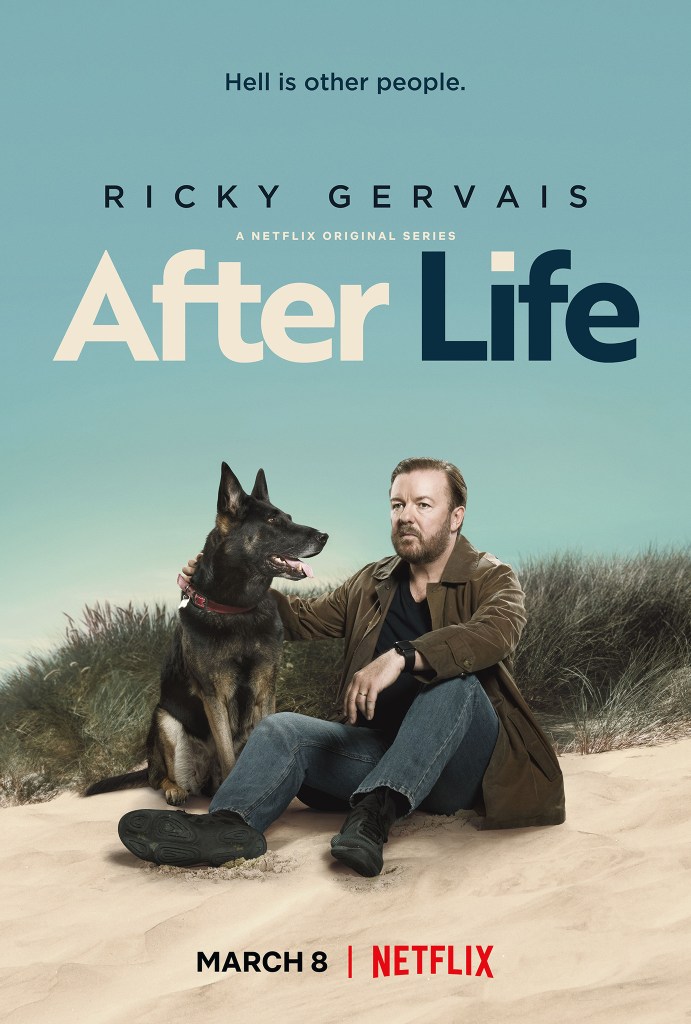


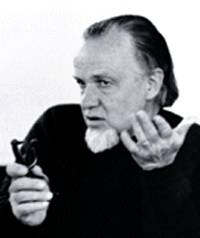
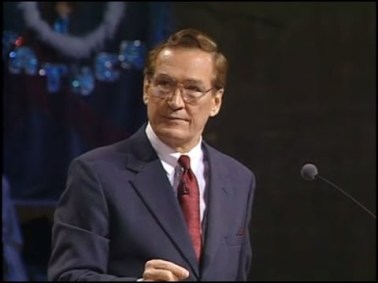



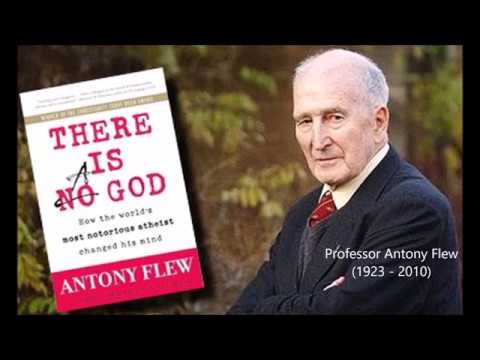


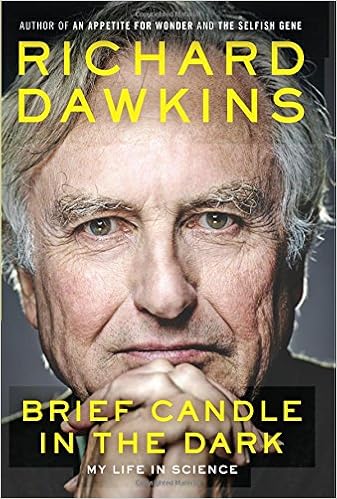
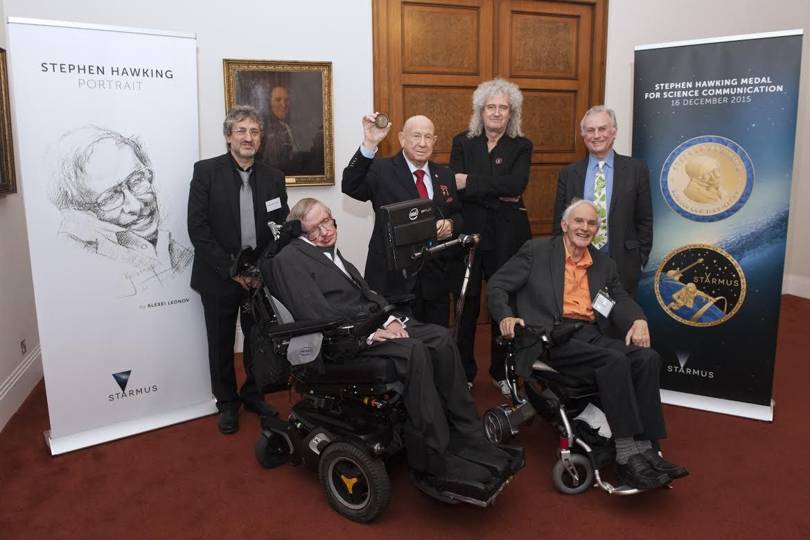

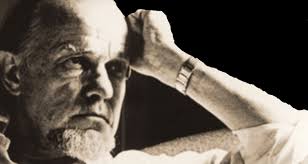


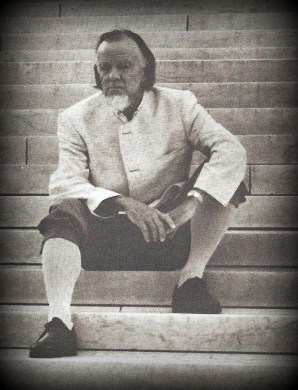





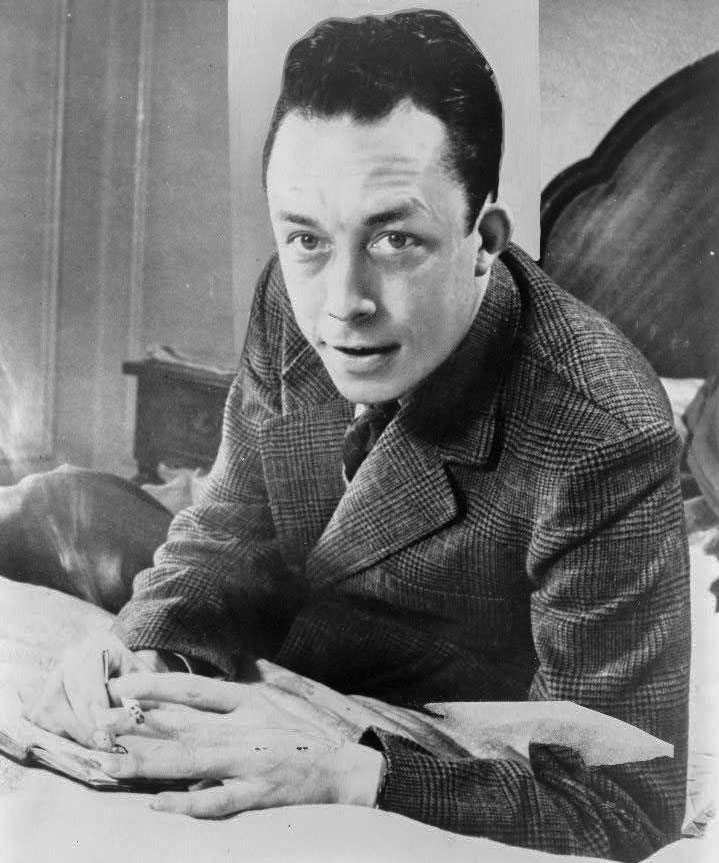



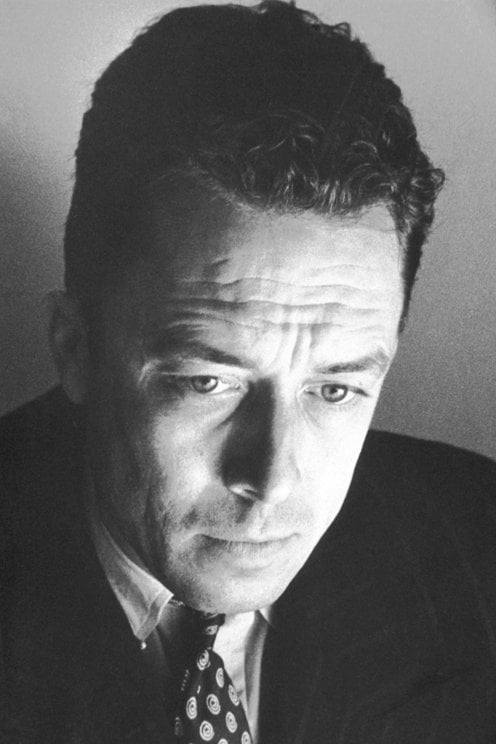


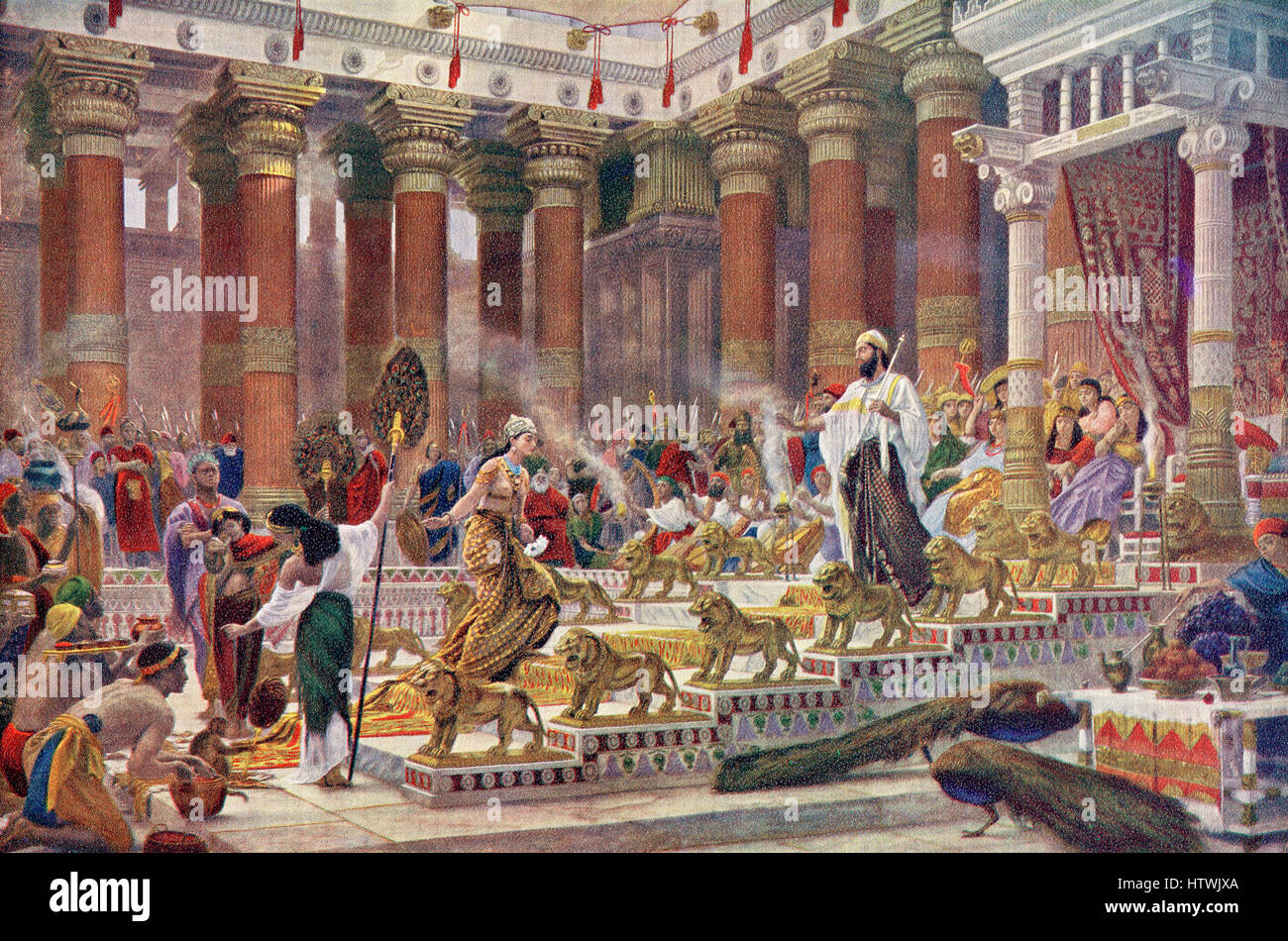
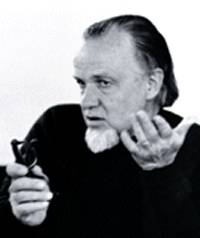



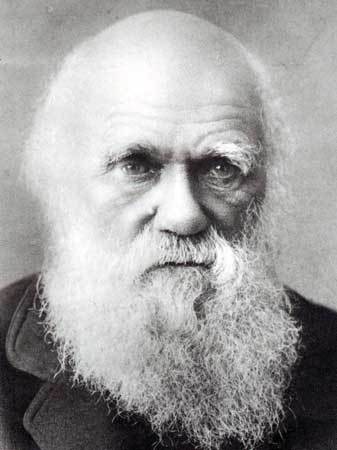













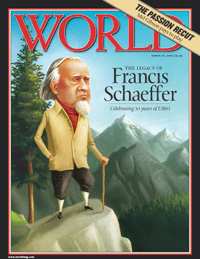
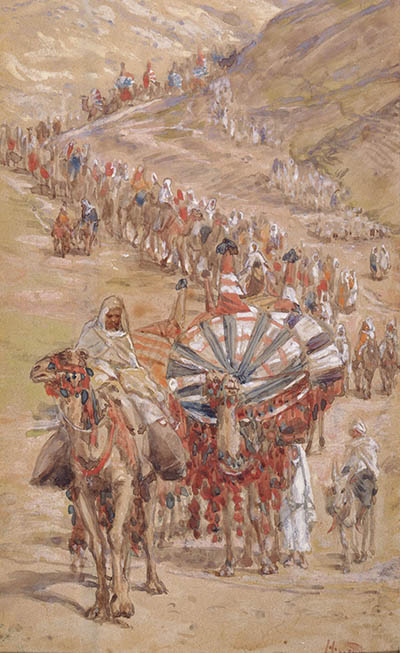





.jpg)


-Degas.jpg)


 The Daily Hatch


.jpg)
