icon The Daily Hatch

www.TheDailyHatch.org with Everette Hatcher

Monthly Archives: June 2016

« Older posts
Newer posts »

RESPONDING TO HARRY KROTO’S BRILLIANT RENOWNED ACADEMICS!! Pausing to take a look at the life of HARRY KROTO Part B (Kroto was a member of CSICOP)

June 14, 2016 – 9:09 am

Today we look at the second letter which is among the correspondence and Kroto’s involvement in CSICOP. Wikipedia notes:

The Committee for Skeptical Inquiry (CSI), formerly known as the Committee for the Scientific Investigation of Claims of the Paranormal (CSICOP), is a program within the Center for Inquiry (CFI), an Americannon-profit organization whose stated purpose is to “encourage the critical investigation of paranormal and fringe-science claims from a responsible, scientific point of view and disseminate factual information about the results of such inquiries to the scientific community and the public.”[1] CSI was founded in 1976 by Paul Kurtz to counter what he regarded as an uncritical acceptance of, and support for, paranormal claims by both the media and society in general. Its philosophical position is one of scientific skepticism. CSI’s fellows have included notable scientists, Nobel laureates, philosophers, psychologists, educators and authors.[2] It is headquartered in Amherst, New York.

__

Sir Harry Kroto with his high school friend Sir Ian McKellan at the FSU National High Field Magnetic Lab on Tuesday, October 27, 2009. (Photo: Mike Ewen/Democrat)

It is with sadness that I write this post having learned of the death of Sir Harold Kroto on April 30, 2016 at the age of 76. He was a scientist of remarkable abilities and a man of great humor too. In this series  I posted the Memorial by Richard Dawkins for Dr. Kroto and I also looked at Kroto’s membership in CSICOP and his admiration for Bertrand Russell and his 2 emails he sent to me on 9-18-14.  Peter Coles, Head of the School of Mathematical and Physical Sciences at the University of Sussex gave an excellent tribute Dr. Kroto which I posted too.

I did not know Harry Kroto personally but I did have the opportunity to correspond with him in 2014. I sent him a letter in the spring and two in the summer and he responded with an email on 9-18-14 and I thanked him for responding in an email and then he emailed me again and even sent me a letter on 11-21-14. In that 11-21-14 letter he referred me to the You Tube film series Renowned Academics Speaking About God which has over 300,000 views on You Tube and that prompted me on 11-29-14 to start my blog series RESPONDING TO HARRY KROTO’S BRILLIANT RENOWNED ACADEMICS!! Below are the links to the posts I have already done on previous Tuesdays in this series:

Arif Ahmed, Haroon Ahmed,Sir David Attenborough, Mark Balaguer, Horace Barlow, Michael Bate, Sir Patrick Bateson,Patricia Churchland, Aaron Ciechanover, Noam Chomsky,Alan Dershowitz, Hubert Dreyfus, Bart Ehrman, Stephan Feuchtwang, David Friend,  Riccardo Giacconi, Ivar Giaever , Roy Glauber, Rebecca Goldstein, David J. Gross,  Brian Greene, Susan Greenfield, Stephen F Gudeman,  Alan Guth, Jonathan Haidt, Theodor W. Hänsch, Brian Harrison,  Hermann Hauser, Roald Hoffmann,  Bruce Hood, Herbert Huppert,  Gareth Stedman Jones, Steve Jones, Shelly Kagan, Michio Kaku,  Stuart Kauffman,  Lawrence Krauss, Harry Kroto, George Lakoff, Elizabeth Loftus,  Alan Macfarlane, Peter Millican, Marvin Minsky, Leonard Mlodinow,  Yujin Nagasawa, Alva Noe, Douglas Osheroff,  Jonathan Parry,  Saul Perlmutter, Herman Philipse,  Carolyn Porco, Robert M. Price, Lisa Randall, Lord Martin Rees, Alison Richard,  Oliver Sacks, John Searle, Marcus du Sautoy, Simon Schaffer, J. L. Schellenberg,   Lee Silver,  Peter Singer,  Walter Sinnott-Armstrong, Ronald de Sousa, Victor Stenger, John Sulston, Barry Supple,   Leonard Susskind, Raymond Tallis, Neil deGrasse Tyson,  C.J. van Rijsbergen, Alexander Vilenkin, Sir John Walker, Frank Wilczek, Steven Weinberg, and  Lewis Wolpert,

39. Sir Harold Kroto – Beyond Belief 2008


At the 10:50 mark in the above video Harry Kroto mentioned David Barton and in the letter below I mentioned to him my interaction with David Barton and his organization.

___________

Harry Kroto, Dept of Chemistry and Biochemistry, c/o Florida State

June 17, 2014

Dear Dr. Kroto,

I noticed that you are on the Committee for the Scientific Investigation of Claims of the Paranormal (CSICOP) and that prompted me to send this material to you today.

A couple of months ago I mailed you a letter that contained correspondence I had with Antony Flew and Carl Sagan and I also included some of the material I had sent them from Adrian Rogers and Francis Schaeffer. Did you have a chance to listen to the IS THE BIBLE TRUE? CD yet? I also wanted to let know some more about about Francis Schaeffer. Ronald Reagan said of Francis Schaeffer, “He will long be remembered as one of the great Christian thinkers of our century, with a childlike faith and a profound compassion toward others. It can rarely be said of an individual that his life touched many others and affected them for the better; it will be said of Francis Schaeffer that his life touched millions of souls and brought them to the truth of their creator.”

Thirty years ago the christian philosopher and author Francis Schaeffer (1912-1984) died and on the 10th anniversary of his passing in 1994 I wrote a number of the top evolutionists, humanists and atheistic scholars in the world and sent them a story about Francis Schaeffer in 1930 when he left agnosticism and embraced Christianity. I also sent them  a cassette tape with the title “Four intellectual bridges evolutionists can’t cross” by Adrian Rogers (1931-2005) and some of the top  scholars who corresponded with me since that time include Ernest Mayr (1904-2005), George Wald (1906-1997), Carl Sagan (1934-1996),  Robert Shapiro (1935-2011), Nicolaas Bloembergen (1920-),  Brian Charlesworth (1945-),  Francisco J. Ayala (1934-) Elliott Sober (1948-), Kevin Padian (1951-), Matt Cartmill (1943-) , Milton Fingerman (1928-), John J. Shea (1969-), , Michael A. Crawford (1938-), (Paul Kurtz (1925-2012), Sol Gordon (1923-2008), Albert Ellis (1913-2007), Barbara Marie Tabler (1915-1996), Renate Vambery (1916-2005), Archie J. Bahm (1907-1996), Aron S “Gil” Martin ( 1910-1997), Matthew I. Spetter (1921-2012), H. J. Eysenck (1916-1997), Robert L. Erdmann (1929-2006), Mary Morain (1911-1999), Lloyd Morain (1917-2010),  Warren Allen Smith (1921-), Bette Chambers (1930-),  Gordon Stein (1941-1996) , Milton Friedman (1912-2006), John Hospers (1918-2011), and Michael Martin (1932-).

Corliss Lamont and Herbert A. Tonne pictured above. 

The truth is that I am an evangelical Christian and I have enjoyed developing relationships with skeptics and humanists over the years. Back in 1996 I took my two sons who were 8  and 10 yrs old back then to New York, Washington, Philadelphia, Delaware, and New Jersey and we had dinner one night with Herbert A. Tonne, who was one of the signers of the Humanist Manifesto II. The Late Professor John George who has written books for Prometheus Press was my good friend during the last 10 years of his life. (I still miss him today.) We often ate together and were constantly talking on the phone and writing letters to one another.

It is a funny story how I met Dr. George. As an evangelical Christian and a member of the Christian Coalition, I felt obliged to expose a misquote of John Adams’ I found in an article entitled “America’s Unchristian Beginnings” by the self-avowed atheist Dr. Steven Morris. However, what happened next changed my focus to the use of misquotes, unconfirmed quotes, and misleading attributions by the religious right.
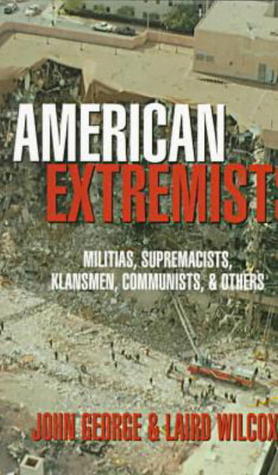
In the process of attempting to correct Morris, I was guilty of using several misquotes myself. Professor John George of the University of Central Oklahoma political science department and coauthor (with Paul Boller Jr.) of the book THEY NEVER SAID IT! set me straight. George pointed out that George Washington never said, “It is impossible to rightly govern the world without God and the Bible.“ I had cited page 18 of the 1927 edition of HALLEY’S BIBLE HANDBOOK. This quote was probably generated by a similar statement that appears in A LIFE OF WASHINGTON by James Paulding. Sadly, no one has been able to verify any of the quotes in Paulding’s book since no footnotes were offered.
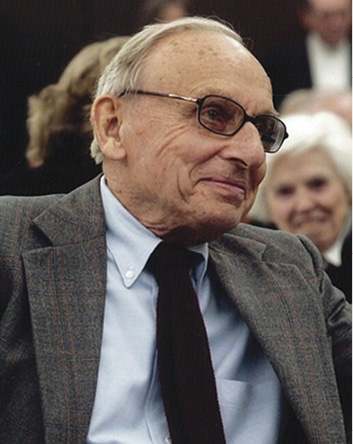
 

Paul F. Boller Jr.: 1916–2014

After reading THEY NEVER SAID IT! I had a better understanding of how widespread the problem of misquotes is. Furthermore, I discovered that many of these had been used by the leaders of the religious right. I decided to confront some individuals concerning their misquotes. WallBuilders, the publisher of David Barton’s THE MYTH OF SEPARATION, responded by providing me with their “unconfirmed  quote” list which contained a dozen quotes widely used by the religious right.

Sadly some of the top leaders of my own religious right have failed to take my encouragement to stop using these quotes and they have either claimed that their critics were biased skeptics who find the truth offensive or they defended their own method of research and claimed the secondary sources were adequate.

I have enclosed that same CD by Adrian Rogers that I sent 20 years ago although the second half does include a story about  Charles Darwin‘s journey from  the position of theistic evolution to agnosticism. Here are the four bridges that Adrian Rogers says evolutionists can’t cross in the CD  “Four Bridges that the Evolutionist Cannot Cross.” 1. The Origin of Life and the law of biogenesis. 2. The Fixity of the Species. 3.The Second Law of Thermodynamics. 4. The Non-Physical Properties Found in Creation.  

In the first 3 minutes of the CD is the hit song “Dust in the Wind.” In the letter 20 years ago I gave some of the key points Francis Schaeffer makes about the experiment that Solomon undertakes in the book of Ecclesiastes to find satisfaction by  looking into  learning (1:16-18), laughter, ladies, luxuries,  and liquor (2:1-3, 8, 10, 11), and labor (2:4-6, 18-20).

I later learned this book of Ecclesiastes was Richard Dawkins’ favorite book in the Bible. Schaeffer noted that Solomon took a look at the meaning of life on the basis of human life standing alone between birth and death “under the sun.” This phrase UNDER THE SUN appears over and over in Ecclesiastes. The Christian Scholar Ravi Zacharias noted, “The key to understanding the Book of Ecclesiastes is the term UNDER THE SUN — What that literally means is you lock God out of a closed system and you are left with only this world of Time plus Chance plus matter.” No wonder Ecclesiastes is Richard Dawkins’ favorite book of the Bible! 


Here the first 7 verses of Ecclesiastes followed by Schaeffer’s commentary on it:

The words of the Preacher, the son of David, king in Jerusalem. Vanity of vanities, says the Preacher, vanity of vanities! All is vanity. What does man gain by all the toil at which he toils under the sun? A generation goes, and a generation comes, but the earth remains forever. The sun rises, and the sun goes down, and hastens to the place where it rises. The wind blows to the south and goes around to the north; around and around goes the wind, and on its circuits the wind returns. All streams run to the sea, but the sea is not full; to the place where the streams flow, there they flow again.  

Solomon is showing a high degree of comprehension of evaporation and the results of it. (E.O.Wilson has marveled at Solomon’s scientific knowledge of ants that was only discovered in the 1800’s.) Seeing also in reality nothing changes. There is change but always in a set framework and that is cycle. You can relate this to the concepts of modern man. Ecclesiastes is the only pessimistic book in the Bible and that is because of the place where Solomon limits himself. He limits himself to the question of human life, life under the sun between birth and death and the answers this would give.

(Harvard’s E.O. Wilson below)

Solomon doesn’t place man outside of the cycle. Man doesn’t escape the cycle. Man is in the cycle. Birth and death and youth and old age.
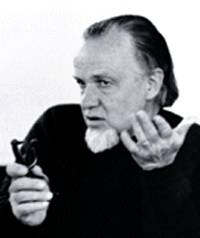
(Francis Schaeffer pictured above)

There is no doubt in my mind that Solomon had the same experience in his life that I had as a younger man (at the age of 18 in 1930). I remember standing by the sea and the moon arose and it was copper and beauty. Then the moon did not look like a flat dish but a globe or a sphere since it was close to the horizon. One could feel the global shape of the earth too. Then it occurred to me that I could contemplate the interplay of the spheres and I was exalted because I thought I can look upon them with all their power, might, and size, but they could contempt nothing. Then came upon me a horror of great darkness because it suddenly occurred to me that although I could contemplate them and they could contemplate nothing yet they would continue to turn in ongoing cycles when I saw no more forever and I was crushed.

You are an atheist and you have a naturalistic materialistic worldview, and this short book of Ecclesiastes should interest you because the wisest man who ever lived in the position of King of Israel came to THREE CONCLUSIONS that will affect you.

FIRST, chance and time have determined the past, and they will determine the future.  (Ecclesiastes 9:11-13)

These two verses below  take the 3 elements mentioned in a naturalistic materialistic worldview (time, chance and matter) and so that is all the unbeliever can find “under the sun” without God in the picture. You will notice that these are the three elements that evolutionists point to also.

Ecclesiastes 9:11-12 is following: I have seen something else under the sun: The race is not to the swift or the battle to the strong, nor does food come to the wise or wealth to the brilliant or favor to the learned; but time and chance happen to them all. Moreover, no one knows when their hour will come: As fish are caught in a cruel net, or birds are taken in a snare, so people are trapped by evil times that fall unexpectedly upon them.

SECOND, Death is the great equalizer (Eccl 3:20, “All go to the same place; all come from dust, and to dust all return.”)

THIRD, Power reigns in this life, and the scales are not balanced(Eccl 4:1, 8:15)

Ecclesiastes 4:1-2: “Next I turned my attention to all the outrageous violence that takes place on this planet—the tears of the victims, no one to comfort them; the iron grip of oppressors, no one to rescue the victims from them.” Ecclesiastes 8:14; “ Here’s something that happens all the time and makes no sense at all: Good people get what’s coming to the wicked, and bad people get what’s coming to the good. I tell you, this makes no sense. It’s smoke.”

Solomon had all the resources in the world and he found himself searching for meaning in life and trying to come up with answers concerning the afterlife. However, it seems every door he tries to open is locked. Today men try to find satisfaction in learning, liquor, ladies, luxuries, laughter, and labor and that is exactly what Solomon tried to do too.  None of those were able to “fill the God-sized vacuum in his heart” (quote from famous mathematician and philosopher Blaise Pascal). You have to wait to the last chapter in Ecclesiastes to find what Solomon’s final conclusion is.

In 1978 I heard the song “Dust in the Wind” by Kansas when it rose to #6 on the charts. That song told me that Kerry Livgren the writer of that song and a member of Kansas had come to the same conclusion that Solomon had. I remember mentioning to my friends at church that we may soon see some members of Kansas become Christians because their search for the meaning of life had obviously come up empty even though they had risen from being an unknown band to the top of the music business and had all the wealth and fame that came with that. Furthermore, Solomon realized death comes to everyone and there must be something more.

Livgren wrote:

“All we do, crumbles to the ground though we refuse to see, Dust in the Wind, All we are is dust in the wind, Don’t hang on, Nothing lasts forever but the Earth and Sky, It slips away, And all your money won’t another minute buy.”

Take a minute and compare Kerry Livgren‘s words to that of the late British humanist H.J. Blackham:

“On humanist assumptions, life leads to nothing, and every pretense that it does not is a deceit. If there is a bridge over a gorge which spans only half the distance and ends in mid-air, and if the bridge is crowded with human beings pressing on, one after the other they fall into the abyss. The bridge leads nowhere, and those who are pressing forward to cross it are going nowhere….It does not matter where they think they are going, what preparations for the journey they may have made, how much they may be enjoying it all. The objection merely points out objectively that such a situation is a model of futility“( H. J. Blackham, et al., Objections to Humanism (Riverside, Connecticut: Greenwood Press, 1967).

Harold John Blackham (31 March 1903 – 23 January 2009)

_____________________________________

Both Kerry Livgren and the bass player DAVE HOPE of Kansas became Christians eventually. Kerry Livgren first tried Eastern Religions and DAVE HOPE had to come out of a heavy drug addiction. I was shocked and elated to see their personal testimony on The 700 Club in 1981 and that same  interview can be seen on youtube today. Livgren lives in Topeka, Kansas today where he teaches “Diggers,” a Sunday school class at Topeka Bible Church. DAVE HOPE is the head of Worship, Evangelism and Outreach at Immanuel Anglican Church in Destin, Florida.

Solomon’s experiment was a search for meaning to life “under the sun.” Then in last few words in the Book of Ecclesiastes he looks above the sun and brings God back into the picture: “The conclusion, when all has been heard, is: Fear God and keep His commandments, because this applies to every person. For God will bring every act to judgment, everything which is hidden, whether it is good or evil.”

The answer to find meaning in life is found in putting your faith and trust in Jesus Christ. The Bible is true from cover to cover and can be trusted.

Now on to the other topic I wanted to discuss with you today. I wanted to write you today for one reason. IS THERE A GOOD CHANCE THAT DEEP DOWN IN YOUR CONSCIENCE  you have repressed the belief in your heart that God does exist and IS THERE A POSSIBILITY THIS DEEP BELIEF OF YOURS CAN BE SHOWN THROUGH A LIE-DETECTOR? (Back in the late 1990’s I had the opportunity to correspond with over a dozen members of CSICOP on just this very issue.)

I have a good friend who is a street preacher who preaches on the Santa Monica Promenade in California and during the Q/A sessions he does have lots of atheists that enjoy their time at the mic. When this happens he  always quotes Romans 1:18-19 (Amplified Bible) ” For God’s wrath and indignation are revealed from heaven against all ungodliness and unrighteousness of men, who in their wickedness REPRESS and HINDER the truth and make it inoperative. For that which is KNOWN about God is EVIDENT to them and MADE PLAIN IN THEIR INNER CONSCIOUSNESS, because God  has SHOWN IT TO THEM,”(emphasis mine). Then he  tells the atheist that the atheist already knows that God exists but he has been suppressing that knowledge in unrighteousness. This usually infuriates the atheist.

My friend draws some large crowds at times and was thinking about setting up a lie detector test and see if atheists actually secretly believe in God. He discussed this project with me since he knew that I had done a lot of research on the idea about 20 years ago.

Nelson Price in THE EMMANUEL FACTOR (1987) tells the story about Brown Trucking Company in Georgia who used to give polygraph tests to their job applicants. However, in part of the test the operator asked, “Do you believe in God?” In every instance when a professing atheist answered “No,” the test showed the person to be lying. My pastor Adrian Rogers used to tell this same story to illustrate Romans 1:19 and it was his conclusion that “there is no such thing anywhere on earth as a true atheist. If a man says he doesn’t believe in God, then he is lying. God has put his moral consciousness into every man’s heart, and a man has to try to kick his conscience to death to say he doesn’t believe in God.”

(Adrian Rogers at White House)

It is true that polygraph tests for use in hiring were banned by Congress in 1988.  Mr and Mrs Claude Brown on Aug 25, 1994  wrote me a letter confirming that over 15,000 applicants previous to 1988 had taken the polygraph test and EVERY-TIME SOMEONE SAID THEY DID NOT BELIEVE IN GOD, THE MACHINE SAID THEY WERE LYING.

It had been difficult to catch up to the Browns. I had heard about them from Dr. Rogers’ sermon but I did not have enough information to locate them. Dr. Rogers referred me to Dr. Nelson Price and Dr. Price’s office told me that Claude Brown lived in Atlanta. After writing letters to all 9 of the entries for Claude Brown in the Atlanta telephone book, I finally got in touch with the Browns.

Adrian Rogers also pointed out that the Bible does not recognize the theoretical atheist.  Psalms 14:1: The fool has said in his heart, “There is no God.”  Dr Rogers notes, “The fool is treating God like he would treat food he did not desire in a cafeteria line. ‘No broccoli for me!’ ” In other words, the fool just doesn’t want God in his life and is a practical atheist, but not a theoretical atheist. Charles Ryrie in the The Ryrie Study Bible came to the same conclusion on this verse.

Here are the conclusions of the experts I wrote in the secular world concerning the lie detector test and it’s ability to get at the truth:

Professor Frank Horvath of the School of Criminal Justice at Michigan State University has testified before Congress concerning the validity of the polygraph machine. He has stated on numerous occasions that “the evidence from those who have actually been affected by polygraph testing in the workplace is quite contrary to what has been expressed by critics. I give this evidence greater weight than I give to the most of the comments of critics” (letter to me dated October 6, 1994).

There was no better organization suited to investigate this claim concerning the lie detector test than the Committee for the Scientific Investigation of Claims of the Paranormal (CSICOP). This organization changed their name to the Committe for Skeptical Inquiry in 2006. This organization includes anyone who wants to help debunk the whole ever-expanding gamut of misleading, outlandish, and fraudulent claims made in the name of science. I AM WRITING YOU TODAY BECAUSE YOU ARE ASSOCIATED WITH CSICOP.

I read The Skeptical Review(publication of CSICOP) for several years during the 90’s and I would write letters to these scientists about taking this project on and putting it to the test.  Below are some of  their responses (15 to 20 years old now):

1st Observation: Religious culture of USA could have influenced polygraph test results.
ANTONY FLEW  (formerly of Reading University in England, now deceased, in a letter to me dated 8-11-96) noted, “For all the evidence so far available seems to be of people from a culture in which people are either directly brought up to believe in the existence of God or at least are strongly even if only unconsciously influenced by those who do. Even if everyone from such a culture revealed unconscious belief, it would not really begin to show that — as Descartes maintained— the idea of God is so to speak the Creator’s trademark, stamped on human souls by their Creator at their creation.”

2nd Observation: Polygraph Machines do not work. JOHN R. COLE, anthropologist, editor, National Center for Science Education, Dr. WOLF RODER, professor of Geography, University of Cincinnati, Dr. SUSAN BLACKMORE,Dept of Psychology, University of the West of England, Dr. CHRISTOPHER C. FRENCH, Psychology Dept, Goldsmith’s College, University of London, Dr.WALTER F. ROWE, The George Washington University, Dept of Forensic Sciences, Graduate School of Arts and Sciences.

3rd Observation: The sample size probably was not large enough to apply statistical inference. (These gentlemen made the following assertion before I received the letter back from Claude Brown that revealed that the sample size was over 15,000.) JOHN GEOHEGAN, Chairman of New Mexicans for Science and Reason, Dr. WOLF RODER, and Dr WALTER F. ROWE (in a letter dated July 12, 1994) stated, “The polygraph operator for Brown Trucking Company has probably examined only a few hundred or a few thousand job applicants. I would surmise that only a very small number of these were actually atheists. It seems a statistically insignificant (and distinctly nonrandom) sampling of the 5 billion human beings currently inhabiting the earth. Dr. Nelson Price also seems to be impugning the integrity of anyone who claims to be an atheist in a rather underhanded fashion.”
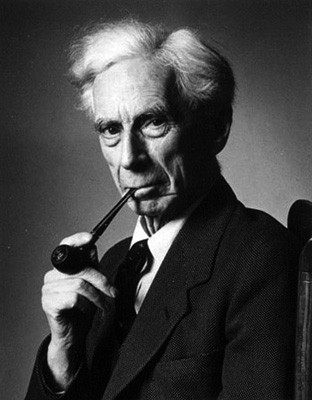
4th Observation: The question (Do you believe in God?)  was out of place and it surprised the applicants. THOMAS GILOVICH, psychologist, Cornell Univ., Dr. ZEN FAULKES, professor of Biology, University of Victoria (Canada), ROBERT CRAIG, Head of Indiana Skeptics Organization, Dr. WALTER ROWE, 
 
5th Observation: Proof that everyone believes in God’s existence does not prove that God does in fact exist. PAUL QUINCEY, Nathional Physical Laboratory,(England), Dr. CLAUDIO BENSKI, Schneider Electric, CFEPP, (France),
6th Observation: Both the courts and Congress recognize that lie-detectors don’t work and that is why they were banned in 1988.  (Governments and the military still use them.)
Dr WALTER ROWE, KATHLEEN M. DILLION, professor of Psychology, Western New England College.
7th Observation:This information concerning Claude Brown’s claim has been passed on to us via a tv preacher and eveybody knows that they are untrustworthy– look at their history. WOLF RODER.
______________
Solomon wisely noted in Ecclesiastes 3:11 “God has planted eternity in the heart of men…” (Living Bible). No wonder Bertrand Russell wrote in his autobiography, “It is odd, isn’t it? I feel passionately for this world and many things and people in it, and yet…what is it all? There must be something more important, one feels, though I don’t believe there is. I am haunted. Some ghosts, for some extra mundane regions, seem always trying to tell me something that I am to repeat to the world, but I cannot understand that message.”
Gene Emery, science writer for Providence Journal-Bulletin is a past winner of the CSICOP “Responsibility in Journalism Award” and he had the best suggestion of all when he suggested, “Actually, if you want to make a good case about whether Romans 1:19 is true, arrange to have a polygraph operator (preferably an atheist or agnostic) brought to the next CSICOP meeting. (I’m not a member of CSICOP, by the way, so I can’t give you an official invitation or anything.) If none of the folks at that meeting can convince the machine that they truly believe in God, maybe there is, in fact, an innate willingness to believe in God.”

DO YOU HAVE ANY REACTIONS TO ADD TO THESE 7 OBSERVATIONS THAT I GOT 15 YEARS AGO? Thank you again for your time and I know how busy you are.

Everette Hatcher, everettehatcher@gmail.com, http://www.thedailyhatch.org, cell ph 501-920-5733, Box 23416, LittleRock, AR 72221

_____

dadnmeinboat jpg

From poverty to the Nobel Prize – tributes to Bolton scientist Sir Harry Kroto who has died

Sir Harry Kroto is first on the second row with Sir Ian McKellen is in the middle on the throne for the school production of Shakespeare’s Henry V

___

TRIBUTES have been paid to Bolton’s Nobel prize-winning scientist who has died at the age of 76.

Sir Harry Kroto, a Bolton School old boy, was awarded the 1996 chemistry Nobel prize, along with Robert Curl and Richard Smalley, for the discovery of Buckminsterfullerene molecule — known as bucky-balls — and was knighted the same year.

The discovery led to o the development of new materials and revolutionised civil engineering.

Mr Kroto was born in Cambridgeshire to parents who left Germany as refugees during the Second World War.

The family moved to Bolton, living in Arkwright Street.

Sir Harry won a scholarship to Bolton School. Actor, Sir Ian McKellen, was one one of his classmates and the two starred in school productions together.

Sir Harry regularly returned to his former school to inspire the next generation.

On the Nobel Prize website, Sir Harry wrote: “My parents had lost almost everything and we lived in a very poor part of Bolton.

“However, they did everything they could to get me the best education they could. As far as they were concerned this meant getting me into Bolton School, a school with exceptional facilities and teachers.”

Philip Britton, head of Bolton School boys’ division said: “Harry was a wonderful and warm person, a great intellect and had a strong focus on inspiring young people.

“My memories of him will be of the passion with which he spoke of how his own education at Bolton School has shaped his life and how committed he was that this chance be available for others. He was a genuine case of real social mobility.

“It is also hard to think we will not see him in the sports hall again, sitting among hundreds of primary school children, passing on his passion for Chemistry. I think it said a lot about him that he used his scientific fame to promote education, particularly using the internet to help educate those countries where formal education is hard to get.

“That passion for the subject, intellect, sense of social responsibility and enthusiasm sum up a great character and a great life.”

He concluded: “It may be some time before Bolton boasts another Nobel Prize winner – he has been an exceptional local figure.”

Dr Michael Yates, Head of Chemistry at the boys’ division, added: “Sir Harry was an inspirational communicator.

“He was selfless in his passion to enthuse the younger generation.

“He set a wonderful example to all people about having a broad range of interests – besides Science he was interested in graphic design and at School he acted, he played tennis and won Art prizes.

“I will always be grateful for the time he gave to us in Bolton.

“In 2008 we set up a science partnership funded by the Ogden Trust and Sir Harry launched it from Florida via the internet.

“He visited Bolton School in 2009 and 2010 when he gave presentations to over 500 local primary school pupils who had fun making his “bucky balls” and he also lectured secondary schools.

“He came again in 2014 and did the same.

“His energy was boundless.”

On Twitter, scientist and TV presenter, Brian Cox, said: “RIP Harry Kroto – brilliant scientist and a strong, passionate advocate for science as a vital part of our culture.”

Sir Harry, who moved to America to work at Florida State University, later received an honorary doctorate from the University of Bolton.

He is survived by his wife Margaret and two sons, Stephen and David.

Henry5 JPG

Here you see me just behind Ian McKellen coaching him in how to act in Henry V

Related posts:

RESPONDING TO HARRY KROTO’S BRILLIANT RENOWNED ACADEMICS!! John Dunn, political theorist, Cambridge, “I am interested in how religious belief works and what it has meant but it is not [my] belief”

June 8, 2016 – 1:25 am

On November 21, 2014 I received a letter from Nobel Laureate Harry Kroto and it said: …Please click on this URL http://vimeo.com/26991975 and you will hear what far smarter people than I have to say on this matter. I agree with them. Harry Kroto I have attempted to respond to all of Dr. Kroto’s friends arguments […]

By Everette Hatcher III | Posted in Atheists Confronted | Tagged .Alexander Vilenkin, Aaron Ciechanover, Alan Dershowitz, Alan Guth, Alan Macfarlane, Alva Noe, Arif Ahmed, Barry Supple,Bart Ehrman, Brian Greene, Bruce Hood, David Friend, David J. Gross, Douglas Osheroff, Elizabeth Loftus, Frank Wilczek, Gareth Stedman Jones, George Lakoff, Harry Kroto, Herbert Huppert, Herman Philipse, Hermann Hauser, Hubert Dreyfus, Ivar Giaever, J. L. Schellenberg, John Searle, Jonathan Haidt, Lawrence Krauss, Lee Silver, Leonard Mlodinow, Leonard Susskind, Lewis Wolpert, Lisa Randall, Lord Martin Rees, Marcus du Sautoy, Mark Balaguer, Marvin Minsky, Michio Kaku, Neil deGrasse Tyson, Noam Chomsky, Oliver Sacks, Patricia Churchland, Peter Millican, Peter Singer,Raymond Tallis, Rebecca Goldstein, Riccardo Giacconi, Roald Hoffmann, Robert M. Price, Ronald de Sousa, Roy Glauber, Saul Perlmutter, Shelly Kagan, Simon Schaffer, Sir David Attenborough, Sir John Walker, Stephan Feuchtwang, Stephen F Gudeman, Steven Weinberg, Stuart Kauffman,Susan Greenfield, Victor Stenger, Walter Sinnott-Armstrong, Yujin Nagasawa | Edit | Comments (0)

RESPONDING TO HARRY KROTO’S BRILLIANT RENOWNED ACADEMICS!! Pausing to take a look at the life of HARRY KROTO Part A

June 6, 2016 – 3:29 pm

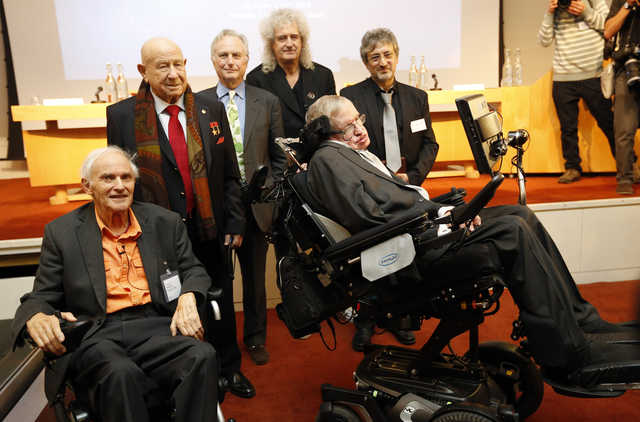
Communication at the The Royal Society Featuring: Professor Sir Harry Kroto, Alexei Leonov, Dr Richard Dawkins, Dr Brian May, Professor Stephen Hawking   It is with sadness that I write this post having learned of the death of Sir Harold Kroto on April 30, 2016 at the age of 76. He was a scientist of […]

RESPONDING TO HARRY KROTO’S BRILLIANT RENOWNED ACADEMICS!! Haroon Ahmed, Physics Dept, Cambridge “I decided then as a thinking child that religion was not good for one”

June 6, 2016 – 10:20 am

On November 21, 2014 I received a letter from Nobel Laureate Harry Kroto and it said: …Please click on this URL http://vimeo.com/26991975 and you will hear what far smarter people than I have to say on this matter. I agree with them. Harry Kroto Nick Gathergood, David-Birkett, Harry-Kroto I have attempted to respond to all of […]

(The Nobel chemistry laureates Harold Kroto, Robert Curl and Richard Smalley)

RESPONDING TO HARRY KROTO’S RENOWNED ACADEMICS!! C.J. van Rijsbergen, Dept of Computing Science, University of Glasgow, “Martin Rees said, ‘I am a non-believing Christian.’ I thought yeah that is exactly quite close to what I am. In other words, I understand and I accept the culture that we have has come out of Christianity, but just because I accept it and go along with it and admire it actually, doesn’t mean to say that I have to also believe in God”  

June 5, 2016 – 12:01 am

On November 21, 2014 I received a letter from Nobel Laureate Harry Kroto and it said: …Please click on this URL http://vimeo.com/26991975 and you will hear what far smarter people than I have to say on this matter. I agree with them. Harry Kroto I have attempted to respond to all of Dr. Kroto’s friends arguments […]

RESPONDING TO HARRY KROTO’S BRILLIANT RENOWNED ACADEMICS!! Part 80 Alison Richard, Yale University, Professor of Anthropology, “I would classify myself as an agnostic. You can not  know enough to know that there is nothing you don’t understand…To sign up to a fully elaborated religious system of beliefs is something I can’t do.” 

May 31, 2016 – 1:09 am

On November 21, 2014 I received a letter from Nobel Laureate Harry Kroto and it said: …Please click on this URL http://vimeo.com/26991975 and you will hear what far smarter people than I have to say on this matter. I agree with them. Harry Kroto I have attempted to respond to all of Dr. Kroto’s friends arguments […]

(Kroto and his wife, Margaret)

RESPONDING TO HARRY KROTO’S BRILLIANT RENOWNED ACADEMICS!! Part 79 Sir Patrick Bateson, biologist and science writer, emeritus professor of ethology at Cambridge “Darwin’s response when he was asked whether he was an atheist was …I think agnostic, I’m actually an atheist when all is said and done, I really don’t believe in a God!”

May 24, 2016 – 10:25 am

On November 21, 2014 I received a letter from Nobel Laureate Harry Kroto and it said: …Please click on this URL http://vimeo.com/26991975 and you will hear what far smarter people than I have to say on this matter. I agree with them. Harry Kroto Nick Gathergood, David-Birkett, Harry-Kroto I have attempted to respond to all of […]

RESPONDING TO HARRY KROTO’S BRILLIANT RENOWNED ACADEMICS!! Part 78 John Sulston, University of Manchester, “All the religions are in conflict with each other”

May 17, 2016 – 5:33 am

On November 21, 2014 I received a letter from Nobel Laureate Harry Kroto and it said: …Please click on this URL http://vimeo.com/26991975 and you will hear what far smarter people than I have to say on this matter. I agree with them. Harry Kroto I have attempted to respond to all of Dr. Kroto’s friends arguments […]

(Margaret and Harry Kroto with students at Lindau 2005)

RESPONDING TO HARRY KROTO’S BRILLIANT RENOWNED ACADEMICS!! Part 77 Gareth Stedman Jones, Centre for History and Economics, Magdalene College, “I quite like the rituals of the Church of England, but I don’t believe in God and all that; my position was reinforced by reading Hegel, at school I did read Bertrand Russell’s explanation of why he was not a Christian”

May 10, 2016 – 1:25 am

On November 21, 2014 I received a letter from Nobel Laureate Harry Kroto and it said: …Please click on this URL http://vimeo.com/26991975 and you will hear what far smarter people than I have to say on this matter. I agree with them. Harry Kroto Nick Gathergood, David-Birkett, Harry-Kroto I have attempted to respond to all of […]

RESPONDING TO HARRY KROTO’S BRILLIANT RENOWNED ACADEMICS!! Part 76 Lisa Jardine, Historian, University of London, “I received no religious training of any sort from my family… we are a secular family…”

May 2, 2016 – 2:43 pm

On November 21, 2014 I received a letter from Nobel Laureate Harry Kroto and it said: …Please click on this URL http://vimeo.com/26991975 and you will hear what far smarter people than I have to say on this matter. I agree with them. Harry Kroto Nick Gathergood, David-Birkett, Harry-Kroto I have attempted to respond to all of […]
RESPONDING TO HARRY KROTO’S BRILLIANT RENOWNED ACADEMICS!! Part 75 Roger Penrose, Oxford University, mathematical physicist, “I tend to call myself an atheist versus agnostic but that doesn’t mean that I don’t have doubts…[though I don’t think religions are correct]…particularly the Christian religion”

April 26, 2016 – 1:49 am

On November 21, 2014 I received a letter from Nobel Laureate Harry Kroto and it said: …Please click on this URL http://vimeo.com/26991975 and you will hear what far smarter people than I have to say on this matter. I agree with them. Harry Kroto I have attempted to respond to all of Dr. Kroto’s friends arguments […]

RESPONDING TO HARRY KROTO’S BRILLIANT RENOWNED ACADEMICS!! Steven Pinker, Professor of Psychology, Harvard, and proponent of DETERMINISM, “THE MIND IS THE PRODUCT OF THE BRAIN, THE BRAIN IS THE PRODUCT OF EVOLUTION, THERE IS NO NEED TO INVOKE AN IMMATERIAL SOUL in understanding how the mind works”

April 23, 2016 – 10:39 am

On November 21, 2014 I received a letter from Nobel Laureate Harry Kroto and it said: …Please click on this URL http://vimeo.com/26991975 and you will hear what far smarter people than I have to say on this matter. I agree with them. Harry Kroto I have attempted to respond to all of Dr. Kroto’s friends arguments […]

(With his son Stephen in Joshua Tree)

DSC00653

RESPONDING TO HARRY KROTO’S BRILLIANT RENOWNED ACADEMICS!! John Sulston, University of Manchester, “All the religions are in conflict with each other”

April 21, 2016 – 12:10 pm

__ On November 21, 2014 I received a letter from Nobel Laureate Harry Kroto and it said: …Please click on this URL http://vimeo.com/26991975 and you will hear what far smarter people than I have to say on this matter. I agree with them. Harry Kroto I have attempted to respond to all of Dr. Kroto’s friends […]

RESPONDING TO HARRY KROTO’S BRILLIANT RENOWNED ACADEMICS!! Part 74 VS Ramachandran, neuroscientist UC San Diego, “Things like creativity may go up to a certain point in explaining (the brain) or you have to start saying the divine sparkle or something that we scientists don’t believe in, eventually the answer is yes, we are going to explain many different aspects by brain function”

April 19, 2016 – 1:01 am

  On November 21, 2014 I received a letter from Nobel Laureate Harry Kroto and it said: …Please click on this URL http://vimeo.com/26991975 and you will hear what far smarter people than I have to say on this matter. I agree with them. Harry Kroto Sir Harry Kroto, FSU’s Francis Eppes Professor of Chemistry   I […]

(Marg Kroto with two sons Stephen and David)

Marg and Steve and David

RESPONDING TO HARRY KROTO’S BRILLIANT RENOWNED ACADEMICS!! Roger Penrose, Oxford University, mathematical physicist, “I tend to call myself an atheist versus agnostic but that doesn’t mean that I don’t have doubts…[though I don’t think religions are correct]…particularly the Christian religion”

April 16, 2016 – 12:47 pm

On November 21, 2014 I received a letter from Nobel Laureate Harry Kroto and it said: …Please click on this URL http://vimeo.com/26991975 and you will hear what far smarter people than I have to say on this matter. I agree with them. Harry Kroto I have attempted to respond to all of Dr. Kroto’s friends arguments […]

RESPONDING TO HARRY KROTO’S BRILLIANT RENOWNED ACADEMICS!! Part 73 Mahzarin Banaji, Harvard, “I was born into a Zoroastrian family, and I stopped believing roughly around the age of 8!”

April 11, 2016 – 10:15 am

On November 21, 2014 I received a letter from Nobel Laureate Harry Kroto and it said: …Please click on this URL http://vimeo.com/26991975 and you will hear what far smarter people than I have to say on this matter. I agree with them. Harry Kroto Wikipedia notes: Mahzarin Banaji From Wikipedia, the free encyclopedia [hide]This article has […]

(With Marg in 1964)

Image21 (2)

RESPONDING TO HARRY KROTO’S BRILLIANT RENOWNED ACADEMICS!! A.C.Grayling, Philosopher, “If you think that the reasons you have for believing in fairies are very poor reasons; that it is irrational to think that there are such things, then the belief in supernatural agencies in general is equally as irrational”

April 9, 2016 – 12:57 pm

On November 21, 2014 I received a letter from Nobel Laureate Harry Kroto and it said: …Please click on this URL http://vimeo.com/26991975 and you will hear what far smarter people than I have to say on this matter. I agree with them. Harry Kroto Wikipedia notes: Anthony Clifford “A. C.” Grayling (/ˈɡreɪlɪŋ/; born 3 April 1949) […]
By Everette Hatcher III | Posted in Atheists Confronted | Edit | Comments (0)

RESPONDING TO HARRY KROTO’S BRILLIANT RENOWNED ACADEMICS!! Part 72 Riccardo Giacconi, Nobel Prize-winning astrophysicist, Johns Hopkins University. ” Irrational thinking of any kind is very dangerous”

April 5, 2016 – 4:57 am

On November 21, 2014 I received a letter from Nobel Laureate Harry Kroto and it said: …Please click on this URL http://vimeo.com/26991975 and you will hear what far smarter people than I have to say on this matter. I agree with them. Harry Kroto _________________ Below you have picture of Dr. Harry Kroto: ______________ I have […]

RESPONDING TO HARRY KROTO’S BRILLIANT RENOWNED ACADEMICS!! Part 71 David Friend, Physics Dept, Cambridge, “If you believe that the truth lies in strange scrolls dug up from somewhere or another written by someone then there is no logical counter to that”

March 29, 2016 – 4:46 am

  On November 21, 2014 I received a letter from Nobel Laureate Harry Kroto and it said: …Please click on this URL http://vimeo.com/26991975 and you will hear what far smarter people than I have to say on this matter. I agree with them. Harry Kroto _________________ Below you have picture of Dr. Harry Kroto: ______________ I […]

RESPONDING TO HARRY KROTO’S BRILLIANT RENOWNED ACADEMICS!! Part 70 John Searle, Phil Dept, Berkeley, “I think religion is here to stay because it does satisfy [our] needs, but intellectually I don’t think you can justify it!”

March 22, 2016 – 1:33 am

  On November 21, 2014 I received a letter from Nobel Laureate Harry Kroto and it said: …Please click on this URL http://vimeo.com/26991975 and you will hear what far smarter people than I have to say on this matter. I agree with them. Harry Kroto _________________ Below you have picture of Dr. Harry Kroto: ______________ I […]

RESPONDING TO HARRY KROTO’S BRILLIANT RENOWNED ACADEMICS!! Part 69 George Lakoff, Cognitive Linguist, Berkeley, “So the soul doesn’t see, doesn’t think, doesn’t hear, doesn’t have emotions, or a personality. Okay, whose soul is it and what good is it?”

March 15, 2016 – 1:18 am

_____ RESPONDING TO HARRY KROTO’S BRILLIANT RENOWNED ACADEMICS!! Part 69 On November 21, 2014 I received a letter from Nobel Laureate Harry Kroto and it said: …Please click on this URLhttp://vimeo.com/26991975 and you will hear what far smarter people than I have to say on this matter. I agree with them. Harry Kroto _________________ Below […]

RESPONDING TO HARRY KROTO’S BRILLIANT RENOWNED ACADEMICS!! Part 68 Stephen F Gudeman, Anthropologist, MN “I say I am an agnostic…I don’t know how the universe started period!”

March 8, 2016 – 1:03 am

_____ RESPONDING TO HARRY KROTO’S BRILLIANT RENOWNED ACADEMICS!! Part 68 On November 21, 2014 I received a letter from Nobel Laureate Harry Kroto and it said: …Please click on this URLhttp://vimeo.com/26991975 and you will hear what far smarter people than I have to say on this matter. I agree with them. Harry Kroto _________________ Below […]

RESPONDING TO HARRY KROTO’S BRILLIANT RENOWNED ACADEMICS!! Part 67 Michio Kaku, Physics Dept, City College of New York, “Remarkable claims require remarkable proof”

March 1, 2016 – 5:51 am

___ On November 21, 2014 I received a letter from Nobel Laureate Harry Kroto and it said: …Please click on this URL http://vimeo.com/26991975 and you will hear what far smarter people than I have to say on this matter. I agree with them. Harry Kroto _________________ Below you have picture of Dr. Harry Kroto: ______________ I […]

RESPONDING TO HARRY KROTO’S BRILLIANT RENOWNED ACADEMICS!! Part 66 Stephan Feuchtwang, London School of Economics, “I am deeply respectful, as well as utterly sceptical, of what people say they have as their spiritual experience including what they say about God”

February 23, 2016 – 5:35 am

_______ On November 21, 2014 I received a letter from Nobel Laureate Harry Kroto and it said: …Please click on this URL http://vimeo.com/26991975 and you will hear what far smarter people than I have to say on this matter. I agree with them. Harry Kroto _________________ Below you have picture of Dr. Harry Kroto: Professor Stephan […]

RESPONDING TO HARRY KROTO’S BRILLIANT RENOWNED ACADEMICS!! Part 65 Alva Noe, Phil Dept, Berkeley, “It is certainly true that there is nothing that science is teaching us about how we are that supports different religious fables”

February 16, 2016 – 5:24 am

___ On November 21, 2014 I received a letter from Nobel Laureate Harry Kroto and it said: …Please click on this URL http://vimeo.com/26991975 and you will hear what far smarter people than I have to say on this matter. I agree with them. Harry Kroto _________________ Below you have picture of Dr. Harry Kroto: ______________ I […]

RESPONDING TO HARRY KROTO’S BRILLIANT RENOWNED ACADEMICS!! Part 64 Arif Ahmed Cambridge, “There are other examples in life where committing oneself means staking your life like flying on a plane to France tomorrow…These are precisely not cases where you should make a leap in the absence of evidence!”

February 9, 2016 – 4:01 am

__ On November 21, 2014 I received a letter from Nobel Laureate Harry Kroto and it said: …Please click on this URL http://vimeo.com/26991975 and you will hear what far smarter people than I have to say on this matter. I agree with them. Harry Kroto _________________ Below you have picture of Dr. Harry Kroto: I have […]

RESPONDING TO HARRY KROTO’S BRILLIANT RENOWNED ACADEMICS!! Part 63 Robert M. Price “The burden of proof is on the person who says that there was [a historical Jesus]”

February 2, 2016 – 4:07 am

  On November 21, 2014 I received a letter from Nobel Laureate Harry Kroto and it said: …Please click on this URL http://vimeo.com/26991975 and you will hear what far smarter people than I have to say on this matter. I agree with them. Harry Kroto _________________ Below you have picture of Dr. Harry Kroto: ______________ I […]

RESPONDING TO HARRY KROTO’S BRILLIANT RENOWNED ACADEMICS!! Part 62 Dr.Yujin Nagasawa of Birmingham “…why we don’t live in this kind of environment where we are not tempted to perform morally wrong?”

January 26, 2016 – 5:25 am

  On November 21, 2014 I received a letter from Nobel Laureate Harry Kroto and it said: …Please click on this URL http://vimeo.com/26991975 and you will hear what far smarter people than I have to say on this matter. I agree with them. Harry Kroto _________________ Below you have picture of Dr. Harry Kroto: ______________ Yujin […]

RESPONDING TO HARRY KROTO’S BRILLIANT RENOWNED ACADEMICS!! Riccardo Giacconi, Nobel Prize-winning astrophysicist, Johns Hopkins University. ” Irrational thinking of any kind is very dangerous”

January 25, 2016 – 12:00 am

On November 21, 2014 I received a letter from Nobel Laureate Harry Kroto and it said: …Please click on this URL http://vimeo.com/26991975 and you will hear what far smarter people than I have to say on this matter. I agree with them. Harry Kroto _________________ Below you have picture of Dr. Harry Kroto: ______________ I have […]

By Everette Hatcher III | Posted in Uncategorized | Edit | Comments (0)

RESPONDING TO HARRY KROTO’S BRILLIANT RENOWNED ACADEMICS!! David Friend, Physics Dept, Cambridge, “If you believe that the truth lies in strange scrolls dug up from somewhere or another written by someone then there is no logical counter to that”

January 24, 2016 – 1:11 am

On November 21, 2014 I received a letter from Nobel Laureate Harry Kroto and it said: …Please click on this URL http://vimeo.com/26991975 and you will hear what far smarter people than I have to say on this matter. I agree with them. Harry Kroto _________________ Below you have picture of Dr. Harry Kroto: ______________ I have […]

RESPONDING TO HARRY KROTO’S BRILLIANT RENOWNED ACADEMICS!! John Searle, Phil Dept, Berkeley, “I think religion is here to stay because it does satisfy [our] needs, but intellectually I don’t think you can justify it!”

January 23, 2016 – 1:16 am

On November 21, 2014 I received a letter from Nobel Laureate Harry Kroto and it said: …Please click on this URL http://vimeo.com/26991975 and you will hear what far smarter people than I have to say on this matter. I agree with them. Harry Kroto _________________ Below you have picture of Dr. Harry Kroto: ______________ I have […]

__________
By Everette Hatcher III | Posted in Atheists Confronted | Tagged .Alexander Vilenkin, Aaron Ciechanover, Alan Dershowitz, Alan Guth, Alan Macfarlane, Alison Richard, Alva Noe, Arif Ahmed, Barry Supple, Bart Ehrman, Brian Greene, Brian Harrison, Bruce Hood, C.J. van Rijsbergen, Carolyn Porco, David Friend, David J. Gross, Douglas Osheroff, Elizabeth Loftus, Frank Wilczek, Gareth Stedman Jones, George Lakoff, Haroon Ahmed, Harry Kroto, Herbert Huppert, Herman Philipse, Hermann Hauser, Horace Barlow, Hubert Dreyfus, Ivar Giaever, J. L. Schellenberg, John Searle, John Sulston, Jonathan Haidt, Jonathan Parry, Lawrence Krauss, Lee Silver, Leonard Mlodinow, Leonard Susskind, Lewis Wolpert, Lisa Randall, Lord Martin Rees, Marcus du Sautoy, Mark Balaguer, Marvin Minsky, Michael Bate, Michio Kaku, Neil deGrasse Tyson, Noam Chomsky, Oliver Sacks, Patricia Churchland, Peter Millican, Peter Singer, Raymond Tallis, Rebecca Goldstein, Riccardo Giacconi, Roald Hoffmann, Robert M. Price, Ronald de Sousa, Roy Glauber, Saul Perlmutter, Shelly Kagan, Simon Schaffer, Sir David Attenborough, Sir John Walker, Sir Patrick Bateson, Stephan Feuchtwang, Stephen F Gudeman, Steve Jones, Steven Weinberg, Stuart Kauffman, Susan Greenfield, Theodor W. Hänsch, Victor Stenger, Walter Sinnott-Armstrong, Yujin Nagasawa | Comments (0)

“Truth Tuesday” Antony Flew’s journey from Atheism to Theism

June 14, 2016 – 12:53 am

During the 1990′s I actually made it a practice to write famous atheists and scientists that were mentioned by Adrian Rogers and Francis Schaeffer and challenge them with the evidence for the Bible’s historicity and the claims of the gospel. Usually I would send them a cassette tape of Adrian Rogers’ messages “6 reasons I know the Bible is True,” “The Final Judgement,” “Who is Jesus?” and the message by Bill Elliff, “How to get a pure heart.” I would also send them printed material from the works of Francis Schaeffer and a personal apologetic letter from me addressing some of the issues in their work.

The famous atheist Antony Flew was actually took the time to listen to several of these messages and he wrote me back in the mid 1990′s several times.

Discussion (1 of 3): Antony Flew, N.T. Wright, and Gary Habermas

Uploaded on Sep 22, 2010

A discussion with Antony Flew, N.T. Wright, and Gary Habermas. This was held at Westminster Chapel March, 2008

______________________

Sunday, January 13, 2013

Atheism to Theism | Antony Flew

A Discussion between Antony Flew and Gary HabermasFrom the E.P.S.Antony Flew
Department of Philosophy
University of Reading
Reading, England

Gary Habermas
Department of Philosophy and Theology
Liberty University
Lynchburg, Virginia

Antony Flew and Gary Habermas met in February 1985 in Dallas, Texas. The occasion was a series of debates between atheists and theists, featuring many influential philosophers, scientists, and other scholars.1

A short time later, in May 1985, Flew and Habermas debated at Liberty University before a large audience. The topic that night was the resurrection of Jesus.2 Although Flew was arguably the world’s foremost philosophical atheist, he had intriguingly also earned the distinction of being one of the chief philosophical commentators on the topic of miracles.3 Habermas specialized on the subject of Jesus’ resurrection.4 Thus, the ensuing dialogue on the historical evidence for the central Christian claim was a natural outgrowth of their research.

Over the next 20 years, Flew and Habermas developed a friendship, writing dozens of letters, talking often, and dialoguing twice more on the resurrection. In April, 2000 they participated in a live debate on the Inspiration Television Network, moderated by John Ankerberg.5 In January, 2003 they again dialogued on the resurrection atCalifornia Polytechnic State University – San Luis Obispo.6

During a couple of telephone discussions shortly after their last dialogue, Flew explained to Habermas that he was considering becoming a theist. While Flew did not change his position at that time, he concluded that certain philosophical and scientific considerations were causing him to do some serious rethinking. He characterized his position as that of atheism standing in tension with several huge question marks.

Then, a year later, in January 2004, Flew informed Habermas that he had indeed become a theist. While still rejecting the concept of special revelation, whether Christian, Jewish or Islamic, nonetheless he had concluded that theism was true. In Flew’s words, he simply “had to go where the evidence leads.”7

The following interview took place in early 2004… This nontechnical discussion sought to engage Flew over the course of several topics that reflect his move from atheism to theism.8 The chief purpose was not to pursue the details of any particular issue, so we bypassed many avenues that would have presented a plethora of other intriguing questions and responses. These were often tantalizingly ignored, left to ripen for another discussion. Neither did we try to persuade each another of alternate positions.

Our singular purpose was simply to explore and report Flew’s new position, allowing him to explain various aspects of his pilgrimage. We thought that this in itself was a worthy goal. Along the way, an additional benefit emerged, as Flew reminisced about various moments from his childhood, graduate studies, and career.

Habermas: Tony, you recently told me that you have come to believe in the existence of God. Would you comment on that?

Flew: Well, I don’t believe in the God of any revelatory system, although I am open to that. But it seems to me that the case for an Aristotelian God who has the characteristics of power and also intelligence, is now much stronger than it ever was before. And it was from Aristotle that Aquinas drew the materials for producing his Five Ways of, hopefully, proving the existence of his God. Aquinas took them, reasonably enough, to prove, if they proved anything, the existence of the God of the Christian Revelation. But Aristotle himself never produced a definition of the word “God,” which is a curious fact. But this concept still led to the basic outline of the Five Ways. It seems to me, that from the existence of Aristotle’s God, you can’t infer anything about human behaviour. So what Aristotle had to say about justice (justice, of course, as conceived by the Founding Fathers of the American Republic as opposed to the “social” justice of John Rawls9) was very much a human idea, and he thought that this idea of justice was what ought to govern the behaviour of individual human beings in their relations with others.

Habermas: Once you mentioned to me that your view might be called Deism. Do you think that would be a fair designation?

Flew: Yes, absolutely right. What Deists, such as the Mr. Jefferson who drafted the American Declaration of Independence, believed was that, while Reason, mainly in the form of Arguments to Design, assures us that there is a God, there is no room either for any supernatural revelation of that God or for any transactions between that God and individual human beings.

Habermas: Then, would you comment on your “openness” to the notion of theistic revelation?

Flew: Yes. I am open to it, but not enthusiastic about potential revelation from God. On the positive side, for example, I am very much impressed with physicist Gerald Schroeder’s comments on Genesis 1.10 That this biblical account might be scientifically accurate raises the possibility that it is revelation.

Habermas: You very kindly noted that our debates and discussions had influenced your move in the direction of theism.11 You mentioned that this initial influence contributed in part to your comment that naturalistic efforts have never succeeded in producing “a plausible conjecture as to how any of these complex molecules might have evolved from simple entities.”12 Then in your recently rewritten introduction to the forthcoming edition of your classic volume God and Philosophy, you say that the original version of that book is now obsolete. You mention a number of trends in theistic argumentation that you find convincing, like Big Bang Cosmology, Fine Tuning, and Intelligent Design arguments. Which arguments for God’s existence did you find most persuasive?

Flew: I think that the most impressive arguments for God’s existence are those that are supported by recent scientific discoveries. I’ve never been much impressed by the Kalam cosmological argument, and I don’t think it has gotten any stronger recently. However, I think the argument to Intelligent Design is enormously stronger than it was when I first met it.

Habermas: So you like arguments such as those that proceed from Big Bang Cosmology and Fine Tuning Arguments?

Flew: Yes.

…

Discussion (2 of 3): Antony Flew, N.T. Wright, and Gary Habermas

Habermas: So, take C. S. Lewis’s argument for morality as presented in Mere Christianity.13 You didn’t find that to be very impressive?

Flew: No, I didn’t. Perhaps I should mention that, when I was in college, I attended fairly regularly the weekly meetings of C. S. Lewis’s Socratic Club. In all my time at Oxford these meetings were chaired by Lewis. I think he was by far the most powerful of Christian apologists for the sixty or more years following his founding of that club. As late as the 1970s, I used to find that, in the USA, in at least half of the campus bookstores of the universities and liberal art colleges which I visited, there was at least one long shelf devoted to his very various published works.

Habermas: Although you disagreed with him, did you find him to be a very reasonable sort of fellow?

Flew: Oh yes, very much so, an eminently reasonable man.

…

Habermas: So of the major theistic arguments, such as the Cosmological, Teleological, Moral, and Ontological, the only really impressive ones that you take to be decisive are the scientific forms of teleology?

Flew: Absolutely. It seems to me that Richard Dawkins constantly overlooks the fact that Darwin himself, in the fourteenth chapter of The Origin of Species, pointed out that his whole argument began with a being which already possessed reproductive powers. This is the creature the evolution of which a truly comprehensive theory of evolution must give some account. Darwin himself was well aware that he had not produced such an account. It now seems to me that the findings of more than fifty years of DNA research have provided materials for a new and enormously powerful argument to Design.

Habermas: As I recall, you also refer to this in the new introduction to your God and Philosophy.
Flew: Yes, I do; or, since the book has not yet been published, I will!

Habermas: Since you affirm Aristotle’s concept of God, do you think we can also affirm Aristotle’s implications that the First Cause hence knows all things?
Flew: I suppose we should say this. I’m not at all sure what one should think concerning some of these very fundamental issues. There does seem to be a reason for a First Cause, but I’m not at all sure how much we have to explain here. What idea of God is necessary to provide an explanation of the existence of the Universe and all which is in it?

Habermas: If God is the First Cause, what about omniscience, or omnipotence?

Flew: Well, the First Cause, if there was a First Cause, has very clearly produced everything that is going on. I suppose that does imply creation “in the beginning.”

…

Habermas: What role might your love for the writings of David Hume play in a discussion about the existence of God? Do you have any new insights on Hume, given your new belief in God?

Flew: No, not really.

Habermas: Do you think Hume ever answers the question of God?

Flew: I think of him as, shall we say, an unbeliever. But it’s interesting to note that he himself was perfectly willing to accept one of the conditions of his appointment, if he had been appointed to a chair of philosophy at the University of Edinburgh. That condition was, roughly speaking, to provide some sort of support and encouragement for people performing prayers and executing other acts of worship. I believe that Hume thought that the institution of religious belief could be, and in his day and place was, socially beneficial.16

I, too, having been brought up as a Methodist, have always been aware of this possible and in many times and places actual benefit of objective religious instruction. It is now several decades since I first tried to draw attention to the danger of relying on a modest amount of compulsory religious instruction in schools to meet the need for moral education, especially in a period of relentlessly declining religious belief. But all such warnings by individuals were, of course, ignored. So we now have in the UK a situation in which any mandatory requirements to instruct pupils in state funded schools in the teachings of the established or any other religion are widely ignored. The only official attempt to construct a secular substitute was vitiated by the inability of the moral philosopher on the relevant government committee to recognize the fundamental difference between justice without prefix or suffix and the “social” justice of John Rawls’s A Theory of Justice.

I must some time send you a copy of the final chapter of my latest and presumably last book, in which I offer a syllabus and a program for moral education in secular schools.17 This is relevant and important for both the US and the UK. To the US because the Supreme Court has utterly misinterpreted the clause in the Constitution about not establishing a religion: misunderstanding it as imposing a ban on all official reference to religion. In the UK any effective program of moral education has to be secular because unbelief is now very widespread.

… [I’ve left out some discussion of souls, the afterlife, and Islam contrasted to Christianity here] …

Habermas: You’ve told me that you have a very high regard for John and Charles Wesley and their traditions. What accounts for your appreciation?

Flew: The greatest thing is their tremendous achievement of creating the Methodist movement mainly among the working class. Methodism made it impossible to build a really substantial Communist Party in Britain and provided the country with a generous supply of men and women of sterling moral character from mainly working class families. Its decline is a substantial part of the explosions both of unwanted motherhood and of crime in recent decades. There is also the tremendous determination shown by John Wesley in spending year after year riding for miles every day, preaching more than seven sermons a week and so on. I have only recently been told of John Wesley’s great controversy against predestination and in favor of the Arminian alternative. Certainly John Wesley was one of my country’s many great sons and daughters. One at least of the others was raised in a Methodist home with a father who was a local preacher.

Habermas: Don’t you attribute some of your appreciations for the Wesleys to your father’s ministry? Haven’t you said that your father was the first non-Anglican to get a doctorate in theology from Oxford University?

Flew: Yes to both questions. Of course it was because my family’s background was that of Methodism. Yes, my father was also President of the Methodist Conference for the usual single year term and he was the Methodist representative of one or two other organizations. He was also concerned for the World Council of Churches. Had my father lived to be active into the early 1970s he would have wanted at least to consider the question of whether the Methodist Church ought not to withdraw from the World Council of Churches. That had by that time apparently been captured by agents of the USSR.36

Habermas: What do you think that Bertrand Russell, J. L. Mackie, and A. J. Ayer would have thought about these theistic developments, had they still been alive today?

Flew: I think Russell certainly would have had to notice these things. I’m sure Mackie would have been interested, too. I never knew Ayer very well, beyond meeting him once or twice.

Habermas: Do you think any of them would have been impressed in the direction of theism? I’m thinking here, for instance, about Russell’s famous comments that God hasn’t produced sufficientevidence of his existence.37

Flew: Consistent with Russell’s comments that you mention, Russell would have regarded these developments as evidence. I think we can be sure that Russell would have been impressed too, precisely because of his comments to which you refer. This would have produced an interesting second dialogue between him and that distinguished Catholic philosopher, Frederick Copleston.

Habermas: In recent years you’ve been called the world’s most influential philosophical atheist. Do you think Russell, Mackie, or Ayer would have been bothered or even angered by your conversion to theism? Or do you think that they would have at least understood your reasons for changing your mind?

Flew: I’m not sure how much any of them knew about Aristotle. But I am almost certain that they never had in mind the idea of a God who was not the God of any revealed religion. But we can be sure that they would have examined these new scientific arguments.

Habermas: C. S. Lewis explained in his autobiography that he moved first from atheism to theism and only later from theism to Christianity. Given your great respect for Christianity, do you think that there is any chance that you might in the end move from theism to Christianity?

Flew: I think it’s very unlikely, due to the problem of evil. But, if it did happen, I think it would be in some eccentric fit and doubtfully orthodox form: regular religious practice perhaps but without belief. If I wanted any sort of future life I should become a Jehovah’s Witness. But some things I am completely confident about. I would never regard Islam with anything but horror and fear because it is fundamentally committed to conquering the world for Islam. It was because the whole of Palestine was part of the Land of Islam that Muslim Arab armies moved in to try to destroy Israel at birth, and why the struggle for the return of the still surviving refugees and their numerous descendents continue to this day.

Habermas: I ask this last question with a smile, Tony. But just think what would happen if one day you were pleasantly disposed toward Christianity and all of a sudden the resurrection of Jesus looked pretty good to you?

Flew: Well, one thing I’ll say in this comparison is that, for goodness sake, Jesus is an enormously attractive charismatic figure, which the Prophet of Islam most emphatically is not.

Discussion (3 of 3): Antony Flew, N.T. Wright, and Gary Habermas

By Everette Hatcher III | Posted in Atheists Confronted, Francis Schaeffer | Comments (0)

RESPONDING TO HARRY KROTO’S BRILLIANT RENOWNED ACADEMICS!! Ned Block, Philosophy Dept, NYU, “I hold open the door, I am not going to close the door on the need for something supernatural”

June 13, 2016 – 1:35 am

On November 21, 2014 I received a letter from Nobel Laureate Harry Kroto and it said:

…Please click on this URL http://vimeo.com/26991975

and you will hear what far smarter people than I have to say on this matter. I agree with them.

Harry Kroto

I have attempted to respond to all of Dr. Kroto’s friends arguments and I have posted my responses one per week for over a year now. Here are some of my earlier posts:

Arif Ahmed, Sir David Attenborough, Mark Balaguer, Horace Barlow, Michael Bate, Patricia Churchland, Aaron Ciechanover, Noam Chomsky,Alan Dershowitz, Hubert Dreyfus, Bart Ehrman, Stephan Feuchtwang, David Friend,  Riccardo Giacconi, Ivar Giaever , Roy Glauber, Rebecca Goldstein, David J. Gross,  Brian Greene, Susan Greenfield, Stephen F Gudeman,  Alan Guth, Jonathan Haidt, Theodor W. Hänsch, Brian Harrison,  Hermann Hauser, Roald Hoffmann,  Bruce Hood, Herbert Huppert,  Gareth Stedman Jones, Steve Jones, Shelly Kagan, Michio Kaku,  Stuart Kauffman,  Lawrence Krauss, Harry Kroto, George Lakoff, Elizabeth Loftus,  Alan Macfarlane, Peter Millican, Marvin Minsky, Leonard Mlodinow,  Yujin Nagasawa, Alva Noe, Douglas Osheroff,  Jonathan Parry,  Saul Perlmutter, Herman Philipse,  Carolyn Porco, Robert M. Price, Lisa Randall, Lord Martin Rees,  Oliver Sacks, John Searle, Marcus du Sautoy, Simon Schaffer, J. L. Schellenberg,   Lee Silver,  Peter Singer,  Walter Sinnott-Armstrong, Ronald de Sousa, Victor Stenger, Barry Supple,   Leonard Susskind, Raymond Tallis, Neil deGrasse Tyson,  .Alexander Vilenkin, Sir John Walker, Frank Wilczek, Steven Weinberg, and  Lewis Wolpert,

Ned Block

From Wikipedia, the free encyclopedia
Ned Block
Large ned.block.jpg
Born 1942
Chicago
Era 20th-century philosophy
Region Western Philosophy
School Analytic philosophy
Main interests Philosophy of mind
Notable ideas Blockhead
Influences
 [show]

Ned Joel Block (born 1942) is an American philosopher working in the field of the philosophy of mind who has made important contributions to matters of consciousness and cognitive science. In 1971, he obtained hisPh.D. from Harvard University under Hilary Putnam. He went to Massachusetts Institute of Technology (MIT) as an assistant professor of philosophy (1971-1977), worked as associate professor of philosophy (1977-1983), professor of philosophy (1983-1996) and served as chair of the philosophy section (1989-1995). He has, since 1996, been a professor in the departments of philosophy and psychology and at the Center for Neural Science at New York University (NYU).

Block is noted for presenting the Blockhead argument against the Turing Test as a test of intelligence in a paper entitled Psychologism and Behaviorism (1981). He is also known for his criticism of functionalism, arguing that a system with the same functional states as a human is not necessarily conscious. In his more recent work on consciousness, he has made a distinction between phenomenal consciousness and access consciousness, where phenomenal consciousness consists of subjective experience and feelings and access consciousness consists of that information globally available in the cognitive system for the purposes of reasoning, speech and high-level action control. He has argued that access consciousness and phenomenal consciousness might not always coincide in human beings.

Block has been a judge at the Loebner Prize contest, a contest in the tradition of the Turing Test to determine whether a conversant is a computer or a human.

He is married to the developmental psychologist Susan Carey.

Categories:

  • 1942 births
  • Living people
  • 20th-century philosophers
  • 21st-century philosophers
  • Harvard University alumni
  • American philosophers
  • Consciousness researchers and theorists
  • New York University faculty
  • Philosophers of mind
  • Guggenheim Fellows

______________

In  the first video below in the 17th clip in this series are his words and  my response is below them. 

50 Renowned Academics Speaking About God (Part 1)

Another 50 Renowned Academics Speaking About God (Part 2)

A Further 50 Renowned Academics Speaking About God (Part 3)

_________________________________

Below is my letter that responds to Dr. Block’s quote:

September 29, 2015

Dr.Ned Block, Department of Philosophy, New York University

Dear Dr. Block,

In the popular You Tube video “Renowned Academics Speaking About God” you made the following statement:

“I hold open the door, I am not going to close the door on the need for something supernatural, but I think we have no reason to believe in it now. All the progress we have made in explaining  what appears to be something supernatural in natural terms leads me to optimistic that we can explain everything in natural terms.”

I AM REALLY IMPRESSED THAT YOU ARE A SECULAR MAN BUT YOU STILL ARE “HOLDING OPEN THE DOOR” TO CONSIDERING EVIDENCE THAT MAY LEAD YOU TO CONCLUDE THAT THE SUPERNATURAL DOES EXIST. Let me further respond with the words of Francis Schaeffer from his book HE IS THERE AND HE IS NOT SILENT (the chapter is entitled, “Is Propositional Revelation Nonsense?”

Of course, if the infinite uncreated Personal communicated to the finite created personal, he would not exhaust himself in his communication; but two things are clear here:
 
1. Even communication between once created person and another is not exhaustive, but that does not mean that for that reason it is not true. 
 
2. If the uncreated Personal really cared for the created personal, it could not be thought unexpected for him to tell the created personal things of a propositional nature; otherwise as a finite being the created personal would have numerous things he could not know if he just began with himself as a limited, finite reference point. In such a case, there is no intrinsic reason why the uncreated Personal could communicate some vaguely true things, but could not communicate propositional truth concerning the world surrounding the created personal – for fun, let’s call that science. Or why he could not communicate propositional truth to the created personal concerning the sequence that followed the uncreated Personal making everything he made – let’s call that history. There is no reason we could think of why he could not tell these two types of propositional things truly. They would not be exhaustive; but could we think of any reason why they would not be true? The above is, of course, what the Bible claims for itself in regard to propositional revelation.
DOES THE BIBLE ERR IN THE AREA OF SCIENCE AND HISTORY? The Bible is true from cover to cover and can be trusted. Charles Darwin himself longed for evidence to come forward from the area of  Biblical Archaeology  but so much has  advanced  since Darwin wrote these words in the 19th century! Here are some of the posts I have done in the past on the subject and if you like you could just google these subjects: 1. The Babylonian Chronicle, of Nebuchadnezzars Siege of Jerusalem, 2. Hezekiah’s Siloam Tunnel Inscription.13. The Pilate Inscription, 14. Caiaphas Ossuary, 14 B Pontius Pilate Part 2, 14c. Three greatest American Archaeologists moved to accept Bible’s accuracy through archaeology.

Recently I had the opportunity to come across a very interesting article by Michael Polanyi, LIFE TRANSCENDING PHYSICS AND CHEMISTRY, in the magazine CHEMICAL AND ENGINEERING NEWS, August 21, 1967, and I also got hold of a 1968 talk by Francis Schaeffer based on this article. Polanyi’s son John actually won the 1986 Nobel Prize for Chemistry. This article by Michael Polanyi concerns Francis Crick and James Watson and their discovery of DNA in 1953. Polanyi noted:

Mechanisms, whether man-made or morphological, are boundary conditions harnessing the laws of in
animate nature, being themselves irreducible to those laws. The pattern of organic bases in DNA which functions as a genetic code is a boundary condition irreducible to physics and chemistry. Further controlling principles of life may be represented as a hierarchy of boundary conditions extending, in the case of man, to consciousness and responsibility.

I would like to send you a CD copy of this talk because I thought you may find it very interesting. It includes references to not only James D. Watson, and Francis Crick but also  Maurice Wilkins, Erwin Schrodinger, J.S. Haldane (his son was the famous J.B.S. Haldane), Peter Medawar, and Barry Commoner. I WONDER IF YOU EVER HAD THE OPPORTUNITY TO RUN ACROSS THESE MEN OR ANY OF THEIR FORMER STUDENTS?

Below is a portion of the transcript from the CD and Michael Polanyi’s words are in italics while Francis Schaeffer’s words are not:

During the past 15 years, I have worked on these questions, achieving gradually stages of the argument presented in this paper. These are:

  1. Machines are not formed by physical and chemical equilibration. 
  2. The functional terms needed for characterizing a machine cannot for defined in terms of physics and chemistry. 

Polanyi is talking about specific machines but I would include the great cause and effect machine of the external universe that functions on a cause and effect basis. So if this is true of the watch,  then you have to ask the same question about the total machine that Sartre points out that is there, and that is the cause and effect universe. Polanyi doesn’t touch on this and he doesn’t have an answer, and I know people who know him. Yet nevertheless he sees the situation exactly as it is. And I would point out what  Alfred North Whitehead (1861–1947) and J. Robert Oppenheimer (1904–1967) said and that it needed a Christian consensus to produce modern science because it was the Christian consensus that gave the concept that the world being created by a reasonable God and that it could be found out and discovered by reason. So the modern science when it began with Copernicus and Galileo and all these men conceived that the cause and effect system of the universe would be there on the basis that it was created by a reasonable God, and that is Einstein’s big dilemma and that is why he became a mystic at the end of life…What Polanyi says here can be extended to the watch, and the bridge and the automobile but also to the big cause and effect universe. You have to give some kind of answer to this too and I would say this to Michael Polanyi if I ever have a chance to talk to him. You need another explanation too Polanyi.

3. No physical chemical topography will tell us that we have a machine before us and what its functions are. 

In other words, if you only know the chemicals and the physics you don’t know if you have a machine. It may just be junk. So nobody in the world could tell if it was a machine from merely the “physical chemical-topography.” You have to look at the machineness of the machine to say it is a machine. You could take an automobile and smash it into a small piece of metal with a giant press and it would have the same properties of the automobile, but the automobile would have disappeared. The automobile-ness of the automobile is something else than the physical chemical-topography.

4. Such a topography can completely identify one particular specimen of a machine, but can tell us nothing about a class of machines. 

5. And if we are asked how the same solid system can be subject to control by two independent principles, the answer is: The boundary conditions of the system are free of control by physics and can be controlled therefore by nonphysical, purely technical, principles. 

In other words you have to explain the engineering by something other than merely physical principles and of course it is. You can’t explain the watchness of the watch merely by this. You can explain it on the basis of engineering principles in which the human mind conceives of a use for the machine and produces the machine. But notice where Polanyi is and that is in our argument of a need of personality in the universe though Polanyi doesn’t draw this final conclusion, though I thought that is the only explanation.

If you look at the watch a man has made it for the purpose of telling time. When you see the automobile a man has made it for the purpose of locomotion and the explanation of the difference is not in the chemical and physical properties but in the personality of a man to make these two different machines for two different purposes out of the same material. So what you are left here is the need of personality in the universe.

____

Thank you for your time. I know how busy you are and I want to thank you for taking the time to read this letter.

Sincerely,

Everette Hatcher,

P.O. Box 23416, Little Rock, AR 72221, United States, cell ph 501-920-5733, everettehatcher@gmail.com

________

Related posts:

FRANCIS SCHAEFFER ANALYZES ART AND CULTURE Part 53 THE BEATLES (Part E, Stg. Pepper’s and John Lennon’s search in 1967 for truth was through drugs, money, laughter, etc & similar to King Solomon’s, LOTS OF PICTURES OF JOHN AND CYNTHIA) (Feature on artist Yoko Ono)

April 2, 2015 – 7:05 am

The John Lennon and the Beatles really were on a long search for meaning and fulfillment in their lives  just like King Solomon did in the Book of Ecclesiastes. Solomon looked into learning (1:12-18, 2:12-17), laughter, ladies, luxuries, and liquor (2:1-2, 8, 10, 11), and labor (2:4-6, 18-20). He fount that without God in the picture all […]

By Everette Hatcher III | Posted in Current Events, Francis Schaeffer | Edit | Comments (0)

FRANCIS SCHAEFFER ANALYZES ART AND CULTURE Part 52 THE BEATLES (Part D, There is evidence that the Beatles may have been exposed to Francis Schaeffer!!!) (Feature on artist Anna Margaret Rose Freeman )

March 22, 2015 – 12:30 am

______________   George Harrison Swears & Insults Paul and Yoko Lucy in the Sky with Diamonds- The Beatles The Beatles:   I have dedicated several posts to this series on the Beatles and I don’t know when this series will end because Francis Schaeffer spent a lot of time listening to the Beatles and talking […]

By Everette Hatcher III | Posted in Francis Schaeffer | Tagged Anna Margaret Rose Freeman, George Harrison, John Lennon, Paul MacCartney, Ringo Starr, Stg. Pepper’s Lonely Hearts Club Band | Edit| Comments (0)

FRANCIS SCHAEFFER ANALYZES ART AND CULTURE Part 51 THE BEATLES (Part C, List of those on cover of Stg.Pepper’s ) (Feature on artist Raqib Shaw )

March 19, 2015 – 12:21 am

  The Beatles in a press conference after their Return from the USA Uploaded on Nov 29, 2010 The Beatles in a press conference after their Return from the USA. The Beatles:   I have dedicated several posts to this series on the Beatles and I don’t know when this series will end because Francis […]

By Everette Hatcher III | Posted in Francis Schaeffer | Tagged George Harrison, John Lennon, Paul MacCartney, Raqib Shaw, Ringo Starr | Edit | Comments (0)

FRANCIS SCHAEFFER ANALYZES ART AND CULTURE Part 50 THE BEATLES (Part B, The Psychedelic Music of the Beatles) (Feature on artist Peter Blake )

March 12, 2015 – 12:16 am

__________________   Beatles 1966 Last interview I have dedicated several posts to this series on the Beatles and I don’t know when this series will end because Francis Schaeffer spent a lot of time listening to the Beatles and talking and writing about them and their impact on the culture of the 1960’s. In this […]

By Everette Hatcher III | Posted in Francis Schaeffer | Tagged George Harrison, John Lennon, Paul MacCartney, Peter Blake, Ringo Starr | Edit | Comments (1)

FRANCIS SCHAEFFER ANALYZES ART AND CULTURE Part 49 THE BEATLES (Part A, The Meaning of Stg. Pepper’s Cover) (Feature on artist Mika Tajima)

March 5, 2015 – 4:47 am

_______________ The Beatles documentary || A Long and Winding Road || Episode 5 (This video discusses Stg. Pepper’s creation I have dedicated several posts to this series on the Beatles and I don’t know when this series will end because Francis Schaeffer spent a lot of time listening to the Beatles and talking and writing about […]

By Everette Hatcher III | Posted in Francis Schaeffer | Tagged Beatles, Mika Tajima | Edit |Comments (0)

FRANCIS SCHAEFFER ANALYZES ART AND CULTURE PART 48 “BLOW UP” by Michelangelo Antonioni makes Philosophic Statement (Feature on artist Nancy Holt)

February 26, 2015 – 4:57 am

_______________ Francis Schaeffer pictured below: _____________________ I have included the 27 minute  episode THE AGE OF NONREASON by Francis Schaeffer. In that video Schaeffer noted,  ” Sergeant Pepper’s Lonely Hearts Club Band…for a time it became the rallying cry for young people throughout the world. It expressed the essence of their lives, thoughts and their feelings.” How Should […]

By Everette Hatcher III | Posted in Francis Schaeffer | Tagged Blow Up, David Hemmings,Michelangelo Antonioni, Nancy Holt, Sarah Miles., Vanessa Redgrave | Edit | Comments (0)

FRANCIS SCHAEFFER ANALYZES ART AND CULTURE Part 47 Woody Allen and Professor Levy and the death of “Optimistic Humanism” from the movie CRIMES AND MISDEMEANORS Plus Charles Darwin’s comments too!!! (Feature on artist Rodney Graham)

February 19, 2015 – 5:33 am

Crimes and Misdemeanors: A Discussion: Part 1 ___________________________________ Today I will answer the simple question: IS IT POSSIBLE TO BE AN OPTIMISTIC SECULAR HUMANIST THAT DOES NOT BELIEVE IN GOD OR AN AFTERLIFE? This question has been around for a long time and you can go back to the 19th century and read this same […]

By Everette Hatcher III | Posted in Francis Schaeffer, Woody Allen | Tagged alan alda, Anjelica Huston, mia farrow, Sam Waterston | Edit | Comments (0)

FRANCIS SCHAEFFER ANALYZES ART AND CULTURE PART 46 Friedrich Nietzsche (Featured artist is Thomas Schütte)

February 12, 2015 – 5:00 am

____________________________________ Francis Schaeffer pictured below: __________ Francis Schaeffer has written extensively on art and culture spanning the last 2000years and here are some posts I have done on this subject before : Francis Schaeffer’s “How should we then live?” Video and outline of episode 10 “Final Choices” , episode 9 “The Age of Personal Peace and Affluence”, episode 8 […]

By Everette Hatcher III | Posted in Francis Schaeffer | Tagged Bertrand Russell, Friedrich Nietzsche,H.G. Wells, jean paul sartre, Kai Nielsen, Richard Taylor, Richard Wurmbrand, Thomas Schütte | Edit| Comments (0)

FRANCIS SCHAEFFER ANALYZES ART AND CULTURE Part 45 Woody Allen “Reason is Dead” (Feature on artists Allora & Calzadilla )

February 5, 2015 – 4:31 am

Love and Death [Woody Allen] – What if there is no God? [PL] ___________ _______________ How Should We then Live Episode 7 small (Age of Nonreason) #02 How Should We Then Live? (Promo Clip) Dr. Francis Schaeffer 10 Worldview and Truth Two Minute Warning: How Then Should We Live?: Francis Schaeffer at 100 Francis Schaeffer […]

By Everette Hatcher III | Posted in Francis Schaeffer, Woody Allen | Tagged Allora & Calzadilla | Edit| Comments (0)

FRANCIS SCHAEFFER ANALYZES ART AND CULTURE Part 44 The Book of Genesis (Featured artist is Trey McCarley )

January 29, 2015 – 5:01 am

___________________________________ Francis Schaeffer pictured below: ____________________________ Francis Schaeffer “BASIS FOR HUMAN DIGNITY” Whatever…HTTHR Dr. Francis schaeffer – The flow of Materialism(from Part 4 of Whatever happened to human race?) Dr. Francis Schaeffer – The Biblical flow of Truth & History (intro) Francis Schaeffer – The Biblical Flow of History & Truth (1) Dr. Francis Schaeffer […]

By Everette Hatcher III | Posted in Francis Schaeffer | Tagged Trey McCarley | Edit | Comments (0)

__

By Everette Hatcher III | Posted in Atheists Confronted | Tagged .Alexander Vilenkin, Aaron Ciechanover, Alan Dershowitz, Alan Guth, Alan Macfarlane, Alva Noe, Arif Ahmed, Barry Supple, Bart Ehrman, Brian Greene, Brian Harrison, Bruce Hood, Carolyn Porco, David Friend, David J. Gross, Douglas Osheroff, Elizabeth Loftus, Frank Wilczek, Gareth Stedman Jones, George Lakoff, Harry Kroto, Herbert Huppert, Herman Philipse, Hermann Hauser, Horace Barlow, Hubert Dreyfus, Ivar Giaever, J. L. Schellenberg, John Searle, Jonathan Haidt, Jonathan Parry, Lawrence Krauss, Lee Silver, Leonard Mlodinow, Leonard Susskind, Lewis Wolpert, Lisa Randall, Lord Martin Rees, Marcus du Sautoy, Mark Balaguer, Marvin Minsky, Michael Bate, Michio Kaku, Neil deGrasse Tyson, Noam Chomsky, Oliver Sacks, Patricia Churchland, Peter Millican, Peter Singer, Raymond Tallis, Rebecca Goldstein, Riccardo Giacconi, Roald Hoffmann, Robert M. Price, Ronald de Sousa, Roy Glauber, Saul Perlmutter, Shelly Kagan, Simon Schaffer, Sir David Attenborough, Sir John Walker, Stephan Feuchtwang, Stephen F Gudeman, Steve Jones, Steven Weinberg, Stuart Kauffman, Susan Greenfield, Theodor W. Hänsch, Victor Stenger, Walter Sinnott-Armstrong, Yujin Nagasawa | Comments (0)

MUSIC MONDAY My two favorite songs from Gilbert O`Sullivan!!!

June 13, 2016 – 12:58 am

Gilbert O`Sullivan – CLAIR – ( The Sweetest `Clair ` video Ever !) – And Clair answers back !

Gilbert O’Sullivan

From Wikipedia, the free encyclopedia
Gilbert O’Sullivan
Gilbert O'Sullivan - TopPop 1974 1.png

O’Sullivan in 1974
Background information
Birth name Raymond Edward O’Sullivan
Born 1 December 1946 (age 69)
Waterford, Ireland
Origin Swindon, Wiltshire, England
Genres Soft rock
Occupation(s) Singer-songwriter, pianist
Instruments Vocals, piano, keyboards
Years active 1967–present
Labels Bygum Records, CBS, MAM
Website gilbertosullivan.net

Gilbert O’Sullivan (born Raymond Edward O’Sullivan, 1 December 1946) is an English-Irish singer-songwriter, best known for his early 1970s hits “Alone Again (Naturally)“, “Clair” and “Get Down“.[1] The music magazine Record Mirror voted him the No. 1 UK male singer of 1972.[2]

Worldwide he has charted 16 top-40 records, including six number one songs, the first of which was 1970’s “Nothing Rhymed” (for further information see Gilbert O’Sullivan discography). Such was his popularity in the early 1970s that “Matrimony”, an airplay and live favourite from his debut album Himself, remains one of his most famous compositions despite never having been a hit single (except in the Netherlands where it reached No. 4).

His most successful recording period was between 1970 and 1980, though he has since recorded ten studio albums up to 2015. Speaking in 2009 he said, “I write pop songs. End of story. That’s all I wanted to do. That’s all I want to do. And that’s all I continue to want to do. I have no interest in just touring, and living in the past.”[3]

Contents

 [hide] 

  • 1Early life
  • 2Music career
    • 2.1Early success
    • 2.2MAM records
    • 2.3Later career
  • 3Personal life
  • 4Discography
  • 5See also
  • 6References
  • 7External links

Early life[edit]

He was born Raymond Edward O’Sullivan in Cork Road, Waterford, Ireland.[4] In 1953, when he was seven, his family moved to Battersea, London and aged eight to Swindon, Wiltshire, England. He attended St Joseph’s and the Swindon College of Art, where he briefly played drums in a band called Rick’s Blues, founded by Rick Davies (who later founded Supertramp) and where he developed his lifelong interests in music and art.[5] According to a 1972 interview with O’Sullivan, Davies taught him how to play both drums and piano.[6] Other semi-professional bands he played with while at college include The Doodles and The Prefects.[5]

Music career[edit]

In 1967, O’Sullivan was signed to a five-year contract with April Music, CBS Records’ house publishing company, after coming to the attention of the Professional Manager Stephen Shane,[7] who also suggested changing his name from Ray to Gilbert as a play on the name of the operetta composers Gilbert & Sullivan. His songs at the time were avant-garde, and even drew the interest of the Bonzo Dog Doo-Dah Band (Viv Stanshall), who were interested in recording a couple of the songs. He was paid an advance of £12 (equivalent to £200 in 2015)[8] with which he bought a piano. He was signed to CBS Records by the A&R manager Mike Smith (the Tremeloes and the Love Affair). .

After two unsuccessful singles with CBS, “Disappear” and “What Can I Do?”, and one with the Irish record label Major Minor, “Mr. Moody’s Garden”, all released under the name “Gilbert”, O’Sullivan sent some demo tapes to Gordon Mills, the manager of Tom Jones and Engelbert Humperdinck, whereupon O’Sullivan was signed to Mills’ label, MAM Records.[4][9] O’Sullivan’s self-created eye-catching visual image comprised a pudding basin haircut, cloth cap and short trousers. Mills reportedly hated the image, but O’Sullivan insisted on using it initially,[citation needed] until he assumed a more modern ‘college-like’ look in which he often wore a sweater bearing a large letter ‘G’.[4]

Early success[edit]

At the end of 1970, O’Sullivan achieved his first UK Top 10 hit with “Nothing Rhymed“,[2] which also reached No. 1 in the Netherlands.[10] “Nothing Rhymed” in The Netherlands earned O’Sullivan his first gold disc.[5] Subsequent hits followed including “Underneath The Blanket Go” (which also reached No. 1 in the Netherlands), “We Will” and “No Matter How I Try”. O’Sullivan released his debut album, Himself, in 1971.[4]

In 1972 O’Sullivan reached international stardom with “Alone Again (Naturally)“, which reached No. 3 in UK; No. 1 in the US, spending six non-consecutive weeks at No. 1 on the Billboard Hot 100 chart and selling nearly two million copies; No. 2 in New Zealand (11 weeks on the charts in total); No. 1 in Canada for 2 weeks (13 weeks in the Top 40);[11] and No. 1 in Japan (21 weeks on the chart). The guitar solo was played by Big Jim Sullivan.

O’Sullivan’s hit was barely edged out for No. 1 for the whole of 1972 by Roberta Flack‘s “The First Time Ever I Saw Your Face“, with Looking Glass‘ “Brandy (You’re a Fine Girl)“, interrupting O’Sullivan’s place at the top in the week ending 26 August 1972, making the difference. Flack’s and O’Sullivan’s hits were on the Hot 100’s top 40 at the same time only on 1 July 1972, with Flack at No. 36 and falling and O’Sullivan at No. 34 and climbing. In 1973, O’Sullivan’s effort was nominated for a Grammy Award in the Song of the Year and Record of the Year categories, but Flack’s tune won both in 1973, and Flack would turn the double-trick again, in 1974 with “Killing Me Softly with His Song“.

O’Sullivan followed “Alone” with “Clair” (1972, from the album Back to Front). The single reached No. 2 in the United States on the Hot 100 and No. 1 in the UK and Canada (14 weeks in the Canadian Top 40).[11] O’Sullivan’s discsales exceeded ten million in 1972 and made him the top star of the year.[5] O’Sullivan’s success led to him taking part in the BBC‘s anniversary programme Fifty Years of Music in November 1972.

“Out of the Question” (also from Back to Front), reached No. 17 in the US and No. 14 in Canada.[11] “Get Down” (1973), from the album I’m A Writer Not A Fighter, reached No. 1 in the UK and in Germany,[12] No. 7 in both the US and Canada, and No. 3 in The Netherlands.[2][11] Following “Alone Again (Naturally)” and “Clair”, “Get Down” was his third million-seller, with the RIAA gold disc award presented on 18 September 1973.[5]

MAM records[edit]

O’Sullivan enjoyed nearly five years of success with MAM, a run that included seven UK Top 10 singles and four UK Top 10 albums; three US Top 10 singles and one top 10 album; five Dutch Top 10 singles and three Top 10 albums; five New Zealand Top 10 singles; three Canadian Top 10 singles; and seven Japan Top 10 singles.[13]

“Ooh Baby” and “Happiness Is Me and You” charted, but O’Sullivan’s sales were decreasing.[4] In June 1975 he had his last Top 20 hit, “I Don’t Love You But I Think I Like You”.[2][4]

Things turned more sour when he discovered his recording contract with MAM Records greatly favoured the label’s owner, Gordon Mills. A lawsuit followed, with prolonged argument over how much money his songs had earned and how much of that money he had actually received.[14] Eventually, in May 1982, the court found in O’Sullivan’s favour, describing him as a “patently honest and decent man”, who had not received a just proportion of the vast income his songs had generated.[14] They awarded him £7 million in damages (worth £20 million at 2011 prices). He had won, but the court battle had put his recording career on hold.

Later career[edit]

In 1980, after a five-year hiatus, he returned to his old record label, CBS.

The first single, “What’s in a Kiss?”, reached No. 19 in the UK in 1980 and No. 21 in Japan.[13] It was his first UK Top 20 hit in five years. Following this release, and due in part to the then-ongoing MAM court case, O’Sullivan released no new material between 1983 and 1986.[4] Apart from the single “So What ?” in 1990 and a compilation album in 1991 Nothing But The Best, O’Sullivan was absent from the charts until another compilation album, The Berry Vest of Gilbert O’Sullivan, returned him to the UK Top 20 in 2004.[2]

O’Sullivan is also noted for his role in bringing about the practice of clearing samples in hip hop music as a result of the 1991 court case, Grand Upright Music, Ltd. v. Warner Bros. Records, Inc.,[15] in which he sued rapper Biz Markieover the rights to use a sample of his song “Alone Again (Naturally)”.[4]

O’Sullivan has continued to record and perform into the 21st century. He enjoys particular acclaim in Japan.[4] His album A Scruff at Heart was released in 2007, featuring “Just So You Know”. On 14 July 2008, O’Sullivan released “Never Say Di”. He appeared at the 2008 Glastonbury Festival, and played London’s Royal Albert Hall on 26 October 2009. On 26 August 2010, O’Sullivan announced that he had joined Hypertension, a record company whose artists have included Leo Sayer, Chris DeBurgh, Fleetwood Mac and Gerry Rafferty.[16]

His album Gilbertville was released on 31 January 2011; it featured “All They Wanted To Say”, which dealt with the 2001 attacks on the World Trade Centre, and his single “Where Would We Be (Without Tea)?”. On 19 July 2011, O’Sullivan played live on the BBC Radio 2 Ken Bruce Show.[17] On 26 August that year, the documentary Out on His Own was broadcast by BBC 4 (before by Irish RTÉ). In March 2012, the compilation album Gilbert O’Sullivan : The Very Best Of – A Singer & His Songs entered the UK Albums Chart at No.12. 2015 saw Gilbert re-emerge on Irish and BBC radio and television. He toured Ireland beginning of June, and on 8 June 2015 his Peggy Lee-inspired new album Latin ala G! was released, and received with great respect.

Personal life[edit]

In January 1980 O’Sullivan married his Norwegian girlfriend Aase. Later that year the first of their two daughters, Helen-Marie, was born. Tara was born two years later.

Discography[edit]

Main article: Gilbert O’Sullivan discography

See also[edit]

  • List of artists who reached number one on the UK Singles Chart
  • List of artists who reached number one in the United States
  • List of artists who reached number one on the U.S. Adult Contemporary chart
  • List of performers on Top of the Pops
  • List of stage names
  • List of Irish people

References[edit]

  1. Jump up^ “Gilbert O’Sullivan Articles”. Gilbertosullivan.net. 31 October 2007. Retrieved 13 January 2012.
  2. ^ Jump up to:a b c d e Roberts, David (2006). British Hit Singles & Albums (19th ed.). London: Guinness World Records Limited. p. 411. ISBN 1-904994-10-5.
  3. Jump up^ “BBC Four – Gilbert O’Sullivan: Out on His Own”. Bbc.co.uk. 29 August 2011. Retrieved 22 April 2013.
  4. ^ Jump up to:a b c d e f g h i “Biography by Jason Ankeny”. Allmusic.com. Retrieved 5 March 2009.
  5. ^ Jump up to:a b c d e Murrells, Joseph (1978). The Book of Golden Discs (2nd ed.). London: Barrie and Jenkins Ltd. p. 318. ISBN 0-214-20512-6.
  6. Jump up^ Melhuish, Martin (1986). The Supertramp Book. Toronto, Canada: Omnibus Press. p. 18. ISBN 0-9691272-2-7.
  7. Jump up^ ‘In 1967 … [h]e took a part-time Christmas job at the C&A Department store on Oxford Street. While there, a colleague brought his tapes to the attention of the CBS record company executives. They liked what they heard, and he was signed up.’Ireland’s Own, 12 June 2015, No. 5501, pg 9
  8. Jump up^ UK CPI inflation numbers based on data available from Gregory Clark (2016), “The Annual RPI and Average Earnings for Britain, 1209 to Present (New Series)” MeasuringWorth.
  9. Jump up^ “Gilbert O’Sullivan”, ClassicBands.com, accessed 9 January 2013
  10. Jump up^ http://www.top40.nl/top40/1971/week-08
  11. ^ Jump up to:a b c d [1][dead link]
  12. Jump up^ Get Down entry at chartsurfer.de
  13. ^ Jump up to:a b “The Official Gilbert O’Sullivan Website – A Friend of Mine”. Gilbertosullivan.com. Retrieved 22 April 2013.
  14. ^ Jump up to:a b Rice, Jo (1982). The Guinness Book of 500 Number One Hits (1st ed.). Enfield, Middlesex: Guinness Superlatives Ltd. p. 149. ISBN 0-85112-250-7.
  15. Jump up^ Grand Upright Music, Ltd. v. Warner Bros. Records, Inc., 780 F. Supp. 182 (S.D.N.Y. 1991)
  16. Jump up^ “Hypertension ” Artists”. Hypertension-music.de. Retrieved 2015-08-26.
  17. Jump up^ “BBC Radio 2 – Ken Bruce, 19/07/2011”. Bbc.co.uk. 19 July 2011. Retrieved 22 April 2013.

External links[edit]

  • Official Gilbert O’Sullivan page
  • Audio interview with Gilbert O’Sullivan on the Sodajerker On Songwriting podcast
  • Gilbert O’Sullivan at the Internet Movie Database
  • Biography at Allmusic
Authority control
  • WorldCat Identities
  • VIAF: 39562872
  • LCCN: n94106374
  • ISNI: 0000 0000 8118 7604
  • GND: 13447810X
  • SUDOC: 160747147
  • BNF: cb13898132n (data)
  • MusicBrainz: 215394ba-3d0c-4b57-b284-ec5bb4a5ad25
  • BNE: XX1056167
Categories:

  • 1946 births
  • Living people
  • 20th-century composers
  • 21st-century composers
  • 20th-century pianists
  • 21st-century pianists
  • Irish male singers
  • Irish pianists
  • Irish singer-songwriters
  • Irish songwriters
  • Irish pop singers
  • British soft rock musicians
  • English people of Irish descent
  • English male singers
  • English pianists
  • English pop pianists
  • English singer-songwriters
  • English songwriters
  • English pop singers
  • People from Swindon
  • 20th-century English singers

Gilbert O’Sullivan – Alone Again (original version)

Related posts:


MUSIC MONDAY ‘Apple gave me advice’: Coldplay’s Chris Martin turned to 11-year-old daughter for words of wisdom ahead of Superbowl 50 By DAILYMAIL.COM REPORTER PUBLISHED: 00:58 EST, 2 February 2016

May 9, 2016 – 1:12 am

‘Apple gave me advice’: Coldplay’s Chris Martin turned to 11-year-old daughter for words of wisdom ahead of Superbowl 50 By DAILYMAIL.COM REPORTER PUBLISHED: 00:58 EST, 2 February 2016 | UPDATED: 17:20 EST, 2 February 2016 n Facebook They’ve sold 80 million records and been around for 20 years. But Coldplay’s lead singer Chris Martin, 38, […]

By Everette Hatcher III | Posted in Current Events | Edit | Comments (0)

MUSIC MONDAY Chris Martin, Lead Singer of Coldplay: 5 Fast Facts You Need to Know Published 3:44 pm EDT, February 7, 2016

May 2, 2016 – 1:05 am

__________ Chris Martin, Lead Singer of Coldplay: 5 Fast Facts You Need to Know Published 3:44 pm EDT, February 7, 2016 Updated 3:44 pm EDT, February 7, 2016 Comment By Lauren Weigle 17.6k (Getty) Chris Martin has been the front-man of the band Coldplay for about 20 years, though the band changed its name a […]

By Everette Hatcher III | Posted in Current Events | Edit | Comments (0)

MUSIC MONDAY Christian Rock Pioneer Larry Norman’s Songs Part 14

April 25, 2016 – 12:57 am

Christian Rock Pioneer Larry Norman’s Songs Part 14 I posted a lot in the past about my favorite Christian musicians such as Keith Green (I enjoyed reading Green’s monthly publications too), and 2nd Chapter of Acts and others. Today I wanted to talk about one of Larry Norman’s songs. David Rogers introduced me to Larry […]

By Everette Hatcher III | Posted in Current Events | Edit | Comments (0)

MUSIC MONDAY Christian Rock Pioneer Larry Norman’s Songs Part 13

April 18, 2016 – 12:56 am

Christian Rock Pioneer Larry Norman’s Songs Part 13 I posted a lot in the past about my favorite Christian musicians such as Keith Green (I enjoyed reading Green’s monthly publications too), and 2nd Chapter of Acts and others. Today I wanted to talk about one of Larry Norman’s songs. David Rogers introduced me to Larry […]

By Everette Hatcher III | Posted in Current Events | Edit | Comments (0)

MUSIC MONDAY Christian Rock Pioneer Larry Norman’s Songs Part 12

April 11, 2016 – 1:30 am

Christian Rock Pioneer Larry Norman’s Songs Part 12 I posted a lot in the past about my favorite Christian musicians such as Keith Green (I enjoyed reading Green’s monthly publications too), and 2nd Chapter of Acts and others. Today I wanted to talk about one of Larry Norman’s songs. David Rogers introduced me to Larry […]

By Everette Hatcher III | Posted in Current Events | Edit | Comments (0)

MUSIC MONDAY Christian Rock Pioneer Larry Norman’s Songs Part 11

April 4, 2016 – 1:23 am

Christian Rock Pioneer Larry Norman’s Songs Part 11 I posted a lot in the past about my favorite Christian musicians such as Keith Green (I enjoyed reading Green’s monthly publications too), and 2nd Chapter of Acts and others. Today I wanted to talk about one of Larry Norman’s songs. David Rogers introduced me to Larry […]

By Everette Hatcher III | Posted in Current Events | Edit | Comments (0)

MUSIC MONDAY Christian Rock Pioneer Larry Norman’s Songs Part 10 more on Album “Only Visiting This Planet”

March 28, 2016 – 1:22 am

Christian Rock Pioneer Larry Norman’s Songs Part 10 more on Album “Only Visiting This Planet” I posted a lot in the past about my favorite Christian musicians such as Keith Green (I enjoyed reading Green’s monthly publications too), and 2nd Chapter of Acts and others. Today I wanted to talk about one of Larry Norman’s […]

By Everette Hatcher III | Posted in Current Events | Edit | Comments (0)
By Everette Hatcher III | Posted in Current Events | Comments (0)

RESPONDING TO HARRY KROTO’S BRILLIANT RENOWNED ACADEMICS!! Frank Drake, SETI, “The way you understand things is to observe and to deduce from the observations the answers to your questions, but when it come to the question of WHY there is no data and I don’t know any way to get the data”

June 12, 2016 – 8:58 am

On November 21, 2014 I received a letter from Nobel Laureate Harry Kroto and it said:

…Please click on this URL http://vimeo.com/26991975

and you will hear what far smarter people than I have to say on this matter. I agree with them.

Harry Kroto

I have attempted to respond to all of Dr. Kroto’s friends arguments and I have posted my responses one per week for over a year now. Here are some of my earlier posts:

Arif Ahmed, Sir David Attenborough, Mark Balaguer, Horace Barlow, Michael Bate, Patricia Churchland, Aaron Ciechanover, Noam Chomsky,Alan Dershowitz, Hubert Dreyfus, Bart Ehrman, Stephan Feuchtwang, David Friend,  Riccardo Giacconi, Ivar Giaever , Roy Glauber, Rebecca Goldstein, David J. Gross,  Brian Greene, Susan Greenfield, Stephen F Gudeman,  Alan Guth, Jonathan Haidt, Theodor W. Hänsch, Brian Harrison,  Hermann Hauser, Roald Hoffmann,  Bruce Hood, Herbert Huppert,  Gareth Stedman Jones, Steve Jones, Shelly Kagan, Michio Kaku,  Stuart Kauffman,  Lawrence Krauss, Harry Kroto, George Lakoff, Elizabeth Loftus,  Alan Macfarlane, Peter Millican, Marvin Minsky, Leonard Mlodinow,  Yujin Nagasawa, Alva Noe, Douglas Osheroff,  Jonathan Parry,  Saul Perlmutter, Herman Philipse,  Carolyn Porco, Robert M. Price, Lisa Randall, Lord Martin Rees,  Oliver Sacks, John Searle, Marcus du Sautoy, Simon Schaffer, J. L. Schellenberg,   Lee Silver,  Peter Singer,  Walter Sinnott-Armstrong, Ronald de Sousa, Victor Stenger, Barry Supple,   Leonard Susskind, Raymond Tallis, Neil deGrasse Tyson,  .Alexander Vilenkin, Sir John Walker, Frank Wilczek, Steven Weinberg, and  Lewis Wolpert,

Frank Drake

From Wikipedia, the free encyclopedia
For the comic book character, see Frank Drake (comics).
Frank Drake
Frank Drake - edit.jpg

Frank Drake
Born May 28, 1930 (age 85)
Chicago, Illinois
Citizenship United States of America
Nationality American
Fields Astronomy
Alma mater Cornell University
Harvard University
Known for SETI
Drake equation

Frank Donald Drake (born May 28, 1930) is an American astronomer and astrophysicist. He is most notable as one of the pioneers in the search for extraterrestrial intelligence, including the founding of SETI,[1][2][3][4] mounting the first observational attempts at detecting extraterrestrial communications in 1960 in Project Ozma, developing the Drake equation, and as the creator of theArecibo Message, a digital encoding of an astronomical and biological description of the Earth and its lifeforms for transmission into the cosmos.

Early life and education[edit]

Born on May 28, 1930, in Chicago, Illinois, as a youth Drake loved electronics and chemistry. He reports that he considered the possibility of life existing on other planets as an eight-year-old, but never discussed the idea with his family or teachers due to the prevalent religious ideology.

He enrolled at Cornell University on a Navy Reserve Officer Training Corps scholarship. Once there he began studying astronomy. His ideas about the possibility of extraterrestrial life were reinforced by a lecture from astrophysicist Otto Struve in 1951. After college, he served briefly as an electronics officer on the heavy cruiser USS Albany. He then went on to graduate school atHarvard to study radio astronomy.

Drake’s hobbies include lapidary and the cultivation of orchids.

Career[edit]

Although explicitly linked with modern views on the likelihood and detectability of extraterrestrial civilizations, Drake started his career undertaking radio astronomical research at the National Radio Astronomy Observatory (NRAO) in Green Bank, West Virginia, and later the Jet Propulsion Laboratory. He conducted key measurements which revealed the presence of a Jovian ionosphere andmagnetosphere.

In the 1960s, Drake spearheaded the conversion of the Arecibo Observatory to a radio astronomical facility, later updated in 1974 and 1996. As a researcher, Drake was involved in the early work on pulsars. In this period, Drake was a professor at Cornell University and Director of the National Astronomy and Ionosphere Center (NAIC) – the formal name for the Arecibo facility. In 1974 he wrote the Arecibo message.[5]

He is one of the pioneers of the modern field of the search for extraterrestrial intelligence with Giuseppe Cocconi, Philip Morrison, Iosif Shklovsky, and Carl Sagan.

Drake co-designed the Pioneer plaque with Carl Sagan in 1972, the first physical message sent into space. The plaque was designed to be understandable by extraterrestrials should they encounter it. He later supervised the creation of theVoyager Golden Record. He was elected to the American Academy of Arts and Sciences in 1974.

Drake is a member of the National Academy of Sciences where he chaired the Board of Physics and Astronomy of the National Research Council (1989–92). He also served as President of the Astronomical Society of the Pacific. He was a Professor of Astronomy at Cornell University (1964–84) and served as the Director of the Arecibo Observatory. He is currently involved in “The Carl Sagan Center for the Study of life in the Universe” at the SETI Institute.[6]

He is Emeritus Professor of Astronomy and Astrophysics [7] at the University of California at Santa Cruz where he also served as Dean of Natural Sciences (1984–88). He serves on the Board of Trustees of the SETI Institute.

Categories:

  • 1930 births
  • Members of the United States National Academy of Sciences
  • Living people
  • American astronomers
  • Cornell University alumni
  • Fellows of the American Academy of Arts and Sciences
  • Search for extraterrestrial intelligence
  • Interstellar messages
  • University of California, Santa Cruz faculty
  • Harvard University alumni
  • Scientists from Chicago, Illinois

In  the third video below in the 124th clip in this series are his words and  my response is below them. 

50 Renowned Academics Speaking About God (Part 1)

Another 50 Renowned Academics Speaking About God (Part 2)

A Further 50 Renowned Academics Speaking About God (Part 3)

Below is the letter I wrote to Dr. Drake responding to his quote on You Tube.

May 24, 2016

Frank Drake c/o SETI Institute

Dear Dr. Drake,

I have seen several of your interviews on You Tube  and that prompted me to write you today. Let me start off by saying that this is not the first time that I have written you. Earlier I shared several letters of correspondence I had with Carl Sagan, and Antony Flew. Both men were strong believers in evolution as you are today. Instead of talking to you about their views today I wanted to discuss the views of you and Charles Darwin. Previously I wrote you concerning Carl Sagan’s passion for the SEARCH FOR EXTRATERRESTRIAL INTELLIGENCE (SETI) program which I know you were partnering with him.

Charles Robert Darwin, (12 February 1809 – 19 April 1882)

__

Frank Drake and Nick Sagan

TWO THINGS MADE ME THINK OF YOU. On April 5, 2015 at the Fellowship Bible Church Easter morning service in Little Rock, Arkansas our pastor Mark Henry described DOUBTING THOMAS and that description made me think of you.  Moreover, your skeptical view towards  Christianity reminds me of CHARLES DARWIN’S growing doubts throughout his life on these same theological issues such as skepticism in reaction to the claims of the Bible!!!

I’m an evangelical Christian and you are a secularist but I am sure we can both agree with the apostle Paul when he said in First Corinthians 15 that if Christ did not rise from the dead then Christians are to be most pited!!!! I attended Easter services this week and this issue came up and Mark Henry asserted that there is plenty of evidence that indicates that the Bible is historically accurate. Did you know that CHARLES DARWIN thought about this very subject quite a lot?

I just finished reading the online addition of the book Darwin, Francis ed. 1892. Charles Darwin: his life told in an autobiographical chapter, and in a selected series of his published letters [abridged edition]. London: John Murray. There are several points that Charles Darwin makes in this book that were very wise, honest, logical, shocking and some that were not so wise. The Christian Philosopher Francis Schaeffer once said of Darwin’s writings, “Darwin in his autobiography and in his letters showed that all through his life he never really came to a quietness concerning the possibility that chance really explained the situation of the biological world. You will find there is much material on this [from Darwin] extended over many manufacturers years that constantly he was wrestling with this problem.”

Your quote from the You Tube series RENOWNED ACADEMICS SPEAKING ABOUT GOD:

The way you understand things is to observe and to deduce from the observations the answers to your questions, but when it come to the question of WHY there is no data and I don’t know any way to get the data and so I think it may be, disappointing as it may seem, beyond our reach.

You can see why I compare you to DOUBTING THOMAS  when considering the accuracy of the Bible. YOU MAY FIND IT INTERESTING THAT CHARLES DARWIN WAS ALSO INTERESTED IN THE HISTORICAL ASPECT OF THE BIBLE. When I read the book  Charles Darwin: his life told in an autobiographical chapter, and in a selected series of his published letters, I also read  a commentary on it by Francis Schaeffer and I wanted to both  quote some of Charles Darwin’s own words to you and then include the comments of Francis Schaeffer on those words. I have also enclosed a CD with two messages from Adrian Rogers and Bill Elliff concerning Darwinism.

Charles Darwin observed:

“But I was very unwilling to give up my belief; I feel sure of this, for I can well remember often and often inventing day-dreams of old letters between distinguished Romans, and manuscripts being discovered at Pompeii or elsewhere, which confirmed in the most striking manner all that was written in the Gospels.

Francis Schaeffer (30 January 1912 – 15 May 1984)

Francis Schaeffer commented:

This is very sad. He lies on his bunk and the Beagle tosses and turns and he makes daydreams, and his dreams and hopes are that someone would find in Pompeii or some place like this, an old manuscript by a distinguished Roman that would put his stamp of authority on it, which would be able to show that Christ existed. This is undoubtedly what he is talking about. Darwin gave up this hope with great difficulty. I think he didn’t want to come to the position where his accepted presuppositions were driving him. He didn’t want to give it up, just as an older man he understood where it would lead and “man can do his duty.” Instinctively this of brains understood where this whole thing was going to eventually go…

SINCE CHARLES DARWIN’S DEATH WE NOW HAVE LOTS OF HISTORICAL RECORDS AND MUCH EVIDENCE FROM THE FIELD OF ARCHAEOLOGY THAT SHOW THE BIBLE IS HISTORICALLY ACCURATE.

**************TAKE TIME TO CONSIDER THIS EVIDENCE BELOW********************

I  have been amazed at the prophecies in the Bible that have been fulfilled in history, and also many of the historical details in the Bible have been confirmed by archaeology too. One of the most amazing is the prediction that the Jews would be brought back and settle in Jerusalem again. Another prophecy in Psalms 22 describes the Messiah dying on a cross  almost 1000 years before the Romans came up with this type of punishment.

Many times it has been alleged that the author of the Book of Daniel was from a later period but how did a later author know these 5 HISTORICAL FACTS? How did he know [1] that Belshazzar was ruling during the last few years of the Babylonian Empire when the name “Belshazzar” was lost to history until 1853 when it was uncovered in the monuments? [2] The author also knew that the Babylonians executed individuals by casting them into fire, and that the Persians threw the condemned to the lions. [3] He knew  the practice in the 6th Century was to mention first the Medes, then the Persians and not the other way around. [4] Plus he knew the laws made by Persian kings could not be revoked and [5] he knew that in the sixth century B.C., Susa was in the province of Elam (Dan. 8:2). Of course, the Book of Daniel (2:37-42) clearly predicted the rise of the 4 world empires in the correct order of Babylon, Medo-Persia, Greece, and Rome.

One of the top 10 posts on my blog on this next subject concerning Tyre.   John MacArthur went through every detail of the prophecy concerning Tyre and how history shows the Bible prophecy was correct.  Sagan said he had taken a look at Old Testament prophecy and it did not impress him because it was too vague.

HOW CAN ANYONE SAY THAT THIS FOLLOWING PROPHECY CONCERNING TYRE IS “TOO VAGUE?”

Below is an outline from a sermon from Dr. John MacArthur

Photo of John MacArthur

________________
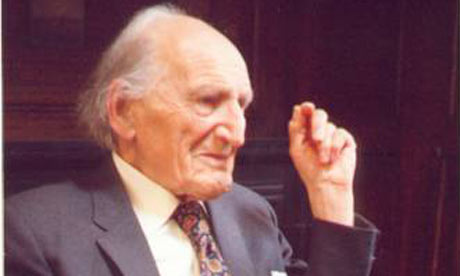
John MacArthur on the amazing fulfilled prophecy on Tyre and how it was fulfilled by historical events.

LESSON

I. BIBLICAL PROPHECY CONCERNING TYRE (Ezekiel 26:1–28:19)

A. The Forecast

1. The specifics

a) That King Nebuchadnezzar of Babylon would destroy the mainland city of Tyre (26:7-8).

b) That many nations would rise up against Tyre. These nations would come like waves of the sea, one after another (26:3- 4).

c) That Tyre will be made like a flat rock (26:4, 14).

d) That fisherman will dry their nets there (26:5, 14).

e) That the rubble of the city would be cast into the sea (26:12).

f) That Tyre would never be rebuilt (26:14).

2. The setting

Tyre was a great city. It was one of the largest and most powerful cities of Phoenicia, which is modern day Lebanon.

It was well fortified. A great wall protected the city from land attacks while their world-renowned fleet protected them from attack by sea.

Tyre was a flourishing city during the time when Joshua led Israel into the Promised Land. King Hiram, who began his reign during the rule of David, offered David cedars from Tyre to build his palace. He also loaned David his artisans to craft parts of the great palace (1 Chron. 14:1). Hiram also helped Solomon build the Temple by floating cedars down the shoreline to be picked up and hauled to Jerusalem (2 Chron. 2:16). So Tyre was a great city, and both David and Solomon looked to it for aid.

B. The Fulfillment

1. The prophetic call

a) To Nebuchadnezzar

Not long after the prophecy given by Ezekiel, Nebuchadnezzar did exactly what had been predicted–he laid siege against the city in 585 B.C. For thirteen years Nebuchadnezzar cut off the flow of supplies into the city. In 537 B.C. he finally succeeded in breaking the gates down, but found the city almost empty.

During the thirteen-year siege, the people of Tyre moved all their possessions by ship to an island one-half mile offshore. So Nebuchadnezzar gained no plunder (Ezek. 29:17- 20). Although he destroyed the mainland city (Ezek. 26:8), the new city offshore continued to flourish for 250 years. The prophecy of Ezekiel 26:12–“they shall lay thy stones and thy timber and thy dust in the midst of the water”–remained unfulfilled.

b) To Alexander the Great

At age twenty-two, Alexander the Great came east conquering the known world with an army of between thirty and forty thousand men. Having defeated the Persians under Darius III, Alexander was on the march toward Egypt.

(1) The dilemma

Alexander arrived in the Phoenician territory and demanded that the cities open their gates to him. The citizens of Tyre refused, feeling they were secure on their island with their superior fleet.

(2) The decision

Realizing he did not have a fleet that could match Tyre’s, Alexander decided to build a causeway to the island using the ruins from the mainland city. It was about two hundred feet wide. The prophet said that the city would be thrown into the water, and that’s exactly what happened.

(3) The details

Arrian, a Greek historian, wrote about the overthrow of Tyre and how it was accomplished (The Campaigns of Alexander [New York: Penquin, 1958], pp. 132-43). The fortification of Tyre resembled Alcatraz. The city sat offshore like a rock with walls that came down to the edge of the water. Alexander set out to build the only means to approach the city–a land peninsula. Soldiers started pitching rubble into the water, leveling it off as they went so they could march on it. The water got deeper as they approached the island, and to make their task even more difficult, the people of Tyre bombarded them with missiles.

Werner Keller in The Bible as History tells us that to safeguard the operation, Alexander built mobile shields called “tortoises” (New York: Bantam, 1956], p. 361). Knowing that when they reached the city they would have to scale the walls, Alexander built “Hele-poleis,” which were mobile siege towers 160 foot high. The idea was to roll these structures across the causeway and push them up against the walls. A drawbridge on the front of the towers enabled the soldiers to march across the top of the walls and into the city.

Alexander’s men were under constant attack from people within the city and from the Tyrian navy. Realizing that he needed ships to defend his flanks, Alexander returned to the cities he had conquered and demanded their assistance. That fulfilled the prophecy that God “will cause many nations to come up against thee, as the sea causeth its waves to come up” (Ezek. 26:3).

(4) The destruction

Alexander’s plan succeeded. Eight thousand people were slain and thirty thousand were sold into slavery. It took Alexander seven months to conquer Tyre. The causeway he built can be seen to this day.

2. The prophetic result

How did Ezekiel know all those things would happen? The only explanation is he expressed the mind of God. Historian Philip Myers said, “Alexander the Great reduced it [Tyre] to ruins (332 B.C.). She recovered in a measure from this blow, but never regained the place she had previously held in the world. The larger part of the site … is now as bare as the top of a rock–a place where the fishermen that still frequent the spot spread their nets to dry” (General History for Colleges and High Schools [Boston: Ginn and Co., 1889], p. 55). That fulfills the prophecies of Ezekiel 26:4-5, 14. The island city was repopulated, later to be destroyed by the Moslems in A.D. 1281. However, God said the mainland city would never be rebuilt–and it never has. Jerusalem has been rebuilt many times but Tyre will never be rebuilt because a prophet in Babylon said twenty-five centuries ago, “Thou shalt be built no more” (Ezek. 26:14).

___________________
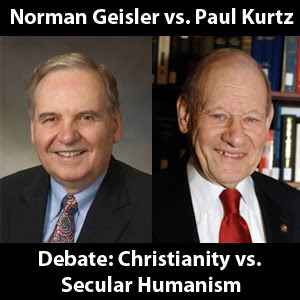
ANY HISTORIAN CAN HAVE ACCESS TO ALL OF THESE RECORDS. WHY NOT TAKE A FEW MOMENTS AND CHECK OUT THESE FACTS YOURSELF? As a secularist you believe that it is sad indeed that millions of Christians are hoping for heaven but no heaven is waiting for them. Paul took a close look at this issue too:

I Corinthians 15 asserts:

12 But if it is preached that Christ has been raised from the dead, how can some of you say that there is no resurrection of the dead? 13 If there is no resurrection of the dead, then not even Christ has been raised. 14 And if Christ has not been raised, our preaching is useless and so is your faith. 15 More than that, we are then found to be false witnesses about God, for we have testified about God that he raised Christ from the dead. But he did not raise him if in fact the dead are not raised. 16 For if the dead are not raised, then Christ has not been raised either. 17 And if Christ has not been raised, your faith is futile; you are still in your sins. 18 Then those also who have fallen asleep in Christ are lost. 19 If only for this life we have hope in Christ, we are of all people most to be pitied.

I sent you a CD that starts off with the song DUST IN THE WIND by Kerry Livgren of the group KANSAS which was a hit song in 1978 when it rose to #6 on the charts because so many people connected with the message of the song. It included these words, “All we do, crumbles to the ground though we refuse to see, Dust in the Wind, All we are is dust in the wind, Don’t hang on, Nothing lasts forever but the Earth and Sky, It slips away, And all your money won’t another minute buy.”

Kerry Livgren himself said that he wrote the song because he saw where man was without a personal God in the picture. Solomon pointed out in the Book of Ecclesiastes that those who believe that God doesn’t exist must accept three things. FIRST, death is the end and SECOND, chance and time are the only guiding forces in this life.  FINALLY, power reigns in this life and the scales are never balanced. The Christian can  face death and also confront the world knowing that it is not determined by chance and time alone and finally there is a judge who will balance the scales.

Both Kerry Livgren and the bass player Dave Hope of Kansas became Christians eventually. Kerry Livgren first tried Eastern Religions and Dave Hope had to come out of a heavy drug addiction. I was shocked and elated to see their personal testimony on The 700 Club in 1981 and that same  interview can be seen on You Tube today. Livgren lives in Topeka, Kansas today where he teaches “Diggers,” a Sunday school class at Topeka Bible Church. DAVE HOPE is the head of Worship, Evangelism and Outreach at Immanuel Anglican Church in Destin, Florida.

The answer to find meaning in life is found in putting your faith and trust in Jesus Christ. The Bible is true from cover to cover and can be trusted.

Thank you again for your time and I know how busy you are.

Everette Hatcher, everettehatcher@gmail.com, http://www.thedailyhatch.org, cell ph 501-920-5733, Box 23416, LittleRock, AR 72221, United States

________

Related posts:

FRANCIS SCHAEFFER ANALYZES ART AND CULTURE Part 53 THE BEATLES (Part E, Stg. Pepper’s and John Lennon’s search in 1967 for truth was through drugs, money, laughter, etc & similar to King Solomon’s, LOTS OF PICTURES OF JOHN AND CYNTHIA) (Feature on artist Yoko Ono)

April 2, 2015 – 7:05 am

The John Lennon and the Beatles really were on a long search for meaning and fulfillment in their lives  just like King Solomon did in the Book of Ecclesiastes. Solomon looked into learning (1:12-18, 2:12-17), laughter, ladies, luxuries, and liquor (2:1-2, 8, 10, 11), and labor (2:4-6, 18-20). He fount that without God in the picture all […]

By Everette Hatcher III | Posted in Current Events, Francis Schaeffer | Edit | Comments (0)

FRANCIS SCHAEFFER ANALYZES ART AND CULTURE Part 52 THE BEATLES (Part D, There is evidence that the Beatles may have been exposed to Francis Schaeffer!!!) (Feature on artist Anna Margaret Rose Freeman )

March 22, 2015 – 12:30 am

______________   George Harrison Swears & Insults Paul and Yoko Lucy in the Sky with Diamonds- The Beatles The Beatles:   I have dedicated several posts to this series on the Beatles and I don’t know when this series will end because Francis Schaeffer spent a lot of time listening to the Beatles and talking […]
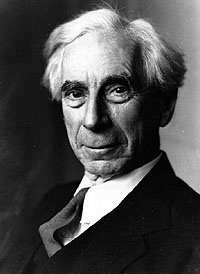
By Everette Hatcher III | Posted in Francis Schaeffer | Tagged Anna Margaret Rose Freeman, George Harrison, John Lennon, Paul MacCartney, Ringo Starr, Stg. Pepper’s Lonely Hearts Club Band | Edit| Comments (0)

FRANCIS SCHAEFFER ANALYZES ART AND CULTURE Part 51 THE BEATLES (Part C, List of those on cover of Stg.Pepper’s ) (Feature on artist Raqib Shaw )

March 19, 2015 – 12:21 am

  The Beatles in a press conference after their Return from the USA Uploaded on Nov 29, 2010 The Beatles in a press conference after their Return from the USA. The Beatles:   I have dedicated several posts to this series on the Beatles and I don’t know when this series will end because Francis […]

By Everette Hatcher III | Posted in Francis Schaeffer | Tagged George Harrison, John Lennon, Paul MacCartney, Raqib Shaw, Ringo Starr | Edit | Comments (0)

FRANCIS SCHAEFFER ANALYZES ART AND CULTURE Part 50 THE BEATLES (Part B, The Psychedelic Music of the Beatles) (Feature on artist Peter Blake )

March 12, 2015 – 12:16 am

__________________   Beatles 1966 Last interview I have dedicated several posts to this series on the Beatles and I don’t know when this series will end because Francis Schaeffer spent a lot of time listening to the Beatles and talking and writing about them and their impact on the culture of the 1960’s. In this […]
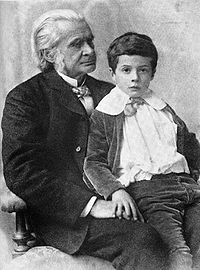
By Everette Hatcher III | Posted in Francis Schaeffer | Tagged George Harrison, John Lennon, Paul MacCartney, Peter Blake, Ringo Starr | Edit | Comments (1)

FRANCIS SCHAEFFER ANALYZES ART AND CULTURE Part 49 THE BEATLES (Part A, The Meaning of Stg. Pepper’s Cover) (Feature on artist Mika Tajima)

March 5, 2015 – 4:47 am

_______________ The Beatles documentary || A Long and Winding Road || Episode 5 (This video discusses Stg. Pepper’s creation I have dedicated several posts to this series on the Beatles and I don’t know when this series will end because Francis Schaeffer spent a lot of time listening to the Beatles and talking and writing about […]

By Everette Hatcher III | Posted in Francis Schaeffer | Tagged Beatles, Mika Tajima | Edit |Comments (0)

FRANCIS SCHAEFFER ANALYZES ART AND CULTURE PART 48 “BLOW UP” by Michelangelo Antonioni makes Philosophic Statement (Feature on artist Nancy Holt)

February 26, 2015 – 4:57 am

_______________ Francis Schaeffer pictured below: _____________________ I have included the 27 minute  episode THE AGE OF NONREASON by Francis Schaeffer. In that video Schaeffer noted,  ” Sergeant Pepper’s Lonely Hearts Club Band…for a time it became the rallying cry for young people throughout the world. It expressed the essence of their lives, thoughts and their feelings.” How Should […]

By Everette Hatcher III | Posted in Francis Schaeffer | Tagged Blow Up, David Hemmings,Michelangelo Antonioni, Nancy Holt, Sarah Miles., Vanessa Redgrave | Edit | Comments (0)

FRANCIS SCHAEFFER ANALYZES ART AND CULTURE Part 47 Woody Allen and Professor Levy and the death of “Optimistic Humanism” from the movie CRIMES AND MISDEMEANORS Plus Charles Darwin’s comments too!!! (Feature on artist Rodney Graham)

February 19, 2015 – 5:33 am

Crimes and Misdemeanors: A Discussion: Part 1 ___________________________________ Today I will answer the simple question: IS IT POSSIBLE TO BE AN OPTIMISTIC SECULAR HUMANIST THAT DOES NOT BELIEVE IN GOD OR AN AFTERLIFE? This question has been around for a long time and you can go back to the 19th century and read this same […]

By Everette Hatcher III | Posted in Francis Schaeffer, Woody Allen | Tagged alan alda, Anjelica Huston, mia farrow, Sam Waterston | Edit | Comments (0)

FRANCIS SCHAEFFER ANALYZES ART AND CULTURE PART 46 Friedrich Nietzsche (Featured artist is Thomas Schütte)

February 12, 2015 – 5:00 am

____________________________________ Francis Schaeffer pictured below: __________ Francis Schaeffer has written extensively on art and culture spanning the last 2000years and here are some posts I have done on this subject before : Francis Schaeffer’s “How should we then live?” Video and outline of episode 10 “Final Choices” , episode 9 “The Age of Personal Peace and Affluence”, episode 8 […]

By Everette Hatcher III | Posted in Francis Schaeffer | Tagged Bertrand Russell, Friedrich Nietzsche,H.G. Wells, jean paul sartre, Kai Nielsen, Richard Taylor, Richard Wurmbrand, Thomas Schütte | Edit| Comments (0)

FRANCIS SCHAEFFER ANALYZES ART AND CULTURE Part 45 Woody Allen “Reason is Dead” (Feature on artists Allora & Calzadilla )

February 5, 2015 – 4:31 am

Love and Death [Woody Allen] – What if there is no God? [PL] ___________ _______________ How Should We then Live Episode 7 small (Age of Nonreason) #02 How Should We Then Live? (Promo Clip) Dr. Francis Schaeffer 10 Worldview and Truth Two Minute Warning: How Then Should We Live?: Francis Schaeffer at 100 Francis Schaeffer […]

By Everette Hatcher III | Posted in Francis Schaeffer, Woody Allen | Tagged Allora & Calzadilla | Edit| Comments (0)

FRANCIS SCHAEFFER ANALYZES ART AND CULTURE Part 44 The Book of Genesis (Featured artist is Trey McCarley )

January 29, 2015 – 5:01 am

___________________________________ Francis Schaeffer pictured below: ____________________________ Francis Schaeffer “BASIS FOR HUMAN DIGNITY” Whatever…HTTHR Dr. Francis schaeffer – The flow of Materialism(from Part 4 of Whatever happened to human race?) Dr. Francis Schaeffer – The Biblical flow of Truth & History (intro) Francis Schaeffer – The Biblical Flow of History & Truth (1) Dr. Francis Schaeffer […]

By Everette Hatcher III | Posted in Francis Schaeffer | Tagged Trey McCarley | Edit | Comments (0)

__

By Everette Hatcher III | Posted in Atheists Confronted | Tagged .Alexander Vilenkin, Aaron Ciechanover, Alan Dershowitz, Alan Guth, Alan Macfarlane, Alva Noe, Arif Ahmed, Barry Supple, Bart Ehrman, Brian Greene, Brian Harrison, Bruce Hood, Carolyn Porco, David Friend, David J. Gross, Douglas Osheroff, Elizabeth Loftus, Frank Wilczek, Gareth Stedman Jones, George Lakoff, Harry Kroto, Herbert Huppert, Herman Philipse, Hermann Hauser, Horace Barlow, Hubert Dreyfus, Ivar Giaever, J. L. Schellenberg, John Searle, Jonathan Haidt, Jonathan Parry, Lawrence Krauss, Lee Silver, Leonard Mlodinow, Leonard Susskind, Lewis Wolpert, Lisa Randall, Lord Martin Rees, Marcus du Sautoy, Mark Balaguer, Marvin Minsky, Michael Bate, Michio Kaku, Neil deGrasse Tyson, Noam Chomsky, Oliver Sacks, Patricia Churchland, Peter Millican, Peter Singer, Raymond Tallis, Rebecca Goldstein, Riccardo Giacconi, Roald Hoffmann, Robert M. Price, Ronald de Sousa, Roy Glauber, Saul Perlmutter, Shelly Kagan, Simon Schaffer, Sir David Attenborough, Sir John Walker, Stephan Feuchtwang, Stephen F Gudeman, Steve Jones, Steven Weinberg, Stuart Kauffman, Susan Greenfield, Theodor W. Hänsch, Victor Stenger, Walter Sinnott-Armstrong, Yujin Nagasawa | Comments (0)

RESPONDING TO HARRY KROTO’S BRILLIANT RENOWNED ACADEMICS!! Robert Foley  is a British anthropologist, archaeologist, and academic, specializing in human evolution: “I go to Chapel but technically I am an agnostic in the Huxley sense, that one cannot be absolutely certain, but for all practical purposes I am an atheist”

June 11, 2016 – 8:46 am

On November 21, 2014 I received a letter from Nobel Laureate Harry Kroto and it said:

…Please click on this URL http://vimeo.com/26991975

and you will hear what far smarter people than I have to say on this matter. I agree with them.

Harry Kroto

Nick Gathergood, David-Birkett, Harry-Kroto

I have attempted to respond to all of Dr. Kroto’s friends arguments and I have posted my responses one per week for over a year now. Here are some of my earlier posts:

Arif Ahmed, Sir David Attenborough, Mark Balaguer, Horace Barlow, Michael Bate, Patricia Churchland, Aaron Ciechanover, Noam Chomsky,Alan Dershowitz, Hubert Dreyfus, Bart Ehrman, Stephan Feuchtwang, David Friend,  Riccardo Giacconi, Ivar Giaever , Roy Glauber, Rebecca Goldstein, David J. Gross,  Brian Greene, Susan Greenfield, Stephen F Gudeman,  Alan Guth, Jonathan Haidt, Theodor W. Hänsch, Brian Harrison,  Hermann Hauser, Roald Hoffmann,  Bruce Hood, Herbert Huppert,  Gareth Stedman Jones, Steve Jones, Shelly Kagan, Michio Kaku,  Stuart Kauffman,  Lawrence Krauss, Harry Kroto, George Lakoff, Elizabeth Loftus,  Alan Macfarlane, Peter Millican, Marvin Minsky, Leonard Mlodinow,  Yujin Nagasawa, Alva Noe, Douglas Osheroff,  Jonathan Parry,  Saul Perlmutter, Herman Philipse,  Carolyn Porco, Robert M. Price, Lisa Randall, Lord Martin Rees,  Oliver Sacks, John Searle, Marcus du Sautoy, Simon Schaffer, J. L. Schellenberg,   Lee Silver,  Peter Singer,  Walter Sinnott-Armstrong, Ronald de Sousa, Victor Stenger, Barry Supple,   Leonard Susskind, Raymond Tallis, Neil deGrasse Tyson,  .Alexander Vilenkin, Sir John Walker, Frank Wilczek, Steven Weinberg, and  Lewis Wolpert,

Robert Foley (academic)

From Wikipedia, the free encyclopedia
Professor
Robert Foley
FBA
Professor Robert Foley,Wadi Mathendous, January 2011.jpg

Foley in 2011
Born Robert Andrew Foley
18 March 1953 (age 63)
Sussex, England
Nationality British
Fields Human evolution
Prehistoric archaeology
Institutions University of Durham
University of Cambridge
Alma mater Peterhouse, Cambridge
Thesis  (1980)
Notable awards Fellow of the British Academy(2007)

Robert Andrew Foley, FBA (born 18 March 1953) is a British anthropologist, archaeologist, and academic, specialising in human evolution. From 1977 to 1985, he was a lecturer in anthropology at the University of Durham. He has been a fellow of King’s College, Cambridge since 1987, and Leverhulme Professor of Human Evolution at the University of Cambridge since 2003.[1]

Early career[edit]

Foley was born on 18 March 1953 in Sussex, England, to Nelson and Jean Foley.[2][1] He was educated at Ardingly College and Peterhouse, Cambridge where he earned an MA and PhD in archaeology.

Academic career[edit]

From 1977 to 1985, Foley was a Lecturer in Anthropology at the University of Durham. He then returned to the University of Cambridge to take up a post in the Department of Biological Anthropology. From 1986 to 1998, he was a lecturer in Biological Anthropology. Since 1987, he has been a Fellow of King’s College, Cambridge. From 1998 to 2003, he was Reader in Evolutionary Anthropology. He co-founded the Leverhulme Centre for Human Evolutionary Studies in 2001 with Marta Mirazón Lahr, and has been its director since its inception. The Centre was designed to provide a home for the Duckworth Collection, and first class laboratories and facilities to support research in human evolution which integrated genetics, anthropology, and other fields.[3] In 2003, he was appointed Leverhulme Professor of Human Evolution.[1][4]

Research[edit]

Foley has carried out research in many aspects of evolutionary theory, human evolution, prehistory and more recently human evolutionary genetics. His early work was on the Later Stone Age of East Africa, where he developed methods and ideas to study the landscape distributions of artefacts, giving rise to the sub-field of Off-Site Archaeology.[5] In his work on human evolution he has emphasized an evolutionary ecological approach, seeing human adaptations as solutions to the problems faced by hominins in the environments in which they were living.[6] This evolutionary research has also explored the relationship between climate and evolutionary change,[7] the evolution of social behavior (finite social space model), and patterns of hominin diversity. This approach was summarized in two books – Another Unique Species, and Humans Before Humanity.

Since the 1990s, Foley has collaborated with Marta Mirazón Lahr on research relating to the evolution of modern humans and their diversity. Their work has argued for multiple dispersals of early humans out of Africa, and the use of the ‘southern route’. Their approach has emphasized the role of geographical factors in shaping human evolution, and a central role for dispersals as the process by which diversity evolves.[8][9][10]

He has co-led expeditions and archaeological excavations with Mirazon Lahr in the Solomon Islands, the Central Sahara, and Kenya, particularly in the Turkana Basin. In Turkana, Foley and Mirazon Lahr study the late Quaternary record of human occupation in the basin, and have recently described a group of 10,000 year-old skeletons from the site of Nataruk that died as part of conflict between hunter-gatherer bands.[11]

In the last decade, Foley has been involved in several aspects of evolutionary psychology and linguistics, exploring questions related to the evolution of human cognition, human language and its use as a mechanism is the evolution of society and social boundaries.

Honours[edit]

In 2007, Foley was elected a Fellow of the British Academy (FBA).[12]

Categories:

  • Fellows of King’s College, Cambridge
  • Evolutionary biologists
  • Human evolution theorists

In  the first video below in the 48th clip in this series are his words and  my response is below them. 

50 Renowned Academics Speaking About God (Part 1)

Another 50 Renowned Academics Speaking About God (Part 2)

A Further 50 Renowned Academics Speaking About God (Part 3)

_________________________________

Below is a letter I wrote to Dr. Foley and in it I respond to his quote from You Tube:


March 27, 2016

Professor Robert Foley, c/o Cambridge Language Sciences Strategic Initiative, Dept. of Theoretical and Applied Linguistics, 9 West Road, Cambridge, CB3 9DP

Dear Dr. Foley,

I learned much from your in-depth interview with Dr. Alan MacFarlane. Since you have studied science all your life I thought you would be interested in the subject of this letter today and when I heard your interview with Dr. MacFarlane that  that prompted me to send you two CD’s today. Recently I had the opportunity to come across a very interesting article by Michael Polanyi, LIFE TRANSCENDING PHYSICS AND CHEMISTRY, in the magazine CHEMICAL AND ENGINEERING NEWS, August 21, 1967, and I also got hold of a 1968 talk by Francis Schaeffer based on this article. Polanyi’s son John actually won the 1986 Nobel Prize for Chemistry. This article by Michael Polanyi concerns Francis Crick and James Watson and their discovery of DNA in 1953. Polanyi noted:

Mechanisms, whether man-made or morphological, are boundary conditions harnessing the laws of in
animate nature, being themselves irreducible to those laws. The pattern of organic bases in DNA which functions as a genetic code is a boundary condition irreducible to physics and chemistry. Further controlling principles of life may be represented as a hierarchy of boundary conditions extending, in the case of man, to consciousness and responsibility.

____

James Watson (1928-) and Francis Crick  (8 June 1916 – 28 July 2004)

Michael Polanyi, FRS[1] (11 March 1891 – 22 February 1976)

John Charles Polanyi,  (born 23 January 1929)

I am sending you this two CD’s of this talk because I thought you may find it very interesting. It includes references to not only James D. Watson, and Francis Crick but also  Maurice Wilkins, Erwin Schrodinger, J.S. Haldane (his son was the famous J.B.S. Haldane), Peter Medawar, and Barry Commoner.

___

John Scott Haldane (2 May 1860 – 14/15 March 1936)

J. B. S. Haldane
J. B. S. Haldane.jpg

Haldane in 1914

(5 November 1892 – 1 December 1964)

Maurice Wilkins (15 December 1916 – 5 October 2004)

Erwin Schrödinger (12 August 1887 – 4 January 1961)

Sir Peter Medawar ( 28 February 1915 – 2 October 1987)

Barry Commoner (May 28, 1917 – September 30, 2012)

In the You Tube video “A Further 50 Renowned Academics Speaking About God (Part 1),” you asserted:

 As a high Anglican school, everybody was expected to be confirmed; I did lessons with the chaplain and at the end he told us to go away and think deeply about why we were being confirmed; I did so and told him that I was only doing it because if I did so I would get an extra Sunday out; as this was the only reason I did not feel I should be confirmed; I was about fourteen at the time and I did not give much thought to religion after that time; I love going to church, and my wife, who was brought up a Catholic, is horrified by my aesthetic enjoyment of it; like many English people I like the sounds, the familiarity, the rhythms, and music; I go to Chapel but technically I am an agnostic in the Huxley sense, that one cannot be absolutely certain, but for all practical purposes I am an atheist; I don’t remember ever having a great deal of anxiety about that; religion for me is a nice social backdrop; obviously, being interested in human evolution I have then thought much about the nature of religion; I am fairly convinced that religion plays a major role in human evolution, which has nothing to do with whether it is true or not; Pascal Boyer’s ideas are very sensible, that religion plays an important role in forming communities, forming largely antagonistic relationships between groups, in providing mechanisms for coercion or conformism – all those things work better with religion; there is a tendency to believe, and to believe what others believe – very few of us think in ways different to those immediately around us – suggest there are strong conformism genes; this is also true of politics and other things, not just religion; on the actual content of religion, I would say that most religions allow you to increase your self belief; I think that Darwinism is one of the least adaptive beliefs in the world as it is basically saying that we are not important in the big scheme of things; one of the reasons that it is not widely accepted is that it is too simple, and this goes against the grain of much of social science; the second is that as a system of belief it downplays the egocentric view; if I want a reason to dominate the world, Darwinism is not going to give it to me; for me, religious belief is a very interesting thing, and I diverge from someone like Dawkins who I think has a very old-fashioned, Frazerian, notion of religion, that magic, witchcraft, religion, science, are somehow a progressive system of thought; …I think the problem with having an Anglican background is that one has a very benign view of religion; we have learned throughout history as well as our own immediate experiences that religion can be very brutal and nasty; that would make me much closer to Dawkins’ position; one can see in Islam with the oppression of women; I am fanatically opposed to capital punishment, so in Saudi Arabia and so on, what is done in the name of religion is appalling; there have been times when religion has made the world a better place, at others, worse, so we have to make ad-hoc decisions; what I would fight very strongly against is the creeping back of religion into governance; I am a child of the Enlightenment, and would not want to see us go back

I am going to answer you in an indirect way. Today is Easter and sometimes a song will just minister to a person in a special way and I heard this song at church today and I wanted to share it with you. It is  called MAN OF SORROWS and it can be found on You Tube Man Of Sorrows – Hillsong Live (2013 Album Glorious Ruins) Worship Song with Lyrics and here are the lyrics:

“Man Of Sorrows”

Man of sorrows Lamb of God
By His own betrayed
The sin of man and wrath of God
Has been on Jesus laid

Silent as He stood accused
Beaten mocked and scorned
Bowing to the Father’s will
He took a crown of thorns

Oh that rugged cross
My salvation
Where Your love poured out over me
Now my soul cries out
Hallelujah
Praise and honour unto Thee

Sent of heaven God’s own Son
To purchase and redeem
And reconcile the very ones
Who nailed Him to that tree

Now my debt is paid
It is paid in full
By the precious blood
That my Jesus spilled

Now the curse of sin
Has no hold on me
Whom the Son sets free
Oh is free indeed

See the stone is rolled away
Behold the empty tomb
Hallelujah God be praised
He’s risen from the grave

We sang that song at our Easter service.

On Easter morning March 27, 2016 at FELLOWSHIP BIBLE CHURCH our teaching pastor Brandon Barnard delivered the message THIS CHANGES EVERYTHING based on I Corinthians chapter 15 and I wanted to share a portion of that sermon with you today.

This day is the day that changes everything. The resurrection changes everything and that is why we are gathered here today to celebrate the resurrection of our Lord Jesus Christ because it changes everything.

Some of you are going to be blown away by the opportunity before you this Easter morning because the resurrection of Jesus Christ stands at the very heart of Christianity. If what we we are gathered here to celebrate did not happen then people need to pity us as believers.  They need to feel sorry for you and me more than anyone on earth because we have set our hopes firmly on a lie.

But if the resurrection really did happen, then we need to repent and we need to believe in Jesus and we need to rejoice that we have hope in this life and the life to come. 

Paul wrote this to the believers in Corinth.

1 Corinthians 15:3-6, 13-21 English Standard Version (ESV)

3 For I delivered to you as of first importance what I also received: that Christ died for our sins in accordance with the Scriptures, 4 that he was buried, that he was raised on the third day in accordance with the Scriptures, 5 and that he appeared to Cephas, then to the twelve. 6 Then he appeared to more than five hundred brothers at one time, most of whom are still alive, though some have fallen asleep.

13 But if there is no resurrection of the dead, then not even Christ has been raised. 14 And if Christ has not been raised, then our preaching is in vain and your faith is in vain. 15 We are even found to be misrepresenting God, because we testified about God that he raised Christ, whom he did not raise if it is true that the dead are not raised.16 For if the dead are not raised, not even Christ has been raised. 17 And if Christ has not been raised, your faith is futile and you are still in your sins. 18 Then those also who have fallen asleep in Christ have perished.19 If in Christ we have hope[a] in this life only, we are of all people most to be pitied.

20 But in fact Christ has been raised from the dead, the firstfruits of those who have fallen asleep. 21 For as by a man came death, by a man has come also the resurrection of the dead.

_____

If Christ hasn’t been raised then these facts are true:

  1. PREACHING AND FAITH ARE IN VAIN.
  2. WE ARE FALSE WITNESSES
  3. WE ARE STILL IN OUR SINS.
  4. THOSE WHO DIED IN FAITH ARE STILL DEAD
  5. WE ARE TO BE PITIED MORE THAN ANYONE ELSE IN THE WORLD.

Verse 20 says, “but Christ has been raised!!! Therefore, these things are true:

  1. Our faith is significant, valuable and eternal.
  2. we are truth tellers!!
  3. we are forgiven of our sins.
  4. death is not our final stop.
  5. don’t pity us but join us in believing in Jesus Christ.

You said above that you are an atheist. However, would you agree that if the Bible is correct in regards to history then Jesus did rise from the grave? Let’s take a closer look at evidence concerning the accuracy of the Bible.

I know that you highly respected Surgeon General C. Everett Koop and he co-authored with Francis Schaeffer the book WHATEVER HAPPENED TO THE HUMAN RACE? Below is a piece of evidence from that book.

Francis Schaeffer (30 January 1912 – 15 May 1984[1])  and his wife Edith  (November 3, 1914 – March 30, 2013)

C. Everett Koop, MD (October 14, 1916 – February 25, 2013) 13th Surgeon General of the United States


__

Two things should be mentioned about the time of Moses in Old Testament history.

First, consider the archaeological evidence that relates to the period. True, it is not of the same explicitness that we have found, say, in relation to the existence of Ahab or Jehu or Jehoiakim. We have no inscription from Egypt which refers to Moses being taken out of the bulrushes and removed from the waterproof basket his mother had made him. But this does not mean that the Book of Exodus is a fictitious account, as some critics has suggested. Some say it is simply an idealized reading-back into history by the Jews under the later monarchy. There is not a reason why these “books of Moses,” as they are called, should not be treated as history, just as we have been forced to treat the Books of Kings and Chronicles dating 500 years later.

There is ample evidence about the building projects of the Egyptian kings, and the evidence we have fits well with Exodus. There are scenes of brick-making (for example, Theban Tomb 100 of Rekhmire). Contemporary parchments and papyri tell of production targets which had to be met. One speaks of a satisfied official report of his men as “making their quota of bricks daily” (Papyrus Anastasi III vso, p.3, in the British Museum. Also Louvre Leather Roll in the Louvre, Paris, col ii, mentions quotes of bricks and “taskmasters”). Actual bricks found show signs of straw which had to be mixed in with the clay, just as Exodus says. This matter of bricks and straw is further affirmed by the record that one despairing official complained, “There are no men to make bricks nor straw in my area.”

We know from contemporary discoveries that Semites were found at all levels of Egypt’s cosmopolitan society. (Brooklyn Museum, New York, no. 35, 1446. Papyrus Brooklyn). There is nothing strange therefore about Joseph’s becoming so important in the pharaoh’s court.

The store cities of Pithom and Raamses (Rameses) mentioned in Exodus 1:11 are well known in Egyptian inscriptions. Raamses was actually in the east-Delta capital, Pi-Ramses (near Goshen), where the Israelites would have had ample experience of agriculture. Thus, the references to agriculture found in the law of Moses would not have been strange to the Israelites even though they were in the desert at the time the law was given. Certainly there is no reason to say, as some critics do, that these sections on agriculture were an indication of a reading-back from a latter period when the Jews were settled in Canaan.

The form of the covenant made at Sinai has remarkable parallels with the covenant forms of other people at that time. (On covenants and parties to a treaty, the Louvre; and Treaty Tablet from Boghaz Koi (i.e., Hittite) in Turkey, Museum of Archaeology in Istanbul.) The covenant form at Sinai resembles just as the forms of letter writings of the first century after Christ (the types of introductions and greetings) are reflected in the letters of the apostles in the New Testament, it is not surprising to find the covenant form of the second millennium before Christ reflected in what occurred at Mount Sinai. God has always spoken to people within the culture of their time, which does not mean that God’s communication is limited by that culture. It is God’s communication but within the forms appropriate to the time.

The Pentateuch tells us that Moses led the Israelites up the east side of the Dead Sea after their long stay in the desert. There they encountered the hostile kingdom of Moab. We have firsthand evidence for the existence of this kingdom of Moab–contrary to what has been said by critical scholars who have denied the existence of Moab at this time. It can be found in a war scene from a temple at Luxor (Al Uqsor). This commemorates a victory by Ramses II over the Moabite nation at Batora (Luxor Temple, Egypt).

Also the definite presence of the Israelites in west Palestine (Canaan) no later than the end of the thirteenth century B.C. is attested by a victory stela of Pharaoh Merenptah (son and successor of Ramses II) to commemorate his victory over Libya (Israel Stela, Cairo Museum, no. 34025). In it he mentions his previous success in Canaan against Aschalon, Gize, Yenom, and Israel; hence there can be no doubt the nation of Israel was in existence at the latest by this time of approximately 1220 B.C. This is not to say it could not have been earlier, but it cannot be later than this date.

Christ came and laid his life down to die for our sins and there is evidence that indicates the Bible is true!!!!! Some 400 years before crucifixion was invented, both Israel’s King David and the prophet Zechariah described the Messiah’s death in words that perfectly depict that mode of execution. Further, they said that the body would be pierced and that none of the bones would be broken, contrary to customary procedure in cases of crucifixion (Psalm 22 and 34:20; Zechariah 12:10). Again, historians and New Testament writers confirm the fulfillment: Jesus of Nazareth died on a Roman cross, and his extraordinarily quick death eliminated the need for the usual breaking of bones. A spear was thrust into his side to verify that he was, indeed, dead.

Psalm 22 New American Standard Bible (NASB)

A Cry of Anguish and a Song of Praise.

For the choir director; upon [a]Aijeleth Hashshahar. A Psalm of David.

22 My God, my God, why have You forsaken me?
[b]Far from my deliverance are the words of my [c]groaning.
2 O my God, I cry by day, but You do not answer;
And by night, but [d]I have no rest.
6 But I am a worm and not a man,

A reproach of men and despised by the people.
7 All who see me [g]sneer at me;
They [h]separate with the lip, they wag the head, saying,
8 “[i]Commit yourself to the Lord; let Him deliver him;
Let Him rescue him, because He delights in him.”

12 Many bulls have surrounded me;
Strong bulls of Bashan have encircled me.
13 They open wide their mouth at me,
As a ravening and a roaring lion.
14 I am poured out like water,
And all my bones are out of joint;
My heart is like wax;
It is melted within [l]me.
15 My strength is dried up like a potsherd,
And my tongue cleaves to my jaws;
And You lay me [m]in the dust of death.
16 For dogs have surrounded me;
[n]A band of evildoers has encompassed me;
[o]They pierced my hands and my feet.
17 I can count all my bones.
They look, they stare at me;
18 They divide my garments among them,
And for my clothing they cast lots.

Francis Schaeffer ended HOW SHOULD WE THEN LIVE? Episode 7 with these words:

When we think of Christ of course we think of his substitutionary death upon the cross when he who claimed to be God died in a substitutionary way and as such his death had infinite value and as we accept  that gift raising the empty hands of faith with no humanistic elements we have that which is real life and that is being in relationship to the infinite personal God who is there and being in a personal relationship to Him. But Christ brings life in another way that is not as often clearly thought about perhaps. He connects himself with what the Bible teaches in his teaching and as such he is a prophet as well as a savior. It is upon the basis of what he taught  and the Bible teaches because he himself wraps these together that we have life instead of death in the sense of having some knowledge that is more than men can have from himself, beginning from himself alone. Both of these elements are the place where Christ gives us life.  

The answer to find meaning in life is found in putting your faith and trust in Jesus Christ. The Bible is true from cover to cover and can be trusted.

Thanks for your time.

Sincerely,

Everette Hatcher, everettehatcher@gmail.com, http://www.thedailyhatch.org, cell ph 501-920-5733, Box 23416, LittleRock, AR 72221

Interview with Professor Robert Foley, Part 1

Uploaded on Jan 24, 2012

An interview of Professor Robert Foley on his life and work as a biological anthropologist. Please see http://www.alanmacfarlane.com for the wider context.
Filmed on 27 April 2010
All revenues to World Oral Literature Project

______________________

Interview with Professor Robert Foley, Part 2

Uploaded on Jan 27, 2012

An interview of Professor Robert Foley on his life and work as a biological anthropologist. Please see http://www.alanmacfarlane.com for the wider context.
Filmed on 27 April 2010
All revenues to World Oral Literature Project

Related posts:

FRANCIS SCHAEFFER ANALYZES ART AND CULTURE Part 53 THE BEATLES (Part E, Stg. Pepper’s and John Lennon’s search in 1967 for truth was through drugs, money, laughter, etc & similar to King Solomon’s, LOTS OF PICTURES OF JOHN AND CYNTHIA) (Feature on artist Yoko Ono)

April 2, 2015 – 7:05 am

The John Lennon and the Beatles really were on a long search for meaning and fulfillment in their lives  just like King Solomon did in the Book of Ecclesiastes. Solomon looked into learning (1:12-18, 2:12-17), laughter, ladies, luxuries, and liquor (2:1-2, 8, 10, 11), and labor (2:4-6, 18-20). He fount that without God in the picture all […]

By Everette Hatcher III | Posted in Current Events, Francis Schaeffer | Edit | Comments (0)

FRANCIS SCHAEFFER ANALYZES ART AND CULTURE Part 52 THE BEATLES (Part D, There is evidence that the Beatles may have been exposed to Francis Schaeffer!!!) (Feature on artist Anna Margaret Rose Freeman )

March 22, 2015 – 12:30 am

______________   George Harrison Swears & Insults Paul and Yoko Lucy in the Sky with Diamonds- The Beatles The Beatles:   I have dedicated several posts to this series on the Beatles and I don’t know when this series will end because Francis Schaeffer spent a lot of time listening to the Beatles and talking […]

By Everette Hatcher III | Posted in Francis Schaeffer | Tagged Anna Margaret Rose Freeman, George Harrison, John Lennon, Paul MacCartney, Ringo Starr, Stg. Pepper’s Lonely Hearts Club Band | Edit| Comments (0)

FRANCIS SCHAEFFER ANALYZES ART AND CULTURE Part 51 THE BEATLES (Part C, List of those on cover of Stg.Pepper’s ) (Feature on artist Raqib Shaw )

March 19, 2015 – 12:21 am

  The Beatles in a press conference after their Return from the USA Uploaded on Nov 29, 2010 The Beatles in a press conference after their Return from the USA. The Beatles:   I have dedicated several posts to this series on the Beatles and I don’t know when this series will end because Francis […]

By Everette Hatcher III | Posted in Francis Schaeffer | Tagged George Harrison, John Lennon, Paul MacCartney, Raqib Shaw, Ringo Starr | Edit | Comments (0)

FRANCIS SCHAEFFER ANALYZES ART AND CULTURE Part 50 THE BEATLES (Part B, The Psychedelic Music of the Beatles) (Feature on artist Peter Blake )

March 12, 2015 – 12:16 am

__________________   Beatles 1966 Last interview I have dedicated several posts to this series on the Beatles and I don’t know when this series will end because Francis Schaeffer spent a lot of time listening to the Beatles and talking and writing about them and their impact on the culture of the 1960’s. In this […]

By Everette Hatcher III | Posted in Francis Schaeffer | Tagged George Harrison, John Lennon, Paul MacCartney, Peter Blake, Ringo Starr | Edit | Comments (1)

FRANCIS SCHAEFFER ANALYZES ART AND CULTURE Part 49 THE BEATLES (Part A, The Meaning of Stg. Pepper’s Cover) (Feature on artist Mika Tajima)

March 5, 2015 – 4:47 am

_______________ The Beatles documentary || A Long and Winding Road || Episode 5 (This video discusses Stg. Pepper’s creation I have dedicated several posts to this series on the Beatles and I don’t know when this series will end because Francis Schaeffer spent a lot of time listening to the Beatles and talking and writing about […]

By Everette Hatcher III | Posted in Francis Schaeffer | Tagged Beatles, Mika Tajima | Edit |Comments (0)

FRANCIS SCHAEFFER ANALYZES ART AND CULTURE PART 48 “BLOW UP” by Michelangelo Antonioni makes Philosophic Statement (Feature on artist Nancy Holt)

February 26, 2015 – 4:57 am

_______________ Francis Schaeffer pictured below: _____________________ I have included the 27 minute  episode THE AGE OF NONREASON by Francis Schaeffer. In that video Schaeffer noted,  ” Sergeant Pepper’s Lonely Hearts Club Band…for a time it became the rallying cry for young people throughout the world. It expressed the essence of their lives, thoughts and their feelings.” How Should […]

By Everette Hatcher III | Posted in Francis Schaeffer | Tagged Blow Up, David Hemmings,Michelangelo Antonioni, Nancy Holt, Sarah Miles., Vanessa Redgrave | Edit | Comments (0)

FRANCIS SCHAEFFER ANALYZES ART AND CULTURE Part 47 Woody Allen and Professor Levy and the death of “Optimistic Humanism” from the movie CRIMES AND MISDEMEANORS Plus Charles Darwin’s comments too!!! (Feature on artist Rodney Graham)

February 19, 2015 – 5:33 am

Crimes and Misdemeanors: A Discussion: Part 1 ___________________________________ Today I will answer the simple question: IS IT POSSIBLE TO BE AN OPTIMISTIC SECULAR HUMANIST THAT DOES NOT BELIEVE IN GOD OR AN AFTERLIFE? This question has been around for a long time and you can go back to the 19th century and read this same […]

By Everette Hatcher III | Posted in Francis Schaeffer, Woody Allen | Tagged alan alda, Anjelica Huston, mia farrow, Sam Waterston | Edit | Comments (0)

FRANCIS SCHAEFFER ANALYZES ART AND CULTURE PART 46 Friedrich Nietzsche (Featured artist is Thomas Schütte)

February 12, 2015 – 5:00 am

____________________________________ Francis Schaeffer pictured below: __________ Francis Schaeffer has written extensively on art and culture spanning the last 2000years and here are some posts I have done on this subject before : Francis Schaeffer’s “How should we then live?” Video and outline of episode 10 “Final Choices” , episode 9 “The Age of Personal Peace and Affluence”, episode 8 […]

By Everette Hatcher III | Posted in Francis Schaeffer | Tagged Bertrand Russell, Friedrich Nietzsche,H.G. Wells, jean paul sartre, Kai Nielsen, Richard Taylor, Richard Wurmbrand, Thomas Schütte | Edit| Comments (0)

FRANCIS SCHAEFFER ANALYZES ART AND CULTURE Part 45 Woody Allen “Reason is Dead” (Feature on artists Allora & Calzadilla )

February 5, 2015 – 4:31 am

Love and Death [Woody Allen] – What if there is no God? [PL] ___________ _______________ How Should We then Live Episode 7 small (Age of Nonreason) #02 How Should We Then Live? (Promo Clip) Dr. Francis Schaeffer 10 Worldview and Truth Two Minute Warning: How Then Should We Live?: Francis Schaeffer at 100 Francis Schaeffer […]

By Everette Hatcher III | Posted in Francis Schaeffer, Woody Allen | Tagged Allora & Calzadilla | Edit| Comments (0)

FRANCIS SCHAEFFER ANALYZES ART AND CULTURE Part 44 The Book of Genesis (Featured artist is Trey McCarley )

January 29, 2015 – 5:01 am

___________________________________ Francis Schaeffer pictured below: ____________________________ Francis Schaeffer “BASIS FOR HUMAN DIGNITY” Whatever…HTTHR Dr. Francis schaeffer – The flow of Materialism(from Part 4 of Whatever happened to human race?) Dr. Francis Schaeffer – The Biblical flow of Truth & History (intro) Francis Schaeffer – The Biblical Flow of History & Truth (1) Dr. Francis Schaeffer […]

By Everette Hatcher III | Posted in Francis Schaeffer | Tagged Trey McCarley | Edit | Comments (0)

__

By Everette Hatcher III | Posted in Atheists Confronted | Tagged .Alexander Vilenkin, Aaron Ciechanover, Alan Dershowitz, Alan Guth, Alan Macfarlane, Alva Noe, Arif Ahmed, Barry Supple, Bart Ehrman, Brian Greene, Brian Harrison, Bruce Hood, Carolyn Porco, David Friend, David J. Gross, Douglas Osheroff, Elizabeth Loftus, Frank Wilczek, Gareth Stedman Jones, George Lakoff, Harry Kroto, Herbert Huppert, Herman Philipse, Hermann Hauser, Horace Barlow, Hubert Dreyfus, Ivar Giaever, J. L. Schellenberg, John Searle, Jonathan Haidt, Jonathan Parry, Lawrence Krauss, Lee Silver, Leonard Mlodinow, Leonard Susskind, Lewis Wolpert, Lisa Randall, Lord Martin Rees, Marcus du Sautoy, Mark Balaguer, Marvin Minsky, Michael Bate, Michio Kaku, Neil deGrasse Tyson, Noam Chomsky, Oliver Sacks, Patricia Churchland, Peter Millican, Peter Singer, Raymond Tallis, Rebecca Goldstein, Riccardo Giacconi, Roald Hoffmann, Robert M. Price, Ronald de Sousa, Roy Glauber, Saul Perlmutter, Shelly Kagan, Simon Schaffer, Sir David Attenborough, Sir John Walker, Stephan Feuchtwang, Stephen F Gudeman, Steve Jones, Steven Weinberg, Stuart Kauffman, Susan Greenfield, Theodor W. Hänsch, Victor Stenger, Walter Sinnott-Armstrong, Yujin Nagasawa | Comments (0)

RESPONDING TO HARRY KROTO’S BRILLIANT RENOWNED ACADEMICS!! Mark Elvin professor of  Chinese history,  St. Antony’s College. Oxford, “I was already about age eleven and in some way you could say someone who took as his guide Bertrand Russell’s work that was accessible to me beginning with his popular essays”

June 10, 2016 – 12:34 am

On November 21, 2014 I received a letter from Nobel Laureate Harry Kroto and it said:

…Please click on this URL http://vimeo.com/26991975

and you will hear what far smarter people than I have to say on this matter. I agree with them.

Harry Kroto

Nick Gathergood, David-Birkett, Harry-Kroto

I have attempted to respond to all of Dr. Kroto’s friends arguments and I have posted my responses one per week for over a year now. Here are some of my earlier posts:

Arif Ahmed, Sir David Attenborough, Mark Balaguer, Horace Barlow, Michael Bate, Patricia Churchland, Aaron Ciechanover, Noam Chomsky,Alan Dershowitz, Hubert Dreyfus, Bart Ehrman, Stephan Feuchtwang, David Friend,  Riccardo Giacconi, Ivar Giaever , Roy Glauber, Rebecca Goldstein, David J. Gross,  Brian Greene, Susan Greenfield, Stephen F Gudeman,  Alan Guth, Jonathan Haidt, Theodor W. Hänsch, Brian Harrison,  Hermann Hauser, Roald Hoffmann,  Bruce Hood, Herbert Huppert,  Gareth Stedman Jones, Steve Jones, Shelly Kagan, Michio Kaku,  Stuart Kauffman,  Lawrence Krauss, Harry Kroto, George Lakoff, Elizabeth Loftus,  Alan Macfarlane, Peter Millican, Marvin Minsky, Leonard Mlodinow,  Yujin Nagasawa, Alva Noe, Douglas Osheroff,  Jonathan Parry,  Saul Perlmutter, Herman Philipse,  Carolyn Porco, Robert M. Price, Lisa Randall, Lord Martin Rees,  Oliver Sacks, John Searle, Marcus du Sautoy, Simon Schaffer, J. L. Schellenberg,   Lee Silver,  Peter Singer,  Walter Sinnott-Armstrong, Ronald de Sousa, Victor Stenger, Barry Supple,   Leonard Susskind, Raymond Tallis, Neil deGrasse Tyson,  .Alexander Vilenkin, Sir John Walker, Frank Wilczek, Steven Weinberg, and  Lewis Wolpert,

Mark Elvin

From Wikipedia, the free encyclopedia

(John) Mark (Dutton) Elvin (born 1938) is a professor emeritus of Chinese history at Australian National University, specializing in the late imperial period; he is also emeritus fellow of St. Antony’s College. Oxford.

Elvin, the only child of (Herbert) Lionel Elvin and Mona Bedortha Dutton, grew up in Cambridge; attended The Dragon School; and matriculated as an undergraduate at King’s College, Cambridge. He held posts at the University of Glasgow and at St, Antony’s College, Oxford.

He is noted for his high level equilibrium trap theory to explain why an industrial revolution happened in Europe but not in China, despite the fact that the state of scientific knowledge was far more advanced in China much earlier than in Europe. Essentially, Elvin proposed that pre-industrial production methods were extremely efficient in China, which obviated much of the economic pressure for scientific progress. At the same time, a philosophical shift occurred, where Taoism was gradually replaced by Confucianism as the dominant intellectual paradigm, and moral philosophy and the development of rigid social organization became more important than scientific inquiry among intellectuals.

External links[edit]

  • Mark Elvin’s home page at ANU
  • Mark Elvin’s home page at Ruprecht-Karls-Universität Heidelberg
Authority control
  • WorldCat Identities
  • LCCN: n83238086
Flag of AustraliaBiography icon This biography of an Australian academic is a stub. You can help Wikipedia by expanding it.

Categories:

  • 1938 births
  • Living people
  • Australian National University faculty
  • Historians of China
  • Australian sinologists
  • Australian historians
  • Fellows of St Antony’s College, Oxford
  • Australian academic biography stubs

In  the third video below in the 133rd clip in this series are his words and  my response is below them. 

50 Renowned Academics Speaking About God (Part 1)

Another 50 Renowned Academics Speaking About God (Part 2)

A Further 50 Renowned Academics Speaking About God (Part 3)

_________________________________

Below is my letter in which I respond to Dr. Elvin’s quote:

May 24, 2016

Professor John Mark Elvin,

Dear Dr. Elvin,

I know that your father was active in the  BRITISH HUMANIST ASSOCIATION and that he was longtime friends with H.J. Blackham.  Blackham was the founder of the BRITISH HUMANIST ASSOCIATION and he asserted:

“On humanist assumptions, life leads to nothing, and every pretense that it does not is a deceit. If there is a bridge over a gorge which spans only half the distance and ends in mid-air, and if the bridge is crowded with human beings pressing on, one after the other they fall into the abyss. The bridge leads nowhere, and those who are pressing forward to cross it are going nowhere….It does not matter where they think they are going, what preparations for the journey they may have made, how much they may be enjoying it all. The objection merely points out objectively that such a situation is a model of futility“( H. J. Blackham, et al., Objections to Humanism (Riverside, Connecticut: Greenwood Press, 1967).

 Lionel Elvin (7 August 1905 in Buckhurst Hill – 14 June 2005 in Cambridge) 

Harold J. Blackham (1903-2009) pictured above

On John Ankerberg’s show in 1986 there was a debate between  Dr. Paul Kurtz, and Dr. Norman Geisler and when part of the above quote was read, Dr. Kurtz responded:

I think you may be quoting Blackham out of context because I’ve heard Blackham speak, and read much of what he said, but Blackham has argued continuously that life is full of meaning;

Since you have such a long history of being around secularists it might interest you to know that I have made it a hobby of mine to correspond with atheists who are scientists or academics like yourself over the last 25 years. Some of those who corresponded back with me have been  Ernest Mayr (1904-2005), George Wald (1906-1997), Carl Sagan (1934-1996),  Robert Shapiro (1935-2011), Nicolaas Bloembergen (1920-),  Brian Charlesworth (1945-),  Francisco J. Ayala (1934-) Elliott Sober (1948-), Kevin Padian (1951-), Matt Cartmill (1943-) , Milton Fingerman (1928-), John J. Shea (1969-), , Michael A. Crawford (1938-), Paul Kurtz (1925-2012), Sol Gordon (1923-2008), Albert Ellis (1913-2007), Barbara Marie Tabler (1915-1996), Renate Vambery (1916-2005), Archie J. Bahm (1907-1996), Aron S “Gil” Martin ( 1910-1997), Matthew I. Spetter (1921-2012), H. J. Eysenck (1916-1997), Robert L. Erdmann (1929-2006), Mary Morain (1911-1999), Lloyd Morain (1917-2010),  Warren Allen Smith (1921-), Bette Chambers (1930-),  Gordon Stein (1941-1996) , Milton Friedman (1912-2006), John Hospers (1918-2011), Michael Martin (1932-).Harry Kroto (1939-), Marty E. Martin (1928-), Richard Rubenstein (1924-), James Terry McCollum (1936-), Edward O. WIlson (1929-), Lewis Wolpert (1929), Gerald Holton (1922-), Martin Rees (1942-), Alan Macfarlane (1941-),  Roald Hoffmann (1937-), Herbert Kroemer (1928-), Thomas H. Jukes (1906-1999), Glenn Branch, Geoff Harcourt (1931-) and  Ray T. Cragun (1976-). I would consider it an honor to add you to this very distinguished list. 

I just finished reading the online addition of the book Darwin, Francis ed. 1892. Charles Darwin: his life told in an autobiographical chapter, and in a selected series of his published letters [abridged edition]. London: John Murray. There are several points that Charles Darwin makes in this book that were very wise, honest, logical, shocking and some that were not so wise. The Christian Philosopher Francis Schaeffer once said of Darwin’s writings, “Darwin in his autobiography and in his letters showed that all through his life he never really came to a quietness concerning the possibility that chance really explained the situation of the biological world. You will find there is much material on this [from Darwin] extended over many many years that constantly he was wrestling with this problem.”

In your interview with Alan Macfarlane I saw that your father was involved in Paris with UNESCO. Wikipedia says of Julian Huxley:

Huxley, a lifelong internationalist with a concern for education, got involved in the creation of the United Nations Educational, Scientific and Cultural Organization (UNESCO), and became the organization’s first Director-General in 1946. His term of office, six years in the Charter, was cut down to two years at the behest of the USA delegation.[15] The reasons are not known for sure, but his left-wing tendencies and humanism were likely factors. In a fortnight he dashed off a 60-page booklet on the purpose and philosophy of UNESCO, eventually printed and issued as an official document. There were, however, many conservative opponents of his scientific humanism. His idea of restraining population growth with birth control was anathema to both the Catholic Church and the Comintern/Cominform. In its first few years UNESCO was dynamic and broke new ground; since Huxley it has become larger, more bureaucratic and stable.[16][17] The personal and social side of the years in Paris are well described by his wife.[18]

I was curious if either your father or you got to meet Julian Huxley?

Recently I ran across this quote from you from that excellent in-depth interview you did with Alan Macfarlane :

I was puzzled by the fact that I was told nonsense, not just something I might not agree with, but nonsense. This was nonsense, and the contrast fascinated me and I was already about age eleven and in some way you could say someone who took as his guide Bertrand Russell’s work that was accessible to me beginning with his popular essays. 

You mentioned in your quote the Nobel Prize winner Bertrand Russell.  Like you I have read much of his material concerning the existence of God. One quote really stands out to me and here it is:

That Man is the product of causes which had no prevision of the end they were achieving; that his origin, his growth, his hopes and fears, his loves and his beliefs, are but the outcome of accidental collocations of atoms; …that all the labors of the ages, all the devotion, all the inspiration, all the noonday brightness of human genius, are destined to extinction in the vast death of the solar system, and that the whole temple of Man’s achievement must inevitably be buried beneath the debris of a universe in ruins—all these things, if not quite beyond dispute, are yet so nearly certain, that no philosophy which rejects them can hope to stand. Bertrand Russell

This nihilistic quote seems to go against what he saying at other times in his life and that was he advocated evolutionary optimistic humanism and even in the 19th century Charles Darwin in his autobiography was touting the same product then!!!!!

When I read the book  Charles Darwin: his life told in an autobiographical chapter, and in a selected series of his published letters, I also read  a commentary on it by Francis Schaeffer and I wanted to both  quote some of Charles Darwin’s own words to you and then include the comments of Francis Schaeffer on those words. I have also enclosed a CD with two messages from Adrian Rogers and Bill Elliff concerning Darwinism.

Francis Darwin noted, “passages which here follow are extracts, somewhat abbreviated, from a part of the Autobiography, written in 1876, in which my father gives the history of his religious views:”

“Believing as I do that man in the distant future will be a far more perfect creature than he now is,”

Francis Schaeffer (1912-1984) pictured below

Bertrand Russell (18 May 1872 – 2 February 1970) pictured below

__

__

Charles Darwin

T. H. Huxley with Julian in 1893

Julian and Aldous Huxley

FRANCIS SCHAEFFER COMMENTED:

Now you have now the birth of Julian Huxley’s evolutionary optimistic humanism already stated by Darwin. Darwin now has a theory that man is going to be better. If you had lived at 1860 or 1890 and you said to Darwin, “By 1970 will man be better?” He certainly would have the hope that man would be better as Julian Huxley does today. Of course, I wonder what he would say if he lived in our day and saw what has been made of his own views in the direction of (the mass murder) Richard Speck (and deterministic thinking of today’s philosophers). I wonder what he would say. So you have the factor, already the dilemma in Darwin that I pointed out in Julian Huxley and that is evolutionary optimistic humanism rests always on tomorrow. You never have an argument from the present or the past for evolutionary optimistic humanism.

You can have evolutionary nihilism on the basis of the present and the past. Every time you have someone bringing in evolutionary optimistic humanism it is always based on what is going to be produced tomorrow. When is it coming? The years pass and is it coming? Arthur Koestler doesn’t think it is coming. He sees lots of problems here and puts forth for another solution.

In Darwin’s 1876 Autobiography he noted:

“…it is an intolerable thought that he and all other sentient beings are doomed to complete annihilation after such long-continued slow progress. To those who fully admit the immortality of the human soul, the destruction of our world will not appear so dreadful.”

Francis Schaeffer commented:

Here you feel Marcel Proust and the dust of death is on everything today because the dust of death is on everything tomorrow. Here you have the dilemma of Nevil Shute’s ON THE BEACH. If it is true that all we have left is biological continuity and increased biological complexity, which is all we have left in Darwinism here, or with many of the modern philosophers, then you can’t stand Shute’s ON THE BEACH. Maybe tomorrow at noon human life may be wiped out. Darwin already feels the tension, because if human life is going to be wiped out tomorrow, what is it worth today? Darwin can’t stand the thought of death of all men. Charlie Chaplin when he heard there was no life on Mars said, “I’m lonely.”

You think of the Swedish Opera (ANIARA) that is pictured inside a spaceship. There was a group of men and women going into outer space and they had come to another planet and the singing inside the spaceship was normal opera music. Suddenly there was a big explosion and the world had blown up and these were the last people left, the only conscious people left, and the last scene is the spaceship is off course and it will never land, but will just sail out into outer space and that is the end of the plot. They say when it was shown in Stockholm the first time, the tough Swedes with all their modern  mannishness, came out (after the opera was over) with hardly a word said, just complete silence.

Darwin already with his own position says he CAN’T STAND IT!! You can say, “Why can’t you stand it?” We would say to Darwin, “You were not made for this kind of thing. Man was made in the image of God. Your CAN’T- STAND- IT- NESS is screaming at you that your position is wrong. Why can’t you listen to yourself?”

You find all he is left here is biological continuity, and thus his feeling as well as his reason now is against his own theory, yet he holds it against the conclusions of his reason. Reason doesn’t make it hard to be a Christian. Darwin shows us the other way. He is holding his position against his reason.

____________

These words of Darwin ring in my ear, “…it is an intolerable thought that he and all other sentient beings are doomed to complete annihilation after such long-continued slow progress…” . Schaeffer rightly noted, “Maybe tomorrow at noon human life may be wiped out. Darwin already feels the tension, because if human life is going to be wiped out tomorrow, what is it worth today? Darwin can’t stand the thought of death of all men.” IN OTHER WORDS ALL WE ARE IS DUST IN THE WIND.  I sent you a CD that starts off with the song DUST IN THE WIND by Kerry Livgren of the group KANSAS which was a hit song in 1978 when it rose to #6 on the charts because so many people connected with the message of the song. It included these words, “All we do, crumbles to the ground though we refuse to see, Dust in the Wind, All we are is dust in the wind, Don’t hang on, Nothing lasts forever but the Earth and Sky, It slips away, And all your money won’t another minute buy.”

Kerry Livgren himself said that he wrote the song because he saw where man was without a personal God in the picture. Solomon pointed out in the Book of Ecclesiastes that those who believe that God doesn’t exist must accept three things. FIRST, death is the end and SECOND, chance and time are the only guiding forces in this life.  FINALLY, power reigns in this life and the scales are never balanced. The Christian can  face death and also confront the world knowing that it is not determined by chance and time alone and finally there is a judge who will balance the scales.

Both Kerry Livgren and the bass player Dave Hope of Kansas became Christians eventually. Kerry Livgren first tried Eastern Religions and Dave Hope had to come out of a heavy drug addiction. I was shocked and elated to see their personal testimony on The 700 Club in 1981 and that same  interview can be seen on You Tube today. Livgren lives in Topeka, Kansas today where he teaches “Diggers,” a Sunday school class at Topeka Bible Church. DAVE HOPE is the head of Worship, Evangelism and Outreach at Immanuel Anglican Church in Destin, Florida.

The answer to find meaning in life is found in putting your faith and trust in Jesus Christ. The Bible is true from cover to cover and can be trusted.

Thank you again for your time and I know how busy you are.

Everette Hatcher, everettehatcher@gmail.com, http://www.thedailyhatch.org, cell ph 501-920-5733, Box 23416, LittleRock, AR 72221, United States


You can hear DAVE HOPE and Kerry Livgren’s stories from this youtube link:

(part 1 ten minutes)

(part 2 ten minutes)

Kansas – Dust in the Wind (Official Video)

Uploaded on Nov 7, 2009

Pre-Order Miracles Out of Nowhere now at http://www.miraclesoutofnowhere.com

About the film:
In 1973, six guys in a local band from America’s heartland began a journey that surpassed even their own wildest expectations, by achieving worldwide superstardom… watch the story unfold as the incredible story of the band KANSAS is told for the first time in the DVD Miracles Out of Nowhere.

______________

An interview with Mark Elvin – part 1

Interview of Mark Elvin – part 2

Mark Elvin interviewed by Alan Macfarlane 24th July 2012

________

Related posts:

FRANCIS SCHAEFFER ANALYZES ART AND CULTURE Part 53 THE BEATLES (Part E, Stg. Pepper’s and John Lennon’s search in 1967 for truth was through drugs, money, laughter, etc & similar to King Solomon’s, LOTS OF PICTURES OF JOHN AND CYNTHIA) (Feature on artist Yoko Ono)

April 2, 2015 – 7:05 am

The John Lennon and the Beatles really were on a long search for meaning and fulfillment in their lives  just like King Solomon did in the Book of Ecclesiastes. Solomon looked into learning (1:12-18, 2:12-17), laughter, ladies, luxuries, and liquor (2:1-2, 8, 10, 11), and labor (2:4-6, 18-20). He fount that without God in the picture all […]

By Everette Hatcher III | Posted in Current Events, Francis Schaeffer | Edit | Comments (0)

FRANCIS SCHAEFFER ANALYZES ART AND CULTURE Part 52 THE BEATLES (Part D, There is evidence that the Beatles may have been exposed to Francis Schaeffer!!!) (Feature on artist Anna Margaret Rose Freeman )

March 22, 2015 – 12:30 am

______________   George Harrison Swears & Insults Paul and Yoko Lucy in the Sky with Diamonds- The Beatles The Beatles:   I have dedicated several posts to this series on the Beatles and I don’t know when this series will end because Francis Schaeffer spent a lot of time listening to the Beatles and talking […]

By Everette Hatcher III | Posted in Francis Schaeffer | Tagged Anna Margaret Rose Freeman, George Harrison, John Lennon, Paul MacCartney, Ringo Starr, Stg. Pepper’s Lonely Hearts Club Band | Edit| Comments (0)

FRANCIS SCHAEFFER ANALYZES ART AND CULTURE Part 51 THE BEATLES (Part C, List of those on cover of Stg.Pepper’s ) (Feature on artist Raqib Shaw )

March 19, 2015 – 12:21 am

  The Beatles in a press conference after their Return from the USA Uploaded on Nov 29, 2010 The Beatles in a press conference after their Return from the USA. The Beatles:   I have dedicated several posts to this series on the Beatles and I don’t know when this series will end because Francis […]

By Everette Hatcher III | Posted in Francis Schaeffer | Tagged George Harrison, John Lennon, Paul MacCartney, Raqib Shaw, Ringo Starr | Edit | Comments (0)

FRANCIS SCHAEFFER ANALYZES ART AND CULTURE Part 50 THE BEATLES (Part B, The Psychedelic Music of the Beatles) (Feature on artist Peter Blake )

March 12, 2015 – 12:16 am

__________________   Beatles 1966 Last interview I have dedicated several posts to this series on the Beatles and I don’t know when this series will end because Francis Schaeffer spent a lot of time listening to the Beatles and talking and writing about them and their impact on the culture of the 1960’s. In this […]

By Everette Hatcher III | Posted in Francis Schaeffer | Tagged George Harrison, John Lennon, Paul MacCartney, Peter Blake, Ringo Starr | Edit | Comments (1)

FRANCIS SCHAEFFER ANALYZES ART AND CULTURE Part 49 THE BEATLES (Part A, The Meaning of Stg. Pepper’s Cover) (Feature on artist Mika Tajima)

March 5, 2015 – 4:47 am

_______________ The Beatles documentary || A Long and Winding Road || Episode 5 (This video discusses Stg. Pepper’s creation I have dedicated several posts to this series on the Beatles and I don’t know when this series will end because Francis Schaeffer spent a lot of time listening to the Beatles and talking and writing about […]

By Everette Hatcher III | Posted in Francis Schaeffer | Tagged Beatles, Mika Tajima | Edit |Comments (0)

FRANCIS SCHAEFFER ANALYZES ART AND CULTURE PART 48 “BLOW UP” by Michelangelo Antonioni makes Philosophic Statement (Feature on artist Nancy Holt)

February 26, 2015 – 4:57 am

_______________ Francis Schaeffer pictured below: _____________________ I have included the 27 minute  episode THE AGE OF NONREASON by Francis Schaeffer. In that video Schaeffer noted,  ” Sergeant Pepper’s Lonely Hearts Club Band…for a time it became the rallying cry for young people throughout the world. It expressed the essence of their lives, thoughts and their feelings.” How Should […]

By Everette Hatcher III | Posted in Francis Schaeffer | Tagged Blow Up, David Hemmings,Michelangelo Antonioni, Nancy Holt, Sarah Miles., Vanessa Redgrave | Edit | Comments (0)

FRANCIS SCHAEFFER ANALYZES ART AND CULTURE Part 47 Woody Allen and Professor Levy and the death of “Optimistic Humanism” from the movie CRIMES AND MISDEMEANORS Plus Charles Darwin’s comments too!!! (Feature on artist Rodney Graham)

February 19, 2015 – 5:33 am

Crimes and Misdemeanors: A Discussion: Part 1 ___________________________________ Today I will answer the simple question: IS IT POSSIBLE TO BE AN OPTIMISTIC SECULAR HUMANIST THAT DOES NOT BELIEVE IN GOD OR AN AFTERLIFE? This question has been around for a long time and you can go back to the 19th century and read this same […]

By Everette Hatcher III | Posted in Francis Schaeffer, Woody Allen | Tagged alan alda, Anjelica Huston, mia farrow, Sam Waterston | Edit | Comments (0)

FRANCIS SCHAEFFER ANALYZES ART AND CULTURE PART 46 Friedrich Nietzsche (Featured artist is Thomas Schütte)

February 12, 2015 – 5:00 am

____________________________________ Francis Schaeffer pictured below: __________ Francis Schaeffer has written extensively on art and culture spanning the last 2000years and here are some posts I have done on this subject before : Francis Schaeffer’s “How should we then live?” Video and outline of episode 10 “Final Choices” , episode 9 “The Age of Personal Peace and Affluence”, episode 8 […]

By Everette Hatcher III | Posted in Francis Schaeffer | Tagged Bertrand Russell, Friedrich Nietzsche,H.G. Wells, jean paul sartre, Kai Nielsen, Richard Taylor, Richard Wurmbrand, Thomas Schütte | Edit| Comments (0)

FRANCIS SCHAEFFER ANALYZES ART AND CULTURE Part 45 Woody Allen “Reason is Dead” (Feature on artists Allora & Calzadilla )

February 5, 2015 – 4:31 am

Love and Death [Woody Allen] – What if there is no God? [PL] ___________ _______________ How Should We then Live Episode 7 small (Age of Nonreason) #02 How Should We Then Live? (Promo Clip) Dr. Francis Schaeffer 10 Worldview and Truth Two Minute Warning: How Then Should We Live?: Francis Schaeffer at 100 Francis Schaeffer […]

By Everette Hatcher III | Posted in Francis Schaeffer, Woody Allen | Tagged Allora & Calzadilla | Edit| Comments (0)

FRANCIS SCHAEFFER ANALYZES ART AND CULTURE Part 44 The Book of Genesis (Featured artist is Trey McCarley )

January 29, 2015 – 5:01 am

___________________________________ Francis Schaeffer pictured below: ____________________________ Francis Schaeffer “BASIS FOR HUMAN DIGNITY” Whatever…HTTHR Dr. Francis schaeffer – The flow of Materialism(from Part 4 of Whatever happened to human race?) Dr. Francis Schaeffer – The Biblical flow of Truth & History (intro) Francis Schaeffer – The Biblical Flow of History & Truth (1) Dr. Francis Schaeffer […]

By Everette Hatcher III | Posted in Francis Schaeffer | Tagged Trey McCarley | Edit | Comments (0)
By Everette Hatcher III | Posted in Atheists Confronted | Tagged .Alexander Vilenkin, Aaron Ciechanover, Alan Dershowitz, Alan Guth, Alan Macfarlane, Alva Noe, Arif Ahmed, Barry Supple, Bart Ehrman, Brian Greene, Brian Harrison, Bruce Hood, Carolyn Porco, David Friend, David J. Gross, Douglas Osheroff, Elizabeth Loftus, Frank Wilczek, Gareth Stedman Jones, George Lakoff, Harry Kroto, Herbert Huppert, Herman Philipse, Hermann Hauser, Horace Barlow, Hubert Dreyfus, Ivar Giaever, J. L. Schellenberg, John Searle, Jonathan Haidt, Jonathan Parry, Lawrence Krauss, Lee Silver, Leonard Mlodinow, Leonard Susskind, Lewis Wolpert, Lisa Randall, Lord Martin Rees, Marcus du Sautoy, Mark Balaguer, Marvin Minsky, Michael Bate, Michio Kaku, Neil deGrasse Tyson, Noam Chomsky, Oliver Sacks, Patricia Churchland, Peter Millican, Peter Singer, Raymond Tallis, Rebecca Goldstein, Riccardo Giacconi, Roald Hoffmann, Robert M. Price, Ronald de Sousa, Roy Glauber, Saul Perlmutter, Shelly Kagan, Simon Schaffer, Sir David Attenborough, Sir John Walker, Stephan Feuchtwang, Stephen F Gudeman, Steve Jones, Steven Weinberg, Stuart Kauffman, Susan Greenfield, Theodor W. Hänsch, Victor Stenger, Walter Sinnott-Armstrong, Yujin Nagasawa | Comments (0)

FRIEDMAN FRIDAY Three Cheers for Profits and Free Markets April 7, 2015 by Dan Mitchell (with input from Milton Friedman)

June 10, 2016 – 12:04 am

__

Milton Friedman – The Four Ways to Spend Money

What establishments are you most unsatisfied with? Probably government organizations like Dept of Motor Vehicles or Public Schools because there is no profit motive and they are not careful in the way they spend our money.

Three Cheers for Profits and Free Markets

April 7, 2015 by Dan Mitchell

What’s the most important factor for economic progress?

There are several possible answers to that question. We can take a big-picture view and argue that the key is free markets and small government, and there certainly is lots of evidence in favor of this assertion when you compare countries over time.

But what if we narrow our focus and try to identify, for instance, the key characteristic of a free market. At times, I’ve highlighted the importance of both property rights and the price system.

Private property gives people the right incentives to both produce andconserve, a lesson learned early in American history.

An unfettered price system is a mechanism that best ensures resources are efficiently utilized to serve consumers.

But we need to augment this list by also including the valuable role of the profit motive.

This Prager University video, narrated by my friend Walter Williams, succinctly explains the issue.

Profits Are Progressive

I especially like the section where Walter asks what institutions and entities leave us happy and contented. The answer, at least for most of us, is that we’re more likely to be satisfied in our dealing with private companies operating in competitive markets.

That’s because the profit motive gives them an incentive to treat us well, both to boost their reputations and so we’ll be repeat customers.

Simply stated, in a true free market, entrepreneurs, investors, and business owners can only become rich by providing consumers with things that make our lives better.

But our dealings with government (or government-enforced monopolies like cable companies) tend to be less rewarding, whether it’s because bureaucrats are taking our money, bossing us around, or simply treating us poorly.

So the next time some politician or pundit complains about “evil profits,” just remember Walter’s wise words from the video.

P.S. I’ve shared two other videos from Prager University, one of the Laffer Curve and one about statist policies and the Great Depression. They’ve both very much worth watching.

P.P.S. It goes without saying (but I’ll say it anyhow) that profits are only admirable if they’re earned honestly. There are fraudsters in private markets who rip off consumers and there are crony capitalists who use coercive government policies to line their pockets. These groups deserve disdain and punishment.

P.P.P.S. Walter Williams is one of America’s best public intellectuals. I’ve cited his work numerous times, but your first stop, in learning more about him, is this video from Reason TV.

Related posts:

FRIEDMAN FRIDAY Milton Friedman’s FREE TO CHOOSE “The Tyranny of Control” Transcript and Video (60 Minutes)

March 20, 2015 – 1:40 am

Milton Friedman’s FREE TO CHOOSE “The Tyranny of Control” Transcript and Video (60 Minutes) In 1980 I read the book FREE TO CHOOSE by Milton Friedman and it really enlightened me a tremendous amount.  I suggest checking out these episodes and transcripts of Milton Friedman’s film series FREE TO CHOOSE: “The Failure of Socialism” and […]

By Everette Hatcher III | Posted in Uncategorized | Edit | Comments (0)

FRIEDMAN FRIDAY “The Tyranny of Control” in Milton Friedman’s FREE TO CHOOSE Part 7 of 7 (Transcript and Video) “I’m not pro business, I’m pro free enterprise, which is a very different thing, and the reason I’m pro free enterprise”

November 14, 2014 – 1:16 am

In 1980 I read the book FREE TO CHOOSE by Milton Friedman and it really enlightened me a tremendous amount.  I suggest checking out these episodes and transcripts of Milton Friedman’s film series FREE TO CHOOSE: “The Failure of Socialism” and “What is wrong with our schools?”  and “Created Equal”  and  From Cradle to Grave, […]

By Everette Hatcher III | Posted in Milton Friedman | Edit | Comments (0)

FRIEDMAN FRIDAY “The Tyranny of Control” in Milton Friedman’s FREE TO CHOOSE Part 6 of 7 (Transcript and Video) “We are the ones who promote freedom, and free enterprise, and individual initiative, And what do we do? We force puny little Hong Kong to impose limits, restrictions on its exports at tariffs, in order to protect our textile workers”

November 7, 2014 – 1:19 am

In 1980 I read the book FREE TO CHOOSE by Milton Friedman and it really enlightened me a tremendous amount.  I suggest checking out these episodes and transcripts of Milton Friedman’s film series FREE TO CHOOSE: “The Failure of Socialism” and “What is wrong with our schools?”  and “Created Equal”  and  From Cradle to Grave, […]

By Everette Hatcher III | Posted in Milton Friedman | Edit | Comments (0)

FRIEDMAN FRIDAY “The Tyranny of Control” in Milton Friedman’s FREE TO CHOOSE Part 5 of 7 (Transcript and Video) “There is no measure whatsoever that would do more to prevent private monopoly development than complete free trade”

October 31, 2014 – 1:13 am

In 1980 I read the book FREE TO CHOOSE by Milton Friedman and it really enlightened me a tremendous amount.  I suggest checking out these episodes and transcripts of Milton Friedman’s film series FREE TO CHOOSE: “The Failure of Socialism” and “What is wrong with our schools?”  and “Created Equal”  and  From Cradle to Grave, […]

By Everette Hatcher III | Posted in Milton Friedman | Edit | Comments (0)

FRIEDMAN FRIDAY “The Tyranny of Control” in Milton Friedman’s FREE TO CHOOSE Part 4 of 7 (Transcript and Video) ” What we need are constitutional restraints on the power of government to interfere with free markets in foreign exchange, in foreign trade, and in many other aspects of our lives.”

October 24, 2014 – 1:09 am

In 1980 I read the book FREE TO CHOOSE by Milton Friedman and it really enlightened me a tremendous amount.  I suggest checking out these episodes and transcripts of Milton Friedman’s film series FREE TO CHOOSE: “The Failure of Socialism” and “What is wrong with our schools?”  and “Created Equal”  and  From Cradle to Grave, […]

By Everette Hatcher III | Posted in Milton Friedman | Edit | Comments (0)

FRIEDMAN FRIDAY “The Tyranny of Control” in Milton Friedman’s FREE TO CHOOSE Part 3 of 7 (Transcript and Video) “When anyone complains about unfair competition, consumers beware, That is really a cry for special privilege always at the expense of the consumer”

October 17, 2014 – 1:04 am

In 1980 I read the book FREE TO CHOOSE by Milton Friedman and it really enlightened me a tremendous amount.  I suggest checking out these episodes and transcripts of Milton Friedman’s film series FREE TO CHOOSE: “The Failure of Socialism” and “What is wrong with our schools?”  and “Created Equal”  and  From Cradle to Grave, […]

By Everette Hatcher III | Posted in Milton Friedman | Edit | Comments (0)

FRIEDMAN FRIDAY “The Tyranny of Control” in Milton Friedman’s FREE TO CHOOSE Part 2 of 7 (Transcript and Video) “As always, economic freedom promotes human freedom”

October 10, 2014 – 1:57 am

In 1980 I read the book FREE TO CHOOSE by Milton Friedman and it really enlightened me a tremendous amount.  I suggest checking out these episodes and transcripts of Milton Friedman’s film series FREE TO CHOOSE: “The Failure of Socialism” and “What is wrong with our schools?”  and “Created Equal”  and  From Cradle to Grave, […]

By Everette Hatcher III | Posted in Milton Friedman | Edit | Comments (0)

FRIEDMAN FRIDAY “The Tyranny of Control” Milton Friedman’s FREE TO CHOOSE Part 1 of 7 (Transcript and Video) “Adam Smith’s… key idea was that self-interest could produce an orderly society benefiting everybody, It was as though there were an invisible hand at work”

October 3, 2014 – 1:46 am

In 1980 I read the book FREE TO CHOOSE by Milton Friedman and it really enlightened me a tremendous amount.  I suggest checking out these episodes and transcripts of Milton Friedman’s film series FREE TO CHOOSE: “The Failure of Socialism” and “What is wrong with our schools?”  and “Created Equal”  and  From Cradle to Grave, […]

By Everette Hatcher III | Posted in Milton Friedman | Edit | Comments (0)

Open letter to President Obama (Part 654) “The Tyranny of Control” in Milton Friedman’s FREE TO CHOOSE Part 7 of 7 (Transcript and Video) “I’m not pro business, I’m pro free enterprise, which is a very different thing, and the reason I’m pro free enterprise”

August 22, 2014 – 1:17 am

Open letter to President Obama (Part 654) (Emailed to White House on July 22, 2013) President Obama c/o The White House 1600 Pennsylvania Avenue NW Washington, DC 20500 Dear Mr. President, I know that you receive 20,000 letters a day and that you actually read 10 of them every day. I really do respect you […]

By Everette Hatcher III | Posted in Milton Friedman, President Obama | Edit | Comments (0)

Open letter to President Obama (Part 650) “The Tyranny of Control” in Milton Friedman’s FREE TO CHOOSE Part 6 of 7 (Transcript and Video) “We are the ones who promote freedom, and free enterprise, and individual initiative, And what do we do? We force puny little Hong Kong to impose limits, restrictions on its exports at tariffs, in order to protect our textile workers”

August 18, 2014 – 1:20 am

Open letter to President Obama (Part 650) (Emailed to White House on July 22, 2013) President Obama c/o The White House 1600 Pennsylvania Avenue NW Washington, DC 20500 Dear Mr. President, I know that you receive 20,000 letters a day and that you actually read 10 of them every day. I really do respect you […]

By Everette Hatcher III | Posted in Milton Friedman, President Obama | Edit | Comments (0)

__________

By Everette Hatcher III | Posted in Cato Institute, Economist Dan Mitchell, Milton Friedman | Comments (0)

My two favorite songs from Harry Nilsson!!!

June 10, 2016 – 12:00 am

_

Harry Nilsson – Everybody’s Talkin’ (1969)

Harry Nilsson – Without You 1972 (HD)

Harry Nilsson

From Wikipedia, the free encyclopedia
For the Swedish footballer, see Harry Nilsson (footballer).
Harry Nilsson
Harry Nilsson (1974) (tall).png

Nilsson in 1974
Background information
Birth name Harry Edward Nilsson III
Also known as Nilsson
Born June 15, 1941
Brooklyn, New York, U.S.
Died January 15, 1994 (aged 52)
Agoura Hills, California, U.S.
Genres Rock, pop[1]
Occupation(s) Singer-songwriter
Instruments Piano, vocals, keyboards,guitar, harmonica
Years active 1958–1994
Labels Tower Records, Musicor,RCA Victor, Mercury Records
Associated acts Perry Botkin, Jr., John Lennon, The Monkees, Van Dyke Parks, Richard Perry,Phil Spector, Ringo Starr,George Tipton, Klaus Voormann

Harry Edward Nilsson III (June 15, 1941 – January 15, 1994[2]), usually credited as Nilsson, was an American singer-songwriter who achieved the peak of his commercial success in the early 1970s. His work is characterized by pioneering overdub experiments, returns to the Great American Songbook, and fusions of Caribbean sounds.[3]

A tenor with a three-and-a-half octave range, Nilsson was one of the few major pop-rock recording artists of his era to achieve significant commercial success without ever performing major public concerts or undertaking regular tours. He is known for the charting singles “Everybody’s Talkin’” (1969), “Without You” (1971), and “Coconut” (1972). Nilsson also wrote the song “One” (1968), made famous by the rock band Three Dog Night.[3]

His honors include Grammy Awards for two of his recordings; Best Contemporary Vocal Performance, Male in 1970 for “Everybody’s Talkin'”, a prominent song in the 1969 film Midnight Cowboy, and Best Pop Vocal Performance, Male in 1973 for “Without You”. In 2015, he was voted No. 62 in Rolling Stone‘s list of “The 100 Greatest Songwriters of All Time”.[4]

Contents

 [hide] 

  • 1Biography
    • 1.11941–61: Early life
    • 1.21962–66: Musicianship beginnings
    • 1.31967–68: Signing with RCA Records
    • 1.41969–72: Chart success
    • 1.51973–79: Maverick
      • 1.5.1Nilsson’s London flat
    • 1.61980–92: Winding down
    • 1.71993–94: Heart attack and death
  • 2Personal life
  • 3Legacy
    • 3.1Awards and nominations
  • 4Discography
  • 5Filmography
  • 6Tribute albums and covers
  • 7References
  • 8Bibliography
  • 9External links

Biography[edit]

1941–61: Early life[edit]

Nilsson was born in Bedford Stuyvesant, Brooklyn in 1941. His paternal grandparents were Swedish circus performers and dancers, especially known for their “aerial ballet” (which is the title of one of Nilsson’s albums). His father, Harry Edward Nilsson Jr., abandoned the family when Harry was three years old. An autobiographical reference to this is found in the opening to Nilsson’s song “1941”:

Well, in 1941, the happy father had a son
And in 1944, the father walked right out the door

Nilsson’s “Daddy’s Song” also refers to this period in Nilsson’s childhood.[5] He grew up with his mother Bette and his younger half-sister. His younger half-brother Drake was left with family or friends during their moves betweenCalifornia and New York, sometimes living with a succession of relatives and stepfathers. His uncle, a mechanic in San Bernardino, California, helped Nilsson improve his vocal and musical abilities.[6] As well as his half-brother and a half-sister through his mother he also had three half-sisters and one half-brother through his father.[5]

Because of the poor financial situation of his family, Nilsson worked from an early age, including a job at the Paramount Theatre in Los Angeles. When the theatre closed in 1960, he applied for a job at a bank, falsely claiming he was a high school graduate on his application (he only completed ninth grade).[6] He had an aptitude for computers, which were beginning to be employed by banks at the time. He performed so well the bank retained him even after uncovering his deception regarding being a high school graduate. He worked on bank computers at night, and in the daytime pursued his songwriting and singing career.[6]

1962–66: Musicianship beginnings[edit]

By 1958, Nilsson was intrigued by emerging forms of popular music, especially rhythm and blues artists like Ray Charles. He had made early attempts at performing while he was working at the Paramount, forming a vocal duo with his friend Jerry Smith and singing close harmonies in the style of the Everly Brothers. The manager at a favorite hangout gave Nilsson a plastic ukulele, which he learned to play, and he later learned to play the guitar and piano. In the 2006 documentary Who Is Harry Nilsson (And Why Is Everybody Talkin’ About Him)?, Nilsson recalled that when he could not remember lyrics or parts of the melodies to popular songs, he created his own, which led to writing original songs.

Uncle John’s singing lessons, along with Nilsson’s natural talent, helped when he got a job singing demos for songwriter Scott Turner in 1962. Turner paid Nilsson five dollars for each track they recorded. (When Nilsson became famous, Turner decided to release these early recordings, and contacted Nilsson to work out a fair payment. Nilsson replied that he had already been paid – five dollars a track.).[5]

In 1963, Nilsson began to have some early success as a songwriter, working with John Marascalco on a song for Little Richard. Upon hearing Nilsson sing, Little Richard reportedly remarked: “My! You sing good for a white boy!”[6]Marascalco also financed some independent singles by Nilsson. One, “Baa Baa Blacksheep”, was released under the pseudonym “Bo Pete” to some small local airplay. Another recording, “Donna, I Understand”, convinced Mercury Records to offer Nilsson a contract, and release recordings by him under the name “Johnny Niles.”[6]

In 1964, Nilsson worked with Phil Spector, writing three songs with him. He also established a relationship with songwriter and publisher Perry Botkin, Jr., who began to find a market for Nilsson’s songs. Botkin also gave Nilsson a key to his office, providing another place to write after hours.[5] Through his association with Botkin, Nilsson met and became friends with musician, composer and arranger George Tipton, who was at the time working for Botkin as a music copyist. During 1964 Tipton invested his life savings – $2500 – to finance the recording of four Nilsson songs, which he arranged; they were able to sell the completed recordings to the Tower label, a recently established subsidiary of Capitol Records, and the tracks were subsequently included on Nilsson’s debut album. The fruitful association between Nilsson and Tipton continued after Nilsson signed with RCA Records – Tipton went on to create the arrangements for nearly all of Nilsson’s RCA recordings between 1967 and 1971 but their association ended in the 1970s when the two fell out for unknown reasons. Whatever the cause, it was evidently a source of lingering resentment for Tipton, who was one of the few significant collaborators who refused to participate in the 2010 documentary on Nilsson’s life and career.

Nilsson’s recording contract was picked up by Tower Records, which in 1966 released the first singles actually credited to him by name, as well as the debut album Spotlight on Nilsson. None of Nilsson’s Tower releases charted or gained much critical attention, although his songs were being recorded by Glen Campbell, Fred Astaire, The Shangri-Las, The Yardbirds, and others. Despite his growing success, Nilsson remained on the night shift at the bank.[5]

1967–68: Signing with RCA Records[edit]

Nilsson in 1967

Nilsson signed with RCA Records in 1966 and released an album the following year, Pandemonium Shadow Show, which was a critical (if not commercial) success. Music industry insiders were impressed both with the songwriting and with Nilsson’s pure-toned, multi-octave vocals. One such insider was Beatles press officer Derek Taylor, who bought an entire box of copies of the album to share this new sound with others. With a major-label release, and continued songwriting success (most notably with The Monkees, who had a hit with Nilsson’s “Cuddly Toy”[7] after meeting him through their producer Chip Douglas), Nilsson finally felt secure enough in the music business to quit his job with the bank. Monkees member Micky Dolenz maintained a close friendship until Nilsson’s death in 1994.

Some of the albums from Derek Taylor’s box eventually ended up with the Beatles themselves,[8] who quickly became Nilsson fans. This may have been helped by the track “You Can’t Do That”, in which Nilsson covered one Beatles song but added 22 others in the multi-tracked background vocals. When John Lennon and Paul McCartney held a press conference in 1968 to announce the formation of Apple Corps, Lennon was asked to name his favorite American artist. He replied, “Nilsson”. McCartney was then asked to name his favorite American group. He replied, “Nilsson”.[5]

Aided by the Beatles’ praise, “You Can’t Do That” became a minor hit in the US, and a top 10 hit in Canada.[5]

When RCA had asked if there was anything special he wanted as a signing premium, Nilsson asked for his own office at RCA, being used to working out of one. In the weeks after the Apple press conference, Nilsson’s office phone began ringing constantly, with offers and requests for interviews and inquiries about his performing schedule. Nilsson usually answered the calls himself, surprising the callers, and answered questions candidly. (He recalled years later the flow of a typical conversation: “When did you play last?” “I didn’t.” “Where have you played before?” “I haven’t.” “When will you be playing next?” “I don’t.”) Nilsson acquired a manager, who steered him into a handful of TV guest appearances, and a brief run of stage performances in Europe set up by RCA. He disliked the experiences he had, though, and decided to stick to the recording studio. He later admitted this was a huge mistake on his part.[5]

Once Lennon called and praised Pandemonium Shadow Show, which he had listened to in a 36-hour marathon.[6] McCartney called the following day, also expressing his admiration. Eventually a message came, inviting him to London to meet the Beatles, watch them at work, and possibly sign with Apple Corps.

Pandemonium Shadow Show was followed in 1968 by Aerial Ballet, an album that included Nilsson’s rendition of Fred Neil‘s song “Everybody’s Talkin’“. A minor US hit at the time of release (and a top 40 hit in Canada), the song would become extremely popular a year later when it was featured in the film Midnight Cowboy, and it would earn Nilsson his first Grammy Award.[7] The song would also become Nilsson’s first US top 10 hit, reaching #6, and his first Canadian #1.

Aerial Ballet also contained Nilsson’s version of his own composition “One”, which was later taken to the top 5 of the US charts by Three Dog Night and also successfully covered in Australia by John Farnham. Nilsson was also commissioned at this time to write and perform the theme song for the ABC television series The Courtship of Eddie’s Father. The result, “Best Friend”, was very popular, but Nilsson never released the song on record; the original version of the song (entitled “Girlfriend”) was recorded during the making of Aerial Ballet but not included on that LP, and it eventually appeared on the 1995 Personal Best anthology, and as a bonus track on a later release of Aerial Ballet. Late in 1968, The Monkees‘ notorious experimental film Head premiered, featuring a memorable song-and-dance sequence with Davy Jones and Toni Basil performing Nilsson’s composition “Daddy’s Song.” (This is followed by Frank Zappa‘s cameo as “The Critic,” who dismisses the 1920s-style tune as “pretty white.”)[5]

With the success of Nilsson’s RCA recordings, Tower re-issued or re-packaged many of their early Nilsson recordings in various formats. All of these re-issues failed to chart, including a 1969 single “Good Times”.[5]

1969–72: Chart success[edit]

Nilsson’s next album, Harry (1969), was his first to hit the charts, and also provided a Top 40 single with “I Guess the Lord Must Be in New York City” (written as a contender for the theme to Midnight Cowboy), used in the Sophia Loren movie La Mortadella (1971) (US title: Lady Liberty). While the album still presented Nilsson as primarily a songwriter, his astute choice of cover material included, this time, a song by then-little-known composer Randy Newman, “Simon Smith and the Amazing Dancing Bear“. Nilsson was so impressed with Newman’s talent that he devoted his entire next album to Newman compositions, with Newman himself playing piano behind Nilsson’s multi-tracked vocals.[6] The result, Nilsson Sings Newman (1970), was commercially disappointing but was named Record of the Year by Stereo Review magazine and provided momentum to Newman’s career.[6] The self-produced Nilsson Sings Newman also marked the end of his collaboration with RCA staff producer Rick Jarrard, who recounted in the Nilsson documentary that the partnership was terminated by a telegram from Nilsson, who abruptly informed Jarrard that he wanted to work with other producers, and the two never met or spoke again.[5]

Nilsson’s next project was an animated film, The Point! (aka Oblio), created with animation director Fred Wolf, and broadcast on ABC television on February 2, 1971, as an “ABC Movie of the Week“. Nilsson’s self-produced album of songs from The Point! was well received and it spawned a hit single, “Me and My Arrow”.[5]

Later that year, Nilsson went to England with producer Richard Perry to record what became the most successful album of his career. Nilsson Schmilsson yielded three very stylistically different hit singles. The first was a cover ofBadfinger‘s song “Without You” (by Pete Ham and Tom Evans), featuring a highly emotional arrangement and soaring vocals to match – recorded, according to Perry, in a single take.[5] His superb performance was rewarded with Nilsson’s second Grammy Award.[7]

The second single was “Coconut“, a novelty calypso number featuring four characters (the narrator, the brother, the sister, and the doctor) all sung (at Perry’s suggestion[5]) in different voices by Nilsson. The song is best remembered for its chorus lyric (“Put de lime in de coconut, and drink ’em both up”). Also notable is that the entire song is played using one chord, C7th.

The third single, “Jump into the Fire”, was raucous, screaming rock and roll, including a drum solo by Derek and the Dominos‘ Jim Gordon and a bass detuning by Herbie Flowers.

Nilsson followed quickly with Son of Schmilsson (1972), released while its predecessor was still in the charts. Besides the problem of competing with himself, Nilsson was by then ignoring most of Perry’s production advice[5] and his decision to give free rein to his bawdiness and bluntness on this release alienated some of his earlier, more conservative fan base. With lyrics like “I sang my balls off for you, baby”, “Roll the world over / And give her a kiss and a feel”, and the notorious “You’re breaking my heart / You’re tearing it apart / So fuck you” (a reference to his ongoing divorce), Nilsson had traveled far afield from his earlier work. The album nevertheless reached #12 on the Billboard200, and the single “Spaceman” was a Top 40 hit in October 1972. The follow-up single “Remember (Christmas)”, however, stalled at #53. A third single, the tongue-in-cheek C&W send up “Joy”, was issued on RCA’s country imprint Green and credited to Buck Earle, but it failed to chart.[5]

1973–79: Maverick[edit]

Nilsson in 1976

Nilsson’s disregard for commercialism in favor of artistic satisfaction showed itself in his next release, A Little Touch of Schmilsson in the Night (1973). Performing a selection of pop standardsby the likes of Berlin, Kalmar and Ruby, Nilsson sang in front of an orchestra arranged and conducted by veteran Gordon Jenkins in sessions produced by Derek Taylor. This musical endeavor did not do well commercially. The session was filmed, and broadcast as a television special by the BBC in the UK.[5]

1973 found Nilsson back in California, and when John Lennon moved there during his separation from Yoko Ono, the two musicians rekindled their earlier friendship. Lennon was intent upon producing Nilsson’s next album, much to Nilsson’s delight. However, their time together in California became known much more for heavy drinking than it did for musical collaboration. In a widely publicized incident, the two were ejected from the Troubadour nightclub in West Hollywood for drunken heckling of the Smothers Brothers.[9] Both men caused property damage during binges, with Lennon trashing a bedroom in Lou Adler‘s house, and Nilsson throwing a bottle through a 30-foot-high hotel window.[citation needed]

To make matters worse, at a late night party and jam session during the recording of the album, attended by Lennon, McCartney, Danny Kortchmar, and other musicians,[10] Nilsson ruptured avocal cord, but he hid the injury for fear that Lennon would call a halt to the production. The resulting album was Pussy Cats. In an effort to clean up, Lennon, Nilsson and Ringo Starr first rented a house together, then Lennon and Nilsson left for New York.[5] After the relative failure of his latest two albums, RCA Records considered dropping Nilsson’s contract. In a show of friendship, Lennon accompanied Nilsson to negotiations, and both intimated to RCA that Lennon and Starr might want to sign with them, once their Apple Records contracts with EMI expired in 1975, but would not be interested if Nilsson were no longer with the label.[6] RCA took the hint and re-signed Nilsson (adding a bonus clause, to apply to each new album completed), but neither Lennon nor Starr signed with RCA.

Nilsson’s voice had mostly recovered by his next release, Duit on Mon Dei (1975), but neither it nor its follow-ups, Sandman and …That’s the Way It Is (both 1976), met with chart success. Finally, Nilsson recorded what he later considered to be his favorite album Knnillssonn (1977). With his voice strong again, and his songs exploring musical territory reminiscent of Harry or The Point!, Nilsson anticipated Knnillssonn to be a comeback album. RCA seemed to agree, and promised Nilsson a substantial marketing campaign for the album. However, the death of Elvis Presley caused RCA to ignore everything except meeting demand for Presley’s back catalog, and the promised marketing push never happened.[11] This, combined with RCA releasing a Nilsson Greatest Hits collection without consulting him, prompted Nilsson to leave the label.[5]

Nilsson’s London flat[edit]

9 Curzon Square, London in 2012; flat on 4th floor, at top right was Nilsson’s, the site of both Cass Elliot‘s and Keith Moon‘s deaths.

Nilsson’s 1970s London flat, at Flat 12, 9 Curzon Street on the edge of Mayfair, was a two-bedroom apartment decorated by the ROR (“Ringo or Robin”) design company owned by Starr and interior designer Robin Cruikshank. Nilsson cumulatively spent several years at the flat, which was located near Apple Records, the Playboy Club, Tramp and the homes of friends and business associates. Nilsson’s work and interests took him to the US for extended periods, and while he was away he lent his place to numerous musician friends. During one of his absences, formerThe Mamas & the Papas singer Cass Elliot and a few members of her tour group stayed at the flat while she performed solo at the London Palladium, headlining with her torch songs and “Don’t Call Me Mama Anymore“. Following a strenuous performance with encores on July 29, 1974, Elliot was discovered in one of the bedrooms, dead of heart failure at 32.[6]

On September 7, 1978, The Who‘s drummer Keith Moon returned to the same room in the flat after a night out, and died at 32 from an overdose of Clomethiazole, a prescribed anti-alcohol drug.[6] Nilsson, distraught over another friend’s death in his flat, and having little need for the property, sold it to Moon’s bandmate Pete Townshend and consolidated his life in Los Angeles.[citation needed]

1980–92: Winding down[edit]

Nilsson’s musical work after leaving RCA Victor was sporadic. He wrote a musical, Zapata, with Perry Botkin Jr. and libretto by Allan Katz, which was produced and directed by longtime friendBert Convy. The show was mounted at the Goodspeed Opera House in East Haddam, Connecticut, but never had another production. He wrote all the songs for Robert Altman‘s movie-musicalPopeye (1980),[6] the score of which met with unfavorable reviews. Nilsson’s Popeye compositions included several songs that were representative of Nilsson’s acclaimed Point era, such as “Everything Is Food” and “Sweethaven”. The song “He Needs Me” featured years later in the film Punch-Drunk Love. Nilsson recorded one more album, Flash Harry, co-produced by Bruce Robb and Steve Cropper, which was released in the UK but not in the US. From this point onward, Nilsson increasingly began referring to himself as a “retired musician”.

Nilsson was profoundly affected by the death of John Lennon on December 8, 1980. He joined the Coalition to Stop Gun Violence and overcame his preference for privacy to make appearances for gun control fundraising. He began to appear at Beatlefest conventions and he would get on stage with the Beatlefest house band “Liverpool” to either sing some of his own songs or “Give Peace a Chance.”[5]

After a long hiatus from the studio, Nilsson started recording sporadically once again in the mid to late 1980s. Most of these recordings were commissioned songs for movies or television shows. One notable exception was his work on a Yoko Ono Lennon tribute album, Every Man Has A Woman (1984) (Polydor); another was a cover of “Zip-A-Dee-Doo-Dah” recorded for Hal Willner‘s 1988 tribute album Stay Awake: Various Interpretations of Music from Vintage Disney Films. Nilsson donated his performance royalties from the song to the Coalition to Stop Gun Violence.[5]

In 1985 Nilsson set up a production company, Hawkeye, to oversee various film, TV and multimedia projects for which he was involved. He appointed his friend, satirist and screenwriter Terry Southern, as one of the principals. They collaborated on a number of screenplays including Obits (a Citizen Kane-style story about a journalist investigating an obituary notice) and The Telephone, a comedy about an unhinged unemployed actor.[5]

The Telephone was virtually the only Hawkeye project that made it to the screen. It had been written with Robin Williams in mind but he turned it down; comedian-actress Whoopi Goldberg then signed on, with Southern’s friend Rip Torn directing, but the project was troubled. Torn battled with Goldberg, who interfered in the production and constantly digressed from the script during shooting, and Torn was forced to plead with her to perform takes that stuck to the screenplay. Torn, Southern and Nilsson put together their own version of the film, which screened at the Sundance Film Festival in early 1988, but it was overtaken by the “official” version from the studio, and this version premiered to poor reviews in late January 1988. The project reportedly had some later success when adapted as a theatre piece in Germany.[12]

In 1990, Hawkeye floundered and Nilsson found himself in a dire financial situation after it was discovered that his financial adviser Cindy Sims had embezzled all the funds he had earned as a recording artist. The Nilssons were left with $300 in the bank and a mountain of debt, while Sims served less than two years and was released from prison in 1994 without making restitution.[13]

In 1991, the Disney CD For Our Children, a compilation of children’s music performed by celebrities to benefit the Elizabeth Glaser Pediatric AIDS Foundation, included Nilsson’s original composition “Blanket for a Sail,” recorded at the Shandaliza Recording Studio in Los Angeles.[5]

Nilsson made his last concert appearance September 1, 1992, when he joined Ringo Starr & His All-Starr Band on stage at Caesar’s Palace in Las Vegas, Nevada to sing “Without You” with Todd Rundgren handling the high notes. Afterwards, an emotional Starr embraced Nilsson on stage.[5]

1993–94: Heart attack and death[edit]

Nilsson suffered a massive heart attack on February 14, 1993.[14] After surviving that, he began pressing his old label, RCA, to release a boxed-set retrospective of his career, and resumed recording, attempting to complete one final album. He finished the vocal tracks for the album with producer Mark Hudson, who has the tapes of that session.[citation needed] Nilsson died of heart failure on January 15, 1994 in his Agoura Hills, California home.[14] In 1995, the 2-CD anthology he worked on with RCA, Personal Best, was released.[5]

Nilsson is interred in Pierce Brothers Valley Oaks Memorial Park.[citation needed]

Personal life[edit]

Nilsson married Sandra McTaggart on October 24, 1964. They divorced in 1966 (one stepson).

Nilsson married Diane Clatworthy on December 31, 1969. They had one son. Nilsson and Clatworthy divorced in 1974.

Nilsson married Una O’Keeffe on August 12, 1976; they remained married until his death on January 15, 1994. They had six children.

Legacy[edit]

Nilsson is the subject of a 2006 documentary, Who Is Harry Nilsson (And Why Is Everybody Talkin’ About Him)? produced by David Leaf and John Schienfeld. The film was screened in 2006 at the Seattle International Film Festivaland the Santa Barbara International Film Festival. In August 2006, the film received its Los Angeles premiere when it was screened at the 7th Annual Mods & Rockers Film Festival followed by a panel discussion about Nilsson featuring the filmmakers and two friends of Nilsson, producer Richard Perry and attorney/executive producer Lee Blackman.[5]

The filmmakers re-edited the film with rare found footage of Nilsson, further interviews, and family photographs, and finally released it on September 17, 2010 at selected theaters in the United States. A DVD, including additional footage not in the theatrical release, was released on October 26, 2010.[5]

Nilsson’s final album, tentatively titled Papa’s Got a Brown New Robe (produced by Mark Hudson) was not released, though several demos from the album were available on promotional CDs and online.[5]

The musical Everyday Rapture features three songs by Nilsson and, similarly, the film A Good Year starring Russell Crowe and Marion Cotillard features “Gotta get up”, “Jump into the fire” and “How can I be sure of you”.

On July 30, 2013, Sony released a definitive box-set of his RCA era albums, The RCA Albums Collection.[15] Each of the albums in the 17-CD set had additional bonus tracks, along with 3 of the 17 discs which contained rarities and outtakes spanning his entire career. Additionally, several weeks later on August 13, Flash Harry was finally issued on CD[16] also featuring additional material. Completing the two CD releases, the first book written about Nilsson was published covering his life story.[17]

Awards and nominations[edit]

Nilsson won two Grammy Awards. He received several more Grammy nominations for the album Nilsson Schmilsson.[18]

The New York Post rated Nilsson’s cover of Fred Neil’s “Everybody’s Talking” #51 on their list of the 100 Best Cover Songs of All Time.[19]

Rolling Stone ranked Nilsson as No. 62 on “The 100 Greatest Songwriters of All Time”.[4]

Discography[edit]

Main article: Harry Nilsson discography

Studio albums

  • Spotlight on Nilsson (1966)
  • Pandemonium Shadow Show (1967)
  • Aerial Ballet (1968)
  • Skidoo (1968)
  • Harry (1969)
  • Nilsson Sings Newman (1970)
  • The Point! (1971)
  • Nilsson Schmilsson (1971) RCA/Victor #LSP 4515
  • Son of Schmilsson (1972)
  • A Little Touch of Schmilsson in the Night (1973)
  • Son of Dracula (1974)
  • Pussy Cats (1974)
  • Duit on Mon Dei (1975)
  • Sandman (1976)
  • …That’s the Way It Is (1976)
  • Knnillssonn (1977)
  • Flash Harry (1980)
  • Popeye (1980)

Filmography[edit]

This list (which may have dates, numbers, etc.) may be better in a sortable table format. Please help improve this list or discuss it on the talk page. (March 2016)
  • I Spy (1965 TV Series) – In 1966 Episode Sparrowhawk “Untitled Composition” sung by Nilsson in background of a conversation scene.
  • Skidoo (1968) songs written and performed, soundtrack music composer, actor (bit role)
  • The Ghost & Mrs. Muir (1969 TV Series) acted and sang – He appeared in the episode “The Music Maker”, and his character name was Tim Seagirt. He sang “Without Her” and “If Only I Could Touch Your Hand.”
  • The Courtship of Eddie’s Father (TV series, 1969–1972) theme song written and performed, incidental music
  • Midnight Cowboy (1969) new version of “Everybody’s Talkin'” performed
  • Jenny (1970) song “Waiting” written and performed
  • The Point! (1971) story, all songs written and performed
  • Son of Dracula (1974) actor (lead role), all songs performed
  • The World’s Greatest Lover (1978) song “Ain’t It Kinda Wonderful” performed
  • In God We Tru$t (1980) new version of “Good For God” performed
  • Popeye (1980) all songs written, except “I’m Popeye the Sailor Man”
  • Handgun (1983) song “Lay Down Your Arms” written and performed
  • First Impressions, (TV series, 1988) theme song co-written, performed
  • Camp Candy (TV series, animated, 1989–1991) theme song written, and performed with John Candy
  • The Fisher King (1991) song “How About You” performed
  • Me, Myself, and I (1992) song “Me, Myself and I” written and performed

Categories:

  • Harry Nilsson
  • 1941 births
  • 1994 deaths
  • 20th-century American singers
  • 20th-century pianists
  • American expatriates in the United Kingdom
  • American male singer-songwriters
  • American people of Swedish descent
  • American pianists
  • American singer-songwriters
  • American rock songwriters
  • American male songwriters
  • American rock singers
  • American pop singers
  • American rock pianists
  • American keyboardists
  • American rock guitarists
  • Disease-related deaths in California
  • Grammy Award winners
  • Musicians from Brooklyn
  • Singers from New York City
  • RCA Records artists
  • Singers with a three-octave vocal range
  • Songwriters from New York
  • American tenors

When Harry met… John, Paul, George and Ringo: The American Beatle’s 18-month ‘lost weekend’ with Lennon

By ALYN SHIPTON

PUBLISHED: 16:00 EST, 3 August 2013 | UPDATED: 16:27 EST, 3 August 2013

Read more: http://www.dailymail.co.uk/home/event/article-2382537/The-Beatles-When-Harry-met–John-Paul-George-Ringo-The-American-Beatles-18-month-lost-weekend-Lennon.html#ixzz4B5TCln8C
Follow us: @MailOnline on Twitter | DailyMail on Facebook

Epic brandy binges. Guns in the studio. The famous ‘Lost Weekend’. How Harry Nilsson, the hellraising singer of Without You, befriended and bewitched the Fab Four – and drove himself into an early grave

One long party: During the infamous 'lost weekend' Harry Nilsson with John Lennon and May Pang. Nilsson always slightly hero-worshipped Lennon, and there was a shared love of the outrageous

One long party: During the infamous ‘lost weekend’ Harry Nilsson with John Lennon and May Pang. Nilsson always slightly hero-worshipped Lennon, and there was a shared love of the outrageous

Somewhere between three and four o’clock on a Monday morning in April 1968, the telephone rang in the little office at RCA Records in Los Angeles where an obscure singer-songwriter named Harry Nilsson was keeping his usual nocturnal hours.

‘I was half asleep,’ Nilsson recalled. ‘A voice says: “Hello, Harry. This is John. Man you’re too f***ing much, you’re just great. We’ve got to get together and do something.”

‘I said, “Who is this?”

‘“John Lennon.”

‘I said: “Yeah, right, who is this?”

‘“It’s John Lennon. I’m just trying to say you’re fantastic. Have a good night’s sleep. Speak to you soon. Goodbye.”

‘I thought, “Was that a dream?”’ Not a dream, but the start of an association that would change Nilsson’s life.

The year before, Nilsson recorded The Beatles’ You Can’t Do That, cleverly using quotes from 14 other Beatles songs.

That had led to an invitation to a party at George Harrison’s rented house in the Hollywood Hills.

Harry recalled that the Beatle, ‘in a white windblown robe with a beard and long hair, looking like Christ with a camcorder’, had listened to his songs and been ‘very complimentary’.

Nilsson was described as 'the finest white male singer on the planet', and was an accomplished songwriter who happened to have huge hits with two songs he did not write: Everybody's Talkin' and Without You

Nilsson was described as ‘the finest white male singer on the planet’, and was an accomplished songwriter who happened to have huge hits with two songs he did not write: Everybody’s Talkin’ and Without You

Harrison took Nilsson’s demos away and played them to the other Beatles, who were now calling Harry in the middle of the night.

The Monday after Lennon’s call, Paul McCartney rang. ‘Hello, Harry. Yeah, this is Paul. Just wanted to say you’re great, man! John gave me the album. It’s great; you’re terrific. Look forward to seeing you.’

The next Monday, Nilsson dressed and waited for a four o’clock call from Ringo. It didn’t come. But on May 14, Lennon and McCartney appeared at a press conference in New York.

Asked to name their favourite American artist, Lennon replied ‘Nilsson’. The two gave the same response when asked their favourite group.

Later that day, when a journalist wondered what they thought about American music, Lennon replied, ‘Nilsson! Nilsson for president!’

A unique relationship would form between Nilsson and The Beatles. He would write a song for McCartney, make films and party through the 1970s with Ringo Starr, and record and raise hell with Lennon in the notorious 18-month ‘lost weekend’ period in 1973 and 1974, when John left Yoko Ono for a wild life in Los Angeles.

There was, it should be said, much more to Nilsson than his Beatles associations.

He was described by his producer Richard Perry as ‘the finest white male singer on the planet’, and was an accomplished songwriter who happened to have huge hits with two songs he did not write: Everybody’s Talkin’ and Without You.

Not long after Lennon and McCartney returned from New York, Derek Taylor, The Beatles’ press officer at Apple, made a call to Harry.

‘Derek says: “The lads, the boys, the Fabs would like you to come over and join them at a session,”’ Nilsson remembered. ‘“They’re recording at Abbey Road. They’re dying to see you.”’

Nilsson with Ringo Starr and Lynsey de Paul. 'When he got to make records with John Lennon and be friends with Ringo Starr, his life was complete,' said legendary songwriter Jimmy Webb

Nilsson with Ringo Starr and Lynsey de Paul. ‘When he got to make records with John Lennon and be friends with Ringo Starr, his life was complete,’ said legendary songwriter Jimmy Webb

Within a few days, Nilsson was sitting on a plane crossing the Atlantic.

Arriving at Heathrow, he found that Ringo had kindly left his Daimler limousine at the airport for him.

Suddenly famous, having been endorsed by the world’s biggest band, Nilsson went straight to a reception for his own record, where the other three Beatles were the stars of a guest list that included everybody who was anybody in swinging London.

That afternoon, another limo arrived to take Harry out to Lennon’s home in the Surrey commuter belt.

Nilsson was greeted warmly by Lennon, and a single look between them was the start of a lifelong friendship.

‘We spent the entire night talking until dawn,’ said Nilsson.

‘Yoko ended up like a kitten at John’s feet, curled up. And John and I are on about marriage, life, death, divorce, women. And I’m thinking, “This is it! This is truthful. This is good. This is honest. This is exciting. It’s inspirational.”’

Lennon gave Nilsson an Indian gold braided jacket with fur trim lining he had worn in Magical Mystery Tour.

The following day McCartney announced he was coming over to Nilsson’s hotel, and he ran through rough versions of several of his newly written songs.

Nilsson sent down for a bottle or two of the best wine on the hotel’s room service list, and they carried on singing songs for one another into the small hours, until there was a thunderous banging on the door from the occupants of the room next door: ‘What the hell do you people think you’re doing? Don’t you know some people work for a living? Some people have to get up in the morning!’

Nilsson calmly introduced them to his visitors, and Paul gently apologised. The neighbours were impressed to find that the disturbance had been created by so famous a guest and made no further complaints. The evening ended with McCartney driving Nilsson around London in his Aston Martin.

It laid the groundwork for future collaborations between Nilsson and all four members of the group.

The song Everybody’s Talkin’ had made Nilsson a star in his own right by the time his friendship with Ringo – soon to be one of the cornerstones of Nilsson’s life – blossomed in the early 1970s.

‘Ringo and I spent a thousand hours laughing,’ said Nilsson.

Lennon and Nilsson are thrown out of the Troubador in LA on March 13, 1974, for heckling

Lennon and Nilsson are thrown out of the Troubador in LA on March 13, 1974, for heckling

Ringo, often sporting mirrored sunglasses that disguised the effects of the night before, was at the heart of a social set that enjoyed late nights, exclusive bars, nightclubs and brandy.

Along with Nilsson and Ringo, there would be Marc Bolan of T Rex, Keith Moon, and Graham Chapman of Monty Python.

When in London, they would meet in the afternoon, drinking brandy and swapping yarns, each new arrival dropping in with the catchphrase: ‘I hope I’m not interrupting anything?’

‘We would drink until 9pm,’ Nilsson recalled. ‘That’s six hours of brandy. Then between 9 and 10, we would usually end up at Tramp, the most uproarious, exclusive disco-restaurant in the world.

‘Royalty, movie stars, world champions all frequented the place. It was a ride, meeting luminaries and having blow-outs every night.’

Nilsson was back in Los Angeles by the time of John Lennon’s arrival in the city in the autumn of 1973.

Ever since their time together at Lennon’s home, there had been a strong bond of friendship between the two of them.

However, unlike the camaraderie he enjoyed with Ringo, Nilsson always slightly hero-worshipped Lennon, and there was a shared love of the outrageous. This could, and often did, prove to be a destructive force.

Lennon was at a crossroads. His album Mind Games would be released in October to indifferent reviews, and in June he had split from Yoko. He and Ono’s former personal assistant, May Pang, eloped to the West Coast, where Lennon planned to make an album of rock classics, to be produced by Phil Spector.

Lennon’s drinking was under control in New York, but in Los Angeles, away from Yoko, it increased dramatically as he began socialising with Nilsson.

As she watched Lennon match Nilsson’s intake of brandy and cocaine, May Pang felt powerless: ‘(Nilsson) had charm. We loved him. But he went to extremes.’

Nilsson and Micky Dolenz at the Rainbow

Nilsson and Micky Dolenz at the Rainbow

According to Spector, Nilsson was a hindrance to the sessions, and one of his more extreme pranks involved suggesting holding up a 7-Eleven store.Spector was no less outrageous.

He started arriving at the studio dressed up in various costumes, first as a doctor, then a karate instructor, and finally a cowboy, complete with loaded revolver.

Trying to assert his authority, Spector fired the gun into the air.

Covering his ears, Lennon quipped, ‘Listen Phil, if you’re going to kill me, kill me. But don’t f*** with me ears – I need ’em.’

The sessions broke down, leaving Lennon to spend more time with Nilsson, who introduced him to all his nocturnal haunts.

These included the Rainbow Bar and Grill in Hollywood, where the upstairs room still has a plaque on the wall commemorating their late-night drinking club, ‘the Hollywood Vampires’, which included Micky Dolenz of The Monkees, Keith Moon and Alice Cooper.

On March 13, 1974, Nilsson took his friend to see comedians the Smothers Brothers at the Troubadour club. Lennon proceeded to get seriously drunk on Brandy Alexanders.

The press the next day reported: ‘Customers in the jammed nightclub complained Lennon made sarcastic comments and shouted obscenities during the show.

Said the Smothers’ manager, Ken Fritz: ‘I went over and asked Harry to try to shut up Lennon. Harry said: “I’m trying – don’t blame me!”

‘When Lennon continued, I told him to keep quiet. He swung and hit me in the jaw.’

The bouncers had Lennon out in seconds.

Photographer Brenda Mary Perkins tried to snap him, but the enraged Lennon took a swing and his fist allegedly hit her right eye.

The Nixon administration had tried to have Lennon returned to Britain because of an ancient drug charge. When Perkins filed charges at the sheriff’s office, a Nilsson cover-up and charm campaign quelled an investigation that could have got Lennon deported.

Lennon and Nilsson agreed they had to do something more positive than going out on wild benders. John announced his intention of producing an album for Nilsson, and they decided they and the musicians should rent a beach house close to Santa Monica.

The sessions yielded the disappointing Pussy Cats, but were notable for a rare reunion of the principal Beatles.

Round midnight on the first night, McCartney appeared with Stevie Wonder. Lennon was passing cocaine around, and his offer of a ‘toot’ to Stevie gave the subsequent bootleg album its title: A Toot And A Snore In ’74. It was the last time the two ex-Beatles would ever play together in a studio.

On December 8, 1980, Nilsson was in the studio when he heard Lennon had been shot – it brought his professional life to a complete stop.

He would never make another completed studio album of his own. But by the early 1990s, his weight, his drinking, and the years of cocaine intake had taken a serious toll on his wellbeing.

A business venture resulted in bankruptcy, and Ringo had to step in to provide Harry and his family with a house and spending money. Beset by ill health, Nilsson died on January 15, 1994, aged 52.

In most obituaries, Nilsson’s career was summed up by his two Grammy-winning records, with the suggestion that the rest was an inexorable downturn into self-destruction.

Nilsson seemed to agree: ‘Being relegated to Everybody’s Talkin’ and Without You ain’t exactly what I set out to do.’

‘When he got to make records with John Lennon and be friends with Ringo Starr, his life was complete,’ said close friend and legendary songwriter Jimmy Webb.

‘That’s all he ever wanted. He wanted to know those people, to be admired by them. Everything else was the small print.’

From ‘Nilsson’ by Alyn Shipton,  published by OUP USA, £18.99.

To order at a special price of £14.99 with free p&p, please call the Mail Book Shop on 0844 472 4157 or visit mailbookshop.co.uk

Read more: http://www.dailymail.co.uk/home/event/article-2382537/The-Beatles-When-Harry-met–John-Paul-George-Ringo-The-American-Beatles-18-month-lost-weekend-Lennon.html#ixzz4B5T1h1vJ
Follow us: @MailOnline on Twitter | DailyMail on Facebook

Related posts:

MUSIC MONDAY ‘Apple gave me advice’: Coldplay’s Chris Martin turned to 11-year-old daughter for words of wisdom ahead of Superbowl 50 By DAILYMAIL.COM REPORTER PUBLISHED: 00:58 EST, 2 February 2016

May 9, 2016 – 1:12 am

‘Apple gave me advice’: Coldplay’s Chris Martin turned to 11-year-old daughter for words of wisdom ahead of Superbowl 50 By DAILYMAIL.COM REPORTER PUBLISHED: 00:58 EST, 2 February 2016 | UPDATED: 17:20 EST, 2 February 2016 n Facebook They’ve sold 80 million records and been around for 20 years. But Coldplay’s lead singer Chris Martin, 38, […]

By Everette Hatcher III | Posted in Current Events | Edit | Comments (0)

MUSIC MONDAY Chris Martin, Lead Singer of Coldplay: 5 Fast Facts You Need to Know Published 3:44 pm EDT, February 7, 2016

May 2, 2016 – 1:05 am

__________ Chris Martin, Lead Singer of Coldplay: 5 Fast Facts You Need to Know Published 3:44 pm EDT, February 7, 2016 Updated 3:44 pm EDT, February 7, 2016 Comment By Lauren Weigle 17.6k (Getty) Chris Martin has been the front-man of the band Coldplay for about 20 years, though the band changed its name a […]

By Everette Hatcher III | Posted in Current Events | Edit | Comments (0)

MUSIC MONDAY Christian Rock Pioneer Larry Norman’s Songs Part 14

April 25, 2016 – 12:57 am

Christian Rock Pioneer Larry Norman’s Songs Part 14 I posted a lot in the past about my favorite Christian musicians such as Keith Green (I enjoyed reading Green’s monthly publications too), and 2nd Chapter of Acts and others. Today I wanted to talk about one of Larry Norman’s songs. David Rogers introduced me to Larry […]

By Everette Hatcher III | Posted in Current Events | Edit | Comments (0)

MUSIC MONDAY Christian Rock Pioneer Larry Norman’s Songs Part 13

April 18, 2016 – 12:56 am

Christian Rock Pioneer Larry Norman’s Songs Part 13 I posted a lot in the past about my favorite Christian musicians such as Keith Green (I enjoyed reading Green’s monthly publications too), and 2nd Chapter of Acts and others. Today I wanted to talk about one of Larry Norman’s songs. David Rogers introduced me to Larry […]

By Everette Hatcher III | Posted in Current Events | Edit | Comments (0)

MUSIC MONDAY Christian Rock Pioneer Larry Norman’s Songs Part 12

April 11, 2016 – 1:30 am

Christian Rock Pioneer Larry Norman’s Songs Part 12 I posted a lot in the past about my favorite Christian musicians such as Keith Green (I enjoyed reading Green’s monthly publications too), and 2nd Chapter of Acts and others. Today I wanted to talk about one of Larry Norman’s songs. David Rogers introduced me to Larry […]

By Everette Hatcher III | Posted in Current Events | Edit | Comments (0)

MUSIC MONDAY Christian Rock Pioneer Larry Norman’s Songs Part 11

April 4, 2016 – 1:23 am

Christian Rock Pioneer Larry Norman’s Songs Part 11 I posted a lot in the past about my favorite Christian musicians such as Keith Green (I enjoyed reading Green’s monthly publications too), and 2nd Chapter of Acts and others. Today I wanted to talk about one of Larry Norman’s songs. David Rogers introduced me to Larry […]

By Everette Hatcher III | Posted in Current Events | Edit | Comments (0)

MUSIC MONDAY Christian Rock Pioneer Larry Norman’s Songs Part 10 more on Album “Only Visiting This Planet”

March 28, 2016 – 1:22 am

Christian Rock Pioneer Larry Norman’s Songs Part 10 more on Album “Only Visiting This Planet” I posted a lot in the past about my favorite Christian musicians such as Keith Green (I enjoyed reading Green’s monthly publications too), and 2nd Chapter of Acts and others. Today I wanted to talk about one of Larry Norman’s […]

By Everette Hatcher III | Posted in Current Events | Edit | Comments (0)
By Everette Hatcher III | Posted in Uncategorized | Comments (0)

FRANCIS SCHAEFFER ANALYZES ART AND CULTURE PART 115 A look at the BEATLES as featured in 7th episode of Francis Schaeffer film HOW SHOULD WE THEN LIVE? “Take these broken wings and learn to fly” (Featured artist is Sam Gilliam )

June 9, 2016 – 7:09 am

When I think of oppression in the history of the USA the institution of slavery comes to mind first, and also the Civil Rights fight of the 1960’s. During the 60’s the Beatles took on this subject with their song BLACKBIRD.

Concerning OPPRESSION King Solomon many years ago in the Book of Ecclesiastes said that power reigns in this world UNDER THE SUN and it seems that the unjust flourish and the just have calamity come upon them.


Francis Schaeffer noted that King Solomon in the Book of Ecclesiastes took a look at the meaning of life on the basis of human life standing alone between birth and death “under the sun.” This phrase UNDER THE SUN appears over and over in Ecclesiastes. The Christian Scholar Ravi Zacharias noted, “The key to understanding the Book of Ecclesiastes is the term UNDER THE SUN — What that literally means is you lock God out of a closed system and you are left with only this world of Time plus Chance plus matter.”

(Francis Schaeffer pictured below)


Below are three scriptures with Schaeffer’s comments below them.

Ecclesiastes 4:1

 Then I looked again at all the acts of oppression which were being done under the sun. And behold I saw the tears of the oppressed and that they had no one to comfort them; and on the side of their oppressors was power, but they had no one to comfort them.

Between birth and death power rules. Solomon looked over his kingdom and also around the world and proclaimed that right does not rule but power rules.

Ecclesiastes 7:14-15

14 In the day of prosperity be happy, but in the day of adversity consider—God has made the one as well as the other so that man will not discover anything that will be after him. 15 I have seen everything during my lifetime of futility; there is a righteous man who perishes in his righteousness and there is a wicked man who prolongs his life in his wickedness.

Ecclesiastes 8:14

14 There is futility which is done on the earth, that is, there are righteous men to whom it happens according to the deeds of the wicked. On the other hand, there are evil men to whom it happens according to the deeds of the righteous. I say that this too is futility.

We could say it in 20th century language, “The books are not balanced in this life. 

In the film series HOW SHOULD WE THEN LIVE? episode 7 Francis Schaeffer asserts:

 
There is one man who well understood the logical conclusion of the deification of nature, Marquis de Sade. “If nature is all then ‘what is’ is right and nothing more can be said….As nature has made us (the men) the strongest we can do with her (the woman) whatever we please.” The inevitable result was his cruelty to women. Thus there was no basis for either morals or law.
 
Let me dwell for a moment on the Dutch Reformation Painters who so rejoice fully painted the simple things of life. They knew that nature was created by a personal and a good God, but they also knew because of the fall, man’s revolt against God, that nature as it is now is abnormal. That is a very different thing than taking nature as it is now and making it the measure of goodness because when this is done there is no difference between cruelty and non-cruelty.

AMERICAN EXPERIENCE The Abolitionists, Part One, Chapter 1

________


Lyrics-
Blackbird singing in the dead of night
Take these broken wings and learn to fly
All your life
You were only waiting for this moment to arise

Black bird singing in the dead of night
Take these sunken eyes and learn to see
all your life
you were only waiting for this moment to be free

Blackbird fly, Blackbird fly
Into the light of the dark black night.

Blackbird fly, Blackbird fly
Into the light of the dark black night.

Blackbird singing in the dead of night
Take these broken wings and learn to fly
All your life
You were only waiting for this moment to arise,
You were only waiting for this moment to arise

THE SCHAEFFER LEGACY PROJECT – INTERVEW WITH SYLVESTER JACOBS

L’Abri 1974 (England) – Sylvester & Simone Jacobs

King’s Dream

THE GOOD SOCIETY AND THE MORAL LAW

By: Chuck Colson|Published: January 21, 2013 7:00 AM
Rating: 5.00
Topics: Christian Living, Chuck Colson, Church Issues, Inspiration, Racial Issues, Worldview

I’m Eric Metaxas. Today on BreakPoint we re-present Chuck Colson’s commentary on Martin Luther King Day and Dr. King’s dramatic defense of the moral law.

Chuck Colson

More than forty years ago, on August 28, 1963, a quarter million people gathered in front of the Lincoln Memorial. They marched here for the cause of civil rights. And that day they heard Martin Luther King Jr. deliver his famous “I Have a Dream” speech, a speech in which he challenged America to fulfill her promise.

“I have a dream,” he said, “that one day this nation will rise up and live out the true meaning of its creed. ‘We hold these truths to be self-evident that all men are created equal.’ ”

While we know of the speech, most people are unaware that King also penned one of the most eloquent defenses of the moral law: the law that formed the basis for his speech, for the civil rights movement, and for all of the law, for that matter.

In the spring of 1963, King was arrested for leading a series of massive non-violent protests against the segregated lunch counters and discriminatory hiring practices rampant in Birmingham, Alabama. While in jail, King received a letter from eight Alabama ministers. They agreed with his goals, but they thought that he should call off the demonstrations and obey the law.

King explained why he disagreed in his famous Letter from a Birmingham Jail. “One might well ask,” he wrote, “how can you advocate breaking some laws and obeying others?” The answer “is found in the fact that there are two kinds of laws: just laws … and unjust laws. One has not only a legal but a moral responsibility to obey just laws,” King said, “but conversely, one has a moral responsibility to disobeyunjust laws.”

How does one determine whether the law is just or unjust? A just law, King wrote, “squares with the moral law of the law of God. An unjust law … is out of harmony with the moral law.”

Then King quoted Saint Augustine: “An unjust law is no law at all.” He quoted Thomas Aquinas: “An unjust law is a human law not rooted in eternal or natural law.”

This is the great issue today in the public square: Is the law rooted in truth? Is it transcendent, immutable, and morally binding? Or is it, as liberal interpreters argue, simply whatever courts say it is? Do we discover the law, or do we create it?

Many think of King as a liberal firebrand, waging war on traditional values. Nothing could be further from the truth. King was a great conservative on this central issue, and he stood on the shoulders of Augustine and Aquinas, striving to restore our heritage of justice rooted in the law of God.

Were he alive today, I believe he’d be in the vanguard of the pro-life movement. I also believe that he would be horrified at the way in which out of control courts have trampled down the moral truths he advocated.

From the time of Emperor Nero, who declared Christianity illegal, to the days of the American slave trade, from the civil rights struggle of the sixties to our current battles against abortion, euthanasia, cloning, and same-sex “marriage,” Christians have always maintained exactly what King maintained.

King’s dream was to live in harmony with the moral law as God established it. So this Martin Luther King Day, reflect on that dream—for it is worthy of our aspirations, our hard work, and the same commitment Dr. King showed.

The original commentary first aired on August 28, 2003.

How Christians Ended Slavery

Dinesh D’Souza | Jan 14, 2008

Isn’t it remarkable that atheists, who did virtually nothing to oppose slavery, condemn Christians, who are the ones who abolished it?

Consider atheist Sam Harris, who blames Christianity for supporting slavery. Harris is right that slavery existed among the Old Testament Jews, and Paul even instructs slaves to obey their masters. During the civil war both sides quoted the Bible. We know all this. (Yawn, yawn.)

But slavery pre-dated Christianity by centuries and even millennia. As we read from sociologist Orlando Patterson’s work, all known cultures had slavery. For centuries, slavery needed no defenders because it had no critics. Atheists who champion ancient Greece and pre-Christian Rome somehow seem to forget that those empires were based on large-scale enslavement.

Atheist Michael Shermer says Christians are “late comers” to the movement against slavery. Shermer advanced this argument in our Cal Tech debate in December. That debate is now online, and you can watch it at michaelshermer.com.

But if what Shermer says is true, who were the early opponents of slavery who got there before the Christians did? Actually, there weren’t any. Shermer probably thinks the Christians only got around to opposing slavery in the modern era.

Wrong. Slavery was mostly eradicated from Western civilization–then called Christendom–between the fourth and the tenth century. The Greco-Roman institution of slavery gave way to serfdom. Now serfdom has its problems but at least the serf is not a “human tool” and cannot be bought and sold like property. So slavery was ended twice in Western civilization, first in the medieval era and then again in the modern era.

In the American South, Christianity proved to be the solace of the oppressed. As historian Eugene Genovese documents in Roll, Jordan, Roll, when black slaves sought to find dignity during the dark night of slavery, they didn’t turn to Marcus Aurelius or David Hume; they turned to the Bible. When they sought hope and inspiration for liberation, they found it not in Voltaire or D’Holbach but in the Book of Exodus.

The anti-slavery movements led by Wilberforce in England and abolitionists in America were dominated by Christians. These believers reasoned that since we are all created equal in the eyes of God, no one has the right to rule another without consent. This is the moral basis not only of anti-slavery but also of democracy.

Jefferson was in some ways the least orthodox and the most skeptical of the founders. Yet when he condemned slavery he found himself using biblical language. In Notes on the State of Virginia Jefferson warned that those who would enslave people should reflect that “the Almighty has no attribute which can take side with us in such a contest.” Jefferson famously added, “And can the liberties of a nation be thought secure when we have removed their only firm basis, a conviction in the minds of the people that these liberties are the gift of God? That they are not to be violated but with His wrath? Indeed I tremble for my country when I reflect that God is just: that His justice cannot sleep for ever.”

But wasn’t Jefferson also a man of science? Yes he was, and it was on the basis of the latest science of his day that Jefferson expressed his convictions about black inferiority. Citing the discoveries of modern science, Jefferson noted that “there are varieties in the race of man, distinguished by their powers both of body and of mind…as I see to be the case with races of other animals.” Blacks, Jefferson continued, lack the powers of reason that are evident in whites and even in native Indians. While atheists today like to portray themselves as paragons of equal dignity, Jefferson’s scientific and skeptical outlook contributed not to his anti-slavery sentiments but to his racism. Somehow Harris and Shermer neglect to point this out.

In the end the fact remains that the only movements that opposed slavery in principle were mobilized in the West, and they were overwhelmingly led and populated by Christians. Sadly the West had to use force to stop slavery in other cultures, such as the Muslim slave trade off the coast of Africa. In some quarters the campaign to eradicate slavery still goes on.

So who killed slavery? The Christians did, while everyone else generally stood by and watched.

AMERICAN EXPERIENCE | The Abolitionists, Part 2, Chapter 1 | PBS

AMERICAN EXPERIENCE | The Abolitionists, Part 3, Chapter 1 | PBS

Francis Schaeffer asserted in HOW SHOULD WE THEN LIVE? Episode 7:

 This record,  Sergeant Pepper’s Lonely Hearts Club Band, became the rallying cry for young people throughout the world. It expressed the essence of their lives, thoughts and their feelings. 

__

How Should We then Live Episode 7 small

Featured artist this week is Sam Gilliam

Sam Gilliam

(American, 1933– )
Red April, 1970
Acrylic on canvas, 110 x 160 in.
Gift of The Longview Foundation and Museum purchase, 1971.11


The title Red April references the assassination of Dr. Martin Luther King, Jr. (April 4, 1968), and the riots that followed in Washington, D.C., where Sam Gilliam resided.

Gilliam painted Red April by pouring and splattering acrylic pigments (some thinned-out, some thick and intense) onto a raw canvas he placed on the floor. Gilliam folded the canvas like an accordion and let the paint dry for a while. He intended for some of the pigment to remain wet so that when he unfolded the canvas, it would pull off and adhere to the canvas on top of it. Gilliam then stretched the canvas on beveled stretchers, so it would appear to be coming out of the wall.

Sam Gilliam’s experiments of the 1960s and 1970s grew out of the innovations of modern artists like Jackson Pollock. In addition, by breaking with traditional definitions of material and technique, Gilliam contributed a great deal to contemporary art through his revolutionary work with raw and manipulated canvas (both unframed and shaped), in his application of the properties of newly developed artist-quality acrylic paints, and in his magnificent color field painting. Gilliam was one of the first generation of Washington-based painters who explored the relationships between colors on large expanses of canvas, and to this day he remains one of the most highly praised African-American artists in the world.

Art This Week-At The Blanton-Witness: Art and Civil Rights in the Sixties

Sam Gilliam

From Wikipedia, the free encyclopedia
Sam Gilliam
Born November 30, 1933 (age 82)
Tupelo, Mississippi
Nationality American
Alma mater University of Louisville
Movement Washington Color School

Sam Gilliam (born November 30, 1933) is a Color Field Painter and Lyrical Abstractionist artist. Gilliam, an African American, is associated with the Washington Color School and is broadly considered aColor field painter. His works have also been described as belonging to Abstract Expressionism and Lyrical Abstraction. He works on stretched, draped, and wrapped canvas, and adds sculptural 3D elements. He is recognized as the first artist to introduce the idea of a painted canvas hanging without stretcher bars c.1965, a major contribution to the Color Field School.[1]

Lately, he has worked with polypropylene, computer generated imaging, metallic and iridescent acrylics, handmade paper, aluminum, steel, plywood and plastic.

Contents

 [hide] 

  • 1Biography
    • 1.1Career in the 1960s, early 1970s
    • 1.2Career in the 1970s and 1980s
  • 2Selected museum collections
  • 3Quotes
  • 4Education
  • 5Recognition
  • 6Notes
  • 7References
  • 8External links

Biography[edit]

Sam Gilliam was born in Tupelo, Mississippi and was the seventh of eight children born to Sam and Estery Gilliam. The Gilliams moved to Louisville, Kentucky shortly after Sam was born. His father worked on the railroad, and his mother cared for the large family. Gilliam began painting in elementary school and received much encouragement from teachers. In 1951, Gilliam graduated from Central High School in Louisville. Gilliam served in the United States Army from 1956 to 1958. He received his bachelor’s and master’s degree of Fine Arts at the University of Louisville. In 1955, Gilliam had his first solo exhibition at the University of Louisville. He initially taught art for a year in the Louisville public schools. In 1962, he married Dorothy Butler, a Louisville native and a well-known journalist. That same year, Gilliam moved to Washington, D.C., where he has lived ever since.

Career in the 1960s, early 1970s[edit]

In the 1960s, as the political and social front of America began to explode in all directions, the black artist began to take bold declarative initiatives, making definitive imagery, inspired by the specific conditions of the African American experience. Abstraction remained a critical issue for artists like Sam Gilliam. Gilliam’s sense of color is modulated by his study of light, color, and its transformative and changing dynamics. He is most widely known for the large color-stained canvases he draped and suspended from the walls and ceilings during the late 1960s and early 1970s. “The background for Gilliam’s art was the 1950s, which witnessed the emergence of abstract expressionism and the New York School followed by Color Field painting.” Gilliam’s early style developed from brooding figural abstractions into large paintings of flatly applied color pushed Gilliam to eventually remove the easel aspect of painting by eliminating the stretcher.

Gilliam was influenced by German Expressionists such as Emil Nolde, Paul Klee and the American Bay Area Figurative School artist Nathan Oliveira. He states that he found lots of clues on how to go about his work from Tatlin, Frank Stella, Hans Hofmann, Georges Braque, Pablo Picasso, and Paul Cézanne. In 1963, Thomas Downing, an artist who identified himself with the Washington Color School, introduced Gilliam to this new school of thought. Around 1965 Gilliam became the first painter to introduce the idea of the unsupported canvas. He was inspired to do this by observing laundry hanging outside his Washington studio. His drape paintings were suspended from ceilings, arranged on walls or floors, and they represent a sculptural, third dimension in painting. Gilliam states that his paintings are based on the fact that the framework of the painting is in real space. He is attracted to its power and the way it functions. Gilliam’s draped canvases change in each environment they are arranged in and frequently he embellishes the works with metal, rocks, and wooden beams.

Career in the 1970s and 1980s[edit]

In 1975, Gilliam veered away from the draped canvases and became influenced by jazz musicians such as Miles Davis and John Coltrane. He started producing dynamic geometric collages, which he called “Black Paintings” due to the hue. Again, in the 1980s Gilliam’s style changed dramatically to quilted paintings reminiscent of African patchwork quilts from his childhood. His most recent works are textured paintings that incorporate metal forms. Gilliam’s ability to move beyond the draped canvas, coupled with his ability to adopt new series keeps the viewers interested and engaged. This has assured his prominence in the art world as an exciting and innovative contemporary painter.

Gilliam is also one of the few successful, self-supporting African American artists who views the teaching of art as a mission. His love of teaching developed during the one year he spent in Louisville public schools. He taught for nearly a decade in the Washington public schools, and then at the Maryland Institute College of Art, and the University of Maryland, and for several years at Carnegie Mellon University in Pittsburgh, Pa. In addition, Gilliam still devotes time to conducting workshops, participating in panels, and delivering lectures in this country and abroad.

Quotes[edit]

These are direct quotes from the artist help describe him and/or his work; “I am a better artist today in that I am obviously a better teacher. Whether I am teaching or making art, the process is fundamentally the same: I am creating.” “Only when making the work can I determine the many languages that form the planes on which it is to exist. Like abstract phrases the many intentions of the work (before an audience) passes through an intuitive sieve… The work was not planned, there are ploys, however, to the way it was laid out and then put together.” 1996 –Sam Gilliam.

Education[edit]

Gilliam received his B.A. in fine art and his M.A. in painting from the University of Louisville in Kentucky. He has taught at the Corcoran School of Art, the Maryland Institute College of Art and Carnegie Mellon University.

Recognition[edit]

He has had many commissions, grants, awards, exhibitions and honorary doctorates. A major retrospective of Gilliam’s work was held at the Corcoran Gallery of Art in 2005. He was named the 2006 University of Louisville Alumnus of the Year.

In 1987 he was selected by the Smithsonian Art Collectors Program to produce a print to celebrate the opening of the S. Dylan Ripley Center in the National Mall. He donated his talent to produce In Celebration, a 35-color limited-edition serigraph that highlighted his trademark use of color, and the sale of which benefitted the Smithsonian Associates, the continuing education branch of the larger Smithsonian Institution.[2] In early 2009, he again donated his talents to the Smithsonian Associates to produce a 90-color serigraph entitled Museum Moment, which he describes as “a celebration of art” [3]

In May 2011, his work From a Model to a Rainbow was installed in the Metro Underpass at 4th and Cedar, NW.

He lives in Washington D.C. and has a studio on 14th Street, NW, just north of Colorado Avenue.

Notes[edit]

  1. Jump up^ “Colorscope: Abstract Painting 1960-1979”. Santa Barbara Museum of Art. Retrieved September 15, 2014.
  2. Jump up^ “In Celebration, 1987 by Sam Gilliam”. The Smithsonian Associates. Retrieved 2013-08-09.
  3. Jump up^ “Museum Moment, 2009 by Sam Gilliam”. The Smithsonian Associates. Retrieved 2013-08-09.

References[edit]

  • Sam Gilliam: a retrospective, October 15, 2005 to January 22, 2006, Corcoran Gallery of Art
  • Binstock, Jonathan P., and Sam Gilliam. 2005. Sam Gilliam: a retrospective. Berkeley: University of California Press.
  • Works by Sam Gilliam National Gallery of Art, Washington, D.C.
  • Sam Gilliam papers, 1958-1989, Archives of American Art, Smithsonian Institution
  • AskArt lists 52 references to Sam Gilliam
  • Washington Art, catalog of exhibitions at State University College at Potsdam, NY & State University of New York at Albany, 1971, Introduction by Renato G. Danese, printed by Regal Art Press, Troy NY.

External links[edit]

  • Gilliam’s Newest Work Inspires Dickstein Shapiro, Washingtonian Magazine
Authority control
  • WorldCat Identities
  • VIAF: 95763938
  • LCCN: n50030145
  • ISNI: 0000 0000 7861 4863
  • GND: 119428296
  • SUDOC: 096419806
  • BNF: cb150694905 (data)
  • ULAN: 500013570

Categories:

  • 1933 births
  • University of Louisville alumni
  • African-American artists
  • 20th-century American painters
  • 21st-century American painters
  • American printmakers
  • Guggenheim Fellows
  • Living people
  • Artists from Mississippi
  • Modern painters
  • Painters from Kentucky
  • Artists from Louisville, Kentucky

Sam Gilliam

Gilliam HOH banner

gilliam plaque

*click to enlarge image (opens in new window)

hall of honor sam gilliam

Sam Gilliam, an alumnus of UofL’s College of Arts and Sciences at both the undergraduate and graduate levels, is a highly acclaimed and world renowned artist. He is widely known for his use of saturated color and his highly improvisational, spontaneous technique. He is regarded as one of the most important and inventive colorists of the last 30 years.

Mr. Gilliam received a B.A. in creative art in 1955 and an M.A. in fine arts in 1961. He has taught at a number of universities, including the Maryland Institute of Art and Carnegie Mellon University. He retired from teaching in 1989 and operates a studio in a historic district in Washington, D.C.

Mr. Gilliam became well-known in the late 1960s with his own unique approach to “painting as object” so that color is structured by the form of the canvas itself. The sculptural effects he achieved with this technique gave him national repute, and his work has found audiences worldwide. His current work includes multimedia installations that employ brightly stained polypropylene, computer generated imaging, metallic and iridescent acrylics, hand-made paper, aluminum, steel, and plastic.

Mr. Gilliam has had 20 solo exhibits and has created 32 public art pieces, some of which can be found in Detroit, New York, Atlanta, San Francisco, and Boston. His work is in the permanent collections of 56 museums including the Metropolitan Museum of Art, the Museum of Modern Art (New York), the Whitney Museum of American Art, the National Gallery of Art, the National Museum of American Art, the Art Institute of Chicago, the Corcoran Gallery, the Hirshhorn Museum, and Louisville’s own Speed Art Museum. He has served on the board of the Speed Art Museum and he frequently returns to Louisville to participate in arts events.

Mr. Gilliam’s professional honors include honorary doctorates from eight universities, the Kentucky Governor’s Award in the Arts, several National Endowment for the Arts grants, the Longview Foundation Award, a Guggenheim Fellowship, the Art Institute of Chicago’s Norman W. Harris Prize, and an Artist’s Fellowship from the Washington Gallery of Modern Art. In 2006, Mr. Gilliam was named the University of Louisville’s Alumnus of the Year.

hall of honor sam gilliam medallion

Mr. Gilliam’s sisters, Lillie Gilliam and Lizzie Miller, accepted Sam Gilliam’s College of Arts and Sciences Hall of Honor medallion from Dean J. Blaine Hudson. Mr. Gilliam was unable to attend the November 9, 2007 induction ceremony.

–

Image result for sergent peppers album cover

Francis Schaeffer’s favorite album was SGT. PEPPER”S and he said of the album “Sergeant Pepper’s Lonely Hearts Club Band…for a time it became the rallying cry for young people throughout the world. It expressed the essence of their lives, thoughts and their feelings.”  (at the 14 minute point in episode 7 of HOW SHOULD WE THEN LIVE? ) 

Image result for francis schaeffer how should we then live

How Should We Then Live – Episode Seven – 07 – Portuguese Subtitles

Francis Schaeffer

Image result for francis schaeffer

______

FRANCIS SCHAEFFER ANALYZES ART AND CULTURE PART 202 the BEATLES’ last song FREE AS A BIRD (Featured artist is Susan Weil )

February 15, 2018 – 1:45 am

FRANCIS SCHAEFFER ANALYZES ART AND CULTURE Part 200 George Harrison song HERE ME LORD (Featured artist is Karl Schmidt-Rottluff )

February 1, 2018 – 12:00 am

FRANCIS SCHAEFFER ANALYZES ART AND CULTURE PART 184 the BEATLES’ song REAL LOVE (Featured artist is David Hammonds )

October 5, 2017 – 1:24 am

FRANCIS SCHAEFFER ANALYZES ART AND CULTURE Part 170 George Harrison and his song MY SWEET LORD (Featured artist is Bruce Herman )

June 29, 2017 – 12:19 am

FRANCIS SCHAEFFER ANALYZES ART AND CULTURE Part 168 George Harrison’s song AWAITING ON YOU ALL Part B (Featured artist is Michelle Mackey )

June 15, 2017 – 12:39 am

FRANCIS SCHAEFFER ANALYZES ART AND CULTURE Part 167 George Harrison’s song AWAITING ON YOU Part A (Artist featured is Paul Martin)

June 8, 2017 – 12:28 am

RESPONDING TO HARRY KROTO’S BRILLIANT RENOWNED ACADEMICS!! Part 133 Louise Antony is UMass, Phil Dept, “Atheists if they commit themselves to justice, peace and the relief of suffering can only be doing so out of love for the good. Atheist have the opportunity to practice perfect piety”

June 6, 2017 – 1:35 am

FRANCIS SCHAEFFER ANALYZES ART AND CULTURE Part 166 George Harrison’s song ART OF DYING (Featured artist is Joel Sheesley )

June 1, 2017 – 12:13 am

FRANCIS SCHAEFFER ANALYZES ART AND CULTURE Part 165 George Harrison’s view that many roads lead to Heaven (Featured artist is Tim Lowly)

May 25, 2017 – 12:47 am

FRANCIS SCHAEFFER ANALYZES ART AND CULTURE Part 164 THE BEATLES Edgar Allan Poe (Featured artist is Christopher Wool)

May 18, 2017 – 12:43 am

PART 163 BEATLES Breaking down the song LONG AND WINDING ROAD (Featured artist is Charles Lutyens )

May 11, 2017 – 1:18 am

FRANCIS SCHAEFFER ANALYZES ART AND CULTURE PART 162 A look at the BEATLES Breaking down the song ALL WE NEED IS LOVE Part C (Featured artist is Grace Slick)

May 4, 2017 – 1:40 am

PART 161 A look at the BEATLES Breaking down the song ALL WE NEED IS LOVE Part B (Featured artist is Francis Hoyland )

April 27, 2017 – 1:52 am


FRANCIS SCHAEFFER ANALYZES ART AND CULTURE PART 160 A look at the BEATLES Breaking down the song ALL WE NEED IS LOVE Part A (Featured artist is Shirazeh Houshiary)

April 20, 2017 – 1:00 am

FRANCIS SCHAEFFER ANALYZES ART AND CULTURE Part 159 BEATLES, Soccer player Albert Stubbins made it on SGT. PEP’S because he was sport hero (Artist featured is Richard Land)

April 13, 2017 – 12:29 am

FRANCIS SCHAEFFER ANALYZES ART AND CULTURE Part 158 THE BEATLES (breaking down the song WHY DON’T WE DO IT IN THE ROAD?) Photographer Bob Gomel featured today!

April 6, 2017 – 12:25 am

FRANCIS SCHAEFFER ANALYZES ART AND CULTURE Part 118 THE BEATLES (Why was Tony Curtis on cover of SGT PEP?) (Feature on artist Jeffrey Gibson )

June 30, 2016 – 5:35 am

FRANCIS SCHAEFFER ANALYZES ART AND CULTURE Part 117 THE BEATLES, Breaking down the song WITHIN YOU WITHOUT YOU Part B (Featured artist is Emma Amos )

June 23, 2016 – 1:31 am

FRANCIS SCHAEFFER ANALYZES ART AND CULTURE Part 116 THE BEATLES, Breaking down the song WITHIN YOU WITHOUT YOU Part A (Featured artist is Faith Ringgold)

June 16, 2016 – 1:34 am


FRANCIS SCHAEFFER ANALYZES ART AND CULTURE PART 115 A look at the BEATLES as featured in 7th episode of Francis Schaeffer film HOW SHOULD WE THEN LIVE? “Take these broken wings and learn to fly” (Featured artist is Sam Gilliam )

June 9, 2016 – 7:09 am

FRANCIS SCHAEFFER ANALYZES ART AND CULTURE PART 114 BEATLES (Breaking down the psychedelic song BECAUSE, The composition of the song) (Featured artist is John Baldessari )

June 2, 2016 – 12:34 am

FRANCIS SCHAEFFER ANALYZES ART AND CULTURE PART 113 BEATLES (Breaking down the psychedelic song BECAUSE, what is the meaning of the song?) (Featured artist is Julian Stanczak )

May 26, 2016 – 12:34 am

FRANCIS SCHAEFFER ANALYZES ART AND CULTURE PART 112 A look at the BEATLES as featured in 7th episode of Francis Schaeffer film HOW SHOULD WE THEN LIVE? What irrational trips did the Beatles try in order to find meaning in life? (Featured artist is David Bates )

May 19, 2016 – 8:12 am

FRANCIS SCHAEFFER ANALYZES ART AND CULTURE PART 111 A look at the BEATLES as featured in 7th episode of Francis Schaeffer film “How should we then live?” MAKING NATURE THE MEASURE OF GOODNESS (Featured artist is Dorothea Rockburne )

May 11, 2016 – 11:06 am

FRANCIS SCHAEFFER ANALYZES ART AND CULTURE PART 110 A look at the BEATLES as featured in 7th episode of Francis Schaeffer film HOW SHOULD WE THEN LIVE? Part H The History of Fragmentation in Art and Music leading up to the Beatles! (Artist featured today is Robert Wagner)

May 6, 2016 – 7:55 am

FRANCIS SCHAEFFER ANALYZES ART AND CULTURE PART 109 A look at the BEATLES as featured in 7th episode of Francis Schaeffer film HOW SHOULD WE THEN LIVE? Part G “She (We gave her most of our lives) is leaving (Sacrificed most of our lives) home (We gave her everything money could buy) She’s leaving home after living alone” (Artist featured today is Maggi Hambling )

April 28, 2016 – 12:28 am

FRANCIS SCHAEFFER ANALYZES ART AND CULTURE PART 108 A look at the BEATLES as featured in 7th episode of Francis Schaeffer film HOW SHOULD WE THEN LIVE? Part F The Chance worldview of A DAY IN THE LIFE and the solution it suggests (Artist featured today is Patrick Caulfield )

April 21, 2016 – 7:00 am

FRANCIS SCHAEFFER ANALYZES ART AND CULTURE PART 107 A look at the BEATLES as featured in 7th episode of Francis Schaeffer film HOW SHOULD WE THEN LIVE? Was popularity of OCCULTISM in UK the reason Aleister Crowley appeared on SGT PEP cover? Schaeffer notes, “People put the Occult in the area of non-reason in the hope of some kind of meaning even if it is a horrendous kind of meaning” Part E (Artist featured today is Gerald Laing )

April 14, 2016 – 1:52 am

FRANCIS SCHAEFFER ANALYZES ART AND CULTURE PART 106 A look at the BEATLES as featured in 7th episode of Francis Schaeffer film HOW SHOULD WE THEN LIVE? Part D “Imagine there’s no heaven” (Artist featured today is Allen Jones)

April 7, 2016 – 4:23 am

FRANCIS SCHAEFFER ANALYZES ART AND CULTURE PART 105 A look at the BEATLES as featured in 7th episode of Francis Schaeffer film HOW SHOULD WE THEN LIVE? Part C “Materialism, the philosophic base for Marxist-Leninism, gives no basis for the dignity or rights of man!” (Artist featured today is Peter Findley )

March 31, 2016 – 5:18 am

FRANCIS SCHAEFFER ANALYZES ART AND CULTURE PART 104 A look at the BEATLES as featured in 7th episode of Francis Schaeffer film HOW SHOULD WE THEN LIVE? Part B “The church with its liberal theology has left a vacuum.” The Fab Four were victims of religious liberalism and as a result were constantly searching for values!! (Artist featured today is Richard Hamilton)

March 23, 2016 – 2:14 pm
FRANCIS SCHAEFFER ANALYZES ART AND CULTURE PART 103 A look at the BEATLES as featured in 7th episode of Francis Schaeffer film HOW SHOULD WE THEN LIVE? Part A “Humanist man gave up his optimism for pessimism” (Artist featured today is Peter Max)
March 17, 2016 – 12:06 am

“Sergeant Pepper’s Lonely Hearts Club Band, became the rallying cry for young people throughout the world. It expressed the essence of their lives, thoughts and their feelings…” Francis Schaeffer (1912-1984). We take a look today at how the Beatles were featured in Schaeffer’s film. How Should We then Live Episode 7 small   On You Tube […]

By Everette Hatcher III | Posted in Francis Schaeffer | Tagged peter max | Edit | Comments (0)


FRANCIS SCHAEFFER ANALYZES ART AND CULTURE Part 102 BEATLES, Sonny Liston is another sad story featured on SGT PEPPERS COVER (Artist featured Takako Saito )

March 10, 2016 – 1:17 am

FRANCIS SCHAEFFER ANALYZES ART AND CULTURE Part 101 BEATLES,(MANY CHRISTIANS ATTACKED THE BEATLES WHILE FRANCIS SCHAEFFER STUDIED THEIR MUSIC! Part B) Artist featured today is Cartoonist Gahan Wilson

March 3, 2016 – 12:21 am

FRANCIS SCHAEFFER ANALYZES ART AND CULTURE PART 100 (MANY CHRISTIANS ATTACKED THE BEATLES WHILE FRANCIS SCHAEFFER STUDIED THEIR MUSIC! Part A) Featured Artist is Klaus Voormann

February 25, 2016 – 5:29 am

 FRANCIS SCHAEFFER ANALYZES ART AND CULTURE Part 99 THE BEATLES (Breaking down the song “Penny Lane”Part B) Featured artist is Clive Barker

February 18, 2016 – 5:15 am

FRANCIS SCHAEFFER ANALYZES ART AND CULTURE Part 98 THE BEATLES (Breaking down the song “Penny Lane”Part A) Featured artist is Marty Balin

February 11, 2016 – 5:02 am

FRANCIS SCHAEFFER ANALYZES ART AND CULTURE Part 97 THE BEATLES (The Beatles and Paramhansa Yogananda ) (Feature on artist Ronnie Wood)

February 4, 2016 – 5:22 am

FRANCIS SCHAEFFER ANALYZES ART AND CULTURE PART 96 THE BEATLES (Breaking down the song “Eleanor Rigby” Part B and the issue of LONELINESS) Featured artist is Robert Morris

January 28, 2016 – 5:31 am

FRANCIS SCHAEFFER ANALYZES ART AND CULTURE PART 95 THE BEATLES (Breaking down the song “Eleanor Rigby” Part A and the issue of DEATH ) Featured artist is Joe Tilson

January 21, 2016 – 5:42 am

FRANCIS SCHAEFFER ANALYZES ART AND CULTURE Part 94 THE BEATLES (The Beatles and the Gurus on SGT. PEP. ) (Feature on PHOTOGRAPHER BILL WYMAN )

January 14, 2016 – 5:16 am

FRANCIS SCHAEFFER ANALYZES ART AND CULTURE Part 93 THE BEATLES (Breaking down “REVOLUTION 9” Part B) Astrid Kirchherr is featured Photographer

January 7, 2016 – 5:06 am

FRANCIS SCHAEFFER ANALYZES ART AND CULTURE Part 92 THE BEATLES (Breaking down “REVOLUTION 9” Part A) Featured photographer is John Loengard

December 31, 2015 – 5:35 am

FRANCIS SCHAEFFER ANALYZES ART AND CULTURE PART 91 (WHY WAS H.G.WELLS ON THE COVER OF SGT. PEPPERS? Part B) Featured Artist is Claes Oldenburg

December 24, 2015 – 5:36 am

FRANCIS SCHAEFFER ANALYZES ART AND CULTURE PART 90 (WHY WAS H.G.WELLS ON THE COVER OF SGT. PEPPERS? Part A) Featured Artist is Ellsworth Kelly

December 17, 2015 – 5:11 am

FRANCIS SCHAEFFER ANALYZES ART AND CULTURE Part 89 THE BEATLES, Breaking down the song “BLACKBIRD” Part B (Featured Photographer is Jürgen Vollmer)

December 10, 2015 – 1:52 am

FRANCIS SCHAEFFER ANALYZES ART AND CULTURE Part 88 THE BEATLES, Breaking down the song “BLACKBIRD” Part A (Featured Photographer is Richard Avedon)

December 3, 2015 – 5:24 am

 FRANCIS SCHAEFFER ANALYZES ART AND CULTURE PART THE BEATLES Part 87 George Bernard Shaw Part B “Why was Shaw on the cover of SGT. PEPPER’S?” Featured Photographer is Henry Grossman

November 26, 2015 – 5:44 am

FRANCIS SCHAEFFER ANALYZES ART AND CULTURE, THE BEATLES Part 86 George Bernard Shaw Part A “Why was Shaw on the cover of SGT. PEPPER’S?” Featured Photographer is Robert Whitaker


FRANCIS SCHAEFFER ANALYZES ART AND CULTURE PART 85 (Breaking down the song “When I’m Sixty-Four” Part B) Featured Photographer and Journalist is Bill Harry

November 12, 2015 – 5:03 am

FRANCIS SCHAEFFER ANALYZES ART AND CULTURE PART 84 (Breaking down the song “When I’m Sixty-Four”Part A) Featured Photographer is Annie Leibovitz

November 5, 2015 – 4:57 am

FRANCIS SCHAEFFER ANALYZES ART AND CULTURE Part 83 THE BEATLES (Why was Karlheinz Stockhausen on the cover of Sgt. Pepper’s? ) (Feature on artist Nam June Paik )

October 29, 2015 – 5:27 am

FRANCIS SCHAEFFER ANALYZES ART AND CULTURE Part 82 THE BEATLES, Breaking down the song DEAR PRUDENCE (Photographer featured is Bill Eppridge)

October 22, 2015 – 5:34 am

FRANCIS SCHAEFFER ANALYZES ART AND CULTURE Part 81 THE BEATLES Why was Dylan Thomas put on the cover of SGT PEPPERS? (Featured artist is sculptor David Wynne)

October 15, 2015 – 5:48 am

FRANCIS SCHAEFFER ANALYZES ART AND CULTURE Part 80 THE BEATLES (breaking down the song “Lucy in the Sky with Diamonds” ) (Featured artist is Saul Steinberg)

October 8, 2015 – 5:54 am

FRANCIS SCHAEFFER ANALYZES ART AND CULTURE Part 79 THE BEATLES (Why was William Burroughs on Sgt. Pepper’s cover? ) (Feature on artist Brion Gysin)

October 1, 2015 – 5:48 am

FRANCIS SCHAEFFER ANALYZES ART AND CULTURE PART 78 THE BEATLES (Breaking down the song TOMORROW NEVER KNOWS) Featured musical artist is Stuart Gerber

September 24, 2015 – 5:42 am

FRANCIS SCHAEFFER ANALYZES ART AND CULTURE Part 77 THE BEATLES (Who got the Beatles talking about Vietnam War? ) (Feature on artist Nicholas Monro )

September 17, 2015 – 5:33 am

FRANCIS SCHAEFFER ANALYZES ART AND CULTURE Part 76 THE BEATLES (breaking down the song STRAWBERRY FIELDS FOREVER) (Artist featured is Jamie Wyeth)

September 10, 2015 – 5:38 am

FRANCIS SCHAEFFER ANALYZES ART AND CULTURE Part 75 THE BEATLES (Part Z WHY DID LENNON CHOOSE HITLER FOR THE COVER OF STG. PEPPER’S? ) (Feature on artist Peter Kien )

September 3, 2015 – 5:23 am

FRANCIS SCHAEFFER ANALYZES ART AND CULTURE Part 74 THE BEATLES (Part Y, The link between the Beatles’ song HAPPINESS IS A WARM GUN and PEANUTS creator Charles Schulz) (Featured artist is Andrew Wyeth)

August 27, 2015 – 5:23 am

FRANCIS SCHAEFFER ANALYZES ART AND CULTURE Part 73 THE BEATLES (Part X, Why did Albert Einstein get chosen to be on the cover of SGT. PEPPER’S? ) (Feature on artist John Lennon)

August 20, 2015 – 4:38 am

FRANCIS SCHAEFFER ANALYZES ART AND CULTURE Part 72 THE BEATLES (Part V Breaking down the song ” The Walrus” ) (Featured artist is Brenda Bury)

August 13, 2015 – 5:43 am

FRANCIS SCHAEFFER ANALYZES ART AND CULTURE Part 71 THE BEATLES (Part U, WHY SO MANY ALCOHOLICS ON COVER OF SGT. PEPPER’S?) (Feature on Photographer Linda McCartney )

August 6, 2015 – 5:40 am

FRANCIS SCHAEFFER ANALYZES ART AND CULTURE Part 70 THE BEATLES (Part T, Lennon’s friend and drug guru Timothy Leary spent time at Swiss retreat L’Abri in 1971 with Francis Schaeffer) (Feature on artist Paul McCartney)

July 30, 2015 – 5:23 am


FRANCIS SCHAEFFER ANALYZES ART AND CULTURE Part 69 THE BEATLES (Part S, WHY WAS SIMON RODILLA CHOSEN TO BE ON COVER OF SGT. PEPPER’S? ) (Feature on artist John Outterbridge )

July 23, 2015 at 4:24 am

9474 words

FRANCIS SCHAEFFER ANALYZES ART AND CULTURE Part 68 THE BEATLES (PART R WHY WAS JOHNNY WEISSMULLER CHOSEN TO BE ON COVER OF SGT. PEPPER’S?) Artist featured today is Eduardo Paolozzi

July 16, 2015 – 4:55 am
9193 words

FRANCIS SCHAEFFER ANALYZES ART AND CULTURE Part 67 THE BEATLES (Part Q, RICHES AND LUXURIES NEVER SATISFIED THE BEATLES! ) (Feature on artist Derek Boshier )

July 9, 2015 – 4:23 am
6048 words

FRANCIS SCHAEFFER ANALYZES ART AND CULTURE Part 66 THE BEATLES (Part P, The Beatles’ best song ever is A DAY IN THE LIFE which in on Sgt Pepper’s!) (Feature on artist and clothes designer Manuel Cuevas )

July 2, 2015 – 1:07 am
8693 words

FRANCIS SCHAEFFER ANALYZES ART AND CULTURE Part 65 THE BEATLES (Part O, The 1960’s SEXUAL REVOLUTION was on the cover of Sgt. Pepper’s!) (Featured artist is Pauline Boty)

June 25, 2015 – 7:04 am
11897 words

FRANCIS SCHAEFFER ANALYZES ART AND CULTURE Part 64 THE BEATLES (Part P The Meaning of Stg. Pepper’s song SHE’S LEAVING HOME according to Schaeffer!!!!) (Featured artist Stuart Sutcliffe)

June 18, 2015 – 4:53 am
8326 words

FRANCIS SCHAEFFER ANALYZES ART AND CULTURE Part 63 THE BEATLES (Part O , BECAUSE THE BEATLES LOVED HUMOR IT IS FITTING THAT 6 COMEDIANS MADE IT ON THE COVER OF “SGT. PEPPER’S”!) (Feature on artist H.C. Westermann )

June 10, 2015 – 2:33 pm
9810 words

FRANCIS SCHAEFFER ANALYZES ART AND CULTURE Part 62 THE BEATLES (Part N The last 4 people alive from cover of Stg. Pepper’s and the reason Bob Dylan was put on the cover!) (Feature on artist Larry Bell)

June 4, 2015 – 5:31 am
 9929 words

FRANCIS SCHAEFFER ANALYZES ART AND CULTURE Part 61 THE BEATLES (Part M, Why was Karl Marx on the cover of Stg. Pepper’s?) (Feature on artist George Petty)

May 28, 2015 – 4:56 am
9778 words

FRANCIS SCHAEFFER ANALYZES ART AND CULTURE Part 60 THE BEATLES (Part L, Why was Aleister Crowley on the cover of Stg. Pepper’s?) (Feature on artist Jann Haworth )

May 21, 2015 – 3:33 am
9087 words

FRANCIS SCHAEFFER ANALYZES ART AND CULTURE Part 59 THE BEATLES (Part K, Advocating drugs was reason Aldous Huxley was on cover of Stg. Pepper’s) (Feature on artist Aubrey Beardsley)

May 13, 2015 – 12:49 pm
 11068 words

FRANCIS SCHAEFFER ANALYZES ART AND CULTURE Part 58 THE BEATLES (Part J, Why was Carl Gustav Jung on the cover of Stg. Pepper’s?) (Feature on artist Richard Merkin)

May 7, 2015 – 4:45 am
 9640 words

FRANCIS SCHAEFFER ANALYZES ART AND CULTURE Part 57 THE BEATLES (Part I, Schaeffer loved the Beatles’ music and most of all SERGEANT PEPPER’S LONELY HEARTS CLUB BAND ) (Feature on artist Heinz Edelmann )

April 30, 2015 – 4:17 am
 11509 words

FRANCIS SCHAEFFER ANALYZES ART AND CULTURE Part 56 THE BEATLES (Part H, Stg. Pepper’s and Relativism) (Feature on artist Alberto Vargas )

April 23, 2015 – 9:23 am
5251 words

FRANCIS SCHAEFFER ANALYZES ART AND CULTURE Part 55 THE BEATLES (Part G, The Beatles and Rebellion) (Feature on artist Wallace Berman )

April 16, 2015 – 12:30 am
8725 words

FRANCIS SCHAEFFER ANALYZES ART AND CULTURE Part 54 THE BEATLES (Part F, Sgt Pepper’s & the LEAP into NONREASON and Eastern Religion) (Feature on artist Richard Lindner )

April 9, 2015 – 12:28 am
10,110 words

FRANCIS SCHAEFFER ANALYZES ART AND CULTURE Part 53 THE BEATLES (Part E, Stg. Pepper’s and John Lennon’s search in 1967 for truth was through drugs, money, laughter, etc & similar to King Solomon’s, LOTS OF PICTURES OF JOHN AND CYNTHIA) (Feature on artist Yoko Ono)

April 2, 2015 – 7:05 am
8315 words

FRANCIS SCHAEFFER ANALYZES ART AND CULTURE Part 52 THE BEATLES (Part D, There is evidence that the Beatles may have been exposed to Francis Schaeffer!!!) (Feature on artist Anna Margaret Rose Freeman )

March 22, 2015 – 12:30 am
 11587 words

FRANCIS SCHAEFFER ANALYZES ART AND CULTURE Part 51 THE BEATLES (Part C, List of those on cover of Stg.Pepper’s ) (Feature on artist Raqib Shaw )

March 19, 2015 – 12:21 am
8732 words

FRANCIS SCHAEFFER ANALYZES ART AND CULTURE Part 50 THE BEATLES (Part B, The Psychedelic Music of the Beatles) (Feature on artist Peter Blake )

March 12, 2015 – 12:16 am
9993 words

FRANCIS SCHAEFFER ANALYZES ART AND CULTURE Part 49 THE BEATLES (Part A, The Meaning of Stg. Pepper’s Cover) (Feature on artist Mika Tajima)

March 5, 2015 – 4:47 am
6821 words

Related posts:

FRANCIS SCHAEFFER ANALYZES ART AND CULTURE Part 67 THE BEATLES (Part Q, RICHES AND LUXURIES NEVER SATISFIED THE BEATLES! ) (Feature on artist Derek Boshier )

July 9, 2015 – 4:23 am

_____________ The Beatles were looking for lasting satisfaction in their lives and their journey took them down many of the same paths that other young people of the 1960’s were taking. No wonder in the video THE AGE OF NON-REASON Schaeffer noted,  ” Sergeant Pepper’s Lonely Hearts Club Band…for a time it became the rallying cry for young people throughout […]

By Everette Hatcher III | Posted in Current Events, Francis Schaeffer | Tagged Derek Boshier | Edit |Comments (0)

FRANCIS SCHAEFFER ANALYZES ART AND CULTURE Part 66 THE BEATLES (Part P, The Beatles’ best song ever is A DAY IN THE LIFE which in on Sgt Pepper’s!) (Feature on artist and clothes designer Manuel Cuevas )

July 2, 2015 – 1:07 am

  SGT. PEPPER’S LONELY HEARTS CLUB BAND ALBUM was the Beatles’ finest work and in my view it had their best song of all-time in it. The revolutionary song was A DAY IN THE LIFE which both showed the common place part of everyday life and also the sudden unexpected side of life.  The shocking […]

By Everette Hatcher III | Posted in Current Events, Francis Schaeffer | Edit | Comments (0)

FRANCIS SCHAEFFER ANALYZES ART AND CULTURE Part 65 THE BEATLES (Part O, The 1960’s SEXUAL REVOLUTION was on the cover of Sgt. Pepper’s!) (Featured artist is Pauline Boty)

June 25, 2015 – 7:04 am

_ The Beatles wrote a lot about girls!!!!!! The Beatles – I Want To Hold your Hand [HD] The Beatles – ‘You got to hide your love away’ music video Uploaded on Nov 6, 2007 The Beatles – ‘You got to hide your love away’ music video. The Beatles – Twist and Shout [live] THE […]

By Everette Hatcher III | Posted in Francis Schaeffer | Tagged Diana Dors, Hugh Hefner, Mae West,Marilyn Monroe, Marlene Dietrich | Edit | Comments (0)

FRANCIS SCHAEFFER ANALYZES ART AND CULTURE Part 64 THE BEATLES (Part P The Meaning of Stg. Pepper’s song SHE’S LEAVING HOME according to Schaeffer!!!!) (Featured artist Stuart Sutcliffe)

June 18, 2015 – 4:53 am

__________ Melanie Coe – She’s Leaving Home – The Beatles Uploaded on Nov 25, 2010 Melanie Coe ran away from home in 1967 when she was 15. Paul McCartney read about her in the papers and wrote ‘She’s Leaving Home’ for Sgt.Pepper’s. Melanie didn’t know Paul’s song was about her, but actually, the two did […]

By Everette Hatcher III | Posted in Francis Schaeffer | Edit | Comments (0)

FRANCIS SCHAEFFER ANALYZES ART AND CULTURE Part 63 THE BEATLES (Part O , BECAUSE THE BEATLES LOVED HUMOR IT IS FITTING THAT 6 COMEDIANS MADE IT ON THE COVER OF “SGT. PEPPER’S”!) (Feature on artist H.C. Westermann )

June 10, 2015 – 2:33 pm

__________________ A Funny Press Interview of The Beatles in The US (1964) Funny Pictures of The Beatles Published on Oct 23, 2012 funny moments i took from the beatles movie; A Hard Days Night ___________________ Scene from Help! The Beatles Funny Clips and Outtakes (Part 1) The Beatles * Wildcat* (funny) Uploaded on Mar 20, […]

By Everette Hatcher III | Posted in Francis Schaeffer | Edit | Comments (0)

FRANCIS SCHAEFFER ANALYZES ART AND CULTURE Part 62 THE BEATLES (Part N The last 4 people alive from cover of Stg. Pepper’s and the reason Bob Dylan was put on the cover!) (Feature on artist Larry Bell)

June 4, 2015 – 5:31 am

_____________________ Great article on Dylan and Sergeant Pepper’s Lonely Hearts Club Band Cover: A famous album by the fab four – The Beatles – is “Sergeant peppers lonely hearts club band“. The album itself is one of the must influential albums of all time. New recording techniques and experiments with different styles of music made this […]

By Everette Hatcher III | Posted in Francis Schaeffer | Tagged Bob Dylan, Bobby Breen, Dion, Larry Bell | Edit | Comments (0)

FRANCIS SCHAEFFER ANALYZES ART AND CULTURE Part 61 THE BEATLES (Part M, Why was Karl Marx on the cover of Stg. Pepper’s?) (Feature on artist George Petty)

May 28, 2015 – 4:56 am

__________________________ Beatles 1966 Last interview 69 THE BEATLES TWO OF US As a university student, Karl Marx (1818-1883) joined a movement known as the Young Hegelians, who strongly criticized the political and cultural establishments of the day. He became a journalist, and the radical nature of his writings would eventually get him expelled by the […]

By Everette Hatcher III | Posted in Francis Schaeffer | Edit | Comments (0)

FRANCIS SCHAEFFER ANALYZES ART AND CULTURE Part 60 THE BEATLES (Part L, Why was Aleister Crowley on the cover of Stg. Pepper’s?) (Feature on artist Jann Haworth )

May 21, 2015 – 3:33 am

____________ Aleister Crowley on cover of Stg. Pepper’s: _______________ I have dedicated several posts to this series on the Beatles and I don’t know when this series will end because Francis Schaeffer spent a lot of time listening to the Beatles and talking and writing about them and their impact on the culture of the 1960’s. […]

By Everette Hatcher III | Posted in Francis Schaeffer | Edit | Comments (0)

FRANCIS SCHAEFFER ANALYZES ART AND CULTURE Part 59 THE BEATLES (Part K, Advocating drugs was reason Aldous Huxley was on cover of Stg. Pepper’s) (Feature on artist Aubrey Beardsley)

May 13, 2015 – 12:49 pm

(HD) Paul McCartney & Ringo Starr – With a Little Help From My Friends (Live) John Lennon The Final Interview BBC Radio 1 December 6th 1980 A young Aldous Huxley pictured below: _______   Much attention in this post is given to the songs LUCY IN THE SKY WITH DIAMONDS and TOMORROW NEVER KNOWS which […]

By Everette Hatcher III | Posted in Francis Schaeffer | Tagged Alison Watt, George Harrison, John Lennon, Paul MacCartney, Ringo Starr | Edit | Comments (0)

FRANCIS SCHAEFFER ANALYZES ART AND CULTURE Part 58 THE BEATLES (Part J, Why was Carl Gustav Jung on the cover of Stg. Pepper’s?) (Feature on artist Richard Merkin)

May 7, 2015 – 4:45 am

___

By Everette Hatcher III | Posted in Current Events | Comments (0)
« Older posts
Newer posts »
  • Recent Posts

    • FRIEDMAN FRIDAY Dan Mitchell: Milton Friedman was advocating what is sometimes referred to as “shareholder capitalism,” which is the notion that a company should strive to earn honest profits for its owners!
    • FRANCIS SCHAEFFER ANALYZES ART AND CULTURE Part 557 My March 13, 2016 Letter to Hugh Hefner with quote from Ben Parkinson: There are only two things worth putting your time and life into and that is the WORD OF GOD and the SOULS OF PEOPLE. (Featured artist is Debo Eilers)
    • FRANCIS SCHAEFFER ANALYZES ART AND CULTURE Part 556 Third letter I wrote to HUGH HEFNER (Where do we get our morals from?) Featured Artist is Stephanie Syjuco
    • FRANCIS SCHAEFFER ANALYZES ART AND CULTURE Part 555 LETTER TO HUGH HEFNER “What does it all mean — if it has any meaning at all? But how can it all exist if it doesn’t have some kind of meaning?” Featured Artist is Assume Vivid Astro Focus
    • FRANCIS SCHAEFFER ANALYZES ART AND CULTURE PART 554 My Correspondence with Edward O.Wilson from 1994 to 2021 My 4/21/17 letter to Dr.Wilson I quoted Francis Schaeffer: “Ecclesiastes is the only pessimistic book in the Bible and that is because of the place where Solomon limits himself.He limits himself to the question of human life, life UNDER THE SUN between birth and death and the answers this would give” FEATURED ARTIST IS DALÍ
  • Recent Comments

    SLIMJIM's avatarSLIMJIM on FRANCIS SCHAEFFER ANALYZES ART…
    mosckerr's avatarmosckerr on RFK Jr: “If Trump is kep…
    mosckerr's avatarmosckerr on “Now whether the 14th Am…
    Everette Hatcher III's avatarEverette Hatcher III on “Now whether the 14th Am…
    Everette Hatcher III's avatarEverette Hatcher III on RFK Jr: “If Trump is kep…
  • Archives

    • December 2024
    • November 2024
    • October 2024
    • September 2024
    • August 2024
    • July 2024
    • June 2024
    • May 2024
    • April 2024
    • March 2024
    • February 2024
    • January 2024
    • December 2023
    • November 2023
    • October 2023
    • September 2023
    • August 2023
    • July 2023
    • June 2023
    • May 2023
    • April 2023
    • March 2023
    • February 2023
    • January 2023
    • December 2022
    • November 2022
    • October 2022
    • September 2022
    • August 2022
    • July 2022
    • June 2022
    • May 2022
    • April 2022
    • March 2022
    • February 2022
    • January 2022
    • December 2021
    • November 2021
    • October 2021
    • September 2021
    • August 2021
    • July 2021
    • June 2021
    • May 2021
    • April 2021
    • March 2021
    • February 2021
    • January 2021
    • December 2020
    • November 2020
    • October 2020
    • September 2020
    • August 2020
    • July 2020
    • June 2020
    • May 2020
    • April 2020
    • March 2020
    • February 2020
    • January 2020
    • December 2019
    • November 2019
    • October 2019
    • September 2019
    • August 2019
    • July 2019
    • June 2019
    • May 2019
    • April 2019
    • March 2019
    • February 2019
    • January 2019
    • December 2018
    • November 2018
    • October 2018
    • September 2018
    • August 2018
    • July 2018
    • June 2018
    • May 2018
    • April 2018
    • March 2018
    • February 2018
    • January 2018
    • December 2017
    • November 2017
    • October 2017
    • September 2017
    • August 2017
    • July 2017
    • June 2017
    • May 2017
    • April 2017
    • March 2017
    • February 2017
    • January 2017
    • December 2016
    • November 2016
    • October 2016
    • September 2016
    • August 2016
    • July 2016
    • June 2016
    • May 2016
    • April 2016
    • March 2016
    • February 2016
    • January 2016
    • December 2015
    • November 2015
    • October 2015
    • September 2015
    • August 2015
    • July 2015
    • June 2015
    • May 2015
    • April 2015
    • March 2015
    • February 2015
    • January 2015
    • December 2014
    • November 2014
    • October 2014
    • September 2014
    • August 2014
    • July 2014
    • June 2014
    • May 2014
    • April 2014
    • March 2014
    • February 2014
    • January 2014
    • December 2013
    • November 2013
    • October 2013
    • September 2013
    • August 2013
    • July 2013
    • June 2013
    • May 2013
    • April 2013
    • March 2013
    • February 2013
    • January 2013
    • December 2012
    • November 2012
    • October 2012
    • September 2012
    • August 2012
    • July 2012
    • June 2012
    • May 2012
    • April 2012
    • March 2012
    • February 2012
    • January 2012
    • December 2011
    • November 2011
    • October 2011
    • September 2011
    • August 2011
    • July 2011
    • June 2011
    • May 2011
    • April 2011
    • March 2011
    • February 2011
    • January 2011
    • December 2010
  • Categories

    • Adrian Rogers
    • Atheists Confronted
    • Biblical Archaeology
    • Bill Clinton
    • Capital Punishment
    • Cato Institute
    • Current Events
    • David Barton
    • Economist Dan Mitchell
    • Famous Arkansans
    • Founding Fathers
    • Francis Schaeffer
    • Gun Control
    • Healthcare
    • Hillary Clinton
    • Jason Tolbert
    • Mike Huckabee
    • Milton Friedman
    • President Donald J. Trump
    • President Donald Trump
    • President Obama
    • Prolife
    • Ronald Reagan
    • Social Security
    • spending out of control
    • Taxes
    • Uncategorized
    • Unconfirmed Quotes of Founders
    • Vouchers
    • War Heroes
    • Woody Allen
  • Meta

    • Create account
    • Log in
    • Entries feed
    • Comments feed
    • WordPress.com
Blog at WordPress.com. | .
Privacy & Cookies: This site uses cookies. By continuing to use this website, you agree to their use.
To find out more, including how to control cookies, see here: Cookie Policy
  • Subscribe Subscribed
    • The Daily Hatch
    • Join 613 other subscribers
    • Already have a WordPress.com account? Log in now.
    • The Daily Hatch
    • Subscribe Subscribed
    • Sign up
    • Log in
    • Report this content
    • View site in Reader
    • Manage subscriptions
    • Collapse this bar