Monthly Archives: March 2016

MUSIC MONDAY Christian Rock Pioneer Larry Norman’s Songs Part 7 “I Wish We’d All Been Ready”

Christian Rock Pioneer Larry Norman’s Songs Part 7 “I Wish We’d All Been Ready”

I posted a lot in the past about my favorite Christian musicians such as Keith Green (I enjoyed reading Green’s monthly publications too), and 2nd Chapter of Acts and others. Today I wanted to talk about one of Larry Norman’s songs. David Rogers introduced me to Larry Norman’s music in the 1970’s and his album IN ANOTHER LAND came out in 1976 and sold an enormous amount of copies for a Christian record back then.


Larry Norman & DC Talk – I Wish We’d All Been Ready – [Live 1994]

Published on Apr 9, 2013

Michael W. Smith introduces Larry Norman and DC Talk at the 1994 America’s Christian Music Awards as they perform “I Wish We’d All Been Ready”.

_______________________


I Wish We’d All Been Ready

Life was filled with guns and war,

And everyone got trampled on the floor,

I wish we’d all been ready

Children died, the days grew cold,

A piece of bread could buy a bag of gold,

I wish we’d all been ready,

There’s no time to change your mind,

The Son has come and you’ve been left behind.


A man and wife asleep in bed,

She hears a noise and turns her head, he’s gone,

I wish we’d all be ready,

Two men walking up a hill,

One disappears and one’s left standing still,

I wish we’d all been ready,

There’s no time to change your mind,

The Son has come and you’ve been left behind.


Life was filled with guns and war,

And everyone got trampled on the floor,

I wish we’d all been ready,

Children died, the days grew cold,

A piece of bread could buy a bag of gold,

I wish we’d all been ready,

There’s no time to change your mind,

How could you have been so blind,

The Father spoke, the demons dined,

The Son has come and you’ve been left behind.


1978 Prolife Pamphlet from Keith Green’s ministry has saved the lives of many babies!!!!

Francis Schaeffer Whatever Happened to the Human Race (Episode 1) ABORTION _____________________________________ 1978 Prolife Pamphlet from Keith Green’s ministry has saved the lives of many babies!!!! Francis Schaeffer “BASIS FOR HUMAN DIGNITY” Whatever…HTTHR Dr. Francis schaeffer – The flow of Materialism(from Part 4 of Whatever happened to human race?) Dr. Francis Schaeffer – The Biblical […]

Tribute to Keith Green who died 32 years ago today!!!

This is a tribute to Keith Green who died 32 years ago today!!! On July 28, 1983 I was sitting by the radio when CBS radio news came on and gave the shocking news that Keith Green had been killed by an airplane crash in Texas with two of his children. 7 months later I […]

“Music Monday” My favorite Christian music artist of all time is Keith Green.

My favorite Christian music artist of all time is Keith Green. Sunday, May 5, 2013 You Are Celled To Go – Keith Green Keith Green – (talks about) Jesus Commands Us To Go! (live) Uploaded on May 26, 2008 Keith Green talks about “Jesus Commands Us To Go!” live at Jesus West Coast ’82 You can find […]

MUSIC MONDAY:Keith Green Story, and the song that sums up his life (Part 10)

To me this song below sums up Keith Green’s life best. 2nd Chapter of Acts – Make My Life A Prayer to You Make my life a prayer to You I want to do what You want me to No empty words and no white lies No token prayers, no compromise I want to shine […]

MUSIC MONDAY:Keith Green Story (Part 9)

Keith Green – Easter Song (live) Uploaded by monum on May 25, 2008 Keith Green performing “Easter Song” live from The Daisy Club — LA (1982) ____________________________ Keith Green was a great song writer and performer.  Here is his story below: The Lord had taken Keith from concerts of 20 or less — to stadiums […]

MUSIC MONDAY:Keith Green Story, includes my favorite song (Part 8)

Keith Green – Asleep In The Light Uploaded by keithyhuntington on Jul 23, 2006 keith green performing Asleep In The Light at Jesus West Coast 1982 __________________________ Keith Green was a great song writer and performer and the video clip above includes my favorite Keith Green song. Here is his story below: “I repent of […]

Keith Green’s article “Grumbling and Complaining–So You Wanna Go Back to Egypt?” (Part 4)

Keith Green – So You Wanna Go Back To Egypt (live) Uploaded by monum on May 25, 2008 Keith Green performing “So You Wanna Go Back To Egypt” live at West Coast 1980 ____________ This song really shows Keith’s humor, but it really has great message. Keith also had a great newsletter that went out […]

Keith Green’s article “Grumbling and Complaining–So You Wanna Go Back to Egypt?” (Part 3)

Keith Green – So You Wanna Go Back To Egypt (live) Uploaded by monum on May 25, 2008 Keith Green performing “So You Wanna Go Back To Egypt” live at West Coast 1980 ____________ This song really shows Keith’s humor, but it really has great message. Keith also had a great newsletter that went out […]

MUSIC MONDAY:Keith Green Story (Part 7)

Keith Green – Your Love Broke Through Here is something I got off the internet and this website has lots of Keith’s great songs: Keith Green: His Music, Ministry, and Legacy My mom hung up the phone and broke into tears. She had just heard the news of Keith Green’s death. I was only ten […]

Keith Green’s article “Grumbling and Complaining–So You Wanna Go Back to Egypt?” (Part 2)

Keith Green – So You Wanna Go Back To Egypt (live) Uploaded by monum on May 25, 2008 Keith Green performing “So You Wanna Go Back To Egypt” live at West Coast 1980 ____________ This song really shows Keith’s humor, but it really has great message. Keith also had a great newsletter that went out […]

SCHAEFFER SUNDAY The importance of Genesis

_______________

Francis Schaeffer “BASIS FOR HUMAN DIGNITY” Whatever…HTTHR

An impersonal beginning…raises two overwhelming problems which neither the East nor modern man has come anywhere near solving. First, there is no real explanation for the fact that the external world not only exists, but has a specific form. Despite its frequent attempt to reduce the concept of the personal to the area of chemical or psychological conditioning, scientific study demonstrates that the universe has an express form. One can go from particulars to a greater unity, from the lesser laws to more and more general laws or super-laws. In other words, as I look at the Being which is the external universe, it is obviously not just a handful of pebbles thrown out there. What is there has form. If we assert the existence of the impersonal as the beginning of the universe, we simply have no explanation for this kind of situation.

Second, and more important, if we begin with an impersonal universe, there is no explanation of personality. In a very real sense the question of questions for all generations — but overwhelmingly so for modern man — is, “Who am I?” For when I look at the “I” that is me and then look around to those who face me and are also men, one thing is immediately obvious: Man has a “mannishness.” You find it wherever you find man — not only in the men who live today, but in the artifacts of history. The assumption of an impersonal beginning cannot adequately explain the personal beings we see around us; and when men try to explain man on the basis of an original impersonal, man soon disappears.

In short, an impersonal beginning explains neither the form of the universe nor the personality of man. Hence it gives no basis for understanding human relationships, building just societies, or engaging in any kind of cultural effort. Itís not just the man in the university who needs to understand these questions. The farmer, the peasant, anyone at all who moves and thinks needs to know. That is, as I look and see that something is there, I need to know what to do with it. The impersonal answer at any level and at any place at any time of history does not explain these two basic factors — the universe and its form, and the “mannishness” of man. And this is so whether it is expressed in the religious terms of pantheism or modern scientific terms.

But the Judeo-Christian tradition begins with the opposite answer. And it is upon this that our whole Western culture has been built. The universe had a personal beginning — a personal beginning on the high order of the Trinity. That is, before “in the beginning” the personal was already there. Love and thought and communication existed prior to the creation of the heavens and the earth.
(Francis A. Schaeffer, Genesis In Time and Space, Ch. 1)


Dr. Francis schaeffer – The flow of Materialism(from Part 4 of Whatever happened to human race?)

John F. MacArthur – Creation – Believe it or not

Published on Apr 18, 2014

Genesis 1, 1 – Genesis 2, 25

__________________

Well tonight, as you know if you were here this morning, I’m going to begin a new series that I’ve been sort of working on for a long time, a series on origins.  And I don’t know how long this series is going to run exactly.  I do know that I’m going to spend a little time on an introduction and then we’re going to launch right into Genesis 1:1 and take the whole account ofcreation verse by verse, phrase by phrase and let the Lord unfold its significance to us.

Now I want to begin with a few sort of disclaimers, if I can, a few things that maybe you need to keep in mind.  First of all, I’m not a scientist.  I don’t claim to be a scientist.  Any teacher in my past whoever taught me science could stand up and testify to that fact.  I am a theologian, I am a Bible teacher, I am a part-time philosopher; but I am not a scientist.  And so, when it comes to those matters which are scientific, I have to basically move to somebody else and trust them as an authority where I am not an authority.  This will not largely be a scientific study; in fact that’s notour intent at all.  But it will be a study of the Scripture, a study of theology with a little bit of rationality thrown into it.

Secondly, I will not answer every question tonight.  I know that what I don’t say tonight is going to create questions.  I will get to those questions as we move through the text of Scripture.  I will deal with things like theistic evolution.  I will deal with things like day-age theory, deal with viewpoints like progressive creationism as we go along, but we’ll not be able to deal with all of that tonight.  And I really do believe that you’re going to find the answer to your questions about origins primarily from the text of Scripture.  The issues such as progressive creationism, theistic evolution are really answered by the text itself.  And so we’re going to find our way through the text of Genesis, chapter 1 into chapter 2, and therein we’re going to secure the great answers to the questions that arise about origins.

But to begin with tonight I, I want to address the concept, I want to sort of set the picture in your mind as to the debate.  This is critical for, for all of us, and it is most critical for those who are students.  If you are a junior high student, if you are a high school student, if you are a college or university student in any other than a distinctively Christian school, you are going to be given this indoctrination about evolution as if it were fact and you’re going to find that what I’m going to be saying to you is contrary to just about everything you hear.  We’ll set the stage for that contrast tonight, and then we’ll get into the text of Scripture and see how Scripture itself addresses popular evolutionary theory.

It is also important to all of us because understanding origins in the book of Genesis is foundational to the rest of the Bible.  If Genesis, chapter 1 and chapter 2 don’t tell us the truth, then why should we believe anything else in the Bible?  If it says in the New Testament that the Creator is our Redeemer, but God is not the Creator, then maybe He’s not the Redeemer either.  If it tells us in 2 Peter that God Himself will bring about an instantaneous dissolution of the entire universe as we know it, that God in a moment will uncreate everything, then that has tremendous bearing upon His power to create.  The same One who with a word can uncreate the universe is capable of creating it as quickly as He desires.

So what we believe about creation, what we believe about Genesis has implications all the way to the end of Scripture, implications with regard to the veracity and truthfulness of Scripture, implications as to the gospel, and implications as to the end of human history, all wrapped up in how we understand origins in the book of Genesis.  The matter of origins then is absolutely critical to all human thinking.  It becomes critical to how we conduct our lives as human beings.  Without an understanding of origins, without a right understanding of origins, there is no way to comprehend ourselves.  There is no way to understand humanity, as to the purpose of our existence, and as to our destiny.  If we cannot believe what Genesis says about origins, we are lost as to our purpose and our destiny.  Whether this world and its life as we know it evolved by chance, without a cause, or was created by God, has immense comprehensive implications for all of human life.

Now there basically are only two options.  You can either believe what Genesis says or not.  And that is no over simplification.  Frankly, believing in a supernatural, creative God who made everything is the only possible rational explanation for the universe, for life, for purpose and for destiny.  Now the divine equation given in the Bible, in contrast to nobody times nothing equals everything, the divine equation is found in Genesis 1:1.  “In the beginning God created the heavens and the earth.”  I don’t know how it could be said any more simply or more straightforwardly than that.  Either you believe God did create the heavens and the earth or youbelieve He did not.   Really those are the only two valid options you have.  And if you believe that God did create the heavens and the earth, then you are left with the only record of that creation, and that’s Genesis 1, and you are bound to accept the text of Genesis 1 as the only appropriate and accurate description of that creative act.

So again, I say you’re left really with two choices.  You either believe Genesis or you don’t.  You either believe the Genesis account that God created the heavens and the earth, or you believethey somehow evolved out of random chance.  Looking at the account of Genesis 1:1 for just a brief moment; the words in that first verse are quite remarkable.  They are indicative of the incredible mind of God.  God says in that first verse everything that could have been said aboutcreation and He says it in such few terms.  The statement is precise and concise almost beyond human composition.

A well-known scientist, a very decorated scientist named Herbert Spencer, died in 1903.  In his scientific career he had become noted for one great discovery; it was a categorical contribution that he made.  He discovered that all reality, all reality, all that exists in the universe can be contained in five categories: time, force, action, space and matter.  Herbert Spencer said everything that exists, exists in one of those categories: time, force, action, space and matter.  Nothing exists outside of those categories. That was a very astute discovery and didn’t come until the nineteenth century.  Now think about that.  Spencer even listed them in that order: time, force, action, space and matter.  That is a logical sequence.  And then with that in your mind, listen toGenesis 1:1.  “In the beginning,” that’s time.  “God,” that’s force. “Created,” that’s action.  “The heavens,” that’s space. “And the earth,” that’s matter.  In the first verse of the Bible God said plainly what man didn’t catalog until the nineteenth century.  Everything that could be said about everything that exists is said in that first verse.  Now either you believe that or you don’t.  You either believe that that verse is accurate and God is the force or you believe that God is not the force that created everything.  And then you’re left with chance or randomness or coincidence.

This is more than just a secondary issue.  Someone wrote a letter to the president of the Promise Keepers, and I’m not particularly singling them out except that the illustration is so clear because of the response they wrote, asking them about their stand on the creation issue.  The assistant to the president responded with this statement, quote: “You need to know that the ministry of Promise Keepers takes no stand on issues like this.  In fact we specifically try to avoid such debates.  Our efforts are designed to bring men together based on the historically essential doctrines of orthodox Christianity as represented by our Statement of Faith, or to focus on things that unite the Body of Christ, instead of those which tend to divide it.  Since different churches and individual Christians hold varying views about creation, it is one of those things we believe falls under the category of secondary doctrines, secondary doctrines such as spiritual gifts, eternal security and the rapture, etc.  In short, when it comes to subjects like creation, we believeChristians need to extend grace to each other as summed up in the statement, ‘In essentials unity and non-essentials liberty and all things charity,’” end quote.

Now that’s a pretty aggressive statement about the secondary nature of a belief in the Genesis account, isn’t it?  It doesn’t address the issue that if you don’t believe the book of Genesis, you’renot believing the Bible.  I’m not trying to throw aspersions on that organization but simply to say that this is what is generally the view of the majority of Christian people.  Whether the world was created by God or evolved by chance without cause has been debated a long time.  It’s been debated since Darwin.  But the debate comes down to this, either you believe the Bible or you don’t.  Either you believe the book of Genesis or you don’t.  And if you don’t believe the book of Genesis, then what do you believe?  Well in most cases you believe in naturalistic evolution.  There would be some who would be theistic evolutionists who would say well God sort of launched it all, but then evolution took over and they would deny that the Genesis account is accurate in saying that God created in six, twenty-four-hour days.  Progressive creationists would essentially say the same thing, that creation is not, did not occur as Genesis says, but rather it was over long ages and God sort of progressively injecting Himself into the process did some creative work alongside the evolutionary process.

Those views, theistic evolution, progressive creationism, also deny the straightforward text of the book of Genesis.  So I say again, you either believe Genesis or you don’t.  If you don’t, you have some options.  You can be a theistic evolutionist or you can be a naturalistic evolutionist.  Among Christians there are some who are theistic evolutionists but among those who make up the unbelieving world they are naturalistic evolutionists.  And so they are left with the incredible notion that nobody times nothing equals everything.

Douglas Kelly, who has written on this subject with great insight says, “There is no doubt that the biblical vision of man as God’s creature whom He made in His own image has had the most powerful effect on human dignity, on liberty, on the expansion of the rights of the individual, on political systems, on the development of medicine, on every other area of culture.  How different,” he writes, “from the humanistic viewpoint of man as merely an evolved creature, not made in God’s image because there is no God.  Such a premise has enabled the Marxist totalitarian states conveniently to liquidate millions of their citizens because of the assumption that there is no transcendent person in whose image those citizens are created, no being to give those citizens a dignity and a right to exist beyond what the state determines,” end quote.

This point has been explored at length by Baron Erik Von Kuehnelt-Leddihn of Austria, who may be the century’s greatest scholar on questions of liberty and totalitarianism.  He has written a very important book called Leftism Revisited: From De Sade and Marx to Hitler and Pol Pot, which deals with those issues.  And in it he shows that apart from the belief that mankind is created in the image of a transcendent God, the divinely derived dignity and liberty of human beings completely disappears.  He says, “For the genuine materialists there is no fundamental, only a gradual evolutionary difference between a man and a pest, a noxious insect,” end quote.  And his conclusion is: The issue is between man created in the image of God and the termite in human form.  He’s right.  We have two options.  Either we evolved out of the slime and can be explained only in a materialistic sense, meaning that we are made of nothing but the material, or we have been created by God and made in His image in a heavenly pattern.  And the debate is not just biological, that’s what I’m trying to say, it’s not just biological, it’s moral and it’s spiritual.  The debate gets to questions about man’s dignity, about man’s nature in the image of the heavenly pattern, the image of God.  It asks questions about the issue of control, who is sovereign in the universe, who is in control.  It asks: Is there a universal judge?  Is there a universal moral law?  Is there a lawgiver?  Are people to live according to God’s standard?  Will there be a final assessment of how men and women live?  Is there a final judgment?

You see, these are the questions that evolution was invented to avoid.  Evolution was invented to kill the God of the Bible, not because evolutionists and materialists and naturalists didn’t like God as creator, but because they didn’t want God as judge.  Evolution was invented in order to kill the God of the Bible, to eliminate the lawgiver, to eliminate the inviolability of His law, the binding standard for human thought and conduct.  Evolution was invented to do away from universal morality and universal guilt and universal accountability.  Evolution was invented to eliminate the judge and leave people free to do whatever they want without guilt and without consequences.

I mean, if we just kind of summed up these two alternatives, the materialistic view would say: Ultimate reality is impersonal matter.  No God exists.

The Christian view says: Ultimate reality is an infinite, personal, loving God.

The materialistic view says: The universe is created by chance, without any ultimate purpose.

The Christian view says: The universe was lovingly created by God for a specific purpose.

The materialistic view says: Man is the product of impersonal time, plus chance, plus matter.  As a result, no man has eternal value or dignity or any meaning other than that which is subjectively derived.

The Christian view says: Man was created by God in His image and is loved by God.  Because of this all men are endowed with eternal value and dignity.  Their value is not derived ultimately from themselves, but from the source transcending themselves; God Himself.

The materialistic view of morality says:  Morality is defined by every individual according to his own views and interests.  Morality is ultimately relative because every person is the final authority for his own views.

The Christian view says: Morality is defined by God and immutable because it is based on God’s unchanging, holy character.

The materialistic view says about the afterlife: The afterlife brings eternal annihilation, or personal extinction, for everyone.

The Christian view says: The afterlife involves either eternal life with God or eternal separation from Him; either the glories of heaven, or the terrors of hell.

Now, folks, let me tell you something.  Which of those views you take is not a secondary issue; it is a primary issue, not only for science but for theology.  How in the world can Christianity view those as secondary issues?  This is the foundation of all truth.  Francis Schaeffer, the apologist, said if he had an hour to spend with a person on an airplane, a person who didn’t know the Lord, he would spend the first fifty-five minutes talking about man being created in the image of God, and the last five minutes on the presentation of the gospel of salvation that could restore man to that original intended image.  Christianity does not begin with accepting Jesus Christ as Savior.  Christianity begins in Genesis 1:1.  God created the heavens and the earth for a purpose and destiny which He Himself had determined.  Understanding and believing the doctrine of creation in the book of Genesis is foundational in accepting, listen carefully, that the Holy Bible is to be taken seriously when it speaks to the real world.

People say, “Well, the book of Genesis is myth and legend and fantasy and allegory and tradition, doesn’t really speak about real facts to the real world.”  Yes it does.  The Word of God is to be taken seriously when it speaks to the real world on any and every subject.  If we avoid dealing with what the Bible says about the creation of the material universe, then there is a tendency for our religion to be disconnected from the real world.  There’s a tendency to put Scripture into some mystical category, to put Christianity into some stained glass closet, as Douglas Kelly puts it, that doesn’t impact the space-time world.

You start out with the book of Genesis, tampering with the literal nature of that text and you have created a mystical approach to Scripture at the very launch point.  The Scottish theologian James Denney made this point in the late 1890s. I quote, “The separation of the religious and the scientific means, in the end, the separation of the religious and the true, and this means religion dies among true men.”  You can’t pick up the book of Genesis, take chapter 1 and say this is a fairy story, this is not real history, this is not reality, this does not reflect a real understanding of the real world in real space and real time, without severe implications to the rest of the message of Scripture.  The doctrine of creation as identified in the book of Genesis is foundational.  It is where God starts His story.  And you can’t change the beginning without impacting the rest of the story and the ending.  In the Bible, God speaks, and He speaks in Genesis 1:1 and says He created the heavens and the earth.  He is the one who spoke in Genesis 1:1 and who speaks right through Scripture till its very end.

When you tamper with Genesis 1 you are tampering with the Word of the living God and you are taking the divine account of real creation in real space and real time and you’re saying, it is notaccurate, it is not legitimate, it is not the truth.  That is a serious assault.  And it loosens up the Scripture from reality and divorces religion, the true religion, from reality.  That is severe.  So evolution would love to do that.  It would love to ungod God, it would love to strip Scripture of its veracity.  It wants to reject God as lawgiver, judge, Savior.  It wants to destroy the dignity of man as created in the image of God.  And it gets pretty ridiculous, doesn’t it?  According to evolution man is quantitatively better than the animals.  That is, he has some features that animals don’t have, but qualitatively he’s not better.  He has a bigger brain quantitatively but qualitatively he wasnot created in God’s image.  Therefore it is ethically wrong to violate the rights of other animals who are our literal brothers, evolutionarily speaking.

And we hear all that today, don’t we, all the time?  That infamous organization called PETA, People for the Ethical Treatment of Animals, their national director, Ingrid Newkirk, made this famous statement, “A rat is a pig is a boy,” “A rat is a pig is a dog is a boy.”  No difference.  All higher forms of life (a rat being a higher form of life in her view) are to be considered equal.  We have a funny organization called The Church of Euthanasia, believes that animal rights are superior to human rights.  A representative from that organization, he told a TV audience, a national audience, and I quote: “If we’re going to kill off species, let’s kill humanity first because humans are only a minor species with a minor role to play in the overall diversity of nature,” end quote.

And you’ve read it all.  I’ve read animal rights groups that maintain eating meat is murder.  Man is the tyrant species. Killing cows is murder.  And there was one who said that killing chickens is equal to the Holocaust perpetrated by the Nazis on the Jews.  This kind of idiocy comes because these people really do believe that man is simply the end of an evolutionary series of chance occurrences that has no purpose and has no destiny and is not made in the image of God.  He isnot bearing any dignity beyond any other along the line in that evolutionary process.

And you know what?  If evolution is true, you can’t argue with them.  We’re just animals.  We have just evolved.  And their argument may be pretty valid.  All of these animal rights advocates, writes Marvin Lubenow, who have expressed themselves publicly on the subject, are evolutionists.  According to evolution it’s merely the luck of the draw that man has evolved the big brain.  Had certain mutations not happened in our ancestors and instead happened in the ancestors of the chimpanzees we might be where they are, in the zoo, and they might be where we are.  Hence, he writes, “I have no ethical right to use my superiority, achieved purely by chance, to violate the rights of other animals, who through no fault of their own didn’t evolve the same abilities.”  If man, as he said, is only an animal, an accident of nature, a collection of chance mutations, then where is his meaning?  Where is his dignity?  Where is his absolute value?  What is his purpose?  Obviously he has none.

Now what evolution basically says is that over time, by chance, matter evolved into the entire universe.  Jacques Monod won the, this is unthinkable, the Nobel Prize and in his book Chance and Necessity he says this, “Man is alone in the universe’s unfeeling immensity out of which he emerged by chance.”  That’s the Nobel-winning biologist.  Chance alone is the source of every innovation.  Chance alone is the source of all creation in the biosphere.  He writes, “Pure chance, absolutely free but blind, is at the very root of the stupendous edifice of evolution.”  So Monod says it’s just chance.

Noted evolutionist J.W. Burrow writes in his introduction to The Origin of Species, “Nature, according to Darwin, was the product of blind chance and a blind struggle and man, a lonely intelligent mutation, scrambling with the brutes for his sustenance.  To some the sense of loss was irrevocable.  It was as if an umbilical cord had been cut and men found themselves part of a cold, passionless universe.  Unlike nature as conceived by the Greeks, the enlightenment, and the rationalist Christian tradition, Darwinian nature held no clues for human conduct and no answers to human moral dilemmas,” end quote.  I mean, man was just cut loose from any meaning whatsoever.  He is a lonely, intelligent mutation, produced out of chance.  He is protoplasm waiting to become manure.  Now, that is a far cry from being created in the image of God.  This evolutionary idea not only strips man of his dignity and his meaning; this is more than just stupid, it is more than irrational, it is more than depressing, it is more than humiliating, it is more even than immoral.  This evolutionary idea is deadly.  And in our history, our recent history in western civilization, no one demonstrated the deadly character of this evolutionary idea better than Adolf Hitler and he was followed up by Joseph Stalin and all of those who massacred masses of people, millions of people, and committed genocide.  At the bottom, at the base of their belief system and philosophy, was evolution.

For example, Hitler saw in evolutionary theory the scientific justification for his personal view just the same as social Darwinists of the nineteenth century did for their terrible abuses.  There’s no question that evolution was behind all Nazi thought from beginning to the end.  And yet few people were aware of that, and Hitler even sucked up a quasi-Christian commitment from the church of the state of his day.  Erich Fromm wrote, “The religion of social Darwinism belongs to the most dangerous elements within the thoughts of the last century.  It aids the propagation of ruthless national and racial egoism by establishing it as a moral norm.  If Hitler believed in anything at all, then it was in the laws of evolution, which justified and sanctified his actions and especially his cruelties.”  How does that work?  Evolution is the survival of—what?—the fittest.  Hitler was just playing out the evolutionary role.  He was the fittest and so he massacred everybody else, under the evolutionary thesis that he was perpetuating the strongest and he was aiding in the development of the super race.  That was all borne out of evolutionary theory.  In the biological theory of Darwin, Hitler found his most powerful weapon against traditional, against religious and Christian values.  He singled out the idea of biological evolution as the greatest weapon he had against traditional religion, and he repeatedly condemned Christianity for its opposition to evolution.  He hated Christianity.  In fact he said, and I quote Hitler, “I regard Christianity as the most fatal, seductive lie that ever existed.”  And Mein Kampf, My Struggle, was basically Hitler’s evolutionary theory working its way out politically, and was the justification for the destruction of the masses who threatened the continued evolution of the super race.  In Mein Kampf, Hitler wrote, “He who would live must fight.  He who does not wish to fight in this world, where permanent struggle is the law of life, has not the right to exist.  I do not see why man should not be just as cruel as nature.  Nature likes bastards only a little.”  And finally he said, “All that is not of pure race in this world is trash.”  And so he destroyed the Jews, he destroyed the blacks, he destroyed the Gypsies and he was aiding natural selection and fulfilling the evolutionary biological dream.  The head of the Nazi Labor Front said that Hitler’s massacres expressed, and I quote, “The highest and best in manhood.”  Julian Huxley, a biologist and evolutionist, wrote Essays of a Humanist in 1964, said, “Evolution is the most powerful, most comprehensive idea that has ever arisen on earth.”  And you know what?  He’s right.  It is the single, greatest, satanic lie the world has ever known because it eliminates the need for a creator.  People can avoid God altogether, particularly the biblical God.

Darwin didn’t care if you wanted to worship another god.  I don’t think Hitler cared if you wanted to worship another god, just not the God of the Bible, just not the God who created.  When Darwin first published his Origin of Species it was largely rejected by the scientific world of his day because they universally held to a belief in divine creation.  There was no other rational explanation: You have effect; you have to have a cause.  When he wrote Origin of Species, of course it had critical reviews from the very outset.  The scientific world was almost wholly against it.  In later years, Thomas Huxley, speaking of the year 1860, described the situation by saying, and I quote, “The supporters of Mr. Darwin’s views were numerically extremely insignificant.  There is not the slightest doubt that if a general council of the church scientific had been held at that time, we should have been condemned by an overwhelming majority.”

It was a hard sell.  Even Darwin had a hard time with it.  If you read anything of Darwin’s you find he’s continually filling all his writings with tremendous doubts.  For example, he says in the sixth chapter of his Origin of Species, “Long before having arrived at this part of my work, a crowd of difficulties will have occurred to the reader.  Some of them are so grave that to this day I can never reflect on them without being staggered.”  In his chapter on instinct he conceded, “Such simple instincts as bees making a beehive could be sufficient to overthrow my whole theory.”  And to think, he said, that the eye could evolve “by natural selection, seems, I freely confess, absurd in the highest possible degree.”  In his chapter on imperfections in the geological record he complained that the complete lack of fossil intermediates in all geological records was perhaps, quote, “the most obvious and gravest objection which can be urged against my theory.”  In other words, he was at least honest enough to admit that the thing didn’t make any sense.

Darwin wrote that he was deeply conscious of his own ignorance.  In his personal letters he wrote about having awful misgivings of having “deluded myself and devoted myself to a fantasy.”  But Darwin was determined to escape from a personal God at all costs.  He said that, “I am determined to escape from design and a personal God at all costs.”  To the end of his life he was in that war, trying as he would to escape from God, he never really could.  And finally his emotional life atrophied under the strain of the battle, religious feelings disappeared and with it everything else; the world became cold and dead.  And in the end Darwin apparently received a taste of his own medicine.  He had deprived the universe of God and all meaning and so he had deprived himself of all meaning.

James Moore wrote a biography of Darwin called The Life of a Tormented Evolutionist.  In some of his letters Darwin referred to his theory, quote, as “the devil’s gospel.”  And even after he had sort of won the day because he did liberate men from the God of the Bible, he did free people to enjoy their sin without the thought of a judge, he had begun to win the battle, but his psychological suffering was so profound, his physical symptoms continued.  He was literally not only killing God for himself but killing God for everybody else.  One writer says, “His life was one long attempt to escape from the church and to escape from God.  It is this that explains so much that would otherwise be incongruous in his life and character.”

No, let’s just get the record straight here.  This is all about getting rid of God, the God of the Bible, the authority of Scripture with its moral implications.  And even Christian people who want to go to Genesis, I don’t believe have the liberty to tell us that Genesis 1 doesn’t mean what it says.  Why would we want to join forces with those whose effort is directly against the authority of the God of Scripture?  Just, I just need to put that in perspective.

Now, for a few minutes I want to get a little philosophical.  I think you’ll enjoy this.  In the end the evolutionist, the naturalistic evolutionist says, and even the theistic evolutionist says, that things happen by chance, chance.  We get rid of the God of the Bible, we get rid of the God of Genesis, we get rid of the Creator and then we’ve got chance.  Now this is a pretty interesting thing to think about.  I have read this word chance over and over and over again in reading the writings of these people.  And the myth that drives the whole evolutionary process, this entire unbiblical, irrational, immoral idea of evolution, the myth that drives it is the myth of chance, chance.  Chance is the cause.  In contemporary science, chance takes on new meaning.  They don’t want God to be the cause, but something has to be the cause so the cause is chance.

Now when I say the word chance we take it back to its etymology; it once was largely restricted to describing mathematical probability.  Where we could say, “Well, if I go over there there’s a chance I might see her because she may be coming this way.”  Or, “If I put this money in this account there’s a chance this might happen and I’ll make this amount of money.”  “If I, if I move into that community and begin to meet some people there’s a chance there that I might develop some interest in my business.”  There’s a mathematical probability.  That’s what chance basically used to mean.  And then it kind of got broadened a little bit and it took on broader application to include any unpredictable event, any sort of probability no matter how remote or any coincidence no matter how seemingly impossible.  But let me tell you about chance.  Chance doesn’t exist.  It’s nothing, it’s nothing.  Chance is a word used to explain something else.  But chance isn’t anything.  It’s not a force.  Chance doesn’t make anything happen.  Chance doesn’t exist.  It’s only a way to explain something else.  Chance didn’t make you meet that person; you were going there when she was going there, that’s why you met her.  Chance didn’t have anything to do with it because chance doesn’t exist.  It’s nothing.  But in modern evolution, it’s been transformed into a force of causal power.  It’s been elevated from being nothing to being everything.  Chance makes things happen.  Chance is the myth that serves to undergird the chaos view of reality.

I mean, this is so fraught with problems from a rational or philosophical viewpoint you hardly know where to begin.  How do you get the initial matter upon which chance operates?  Where does that come?  You would have to say, “Well, chance made it appear.”  You know what?  This sounds so ridiculous and yet this is the undergirding philosophy behind evolution.  It is completely incoherent and irrational.  But the new evolutionary paradigm is chance.  And it’s the opposite of logic.  You see, when you abandon logic and logic says, “Oh, there’s a universe.  Hmm. Somebody made it.”  What else would logic say?  “There’s a building, somebody made it.  There’s a piano, somebody made it.  There’s a universe, more complex than a building, infinitely more complex than a piano, somebody, somebody who is very, very powerful and very, very intelligent made it.”  You say, “No, no, chance made it.”  Listen folks, that’s rational suicide, that’s not logical.  Logic abandoned leaves you with myth.

And the enemies of mythology, the enemies of mythology are empirical data and God-given reason.  So in order to be an evolutionist and believe that chance makes things happen, you have to do two things: reject the empirical data, and be irrational.  But if you love your sin enough, you’ll do it.  You see, if you can just eliminate the empirical data, the evidence, and get rid of God-given logic, and those two things are the essence of pure science, if you can get rid of those things then mythology runs wild.  And as one writer said, “Chance is the new soft pillow for science to lie down on.”  Arthur Koestler said, “As long as chance rules, God is an anachronism.”  If chance rules, God can’t rule.  Chance deposes God.  The very existence of chance rips God from His sovereign throne.  If chance as a force exists even in the frailest form, God is ungoded…if there’s such a word.  The two are mutually exclusive. Either there is a God who created the universe, who sovereignly rules and sovereignly controls, or there’s not.  If chance exists, it destroys God’s sovereignty.  If God is not sovereign, then He’s not God.  If He’s not God, then there is no God and chance rules.  That’s frightening.

But chance is not a force.  Chance can’t make anything happen.  Chance isn’t anything, it doesn’t exist.  It has no power to do anything because it isn’t anything.  It’s impotent because it’s nothing.  It has no power because it doesn’t exist.  Are you getting it?  Since chance doesn’t exist, it can’t produce anything.  It can’t be the cause of any effect.  Yet modern evolutionists talk about chance all the time.  It’s just nothing but hocus-pocus.  It’s the oldest and most inviolable law of science, logic and reason.  Any of you who ever took debate or studied any of the rational philosophers remember the statement: Ex nihilo, nihil fit; out of nothing, nothing comes.  And chance is nothing.  This is rational suicide.

So when scientists attribute instrumental power to chance, listen carefully, they have left the domain of reason, they have left the domain of science.  They have turned to pulling rabbits out of hats.  They have turned to fantasy.  And then all scientific investigation becomes chaotic and absurd because it can’t really yield what it should yield because they won’t allow it to.  Today the absurdity of evolution goes largely unchallenged and all these universities and colleges, they keep pounding on this stuff.  Every time I pick up a Newsweek or a Time magazine, I get another one of these wild kind of evolutionary articles, particularly because I read National Geographic I’m exposed to that as well, and they keep trying to make us believe that chance exists as a force.  That everything by chance spontaneously generated.  Nobel laureate George Wald, brilliant man, I quote him, “One has only to wait, time itself performs the miracles.  Given so much time the impossible becomes possible, the possible probable, and the probable actually certain,” end quote.  What in the world is that?  That is just double talk.  That is absolutely meaningless.  Self-creation is absurd no matter how much time because chance does not exist.  It doesn’t exist.

There’s no explanation of the universe without God.  I’ll give you one little scientific illustration.  Have you ever heard of quantum theory?  Well, you’ve heard about a quantum leap.  People say, “Somebody made a quantum leap.”  Let me tell you where that comes from.  Quantum theory goes back to a scientist, Max Planck, who in 1900 presented the theory that energy comes in discreet units called quanta.  I’m not going to take you too deep here because I can’t go too deep myself.  But energy can be broken down into units and he said these units, these units, identifiable units, are called quanta.  In 1927 Werner Heisenberg, a German physicist, found that when a photon strikes an atom it boosts an electron into a higher orbit.  And when that occurs, the electron moves from the lower to the upper orbit, listen to this, simultaneously, without having traversed the intervening space.  That’s a quantum leap.  Let me say that again.  When a photon hits an atom it boosts an electron to a higher orbit from the lower orbit simultaneously, but it never traverses the space in between.  What happens is the electron ceases to exist at one point and simultaneously comes into existence at the other point.  This is the famous quantum leap.  It goes out of existence and comes into existence simultaneously.  All the time, all the time, in all the atoms, all the time, through all of created history it keeps doing that.  By chance?  To say it’s a quantum leap doesn’t explain it.  There’s only one thing that explains it and that is the ongoing creative power of God.  He sustains the universe and its creation by keeping up all the necessary creative acts, even down to the level of an electron in an atom.  He upholds all things, Hebrews 1, by the Word of His power.

I’m going to give you one more closing thought here.  Well, I’ll tell you what, I’ll save it till next time.  I’ll save it till next time because I don’t want to get into it and then leave you somewhere between the lower and the upper.  Now, I mean, I realize that some of this stuff is stretching your brain, and that’s good, that’s okay.  We’re going to do this one more time next Sunday night and then I’m going to explain how this has implications in the gospel and then we’ll get into the actual text of the book of Genesis.  Join me in prayer.

Father, as we contemplate these thoughts, as we endeavor to use the minds that You’ve given us, which are evidence of the image of God in which we were made, we, we just pray that You would guide us so that we might understand just exactly how we are to think, by using the Scripture and the reason that You’ve given to us.  Protect us from any thought or any belief that would equivocate with Scripture, that would deny its straightforward statements.  Protect us from any absurdity, any irrationality, any failure to use the minds that You’ve given us.  And by Your Holy Spirit, prompt us so that we might think as we ought to think.  We grieve, O God, that man has sought to destroy you, sought to eliminate You as the Creator.  Such a dishonor to You is tragic, such a disgrace; to those who do it is tragic and has eternal consequences and we grieve over the lostness of those who believe in evolution.  We grieve over the meaninglessness, the emptiness of life that belongs to those who want to live any way they would like to live without guilt, without responsibility, without having to answer to a judge, without having a standard established for them.  We grieve, Lord, because the consequence of such life, the consequence of such sin is eternal damnation.  We would have no part with those who deny the Word, we would have no part with those who equivocate on Scripture.  But we want to take Your Word as You have given it to us, believing that what You said is exactly what You meant to say.  And so, lead us, Father, as we contemplate these things, to have a strong and a firm foundation in Your Word, to know You as our great Creator as well as our Redeemer.  We’ll thank You for the opportunity to know You better as our Creator and thus worship You as You should be worshiped.  And we pray in Christ’s name.  Amen.

Related posts:

RESPONDING TO HARRY KROTO’S BRILLIANT RENOWNED ACADEMICS!! (Part 10 Dr. Stuart Kauffman, Evolutionary Optimistic Humanism)

This is the fourth post I have done on Stuart Kaufman recently. The first post I did on Stuart Kauffman used the Fine Tuning Argument of Antony Flew against him among other things. In the second post, I put an article by Kauffman on the question Does science make belief in God obsolete?, and his article asserted, […]

“Schaeffer Sunday” Taking on Ark Times Bloggers on the “Absurdity of Life without God!!” Part 11(Conversation between Evolutionist Michael Ruse and William Lane Craig)

The Fruits of Atheism (Part 1) Uploaded on Apr 10, 2009 Examining the Creation/Evolution Controversy in Light of Reason and Revelation The Bible and Science (Part 03) There Is A Difference Between Absolute and Objective Moral Values Published on Dec 6, 2012 For more resources visit:http://www.reasonablefaith.org The Bethinking National Apologetics Day Conference: “Countering the New […]

“Schaeffer Sunday” Taking on Ark Times Bloggers on the “Absurdity of Life without God!!” Part 10 (Evolution’s time and chance impersonal universe is purposeless, but the alternative is God)

_________________ The Existence of God (Part 5) The Bible and Science (Part 02) How Can We Demonstrate that Objective Moral Values Exist to a Nihilist Who Holds Published on Dec 17, 2012 For more resources visit: http://www.reasonablefaith.org The Bethinking National Apologetics Day Conference: “Countering the New Atheism” took place during the UK Reasonable Faith Tour in October […]

INTERESTING QUOTES on evolution, science and God

__________________ INTERESTING QUOTES: Note:   Although we believe these quotes are authentic, we have not specifically verified the authenticity of each and every one.  If you find that any quote is in error, please let us know and we will correct it. CATEGORIES: A)                EVOLUTION AND ATHEISM B)                 INTELLIGENT DESIGN C)                PROBLEMS ABOUT FOSSIL EVIDENCE OF EVOLUTION D)                DISTORTIONS USED BY DOGMATIC […]

Examples of Adrian Rogers and Francis Schaeffer Confronting Modern Culture With The Bible! Part 2 Evolutionist William Provine

_______________________________ Adrian Rogers pictured below: __________________ I sent William Provine a letter several months ago with a CD of the following message by Adrian Rogers and in the letter were several arguments from Schaeffer. Adrian Rogers – How you can be certain the Bible is the word of God Today I am sending out another […]

Scientific evidence against evolution (short and concise) July 5, 2009

________________ Scientific evidence against evolution (short and concise) July 5, 2009verloreseun   Definition The word ‘evolution’ is used in the following contexts: Stellar / Planetary Evolution – An explosion (the ‘Big Bang’) supplied non-living material and over billions of years, supposedly this material became organized into planets and stars Cellular Evolution – At some point, non-living […]

My correspondence with the famous evolutionist Ernst Mayr!!!

________ Ernst Mayr 1904-2005 Bill Gates, John Grisham, James Michener, E. O. Wilson, Ernst Mayr, George Lucas… Published on May 19, 2012 Bill Gates, John Grisham, James Michener, E. O. Wilson, Ernst Mayr, George Lucas, James Cameron, Larry King, Ian Wilmut, Jane Goodall, Stephen Jay Gould, Tim D. White, Leon Lederman, Timothy Berners-Lee and Bill […]

How do Evolutionists answer the question: If there is no free-will, then what of morality?

______________ How do Evolutionists answer the question: If there is no free-will, then what of morality? June 24, 2009 Worldview and Evangelism Posted by jasondulle under Apologetics, Worldview [6] Comments Nancy Pearcey described a worldview as a mental map that helps us effectively navigate our world.  The better our worldview, the more effectively we ought […]

Former Atheist Antony Flew noted that Evolutionists failed to show “Where did a living, self-reproducing organism come from in the first place?”

____   Does God Exist? Thomas Warren vs. Antony Flew Published on Jan 2, 2014 Date: September 20-23, 1976 Location: North Texas State University Christian debater: Thomas B. Warren Atheist debater: Antony G.N. Flew For Thomas Warren: http://www.warrenapologeticscenter.org/ ______________________ Antony Flew and his conversion to theism Uploaded on Aug 12, 2011 Antony Flew, a well known […]

Evolutionary dogma with the biblical message are doomed to undermine faith

The Scientific Age Published on Jul 24, 2012 Dr. Schaeffer’s sweeping epic on the rise and decline of Western thought and Culture Francis Schaeffer rightly noted, “These two world views stand as totals in complete antithesis in content and also in their natural results….It is not just that they happen to bring forth different results, […]


________________

Michael Cannon observed, “The centerpiece of Rubio’s proposal… If you purchase a government-approved health plan, you could save, for example, $2,000 on your taxes. If you don’t, you pay that $2,000 to the government. That is exactly how Obamacare’s individual mandate works.”


Michael Cannon observed, “The centerpiece of Rubio’s proposal… If you purchase a government-approved health plan, you could save, for example, $2,000 on your taxes. If you don’t, you pay that $2,000 to the government. That is exactly how Obamacare’s individual mandate works.”

My colleague Michael Cannon has been a tireless advocated for market-based health reform. His research has helped pave the way for good Medicare andMedicaid reform proposals on Capitol Hill and he is justifiably famous for his dogged opposition to Obamacare.

With that glowing introduction, you may be surprised to learn that Michael has stirred up a hornet’s nest among conservatives by asserting that Marco Rubio’s healthcare reform legislation contains an Obama-like mandate.

…where is conservative outrage over Marco Rubio’s health plan, which actually contains an individual mandate? …The centerpiece of Rubio’s proposal… If you purchase a government-approved health plan, you could save, for example, $2,000 on your taxes. If you don’t, you pay that $2,000 to the government. That is exactly how Obamacare’s individual mandate works.

As you might expect, this rubs a lot of people the wrong way.

Writing for Forbes, Ryan Ellis argues that tax preferences aren’t mandates.

By this twisted, Orwellian logic, there is a government mandate to have kids (child tax credit), buy a house (mortgage interest deduction) and save for retirement (401(k) plans).

James Capretta is similarly critical in his column for National Review.

Cannon’s logic is absurd. Senator Rubio…wants to make sure that all Americans get a comparable tax break for health insurance, regardless of whether or not they get their insurance through their place of work. …No one would be required to do anything.

Grace-Marie Turner, in her column for Forbes, echoes those statements.

The Rubio plan does not and would not involve a mandate, and there are no enforcement penalties for not taking the credit. …Claiming that the Rubio plan is at least as bad as Obamacare is an irresponsible position.

Wow, Michael is apparently twisted, absurd and irresponsible. And these are statements from his friends and allies! When I get slammed, by contrast, it’s by leftists.

So what gives? At the risk of sounding like a mealy-mouthed politician, I’m going to argue that both Michael and his critics are right and that this fight is not really about a “mandate” but instead is a battle over whether (and how) government should use fiscal policy to induce certain healthcare decisions.

First, let me explain why Michael is right. His core argument, as captured by this excerpt from his article, is very straightforward.

Rubio’s tax credit would…give the federal government as much power to force you to purchase unwanted coverage as Obamacare does.

And he’s basically right. Under Obamacare, you can choose to buy a health insurance policy in order to pay less to the IRS. Under Rubio’s plan, you can choose to buy a health insurance policy in order to pay less to the IRS.

To be sure, the mechanisms are different. Under Obamacare, you pay less to the IRS because you’re not being fined. Under Rubio’s plan, you pay less to the IRS because you’re taking advantage of a tax credit. But the net result is still somewhat similar, at least from an economic perspective.

Now here’s why Michael’s critics are right. Notwithstanding a degree of economic equivalence, most people do not think a penalty and a bribe are the same.

The average person probably won’t get offended if you tell them they can have $1,000 if they touch a hot stove. They may say yes or they may say no, and they may think you’re weird for making the offer, but there presumably won’t be hard feelings.

On the other hand, if you tell the average person that you will coercively deprive them of $1,000 if they don’t touch a hot stove, they will probably be upset that you’re putting them in an unpleasant position. And regardless of what they choose, they’ll resent you.

This helps to explain why many people don’t like Obamacare. It forces them to choose between two things they may not want.

But in Rubio’s plan, the choice is whether you should choose something in order to get something. That’s a more pleasing scenario.

Now let’s shift to the real issue, which is the degree to which fiscal policy should be used to encourage health insurance.

Michael is an advocate of large health savings accounts and most everyone else prefers tax credits (and they prefer refundable credits, akin to the EITC, which means Uncle Sam would give money to people who don’t earn enough to pay tax).

Digging into that issue is not the goal of today’s column. Suffice to say that if your long-run goal is to get government out of the health sector, you’ll probably be more sympathetic to Michael’s view. If you think getting government out of the health sector is a pipe dream, you’ll probably be more sympathetic to tax credits.

The bottom line is that this isn’t a fight between good guys and bad guys. It’s a tactical disagreement among people who realize that government intervention has screwed up our healthcare systemand don’t fully agree on how to get the toothpaste back in the tube.

P.S. Shifting to a different topic, it’s time to savor a rare victory. Regular readers may recall the postscript in a column last year about the IRS stealing the bank account of a guy who runs a convenience store in North Carolina. That was horrible and disgusting (and there are many other examples of similar misbehavior by the feds). But the good news is that the bureaucrats have been forced to return the money.

But remember that this is just a victory in one battle. We won’t win the war until the disgusting practice of civil asset forfeiture is abolished.

Related posts:

FRIEDMAN FRIDAY Taxmageddon and Obamacare: What Would Milton Friedman Say? Rich Tucker / @RichardBTucker / July 31, 2012

Milton Friedman on Medical Care (Full Lecture) Published on Feb 2, 2014 Website:http://www.commonsensecapitalism.com Facebook:http://www.facebook.com/pages/Common-… Twitter:https://twitter.com/#!/CommonSenseCap Taxmageddon and Obamacare: What Would Milton Friedman Say? Rich Tucker / @RichardBTucker / July 31, 2012 / 3 comments “I am in favor of cutting taxes under any circumstances and for any excuse, for any reason, whenever […]

FRIEDMAN FRIDAY Column: Don’t blame Heritage for ObamaCare mandate By Stuart Butler

Milton Friedman on Medical Care (Full Lecture) Published on Feb 2, 2014 Website:http://www.commonsensecapitalism.com Facebook:http://www.facebook.com/pages/Common-… Twitter:https://twitter.com/#!/CommonSenseCap I have written about Obamacare over and over again on this blog. Dan Mitchell has shared many funny cartoons about Obamacare too. Milton Friedman has spoken out about government healthcare many times in the past and his film […]

FRIEDMAN FRIDAY Milton Friedman on the Energy Crisis (and ObamaCare to come) By Robert Bradley Jr. — July 31, 2013

Milton Friedman – Health Care Reform (1992) pt 1/4 Milton Friedman – Health Care Reform (1992) pt 2/4 Milton Friedman on the Energy Crisis (and ObamaCare to come) By Robert Bradley Jr. — July 31, 2013 July 31st is the birth date of one of the great intellectuals of the freedom philosophy. Milton Friedman (1912–2006) would have […]

FRIEDMAN FRIDAY Milton Friedman And ObamaCare November 4, 2013

Milton Friedman – Health Care Reform (1992) pt 1/4 Milton Friedman – Health Care Reform (1992) pt 2/4 Milton Friedman – Health Care Reform (1992) pt 3/4 Milton Friedman – Health Care Reform (1992) pt 4/4 Milton Friedman And ObamaCare November 4, 2013 Where is Milton Friedman when we need him most? His ability to […]

FRIEDMAN FRIDAY Milton Friedman would oppose bailouts, Obamacare Robert Enlow | Tuesday Jul 31, 2012 6:02 PM

Milton Friedman on Medical Care (Full Lecture) Published on Feb 2, 2014 Website:http://www.commonsensecapitalism.com Facebook:http://www.facebook.com/pages/Common-… Twitter:https://twitter.com/#!/CommonSenseCap I have written about Obamacare over and over again on this blog. Dan Mitchell has shared many funny cartoons about Obamacare too. Milton Friedman has spoken out about government healthcare many times in the past and his film […]

Taxmageddon and Obamacare: What Would Milton Friedman Say? Rich Tucker / @RichardBTucker / July 31, 2012

Milton Friedman on Medical Care (Full Lecture) Published on Feb 2, 2014 Website:http://www.commonsensecapitalism.com Facebook:http://www.facebook.com/pages/Common-… Twitter:https://twitter.com/#!/CommonSenseCap Taxmageddon and Obamacare: What Would Milton Friedman Say? Rich Tucker / @RichardBTucker / July 31, 2012 / 3 comments “I am in favor of cutting taxes under any circumstances and for any excuse, for any reason, whenever […]

Column: Don’t blame Heritage for ObamaCare mandate By Stuart Butler

Milton Friedman on Medical Care (Full Lecture) Published on Feb 2, 2014 Website:http://www.commonsensecapitalism.com Facebook:http://www.facebook.com/pages/Common-… Twitter:https://twitter.com/#!/CommonSenseCap I have written about Obamacare over and over again on this blog. Dan Mitchell has shared many funny cartoons about Obamacare too. Milton Friedman has spoken out about government healthcare many times in the past and his film […]

FRIEDMAN FRIDAY Whining Harvard Professors Discover Obamacare 3225 JAN 5, 2015 4:29 PM EST By Megan McArdle

Milton Friedman on Medical Care (Full Lecture) Published on Feb 2, 2014 Website:http://www.commonsensecapitalism.com Facebook:http://www.facebook.com/pages/Common-… Twitter:https://twitter.com/#!/CommonSenseCap I have written about Obamacare over and over again on this blog. Dan Mitchell has shared many funny cartoons about Obamacare too. Milton Friedman has spoken out about government healthcare many times in the past and his film […]

Milton Friedman on the Energy Crisis (and ObamaCare to come) By Robert Bradley Jr. — July 31, 2013

Milton Friedman – Health Care Reform (1992) pt 1/4 Milton Friedman – Health Care Reform (1992) pt 2/4 Milton Friedman on the Energy Crisis (and ObamaCare to come) By Robert Bradley Jr. — July 31, 2013 July 31st is the birth date of one of the great intellectuals of the freedom philosophy. Milton Friedman (1912–2006) would have […]

Milton Friedman And ObamaCare November 4, 2013

Milton Friedman – Health Care Reform (1992) pt 1/4 Milton Friedman – Health Care Reform (1992) pt 2/4 Milton Friedman – Health Care Reform (1992) pt 3/4 Milton Friedman – Health Care Reform (1992) pt 4/4   Milton Friedman And ObamaCare November 4, 2013 Where is Milton Friedman when we need him most? His ability […]

____________

FRIEDMAN FRIDAY Milton Friedman videos

________

Milton Friedman – Iceland 1 of 8

Friedman visited Iceland in the autumn of 1984, met with prominent Icelanders and gave a lecture at the University of Iceland on the Tyranny of the Status Quo. He participated in a lively television debate on August 31, 1984 with leading socialist intellectuals, including current President Ólafur Ragnar Grímsson. When they complained that a fee was charged for attending his lecture at the University and that hitherto, lectures by visiting scholars had been free-of-charge, Friedman replied that previous lectures had not been free-of-charge in a meaningful sense: Lectures always have related costs. What mattered was whether attendees or non-attendees covered those costs. Friedman thought that it was fairer that only those who attended paid.

__________________________________________________________________________

Milton Friedman on THE OPEN MIND – 1/3

THE OPEN MIND
Title: Living Within Our Means
for broadcast in New York City on WPIX, Channel 11
Sunday, December 7, 1975, 10:3011:00 P.M.
Moderator/Host Richard D. Heffner
Guest: Milton Friedman, economist
Transcript http://www.theopenmind.tv/searcharchive_episode_transcript.asp?id=494

______________________________________

Milton Friedman On Charlie Rose (Part One)

The late Milton Friedman discusses economics and otherwise with Charlie Rose.

_________________________________________

Milton Friedman: Life and ideas – Part 01

Milton Friedman: Life and ideas

A brief biography of Milton Friedman

___________________________________________________________________________

Stossel – “Free to Choose” (Milton Friedman) 1/6

6-10-10. pt.1 of 6. Stossel discusses Milton Friedman’s 1980 book, “Free to Choose”, which was smuggled in and read widely in Eastern Europe during the Cold War by many countries under Soviet rule. Read and admired the world over by the likes of Margaret Thatcher and Ronald Reagan, this book served as the inspiration for many of the Soviet sattellite countries’ economies once they achieved freedom after the fall of the Soviet Union.

_________________________________________

Milton Friedman on Medical Care [1/6]


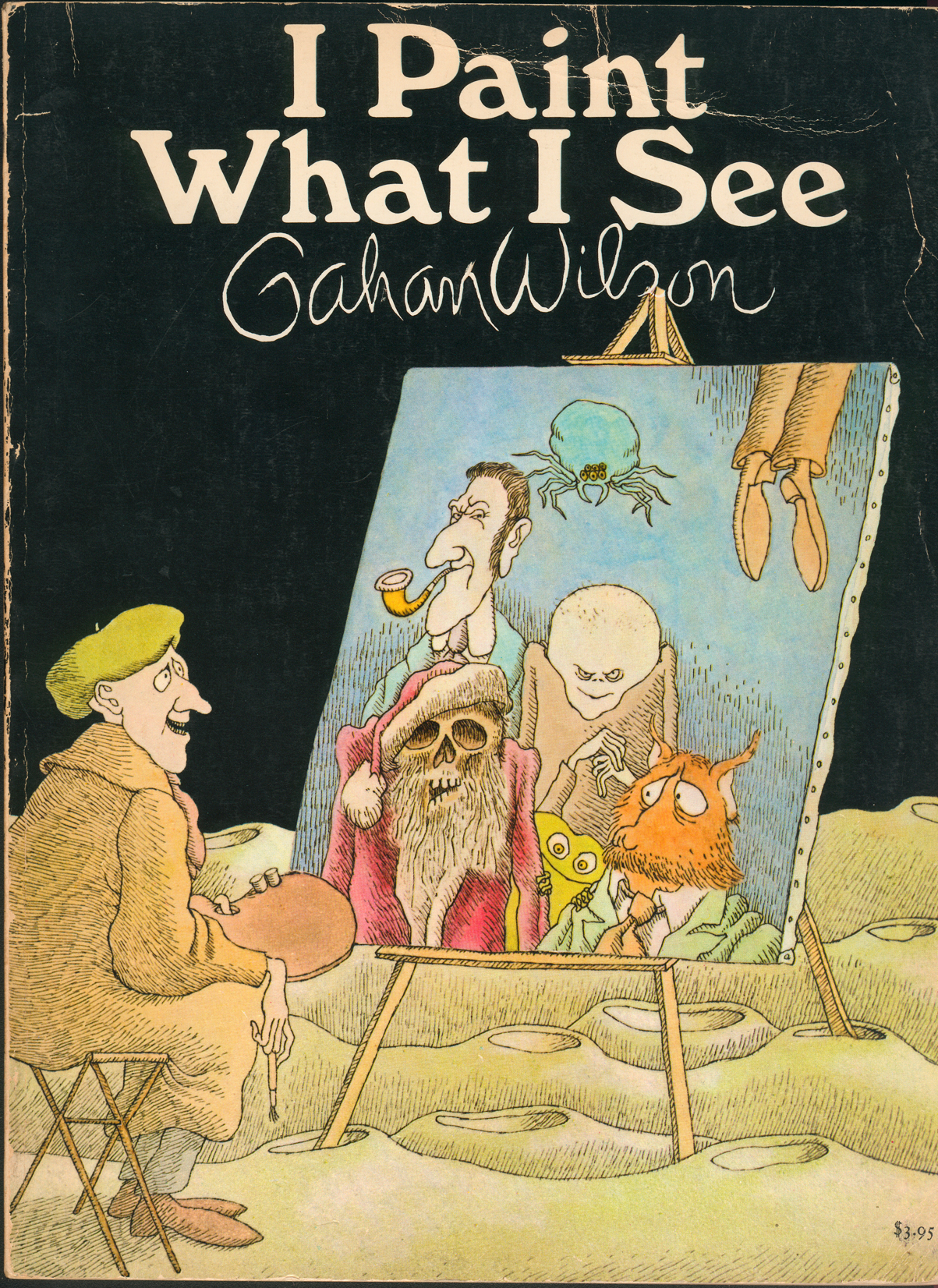
FRANCIS SCHAEFFER ANALYZES ART AND CULTURE Part 101 BEATLES,(MANY CHRISTIANS ATTACKED THE BEATLES WHILE FRANCIS SCHAEFFER STUDIED THEIR MUSIC! Part B) Artist featured today is Cartoonist Gahan Wilson

https://www.youtube.com/watch?v=bgiQD56eWDk

__

Francis Schaeffer did not shy away from appreciating the Beatles. In fact, SERGEANT PEPPER’S LONELY HEARTS CLUB BAND album was his favorite and he listened to it over and over. I am a big fan of Francis Schaeffer but there are detractors that attack him because he did not have all the degrees that they have. However, even many of them give Schaeffer credit for inspiring many young people to further their education and to engage the culture. Professor Barry Hankins of Baylor University noted concerning Francis Schaeffer:

George Marsden had been following Francis Schaeffer’s career since the sixties, having visited L’Abri himself. Marsden’s first occasion to write about Schaeffer came in 1968, during one of Schaeffer’s lecture tours, when Marsden was a young assistant professor at Calvin College. Marsden covered Schaeffer’s visit for an underground newspaper called The Spectacle, where he wrote: “For a Calvin Faculty member the most startling aspect of this achievement is that Mr. Schaeffer, without displaying any particular academic credentials and with an apparent disregard for the usual academic standards and precautions, did exactly what we always have hoped to do-make Christianity appear intellectually relevant to the contemporary era.”14 Noting the strengths and weaknesses of Schaeffer’s style, Marsden compared his lecture to a person sketching a map of the world in five minutes. There would be many erroneous details, but the general outline would be quite helpful. “

“Within a typical hour,” George Marden wrote, “he may present the thought of Antonioni, Aquinas, two Francis Bacons, the Beatles, Bergman, Berstein, Camus, Cezanne, Cimabue, Francis Crick, Leonardo Da Vinci, Eliot, Fellini, Gauguin, Giotto, Hegel, Heidegger, several Huxley’s, Jaspers, Kierkegaard, Leary, Henry Miller, Picasso, Rousseau, Marquis de Sade, Sartre, Terry Southern, Siessinger, Tillich, and Zen Buddhism. Intellectual modesty is not Schaeffer’s long suit. One might sympathize if in the audience another scholar who had spent most of his adult life trying to understand, for instance, Kierkegaard, was appalled.” In contrast to Calvin College at the time, which had censured the official school newspaper for suggesting that students go to movies, Schaeffer, in Marsden’s words, “has seen the dirty movies, read the dirty books, and even heard the dirty words, yet for all that he is a better Christian. Doubtless such evident empathy for the contemporary culture accounts largely for Schaeffer’s remarkable appeal “

In Robert M. Price’s book BEYOND BORN AGAIN we read the reason that many Christians had avoided Beatles’ music:

Bob Larson warns, ” Lyrical content which is directly opposed to Biblical standards and accepted Christian behavior should definitely be avoided. For teenagers listening to the Beatles sing NOWHERE MAN or ELEANOR RIGBY would stop to realize the philosophical implications of the lyrics of these sayings. Nevertheless, the philosophical outlook conveyed will influence their thoughts.”

| On Apr 05, 2013

Jake Meador writes on Edith (and Francis) Schaeffer over at Mere Orthodoxy.

Without the Schaeffers, I sincerely wonder if we’d have magazines like Relevant and Cardus or journals like Books & Culture or the Mars Hill Audio Journal. I know that the nonprofit Ransom Fellowship, run by two very dear friends of mine, would not exist as it does. And even as some of the work they inspired has fallen out of favor in recent years (most notably the Christian worldview movement spearheaded by Charles Colson and Nancy Pearcey), I suspect its critics would not be nearly so well equipped to address the movement’s shortcomings were it not for the trailblazing work of the Schaeffers. After all, the worldview movement’s most astute critic, Jamie Smith, is drawing from the same (reformed) theological well as the Schaeffers.

The Schaeffers made it possible in a way it had not been before to be thoughtfully engaged with (and even delighted by) much of popular culture while still holding to Christian orthodoxy. That is a tremendous accomplishment when one considers that today’s evangelicals are, by and large, the theological descendants of fundamentalists who emphasized separation from the world. When Francis Schaeffer first came to Wheaton in 1968, he spoke on the music of The Rolling Stones and THE BEATLES and Pink Floyd. He talked about the films of Bergman and Antonioni–and at a time when Wheaton’s honor code forbade students from seeing any movies at all! That the Schaeffers accomplished such an enormous cultural work while also modeling a tremendously generous, sacrificial hospitality at L’Abri that imaged the Gospel to thousands of guests over nearly 30 years is nothing short of remarkable.

 ____

In the video THE AGE OF NON-REASON Schaeffer noted,  ” Sergeant Pepper’s Lonely Hearts Club Band…for a time it became the rallying cry for young people throughout the world. It expressed the essence of their lives, thoughts and their feelings.” 

How Should We then Live Episode 7 small (Age of Nonreason)

https://www.youtube.com/watch?v=ygzh713TQn8

__


Saving Leonardo: Book Trailer

https://www.youtube.com/watch?v=jX2V3fASrpU

Take a look at Nancy Pearcey’s story:

I became acutely aware that I had no answers to the most basic questions: Where did I come from? Was life just a chance accident of blind forces? Did it have any purpose? Were there any principles so true and so real that I could build my life on them?

Eventually I embraced RELATIVISM AND SUBJECTIVISM and several of the other popular “isms” of modern culture. For I was determined to be ruthlessly hon-est about the logical consequences of unbelief. IF THERE IS NO GOD, THEN WHAT CAN BE THE BASIS FOR OBJECTIVE OR UNIVERSAL TRUTH? I REALIZED THAT IT IS IMPOSSIBLE TO STEP OUTSIDE OUR LIMITED EXPERIENCE–OUR INSIGNIFICANTLY SMALL SLOT IN THE VAST SCOPE OF THE HISTORY OF THE UNIVERSE–IN ORDER TO GAIN ACCESS TO UNIVERSAL KNOWLEDGE, VALID FOR ALL TIMES AND PLACES.

AND IF THERE IS NO GOD, THEN WHAT CAN BE THE BASI FOR UNIVERSALLY VALID MORAL STANDARDS? Once, when a classmate described someone’s action as “wrong,” I shook my head and began arguing that we cannot know right or wrong in any ultimate sense.

Eventually I began to wonder whether I could even be sure about any reality outside my own head. I began doodling little cartoons of the entire world as nothing more than a thought bubble in my mind. When I graduated from high school, I wrote a senior paper on the topic of “Why I Am Not a Christian.” Later I would discover that Bertrand Russell had written a famous essay by that title (which I had not read yet)–but this was my own manifesto of unbelief.

It was a few years later, when I was attending school in Germany and studying violin at the Heidelberg Conservatory, that I stumbled across L’Abri in Switzerland, the residential ministry of Francis Schaeffer. I was stunned by this place. It was the first time I had ever encountered Christians who actually answered my questions–who gave reasons and arguments for the truth of Christianity instead of simply urging me to have faith. When I arrived, the most obvious thing that struck me was that most of the guests were not even Christian. The place was crowded with hippies sporting long hair, beards, and bell-bottom jeans. At the time, it was extremely rare to discover Christian ministries capable of crossing the countercultural divide to reach alienated young people, and my curiosity was sparked. Who were these Christians?

Schaeffer himself used to strike people as somewhat odd, with his goatee and knickers. (Though when you were actually at L’Abri, it didn’t seem odd at all: After all, this was the Alps–and he dressed like a Swiss farmer.) But when he opened his mouth and began to speak, people were transfixed: Here was a Christian talking about modern philosophy, quoting the existentialists, analyzing worldview themes in the lyrics of Led Zeppelin, explaining the music of John Cage and the paintings of Jackson Pollock. You must remember that this was in an era when Christian college students were not even allowed to go to Disney movies–yet here he was, discussing films by Bergman and Fellini.[34]

[Footnote 34: “This small, intense man from the Swiss mountains delivered a message unlike any heard in evangelical circles in the mid-1960s. At Wheaton College, students were fighting to show films like Bambi, while Francis was talking about the films of Bergman and Fellini. Administrators were censoring existential themes out of student publications, while Francis was discussing Camus, Sartre, and Heidegger. He quoted Dylan Thomas, knew the artwork of Salvador Dali, listened to the music of THE BEATLES and John Cage” (Michael Hamilton, “The Dissatisfaction of Francis Schaeffer” [Christianity Today, March 3, 1997], at www.antithesis.com/ features/dissatisfaction.html).]

Seeing Christians who engaged with the intellectual and cultural world was a complete novelty. In fact, it was such a novelty that I was afraid that I might make a decision for Christianity based on emotion instead of genuine conviction, and so, after only one month, I returned to the States. (To be honest, I fled back home.) And I thought, “I’m going to test these ideas in my college philosophy classes, and see how well they stand up in a secular university setting.”

The most dramatic response came almost immediately. Signing up for my first philosophy course, I discovered it was a huge introductory class, with some three hundred students. Pretty intimidating. For the first major assignment, I took out my copy of Schaeffer’s Escape from Reason and wove some of its themes into my paper. A week or so later, the professor said, “I have your papers to hand back … but first I would like to read one of them to the entire class.”

It was my paper.

Needless to say, I was astonished. And even more so when the professor went on to say, “I have never seen such mature thought in an undergraduate.”Of course, it wasn’t really my thought–it was the Christian worldview analysis I had been learning through L’Abri.Again and again, I tested these ideas in my university classes, and I saw that Christianity really does have the intellectual resources to stand up in a secular academic setting.

While still at L’Abri, I had once accosted another student, demanding that he explain why he had converted to Christianity. A pale, thin young man with a strong South African accent, he responded simply, “They shot down all my arguments.”

“Total Truth” – Nancy Pearcey Book Talk 2006

(Nancy Pearcey below)

The Beatles Help ! | Subtitulada

The Beatles “Help” Live 1965 (Reelin’ In The Years Archives)

__

_______

Artist featured today is Cartoonist Gahan Wilson

GAHAN WILSON: Born Dead Still Weird – Q & A screening at 2011 San Diego Comic Con

“I’LL SHOW YOU!”

INTERVIEW: Filmmaker Steven-Charles Jaffe and ‘Gahan Wilson: Born Dead, Still Weird’

Gahan-Wilson-Steven-Charles-Jaffe-2013

“If Crumb can have a documentary, then so can Gahan Wilson!” The decision had been made.

Gahan Wilson is a force of nature. And so is filmmaker Steven-Charles Jaffe. Wilson found in Jaffe someone who would do justice to his legendary career that spans over 50 years of cartoons for The New Yorker, Playboy, and National Lampoon. Who else even comes close to such an output? That’s why a documentary had to be made. It is called, “Gahan Wilson: Born Dead, Still Weird.” Yes, you read that right, “Born Dead, Still Weird,” and it is currently the subject of a Kickstarter campaign that you can join here.

It was upon seeing “Crumb,” Terry Zwigoff’s landmark 1995 documentary on underground cartoonist Robert Crumb, that Jaffe resolved he needed to create a similarly worthy documentary of his friend and idol, Gahan Wilson. The idea of Jaffe and Wilson working together had already been kicking around for a few years. One plan that continues to interest them is a feature length animated movie based on Wilson’s illustrated book, “Eddy Deco’s Last Caper.” Jaffe and director Nicholas Meyer have approached IMAX about the project so we shall see. A Gahan Wilson animated movie in 3-D would be worth the wait.

For a taste of what it’s like for Wilson and Jaffe to work together, you can view the 2008 animated short, “It Was a Dark and Silly Night.” A story about children determined to have a jello war, even if it’s in a cemetery, this animated short is based on a collaboration between Neil Gaiman and Gathan Wilson for an illustrated anthology, compiled and edited by Art Spiegelman and Françoise Mouly, “Little Lit: It Was a Dark and Silly Night.

There is so much to a Gahan Wilson cartoon: it is entertaining, memorable, scary, and above all else, it won’t let go. “I can’t tell you how many times I have seen a Gahan Wilson cartoon that relates right back to his own life.” Jaffe makes the observation with awe and admiration. An artist of the caliber of Wilson has both a keen sense of whimsy and a backbone made of steel. He was a child of two out of control alcoholic parents. For him, he had to grow up fast while holding on ever tighter to his dreams.

The dream behind “Born Dead, Still Weird” is to give it as wide an audience as possible. Much in the same way that “Crumb” was transcendent, so too this documentary aims to show you the real man and artist. “That’s what struck such a chord with people, to see Robert Crumb on a human level,” says Jaffe. Both Crumb and Wilson climbed their ways out of adversity to unprecedented success. If Jaffe can accomplish his goal of stirring up the pot and getting his documentary considered for an Academy Award nomination, it will go a long way in securing a high profile for “Born Dead, Still Weird.” The essential stage, getting the documentary made is done. But the last stage, marketing and distribution, and just making sure the documentary is known about, is still ahead.

Jaffe recalls the kind words from Robert Redford in support of “Born Dead, Still Weird.” After viewing it, Redford wrote back to Jaffe, “I’m a huge proponent of art not only getting into the educational system but for its ability to save some lives and enhance some lives. It is a fine piece of work and I thank you.” Saving lives. What a joy to be able to make such a difference. This is something that has genuinely stuck with Jaffe. He’s the first to say that he did not set out to make an inspirational film and yet Gahan’s life attracts just that.

From Jaffe’s first encounter with a Gahan Wilson cartoon in Playboy at the tender age of 10, up to today, Jaffe’s felt his own life enriched by Wilson. “He is a total nonconformist,” Jaffe says with delight. In a world where being different can have harsh consequences, as with bullies in school, Gahan Wilson is a shining example of someone who is going to live his life his way.

I hope you enjoy the podcast below that includes the entire interview with Steven-Charles Jaffe. Just click below:

Steven-Charles Jaffe

Be sure to stop by and visit the Kickstarter campaign for “Gahan Wilson: Born Dead, Still Weird” right here.

About these ads

Gahan Wilson: Born Dead, Still Weird – Official Trailer

Gahan Wilson: Born Dead, Still Weird

Veteran Horror Producer launches Oscar Campaign for GAHAN WILSON Doc

, wilson-eye-doctor-actual-image

Veteran producer Steven-Charles Jaffe,  the man behind such FANGORIA-approved classics as MOTEL HELL, DEMON SEED and NEAR DARK and the romantic sci-fi/fantasy gems TIME AFTER TIME, GHOST and STRANGE DAYS recently turned his energy towards the life and times of legendary macabre socio-political cartoonist and illustrator Gahan Wilson with his already award-winning doc BORN DEAD, STILL WEIRD.

And though the film has screened to great acclaim at festivals around the world, it is unfortunately still somewhat invisible. Jaffe is hoping to change that and he needs your help.

The filmmaker’s hope is to get GAHAN WILSON: BORN DEAD, STILL WEIRD recognized by the Academy of Motion Picture Arts and Sciences – aka The Oscars –  for nomination consideration as Best Documentary. To do this, Jaffe needs to raise $26,000 by September 16th. A longshot? Jaffe  is adamant that this loveletter to the inimitable Wilson gets the love it deserves and he’s hoping the artist’s legion of fans around the world feel the same.

Visit www.borndeadstillweird.com to learn more about the hilarious, moving and fascinating film, how you can pledge, the incredible rewards you can receive for being part of this campaign and more. And keep an eye out for an upcoming feature article and interview with Jaffe in FANGORIA where he discusses his thirty-year career producing, directing and writing genre film classics.

Stephen Colbert Extra extras

Hef’s Cartoon Method extra extras

101 Weird Writers #28 — Gahan Wilson

Hearts Like Oysters in “The Sea Was Wet As Wet Could Be”

This post is part of an ongoing series on 101 weird writers featured in The Weird compendium, the anthology that serves as the inspiration for this site. There is no ranking system; the order is determined by the schedule of posts.

gahanwilsonGahan Wilson (1930 – ) is an iconic American writer and cartoonist who has received the World Fantasy Lifetime Achievement Award. (The World Fantasy Award bust of H.P. Lovecraft was designed by Wilson.) His art, routinely appearing in The New Yorker and Playboy, intersects with his fiction in their shared playful grotesquery. Stories of his have appeared inPlayboy, Omni, and, perhaps most famously, in Again, Dangerous Visions with a tale whose title was simply an ink blob. The three-volume set, Gahan Wilson: 50 Years of Playboy Cartoons (2010), recently showcased his art. “The Sea Was Wet As Wet Could Be” (1967), using Lewis Carroll’s Through the Looking Glass as partial inspiration, is one of the weirder and more disturbing tales included in The Weird. In this latest installment of 101 Weird Writers, returning contributor Leif Schenstead-Harris pays tribute to Gahan Wilson and dissects the weird power of “The Sea Was Wet As Wet Could Be” through both its own effects and its connection to Lewis Carroll’s Alice in Wonderland.

 – Adam Mills, editor of 101 Weird Writers

***

 I. What to do when Santa dies in your chimney?

Early in his career Gahan Wilson had a tough time finding a publisher for his cartoons. After all, as he’d be the first to admit, his pictures possess a dark and cruel whimsy. Despite Wilson’s initial difficulties finding a publisher for his work, however, none other than Hugh Hefner tells us that, in the history of Playboy—Wilson’s first and longest publisher—“no cartoonist was more popular, or more enduring, than Gahan Wilson” (7). Wilson’s long tenure as cartoonist for Playboy reveals two general tendencies in his work which I’d like to draw attention to here: the first, a weird fascination with the figure of Santa; the second, situations where a skeleton sits unnoticed among the living, to their laughably myopic failure to see or, more darkly, their failure to care.

A cartoon from October 1964 illustrates a convergence of the two fascinations—but with a twist, as if the time of inattention has come undone and the previously unseen skeletons have fallen into view—only in this case it is Santa’s skeleton that has appeared.

gahan-wilson, Playboy Oct-1964-miss-emmy, page 106(1)

The morbid wonder of the cartoon turns on the caption’s black joke. The illustration shows a skeletal Santa-corpse at the feet of two gray, cloddish workmen and a shapeless and vague-seeming Miss Emmy, her mouth a tiny line reflecting the faint curve of her almost hidden eyebrows. Only Miss Emmy’s oversized eyes and tiny, anxious hands betray any sign of human emotion. Like so many of Wilson’s cartoons, the faces here make the piece, faces which “convey a fearful and discombobulated response to the bewildering and unnerving circumstances they usually find themselves in” (Groth 882). These rare faces are some of the few sites available to sympathy in Wilson’s cartooning work, which is otherwise dominated by, as Neil Gaiman writes, “strange, squashed, Plasticene-faced people […] raggedy mummies and acts of unspeakable cruelty and nightmare” (328). Poised against this aesthetic is Wilson’s nuanced idea of human frailty: “If you’re alive,” Gahan Wilson says, “you’re vulnerable by definition” (Tibbetts 244). Perhaps it’s a mark of his concern for such vulnerability that engenders his fascination with cruelty. Why should a little perversity surprise us?

The October cartoon’s importance lies in its convergence of three features: a morbid theme, a fantastical subject, and an emotional spectator. Each is an important feature of Wilson’s artistic vision. With Santa’s corpse dislodged from Miss Emmy’s chimney, the three characters are confronted with something that challenges their worldview. What would you do if Santa came tumbling dead down your chimney? Coming dead into the world and only belatedly noticed by grey, dull people (despite his soft speech in interviews, Wilson seems very much a contemporary believer in the old cry épater le bourgeois, “shock the middle class”), the fantastic or weird object provokes only widened eyes and anxiety—and, deepest of all, the reminder of death’s inevitability. We might note too that Wilson’s skeletons gesture toward his own early brush with death. Declared still-born at birth, “born dead” as he puts it, young Gahan was only resuscitated by an icy plunge into cold water (Groth 885). The cruel shock saved his life. As the cover of I Paint What I Seesuggests—a grotesque family portrait of the dead, the abnormal, and the rapacious living—Wilson’s art is a straightforward and uncompromising examination of cruelty and morbidity (Altobello). The weird intersections between these ways of being are the channels through which his art takes shape. Being dead, being strange, and being alive: to Gahan Wilson these aren’t ontologies but phases, and troublingly fluid at that.

gahan-wilson-i-paint-what-i-see-cover

The Running lady

Gahan Wilson and The Chicago Art Institute

II. Writing for children: “nobody really gets hurt”

A crucial difference between Gahan Wilson’s cartoons and prose is found by examining their different emotional valences. These differences emerge by comparing certain expectations about artistic genre. The cartoon is a very particular genre, Wilson says, in which “the basic thing is that it should be funny. If it isn’t funny I’ve failed. If I do a monster which just terrified you, or made you sick or something like that, I’d have blown it. What you have to do is take these horrors and end up being a joke, or it’s not a cartoon” (Schweitzer 106). Whatever disconcerting implications his cartoons might engender about human cruelty, death’s inevitability, or so on, a cartoon by Wilson must first be funny.

This firm stance on genre and corresponding admission of a dominant black humour shatters into pieces when taking shape in Wilson’s prose. His short stories achieve a variety of effects, of which “The Sea Was Wet as Wet Could Be” illustrates the blackest terror. At the other end of the spectrum, playful stories such as “The Science Fiction Horror Movie Pocket Computer” could almost pass for a Facebook meme today.

The Science Fiction Horror Movie Pocket Computer; originally published in The National Lampoon

The Science Fiction Horror Movie Pocket Computer; originally published in The National Lampoon

Wilson’s children’s literature—books such as The Bang-Bang Family (1974), Harry the Fat Bear Spy (1973), Harry and the Sea Serpent (1976)—stands in contrast to his work for adults. Here Wilson barely touches his erstwhile fascinations with the monstrous and the horrific. For instance, in Harry and the Sea Serpent, the barely-able bear-spy must overcome his fear of being put to sea in a boat so that he can investigate strange rumours of a sea monster. This accomplished, he discovers that the monster is, in reality, nothing other than an elaborate charade of mirrors. We might say that Wilson’s children’s writing comes packaged with all the normal ideologies of “realist” fiction: that everything is as it seems and, further, that weird threats to this worldview will always have some rational explanation.

While Harry the Bear Spy comes bundled with his genre’s usual accoutrements—cloaks and mysteries, villains and code phrases—the world in which he moves lacks teeth. (But itis one in which macaroons play a signature role.) “[T]he absolute rule in the Harry books is nobody really gets hurt in any sense,” Gahan Wilson says. “And the villains are not really villains, they’re simply sort of silly” (Tibbets 242). In other words, this is hardly fare for even young adults. Wilson’s children’s books are, he admits, “definitely aimed at children. The only adults who are likely to read them are adults with children who are reading them to their kids” (Schweitzer 109). This narrowly focused approach effectively clears a space in Wilson’s writing for adult audiences for material darker, more cynical, and much more threatening.

III. Stories about picnics with “bored and boring drunks”

The characters of “The Sea Was Wet as Wet Can Be” are recognizable as fleshy relatives of Wilson’s skeletal living dead, further examples of his obsession with the posthumous and the skin-creep. Take Carl, Phil’s ominous boss, both threatening and pathetic; in him, despite the bluster of noir-ish cynicism—“Don’t tell me, you never heard of the Walrus and the Carpenter? […] Disgusting, […] You’re an uncultured bitch” (418)—lurks an inner deadness, a disturbing sense of life’s failure. Let’s face it. These aren’t the most sympathetic characters in the canon. Although Carl convincingly acts vivaciously, Phil, our narrator, gives the game away:

Once you got to know Carl, and it took a while, you realized that none of it was really happening. That was because Carl had died, or been killed, long ago. Possibly in childhood. Possibly he had been born dead. So, under the actor’s warmth and rage, the eyes were always the eyes of a corpse. (419)

Furthest from Carl is Irene, perhaps the most sympathetic sketch of the story. Yet even Irene has a twist of weariness about her—she lives with the despair of unsuccessful suicide attempts. Her body is wearing away and she seems “frail and thin against the sunlight” (421). As for Phil, he admits himself to be a veritable archive of regret: “I smoked too much and I drank too much. I did all the wrong things. I didn’t do any of the right things” (421). Between Horace and Mandie, the remaining members of the picnic quintet, readers can almost hear the leaden echoes of a passive aggression that marks their only line of communication. A faint masochist, Horace—Phil “had a sneaking suspicion that [Horace] was really happier when groveling” before his family (417). One wonders about her source of joy in their marriage. All told, then, a ragged and disreputable bunch or, in Phil’s self-loathing judgment, “a crowd of bored and boring drunks” (416).

Wilson’s characters suggest what is also apparent in the story’s narrative arc and context. This is a much different take on the genre than is familiar to the modernist expectations of a James Joyce or Katherine Mansfield. It is more rough-hewn than Edgar Allan Poe, more grounded in its milieu than H.P. Lovecraft. All told, Wilson’s story argues for a changing conception of the genre’s reliance on emotional intensity, epiphanies, and horrific effects. In 1975, eight years after the story’s publication and speaking at the first World Fantasy Conference, Wilson tellingly observed that “[y]our standard television news show is more horrific these days than many of the gothics” or stories such as Dracula or Frankenstein(Schweitzer 105). The prosaic access to this source of horror dulls its effect and through incessant repetition—the “news cycle” works 24 hours a day, every day of the week—flattens emotions. Resultantly, a short story struggling to disrupt this reality cannot come up with a profound epiphany or revelation, as Joyce might wish. It’s all the story can do to overcome its own sense of knowing self-dismissal, even irrelevancy, and produce a clear and overpowering single emotion, to adopt Poe’s famous mandate. The story’s beginning instead sets a tone of weary disgust. “We’re like a group of sticky bugs crawling in an ugly little crowd over polished marble,” thinks Phil (416). He’s not far wrong, despite the simile’s grossness. These days we’ve all read a little Nietzsche. When confronted by nihilism, it’s difficult not to give in to its wearied appeal, let alone critically analyze its effects.

“The Sea Wet as Wet Could Be” turns on its affiliations with Lewis Carroll’s poem (and, more broadly, Carroll’s Alice in Wonderland and Through the Looking Glass). From Carroll, Wilson’s story takes its name, antagonists, and logic. If the short story, as writers from Poe to Joyce to Henry James argue, depends on knowledge and perception, on secrets and surprising twists, then Wilson’s story finds fertile ground in its knowing use of such well-known stories. In his typically obnoxious fashion, Carl mansplains to Mandie that “[t]he Walrus and the Carpenter are probably two of the most famous characters in literature.” (418). Don Quixote and Elizabeth Bennett, take a seat. What’s significant here are at least two things. First, that Carroll’s Alice is a notoriously relentless truth seeker, a born rule-maker whose adventures through Wonderland exemplify the terror of logic and the demand for conformity in the face of startling disorder. Second, that Carl, Mandie, and Phil knowingly discuss the similarities of the two men they meet with Carroll’s characters. Phil even cites Tenniel’s famous illustrations to cinch the question of whether the Carpenter wears an apron or not. It doesn’t seem that they grasp the significance of these figures, however, as if the glamour of fiction clouds their critical faculties. Maybe they’re too ironically knowing to think twice about it. Maybe they’re simply too tired and drunk to wonder.

walrus and carpenter

Unlike Carroll’s Alice, Wilson’s characters linger on superficialities of appearance. Not for them the grasping for the internal logic of size-changing food, nor any patience for a pedantic Caterpillar’s riddles and logical word games. Although conveniently able to quote from Carroll’s poem, they’re unable to understand the relevance of its lines. They are unwilling, perhaps, to think critically about the emergence of these imagined figures from the world of art into their own world. The truth seems before their eyes, but they refuse to see it, swayed by the denials of the two uncanny interlopers from Wonderland. “I would have sworn you were looking for oysters,” Carl manages to piece together, but is rebuffed by Tweedy: “Oh, no, we’ve got the oysters. All we lack is the means to cook ’em” (419). But, with a classic touch of dramatic irony, the trust Wilson’s characters have for these two looks all wrong to readers. The story is fairly transparent in its machinations, as the intruders themselves indicate. Thus when the Walrus ingratiates himself into the picnic party’s logic of alcohol and storytelling, his nature as a loose fragment from another world is exposed, his monstrous presence announces itself as such. “His specialty was outrageous fantasy: wild tales involving incongruous objects, events, and characters. His invention was endless” (420). Warning bells should be ringing for our picnickers.

Hammering the point home, the text intersperses lines from Carroll’s poem, effectively forming direct, textual parallels between the two stories—only now the characters from the poem are telling stories to an audience who once heard stories told about those characters. It would take an Alice to understand the weird logic here taking shape. Despite the utter implausibility of figures wandering out from a fucked-up children’s tale and into a story seemingly of the contemporary world, the Walrus and the Carpenter make a place for themselves—despite the very nonsense of it all. Perhaps they bring the nonsense over with them from Wonderland. We’d be right to be wary. Writing an afterword to his story, Gahan Wilson admits that, when he was a child reading Alice’s Adventures in Wonderlandand Through the Looking Glass,

If it hadn’t been for brave, stolid Alice (bless her stout, young British heart), herself a child, I don’t think I could have survived those goddamn books.

But there is no Alice in this story.

IV. “They’d eaten every one.”

So to avoid the dilemma of the story’s characters, then, and to play Alice a little ourselves, we could retreat a little from the story and give context to the poem it takes its name from. As the poem’s tellers Tweedledee and Tweedledum tell Alice, “The Walrus and the Carpenter” is the longest poem they know. Further, they tell it to her without proper consent. She is lost and in need of directions, more concerned with dealing with a fairly bewildering decision: how is she to escape the dark wood in which she’s lost—a forest becoming ominously dark. Alice’s dilemma comes directly from Dante Alighieri’s Inferno, the first canto of which begins

Nel mezzo del cammin di nostra vita
mi ritrovai per una selva oscura,
ché la diritta via era smarrita.

Or, in Robert Hollander’s English translation,

Midway in the journey of our life
I came to myself in a dark wood,
for the straight way was lost.

The Tweedles are no Virgil. They give her not directions but a poem characterized by nonsense. What kind of aid is this? Is it guidance at all? Perhaps it is a warning about signs. The poem begins thus:

The sun was shining on the sea,
Shining with all his might:
He did his very best to make
The billows smooth and bright—
And this was odd, because it was
The middle of the night.

The moon was shining sulkily,
Because she thought the sun
Had got no business to be there
After the day was done—
‘It’s very rude of him,’ she said,
‘To come and spoil the fun!’

The sea was wet as wet could be,
The sands were dry as dry.
You could not see a cloud, because
No cloud was in the sky:
No birds were flying overhead—
There were no birds to fly. (118-119).

The lively, regular iambs and skipping rhyme of the Tweedles’ ballad masks a dark process. The poem’s objects are given and then immediately negated, as if the iambic foot’s rhythm of up-and-down, here-and-there became one of presence-and-absence, existence-and-negation. The feet beat out duplicitous time. In this uncanny doubling words repeat themselves as self-descriptions (“wet as wet,” “dry as dry”) and seem to empty themselves of meaning (well, then, what does it mean to be wet, or dry?). In this way the poem narrates nonsensical objects that exist simply because. Or they don’t. But, in a twist of negative tautology, you only discover their non-existence in a double take after you’ve imagined them into being.[1] The secret here is language. “One of Carroll’s general techniques,” French philosopher Gilles Deleuze reminds us, “consists of presenting the event twice, precisely because everything occurs by way of, and within, language” (34). The Tweedles’ apparent nonsense can only be rationalized by an act of meta-interpretation, an act that violates the sanctity of our suspension of disbelief and draws attention to the poem’s material existence as words on a page. To conclude, then, there are neither clouds nor birds because both are linguistic figments—the sky, as is so often said, is the only limit of the imagination. The Tweedles’ poem is also, Phil realizes, “a perfect description of a lifeless earth […] Carroll was describing barrenness and desolation” (420). As soon as images are conjured into being they self-destruct, leaving behind word-traces only.  Fiction proclaims its unreality, but—weirdly—we believe in it anyway.

Already we can see how Gahan Wilson rapidly spins the tables on art’s usual distance, bringing it directly into the world, though allowing it to remain inhuman (despite their human names, the Walrus and the Carpenter cannot be taken seriously in this disguise). In his story the negativity of art’s paradox (that it “is not” real as it claims to be, but exists nonetheless; “Ceci n’est pas une pipe”) consumes the conventional signs we intuitively understand, represented here by the regular seeming characters together at a picnic, drinking. What could be more normal? The inclusion of the poem’s lines disrupts narrative coherence, while such familiar figures as Carroll’s bring with them further cognitive dissonance. The fabric of the story is being eaten away. So too are our assumptions about fiction’s relationship to life. The weird aesthetic draws attention to itself as a fabrication but then dismantles the distinctions we normally draw between the imagination and reality.

But how does Alice, that model of Victorian morality, respond to the Tweedles’ poem? After some hemming and hawing, she goes straight to the obvious: “Well! They were bothvery unpleasant characters—,” she says of the Walrus and the Carpenter, but leaves her thought unfinished. She has been distracted, hearing some sound. “‘Are there any lions or tigers about here?’ she asked timidly” (122). Only the Red King snoring. Still, Alice is right to fear. She too is to be incorporated by Wilson’s story, ingested so fully her name disappears and, with it, her caution, her prudence.

Written almost a hundred years after Through the Looking Glass, “The Sea Was Wet as Wet Could Be” replaces middle class Alice with disillusioned and boozy Phil. What else has changed? Carroll’s Wonderland has already been called a vision of “monstrous mindlessness” where “life, viewed rationally and without illusion, appears to be a nonsense tale told by an idiot mathematician,” and from its vision readers can conclude that “we all live slapstick lives, under an inexplicable sentence of death” (Gardner 13). Gahan Wilson, for his part, clearly sees the dangers of Wonderland. He “distrusted the Alice books from the start. […] I knew they were dangerous,” he says; “I opened them only rarely and gingerly” (“Author’s Note”). Compressed into a vicious short story, opposed to the blasé normalcy of the Miss Emmys of the world, Wilson’s weird tale turns Carroll’s poem inside out. It upstages our assumptions about how fiction works, despite all our foreknowledge as grown up Alices who’ve read Carroll through and through: twas brillig, and the slithy toves… Most startlingly, the story does so despite its sheer implausibility—just imagine the narrative equivocation on which the story’s denouement rests: a heart for an oyster!

V. The Terror

Wilson’s voice is one of the growing chorus who tell of the dangerous weirdness of art which we only notice too late, like so many Santa Claus skeletons fallen into uncomprehending view. It has been in our midst all the time. Writing in broad sweeps, Thomas Leitch argues that the “American short story as a genre presents a critique of the notion of a stable and discrete personal identity constituted by an individual’s determinate actions—a means to the author’s unmaking, and the audience’s unknowing, an active determinate self that was only an illusion to begin with” (134). Maybe Leitch is right—now is not the time to properly investigate his claims. But this much is true: if, like Alice, we try to make sense of the world, we will face madness and ultimately disappear into fiction and if, like Phil, we are insensate to fiction’s rapacious appetite for the raw material of human life, we will not only disappear but become consumed, much as the characters of the story are prey to their own consumptive interests: alcohol, pills, destructive relationships. Remember Carl, who “used drinks like other sadists used whips” (416)? It may be initially counterintuitive, but the reader’s consumption of fiction is similarly dangerous, for what else is reading but a resurrection of the ghosts who lie dormant in the body of the text, flitting uneasily in the pages, waiting to spring into the mind of the reader? The land of “make believe” is enticing but full of risks, especially when we think of it as a place to which we might escape. Such is the great ironic appeal of Lev Grossman’s The Magicians, for instance, or the seeming betrayal of heartless George R.R. Martin. Such is also the moral of Gahan Wilson’s short story, if it is to have one at all, signaled by the return of the Walrus and the Carpenter, loosed from their textual bonds in Carroll’s Wonderland to invade a world that eerily looks similar to our own.

From the critical and countercultural impulse épater le bourgeois Wilson develops Angela Carter’s ideas on the Gothic tradition of short stories. This type of story’s only humour, she writes, is “black humour”; its only morality “a single moral function—that of provoking unease” (133). We may not have much left for hearts by the end of the story. What does remain is Phil’s inconstantly compassionate mind. Truthfully, the characters do experience an epiphany of sorts, a dramatic realization of imaginative beauty in inventive storytelling. This mid-story epiphany causes Phil to drunkenly think “the whole secret of everything, the whole core secret, was simply to enjoy it, to take it as it came” (420, my emphasis). Such banality is triggered by the seemingly infinite possibilities of the “endless” and “outrageous” artistry with which the Walrus tells his tales; it is also, however, deeply nonsensical (what does “it” refer to, precisely? Some general feeling of goodness? Beauty?). The Walrus’ epiphany is generated by a world possible only in the imagination—an inhuman world that dreams

Of shoes—and ships—and sealing wax—
Of cabbages—and kings—
And why the sea is boiling hot—
And whether pigs have wings.

The emergence and welcomed reception of such nonsense in the otherwise disillusioned world of Phil, Irene, Carl, Horace, and Mandie is the sign of art and language forcibly colonizing life. It is what Italian philosopher Giorgio Agamben would call an aesthetic of Terror. In this twist, where “the secret” of pure absurdity and excess annexes our prosaic world of suspicion and pills, arguments and cynicism, the characters share “the dream of a language that would be nothing but meaning, of a thought in whose flame the sign would be consumed” (Agamben 8): the disturbing nature of Wonderland reveals itself not in the question of why its inventions exist—simply because—but in their actual and weird existence. “The dream of the Terror,” Agamben writes, “is to create works that are in the world in the same way as the block of stone or the drop of water; it is a dream of a productthat exists according to the statute of the thing” (8). Here is a visceral demonstration of inhuman agency—the dream of a work of art that is its own object: nonsensical, intransitive, deathly. This artwork is as alien to humans as the beach lazily stretching itself before Phil at the end of the story: “vast, smooth, empty, and remote” (422). The beach resembles the perfect space of art: a blank canvas teeming with potential, a dead letter voracious for human attention to invigorate its emptiness. For what is the life of the work of art but one that demands our full investment? No wonder Agamben calls this feature of art “the Terror.” Before such a demonstration (as if a dead Santa Clause has appeared) our eyes may widen, our hands wring. Maybe there’s more than a little of Miss Emmy in each of us.

photo (4)

Works Cited

Agamben, Giogio. The Man Without Content [L’uomo senza contenuto]. 1970. Trans. Georgia Albert. Stanford, CA: Stanford University Press, 1999. Print.

Altobelo, Stephen. “Great Gahan Wilson and Poor Miss Emmy.” Peel Slowly 18 March (2010). Web. 10 May 2013.

Carroll, Lewis. The Annotated Alice: The Definitive Edition; Alice’s Adventures in Wonderland & Through the Looking Glass. 1865 & 1871. Ed. Martin Gardner. New York & London: W.W. Norton, 2000. Print.

Carter, Angela. Fireworks: Nine Stories in Various Disguises. London: Chatto and Windus, 1974. Print.

Dante Aligheri. Inferno. Ed. Giorgio Petrocchi. Trans. Robert Hollander. Princeton Dante Project. Web. 20 May 2013.

Deleuze, Gilles. The Logic of Sense [Loguique du sens]. 1969. Trans. Mark Lester. New York: Columbia University Press, 1990. Print.

Gaiman, Neil. Introduction to Gahan Wilson: Fifty Years of Playboy Cartoons, Volume Two. 3 Volumes. Seattle, WA: Fantagraphics Books, 2009. 327-329. Print.

Gardner, Martin. Introduction to The Annotated Alice: The Definitive Edition. Ed. Martin Gardner. New York & London: W.W. Norton, 2000. xiii-xxii. Print.

Grossman, Lev. The Magicians. New York: Viking, 2009. Print.

Groth, Gary. “Appreciation and Biography.” Gahan Wilson: Fifty Years of Playboy Cartoons, Volume Three. 3 Volumes. Seattle, WA: Fantagraphics Books, 2009. 881-899. Print.

Hefner, Hugh. Introduction to Gahan Wilson: Fifty Years of Playboy Cartoons, Volume One. 3 Volumes. Seattle, WA: Fantagraphics Books, 2009. 5-7. Print.

Leitch, Thomas M. “The Debunking Rhythm of the American Short Story.” Short Story Theory at a Crossroads. Eds. Susan Lohafer and Jo Ellyn Clarey. Baton Rouge: Louisiana State University Press, 1989. Print.

Schweitzer, Darrell. “Interview with Gahan Wilson.” SF Voices: Interviewed by Darrell Schweitzer. Kansas City, MO: T.K. Graphics, 1976. 104-109. Print.

Tibbetts, John. “Gahan Wilson’s Diner: Interview with Gahan Wilson.” The Gothic Imagination: Conversations on Fantasy, Horror, and Science Fiction in the Media. New York: Palgrave Macmillan, 2011. 238-244. Print.

Wilson, Gahan. Author’s Note to “The Sea Was Wet as Wet Could Be.” 1967. Sci Fiction / SciFi.com. Web. 10 May 2013.

———. Harry and the Sea Serpent. New York: Dell, 1976. Print.

———. Harry the Fat Bear Spy. New York: Dell, 1973. Print.

———. I Paint What I See. New York: Simon & Schuster, 1971. Print.

———. The Bang-Bang Family. New York: Scribner, 1974. Print.

———. “The Science Fiction Horror Movie Pocket Computer.” The Year’s Best Science Fiction #5. Eds. Harry Harrison and Brian Aldiss. London: Sphere Books, 1972. 116-117. Print.

———. “The Sea Wet as Wet Can Be.” 1967. The Weird: A Compendium of Strange and Dark Stories. Ed. Ann and Jeff VanderMeer. New York: Tor, 2011. 518-520. Print.

Wolf, Ror. “Nothing was Said.” Trans. Jennifer Marquart. Guernica 3 June 2013. Web.

———. Two or Three Years Later: Forty-Nine Digressions. Trans. Jennifer Marquart. Rochester, NY: Open Letter, 2013. Print.


[1] For an unsettling version of this effect starkly at work in contemporary prose, see the fiction of Ror Wolf, especially the vignettes titled “Nothing was Said” collected at Guernica Magazine. These are excerpted from Two or Three Years Later: Forty Nine Digressions, a selection of Wolf’s work translated by Jennifer Marquart.

______

Image result for sergent peppers album cover

Francis Schaeffer’s favorite album was SGT. PEPPER”S and he said of the album “Sergeant Pepper’s Lonely Hearts Club Band…for a time it became the rallying cry for young people throughout the world. It expressed the essence of their lives, thoughts and their feelings.”  (at the 14 minute point in episode 7 of HOW SHOULD WE THEN LIVE? ) 

Image result for francis schaeffer how should we then live

How Should We Then Live – Episode Seven – 07 – Portuguese Subtitles

Francis Schaeffer

Image result for francis schaeffer

______

FRANCIS SCHAEFFER ANALYZES ART AND CULTURE PART 202 the BEATLES’ last song FREE AS A BIRD (Featured artist is Susan Weil )

February 15, 2018 – 1:45 am

FRANCIS SCHAEFFER ANALYZES ART AND CULTURE Part 200 George Harrison song HERE ME LORD (Featured artist is Karl Schmidt-Rottluff )

FRANCIS SCHAEFFER ANALYZES ART AND CULTURE PART 184 the BEATLES’ song REAL LOVE (Featured artist is David Hammonds )

FRANCIS SCHAEFFER ANALYZES ART AND CULTURE Part 170 George Harrison and his song MY SWEET LORD (Featured artist is Bruce Herman )

FRANCIS SCHAEFFER ANALYZES ART AND CULTURE Part 168 George Harrison’s song AWAITING ON YOU ALL Part B (Featured artist is Michelle Mackey )

FRANCIS SCHAEFFER ANALYZES ART AND CULTURE Part 167 George Harrison’s song AWAITING ON YOU Part A (Artist featured is Paul Martin)

RESPONDING TO HARRY KROTO’S BRILLIANT RENOWNED ACADEMICS!! Part 133 Louise Antony is UMass, Phil Dept, “Atheists if they commit themselves to justice, peace and the relief of suffering can only be doing so out of love for the good. Atheist have the opportunity to practice perfect piety”

FRANCIS SCHAEFFER ANALYZES ART AND CULTURE Part 166 George Harrison’s song ART OF DYING (Featured artist is Joel Sheesley )

FRANCIS SCHAEFFER ANALYZES ART AND CULTURE Part 165 George Harrison’s view that many roads lead to Heaven (Featured artist is Tim Lowly)

FRANCIS SCHAEFFER ANALYZES ART AND CULTURE Part 164 THE BEATLES Edgar Allan Poe (Featured artist is Christopher Wool)

PART 163 BEATLES Breaking down the song LONG AND WINDING ROAD (Featured artist is Charles Lutyens )

FRANCIS SCHAEFFER ANALYZES ART AND CULTURE PART 162 A look at the BEATLES Breaking down the song ALL WE NEED IS LOVE Part C (Featured artist is Grace Slick)

PART 161 A look at the BEATLES Breaking down the song ALL WE NEED IS LOVE Part B (Featured artist is Francis Hoyland )


FRANCIS SCHAEFFER ANALYZES ART AND CULTURE PART 160 A look at the BEATLES Breaking down the song ALL WE NEED IS LOVE Part A (Featured artist is Shirazeh Houshiary)

FRANCIS SCHAEFFER ANALYZES ART AND CULTURE Part 159 BEATLES, Soccer player Albert Stubbins made it on SGT. PEP’S because he was sport hero (Artist featured is Richard Land)

FRANCIS SCHAEFFER ANALYZES ART AND CULTURE Part 158 THE BEATLES (breaking down the song WHY DON’T WE DO IT IN THE ROAD?) Photographer Bob Gomel featured today!

FRANCIS SCHAEFFER ANALYZES ART AND CULTURE Part 118 THE BEATLES (Why was Tony Curtis on cover of SGT PEP?) (Feature on artist Jeffrey Gibson )

FRANCIS SCHAEFFER ANALYZES ART AND CULTURE Part 117 THE BEATLES, Breaking down the song WITHIN YOU WITHOUT YOU Part B (Featured artist is Emma Amos )

_______

Related posts:

FRANCIS SCHAEFFER ANALYZES ART AND CULTURE PART 85 (Breaking down the song “When I’m Sixty-Four” Part B) Featured Photographer and Journalist is Bill Harry

One would think that the young people of the 1960’s thought little of death but is that true? The most successful song on the  SGT PEPPER’S album was about the sudden death of a close friend and the album cover was pictured in front of a burial scene.   Francis Schaeffer’s favorite album was SGT. […]

FRANCIS SCHAEFFER ANALYZES ART AND CULTURE PART 84 (Breaking down the song “When I’m Sixty-Four”Part A) Featured Photographer is Annie Leibovitz

_________ I think it is revolutionary for a 18 year old Paul McCartney to write a song about an old person nearing death. This demonstrates that the Beatles did really think about the process of life and its challenges from birth to day in a  complete way and the possible answer. Solomon does that too […]

FRANCIS SCHAEFFER ANALYZES ART AND CULTURE Part 83 THE BEATLES (Why was Karlheinz Stockhausen on the cover of Sgt. Pepper’s? ) (Feature on artist Nam June Paik )

_____________ Karlheinz Stockhausen was friends with both Lennon and McCartney and he influenced some of their music. Today we will take a close look at his music and his views and at some of the songs of the Beatles that he influenced.   Dr. Francis Schaeffer: How Should We Then Live? Episode 9 (Promo Clip) […]

FRANCIS SCHAEFFER ANALYZES ART AND CULTURE Part 82 THE BEATLES, Breaking down the song DEAR PRUDENCE (Photographer featured is Bill Eppridge)

Mia and Prudence Farrow both joined the Beatles in their trip to India to check out Eastern Religions. Francis Schaeffer noted, ” The younger people and the older ones tried drug taking but then turned to the eastern religions. Both drugs and the eastern religions seek truth inside one’s own head, a negation of reason. […]

FRANCIS SCHAEFFER ANALYZES ART AND CULTURE Part 81 THE BEATLES Why was Dylan Thomas put on the cover of SGT PEPPERS? (Featured artist is sculptor David Wynne)

    Dylan Thomas was included on SGT PEPPER’S cover because of words like this, “Too proud to cry, too frail to check the tears, And caught between two nights, blindness and death.” Francis Schaeffer noted: This is sensitivity crying out in darkness. But it is not mere emotion; the problem is not on this […]

FRANCIS SCHAEFFER ANALYZES ART AND CULTURE Part 80 THE BEATLES (breaking down the song “Lucy in the Sky with Diamonds” ) (Featured artist is Saul Steinberg)

John Lennon was writing about a drug trip when he wrote the song LUCY IN THE SKY WITH DIAMONDS and Paul later confirmed that many years later. Francis Schaeffer correctly noted that the Beatles’ album Sgt. Pepper’s brought the message of drugs and Eastern Religion to the masses like no other means of communication could. Today […]

FRANCIS SCHAEFFER ANALYZES ART AND CULTURE Part 79 THE BEATLES (Why was William Burroughs on Sgt. Pepper’s cover? ) (Feature on artist Brion Gysin)

______________ Why was William S. Burroughs put on the cover of Sgt. Pepper’s Lonely Hearts Club Band? Burroughs was challenging the norms of the 1960’s but at the same time he was like the Beatles in that he was also searching for values and he never found the solution. (In the last post in this […]

FRANCIS SCHAEFFER ANALYZES ART AND CULTURE PART 78 THE BEATLES (Breaking down the song TOMORROW NEVER KNOWS) Featured musical artist is Stuart Gerber

The Beatles were “inspired by the musique concrète of German composer and early electronic music pioneer Karlheinz Stockhausen…”  as SCOTT THILL has asserted. Francis Schaeffer noted that ideas of  “Non-resolution” and “Fragmentation” came down German and French streams with the influence of Beethoven’s last Quartets and then the influence of Debussy and later Schoenberg’s non-resolution which is in total contrast […]

FRANCIS SCHAEFFER ANALYZES ART AND CULTURE Part 77 THE BEATLES (Who got the Beatles talking about Vietnam War? ) (Feature on artist Nicholas Monro )

It was the famous atheist Bertrand Russell who pointed out to Paul McCartney early on that the Beatles needed to bring more attention to the Vietnam war protests and Paul promptly went back to the group and reported Russell’s advice. We will take a closer look at some of Russell’s views and break them down […]

FRANCIS SCHAEFFER ANALYZES ART AND CULTURE Part 76 THE BEATLES (breaking down the song STRAWBERRY FIELDS FOREVER) (Artist featured is Jamie Wyeth)

Francis Schaeffer correctly noted: In this flow there was also the period of psychedelic rock, an attempt to find this experience without drugs, by the use of a certain type of music. This was the period of the Beatles’ Revolver (1966) and Strawberry Fields Forever (1967). In the same period and in the same direction […]

_______________


__________

“Woody Wednesday” ECCLESIASTES AND WOODY ALLEN’S FILMS: SOLOMON “WOULD GOT ALONG WELL WITH WOODY!” (Part 17 MIDNIGHT IN PARIS Part P Ernest Hemingway 5th part “We fear death because we feel that we haven’t loved well enough” )

https://www.youtube.com/watch?v=mpGDkO95KhI

“We fear death because we feel that we haven’t loved well enough or loved at all.” These are words put in Hemingway’s mouth by Woody Allen in MIDNIGHT IN PARIS, but what did Hemingway believe about death?

“All men fear death. It’s a natural fear that consumes us all. We fear death because we feel that we haven’t loved well enough or loved at all, which ultimately are one and the same. However, when you make love with a truly great woman, one that deserves the utmost respect in this world and one that makes you feel truly powerful, that fear of death completely disappears. Because when you are sharing your body and heart with a great woman the world fades away. You two are the only ones in the entire universe. You conquer what most lesser men have never conquered before, you have conquered a great woman’s heart, the most vulnerable thing she can offer to another. Death no longer lingers in the mind. Fear no longer clouds your heart. Only passion for living, and for loving, become your sole reality. This is no easy task for it takes insurmountable courage. But remember this, for that moment when you are making love with a woman of true greatness you will feel immortal.
I believe that love that is true and real creates a respite from death. All cowardice comes from not loving or not loving well, which is the same thing. And when the man who is brave and true looks death squarely in the face like some rhino hunters I know or Belmonte, who is truly brave, it is because they love with sufficient passion to push death out of their minds. Until it returns, as it does to all men. And then you must make really good love again. Think about it.”
Woody Allen

tags: corey-stoll, ernest-hemingway, midnight-in-paris

__

Midnight in Paris OST – 15 – Ballad Du Paris

_

This series deals with the Book of Ecclesiastes and Woody Allen films.  The first post  dealt with MAGIC IN THE MOONLIGHT and it dealt with the fact that in the Book of Ecclesiastes Solomon does contend like Hobbes  and Stanley that life is “nasty, brutish and short” and as a result has no meaning UNDER THE SUN.

The movie MIDNIGHT IN PARIS offers many of the same themes we see in Ecclesiastes. The second post looked at the question: WAS THERE EVER AGOLDEN AGE AND DID THE MOST TALENTED UNIVERSAL MEN OF THAT TIME FIND TRUE SATISFACTION DURING IT?

In the third post in this series we discover in Ecclesiastes that man UNDER THE SUN finds himself caught in the never ending cycle of birth and death. The SURREALISTS make a leap into the area of nonreason in order to get out of this cycle and that is why the scene in MIDNIGHT IN PARIS with Salvador Dali, Man Ray, and Luis Bunuel works so well!!!! These surrealists look to the area of their dreams to find a meaning for their lives and their break with reality is  only because they know that they can’t find a rational meaning in life without God in the picture.

The fourth post looks at the solution of WINE, WOMEN AND SONG and the fifthand sixth posts look at the solution T.S.Eliot found in the Christian Faith and how he left his fragmented message of pessimism behind. In the seventh post the SURREALISTS say that time and chance is all we have but how can that explain love or art and the hunger for God? The eighth  post looks at the subject of DEATH both in Ecclesiastes and MIDNIGHT IN PARIS. In the ninth post we look at the nihilistic worldview of Woody Allen and why he keeps putting suicides into his films.

In the tenth post I show how Woody Allen pokes fun at the brilliant thinkers of this world and how King Solomon did the same thing 3000 years ago. In the eleventh post I point out how many of Woody Allen’s liberal political views come a lack of understanding of the sinful nature of man and where it originated. In the twelfth post I look at the mannishness of man and vacuum in his heart that can only be satisfied by a relationship with God.

In the thirteenth post we look at the life of Ernest Hemingway as pictured in MIDNIGHT AND PARIS and relate it to the change of outlook he had on life as the years passed. In the fourteenth post we look at Hemingway’s idea of Paris being a movable  feast. The fifteenth and sixteenth posts both compare Hemingway’s statement, “Happiness in intelligent people is the rarest thing I know…”  with Ecclesiastes 2:18 “For in much wisdom is much vexation, and he who increases knowledge increases sorrow.” The seventeenth post looks at these words Woody Allen put into Hemingway’s mouth,  “We fear death because we feel that we haven’t loved well enough or loved at all.”


____

Ernest Hemingway with Friends on Safari in Tanganyika, Africa

Love & Death: An Uncanny Relationship

936035_10201335115240795_1621655667_n

I’ve always contemplated about what it means to love a woman – the meaning still eludes me, but there’s no harm in understanding love and how it relates to our fear of death. I’ll start by interpreting some things I’ve researched about and draw on some experiences.

We can all agree that most people fear dying alone, or fear being someone who never loved outright. That being said, we try to make lasting impressions before our time is done, thus resulting in our fear of death.

In Woody Allen’s film “Midnight In Paris”, Ernest Hemingway offers Owen Wilson’s character – Gil Pender – some inspiring words of wisdom about the fear of death. Whether Woody Allen took this from an actual quote by Hemingway or simply adapted it for the film, I’m not entirely sure. However, I did find an expanded quote, and I’d like to share it because it rings true on many situations; situations people cannot easily explain to their significant others. Even more so, it touches on many things men should strive for when loving their women.

Guys, have a seat.

“All men fear death. It’s a natural fear that consumes us all. We fear death because we feel that we haven’t loved well enough or loved at all, which ultimately are one and the same. However, when you make love with a truly great woman, one that deserves the utmost respect in this world and one that makes you feel truly powerful, that fear of death completely disappears. Because when you are sharing your body and heart with a great woman, the world fades away. You two are the only ones in the entire universe. You conquer what most lesser men have never conquered before; you have conquered a great woman’s heart, the most vulnerable thing she can offer to another. Death no longer lingers in the mind. Fear no longer clouds your heart. Only passion for living, and for loving, become your sole reality. This is no easy task for it takes insurmountable courage. But remember this, for that moment when you are making love with a woman of true greatness you will feel immortal. I believe that love that is true and real creates a respite from death. All cowardice comes from not loving or not loving well, which is the same thing. And when the man who is brave and true looks death squarely in the face like some rhino hunters I know or Belmonte, who is truly brave, it is because they love with sufficient passion to push death out of their minds. Until it returns, as it does to all men. And then you must make really good love again. Think about it.” 

– Ernest Hemingway in “Midnight In Paris” , a film by Woody Allen, Goodreads.

When Hemingway mentions at least for that moment”, he’s talking about that moment a woman bestows all that she is to you. It begs the question that how can you, as a man, not do the same? How can you not give all that you are and reassure your woman of her decision? How can you half-a** it and simply roll over after it’s done if you feel elevated; stronger than you have ever been? We are experts at taking advantage of a woman’s vulnerability and reducing it to a few seconds of perceived euphoria.

A woman can make you feel that there is absolutely nothing you can’t do. You conjure up the courage to face your demons and the demons of others. Why then do you no longer fear death? Because conquering “the most vulnerable thing she can offer to another” is sometimes surreal. You’ve taken something immaterial with you to your grave – the “warmth and love of a great woman’s heart”transcend any material or immaterial achievement. You rise above all the “lesser men”  who look for shortcuts to women’s hearts.

It then has become customary for men to believe that the more women they’ve been with the better. Women know we revel in the chase. They believe that the chase is our prize, and this comes from men who want nothing but to get another tick on their mental list. I’d rather be on the lookout for the one that stands out; the one that makes us both better people, even if it only lasts a relationship. No matter who she’s been with before, make it matter when she’s with you.

Yes, there are lesser men conquering many women’s hearts, but maybe not the right ones. Yes, they will be with women almost every other night, but your one woman is worth a hundred of theirs. They’ll have several women on call, but you’ll be with the one that makes you breakfast the next morning (after making great love of course). It’s not about how many you love, but about how you love.

The quote’s ending shouldn’t be taken literally though. When Hemingway says “And then you must make really good love again”, he means to make great love to your woman – or go find love if you haven’t already. I don’t think Hemingway meant that you should have one night stands left, right and center. Finding a truly great woman is circumstantial and you are sometimes lucky. You don’t plan for it and you certainly don’t see it coming. And as with all great things, they take time.

In the end, I related to the quote profoundly because I think I did have that feeling. I did feel that I had nothing to fear. I felt that as long as I loved with passion and a true heart, I didn’t have to worry about anything else. Only a woman can give that to you. If you can relate to this existential feeling, it’s your duty as a man to send your woman to heaven and back on every occasion. If you don’t, there are plenty of men willing to “step” in.

Am I naive to think this way? Maybe, but that feeling made me look at things differently. A woman should not simply be a gateway that allows you to lose the fear of death, but rather a woman should be the sole reason death becomes unimportant. Whether she’s someone you just met, you’re married to or you’re well into a relationship with, if you get this feeling, be the best man you can be.

_________

Francis Schaeffer’s sermon on Ecclesiastes included these words below:

Ecclesiastes is the only pessimistic book in the Bible and that is because of the place where Solomon limits himself. He limits himself to the question of human life, life under the sun between birth and death and the answers this would give.

Ecclesiastes 1:4

English Standard Version (ESV)

A generation goes, and a generation comes,
    but the earth remains forever.

___________________

Ecclesiastes 4:16

English Standard Version (ESV)

16 There was no end of all the people, all of whom he led. Yet those who come later will not rejoice in him. Surely this also is vanity and a striving after wind.

__________________________

In verses 1:4 and 4:16 Solomon places man in the cycle. He doesn’t place man outside of the cycle. Man doesn’t escape the cycle. Man is only cycle. Birth and death and youth and old age. With this in mind Solomon makes this statement.

Ecclesiastes 6:12

12 For who knows what is good for a man during his lifetime, during the few years of his futile life? He will spend them like a shadow. For who can tell a man what will be after him under the sun?

____________________

There is no doubt in my mind that Solomon had the same experience in his life that I had as a younger man. I remember standing by the sea and the moon arose and it was copper and beauty. Then the moon did not look like a flat dish but a globe or a sphere since it was close to the horizon. One could feel the global shape of the earth too. Then it occurred to me that I could contemplate the interplay of the spheres and I was exalted because I thought I can look upon them with all their power, might, and size, but they could contempt nothing and I felt as man as God. Then came upon me a horror of great darkness because it suddenly occurred to me that although I could contemplate them and they could contemplate nothing yet they would continue to turn in ongoing cycles when I saw no more forever and I was crushed.

THIS IS SOLOMON’S FEELING TOO. The universal man, Solomon, beyond our intelligence with an empire at his disposal with the opportunity of observation so he could recite these words here in Ecclesiastes 6:12, “For who knows what is good for a man during his lifetime, during the few years of his futile life? He will spend them like a shadow. For who can tell a man what will be after him under the sun?”

___

___________

Ernest Hemingway and Fidel Castro chat in Havana on May 15, 1960, just over a year before Hemingway’s death. The two men sometimes went fishing together. AP________

Related posts:

A list of the most viewed posts on the historical characters mentioned in the movie “Midnight in Paris”

Characters referenced in Woody Allen’s movie “Midnight in Paris” (Part 38,Alcoholism and great writers and artists)

The characters referenced in Woody Allen’s movie “Midnight in Paris” (Part 36, Alice B. Toklas, Woody Allen on the meaning of life)

Characters referenced in Woody Allen’s movie “Midnight in Paris” (Part 35, Recap of historical figures, Notre Dame Cathedral and Cult of Reason)

The characters referenced in Woody Allen’s movie “Midnight in Paris” (Part 34, Simone de Beauvoir)

The characters referenced in Woody Allen’s movie “Midnight in Paris” (Part 33,Cezanne)

The characters referenced in Woody Allen’s movie “Midnight in Paris” (Part 32, Jean-Paul Sartre)

The characters referenced in Woody Allen’s movie “Midnight in Paris” (Part 31, Jean Cocteau)

The characters referenced in Woody Allen’s movie “Midnight in Paris” (Part 30, Albert Camus)

The Characters referenced in Woody Allen’s “Midnight in Paris” (Part 29, Pablo Picasso)

The Characters referenced in Woody Allen’s “Midnight in Paris” (Part 8, Henri Toulouse Lautrec)

The Characters referenced in Woody Allen’s “Midnight in Paris” (Part 7 Paul Gauguin)

The Characters referenced in Woody Allen’s “Midnight in Paris” (Part 6 Gertrude Stein)

The Characters referenced in Woody Allen’s “Midnight in Paris” (Part 5 Juan Belmonte)

The Characters referenced in Woody Allen’s “Midnight in Paris” (Part 4 Ernest Hemingway)

The Characters referenced in Woody Allen’s “Midnight in Paris” (Part 3 Scott and Zelda Fitzgerald)

The Characters referenced in Woody Allen’s “Midnight in Paris” (Part 2 Cole Porter)

The Characters referenced in Woody Allen’s “Midnight in Paris” (Part 1 William Faulkner)

MUSIC MONDAY Cole Porter “Let’s Do it, Let’s Fall in Love” in the movie MIDNIGHT IN PARIS

_____________

__________

RESPONDING TO HARRY KROTO’S BRILLIANT RENOWNED ACADEMICS!! Part 67 Michio Kaku, Physics Dept, City College of New York, “Remarkable claims require remarkable proof”

___

On November 21, 2014 I received a letter from Nobel Laureate Harry Kroto and it said:

…Please click on this URL http://vimeo.com/26991975

and you will hear what far smarter people than I have to say on this matter. I agree with them.

Harry Kroto

_________________

Below you have picture of Dr. Harry Kroto:

______________

I have attempted to respond to all of Dr. Kroto’s friends arguments and I have posted my responses one per week for over a year now. Today I look at Michio Kaku but here are some of my earlier posts:

Sir David AttenboroughMark Balaguer, Patricia ChurchlandAaron CiechanoverNoam Chomsky,Alan DershowitzHubert Dreyfus, Bart EhrmanIvar Giaever , Roy GlauberRebecca GoldsteinDavid J. Gross,  Brian Greene, Susan GreenfieldAlan Guth, Jonathan HaidtHermann HauserRoald Hoffmann,  Bruce HoodHerbert Huppert,  Gareth Stedman JonesShelly KaganStuart Kauffman,  Lawrence KraussHarry Kroto, Elizabeth Loftus,  Alan MacfarlanePeter MillicanMarvin MinskyLeonard Mlodinow,  Yujin NagasawaDouglas Osheroff,   Saul PerlmutterHerman Philipse,  Robert M. PriceLisa RandallLord Martin Rees,  Oliver SacksMarcus du SautoySimon SchafferJ. L. Schellenberg,   Lee Silver Peter Singer,  Walter Sinnott-ArmstrongRonald de Sousa, Victor StengerBarry Supple,   Leonard Susskind, Raymond TallisNeil deGrasse Tyson,  .Alexander Vilenkin, Sir John WalkerFrank WilczekSteven Weinberg, and  Lewis Wolpert,

Michio Kaku

From Wikipedia, the free encyclopedia
Michio Kaku
Michio Kaku Presentation.jpg

Michio Kaku giving a talk at Campus Party Brasilon February 11, 2012
Born January 24, 1947 (age 67)
San Jose, California, United States
Residence New York City, New York, U.S.
Nationality American
Fields Theoretical physics
Institutions City University of New York
New York University
Institute for Advanced Study
Alma mater Harvard University (A.B., 1968)
University of California, Berkeley(Ph.D., 1972)
Doctoral advisor Stanley Mandelstam
Known for String field theory, popular science
Notable awards Klopsteg Memorial Award (2008)
Website
http://mkaku.org/home/

Michio Kaku (/ˈmi ˈkɑːk/; born January 24, 1947) is an American communicator and popularizer of science, futurist, theoretical physicist, and Henry Semat Professor of Theoretical Physics at the City College of New York. He has written several books about physics and related topics, has made frequent appearances on radio, television, and film, and writes extensive online blogs and articles. He has written three New York Times Best Sellers: Physics of the Impossible (2008), Physics of the Future (2011), and The Future of the Mind (2014). Kaku has hosted several TV specials for the BBC, the Discovery Channel, the History Channel, and the Science Channel.

___

In  the second video below in the 71st clip in this series are his words and  my response is below them. 

50 Renowned Academics Speaking About God (Part 1)

Another 50 Renowned Academics Speaking About God (Part 2)

A Further 50 Renowned Academics Speaking About God (Part 3)

Below is my letter to Dr. Kaku and evidence that I provided to him that answered his quest for remarkable proof.

April 7, 2015

Dr. Michio Kaku,  Professor of Physics, THE CITY COLLEGE OF NEW YORK, New York, NY 10031,

Dear Kaku,

I noticed that you went to Christian schools when growing up and heard that on the program CLOSER TO TRUTH and  that is what me started reading your material. Let me start off by saying that this is not the first time that I have written you. Earlier I shared several letters of correspondence I had with Carl Sagan, and Antony Flew. Both men were strong believers in evolution as you are today. Instead of talking to you about their views today I wanted to discuss the views of you and Charles Darwin. 

TWO THINGS MADE ME THINK OF YOU RECENTLY. On April 5, 2015 at the Fellowship Bible Church Easter morning service in Little Rock, Arkansas our pastor Mark Henry described DOUBTING THOMAS and that description made me think of you.  Moreover, your skeptical view towards  Christianity reminds me of CHARLES DARWIN’S growing doubts throughout his life on these same theological issues such as skepticism in reaction to the claims of the Bible!!!

I’m an evangelical Christian and you are a secularist but I am sure we can both agree with the apostle Paul when he said in First Corinthians 15 that if Christ did not rise from the dead then Christians are to be most pited!!!! I attended Easter services this week and this issue came up and Mark Henry asserted that there is plenty of evidence that indicates that the Bible is historically accurate. Did you know that CHARLES DARWIN thought about this very subject quite a lot?

I just finished reading the online addition of the book Darwin, Francis ed. 1892. Charles Darwin: his life told in an autobiographical chapter, and in a selected series of his published letters [abridged edition]. London: John Murray. There are several points that Charles Darwin makes in this book that were very wise, honest, logical, shocking and some that were not so wise. The Christian Philosopher Francis Schaeffer once said of Darwin’s writings, “Darwin in his autobiography and in his letters showed that all through his life he never really came to a quietness concerning the possibility that chance really explained the situation of the biological world. You will find there is much material on this [from Darwin] extended over many manufacturers years that constantly he was wrestling with this problem.”

Your QUOTE from your tv program:


To get everlasting life in heaven, you have to trust that heaven actually exists. Speaking as a scientist, I think that there is a problem with regards to the afterlife and religious immortality, and that is there’s no proof that it exists. Remarkable claims require remarkable proof. But maybe you don’t need proof. Well, I do.

Quotes like this indicate to me that you are a DOUBTING THOMAS type. YOU MAY FIND IT INTERESTING THAT CHARLES DARWIN WAS ALSO INTERESTED IN THE HISTORICAL ASPECT OF THE BIBLE. When I read the book  Charles Darwin: his life told in an autobiographical chapter, and in a selected series of his published letters, I also read  a commentary on it by Francis Schaeffer and I wanted to both  quote some of Charles Darwin’s own words to you and then include the comments of Francis Schaeffer on those words. I have also enclosed a CD with two messages from Adrian Rogers and Bill Elliff concerning Darwinism.

Charles Darwin observed:

“But I was very unwilling to give up my belief; I feel sure of this, for I can well remember often and often inventing day-dreams of old letters between distinguished Romans, and manuscripts being discovered at Pompeii or elsewhere, which confirmed in the most striking manner all that was written in the Gospels.

Francis Schaeffer commented:

This is very sad. He lies on his bunk and the Beagle tosses and turns and he makes daydreams, and his dreams and hopes are that someone would find in Pompeii or some place like this, an old manuscript by a distinguished Roman that would put his stamp of authority on it, which would be able to show that Christ existed. This is undoubtedly what he is talking about. Darwin gave up this hope with great difficulty. I think he didn’t want to come to the position where his accepted presuppositions were driving him. He didn’t want to give it up, just as an older man he understood where it would lead and “man can do his duty.” Instinctively this of brains understood where this whole thing was going to eventually go…

SINCE CHARLES DARWIN’S DEATH WE NOW HAVE LOTS OF HISTORICAL RECORDS AND MUCH EVIDENCE FROM THE FIELD OF ARCHAEOLOGY THAT SHOW THE BIBLE IS HISTORICALLY ACCURATE.

**************TAKE TIME TO CONSIDER THIS EVIDENCE BELOW********************

I  have been amazed at the prophecies in the Bible that have been fulfilled in history, and also many of the historical details in the Bible have been confirmed by archaeology too. One of the most amazing is the prediction that the Jews would be brought back and settle in Jerusalem again. Another prophecy in Psalms 22 describes the Messiah dying on a cross  almost 1000 years before the Romans came up with this type of punishment.

Many times it has been alleged that the author of the Book of Daniel was from a later period but how did a later author know these 5 HISTORICAL FACTS? How did he know [1] that Belshazzar was ruling during the last few years of the Babylonian Empire when the name “Belshazzar” was lost to history until 1853 when it was uncovered in the monuments? [2] The author also knew that the Babylonians executed individuals by casting them into fire, and that the Persians threw the condemned to the lions. [3] He knew  the practice in the 6th Century was to mention first the Medes, then the Persians and not the other way around. [4] Plus he knew the laws made by Persian kings could not be revoked and [5] he knew that in the sixth century B.C., Susa was in the province of Elam (Dan. 8:2). Of course, the Book of Daniel (2:37-42) clearly predicted the rise of the 4 world empires in the correct order of Babylon, Medo-Persia, Greece, and Rome.

One of the top 10 posts on my blog on this next subject concerning Tyre.   John MacArthur went through every detail of the prophecy concerning Tyre and how history shows the Bible prophecy was correct.  Sagan said he had taken a look at Old Testament prophecy and it did not impress him because it was too vague.

HOW CAN ANYONE SAY THAT THIS FOLLOWING PROPHECY CONCERNING TYRE IS “TOO VAGUE?”

Below is an outline from a sermon from Dr. John MacArthur

Photo of John MacArthur

________________

John MacArthur on the amazing fulfilled prophecy on Tyre and how it was fulfilled by historical events.

LESSON

I. BIBLICAL PROPHECY CONCERNING TYRE (Ezekiel 26:1–28:19)

A. The Forecast

1. The specifics

a) That King Nebuchadnezzar of Babylon would destroy the mainland city of Tyre (26:7-8).

b) That many nations would rise up against Tyre. These nations would come like waves of the sea, one after another (26:3- 4).

c) That Tyre will be made like a flat rock (26:4, 14).

d) That fisherman will dry their nets there (26:5, 14).

e) That the rubble of the city would be cast into the sea (26:12).

f) That Tyre would never be rebuilt (26:14).

2. The setting

Tyre was a great city. It was one of the largest and most powerful cities of Phoenicia, which is modern day Lebanon.

It was well fortified. A great wall protected the city from land attacks while their world-renowned fleet protected them from attack by sea.

Tyre was a flourishing city during the time when Joshua led Israel into the Promised Land. King Hiram, who began his reign during the rule of David, offered David cedars from Tyre to build his palace. He also loaned David his artisans to craft parts of the great palace (1 Chron. 14:1). Hiram also helped Solomon build the Temple by floating cedars down the shoreline to be picked up and hauled to Jerusalem (2 Chron. 2:16). So Tyre was a great city, and both David and Solomon looked to it for aid.

B. The Fulfillment

1. The prophetic call

a) To Nebuchadnezzar

Not long after the prophecy given by Ezekiel, Nebuchadnezzar did exactly what had been predicted–he laid siege against the city in 585 B.C. For thirteen years Nebuchadnezzar cut off the flow of supplies into the city. In 537 B.C. he finally succeeded in breaking the gates down, but found the city almost empty.

During the thirteen-year siege, the people of Tyre moved all their possessions by ship to an island one-half mile offshore. So Nebuchadnezzar gained no plunder (Ezek. 29:17- 20). Although he destroyed the mainland city (Ezek. 26:8), the new city offshore continued to flourish for 250 years. The prophecy of Ezekiel 26:12–“they shall lay thy stones and thy timber and thy dust in the midst of the water”–remained unfulfilled.

b) To Alexander the Great

At age twenty-two, Alexander the Great came east conquering the known world with an army of between thirty and forty thousand men. Having defeated the Persians under Darius III, Alexander was on the march toward Egypt.

(1) The dilemma

Alexander arrived in the Phoenician territory and demanded that the cities open their gates to him. The citizens of Tyre refused, feeling they were secure on their island with their superior fleet.

(2) The decision

Realizing he did not have a fleet that could match Tyre’s, Alexander decided to build a causeway to the island using the ruins from the mainland city. It was about two hundred feet wide. The prophet said that the city would be thrown into the water, and that’s exactly what happened.

(3) The details

Arrian, a Greek historian, wrote about the overthrow of Tyre and how it was accomplished (The Campaigns of Alexander [New York: Penquin, 1958], pp. 132-43). The fortification of Tyre resembled Alcatraz. The city sat offshore like a rock with walls that came down to the edge of the water. Alexander set out to build the only means to approach the city–a land peninsula. Soldiers started pitching rubble into the water, leveling it off as they went so they could march on it. The water got deeper as they approached the island, and to make their task even more difficult, the people of Tyre bombarded them with missiles.

Werner Keller in The Bible as History tells us that to safeguard the operation, Alexander built mobile shields called “tortoises” (New York: Bantam, 1956], p. 361). Knowing that when they reached the city they would have to scale the walls, Alexander built “Hele-poleis,” which were mobile siege towers 160 foot high. The idea was to roll these structures across the causeway and push them up against the walls. A drawbridge on the front of the towers enabled the soldiers to march across the top of the walls and into the city.

Alexander’s men were under constant attack from people within the city and from the Tyrian navy. Realizing that he needed ships to defend his flanks, Alexander returned to the cities he had conquered and demanded their assistance. That fulfilled the prophecy that God “will cause many nations to come up against thee, as the sea causeth its waves to come up” (Ezek. 26:3).

(4) The destruction

Alexander’s plan succeeded. Eight thousand people were slain and thirty thousand were sold into slavery. It took Alexander seven months to conquer Tyre. The causeway he built can be seen to this day.

2. The prophetic result

How did Ezekiel know all those things would happen? The only explanation is he expressed the mind of God. Historian Philip Myers said, “Alexander the Great reduced it [Tyre] to ruins (332 B.C.). She recovered in a measure from this blow, but never regained the place she had previously held in the world. The larger part of the site … is now as bare as the top of a rock–a place where the fishermen that still frequent the spot spread their nets to dry” (General History for Colleges and High Schools [Boston: Ginn and Co., 1889], p. 55). That fulfills the prophecies of Ezekiel 26:4-5, 14. The island city was repopulated, later to be destroyed by the Moslems in A.D. 1281. However, God said the mainland city would never be rebuilt–and it never has. Jerusalem has been rebuilt many times but Tyre will never be rebuilt because a prophet in Babylon said twenty-five centuries ago, “Thou shalt be built no more” (Ezek. 26:14).

___________________

ANY HISTORIAN CAN HAVE ACCESS TO ALL OF THESE RECORDS. WHY NOT TAKE A FEW MOMENTS AND CHECK OUT THESE FACTS YOURSELF? As a secularist you believe that it is sad indeed that millions of Christians are hoping for heaven but no heaven is waiting for them. Paul took a close look at this issue too:

I Corinthians 15 asserts:

12 But if it is preached that Christ has been raised from the dead, how can some of you say that there is no resurrection of the dead? 13 If there is no resurrection of the dead, then not even Christ has been raised. 14 And if Christ has not been raised, our preaching is useless and so is your faith. 15 More than that, we are then found to be false witnesses about God, for we have testified about God that he raised Christ from the dead. But he did not raise him if in fact the dead are not raised. 16 For if the dead are not raised, then Christ has not been raised either. 17 And if Christ has not been raised, your faith is futile; you are still in your sins. 18 Then those also who have fallen asleep in Christ are lost. 19 If only for this life we have hope in Christ, we are of all people most to be pitied.

I sent you a CD that starts off with the song DUST IN THE WIND by Kerry Livgren of the group KANSAS which was a hit song in 1978 when it rose to #6 on the charts because so many people connected with the message of the song. It included these words, “All we do, crumbles to the ground though we refuse to see, Dust in the Wind, All we are is dust in the wind, Don’t hang on, Nothing lasts forever but the Earth and Sky, It slips away, And all your money won’t another minute buy.”

Kerry Livgren himself said that he wrote the song because he saw where man was without a personal God in the picture. Solomon pointed out in the Book of Ecclesiastes that those who believe that God doesn’t exist must accept three things. FIRST, death is the end and SECOND, chance and time are the only guiding forces in this life.  FINALLY, power reigns in this life and the scales are never balanced. The Christian can  face death and also confront the world knowing that it is not determined by chance and time alone and finally there is a judge who will balance the scales.

Both Kerry Livgren and the bass player Dave Hope of Kansas became Christians eventually. Kerry Livgren first tried Eastern Religions and Dave Hope had to come out of a heavy drug addiction. I was shocked and elated to see their personal testimony on The 700 Club in 1981 and that same  interview can be seen on You Tube today. Livgren lives in Topeka, Kansas today where he teaches “Diggers,” a Sunday school class at Topeka Bible ChurchDAVE HOPE is the head of Worship, Evangelism and Outreach at Immanuel Anglican Church in Destin, Florida.

The answer to find meaning in life is found in putting your faith and trust in Jesus Christ. The Bible is true from cover to cover and can be trusted.

Thank you again for your time and I know how busy you are.

Everette Hatcher, everettehatcher@gmail.com, http://www.thedailyhatch.org, cell ph 501-920-5733, Box 23416, LittleRock, AR 72221, United States

Is the Bible historically accurate? Here are some of the posts I have done in the past on the subject: 1. The Babylonian Chronicleof Nebuchadnezzars Siege of Jerusalem2. Hezekiah’s Siloam Tunnel Inscription. 3. Taylor Prism (Sennacherib Hexagonal Prism)4. Biblical Cities Attested Archaeologically. 5. The Discovery of the Hittites6.Shishak Smiting His Captives7. Moabite Stone8Black Obelisk of Shalmaneser III9A Verification of places in Gospel of John and Book of Acts., 9B Discovery of Ebla Tablets10. Cyrus Cylinder11. Puru “The lot of Yahali” 9th Century B.C.E.12. The Uzziah Tablet Inscription13. The Pilate Inscription14. Caiaphas Ossuary14 B Pontius Pilate Part 214c. Three greatest American Archaeologists moved to accept Bible’s accuracy through archaeology.

You can hear DAVE HOPE and Kerry Livgren’s stories from this youtube link:

(part 1 ten minutes)

(part 2 ten minutes)

Kansas – Dust in the Wind (Official Video)

Uploaded on Nov 7, 2009

Pre-Order Miracles Out of Nowhere now at http://www.miraclesoutofnowhere.com

About the film:
In 1973, six guys in a local band from America’s heartland began a journey that surpassed even their own wildest expectations, by achieving worldwide superstardom… watch the story unfold as the incredible story of the band KANSAS is told for the first time in the DVD Miracles Out of Nowhere.

_____________________________

Adrian Rogers on Darwinism

_________________________________

Related posts:

FRANCIS SCHAEFFER ANALYZES ART AND CULTURE Part 53 THE BEATLES (Part E, Stg. Pepper’s and John Lennon’s search in 1967 for truth was through drugs, money, laughter, etc & similar to King Solomon’s, LOTS OF PICTURES OF JOHN AND CYNTHIA) (Feature on artist Yoko Ono)

The John Lennon and the Beatles really were on a long search for meaning and fulfillment in their lives  just like King Solomon did in the Book of Ecclesiastes. Solomon looked into learning (1:12-18, 2:12-17), laughter, ladies, luxuries, and liquor (2:1-2, 8, 10, 11), and labor (2:4-6, 18-20). He fount that without God in the picture all […]

FRANCIS SCHAEFFER ANALYZES ART AND CULTURE Part 52 THE BEATLES (Part D, There is evidence that the Beatles may have been exposed to Francis Schaeffer!!!) (Feature on artist Anna Margaret Rose Freeman )

______________   George Harrison Swears & Insults Paul and Yoko Lucy in the Sky with Diamonds- The Beatles The Beatles:   I have dedicated several posts to this series on the Beatles and I don’t know when this series will end because Francis Schaeffer spent a lot of time listening to the Beatles and talking […]

FRANCIS SCHAEFFER ANALYZES ART AND CULTURE Part 51 THE BEATLES (Part C, List of those on cover of Stg.Pepper’s ) (Feature on artist Raqib Shaw )

  The Beatles in a press conference after their Return from the USA Uploaded on Nov 29, 2010 The Beatles in a press conference after their Return from the USA. The Beatles:   I have dedicated several posts to this series on the Beatles and I don’t know when this series will end because Francis […]

FRANCIS SCHAEFFER ANALYZES ART AND CULTURE Part 50 THE BEATLES (Part B, The Psychedelic Music of the Beatles) (Feature on artist Peter Blake )

__________________   Beatles 1966 Last interview I have dedicated several posts to this series on the Beatles and I don’t know when this series will end because Francis Schaeffer spent a lot of time listening to the Beatles and talking and writing about them and their impact on the culture of the 1960’s. In this […]

FRANCIS SCHAEFFER ANALYZES ART AND CULTURE Part 49 THE BEATLES (Part A, The Meaning of Stg. Pepper’s Cover) (Feature on artist Mika Tajima)

_______________ The Beatles documentary || A Long and Winding Road || Episode 5 (This video discusses Stg. Pepper’s creation I have dedicated several posts to this series on the Beatles and I don’t know when this series will end because Francis Schaeffer spent a lot of time listening to the Beatles and talking and writing about […]

FRANCIS SCHAEFFER ANALYZES ART AND CULTURE PART 48 “BLOW UP” by Michelangelo Antonioni makes Philosophic Statement (Feature on artist Nancy Holt)

_______________ Francis Schaeffer pictured below: _____________________ I have included the 27 minute  episode THE AGE OF NONREASON by Francis Schaeffer. In that video Schaeffer noted,  ” Sergeant Pepper’s Lonely Hearts Club Band…for a time it became the rallying cry for young people throughout the world. It expressed the essence of their lives, thoughts and their feelings.” How Should […]

FRANCIS SCHAEFFER ANALYZES ART AND CULTURE Part 47 Woody Allen and Professor Levy and the death of “Optimistic Humanism” from the movie CRIMES AND MISDEMEANORS Plus Charles Darwin’s comments too!!! (Feature on artist Rodney Graham)

Crimes and Misdemeanors: A Discussion: Part 1 ___________________________________ Today I will answer the simple question: IS IT POSSIBLE TO BE AN OPTIMISTIC SECULAR HUMANIST THAT DOES NOT BELIEVE IN GOD OR AN AFTERLIFE? This question has been around for a long time and you can go back to the 19th century and read this same […]

FRANCIS SCHAEFFER ANALYZES ART AND CULTURE PART 46 Friedrich Nietzsche (Featured artist is Thomas Schütte)

____________________________________ Francis Schaeffer pictured below: __________ Francis Schaeffer has written extensively on art and culture spanning the last 2000years and here are some posts I have done on this subject before : Francis Schaeffer’s “How should we then live?” Video and outline of episode 10 “Final Choices” , episode 9 “The Age of Personal Peace and Affluence”, episode 8 […]

FRANCIS SCHAEFFER ANALYZES ART AND CULTURE Part 45 Woody Allen “Reason is Dead” (Feature on artists Allora & Calzadilla )

Love and Death [Woody Allen] – What if there is no God? [PL] ___________ _______________ How Should We then Live Episode 7 small (Age of Nonreason) #02 How Should We Then Live? (Promo Clip) Dr. Francis Schaeffer 10 Worldview and Truth Two Minute Warning: How Then Should We Live?: Francis Schaeffer at 100 Francis Schaeffer […]

FRANCIS SCHAEFFER ANALYZES ART AND CULTURE Part 44 The Book of Genesis (Featured artist is Trey McCarley )

___________________________________ Francis Schaeffer pictured below: ____________________________ Francis Schaeffer “BASIS FOR HUMAN DIGNITY” Whatever…HTTHR Dr. Francis schaeffer – The flow of Materialism(from Part 4 of Whatever happened to human race?) Dr. Francis Schaeffer – The Biblical flow of Truth & History (intro) Francis Schaeffer – The Biblical Flow of History & Truth (1) Dr. Francis Schaeffer […]

__

___

“Truth Tuesday” There is a difference between believing the Bible is true and the Bible contains truth

There is a difference between believing the Bible is true and the Bible contains truth

The Scientific Age

Uploaded by  on Oct 3, 2011

I love the works of Francis Schaeffer and I have been on the internet reading several blogs that talk about Schaeffer’s work and the work below was really helpful. Schaeffer’s film series “How should we then live?  Wikipedia notes, “According to Schaeffer, How Should We Then Live traces Western history from Ancient Rome until the time of writing (1976) along three lines: the philosophic, scientific, and religious.[3] He also makes extensive references to art and architecture as a means of showing how these movements reflected changing patterns of thought through time. Schaeffer’s central premise is: when we base society on the Bible, on the infinite-personal God who is there and has spoken,[4] this provides an absolute by which we can conduct our lives and by which we can judge society.  Here are some posts I have done on this series: Francis Schaeffer’s “How should we then live?” Video and outline of episode 10 “Final Choices” episode 9 “The Age of Personal Peace and Affluence”episode 8 “The Age of Fragmentation”episode 7 “The Age of Non-Reason” episode 6 “The Scientific Age”  episode 5 “The Revolutionary Age” episode 4 “The Reformation” episode 3 “The Renaissance”episode 2 “The Middle Ages,”, and  episode 1 “The Roman Age,” .

In the film series “WHATEVER HAPPENED TO THE HUMAN RACE?” the arguments are presented  against abortion (Episode 1),  infanticide (Episode 2),   euthanasia (Episode 3), and then there is a discussion of the Christian versus Humanist worldview concerning the issue of “the basis for human dignity” in Episode 4 and then in the last episode a close look at the truth claims of the Bible.

Francis Schaeffer

__________________________

I truly believe that many of the problems we have today in the USA are due to the advancement of humanism in the last few decades in our society. Ronald Reagan appointed the evangelical Dr. C. Everett Koop to the position of Surgeon General in his administration. He partnered with Dr. Francis Schaeffer in making the video below. It is very valuable information for Christians to have.  Actually I have included a video below that includes comments from him on this subject.

Francis Schaeffer

Published on Oct 6, 2012 by 

Francis Schaeffer: “Whatever Happened to the Human Race” (Episode 4) THE BASIS FOR HUMAN DIGNITY

There is a difference between believing the Bible is true and the Bible contains truth.

Ideas Have Consequences

by Henry Morris III, D.Min. *

“Argument weak at this point. Thump podium and holler louder!”

This cliché is quoted derisively from time to time to demonstrate that all arguments have presuppositional beginnings that are logically and empirically “weak.” Every idea, all religions (belief systems)–even scientific theories–have foundational concepts that are unprovable by physical means and intellectual acumen.

This is so commonly understood and widely accepted that we rarely think about this ubiquitous condition. Everybody believes in something. Even the atheist believes that there is no God; there is certainly no way to “prove” such a concept. All men and women have faith that their particular presuppositions provide an adequate basis for their actions and lifestyles.

That broad set of presuppositions is also known as a worldview.

Dallas Willard relates a concept in his book Divine Conspiracy that he occasionally uses in his classes:

In our culture one is considered educated if one “knows the right answers.” That is, if one knows which answers are the correct ones. I sometimes joke with my students at the university where I teach by asking them if they believe what they wrote on their tests. They always laugh. They know belief is not required. Belief only controls life.1

Belief controls life. Now that piece of wisdom is important!

Jesus said it this way:

A good man out of the good treasure of his heart bringeth forth that which is good; and an evil man out of the evil treasure of his heart bringeth forth that which is evil: for of the abundance of the heart his mouth speaketh. (Luke 6:45)

Belief controls life. Ideas have consequences.

  • What you believe determines what you think.
  • What you think dictates what you do.
  • And what you do dominates your life.

In 1981, Francis Schaeffer wrote A Christian Manifesto as a response to a “new” Humanist Manifesto. As he opened his critique of the humanist’s thinking, Dr. Schaeffer noted the fundamental “change in the overall way people think and view the world and life as a whole. This shift has been away from a world view that was at least vaguely Christian in people’s memory (even if they were not individually Christian) toward something completely different–toward a world view based upon the idea that the final reality is impersonal matter or energy shaped into its present form by impersonal chance.”2

This wholesale shift in thinking has so permeated the evangelical church that most Christians struggle with the concept of an almighty, omniscient Creator to whom they must answer one day. The pervasive symptom of this change in thinking is the shift away from trusting the revealed Word of God as an absolute source of truth from the God who cannot lie (Titus 1:2).

Many evangelical churches believe that the Bible may “contain” truth, but that one can no longer be certain of its authority, accuracy, or applicability. Science has supposedly rendered the early chapters of Genesis either useless as history or downright deceptive. Scholars have uncovered so-called “new” secrets about the Lord Jesus and about the Bible. Famous preachers, politicians, and celebrities loudly proclaim allegiance to Jesus, only to be exposed in some scandal that would embarrass the heathen.

We have come far–but certainly not in the right direction! What, then, is the possibility or the potential for righteous correction?

Wherewithal shall a young man cleanse his way? by taking heed thereto according to thy word. With my whole heart have I sought thee: O let me not wander from thy commandments. Thy word have I hid in mine heart, that I might not sin against thee. (Psalm 119:9-11)

May the heart of the great Creator, whose word spoke the heavens into existence, draw us this day into a certainty about His inspired word of truth.

References

  1. Willard, D. 1998. The Divine Conspiracy: Rediscovering Our Hidden Life in God. San Francisco: HarperSanFrancisco, 317.
  2. Schaeffer, F. A. 1981. A Christian Manifesto. Westchester, IL: Crossway Books, 17-18.

* Dr. Morris is Chief Executive Officer of the Institute for Creation Research.

Cite this article: Morris III, H. 2009. Ideas Have Consequences. Acts & Facts. 38 (6): 22.

Related posts:

Francis Schaeffer’s “How should we then live?” Video and outline of episode 10 “Final Choices” (Schaeffer Sundays)

E P I S O D E 1 0   Dr. Francis Schaeffer – Episode X – Final Choices 27 min FINAL CHOICES I. Authoritarianism the Only Humanistic Social Option One man or an elite giving authoritative arbitrary absolutes. A. Society is sole absolute in absence of other absolutes. B. But society has to be […]

Francis Schaeffer’s “How should we then live?” Video and outline of episode 9 “The Age of Personal Peace and Affluence” (Schaeffer Sundays)

E P I S O D E 9 Dr. Francis Schaeffer – Episode IX – The Age of Personal Peace and Affluence 27 min T h e Age of Personal Peace and Afflunce I. By the Early 1960s People Were Bombarded From Every Side by Modern Man’s Humanistic Thought II. Modern Form of Humanistic Thought Leads […]

Francis Schaeffer’s “How should we then live?” Video and outline of episode 8 “The Age of Fragmentation” (Schaeffer Sundays)

E P I S O D E 8 Dr. Francis Schaeffer – Episode VIII – The Age of Fragmentation 27 min I saw this film series in 1979 and it had a major impact on me. T h e Age of FRAGMENTATION I. Art As a Vehicle Of Modern Thought A. Impressionism (Monet, Renoir, Pissarro, Sisley, […]

Francis Schaeffer’s “How should we then live?” Video and outline of episode 7 “The Age of Non-Reason” (Schaeffer Sundays)

E P I S O D E 7 Dr. Francis Schaeffer – Episode VII – The Age of Non Reason I am thrilled to get this film series with you. I saw it first in 1979 and it had such a big impact on me. Today’s episode is where we see modern humanist man act […]

Francis Schaeffer’s “How should we then live?” Video and outline of episode 6 “The Scientific Age” (Schaeffer Sundays)

E P I S O D E 6 How Should We Then Live 6#1 Uploaded by NoMirrorHDDHrorriMoN on Oct 3, 2011 How Should We Then Live? Episode 6 of 12 ________ I am sharing with you a film series that I saw in 1979. In this film Francis Schaeffer asserted that was a shift in […]

Francis Schaeffer’s “How should we then live?” Video and outline of episode 5 “The Revolutionary Age” (Schaeffer Sundays)

E P I S O D E 5 How Should We Then Live? Episode 5: The Revolutionary Age I was impacted by this film series by Francis Schaeffer back in the 1970′s and I wanted to share it with you. Francis Schaeffer noted, “Reformation Did Not Bring Perfection. But gradually on basis of biblical teaching there […]

Francis Schaeffer’s “How should we then live?” Video and outline of episode 4 “The Reformation” (Schaeffer Sundays)

Dr. Francis Schaeffer – Episode IV – The Reformation 27 min I was impacted by this film series by Francis Schaeffer back in the 1970′s and I wanted to share it with you. Schaeffer makes three key points concerning the Reformation: “1. Erasmian Christian humanism rejected by Farel. 2. Bible gives needed answers not only as to […]

“Schaeffer Sundays” Francis Schaeffer’s “How should we then live?” Video and outline of episode 3 “The Renaissance”

Francis Schaeffer’s “How should we then live?” Video and outline of episode 3 “The Renaissance” Francis Schaeffer: “How Should We Then Live?” (Episode 3) THE RENAISSANCE I was impacted by this film series by Francis Schaeffer back in the 1970′s and I wanted to share it with you. Schaeffer really shows why we have so […]

Francis Schaeffer’s “How should we then live?” Video and outline of episode 2 “The Middle Ages” (Schaeffer Sundays)

  Francis Schaeffer: “How Should We Then Live?” (Episode 2) THE MIDDLE AGES I was impacted by this film series by Francis Schaeffer back in the 1970′s and I wanted to share it with you. Schaeffer points out that during this time period unfortunately we have the “Church’s deviation from early church’s teaching in regard […]

Francis Schaeffer’s “How should we then live?” Video and outline of episode 1 “The Roman Age” (Schaeffer Sundays)

Francis Schaeffer: “How Should We Then Live?” (Episode 1) THE ROMAN AGE   Today I am starting a series that really had a big impact on my life back in the 1970′s when I first saw it. There are ten parts and today is the first. Francis Schaeffer takes a look at Rome and why […]

Francis Schaeffer: “Whatever Happened to the Human Race” (Episode 5) TRUTH AND HISTORY

Francis Schaeffer: “Whatever Happened to the Human Race” (Episode 5) TRUTH AND HISTORY Published on Oct 7, 2012 by AdamMetropolis This crucial series is narrated by the late Dr. Francis Schaeffer and former Surgeon General Dr. C. Everett Koop. Today, choices are being made that undermine human rights at their most basic level. Practices once […]

Francis Schaeffer: “Whatever Happened to the Human Race” (Episode 4) THE BASIS FOR HUMAN DIGNITY

The opening song at the beginning of this episode is very insightful. Francis Schaeffer: “Whatever Happened to the Human Race” (Episode 4) THE BASIS FOR HUMAN DIGNITY Published on Oct 7, 2012 by AdamMetropolis This crucial series is narrated by the late Dr. Francis Schaeffer and former Surgeon General Dr. C. Everett Koop. Today, choices […]

Francis Schaeffer: “Whatever Happened to the Human Race” (Episode 3) DEATH BY SOMEONE’S CHOICE

Francis Schaeffer: “Whatever Happened to the Human Race” (Episode 3) DEATH BY SOMEONE’S CHOICE Published on Oct 6, 2012 by AdamMetropolis This crucial series is narrated by the late Dr. Francis Schaeffer and former Surgeon General Dr. C. Everett Koop. Today, choices are being made that undermine human rights at their most basic level. Practices […]

Francis Schaeffer: “Whatever Happened to the Human Race?” (Episode 2) SLAUGHTER OF THE INNOCENTS

Francis Schaeffer: “Whatever Happened to the Human Race?” (Episode 2) SLAUGHTER OF THE INNOCENTS Published on Oct 6, 2012 by AdamMetropolis This crucial series is narrated by the late Dr. Francis Schaeffer and former Surgeon General Dr. C. Everett Koop. Today, choices are being made that undermine human rights at their most basic level. Practices […]

Francis Schaeffer: “Whatever Happened to the Human Race” (Episode 1) ABORTION OF THE HUMAN RACE

It is not possible to know where the pro-life evangelicals are coming from unless you look at the work of the person who inspired them the most. That person was Francis Schaeffer.  I do care about economic issues but the pro-life issue is the most important to me. Several years ago Adrian Rogers (past president of […]

The following essay explores the role that Francis Schaeffer played in the rise of the pro-life movement. It examines the place of How Should We Then Live?, Whatever Happened to the Human Race?, and A Christian Manifesto in that process.

This essay below is worth the read. Schaeffer, Francis – “Francis Schaeffer and the Pro-Life Movement” [How Should We Then Live?, Whatever Happened to the Human Race?, A Christian Manifesto] Editor note: <p> </p> [The following essay explores the role that Francis Schaeffer played in the rise of the pro-life movement.  It examines the place of […]

By Everette Hatcher III | Posted in Francis Schaeffer | Edit | Comments (0)