Monthly Archives: September 2015

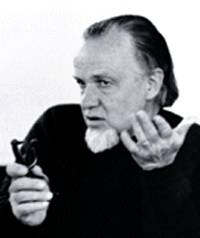
THE ARTISTS, POETS and PROFESSORS of BLACK MOUNTAIN COLLEGE (the college featured in the film THE LONGEST RIDE) Part 22 Poet Charles Olson, friend of Ezra Pound

__________________

Charles Olson and daughter Kate, Black Mountain College. Photo by Mary Ann Giusti. Courtesy Mary Ann Giusti

The Longest Ride Movie CLIP – Bull Riding Lesson (2015) – Britt Robertson, Scott Eastwood Movie HD

_________________

Scott Eastwood Interview – The Longest Ride

My first post in this series was on the composer John Cage and my second post was on Susan Weil and Robert Rauschenberg who were good friend of CageThe third post in this series was on Jorge Fick. Earlier we noted that  Fick was a student at Black Mountain College and an artist that lived in New York and he lent a suit to the famous poet Dylan Thomas and Thomas died in that suit.

The fourth post in this series is on the artist  Xanti Schawinsky and he had a great influence on John Cage who  later taught at Black Mountain College. Schawinsky taught at Black Mountain College from 1936-1938 and Cage right after World War II. In the fifth post I discuss David Weinrib and his wife Karen Karnes who were good friends with John Cage and they all lived in the same community. In the 6th post I focus on Vera B. William and she attended Black Mountain College where she met her first husband Paul and they later  co-founded the Gate Hill Cooperative Community and Vera served as a teacher for the community from 1953-70. John Cage and several others from Black Mountain College also lived in the Community with them during the 1950’s. In the 7th post I look at the life and work of M.C.Richards who also was part of the Gate Hill Cooperative Community and Black Mountain College.

In the 8th post I look at book the life of   Anni Albers who is  perhaps the best known textile artist of the 20th century and at Paul Klee who was one  of her teachers at Bauhaus. In the 9th post the experience of Bill Treichler in the years of 1947-1949  is examined at Black Mountain College. In 1988, Martha and Bill started The Crooked Lake Review, a local history journal and Bill passed away in 2008 at age 84.

In the 10th post I look at the art of Irwin Kremen who studied at Black Mountain College in 1946-47 and there Kremen spent his time focused on writing and the literature classes given by the poet M. C. Richards. In the 11th post I discuss the fact that Josef Albers led the procession of dozens of Bauhaus faculty and students to Black Mountain.

In the 12th post I feature Wassily Kandinsky (1866-1944) who was featured in the film THE LONGEST RIDE and the film showed Kandinsky teaching at BLACK MOUNTAIN COLLEGE which was not true according to my research. Evidently he was invited but he had to decline because of his busy schedule but many of his associates at BRAUHAUS did teach there. In the 13th post I look at the writings of the communist Charles Perrow. 

Willem de Kooning was such a major figure in the art world and because of that I have dedicated the 14th15th and 16th posts in this series on him. Paul McCartney got interested in art through his friendship with Willem because Linda’s father had him as a client. Willem was a  part of New York School of Abstract expressionism or Action painting, others included Jackson Pollock, Elaine de Kooning, Lee Krasner, Franz Kline, Arshile Gorky, Mark Rothko, Hans Hofmann, Adolph Gottlieb, Anne Ryan, Robert Motherwell, Philip Guston, Clyfford Still, and Richard Pousette-Dart.

In the 17th post I look at the founder Ted Dreier and his strength as a fundraiser that make the dream of Black Mountain College possible. In the 18th post I look at the life of the famous San Francisco poet Robert Duncan who was both a student at Black Mountain College in 1933 and a professor in 1956. In the 19th post I look at the composer Heinrich Jalowetz who starting teaching at Black Mountain College in 1938 and he was one of  Arnold Schoenberg‘s seven ‘Dead Friends’ (the others being Berg, Webern, Alexander Zemlinsky, Franz Schreker, Karl Kraus and Adolf Loos). In the 20th post I look at the amazing life of Walter Gropius, educator, architect and founder of the Bauhaus.

In the 21st post I look at the life of the playwright Sylvia Ashby, and in the 22nd post I look at the work of the poet Charles Olson who in 1951, Olson became a visiting professor at Black Mountain College in North Carolina, working and studying here beside artists such as John Cage and Robert Creeley.[2]

Charles Olson

From Wikipedia, the free encyclopedia
Charles Olson
Charles Olson.jpg
Born 27 December 1910
Worcester, Massachusetts
Died 10 January 1970 (aged 59)
New York City, New York
Resting place Gloucester, Massachusetts
Language English
Nationality American
Education B.A. and M.A. at Wesleyan University
Genre Poetry
Literary movement Modernism
Notable works The Distances, The Maximus Poems
Spouse Constance Wilcock, Betty Kaiser
Children Katherine, Charles Peter
Relatives Karl (Father), Mary Hines (Mother)

Literature portal

Charles Olson (27 December 1910 – 10 January 1970) was a second generation American poet who was a link between earlier figures such as Ezra Pound and William Carlos Williams and the New American poets, which includes the New York School, the Black Mountain School, the Beat poets, and the San Francisco Renaissance. Consequently, many postmodern groups, such as the poets of the language school, include Olson as a primary and precedent figure. He described himself not so much as a poet or writer but as “an archeologist of morning.”

Life[edit]

Olson was born to Karl Joseph and Mary Hines Olson and grew up in Worcester, Massachusetts, where his father worked as a mailman. Olson spent summers in Gloucester, Massachusetts, which was to become the focus of his writing. At high school he was a champion orator, winning a tour of Europe as a prize.[1] He studied literature and American studies, gaining a B.A and M.A at Wesleyan University.[2] For two years Olson taught English at Clark University then entered Harvard University in 1936 where he finished his coursework for a Ph.D. in American civilization but failed to complete his degree.[1] He then received a Guggenheim fellowship for his studies of Herman Melville.[2] His first poems were written in 1940.[3]

In 1941, Olson moved to New York and joined Constance “Connie” Wilcock in civil marriage, together having one child, Katherine. Olson became the publicity director for the American Civil Liberties Union. One year later, he and his wife moved to Washington, D.C., where he spent the rest of the war years working in the Foreign Language Division of the Office of War Information, eventually rising to Assistant Chief of the division.[2] (The chief of the division was the future senator from California, Alan Cranston.) In 1944, Olson went to work for the Foreign Languages Division of the Democratic National Committee. He also participated in the Franklin Delano Roosevelt campaign, organizing a large campaign rally at New York’s Madison Square Garden called “Everyone for Roosevelt”. After Roosevelt’s death, upset over both the ascendancy of Harry Truman and the increasing censorship of his news releases, Olson left politics and dedicated himself to writing, moving to Key West, Florida, in 1945.[1] From 1946 to 1948 Olson visited poet Ezra Pound at St. Elizabeths psychiatric hospital (sic) in Washington D.C., but was repelled by Pound’s increasingly fascist tendencies.[3]

Gravestone of Charles and Betty Olson, Beechbrook Cemetery,Gloucester, Massachusetts

In 1951, Olson became a visiting professor at Black Mountain College in North Carolina, working and studying here beside artists such as John Cage and Robert Creeley.[2] He subsequently became rector of Black Mountain College and had a second child, Charles Peter Olson, with one of his students, Betty Kaiser. Before his divorce from his first wife finalized, Olson married Kaiser.

Olson’s ideas came to deeply influence a generation of poets, including writers such as Denise Levertov, Paul Blackburn, Ed Dorn and Robert Duncan.[2] At 204 cm (6’8″), Olson was described as “a bear of a man”, his stature possibly influencing the title of his Maximus work.[4] Olson wrote copious personal letters, and helped and encouraged many young writers. He was fascinated with Mayan writing. Shortly before his death, he examined the possibility that Chinese and Indo-European languages derived from a common source. When Black Mountain College closed in 1956, Olson settled in Gloucester, Massachusetts. He served as a visiting professor at the University at Buffalo (1963-1965) and at the University of Connecticut (1969).[2] The last years of his life were a mixture of extreme isolation and frenzied work.[3] Olson’s life was marred by alcoholism, which contributed to his early death from liver cancer. He died in New York in 1970, two weeks past his fifty-ninth birthday, while in the process of completing The Maximus Poems.[5] 8″

Work[edit]

Early writings[edit]

Olson’s first book, Call Me Ishmael (1947), a study of Herman Melville‘s novel Moby Dick, was a continuation of his M.A. thesis from Wesleyan University.[6]

In Projective Verse (1950), Olson called for a poetic meter based on the poet’s breathing and an open construction based on sound and the linking of perceptions rather than syntax and logic. He favored metre not based on syllable, stress, foot or line but using only the unit of the breath. In this respect Olson was foreshadowed by Ralph Waldo Emerson‘s poetic theory on breath.[7] The presentation of the poem on the page was for him central to the work becoming at once fully aural and fully visual[8] The poem “The Kingfishers” is an application of the manifesto. It was first published in 1949 and collected in his first book of poetry, In Cold Hell, in Thicket (1953).

Olson’s second collection, The Distances, was published in 1960. Olson served as rector of the Black Mountain College from 1951 to 1956. During this period, the college supported work by John Cage, Robert Creeley, Allen Ginsberg, Robert Duncan, Fielding Dawson, Cy Twombly, Jonathan Williams, Ed Dorn, Stan Brakhage and many other members of the 1950s American avant garde. Olson is listed as an influence on artists including Carolee Schneemann and James Tenney.[9]

Olson’s reputation rests in the main on his complex, sometimes difficult poems such as “The Kingfishers”, “In Cold Hell, in Thicket”, and The Maximus Poems, work that tends to explore social, historical, and political concerns. His shorter verse, poems such as “Only The Red Fox, Only The Crow”, “Other Than”, “An Ode on Nativity”, “Love”, and “The Ring Of” are more immediately accessible and manifest a sincere, original, emotionally powerful voice. “Letter 27 [withheld]” from The Maximus Poems weds Olson’s lyric, historic, and aesthetic concerns. Olson coined the term postmodern in a letter of August 1951 to his friend and fellow poet, Robert Creeley.

The Maximus Poems[edit]

In 1950, inspired by the example of Pound’s Cantos (though Olson denied any direct relation between the two epics), Olson began writing The Maximus Poems. An exploration of American history in the broadest sense, Maximus is also an epic of place,Massachusetts and specifically the city of Gloucester where Olson had settled. Dogtown, the wild, rock-strewn centre of Cape Ann, next to Gloucester, is an important place in The Maximus Poems. (Olson used to write outside on a tree stump in Dogtown.) The whole work is also mediated through the voice of Maximus, based partly on Maximus of Tyre, an itinerant Greek philosopher, and partly on Olson himself. The last of the three volumes imagines an ideal Gloucester in which communal values have replaced commercial ones. When Olson knew he was dying of cancer, he instructed his literary executor Charles Boer and others to organise and produce the final book in the sequence following Olson’s death.[5]

External links[edit]

__________________

Modern, Romance: Touring MoMA with Nicholas Sparks, King of the Tearjerker

By Terry Wyatt/Getty Images.
The best-selling romance author designed his own crash course in Abstract Expressionism to research The Longest Ride.

Before his debut novel The Notebook, the ur-chick-lit text, sold for $1 million in 1995, Nicholas Sparks got by selling dental equipment and pharmaceuticals. Seventeen novels, 90 million copies, and 10 movies later, all in the grab-the-tissues category, Sparks can afford to follow his heart’s desires. In 2006, he founded a private school, the Epiphany School of Global Studies, whose graduates are “health-cognizant, emotionally intelligent, openly generous, deeply humble, visibly trustworthy, and profoundly honest.” Recently, he has taken to collecting art, with an eye toward what complements the decor of his palatial house and its private bowling alley in New Bern, North Carolina.

“That would match my home,” Sparks said recently, looking up at a Gerhard Richter pastoral at the Museum of Modern Art. Andy Warhol wouldn’t make the cut, neither would Edward Ruscha.

“I’m not a massive fan of minimalism,” Sparks said walking past a black-and-white Frank Stella canvas. “It doesn’t move me.”

In his 20 years as a writer, Sparks, 49, has tried many permutations of the “love is the greatest gift of all” chestnut. He studied business in college, and wrote at night. He chose romance as his genre because he noticed, with a salesman’s eye, that there was room in the market. His novels, which promise “extraordinary journeys” and “extraordinary truths,” tend toward maximalism. Lovers, young and old, are pulled apart by doubt, secrecy, and illness, but once they let love in, they can receive “the greatest happiness—and pain” they’ll ever know.

And yet, each book needs new material. In The Longest Ride, Sparks’s 2013 flirtation with art-history fiction, which opens as a film on Friday, a couple in the 1940s begin buying paintings from a group of young artists from Black Mountain College in North Carolina. Decades later those artists are household names—de Kooning, Twombly, Rauschenberg—and the collection is worth more than Sparks’s own real-life fortune many times over. I had invited Sparks to MoMA for a morning tour with Eva Diaz, a professor of art history at Pratt, who recently published The Experimenters: Chance and Design at Black Mountain College, which describes the school as “a vital hub of cultural innovation.”

Amid the crush of school groups, Sparks, dressed in Levi’s and a red Burberry polo shirt, found Diaz, who reminded us that the college’s success sprang from tragedy: Bauhaus artists persecuted by the Nazis had fled to the States, helped establish the unaccredited school, and brought new energy to painting, design, and architecture in America.

To write the story of Ira and Ruth, the collectors in the book, Sparks designed his own crash course in Abstract Expressionism. “I’m certainly nowhere near as knowledgeable,” Sparks said, bowing his head toward Diaz. “I’m a kindergartner compared to a grad student.”

“Hey, I’m a professor,” said Diaz, who wore fading orange lipstick and wild curly hair. On the museum’s third floor, she pointed out four album covers that had circles and squares arranged in whimsical patterns, the work of Black Mountain instructor Josef Albers.

“So much of this is playing with repetition,” she said.

“You can say the same things about my novels,” Sparks said, echoing his critics. “It’s always a love story, it’s North Carolina, it’s a small town, a couple of likeable people.”

And, yet, he insists variations keep the books from feeling formulaic. “There are a few threads of familiarity, but you don’t know the period, you don’t know the age of the characters, you don’t know the dilemma, you don’t know whether it’s first person, third person, limited third person omniscient, some combination, you don’t know whether its going to be happy, sad, or bittersweet.”

Sparks spotted a Jackson Pollock and asked Diaz about the artist’s education. She said Pollock didn’t get an art degree before he established his studio in a barn on Long Island.

“I’m Jackson Pollock in the shed,” said Sparks, who majored in finance, his voice booming in the quiet gallery.

Diaz led Sparks to Willem de Kooning’s “Woman,” the first of a six-part series, which he painted after studying with Albers. Diaz explained that though the gestures on the canvas seem improvised and random, de Kooning spent months making the work. Sparks’s imagery—“in the distance, the banks of a small lake were dotted with cattle, smoky, blue-tipped mountains near the horizon framing the landscape like a postcard”—hews closer to Thomas Kinkade’s than de Kooning’s, but he saw similarities in their processes.

“When I’m creating something, I often know that a section is wrong,” Sparks said. He typically works at a brisk pace, six months per a novel, but a recent paragraph had taken 22 hours. “I sometimes wonder if de Kooning never got it quite right. That’s what I sense in the ‘Woman’ series: he looked at it, and says, ‘So much is right, but it’s not right.’”

In the lobby, Sparks paused to call his driver to take him the seven blocks to the Sherry-Netherland where he was staying. In addition to art, The Longest Ride involves a subplot about a handsome bull rider, played in the film by Scott Eastwood. Sparks had heard there was a bar equipped with a mechanical bull nearby, but declared a limit to his willingness to research his subject.

“I ain’t riding that bull,” he said.

Katia Bachko is the executive editor of The Atavist magazine, and a writer based in New York.

North Carolina’s Black Mountain College: A New Deal in American Education

September 13, 2010 Mary Emma Harris

Print Friendly

Black Mountain College was founded in the fall of 1933 by a group of faculty who had broken away from Rollins College following a fracas in which several faculty members were fired and others resigned in protest. It closed in the spring of 1957 after a judge ordered that academic programs should be ended until all debts were paid. In the intervening twenty-four years, the college evolved into a unique American venture in education, and the energy and ideas engendered there continue to influence the arts and education in the United States. Fine Arts Magazine

Left: John Andrew Rice. Courtesy NCSA, BMC Papers.

At the center of the Rollins controversy was John Andrew Rice, Professor of Classics. A gadfly with an ingrained dissatisfaction with the status quo and authority figures, Rice, along with others, had challenged President Hamilton Holt’s progressive educational program. In April 1933, Rice was fired. Soon thereafter, Ralph Reed Lounsbury and Frederick Raymond Georgia, who had objected to Rollins’s violation of Rice’s academic freedom, were also fired. [1] These three along with Theodore Dreier, who had resigned, found themselves unemployed in the depths of the Great Depression. It seemed an opportune time to create the ideal college that had long been the subject of late-night discussions. They had two months in which to locate a ready-made campus, write a charter and obtain a certificate of incorporation, hire faculty and recruit students, and organize their ideas into a coherent philosophy. Literature teacher Joseph Martin recalled that the informal opening ceremony on the porch of Robert E. Lee Hall was similar to a “pick-up game of football,” an occasion “happily terminated by lunch.” [2]  By the end of the first quarter there were twelve teachers and twenty-two students.

John Rice had been at odds with administrations at all colleges and universities where he had taught, and the experience at Rollins had only enhanced his discontent. Black Mountain College would be owned and administered by the faculty. There would be a Board of Fellows composed of several faculty elected by their peers and one student elected by students. The Board of Fellows would manage financial matters and the hiring and firing of faculty. Faculty would control all academic matters. An Advisory Board, with only the power of persuasion, was primarily a list of prominent individuals who believed in the college’s ideals and generously lent their names to increase the college’s credibility to a skeptical public. Among its members were John Dewey, Walter Gropius, and Alfred Einstein. There was to be no endowment, and donations were accepted only if they came with no effort to influence the college’s educational program.

Essentially the founders’ intention was to educate students for productive, participatory life in a democratic society. This was to be achieved through a curriculum which encouraged independent, critical thinking and life in a community where students would mature emotionally into responsible adults. At the center of the educational program was a close relationship between faculty and students and responsibility by the students for many aspects of their educational experience. Students entered in the Junior Division, a period of general study, and after passing a two-day examination covering all aspects of the curriculum, moved to the Senior Division, a period of specialization. Graduation was achieved by oral and written examinations by an outside examiner who was an authority in the student’s area of study. It was a rigorous process and only about sixty students graduated in the college’s twenty-four year history. Although term-end grades were recorded in the office for transfer purposes, the student did not know what grades were given. Of great significance for the college’s history and influence, the practice of the arts would be at the center of the learning experience.

The Black Mountain lifestyle and traditions evolved in the first years and were essential to the creative, unstructured environment. In its idealism, the college resembled a small religious community; in its reliance on limited means, a pioneering village; in its intense and experimental arts activity, a Bohemian arts colony; in its informal life style and woodland setting, a summer camp. Strongly influenced by the personalities of those who taught and studied at the college, the tenor of the community changed year by year. National and international events such as the Great Depression, World War II, and McCarthyism altered its history and were a catalyst for new programs and possibilities.

The Blue Ridge Assembly buildings provided the college with an ideal campus. Robert E. Lee Hall with its three-story high wooden columns was an imposing structure. One entered into a large lobby that extended through to the back of the building. On either side and on the second and third floors were rows of dormitory-style rooms used by YMCA guests at summer conferences. Faculty without children and students lived in Lee Hall, and those with children, in nearby cottages on the property. There were so many rooms that each student and faculty member had a study although students shared rooms for sleeping. The dining hall in which students, faculty and families shared meals was located behind Lee Hall and joined by a covered walkway.

There were classes in the mornings and evenings. In the afternoons everyone took part in a work program that included general maintenance, work on the college farm which was started the first year, and office and administrative work. Dress was informal with most wearing jeans during the daytime and casual clothes for dinner. Isolated in the Blue Ridge Mountains, far from any major metropolitan center, energies were focused inward on study and college activities

There were no bells to announce the beginning or end of classes and no students rushing with books from one class to another. Limited financial means encouraged innovation, and the students and faculty provided their own entertainment in the form of weekend concerts and drama productions, hikes in the mountains, parties (either simple or with elaborate decorations), after dinner dancing or community sings, or hikes in the mountains. For students such as Sewell ‘Si’ Sillman, it was the not the “highlights” – the luminaries and intense summer sessions in the arts – but the “day-to-day routine that was really Black Mountain.” [3] It was the interaction among individuals and the integration of learning with work, community, and recreation that had a profound effect on students.  With considerable effort the college managed to achieve publicity in national publications, and visitors, both the curious and the committed, arrived to observe the college, among them John Dewey, Aldous Huxley, Henry Miller, May Sarton, and Thornton Wilder. Visitors were frequently called on for group discussions, concerts and lectures to the community.

In the first semester the college brought Josef Albers, abstract artist and former teacher of the fundamental course at the recently-closed Bauhaus, from Germany to teach art. At Black Mountain, he adapted these courses, formulated to train professional designers, to general education. His wife Anni Albers, eminent weaver, taught weaving and textile design. From their arrival, Black Mountain College was to be the setting for a dynamic fusion of American Progressivism and European Modernism, and the college was to be associated with modern art and innovative teaching in the visual arts.

John Rice and Josef Albers, both born in 1888, were charismatic teachers and most in the community took their courses. In appearance and personality they were polar opposites. Rice was a Southerner, short and rotund, with a wink in his eye and a quick wit. Albers was slim and ascetic, disciplined and focused. Rice prided himself on his ability to assess and reveal the foibles of others, a practice that was to be a source of controversy in the community. Among Rice’s courses were creative writing and a class called Plato in which students examined concepts and questioned assumptions. Albers taught classes in design, color, painting, and drawing. Born in Brooklyn in 1902, Theodore Dreier, who taught mathematics and physics, was tall, athletic, and idealistic. His family was well-to-do and had close connections to the art world. He immediately assumed the role of fund-raiser, and for sixteen years, his dedicated efforts and endless proselytizing were responsible for the college’s survival. John Evarts, a young musician with a gift for improvisation, taught music. He was able through his piano playing after dinner and on weekends to bring the often-divided college together for dance and song, and when he left to join the war effort in 1942, he was irreplaceable. Other faculty in the 1930s included Rhodes scholar Joseph Walford Martin in literature, Robert Wunsch in theater, and Frederick Georgia in chemistry.

Josef and Anni Albers were the first of many refugee artists and scholars hired by the college. Some had already arrived in the United States; others the college brought directly from Europe. Among those teaching in the 1930s were Fritz Moellenhoff, former student of Hans Sachs who had been assistant director of the Kuranstalten Westend in Berlin, and Erwin Straus, a neurologist and a noted phenomenologist in the field of psychology who had been editor of Der Nervenartz and a member of the faculty at the University of Berlin; Alexander ‘Xanti’ Schawinsky, artist and theater director who had studied with Oskar Schlemmer at the Bauhaus; and Heinrich Jalowetz, along with Anton Webern and Alban Berg among Schoenberg’s first students, who had been director of the Cologne Opera before he lost his position when Hitler came to power in 1933. Jalowetz was one of the most beloved teachers at Black Mountain and died and was buried there in 1946. These accomplished individuals had been leaders in their fields, and their respect for disciplined study provided a critical balance to the college’s informal structure. They both changed and were changed by the college.

Although in the beginning – largely at the urging of John Rice – there was an attempt to determine what were acceptable Black Mountain teaching methods, this critical assessment was eventually abandoned, and teachers were left to decide how to run their classes. Some lectured and required regular papers; others did not. Generally, a completed assignment was a ticket to class. There were tests in some classes but no scheduled school-wide end of the term examinations. An attempt to teach an interdisciplinary class in the first year was not repeated. Essentially the unending conversation in the dining hall and informal gatherings was a far more effective form of interdisciplinary education that a formal class. In the cases where there was more than one teacher in a field, faculty worked together on the curriculum, but there were no formal departments.

The administration of the college was a time-consuming responsibility for the faculty. Generally, decisions were arrived at by consensus, and Board of Fellows, faculty, student and community meetings were endless. There were committees to handle all aspects of college life. Without a separate administration to settle disputes, all too often differences in opinion became explosive conflicts and ended with a group of faculty and a coterie of their student supporters leaving, a loss the college could ill afford.

The 1930s ended with the resignation of John Rice in 1940 after a long leave-of-absence and the move in June 1941 by the college to its own property Lake Eden. The Blue Ridge owners were constantly in search of a more lucrative tenant, and in 1937 the college had purchased the Lake Eden property north of the Village of Black Mountain as a hedge against a sudden ouster. In 1939 Walter Gropius and Marcel Breuer were commissioned to design a modern, unified campus which would provide for music and art studios and workshops, classrooms, common rooms for community gatherings, a dining hall, faculty housing and other facilities.  In the spring of 1940, when the faculty began to raise funds for the buildings, they discovered that, while donors would make small contributions for the annual running of the college, they would require an administrative structure with a guarantee of longevity and continuity of purpose to make large contributions. The situation was further complicated by the buildup of wartime production and the fact that Weatherford had found a new tenant and had given the college notice that they would have to vacate the property at the end of the 1941 spring semester.

Lawrence Kocher, former editor of the Architectural Record and a long-time advocate for the college, was hired to design simpler, modern buildings which could be constructed by faculty and students working with a contractor.  The property had been developed as a summer camp and inn, and there were two lodges which could be used for dormitories, a dining hall, and a number of cottages, all in a rustic mountain style. The year 1940-41 was the most cohesive in the college’s history as everyone pulled together to construct the Studies Building, to winterize existing buildings, to construct a house for the kitchen staff, and to begin work on a barn and additional faculty cottages. [4]

Black Mountain College was able to survive the war years only by taking out a second mortgage on the college property. Most of the men students and younger faculty were drafted or left to join the war effort, and those who remained were largely European refugees and women students. Despite travel and building restrictions, the college had a vibrant academic program. Among the new faculty were Eric Bentley, a young Englishman and Brechtian scholar who had graduated from Yale University and taught at UCLA. Two new music teachers, both refugees, were Fritz Cohen, cofounder of the Jooss Ballet and composer of the score for the dance, The Green Table, and Edward Lowinsky, a young scholar of Early Music. The college farm thrived and provided essential food when wartime rationing was in effect.

At Blue Ridge, the college had to vacate the buildings in the summers when the YMCA held its summer assemblies. In 1940, 1941 and 1942 at Lake Eden it held a regular summer session and a work camp to help with the construction of new buildings and to provide the farm with workers. In 1943 it sponsored a Seminar on America for Foreign Scholars, Teachers, and Artists. In 1944, in addition to the summer session and work camp, it sponsored music and art institutes. These intense summer programs in the arts which attracted a large number of students, some of whom remained as fulltime students, were ultimately to alter the history and influence of the college. In the summer of 1944 the Music Institute was a celebration of Arnold Schoenberg’s seventieth birthday. Although Schoenberg was unable due to failing health to travel from California, the Institute brought together leading performers and interpreters of his music for an intense series of concerts and lectures. The Art Institute had as its faculty muralist Jean Charlot, sculptor José de Creeft, painter Amédée Ozenfant, and photographers Barbara Morgan and Josef Breitenbach. The college had to rent rooms across the valley at Blue Ridge to accommodate the students. Faculty in the summers of 1945 and 1946 included Will Burtin, Lyonel Feininger, Fannie Hillsmith, Jacob Lawrence, Leo Lionni, Robert Motherwell, Beaumont Newhall and Ossip Zadkine in art, and in music, Erwin Bodky, Alfred Einstein, Eva Heinetz, Hugo Kauder, and Josef Marx, among others.

As the college was enveloped in an intense round of classes, concerts, and lectures in the summer of 1944, it was simultaneously embroiled in what was without question the most vituperative internal conflict in its history. The previous year a number of fractious issues had torn the college, the most difficult being that of integration. North Carolina was a segregated state, and there were those who feared for the college’s safety if it were to integrate. Finally, the issue was resolved with a decision to permit two black women students to enroll for the summer. Nerves were still raw over the integration debate when in the middle of the summer session, two women students who had hitchhiked to visit Eric Bentley, who was teaching at Fisk University in Nashville, Tennessee, were arrested in Chattanooga on their return to the college and jailed. The crisis culminated in the resignations of Bentley, Cohen and his wife dancer Elsa Kahl, Clark Forman, and languages teacher Frances de Graaff, along with a large coterie of students.

As the international conflict came to an end in the summer of 1945, a critically wounded Black Mountain College began slowly to rebuild. Black students were admitted for the regular sessions. Recruitment was not easy, and the college found that few were able to attend a college that did not offer an accredited degree. New faculty members were hired including M.C. Richards, a young scholar from the University of Chicago, to teach writing and literature, and her husband Albert William Levi in social sciences and philosophy. Max Wilhelm Dehn, eminent Frankfurt geometer, taught mathematics and philosophy, and Fritz Hansgirg, metallurgist who had been hired during the war, remained to teach chemistry. Theodore Rondthaler, a North Carolinian from an esteemed Moravian family, arrived to teach Latin, history and literature. John Wallen, who was exploring methods of group dynamics, taught psychology, and David Corkran, former headmaster at the North Shore Country Day School in Winnetka, Illinois, taught history. When the Alberses were on sabbatical, Ilya Bolotowksy taught art, and Trude Guermonprez Elsesser and Franziska Mayer, weaving and textile design.

Approval under the GI Bill of Rights was essential to the college’s survival after the war, and with that approval a number of students, attracted both by the arts curriculum and by the opportunity to study in an unregimented environment, enrolled. As the student body swelled to almost a hundred students, there was concern that it was becoming too large.  The GIs who were older and who had experienced the discipline of military life and the horrors of conflict were eager to pursue a delayed education. Among those enrolled during this period, both GIs and recent high school graduates, were filmmaker Arthur Penn, writer James Leo Herlihy, and artists Ruth Asawa, Joseph Fiore, Lorna Blaine Halper, Ray Johnson, Lore Kadden Lindenfeld, Kenneth Noland, Robert Rauschenberg, Sewell Sillman, Kenneth Snelson, John Urbain, and Susan Weil.

In the summer of 1948, Josef Albers organized a Summer Session in the Arts which was be a pivotal moment in the college’s arts programs. Although previously both the regular sessions and the special summer sessions had brought together American-born and refugee faculty, the Europeans, far more accomplished than the younger American teachers, had been dominant. The 1948 summer faculty included John Cage, Merce Cunningham, Willem de Kooning, and Buckminster Fuller, all at the time unrecognized, but artists who would become seminal figures in the arts in the United States during the second half of the Twentieth Century. Buckminster Fuller, who was a last minute replacement, attempted to erect his first geodesic dome that summer. When it failed, it was dubbed the “supine” dome, and everyone cheerfully dismissed the “failure” as part of the process of experimental and a step on the way to success. Cage and Cunningham captivated the imagination of the community. They were to remain a presence at Black Mountain through 1953 as visitors and as summer faculty.

During the 1948-49 school year, the college once again was split into opposing camps. At issue was an effort to find a way to provide for the college’s survival. GI Bill revenues were declining, and it was nearly impossible to raise the funds annually to keep the college open. Many plans were considered. One was to have the University of North Carolina at Chapel Hill adopt Black Mountain as an experimental school. Another was to narrow the curriculum to focus on the arts with limited offerings in other areas. The crisis ended with the resignations in the spring of 1949 of Theodore Dreier, Josef Albers, Anni Albers, Charlotte Schlesinger, and Trude Guermonprez.

During the 1950s, even as the college began to sell land to survive, it experienced an explosion of creative activity. Poet and historian Charles Olson, who had taught one long weekend a month during the 1948-49 school year, returned to teach fulltime in 1951. Students Joseph Fiore and Pete Jennerjahn were hired to teach art, and Hazel Larsen Archer, to teach photography. M.C. Richards remained to teach “reading and writing.” Katherine Litz taught dance, and composers Stefan Wolpe and Lou Harrison, music. Wesley Huss taught theater. In the last years, in addition to Olson, writers Robert Duncan, Robert Creeley, and Robert Hellman taught writing. Creeley, who was living in Mallorca, edited the Black Mountain Review, which gave a coherent means of publication for Olson, Creeley, Duncan and their associates. Pete Jennerjahn taught a Light, Sound, Movement Workshop which explored non-literary multimedia performance. The press, which previously had been used primarily to print college forms and concert and drama programs, was used by the students and faculty to print their own writing. Students during the 1950s included John Chamberlain, Edward Dorn, Francine du Plessix Gray, Joel Oppenheimer, Robert Rauschenberg, Michael Rumaker, Cy Twombly, and Jonathan Williams.

Through the summer of 1953 the college continued to sponsor summer sessions which attracted exceptional faculty, including John Cage, Merce Cunningham, Paul Goodman, Franz Kline, Robert Motherwell, Ben Shahn, Theodoros Stamos, and Jack Tworkov. In 1952, faced with an ever smaller student body, Charles Olson proposed a radical change in the college program. Already, through attrition, the college had become a college of the arts. Under Olson’s plan the college would abandon any remaining vestiges of progressive education such as the work program, the farm, and community in education in favor of a series of year-round institutes which would bring together major figures in the arts, the sciences and the humanities.  The Pottery Institute in the fall of 1952 had as its faculty Shoji Hamada, Bernard Leach, Soestsu Yanagi, and Marguerite Wildenhain. An Institute in the New Sciences of Man had Marie-Louise von Franz and Robert Braidwood as guest speakers. The 1953 summer institute, the last of the major summer programs, featured potters Peter Voulkos, Warren MacKenzie, and Daniel Rhodes along with a general faculty in art, dance, theater and music. At summer’s end, faced with a greatly diminished student body and faculty, the lower campus with the Studies Building and Dining Hall were closed, and students and faculty moved up the hill into faculty cottages. It was impossible for the small coterie to keep up the property or to manage the farm.

By the fall of 1956 there were three teachers: Charles Olson, Wesley Huss, and Joseph Fiore, and Fiore was taking a year’s sabbatical. Olson and Huss decided that the time had come to close the Lake Eden campus. Students, including a group who had worked that summer with Robert Duncan on Medea: The Maidenhead, the first of his Medea triology, returned with him to San Francisco to continue their studies as part of Olson’s “dispersed” university. Olson remained at Lake Eden to formulate other programs and deal with legal issues. Since 1951, the faculty had been paid half-salaries in money (and at times beef from the farm) and the other half had been listed as a debt against the college. Three sued the college for the unpaid salaries, both because they were seniors and badly in need of income and because they, along with others, felt the time had come for the college to close. Olson traveled to San Francisco to deliver his, Special View of History lectures as part of the Black Mountain curriculum. In March a judge ordered that academic programs cease until debts were paid and legal issues resolved. The final issue of the Black Mountain Reviewappeared in the fall of 1957. Olson, the last rector, had arranged in advance for its printing costs. On January 9, 1962, the Final Account was approved and the college books were closed respectably with all debts paid and a balance of zero.

The influence of Black Mountain College and the productivity of its faculty and students has been extensive and diverse. Many have had stellar careers; others have achieved significant recognition as university professors, early childhood educators, artists, musicians, writers, and scientists. Institutions as diverse as Marlboro College in Vermont, the North Carolina School of the Arts, and Catlin Gable School in Portland, Oregon have been influenced by Black Mountain. The “Black Mountain Poets” include both poets and prose writers who published in the Black Mountain Review, some of whom were never at the college. The designation excludes other Black Mountain writers who were at the college but did not publish in the Review. Among the artists, there is no identifiable Black Mountain style. This diversity, rather than a limitation, is a tribute to the college’s fostering of independent thinking and working.

Essential to the success of Black Mountain College was its administration by the faculty; this also was the root of many of its problems. In the instances when the college sought the assistance of a professional administrator, inevitably there was talk of a standard curriculum, predictable results, and a conventional appearance. In each case, the college refused to exchange the open, receptive, flexible atmosphere for the possibility of longevity. A critical part of the college program was its willingness to let things happen, not to create a circumscribed program with a predictable result. Fuller’s “Supine Dome,” the founding of the Merce Cunningham Dance Company, John Cage’s first “happening,” and Josef Albers’s design and color curriculum which he later taught at Yale University were not planned outcomes.

More than five decades have passed since Black Mountain College closed. Still, its story continues to have an impact in the arts and education worldwide. Biographies are being written, documentaries filmed, and exhibitions organized. The energy and ideas engendered are a continuing catalyst for new beginnings in the arts and education.

by Mary Emma Harris ©, 2010, Contributing Writer

Mary Emma Harris is an independent scholar and author of, The Arts at Black Mountain College (The MIT Press, 1987). She is Chair of the Black Mountain College Project, Inc. (www.bmcproject.org), a not-for-profit organization devoted to the documentation of the history and influence of Black Mountain College.

____________________________________

Legend

BMC Project. Black Mountain College Project, Inc., New York, New York.

NCSA, North Carolina Department of Cultural Resources, Division of Archives and History, Raleigh, North Carolina.

BMC Papers, Black Mountain College Papers.

BMC Research Project Papers. Black Mountain College Research Project Papers.

References:

[1]  The American Association of University Professors investigated. Their report essentially vindicated Rice and his followers. See Arthur O. Lovejoy and Austin S. Edwards, “Academic Freedom and Tenure: Rollins College Report,” Bulletin of the American Association of University Professors, 19 (November 1933):416-39.

[2] [Joseph Walford Martin], “Black Mountain College: 1933,” NCSA, BMC Papers.

[3] Interview with Sewell Sillman by Mary Emma Harris, 7 March 1971, NCSA, BMC Research Project Papers. Permission Sewell Sillman Foundation.

[4] For a detailed description of the architectural program at the college, seewww.bmcproject.org – architecture.

See a related article on Black Mountain College alumnus, Sewell Sillman at: http://www.artesmagazine.com/2010/03/griswold-museum%e2%80%99s-krieble-gallery-features-modern-art-of-sewell-sillman/

_____________

_______________

Related posts:

FRANCIS SCHAEFFER ANALYZES ART AND CULTURE Part 55 THE BEATLES (Part G, The Beatles and Rebellion) (Feature on artist Wallace Berman )

FRANCIS SCHAEFFER ANALYZES ART AND CULTURE Part 54 THE BEATLES (Part F, Sgt Pepper’s & Eastern Religion) (Feature on artist Richard Lindner )

FRANCIS SCHAEFFER ANALYZES ART AND CULTURE Part 53 THE BEATLES (Part E, Stg. Pepper’s and John Lennon’s search in 1967 for truth was through drugs, money, laughter, etc & similar to King Solomon’s, LOTS OF PICTURES OF JOHN AND CYNTHIA) (Feature on artist Yoko Ono)

_____________

FRIEDMAN FRIDAY Milton Friedman came up with the NEGATIVE INCOME TAX

____

Milton Friedman – The Negative Income Tax

The Conservative Case for a Guaranteed Basic Income

Creating a wage floor is an effective way to fight poverty—and it would reduce government spending and intrusion.

Swiss backers of a minimum income spread out coins in Bern. Denis Balibouse/Reuters

Last week, my colleague David Frum argued that conservative welfare reformers need to focus on simplification. As a young crop of conservative policymakers announce a range of proposals, there’s some movement in that direction. Florida Senator Marco Rubio’s plan would move most of America’s existing welfare funding into a single “flex-fund” to be disbursed to the states. Wisconsin Representative Paul Ryan, partly inspired by the “universal credit” reforms of Britain’s Conservative government, proposes allowing states to combine different forms of federal anti-poverty funding—food stamps, housing assistance, and more—into a single funding stream. In a recent speech about fighting poverty, Utah Senator Mike Lee told the Heritage Foundation, “There’s no reason the federal government should maintain 79 different means-tested programs.”

Meanwhile, the intellectual wing of reform conservatism likes these plans because they reduce government and offer citizens more control, at least in theory. Yuval Levin, one of the authors of the reform-conservatism manifestoRoom to Grow, has praised Ryan’s plan, saying it would “give people more resources and authority and greater freedom to find new and more effective ways up from poverty.” Liberal wonks, on the other hand, have claimed it’s actually a paternalistic program at odds with the traditional Republican desire for less-intrusive government, since it relies on providers who make decisions for beneficiaries.

In any case, these ideas are circumscribed by traditional boundaries. Neither is a truly radical small-government idea alternative. But one idea that Frum highlighted is more radical: a guaranteed basic income, otherwise known as just giving people money.

The idea isn’t new. As Frum notes, Friederich Hayek endorsed it. In 1962, the libertarian economist Milton Friedman advocated a minimum guaranteed income via a “negative income tax.” In 1967, Martin Luther King Jr. said, “The solution to poverty is to abolish it directly by a now widely discussed measure: the guaranteed income.” Richard Nixon unsuccessfully tried to pass a version of Friedman’s plan a few years later, and his Democratic opponent in the 1972 presidential election, George McGovern, also suggested a guaranteed annual income.

More recently, in a 2006 book, conservative intellectual Charles Murray proposed eliminating all welfare transfer programs, including Social Security and Medicare, and substituting an annual $10,000 cash grant to everyone 21 years and older. The Alaska Permanent Fund, funded by investments from state oil revenues, sends annual dividend checks to the state’s residents. Switzerland is voting on an unconditional basic income later this year. (Though the fundamental basic-income guarantee involves an unconditional grant to every citizen, no matter their wealth or age, other versions wouldn’t cut checks to those in top tax brackets or those receiving Social Security.)
Apart from lifting millions out of poverty, the plans promote efficiency and a shrinking of the federal bureaucracy. No more “79 means-tested programs.” Creating a single point of access would also make many recipients’ lives easier. If they knew they had something to fall back on, workers could negotiate better wages and conditions, or go back to school, or quit a low-paying job to care for a child or aging relative. And with an unconditional basic income, workers wouldn’t have to worry about how making more money might lead to the loss of crucial benefits. In the Financial Times, Martin Wolf has contemplated a guaranteed income’s ability to help society adjust to the disappearance of low-skill, low-wage jobs.

Is it feasible? It depends on the size and scope of the program, but Danny Vinik crunched some numbers at Business Insider: “In 2012, there were 179 million Americans between the ages of 21 and 65 (when Social Security would kick in). The poverty line was $11,945. Thus, giving each working-age American a basic income equal to the poverty line would cost $2.14 trillion.”

Cutting all federal and state benefits for low-income Americans would save around a trillion dollars per year, so there would still be a significant gap to be closed by revenue increases like higher taxes or closing existing loopholes. That doesn’t seem likely, to say the least, in the current political environment. Alternatively, a guaranteed income could be means-tested, or just offered at a lower level. In The Atlantic last year, Matt Bruenig and Elizabeth Stoker argued policymakers could halve poverty by cutting a $3,000 check to Americans of all ages.

Naturally, the idea is not without flaws. Some conservative critics contend a guaranteed income might create a society of layabouts by establishing adisincentive to work (although the jury is out). Others wonder which immigrants would be eligible and when. But the most common conservative counterargument is that a guaranteed income would destroy the progress against dependency and poverty effected by the welfare-to-work reforms of the last two decades. (Whether that progress was real, or dependent on the broader economy, is a debate of its own.) Many liberal wonks are excited by the idea, but Democratic politicians are usually scared off by the political cost of advocating a new, large-scale redistribution or by the problems with scrapping existing welfare programs. After all, as Derek Thompson explains, Social Security works pretty well. When Democratic Representative Bob Filner, since disgraced, proposed a guaranteed income on a very small scale in 2006, he picked up only one cosponsor.

Yet the effort to create a reform conservatism and reconstitute the GOP as the “party of ideas” seems to demand contemplating legitimately radical new ideas on welfare reform. In the introduction to Room To Grow, Levin writes, “these ideas embody a conservative vision that sees public policy not as the manager of society but as an enabler of bottom-up incremental improvements.” Scott Winship, in a welfare-reform essay later in the same document, writes approvingly of Levin’s desire to provide an “alternative to the fundamentally prescriptive, technocratic approach inherent in the logic of the liberal welfare state.” A guaranteed income, in any form, would tear that logic apart. Maybe conservative welfare reform still has some room to grow.

Milton Friedman The Power of the Market 2-5

Milton Friedman Friday:(“Free to Choose” episode 4 – From Cradle to Grave, Part 7 of 7)

I am currently going through his film series “Free to Choose” which is one the most powerful film series I have ever seen. TEMIN: We don’t think the big capital arose before the government did? VON HOFFMAN: Listen, what are we doing here? I mean __ defending big government is like defending death and taxes. […]

Milton Friedman Friday:(“Free to Choose” episode 4 – From Cradle to Grave, Part 6 of 7)

I am currently going through his film series “Free to Choose” which is one the most powerful film series I have ever seen worked pretty well for a whole generation. Now anything that works well for a whole generation isn’t entirely bad. From the fact __ from that fact, and the undeniable fact that things […]

_______________

Why should an evangelical watch the atheistic films of Woody Allen?


__________

In my opinion Woody Allen’s best movie is CRIMES AND MISDEMEANORS and he really does take a tough look at the atheistic world that he believes is the case!!!!

Crimes and Misdemeanors 1989 Woody Allen

https://www.youtube.com/watch?v=kW5y7RM4BuE

Woody Allen Crimes and Misdemeanors Nihilism Nietzsche’s Death of God

Why should an evangelical watch the atheistic films of Woody Allen? I think John Piippo has touched on some of the answers to that question in this blog post below and the number one reason is that Woody Allen tackles the biggest questions in life while others seem to ignore them.

Sunday, August 05, 2012

Woody Allen’s Atheism

Linda and I have enjoyed, over the years, watching every movie Woody Allen ever made. He is so intrinsically funny and clever, and he brings to his movies a pervading existentialist dread that is philosophical and psychological.

I’m pointed to Allen this afternoon, as I’m sitting on our back deck reading more of Jim Holt’s Why Does the World Exist?: An Existential Detective Story. Holt’s very fun book is a quest to find some answer to THE BIG QUESTION, which is: Why is there something rather than nothing? This question is one of the few that has lit my path since encountering its force in the early 1970s, as a young philosophy major.

I just finished Chapter 11 – “The Ethical Requiredness of There Being Something.” It’s on philosopher John Leslie’s theory of “axiarchism.” And what might that be? The Greek word “axiology” is “the study of value. Goodness, in a Platonic sense, is responsible for there being something rather than nothing. This is axiarchism’s answer to the BIG QUESTION.

Holt writes:

“To take axiarchism seriously, you have to believe three things. First, you have to believe that goodness is an objective value— that there are facts about what is good and evil, and that these facts are timelessly and necessarily true, independently of human concerns, and that they would be true even in the absence of all existent things. Second, you have to believe that the ethical needs that arise from such facts about goodness can be creatively effective— that they can bring things into existence and maintain those things in existence without the aid of any intermediary agent or force or mechanism. Third, you have to believe that the actual world— the world that we ourselves are a part of, even if we can only see a very tiny region of it— is the sort of reality that abstract goodness would bring into being. In other words, you have to believe that (1) value is objective, (2) value is creative, and (3) the world is good. If you buy into all three of these propositions, you’ve got your resolution to the mystery of existence.” (pp. 209-210)

In discussing 3 Holt brings in philosophers who doubt that the world is good. And, he mentions Woody Allen. Allen expresses his doubts that this world is good in an interview in Commonweal, in 2010. So, sitting on my back deck, I again discover some of the delightful goodness of our world which no longer needs to drive miles to a library, locate the edition of Commonweal in the periodicals section, and read. It’s all online. I’m so historically interested in the filmmaking of Allen that I pull it up, while taking another sip of my Tim Horton’s coffee (more evidence that our world is good).

Allen says that he makes films to give him “some kind of relief from the agony and terror of human existence.”

He continues:

“Human existence is a brutal experience to me…it’s a brutal, meaningless experience—an agonizing, meaningless experience with some oases, delight, some charm and peace, but these are just small oases. Overall, it is a brutal, brutal, terrible experience, and so it’s what can you do to alleviate the agony of the human condition, the human predicament? That is what interests me the most. I continue to make the films because the problem obsesses me all the time and it’s consistently on my mind and I’m consistently trying to alleviate the problem, and I think by making films as frequently as I do I get a chance to vent the problems. There is some relief. I have said this before in a facetious way, but it is not so facetious: I am a whiner. I do get a certain amount of solace from whining.”

This world, Allen believes, is “overwhelmingly bleak.” His films grant him and maybe some viewers a speck of relief in the vast darkness. Ultimately, his movies don’t help at all. Life is “horrible,” with a few “oases” here and there, like listening to a Mozart symphony. “Everybody knows how awful the world is and what a terrible situation it is and each person distorts it in a certain way that enables him to get through. Some people distort it with religious things. Some people distort it with sports, with money, with love, with art, and they all have their own nonsense about what makes it meaningful, and all but nothing makes it meaningful. These things definitely serve a certain function, but in the end they all fail to give life meaning and everyone goes to his grave in a meaningless way.”

As much as I disagree with Allen’s worldview, this is why I like him as well. He’s dealing with the big questions, foremost among which is: What is the meaning of my life? Though I’m not an atheist, I admire his logic of atheism, which concludes that life has no meaning, ultimately, and that the shadow of this conclusion is cast over all of life and its ultimately trivial ways of unconsciously coping with this.

In Allen’s movie “Whatever Works,” the protagonist “murders his pregnant mistress and a bystander whose death he views as “collateral damage.” He explains to their ghosts that there is no justice in the universe because there is no Intelligence directing it. If there were no God, surely Allen’s extreme pessimism—and the extreme language in which he expresses it—would be right on target.” (See “Woody’s Cold Comforts,” by Robert Lauder)

“Everyone,” says Allen the thoughtful atheist, “goes to his grave in a meaningless way.” (In Holt, 213) So true, if there is no God.

Related posts:

Review of Woody Allen’s latest movie IRRATIONAL MAN Part 7

Irrational Man Official Trailer #1 (2015) – Emma Stone, Joaquin Phoenix Movie HD Woody Allen, Emma Stone and the cast of Irrational Man in Cannes Cannes Update: The Lobster, Irrational Man ‘Irrational Man’ Review ‘Irrational Man’ Review: Woody Allen & Joaquin Phoenix Make Perfect Pair by Pete Hammond May 19, 2015 6:29pm I am here at […]

Review of Woody Allen’s latest movie IRRATIONAL MAN Part 6

 Review of Woody Allen’s latest movie IRRATIONAL MAN Part 6 Irrational Man Official Trailer #1 (2015) – Emma Stone, Joaquin Phoenix Movie HD Woody Allen, Emma Stone and the cast of Irrational Man in Cannes Cannes Update: The Lobster, Irrational Man Cannes review: Woody Allen’s ‘Irrational Man’ taps into a main vein BY JORDAN HOFFMANMay […]

WOODY WEDNESDAY Review of Woody Allen’s latest movie IRRATIONAL MAN Part 1

Irrational Man Official Trailer #1 (2015) – Emma Stone, Joaquin Phoenix Movie HD Cannes 2015 – IRRATIONAL MAN by Woody ALLEN (Press conference) Irrational Man: Woody Allen’s Tale of Existentialism and Perfect Murder June 29, 2015 by EmanuelLevy Leave a Comment In his 45th feature, Woody Allen joins a long list of distinguished filmmakers, headed […]

Review of Woody Allen’s latest movie IRRATIONAL MAN Part 5

Irrational Man Official Trailer #1 (2015) – Emma Stone, Joaquin Phoenix Movie HD Woody Allen, Emma Stone and the cast of Irrational Man in Cannes ‘Irrational Man’ Review Cannes Review: Woody Allen’s ‘Irrational Man’ Will Keep Fans Happy By Eric Kohn | IndiewireMay 15, 2015 at 7:15AM Joaquin Phoenix and Emma Stone star in Allen’s […]

Review of Woody Allen’s latest movie IRRATIONAL MAN Part 4

Irrational Man Official Trailer #1 (2015) – Emma Stone, Joaquin Phoenix Movie HD Woody Allen, Emma Stone and the cast of Irrational Man in Cannes CANNES FILM FESTIVAL MAY 15, 2015 1:13 PM Emma Stone Shines in Woody Allen’s Surprising Irrational Man Courtesy of the Cannes Film Festival It’s not the icky professor-student romantic comedy […]

Review of Woody Allen’s latest movie IRRATIONAL MAN Part 3

Irrational Man Official Trailer #1 (2015) – Emma Stone, Joaquin Phoenix Movie HD Irrational Man: Is It Any Good? (Cannes 2015) The Existential Classic Behind Woody Allen’s “Irrational Man” by Matthew Becklo Filed under Movies 42 Comments Irrational Man, the 45th film from the prolific Woody Allen, starts Joaquin Phoenix as Abe Lucas, a philosophy […]

Review of Woody Allen’s latest movie IRRATIONAL MAN Part 2

Irrational Man Official Trailer #1 (2015) – Emma Stone, Joaquin Phoenix Movie HD Cannes 2015 – IRRATIONAL MAN by Woody ALLEN (Press conference) Cannes presents: Woody Allen’s ‘Irrational Man’ (Red Carpet) Cannes Review: An Irrational Man MAY 15TH, 2015 SASHA STONE BEST DIRECTOR, BEST PICTURE, CANNES FILM FESTIVAL, FEATURED, REVIEWS Woody Allen in Familiar Territory […]

Review of Woody Allen’s latest movie IRRATIONAL MAN Part 1

Irrational Man Official Trailer #1 (2015) – Emma Stone, Joaquin Phoenix Movie HD Cannes 2015 – IRRATIONAL MAN by Woody ALLEN (Press conference) Irrational Man: Woody Allen’s Tale of Existentialism and Perfect Murder June 29, 2015 by EmanuelLevy Leave a Comment In his 45th feature, Woody Allen joins a long list of distinguished filmmakers, headed […]

WOODY WEDNESDAY Woody Allen: The Stand-Up Years 1964-1968 (Part 10)

  Woody Allen Stand Up Comic 1964 1968 12 European Trip A Conversation with Woody Allen Expert Robert Weide Mike Ragogna: So what is this fascination you’ve got with comedians? Robert Weide: I remember being a kid and seeing the last couple of years of The Ed Sullivan Show, the Johnny Carson era of The […]

WOODY WEDNESDAY Woody Allen: The Stand-Up Years 1964-1968 (Part 9)

  Woody Allen Stand Up Comic 1964 1968 24 Down South Woody Allen’s Stand-Up Memories New album is most complete anthology yet of the comedian’s nightclub performances ENLARGE Woody Allen in the 1965 Variety show ‘The Woody Allen Show,’ above. The new album, right. REX FEATURES/ASSOCIATED PRESS By DON STEINBERG Jan. 8, 2015 3:10 p.m. […]

FRANCIS SCHAEFFER ANALYZES ART AND CULTURE PART 78 THE BEATLES (Breaking down the song TOMORROW NEVER KNOWS) Featured musical artist is Stuart Gerber

https://www.youtube.com/watch?v=zd61M256RfM

The Beatles were “inspired by the musique concrète of German composer and early electronic music pioneer Karlheinz Stockhausen…”  as  has asserted. Francis Schaeffer noted that ideas of  “Non-resolution” and “Fragmentation” came down German and French streams with the influence of Beethoven’s last Quartets and then the influence of Debussy and later Schoenberg’s non-resolution which is in total contrast with Bach’s resolution. Finally you have Stockhausen’s electronic music and concern with the element of change and his influence can be seen on the Beatles in several songs but the first one was TOMORROW NEVER KNOWS.

Karlheinz Stockhausen pictured below on the cover of  Sergeant Pepper’s Lonely Hearts Club Band:

_________

Tomorrow never knows – making of

https://www.youtube.com/watch?v=RkirE9uH5SE

Uploaded on Jan 5, 2008

John, Paul, George H. and George M. tell the story.
From Beatles Anthology DVD.

Tommorow Never Knows -The Beatles (Lost 1967 Music Video)

https://www.youtube.com/watch?v=zd61M256RfM

Uploaded on Jul 11, 2010

In 1967 Neil Aspinall was asked to put together a video for the beatles 3rd movie which was in early devolpment. The concept was going to be a collection of promotional videos all bunched together from the albums Rubber Soul, Revolver and Sgt Pepper. The Beatles dimissed the idea and decided to go with pauls idea of the Magical Mystery Tour. Only 4 videos are known to exist which where Eleneor Rigby&A Day In The Life (as seen in the anthology) along the lost videos for Within You And Without You ( which was supposed to be a montage of an office building) and Tommorow Never Knows. However I was able to find the Tommorow Never Knows Video through a lot of researching. The clip is simply put together from clips of John (14 hour technicolour dream), Paul (His 1966 trip with mal Evans), and George (arriving in india with pattie).
All rights belong to The Beatles and Apple Corp not me!
Enjoy comment and subscribe!

_____________

Francis Schaeffer pictured below:

Francis Schaeffer correctly observed concerning the Beatles:

In this flow there was also the period of psychedelic rock, an attempt to find this experience without drugs, by the use of a certain type of music. This was the period of the Beatles’ Revolver (1966) and Strawberry Fields Forever (1967). In the same period and in the same direction was Blonde on Blond (1966) by Bob Dylan….No great illustration could be found of the way these concepts were carried to the masses than “pop” music and especially the work of the BEATLES. The Beatles moved through several stages, including the concept of the drug and psychedelic approach. The psychedelic began with their records REVOLVER, STRAWBERRY FIELDS FOREVER, AND PENNY LANE. This was developed with great expertness in their record SERGEANT PEPPER’S LONELY HEARTS CLUB BAND in which psychedelic music, with open statements concerning drug-taking, was knowingly presented as a religious answer. 

https://www.youtube.com/watch?v=le-1RKFKPM0

The Beatles were looking for lasting satisfaction in their lives and their journey took them down many of the same paths that other young people of the 1960’s were taking INCLUDING THE PATH OF PSYCHEDELIC MUSIC AND FRAGMENTATION. No wonder in the video THE AGE OF NON-REASON Schaeffer noted,  ” Sergeant Pepper’s Lonely Hearts Club Band…for a time it became the rallying cry for young people throughout the world. It expressed the essence of their lives, thoughts and their feelings.” 

How Should We then Live Episode 7 small (Age of Nonreason)

https://www.youtube.com/watch?v=ygzh713TQn8

George Martin:

It was on Revolver that we have the track Tomorrow Never Knows
which was a great innovation

John Lennon:
That’s me in my Tibetan Book of the Dead period
and the expression Tomorrow NeverKnows was another of Ringo’s
I was self-conscious about the lyrics of Tomorrow Never Knows
so I took one of Ringo’s malapropisms like Hard Day’s Night
to take the edge off the heavy philosophical lyrics

Paul McCartney:
John had a song which was all on the chord of C
which we thought a perfectly good idea, like Indian music is all on one chord
I wondered how George Martin would take it-it was a radical departure
At least we’d had three chords and maybe a change for the middle eight
Suddenly this was just John strumming on C rather earnestly

George Harrison:
In those days there was no technology like there is now
There were two guitars, bass and drums, and that was it
If we did stuff in the studio with the aid of recording tricks
then we couldn’t just reproduce them on stage
Nowadays you could do Tomorrow Never Knows, have all the loops on a keyboard
You could have as many pianists, drummers and orchestras as you wanted
But in those days we were just a little dance hall band
and we never thought of augmenting ourselves

https://www.youtube.com/watch?v=RkirE9uH5SE

___________

The Beatles – Tomorrow Never Knows (Lyrics)

The use of these ¼-inch audio tape loops resulted primarily from McCartney’s admiration for Stockhausen‘s Gesang der Jünglinge.

Dissecting “Tomorrow Never Knows” by The Beatles

One of the most ambitious and influential of all Beatles recordings is “Tomorrow Never Knows” from the 1966 Album Revolver. Primarily written by John Lennon, there are numerous examples of creative recording and mixing techniques from the production of this song.

To help reinforce this Indian-influenced song, which relies almost entirely on a steady C-chord, George Harrison added a droning Tambura, which is often confused with a sitar.

Ringo’s repetitive but unique drum performance which was arguably similar to “Ticket to Ride” from 1965, was close miked and heavily compressed, and provided an excellent backdrop for the organized chaos of tape loops and vocal experimentation.

Lennon wanted the vocal for this LSD-influenced song to sound like a hundred chanting Tibetan monks, and although The Beatles at this point could do essentially whatever they wanted at the famed Abbey Road Studios, this was not possible.

Ultimately, Engineer Geoff Emerick creatively ran Lennon’s vocal through a Leslie Speakerand re-recorded it. Lennon showed a general disdain for doubling his own vocal, so Ken Townsend developed automatic double tracking or ADT, a process in which the signal from the sync head of one tape machine was delayed through a second tape machine. The tape speed and therefore the pitch was modulated slightly, allowing the engineers to simulate a doubled vocal or other performance. Waves now has a plugin version of this effect.

McCartney, who had been influenced by Karlheinz Stockhausen and other Musique concrete composers, brought in a selection of quarter-inch tape loops he had recorded at home. The infamous “seagull sound” is actually a sped up recording of someone (perhaps McCartney) laughing. The other Beatles provided home recorded tape loops which were ultimately played through various tape machines in Abbey Road, each supervised by technicians, with the band and Producer George Martin manning the faders as the loops were recorded on top of the existing arrangement. This was quite a departure in terms of production technique not only for the Beatles, but for any popular music group at the time.

Although later the hyper-critical Lennon expressed disappointment that the song lacked due to not having the chanting monks he originally envisioned, that didn’t stop this recording from being revolutionary and the perfect centerpiece for what is perhaps the bands’ most experimental album.

It has been covered by dozens of artists, and its influence can be heard in artists ranging from hip-hop to electronic.

In 2012, the popular AMC series Mad Men, in an unprecedented event, was able to obtain the recording and publishing rights for the song, allowing it to be used in an episode of the show for the hefty fee of $250,000.

Sgt. Pepper’s footnote: Karlheinz Stockhausen passes
[Posted by Dave Haber on Tuesday, 12/18/07 7:34 am] [Full Blog] [Tweet] [Facebook]It was announced last week that Karlheinz Stockhausen , one of the most important and controversial postwar composers, passed away on Friday, December 7 at his home in western Germany. He was 79.So taken were the Beatles by Stockhausen’s music that he was included among the Beatle’s other heroes and idols on the cover of Sgt. Pepper’s Lonely Hearts Club Band in 1967.
See this page on our sister-site, The Internet Beatles Album, for more about the Sgt. Pepper’s cover.

» Click here to read all the blog posts

Tomorrow Never Knows

From Wikipedia, the free encyclopedia
For The Beatles album, see Tomorrow Never Knows (Beatles album). For the Peter Baldrachi album, see Tomorrow Never Knows (Peter Baldrachi album). For the Mr. Children song, see Tomorrow Never Knows (Mr. Children song).
“Tomorrow Never Knows”
Song by the Beatles from the albumRevolver
Released 5 August 1966
Recorded 6, 7 and 22 April 1966
EMI Studios, London
Genre Psychedelic rock,[1] raga rock,[2]hard rock,[3] experimental rock[4]
Length 2:58
Label Parlophone
Writer Lennon–McCartney
Producer George Martin
Revolver track listing
Music sample
MENU
0:00

Tomorrow Never Knows” is the final track of the Beatles‘ 1966 studio album Revolver but the first to be recorded. Credited as a Lennon–McCartney song, it was written primarily by John Lennon.[1]

The song has a vocal put through a Leslie speaker cabinet (which was normally used as a loudspeaker for a Hammond organ). Tape loops prepared by the Beatles were mixed in and out of the Indian-inspired modal backing underpinned by Ringo Starr‘s constant but non-standard drum pattern.

It is considered one of the greatest songs of its time, with Pitchfork Media placing it at number 19 on its list of “The 200 Greatest Songs of the 1960s”.[5]

Inspiration[edit]

John Lennon wrote the song in January 1966, with lyrics adapted from the book The Psychedelic Experience: A Manual Based on the Tibetan Book of the Dead by Timothy Leary, Richard Alpert, and Ralph Metzner, which was in turn adapted from the Tibetan Book of the Dead.[6] Although Peter Brown believed that Lennon’s source for the lyrics was the Tibetan Book of the Dead itself, which, he said, Lennon had read whilst consuming LSD,[7] George Harrison later stated that the idea for the lyrics came from Leary, Alpert, and Metzner’s book;[8] Paul McCartney confirmed this, stating that when he and Lennon visited the newly openedIndica bookshop, Lennon had been looking for a copy of The Portable Nietzsche and found a copy of The Psychedelic Experience that contained the lines: “Whenever in doubt, turn off your mind, relax, float downstream”.[9]

Lennon bought the book, went home, took LSD, and followed the instructions exactly as stated in the book.[10][11] The book held that the “ego death” experienced under the influence of LSD and other psychedelic drugs is essentially similar to the dying process and requires similar guidance.[12][13] This is a state of being known by eastern mystics and masters as samādhi (a state of being totally aware of the present moment; a one-pointedness of mind.).

Title[edit]

The title never actually appears in the song’s lyrics. In an interview Lennon revealed that, like “A Hard Day’s Night“, it was taken from one of Ringo Starr‘s malapropisms.[14] The piece was originally titled “Mark I”.[9]“The Void” is cited as another working title but according to Mark Lewisohn (and Bob Spitz) this is untrue, although the books The Love You Make: An Insider’s Story of the Beatles and The Beatles A to Z both cite “The Void” as the original title.[7]

When the Beatles returned to London after their first visit to America in early 1964 they were interviewed by David Coleman of BBC Television. The interview included the following exchange:

  • Interviewer: “Now, Ringo, I hear you were manhandled at the Embassy Ball. Is this right?”
  • Ringo: “Not really. Someone just cut a bit of my hair, you see.”
  • Interviewer: “Let’s have a look. You seem to have got plenty left.”
  • Ringo: (turns head) “Can you see the difference? It’s longer, this side.”
  • Interviewer: “What happened exactly?”
  • Ringo: “I don’t know. I was just talking, having an interview (exaggerated voice). Just like I am NOW!”
  • (John and Paul begin lifting locks of his hair, pretending to cut it)
  • Ringo: “I was talking away and I looked ’round, and there was about 400 people just smiling. So, you know — what can you say?”
  • John: “What can you say?”
  • Ringo: “Tomorrow never knows.”
  • (John laughs)[15]

Musical structure[edit]

McCartney remembered that even though the song’s harmony was mainly restricted to the chord of C, Martin accepted it as it was and said it was “rather interesting”. The song’s harmonic structure is derived fromIndian music and is based upon a high volume C drone played by Harrison on a tamboura.[16] The “chord” over the drone is generally C major, but some changes to B flat major result from vocal modulations, as well as orchestral and guitar tape loops.[17][18] The song has been called the first pop song that attempted to dispense with chord changes altogether.[16] Here, the Beatles’ harmonic ingenuity is nonetheless displayed in the upper harmonies- “Turn off your mind”, for example, is suitably a run of unvarying E melody notes, before “relax” involves an E-G melody note shift and “float downstream” an E-C-G descent.[19] “It is not dying” involves a run of three G melody notes that rise on “dying” to a B♭, creating a ♭VII/I (B♭/C) ‘slash’ polychord.[19] This is a prominent device in Beatles songs such as “All My Loving“, “Help!“, “A Hard Day’s Night“, “Norwegian Wood (This Bird Has Flown)“, “Hey Jude“, “Dear Prudence“, “Revolution” and “Get Back“.[20]

________________

George Harrison, US PresidentGerald Ford, and Ravi Shankar in the Oval Office in December 1974

Recording[edit]

A cross-section showing the inner workings of a Leslie speaker cabinet

Lennon first played the song to Brian Epstein, George Martin and the other Beatles at Epstein’s house at 24 Chapel Street, Belgravia.[21][22]

The 19-year-old Geoff Emerick was promoted to replace Norman Smith as engineer on the first session for the Revolver album. This started at 8 pm on 6 April 1966, in Studio Three at Abbey Road.[9] Lennon told producer Martin that he wanted to sound like a hundred chanting Tibetan monks, which left Martin the difficult task of trying to find the effect by using the basic equipment they had. The effect was achieved by using a Leslie speaker. When the concept was explained to Lennon, he inquired if the same effect could be achieved by hanging him upside down and spinning him around a microphone while he sang into it.[9][23] Emerick made a connector to break into the electronic circuitry of the cabinet and then re-recorded the vocal as it came out of the revolving speaker.[24][25]

A 7-inch reel of 14-inch-wide (6.4 mm) audio recording tape, which was the type used by McCartney to create tape loops

As Lennon hated doing a second take to double his vocals, Ken Townsend, the studio’s technical manager, developed an alternative form of double-tracking called artificial double tracking (ADT) system, taking the signal from the sync head of one tape machine and delaying it slightly through a second tape machine.[26] The two tape machines used were not driven by mains electricity, but from a separate generator which put out a particular frequency, the same for both, thereby keeping them locked together.[26] By altering the speed and frequencies, he could create various effects, which the Beatles used throughout the recording of Revolver.[27] Lennon’s vocal is double-tracked on the first three verses of the song: the effect of the Leslie cabinet can be heard after the (backwards) guitar solo.[28][29]

The track included the highly compressed drums that the Beatles currently favoured, with reverse cymbals, reverse guitar, processed vocals, looped tape effects, a sitar and a tamburadrone.[23] The use of these ¼-inch audio tape loops resulted primarily from McCartney’s admiration for Stockhausen‘s Gesang der Jünglinge.[30] By disabling the erase head of a tape recorder and then spooling a continuous loop of tape through the machine while recording, the tape would constantly overdub itself, creating a saturation effect, a technique also used inmusique concrète. The tape could also be induced to go faster and slower. McCartney encouraged the other Beatles to use the same effects and create their own loops.[18] After experimentation on their own, the various Beatles supplied a total of “30 or so” tape loops to Martin, who selected 16 for use on the song.[31] Each loop was about six seconds long.[31]

The tape loops were played on BTR3 tape machines located in various studios of the Abbey Road building[32] and controlled by EMI technicians in Studio Two at Abbey Road on 7 April.[33][23] Each machine was monitored by one technician, who had to hold a pencil within each loop to maintain tension.[31] The four Beatles controlled the faders of the mixing console while Martin varied the stereo panning and Emerick watched the meters.[34][35] Eight of the tapes were used at one time, changed halfway through the song.[34] The tapes were made (like most of the other loops) by superimposition and acceleration.[36][37] According to Martin, the finished mix of the tape loops could not be repeated because of the complex and random way in which they were laid over the music.[38]

Five tape loops are audible in the finished version of the song. Isolating the loops reveals that they contained:

  • A “laughing” voice, played at double-speed (the “seagull” sound)
  • An orchestral chord of B flat major (from a Sibelius symphony) (0:19)
  • A fast electric guitar phrase in C major, reversed and played at double-speed (0:22)
  • Another guitar phrase with heavy tape echo, with a B flat chord provided either by guitar, organ or possibly a Mellotron Mk II (0:38)
  • A sitar-like descending scalar phrase played on an electric guitar, reversed and played at double-speed (0:56)

The Beatles further experimented with tape loops in “Carnival of Light“, an as-yet-unreleased piece recorded during the Sgt. Pepper’s Lonely Hearts Club Band sessions, and in “Revolution 9“, released on The Beatles.[39]

The opening chord fades in gradually on the stereo version while the mono version features a more sudden fade-in. The mono and stereo versions also have the tape-loop track faded in at slightly different times and different volumes (in general, the loops are louder on the mono mix). On the stereo version a little feedback comes in after the guitar solo, exactly halfway through the song, but is edited out of the mono mix.

Lennon was later quoted as saying that “I should have tried to get my original idea, the monks singing. I realise now that’s what I wanted.”[40] Take one of the recording was released on the Anthology 2 album.[40]

Interpretation[edit]

Harrison questioned whether Lennon fully understood the meaning of the song’s lyrics:

You can hear (and I am sure most Beatles fans have) “Tomorrow Never Knows” a lot and not know really what it is about. Basically it is saying what meditation is all about. The goal of meditation is to go beyond (that is, transcend) waking, sleeping and dreaming. So the song starts out by saying, “Turn off your mind, relax and float downstream, it is not dying.”

Then it says, “Lay down all thoughts, surrender to the void—it is shining. That you may see the meaning of within—it is being.” From birth to death all we ever do is think: we have one thought, we have another thought, another thought, another thought. Even when you are asleep you are having dreams, so there is never a time from birth to death when the mind isn’t always active with thoughts. But you can turn off your mind, and go to the part which Maharishi described as: “Where was your last thought before you thought it?”

The whole point is that we are the song. The self is coming from a state of pure awareness, from the state of being. All the rest that comes about in the outward manifestation of the physical world (including all the fluctuations which end up as thoughts and actions) is just clutter. The true nature of each soul is pure consciousness. So the song is really about transcending and about the quality of the transcendent.

I am not too sure if John actually fully understood what he was saying. He knew he was onto something when he saw those words and turned them into a song. But to have experienced what the lyrics in that song are actually about? I don’t know if he fully understood it.[41]

Personnel[edit]

Personnel per Ian MacDonald[42]

The Love album remix[edit]

The Love project, which combined “Tomorrow Never Knows” and “Within You Without You”

In 2006, Martin and his son, Giles Martin, remixed 80 minutes of Beatles music for the Las Vegas stage performance Love, a joint venture between Cirque du Soleil and The Beatles’ Apple Corps Ltd.[43] On the Love album, the rhythm to “Tomorrow Never Knows” was mixed with the vocals and melody from “Within You Without You“, creating a different version of the two songs. The soundtrack album from the show was released in 2006.[44][45] The Love remix is one of the main songs in The Beatles: Rock Band music video game.[46]

In popular culture[edit]

In music[edit]

DJ Spooky said of the track in 2011:

“Tomorrow Never Knows” is one of those songs that’s in the DNA of so much going on these days that it’s hard to know where to start. Its tape collage alone makes it one of the first tracks to use sampling really successfully. I also think that Brian Eno‘s idea of the studio-as-instrument comes from this kind of recording.[47]

Other references[edit]

The song is referenced in the lyrics to the 1995 Oasis song “Morning Glory“: “Tomorrow never knows what it doesn’t know too soon”.

The Chemical Brothers refer to “Tomorrow Never Knows” as their “manifesto”; their 1996 track “Setting Sun” is a direct tribute to it.

Chilean psychedelic band The Holydrug Couple references the drum beat on “Counting Sailboats” off their 2013 album Noctuary.

In television[edit]

The song was featured during the final scene of the 2012 Mad Men episode “Lady Lazarus.” Don Draper‘s wife Megan gives him a copy of Revolver, calling his attention to a specific track and suggesting, “Start with this one”.[53] Draper, an advertising executive, is struggling to understand youth culture, but after contemplating the song for a few puzzled moments, he shuts it off.[54] The song also played over the closing credits.[55]The rights to the song cost the producers about $250,000,[54] “about five times as much as the typical cost of licensing a song for TV.”[53]

____________

Tomorrow Never Knows

While the title, like A Hard Day’s Night, was a Ringoism particularly liked by Lennon, the lyrics were largely taken from The Psychedelic Experience, a 1964 book written by Harvard psychologists Timothy Leary and Richard Alpert which contained an adaptation of the ancient Tibetan Book of the Dead.

Lennon discovered The Psychedelic Experience at the Indica bookshop, co-owned by Barry Miles. In late March 1966 Lennon and McCartney visited the bookshop.

John wanted a book by what sounded like ‘Nitz Ga’. It took Miles a few minutes to realise that he was looking for the German philosopher Nietzsche, long enough for John to become convinced that he was being ridiculed. He launched into an attack on intellectuals and university students and was only mollified when Paul told him that he had not understood what John was asking for either, and that Miles was not a university graduate but had been to art college, just like him. Immediately friendly again, John talked about Allen Ginsberg and the Beats, laughing about his school magazine the Daily Howl: ‘Tell Ginsberg I did it first!’ Miles found him a copy of The Portable Nietzsche and John began to scan the shelves. His eyes soon alighted upon a copy of The Psychedelic Experience, Dr Timothy Leary’s psychedelic version of the Tibetan Book of the Dead. John was delighted and settled down on the settee with the book. Right away, on page 14 in Leary’s introduction, he read, ‘Whenever in doubt, turn off your mind, relax, float downstream.’ He had found the first line of ‘Tomorrow Never Knows’, one of the Beatles’ most innovative songs.
Many Years From Now
Barry Miles

PAUL MCCARTNEY BRINGS ‘TOMORROW NEVER KNOWS’ BACK TO THE FUTURE

Beatles Cartoon – Tomorrow Never Knows

PAUL MCCARTNEY IS working on a new project utilizing vintage gear he once used to make tape loops for The Beatles’ landmark track “Tomorrow Never Knows.”

“I’ve dusted off the same two old machines that I used for ‘Tomorrow Never Knows,’” McCartney said during a wide-ranging phone interview to be published soon by Wired.com. “We’re having trouble finding spare parts. But my man Eddie Klein, who works in my studio and is an oldAbbey Road guy, is a real boffin and has got the machines working again.”

Inspired by the musique concrète of German composer and early electronic music pioneer Karlheinz Stockhausen, McCartney’s recombined found sounds for “Tomorrow Never Knows” created an aural sensation utterly new to pop music when the song appeared on The Beatles’ epochal 1966 album Revolver.

Combined with The Beatles’ other technical and stylistic experiments — including John Lennon‘s transcendental lyricism, engineer Geoff Emerick‘s studio innovations,George Harrison‘s Eastern drone and Ringo Starr‘s proto-hop percussion — “Tomorrow Never Knows” helped plot the coordinates of future music.

The song has since become known as a masterpiece of electronic music and one of the most influential dance tracks of all time.

‘”Tomorrow Never Knows’ is one of those songs that’s in the DNA of so much going on these days that it’s hard to know where to start,” said DJ Spooky, electronic music virtuoso and author of Sound Unbound: Sampling Digital Music and Culture. “Its tape collage alone makes it one of the first tracks to use sampling really successfully. I also think that Brian Eno’s idea of the studio-as-instrument comes from this kind of recording.”

McCartney’s early technological and musical experimentation is often overshadowed by Beatles classics like “Hey Jude.” But spend any time researching his resume, and it quickly becomes clear that the pioneering composer’s wide-ranging interests helped lay the foundation for music that many would rarely associate with him.

“Electronic music is something I’ve always been into,” said McCartney, whose recently remastered and reissued solo releases McCartney and McCartney II, arriving June 14, paved trails for everything from home recording to hip-hop.

“What’s often said of me is that I’m the guy who wrote ‘Yesterday‘ or I’m the guy who was the bass player for the Beatles,” he added. “That stuff floats to the top of the water, you know? But I’m also a guy who was really interested intape loops, electronics and avant-garde music. That just doesn’t get out there on a wide level, but it’s true. I’ve really been fascinated by this stuff.”

The mind reels, pardon the pun, at what McCartney might come up with after tinkering around with the same tape machines that skewed “Tomorrow Never Knows” strange. His 2008 electronic-music effort Electric Arguments, composed with The Killing Joke’s Youth under the aliasThe Fireman, was an alternately incendiary and captivating exercise. But according to the always-busy McCartney — who playsHP’s 2011 Discover conference Thursday as thanks for Hewlett-Packard digitizing the one-time Beatles’ exhaustive library of 1 million items — his current tape-loop recombinations are still in the formative stage.

“The new project is going to take a couple years,” said McCartney. “It’s very long-range. I’ve no idea when it is actually going to happen, but I’m really into it.”

Once it does happen, renewed interest in The Beatles technocultural influence, which I’ve been compiling on Wired.com and elsewhere in the continuing series Geek The Beatles, will likely follow. The Beatles reached their 50th birthday last year, and rarely has a band from the past so securely locked a foothold in the future.

The experimental nature of “Tomorrow Never Knows” is a major reason why.

“‘Tomorrow Never Knows’ is the ultimate future moment for The Beatles,” Autolux guitarist Greg Edwards told Wired.com last year, before the band’s drummer, Carla Azar, revised the song with The Kills’ Allison Mosshart for Zack Snyder’s techno-fantasy film flop Sucker Punch. “That song basically transcends time. It still lands years ahead of us, no matter when we hear it.”

The song exerts widespread influence decades after its recording, said DJ Spooky, who cataloged a star-studded list of artists who have used the song in their own music or generally been shaped by its sound.

“Flaming Lips? Check,” he said. “Beastie Boys’Check Your Head? Check. Anything from Radiohead? Check. Sonic Youth? A Tribe Called Quest? Check. The song has one of those kind of cinematic breakdowns that artists like Danger Mouse and David Lynch could check out again and again. The only thing that the record didn’t affect was Jamaican dub, but the Jamaican scene was smoking something different than John Lennon’s LSD trips, so that’s another story.”

Regardless of the drug in question, McCartney’s tape-loop experimentalism was a mind-blowing musical exercise for the artist himself, as well as for Beatles fans.

“When I made my first tape loops, man was it a buzz!” McCartney said. “Bringing tape loops into the studio as I did, finding out that John has got a really funky tune called ‘Tomorrow Never Knows’ that needed a solo…. Well, what was better than the crazy stuff I was doing?”

________________

Karlheinz Stockhausen with John Cage below:

Featured artist today is Stuart Gerber

Maker’s Dozen: Percussionist Stuart Gerber sparks new music scene with performances, teaching

March 19, 2015

TEXT SIZE

  • image
  • image
By MARK GRESHAM

Gerber in Lugo, Italy for the world premiere of Karlheinz Stockhausen's (Photo by Alain Taquet)

Percussionist Stuart Gerber is one of Atlanta’s most skilled and influential musicians. One of the original cofounders of new music ensemble Bent Frequency, Gerber is an associate professor at Georgia State University. He also has performed extensively throughout North America, Europe and Australia as a soloist and chamber musician, often premiering new compositions, including works by icons of contemporary music such as Karlheinz Stockhausen.

MakersDozenThe New York Times has praised Gerber as a musician of “consummate virtuosity.” ArtsATL recently spoke with Gerber about his career as a percussionist.

ArtsATL: Where are you from originally, and how did you get started on your musical path?

Stuart Gerber: Wisconsin. A small town just about 30 minutes north of Milwaukee called Grafton. I grew up and even went to school there [at University of Wisconsin] before transferring to Oberlin Conservatory of Music.

I started playing drums in fifth grade. The band director asked what I wanted to play, and of course I said drums. He said, “Well, what about the saxophone?” and my father said, “No, he needs to play the drums.” So I almost became a saxophone player but it’s probably better I didn’t. I played drums in rock bands and jazz band in high school, then I got interested in [other] percussion. For a while, I thought I would become a timpanist for an orchestra [like] Milwaukee Symphony.

I continued my orchestral studies at Oberlin, but Oberlin has such a rich tradition of chamber and contemporary music, I got really interested in playing music where the percussion was more of a focus. Then I went to Cincinnati to study with Percussion Group Cincinnati, a fantastic percussion trio [at the College-Conservatory of Music of the University of Cincinnati].

Gerber moved to Atlanta in 2001 to teach at Georgia State. (Photo by Alain Taquet)

ArtsATL: How and when did you begin working with the eminent German composer Karlheinz Stockhausen (1928–2007)?

Gerber: While doing graduate studies in Cincinnati, I went to the Stockhausen Festival [in Germany] for the first time, just as a performer. I was able to work with him closely, but it wasn’t until after coming to Atlanta that I really solidified my relationship with Stockhausen.

Stockhausen (to the left of W.C. Fields) as immortalized on the cover of Sgt. Pepper's Lonely Hearts Club Band.

I completed my doctoral work, “Stockhausen: Solo Percussion Music,” and I sent my thesis to him after it was done. I will never forget: I was on MARTA coming home from the airport when I got a message from him saying, “I read your thesis and every percussionist should read this.” That was around Christmas in 2003. He asked me to come back to the 2004 festival as a faculty percussion teacher. That was when I really started working with him seriously, and did a number of premieres with him before he passed away.

ArtsATL: He wrote some significant music for you.

Gerber: One in particular, his last solo percussion piece called “Heaven’s Door” (“Himmels-Tür”). I premiered it in 2006 and it was dedicated to me. It’s written for a giant wooden door. That was the culmination of our work. Having his massive work, both in scope and also the instrument itself, written for me by him, is important.

Heaven’s Door Lugo

Published on Mar 17, 2015

This is a video recording of the world premiere of HIMMELS-TÜR at the Rossini Theater in Lugo, Italy, June 13th, 2006.

Copyright: Stockhausen-Stiftung für Musik, Kürten, Germany (www.karlheinzstockhausen.org)

The score to HIMMELS-TÜR can be ordered directly through the Stockhausen-Verlag (www.stockhausen-verlag.com)
And the official CD recording (Stockhausen Complete Edition no. 86) can be ordered from (www.stockhausencds.com)

______________________

ArtsATL: I know there are actually two specially built doors for “Himmels-Tür,” the one in Europe that you played in the world premiere, but also one that you had built for the North American premiere in June 2007 at the Spoleto Festival USA in Charleston. That was also the door you were supposed to play in the White Light Festival, at Alice Tully Hall in New York City, back in October 2012, but the concert got canceled due to Hurricane Sandy.

Gerber: I was actually in New York. I took an earlier flight and made it up there. The people who were transporting the door moved it up early because I didn’t want [the festival] to cancel the concert just because I couldn’t get there. We were there, stranded, and couldn’t do the show. The piece hasn’t been done yet in New York, which is a shame.

Stuart Gerber

ArtsATL: Backing up a bit, when did you move in Atlanta?

Gerber: September of 2001, during the week after September 11. I was in Australia when September 11 happened. I’d won the job as percussion professor at Georgia State [and] found out about it in August, but I was already scheduled to be in Australia through the second week of September. We got waylaid about two extra days because of 9/11. I flew home, went to Cincinnati and got my stuff, then drove down to Atlanta about the third week of September. Pretty quickly, I realized what a great scene it was musically.

ArtsATL: You”re the sole remaining original founding codirector of contemporary music ensemble Bent Frequency. I remember being at the group’s first concert.

Bent Frequency

Gerber: When I came to town, I thought, well, what I do is contemporary music, and I wanted an avenue in which to do that. I met Alexander Micklethwaite who was, back then, assistant conductor of the Atlanta Symphony Orchestra, and we talked about how there should really be a really vibrant new music ensemble in Atlanta. That was part of the initial discussions when I started having coffee with Alexander in the fall of 2002.

At the same time, there were discussions with colleagues of mine, Nick Demos and Robert Ambrose, about starting a new music group. Rather than competing we just decided to pool our resources. So the first concert was the following May 2003 with a pretty diverse program.

ArtsATL: Aside from what Robert Spano was beginning to do at the ASO, how did you view the state of the new music scene at that time?

Gerber: Bent Frequency was by itself for a couple of years. But since then, Sonic Generator, Chamber Cartel, Terminus Ensemble — all these groups are also doing contemporary chamber music as their primary focus. So there’s quite a lot of it now in the city.

ArtsATL: You’ve directly influenced some of the newer groups through your example and through teaching. It was one of your former students, Caleb Herron, who started Chamber Cartel. Another, Olivia Kieffer, created the Clibber Jones Ensemble — more of a kind of rock-influenced minimalist fusion group.

Gerber: That’s pretty great, though, and it definitely adds to the scene. The other thing that is amazing to me, too, is the kind of “underground” scene — I don’t like that term — [Atlanta has] as well: improv, rock-based, free improv. Not just pop music but more a real deeper kind of rock music that embraces art music, and contemporary music. I’m thinking Faun and a Pan Flute and some of these other groups.

Gerber improvising with Klimchak. (Photo by Mark Gresham)

ArtsATL: Klimchak, with whom you have done some local performances, has noted that you’re really great at improv, but the public still doesn’t know you for improvisation the way they know you for taking a written score and doing really incisive performances of it. What’s your relationship to improvisation as a part of your own professional aesthetics?

Gerber: I was trained to be [a] “classical percussionist” — which means you get a score, you learn the notes, you interpret it, you bring your personality to it, but the music is pretty much a set thing. I still do that quite a bit.

I’d actually done some improvisation prior to moving to Atlanta, but after getting here and seeing how a lot of wonderful players in town do the sort of thing primarily, I was drawn to it, so started exploring that more deeply. I fell in love with it because I feel like it’s a real one-on-one connection with the other players and the audience and what I want to express at that moment. It really helps me as an artist. It’s a different dimension of my art.

Maker’s Dozen is an annual series that spotlights a dozen creatives whom we think you ought to know or know more about. The profiles will run on Tuesdays and Thursdays through April 16.

– See more at: http://www.artsatl.com/2015/03/makers-dozen-percussionist-stuart-gerber/#sthash.hjltlWua.dpu

What is the meaning of HEAVEN’S DOOR?

Klang (Stockhausen)

From Wikipedia, the free encyclopedia

Karlheinz Stockhausen in his garden on 20 April 2005, two weeks before the premiere of the First Hour of Klang

Klang (pronounced [klaŋ])—Die 24 Stunden des Tages (Sound—The 24 Hours of the Day) is a cycle of compositions by Karlheinz Stockhausen, on which he worked from 2004 until his death in 2007. It was intended to consist of 24 chamber-music compositions, each representing one hour of the day, with a different colour systematically assigned to every hour. The cycle was not yet finished when the composer died, so that the last three “hours” are lacking. The 21 completed pieces include solos, duos, trios, a septet, and Stockhausen’s last entirely electronic composition, Cosmic Pulses. The fourth composition is a theatre piece for a solo percussionist, and there are also two auxiliary compositions which are not part of the main cycle. The completed works bear the work (opus) numbers 81–101.

Fourth Hour: Himmels-Tür[edit]

Heaven’s Door, depicted on the main entrance of the Milan Cathedral

Himmels-Tür (Heaven’s Door), for a percussionist and a little girl, 2005 (ca. 28 mins.). Work number 84. The specified colour is bright blue [Hellblau] (Stockhausen 2007f, cover;Stockhausen 2008b, cover).

Himmels-Tür was commissioned by the Italian concert organisation Angelica, and composed in 2005. It was premiered on 13 June 2006 in the Teatro Rossini in Lugo, Italy, by the American percussionist Stuart Gerber and Arianna Garotti as the little girl. Gerber gave the German premiere a few weeks later at the Stockhausen Courses in Kürten (Stockhausen 2006b, 21 & 41; Toop 2012, 425).

The only overtly theatrical piece from Klang, the idea for Himmels-Tür came to Stockhausen in a dream, in which he found himself at the gates of heaven, which are locked against him. (Several of Stockhausen’s earlier theatrical compositions—such as Trans, Musik im Bauch, and the Helicopter String Quartet—also had their origins in dreams.) Because of the indefinite pitches of the instruments (a large double-panelled door and an assortment of cymbals and gongs), Himmels-Tür is the only work in the Klang cycle that does not use the 24-note series extrapolated from the all-interval “Gruppen” row (Kohl 2008, 17; Toop 2008b, 199–200).

“A percussionist beats with wooden beaters on a heaven’s door made of wood. It is divided from bottom to top into six fields. Sometimes he (she) stomps on the floor with his (her) nailed shoes.” There are fourteen main sections defined by moods, such as “cautious”, “entreating”, “agitated”, and “angry”, until finally, the door opens. “After a moment of silence, the percussionist cautiously steps through the doorway and disappears. A terrifying noise of tam-tams, hi-hats, and cymbals bursts out”, not to mention sirens. “A little girl comes out of the audience onto the stage, and disappears through the doorway. The metallic sounds become increasingly rare and gradually cease. Finally, the siren stops” (Stockhausen 2006b, 41).

It is probably no coincidence that many years earlier, in Kontakte, Stockhausen had associated metallic sounds with the “heavenly”, in contrast to the “earthly” sounds of skin percussion (entirely absent in Himmels-Tür), with wooden sounds functioning as a transition between them, like the door to heaven here. Although the graphic notation is unconventional, the improvisatory appearance of both the performance and the score is deceptive. Every stroke, every gesture is precisely specified in its rhythm, dynamics, and timbre (Kohl 2008, 17).

Although originally planned to occupy twenty-four pages (a number found generally throughout the cycle, reflecting the number of hours in a day), the final score consists of just twenty-two. The first sixteen are performed on the door, the remaining six behind the door, out of sight of the audience. In the first, larger section of the work the number of strokes, types of strokes, and door panels on which the percussionist performs are controlled by global serial factors, but the details are not serially determined. By contrast, the closing section, with the metal percussion instruments played backstage, is serially organised using number squares, including a version of the source square for the second set of Klavierstücke from 1954–55 (Toop 2012, 431–32, 463–65).

Türin[edit]

Japanese rin, one of the sound sources in Türin

In just two days in October 2006, Stockhausen realised a 13-minute electronic work to accompany Himmels-Tür on its first CD recording. The title Türin combines the names of the two sound sources used, the door (German: Tür) from the percussion piece, and a chromatic set of rin—Japanese bowl-gongs that Stockhausen had previously used in several compositions, such as Telemusik, Inori, Lucifer’s Dance from Samstag aus Licht, and the orchestra version of Hoch-Zeiten from Sonntag aus Licht, as well as in Himmelfahrt (Hour 1) and the twenty-second piece of Natural Durations (Hour 3) from Klang. The recorded sounds of strokes on the door are electronically processed to focus their pitch and extend their resonance, and a rin stroke of the corresponding pitch is added to each attack (Kohl 2008, 17).

The composition, written in September 2006 and realised on 7 and 8 October, consists of a single, stately presentation of the 24-tone Klang row in its original transposition, in rhythms derived from the pitches. Within each of these long tones, Stockhausen’s voice intones a different “noble word” (such as “hope”, “fidelity”, “balance”, “generosity”, etc.). The utter simplicity of this piece puts it at the opposite extreme from the hyper-complex Cosmic Pulses, work on which was already in progress at the time Türin was created (Kohl 2008, 17; Kohl 2012b, 478–79).

There are two versions of Türin, one with the words spoken in German, the other in English. According to the composer, these “noble words” are meant to keep the Himmels-Tür open (booklet accompanying Stockhausen Complete Edition CD 86, pp. 12 & 24). This composition was not assigned a work-number by Stockhausen, but is now included in the official catalogue of his works as “Nr. 84 extra”.


STOCKHAUSEN WAS A VERY RELIGIOUS MAN AND HE THOUGHT LONG AND HARD ABOUT THIS QUESTION BELOW:

“Why Should I Let You into My Heaven?”

Let’s suppose for a moment that you died today and stood before the Lord God and He asked you, “Why should I let you into My heaven?” What would you say? What do you think you would say?

Let’s suppose for a moment that you died today and stood before the Lord God and He asked you, “Why should I let you into My heaven?” What would you say? What do you think you would say?

That is one of the most important questions you can ask a person regarding their salvation. James Kennedy got the idea from Donald Grey Barnhouse who asked the same questions in a slightly different wording. “What right do you have to come into God’s heaven? What would be your answer?”

I like those questions because they force us to clarify our thoughts about salvation.

One thing is sure, one day you will die. You will be suddenly thrust into the face of God and He will ask the question, “Why should I let you come into My heaven?” “What right do you have to enter into the holy of holies?”

Your reply could be, “I am a religious person. I am trying to live a Christian life the best I can. I give to the poor, and try to help people in need. I an not a notorious sinner. I read religious books, my Bible, and I try to love people. I am serving God the best I can.” But no one will be justified before God on the basis of his good religious works. “The heart is deceitful above all things and desperately wicked” (Jer. 17:9). The apostle Paul said wrote, “For by grace you have been saved through faith; and that not of yourselves, it is the gift of God; not as a result of works, so that no one may boast” (Ephesians 2:8-9).

The only way a religious person will ever be saved is by faith in Jesus Christ who died on the cross paying the penalty for our sins. Jesus Christ offers His own perfect righteousness in the place of our self-righteousness, which can never save us. When we stand before the judgment throne of God no one will be able to offer any good works as the basis for their right relationship with God. Our sins and our guilt will stop our mouths because God demands perfect righteousness, and that we do not have on our own.

“Why should God let you into His heaven?” “Whatright do you have to enter into My heaven?” You may say, “I am a good Jewish person. I have been circumcised. I have fulfilled the requirements of the covenant.” Or you may say, “I have been baptized by immersion into the Christian faith.” Or “I have fulfilled the requirements of confirmation. I take the sacraments, and I give to the poor.” But God’s Word, the Bible, still says, “There is no one righteous, not even one. . . There is no one who does good, not even one.” No one will be declared righteous in God’s sight by his good works because the purpose of the Law is to make us conscious of our sins. “For no one is declared righteous before him by the works of the law, for through the law comes the knowledge of sin”(Rom. 3:20 NET).

The purpose of the Law is to bring us under conviction of our unrighteousness and point us to the perfect righteousness of Jesus Christ that alone can save us.

My only claim to heaven is the Lord Jesus Christ. He died for me. He took the punishment for my sins. He is my right to heaven, because He has become my righteousness.

The only answer that will satisfy God is one that focuses on the finished atoning work of Jesus Christ. If we are saved it is not on the basis of anything we do, but entirely on what Jesus Christ did for us on the cross in His death and resurrection. He suffered for our sins. He died for us. “The wages of sin is death.” He died my death. He bore my punishment for my sins in His death. There is no other way to come to God. Only the individual who comes to God trusting in the Lord Jesus Christ will enter into God’s presence in heaven.

Let’s suppose you died today and stood before God. What would be your answer to the question, “Why should I let you into My heaven?” “By whatright should God let you into His heaven?”

I pray that you will declare, “My only right to heaven is the Lord Jesus Christ. He died for me. He took my punishment for my sins. He is my righteousness. He is my only hope to enter into God’s holy presence. There is no other name given among men whereby I must be saved. Jesus alone can save me.”

Selah!

Message by Wil Pounds (c) 2006

Image result for sergent peppers album cover

Francis Schaeffer’s favorite album was SGT. PEPPER”S and he said of the album “Sergeant Pepper’s Lonely Hearts Club Band…for a time it became the rallying cry for young people throughout the world. It expressed the essence of their lives, thoughts and their feelings.”  (at the 14 minute point in episode 7 of HOW SHOULD WE THEN LIVE? ) 

Image result for francis schaeffer how should we then live

How Should We Then Live – Episode Seven – 07 – Portuguese Subtitles

Francis Schaeffer

Image result for francis schaeffer

______

FRANCIS SCHAEFFER ANALYZES ART AND CULTURE PART 202 the BEATLES’ last song FREE AS A BIRD (Featured artist is Susan Weil )

February 15, 2018 – 1:45 am

FRANCIS SCHAEFFER ANALYZES ART AND CULTURE Part 200 George Harrison song HERE ME LORD (Featured artist is Karl Schmidt-Rottluff )

FRANCIS SCHAEFFER ANALYZES ART AND CULTURE PART 184 the BEATLES’ song REAL LOVE (Featured artist is David Hammonds )

FRANCIS SCHAEFFER ANALYZES ART AND CULTURE Part 170 George Harrison and his song MY SWEET LORD (Featured artist is Bruce Herman )

FRANCIS SCHAEFFER ANALYZES ART AND CULTURE Part 168 George Harrison’s song AWAITING ON YOU ALL Part B (Featured artist is Michelle Mackey )

FRANCIS SCHAEFFER ANALYZES ART AND CULTURE Part 167 George Harrison’s song AWAITING ON YOU Part A (Artist featured is Paul Martin)

RESPONDING TO HARRY KROTO’S BRILLIANT RENOWNED ACADEMICS!! Part 133 Louise Antony is UMass, Phil Dept, “Atheists if they commit themselves to justice, peace and the relief of suffering can only be doing so out of love for the good. Atheist have the opportunity to practice perfect piety”

FRANCIS SCHAEFFER ANALYZES ART AND CULTURE Part 166 George Harrison’s song ART OF DYING (Featured artist is Joel Sheesley )

FRANCIS SCHAEFFER ANALYZES ART AND CULTURE Part 165 George Harrison’s view that many roads lead to Heaven (Featured artist is Tim Lowly)

FRANCIS SCHAEFFER ANALYZES ART AND CULTURE Part 164 THE BEATLES Edgar Allan Poe (Featured artist is Christopher Wool)

PART 163 BEATLES Breaking down the song LONG AND WINDING ROAD (Featured artist is Charles Lutyens )

FRANCIS SCHAEFFER ANALYZES ART AND CULTURE PART 162 A look at the BEATLES Breaking down the song ALL WE NEED IS LOVE Part C (Featured artist is Grace Slick)

PART 161 A look at the BEATLES Breaking down the song ALL WE NEED IS LOVE Part B (Featured artist is Francis Hoyland )


FRANCIS SCHAEFFER ANALYZES ART AND CULTURE PART 160 A look at the BEATLES Breaking down the song ALL WE NEED IS LOVE Part A (Featured artist is Shirazeh Houshiary)

FRANCIS SCHAEFFER ANALYZES ART AND CULTURE Part 159 BEATLES, Soccer player Albert Stubbins made it on SGT. PEP’S because he was sport hero (Artist featured is Richard Land)

FRANCIS SCHAEFFER ANALYZES ART AND CULTURE Part 158 THE BEATLES (breaking down the song WHY DON’T WE DO IT IN THE ROAD?) Photographer Bob Gomel featured today!

FRANCIS SCHAEFFER ANALYZES ART AND CULTURE Part 118 THE BEATLES (Why was Tony Curtis on cover of SGT PEP?) (Feature on artist Jeffrey Gibson )

FRANCIS SCHAEFFER ANALYZES ART AND CULTURE Part 117 THE BEATLES, Breaking down the song WITHIN YOU WITHOUT YOU Part B (Featured artist is Emma Amos )

Related posts:

FRANCIS SCHAEFFER ANALYZES ART AND CULTURE Part 41 Sarvepalli Radhakrishnan (Featured artist is Marina Abramović)

FRANCIS SCHAEFFER ANALYZES ART AND CULTURE Part 40 Timothy Leary (Featured artist is Margaret Keane)

FRANCIS SCHAEFFER ANALYZES ART AND CULTURE Part 39 Tom Wolfe (Featured artist is Richard Serra)

FRANCIS SCHAEFFER ANALYZES ART AND CULTURE Part 38 Woody Allen and Albert Camus “There is but one truly serious philosophical problem, and that is suicide” (Feature on artist Hamish Fulton Photographer )

FRANCIS SCHAEFFER ANALYZES ART AND CULTURE Part 37 Mahatma Gandhi and “Relieving the Tension in the East” (Feature on artist Luc Tuymans)

FRANCIS SCHAEFFER ANALYZES ART AND CULTURE Part 36 Julian Huxley:”God does not in fact exist, but act as if He does!” (Feature on artist Barry McGee)

FRANCIS SCHAEFFER ANALYZES ART AND CULTURE Part 35 Robert M. Pirsig (Feature on artist Kerry James Marshall)

FRANCIS SCHAEFFER ANALYZES ART AND CULTURE Part 34 Aleksandr Solzhenitsyn (Feature on artist Shahzia Sikander)

FRANCIS SCHAEFFER ANALYZES ART AND CULTURE Part 33 Aldous Huxley (Feature on artist Matthew Barney )

FRANCIS SCHAEFFER ANALYZES ART AND CULTURE Part 32 Steven Weinberg and Woody Allen and “The Meaningless of All Things” (Feature on photographer Martin Karplus )


_____________

John Piippo makes the case that Bertrand Russell would have loved Woody Allen because they both were two atheists who don’t deny the ramifications of atheism!!!

______

Top 10 Woody Allen Movies

PBS American Masters – Woody Allen A Documentary 01

https://www.youtube.com/watch?v=PK_0srnid9U

PBS American Masters – Woody Allen A Documentary 02

https://www.youtube.com/watch?v=HlckKgElyEg

__________

John Piippo makes the case that Bertrand Russell would have loved Woody Allen because they both were two atheists who don’t deny the ramifications of atheism!!!

Monday, August 06, 2012

(More On) Woody Allen’s Atheism

As I wrote in a previous post, I like Woody Allen. I have long admired his films. I’m an Ingmar Bergmann fan, too, and Allen is indebted to Bergmann. (See “Ingmar Bergman Slips Into the Darkness…”)

Allen is (as Bergmann was) an atheist. He brings (as did Bergmann) his atheism into his films, overtly and covertly. Allen is not hiding the fact that: God does not exist (for Allen, not for me); therefore life is absurd, pointless. But of course. Any atheist who thinks otherwise is just another village atheist in denial. I find Allen’s atheism honest and lived-out.

The Wall Street Journal recently interviewed Woody (“Older, Mellower, but Still Woody”).
Allen is asked:

Some say your view is that life is pointless, and others say you’re a romantic realist who believes in being true to yourself. Which is it?

Allen: “I think that’s the best you can do, but the true situation is a hopeless one because nothing does last. If we reduce it absurdly for a moment, you know the sun will burn out. You know the universe is falling apart at a fantastically accelerating rate and that at some point there won’t be anything at all. So whether you are Shakespeare or Beethoven or Michelangelo, your stuff’s not going to last. So, given that, even if you were immortal, that time is going to come. Of course, you have to deal with a much more critical problem, which is that you’re not going to last microscopically close to that. So, nothing does last. You do your things. One day some guy wakes up and gets the Times and says, “Hey, Woody Allen died. He keeled over in the shower singing. So, where do you want to have lunch today?””

Allen is correct on the following points:

  • With no God, our true situation is hopeless. Why? Because “nothing does last.” “The sunn will burn out.” “The universe is falling apart.” “At some point there won’t be anything at all.”
  • Your stuff, your little creations, are not going to last.
  • When you die, not only will there be no “you,” but no one or nothing is going to care (relatively speaking, in a massive sense).

Philosopher-atheist Bertrand Russell, in his famous “A Free Man’s Worship,” concluded the same things. (See “Bertrand Russell – A Free Man’s Worship & the Logic of Atheism”)
Russell wrote:

“Such, in outline, but even more purposeless, more void of meaning, is the world which Science presents for our belief. Amid such a world, if anywhere, our ideals henceforward must find a home. That man is the product of causes which had no prevision of the end they were achieving; that his origin, his growth, his hopes and fears, his loves and his beliefs, are but the outcome of accidental collocations of atoms; that no fire, no heroism, no intensity of thought and feeling, can preserve an individual life beyond the grave; that all the labours of the ages, all the devotion, all the inspiration, all the noonday brightness of human genius, are destined to extinction in the vast death of the solar system, and that the whole temple of Man’s achievement must inevitably be buried beneath the debris of a universe in ruins — all these things, if not quite beyond dispute, are yet so nearly certain, that no philosophy which rejects them can hope to stand. Only within the scaffolding of these truths, only on the firm foundation of unyielding despair, can the soul’s habitation henceforth be safely built.”

In my opinion Woody Allen’s best movie is CRIMES AND MISDEMEANORS!!!!

Crimes and Misdemeanors 1989 Woody Allen

https://www.youtube.com/watch?v=kW5y7RM4BuE

Woody Allen Crimes and Misdemeanors Nihilism Nietzsche’s Death of God

Related posts:

Review of Woody Allen’s latest movie IRRATIONAL MAN Part 7

Irrational Man Official Trailer #1 (2015) – Emma Stone, Joaquin Phoenix Movie HD Woody Allen, Emma Stone and the cast of Irrational Man in Cannes Cannes Update: The Lobster, Irrational Man ‘Irrational Man’ Review ‘Irrational Man’ Review: Woody Allen & Joaquin Phoenix Make Perfect Pair by Pete Hammond May 19, 2015 6:29pm I am here at […]

Review of Woody Allen’s latest movie IRRATIONAL MAN Part 6

 Review of Woody Allen’s latest movie IRRATIONAL MAN Part 6 Irrational Man Official Trailer #1 (2015) – Emma Stone, Joaquin Phoenix Movie HD Woody Allen, Emma Stone and the cast of Irrational Man in Cannes Cannes Update: The Lobster, Irrational Man Cannes review: Woody Allen’s ‘Irrational Man’ taps into a main vein BY JORDAN HOFFMANMay […]

WOODY WEDNESDAY Review of Woody Allen’s latest movie IRRATIONAL MAN Part 1

Irrational Man Official Trailer #1 (2015) – Emma Stone, Joaquin Phoenix Movie HD Cannes 2015 – IRRATIONAL MAN by Woody ALLEN (Press conference) Irrational Man: Woody Allen’s Tale of Existentialism and Perfect Murder June 29, 2015 by EmanuelLevy Leave a Comment In his 45th feature, Woody Allen joins a long list of distinguished filmmakers, headed […]

Review of Woody Allen’s latest movie IRRATIONAL MAN Part 5

Irrational Man Official Trailer #1 (2015) – Emma Stone, Joaquin Phoenix Movie HD Woody Allen, Emma Stone and the cast of Irrational Man in Cannes ‘Irrational Man’ Review Cannes Review: Woody Allen’s ‘Irrational Man’ Will Keep Fans Happy By Eric Kohn | IndiewireMay 15, 2015 at 7:15AM Joaquin Phoenix and Emma Stone star in Allen’s […]

Review of Woody Allen’s latest movie IRRATIONAL MAN Part 4

Irrational Man Official Trailer #1 (2015) – Emma Stone, Joaquin Phoenix Movie HD Woody Allen, Emma Stone and the cast of Irrational Man in Cannes CANNES FILM FESTIVAL MAY 15, 2015 1:13 PM Emma Stone Shines in Woody Allen’s Surprising Irrational Man Courtesy of the Cannes Film Festival It’s not the icky professor-student romantic comedy […]

Review of Woody Allen’s latest movie IRRATIONAL MAN Part 3

Irrational Man Official Trailer #1 (2015) – Emma Stone, Joaquin Phoenix Movie HD Irrational Man: Is It Any Good? (Cannes 2015) The Existential Classic Behind Woody Allen’s “Irrational Man” by Matthew Becklo Filed under Movies 42 Comments Irrational Man, the 45th film from the prolific Woody Allen, starts Joaquin Phoenix as Abe Lucas, a philosophy […]

Review of Woody Allen’s latest movie IRRATIONAL MAN Part 2

Irrational Man Official Trailer #1 (2015) – Emma Stone, Joaquin Phoenix Movie HD Cannes 2015 – IRRATIONAL MAN by Woody ALLEN (Press conference) Cannes presents: Woody Allen’s ‘Irrational Man’ (Red Carpet) Cannes Review: An Irrational Man MAY 15TH, 2015 SASHA STONE BEST DIRECTOR, BEST PICTURE, CANNES FILM FESTIVAL, FEATURED, REVIEWS Woody Allen in Familiar Territory […]

Review of Woody Allen’s latest movie IRRATIONAL MAN Part 1

Irrational Man Official Trailer #1 (2015) – Emma Stone, Joaquin Phoenix Movie HD Cannes 2015 – IRRATIONAL MAN by Woody ALLEN (Press conference) Irrational Man: Woody Allen’s Tale of Existentialism and Perfect Murder June 29, 2015 by EmanuelLevy Leave a Comment In his 45th feature, Woody Allen joins a long list of distinguished filmmakers, headed […]

WOODY WEDNESDAY Woody Allen: The Stand-Up Years 1964-1968 (Part 10)

  Woody Allen Stand Up Comic 1964 1968 12 European Trip A Conversation with Woody Allen Expert Robert Weide Mike Ragogna: So what is this fascination you’ve got with comedians? Robert Weide: I remember being a kid and seeing the last couple of years of The Ed Sullivan Show, the Johnny Carson era of The […]

WOODY WEDNESDAY Woody Allen: The Stand-Up Years 1964-1968 (Part 9)

  Woody Allen Stand Up Comic 1964 1968 24 Down South Woody Allen’s Stand-Up Memories New album is most complete anthology yet of the comedian’s nightclub performances ENLARGE Woody Allen in the 1965 Variety show ‘The Woody Allen Show,’ above. The new album, right. REX FEATURES/ASSOCIATED PRESS By DON STEINBERG Jan. 8, 2015 3:10 p.m. […]

Most Libertarians are not pro-life but maybe they should take time to view these videos from the CENTER FOR MEDICAL PROGRESS!!!

Continue reading

WOODY WEDNESDAY Why do A-list actors still work for Woody Allen? By Sara Stewart August 28, 2015

Why do A-list actors still work for Woody Allen?

The latest, as-yet-untitled Woody Allen movie is in production, with a cast featuring Kristen Stewart, Jesse Eisenberg, Parker Posey, Blake Lively, Corey Stoll and Judy Davis. Until this week, it also starred Bruce Willis, who recently departed, citing scheduling conflicts with his upcoming Broadway show (though rumors have said this excuse is really code for “got fired”).

Regardless, it’s always surprising to find yet another crop of decent actors have signed on to work with the 79-year-old director. His work in recent years (if not decades) has largely been creepy (“Magic in the Moonlight”), clunky (“Irrational Man”) or tone-deaf (“To Rome with Love”).

But for some reason, no one in Hollywood seems able to say no to a request to join his cast. Au contraire: When interviews come out in advance of his films, you’re always sure to hear the refrain about how “I don’t have to think too hard about working with Woody Allen.”

So why do they keep signing on — despite all the signs blaring “DUD AHEAD”? We’ve pinpointed a few key reasons.

MIDNIGHT IN PARIS official trailer in HD!

Every so often Woody will still hit it right — as in the charming 2011 romp “Midnight in Paris” and the slightly more mixed-bag “Blue Jasmine” two years later, which garnered an Oscar for star Cate Blanchett. You can’t blame actors for hoping they’ll get lucky and choose the next film to spawn a slew of effusive praise about how Woody Allen is back on top of his game.

They’re still in love with Old Hollywood

Face it: A lot of movies these days aren’t exactly intellectual. Sequels, comic-book fare and young-adult dystopian war pics are all the rage, leaving actors who are hungrier for something slightly more highbrow with few good options. Woody represents the heyday of intelligent cinematic auteurs — who wouldn’t want to work with the guy responsible for this?

Woody Allen meets Marshall McLuhan

He basically leaves you alone

If there’s one commonality among interviews with actors who’ve starred in Woody’s movies, it’s that the famously neurotic director keeps most of his talent at arm’s length and just expects them to do their thing. (Unless you’re his muse du jour, like Scarlett Johansson or, more recently, Emma Stone — watch out, Kristen Stewart!)

You always get to work with good people

It’s a self-fulfilling prophecy: Woody’s movies are full of big names because everyone expects that all the other A-listers will say yes to an invitation — and everyone does. And so the cycle continues, with Allen being the big, inexplicable winner.

It’s not a big time-suck

As a director devoted to putting out a movie a year — as he’s been doing for nearly four decades now — Woody can’t spend too much time on one film. When you sign on to work with him, you know you’ll be in and out in short order — and then have a Woody Allen film on your résumé, which will, seemingly, be good currency forever and ever, no matter how abysmal the final product really is.

So maybe it’s a no-brainer after all.


Top 10 Woody Allen Movies

PBS American Masters – Woody Allen A Documentary 01

https://www.youtube.com/watch?v=PK_0srnid9U

PBS American Masters – Woody Allen A Documentary 02

https://www.youtube.com/watch?v=HlckKgElyEg

__________

In my opinion Woody Allen’s best movie is CRIMES AND MISDEMEANORS!!!!

Crimes and Misdemeanors 1989 Woody Allen

https://www.youtube.com/watch?v=kW5y7RM4BuE

Woody Allen Crimes and Misdemeanors Nihilism Nietzsche’s Death of God

Related posts:

Review of Woody Allen’s latest movie IRRATIONAL MAN Part 7

Irrational Man Official Trailer #1 (2015) – Emma Stone, Joaquin Phoenix Movie HD Woody Allen, Emma Stone and the cast of Irrational Man in Cannes Cannes Update: The Lobster, Irrational Man ‘Irrational Man’ Review ‘Irrational Man’ Review: Woody Allen & Joaquin Phoenix Make Perfect Pair by Pete Hammond May 19, 2015 6:29pm I am here at […]

Review of Woody Allen’s latest movie IRRATIONAL MAN Part 6

 Review of Woody Allen’s latest movie IRRATIONAL MAN Part 6 Irrational Man Official Trailer #1 (2015) – Emma Stone, Joaquin Phoenix Movie HD Woody Allen, Emma Stone and the cast of Irrational Man in Cannes Cannes Update: The Lobster, Irrational Man Cannes review: Woody Allen’s ‘Irrational Man’ taps into a main vein BY JORDAN HOFFMANMay […]

WOODY WEDNESDAY Review of Woody Allen’s latest movie IRRATIONAL MAN Part 1

Irrational Man Official Trailer #1 (2015) – Emma Stone, Joaquin Phoenix Movie HD Cannes 2015 – IRRATIONAL MAN by Woody ALLEN (Press conference) Irrational Man: Woody Allen’s Tale of Existentialism and Perfect Murder June 29, 2015 by EmanuelLevy Leave a Comment In his 45th feature, Woody Allen joins a long list of distinguished filmmakers, headed […]

Review of Woody Allen’s latest movie IRRATIONAL MAN Part 5

Irrational Man Official Trailer #1 (2015) – Emma Stone, Joaquin Phoenix Movie HD Woody Allen, Emma Stone and the cast of Irrational Man in Cannes ‘Irrational Man’ Review Cannes Review: Woody Allen’s ‘Irrational Man’ Will Keep Fans Happy By Eric Kohn | IndiewireMay 15, 2015 at 7:15AM Joaquin Phoenix and Emma Stone star in Allen’s […]

Review of Woody Allen’s latest movie IRRATIONAL MAN Part 4

Irrational Man Official Trailer #1 (2015) – Emma Stone, Joaquin Phoenix Movie HD Woody Allen, Emma Stone and the cast of Irrational Man in Cannes CANNES FILM FESTIVAL MAY 15, 2015 1:13 PM Emma Stone Shines in Woody Allen’s Surprising Irrational Man Courtesy of the Cannes Film Festival It’s not the icky professor-student romantic comedy […]

Review of Woody Allen’s latest movie IRRATIONAL MAN Part 3

Irrational Man Official Trailer #1 (2015) – Emma Stone, Joaquin Phoenix Movie HD Irrational Man: Is It Any Good? (Cannes 2015) The Existential Classic Behind Woody Allen’s “Irrational Man” by Matthew Becklo Filed under Movies 42 Comments Irrational Man, the 45th film from the prolific Woody Allen, starts Joaquin Phoenix as Abe Lucas, a philosophy […]

Review of Woody Allen’s latest movie IRRATIONAL MAN Part 2

Irrational Man Official Trailer #1 (2015) – Emma Stone, Joaquin Phoenix Movie HD Cannes 2015 – IRRATIONAL MAN by Woody ALLEN (Press conference) Cannes presents: Woody Allen’s ‘Irrational Man’ (Red Carpet) Cannes Review: An Irrational Man MAY 15TH, 2015 SASHA STONE BEST DIRECTOR, BEST PICTURE, CANNES FILM FESTIVAL, FEATURED, REVIEWS Woody Allen in Familiar Territory […]

Review of Woody Allen’s latest movie IRRATIONAL MAN Part 1

Irrational Man Official Trailer #1 (2015) – Emma Stone, Joaquin Phoenix Movie HD Cannes 2015 – IRRATIONAL MAN by Woody ALLEN (Press conference) Irrational Man: Woody Allen’s Tale of Existentialism and Perfect Murder June 29, 2015 by EmanuelLevy Leave a Comment In his 45th feature, Woody Allen joins a long list of distinguished filmmakers, headed […]

WOODY WEDNESDAY Woody Allen: The Stand-Up Years 1964-1968 (Part 10)

  Woody Allen Stand Up Comic 1964 1968 12 European Trip A Conversation with Woody Allen Expert Robert Weide Mike Ragogna: So what is this fascination you’ve got with comedians? Robert Weide: I remember being a kid and seeing the last couple of years of The Ed Sullivan Show, the Johnny Carson era of The […]

WOODY WEDNESDAY Woody Allen: The Stand-Up Years 1964-1968 (Part 9)

  Woody Allen Stand Up Comic 1964 1968 24 Down South Woody Allen’s Stand-Up Memories New album is most complete anthology yet of the comedian’s nightclub performances ENLARGE Woody Allen in the 1965 Variety show ‘The Woody Allen Show,’ above. The new album, right. REX FEATURES/ASSOCIATED PRESS By DON STEINBERG Jan. 8, 2015 3:10 p.m. […]

RESPONDING TO HARRY KROTO’S BRILLIANT RENOWNED ACADEMICS!! Part 44 Hermann Hauser, Science Entrepreneur, Cambridge Univ, “I recently read both Dawkins ‘The God Delusion’… on one hand I found the former quite liberating…on the other hand I felt he was overdoing it by suggesting one had to fight religion…”

On November 21, 2014 I received a letter from Nobel Laureate Harry Kroto and it said:

…Please click on this URL http://vimeo.com/26991975

and you will hear what far smarter people than I have to say on this matter. I agree with them.

Harry Kroto

_________________

Below you have picture of Dr. Harry Kroto:

3063098-4x3-700x525

______________

Dr Hermann Hauser CBE


Entrepreneur and Co-Founder, Amadeus Capital Partners

Dr Hermann Hauser CBE is a serial entrepreneur, in his successful history he has founded and co-founded over 20 technology companies in a wide range of technology industries; including Amadeus Capital Partners, Acorn Computers – where he led the development of the BBC Microcomputor, Active Book Company, Virata, Net Products, NetChannel and Cambridge Network Limited. He was also the Vice President of Research at Olivetti and during his tenure there, established a global network of research laboratories.

_____________________________

In  the third video below in the 130th clip in this series are his words and  my response is below them. 

50 Renowned Academics Speaking About God (Part 1)

Another 50 Renowned Academics Speaking About God (Part 2)

A Further 50 Renowned Academics Speaking About God (Part 3)

I grew up at Bellevue Baptist Church under the leadership of our pastor Adrian Rogers and I read many books by the Evangelical Philosopher Francis Schaeffer and have had the opportunity to contact many of the evolutionists or humanistic academics that they have mentioned in their works. Many of these scholars have taken the time to respond back to me in the last 20 years and some of the names  included are  Ernest Mayr (1904-2005), George Wald (1906-1997), Carl Sagan (1934-1996),  Robert Shapiro (1935-2011), Nicolaas Bloembergen (1920-),  Brian Charlesworth (1945-),  Francisco J. Ayala (1934-) Elliott Sober (1948-), Kevin Padian (1951-), Matt Cartmill (1943-) , Milton Fingerman (1928-), John J. Shea (1969-), , Michael A. Crawford (1938-), Paul Kurtz (1925-2012), Sol Gordon (1923-2008), Albert Ellis (1913-2007), Barbara Marie Tabler (1915-1996), Renate Vambery (1916-2005), Archie J. Bahm (1907-1996), Aron S “Gil” Martin ( 1910-1997), Matthew I. Spetter (1921-2012), H. J. Eysenck (1916-1997), Robert L. Erdmann (1929-2006), Mary Morain (1911-1999), Lloyd Morain (1917-2010),  Warren Allen Smith (1921-), Bette Chambers (1930-),  Gordon Stein (1941-1996) , Milton Friedman (1912-2006), John Hospers (1918-2011), Michael Martin (1932-), John R. Cole  (1942-),   Wolf Roder,  Susan Blackmore (1951-),  Christopher C. French (1956-)  Walter R. Rowe Thomas Gilovich (1954-), Paul QuinceyHarry Kroto (1939-), Marty E. Martin (1928-), Richard Rubenstein (1924-), James Terry McCollum (1936-), Edward O. WIlson (1929-), Lewis Wolpert (1929), Gerald Holton (1922-), Martin Rees (1942-), Alan Macfarlane (1941-),  Roald Hoffmann (1937-), Herbert Kroemer (1928-), Thomas H. Jukes (1906-1999), Glenn BranchGeoff Harcourt (1931-), and  Ray T. Cragun (1976-).

___________

Interview of Hermann Hauser – 

Uploaded on Aug 27, 2010

An interview of the scientist and entrepreneur – and one of the main figures in the ‘Cambridge Phenomenon’ – Hermann Hauser. Interviewed on 3rd September 2008 by Alan Macfarlane. For a higher quality, downloadable version, with a summary, please see http://www.alanmacfarlane.com

Interview of Hermann Hauser – part 2

Quote from Hermann Hauser (taken from interviewer Alan Macfarlane):

My parents were originally religious in the way that all Austrians were and it was part of our social fabric that we go to church on Sundays; later, as was the case in my school, the Gymnasium in Kufstein, there was a dramatic change in ordinary Austrians’ attitude to religion which also affected the way my parents lived their religious life; during the eight year period that I was at the Gymnasium there was a change from the dominant position of the Catholic church, where the most important person in the school was the priest, not the Head, but who was an irrelevance by the end of that period; people did not become anti-religious but it just disappeared from their live; we stopped going to church but no one really talked about this change; I recently read both Dawkins ‘The God Delusion’ and ‘The Dawkins Delusion?’ which was interesting because it reminded me of my own thoughts in regard to religion; on one hand I found the former quite liberating to say one is an atheist, which I suppose I am, on the other hand I felt he was overdoing it by suggesting one had to fight religion which I could not identify with; I suppose I became a little disillusioned with religion in Austria as it had become social habit rather than something that was thought through; I remember meeting Steve Furber, one of the brightest people who ever worked for me, one of the inventors of the ARM, now Professor at Manchester; he is religious, he is clearly a lot smarter than I am, so if somebody as smart as him believe then it must be valuable to him and I have to respect that…

______________

My first response is to recount my correspondence with the famous evolutionist Ernst Mayr (1904-2005) of Harvard. In his letter to me he basically said that there are many chemists and molecular biologists who find the story of gradual evolution of life totally convincing and that he is sticking with them. NOTICE IN THE STATEMENT BY HERMANN HAUSER THAT HE IS PERPLEXED AT HOW A BRILLIANT MAN LIKE STEVE FURBER CAN BELIEVE IN GOD!!!! Basically Dr. Mayr’s approach is  an appeal to authority in that he is suggesting that we just accept the brilliant scientists’ point of view because they are brilliant scientists and they are smarter than the rest of us.THERE IS A SIMPLE ANSWER THAT I COULD GIVE to both Dr. Mayr and Dr. Hauser which is  a quote from Adrian Rogers which clarifies the situation a great deal:

Did you know that all atheists are not atheists because of intellectual problems? They’re atheists because of moral problems. You say, “But I know some brilliant people who are atheists.” Well, that may be so, but I know some brilliant people who are not. You say, “I know some foolish people who believe in God.” Well, I know everyone who doesn’t believe in God is foolish.

In other words there are brilliant and stupid people on both sides of the fence and it is not an intellectual issue but a moral one. Let’s take a look at the history of science that was handled down to us from Western Europe and take a closer examination of those great men’s religious views and if their religious views were corrosive to their scientific pursuits? This is the accusation of many modern day evolutionists and I discussed this issue at length in my letter below to Dr. Hauser:

December 25, 2014

Dr. Hermann Hauser,

Dear Dr. Hauser,

I spent a whole summer in England in 1979 and it was a very interesting experience for several reasons. I was part of the organization OPERATION MOBILIZATION and we were an Christian Evangelical group that in that summer went to the homes of Muslims and Hindus and shared the gospel with them in the Manchester area. I also spent some time and London and got to attend All Souls Church, Langham Place, and hear the famous John Stott preach and I got to meet Michael Baughen who was the pastor (or Rector as you would say in England) at the time.  Three noteworthy events during that time and one was attending a MANCHESTER UNITED soccer game. Secondly, I met several people who had recently visited with Cat Stevens and they told me he had recently converted to Islam and changed with name to Yusuf Islam. Cat Stevens had performed the song “Morning Has Broken” a few years earlier and it was one of my favorite songs. Thirdly, I got depressed in August because the sun only came out about 4 or 5 times that whole summer in England.

SINCE YOU ARE INTO SOCCER (BRITISH FOOTBALL LIKE ALL BRITS ARE) THEN YOU MAY BE FAMILIAR WITH “EVERTON GOAL KEEPER TIM HOWARD?” He lives in Collierville, Tennessee in his off season time and my niece often sees him at the fitness club where they both belong. We are big fans of the sport. YOU NEED TO GET OUT AND SEE THAT MOVIE about Stephen Hawking called THE THEORY OF EVERYTHING because it was really good!!!

On November 21, 2014 I received a letter from Nobel Laureate Harry Kroto  who I have been corresponding with and it said:

…Please click on this URL http://vimeo.com/26991975

and you will hear what far smarter people than I have to say on this matter. I agree with them.

Harry Kroto

__________________________

There are 3 videos in this series and they have statements by 150 academics and scientists and I saw that you were featured in this film series. I have been responding to some of the statements concerning God and I plan on responding to what you have said on this issue too.

Now on to the other topics I wanted to discuss with you today. I wanted to write you today for two reasons. First, do you believe that evangelicals should have a place at the table when it comes to science even though we believe in a personal Creator?  Second, I wanted to point out some scientific evidence that caused Antony Flew to switch from an atheist (as you are now) to a theist. Twenty years I had the opportunity to correspond with two individuals that were regarded as two of the most famous atheists of the 20th Century, Antony Flew and Carl Sagan. (I have enclosed some of those letters between us.) I had read the books and seen the films of the Christian philosopher Francis Schaeffer and he had discussed the works of both of these men. I sent both of these gentlemen philosophical arguments from Schaeffer in these letters and in the first letter I sent a cassette tape of my pastor’s sermon IS THE BIBLE TRUE? (CD is enclosed also.) You may have noticed in the news a few years ago that Antony Flew actually became a theist in 2004 and remained one until his death in 2010. Carl Sagan remained a skeptic until his dying day in 1996.

You will notice in the enclosed letter from June 1, 1994 that Dr. Flew commented, “Thank you for sending me the IS THE BIBLE TRUE? tape to which I have just listened with great interest and, I trust, profit.” It would be a great honor for me if you would take time and drop me a note and let me know what your reaction is to this same message.

In 1994 and 1995 I had the opportunity to correspond with the famous evolutionist Dr. Ernst Mayr of Harvard. He stated in his letter of 10-3-94, “Owing to your ideological commitments, it is only natural that you cannot accept the cogency of the scientific evidence. However, to a person such as myself without such commitments, the story of the gradual evolution of life as reconstructed by chemists and molecular biologists is totally convincing.”

I responded by pointing out three points. First, Scientific Naturalism is atheistic by definition. Second, many great scientists of the past were Christians, and that did not disqualify their observations and discoveries. Third, the fact that evolution is true does not rule out God’s existence (Harvard’s own Owen Gingerich and many others such as Francis Collins hold to a Creator and evolution).

Let me just spend some time on my second point. Francis Schaeffer in his book “HOW SHOULD WE THEN LIVE?” stated that according to Alfred North Whitehead and J. Robert Oppenheimer, both renowned philosophers and scientists of our era (but not Christians themselves), modern science was born out of the Christian world view. Whitehead said that Christianity is the “mother of science” because of the insistence on the rationality of God. In the article, “Christianity and Technological Advance – The Astonishing Connection,” by T. V. Varughese, Ph.D, he observed:

Without question, “technology” has now become the new magic word in place of the word “science.” Since technology represents the practical applications of science, it is clearly consumer-oriented. Herein is bright economic promise to all who can provide technology.

In terms of technology, our present world can be divided into at least three groups: countries that are strong providers of technology, both original and improved; countries that are mass producers because of cheaper labor; and countries that are mostly consumers. Without a doubt, being in the position of “originating” superior technology should be a goal for any major country. The difficult question, however, is “how.”

An obvious place to start suggests itself. Why not begin with the countries that have established themselves as strong originators of technology and see if there is a common thread between them? The western nations, after the Renaissance and the Reformation of the 16th century, offer a ready example. Any book on the history of inventions, such as the Guinness Book of Answers, will reveal that the vast majority of scientific inventions have originated in Europe (including Britain) and the USA since the dawn of the 17th century. What led to the fast technological advances in the European countries and North America around that time?

The answer is that something happened which set the stage for science and technology to emerge with full force. Strange as it may seem, that event was the return to Biblical Christianity in these countries.

The Epistemological Foundation of Technology

According to Alfred North Whitehead and J. Robert Oppenheimer, both renowned philosophers and scientists of our era (but not Christians themselves), modern science was born out of the Christian world view. Whitehead said that Christianity is the “mother of science” because of the insistence on the rationality of God.[1] Entomologist Stanley Beck,though not a Christian himself, acknowledged the corner-stone premises of science which the Judeo-Christian world view offers: “The first of the unprovable premises on which science has been based is the belief that the world is real and the human mind is capable of knowing its real nature. The second and best-known postulate underlying the structure of scientific knowledge is that of cause and effect. The third basic scientific premise is that nature is unified.”[2] In other words, the epistemological foundation of technology has been the Judeo-Christian world view presented in the Bible…

Perhaps the most obvious affirmation that Biblical Christianity and science are friends and not foes comes from the fact that most of the early scientists after the Renaissance were also strong believers in the Bible as the authoritative source of knowledge concerning the origin of the universe and man’s place in it.[4] The book of Genesis, the opening book of the Bible, presents the distinctly Judeo-Christian world view of a personal Creator God behind the origin and sustenance of the universe (Genesis 1:1Colossians 1:17; etc.).

Among the early scientists of note who held the Biblical creationist world view are Blaise Pascal (1623-1662), Sir Isaac Newton (1642-1727), and Samuel Morse (1791-1872) – what motivated them was a confidence in the “rationality” behind the universe and the “goodness” of the material world. The creation account in Genesis presents an intelligent, purposeful Creator, who, after completing the creation work, declared it to be very good (Genesis 1:31). That assures us that the physical universe operates under reliable laws which may be discovered by the intelligent mind and used in practical applications. The confidence in the divinely pronounced goodness of the material world removed any reluctance concerning the development of material things for the betterment of life in this world. The spiritual world and the material world can work together in harmony.

 References –

  1. Francis A. Schaeffer: How Should We Then Live (Revell, 1976), p. 132.
  2. Henry M. Morris, Biblical Basis for Modern Science (Baker, 1991), p. 30.
  3. Schaeffer, p. 131.
  4. Henry M. Morris, Men of Science, Men of God (Master Books, CA, 1988), 107 pp.

_____________

Henry Morris pointed out:

Many of these great scientists of the past were before Darwin, but not all of them. However, all of them were acquainted with secular philosophies and some were in fact opponents of Darwinism (Agassiz, Pasteur, Lord Kelvin, Maxwell, Dawson, Virchow, Fabre, Fleming, etc). Many of them believed in the inspiration and authority of the Bible, as well as in the deity and saving work of Jesus Christ. They believed that God had supernaturally created all things, each with its own complex structure for its own unique purpose. They believed that, as scientists, they were “thinking God’s thoughts after Him,” learning to understand and control the laws and processes of nature for God’s glory and man’s good. They believed and practiced science in exactly the same way that modern creationist scientists do.

And somehow this attitude did not hinder them in their commitment to the “scientific method.” In fact one of them, Sir Francis Bacon, is credited with formulating and establishing the scientific method! They seem also to have been able to maintain a proper “scientific attitude,” for it was these men (Newton, Pasteur, Linnaeus, Faraday, Pascal, Lord Kelvin, Maxwell, Kepler, etc.) whose researches and analyses led to the very laws and concepts of science which brought about our modern scientific age…. 

To illustrate the caliber and significance of these great scientists of the past, Tables I and II have been prepared. These tabulations are not complete lists, of course, but at least are representative and they do point up the absurdity of modern assertions that no true scientist can be a creationist and Bible-believing Christian.

Table I lists the creationist “fathers” of many significant branches of modern science. Table II lists the creationist scientists responsible for various vital inventions, discoveries, and other contributions to mankind. These identifications are to some degree oversimplified, of course, for even in the early days of science every new development involved a number of other scientists, before and after. Nevertheless, in each instance, a strong case can be made for attributing the chief responsibility to the creationist scientist indicated. At the very least, his contribution was critically important and thus supports our contention that belief in creation and the Bible helps, rather than hinders, scientific discovery.

_______________

My relatives live 3 miles from Spring Hill, Tennessee. When the new General Motors plant opened there I got to go see it. What if I had said, “The assembly line created a beautiful Saturn automobile!” Hopefully, some would have corrected me by responding, “The assembly line did not create the automobile. It was first designed by the General Motors engineers in Detroit.” ASSUMING EVOLUTION IS TRUE, IT WOULD STILL ONLY BE THE MECHANISM. DOES EVOLUTION ACCOUNT FOR THE DESIGNER?

Thank you again for your time and I know how busy you are.

Everette Hatcher, everettehatcher@gmail.com, http://www.thedailyhatch.org, cell ph 501-920-5733, Box 23416, LittleRock, AR 72221

Is the Bible historically accurate? Here are some of the posts I have done in the past on the subject: 1. The Babylonian Chronicleof Nebuchadnezzars Siege of Jerusalem2. Hezekiah’s Siloam Tunnel Inscription. 3. Taylor Prism (Sennacherib Hexagonal Prism)4. Biblical Cities Attested Archaeologically. 5. The Discovery of the Hittites6.Shishak Smiting His Captives7. Moabite Stone8Black Obelisk of Shalmaneser III9A Verification of places in Gospel of John and Book of Acts., 9B Discovery of Ebla Tablets10. Cyrus Cylinder11. Puru “The lot of Yahali” 9th Century B.C.E.12. The Uzziah Tablet Inscription13. The Pilate Inscription14. Caiaphas Ossuary14 B Pontius Pilate Part 214c. Three greatest American Archaeologists moved to accept Bible’s accuracy through archaeology.

The Bible and Archaeology – Is the Bible from God? (Kyle Butt 42 min)

Related posts:

FRANCIS SCHAEFFER ANALYZES ART AND CULTURE Part 53 THE BEATLES (Part E, Stg. Pepper’s and John Lennon’s search in 1967 for truth was through drugs, money, laughter, etc & similar to King Solomon’s, LOTS OF PICTURES OF JOHN AND CYNTHIA) (Feature on artist Yoko Ono)

The John Lennon and the Beatles really were on a long search for meaning and fulfillment in their lives  just like King Solomon did in the Book of Ecclesiastes. Solomon looked into learning (1:12-18, 2:12-17), laughter, ladies, luxuries, and liquor (2:1-2, 8, 10, 11), and labor (2:4-6, 18-20). He fount that without God in the picture all […]

FRANCIS SCHAEFFER ANALYZES ART AND CULTURE Part 52 THE BEATLES (Part D, There is evidence that the Beatles may have been exposed to Francis Schaeffer!!!) (Feature on artist Anna Margaret Rose Freeman )

______________   George Harrison Swears & Insults Paul and Yoko Lucy in the Sky with Diamonds- The Beatles The Beatles:   I have dedicated several posts to this series on the Beatles and I don’t know when this series will end because Francis Schaeffer spent a lot of time listening to the Beatles and talking […]

FRANCIS SCHAEFFER ANALYZES ART AND CULTURE Part 51 THE BEATLES (Part C, List of those on cover of Stg.Pepper’s ) (Feature on artist Raqib Shaw )

  The Beatles in a press conference after their Return from the USA Uploaded on Nov 29, 2010 The Beatles in a press conference after their Return from the USA. The Beatles:   I have dedicated several posts to this series on the Beatles and I don’t know when this series will end because Francis […]

FRANCIS SCHAEFFER ANALYZES ART AND CULTURE Part 50 THE BEATLES (Part B, The Psychedelic Music of the Beatles) (Feature on artist Peter Blake )

__________________   Beatles 1966 Last interview I have dedicated several posts to this series on the Beatles and I don’t know when this series will end because Francis Schaeffer spent a lot of time listening to the Beatles and talking and writing about them and their impact on the culture of the 1960’s. In this […]

FRANCIS SCHAEFFER ANALYZES ART AND CULTURE Part 49 THE BEATLES (Part A, The Meaning of Stg. Pepper’s Cover) (Feature on artist Mika Tajima)

_______________ The Beatles documentary || A Long and Winding Road || Episode 5 (This video discusses Stg. Pepper’s creation I have dedicated several posts to this series on the Beatles and I don’t know when this series will end because Francis Schaeffer spent a lot of time listening to the Beatles and talking and writing about […]

FRANCIS SCHAEFFER ANALYZES ART AND CULTURE PART 48 “BLOW UP” by Michelangelo Antonioni makes Philosophic Statement (Feature on artist Nancy Holt)

_______________ Francis Schaeffer pictured below: _____________________ I have included the 27 minute  episode THE AGE OF NONREASON by Francis Schaeffer. In that video Schaeffer noted,  ” Sergeant Pepper’s Lonely Hearts Club Band…for a time it became the rallying cry for young people throughout the world. It expressed the essence of their lives, thoughts and their feelings.” How Should […]

FRANCIS SCHAEFFER ANALYZES ART AND CULTURE Part 47 Woody Allen and Professor Levy and the death of “Optimistic Humanism” from the movie CRIMES AND MISDEMEANORS Plus Charles Darwin’s comments too!!! (Feature on artist Rodney Graham)

Crimes and Misdemeanors: A Discussion: Part 1 ___________________________________ Today I will answer the simple question: IS IT POSSIBLE TO BE AN OPTIMISTIC SECULAR HUMANIST THAT DOES NOT BELIEVE IN GOD OR AN AFTERLIFE? This question has been around for a long time and you can go back to the 19th century and read this same […]

FRANCIS SCHAEFFER ANALYZES ART AND CULTURE PART 46 Friedrich Nietzsche (Featured artist is Thomas Schütte)

____________________________________ Francis Schaeffer pictured below: __________ Francis Schaeffer has written extensively on art and culture spanning the last 2000years and here are some posts I have done on this subject before : Francis Schaeffer’s “How should we then live?” Video and outline of episode 10 “Final Choices” , episode 9 “The Age of Personal Peace and Affluence”, episode 8 […]

FRANCIS SCHAEFFER ANALYZES ART AND CULTURE Part 45 Woody Allen “Reason is Dead” (Feature on artists Allora & Calzadilla )

Love and Death [Woody Allen] – What if there is no God? [PL] ___________ _______________ How Should We then Live Episode 7 small (Age of Nonreason) #02 How Should We Then Live? (Promo Clip) Dr. Francis Schaeffer 10 Worldview and Truth Two Minute Warning: How Then Should We Live?: Francis Schaeffer at 100 Francis Schaeffer […]

FRANCIS SCHAEFFER ANALYZES ART AND CULTURE Part 44 The Book of Genesis (Featured artist is Trey McCarley )

___________________________________ Francis Schaeffer pictured below: ____________________________ Francis Schaeffer “BASIS FOR HUMAN DIGNITY” Whatever…HTTHR Dr. Francis schaeffer – The flow of Materialism(from Part 4 of Whatever happened to human race?) Dr. Francis Schaeffer – The Biblical flow of Truth & History (intro) Francis Schaeffer – The Biblical Flow of History & Truth (1) Dr. Francis Schaeffer […]

Woody Allen Says Life is Meaningless Jul 26, 2014 by Gary DeMar

______

Woody Allen Says Life is Meaningless

An atheist post on Facebook got me thinking about the meaning of life. The post was about how beef production is ten times more damaging to the environment than automobiles. Putting aside the factual basis of the study and who funded it, I raised a couple of questions:

“I thought you were an atheist. Woody Allen says life is meaningless. The Sun will one day burn out it will all end. So why should anybody care? Torture? They’re just sacks of meat with electricity keeping them animated. Same with us. The sooner it’s all over the better. Enjoy the beef before it all ends. I like mine medium rare.”

Here’s what Woody Allen said in a recent interview:

  • “I firmly believe — and I don’t say this as a criticism — that life is meaningless.”
  • “There have been many great minds far, far superior to mine that have come to that conclusion. Both early in life and after years of living and, unless somebody can come up with some proof or some example where it’s not [meaningless,] I think it is. I think it is a lot of sound and fury signifying nothing. That’s just the way I feel about it.”
  • “I’m not saying one should opt to kill oneself, but the truth of the matter is when you think of it, every 100 years … there is a big flush and everybody in the world is gone, then there is a new group of people, then that gets flushed, then there is a new group of people and this goes on interminably for no particular end — I don’t want to upset you — there’s no end and no rhyme or reason.”
  • “And the universe — as you know from the best physicists — is coming apart and eventually there will be nothing. Absolutely nothing. All the great works of Shakespeare and Beethoven and Da Vinci. All that will be gone. Now, not for a long time, but gone. But much shorter than you think, really, because the sun is going to burn out much earlier than the universe vanishes. So, you won’t have to wait for the universe to vanish, it’ll happen earlier than that and there will be nothing.
  • “So, all of this achievement — all of these Shakespearean plays and these symphonies and the height of human achievement — will be gone completely. There will be nothing. Absolutely nothing. No time. No space. Nothing at all. Just zero. So, what does it really mean?”

So for the atheist who is concerned about cruelty to cows and the supposed effect on the environment because of the beef industry, why such a big deal? In the end, cows and humans meet the same end: “All we are is dust in the wind.”

The eternal fate of an Adolf Hitler is no different from the fate of people who want to save cows from a culinary destiny.

The claim can be made that there is meaning in life without God, but as I always ask, How do a conglomeration of atoms animated by electricity in a bath of chemicals account for it?

At least Woody Allen is philosophically consistent if not practically inconsistent. Atheists can’t be consistent with pure atheism. But given the operating assumptions of atheism there is no ultimate moral or meaningful reason not to kill oneself. Suicide would be as meaningful or meaningless as life.

A new study is claiming that “‘atheism is psychologically impossible because of the way humans think,’ says Graham Lawton, an avowed atheist himself, writing in the New Scientist. ‘They point to studies showing, for example, that even people who claim to be committed atheists tacitly hold religious beliefs, such as the existence of an immortal soul.’”

In a word, atheists don’t really exist. They’ve got to hate that, especially when science supports what the Bible has been saying for thousands of years!

For the wrath of God is revealed from heaven against all ungodliness and unrighteousness of men who suppress the truth in unrighteousness, because that which is known about God is evident within them; for God made it evident to them. For since the creation of the world His invisible attributes, His eternal power and divine nature, have been clearly seen, being understood through what has been made, so that they are without excuse. For even though they knew God, they did not honor Him as God or give thanks, but they became futile in their speculations, and their foolish heart was darkened. Professing to be wise, they became fools, and exchanged the glory of the incorruptible God for an image in the form of corruptible man and of birds and four-footed animals and crawling creatures (Rom. 1:18-23).

The majority of atheists, however, live as if God does exist, and for that we are thankful.

MIDNIGHT IN PARIS official trailer in HD!

Woody Allen meets Marshall McLuhan

Top 10 Woody Allen Movies

PBS American Masters – Woody Allen A Documentary 01

https://www.youtube.com/watch?v=PK_0srnid9U

PBS American Masters – Woody Allen A Documentary 02

https://www.youtube.com/watch?v=HlckKgElyEg

__________

In my opinion Woody Allen’s best movie is CRIMES AND MISDEMEANORS!!!!

Crimes and Misdemeanors 1989 Woody Allen

https://www.youtube.com/watch?v=kW5y7RM4BuE

Woody Allen Crimes and Misdemeanors Nihilism Nietzsche’s Death of God

Related posts:

Review of Woody Allen’s latest movie IRRATIONAL MAN Part 7

Irrational Man Official Trailer #1 (2015) – Emma Stone, Joaquin Phoenix Movie HD Woody Allen, Emma Stone and the cast of Irrational Man in Cannes Cannes Update: The Lobster, Irrational Man ‘Irrational Man’ Review ‘Irrational Man’ Review: Woody Allen & Joaquin Phoenix Make Perfect Pair by Pete Hammond May 19, 2015 6:29pm I am here at […]

Review of Woody Allen’s latest movie IRRATIONAL MAN Part 6

 Review of Woody Allen’s latest movie IRRATIONAL MAN Part 6 Irrational Man Official Trailer #1 (2015) – Emma Stone, Joaquin Phoenix Movie HD Woody Allen, Emma Stone and the cast of Irrational Man in Cannes Cannes Update: The Lobster, Irrational Man Cannes review: Woody Allen’s ‘Irrational Man’ taps into a main vein BY JORDAN HOFFMANMay […]

WOODY WEDNESDAY Review of Woody Allen’s latest movie IRRATIONAL MAN Part 1

Irrational Man Official Trailer #1 (2015) – Emma Stone, Joaquin Phoenix Movie HD Cannes 2015 – IRRATIONAL MAN by Woody ALLEN (Press conference) Irrational Man: Woody Allen’s Tale of Existentialism and Perfect Murder June 29, 2015 by EmanuelLevy Leave a Comment In his 45th feature, Woody Allen joins a long list of distinguished filmmakers, headed […]

Review of Woody Allen’s latest movie IRRATIONAL MAN Part 5

Irrational Man Official Trailer #1 (2015) – Emma Stone, Joaquin Phoenix Movie HD Woody Allen, Emma Stone and the cast of Irrational Man in Cannes ‘Irrational Man’ Review Cannes Review: Woody Allen’s ‘Irrational Man’ Will Keep Fans Happy By Eric Kohn | IndiewireMay 15, 2015 at 7:15AM Joaquin Phoenix and Emma Stone star in Allen’s […]

Review of Woody Allen’s latest movie IRRATIONAL MAN Part 4

Irrational Man Official Trailer #1 (2015) – Emma Stone, Joaquin Phoenix Movie HD Woody Allen, Emma Stone and the cast of Irrational Man in Cannes CANNES FILM FESTIVAL MAY 15, 2015 1:13 PM Emma Stone Shines in Woody Allen’s Surprising Irrational Man Courtesy of the Cannes Film Festival It’s not the icky professor-student romantic comedy […]

Review of Woody Allen’s latest movie IRRATIONAL MAN Part 3

Irrational Man Official Trailer #1 (2015) – Emma Stone, Joaquin Phoenix Movie HD Irrational Man: Is It Any Good? (Cannes 2015) The Existential Classic Behind Woody Allen’s “Irrational Man” by Matthew Becklo Filed under Movies 42 Comments Irrational Man, the 45th film from the prolific Woody Allen, starts Joaquin Phoenix as Abe Lucas, a philosophy […]

Review of Woody Allen’s latest movie IRRATIONAL MAN Part 2

Irrational Man Official Trailer #1 (2015) – Emma Stone, Joaquin Phoenix Movie HD Cannes 2015 – IRRATIONAL MAN by Woody ALLEN (Press conference) Cannes presents: Woody Allen’s ‘Irrational Man’ (Red Carpet) Cannes Review: An Irrational Man MAY 15TH, 2015 SASHA STONE BEST DIRECTOR, BEST PICTURE, CANNES FILM FESTIVAL, FEATURED, REVIEWS Woody Allen in Familiar Territory […]

Review of Woody Allen’s latest movie IRRATIONAL MAN Part 1

Irrational Man Official Trailer #1 (2015) – Emma Stone, Joaquin Phoenix Movie HD Cannes 2015 – IRRATIONAL MAN by Woody ALLEN (Press conference) Irrational Man: Woody Allen’s Tale of Existentialism and Perfect Murder June 29, 2015 by EmanuelLevy Leave a Comment In his 45th feature, Woody Allen joins a long list of distinguished filmmakers, headed […]

WOODY WEDNESDAY Woody Allen: The Stand-Up Years 1964-1968 (Part 10)

  Woody Allen Stand Up Comic 1964 1968 12 European Trip A Conversation with Woody Allen Expert Robert Weide Mike Ragogna: So what is this fascination you’ve got with comedians? Robert Weide: I remember being a kid and seeing the last couple of years of The Ed Sullivan Show, the Johnny Carson era of The […]

WOODY WEDNESDAY Woody Allen: The Stand-Up Years 1964-1968 (Part 9)

  Woody Allen Stand Up Comic 1964 1968 24 Down South Woody Allen’s Stand-Up Memories New album is most complete anthology yet of the comedian’s nightclub performances ENLARGE Woody Allen in the 1965 Variety show ‘The Woody Allen Show,’ above. The new album, right. REX FEATURES/ASSOCIATED PRESS By DON STEINBERG Jan. 8, 2015 3:10 p.m. […]

“Truth Tuesday” Taking on Ark Times Bloggers on the “Absurdity of Life without God!!” Part 12 (Kerry Livgren’s song “Dust in the Wind” and what it meant)

Is the Bible historically accurate? Here are some of the posts I have done in the past on the subject: 1. The Babylonian Chronicleof Nebuchadnezzars Siege of Jerusalem2. Hezekiah’s Siloam Tunnel Inscription. 3. Taylor Prism (Sennacherib Hexagonal Prism)4. Biblical Cities Attested Archaeologically. 5. The Discovery of the Hittites6.Shishak Smiting His Captives7. Moabite Stone8Black Obelisk of Shalmaneser III9A Verification of places in Gospel of John and Book of Acts., 9B Discovery of Ebla Tablets10. Cyrus Cylinder11. Puru “The lot of Yahali” 9th Century B.C.E.12. The Uzziah Tablet Inscription13. The Pilate Inscription14. Caiaphas Ossuary14 B Pontius Pilate Part 214c. Three greatest American Archaeologists moved to accept Bible’s accuracy through archaeology.

The Bible and Archaeology – Is the Bible from God? (Kyle Butt 42 min)

Eastwooding Richard Dawkins’ Moral Argument Objections

Published on Oct 20, 2012

For more information and resources visit: http://www.reasonablefaith.org

On September 29th, 2012, William Lane Craig participated in the Contending with Christianity’s Critics Conference held at Watermark Community Church in Dallas, TX. In this short clip, Dr. Craig uses the technique of Eastwooding to deal with Richard Dawkins’ attempted refutations of the moral argument for God’s existence.

To view the entire video: http://youtu.be/_XZb8m7p8ng

The statements ascribed to Richard Dawkins in this presentation are statements actually made by Prof. Dawkins. The following is a list of the sources of such statements:

Dawkins, Richard. “Afterword.” In Lawrence Krauss, A Universe from Nothing. New York: Free Press, 2012.

_____. “Comment.” http://old.richarddawkins.net/comment….

_____. The God Delusion. New York: Houghton-Mifflin, 2006.

_____. River out of Eden: a Darwinian View of Life. New York: Basic Books, 1996.

_____. “The Ultraviolet Garden,” Lecture 4 of 7 Royal Institution Christmas Lectures (1992), http://physicshead.blogspot.com/2007/….

_____. “Why I Refuse to Debate William Lane Craig.” The Guardian 20 October 2011 http://old.richarddawkins.net/comment…

Citations of these statements with references may be found in:

“Richard Dawkins on Arguments for God.” In God Is Great, God Is Good, pp. 13-31. Ed. Wm. L Craig and Chad Meister. Downers Grove, Ill.: Inter-Varsity, 2009.

Citations in lecture format may be found at:

http://youtu.be/9HLmow850iE

We welcome your comments in the Reasonable Faith forums:
http://www.reasonablefaith.org/forums/

Be sure to also visit Reasonable Faith’s other channel: http://www.youtube.com/drcraigvideos

Follow Reasonable Faith On Twitter: http://twitter.com/rfupdates

Add Reasonable Faith On Facebook: http://www.facebook.com/reasonablefaith

Francis Schaeffer and  Gospel of Christ in the pages of the Bible

(The Bible is the key in understanding the universe in its form)

Francis Schaeffer shortly before he died in 1984 in Rochester, NY:

_________________

Life without God in the picture is absurdity!!!. That was the view of King Solomon when he wrote the Book of Ecclesiastes 3000 years ago and it is the view of many of the modern philosophers today. Modern man has tried to come up with a lasting meaning for life without God in the picture (life under the sun), but it is not possible. Without the infinite-personal God of the Bible to reveal moral absolutes then man is left to embrace moral relativism. In a time plus chance universe man is reduced to a machine and can not find a place for values such as love. Both of Francis Schaeffer’s film series have tackled these subjects and he shows how this is reflected in the arts.

Here are some posts I have done on the series “HOW SHOULD WE THEN LIVE? : Francis Schaeffer’s “How should we then live?” Video and outline of episode 10 “Final Choices” episode 9 “The Age of Personal Peace and Affluence”episode 8 “The Age of Fragmentation”episode 7 “The Age of Non-Reason” episode 6 “The Scientific Age”  episode 5 “The Revolutionary Age” episode 4 “The Reformation” episode 3 “The Renaissance”episode 2 “The Middle Ages,”, and  episode 1 “The Roman Age,” .

In the film series “WHATEVER HAPPENED TO THE HUMAN RACE?” the arguments are presented  against abortion (Episode 1),  infanticide (Episode 2),   euthenasia (Episode 3), and then there is a discussion of the Christian versus Humanist worldview concerning the issue of “the basis for human dignity” in Episode 4 and then in the last episode a close look at the truth claims of the Bible.

I have discussed many subjects with my liberal friends over at the Ark Times Blog in the past and I have taken them on now on the subject of the absurdity of life without God in the picture. Most of my responses included quotes from William Lane Craig’s book THE ABSURDITY OF LIFE WITHOUT GOD.  Here is the result of one of those encounters from June of 2013:

I wrote earlier about the song “Dust in the Wind” and the fact that “Both Kerry and fellow band member Dave Hope then put their faith in Christ in 1980 and have been serving Christ ever since.”

Doigotta responded by writing, “This is proof of …?”

Both former Kansas band members saw the end of it all with life under the sun apart from God in 1978 when they wrote these words:

I close my eyes
Only for a moment and the moment’s gone
All my dreams
Pass before my eyes with curiosity

Dust in the wind
All they are is dust in the wind

Same old song
Just a drop of water in an endless sea
All we do
Crumbles to the ground, though we refuse to see

Now don’t hang on
Nothin’ last forever but the earth and sky
It slips away
And all your money won’t another minute buy

Dust in the wind
All we are is dust in the wind
(All we are is dust in the wind)

________________

Why not take a look at some of the Biblical prophecies that have been fulfilled in history? You may discover that they evidence is convincing. WHAT DO YOU HAVE TO LOSE?

William Lane Craig rightly noted:

According to the Christian worldview, God does exist, and man’s life does not end at the grave. In the resurrection body man may enjoy eternal life and fellowship with God. Biblical Christianity therefore provides the two conditions necessary for a meaningful, valuable, and purposeful life for man: God and immortality. Because of this, we can live consistently and happily. Thus, biblical Christianity succeeds precisely where atheism breaks down.

Now I want to make it clear that I have not yet shown biblical Christianity to be true. But what I have done is clearly spell out the alternatives. If God does not exist, then life is futile. If the God of the Bible does exist, then life is meaningful. Only the second of these two alternatives enables us to live happily and consistently. Therefore, it seems to me that even if the evidence for these two options were absolutely equal, a rational person ought to choose biblical Christianity. It seems to me positively irrational to prefer death, futility, and destruction to life, meaningfulness, and happiness. As Pascal said, we have nothing to lose and infinity to gain.

Related posts:

Francis Schaeffer’s “How should we then live?” Video and outline of episode 10 “Final Choices” (Schaeffer Sundays)

E P I S O D E 1 0   Dr. Francis Schaeffer – Episode X – Final Choices 27 min FINAL CHOICES I. Authoritarianism the Only Humanistic Social Option One man or an elite giving authoritative arbitrary absolutes. A. Society is sole absolute in absence of other absolutes. B. But society has to be […]

Francis Schaeffer’s “How should we then live?” Video and outline of episode 9 “The Age of Personal Peace and Affluence” (Schaeffer Sundays)

E P I S O D E 9 Dr. Francis Schaeffer – Episode IX – The Age of Personal Peace and Affluence 27 min T h e Age of Personal Peace and Afflunce I. By the Early 1960s People Were Bombarded From Every Side by Modern Man’s Humanistic Thought II. Modern Form of Humanistic Thought Leads […]

Francis Schaeffer’s “How should we then live?” Video and outline of episode 8 “The Age of Fragmentation” (Schaeffer Sundays)

E P I S O D E 8 Dr. Francis Schaeffer – Episode VIII – The Age of Fragmentation 27 min I saw this film series in 1979 and it had a major impact on me. T h e Age of FRAGMENTATION I. Art As a Vehicle Of Modern Thought A. Impressionism (Monet, Renoir, Pissarro, Sisley, […]

Francis Schaeffer’s “How should we then live?” Video and outline of episode 7 “The Age of Non-Reason” (Schaeffer Sundays)

E P I S O D E 7 Dr. Francis Schaeffer – Episode VII – The Age of Non Reason I am thrilled to get this film series with you. I saw it first in 1979 and it had such a big impact on me. Today’s episode is where we see modern humanist man act […]

Francis Schaeffer’s “How should we then live?” Video and outline of episode 6 “The Scientific Age” (Schaeffer Sundays)

E P I S O D E 6 How Should We Then Live 6#1 Uploaded by NoMirrorHDDHrorriMoN on Oct 3, 2011 How Should We Then Live? Episode 6 of 12 ________ I am sharing with you a film series that I saw in 1979. In this film Francis Schaeffer asserted that was a shift in […]

Francis Schaeffer’s “How should we then live?” Video and outline of episode 5 “The Revolutionary Age” (Schaeffer Sundays)

E P I S O D E 5 How Should We Then Live? Episode 5: The Revolutionary Age I was impacted by this film series by Francis Schaeffer back in the 1970′s and I wanted to share it with you. Francis Schaeffer noted, “Reformation Did Not Bring Perfection. But gradually on basis of biblical teaching there […]

Francis Schaeffer’s “How should we then live?” Video and outline of episode 4 “The Reformation” (Schaeffer Sundays)

Dr. Francis Schaeffer – Episode IV – The Reformation 27 min I was impacted by this film series by Francis Schaeffer back in the 1970′s and I wanted to share it with you. Schaeffer makes three key points concerning the Reformation: “1. Erasmian Christian humanism rejected by Farel. 2. Bible gives needed answers not only as to […]

“Schaeffer Sundays” Francis Schaeffer’s “How should we then live?” Video and outline of episode 3 “The Renaissance”

Francis Schaeffer’s “How should we then live?” Video and outline of episode 3 “The Renaissance” Francis Schaeffer: “How Should We Then Live?” (Episode 3) THE RENAISSANCE I was impacted by this film series by Francis Schaeffer back in the 1970′s and I wanted to share it with you. Schaeffer really shows why we have so […]

Francis Schaeffer’s “How should we then live?” Video and outline of episode 2 “The Middle Ages” (Schaeffer Sundays)

  Francis Schaeffer: “How Should We Then Live?” (Episode 2) THE MIDDLE AGES I was impacted by this film series by Francis Schaeffer back in the 1970′s and I wanted to share it with you. Schaeffer points out that during this time period unfortunately we have the “Church’s deviation from early church’s teaching in regard […]

Francis Schaeffer’s “How should we then live?” Video and outline of episode 1 “The Roman Age” (Schaeffer Sundays)

Francis Schaeffer: “How Should We Then Live?” (Episode 1) THE ROMAN AGE   Today I am starting a series that really had a big impact on my life back in the 1970′s when I first saw it. There are ten parts and today is the first. Francis Schaeffer takes a look at Rome and why […]

Francis Schaeffer: “Whatever Happened to the Human Race” (Episode 5) TRUTH AND HISTORY

Francis Schaeffer: “Whatever Happened to the Human Race” (Episode 5) TRUTH AND HISTORY Published on Oct 7, 2012 by AdamMetropolis This crucial series is narrated by the late Dr. Francis Schaeffer and former Surgeon General Dr. C. Everett Koop. Today, choices are being made that undermine human rights at their most basic level. Practices once […]

Francis Schaeffer: “Whatever Happened to the Human Race” (Episode 4) THE BASIS FOR HUMAN DIGNITY

The opening song at the beginning of this episode is very insightful. Francis Schaeffer: “Whatever Happened to the Human Race” (Episode 4) THE BASIS FOR HUMAN DIGNITY Published on Oct 7, 2012 by AdamMetropolis This crucial series is narrated by the late Dr. Francis Schaeffer and former Surgeon General Dr. C. Everett Koop. Today, choices […]

Francis Schaeffer: “Whatever Happened to the Human Race” (Episode 3) DEATH BY SOMEONE’S CHOICE

Francis Schaeffer: “Whatever Happened to the Human Race” (Episode 3) DEATH BY SOMEONE’S CHOICE Published on Oct 6, 2012 by AdamMetropolis This crucial series is narrated by the late Dr. Francis Schaeffer and former Surgeon General Dr. C. Everett Koop. Today, choices are being made that undermine human rights at their most basic level. Practices […]

Francis Schaeffer: “Whatever Happened to the Human Race?” (Episode 2) SLAUGHTER OF THE INNOCENTS

Francis Schaeffer: “Whatever Happened to the Human Race?” (Episode 2) SLAUGHTER OF THE INNOCENTS Published on Oct 6, 2012 by AdamMetropolis This crucial series is narrated by the late Dr. Francis Schaeffer and former Surgeon General Dr. C. Everett Koop. Today, choices are being made that undermine human rights at their most basic level. Practices […]

Francis Schaeffer: “Whatever Happened to the Human Race” (Episode 1) ABORTION OF THE HUMAN RACE

It is not possible to know where the pro-life evangelicals are coming from unless you look at the work of the person who inspired them the most. That person was Francis Schaeffer.  I do care about economic issues but the pro-life issue is the most important to me. Several years ago Adrian Rogers (past president of […]

Ecclesiastes, Purpose, Meaning, and the Necessity of God by Suiwen Liang (Quotes Will Durant, Madalyn Murray O’Hair, Stephen Jay Gould,Richard Dawkins, Jean-Paul Sartre,Bertrand Russell, Leo Tolstoy, Loren Eiseley,Aldous Huxley, G.K. Chesterton, Ravi Zacharias, and C.S. Lewis.)

Ecclesiastes 2-3 Published on Sep 19, 2012 Calvary Chapel Spring Valley | Sunday Evening | September 16, 2012 | Derek Neider _____________________________ I have written on the Book of Ecclesiastes and the subject of the meaning of our lives on several occasions on this blog. In this series on Ecclesiastes I hope to show how secular […]

Robert Leroe on Ecclesiastes (Mentions Thomas Aquinas, Princess Diana, Mother Teresa, King Solomon, King Rehoboam, Eugene Peterson, Chuck Swindoll, and John Newton.)

Ecclesiastes 1 Published on Sep 4, 2012 Calvary Chapel Spring Valley | Sunday Evening | September 2, 2012 | Pastor Derek Neider _____________________ I have written on the Book of Ecclesiastes and the subject of the meaning of our lives on several occasions on this blog. In this series on Ecclesiastes I hope to show how […]

Super Bowl, Black Eyed Peas, and the Meaning of Life and Ecclesiastes

Ecclesiastes 8-10 | Still Searching After All These Years Published on Oct 9, 2012 Calvary Chapel Spring Valley | Sunday Evening | October 7, 2012 | Pastor Derek Neider _______________________ Ecclesiastes 11-12 | Solomon Finds His Way Published on Oct 30, 2012 Calvary Chapel Spring Valley | Sunday Evening | October 28, 2012 | Pastor Derek Neider […]

Brian LePort on Ecclesiastes

Ecclesiastes 6-8 | Solomon Turns Over a New Leaf Published on Oct 2, 2012 Calvary Chapel Spring Valley | Sunday Evening | September 30, 2012 | Pastor Derek Neider _____________________ I have written on the Book of Ecclesiastes and the subject of the meaning of our lives on several occasions on this blog. In this series […]

J.W. Wartick on Ecclesiastes

Ecclesiastes 4-6 | Solomon’s Dissatisfaction Published on Sep 24, 2012 Calvary Chapel Spring Valley | Sunday Evening | September 23, 2012 | Pastor Derek Neider ___________________ I have written on the Book of Ecclesiastes and the subject of the meaning of our lives on several occasions on this blog. In this series on Ecclesiastes I hope […]

Overview of the Book of Ecclesiastes

Overview of the Book of Ecclesiastes Overview of the Book of EcclesiastesAuthor: Solomon or an unknown sage in the royal courtPurpose: To demonstrate that life viewed merely from a realistic human perspective must result in pessimism, and to offer hope through humble obedience and faithfulness to God until the final judgment.Date: 930-586 B.C. Ecclesiastes 2-3 Published on Sep 19, […]

Doy Moyer on the Book of Ecclesiastes and Apologetics

Ecclesiastes 1 Published on Sep 4, 2012 Calvary Chapel Spring Valley | Sunday Evening | September 2, 2012 | Pastor Derek Neider _____________________ I have written on the Book of Ecclesiastes and the subject of the meaning of our lives on several occasions on this blog. In this series on Ecclesiastes I hope to show how […]

Solomon was the author of Ecclesiastes

Ecclesiastes 8-10 | Still Searching After All These Years Published on Oct 9, 2012 Calvary Chapel Spring Valley | Sunday Evening | October 7, 2012 | Pastor Derek Neider _______________________ Ecclesiastes 11-12 | Solomon Finds His Way Published on Oct 30, 2012 Calvary Chapel Spring Valley | Sunday Evening | October 28, 2012 | Pastor Derek Neider […]

By Everette Hatcher III | Posted in Current Events | Edit | Comments (0)