http://www.JewishWorldReview.com |During a July 17, 2007 speech before the Planned Parenthood Action Fund, then Sen. Barack Obama pledged: “The first thing I’d do as president is sign the Freedom of Choice Act.” That is a bizarre way “to bring us together,” another goal of his as president. When Sen. Barbara Boxer, D-Calif., reintroduced the FOCA in 2007, her press release triumphantly explained that this draconian definition of “Freedom of Choice” would mean:
“Women would have the absolute right to choose whether to continue or terminate their pregnancies before fetal viability, and that right would be protected by this legislation. The Freedom of Choice Act also supersedes any law, regulation or local ordinance that impinges on a woman’s right to choose.”
With regard to “fetal viability” — the ability to survive on his or her own — the ardent supporters of FOCA slide over the language in the surviving 2007 version of FOCA bill that, as Douglas Johnson of the National Right to Life Committee points out: “Contains no objective criteria for ‘viability,’ but rather, requires that the judgment regarding ‘viability’ be left entirely in the hands of ‘the attending physician.'”
Guess who that would be? The abortionist!
There’s more. The restrictions on “the absolute right to choose” would also apply even after “viability” if a woman wanted to abort — what would undeniably be seen during pregnancy as a baby in ultrasound — for reasons of her health.
But the Supreme Court in 1973, the same year as Roe v. Wade, in Doe v. Bolton defined very broadly “health” as justification for aborting a viable human being, as “physical, emotional, psychological, familial and the woman’s age.” Nearly a blank check to dispose of that aborted person.
It’s no wonder that Obama opposed the Supreme Court decision that eventually ruled against the lawfulness of “partial-birth abortion” that the late Democratic Sen. Daniel Patrick Moynihan — who was pro-choice — said was infanticide.
The rabidly pro-abortion Freedom of Choice Act he supports, unless there is an unlikely successful filibuster in the Democratically controlled Senate, would invalidate parental-notification laws; any state’s requirement of full disclosure of the physical and emotional risks inherent in abortion; and — can you believe this? — all laws prohibiting medical personnel other than licensed physicians from performing abortions because such restrictions might “interfere” with access to this absolute right to abortion. This is respect for women?
As of now, before our abortion president gets his wish, 26 states have informed-consent laws, 36 have parental-involvement laws and 34 states have restrictions on funding for abortions.
Also disposed of will be the “conscience rights” in many states. They include, Johnson reminds us, “all laws allowing doctors, nurses or other state-licensed professionals, and hospitals or other health care providers, to decline to provide or pay for abortions.”
What about religiously based hospitals and clinics that refuse to perform abortions? At presidential press conferences, can we depend on at least some members of the Washington press corps to ask Obama about that provision or the others I’ve cited?
Sen. Dianne Feinstein, D-Calif., heralded the election of Obama as “a new birth of freedom.” Not, however, for the early-stage human beings, each with his or her own distinct DNA, who, under this law, could never become citizens.
Matt Bowman, an attorney with pro-life Alliance Defense Fund, projects that if FOCA is passed into law (Lifenews.com, Sept. 24), there will be an increase in abortion “by 125,000 per year” in the United States because of the abolition of laws in states that have parental involvement, informed-consent laws and funding restrictions.
“Even with this minimum,” Bowman adds, “that’s 125,000 children that were not killed this year because we (still) have these laws, and 125,000 (added to the existing 1.3 million abortions) who will be killed in 2009” and beyond.
On Jan. 22, 2008 — the 35th anniversary of Roe v. Wade, Obama said with pride:
“Throughout my career, I’ve been a consistent and strong supporter of reproductive justice and have consistently had a 100 percent pro-choice rating with Planned Parenthood and NARAL Pro-Choice America…
“To truly honor (Roe v. Wade), we need to update the social contract so that women can free themselves and their children from violent relationships.” What, Mr. President, can be more violent than murder by abortion?
Alveda King, niece of Dr. Martin Luther King, said on Nov. 11 (lifenews.com) that “his dream of full equality remains just a dream as long as unborn children continue to be treated no better than property. …The elections are over. The pro-life battle begins anew.”
Every weekday JewishWorldReview.com publishes what many in the media and Washington consider “must-reading”. Sign up for the daily JWR update. It’s free. Just click here.
Nat Hentoff like and Milton Friedman and John Hospers was a hero to Libertarians. Over the years I had the opportunity to correspond with some prominent Libertarians such as Friedman and Hospers. Friedman was very gracious, but Hospers was not. I sent a cassette tape of Adrian Rogers on Evolution to John Hospers in May of 1994 which was the 10th anniversary of Francis Schaeffer’s passing and I promptly received a typed two page response from Dr. John Hospers. Dr. Hospers had both read my letter and all the inserts plus listened to the whole sermon and had some very angry responses. If you would like to hear the sermon from Adrian Rogers and read the transcript then refer to my earlier post at this link. Earlier I posted the comments made by Hospers in his letter to me and you can access those posts by clicking on the links in the first few sentences of this post or you can just google “JOHN HOSPERS FRANCIS SCHAEFFER” or “JOHN HOSPERS ADRIAN ROGERS.”
__
Likewise I read a lot of material from Nat Hentoff and I wrote him several letters. In the post I will include one of those letters.
Nat Hentoff on abortion
Published on Nov 5, 2016
__
Emailed on 1-19-15
To Nat Hentoff, From Everette Hatcher, I thought you would like to see this movie Monday night in a theater near you!!
Dear Mr. Hentoff,
I have two things for you today. I was elected as Justice of the Peace in Saline County in central Arkansas in November, and we are the only county in the state that does not have a countywide sales tax but we do have a property tax. There used to be 12 Democrats and 1 Republicans on the County Court but two years ago there were 11 Republicans and this time around there are 13 and no Democrats in what now has grown to the 5th largest county in Arkansas. Some JP’s want to eliminate the property tax and put in a sales tax. My position is that is fine but I want it to be revenue neutral, but some have said that we have a crime problem and need more jails and Sheriff Deputies. Milton Friedman was my hero and he was ALWAYS AGAINST EXPANDING GOVERNMENT. What do you think?
I thought of you when I heard about this film PATTERNS OF EVIDENCE: THE EXODUS, which is only showing one time this Monday night January 19, 2015 at 7 pm at a theater near you. You have contended you don’t believe in the Bible because you don’t have the scientific type evidence that you require. This film contains the findings of over a dozen academics who are experts in archaeology and here it is at a nearby theater to you.
You can get a ticket by going to this website at this link and putting in your zip code to find a theater near you. It stars Israel Finkelstein, Benjamin Netanyahu, Shimon Peres, and many more and they will be discussing if the Exodus took place or not with only scientific facts. I have posted several very good reviews of the major motion picture on my blog.
Here are some theaters near you that are showing the film:
Wash DC 20001
1. Regal Potomac Yard Stadium 16
3575 Potomac Ave.
Alexandria, VA 22305
844-462-7342
Everette Hatcher, cell ph 501-920-733, everettehatcher@gmail.com, P.O. Box 23416, Little Rock, AR 72221
PS: I bet some of your Jewish relatives are already going to the film. It would be a good time for discussion afterward with them.
__
Featured artist is Do Ho Suh
Do Ho Suh: “Rubbing / Loving” | Art21 “Exclusive”
Published on Dec 9, 2016
Episode #242: Artist Do Ho Suh makes one final artwork in the New York apartment that was his home and studio for eighteen years. Suh covered every surface in the apartment with white paper which he then rubbed with colored pencil to reveal and preserve all of the space’s memory-provoking details. “My energy has been accumulated and in a way I think my rubbing shows that,” says Suh. “I’m trying to show the layers of time.”
Suh’s landlord, who was initially hesitant to rent to a young artist, became a close friend and supported him in making earlier fabric works about the apartment. Before passing away, the landlord gave Suh permission to make this final work: “Rubbing/Loving.” It serves as a transportable testament to the home’s emotional importance to Suh and the owner’s family. “I try to understand my life as a movement through different spaces,” says Suh, who was born in South Korea, studied in Rhode Island and Connecticut and now lives in London.
Best known for his intricate sculptures that defy conventional notions of scale and site-specificity, Do Ho Suh draws attention to the ways viewers occupy and inhabit public space. Whether addressing the dynamic of personal space versus public space, or exploring the fine line between strength in numbers and homogeneity, Suh’s sculptures continually question the identity of the individual in today’s increasingly transnational, global society.
CREDITS: Producer: Ian Forster. Consulting Producer: Nick Ravich. Editor: Morgan Riles. Camera: Mason Cash, Ian Forster, Semir Hot & Rafael Salazar. Sound: Ava Wiland. Music: Pinch Music. Artwork Courtesy: Do Ho Suh, Lehmann Maupin Gallery & Victoria Miro Gallery. Special Thanks: The Henoch Family.
Art21 “Exclusive” is supported, in part, by the New York City Department of Cultural Affairs in partnership with the City Council; 21c Museum Hotel, and by individual contributors.
Suh was born in Seoul, South Korea in 1962. After earning his Bachelor of Fine Arts and Master of Fine Arts in Oriental Painting from Seoul National University, and fulfilling his term of mandatory service in the South Korean military, Suh relocated to the United States to continue his studies at the Rhode Island School of Design and Yale University.[2] Suh leads an itinerant life, hopping from his family home in Seoul (where his father, Suh Se-ok is a major influence in Korean traditional painting) to his working life in New York. Migration, both spatial and psychological, has been one of Suh’s themes, manifested through biographical narrative and emotionally inflected architecture.[3] Best known for his intricate sculptures that defy conventional notions of scale and site-specificity, Suh’s work draws attention to the ways viewers occupy and inhabit public space. Interested in the malleability of space in both its physical and metaphorical manifestations, Suh constructs site-specific installations that question the boundaries of identity. His work explores the relation between individuality, collectivity, and anonymity.[4]
Suh currently lives and works in London,[5] New York City, and Seoul.
________ H. J. Blackham H. J. Blackham, (31 March 1903 – 23 January 2009), was a leading and widely respected British humanist for most of his life. As a young man he worked in farming and as a teacher. He found his niche as a leader in the Ethical Union, which he steadfastly […]
H.J.Blackham pictured below: I had to pleasure of corresponding with Paul Kurtz in the 1990’s and he like H. J. Blackham firmly believed that religion was needed to have a basis for morals. At H. J. Blackham’s funeral in 2009 these words were read from Paul Kurtz: Paul Kurtz Founder and Chair, Prometheus Books and the […]
H. J. Blackham pictured below: On May 15, 1994 on the 10th anniversary of the passing of Francis Schaeffer I sent a letter to H.J. Blackham and here is a portion of that letter below: I have enclosed a cassette tape by Adrian Rogers and it includes a story about Charles Darwin‘s journey from […]
I featured the artwork of Ellsworth Kelly on my blog both on November 23, 2015 and December 17, 2015. Also I mailed him a letter on November 23, 2015, but I never heard back from him. Unfortunately he died on December 27, 2015 at the age of 92. Who were the artists who influenced […]
__ I featured the artwork of Ellsworth Kelly on my blog both on November 23, 2015 and December 17, 2015. Also I mailed him a letter on November 23, 2015, but I never heard back from him. Unfortunately he died on December 27, 2015 at the age of 92. Who were the […]
Andy, Ellsworth Kelly, Richard Koshalek and unidentified guest, 1980s I featured the artwork of Ellsworth Kelly on my blog both on November 23, 2015 and December 17, 2015. Also I mailed him a letter on November 23, 2015, but I never heard back from him. Unfortunately he died on December 27, 2015 at the age […]
How Should We Then Live – Episode 8 – The Age of Fragmentation I featured the artwork of Ellsworth Kelly on my blog both on November 23, 2015 and December 17, 2015. Also I mailed him a letter on November 23, 2015, but I never heard back from him. Unfortunately he died on December […]
Today I am bringing this series on William Provine to an end. Will Provine’s work was cited by Francis Schaeffer in his book WHATEVER HAPPENED TO THE HUMAN RACE? I noted: I was sad to learn of Dr. Provine’s death. William Ball “Will” Provine (February 19, 1942 – September 1, 2015) He grew up an […]
___ Setting the record straight was Will Provine’s widow Gail when she stated, “[Will] did not believe in an ULTIMATE meaning in life (i.e. God’s plan), but he did believe in proximate meaning (i.e. relationships with people — friendship and especially LOVE🙂 ). So one’s existence is ultimately senseless and useless, but certainly not to those […]
I was sad when I learned of Will Provine’s death. He was a very engaging speaker on the subject of Darwinism and I think he correctly realized what the full ramifications are when accepting evolution. This is the fourth post I have done on Dr. Provine and the previous ones are these links, 1st, 2nd […]
http://www.JewishWorldReview.com |I was once strongly inclined to vote for Barack Obama for president (assuming he won his party’s nomination) based on his record as a community organizer in Chicago and in the Illinois state legislature. He’s had nitty-gritty street experiences absent in the resumes of most aspirants for the Oval Office: He worked in poor neighborhoods to get job training for the unemployed and found ways to reach school dropouts. And in the legislature, he got a bill passed to mandate electronic police recording of interrogations in homicide cases. But then I learned Obama’s voting record on abortion.
I am a nonreligious pro-lifer, my only religion being the Constitution. And I am not a single-issue voter, having often supported candidates who are pro-choice because I knew their civil liberties and civil rights records. For one example, I was a great admirer of the late Sen. Daniel Patrick Moynihan. (New York, where I live, has had no senators of his quality and principles since.)
Although Moynihan was pro-abortion, he strongly opposed partial-birth abortion, which he described as “only minutes away from infanticide,” since the fetus (whom I regard as a human being) was already clearly among us.
I oppose extremists on all sides of issues, having, for instance, argued for hours with and against some so-called pro-lifers who considered part of their mission to commit violence, even homicide, where abortions were performed.
I admire much of Obama’s record, including what he wrote in “The Audacity of Hope” about the Founders’ “rejection of all forms of absolute authority, whether the king, the theocrat, the general, the oligarch, the dictator, the majority … George Washington declined the crown because of this impulse.”
But on abortion, Obama is an extremist. He has opposed the Supreme Court decision that finally upheld the Partial-Birth Abortion Ban Act against that form of infanticide. Most startlingly, for a professed humanist, Obama — in the Illinois Senate — also voted against the Born Alive Infant Protection Act. I have reported on several of those cases when, before the abortion was completed, an alive infant was suddenly in the room. It was disposed of as a horrified nurse who was not necessarily pro-life followed the doctors’ orders to put the baby in a pail or otherwise get rid of the child.
As a longtime columnist, John Leo has written of this form of fatal discrimination, these “mistakes” during an abortion, once born, cannot be “killed or allowed to die simply because they are unwanted.”
Furthermore, as “National Right to Life News” (April issue) included in its account of Obama’s actual votes on abortion, he “voted to kill a bill that would have required an abortionist to notify at least one parent before performing an abortion on a minor girl from another state.”
These are conspiracies — and that’s the word — by pro-abortion extremists to transport a minor girl across state lines from where she lives, unbeknownst to her parents. This assumes that a minor fully understands the consequences of that irredeemable act. As I was researching this presidential candidate’s views on the unilateral “choice” that takes another’s life, I heard on the radio what Obama said during a Johnstown, Pa., town hall meeting on March 29 as he was discussing the continuing dangers of exposure to HIV/AIDS infections:
“When it comes specifically to HIV/AIDS, the most important prevention is education, which should include — which should include abstinence education and teaching children, you know, that sex is not something casual. But it should also include — it should also include other, you know, information about contraception because, look, I’ve got two daughters, 9 years old and 6 years old. I am going to teach them first of all about values and morals.
“But if they make a mistake,” Obama continued, “I don’t want them punished with a baby.”
Among my children and grandchildren are two daughters and three granddaughters; and when I hear anyone, including a presidential candidate, equate having a baby as punishment, I realize with particular force the impact that the millions of legal abortions in this country have had on respect for human life.
On Feb. 27, testifying before the Wisconsin Senate Committee on Health and Human Services, were a number of young witnesses from a pro-life organization. Among them, 15-year-old Mariah Smet:
“Whenever we talk about abortion, suddenly it’s not an unborn child anymore. Instead, people use words like ‘fetus’ or ’embryo’ or ‘blob of tissue.’… After an abortion, there is nothing except death … 22 percent of all pregnancies end in abortion, and 47 percent of women having abortions have had more than one.”
And in a letter to the April 12 Washington Times, Lawrence Finer of the essentially pro-choice Gutmacher Institute (whose research is nonpartisan) said, in the interests of accuracy, that “Black women accounted for 37 percent of abortions performed in the United States in 2004” (the most recent year for which data are available). Is candidate Obama pleased those women were not “punished” with babies?
Every weekday JewishWorldReview.com publishes what many in the media and Washington consider “must-reading”. Sign up for the daily JWR update. It’s free. Just click here.
Nat Hentoff like and Milton Friedman and John Hospers was a hero to Libertarians. Over the years I had the opportunity to correspond with some prominent Libertarians such as Friedman and Hospers. Friedman was very gracious, but Hospers was not. I sent a cassette tape of Adrian Rogers on Evolution to John Hospers in May of 1994 which was the 10th anniversary of Francis Schaeffer’s passing and I promptly received a typed two page response from Dr. John Hospers. Dr. Hospers had both read my letter and all the inserts plus listened to the whole sermon and had some very angry responses. If you would like to hear the sermon from Adrian Rogers and read the transcript then refer to my earlier post at this link. Earlier I posted the comments made by Hospers in his letter to me and you can access those posts by clicking on the links in the first few sentences of this post or you can just google “JOHN HOSPERS FRANCIS SCHAEFFER” or “JOHN HOSPERS ADRIAN ROGERS.”
__
Likewise I read a lot of material from Nat Hentoff and I wrote him several letters. In the post I will include one of those letters.
Nat Hentoff on abortion
Published on Nov 5, 2016
__
XXXXLast letter I ever wrote to Nat Hentoff on 12-7-16 sent by contact portal BURLSWORTH AND TRUMP
To Nat Hentoff, Concerning my personal interaction with Clinton, election of Trump (which has been compared to BREXIT VOTE in the UK) and a movie recommendation, From Everette Hatcher of Little Rock on 12-7-16
“I like scrutiny,” Trump told journalists at a press conference this week, before repeatedly maligning them as “dishonest,” “sleazy,” “disgusting” and “not good people” who “make me look very bad.”
Trump’s outrageous attacks are only the latest assault in a war on press freedom he has waged throughout his campaign, and which he told a journalist at the press conference he intends to carry on into the White House.
It is my view that Trump was treated unfairly by most of the press and many lies where told about him. (By the way I strongly opposed Trump during the primary.)
I am currently the JUSTICE OF THE PEACE for District 2 of Saline County which is the 6th largest county in Arkansas and I just finished going through my 3rd election. I won my first election by 4 1/2% and my last two elections by double digit margins in probably the most Democratic leaning district in the whole county even though I am a Republican.
At the age of 21 in January of 1983 I moved from Memphis to Little Rock and I had never seen a politician in person. I suppose it was because Memphis is a large city and I lived in a suburb outside it. However, the first week I was in Little Rock I got to meet Governor Bill Clinton and I ran into both of our U.S. Senators and our Congressman in downtown Little Rock when I was dropping off a deposit at Worthen Bank and attending a meeting in a small meeting room at the State House Convention Center. In fact, I ran into them again and again often at restaurants, movie theaters and ballgames around town. After a while I didn’t really take notice anymore since it was so common. My uncle explained to me that Little Rock was a capitol city and since we worked downtown we could often run into politicians.
Our plant location was on 300 Industrial Road which is right next to the Arkansas River within a few hundred feet from where the Clinton Library stands today. In 1985 we moved to another part of Little Rock.
A quick couple of stories about my personal interaction with Bill Clinton. One of the first times I spoke with him was at the 1983 ARKANSAS INDEPENDENT GROCERY WHOLESALER MEETING and he came into our meeting tardy because he said there was a big emergency at the Capitol and that was Hillary wanted a private meeting with him. The amazing thing that day was that I noticed that he personally greeted the dozen or so elderly men that owned these grocery wholesale businesses and called them all by their first names. Since then the Krogers and large supermarkets of the world have completely run these wholesalers out of business in Arkansas.
A year later I was at a relative’s wedding and I was seated on the aisle and when the father of the bride began to escort her down the aisle I noticed that Bill Clinton was in the seat directly behind me. Being a politician he couldn’t resist shaking the father’s hand and Hillary promptly elbowed Bill and his face turned red. I am sure she has had to elbow him a few times since 1984!!!
I am an evangelical conservative so even though I was very upset that Donald Trump was the Republican Nominee, I did hold my noise and vote for him over Hillary Clinton. However, I DIDN’T HAVE A GOOD EXPLANATION WHY CLINTON LOST UNTIL I READ THESE WORDS A FEW DAYS AGO in the DAILY MAIL:
In the waning days of the presidential campaign, Bill and Hillary Clinton had a knock-down, drag-out fight about her effort to blame FBI Director James Comey for her slump in the polls and looming danger of defeat….[Bill Clinton] got so angry that he threw his phone off the roof of his penthouse apartment and toward the Arkansas River.’
Bill has a luxurious penthouse apartment with an outdoor garden at the Clinton Presidential Library and Museum in Little Rock.
During the campaign, Bill Clinton felt that he was ignored by Hillary’s top advisers when he urged them to make the economy the centerpiece of her campaign.
He repeatedly urged them to connect with the people who had been left behind by the revolutions in technology and globalization.
_________
Are you buying Bill’s explanation?
I just saw the movie GREATER about the life of Brandon Burlsworth and there was a secularist farmer played by Nick Searcy that reminded me of you and when the DVD is released on 12-20-16 I would like to send you a free one.
Yesterday while in my attic I ran across a cassette tape labeled “April 1999” and it has the recording of my 12 year old son calling into a local radio show where he got to talk to Brandon Burlsworth who had just been drafted by the Indianapolis Colts to play in the NFL. Just a few days later Burlsworth was on his way to his Harrison, Ark., home from Fayetteville, where he received an SEC West title ring along with the rest of the 1998 Razorbacks on April 28, 1999. Every Wednesday, he returned to take his mom, Barbara, to church. The drive was supposed to take about 90 minutes.
He never made it.
The 22-year-old Burlsworth, who had been drafted by the Colts 11 days earlier after earning first-team All-America honors as a fifth-year senior, was involved in a head-on crash with a tractor-trailer about 15 miles outside Harrison and was killed. He was in the prime of his life and football career, and then he was gone.
There’s a great deal of Christian content in this film. It can perhaps best be summarized by saying that Brandon’s unwavering faith deeply informs everything he does, while his brother’s faltering faith after Brandon’s death is something he grapples with mightily.
Brandon has deep trust in God. At every step along his journey, when naysayers rise up to tell him that he’s being unrealistic, Brandon keeps moving forward in faith. Marty is more pragmatic, asking his brother things like, “You think God would give you D I [Division 1] dreams and a D III (Division III) body?” To Marty, the answer to that rhetorical, spiritual question is self-evident. Brandon, however, soldiers on, refusing to give up. “Have faith, Marty,” he says elsewhere. “This is my road.”
For his part, Marty struggles to cling to his faith in the wake of his brother’s death. That internal battle is depicted in a dramatic way through ongoing dialogue with a doubter named the Farmer. Marty’s trying to summon the courage to go into Brandon’s memorial service at Harrison High School. And the Farmer (played by Nick Searcy), depicted very nearly as a Satan-like tempter, repeatedly delivers soliloquies about the utter foolishness of faith. In one scene, the man (who’s whittling a portrait of Marty into a block of wood, almost as if he’s creating a voodoo doll) says, “Brandon did have faith. He believed if he worked hard and did everything he was supposed to do, God would make everything turn out for the best. Did everything turn out for the best, Marty?”
Elsewhere, the Farmer taunts, “There is no loving God, Marty. That’s ridiculous. There’s just a howling void. And a real man, an honest man, doesn’t get down on his knees to pray to it for his mercy. He stands up to it, and he looks it right in his face and he howls right back.”
But Marty also talks with his godly mother about how to process the randomness of Brandon’s death. She tells him that it’s only random when looked at from an earthly perspective. “If you assume this is all there is, you’d have a point, Marty. But that’s not true. This life is a drop in the ocean. One tick of eternity’s clock, and we’ll all be together again, Marty. And every trouble we had here will recede away like a dream.”
__
It has been a pleasure to send you these letters in the past and I hope you take me up on this offer to see this inspirational true story about Brandon Burlsworth who was truly one of the greatest rags to richest stories in sports history. Also I would encourage you to google FRANCIS SCHAEFFER THE PROBLEM OF EVIL.
Art and Science Lecture Series with Rhonda Roland Shearer
Uploaded on Aug 11, 2011
In conjunction with the exhibition Alexis Rockman: A Fable for Tomorrow, the American Art Museum presents a lecture series that places the science of climate change within a cultural context. The series invites leading environmental scientists to discuss the problems our planet faces, while experts in cultural fields consider how art can heighten awareness of these issues.
Rhonda Roland Shearer, director/co-founder, Art-Science Research Laboratory, presents today’s lecture.
Rhonda Roland Shearer’s Woman’s Work sculptures are situated in close proximity to the 18th-century equestrian statue of George Washington. In this ironic juxtaposition, women virtually surround the Father of Our Country with images of traditional female activities. Titles such as Kiki a la Toilette, Yves’s Wife with Baby, Nina Vacuuming, and Virginia with Two Children explain the actions of each sculpture. Fabricated in bronze and finished in brightly colored patinas, these monumental works, placed on undulating bases, vary in height from ten to fifteen feet.
When asked whether her works would be misunderstood, Shearer (b.1954, Aurora, IL) responded, “I think people will get the point: ‘Hey George, get off your high horse and help with the dishes.’ It’s this type of thing. It’s something that everyone will relate to in some way.”
In a statement describing her Woman’s Work series, Shearer explains, “I have a career but…I am still the one who picks up the dirty socks…Through these sculptures I was able to face a painful reality, that women are still subjugated by socially assigned roles and characteristics with limited freedom and choices. Monuments are typically masculine and images of power—when they are feminine, they represent allegorical or romantic ideals. I discovered that when “real women” were monumentalized doing “woman’s work” a surprising dignity was communicated despite the devaluation of these activities by society.”
Commenting on Woman’s Work, Public Art Fund President Susan K. Freedman says, “It is fitting that this exhibition commences in March—Women’s History Month. In a city that has a paucity of public monuments of women, these eight sculptures commemorate women’s least celebrated role as homemaker and mother. They are a tribute to the invisible, heroic deeds women accomplish daily, often before or after their “real” work. Shearer’s sculptures are powerful and beautiful, with a rich organic component reminding us of the more traditional images of women in art—in mythic, natural and romantic settings.”
Rhonda Roland Shearer is an American sculptor, scholar and journalist, who founded the nonprofit organization Art Science Research Laboratory[1] with her late husband Stephen Jay Gould. The mission statement avows that the lab aims to “infuse intellectual rigor and critical thinking in disciplines that range from Academics to Journalism. ASRL researches conventional beliefs and misinformation and transmits its findings by means of scientific methods and state-of-the-art computer technologies.”[2][3]
As a sculptor, her work has been exhibited in New York City, Los Angeles and London, as well as smaller cities throughout the United States. One of her works reflected her feminist principles by calling attention to the gender disparity in the public art that New York City commissions. Of the hundreds of monuments erected in the city, she emphasized, only three depict real women: Gertrude Stein, Eleanor Roosevelt and Joan of Arc. In the traveling museum exhibition catalogue, Shearer described her exhibition “Woman’s Work” by writing, “I depicted large scale images of motherhood and housework in heroic size, as are our most sacred monuments.”[4]The New York Times profiled the exhibit in an article “Celebrating Heroines of Drudgery”.[5]
In 1996, she exhibited Shapes Of Nature, 10 Years Of Bronze Sculptures in The New York Botanical Garden, which experimented in the use of fractals as a new way to look at space and form. Whereas many mathematicians like Benoit Mandelbrot understood fractals in the form of computerized models of equations, others like Nathaniel Friedman and Shearer recognized that fractals are also found in nature. The Economist quoted her as saying, “For the artists, nothing is more fundamental.”[6]
Always fascinated by the intersection between science and art, Shearer exhibited Pangea—inspired by chaos theory—in New York and Los Angeles from 1990-1991.
As an art historian[citation needed], Shearer posited that many of Marcel Duchamp‘s supposedly “readymade” works of art were actually created by Duchamp. Research that Shearer published in 1997, “Marcel Duchamp’s Impossible Bed and Other ‘Not’ Readymade Objects: A Possible Route of Influence From Art To Science”, lays out these arguments. In the paper, she showed that research of items like snow shovels and bottle racks in use at the time failed to turn up any identical matches to photographs of the originals. However, there are accounts of Walter Arensberg and Joseph Stella being with Duchamp when he purchased the original Fountain at J. L. Mott Iron Works. Such investigations are hampered by the fact that few of the original “readymades” survive, having been lost or destroyed. Those that exist today are predominantly reproductions Duchamp authorized or designed in the final two decades of his life. Shearer also asserts that the artwork L.H.O.O.Q., a poster-copy of the Mona Lisa with a moustache drawn on it, is not the true Mona Lisa, but Duchamp’s own slightly-different version that he modelled partly after himself. The inference of Shearer’s viewpoint is that Duchamp was creating an even larger joke than he admitted.[7]
The ‘accounts’ of Walter Arensberg and Joseph Stella are hearsay accounts, no one has any proof of the three actually making a urinal purchase, namely in the form of receipts, other witnesses, etc.
Art Science Research Laboratory also operates the media ethics websites StinkyJournalism.org and CheckYourFacts.org. Both websites use the scientific method to critique the mainstream media and uncover hoaxes.
StinkyJournalism.org gained widespread media attention after it uncovered evidence that the shooting of a “Monster Pig” was, in fact, a hoax. “Monster Pig”, also known as “Hogzilla II” and “Pigzilla”, is the name of a large domestic farm-raised pig that was shot during a canned hunt on May 3, 2007, by an eleven-year-old boy, Jamison Stone. The location is disclosed as a 150-acre (0.61 km2) low fence enclosure within the larger 2,500-acre (1,000 ha) commercial hunting preserve called Lost Creek Plantation,[8] outside Anniston, Alabama, USA. According to the hunters (there were no independent witnesses), the pig weighed 1,051 lb (477 kg).
Several days after the story broke, suspicion mounted over the authenticity of the photographic evidence. StinkyJournalism.org interviewed a retired New York University physicist, Dr. Richard Brandt, who used perspective geometry to measure the photograph and showed that, as represented, the pig would be 15 ft (4.57 m) long—much larger than the 9 feet 4 inches (2.84 m) claimed.[9] Brandt’s measurements also showed that the boy in the photo was standing several metres behind the pig, creating the optical illusion that the animal was larger than its actual size.[10] Others claim the photographs were digitally altered.[11]
StinkyJournalism.org discovered that although the Lost Creek Plantation web site boasted that the hunting there was “legendary”, the operation was only four months old at the time of the hunt. Eddy Borden had big plans for developing his canned-hunt operation, the Clay County Times reported shortly before the hunt.[12]
In the aftermath of the story, an Alabama grand jury investigated the 11-year-old aspiring sharpshooter Jamison Stone on animal cruelty charges, along with his father Mike Stone, expedition leaders Keith O’Neal and Charles Williams, and Lost Creek Plantation grounds owner Eddy Borden.[13]
The article (“Exclusive: Grand jury to investigate ‘monster pig’ kill”) revealed information subpoenaed by the Clay County District Attorney Fred Thompson, which includes hundreds of hours of on-the-record interviews and research by StinkyJournalism.org director Rhonda Roland Shearer.[14]
As described by The New York Observer, Shearer “took on” journalist William Langewiesche after the latter published the controversial book on the September 11, 2001, attacksAmerican Ground: Unbuilding the World Trade Center. Using forensic evidence, Shearer criticized the author’s troubling claims that the FDNY looted jeans from the wreckage of Ground Zero.
The Observer quotes Shearer as saying that “she has sent both Farrar, Straus and Giroux and The Atlantic Monthly a 33-page blow-by-blow rebuttal of 56 facts and statements in the three-part magazine article that was the basis of the book. In it, the authors of the rebuttal — Ms. Shearer and a group of New York City firemen, Port Authority and NYPD officers, construction workers and family members of the victims — write: ‘Throughout his articles, Mr. Langewiesche continuously uses slanderous innuendo to denigrate uniformed rescue personnel and construction workers. Such statements are libelous.'”
________ H. J. Blackham H. J. Blackham, (31 March 1903 – 23 January 2009), was a leading and widely respected British humanist for most of his life. As a young man he worked in farming and as a teacher. He found his niche as a leader in the Ethical Union, which he steadfastly […]
H.J.Blackham pictured below: I had to pleasure of corresponding with Paul Kurtz in the 1990’s and he like H. J. Blackham firmly believed that religion was needed to have a basis for morals. At H. J. Blackham’s funeral in 2009 these words were read from Paul Kurtz: Paul Kurtz Founder and Chair, Prometheus Books and the […]
H. J. Blackham pictured below: On May 15, 1994 on the 10th anniversary of the passing of Francis Schaeffer I sent a letter to H.J. Blackham and here is a portion of that letter below: I have enclosed a cassette tape by Adrian Rogers and it includes a story about Charles Darwin‘s journey from […]
I featured the artwork of Ellsworth Kelly on my blog both on November 23, 2015 and December 17, 2015. Also I mailed him a letter on November 23, 2015, but I never heard back from him. Unfortunately he died on December 27, 2015 at the age of 92. Who were the artists who influenced […]
__ I featured the artwork of Ellsworth Kelly on my blog both on November 23, 2015 and December 17, 2015. Also I mailed him a letter on November 23, 2015, but I never heard back from him. Unfortunately he died on December 27, 2015 at the age of 92. Who were the […]
Andy, Ellsworth Kelly, Richard Koshalek and unidentified guest, 1980s I featured the artwork of Ellsworth Kelly on my blog both on November 23, 2015 and December 17, 2015. Also I mailed him a letter on November 23, 2015, but I never heard back from him. Unfortunately he died on December 27, 2015 at the age […]
How Should We Then Live – Episode 8 – The Age of Fragmentation I featured the artwork of Ellsworth Kelly on my blog both on November 23, 2015 and December 17, 2015. Also I mailed him a letter on November 23, 2015, but I never heard back from him. Unfortunately he died on December […]
Today I am bringing this series on William Provine to an end. Will Provine’s work was cited by Francis Schaeffer in his book WHATEVER HAPPENED TO THE HUMAN RACE? I noted: I was sad to learn of Dr. Provine’s death. William Ball “Will” Provine (February 19, 1942 – September 1, 2015) He grew up an […]
___ Setting the record straight was Will Provine’s widow Gail when she stated, “[Will] did not believe in an ULTIMATE meaning in life (i.e. God’s plan), but he did believe in proximate meaning (i.e. relationships with people — friendship and especially LOVE🙂 ). So one’s existence is ultimately senseless and useless, but certainly not to those […]
I was sad when I learned of Will Provine’s death. He was a very engaging speaker on the subject of Darwinism and I think he correctly realized what the full ramifications are when accepting evolution. This is the fourth post I have done on Dr. Provine and the previous ones are these links, 1st, 2nd […]
http://www.JewishWorldReview.com |With Egypt and other challenges occupying him, the president and other pro-abortion forces may soon have to deal with another problem: the rising results of a landmark law passed by the Nebraska legislature (44-5) and signed into law by Gov. Dave Heineman on Oct. 15, 2010. For the first time in any state legislature, the Pain Capable Unborn Child Protection Act:
“Prohibits abortion after 20 weeks gestation except when the mother has a condition which so complicates her medical condition as to necessitate the abortion of her pregnancy to avert death or to avert serious risk of substantial or irreversible physical impairment of a major bodily function.”
As National Right to Life Director of State Legislation Mary Spaulding Balch explains the meaning of “pain capable unborn children”: “Given the overwhelming body of evidence showing that unborn children can feel pain by at least 20 weeks postfertilization, states have a compelling interest to step in and protect these children from the excruciating pain of abortion.
“We fully expect that by the end of the spring state legislative session, more states will join Nebraska in prohibiting abortion after 20 weeks” (www.nrlc.org, Jan. 24).
I am a secularist (non-religious) pro-lifer; but I am also a fact-based reporter. For a partial but long list of clinical scientific studies that document these post-20 weeks pain capabilities, I recommend http://www.doctorsonfetalpain.com/scientific-studies — beginning with a Nov. 19, 1987, New England Journal of Medicine report, “Pain and Its Effects in the Human Neonate and Fetus” by Dr. K.J.S Anand, followed by many later studies.
Preparing for this column, I have now read many of these scientific studies. They bring me back to why and how I became a pro-lifer in the 1980s, to the surprise and anger of some of my journalism colleagues. I had long accepted the pro-choice position of most people I knew until, working on a story about a heated abortion controversy, my research included a non-political, non-polemical medical textbook, “The Unborn Patient: Prenatal Diagnosis and Treatment” by Harrison, Globus and Filly, published by W.B. Saunders, a division of Harcourt Brace Jovanovich.
What first jolted me, forcing me to read it more than once, was: “The concept that the fetus is a patient, an individualwhose maladies are a proper subject for medical treatment as well as scientific observation, is alarmingly modern. Only now are we beginning to consider the fetus seriously, medically, legally and ethically.”
Thus began my controversial path as a pro-lifer. Some women reporters I knew stopped speaking to me. In 1995, when I was astonished to receive the National Press Foundation award for “lifetime distinguished contributions to journalism,” I came to Washington to eagerly accept it.
The head of the foundation had told me the selection committee’s vote was unanimous; but in the elevator on the way to the auditorium, I ran into one of the jurors who laughed when I thanked her for being part of that unanimous recognition.
“Well,” she told me, “there was a very lively session before the final vote.” Immediately guessing what had provoked that lively debate about my being the recipient, I said to the former juror:
“You mean because I’m pro-life?”
She nodded in affirmation. My heresy having been overcome, I took my seat at the table and listened to the introduction from the then editor of the Washington Post’s editorial page, the legendary Meg Greenfield, who had some years before made me a weekly columnist for that paper:
“Nat Hentoff is not chic. Never has been, as those of us who have known him over the centuries can attest. Never will be. He is independent, not tribal in his views. And he is stubborn — not to put too fine a point on it, he is terminally stubborn. He has come to the defense of some of the most loathsome human beings in our society when he knew their fundamental rights — and by extension the rights of all — were being endangered.”
Sitting next to me, my wife, on hearing the “stubborn” reference, vigorously nodded assent. But how could I not have become stubbornly pro-life once I saw the fetus as an individual — medically, legally and ethically. I would think that anyone who has seen a multidimensional sonogram of an actual fetus would find it hard to deny that he or she is an individual, a human person.
There was more to my education. In 1997, as I wrote in my memoir, “Speaking Freely” (Alfred A. Knopf): “I spoke to a number of physicians who do research in prenatal development, and they emphasized that human life is a continuum from fertilization to death. Setting up divisions of this process to justify abortion, for example, is artificial. It is the life of a developing (human) being that is being killed.
“The euphemisms for an aborted fetus — ‘the product of conception’ and ‘a clump of cells’ — are what George Orwell might have called newspeak.” Orwell was a pro-lifer (Crisis Magazine, February 2004).
This year, as versions of the Pain Capable Unborn Child Protection Act are introduced in a number of state legislatures, there will obviously be fierce opposition from local, state and national pro-choice organizations and political figures, as well as President Obama. I expect, however, that this Nebraska breakthrough for pro-lifers may well become law in certain states.
One of those laws is likely to come before the Supreme Court. As a civil libertarian, I’m not a fan of the Roberts Court, but Mary Spaulding Balch may be right in declaring: “Although it will be a case of first impression, there are strong grounds to believe that five members of the current U.S. Supreme Court would give serious consideration to Nebraska’s assertion of a compelling interest in preserving the life of an unborn child whom substantial medical evidence indicates is capable of feeling pain during an abortion.”
Who knows? Someone whose life is saved by such a law might someday be on the Supreme Court. Or, if Obamacare is repealed, another survivor may find ways to significantly improve health care for many of us, without rationing it.
Every weekday JewishWorldReview.com publishes what many in the media and Washington consider “must-reading”. Sign up for the daily JWR update. It’s free. Just click here.
Nat Hentoff like and Milton Friedman and John Hospers was a hero to Libertarians. Over the years I had the opportunity to correspond with some prominent Libertarians such as Friedman and Hospers. Friedman was very gracious, but Hospers was not. I sent a cassette tape of Adrian Rogers on Evolution to John Hospers in May of 1994 which was the 10th anniversary of Francis Schaeffer’s passing and I promptly received a typed two page response from Dr. John Hospers. Dr. Hospers had both read my letter and all the inserts plus listened to the whole sermon and had some very angry responses. If you would like to hear the sermon from Adrian Rogers and read the transcript then refer to my earlier post at this link. Earlier I posted the comments made by Hospers in his letter to me and you can access those posts by clicking on the links in the first few sentences of this post or you can just google “JOHN HOSPERS FRANCIS SCHAEFFER” or “JOHN HOSPERS ADRIAN ROGERS.”
__
Likewise I read a lot of material from Nat Hentoff and I wrote him several letters. In the post I will include one of those letters.
Nat Hentoff on abortion
Published on Nov 5, 2016
__
August 9, 2016
Nat Hentoff c/o Cato Institute,
Dear Mr. Hentoff,
This is the 5th time I have written in the last three years. I just learned today that your old friend Bob Dylan is going to be in concert in October in nearby Tulsa. I am very excited about that I am going to be there with my sons and some of their friends too.
I am really hoping that one of the songs Dylan play in Tulsa is A BALLAD OF A THIN MAN which is a song that has a lot of great meaning to it.
I have written about Dylan several times on my blog http://www.thedailyhatch.org and here is a portion below from a post I did a couple of years ago entitled: FRANCIS SCHAEFFER ANALYZES ART AND CULTURE Part 25 BOB DYLAN (Part C) Francis Schaeffer comments on Bob Dylan’s song “Ballad of a Thin Man” and the disconnect between the young generation of the 60’s and their parents’ generation (Feature on artist Fred Wilson)
Bob Dylan looked into the modern thought of the 1960’s and he saw that the educated class did not have the answers and he was looking for the answers to the big questions of life in his writings. Over and over again back then reporters were asking him what his songs meant. Actually his songs were an effort to bring up the big questions but he did not have the answers. In the song “A Ballad of a Thin Man” Dylan ridicules the reporter “Mr. Jones” throughout the song for his lack of understanding of this new generation. “Oh my God, am I here all alone?” is the feeling that Mr. Jones has after following around Dylan because he doesn’t even to begin to understand the deep seated dissatisfaction of this new generation with the status quo. Every person that ever lived has had this feeling at one time or another and Romans chapter one discusses the inner conscience that everyone has that points them to the God of the Bible that created the world and put them on this earth for a purpose.
I. By the Early 1960s People Were Bombarded From Every Side by Modern Man’s Humanistic Thought
II. Modern Form of Humanistic Thought Leads to Pessimism
Regarding a Meaning for Life and for Fixed Values
A. General acceptance of selfish values (personal peace and affluence) accompanied rejection of Christian consensus.
1. Personal peace means: I want to be left alone, and I don’t care what happens to the man across the street or across the world. I want my own life-style to be undisturbed regardless of what it will mean — even to my own children and grandchildren.
2. Affluence means things, things, things, always more things — and success is seen as an abundance of things.
B. Students wish to escape meaninglessness of much of adult society.
1. Watershed was Berkeley in 1964.
Bob Dylan also was writing in his music about the disconnect between the young generation of the 1960’s and their parents’ generation. Francis Schaeffer noted: It is called “A Ballad of a a Thin Man” and it apparently was written by Bob Dylan himself. Last time I read you the back cover of the album and I pointed out that when you go to the museums and also in the Theater and in the pop records you see this same message. This is far from nothing. The very music is tremendous. It is great communication. It is like pop art. It is very destructive and just like the Theatre of the absurd although it destroys everything and leaves you with nonsense seemingly yet when you listen to the words with great care it has made a very selective destruction. Let me read the words.
You walk into the room
With your pencil in your hand
You see somebody naked
And you say who is that man?
You try so hard
But you don’t understand
Just what you would’ve said
When you get home
Something is happening
But you don’t know what it is
Do you Mister Jones?
You sneak into the window
And you say, “Is this where it is?”
Somebody points his finger at you
And says, “It’s his”
And you say, “What’s mine?”
Someone else says, “Where what is?”
And you say, “Oh my God, am I here all alone?”
Something is happening
But you don’t know what it is
Do you Mister Jones?
You hand in your ticket
And you go see the geek
Who walks up to you
When he hears you speak
And says, “How does it feel
To be such a freak?”
And you say, “Impossible”
As he hands you a bone
Something is happening
And you don’t know what it is
Do you Mister Jones?
You have many contacts
Out there among the lumberjacks
To get you facts
When someone attacks your imagination
But no one has any respect
Anyway they just expect
You to hand over your check
To tax deductible charity organizations
The sword swallower walks up to you
And he kneels
He crosses himself
And then he clicks his high heels
And without further notice
Asks you how it feels
And says, “Here’s your throat back
Thanks for the loan”
Something is happening
And you don’t know what it is
Do you Mister Jones?
You crawl into the room
Like a camel and you frown
You put your eyes in your pocket
And you put your nose into the ground
There ought to be a law
Against you comin’ around
You got to be made
To be wearing a telephone
But something is happening
And you don’t know what it is
Do you Mister Jones?
Something is happening here
And you don’t know what it is
Do you Mister Jones?
Songwriters
Bob Dylan
Francis Schaeffer observed:
In the June 28, 1966 issue of Look Magazine in the article on California the writer concludes, “It may seem ironical that a highly technical society demands a means for mystically exploration and this is LSD.” All of these may sound different. LSD and Bob Dylan may sounds miles apart. A tremendous art work in one of our great museums and the kids in a concert listening to Bob Dylan but in reality the message is the same. The tension is that according to all logic and rationality ALL IS ABSURD, yet man at the same time can not live with this and he is in this tremendous tension. He just can’t get away from being human. This is exactly what Paul was talking about in the Book of Romans and that man really knows about God and he knows about God in his conscience and from God’s external [creative] works.
_____________
At one point in his life Bob Dylan did come to the same final conclusion that Solomon did so long ago in the Book of Ecclesiastes when he observed the world around him and Dylan expressed this same conclusion in his song “Gotta Serve Somebody” back in the early 1980’s.
Ecclesiastes 12:13-14:
13 Now all has been heard;
here is the conclusion of the matter:
Fear God and keep his commandments,
for this is the whole duty of man.
14 For God will bring every deed into judgment,
including every hidden thing,
whether it is good or evil.
Was Schaeffer right to point at that all people have to deal with the world that God has made around them and they must struggle with their own agnostic views because the conscience that God has given them and the evidence from the creation around them tells them that God exists? (Schaeffer’s terms are the universe and its form and the mannishness of man.)
I have a good friend who is a street preacher who preaches on the Santa Monica Promenade in California and during the Q/A sessions he does have lots of atheists that enjoy their time at the mic. When this happens he always quotes Romans 1:18-19 (Amplified Bible) ” For God’s wrath and indignation are revealed from heaven against all ungodliness and unrighteousness of men, who in their wickedness REPRESSandHINDER the truth and make it inoperative. For that which is KNOWN about God is EVIDENT to them andMADE PLAIN IN THEIR INNER CONSCIOUSNESS, because God has SHOWN IT TO THEM,”(emphasis mine). Then he tells the atheist that the atheist already knows that God exists but he has been suppressing that knowledge in unrighteousness. This usually infuriates the atheist.
My friend draws some large crowds at times and was thinking about setting up a lie detector test and see if atheists actually secretly believe in God. He discussed this project with me since he knew that I had done a lot of research on the idea about 20 years ago.
Nelson Price in THE EMMANUEL FACTOR (1987) tells the story about Brown Trucking Company in Georgia who used to give polygraph tests to their job applicants. However, in part of the test the operator asked, “Do you believe in God?” In every instance when a professing atheist answered “No,” the test showed the person to be lying. My pastor Adrian Rogers used to tell this same story to illustrate Romans 1:19 and it was his conclusion that “there is no such thing anywhere on earth as a true atheist. If a man says he doesn’t believe in God, then he is lying. God has put his moral consciousness into every man’s heart, and a man has to try to kick his conscience to death to say he doesn’t believe in God.”
It is true that polygraph tests for use in hiring were banned by Congress in 1988. Mr and Mrs Claude Brown on Aug 25, 1994 wrote me a letter confirming that over 15,000 applicants previous to 1988 had taken the polygraph test and EVERY TIME SOMEONE SAID THEY DID NOT BELIEVE IN GOD, THE MACHINE SAID THEY WERE LYING.
It had been difficult to catch up to the Browns. I had heard about them from Dr. Rogers’ sermon but I did not have enough information to locate them. Dr. Rogers referred me to Dr. Nelson Price and Dr. Price’s office told me that Claude Brown lived in Atlanta. After writing letters to all 9 of the entries for Claude Brown in the Atlanta telephone book, I finally got in touch with the Browns.
Adrian Rogers also pointed out that the Bible does not recognize the theoretical atheist. Psalms 14:1: The fool has said in his heart, “There is no God.” Dr Rogers notes, “The fool is treating God like he would treat food he did not desire in a cafeteria line. ‘No broccoli for me!’ ” In other words, the fool just doesn’t want God in his life and is a practical atheist, but not a theoretical atheist. Charles Ryrie in the The Ryrie Study Bible came to the same conclusion on this verse.
In about A.D. 60, a Jew who was a Christian and who also knew the Greek and Roman thinking of his day wrote a letter to those who lived in Rome. Previously, he had said the same things to Greek thinkers while speaking on Mars Hill in Athens. He had spoken with the Acropolis above him and the ancient marketplace below him, in the place where the thinkers of Athens met for discussion. A plaque marks that spot today and gives his talk in the common Greek spoken in his day. He was interrupted in his talk in Athens, but his Letter to the Romans gives us without interruption what he had to say to the thinking people of that period.
He said that the integration points of the Greek and Roman world view were not enough to answer the questions posed either by the existence of the universe and its form, or by the uniqueness of man. He said that they deserved judgment because they knew that they did not have an adequate answer to the questions raised by the universe or by the existence of man, and yet they refused, they suppressed, that which is the answer. To quote his letter:
The retribution of God is revealed from heaven against all ungodliness and unrighteousness of men, who suppress the truth in unrighteousness. Because that which is known of God is evident within them [that is, the uniqueness of man in contrast to non-man], for God made it evident to them. For the invisible things of him since the creation of the world are clearly seen, being perceived by the things that are made [that is, the existence of the universe and its form], even his eternal power and divinity; so that they are without excuse. [Roman 1:18ff.]
Here he is saying that the universe and its form and the mannishness of man speak the same truth that the Bible gives in greater detail. That this God exists and that he has not been silent but has spoken to people in the Bible and through Christ was the basis for the return to a more fully biblical Christianity in the days of the Reformers. It was a message of the possibility that people could return to God on the basis of the death of Christ alone. But with it came many other realities, including form and freedom in the culture and society built on that more biblical Christianity. The freedom brought forth was titanic, and yet, with the forms given in the Scripture, the freedoms did not lead to chaos. And it is this which can give us hope for the future. It is either this or an imposed order.
As I have said in the first chapter, people function on the basis of their world view more consistently than even they themselves may realize. The problem is not outward things. The problem is having, and then acting upon, the right world view — the world view which gives men and women the truth of what is.
Gerard ‘t Hooft was born in Den Helder on July 5, 1946, but grew up in The Hague, the seat of government of the Netherlands. He was the middle child of a family of three. He comes from a family of scholars. His grandmother was a sister of Nobel prize laureate Frits Zernike, and was married to Pieter Nicolaas van Kampen, who was a well-known professor of zoology at Leiden University. His uncle Nico van Kampen was an (emeritus) professor of theoretical physics at Utrecht University, and while his mother did not opt for a scientific career because of her gender,[1] she did marry a maritime engineer.[1] Following his family’s footsteps, he showed interest in science at an early age. When his primary school teacher asked him what he wanted to be when he grew up, he boldly declared, “a man who knows everything.”[1]
After primary school Gerard attended the Dalton Lyceum, a school that applied the ideas of the Dalton Plan, an educational method that suited him well. He easily passed his science and mathematics courses, but struggled with his language courses. Nonetheless, he passed his classes in English, French, German, classical Greek and Latin. At the age of sixteen he earned a silver medal in the second Dutch Math Olympiad. [1]
After Gerard ‘t Hooft passed his high school exams in 1964, he enrolled in the physics program at Utrecht University. He opted for Utrecht instead of the much closer Leiden, because his uncle was a professor there and he wanted to attend his lectures. Because he was so focused on science, his father insisted that he join the Utrechtsch Studenten Corps, an elite student association, in the hope that he would do something else besides studying. This worked to some extent, during his studies he was a coxswain with their rowing club “Triton” and organized a national congress for science students with their science discussion club “Christiaan Huygens”.
In the course of his studies he decided he wanted to go into what he perceived as the heart of theoretical physics, elementary particles. His uncle had grown to dislike the subject and in particular its practitioners, so when it became time to write his ‘doctoraalscriptie’ (Dutch equivalent of a master’s thesis) in 1968, ‘t Hooft turned to the newly appointed professor Martinus Veltman, who specialized in Yang–Mills theory, a relatively fringe subject at the time because it was thought that these could not be renormalized. His assignment was to study the Adler–Bell–Jackiw anomaly, a mismatch in the theory of the decay of neutral pions; formal arguments forbid the decay into photons, whereas practical calculations and experiments showed that this was the primary form of decay. The resolution of the problem was completely unknown at the time, and ‘t Hooft was unable to provide one.
In 1969, ‘t Hooft started on his PhD with Martinus Veltman as his advisor. He would work on the same subject Veltman was working on, the renormalization of Yang–Mills theories. In 1971 his first paper was published.[2] In it he showed how to renormalize massless Yang–Mills fields, and was able to derive relations between amplitudes, which would be generalized by Andrei Slavnov and John C. Taylor, and become known as the Slavnov–Taylor identities.
The world took little notice, but Veltman was excited because he saw that the problem he had been working on was solved. A period of intense collaboration followed in which they developed the technique of dimensional regularization. Soon ‘t Hooft’s second paper was ready to be published,[3] in which he showed that Yang–Mills theories with massive fields due to spontaneous symmetry breaking could be renormalized. This paper earned them worldwide recognition, and would ultimately earn the pair the 1999 Nobel Prize in Physics.
These two papers formed the basis of ‘t Hooft’s dissertation, The Renormalization procedure for Yang–Mills Fields, and he obtained his PhD in 1972. In the same year he married his wife, Albertha A. Schik, a student of medicine in Utrecht.[1]
After obtaining his doctorate ‘t Hooft went to CERN in Geneva, where he had a fellowship. He further refined his methods for Yang–Mills theories with Veltman (who went back to Geneva). In this time he became interested in the possibility that the strong interaction could be described as a massless Yang–Mills theory, i.e. one of a type that he had just proved to be renormalizable and hence be susceptible to detailed calculation and comparison with experiment. According to his calculations, this type of theory possessed just the right kind of scaling properties (asymptotic freedom) that this theory should have according to deep inelastic scattering experiments. This was contrary to popular perception of Yang–Mills theories at the time, that like gravitation and electrodynamics, their intensity should decrease with increasing distance between the interacting particles; such conventional behaviour with distance was unable to explain the results of deep inelastic scattering, whereas ‘t Hooft’s calculations could. When he mentioned his results at a small conference at Marseilles in 1972, Kurt Symanzik urged him to publish this result.[1] He did not, and the result was eventually rediscovered and published by Hugh David Politzer, David Gross, and Frank Wilczek in 1973, which led to them earning the 2004 Nobel Prize in Physics.[4][5]
In 1974, ‘t Hooft returned to Utrecht where he became assistant professor. In 1976, he was invited for a guest position at Stanford and a position at Harvard as Morris Loeb lecturer. His eldest daughter, Saskia Anne, was born in Boston, while his second daughter, Ellen Marga, was born in 1978 after he returned to Utrecht, where he was made full professor.[1]
In 2007 ‘t Hooft became editor-in-chief for Foundations of Physics, where he sought to distance the journal from the controversy of ECE theory.[6] ‘t Hooft held the position until 2016.
On July 1, 2011 he was appointed Distinguished professor by Utrecht University.[7]
Explanations:
1,2,3 ( 316 kb), 4,5: Spheres shining with color and reflecting a window.
6: Pythagoras’ Tree.
7: The 3-4-5 Triangle and its Fractal.
8: A Fractal Leaf. 9 ( 1,632 kb) and 10: Trees as 3 dimensional Fractals.
11: Tiling of the Plane with 7-fold Rotational Symmetry – a Mathematical Impossibility.
Then a 3 dimensional fractal produced from dodecaeders, followed by some 3-dimensional curved surfaces.
18: my original design for the cover of my book “The Ultimate Building Blocks”. Unfortunately, the Editor didn’t like it. See my home page for what they did make.
These pictures have been reduced in size. Some of the pictures can be clicked to see the full resolution.
Poster format files (>10 times higher resolution) of all pictures can be obtained from Gerard ’t Hooft.
________ H. J. Blackham H. J. Blackham, (31 March 1903 – 23 January 2009), was a leading and widely respected British humanist for most of his life. As a young man he worked in farming and as a teacher. He found his niche as a leader in the Ethical Union, which he steadfastly […]
H.J.Blackham pictured below: I had to pleasure of corresponding with Paul Kurtz in the 1990’s and he like H. J. Blackham firmly believed that religion was needed to have a basis for morals. At H. J. Blackham’s funeral in 2009 these words were read from Paul Kurtz: Paul Kurtz Founder and Chair, Prometheus Books and the […]
H. J. Blackham pictured below: On May 15, 1994 on the 10th anniversary of the passing of Francis Schaeffer I sent a letter to H.J. Blackham and here is a portion of that letter below: I have enclosed a cassette tape by Adrian Rogers and it includes a story about Charles Darwin‘s journey from […]
I featured the artwork of Ellsworth Kelly on my blog both on November 23, 2015 and December 17, 2015. Also I mailed him a letter on November 23, 2015, but I never heard back from him. Unfortunately he died on December 27, 2015 at the age of 92. Who were the artists who influenced […]
__ I featured the artwork of Ellsworth Kelly on my blog both on November 23, 2015 and December 17, 2015. Also I mailed him a letter on November 23, 2015, but I never heard back from him. Unfortunately he died on December 27, 2015 at the age of 92. Who were the […]
Andy, Ellsworth Kelly, Richard Koshalek and unidentified guest, 1980s I featured the artwork of Ellsworth Kelly on my blog both on November 23, 2015 and December 17, 2015. Also I mailed him a letter on November 23, 2015, but I never heard back from him. Unfortunately he died on December 27, 2015 at the age […]
How Should We Then Live – Episode 8 – The Age of Fragmentation I featured the artwork of Ellsworth Kelly on my blog both on November 23, 2015 and December 17, 2015. Also I mailed him a letter on November 23, 2015, but I never heard back from him. Unfortunately he died on December […]
Today I am bringing this series on William Provine to an end. Will Provine’s work was cited by Francis Schaeffer in his book WHATEVER HAPPENED TO THE HUMAN RACE? I noted: I was sad to learn of Dr. Provine’s death. William Ball “Will” Provine (February 19, 1942 – September 1, 2015) He grew up an […]
___ Setting the record straight was Will Provine’s widow Gail when she stated, “[Will] did not believe in an ULTIMATE meaning in life (i.e. God’s plan), but he did believe in proximate meaning (i.e. relationships with people — friendship and especially LOVE🙂 ). So one’s existence is ultimately senseless and useless, but certainly not to those […]
I was sad when I learned of Will Provine’s death. He was a very engaging speaker on the subject of Darwinism and I think he correctly realized what the full ramifications are when accepting evolution. This is the fourth post I have done on Dr. Provine and the previous ones are these links, 1st, 2nd […]
and you will hear what far smarter people than I have to say on this matter. I agree with them.
Harry Kroto
I have attempted to respond to all of Dr. Kroto’s friends arguments and I have posted my responses one per week for over a year now. Here are some of my earlier posts:
Joan O’Brien
(divorced; 3 children)
Suzanne Moss
(2 children)
Seated on left with other Planetary Society Founders and enthusiasts in the 1970s.
Bruce Churchill Murray (November 30, 1931 – August 29, 2013) was an American planetary scientist. He was a director of the Jet Propulsion Laboratory (JPL) and co-founder of The Planetary Society.
At Caltech, Murray became an associate professor in 1963, a full professor in 1969, and a professor emeritus in 2001. He would later become professor emeritus of planetary science and geology.
Murray began working at the Jet Propulsion Laboratory(managed by/affiliated with Caltech) in 1960, and served as its director from April 1, 1976 to June 30, 1982.[3][4] He was an important force in promoting the recruitment and hiring of female engineers at the lab, where more women are employed today than any other NASA facility.[5] Murray became JPL’s director at a time when space exploration budgets were shrinking; among other achievements, he saved the Galileo mission to Jupiter from the budget axe.[5]
Murray worked out the geologic history of Mars using photographs taken by Mariner 4 in 1965; he worked with Bob Leighton to accomplish this task. He applied similar photographic analysis when he served as chief scientist of Mariner 10. As he took over management of JPL, he expressed reservations about the Viking lander program, pointing out that the biological experiments included with the spacecraft were not sufficient to accomplish their stated goals.[6]
Murray was twice married. With his first wife, Joan O’Brien, he had three children. Murray and O’Brien divorced in 1970. In 1971, Murray married Suzanne Murray, with whom he had two children.[2]
On November 13, 2013, NASA announced the names of two features on Mars important to two active Mars exploration rovers in honor of Murray: “Murray Ridge”, an uplifted crater that the Opportunity rover is exploring; and “Murray Buttes”, an entryway the Curiosity rover will traverse on its way to Mount Sharp.[1]
What does God mean and to some groups of people in the world it means a rather human like figure who takes a personal interest in the destiny of humans. Sometimes intervenes. In extreme cases wants human sacrifices and all the rest. I think most scientists find that as too simplistic view of reality. Plus we have seen how societies have grown into more sophisticated ones and they began to drop these kind of attitudes and have tried to develop ideas that dealt better with the realities we find now. So I think that is what influences scientific thinking.
Carl Sagan with the other founders of the Planetary Society (Bruce Murray pictured in blue shirt)
_-
Let me start off by making some comments on the life of Bruce’s good friend Carl Sagan who also had some of the same goals as Bruce.
Second, I wanted to point out some scientific evidence that caused Antony Flew to switch from an atheist (as you are now) to a theist.
Twenty years I had the opportunity to correspond with two individuals that were regarded as two of the most famous atheists of the 20th Century, Antony Flew and Carl Sagan. (I have enclosed some of those letters between us.) I had read the books and seen the films of the Christian philosopher Francis Schaeffer and he had discussed the works of both of these men. I sent both of these gentlemen philosophical arguments from Schaeffer in these letters and in the first letter I sent a cassette tape of my pastor’s sermon IS THE BIBLE TRUE? (Message on You Tube is called HOW YOU CAN BE CERTAIN THE BIBLE IS TRUE.) You may have noticed in the news a few years ago that Antony Flew actually became a theist in 2004 and remained one until his death in 2010. Carl Sagan remained a skeptic until his dying day in 1996.
(Francis Schaeffer pictured below)
You will notice in the enclosed letter from June 1, 1994 that Dr. Flew commented, “Thank you for sending me the IS THE BIBLE TRUE? tape to which I have just listened with great interest and, I trust, profit.” It would be a great honor for me if you would take time and drop me a note and let me know what your reaction is to this same message.
On December 5, 1995, I got a letter back from Carl Sagan and I was very impressed that he took time to answer several of my questions and to respond to some of the points that I had made in my previous letters. I had been reading lots of his books and watching him on TV since 1980 and my writing today is a result of that correspondence. It is my conclusion that Carl Sagan died an unfulfilled man on December 20, 1996 with many of the big questions he had going unanswered.
Much of Carl Sagan’s aspirations and thoughts were revealed to a mass audience of movie goers just a few months after his death. The movie “CONTACT” with Jodie Foster and Matthew McConaughey is a fictional story written by Sagan about the SEARCH FOR EXTRATERRESTRIAL INTELLIGENCE (SETI). Sagan visited the set while it was filming and it was released on July 11, 1997 after his unfortunate death.
The movie CONTACT got me thinking about Sagan’s life long hope to find a higher life form out in the universe and I was reminded of Dr. Donald E. Tarter of NASA who wrote me in a letter a year or so earlier and stated, “I am not a theist. I simply and honestly do not know the answer to the great questions…This brings me to why I am interested in the SEARCH FOR EXTRATERRESTRIAL INTELLIGENCE (SETI)…Let me assure you, one of the first questions I would want to ask another intelligence if one were discovered is, DO YOU BELIEVE IN OR HAVE EVIDENCE OF A SUPREME INTELLIGENCE?”
Jim Fagan (Dr. Donald Tarter Video Interview)
Was Sagan ever satisfied with the answers he came up with in his life? It is my view that true peace and satisfaction can come from a personal relationship with Christ and only in the Bible can we find absolute answers that touch this world we live in. The Apostle Paul was totally content when he wrote the book of Philippians from a jail in Rome right before he was beheaded (according to tradition). Paul observed, “Not that I am speaking of being in need, for I have learned in whatever situation I am to be content.I know how to be brought low, and I know how to abound. In any and every circumstance, I have learned the secret of facing plenty and hunger, abundance and need.I can do all things through him (Christ) who strengthens me” (Philippians 4:11-13). On March 11, 2012 my pastor Brandon Bernard at Fellowship Church Little Rock read that scripture and then commented:
Paul is reminding us that in every circumstance and in everything he has gone through that his satisfaction is found deeply in Christ. You think about this guy who is writing from prison. He is in this prison cell and it is a hardship in his life, but him of all people is saying that “I am writing to you but I am content and I am satisfied.” That is a statement you don’t hear from a lot of people these days… A lot of people are discontent and dissatisfied… Think about the poets from your generation or the generation before us. How about the deep theologians called “The Rolling Stones.” Remember them. They wrote this song “I can’t get no satisfaction.” And you know what they say after that phrase? “And I try and I try and I try.” I am not sure how deep most of their lyrics are, but they voice the cry of many people. “I can’t get no satisfaction and I try and I am trying and I am trying.”
What about one of those other poets by the name of Bono who wrote a song called, “I still haven’t found what I am looking for.” It is interesting. “I still haven’t found what I am looking for.” It has a nice melody to it but there is probably a reason why it is so popular because there is a lot of people deep down in their soul feel like they haven’t found what they are looking for. It is true. What is so funny to me is that what is so desired is so elusive.
(Bono with his band U 2 pictured below)
Rice Broocks in his book GOD’S NOT DEAD noted:
Astronomer Carl Sagan was a prolific writer and trustee of the SETI Institute (Search for Extraterrestrial Intelligence) founded in 1984 to scan the universe for any signs of life beyond earth. Sagan’s best-selling work COSMOS also became an award-winning television series explaining the wonders of the universe and exporting the belief not in an intelligent Creator but in potential intelligent aliens. He believed somehow that by knowing who they are, we would discover who we as humans really are. “The very thought of there being other beings different from all of us can have a very useful cohering role for the human species” (quoted from you tube clip “Carl Sagan appears on CBC to discuss the importance of SETI [Carl Sagan Archives]” at the 7 minute mark, Oct 1988 ). Sagan reasoning? If aliens could have contacted us, knowing how impossible it is for us to reach them, they would have the answers we seek to our ultimate questions. This thought process shows the desperate need we have as humans for answers to the great questions of our existence. Does life have any ultimate meaning and purpose? Do we as humans have any more value than the other animals? Is there a purpose to the universe, or more specifically, to our individual lives?
Carl Sagan had to live in the world that God made with the conscience that God gave him. This created a tension. As you know the movie CONTACT was written by Carl Sagan and it was about Dr. Arroway’s SEARCH FOR EXTRATERRESTRIAL INTELLIGENCE (SETI) program and her desire to make contact with aliens and ask them questions. It is my view that Sagan should have examined more closely the accuracy of the Bible and it’s fulfilled prophecies from the Old Testament in particular before chasing after aliens from other planets for answers. Sagan himself had written,”Plainly, there’s something within me that’s ready to believe in life after death…If some good evidence for life after death was announced, I’d be eager to examine it; but it would have to be real scientific data, not mere antedote”(pp 203-204, The Demon Haunted World, 1995).
Sagan said he had taken a look at Old Testament prophecy and it did not impress him because it was too vague. He had taken a look at Christ’s life in the gospels, but said it was unrealistic for God to send a man to communicate for God. Instead, Sagan suggested that God could have written a mathematical formula in the Bible or put a cross in the sky. However, what happens at the conclusion of the movie CONTACT? This is Sagan’s last message to the world in the form of the movie that appeared shortly after his death. Dr Arroway (Jodie Foster) who is a young atheistic scientist who meets with an alien and this alien takes the form of Dr. Arroway’s father. The alien tells her that they thought this would make it easier for her. In fact, he meets her on a beach that resembles a beach that she grew up near so she would also be comfortable with the surroundings. Carl Sagan when writing this script chose to put the alien in human form so Dr. Arroway could relate to the alien. Christ chose to take our form and come into our world too and still many make up excuses for not believing.
(That evening she [future Dr. Arroway] makes contact with a truck driver in Pensacola, Florida over her CB radio and she asks her Dad how far her radio can reach)
__
Lastly, Carl Sagan could not rid himself of the “mannishness of man.” Those who have read Francis Schaeffer’s many books know exactly what I am talking about. We are made in God’s image and we are living in God’s world. Therefore, we can not totally suppress the objective truths of our unique humanity. In my letter of Jan 10, 1996 to Dr. Sagan, I really camped out on this point a long time because I had read Sagan’s book SHADOWS OF FORGOTTON ANCESTORS and in it Sagan attempts to totally debunk the idea that we are any way special.
However, what does Dr. Sagan have Dr. Arroway say at the end of the movie CONTACT when she is testifying before Congress about the alien that communicated with her? See if you can pick out the one illogical word in her statement: “I was given a vision how tiny, insignificant, rare and precious we all are. We belong to something that is greater than ourselves and none of us are alone.”
Dr Sagan deep down knows that we are special so he could not avoid putting the word “precious” in there. Francis Schaeffer said unbelievers are put in a place of tension when they have to live in the world that God has made because deep down they know they are special because God has put that knowledge in their hearts.We are not the result of survival of the fittest and headed back to the dirt forevermore. This is what Schaeffer calls “taking the roof off” of the unbeliever’s worldview and showing the inconsistency that exists.
(Francis Schaeffer pictured below)
In several of my letters to Sagan I quoted this passage below:
Romans 1:17-22 (Amplified Bible)
17For in the Gospel a righteousness which God ascribes is revealed, both springing from faith and leading to faith [disclosed through the way of faith that arouses to more faith]. As it is written, The man who through faith is just and upright shall live and shall live by faith.18For God’s [holy] wrath and indignation are revealed from heaven against all ungodliness and unrighteousness of men, who in their wickedness repress and hinder the truth and make it inoperative. 19For that which is known about God is evident to them and made plain in their inner consciousness, because God [Himself] has shown it to them. 20For ever since the creation of the world His invisible nature and attributes, that is, His eternal power and divinity, have been made intelligible and clearly discernible in and through the things that have been made (His handiworks). So [men] are without excuse [altogether without any defense or justification],21Because when they knew and recognized Him as God, they did not honor and glorify Him as God or give Him thanks. But instead they became futile and [a]godless in their thinking [with vain imaginings, foolish reasoning, and stupid speculations] and their senseless minds were darkened. 22Claiming to be wise, they became fools [professing to be smart, they made simpletons of themselves].
What does God mean and to some groups of people in the world it means a rather human like figure who takes a personal interest in the destiny of humans. Sometimes intervenes. In extreme cases wants human sacrifices and all the rest. I think most scientists find that as too simplistic view of reality. Plus we have seen how societies have grown into more sophisticated ones and they began to drop these kind of attitudes and have tried to develop ideas that dealt better with the realities we find now. So I think that is what influences scientific thinking.
My additional responses to Dr. Murray’s quote:
I would like to give 4 additional responses to the above assertion made by Dr. Murray.
FIRST, Romans 1 points that every person has a God-given conscience instead of them that tells them that God exists.
SECOND, Dr. Murray’s good friend Carl Sagan was a member of an organization called Committee for the Scientific Investigation of Claims of the Paranormal (CSICOP), and I presented them with an opportunity to examine the claim that that the claim of Romans 1 can be demonstrated by a lie-detector test. (As seen in the letter I wrote to Dr. Kroto a couple of years ago as seen below.)
FOURTH, Carl Sagan’s claim that OPTIMISTIC HUMANISM is the way to go was falsified 3000 years ago. Solomon showed very clearly in the Book of Ecclesiastes that without God in the picture when one looks at life UNDER THE SUN the only conclusions one can reach is that life is meaningless and there is no satisfaction anywhere. This also can be seen in the letter below to Dr. Kroto.
_________
Harry Kroto, Dept of Chemistry and Biochemistry, c/o Florida State
June 17, 2014
Dear Dr. Kroto,
I noticed that you are on the Committee for the Scientific Investigation of Claims of the Paranormal (CSICOP) and that prompted me to send this material to you today.
A couple of months ago I mailed you a letter that contained correspondence I had with Antony Flew and Carl Sagan and I also included some of the material I had sent them from Adrian Rogers and Francis Schaeffer. Did you have a chance to listen to the IS THE BIBLE TRUE? CD yet? I also wanted to let know some more about about Francis Schaeffer. Ronald Reagan said of Francis Schaeffer, “He will long be remembered as one of the great Christian thinkers of our century, with a childlike faith and a profound compassion toward others. It can rarely be said of an individual that his life touched many others and affected them for the better; it will be said of Francis Schaeffer that his life touched millions of souls and brought them to the truth of their creator.”
The truth is that I am an evangelical Christian and I have enjoyed developing relationships with skeptics and humanists over the years. Back in 1996 I took my two sons who were 8 and 10 yrs old back then to New York, Washington, Philadelphia, Delaware, and New Jersey and we had dinner one night with Herbert A. Tonne, who was one of the signers of the Humanist Manifesto II. The Late Professor John Georgewho has written books for Prometheus Press was my good friend during the last 10 years of his life. (I still miss him today.) We often ate together and were constantly talking on the phone and writing letters to one another.
It is a funny story how I met Dr. George. As an evangelical Christian and a member of the Christian Coalition, I felt obliged to expose a misquote of John Adams’ I found in an article entitled “America’s Unchristian Beginnings” by the self-avowed atheist Dr. Steven Morris. However, what happened next changed my focus to the use of misquotes, unconfirmed quotes, and misleading attributions by the religious right.
In the process of attempting to correct Morris, I was guilty of using several misquotes myself. Professor John George of the University of Central Oklahoma political science department and coauthor (with Paul Boller Jr.) of the book THEY NEVER SAID IT! set me straight. George pointed out that George Washington never said, “It is impossible to rightly govern the world without God and the Bible.“ I had cited page 18 of the 1927 edition of HALLEY’S BIBLE HANDBOOK. This quote was probably generated by a similar statement that appears in A LIFE OF WASHINGTON by James Paulding. Sadly, no one has been able to verify any of the quotes in Paulding’s book since no footnotes were offered.
After reading THEY NEVER SAID IT! I had a better understanding of how widespread the problem of misquotes is. Furthermore, I discovered that many of these had been used by the leaders of the religious right. I decided to confront some individuals concerning their misquotes. WallBuilders, the publisher of David Barton’s THE MYTH OF SEPARATION, responded by providing me with their “unconfirmed quote” list which contained a dozen quotes widely used by the religious right.
Sadly some of the top leaders of my own religious right have failed to take my encouragement to stop using these quotes and they have either claimed that their critics were biased skeptics who find the truth offensive or they defended their own method of research and claimed the secondary sources were adequate.
I have enclosed that same CD by Adrian Rogers that I sent 20 years ago although the second half does include a story about Charles Darwin‘s journey from the position of theistic evolution to agnosticism. Here are the four bridges that Adrian Rogers says evolutionists can’t cross in the CD “Four Bridges that the Evolutionist Cannot Cross.” 1. The Origin of Life and the law of biogenesis. 2. The Fixity of the Species. 3.The Second Law of Thermodynamics. 4. The Non-Physical Properties Found in Creation.
In the first 3 minutes of the CD is the hit song “Dust in the Wind.” In the letter 20 years ago I gave some of the key points Francis Schaeffer makes about the experiment that Solomon undertakes in the book of Ecclesiastes to find satisfaction by looking into learning (1:16-18), laughter, ladies, luxuries, and liquor (2:1-3, 8, 10, 11), and labor (2:4-6, 18-20).
I later learned this book of Ecclesiastes was Richard Dawkins’ favorite book in the Bible. Schaeffer noted that Solomon took a look at the meaning of life on the basis of human life standing alone between birth and death “under the sun.” This phrase UNDER THE SUN appears over and over in Ecclesiastes. The Christian Scholar Ravi Zacharias noted, “The key to understanding the Book of Ecclesiastes is the term UNDER THE SUN — What that literally means is you lock God out of a closed system and you are left with only this world of Time plus Chance plus matter.” No wonder Ecclesiastes is Richard Dawkins’ favorite book of the Bible!
Here the first 7 verses of Ecclesiastes followed by Schaeffer’s commentary on it:
The words of the Preacher, the son of David, king in Jerusalem. Vanity of vanities, says the Preacher, vanity of vanities! All is vanity. What does man gain by all the toil at which he toils under the sun? A generation goes, and a generation comes, but the earth remains forever. The sun rises, and the sun goes down, and hastens to the place where it rises. The wind blows to the south and goes around to the north; around and around goes the wind, and on its circuits the wind returns. All streams run to the sea, but the sea is not full; to the place where the streams flow, there they flow again.
Solomon is showing a high degree of comprehension of evaporation and the results of it. (E.O.Wilson has marveled at Solomon’s scientific knowledge of ants that was only discovered in the 1800’s.) Seeing also in reality nothing changes. There is change but always in a set framework and that is cycle. You can relate this to the concepts of modern man. Ecclesiastes is the only pessimistic book in the Bible and that is because of the place where Solomon limits himself. He limits himself to the question of human life, life under the sun between birth and death and the answers this would give.
(Harvard’s E.O. Wilson below)
Solomon doesn’t place man outside of the cycle. Man doesn’t escape the cycle. Man is in the cycle. Birth and death and youth and old age.
(Francis Schaeffer pictured above)
There is no doubt in my mind that Solomon had the same experience in his life that I had as a younger man (at the age of 18 in 1930). I remember standing by the sea and the moon arose and it was copper and beauty. Then the moon did not look like a flat dish but a globe or a sphere since it was close to the horizon. One could feel the global shape of the earth too. Then it occurred to me that I could contemplate the interplay of the spheres and I was exalted because I thought I can look upon them with all their power, might, and size, but they could contempt nothing. Then came upon me a horror of great darkness because it suddenly occurred to me that although I could contemplate them and they could contemplate nothing yet they would continue to turn in ongoing cycles when I saw no more forever and I was crushed.
You are an atheist and you have a naturalistic materialistic worldview, and this short book of Ecclesiastes should interest you because the wisest man who ever lived in the position of King of Israel came to THREE CONCLUSIONS that will affect you.
FIRST, chance and time have determined the past, and they will determine the future. (Ecclesiastes 9:11-13)
These two verses below take the 3 elements mentioned in a naturalistic materialistic worldview (time, chance and matter) and so that is all the unbeliever can find “under the sun” without God in the picture. You will notice that these are the three elements that evolutionists point to also.
Ecclesiastes 9:11-12 is following: I have seen something else under the sun: The race is not to the swift or the battle to the strong, nor does food come to the wise or wealth to the brilliant or favor to the learned; but time and chance happen to them all. Moreover, no one knows when their hour will come: As fish are caught in a cruel net, or birds are taken in a snare, so people are trapped by evil times that fall unexpectedly upon them.
SECOND, Death is the great equalizer (Eccl 3:20, “All go to the same place; all come from dust, and to dust all return.”)
THIRD, Power reigns in this life, and the scales are not balanced(Eccl 4:1, 8:15)
Ecclesiastes 4:1-2: “Next I turned my attention to all the outrageous violence that takes place on this planet—the tears of the victims, no one to comfort them; the iron grip of oppressors, no one to rescue the victims from them.” Ecclesiastes 8:14; “Here’s something that happens all the time and makes no sense at all: Good people get what’s coming to the wicked, and bad people get what’s coming to the good. I tell you, this makes no sense. It’s smoke.”
Solomon had all the resources in the world and he found himself searching for meaning in life and trying to come up with answers concerning the afterlife. However, it seems every door he tries to open is locked. Today men try to find satisfaction in learning, liquor, ladies, luxuries, laughter, and labor and that is exactly what Solomon tried to do too. None of those were able to “fill the God-sized vacuum in his heart” (quote from famous mathematician and philosopher Blaise Pascal). You have to wait to the last chapter in Ecclesiastes to find what Solomon’s final conclusion is.
In 1978 I heard the song “Dust in the Wind” by Kansas when it rose to #6 on the charts. That song told me that Kerry Livgren the writer of that song and a member of Kansas had come to the same conclusion that Solomon had. I remember mentioning to my friends at church that we may soon see some members of Kansas become Christians because their search for the meaning of life had obviously come up empty even though they had risen from being an unknown band to the top of the music business and had all the wealth and fame that came with that. Furthermore, Solomon realized death comes to everyone and there must be something more.
Livgren wrote:
“All we do, crumbles to the ground though we refuse to see, Dust in the Wind, All we are is dust in the wind, Don’t hang on, Nothing lasts forever but the Earth and Sky, It slips away, And all your money won’t another minute buy.”
Take a minute and compare Kerry Livgren‘s words to that of the late British humanist H.J. Blackham:
“On humanist assumptions, life leads to nothing, and every pretense that it does not is a deceit. If there is a bridge over a gorge which spans only half the distance and ends in mid-air, and if the bridge is crowded with human beings pressing on, one after the other they fall into the abyss. The bridge leads nowhere, and those who are pressing forward to cross it are going nowhere….It does not matter where they think they are going, what preparations for the journey they may have made, how much they may be enjoying it all. The objection merely points out objectively that such a situation is a model of futility“( H. J. Blackham, et al., Objections to Humanism (Riverside, Connecticut: Greenwood Press, 1967).
Harold John Blackham (31 March 1903 – 23 January 2009)
_____________________________________
Both Kerry Livgren and the bass player DAVE HOPE of Kansas became Christians eventually. Kerry Livgren first tried Eastern Religions and DAVE HOPE had to come out of a heavy drug addiction. I was shocked and elated to see their personal testimony on The 700 Club in 1981 and that same interview can be seen on youtube today. Livgren lives in Topeka, Kansas today where he teaches “Diggers,” a Sunday school class at Topeka Bible Church. DAVE HOPE is the head of Worship, Evangelism and Outreach at Immanuel Anglican Church in Destin, Florida.
Solomon’s experiment was a search for meaning to life “under the sun.” Then in last few words in the Book of Ecclesiastes he looks above the sun and brings God back into the picture: “The conclusion, when all has been heard, is: Fear God and keep His commandments, because this applies to every person. For God will bring every act to judgment, everything which is hidden, whether it is good or evil.”
Now on to the other topic I wanted to discuss with you today. I wanted to write you today for one reason. IS THERE A GOOD CHANCE THAT DEEP DOWN IN YOUR CONSCIENCE you have repressed the belief in your heart that God does exist and IS THERE A POSSIBILITY THIS DEEP BELIEF OF YOURS CAN BE SHOWN THROUGH A LIE-DETECTOR? (Back in the late 1990’s I had the opportunity to correspond with over a dozen members of CSICOP on just this very issue.)
I have a good friend who is a street preacher who preaches on the Santa Monica Promenade in California and during the Q/A sessions he does have lots of atheists that enjoy their time at the mic. When this happens he always quotes Romans 1:18-19 (Amplified Bible) ” For God’s wrath and indignation are revealed from heaven against all ungodliness and unrighteousness of men, who in their wickedness REPRESSandHINDER the truth and make it inoperative. For that which is KNOWN about God is EVIDENT to them andMADE PLAIN IN THEIR INNER CONSCIOUSNESS, because God has SHOWN IT TO THEM,”(emphasis mine). Then he tells the atheist that the atheist already knows that God exists but he has been suppressing that knowledge in unrighteousness. This usually infuriates the atheist.
My friend draws some large crowds at times and was thinking about setting up a lie detector test and see if atheists actually secretly believe in God. He discussed this project with me since he knew that I had done a lot of research on the idea about 20 years ago.
Nelson Price in THE EMMANUEL FACTOR (1987) tells the story about Brown Trucking Company in Georgia who used to give polygraph tests to their job applicants. However, in part of the test the operator asked, “Do you believe in God?” In every instance when a professing atheist answered “No,” the test showed the person to be lying. My pastor Adrian Rogers used to tell this same story to illustrate Romans 1:19 and it was his conclusion that “there is no such thing anywhere on earth as a true atheist. If a man says he doesn’t believe in God, then he is lying. God has put his moral consciousness into every man’s heart, and a man has to try to kick his conscience to death to say he doesn’t believe in God.”
(Adrian Rogers at White House)
It is true that polygraph tests for use in hiring were banned by Congress in 1988. Mr and Mrs Claude Brown on Aug 25, 1994 wrote me a letter confirming that over 15,000 applicants previous to 1988 had taken the polygraph test and EVERY-TIME SOMEONE SAID THEY DID NOT BELIEVE IN GOD, THE MACHINE SAID THEY WERE LYING.
It had been difficult to catch up to the Browns. I had heard about them from Dr. Rogers’ sermon but I did not have enough information to locate them. Dr. Rogers referred me to Dr. Nelson Price and Dr. Price’s office told me that Claude Brown lived in Atlanta. After writing letters to all 9 of the entries for Claude Brown in the Atlanta telephone book, I finally got in touch with the Browns.
Adrian Rogers also pointed out that the Bible does not recognize the theoretical atheist. Psalms 14:1: The fool has said in his heart, “There is no God.” Dr Rogers notes, “The fool is treating God like he would treat food he did not desire in a cafeteria line. ‘No broccoli for me!’ ” In other words, the fool just doesn’t want God in his life and is a practical atheist, but not a theoretical atheist. Charles Ryrie in the The Ryrie Study Bible came to the same conclusion on this verse.
Here are the conclusions of the experts I wrote in the secular world concerning the lie detector test and it’s ability to get at the truth:
Professor Frank Horvath of the School of Criminal Justice at Michigan State University has testified before Congress concerning the validity of the polygraph machine. He has stated on numerous occasions that “the evidence from those who have actually been affected by polygraph testing in the workplace is quite contrary to what has been expressed by critics. I give this evidence greater weight than I give to the most of the comments of critics” (letter to me dated October 6, 1994).
There was no better organization suited to investigate this claim concerning the lie detector test than the Committee for the Scientific Investigation of Claims of the Paranormal (CSICOP). This organization changed their name to the Committe for Skeptical Inquiry in 2006. This organization includes anyone who wants to help debunk the whole ever-expanding gamut of misleading, outlandish, and fraudulent claims made in the name of science. I AM WRITING YOU TODAY BECAUSE YOU ARE ASSOCIATED WITH CSICOP.
I read The Skeptical Review(publication of CSICOP) for several years during the 90’s and I would write letters to these scientists about taking this project on and putting it to the test. Below are some of their responses (15 to 20 years old now):
1st Observation: Religious culture of USA could have influenced polygraph test results. ANTONY FLEW (formerly of Reading University in England, now deceased, in a letter to me dated 8-11-96) noted, “For all the evidence so far available seems to be of people from a culture in which people are either directly brought up to believe in the existence of God or at least are strongly even if only unconsciously influenced by those who do. Even if everyone from such a culture revealed unconscious belief, it would not really begin to show that — as Descartes maintained— the idea of God is so to speak the Creator’s trademark, stamped on human souls by their Creator at their creation.”
2nd Observation: Polygraph Machines do not work. JOHN R. COLE, anthropologist, editor, National Center for Science Education, Dr. WOLF RODER, professor of Geography, University of Cincinnati, Dr. SUSAN BLACKMORE,Dept of Psychology, University of the West of England, Dr. CHRISTOPHER C. FRENCH, Psychology Dept, Goldsmith’s College, University of London, Dr.WALTER F. ROWE, The George Washington University, Dept of Forensic Sciences, Graduate School of Arts and Sciences.
3rd Observation: The sample size probably was not large enough to apply statistical inference. (These gentlemen made the following assertion before I received the letter back from Claude Brown that revealed that the sample size was over 15,000.) JOHN GEOHEGAN, Chairman of New Mexicans for Science and Reason, Dr. WOLF RODER, and Dr WALTER F. ROWE (in a letter dated July 12, 1994) stated, “The polygraph operator for Brown Trucking Company has probably examined only a few hundred or a few thousand job applicants. I would surmise that only a very small number of these were actually atheists. It seems a statistically insignificant (and distinctly nonrandom) sampling of the 5 billion human beings currently inhabiting the earth. Dr. Nelson Price also seems to be impugning the integrity of anyone who claims to be an atheist in a rather underhanded fashion.”
4th Observation: The question (Do you believe in God?) was out of place and it surprised the applicants. THOMAS GILOVICH, psychologist, Cornell Univ., Dr. ZEN FAULKES, professor of Biology, University of Victoria (Canada), ROBERT CRAIG, Head of Indiana Skeptics Organization, Dr. WALTER ROWE,
5th Observation: Proof that everyone believes in God’s existence does not prove that God does in fact exist. PAUL QUINCEY, Nathional Physical Laboratory,(England), Dr. CLAUDIO BENSKI, Schneider Electric, CFEPP, (France),
6th Observation: Both the courts and Congress recognize that lie-detectors don’t work and that is why they were banned in 1988. (Governments and the military still use them.)
Dr WALTER ROWE, KATHLEEN M. DILLION, professor of Psychology, Western New England College.
7th Observation:This information concerning Claude Brown’s claim has been passed on to us via a tv preacher and eveybody knows that they are untrustworthy– look at their history. WOLF RODER.
______________
Solomon wisely noted in Ecclesiastes 3:11 “God has planted eternity in the heart of men…” (Living Bible). No wonder Bertrand Russell wrote in his autobiography, “It is odd, isn’t it? I feel passionately for this world and many things and people in it, and yet…what is it all? There must be something more important, one feels, though I don’t believe there is. I am haunted. Some ghosts, for some extra mundane regions, seem always trying to tell me something that I am to repeat to the world, but I cannot understand that message.”
Gene Emery, science writer for Providence Journal-Bulletin is a past winner of the CSICOP “Responsibility in Journalism Award” and he had the best suggestion of all when he suggested, “Actually, if you want to make a good case about whether Romans 1:19 is true, arrange to have a polygraph operator (preferably an atheist or agnostic) brought to the next CSICOP meeting. (I’m not a member of CSICOP, by the way, so I can’t give you an official invitation or anything.) If none of the folks at that meeting can convince the machine that they truly believe in God, maybe there is, in fact, an innate willingness to believe in God.”
DO YOU HAVE ANY REACTIONS TO ADD TO THESE 7 OBSERVATIONS THAT I GOT 15 YEARS AGO? Thank you again for your time and I know how busy you are.
_____________ THE DEMON-HAUNTED WORLD: Science as a Candle in the Dark by Carl Sagan. New York: Random House, 1995. 457 pages, extensive references, index. Hardcover; $25.95. PSCF 48 (December 1996): 263. Sagan is the David Duncan Professor of Astronomy and Space Sciences at Cornell University. He is author of many best sellers, including Cosmos, which […]
________________ … Kansas – Dust In The Wind “Live” HD Rolling Stones: “Satisfaction!” U2 Still Haven’t Found (with lyrics) __________________________________________________ On December 5, 1995, I got a letter back from Carl Sagan and I was very impressed that he took time to answer several of my questions and to respond to some of the points that […]
I have gone back and forth and back and forth with many liberals on the Arkansas Times Blog on many issues such as abortion, human rights, welfare, poverty, gun control and issues dealing with popular culture. Here is another exchange I had with them a while back. My username at the Ark Times Blog is Saline […]
On March 17, 2013 at our worship service at Fellowship Bible Church, Ben Parkinson who is one of our teaching pastors spoke on Genesis 1. He spoke about an issue that I was very interested in. Ben started the sermon by reading the following scripture: Genesis 1-2:3 English Standard Version (ESV) The Creation of the […]
At the end of this post is a message by RC Sproul in which he discusses Sagan. Over the years I have confronted many atheists. Here is one story below: I really believe Hebrews 4:12 when it asserts: For the word of God is living and active and sharper than any two-edged sword, and piercing as far as the […]
I have gone back and forth and back and forth with many liberals on the Arkansas Times Blog on many issues such as abortion, human rights, welfare, poverty, gun control and issues dealing with popular culture. Here is another exchange I had with them a while back. My username at the Ark Times Blog is Saline […]
I have posted many of the sermons by John MacArthur. He is a great bible teacher and this sermon below is another great message. His series on the Book of Proverbs was outstanding too. I also have posted several of the visits MacArthur made to Larry King’s Show. One of two most popular posts I […]
I have posted many of the sermons by John MacArthur. He is a great bible teacher and this sermon below is another great message. His series on the Book of Proverbs was outstanding too. I also have posted several of the visits MacArthur made to Larry King’s Show. One of two most popular posts I […]
Prophecy–The Biblical Prophesy About Tyre.mp4 Uploaded by TruthIsLife7 on Dec 5, 2010 A short summary of the prophecy about Tyre and it’s precise fulfillment. Go to this link and watch the whole series for the amazing fulfillment from secular sources. http://www.youtube.com/watch?v=qvt4mDZUefo ________________ John MacArthur on the amazing fulfilled prophecy on Tyre and how it was fulfilled […]
John MacArthur on the Bible and Science (Part 2) I have posted many of the sermons by John MacArthur. He is a great bible teacher and this sermon below is another great message. His series on the Book of Proverbs was outstanding too. I also have posted several of the visits MacArthur made to Larry […]
John MacArthur on the Bible and Science (Part 1) I have posted many of the sermons by John MacArthur. He is a great bible teacher and this sermon below is another great message. His series on the Book of Proverbs was outstanding too. I also have posted several of the visits MacArthur made to Larry […]
Adrian Rogers – How you can be certain the Bible is the word of God Great article by Adrian Rogers. What evidence is there that the Bible is in fact God’s Word? I want to give you five reasons to affirm the Bible is the Word of God. First, I believe the Bible is the […]
Is there any evidence the Bible is true? Articles By PleaseConvinceMe Apologetics Radio The Old Testament is Filled with Fulfilled Prophecy Jim Wallace A Simple Litmus Test There are many ways to verify the reliability of scripture from both internal evidences of transmission and agreement, to external confirmation through archeology and science. But perhaps the […]
______________ George Harrison Swears & Insults Paul and Yoko Lucy in the Sky with Diamonds- The Beatles The Beatles: I have dedicated several posts to this series on the Beatles and I don’t know when this series will end because Francis Schaeffer spent a lot of time listening to the Beatles and talking […]
The Beatles in a press conference after their Return from the USA Uploaded on Nov 29, 2010 The Beatles in a press conference after their Return from the USA. The Beatles: I have dedicated several posts to this series on the Beatles and I don’t know when this series will end because Francis […]
__________________ Beatles 1966 Last interview I have dedicated several posts to this series on the Beatles and I don’t know when this series will end because Francis Schaeffer spent a lot of time listening to the Beatles and talking and writing about them and their impact on the culture of the 1960’s. In this […]
_______________ The Beatles documentary || A Long and Winding Road || Episode 5 (This video discusses Stg. Pepper’s creation I have dedicated several posts to this series on the Beatles and I don’t know when this series will end because Francis Schaeffer spent a lot of time listening to the Beatles and talking and writing about […]
_______________ Francis Schaeffer pictured below: _____________________ I have included the 27 minute episode THE AGE OF NONREASON by Francis Schaeffer. In that video Schaeffer noted, ” Sergeant Pepper’s Lonely Hearts Club Band…for a time it became the rallying cry for young people throughout the world. It expressed the essence of their lives, thoughts and their feelings.” How Should […]
Crimes and Misdemeanors: A Discussion: Part 1 ___________________________________ Today I will answer the simple question: IS IT POSSIBLE TO BE AN OPTIMISTIC SECULAR HUMANIST THAT DOES NOT BELIEVE IN GOD OR AN AFTERLIFE? This question has been around for a long time and you can go back to the 19th century and read this same […]
____________________________________ Francis Schaeffer pictured below: __________ Francis Schaeffer has written extensively on art and culture spanning the last 2000years and here are some posts I have done on this subject before : Francis Schaeffer’s “How should we then live?” Video and outline of episode 10 “Final Choices” , episode 9 “The Age of Personal Peace and Affluence”, episode 8 […]
Love and Death [Woody Allen] – What if there is no God? [PL] ___________ _______________ How Should We then Live Episode 7 small (Age of Nonreason) #02 How Should We Then Live? (Promo Clip) Dr. Francis Schaeffer 10 Worldview and Truth Two Minute Warning: How Then Should We Live?: Francis Schaeffer at 100 Francis Schaeffer […]
___________________________________ Francis Schaeffer pictured below: ____________________________ Francis Schaeffer “BASIS FOR HUMAN DIGNITY” Whatever…HTTHR Dr. Francis schaeffer – The flow of Materialism(from Part 4 of Whatever happened to human race?) Dr. Francis Schaeffer – The Biblical flow of Truth & History (intro) Francis Schaeffer – The Biblical Flow of History & Truth (1) Dr. Francis Schaeffer […]
Nat Hentoff on His Life in Journalism, Social History, Civil Rights and Antiwar Movements (1997)
Published on Feb 11, 2014
Nathan Irving “Nat” Hentoff (born June 10, 1925) is an American historian, novelist, jazz and country music critic, and syndicated columnist for United Media and writes regularly on jazz and country music for The Wall Street Journal.
Hentoff was formerly a columnist for Down Beat, The Village Voice, JazzTimes, Legal Times, The Washington Post, The Washington Times, The Progressive, Editor & Publisher and Free Inquiry. He was a staff writer for The New Yorker, and his writing has also been published in the New York Times, Jewish World Review, The Atlantic, The New Republic, Commonweal and in the Italian Enciclopedia dello Spettacolo.
Hentoff is known as a civil libertarian, free speech activist, anti-death penalty advocate, anti-abortion advocate. He supported the 2003 invasion of Iraq and is a supporter of Israel.
While once a longtime supporter of the American Civil Liberties Union, Hentoff has become a vocal critic of the organization for its advocacy of government-enforced university and workplace speech codes.[13] He serves on the board of advisors for the Foundation for Individual Rights in Education, another civil liberties group. Hentoff’s book, Free Speech for Me—But Not for Thee, outlines his views on free speech and excoriates those whom he feels favor censorship in any form.
Hentoff was critical of Bush Administration policies such as the Patriot Act and other civil liberties implications of the recent push for homeland security. He was also strongly critical of Clinton Administration policies such as the Antiterrorism and Effective Death Penalty Act of 1996.
In March and April 2003 Saddam Hussein was deposed by a U.S.-led invasion, launching the ongoing Iraq war. In summer 2003, Hentoff wrote a column for the Washington Times in which he supported Tony Blair’s humanitarian justifications for the war. He also criticized the Democratic Party for casting doubt on President Bush’s pre-war assertions about Iraq’s alleged weapons of mass destruction in an election year.
An ardent critic of the Bush administration’s expansion of presidential power, Hentoff in 2008 called for the new president to deal with the “noxious residue of the Bush-Cheney war against terrorism”. Among the national security casualties have been, according to Hentoff, “survivors, if they can be found, of CIA secret prisons (“black sites”); victims of CIA kidnapping renditions; and American citizens locked up indefinitely as “unlawful enemy combatants”.[14] He has advocated prosecuting members of the Bush administration, including lawyer John Yoo, for war crimes.[15]
Hentoff holds what mainstream media may describe as idiosyncratic views. He espouses generally liberal views on domestic policy and civil liberties, but in the 1980s, he began articulating more socially conservative positions—opposed to abortion, voluntary euthanasia, and the selective medical treatment of severely disabled infants. Hentoff argued that a consistent life ethic should be the viewpoint of a genuine civil libertarian, arguing that all human rights are at risk when the rights of any one group of people are diminished, that human rights are interconnected, and people deny others’ human rights at their own peril.[16] After he “came out” as an opponent of abortion, several of his colleagues at The Village Voice stopped speaking to him.
Hentoff has sardonically described himself as “a member of the Proud and Ancient Order of Stiff-Necked Jewish Atheists”.[4][17]
Hentoff vigorously criticized the judicial gag order involved in Fistgate.[18]
In an April 2008 column, Hentoff stated that while he had been prepared to enthusiastically support Barack Obama in the 2008 U.S. presidential election, his view changed after looking into Obama’s voting record on abortion. During President Obama’s first year, Hentoff praised him for ending policies of CIA renditions, but has criticized him for failing to fully end George W. Bush’s practice of state torture of prisoners.
In addition to rescuing the Constitution from Barack Obama, there was another vitally essential issue addressed in the midterm elections. Last week, Carol Tobias, National Right to Life president, triumphantly explained:”As we witnessed Tuesday, in election after election, National Right to Life and its network of 50 state affiliates and more than 3,000 local chapters helped provide the margin of victory for pro-life candidates” (“Polling Shows Impact of Abortion Issue in Mid-Term Election,” nationalrighttolifenews.org, Nov. 6).
For example, National Right to Life, which describes itself as working “through legislation and education to protect innocent human life from abortion, infanticide, assisted suicide and euthanasia,” summarizes the midterms as such: “Despite being vastly overspent by pro-abortion organizations such as Planned Parenthood and EMILY’s List, pro-life candidates won … by significant margins. There were 26 races in which a candidate supported by National Right to Life was running against a candidate supported by the pro-abortion (and pro-Obama) PAC EMILY’s List. Nineteen (73 percent) of the National Right to Life candidates won.”
Readers who were heretofore unaware should know by this point that I’m a pro-life atheist, and I’ll explain how I came to have these views as we go on.
Now dig this, which was largely unreported by the media covering the midterm elections: “National Right to Life’s political committees were actively involved in 74 races. In those races, 53 (72 percent) pro-life candidates prevailed, including pro-life Senate candidates in Arkansas, Colorado, Georgia, Iowa, Kansas, Kentucky, Montana, North Carolina, South Dakota and West Virginia.”
Connecting abortion with the ending of “innocent human life” describes why pro-lifers throughout America have opposed Obama from even before he was elected president.
When he was a member of the Illinois Senate, Obama voted three times against versions of the Born-Alive Infant Protection Act, which did not pass until 2005. This legislation mandated that if a live baby fully emerged as a result of a failed abortion, its life would be saved.
I am convinced that disobeying that law is tantamount to infanticide, and I have been writing about it in this column and other publications over the past few years. As I reported in the Winter-Spring 2009 issue of Human Life Review about Obama’s unyielding support of abortion, including the high percentage of abortions among black women (“President Obama and ‘Black Genocide'”), I spoke with a registered nurse who worked in the Labor and Delivery Department at Christ Hospital in Oak Lawn, Illinois, and had involuntarily taken part in a botched abortion.
Some of what she told me about these babies who were abandoned after “‘live-birth’ abortions” also appeared in a September 2000 House Judiciary Committee report on the proposed Born-Alive Infants Protection Act of 2000 (Report 106-835, gpo.gov). (This bill was passed in 2002.)
One of the babies “was left to die on the counter of the soiled utility room wrapped in a disposable towel. This baby was accidentally thrown in the garbage, and when they later were going through the trash to find the baby, the baby fell out of the towel and on to the floor.”
Another nurse “happened to walk into a soiled utility room and saw, lying on the metal counter, a fetus, naked, exposed and breathing, moving its arms and legs.”
But what was Obama’s reaction to Illinois’ Born-Alive Infant Protection Act?
As I reported two years ago, the state senator “opposed what he called the view that ‘you have to keep alive even a pre-viable child'” (“Election Day: I’ll Not Vote for Pro-Death President,” Oct. 3, 2012).
Therefore, “the Born-Alive Infant Protection Act interfered with a woman’s reproductive rights.”
My reactions even appeared in a column on LifeNews.com: “Liberal Nat Hentoff: I’m Not Voting for the Abortion President” (Steven Ertelt, Oct. 3, 2012).
But it should be noted that I do not vote against all pro-choice candidates, to say the least. I have voted for those with whom I agree on First and Fourth Amendment matters and other constitutional rights. Yet I can’t imagine any of them having opposed the Born-Alive Infant Protection Act and gone for infanticide.
So how did I become a pro-lifer, the most controversial position I have ever taken?
Just about all my conclusions about any issue have come from fact-based reporting. On this one, practically everyone I knew was pro-choice, but I became curious when more physicians — not pro-lifers, doctors — became involved in prenatal care. During my research, I read such standard texts as “The Unborn Patient: Prenatal Diagnosis and Treatment,” by Michael R. Harrison, Mitchell S. Globus and Roy A. Gilly (W.B. Saunders, a division of Reed Elsevier).
They wrote: “The concept that the fetus is a patient, an individual whose maladies are a proper subject for medical treatment as well as scientific observation, is alarmingly modern.
“Only now are we beginning to consider the fetus seriously, medically, legally and ethically.”
But in neither this nor other medical textbooks was God mentioned. And, hey, I even learned each fetus has DNA of its own!
Sadly, Obama has supported all abortions — however late or accidental.
Nat Hentoff like and Milton Friedman and John Hospers was a hero to Libertarians. Over the years I had the opportunity to correspond with some prominent Libertarians such as Friedman and Hospers. Friedman was very gracious, but Hospers was not. I sent a cassette tape of Adrian Rogers on Evolution to John Hospers in May of 1994 which was the 10th anniversary of Francis Schaeffer’s passing and I promptly received a typed two page response from Dr. John Hospers. Dr. Hospers had both read my letter and all the inserts plus listened to the whole sermon and had some very angry responses. If you would like to hear the sermon from Adrian Rogers and read the transcript then refer to my earlier post at this link. Earlier I posted the comments made by Hospers in his letter to me and you can access those posts by clicking on the links in the first few sentences of this post or you can just google “JOHN HOSPERS FRANCIS SCHAEFFER” or “JOHN HOSPERS ADRIAN ROGERS.”
__
Likewise I read a lot of material from Nat Hentoff and I wrote him several letters. In the post I will include one of those letters.
Nat Hentoff on abortion
Published on Nov 5, 2016
__
10-30-14
To Nat Hentoff c/o Cato Institute,
I spoke to my friend Dan Greenberg on October 20th about you the other day. Dan is a former State Representative and his father Paul is the Editorial Page Editor of the Arkansas Democrat-Gazette Newspaper here in Little Rock. I told him that I was intrigued by your writings and he corrected me in the way I was saying your first name. I had added an “e” and made you “Nate” which is a common name down here. We discussed how you were an atheist but yet pro-life. With that in mind I was prompted to write you again after I heard my pastor’s sermon this last Sunday on October 26, 2014 by Brandon Barnard.
One of my favorite messages by Adrian Rogers is called “WHO IS JESUS?”and he goes through the Old Testament and looks at the scriptures that describe the Messiah. I want to encourage you to listen to this audio message which I will send to anyone anywhere anytime. I have given thousands of these CD’s away over the years that contain this message and they all contain the following story from Adrian Rogers. Here is how the story goes:
Years ago Adrian Rogers counseled with a NASA scientist and his severely depressed wife. The wife pointed to her husband and said, “My problem is him.” She went on to explain that her husband was a drinker, a liar, and an adulterer. Dr. Rogers asked the man if he were a Christian. “No!” the man laughed. “I’m an atheist.”
“Really?” Dr. Rogers replied. “That means you’re someone who knows that God does not exist.”
“That’s right,” said the man.
“Would it be fair to say that you don’t know all there is to know in the universe?”
“Of course.”
“Would it be generous to say you know half of all there is to know?”
“Yes.”
“Wouldn’t it be possible that God’s existence might be in the half you don’t know?”
“Okay, but I don’t think He exists.”
“Well then, you’re not an atheist; you’re an agnostic. You’re a doubter.”
“Yes, and I’m a big one.”
“It doesn’t matter what size you are. I want to know what kind you are.”
“What kinds are there?”
“There are honest doubters and dishonest doubters. An honest doubter is willing to search out the truth and live by the results; a dishonest doubter doesn’t want to know the truth. He can’t find God for the same reason a thief can’t find a policeman.”
“I want to know the truth.”
“Would you like to prove that God exists?”
“It can’t be done.”
“It can be done. You’ve just been in the wrong laboratory.Jesus said, ‘If any man’s will is to do His will, he will know whether my teaching is from God or whether I am speaking on my own authority’ (John 7:17). I suggest you read one chapter of the book of John each day,but before you do, pray something like this, ‘God, I don’t know if You’re there, I don’t know if the Bible is true, I don’t know if Jesus is Your Son. But if You show me that You are there, that the Bible is true, and that Jesus is Your Son, then I will follow You. My will is to do your will.”
The man agreed. About three weeks later he returned to Dr. Rogers’s office and invited Jesus Christ to be his Savior and Lord.
When I was 15 I joined my family on an amazing trip with our pastor Adrian Rogers to the land of Israel in 1976 and the most notable event to me was our visit to the Western Wall (or Wailing Wall) where hundreds of orthodox Jews were praying and kissing the wall. At the time we were visiting the wall I noticed that Dr. Rogers was visibly moved to tears because he knew that these Jews had missed the true messiah who had come and died on a cross almost 2000 years before. They were still looking for the messiah to come for the first time sometime in the future.
That one event encouraged my interest in presenting the gospel to the Jews. At about the same time in Little Rock two Jews by the names of Dr. Charles Barg and Dr. Jack Sternberg were encountering that gospel message. I have posted before about their life stories and they can be easily found on the internet.
I THOUGHT OF YOU ON 10-26-14 WHEN OUR TEACHING PASTOR BRANDON BARNARD AT FELLOWSHIP BIBLE CHURCH IN LITTLE ROCK TAUGHT ON JESUS’ MESSAGE TO THOSE JEWS SKEPTICAL OF HIS CLAIMS TO BE THE MESSIAH AND THE SON OF GOD. After hearing this message I went straight to our church bookstore and asked for any books that deal with Jewish skeptics and I bought the books BETWEEN TWO FATHERS by Dr. Charles Barg and CHRISTIANITY: IT’S JEWISH ROOTS by Dr. Jack Sternberg. I highly recommend both of these books.
Brandon’s sermon started with these words from Jesus to the Jewish skeptics of his day:
John 5:18-47 New American Standard Bible (NASB)
Jesus’ Equality with God
18 For this reason therefore the Jews were seeking all the more to kill Him, because He not only was breaking the Sabbath, but also was calling God His own Father, making Himself equal with God.
19 Therefore Jesus answered and was saying to them, “Truly, truly, I say to you, the Son can do nothing of Himself, unless it is something He sees the Father doing; for whatever[a]the Father does, these things the Son also does in like manner.20 For the Father loves the Son, and shows Him all things that He Himself is doing; and the Father will show Himgreater works than these, so that you will marvel.21 For just as the Father raises the dead and gives them life, even so the Son also gives life to whom He wishes.22 For not even the Father judges anyone, but He has given all judgment to the Son,23 so that all will honor the Son even as they honor the Father. He who does not honor the Son does not honor the Father who sent Him.
24 “Truly, truly, I say to you, he who hears My word, and believes Him who sent Me, has eternal life, and does not come into judgment, but has passed out of death into life.
Two Resurrections
25 Truly, truly, I say to you, an hour is coming and now is, when the dead will hear the voice of the Son of God, and those who hear will live.26 For just as the Father has life in Himself, even so He gave to the Son also to have life in Himself;27 and He gave Him authority to execute judgment, because He is [b]the Son of Man.28 Do not marvel at this; for an hour is coming, in which all who are in the tombs will hear His voice,29 and will come forth; those who did the good deeds to a resurrection of life, those who committed the evil deeds to a resurrection of judgment.
30 “I can do nothing on My own initiative. As I hear, I judge; and My judgment is just, because I do not seek My own will, but the will of Him who sent Me.
31 “If I alone testify about Myself, My testimony is not [c]true.32 There is another who testifies of Me, and I know that the testimony which He gives about Me is true.
Witness of John
33 You have sent to John, and he has testified to the truth.34 But the testimony which I receive is not from man, but I say these things so that you may be saved.35 He was the lamp that was burning and was shining and you were willing to rejoice for [d]a while in his light.
Witness of Works
36 But the testimony which I have is greater than the testimony of John; for the works which the Father has given Me to accomplish—the very works that I do—testify about Me, that the Father has sent Me.
Witness of the Father
37 And the Father who sent Me, He has testified of Me. You have neither heard His voice at any time nor seen His form.38 You do not have His word abiding in you, for you do not believe Him whom He sent.
Witness of the Scripture
39 [e]You search the Scriptures because you think that in them you have eternal life; it isthese that testify about Me;40 and you are unwilling to come to Me so that you may have life.41 I do not receive glory from men;42 but I know you, that you do not have the love of God in yourselves.43 I have come in My Father’s name, and you do not receive Me; if another comes in his own name, you will receive him.44 How can you believe, when youreceive [f]glory from one another and you do not seek the [g]glory that is from the one andonly God?45 Do not think that I will accuse you before the Father; the one who accuses you is Moses, in whom you have set your hope.46 For if you believed Moses, you would believe Me, for he wrote about Me.47 But if you do not believe his writings, how will you believe My words?”
I am trying here to prevent anyone saying the really foolish thing that people often say about Him: ‘I’m ready to accept Jesus as a great moral teacher, but I don’t accept His claim to be God.’That is the one thing we must not say. A man who was merely a man and said the sort of things Jesus said would not be a great moral teacher. He would either be a lunatic—on a level with the man who says he is a poached egg—or else he would be the Devil of Hell. You must make your choice. Either this man was, and is, the Son of God: or else a madman or something worse. You can shut Him up for a fool, you can spit at Him and kill Him as a demon; or you can fall at His feet and call Him Lord and God. But let us not come with any patronising nonsense about His being a great human teacher. He has not left that open to us. He did not intend to. We are faced, then, with a frightening alternative. This man we are talking about either was (and is) just what He said or else a lunatic, or something worse. Now it seems to me obvious that He was neither a lunatic nor a fiend: and consequently, however strange or terrifying or unlikely it may seem, I have to accept the view that He was and is God. God has landed on this enemy-occupied world in human form.
In this passage from John Jesus gives his identity (Son of God verse 25) and his authority (v.27-28 to judge and give life). It also discusses the four witnesses in Christ behalf. Then Brandon asked, “How does the identity and authority of Jesus affect you? He asserted, “It is impossible to honor God apart from honoring Jesus Christ.”
Brandon’s last point of the sermon was this:
PEOPLE DON’T DESIRE THE GLORY OF GOD BECAUSE THEY WANT IT FOR THEMSELVES.
______________
If someone truly wants to worship the Jewish Messiah of the Old Testament then they should take a close look at what the Old Testament says about that Messiah. Both Dr. Barg and Dr. Sternberg found the Old Testament prophecies very convincing and they both are now members of my church in Little Rock which is Fellowship Bible Church. Take a look at some of these verses which are mentioned in Adrian Rogers’ short article below.
“Digging Deeper” into Scripture, you’re going to find that all of the Bible—Old Testament as well as New—is about Jesus Christ. Yes, He appears in the Old Testament—if you know how to find Him there. The Lord Jesus, the Second Person of the Trinity, is found throughout the Old Testament in prophecy, types and shadows.
In this study we’ll see how that occurs.
Did you know there are about 300 prophecies in the Old Testament about the coming Messiah? Professor Peter Stoner was chairman of the mathematics and astronomy departments at Pasadena City College until 1953, then was Chairman of the Science Department at Westmont College in Santa Barbara, California. He wrote a book titled Science Speaks. He proved that it is impossible, by the law of mathematical probability, for Jesus Christ not to be the one true Messiah of Israel and the Son of God
Later in this study we’re going to look at that, so keep reading.
But first let’s begin with something the apostle Peter said, confirming Jesus’ presence in the Old Testament:
1. Turn to Acts 10:43. Peter, testifying in the household of Cornelius about Jesus, says: “To Him,” [to Jesus,] “give all the prophets witness.”
When Peter made this statement, the New Testament had not yet been written. So when Peter says “the prophets,” who is he talking about?
Peter wanted Cornelius, a Roman officer, to know that throughout the Old Testament, the prophets were looking ahead, predicting and proclaiming the arrival of the Messiah.
When we get to the New Testament, we find the fulfillment.
In the gospels, we see Jesus as the Prophet preaching the kingdom of God.
In the epistles and Acts you see Jesus Christ, the ascended Priest, interceding for the people of God.
In the book of Revelation, you see Jesus Christ as the King, coming to rule and reign.
Each of these offices is a portrait of Jesus Christ.
All of the Old Testament pictures Jesus as prophet, priest, and king.
All of the New Testament shows Jesus as the fulfillment.
He is the Prophet, Priest, and King.
Portraits of Jesus in the Old Testament:
Jesus is the second Adam because the first Adam prophesied Him.
Jesus is a beloved, rejected, exalted son and world bread supplier like Joseph.
Jesus is that root out of dry ground, born of a virgin. (Is. 53:2)
Jesus is a priest like Aaron and Melchizedek because they prefigured Him.
Jesus is the fulfillment of the offering of Isaac on Mount Moriah (the same
mount as Mt. Calvary, where Jesus literally died.)
Jesus is the Passover lamb.
Jesus is a prophet like Moses because Moses typified Him.
Jesus is the water that came from the rock in the wilderness.
Jesus is the manna that fell from the sky.
Jesus is the brazen serpent lifted up in the wilderness.
Jesus is the scapegoat bearing away thesins of the people.
Jesus is pictured in the Ark of the Covenant.
Jesus is the mercy seat where the shekinah glory of God dwells.
Jesus is the sacrifice upon the brazen altar in the tabernacle and the temple.
Jesus is a champion like Joshua, whose name literally means “Jesus.”
Jesus is a king like David.
Jesus is a wise counselor like Solomon.
Jesus is the lion of Judah.
Jesus is the good shepherd, “The Lord is my shepherd.”
Jesus is the fruitful branch.
Jesus is that one without form or comeliness yet altogether lovely. (Is 53:2)
_________
Prophecies of Jesus in the Old Testament
Fulfilled prophecy is one of the great proofs of the Deity of Jesus Christ.
God began to prepare the world for the coming of Jesus with a multitude of prophecies in the Old Testament concerning Him. There can be no mistake that Jesus is the Messiah. As Professor Peter Stoner pointed out, the law of mathematical probability makes it totally impossible that anyone other than Jesus else could be the Messiah.
The law of probability is not an abstract law. Life insurance policies, for example, are based on mathematical probability.
Let’s look at just 8 out of 108 Old Testament prophecies Jesus fulfilled.
1. The Messiah will be born in Bethlehem. (Micah 5:2)
Fulfillment: Luke chapter 2 and Matthew 2:1
2. The Messiah will have a forerunner. (Malachi 3:1)
“Behold, I am going to send My messenger, and he will clear the way before Me. And the Lord, whom you seek, will suddenly come to His temple…”
Fulfillment: Matthew 3:1-3 “In those days came John the Baptist, preaching in the wilderness of Judea, and saying, Repent ye: for the kingdom of heaven is at hand. For this is he that was spoken of by the prophet Esaias [Isaiah], saying, ‘The voice of one crying in the wilderness, Prepare ye the way of the Lord, make His paths straight.’”
3. The Messiah would make His triumphant entry riding on a donkey (now what king does that?)
Zechariah 9:9 “Behold, your king is coming to you; He is just and endowed with salvation, Humble, and mounted on a ___________, Even on a colt, the foal of a ___________.
Fulfillment: Matthew 21:7, John 12:14-16
4. The Messiah would die by crucifixion. (Psalm 22, especially vv. 11-18)
“…for dogs have compassed me; the assembly of the wicked have enclosed me; they have pierced my hands and feet.”
Fulfillment: Luke 23:33, Matthew 27:35, Mark 15:24 John 19:23
5. Those who arrested Him would cast lots for His garments (Psalm 22:18)
“They part my garments among them, and _______ ______ upon my vesture.
Fulfillment: Luke 23:34
34 “Then said Jesus, Father, forgive them; for they know not what they do. And they parted His raiment, and cast lots.” Also John 19:23, Mark 15:24, and
Matthew 27:35, “and parted His garments, casting lots.”
6. Messiah would be betrayed by one of His own friends. (Zechariah 11:6)
6 “And one will say to him, ‘What are these wounds between your arms?’ Then he will say, ‘Those with which I was wounded in the house of my ___________.’
Fulfillment: Matthew 26:14-16, “14 Then ____ of the __________, called Judas Iscariot, went unto the chief priests…” Also Mark 14:10-11, John 18:2
7. Messiah would be betrayed for 30 pieces of silver (Zechariah 11:12)
Fulfillment: Matthew 26:15-16
15 And said unto them, What will ye give me, and I will deliver Him unto you? And they covenanted with him for _________ pieces of _________. 16 And from that time he sought opportunity to betray Him.
8. The Messiah will remain silent when He is accused and afflicted. (Isaiah 53:7)
“He was oppressed, and He was afflicted, yet He opened not his mouth: He is brought as a lamb to the slaughter, and as a sheep before her shearers is dumb, so He openeth not His mouth.”
Fulfillment: Mark 14:61, 61 But He held his peace, and answered nothing.”
1 Peter 2:23 23 Who, when He was reviled, reviled not again; when He suffered, He threatened not; but committed Himself to Him that judgeth righteously:”
These are just 8 examples of Old Testament prophecies Jesus fulfilled. There are at least 108, many of which He had no control over, if He were only a human being (such as the place of His birth and the prophesied “flight to Egypt” when He was a child.)
The odds of any one person being able by accident to fulfill even 8 of the 108 prophecies is a number so astronomical, our minds cannot conceive of it. Professor Stoner calculated it to be 1in 1017 or 1 in 100 quadrillion.
Is Jesus Christ found in the Old Testament? He is found in type and shadow in every book of the Old Testament.
Thank you for taking time to read this and feel free to contact me back at everettehatcher@gmail.com or 13900 Cottontail Lane, Alexander, AR 72002
President Carter with Adrian and Joyce Rogers in 1979 at the White House:
____
Adrian Rogers in the White House pictured with President Ronald Reagan below:
_____
Featured artist:Gail Norfleet
_______
Gail Norfleet Short
Jimmy Kimmel & President George W. Bush Sketch Each Other
Published on Mar 3, 2017
President Bush came on the show to promote his book “Portraits of Courage” which benefits veterans. Since Jimmy also shares a love for drawing, he and the former president put their artistic skills to the test and sketched each other.
About Jimmy Kimmel Live:
Jimmy Kimmel serves as host and executive producer of Emmy-winning “Jimmy Kimmel Live,” ABC’s late-night talk show.
“Jimmy Kimmel Live” is well known for its huge viral video successes with 2.5 billion views on YouTube alone.
Some of Kimmel’s most popular comedy bits include – Mean Tweets, Lie Witness News, Jimmy’s Twerk Fail Prank, Unnecessary Censorship, YouTube Challenge, The Baby Bachelor, Movie: The Movie, Handsome Men’s Club, Jimmy Kimmel Lie Detective and music videos like “I (Wanna) Channing All Over Your Tatum” and a Blurred Lines parody with Robin Thicke, Pharrell, Jimmy and his security guard Guillermo.
Now in its fifteenth season, Kimmel’s guests have included: Johnny Depp, Meryl Streep, Tom Cruise, Halle Berry, Harrison Ford, Jennifer Aniston, Will Ferrell, Katy Perry, Tom Hanks, Scarlett Johansson, Channing Tatum, George Clooney, Larry David, Charlize Theron, Mark Wahlberg, Kobe Bryant, Steve Carell, Hugh Jackman, Kristen Wiig, Jeff Bridges, Jennifer Garner, Ryan Gosling, Bryan Cranston, Jamie Foxx, Amy Poehler, Ben Affleck, Robert Downey Jr., Jake Gyllenhaal, Oprah, and unfortunately Matt Damon.
Unfortunately but not surprisingly, last week’s Dallas Art Fairdid not feature the city’s most talked-about local artist, George W. Bush. (In case you’ve been hiding under a rock recently, news of the 43rd president’s new hobby went viral earlier this month after pictures of two of his self-portraits leaked online.) We here at ARTINFO searched high and low to find the next best thing, however, and we succeeded. Feast your eyes on paintings by George W. Bush’s teacher, Gail Norfleet.Bush called on Norfleet, a Southern Methodist University graduate and local Dallas artist, over a year ago when he first decided he wanted to try his hand at painting. Since then, she’s given him lessons about once a week, according to the Dallas Morning News.
Two of Norfleet’s recent works — both depicting her studio and paintings-in-process — were on display at the Dallas Art Fair this weekend at the booth of Dallas’s own Valley House Gallery & Sculpture Garden.
The most recent of the two canvases, the 2013 oil on canvas “Palette” (above), shares its off-kilter, not-quite-bird’s eye perspective with Bush’s oft-reproduced leaked self-portrait in the bathtub (below). Both compositions hover about 45 degrees above the picture plane, a point of view reminiscent of Matisse. The compositions simultaneously provide depth and acknowledge the canvas’s flatness. (Okay, formal analysis over.)
The Dallas Art Fair, meanwhile, is not the only place Bush’s new hobby is making its making its mark on the city — at least indirectly. ARTINFO hears that local collector extraordinaire Deedie Rose has a George W. Bush original painting on view in her home, a portrait of her dogs. Perhaps it was painted under the tutelage of Norfleet?
— Julia Halperin
(Captions: Gail Norfleet, “The Blue Studio,” 2012, photo collage and acrylic enamel on two Lucite panels, 23 1/2 x 23 1/2 inches and “Palette,” 2013, oil on panel, 30 x 24 inches, both courtesy Valley House Gallery & Sculpture Garden.)
________ H. J. Blackham H. J. Blackham, (31 March 1903 – 23 January 2009), was a leading and widely respected British humanist for most of his life. As a young man he worked in farming and as a teacher. He found his niche as a leader in the Ethical Union, which he steadfastly […]
H.J.Blackham pictured below: I had to pleasure of corresponding with Paul Kurtz in the 1990’s and he like H. J. Blackham firmly believed that religion was needed to have a basis for morals. At H. J. Blackham’s funeral in 2009 these words were read from Paul Kurtz: Paul Kurtz Founder and Chair, Prometheus Books and the […]
H. J. Blackham pictured below: On May 15, 1994 on the 10th anniversary of the passing of Francis Schaeffer I sent a letter to H.J. Blackham and here is a portion of that letter below: I have enclosed a cassette tape by Adrian Rogers and it includes a story about Charles Darwin‘s journey from […]
I featured the artwork of Ellsworth Kelly on my blog both on November 23, 2015 and December 17, 2015. Also I mailed him a letter on November 23, 2015, but I never heard back from him. Unfortunately he died on December 27, 2015 at the age of 92. Who were the artists who influenced […]
__ I featured the artwork of Ellsworth Kelly on my blog both on November 23, 2015 and December 17, 2015. Also I mailed him a letter on November 23, 2015, but I never heard back from him. Unfortunately he died on December 27, 2015 at the age of 92. Who were the […]
Andy, Ellsworth Kelly, Richard Koshalek and unidentified guest, 1980s I featured the artwork of Ellsworth Kelly on my blog both on November 23, 2015 and December 17, 2015. Also I mailed him a letter on November 23, 2015, but I never heard back from him. Unfortunately he died on December 27, 2015 at the age […]
How Should We Then Live – Episode 8 – The Age of Fragmentation I featured the artwork of Ellsworth Kelly on my blog both on November 23, 2015 and December 17, 2015. Also I mailed him a letter on November 23, 2015, but I never heard back from him. Unfortunately he died on December […]
Today I am bringing this series on William Provine to an end. Will Provine’s work was cited by Francis Schaeffer in his book WHATEVER HAPPENED TO THE HUMAN RACE? I noted: I was sad to learn of Dr. Provine’s death. William Ball “Will” Provine (February 19, 1942 – September 1, 2015) He grew up an […]
___ Setting the record straight was Will Provine’s widow Gail when she stated, “[Will] did not believe in an ULTIMATE meaning in life (i.e. God’s plan), but he did believe in proximate meaning (i.e. relationships with people — friendship and especially LOVE🙂 ). So one’s existence is ultimately senseless and useless, but certainly not to those […]
I was sad when I learned of Will Provine’s death. He was a very engaging speaker on the subject of Darwinism and I think he correctly realized what the full ramifications are when accepting evolution. This is the fourth post I have done on Dr. Provine and the previous ones are these links, 1st, 2nd […]
and you will hear what far smarter people than I have to say on this matter. I agree with them.
Harry Kroto
I have attempted to respond to all of Dr. Kroto’s friends arguments and I have posted my responses one per week for over a year now. Here are some of my earlier posts:
Peter William AtkinsFRSC (born 10 August 1940) is an English chemist and former Professor of Chemistry at the University of Oxford and a Fellow of Lincoln College. He is a prolific writer of popular chemistry textbooks, including Physical Chemistry, Inorganic Chemistry, and Molecular Quantum Mechanics. Atkins is also the author of a number of popular science books, including Atkins’ Molecules, Galileo’s Finger: The Ten Great Ideas of Science and On Being.
Atkins left school (Dr Challoner’s Grammar School, Amersham) at fifteen and took a job at Monsanto as a laboratory assistant. He studied for A-levels by himself and gained a place, following a last-minute interview, at the University of Leicester.
Atkins studied chemistry there, obtaining a BSc degree in chemistry, and a PhD degree in 1964 for research into electron spin resonance spectroscopy, and other aspects of theoretical chemistry. Atkins then took a postdoctoral position at UCLA as a Harkness Fellow of the Commonwealth fund.[1] He returned to Britain in 1965 as a fellow and tutor of Lincoln College, Oxford, and lecturer in physical chemistry (later, professor of physical chemistry). In 1969, he won the Royal Society of Chemistry‘s Meldola Medal. He retired in 2007, and since then has been a full-time author.[2]
He was a member of the Council of the Royal Institution and the Royal Society of Chemistry. He was the founding chairman of IUPAC Committee on Chemistry Education, and is a trustee of a variety of charities.
Atkins is a well-known atheist.[3] He has written and spoken on issues of humanism, atheism, and the incompatibility of science and religion. According to Atkins, whereas religion scorns the power of human comprehension, science respects it.[4]
In December 2006, Atkins was featured in a UK television documentary on atheism called The Trouble with Atheism, presented by Rod Liddle. In that documentary Liddle asked Atkins: “Give me your views on the existence, or otherwise, of god”. Atkins replied: “Well it’s fairly straightforward: there isn’t one. And there’s no evidence for one, no reason to believe that there is one, and so I don’t believe that there is one. And I think that it is rather foolish that people do think that there is one”.[8]
Atkins is known for his use of astringent language in criticising religion: he appeared in the 2008 documentary Expelled: No Intelligence Allowed, in which he told interviewer Ben Stein that religion was “a fantasy”, and “completely empty of any explanatory content. It is also evil”.[9] He appeared on a television panel about science and religion with Richard Dawkins and Richard Swinburne. When the latter tried to explain the Holocaust as God’s way of giving Jews the opportunity to be brave and noble, Atkins growled: “May you rot in hell”.[10]
In 2007, Atkins’s position on religion was described by Colin Tudge in an article in The Guardian as being non-scientific. In the same article, Atkins was also described as being ‘more hardline than Richard Dawkins’, and of deliberately choosing to ignore Peter Medawar‘s famous adage that “Science is the art of the soluble”.[11]
Atkins married Judith Kearton in 1964 and they had one daughter, Juliet (born 1970). They divorced in 1983. In 1991, he married fellow scientist Susan Greenfield (later Baroness Greenfield). They divorced in 2005. In 2008, he married Patricia-Jean Nobes (née Brand).
Quote from Dr. Atkins and my reaction to it today:
“I think a lot of theology is grappling with phantoms. So theologians have invented this almost self-consistent subject which has no contact with physical reality at all. And they invent all sorts of questions which they then taunt humanity with . One of them is cosmic purpose. They say ‘there must be a purpose; you and your science can’t explain it.’ And typical of theologians, they don’t respect the power of the human intellect anyway. And they infer that no one will ever understand it; it is ineffable; God’s purpose cannot be discerned. And of course that’s – those are fine words, but utterly meaningless–why should the thing have a purpose?”–Peter Atkins, world-reknowned Oxford professor of chemistry
In the first video below in the 10th clip in this series are his words and my response is below them is in a letter that I wrote to him a couple of years ago. Today is May 28, 2017 and I want to make a few additional comments concerning his quote.
I had a close friend and relative who passed away on April 7, 2017. My friend’s favorite sermon was called WHO IS JESUS? by Adrian Rogers and he gave hundreds of that CD copies away. Let me share a little from that message but first let me give you some background information.
In 1979 I went on a mission trip to Toronto and then to Europe with my good friend David Rogers. We were involved with the group Operation Mobilization (OM). After the OM Mission Conference in Belgium, David went to Austria and I went to England. In Manchester, England our group went to the homes of Muslims and Hindus and shared the gospel.
Fast forward several years later, I got involved in my family business, but David continued in missions and moved to Spain.
Now the illustration from the sermon WHO IS JESUS? by Adrian Rogers:
The other day we called our son David in Madrid, Spain. Momma Bear is burning up our telephone and our bill is going to be big, talking to David and Kelly and little Jonathan. It is an amazing thing that in Memphis, Tennessee when she picks up a phone she eliminates everyone that doesn’t have a phone. And then when she dials the first digit that deals with the country Spain she eliminates all other countries. And then when she dials a couple more digits she eliminates all the other cities in Spain except Madrid. And then when she dials a couple more digits she eliminates a lot of people in a particular city in Spain. And then when she dials that last digit it eliminates every home except the very last home which belongs to our son David.
That is amazing that there are billions of people in the world and with a phone you can start closing the focus. My friend that is what the Old Testament does.
In Genesis 3, we read about the One who will bruise the head of the serpent. In Genesis 12, He is going to come from the seed of Abraham. In Genesis 22, we read about the sacrifice of Isaac on the very mountain where Jesus was later crucified! The entire book of Leviticus is filled with pictures of blood-atoning sacrifices for sin. You’ll read about the prophetic crucifixion of Jesus in Psalm 22. In Micah 5:2, it is told clearly that Jesus will be born in Bethlehem. There is only one person on the end of the line and his name is Jesus.
No wonder my friend chose the song YOURS WILL BE to be sung at his funeral. It blessed me tremendously today when I heard it sung. Look it up on You Tube “Yours will Be (The Only Name)” by Big Daddy Weave:
Big Daddy Weave- The only name (Yours will be)
Yours will be
The only name that matters to me
The only one whose favor I seek
The only name that matters to me
Yours will be
The friendship and affection I need
To feel my Father smiling on me
The only name that matters to me
And Yours is the name, the name that has saved me
Mercy and grace, the power that forgave me and Your love
Is all I’ve ever needed
When I wake up in the Land of Glory
With the saints I will tell my story
There will be one name that I proclaim, Jesus, Jesus, Jesus, just that Name
The answer to find MEANING in life is found in putting your faith and trust in Jesus Christ. Just two days ago I attended a U2 concert in Dallas and I heard them sing the song I STILL HAVEN’T FOUND WHAT I’M LOOKING FOR. That song was perplexing to me because in the song they claim to be believers in Christ, but they are still looking for satisfaction and meaning to their lives outside of Christ.
(Bono spent the day with George W. Bush at his ranch earlier in the day on May 26, 2017 before doing the concert for us that evening in Dallas)
(Brandon Barnard pictured below)
This morning in his sermon, Brandon Barnard, one of our teaching pastors at FELLOWSHIP BIBLE CHURCH noted concerning Hebrews 12:1-3:
We have to look to Jesus , the Founder and Perfecter of our faith. Jesus is the one who completes us. The problem is that many of us are looking to other things to give us joy, peace, hope, meaning and purpose in life. We are looking to relationships, leisure, hobbies and all these other places to fulfill us, but we should look to Jesus.
U2 – I Still Haven’t Found What I’m Looking For (Dallas 05.26.17) HD
50 Renowned Academics Speaking About God (Part 1)
Another 50 Renowned Academics Speaking About God (Part 2
A Further 50 Renowned Academics Speaking About God (Part 3)
December 25, 2014
Professor Peter Atkins, University of Oxford,
Dear Dr. Atkins,
I saw your debate with William Lane Craig on you tube and I read the transcript too and felt like it was one of the most competitive debate of that sort that I have ever seen. I also recently ran across this quote from you:
“I think a lot of theology is grappling with phantoms. So theologians have invented this almost self-consistent subject which has no contact with physical reality at all. And they invent all sorts of questions which they then taunt humanity with . One of them is cosmic purpose. They say ‘there must be a purpose; you and your science can’t explain it.’ And typical of theologians, they don’t respect the power of the human intellect anyway. And they infer that no one will ever understand it; it is ineffable; God’s purpose cannot be discerned. And of course that’s – those are fine words, but utterly meaningless–why should the thing have a purpose?”–Peter Atkins, world-reknowned Oxford professor of chemistry
I wanted to reference later in this letter the Book of Ecclesiastes which has a lot to say about this subject.
I spent a whole summer in England in 1979 and it was a very interesting experience for several reasons. I was part of the organization OPERATION MOBILIZATION and we were an Christian Evangelical group that in that summer went to the homes of Muslims and Hindus and shared the gospel with them in the Manchester area. I also spent some time in London and got to attend All Souls Church, Langham Place, and hear the famous John Stott preach and I got to meet Michael Baughen who was the pastor (or Rector as you would say in England) at the time. Three noteworthy events during that time and one was attending a MANCHESTER UNITED soccer game. Secondly, I met several people who had recently visited with Cat Stevens and they told me he had recently converted to Islam and changed with name to Yusuf Islam.Cat Stevens had performed the song “Morning Has Broken” a few years earlier and it was one of my favorite songs. Thirdly, I got depressed in August because the sun only came out about 4 or 5 times that whole summer in England.
Billy Graham with John Stott:
Cat Stevens pictured below:
SINCE YOU ARE INTO SOCCER (BRITISH FOOTBALL LIKE ALL BRITS ARE) THEN YOU MAY BE FAMILIAR WITH “EVERTON GOAL KEEPER TIM HOWARD?” He lives in Collierville, Tennessee in his off season time and my niece often sees him at the fitness club where they both belong. We are big fans of the sport. YOU NEED TO GET OUT AND SEE THAT MOVIE about Stephen Hawking called THE THEORY OF EVERYTHING because it was really good!!!
__
A great movie
On November 21, 2014 I received a letter from Nobel Laureate Harry Kroto who I have been corresponding with and it said:
and you will hear what far smarter people than I have to say on this matter. I agree with them.
Harry Kroto
__________________________
There are 3 videos in this series and they have statements by 150 academics and scientists and I saw that you were featured in this film series. I have been responding to some of the statements concerning God and I plan on responding to what you have said on this issue too.
I have taken a look at the lives of many atheists and I still find that they have this longing from inside to find God. Let me present you with some evidence that God exists and also discuss some of these atheists that am talking about.
I wanted to write you today for two reasons. First, I wanted to make some observations about the life of Carl Sagan and I would love to hear your thoughts on his life too.
Second, I wanted to point out some scientific evidence that caused Antony Flew to switch from an atheist (as you are now) to a theist.
Twenty years I had the opportunity to correspond with two individuals that were regarded as two of the most famous atheists of the 20th Century, Antony Flew and Carl Sagan. (I have enclosed some of those letters between us.) I had read the books and seen the films of the Christian philosopher Francis Schaeffer and he had discussed the works of both of these men. I sent both of these gentlemen philosophical arguments from Schaeffer in these letters and in the first letter I sent a cassette tape of my pastor’s sermon IS THE BIBLE TRUE? (CD is enclosed also.) You may have noticed in the news a few years ago that Antony Flew actually became a theist in 2004 and remained one until his death in 2010. Carl Sagan remained a skeptic until his dying day in 1996.
(Francis Schaeffer pictured below)
You will notice in the enclosed letter from June 1, 1994 that Dr. Flew commented, “Thank you for sending me the IS THE BIBLE TRUE? tape to which I have just listened with great interest and, I trust, profit.” It would be a great honor for me if you would take time and drop me a note and let me know what your reaction is to this same message.
On December 5, 1995, I got a letter back from Carl Sagan and I was very impressed that he took time to answer several of my questions and to respond to some of the points that I had made in my previous letters. I had been reading lots of his books and watching him on TV since 1980 and my writing today is a result of that correspondence. It is my conclusion that Carl Sagan died an unfulfilled man on December 20, 1996 with many of the big questions he had going unanswered.
Much of Carl Sagan’s aspirations and thoughts were revealed to a mass audience of movie goers just a few months after his death. The movie “CONTACT” with Jodie Foster and Matthew McConaughey is a fictional story written by Sagan about the SEARCH FOR EXTRATERRESTRIAL INTELLIGENCE (SETI). Sagan visited the set while it was filming and it was released on July 11, 1997 after his unfortunate death.
The movie CONTACT got me thinking about Sagan’s life long hope to find a higher life form out in the universe and I was reminded of Dr. Donald E. Tarter of NASA who wrote me in a letter a year or so earlier and stated, “I am not a theist. I simply and honestly do not know the answer to the great questions…This brings me to why I am interested in the SEARCH FOR EXTRATERRESTRIAL INTELLIGENCE (SETI)…Let me assure you, one of the first questions I would want to ask another intelligence if one were discovered is, DO YOU BELIEVE IN OR HAVE EVIDENCE OF A SUPREME INTELLIGENCE?”
Jim Fagan (Dr. Donald Tarter Video Interview)
Was Sagan ever satisfied with the answers he came up with in his life? It is my view that true peace and satisfaction can come from a personal relationship with Christ and only in the Bible can we find absolute answers that touch this world we live in. The Apostle Paul was totally content when he wrote the book of Philippians from a jail in Rome right before he was beheaded (according to tradition). Paul observed, “Not that I am speaking of being in need, for I have learned in whatever situation I am to be content.I know how to be brought low, and I know how to abound. In any and every circumstance, I have learned the secret of facing plenty and hunger, abundance and need.I can do all things through him (Christ) who strengthens me” (Philippians 4:11-13). On March 11, 2012 my pastor Brandon Bernard at Fellowship Church Little Rock read that scripture and then commented:
Paul is reminding us that in every circumstance and in everything he has gone through that his satisfaction is found deeply in Christ. You think about this guy who is writing from prison. He is in this prison cell and it is a hardship in his life, but him of all people is saying that “I am writing to you but I am content and I am satisfied.” That is a statement you don’t hear from a lot of people these days… A lot of people are discontent and dissatisfied… Think about the poets from your generation or the generation before us. How about the deep theologians called “The Rolling Stones.” Remember them. They wrote this song “I can’t get no satisfaction.” And you know what they say after that phrase? “And I try and I try and I try.” I am not sure how deep most of their lyrics are, but they voice the cry of many people. “I can’t get no satisfaction and I try and I am trying and I am trying.”
What about one of those other poets by the name of Bono who wrote a song called, “I still haven’t found what I am looking for.” It is interesting. “I still haven’t found what I am looking for.” It has a nice melody to it but there is probably a reason why it is so popular because there is a lot of people deep down in their soul feel like they haven’t found what they are looking for. It is true. What is so funny to me is that what is so desired is so elusive.
(Bono with his band U 2 pictured below)
Rice Broocks in his book GOD’S NOT DEAD noted:
Astronomer Carl Sagan was a prolific writer and trustee of the SETI Institute (Search for Extraterrestrial Intelligence) founded in 1984 to scan the universe for any signs of life beyond earth. Sagan’s best-selling work COSMOS also became an award-winning television series explaining the wonders of the universe and exporting the belief not in an intelligent Creator but in potential intelligent aliens. He believed somehow that by knowing who they are, we would discover who we as humans really are. “The very thought of there being other beings different from all of us can have a very useful cohering role for the human species” (quoted from you tube clip “Carl Sagan appears on CBC to discuss the importance of SETI [Carl Sagan Archives]” at the 7 minute mark, Oct 1988 ). Sagan reasoning? If aliens could have contacted us, knowing how impossible it is for us to reach them, they would have the answers we seek to our ultimate questions. This thought process shows the desperate need we have as humans for answers to the great questions of our existence. Does life have any ultimate meaning and purpose? Do we as humans have any more value than the other animals? Is there a purpose to the universe, or more specifically, to our individual lives?
Carl Sagan had to live in the world that God made with the conscience that God gave him. This created a tension. As you know the movie CONTACT was written by Carl Sagan and it was about Dr. Arroway’s SEARCH FOR EXTRATERRESTRIAL INTELLIGENCE (SETI) program and her desire to make contact with aliens and ask them questions. It is my view that Sagan should have examined more closely the accuracy of the Bible and it’s fulfilled prophecies from the Old Testament in particular before chasing after aliens from other planets for answers. Sagan himself had written,”Plainly, there’s something within me that’s ready to believe in life after death…If some good evidence for life after death was announced, I’d be eager to examine it; but it would have to be real scientific data, not mere antedote”(pp 203-204, The Demon Haunted World, 1995).
Sagan said he had taken a look at Old Testament prophecy and it did not impress him because it was too vague. He had taken a look at Christ’s life in the gospels, but said it was unrealistic for God to send a man to communicate for God. Instead, Sagan suggested that God could have written a mathematical formula in the Bible or put a cross in the sky. However, what happens at the conclusion of the movie CONTACT? This is Sagan’s last message to the world in the form of the movie that appeared shortly after his death. Dr Arroway (Jodie Foster) who is a young atheistic scientist who meets with an alien and this alien takes the form of Dr. Arroway’s father. The alien tells her that they thought this would make it easier for her. In fact, he meets her on a beach that resembles a beach that she grew up near so she would also be comfortable with the surroundings. Carl Sagan when writing this script chose to put the alien in human form so Dr. Arroway could relate to the alien. Christ chose to take our form and come into our world too and still many make up excuses for not believing.
(That evening she (future Dr. Arroway) makes contact with a truck driver in Pensacola, Florida over her CB radio and she asks her Dad how far her radio can reach)
__
Lastly, Carl Sagan could not rid himself of the “mannishness of man.” Those who have read Francis Schaeffer’s many books know exactly what I am talking about. We are made in God’s image and we are living in God’s world. Therefore, we can not totally suppress the objective truths of our unique humanity. In my letter of Jan 10, 1996 to Dr. Sagan, I really camped out on this point a long time because I had read Sagan’s book SHADOWS OF FORGOTTON ANCESTORS and in it Sagan attempts to totally debunk the idea that we are any way special.
However, what does Dr. Sagan have Dr. Arroway say at the end of the movie CONTACT when she is testifying before Congress about the alien that communicated with her? See if you can pick out the one illogical word in her statement: “I was given a vision how tiny, insignificant, rare and precious we all are. We belong to something that is greater than ourselves and none of us are alone.”
Dr Sagan deep down knows that we are special so he could not avoid putting the word “precious” in there. Francis Schaeffer said unbelievers are put in a place of tension when they have to live in the world that God has made because deep down they know they are special because God has put that knowledge in their hearts.We are not the result of survival of the fittest and headed back to the dirt forevermore. This is what Schaeffer calls “taking the roof off” of the unbeliever’s worldview and showing the inconsistency that exists.
(Francis Schaeffer pictured below)
In several of my letters to Sagan I quoted this passage below:
Romans 1:17-22 (Amplified Bible)
17For in the Gospel a righteousness which God ascribes is revealed, both springing from faith and leading to faith [disclosed through the way of faith that arouses to more faith]. As it is written, The man who through faith is just and upright shall live and shall live by faith.18For God’s [holy] wrath and indignation are revealed from heaven against all ungodliness and unrighteousness of men, who in their wickedness repress and hinder the truth and make it inoperative. 19For that which is known about God is evident to them and made plain in their inner consciousness, because God [Himself] has shown it to them. 20For ever since the creation of the world His invisible nature and attributes, that is, His eternal power and divinity, have been made intelligible and clearly discernible in and through the things that have been made (His handiworks). So [men] are without excuse [altogether without any defense or justification],21Because when they knew and recognized Him as God, they did not honor and glorify Him as God or give Him thanks. But instead they became futile and [a]godless in their thinking [with vain imaginings, foolish reasoning, and stupid speculations] and their senseless minds were darkened. 22Claiming to be wise, they became fools [professing to be smart, they made simpletons of themselves].
(Ravi Zacharias pictured below)
Can a man or a woman find lasting meaning without God? Three thousand years ago, Solomon took a look at life “under the sun” in his book of Ecclesiastes. Christian scholar Ravi Zacharias has noted, “The key to understanding the Book of Ecclesiastes is the term ‘under the sun.’ What that literally means is you lock God out of a closed system, and you are left with only this world of time plus chance plus matter.”
Let me show you some inescapable conclusions if you choose to live without God in the picture. Solomon came to these same conclusions when he looked at life “under the sun.”
Death is the great equalizer (Eccl 3:20, “All go to the same place; all come from dust, and to dust all return.”)
Chance and time have determined the past, and they will determine the future. (Ecclesiastes 9:11-13 “I have seen something else under the sun: The race is not to the swift
or the battle to the strong, nor does food come to the wise or wealth to the brilliant or favor to the learned; but time and chance happen to them all. Moreover, no one knows when their hour will come: As fish are caught in a cruel net, or birds are taken in a snare, so people are trapped by evil times that fall unexpectedly upon them.”)
Power reigns in this life, and the scales are not balanced(Eccl 4:1; “Again I looked and saw all the oppression that was taking place under the sun: I saw the tears of the oppressed—
and they have no comforter; power was on the side of their oppressors— and they have no comforter.” 7:15 “In this meaningless life of mine I have seen both of these: the righteous perishing in their righteousness, and the wicked living long in their wickedness. ).
Nothing in life gives true satisfaction without God including knowledge (1:16-18), ladies and liquor (2:1-3, 8, 10, 11), and great building projects (2:4-6, 18-20).
There is no ultimate lasting meaning in life. (1:2)
By the way, the final chapter of Ecclesiastes finishes with Solomon emphasizing that serving God is the only proper response of man. Solomon looks above the sun and brings God back into the picture in the final chapter of the book in Ecclesiastes 12:13-14, “ Now all has been heard; here is the conclusion of the matter: Fear God and keep his commandments, for this is the whole duty of man. For God will bring every deed into judgment, including every hidden thing, whether it is good or evil.”
The answer to find meaning in life is found in putting your faith and trust in Jesus Christ. The Bible is true from cover to cover and can be trusted. In 1978 I heard the song “Dust in the Wind” by Kansas when it rose to #6 on the charts. That song told me that Kerry Livgren the writer of that song and a member of Kansas had come to the same conclusion that Solomon had and that “all was meaningless.” I remember mentioning to my friends at church that we may soon see some members of Kansas become Christians because their search for the meaning of life had obviously come up empty even though they had risen from being an unknown band to the top of the music business and had all the wealth and fame that came with that.
Livgren wrote, “All we do, crumbles to the ground though we refuse to see, Dust in the Wind, All we are is dust in the wind, Don’t hang on, Nothing lasts forever but the Earth and Sky, It slips away, And all your money won’t another minute buy.”
Both Kerry Livgren and Dave Hope of Kansas became Christians eventually. Kerry Livgren first tried Eastern Religions and Dave Hope had to come out of a heavy drug addiction. I was shocked and elated to see their personal testimony on The 700 Club in 1981 and that same interview can be seen on youtube today. Livgren lives in Topeka, Kansas today where he teaches “Diggers,” a Sunday school class at Topeka Bible Church. Hope is the head of Worship, Evangelism and Outreach at Immanuel Anglican Church in Destin, Florida.
__
Thank you again for your time and I know how busy you are.
_____________ THE DEMON-HAUNTED WORLD: Science as a Candle in the Dark by Carl Sagan. New York: Random House, 1995. 457 pages, extensive references, index. Hardcover; $25.95. PSCF 48 (December 1996): 263. Sagan is the David Duncan Professor of Astronomy and Space Sciences at Cornell University. He is author of many best sellers, including Cosmos, which […]
________________ … Kansas – Dust In The Wind “Live” HD Rolling Stones: “Satisfaction!” U2 Still Haven’t Found (with lyrics) __________________________________________________ On December 5, 1995, I got a letter back from Carl Sagan and I was very impressed that he took time to answer several of my questions and to respond to some of the points that […]
I have gone back and forth and back and forth with many liberals on the Arkansas Times Blog on many issues such as abortion, human rights, welfare, poverty, gun control and issues dealing with popular culture. Here is another exchange I had with them a while back. My username at the Ark Times Blog is Saline […]
On March 17, 2013 at our worship service at Fellowship Bible Church, Ben Parkinson who is one of our teaching pastors spoke on Genesis 1. He spoke about an issue that I was very interested in. Ben started the sermon by reading the following scripture: Genesis 1-2:3 English Standard Version (ESV) The Creation of the […]
At the end of this post is a message by RC Sproul in which he discusses Sagan. Over the years I have confronted many atheists. Here is one story below: I really believe Hebrews 4:12 when it asserts: For the word of God is living and active and sharper than any two-edged sword, and piercing as far as the […]
I have gone back and forth and back and forth with many liberals on the Arkansas Times Blog on many issues such as abortion, human rights, welfare, poverty, gun control and issues dealing with popular culture. Here is another exchange I had with them a while back. My username at the Ark Times Blog is Saline […]
I have posted many of the sermons by John MacArthur. He is a great bible teacher and this sermon below is another great message. His series on the Book of Proverbs was outstanding too. I also have posted several of the visits MacArthur made to Larry King’s Show. One of two most popular posts I […]
I have posted many of the sermons by John MacArthur. He is a great bible teacher and this sermon below is another great message. His series on the Book of Proverbs was outstanding too. I also have posted several of the visits MacArthur made to Larry King’s Show. One of two most popular posts I […]
Prophecy–The Biblical Prophesy About Tyre.mp4 Uploaded by TruthIsLife7 on Dec 5, 2010 A short summary of the prophecy about Tyre and it’s precise fulfillment. Go to this link and watch the whole series for the amazing fulfillment from secular sources. http://www.youtube.com/watch?v=qvt4mDZUefo ________________ John MacArthur on the amazing fulfilled prophecy on Tyre and how it was fulfilled […]
John MacArthur on the Bible and Science (Part 2) I have posted many of the sermons by John MacArthur. He is a great bible teacher and this sermon below is another great message. His series on the Book of Proverbs was outstanding too. I also have posted several of the visits MacArthur made to Larry […]
John MacArthur on the Bible and Science (Part 1) I have posted many of the sermons by John MacArthur. He is a great bible teacher and this sermon below is another great message. His series on the Book of Proverbs was outstanding too. I also have posted several of the visits MacArthur made to Larry […]
Adrian Rogers – How you can be certain the Bible is the word of God Great article by Adrian Rogers. What evidence is there that the Bible is in fact God’s Word? I want to give you five reasons to affirm the Bible is the Word of God. First, I believe the Bible is the […]
Is there any evidence the Bible is true? Articles By PleaseConvinceMe Apologetics Radio The Old Testament is Filled with Fulfilled Prophecy Jim Wallace A Simple Litmus Test There are many ways to verify the reliability of scripture from both internal evidences of transmission and agreement, to external confirmation through archeology and science. But perhaps the […]
______________ George Harrison Swears & Insults Paul and Yoko Lucy in the Sky with Diamonds- The Beatles The Beatles: I have dedicated several posts to this series on the Beatles and I don’t know when this series will end because Francis Schaeffer spent a lot of time listening to the Beatles and talking […]
The Beatles in a press conference after their Return from the USA Uploaded on Nov 29, 2010 The Beatles in a press conference after their Return from the USA. The Beatles: I have dedicated several posts to this series on the Beatles and I don’t know when this series will end because Francis […]
__________________ Beatles 1966 Last interview I have dedicated several posts to this series on the Beatles and I don’t know when this series will end because Francis Schaeffer spent a lot of time listening to the Beatles and talking and writing about them and their impact on the culture of the 1960’s. In this […]
_______________ The Beatles documentary || A Long and Winding Road || Episode 5 (This video discusses Stg. Pepper’s creation I have dedicated several posts to this series on the Beatles and I don’t know when this series will end because Francis Schaeffer spent a lot of time listening to the Beatles and talking and writing about […]
_______________ Francis Schaeffer pictured below: _____________________ I have included the 27 minute episode THE AGE OF NONREASON by Francis Schaeffer. In that video Schaeffer noted, ” Sergeant Pepper’s Lonely Hearts Club Band…for a time it became the rallying cry for young people throughout the world. It expressed the essence of their lives, thoughts and their feelings.” How Should […]
Crimes and Misdemeanors: A Discussion: Part 1 ___________________________________ Today I will answer the simple question: IS IT POSSIBLE TO BE AN OPTIMISTIC SECULAR HUMANIST THAT DOES NOT BELIEVE IN GOD OR AN AFTERLIFE? This question has been around for a long time and you can go back to the 19th century and read this same […]
____________________________________ Francis Schaeffer pictured below: __________ Francis Schaeffer has written extensively on art and culture spanning the last 2000years and here are some posts I have done on this subject before : Francis Schaeffer’s “How should we then live?” Video and outline of episode 10 “Final Choices” , episode 9 “The Age of Personal Peace and Affluence”, episode 8 […]
Love and Death [Woody Allen] – What if there is no God? [PL] ___________ _______________ How Should We then Live Episode 7 small (Age of Nonreason) #02 How Should We Then Live? (Promo Clip) Dr. Francis Schaeffer 10 Worldview and Truth Two Minute Warning: How Then Should We Live?: Francis Schaeffer at 100 Francis Schaeffer […]
___________________________________ Francis Schaeffer pictured below: ____________________________ Francis Schaeffer “BASIS FOR HUMAN DIGNITY” Whatever…HTTHR Dr. Francis schaeffer – The flow of Materialism(from Part 4 of Whatever happened to human race?) Dr. Francis Schaeffer – The Biblical flow of Truth & History (intro) Francis Schaeffer – The Biblical Flow of History & Truth (1) Dr. Francis Schaeffer […]
The writer and activist Nat Hentoff has died at 91, ‘surrounded by family and listening to Billie Holliday’s music,’ as his son put it on Twitter.
Here’s a look back at the bearded, jazz-loving, proudly aetheistic, First Amendment advocate and columnist, written after the release a 2013 documentary about his life and career.
The title of David Lewis’s documentary “The Pleasures of Being Out of Step/Notes on the Life of Nat Hentoff” begs a central question: Has Hentoff, 89, famed social commentator, critic, jazz writer and activist, really spent his life being out of step? Or is that largely a romanticizing conceit?
If one considers the prevailing conformity of Eisenhower-era culture out of which his career first flowered, the answer, of course, is yes; a bearded, left-leaning, jazz-loving, African-American-befriending agnostic Jew was about as out of step as a person could get. But situated more narrowly within his own milieu, among his own kind, this East Coast child of the Great Depression who lived in the heart of Greenwich Village, frequenting its lively night scene while helping to forge the distinctive tone of its own local newspaper, has spent most of his life not only in step, but also frequently choreographing those steps for his confreres.
Nevertheless, Hentoff was, in his way, in the vanguard. He developed a love for jazz early in life, and unlike many fans of his generation, took it seriously as art music rather than as glorified dance music. He brought to his listening a quality of focused, sustained attention that has always been rare. In Lewis’s film, Hentoff relates a story that seems as extraordinary as it is characteristic of the man: Unable to appreciate Charlie Parker’s genius — the ideas were too dense, he says, and came too quickly for him to grasp — he followed a friend’s advice and listened to Parker’s records at half-speed, closely and repeatedly. Slowed down, the music gradually became comprehensible, its intricacies less opaque, its beauties less veiled, and he began to understand the scope of the talent on display. It is no accident that Hentoff was the first non-musician to be named a Jazz Master by the National Endowment for the Arts.
Musicians themselves sensed in him a kindred spirit, and many became his personal friends. Charles Mingus wrote in his memoirs that Hentoff was one of the few white men with whom he found it possible to form a deep, abiding friendship. The writer’s admiration for his favorite artists was unfeigned, wholehearted and free of any consciousness of a racial divide. Interracial friendships were not so very rare in left-wing circles during the 1950s; nevertheless, there seems to have been a special quality of warmth and receptivity that Hentoff brought to these relationships.
Besides jazz, Hentoff’s other passion was the First Amendment. He was as consistent — and as fanatical — about civil liberties and freedom of speech as he was about music. When American Nazis wanted to march through Skokie, Illinois, a town with many Holocaust survivors among its denizens, it caused a schism in liberal circles. Did hateful expression as ugly and provocative as that of the march qualify as protected speech? Many said no, but Hentoff was unwavering, publicly and vociferously supporting the ACLU in its defense of the Nazis. No doubt this position remains controversial to many. But as Margot Hentoff said of her husband, he tended to feel it necessary “to take things to an absolute position.”
Lewis, the documentary’s producer and director, is a veteran journalist, and this his first feature-length film. So how should we assess it? Do we judge it as an aesthetic artifact without regard to its subject? Or do we like it or hate it depending primarily on our personal reactions to Nat Hentoff’s tastes and opinions? Can we simply ask whether it holds our interest?
According to this last criterion, the documentary emphatically succeeds. It is a compelling portrait of a specific time and place, easy to view in retrospect as a verdant intellectual oasis amid a vast gray desert. Hentoff is a fascinating figure worthy of our attention. Andre Braugher provides authoritative narration. And Lewis has assembled a congenial and lively group of witnesses, especially the witty, skeptical Margot Hentoff, the fine jazz historian Stanley Crouch, and Hentoff’s estranged but apparently still grudgingly affectionate Village Voice colleague Karen Durbin
Perhaps the most striking presence is that of the late Amiri Baraka; despite a history of having penned, along with a few superb plays, some repellently anti-Semitic screeds (quite a few of them produced after he claimed to have abandoned that prejudice), he nonetheless offers a sympathetic and insightful account of the natural alliance between African Americans and Jewish Americans, along with an acknowledgment that most of jazz’s early white enthusiasts tended to be Jews. His testimony in the film is gripping in its own right and startling when considered in its context.
But judging the film as a crafted object, one has to admit that it is not edited with anything resembling a sure hand. If Lewis was guided by some principle while shaping his documentary, if there is some overarching architecture governing the way the succession of historical footage and testimony is structured, I fail to perceive it. The film jumps around chronologically and in terms of subject matter, and cuts from witness to witness without apparent logic or purpose. Virtually every scene succeeds in holding our interest, but the way these scenes are assembled appears almost random.
With one exception. Mr. Lewis — or perhaps it’s Mr. Hentoff — has a surprise for us up his sleeve, and that surprise is saved for the final ten minutes or so of the film. In the last decade, Hentoff turned violently against abortion. He became as vociferously pro-life as the most zealous evangelical Christian. In the film, he presents this change of heart as a logical extension of his belief in individual freedom — a line of thought implicitly granting personhood to a developing fetus — along with his longstanding opposition to capital punishment.
Regardless of where one stands on this issue— and independent of how one weighs the logical consistency he claims to embrace — this stance comes as a shock (even his wife seems a little shocked). As does a final card superimposed over the film, telling us that in 2009 Hentoff became a Senior Fellow at the Cato Institute. The film identifies the Cato Institute as “a libertarian think tank,” which, while not inaccurate, doesn’t do it justice. It is a rabidly right-wing entity founded by the Koch family; other than its stance on abortion, one can say with justice that it flies in the face of virtually every cause Hentoff has championed. But as if to confirm the thoroughgoing nature of his apostasy, Hentoff has recently endorsed Rand Paul’s presidential candidacy. An astonishing, an unthinkable development; it’s as if the word “libertarian,” all by itself, has overridden not only the man’s lifelong value system, but his higher cerebral functions.
Hentoff was fired from the Village Voice in 2008; many suspect it was because of his pro-life stance, although the paper’s owners deny it. He certainly lost friends; his combative forensic style was never gentle, and when it was turned on erstwhile allies, it seems to have alienated many of them permanently. In his ninth decade, Nat Hentoff has justified the film’s title. He’s finally, decisively, out of step.
Erik Tarloff is a screenwriter, novelist, and playwright. His latest novel is ‘All Our Yesterdays.’”
President Carter with Adrian and Joyce Rogers in 1979 at the White House:
____
Adrian Rogers in the White House pictured with President Ronald Reagan below:
________
Adrian and Joyce Rogers with President Bush at Union University in Jackson, TN:
_______________________
Nat Hentoff like and Milton Friedman and John Hospers was a hero to Libertarians. Over the years I had the opportunity to correspond with some prominent Libertarians such as Friedman and Hospers. Friedman was very gracious, but Hospers was not. I sent a cassette tape of Adrian Rogers on Evolution to John Hospers in May of 1994 which was the 10th anniversary of Francis Schaeffer’s passing and I promptly received a typed two page response from Dr. John Hospers. Dr. Hospers had both read my letter and all the inserts plus listened to the whole sermon and had some very angry responses. If you would like to hear the sermon from Adrian Rogers and read the transcript then refer to my earlier post at this link. Earlier I posted the comments made by Hospers in his letter to me and you can access those posts by clicking on the links in the first few sentences of this post or you can just google “JOHN HOSPERS FRANCIS SCHAEFFER” or “JOHN HOSPERS ADRIAN ROGERS.”
__
Likewise I read a lot of material from Nat Hentoff and I wrote him several letters. In the post I will include one of those letters.
Nat Hentoff on abortion
Published on Nov 5, 2016
__
_________________________
Adrian Rogers pictured below on national day of prayer with President Bush.
XXXXXXX 4th Letter on Israel on 8-5-14 and Hot Springs
To Nat Hentoff, From Everette hatcher
Sent August 5, 2014
I know that I had written you about Israel back in May of this year, but Israel has jumped into the news a great deal since then so I thought I needed to write you again. Zechariah 12:3 (KJV) notes, “And in that day will I make Jerusalem a burdensome stone for all people.”
It is amazing how up to date the Bible can be in many ways.
Mike Huckabee opened up his 8-2-14 Fox news show up with these words:
“You bet it is tragic that many civilians in Gaza have died, but when Palestinians pack their population around their military hardware and weaponry and then they fail to heed the leaflets, radio transmissions, dud warning bombs, phone calls and text messages, the results will be tragic…. I wonder if the Jew-haters would feel better if Israel was terrible at protecting and there were thousands of dead Jewish children?,,,,Every single agreed to cease-fire agreement pushed for by President Obama has resulted in Hamas violating it by firing more rockets right into civilian targets in Israel.”
Furthermore, Bible believers are not surprised that Israel doesn’t get along with their cousins in the Middle East because Genesis 16:12 notes concerning Israel’s neighbors “…he will live in hostility towards all his brothers.” Also we were not surprised when the Jews returned to the Holy Land after War World II because Isaiah 11:12 asserts, “And He will … gather together the dispersed of Judah from the four corners of the earth.”
I visited Israel in 1976 and our tour guide was my pastor Adrian Rogers. During the trip he asserted that the Jews had a divine right to be in the land, but they would never have peace until Christ came back.
Rogers also made 4 other points concerning the young nation of Israel.
First, the Old Testament predicted that the Jews would regather from all over the world and form a new reborn nation of Israel. (Isaiah 11:11-12)
Second, it was also predicted that the nation of Israel would become a stumbling block to the whole world. (Zechariah 12:3)
Third, it was predicted that the Hebrew language would be used again as the Jews’ first language even though we know in 1948 that Hebrew at that time was a dead language! (Zeph 3:9; 2 Thess 2:3-4).
Fourth, it was predicted that the Jews would never again be removed from their land.(Amos 9:14-15)
I was fascinated to read a few years later these groundbreaking words by a famous columnist who happened to be a Jew. Irving Kristol in his article, “The Political Dilemma of American Jews,” COMMENTARY MAGAZINE, 7/1/84 , wrote:
The rise of the Moral Majority is another new feature of the American landscape that baffles Jews…One of the reasons—perhaps the main reason—they do not know what to do about it is the fact that the Moral Majority is strongly pro-Israel. Some Jews, enmeshed in the liberal time warp, refuse to take this mundane fact seriously. They are wrong… In short, is it not time for an agonizing reappraisal?
In a letter to me dated September 21, 1995 Irving Kristol wrote this comment, “I am leery of taking Biblical prophecies too literally. They always seem to get fulfilled, some way or other, whatever happens. They are inspiring, of course, which enough for me.”
It is my view that there is a master plan that is getting played out on the world stage and Israel is in the center of the plan. Jesus spoke to the skeptical Jews of his day with his words from John 7 :16-17, “My doctrine is not mine, but his that sent me. If any man will do his will, he shall know of the doctrine, whether it be of God, or whether I speak of myself.” In other words, if you are an honest doubter and are willing to search out the truth and live by the results then God will reveal to you that Christ is his son. However, if you are a dishonest doubter then you are just unwilling to serve God and that is the core problem. You can’t find God for the same reason a thief can’t find a policeman.
Just recently I got to visit with Irving Kristol’s son Bill in a political meeting in Hot Springs, Arkansas on July 18, 2014. I gave him copies of letters I had received from both his father and their family friend Daniel Bell. He was amazed. He read the letters on the spot and thanked me for them. I told that Old Testament prophecies concerning Israel was the subject of the letters. Then I told him how much I respected his mother’s historical work and asked how she was doing.
Is there a master plan and does the universe have an ultimate purpose? The events playing out in the Middle East today seem to indicate that these Old Testament prophecies concerning the country of Israel returning to prominence are correct. Do you wish to explain them away like Irving Kristol did?
Thank you for your time.
Sincerely,
Everette Hatcher, P.O.Box 23416, Little Rock, AR 72221, everettehatcher@gmail.com,
________
XXXXXXXXXXXXXXXXXXXXXXX
________
Featured artist is Jim Woodson
President Bush’s Powerful Veteran Portraits
Published on Mar 2, 2017
During his first in-studio appearance, President George W. Bush discussed his admiration for veterans, the meaning behind his collection of portraits, and his newest furry family member.
Tucked into a residential North Dallas neighborhood sits one of the city’s oldest and finest art galleries. Surrounded by acres of lush greenery and a small babbling brook, Valley House Gallery feels like an escape from the expansive swathes of concrete that comprise the rest of the city. This weekend, the gallery opens two exhibitions by Texas-based artists, one by sculptor, David Everett, and another by painter Jim Woodson. Both promise a unique perspective on the state’s landscape. See them in opening reception from 6-8:30 p.m. Saturday at Valley House Gallery, 6616 Spring Valley Rd. Admission is free. More information at valleyhouse.com.
After retiring from 39 years in the TCU School of Art, Jim Woodson ’65 is tabbed by the Texas Legislature as one of the state’s official visual artists.
by Andrew Marton
For as long as 71-year-old painter Jim Woodson ’65 can remember, his hands were always clutching a pencil, poised to draw something.
Anything.
If he didn’t know that he was destined to become an artist, his childhood pals in his native Waco didn’t hesitate to remind him.
“My classmates kept on saying, ‘Jim draws all the time. He is bound to be an artist when he grows up,’” recalls Woodson, who retired in May after 39 years in the TCU School of Art.
His school chums were prophetic: Woodson not only has become an acclaimed painter and teacher, but, this year, the Texas Commission on the Arts announced him as the Legislature’s official state visual artist for two-dimensional work.
“I remember thinking how really nice it is just to be nominated,” Woodson says from his home away from Fort Worth, near Abiquiu, N.M. “But honestly, I didn’t think I had much of a shot because there were so many other good artists being considered.”
But Woodson did nab the statewide honor. In fact, the State Artist distinction amounts to a lifetime achievement commendation for Woodson’s decades of canvases that capture, in a transcendent way, new facets of Texas and New Mexico’s endless high desert landscape.
Woodson has shown his work in all corners of Texas, from the Modern Art Museum of Fort Worth to the compact Old Jail Art Center in Albany. Laura Bush has purchased a Woodson, while seven of his pieces are on view at the Burlington Northern Santa Fe Railway offices in Fort Worth. In September, Woodson completed a successful first show in the prestigious Wade Wilson Art gallery in Santa Fe.
Today, when asked for his take on the evolution of his prize-winning painting style, Woodson admits his earliest landscapes were spare, bereft of trees, yet full of undulating Palomino-colored hills of Northern California. Upon his return to Texas, in his early 30s, he was more influenced by those artists who were manipulating the landscape to create their work.
“In some extreme instances, I would actually build a three-dimensional form and bury it into the landscape, all to be as inventive as I could with the landscape,” says Woodson. “Pretty soon, I began imposing my own fantastical architectural or even interior shapes and spaces into the landscape in my mind and would then paint them. The landscape becomes an activity, not at all dead, but constantly in flux.”
Since 1982, Cheryl Vogel has been the chief curator of the Valley House Gallery and Sculpture Garden in Dallas, which has, since 1998, acted as Woodson’s primary DFW gallery representative and agent.
What first excited Vogel about Woodson’s artistry was his accomplished brush work and brash scale of a typical Woodson canvas. Many of his works average four-by-five feet.
“He always has such a sense of air and movement and energy in his paintings,” says Vogel. “They are never static.”
Even more appealing to Vogel is Woodson’s avowed refusal to burden the landscape with any obsessive, photographic meticulousness.
“He means his works to be paintings, though they are as far away from calendar paintings as you can get,” says Vogel. “They are muscular and masculine. His colors peer out between his final strokes, yet he is not impressionistic by nature. He wants to paint, as he says, ‘a verb not a noun.’ Meaning: He wants action in there.”
All in all, it’s the kind of singular artistic sensibility that, according to Vogel, prices Woodson’s work at $600 for graphite drawings, $2,000-$4,000 for works on paper, and $4,000-$25,000 for oil paintings. A standard four-by-five-foot Woodson oil will often fetches over $12,000.
* * *
That would have been a king’s ransom to the financially strapped household Woodson called home in Waco. Woodson’s father was a broom-maker, with an 8th-grade education, and his mother a school secretary. The 6-year-old Woodson passed the days by seeking out any flat surface on which to draw, usually with the blunt graphite of a humble pencil.
A self-styled little “terrorist” in high school, Woodson cultivated a greasy-haired, James Dean-like rebel image.
“I think I was just bored with everything going in class,” says Woodson who, despite his lackadaisical affect, was still elected president of his school’s art club. “I now feel bad that I must have caused my art teacher as much grief as I did.”
A very green college student, Woodson was the first in his family to ever get more than a high school education. He was lucky enough to encounter an inspirational painting teacher named Joe Farrell Hobbs while a sophomore at Arlington State College (now University of Texas at Arlington).
“The thing about Joe,” recalls Woodson, “is that he was such a solid example of how someone could actually make a living – pay his bills, have a family — while teaching and making art. At the time, I didn’t have a clue how I could manage to do that.
“While Prof. Hobbs taught us a pretty standard painting class,” continues Woodson, “he also taught us not only about using the core material properly, but about being in the world as a vital, working, living artist.”
Upon graduating from TCU in 1965 (Woodson transferred there from Arlington State), he enrolled in the Masters of Fine Arts program at the University of Texas at Austin. Unhappy with the excessively theoretical and academic bent of the art program at UT, the freshly married Woodson was itching to leave Austin.
And with a massive sale of his accumulated art, Woodson, his wife, Linda, and their dog, piled into their car and took off for San Francisco, arriving there in 1967’s “Summer of Love.”
“Suddenly, I was an artist caught in the hippy world,” says Woodson. “It was a wonderful time. I even got to hear Janis Joplin and the Grateful Dead in Golden Gate Park.”
A series of less-than-satisfying jobs, including one at the California Historical Society and at a plastic sign factory, would eventually chase Woodson from his perceived California nirvana back to Fort Worth.
An old teacher-acquaintance from TCU, Harry Geffert, had contacted Woodson about returning to his alma mater to apply for several open painting teaching positions.
So, one plane ride later in 1974, and the 33-year old Woodson was back at TCU, assuming a one-year appointment as a visiting artist, teaching painting and drawing.
Thirty-nine years later, up until his official retirement this past spring, Woodson was still “visiting.”
“I always felt very confident as a teacher,” Woodson says. “I’ve always known I had something to offer the kids.”
Throughout his years at TCU, Woodson’s teaching philosophy evolved into one of not wanting to fill up his students’ heads with too much theory.
“Sometimes getting out of the students’ way is one of the best things you can do,” admits Woodson. “Sure, I can improve their work with color and help them with some ideas and concepts, but what I fundamentally try to convey is how seriously they must be committed to being an artist. That’s what inspirational art teachers did for me.”
It must be uplifting for Woodson when he gets that occasional invite to a splashy art show featuring one of his former students. That would seem to be the ultimate validation of a job well done in launching a viable artist into the world.
“Whenever I see evidence of one of my students’ success,” says Woodson, “I think back to what my art teachers told me: ‘If you really feel like you have a choice to be an artist, then don’t do it. Because being an artist is not about having a choice.’ You’ve got to do it. For me it was totally clear.”
Exhibit:
The works of Jim Woodson will be shown at the Moudy Art Gallery in an exhibition from September 16 to October 11.
________ H. J. Blackham H. J. Blackham, (31 March 1903 – 23 January 2009), was a leading and widely respected British humanist for most of his life. As a young man he worked in farming and as a teacher. He found his niche as a leader in the Ethical Union, which he steadfastly […]
H.J.Blackham pictured below: I had to pleasure of corresponding with Paul Kurtz in the 1990’s and he like H. J. Blackham firmly believed that religion was needed to have a basis for morals. At H. J. Blackham’s funeral in 2009 these words were read from Paul Kurtz: Paul Kurtz Founder and Chair, Prometheus Books and the […]
H. J. Blackham pictured below: On May 15, 1994 on the 10th anniversary of the passing of Francis Schaeffer I sent a letter to H.J. Blackham and here is a portion of that letter below: I have enclosed a cassette tape by Adrian Rogers and it includes a story about Charles Darwin‘s journey from […]
I featured the artwork of Ellsworth Kelly on my blog both on November 23, 2015 and December 17, 2015. Also I mailed him a letter on November 23, 2015, but I never heard back from him. Unfortunately he died on December 27, 2015 at the age of 92. Who were the artists who influenced […]
__ I featured the artwork of Ellsworth Kelly on my blog both on November 23, 2015 and December 17, 2015. Also I mailed him a letter on November 23, 2015, but I never heard back from him. Unfortunately he died on December 27, 2015 at the age of 92. Who were the […]
Andy, Ellsworth Kelly, Richard Koshalek and unidentified guest, 1980s I featured the artwork of Ellsworth Kelly on my blog both on November 23, 2015 and December 17, 2015. Also I mailed him a letter on November 23, 2015, but I never heard back from him. Unfortunately he died on December 27, 2015 at the age […]
How Should We Then Live – Episode 8 – The Age of Fragmentation I featured the artwork of Ellsworth Kelly on my blog both on November 23, 2015 and December 17, 2015. Also I mailed him a letter on November 23, 2015, but I never heard back from him. Unfortunately he died on December […]
Today I am bringing this series on William Provine to an end. Will Provine’s work was cited by Francis Schaeffer in his book WHATEVER HAPPENED TO THE HUMAN RACE? I noted: I was sad to learn of Dr. Provine’s death. William Ball “Will” Provine (February 19, 1942 – September 1, 2015) He grew up an […]
___ Setting the record straight was Will Provine’s widow Gail when she stated, “[Will] did not believe in an ULTIMATE meaning in life (i.e. God’s plan), but he did believe in proximate meaning (i.e. relationships with people — friendship and especially LOVE🙂 ). So one’s existence is ultimately senseless and useless, but certainly not to those […]
I was sad when I learned of Will Provine’s death. He was a very engaging speaker on the subject of Darwinism and I think he correctly realized what the full ramifications are when accepting evolution. This is the fourth post I have done on Dr. Provine and the previous ones are these links, 1st, 2nd […]
and you will hear what far smarter people than I have to say on this matter. I agree with them.
Harry Kroto
I have attempted to respond to all of Dr. Kroto’s friends arguments and I have posted my responses one per week for over a year now. Here are some of my earlier posts:
Geoffrey Hawthorn (28 February 1941 – 31 December 2015) was a British Emeritus Professor on International Politics and Social and Political Theory at the University of Cambridge and a well known author.[1][2]
Hawthorn was a lecturer in Sociology at the University of Essex, 1964–1970. In 1970 he began a longstanding academic association with the University of Cambridge: lecturer in Sociology, 1970–1985; reader in Sociology and Politics, 1985–1998; professor of International Politics, 1998–2007; fellow, Churchill College, 1970–1976; fellow, Clare Hall since 1982. Visiting Professor of Sociology at Harvard University between 1973 and 1974 and between 1989 and 1990; visiting member of the Institute for Advanced Study at Princeton, New Jersey, 1989–1990. As from 2007 he was an emeritus professor of International Politics and Social and Political Theory at the University of Cambridge. According to Stefan Collini in Hawthorn’s obituary at the The Guardian: “It is thanks to him more than to any other individual that Cambridge now boasts a flourishing Department of Politics and International Studies”. He was a member of the editorial board of the Cambridge Review of International Affairs.[3][4][5][6]
The Future of Asia and the Pacific, Cambridge, Cambridge University Press, 1998
Thucydides on Politics, Cambridge, Cambridge University Press, 2014.
His ideas on contrafactual history are well known and have been highly influential. Hawthorn was also the author of numerous papers in learned journals and other periodicals.[4][7][8][9]
In the third video below in the 138th clip in this series are his words and my response is below them.
50 Renowned Academics Speaking About God (Part 1)
Another 50 Renowned Academics Speaking About God (Part 2
A Further 50 Renowned Academics Speaking About God (Part 3)
An interview of Geoffrey Hawthorn – part 1
Uploaded on Nov 25, 2009
An interview about the life and work of the sociologist and political theorist, Geoffrey Hawthorn, filmed by Alan Macfarlane on 23 April 2009. For a higher quality, downloadable version with a detailed summary, please see http://www.alanmacfarlane.com
I suppose that intellectually I am an atheist, but socially I hope I am a tolerant agnostic. I recognize religious feeling when I see it, and I am drawn to it and I want to hear about it.
My response to Dr. Hawthorn’s quote:
I would like to give 3 responses to the above assertion made by Dr. Hawthorn.
FIRST, Romans 1 points that every person has a God-given conscience instead of them that tells them that God exists. I go into this further in a June 17, 2014 letter I wrote to Harry Kroto (which is below). The interesting factor is that this can be tested by a lie-detector. This tells us why DR. HAWTHORN WAS DRAWN TO HEAR ABOUT OTHER’S IDEAS ABOUT GOD!!!!!!
THIRD, Solomon showed very clearly in the Book of Ecclesiastes that without God in the picture when one looks at life UNDER THE SUN the only conclusions one can reach is that life is meaningless and there is no satisfaction anywhere. H.J.Blackham founded the BRITISH HUMANIST ASSOCIATION, and he has eloquently stated:
“On humanist assumptions, life leads to nothing, and every pretense that it does not is a deceit. If there is a bridge over a gorge which spans only half the distance and ends in mid-air, and if the bridge is crowded with human beings pressing on, one after the other they fall into the abyss. The bridge leads nowhere, and those who are pressing forward to cross it are going nowhere….It does not matter where they think they are going, what preparations for the journey they may have made, how much they may be enjoying it all. The objection merely points out objectively that such a situation is a model of futility“( H. J. Blackham, et al., Objections to Humanism (Riverside, Connecticut: Greenwood Press, 1967).
Harold John Blackham (31 March 1903 – 23 January 2009)
___
In fact, I sent Hawthorn a sheet of quotes that included that quote above from H.J. Blackham but I never received a return letter from him. Here is another section from that letter:
Let me show you some inescapable conclusions if you choose to live without God in the picture. Schaeffer noted that Solomon came to these same conclusions when he looked at life “under the sun.”
Death is the great equalizer (Eccl 3:20, “All go to the same place; all come from dust, and to dust all return.”)
Chance and time have determined the past, and they will determine the future. (Ecclesiastes 9:11-13 “I have seen something else under the sun: The race is not to the swift
or the battle to the strong, nor does food come to the wise or wealth to the brilliant or favor to the learned; but time and chance happen to them all. Moreover, no one knows when their hour will come: As fish are caught in a cruel net, or birds are taken in a snare, so people are trapped by evil times that fall unexpectedly upon them.”)
Power reigns in this life, and the scales are not balanced(Eccl 4:1; “Again I looked and saw all the oppression that was taking place under the sun: I saw the tears of the oppressed—
and they have no comforter; power was on the side of their oppressors— and they have no comforter.” 7:15 “In this meaningless life of mine I have seen both of these: the righteous perishing in their righteousness, and the wicked living long in their wickedness. ).
Nothing in life gives true satisfaction without God including knowledge (1:16-18), ladies and liquor (2:1-3, 8, 10, 11), and great building projects (2:4-6, 18-20).
There is no ultimate lasting meaning in life. (1:2)
By the way, the final chapter of Ecclesiastes finishes with Solomon emphasizing that serving God is the only proper response of man. Solomon looks above the sun and brings God back into the picture in the final chapter of the book in Ecclesiastes 12:13-14, “ Now all has been heard; here is the conclusion of the matter: Fear God and keep his commandments, for this is the whole duty of man. For God will bring every deed into judgment, including every hidden thing, whether it is good or evil.”
______________________
Harry Kroto, Dept of Chemistry and Biochemistry, c/o Florida State
June 17, 2014
Dear Dr. Kroto,
I noticed that you are on the Committee for the Scientific Investigation of Claims of the Paranormal (CSICOP) and that prompted me to send this material to you today.
A couple of months ago I mailed you a letter that contained correspondence I had with Antony Flew and Carl Sagan and I also included some of the material I had sent them from Adrian Rogers and Francis Schaeffer. Did you have a chance to listen to the IS THE BIBLE TRUE? CD yet? I also wanted to let know some more about about Francis Schaeffer. Ronald Reagan said of Francis Schaeffer, “He will long be remembered as one of the great Christian thinkers of our century, with a childlike faith and a profound compassion toward others. It can rarely be said of an individual that his life touched many others and affected them for the better; it will be said of Francis Schaeffer that his life touched millions of souls and brought them to the truth of their creator.”
The truth is that I am an evangelical Christian and I have enjoyed developing relationships with skeptics and humanists over the years. Back in 1996 I took my two sons who were 8 and 10 yrs old back then to New York, Washington, Philadelphia, Delaware, and New Jersey and we had dinner one night with Herbert A. Tonne, who was one of the signers of the Humanist Manifesto II. The Late Professor John Georgewho has written books for Prometheus Press was my good friend during the last 10 years of his life. (I still miss him today.) We often ate together and were constantly talking on the phone and writing letters to one another.
It is a funny story how I met Dr. George. As an evangelical Christian and a member of the Christian Coalition, I felt obliged to expose a misquote of John Adams’ I found in an article entitled “America’s Unchristian Beginnings” by the self-avowed atheist Dr. Steven Morris. However, what happened next changed my focus to the use of misquotes, unconfirmed quotes, and misleading attributions by the religious right.
In the process of attempting to correct Morris, I was guilty of using several misquotes myself. Professor John George of the University of Central Oklahoma political science department and coauthor (with Paul Boller Jr.) of the book THEY NEVER SAID IT! set me straight. George pointed out that George Washington never said, “It is impossible to rightly govern the world without God and the Bible.“ I had cited page 18 of the 1927 edition of HALLEY’S BIBLE HANDBOOK. This quote was probably generated by a similar statement that appears in A LIFE OF WASHINGTON by James Paulding. Sadly, no one has been able to verify any of the quotes in Paulding’s book since no footnotes were offered.
After reading THEY NEVER SAID IT! I had a better understanding of how widespread the problem of misquotes is. Furthermore, I discovered that many of these had been used by the leaders of the religious right. I decided to confront some individuals concerning their misquotes. WallBuilders, the publisher of David Barton’s THE MYTH OF SEPARATION, responded by providing me with their “unconfirmed quote” list which contained a dozen quotes widely used by the religious right.
Sadly some of the top leaders of my own religious right have failed to take my encouragement to stop using these quotes and they have either claimed that their critics were biased skeptics who find the truth offensive or they defended their own method of research and claimed the secondary sources were adequate.
I have enclosed that same CD by Adrian Rogers that I sent 20 years ago although the second half does include a story about Charles Darwin‘s journey from the position of theistic evolution to agnosticism. Here are the four bridges that Adrian Rogers says evolutionists can’t cross in the CD “Four Bridges that the Evolutionist Cannot Cross.” 1. The Origin of Life and the law of biogenesis. 2. The Fixity of the Species. 3.The Second Law of Thermodynamics. 4. The Non-Physical Properties Found in Creation.
In the first 3 minutes of the CD is the hit song “Dust in the Wind.” In the letter 20 years ago I gave some of the key points Francis Schaeffer makes about the experiment that Solomon undertakes in the book of Ecclesiastes to find satisfaction by looking into learning (1:16-18), laughter, ladies, luxuries, and liquor (2:1-3, 8, 10, 11), and labor (2:4-6, 18-20).
I later learned this book of Ecclesiastes was Richard Dawkins’ favorite book in the Bible. Schaeffer noted that Solomon took a look at the meaning of life on the basis of human life standing alone between birth and death “under the sun.” This phrase UNDER THE SUN appears over and over in Ecclesiastes. The Christian Scholar Ravi Zacharias noted, “The key to understanding the Book of Ecclesiastes is the term UNDER THE SUN — What that literally means is you lock God out of a closed system and you are left with only this world of Time plus Chance plus matter.” No wonder Ecclesiastes is Richard Dawkins’ favorite book of the Bible!
Here the first 7 verses of Ecclesiastes followed by Schaeffer’s commentary on it:
The words of the Preacher, the son of David, king in Jerusalem. Vanity of vanities, says the Preacher, vanity of vanities! All is vanity. What does man gain by all the toil at which he toils under the sun? A generation goes, and a generation comes, but the earth remains forever. The sun rises, and the sun goes down, and hastens to the place where it rises. The wind blows to the south and goes around to the north; around and around goes the wind, and on its circuits the wind returns. All streams run to the sea, but the sea is not full; to the place where the streams flow, there they flow again.
Solomon is showing a high degree of comprehension of evaporation and the results of it. (E.O.Wilson has marveled at Solomon’s scientific knowledge of ants that was only discovered in the 1800’s.) Seeing also in reality nothing changes. There is change but always in a set framework and that is cycle. You can relate this to the concepts of modern man. Ecclesiastes is the only pessimistic book in the Bible and that is because of the place where Solomon limits himself. He limits himself to the question of human life, life under the sun between birth and death and the answers this would give.
(Harvard’s E.O. Wilson below)
Solomon doesn’t place man outside of the cycle. Man doesn’t escape the cycle. Man is in the cycle. Birth and death and youth and old age.
(Francis Schaeffer pictured above)
There is no doubt in my mind that Solomon had the same experience in his life that I had as a younger man (at the age of 18 in 1930). I remember standing by the sea and the moon arose and it was copper and beauty. Then the moon did not look like a flat dish but a globe or a sphere since it was close to the horizon. One could feel the global shape of the earth too. Then it occurred to me that I could contemplate the interplay of the spheres and I was exalted because I thought I can look upon them with all their power, might, and size, but they could contempt nothing. Then came upon me a horror of great darkness because it suddenly occurred to me that although I could contemplate them and they could contemplate nothing yet they would continue to turn in ongoing cycles when I saw no more forever and I was crushed.
You are an atheist and you have a naturalistic materialistic worldview, and this short book of Ecclesiastes should interest you because the wisest man who ever lived in the position of King of Israel came to THREE CONCLUSIONS that will affect you.
FIRST, chance and time have determined the past, and they will determine the future. (Ecclesiastes 9:11-13)
These two verses below take the 3 elements mentioned in a naturalistic materialistic worldview (time, chance and matter) and so that is all the unbeliever can find “under the sun” without God in the picture. You will notice that these are the three elements that evolutionists point to also.
Ecclesiastes 9:11-12 is following: I have seen something else under the sun: The race is not to the swift or the battle to the strong, nor does food come to the wise or wealth to the brilliant or favor to the learned; but time and chance happen to them all. Moreover, no one knows when their hour will come: As fish are caught in a cruel net, or birds are taken in a snare, so people are trapped by evil times that fall unexpectedly upon them.
SECOND, Death is the great equalizer (Eccl 3:20, “All go to the same place; all come from dust, and to dust all return.”)
THIRD, Power reigns in this life, and the scales are not balanced(Eccl 4:1, 8:15)
Ecclesiastes 4:1-2: “Next I turned my attention to all the outrageous violence that takes place on this planet—the tears of the victims, no one to comfort them; the iron grip of oppressors, no one to rescue the victims from them.” Ecclesiastes 8:14; “Here’s something that happens all the time and makes no sense at all: Good people get what’s coming to the wicked, and bad people get what’s coming to the good. I tell you, this makes no sense. It’s smoke.”
Solomon had all the resources in the world and he found himself searching for meaning in life and trying to come up with answers concerning the afterlife. However, it seems every door he tries to open is locked. Today men try to find satisfaction in learning, liquor, ladies, luxuries, laughter, and labor and that is exactly what Solomon tried to do too. None of those were able to “fill the God-sized vacuum in his heart” (quote from famous mathematician and philosopher Blaise Pascal). You have to wait to the last chapter in Ecclesiastes to find what Solomon’s final conclusion is.
In 1978 I heard the song “Dust in the Wind” by Kansas when it rose to #6 on the charts. That song told me that Kerry Livgren the writer of that song and a member of Kansas had come to the same conclusion that Solomon had. I remember mentioning to my friends at church that we may soon see some members of Kansas become Christians because their search for the meaning of life had obviously come up empty even though they had risen from being an unknown band to the top of the music business and had all the wealth and fame that came with that. Furthermore, Solomon realized death comes to everyone and there must be something more.
Livgren wrote:
“All we do, crumbles to the ground though we refuse to see, Dust in the Wind, All we are is dust in the wind, Don’t hang on, Nothing lasts forever but the Earth and Sky, It slips away, And all your money won’t another minute buy.”
Take a minute and compare Kerry Livgren‘s words to that of the late British humanist H.J. Blackham:
“On humanist assumptions, life leads to nothing, and every pretense that it does not is a deceit. If there is a bridge over a gorge which spans only half the distance and ends in mid-air, and if the bridge is crowded with human beings pressing on, one after the other they fall into the abyss. The bridge leads nowhere, and those who are pressing forward to cross it are going nowhere….It does not matter where they think they are going, what preparations for the journey they may have made, how much they may be enjoying it all. The objection merely points out objectively that such a situation is a model of futility“( H. J. Blackham, et al., Objections to Humanism (Riverside, Connecticut: Greenwood Press, 1967).
Harold John Blackham (31 March 1903 – 23 January 2009)
_____________________________________
Both Kerry Livgren and the bass player DAVE HOPE of Kansas became Christians eventually. Kerry Livgren first tried Eastern Religions and DAVE HOPE had to come out of a heavy drug addiction. I was shocked and elated to see their personal testimony on The 700 Club in 1981 and that same interview can be seen on youtube today. Livgren lives in Topeka, Kansas today where he teaches “Diggers,” a Sunday school class at Topeka Bible Church. DAVE HOPE is the head of Worship, Evangelism and Outreach at Immanuel Anglican Church in Destin, Florida.
Solomon’s experiment was a search for meaning to life “under the sun.” Then in last few words in the Book of Ecclesiastes he looks above the sun and brings God back into the picture: “The conclusion, when all has been heard, is: Fear God and keep His commandments, because this applies to every person. For God will bring every act to judgment, everything which is hidden, whether it is good or evil.”
Now on to the other topic I wanted to discuss with you today. I wanted to write you today for one reason. IS THERE A GOOD CHANCE THAT DEEP DOWN IN YOUR CONSCIENCE you have repressed the belief in your heart that God does exist and IS THERE A POSSIBILITY THIS DEEP BELIEF OF YOURS CAN BE SHOWN THROUGH A LIE-DETECTOR? (Back in the late 1990’s I had the opportunity to correspond with over a dozen members of CSICOP on just this very issue.)
I have a good friend who is a street preacher who preaches on the Santa Monica Promenade in California and during the Q/A sessions he does have lots of atheists that enjoy their time at the mic. When this happens he always quotes Romans 1:18-19 (Amplified Bible) ” For God’s wrath and indignation are revealed from heaven against all ungodliness and unrighteousness of men, who in their wickedness REPRESSandHINDER the truth and make it inoperative. For that which is KNOWN about God is EVIDENT to them andMADE PLAIN IN THEIR INNER CONSCIOUSNESS, because God has SHOWN IT TO THEM,”(emphasis mine). Then he tells the atheist that the atheist already knows that God exists but he has been suppressing that knowledge in unrighteousness. This usually infuriates the atheist.
My friend draws some large crowds at times and was thinking about setting up a lie detector test and see if atheists actually secretly believe in God. He discussed this project with me since he knew that I had done a lot of research on the idea about 20 years ago.
Nelson Price in THE EMMANUEL FACTOR (1987) tells the story about Brown Trucking Company in Georgia who used to give polygraph tests to their job applicants. However, in part of the test the operator asked, “Do you believe in God?” In every instance when a professing atheist answered “No,” the test showed the person to be lying. My pastor Adrian Rogers used to tell this same story to illustrate Romans 1:19 and it was his conclusion that “there is no such thing anywhere on earth as a true atheist. If a man says he doesn’t believe in God, then he is lying. God has put his moral consciousness into every man’s heart, and a man has to try to kick his conscience to death to say he doesn’t believe in God.”
(Adrian Rogers at White House)
It is true that polygraph tests for use in hiring were banned by Congress in 1988. Mr and Mrs Claude Brown on Aug 25, 1994 wrote me a letter confirming that over 15,000 applicants previous to 1988 had taken the polygraph test and EVERY-TIME SOMEONE SAID THEY DID NOT BELIEVE IN GOD, THE MACHINE SAID THEY WERE LYING.
It had been difficult to catch up to the Browns. I had heard about them from Dr. Rogers’ sermon but I did not have enough information to locate them. Dr. Rogers referred me to Dr. Nelson Price and Dr. Price’s office told me that Claude Brown lived in Atlanta. After writing letters to all 9 of the entries for Claude Brown in the Atlanta telephone book, I finally got in touch with the Browns.
Adrian Rogers also pointed out that the Bible does not recognize the theoretical atheist. Psalms 14:1: The fool has said in his heart, “There is no God.” Dr Rogers notes, “The fool is treating God like he would treat food he did not desire in a cafeteria line. ‘No broccoli for me!’ ” In other words, the fool just doesn’t want God in his life and is a practical atheist, but not a theoretical atheist. Charles Ryrie in the The Ryrie Study Bible came to the same conclusion on this verse.
Here are the conclusions of the experts I wrote in the secular world concerning the lie detector test and it’s ability to get at the truth:
Professor Frank Horvath of the School of Criminal Justice at Michigan State University has testified before Congress concerning the validity of the polygraph machine. He has stated on numerous occasions that “the evidence from those who have actually been affected by polygraph testing in the workplace is quite contrary to what has been expressed by critics. I give this evidence greater weight than I give to the most of the comments of critics” (letter to me dated October 6, 1994).
There was no better organization suited to investigate this claim concerning the lie detector test than the Committee for the Scientific Investigation of Claims of the Paranormal (CSICOP). This organization changed their name to the Committe for Skeptical Inquiry in 2006. This organization includes anyone who wants to help debunk the whole ever-expanding gamut of misleading, outlandish, and fraudulent claims made in the name of science. I AM WRITING YOU TODAY BECAUSE YOU ARE ASSOCIATED WITH CSICOP.
I read The Skeptical Review(publication of CSICOP) for several years during the 90’s and I would write letters to these scientists about taking this project on and putting it to the test. Below are some of their responses (15 to 20 years old now):
1st Observation: Religious culture of USA could have influenced polygraph test results. ANTONY FLEW (formerly of Reading University in England, now deceased, in a letter to me dated 8-11-96) noted, “For all the evidence so far available seems to be of people from a culture in which people are either directly brought up to believe in the existence of God or at least are strongly even if only unconsciously influenced by those who do. Even if everyone from such a culture revealed unconscious belief, it would not really begin to show that — as Descartes maintained— the idea of God is so to speak the Creator’s trademark, stamped on human souls by their Creator at their creation.”
2nd Observation: Polygraph Machines do not work. JOHN R. COLE, anthropologist, editor, National Center for Science Education, Dr. WOLF RODER, professor of Geography, University of Cincinnati, Dr. SUSAN BLACKMORE,Dept of Psychology, University of the West of England, Dr. CHRISTOPHER C. FRENCH, Psychology Dept, Goldsmith’s College, University of London, Dr.WALTER F. ROWE, The George Washington University, Dept of Forensic Sciences, Graduate School of Arts and Sciences.
3rd Observation: The sample size probably was not large enough to apply statistical inference. (These gentlemen made the following assertion before I received the letter back from Claude Brown that revealed that the sample size was over 15,000.) JOHN GEOHEGAN, Chairman of New Mexicans for Science and Reason, Dr. WOLF RODER, and Dr WALTER F. ROWE (in a letter dated July 12, 1994) stated, “The polygraph operator for Brown Trucking Company has probably examined only a few hundred or a few thousand job applicants. I would surmise that only a very small number of these were actually atheists. It seems a statistically insignificant (and distinctly nonrandom) sampling of the 5 billion human beings currently inhabiting the earth. Dr. Nelson Price also seems to be impugning the integrity of anyone who claims to be an atheist in a rather underhanded fashion.”
4th Observation: The question (Do you believe in God?) was out of place and it surprised the applicants. THOMAS GILOVICH, psychologist, Cornell Univ., Dr. ZEN FAULKES, professor of Biology, University of Victoria (Canada), ROBERT CRAIG, Head of Indiana Skeptics Organization, Dr. WALTER ROWE,
5th Observation: Proof that everyone believes in God’s existence does not prove that God does in fact exist. PAUL QUINCEY, Nathional Physical Laboratory,(England), Dr. CLAUDIO BENSKI, Schneider Electric, CFEPP, (France),
6th Observation: Both the courts and Congress recognize that lie-detectors don’t work and that is why they were banned in 1988. (Governments and the military still use them.)
Dr WALTER ROWE, KATHLEEN M. DILLION, professor of Psychology, Western New England College.
7th Observation:This information concerning Claude Brown’s claim has been passed on to us via a tv preacher and eveybody knows that they are untrustworthy– look at their history. WOLF RODER.
______________
Solomon wisely noted in Ecclesiastes 3:11 “God has planted eternity in the heart of men…” (Living Bible). No wonder Bertrand Russell wrote in his autobiography, “It is odd, isn’t it? I feel passionately for this world and many things and people in it, and yet…what is it all? There must be something more important, one feels, though I don’t believe there is. I am haunted. Some ghosts, for some extra mundane regions, seem always trying to tell me something that I am to repeat to the world, but I cannot understand that message.”
Gene Emery, science writer for Providence Journal-Bulletin is a past winner of the CSICOP “Responsibility in Journalism Award” and he had the best suggestion of all when he suggested, “Actually, if you want to make a good case about whether Romans 1:19 is true, arrange to have a polygraph operator (preferably an atheist or agnostic) brought to the next CSICOP meeting. (I’m not a member of CSICOP, by the way, so I can’t give you an official invitation or anything.) If none of the folks at that meeting can convince the machine that they truly believe in God, maybe there is, in fact, an innate willingness to believe in God.”
DO YOU HAVE ANY REACTIONS TO ADD TO THESE 7 OBSERVATIONS THAT I GOT 15 YEARS AGO? Thank you again for your time and I know how busy you are.
_____________ THE DEMON-HAUNTED WORLD: Science as a Candle in the Dark by Carl Sagan. New York: Random House, 1995. 457 pages, extensive references, index. Hardcover; $25.95. PSCF 48 (December 1996): 263. Sagan is the David Duncan Professor of Astronomy and Space Sciences at Cornell University. He is author of many best sellers, including Cosmos, which […]
________________ … Kansas – Dust In The Wind “Live” HD Rolling Stones: “Satisfaction!” U2 Still Haven’t Found (with lyrics) __________________________________________________ On December 5, 1995, I got a letter back from Carl Sagan and I was very impressed that he took time to answer several of my questions and to respond to some of the points that […]
I have gone back and forth and back and forth with many liberals on the Arkansas Times Blog on many issues such as abortion, human rights, welfare, poverty, gun control and issues dealing with popular culture. Here is another exchange I had with them a while back. My username at the Ark Times Blog is Saline […]
On March 17, 2013 at our worship service at Fellowship Bible Church, Ben Parkinson who is one of our teaching pastors spoke on Genesis 1. He spoke about an issue that I was very interested in. Ben started the sermon by reading the following scripture: Genesis 1-2:3 English Standard Version (ESV) The Creation of the […]
At the end of this post is a message by RC Sproul in which he discusses Sagan. Over the years I have confronted many atheists. Here is one story below: I really believe Hebrews 4:12 when it asserts: For the word of God is living and active and sharper than any two-edged sword, and piercing as far as the […]
I have gone back and forth and back and forth with many liberals on the Arkansas Times Blog on many issues such as abortion, human rights, welfare, poverty, gun control and issues dealing with popular culture. Here is another exchange I had with them a while back. My username at the Ark Times Blog is Saline […]
I have posted many of the sermons by John MacArthur. He is a great bible teacher and this sermon below is another great message. His series on the Book of Proverbs was outstanding too. I also have posted several of the visits MacArthur made to Larry King’s Show. One of two most popular posts I […]
I have posted many of the sermons by John MacArthur. He is a great bible teacher and this sermon below is another great message. His series on the Book of Proverbs was outstanding too. I also have posted several of the visits MacArthur made to Larry King’s Show. One of two most popular posts I […]
Prophecy–The Biblical Prophesy About Tyre.mp4 Uploaded by TruthIsLife7 on Dec 5, 2010 A short summary of the prophecy about Tyre and it’s precise fulfillment. Go to this link and watch the whole series for the amazing fulfillment from secular sources. http://www.youtube.com/watch?v=qvt4mDZUefo ________________ John MacArthur on the amazing fulfilled prophecy on Tyre and how it was fulfilled […]
John MacArthur on the Bible and Science (Part 2) I have posted many of the sermons by John MacArthur. He is a great bible teacher and this sermon below is another great message. His series on the Book of Proverbs was outstanding too. I also have posted several of the visits MacArthur made to Larry […]
John MacArthur on the Bible and Science (Part 1) I have posted many of the sermons by John MacArthur. He is a great bible teacher and this sermon below is another great message. His series on the Book of Proverbs was outstanding too. I also have posted several of the visits MacArthur made to Larry […]
Adrian Rogers – How you can be certain the Bible is the word of God Great article by Adrian Rogers. What evidence is there that the Bible is in fact God’s Word? I want to give you five reasons to affirm the Bible is the Word of God. First, I believe the Bible is the […]
Is there any evidence the Bible is true? Articles By PleaseConvinceMe Apologetics Radio The Old Testament is Filled with Fulfilled Prophecy Jim Wallace A Simple Litmus Test There are many ways to verify the reliability of scripture from both internal evidences of transmission and agreement, to external confirmation through archeology and science. But perhaps the […]
______________ George Harrison Swears & Insults Paul and Yoko Lucy in the Sky with Diamonds- The Beatles The Beatles: I have dedicated several posts to this series on the Beatles and I don’t know when this series will end because Francis Schaeffer spent a lot of time listening to the Beatles and talking […]
The Beatles in a press conference after their Return from the USA Uploaded on Nov 29, 2010 The Beatles in a press conference after their Return from the USA. The Beatles: I have dedicated several posts to this series on the Beatles and I don’t know when this series will end because Francis […]
__________________ Beatles 1966 Last interview I have dedicated several posts to this series on the Beatles and I don’t know when this series will end because Francis Schaeffer spent a lot of time listening to the Beatles and talking and writing about them and their impact on the culture of the 1960’s. In this […]
_______________ The Beatles documentary || A Long and Winding Road || Episode 5 (This video discusses Stg. Pepper’s creation I have dedicated several posts to this series on the Beatles and I don’t know when this series will end because Francis Schaeffer spent a lot of time listening to the Beatles and talking and writing about […]
_______________ Francis Schaeffer pictured below: _____________________ I have included the 27 minute episode THE AGE OF NONREASON by Francis Schaeffer. In that video Schaeffer noted, ” Sergeant Pepper’s Lonely Hearts Club Band…for a time it became the rallying cry for young people throughout the world. It expressed the essence of their lives, thoughts and their feelings.” How Should […]
Crimes and Misdemeanors: A Discussion: Part 1 ___________________________________ Today I will answer the simple question: IS IT POSSIBLE TO BE AN OPTIMISTIC SECULAR HUMANIST THAT DOES NOT BELIEVE IN GOD OR AN AFTERLIFE? This question has been around for a long time and you can go back to the 19th century and read this same […]
____________________________________ Francis Schaeffer pictured below: __________ Francis Schaeffer has written extensively on art and culture spanning the last 2000years and here are some posts I have done on this subject before : Francis Schaeffer’s “How should we then live?” Video and outline of episode 10 “Final Choices” , episode 9 “The Age of Personal Peace and Affluence”, episode 8 […]
Love and Death [Woody Allen] – What if there is no God? [PL] ___________ _______________ How Should We then Live Episode 7 small (Age of Nonreason) #02 How Should We Then Live? (Promo Clip) Dr. Francis Schaeffer 10 Worldview and Truth Two Minute Warning: How Then Should We Live?: Francis Schaeffer at 100 Francis Schaeffer […]
___________________________________ Francis Schaeffer pictured below: ____________________________ Francis Schaeffer “BASIS FOR HUMAN DIGNITY” Whatever…HTTHR Dr. Francis schaeffer – The flow of Materialism(from Part 4 of Whatever happened to human race?) Dr. Francis Schaeffer – The Biblical flow of Truth & History (intro) Francis Schaeffer – The Biblical Flow of History & Truth (1) Dr. Francis Schaeffer […]
I learned from the late Village Voice columnist that Christians need not fear free speech.
Karen Swallow Prior/ JANUARY 10, 2017
Nat Hentoff—author, jazz critic, and Village Voice columnist for 50 years—died this weekend at the age of 91. Hentoff was a liberal, progressive atheist—yet he profoundly shaped my Christian belief and practice.
In 1986, when he was already a wizened old civil libertarian and secularist pundit, Hentoff researched a number of high-profile cases of disabled infants who had been denied simple, life-saving procedures and instead allowed to die of starvation and dehydration. The resulting story, “The Awful Privacy of Baby Doe,” was published in The Atlantic and marked the awakening of Hentoff’s conscience on abortion.
He had to admit, he later explained in a lecture given to Americans United for Life, that the slope from abortion to infanticide to euthanasia is “not slippery at all, but rather a logical throughway once you got on to it”:
Now, I had not been thinking about abortion at all. I had not thought about it for years. I had what W. H. Auden called in another context a “rehearsed response.” You mentioned abortion and I would say, “Oh yeah, that’s a fundamental part of women’s liberation,” and that was the end of it.
But then I started hearing about “late abortion.” The simple “fact” that the infant had been born, proponents suggest, should not get in the way of mercifully saving him or her from a life hardly worth living. At the same time, the parents are saved from the financial and emotional burden of caring for an imperfect child.
And then I heard the head of the Reproductive Freedom Rights unit of the ACLU saying—this was at the same time as the Baby Jane Doe story was developing on Long Island—at a forum, “I don’t know what all this fuss is about. Dealing with these handicapped infants is really an extension of women’s reproductive freedom rights, women’s right to control their own bodies.”
That stopped me. It seemed to me we were not talking about Roe v. Wade. These infants were born. And having been born, as persons under the Constitution, they were entitled to at least the same rights as people on death row—due process, equal protection of the law. So for the first time, I began to pay attention to the “slippery slope” warnings of pro-lifers I read about or had seen on television. Because abortion had become legal and easily available, that argument ran—as you well know—Infanticide would eventually become openly permissible, to be followed by euthanasia for infirm, expensive senior citizens.
His words, although based in reason, not faith, demonstrate that all truth is God’s truth and that the truth of the Bible governs the nature of reality in ways that even the unbeliever can recognize.
Hentoff’s growing awareness of the nature of abortion-on-demand wasn’t an isolated incident; the 1980s raised consciousness for a lot of us on the issue of abortion. In 1987, a year following his Atlantic essay, I, too, became pro-life. For me it was the result of viewing The Silent Scream, a video showing via ultrasound a first-trimester abortion taking place.
As a cradle Christian who had never doubted Jesus or my saving faith in him, I, like Hentoff, had before my pro-life conversion relied on my own “rehearsed responses.” I had never needed to defend my faith (to others or, more importantly, myself) until I began to apply my Christian beliefs to the issue of abortion amid the culture wars.
But that was just the start. The abortion issue helped me to live out my Christian worldview more consistently and courageously. From the opposite end of the worldview spectrum, Hentoff’s example helped me to understand the holism of truth. The battle over abortion—or any “issue” at any time—must always be for the Christian a greater battle for truth, wherever, as Augustine said, it may be found.
Shortly after adopting my pro-life views, I began protesting at local clinics. Coincidentally (or, more likely, providentially), I had also just begun my PhD program. Imagine a pro-life Christian activist at the most liberal department in a liberal public university in one of the most liberal states in the country. As far as I know, I was the only Christian in my department. I was certainly the only one publicly opposing abortion. In such an environment, I knew I wouldn’t likely be popular—but I had no idea that I would be hated and silenced. I had thought we were all there to pursue truth in our learning, but it seems I was mistaken.
My officemate asked me to take my pro-life flyers down from our door (offering to take down her lesbian literature in return). A professor recorded a complaint about my protest activities in my grade report. Worst was how some professors and fellow students avoided eye contact with me in the halls. One student wrote a column in a student newspaper objecting to the pro-life week my club held on campus, exhorting students to spit on and kick the pro-lifers. The university ordered our club to cancel our display.
I was naïve enough to think that standing up for what I believed in would bring some respect even if others didn’t agree. Studying within the liberal arts, I thought truth might prevail. But I was mistaken. These liberals weren’t tolerant. They weren’t even truly liberal—not in the classical sense of freely pursuing knowledge.
I later came across Nat Hentoff’s 1992 book, Free Speech for Me—But Not for Thee: How the American Left and Right Relentlessly Censor Each Other. In the prologue, Hentoff explained that part of his inspiration was the oppression of pro-life activists and the failure of liberals to speak out against it—at last, a liberal thinker striving for consistency. His efforts helped me to see where Christians and conservatives must do the same.
Reading Hentoff’s work, I was awed at one for whom integrity meant more than merely marching in lockstep with his own kind. While Hentoff objected, rightly, in his book to the censoriousness of conservatives, he called out his fellow leftists for similar impulses, finding such behavior contradictory to liberal values.
As I began thinking through free speech issues, I realized that Christians, not liberal secularists, have more to lose from censorship. The legal cases piling up against my fellow pro-life activists and me attested to this. But even more important, I came to understand that not only do Christians have more to lose from restrictions on speech, but we have less reason to fear even wrong ideas.
The way to combat falsehood is not in suppressing it, but in countering it with truth. For just as light dispels darkness, so wisdom excels folly (Ecc. 2:13). The 17th century Puritan and poet John Milton was one of the first modern Christians to defend free speech. He did so by affirming truth’s undefeatable power:
For who knows not that Truth is strong, next to the Almighty? She needs no policies, nor stratagems, nor licensings to make her victorious; those are the shifts and the defences that error uses against her power. Give her but room, and do not bind her when she sleeps . . . And though all the winds of doctrine were let loose to play upon the earth, so Truth be in the field, we do injuriously, by licensing and prohibiting, to misdoubt her strength.
Let her and Falsehood grapple; who ever knew Truth put to the worse, in a free and open encounter? Her confuting is the best and surest suppressing.
In Milton’s day, suppression of truth was a matter of life and death. Nat Hentoff recognized that this is still true today. And when my university tried to prevent my pro-life student club from expressing our ideas about abortion in display of commemorative crosses, Hentoff was one of the first to call in support of our effort.
Despite my disagreements with Hentoff on other topics, to him I owe my understanding as a Christian that because we believe in and have access to the truth, we have the least to fear from the free and open exchange of ideas. When someone with such a dramatically different worldview recognized and upheld at great personal cost the belief that all lives are indeed created equal, I saw the power of truth at work.
Thank you, Nat. Your legacy of integrity and courage lives on.
Nat Hentoff like and Milton Friedman and John Hospers was a hero to Libertarians. Over the years I had the opportunity to correspond with some prominent Libertarians such as Friedman and Hospers. Friedman was very gracious, but Hospers was not. I sent a cassette tape of Adrian Rogers on Evolution to John Hospers in May of 1994 which was the 10th anniversary of Francis Schaeffer’s passing and I promptly received a typed two page response from Dr. John Hospers. Dr. Hospers had both read my letter and all the inserts plus listened to the whole sermon and had some very angry responses. If you would like to hear the sermon from Adrian Rogers and read the transcript then refer to my earlier post at this link. Earlier I posted the comments made by Hospers in his letter to me and you can access those posts by clicking on the links in the first few sentences of this post or you can just google “JOHN HOSPERS FRANCIS SCHAEFFER” or “JOHN HOSPERS ADRIAN ROGERS.”
__
Likewise I read a lot of material from Nat Hentoff and I wrote him several letters. In the post I will include one of those letters.
Nat Hentoff on abortion
Published on Nov 5, 2016
__
xxxxxxxxxxTo Nat Hentoff c/o Cato Institute, From everettehatcher@gmail.com, 6-26-14
You are one of my biggest pro-life heroes along with Leo Alexander!!!! Just the other day I sent you the CD called“Dust in the Wind, Darwin and Disbelief.” I know you may not have time to listen to the CD but on the first 2 1/2 minutes of that CD is the hit song “Dust in the Wind” by the rock group KANSAS and was written by Kerry Ligren in 1978. Would you be kind enough to read these words of that song given below and refute the idea that accepting naturalistic evolution with the exclusion of God must lead to the nihilistic message of the song! Or maybe you agree with Richard Dawkins and other scholars below?
DUST IN THE WIND:
I close my eyes only for a moment, and the moment’s gone
All my dreams pass before my eyes, a curiosity
Dust in the wind, all they are is dust in the wind
Same old song, just a drop of water in an endless sea
All we do crumbles to the ground, though we refuse to see
Dust in the wind, all we are is dust in the wind
Now, don’t hang on, nothing lasts forever but the earth and sky
It slips away, and all your money won’t another minute buy
_________________________________
Humans have always wondered about the meaning of life…life has no higher purpose than to perpetuate the survival of DNA…life has no design, no purpose, no evil and no good, nothing but blind pitiless indifference. —Richard Dawkins
______________
The vast majority of people believe there is a design or force in the universe; that it works outside the ordinary mechanics of cause and effect; that it is somehow responsible for both the visible and the moral order of the world. Modern biology has undermined this assumption…But beginning with Darwin, biology has undermined that tradition. Darwin in effect asserted that all living organisms had been created by a combination of chance and necessity–natural selection…First,God has no role in the physical world…Second,except for the laws of probability and cause and effect, there is no organizing principle in the world, and no purpose.(William B. Provine, “The End of Ethics?” in HARD CHOICES ( a magazine companion to the television series HARD CHOICES, Seattle: KCTS-TV, channel 9, University of Washington, 1980, pp. 2-3).
That Man is the product of causes which had no prevision of the end they were achieving; that his origin, his growth, his hopes and fears, his loves and his beliefs, are but the outcome of accidental collocations of atoms; …that all the labors of the ages, all the devotion, all the inspiration, all the noonday brightness of human genius, are destined to extinction in the vast death of the solar system, and that the whole temple of Man’s achievement must inevitably be buried beneath the debris of a universe in ruins—all these things, if not quite beyond dispute, are yet so nearly certain, that no philosophy which rejects them can hope to stand. Bertrand Russell
The British humanist H. J. Blackham (1903-2009) put it very plainly: “On humanist assumptions, life leads to nothing, and every pretense that it does not is a deceit. If there is a bridge over a gorge which spans only half the distance and ends in mid-air, and if the bridge is crowded with human beings pressing on, one after the other they fall into the abyss. The bridge leads nowhere, and those who are pressing forward to cross it are going nowhere….It does not matter where they think they are going, what preparations for the journey they may have made, how much they may be enjoying it all. The objection merely points out objectively that such a situation is a model of futility“( H. J. Blackham, et al., Objections to Humanism (Riverside, Connecticut: Greenwood Press, 1967).
I think you may be quoting Blackham out of context because I’ve heard Blackham speak, and read much of what he said, but Blackham has argued continuously that life is full of meaning; that there are points. The fact that one doesn’t believe in God does not deaden the appetite or the lust for living. On the contrary; great artists and scientists and poets and writers have affirmed the opposite.
I read the book FORBIDDEN FRUIT by Paul Kurtz and I had the opportunity to correspond with him but I still reject his view that optimistic humanism withstand the view of nihilism if one accepts there is no God. Christian philosopherR.C. Sproul put it best:
Nihilism has two traditional enemies–Theism and Naive Humanism. The theist contradicts the nihilist because the existence of God guarantees that ultimate meaning and significance of personal life and history. Naive Humanism is considered naive by the nihilist because it rhapsodizes–with no rational foundation–the dignity and significance of human life. The humanist declares that man is a cosmic accident whose origin was fortuitous and entrenched in meaningless insignificance. Yet in between the humanist mindlessly crusades for, defends, and celebrates the chimera of human dignity…Herein is the dilemma: Nihilism declares that nothing really matters ultimately…In my judgment, no philosophical treatise has ever surpassed or equaled the penetrating analysis of the ultimate question of meaning versus vanity that is found in the Book of Ecclesiastes.
________________
Kerry Livgren is the writer of the song “Dust in the Wind” and he said concerning that song in 1981 and then in 2006:
1981: “When I wrote “Dust in the Wind” I was writing about a yearning emptiness that I felt which millions of people identified with because the song was very popular.” 2006:“Dust In the Wind” was certainly the most well-known song, and the message was out of Ecclesiastes. I never ceased to be amazed at how the message resonates with people, from the time it came out through now. The message is true and we have to deal with it, plus the melody is memorable and very powerful. It disturbs me that there’s only part of the [Christian] story told in that song. It’s about someone yearning for some solution, but if you look at the entire body of my work, there’s a solution to the dilemma.”
Ecclesiastes reasons that chance and time have determined the past and will determine the future (9:11-13), and power reigns in this life and the scales are not balanced(4:1). Is that how you see the world? Solomon’s experiment was a search for meaning to life “under the sun.” Then in last few words in Ecclesiastes he looks above the sun and brings God back into the picture: “The conclusion, when all has been heard, is: Fear God and keep His commandments, because this applies to every person. For God will bring every act to judgment.”
XXXXXXXXXXX
Featured artist is Sedrick Huckaby
Artist Spotlight – Sedrick Huckaby – Painter
Published on Jul 14, 2016
His artworks hang in major museums, he was educated on the East Coast and in Europe. But Sedrick Huckaby still lives in Fort Worth and his subjects are still his own family, their quilts, their African-American neighborhood. He turns these subjects into canvases of such density, it’s like he’s compressing entire histories into paint. Part of Art&Seek’s Artist Spotlight series, exploring the personal journeys of North Texas creatives. Learn more at http://artandseek.org/spotlight.
Huckaby is a native of Fort Worth, Texas. As a child, Huckaby spent time drawing characters from TV shows such as Teenage Mutant Ninja Turtles and Battlestar Galactica. While in High School, he attended classes at the Modern Art Museum where he met fellow artist Ron Tomlinson, who encouraged Huckaby to pursue art as a career.[5] He studied art at Texas Wesleyan University before receiving a Bachelor of Fine Arts from Boston University in 1997 and a Master of Fine Arts from Yale University in 1999.[6] He has lectured on the Grant Hill Collection of African American Art at the Dallas Museum of Art, and through the The Artist’s Eye series at the Kimbell Art Museum in Fort Worth.[7] He is currently an assistant professor of painting in the Department of Art and Art History at UT Arlington, where he has been teaching since 2009. He is married to artist Letitia Huckaby.
His 2008 series Big Momma’s House includes 65 paintings, pastels, and drawings created over a two-year period. The focus of this collection is his maternal grandmother, Hallie Beatrice Carpenter, the matriarch of his family and more affectionately known an “Big Momma”.[8] His work ” A Love Supreme (Spring)”, is based on the jazz song of the same name by John Coultrane, and depicts a series of quilts draped across the canvas emphasizing weight and texture. In this mural sized-oil painting, the painted folds of brightly colored fabrics mimic the rhythm and syncopation of Coultrane’s jazz hit while paying homage to his grandmother’s traditional African-American quilts.[9] His series The 99% – Highand Hills is a collection of portraits inspired by the 2011 Occupy Wall Street movement, showcasing the economic disparities of the U.S. population through sketches of community members alongside quotes from each person.[5]
In 1999, Huckaby was awarded the Kate Neal Kinley Memorial Fellowship from the University of Illinois, Urbana-Champaign, Illinois.[8] He was awarded the Alice Kimball English Traveling Fellowship from Yale University in 1999 which funded his travels to study the works of Henry Tanner.[10] Again in 1999 he was awarded the Provincetown Fellowship from the Fine Arts Work Center and subsequently spent siz months making work there.[10][8] In 2001, he was awarded the Best of Show and subsequently held a solo exhibition for the The 20th Carrol Harris Simms National Black Art Competition and Exhibition at the African American Museum in Dallas, Texas.[8]
In 2004, Huckaby was awarded a Joan Mitchell Foundation Painters and Sculptors Grant, which is given to acknowledge “painters and sculptors creating work of exceptional quality through unrestricted career support”.[11] In 2004 he also received the Beth Lea Clardy Memorial Award (first place) at Art in the Metroplex in Fort Worth, Texas.[8] In 2008 he received a Guggenheim Fellowship, one of the most prestigious art grants in the nation.[10][12] In 2014 he received the Visiting Artist Residency and Fellowship through the Brandywine Workshop as well as the Davidson Family Fellowship sponsored by Amon Carter Museum of American Art.[10] In 2016, he was one of the winners of the Outwin Boochever Portrait Competition, which is hosted by The Smithsonian’s National Portrait Gallery.[13] In 2017 he received the 2016 Moss/Chumley North Texas Artist Award, which is given annually by the Meadows Museum at Southern Methodist University in Dallas.[14]
^ Jump up to:abcdefCollins, Phillip (2008). “Big Momma’s House”. Valley House Gallery and Sculpture Garden: 38–41.
Jump up^Kurzner, Lisa (2008). “A patchwork of color, life: Quilts procide the texture in painter’s series”. The Atlanta Journal – Constitution. 23 March 2008.
President George W. Bush spent a year creating portraits of veterans who were wounded during his time in office and published a book of the oil paintings.
The book of 66 portraits titled ‘Portraits of Courage: A Commander in Chief’s Tribute to America’s Warriors’ honors Marines, soldiers, sailors and airmen and women who were injured in the line of duty while Bush was in power.
The book was released on February 28 and there is an exhibit of the paintings at the George W. Bush Presidential Library and Museum in Dallas. It is Bush’s third book he has published since leaving office.
The former president’s passion for the arts is surprising to some, including his own family. Last year at a CNN town hall, former Gov Jeb Bush said his brother’s fondness for painting was was ‘really weird,’ but added, ‘He’s gotten pretty good at it’.
Scroll down for video
+18
+18
Army Sergeant Leslie Zimmerman deployed to Kuwait and entered Iraq at the start of Operation Iraqi Freedom. She became an EMT-Intermediate and was honorably discharged when she was diagnosed with PTS
+18
President George W Bush released his book of portraits of veterans which includes Army Sergeant Leslie Zimmerman (left), and has an exhibit of the paintings at the George W. Bush Presidential Library and Museum in Dallas
+18
President Bush said the trickiest part of the oil painting portraits was capturing the veterans’ eyes
+18
+18
Sergeant First Class Ramon Padilla lost his left arm in combat while serving in Afghanistan in 2007
In the book, Bush wrote about the veterans next to their portraits about how they recovered, both physically and mentally. The stories also highlight their families’ role in the veterans’ adjustment to civilian life.
President Bush took up painting as a hobby in his retirement. Many of the servicemen and women featured in his book have videos featured on the Bush Center YouTube channel.
Part of the description of the book on Amazon reads: ‘Our men and women in uniform have faced down enemies, liberated millions, and in doing so showed the true compassion of our nation.
‘Often, they return home with injuries—both visible and invisible—that intensify the challenges of transitioning into civilian life. In addition to these burdens, research shows a civilian-military divide.’
+18
+18
Army Sergeant Daniel Casara underwent 24 surgeries after his being injured in an explosion in 2005
‘Seventy-one percent of Americans say they have little understanding of the issues facing veterans, and veterans agree: eighty-four percent say that the public has “little awareness” of the issues facing them and their families.’
‘Each painting in this meticulously produced hardcover volume is accompanied by the inspiring story of the veteran depicted, written by the President. Readers can see the faces of those who answered the nation’s call and learn from their bravery on the battlefield, their journeys to recovery, and the continued leadership and contributions they are making as civilians.’
‘It is President Bush’s desire that these stories of courage and resilience will honor our men and women in uniform, highlight their family and caregivers who bear the burden of their sacrifice, and help Americans understand how we can support our veterans and empower them to succeed.’
+18
+18
Sergeant First Class Michael R. Rodriguez told the Bush Center in a video he has PTS. He also gets severe headaches from traumatic brain injuries or TBIs
+18
+18
Lance Corporal Timothy John Lang served in the U.S. Marine Corps. He was injured in 2006 in Iraq and his leg was amputated below the knee
+18
Paintings of wounded US military veterans painted by former US President George W. Bush hang in ‘Portraits of Courage’, a new exhibit at the George W. Bush Presidential Library and Museum in Dallas
+18
+18
Army Lieutenant Colonel Kent Graham Solheim has served in the Army from 1994 to present. He was wounded in 2007 in Iraq where he was shot four times which led to the amputation of his leg
+18
+18
U.S. Marine Corps Sergeant Michael Joseph Leonard Politowicz served from 2010 to the present
+18
President Bush was inspired to learn oil painting after reading Winston Churchill’s essay ‘Painting as a Pastime’
Proceeds from the book will go to the non-profit George W. Bush Presidential Center. The center has a Military Service Initiative that works to ensure that post-9/11 veterans and their families make successful transitions to civilian life.
Time asked the former president how he chose the subjects. Bush responded: ‘I had painted world leaders with whom I’d served, and my instructor Sedrick Huckaby said, “You know, you ought to paint the portraits of people you know well but who others don’t”.’
‘It instantly hit me that I ought to paint these wounded warriors I’d gotten to know. Most of them I had played golf with or ridden mountain bikes with through the events we host for them at the Bush Center. I’d gotten to know some better than others, of course, but I was equally moved by their stories.’
He said the hardest part of the portraits was capturing the veterans’ eyes.
He told his art teacher that he wanted to discover his ‘inner Rembrandt’ according to CNN.
At the exhibit opening at George W. Bush Presidential Library in Dallas, Bush said: ‘You have to understand when you’re the president you are going at 100 miles per hour and the next day it’s zero. I had this anxiousness to keep moving and to learn something.
Bush said Winston Churchill’s essay ‘Painting as a Pastime’ which inspired him to take up the hobby himself.
If the rarified, white-walled interiors of art galleries can seem far removed from everyday life, Sedrick Huckaby’s art might be the antidote. His paintings and drawings give place of pride to ordinary people — family members and people from the Fort Worth, Tex., neighborhood where he lives — as well as quilts, a homely object central to his personal history and broader American culture. In large-scale canvases, Huckaby imbues quilts with monumental presence and painterly texture; his portraits perform the same work on faces and personalities, embracing subjects well worn with love and normal hardships.
“I want them to have a type of reality to them, almost documentary in a certain way, where it really tells certain truths about life,” Huckaby says.
On Friday, the University of Tampa’s printmaking workshop, STUDIO-f, celebrates Huckaby with an open house and display of the monoprints he has created there during a residency over the past two weeks. At the same time, UT’s Scarfone/Hartley Gallery (adjacent to STUDIO-f) showcases a selection of Huckaby’s drawings and paintings, including his suite of four 7-foot-tall, 20-foot-wide paintings of draped quilts, A Love Supreme (2001-2009). The monoprints will show how Huckaby has been working to translate his chosen subjects and confident style of draftsmanship into the medium of screenprinting with UT printers, including Carl Cowden III.
“It’s a collaboration in that I’m trying to work the way that he works, and he’s working with the way we have to work with the process,” Cowden says.
The 38-year-old artist is an anomaly. Huckaby grew up in Fort Worth but moved away to pursue the gold standard in art education, an MFA in painting from Yale, after a BFA at Boston University. A 2008 Guggenheim fellowship and other honors have given him the kind of credentials that artists typically try to leverage into international careers, but Huckaby returned to Fort Worth to start a family and, as life unfolded, to make his surrounding community into one of the subjects of his art.
Through his confident handling of paint (and, in other work on view here, a lithographic pencil), Huckaby’s subjects gain universal appeal. The quilts are rendered as massive folds of patterned drapery that want to embrace a viewer, embodying both the monumental aura of abstract expressionist canvases and cozy domesticity. They are organized into a seasonal suite of colors, from warm summer to comparatively icy winter, and possess a delightful dimensionality up close, where fabric patterns are revealed as lovingly built-up in thick impasto daubs — a painterly method that echoes the careful, but creative and improvisational way quilts are stitched together.
The title of the series, A Love Supreme, after the John Coltrane jazz composition, bolsters their association with that most noble of emotions.
“The idea is starting at a basic kind of love, like that of a mother for her children or a grandmother for her children, with the quilts,” Huckaby says.
“The thought is that, like seasons revolve, you can think about love in multiple ways. So it’s not just about the love of a grandmother. As you look and contemplate, on one level you might think about a connection with the music … then the seasons … then about the cycle of life. Alternately, I hope it would lead you to a place of thinking about a greater love, a love of God.”
The span of life, from birth to death, is the subject of two of Huckaby’s other oil paintings, which depict his grandmother and grandfather in the waning days of their lives. Set in the same bedroom about a decade apart, the images bring tenderness to an experience rarely made visible in contemporary art.
A third project called The 99 Percent focuses on members of his Fort Worth community. Loosely inspired by Occupy Wall Street, Huckaby began visiting public spaces in his neighborhood — the gas station, the Waffle House — to draw and talk to anyone who would let him. As a result, he’s made more than 100 small but robustly drawn portraits, some of which are captioned with a statement from a conversation between Huckaby and his subject about economic stress or political frustration. A selection of the images, which he made into lithographs during a residency in Pennsylvania last year, are on display here.
It’s refreshing that there’s no obscure conceptual angle to Huckaby’s work — just an earnest desire to grapple with the everyday world, and people in it, through drawing and painting.
“It might be that my work is a little too conservative for some groups, but it doesn’t concern me too much,” Huckaby
says.
“One of the things I have found out about art making is that our culture values uniqueness. Some of that uniqueness is a totally different form of art, where you come up with some unique idea. Or you can work in ways that have been worked in before, but you do it your way. That’s more the line that I follow. I’m not trying to make something that’s never been made, but I’m trying to do my own unique take on it.
See Huckaby’s works through Feb. 22 at the University of Tampa Scarfone/Hartley Gallery and STUDIO-f; open-studio and gallery reception on Fri., Feb. 21, at 6 p.m., 310 N. Boulevard, Tampa, 813-253-6217, gallery.utarts.com, studiof.utarts.com.
________ H. J. Blackham H. J. Blackham, (31 March 1903 – 23 January 2009), was a leading and widely respected British humanist for most of his life. As a young man he worked in farming and as a teacher. He found his niche as a leader in the Ethical Union, which he steadfastly […]
H.J.Blackham pictured below: I had to pleasure of corresponding with Paul Kurtz in the 1990’s and he like H. J. Blackham firmly believed that religion was needed to have a basis for morals. At H. J. Blackham’s funeral in 2009 these words were read from Paul Kurtz: Paul Kurtz Founder and Chair, Prometheus Books and the […]
H. J. Blackham pictured below: On May 15, 1994 on the 10th anniversary of the passing of Francis Schaeffer I sent a letter to H.J. Blackham and here is a portion of that letter below: I have enclosed a cassette tape by Adrian Rogers and it includes a story about Charles Darwin‘s journey from […]
I featured the artwork of Ellsworth Kelly on my blog both on November 23, 2015 and December 17, 2015. Also I mailed him a letter on November 23, 2015, but I never heard back from him. Unfortunately he died on December 27, 2015 at the age of 92. Who were the artists who influenced […]
__ I featured the artwork of Ellsworth Kelly on my blog both on November 23, 2015 and December 17, 2015. Also I mailed him a letter on November 23, 2015, but I never heard back from him. Unfortunately he died on December 27, 2015 at the age of 92. Who were the […]
Andy, Ellsworth Kelly, Richard Koshalek and unidentified guest, 1980s I featured the artwork of Ellsworth Kelly on my blog both on November 23, 2015 and December 17, 2015. Also I mailed him a letter on November 23, 2015, but I never heard back from him. Unfortunately he died on December 27, 2015 at the age […]
How Should We Then Live – Episode 8 – The Age of Fragmentation I featured the artwork of Ellsworth Kelly on my blog both on November 23, 2015 and December 17, 2015. Also I mailed him a letter on November 23, 2015, but I never heard back from him. Unfortunately he died on December […]
Today I am bringing this series on William Provine to an end. Will Provine’s work was cited by Francis Schaeffer in his book WHATEVER HAPPENED TO THE HUMAN RACE? I noted: I was sad to learn of Dr. Provine’s death. William Ball “Will” Provine (February 19, 1942 – September 1, 2015) He grew up an […]
___ Setting the record straight was Will Provine’s widow Gail when she stated, “[Will] did not believe in an ULTIMATE meaning in life (i.e. God’s plan), but he did believe in proximate meaning (i.e. relationships with people — friendship and especially LOVE🙂 ). So one’s existence is ultimately senseless and useless, but certainly not to those […]
I was sad when I learned of Will Provine’s death. He was a very engaging speaker on the subject of Darwinism and I think he correctly realized what the full ramifications are when accepting evolution. This is the fourth post I have done on Dr. Provine and the previous ones are these links, 1st, 2nd […]
“An early admirer of Bob Dylan, Hentoff wrote the liner notes for Dylan’s second album The Freewheelin’ Bob Dylan.
Nat Hentoff like and Milton Friedman and John Hospers was a hero to Libertarians. Over the years I had the opportunity to correspond with some prominent Libertarians such as Friedman and Hospers. Friedman was very gracious, but Hospers was not. I sent a cassette tape of Adrian Rogers on Evolution to John Hospers in May of 1994 which was the 10th anniversary of Francis Schaeffer’s passing and I promptly received a typed two page response from Dr. John Hospers. Dr. Hospers had both read my letter and all the inserts plus listened to the whole sermon and had some very angry responses. If you would like to hear the sermon from Adrian Rogers and read the transcript then refer to my earlier post at this link. Earlier I posted the comments made by Hospers in his letter to me and you can access those posts by clicking on the links in the first few sentences of this post or you can just google “JOHN HOSPERS FRANCIS SCHAEFFER” or “JOHN HOSPERS ADRIAN ROGERS.”
__
Likewise I read a lot of material from Nat Hentoff and I wrote him several letters. In the post I will include one of those letters.
Nathan Irving “Nat” Hentoff (June 10, 1925 – January 7, 2017) was an American historian, novelist, jazz and country music critic, and syndicated columnist for United Media. Hentoff was the jazz critic for The Village Voice from 1958 to 2009.[1] Following his departure from The Village Voice, Hentoff moved his music column to The Wall Street Journal, which published his work until his death. He often wrote on First Amendment issues, vigorously defending the freedom of the press.
Hentoff began his career in broadcast journalism while also hosting a weekly jazz program on WMEX, a Boston radio station.[8] In the 1940s, he hosted two radio shows on WMEX: JazzAlbum and From Bach To Bartók.[9] Hentoff continued to do a jazz program on WMEX into the early 1950s, and during that period was an announcer on WGBH-FM on a program called Evolution of Jazz. By the late 1950s, he was co-hosting a program called The Scope of Jazz on WBAI-FM in New York City.[10] He went on to author numerous books on jazz and politics.[2]
Hentoff joined Down Beat magazine as a columnist in 1952.[11] From 1953 through 1957, he was an associate editor of Down Beat.[6][12] He was fired in 1957 after allegedly trying to hire an African-American writer.[13][8]
Hentoff became a member of the Board of Directors of The Jazz Foundation of America in 2002,[16] and worked with the foundation to help save homes and lives of America’s elderly jazz and blues musicians,[9] including musicians who survived Hurricane Katrina. Hentoff wrote multiple articles to draw attention to the plight of America’s pioneering musicians of jazz and blues. These articles were published in the Wall Street Journal[17] and the Village Voice.[18]
Beginning in February 2008, Hentoff was a weekly contributing columnist at WorldNetDaily.com.[19] In January 2009, the Village Voice, which had regularly published Hentoff’s commentary and criticism for fifty years, announced that he had been laid off.[2][20] In February 2009, Hentoff joined the libertarianCato Institute as a senior fellow.[21][12]
In 2013, a biographical film about Hentoff, entitled The Pleasures of Being Out of Step explored his career in jazz and as a First Amendment advocate. The independent documentary, directed by David L. Lewis,[2][22] won the Grand Jury prize in the Metropolis competition at the DOC NYC festival[23] and played in theaters across the country.[2]
While at one time a longtime supporter of the American Civil Liberties Union, Hentoff became a vocal critic of the organization for its advocacy of government-enforced university and workplace speech codes.[26] He served on the board of advisors for the Foundation for Individual Rights in Education, another civil liberties group. Hentoff’s book Free Speech for Me—But Not for Thee outlines his views on free speech and excoriates those whom he feels favor censorship in any form.[2]
Hentoff was critical of Clinton Administration for the Antiterrorism and Effective Death Penalty Act of 1996.[27] He also criticized the Bush Administration for policies such as the Patriot Act and other civil liberties restrictions on the basis of homeland security. An ardent critic of the Bush administration’s expansion of presidential power, Hentoff in 2008 called for the new president to deal with the “noxious residue of the Bush-Cheney war against terrorism”. Among the national security casualties have been, according to Hentoff, “survivors, if they can be found, of CIA secret prisons (“black sites“); victims of CIA kidnapping renditions; and American citizens locked up indefinitely as “unlawful enemy combatants”.[28] He advocated prosecuting members of the Bush administration, including lawyer John Yoo, for war crimes.[29]
Hentoff stated that while he had been prepared to enthusiastically support Barack Obama in the 2008 U.S. presidential election, his view changed after looking into Obama’s voting record on abortion. During President Obama’s first year, Hentoff praised him for ending policies of CIArenditions, but has criticized him for failing to fully end George W. Bush‘s practice of state torture of prisoners.[30] In a May 2014 column, titled My Pro-Constitution Choice for President, Hentoff voiced his support for Kentucky Senator Rand Paul‘s potential 2016 run for president. Hentoff cited Paul’s support for civil liberties, particularly his stand against the indefinite detention clauses in the National Defense Authorization Act as well as Paul’s opposition to the Obama administration’s use of drones against American citizens.[31] Hentoff subsequently rescinded his endorsement of Paul in light of the Senator’s support for normalizing relations with Cuba and his failure to completely repeal the Patriot Act.[32]
Hentoff grew up attending an Orthodoxsynagogue in Boston. He recalls that as a youth, he and his father during the High Holidays would travel the city to listen to various cantors and compare notes on their performances. He said that cantors made “sacred texts compellingly clear to the heart,” and he collected their recordings.[36] In later life, Hentoff was an atheist[37][24] and has sardonically described himself as “a member of the Proud and Ancient Order of Stiff-Necked Jewish Atheists“.[38][39] He expressed sympathy for Israel’s Peace Now movement.[40]
Hentoff married three times, first to Miriam Sargent in 1950; the marriage was childless and the couple divorced that same year.[41] His second wife was Trudi Bernstein, whom he married on 2 September 1954, and with whom he had two children, Jessica and Miranda.[41] He divorced his second wife in August 1959.[41] On 15 August 1959, he married his third wife, Margot Goodman, whom he had two children: Nicholas and Thomas.[41] The couple remained together until Hentoff’s death in 2017.[2]
He died of natural causes in his Manhattan apartment on January 7, 2017, at the age of 91.[3] Survivors include his wife, Margot Goodman; two sons, Nicholas and Thomas; two daughters, Jessica and Miranda; a stepdaughter, Mara Wolynski Nierman; a sister, Janet Krauss; and 10 grandchildren.[2]
Jazz: New Perspectives on the History of Jazz by Twelve of the World’s Foremost Jazz Critics and ScholarsISBN 0-306-80002-0 (with Albert McCarthy) (1975)[50]
I am a great admirer of 5 men since 1980. Milton Friedman, Ronald Reagan, Francis Schaeffer, Dr. C. Everett Koop and Adrian Rogers. In 1980 I first saw the film series FREE TO CHOOSE by Milton and Rose Friedman and also the film series HOW SHOULD WE THEN LIVE? by Francis Schaeffer and WHATEVER HAPPENED TO THE HUMAN RACE? by Schaeffer and Koop. (I also saw the film series COSMOS by Sagan.)
I really bought into what all of these film series had to say (except Sagan’s), but I have always been one to read material from the other side in order to challenge my own views. Adrian Rogers is the other person I mentioned and he was my pastor in Memphis where I grew up. He was very pro-life and he instilled in me a passion for the pro-life cause. That is why I have posted so many of your pro-life articles on my blog.
Today I am writing you for two reasons. First, I wanted to appeal to your Jewish Heritage and ask you to take a closer look at some Old Testament scriptures dealing with the land of Israel. Second, I wanted to point out some scientific evidence that caused Antony Flew to switch from an atheist (as you are now) to a theist. Twenty years I had the opportunity to correspond with two individuals that were regarded as two of the most famous atheists of the 20th Century, Antony Flew and Carl Sagan. (I have enclosed some of those letters between us.) I had read the books and seen the films of the Christian philosopher Francis Schaeffer and he had discussed the works of both of these men. I sent both of these gentlemen philosophical arguments from Schaeffer in these letters and in the first letter I sent a cassette tape of my pastor’s sermon IS THE BIBLE TRUE? (CD is enclosed also.) You may have noticed in the news a few years that Antony Flew actually became a theist in 2004 and remained one until his death in 2010. Carl Sagan remained a skeptic until his dying day in 1996.
You will notice in the enclosed letter from June 1, 1994 that Dr. Flew commented, “Thank you for sending me the IS THE BIBLE TRUE? tape to which I have just listened with great interest and, I trust, profit.” It would be a great honor for me if you would take time and drop me a note and let me know what your reaction is to this same message.
Robert Lewis noted that many orthodox Jews believed through the centuries that God would honor the ancient prophecies that predicted that the Jews would be restored to the land of Israel, but then I notice the latest film series on the Jews done by an orthodox Jew seemed to ignore many of these scriptures. Recently I watched the 5 part PBS series Simon Schama’s THE STORY OF THE JEWS, and in the last episode Schama calls Israel “a miracle” but he is hoping that Israel can get along with the non-Jews in the area. Schama noted, “I’ve always thought that Israel is the consummation of some of the highest ethical values of Jewish traditional history, but creating a place of safety and defending it has sometimes challenged those same ethics and values”. There is an ancient book that sheds light on Israel’s plight today, and it is very clear about the struggles between the Jews and their cousins that surround them. It all comes down to what the Book of Genesis had to say concerning Abraham’s son by Hagar.
Genesis 16:11-12 (NIV)
11 The angel of the Lord also said to her:
“You are now pregnant and you will give birth to a son. You shall name him Ishmael, for the Lord has heard of your misery. 12 He will be a wild donkey of a man; his hand will be against everyone and everyone’s hand against him, and he will live in hostility toward all his brothers.”
The first 90 seconds of episode 5 opened though by allowing us all to experience the sirens and silence of that day in Spring, each year, when Israel halts to mark the Holocaust and I actually wept while I thought of those who had died. Schama noted, “”Today around half the Jews in the world live here in Israel. 6 million people. 6 million defeats for the Nazi program of total extermination.”
After World War II Schama tells about the events leading up to the re-birth of Israel. Here again Schama although a practicing Jewish believer did not bring in scripture to shed light on the issue. David O. Dykes who is pastor of Green Acres Baptist Church in Tyler, Texas has done just that:
The nation of Israel was destroyed in 70 A.D…Beginning in the early 20th century Jews started trickling back into Palestine at the risk of their lives. Then after World War II, the British government was given authority over Palestine and in 1948, Israel became a nation again through the action of the United Nations…This should not have come as a surprise to any Bible scholar, because this regathering of Israel is predicted many times in scripture. The prophet Amos wrote in Chapter 9:
14 And I will bring back the exiles of My people Israel, and they shall build the waste cities and inhabit them; and they shall plant vineyards and drink the wine from them; they shall also make gardens and eat the fruit of them.
15 And I will plant them upon their land, and they shall no more be torn up out of their land which I gave them, says the Lord your God.
Some people think the Amos prophecy was referring to the return of Israel after their Babylonian captitvity in 586 B.C. But the nation was uprooted in 70 A.D. And notice God said they would “NEVER AGAIN TO BE UPROOTED.”
Even the preservation of their language is a miracle. For centuries, Hebrew was a dead language spoken nowhere in the world. But within the last century, this dead language has been resurrected and now millions of Israelis speak Hebrew...Have you noticed how often Israel is in the news? They are only a small nation about the size of New Jersey.
I have checked out some of the details that David O. Dykes has provided and they check out. Philip Lieberman is a cognitive scientist at Brown University, and in a letter dated in 1995 he told me that only a few other languages besides Hebrew have ever been revived including some American Indian ones along with Celtic.
Also Zechariah 12:3 also verifies the newsworthiness of Israel now: And in that day I will make Jerusalem a burdensome stone for all peoples; all who lift it or burden themselves with it shall be sorely wounded. And all the nations of the earth shall come and gather together against it.
I do think that Isaiah also predicted the Jews would come from all over the earth back to their homeland Israel. Isaiah 11:11-12 states, “And in that day the Lord shall again lift up His hand a second time to recover (acquire and deliver) the remnant of His people which is left, from Assyria, from Lower Egypt, from Pathros, from Ethiopia, from Elam [in Persia], from Shinar [Babylonia], from Hamath [in Upper Syria], and from the countries ordering on the [Mediterranean] Sea. And He will raise up a signal for the nations and will assemble the outcasts of Israel and will gather together the dispersed of Judah from the four corners of the earth. (Amplified Bible)
I was reading THE BOOK OF DANIEL COMMENTARY (CambridgeUniversity Press, 1900) by the Bible critic SamuelRolles Driver, and on page 100 Dr. Driver commented that the country of Israel is obviously a thing of the past and has no place in prophecy in the future and the prophet Daniel was definitely wrong about that. I wonder what Dr. Driver would say if he lived to see the newspapers today?
In fact, my former pastor Robert Lewis at Fellowship Bible Church in his sermon “Let the Prophets Speak” on 1-31-99 noted that even the great Princeton Theologian Charles Hodge erred in 1871 when he stated:
The argument from the ancient prophecies is proved to be invalid because it would prove too much. If those prophecies foretell a literal restoration, they foretell that the temple is to be rebuilt, the priesthood restored, sacrifices again offered, and that the whole Mosaic ritual is to be observed in all its details, (Systematic Theology. [New York: Charles Scribner & Sons, 1871; reprint Grand Rapids, Michigan: Eerdman’s Publishing Co., 1949], 3:807).__
Robert Lewis went on to point out that the prophet Amos 2700 years ago predicted the destruction of Aram, Philistia, Tyre, Edom, Ammon, Moab and Israel, but at the end of the Book he said Israel would one day be returned to their land and never removed. We saw from Isaiah 11:11-12 that the Lord “will assemble the outcasts of Israel and will gather together the dispersed of Judah from the four corners of the earth.” And that certainly did happen after World War II. I corresponded with some secular Jewish Scholars on this back in the 1990’s such as Irving Kristol and Daniel Bell but they dismissed these type of Old Testament prophecies. In his letter of September 23, 1995, Daniel Bell wrote, “As to the survival of the Jewish people, I think of the remark of Samuel Johnson that there is nothing stronger than the knowledge that one may be hanged the next day to concentrate the mind–or the will.”
After looking at the accuracy of Old Testament, I want to turn my attention to the accuracy of the New Testament. Recently I was reading the book GOD’S NOT DEAD by Rick Broocks and in it he quotes Sir William Ramsay who was a scholar who originally went to Palestine to disprove the Book of Luke. Below is some background info on Ramsay followed by his story.
Sir William Mitchell Ramsay (15 March 1851, Glasgow –20 April 1939) was a Scottisharchaeologist and New Testament scholar. By his death in 1939 he had become the foremost authority of his day on the history of Asia Minor and a leading scholar in the study of the New Testament. From the post of Professor of Classical Art and Architecture at Oxford, he was appointed Regius Professor of Humanity (the Latin Professorship) at Aberdeen. Knighted in 1906 to mark his distinguished service to the world of scholarship, Ramsay also gained three honorary fellowships from Oxford colleges, nine honorary doctorates from British, Continental and North American universities and became an honorary member of almost every association devoted to archaeology and historical research. He was one of the original members of the British Academy, was awarded the Gold Medal of Pope Leo XIII in 1893 and the Victorian Medal of the Royal Geographical Society in 1906.
William Mitchell Ramsay was born on March 15, 1851 in Glasgow, Scotland. His father was a lawyer, but died when William was just six. Through the hard work of other family members, William attended the University of Aberdeen, achieving honors. Through means of a scholarship, he was then able to go to Oxford University and attend the college there named for St. John. His family resource also allowed him to study abroad, notably in Germany. It was under one of his professors that his love of history began. After receiving a new scholarship from another college at Oxford, he traveled to Asia Minor.
William, however, is most noted for beliefs pertaining to the Bible, not his early life. Originally, he labeled it as a ‘Book of Fables,’ having only third-hand knowledge. He neither read nor studied it, skeptically believing it to be of fiction and not historical fact. His interest in history would lead him on a search that would radically redefine his thoughts on that Ancient Book…
Some argue that Ramsay was originally just a product of his time. For example, the general consensus on the Acts of the Apostles (and its alleged writer Luke) was almost humouress:
“… [A]bout 1880 to 1890 the book of the Acts was regarded as the weakest part of the New Testament. No one that had any regard for his reputation as a scholar cared to say a word in its defence. The most conservative of theological scholars, as a rule, thought the wisest plan of defence for the New Testament as a whole was to say as little as possible about the Acts.”[1]
It was his dislike for Acts that launched him into a Mid-East adventure. With Bible-in-hand, he made a trip to the Holy Land. What William found, however, was not what he expected…
As it turns out, ‘ole Willy’ changed his mind. After his extensive study he concluded that Luke was one of the world’s greatest historians:
The more I have studied the narrative of the Acts, and the more I have learned year after year about Graeco-Roman society and thoughts and fashions, and organization in those provinces, the more I admire and the better I understand. I set out to look for truth on the borderland where Greece and Asia meet, and found it here [in the Book of Acts—KB]. You may press the words of Luke in a degree beyond any other historian’s, and they stand the keenest scrutiny and the hardest treatment, provided always that the critic knows the subject and does not go beyond the limits of science and of justice.[2]
Skeptics were strikingly shocked. In ‘Evidence that Demands a Verdict’ Josh Mcdowell writes,
“The book caused a furor of dismay among the skeptics of the world. Its attitude was utterly unexpected because it was contrary to the announced intention of the author years before…. for twenty years more, book after book from the same author came from the press, each filled with additional evidence of the exact, minute truthfulness of the whole New Testament as tested by the spade on the spot. The evidence was so overwhelming that many infidels announced their repudiation of their former unbelief and accepted Christianity. And these books have stood the test of time, not one having been refuted, nor have I found even any attempt to refute them.”[3]
The Bible has always stood the test of time. Renowned archaeologist Nelson Glueck put it like this:
“It may be stated categorically that no archaeological discovery has ever controverted a Biblical reference. Scores of archaeological findings have been made which conform in clear outline or exact detail historical statements in the Bible.”[4]
1) The Bearing of Recent Discovery on the Trustworthiness of the New Testament (1915) 2) Ibid 3) See page 366 4) See page 31 of: Rivers in the Desert: A History of the Negev (1959)
Thank you again for your time and I know how busy you are.
Carmen Herrera (born May 31, 1915) is a Cuban-American abstract, minimalist painter. She was born in Havana and has lived in New York City since the mid-1950s. Herrera’s abstract works have brought her international recognition late in life. She turned 100 in May 2015.[1]
Born in Havana in 1915, Herrera was one of seven siblings. Her father was the founding editor of the newspaper El Mundo, where her mother was a reporter.[2] Herrera has lived in France, Cuba and the USA, moving frequently throughout the 1930s and 1940s. Returning to Cuba from Paris around 1935, Herrera studied architecture.[3][4] She met in 1939 English teacher Jesse Loewenthal, when he was visiting from America,[5] married him and moved to New York, abandoning her degree course.[4] From 1943-1947 she studied at the Art Students League in New York City.[6]
Abstract expressionism was blooming in late 1940s New York, which had become an art metropolis, but instead of taking advantage of that, Herrera moved to post war Paris. There she was inspired by the era of re-building after the war, and found her own style. Herrera got to know the young artists from Salon des Réalités Nouvelles, an art collective striving to challenge the traditions of the art scene. One of them, Fred Sidès, was enthusiastic about Herrera’s work, and wanted it in an exhibition. But when he said that her art seemed to be full of so many images, Herrera had an insight. “I said to myself: Oh God, what he is telling me is that I have too much in it.” From then on her work has always been a search from the greatest possible simplicity. Her art is about shapes and colour, and how they relate to each other.[7] In 1954 Herrera settled in New York.
In 2004, her friend, painter Tony Bechara, attended a dinner with Frederico Sève, the owner of the Latin Collector Gallery in Manhattan, who had a much-publicized show of female geometric painters from which an artist had dropped out.[5] Bechara recommended Herrera.[5] When Sève saw her paintings, he at first thought they were by Lygia Clark, but found out that Herrera’s paintings had been done a decade before Clark did paintings in a similar style.[5]
Herrera’s work has great precision and is highly reminiscent of Barnett Newman and Leon Polk Smith. She was a contemporary of many abstract expressionist artists – most notably, Wifredo Lam and Yves Klein[5] but since she painted in relative obscurity, remained unknown until her later years. Her works, viewed in light of the time period they were painted in, are important milestones in the evolution of the Geometric Minimalism movement. After six decades of private painting, Herrera sold her first artwork in 2004 when she was 89 years old.[5] Herrera has said of her work, “I do it because I have to do it; it’s a compulsion that also gives me pleasure.”[5]
Herrera exhibited several times at the Salon des Réalités Nouvelles beginning in 1949.[8] Solo exhibitions were hosted at the Galeria Sudamericana (1956), Trabia Gallery (1963), Cisneros Gallery (1965) and Alternative Gallery (1986).[9] The El Museo del Barrio in East Harlem, New York, mounted an exhibition of Herrera’s work in 2008. A retrospective exhibition opened in July 2009 at the nonprofit IKON Gallery in Birmingham, England, and travelled to the Pfalzgalerie Museum in Kaiserslautern, Germany in 2010. From 16 September 2016 Herrera will have her first museum retrospective at the Whitney Museum of American Art.[10]
Jump up^Ship, Steve (2003). Latin American an Caribbean Artists of the Modern Era; A biographical dictionary of more than 12,700 Persons. Jefferson, North Carolina, and London: McFarland and Company Inc.,. p. 326.
Jump up^Jule Schlegel, One day I will just paint a dot and be gone, Some Magazine 2014
Jump up^Brodsky], [editor, Dorothy Feaver; text, Estrellita B. (2013). Carmen Herrera : works on paper = opere su carta, 2010-2012. London: Lisson Gallery. ISBN9780947830397.
Jump up^Heller, Jules (1995). North American Women Artists of the Twentieth Century : A Biographical Dictionary. New York and London: Garland Publishing, Inc. ISBN0-8240-6049-0.
The Carmen Herrera retrospective at the Whitney Museum of American Art includes signature paintings from 1948-78, like this untitled geometric abstraction.CreditCarmen Herrera, Collection of Yolanda Santos Art
At 101, the artist Carmen Herrera is finally getting the show the art world should have given her 40 or 50 years ago: a solo exhibition at a major museum in New York, where she has been living and working since 1954. The show, “Carmen Herrera: Lines of Sight,” caps off several years of festivities, many of which have focused on the artist’s centenarian status, including a documentary film, “The 100 Years Show, Starring Carmen Herrera”; a spring exhibition of recent paintings at the Lisson Gallery in Chelsea; and numerous profiles hailing Ms. Herrera as a living treasure and praising her acerbic wit.
There’s more to marvel at in the Whitney Museum of American Art’s compact but ravishing exhibition of about 50 works, which focuses on the pivotal period of 1948-78 — years in which Ms. Herrera developed her signature geometric abstractions, pared-down paintings of just two colors but seemingly infinite spatial complications. Installed with appropriate precision on the Whitney’s eighth floor, the show presents her as an artist of formidable discipline, consistency and clarity of purpose, and a key player in any history of postwar art.
There is so much to celebrate within the close-set parameters of “Lines of Sight,” in fact, that you have to wonder: Why didn’t the Whitney give Ms. Herrera not just the show she ought to have received some decades ago, but also the show that she deserves today? Meaning a full retrospective on the big stage of the fifth floor, like those the museum bestowed on Frank Stella last fall, or even a slightly more focused look at her oeuvre from maturity on, as in the Stuart Davis survey that’s now in its final weeks. Well-intentioned as it is, “Lines of Sight” gives us just a narrow slice of a career that’s seven decades strong and still going.
Photo
A painting from Carmen Herrera’s 12-year series “Blanco y Verde.”CreditCarmen Herrera, Private Collection, New York
Ms. Herrera’s only museum retrospective, before this one, was in 1984 at the Alternative Museum, now defunct. More frequently, this Havana-born artist’s work has been exhibited in a Cuban or Latin American context, at institutions like El Museo del Barrio and in group shows like “9 Cuban Artists,” even though she has not lived in Cuba since the 1930s and has a complicated relationship with Latin American art. She has been compared to Brazilian artists of the Neo-Concrete movement, such as Lygia Clark and Hélio Oiticica, but she had little direct contact with those circles; the lines of influence run through 1940s Paris, and the international gathering of abstract-art enthusiasts known as the Salon des Réalités Nouvelles.
That is where the Whitney show begins, in postwar Paris in 1948, the same time and place that shaped Ellsworth Kelly’s entree into abstraction. Ms. Herrera spent six years in this richly intellectual expatriate scene, where she encountered, for the first time, canonical works by Malevich, Mondrian and other artists of Suprematism and De Stijl.
The first gallery finds Ms. Herrera gradually simplifying and intensifying her compositions of flat, interlocking forms, almost as if she were zooming in on them. Some of the hallmarks of her mature work are already there: backgammon-like motifs of elongated triangles, in “A City” (1948), and a gravitation to shades of deep green, in “Green Garden” (1950).
Photo
“Blue and Yellow” (1965).CreditCarmen Herrera, Hirshhorn Museum and Sculpture Garden, Smithsonian Institution, Washington
Returning to New York in the mid-1950s, she spent a decade making bracing, rigidly geometric works in black and white and in straight-from-the-tube colors, some of them on shaped and multipanel canvases. Ms. Herrera had plenty of encouragement from friends like Barnett Newman and Leon Polk Smith, but little from galleries and the critics who frequented them. Deteriorating relations with Cuba had something to do with this tepid reception, but so did her gender; Ms. Herrera recalls that the dealer Rose Fried told her, you can paint circles around the male artists that I have, but I’m not going to give you a show because you’re a woman.
She continued to paint circles around the men, even when she was painting squares (as in a black-and-white work from 1952 that anticipates Stella’s 1959 “Black Paintings”) and triangles, as in “Green and White” (1956), where four sharp white spikes induce vertigo as they direct our gaze from corners of an emerald green field to the center.
In 1959, working with those same colors and shapes, she embarked on her 12-year series “Blanco y Verde.” The Whitney has assembled nine paintings from that group of 15, in an installation that forms the core of the show and is a powerful argument for viewing Ms. Herrera’s work in serial form. It’s a room that would not look out of place at Dia:Beacon or some other temple of Minimalism, although there are other entry points for its elegant, iterative integration of painting and architecture.
Photo
“Green and Orange” (1958).CreditCarmen Herrera, Collection of Paul and Trudy Cejas
Ms. Herrera’s studies in architecture at the Universidad de La Habana, where she said she learned “to think abstractly and draw like an architect,” emerge forcefully in works from the late 1960s through the ’70s, especially in a monochromatic series called “Estructuras,” which moves from drawing to painting to sculpture. Some of these pieces take up a motif from a particular “Blanco y Verde” painting and turn its green triangles into negative space, creating a fault line between two L-shaped blocks: Picture two Tetris pieces that don’t quite fit together.
And in two assertively architectonic black-and-white paintings from 1974, Ms. Herrera alludes to Spanish cultural masterpieces: in “Escorial,” to the royal monastery near Madrid, and in “Ávila,” to a historic site (the hometown of St. Teresa) and to a butterflied composition seen in paintings by Francisco de Zurbarán, the 17th-century Spanish painter whom Ms. Herrera has described as a “minimalist.”
The Whitney pointedly paired one of Ms. Herrera’s “Blanco y Verde” paintings with a sculpture by Ellsworth Kelly in the inaugural exhibition for its new building. And the comparison comes up again and again in “Lines of Sight” and its catalog, organized by Dana Miller (a former director of the Whitney collection). It’s indicative of what the Whitney is trying to do, here and in rehangings of the permanent collection: to pry open the canon and make space for marginalized artists.
That strategy may be one explanation for the emphasis on just a portion of Ms. Herrera’s oeuvre, the part that corresponds to a particularly well-trodden stretch of art history, from Abstract Expressionism to Minimalism. MoMA and the Whitney each own just one canvas by Ms. Herrera, but after visiting “Lines of Sight,” you will not be able to walk through either museum’s painting galleries without seeing her work in your head, if not on the wall.
________ H. J. Blackham H. J. Blackham, (31 March 1903 – 23 January 2009), was a leading and widely respected British humanist for most of his life. As a young man he worked in farming and as a teacher. He found his niche as a leader in the Ethical Union, which he steadfastly […]
H.J.Blackham pictured below: I had to pleasure of corresponding with Paul Kurtz in the 1990’s and he like H. J. Blackham firmly believed that religion was needed to have a basis for morals. At H. J. Blackham’s funeral in 2009 these words were read from Paul Kurtz: Paul Kurtz Founder and Chair, Prometheus Books and the […]
H. J. Blackham pictured below: On May 15, 1994 on the 10th anniversary of the passing of Francis Schaeffer I sent a letter to H.J. Blackham and here is a portion of that letter below: I have enclosed a cassette tape by Adrian Rogers and it includes a story about Charles Darwin‘s journey from […]
I featured the artwork of Ellsworth Kelly on my blog both on November 23, 2015 and December 17, 2015. Also I mailed him a letter on November 23, 2015, but I never heard back from him. Unfortunately he died on December 27, 2015 at the age of 92. Who were the artists who influenced […]
__ I featured the artwork of Ellsworth Kelly on my blog both on November 23, 2015 and December 17, 2015. Also I mailed him a letter on November 23, 2015, but I never heard back from him. Unfortunately he died on December 27, 2015 at the age of 92. Who were the […]
Andy, Ellsworth Kelly, Richard Koshalek and unidentified guest, 1980s I featured the artwork of Ellsworth Kelly on my blog both on November 23, 2015 and December 17, 2015. Also I mailed him a letter on November 23, 2015, but I never heard back from him. Unfortunately he died on December 27, 2015 at the age […]
How Should We Then Live – Episode 8 – The Age of Fragmentation I featured the artwork of Ellsworth Kelly on my blog both on November 23, 2015 and December 17, 2015. Also I mailed him a letter on November 23, 2015, but I never heard back from him. Unfortunately he died on December […]
Today I am bringing this series on William Provine to an end. Will Provine’s work was cited by Francis Schaeffer in his book WHATEVER HAPPENED TO THE HUMAN RACE? I noted: I was sad to learn of Dr. Provine’s death. William Ball “Will” Provine (February 19, 1942 – September 1, 2015) He grew up an […]
___ Setting the record straight was Will Provine’s widow Gail when she stated, “[Will] did not believe in an ULTIMATE meaning in life (i.e. God’s plan), but he did believe in proximate meaning (i.e. relationships with people — friendship and especially LOVE🙂 ). So one’s existence is ultimately senseless and useless, but certainly not to those […]
I was sad when I learned of Will Provine’s death. He was a very engaging speaker on the subject of Darwinism and I think he correctly realized what the full ramifications are when accepting evolution. This is the fourth post I have done on Dr. Provine and the previous ones are these links, 1st, 2nd […]


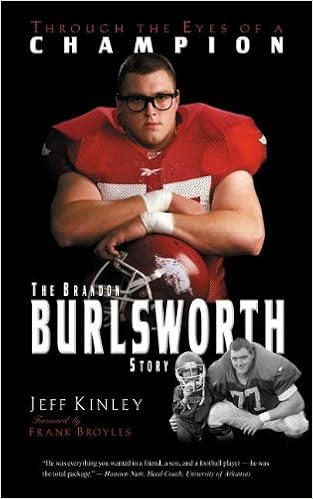
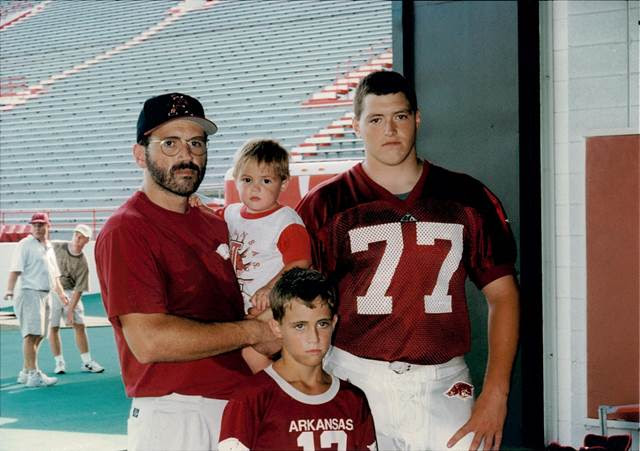






 2
2  2a
2a  3
3 4
4 
 6
6 7
7 

 10
10  11
11
 13
13  14
14  15
15 




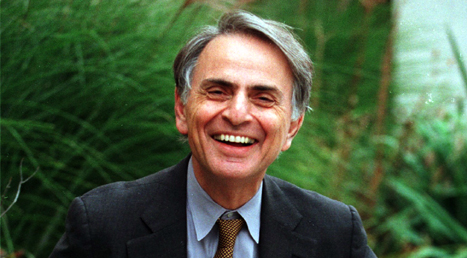














.jpg/220px-Harold_Blackham_(1974).jpg)











 The Daily Hatch
